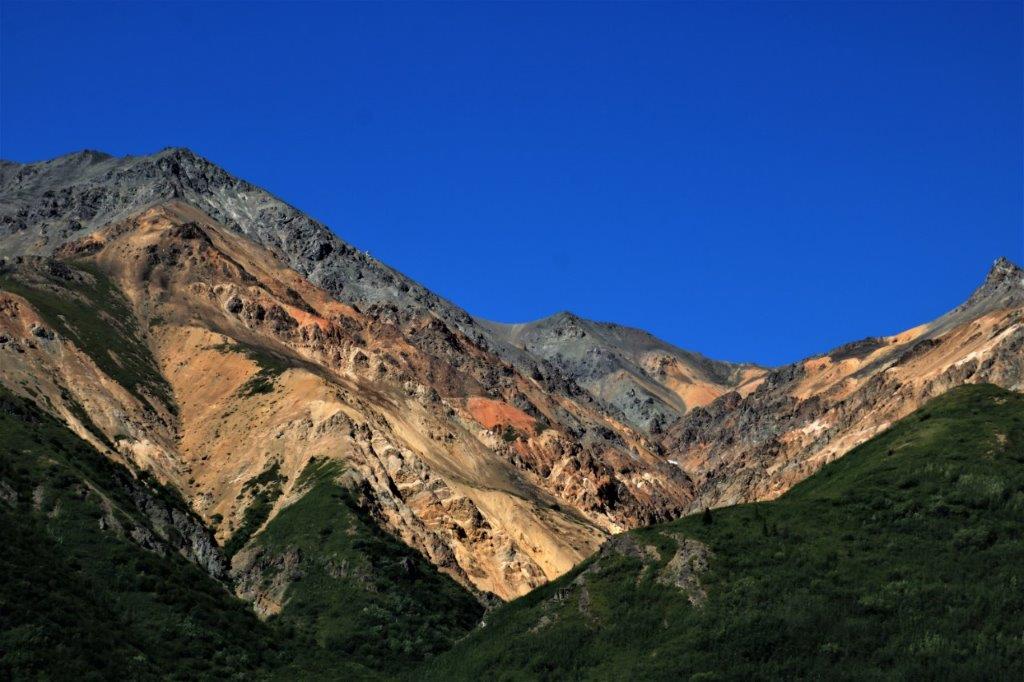
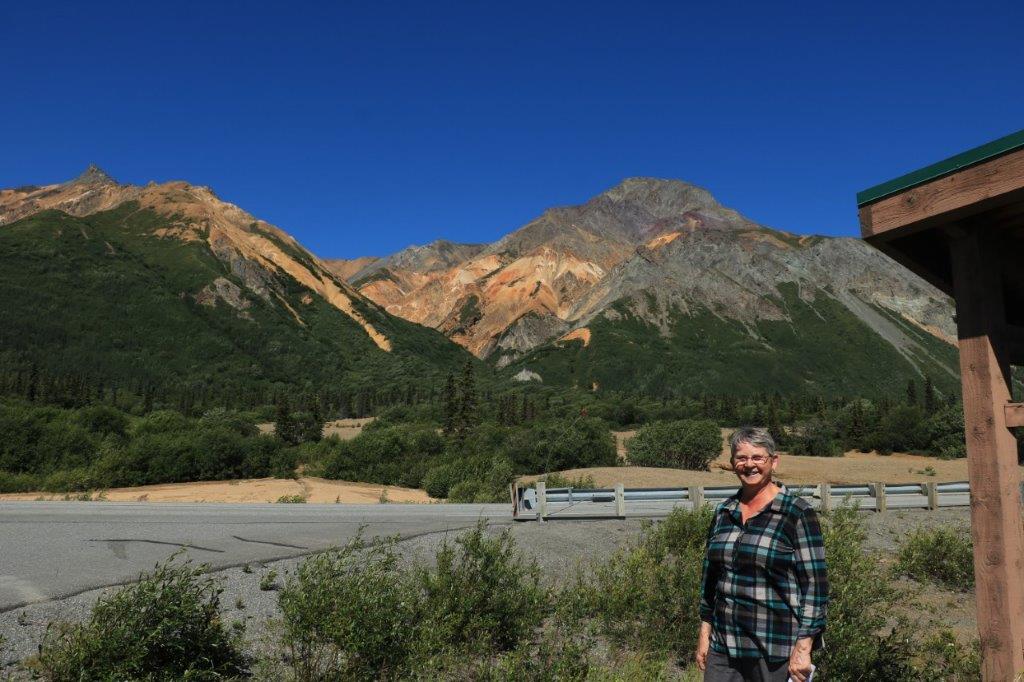
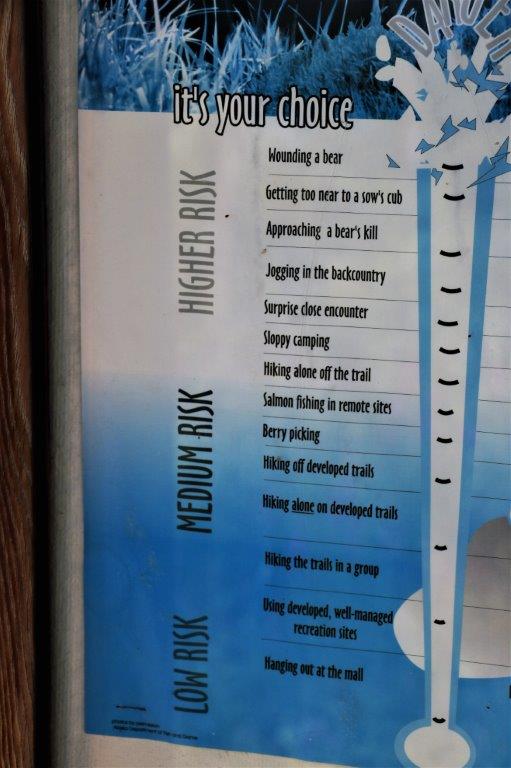
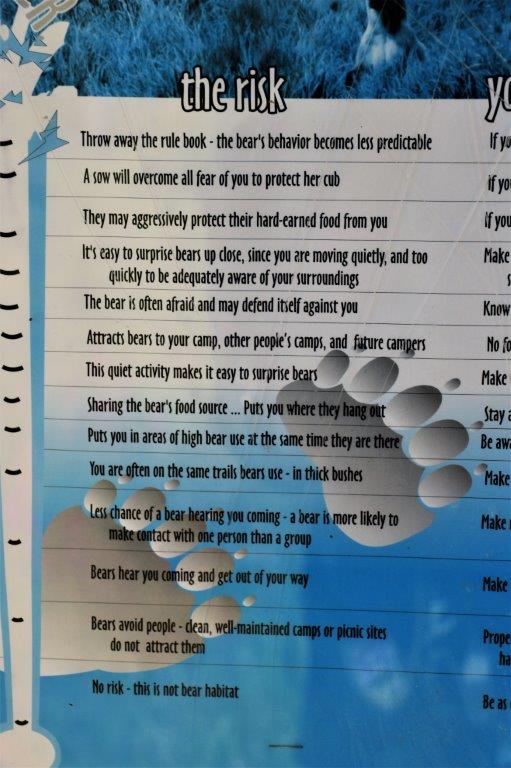
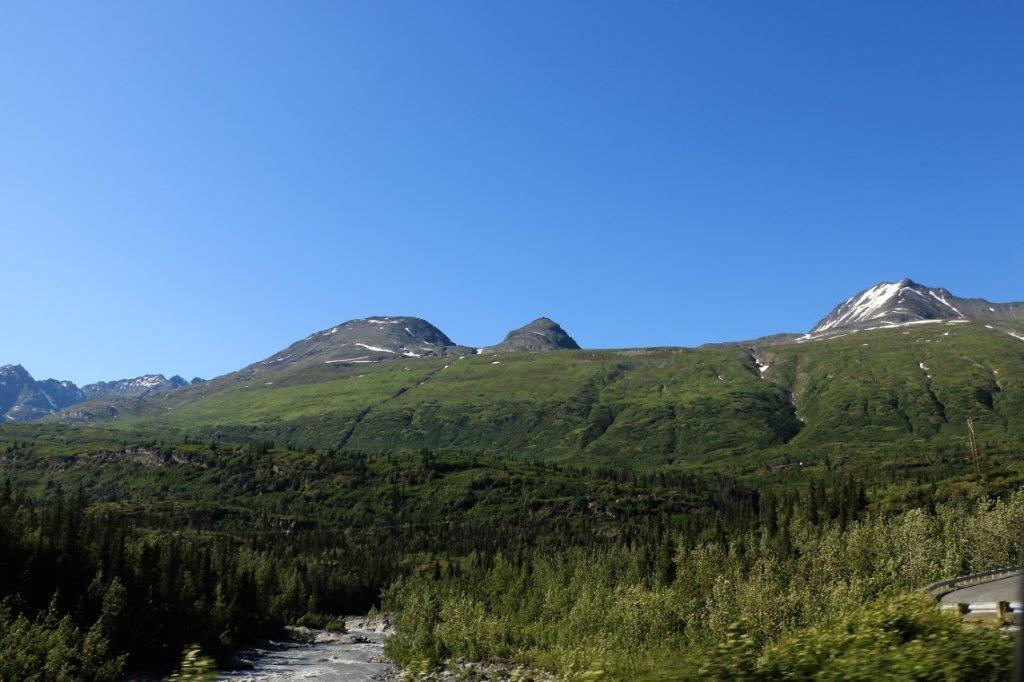
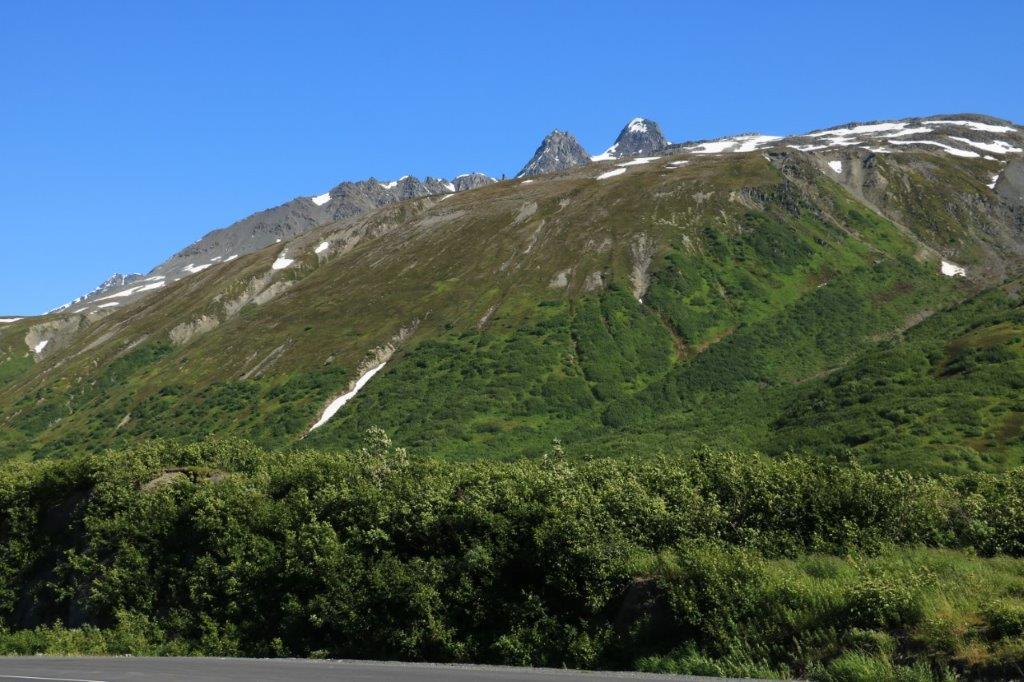
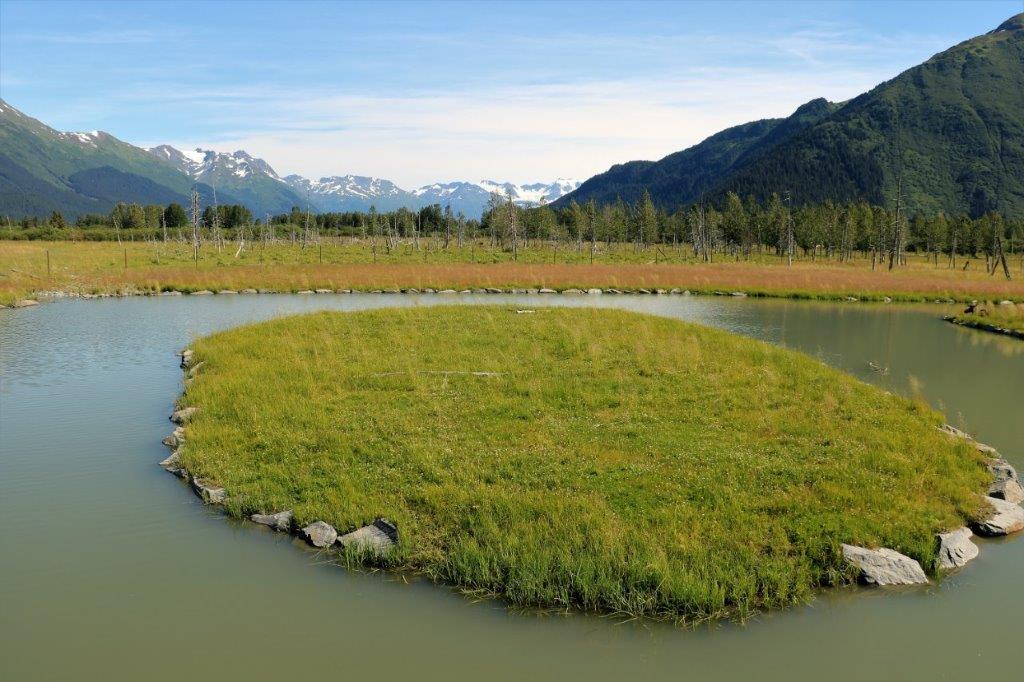
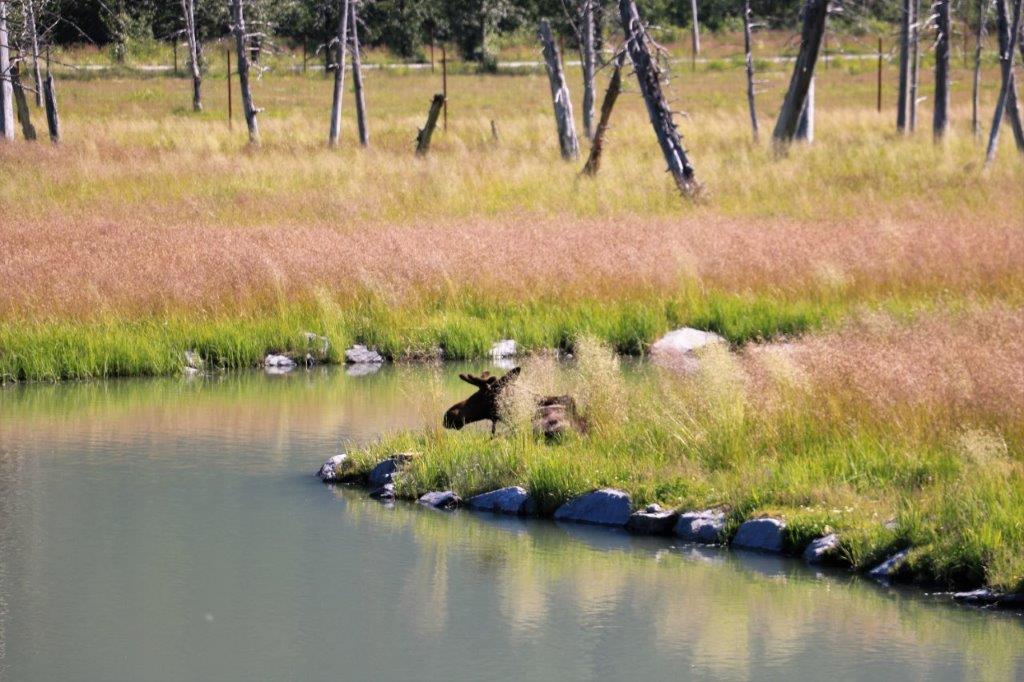
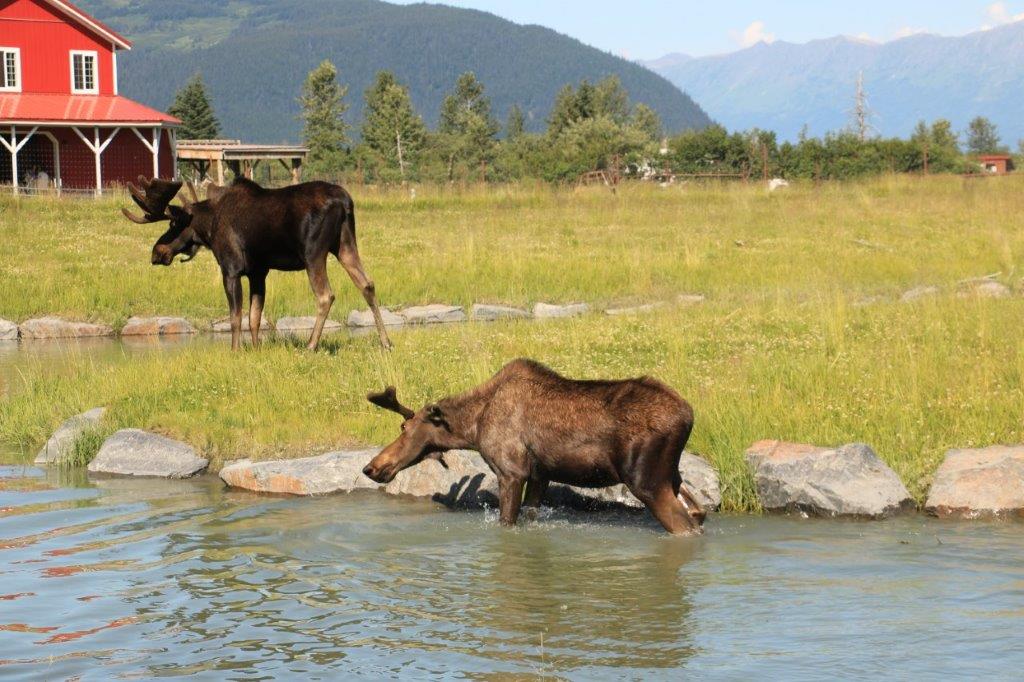
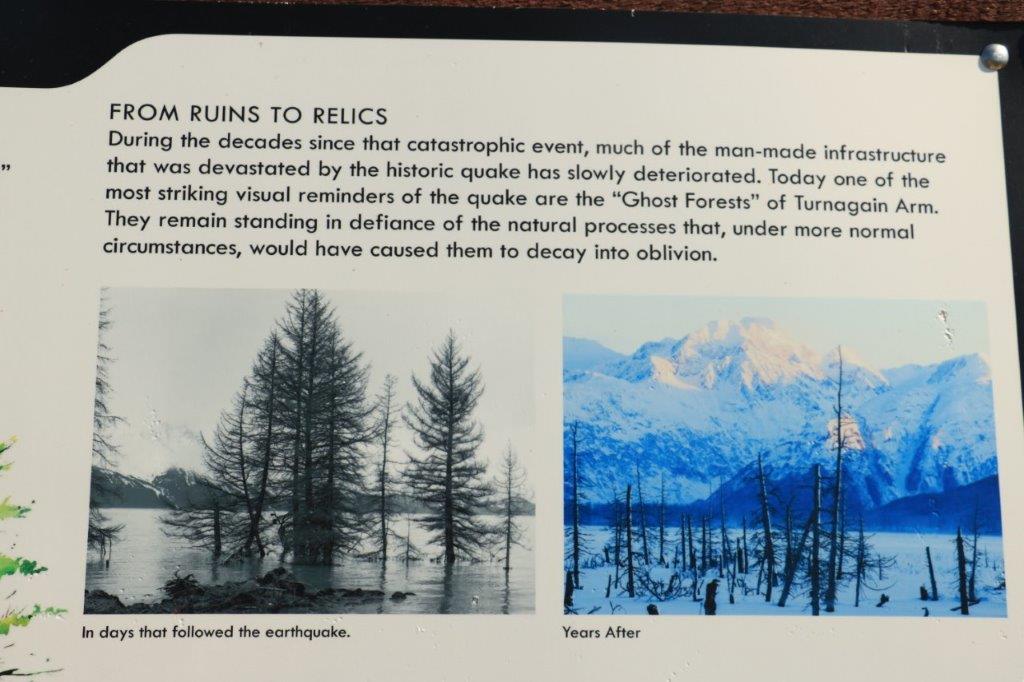
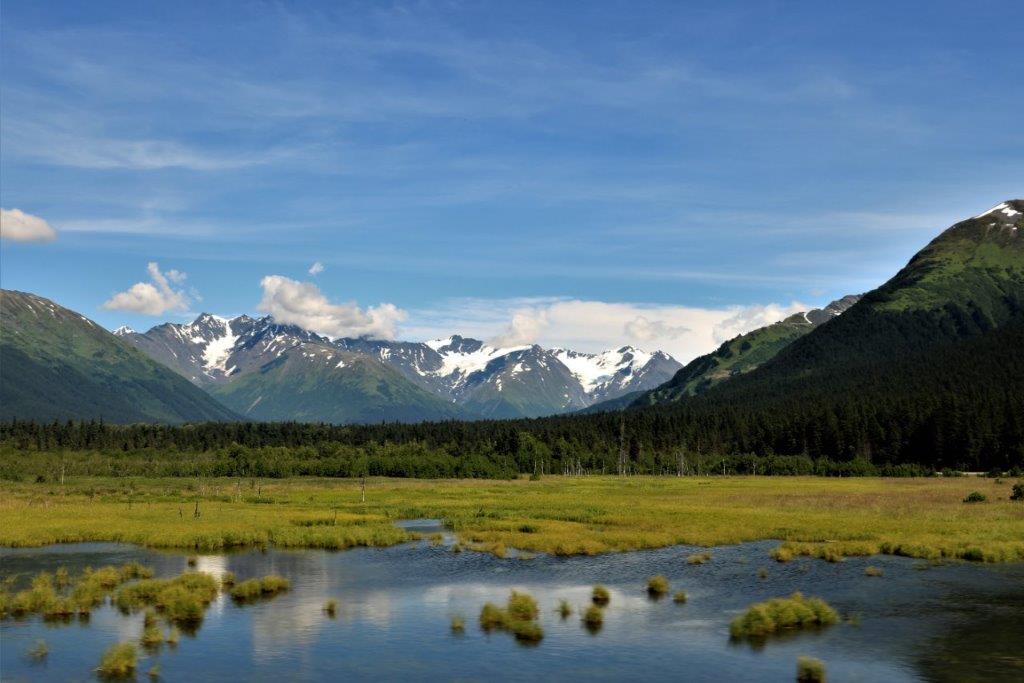
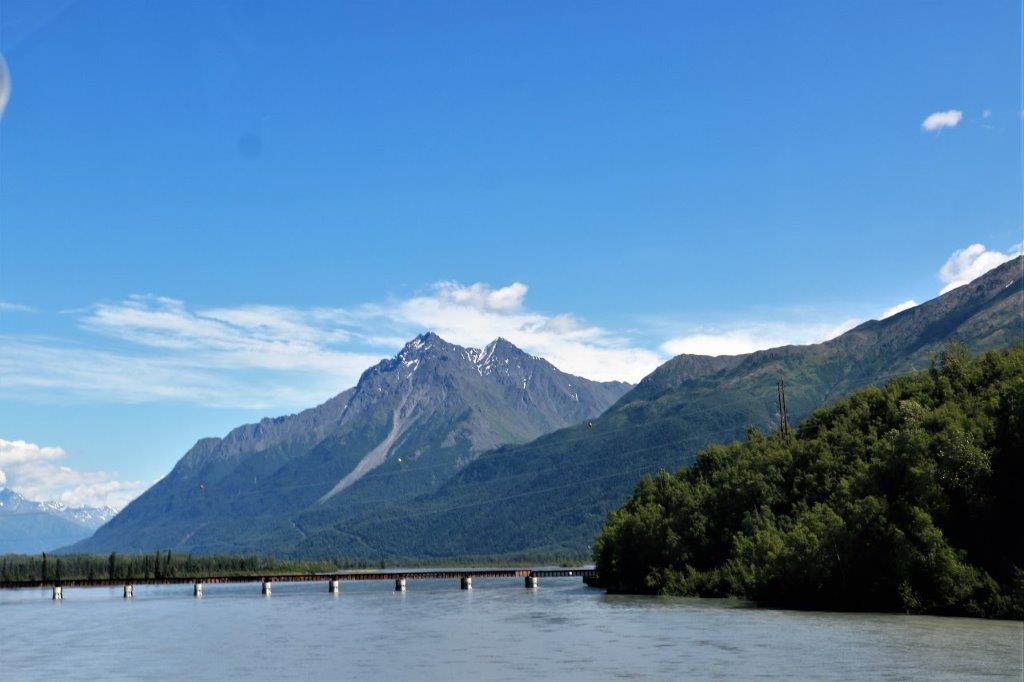
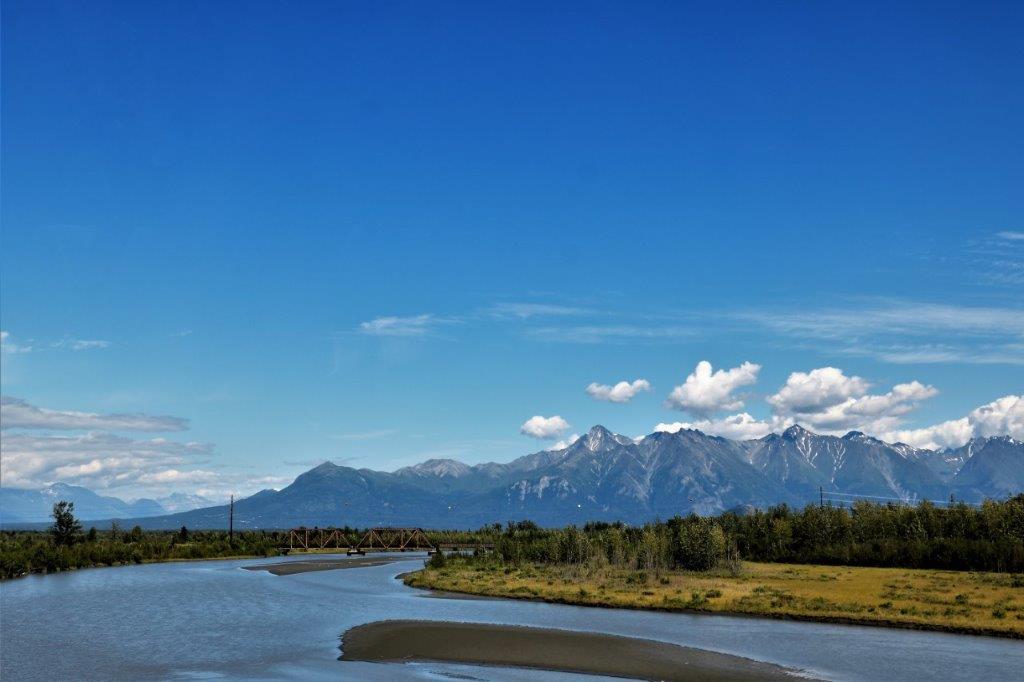
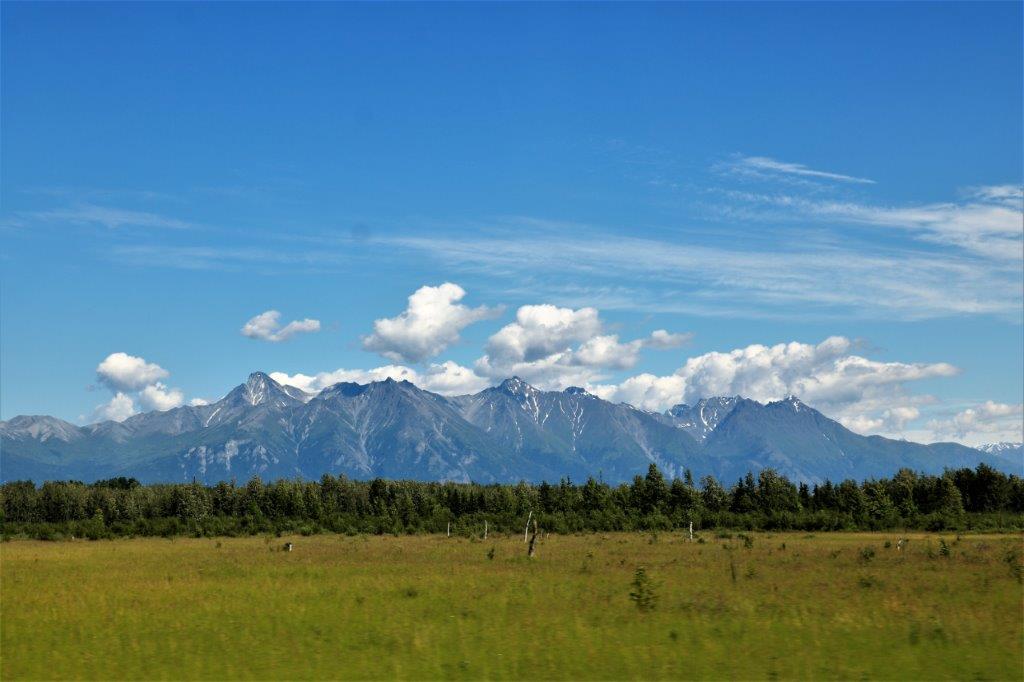
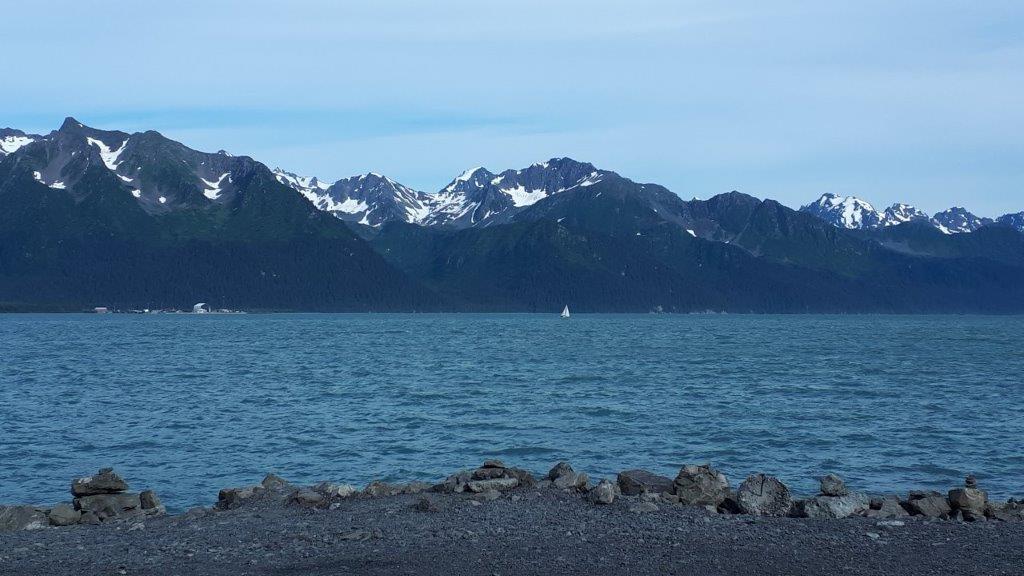
2018 July 27 – Bell II to Terrace, BC

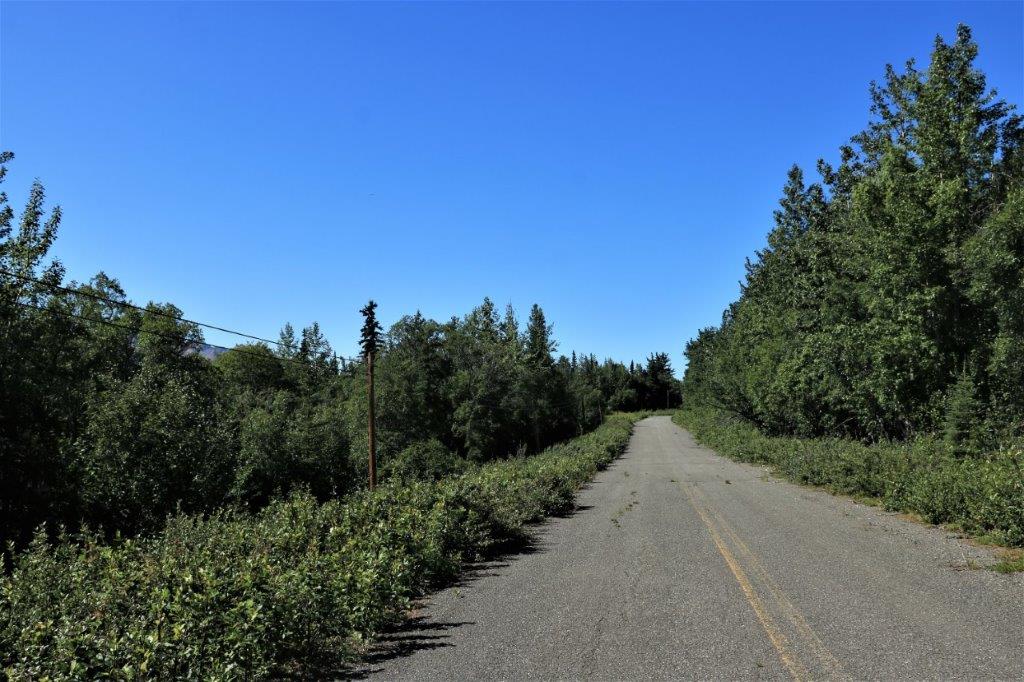
I have lost count of the number of consecutive days of sunshine we have had.  It has been wonderful.  Especially when one is traveling through such scenic countryside it is an added blessing to have lovely sunlight.  Today was also very warm!  We don’t have a outside temperature feature on our truck, but I know it was warm because we immediately felt hot everytime we stopped the truck and stepped outside.

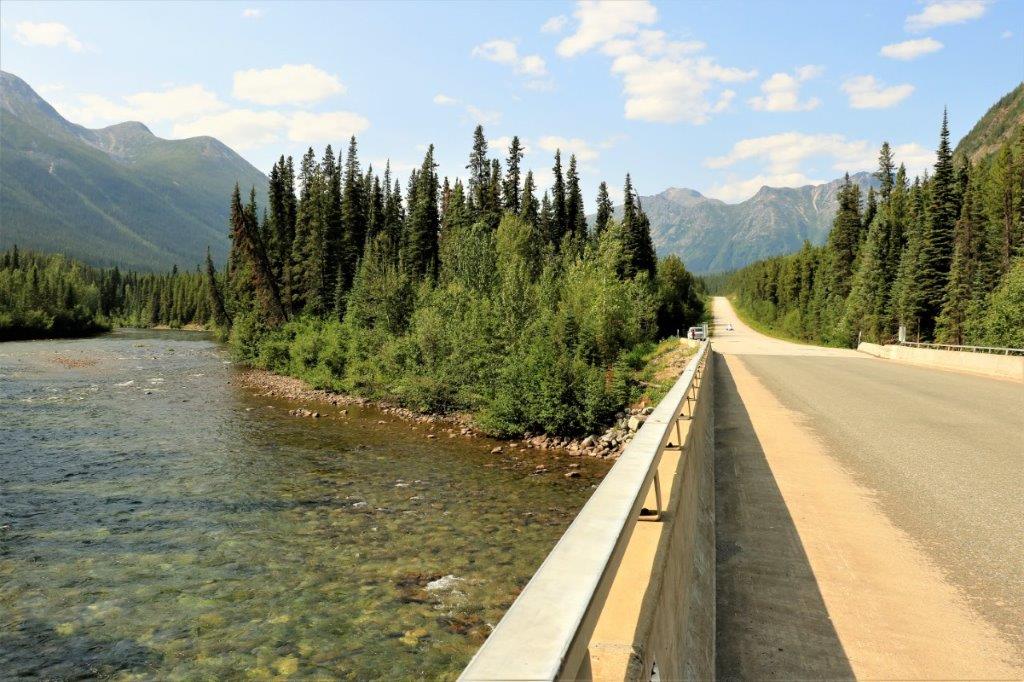
We left Bell II at close to 11 am.  Since these three days were shorter drives we didn’t feel in a huge hurry; not that we usually feel in a hurry anyway.  Our destination was Terrace 4 1/2 hours south – a distance of 342 km (213 miles).

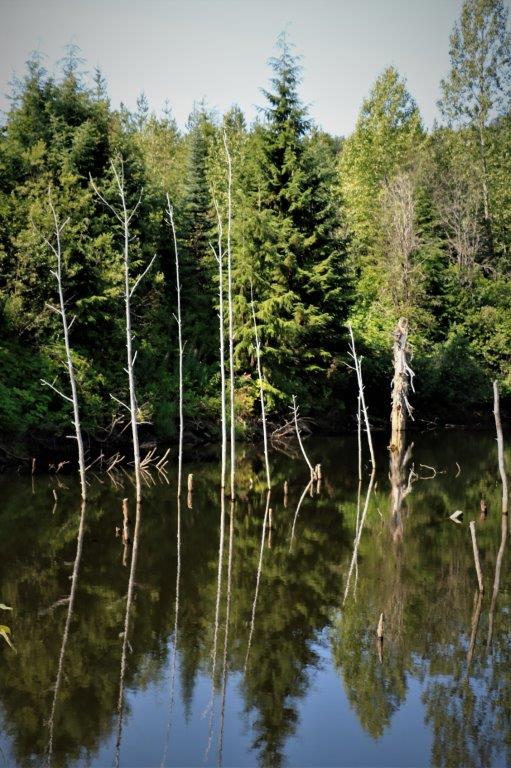
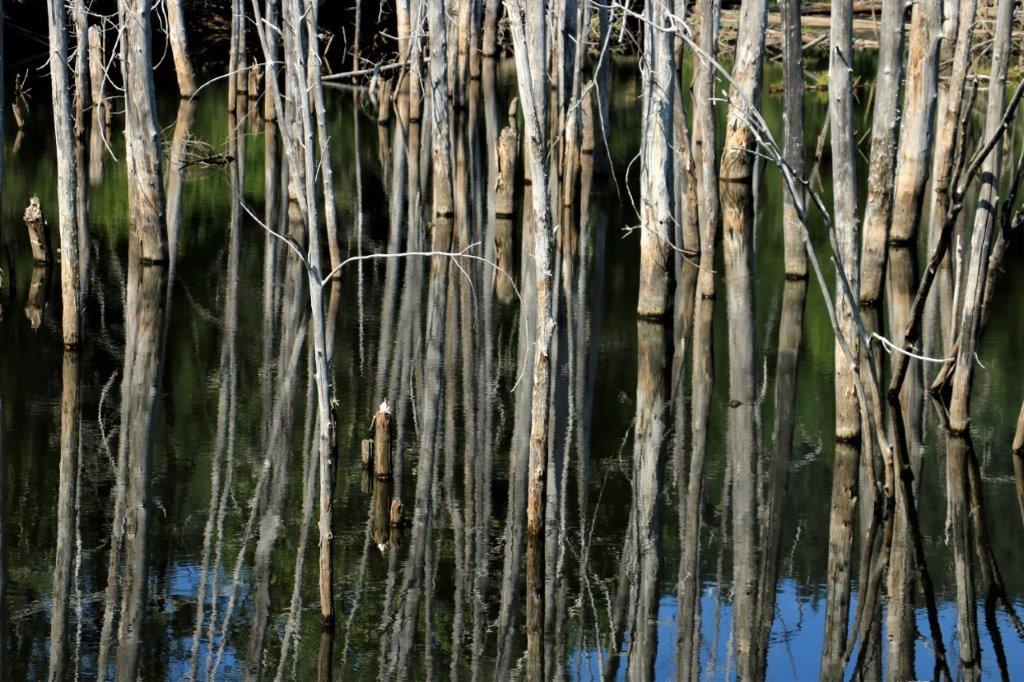
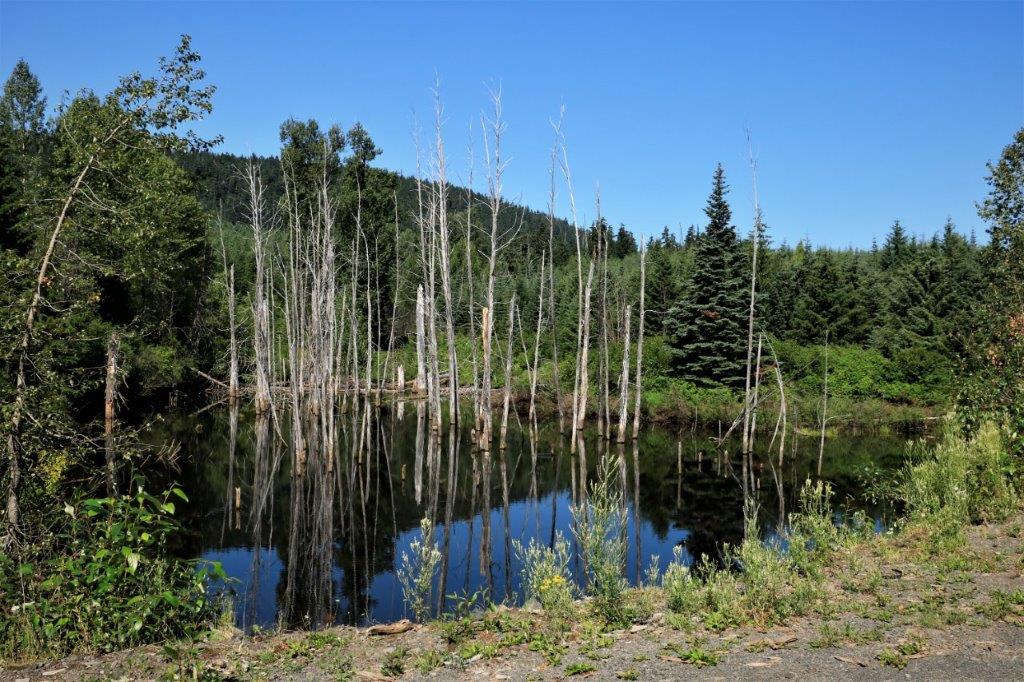
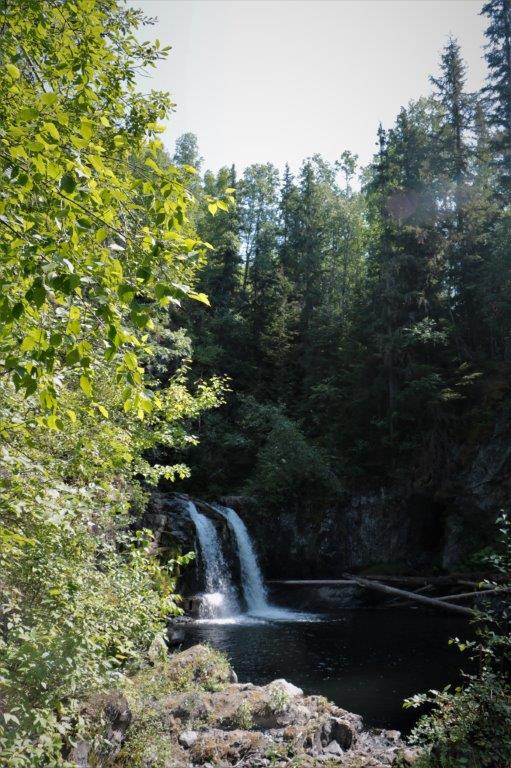
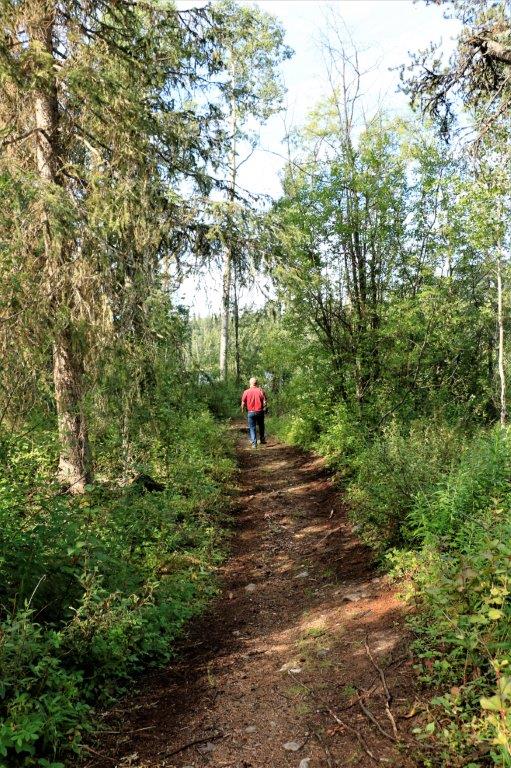
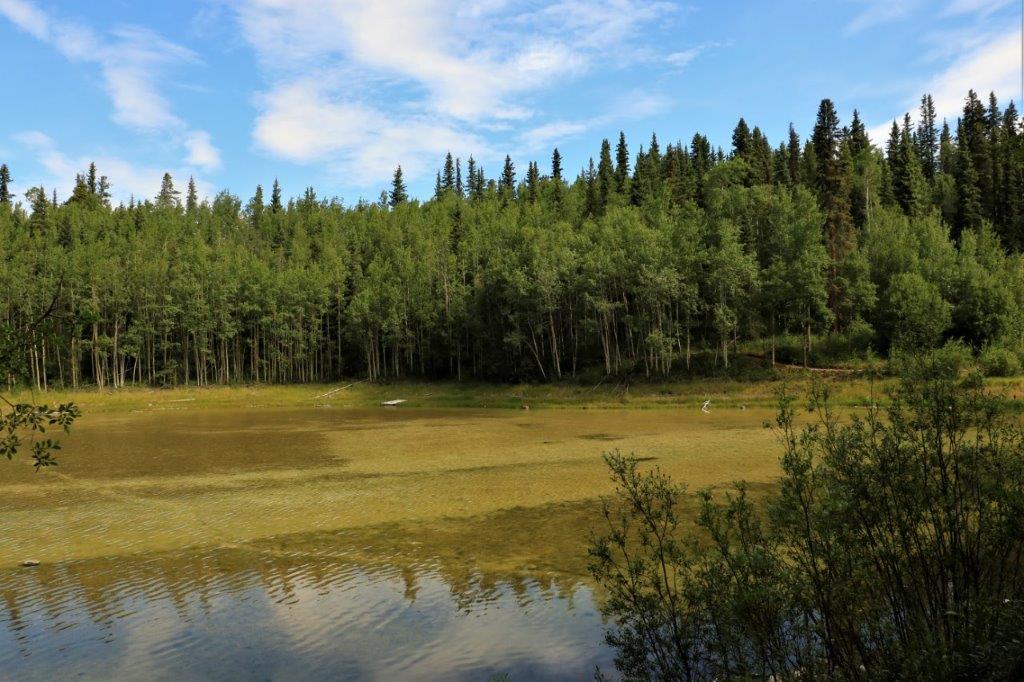
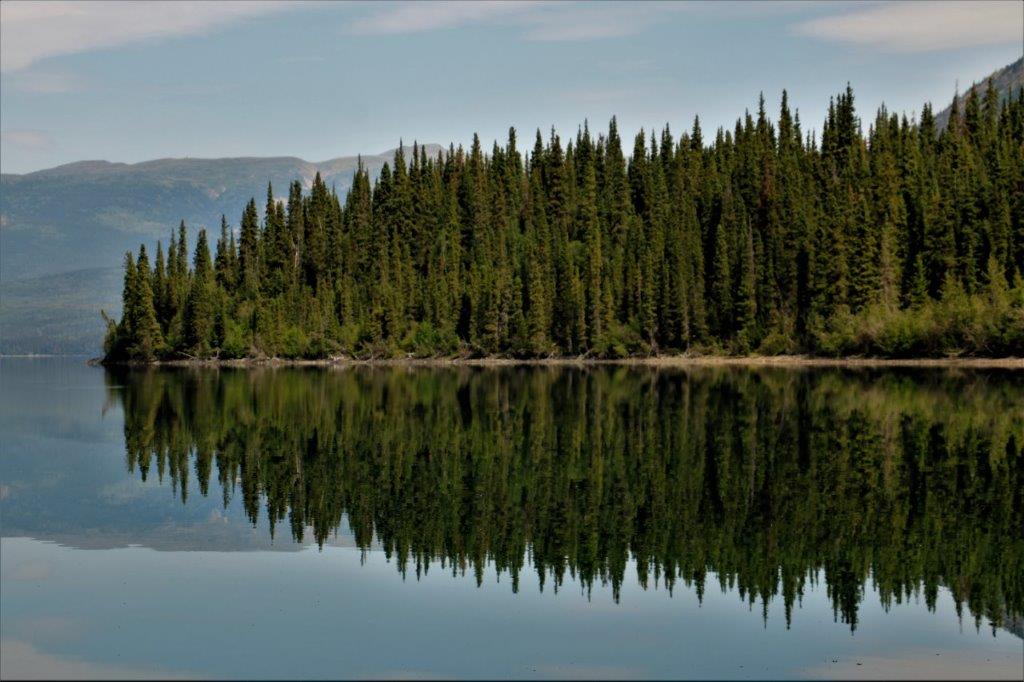
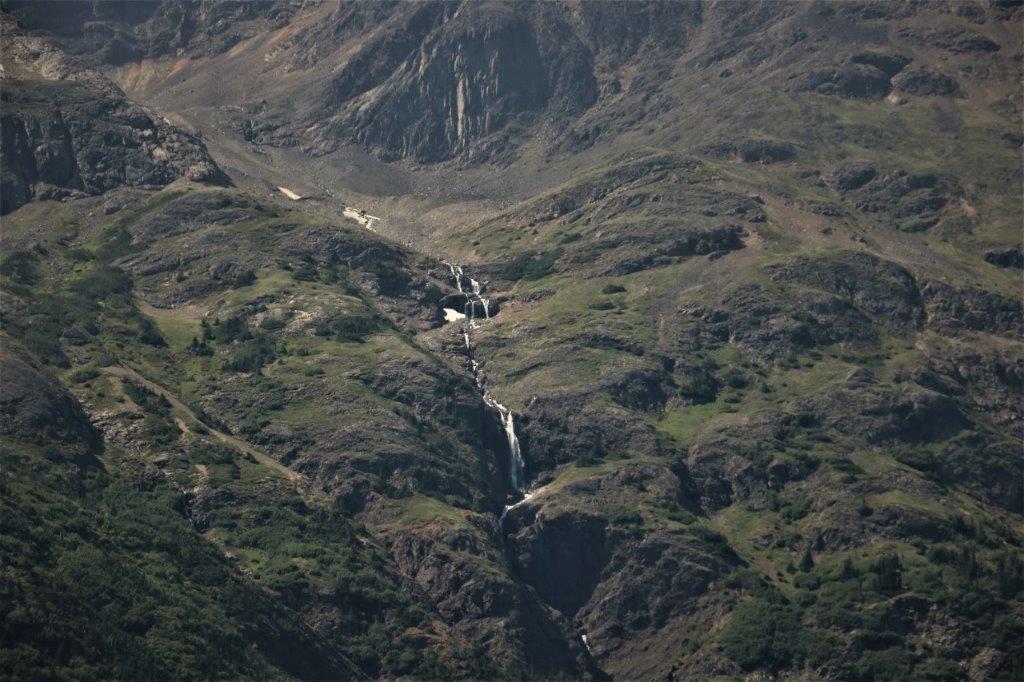
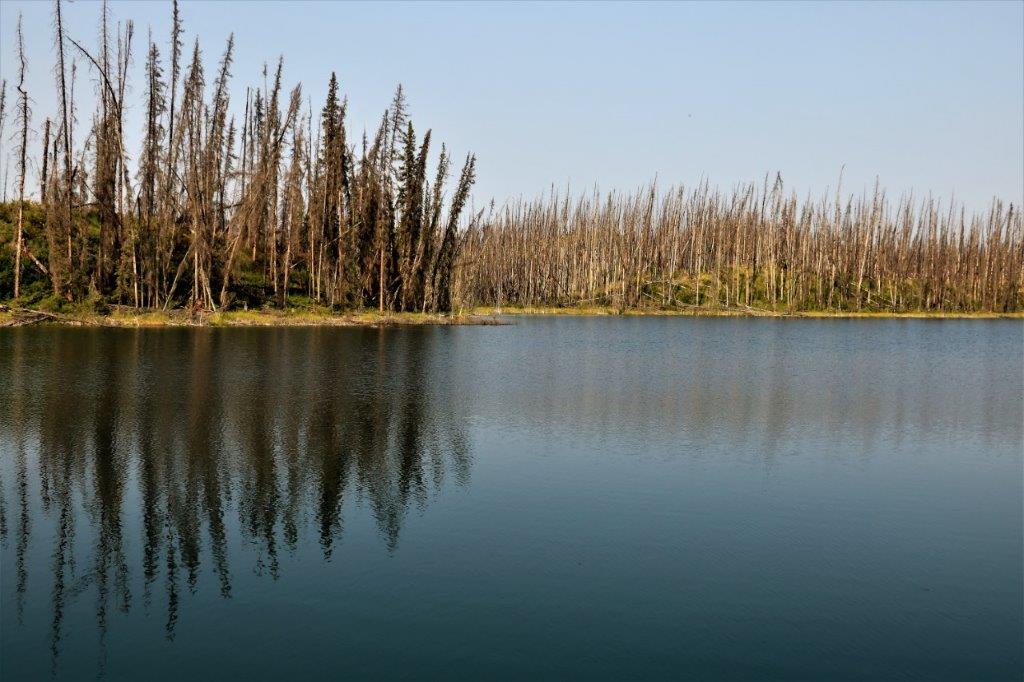
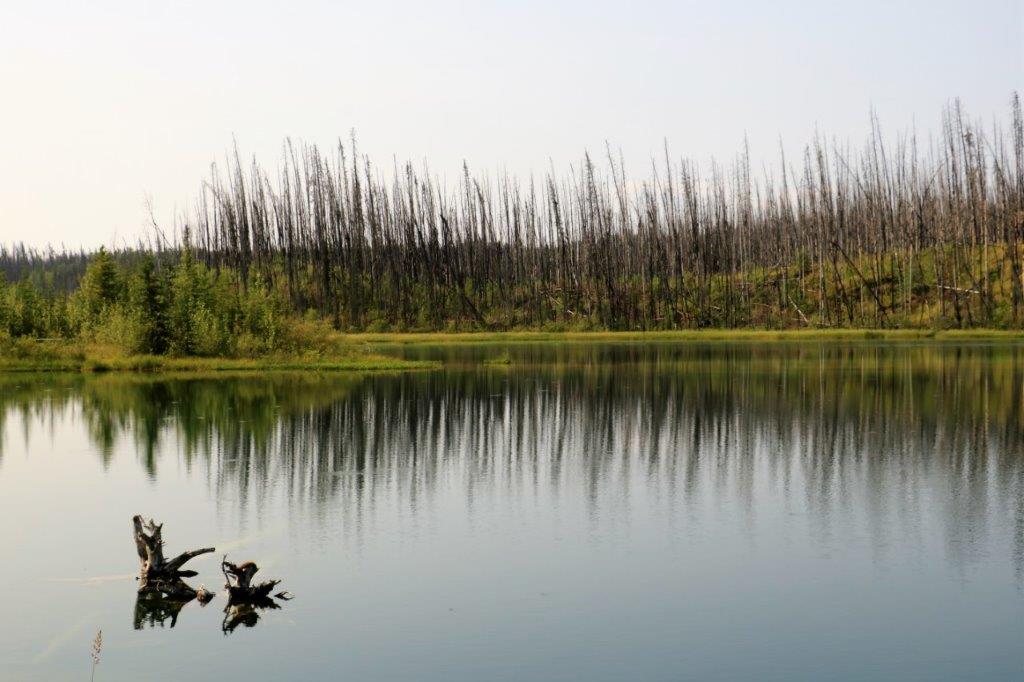
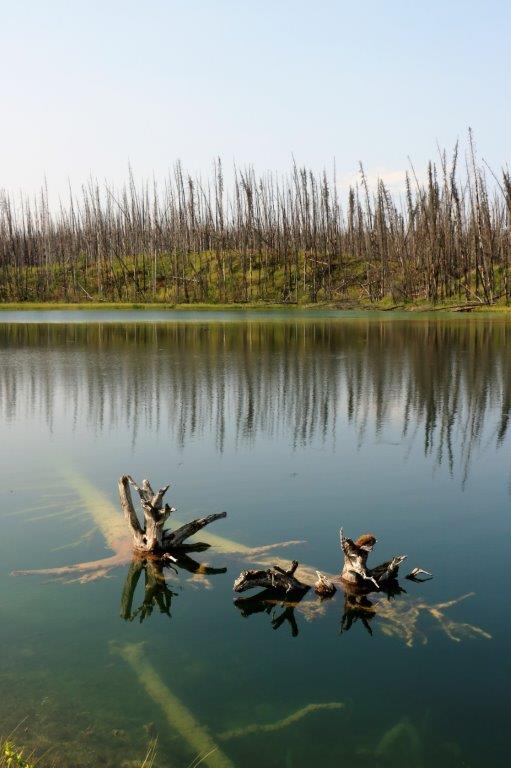
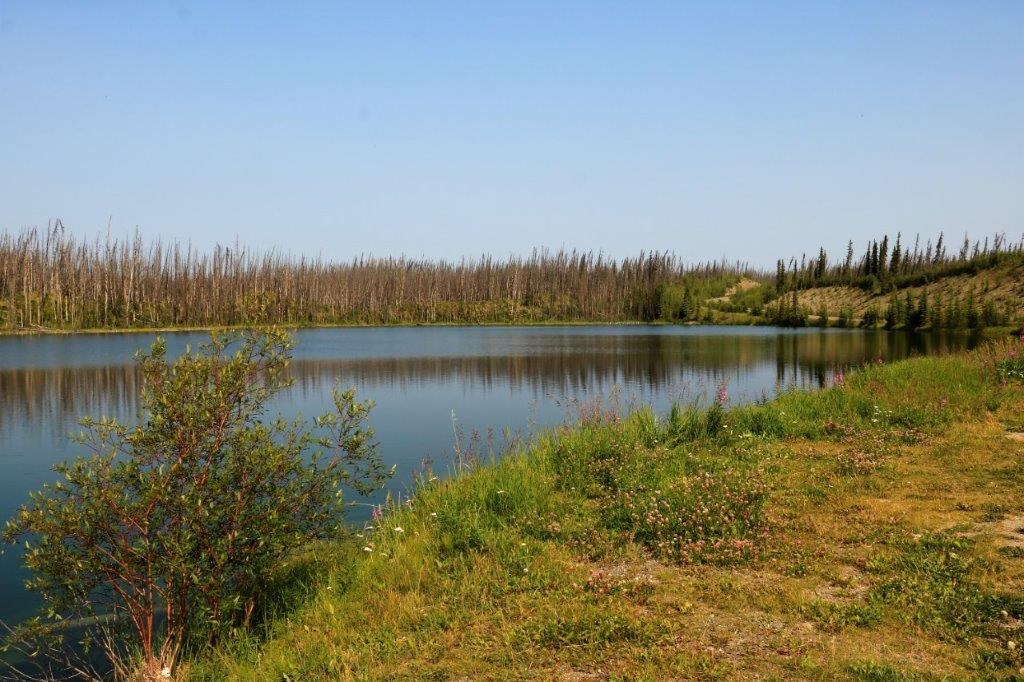
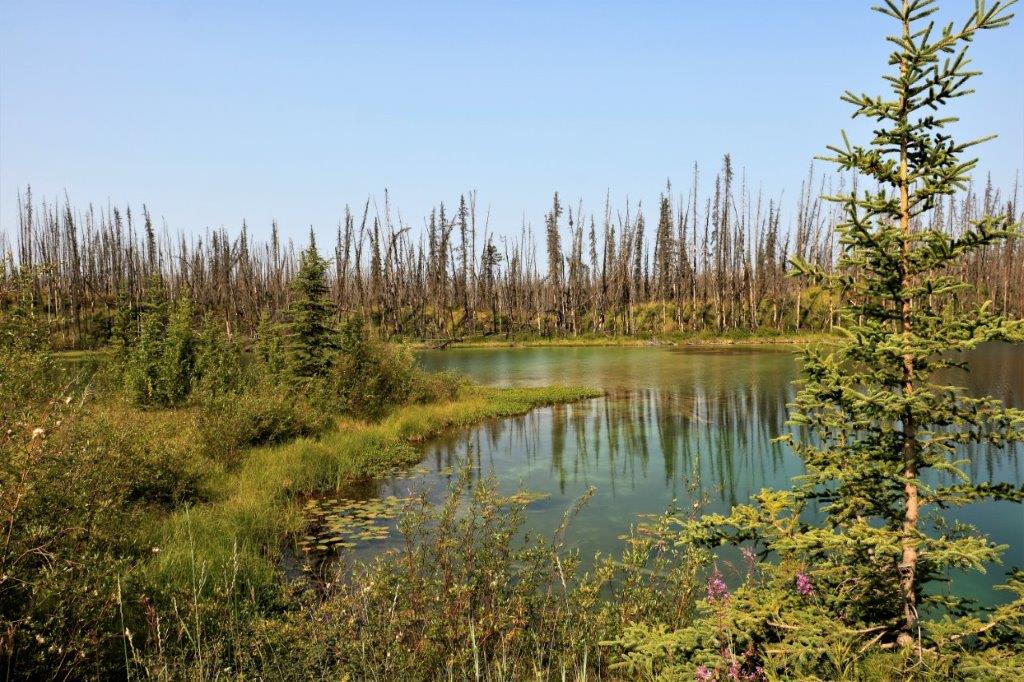
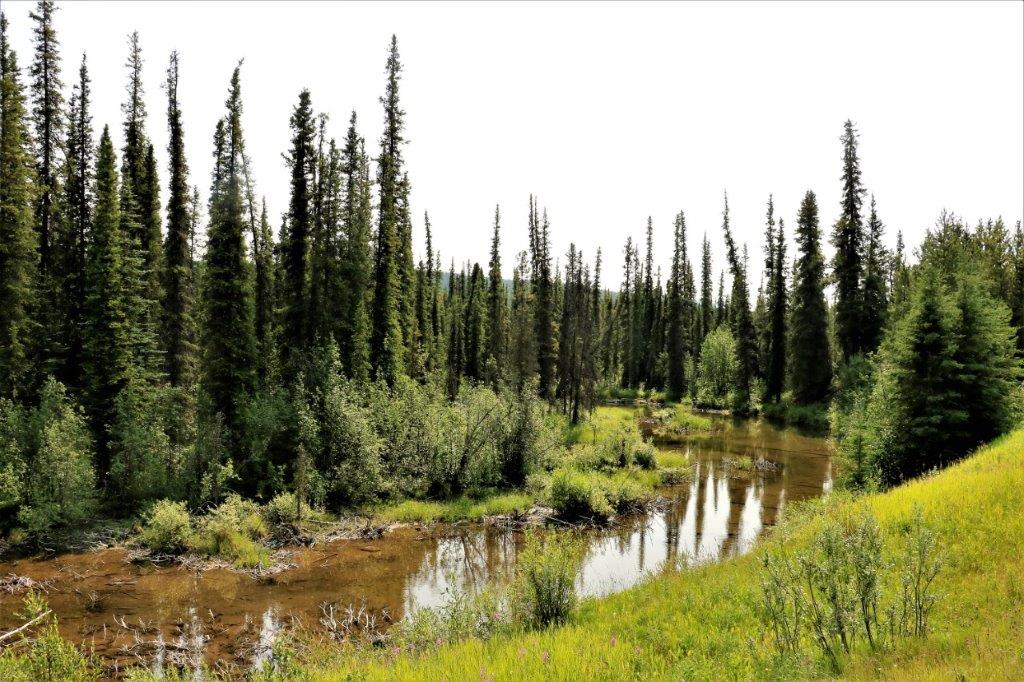
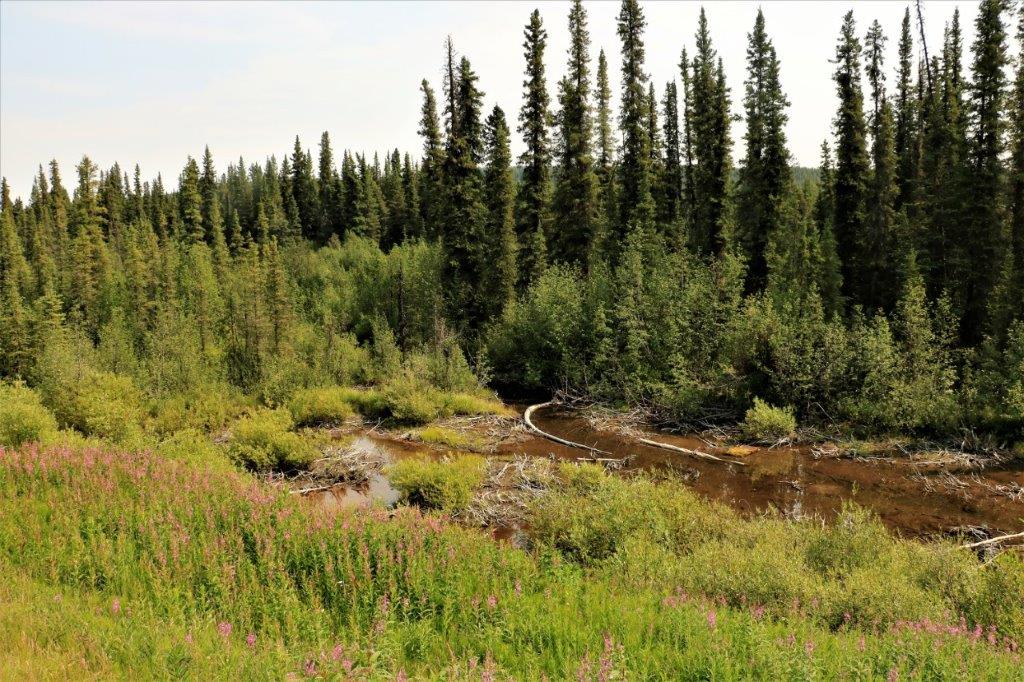
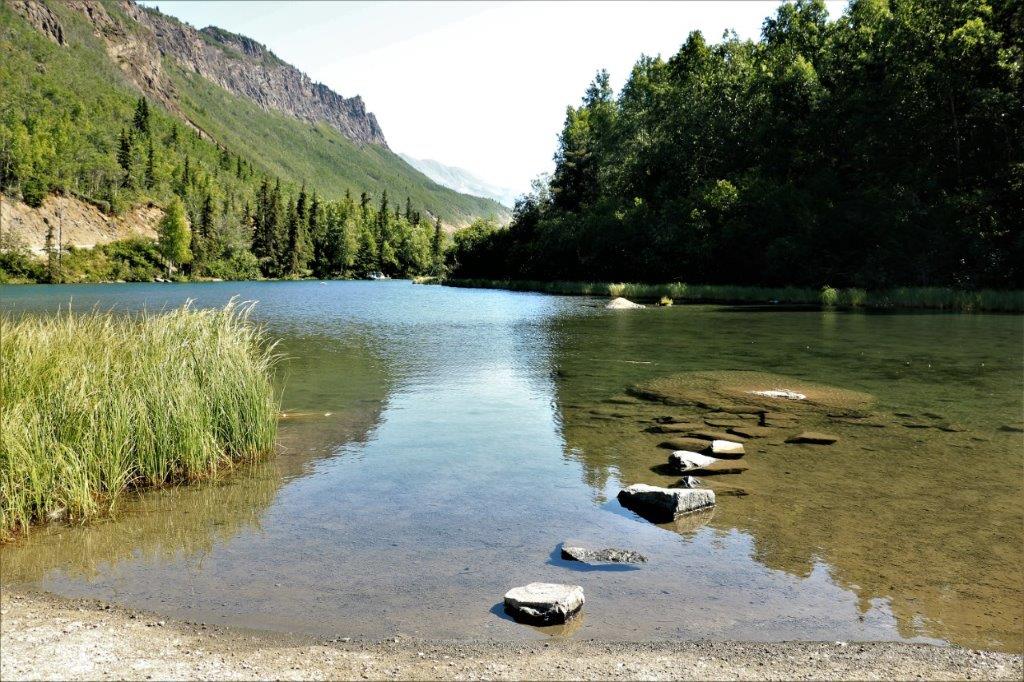
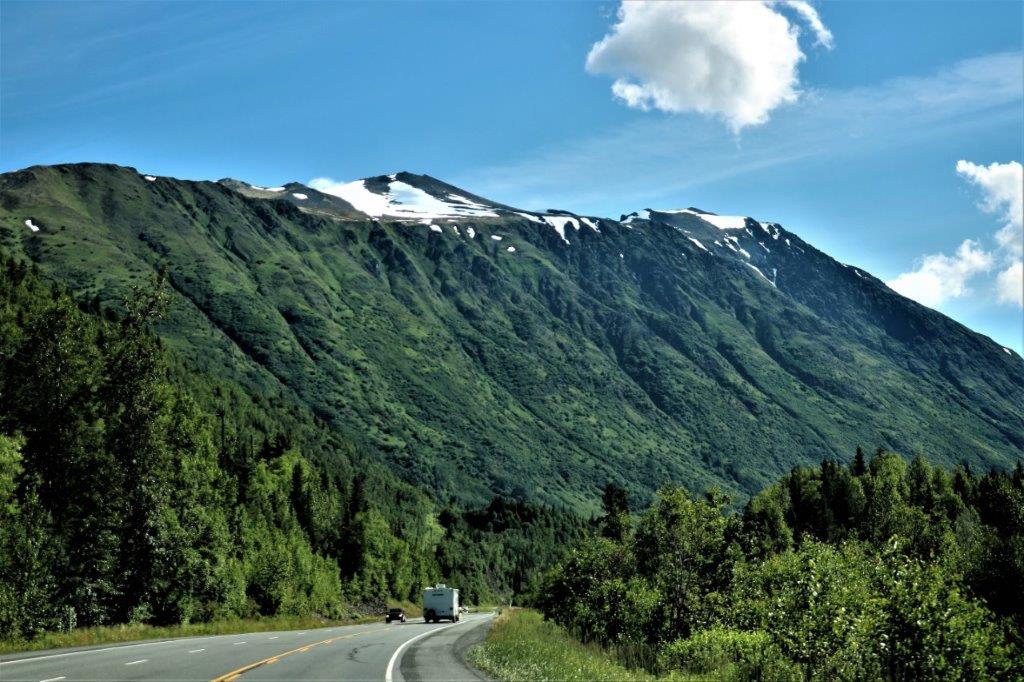
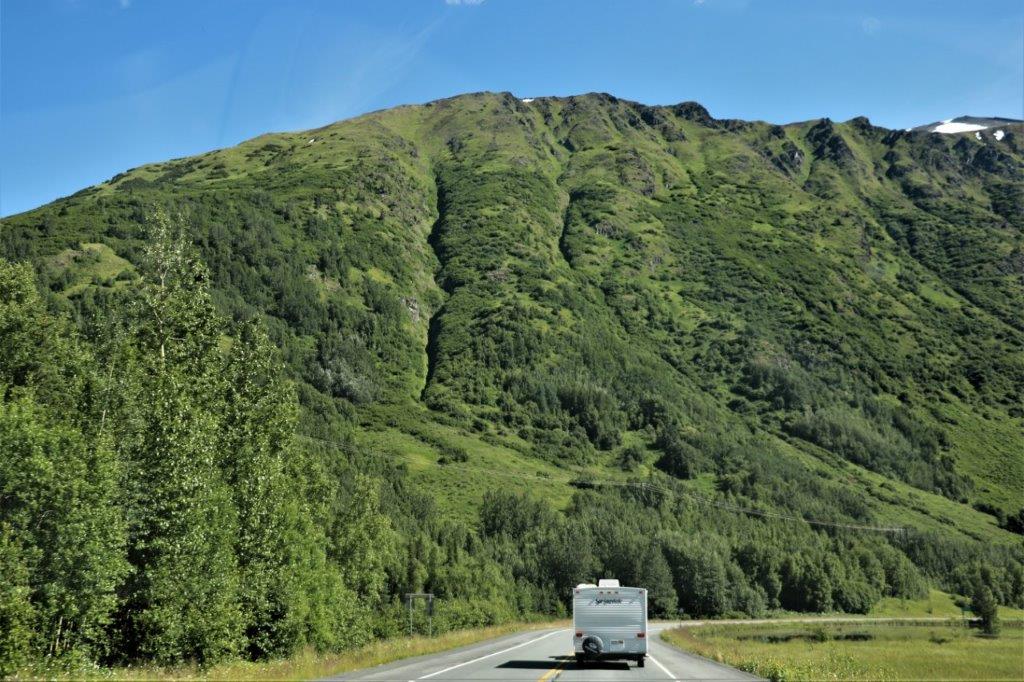
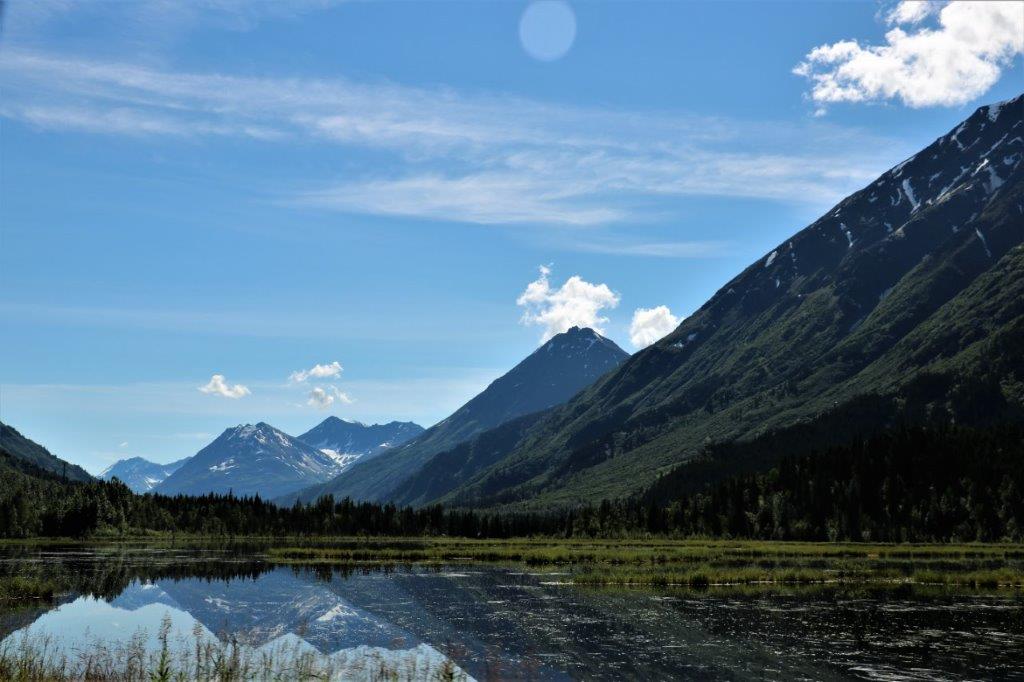
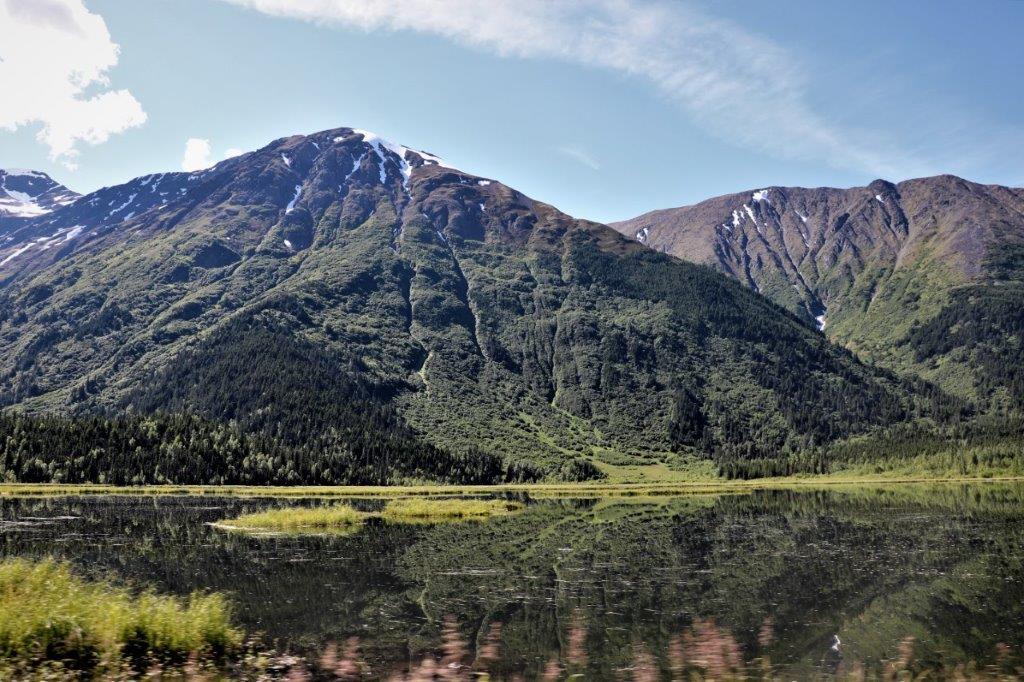
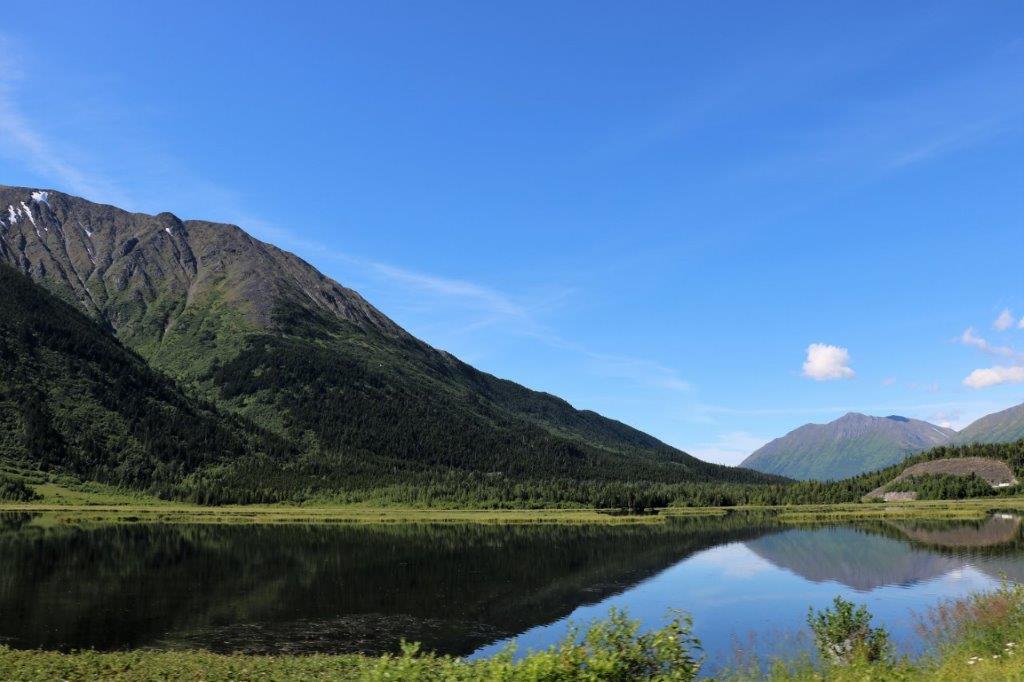
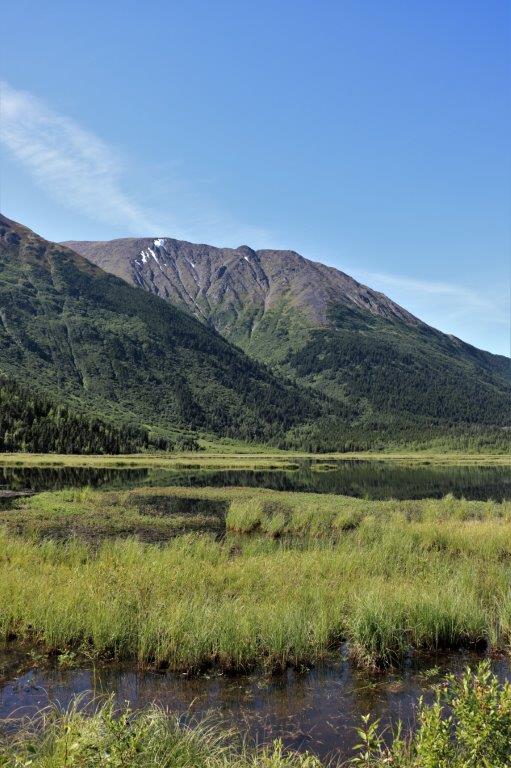
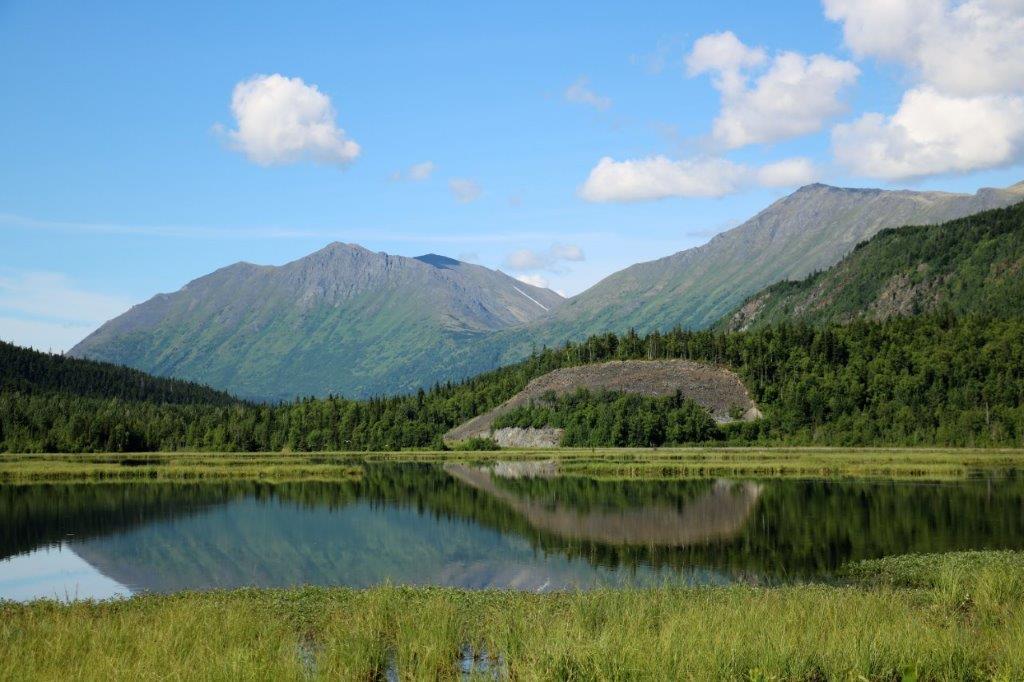
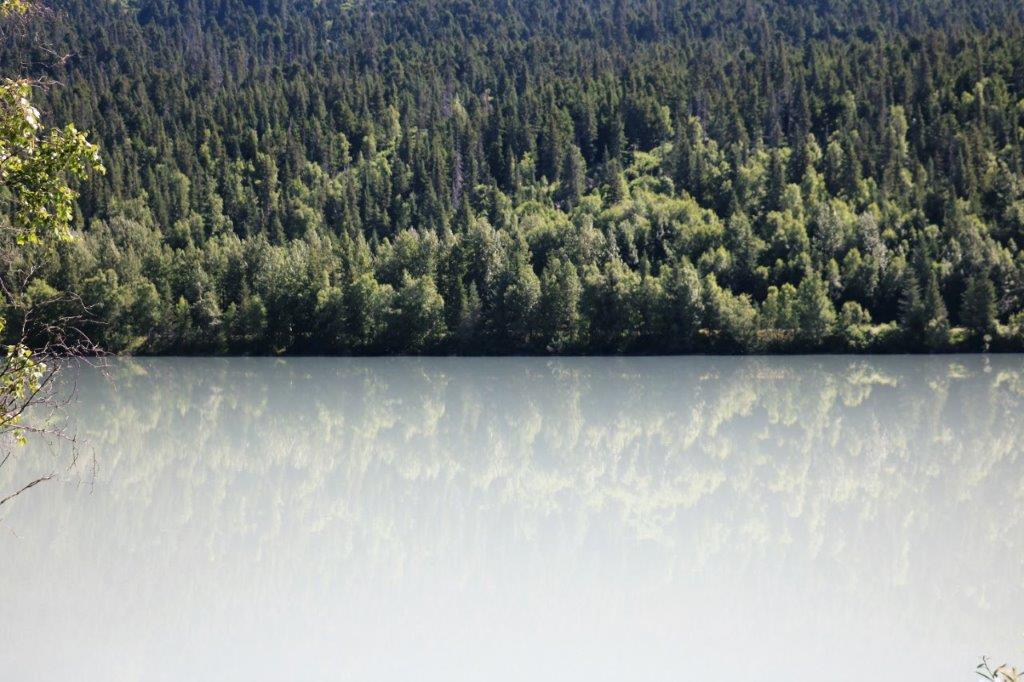
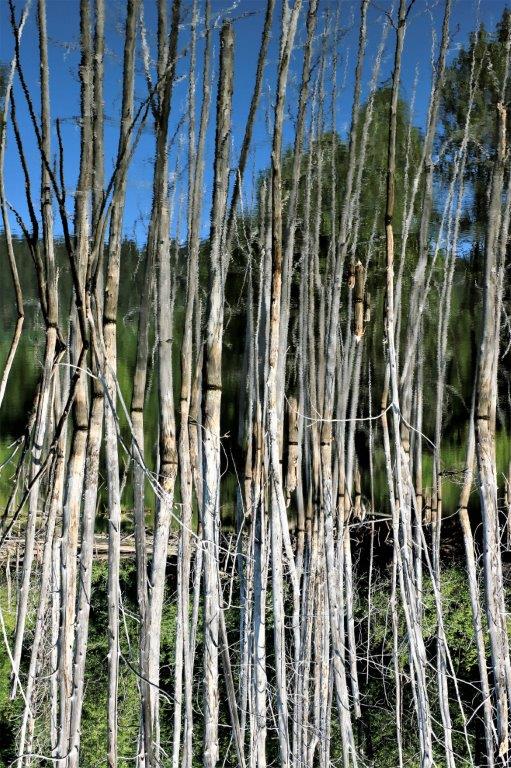
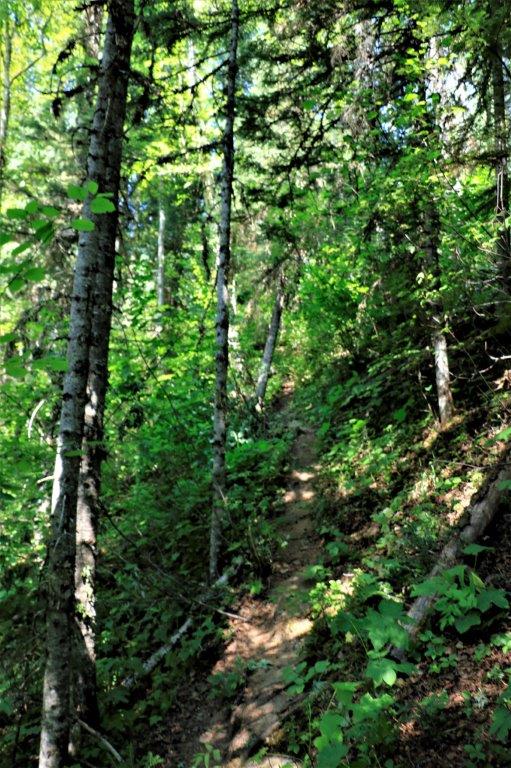
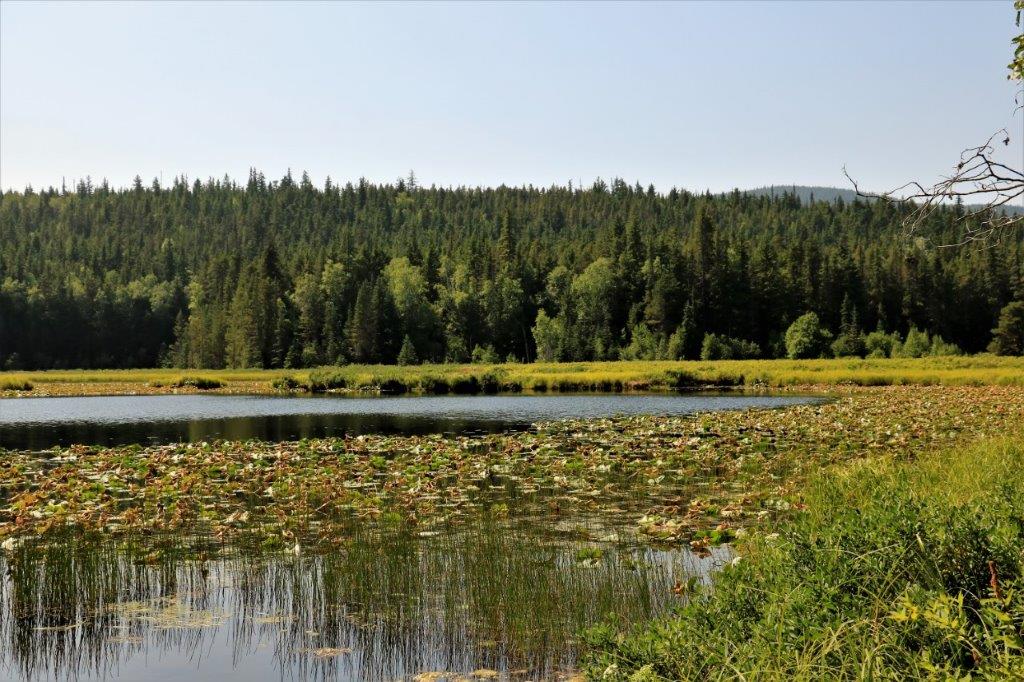
John was driving along at a nice relaxing pace when we passed a little pond with dead trees in it.  I said he had to stop and back up so I could get some photos as the reflections were pretty and the light was nice.  He kindly did so.  (We have actually chuckled a few times over the last couple of days when we pull over to the side to allow motorhomes or trucks with trailers to pass us.  Usually we are trying to pass them as they are the slower vehicles.  But, for us, not on pokey road trip days.  Too bad a lot of the drivers wouldn’t figure that courtesy out and allow traffic to go by them when they are holding up the flow.) There was a geocache hidden called the Secret Waterfall hidden in the bush.  We decided to pull off the highway onto the short gravel road and go find it.  As often happens with geocaches, the distance line showing on the GPS on the phone is very deceiving.  The GPS system works on straight lines between points.  Reality is a great deal more convoluted and distant.  In this case the narrow path went down, down, down deeper and deeper into the bush.  At one point a helpful hiker had tied a piece of rope with several knots in it that you could use to hang onto as you went down, or came back up, a particularly steep section.  This is bear country.  As a matter of fact it is brown bear country.  That is another term for a Grizzly.  I did not like going that deep into the bush.  The steepness of the trail did not improve and John suggested I wait while he went ahead the last 20 meters.  He whistled and I sang (and since I can’t sing that would have definetely scared off any critters).  Right about the time I decided we had been in the woods long enough he found the cache, signed the log and back up we went.  Phew!
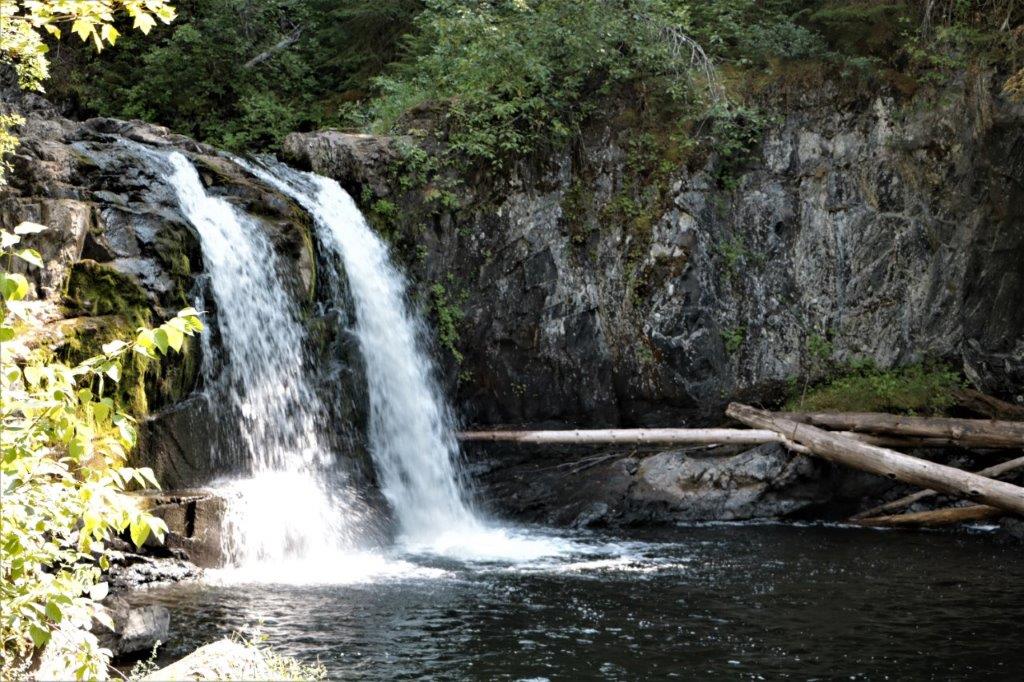
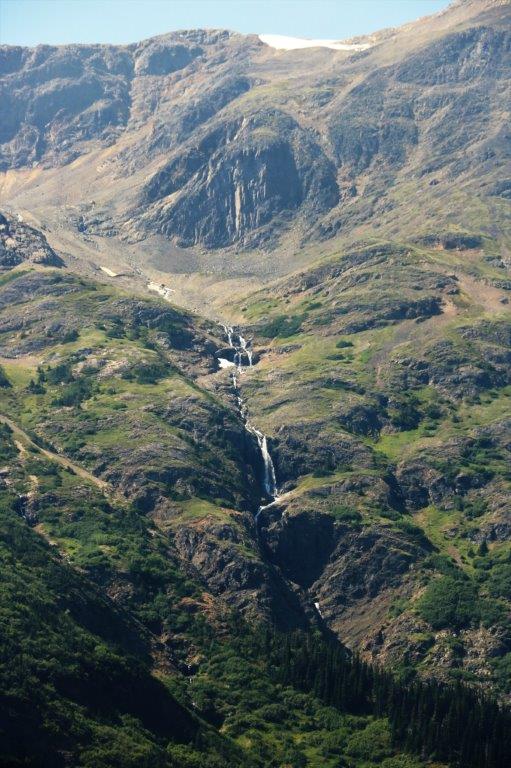
                       The secret waterfall was a pretty little thing.

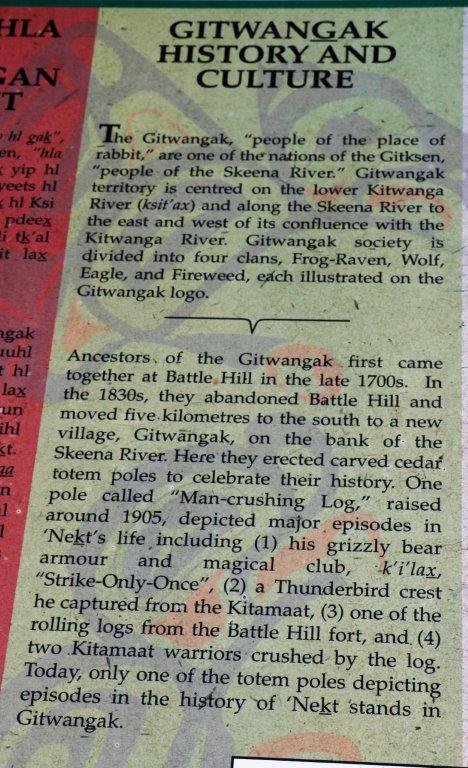
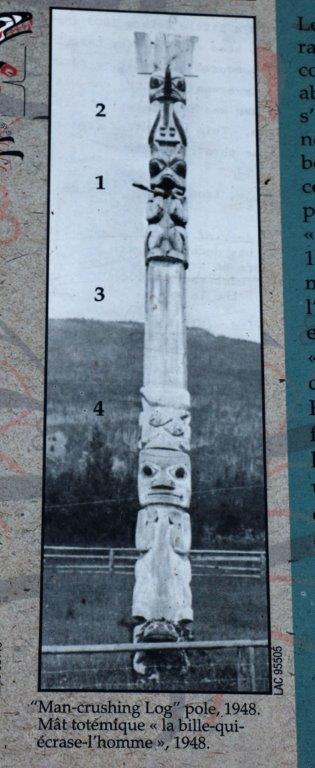
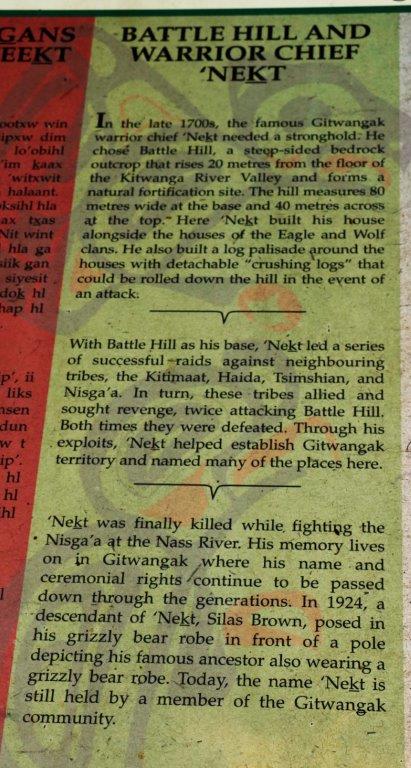
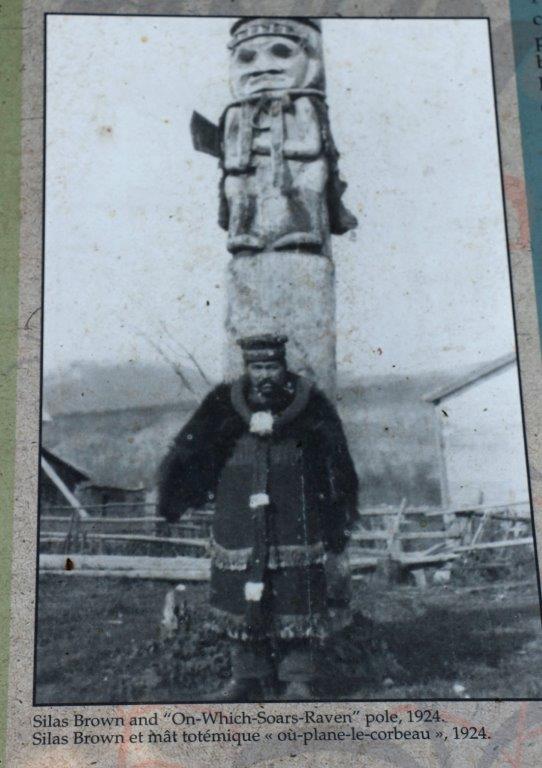
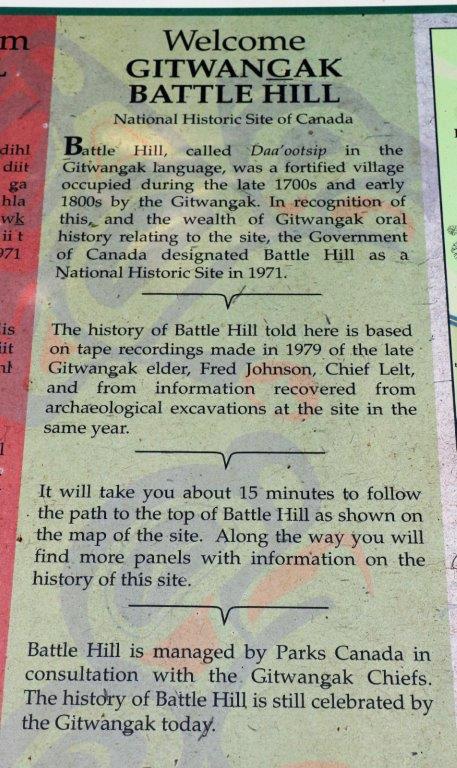
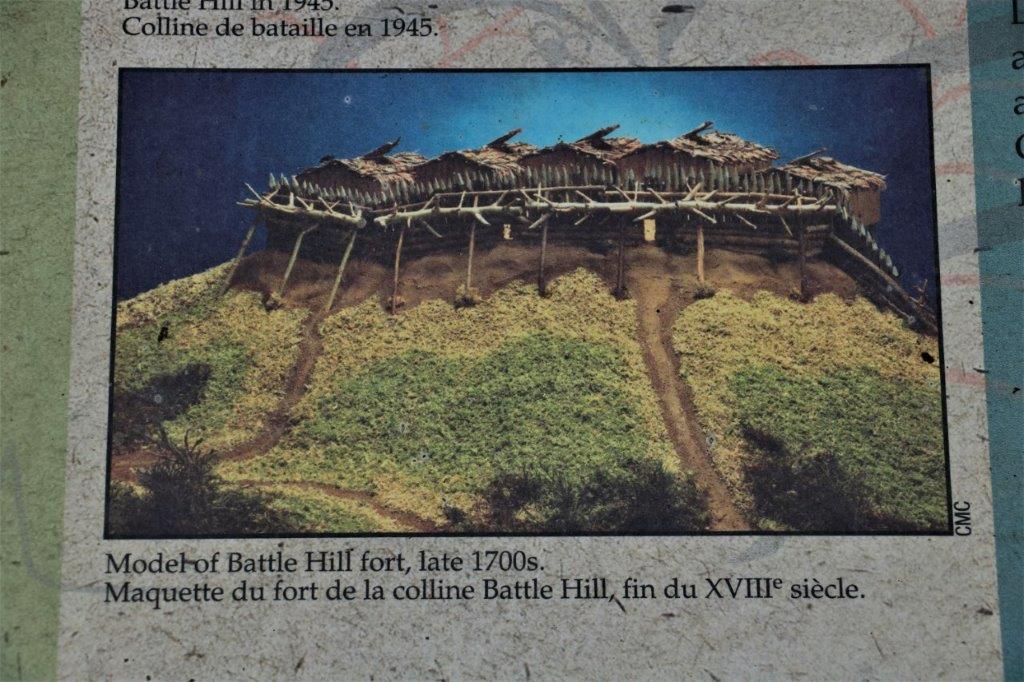
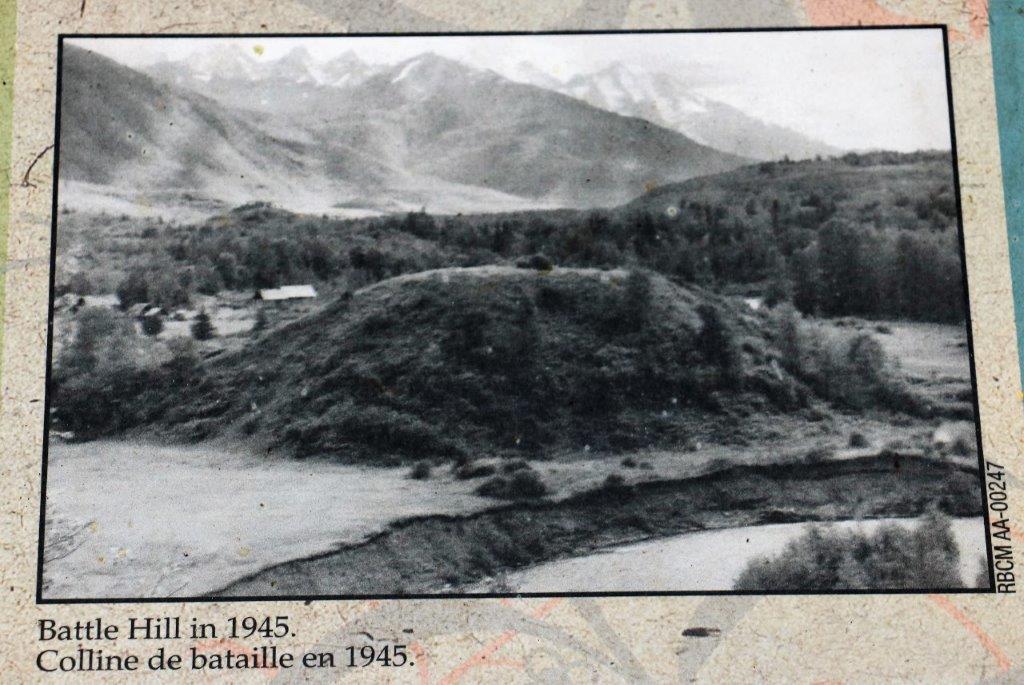
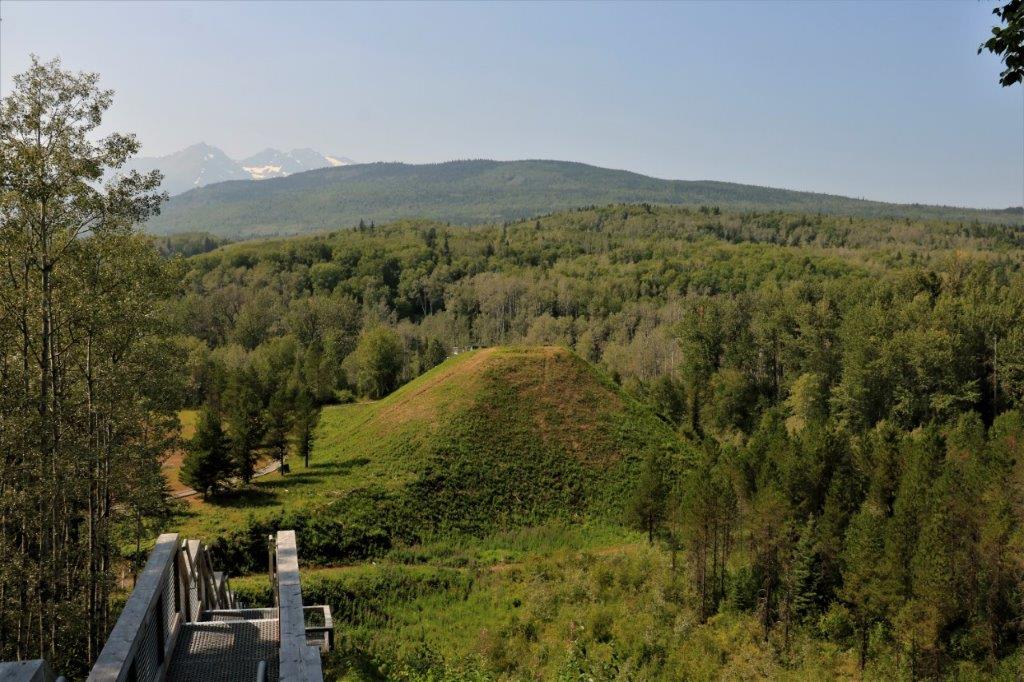
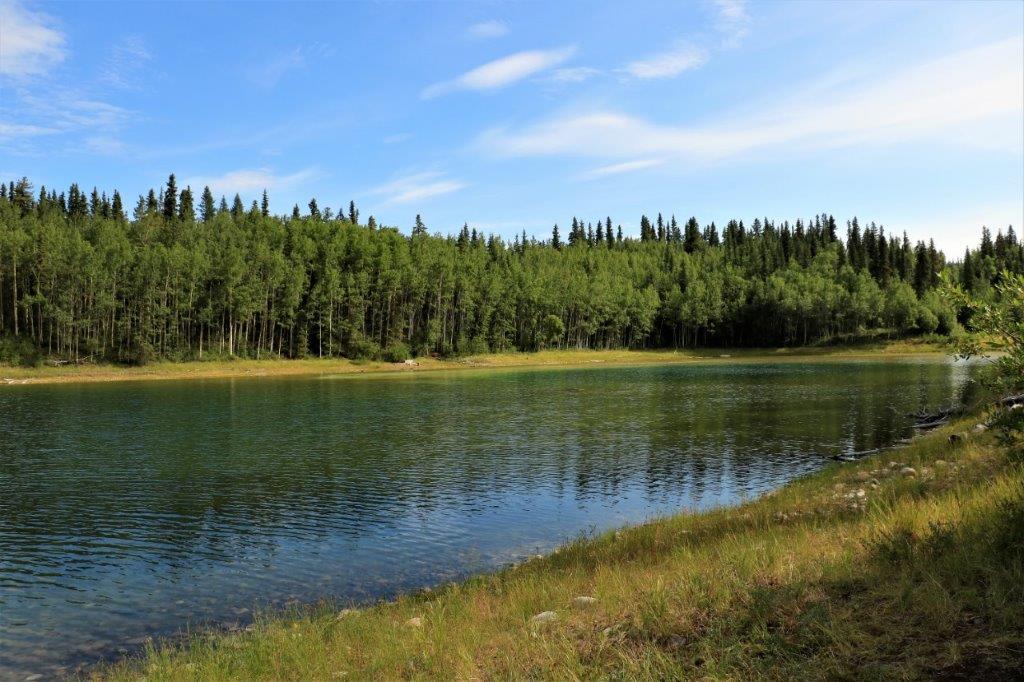
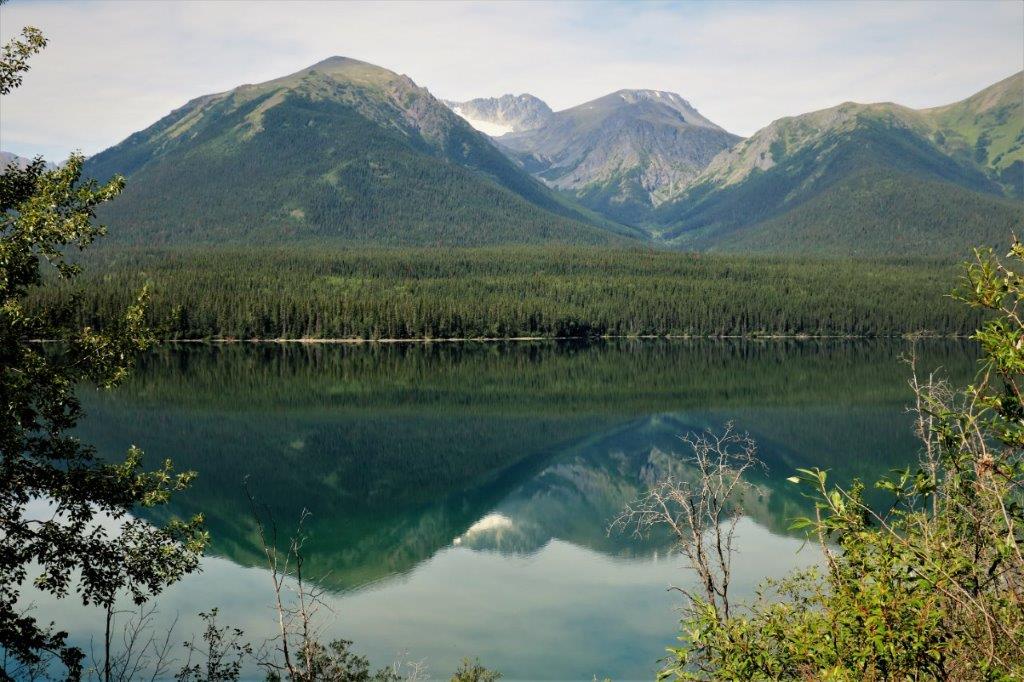
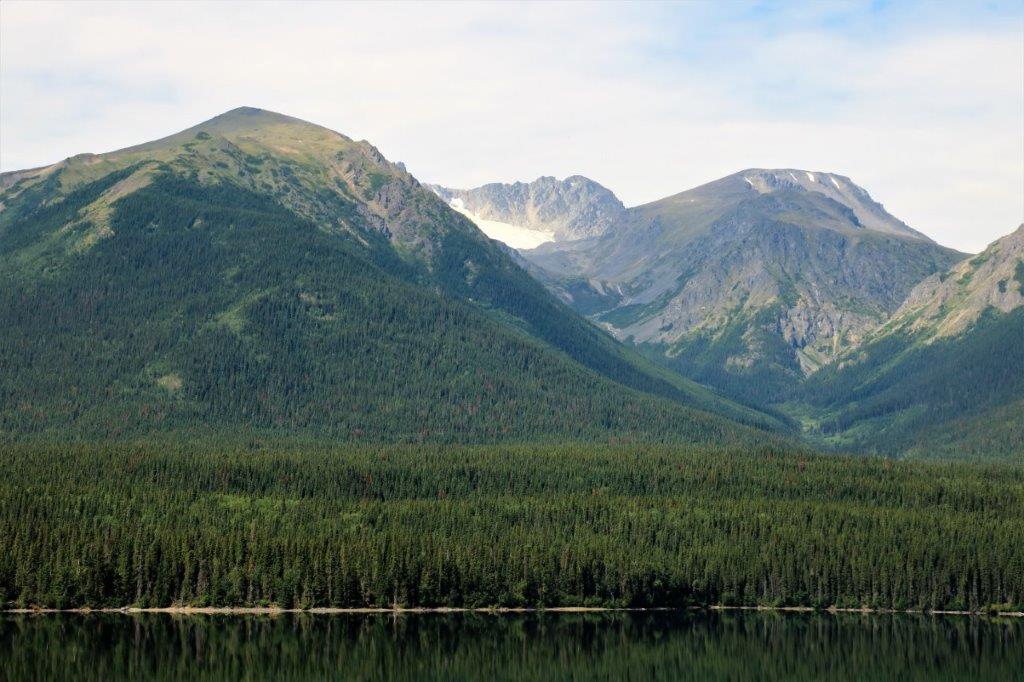
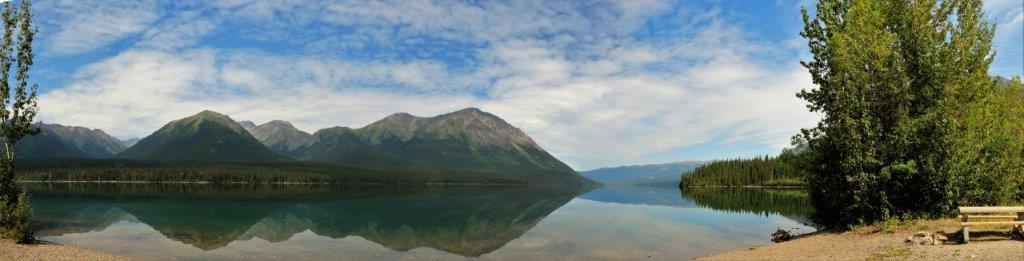
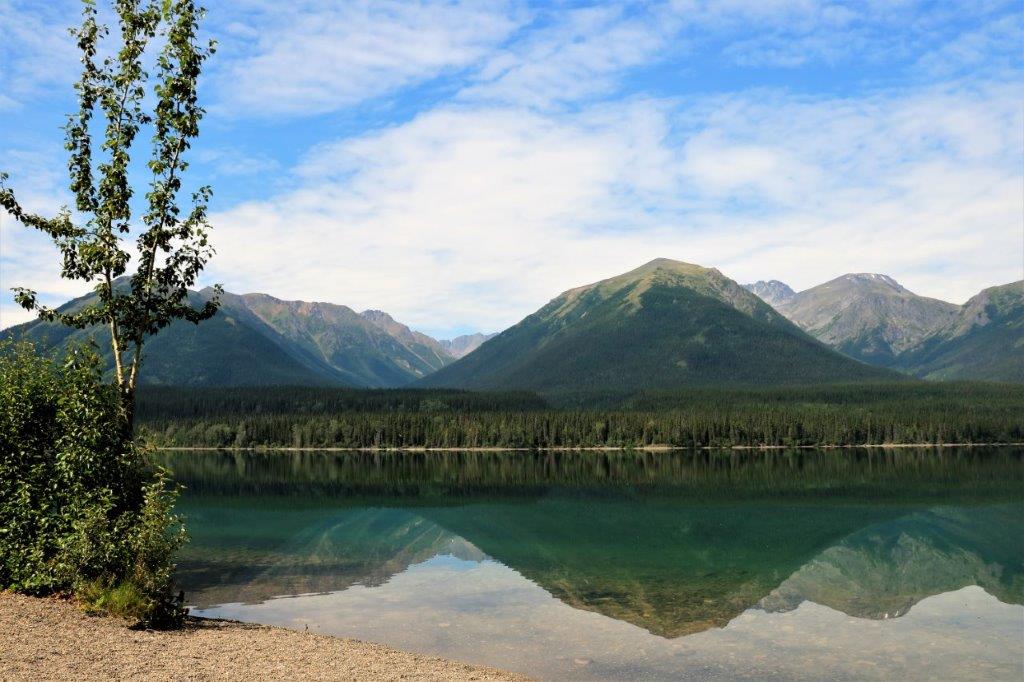
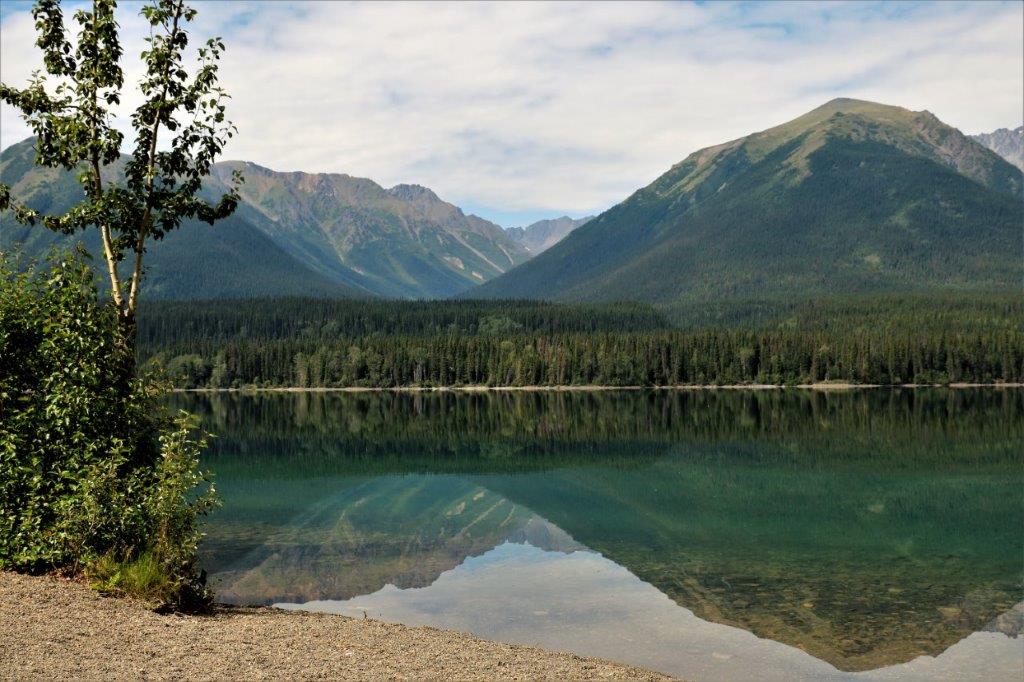
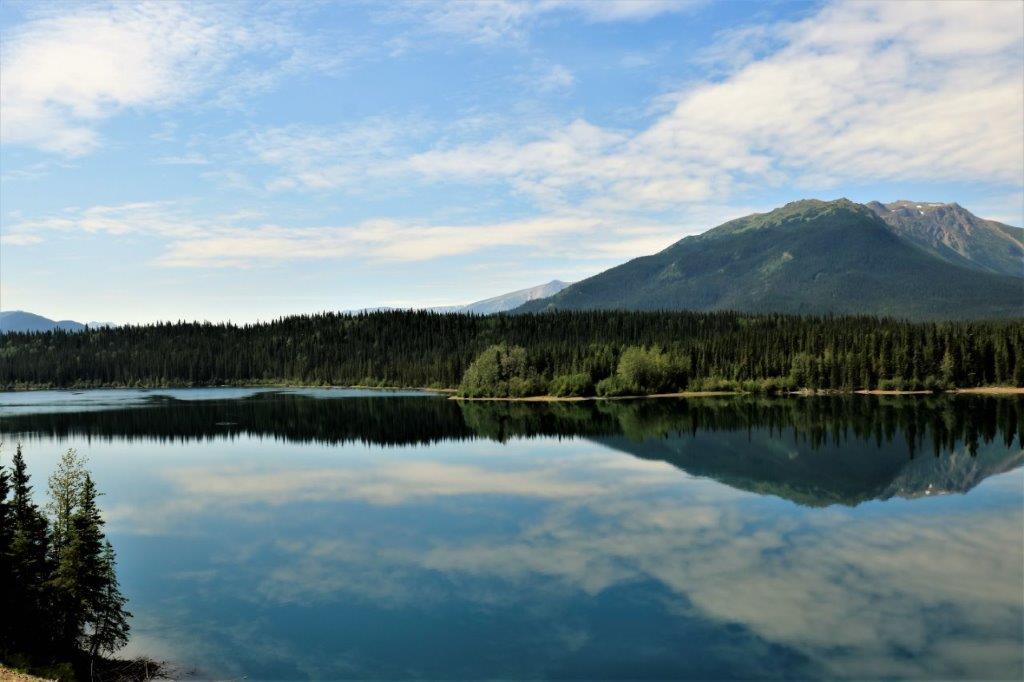
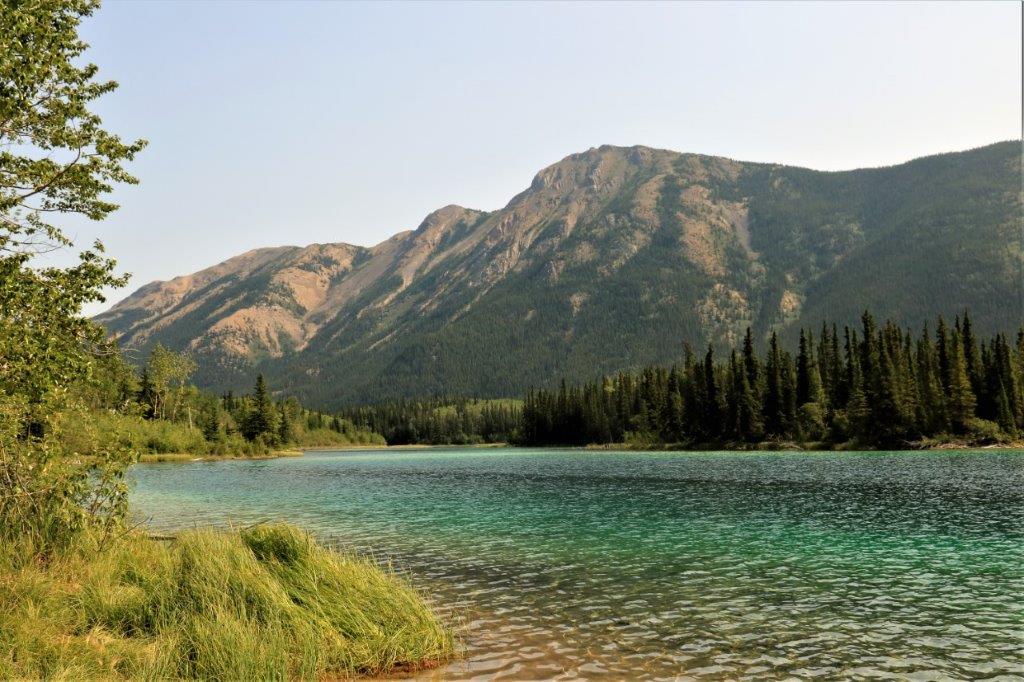
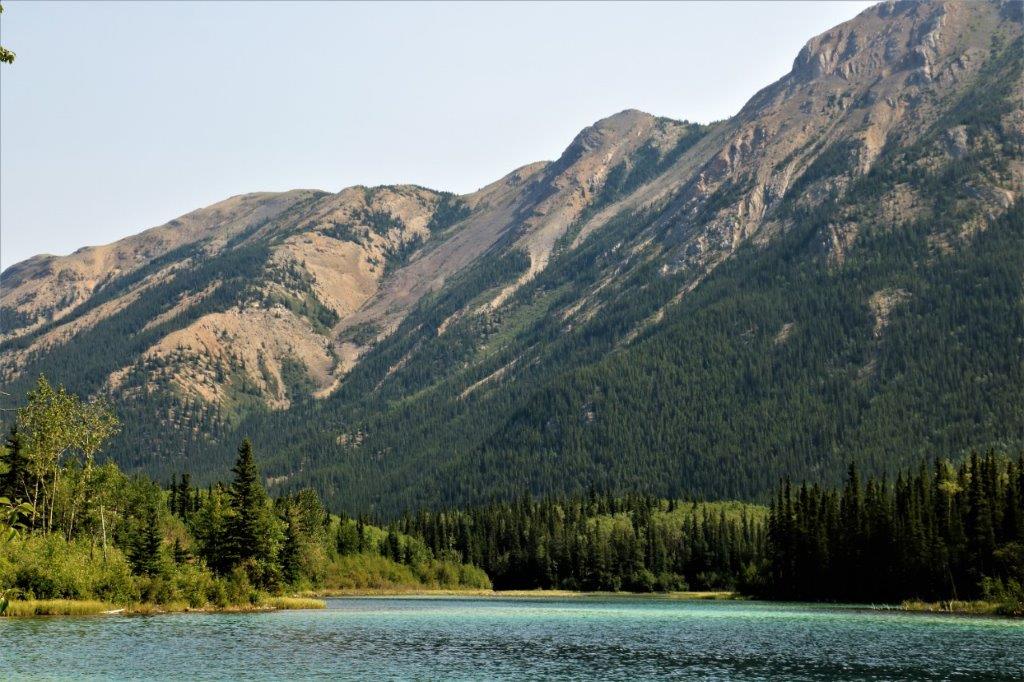
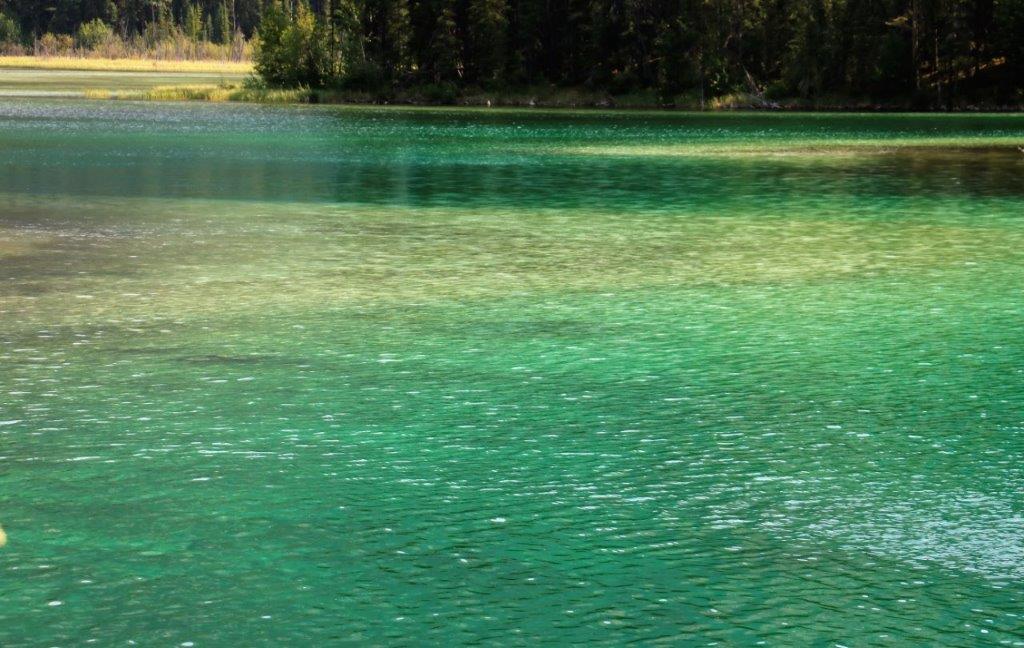
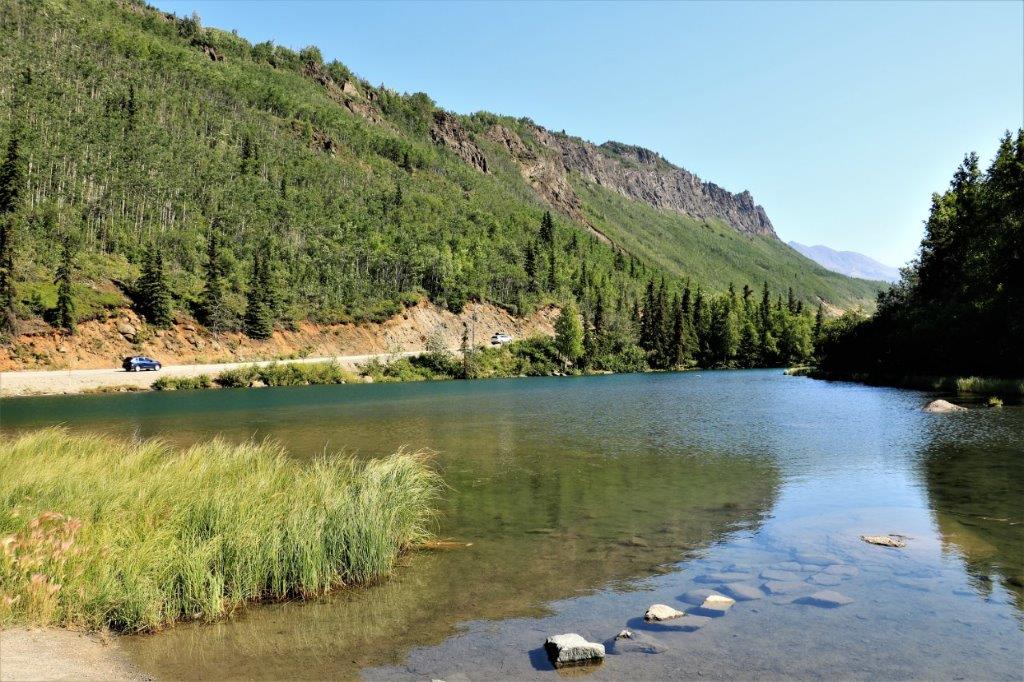
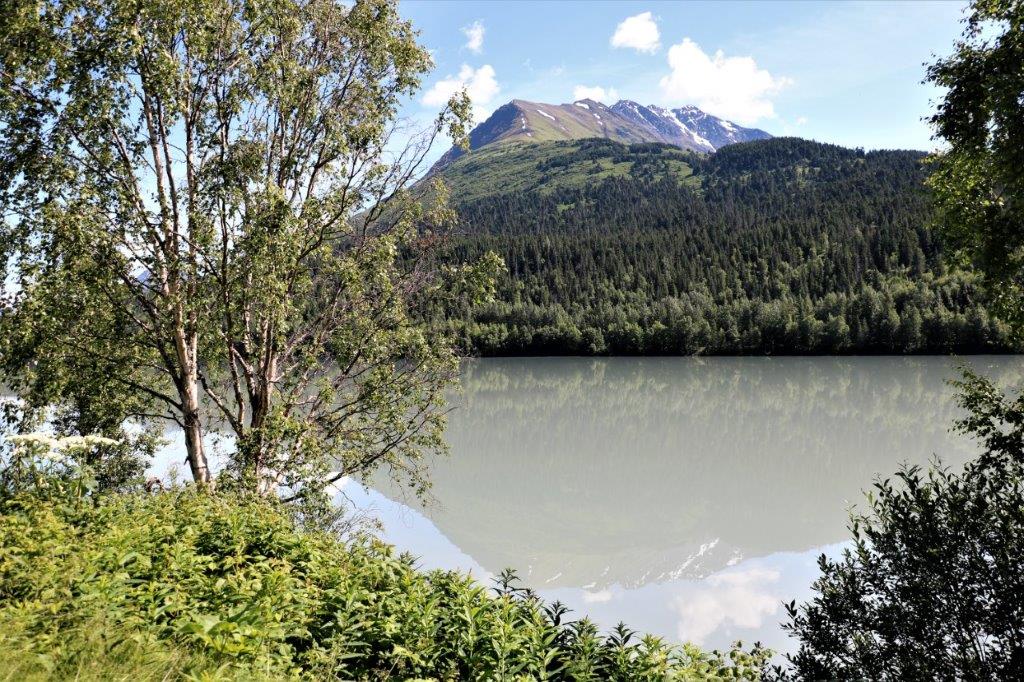
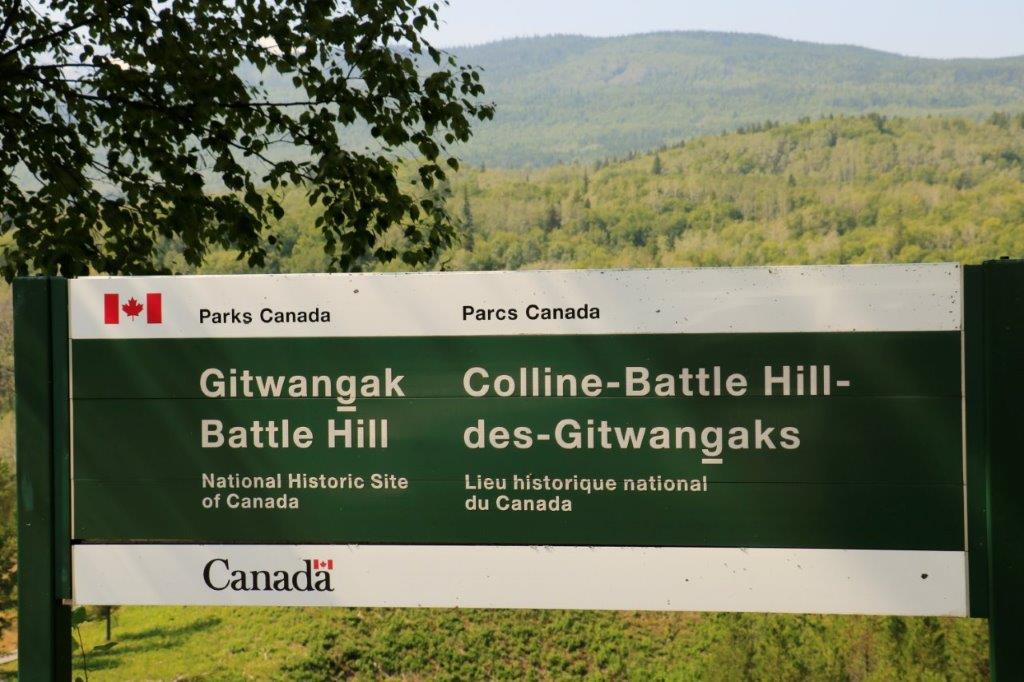
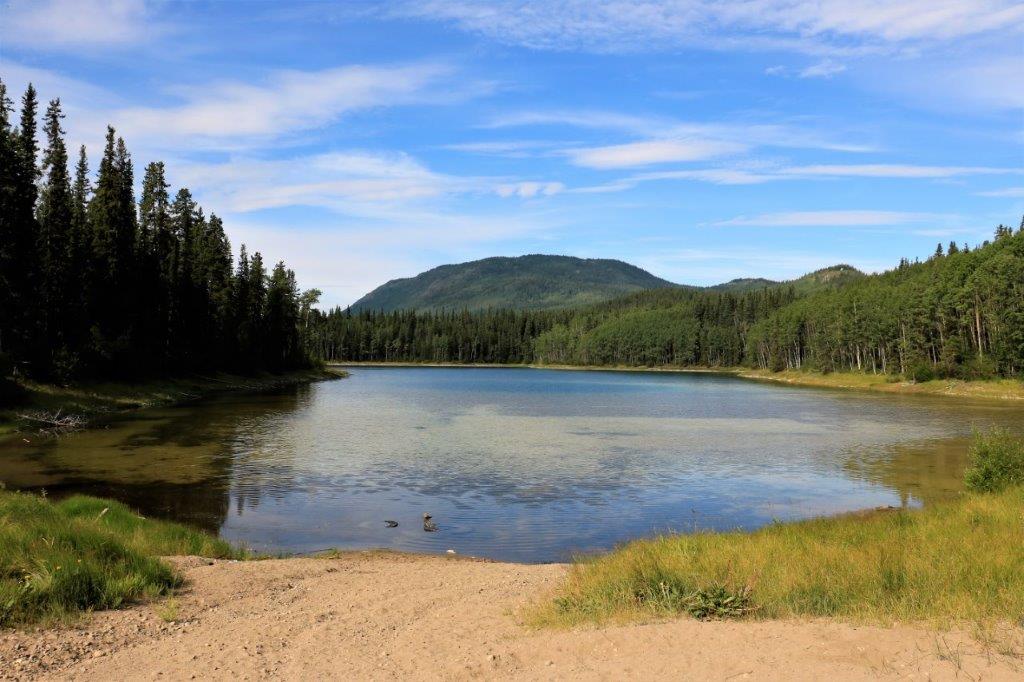
At 1:30 we pulled into a picnic area beside Bonus Lake for some lunch. At the Battle Hill Kitwanga Historical site we met a nice couple from Holland.  Their daughter had been backpacking in Bali and met a Canadian fellow and came home with him to  Courtenay on Vancouver Island.  Her parents had come over to visit and were traveling around for a few weeks while they were in Canada.  Nice couple.  It is so fun to meet new people as we travel around.   The Dutch couple and John and I debated whether we wanted to go down all the steps to go to the actual hill and when we looked closely and realized we would have to climb up another staircase to see the placards on top of the hill, so we all decided a distant view would suffice.  Lazy slackers, I know, but my old body doesn’t like stairs much any more.
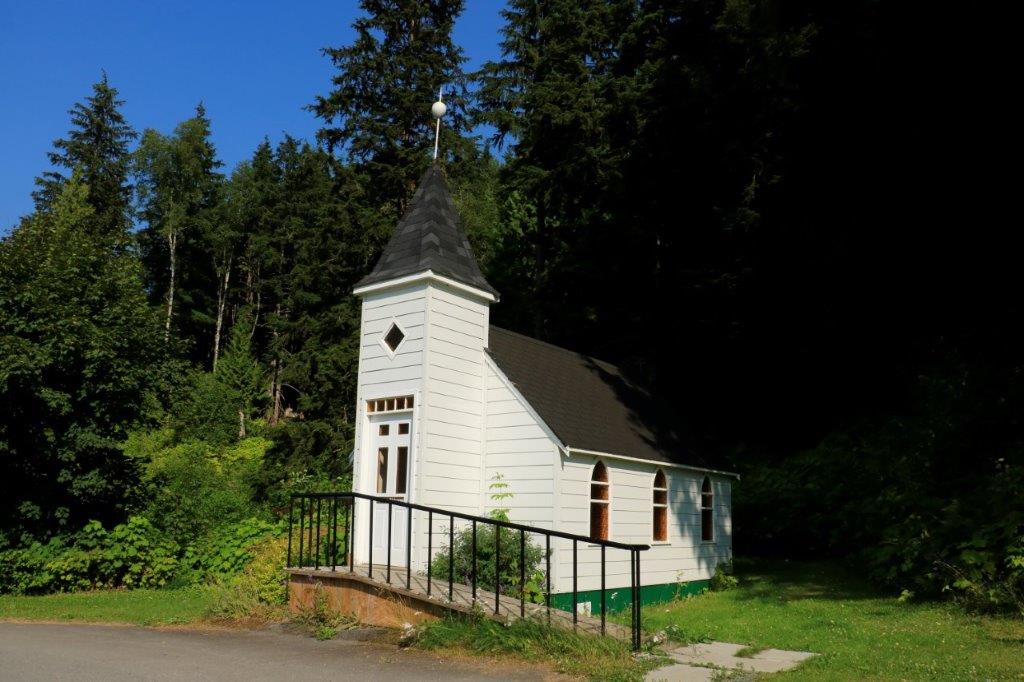
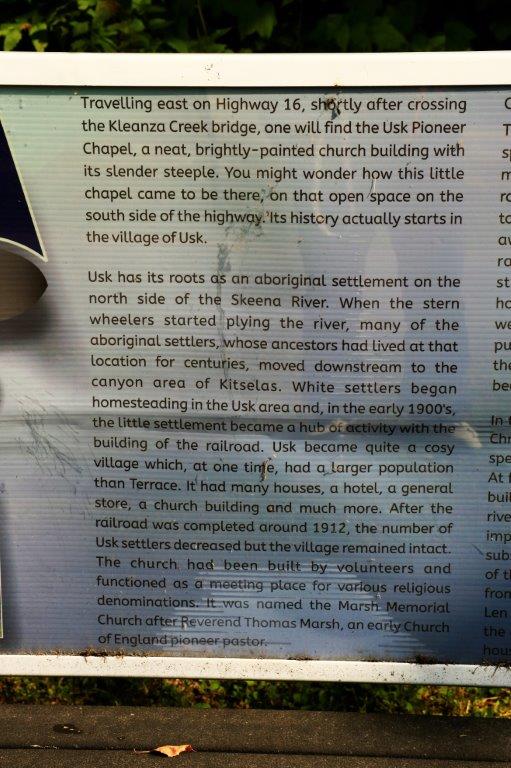
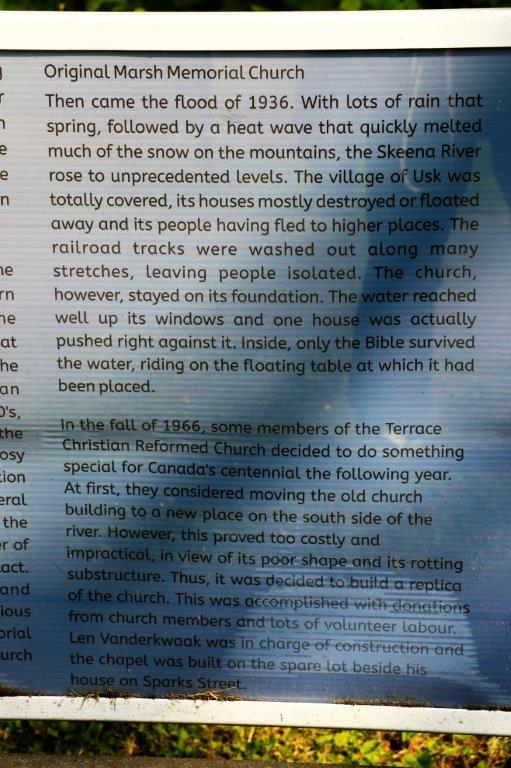
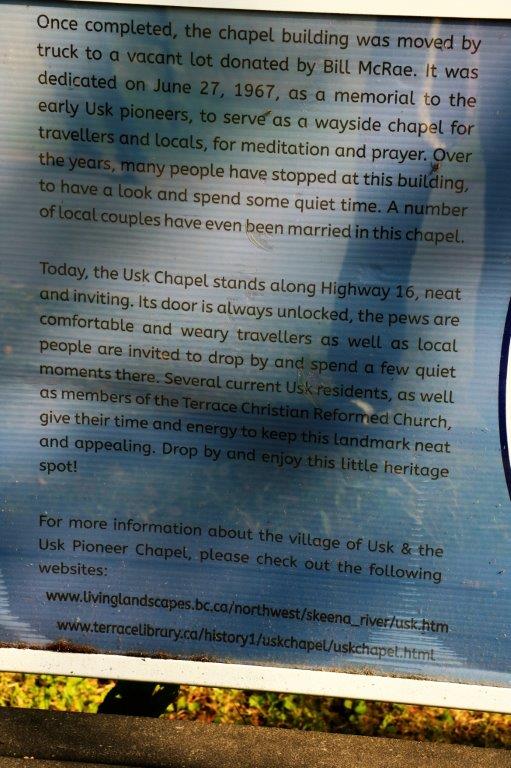
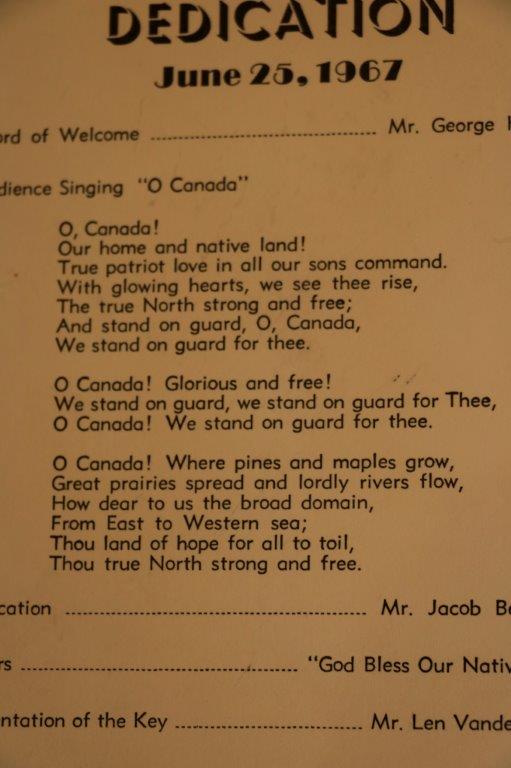
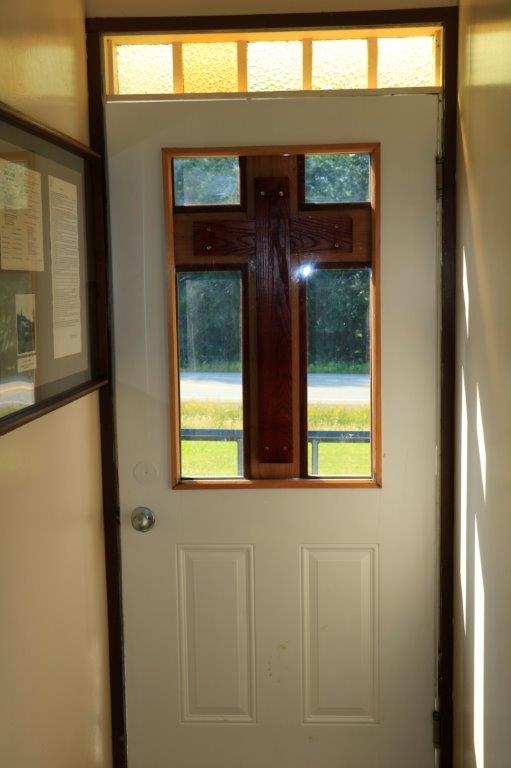
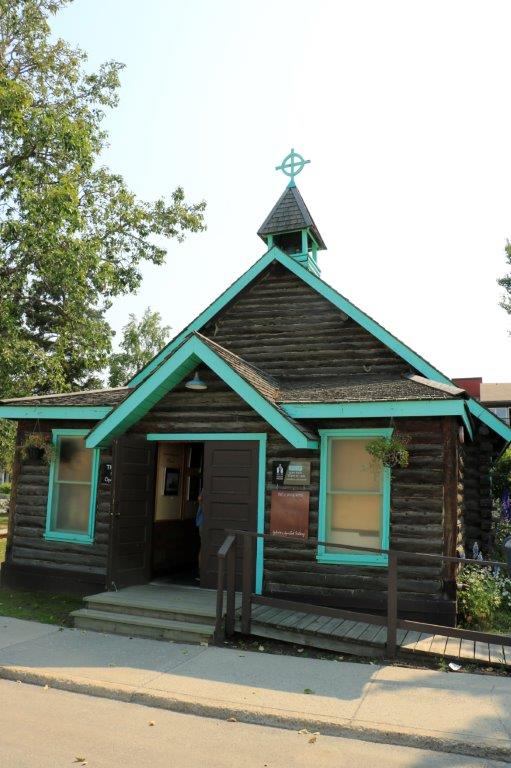
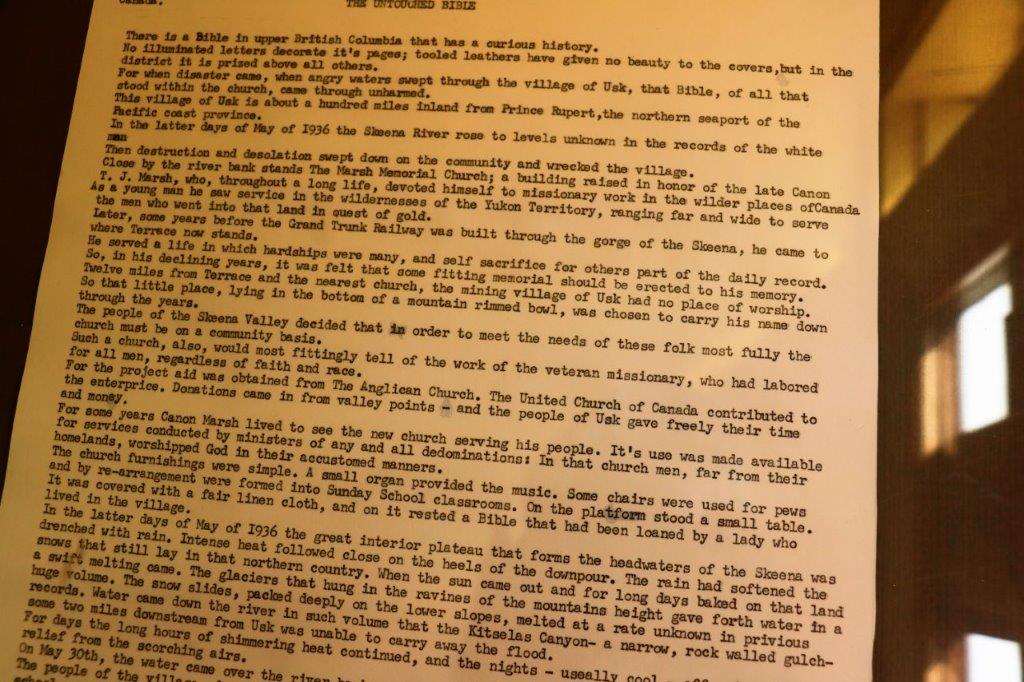
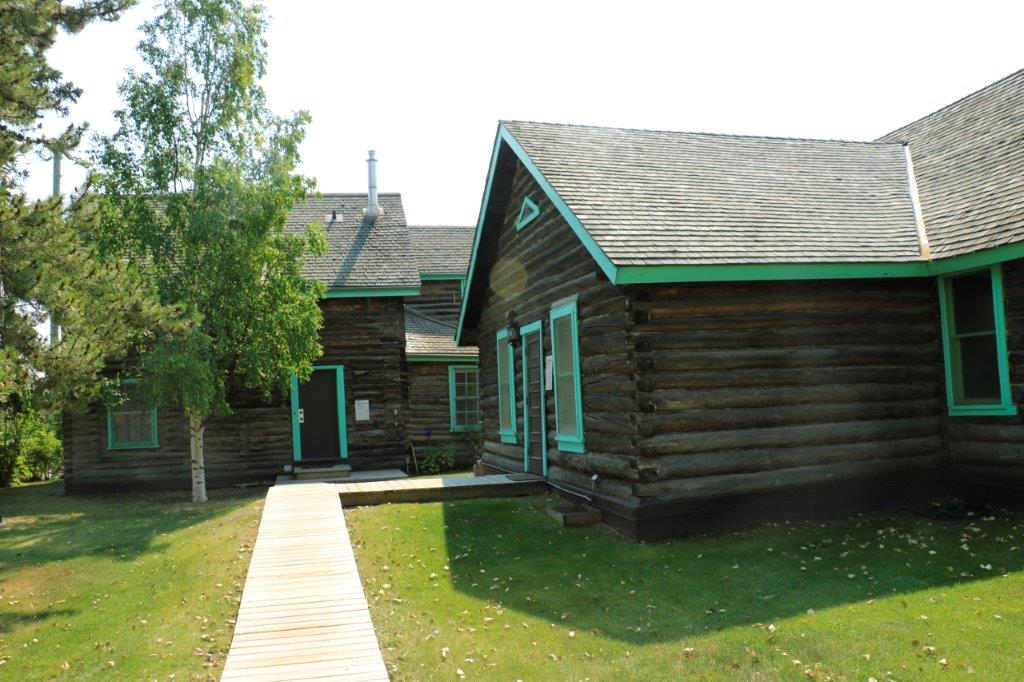
At Thornhill on the outskirts of Terrace we pulled off the highway to see the Pioneer Chapel and find the geocache hidden near the little replica of a church that was destroyed in a flood in 1936.    Look, here is the second verse to “O, Canada.”  Who knew there was more than one verse?  Not me.
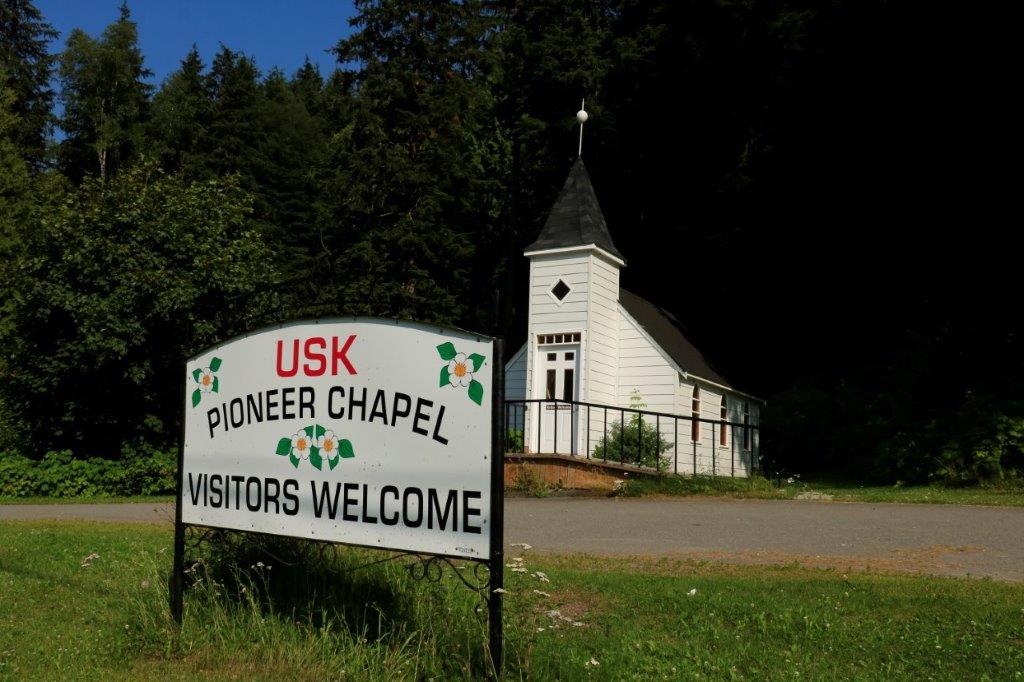
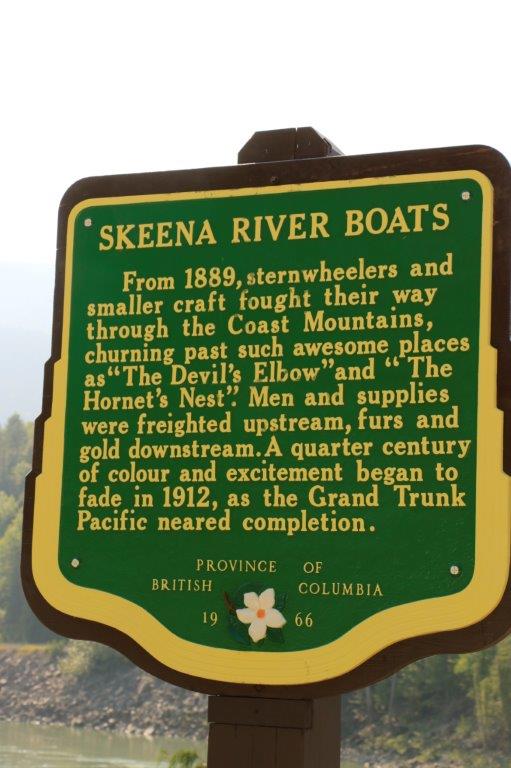
You will have to open the two photos below and enlarge your view to read the story of the flood that destroyed the church and community.  It is a good story.
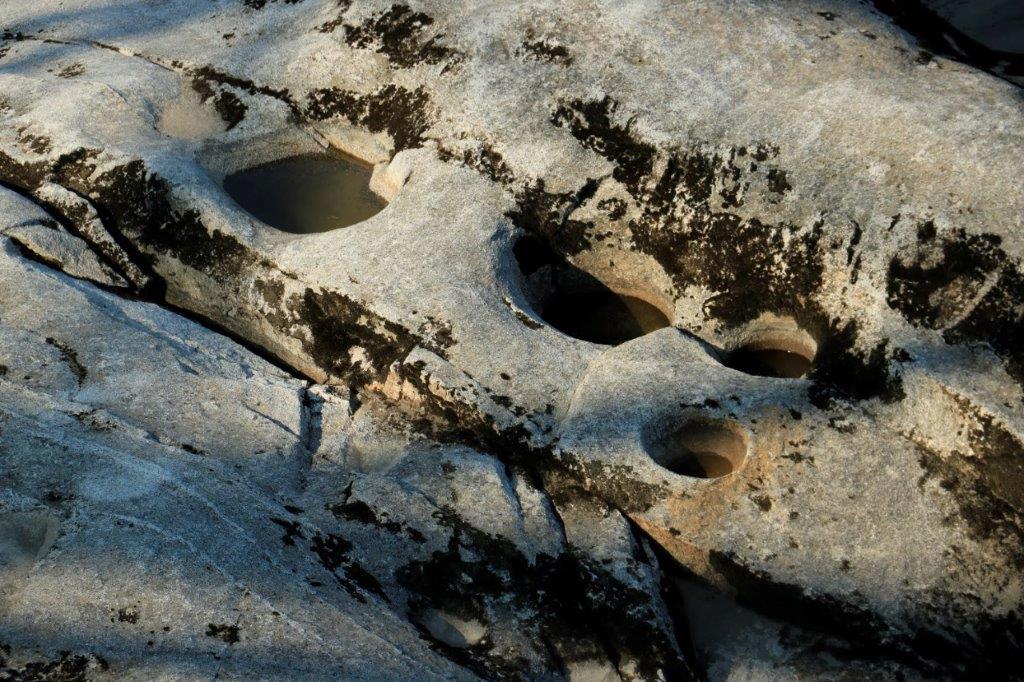
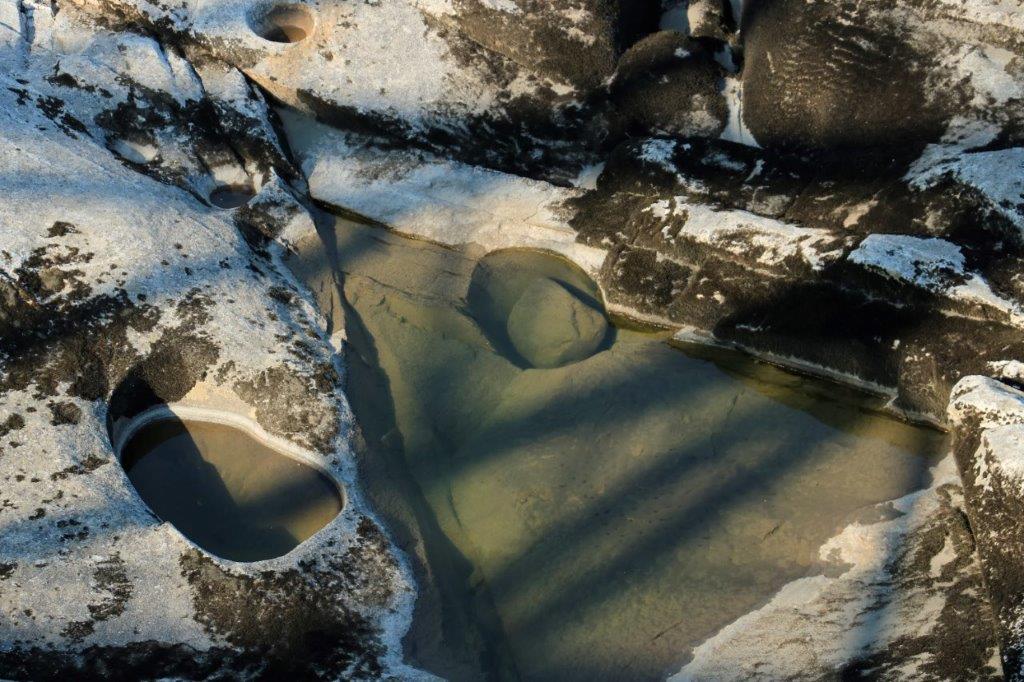
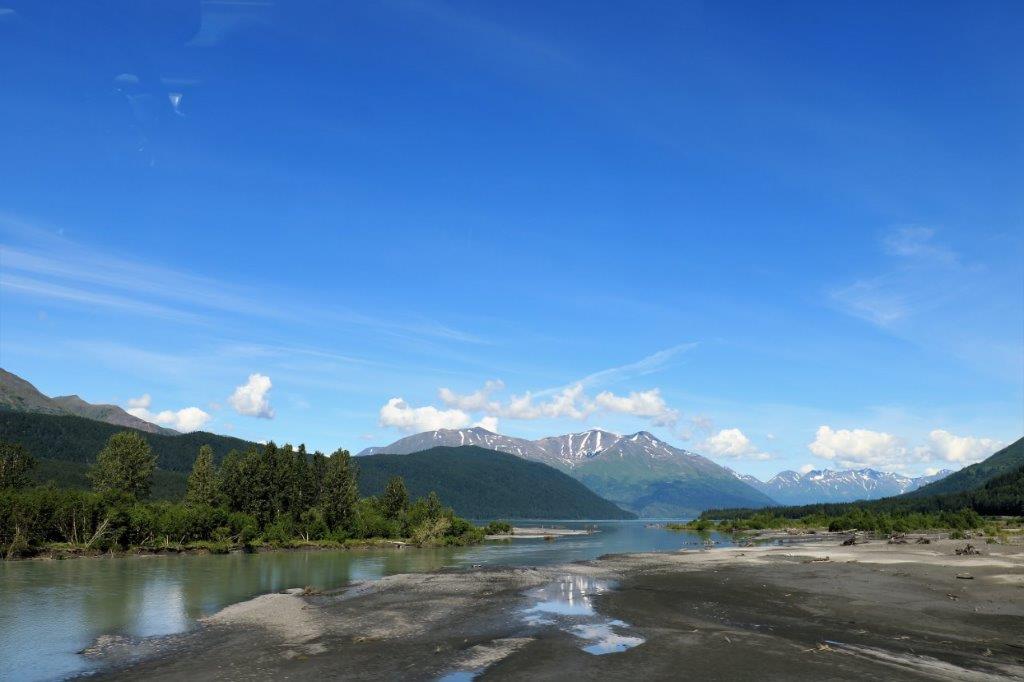
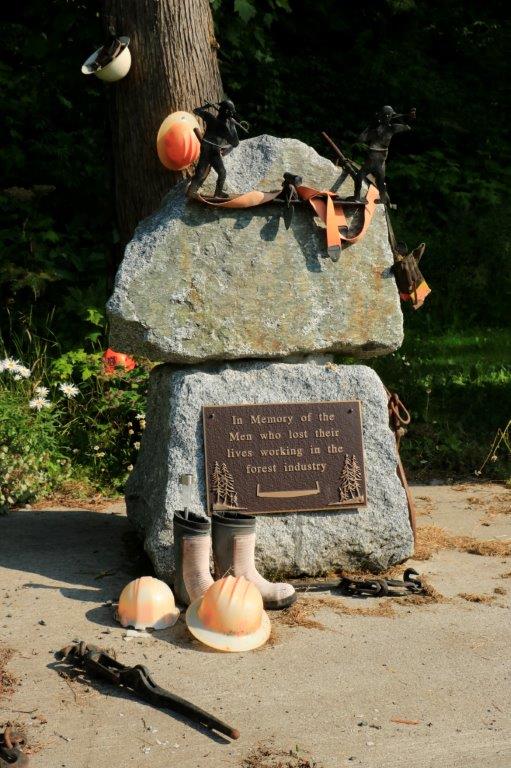
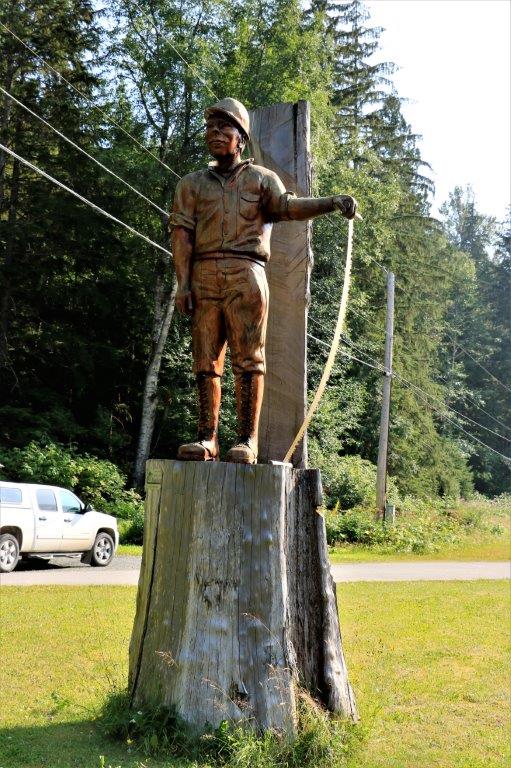
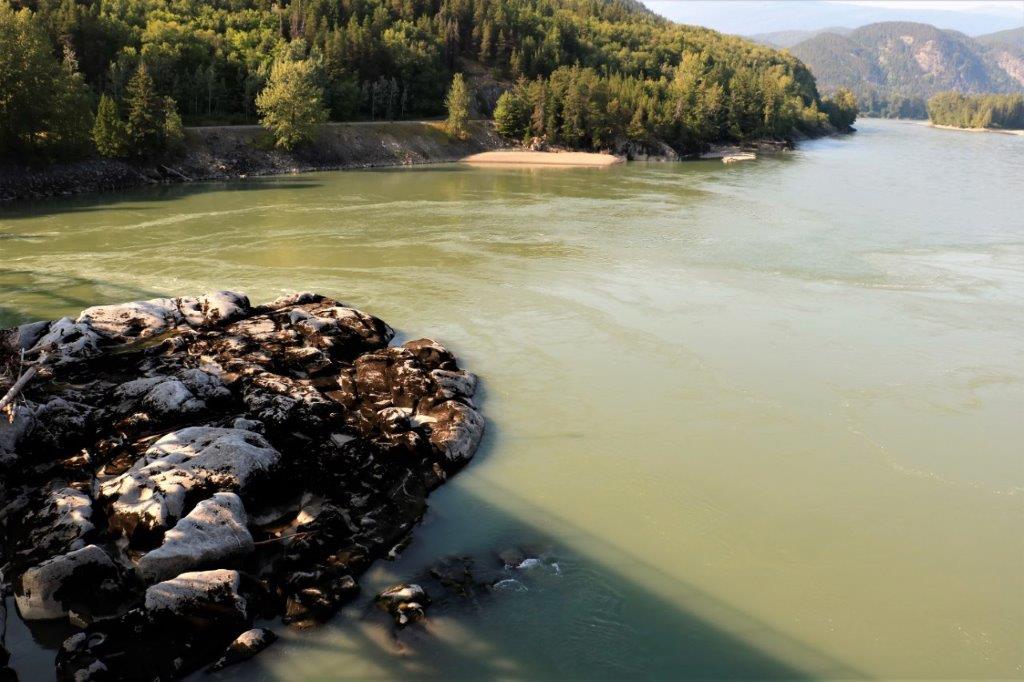
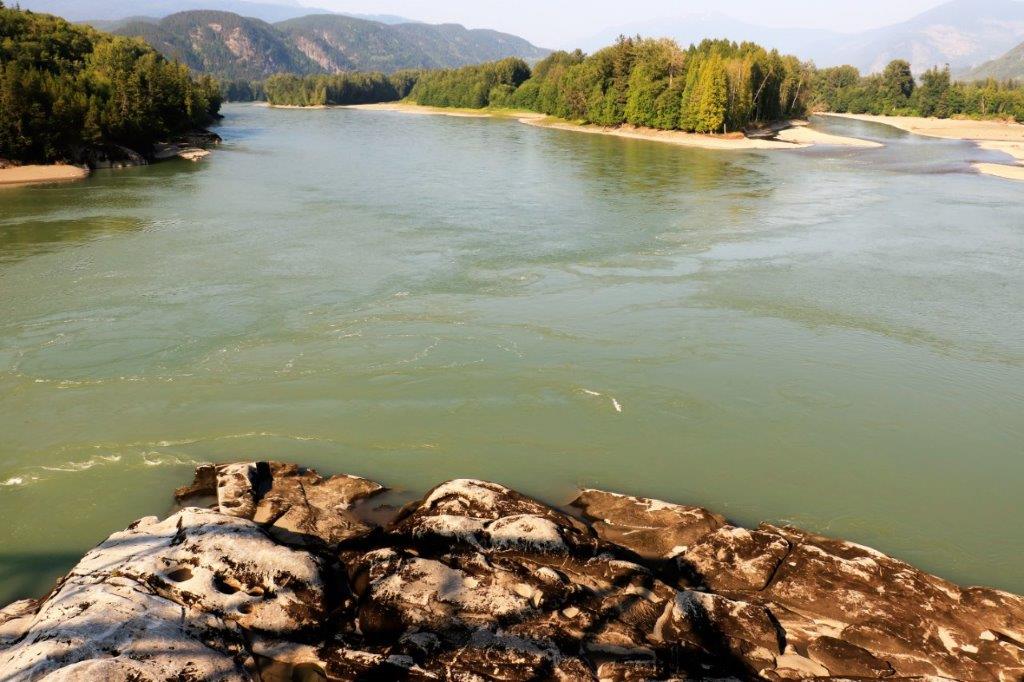
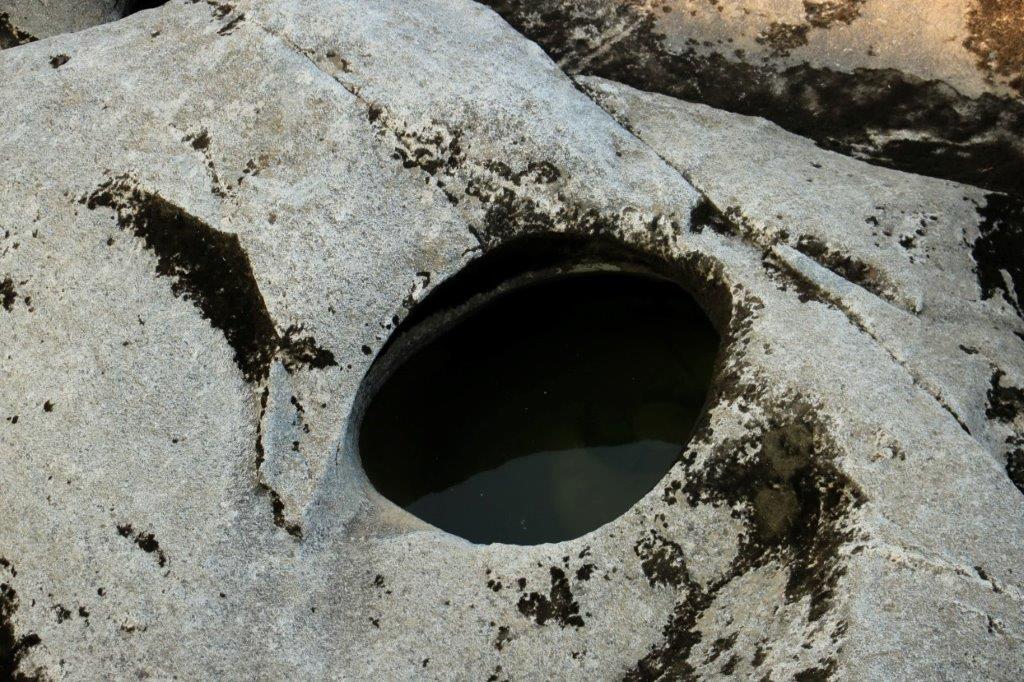
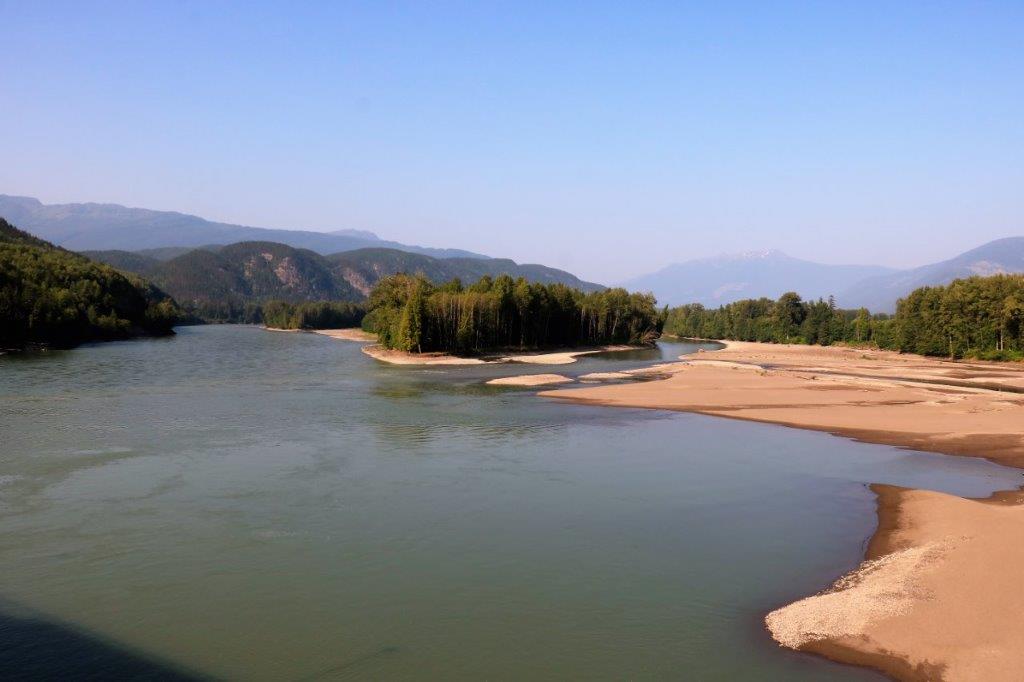
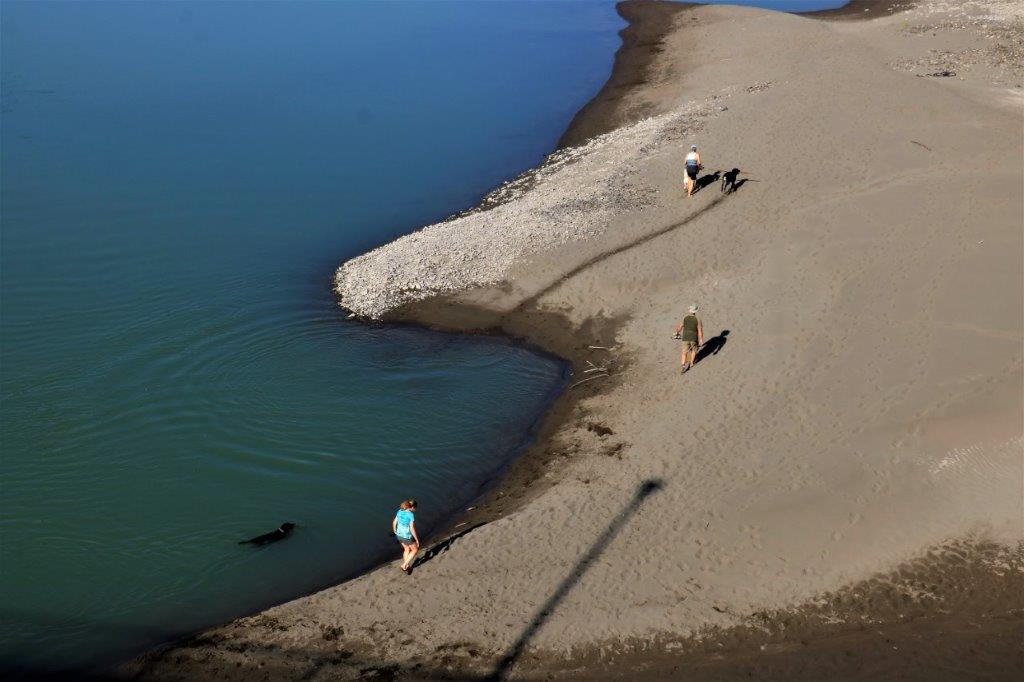
On the same property as the little chapel was a memorial to workers who had lost their lives in the forest industry. Our last stop of the day was on the Old Skeena River bridge on the outskirts of Terrace where we walked half-way across the bridge on the pedestrian walkway to see ‘potholes’ for an earthcache.  Potholes are depressions eroded into rock by small rock particles that get into crevasses on a boulder and the eddies of the river water grind circular depressions in the boulder.  Pretty cool.  The things we learn!  If you drive across the bridge you do not get even a glimpse of the big rock in the middle of the river that has all the potholes.  The only way to see them is to walk out to the spot. High water in the spring covers the boulder as well.  They get deep enough to swallow big rocks that the river brings down. Since it was such a nice, hot, summer day lots of people (and their dogs) were down at the river.We arrived in Terrace at 5:30.  After dinner we walked around to the back of the hotel and found our last geocache of the day.  Tomorrow we drive to Prince Rupert where we will spend two nights.
2018 July 26 – Dease Lake to Bell 2, BC

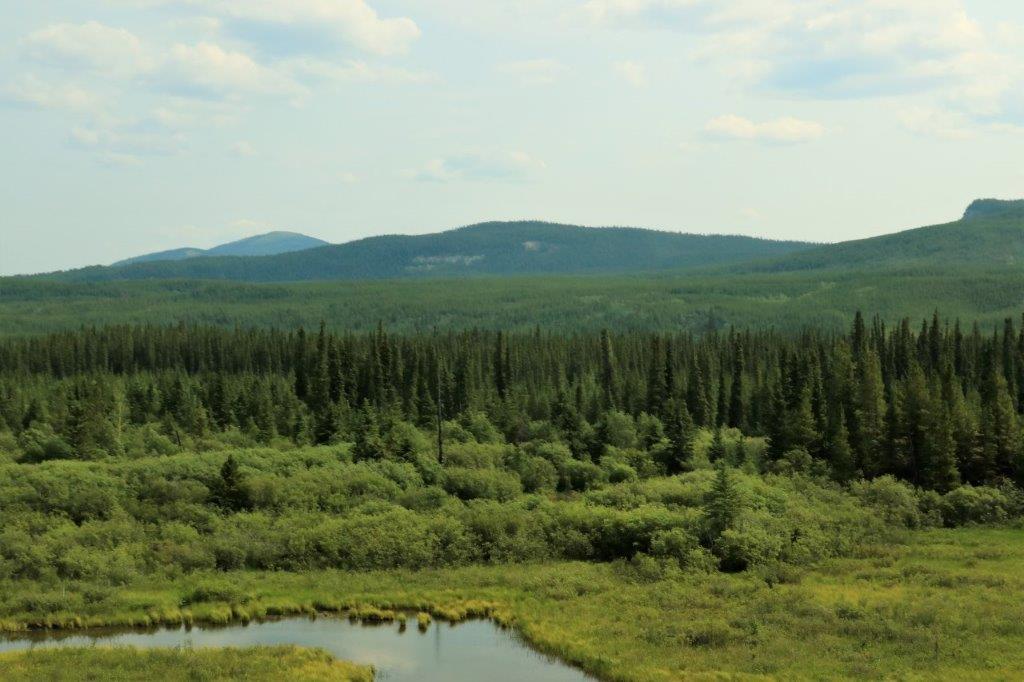
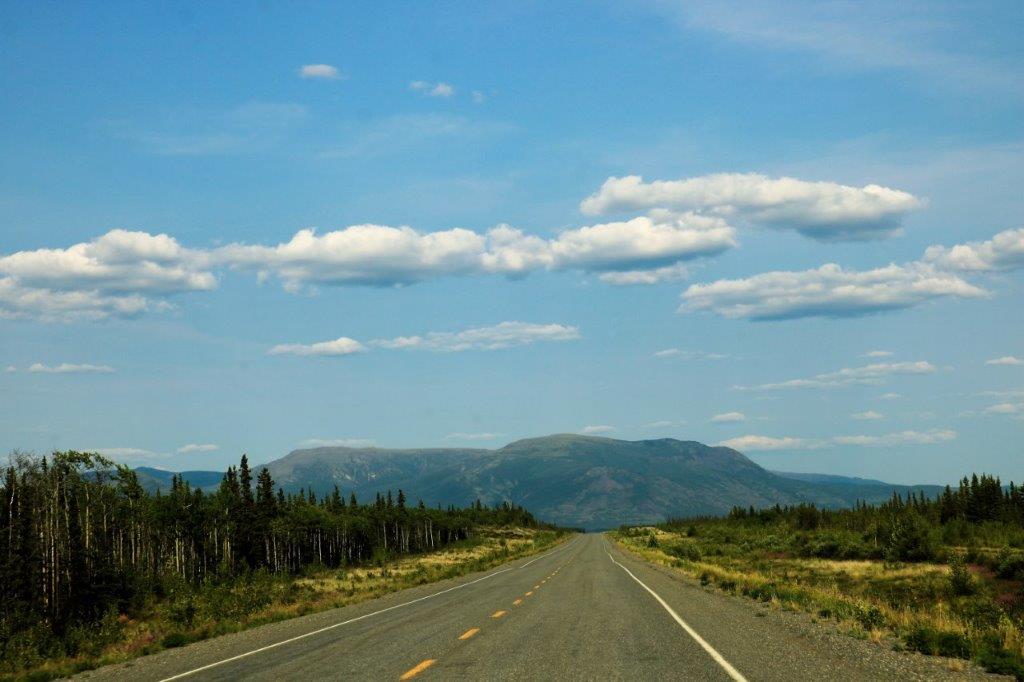
It was another sunny day today but by the time we neared Bell II at 3 o’clock there was a definite smoke haze in the air.  But, for the majority of the drive, it was a beautiful day.

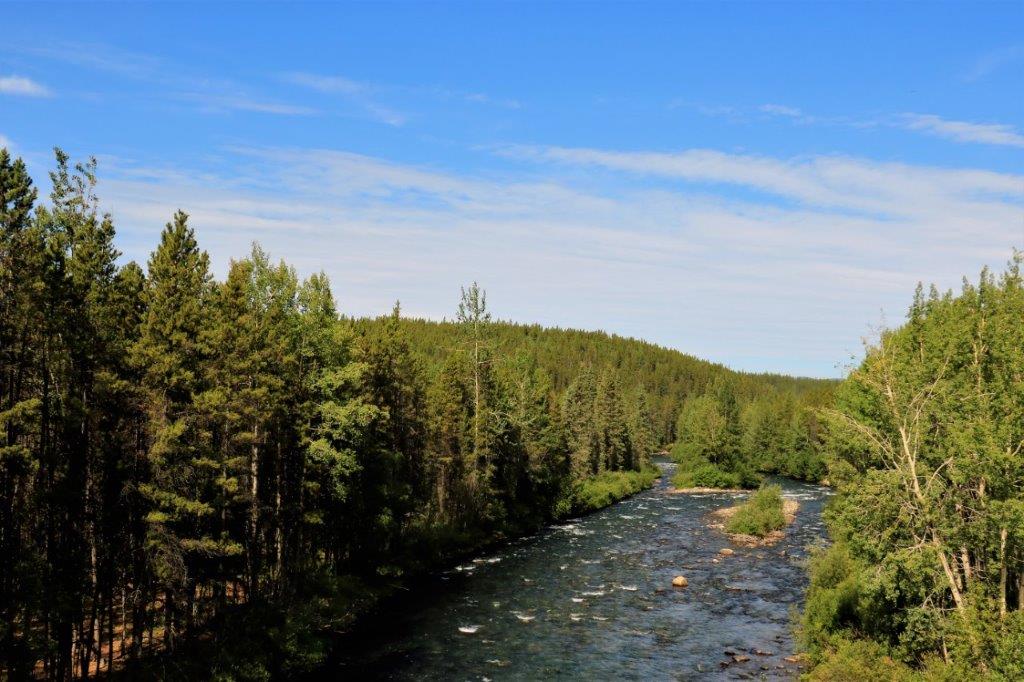
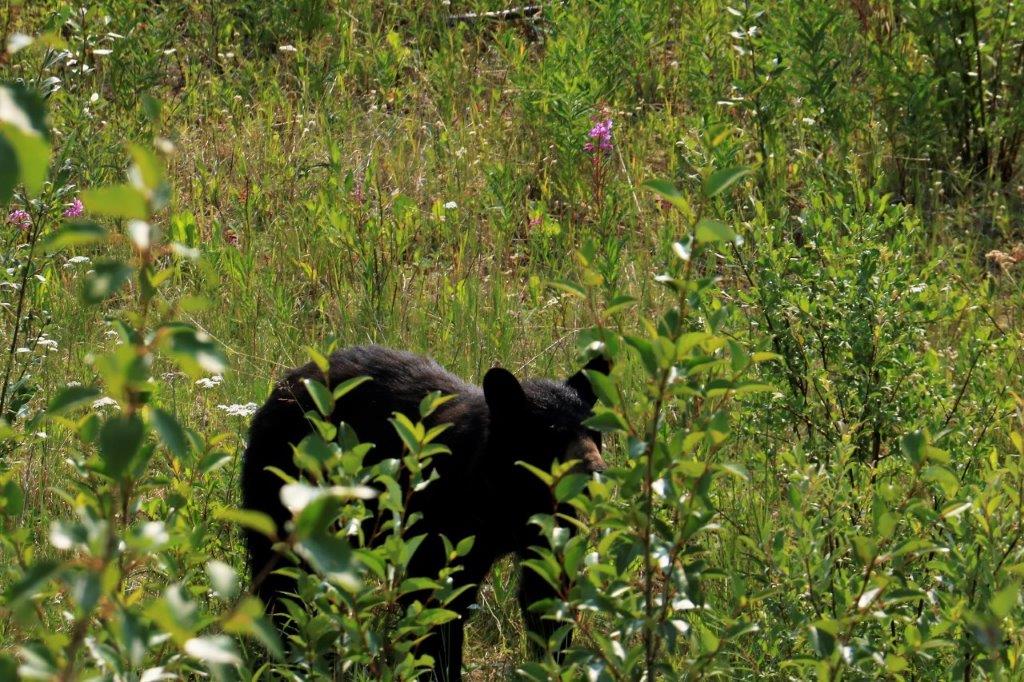
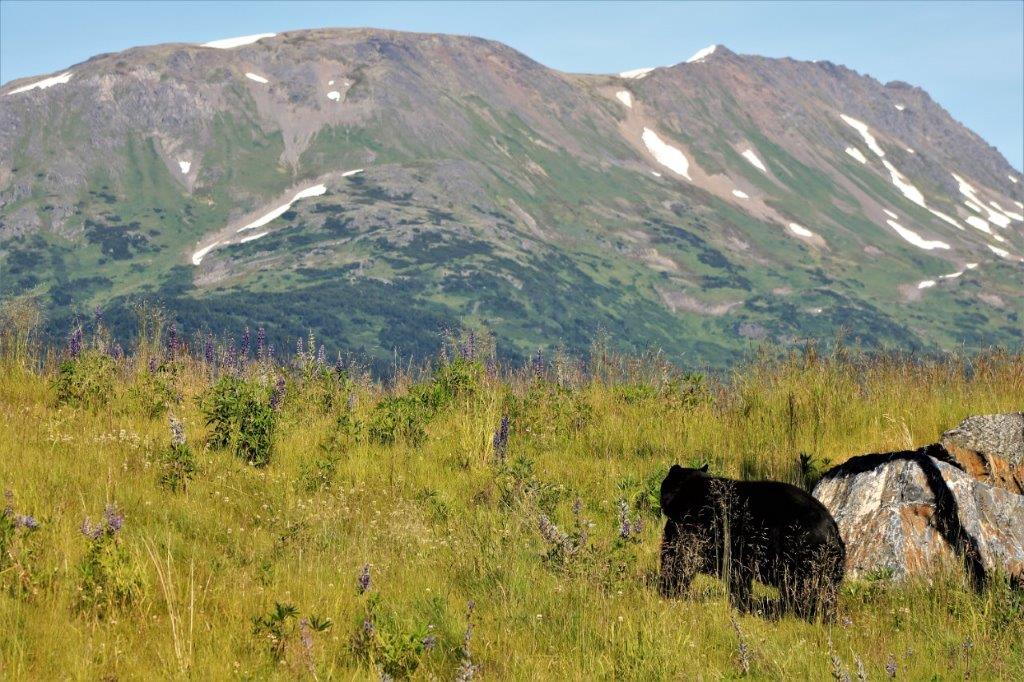
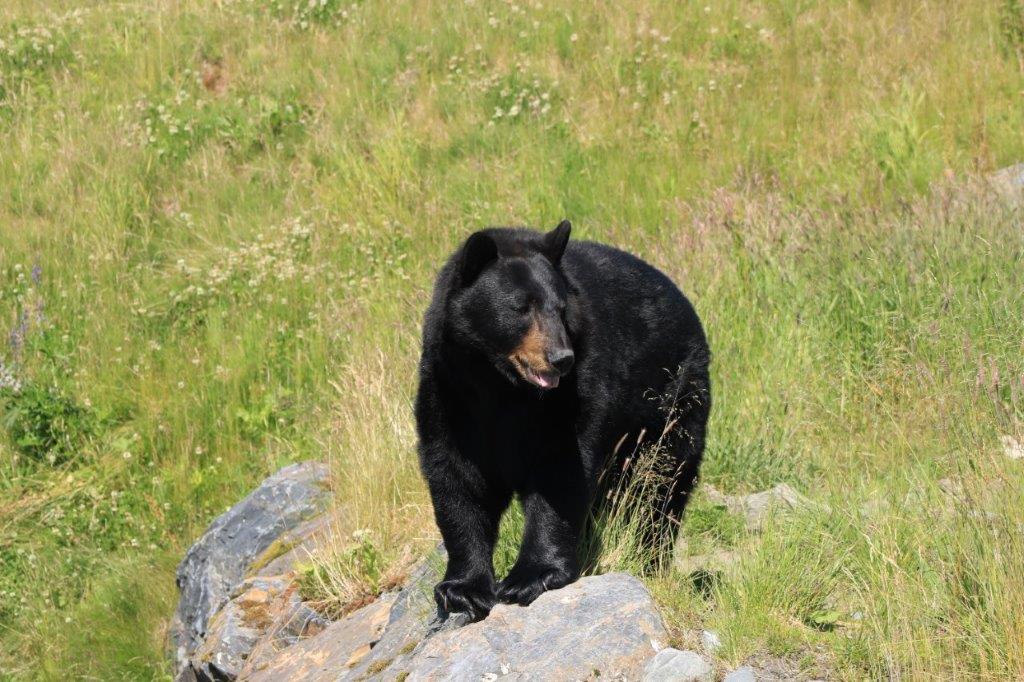
We didn’t leave Dease Lake until after 11.  There are two geocaches hidden here and we hoped to find them both.  However, the first one we looked for was 400+ meters into the bush with no visible trail.  We passed.  The second one showed to be down a short steep gravel road to a boat launch at Alan Lake just out of town.  John decided to not drive down because the log description said there was sand at the bottom of the road and he did not want to risk getting stuck.  We thought the cache was at the bottom of the road near the lake, but it wasn’t.  We had to walk along a quad trail all around the end of the peninsula to another section of the lake.  We kept whistling and talking to make sure we did not surprise any bears.  We located the cache and then hiked back to the truck and started on our way to Bell II; 3 ½ hours drive south.  The Tanzilla River was tumbling along over its rocks. We saw another black bear today.  He hopped over the guard rail before we could get any closer.  This photo is cropped quite a bit.  South of Iskut, we drove past the entrance to Red Goat Lodge I could see a bit of a lake so we decided to pull in.  The owner said it was okay for us to drive around and take some photos.  It was a lovely spot.  Very quiet, very calm.

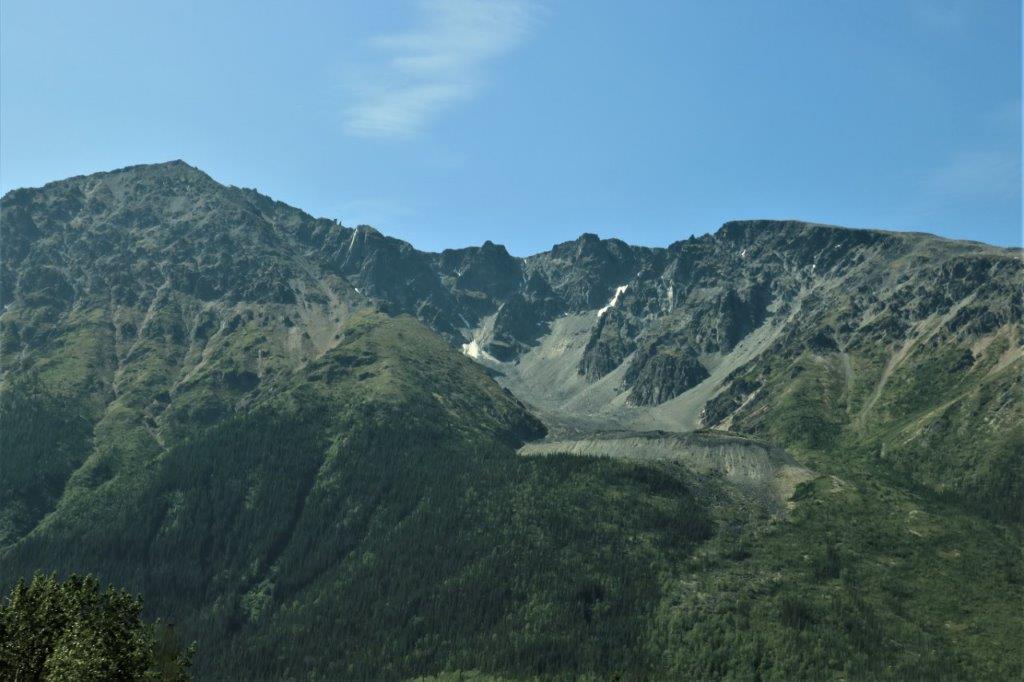
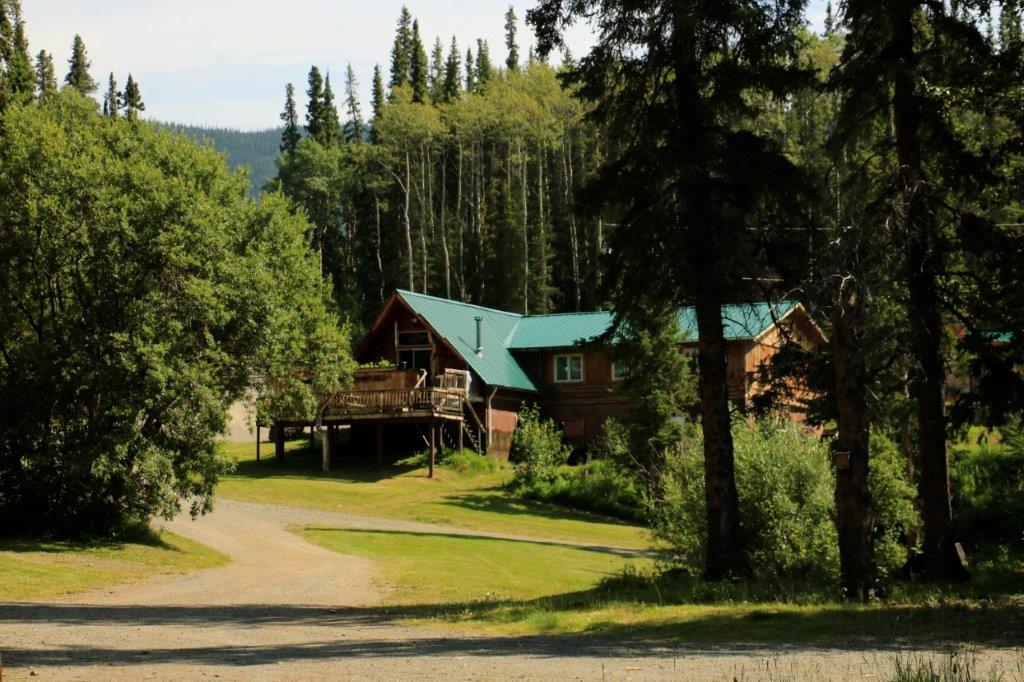
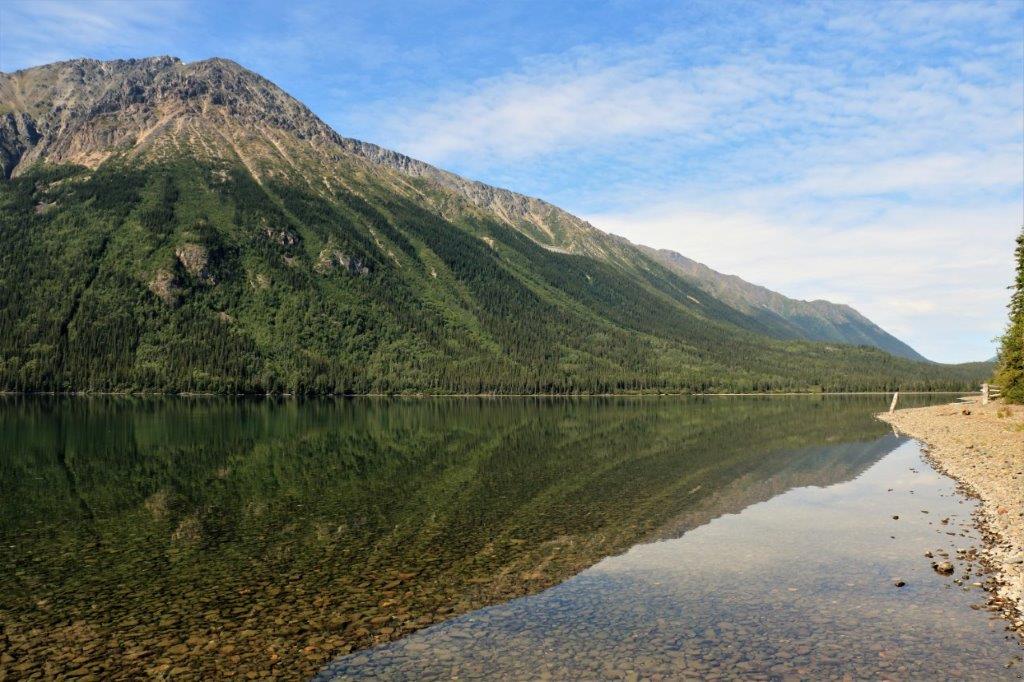
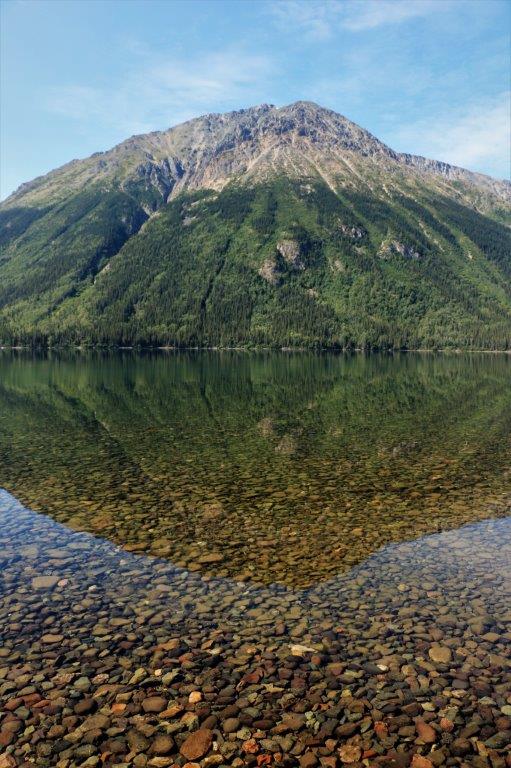
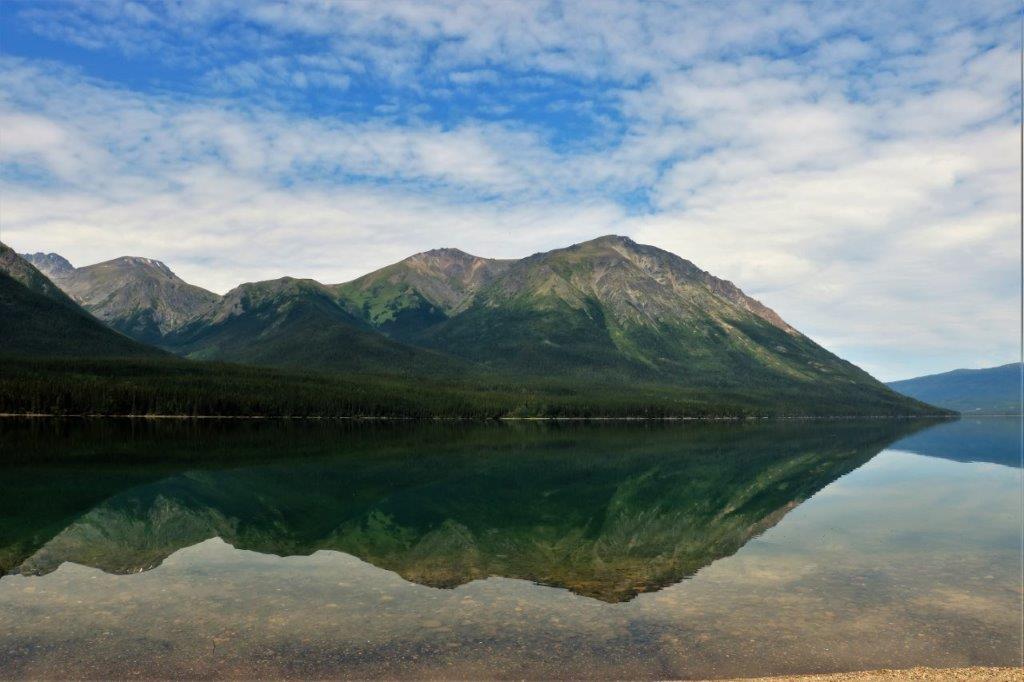
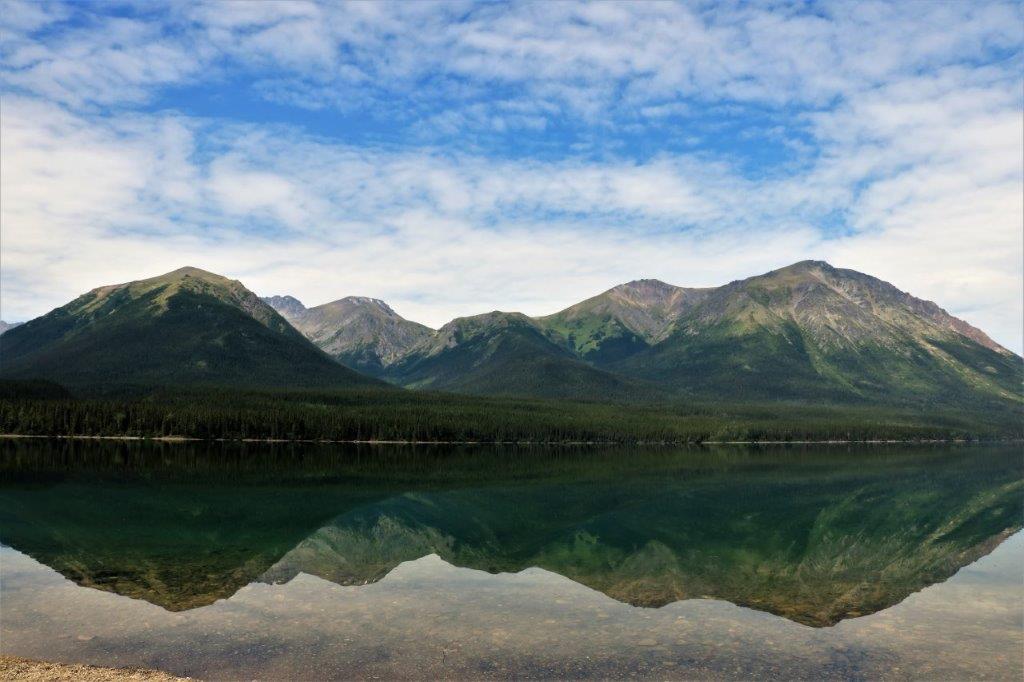
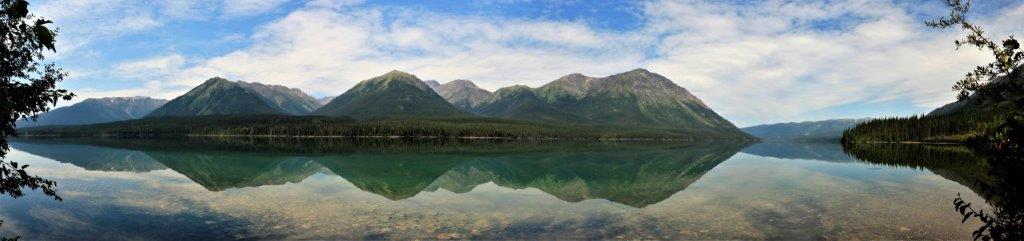
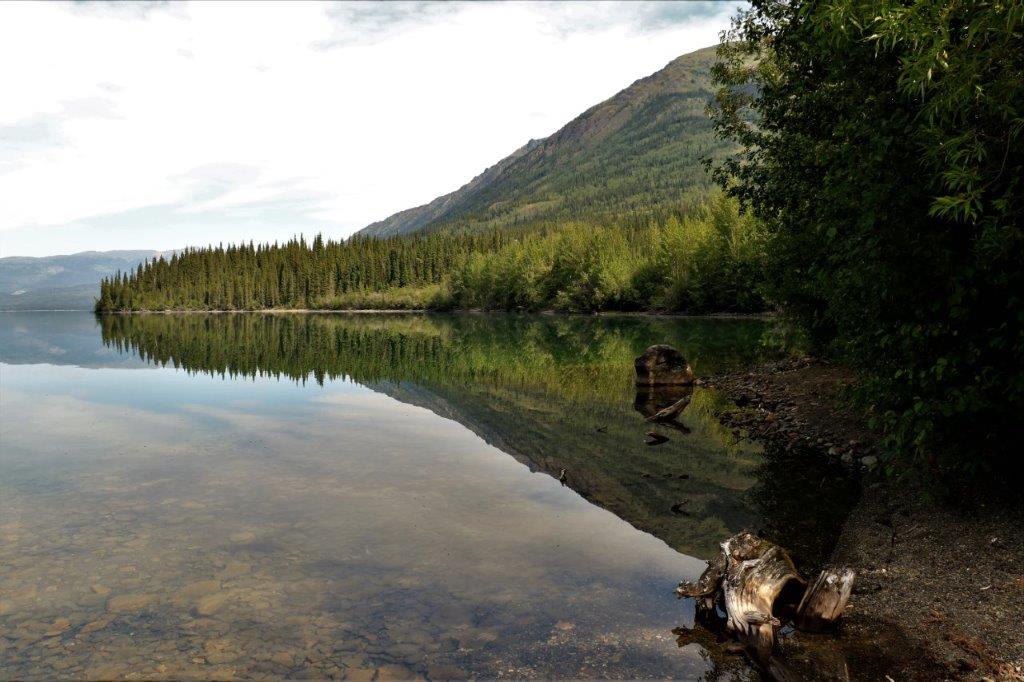
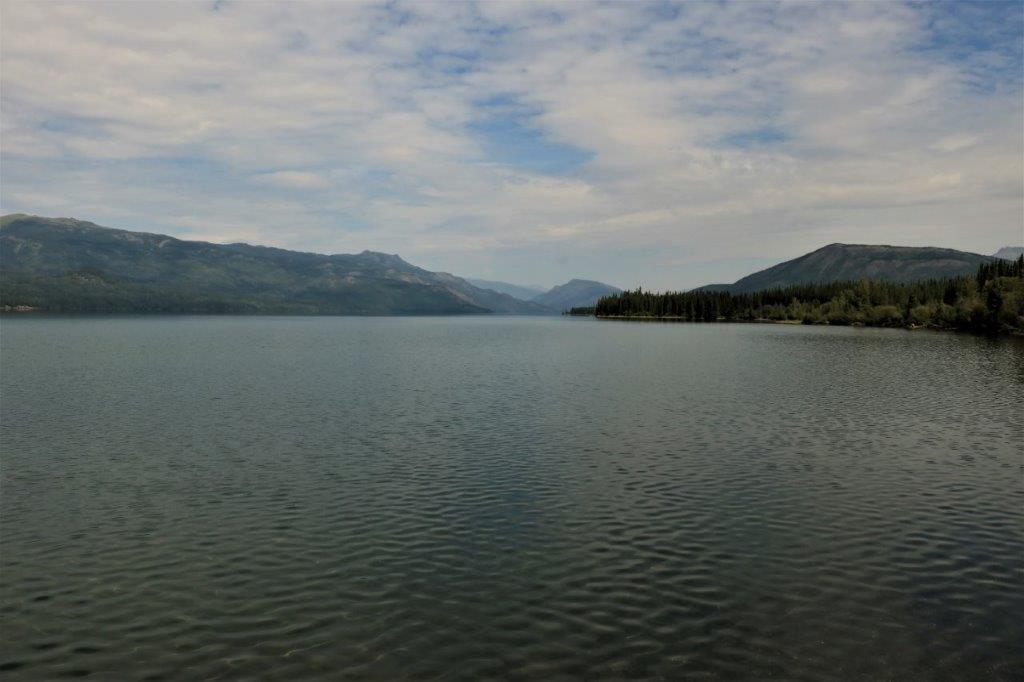
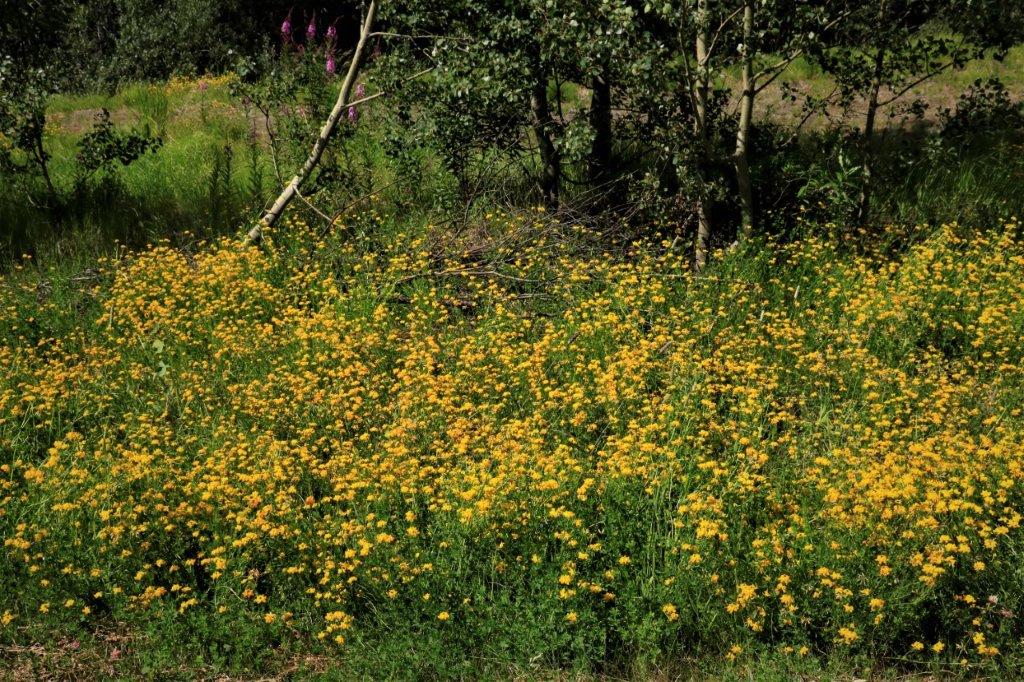
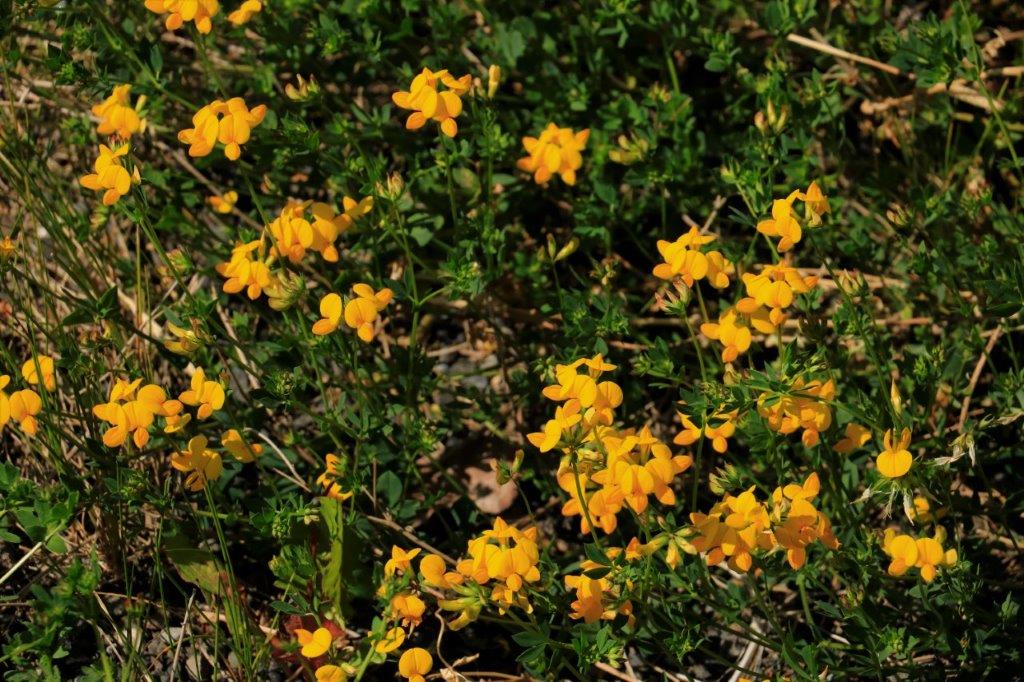
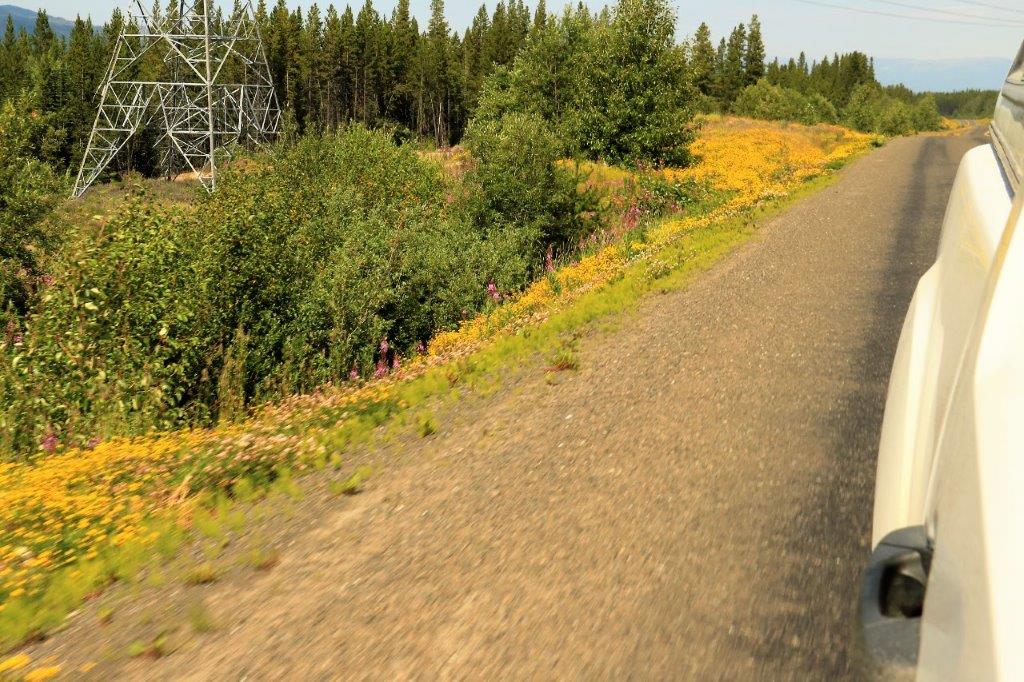
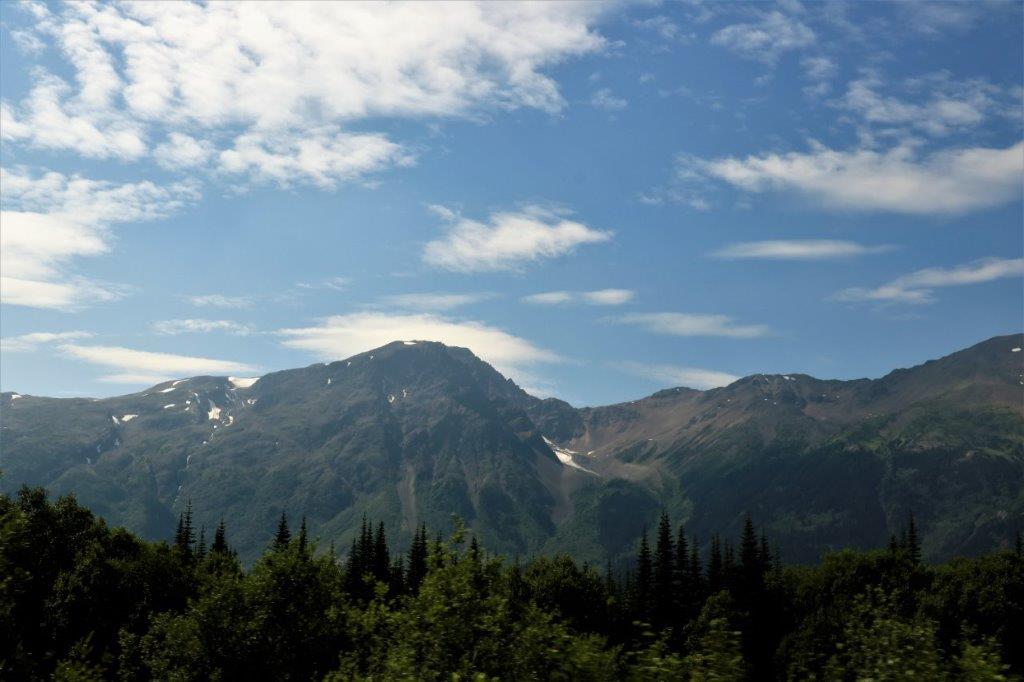
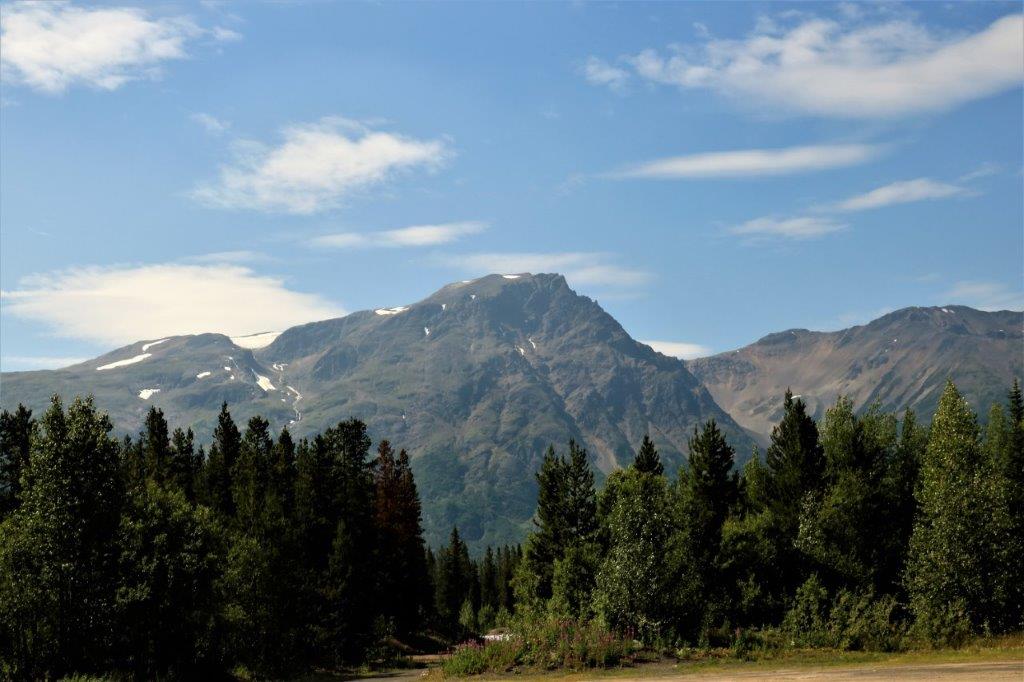
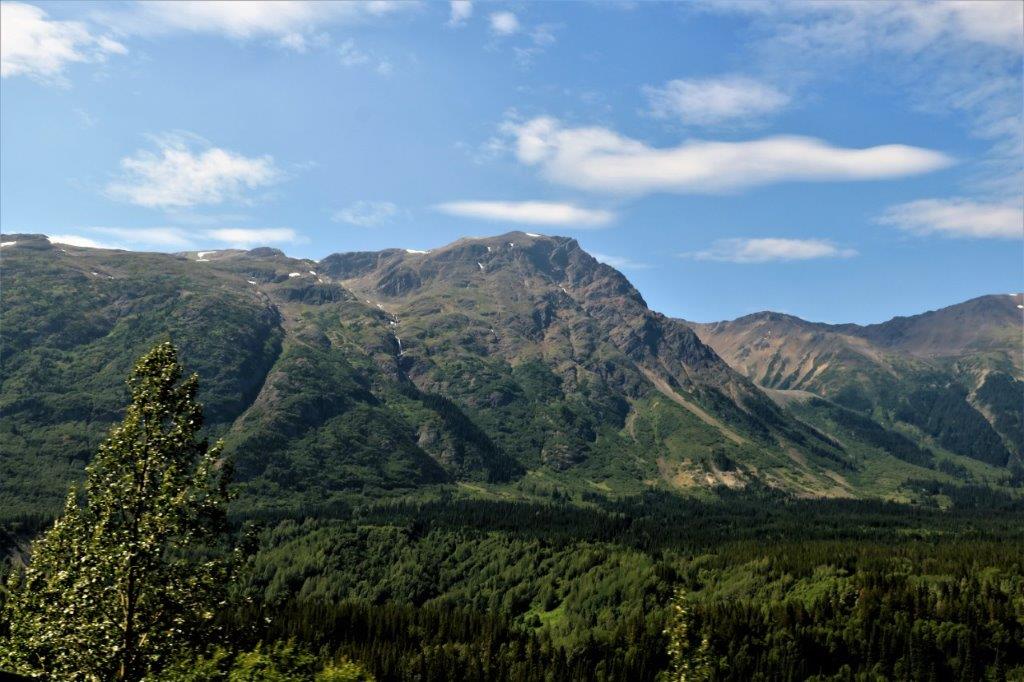
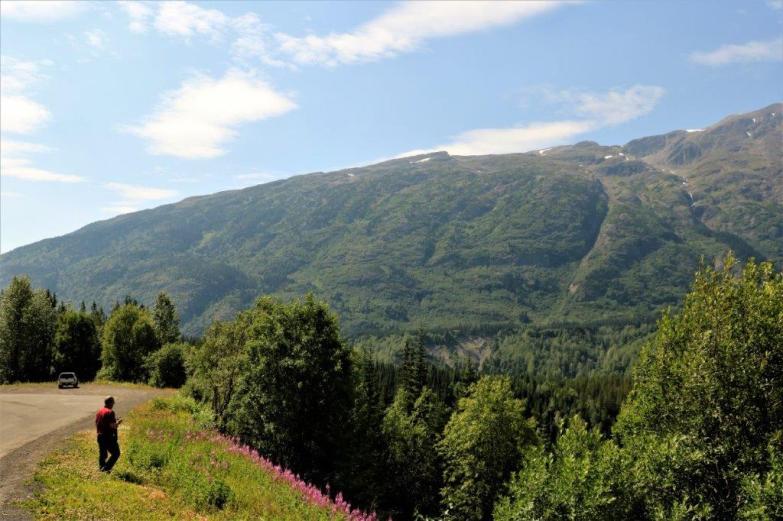
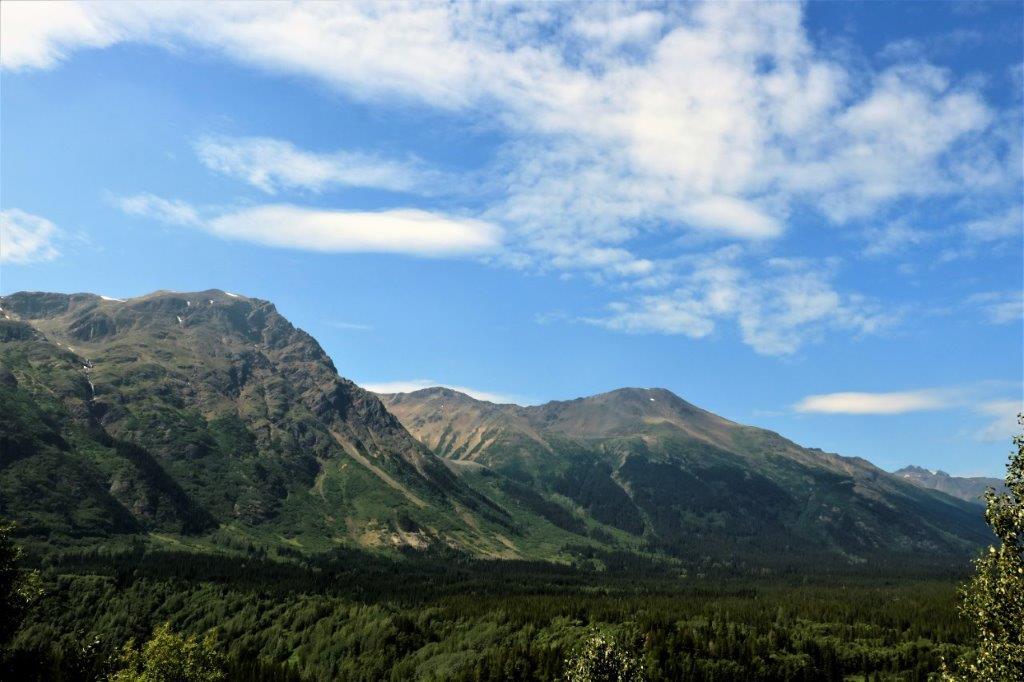
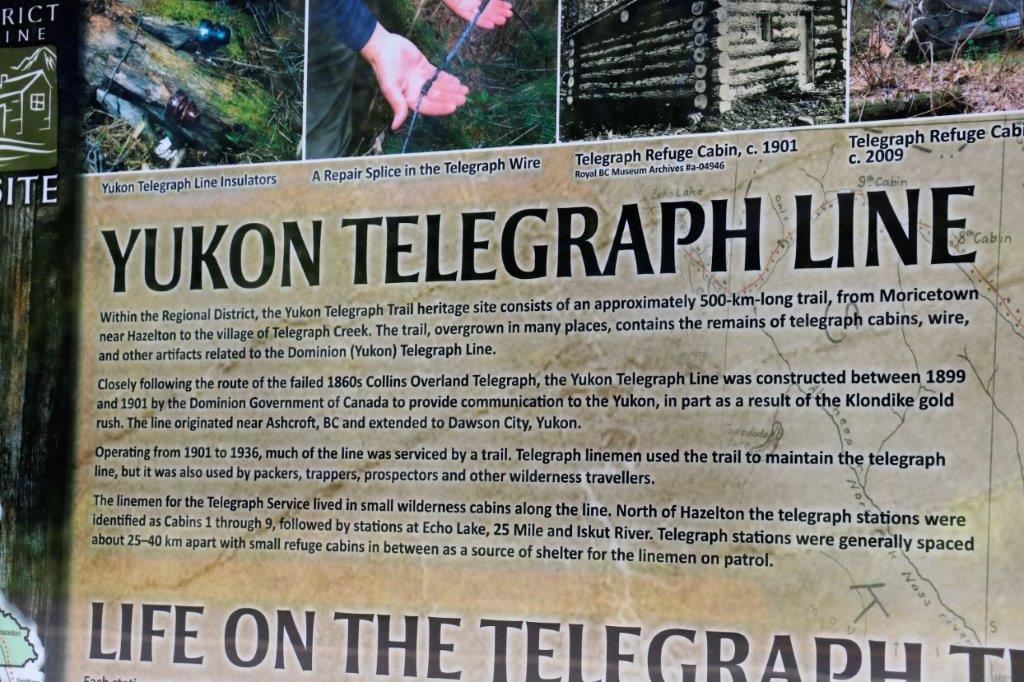
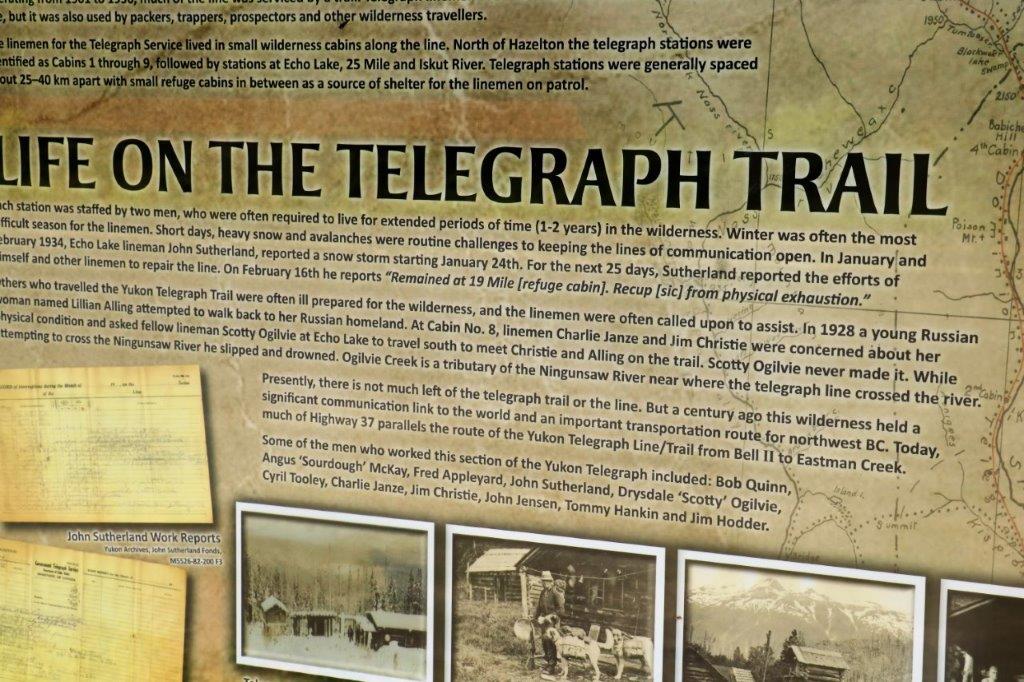
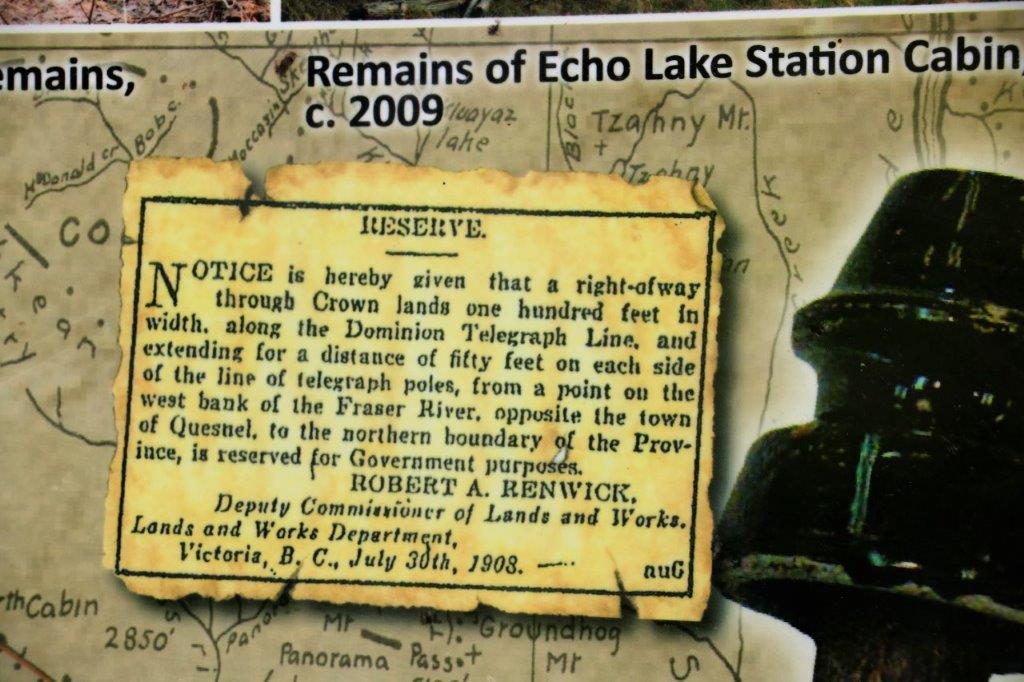
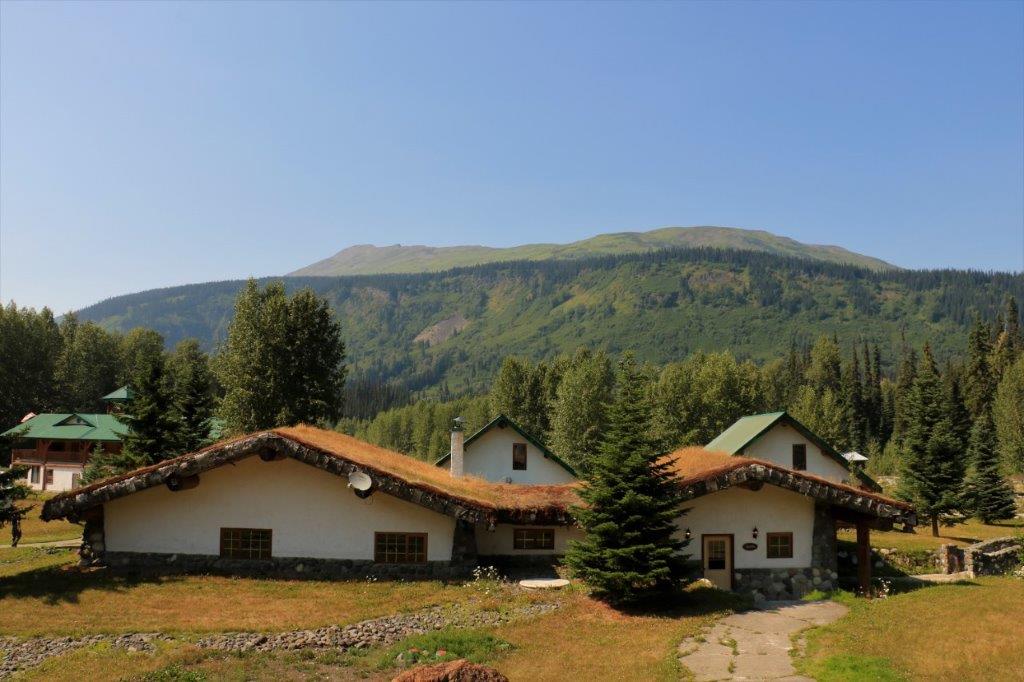
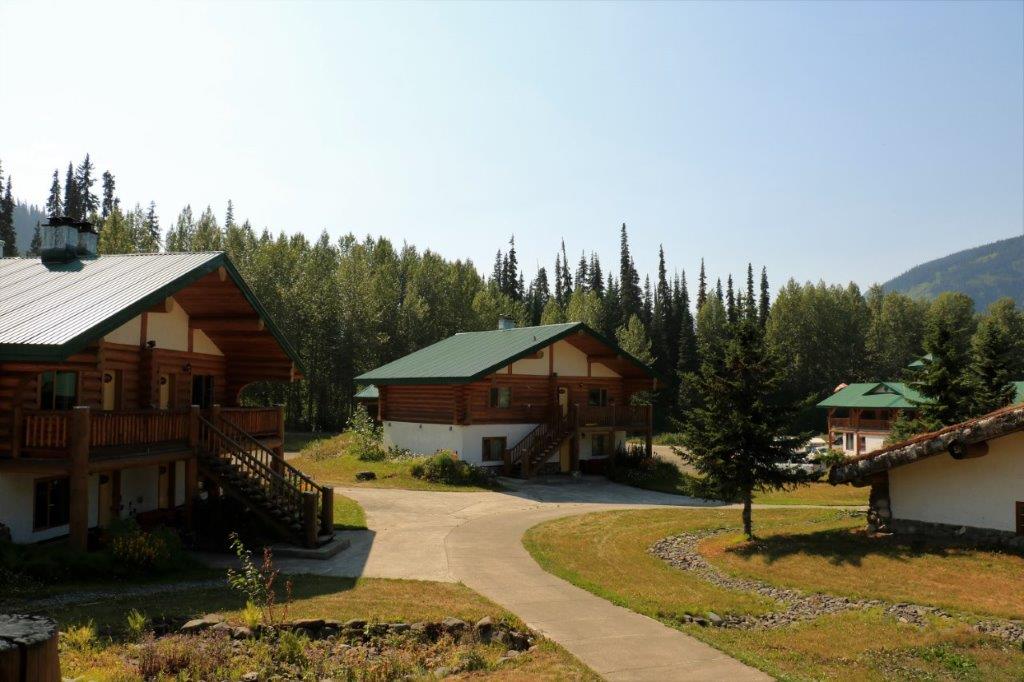
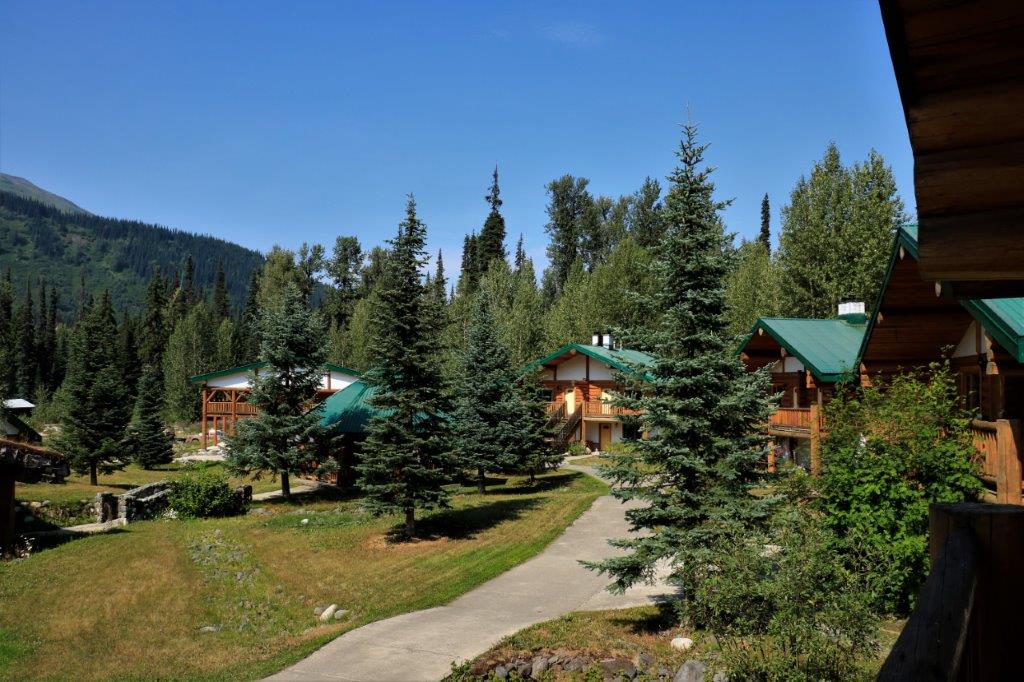
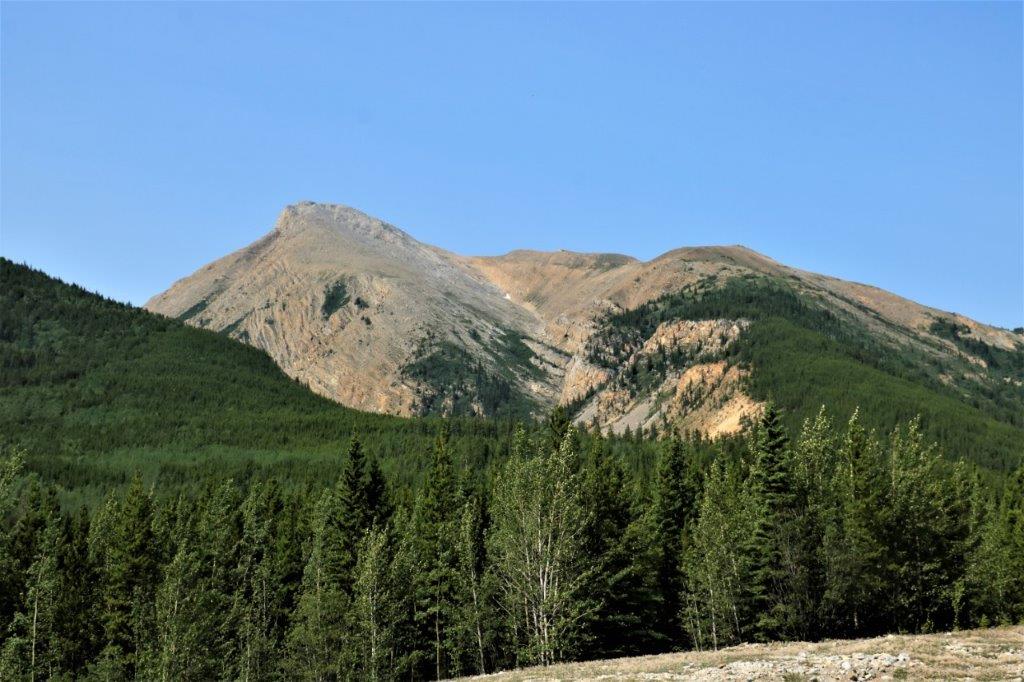
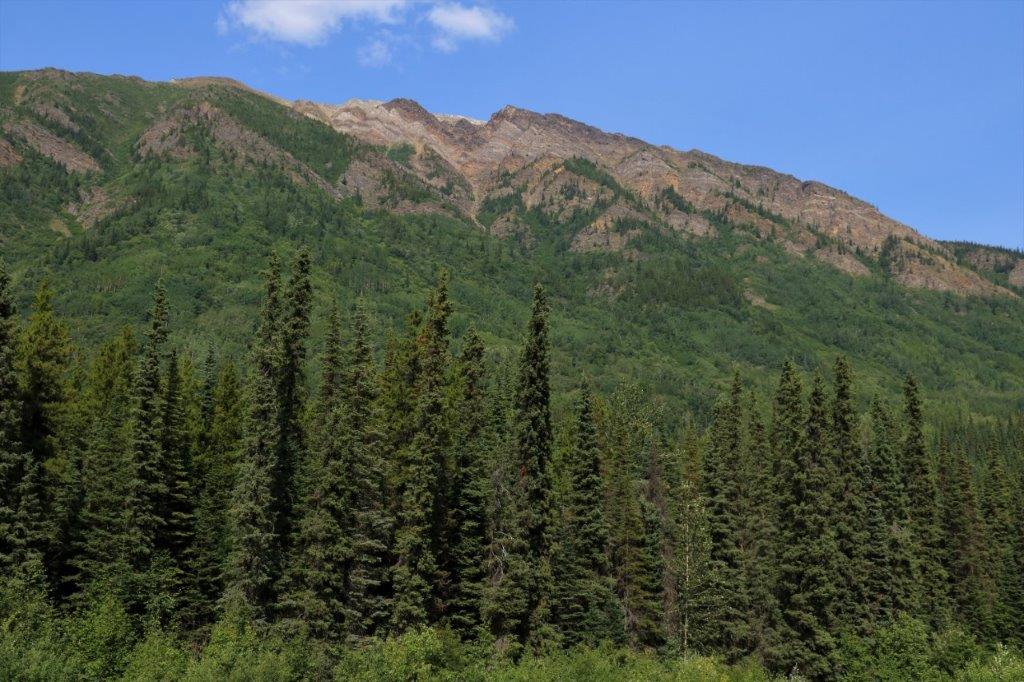
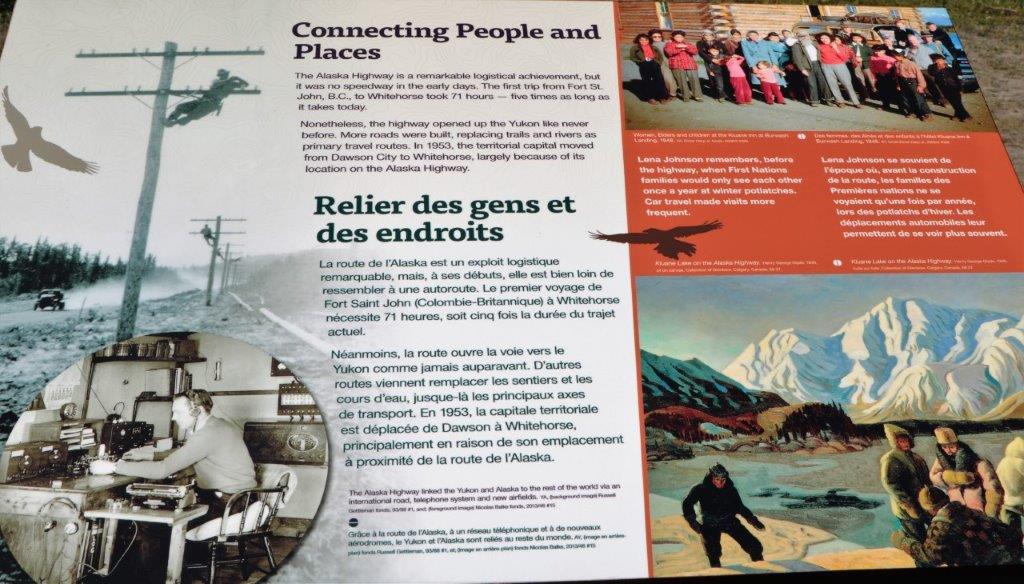
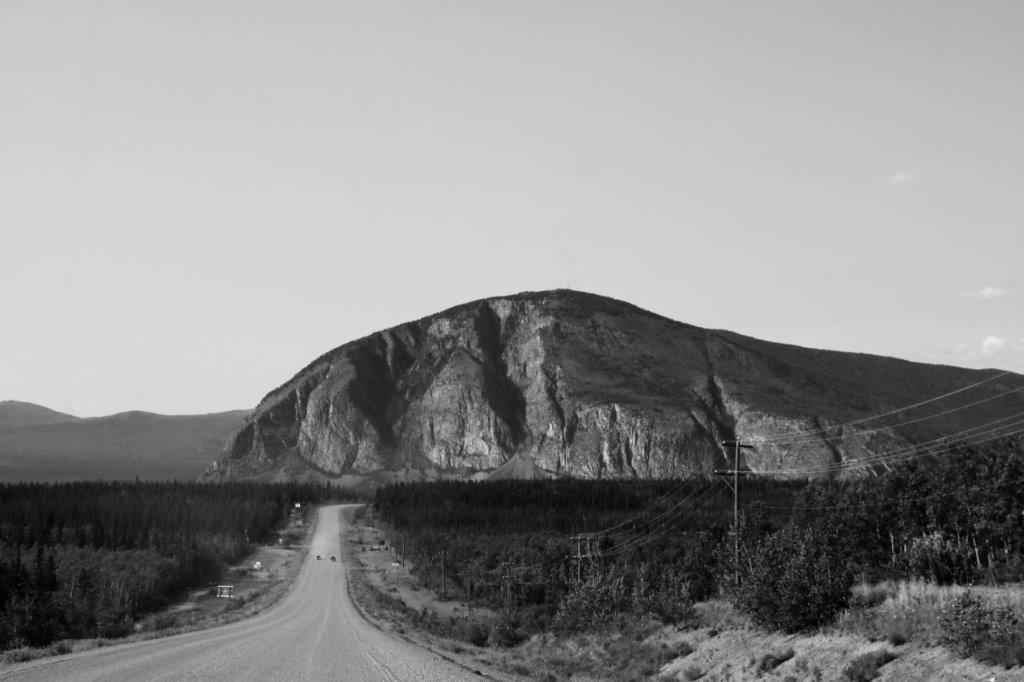
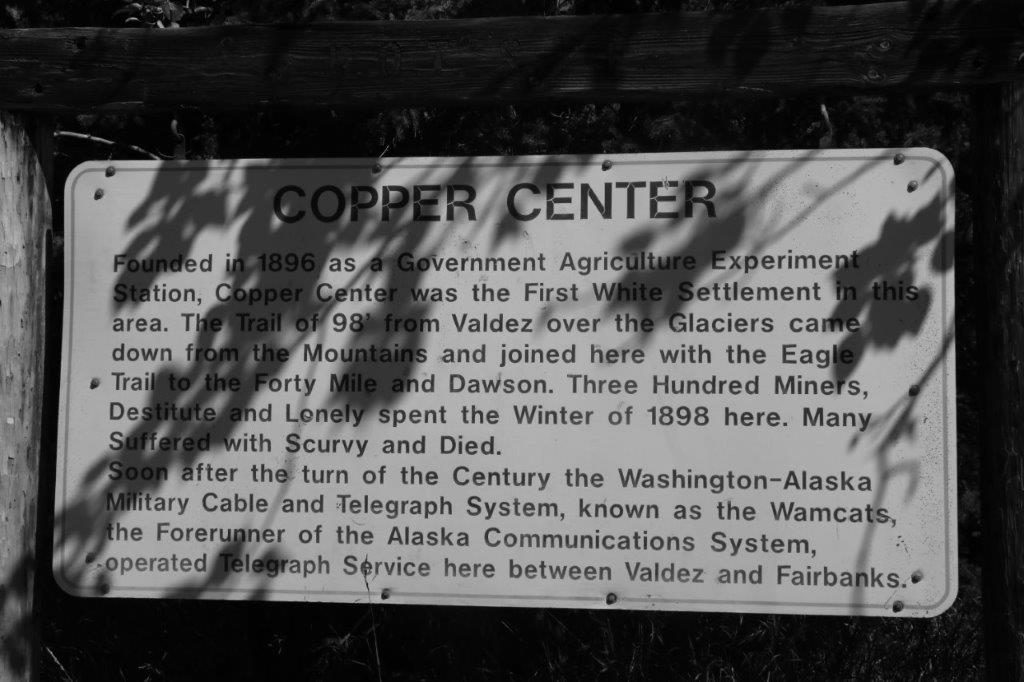
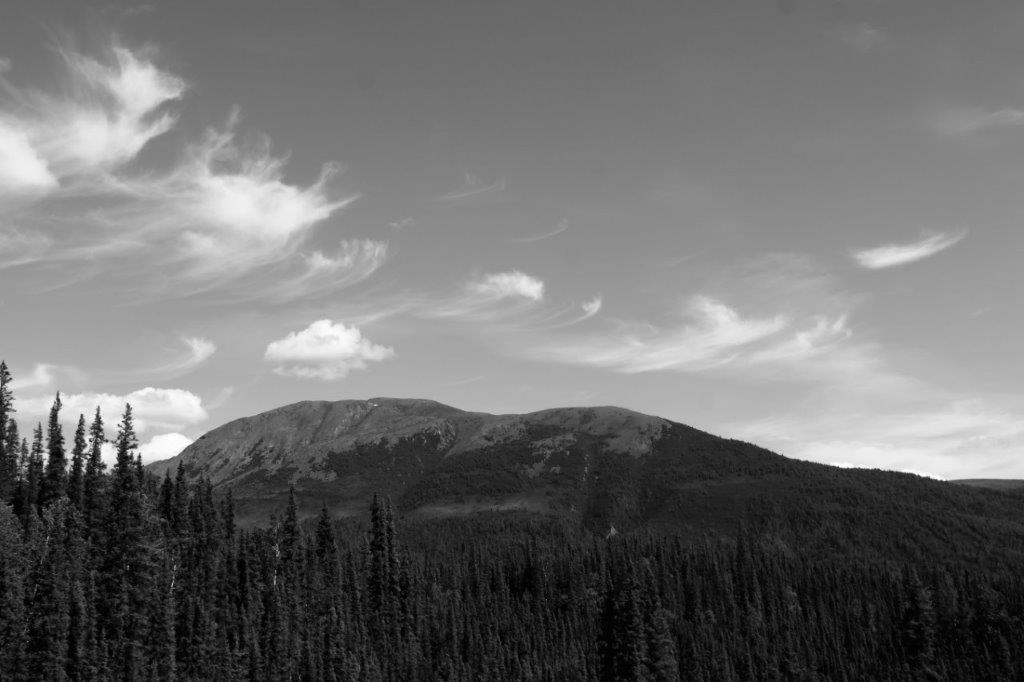
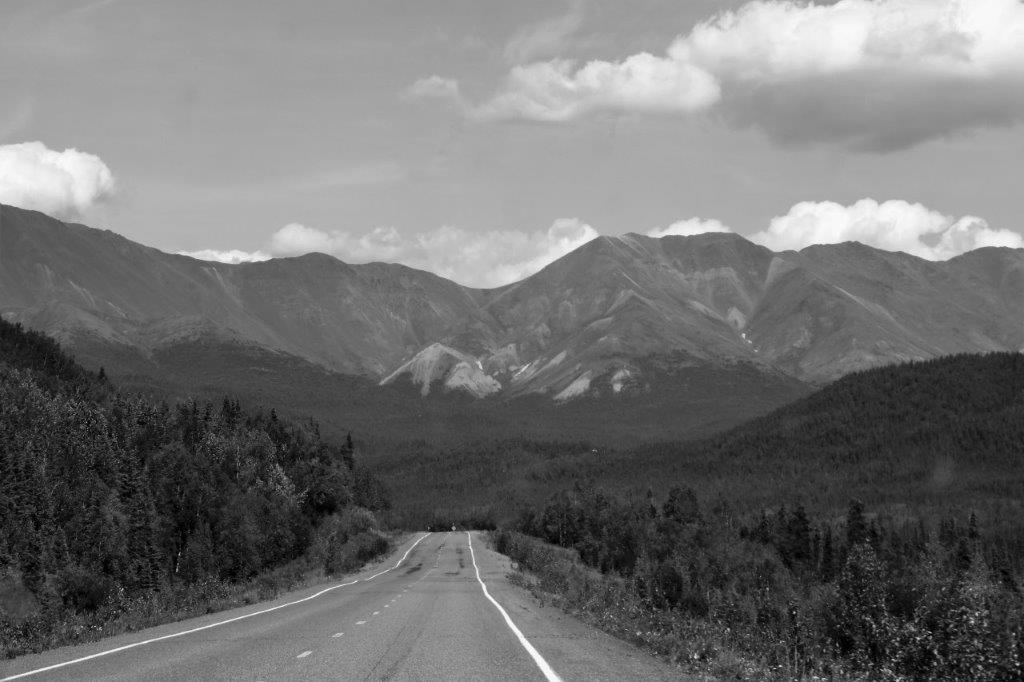
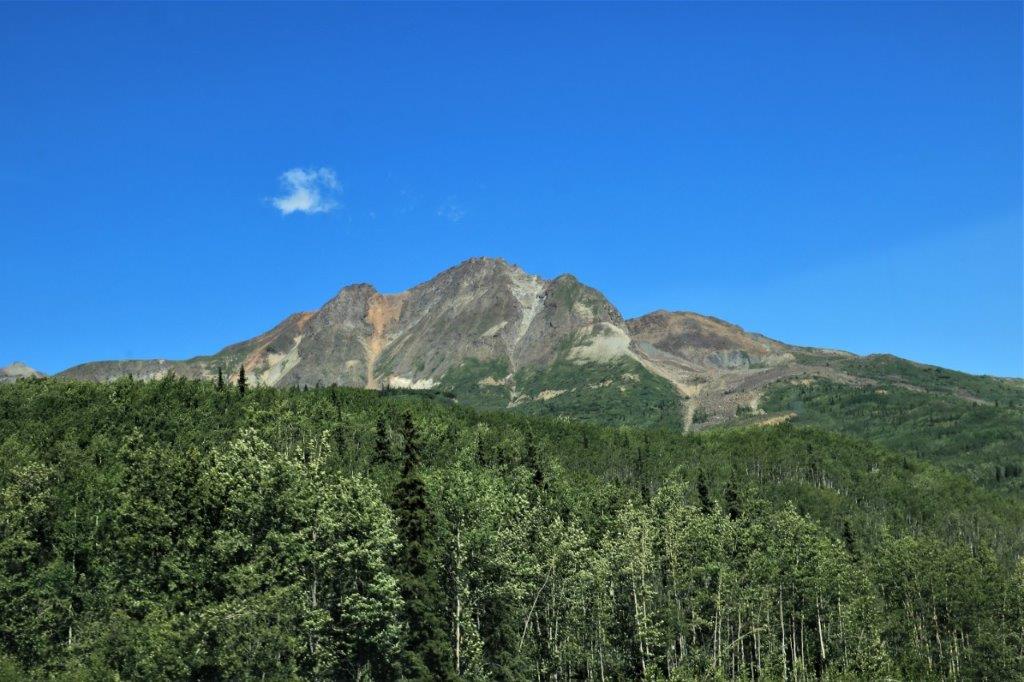
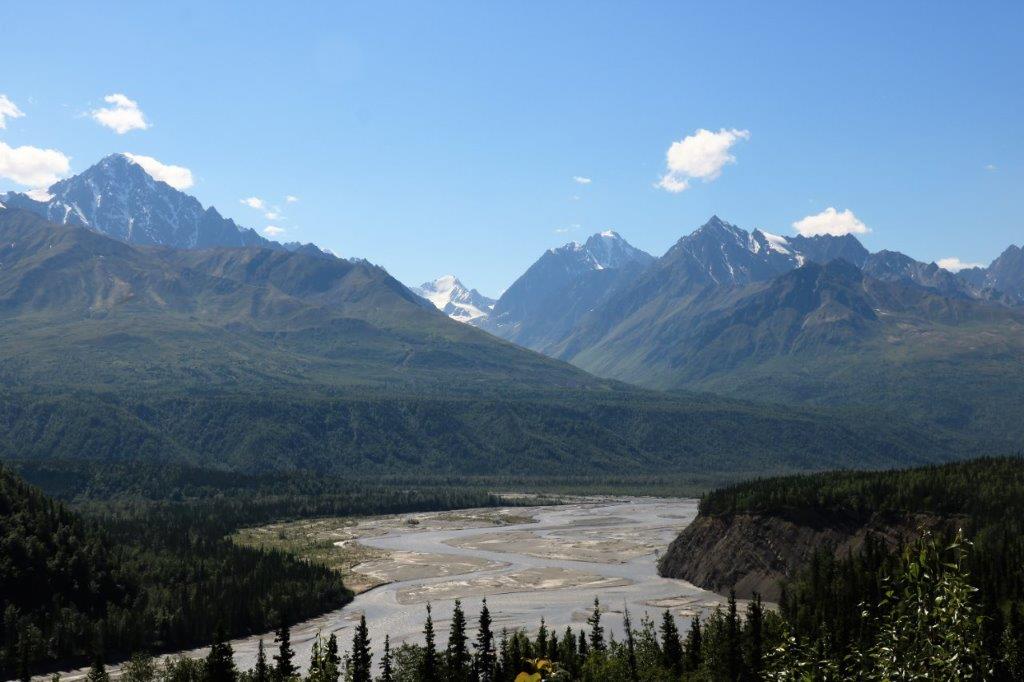
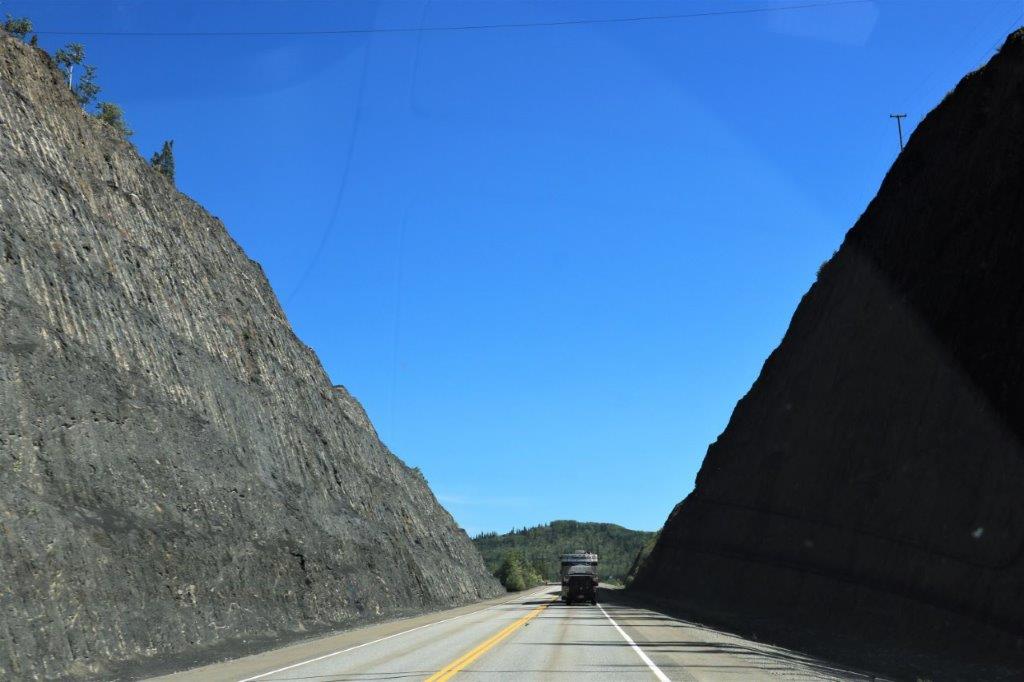
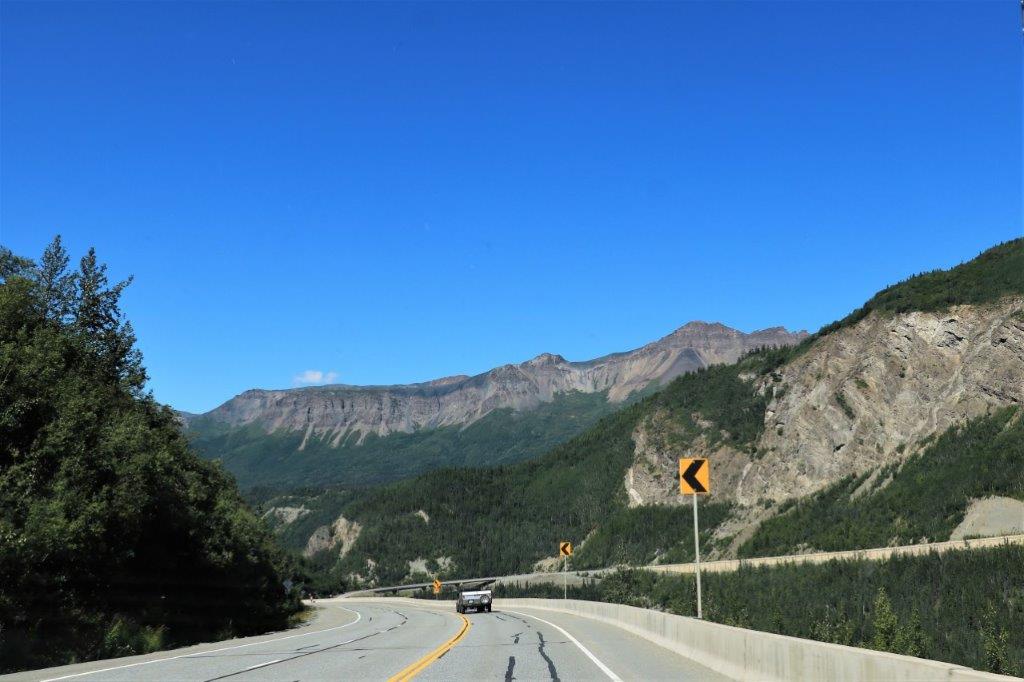
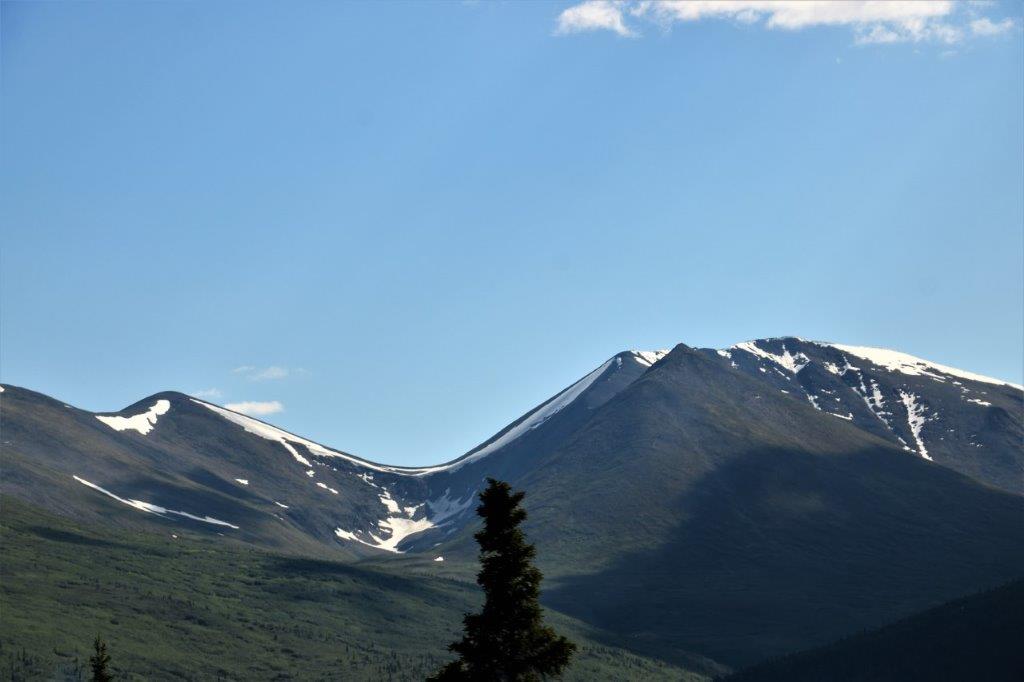
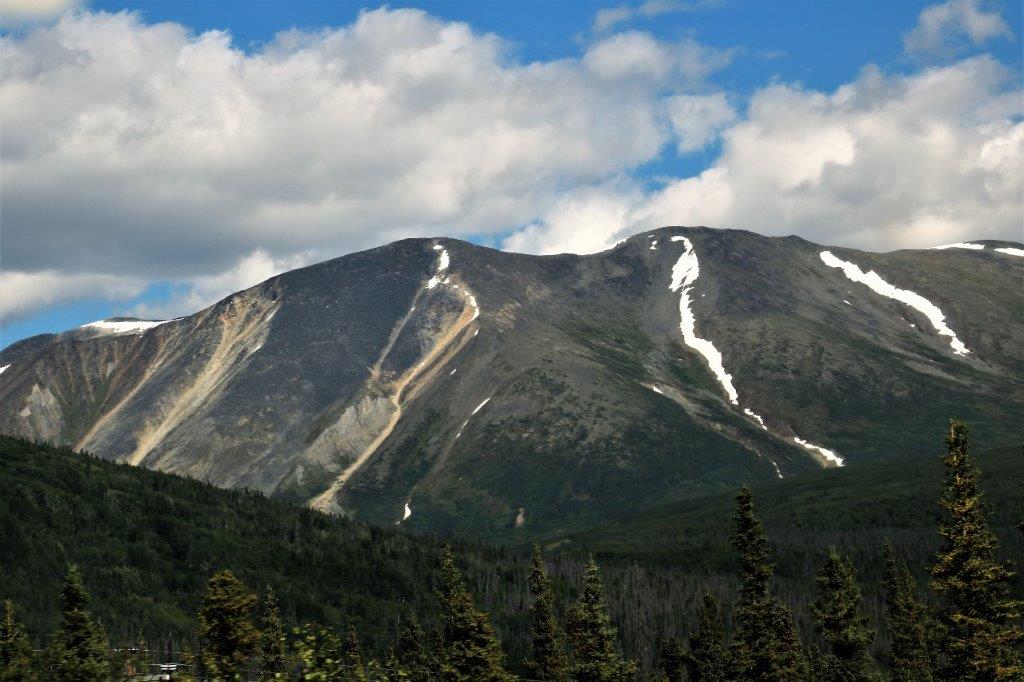
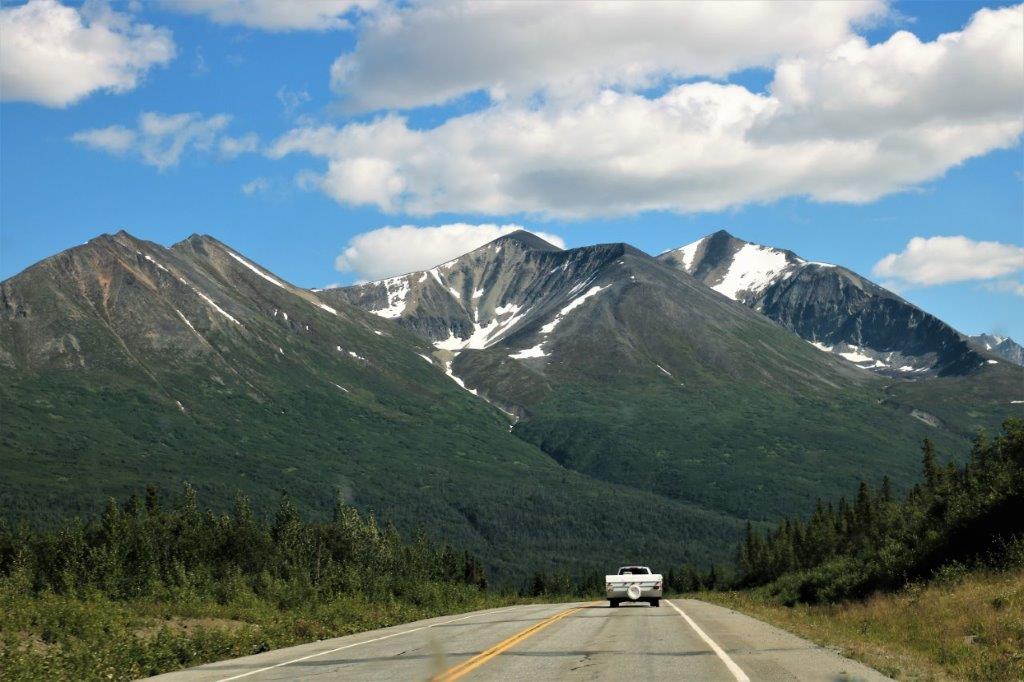
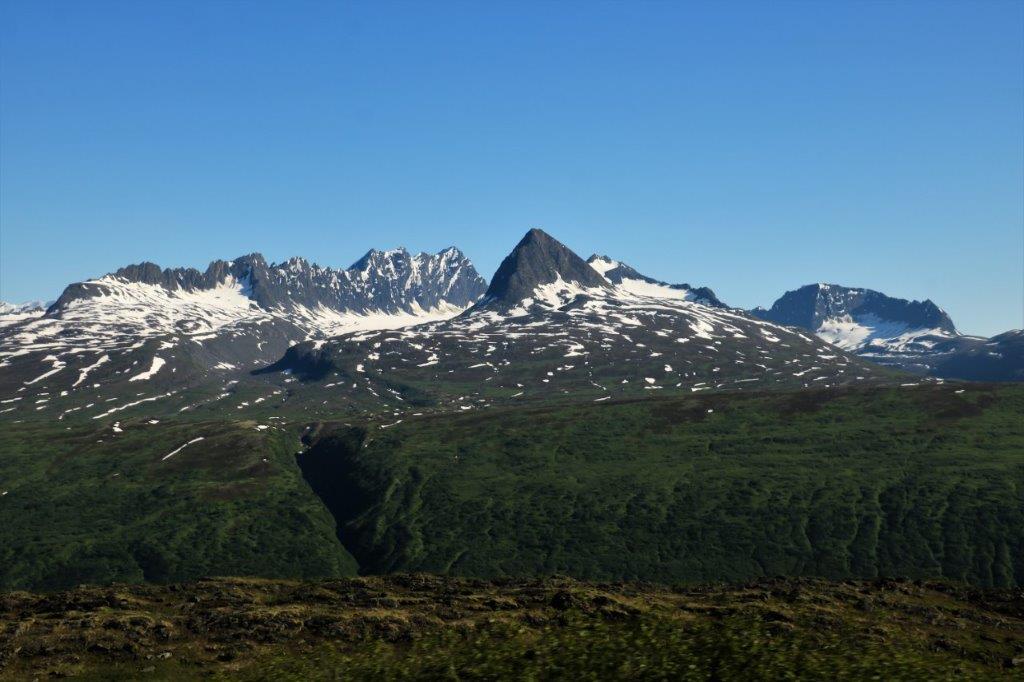
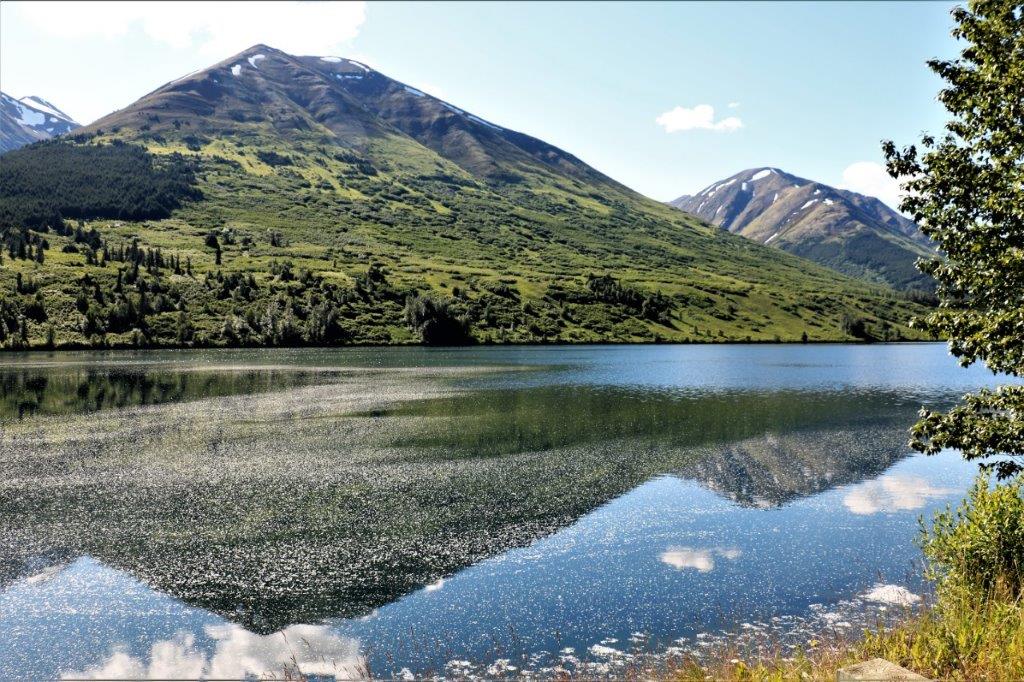
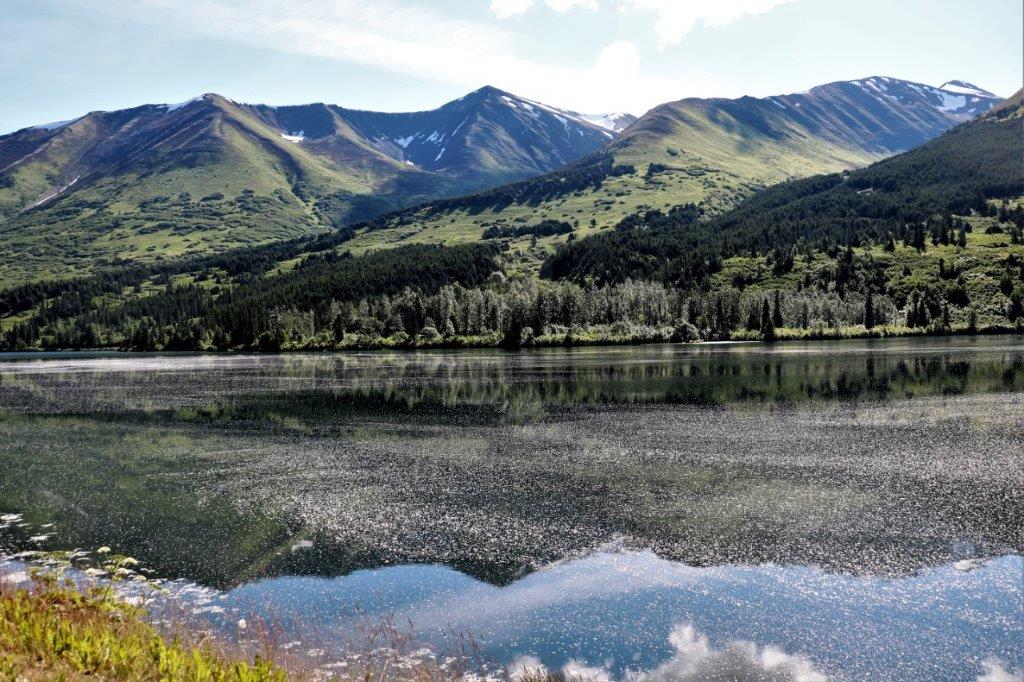
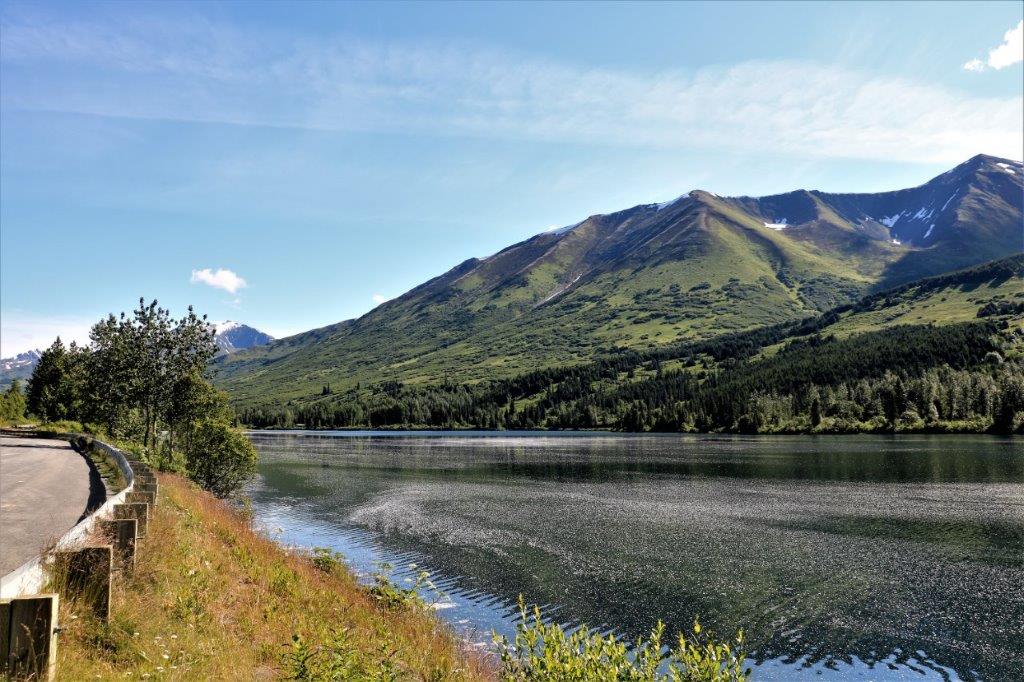
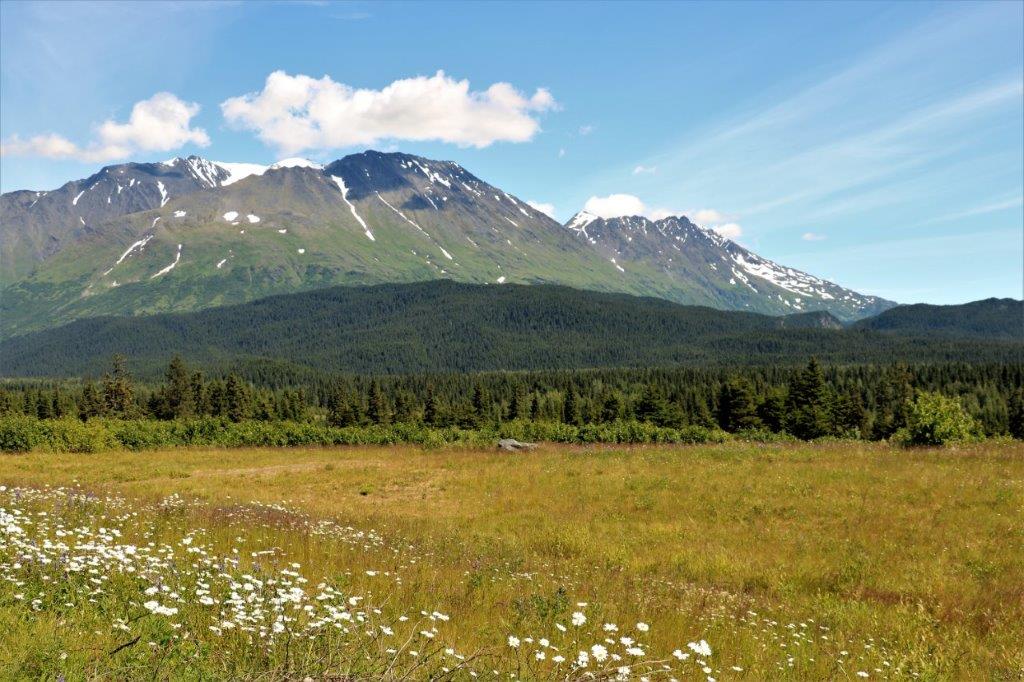
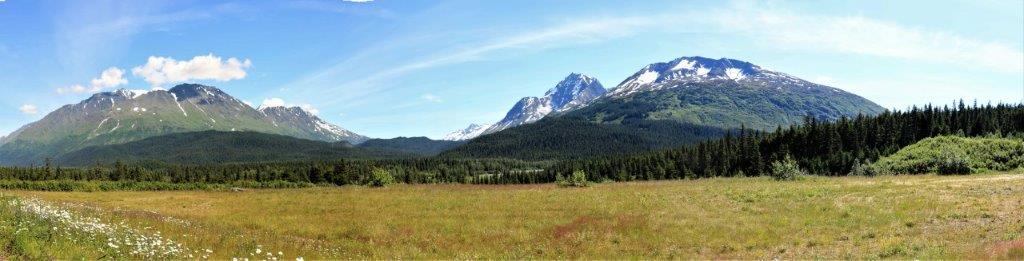
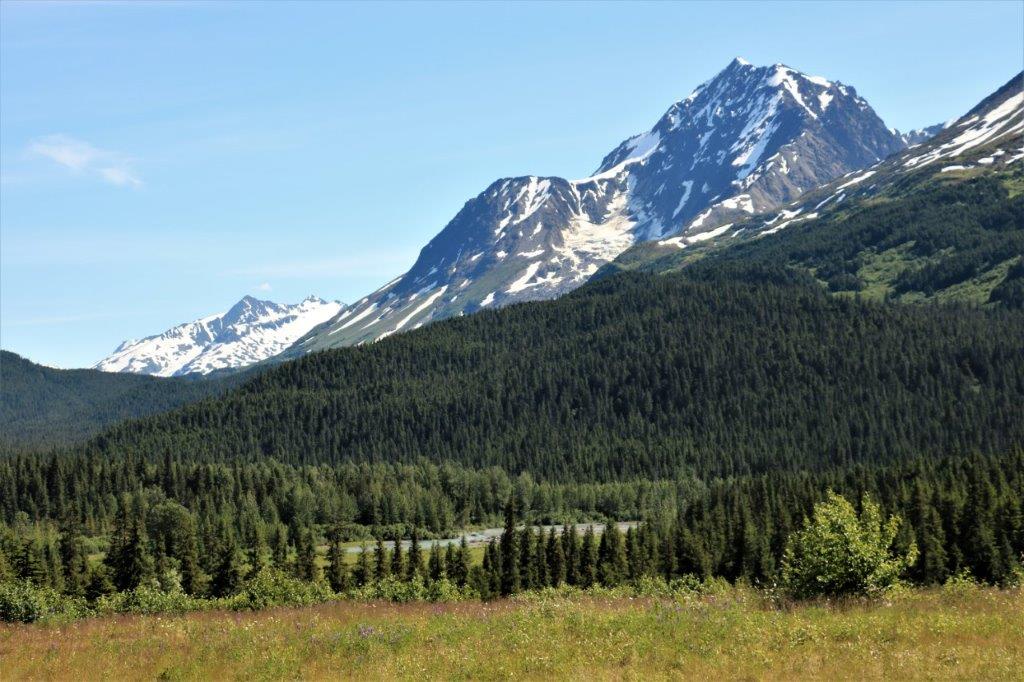
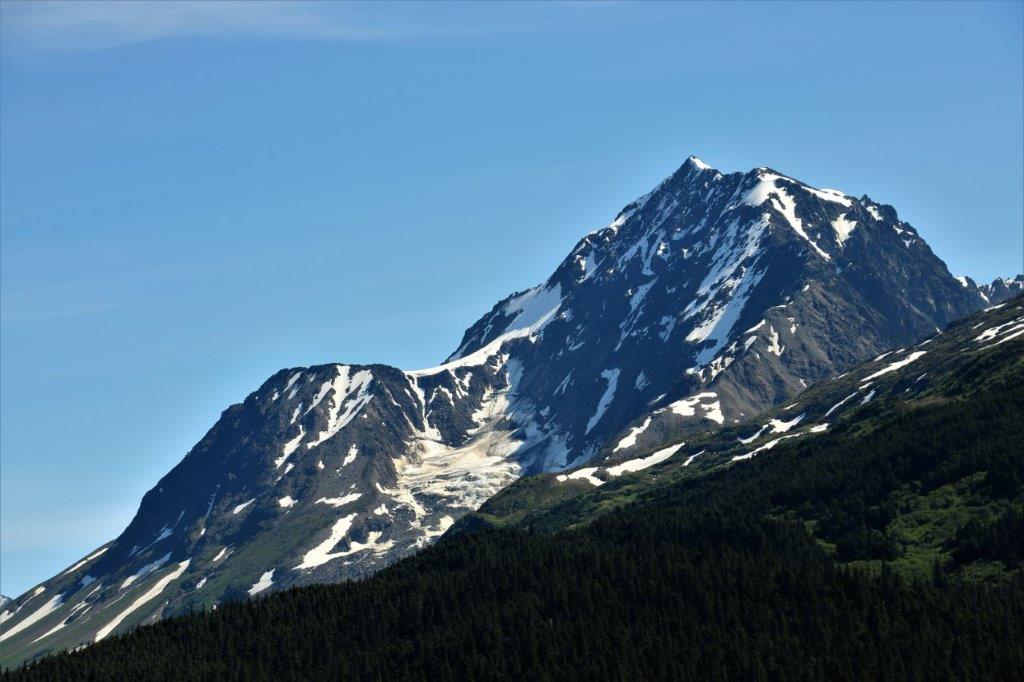
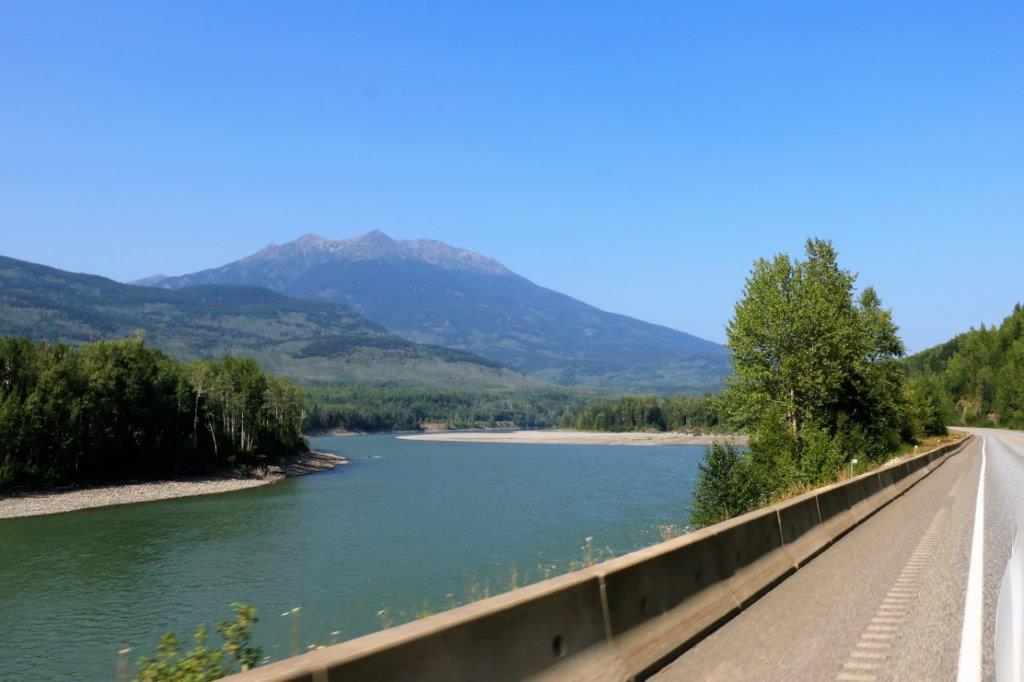
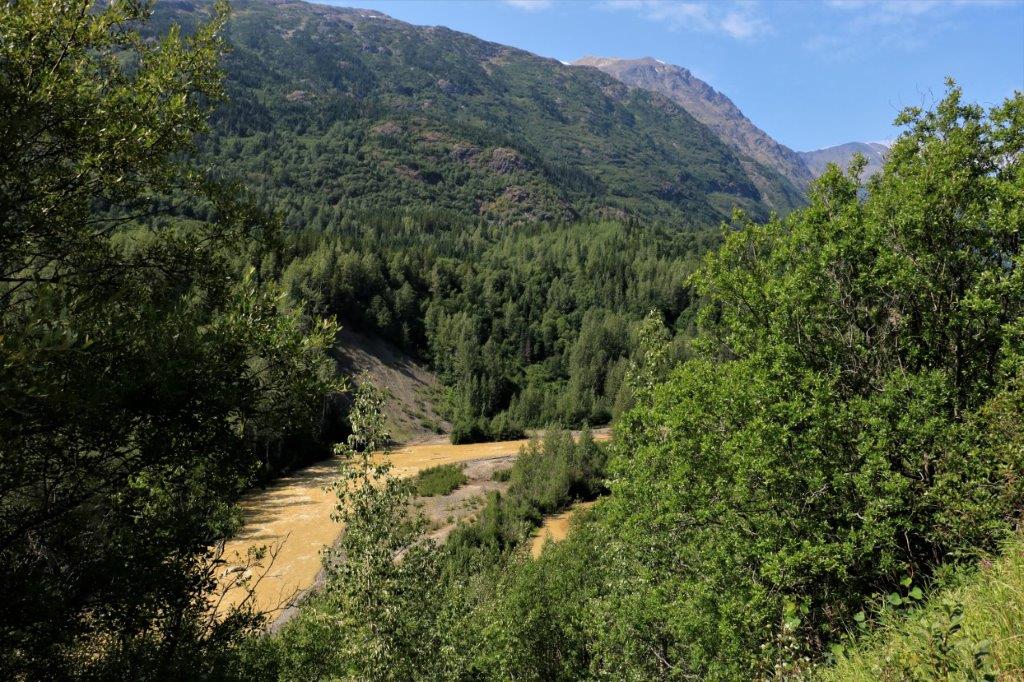
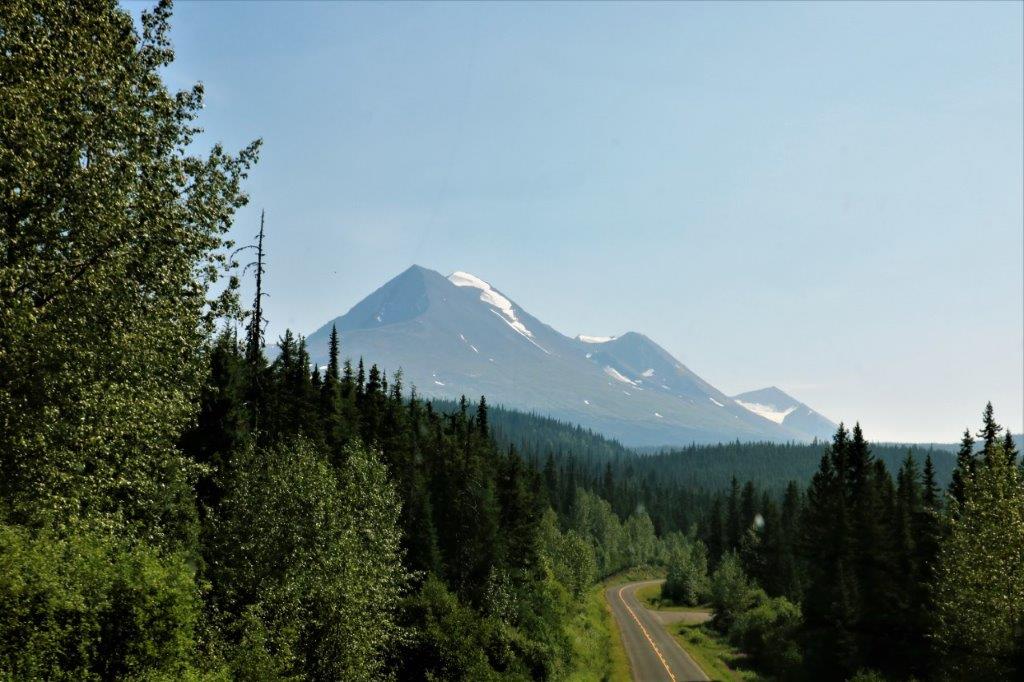
At Eddontenajon Rest Stop we saw some absolutely gorgeous reflections in Kinaskin Lake.  I think so many of the pictures are pretty, I have inserted them in this blog. (Oh, the power I wield!)  We stopped a little further down the road at Kinaskin Lake Provincial Park and had some lunch down by the boat launch.  The perfume from these little yellow flowers was really pretty coming in through the open window as we drove down the road.  The Cassiar-Stewart Highway passes along the foothills of the Coast Mountains. There always seemed to be a bunch of hydro wires or trees in the way of my photo taking, but I managed to get a few pics.  We could see glimpses of canyon walls every now and then through all the trees and finally there was a pullout that gave a half-decent view of the river below.  The water of the Bell-Irving River at this point was a very golden colour. This may be Mt. Patulla.  It is the only one that showed up on the maps directly in front of the road. This highway follows much of the original Yukon Telegraph Line that linked the north with the rest of the country.  There were a historical information signs at one of the rest stops. We did not have far to drive today, it being one of our planned three shorter days to get down the Cassiar.  We stopped for the night at Bell 2, which is like Eagle Plains on the Dempster Highway, having no community but is only a waystop on the long drive from the south junction near Terrace up to Watson Lake, Yukon. Lovely, spacious (and expensive) log cabins.  Nice place.  Bell 2 is so named because it is the nearby bridge is the second crossing of the Bell-Irving River.  It is a start-off spot for heli-skiing in the winter.  There is no cell service here and no televisions in the rooms – not that we care, we have rarely turned one on this whole trip anyway.  We were also told there was no wi-fi, but that turned out to be incorrect.  Each cabin is allowed once device on the network at a time and a total of one hour of free internet. In order to get my blog posted today I wrote all my text off line and cut and pasted it into the blog site to conserve time.  I usually just write online and insert photos as I go.  This way took a bit more pre-planning.

Tomorrow we drive the final leg of the Cassiar-Stewart, which has been a paved road with a few gravel sections, not the mostly gravel road we expected.  We will spend the night in Terrace before going to Prince Rupert on BC’s west coast.

2018 July 25 – Watson Lake, YT to Dease Lake, BC

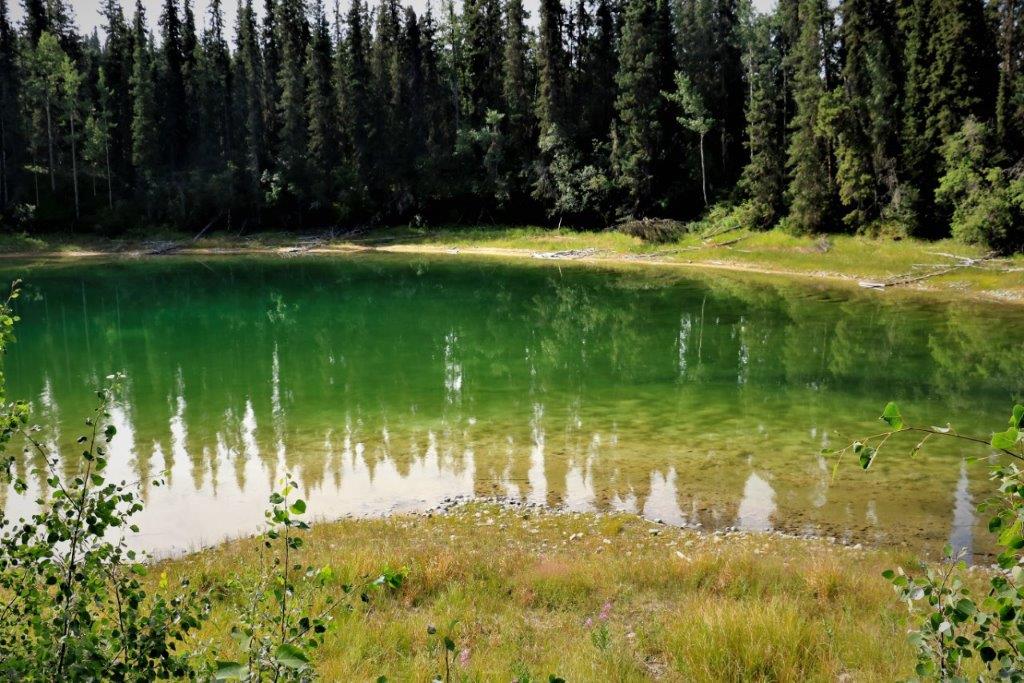
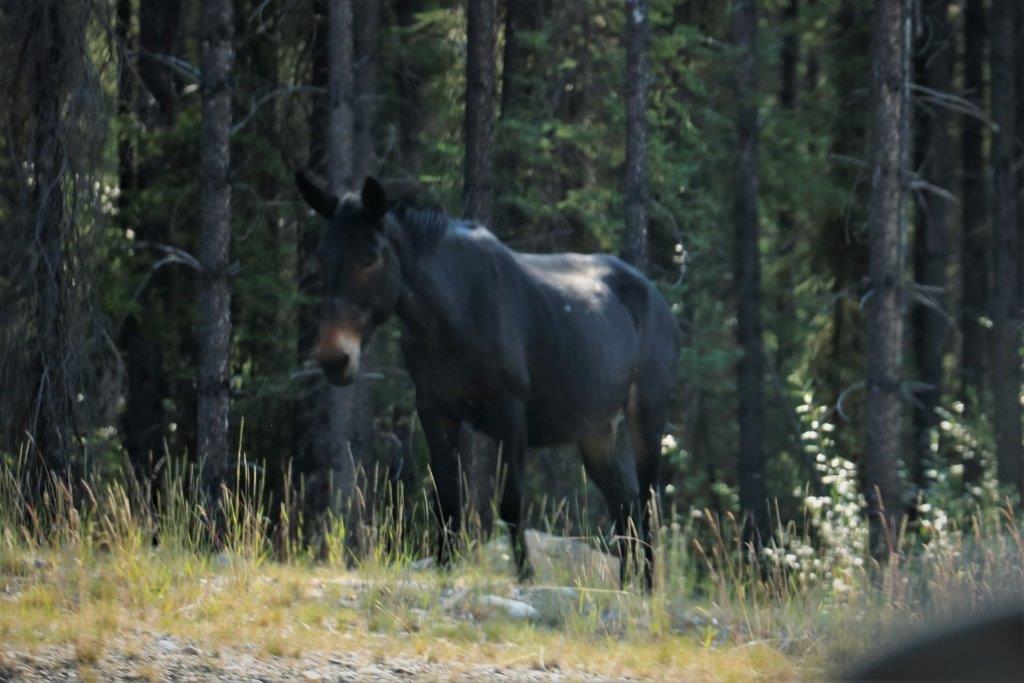
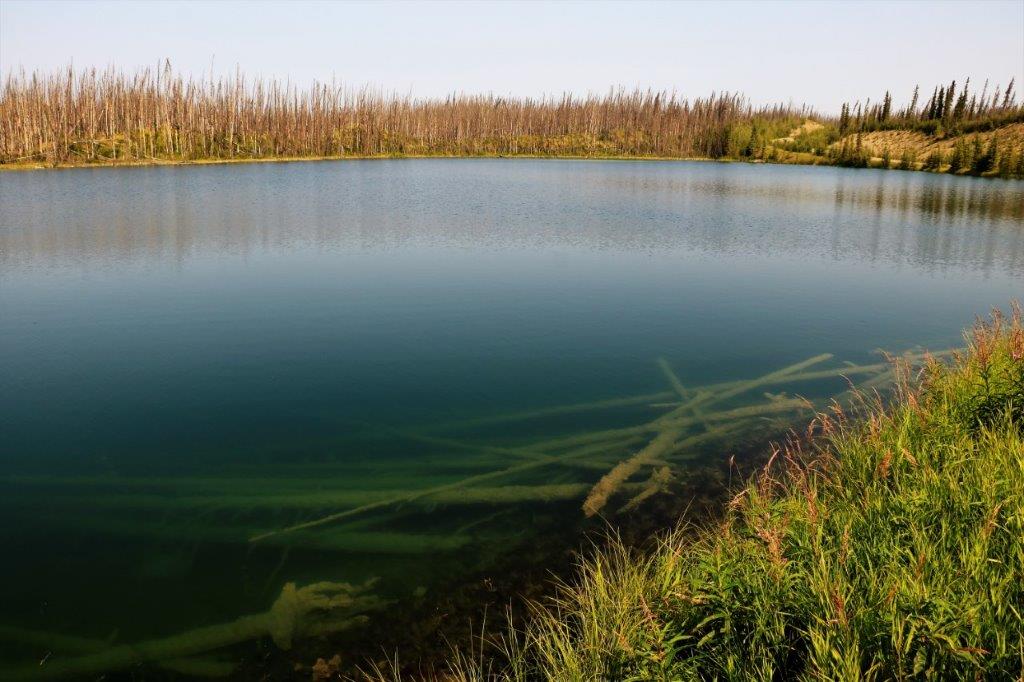
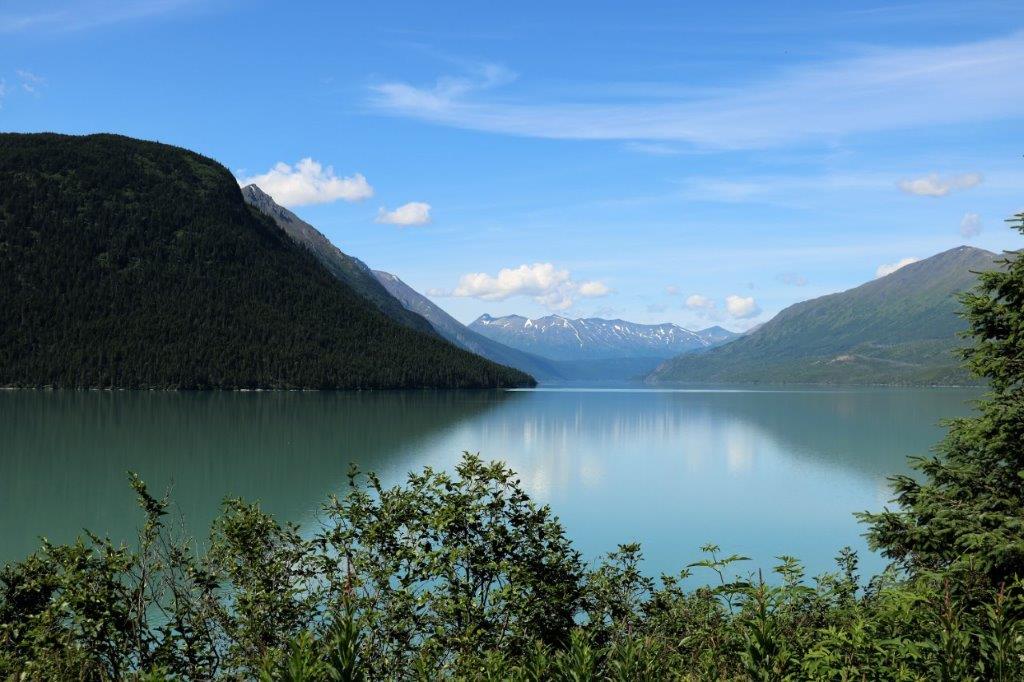
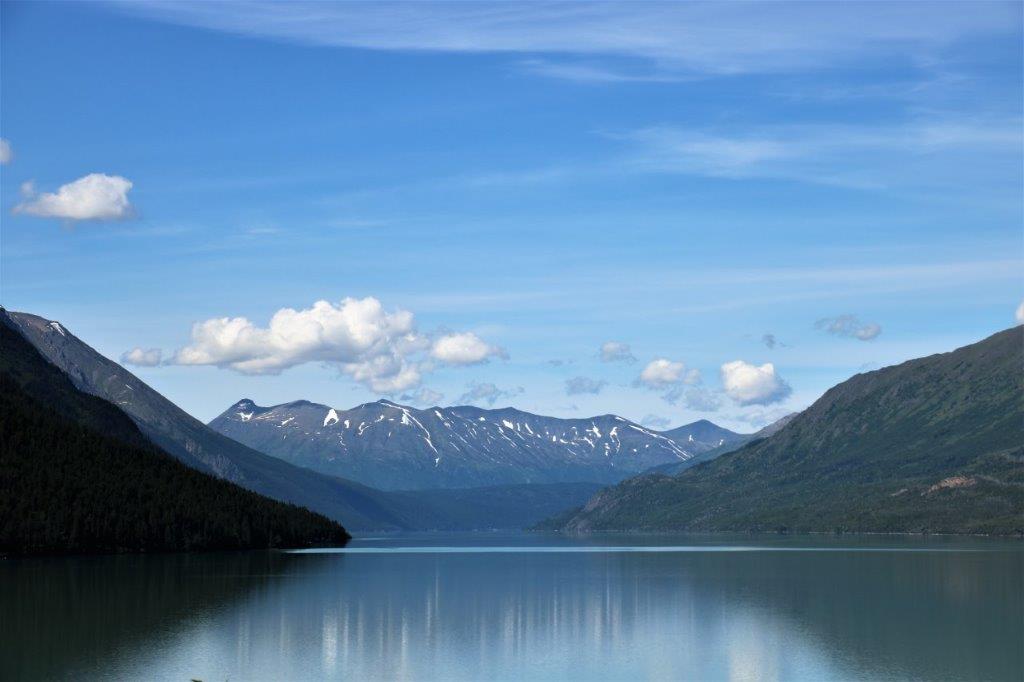
Since we broke the critter fast yesterday with the sighting of the bear we were happy to see another animal today; although it was not something we expected in the wilds of northwestern BC.  Right up against the trees in the shadows was a black mule.  John barely caught a glimpse of it as we went by because it blended into its surroundings so well.We pulled over at Blue Lakes because the water was so calm and the colours were so nice.  Spent a happy few minutes taking photographs. There are very few geocaches on the Cassiar-Stewart highway and we were unable to get the one at the Yukon-BC border because there was a construction zone and we had to follow a pilot car past the cache site.  There was a cache hidden off the road beside Lake of Good Hope, which we would barely have been able to see from the road.  We did a 330 degree switchback turn off the highway and down a steep, short gravel road to the lake.  It was gorgeous.  We found the cache too, but it took us about 25 minutes as the co-ordinates were off – a not uncommon occurrance in wilderness areas with lots of trees.                                                       What lovely colours!

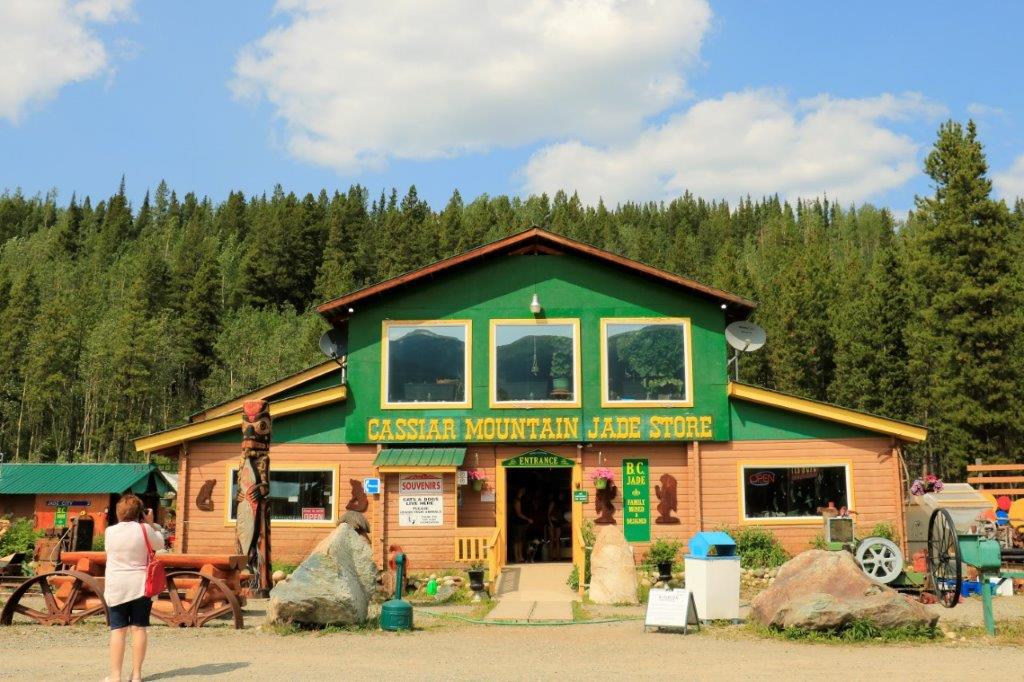
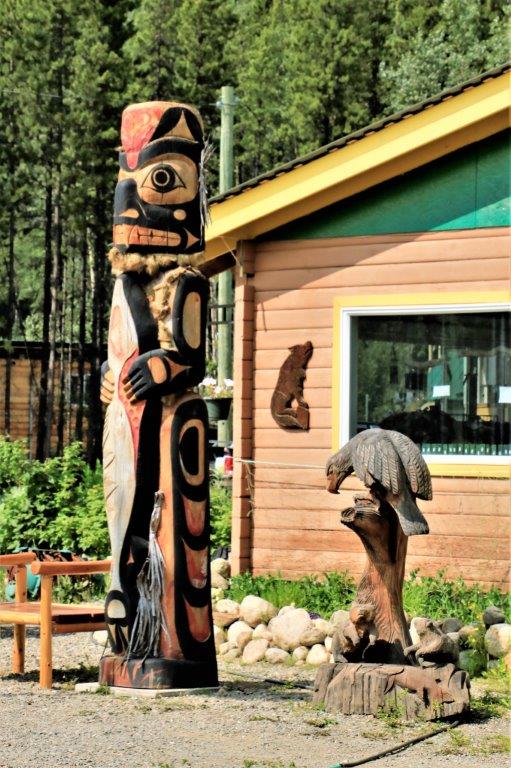
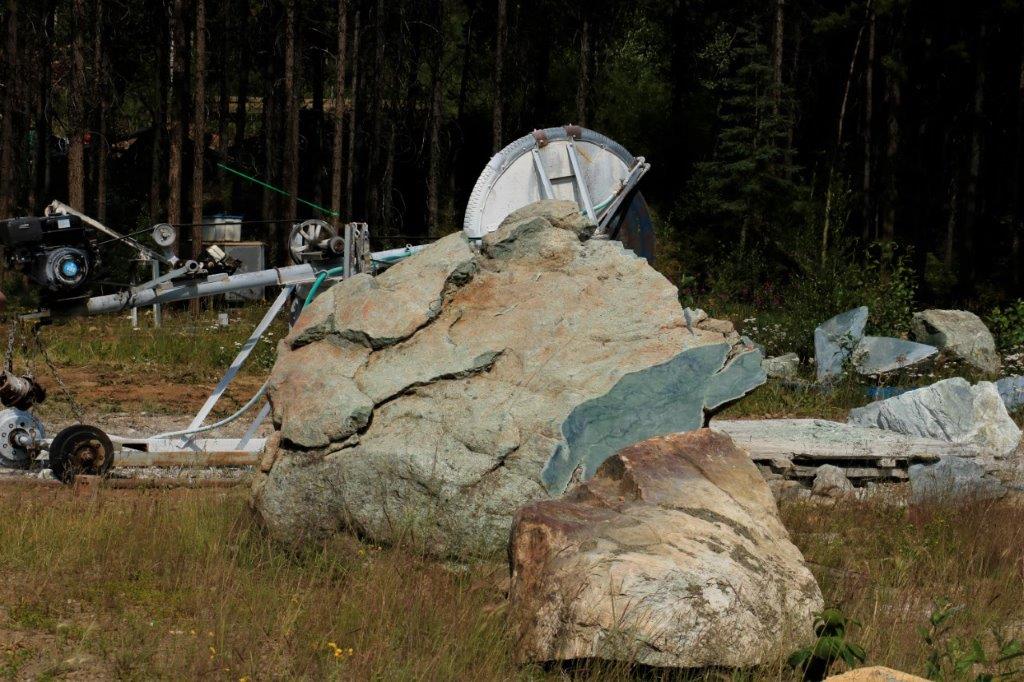
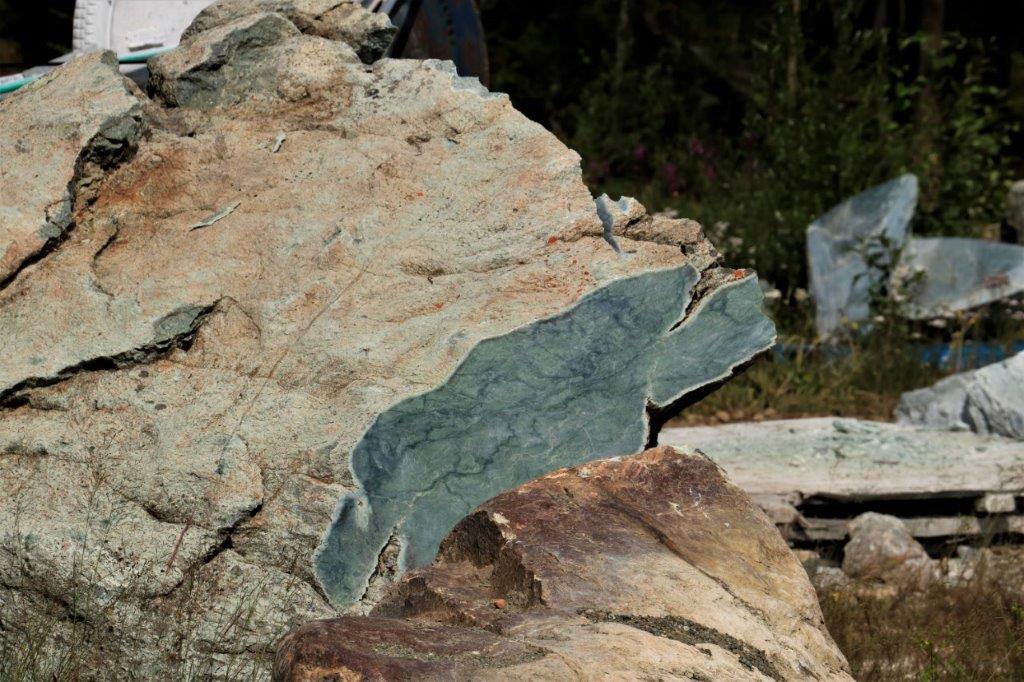
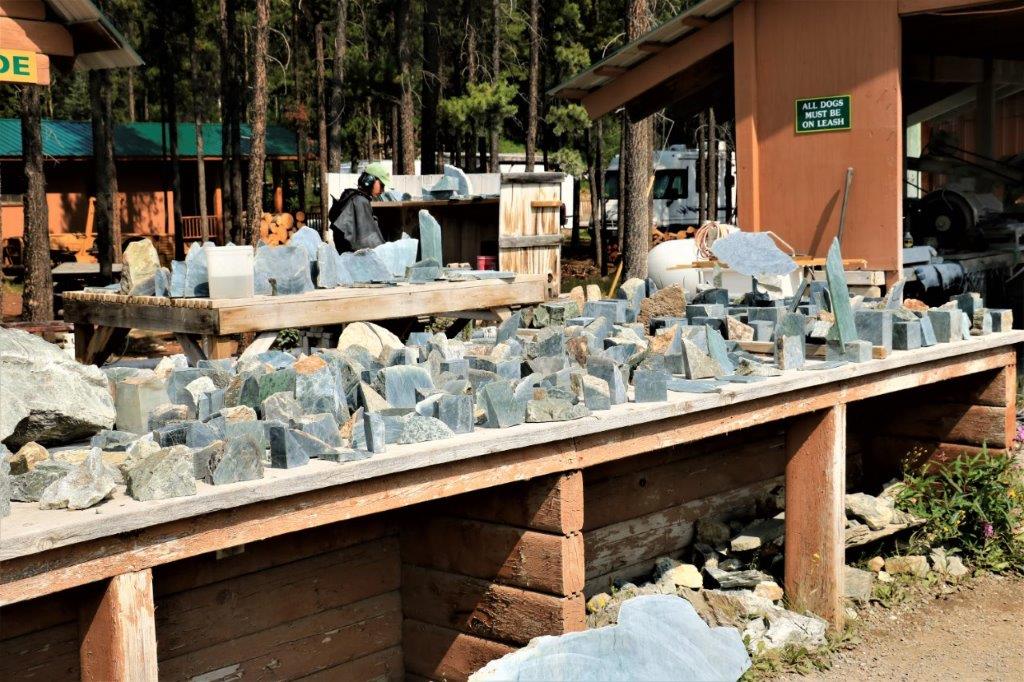
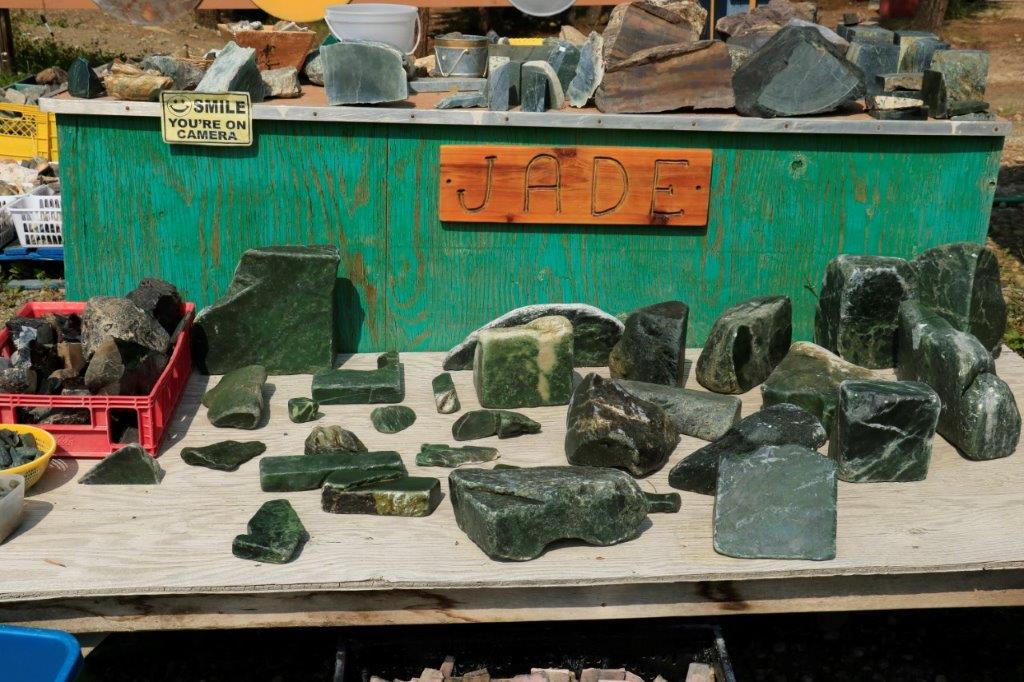
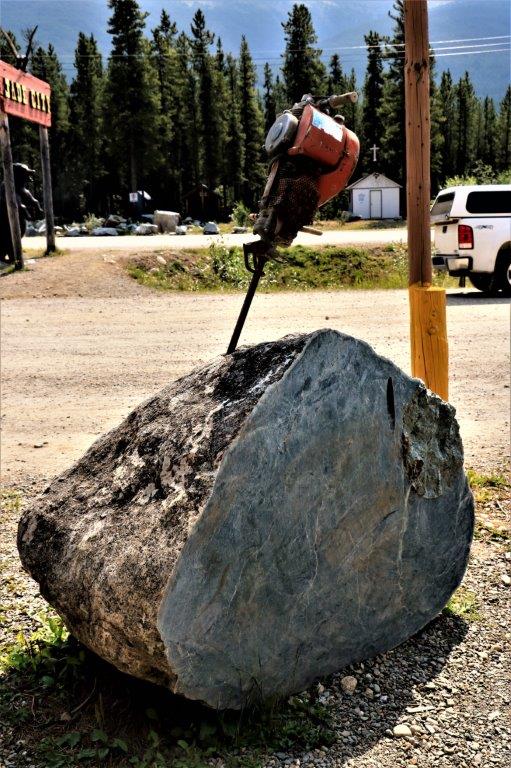
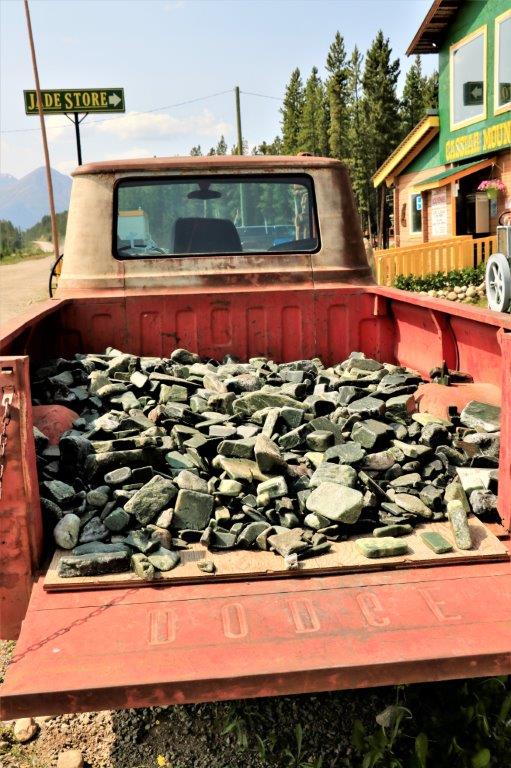
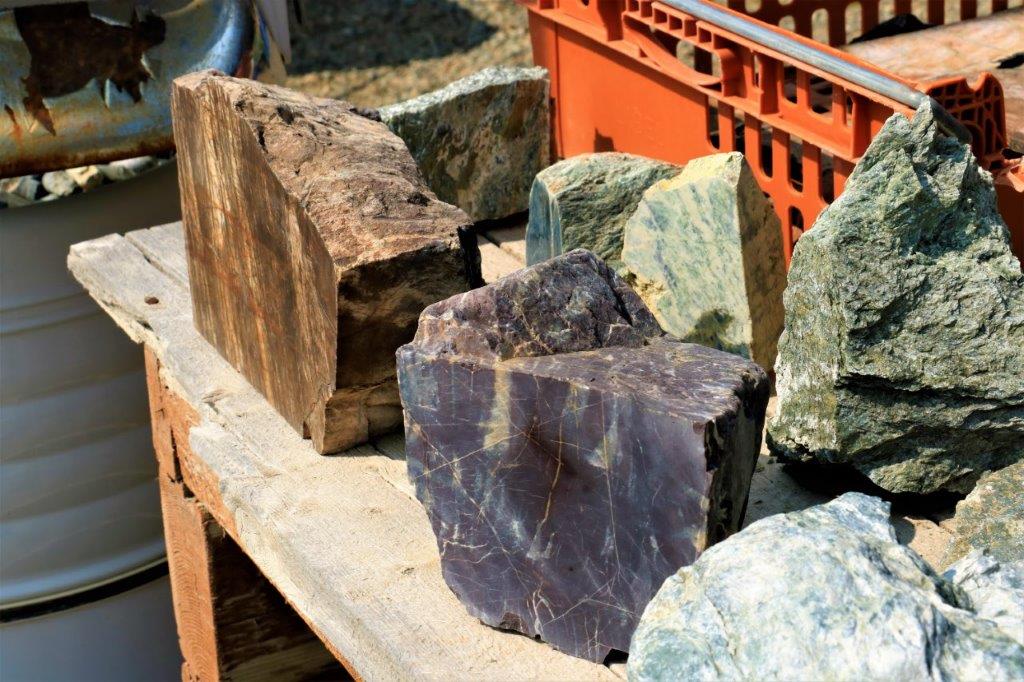
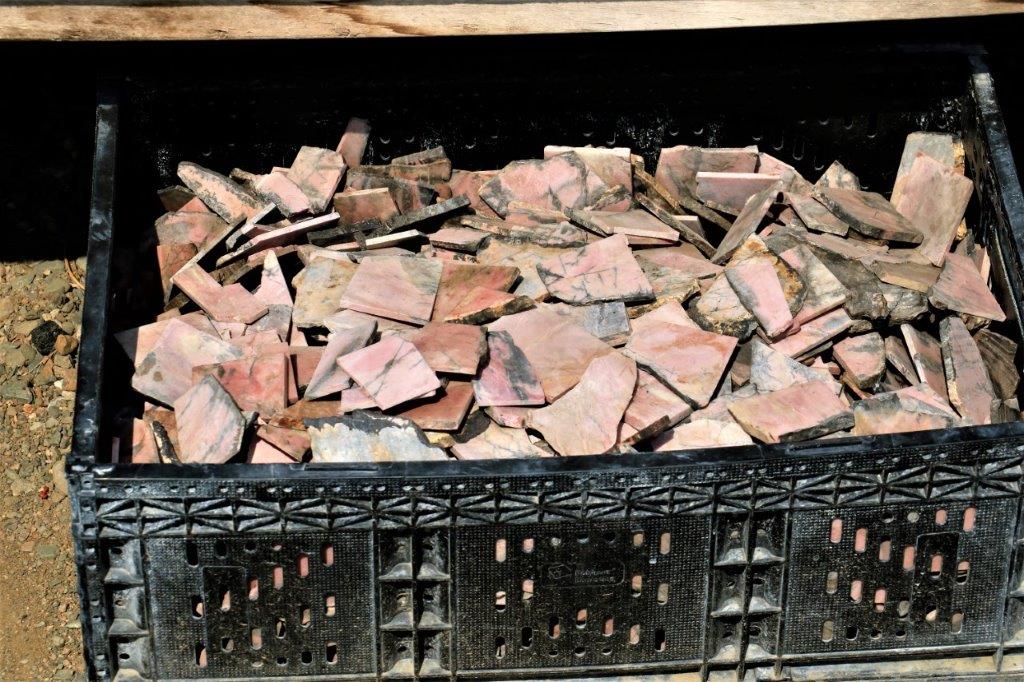
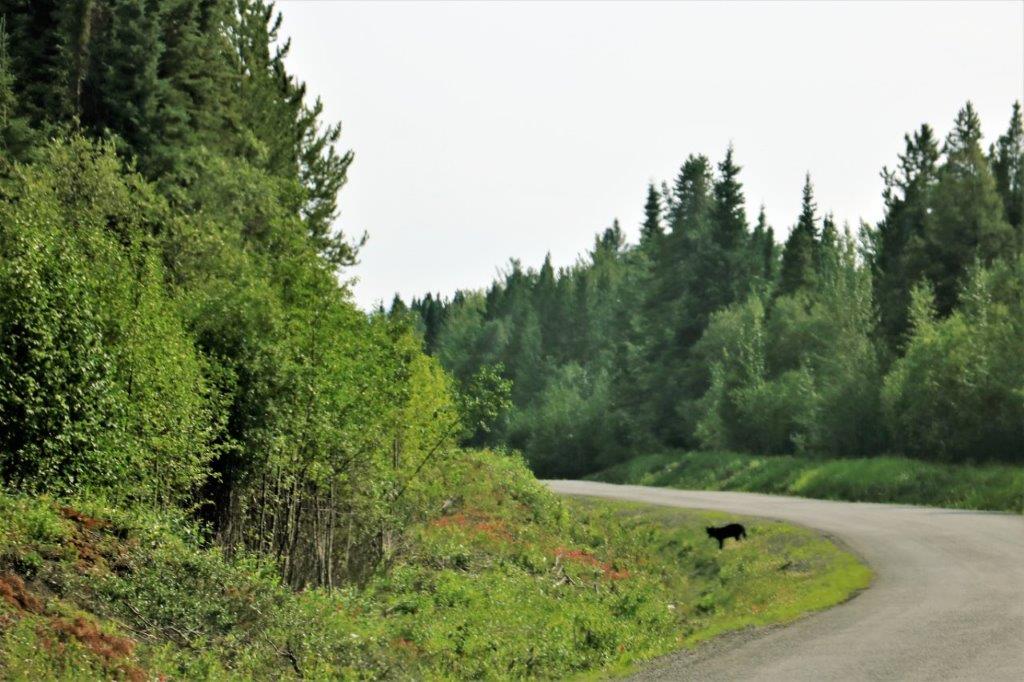
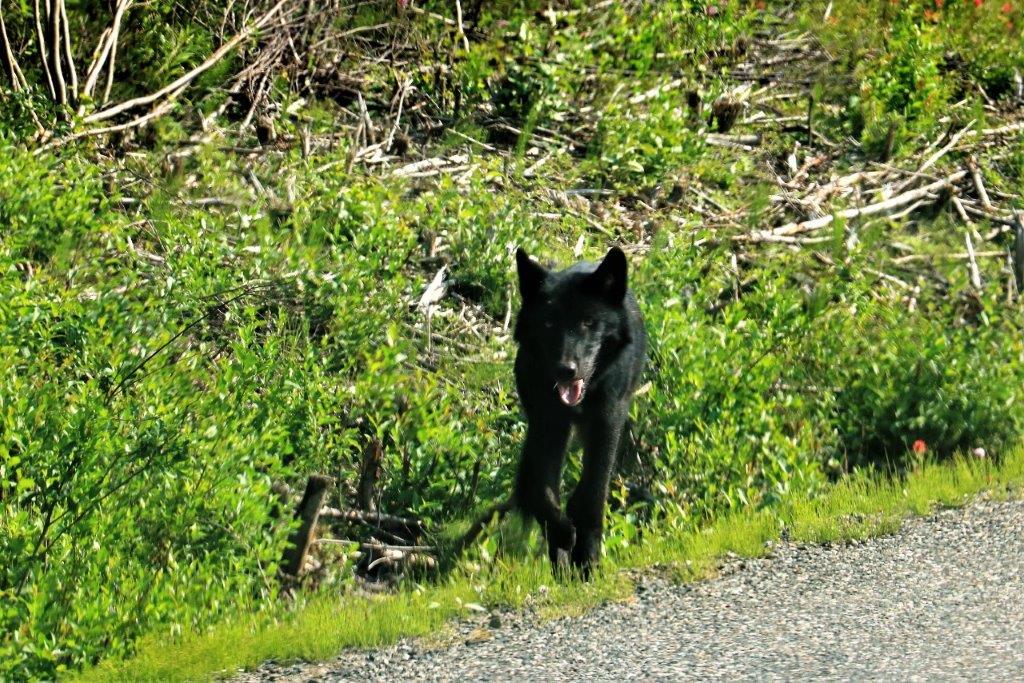
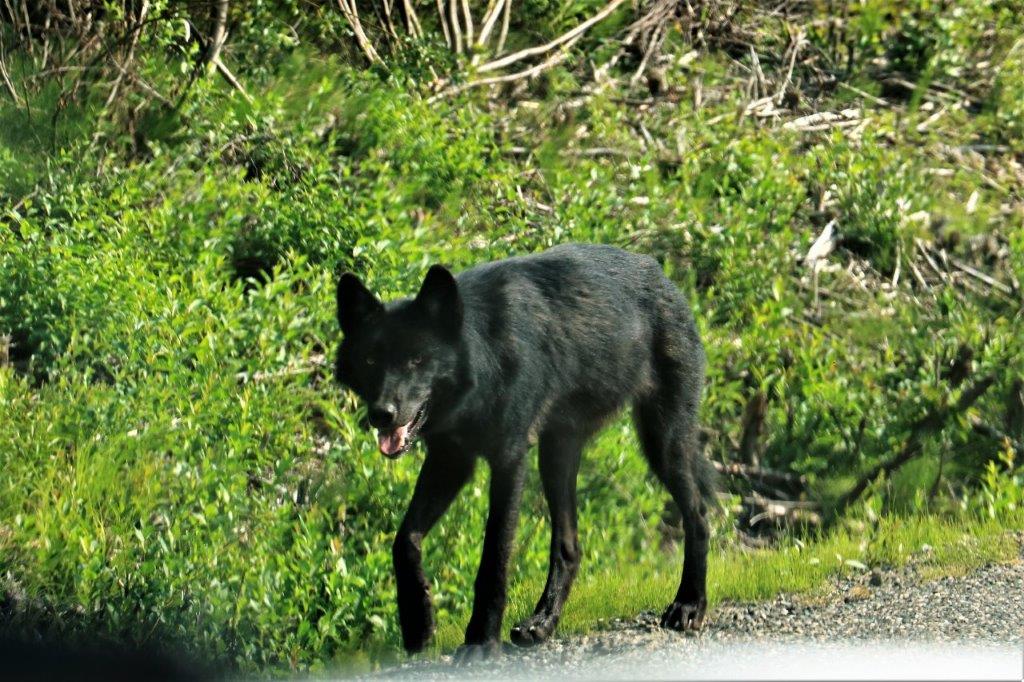
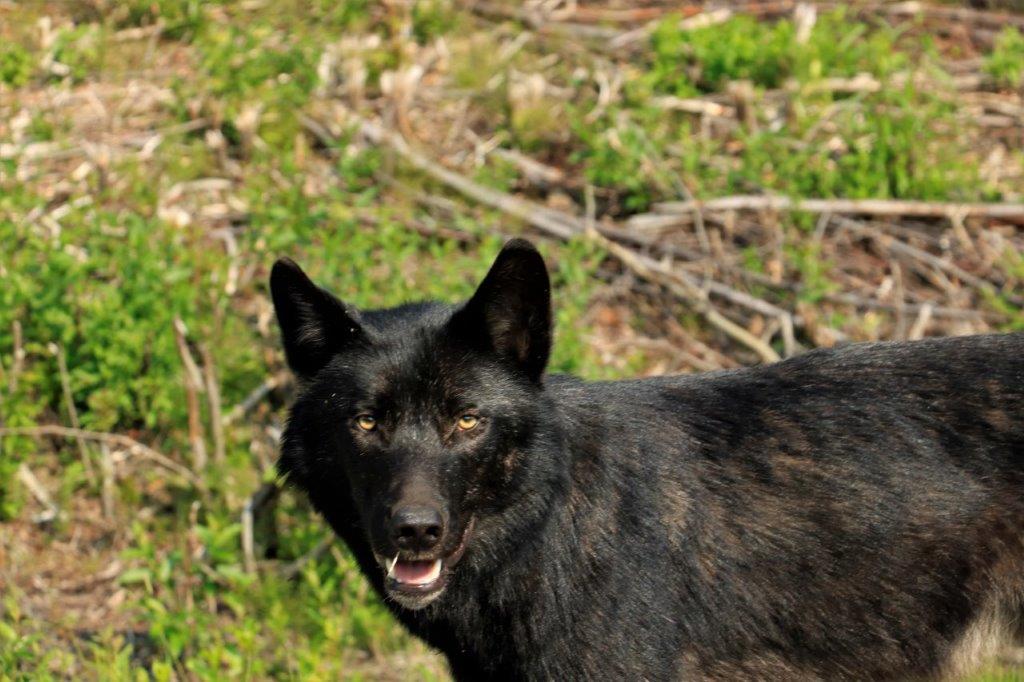
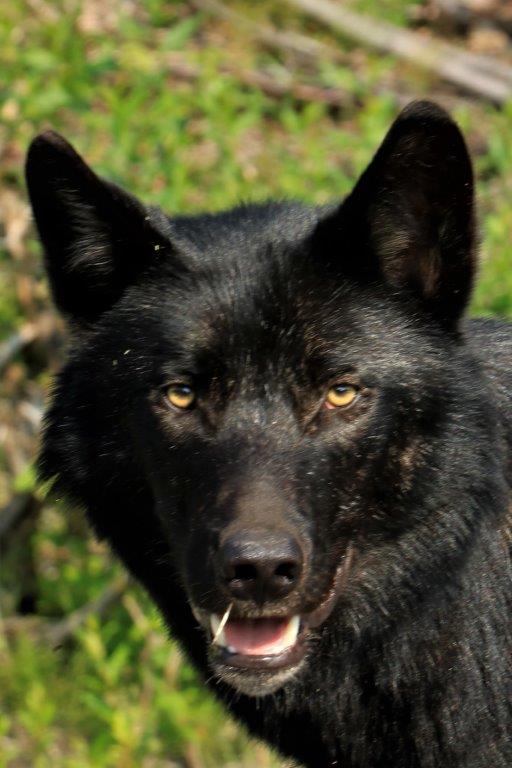
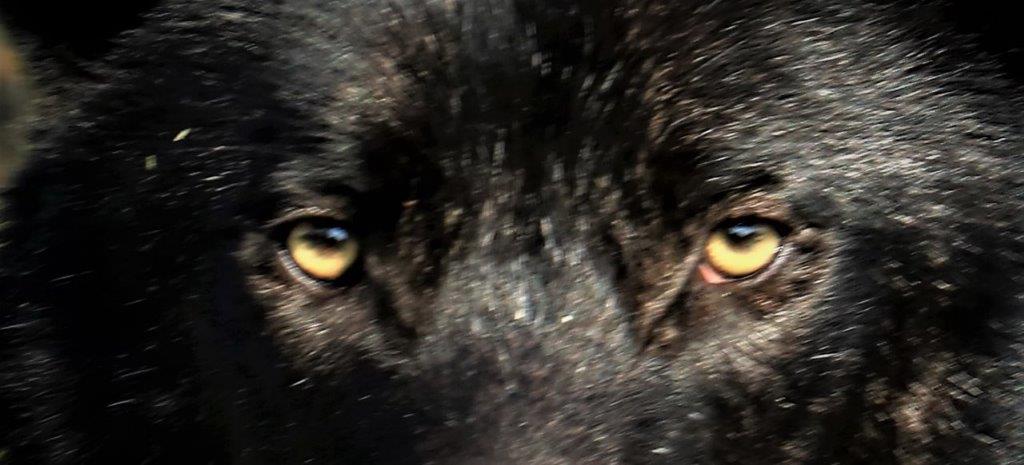
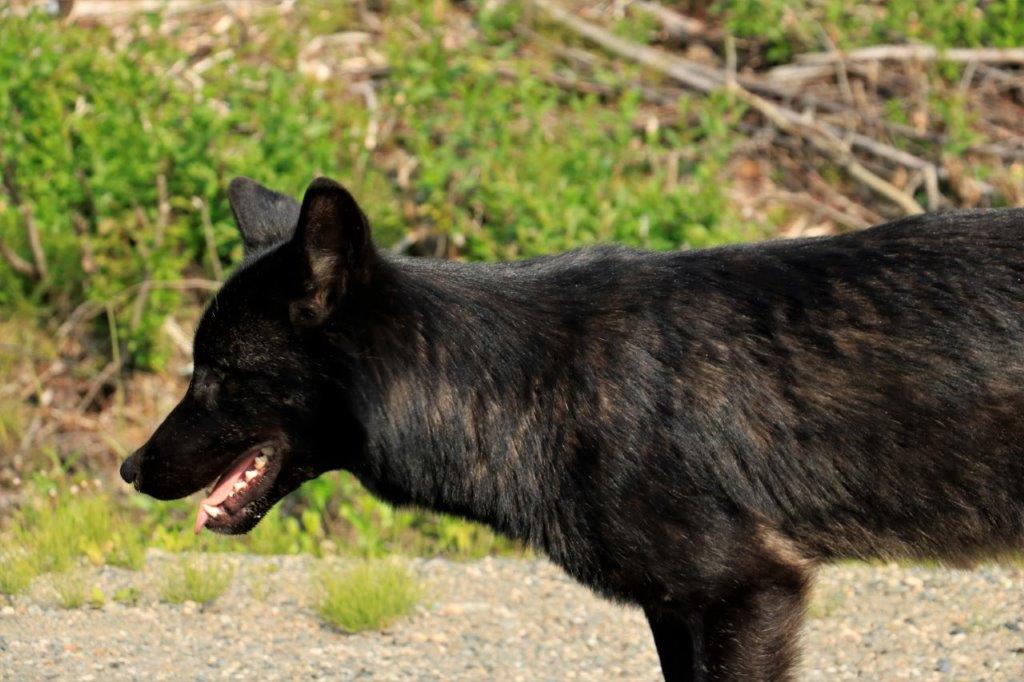
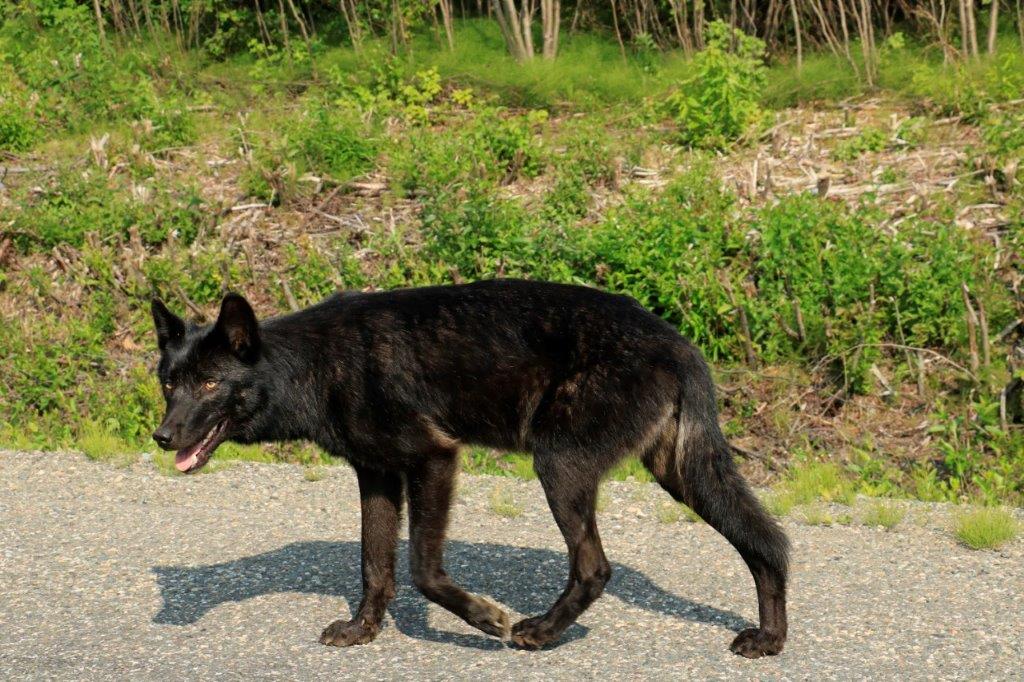
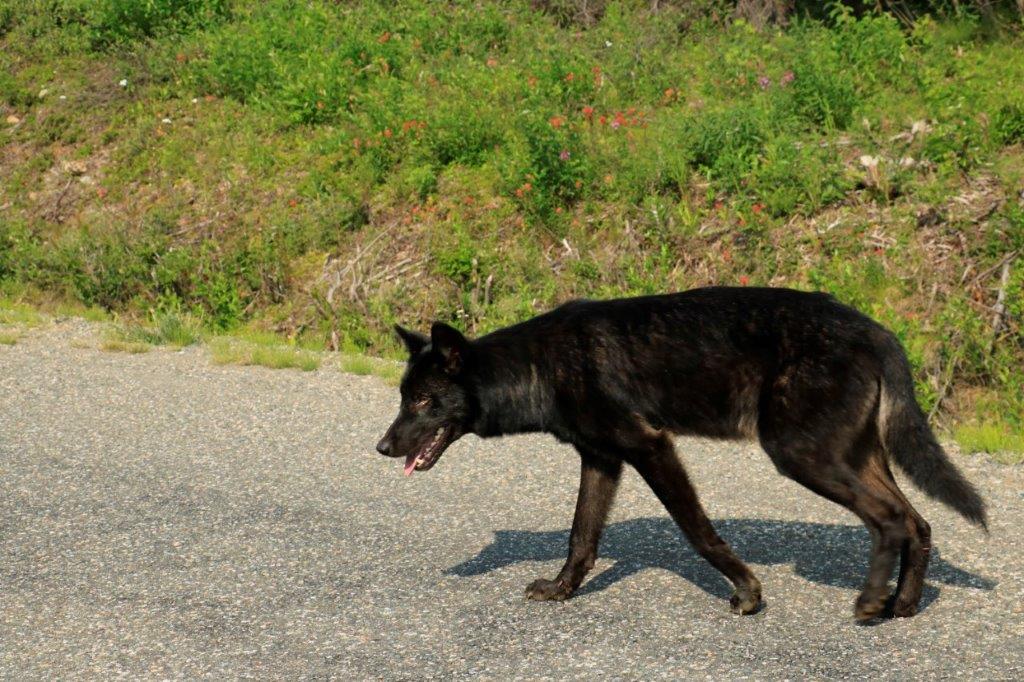
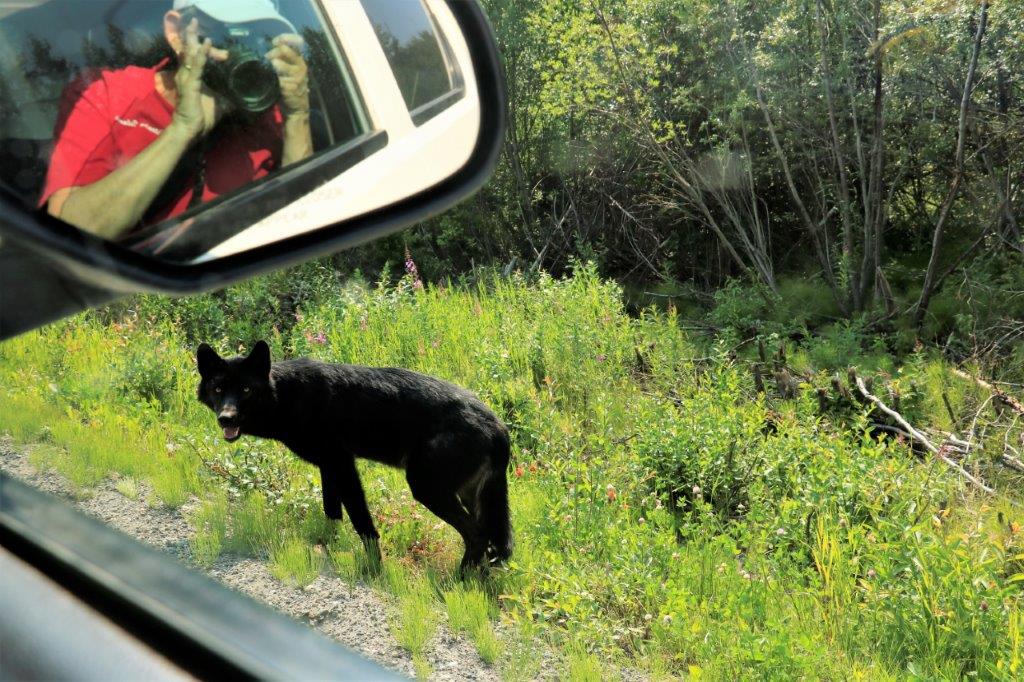
There was also a geocache hidden at Jade City.  There is a gift shop here and the family that owns it also has mining rights in the area for jade.  There is a TV series, like Ice Road Truckers or Yukon Gold, called Jade City that is currently filming its fifth season.  They film from May – October, but none of the crew were near the gift shop today.  There were huge boulders of jade outside and work stations with diamond-bit saws that are used to cut it.  The gift shop had lots of different carvings, jewelry, playing dice, chess sets, all kinds of things.  There was a gorgeous large jade globe, that was wired to light up.  Cost: $10,000.  92% of the world’s jade comes from Canada, primarily from BC.  Jade is translucent so if it is cut thin enough the light shines through.  It is also very hard.  The lovely forest green colour shows up better when the stones are wet and even better when they are polished after carving.                       This nice purple coloured stone is Jasper. The pink stone is Dolomite.  The chess set they had in the gift shop was Dolomite and Jade alternating squares and the white men were made from Dolomite, with the black pieces being Jade.  I did not ask the price.  It was just gorgeous.                                                     Cottonwood RiverWe were about 10 km (6 miles) from Dease Lake at 4 o’clock when we spotted a dog/wolf that had just crossed the road ahead of us.  John pulled up a bit further and by then we could tell it was a wolf and it was walking toward us along the bottom of the ditch.  We stopped and the wolf kept coming, came up out of the ditch, walked over to the truck and past the driver’s side, around the back and up my side slowly ambling along and looking at us.  It did not appear afraid, just curious.  We didn’t want it to get too curious so John started the truck and inched forward.  The wolf started, sidled off to the side and watched from the middle of the road as we drove away.  We were absolutely stoked!  What an awesome experience.  I hope the animal had not been fed and was looking for handouts, and that it was just curious.  When I checked my photos I saw that it had one porcupine quill in it’s upper lip.  Maybe it was looking for someone with tweezers to get it out.  But, even if we had noticed that at the time we would never be THAT stupid! I cropped this shot to just show his head and his eyes.  It is easy to see the porcupine quill when it is cropped closer. We never noticed it at all when we were taking the photos.

 John used my camera to snap these photos as the wolf was on his side of the truck and I couldn’t get any pictures of it from my side. The red you see in the photo below is the reflection of my shirt on the closed window when the wolf walked past my side of the truck. As we were driving away it almost looks like it was asking why were we leaving.  It walked out into the middle of the road and headed in our direction.  Don’t know if it planned to follow us or not, but the speed difference between a wolf and a pickup truck is considerable.  This just made our day!

At Dease Lake we settled into our hotel room and then went to the pizza shop for some dinner.  There was a fellow there from Ontario that was doing a motorcycle trip in the north (hoping to go up to Tuktoyaktuk) and a couple from southern California who were driving to through BC and the Yukon to Alaska.  We all had a great chat while we were eating.  The fellow from California was commenting to John about how different the people were up here.  Everyone talks to you, he said, and shares stories and tales of their trips.  He is just not used to so much friendliness from strangers, he said.  He and his wife both loved the atmosphere they had been experiencing  in Canada so far.

We noticed as well that the people in the north were very friendly and liked to hear where you were from and where you had been and where you were going.  Things are more laid back when the nearest town is 6-7 hours drive away and is likely even smaller than the one you live in.  There are very few large communities in the north.  We have loved our time up here.

2018 July 24 – Whitehorse to Watson Lake, YT

As expected it was a slow photo day.  I think I took a record low of 25 photos all day.  I did get a lot of my book read while John drove though.

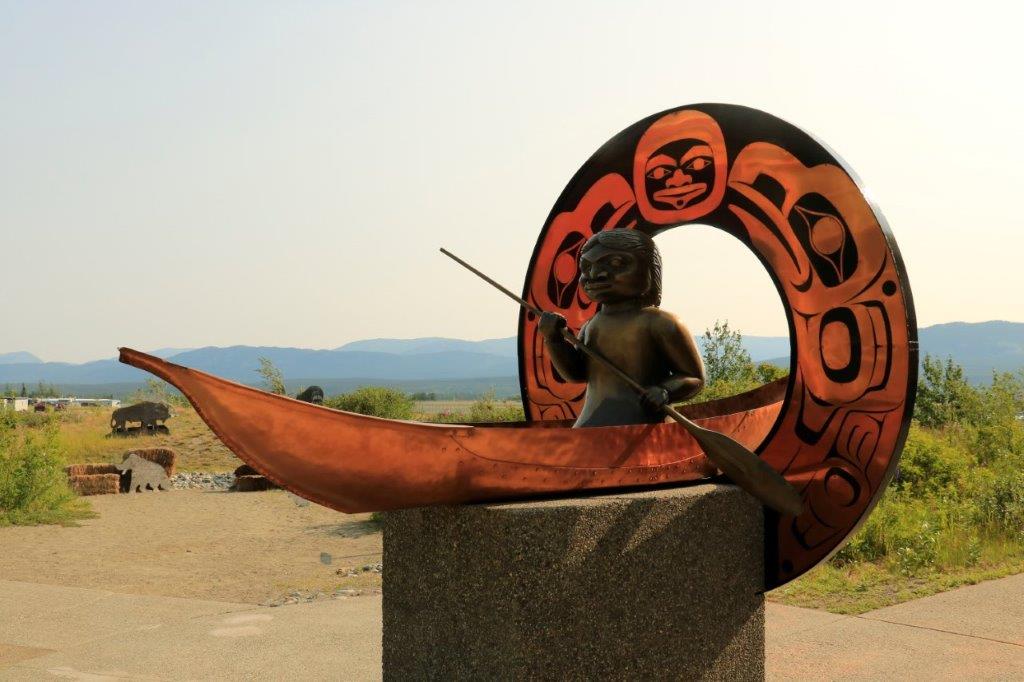
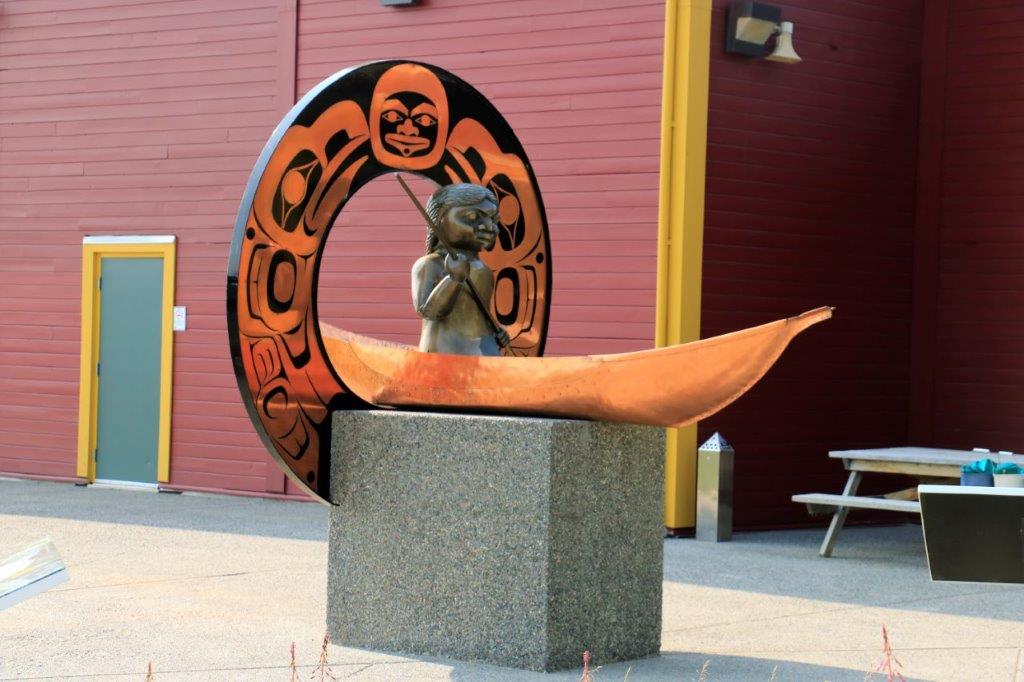
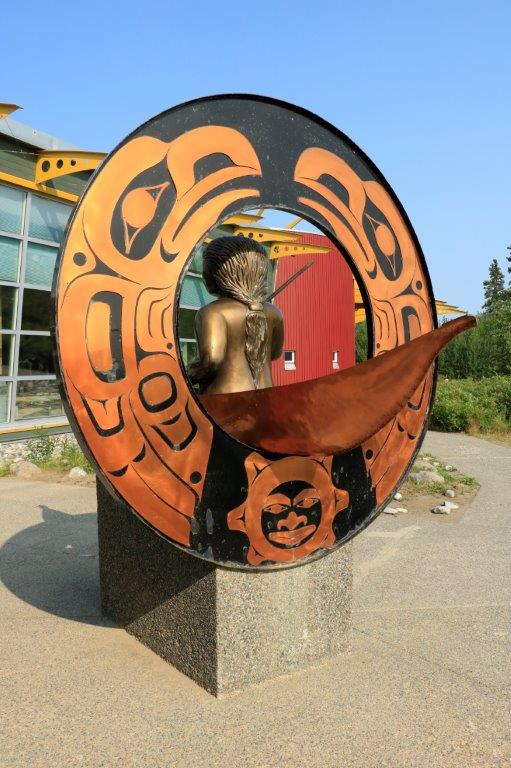
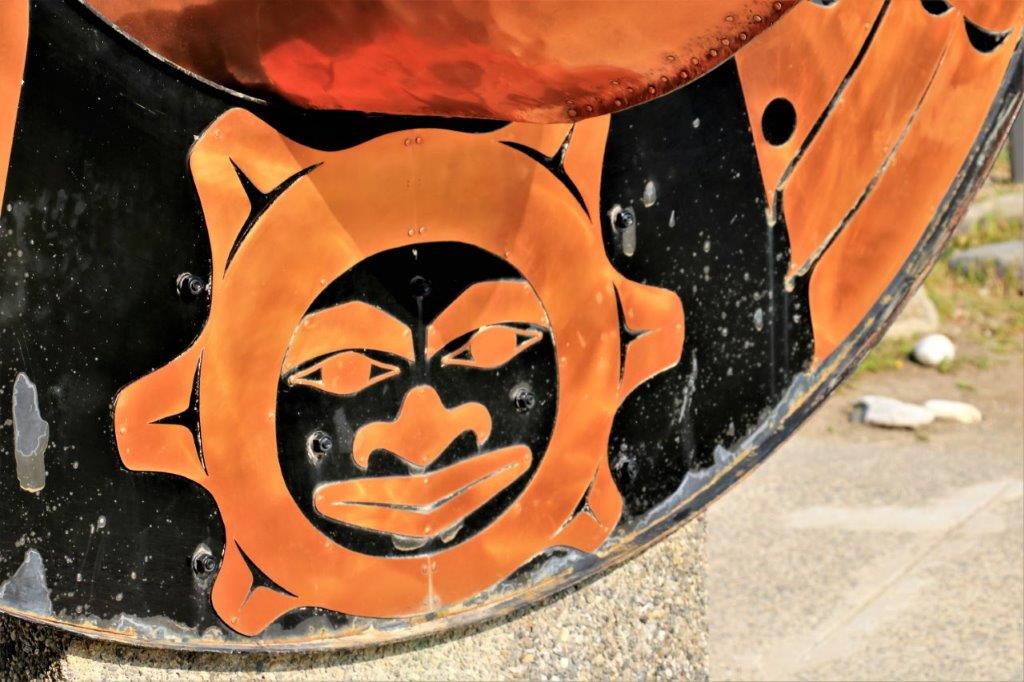
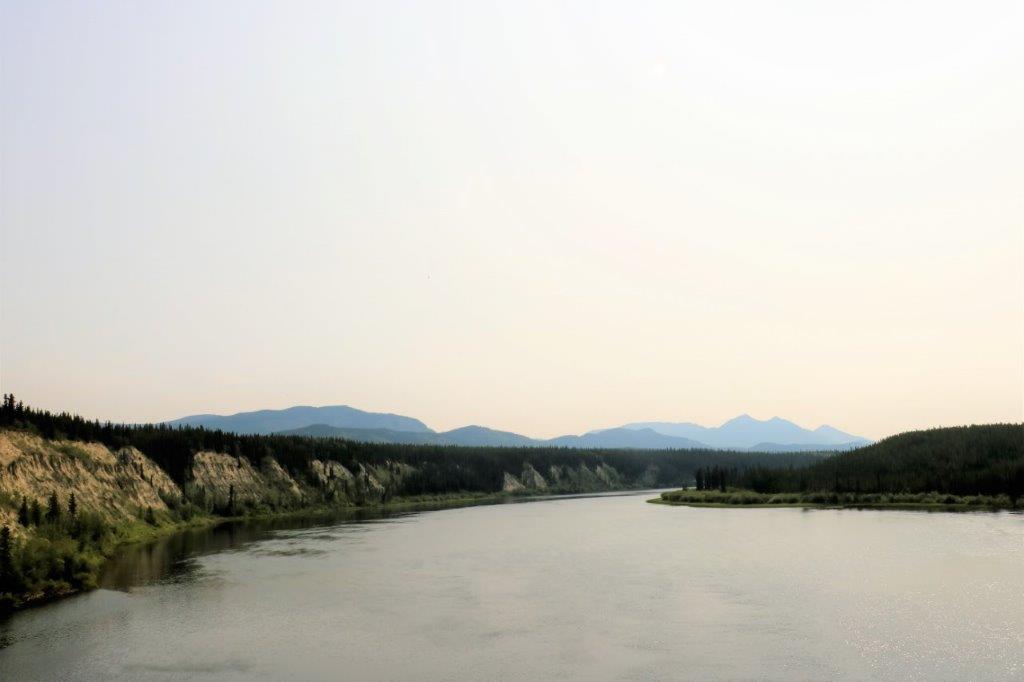
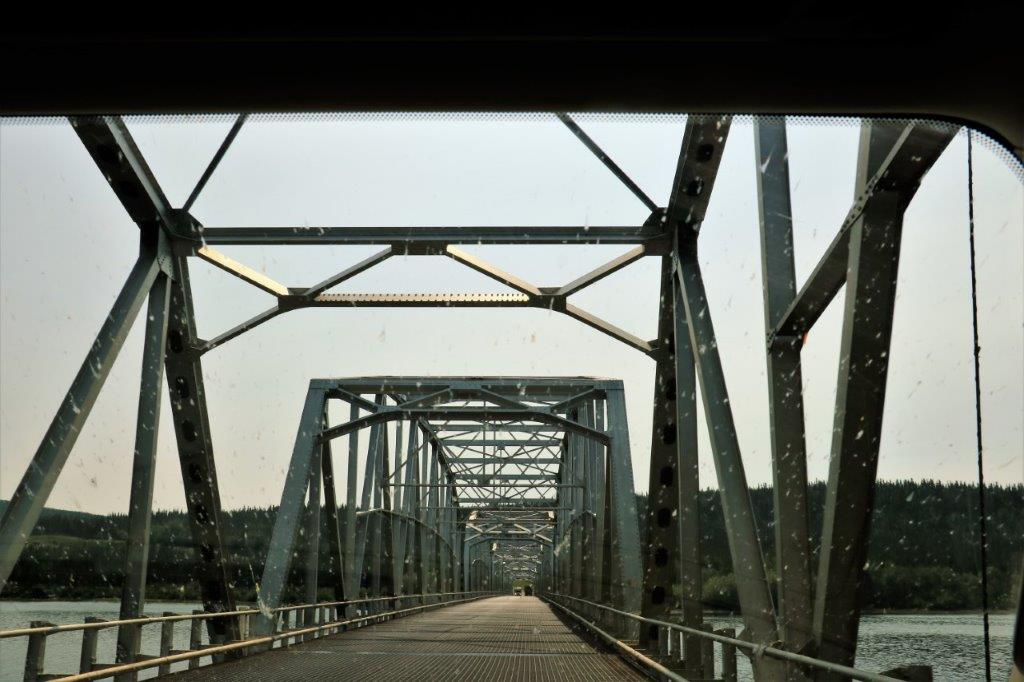
The security guard that showed us around the Legislative Assembly in Whitehorse told us about a copper canoe that sits at the back of the Beringia Museum so before we left the city we stopped there to see it. We stopped to find a geocache near Johnson’s Crossing, which was one of the earliest road houses along the highway.  The area is now an RV park and campground.  This is the Teslin River.Many of the bridges up here have metal beds and motorcyclists who are not familiar with them often drop their bikes.  We sort of leapfrogged with a lady on a Honda ST1100 who has put almost 200,000 on her bike riding all over the place. She and John had a great motorcycle chat and she told him she had seen five bikes on their sides on metal-bed bridges on her trip so far.Notice all the little spots.  I clean the windshield whenever John is fueling up the truck, which he did before we went to our hotel last night.  It looks like a ton of the tiny black flies they have up here decided they wanted to get inside the cab overnight   Swift River isn’t flowing very swiftly this late in the northern summer season. The area has really dried out in the time we were traveling further afield.  Fire danger is very high up here now.  There are several fires burning so we see a smoke haze in the air.  One lady said the fires up here are 5 or more times larger than we see further south, but they don’t threaten communities so they just let them burn.  The snow puts them out eventually.  It is all part of the rejuvenation cycle of the forests up here as well.  The black spruce, which is the predominant tree, needs fire to burst it’s seeds.
         This type of scene was a large portion of our day today. Fifty kilometers from Watson Lake we saw our first critter in days and days.  This small bear was on the road verge enjoying a grass snack.We will soon have to revert to Plan B for the remainder of this road trip. We are on our way to Prince Rupert.  From there we were hoping to go to Haida Gwaii but all the ferry spots are full.  We would need to stay in Rupert for a week to get a sailing.  After we returned from Haida Gwaii we wanted to take another, overnight, ferry to Port Hardy on the northern tip of Vancouver Island and visit some relatives on the way home.  But the earliest sailing we could get on that ferry is August 15.

We knew this would be a possibility because the ferries get filled quickly in the summer but we did not want to lock ourselves into having to be somewhere on a specific date too far ahead of our wanderings.   We will just go another time.

In the meantime we will meander here and there through northern BC’s Cariboo country and stop at some of the small places – do some geocaching.  We haven’t been to Barkerville for years so we plan to do that.  For now though we still have some days driving down the Cassiar-Stewart Highway to Terrace.  It is a long drive with few places in between and difficult to split into sort-of-even two days, so we are just going to do three shorter ones.  After all the long days John has been driving lately I think that is only fair.  We do the first third – to Dease Lake – tomorrow.

I am glad I have caught up on my blogs because I will be getting behind again over the next few days.  Dease Lake doesn’t have a full restaurant, only a pizza place; and our cabin at Bell II the next night has no TV, cell phone coverage, or internet.  It will be just like the good old days!

2018 July 23 – Whitehorse, YT

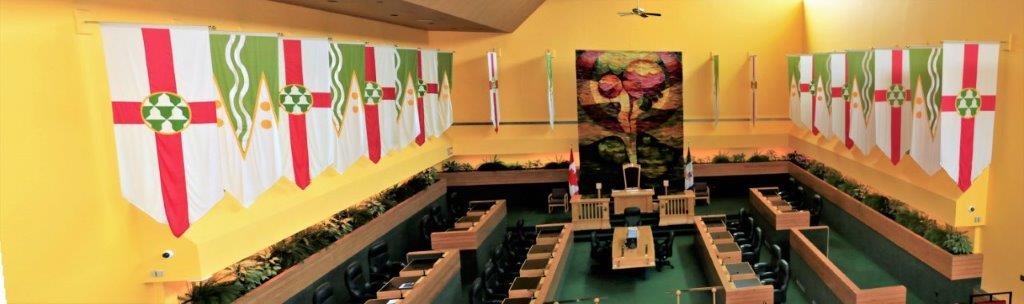
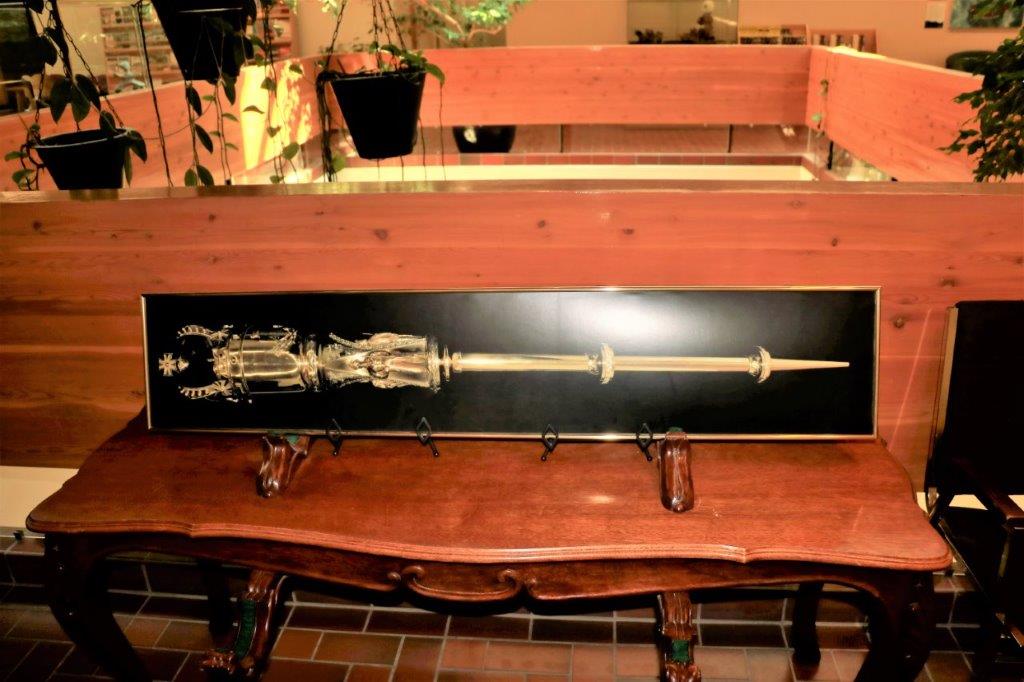
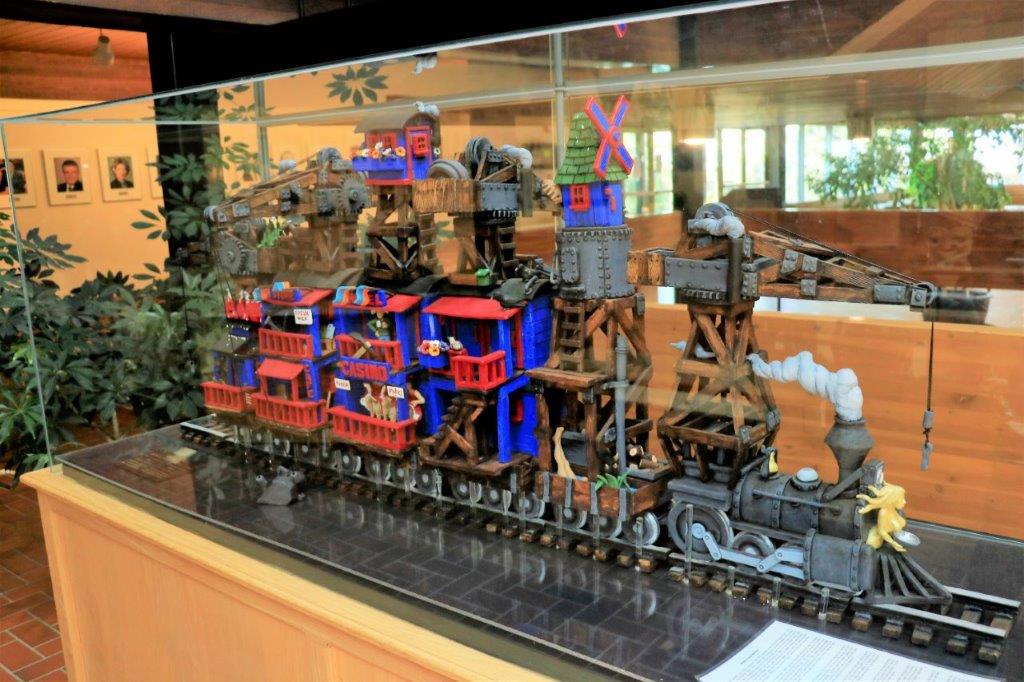
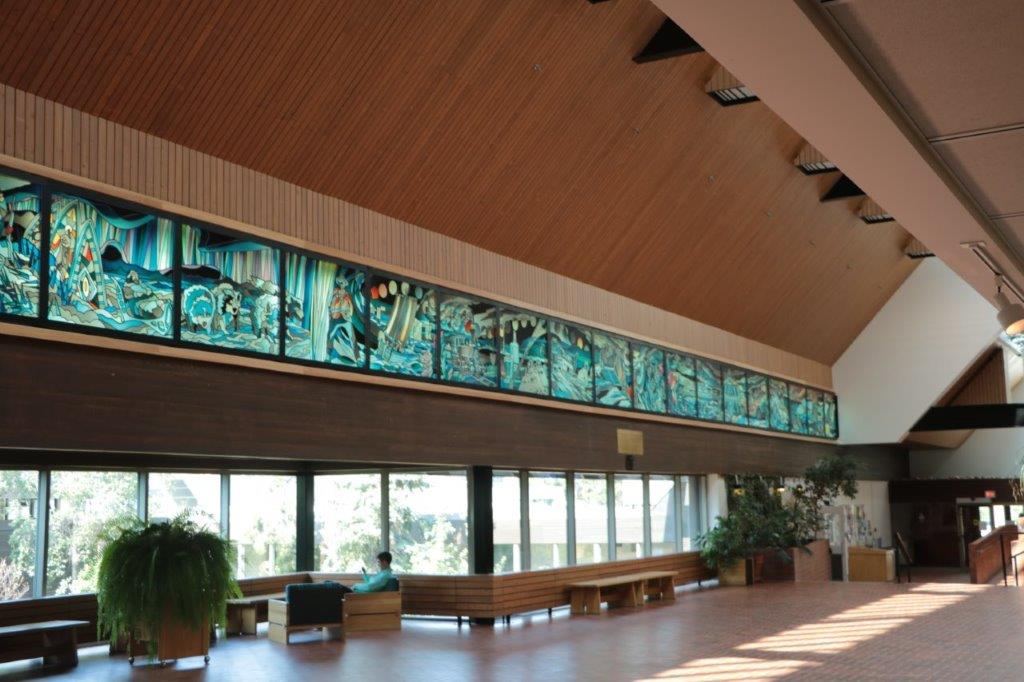
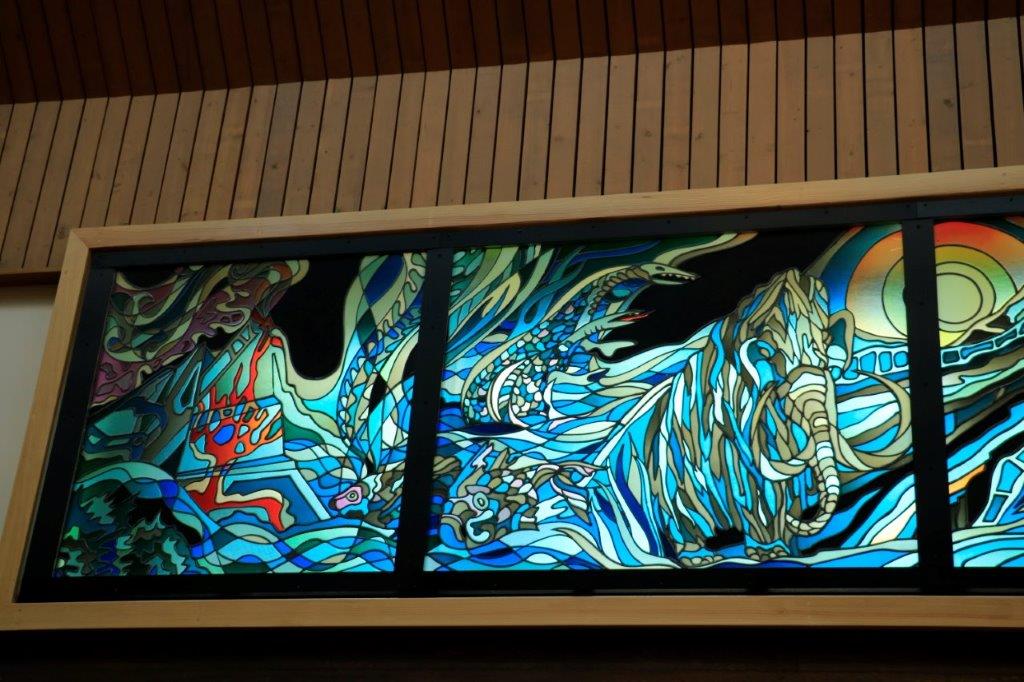
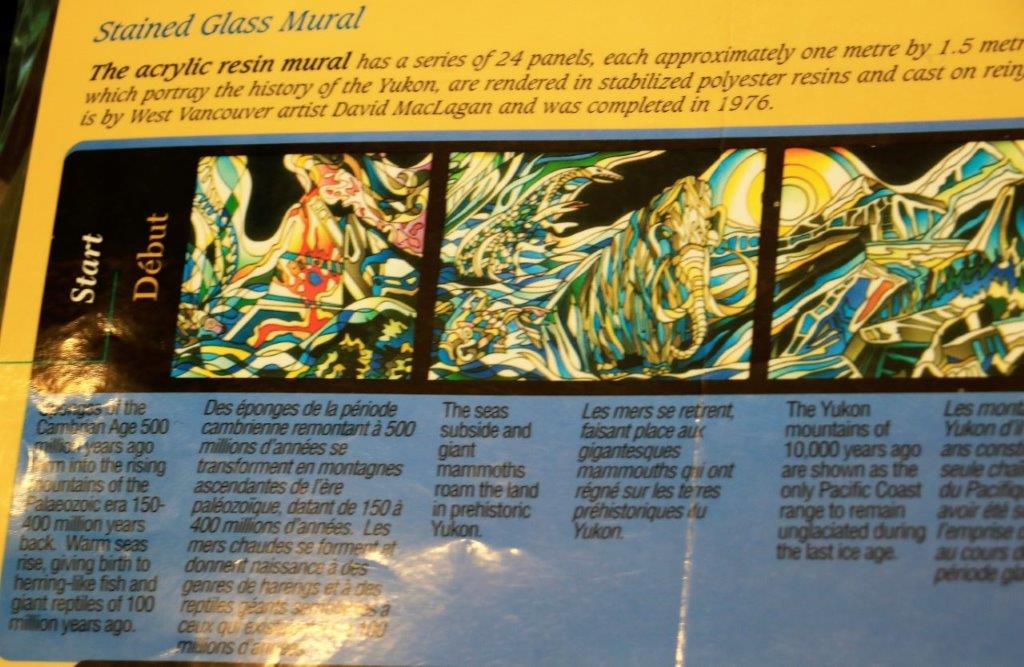
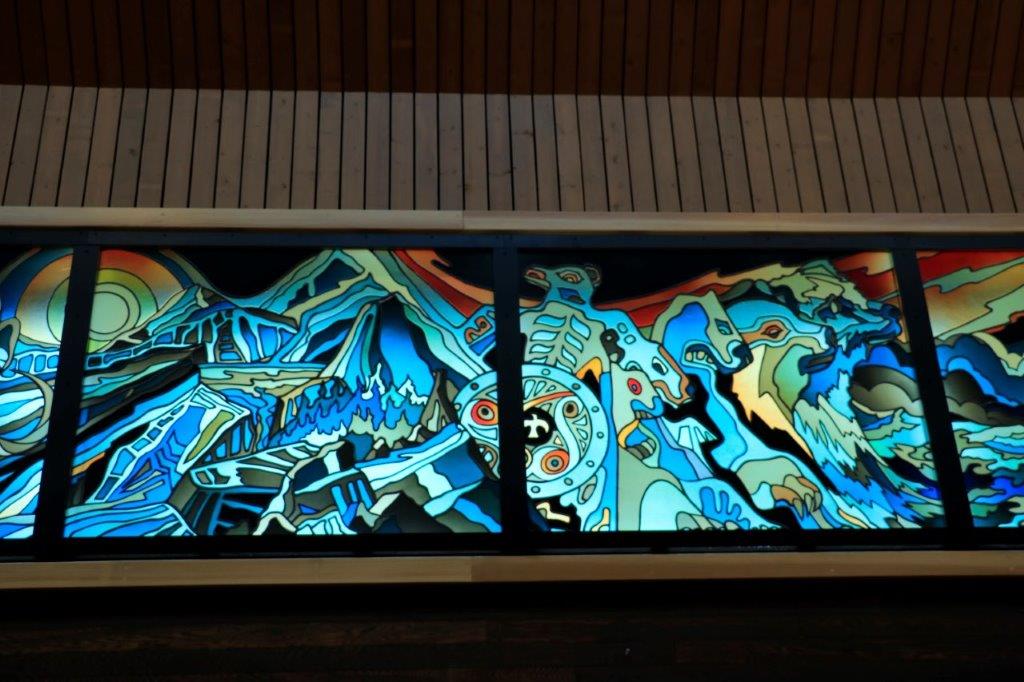
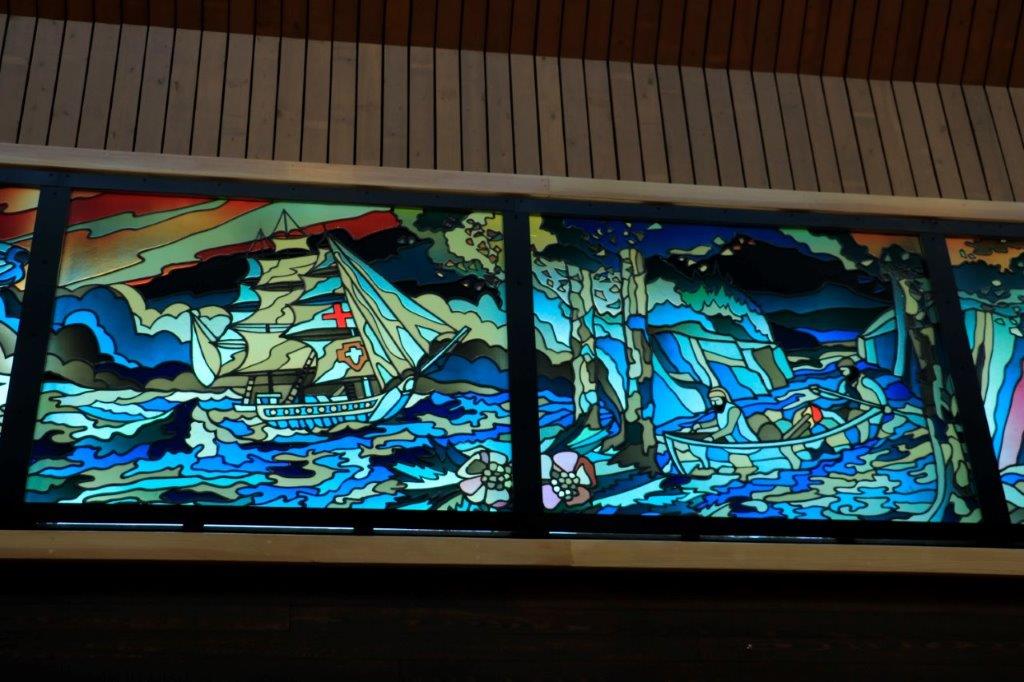
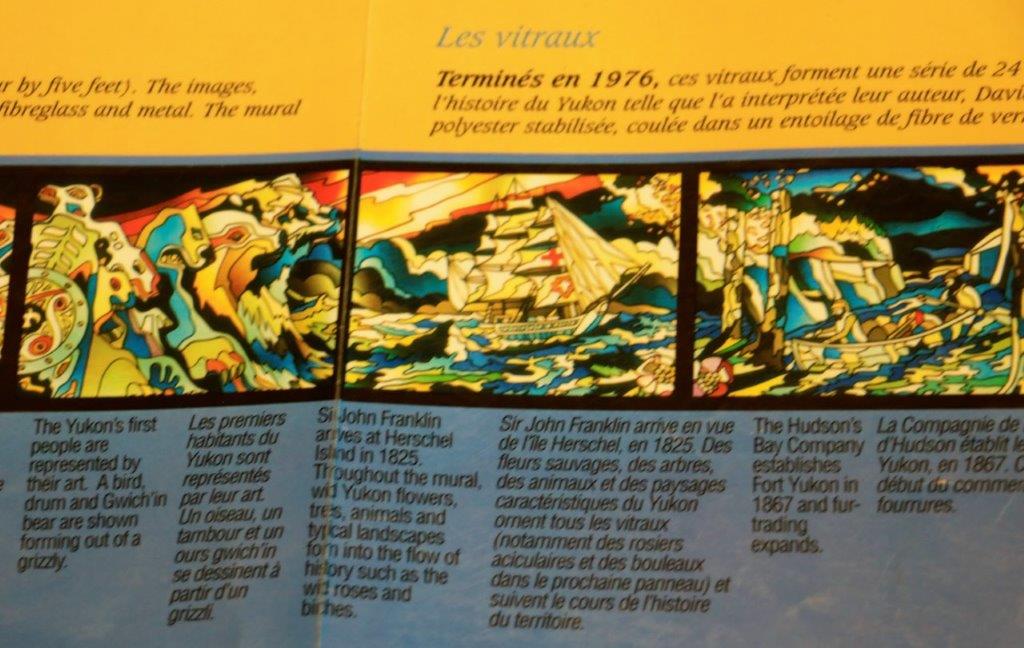
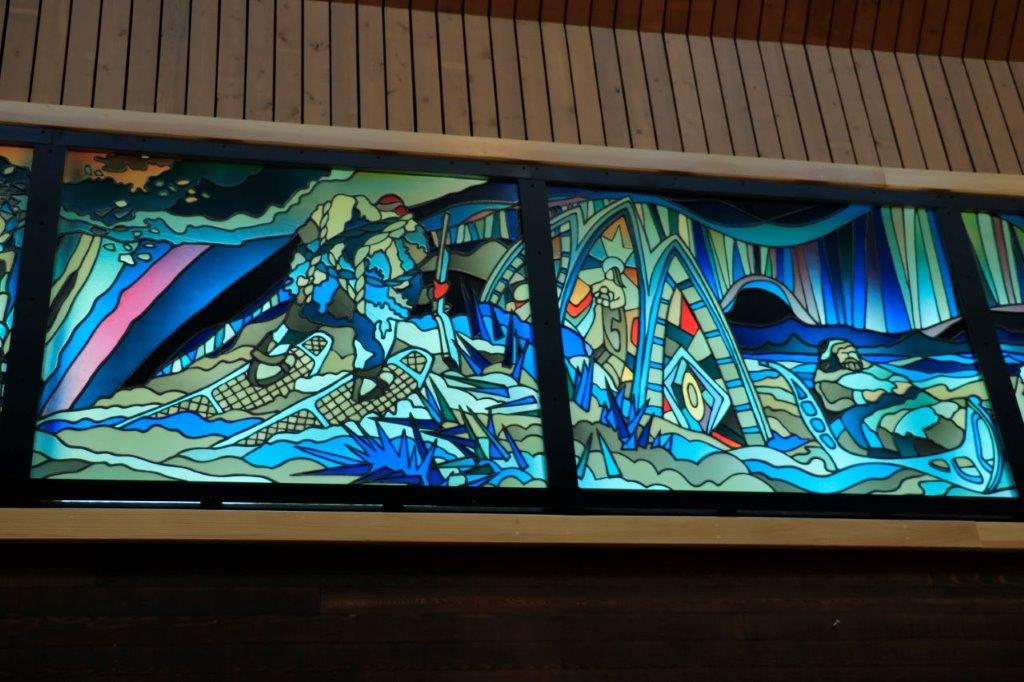
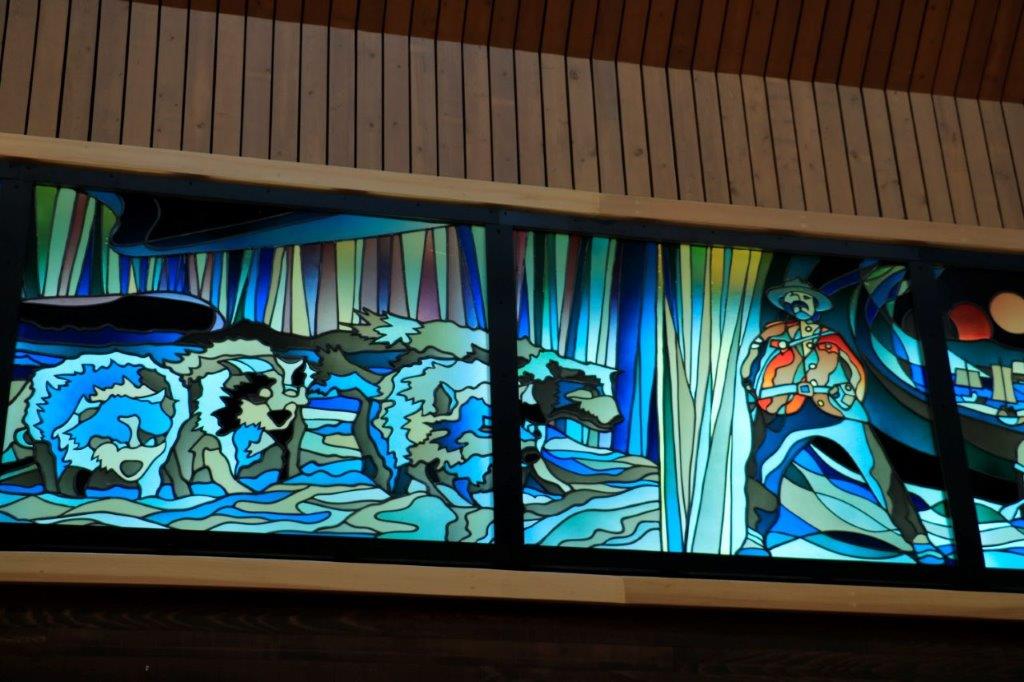
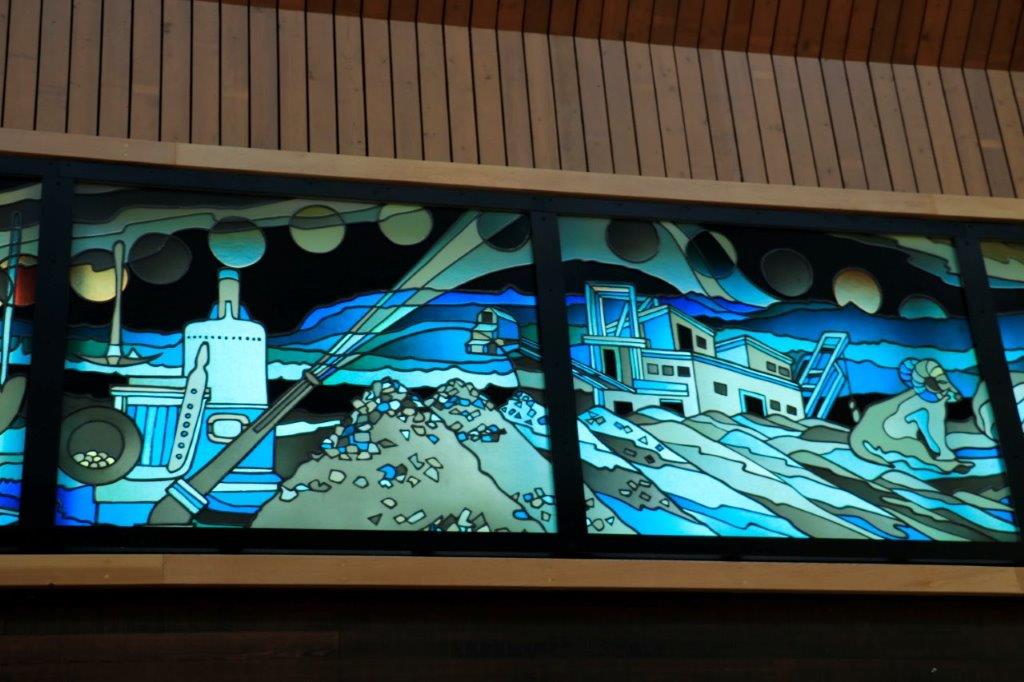
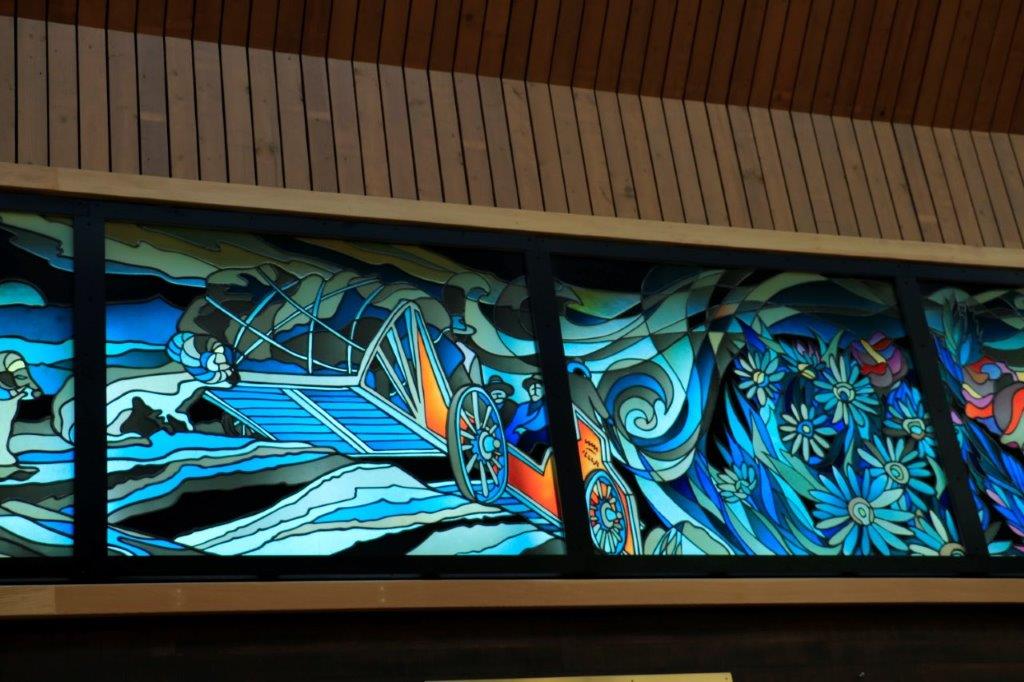
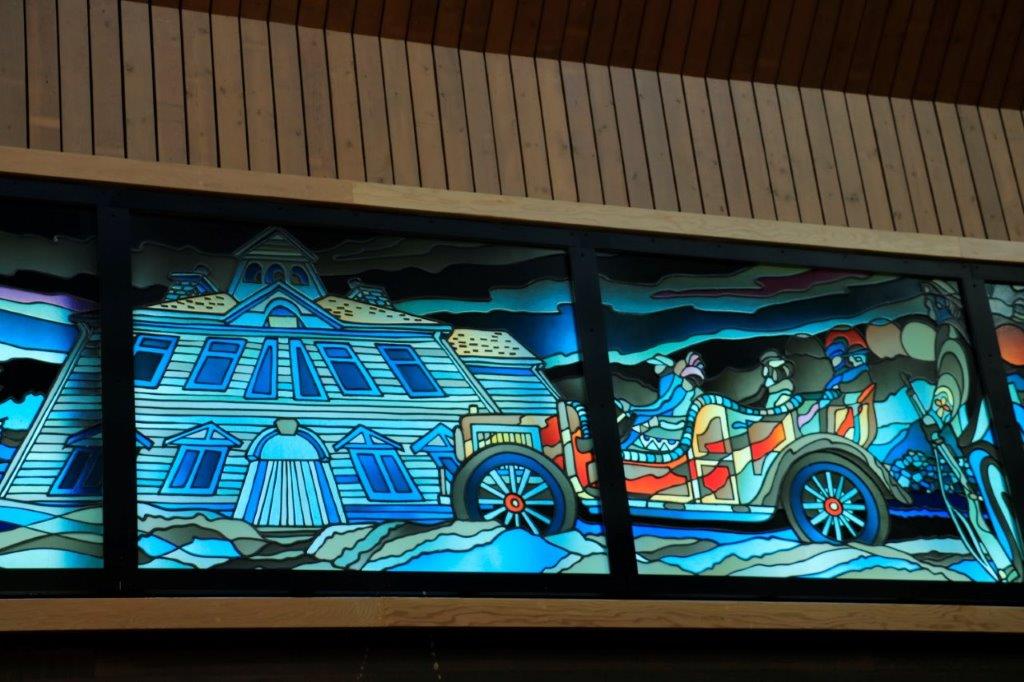
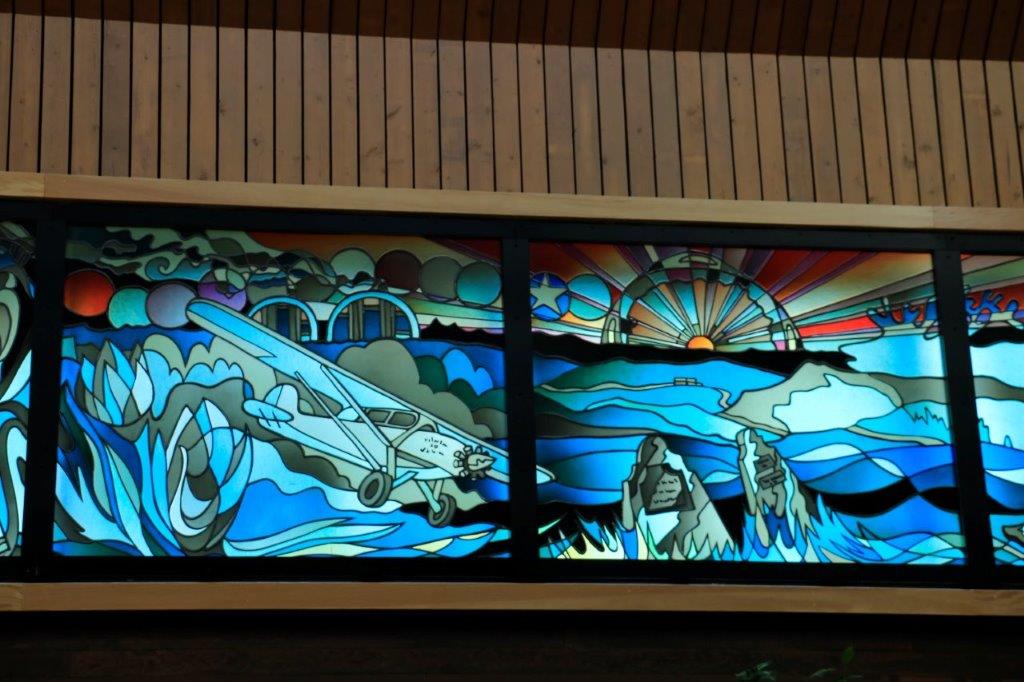
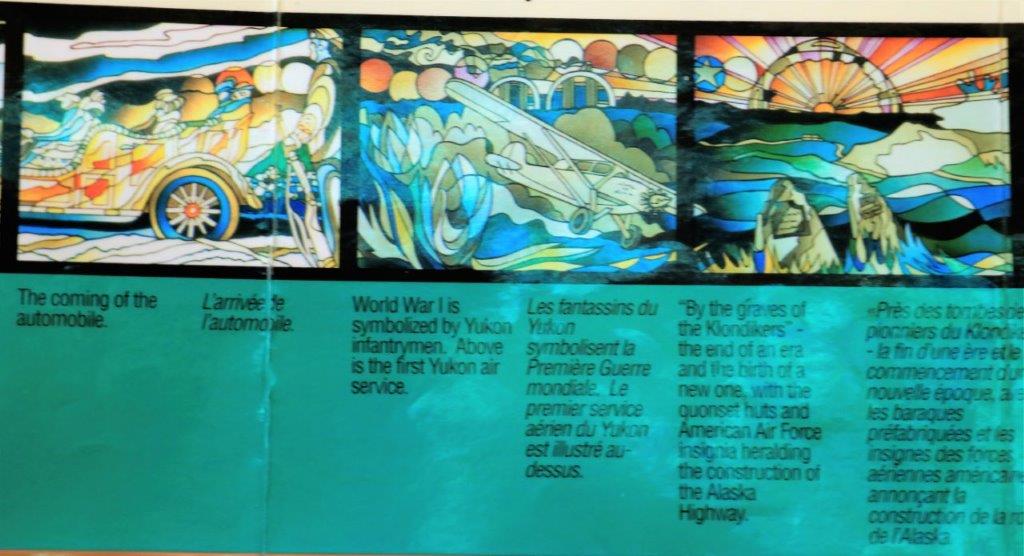
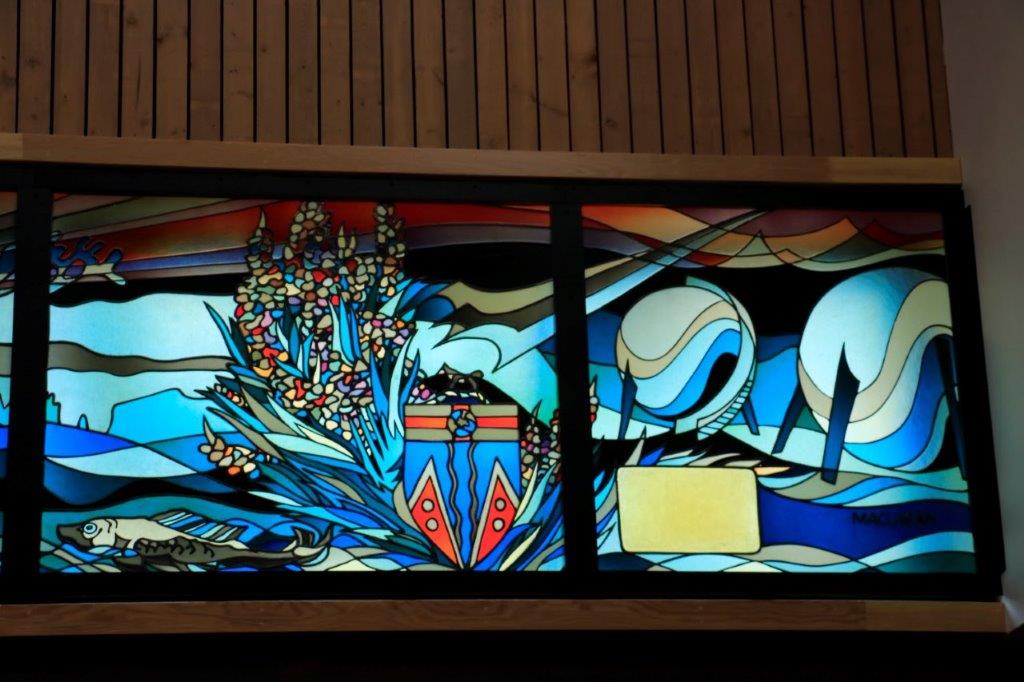
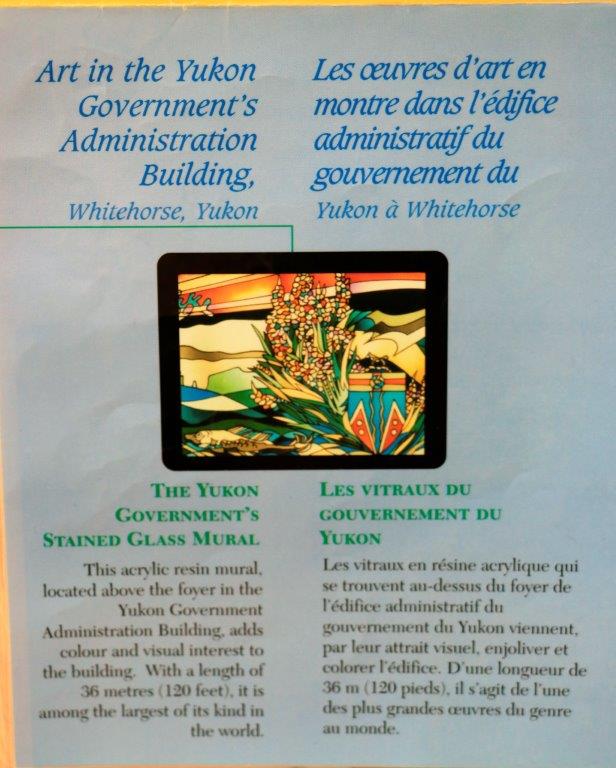
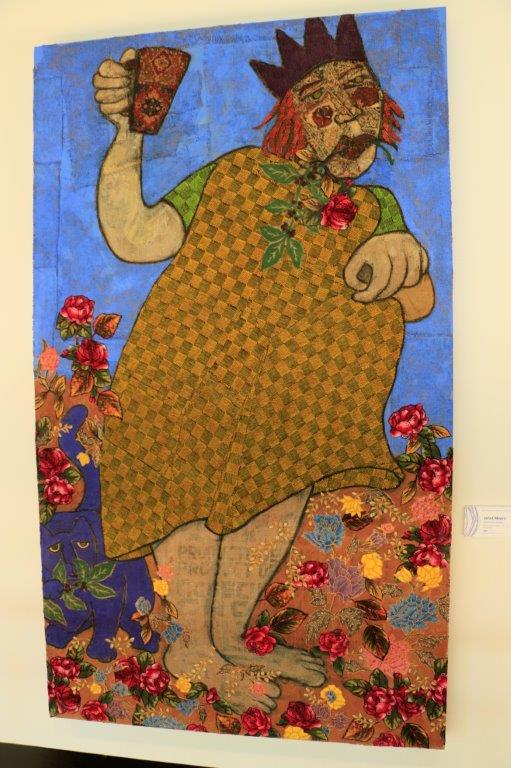
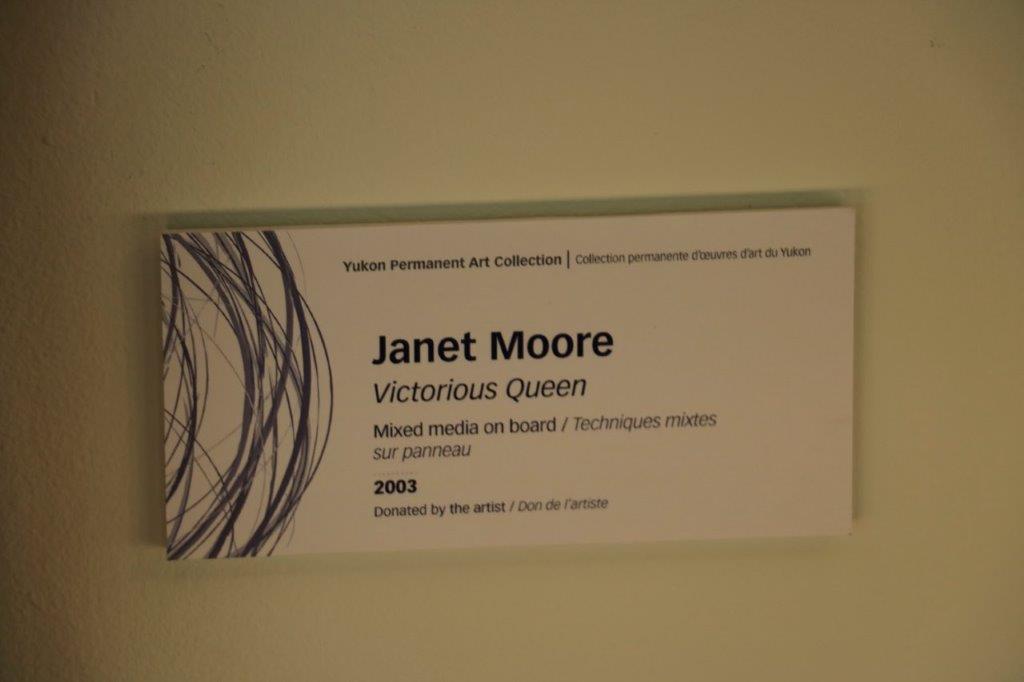
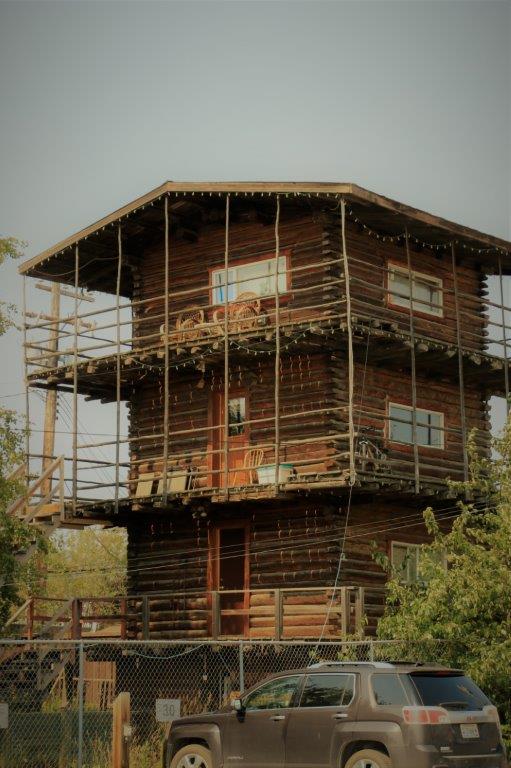
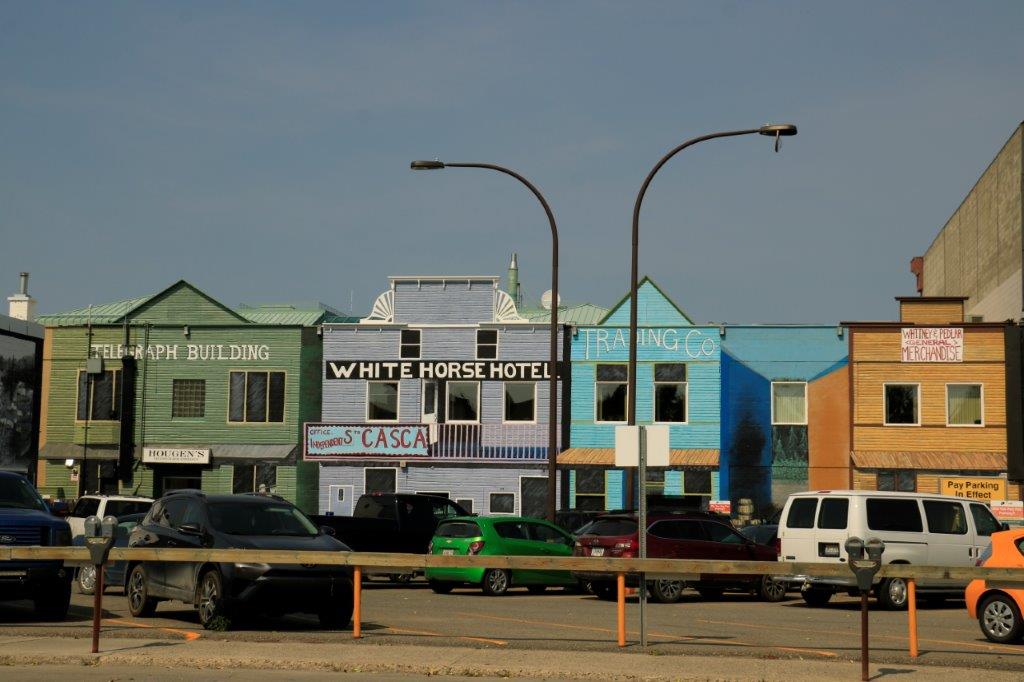
When we were in Whitehorse almost a month ago we were unable to tour the Yukon Legislative Building because it was closed for the Canada Day July 1 long weekend.  So that was our priority today.  We have toured every Legislative Building in Canada except Ontario; which is in Toronto and we never go there if we can help it – too big a city, and Quebec which we saw the outside of, but the line to get inside when we were there in 2014 was so long it would have been well over an hour wait. There was another picture showing all the various carvings on the mace and the symbolism as it pertains to the Yukon.  I love how the designers of these special objects put so much thought into what they are to represent.                                     I liked this funky art piece. This acrylic resin glass-panel mural is 36 meters (120′) long and is among the largest of its kind in the world.  All the panels told the story of the Yukon Territory and melded into each other as the years progressed.  It was lovely. I thought I had take photos of the descriptions for all the panels but I missed these few.  Rats. The historic log skyscraper.  All these little units are still lived in.

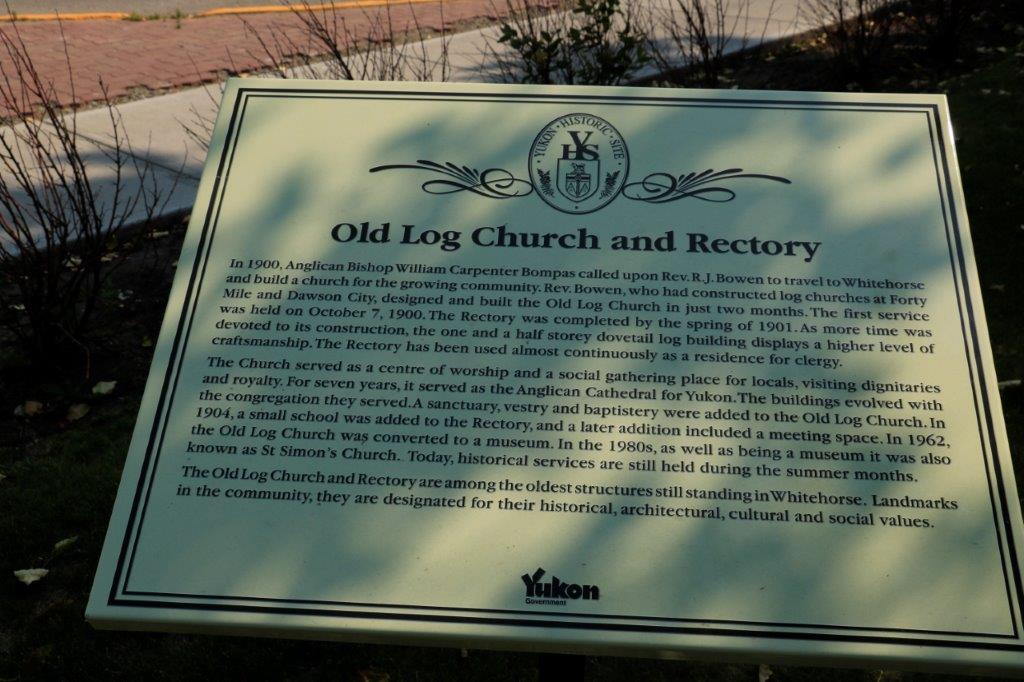
The other thing we did not have time to see in Whitehorse was the Old Log Church Museum.


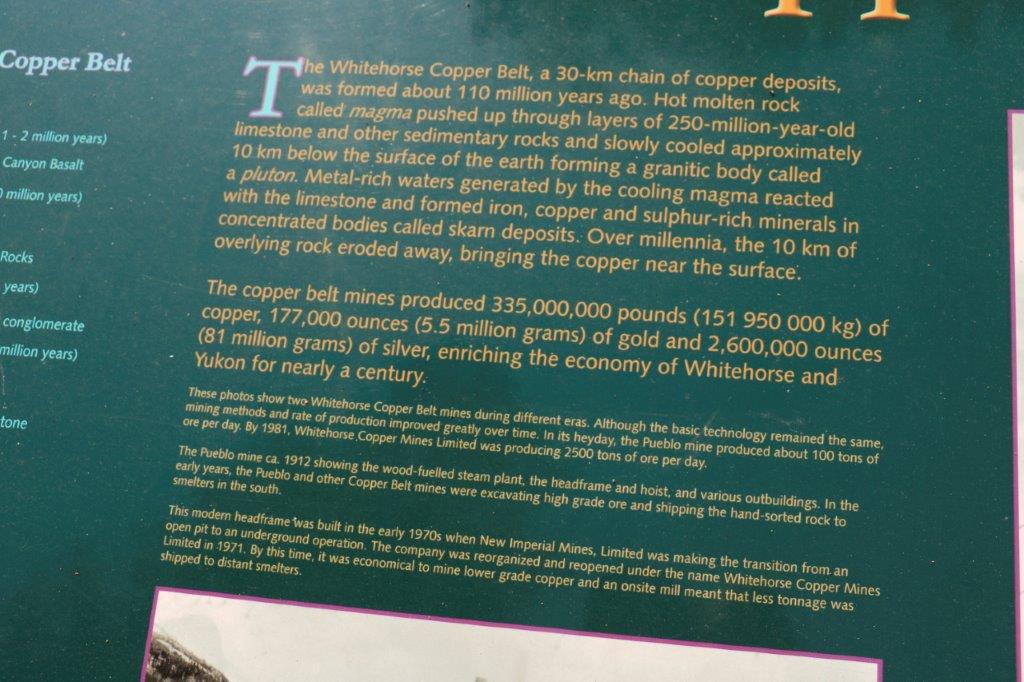
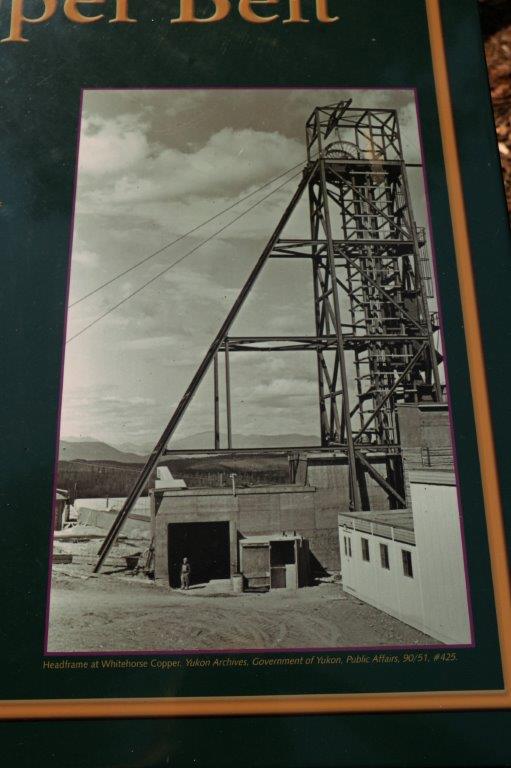
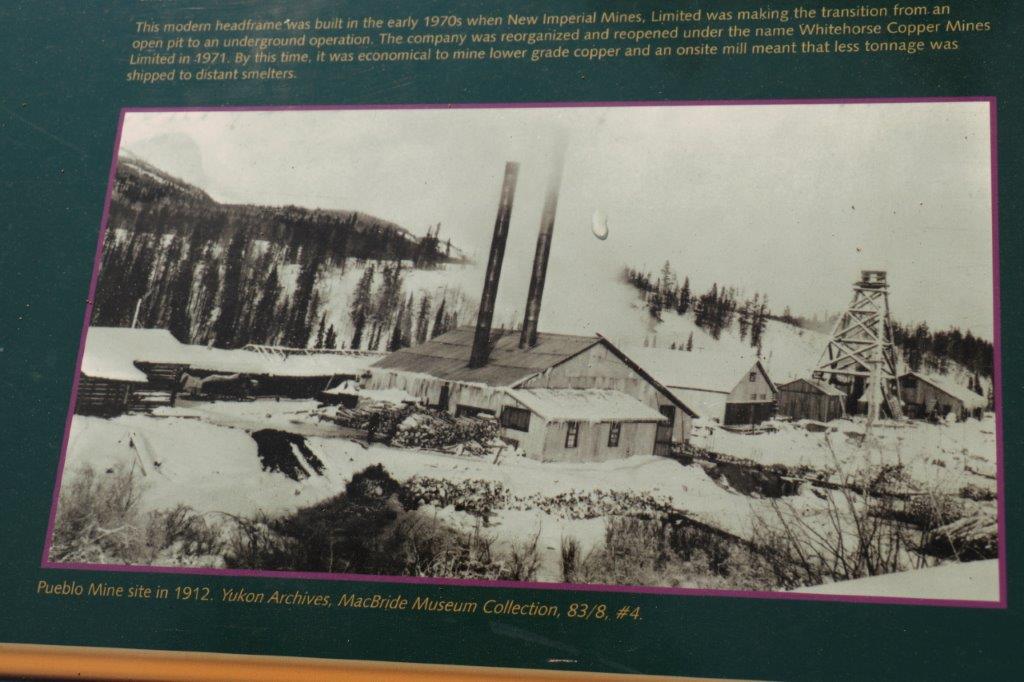
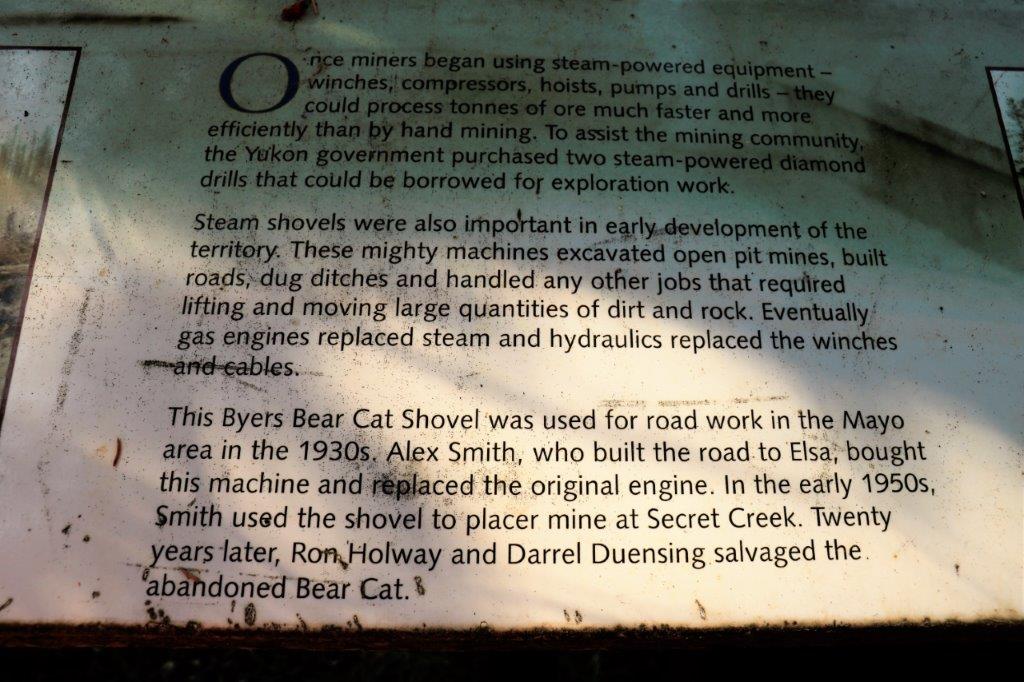
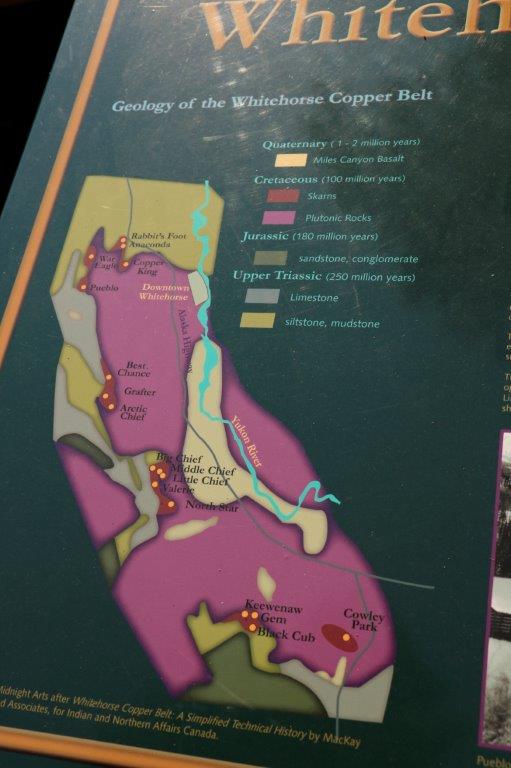
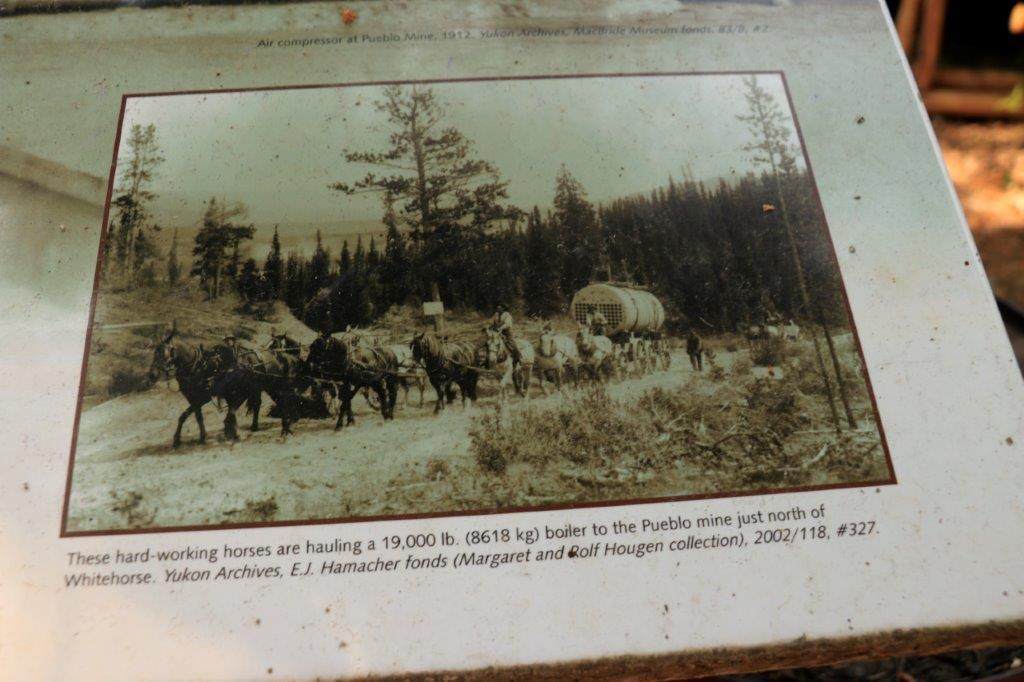
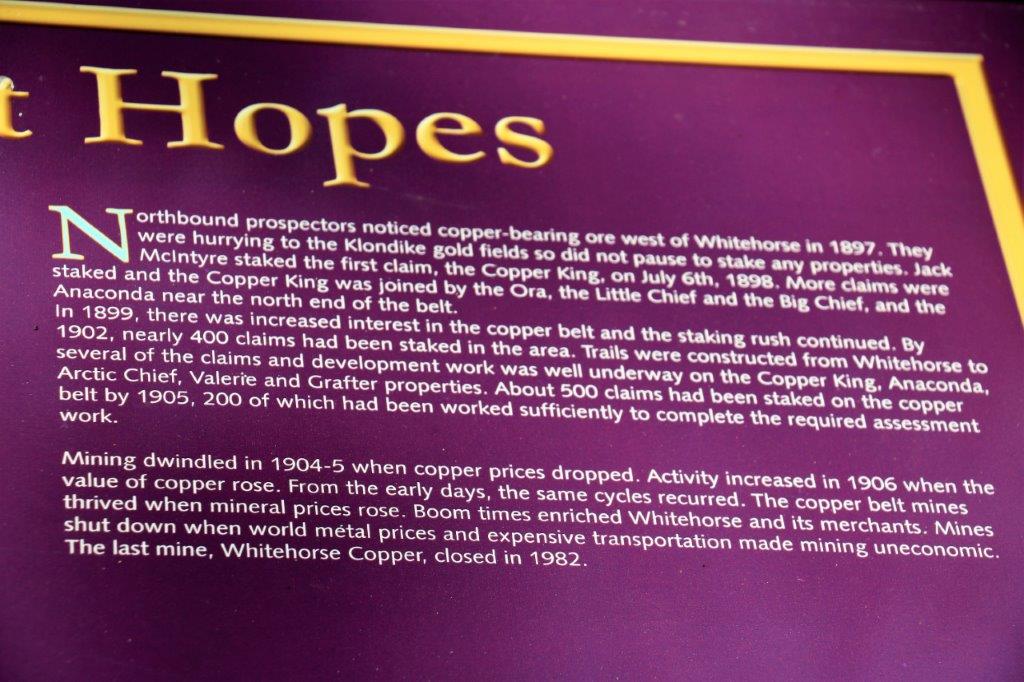
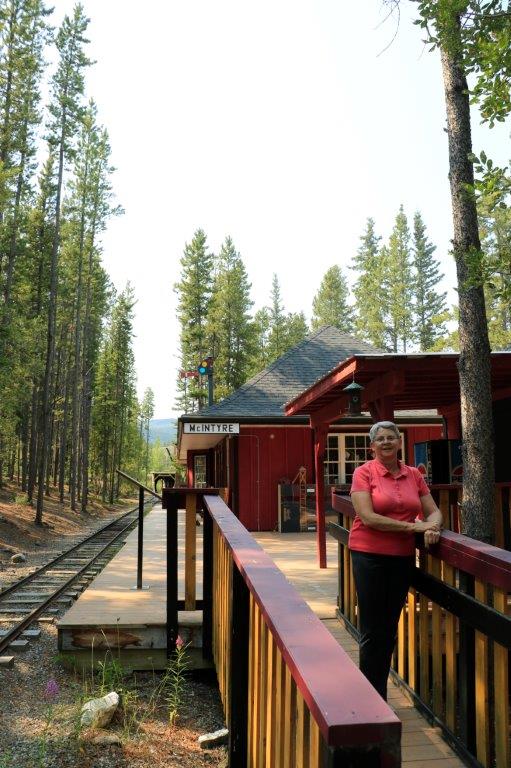
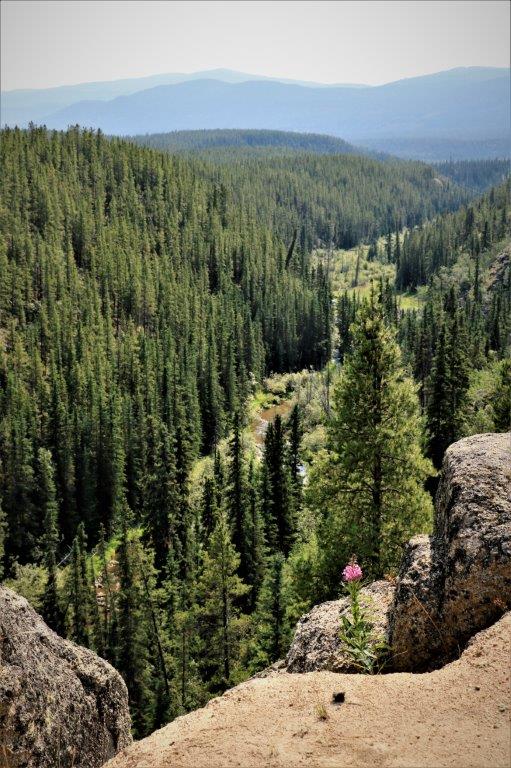
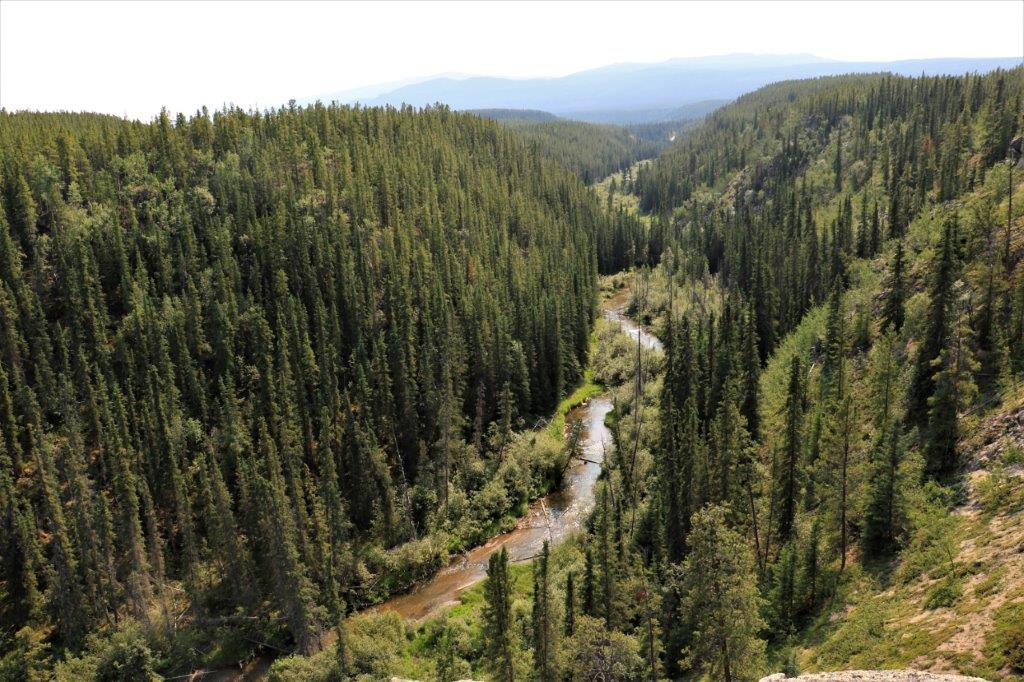
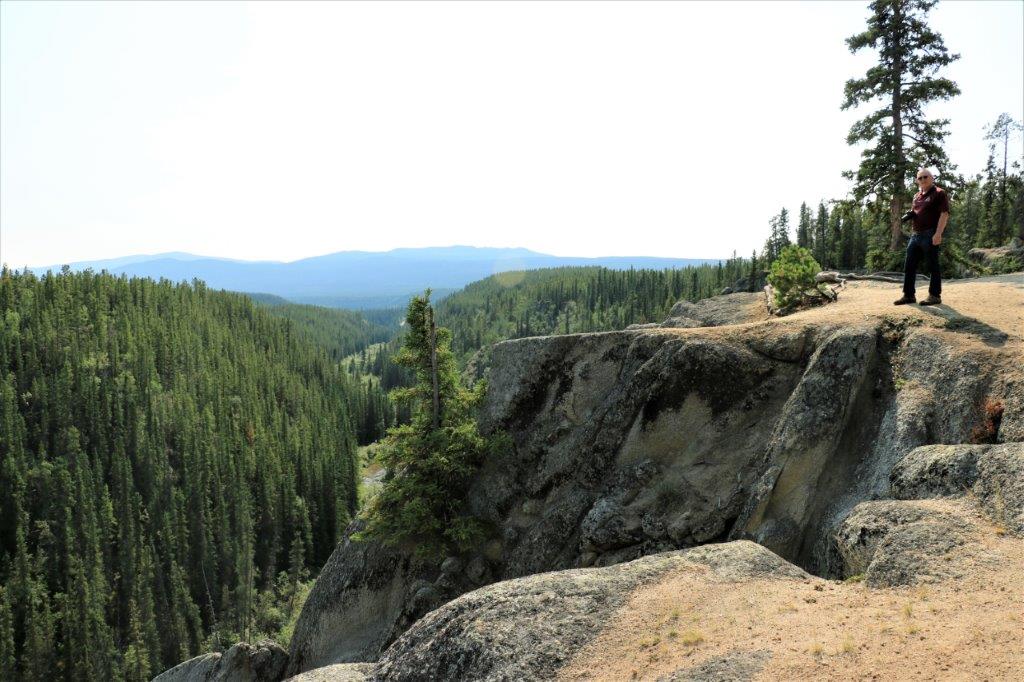
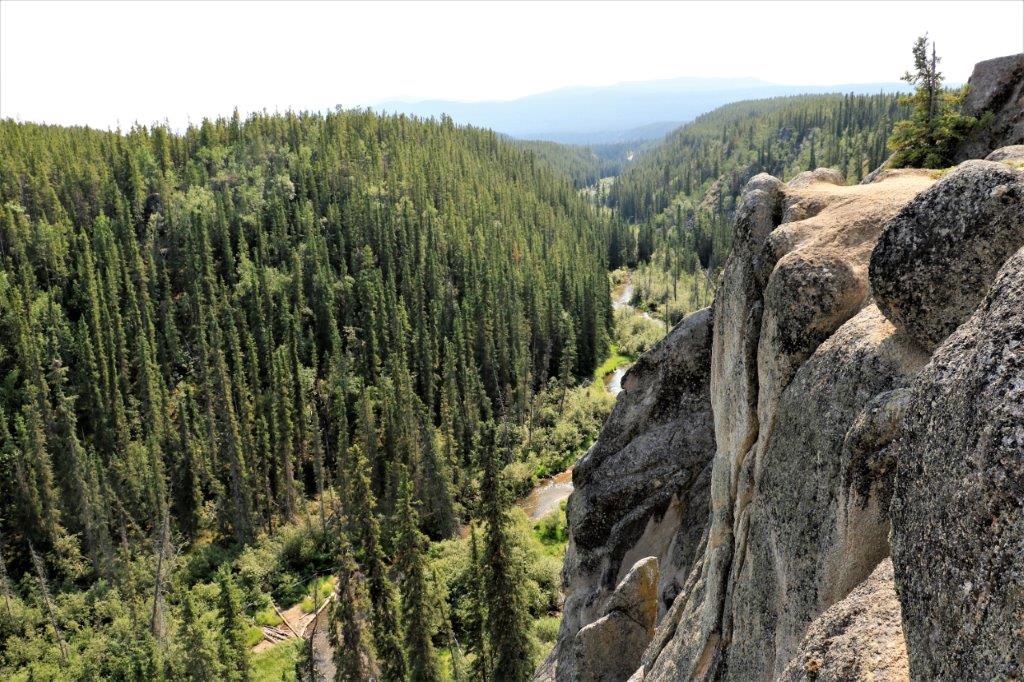
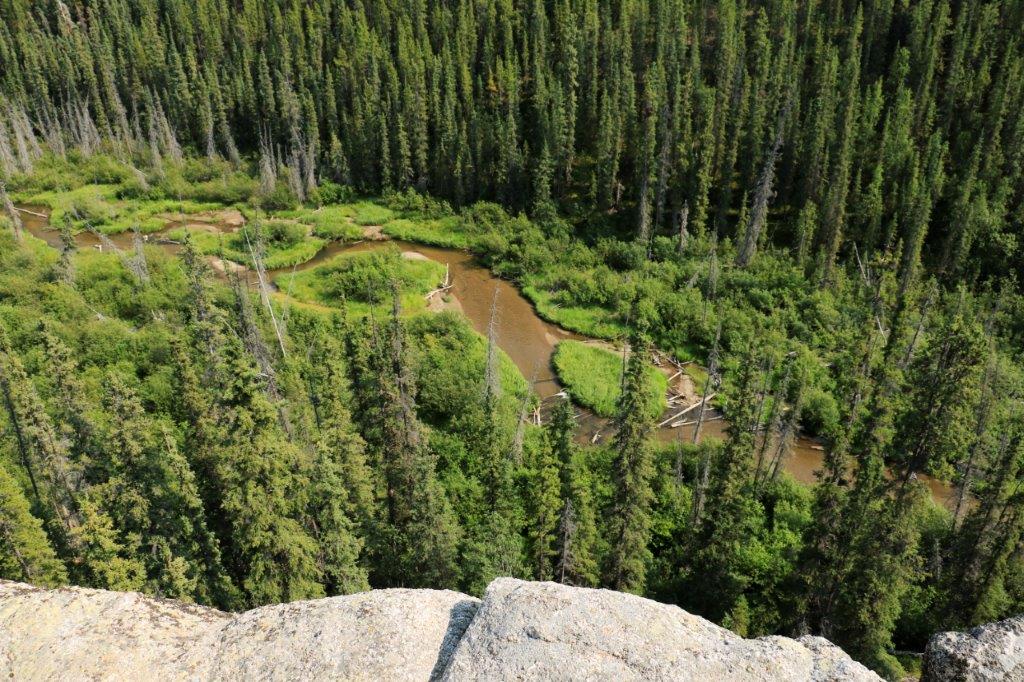
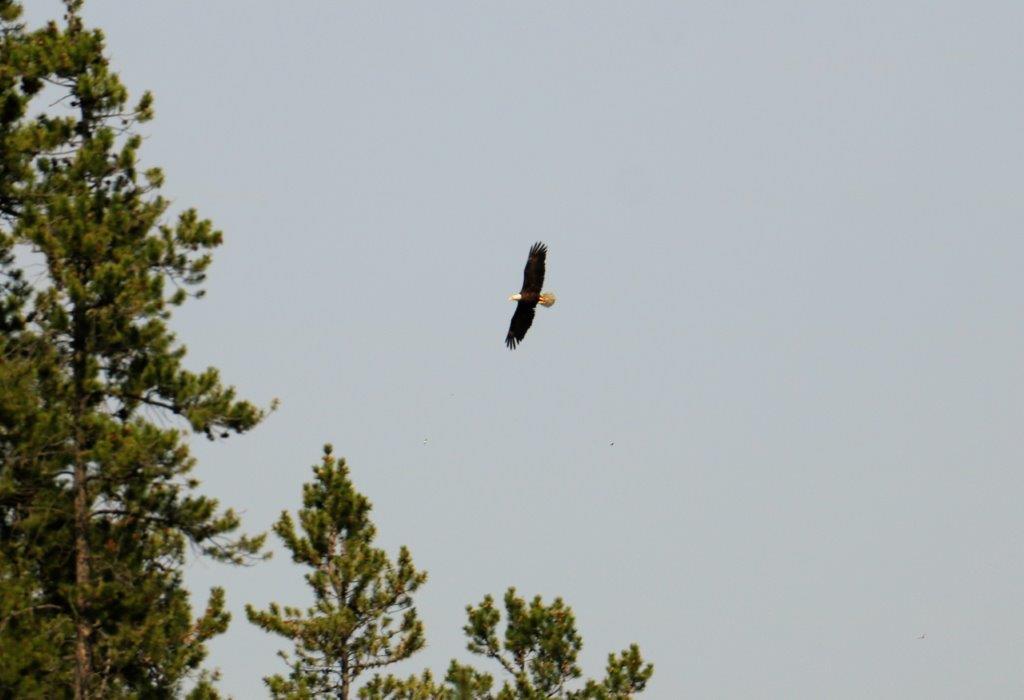
On our way out of Whitehorse when we were here before we stopped at the Whitehorse Copper Belt museum to check it out and find an earthcache.  The museum was closed and we were unable to find all the information we needed to answer the questions required to log the cache so we decided to go up there again and find what we needed. The museum was still closed but we were able to find all the information on signs along the trails. There were two regular caches near the museum as well and we saw  that there was another one up the hill behind the museum.  When we got to the pullout and walked over to the bluff there was a great view of a river meandering through the forest far below.  Bald eagles nest in the area, and the constant caw of ravens could be heard.

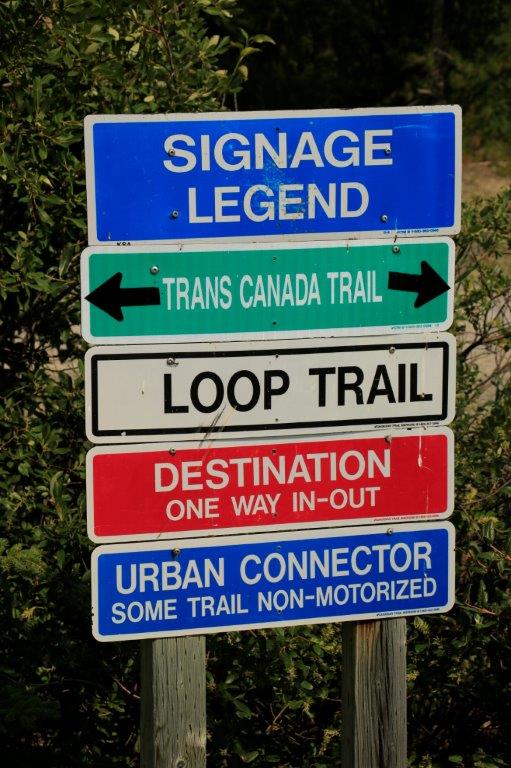
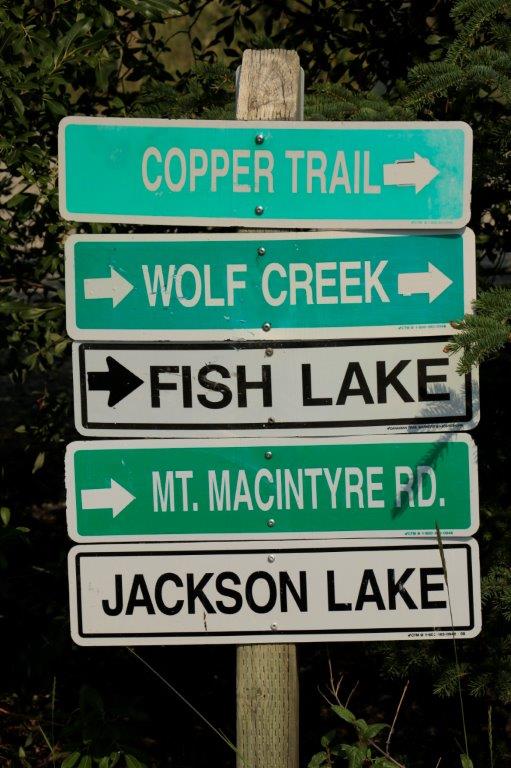
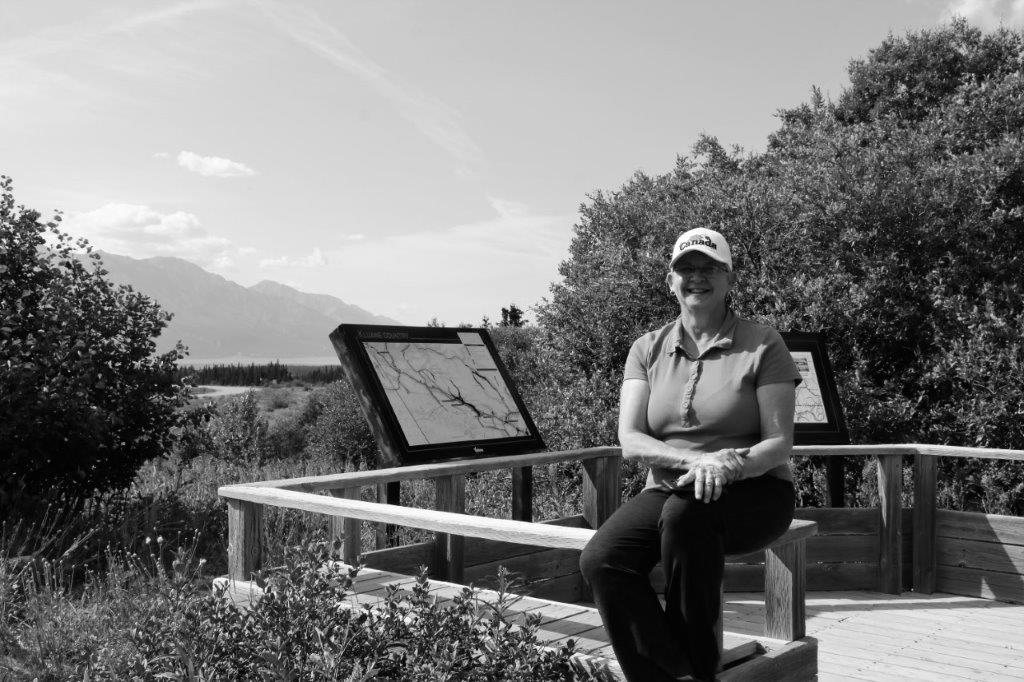
This was a really cool spot that, were it not for our geocaching hobby we would never have known about nor seen. Since we had paused in the tourist stuff to do some geocaching we decided to go further up the road to McIntyre Marsh where there was an earthcache.  The trees have grown so high that most of the marsh land is obscured from view.  I walked all the way to the end of the parking area to get to an open spot for a photo. There was a trail (part of the Trans-Canada Trail system) that began at the marsh and all of these signs were posted. I guess there are several options.

What with poor internet at one of our hotels and being sick for a day I was behind three blogs so we decided to make it a day and headed back to the hotel to get some stuff done before dinner.

Tomorrow is mainly a driving day.  We take the same road back to Watson Lake that we drove up a month ago.  There were no real scenic spots or points-of-interest along the way so I don’t expect to be taking too many photos.  But, you never know what we will find.

Before I went to bed a midnight I looked out the window and there was a hint of a sunset sky.  The sun is disappearing at night more and more and the night sky is becoming quite shadowed.  It doesn’t get dark yet, but soon it will.

2018 July 22 – Tok, AK to Whitehorse, YT

I woke at 8 feeling myself again.  Thank goodness. We had a long driving day ahead – 7 hours of just driving time, so I didn’t want to feel ill the whole time.

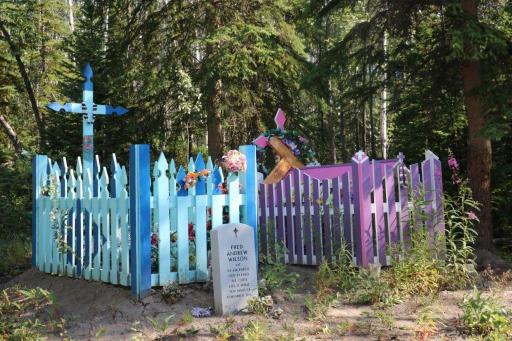
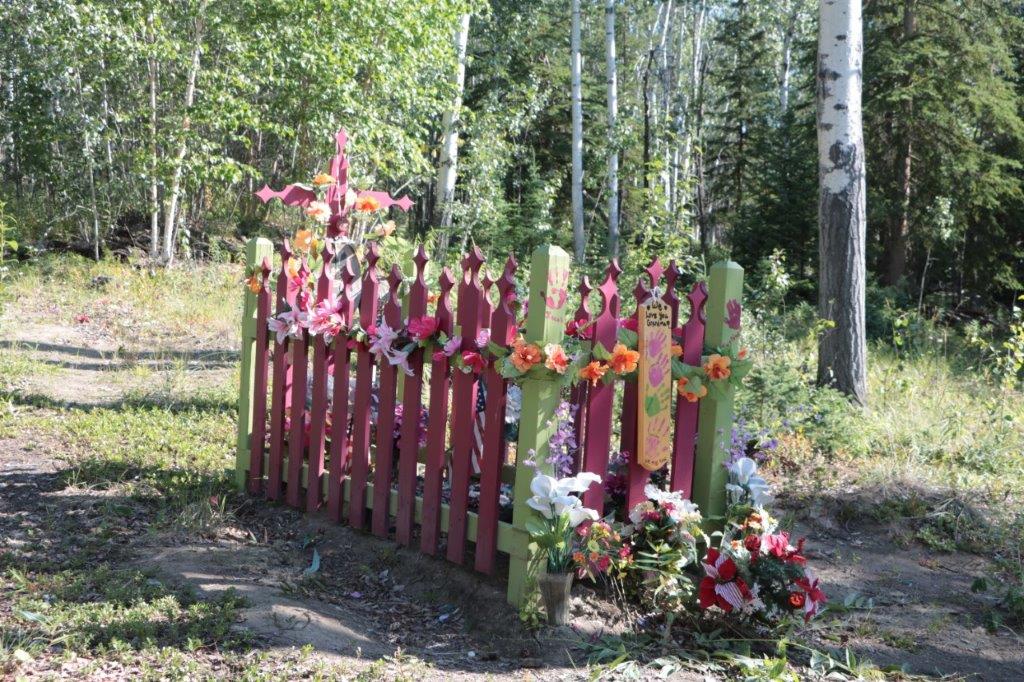
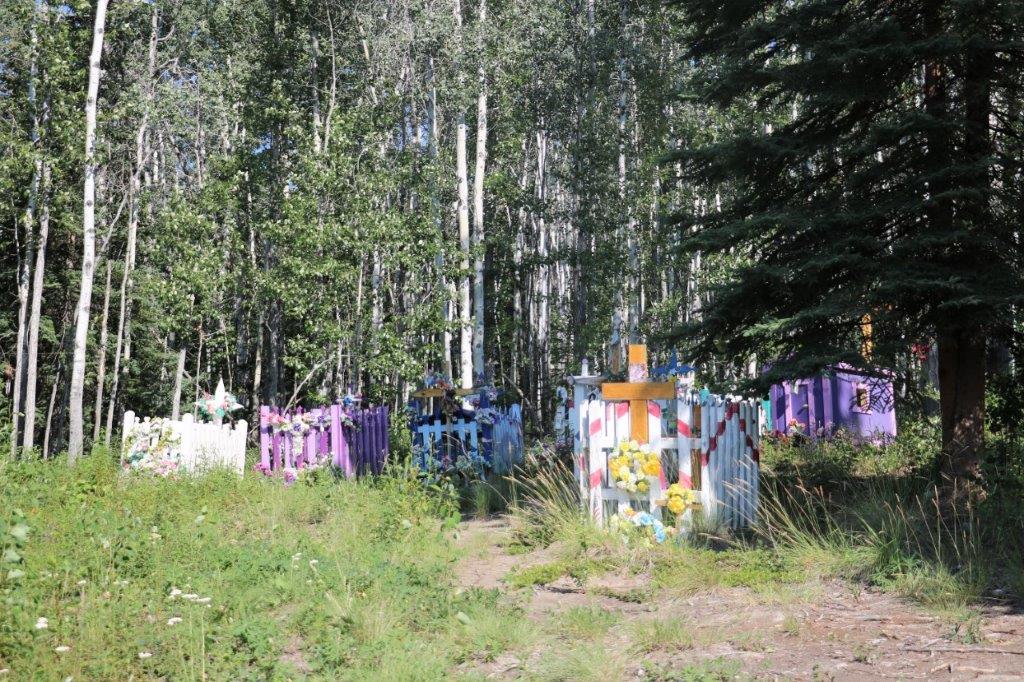
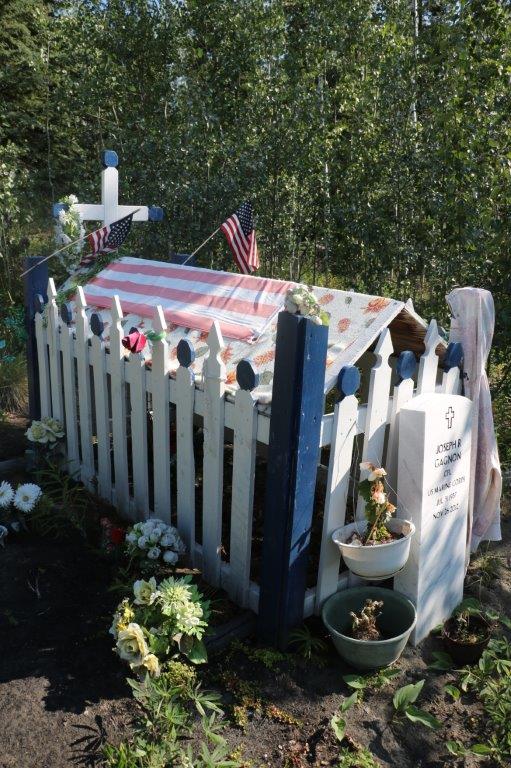
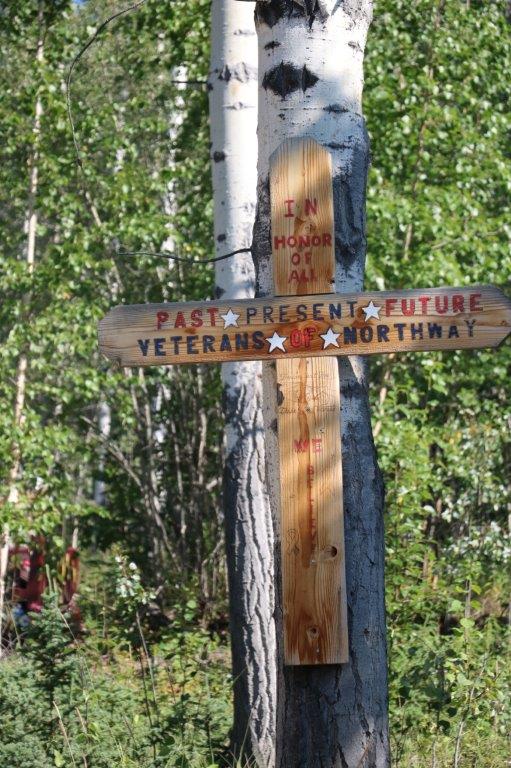
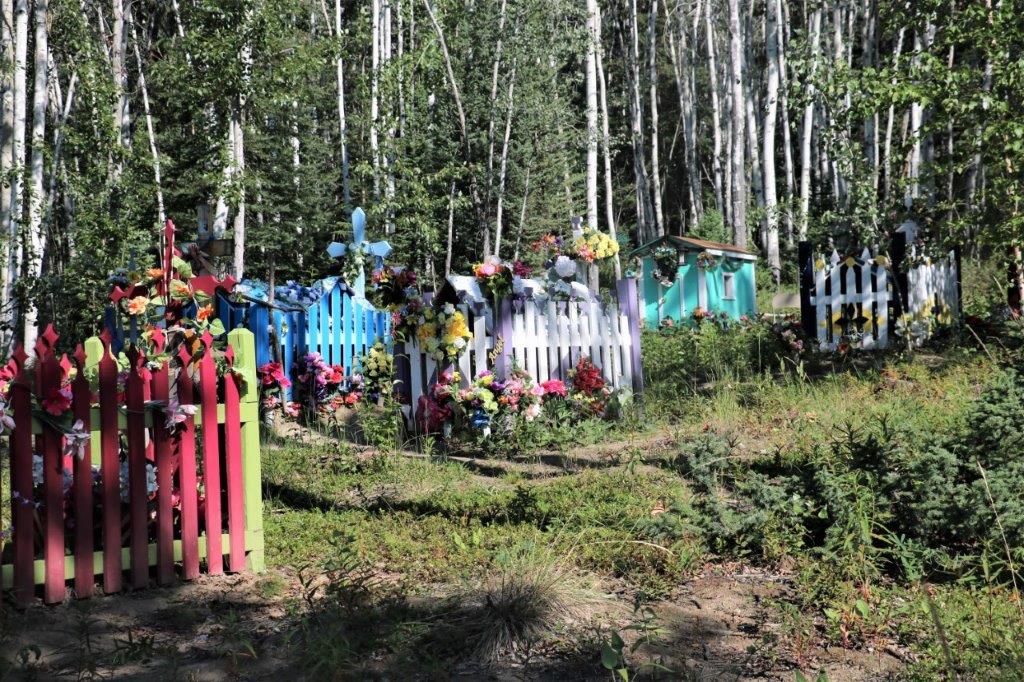
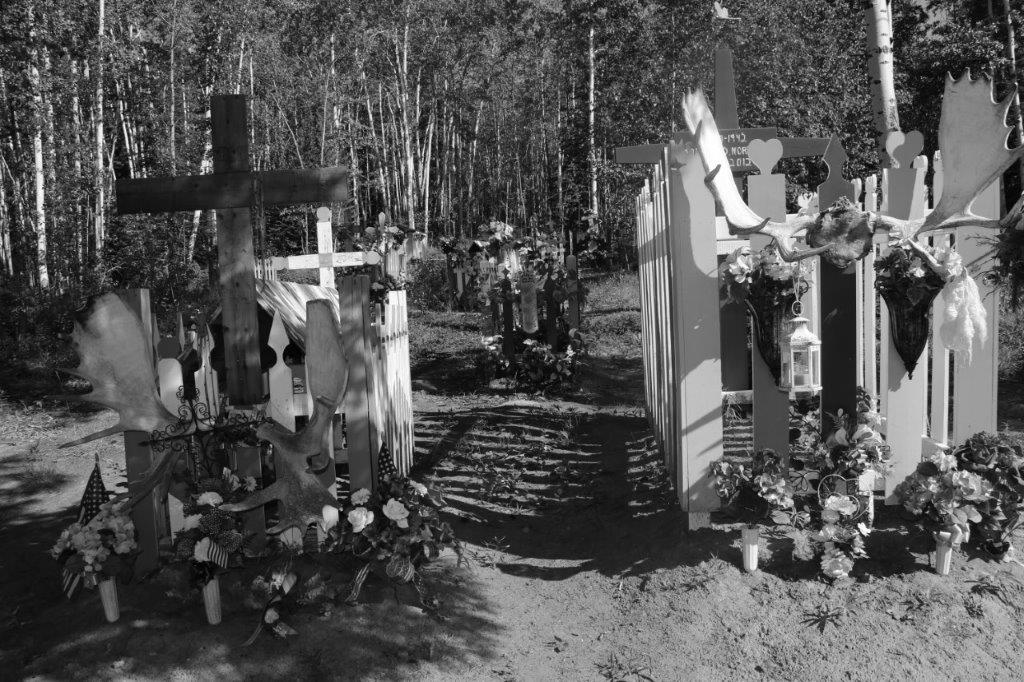
We load lists of geocaches on our phones when we have wi-fi and then the information is available as off-line data when we are out in the boonies.  There was a cache hidden at a veterans cemetery for members of the local Native community off in the woods at Northway.  It was only a short drive off the highway so we decided to go find it.

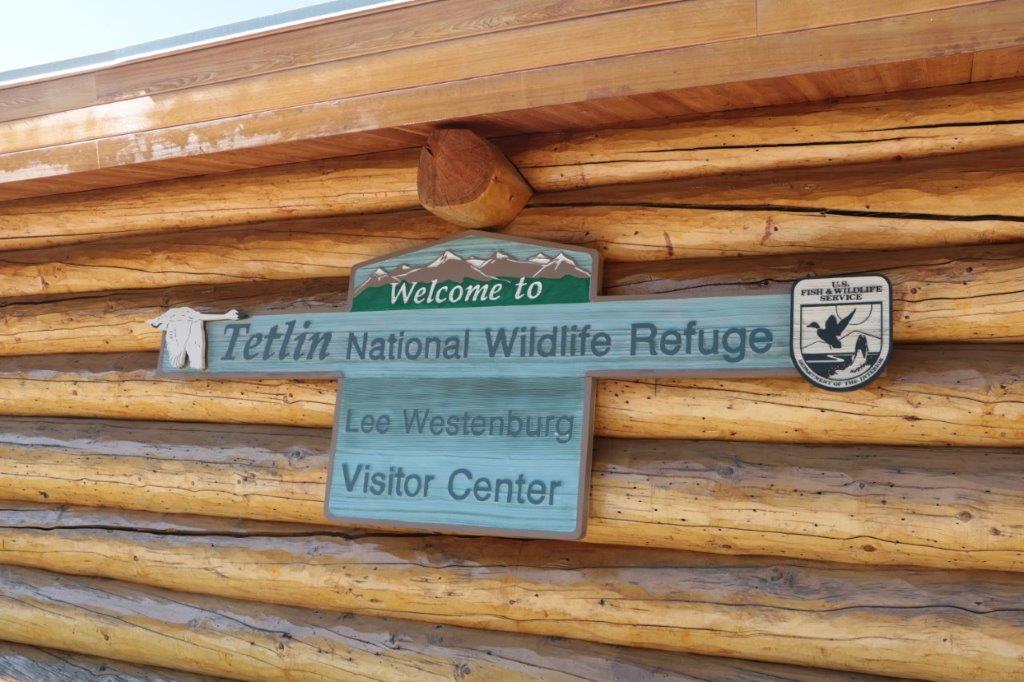
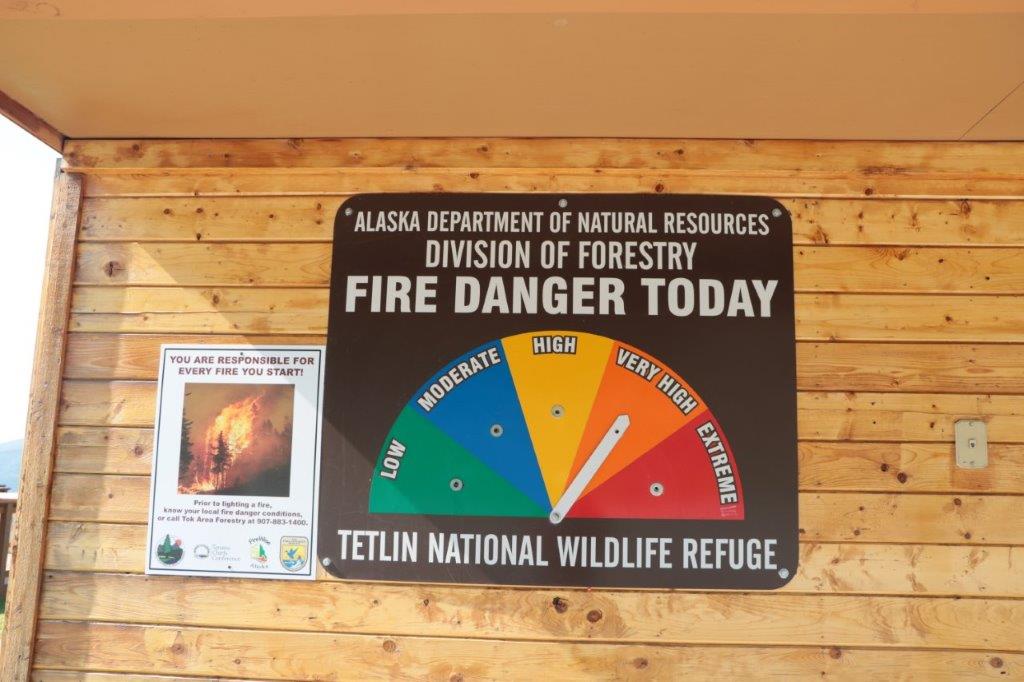
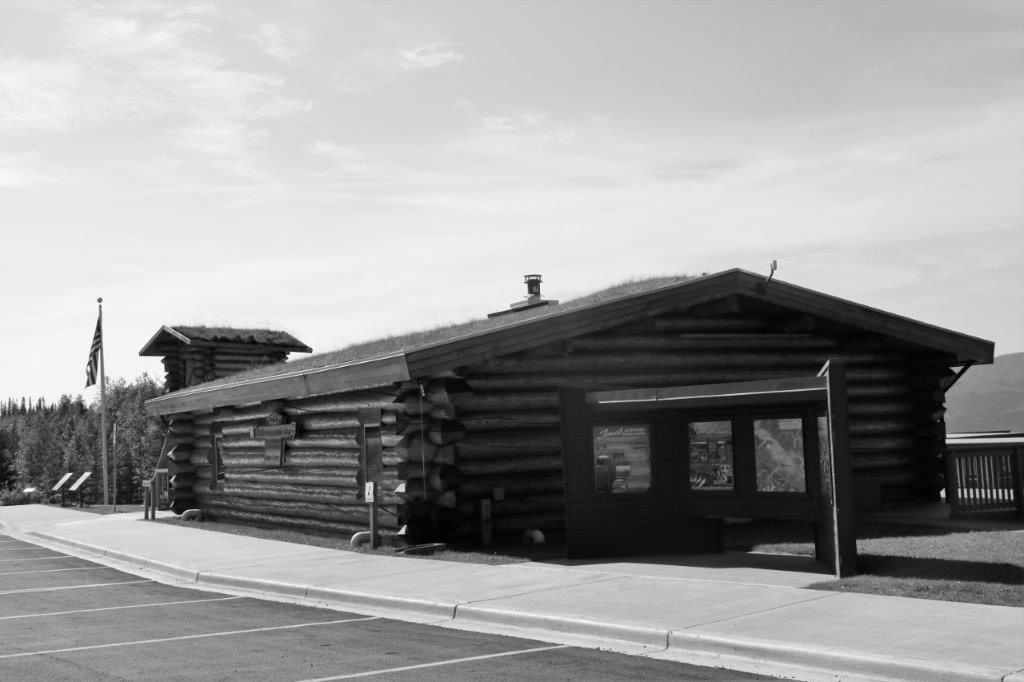
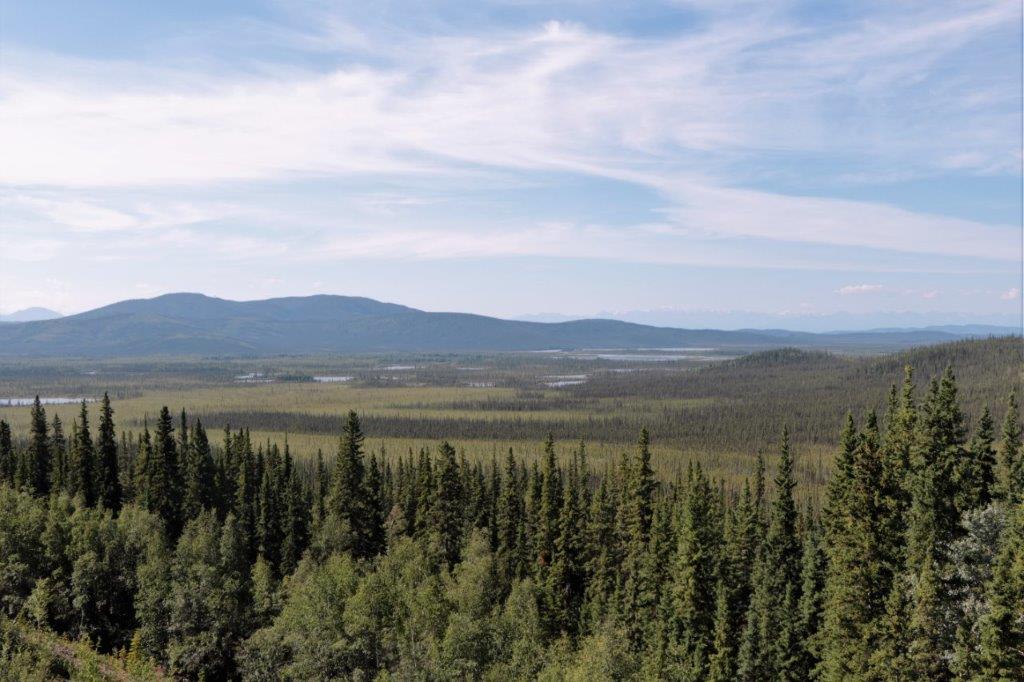
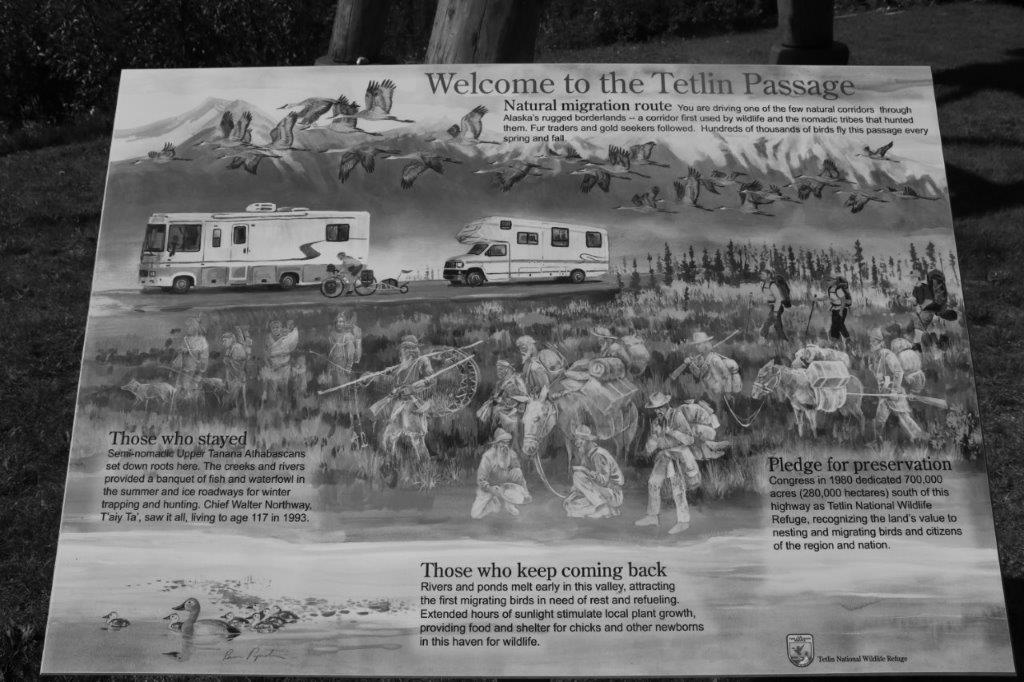
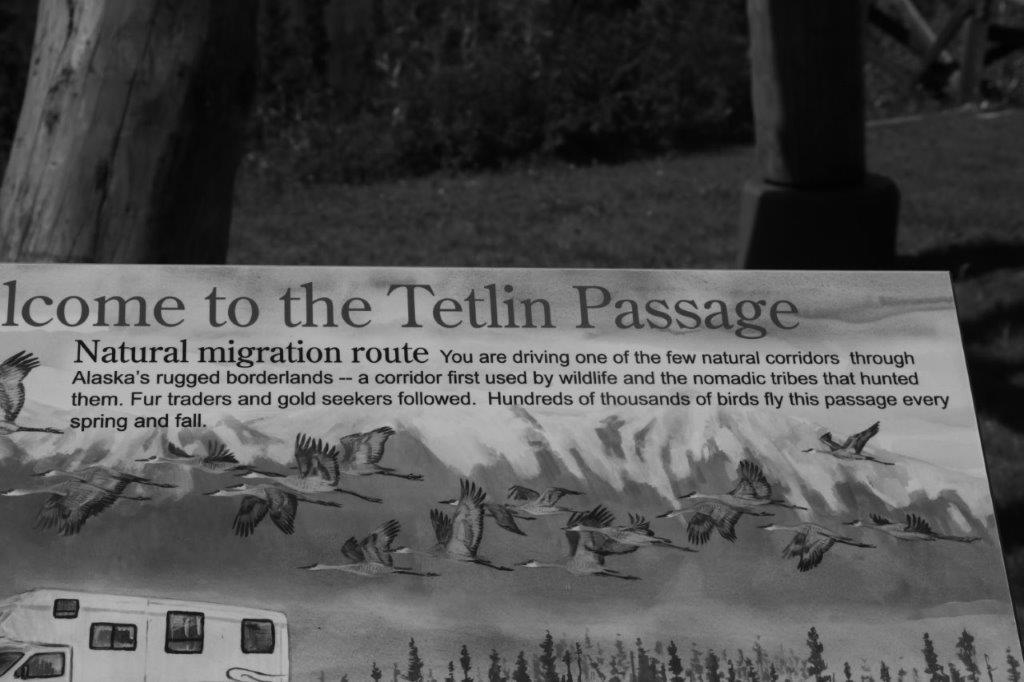
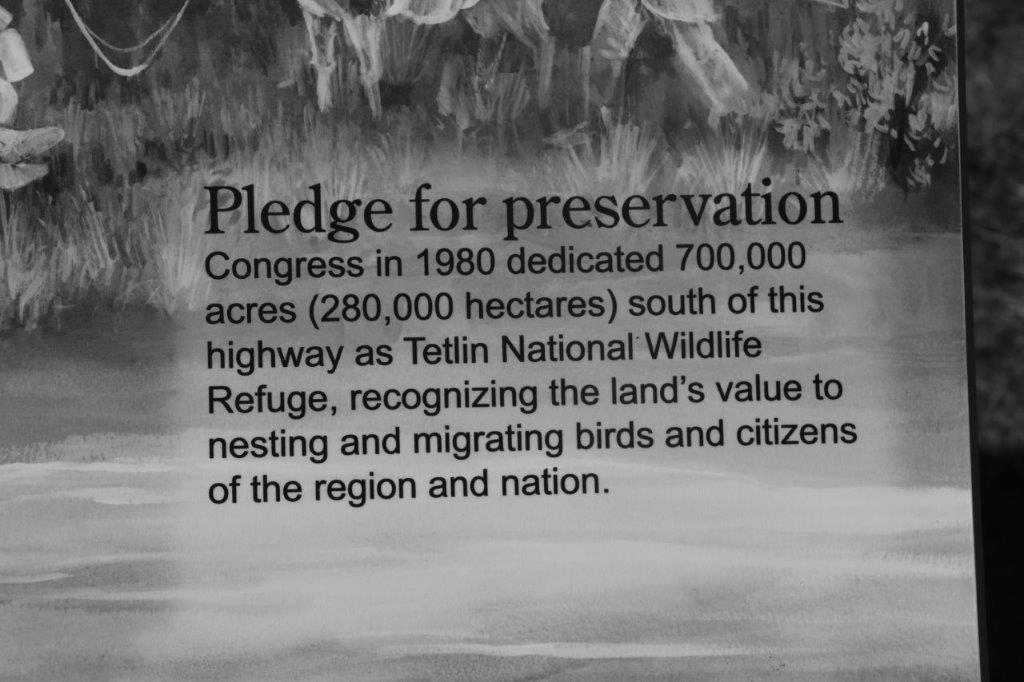
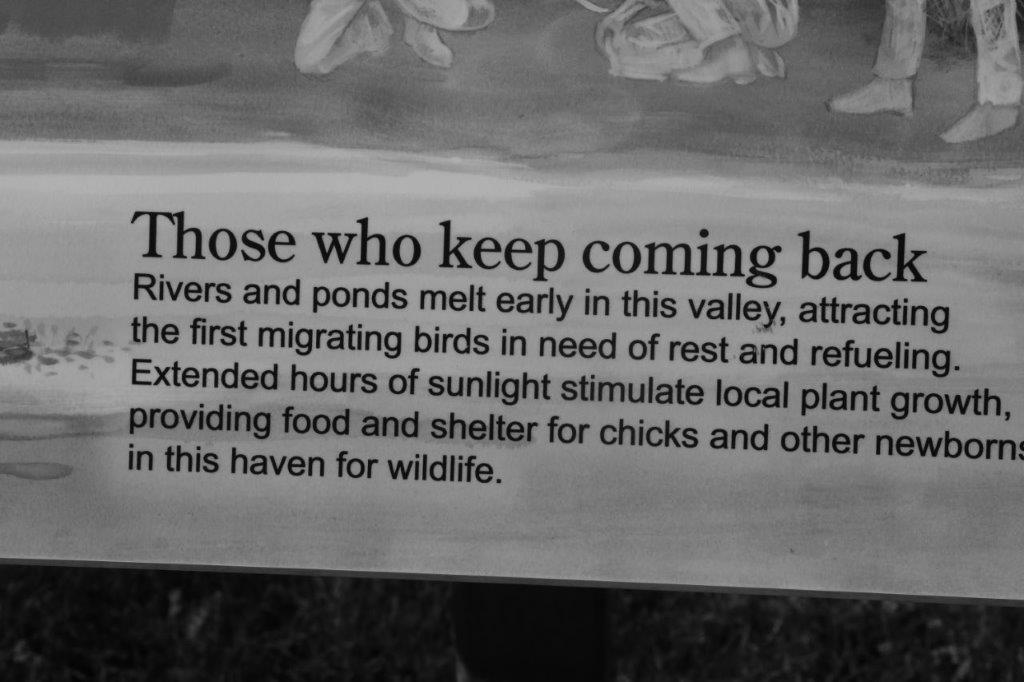
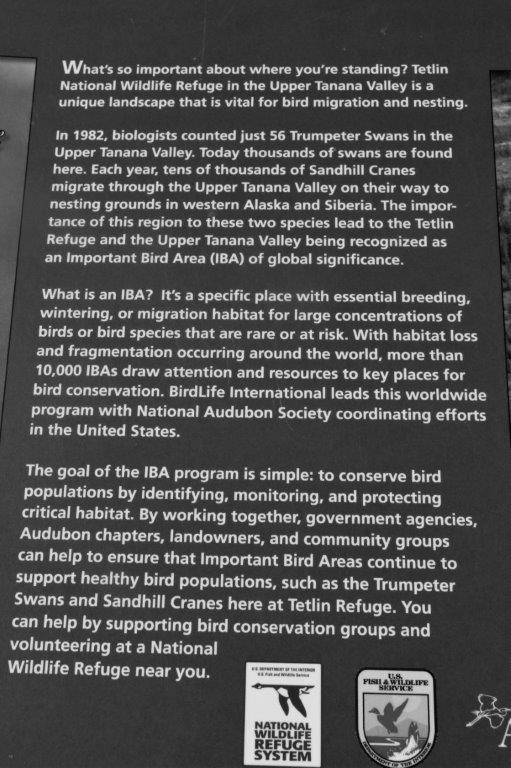
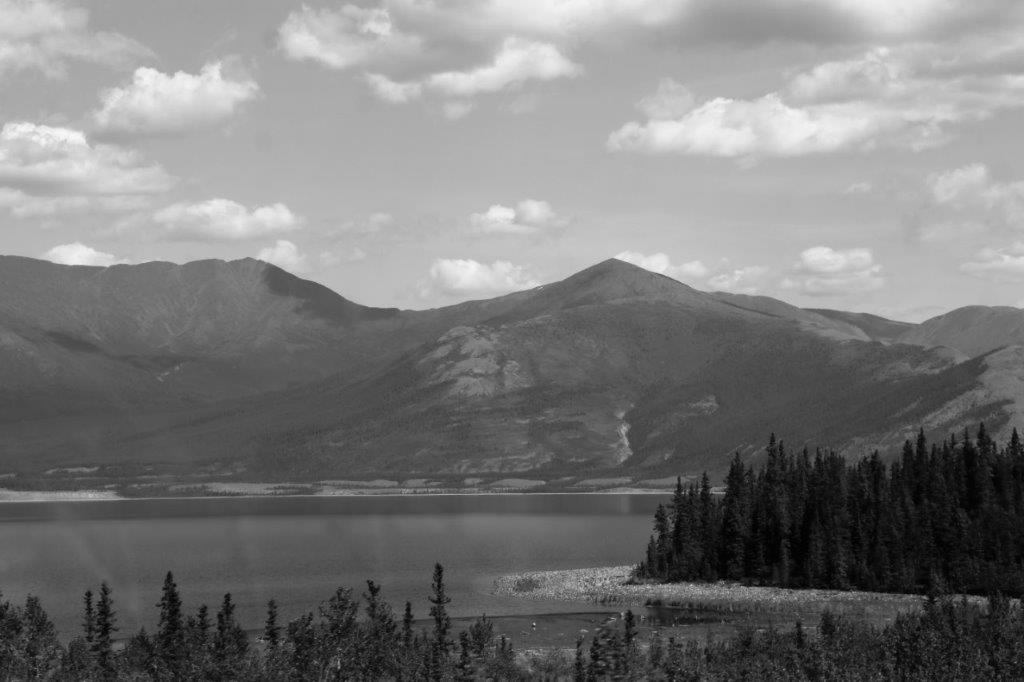
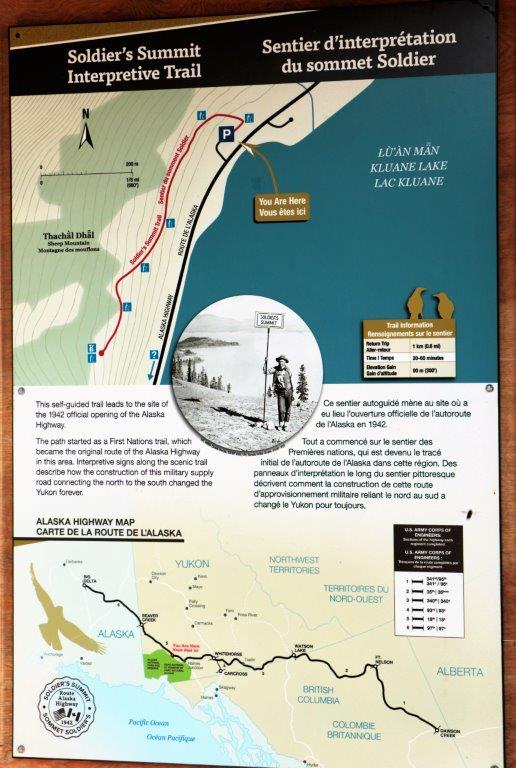
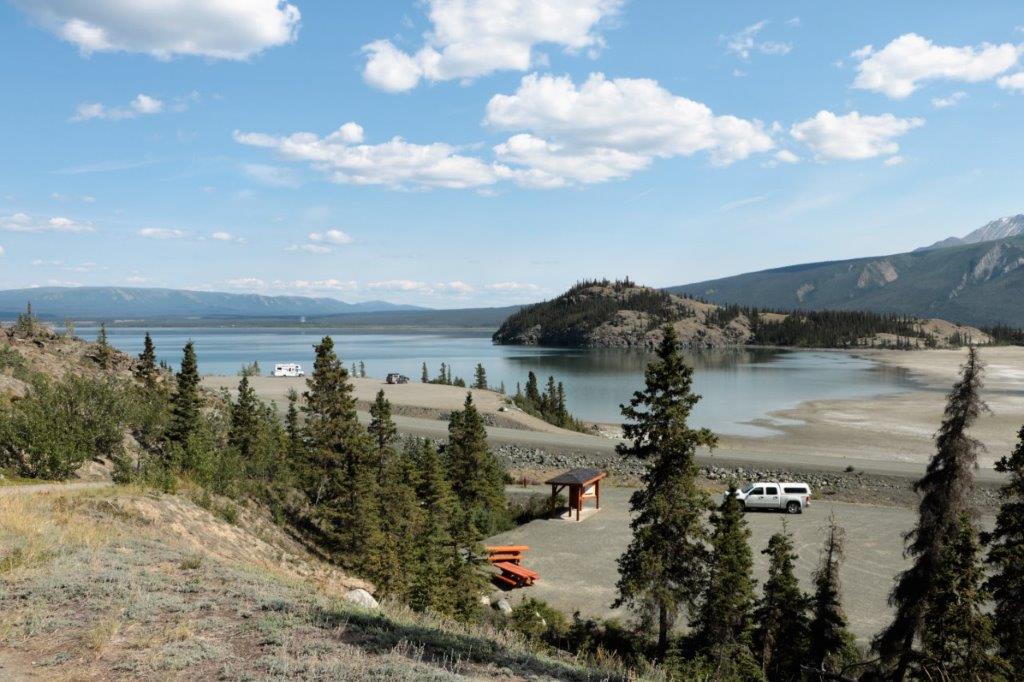
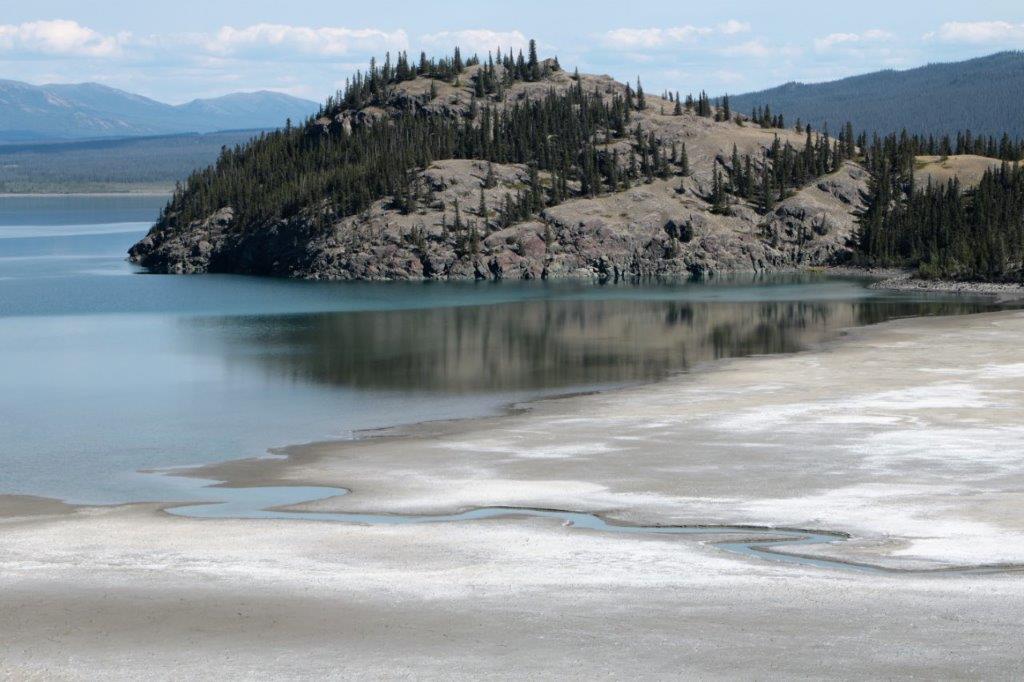
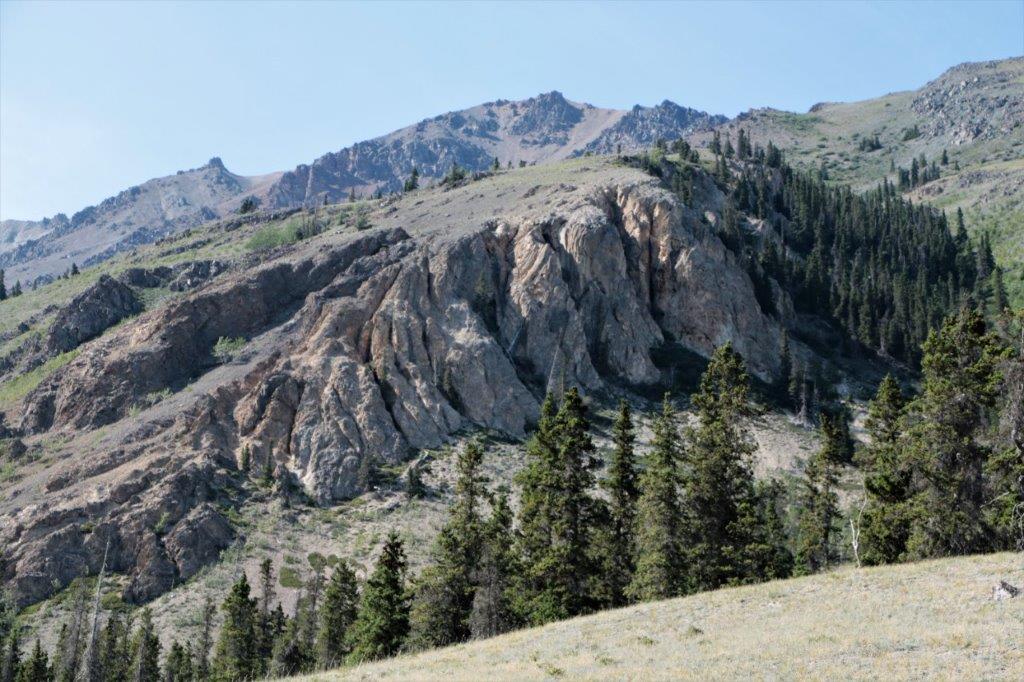
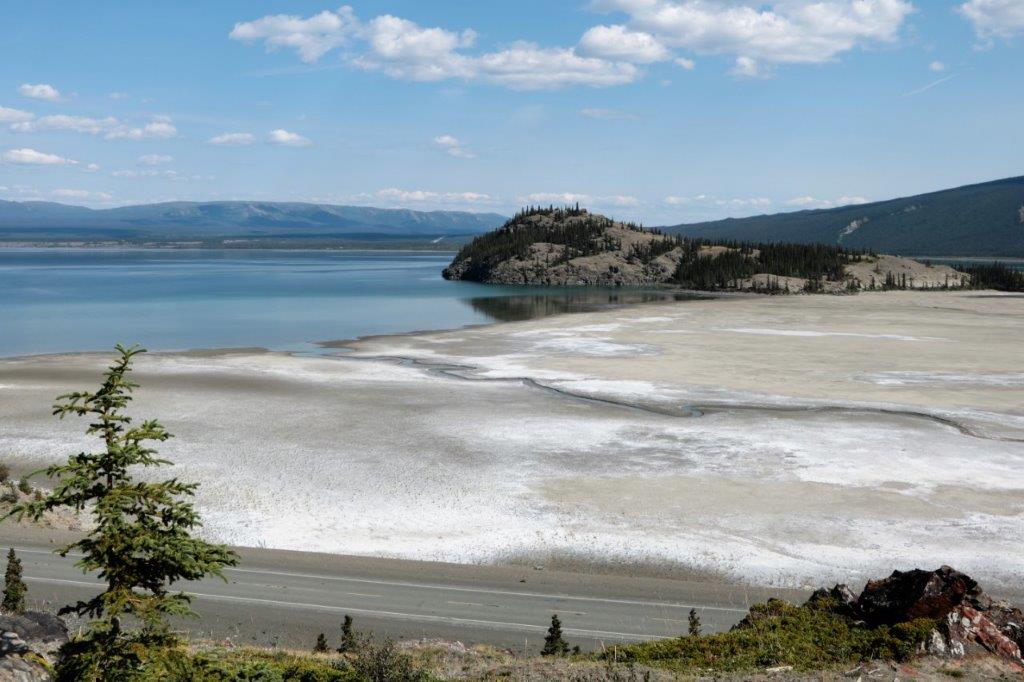
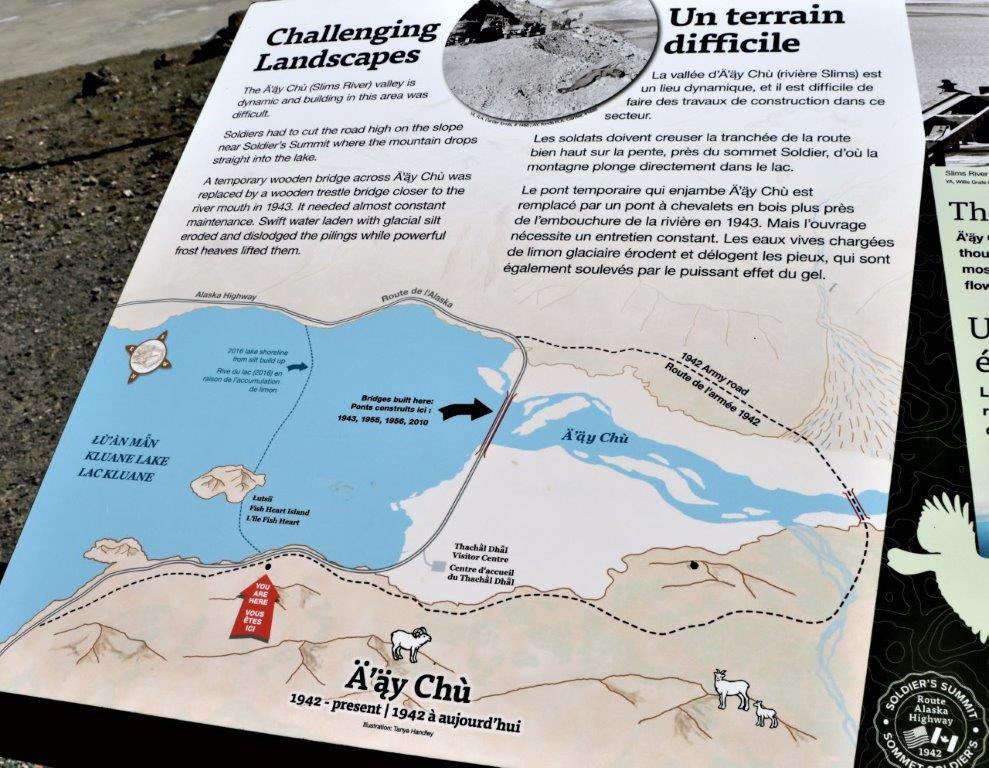
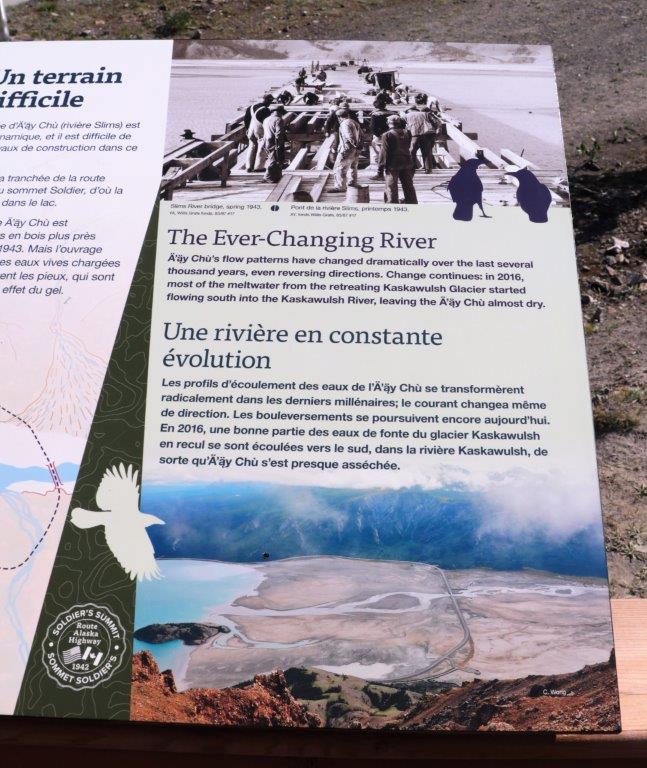
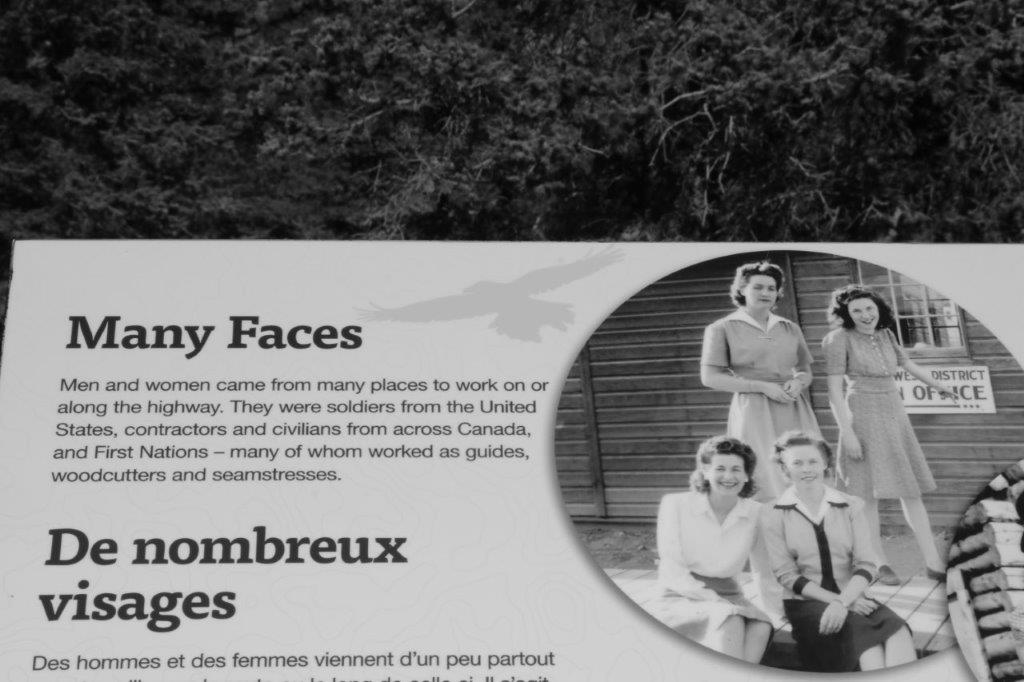
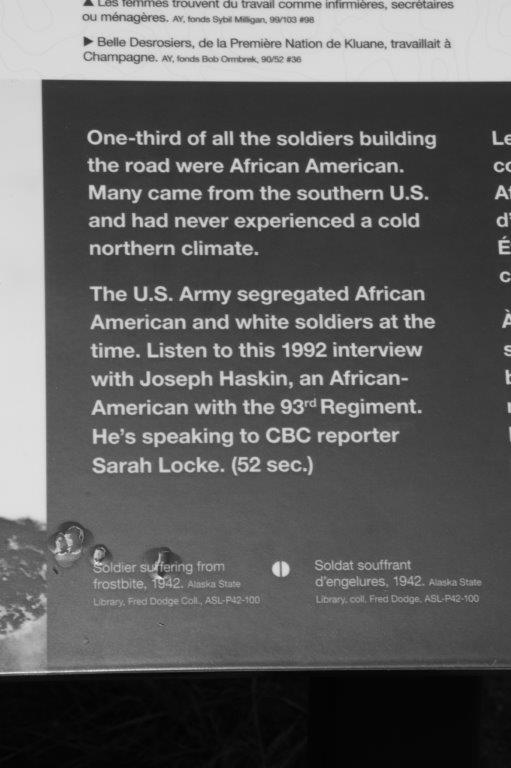
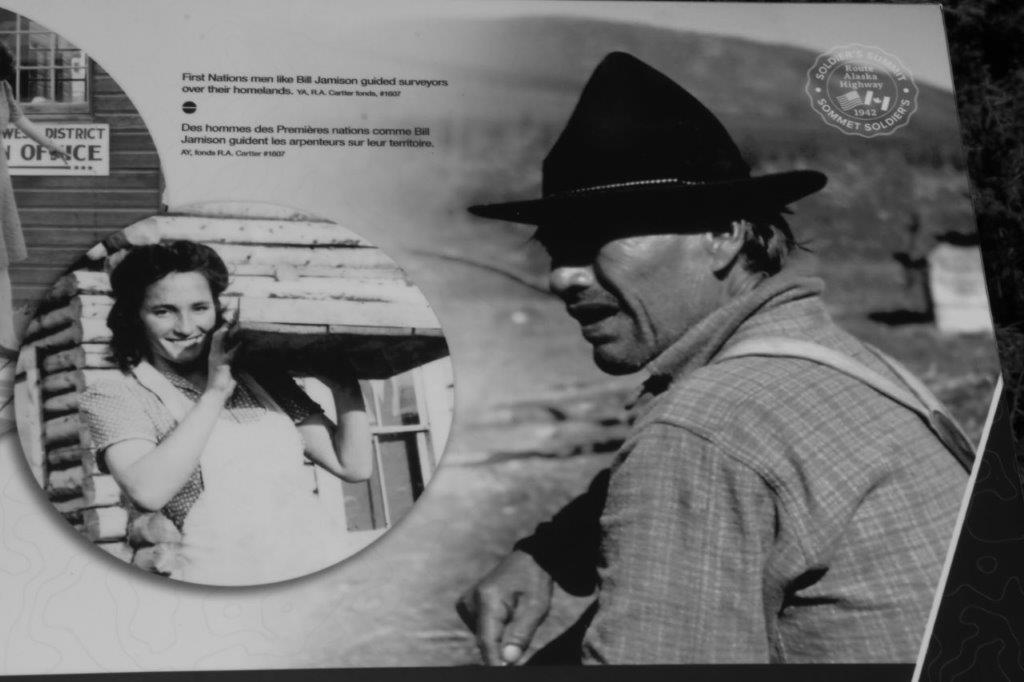
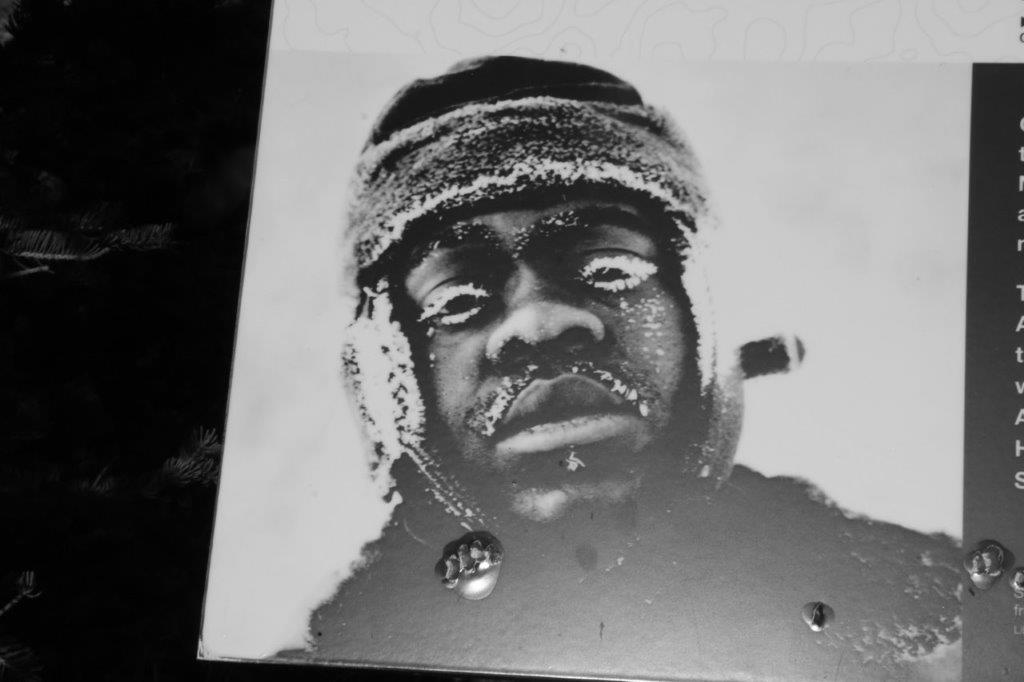
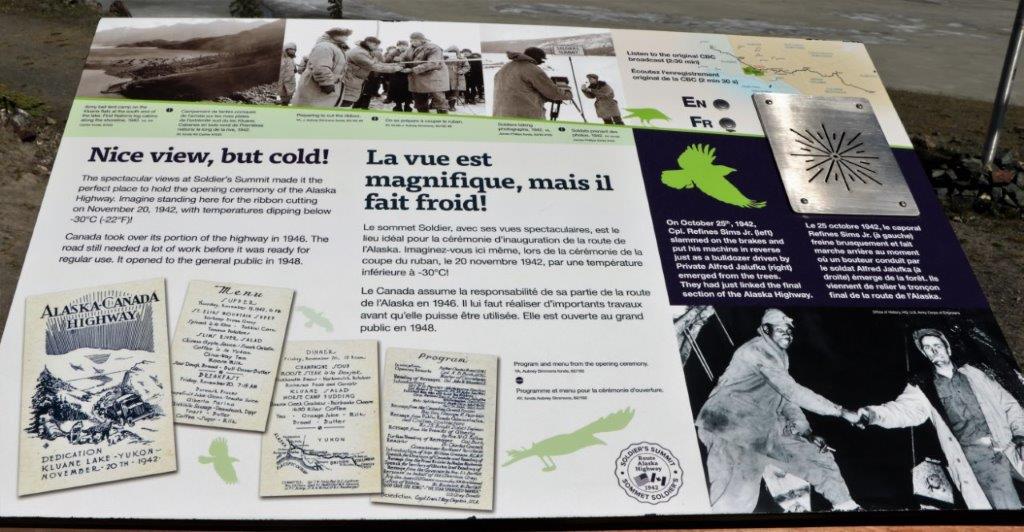
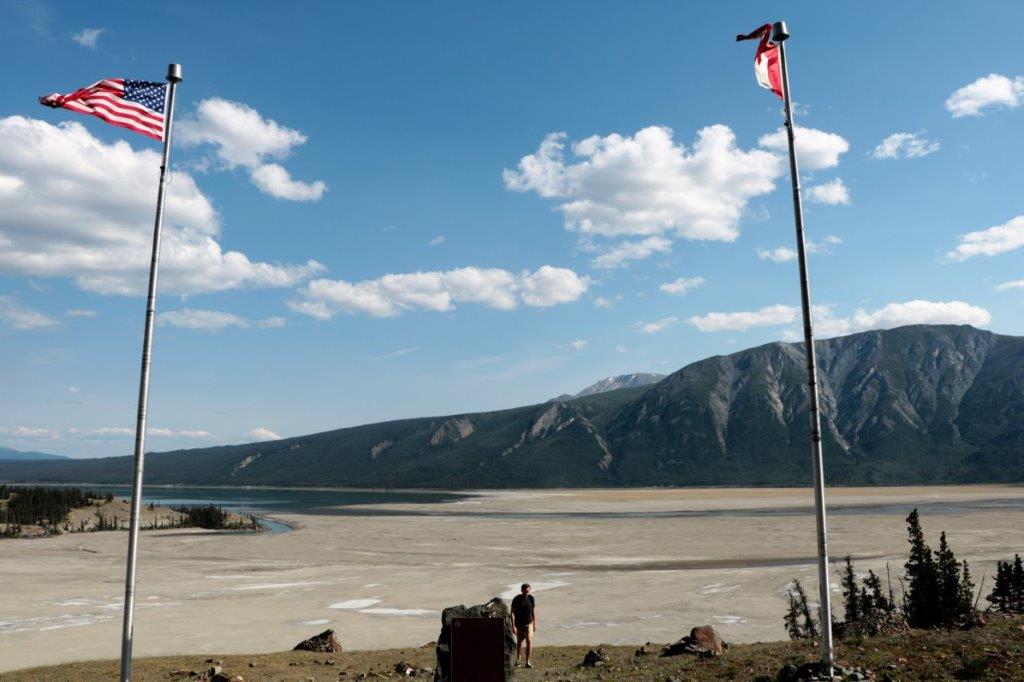
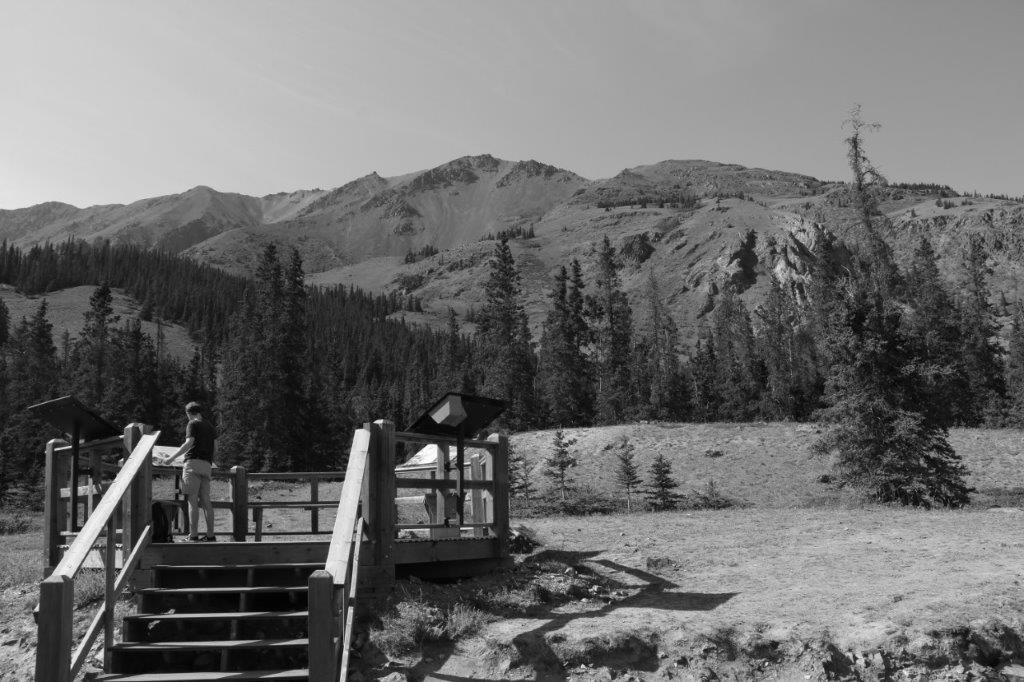
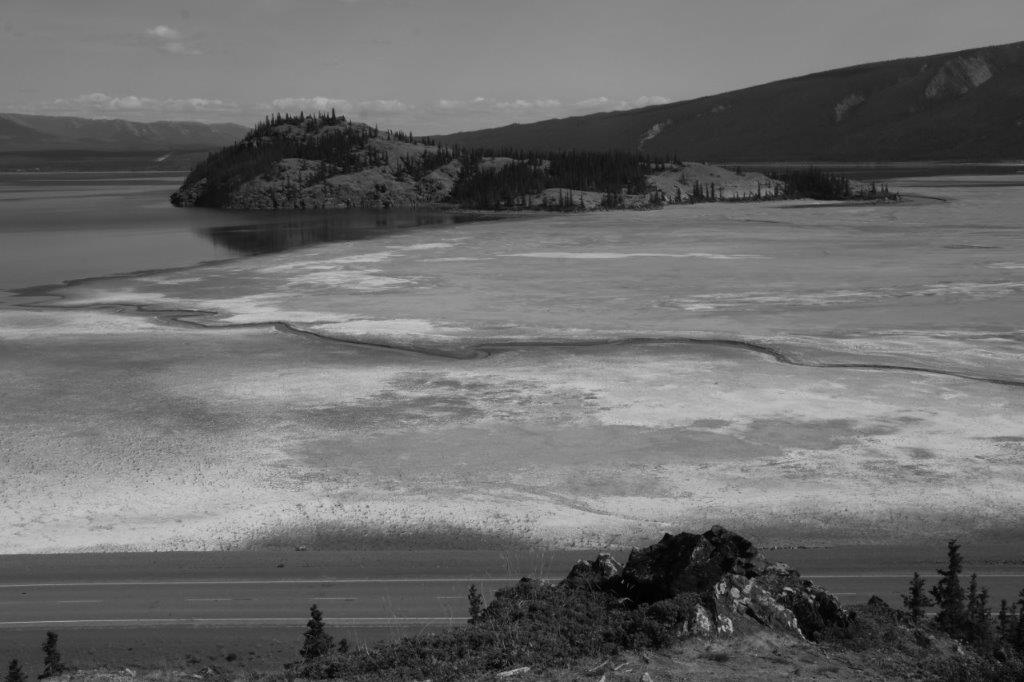
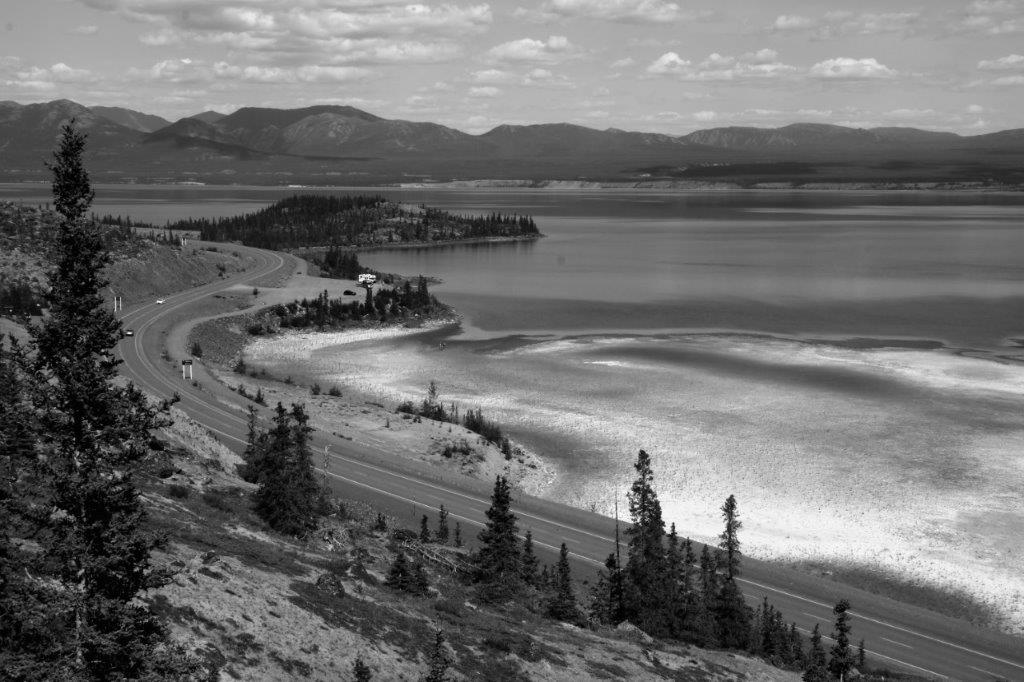
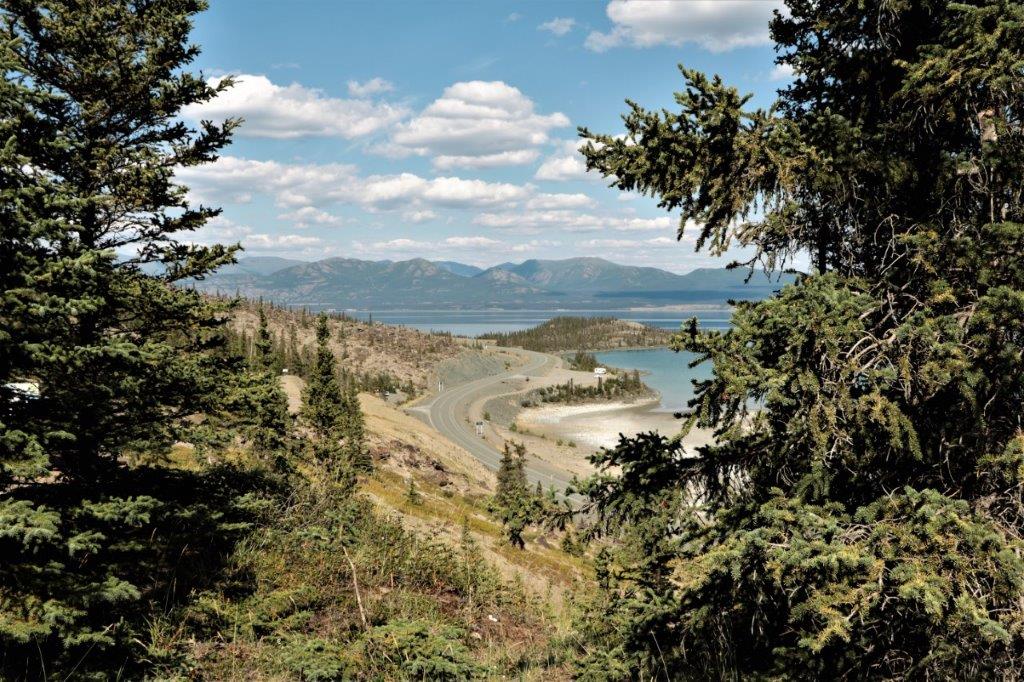
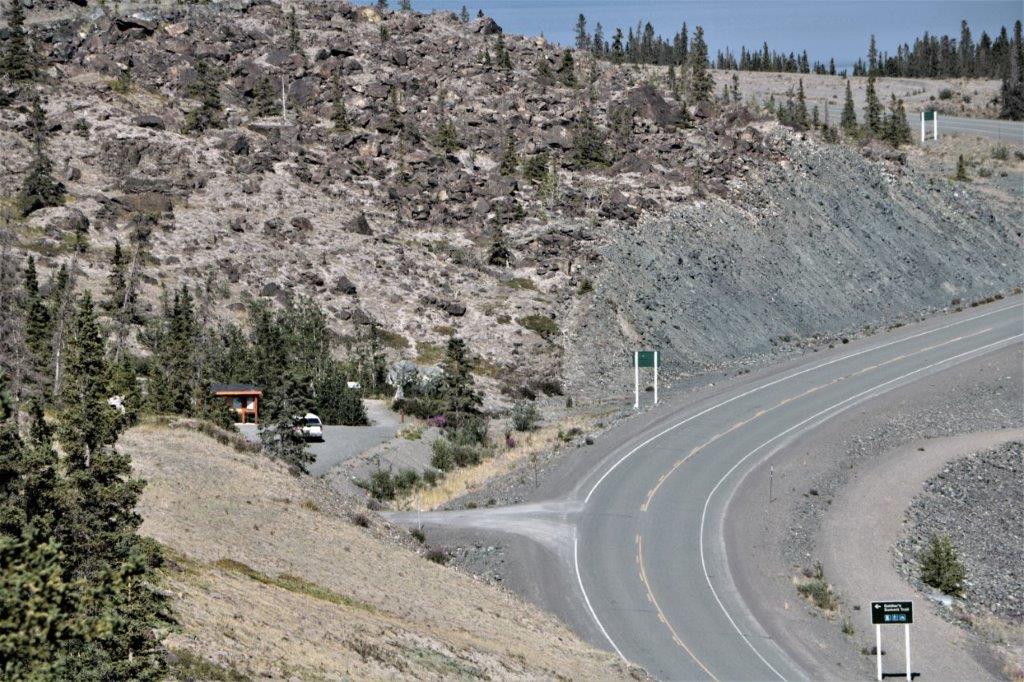
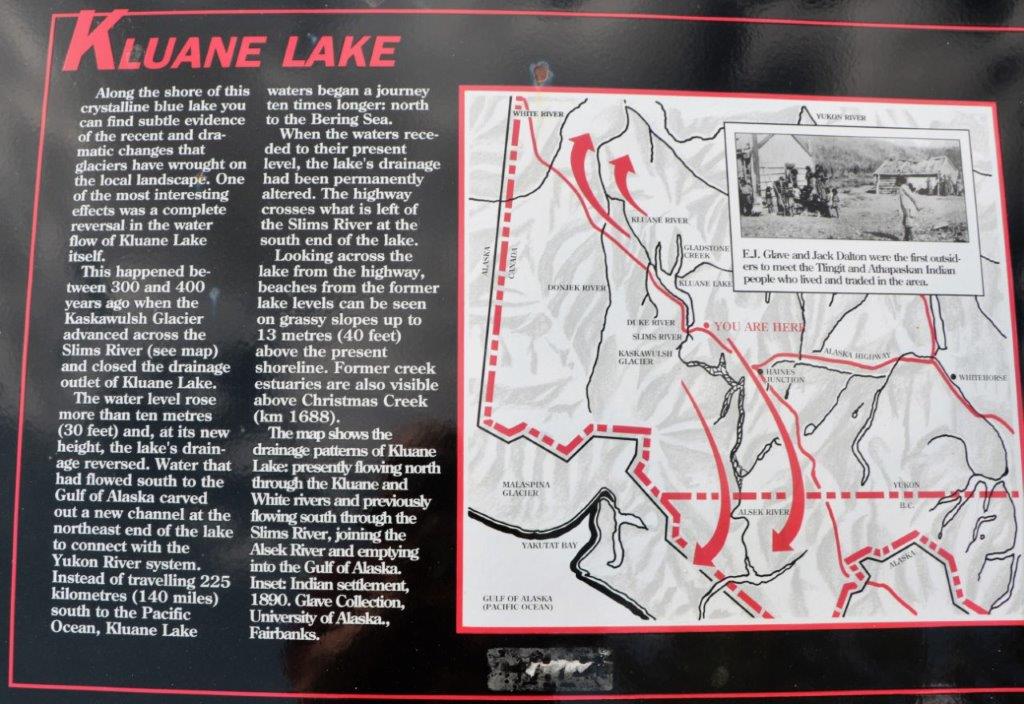
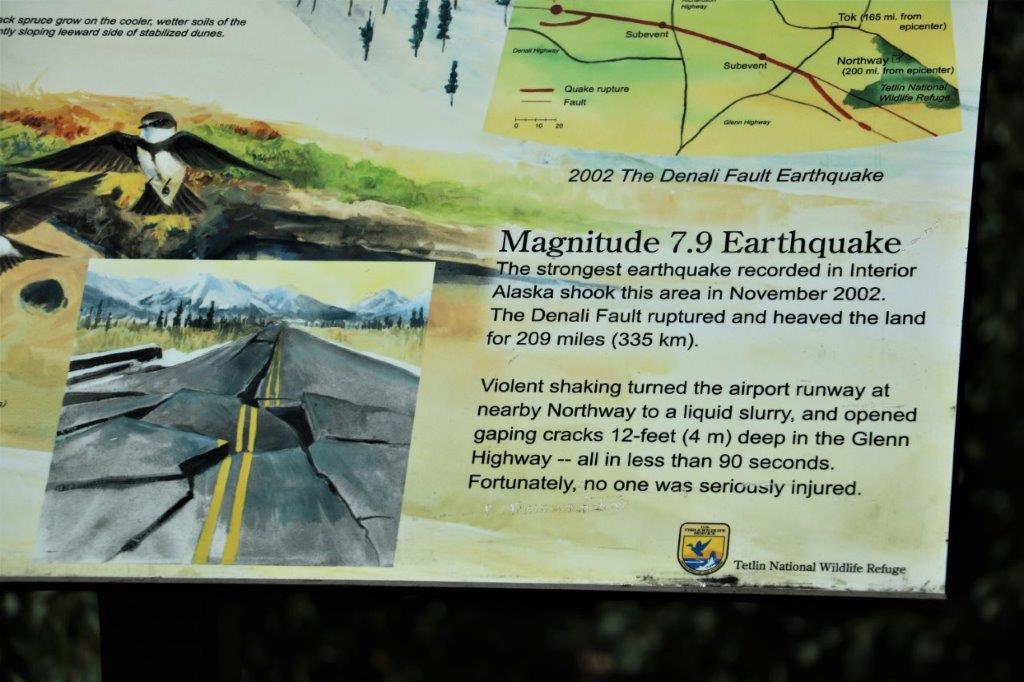
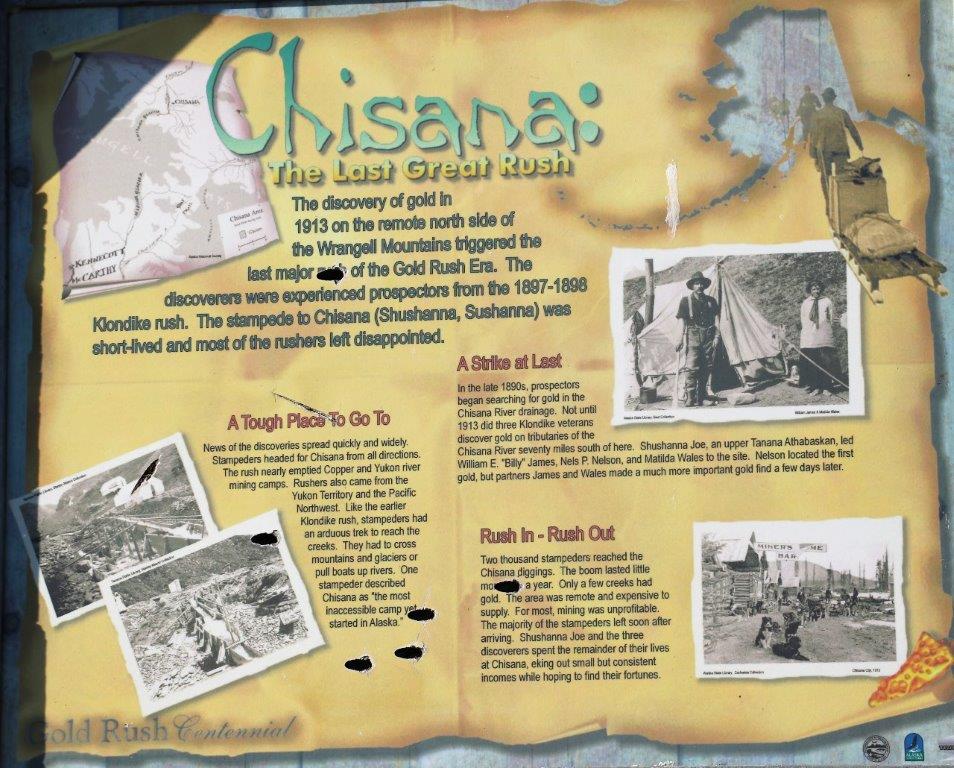
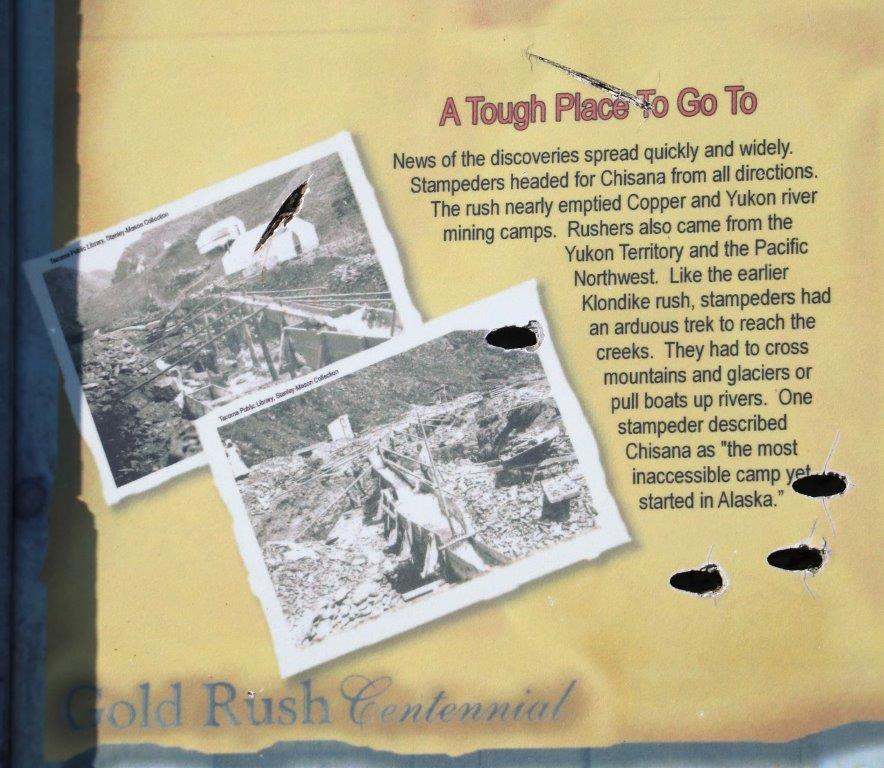
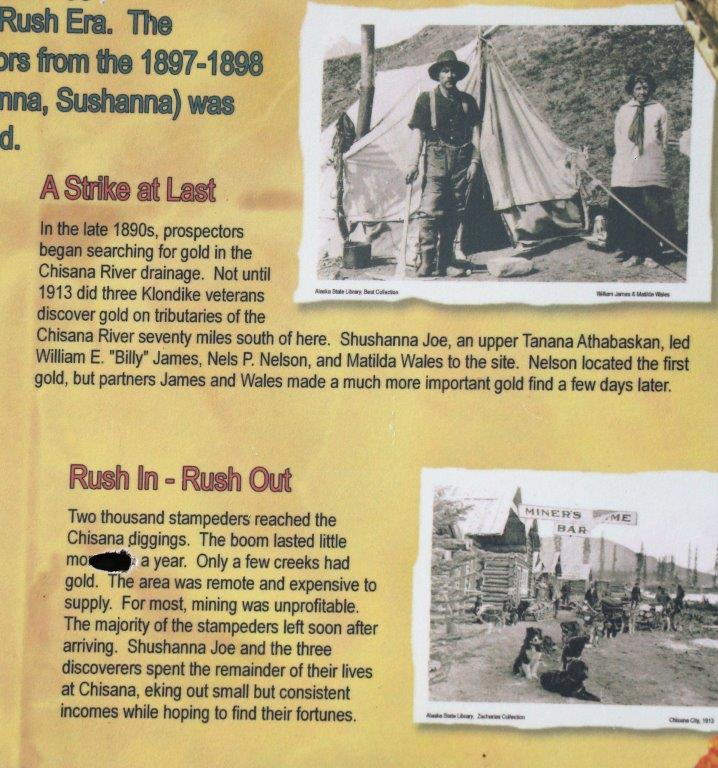
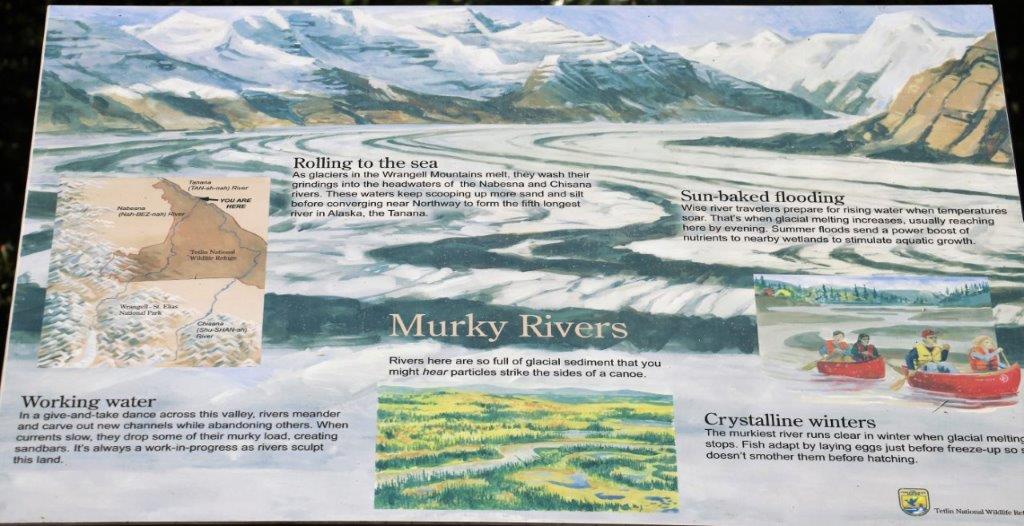
What a great place.  Each of the graves was so colourful and so beautifully decorated.  Obviously family members come up often to pay their respects and bring along some flowers or other decorations. (Now, remember yesterday when my camera changed from colour to black and white?  Well, it did it again today.  The last photo I took at the cemetery was black and white and all the pictures I took the rest of the day were also black and white.  I rarely check my images as I take them so I did not notice the change in picture style until we were almost at Whitehorse.  So, all of the colour photos in this blog except the some of the ones at the cemetery and the last one in the blog are John’s pictures.  I will insert some of by black and white ones in as well.  So very strange.  You must make three separate menu selections to change the picture style.  I have no idea how it happened.  Twice. You can be sure I will be checking the display of my photos more often from now on.) We stopped next at the Tetlin National Wildlife Refuge.              There was a pretty nice view from the balcony.                      At Soldier’s Summit we walked the trail up to the place of the official ribbon cutting when the Alaska Highway opened in 1943. There were gorgeous views of Kluane (Klu-AH-nee) LakeIn 2016 the first case of River Piracy witness by mankind in a geologic instant took place at Kluane Lake.  River Piracy is the diversion of the headwaters of one stream into another.  This can have significant effect on the landscape.  These changes are usually measured over time – quaternary or longer timescales.  But, here the glacier feeding the Slims River and the lake had an event that altered abruptly and radically in the spring of 2016.

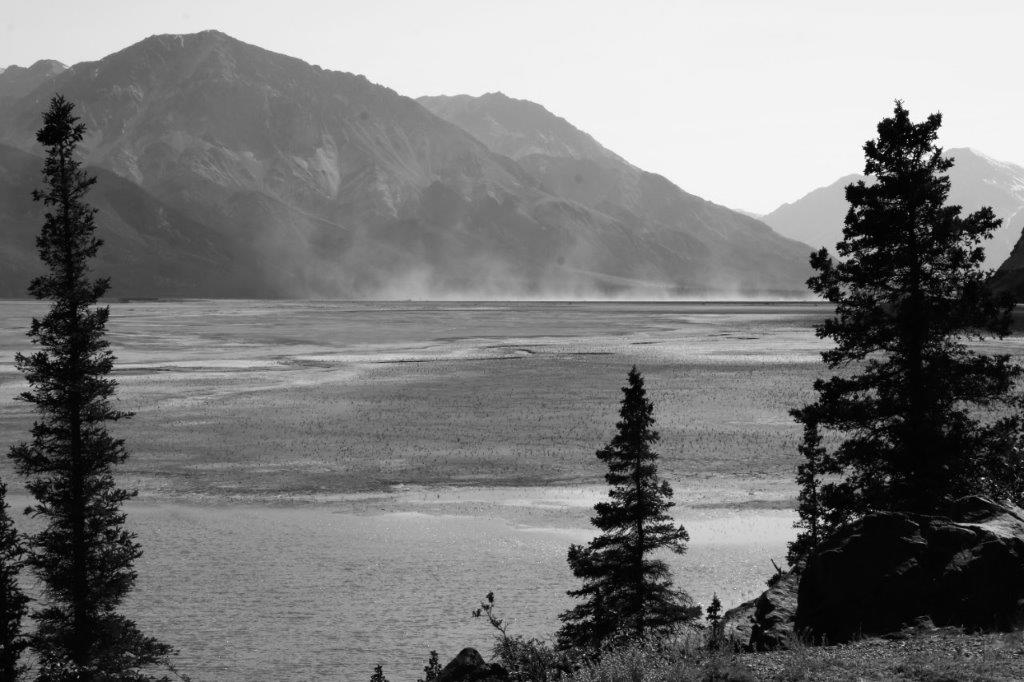
The piracy of Slims River has important downstream implications.  The level of Kluane Lake has fallen and may fall further, potentially below its outlet at the north end of the lake.  If this happens, Kluane Lake will become a closed basin.  Also, the lake usually received large amounts of glacial sediment making the water the lovely turquoise colour.  This sediment flow is now cut off and how this will affect the life in the waters of the lake is uncertain.  Certainly the colour was just a regular pale blue when we were there.  There are other, long-winded geologically-potential affects as well.  What was obvious to us was that much of the lake bed is now dry and is even beginning to grow plants.

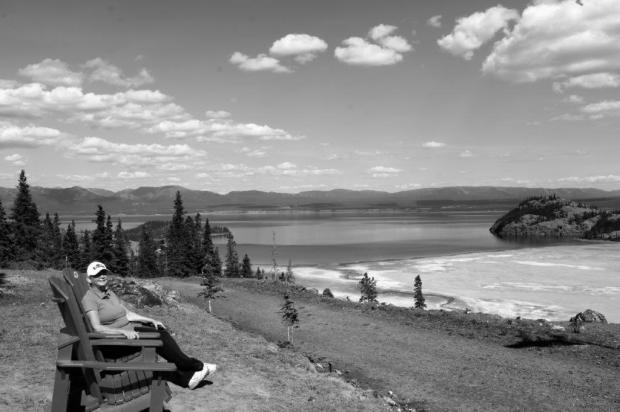
It seems up north you can’t escape information about the gold rush or the building of the Alaska Highway. There were two of the nice red Parks Canada chairs at the top.  I have made a point since our drive across Canada in 2014 of having my photo taken in any National Parks chairs we come across. John used my camera to take the photo so it is in black and white. With so much of the lake bed exposed there is often dust blowing across the surface.Way down below in a barely visible patch of trees is our truck, on the outer edge of the highway curve. A full zoom helps bring it in closer.  The climb was only about half a kilometer, but it was uphill all the way.

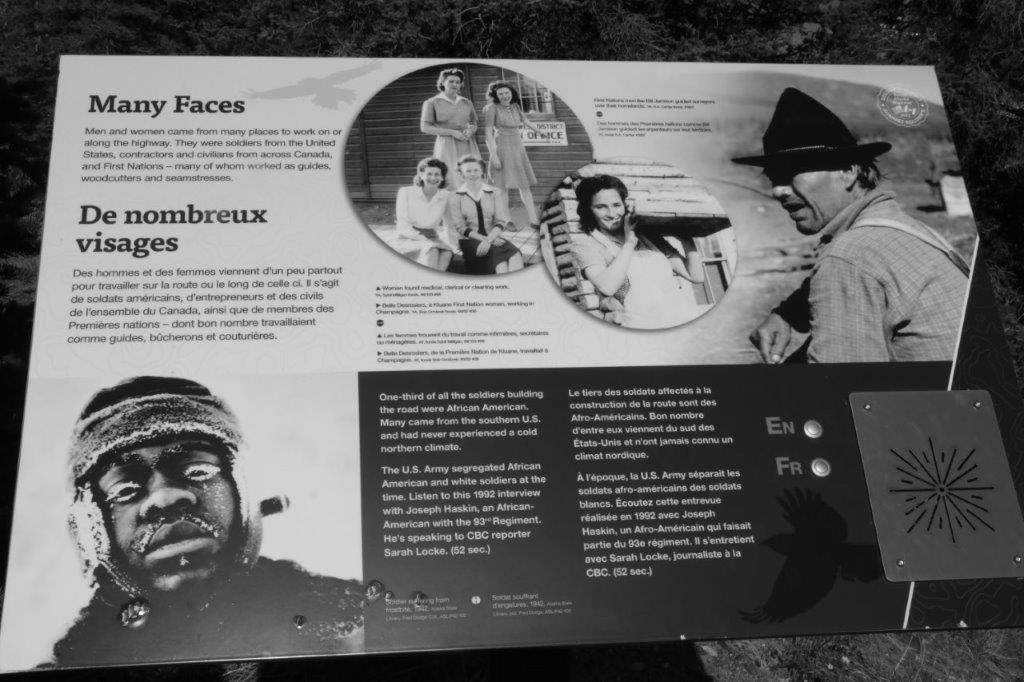
On the other side of the highway from the Soldier’s Summit pullout was another viewpoint that had more information about the history of the lake. Between hikes, geocache hunting and viewpoint stopping we didn’t arrive in Whitehorse until almost 8 pm.  We checked-in to our hotel and immediately went to the restaurant for some dinner.  After we had eaten we got our stuff out of the truck and headed to our room for a good sleep.

2018 July 21 – Valdez to Tok, AK

I had very little sleep.  The back of my knee kept wanting to cramp.  I got up several times during the night and felt dizzy.  When I woke at 7ish, I felt terrible.  I was dizzy, nauseous and couldn’t tolerate the light.  This had happened to me in April after a bad night.  I was not happy to have it happen again.

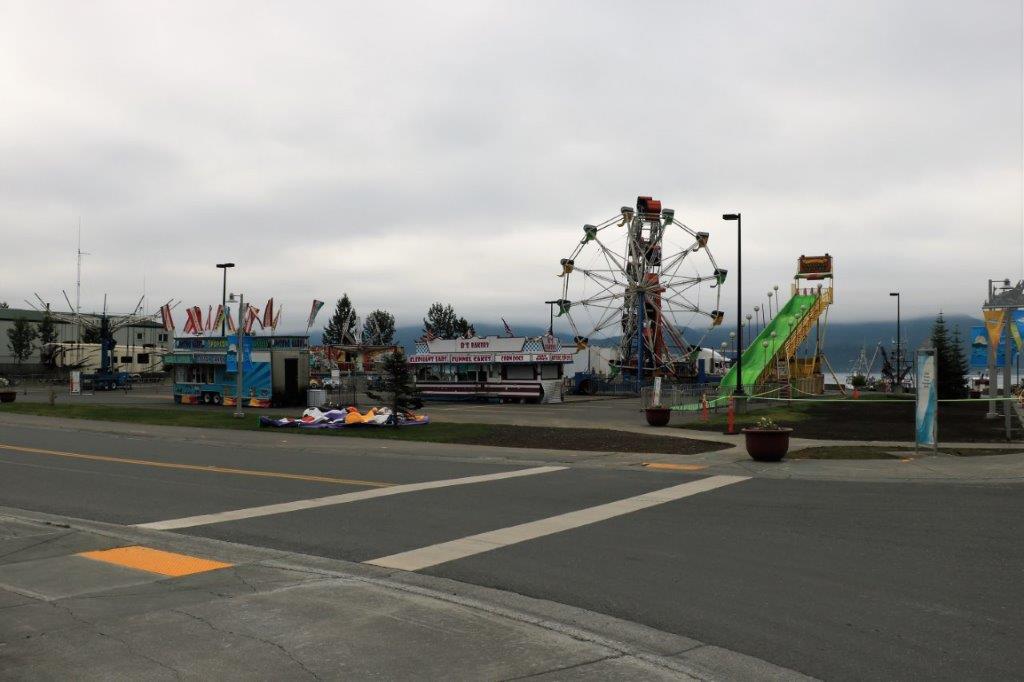
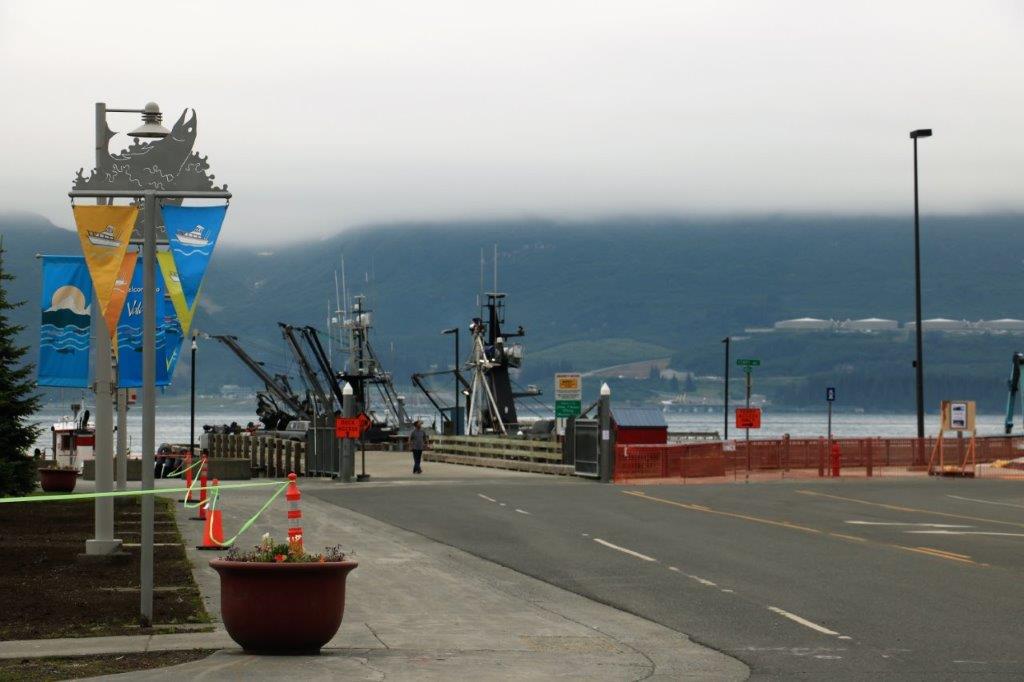
We were going to go to the museum and take a tour around Valdez before we left for Tok, but with my feeling so terrible that was axed.  John did take a short drive around and took a few photos with my camera so I would have some for my blog.  He is a good man.                                     The edge of Ruth Pond

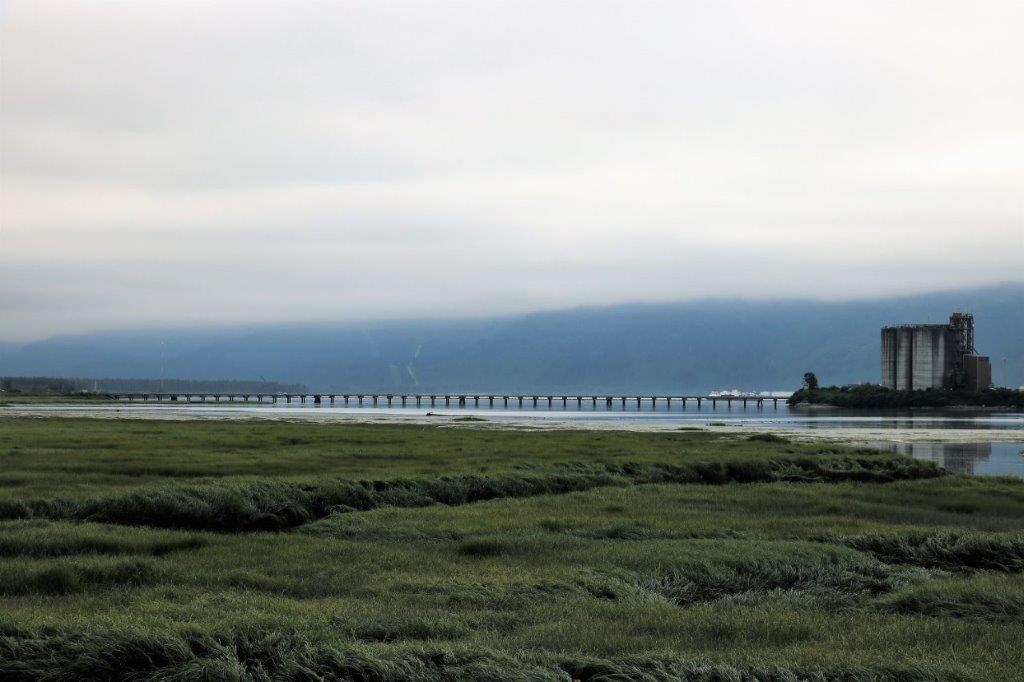
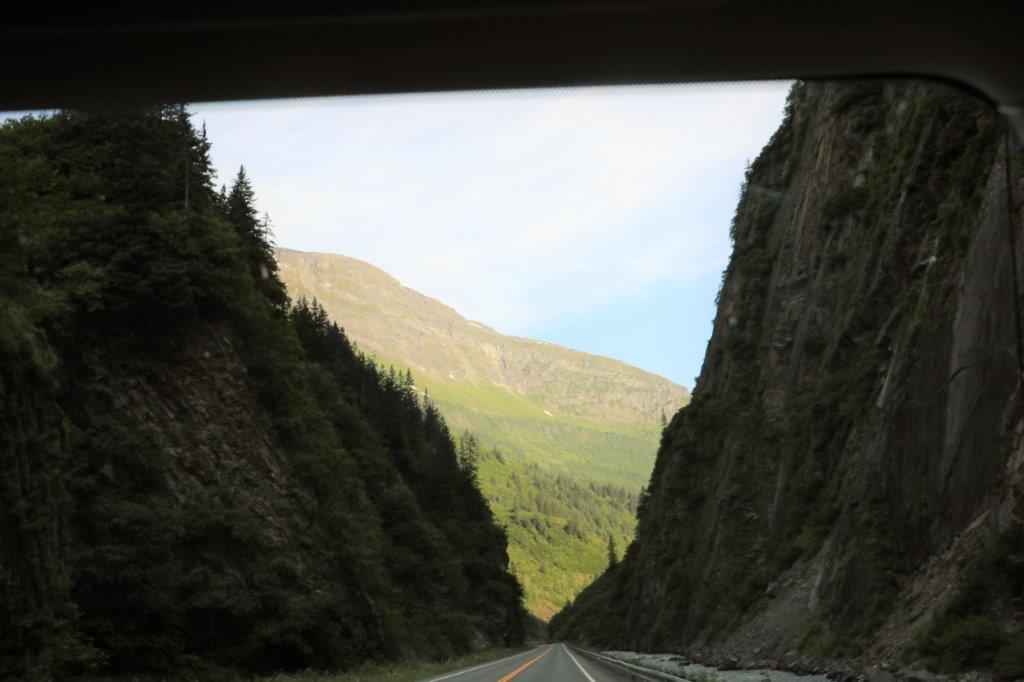
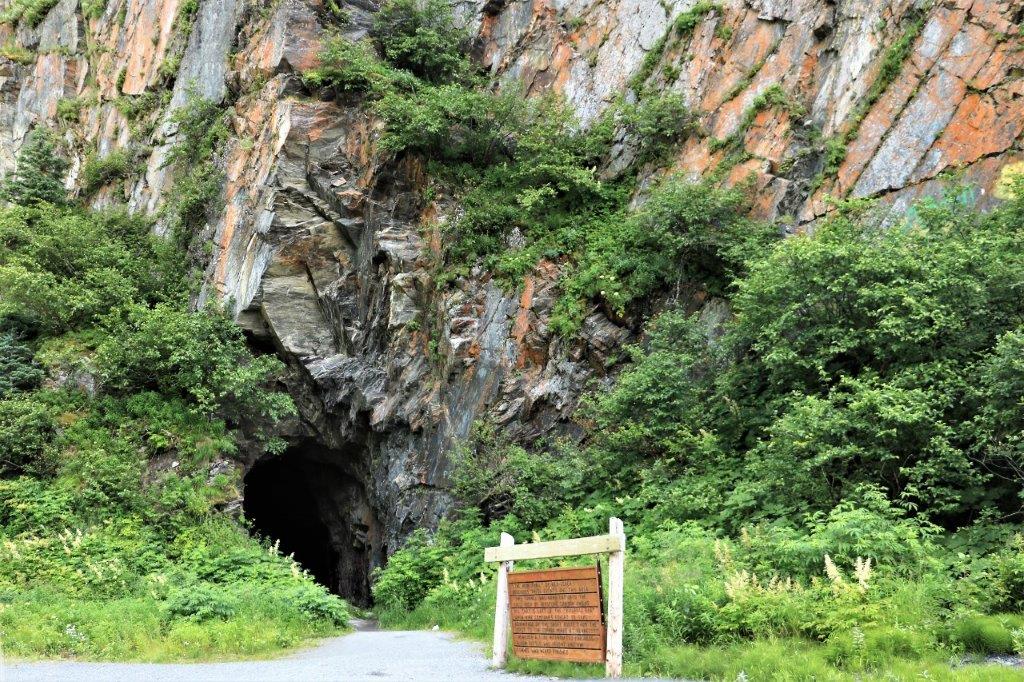
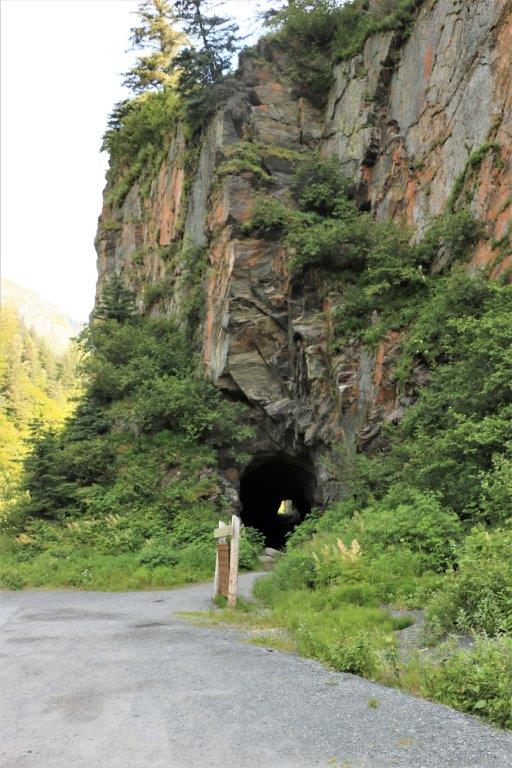
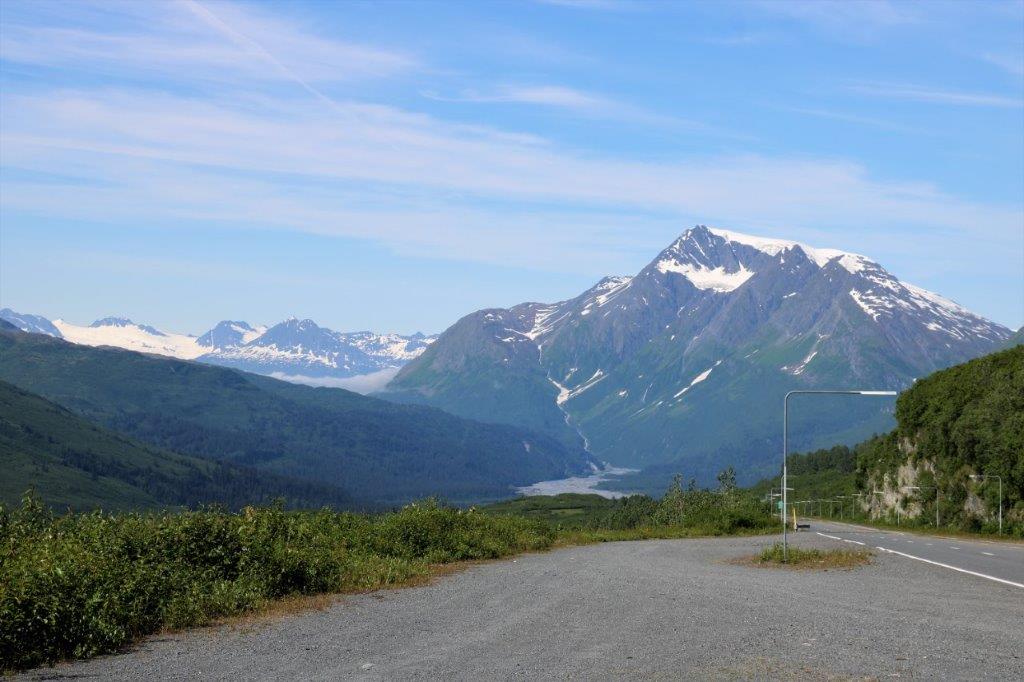
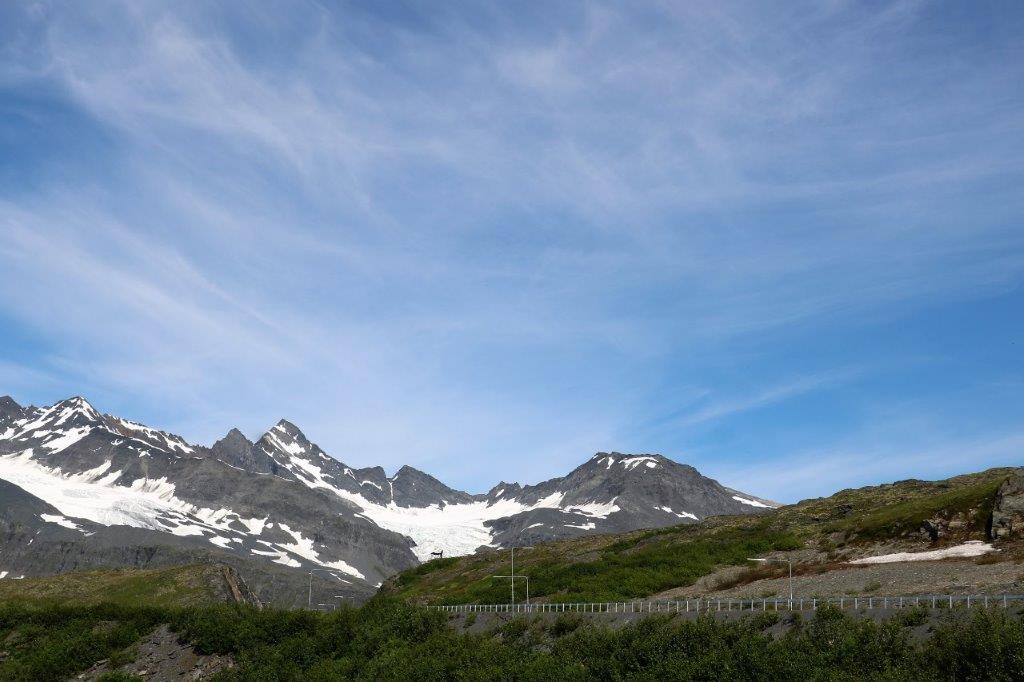
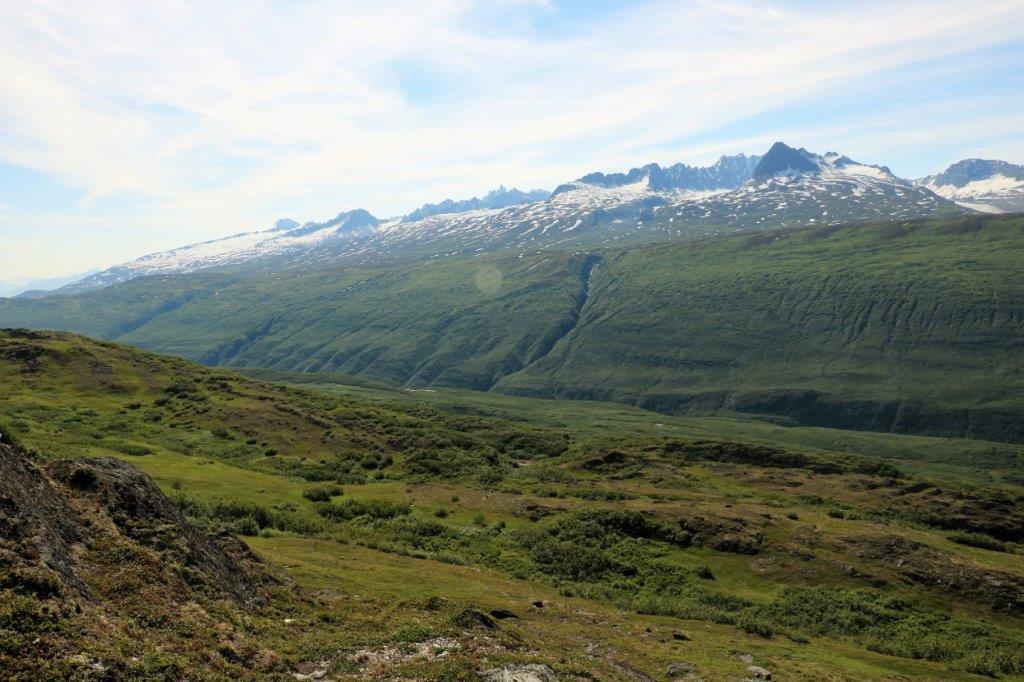
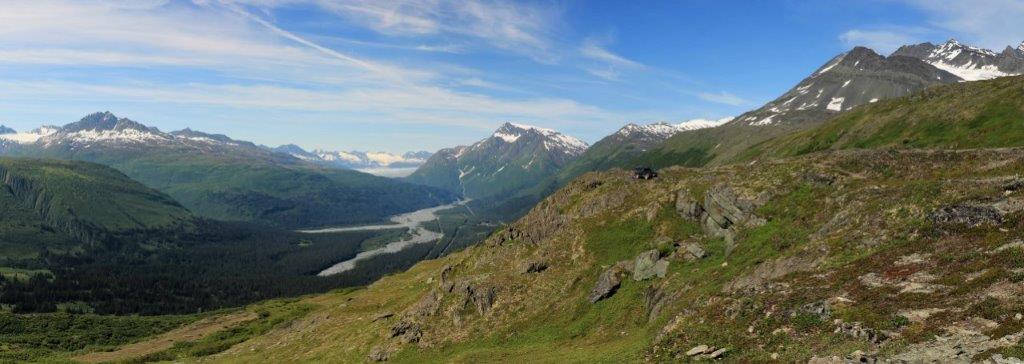
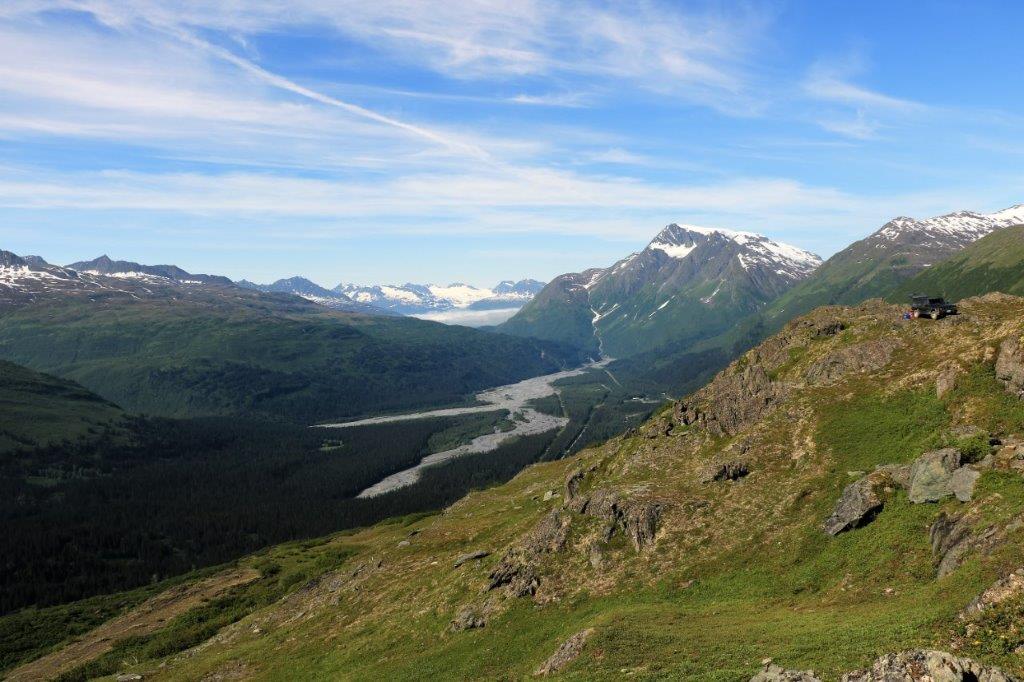
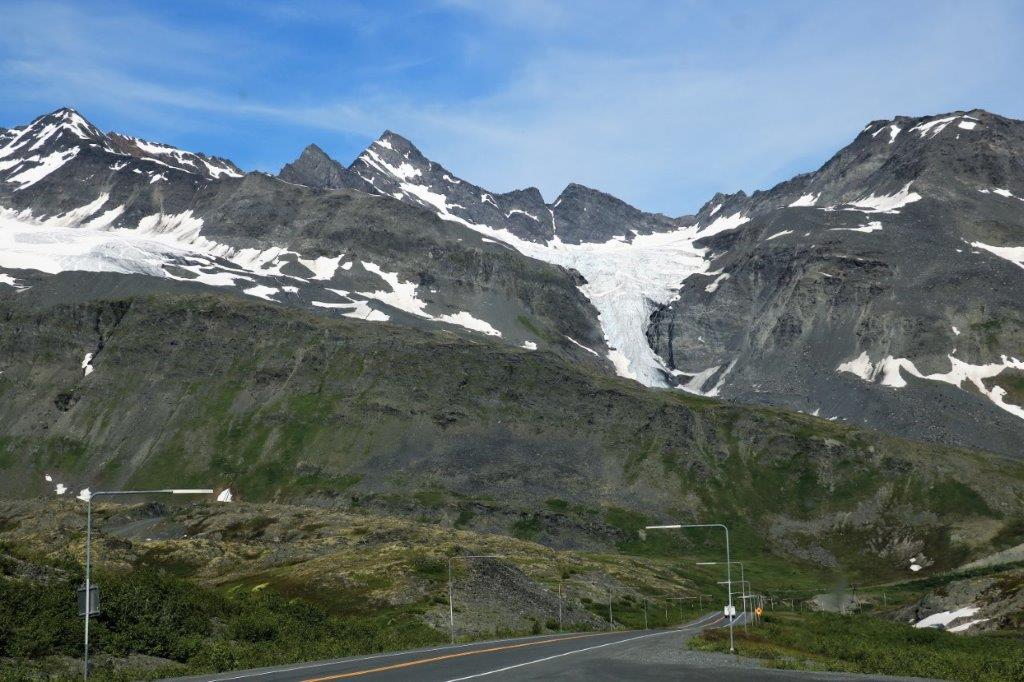
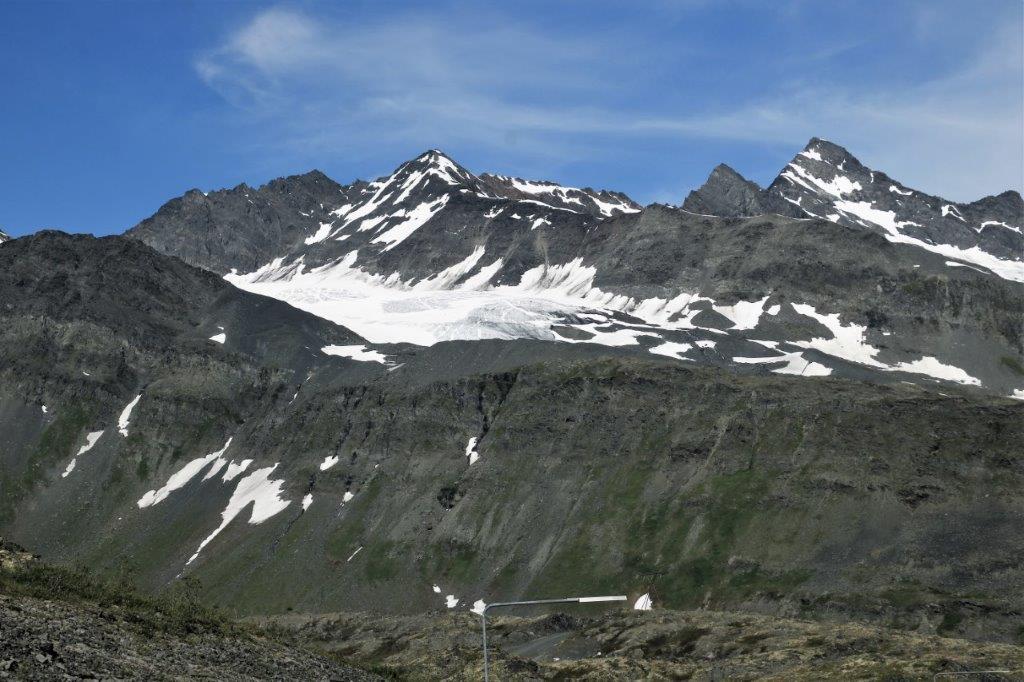
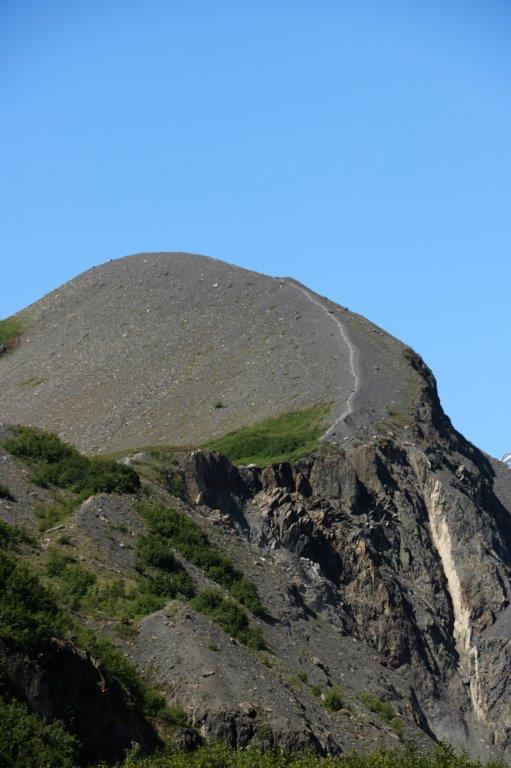
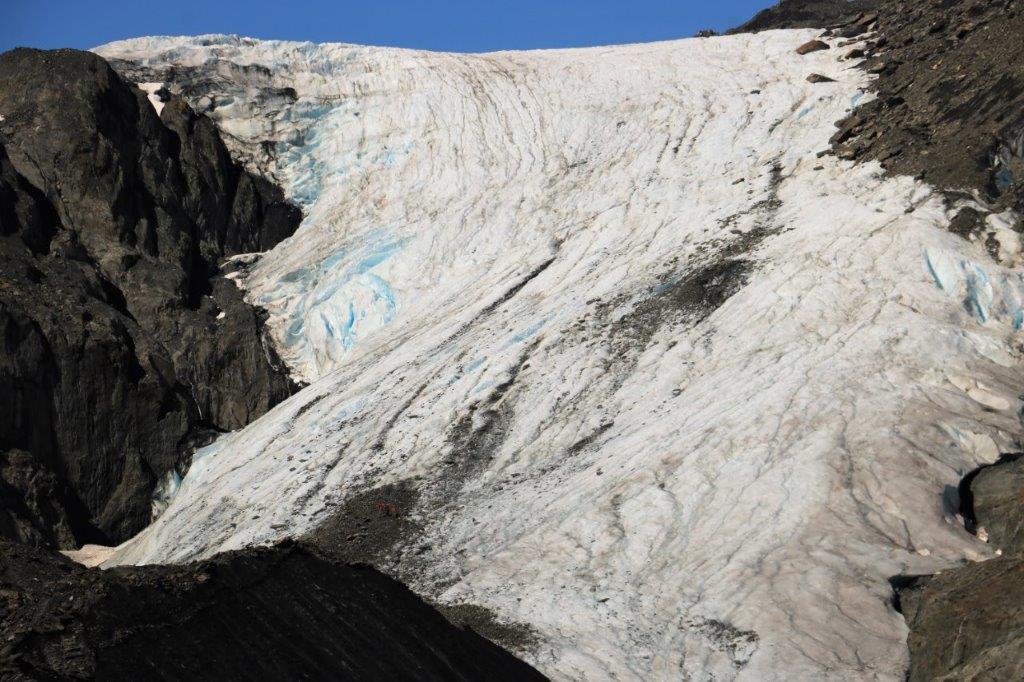
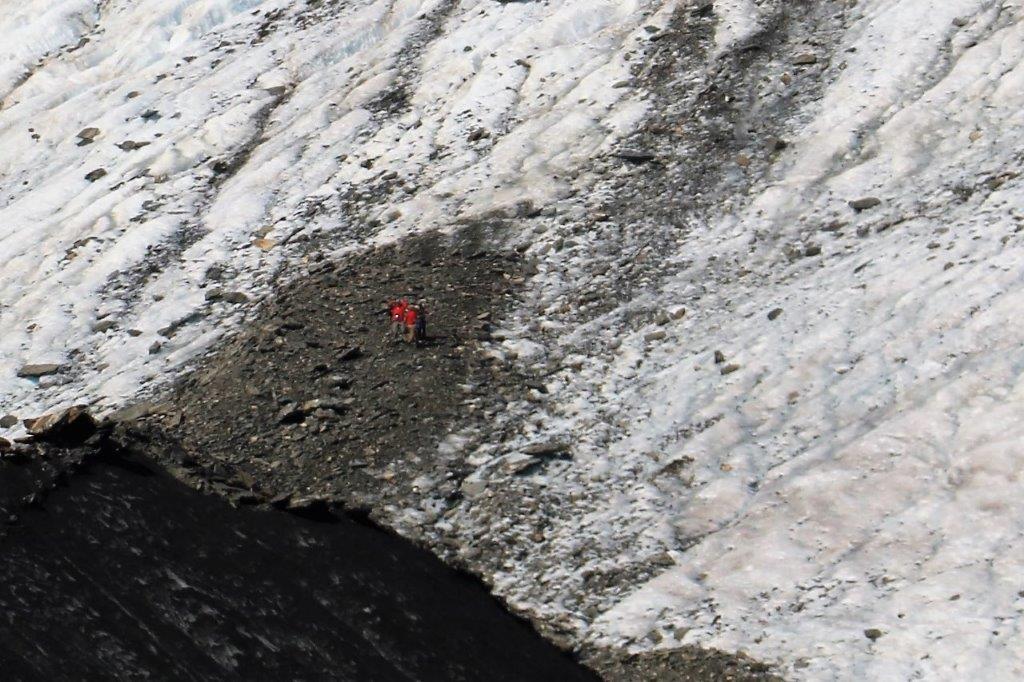
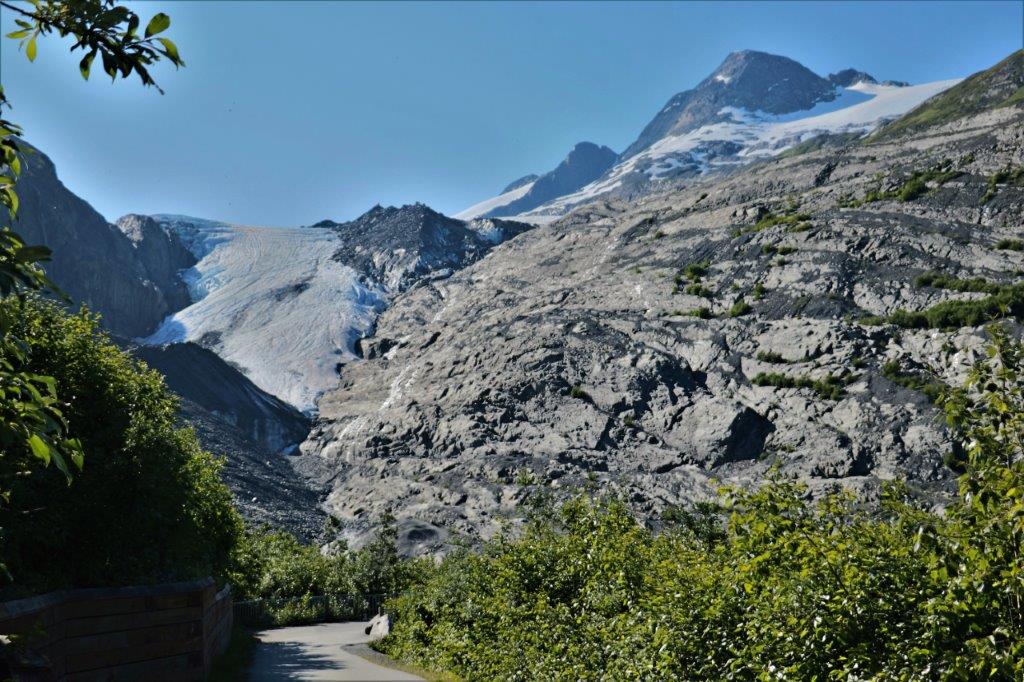
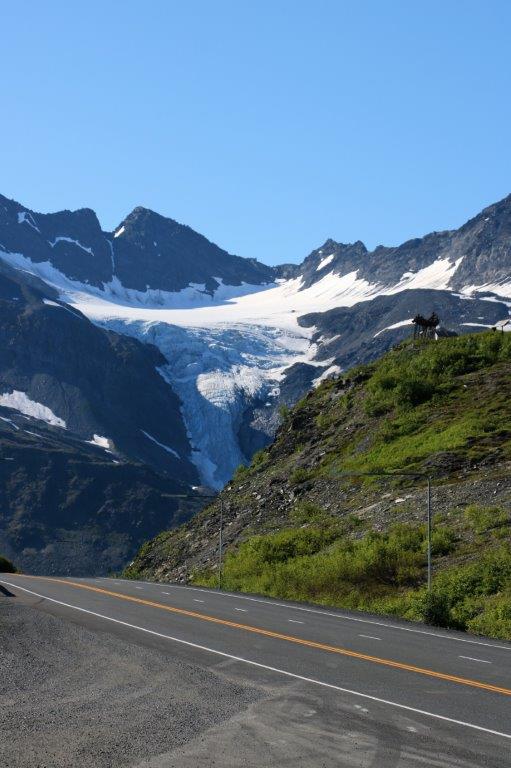
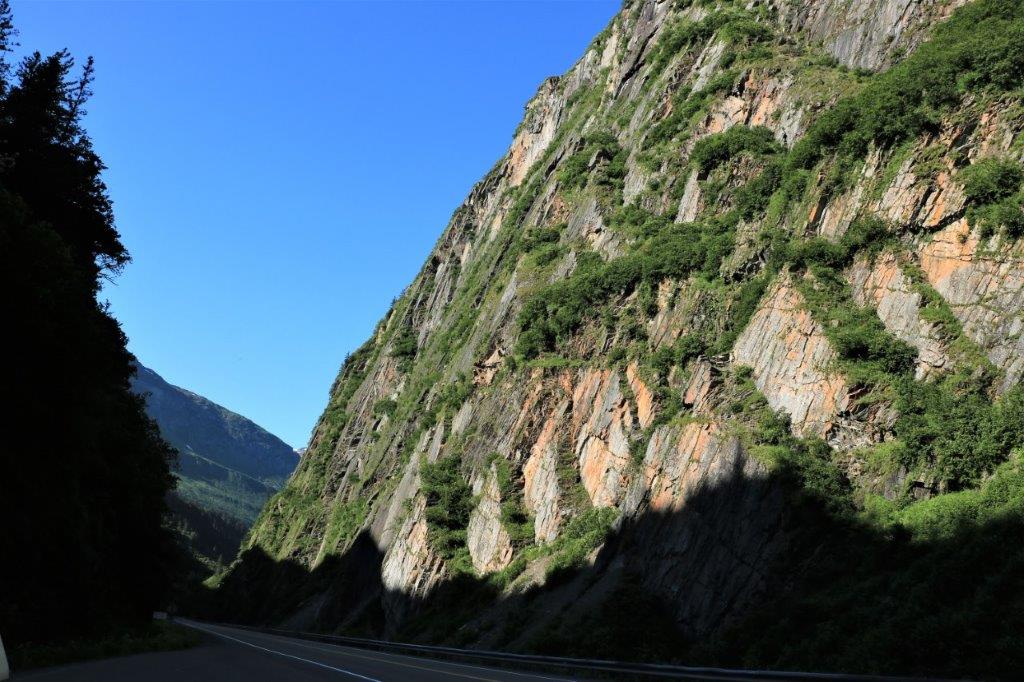
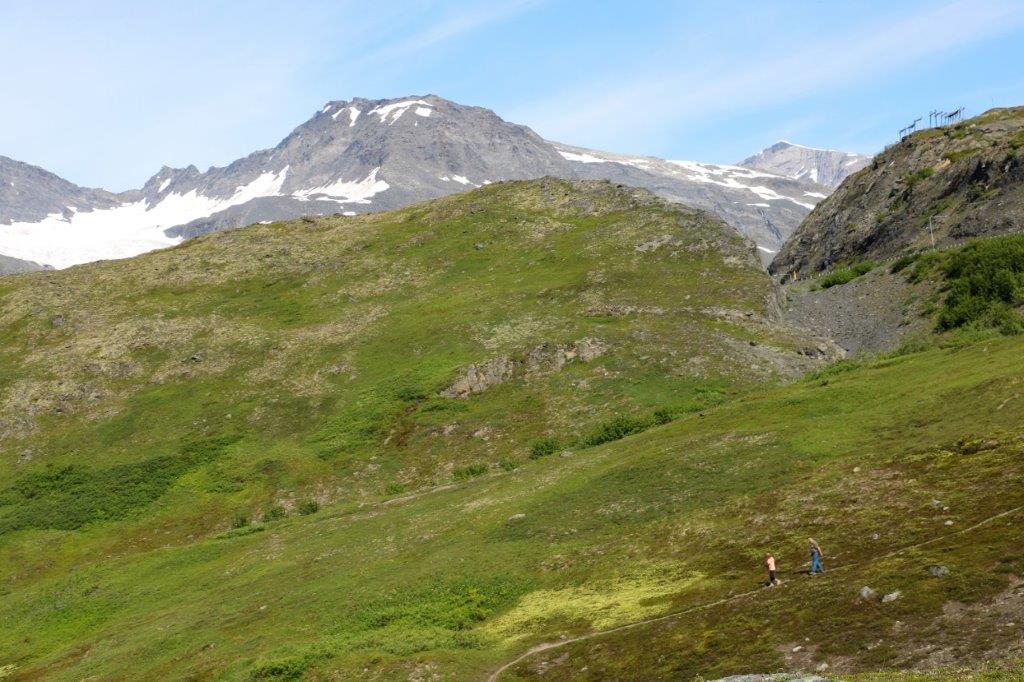
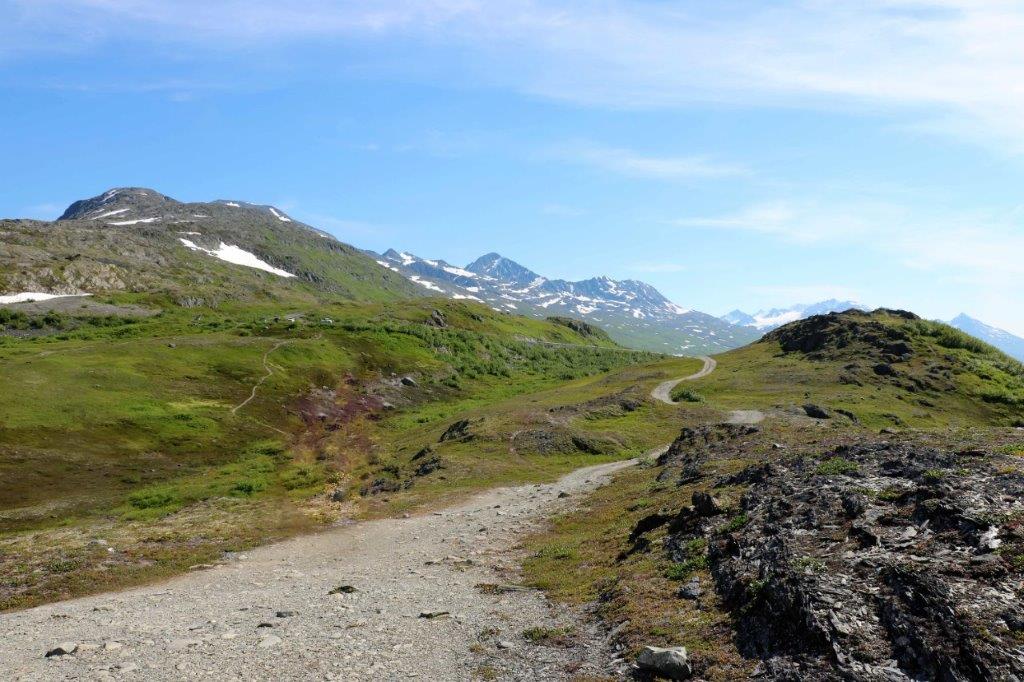
TAP – the end of the 800 mile Trans-Atlantic Pipeline from Prudoe Bay to Valdez.  The pipeline also entails an additional several hundred miles of feeder pipes and is one of the world’s largest pipeline systems.  There are 11 pump stations along the route to Valdez.  The pipeline was constructed after the 1973 oil crisis to ensure American access to oil.  It was built between 1974-1977 and in the 40 years since has transported over 17 billion barrels of oil.  I read that some of the spills that have occured have been caused by sabatoge and BULLET HOLES!  Seriously – bullet holes!  Some people just feel the need to shoot at everything.  We have encountered so many road signs and information placards that are riddled with bullet holes.  It makes no sense to me whatsoever. Back through Keystone Canyon.  This area, with its sheer rock walls is popular with climbers, and in the winter, many adventurous souls do ice climbs.         The markers for the snow plows are so high in these parts.      Coming toward Worthington Glacier from the other side. When we drove into Valdez yesterday I noticed this incredible view far down a valley on a path below a viewpoint.  It was getting late and we had driven a long while so we decided we leave the hike until the return trip providing the weather was still good.  We estimated it would take a half hour or so each way.  However, today, I could not face making such a hike.  John noticed that there was a ‘trail’ that branched off before the view pullout and there were vehicles driving it.  It was pretty rugged, with big rocks and potholes to navigate, but John loves the challenge of that sort of thing and we have a 4×4, so off we went.See the people on the trail down from the viewpoint at the bottom of this photo?                                          This is the ‘road’ John drove.   And this is the view at the ‘almost’ end. The black vehicle in the stitched photo below is at the very end. There was so much late summer haze yesterday when we stopped at the glacier we decided to do another quick run in since the light was better.The ridge line on the photo on the left is a trail that people have made walking up to see the glacier from a higher perspective.  In the photo on the right, if you look at it full screen, you can see a small group of people near the dark spot at the bottom of the glacier.  The photo below is a close crop to pick them out better.These three folks climbed up almost to the top point of the lighter gravel above them.  From what anyone could see using the telescopes, one of them may have had hiking boots on and was carrying a walking stick.  We think the other two were just in running shoes.  Near the top of the lighter gray gravel section they started to go across the glacier, but the surface was so slippery, the one in the red jacket could get no traction and was very timorously inching along.  After awhile, thankfully, they started to come back down.  And, me, being me, was thinking, “These people are idiots. If one of them falls and slips the others have no way to assist.  None of them had proper equipment and glaciers are known to crack at any time.”  Several people were watching them and all of us were shaking our heads.  I don’t understand why so many people do so many things that are so stupid!  But, as they say, there is no cure for stupidity. That’s all I’m sayin.’  I have no problem with folks doing adventurous or dangerous things as long as they know what they are doing and are properly equipped for the task.  (And so says, the woman, who as a child climbed out the attic window of her parents house and sat on the roof to read, and climbed to the top of a 50′ fir tree and did her homework. But…I was a really good tree climber back then!)

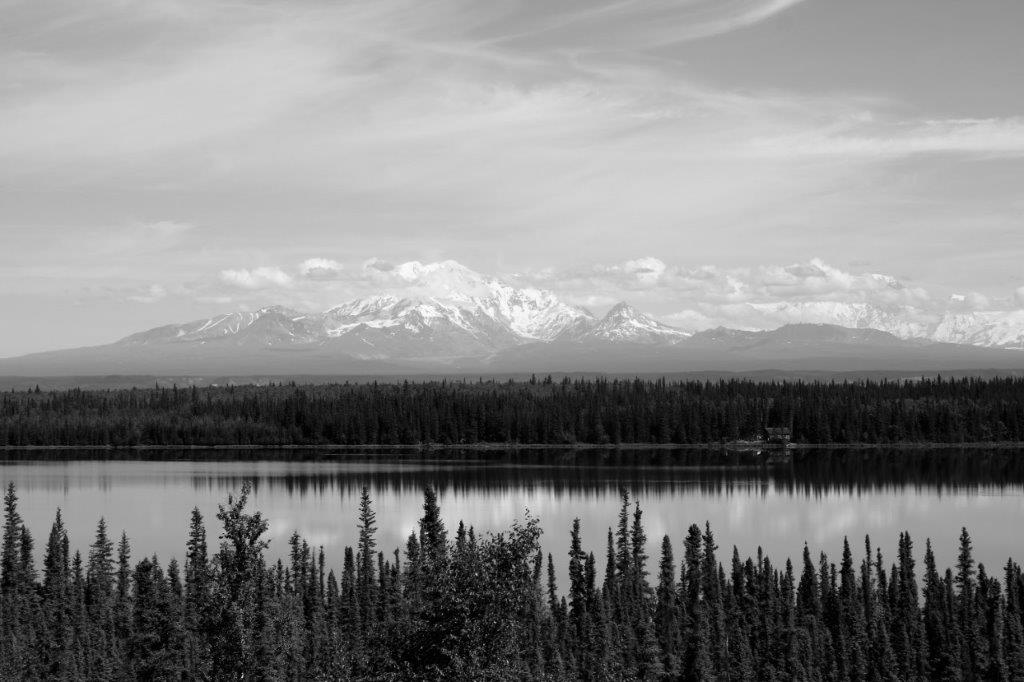
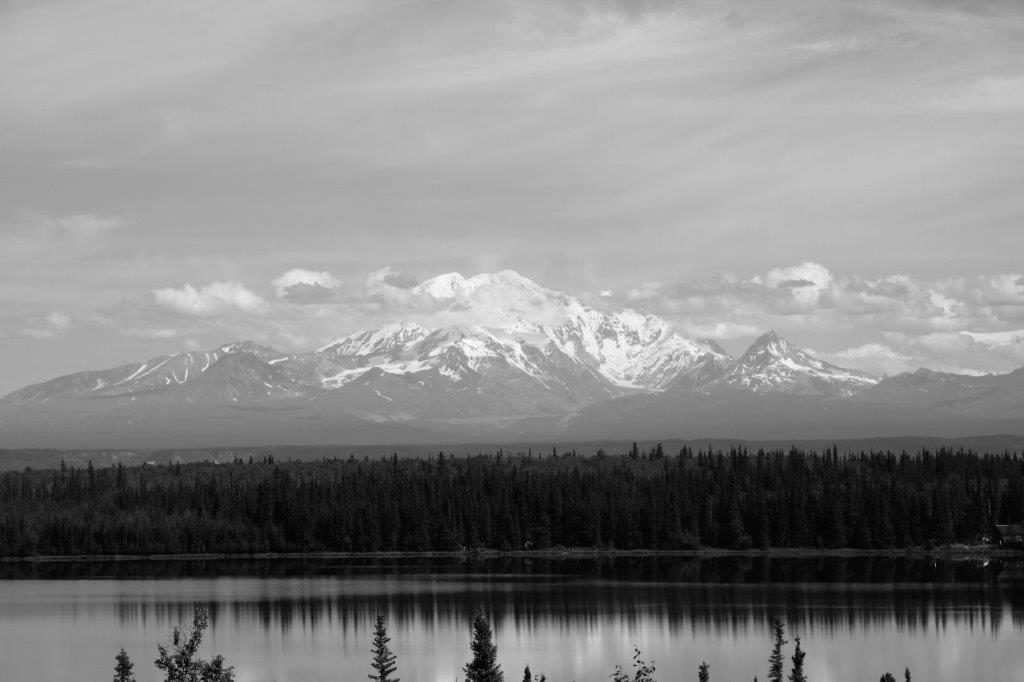
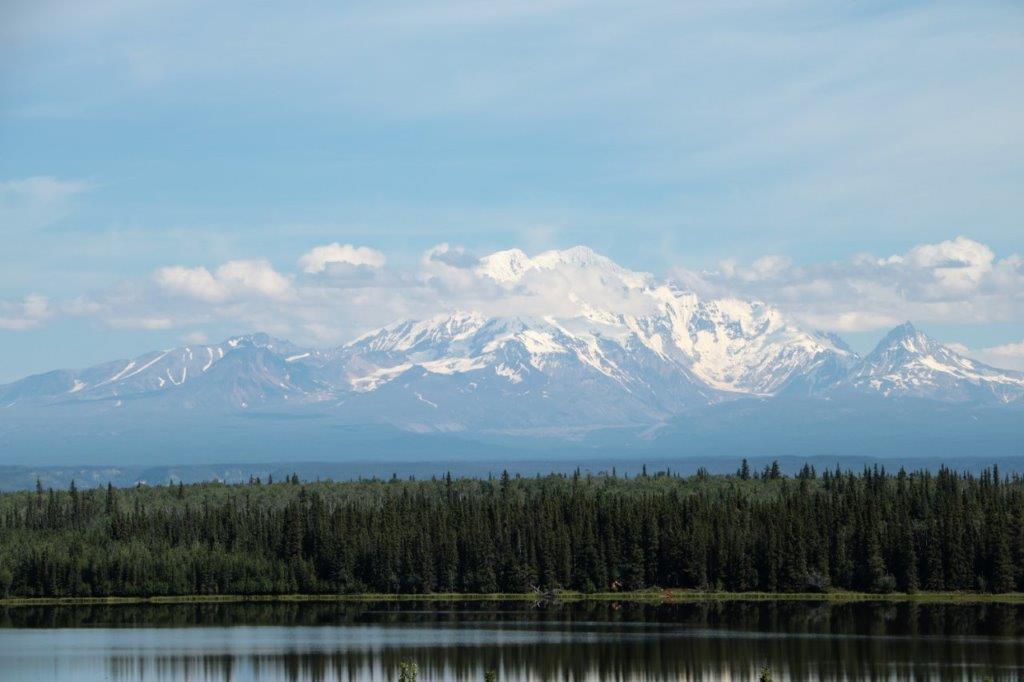
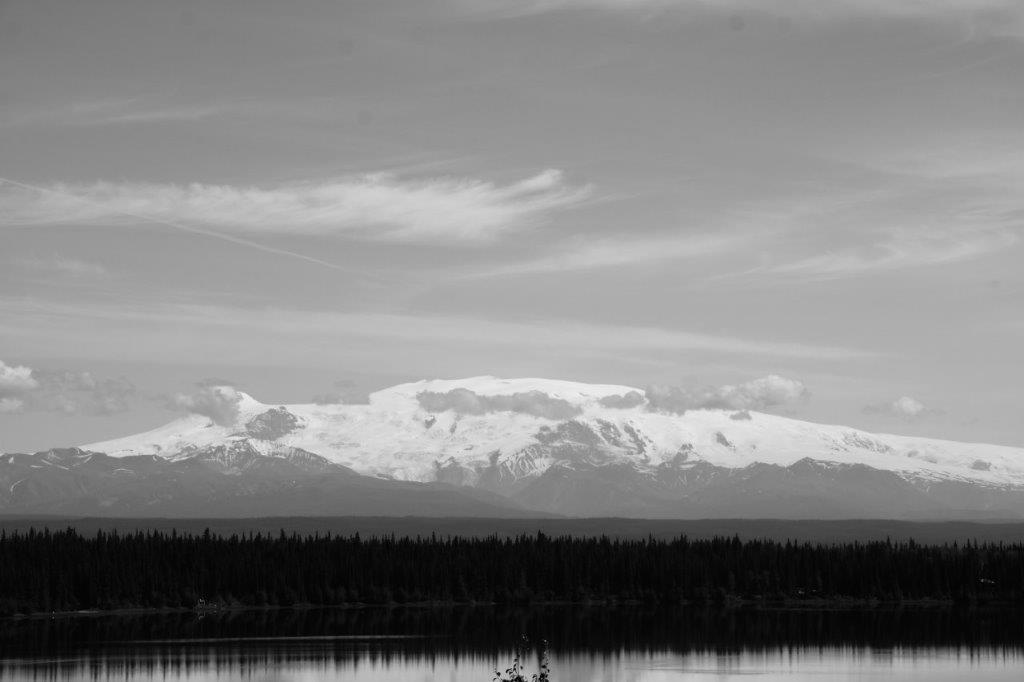
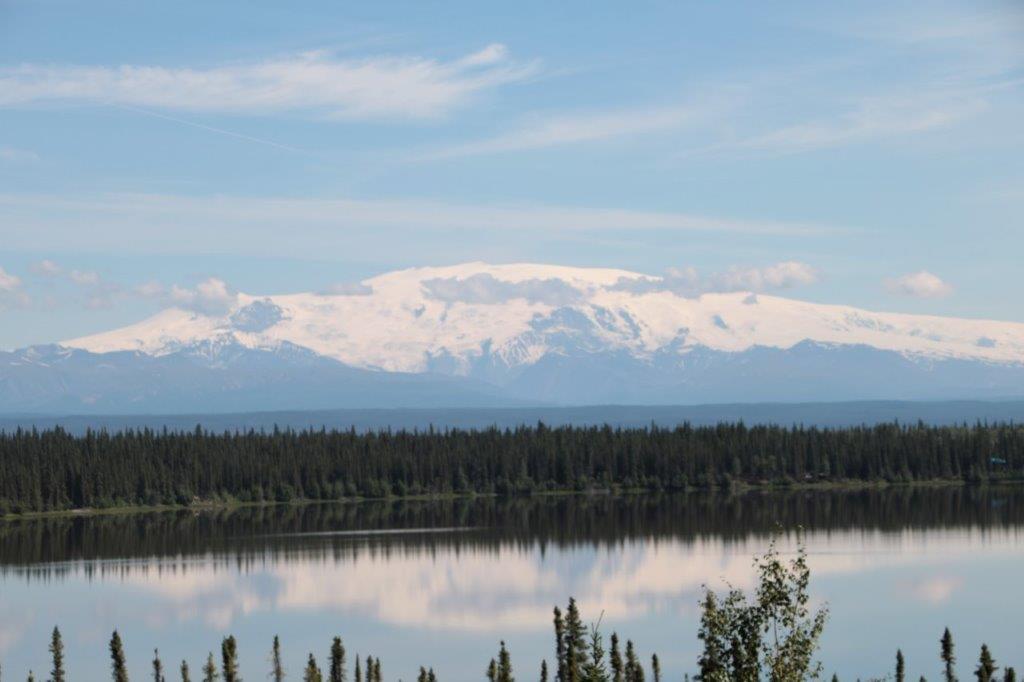
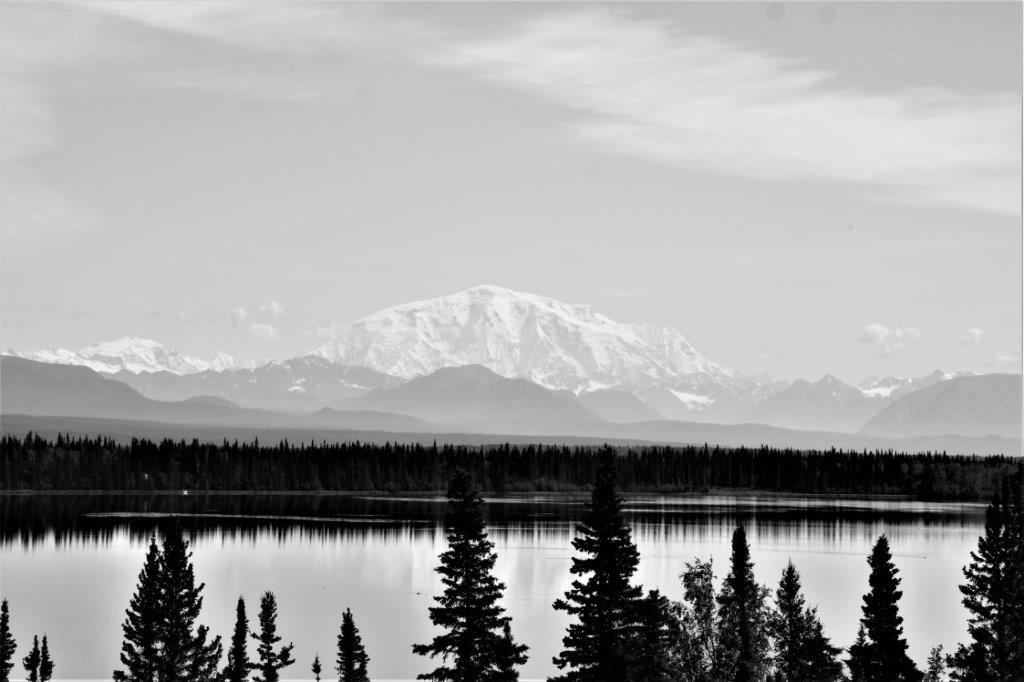
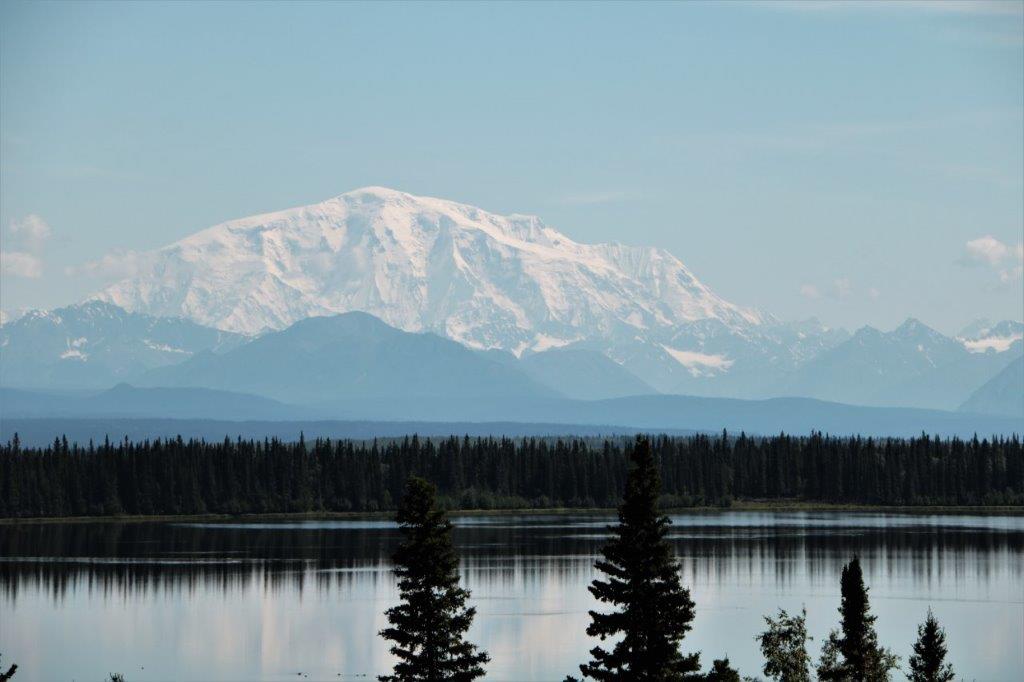
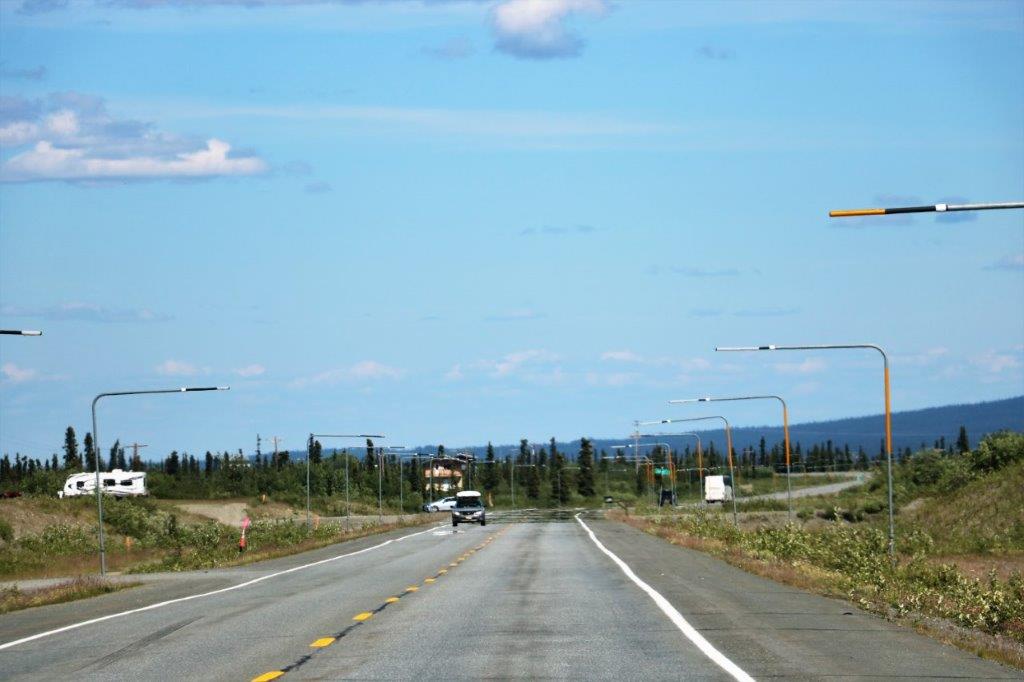
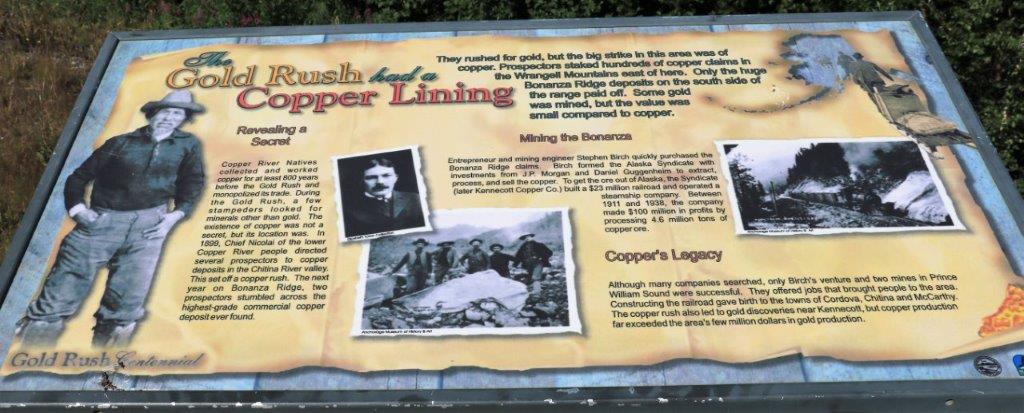
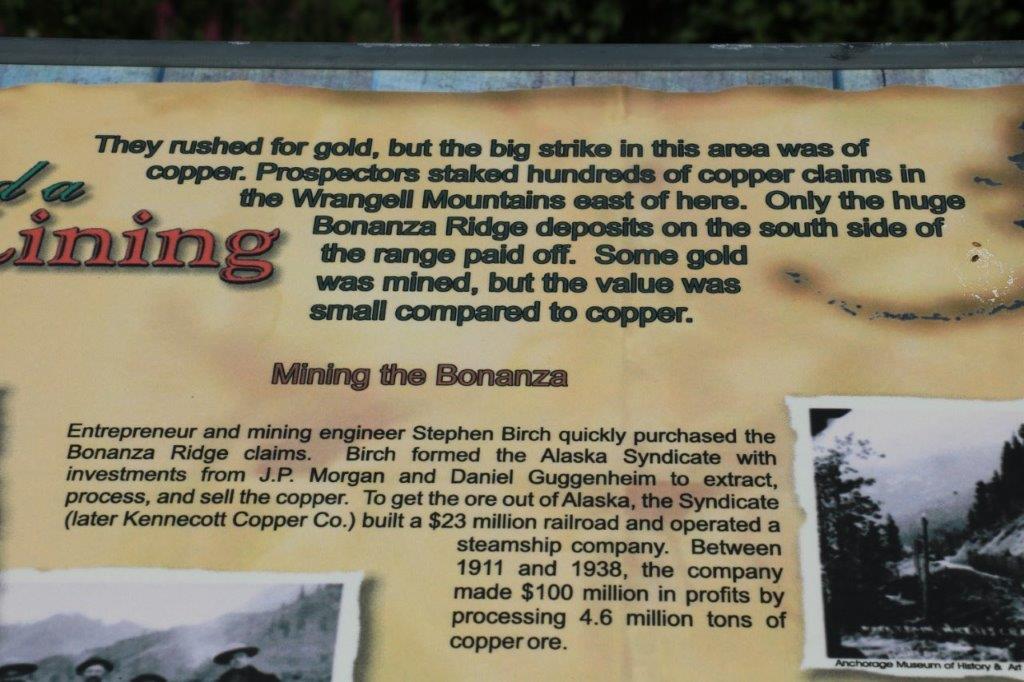
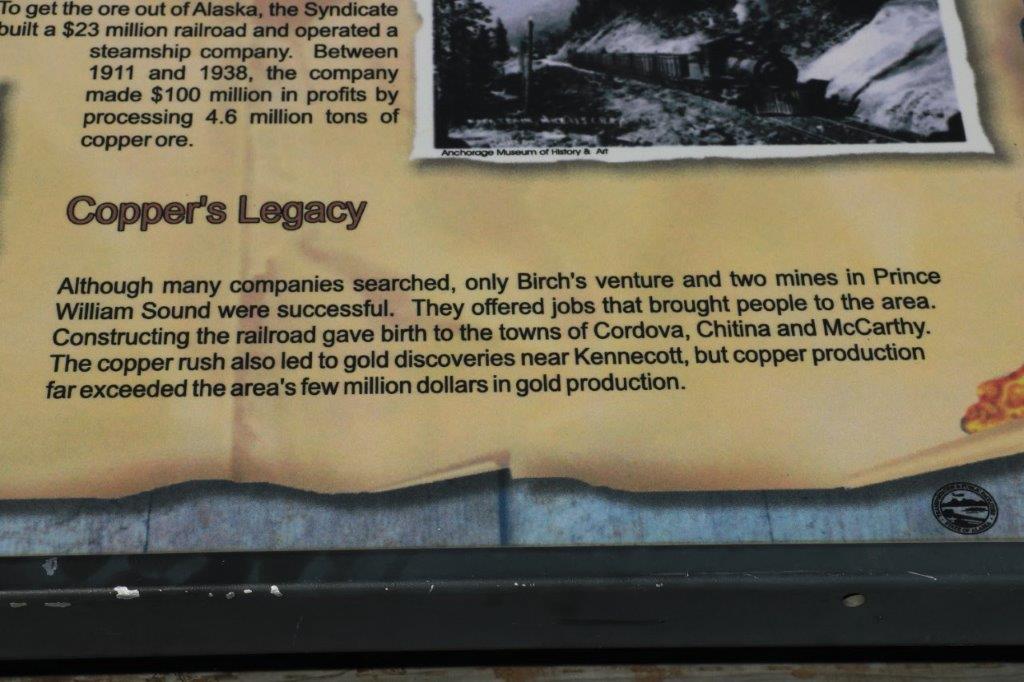
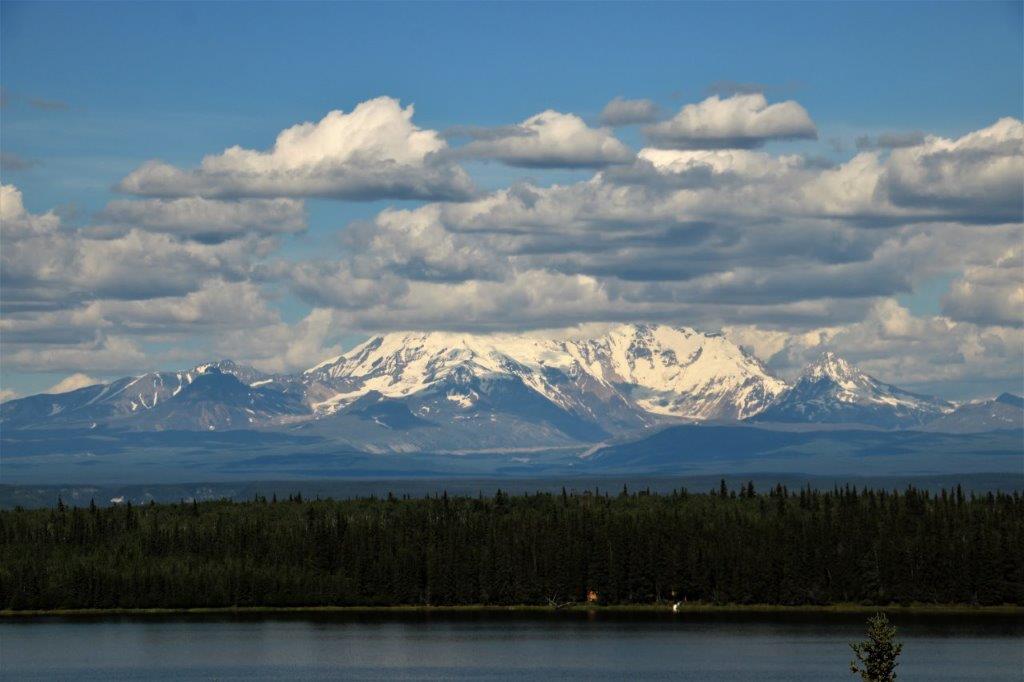
As I said, I was not feeling at all well and for most of the drive, unless I got out of the truck to see something, I had my sunglasses on, my cap pulled low and my eyes closed dozing as John drove.  And, somewhere, at some point after we left the glacier my camera set itself to monochrome!  So all the rest of the photos I took, or that John took for me, are black and white.  No idea how that happened.  John gave me the few photos he had taken that were in colour so I could include them here.We passed Willow Lake again and the four mountains of the Wrangell Range were mostly out of the clouds.  The distance between the mountains is quite long so the a stitched photo is pretty thin.                                                            Mt. Sanford                                                               Mt. Drum                                                              Mt. Wrangell                                                               Mt. BlackburnThe area around Valdez was a major copper mining center.  The local Native peoples had used copper for ornamental objects for years and readily traded them with the explorers and miners.  Of course, exploration for mines soon followed. I really liked the wispy clouds in the bright blue sky.  Well, it was blue when I saw it.  By four o’clock I was starting to feel better.  I could stand the light and was no longer nauseous, but was still very tired. We arrived at Tok at 4:45.  I immediately got ready for bed and dozed while John went to fuel up the truck and have some dinner.  He brought me back a salad and some chicken fingers and I ate about half of it before crawling into bed.  I remember nothing until the next morning.

2018 July 20 – Palmer to Valdez, AK

MOUNTAINS (of course), GLACIERS, AND WATERFALLS.

We were blessed with another glorious day on our drive to Valdez (Val-DEEZ).  We were on the road by 9 for our 412 km (256 miles) drive from Palmer to Valdez.

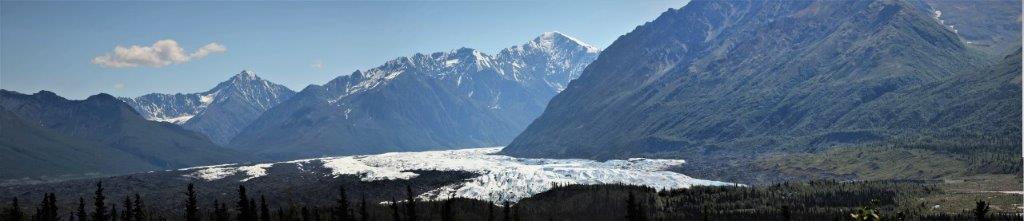
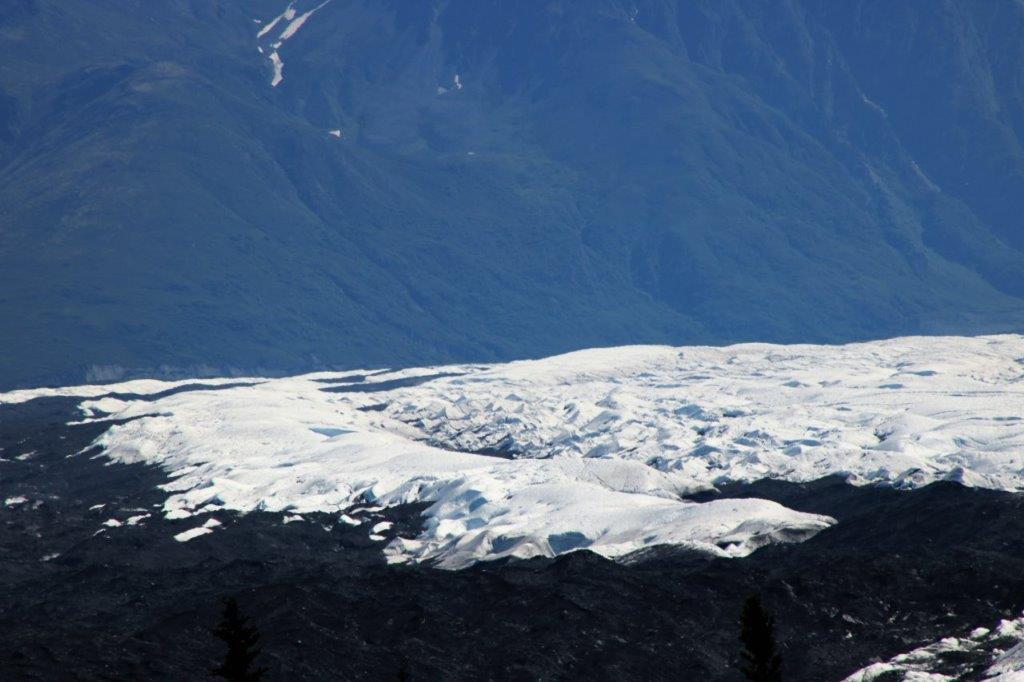
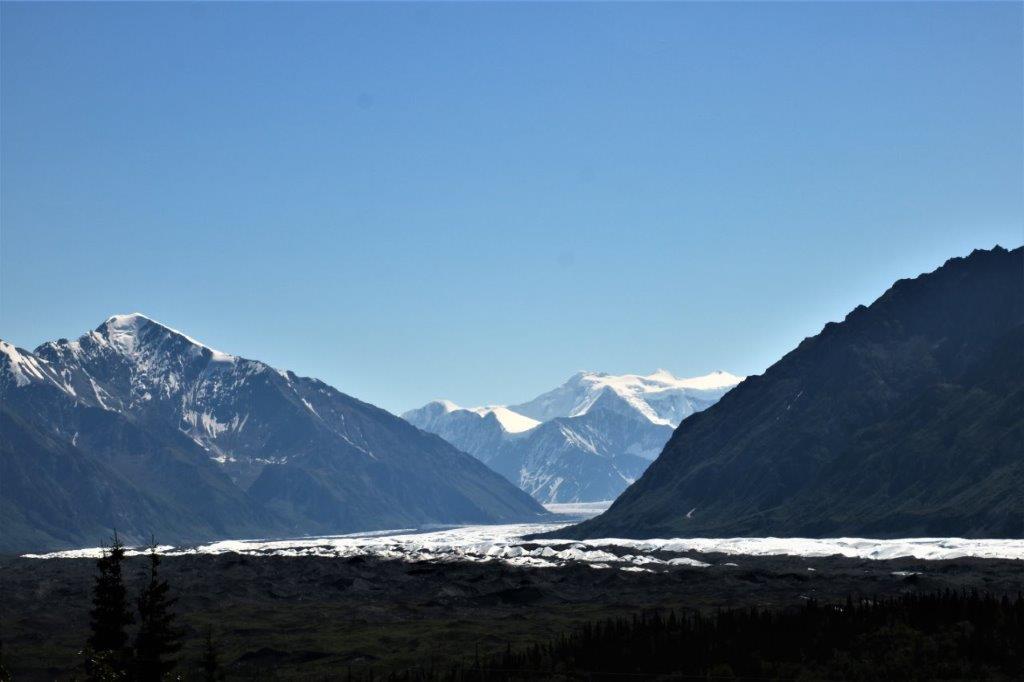
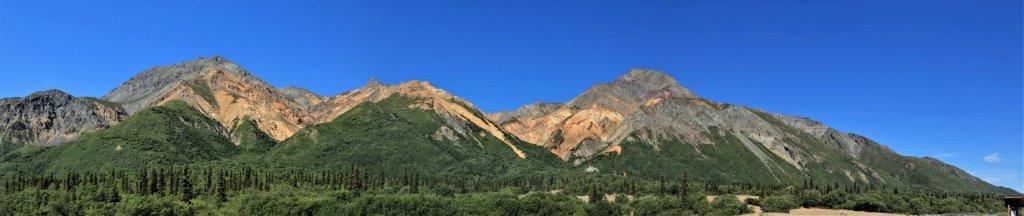
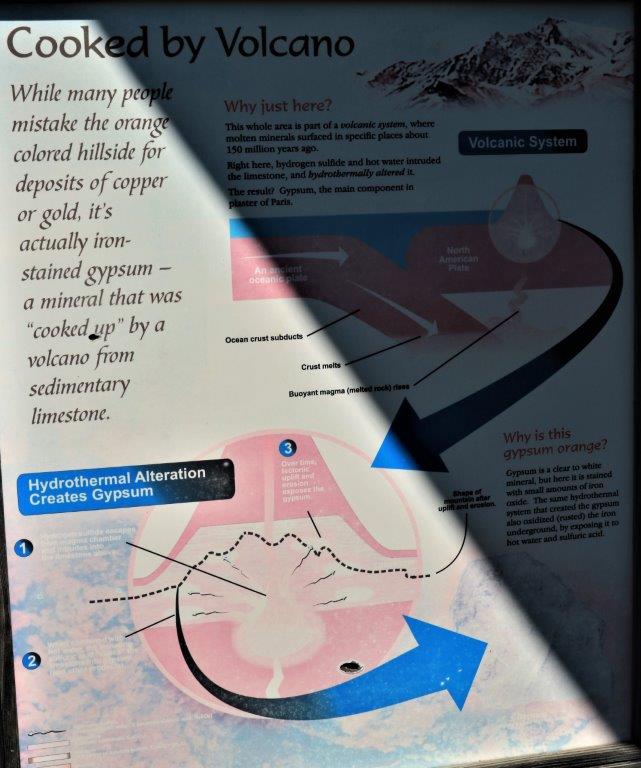
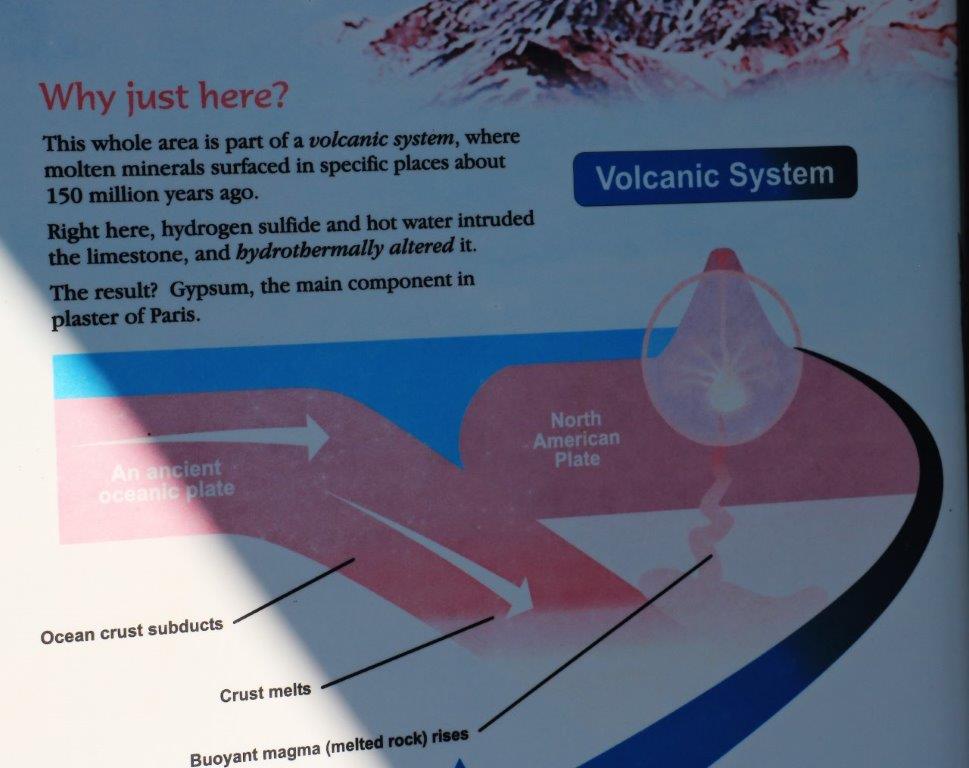
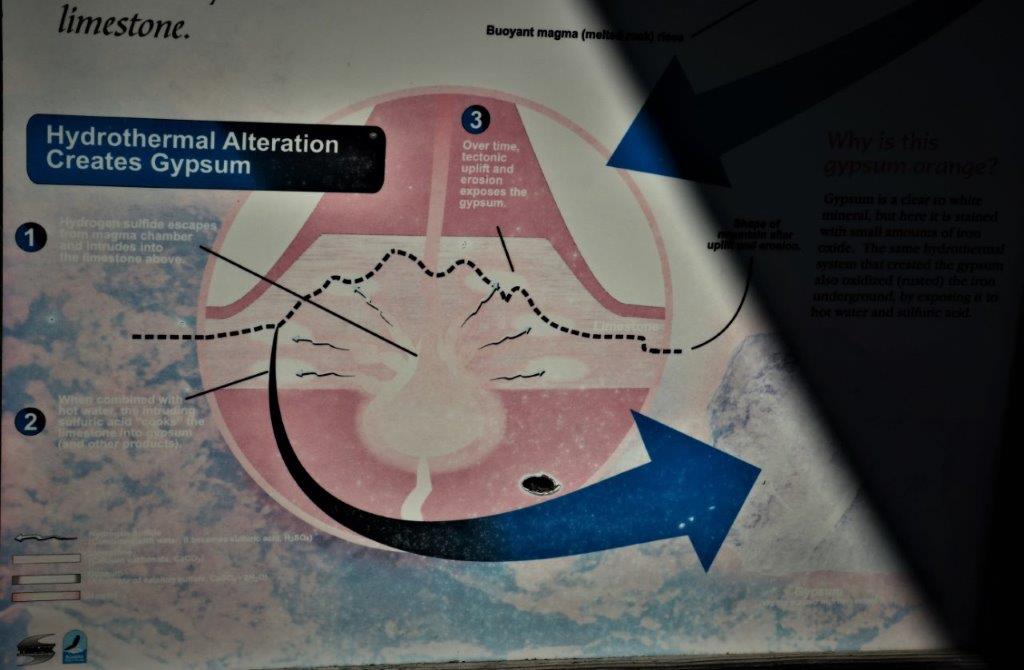
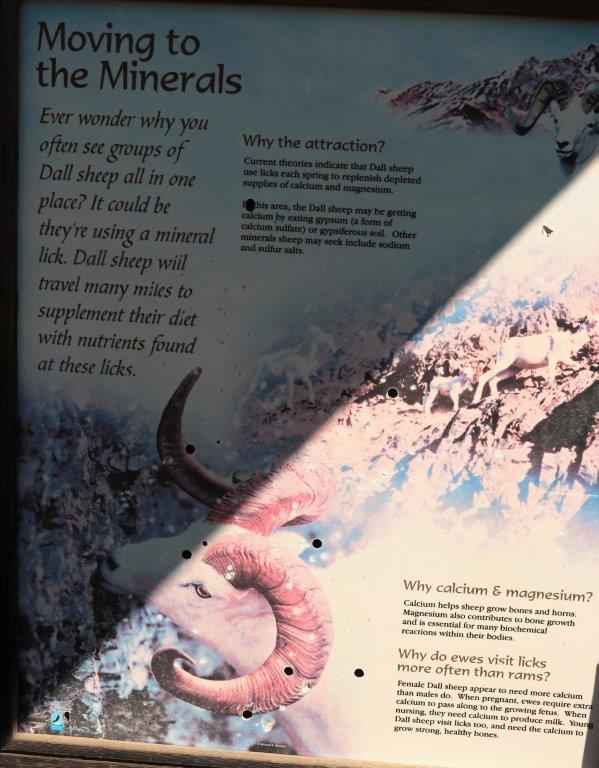
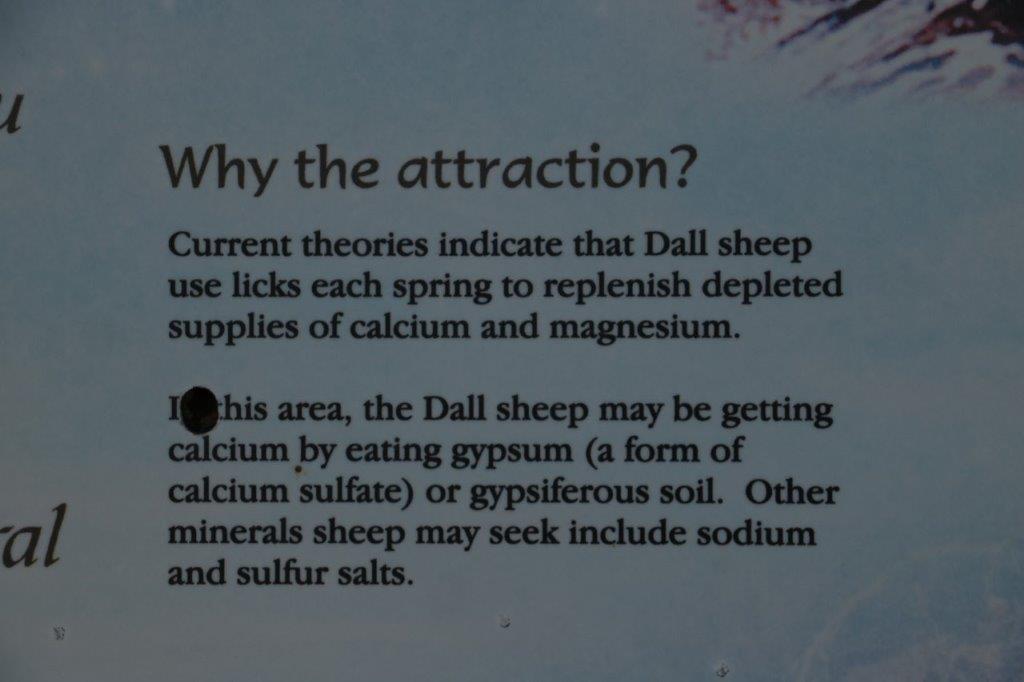
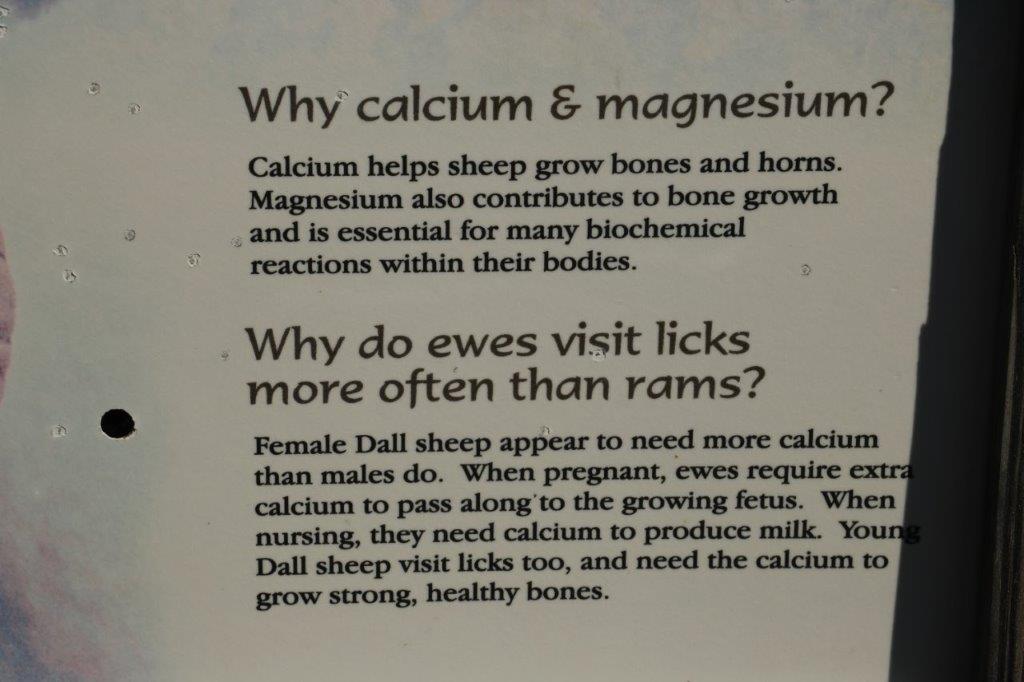
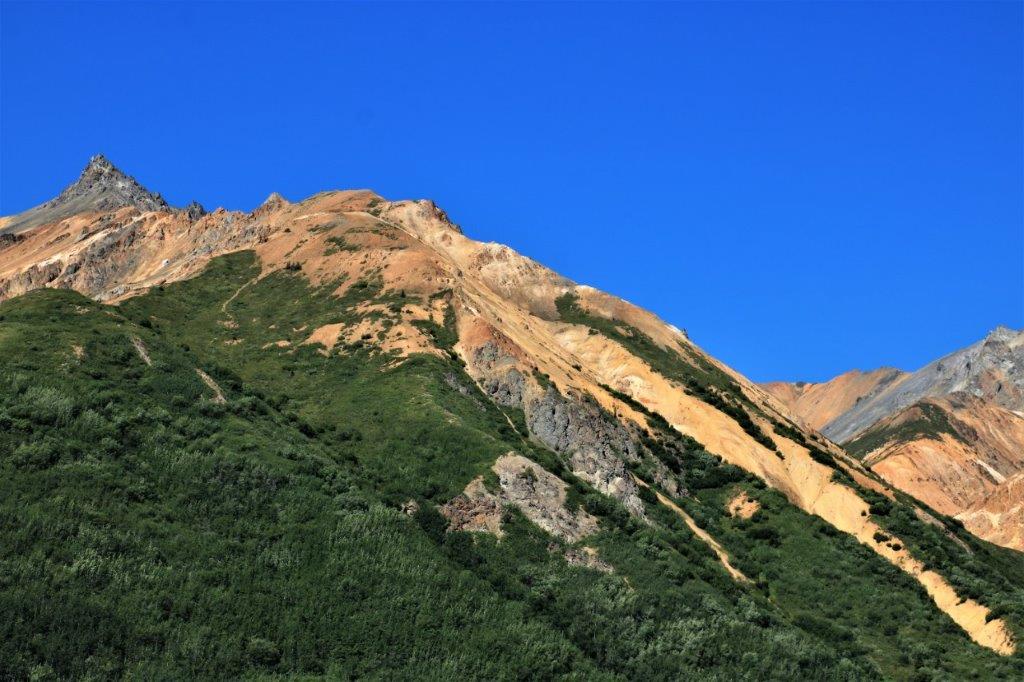
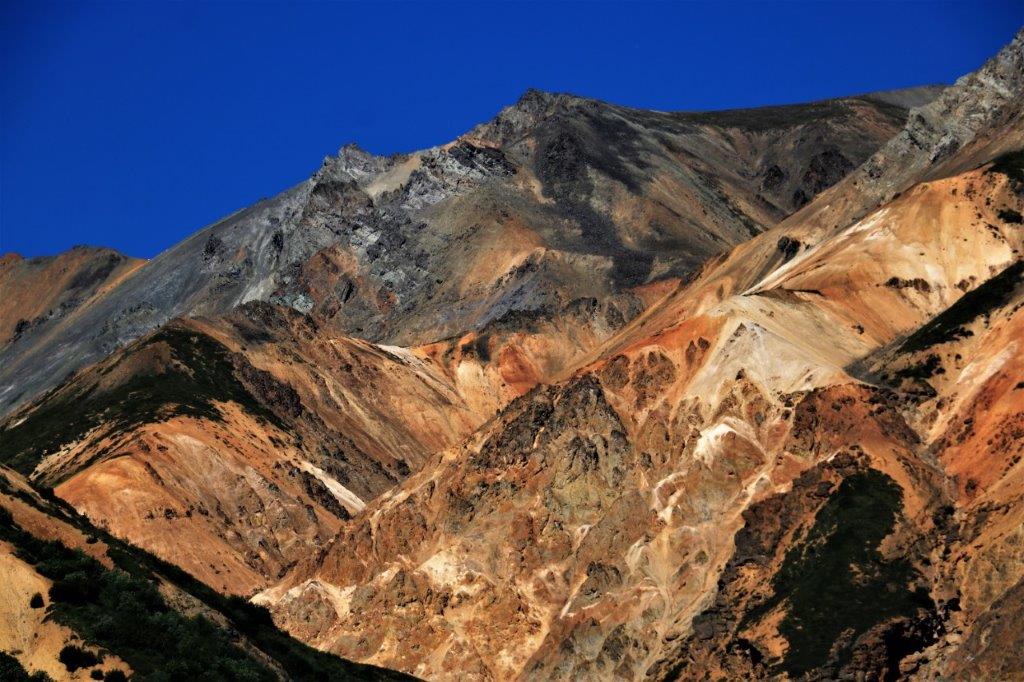
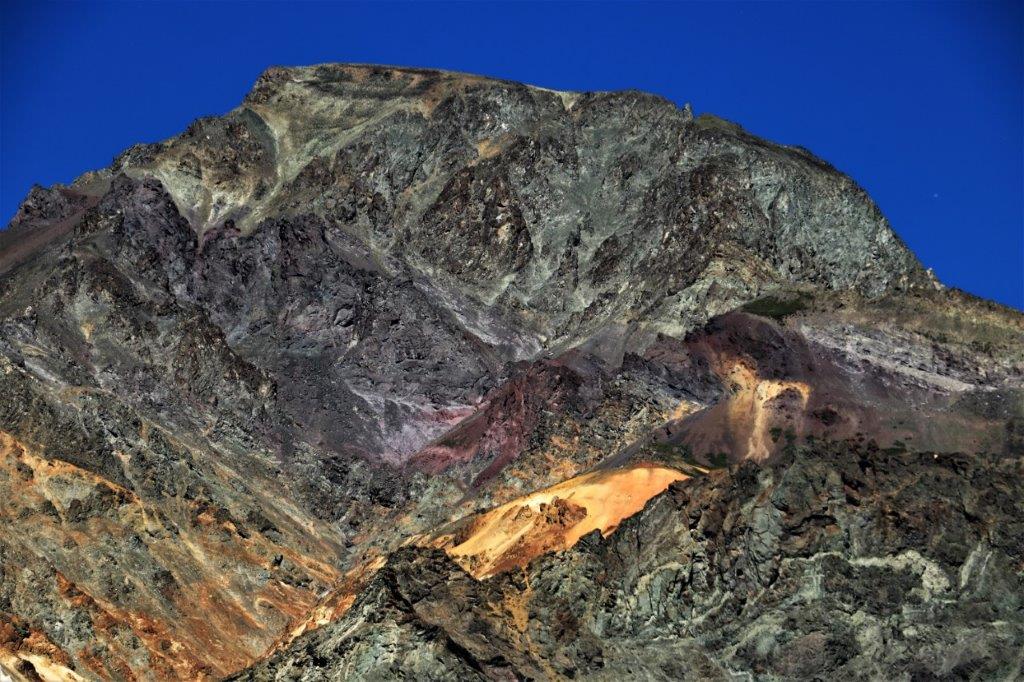
Not far east of Palmer we passed Long Lake, which was beautifully calm. We drove off the main Glenn highway onto the Old Glenn Highway to do a short (16 cache) power trail.  The road was closed but we were able to drive around the barrier and find all of the caches.  They were hidden about 20′ off the road every 150′ or so for two kilometers.  At the end John could probably have inched the truck past the big dirt pile, but there was one cache we had not found on our way in and we wanted to look for it again on the way out – we found it too. All of the rivers up here are laden with silt so there is no blue water.  It is all mud coloured.  This is the Matanuska River. The headwaters for the Matanuska River is Matanuska Glacier, the largest road accessible glacier in America.  It is 4 miles wide at its terminus and extends for many miles back into the Chugach Mountains.  If you choose to drive into the the State Recreation Site you can actually walk on the glacier. The ‘tail’ or terminus of the glacier extends far down the valley.  Most of the dirt on either side of the ice is just dirt covered ice. This was a very long down hill and across the bridge at the bottom before climbing up the other side. Sheep Mountain was very interesting.  Usually when you see orange coloured rocks like this it is from the presence of copper or gold or iron ore.  However the colour here is iron-stained gypsum that was ‘cooked up’ by a volcano from sedimentary limestone.  It is called Sheep Mountain because it is a favourite place of the local Dall Sheep – although we didn’t see any.  I liked this sign on the back of the information board at Sheep Mountain.  This formation is called Lion’s Head, although lots of people, me included, thinks it looks more like a sphinx.  It is the root of a volcano so even though glaciers have come through here several times over the millenia the rock is so hard that the glaciers do not erode it. We turned south on the Richardson Highway just before the community of Glennallen. The Richardson Highway was the first road built in AlaskaNotice the poles on either side of the road.  These are markers for the snow plows in winter.  This area gets 600-900′ of snow each winter!  Yes, you read that correctly.   Quite a bit of the Richardson Highway borders Wrangell-St. Elias National Park and there are four very obvious mountains that you can see for miles as you drive along beside Willow Lake.  They are Mount Sanford, Mount Drum, Mount Wrangell and Mount Blackburn. All of them were partially or fully covered by clouds. This is Mt. Drum.                   I loved the thin ice rim  along the curve of this ridge. 
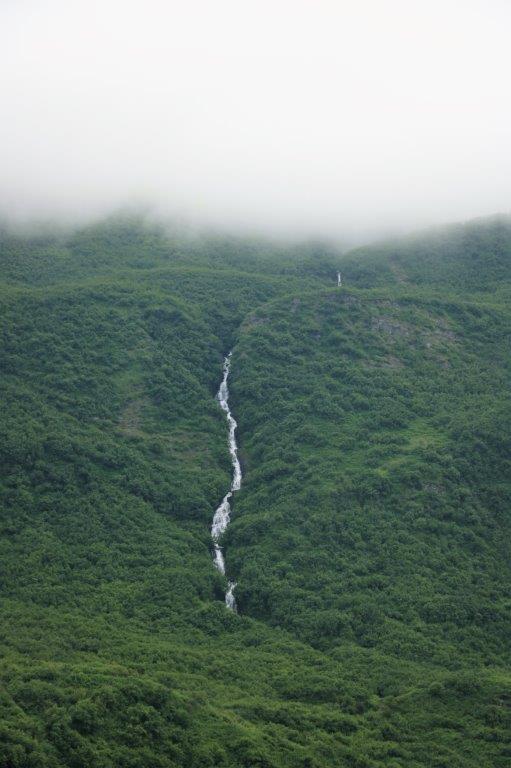
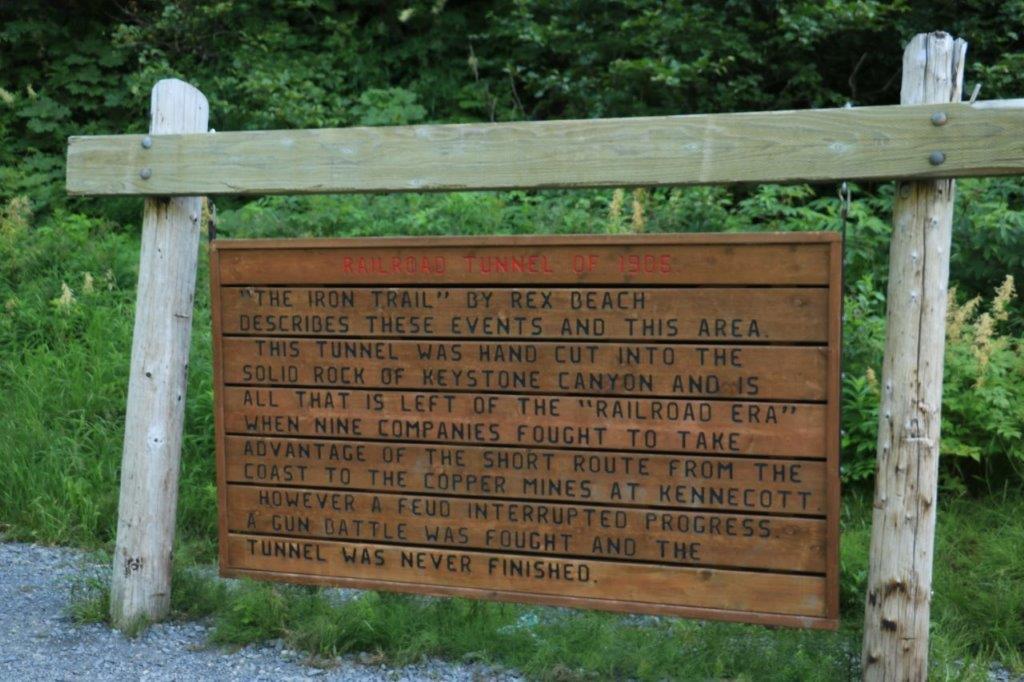
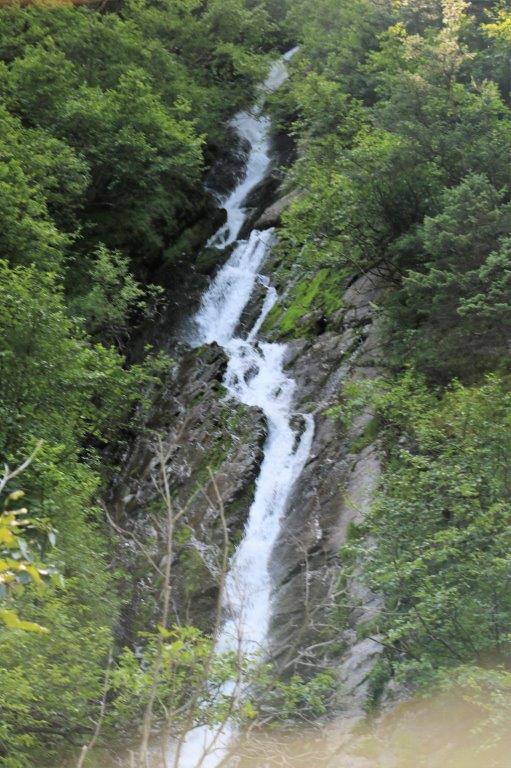
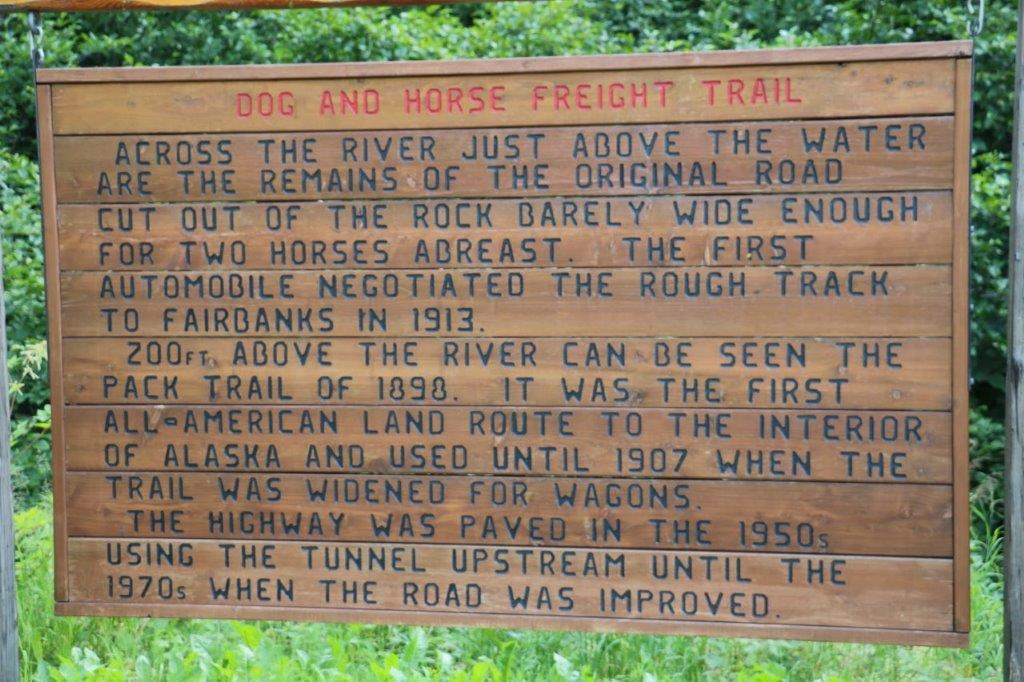
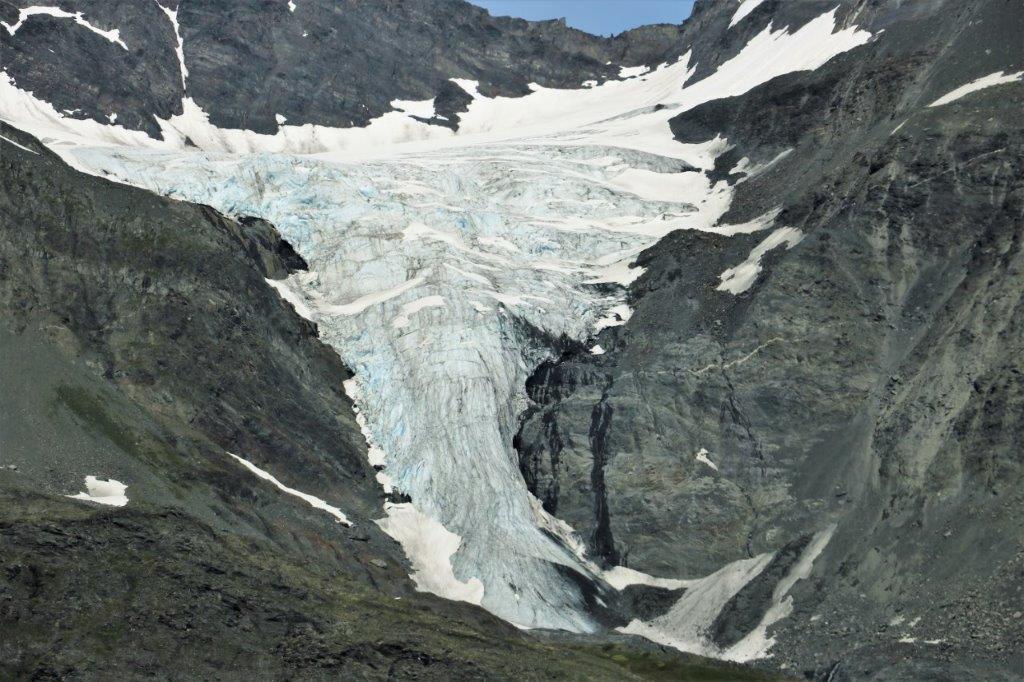
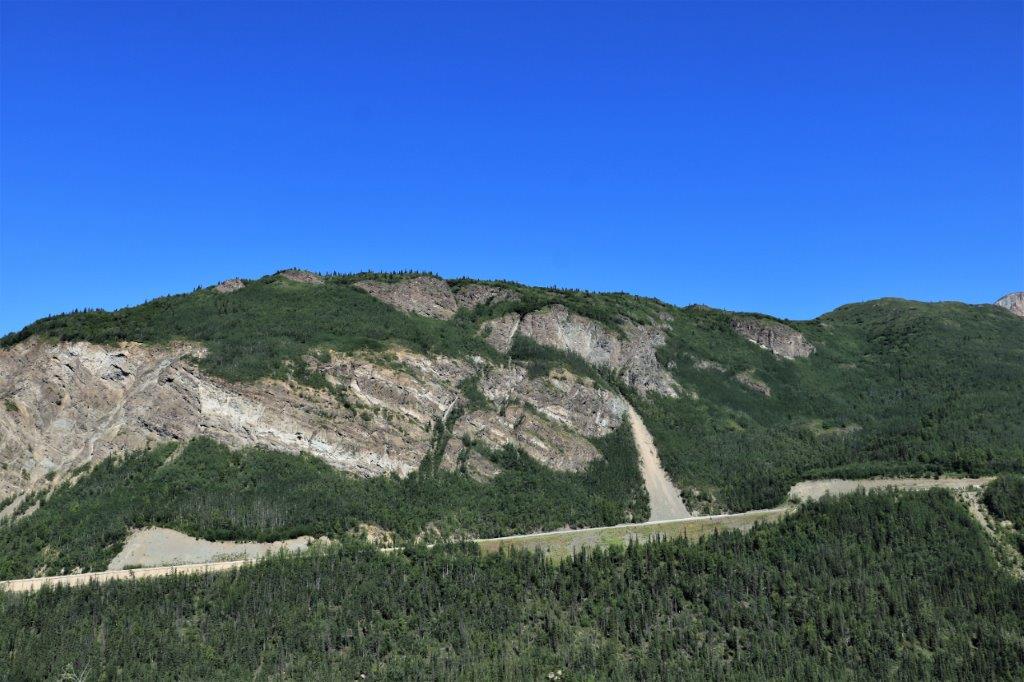
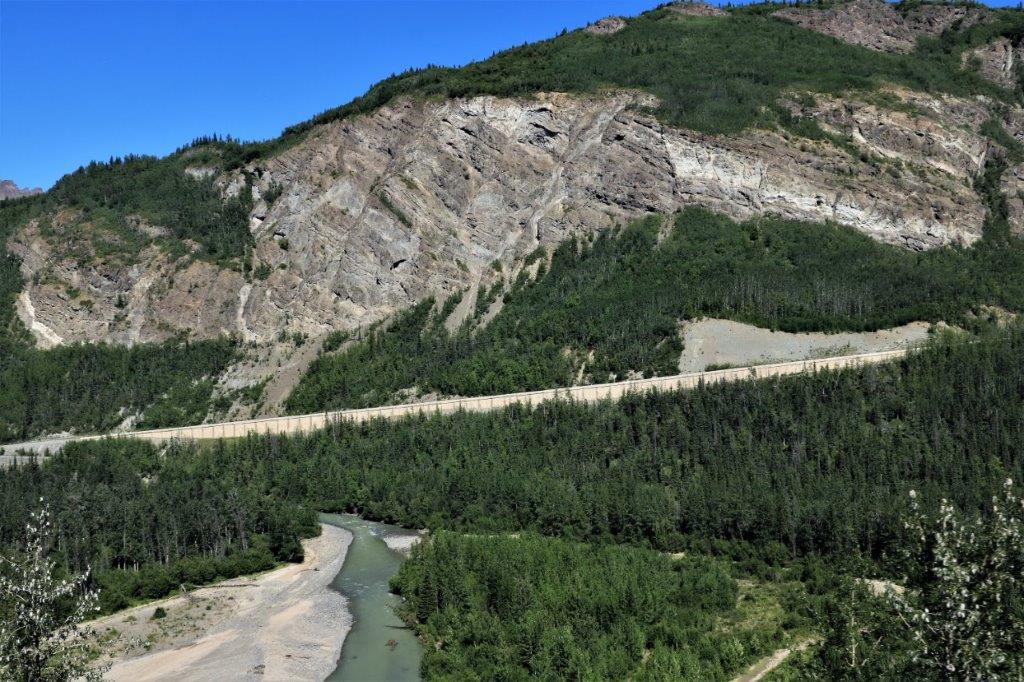
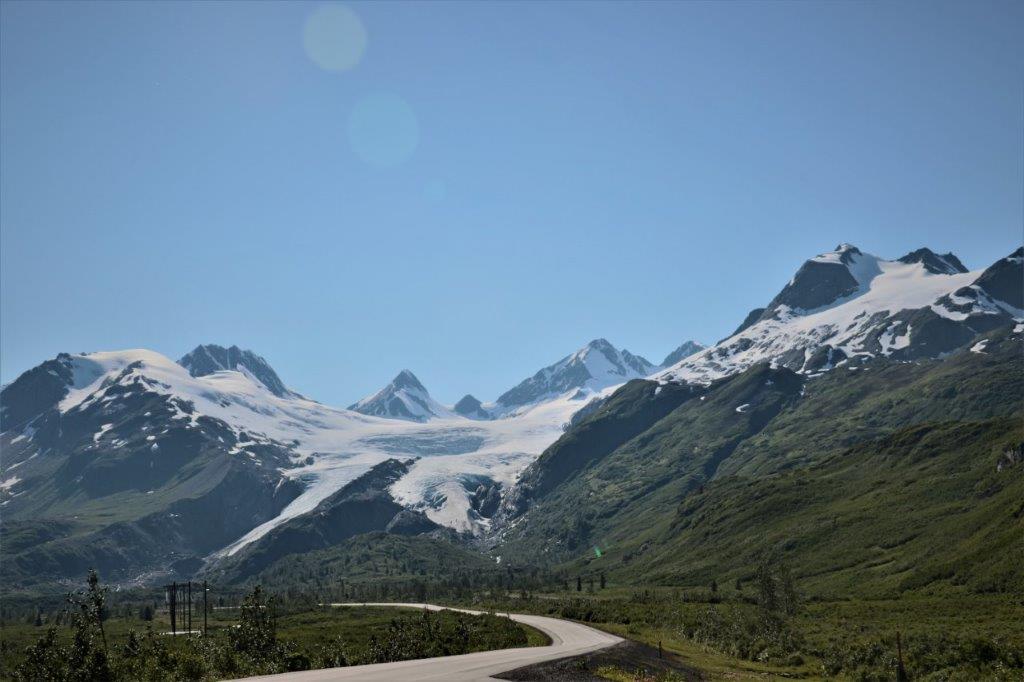
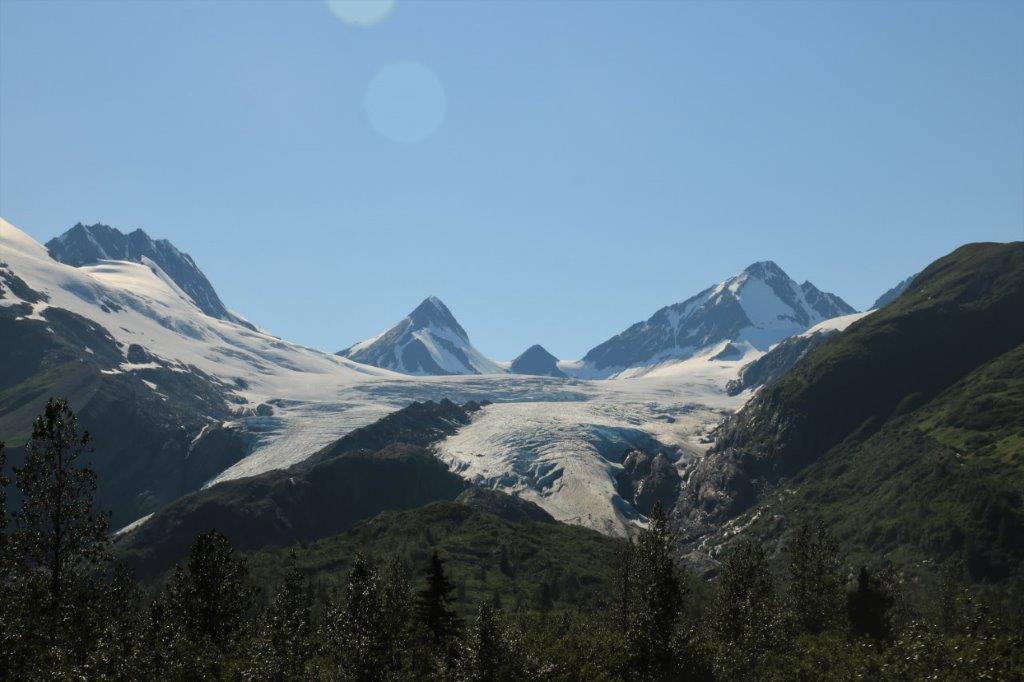
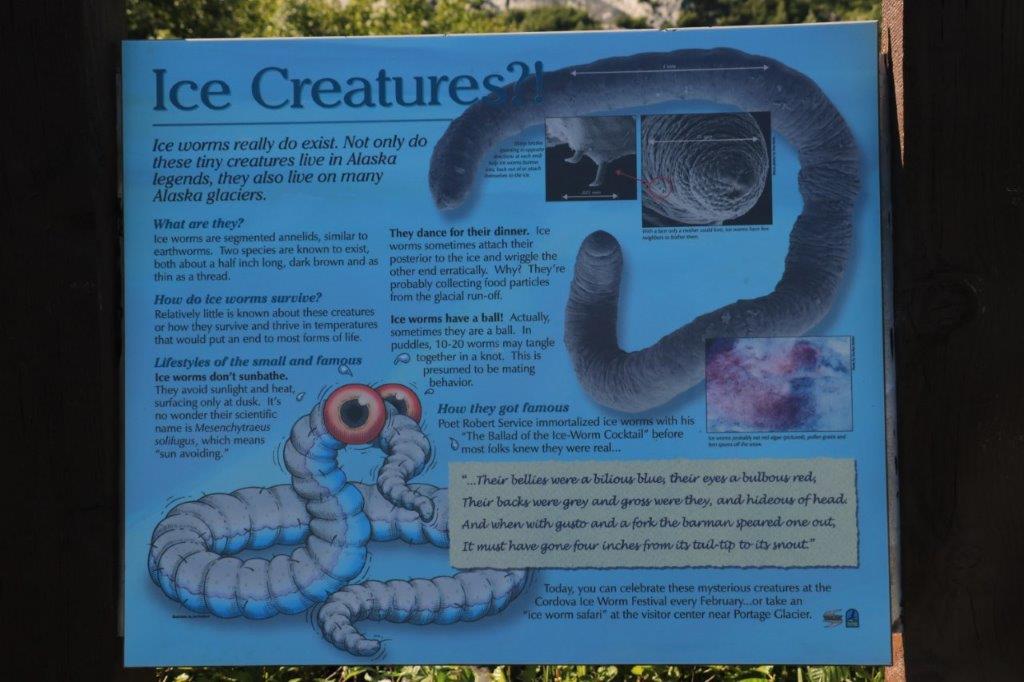
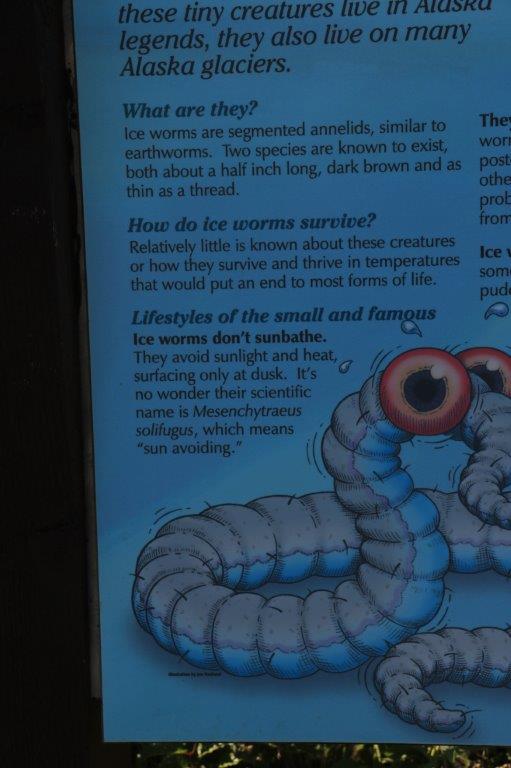
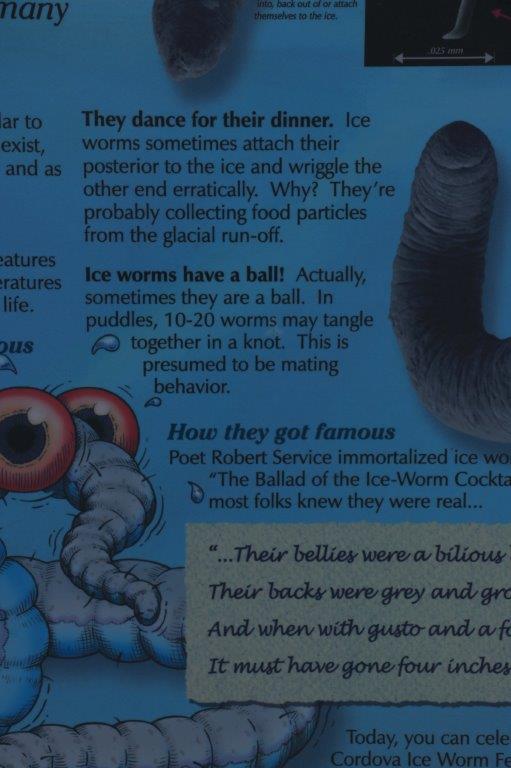
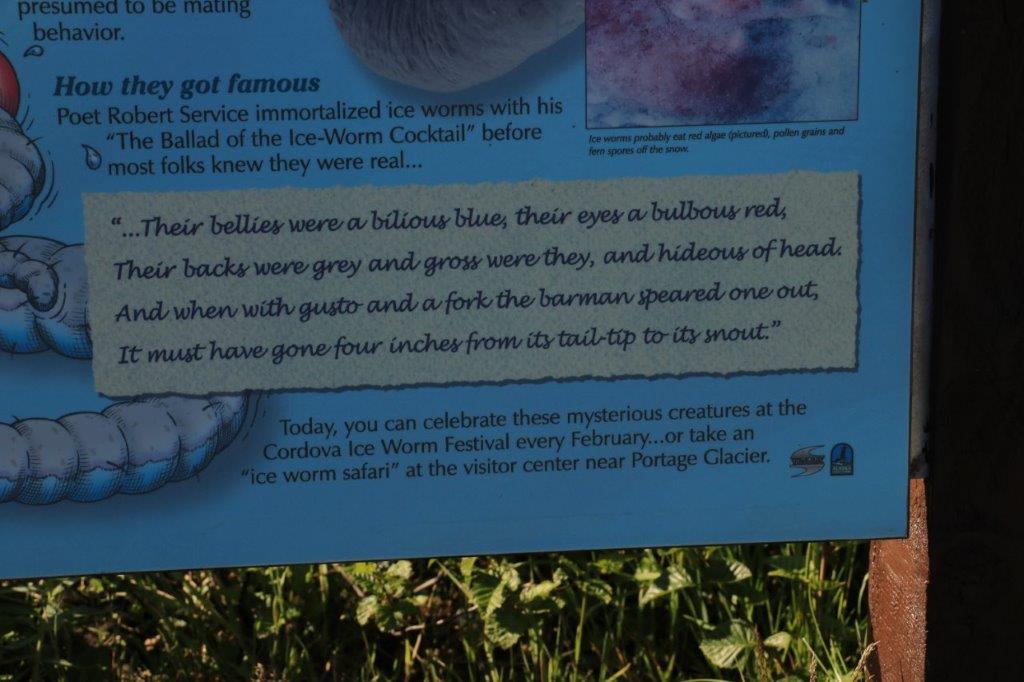
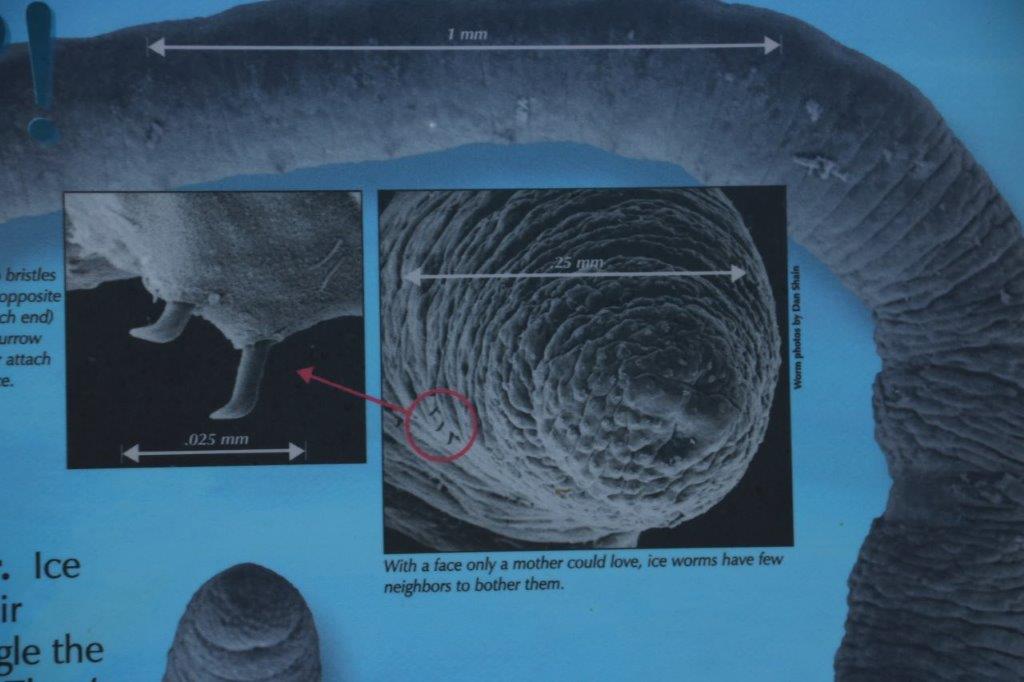
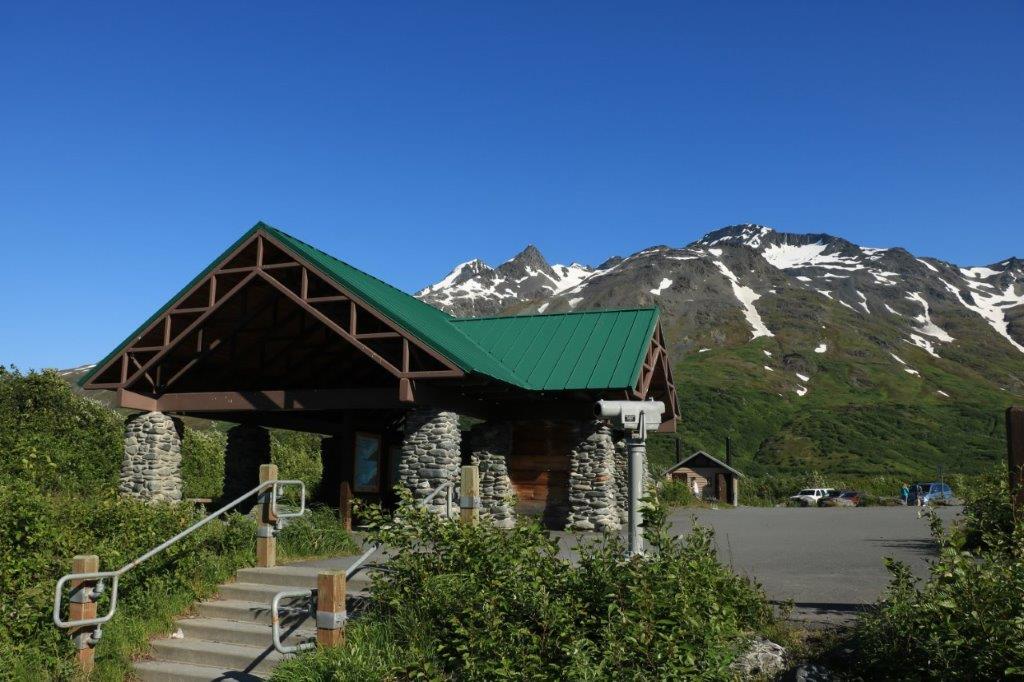
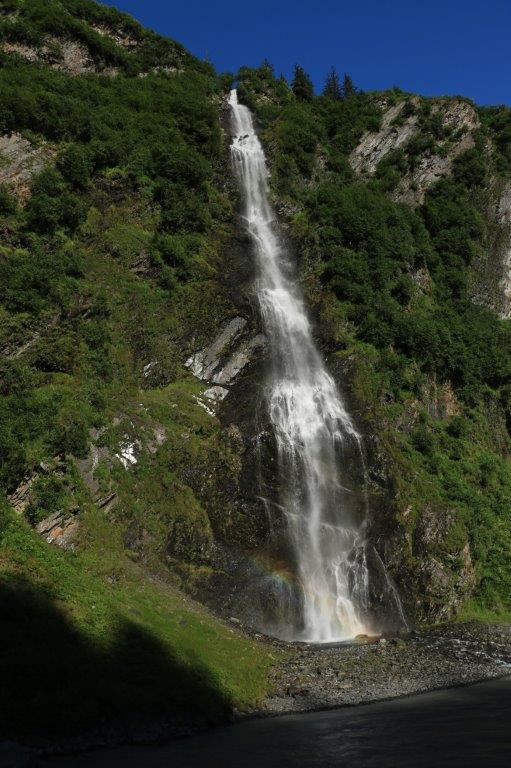
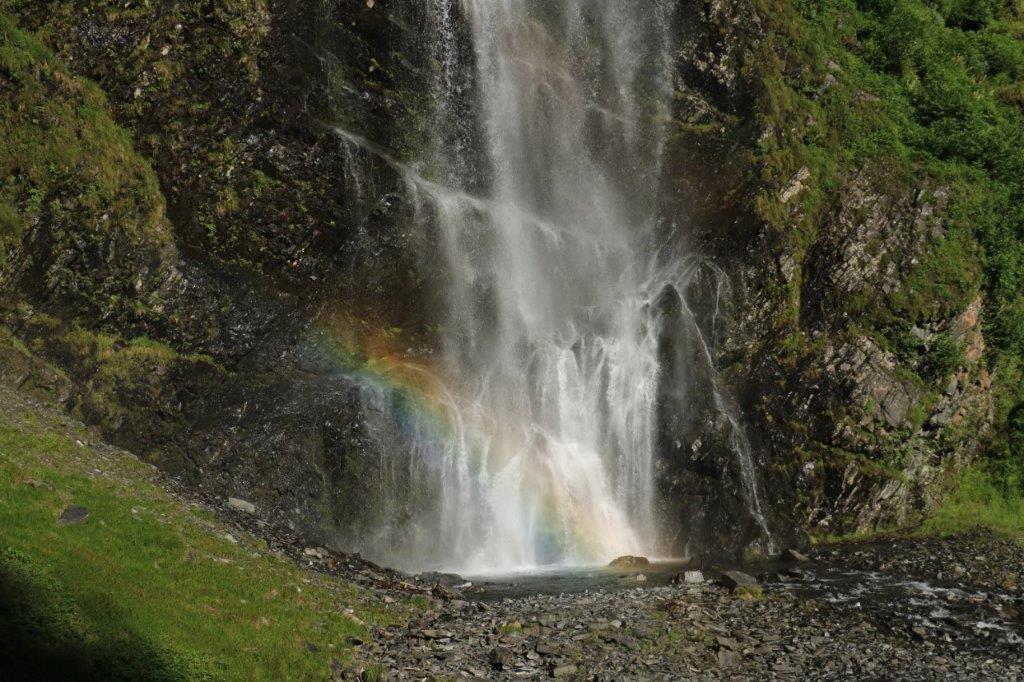
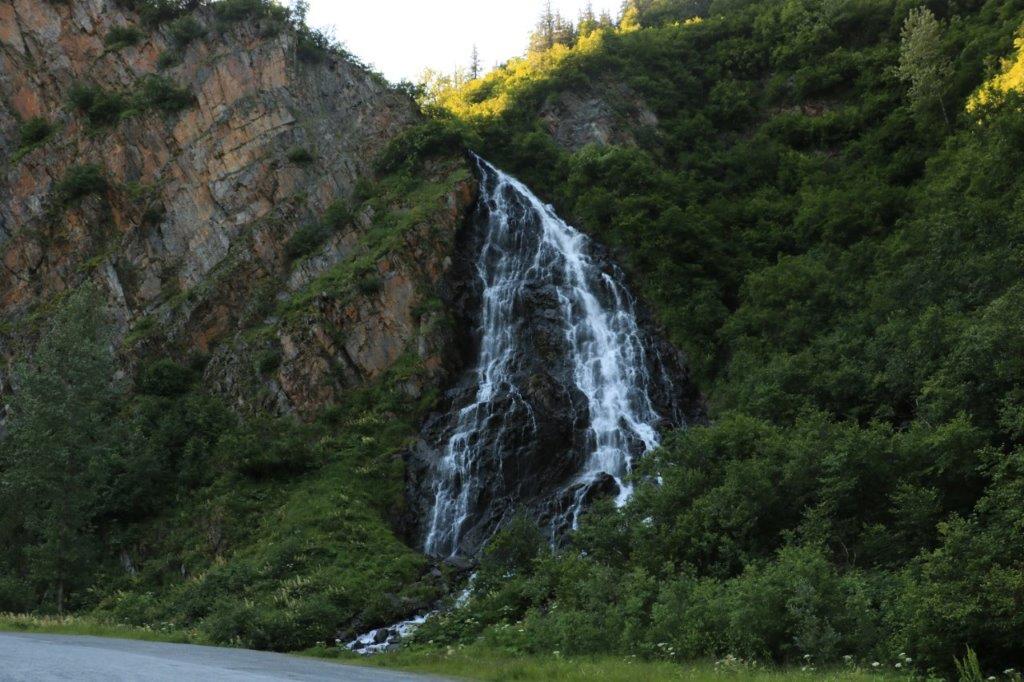
Worthington Glacier is about 29 miles (47 km) north of Valdez and is also a glacier you can take a path to the base of.  We only went as far as the viewpoint, where we learned about ice worms. The original trail through Keystone Canyon into Valdez was called the “Goat Trail.”  The Goat Trail is still visible, high on the mountain walls as you drive through the canyon beside the Lowe River.  The route through Thompson Pass and Keystone Canyon were old Native trails that were used to build a safer road into Copper Valley. There are two nice waterfalls about 12 miles (19 km) from Valdez.  Bridal Falls is first.

Right around the corner is Horsetail Falls.We arrived in Valdez at 6:30.  We had hoped to get in a bit earlier so we could do some exploring of the town, or perhaps visit the museum, but the time we spent finding the geocaches ate it up. Which was okay with us as it was nice to just spend some time doing something other than driving and sight seeing.  All in all, you can chalk it up to another wonderful day in the 49th State.

2018 July 19 – Seward to Palmer, AK

We left Seward on the eastern side of the Kenai peninsula and drove back up the Seward Highway, around Turnagain Arm, through Anchorage and east to Palmer, which is our overnight stop on the way to Valdez.

We woke to a totally overcast sky which we were sad about as the weatherman (fickle person that he is) had said sunshine for the next four days.  However, we needn’t malign the poor guy too much as the sun came out before we had driven too many miles and we had a third glorious day in a row.                                                            Kenai Lake

John pulled into a side road so he could take a photo of the mountain he could see on his side of the truck.  I was happy because I wanted a photo of the mountain I could see out of my side. One of our geocache stops had us wading through six-foot high grass.  It may be a short growing season up here, but the plants certainly make the most of it.

Summit Lake was covered in pollen from the poplar trees. The effect was certainly pretty with the reflections. I find that I am still not tired of seeing all of the lovely mountains that Alaska has to offer, but today our main event was critters.

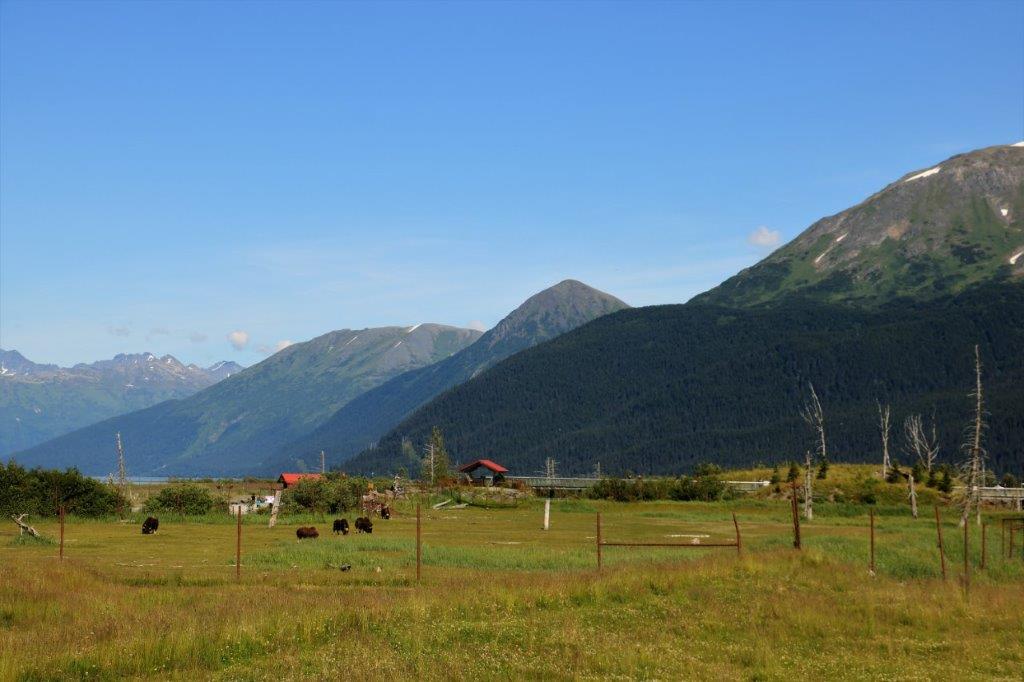
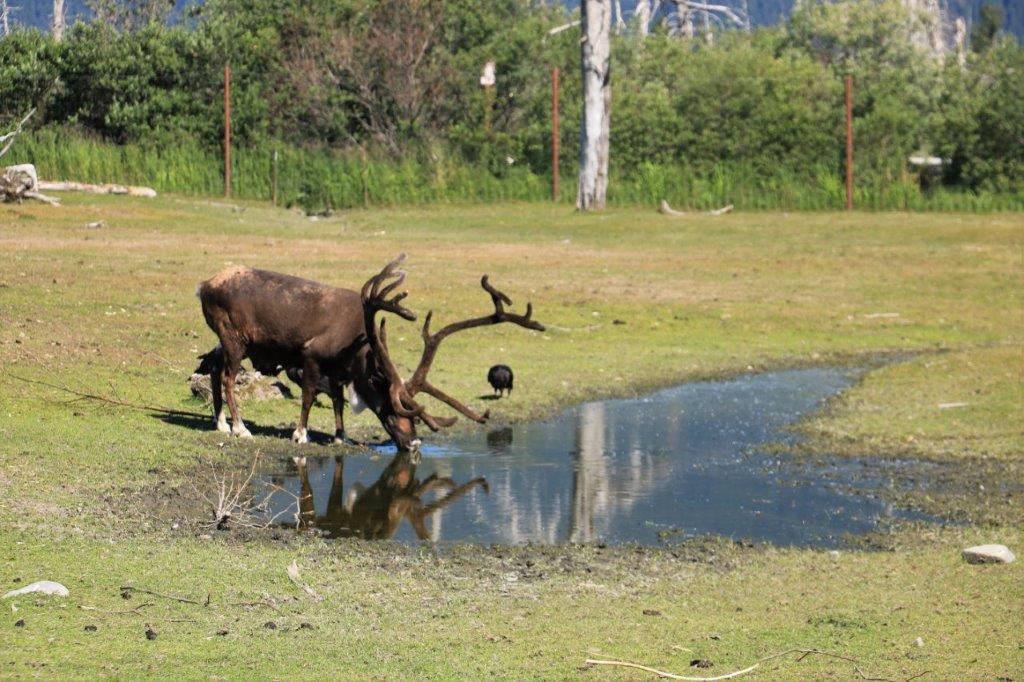
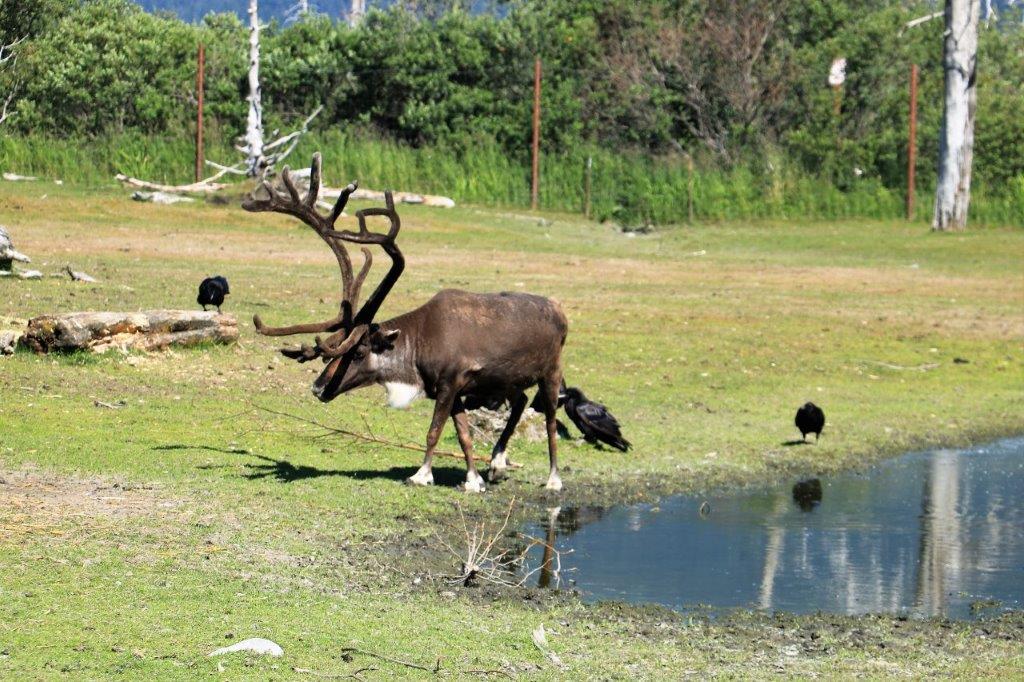
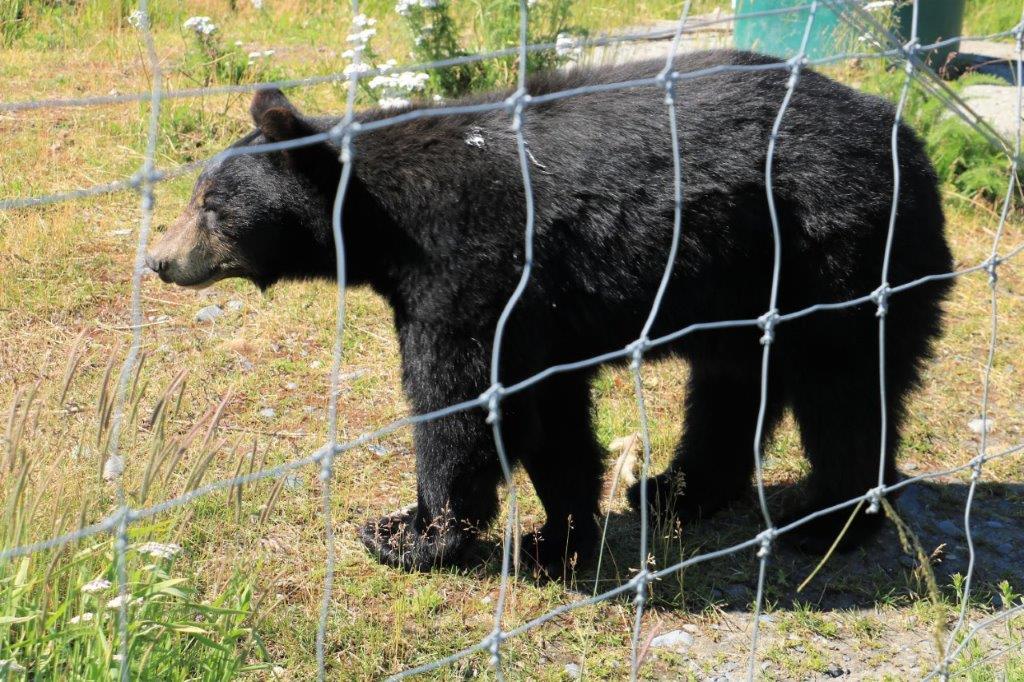
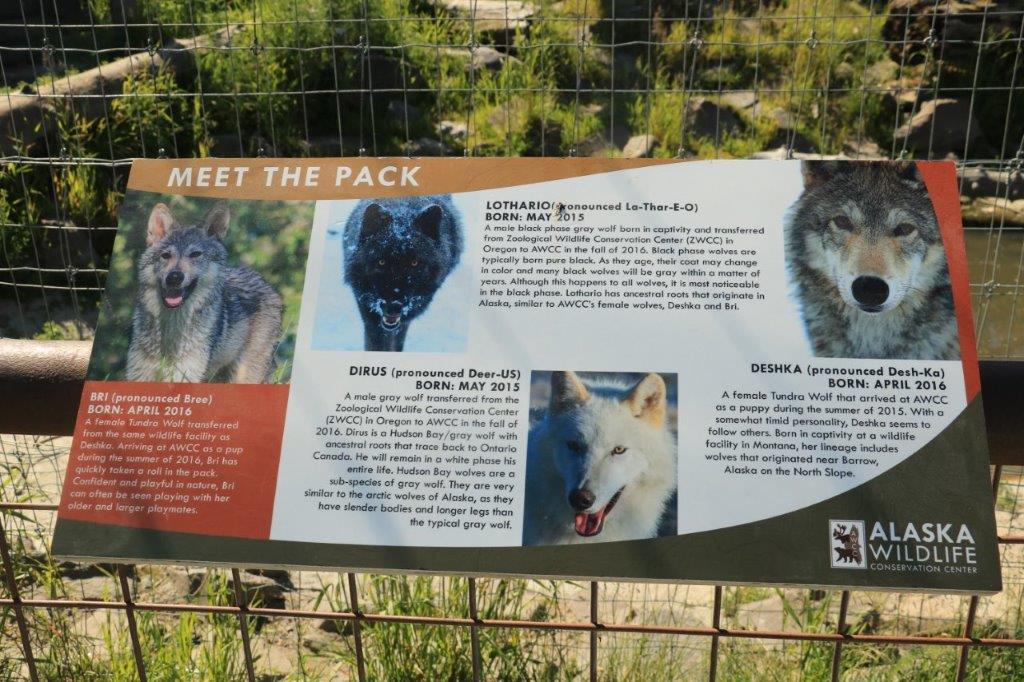
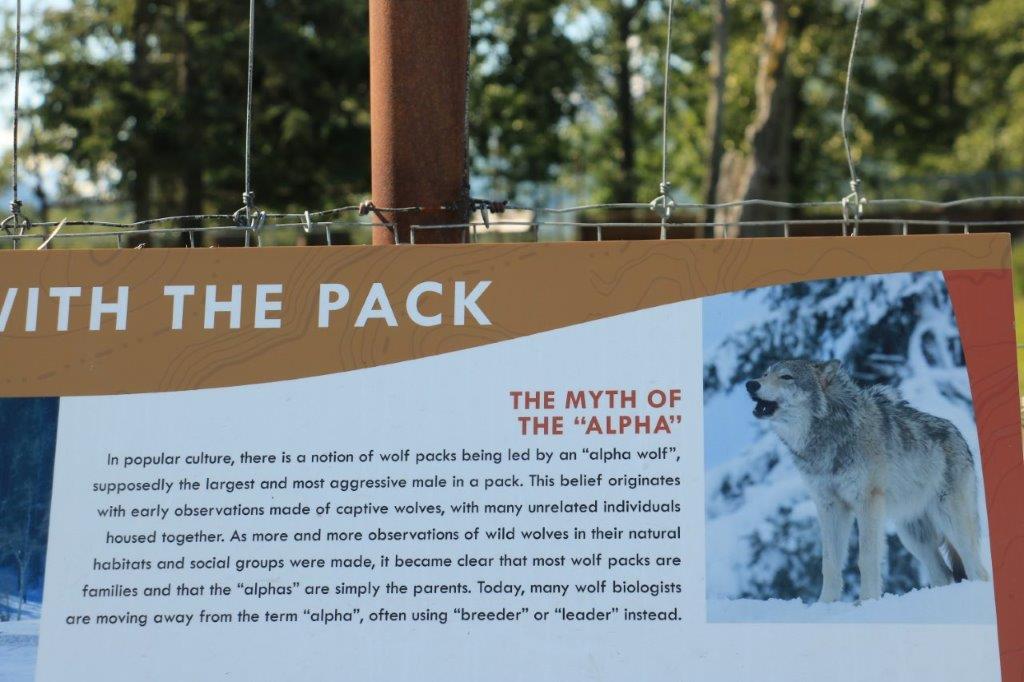
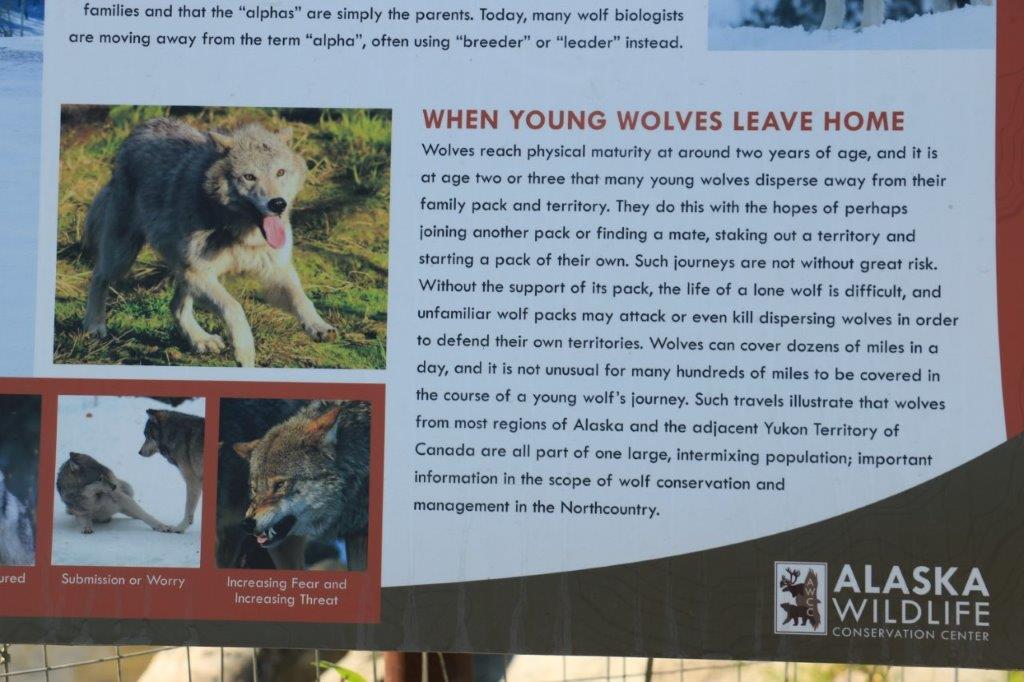
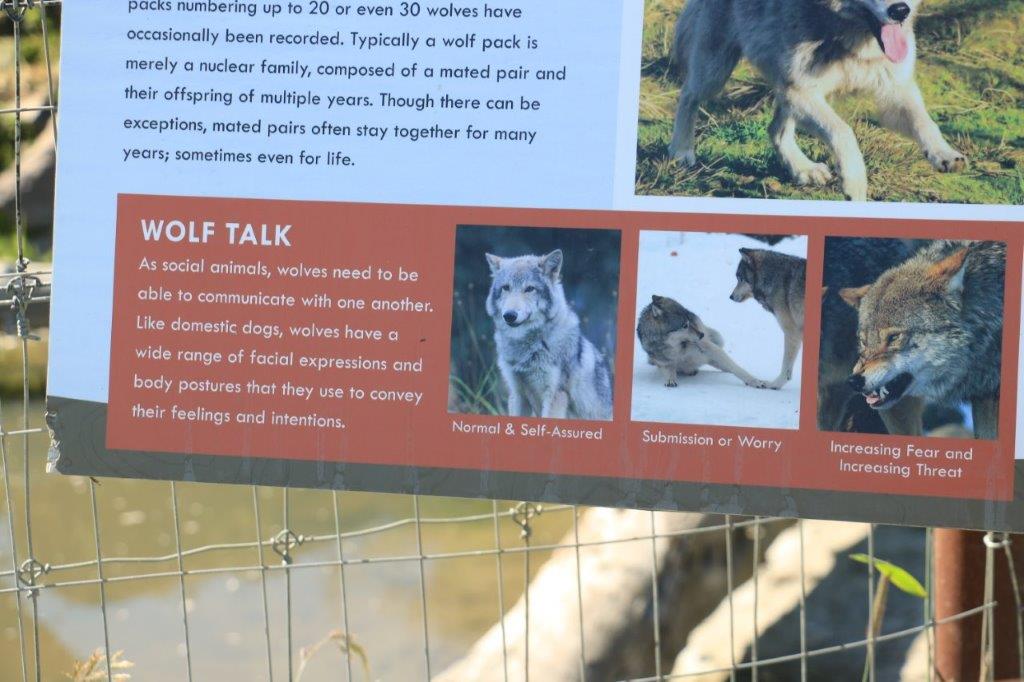
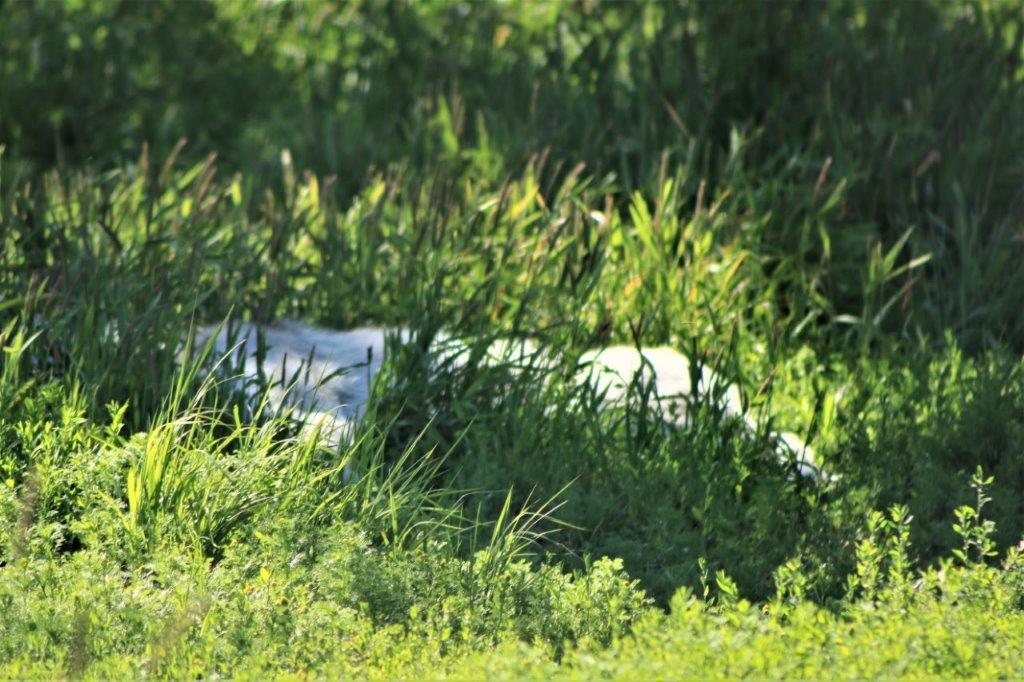
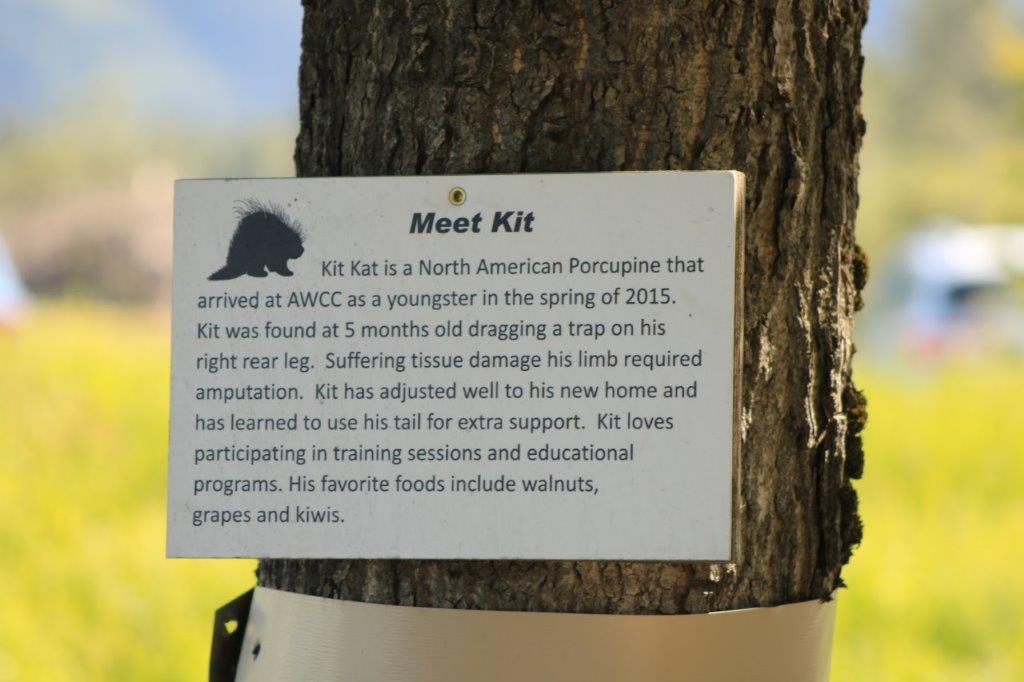
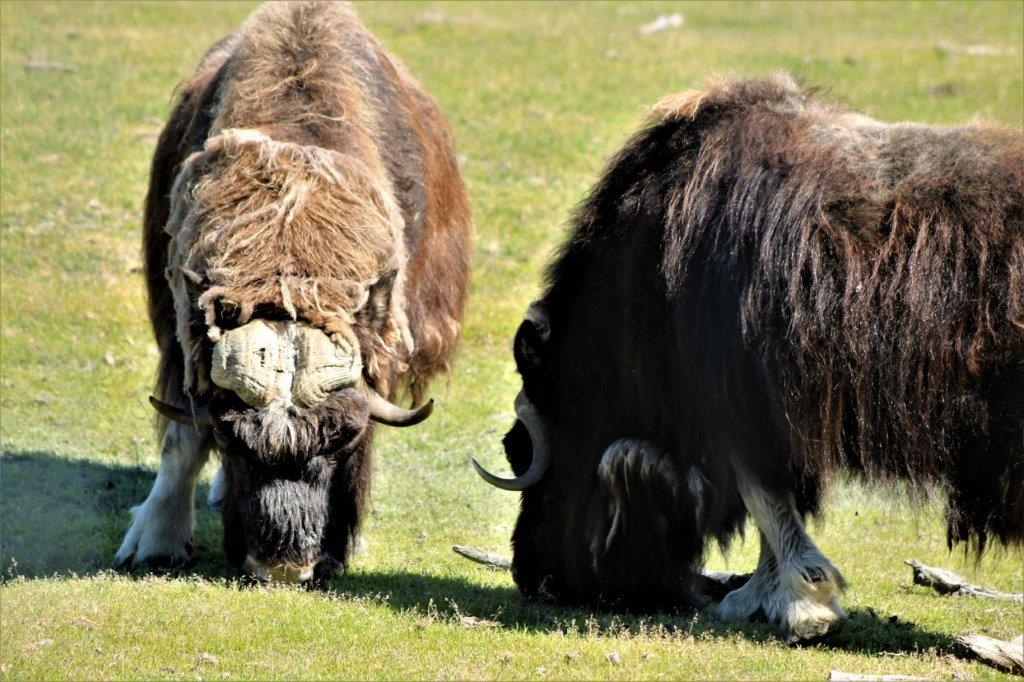
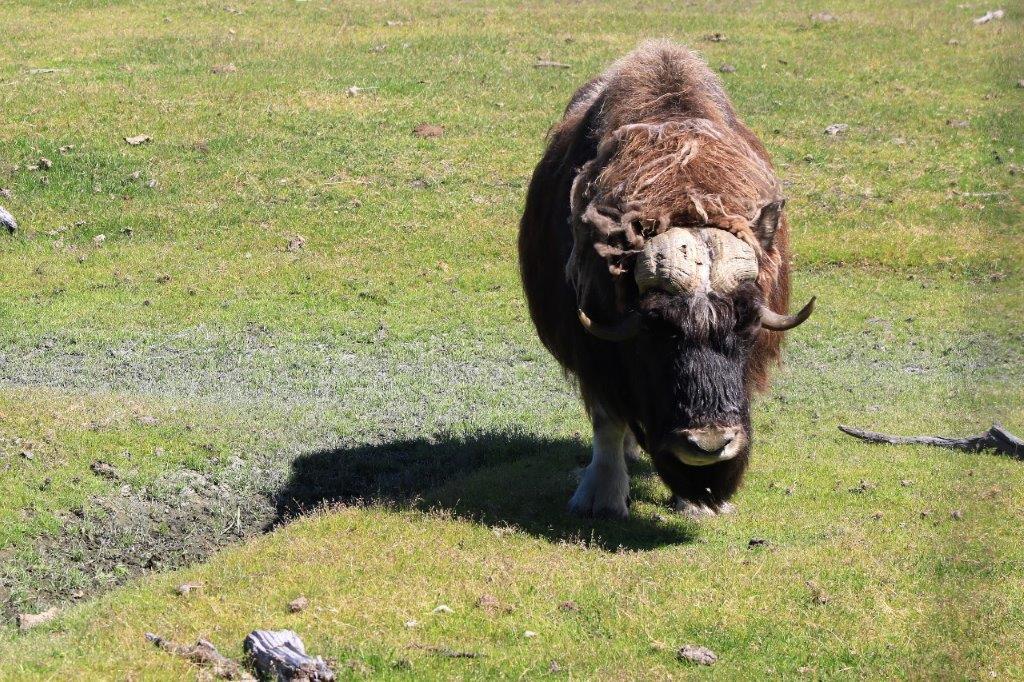
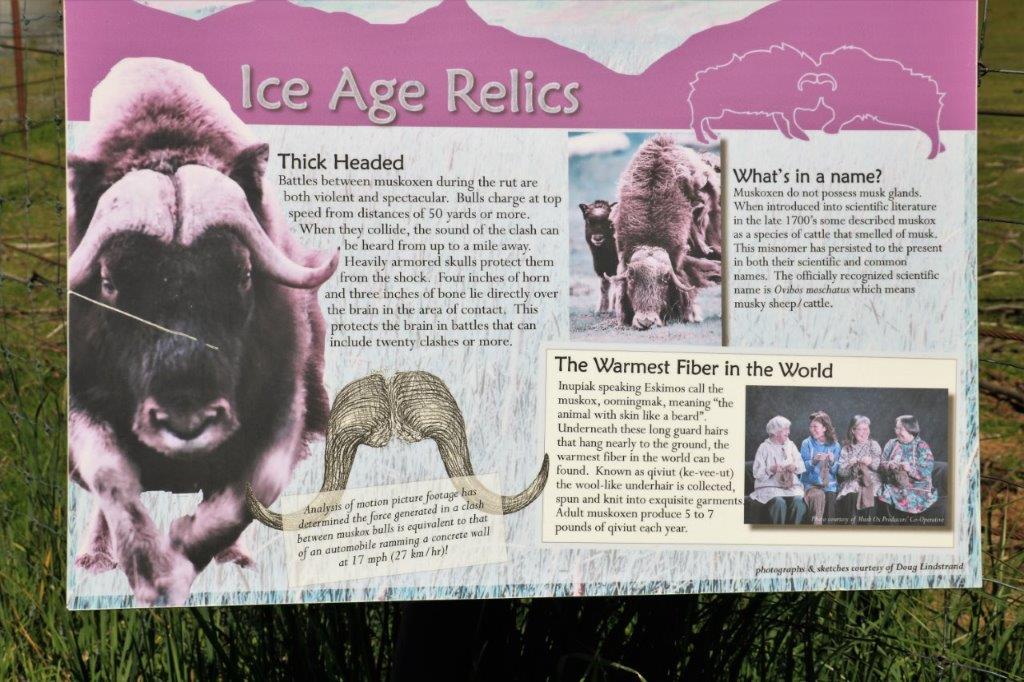
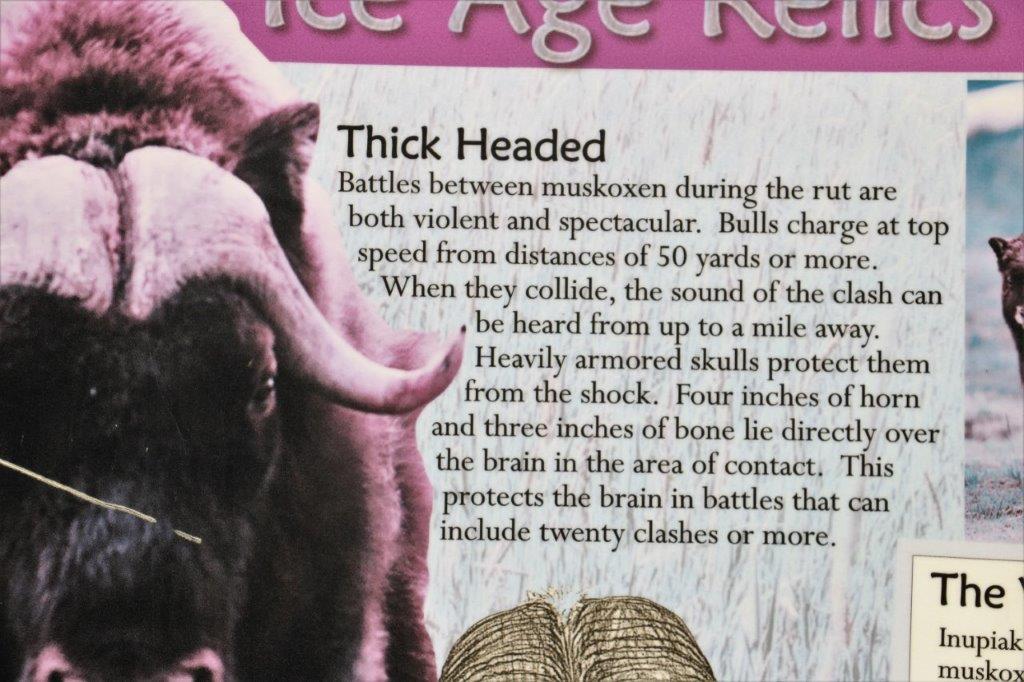
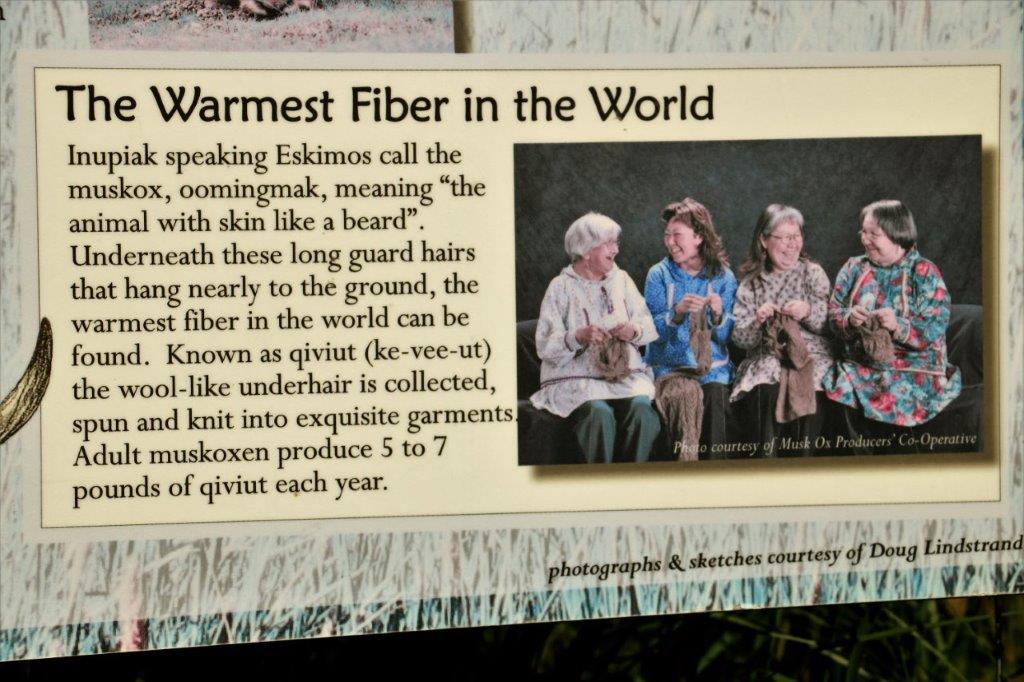
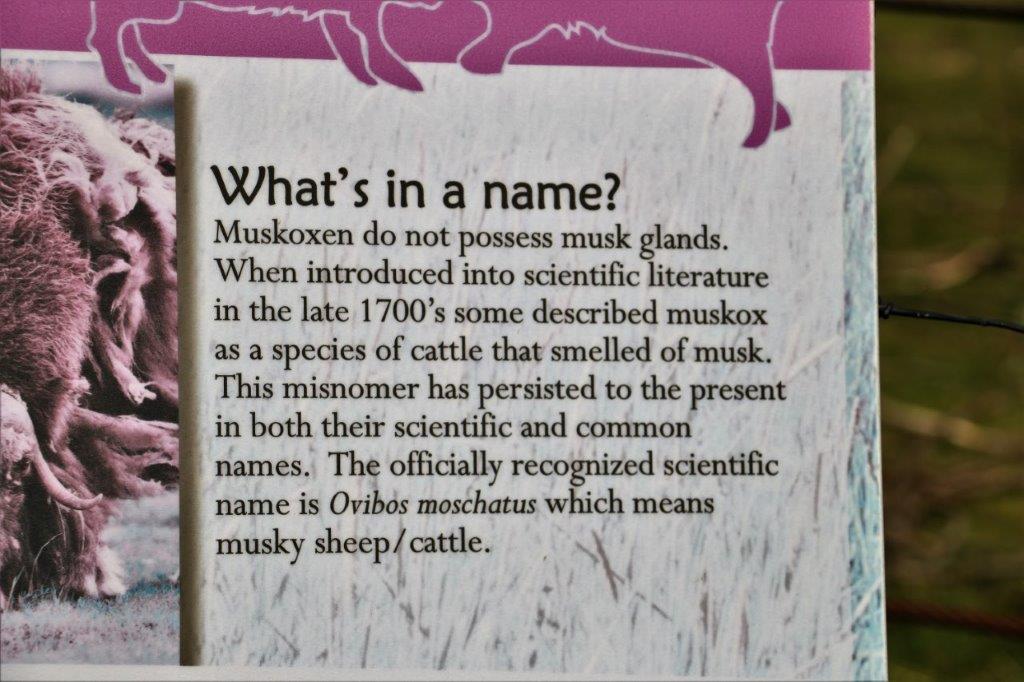
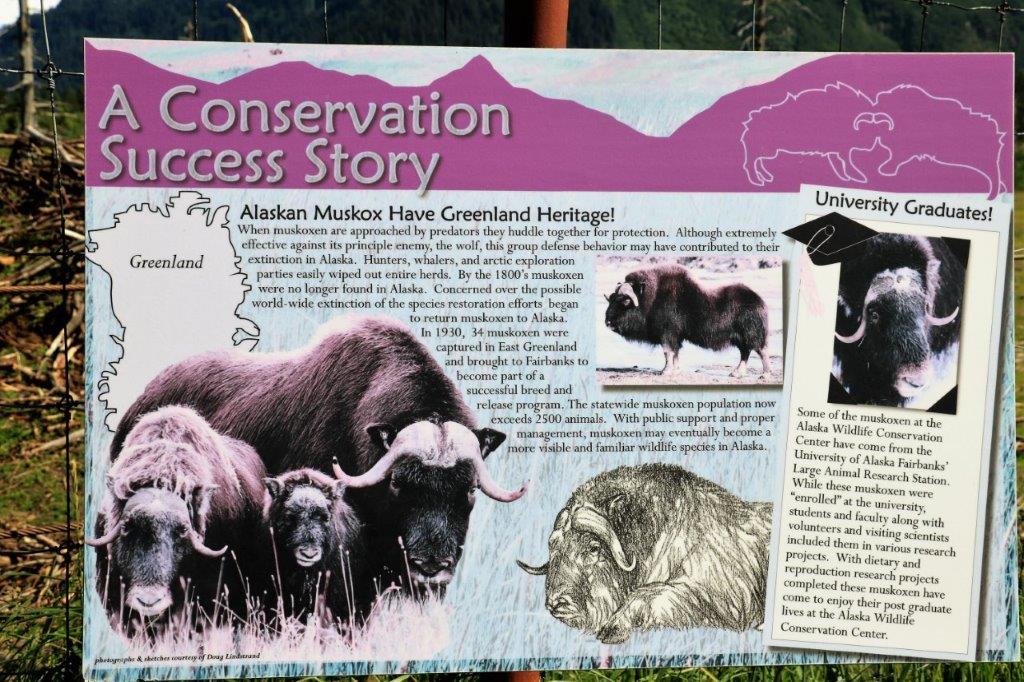
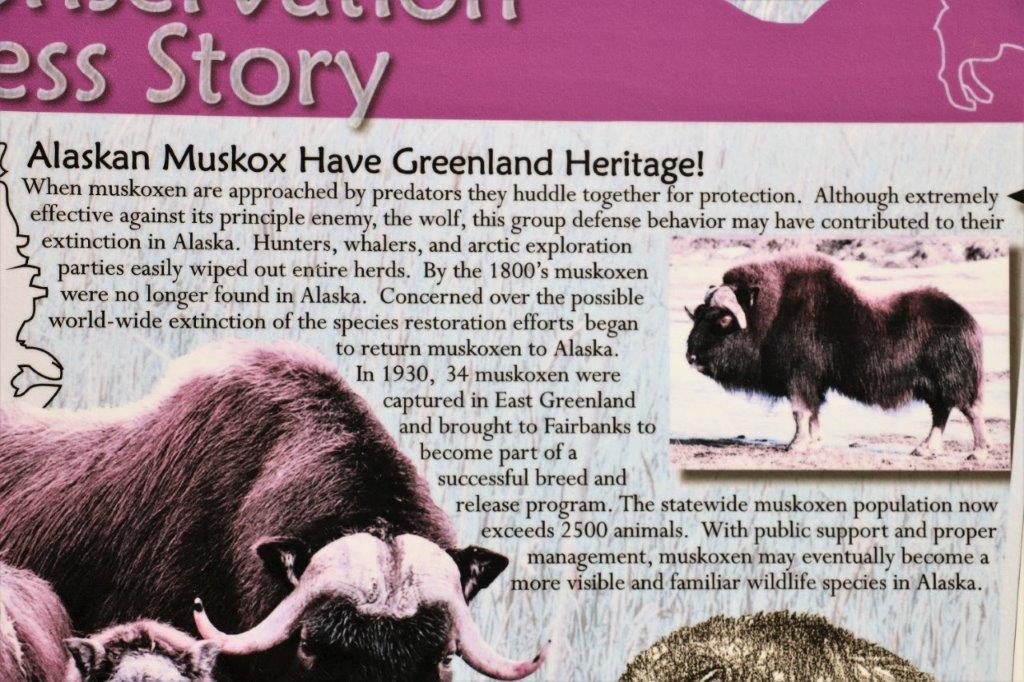
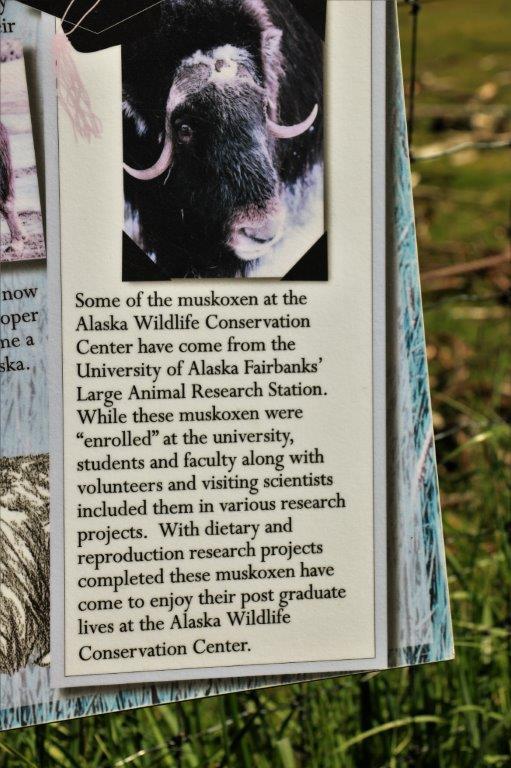
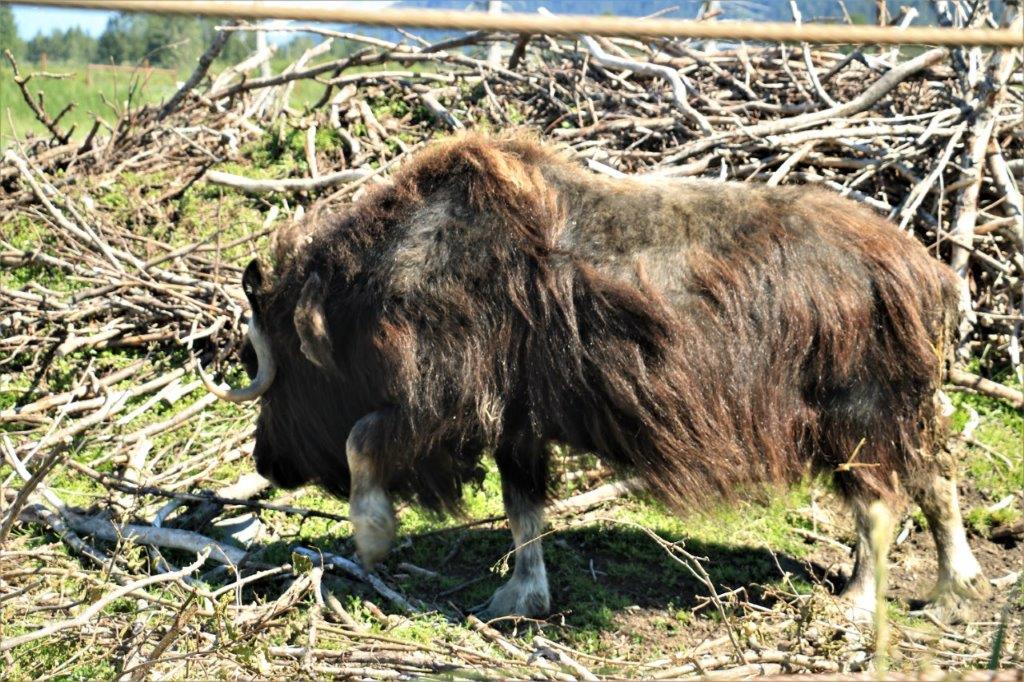
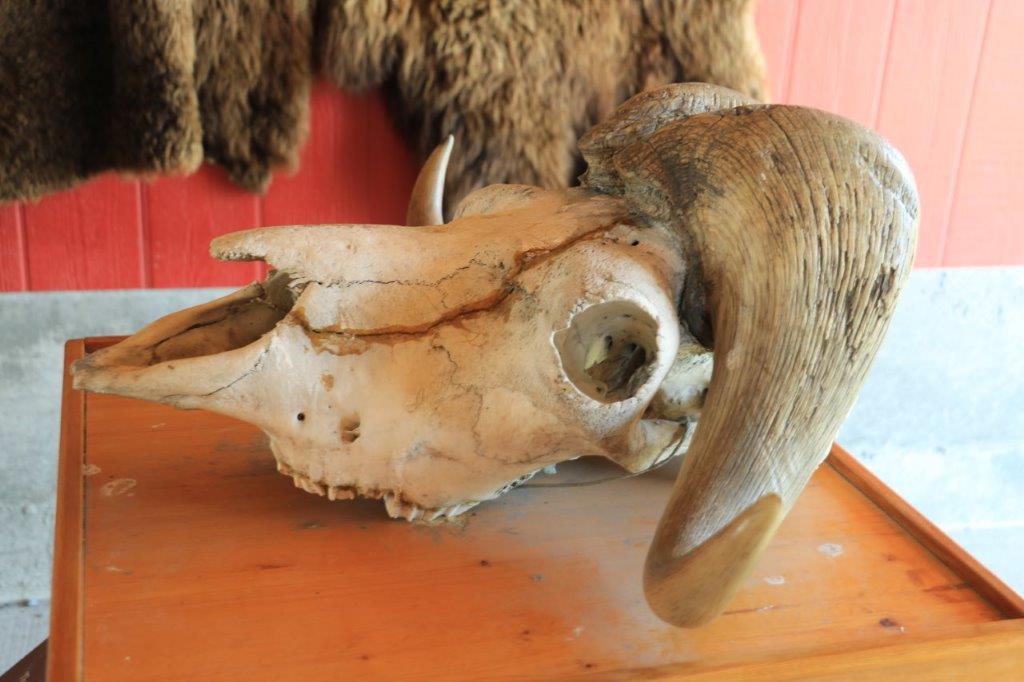
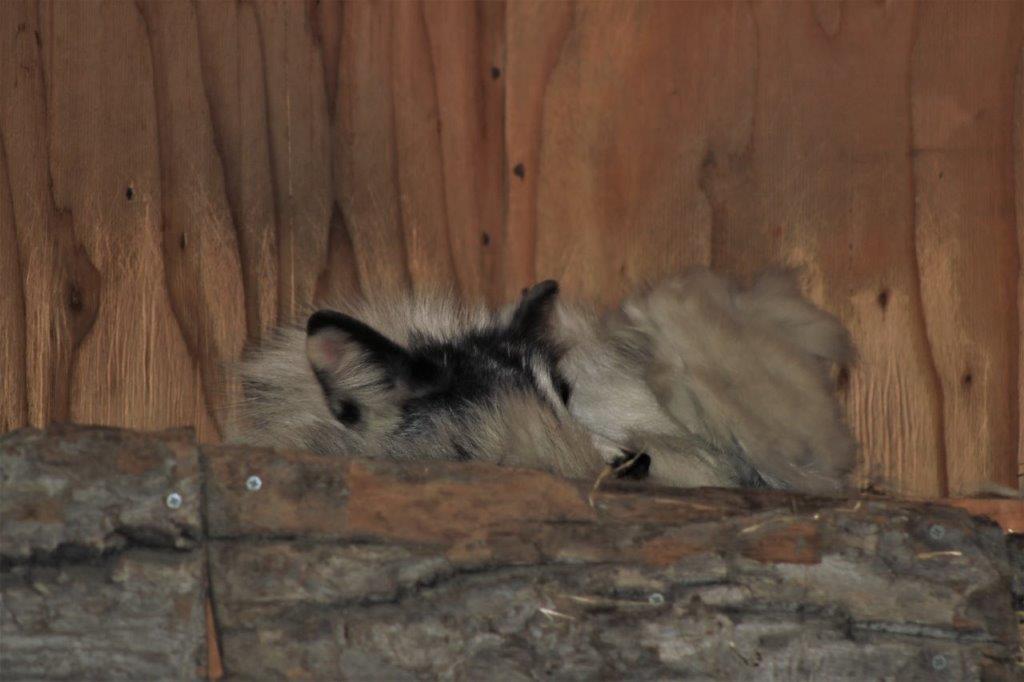
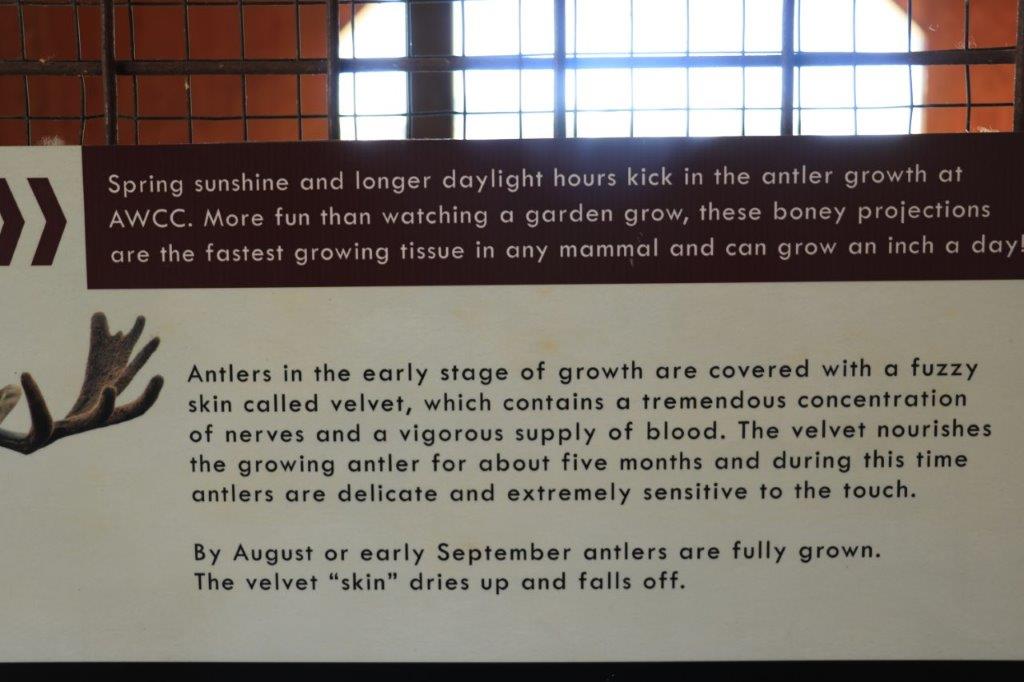
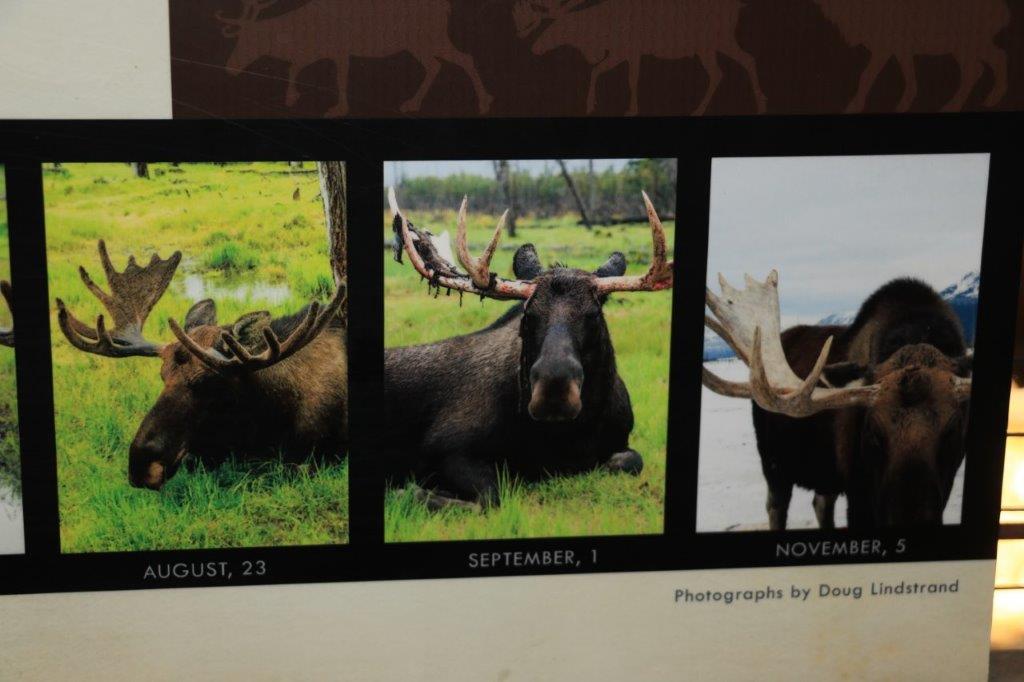
Right at the end of Turnagain Arm is the Alaska Wildlife Conservation Center; a private drive-through preserve and animal rescue.  We didn’t drive through of course, we walked the route to see the animals better.    Reindeer or Caribou, whichever you wish to call them.  Reindeer sausages are a popular breakfast choice in Alaska.This young black bear was orphaned and brought to the center about five months ago.  When he has matured a bit more he will be put into the larger enclosure with the other two black bears. This was a good a view of the wolf pack we got.  All four of them were sound asleep in the shade of the tall grass of their enclosure.  John and I were both surprised at how small Muskox are.  From films and photos of them we thought they were larger animals.  They only stood about 4 feet tall. The fox was also having his afternoon nap.  There is a lynx at the center as well, but we didn’t spot it anywhere; which isn’t surprising as they are very anti-social and like to be alone.Look at the dates under each of the photos below to see how quickly moose antlers grow each year.

They finally get them grown, get the velvet off them, and promptly shed then to start over next year.

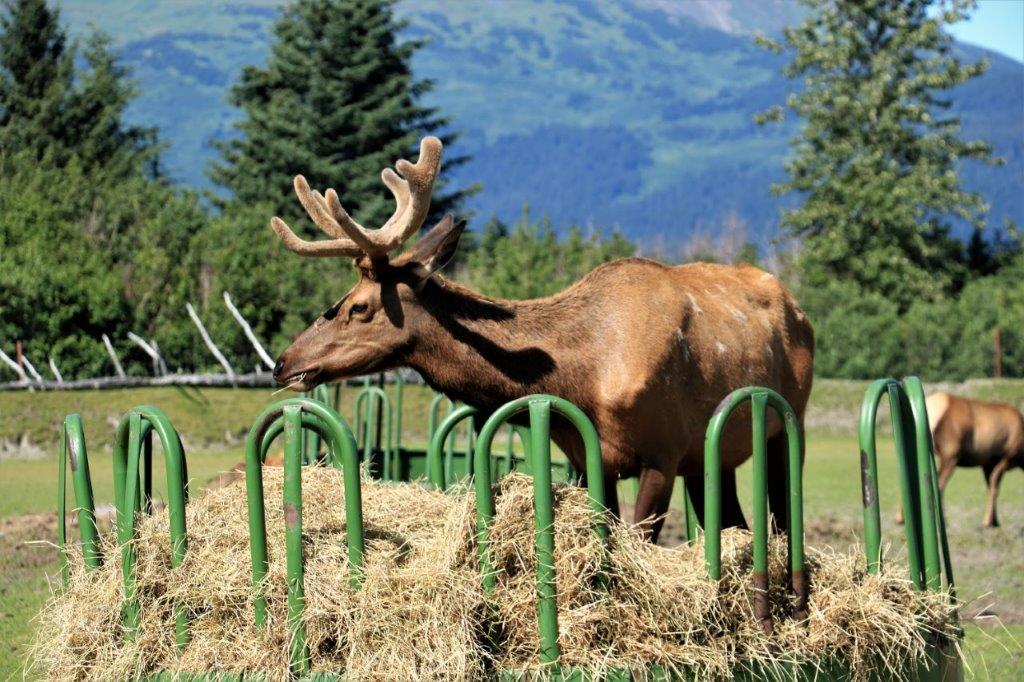
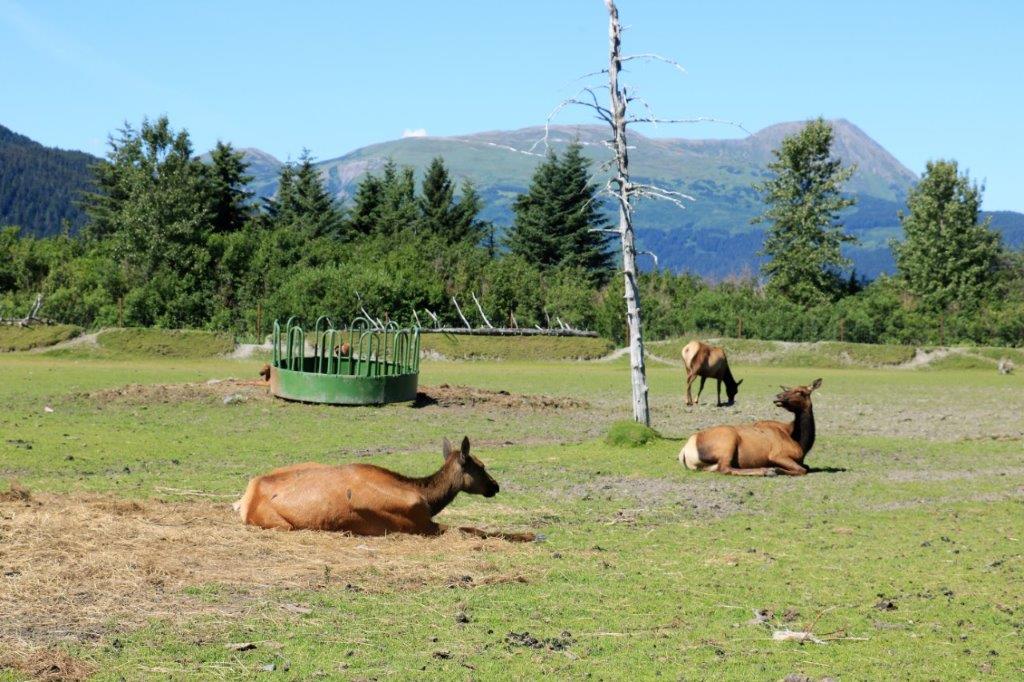
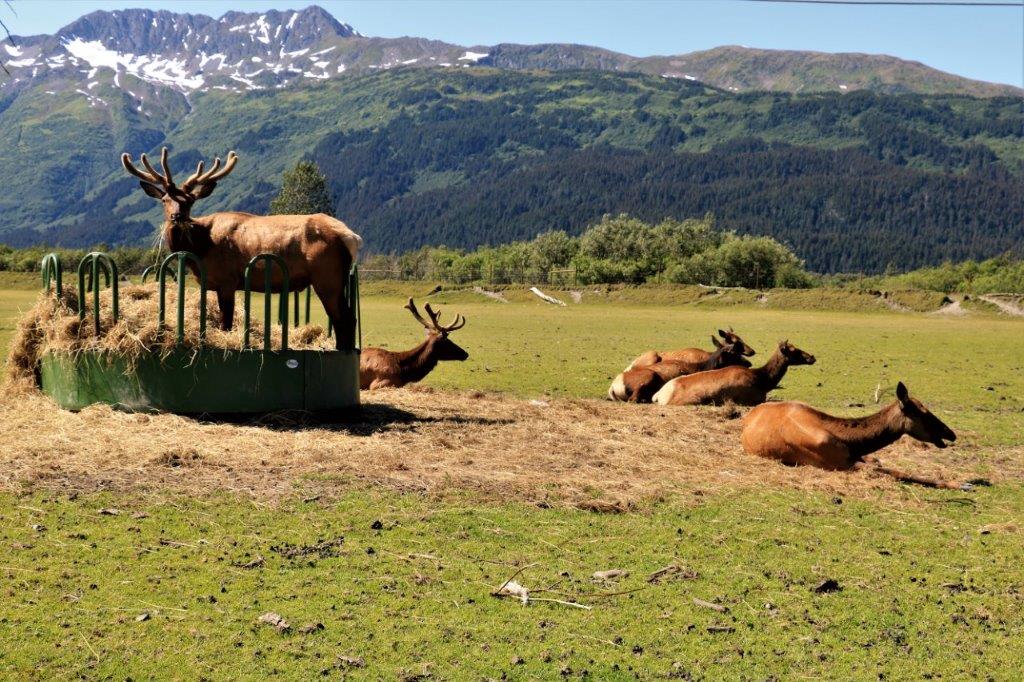
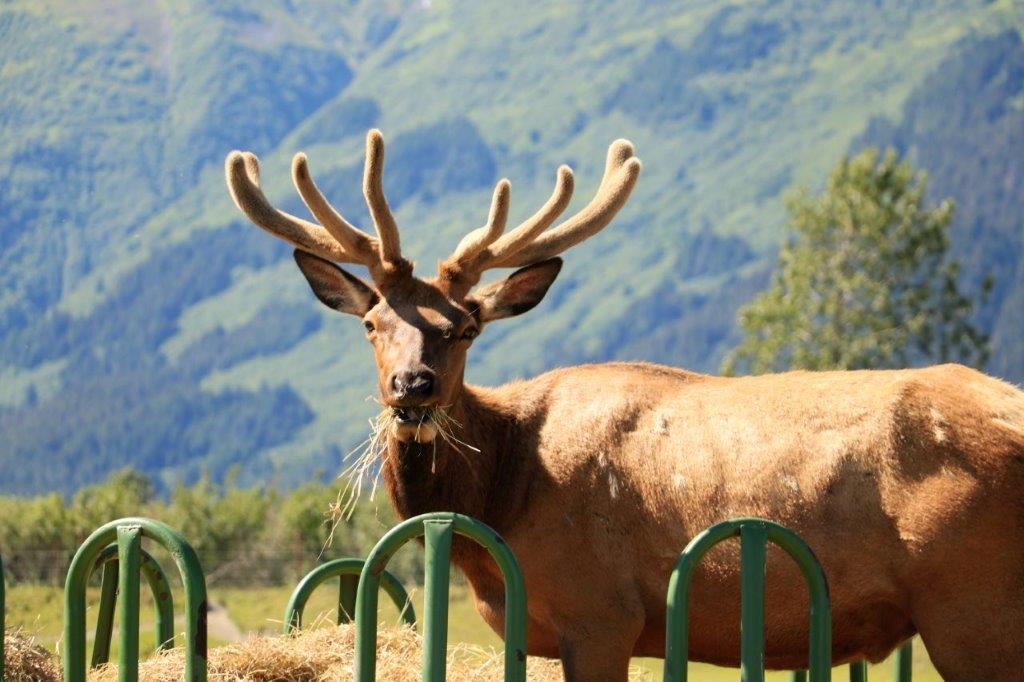
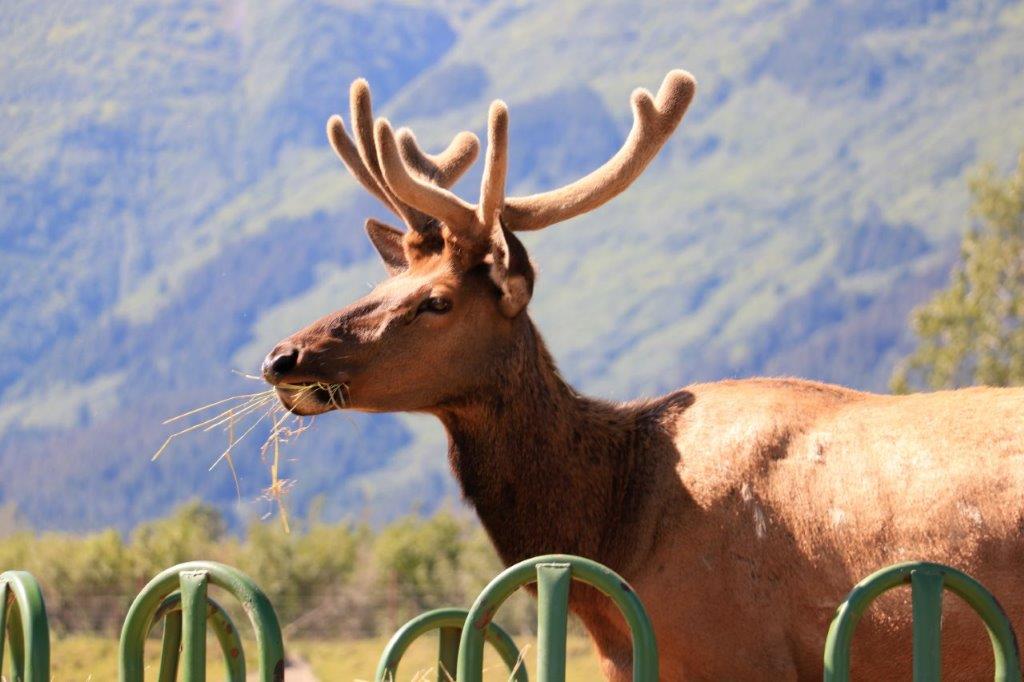
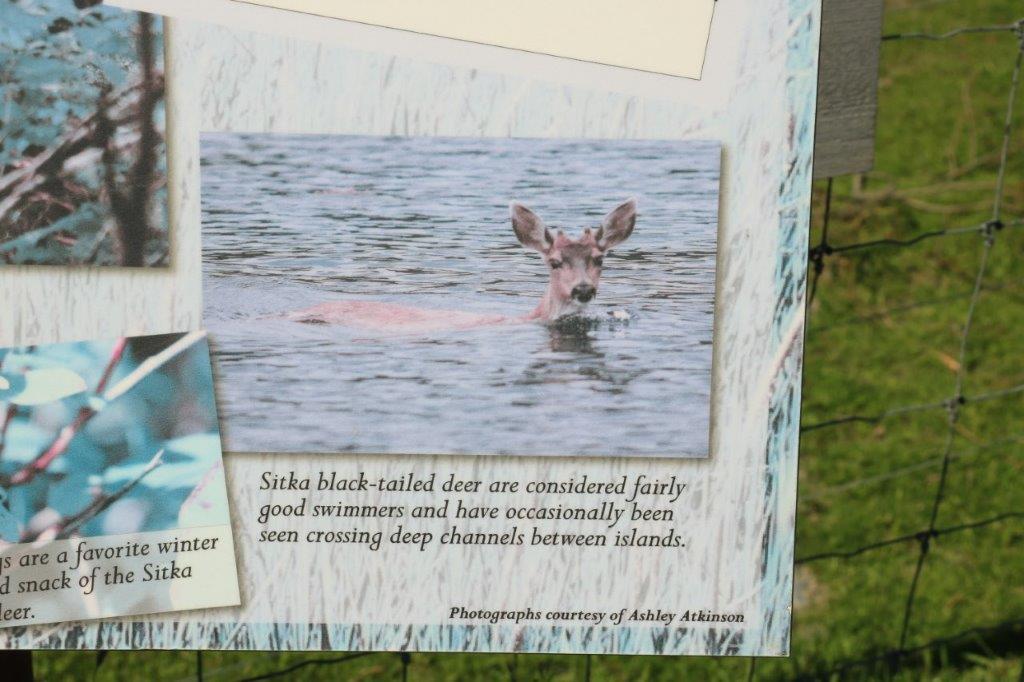
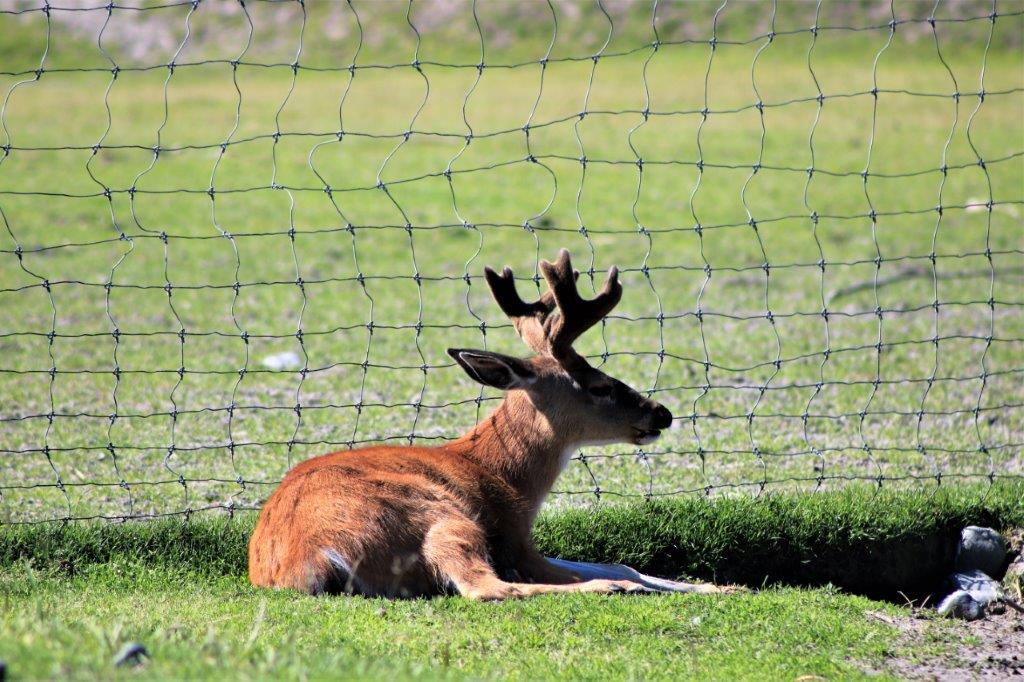
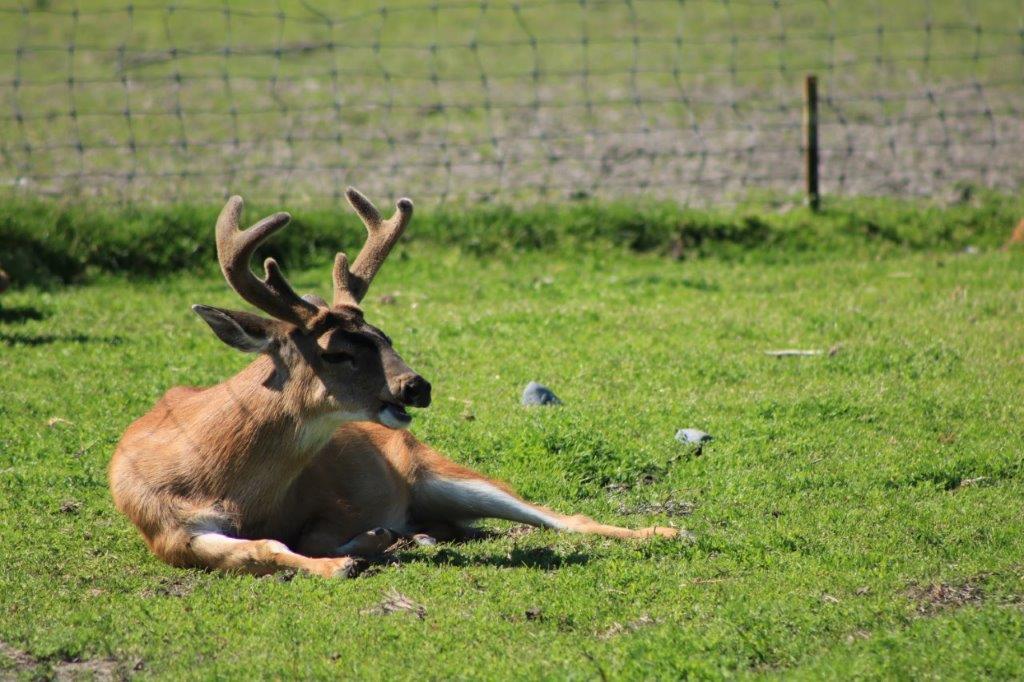
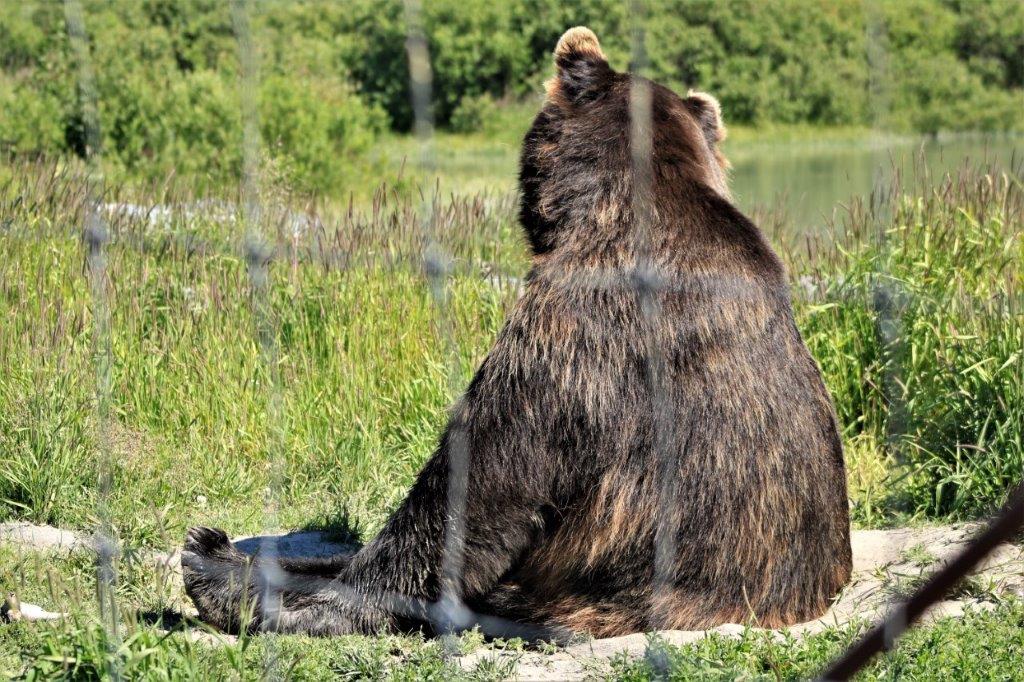
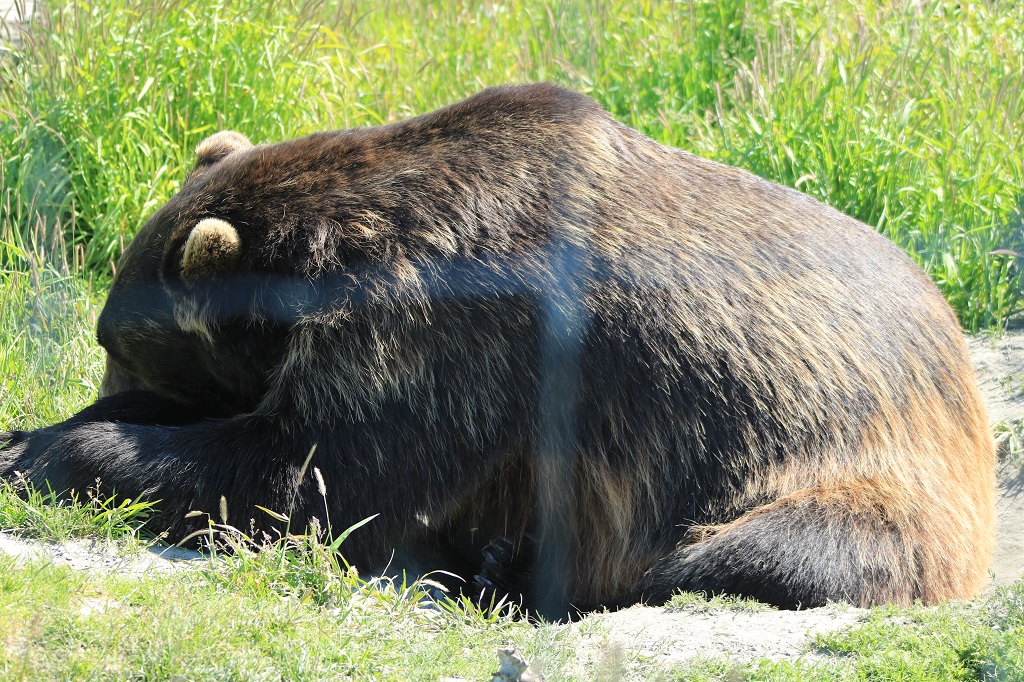
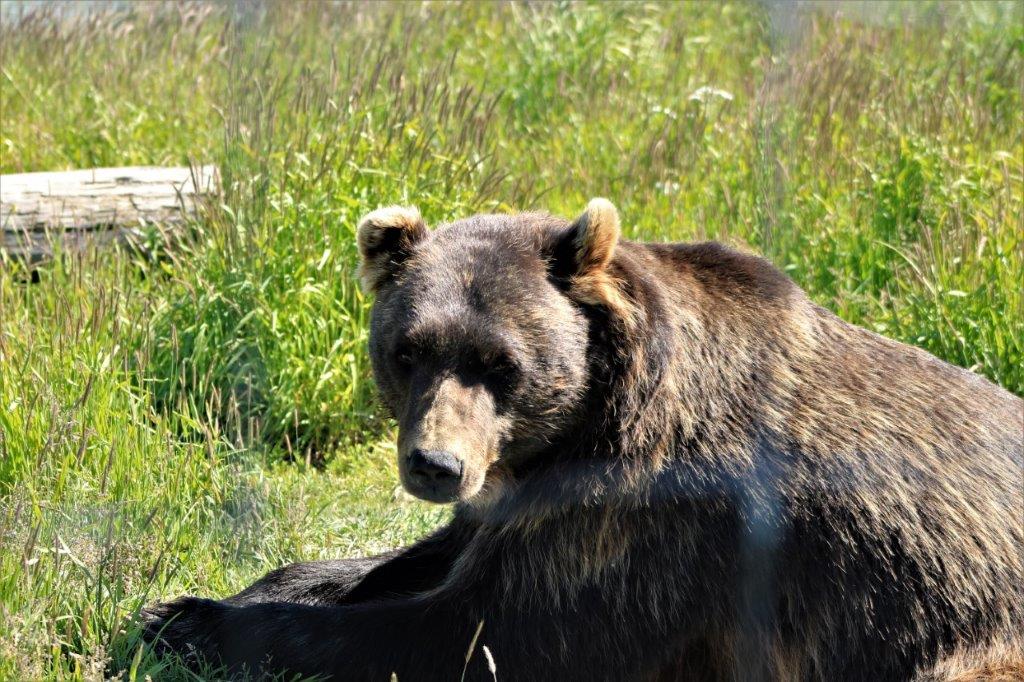
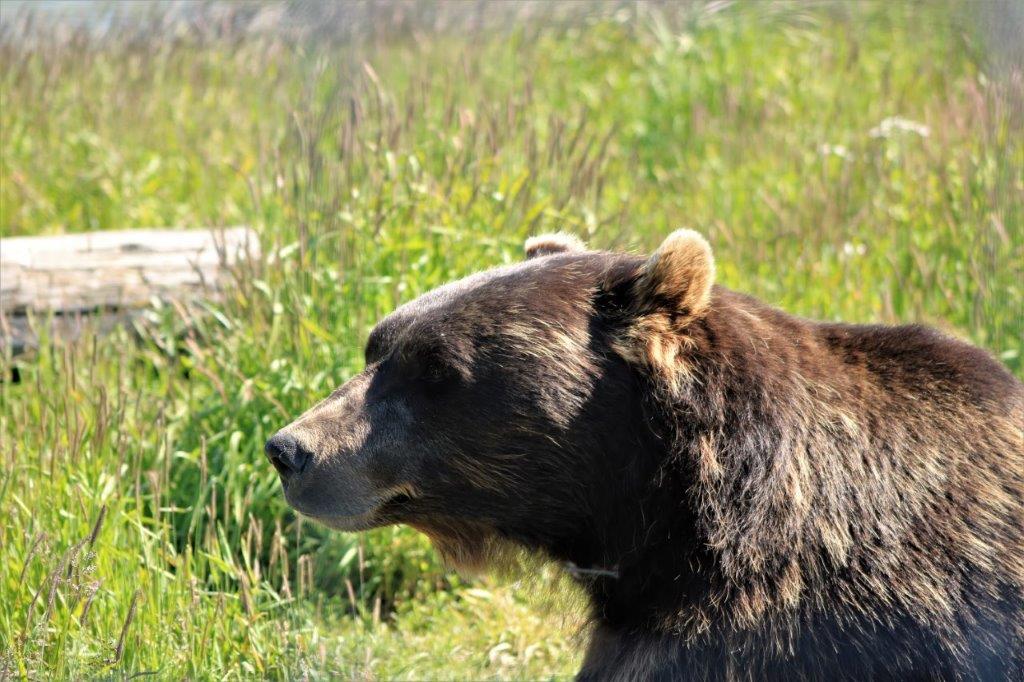
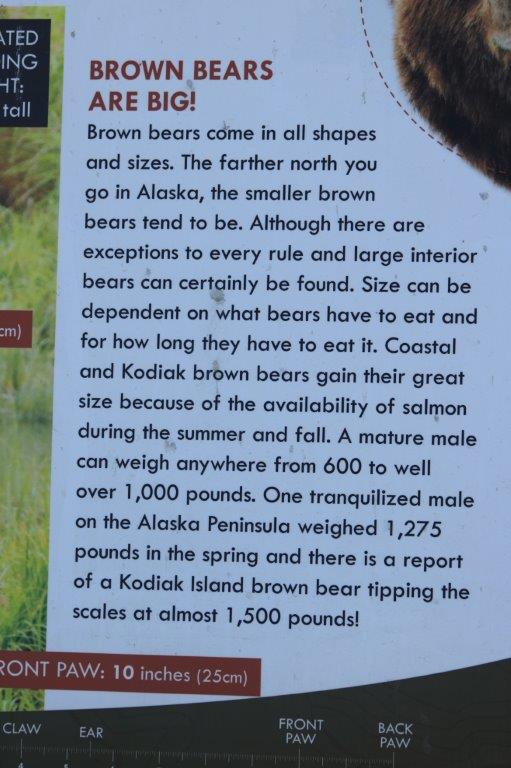
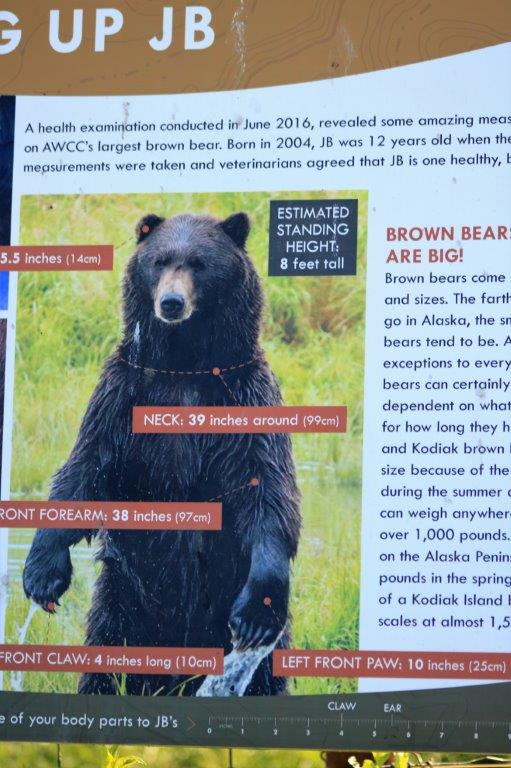
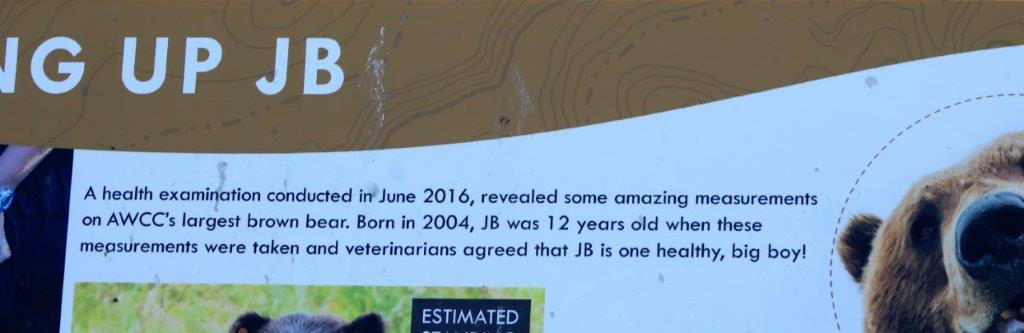
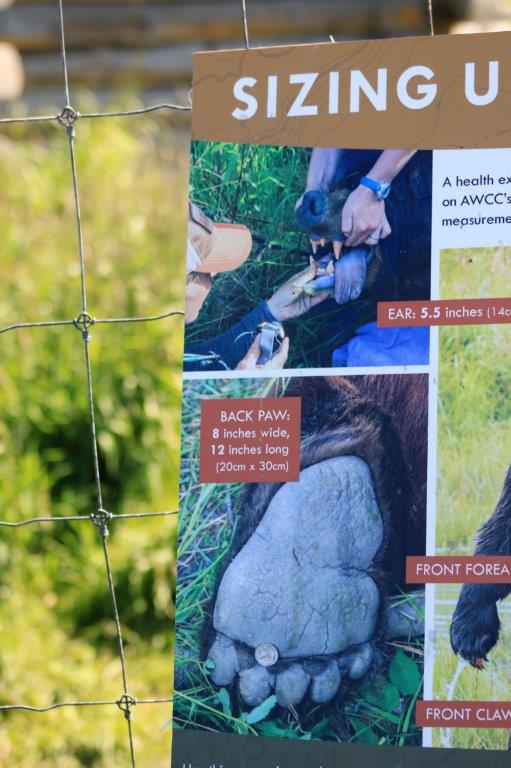
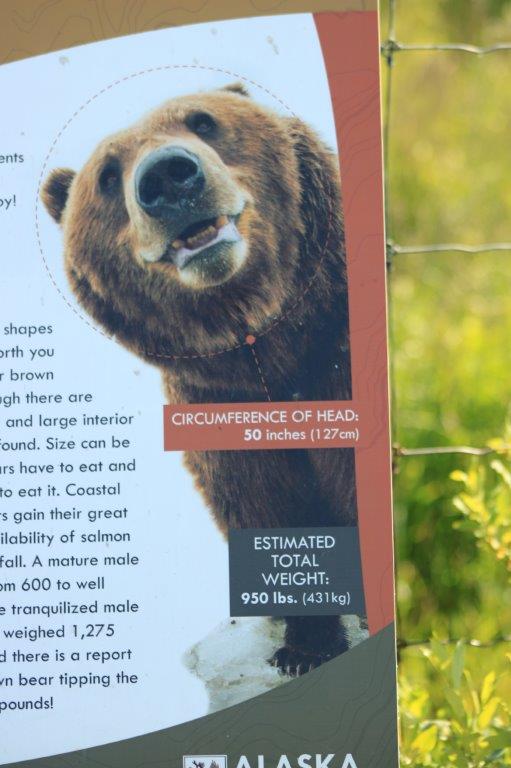
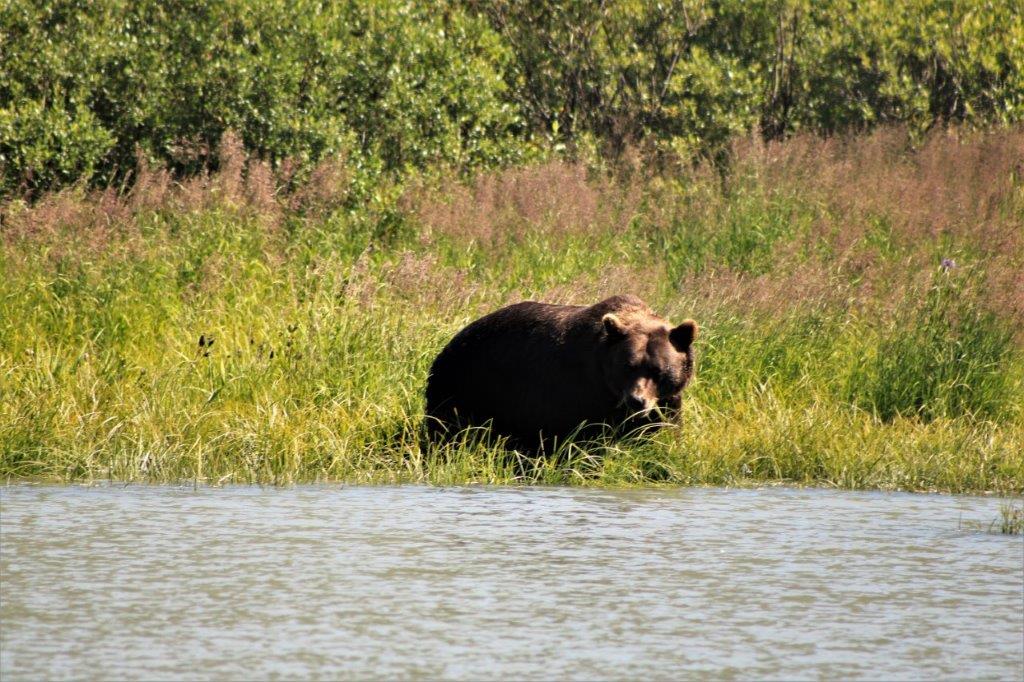
Elk are not native to Alaska.  President Rooseveldt and some naturalists introduced 8 elk to one of Alaska’s peninsulas.  After 60+ years the herd now numbers 1200.The Sitka Black-Tailed are only found down at the coast near Sitka, Alaska.       This black bear was having a good walk around his territory.There were two Grizzly’s (or brown bears as they seem to prefer to call them up here) in the enclosure.  The big male, JB was having a nap right by the fence.  The female was off on the other side of the lake doing her own thing.                  He could understudy for Baloo in Jungle Book   He raised his head, looked at us, and immediately lowered it to his paws and continued sleeping.

After seeing all the animals we were on the road again.  Turnagain Arm was much prettier on the way back in the sunshine than when we drove over to the Kenai Peninsula under heavy clouds.  All the nice mountains were on John’s side of the truck though, so very few photos ops for me.Once we cleared Anchorage we drove over to Wasilla, which was in the opposite direction to Palmer, but I wanted to visit the Iditarod Headquarters and Museum.  We knew where it was, we knew what it looked like, we drove down the road without finding it, got directions from a lady, drove back looking for it again, but still couldn’t see it.  So, we took the Palmer-Wasilla Highway and cut off all the slow moving traffic through the construction zone on the main freeway.  I think if is impossible to be anywhere in south-east Alaska without having some mountains around you.

Tomorrow we drive down to Valdez, the home of the Alaska Pipeline, and a particularly scenic town.  Or so we have been told.

2018 July 18 – Kenai to Seward, AK

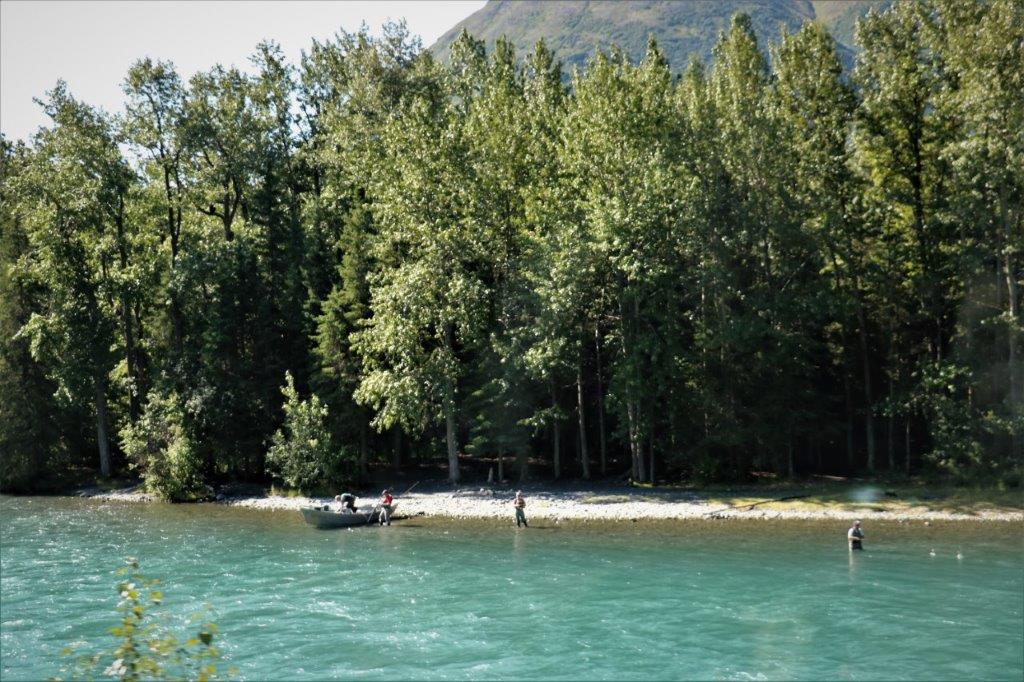
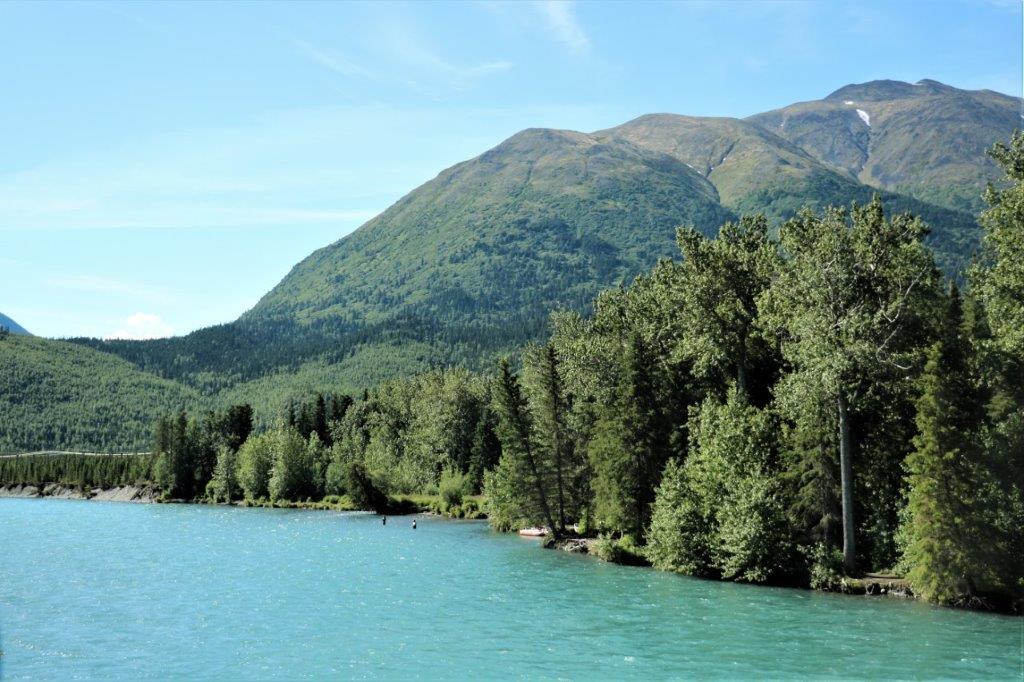
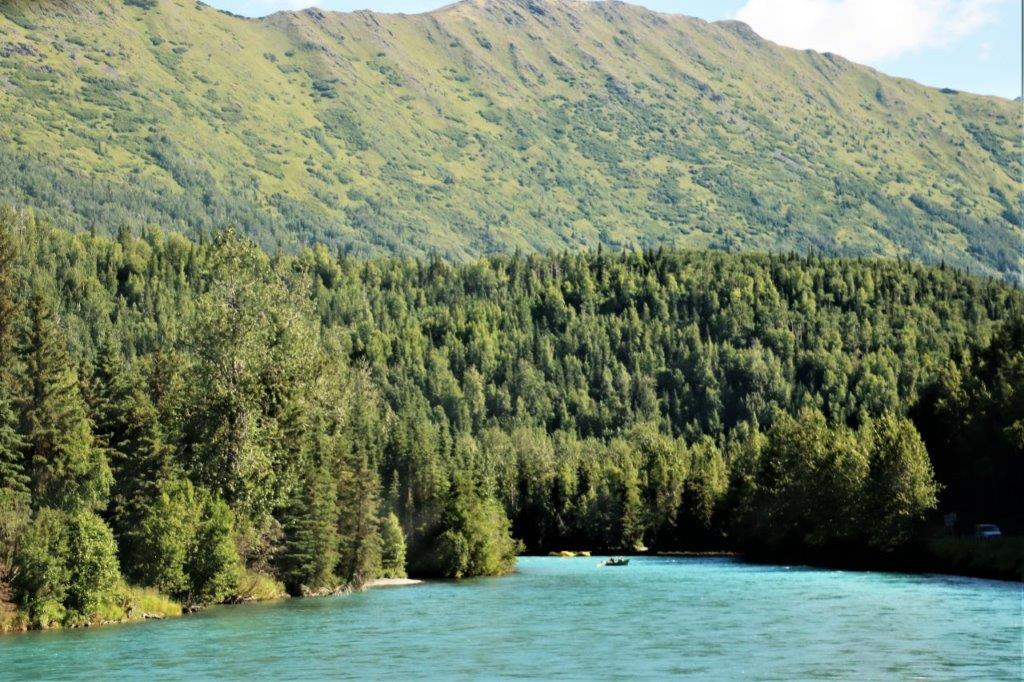
It was another beautiful day, all day today.  We left Kenai at 10 am and drove back along the Sterling Highway, to the junction with the Seward Highway, just past Cooper Landing in the upper middle of the peninsula.  All of this road we had traveled before, but, of course it looks different from the other direction.  There were fishermen in every river we passed.  This is the Russian River. One would be hard pressed to search for a geocache in more beautiful surroundings.  Good thing the view was so nice since we couldn’t find the cache.        It was hidden in this spindly forest, but we couldn’t find it.                                    Just stunning reflections today. I didn’t see the name of this lake but it is certainly full of glacial silt. This lake was just past Moose Pass and from there we turned south down the eastern side of the Kenai Peninsula toward Seward.  It is 90 miles (145 km) from Kenai to Seward. We found the geocache hidden here and liked the scenery so much we stayed to eat our lunch.
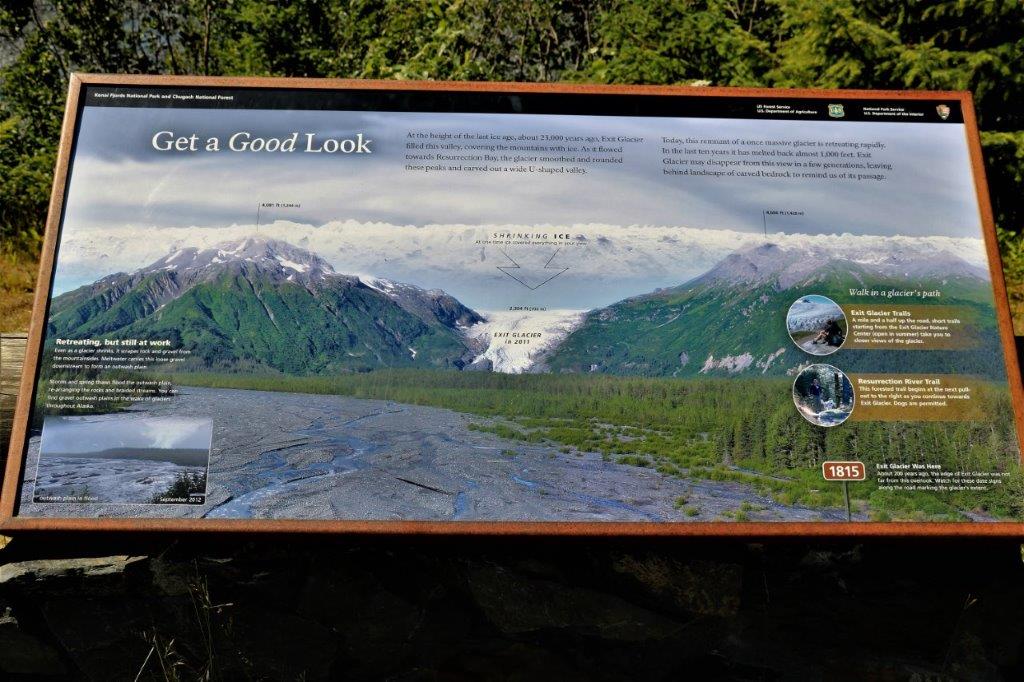
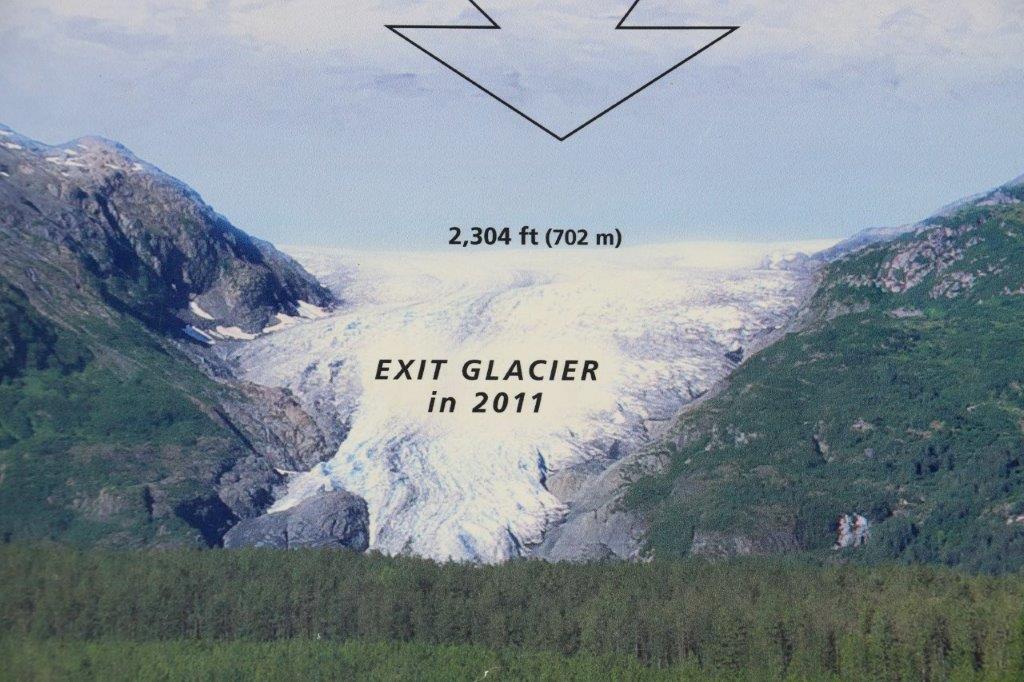
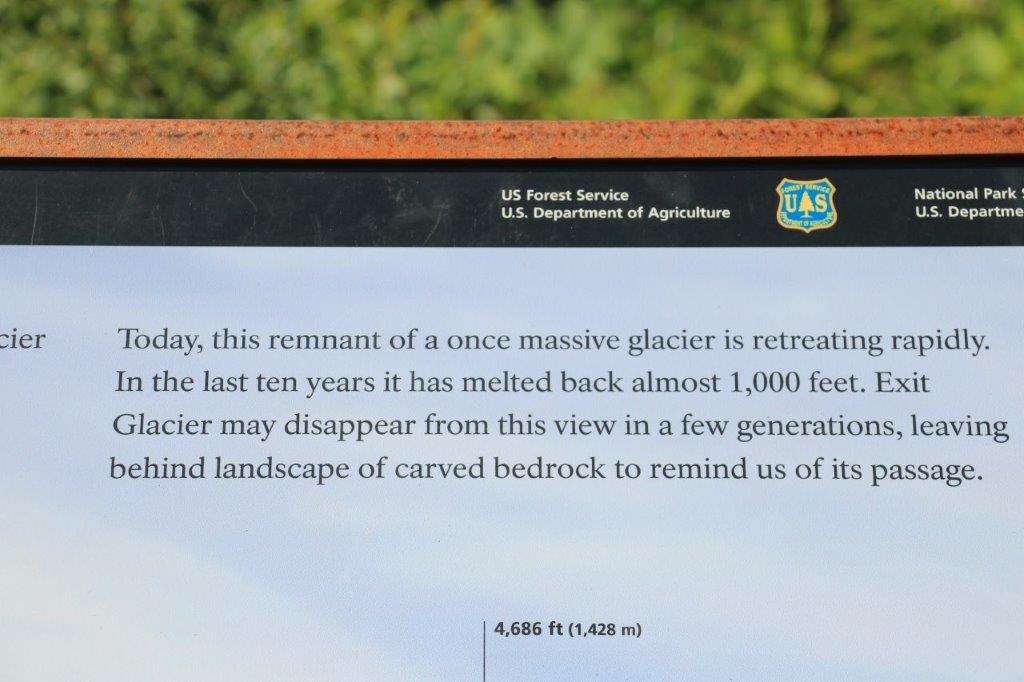
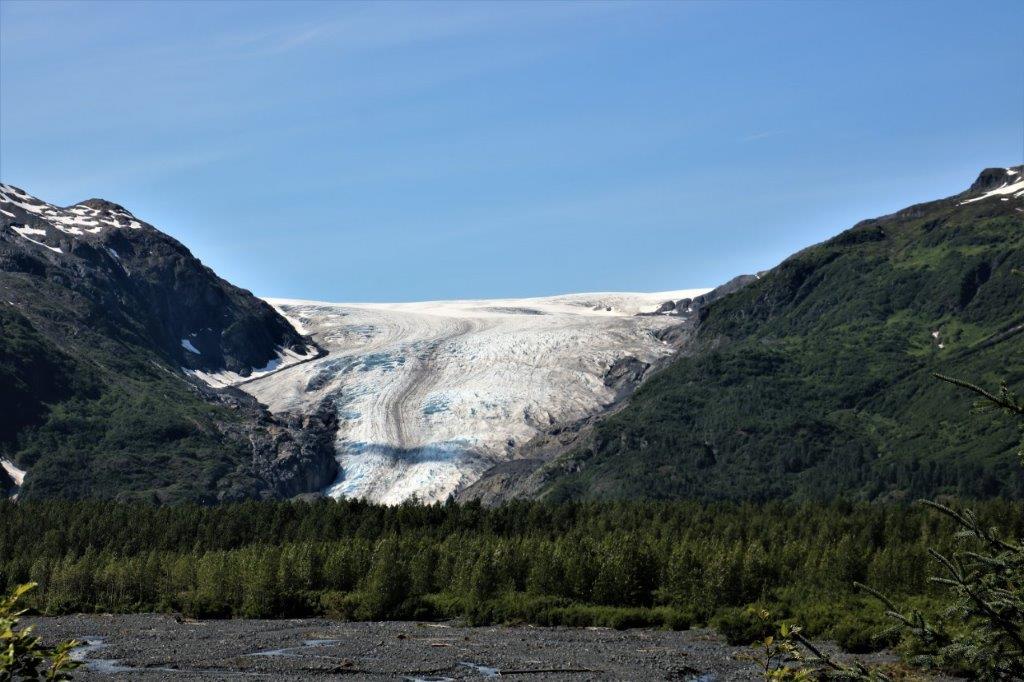
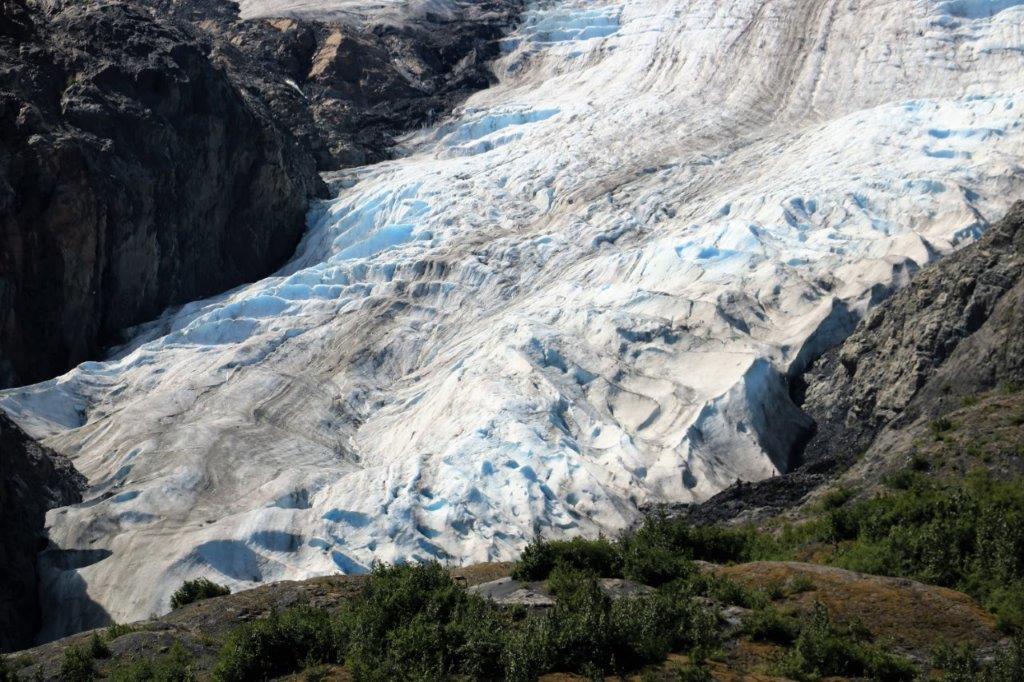
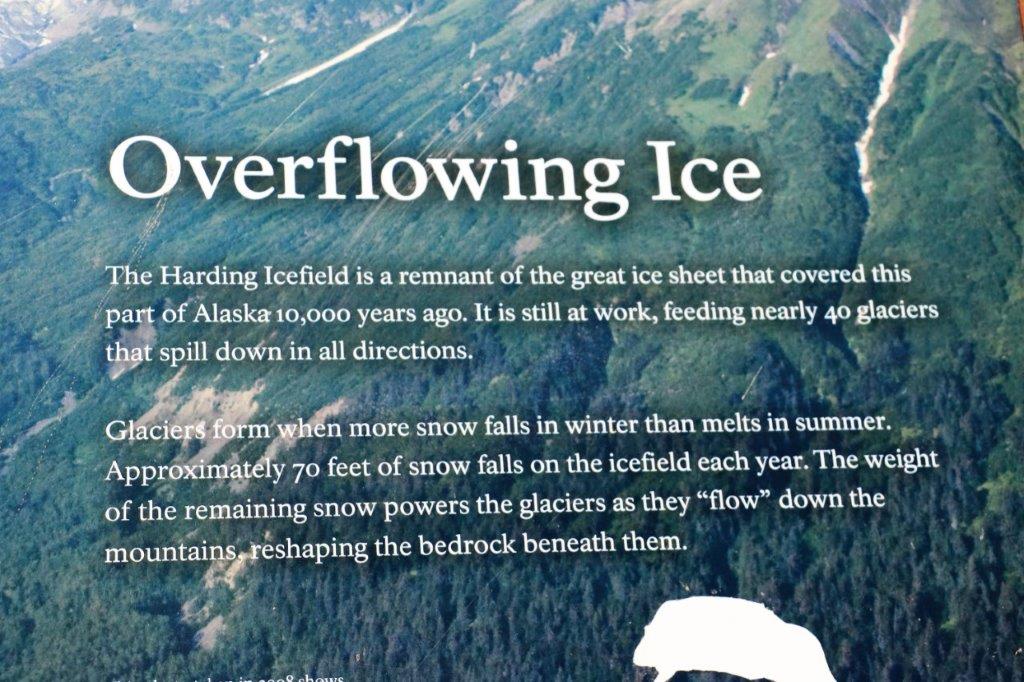
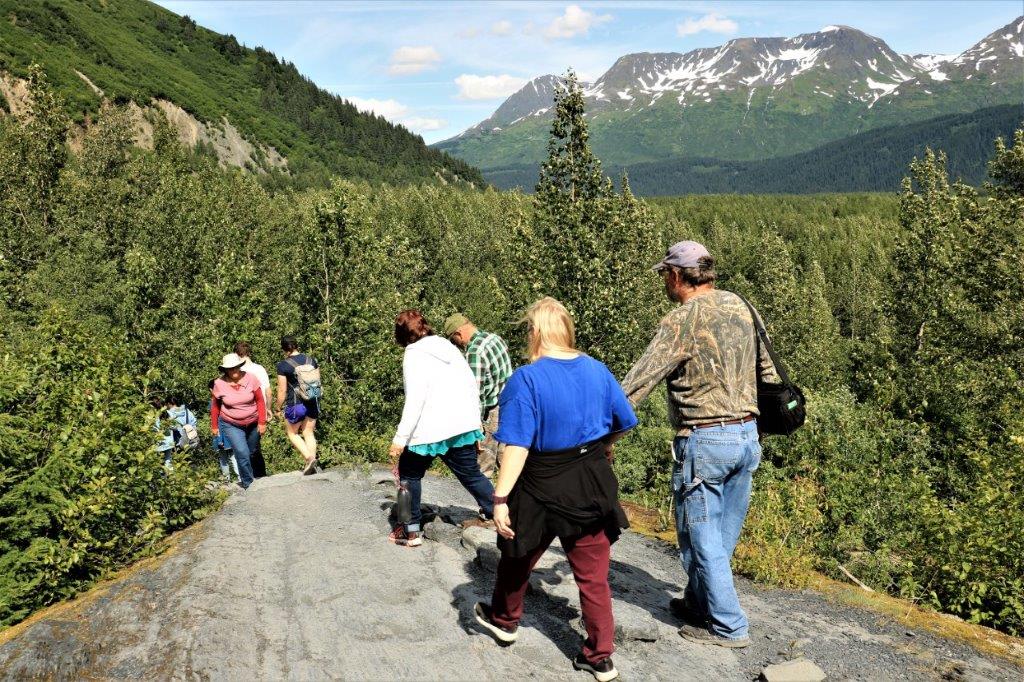
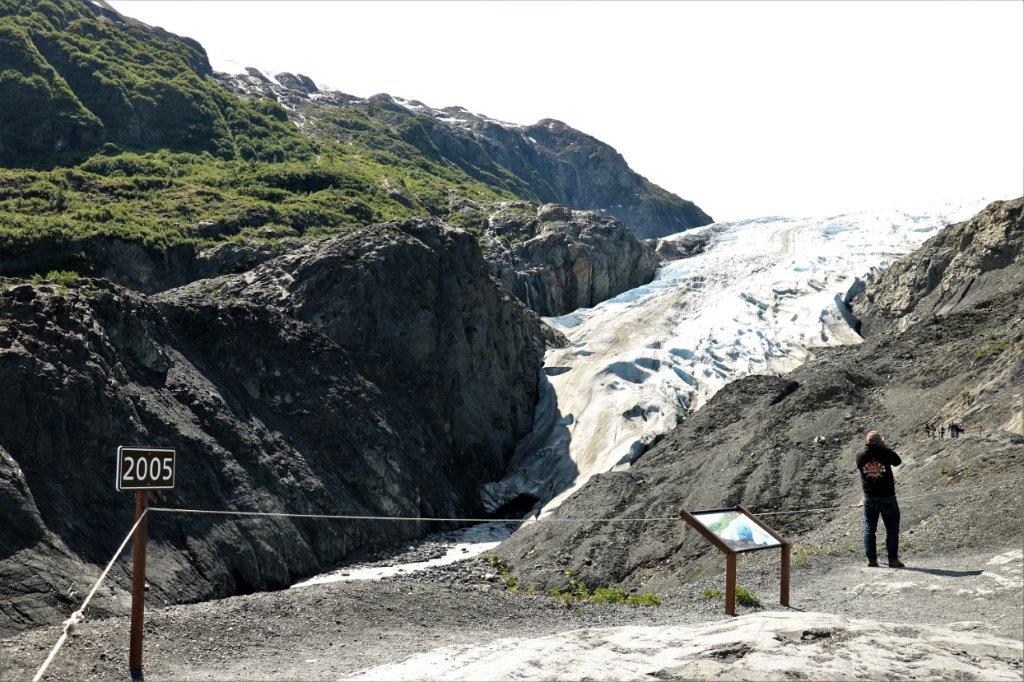
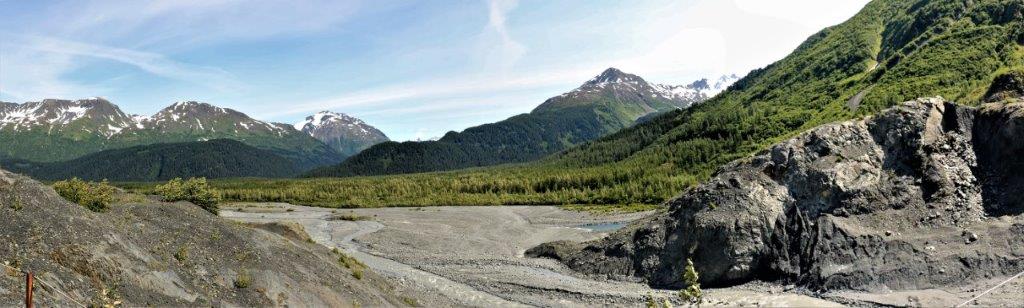
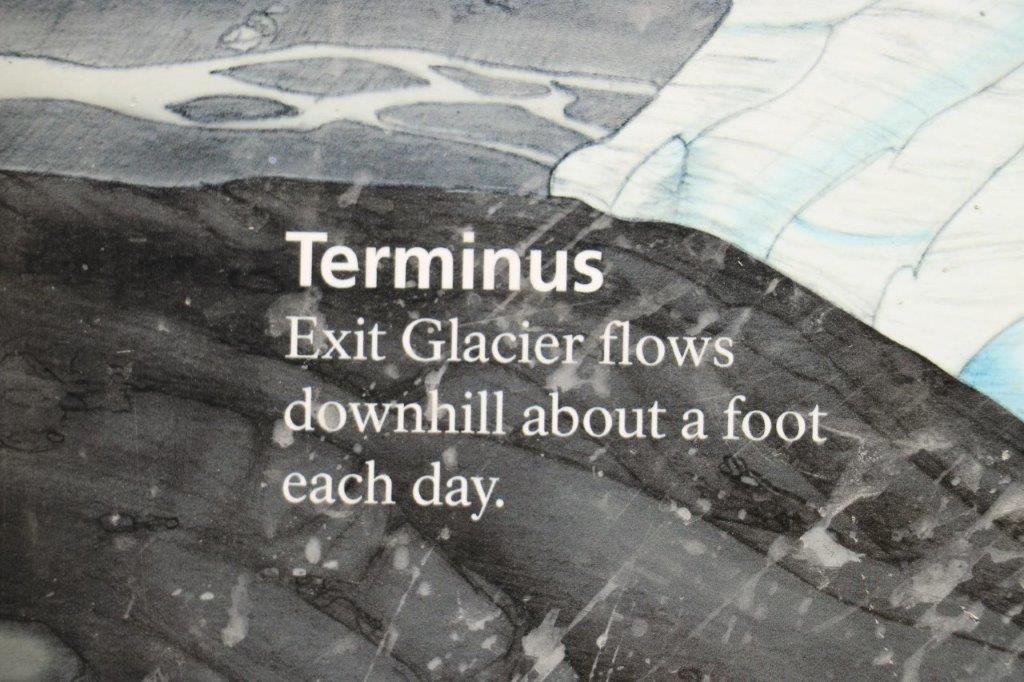
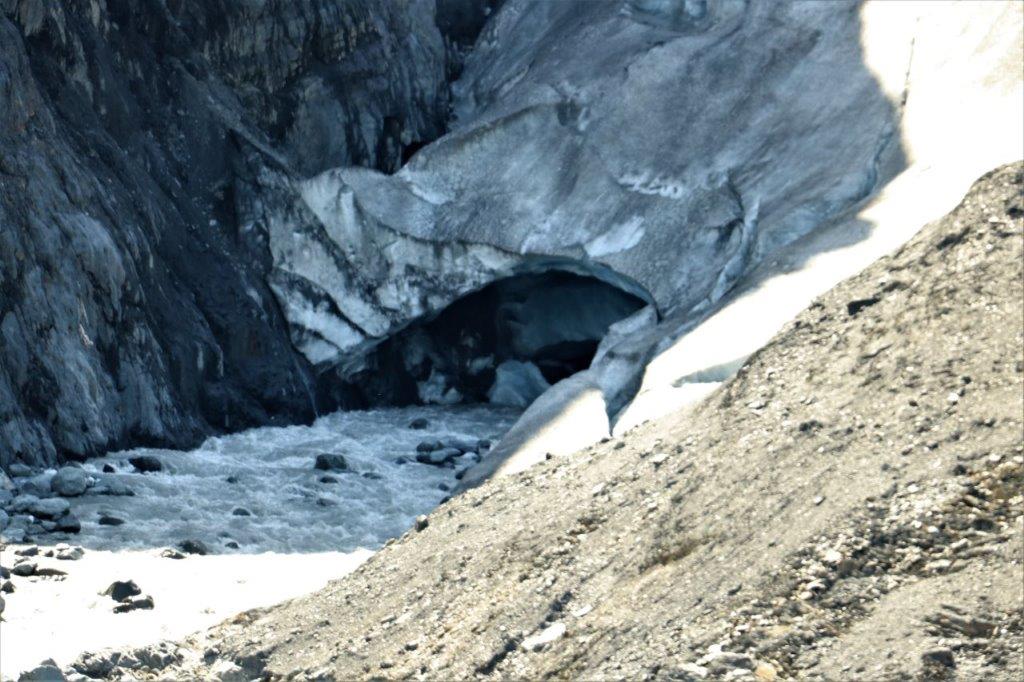
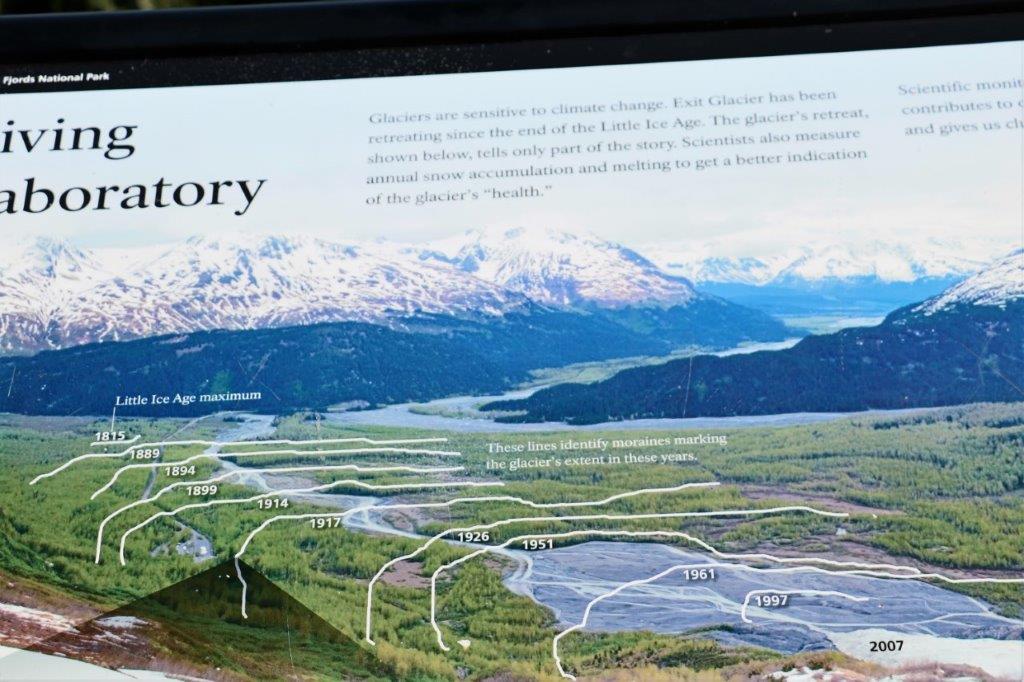
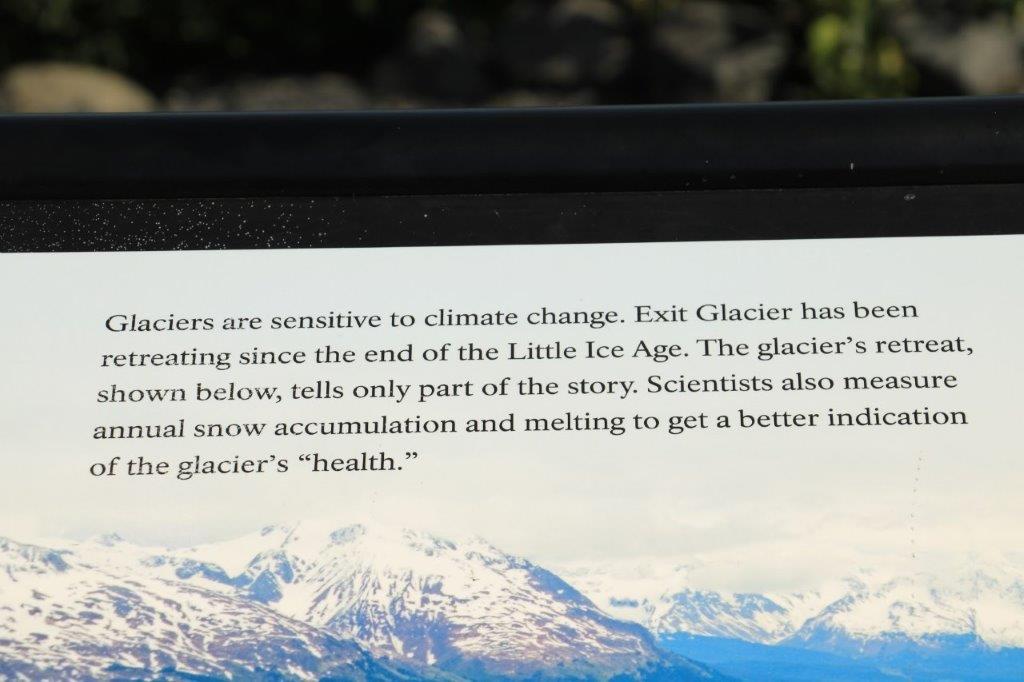
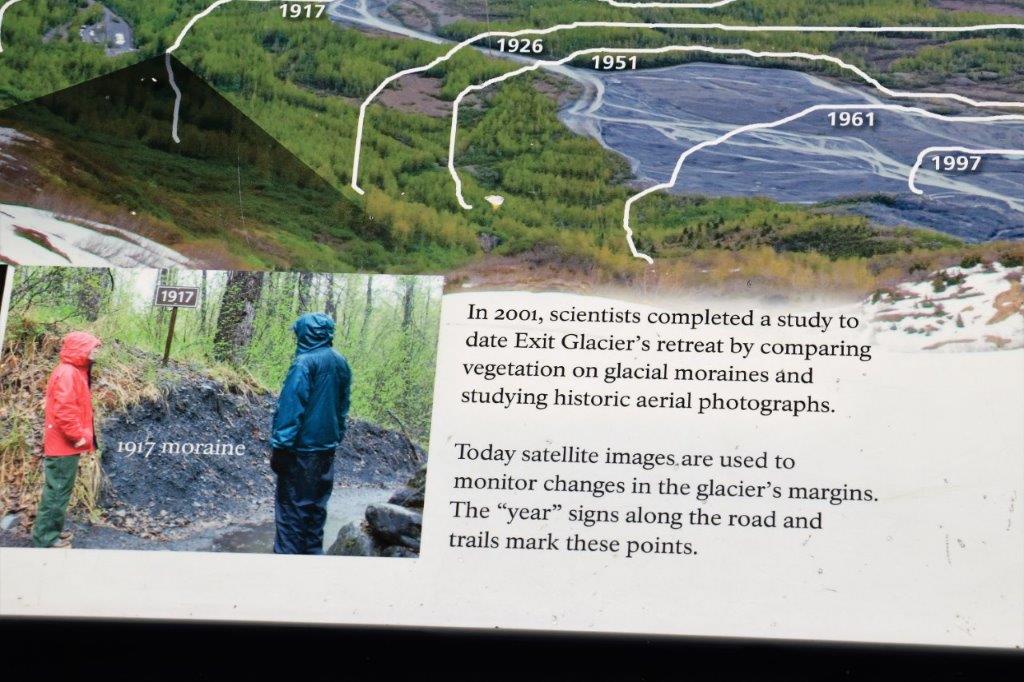
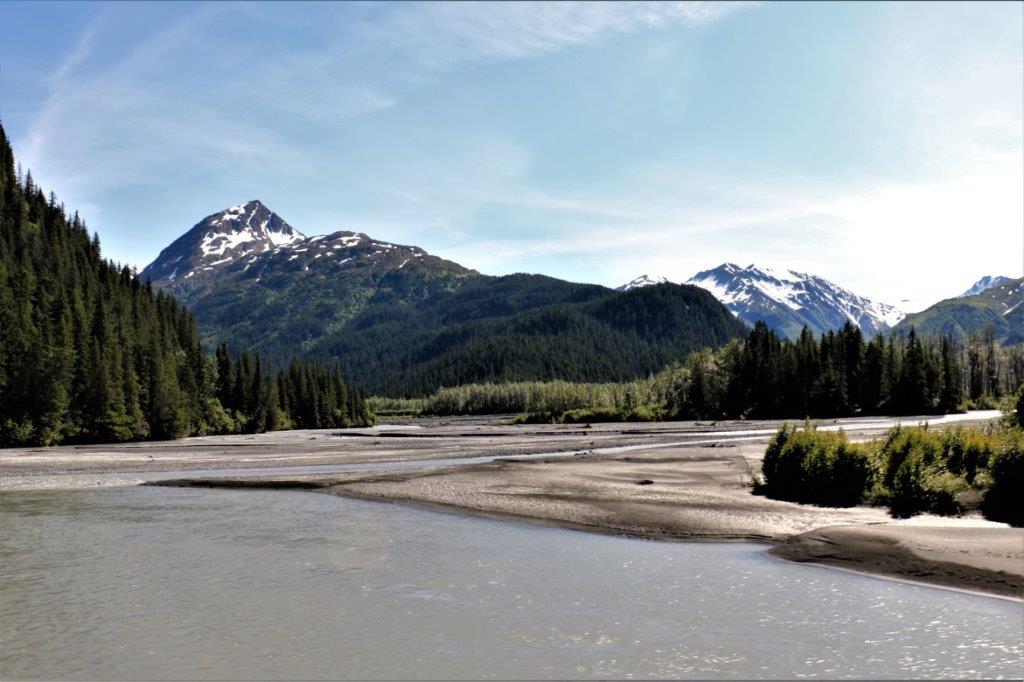
Nine miles north of Seward is the only road access to Kenai Fjords National Park.  The road goes 8 miles to the Visitor’s Center and the trails to Exit Glacier.  All other access to this park is by boat or air. It takes almost an hour to hike to the Edge of the Glacier viewpoint.  If you take the Ranger guided walk it takes 2 1/2 hours for the round trip due to all the stops to explain the plants and stuff.  We were back at the Visitor’s Center in less than two hours.

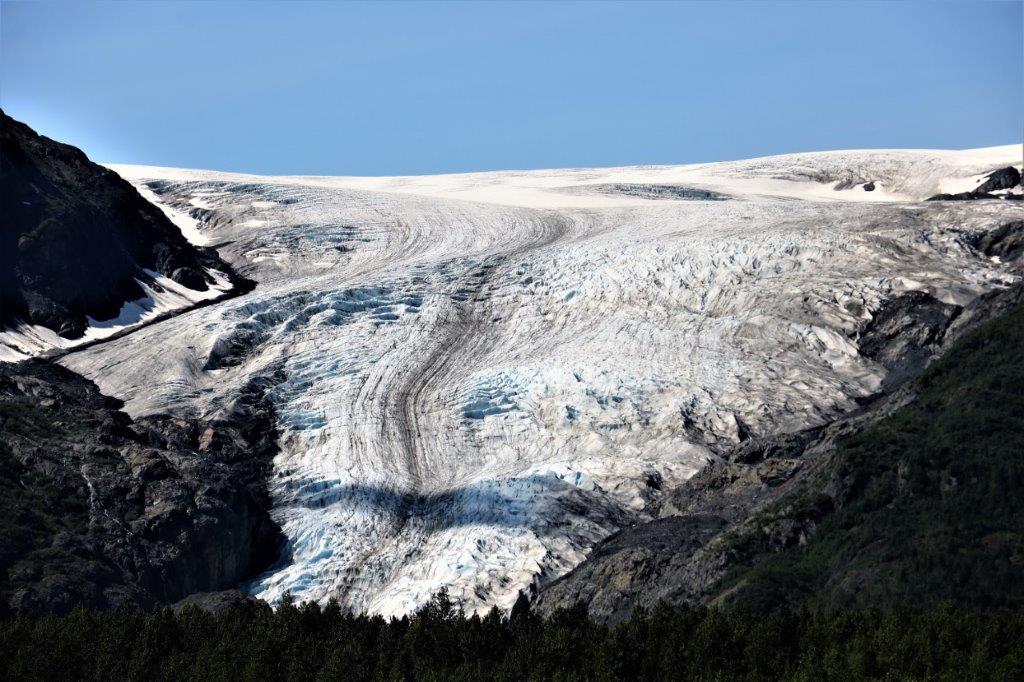
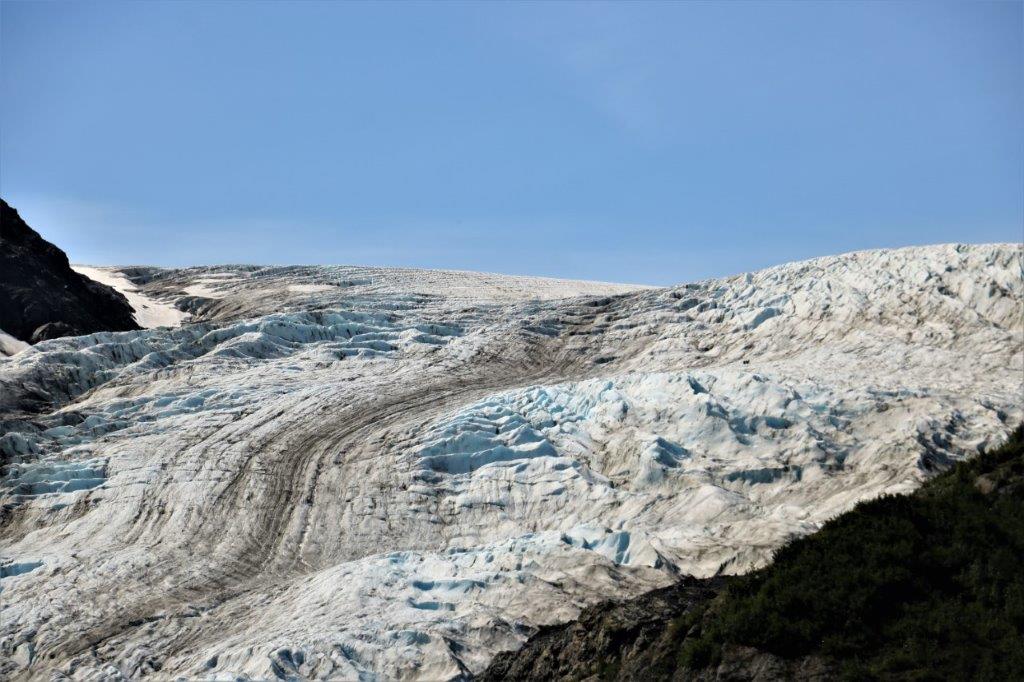
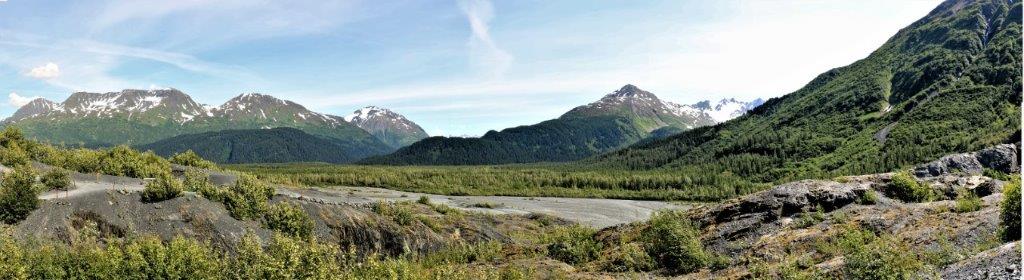
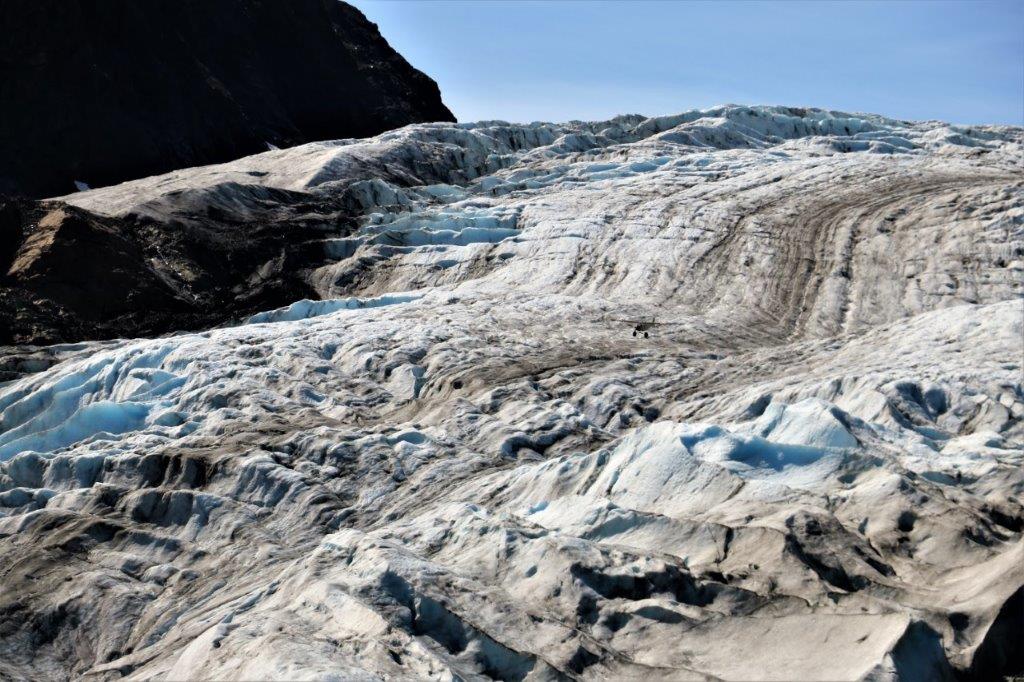
                         Upstream and downstream on the hike. The parking lots were all full of cars and campers and motorhomes and people of every age were hiking to see the glacier.  While were were taking photos of the glacier at the end of the trail (Well, at least as far as we were planning to go. You can hike to the top of the glacier – 8 1/2 hours round trip. We passed.) a small airplane came over the top and literally flew down the face of Exit Glacier.  You can just make it out in the middle of the picture above.  It is a little clearer in the two below.  On our hike back down we asked one of the Park Rangers if he had seen the plane and showed him our pictures.  He asked us to please show them to the rangers at the Visitor’s Center because there are restrictions on how low you can fly over a National Park and he was much too low.  The rangers at the center were aware of this plane, as he has made the flight before, but until they can get some identification numbers of his aircraft there isn’t much they can do.  If I had taken my zoom lens along I may have been able to get one close enough.  The rangers were not happy with the guy, that’s for sure. We left the park and drove the final few miles into Seward.We checked into the hotel and John had to sign a form saying we would not clean any fish in the bathtub.  He was also told that if we make a mess that takes longer than one hour to clean up additional charges will be added to our credit card.  Do you think, perhaps they have had some issues in the past?
Seward is a popular cruise ship port-of-call.  It is picture perfect glorious surroundings and the fjords are part of most Alaskan cruise itineraries.  There was a ship in port when we arrived but it sailed before we went out for dinner.  The town is bustling with people.  All along the waterfront there are campgrounds, some specifically for tents and others for campers, trailers, and motorhomes.  There are large parking lots near the port end of town with a $10 per place fee. They were all full, as was every side street at this end of town.  We drove down to the main town and found a good restaurant for a sockeye salmon dinner; then took a little drive around.

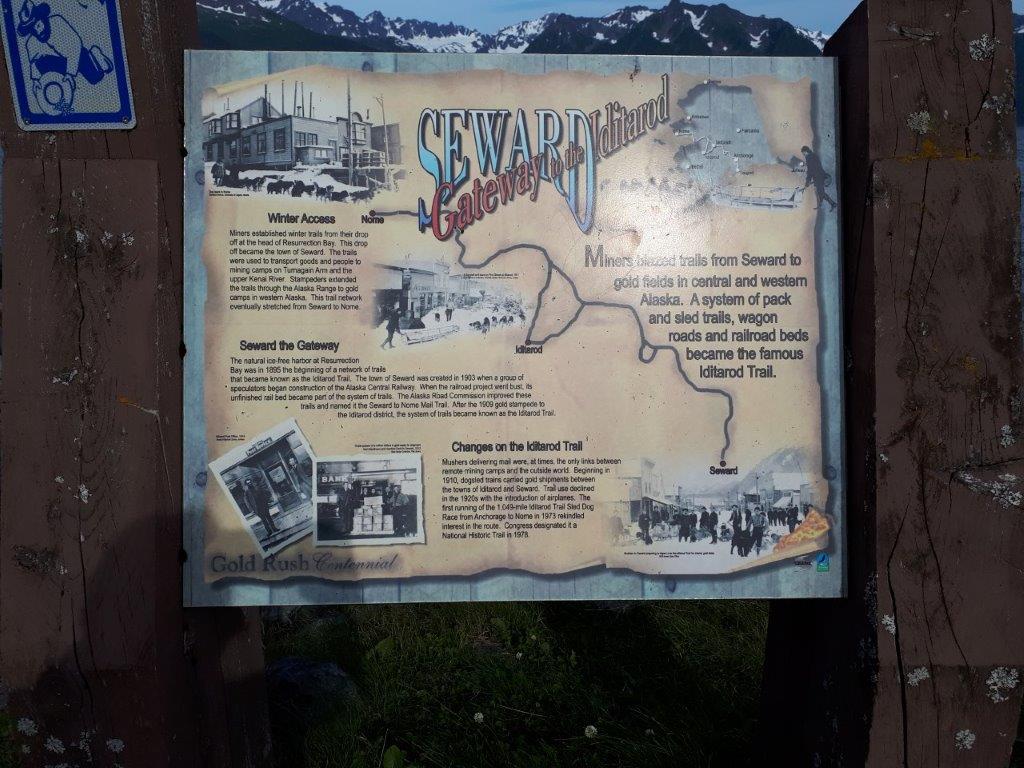
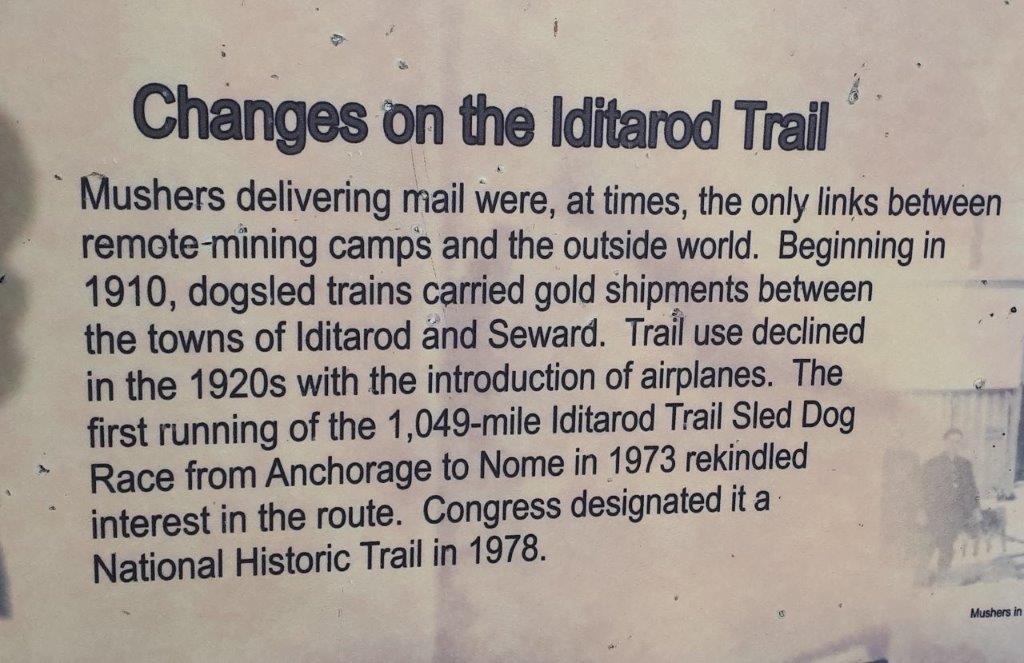
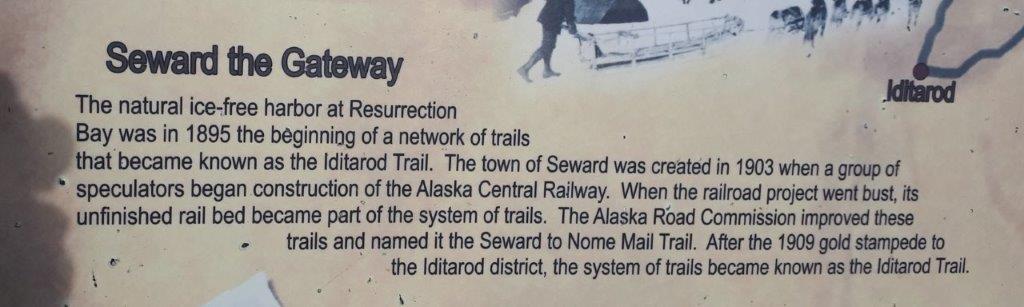
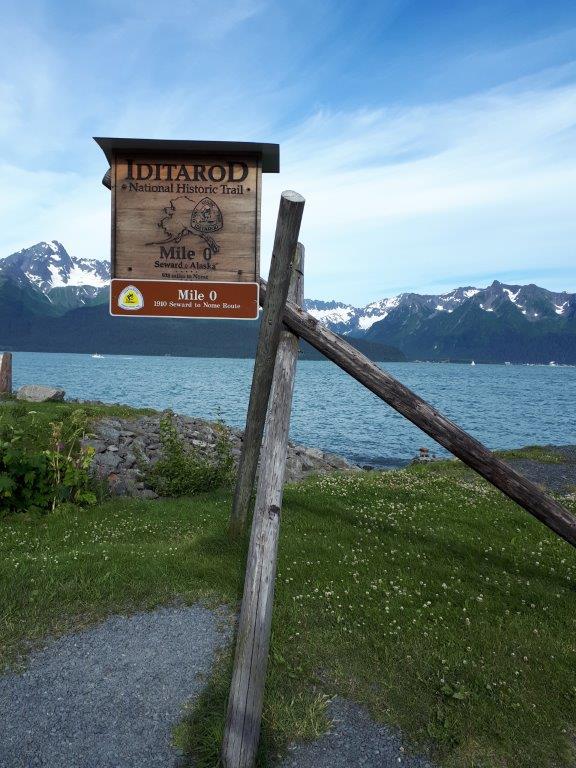
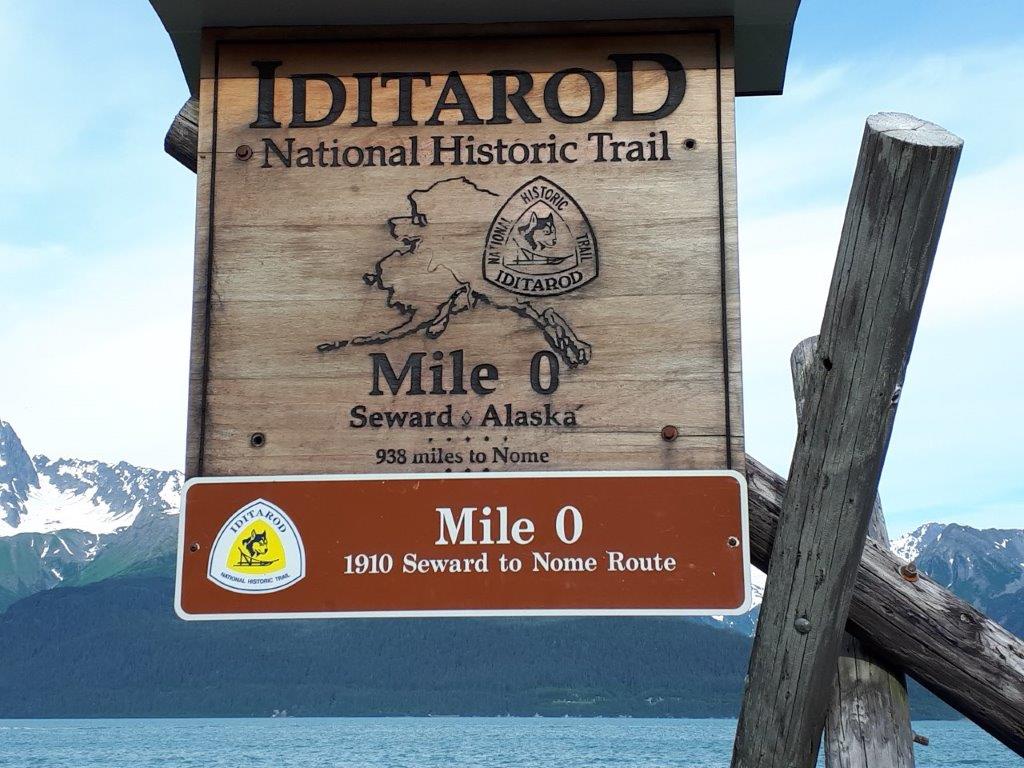
At the end of town is the official start of the Iditarod Dog Sled Race. And, when you look at the view, you understand why so many people and ships stop here. Tomorrow we head back up the way we came down, then go back around Turnagain Arm, through Anchorage and turn right at Wasilla to go east as far as Palmer where we will spend the night.  The next day we will drive the Glenn Highway as far as the junction to go to Valdez. affectionately called “Little Switzerland.”