All posts by jj1951

My husband and I retired in 2007 and decided to spend the kid's inheritance by travelling as much as we could until either the money or our health runs out. So far so good.

2018 June 29 – Watson Lake to Whitehorse, YT

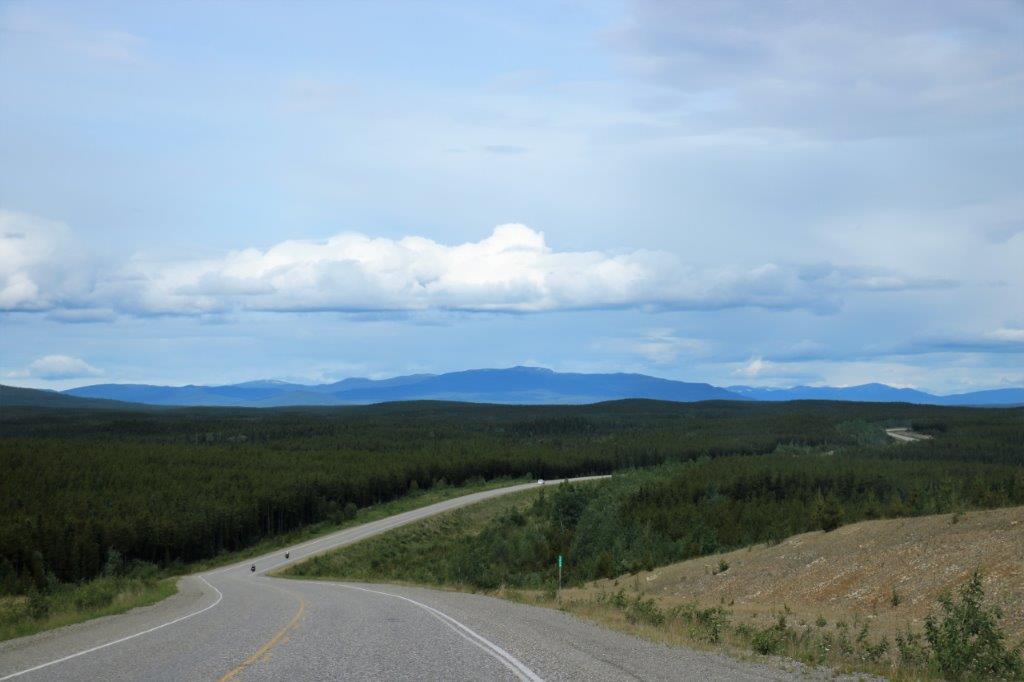
It is 445 kilometers (276 miles) from Watson Lake to Whitehorse.  We left Watson Lake at 8:30 under cloudy skies; but no rain.

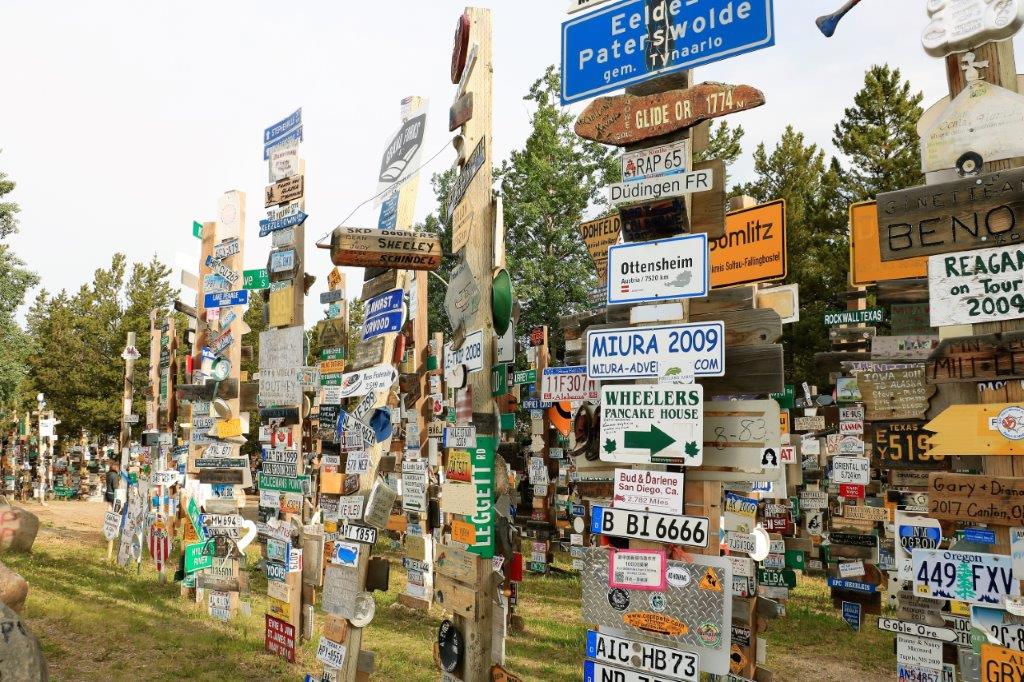
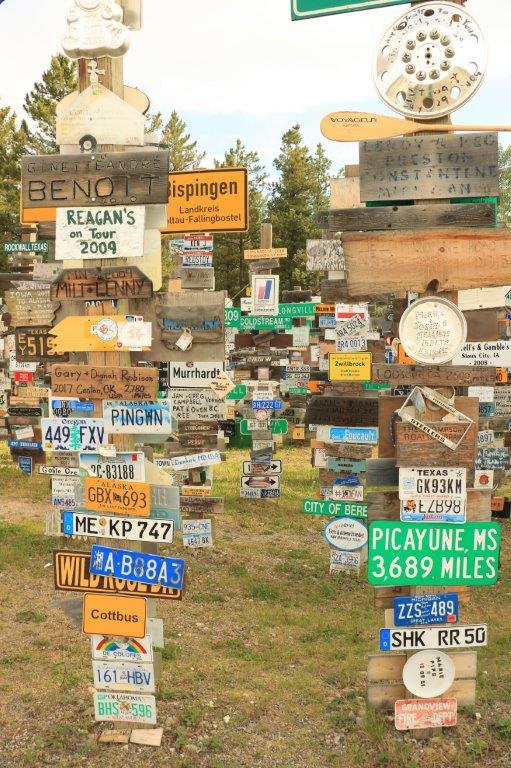
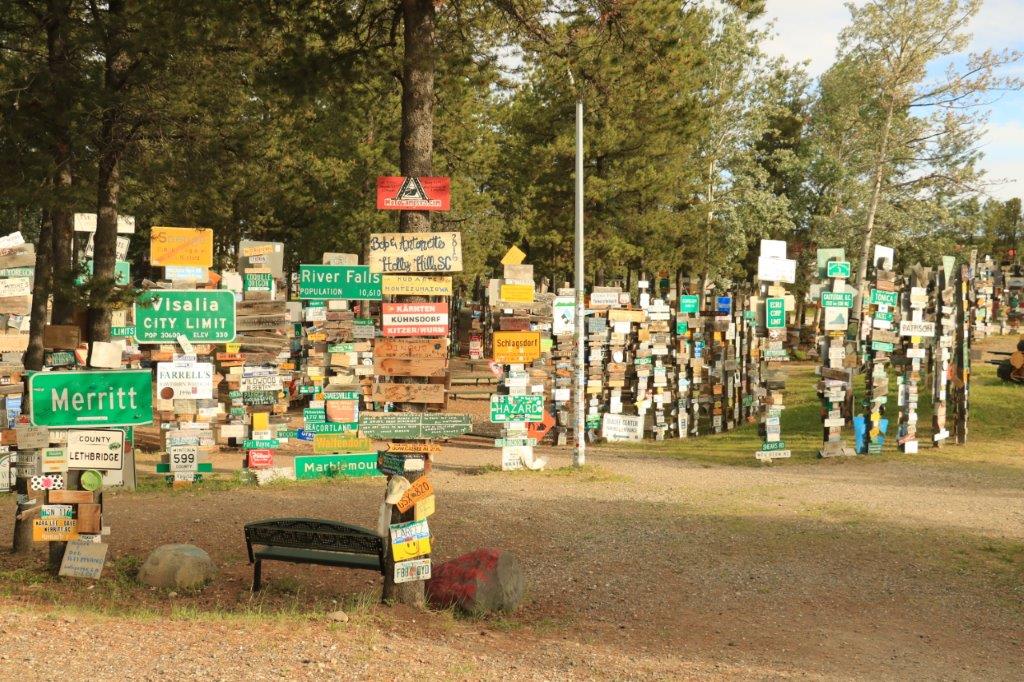
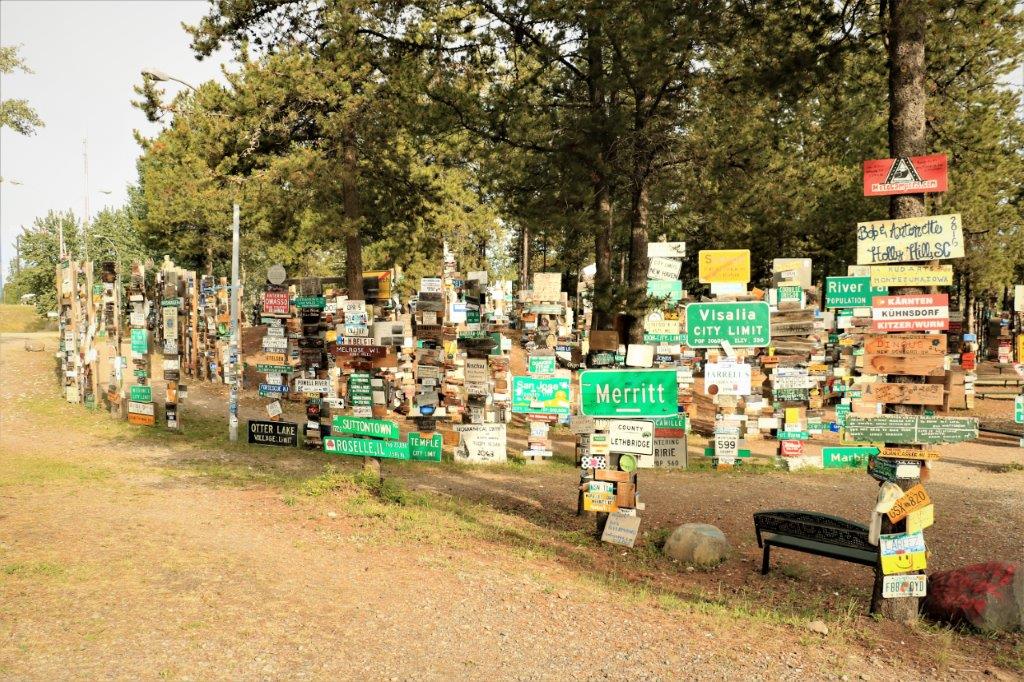
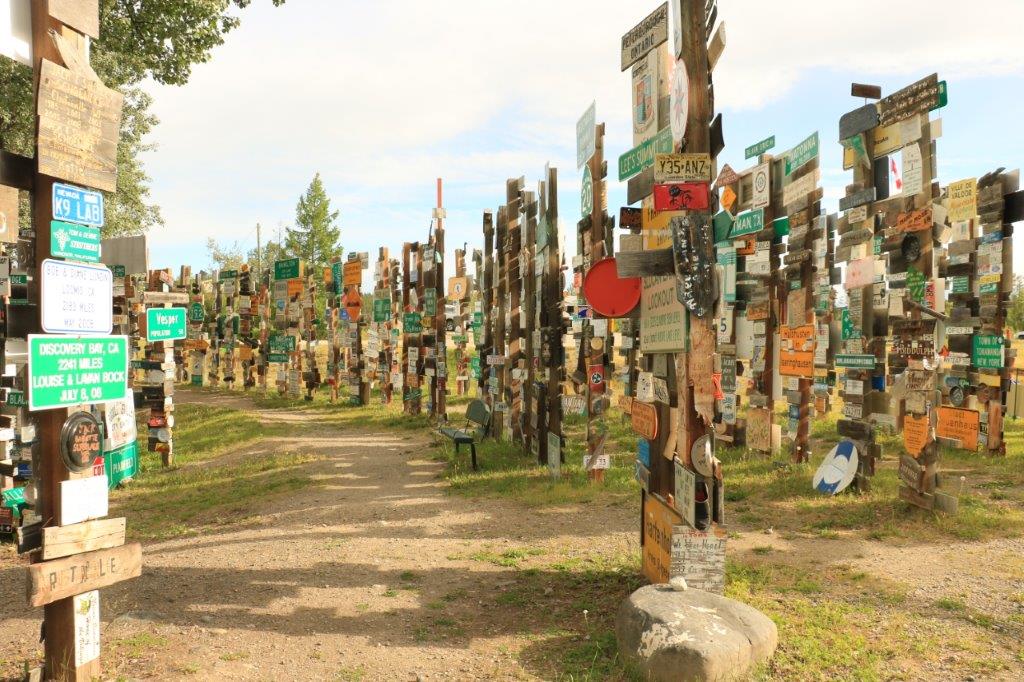
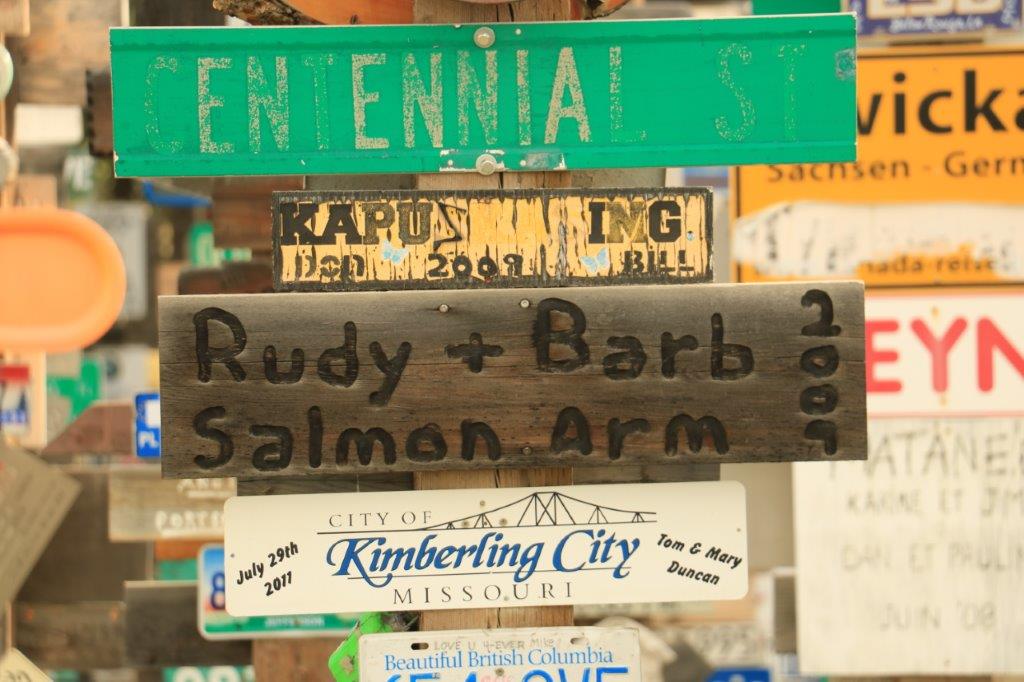
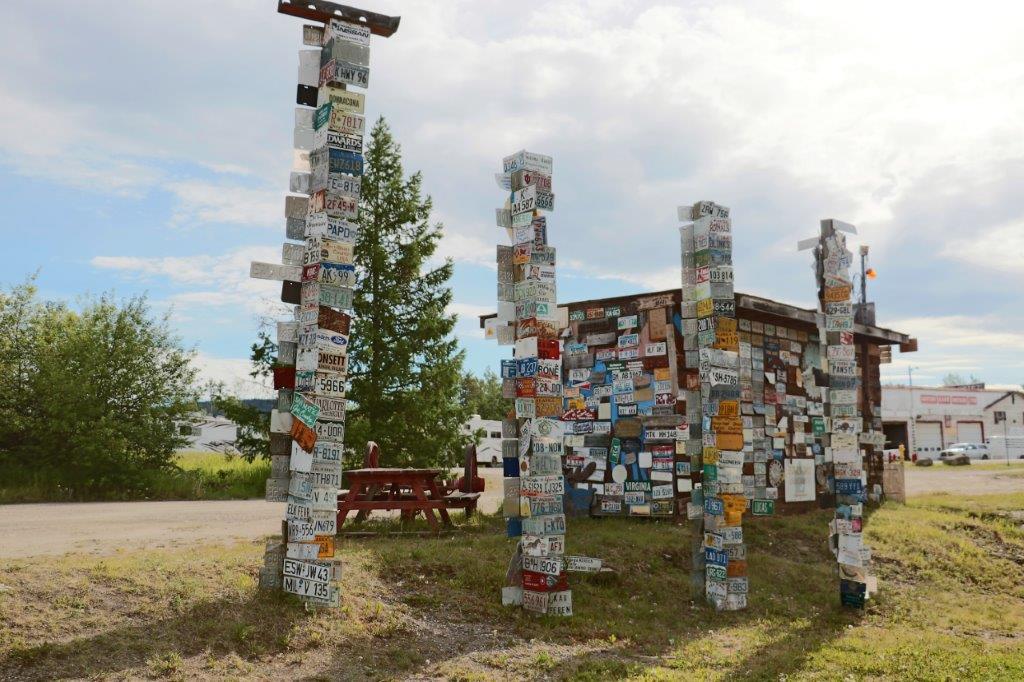
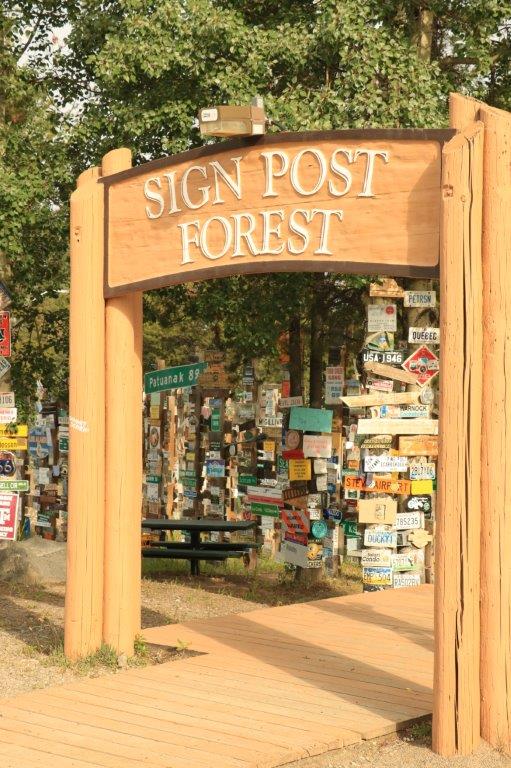
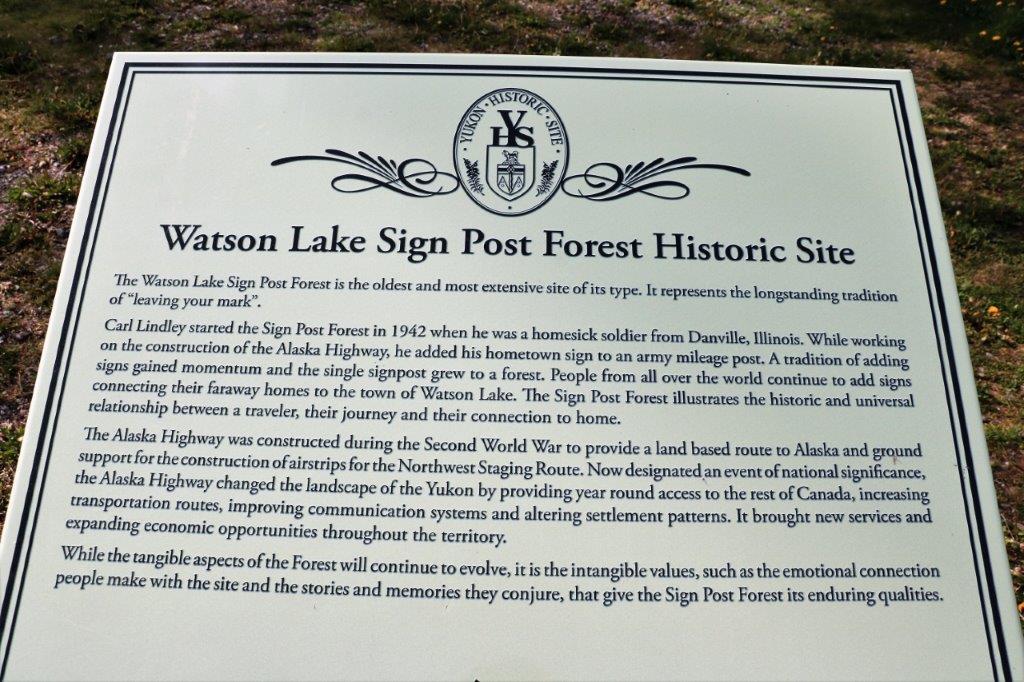
Before we left Watson Lake we had to visit the world reknown Sign Forest.  There are now over 90,000 signs (and counting) posted on the poles.  Many people know about the sign forest before they come to Watson Lake and they bring a sign with them (there is a tremendous amount of stolen property posted here).  Or, if you didn’t come prepared you can get supplies (I would guess for a fee) and make your own.

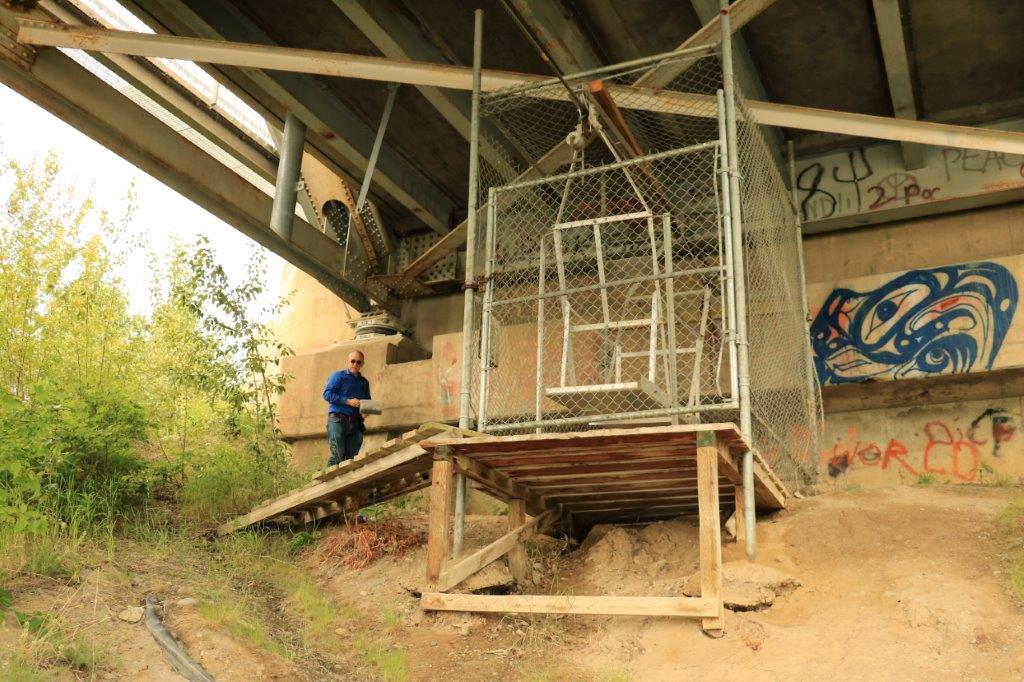
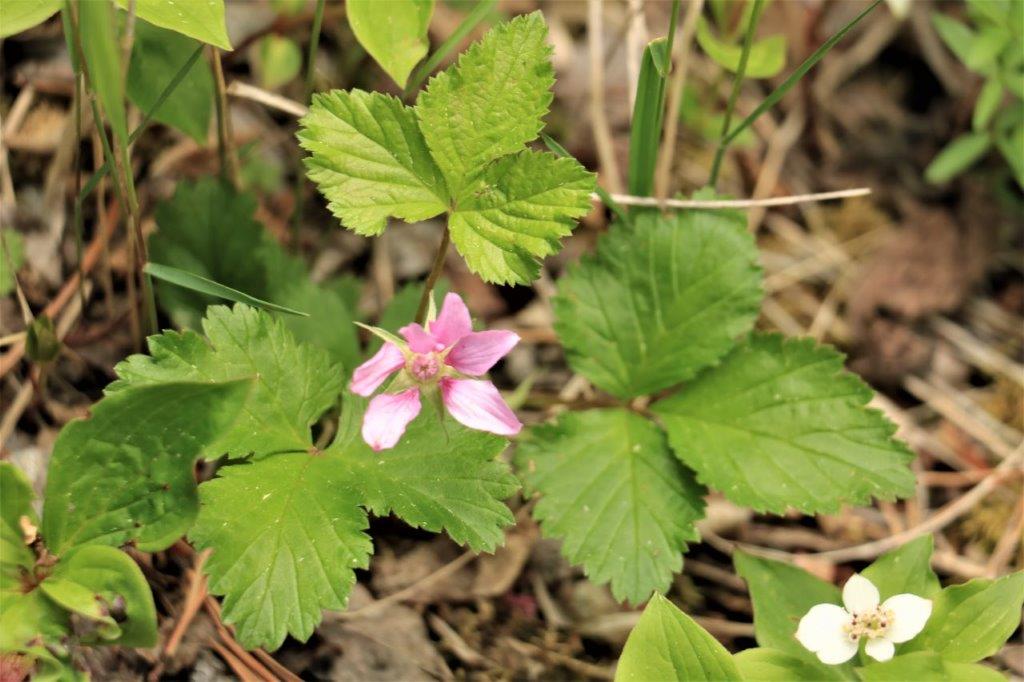
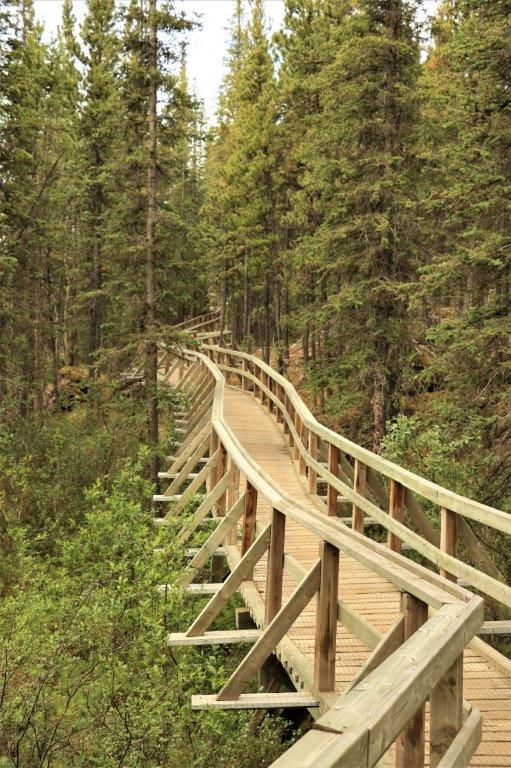
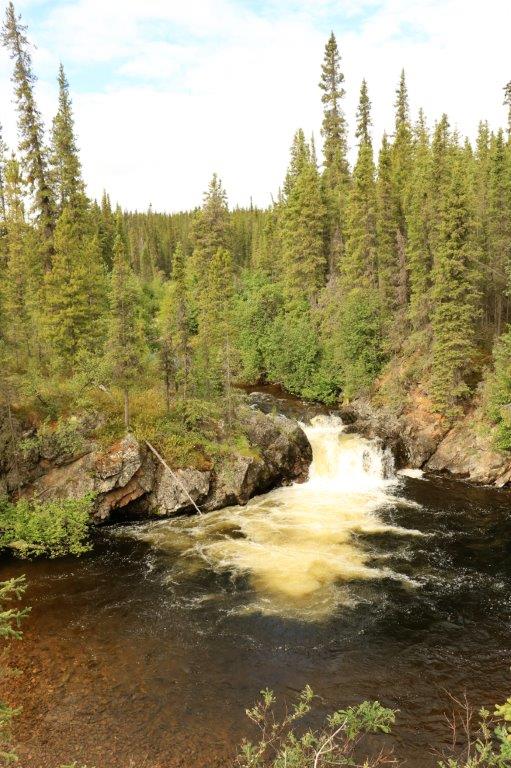
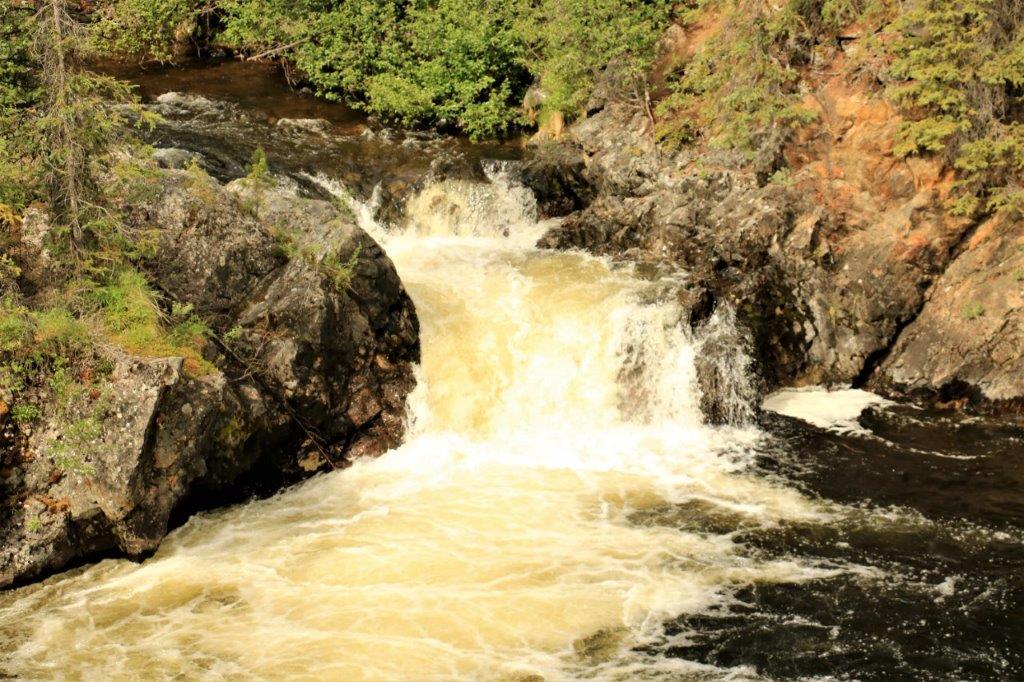
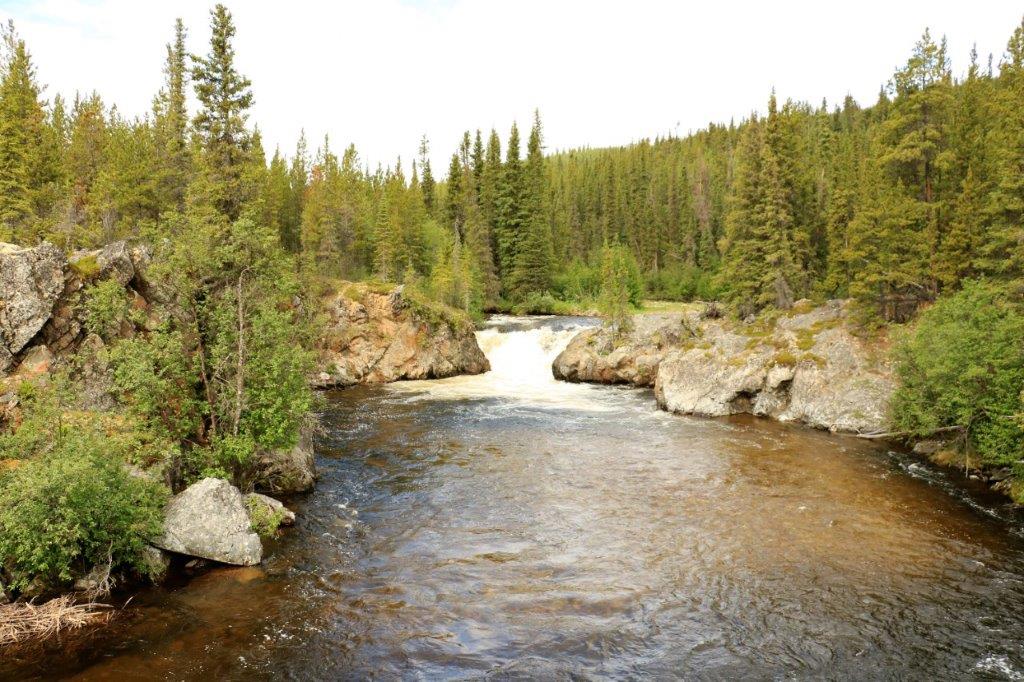
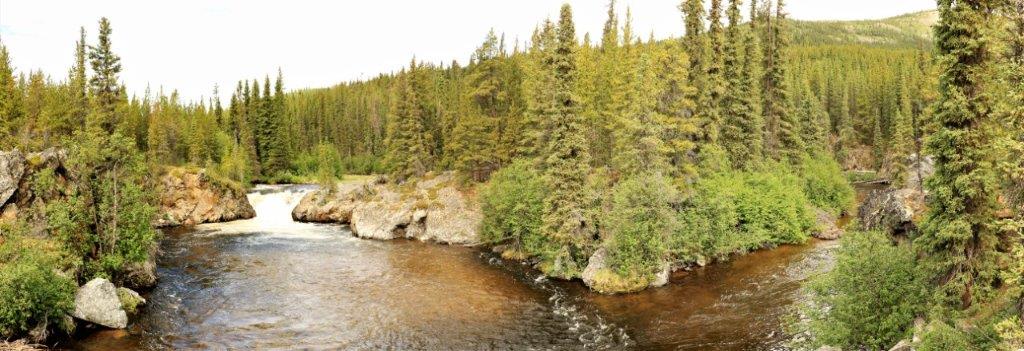
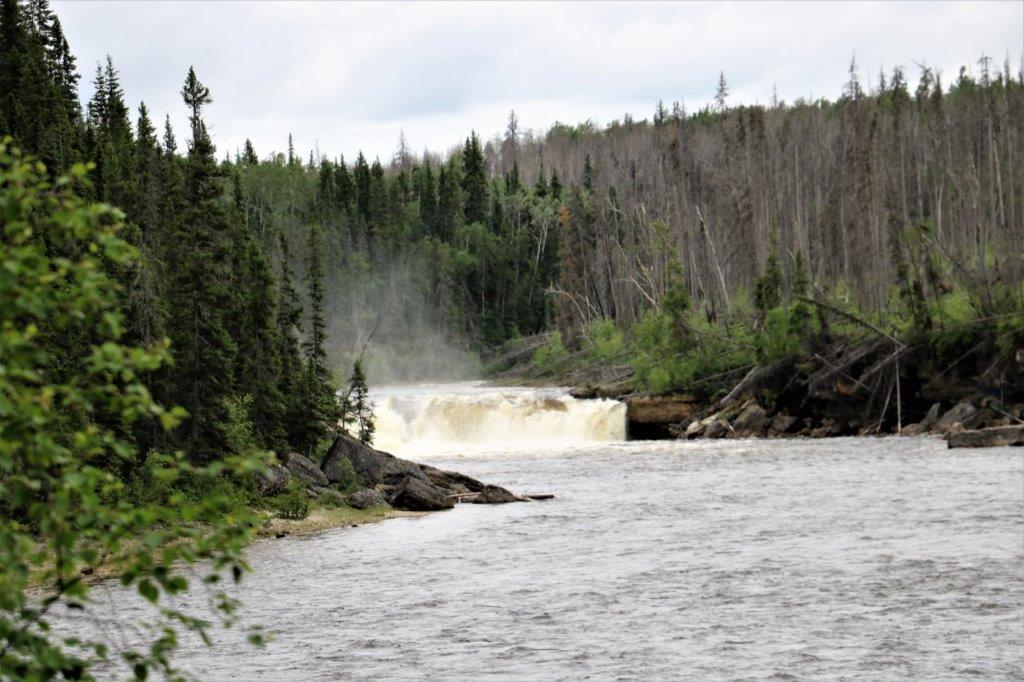
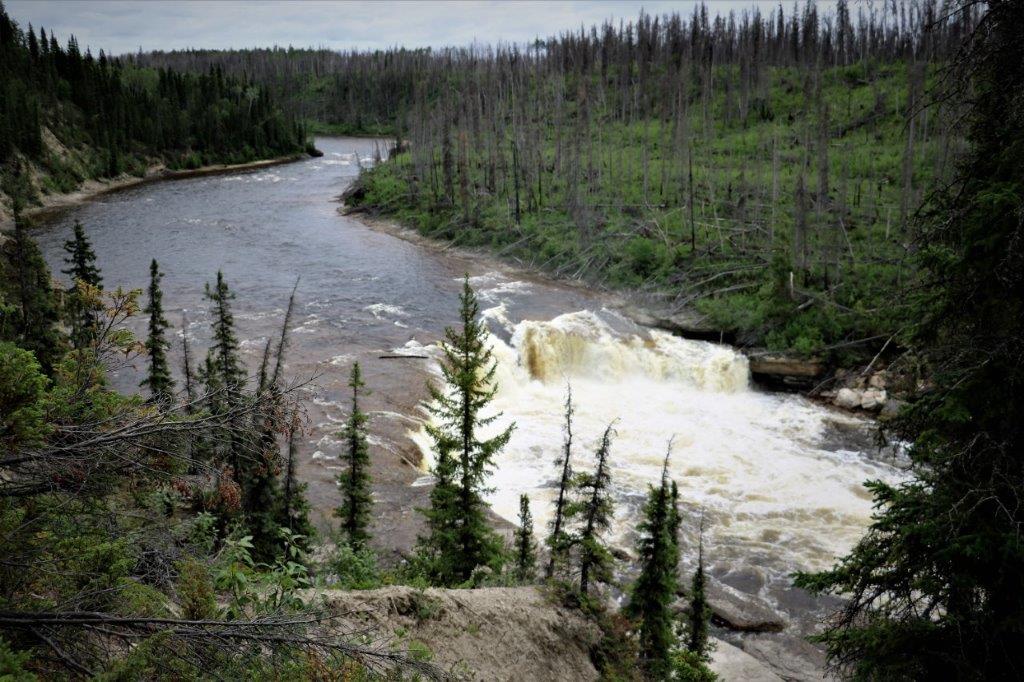
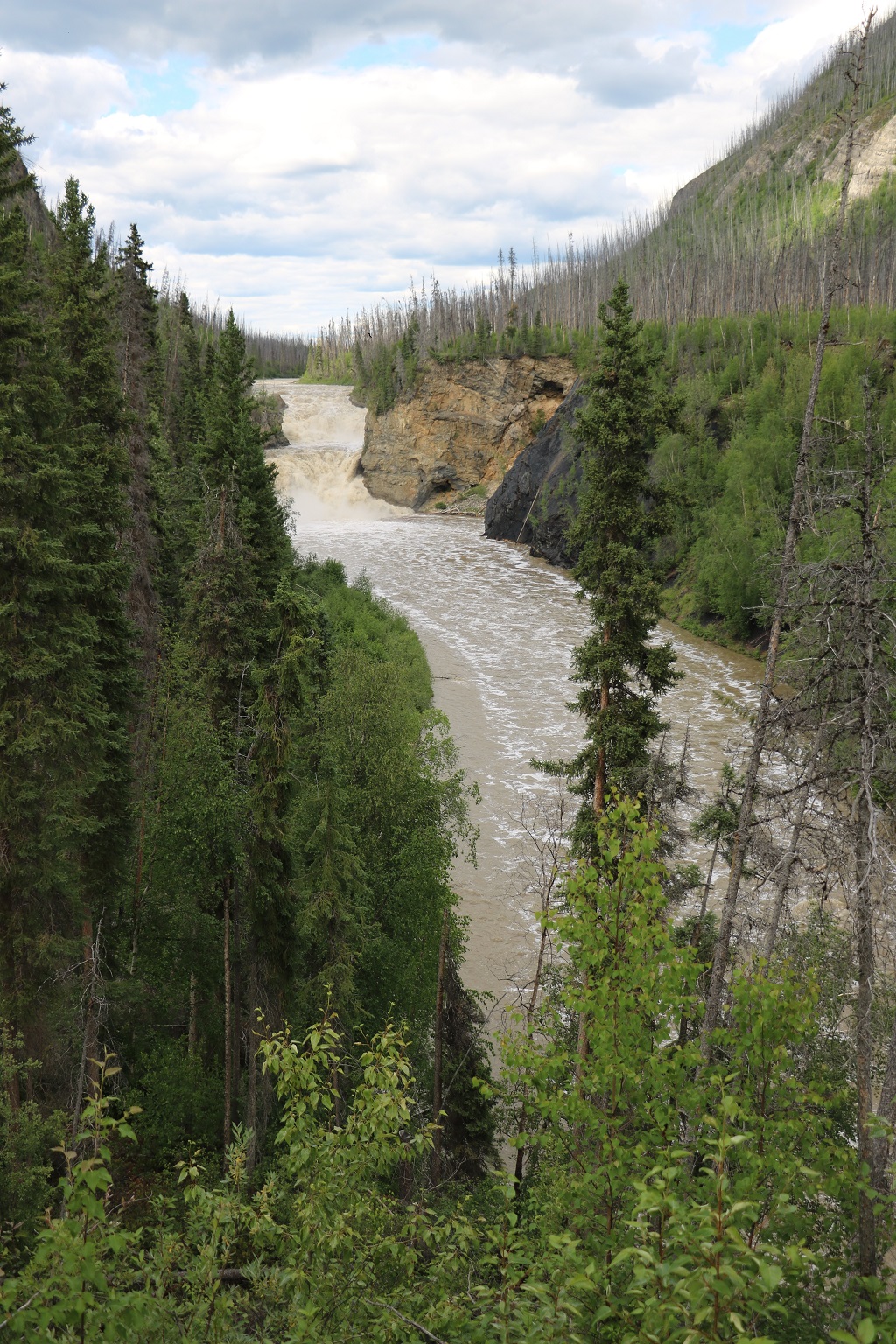
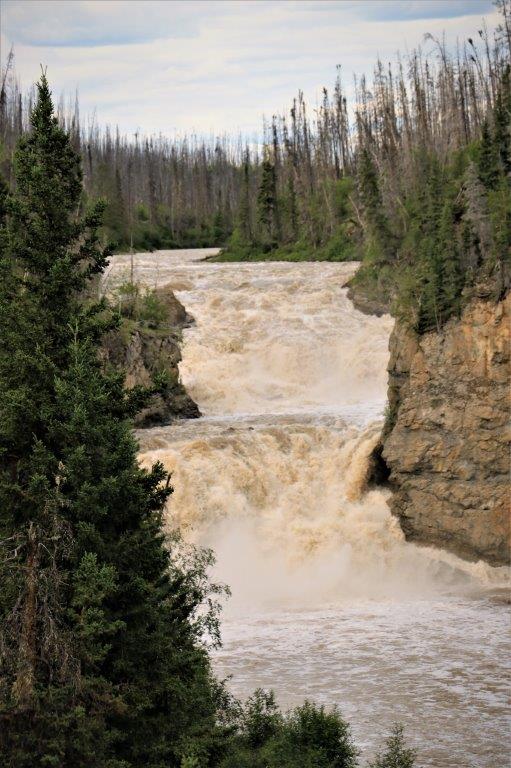
It would take a couple of hours to walk past them all.  We thought it was quite a’propo that we parked right in front of a sign posted by folks from home.And if there are not enough signs, you can check out the license plates. Just out of town we made our first stop for a geocache that was hidden under a bridge.                                       Lots of open country and trees.  We planned to find a geocache hidden at Rancheria Falls and noted the roadside sign that said it was 2 km up the road.  There was no corresponding sign at the entrance road which was narrow and had trees on each side.  If John hadn’t slowed down and watched for a turn we would have missed it.  We noticed this lack of signage some other times during the day.                                                                                              The first falls                                                     The second FallsThe water flows around this little island and has a small waterfall at each side.  Very pretty. (We found the cache too.)

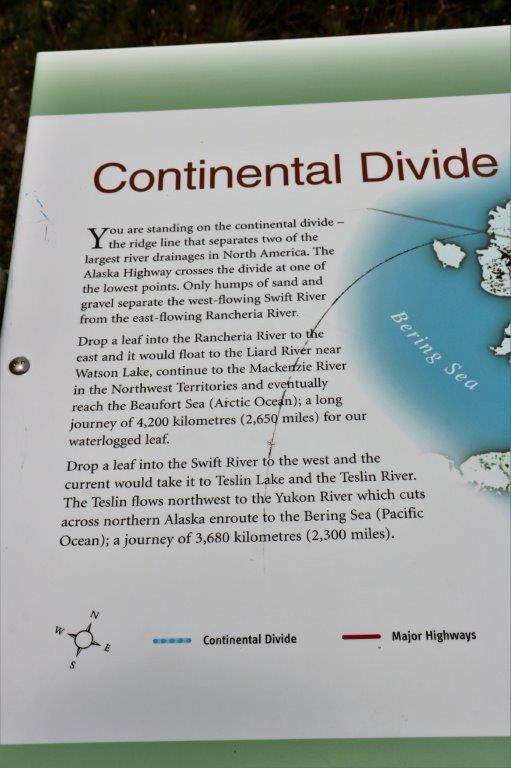
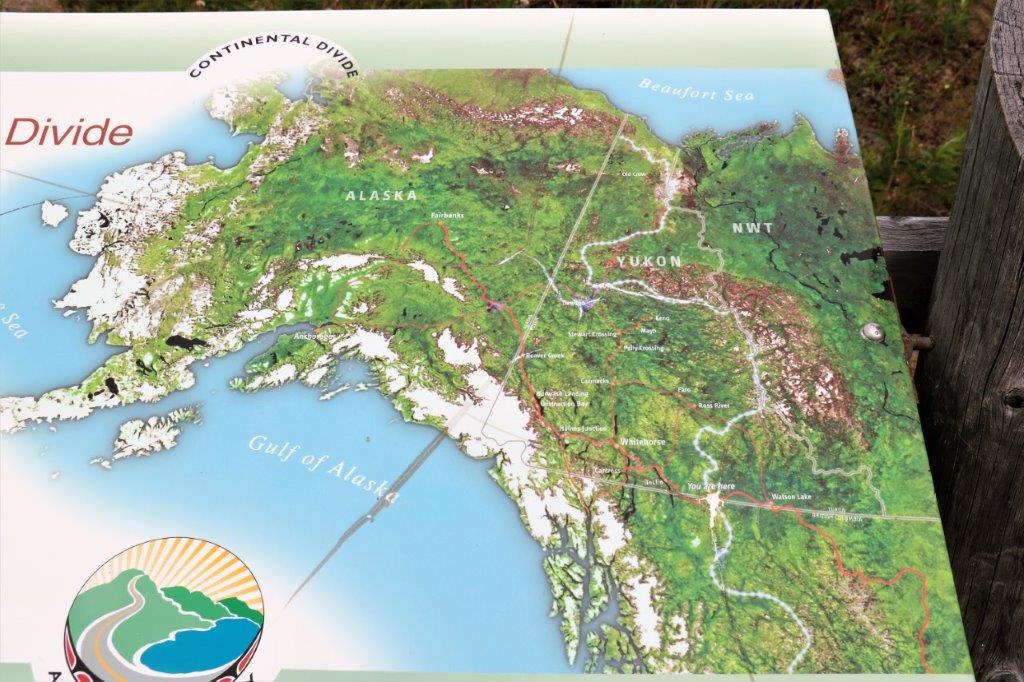
There was an Earth Cache at the Continental Divide. (An earth cache has not got a container or log book to sign.  It is in a place of historical or geographical or geological significance.  Usually there are information placards at the site, but not always.  To log the cache as found you must send the answers to the questions in the log description to the cache owner to prove you were actually at the site.)  I like Earth Caches.  But then, I like to read and learn interesting information.

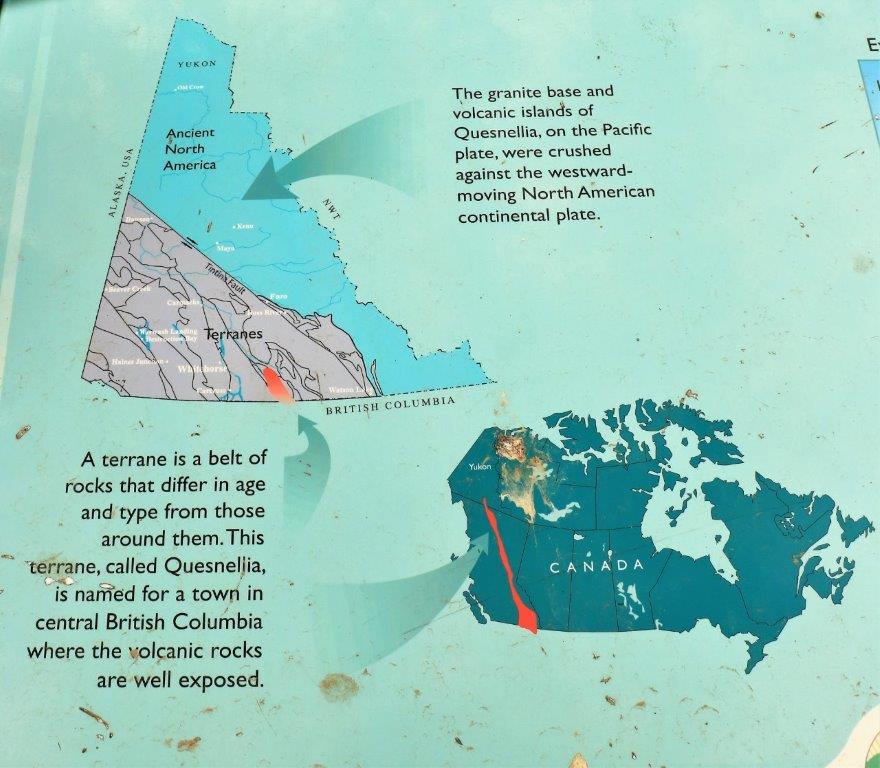
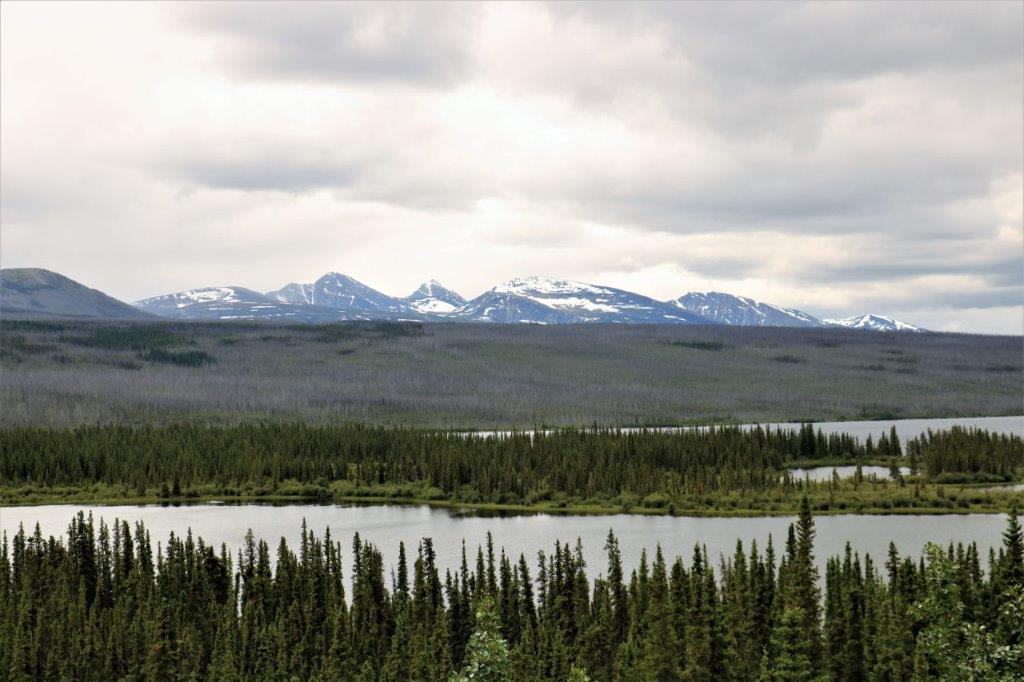
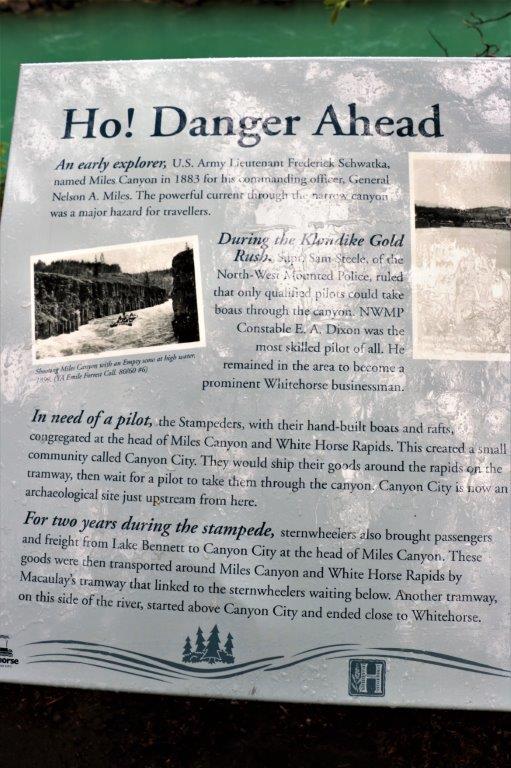
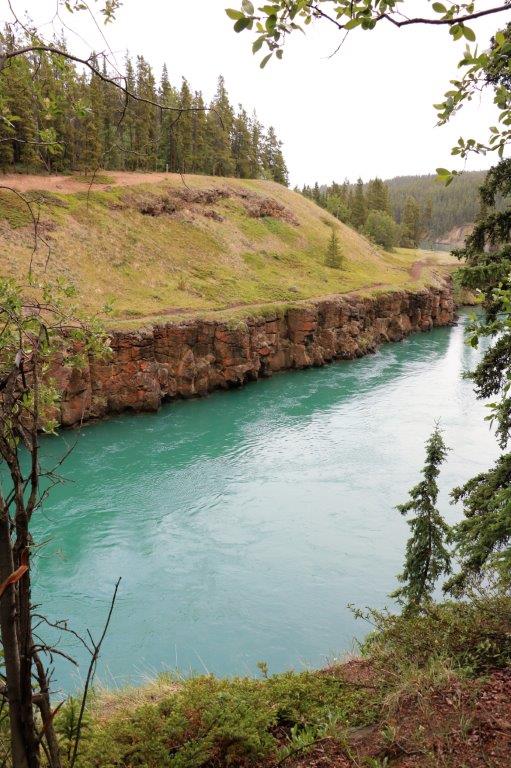
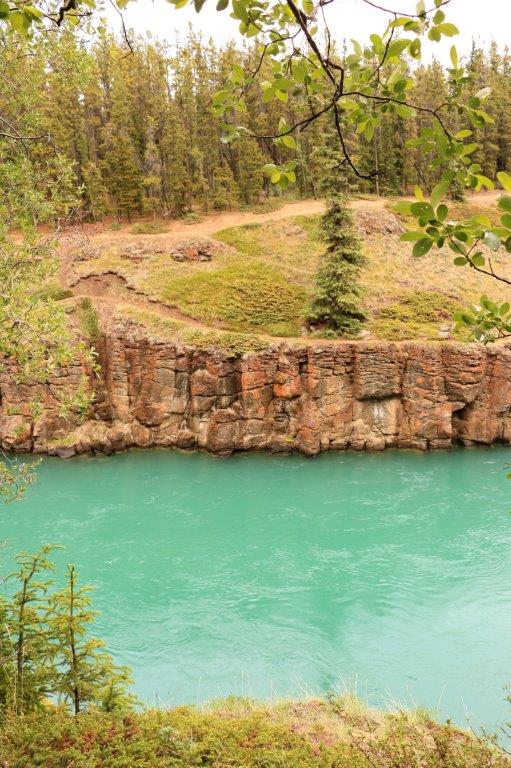
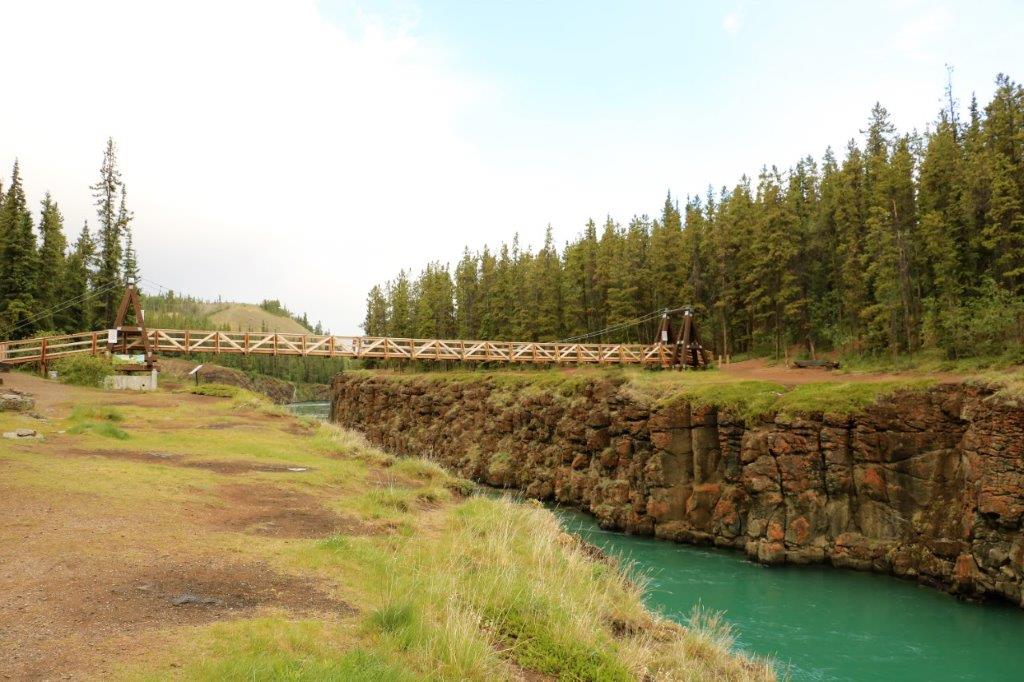
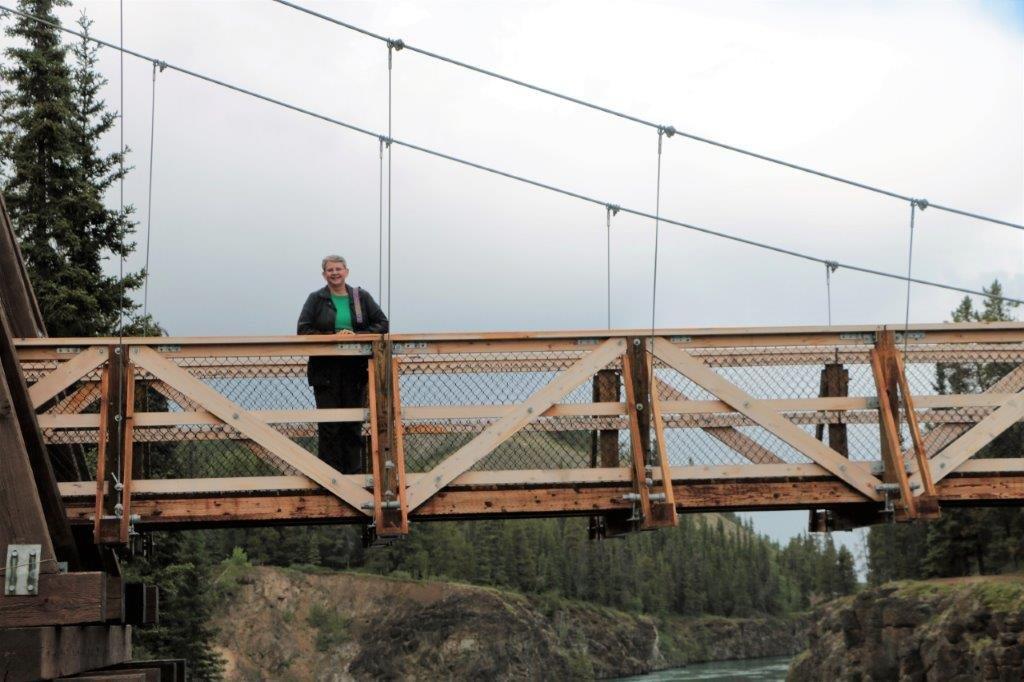
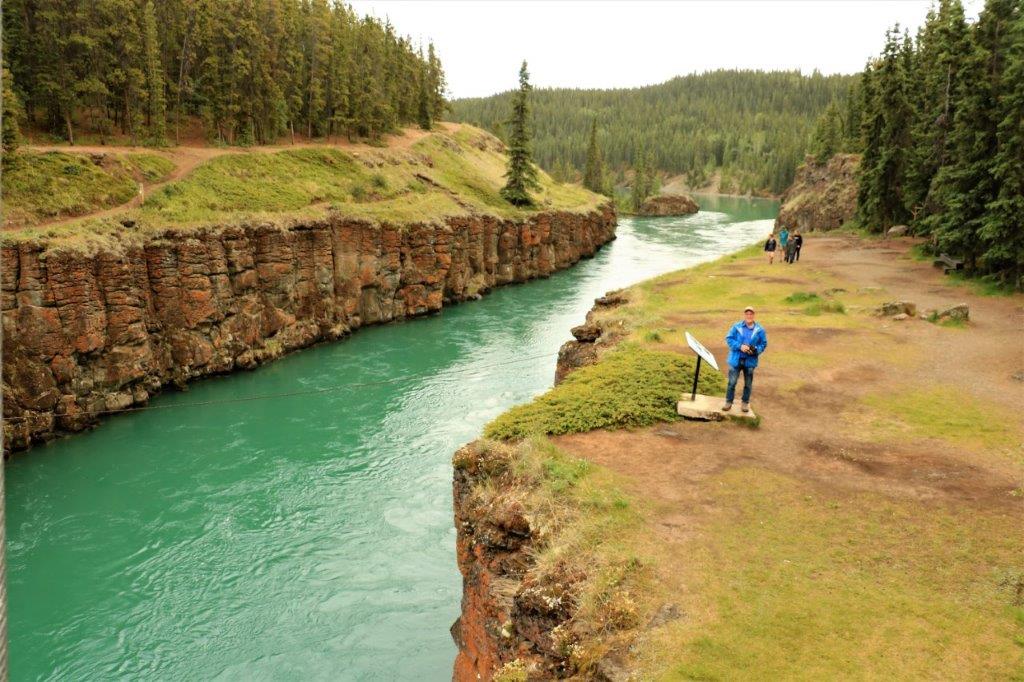
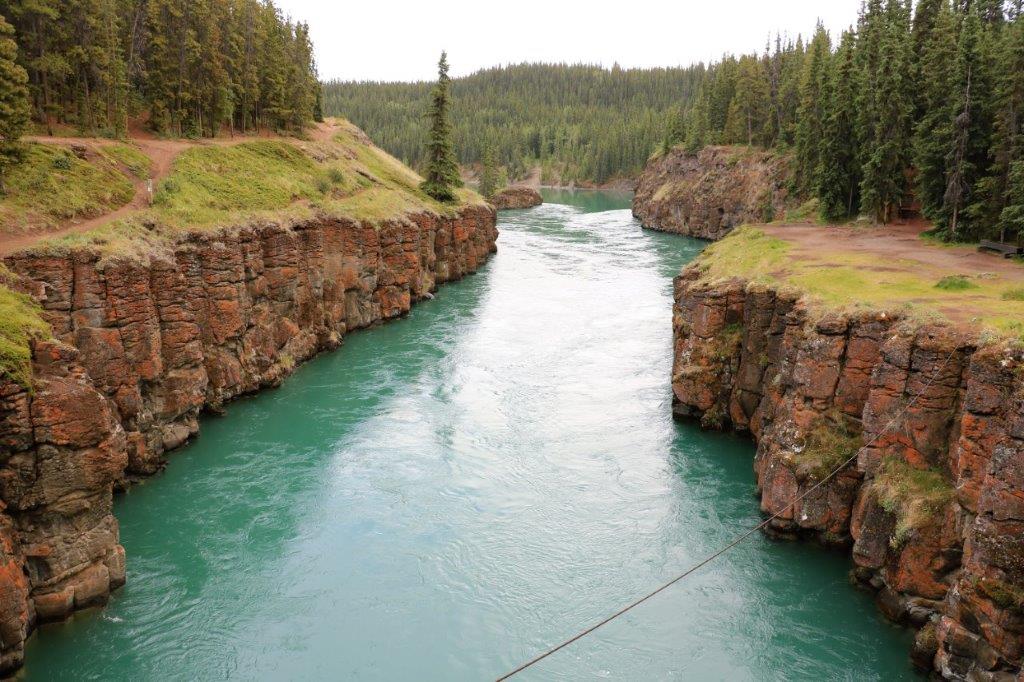
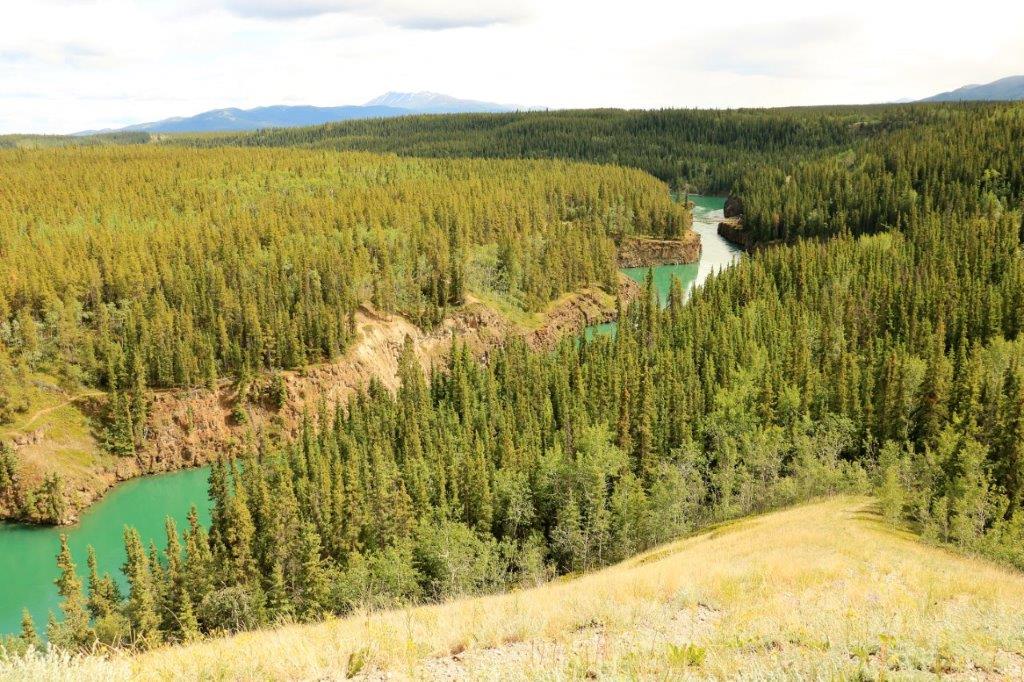
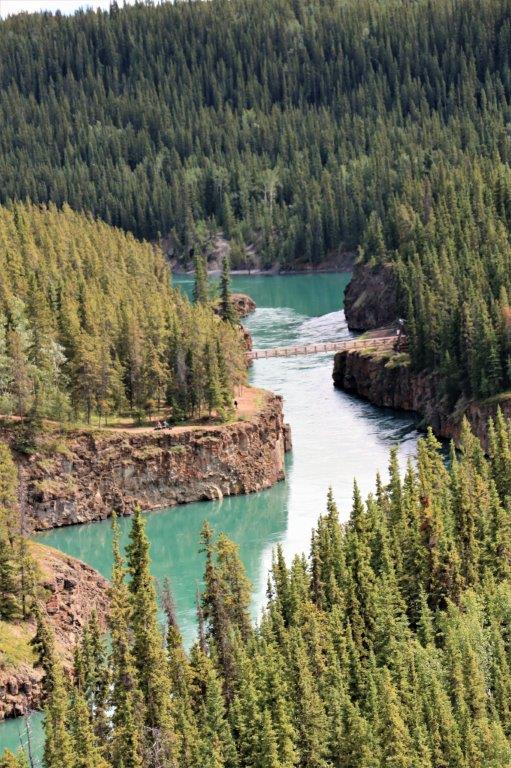
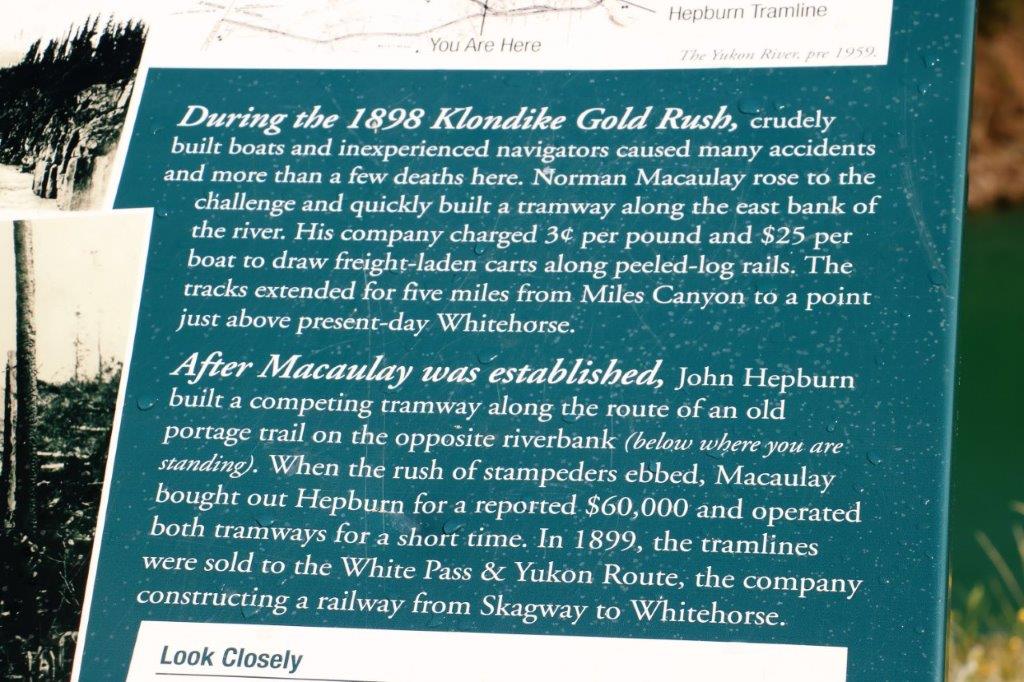
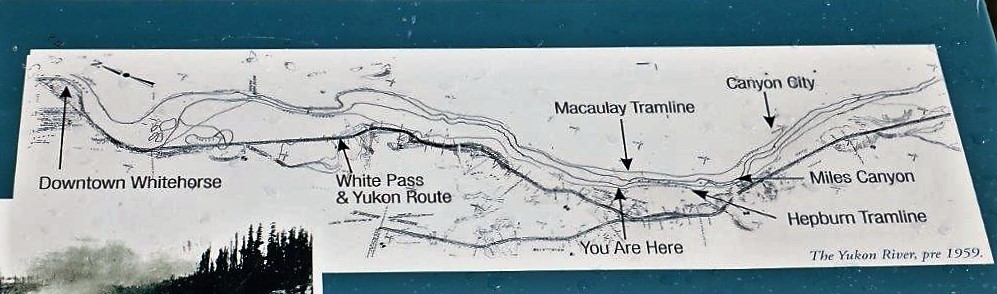
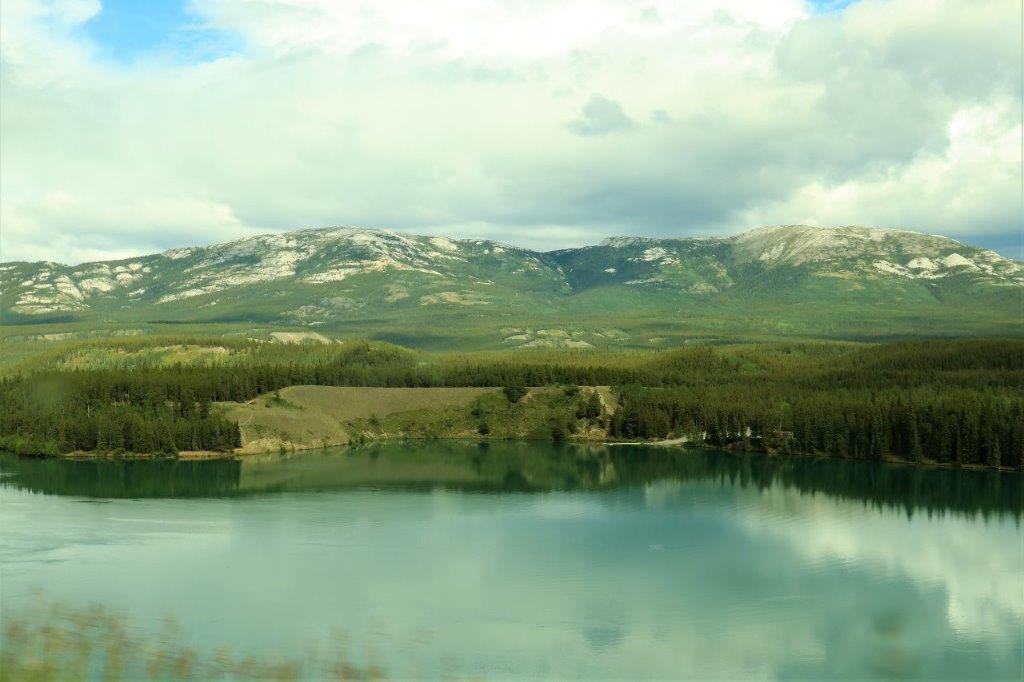
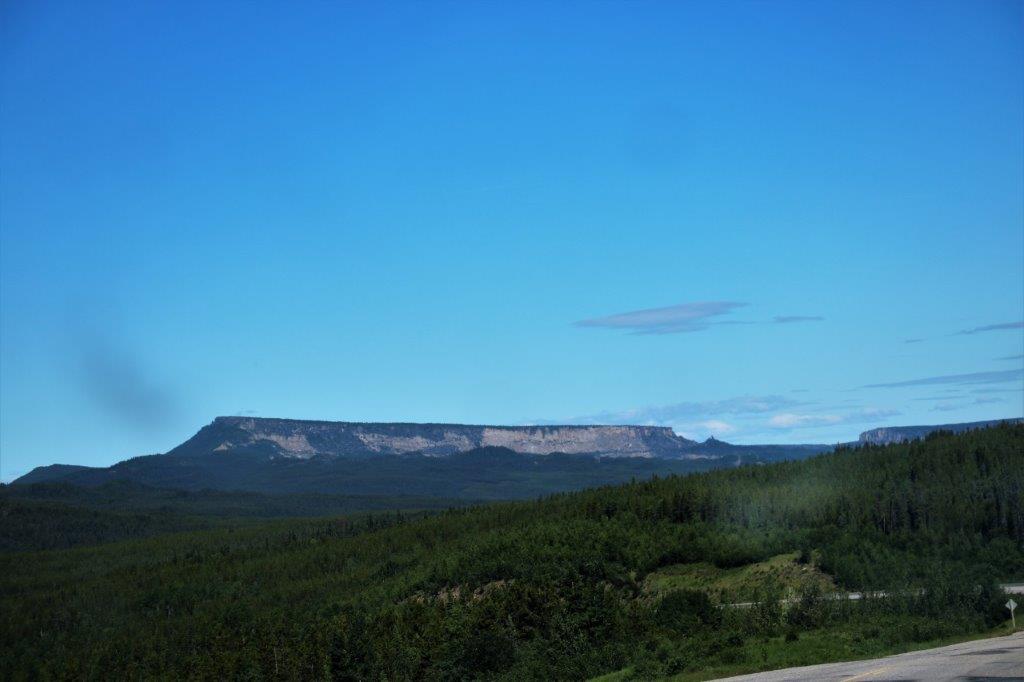
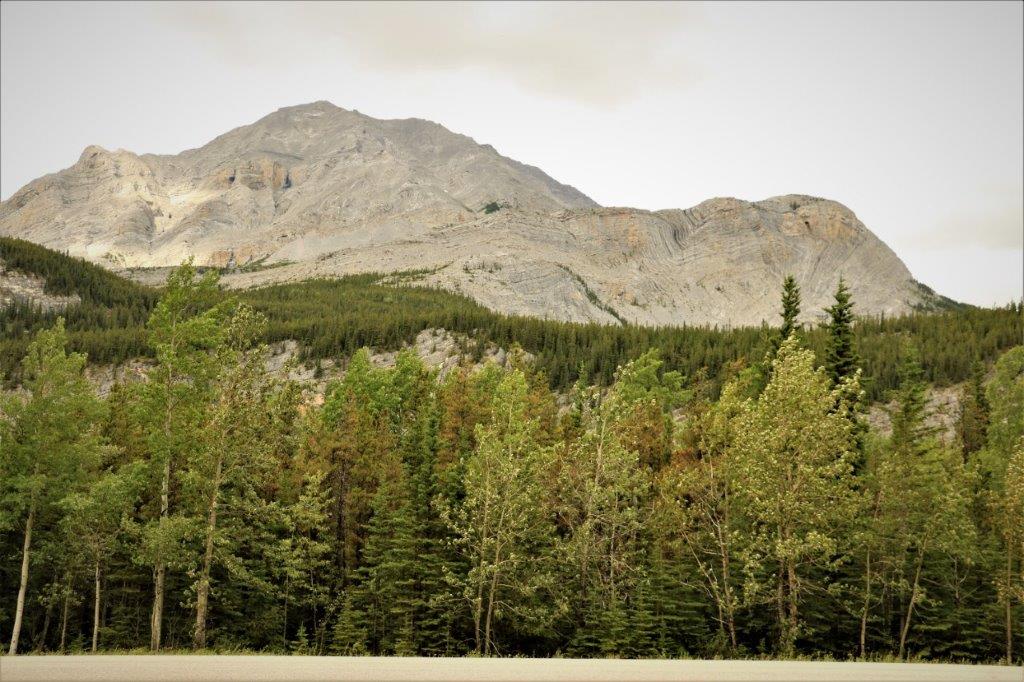
There was another Earth Cache at this location describing geological characteristics of the area.  The area is named for the town in BC called Quesnel because at Quesnel there is an excellent example of these formations.T 260 km (161 miles) from Watson Lake is the community of Teslin. We stopped here for some expensive ice cream cones – $5 each for two small scoops. I did like the local speeding deterrent.  A very clever life-size RCMP cruiser, complete with the shadow of an officer inside. On the way into Whitehorse we stopped at Miles Canyon. We continued along the side of the Yukon River into Whitehorse rather than go back out to the highway.  Since our hotel is right downtown, which is beside the river, we would have had to leave the highway later anyway and drive toward the river.  Besides, it was pretty.

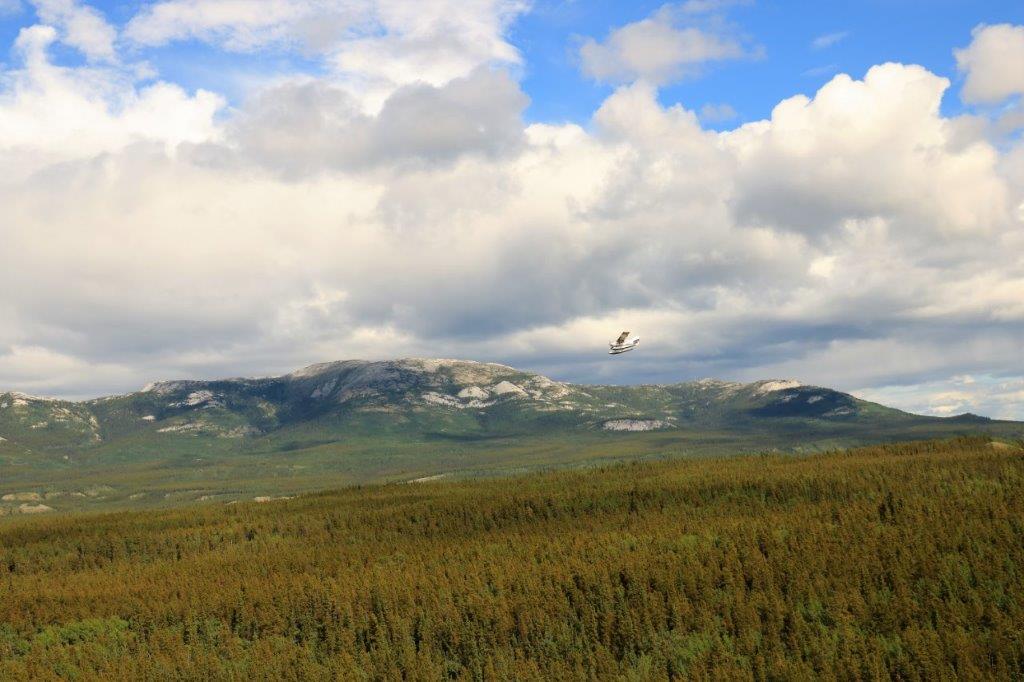
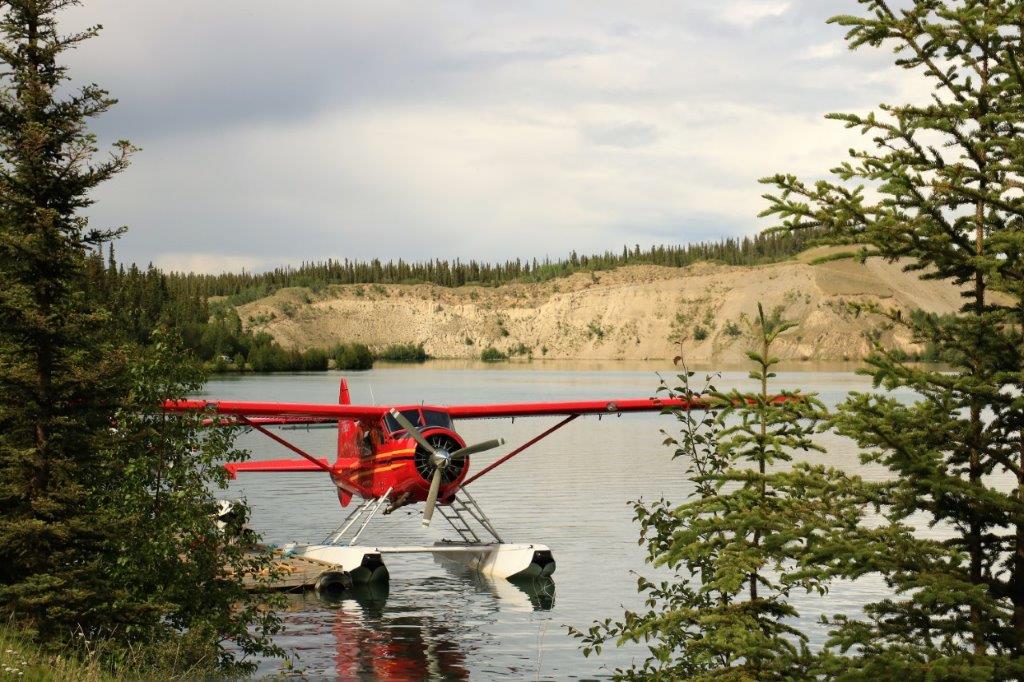
There was a viewpoint overlooking Miles Canyon along the way. There are lots of float planes in the north and one was coming in for a landing as we were at the viewpoint. It was a nice drive along the river into Whitehorse.  We arrived about 4 o’clock and had time to wander around downtown for awhile before dinner.  We are staying in Whitehorse two nights so no long drive ahead tomorrow.

2018 June 28 – Fort Nelson, BC to Watson Lake, Yukon (Part 2)

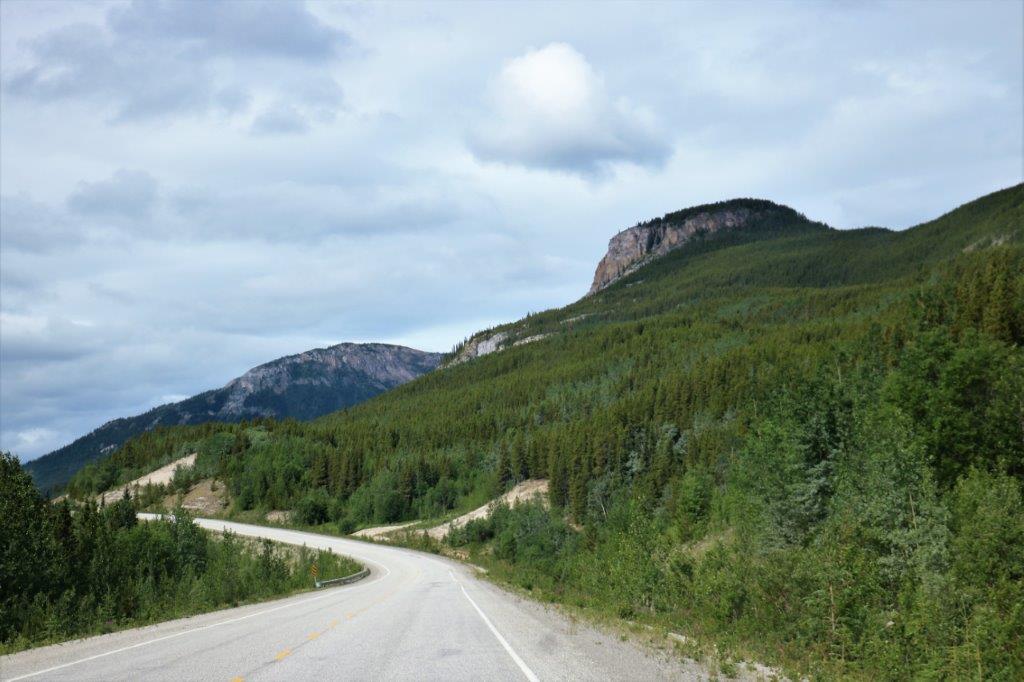
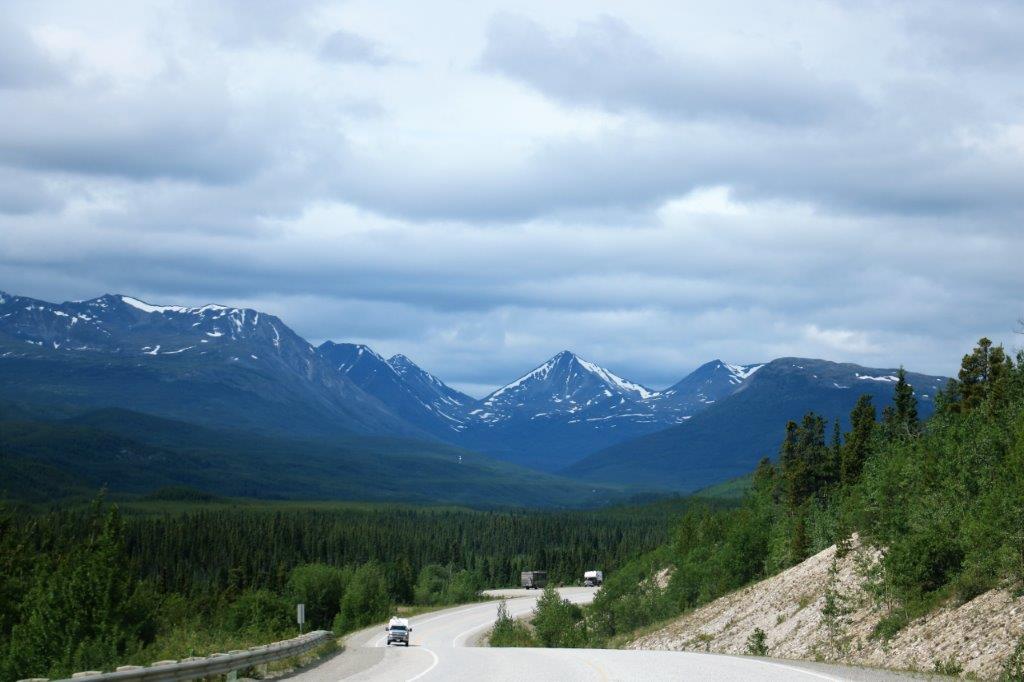
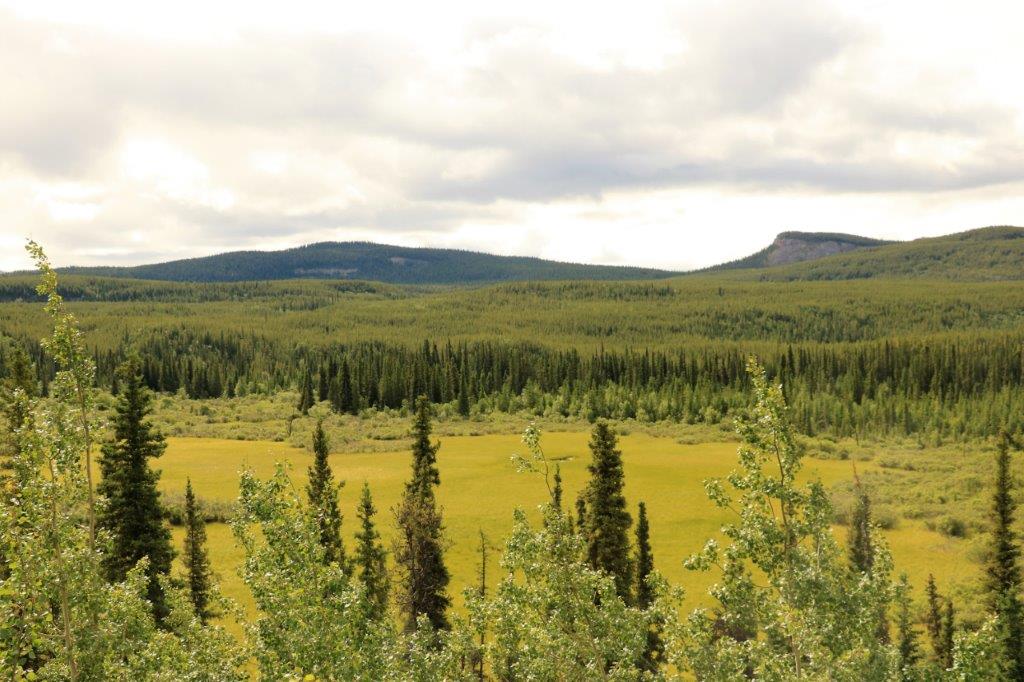
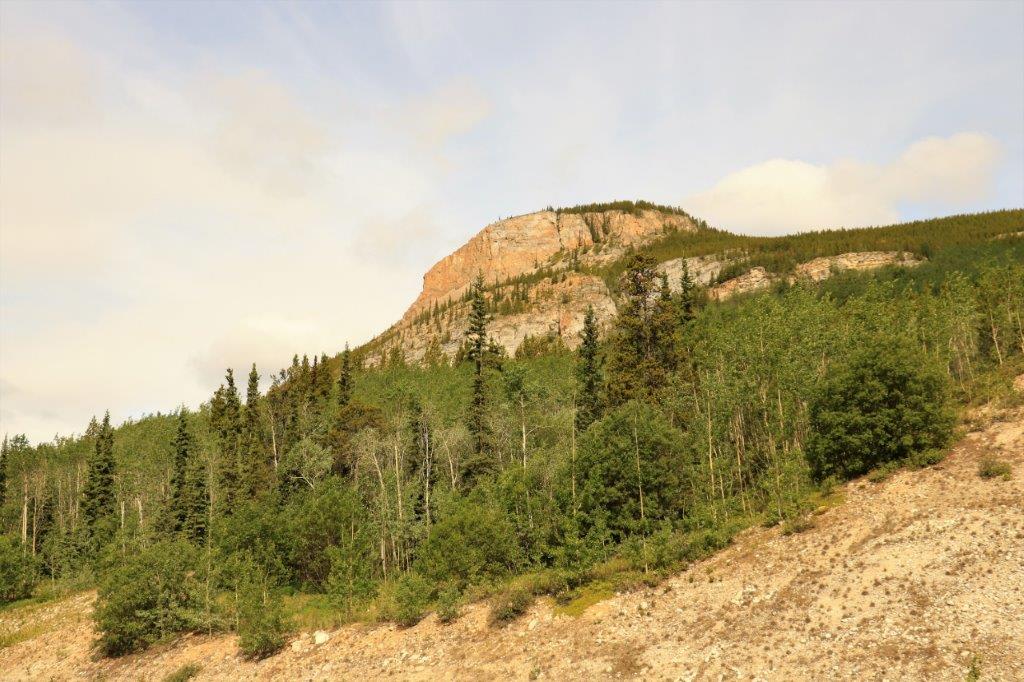
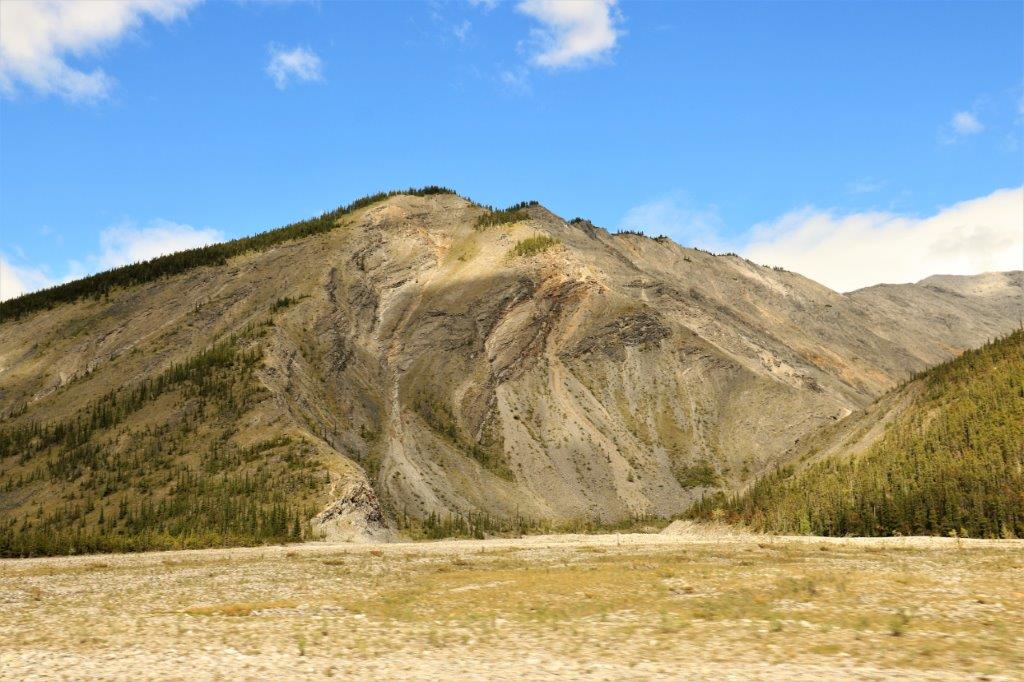
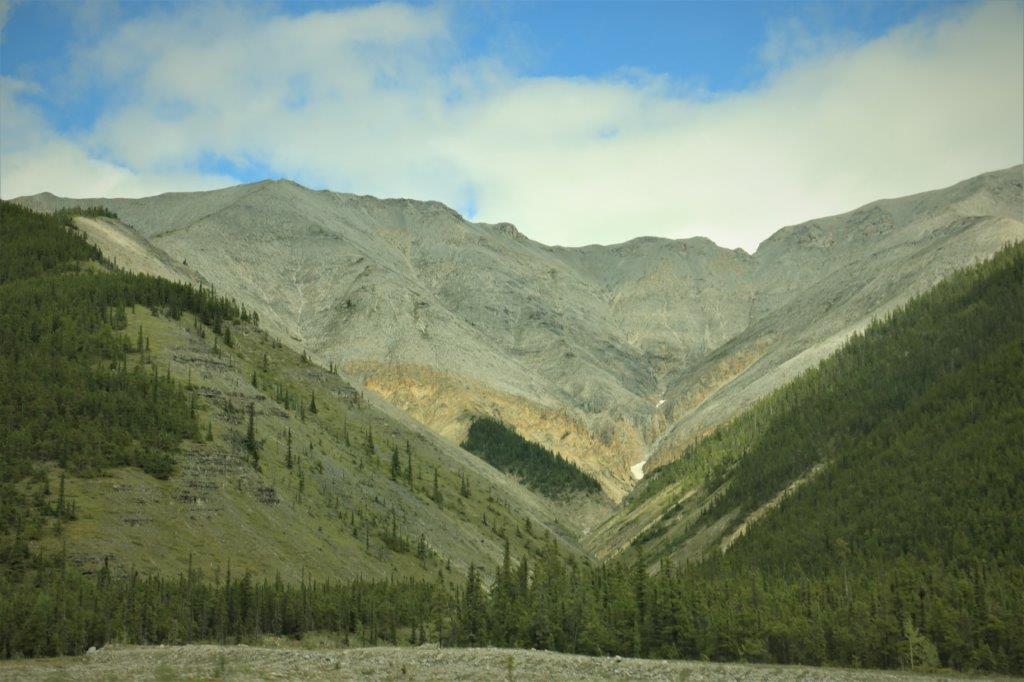
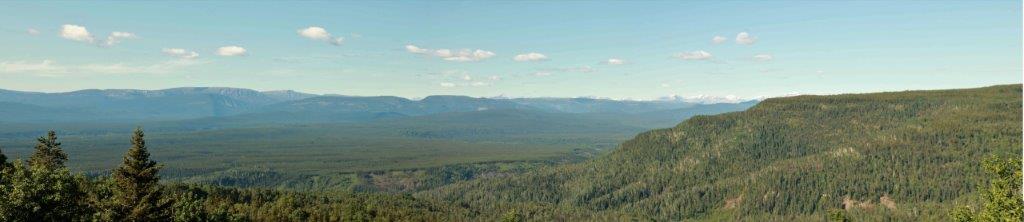
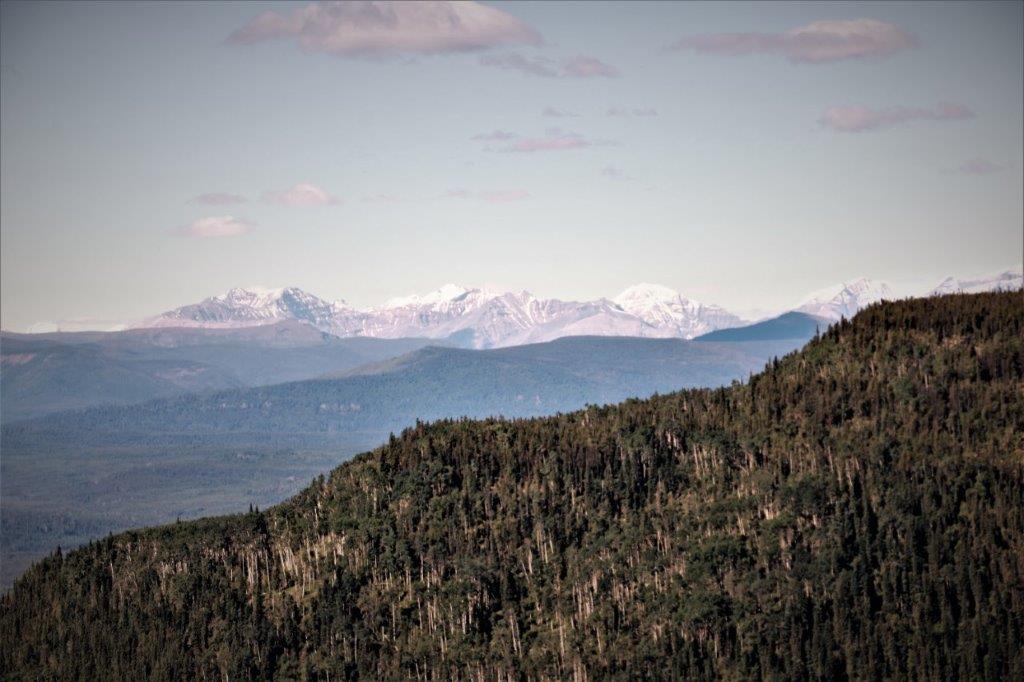
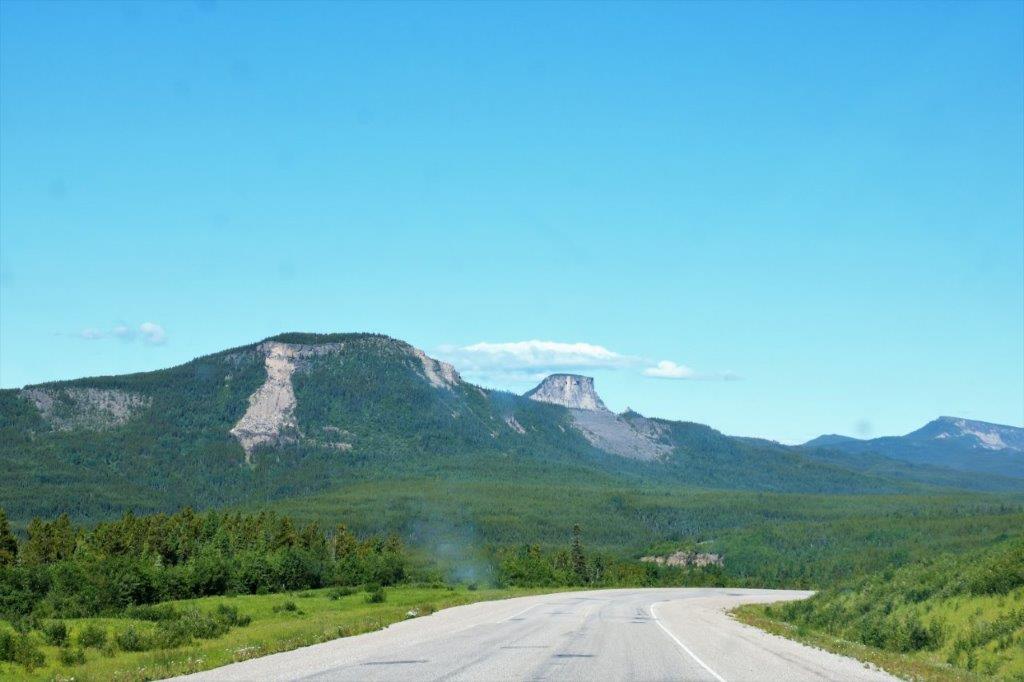
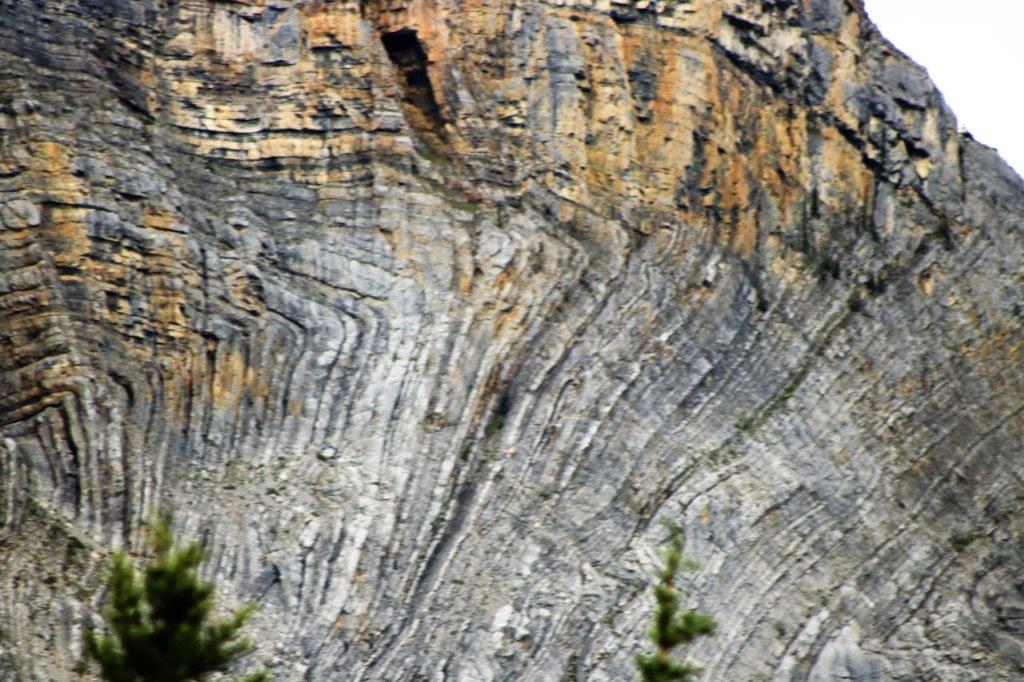
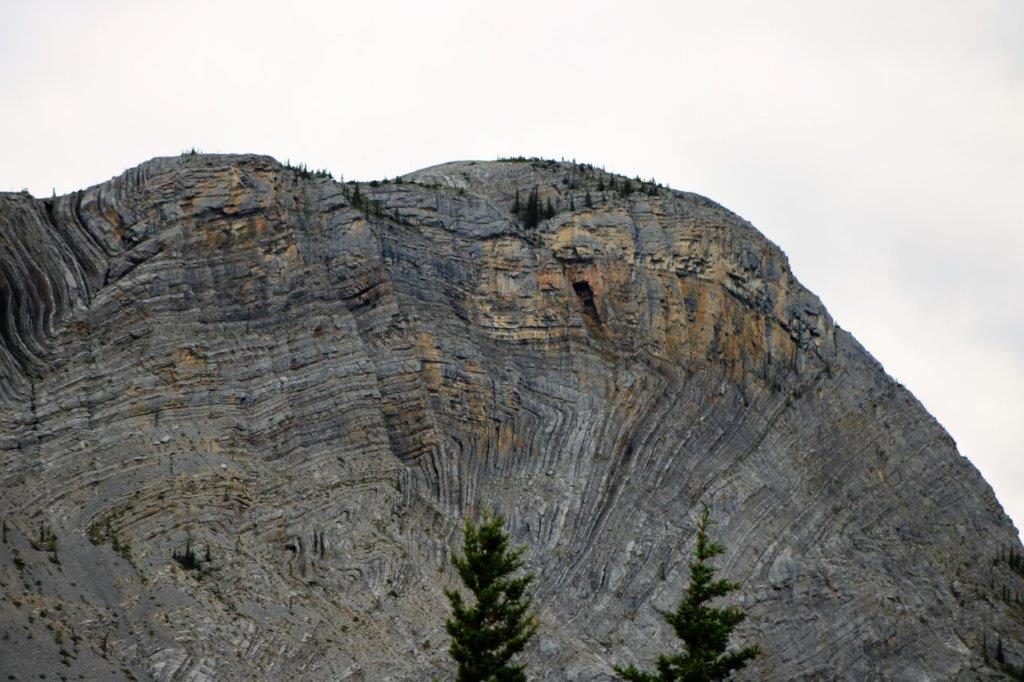
Our drive from Fort Nelson in northwestern BC to Watson Lake, just across the Yukon Territory border took us all day – just over 10 hours.  It was a beautiful day, amidst gorgeous scenery, blessed by an abundance of animal sightings.

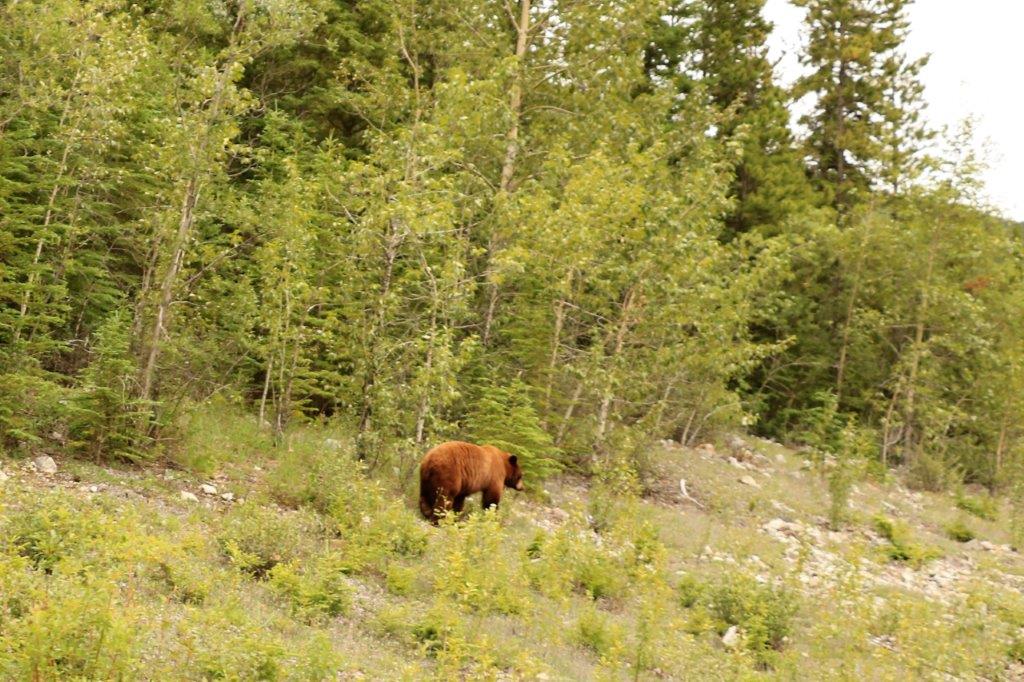
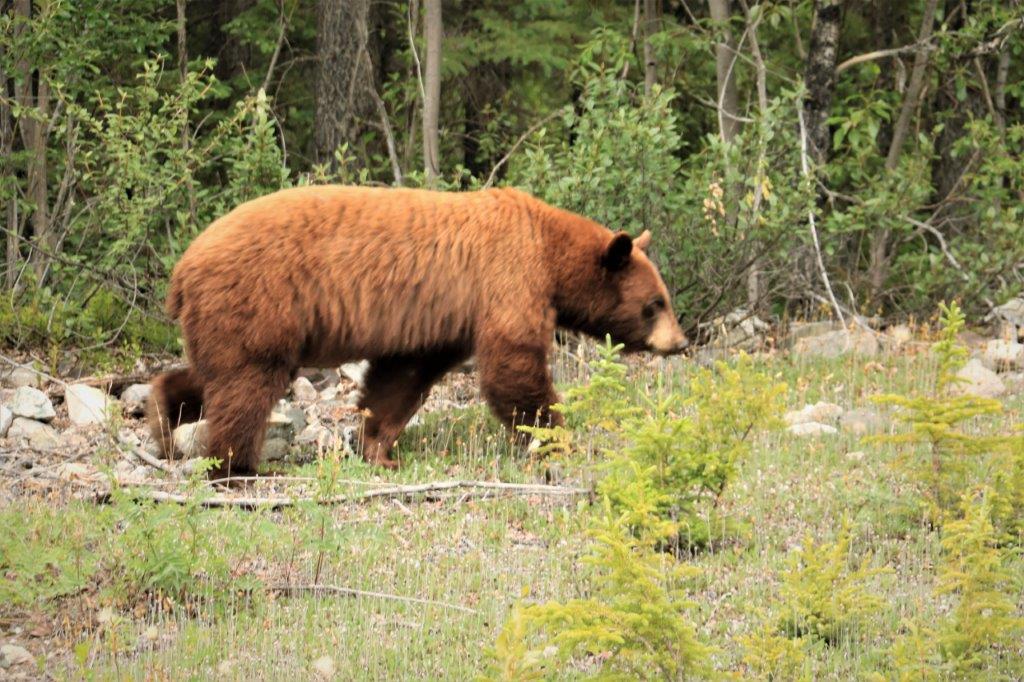
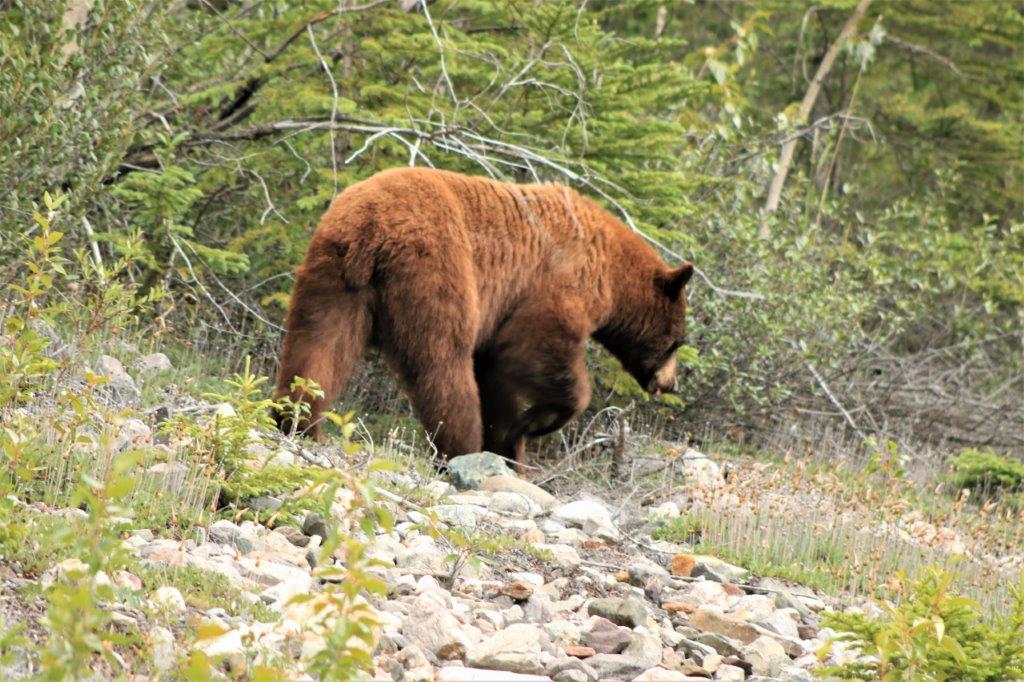
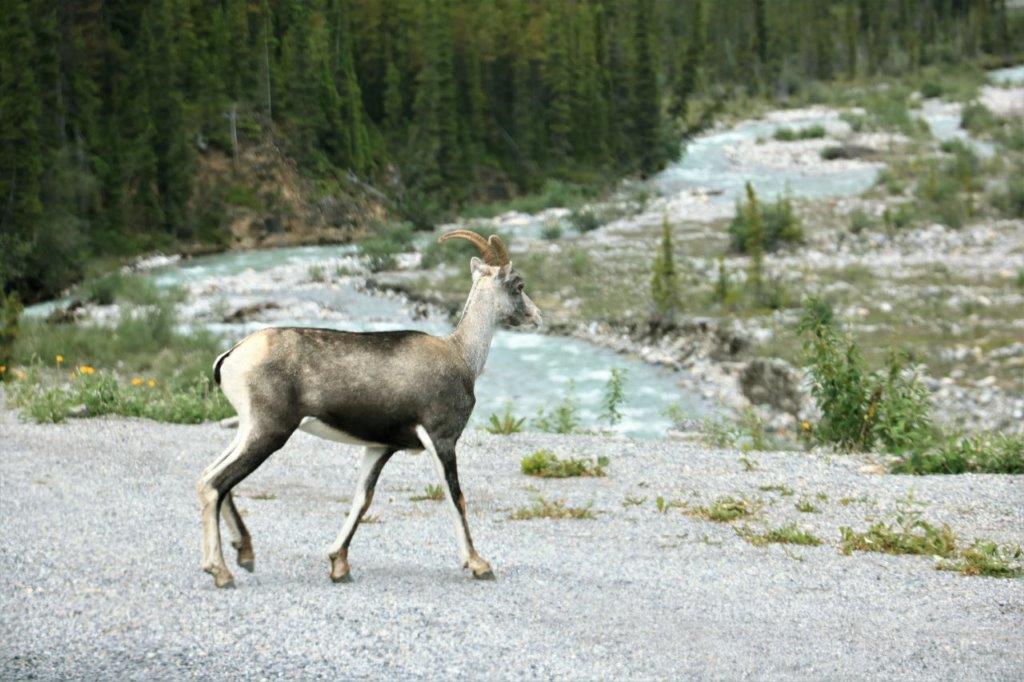
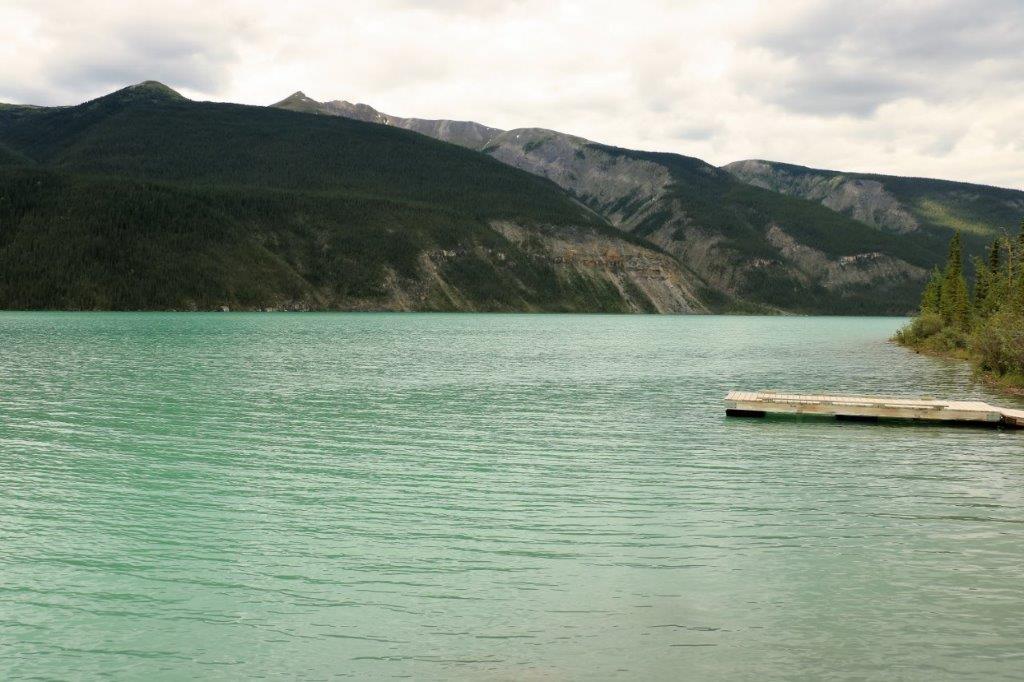
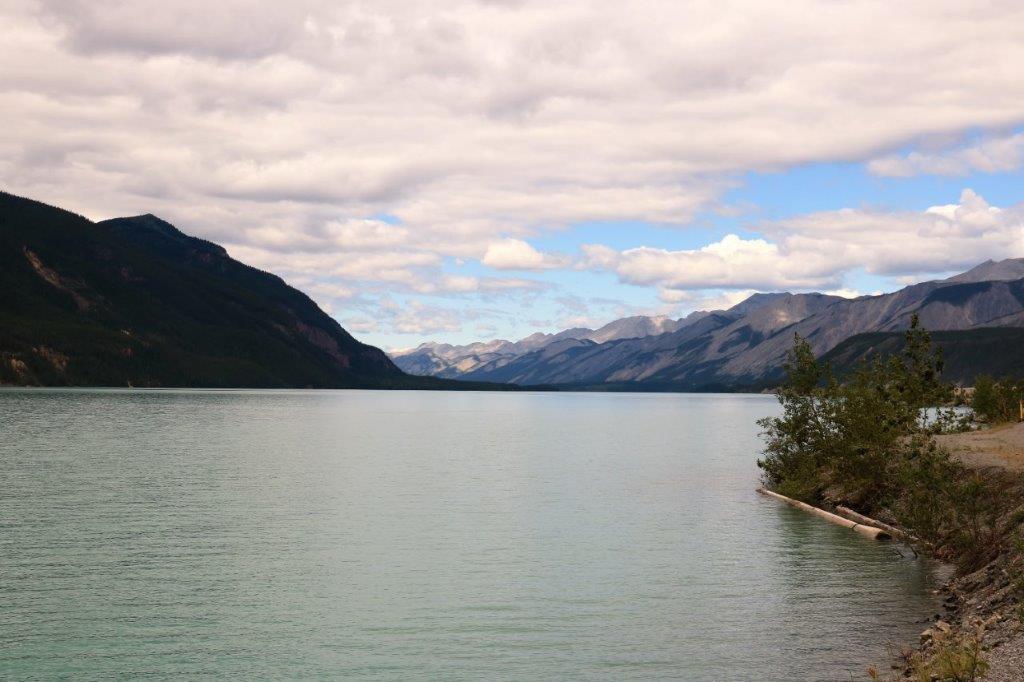
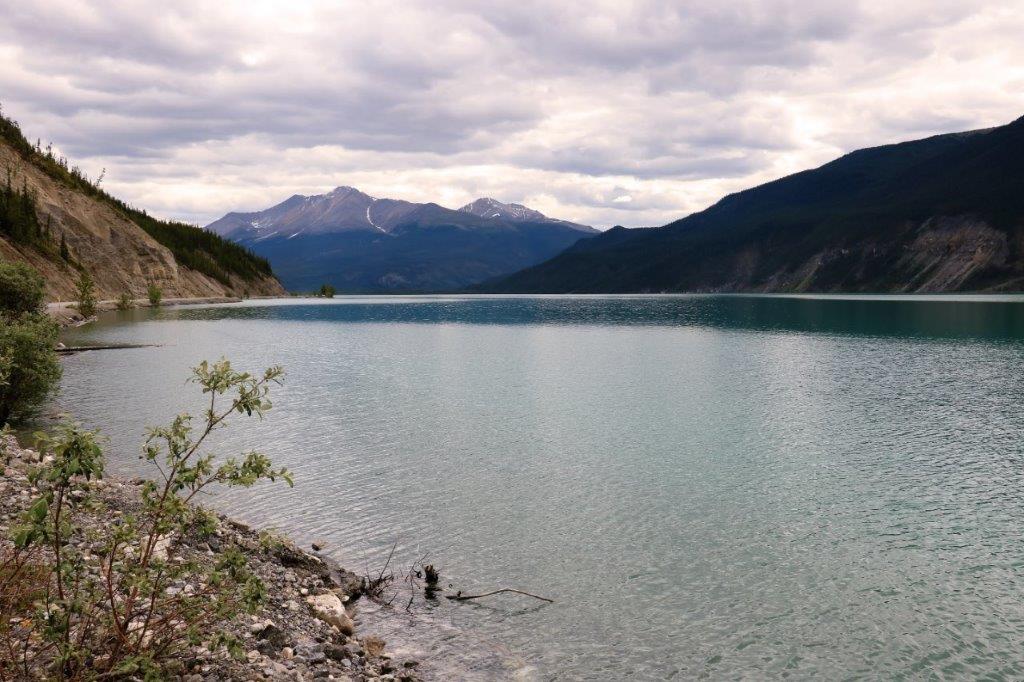
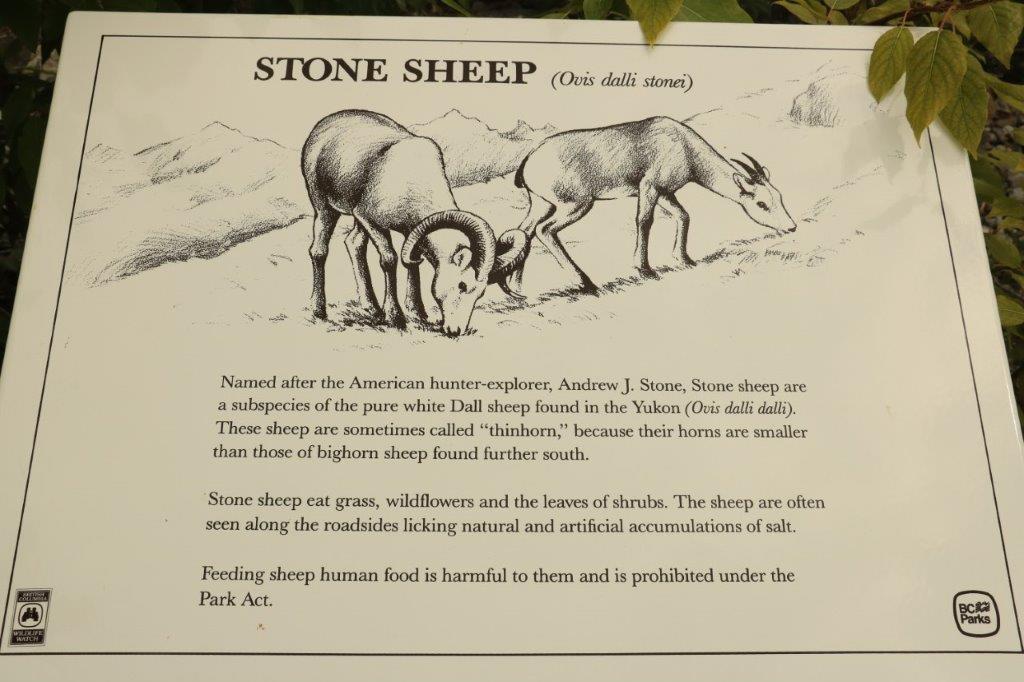
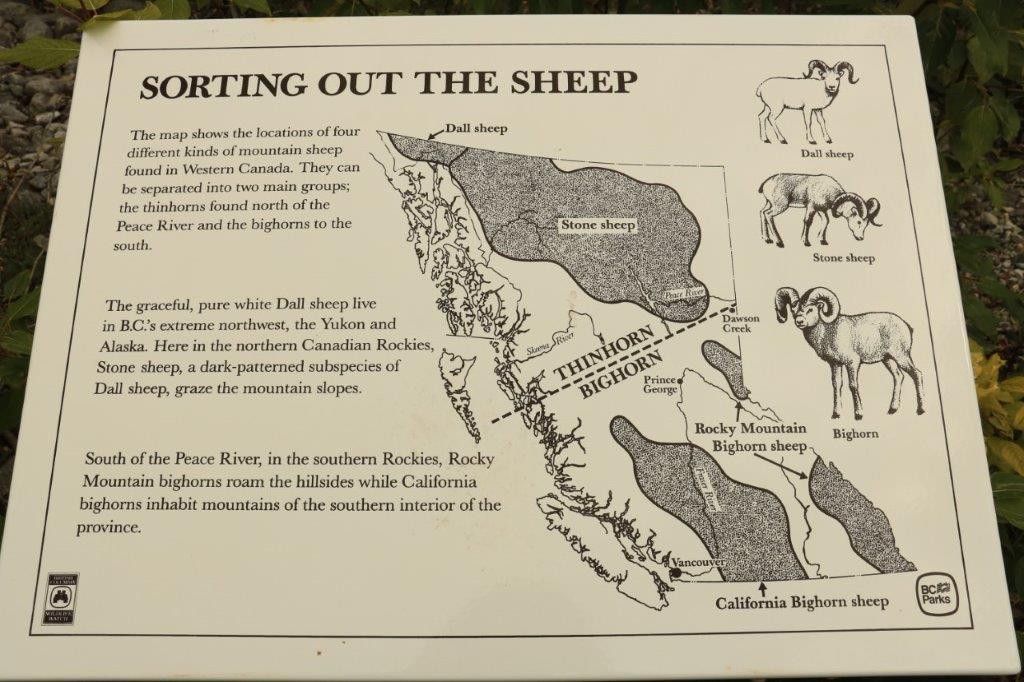
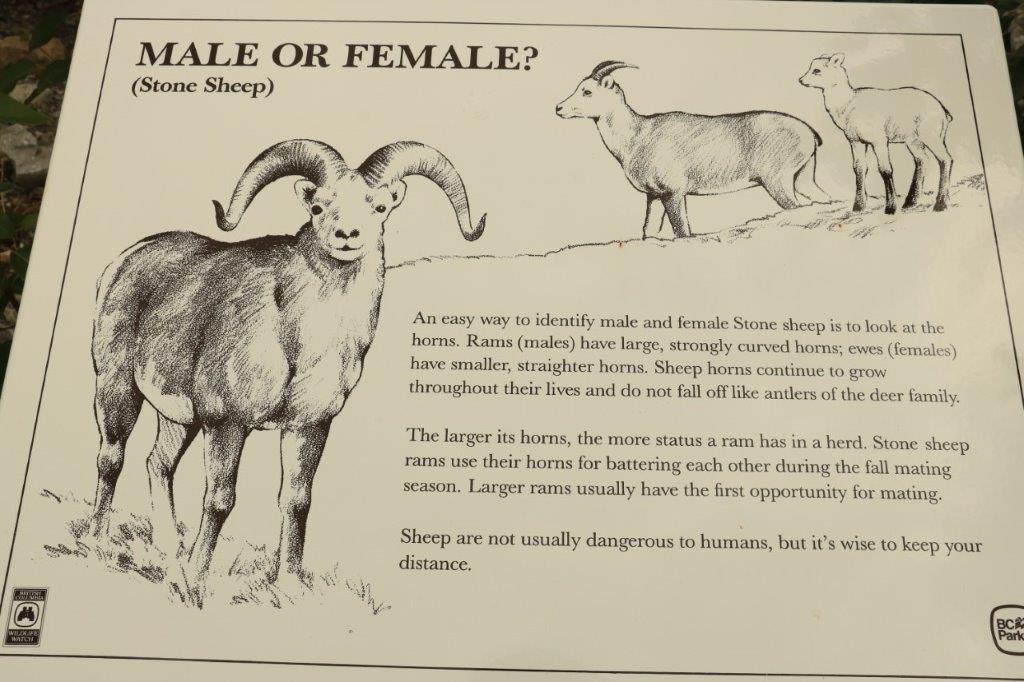
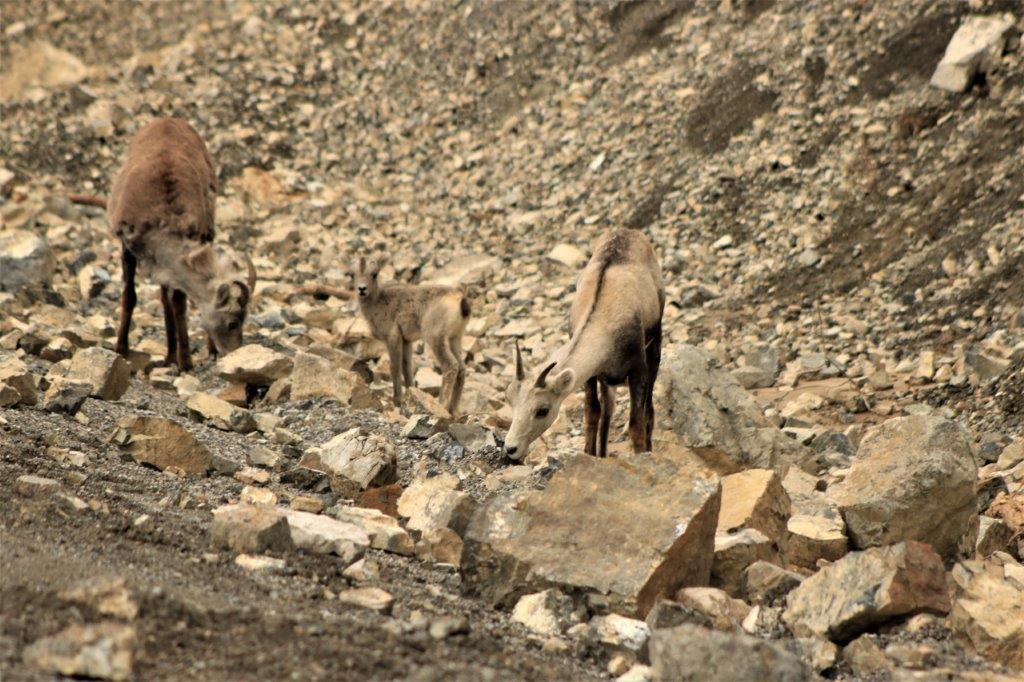
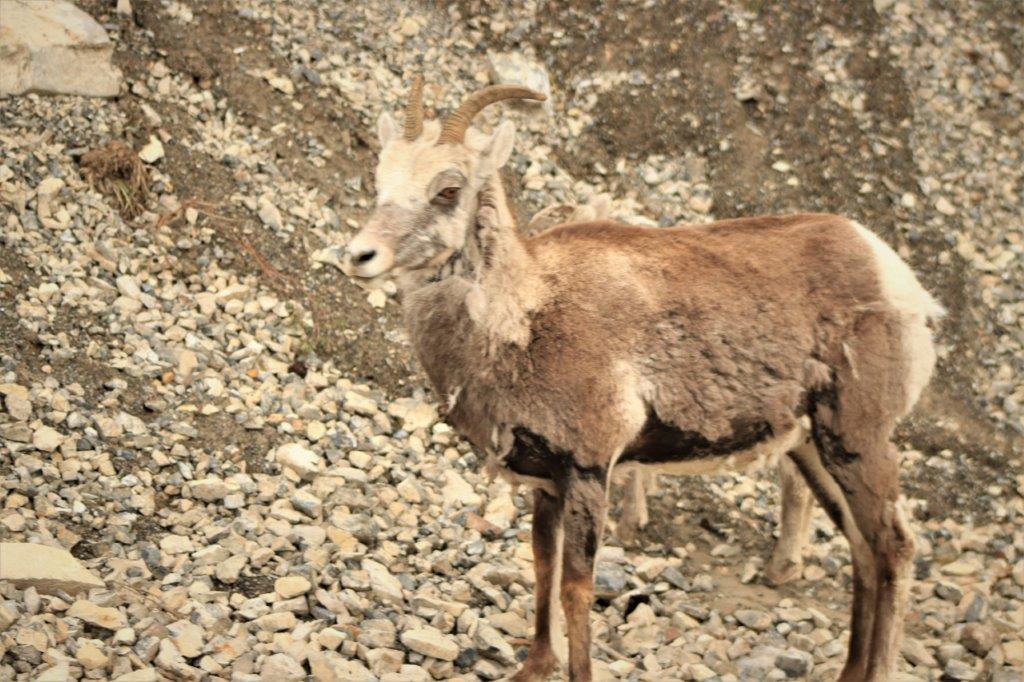
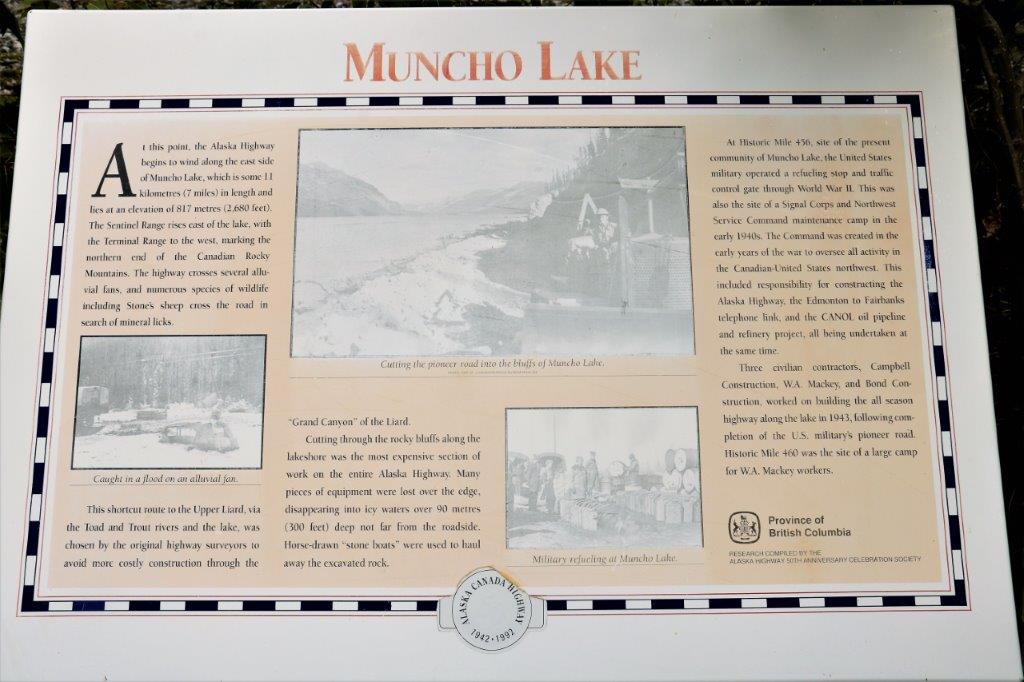
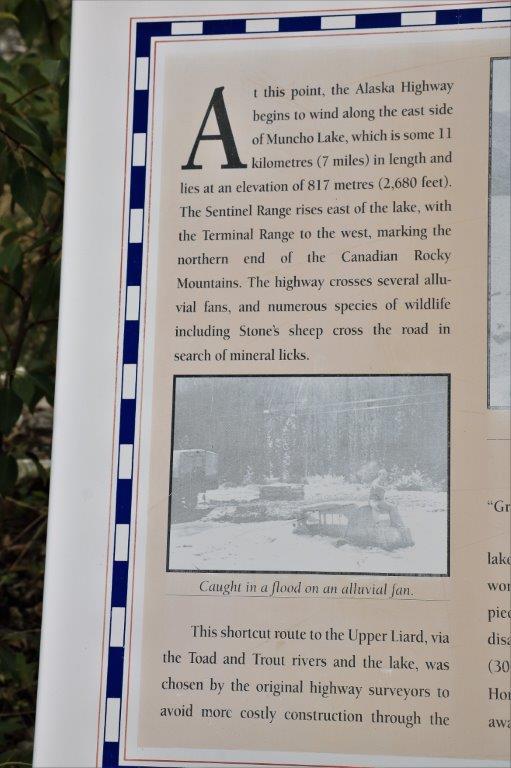
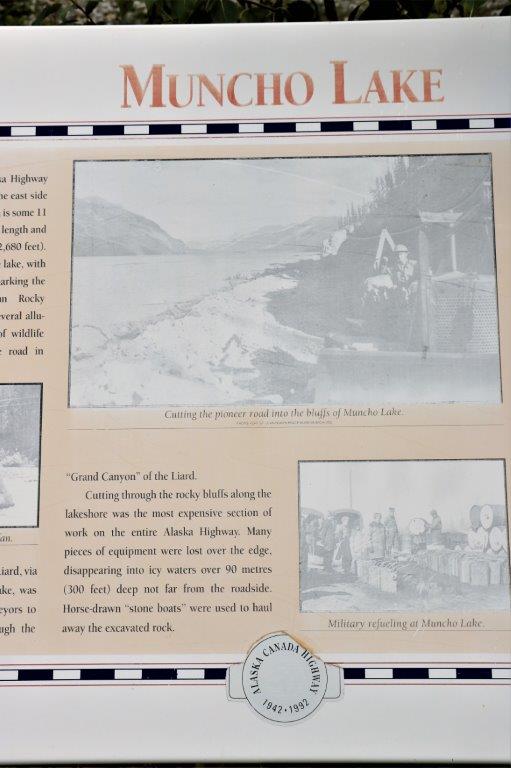
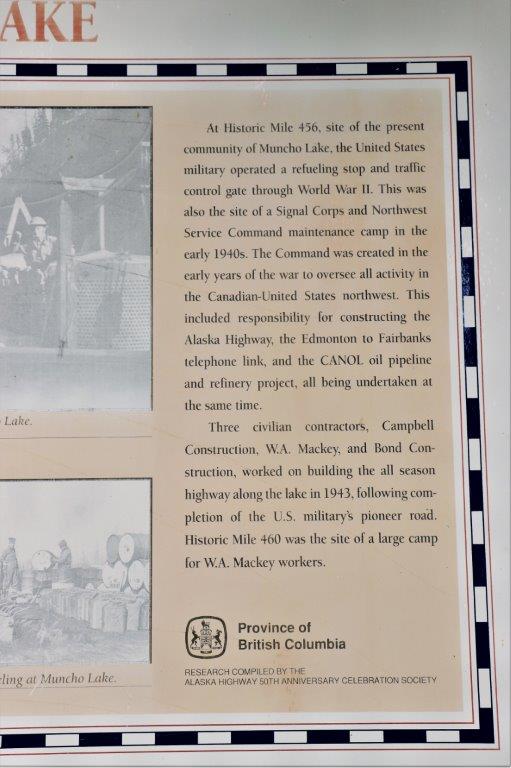
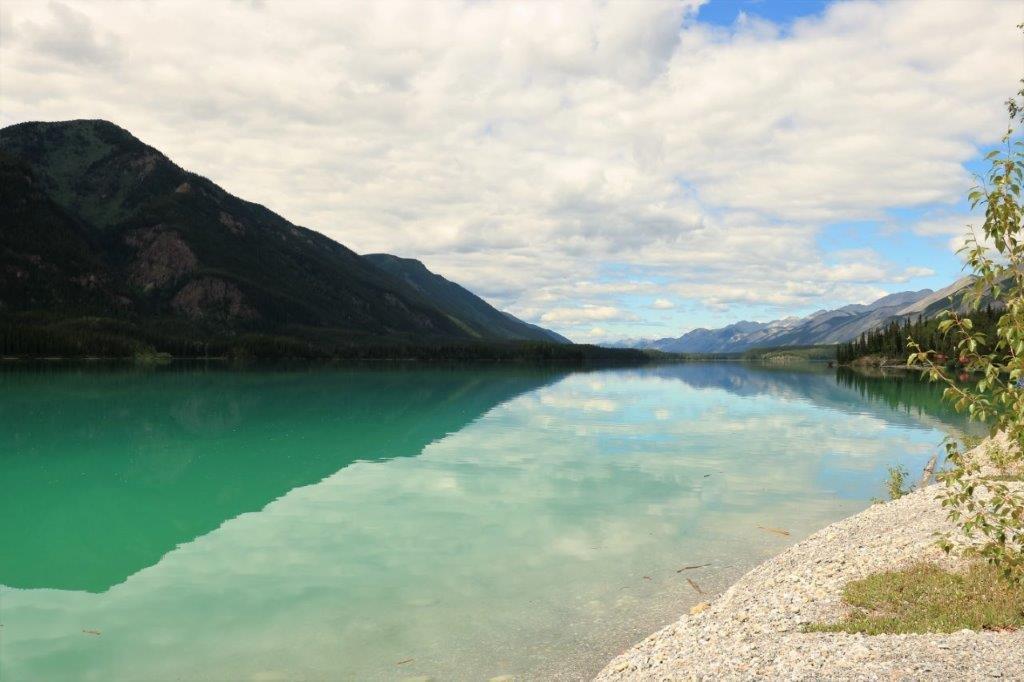
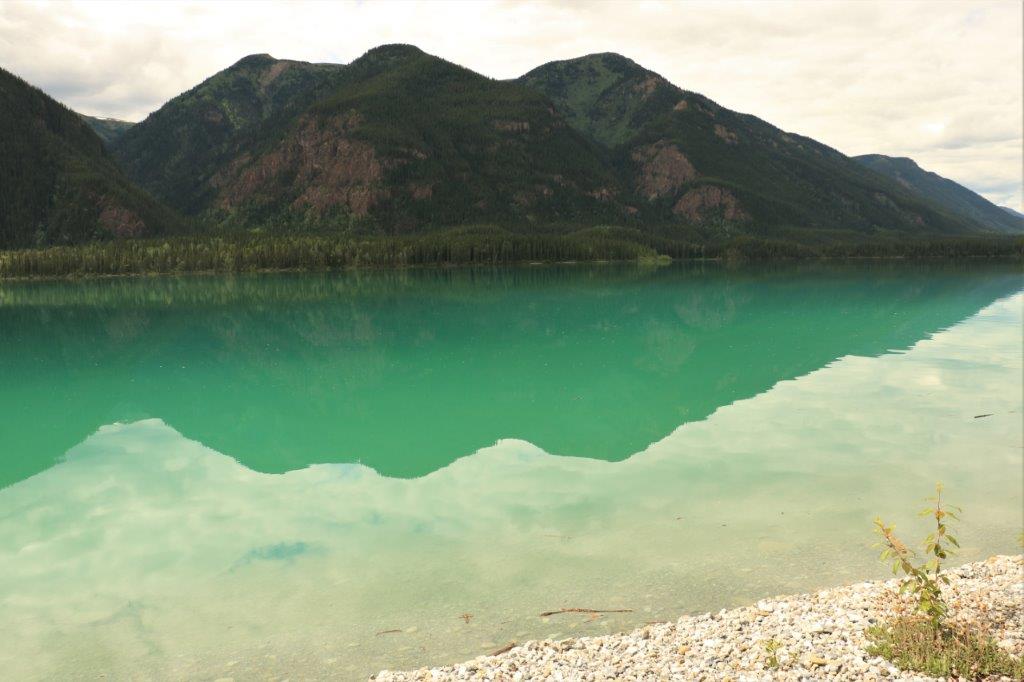
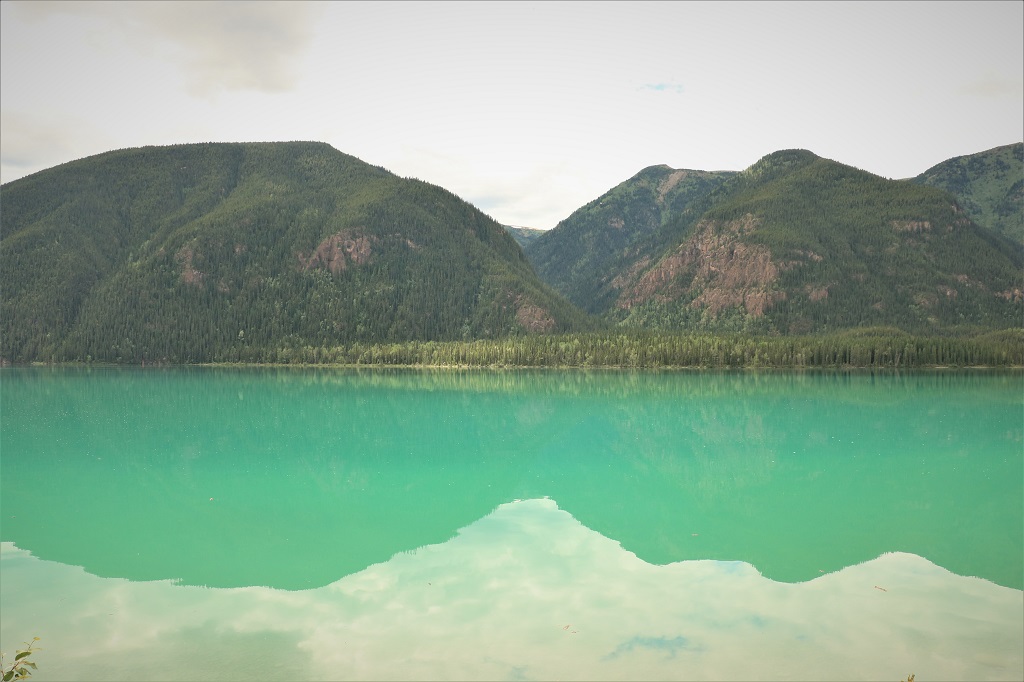
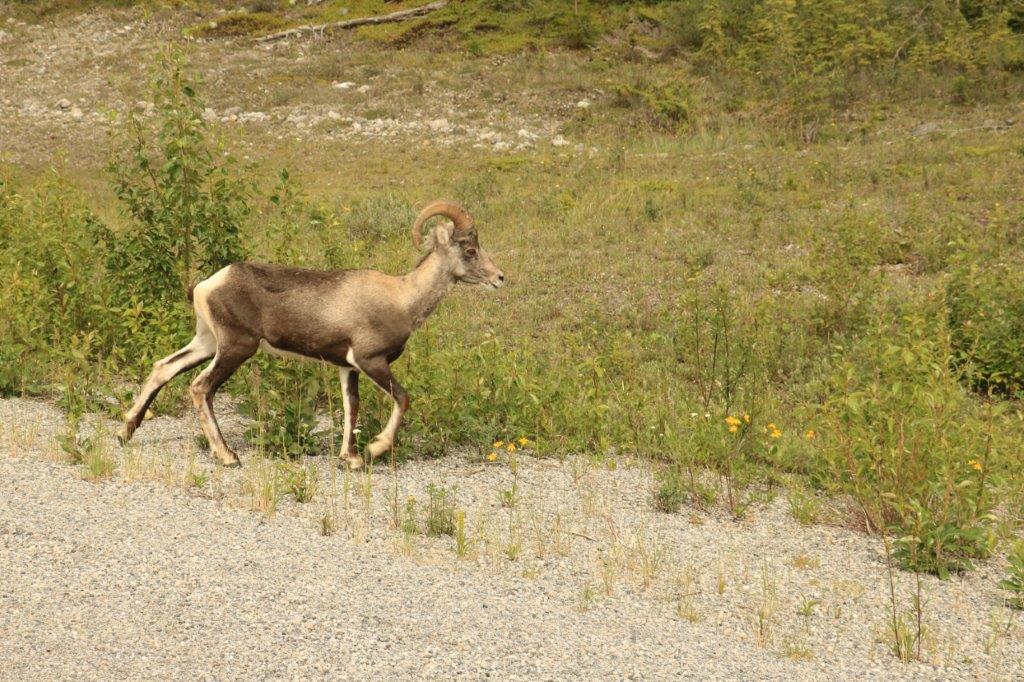
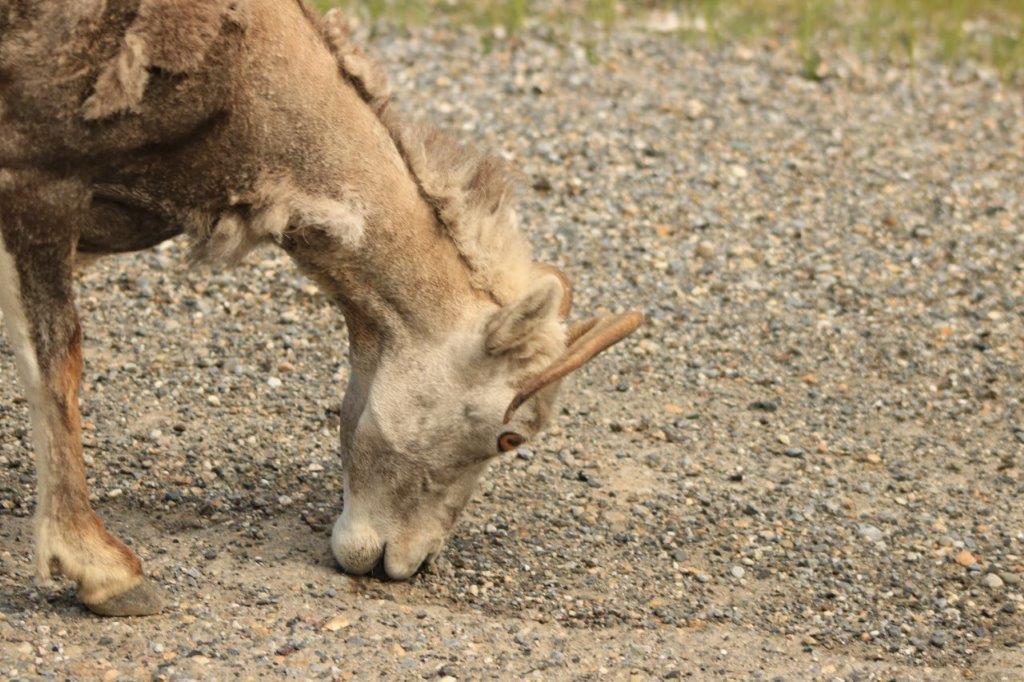
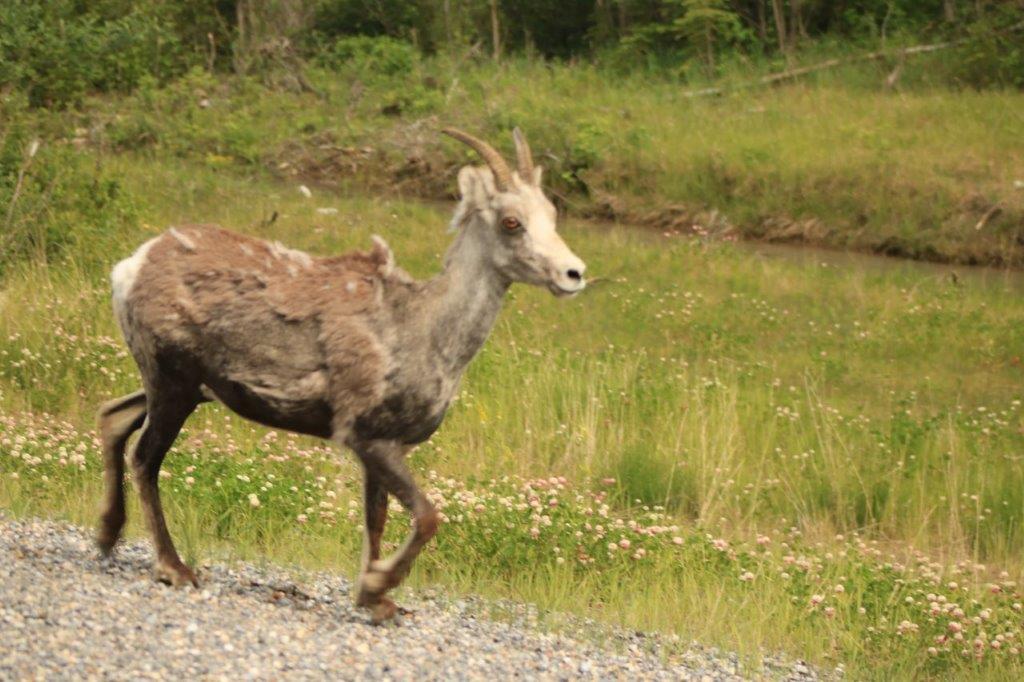
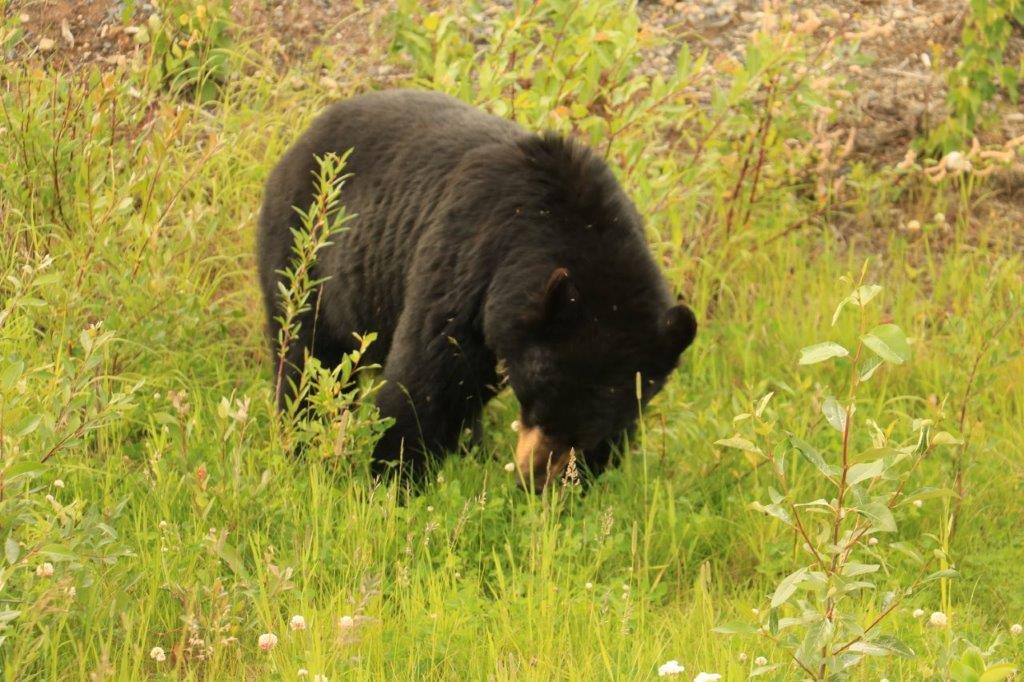
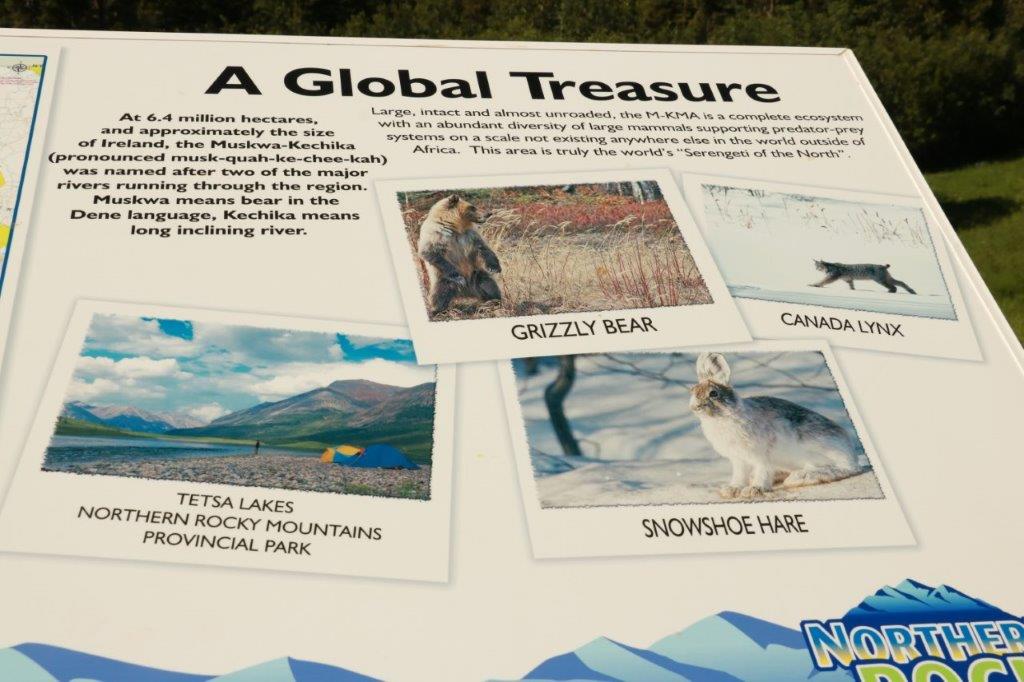
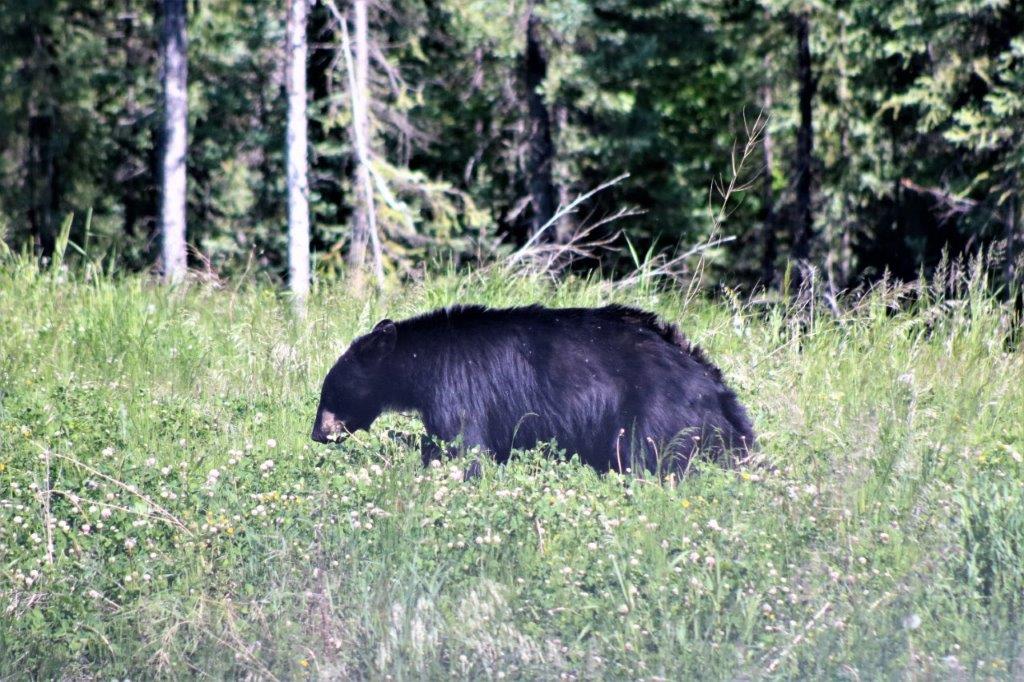
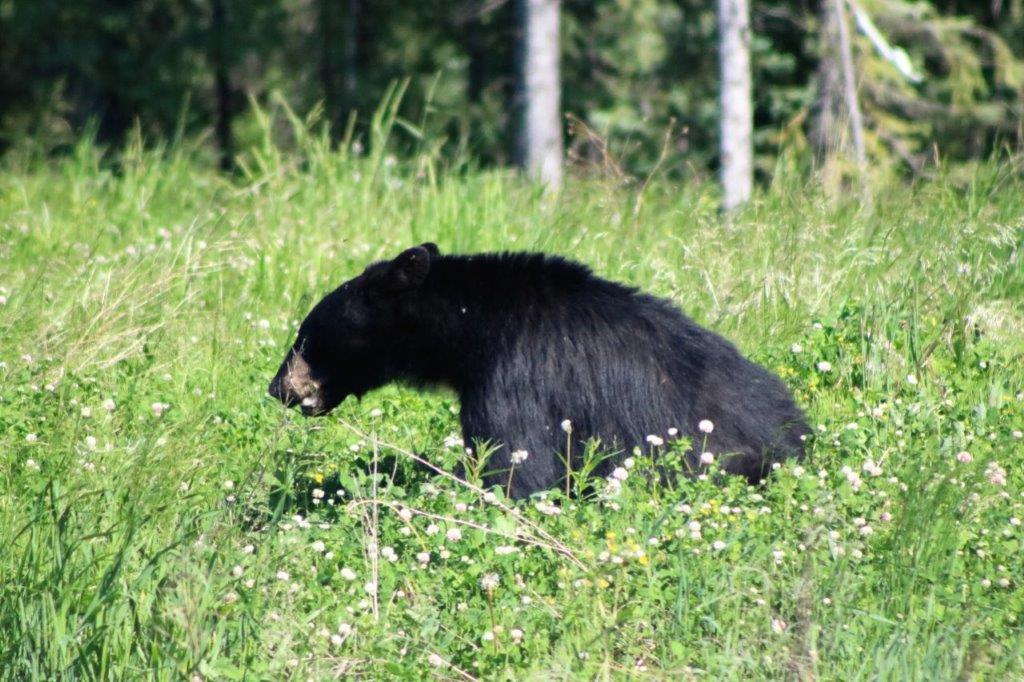
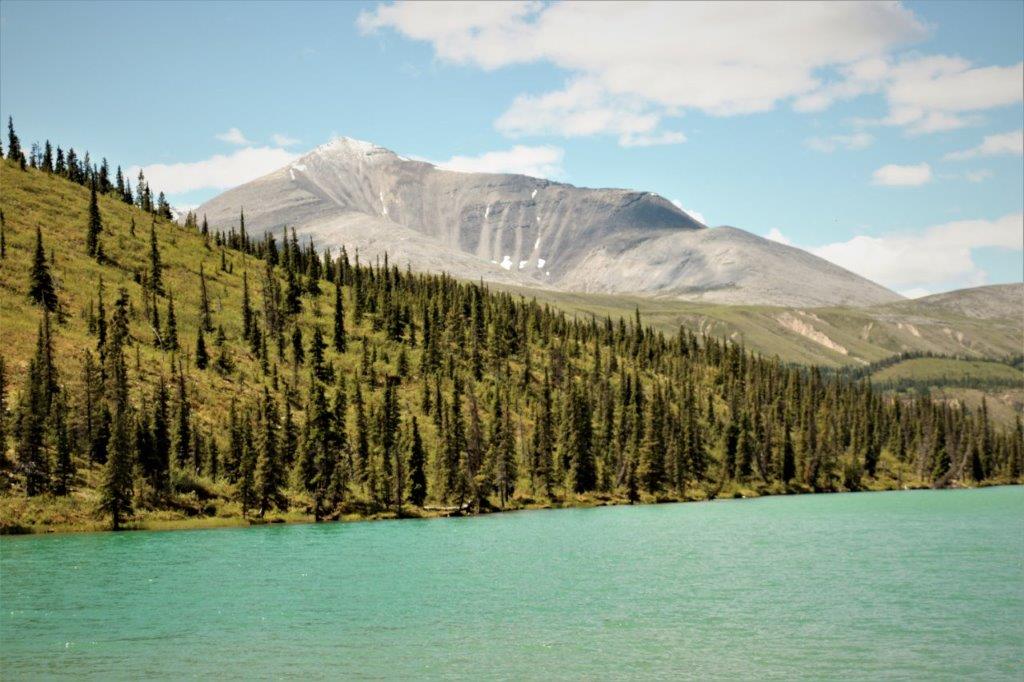
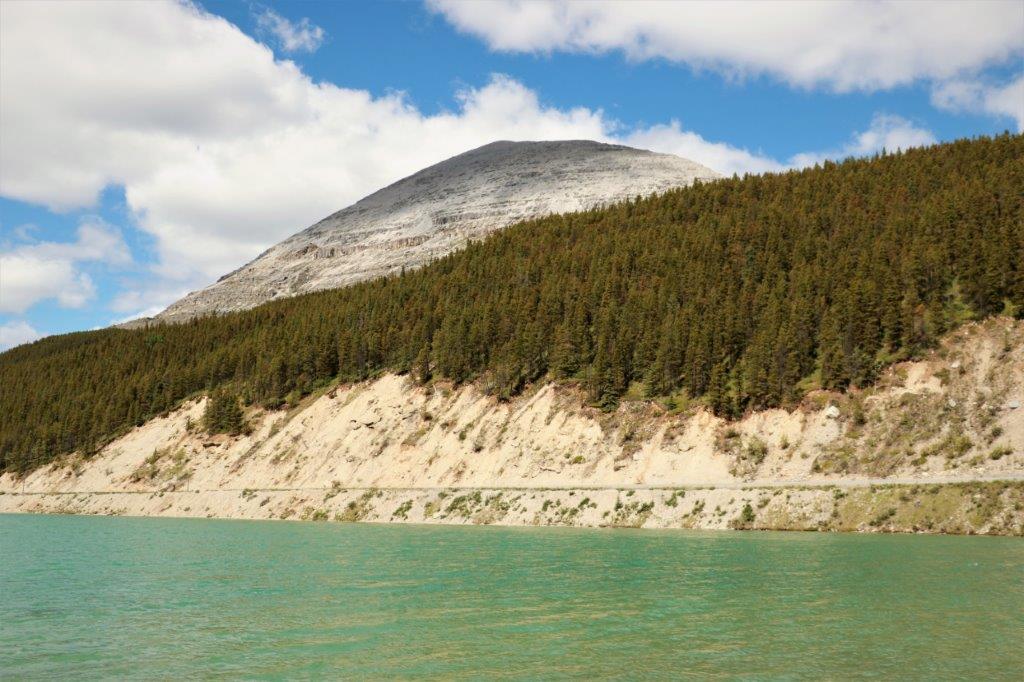
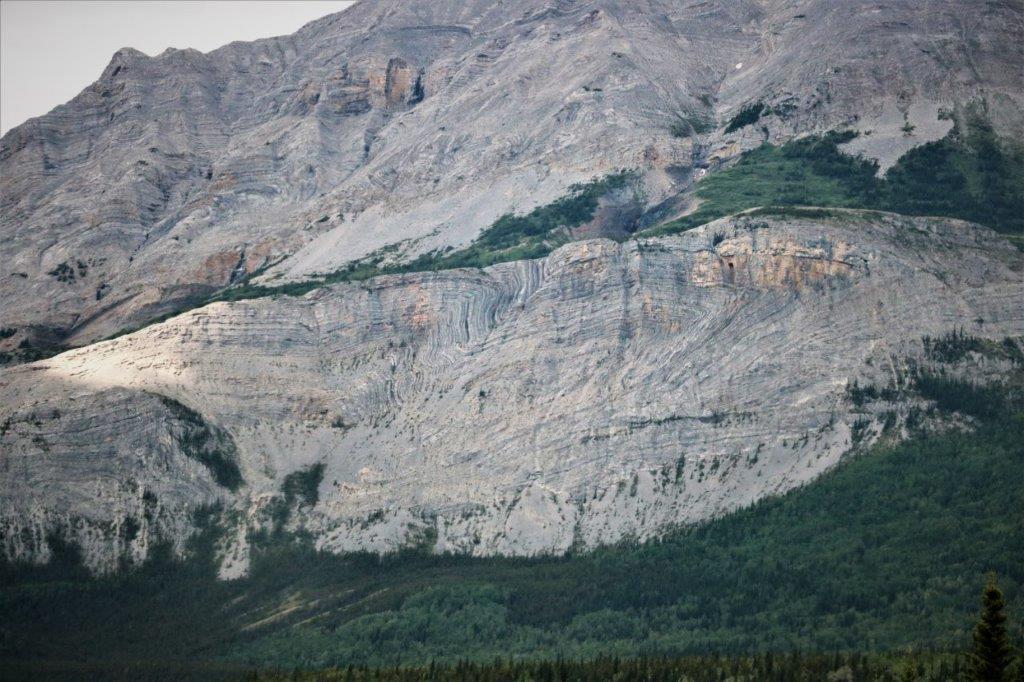
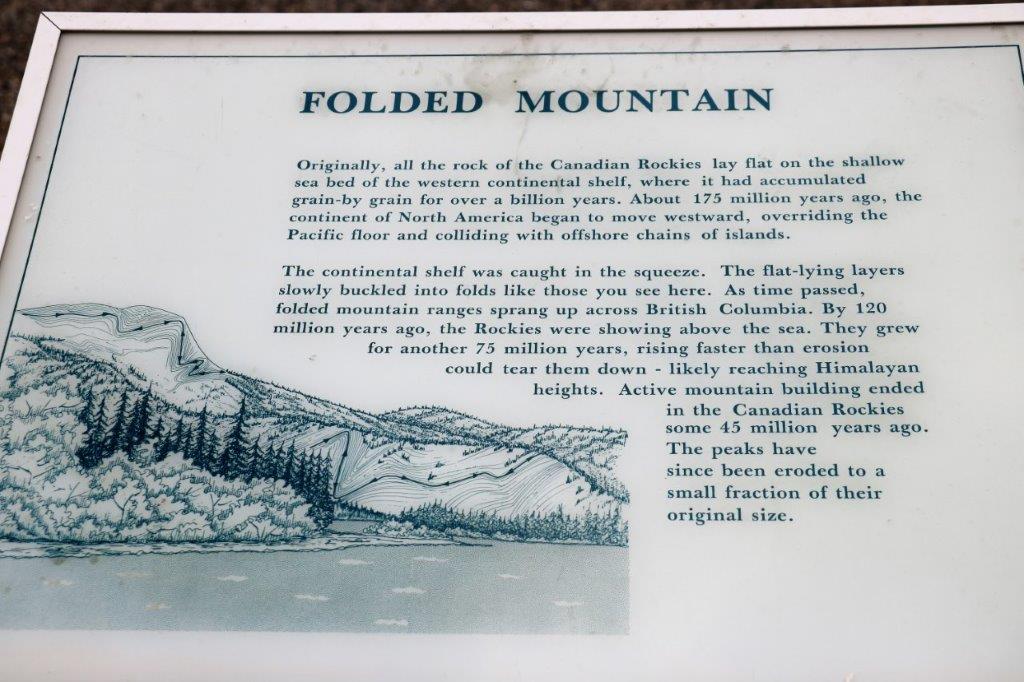
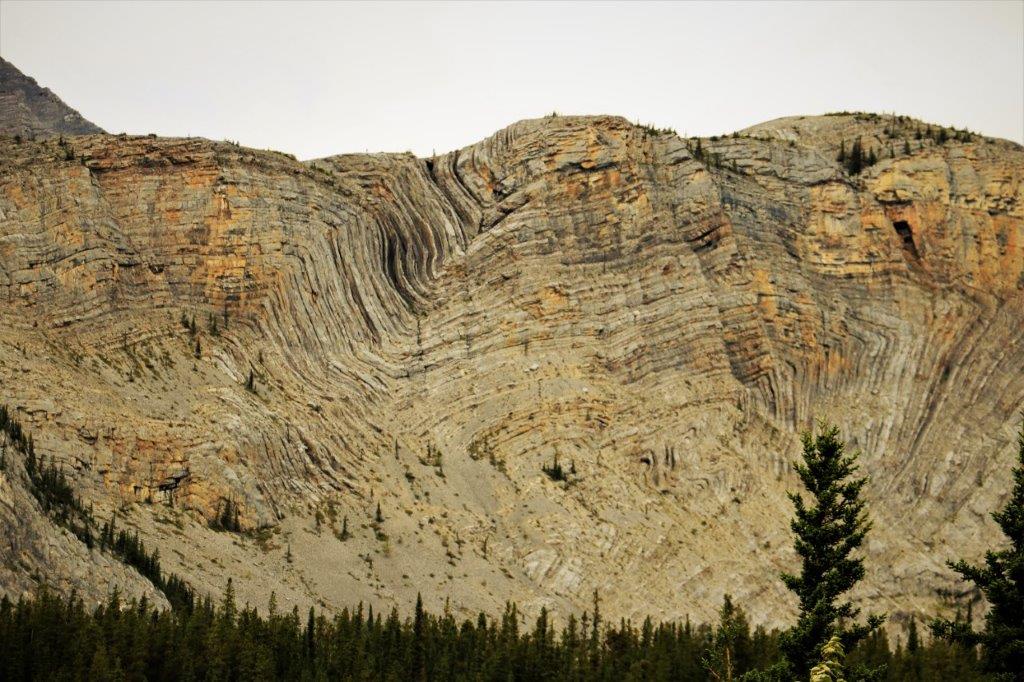
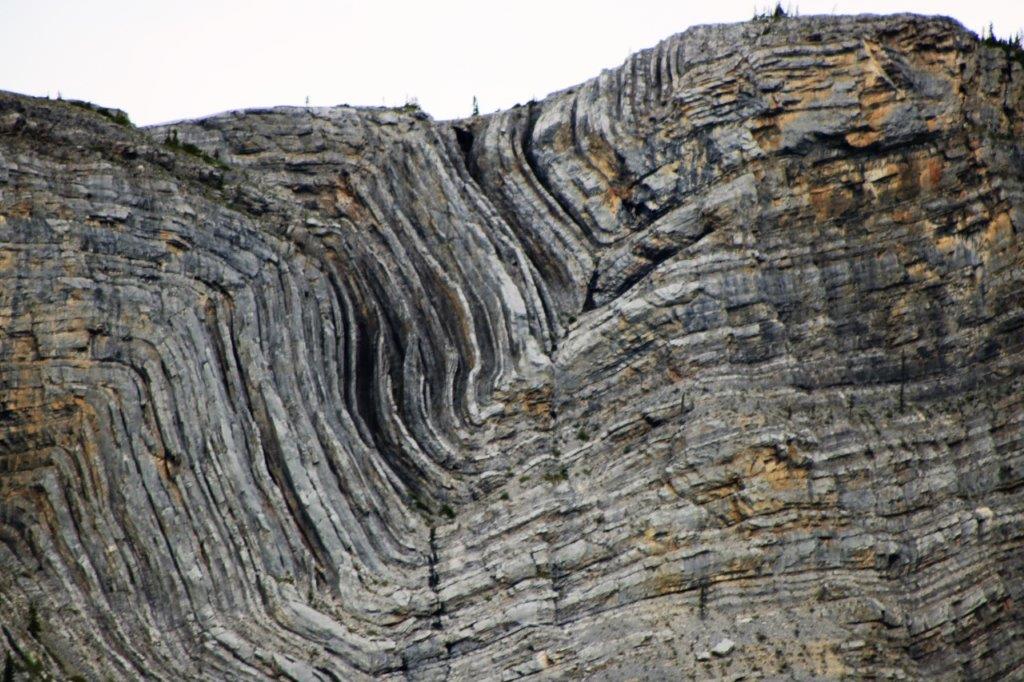
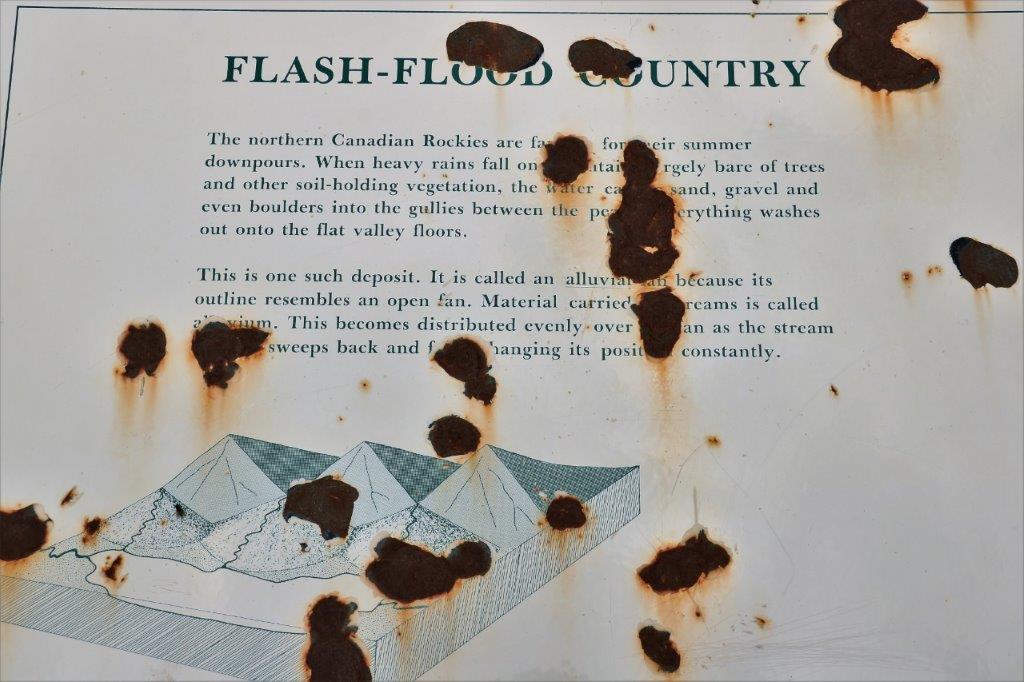
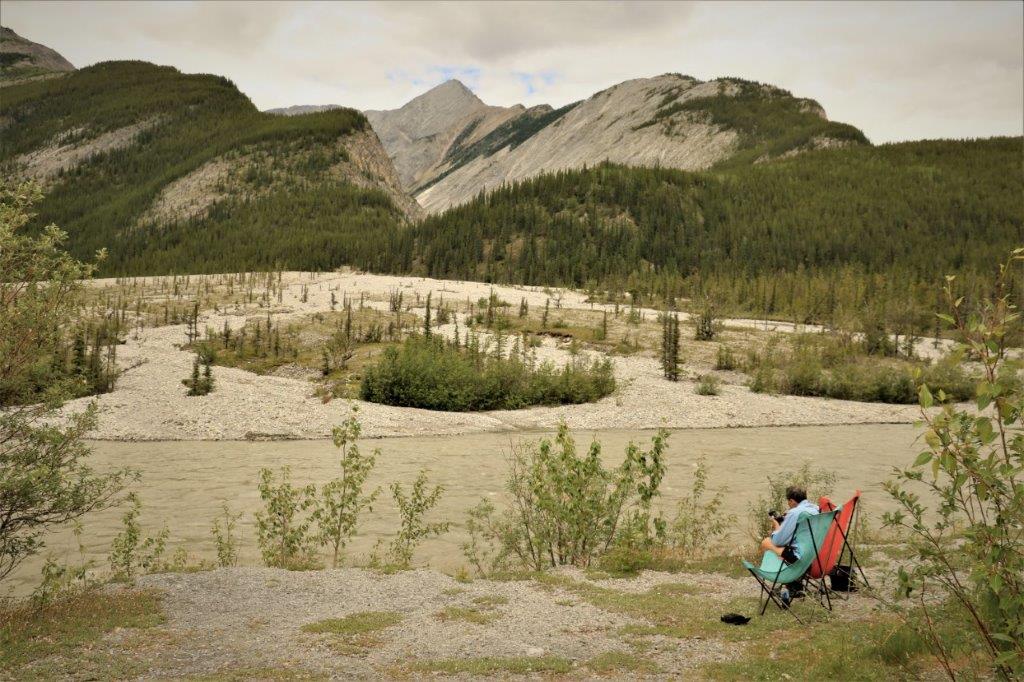
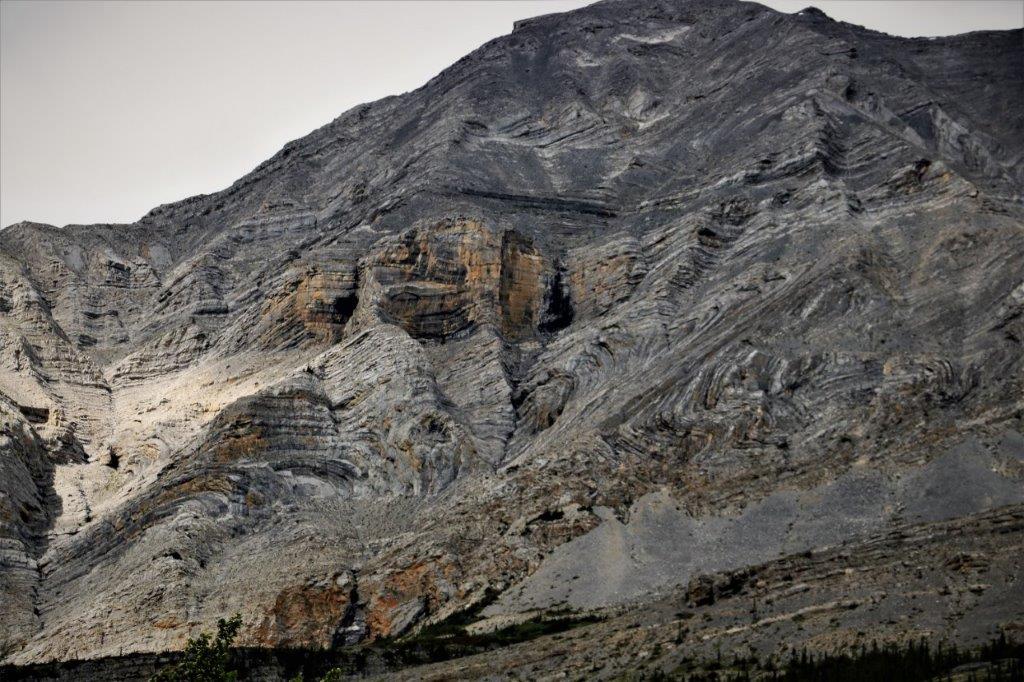
We were not far past our stop at the Folded Mountains information placard when we came across this lovely Cinnamon bear.   We saw our first Stone Sheep a few kilometers past the Cinnamon Bear. Muncho Lake is considered one of the primary jewels of the Northern Rockies.  It is a deep, cold, glacial lake.  It is long – 11 km (7 m) and 1.6 km (1 m wide).  When the sun is out, which unfortunately it wasn’t when we arrived at the bottom end, it is a brilliantly stunning green. There was another pullout at an area frequented by Stone Sheep, although there were none in evidence.  But, the placards were interesting. One of the vehicles we had been leapfrogging along the highway was a family from Texas.  Mom, Dad, and two adult daughters were on their way to Alaska.  We chatted to them several times.  We were already at the pull-out when they stopped and they were so excited to have seen a moose.  They did not see the Stone Sheep that we had seen earlier and they thought the big brown bear was a Grizzly due to the fact it was not black. (Black Bears come in black, brown, and even blonde).  We told them about the different colours of the black bears and also said that if they see another moose they have to hang onto it until we get there.  They told us likewise we were to keep any stone sheep we see until they arrive.

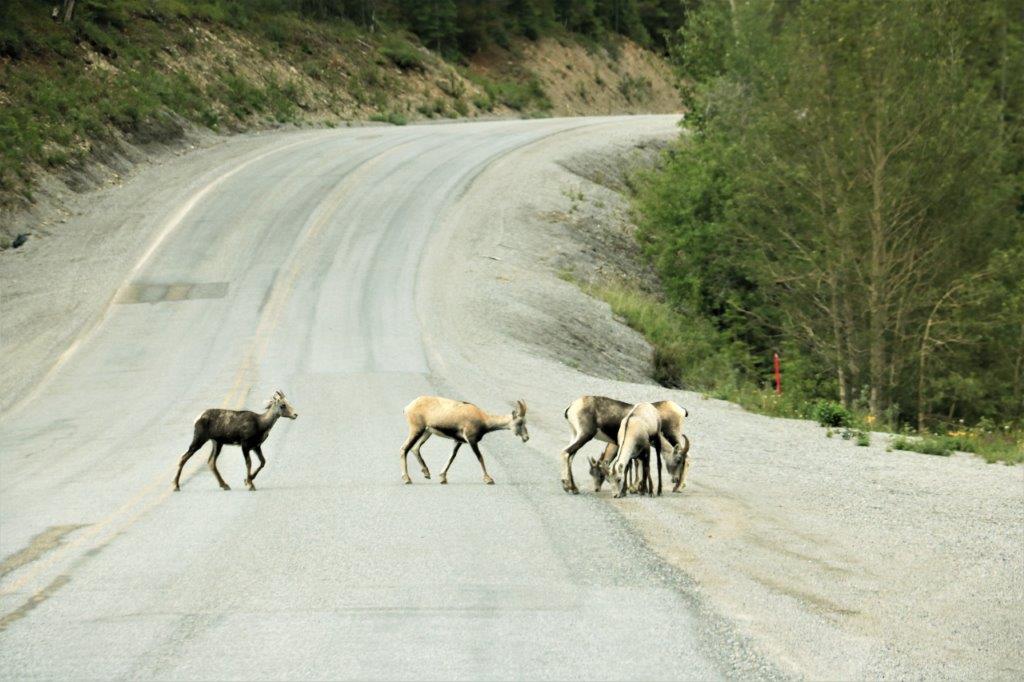
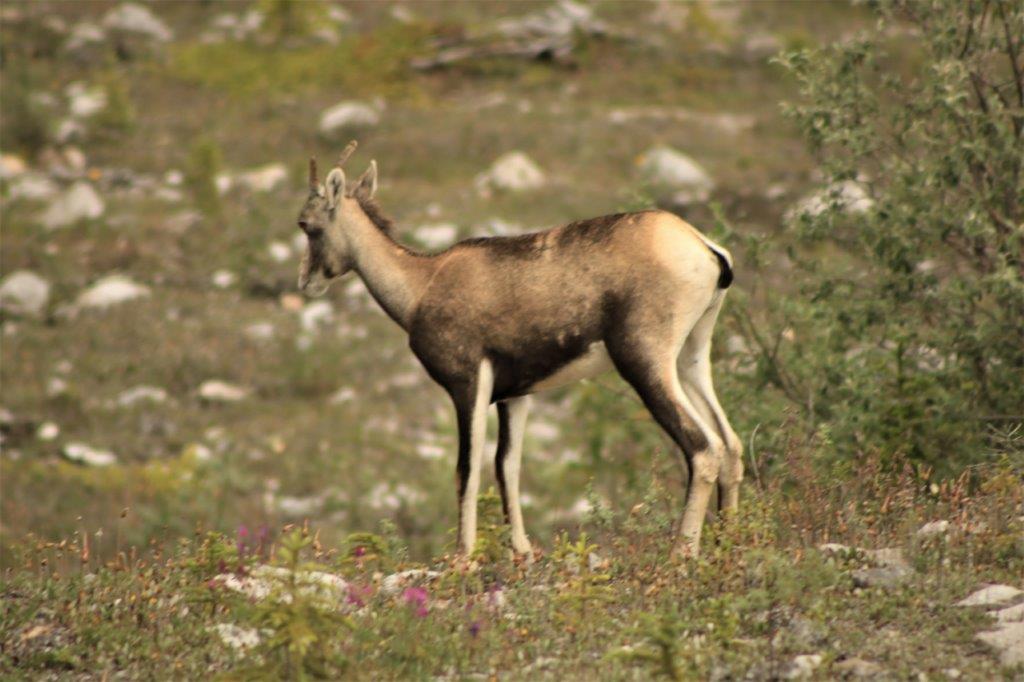
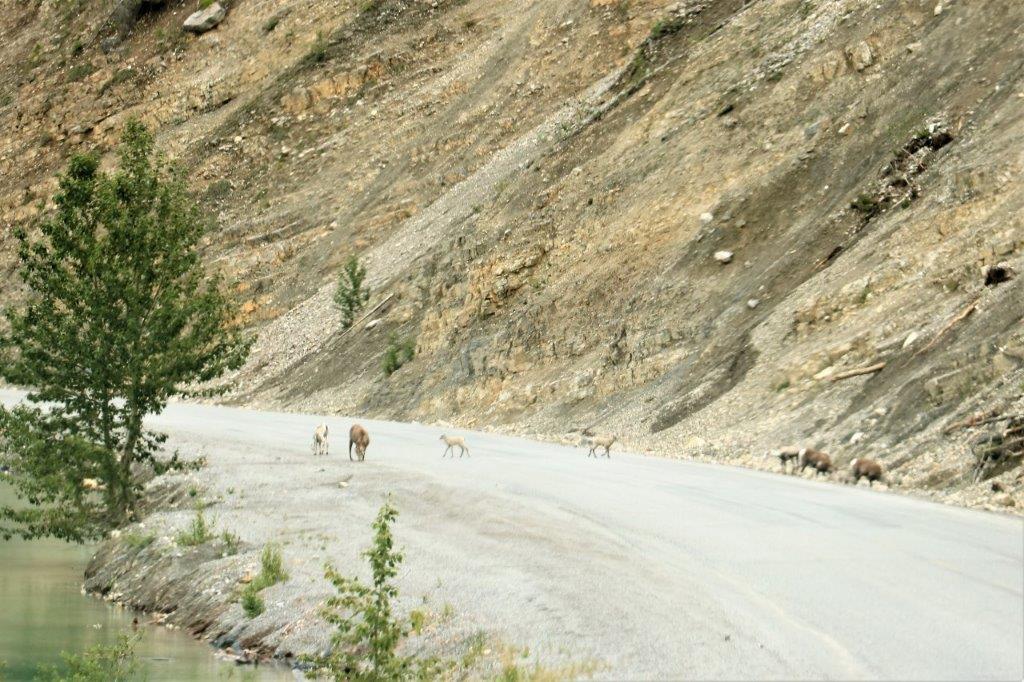
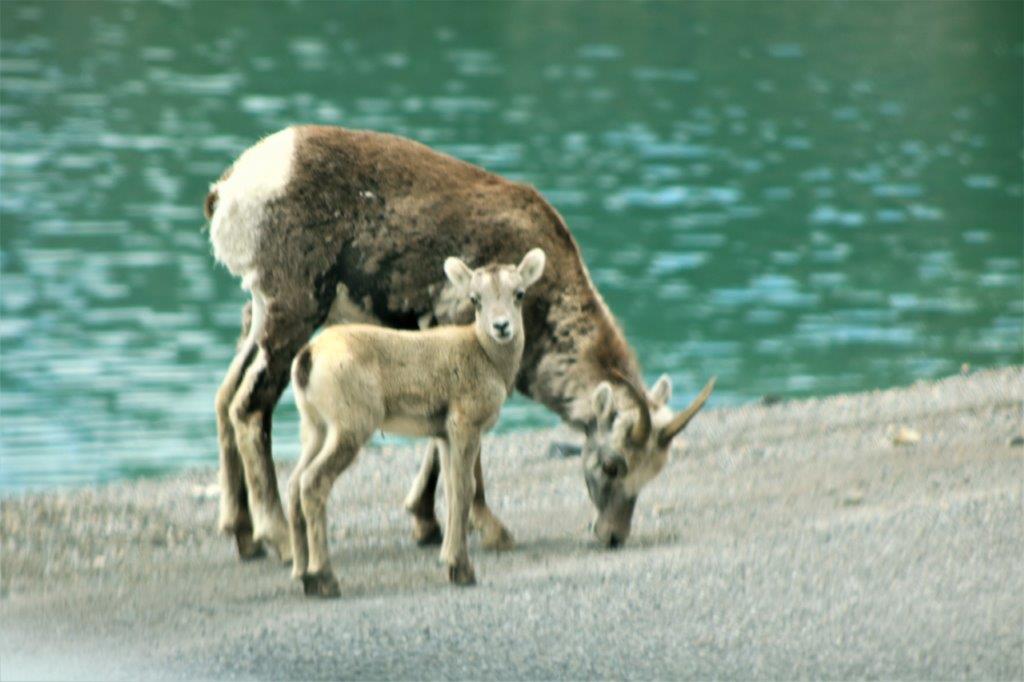
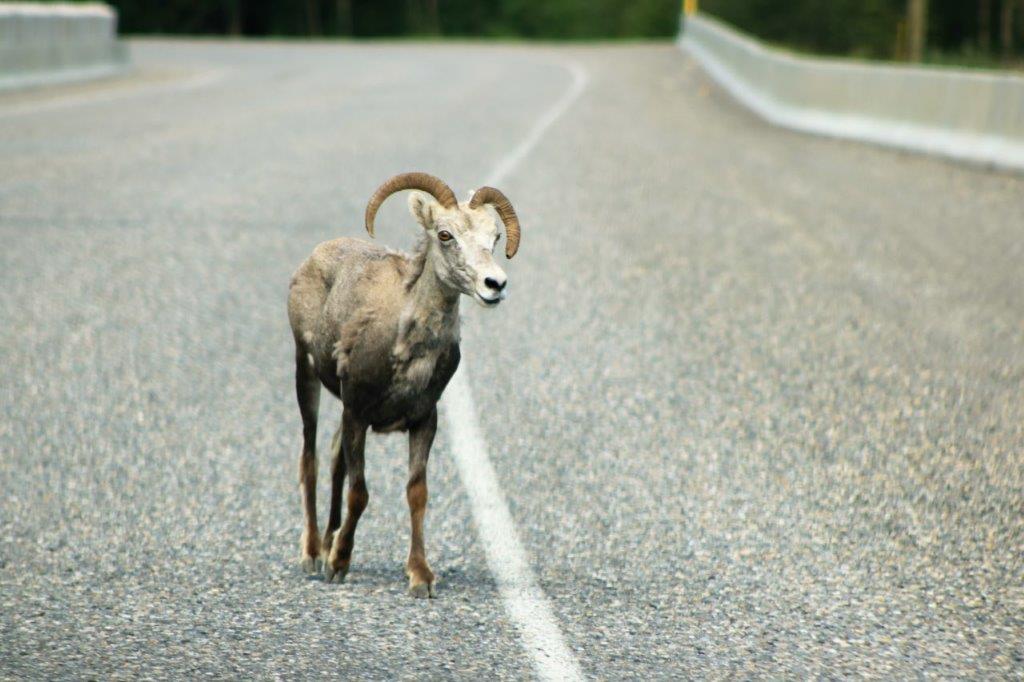
Sure enough, a few corners later this group of Stone Sheep were standing around on the road.  (They didn’t find a moose for us though.)                                                       The kids are very cute. I bet they are very happy when they are finally be rid of all the itchy winter hair.

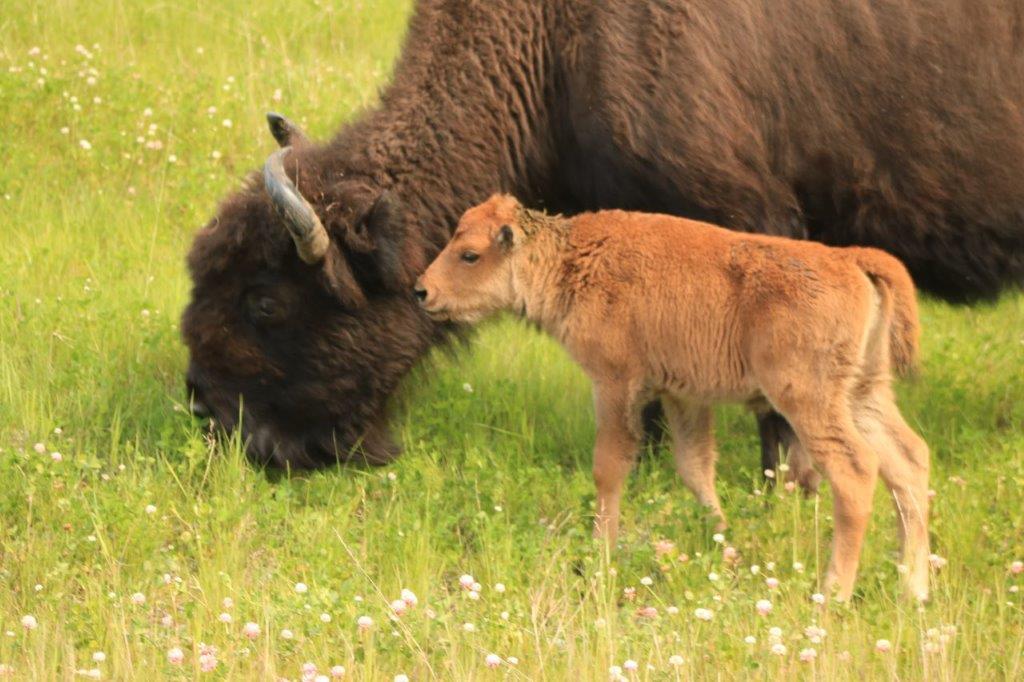
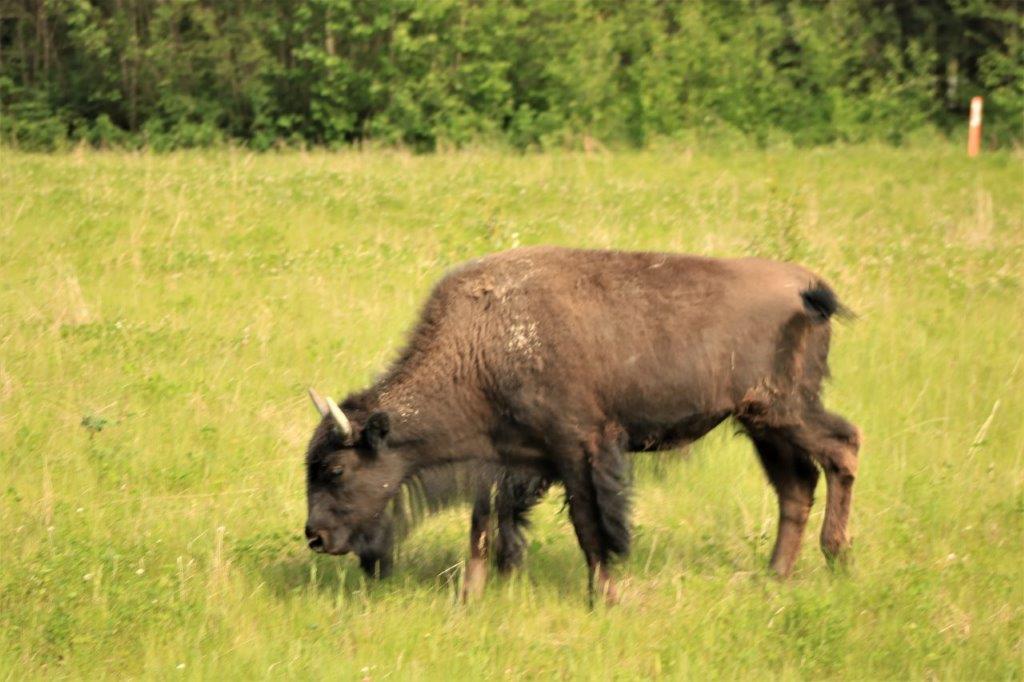
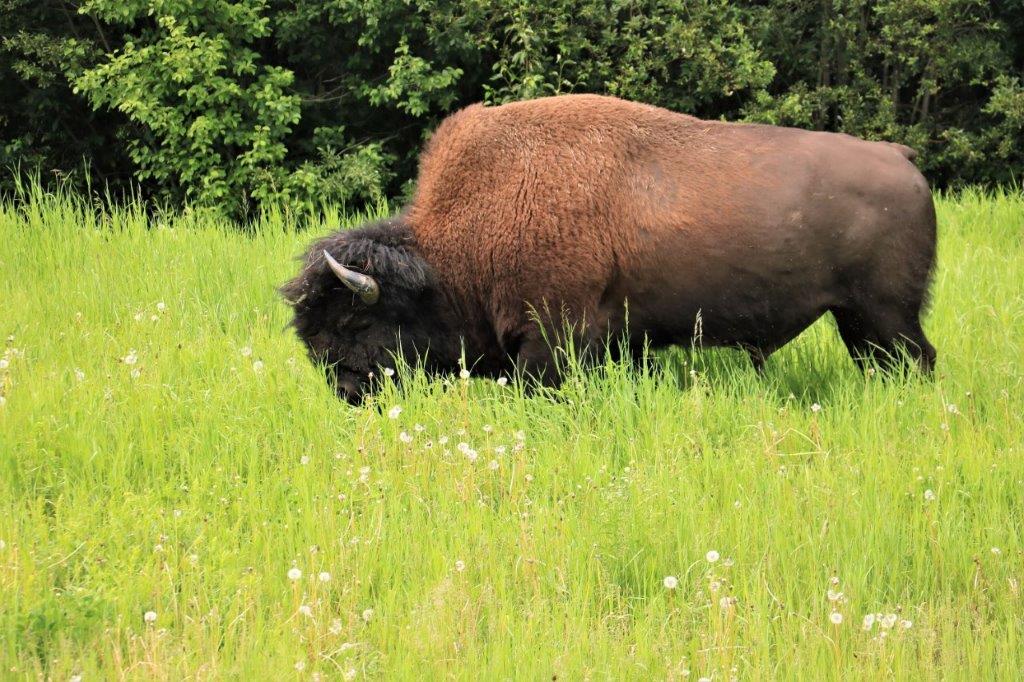
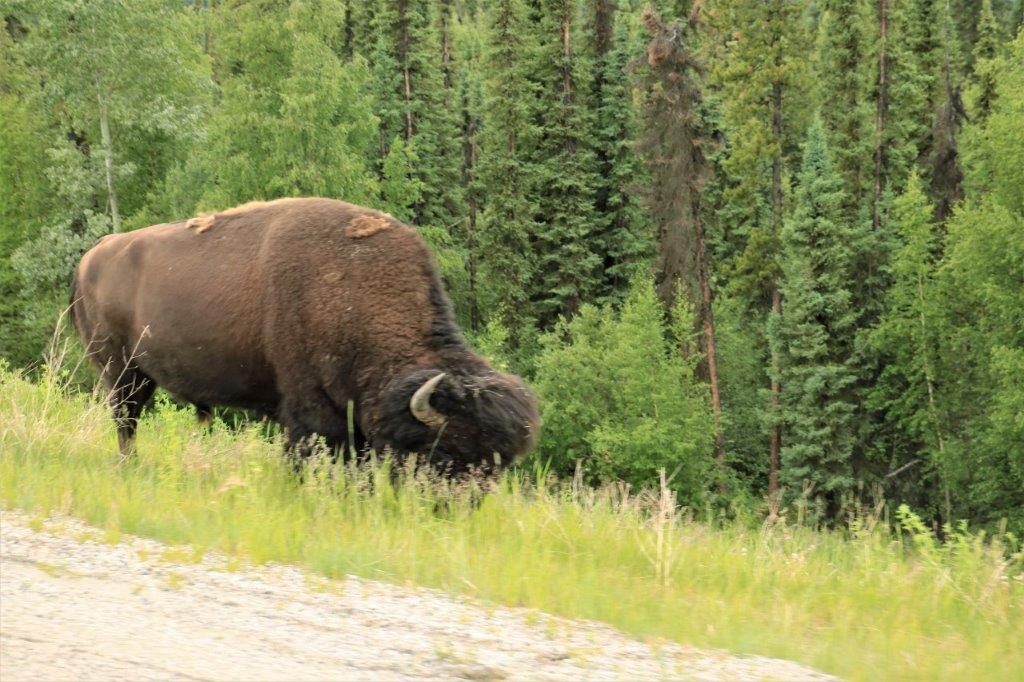
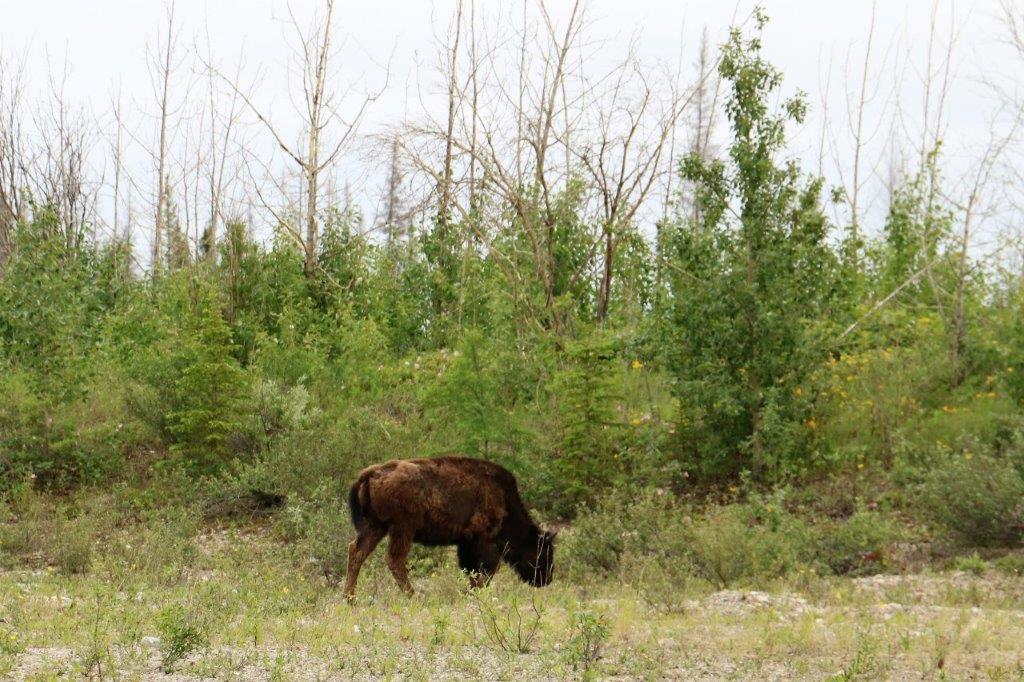
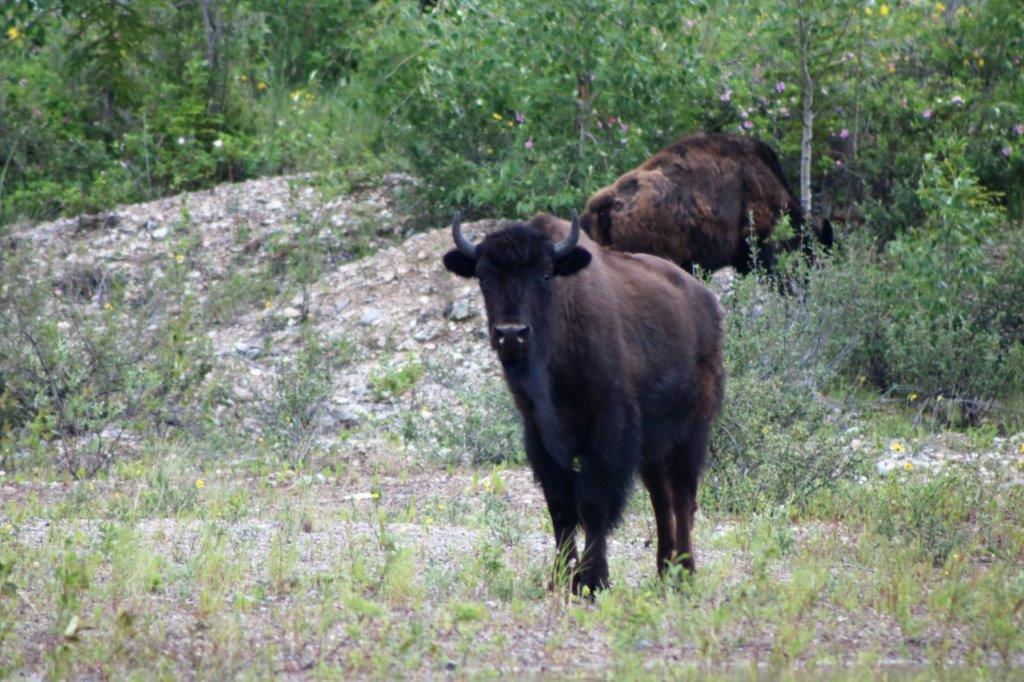
We pulled into Muncho Lake Provincial Park and by then the sun was brighter so the colour and reflections were lovely.    More sheep. They lick the salt left from the winter road clearing. Our next critter viewing was Bison.  We had not seen one all day and over the next hour or so we saw several groups of them or lone males. The geocache map told us there was a cache hidden at Smith River Falls so we had to go find it.

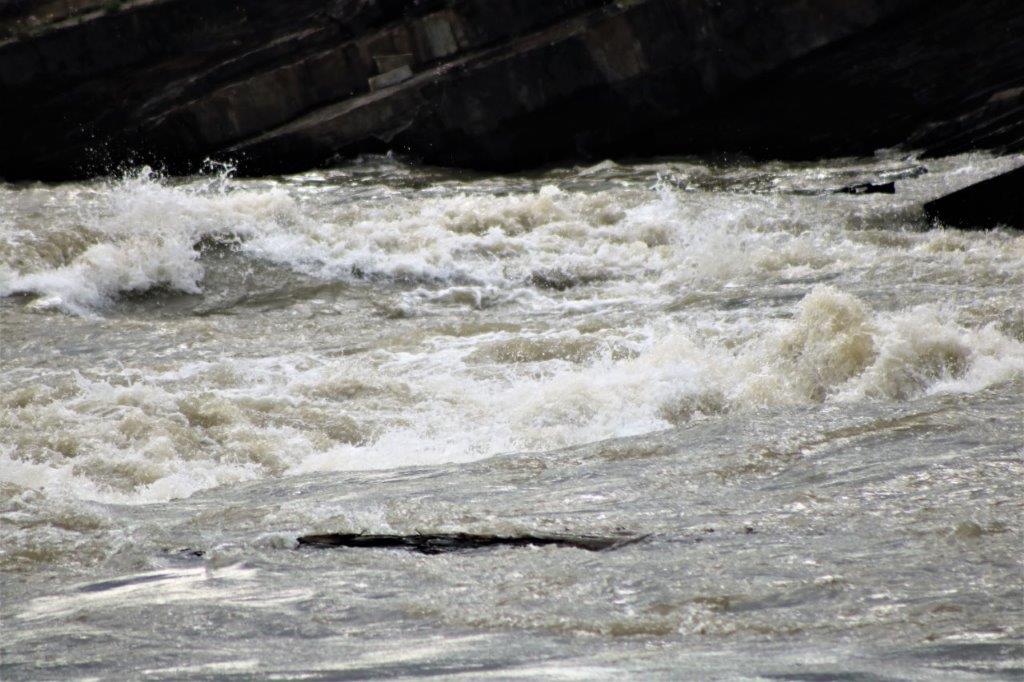
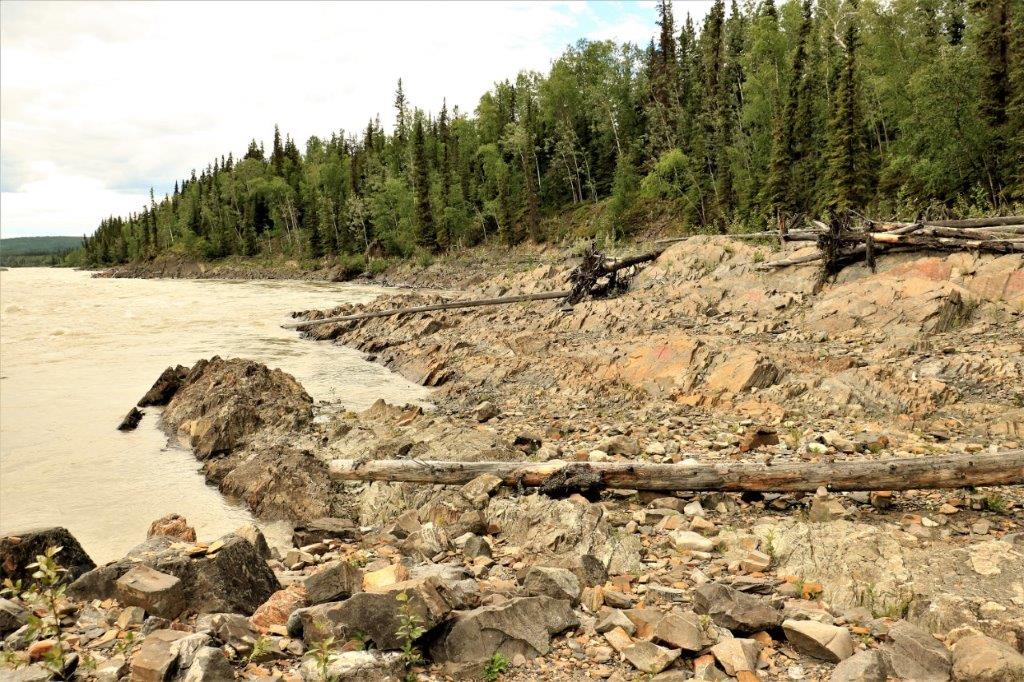
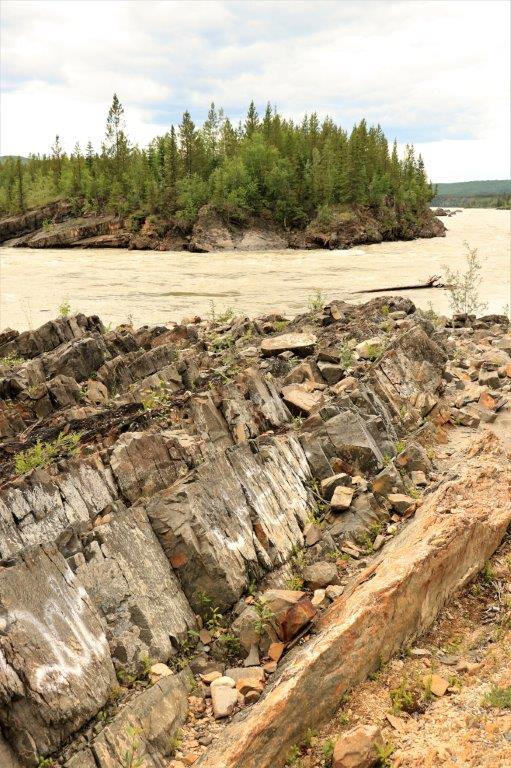
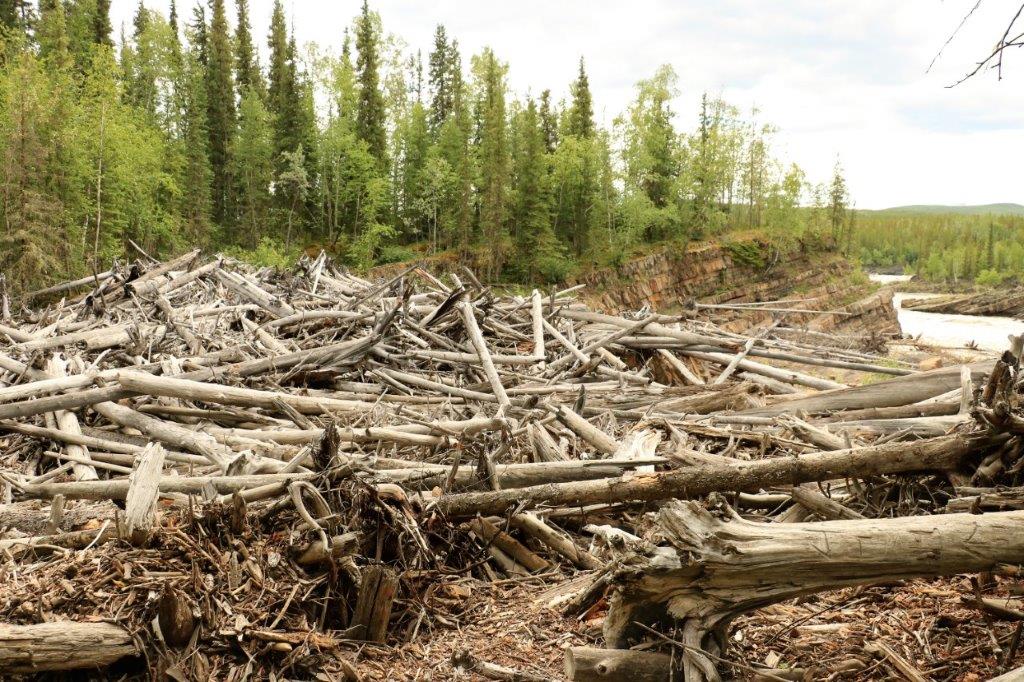
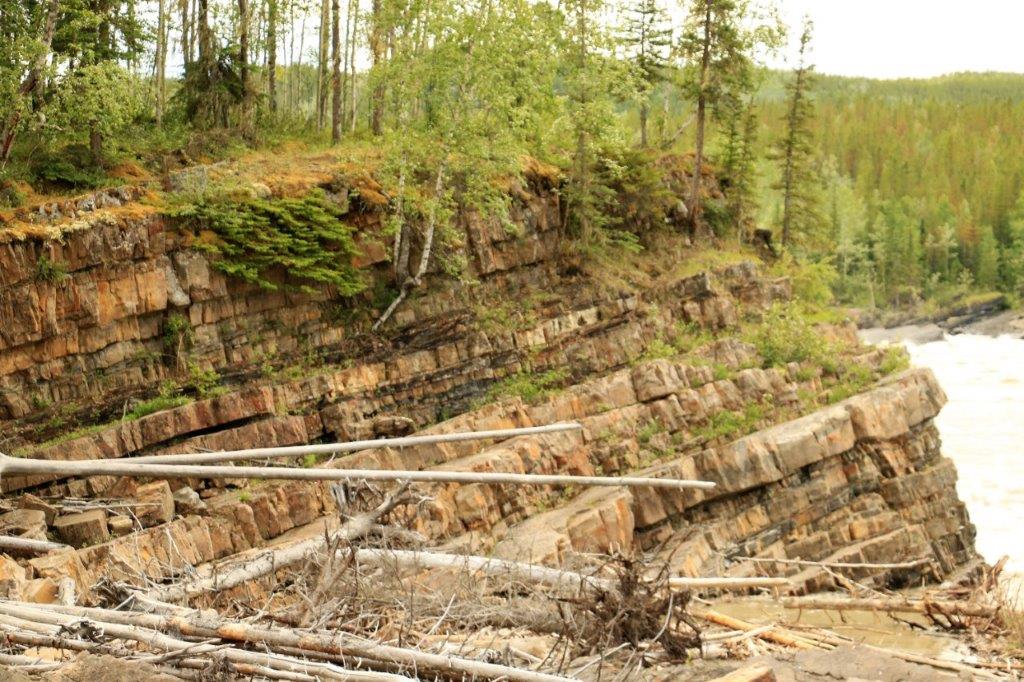
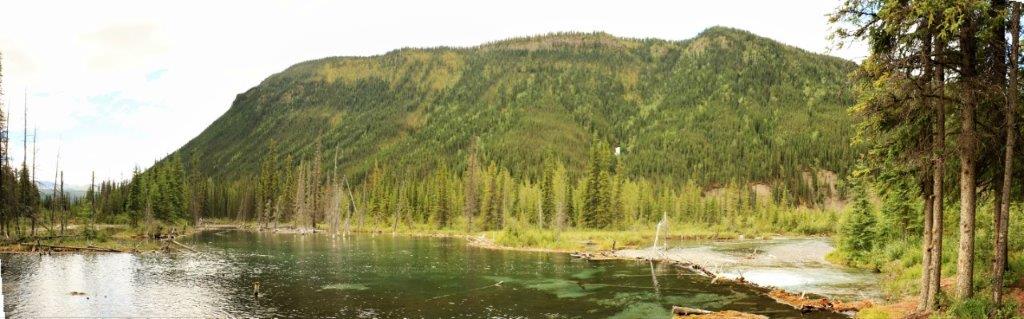
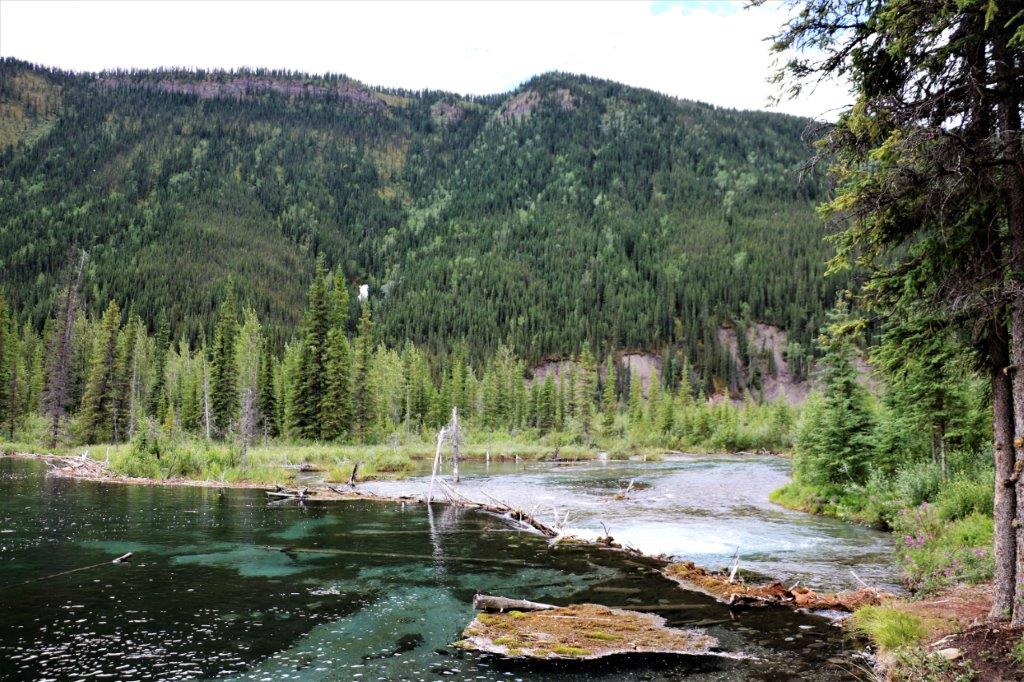
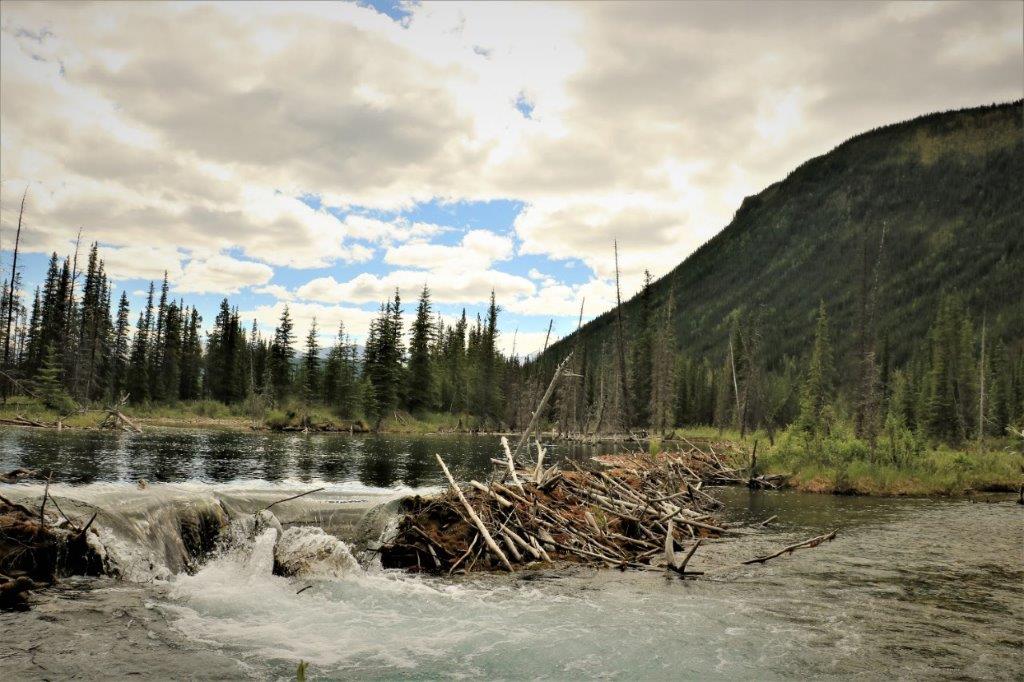
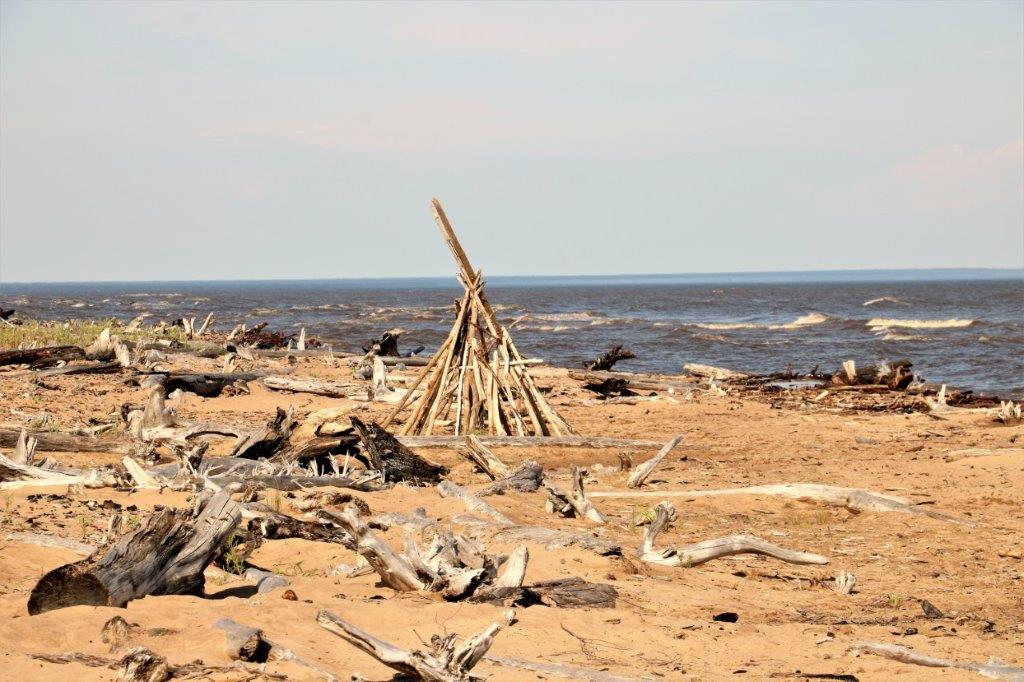
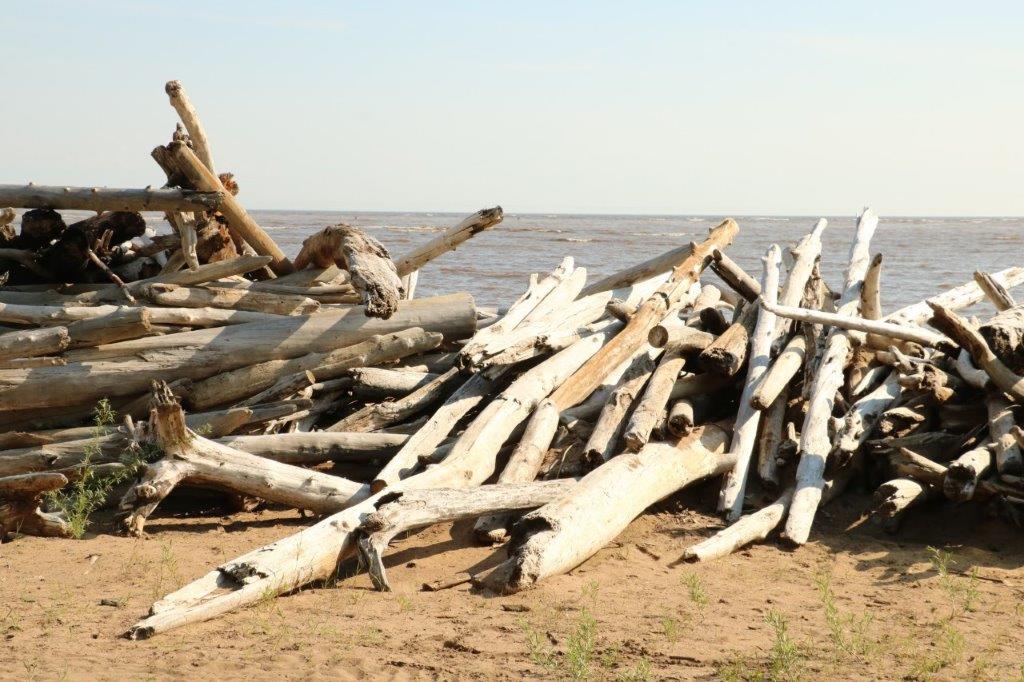
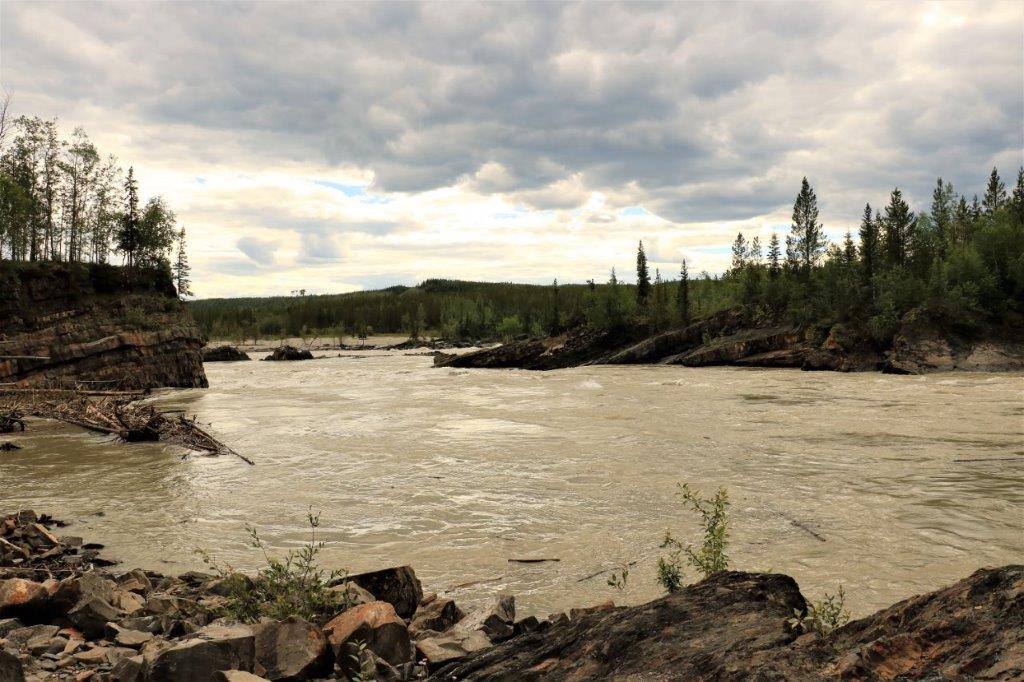
There was also a cache hidden at a place called the Whirlpool.  There was a huge pile of drift wood that had accumlated over the years during high water.                                 Very active, churning water.

The Alaska Highway goes from BC into the Yukon and back into BC again about 6 times.  This is an ‘unofficial’ sign at one of the crossings.

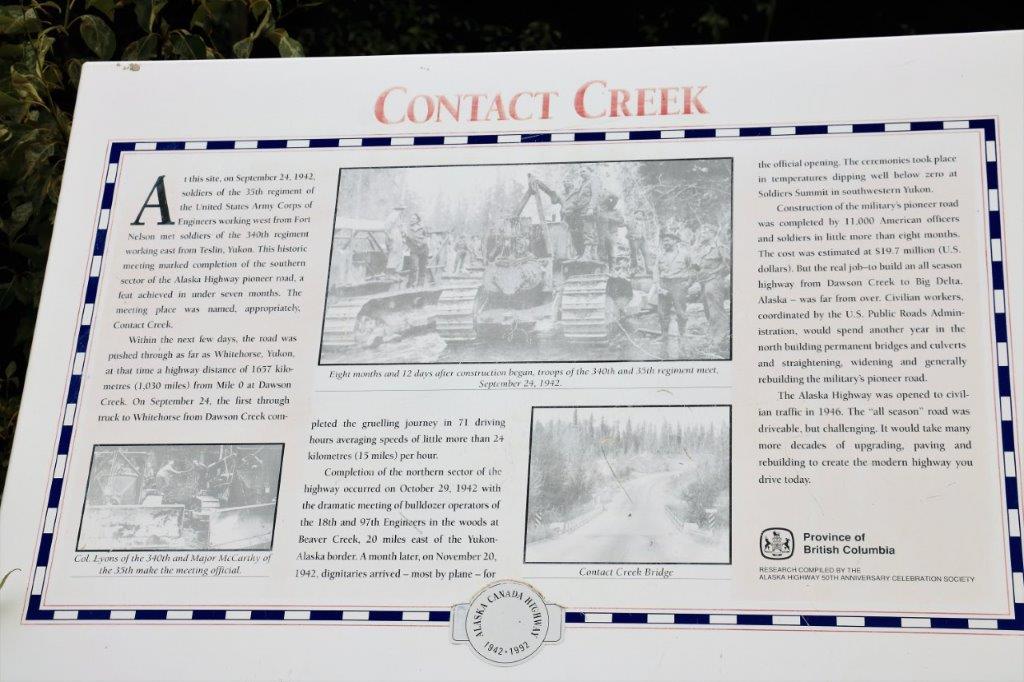
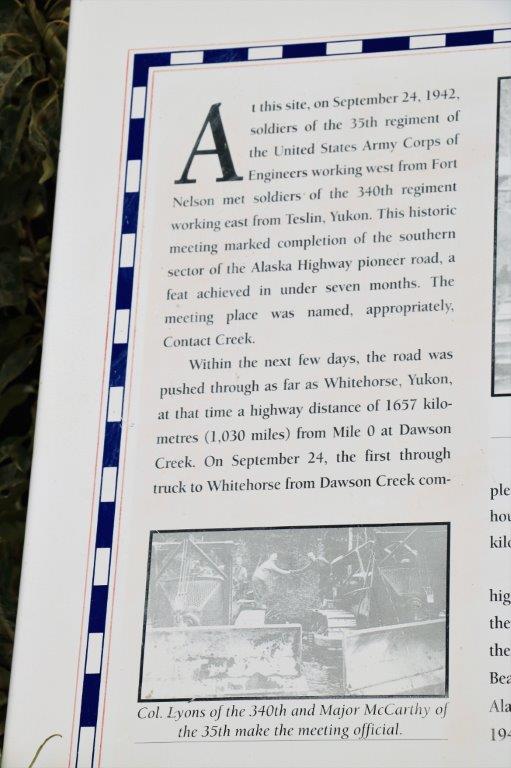
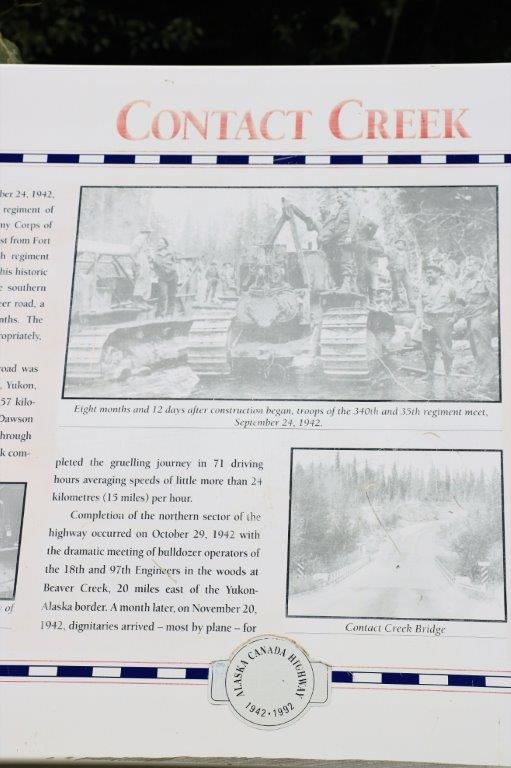
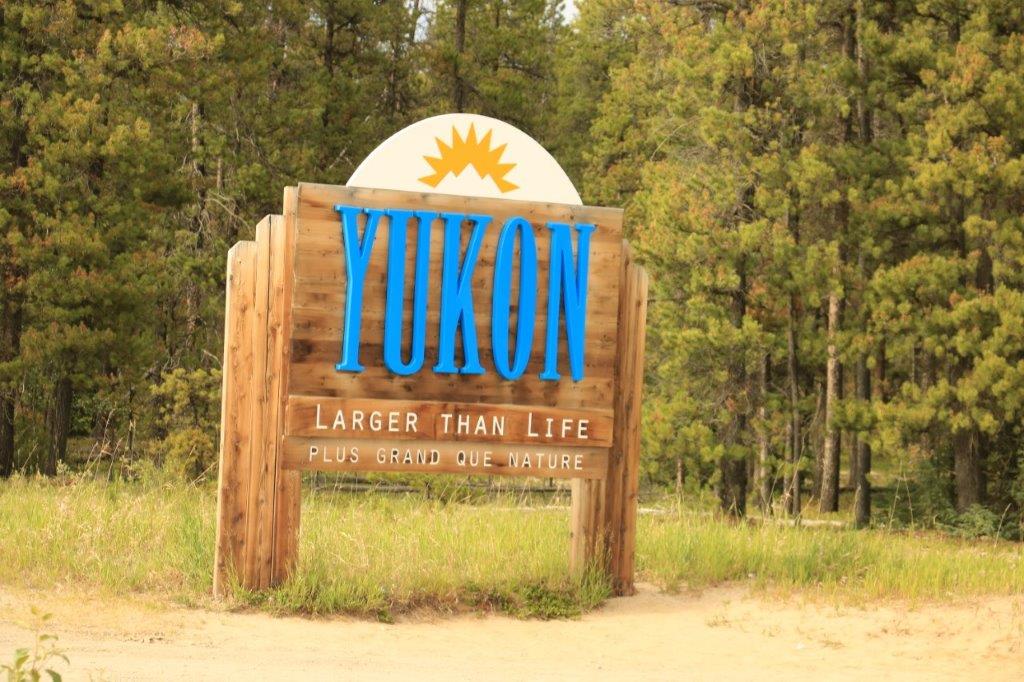
Contact Creek is an actual creek but the real claim-to-fame of the spot is the meeting of the southbound and northbound teams of the Alaska Highway in September 1942.  It took another month for the road to be officially opened by dignitaries and used by the military.                                                     This is an official Welcome to the Yukon sign.

The last two critter sightings before we arrived at Watson Lake. We checked into our hotel, found a place to eat dinner, and then went to see the 8:30 pm show at the Northern Lights Center where we saw two shows: one explained how the northern lights come to be (residual energy from plasma eruptions on the sun’s surface) and the second one on how they got the name Aurora Borealis and when and where to see them best.  There was some spectular photography of the lights.

Back in our hotel it was now after 9:30 pm and we had been up and on the move since 6:45 am.  I loaded my photos from the day onto the laptop, sorted through about half of them and went to bed.  The next day we drove to Whitehorse where we are booked for two nights in a hotel right downtown.

2018 June 28 – Fort Nelson, BC to Watson Lake, Yukon (Part 1)

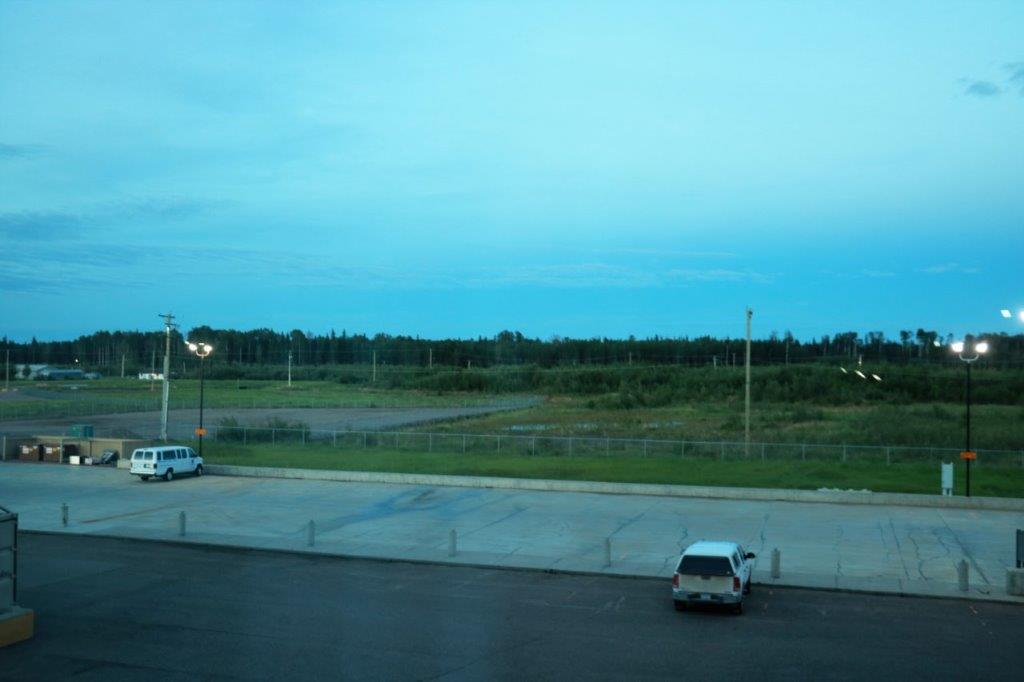
At 3 am I looked out the hotel window in Fort Nelson and this is how light it was.We left Fort Nelson at 8:30 and arrived in Watson Lake at 6:45.  The driving time is about 7 hours.  All the additional time was due to scenic stops for photographs, critters, and geocaches.  My goodness, what a day!  I think we topped the all-time animal count outside of a zoo or animal park.  We saw 8 bears, 1 elk (as it disappeared into the trees),15 Stone sheep, plus 3 or 4 kids, and 32 or more bison, plus 8 calves. We were blessed with a lovely day; better than the weatherman promised.  And since the drive was very scenic we had a beautiful, allbeit, long drive.
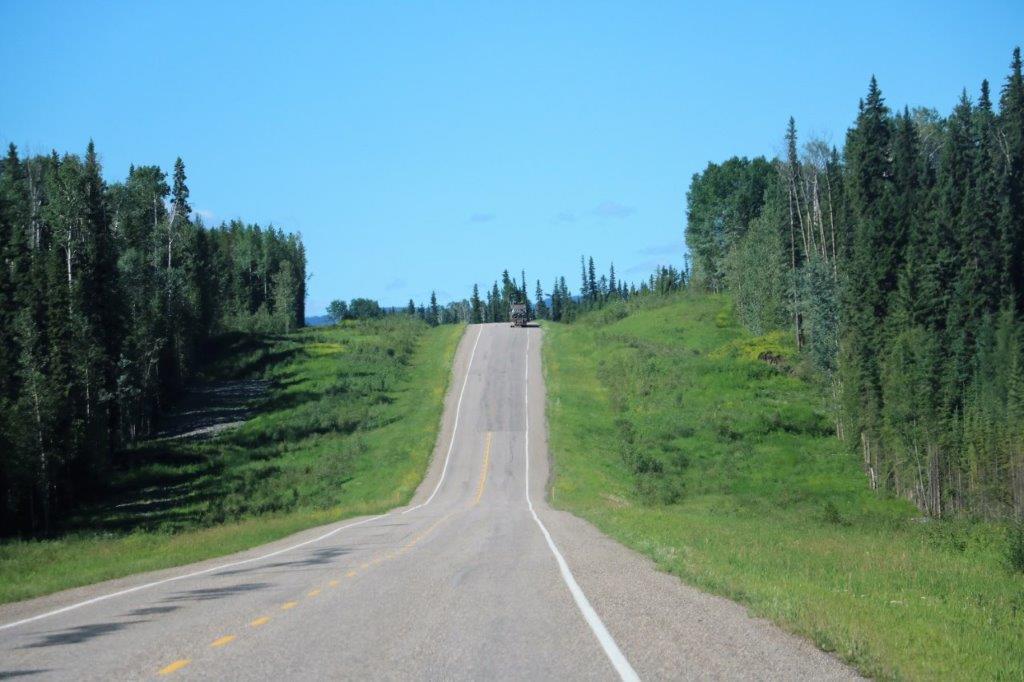
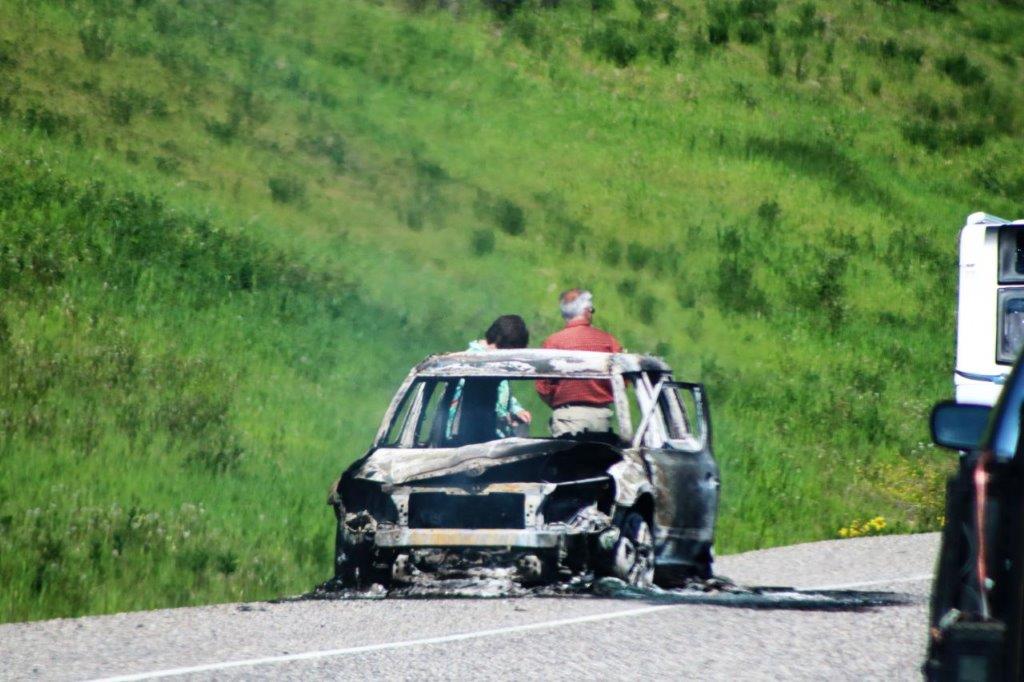
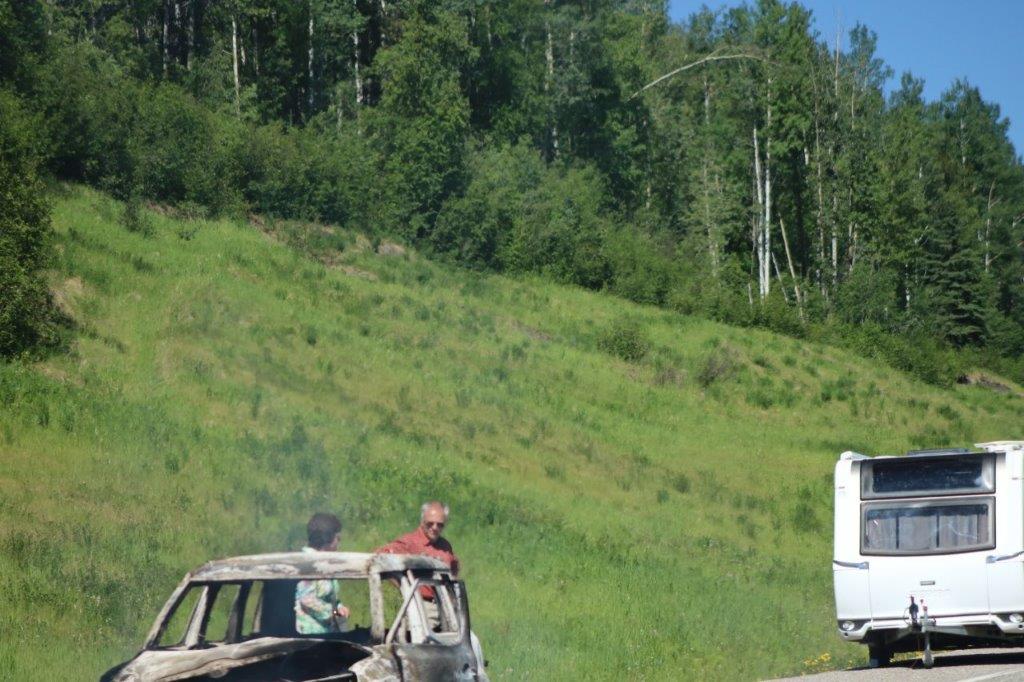
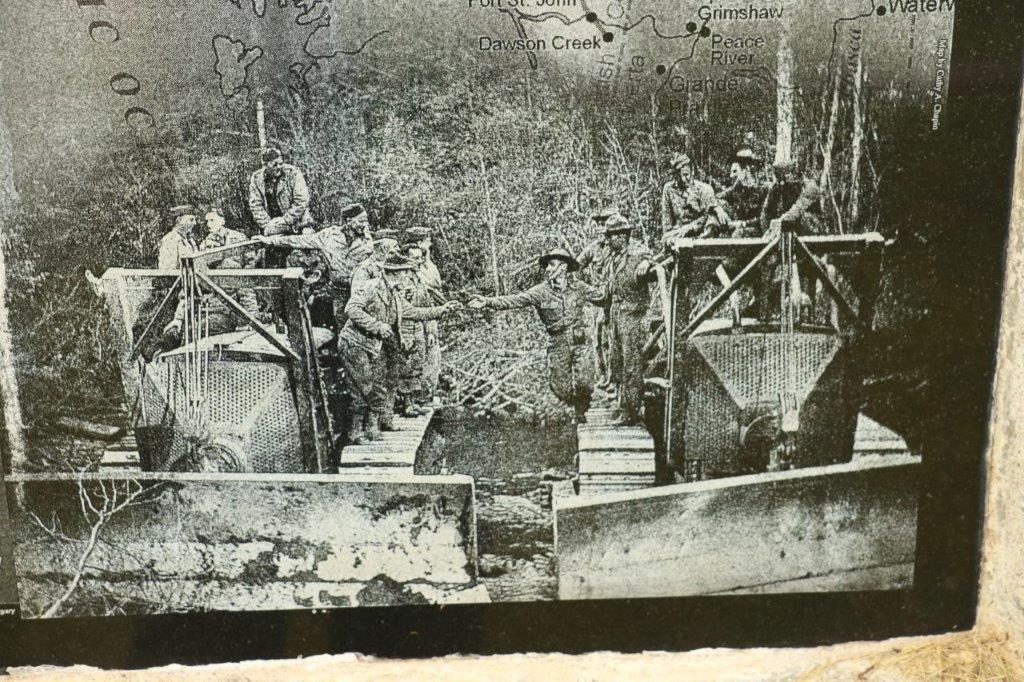
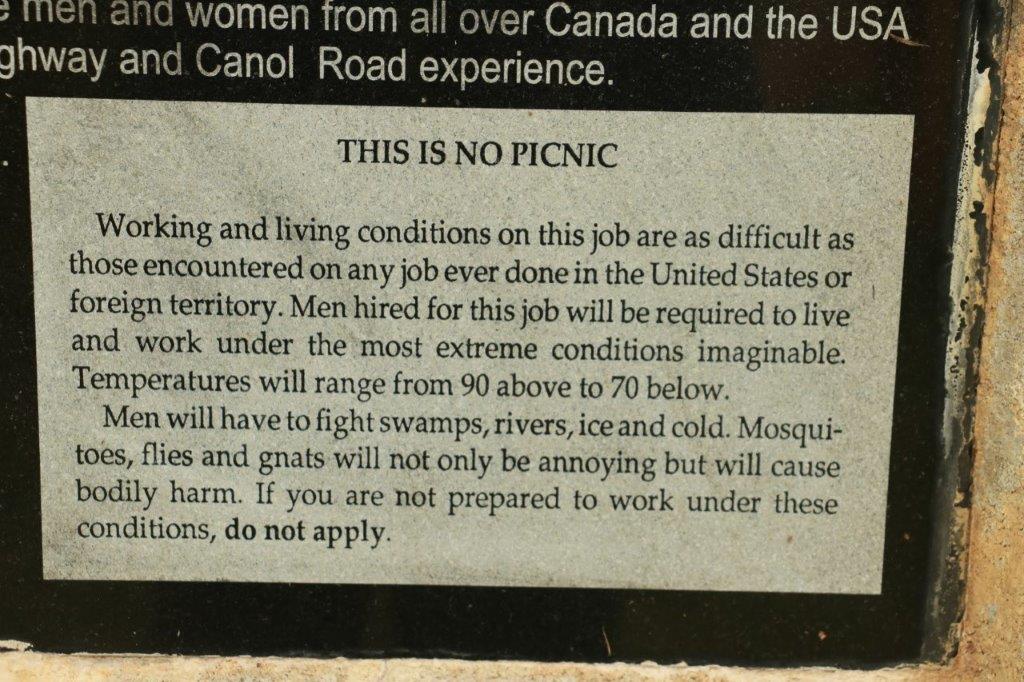
Remember, this the Alaska Highway built in 1942 in just over eight months.  They moved a lot of dirt and rock.  Also when they scraped the top of the permafrost off the water in the soil melted and turned everything to mud so deep it would swallow a bulldozer.  They learned to lay a corduroy layer (logs and branches) as a base.  Much of the highway still has this base.  They built 8 miles of road per day, seven days a week, working double shifts during the long daylight hours of summer.This is not dust or smoke in the photo on the left; it is a splattered bug on the windshield.We had been driving for an hour or so and suddenly a police car with sirens and lights came by.  We wondered where on earth it would have come from (Fort Nelson, we guess) and where it was going.  We didn’t have long to wait.  About 10 minutes later we caught up to the emergency; a burned up car.  The couple had the presence of mind to unhitch their trailer when the car started to burn, and they were uninjured, but there was nothing left of their little car.  I didn’t get a full photo of the trailer, but their car was much to small to be towing it.

We were arriving at the same stopping places as a few other motorists and we would often chat for a bit.  Everyone we spoke to mentioned how small the car was to be towing the trailer.  One couple told us that the people had tried to drive up the hill earlier and were unable to make it so they had turned around and were coming back down when the fire started – probably brakes.  Poor people; That would be a nightmare to sort out, with vehicle registration, loss of personal affects in the car, towing cost for the trailer, getting a new vehicle, staying somewhere.  The list is endless.  So sad.

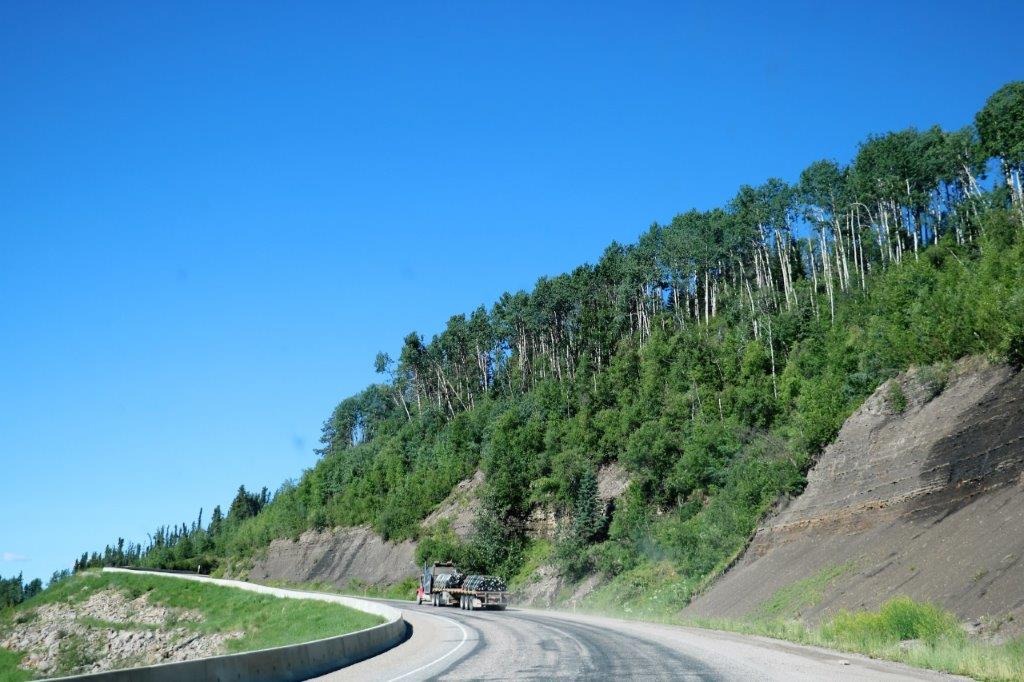
There are some very long steep hills on the Alaska Highway.  When it first opened for the military in 1942 there were some 90 degree corners and 25% grade hills.  Over the years things have been smoothed out and slightly re-routed to alleviate them, but there were some long climbs. (The current Alaska Highway is about 44 miles shorter than the original due to the upgrades and improvements.)

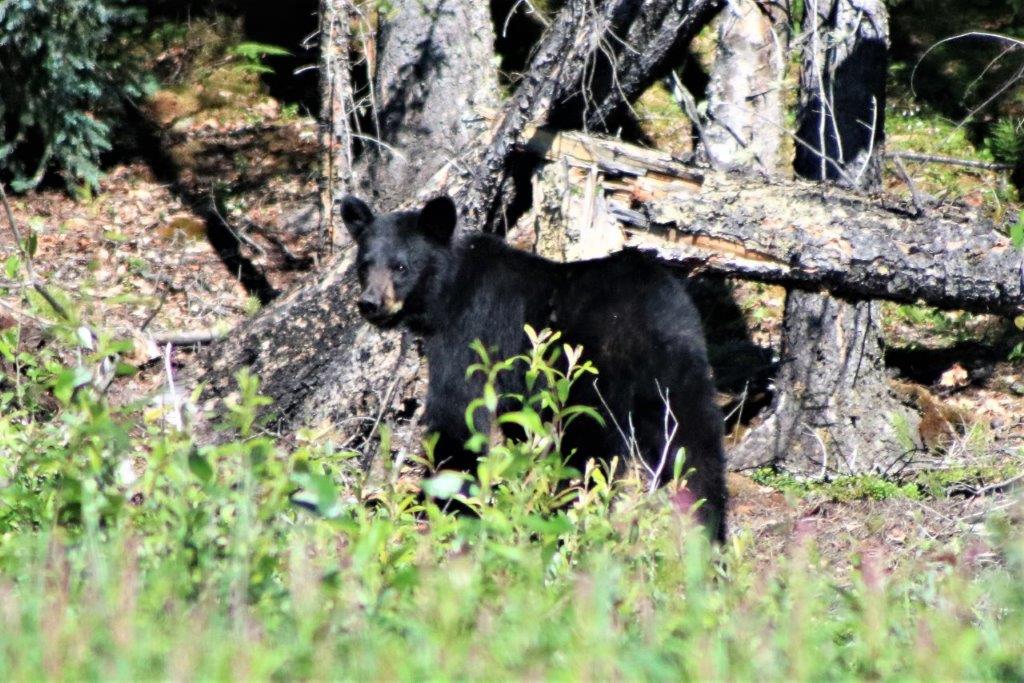
These two bears must be litter mates as they were together which is rare to see with bears.

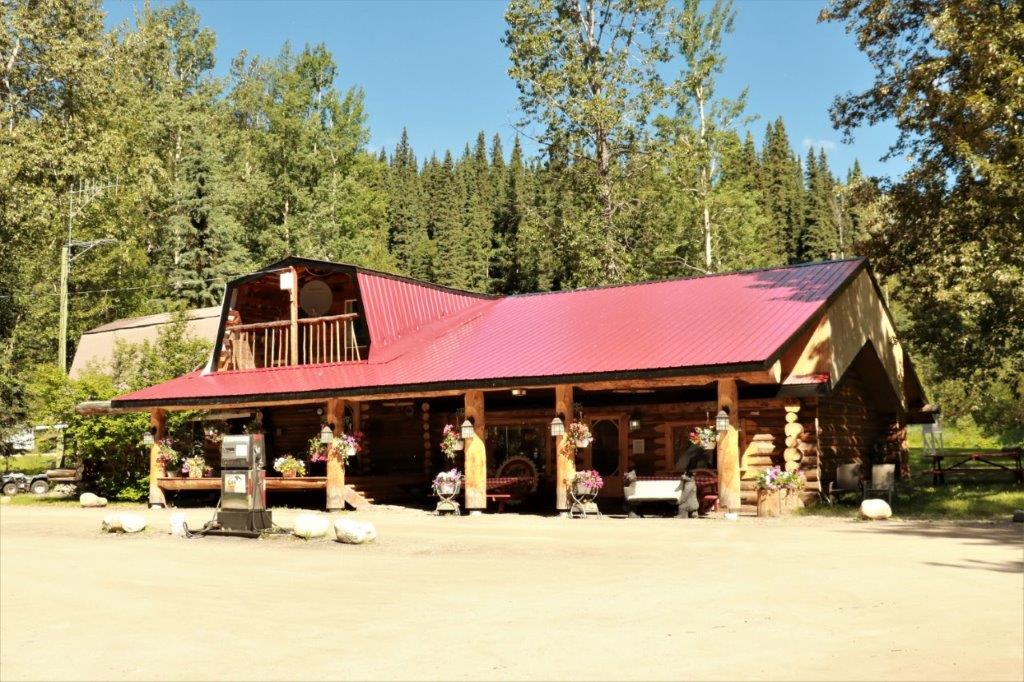
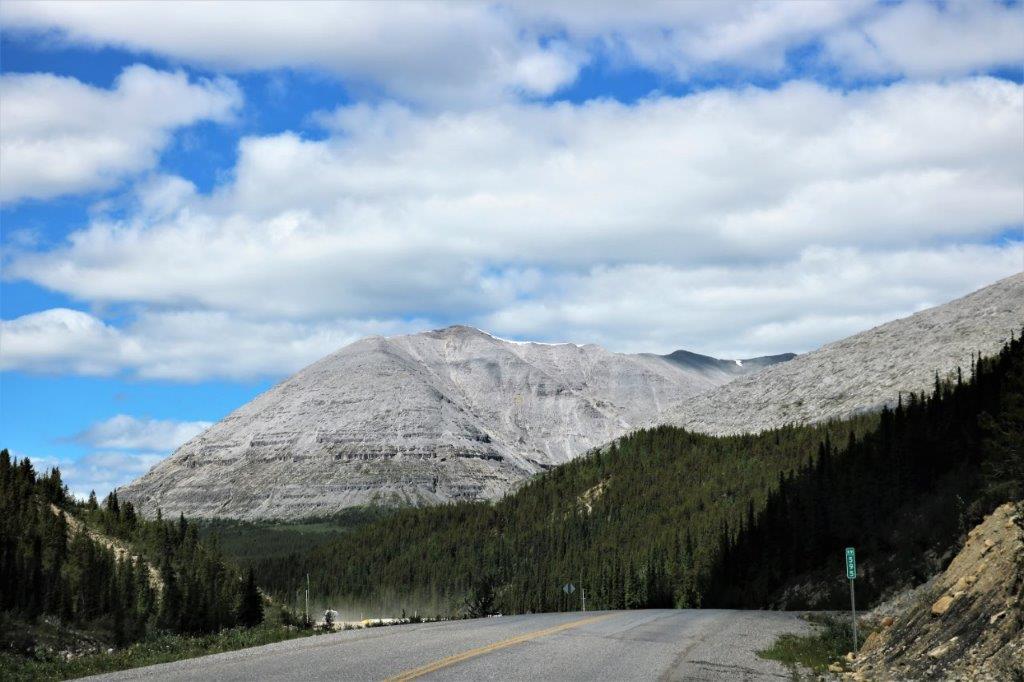
We had spoken to a couple of ladies in Yellowknife that had come the day before along the route we were driving.  They said we MUST stop at Tetsa River Lodge for the best cinnamon buns they have ever had.  We did, and we agree.  They were amazing cinnamon buns.                        Appropriately called Stone Mountain.  There was a geocache hidden at Summit Lake Falls.  There was no signage or anything to indicate a waterfall nearby.  We parked on a wide spot off the road and went looking for the indicated trail.  It wasn’t by any means an obvious path at the roadside, but there was a good trail to follow the short distance to the cache.  We never would have know this pretty little falls existed except for geocaching.  This is quite a common occurance when travelling around.

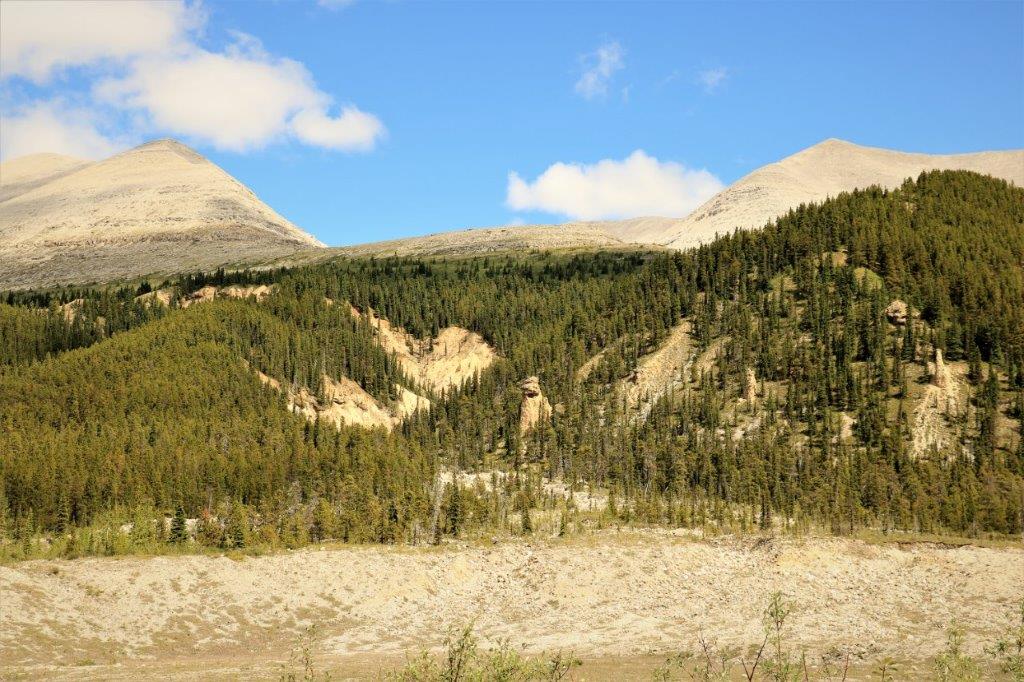
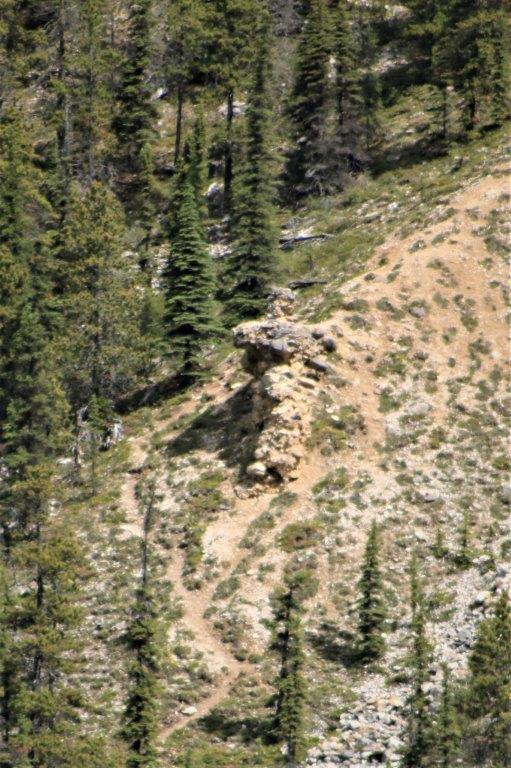
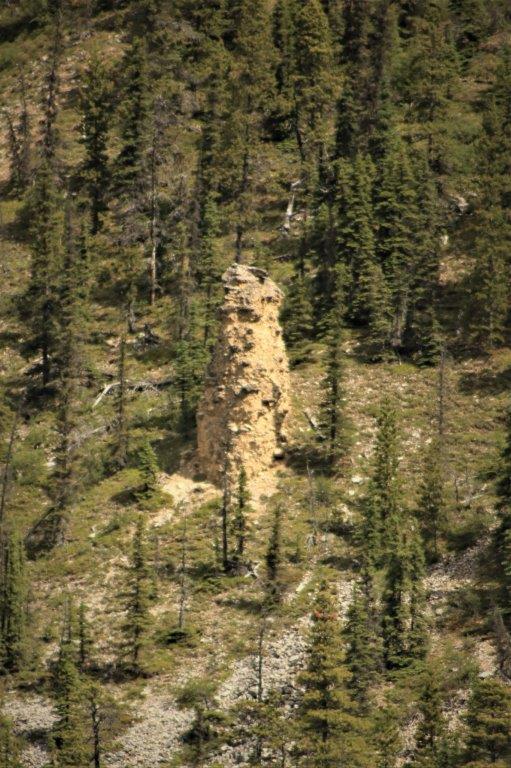
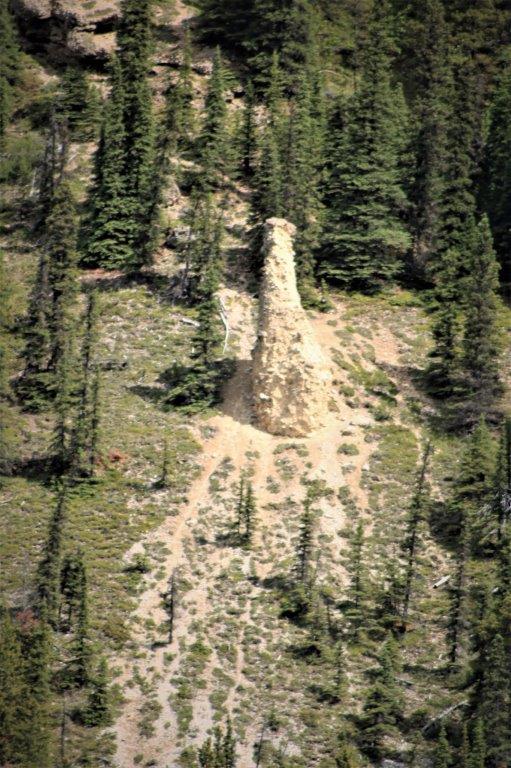
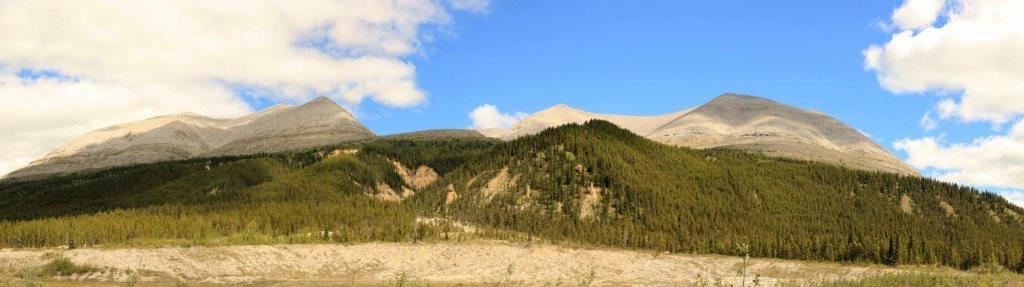
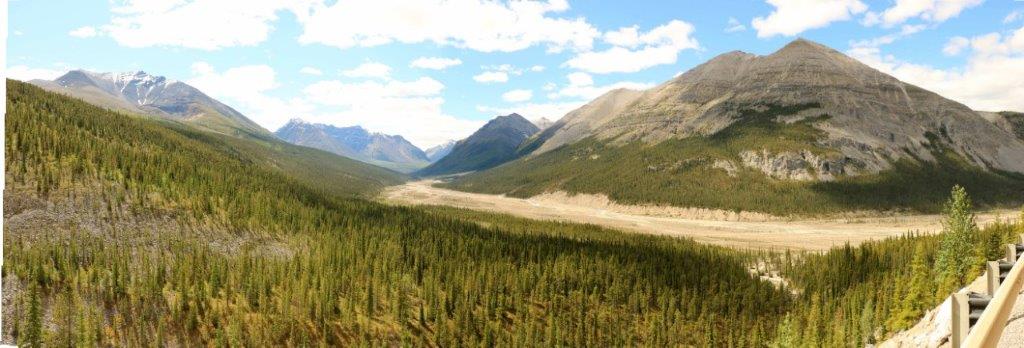
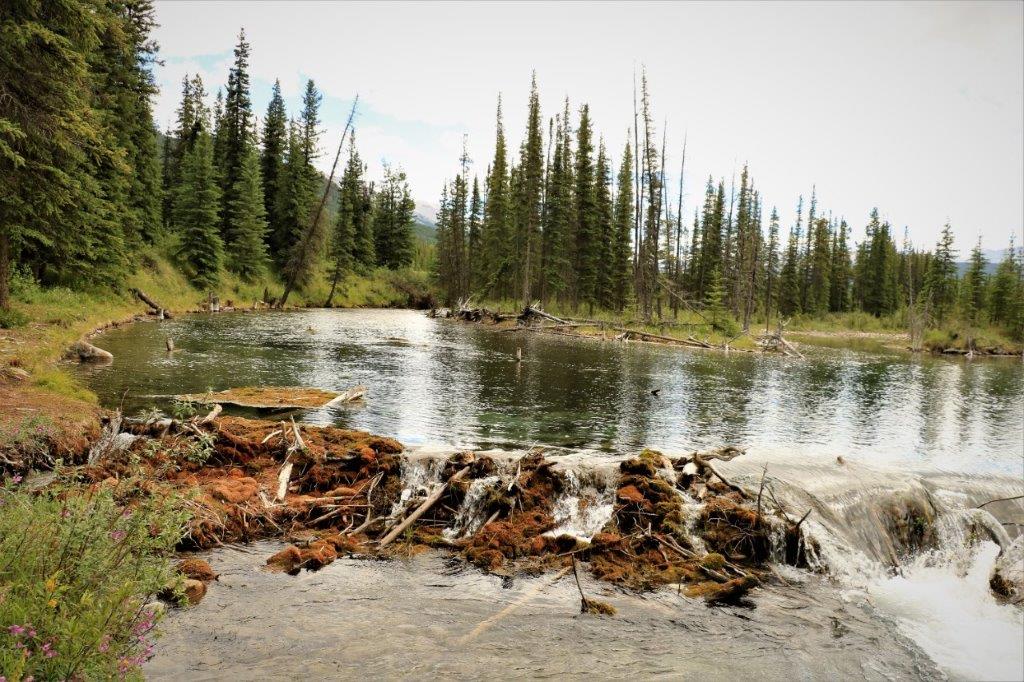
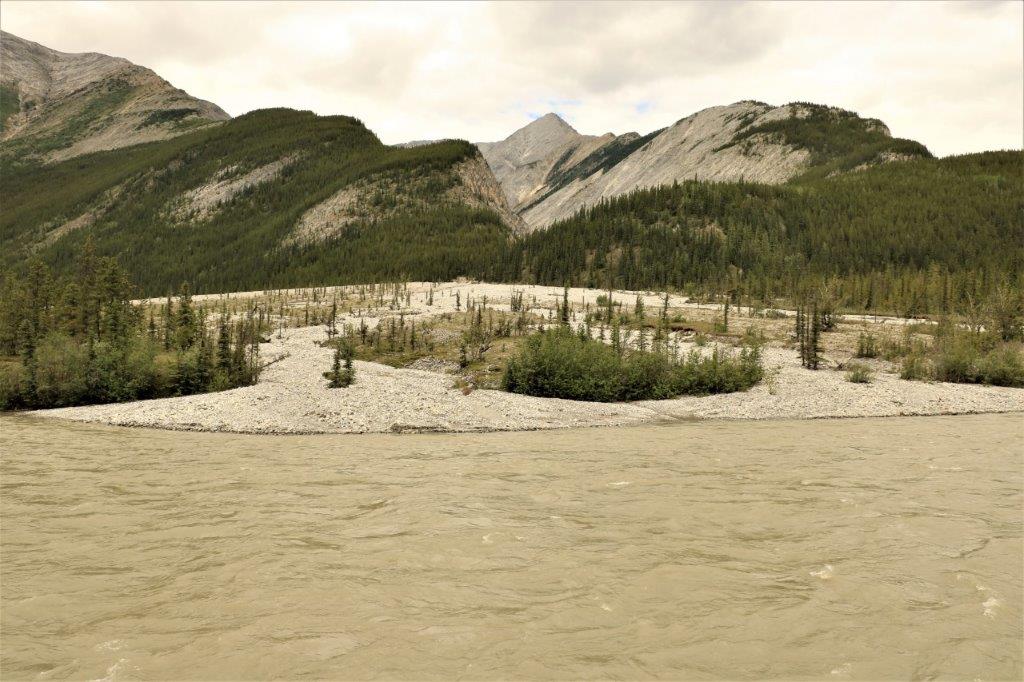
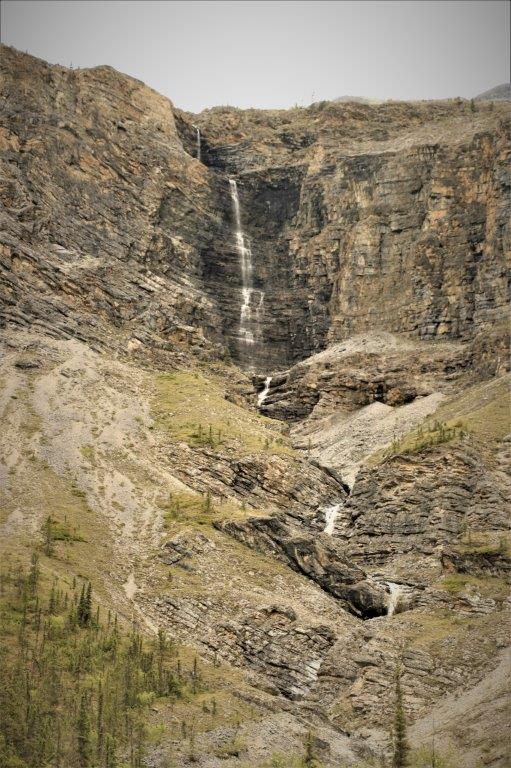
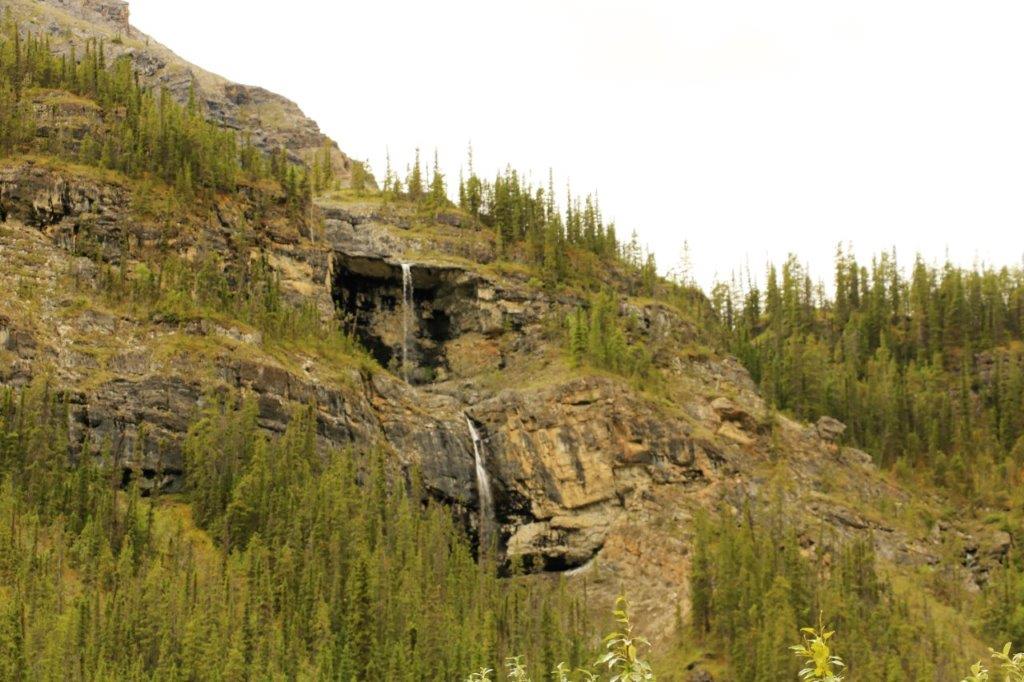
                                                                       Summit Lake was very pretty. There were four Hoodoos (eroded columns where the cap on top is harder rock and the sandstone layer underneath erodes) on a distant mountainside.  Unless you are in the habit, as we are, of stopping at any pullout with a placard, you would never notice them. There was also an earthcache here which was an added incentive. The river flowing through this valley was glacier green.  At bit too far away to see well though.This area, below, is the called Beaverdam, for obvious reasons. This couple had pulled over just for a few minutes and liked the view so much they stayed for lunch and a rest.  All of the rivers are running high and are brown they are carrying so much dirt along.  There were two thin waterfalls coming down the mountain on the opposite side of the road.

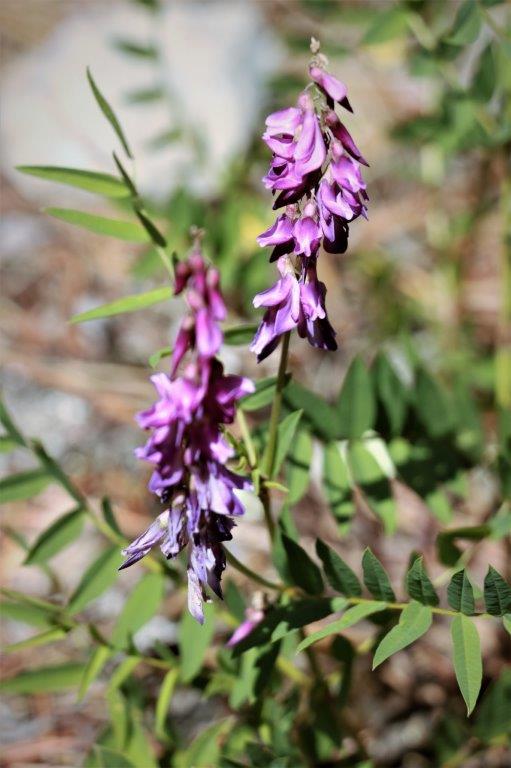
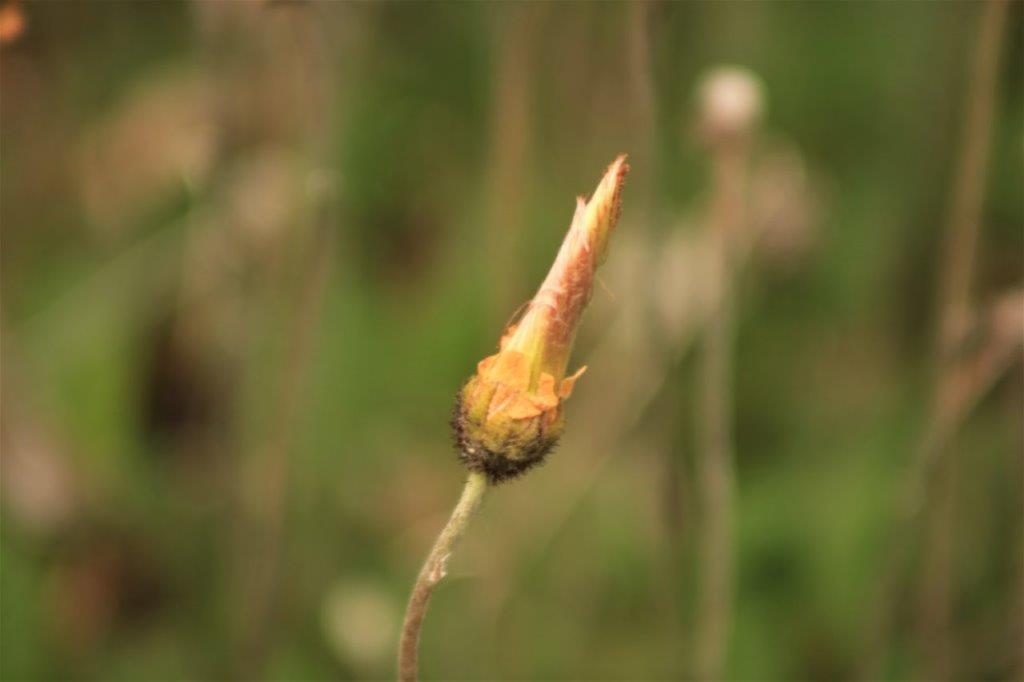
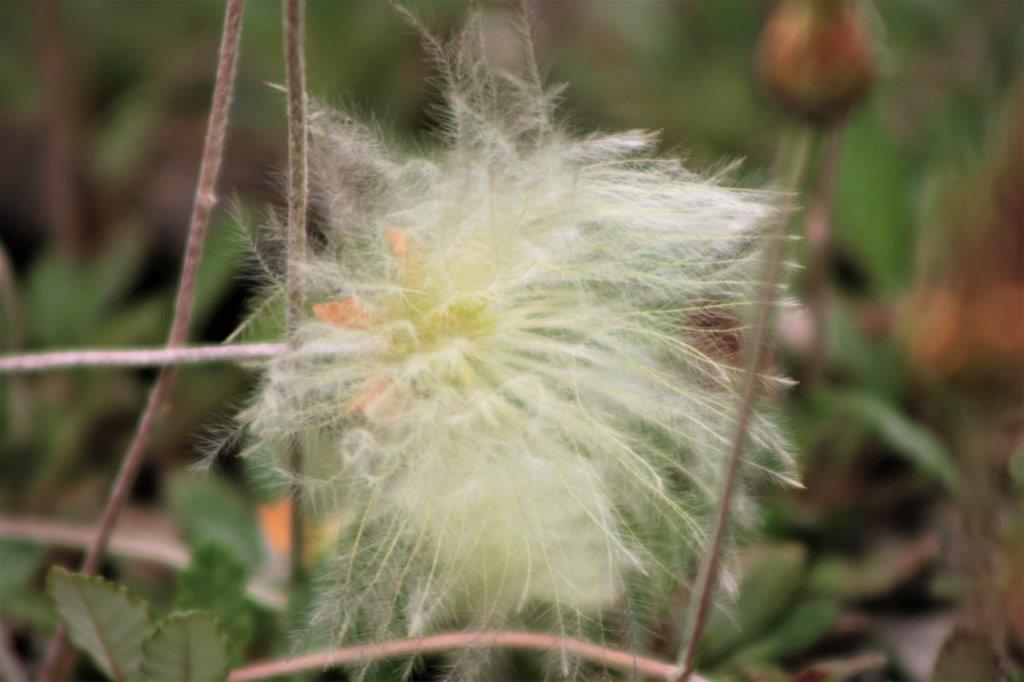
 We don’t know what this plant is called.  John wants to call it Arctic Cotton.  The blossoms are gone and this is the seed fluff opening. This blog encompasses about half of our day on June 28.  I will get some more done as soon as I can.

2018 June 27 – Fort Nelson, BC

Today was a down day. We slept in and missed the free breakfast at the hotel (they only serve until 9 am. Can you imagine?).  It was a short drive down the road to a breakfast place.  Fort Nelson is  a very sprawling commnity.  The majority of the businesses are on frontage roads either side of the highway and there are tracts of empty lots between them.  There is no downtown core that we could find so you would find it very difficult to walk and do your shopping errands.  We spent the morning fighting internet in our hotel room.

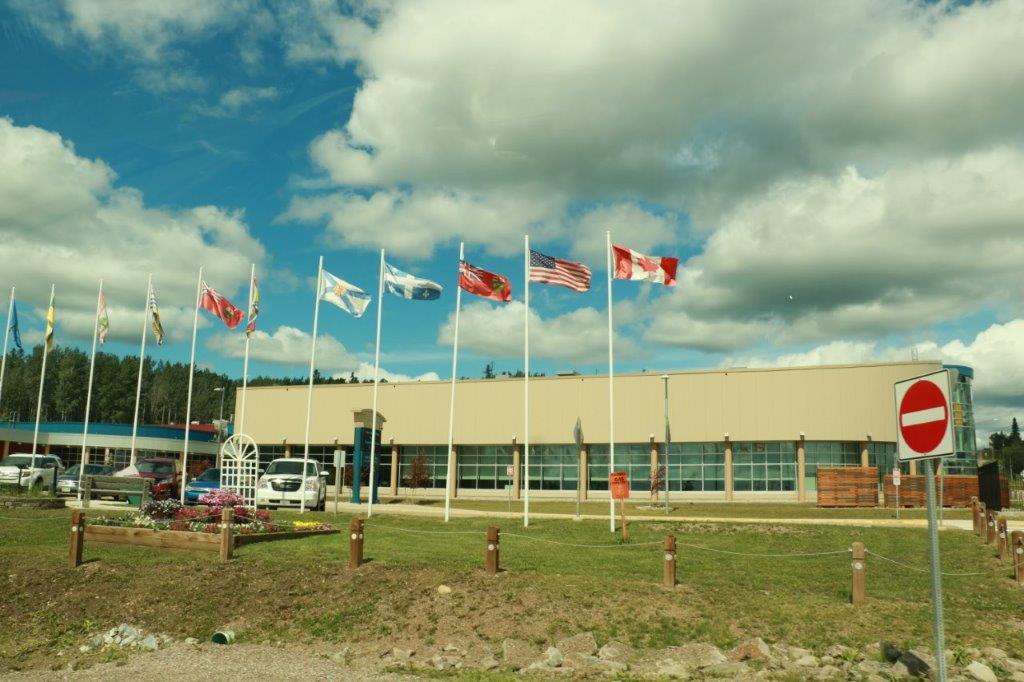
This hotel is very large.  It had lots of rooms in the original building but at some time a big addition was added.  Everything is made of cement block – exterior and interior.  The exterior is light brown block, the interior is gray.  The corridors look like the inside of a prison.                                The new-looking Community Center.

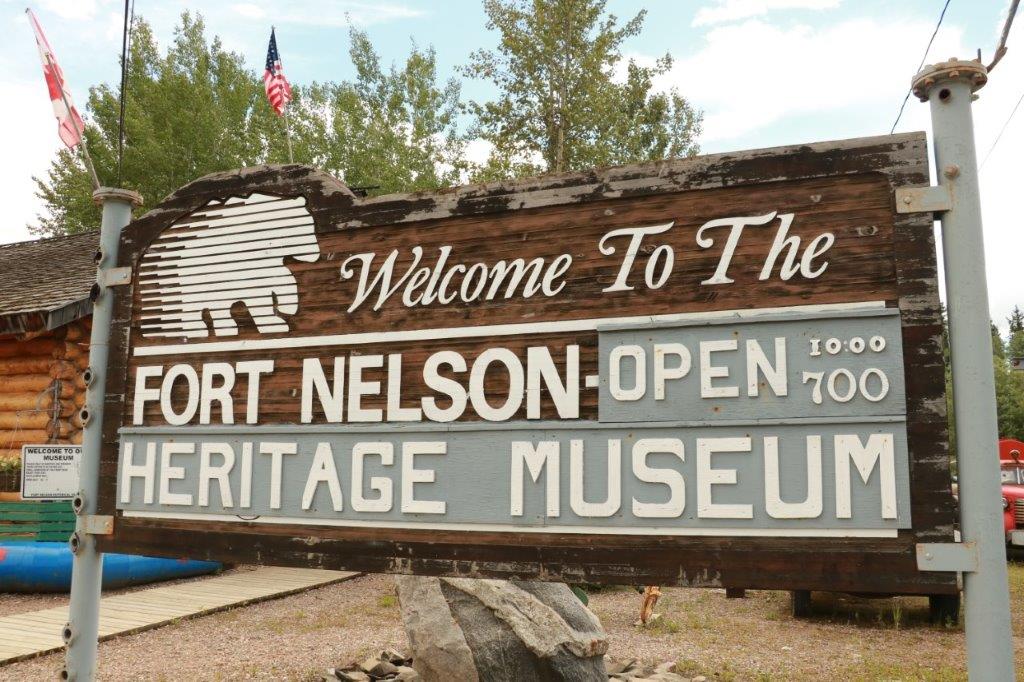
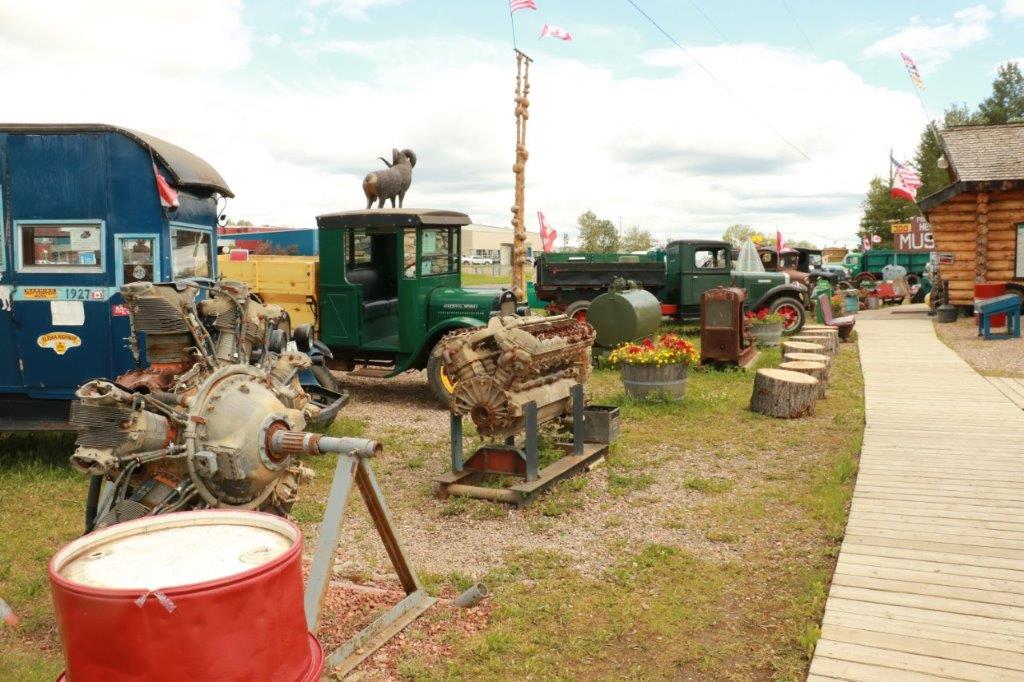
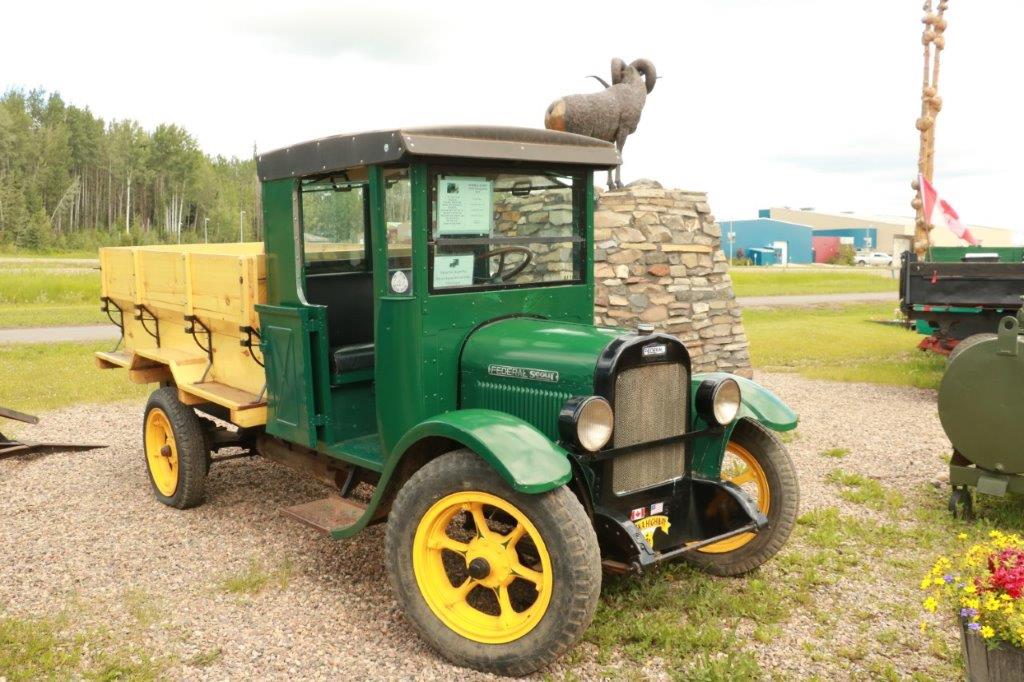
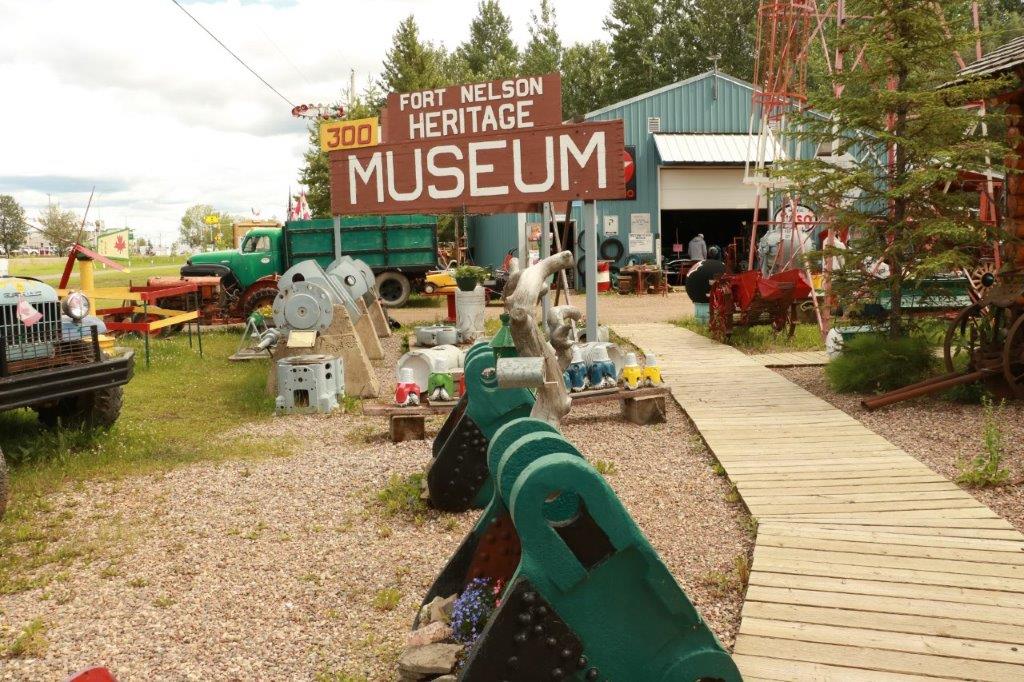
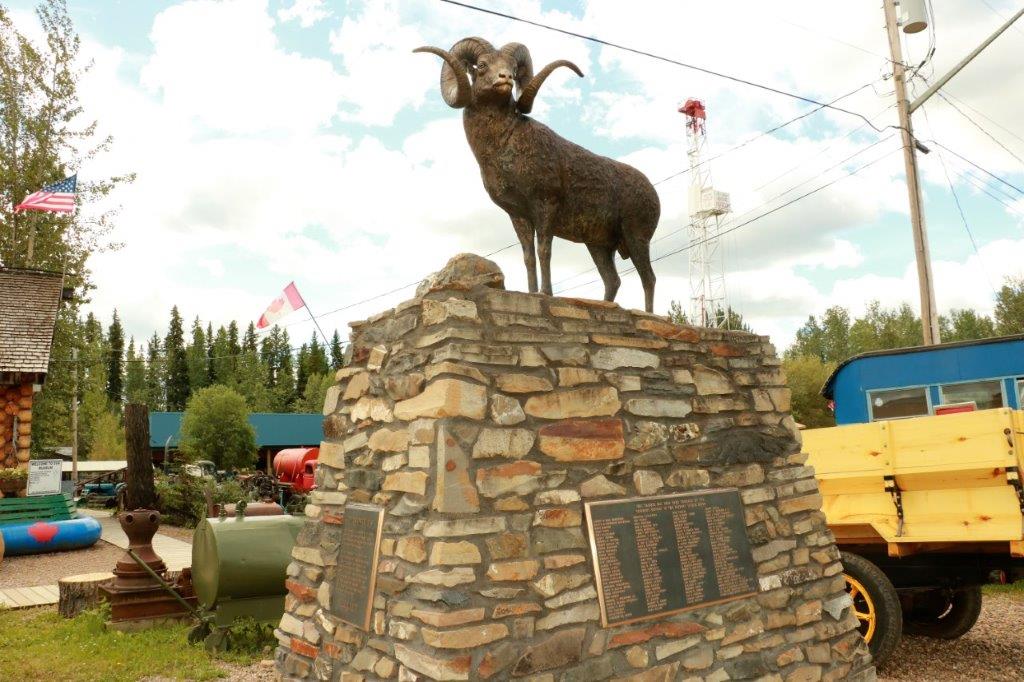
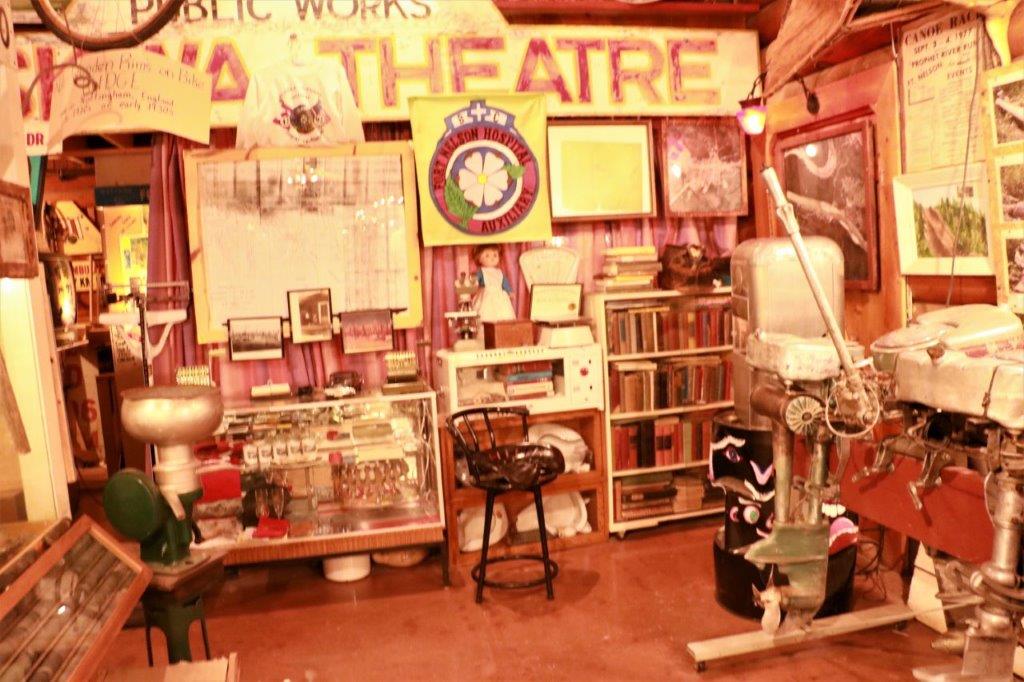
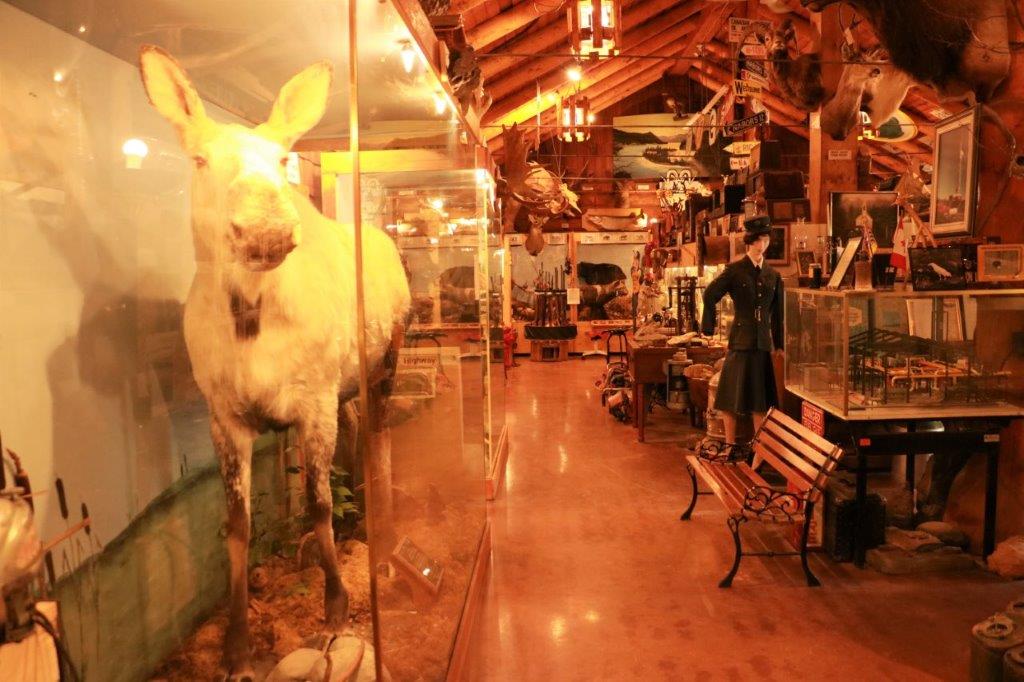
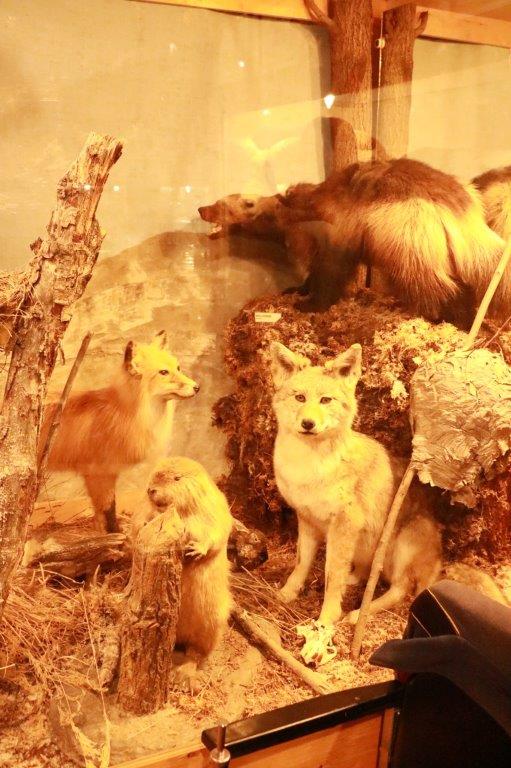
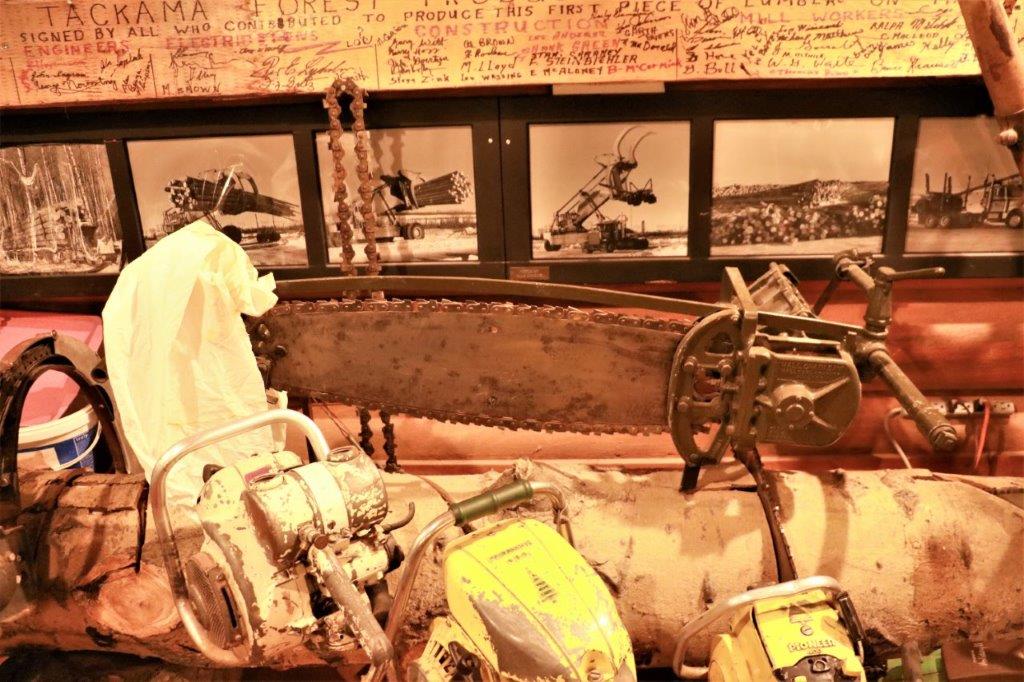
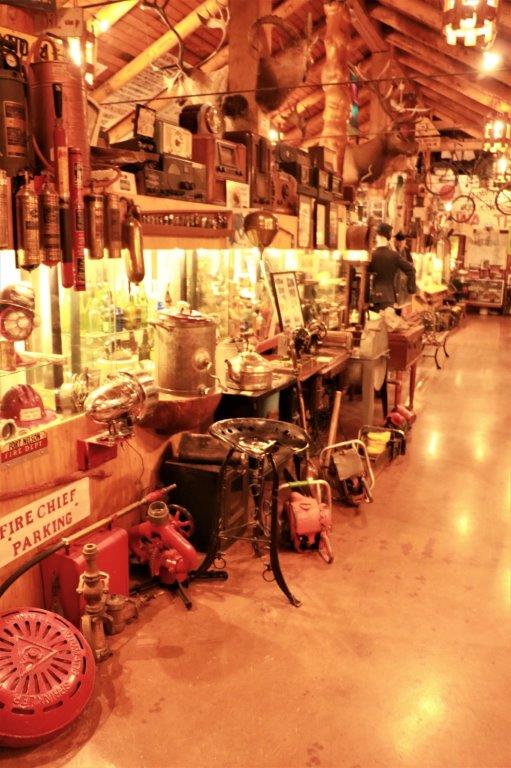
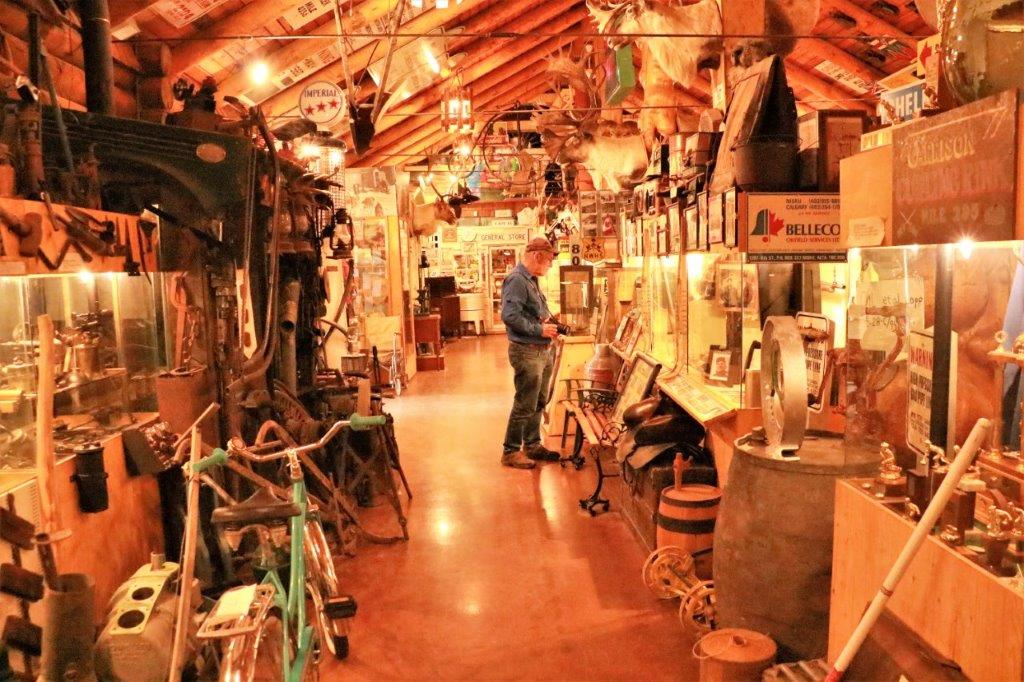
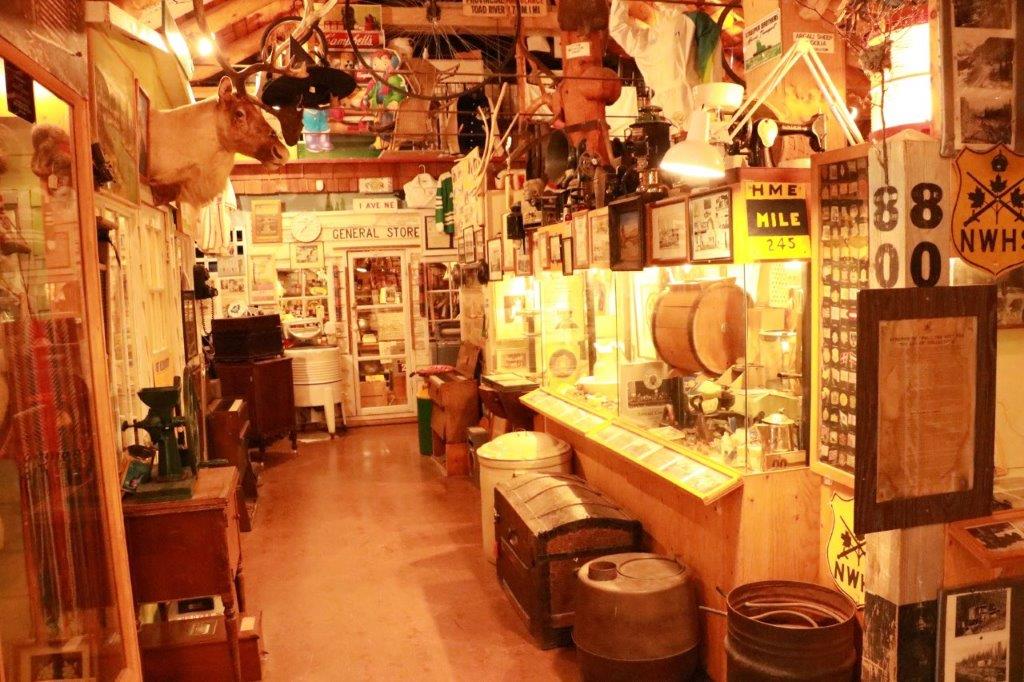
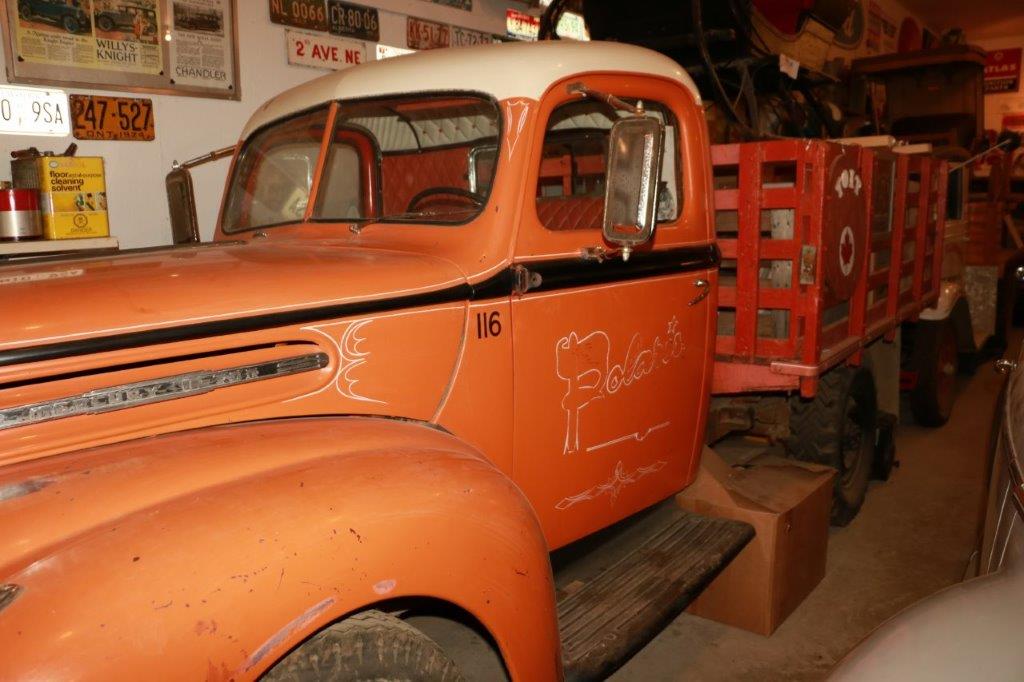
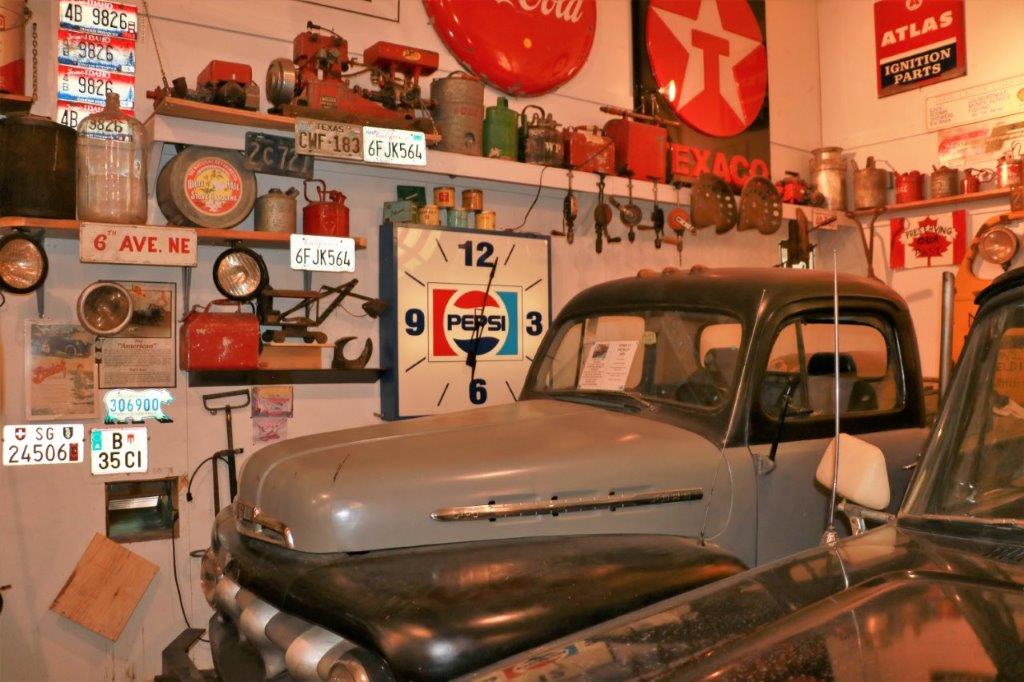
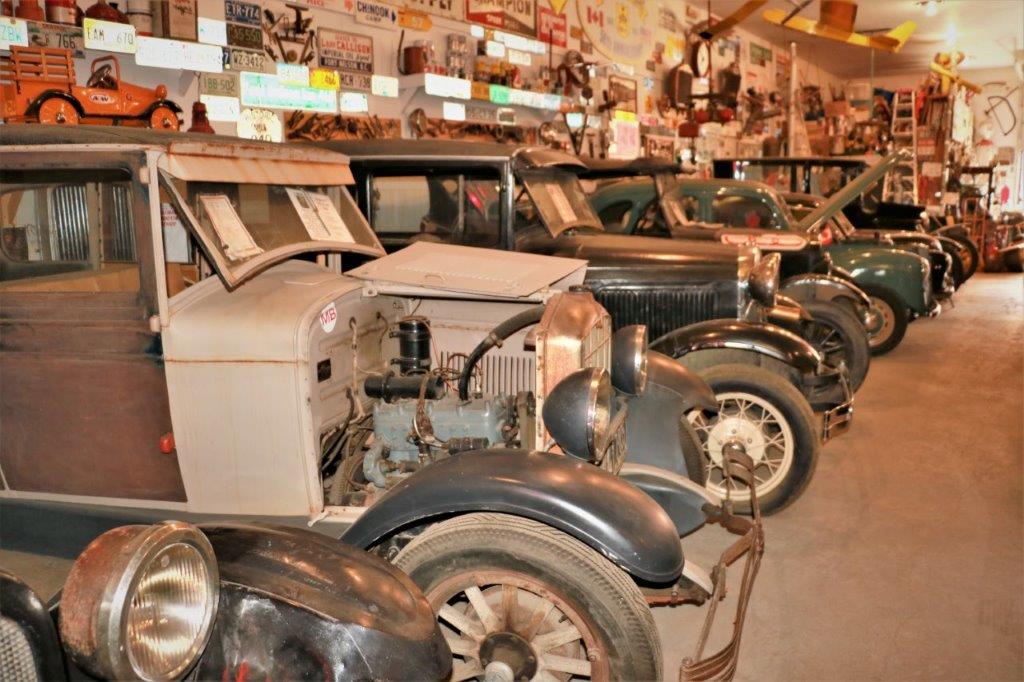
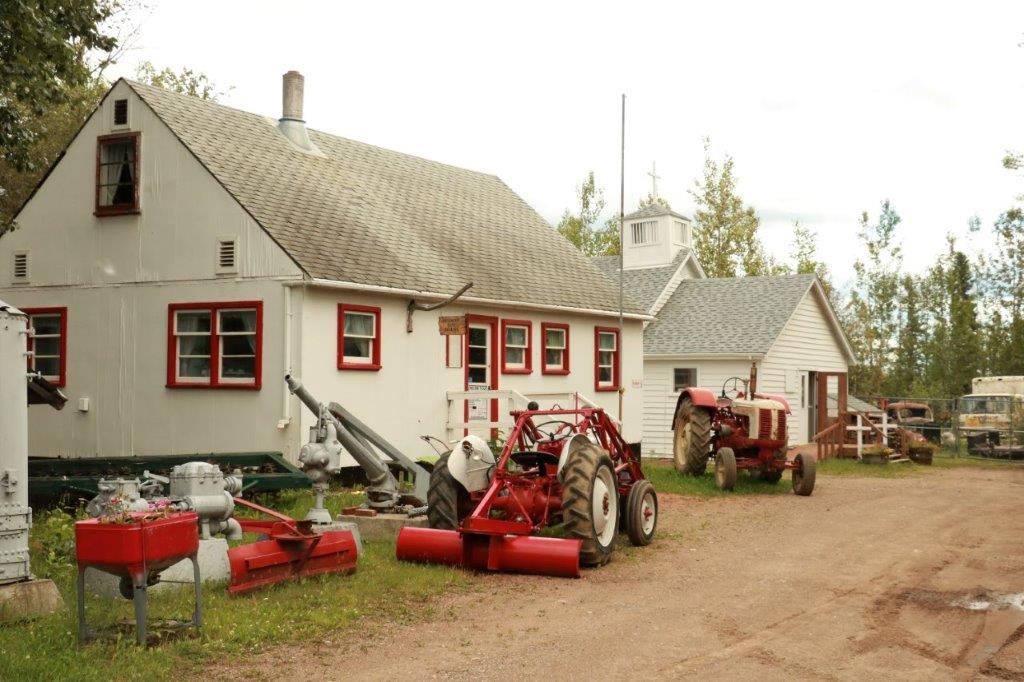
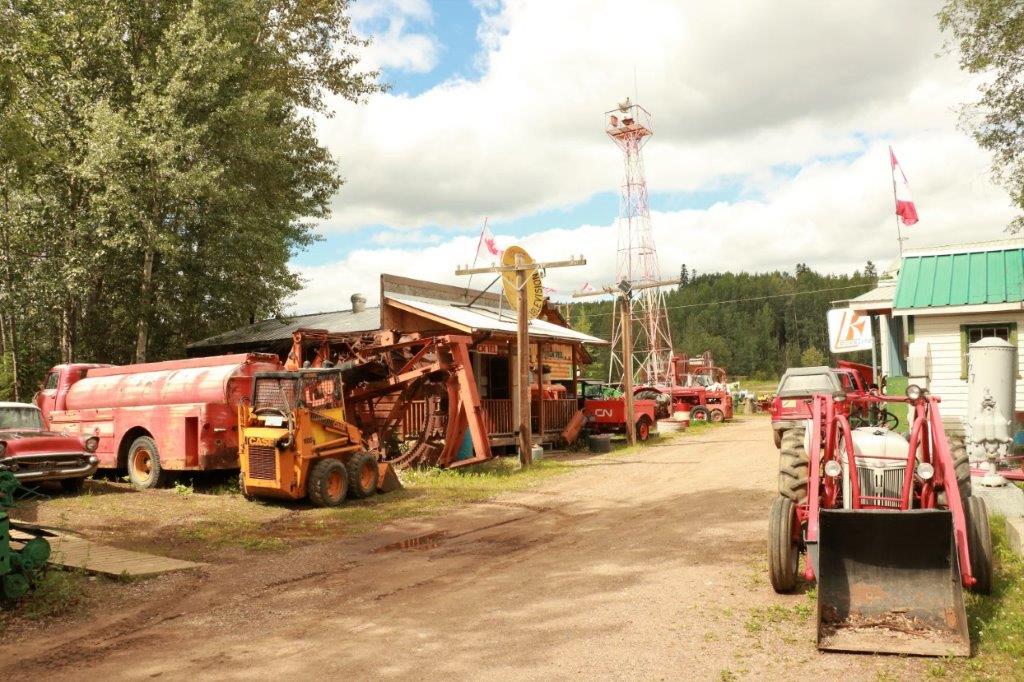
About 1:30 we ventured forth and went down the road to the Fort Nelson Heritage Museum.  Now this is primarily a VERY eclectic collection of old cars, machinery, memorabilia, photos and items that have been compiled by the owner/curator Mr. Brown.  It was very interesting to walk around the various buildings, but in no way was this a proper museum with controlled atmospheric conditions or tidy displays.  Stuff was heaped all over and there were occasional placards with explanations.  This being hunting and trapping territory there were also lots of taxidermy specimens.

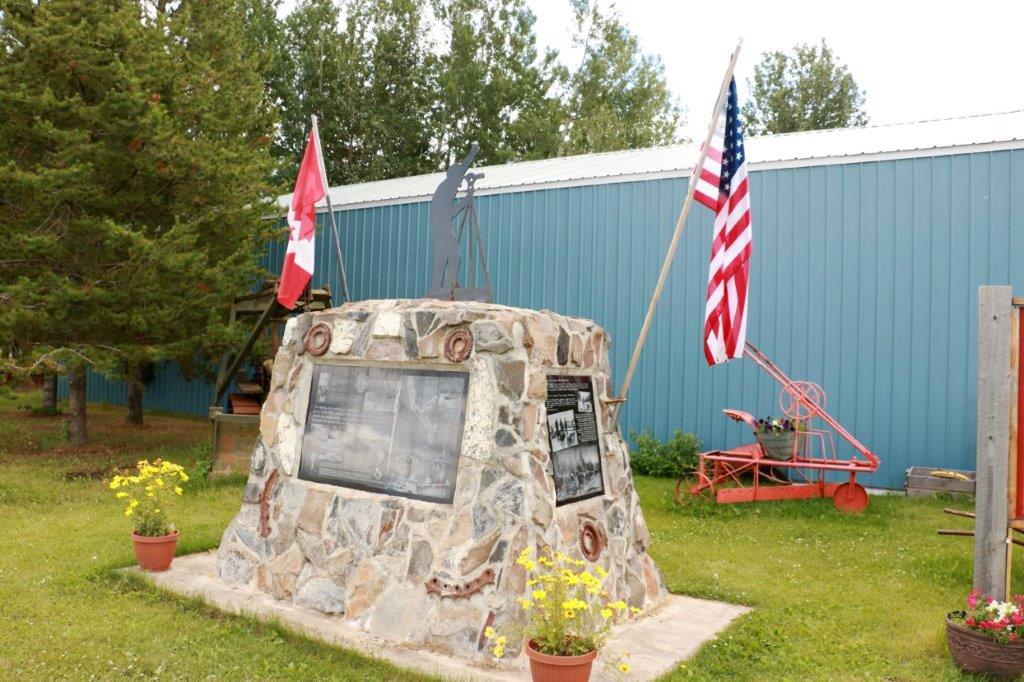
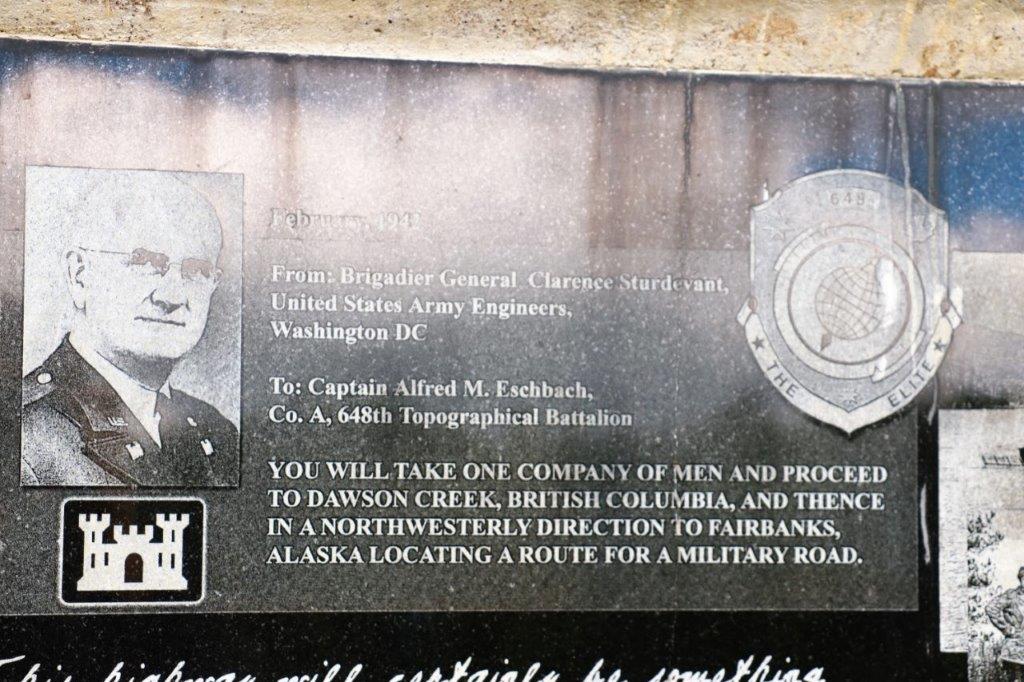
Because the building is dimly lit and full of stuff it was very hard to get good photos, even with flash.  Mostly I used a high ISO which, unfortunately, gives a yellow cast to images.  However, my photos are for my travel records, nothing else so it isn’t too big a deal. The Alaska Highway (originally called the Alcan Highway) was built in 1942 during a time when America was worried about an invasion from the Japanese through Alaska  after the attack on Pearl Harbor the previous December.  The highway was built to provide supplies and equipment to the north.  The 1700 miles (2257 km) of very rough road was built in 8 months and 12 days at a cost of $140 million.  More than 11,000 American troops, including 7 regiments of engineers, 16,000 civilian workers from the USA and Canada, and 7,000 pieces of equipment completed the task.  Construction officially began on March 8, 1942  and soldiers met at Contact Creek, near the BC/Yukon border on September 24, 1942.  The road was literally bulldozed through the wilderness.President Hoover authorized the contruction of the Alaska Highway on February 11, 1942.  The US secured rights-of-way through Canada in March.  The formal agreement between the two countries stipulated that the US pay for construciton and turn over the Canadian portion of the highway (it starts in Dawson Creek, BC and ends in Fairbanks, AK) after the war ended.  In turn, Canada furnished the rights-of-way, waived import duties, sales tax, income tax and immigration regulations, and provided construction materials along the route.  We will be driving much of the highway during our trip.

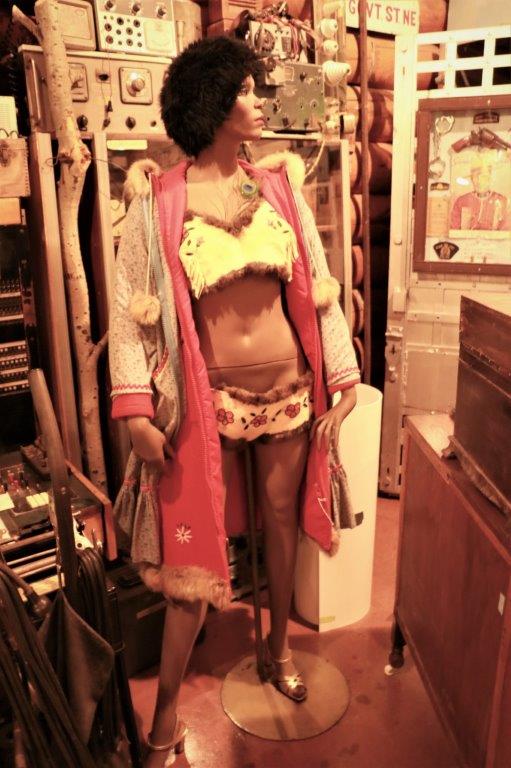
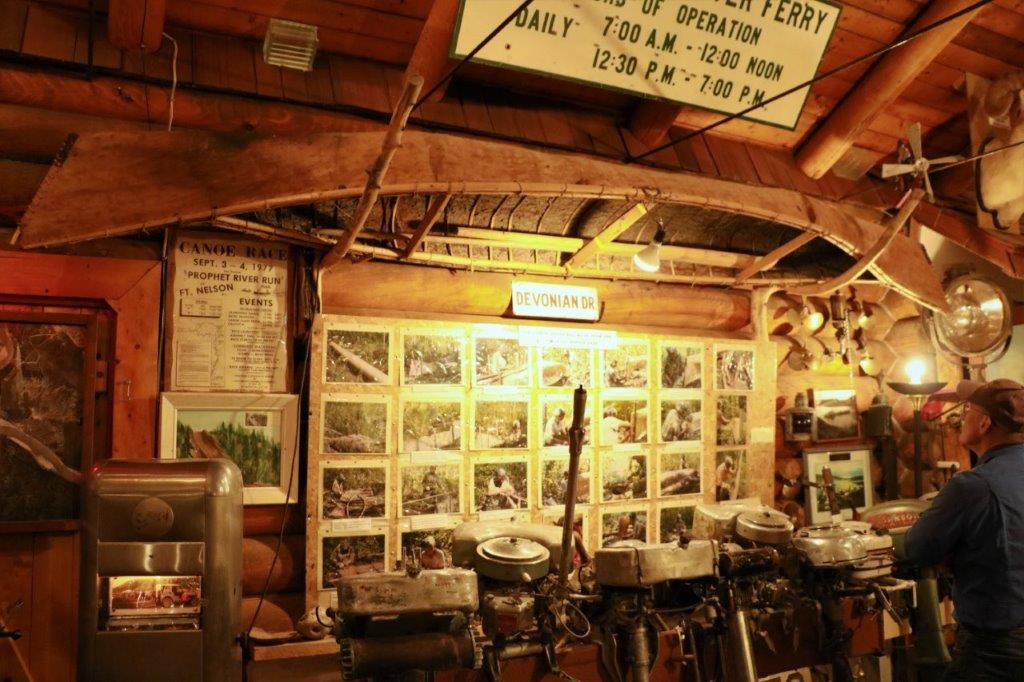
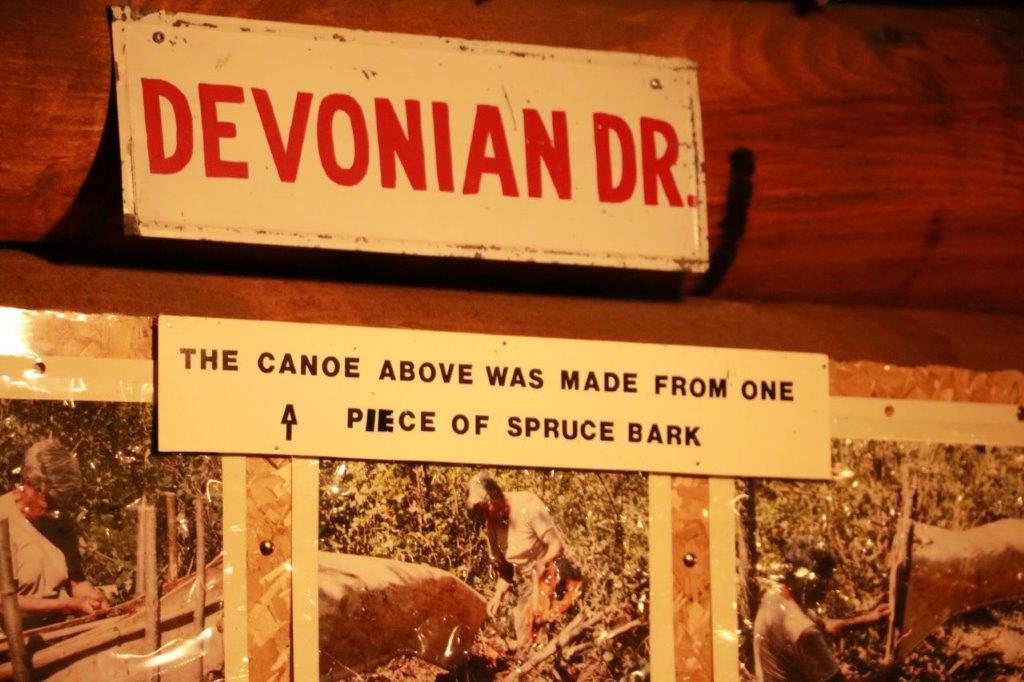
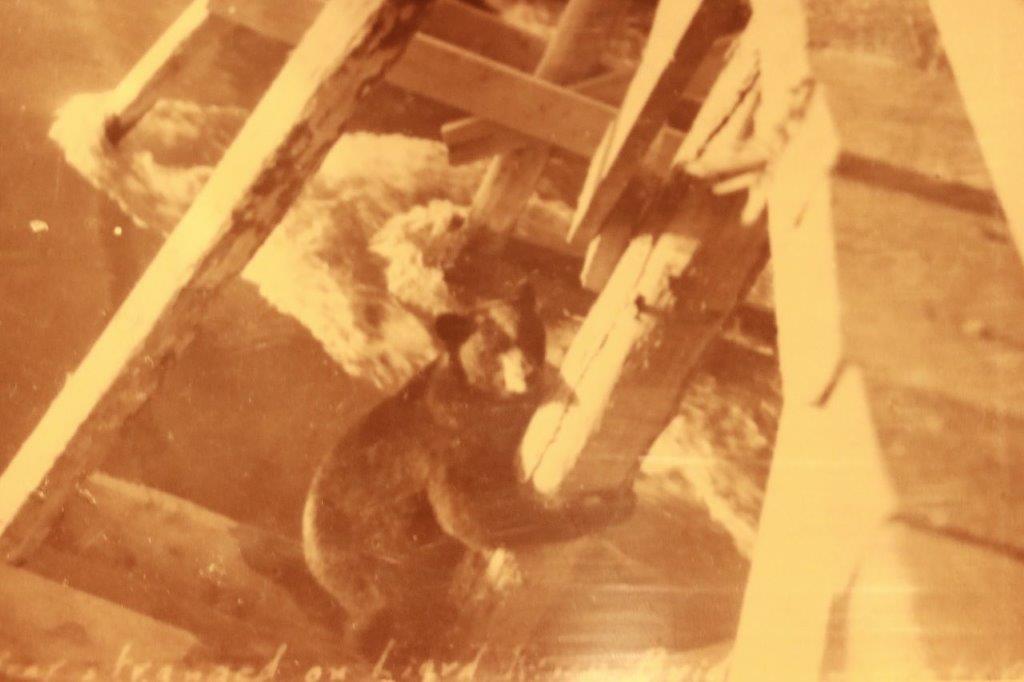
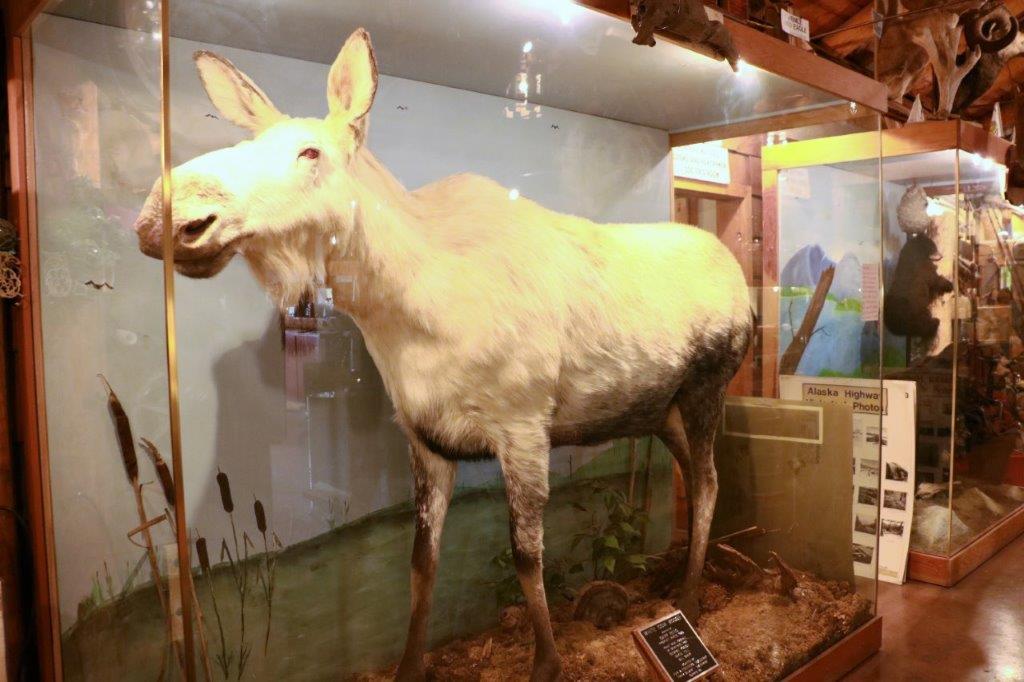
                                          Now, who doesn’t need a beaded buckskin bikini? The canoe is hanging from the ceiling above John and all the photographs on the wall document it’s construction. This photograph of a young bear clinging to a bridge support over a raging river was pretty cute.                 An original newspaper from September 11, 1939.                                              This is an albino cow moose.

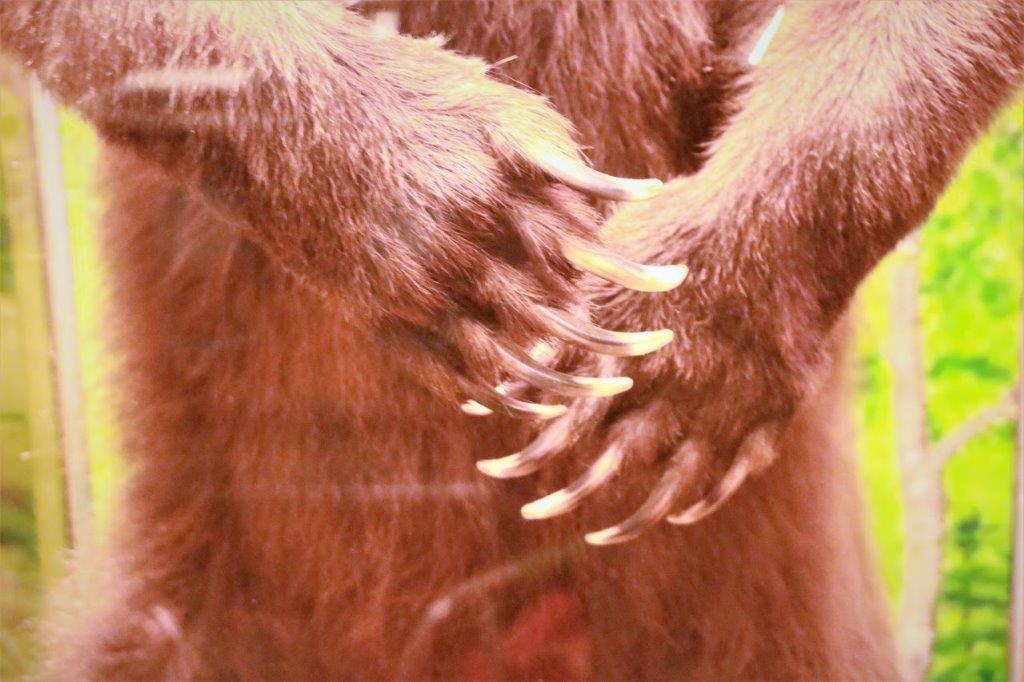
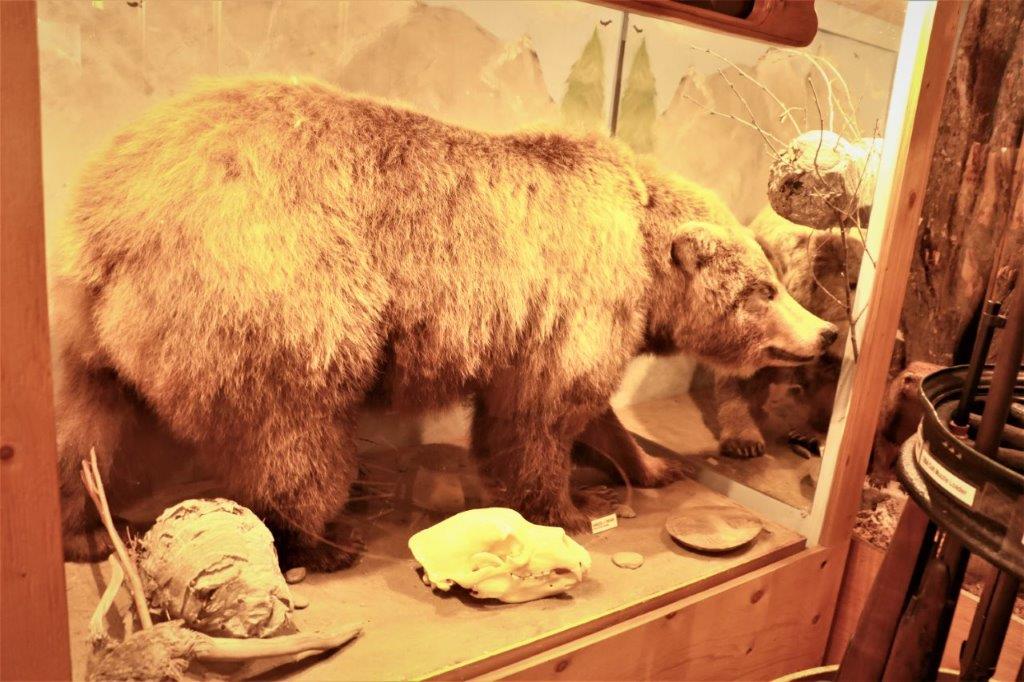
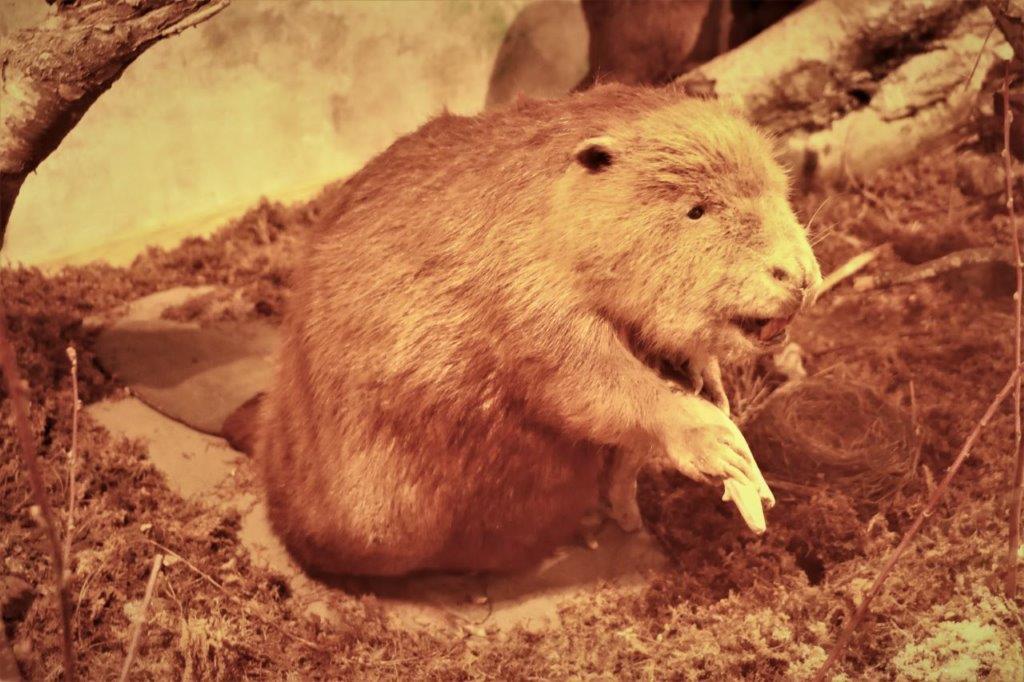
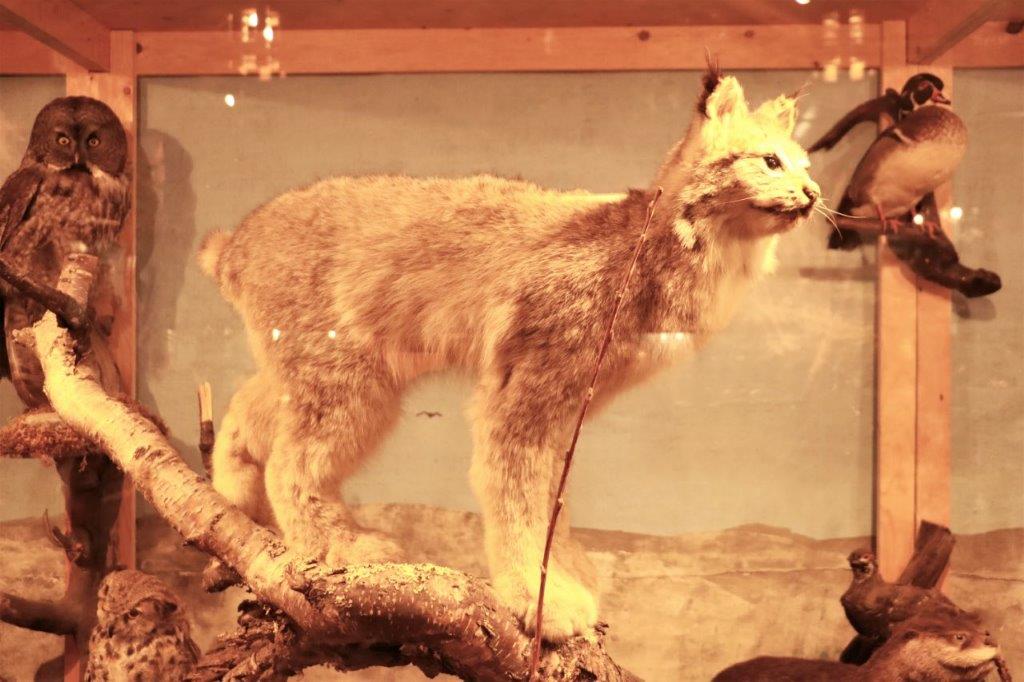
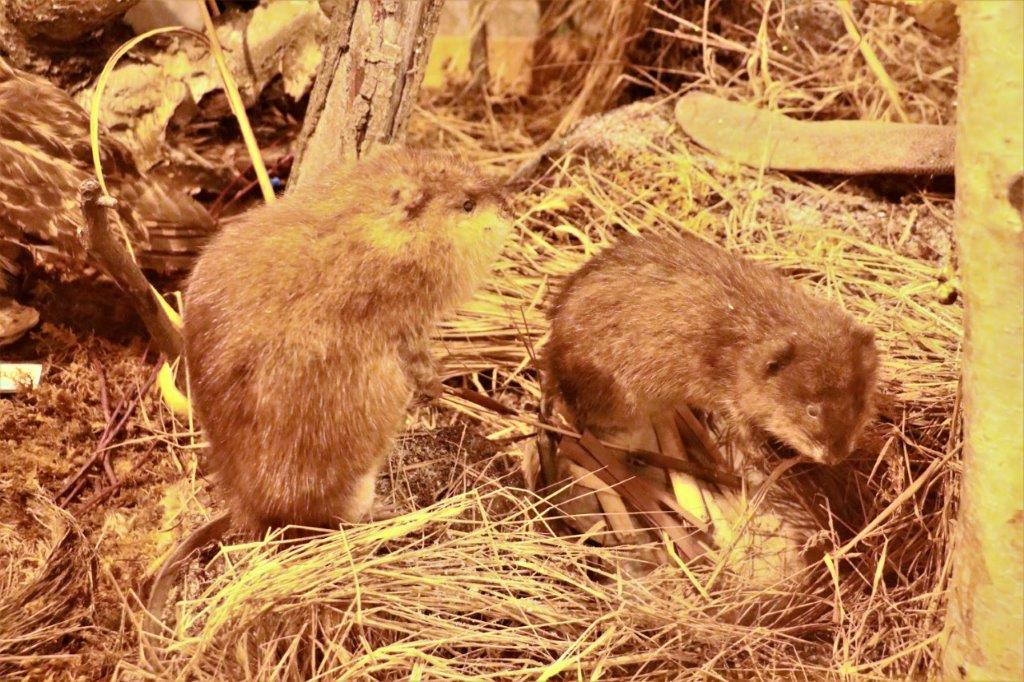
 This Grizzly wasn’t very big, but it sure had long claws.This is a female silver-tip grizzly. The silver tinge to her hair goes all the way to the skin.                                     The emblematic Canadian Beaver.                               A lynx                                                              and an otter.Muskrats.  I was surprised at how big they were; about the size of  a rabbit.

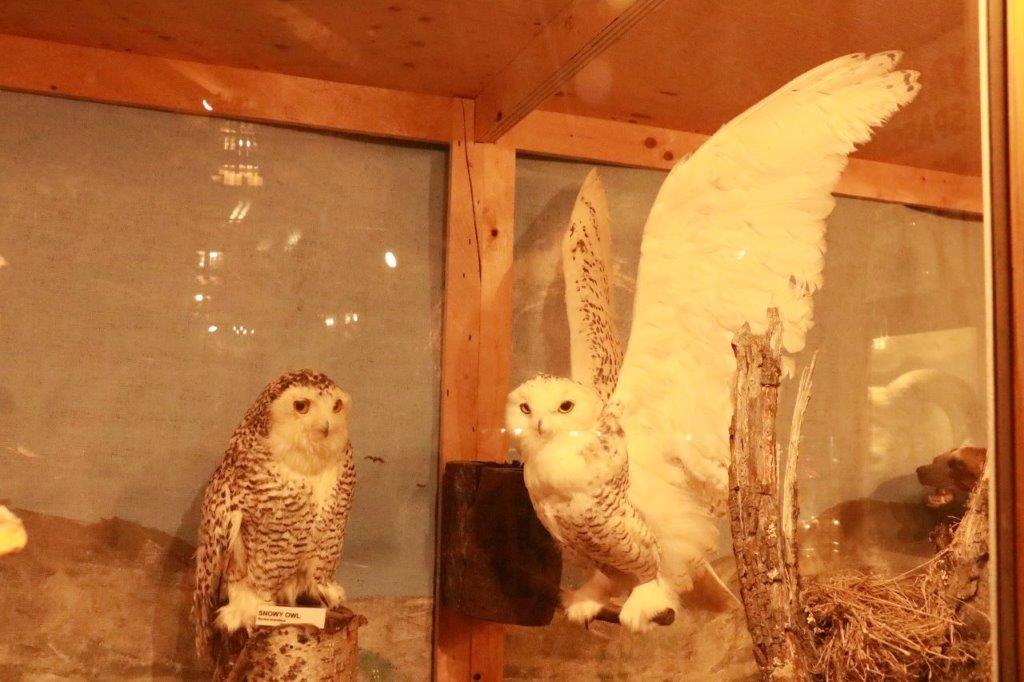
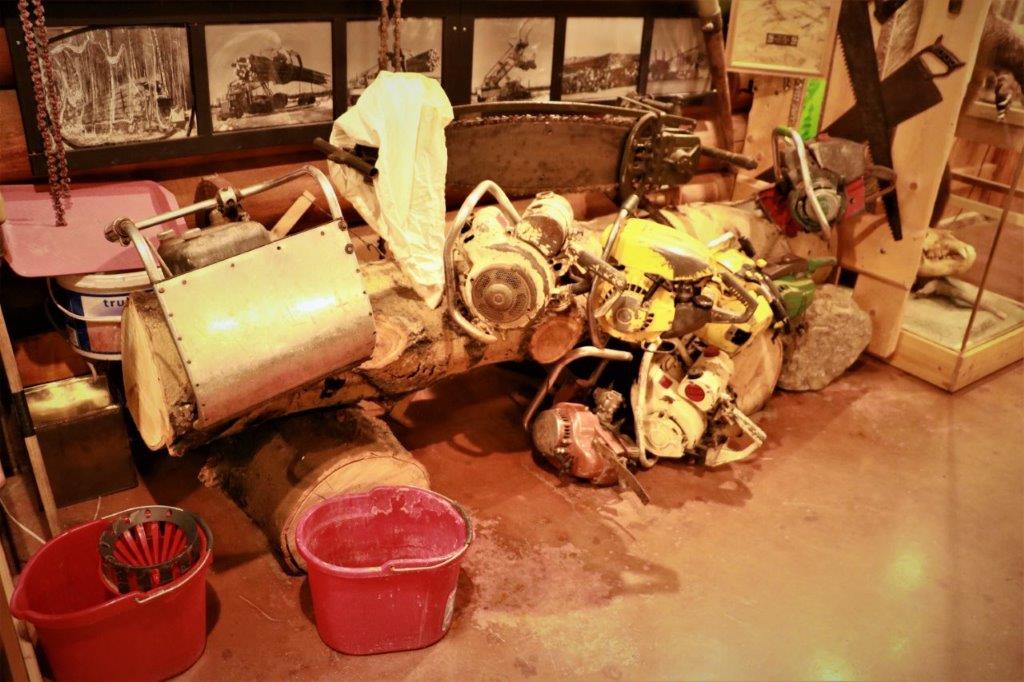
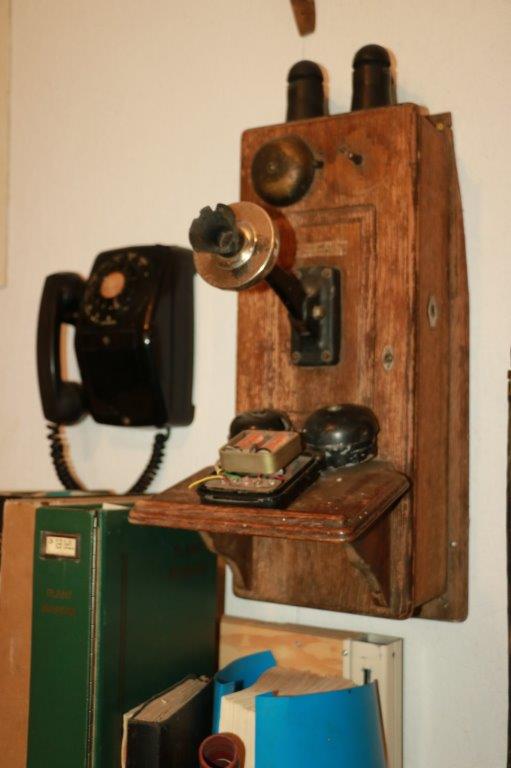
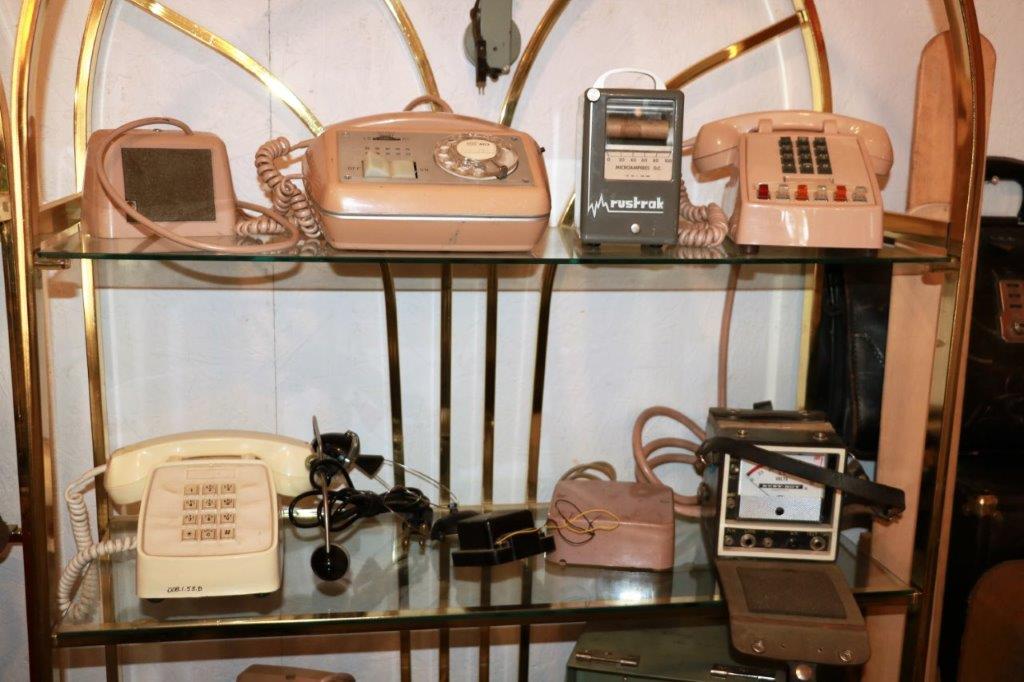
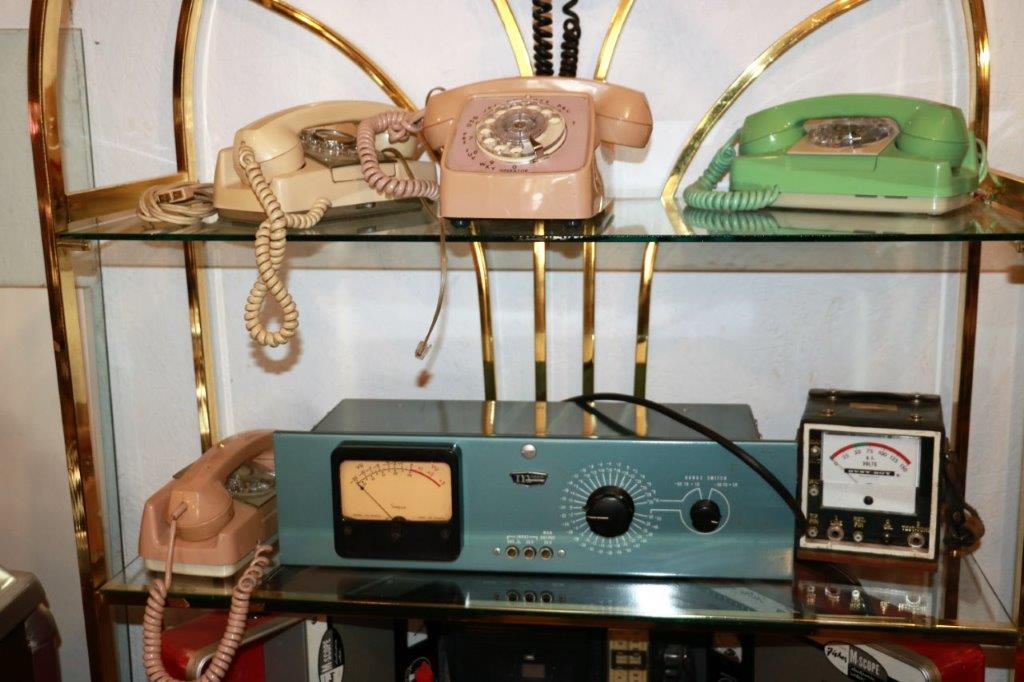
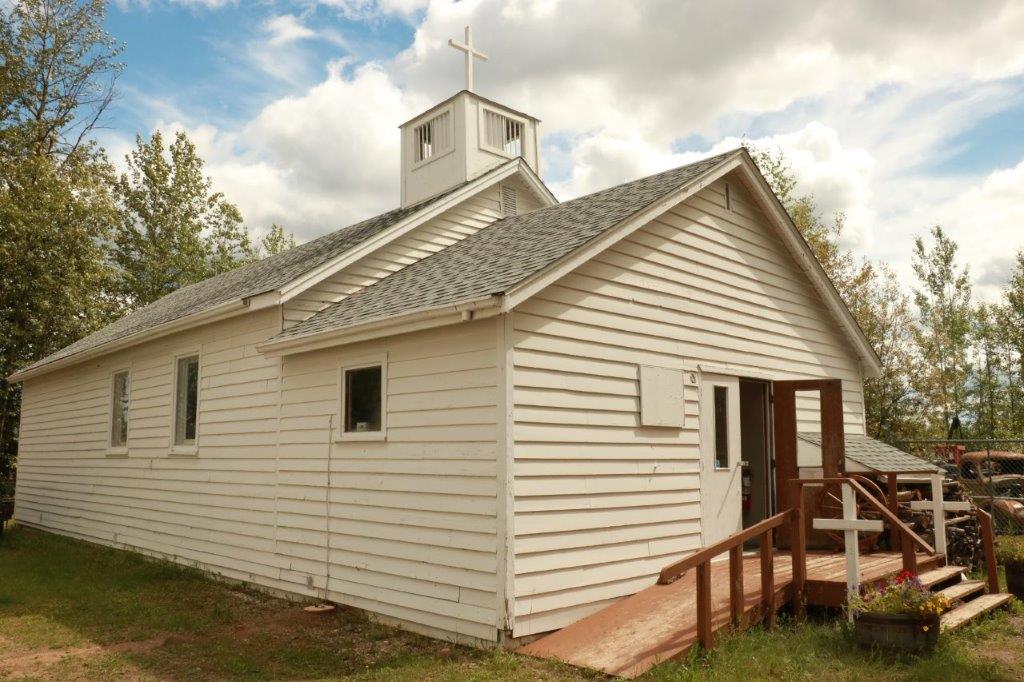
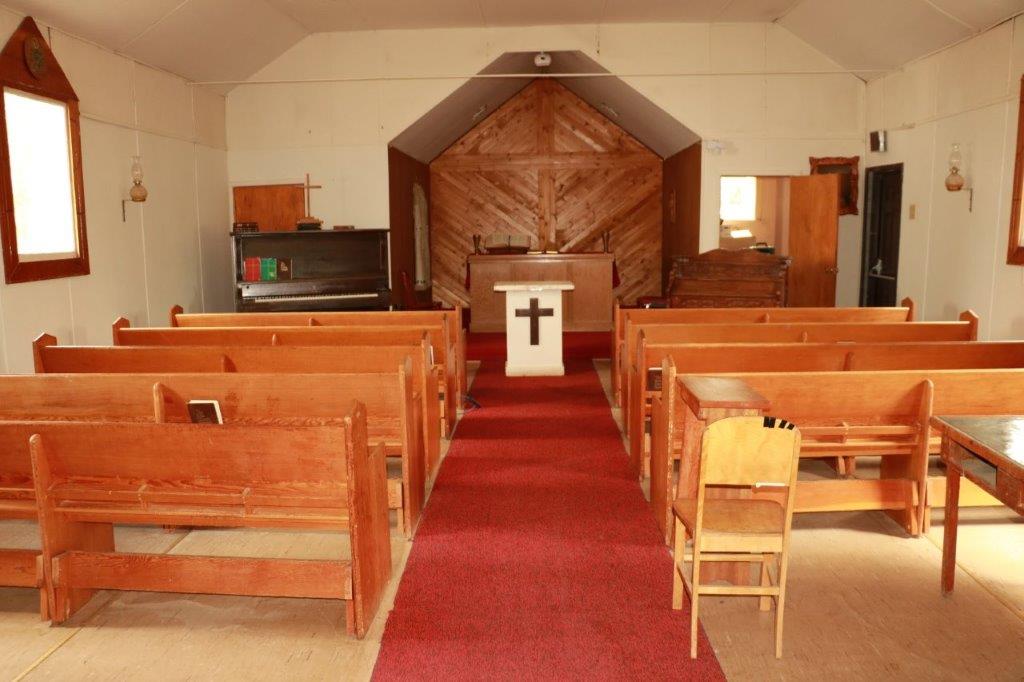
                                                                                     The beautiful Snowy Owl.I had to take these two photos for my brother-in-law who loves to restore old chainsaws.Outside they have seven buildings; three of which were locked. The first was jammed full of old cars and trucks. Oh, the good old days.  It was very exciting back then to have a phone not attached to the wall and in colours other than black! This former Anglican Church was originally an army mess hall. The front entrance was a later addition.

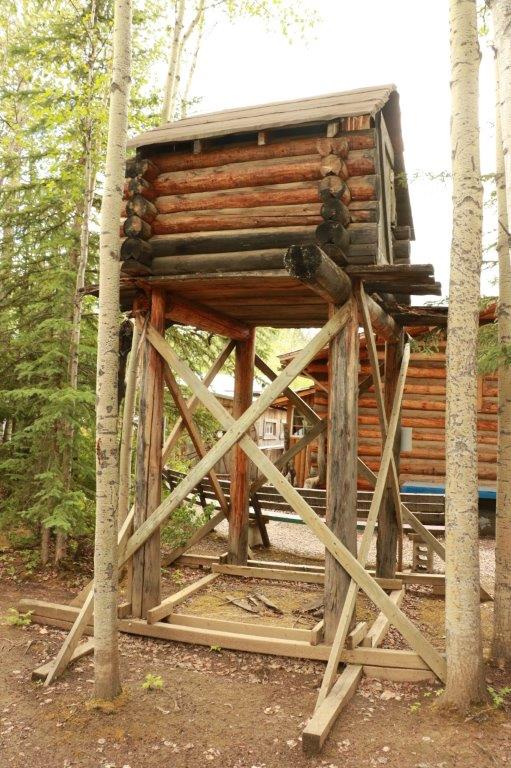
 Where to keep your foodstuffs and meat so the critters don’t eat it all before you can. After our wander around the museum we drove about 10 km out of town to see the shallow Parker Lake (and find a geocache). We drove back to Fort Nelson, did a drive around to see if there was more of a town center beyond the highway frontage (nope), found another cache and headed to our hotel for a couple of hours of laziness before dinner.

Tomorrow we drive 522 km (324 miles) to Watson Lake.  Today turned out to be quite a nice day and I am really hoping tomorrow will be about the same.  The section of the Alaska Highway between Fort Nelson and Watson Lake is supposed to be very scenic.   This area is called the north Rockies.  Here’s hopin’.

2018 June 26 – Fort Simpson, NT to Fort Nelson, BC

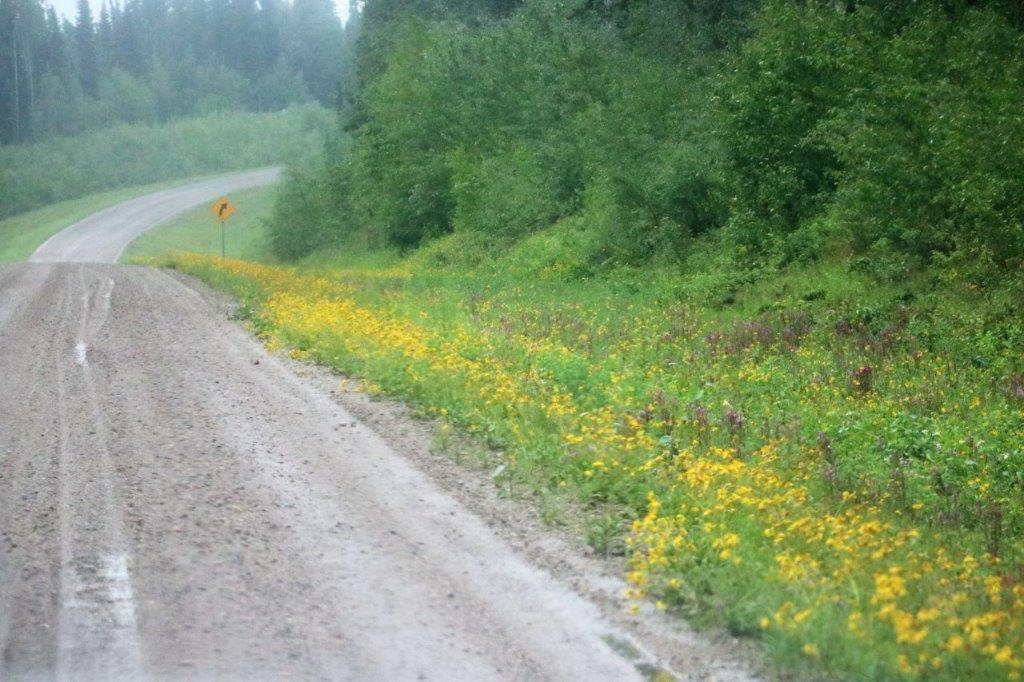
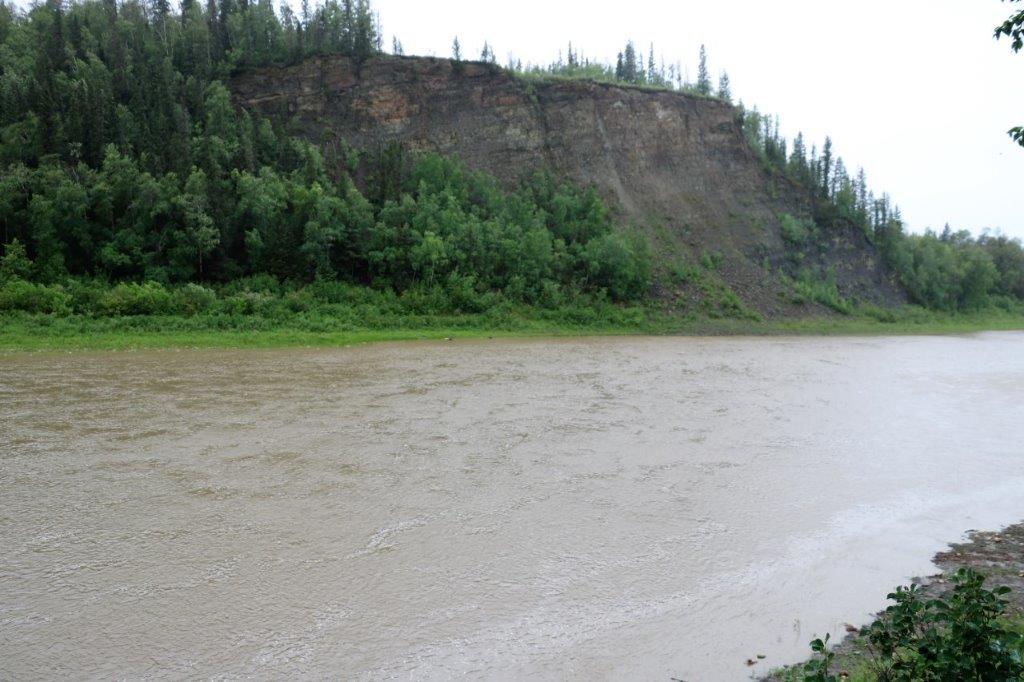
This was the look of our day.  From the time we left Fort Simpson at 8 am this morning until just before we arrived in Fort Nelson.It is 62 kilometers (38 1/2 miles) from Fort Simpson to the junction with Highway 7 south.  From there it is 220 km (137 miles) to Fort Liard and 440 km (273 miles) to Fort Nelson.  We had been told the Liard Highway was hard on vehicles but, even though it was a gravel road, we could do 100 km/hr.  There was the occasional rough spot or pothole, but just like driving the Mackenzie Highway yesterday it was a good road.  When we were told last night at dinner that it was going to rain all day we were very worried we would be driving through mud all day.  Not so.  Yea!  Consequently our day was not nearly as long as we had anticipated.  Even with a lunch stop and drive around Fort Liard and some short stops to find a couple of geocaches we arrived in Fort Nelson at 3:20 pm! – several hours sooner than we expected.  And then we found out we were back on BC time and it was 2:20!   There were no waterfalls or gorges or pretty lakes to see today.  What we did see was bison!  And lots of them!

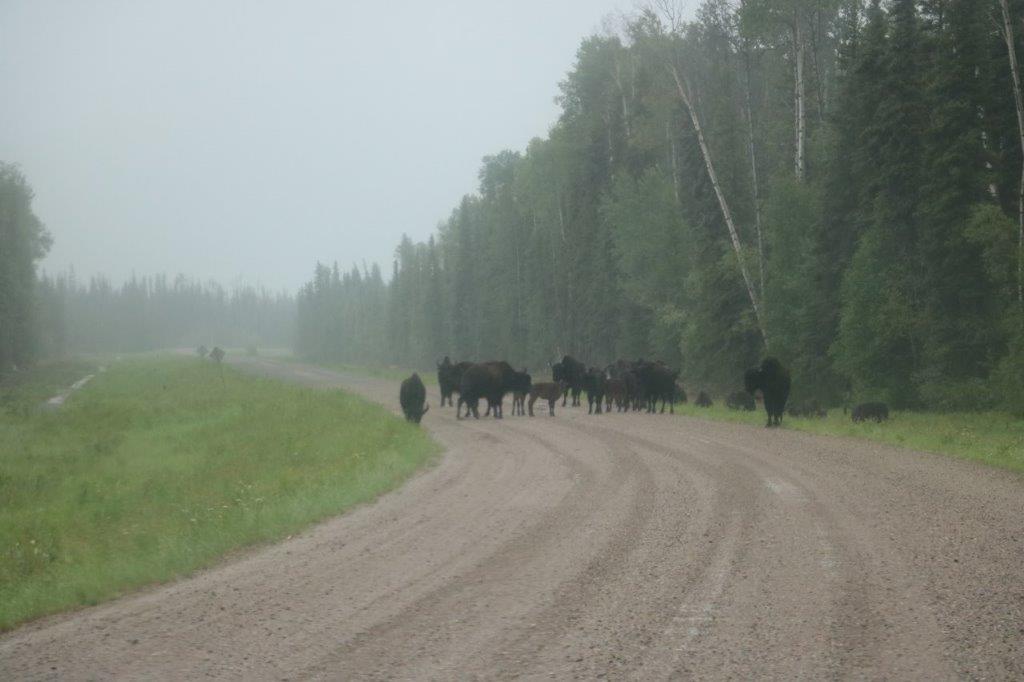
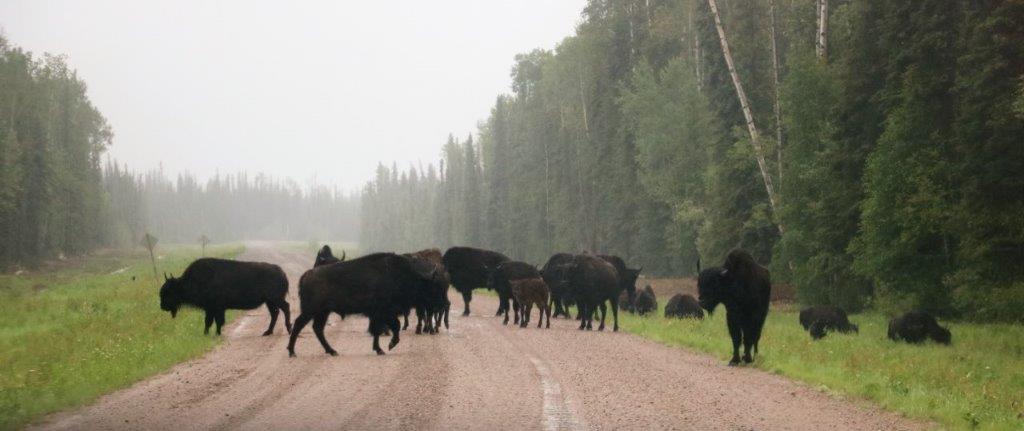
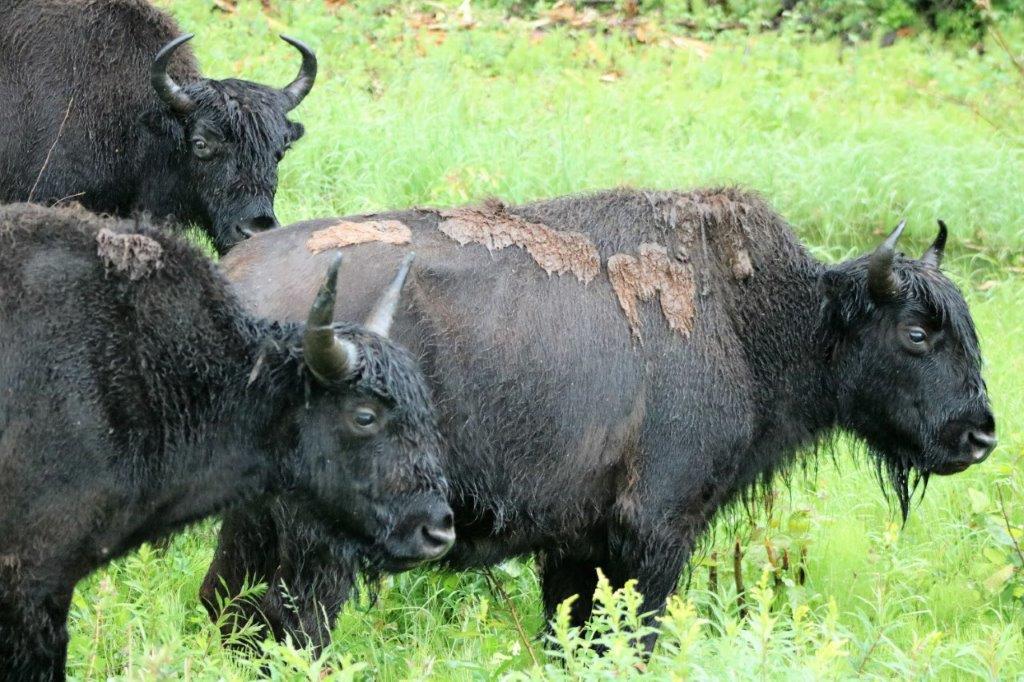
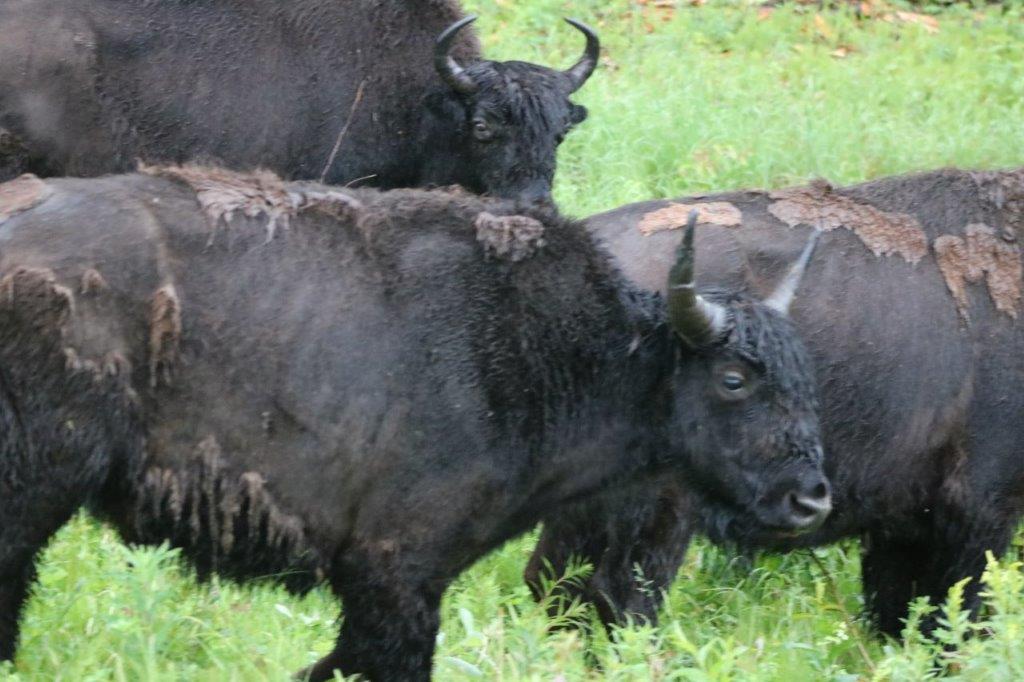
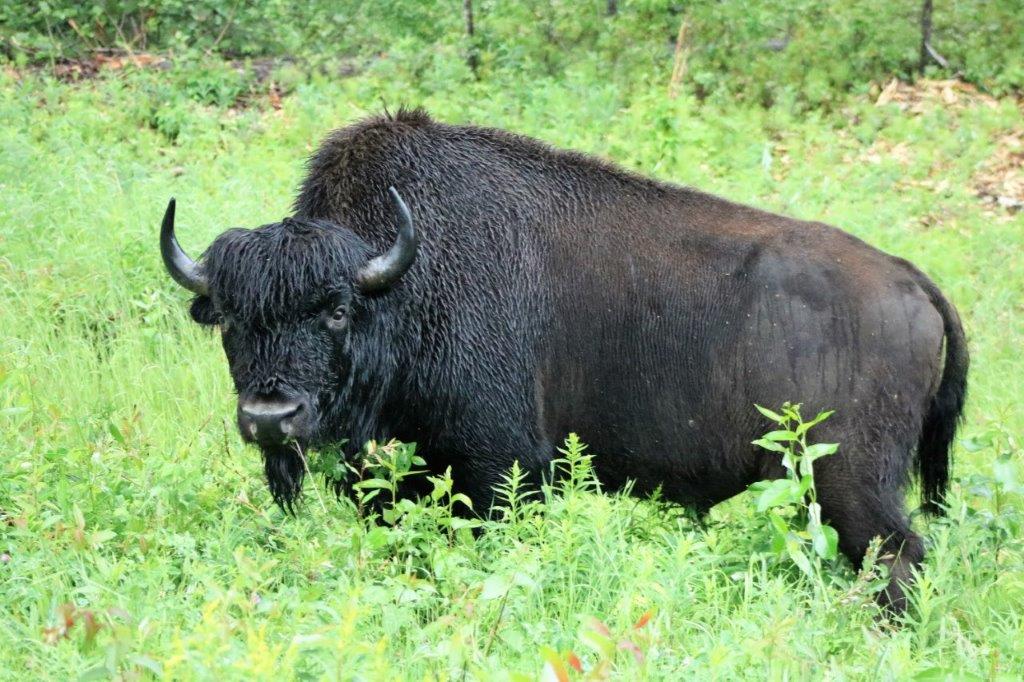
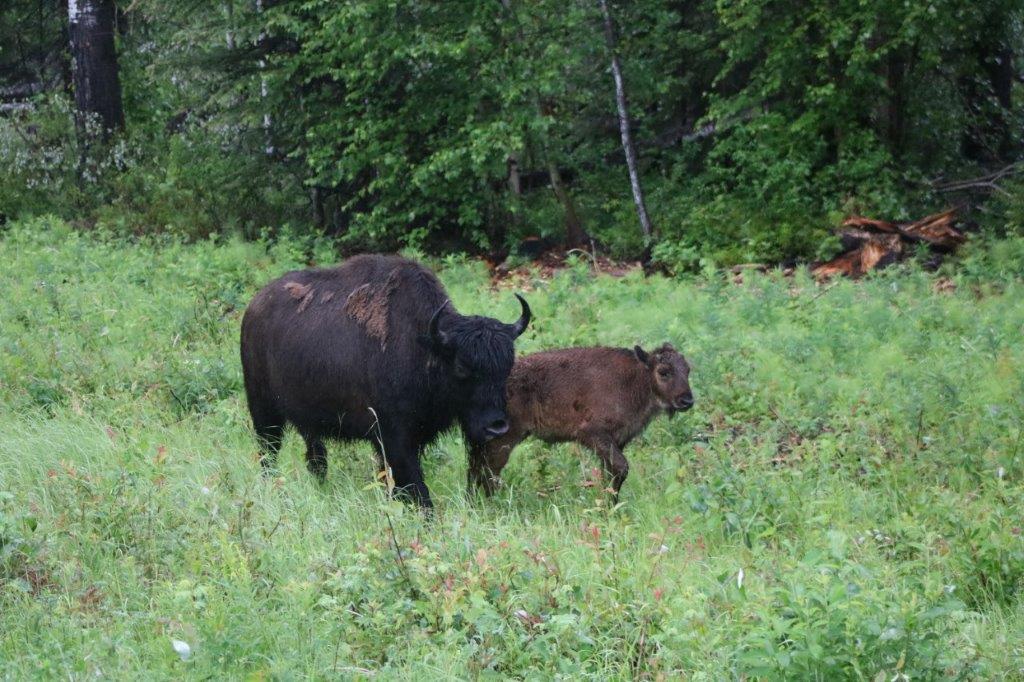
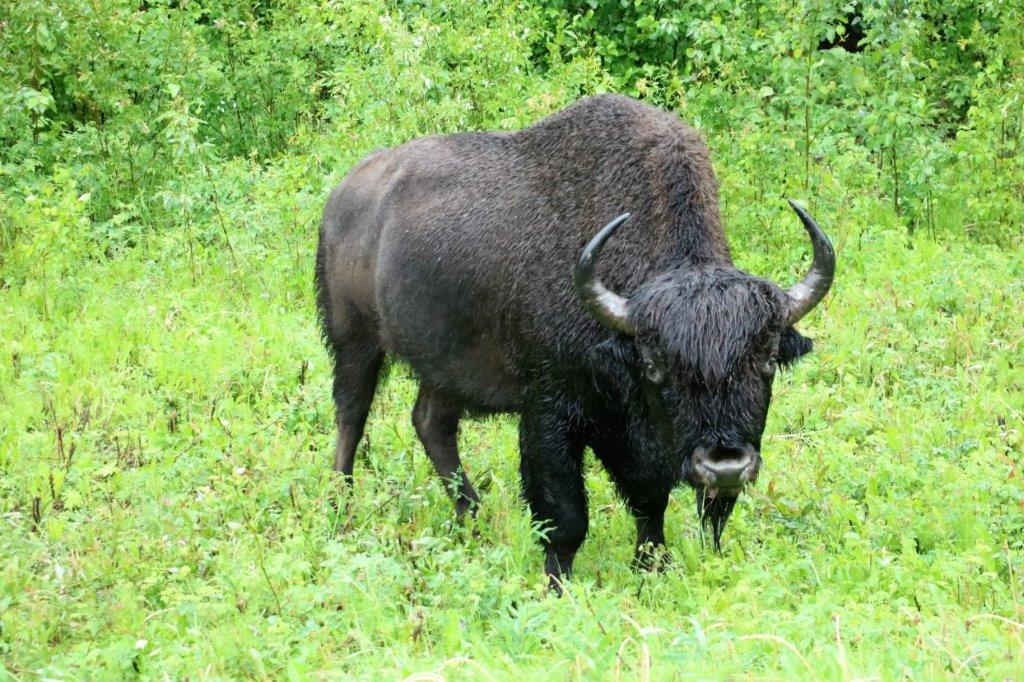
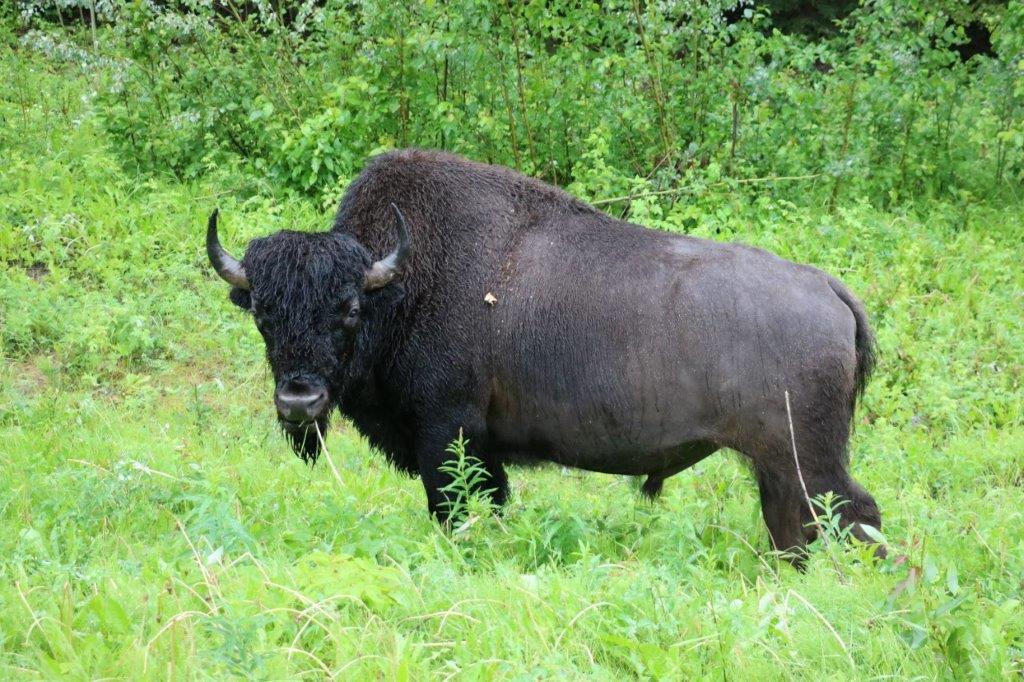
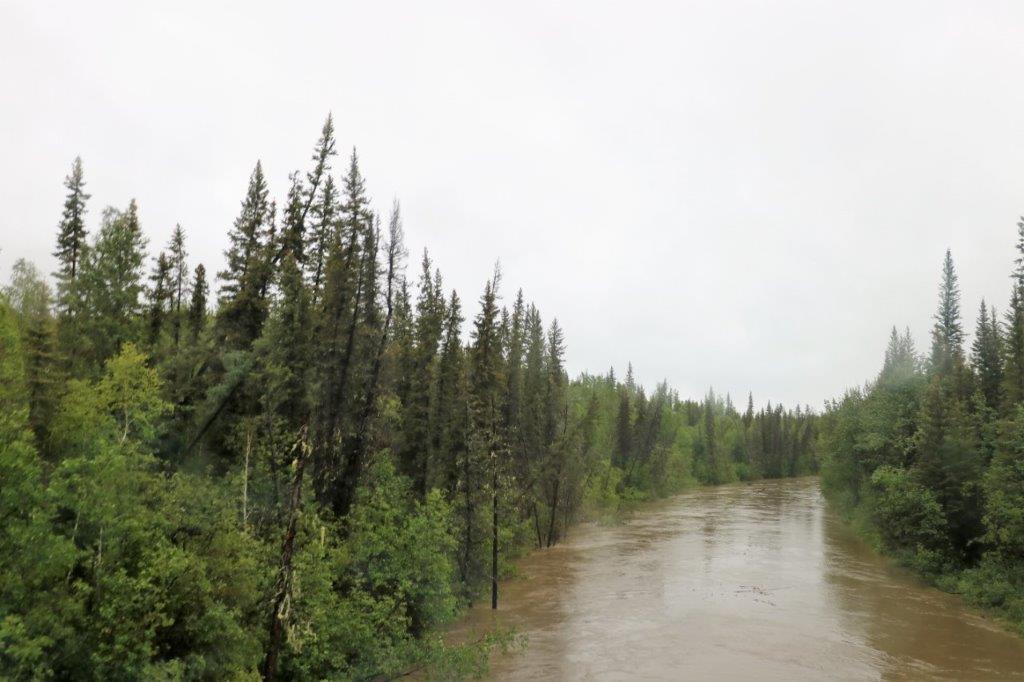
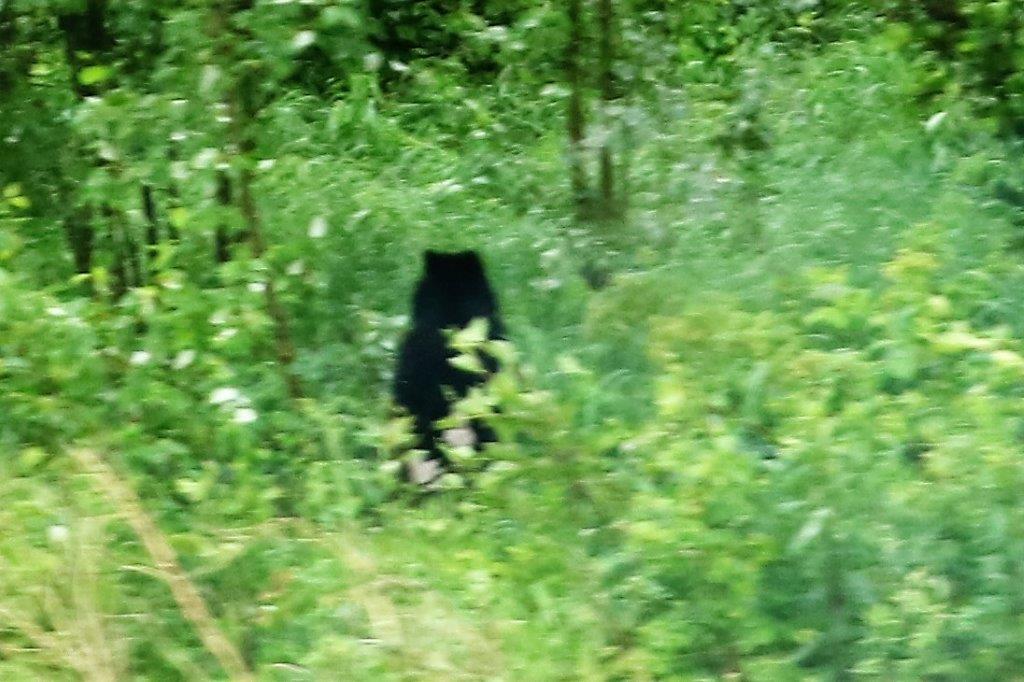
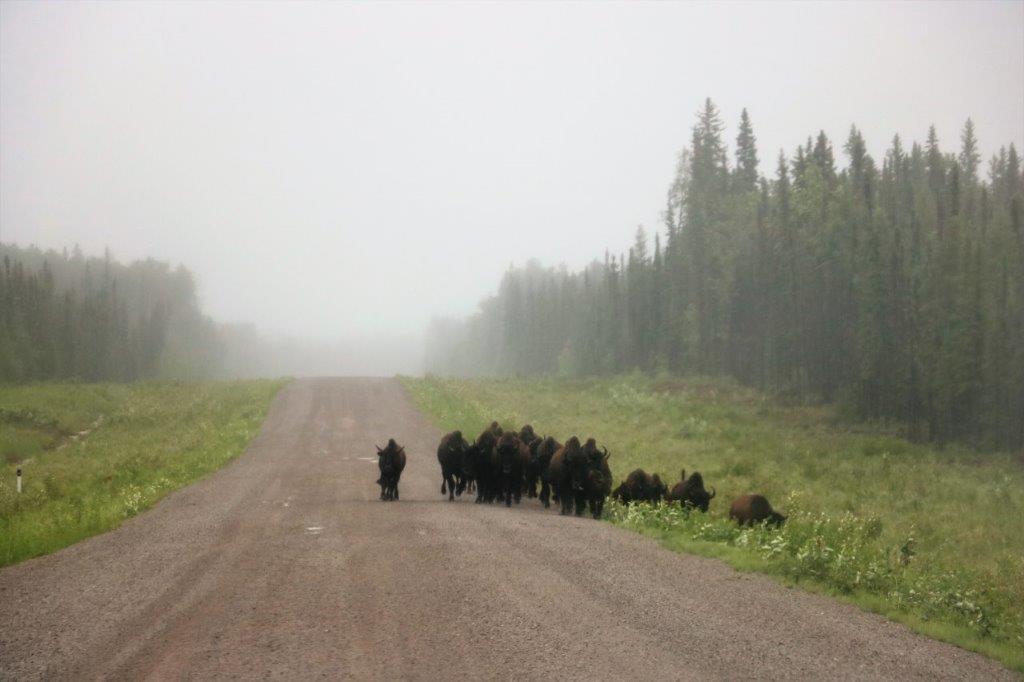
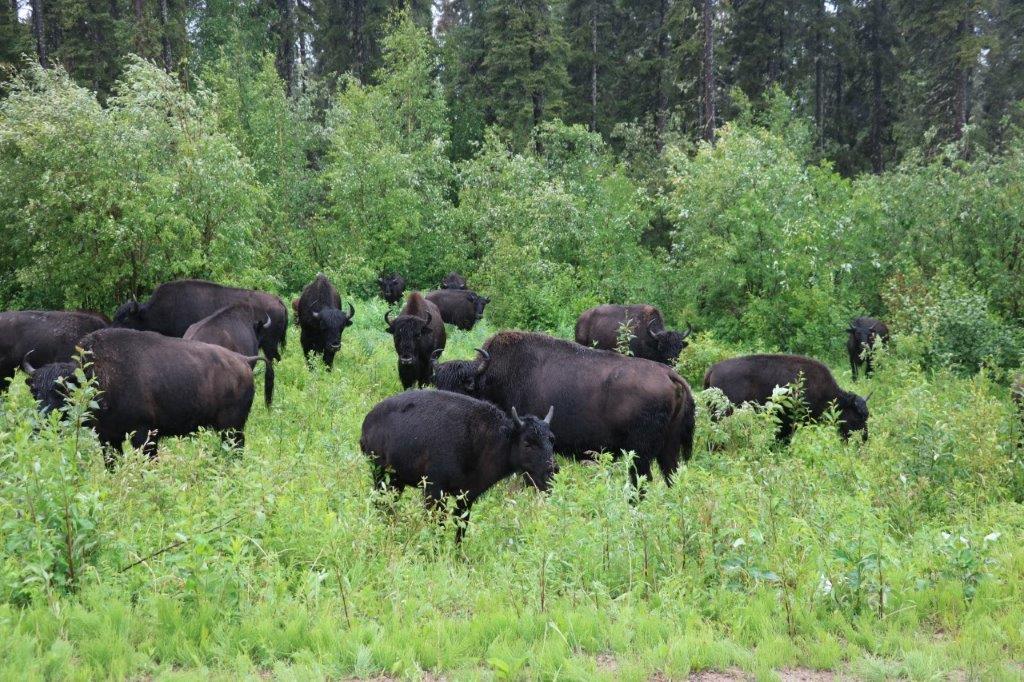
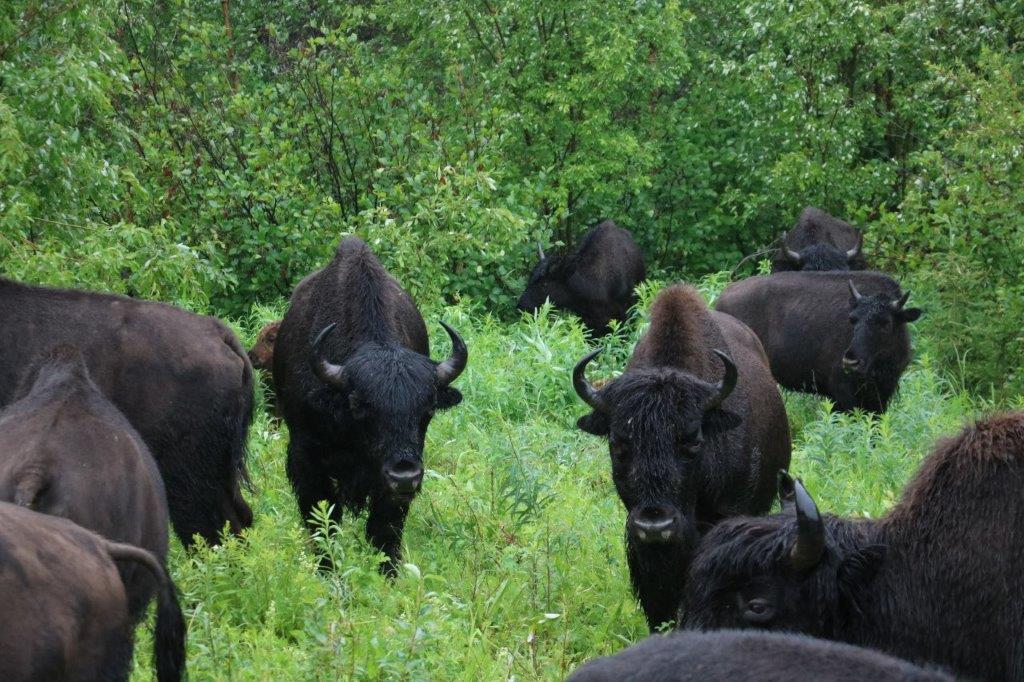
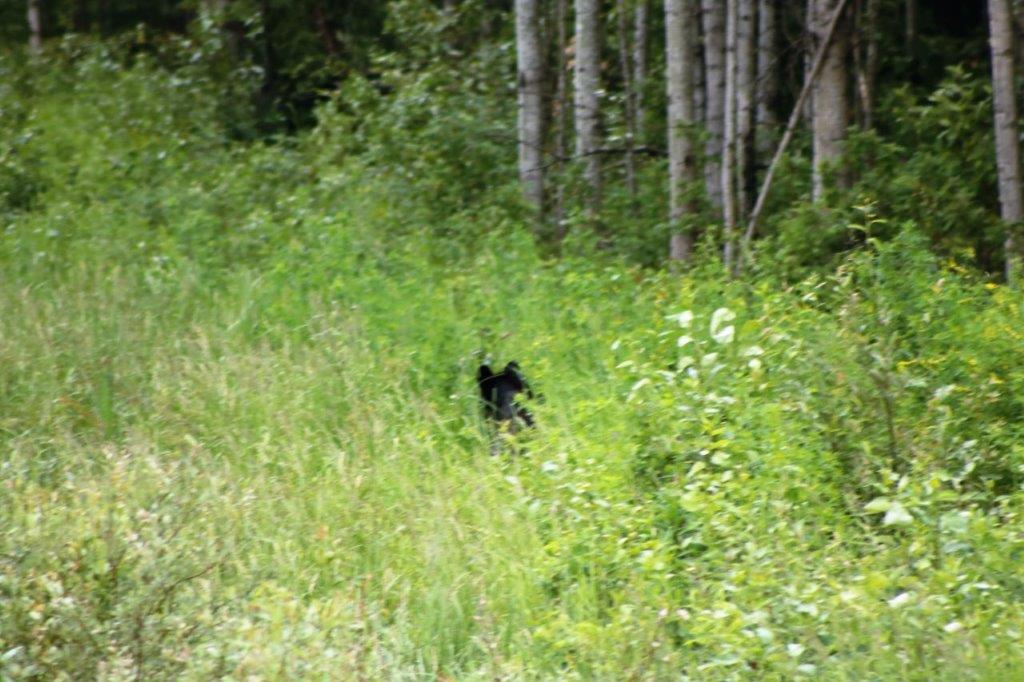
We encountered the first herd at 10:30. They were all standing right in the middle of the road.  We stopped to see if they would move and were changing the camera lenses to our zooms when a car came up behind us, drove past and drove right at the bison.  It slowed down, but didn’t brake.  The bison just ambled out of the way.  Obviously the local folks don’t allow theselves to be slowed down by the big animals.  Unfortunately, the scattering of the herd almost ruined our chance of some good close-up photos.  Fortunately, the bison are so accustomed to vehicles they didn’t go very far. The bison are just finishing shedding their winter coats.  They won’t grow another one for two months. The bison we saw today were very dark, almost black, and despite the fact they were wet, they were darker than the ones we had seen previously.I saw about five calves in the group.Not long after we passed the herd we saw two more bison. With all the rain in the area lately the rivers (and there are many of them) are all flowing very high.  We even passed a couple of men from the highways department investigating a large pond of water that had accumulated beside the road despite a long, deep ditch that had been dug to try move it along.  Then we saw four more bison, one of which had a broken horn.We also saw another bear cub.  It was sitting beside the road as we drove up and by the time we realized it was a cub it was hightailing into the bushes.  The black blob is all I managed to catch with the camera.Twenty km before the turnoff to Fort Liard we encountered our second herd of bison.  With the rain coming down so hard and the dark coats on the bison we couldn’t tell whether they were going ahead of us down the road or coming toward us.  It didn’t take long to realize they were running toward our truck.  Thankfully they veered off onto the grass verge as they went by.  I got a good video of them too.There is one geocache in Fort Simpson and one in Fort Liard.  We didn’t find either of them since both were hidden in the bush – the one at Fort Liard was also on top of a steep hill – and everything was soaking wet and it was still raining.  We parked at the bottom of the hill in Ft. Liard, beside the Liard River, and had some lunch, then headed back to the main highway and carried on. The Liard Highway is not a heavily traveled road.  I kept track of the vehicles that either passed us or that we met and over the entire day before we reached the Alaska Highway 25 km out of Fort Nelson (about 400 km/248 miles.) we saw exactly 12 cars and trucks.  The gravel ended about 10 km from Fort Liard and we were back on pavement the rest of the way.

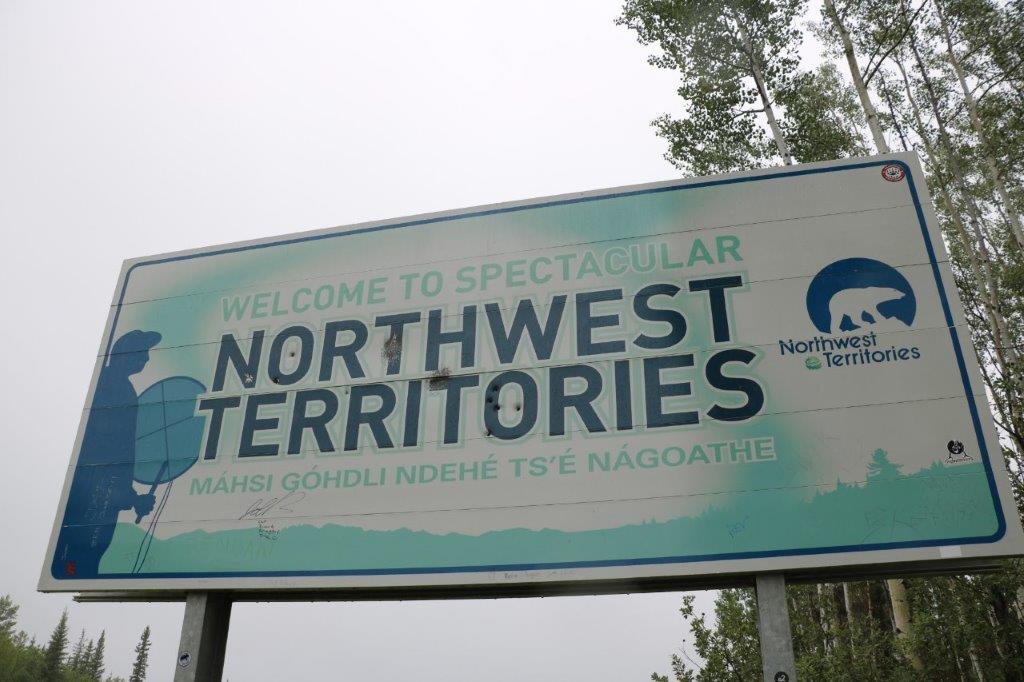
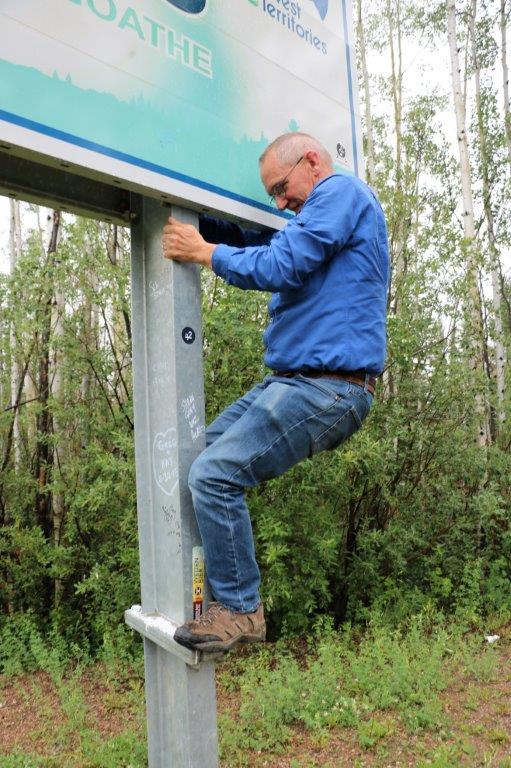
We passed by far the largest herd of bison a few km south of Fort Liard.                This photos shows about 1/4 of the herd. We crossed the Northwest Territories/BC border about 1 o’clock, and stopped to find a geocache that was hidden in the “Welcome to the Northwest Territories” sign.  John had to do a bit of fancy climbing to get it.

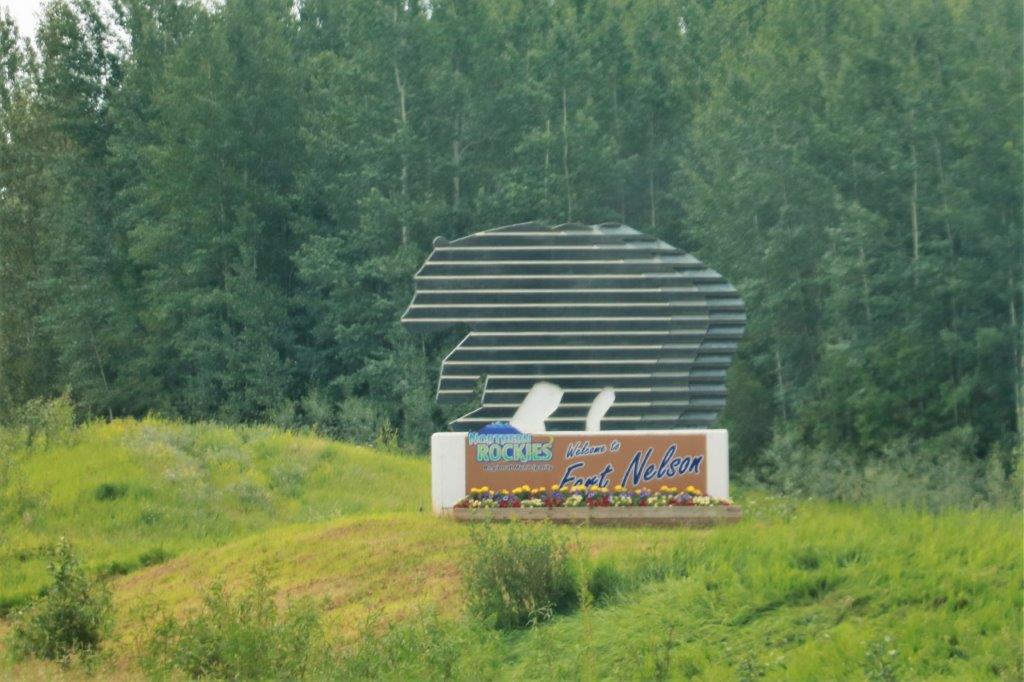
About an hour out of Fort Nelson we got our first glimpse of blue sky.Sadly, it didn’t last.  We had light to heavy rain off and on the rest of the afternoon and into the early evening.  It is supposed to rain again tomorrow.  We are staying in Fort Nelson two nights.  We booked two nights to have a bit of down time after what we expected to be two very long driving days.  They both turned out shorter than expected but we aren’t sad to be having a day ‘off.’And….since we arrived in Fort Nelson so early we were able to find the Service BC office and John got a new driver’s license!  Also we were able to find a Bell store and get our new phones working.  A good day all around, I would say.

After we concluded our business we went looking for the hotel. We had seen a sign as we drove in to Fort Nelson so we headed back to the edge of town looking for it.  No luck. (Turned out to just be an advertising sign and the hotel was back 3 km.)  But just as John turned the truck around to head back into town a black bear stood up in the bushes beside the road.  John stopped the truck and the bear promptly went back onto all fours again and began to industriously eat something in the bushes. We waited for about 20 minutes for him to move into the open but no luck.  So my second photo of a bear today is very similar to my first one.  Darn bears just won’t co-operate!

2018 June 25 – Yellowknife to Fort Simpson, NT

We had a long driving day ahead of us today so we got up at 7 and were on the road leaving Yellowknife a little before 8:30.  The first 345 km (215 miles) was the same route we travelled to get to YK.  There is only one long road in and out of Yellowknife.  The airport is very busy though. They have planes coming in from all over the place all day long.

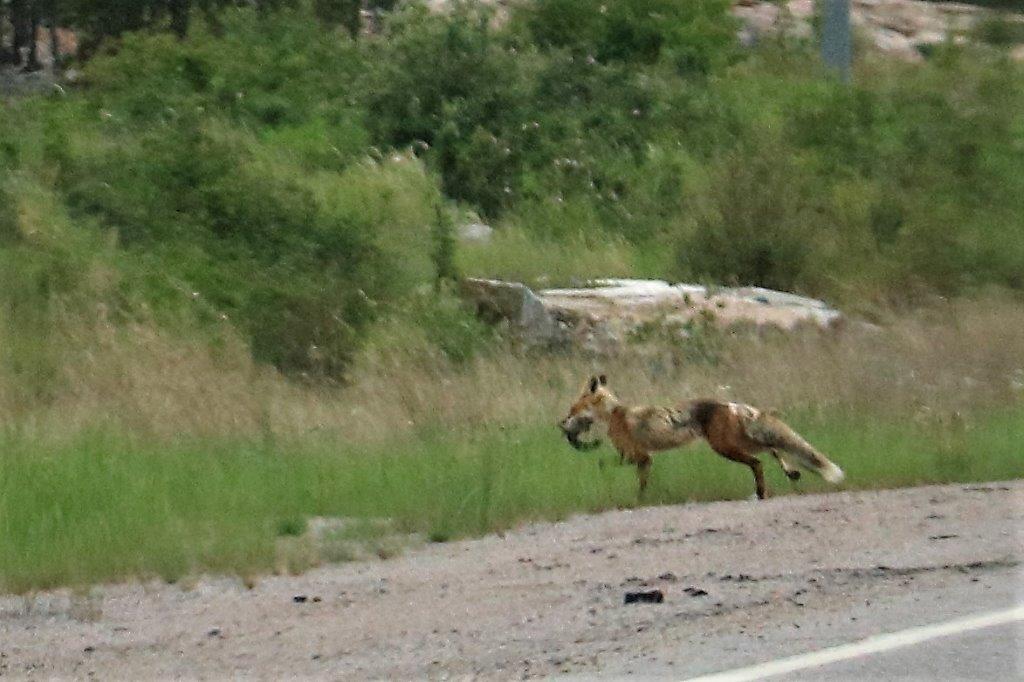
As we were leaving the city limits a coyote with his breakfast ran across the road.  (The photo isn’t really sharp.  It is really cropped as he was quite away ahead.)We stopped at Northwest Arm Park to find a geocache.  A truck and trailer pulled in a few minutes later and drove off in the direction we were just about to go to find the cache.  A lady got out and started walking into the bush. As John got out of the truck she called to him that she was just going to look for a geocache.  We told her we were on the same quest so off we went 120m into mosquito infested bush to make the find.  She has been caching for 8 years and is 11 short of finding 1500 caches.  Her husband doesn’t geocache, He just waits while she goes hunting, or puts on some tea.  It was fun to meet someone who enjoys the same hobby.

      Mosquito Creek

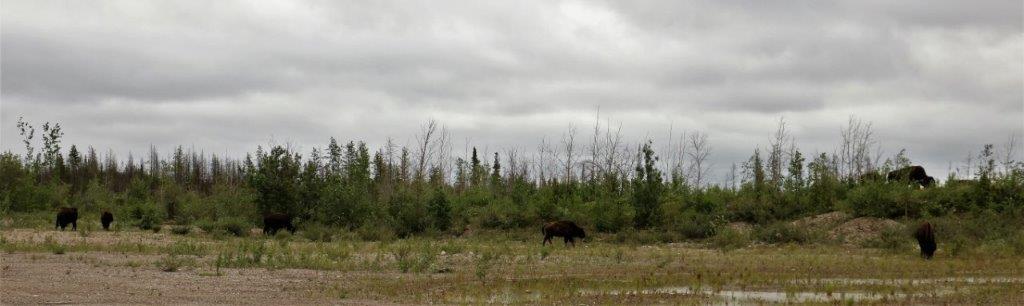
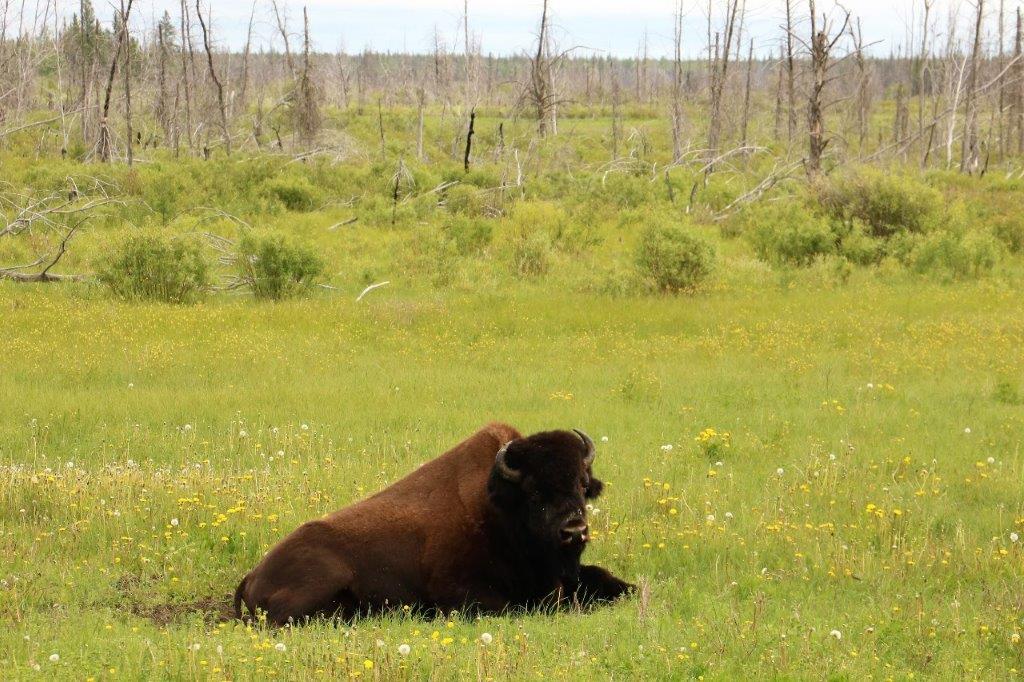
This stretch of road borders the Bison Sanctuary and on our way back we saw lots of the critters.  First was a small herd of cows and half-grown calves. Then the big fellow we passed on the way into Yellowknife walked up the side of the road past the car. Again.Next came the contented fellow lying in the grass and dandelions.Finally, this great big dude was mowing through the grass at a steady pace. At the end of Highway 3 we turned left onto Highway 1 (the Mackenzie Highway) toward Fort Simpson (240 km or 150 miles) where we are spending the night.

This area too, is home to some bison, although we didn’t see any of them.

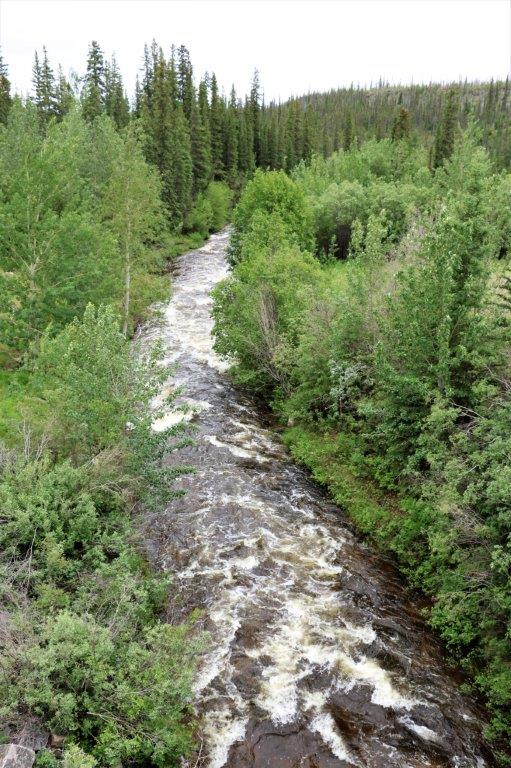
We were blessed with pavement for a longer distance than we had expected but eventually we did get onto the gravel road.  The first few km were recently graded and even the rest of the road (except for a few pot holes now and then) was a smoother road than Highway 3 going to Yellowknife. That road is a roller coaster of frost heaves and dips.  We made good time on the smooth gravel all day.We stopped at Axe Handle Creek to find a cache hidden in guard rail. Upstream of the bridge.                      And downstream of the bridge.

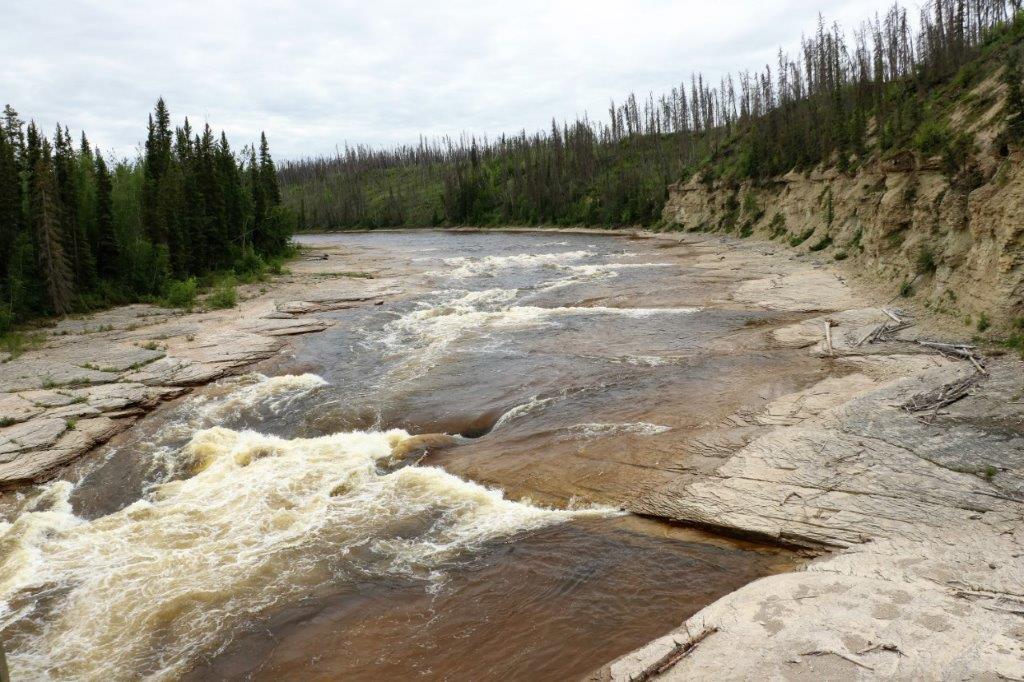
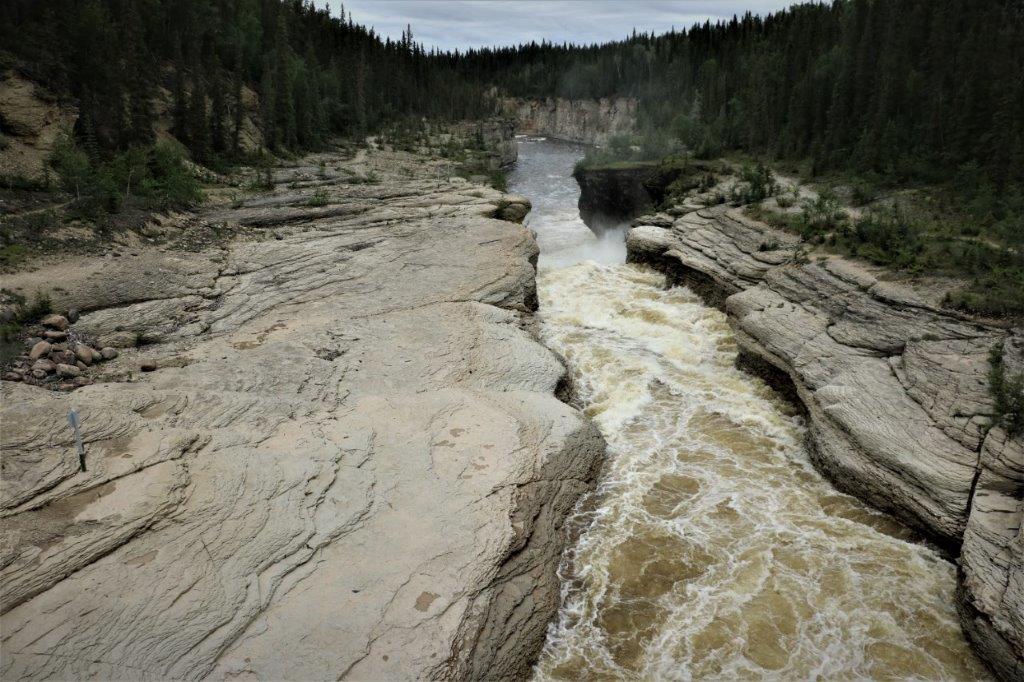
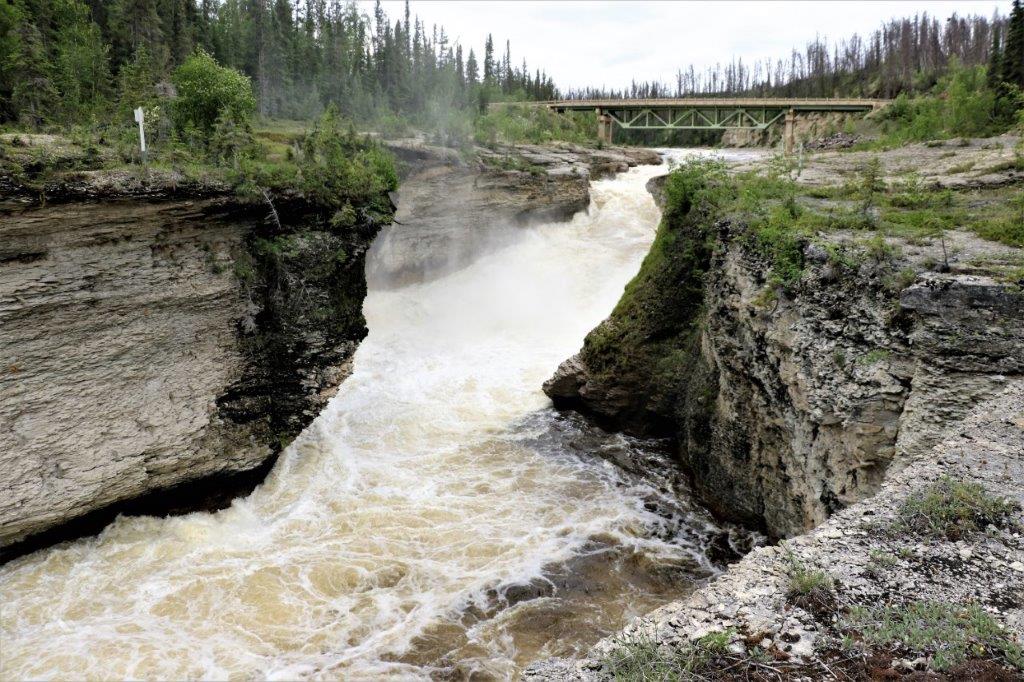
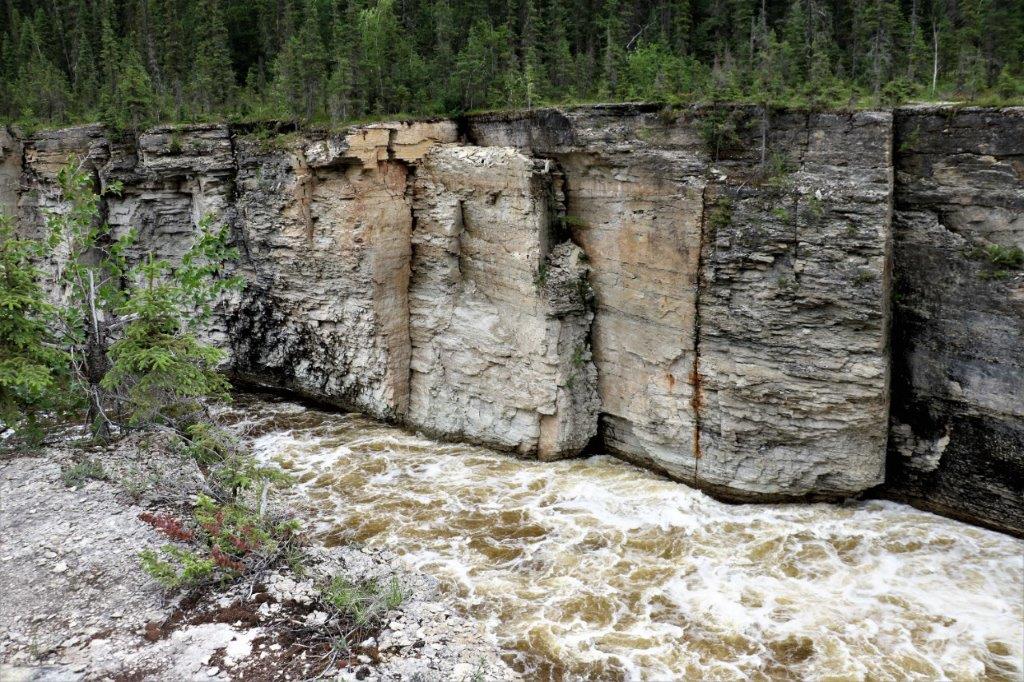
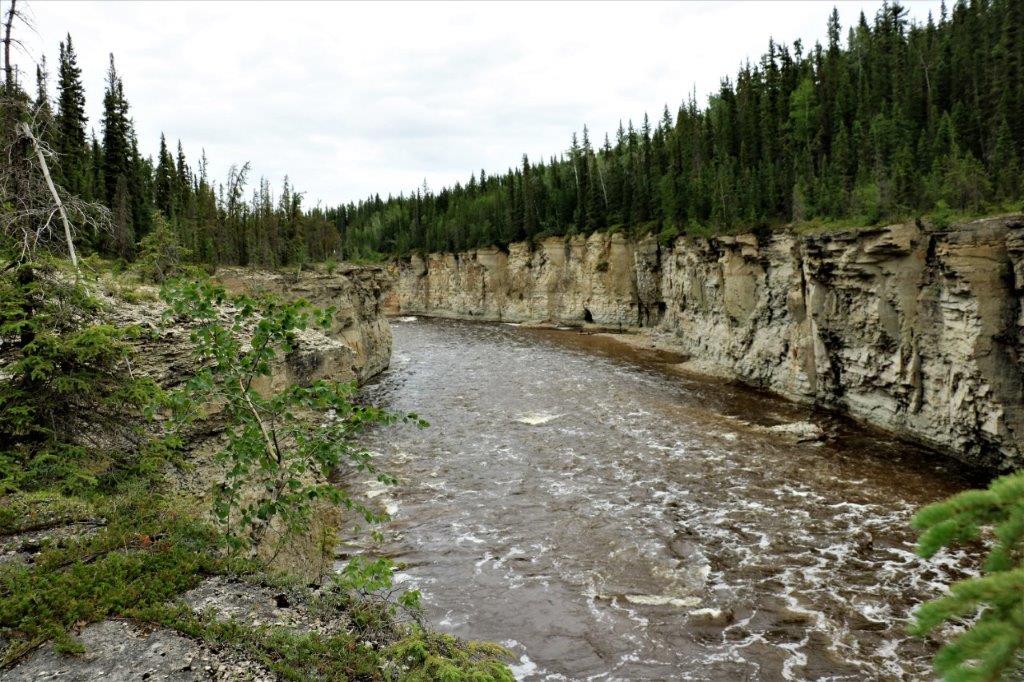
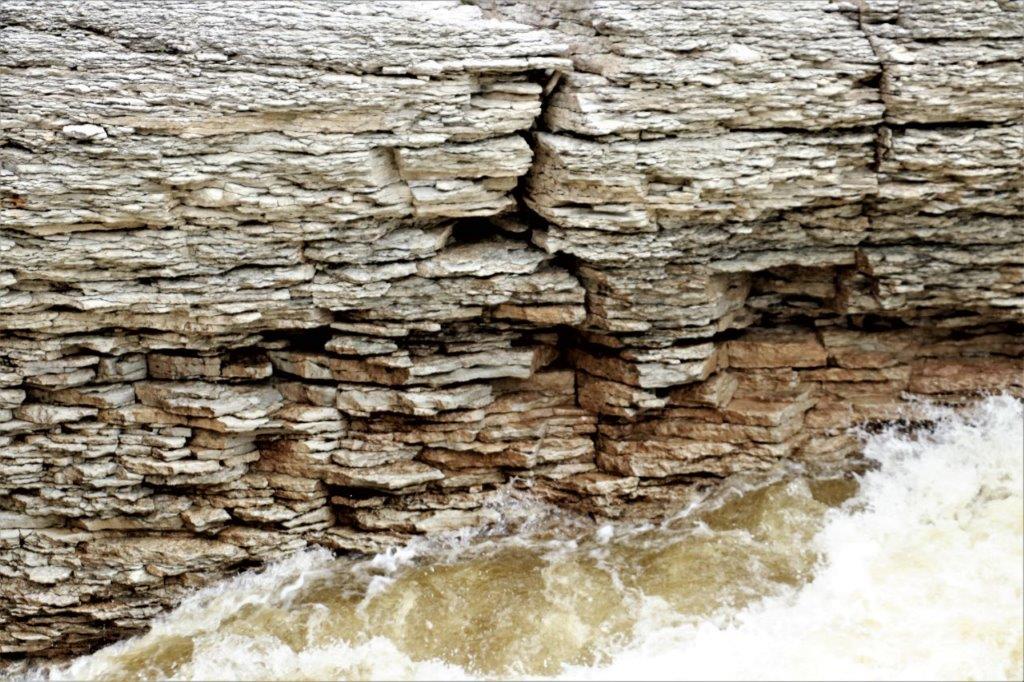
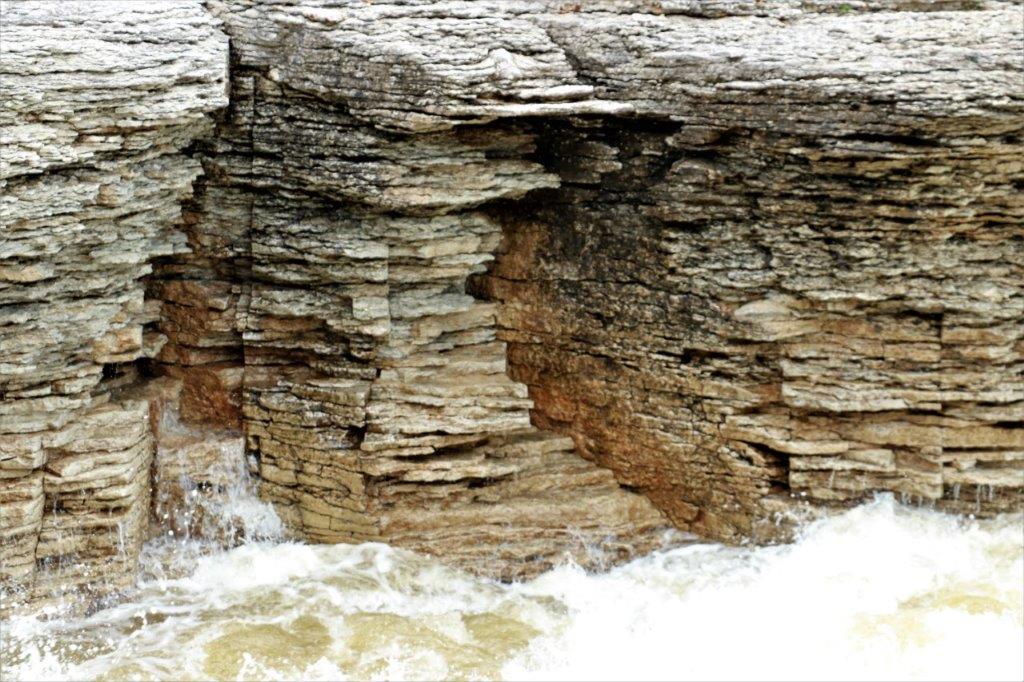
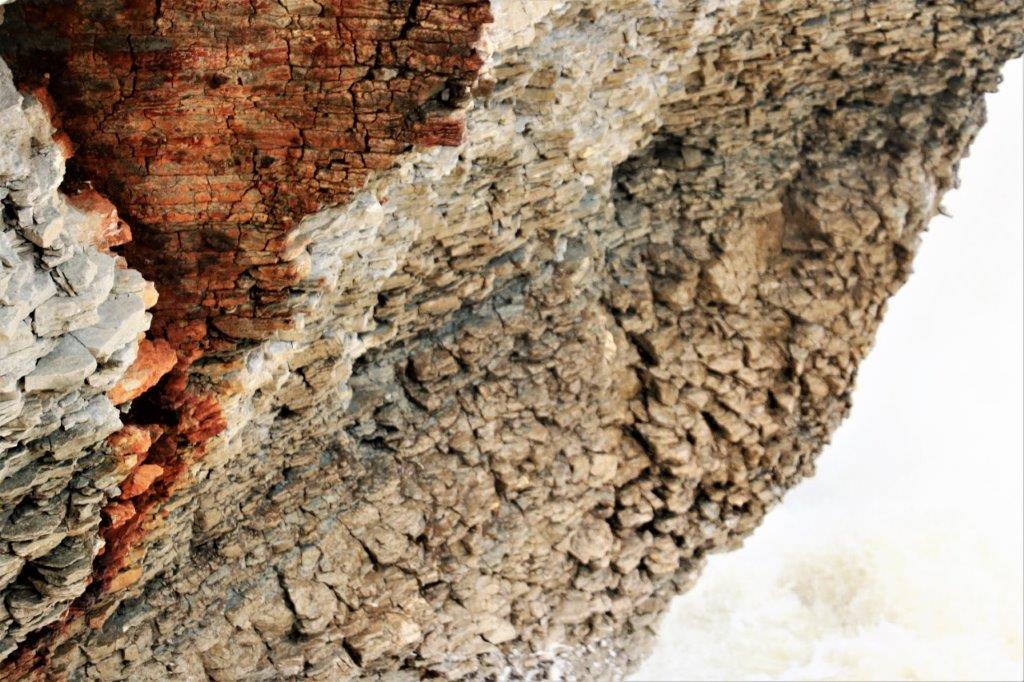
There were four geocaches close together near Sambaa Deh Falls Day-Use Park.  The first was at the end of a .5 km (about a third of a mile) trail through the bush which took us too a lookout over Coral Falls. Back on the road, across a bridge over the Trout River we walked over to the Sambaa Deh Falls to find an earth cache.  (We skipped the other two caches, both of which were quite a ways further away and one of them you need to rappel down a rope to find.  Not!)           Upstream of the bridge above and downstream below. I think there was more white water around the corner too but it was posted with a sign saying Unstable Cliff so we did not go further. The layers of rock on the cliff sides of the gorge were really neat.  You would think you could just slice them apart and make slates for your roof.

We were toodling along about 15 km from Fort Simpson, came around a corner and there was a ferry.  There are quite a few ferries that provide road access in the summer to communities across the many rivers in the Northwest Territories.  In the winter the rivers freeze and they make ice roads.  There is no ferry schedule, it just picks up any cars that come along and takes them across the Liard River. We pulled into the community of Fort Simpson at 6:15, so with our various stops we were on the road almost 12 hours.  Tomorrow is going to be longer.  And it is going to rain. All day!  We are on a gravel road all day tomorrow and it will be a muddy mess in the rain.  Joy! Well, we take these road trips for the fun and adventure of seeing new places.  Tomorrow should fall into the adventure category.

2018 June 24 – Yellowknife, NT

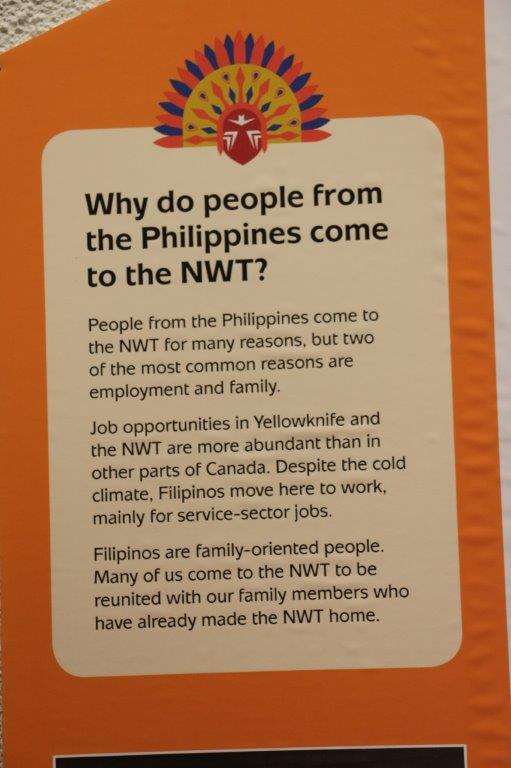
It was interesting this morning to talk a bit with the lady in charge of the breakfast at the hotel.  She is a young woman from the Philippines.  How weird after we learned just yesterday that there was a large Filippino population in Yellowknife.  She has been here 5 years and arrived in February (Yikes!  Temperature shock!) directly from the Philippines.  There are agents in her country that find job placements for people wanting to come to Canada.  And, if you will live and work in the north for a minimum of 6 months you can fast track to a Canadian Permanent Residence status.  She works two jobs and had to spend about $10,000 to come here.  She has only been back home once since she arrived but hopes to go again in two years.

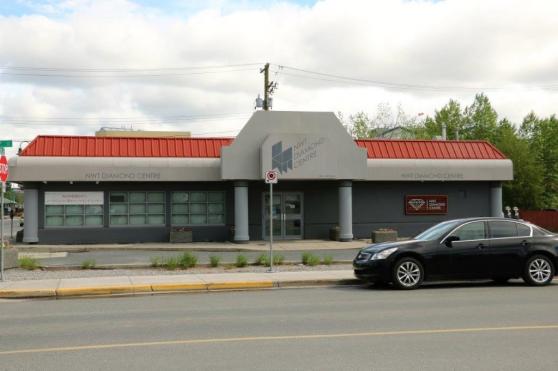
We were feeling a bit lazy so we lingered in our room awhile after breakfast and didn’t leave the hotel until almost 11:30.  The web page for the Diamond Center said it was open today from 10-6.  They lied.  When we drove to the location it was closed.We had no real plans for the day except to tour the Legislative Assembly Building at 1:30 so we decided to wander around downtown and find a few geocaches.
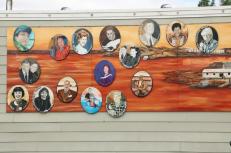
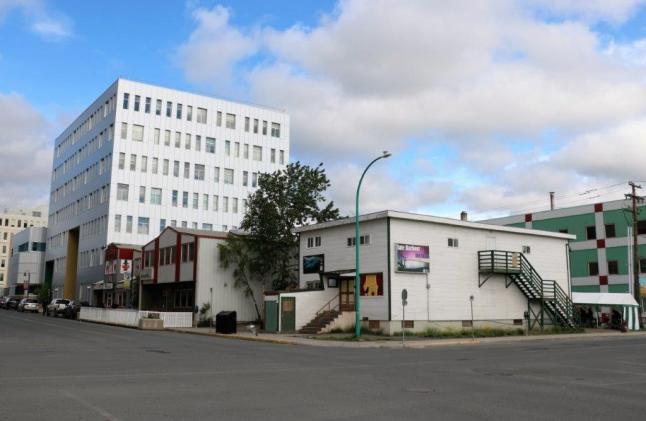
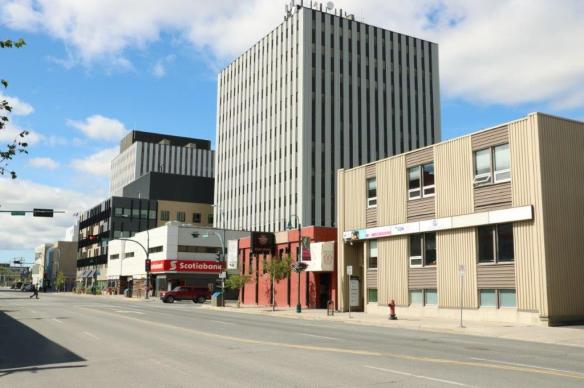
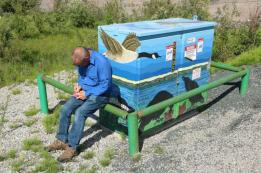
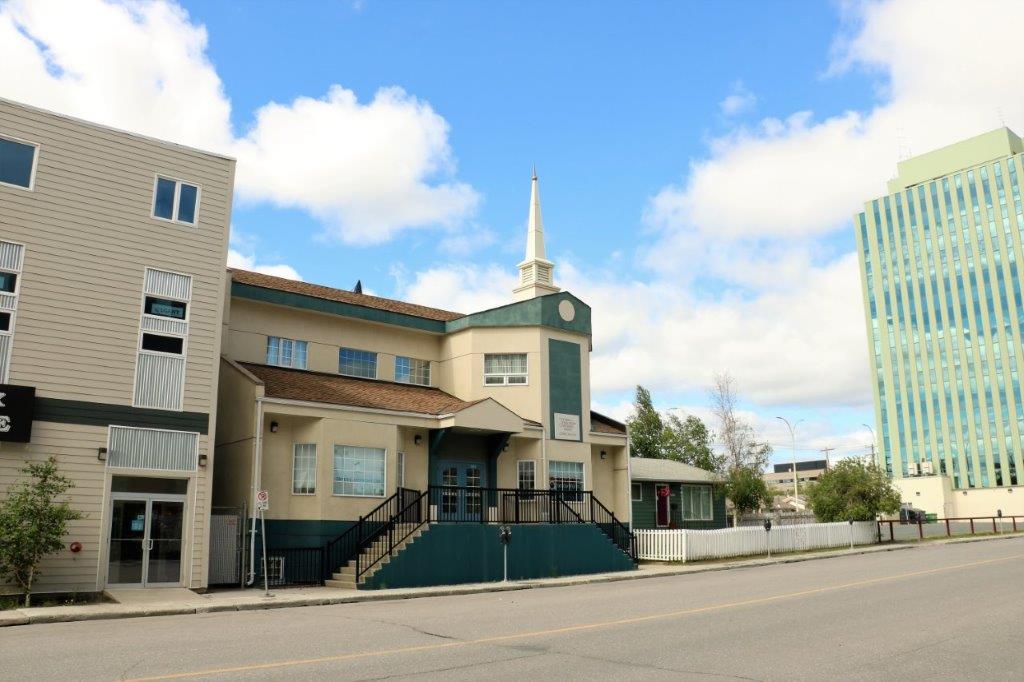
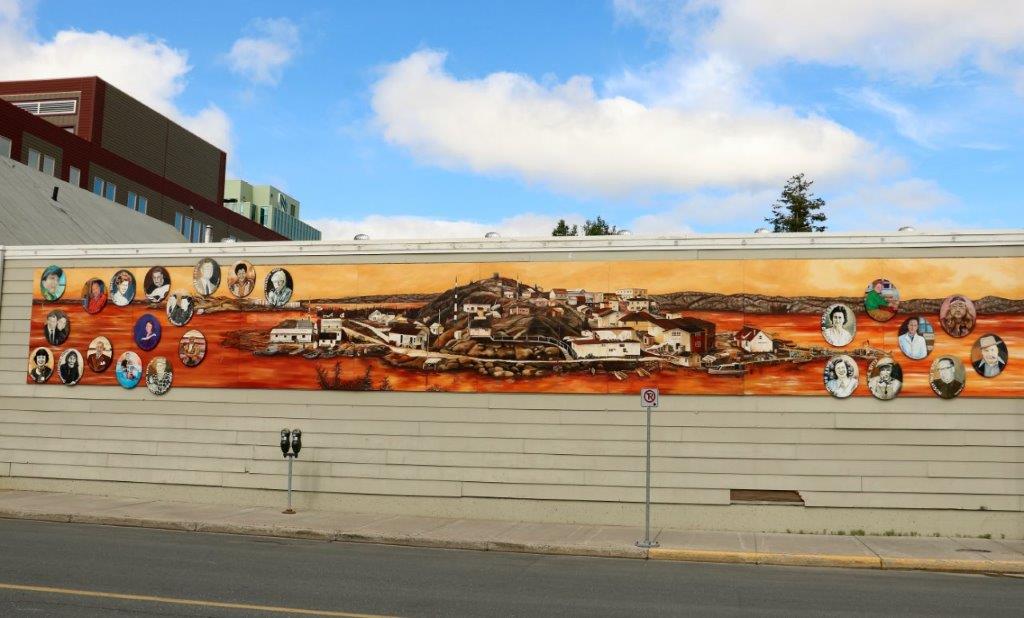
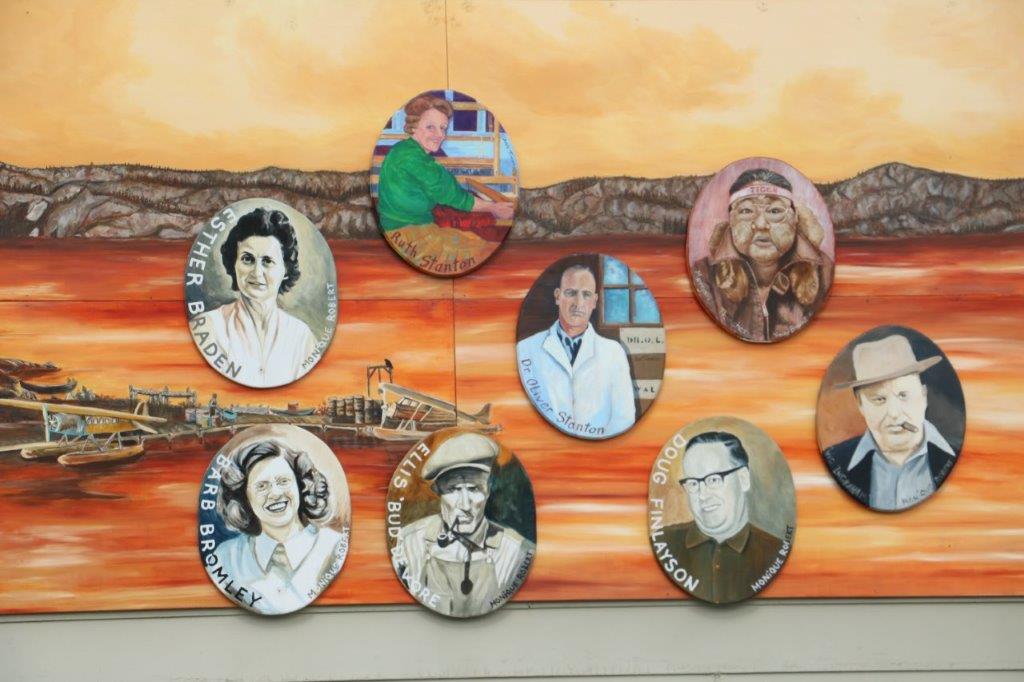
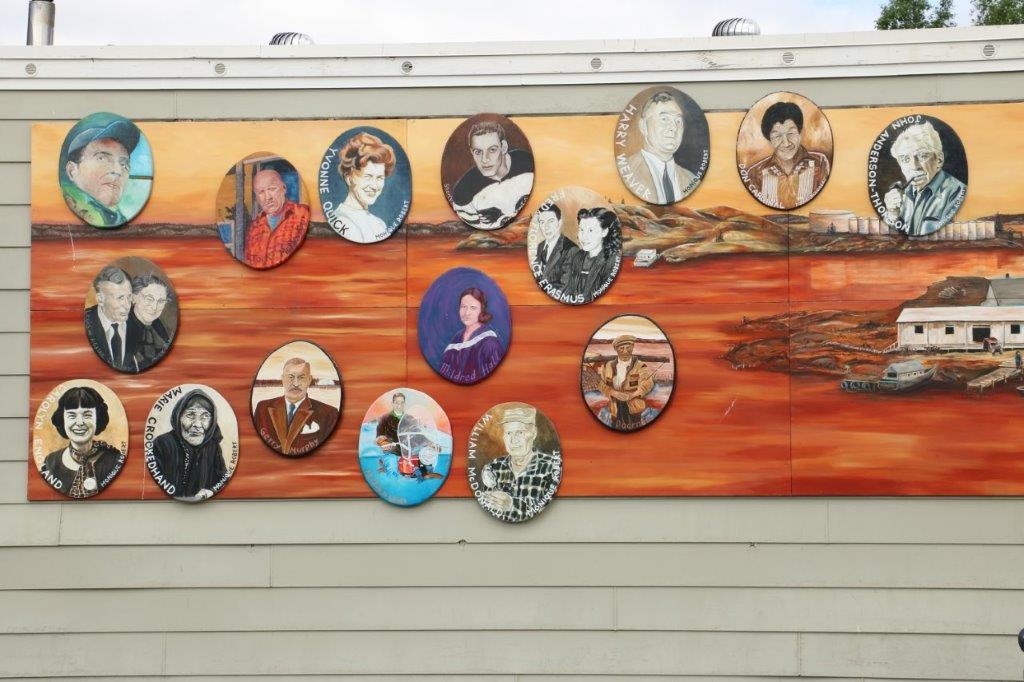
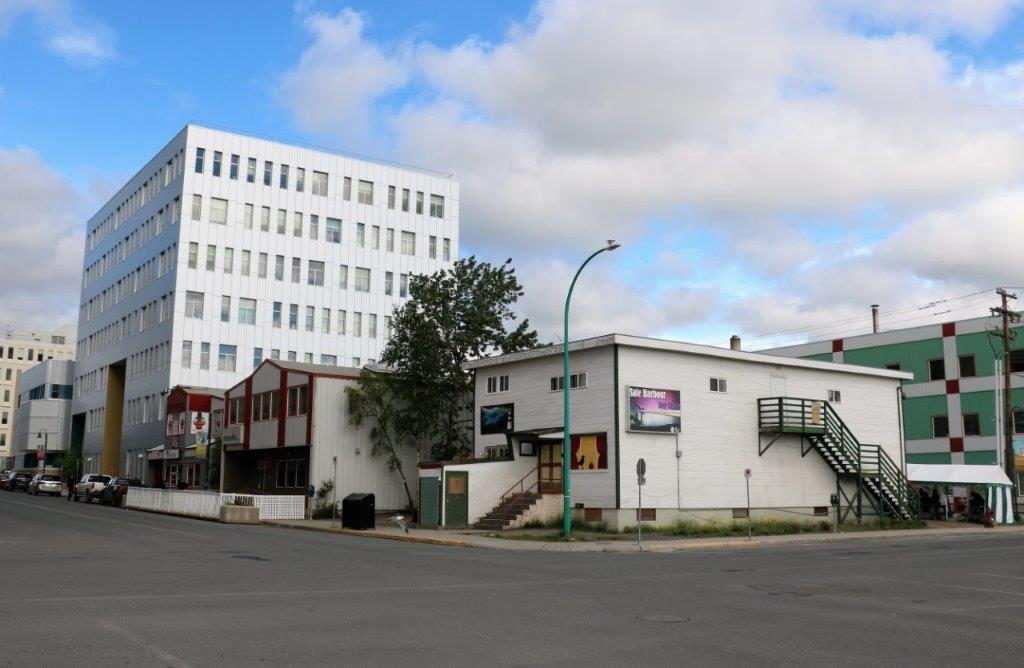
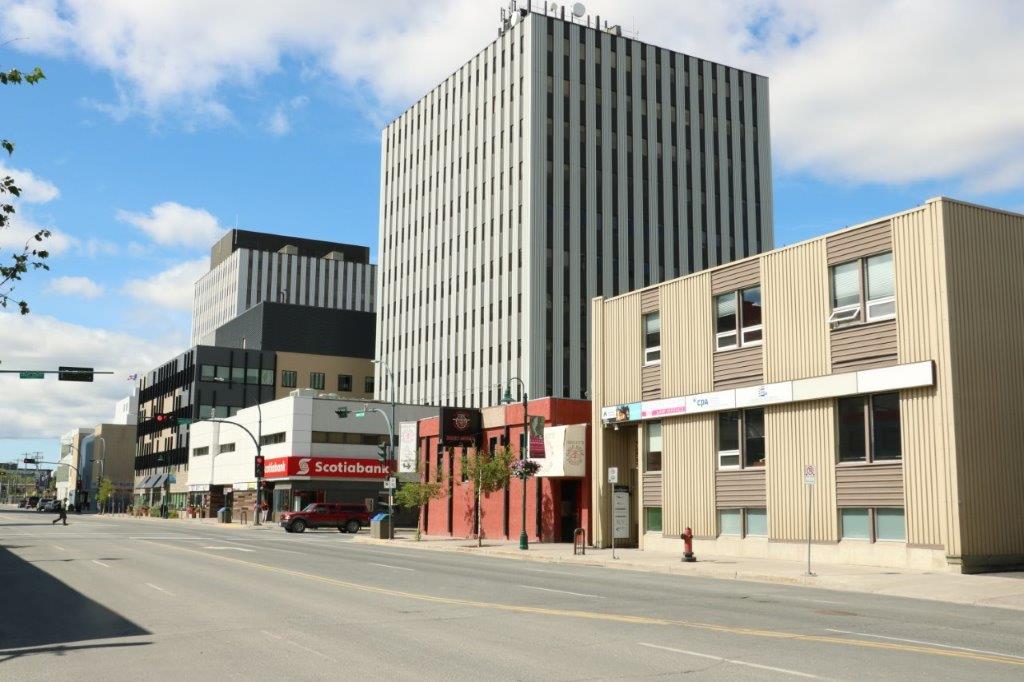
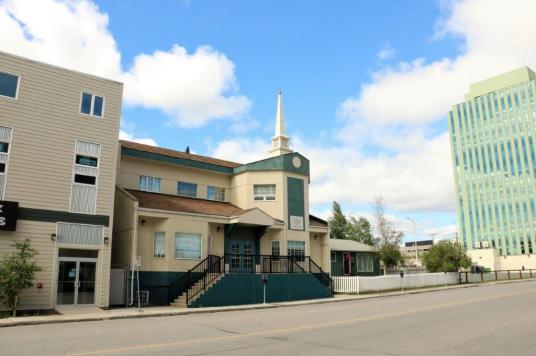
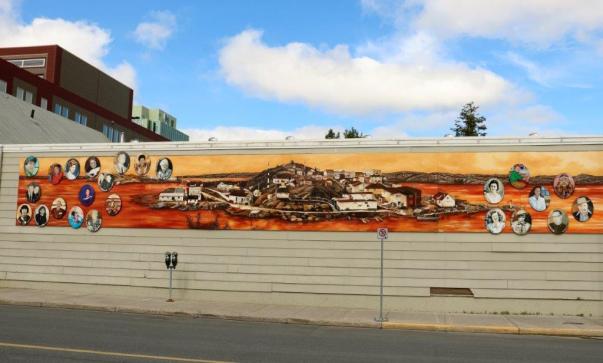
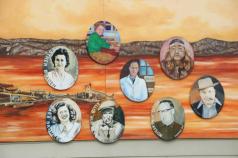
Yellowknife is an interesting city.  I find the overall look to be somewhat industrial – lots of simple square boxes.  Yet there is the most curious blend of building purposes.  Take the photo below:  there is an office building, a Mormon Church, a private residence and a high rise tower side by side on a main downtown commercial street.We enjoyed the walk about, found a few caches and were greeted by several people walking by.  While we were taking photos of this mural a lady sitting on her front steps across the street at the end of the block hollered over and asked us what we were looking for.  We told her we were just taking a photo of the mural.  She then proceeded to tell us about a few things to see in town and a good place to eat.
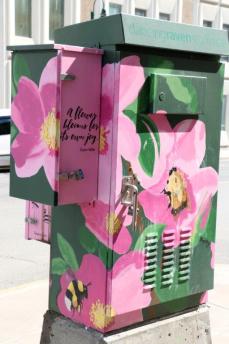
While we were looking for cache two men and a woman walked by, stopped and asked if we were from Yellowknife.  When we told them no the young man said where he was from and encouraged us to go there and enjoy some great fishing.  We have found this to be a very open, friendly place. We saw several of the painted utilities boxes around the city today.   At one or so we made our way back to the truck, had our pb & j sandwich lunch and drove over the Legislative Assembly Building for the tour.
The Northwest Territories has a Consensus Government. They have no political parties.  There are 33 communities in the Territories and 19 districts.  After people are elected in each district they have a vote among themselves to elect a Premier, a Speaker of the House, and six Cabinet Ministers.  The remaining 11 members become the ‘unofficial’ opposition who ask questions and for clarification, etc. when bills are presented.

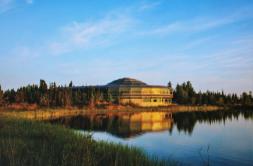
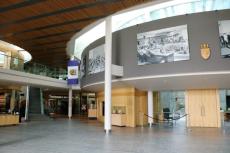
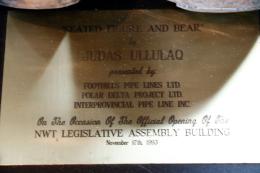
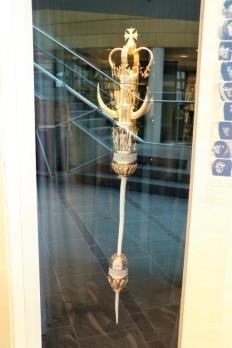
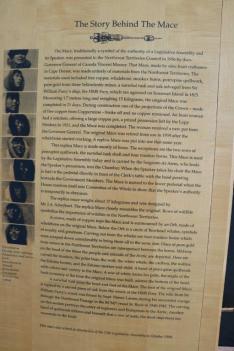
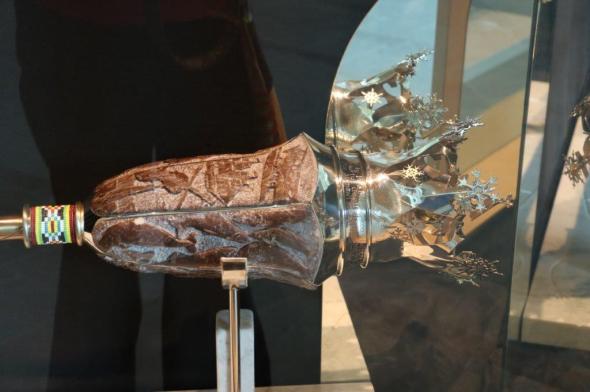
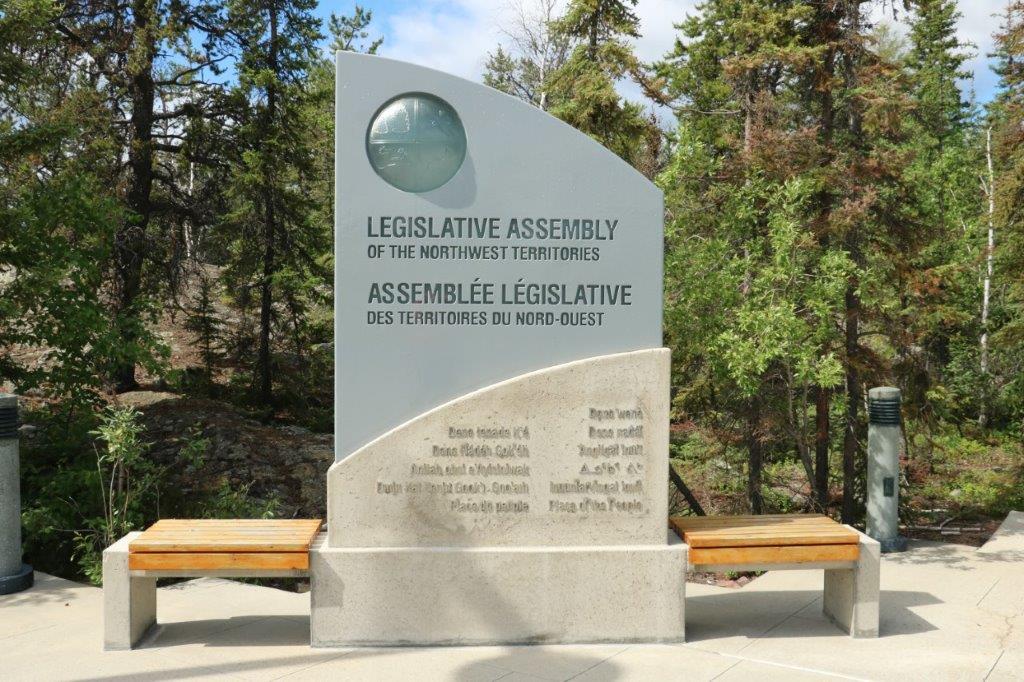
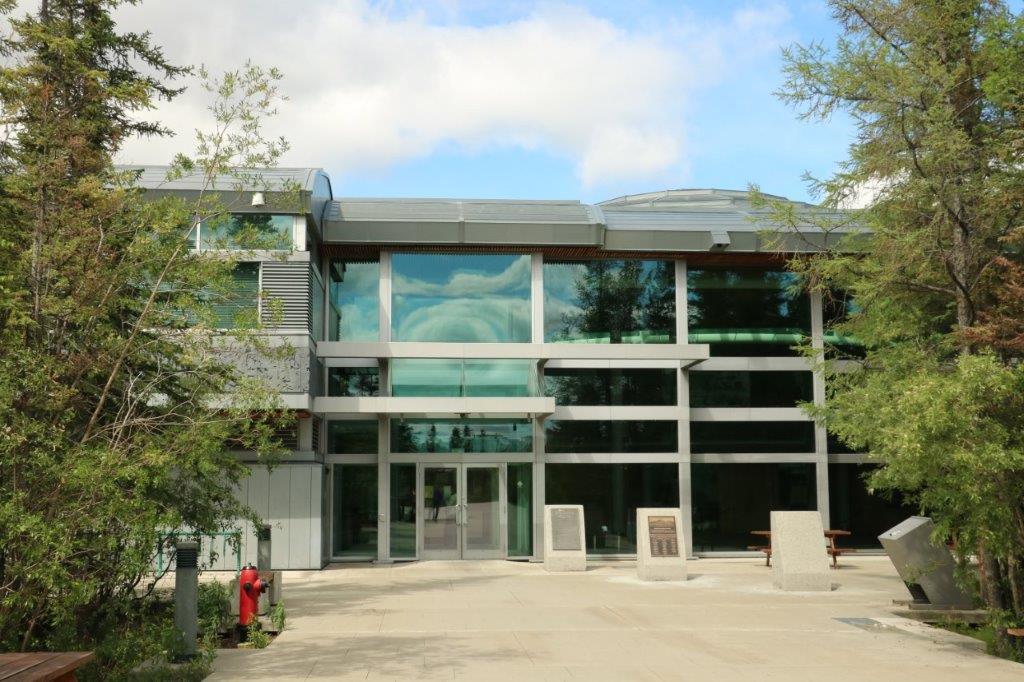
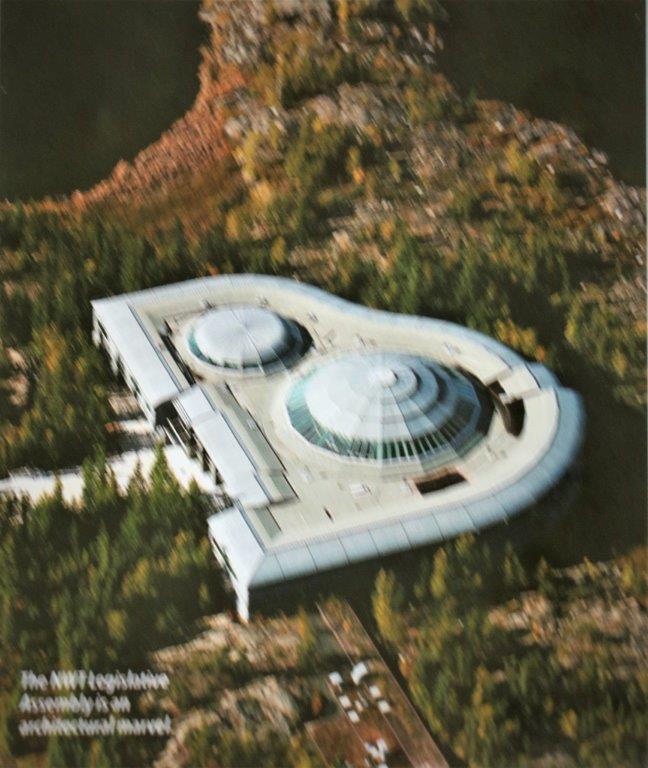
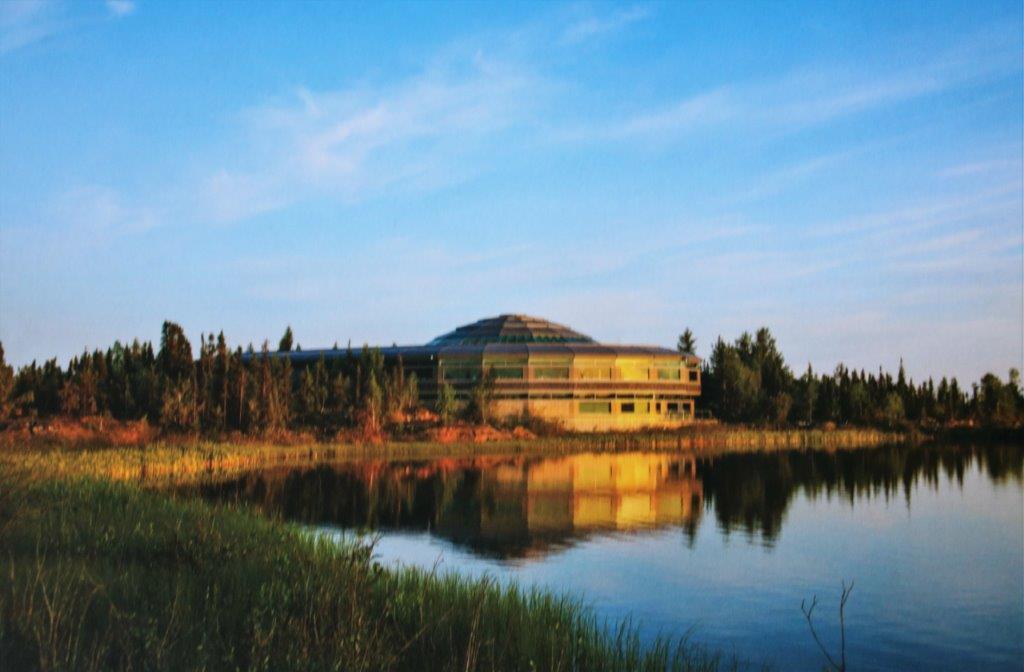
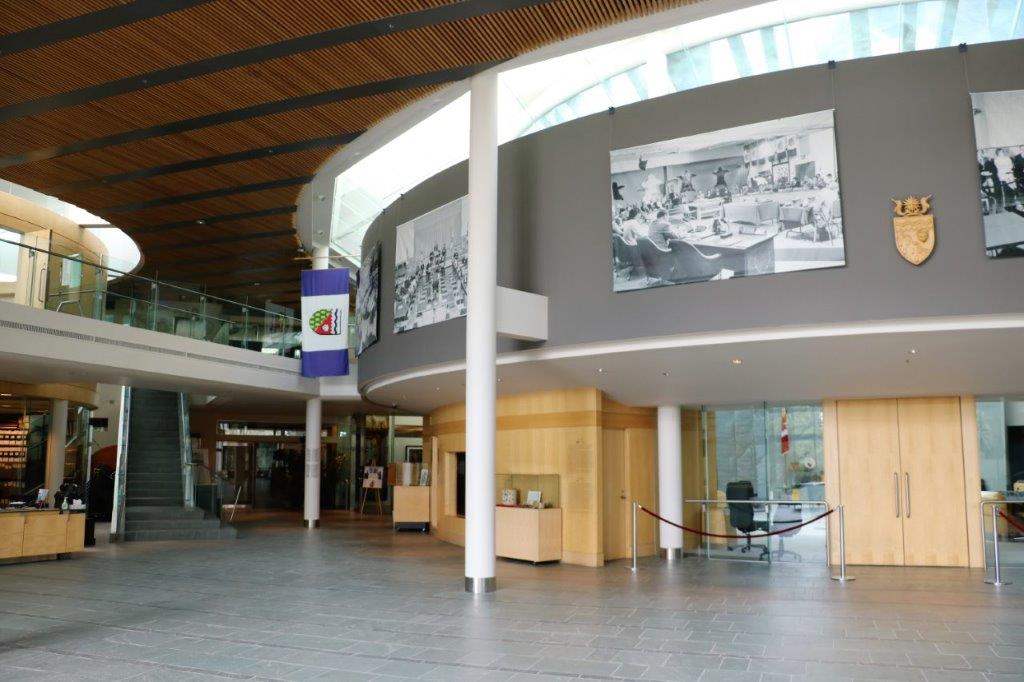
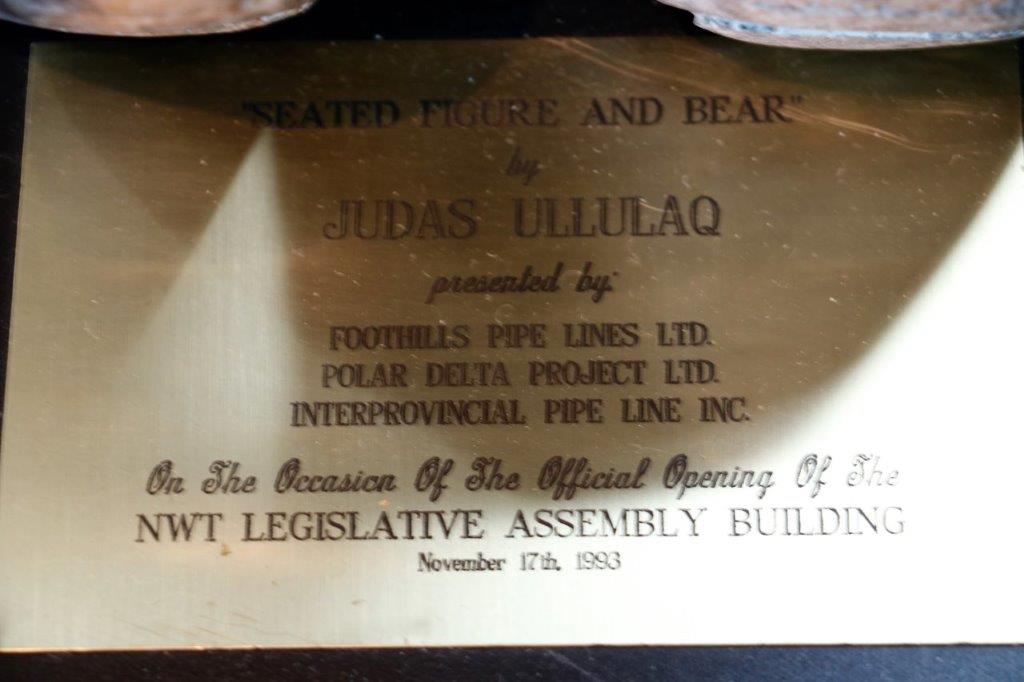
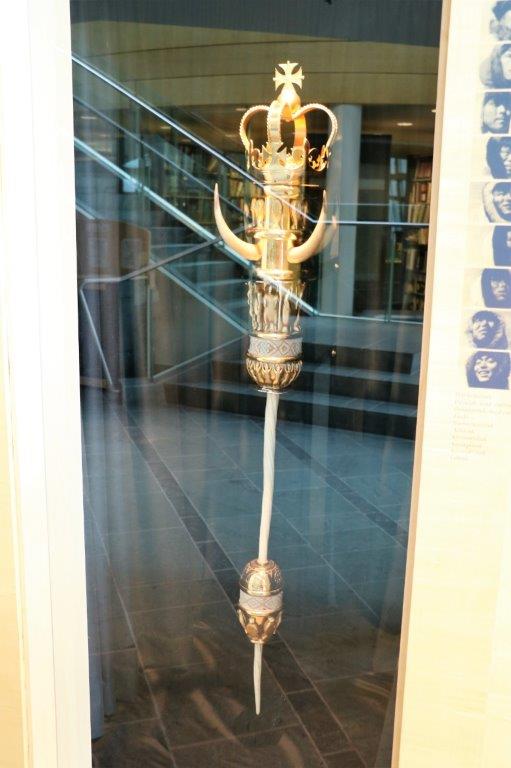
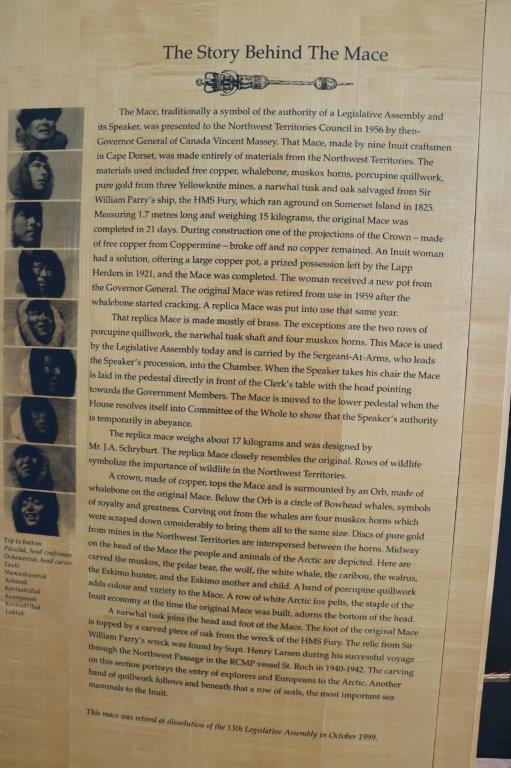
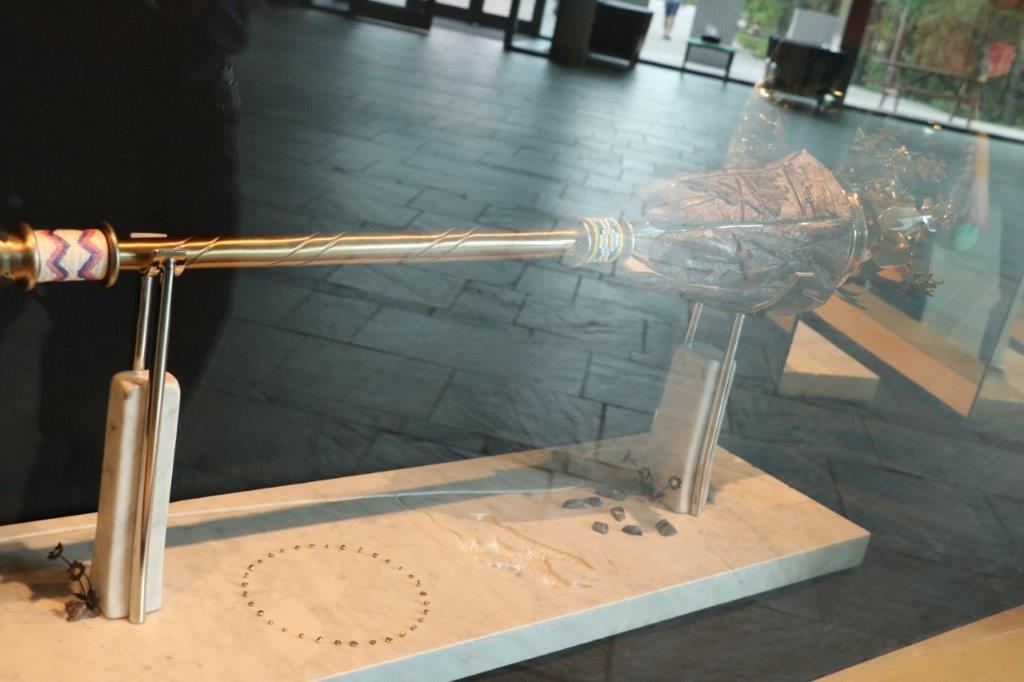
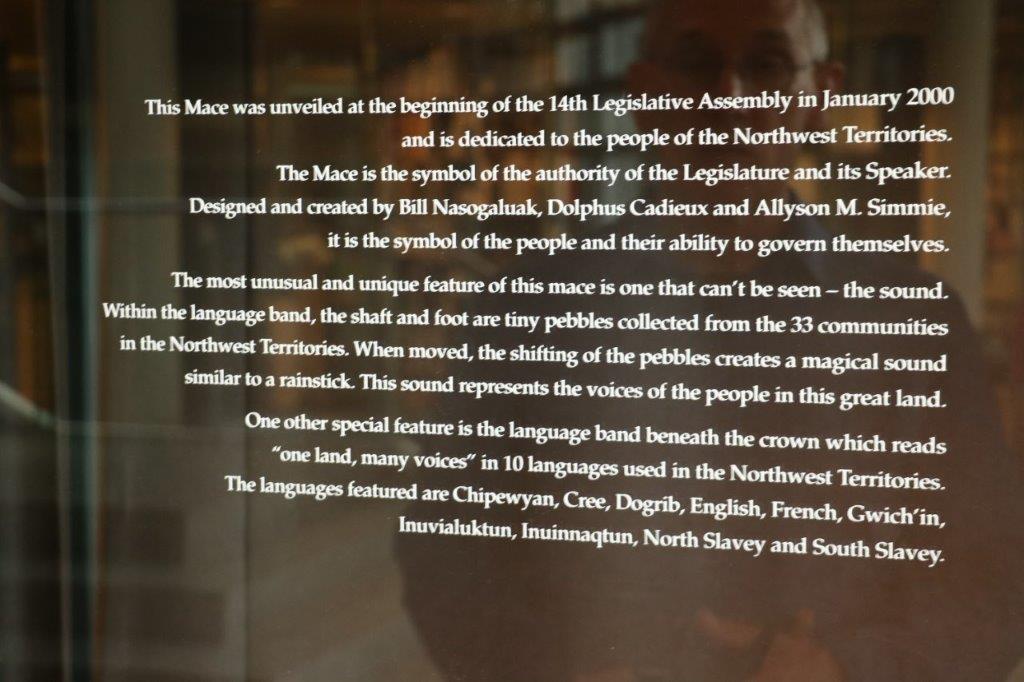
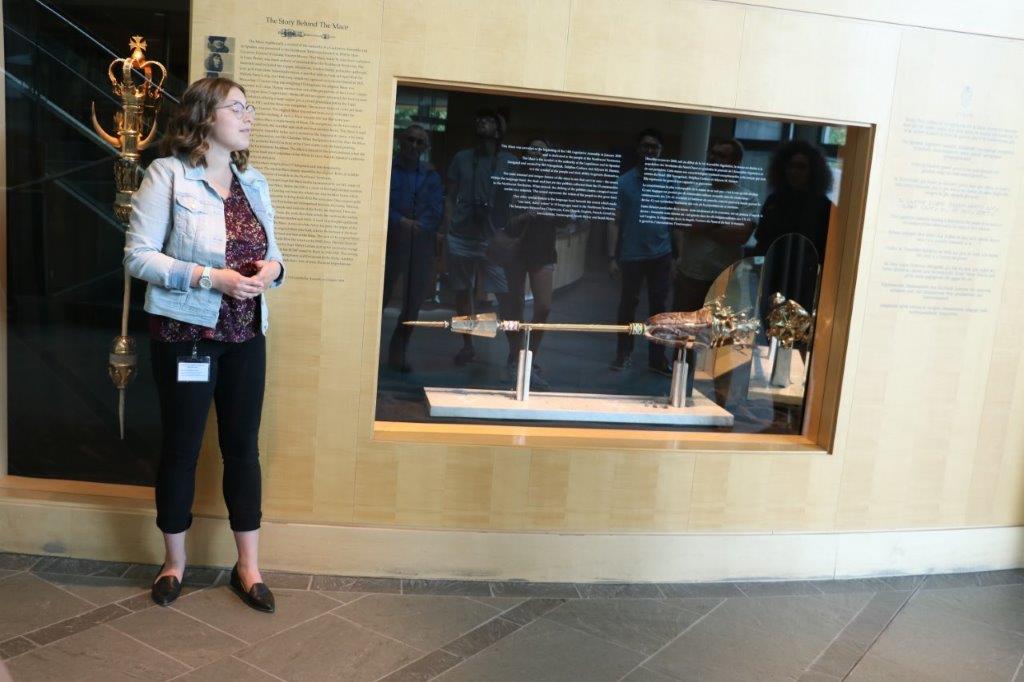
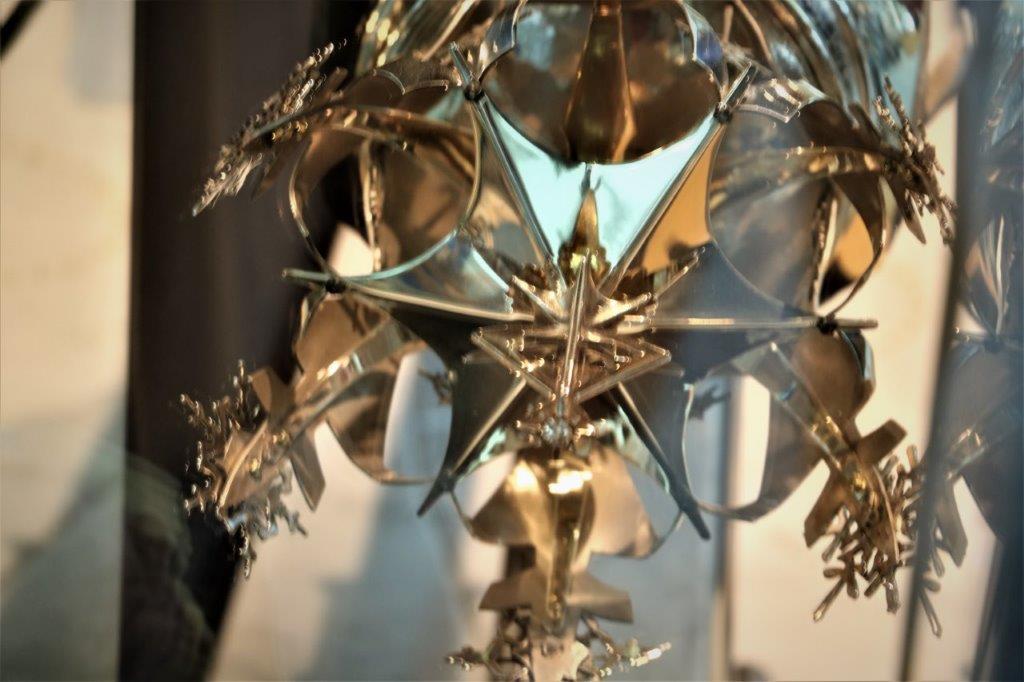
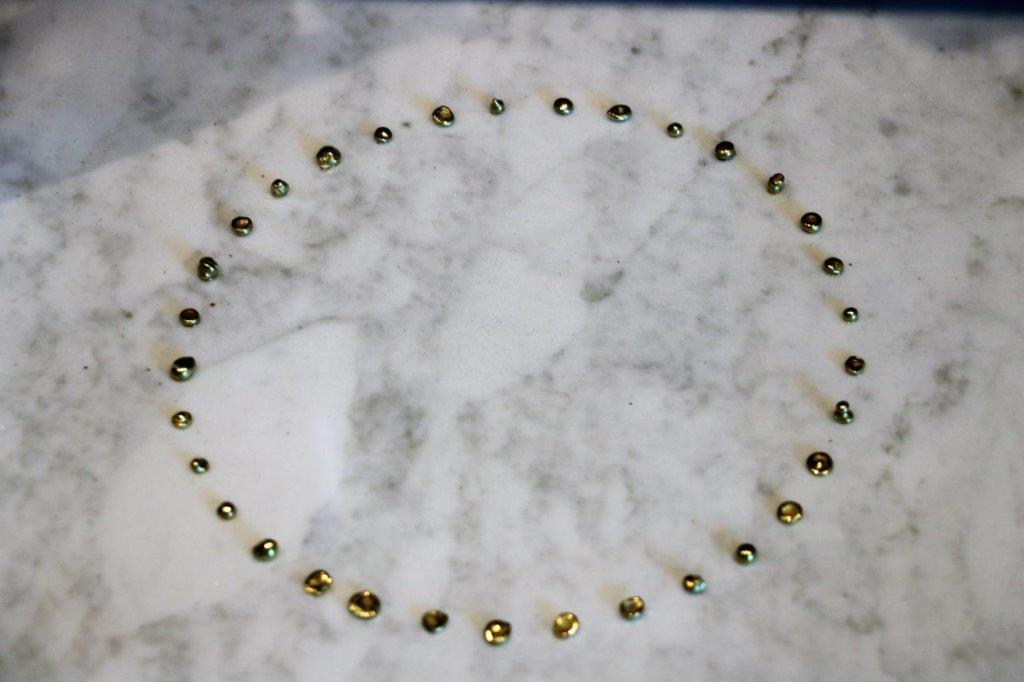
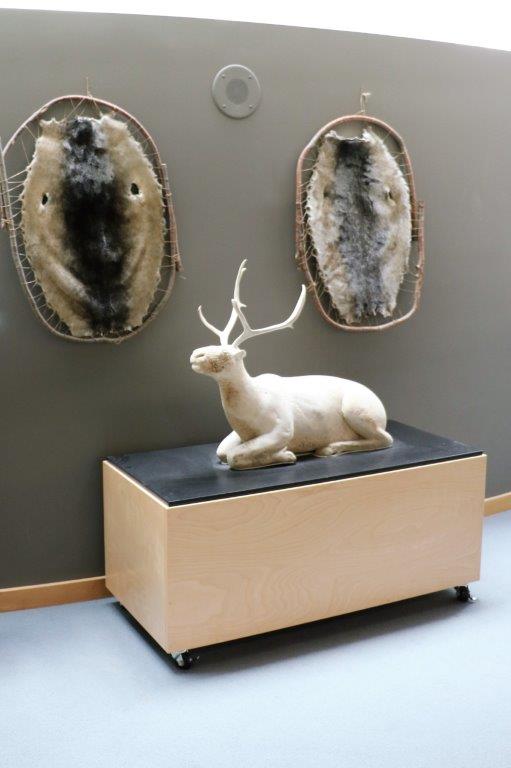
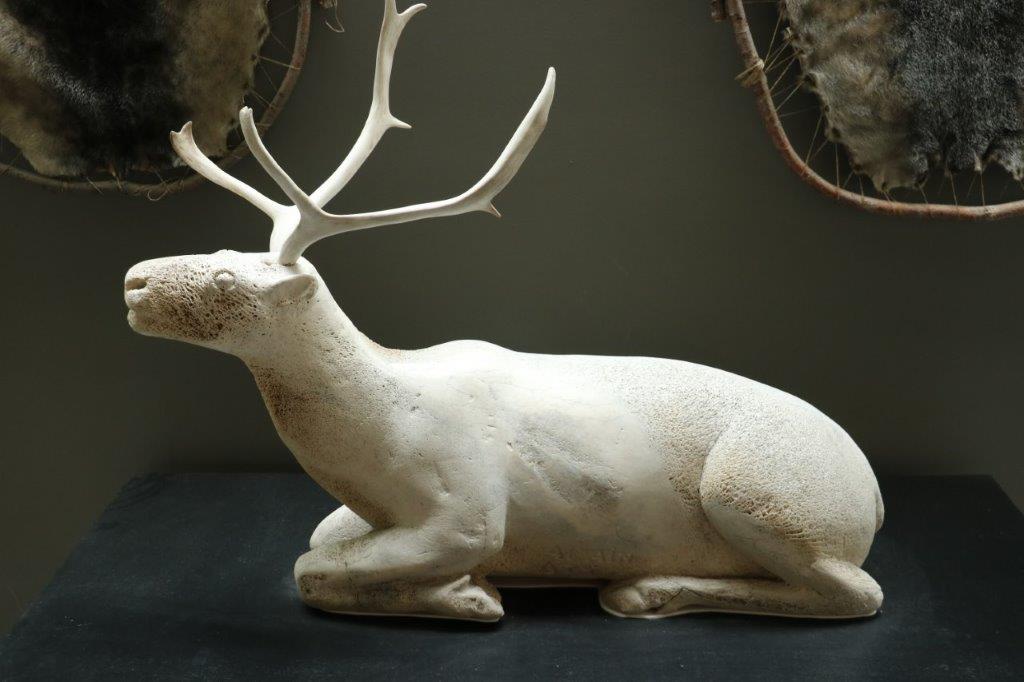
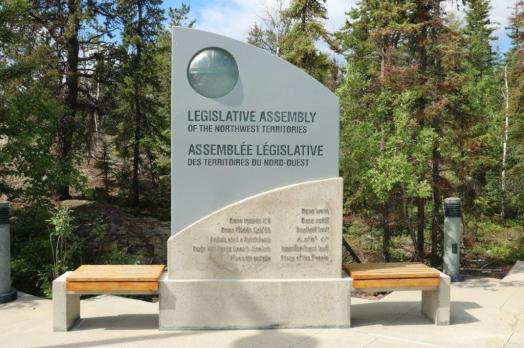
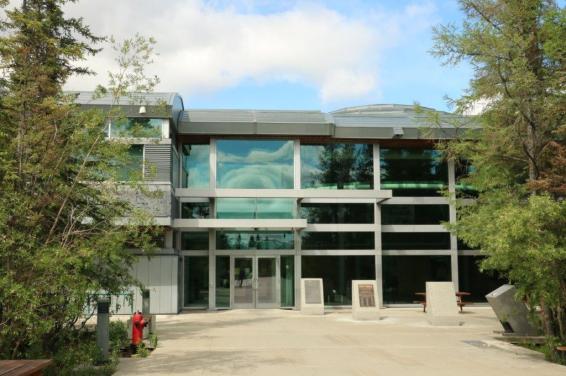
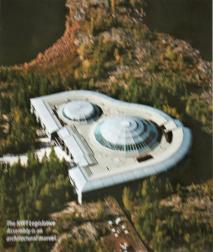
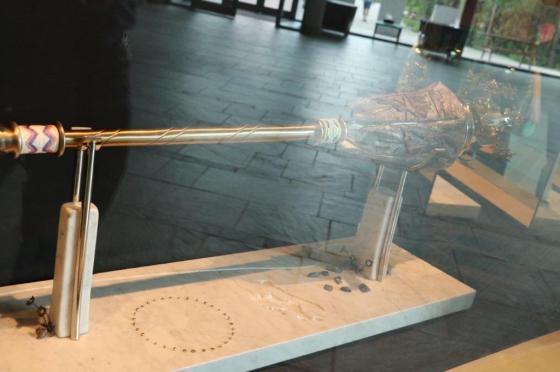
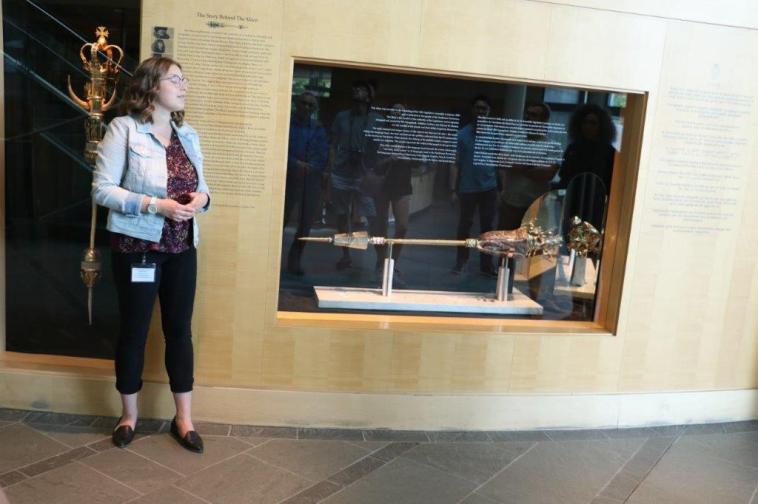
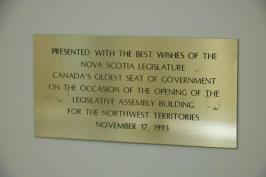
Our guide was a young university student home for the summer (she attends University in Nova Scotia) and she will do all the public and private tours.  Her name was Mackenzie and she was born in Yellowknife.  She did an excellent job and filled my brain with all kinds of trivia about the Northwest Territories and all the symbolism in the objects, the rooms and the building.  Tons and tons of interesting stuff I won’t bore you with. (Well, maybe a little.) The building sits amidst the trees near the shore of Frame Lake just a short distance from the city center.  If you don’t slow down when driving past the entrance you would never notice the building.  It sits right among the trees and much effort was done to not disturb the surrounding nature.  The two photos below are photographs of a picture in a brochure showing the building from the air and a postcard we were given after the tour.  You can see how close the forest is to the building and how well it nestles in it’s surroundings.  Unfortunately the reflections in the glass make for sad photos.It is hard to see the lovely snowflake crown atop the mace due to the mirrored reflection.  The mirror is there to show the inside of the crown which contains a gold orb for the midnight sun, the circle of life and the world.  On top of the orb is a silver crosspiece that together forms an ulu (hide knife), a tipi, and a house representing the cultures of the territory – Inuvialuit (Inuit), Dene/Metis (First Nations) and the many non-aboriginal people.  On top of the crosspiece is a 1.31 carat northern diamond. If you look closely near the lower center of the photo above you can make out the diamond.   The circle of gold nuggets below sit on the base upon which the mace sits and there is one gold nugget for each community in the territory. This caribou is carved from a single piece of very old (over 100 years) whale bone.  The antlers are carved of real antlers.
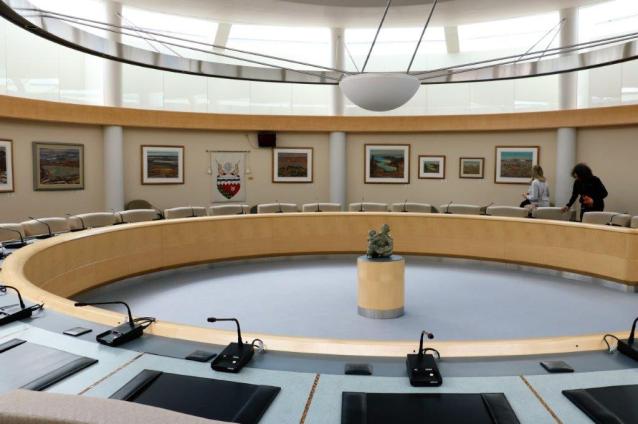
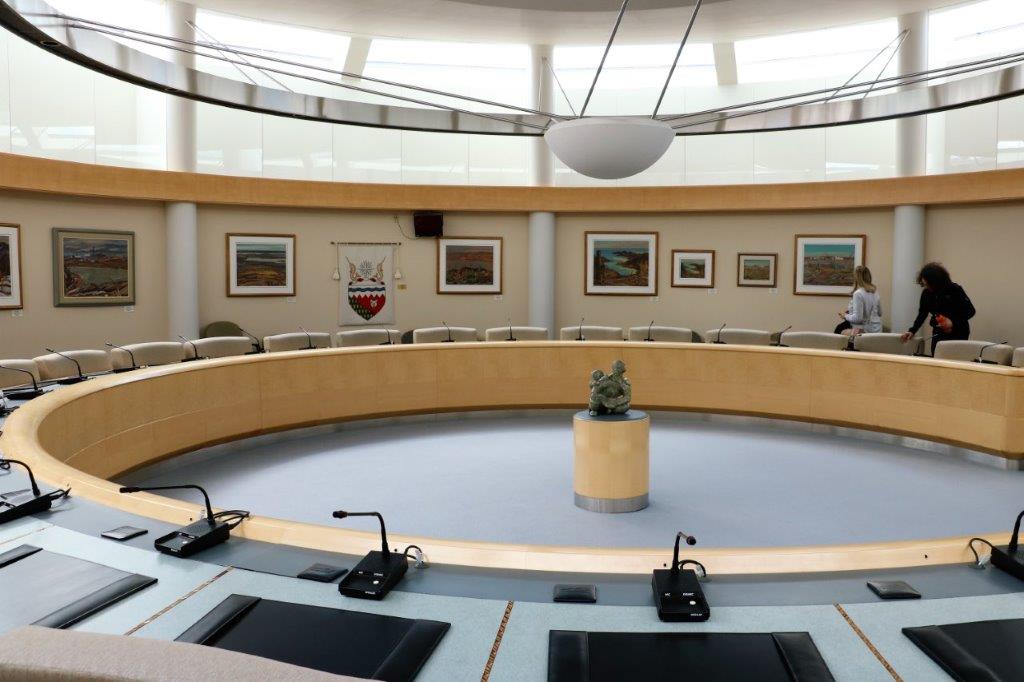
This is a discussion chamber.  There are no records kept of what is said here and open discussions about issues and laws take place weekly.  There are no ministers, or Speaker, or Premier, in this room; everyone is equal and everyone has a voice.  The motto of the Northwest Territories is: “One land, many voices.”  This is called “The room without secrets.”  Partially due to the openness of the discussions and partly due to the acoustics which are so good that two people whispering on one side of the room can be heard everywhere.

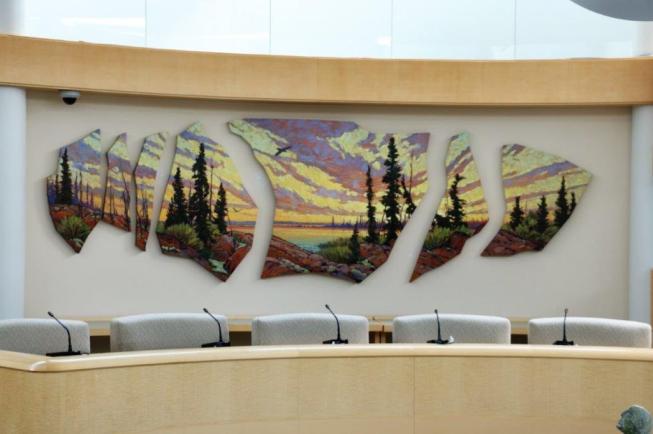
The paintings on the back wall are all by Group of Seven artist, A. Y. Jackson.  This is the largest collection of his work on display in the world and only members of the Legislature, staff and people on tour can see them. They were commissioned by territory and one of the mining companies. I took a photo of everyone of them!
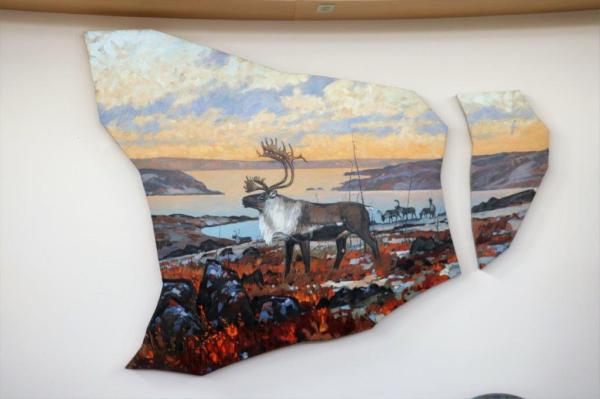
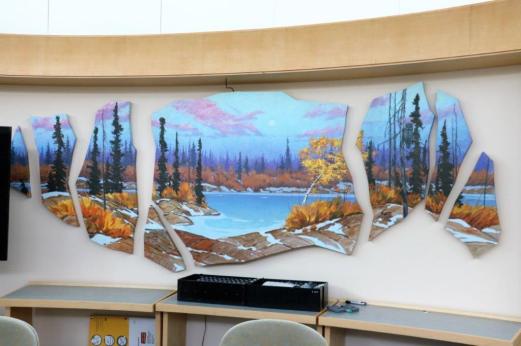
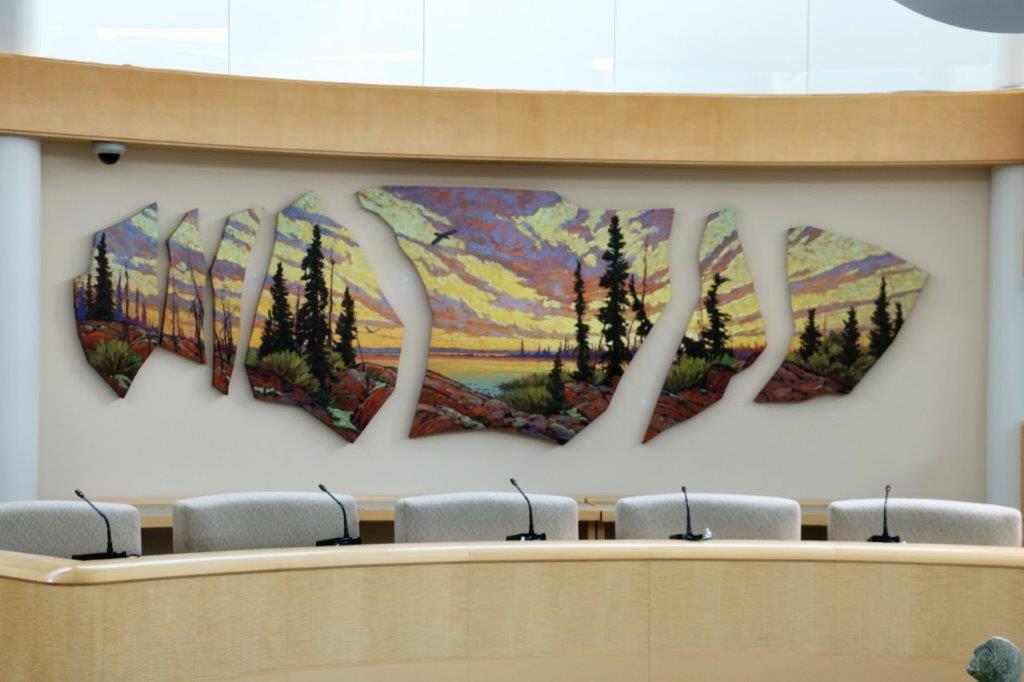
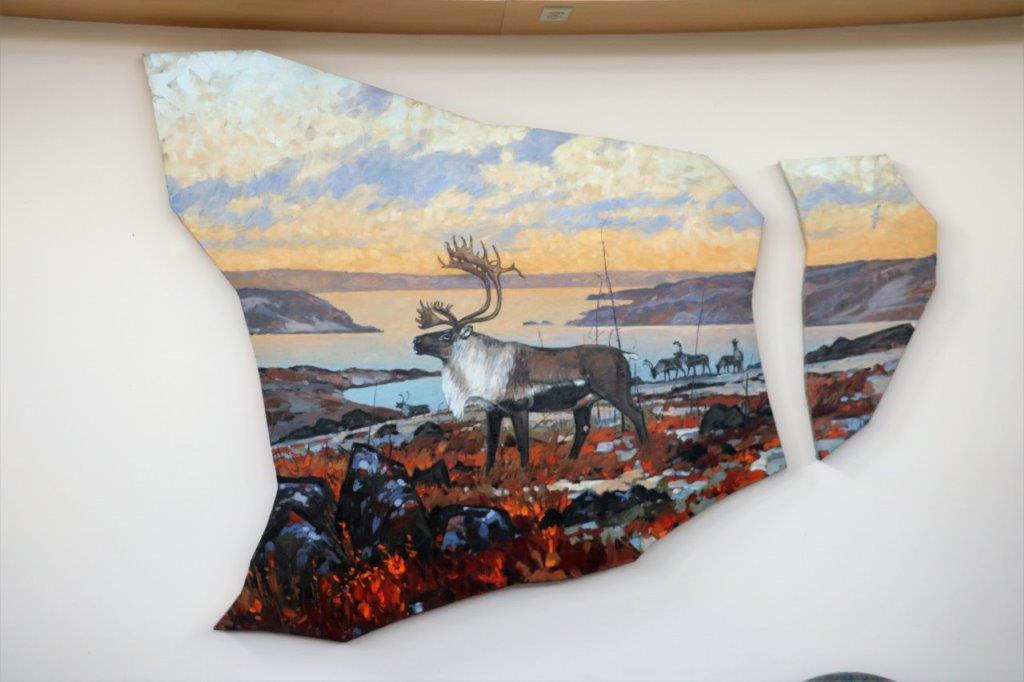
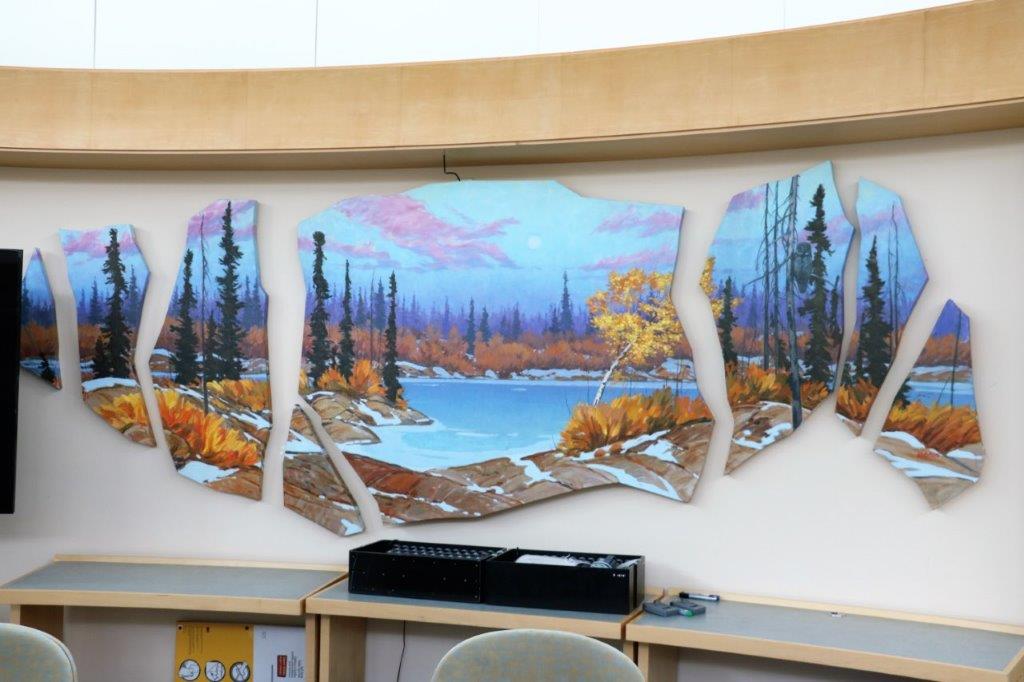
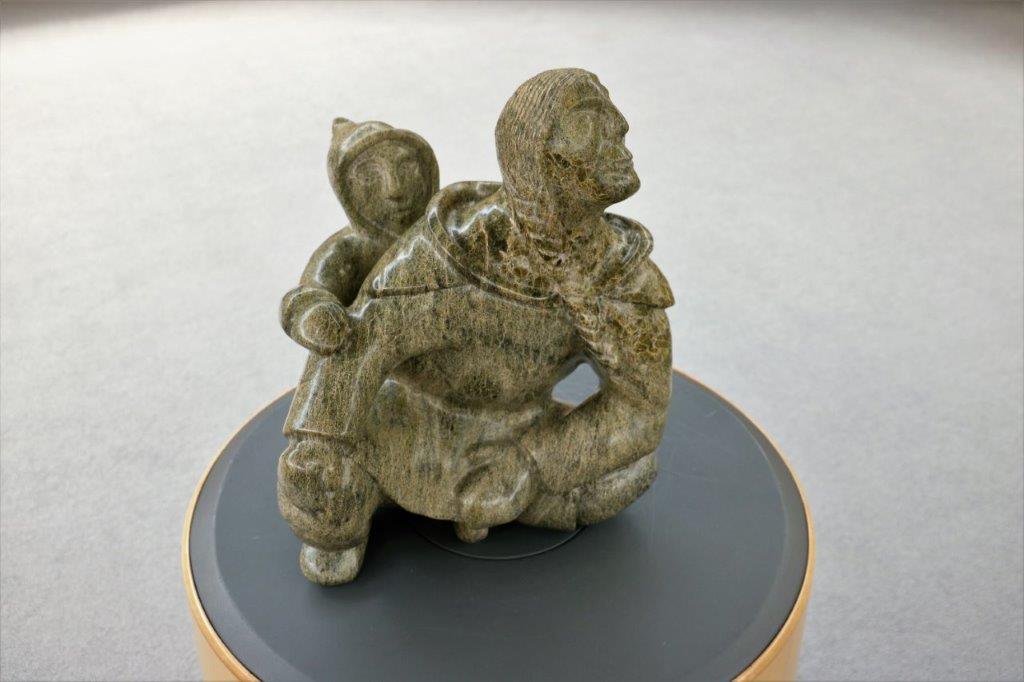
These three pieces of art are by a BC artist and repesent the past, present and future of the territory.  We were given the explanations of each piece but I won’t take the time to write it all down here.No one knows exactly what this sculpture is made of – it is assumed to be soapstone – nor do they know it’s name, or it’s creator.  It sits in the middle of the chamber in the hope that someday someone may come in and recognize it.
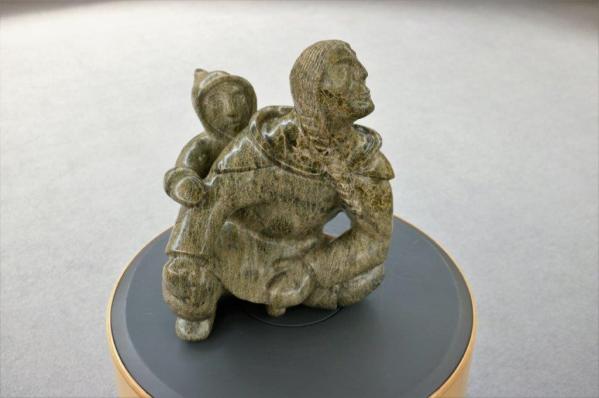
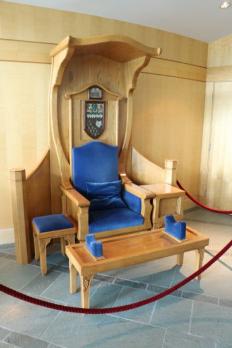
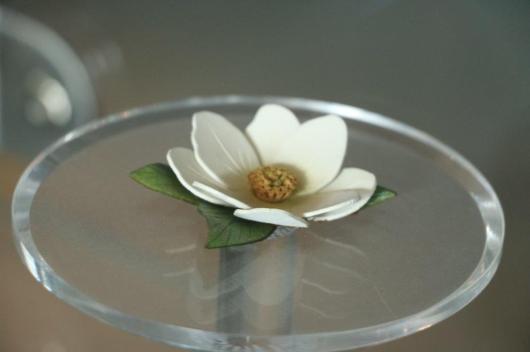
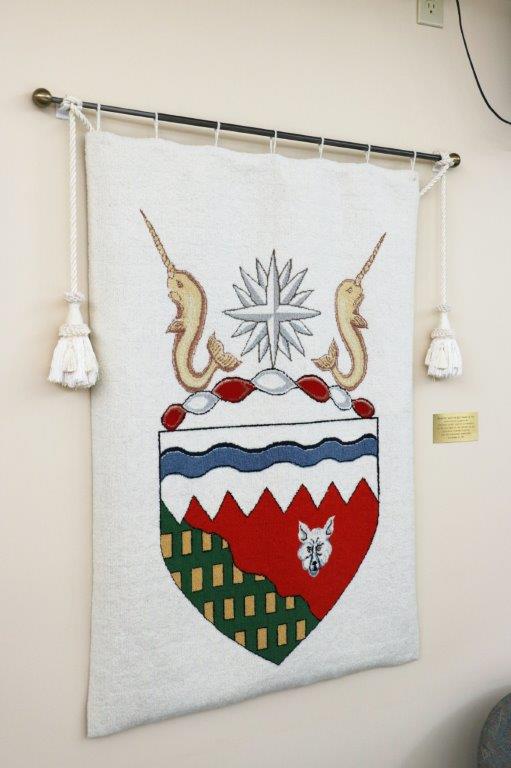
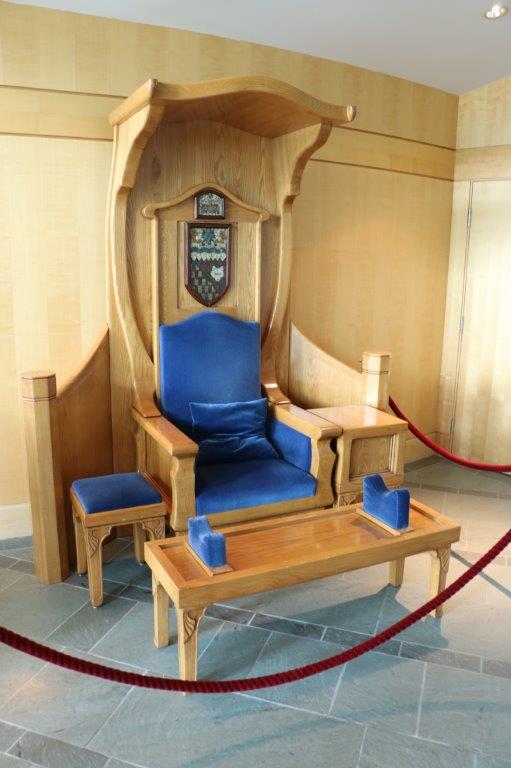
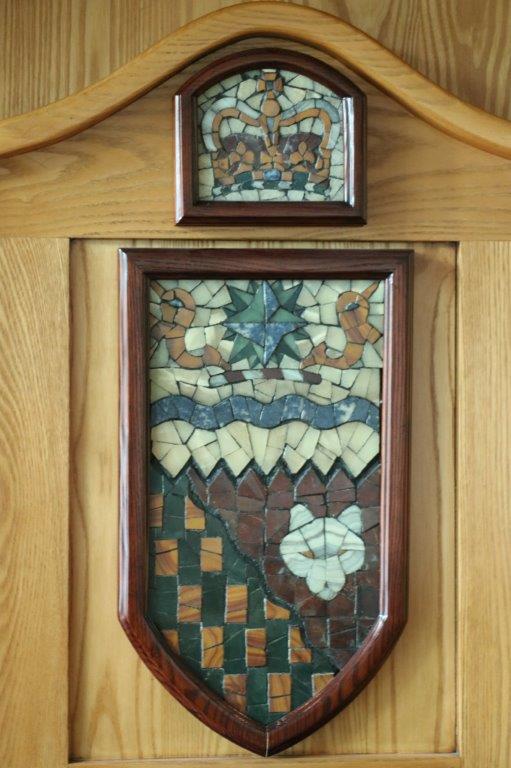
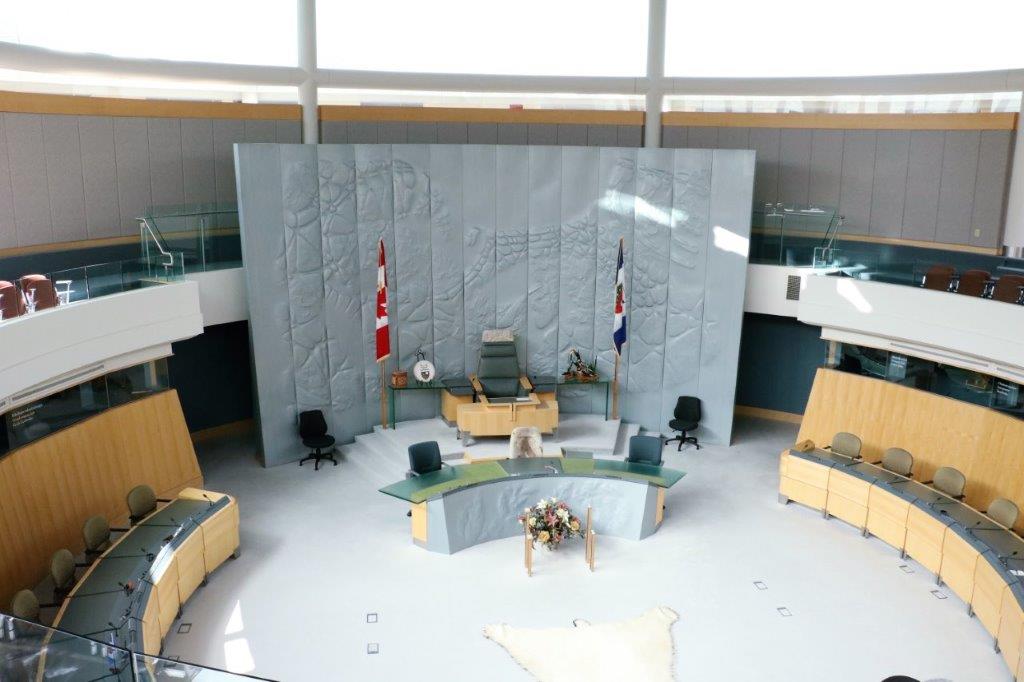
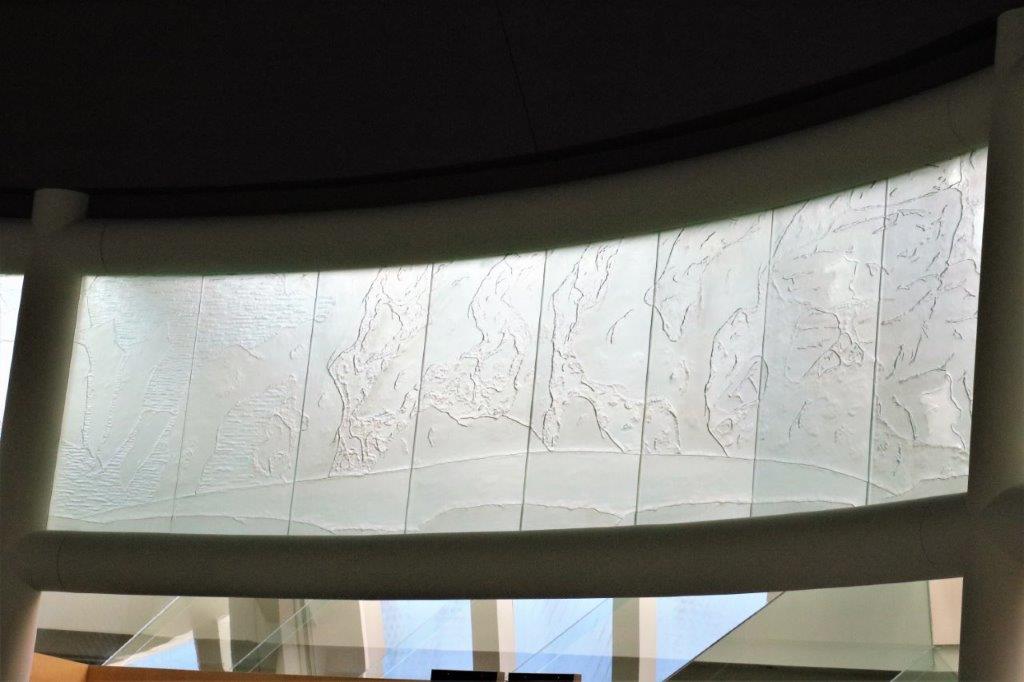
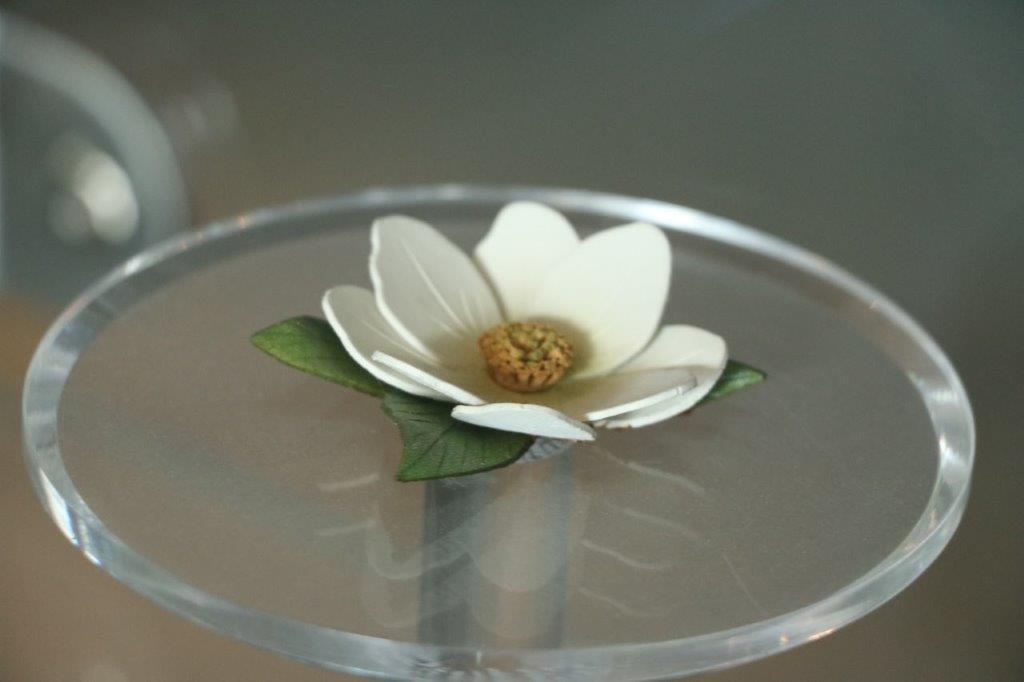
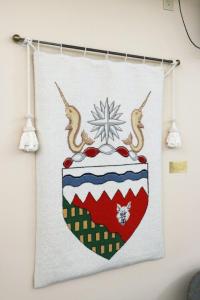
For many years the Legislature traveled to various parts of the territory to conduct it’s business. There was no central Assembly building.  Legislative business was conducted in school auditoriums and hotel conference rooms in different communities every year.  The chair above was for the Speaker of the House and was given to the Northwest Territories by the Federal government in Ottawa.  It can be completely dis-assembled to make it easier to move and transport by canoe or snow sled to the various communities.  Now that there is a central building it is no longer used.The chamber of the House of the Northwest Territories. The large panel behind the Speaker’s chair is made of zinc and shows a topographical representation of the land from the air.  There are glass panels all around the dome near the roof to let in light – of course – but also they are works of art. The glass is re-cycled car windshields that have been sand blasted to show the northern ice in all its seasons.  As you look around the dome the etching displays the solid icy coastline of winter, that begins to break up in spring, is full of small chunks and streams in summer, and begins to solidify again in the fall.  You can’t see it very well, but it was really lovely.The territorial flower – The Mountain Avens.  The tree is the Tamarack (or Larch), Their fish is the Arctic Grayling and the bird is the Gryfalcon.  The official gemstone is, of course, the diamond and the mineral emblem, also obviously, is gold. The even have a red, green and yellow tartan.

We had some nice chats with Mackenzie and Robert the security guard before we left Assembly building.
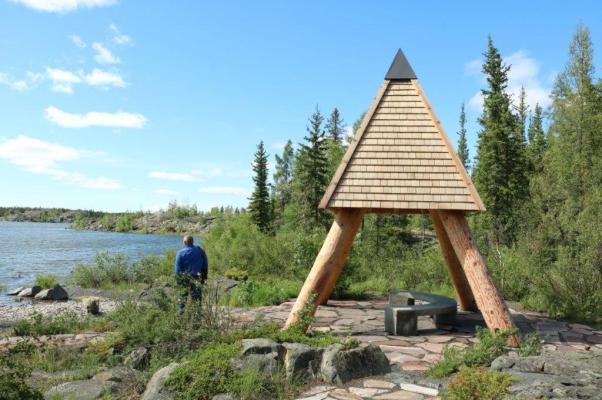
There are quite a few geocaches hidden in the area around the Assembly building and the nearby Prince of Wales Heritage Center. We took the time to find a couple of them.                                                                Frame Lake
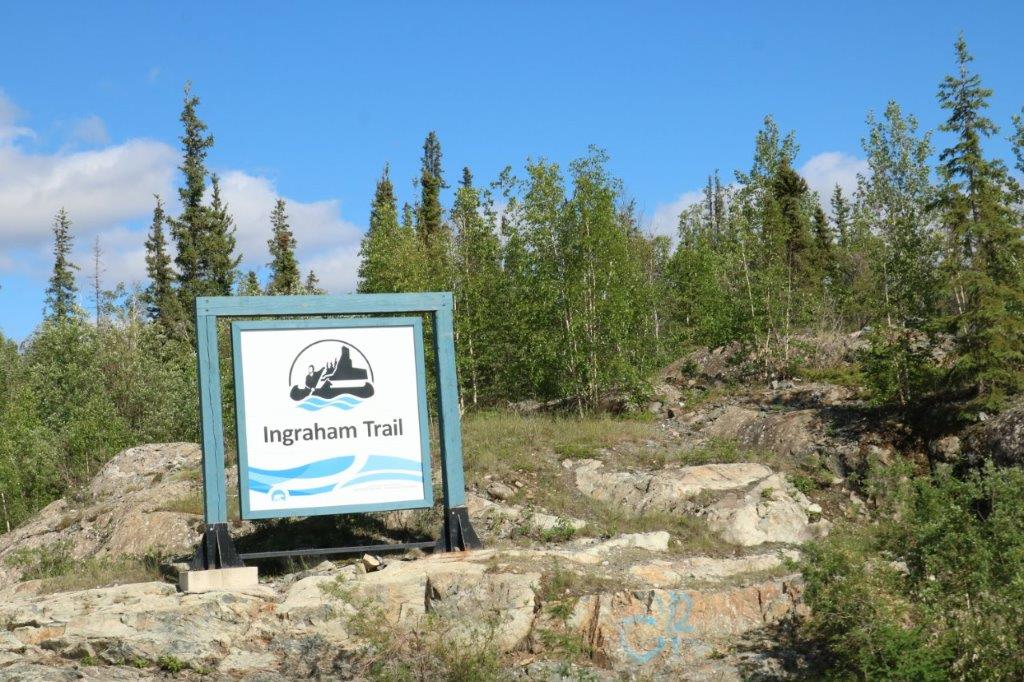
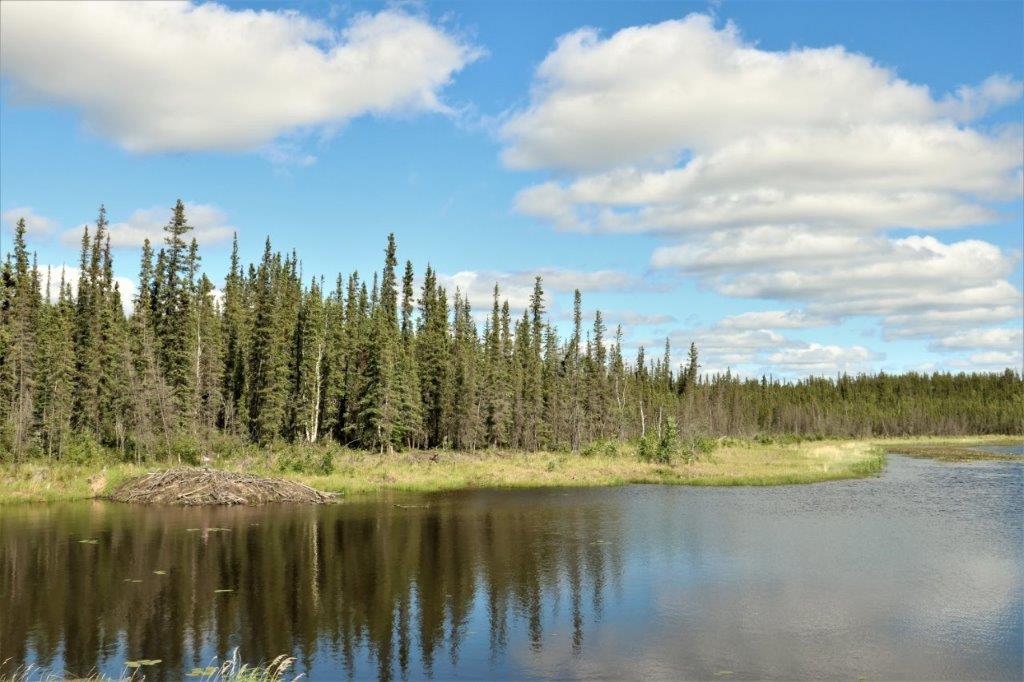
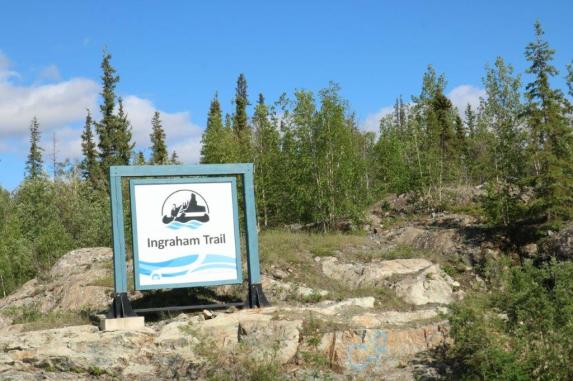
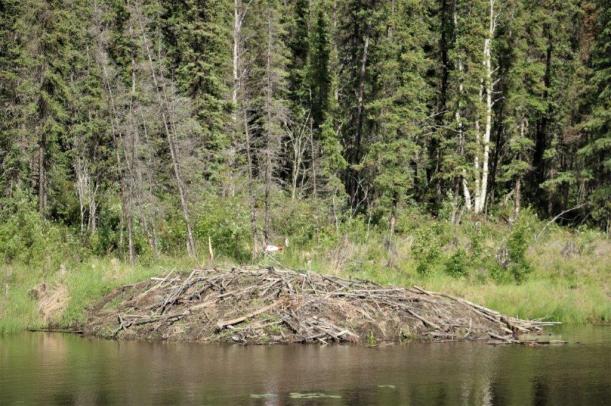
 We had no other plans for our final day here.  It was a beautiful sunny day so we decided to drive some of the Ingraham Trail.  The Trail is also called the “Road to the Cottages” or “Diefenbacher’s Dream.”  Officially it is Highway 4 but is popularly called the Ingraham Trail, after Vic Ingraham, a pioneer business man from the 30’s and 40’s.  The road extends from Yellowknife to Tibbitt Lake, approximately 70 km (43 mi) east of Yellowknife.  It was built in the mid-1960s as the first leg of a ‘road to resources’ with the original intention of circulating Great Slave Lake and connecting the mining districts of the north with Saskatchewan.  When Prime Minister Diefenbacher was defeated in the federal election an immediate halt was called to the road construction and it literally, just stops dead at Tibbit Lake.  There have never been any new plans to continue it. I finally got a photo of a beaver lodge. And this is a patriotic beaver as well, because there is a small Canadian Flag flying on top of his house.                                                        Prosperous Lake.
We turned around at Madelyn Lake about 25 km up the Trail and headed back to Yellowknife in time for dinnner.  It was a nice last day here.

Tomorrow we will be up early (well, early for us  – 7 am) and hope to be on the road not long after 8.  We have a 9-10 hour drive, about half of which will be on gravel road, before we reach Fort Simpson where we spend the night.  Fort Simpson is about half way (and the separation point) along the gravel Mackenzie Highway/Liard Trail between Enterprise, NT and Fort Nelson, BC (where John can get a new driver’s license!)
2018 June 23 – Yellowknife, Northwest Territories (Part 2)

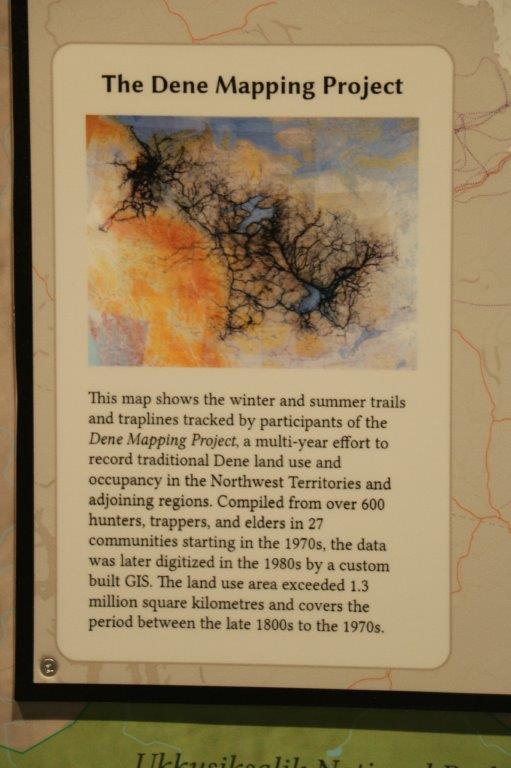
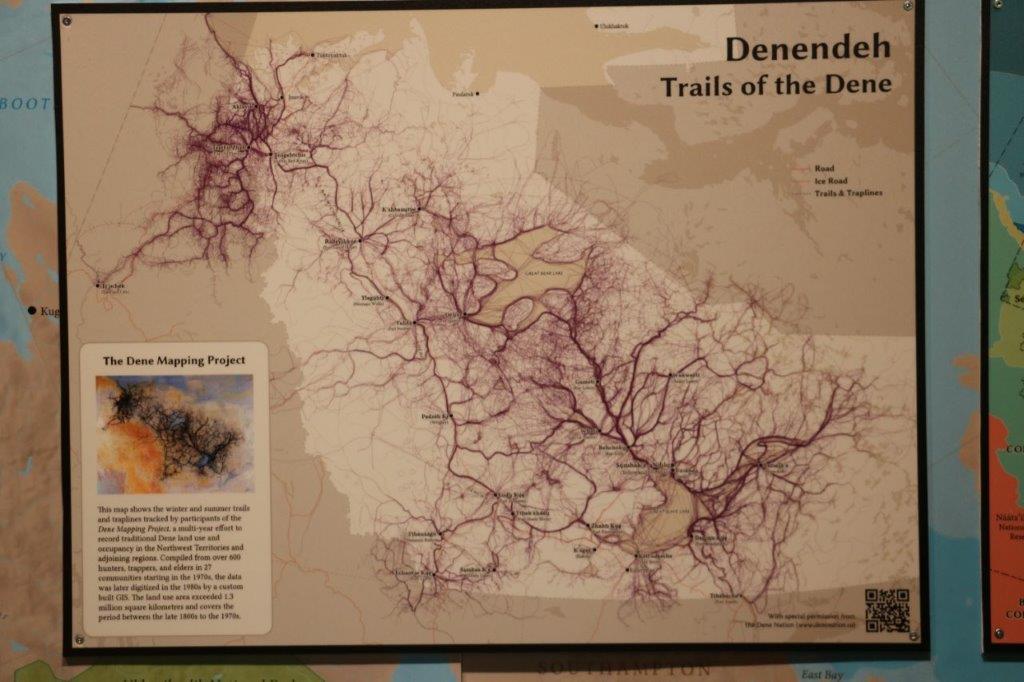
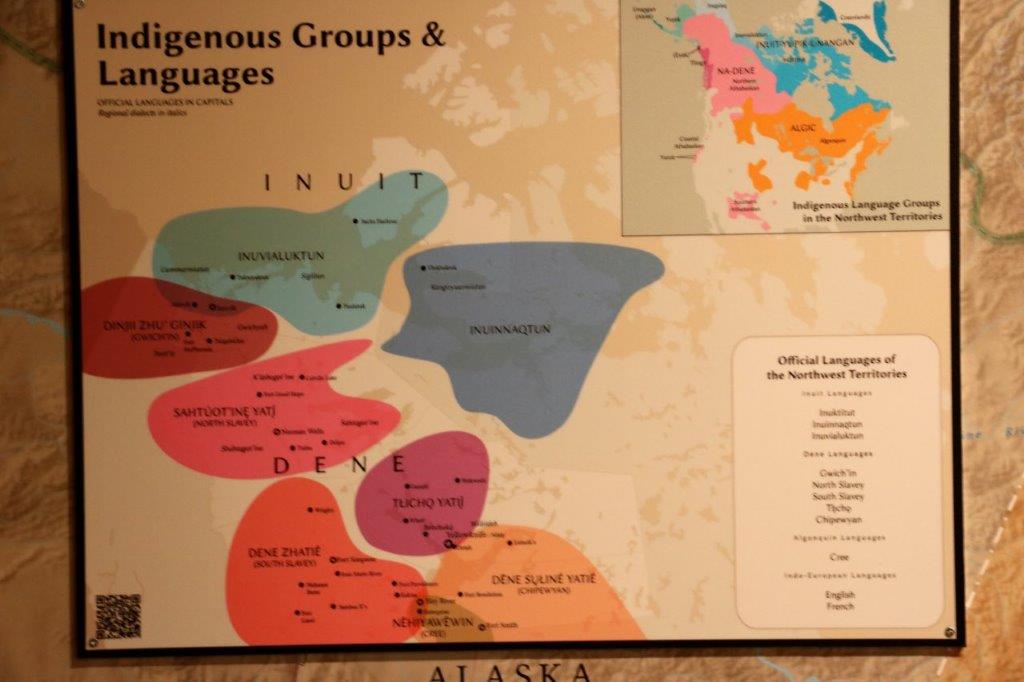
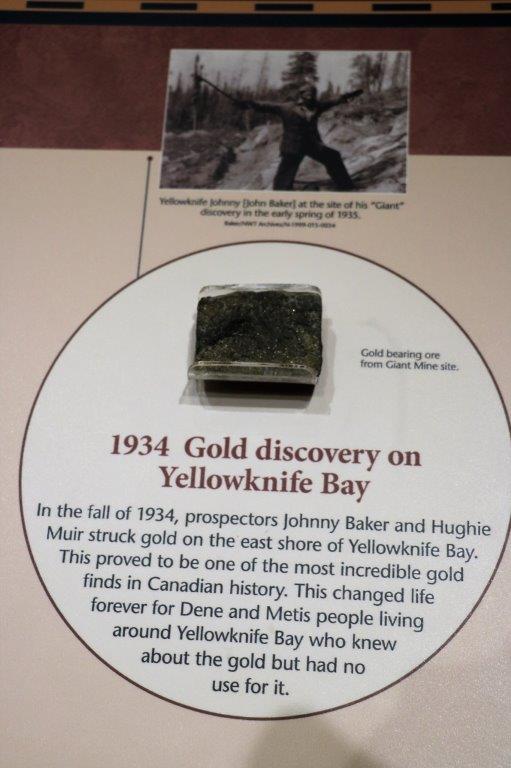
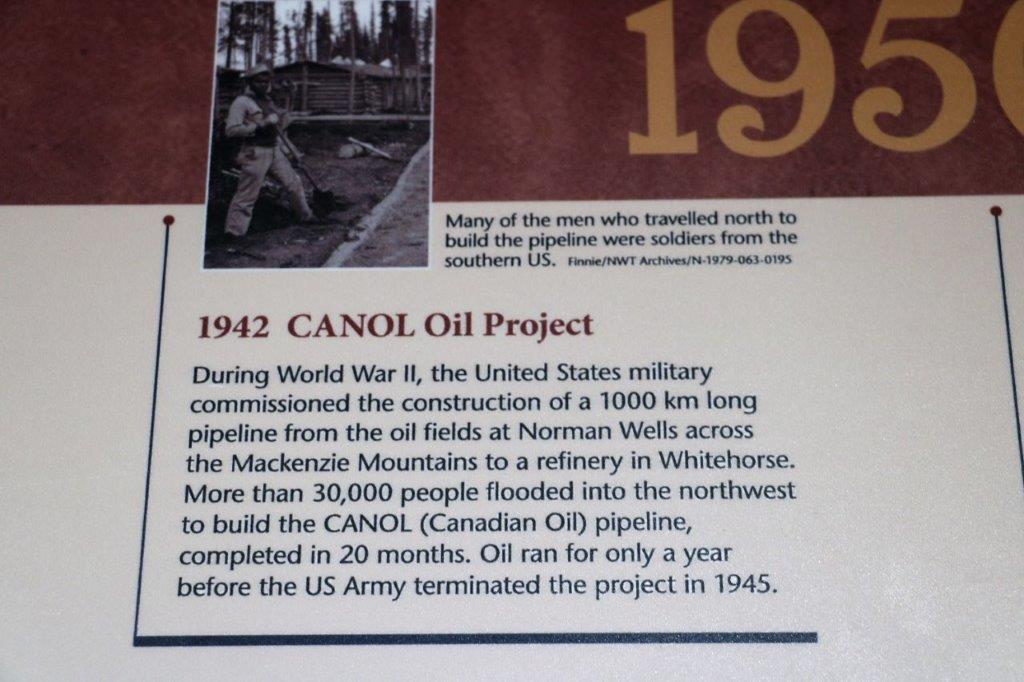
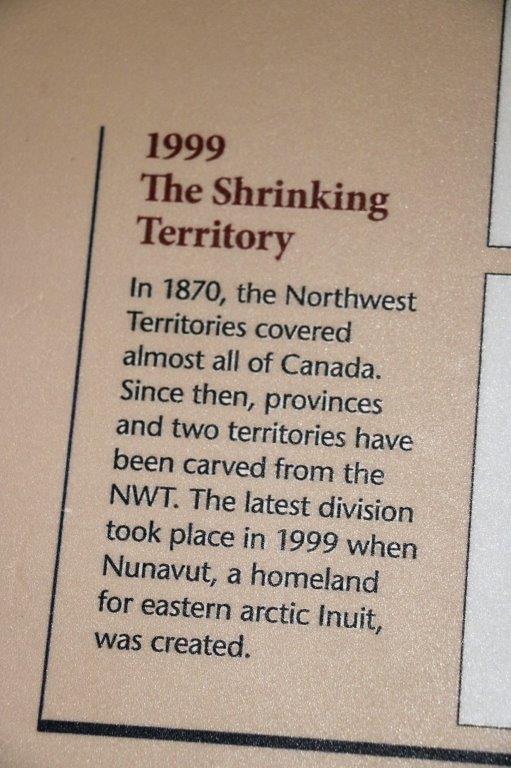
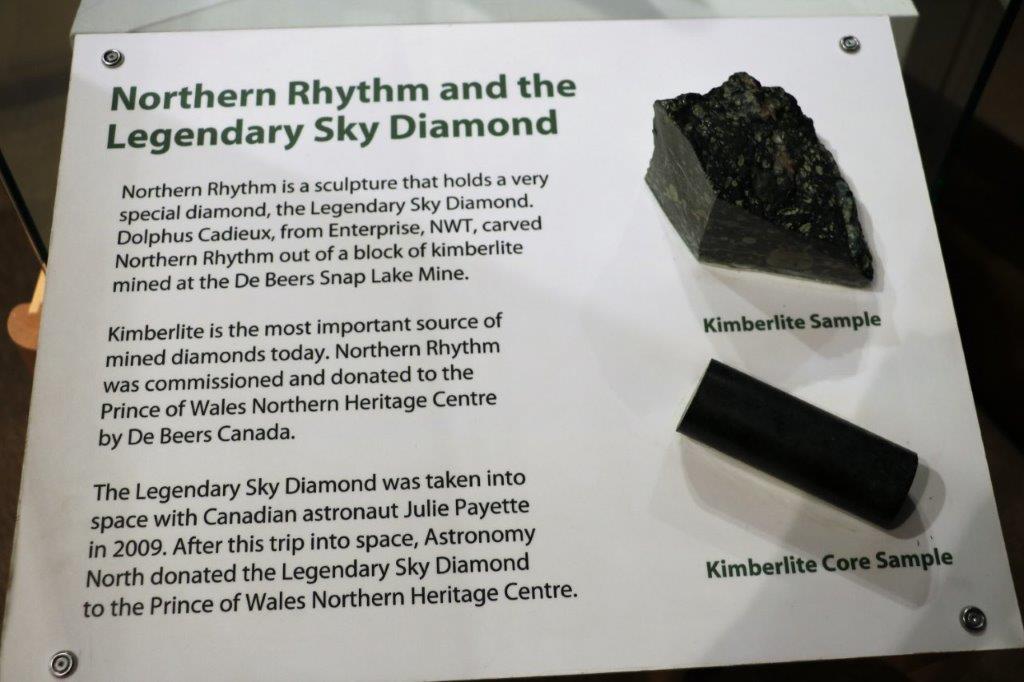
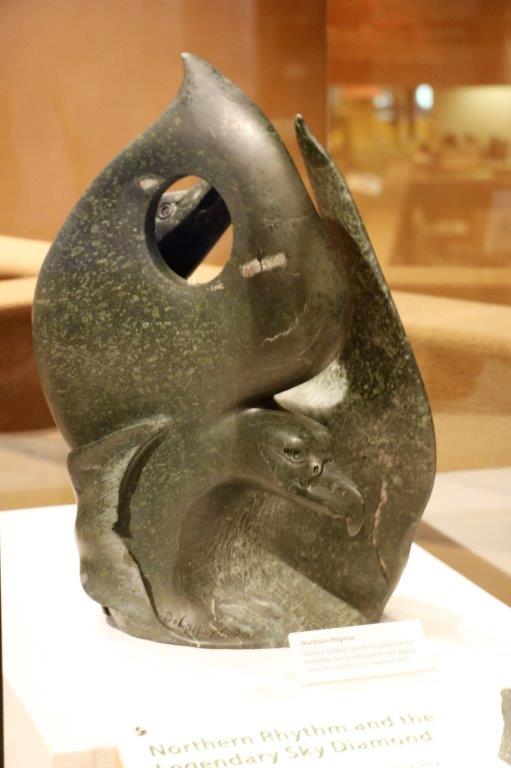
We were undecided if we wished to visit the Prince of Wales Northern Heritage Centre or not.  We have toured several First Nation’s or Aboriginal Museums and weren’t sure we needed to see another one.  However, we were near the building so we decided to go inside and see what exhibits were on display.  Two hours or more later we re-emerged!

Now, if you have read any of my blogs before you know I love museums and I take a million photos of the displays and information placards.  Today was no exception.  This is why I have split today’s blog into two parts; so anyone who wants to skip this museum part can do so.

The Prince of Wales Heritage Centre is like many museums; a large, two-story building with vast amounts of open, unused space and long corridors.  However, it was a lovely building and they had some very well done exhibits.

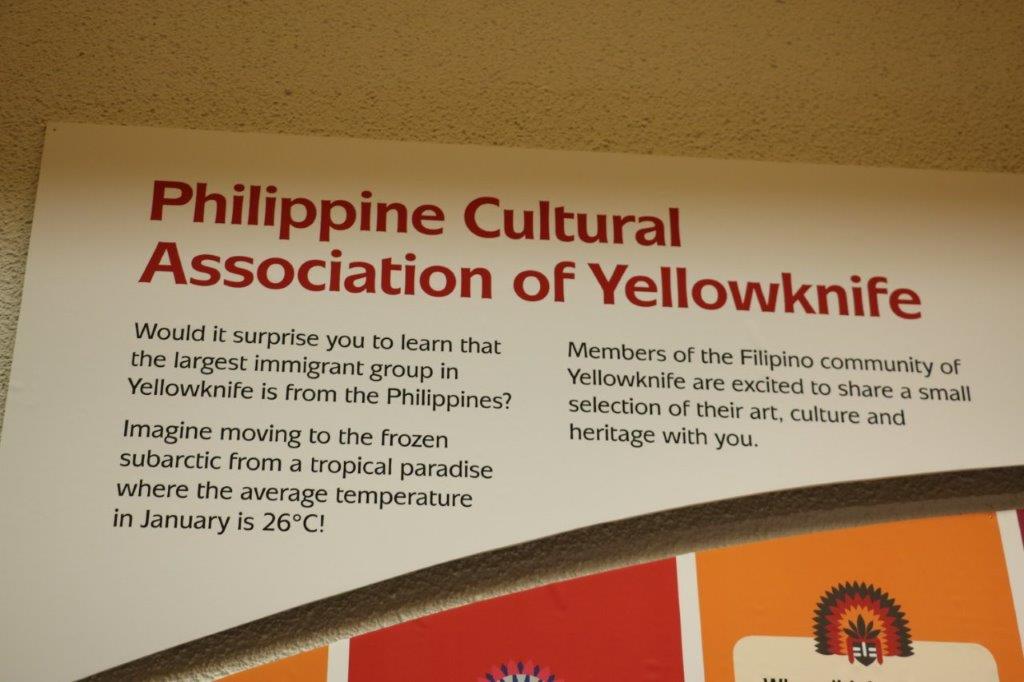
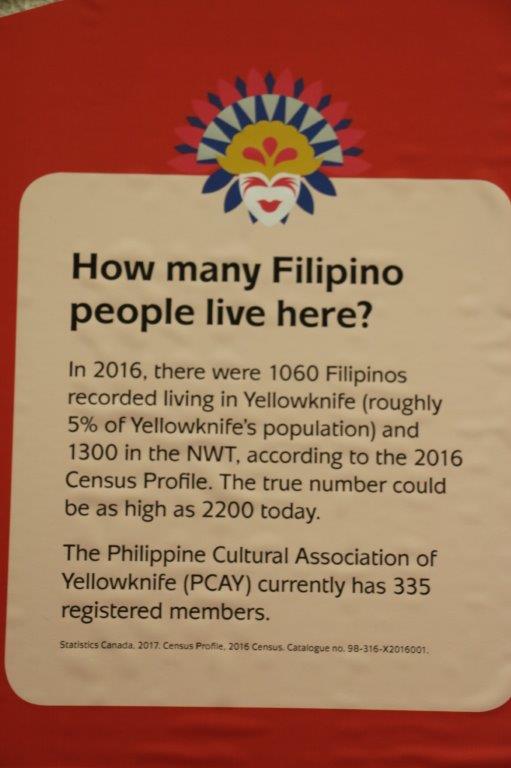
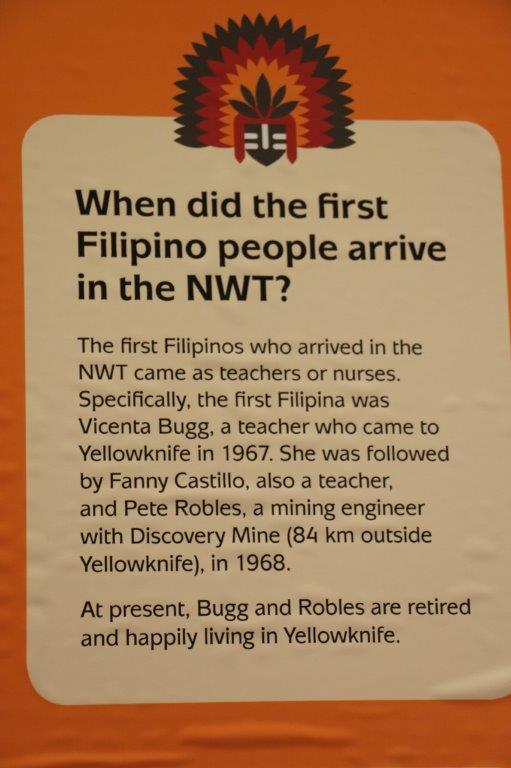
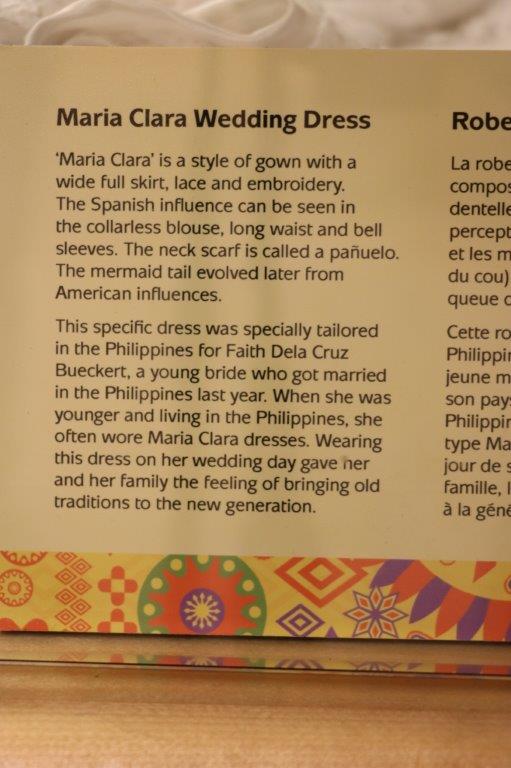
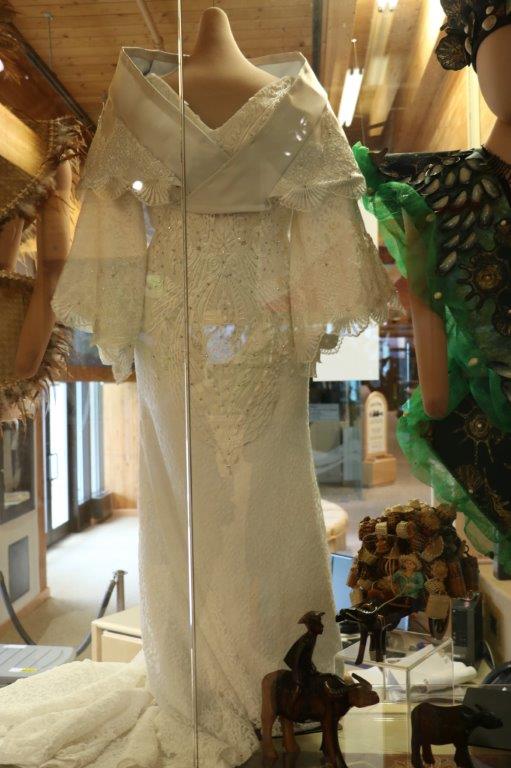
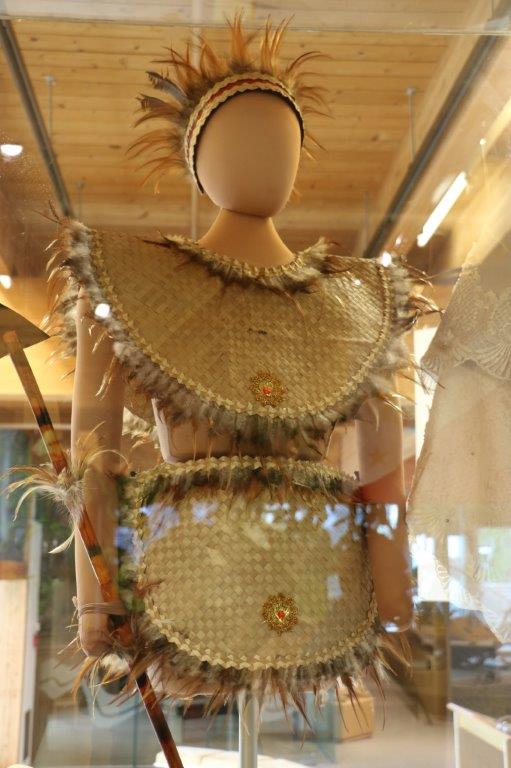
Just off the entrance was an exhibit by the local Philippine community.  Who knew there was a large Filippino population in  Yellowknife?   Not me.  Turns out there are about 2,200 of them up here – which is equal to about 10% of the population of the city. Off to the side of the long, sloping hallway to the galleries there were three displays related to the history or the peoples of NT.

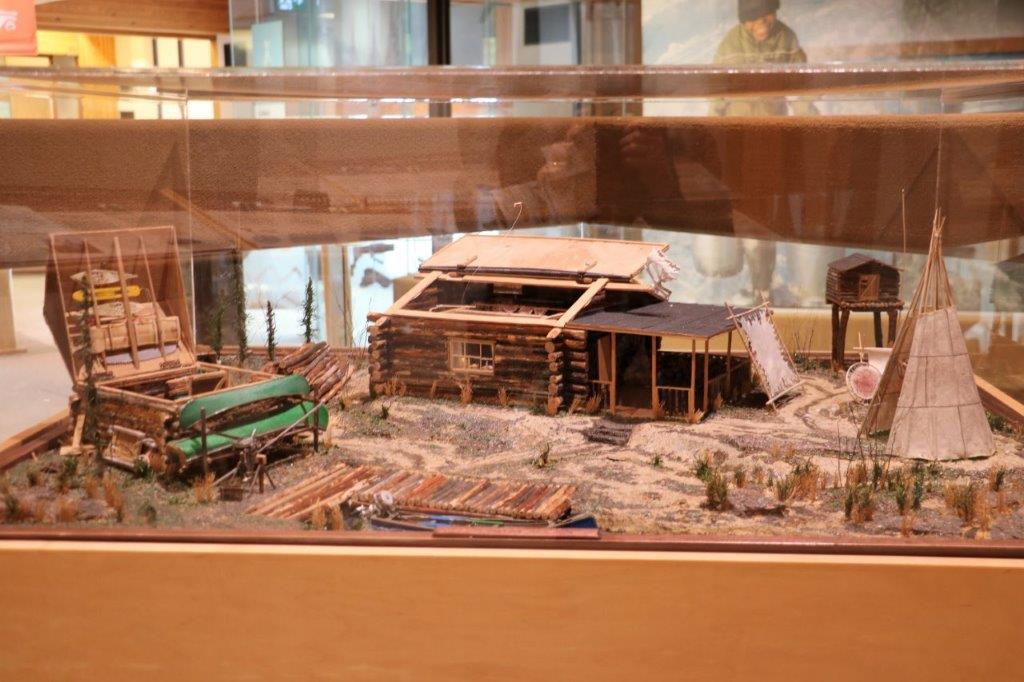
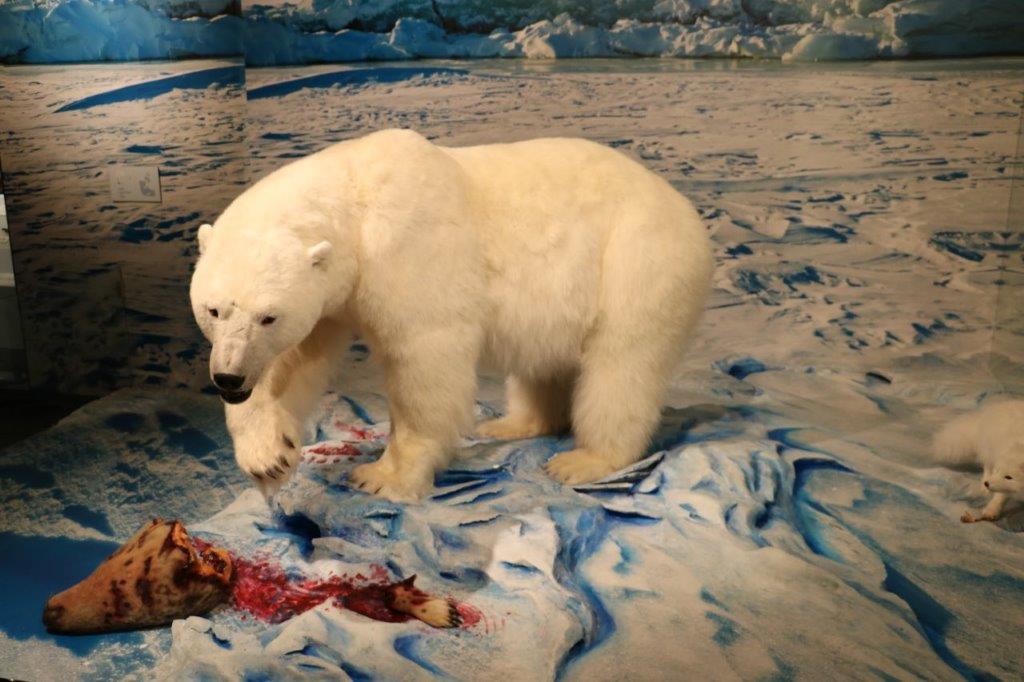
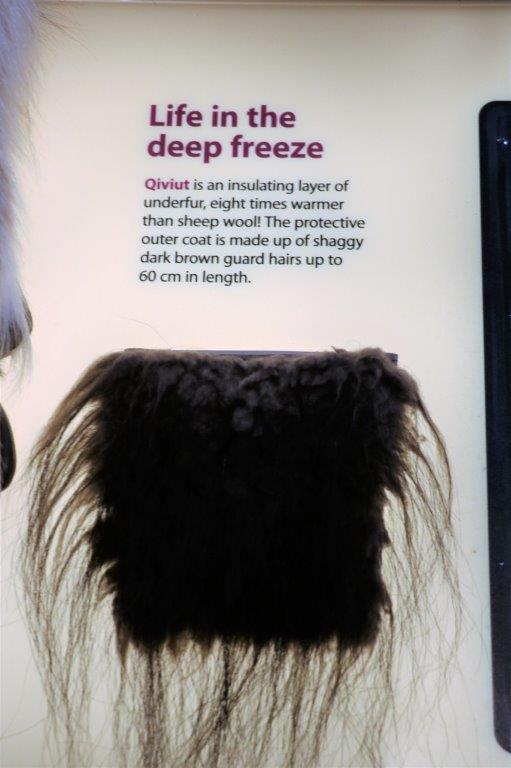
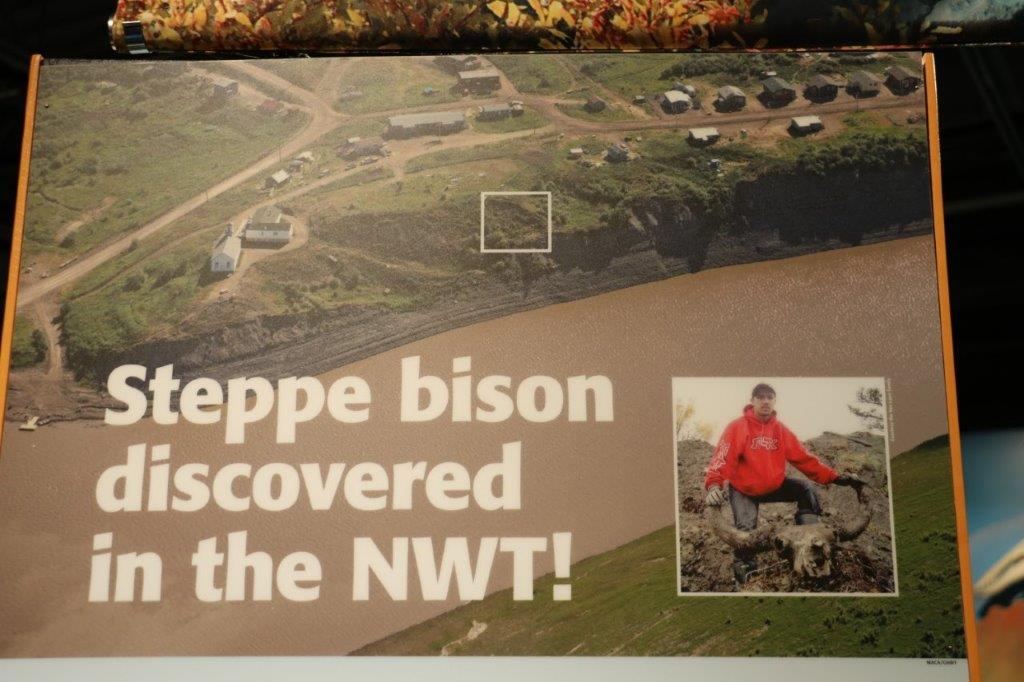
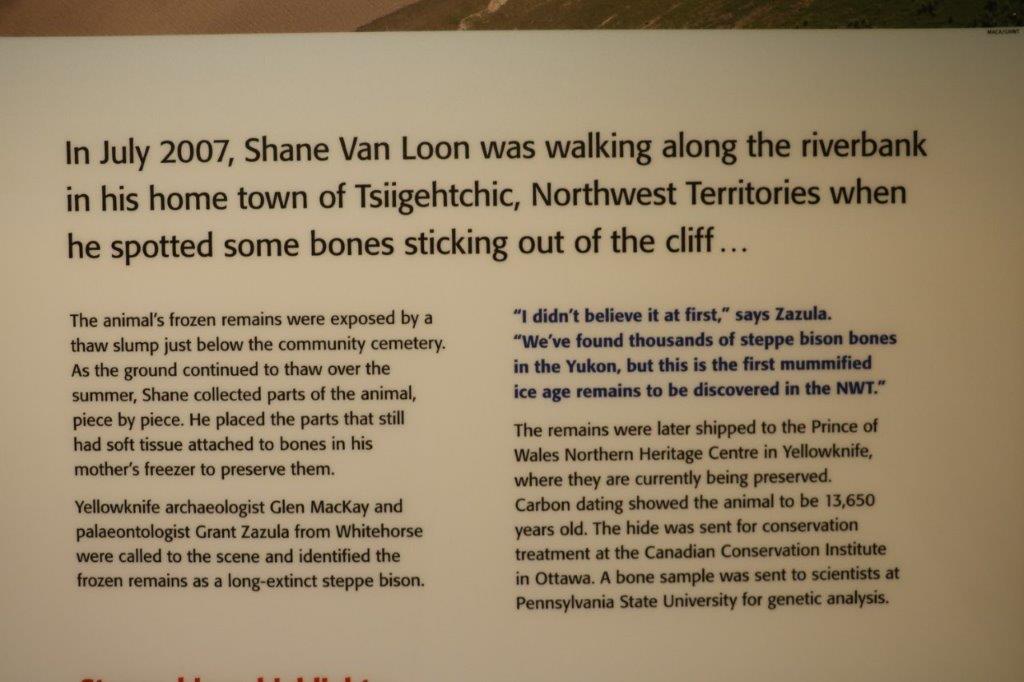
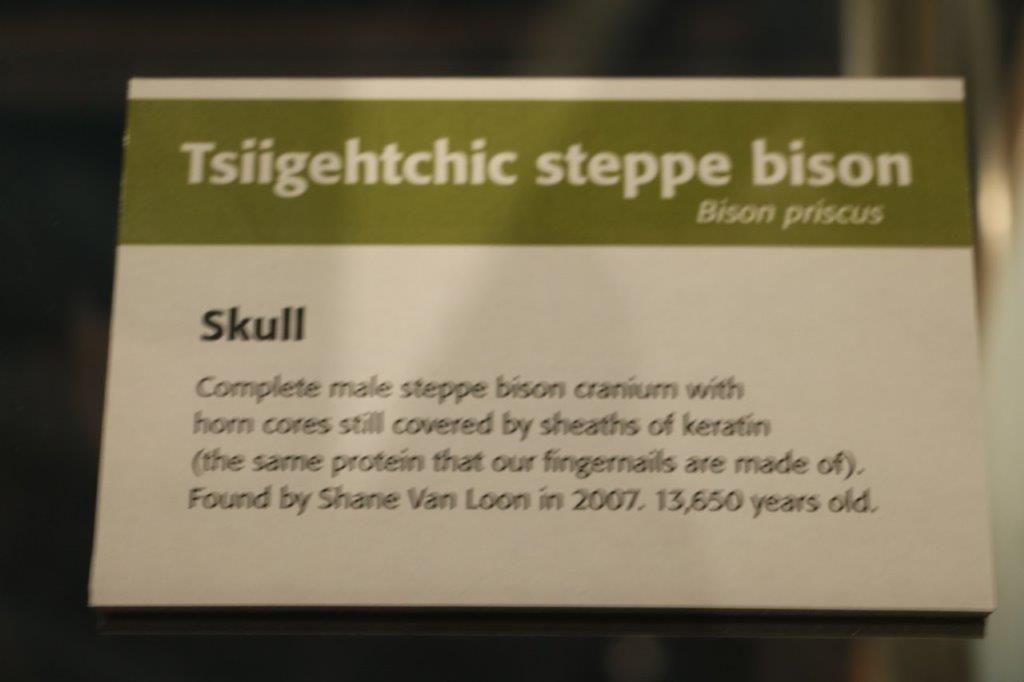
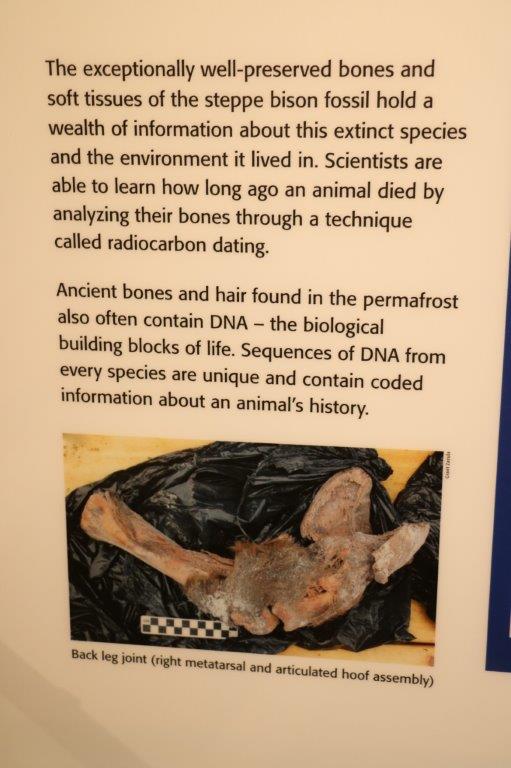
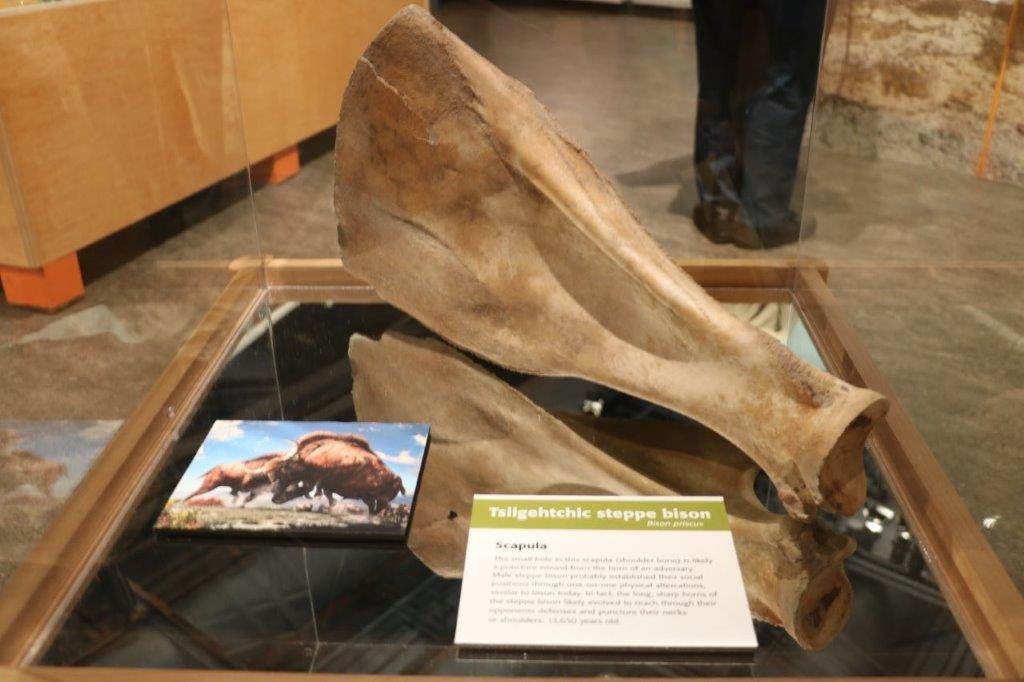
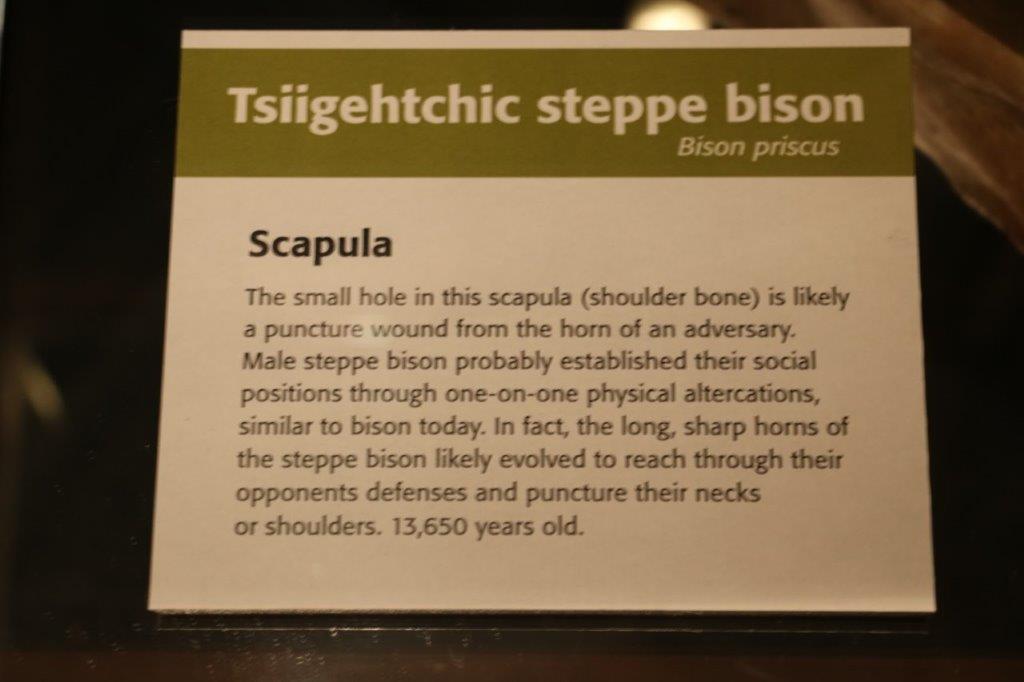
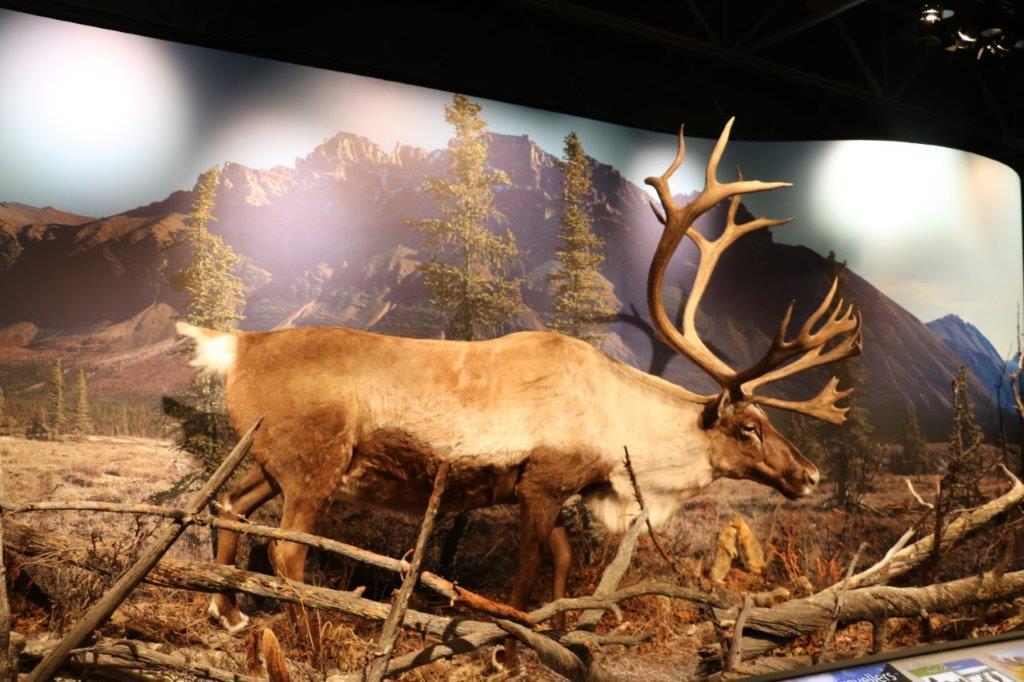
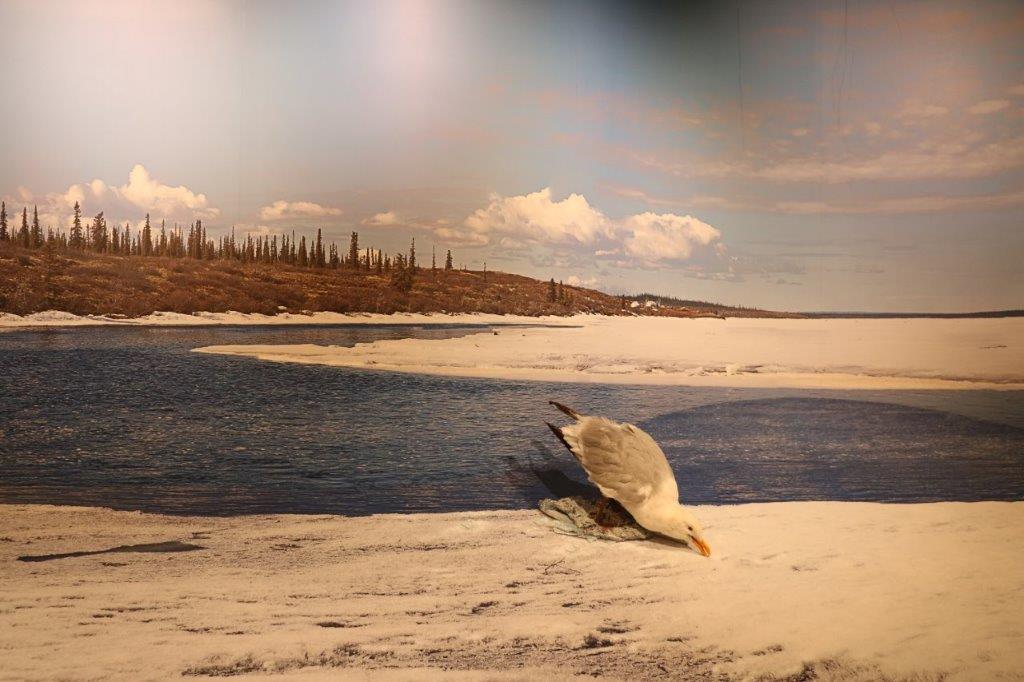
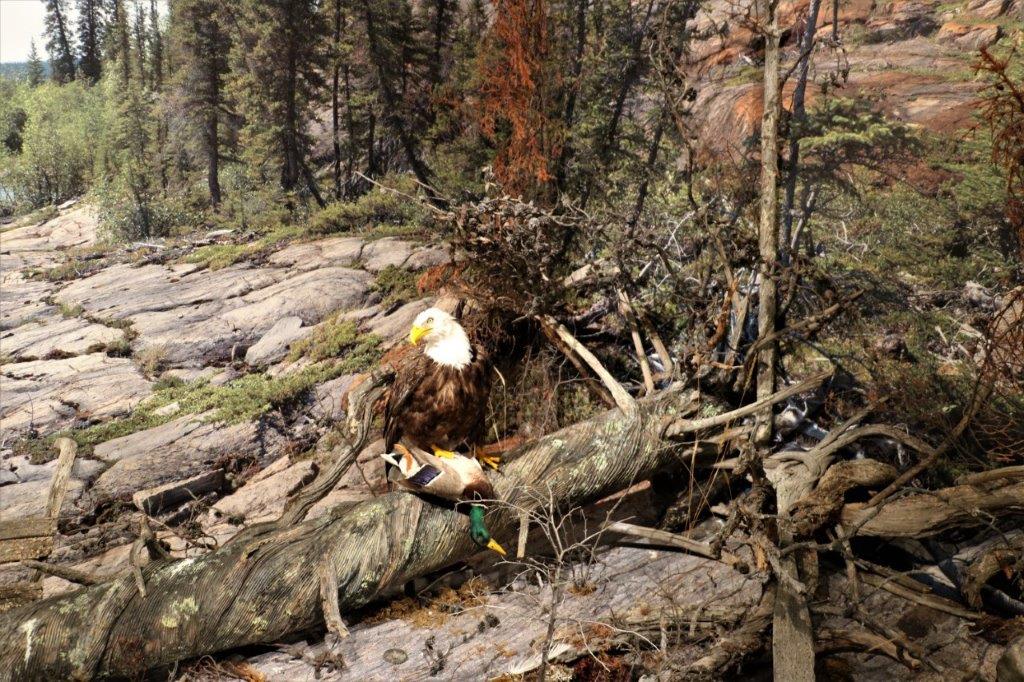
This was a really good scale model of a typical homesite.  The roof of the shed and half of the cabin were open to expose the furnishings, canoes, sleds and equipment.  It was really cool! I would have loved to have it to play with when I was a child. There were two galleries that displayed dioramas of the animals and birds of the north.  They were beautifully done.  The first was of the animals of the Taiga: To me, the most interesting exhibit in the gallery was the discovery in 2007 of the remains of an extinct Steppe Bison. They also had, in a case, some of the skin and some of the fur/hair.  It is extremely unusual to find such soft-tissuse parts of an ancient creature.

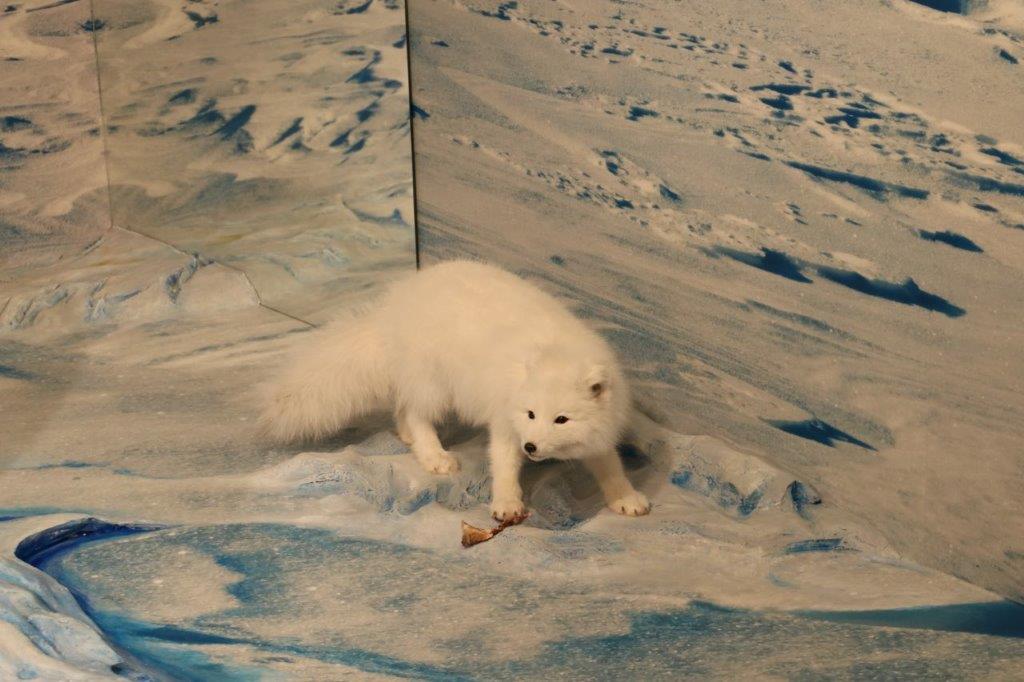
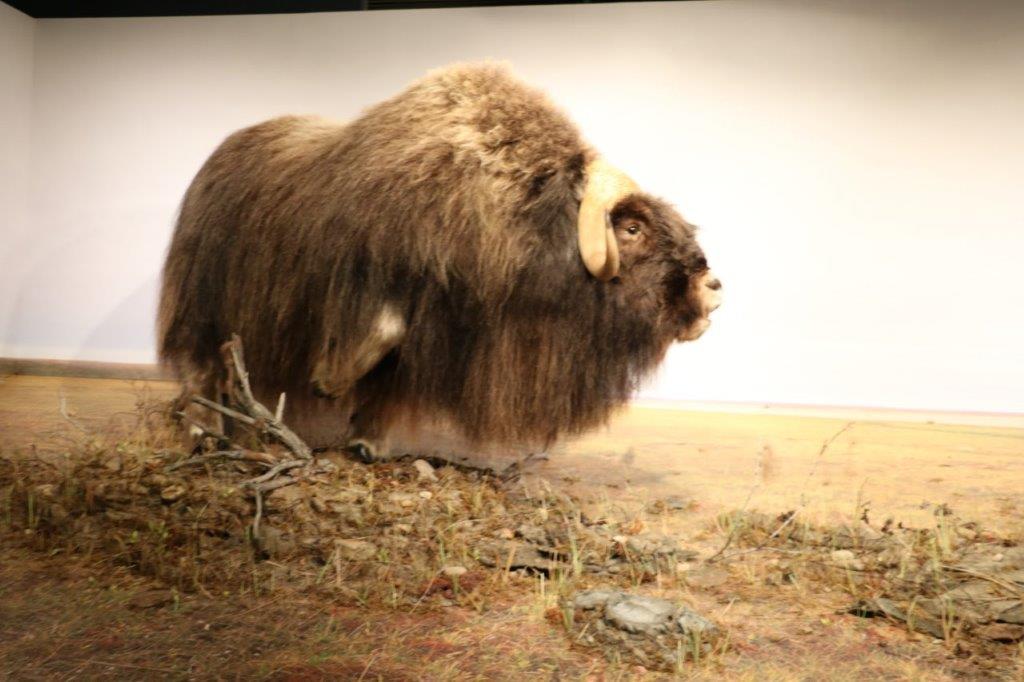
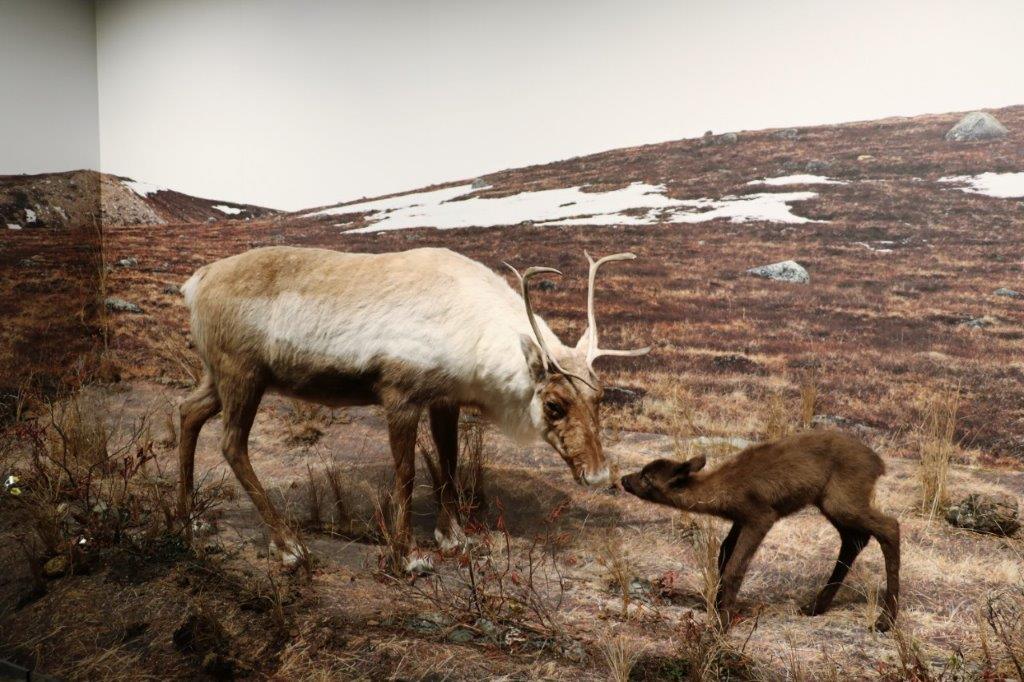
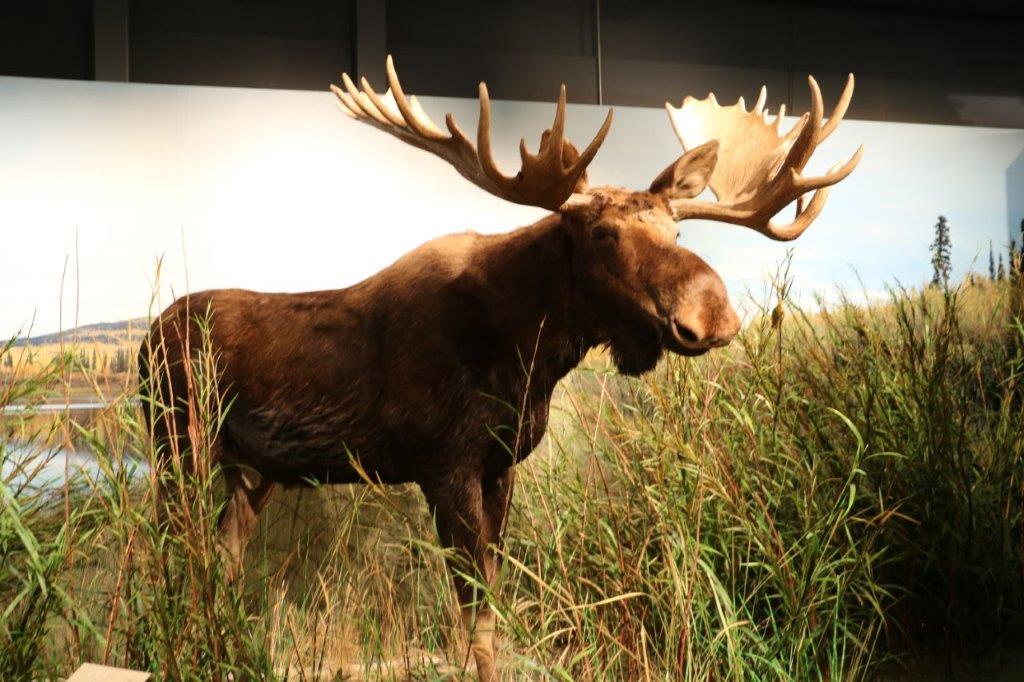
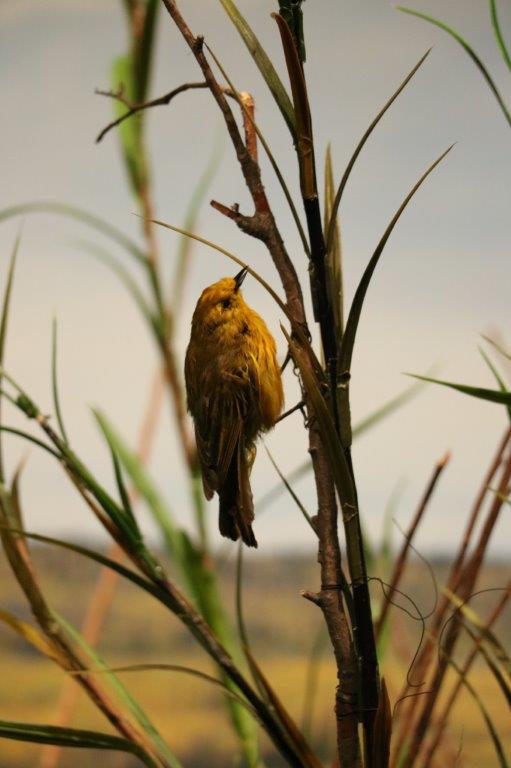
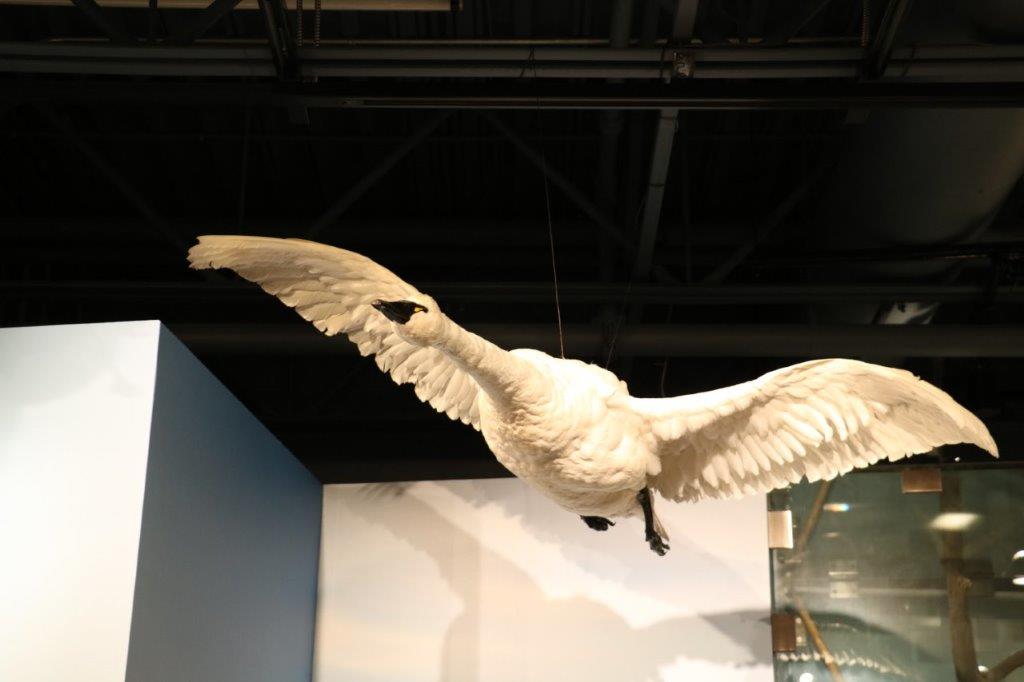
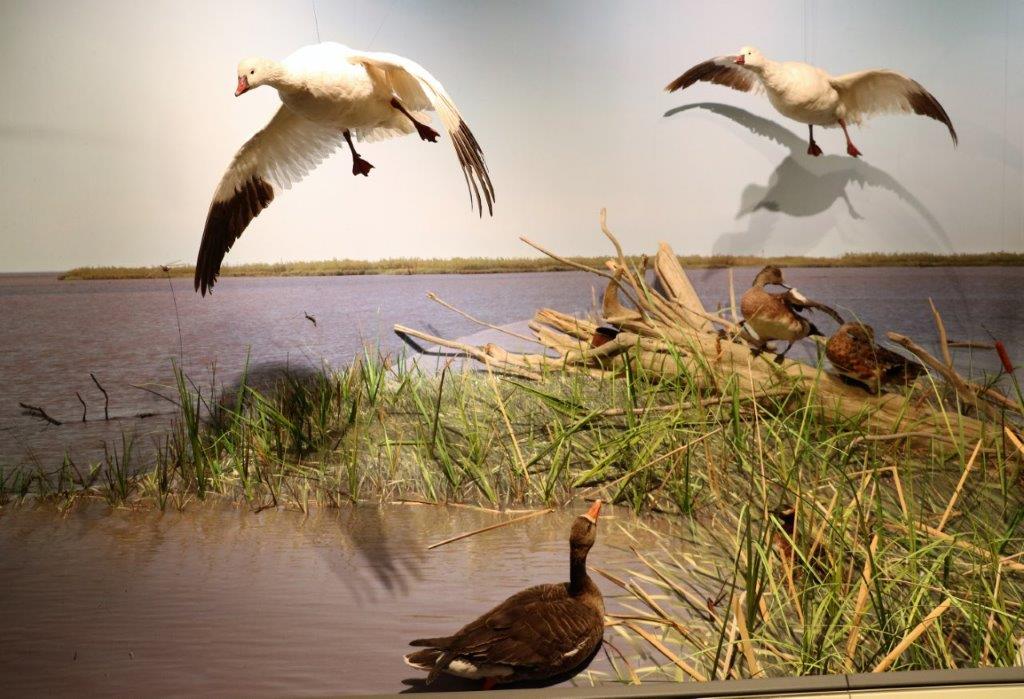
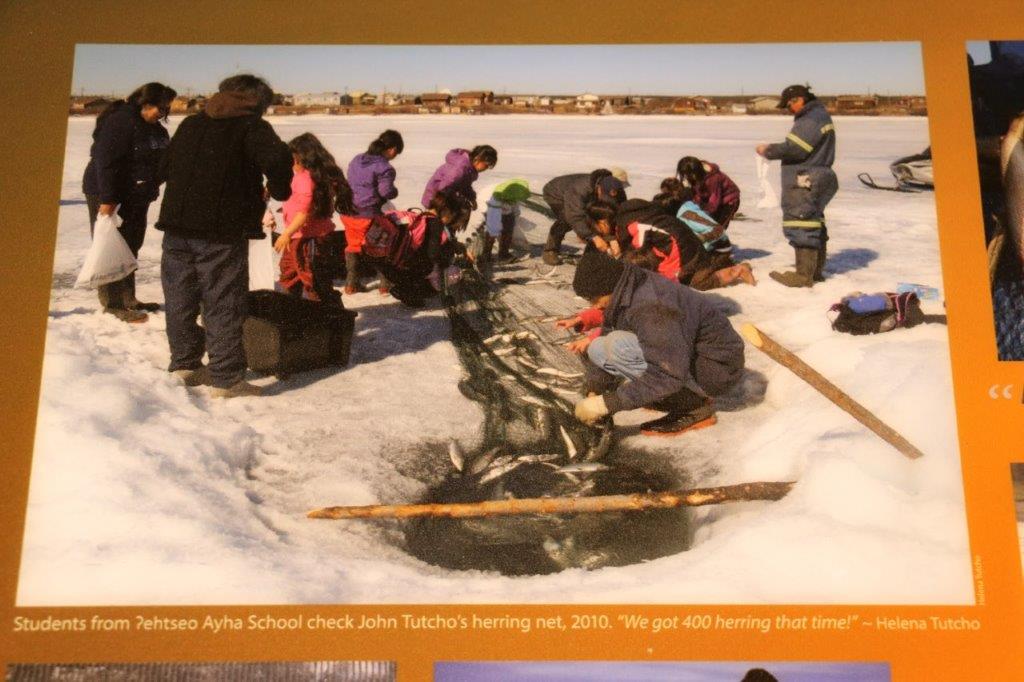
The gallery across the hall was an exhibit of the Tundra. The diaoramas in these two galleries were outstanding.Caribou – they have an annual migration to the calving grounds of thousands and thousands of animals.  This little Yellow Warbler can be seen just past the nose of the moose.                                                                 Tundra SwanThe birds in the ‘air’ are Ross’ Geese, the two on the log are American Wigeons and the one in the ‘water’ is a Greater White Fronted Goose.I liked this photo from a display about the food acquisition skills of the northern people.  Ice fishing with a net!

The fellow at the gas station in Hay River the other day said, “I teach the young people how to thrive in the north.  We don’t teach them survival skills.”  For thousands of years these people have lived off whatever the land and the sea provides for them.

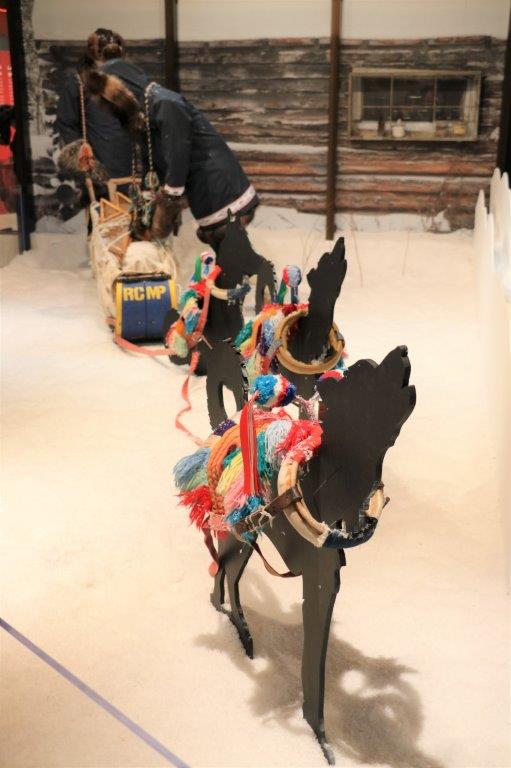
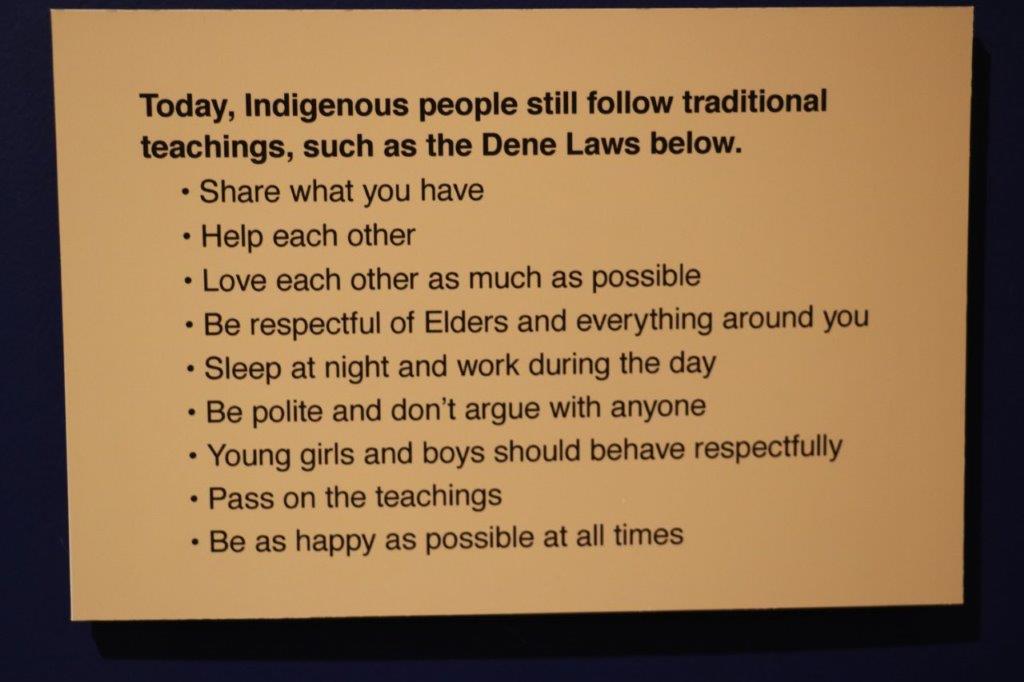
The third gallery on the main floor had an exhibit about the Special Constables of the RCMP in the Northwest Territories.  These were local aboriginal men that assisted the non-northern constables sent up to the territories by the RCMP.  The Special Constables taught them how to live in the north, acted as guides, and were an integral part of the successful operations of the detachment in the remote regions of Canada.

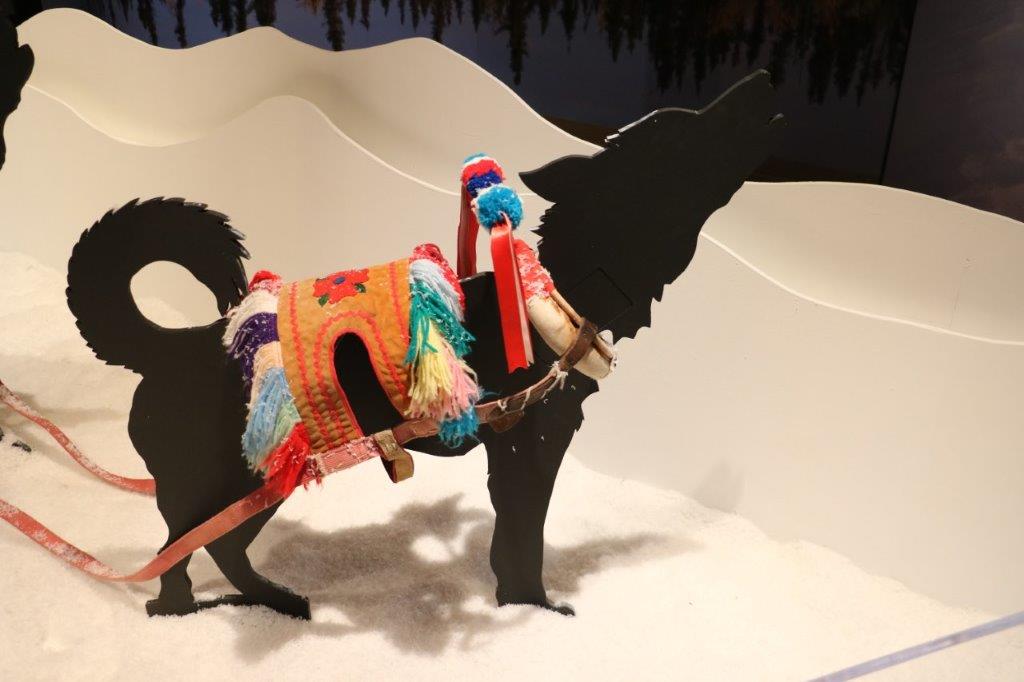
I did not know that they made fancy harnesses for the sled dogs.I was enjoying all the stories so much I forgot to take many photos in that gallery.

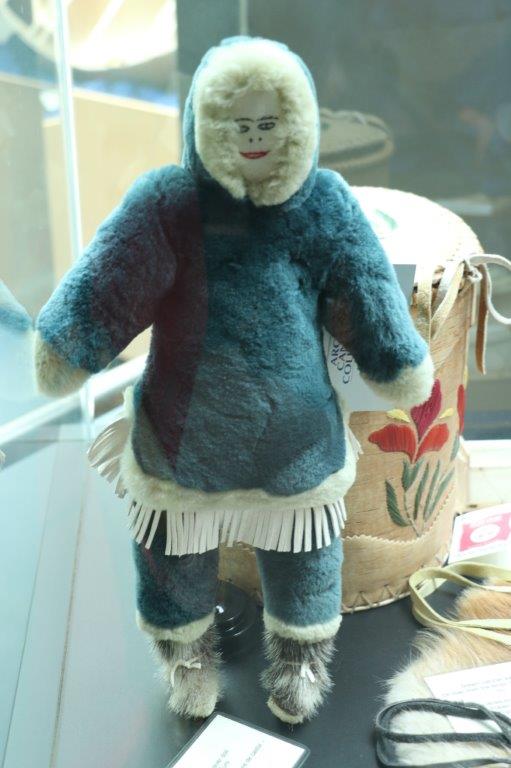
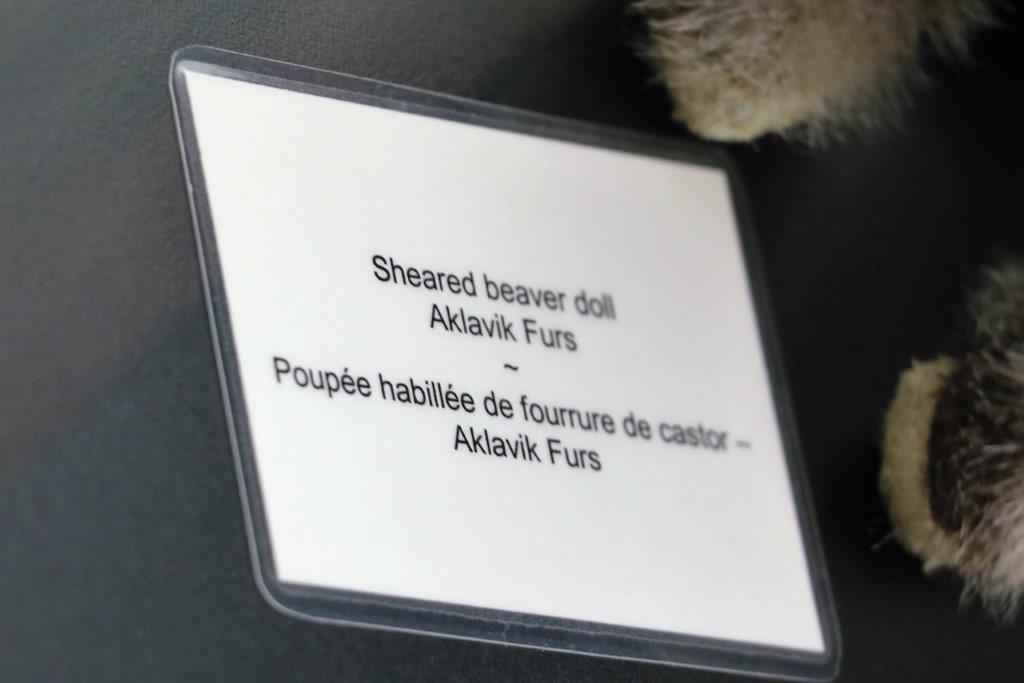
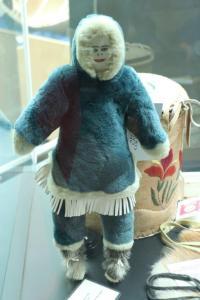
The last gallery was upstairs and was called Narrative Threads.  It was photographs or examples of bead work, or crafts, or clothing.  There were dolls made from hide with real muskox coats. There was a hare fur coat for a child and many other beautiful and functional beadwork and hide objects.  My favourite story was at the far end of the room.
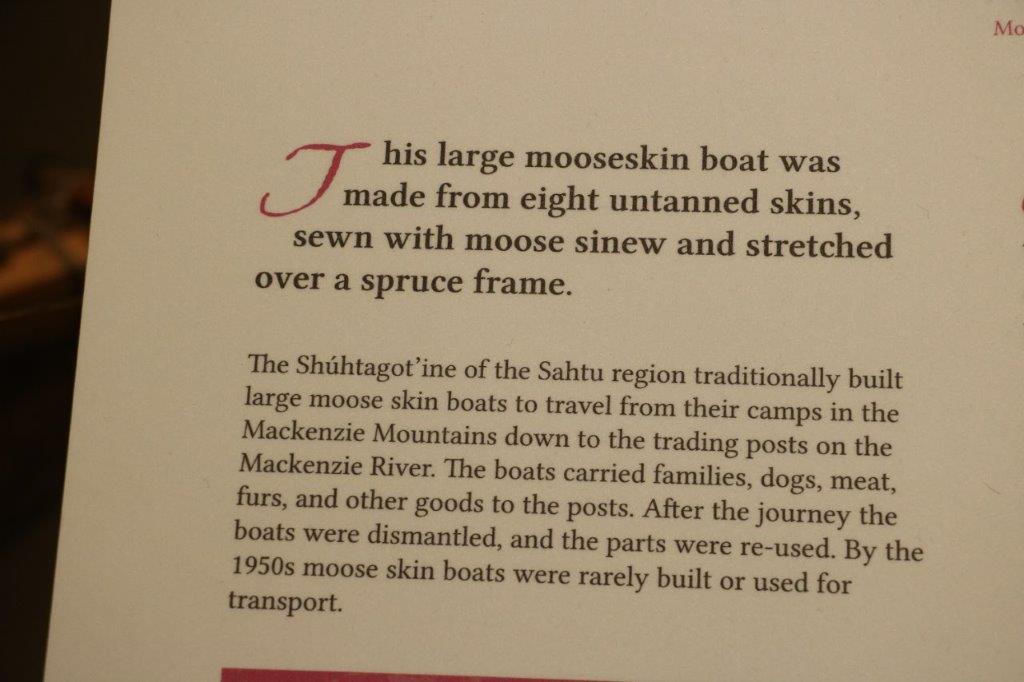
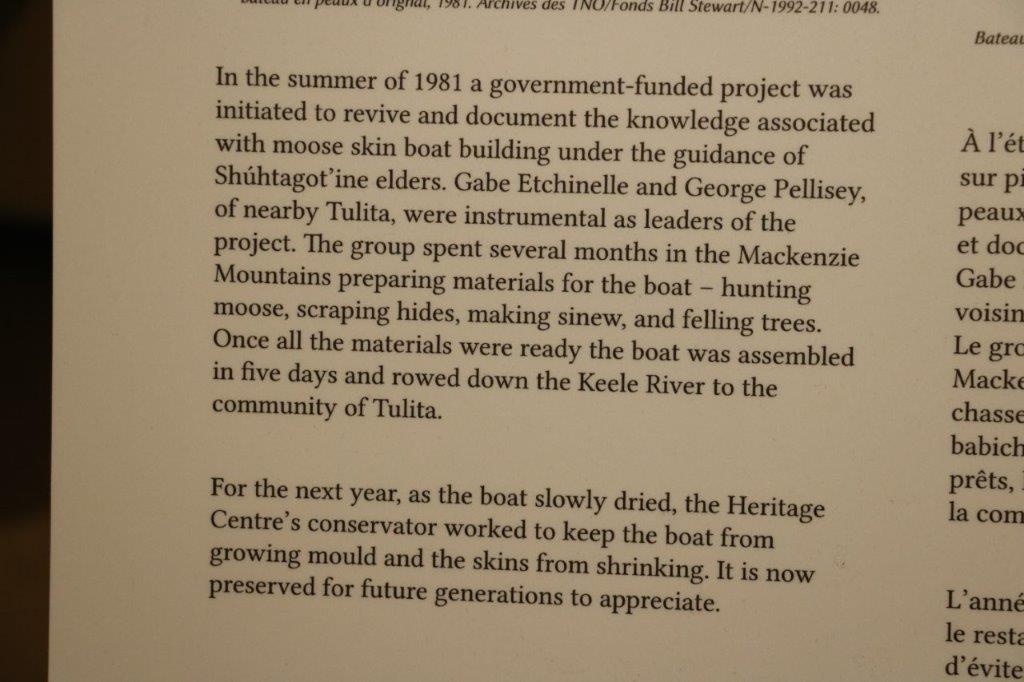
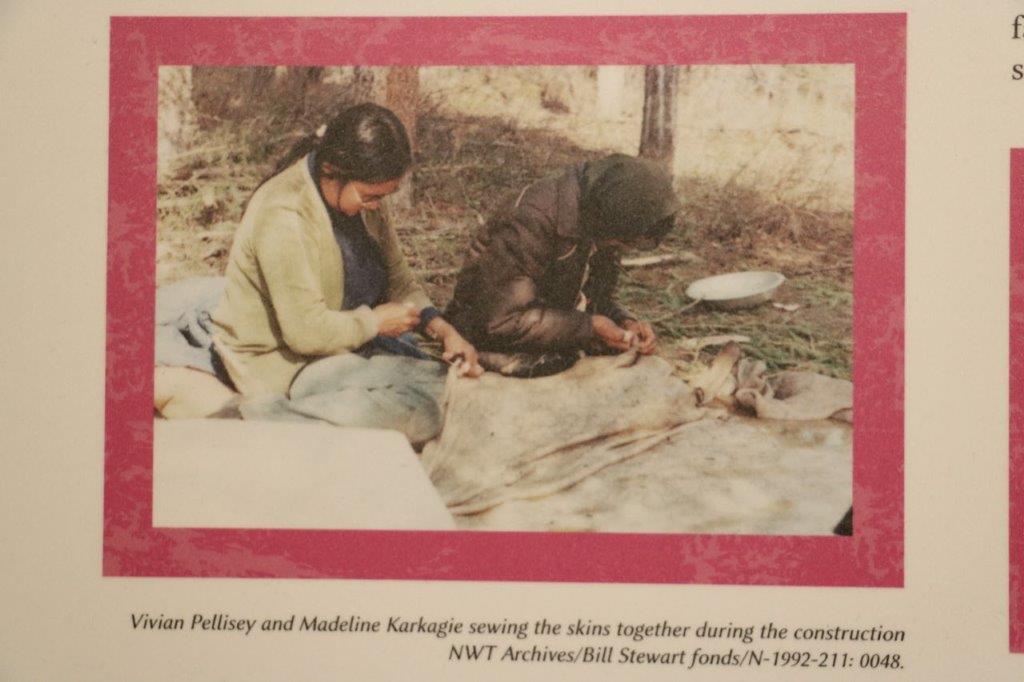
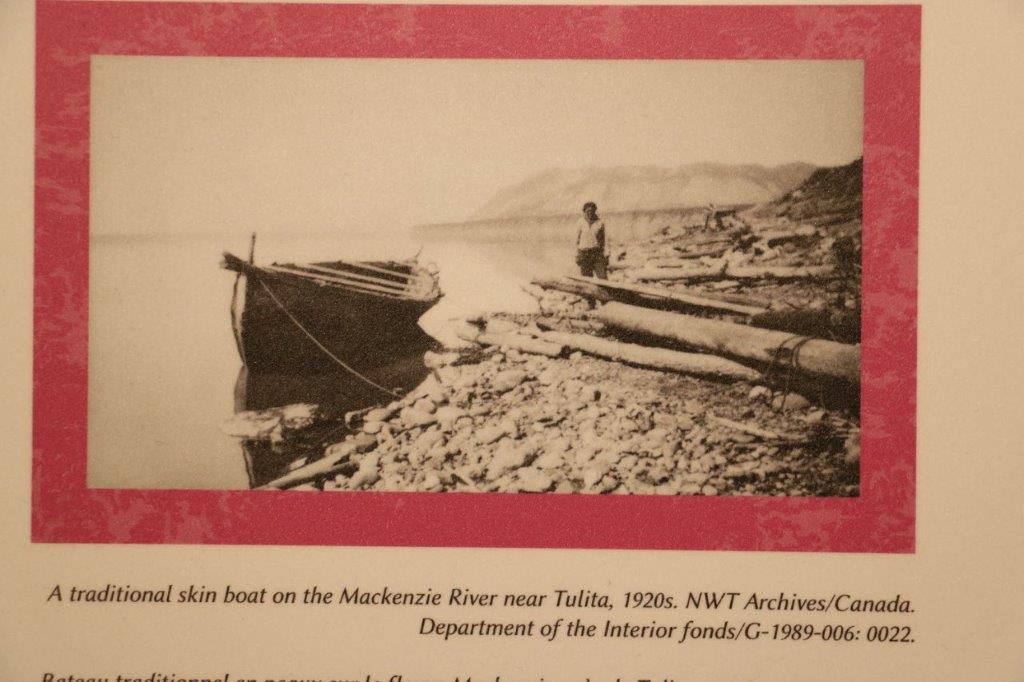
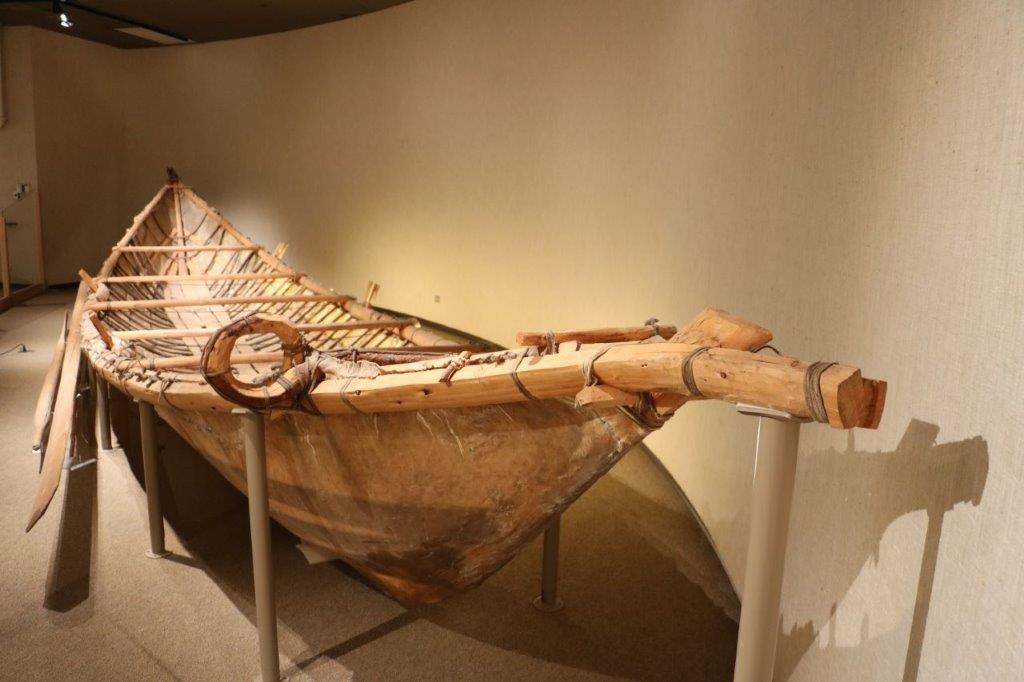
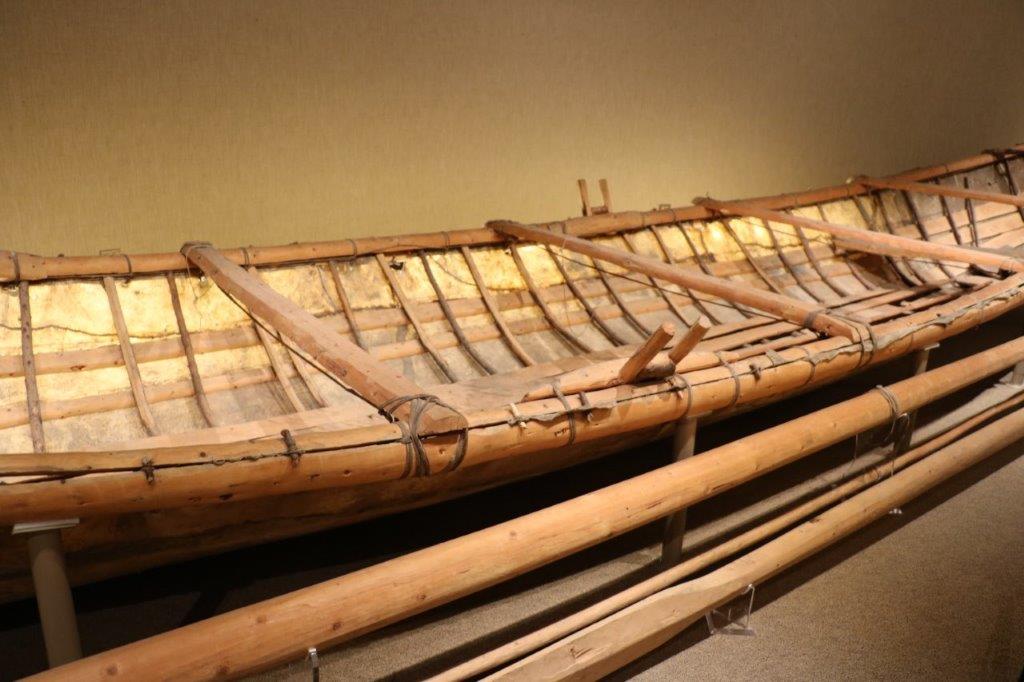
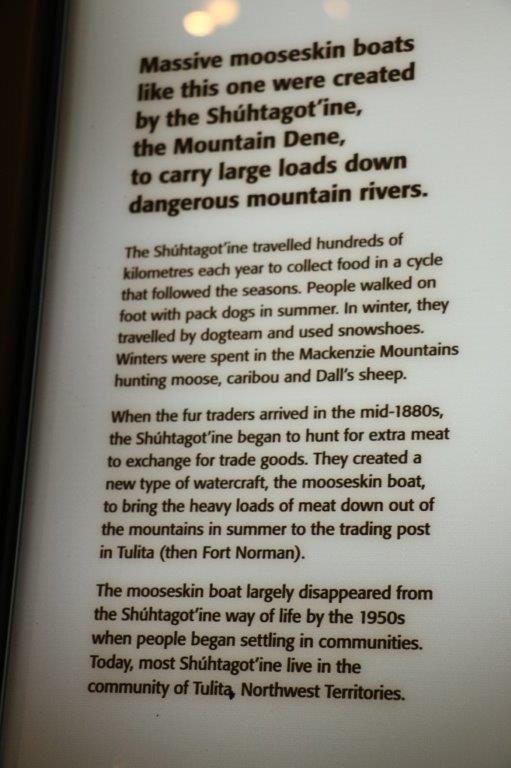
There was a video playing that documented the entire process of the construction of this huge canoe.  It took ten people to carry/drag it to the water when it was finished. There are no nails in it.  The bottom frame is made with bent saplings, the large pieces are lashed with rawhide and the moose hides are also stitched together with rawhide.  It was an amazing boat.  A fellow who was watching the video said there were plans to make another one; he thought this year.  What a great way to keep ancient skills alive in the next generation.

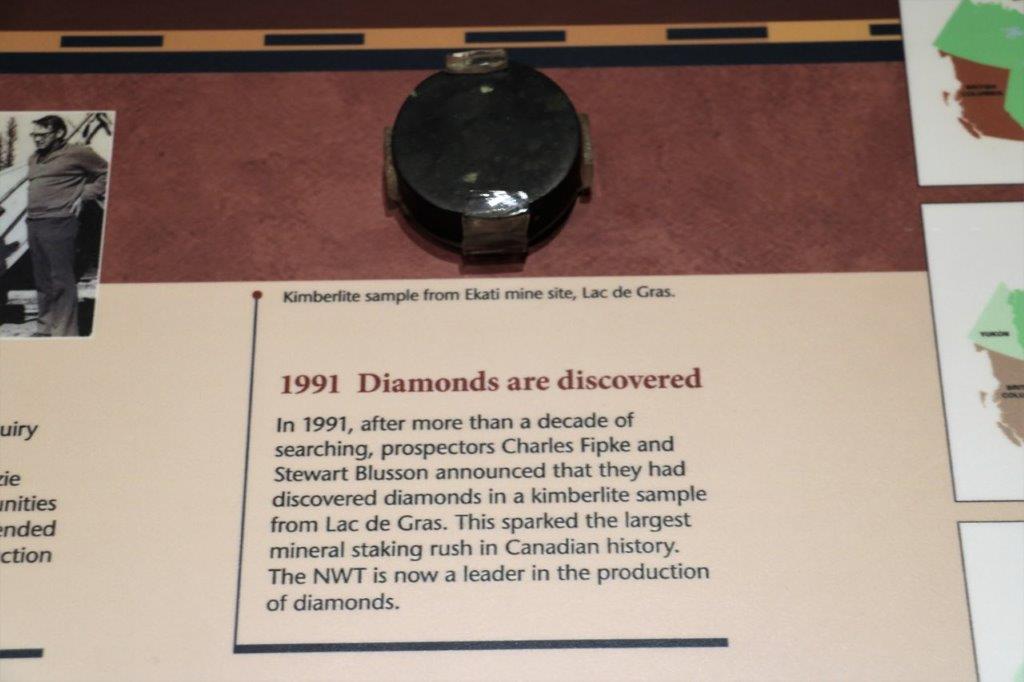
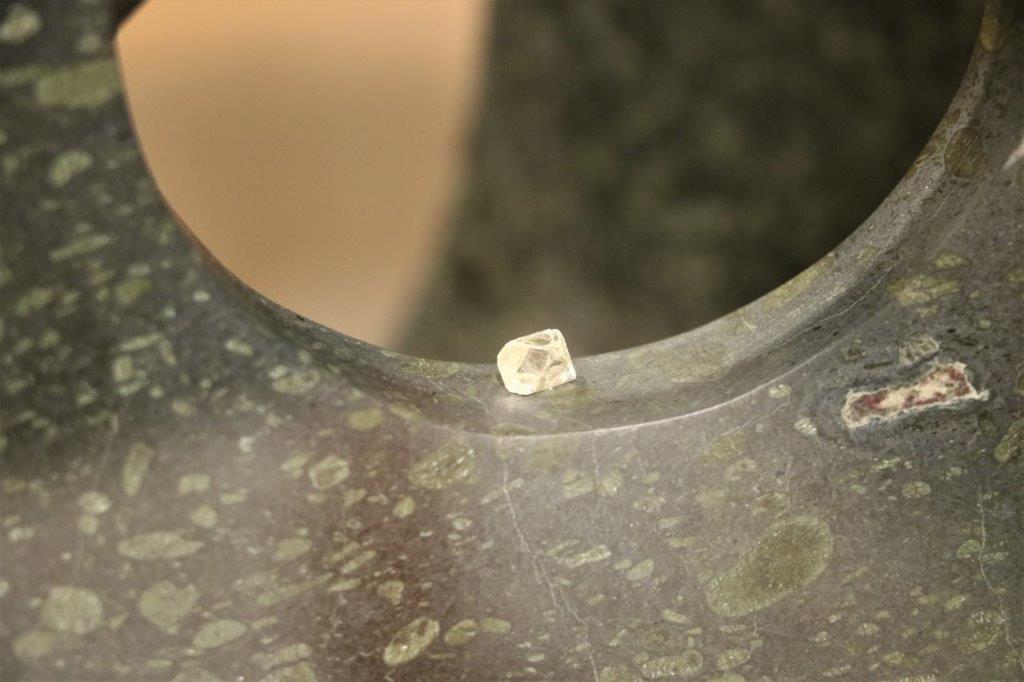
That concludes the blog on the museum component of our day.  We had hoped to tour the Diamond Center and learn about the discovery and extraction of Canada’s Polar Bear Diamonds, but it was closed. This is sad because if it is closed on a Saturday, I expect it will also be closed on a Sunday.  Since we leave  Monday morning and have a nine-hour driving day (at least half of it on a gravel road – 629 km or 391 miles) – ahead of us, we will not be staying in Yellowknife until the 10 am opening for the one-hour tour.  Bummer, it would have been interesting I think.

2018 June 23 – Yellowknife, Northwest Territories (Part 1)

We were up at 8 and had finished breakfast and checked email before leaving the hotel at 10:30.  It was overcast and dry when we got up, pouring rain by the time we finished our showers, and not raining again when we left.  This, we were told, had been the pattern for the past two weeks.

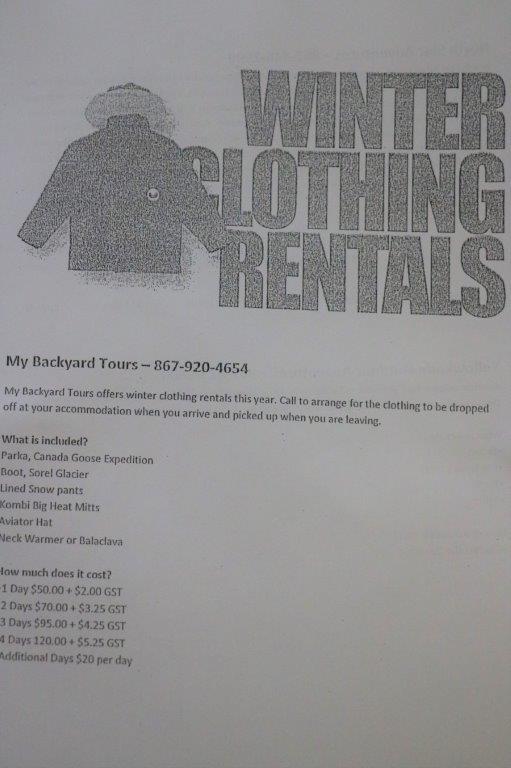
I saw this flyer in a tourist information display case near the elevator as we were going back to our room after breakfast.  Where else would you see a list of winter clothing you could rent?I wanted to get a copy of the walking tour of Old Town from the Visitor’s Center so that was our first goal.  Unfortunately we couldn’t find the Visitor’s Center.  We followed the map, confirmed by the big ? signs, but never found the building. We drove past where it should be at least four times with no success.

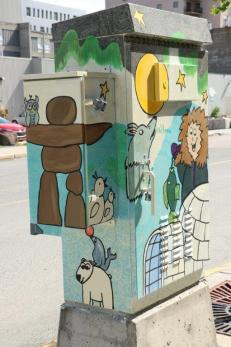
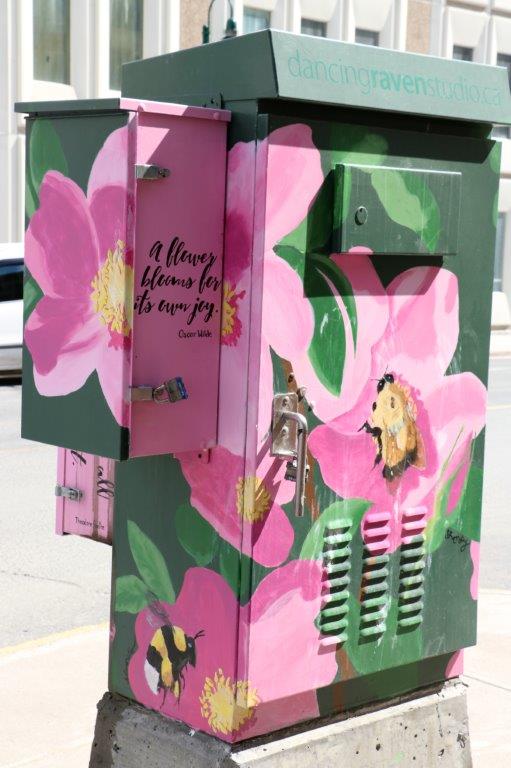
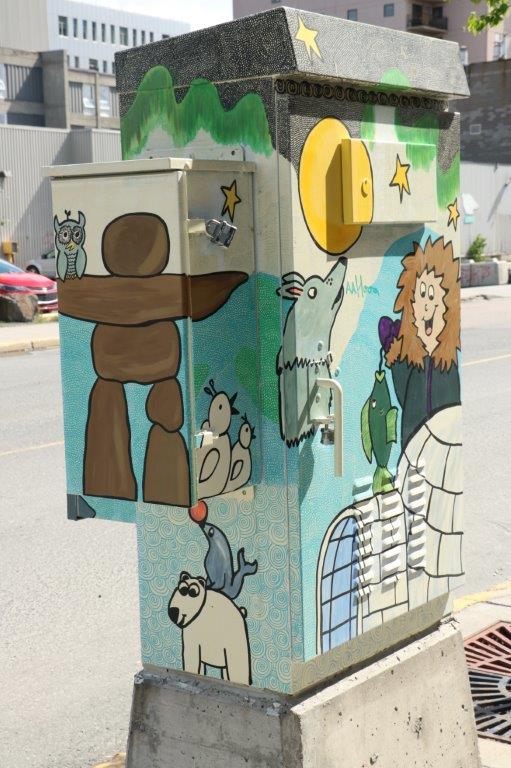
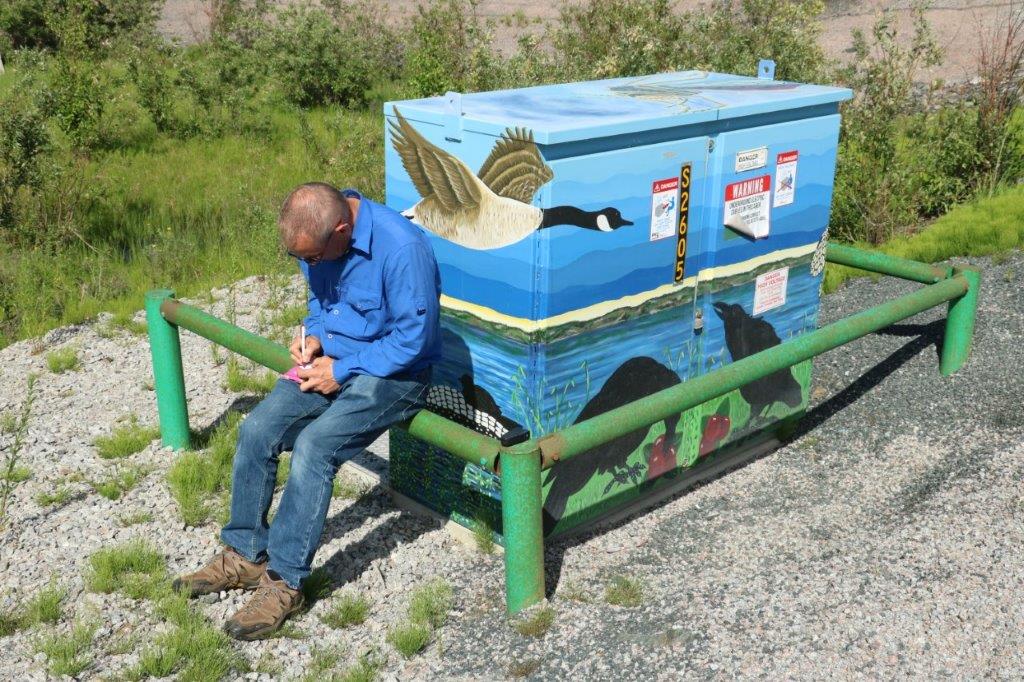
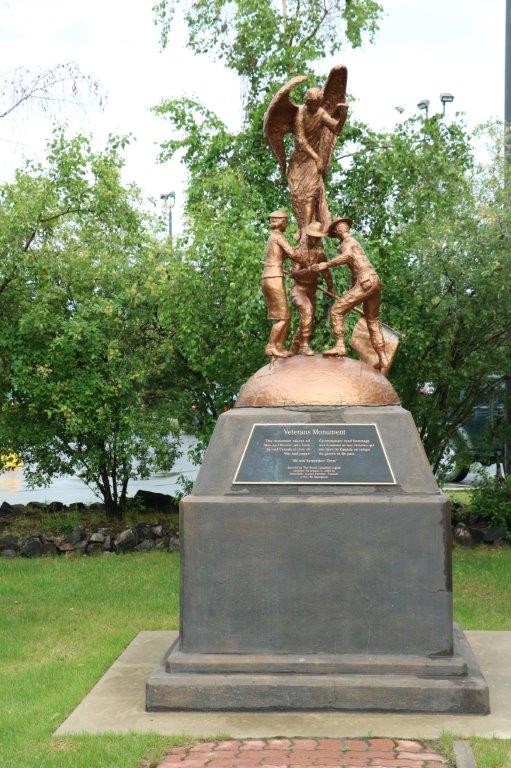
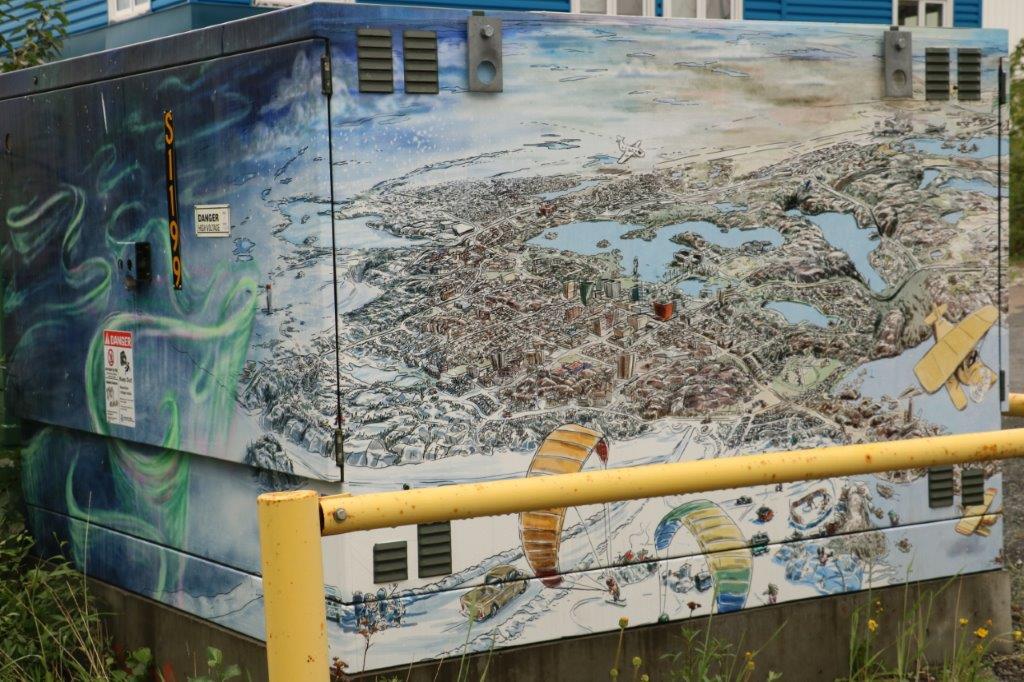
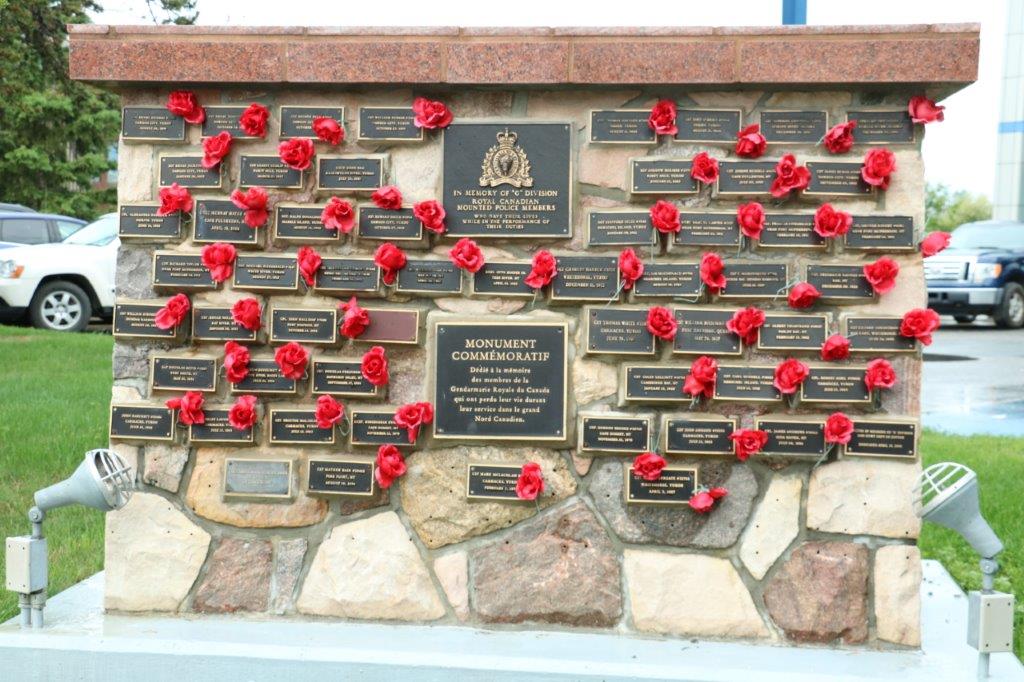
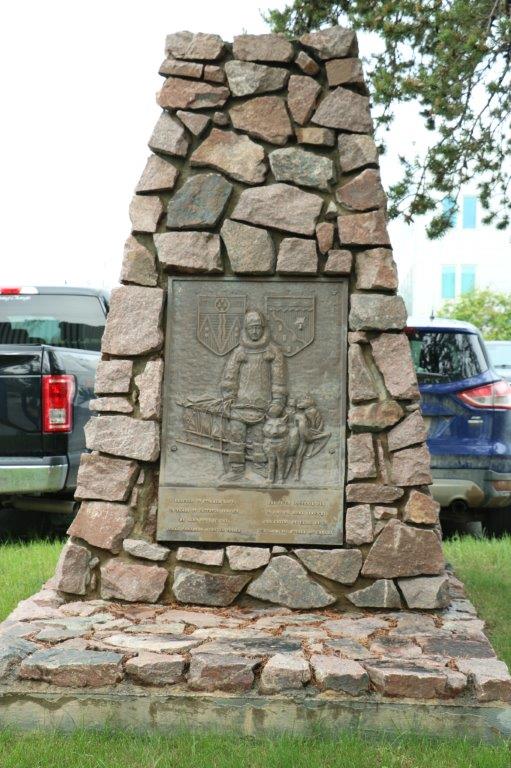
While we were searching for the Visitor’s Center we did end up doing a walk down by Frame Lake.  We parked near the Department of Defense building and went over to the memorial in the garden.  During our day we discovered many memorial cairns or plaques in various places around the city.The city has embarked on a beautification project.  Many of the hydro boxes have been painted.  I loved this one.  On the other end there was a depiction of swirling snow.  It was beautifully done. These two memorials were for RCMP members who had lost their lives in the line of duty in the Northwest Territories and the Yukon.  The other one commemorates the vital role played by sled dogs. This totem was carved and erected in 1971 for the centenary of British Columbia with the union of Canada. No idea why it would have been placed here.  It sits in front of city hall, which is the building above.
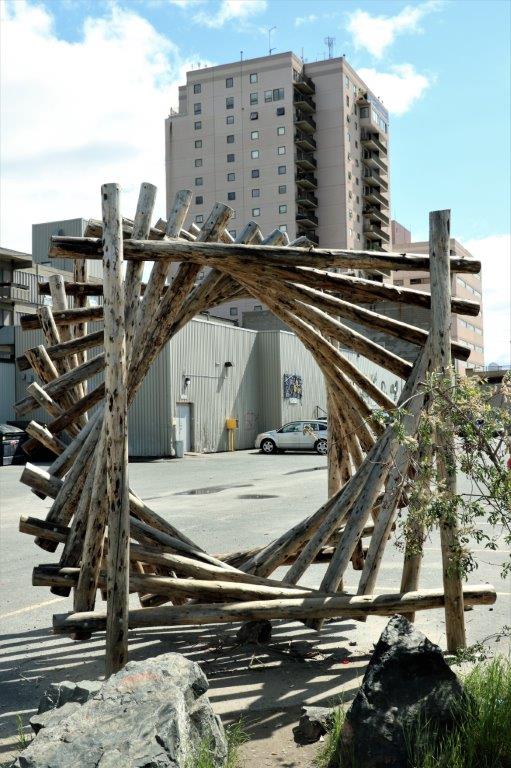
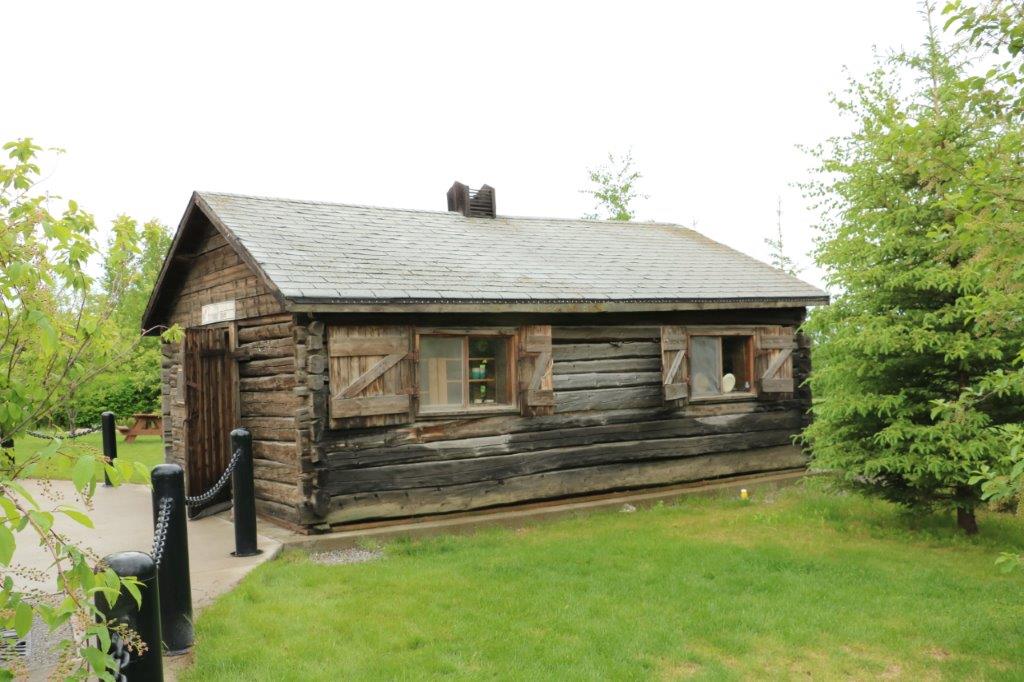
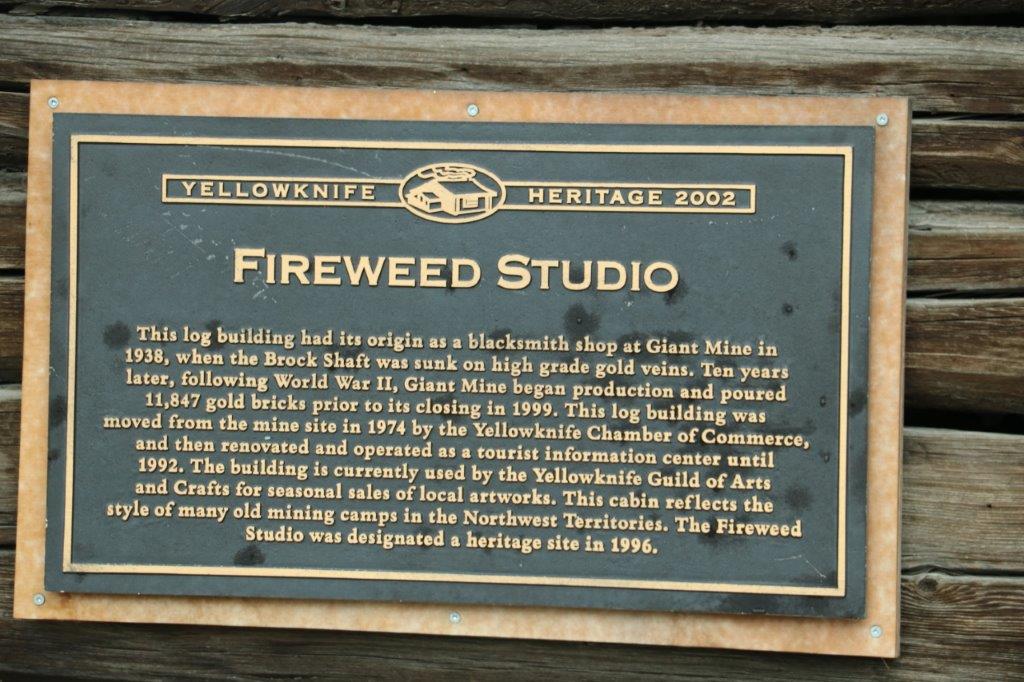
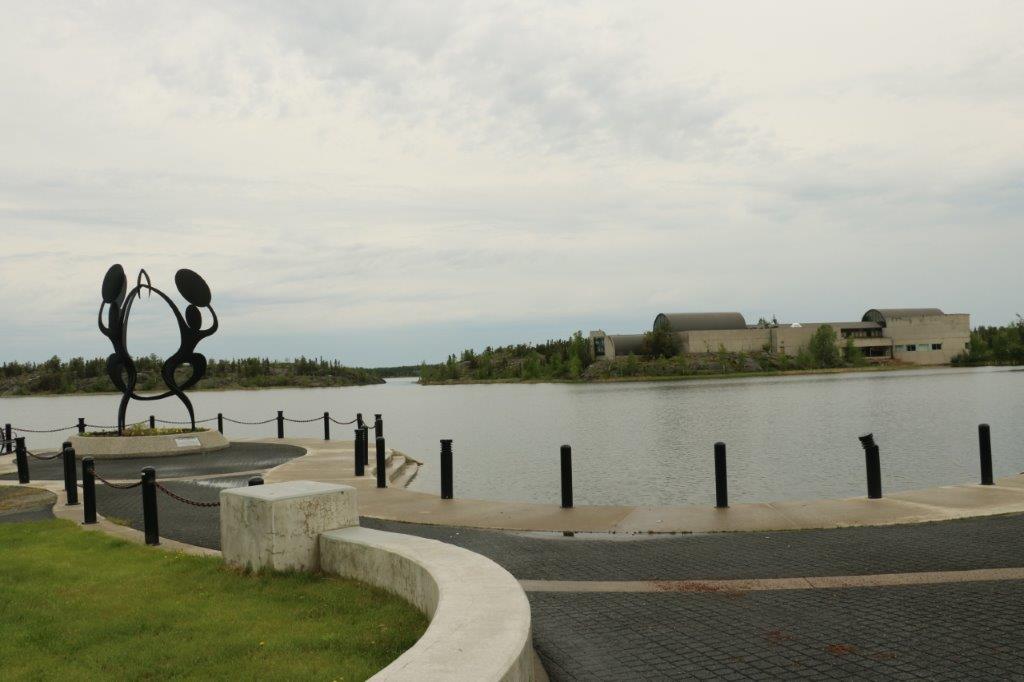
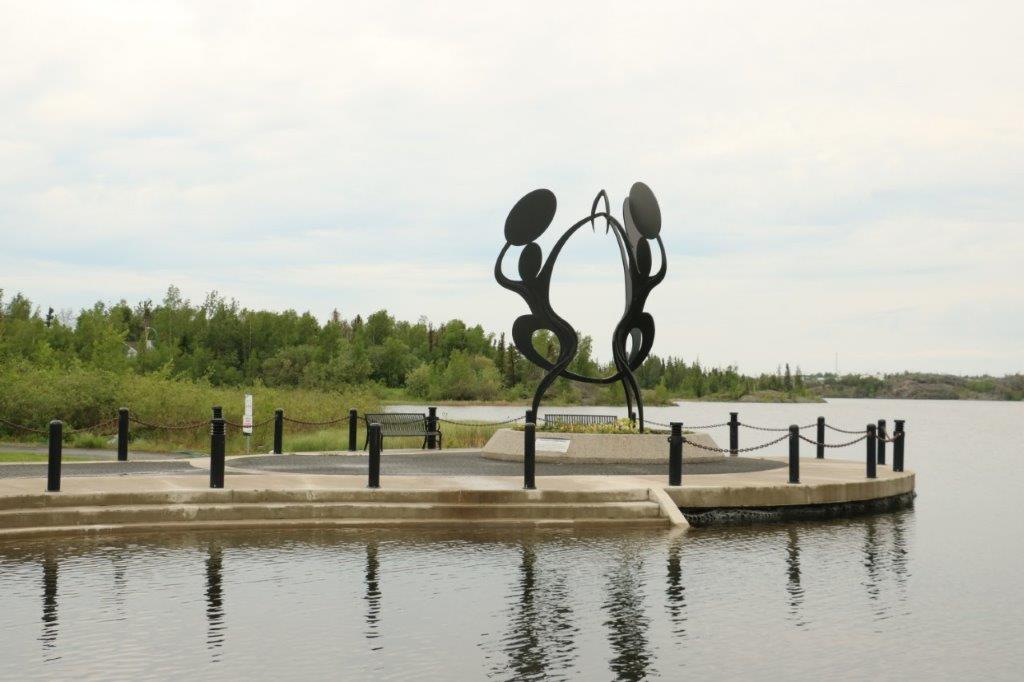
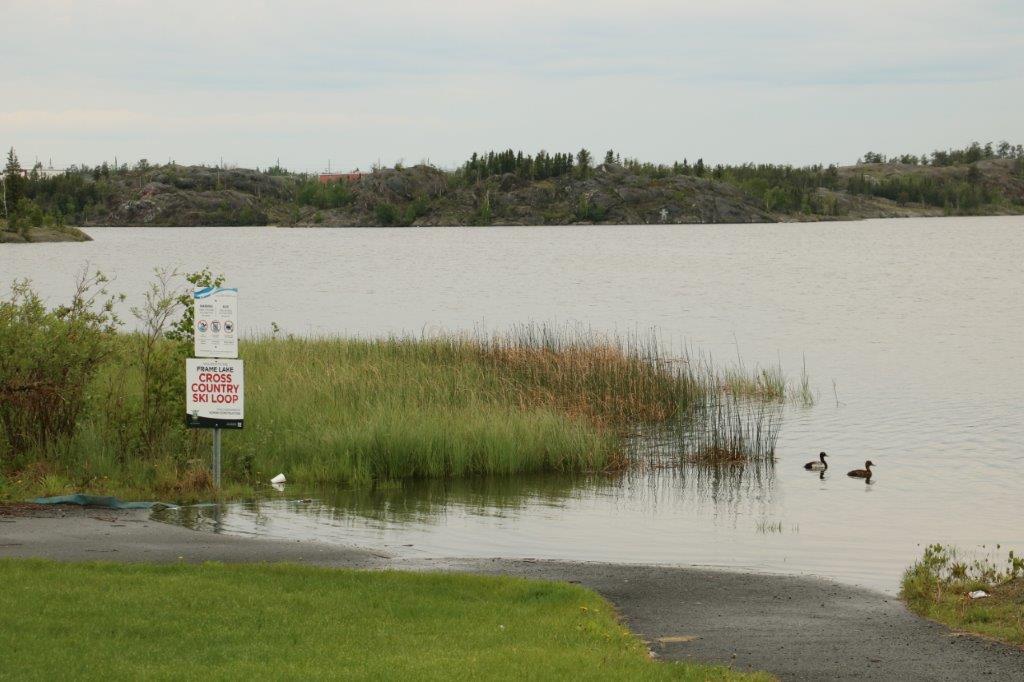
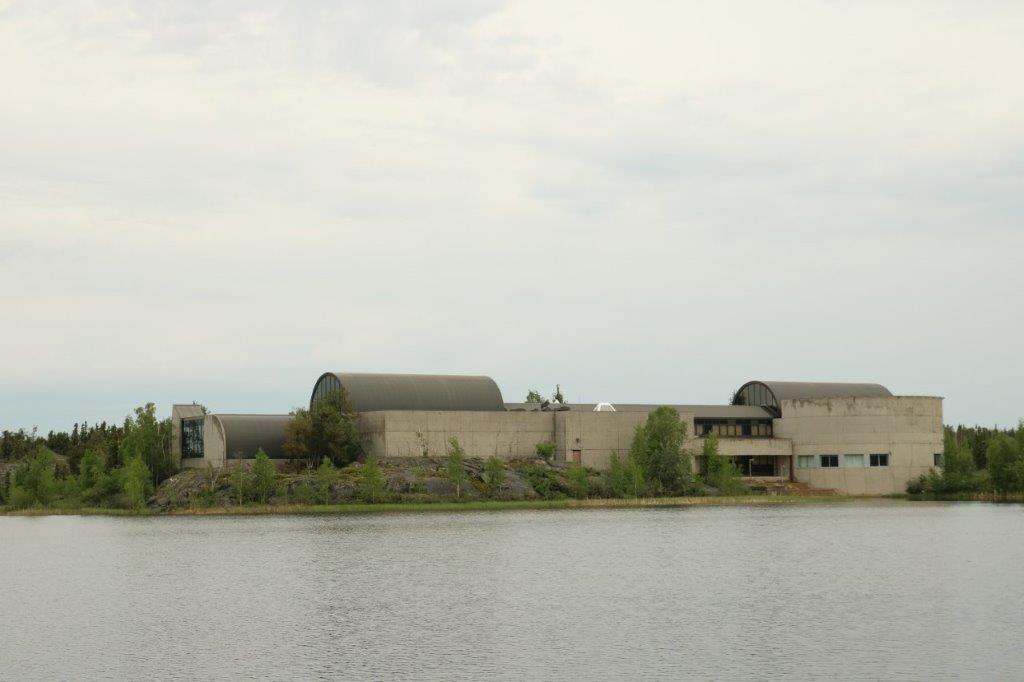
The tourist information center, at one time, was housed in this little log cabin.  It seemed like all the signage still pointed you toward it, yet it hasn’t been the Visitor’s Center for many years.  It is now a craft shop. Behind Fireweed Studio is a grassy park and we could see an interesting sculpture down by the water so we walked over to check it out.  The park is called Sombe K’e and is a very popular venue for picnics and musical or cultural events.  The water is Frame Lake. There were stairs into the water all along the large curve of the shorefront.  Easy access for a swim. I liked this sign.  But, to be fair, in the winter the lake will freeze and it would become part of a ski trail – just not right now.This outdoor stage area is host to musical and cultural performances almost every evening all summer long.  Across the end of Frame Lake is the Prince of Wales Heritage Center.  We were not planning to go, but, changed our minds and took a look-see.  Therefore there are two parts to today’s blog.  Part 2 covers our time in the museum. The Garden of Hope – dedicated to a local lady who died of cancer several years ago.  When Prince William and Katherine were here in 2011 they unveiled a new plaque that told about the significance of some of the recently added plants.

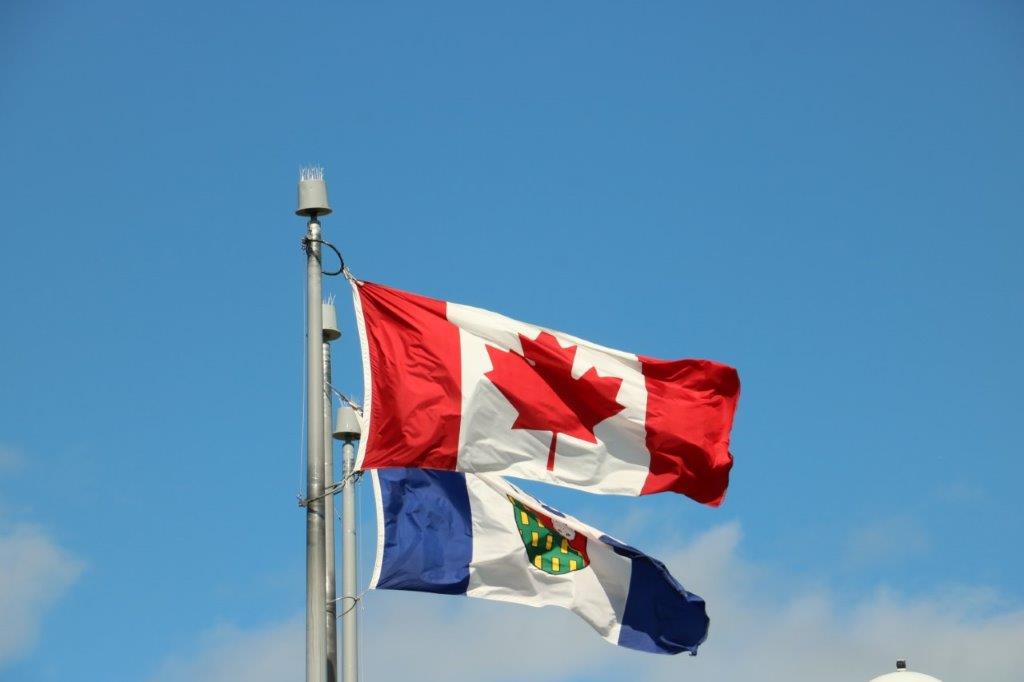
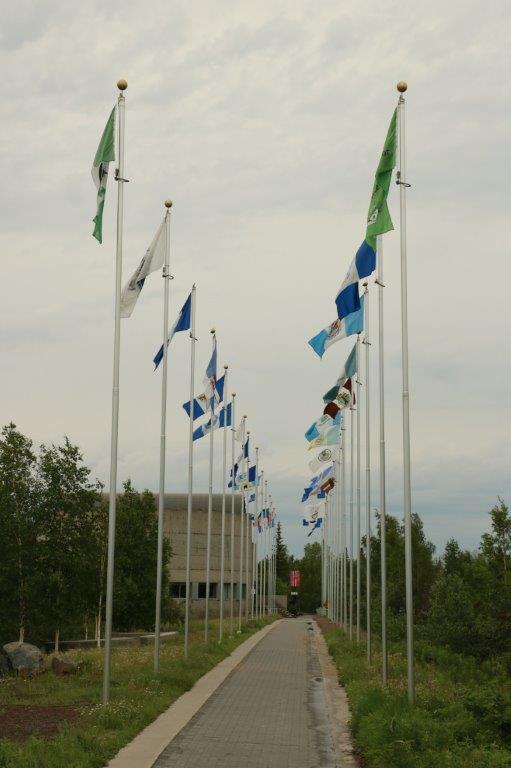
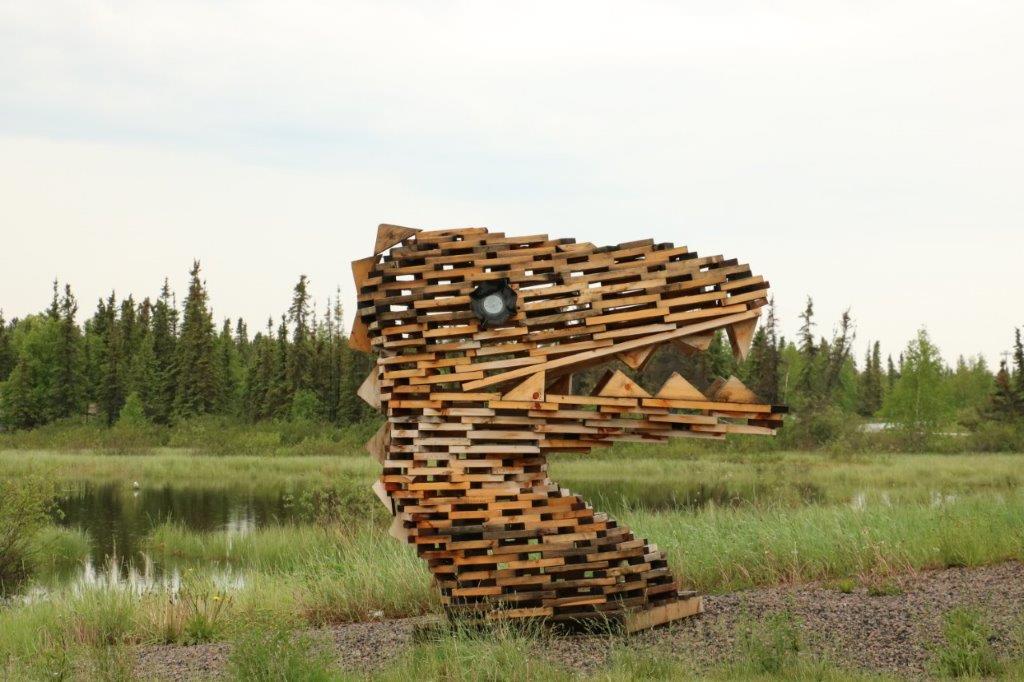
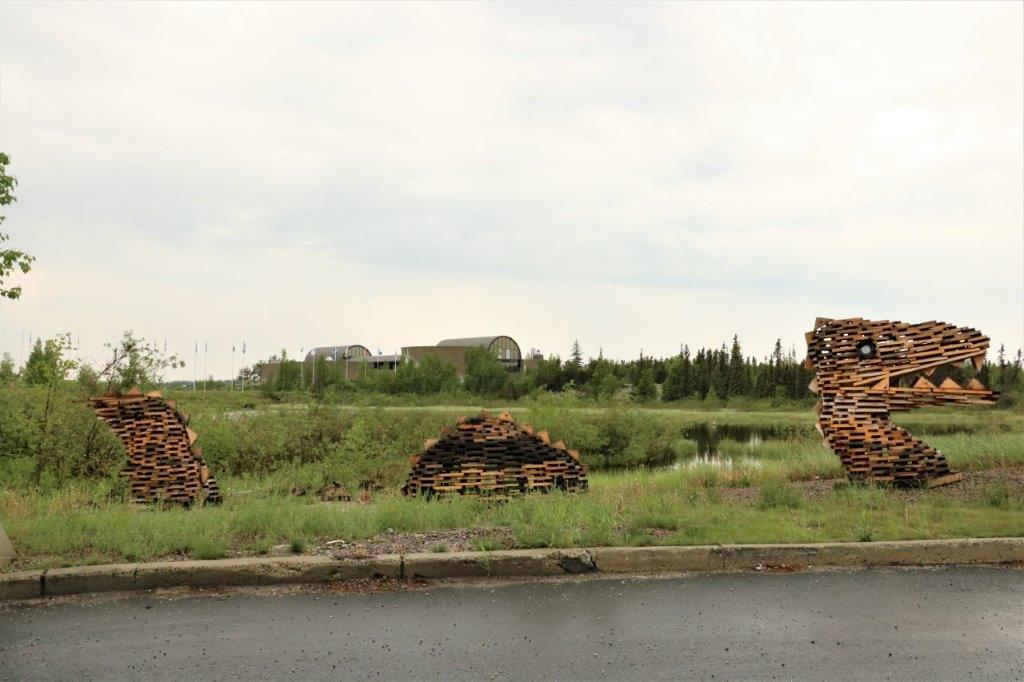
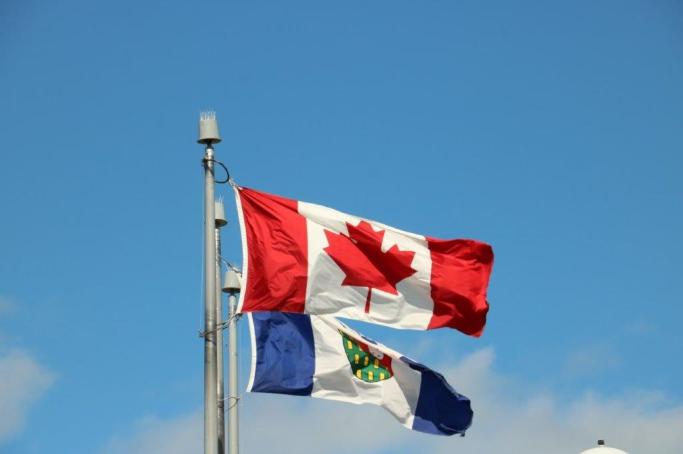
Further down the pathway we came upon another memorial.  I did say they were all over didn’t I?  And this was not the last one we saw today.  The flags of the 33 communities of the Northwest Territories are flying on either side of the pathway to the Legislative Assembly buildings.  Behind where I was standing is the Centennial Circle, a gathering place for the people of the Northwest Territories.                   This nice dragon was made out of building pallets.

We made our way back to the truck, had some lunch, found a geocache in the garden of the Department of Defence and another one alongside Highway 3 on the edge of town during another foray to locate the Visitor’s Center. After we finished looking at all the exhibits at the Heritage Center, we decided to take a drive down to Old Town, which is a narrow spit of land with Latham Island just across a short bridge.  On Latham Island is the little log cabin that was the Bank of Toronto.

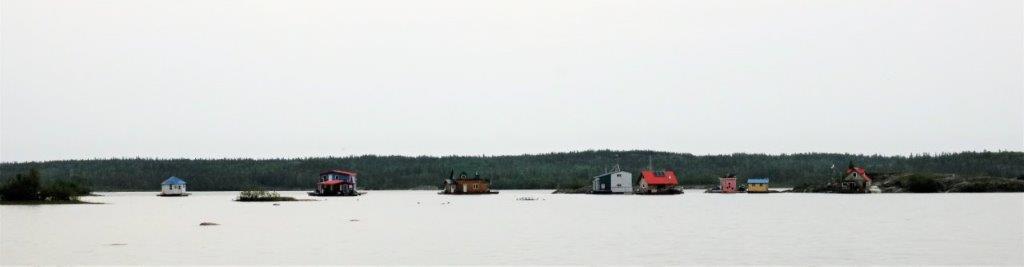
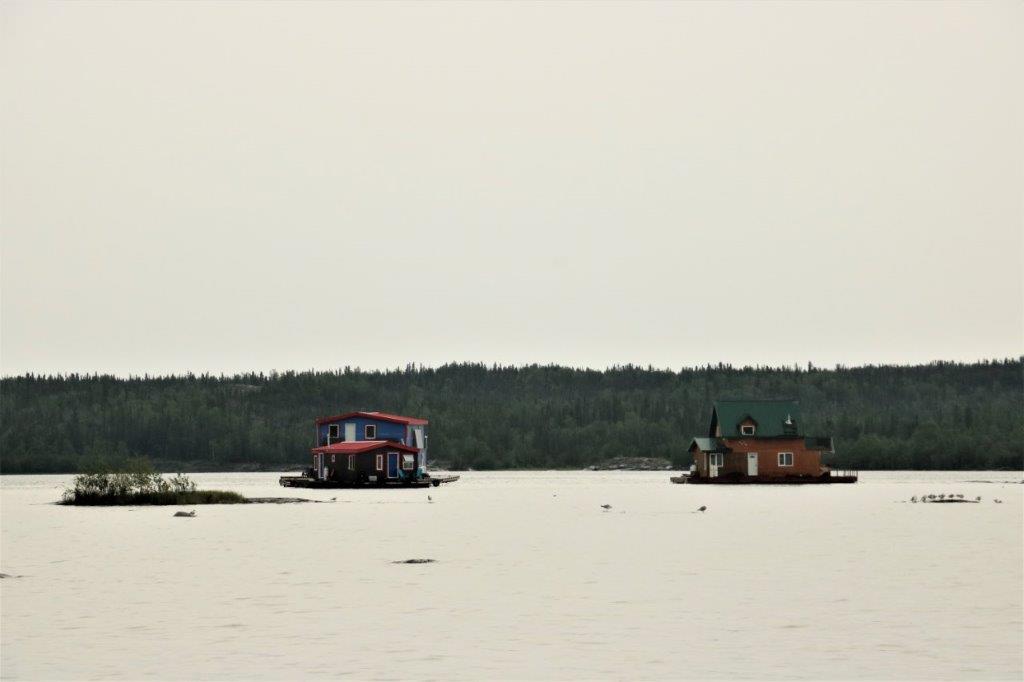
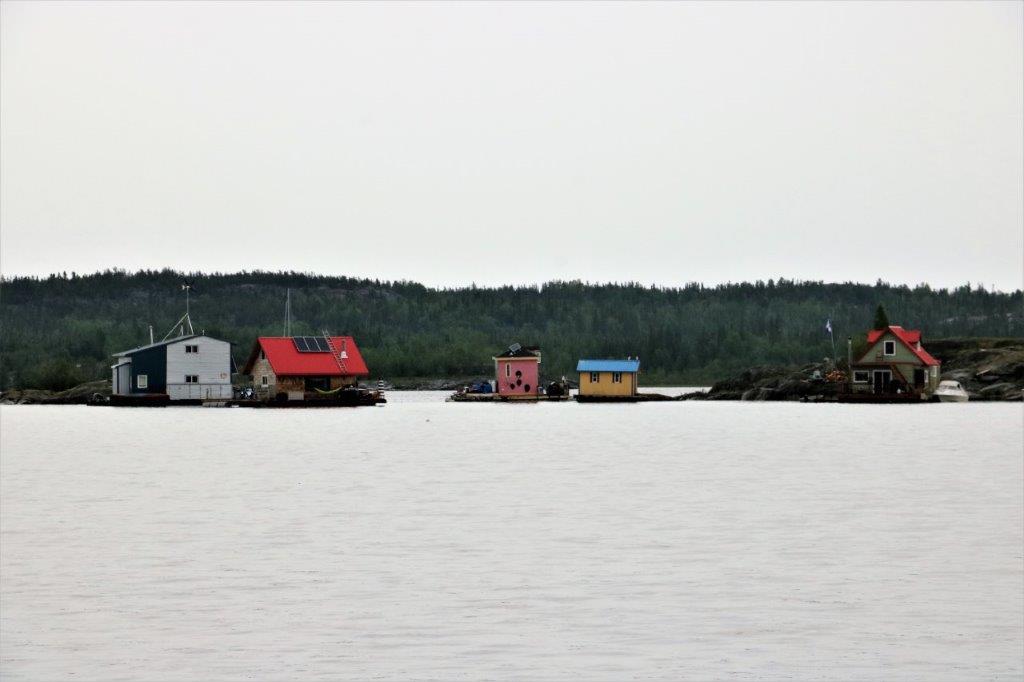
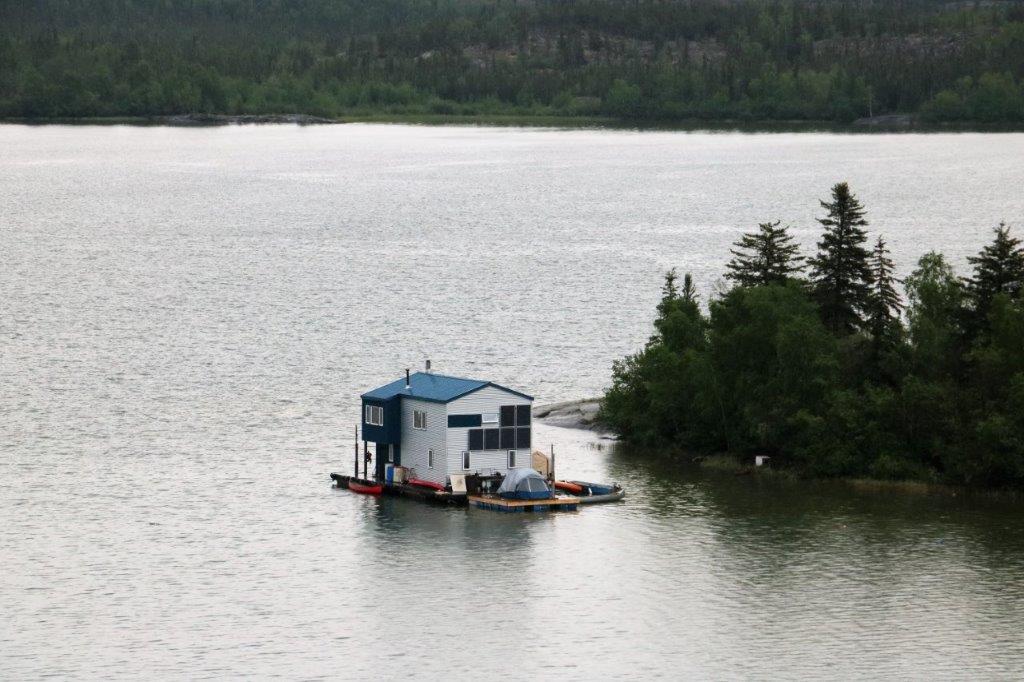
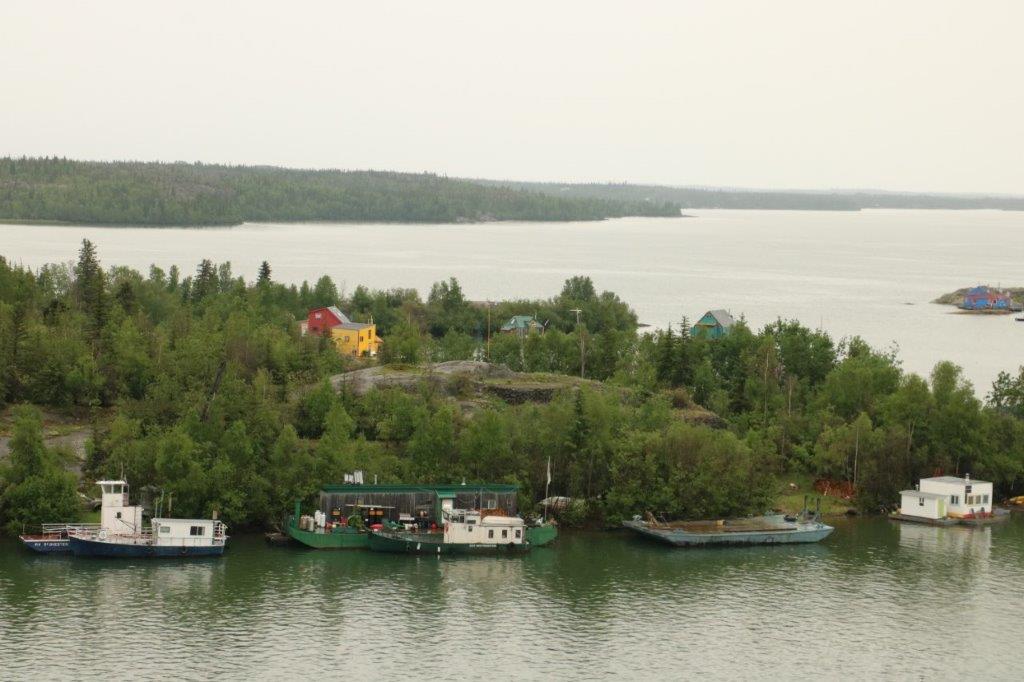
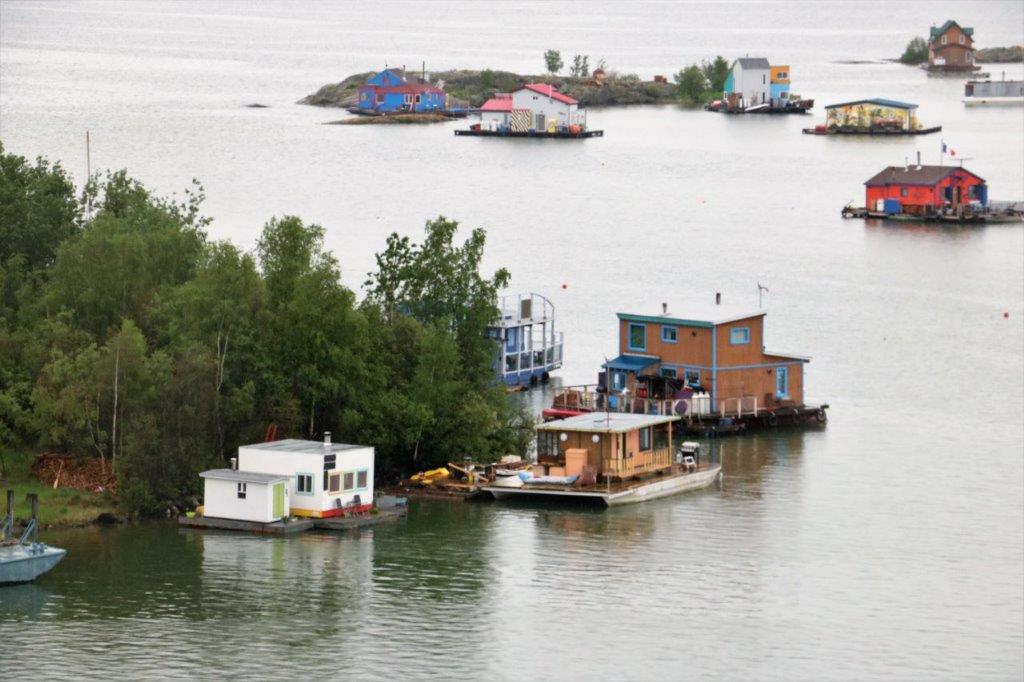
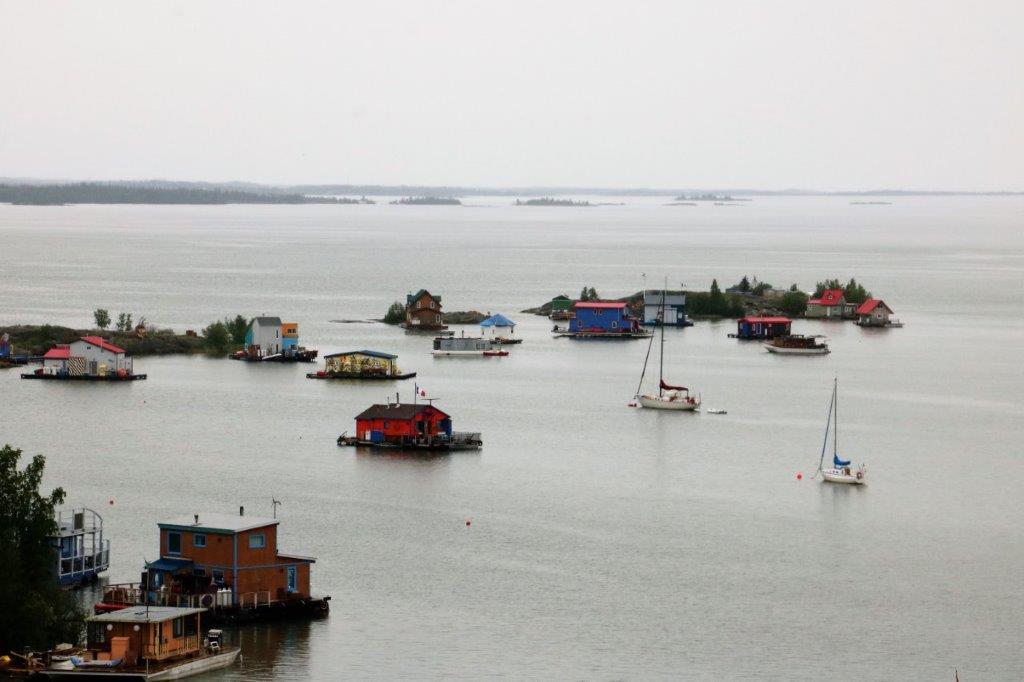
We had heard about the houseboats; that they were interesting to see and we spotted them as we drove into Old Town. When they say houseboat up here they really mean a house on a raft that is permanently anchored in the Yellowknife Bay.  Many of them are completely self-sustaining.  Very cool.

There are several heritage buildings in Old Town: the Hudson’s Bay Company Warehouse, the Old Log Schoolhouse and the outfitters Weaver and Devore building.

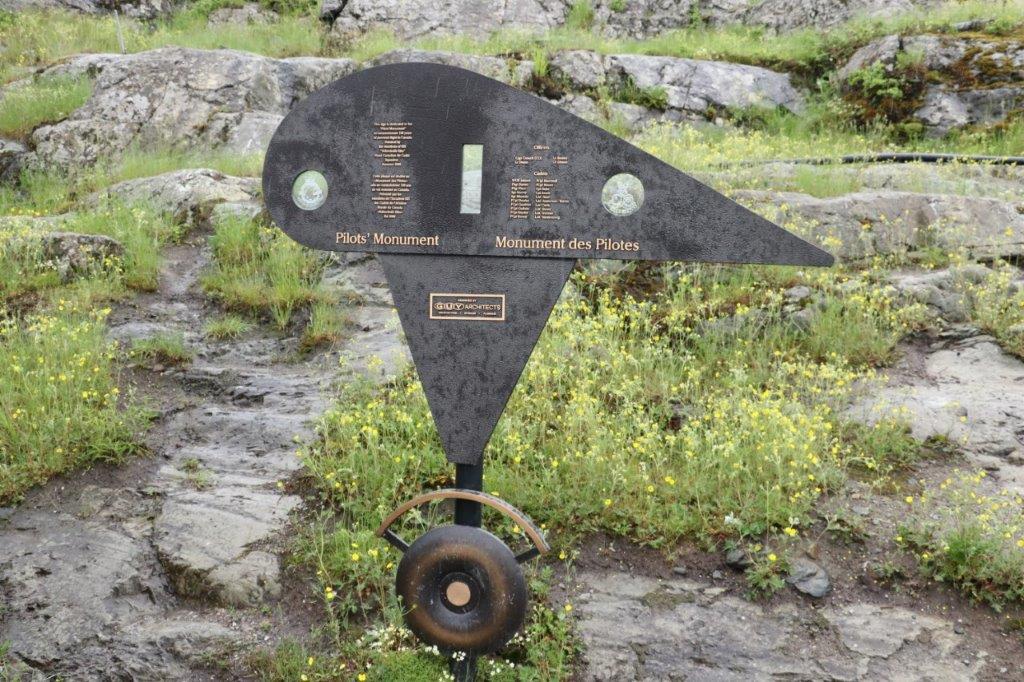
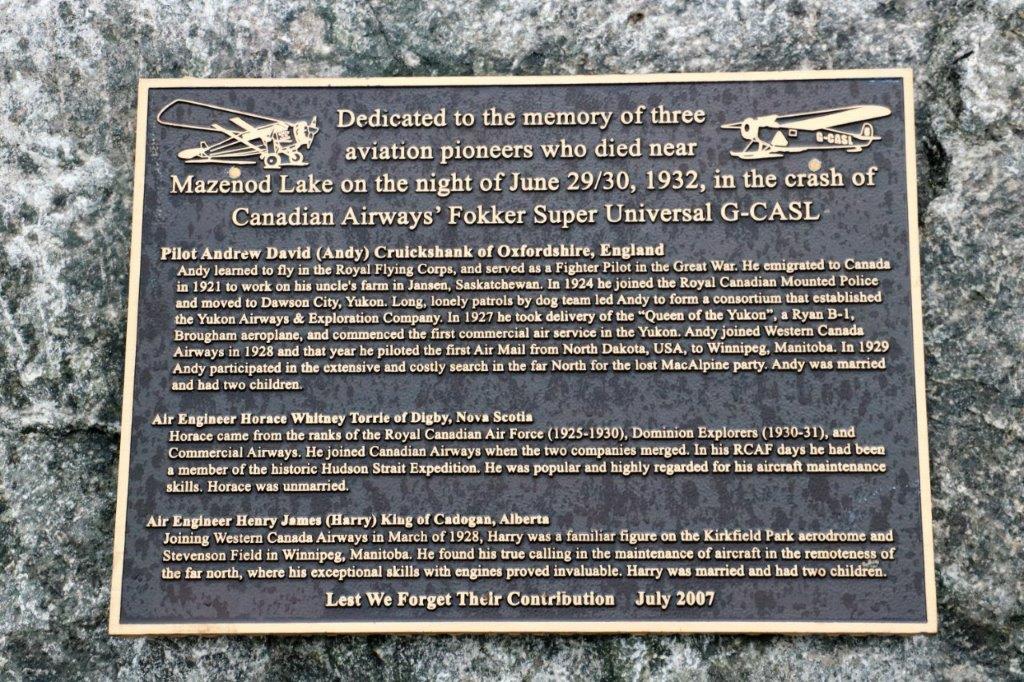
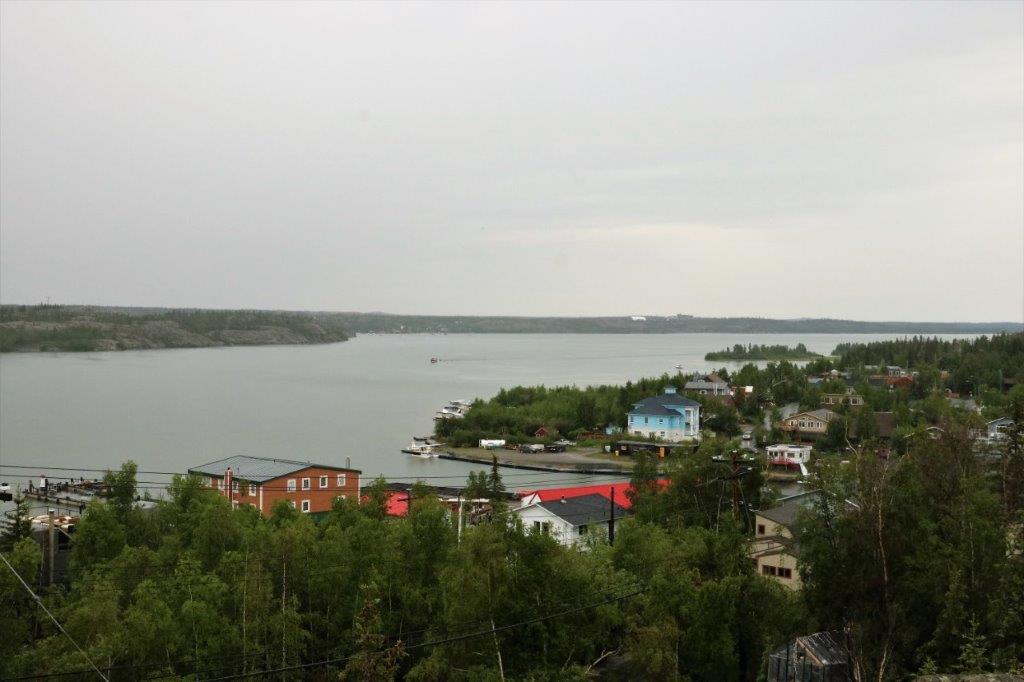
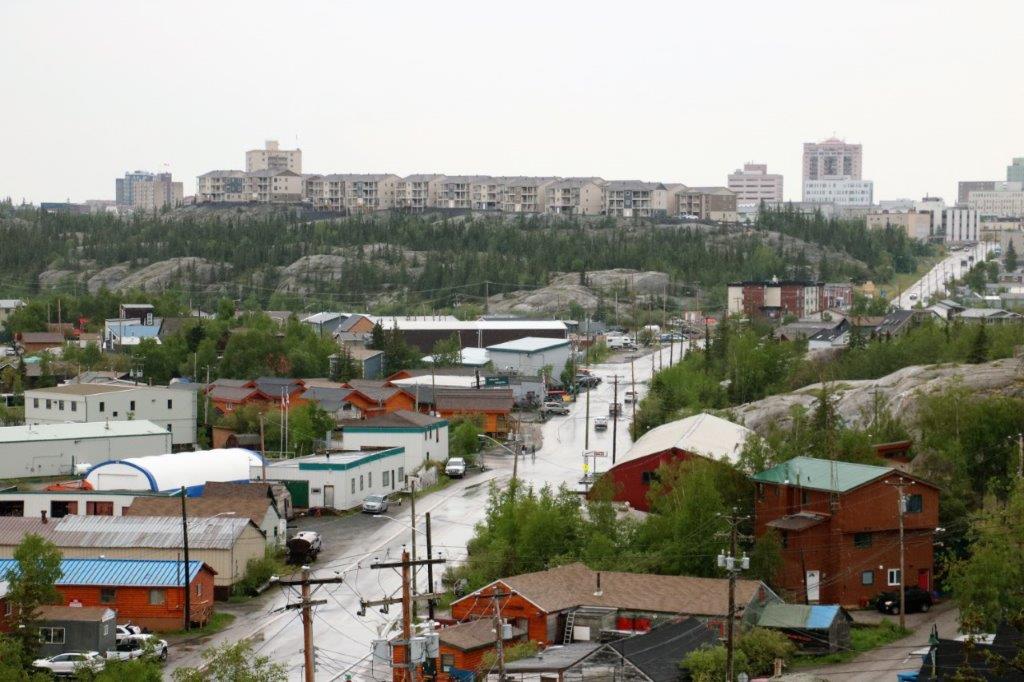
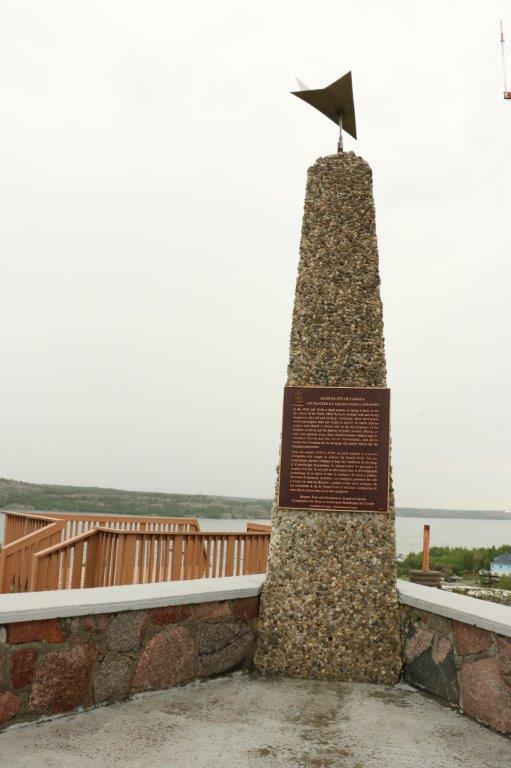
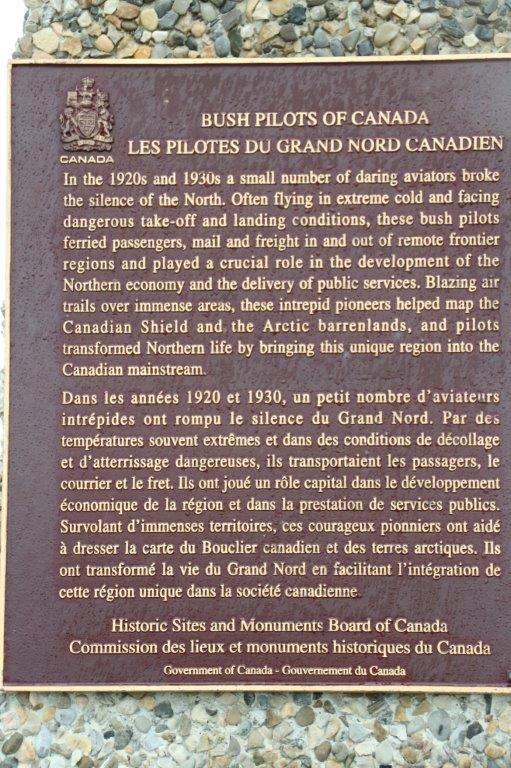
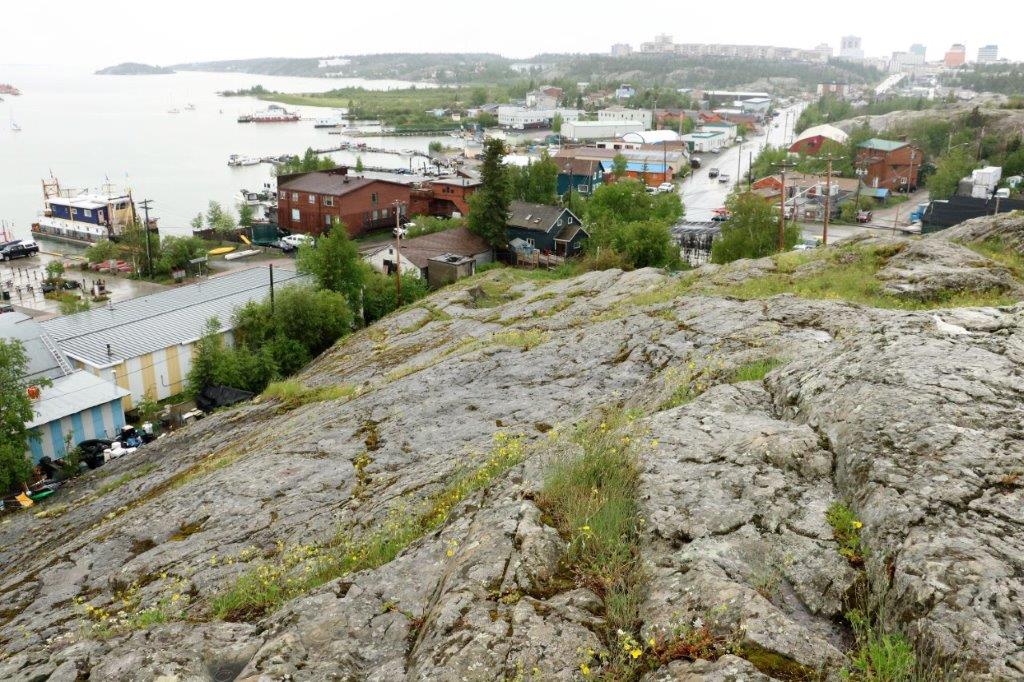
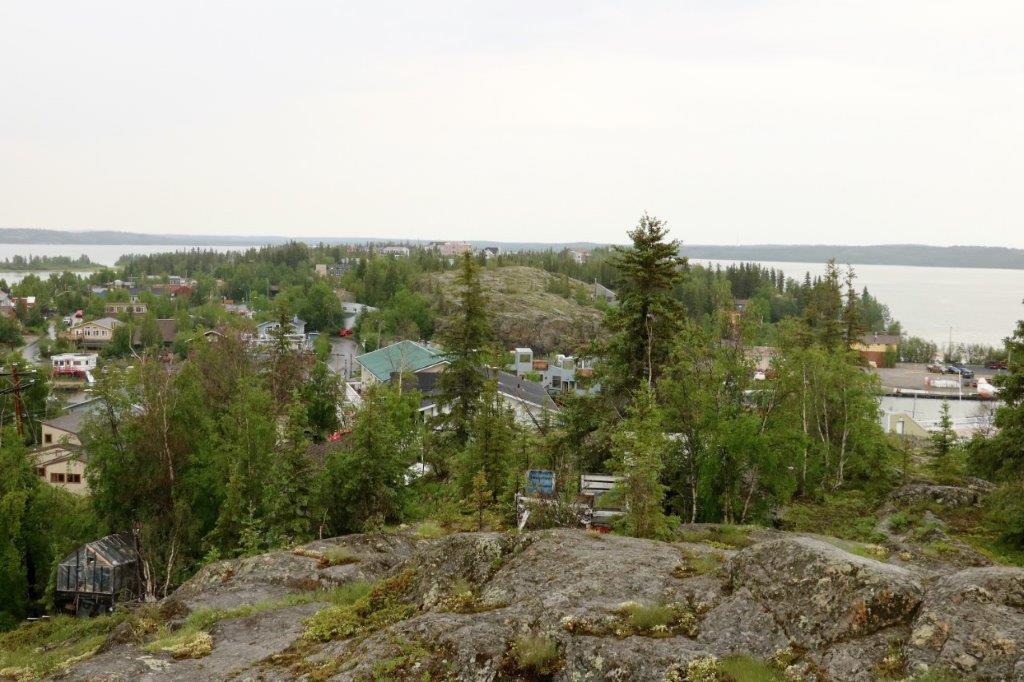
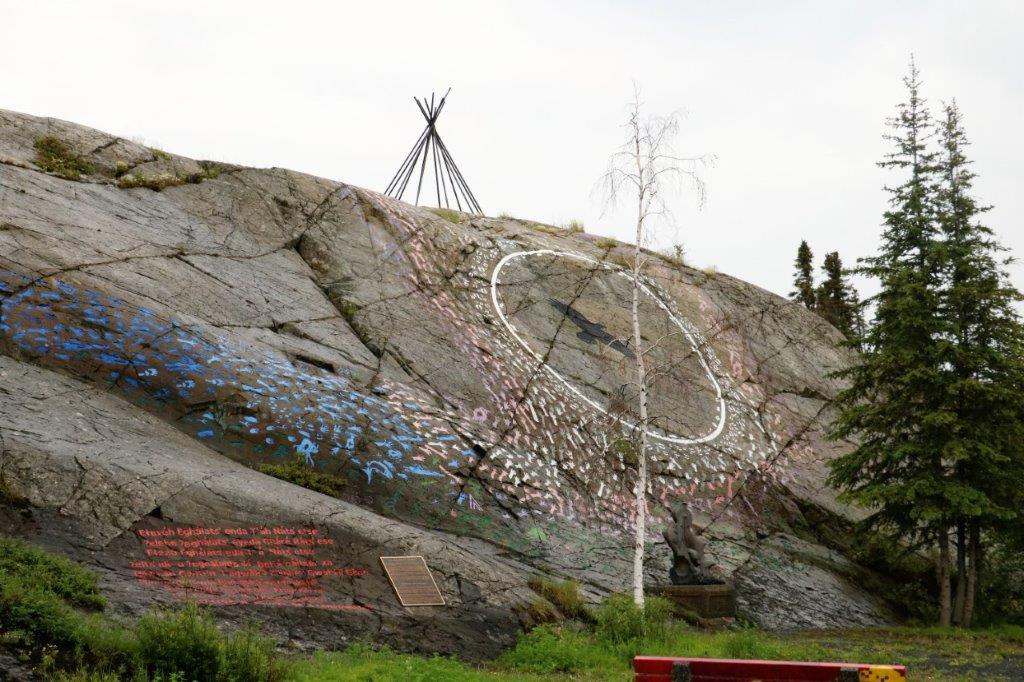
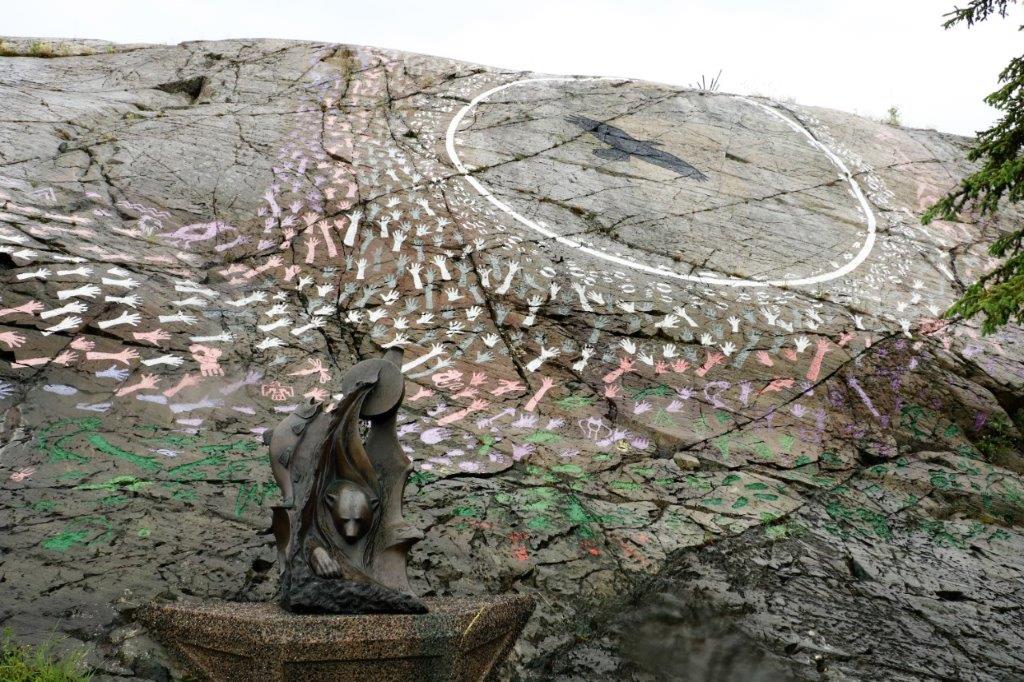
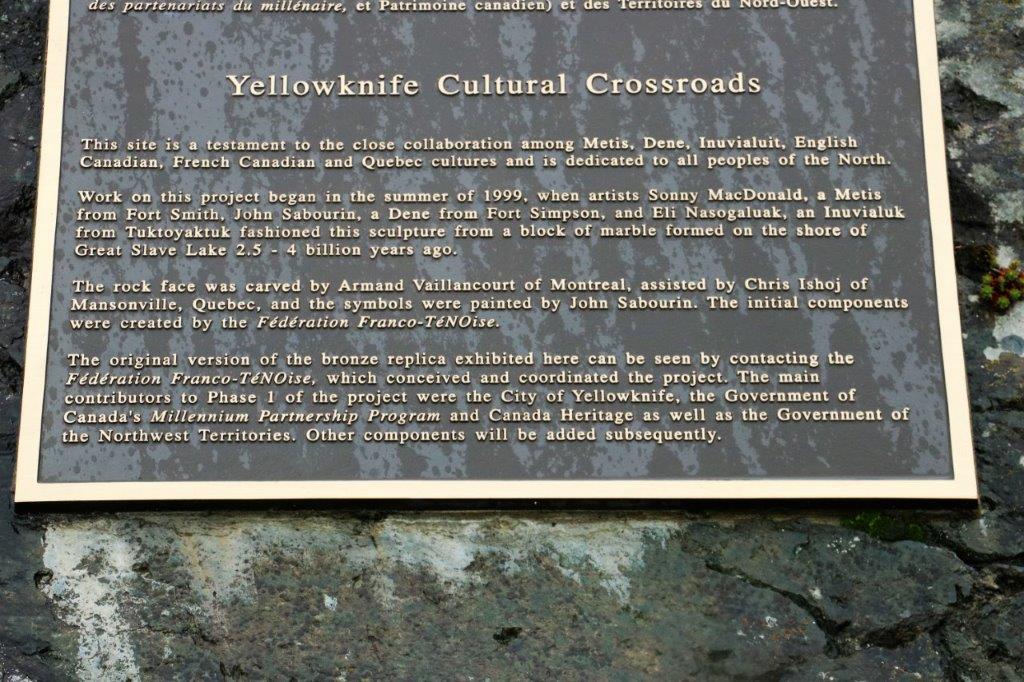
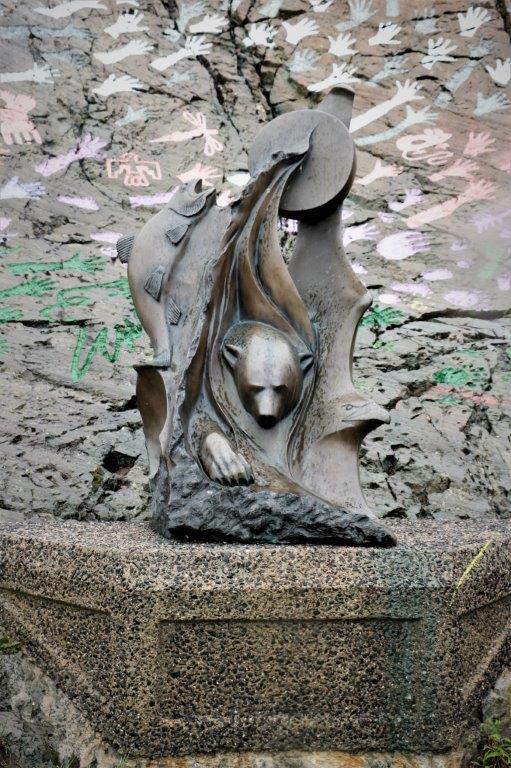
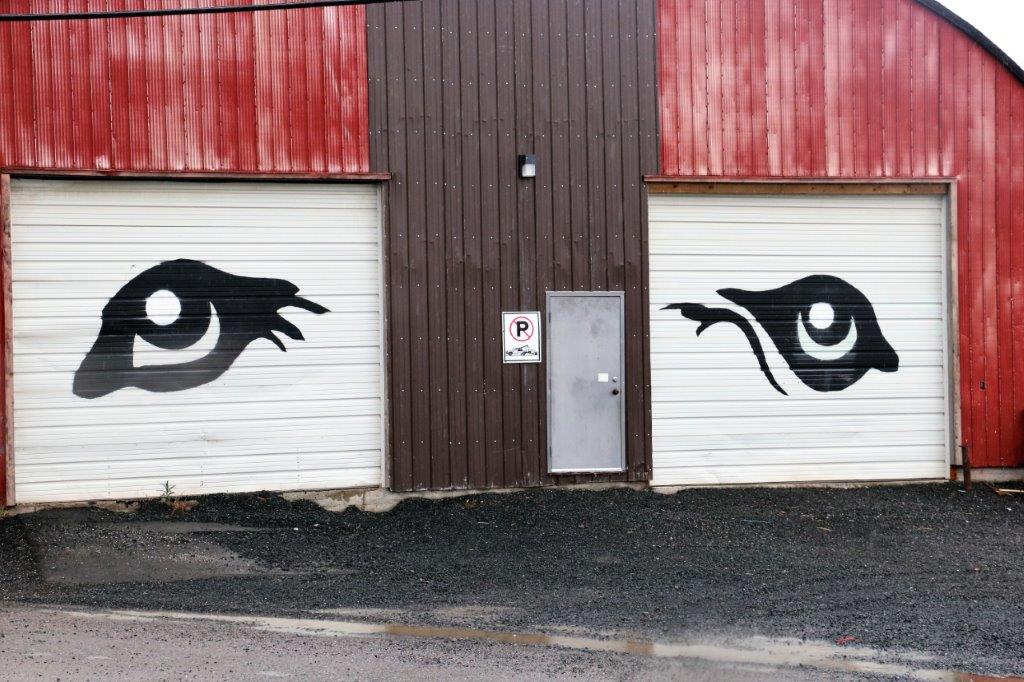
At the end, atop a massive rock is the Pilot’s Memorial, honouring the role played by the bush pilot in the development of the North.  We had to climb about 50-60 stairs to the top.  At the bottom of the stairs is another memorial to some aviator pioneers that died. And across the road where we parked the truck was another one dedicated to three airmen that died in a crash. On a nice day, the 360 degree view would be outstanding.  Even on a cloudy day like today you could still see Old Town and new Yellowknife, as well as Yellowknife Bay and Back Bay.                                                       Back Bay This rocky terrain reminds me very much of Newfoundland.  Same huge smooth rocks.You could see some more of the houseboats in Yellowknife Bay. We climbed back down all the stairs to the truck and headed back into Yellowknife.  We were a bit wet and a bit footsore so we decided to go to our hotel and rest for awhile before venturing out to find some dinner.  John made a quick stop for me to take a photo of the Cultural Crossroads.  My last photo of the day is of a storage building with a quirky addition to the boring garage doors.  I love a good sense of homour.Tomorrow is our last day in Yellowknife and we plan to tour the Legislative Assembly Building and see if the Diamond Center is open.

2018 June 22 – Hay River to Yellowknife, NT

We were up at 7 and leaving the hotel in Hay River at 9:30.  John had gone over to the RCMP to check if they could get him a new driver’s license since his is missing.  They directed him to the licensing office, which was in the building across from the hotel parking lot.  While waiting for it to open at 9 he called the toll free number for ICBC to see what he might be able to do.  They emailed him a copy of his license and told him he could get a new one in Fort Nelson for $17.  In the meantime he could drive, but he would risk being charged for failure to produce his license if the police chose to not be gracious.

Our first stop was a gas station to top up the fuel tank.  We drove in to the Esso and noticed the big “Full Service” signs.  I commented to the fellow when he came out that I had not seen a full service sign at a gas station for years.  He laughed and said, “Welcome to the Northwest Territories.”  Then he proceeded to tell us some ways that the territories differ from the provinces in Canada:  NT has 11 official languages – English, French and 9 indigenous languages.  In school children must learn English, French and at least one indigenous language.  For every three years that a child attends school between Kindergarten and Grade 12 they receive one year of free university.  If you break the law repeated in any of the three territories of Canada you can be expelled.   From Hay River and nearby areas a person would be put on a bus to Peace River, AB where they would be met by an RCMP officer with a warrant that says they can never return to any of the three territories.  EVER.  If they do they will be arrested.  They have chain gangs in the northern prisons and if you do not work a chain gang you get put in solitary.  Canada, above the 60th parallel has 25% of the world’s fresh water.  Great Slave Lake is the 10th largest lake in the world.  Whew.  The fellow was a font of interesting information.  All in the time it takes to fill a gas tank!
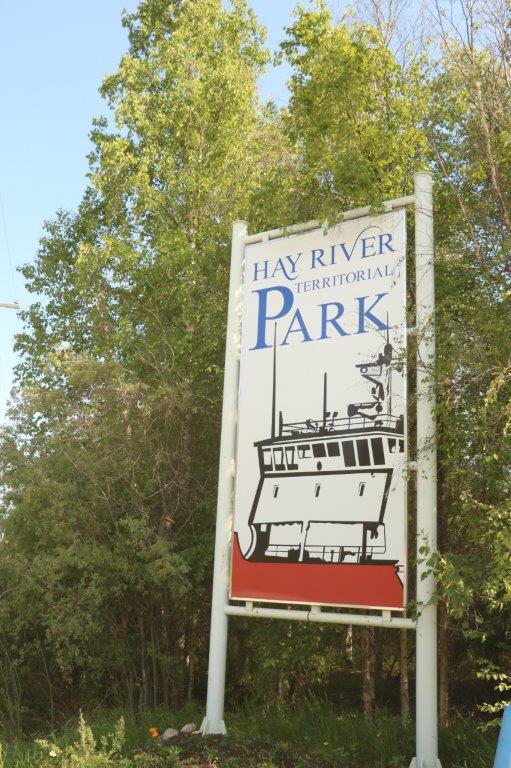
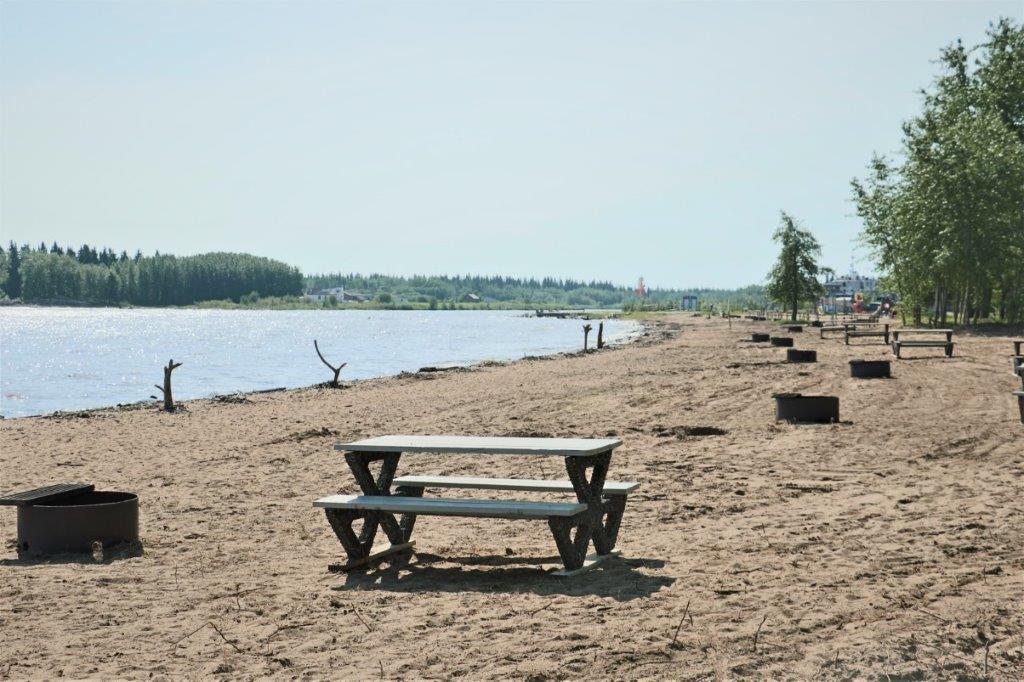
We drove through Hay River to the edge of Great Slave Lake and walked out on a lovely sandy beach. There was a geocache at the Hay River Territorial Park so naturally we had to go find it.  As we were leaving the beach area a young man carrying a toddler and with a pre-school daughter walked in wearing swim suits and all prepared for a morning swim.  Somehow when I think of the Northwest Territories I do not think of sandy beaches and swimming.  Shows how much I know about the north obviously.

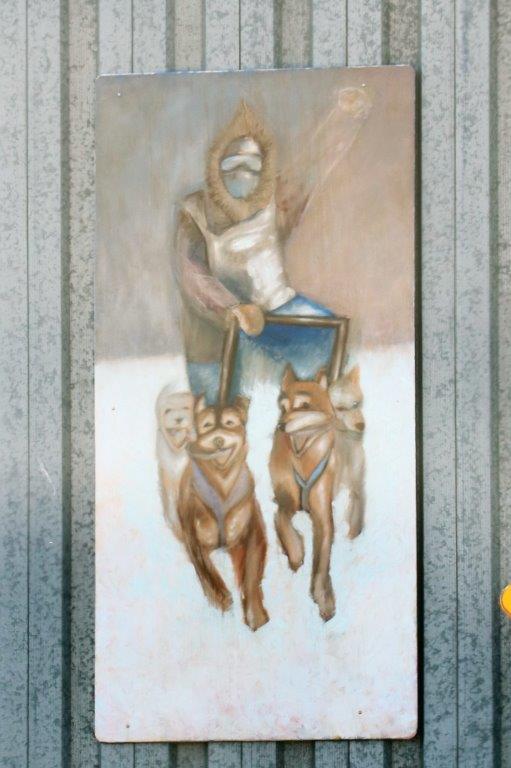
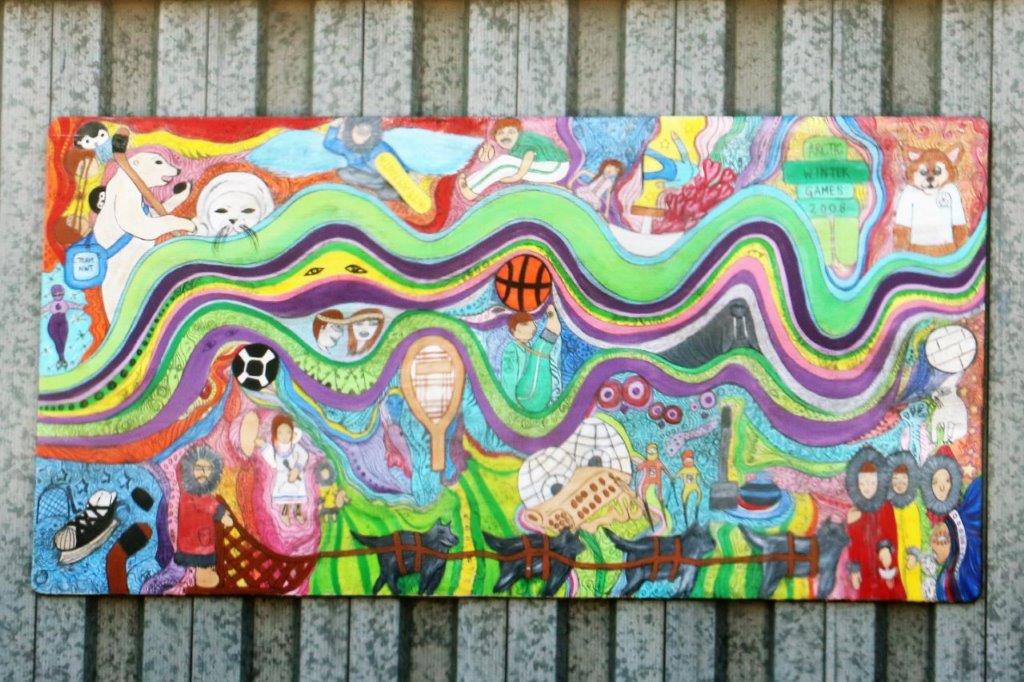
These three big pictures were hanging on the side of a building.  There was a fourth one but I didn’t really like it so I didn’t photograph it.

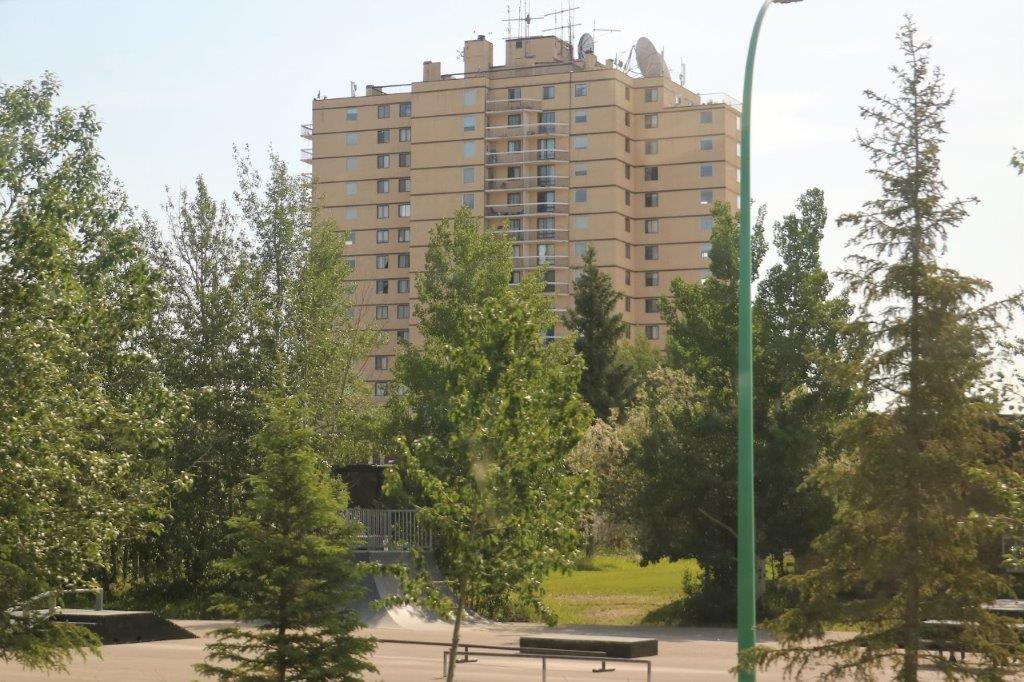
 Hay River is not a large town, population about 3,500, but it is the second largest in the Northwest Territories, after Yellowknife.  What we found very interesting is the 16 story apartment complex pictured below.  We saw no other buildings in the area anywhere that were higher than three stories.  How this one came to be built, I have no idea.  It totally dominated the skyline in all directions. We finally left Hay River at 10:30 and headed up Highway 1 towards the territorial capital of Yellowknife – 477 km away (296 miles).
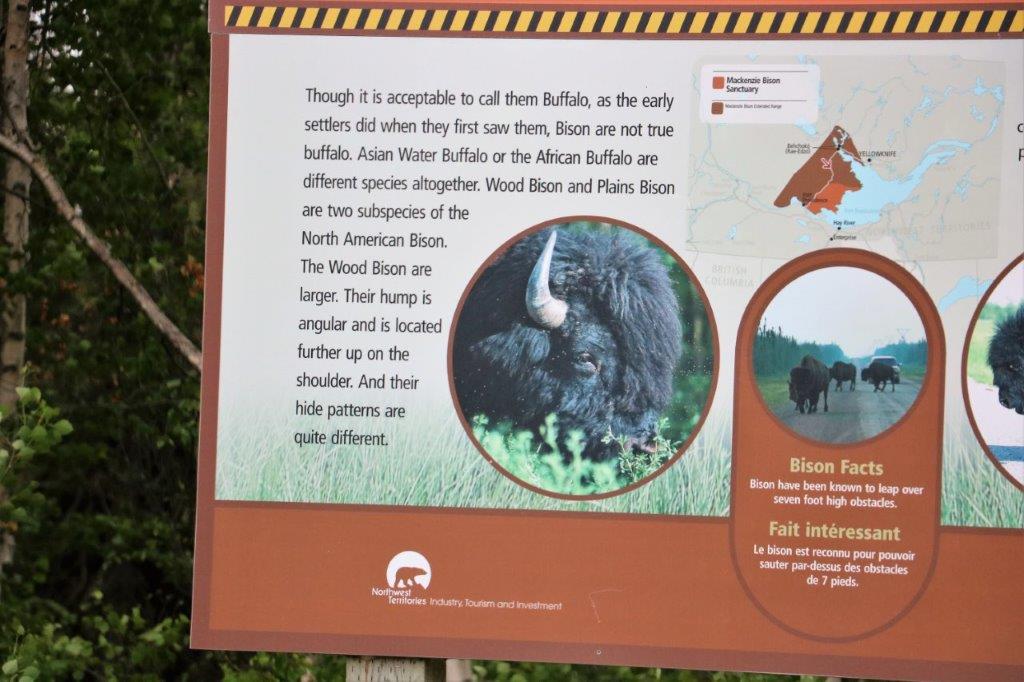
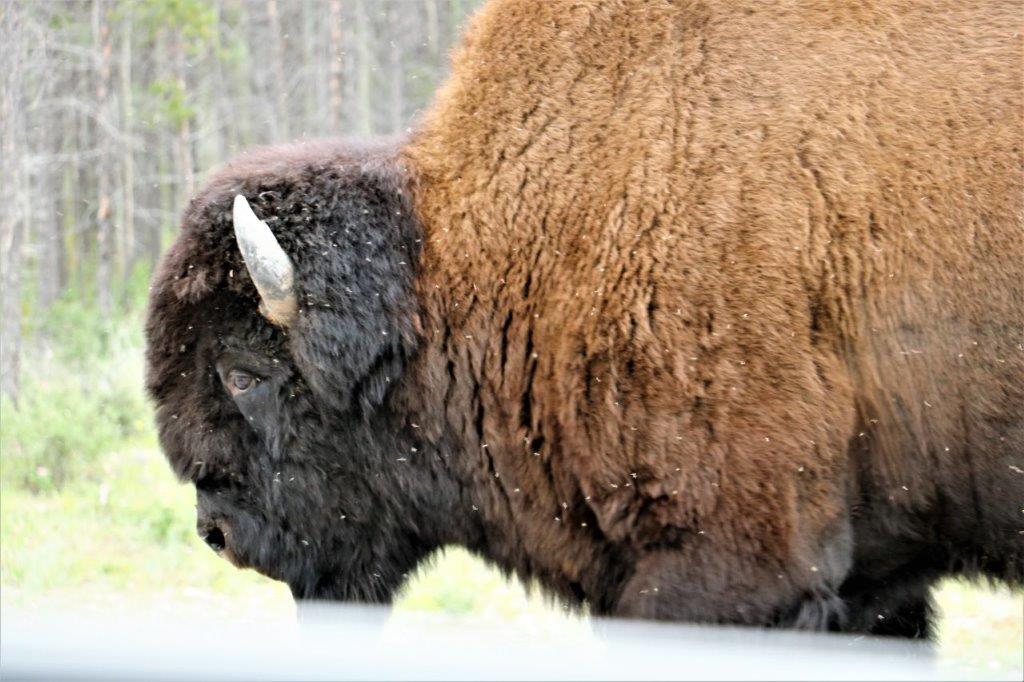
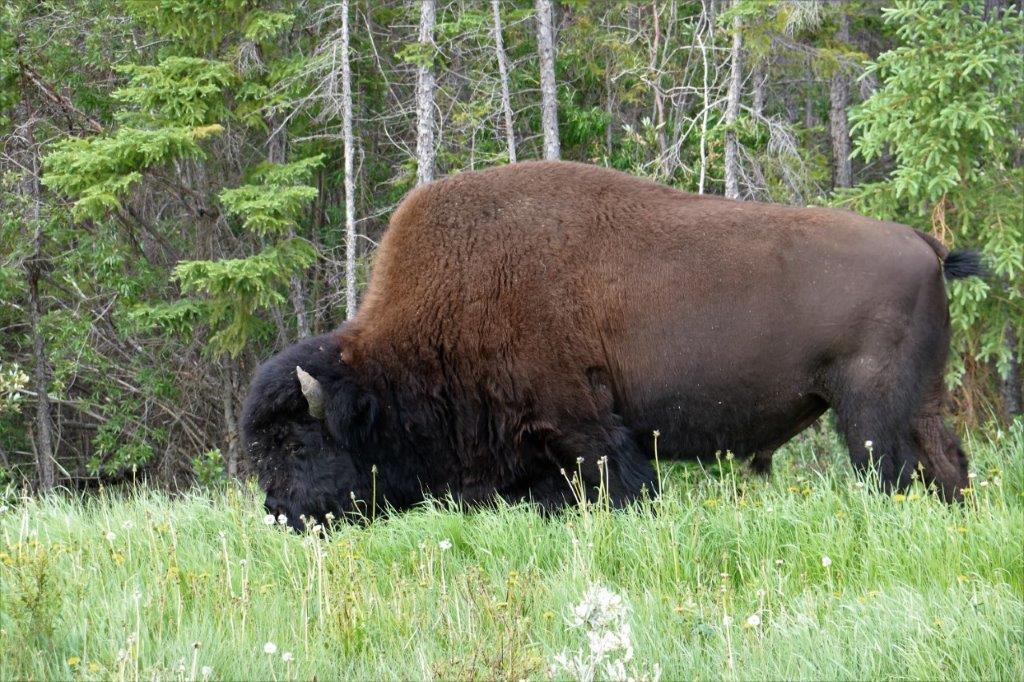
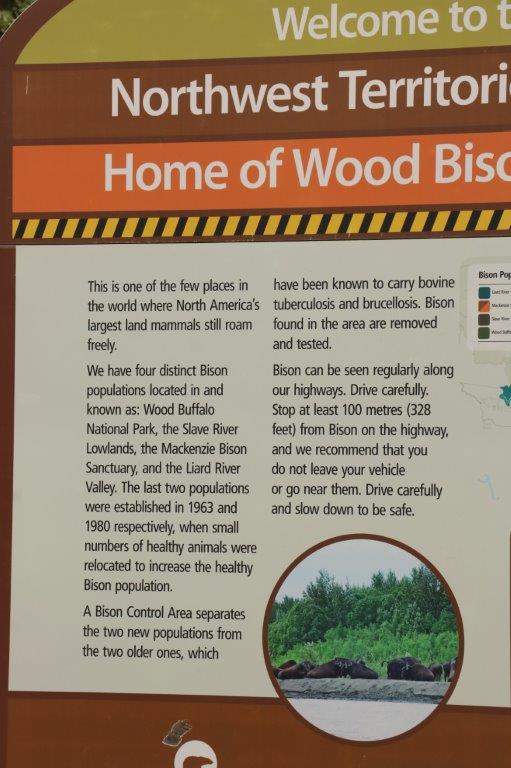
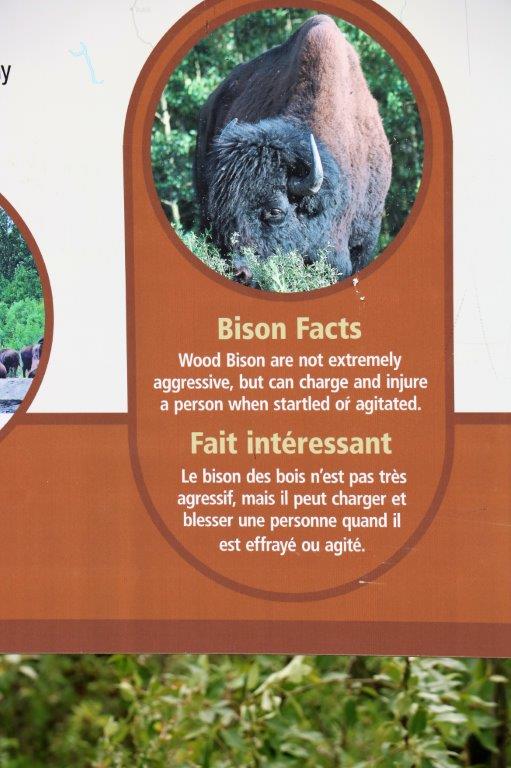
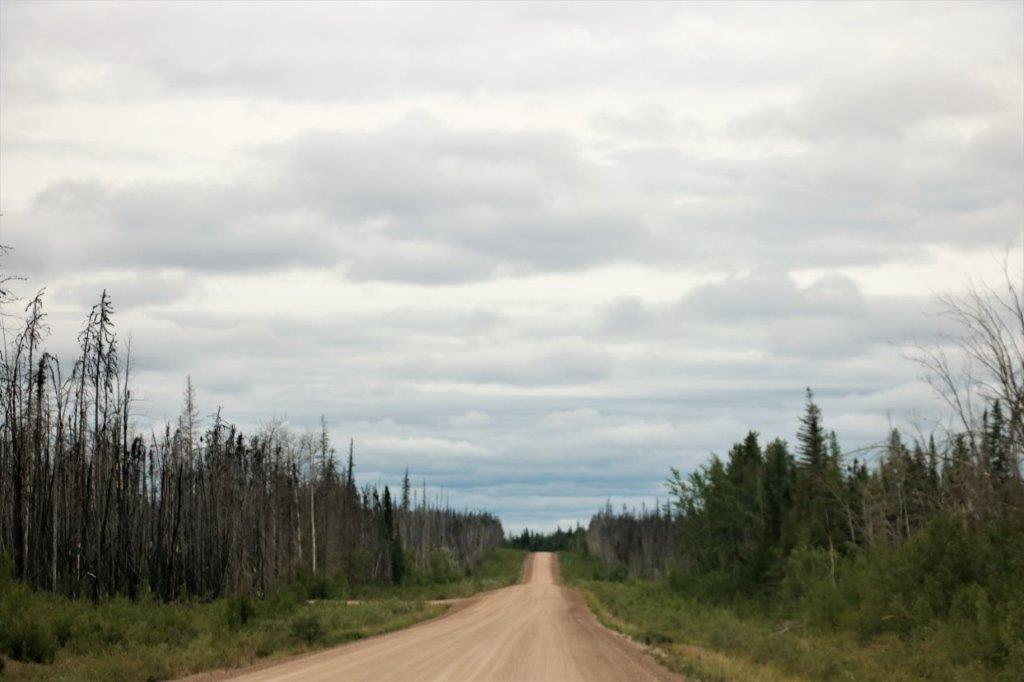
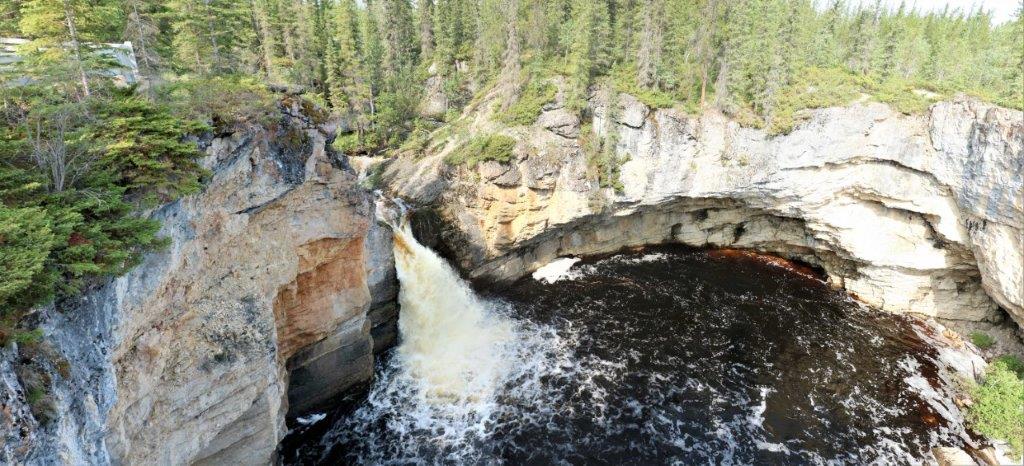
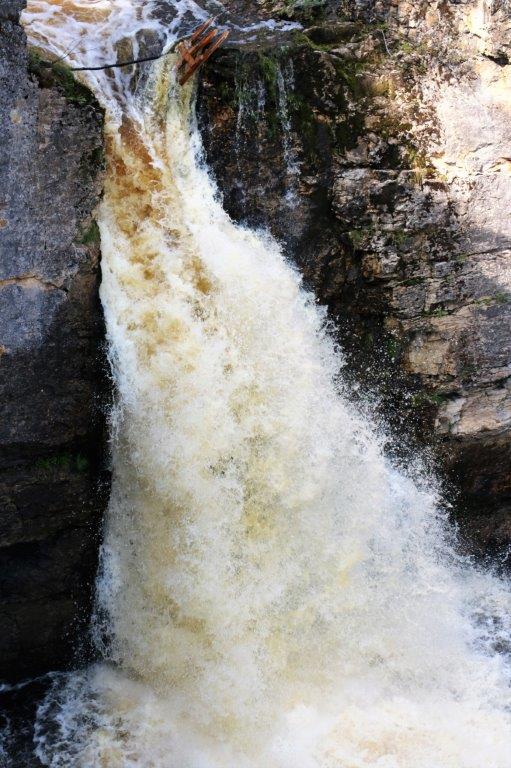
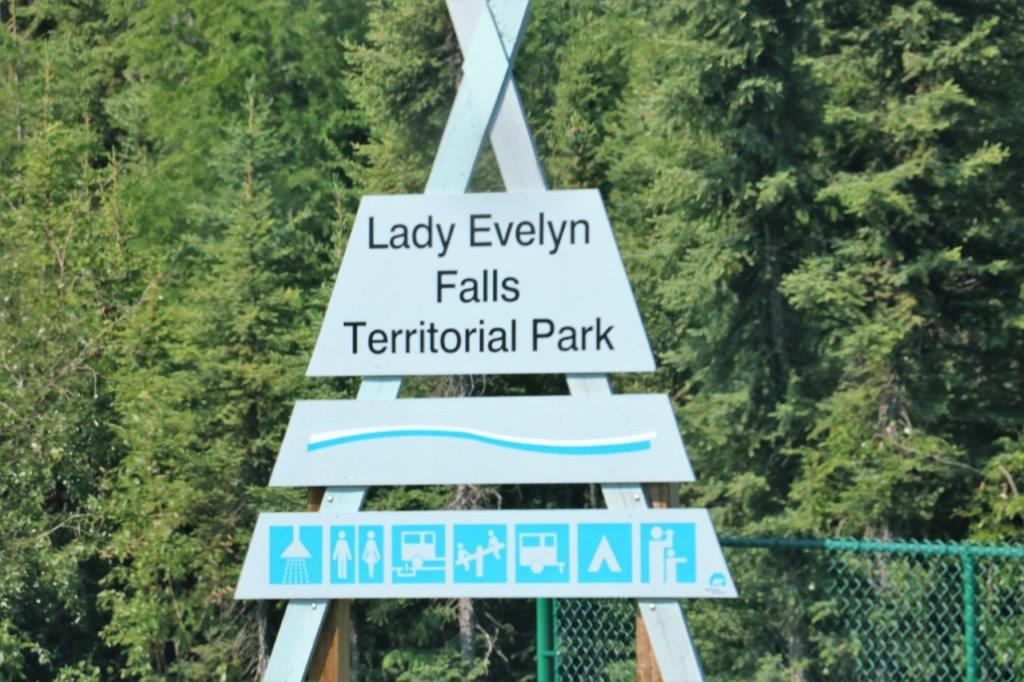
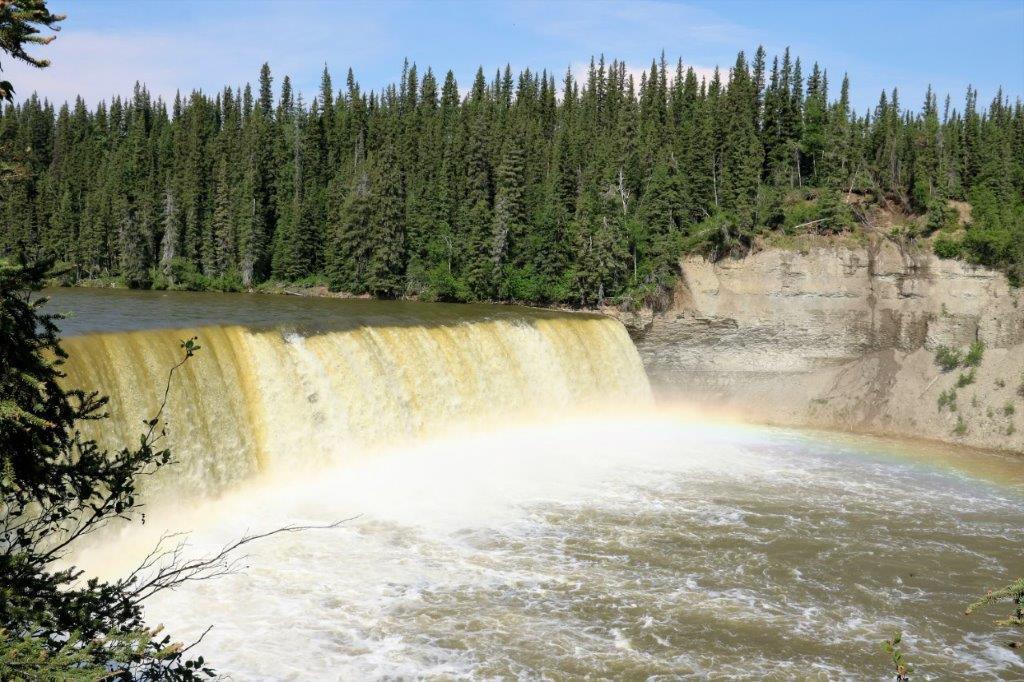
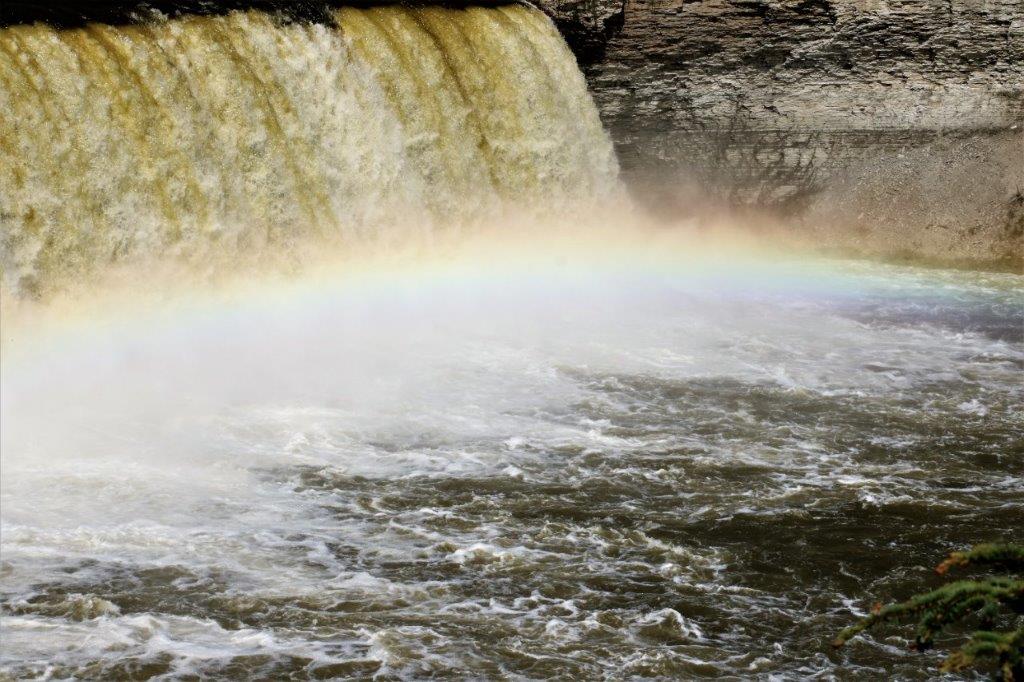
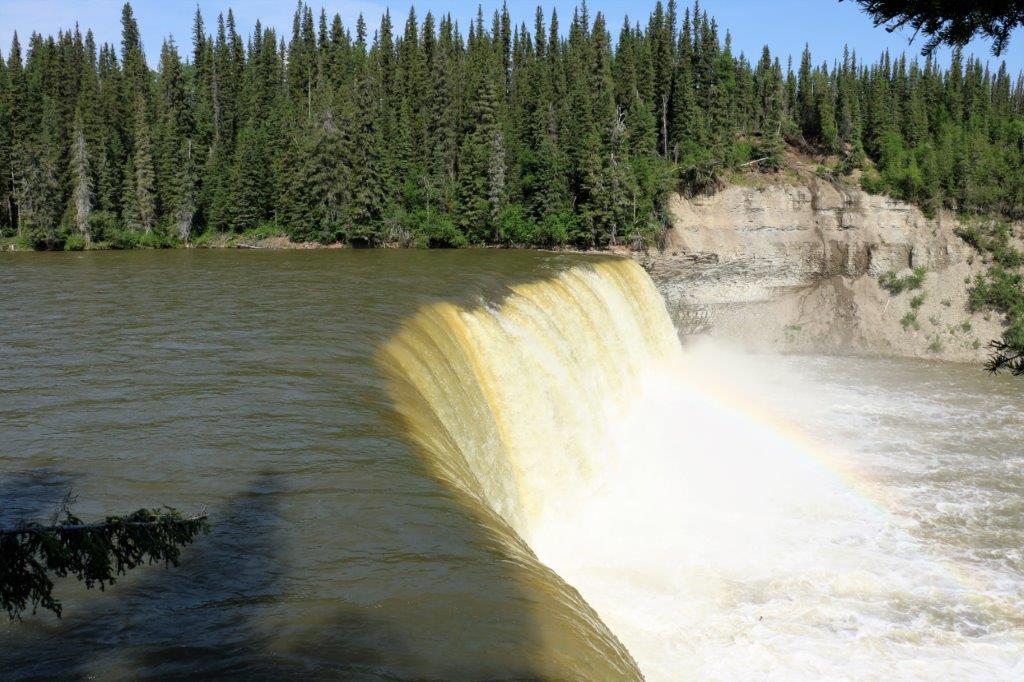
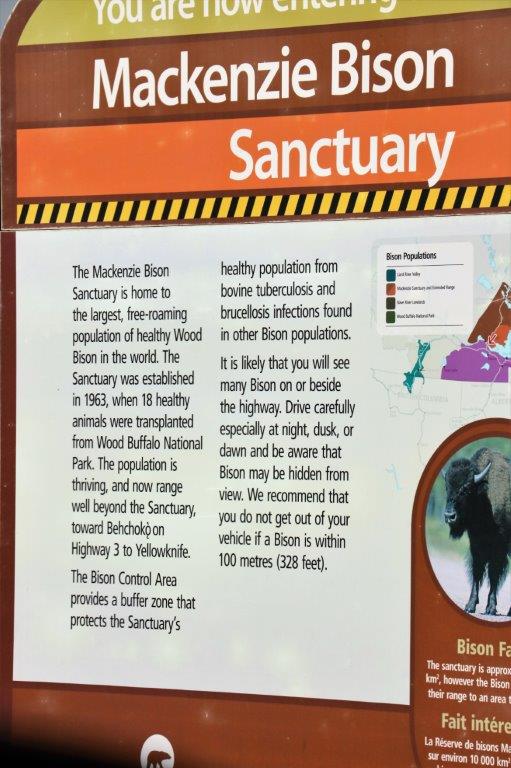
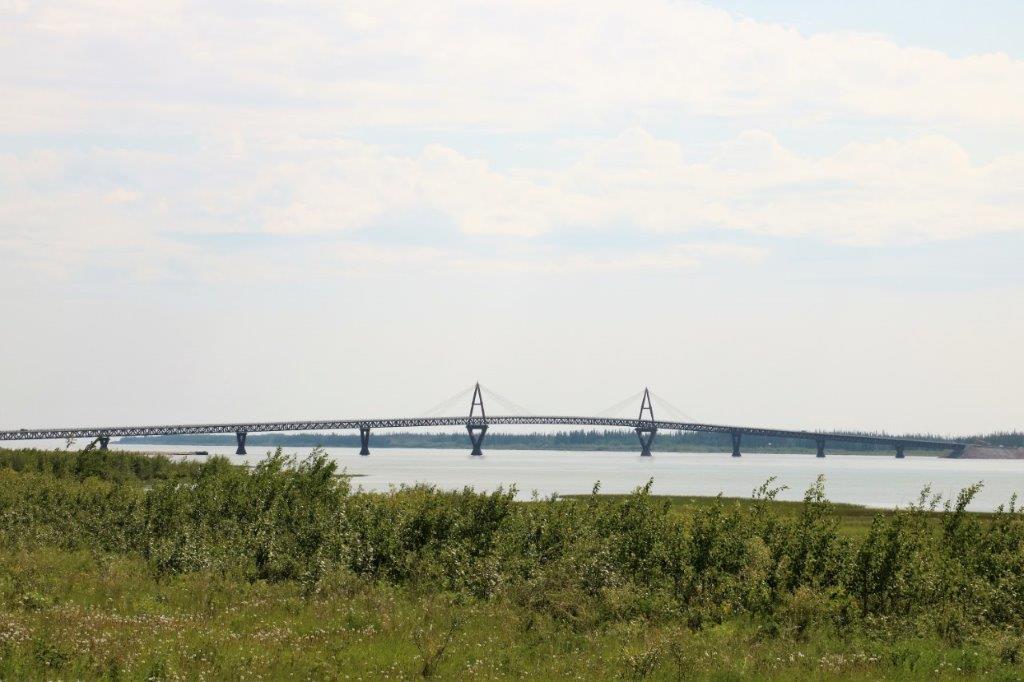
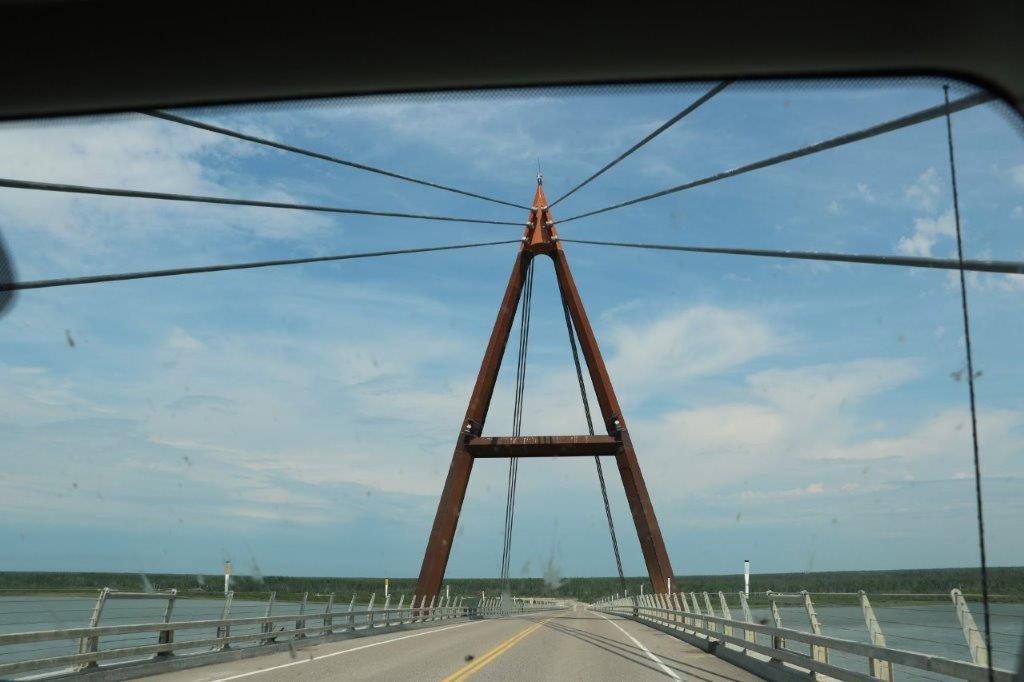
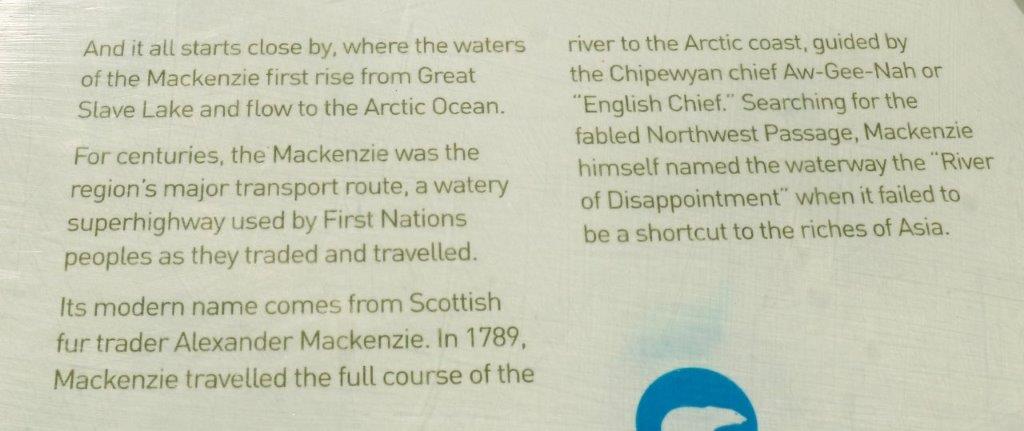
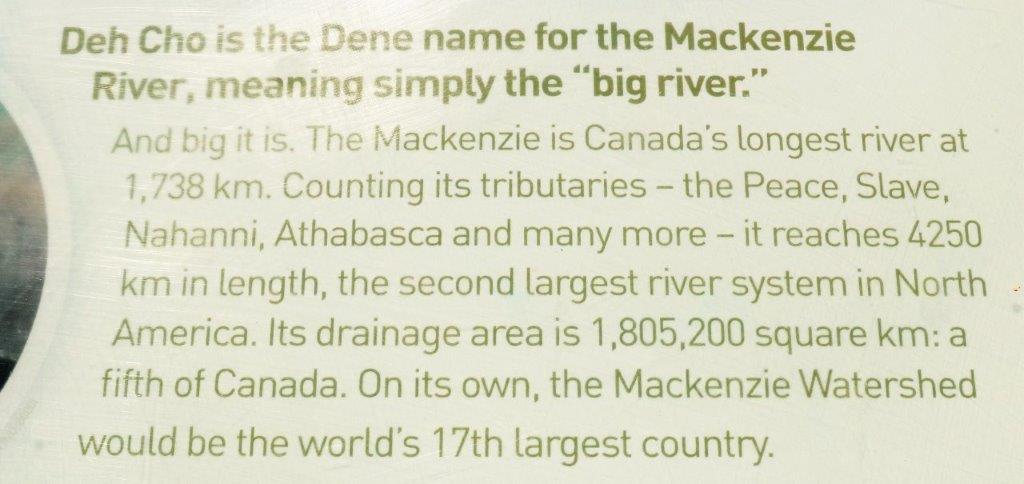
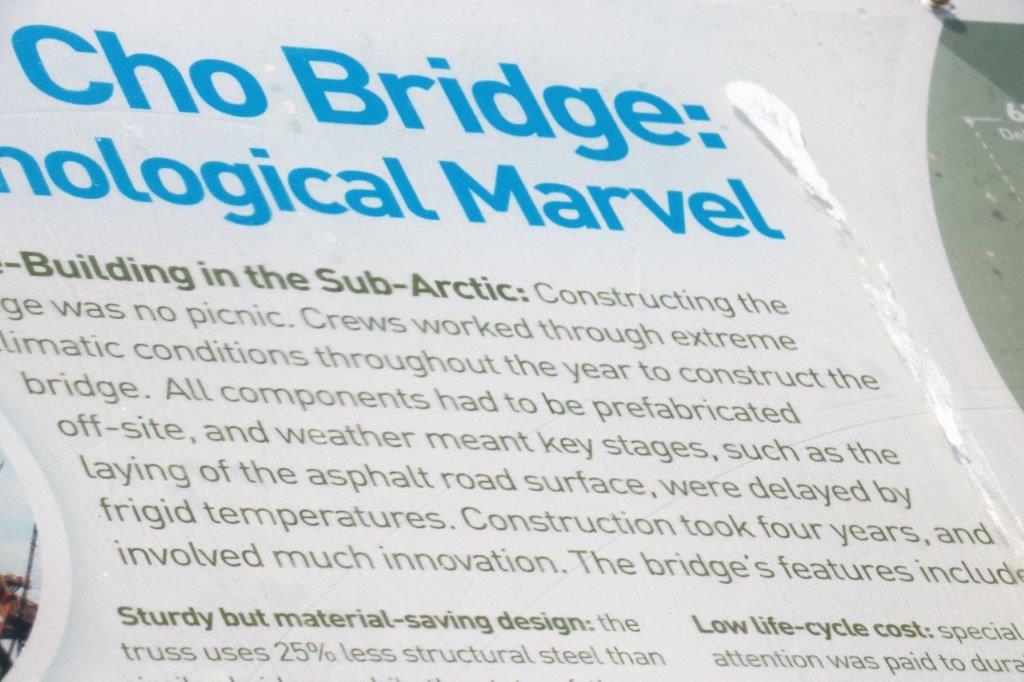
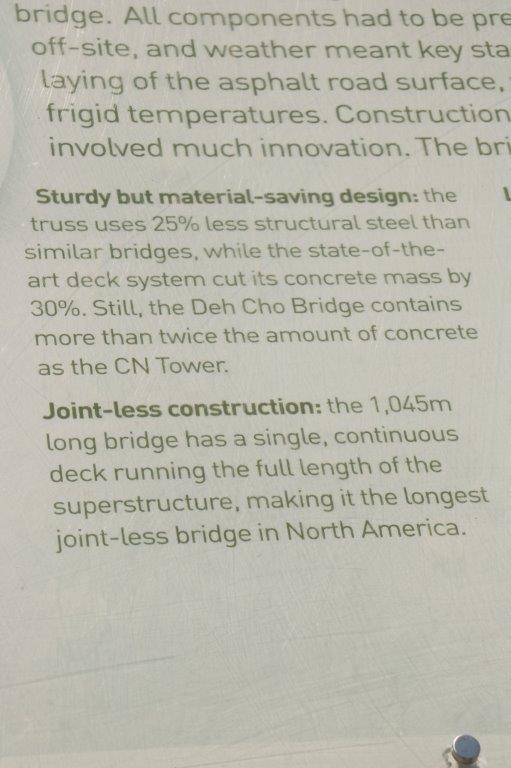
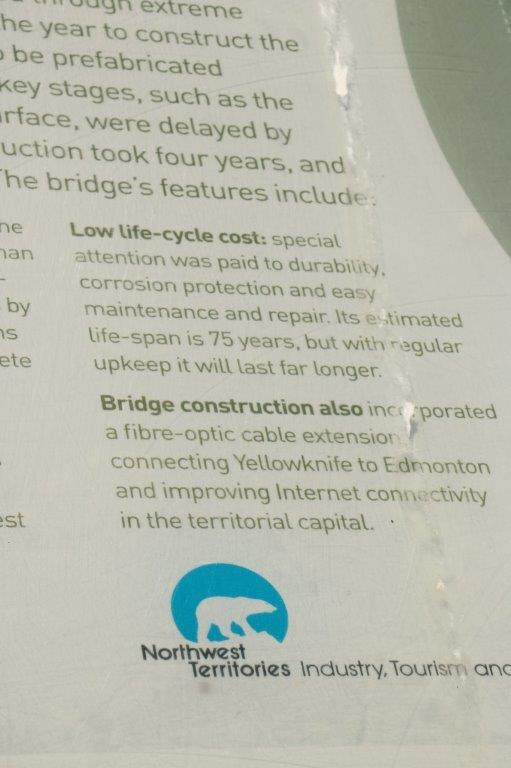
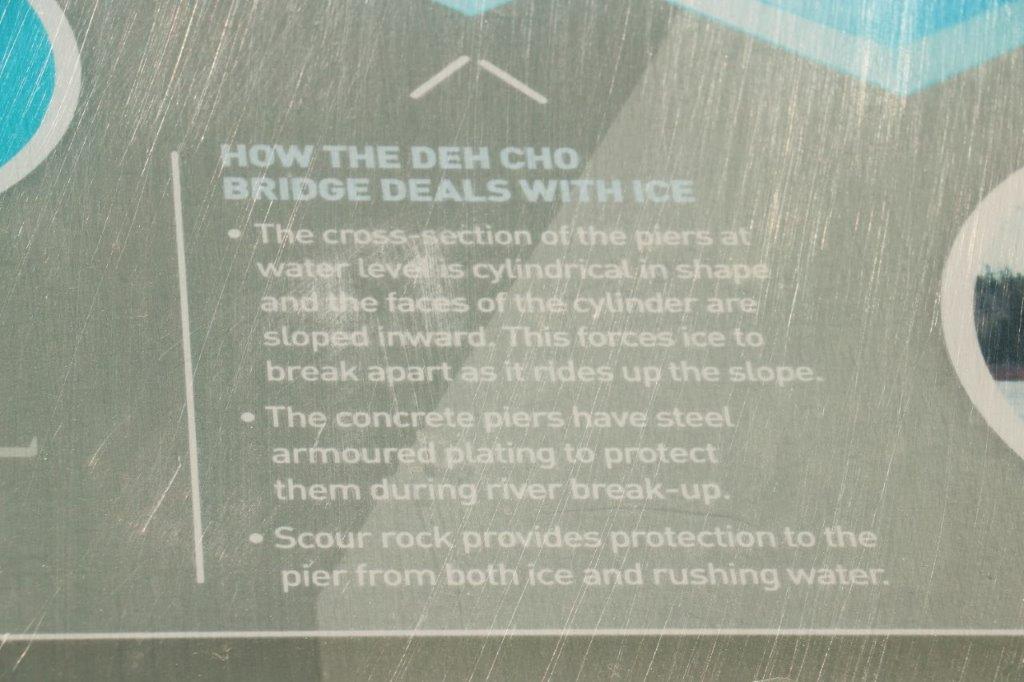
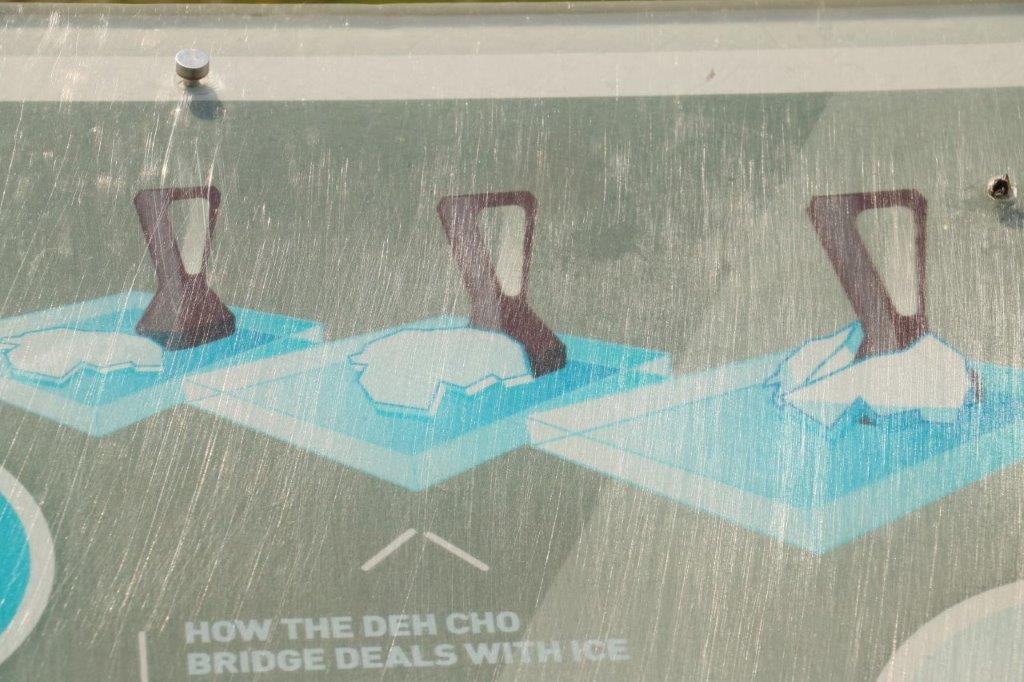
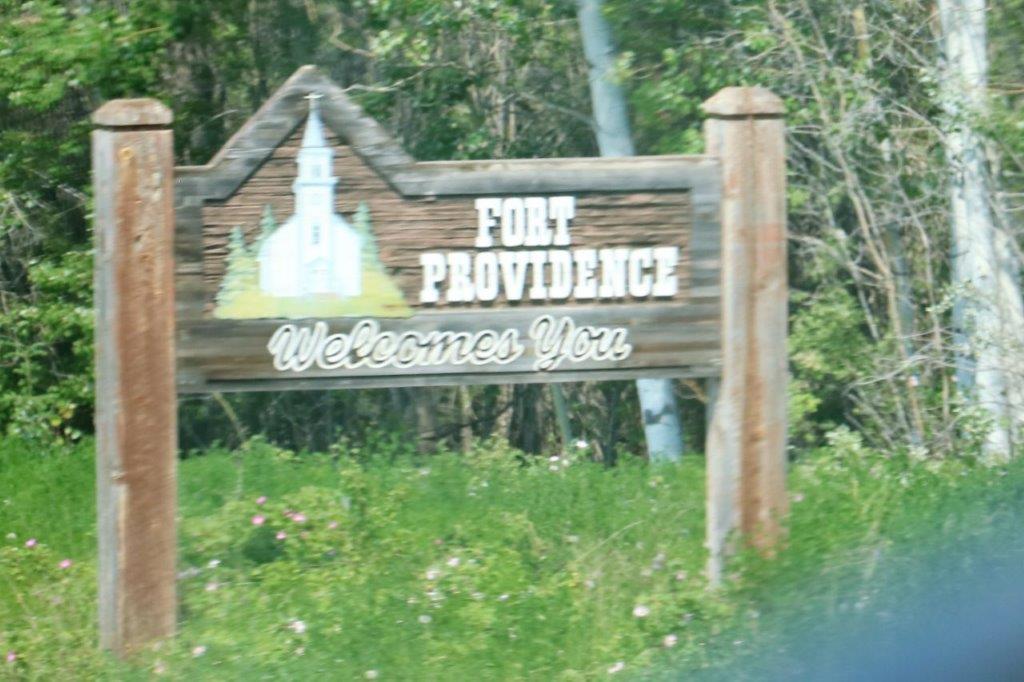
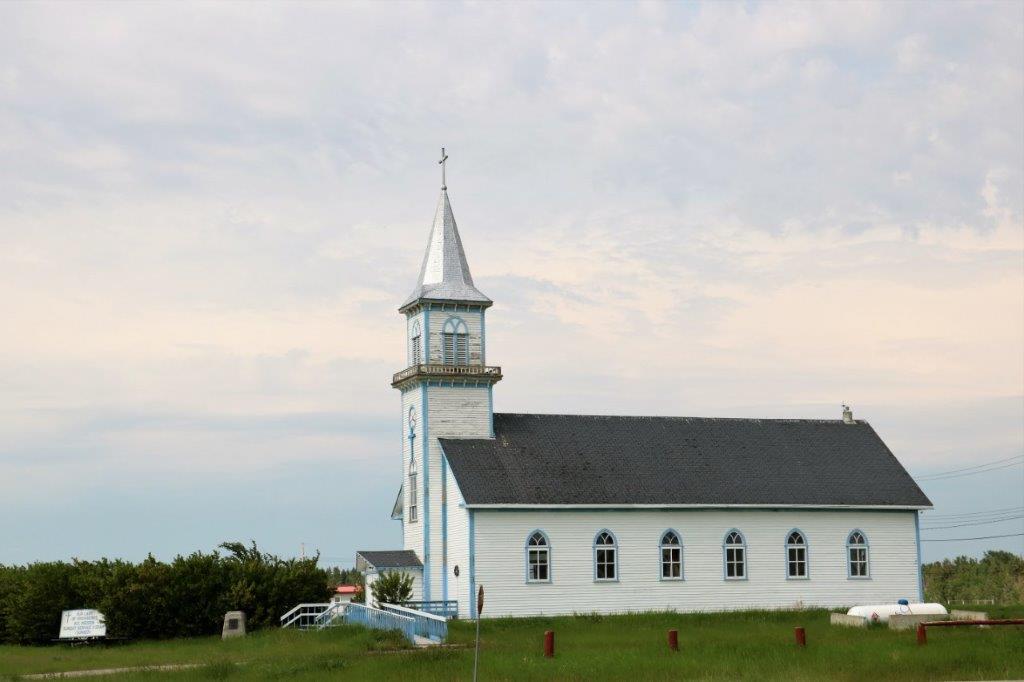
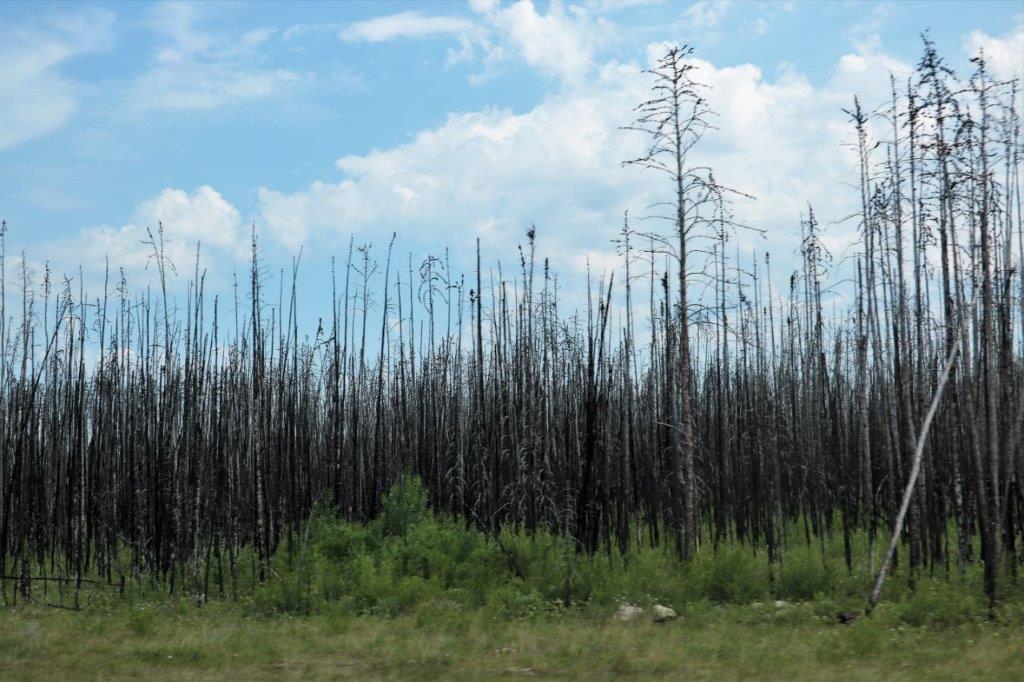
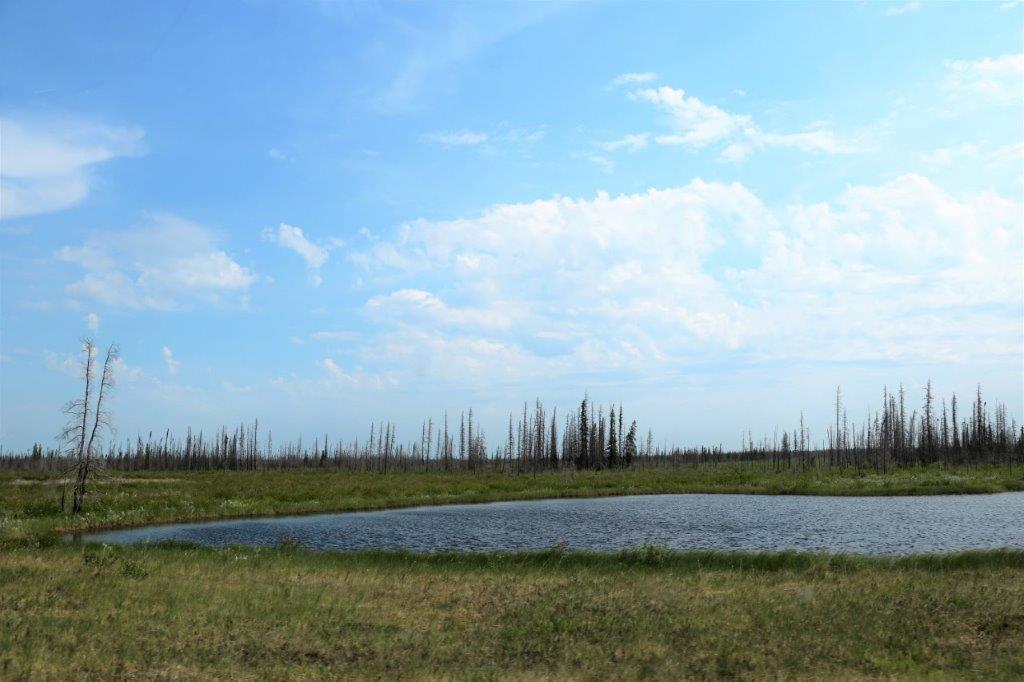
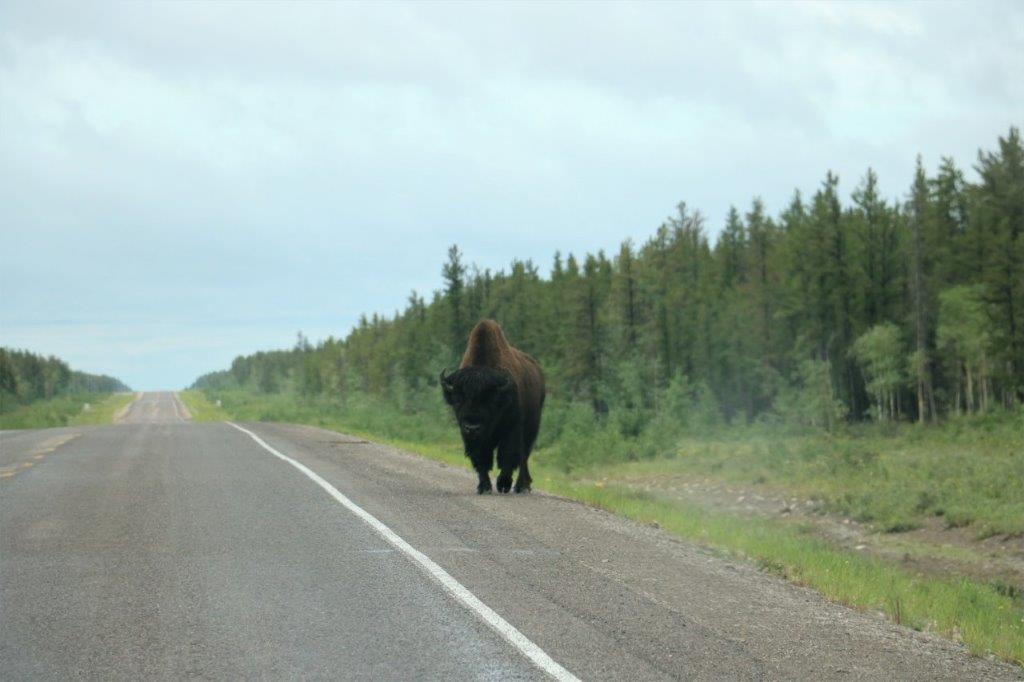
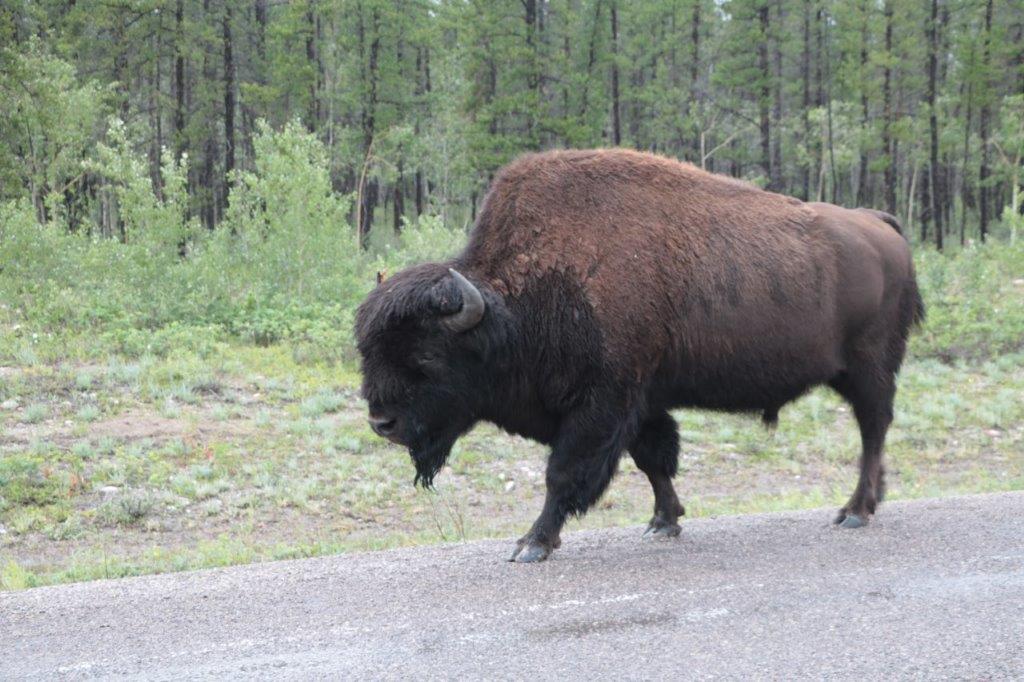
We stopped at McNallie Creek where there is a huge punchbowl at the base of a narrow waterfall. At Lady Evelyn Falls we had some lunch. Not far from the turn-off onto Highway 3 you enter the Bison Sanctuary.  There are warning signs all along the road to beware of the bison as they like to eat the grass on the roadside verge and they like to sun themselves on the pavement.  There we several pull-outs along the route with information about the bison.Where once there was a ferry across the Mackenzie River there is now the Deh Cho Bridge. We took a 5 km diversion into Fort Providence, a small community on the river shore. There had been huge forest fires in this area in 2014 and 2015 and we drove through the results for miles and miles. By now it was late-afternoon. We had been driving beside the bison sanctuary for several hours with no sign of the critters.  We had stopped at one of the information pull-outs to look for a geocache, but it began to rain slightly and there was another vehicle parked nearby so we decided to press on.  Not a great deal further down the road this big fellow wandered past our truck.  My photos were taken through the bug-splattered window but he walked down the road on John’s side so he was able to get some clear pics. These two photos are John’s.We only made one more stop on our way to Yellowknife – also to find a geocache.  That was at the bridge across the Frank Channel. The remaining 100+ kilometers to Yellowknife were driven through a very rocky area.  Huge, rounded, smooth boulders appeared on both sides of the road for the rest of the way to the city. We arrived at 6:30, checked into our hotel, where we will stay for three nights, walked across the parking lot to Hotspots Pub for dinner, and returned to our room to sort photos and write a blog.  A long day, but a good one.