Category Archives: Hanna Travels

2019 July Journey – Vancouver Island section – Day 4

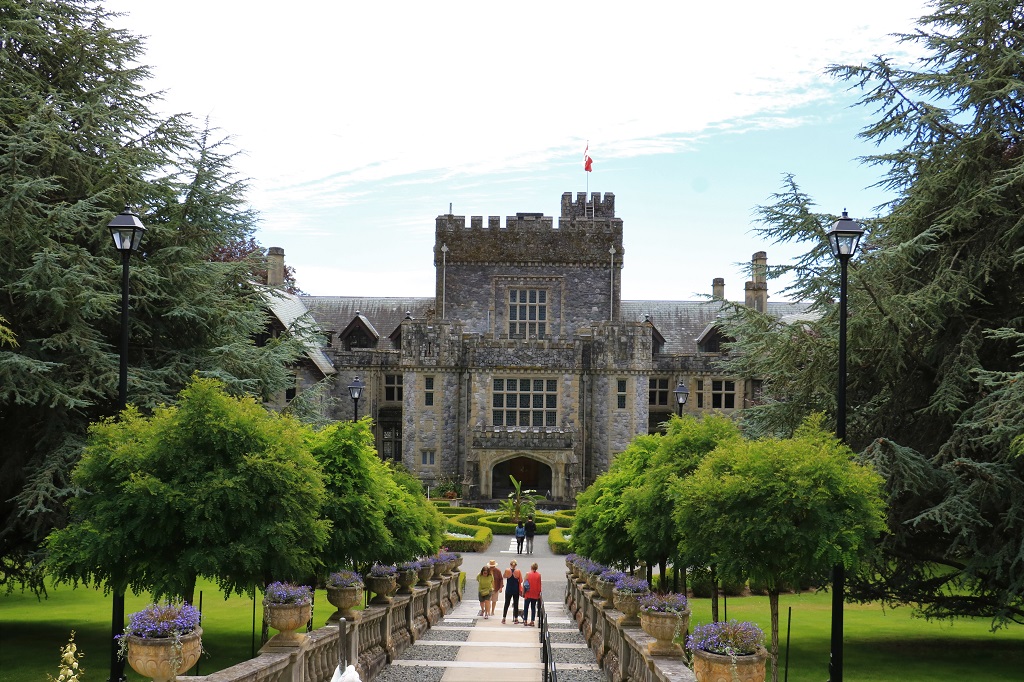
We left Victoria after breakfast and drove west to Hatley Park.  We had to take a convoluted route due to construction detours but we arrived in time to book the 11:45 guided tour of the castle.

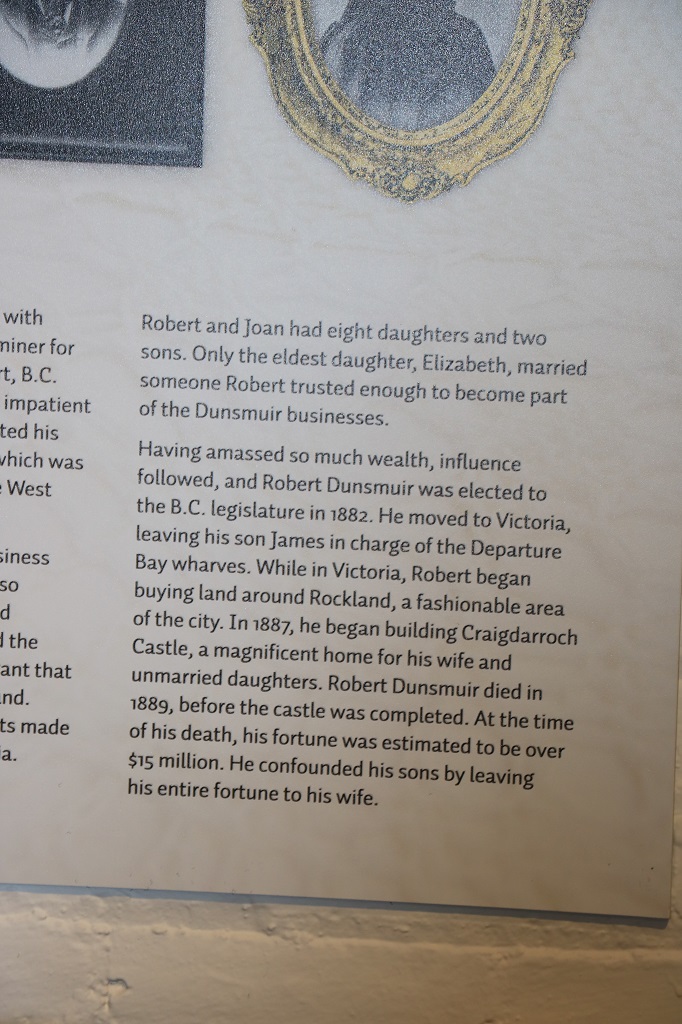
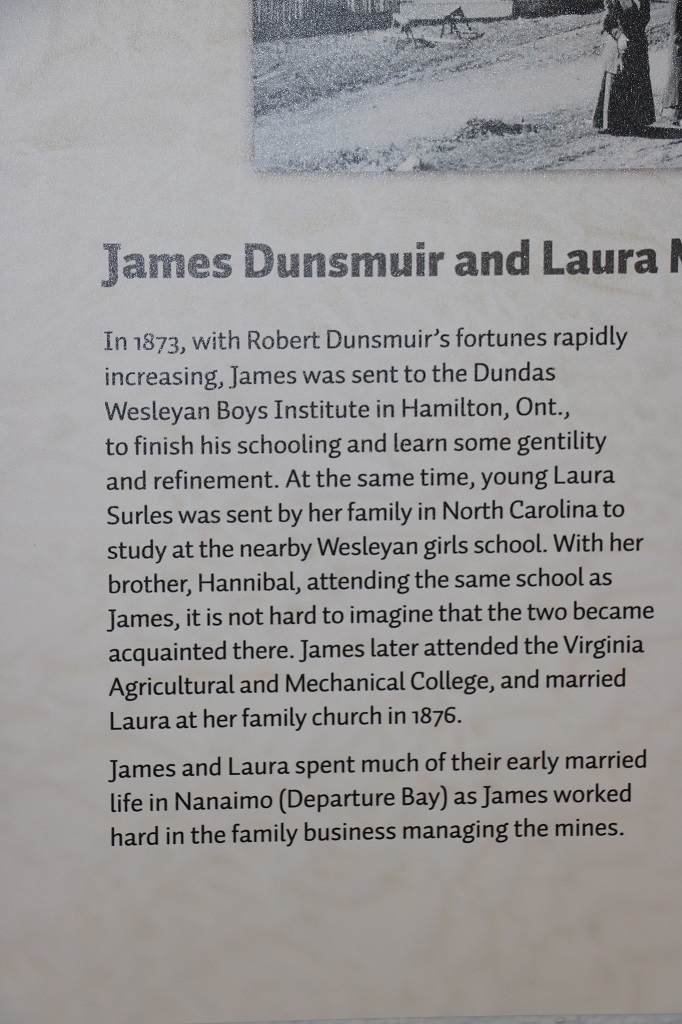
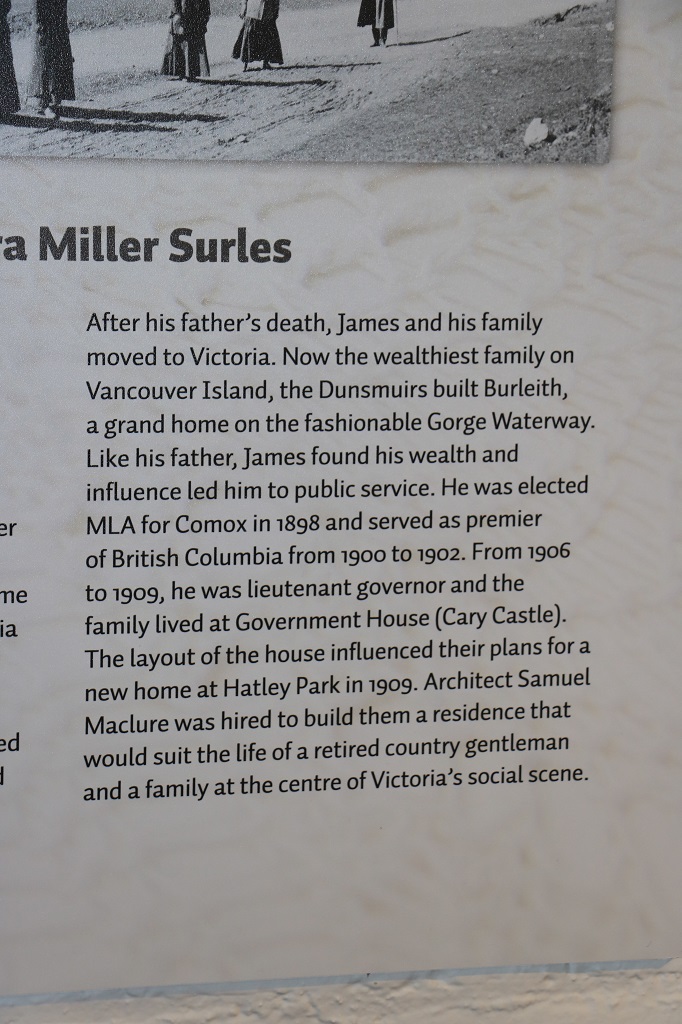
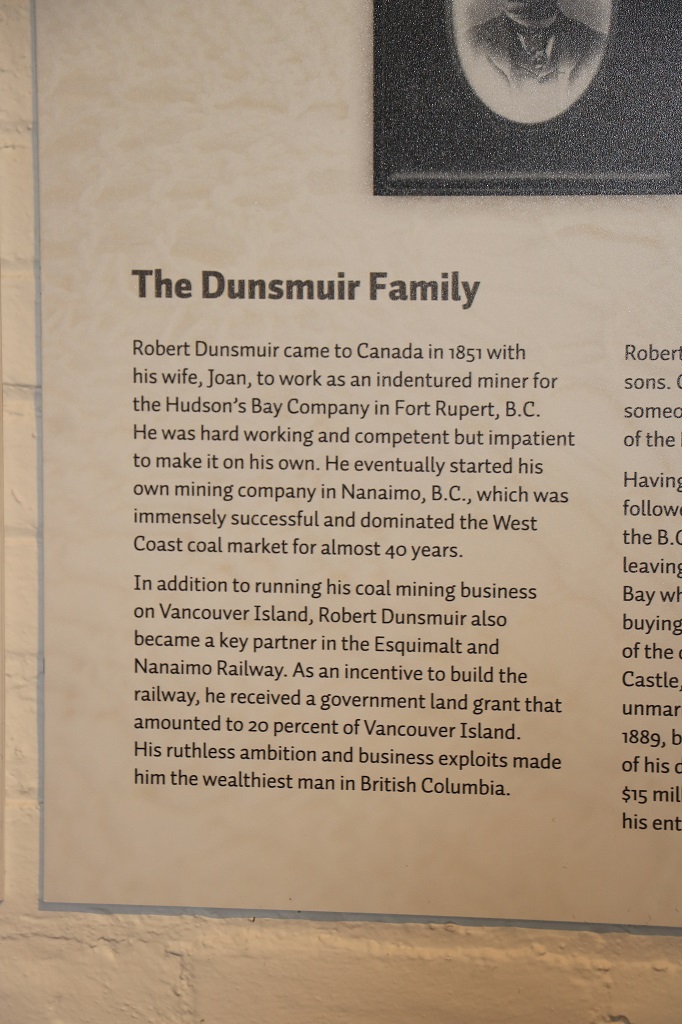
The castle was built in a year and a half for wealthy mine and railway owner James Dunsmuir and his wife Laura.  It was completed in 1908 and was their retirement home.  James hired over a hundred labourers, 62 stone masons and dozens of finish carpenters so the house would be built quickly.  His father Robert had commissioned Craigdarroch Castle as his retirment home but died before it was finished and James did not want to risk the same thing happening to him.  In 1910 he sold all of his coal mines, railway interests and all Dunsmuir businesses for $11,000,000 to retire and hunt, fish, golf and spend time on his yacht.  He died in 1920 at the age of 69.  His wife Laura lived in the house until her death in 1937.  The Dunsmuirs had eight daughters and two sons, yet when Laura died her will stated that everything in the castle and the property were to be sold and the money distributed to the surviving adult children.  Very few items in the castle are original.
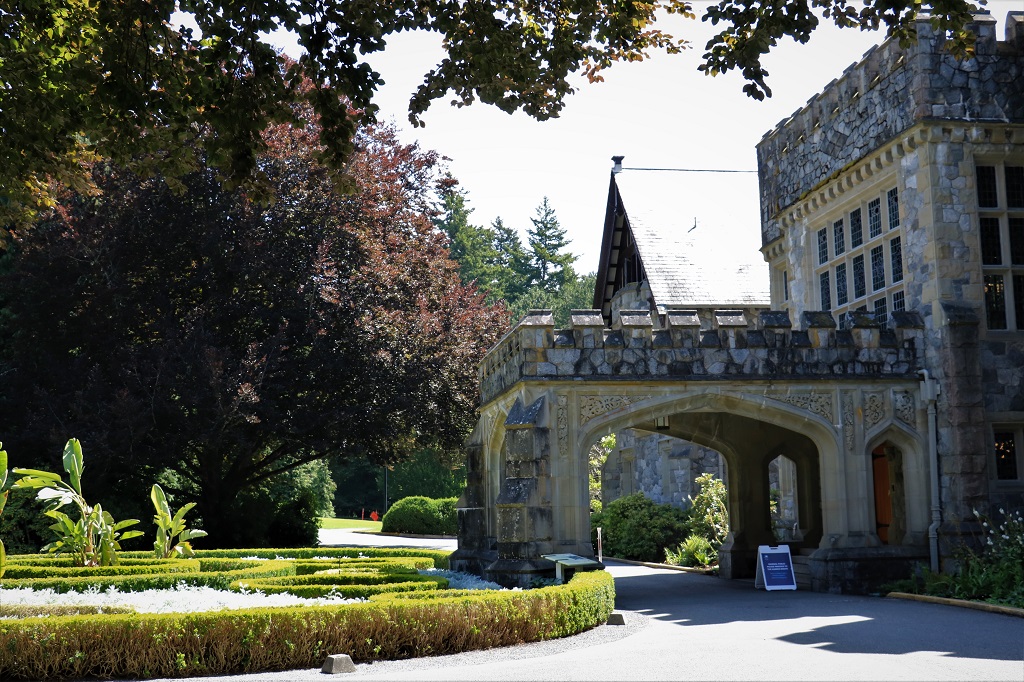
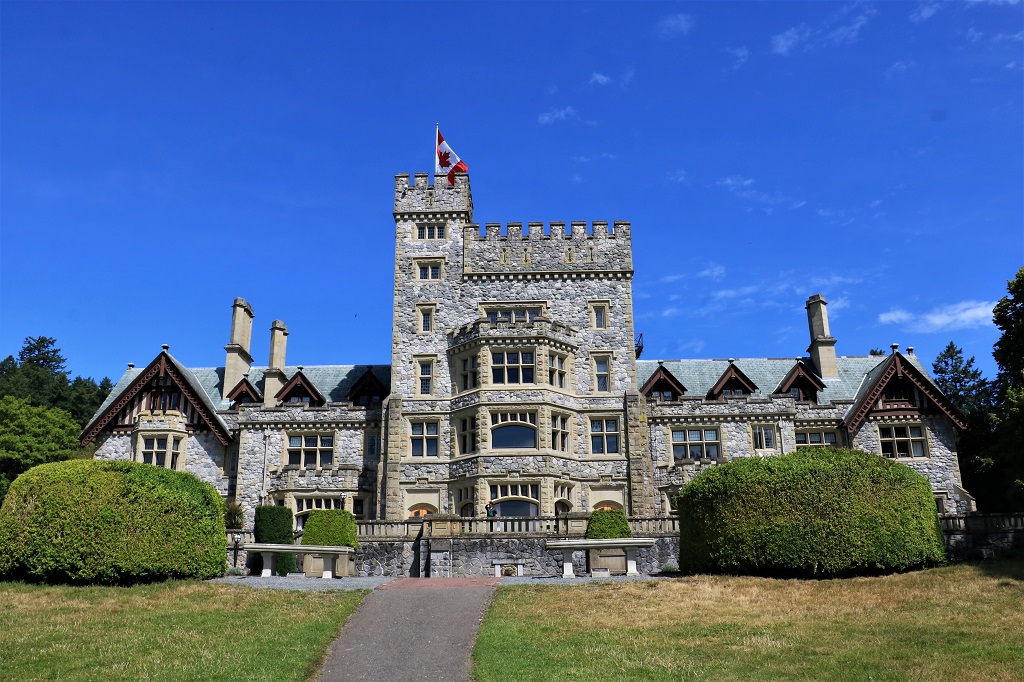
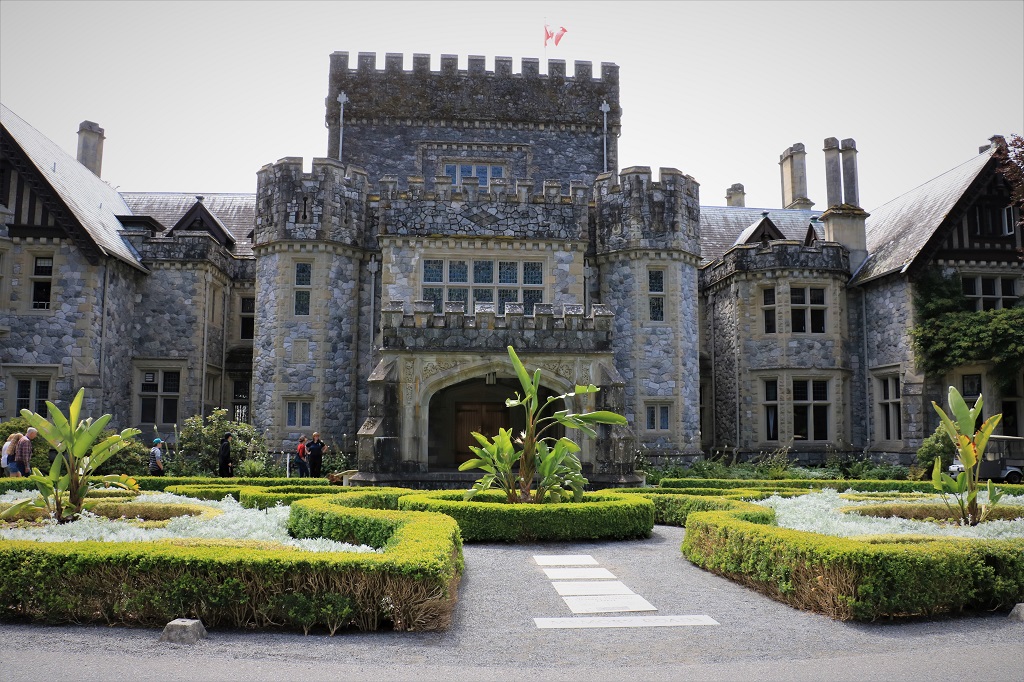
The property sat vacant for three years after her death with no buyers.  WW11 had started and in 1940 the Dominion of Canada bought the house and over 500 acres for $75,000.  The stone wall that surrounds the estate and the greenhouses each cost that much money.  Most of the records pertaining to construction of the castle were destroyed after Laura’s death, but it has been estimated that the castle alone cost about $350,000 to build.  There were many other buildings like stables and barns, etc. that have been destroyed over the years.  When the govenment bought Hatley Park it was to be used to train naval officers and after the war it became Royal Roads Military College until 1995.  Today it is a public college that is leased from the Ministry of Defense for $1  per year.  However, the college must maintain the buildings and grounds, so they do pay a substantial amount for upkeep.  Hatley Park, despite being a working college is also a Canadian Historic Site.This is the back of the castle that looks out onto Juan de Fuca Strait..The front of the castle.
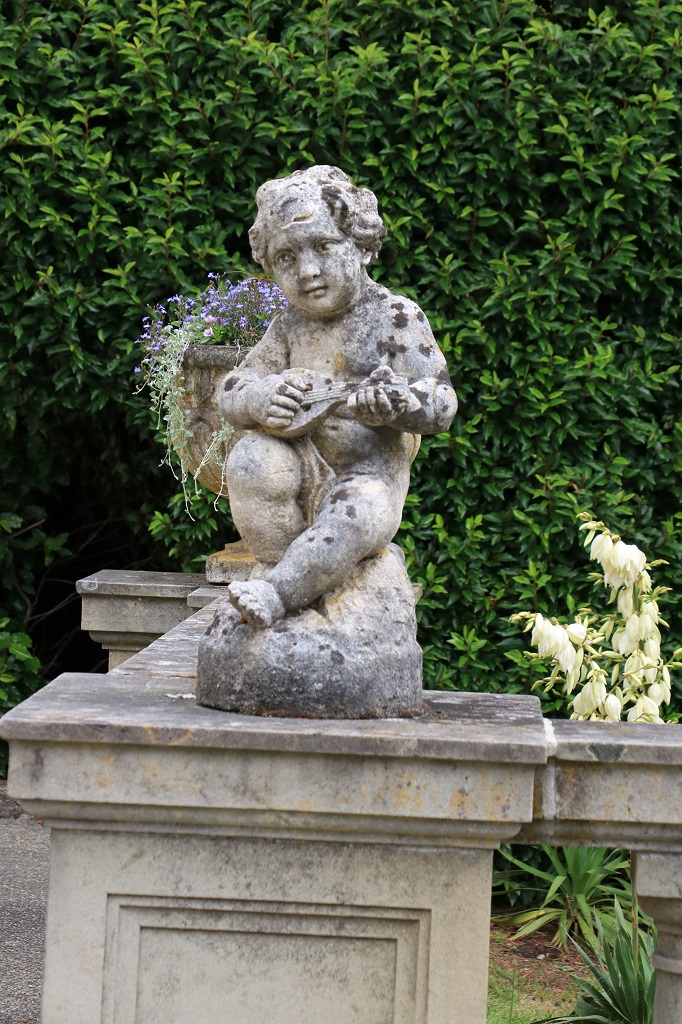
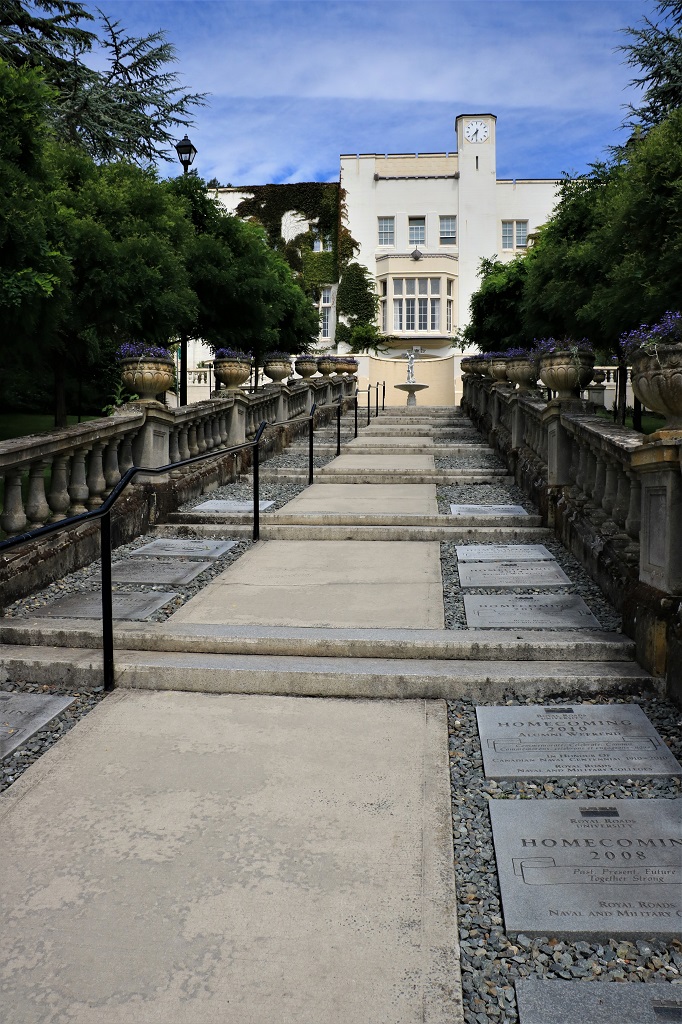
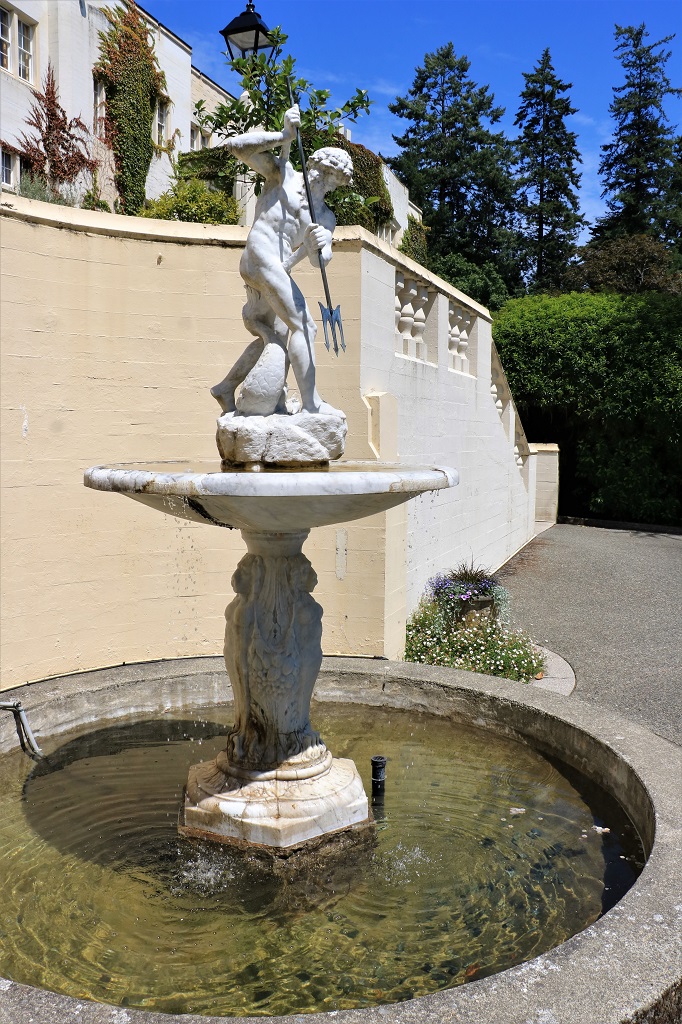
At the top of these stairs there was a French garden, however when the property became Royal Roads College the garden was removed for the Grant Building which contains classrooms and administrative offices.  There is another college building behind the Grant.  At the top of the stairs there is a statue of King Neptune that used to reside in the French Garden.  A group of naval officers were not about to remove a statue of the King of the Sea so it was moved to the top of the staircase.
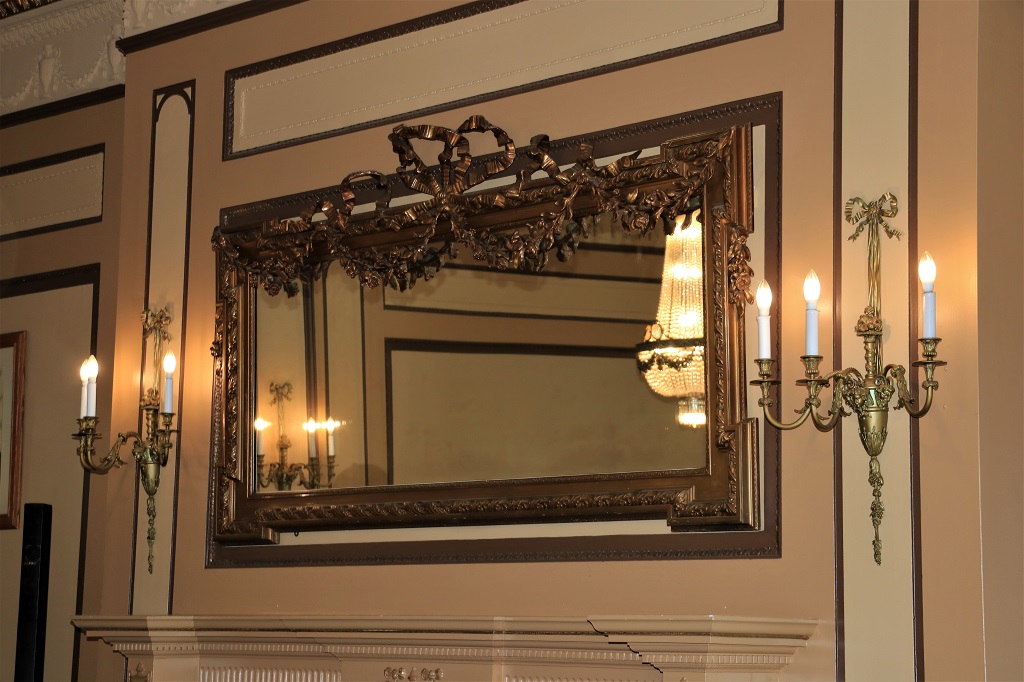
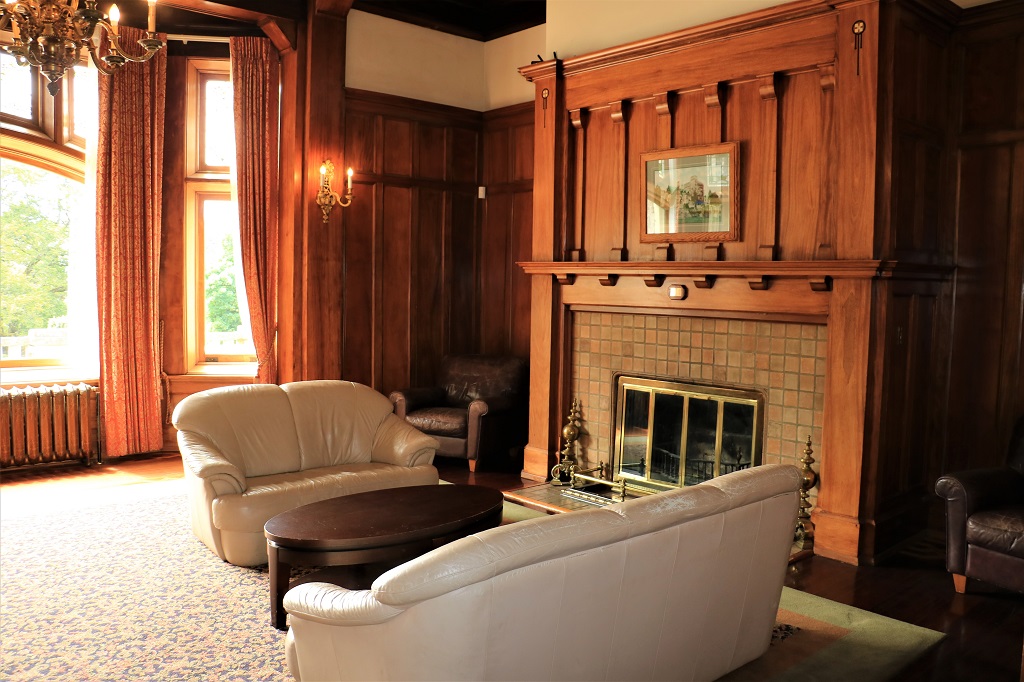
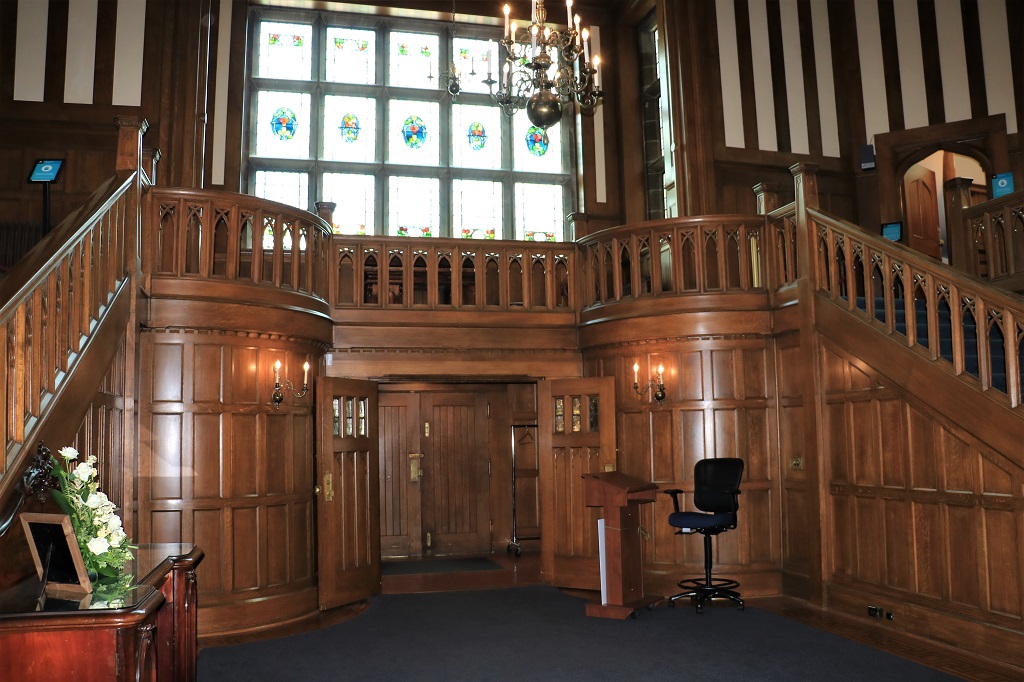
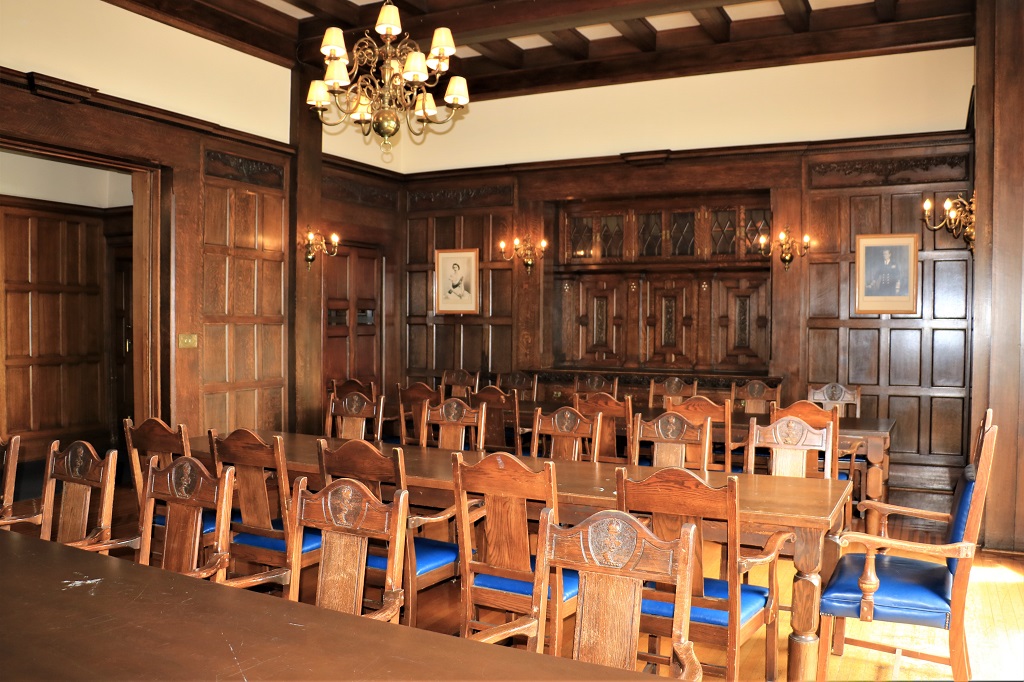
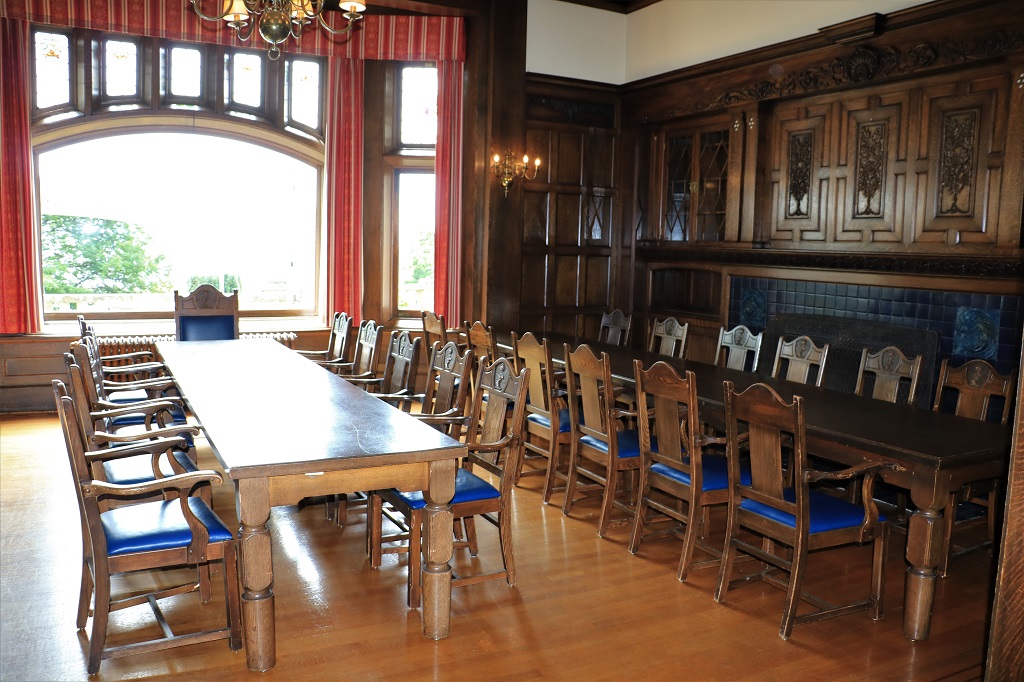
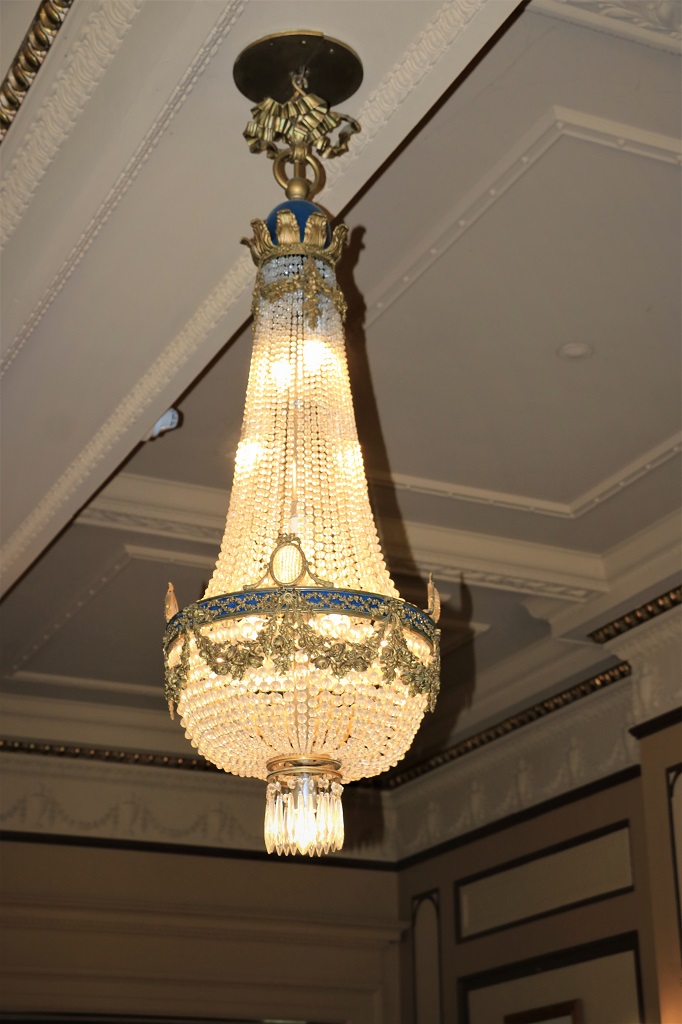
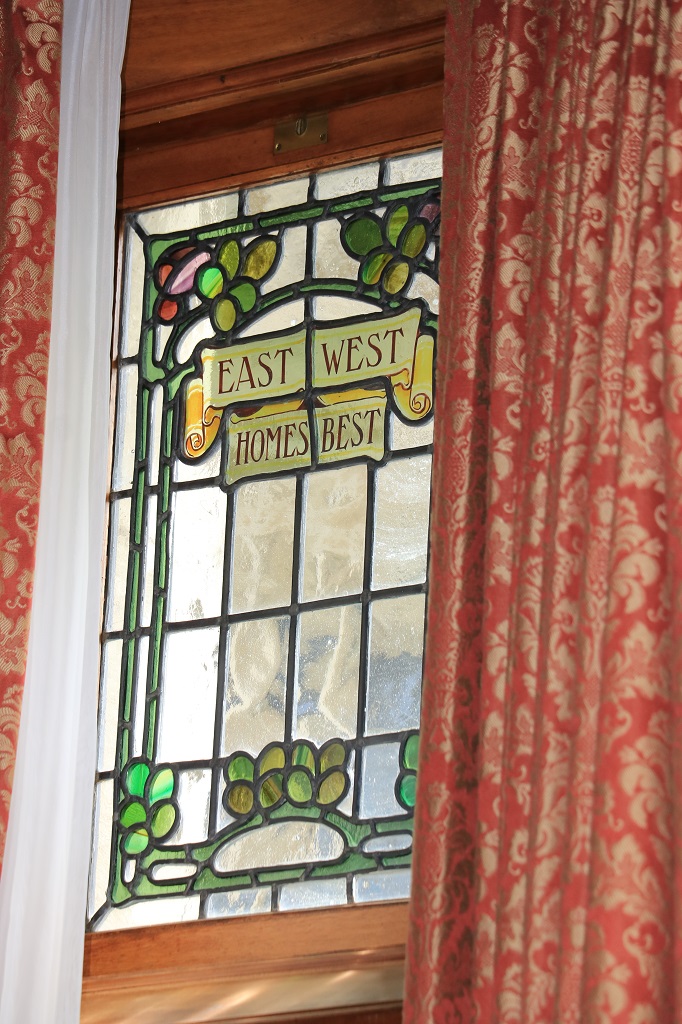
The second floor of the castle is used by college administration so we only toured the rooms on the main floor and the small museum in the basement.A lovely large entrance hall with a double staircase to the upper floor. The  dining  room.  The  three  tables  and  sets  of  chairs  were  made  by  cadets  of Royal  Roads Military  College.  It  was  tradition  that  each  graduating  class  make a table  and  set of  chairs. The lovely large mirror was one of two in the drawing room.  Both were sold at the auction after Laura Dunsmuir’s death.  The family of the purchaser donated it back to Hatley Park.  There is a desk and small table and chairs in the basment museum that were recently returned to the estate as well.The view from from the terrace outside the drawing room. The library, which was converted to an officers bar during the Royal Roads years.
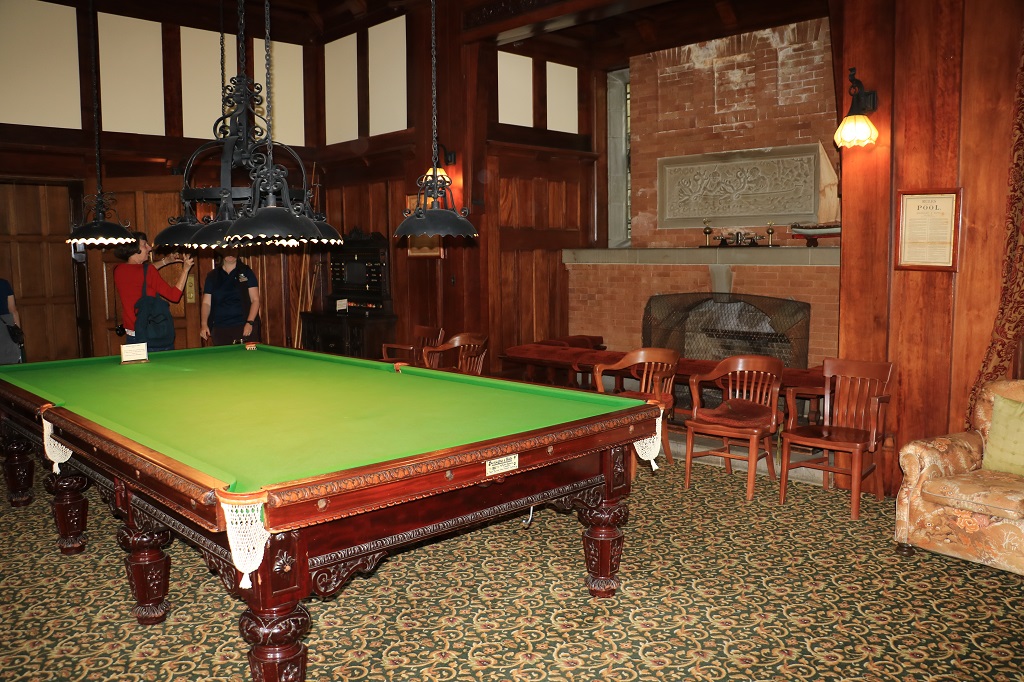
The billard table was also sold at the auction but it is made of five slabs of slate and the purchaser could not get it out of the room so he donated it back to the castle.  The legs can be removed and the table taken out on edge, but the fellow didn’t figure that out.  Various rooms in the castle have been used for movie films and the billiard table has been taken out of the room several times for filming.

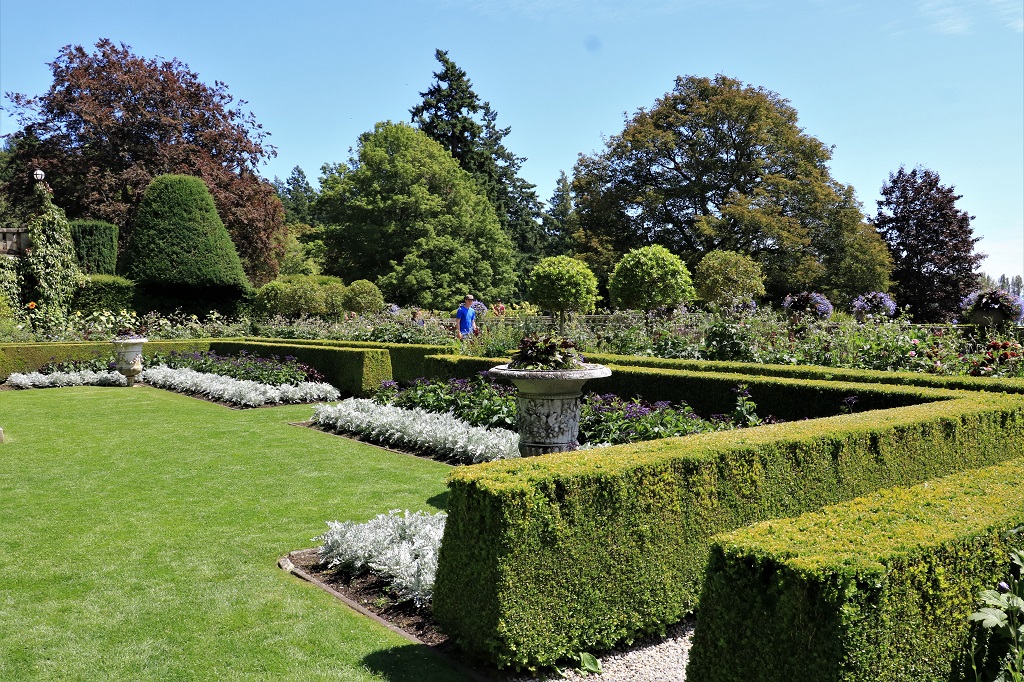
The tour ended in the Italian Garden. 
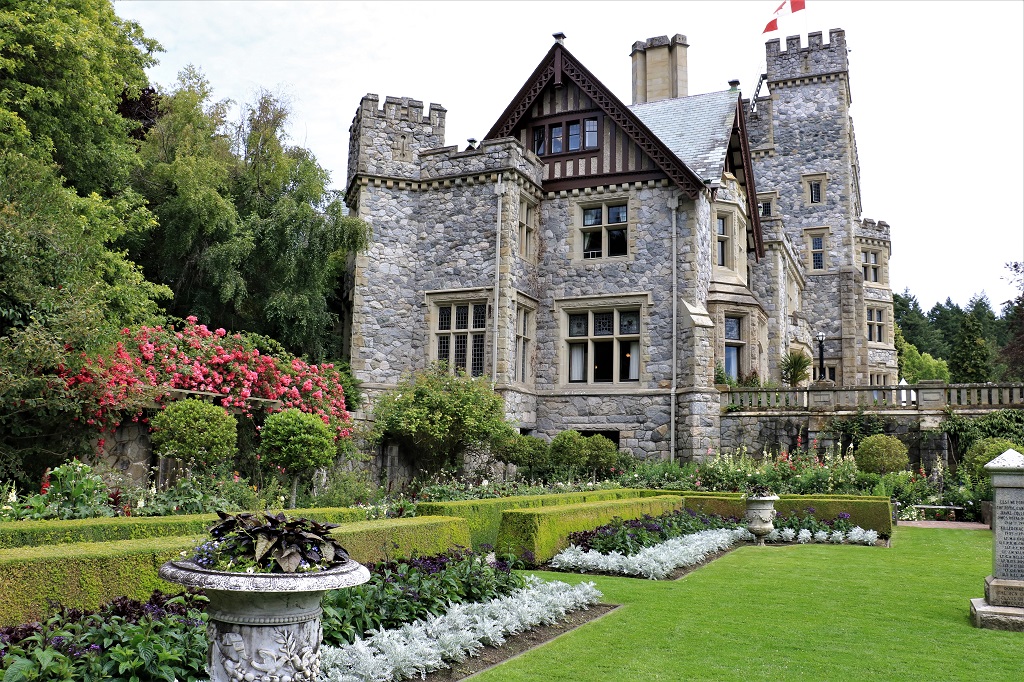
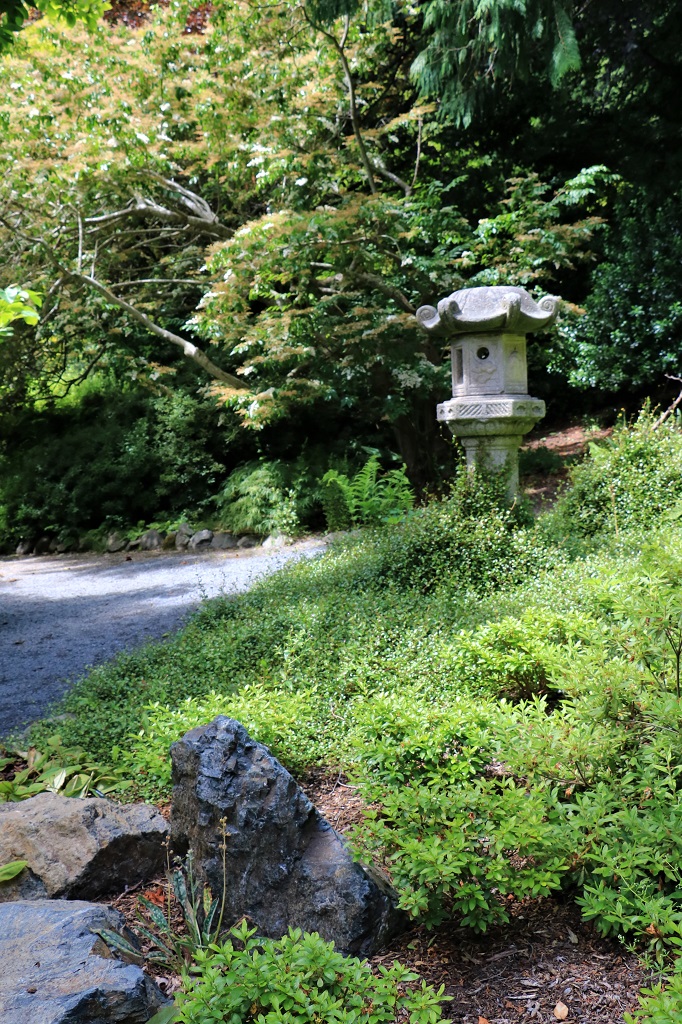
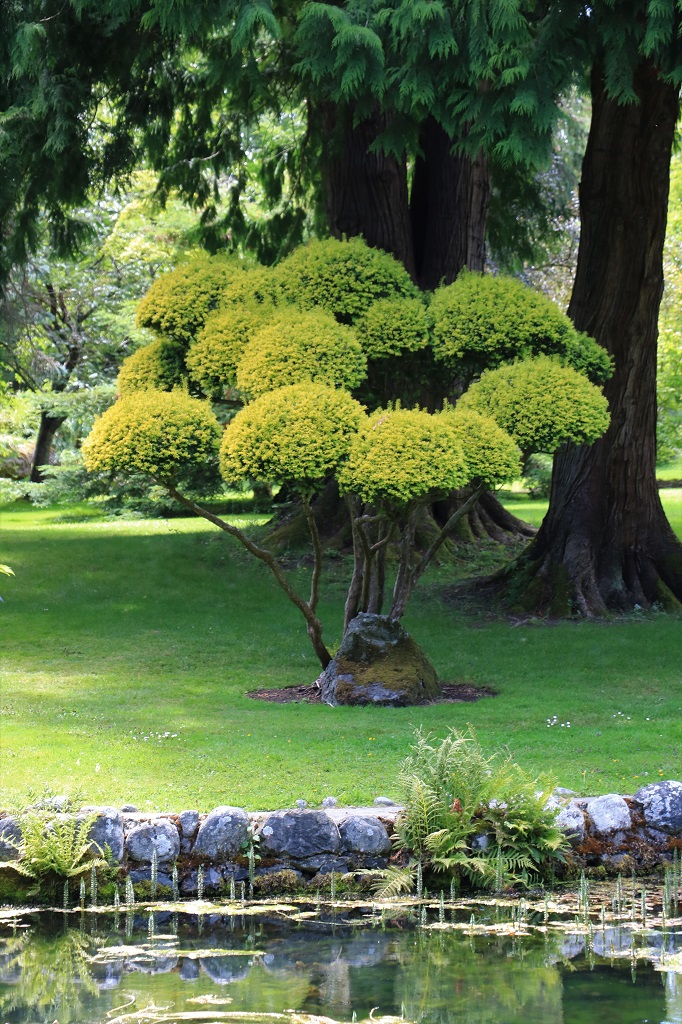
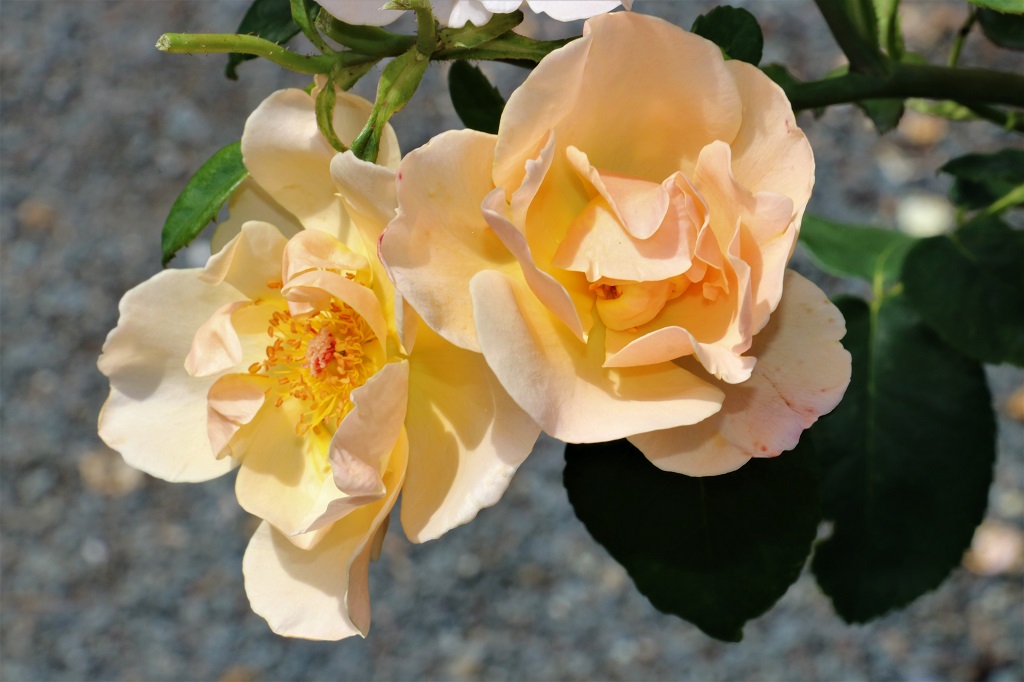
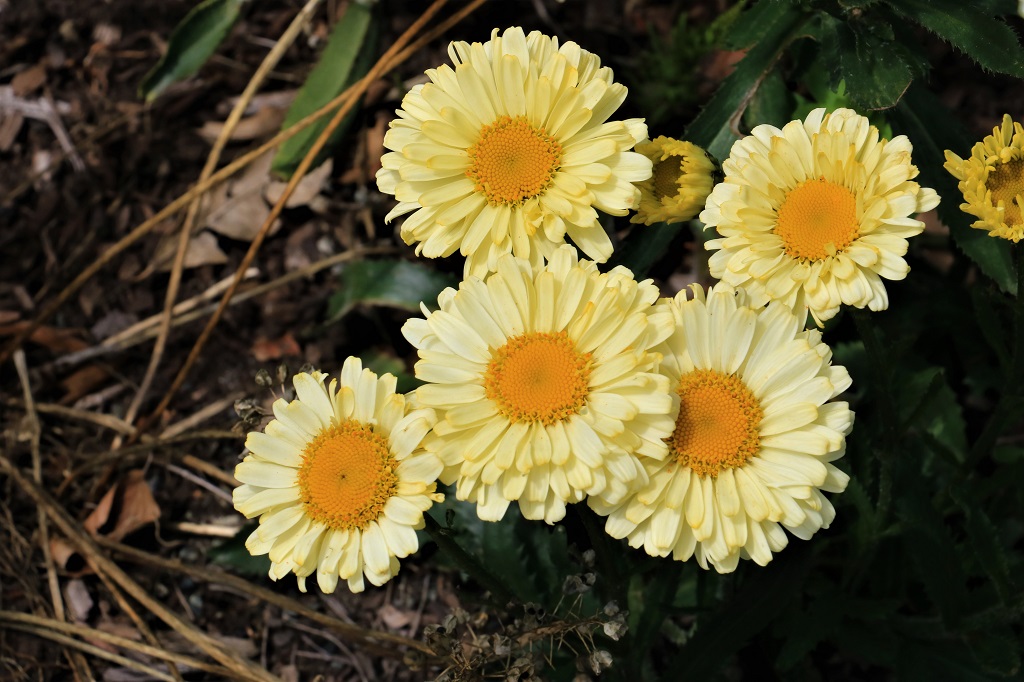
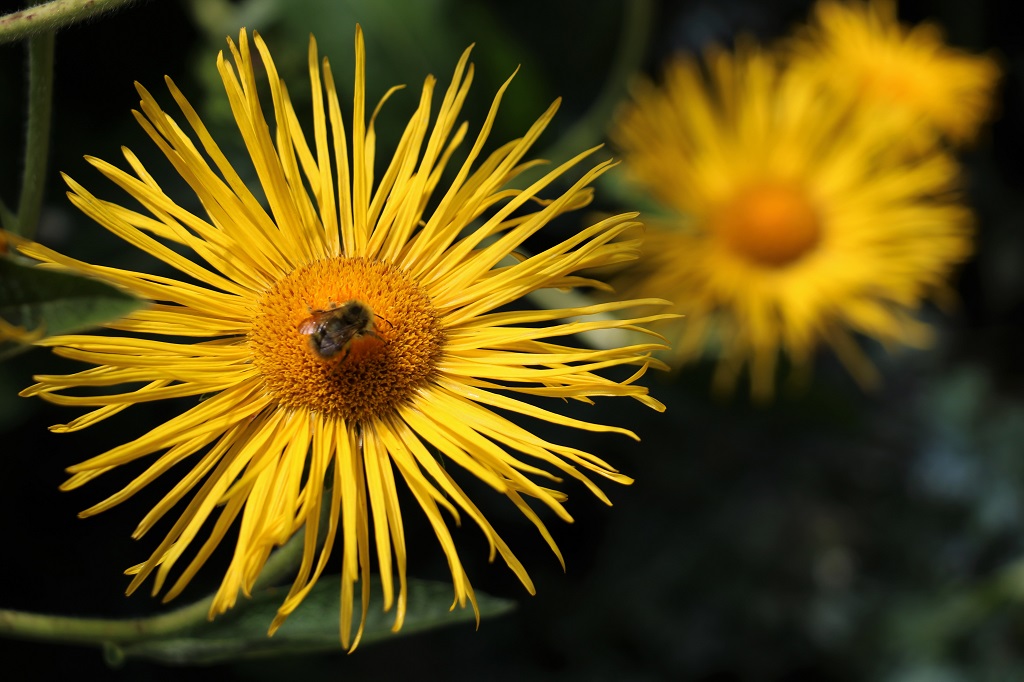
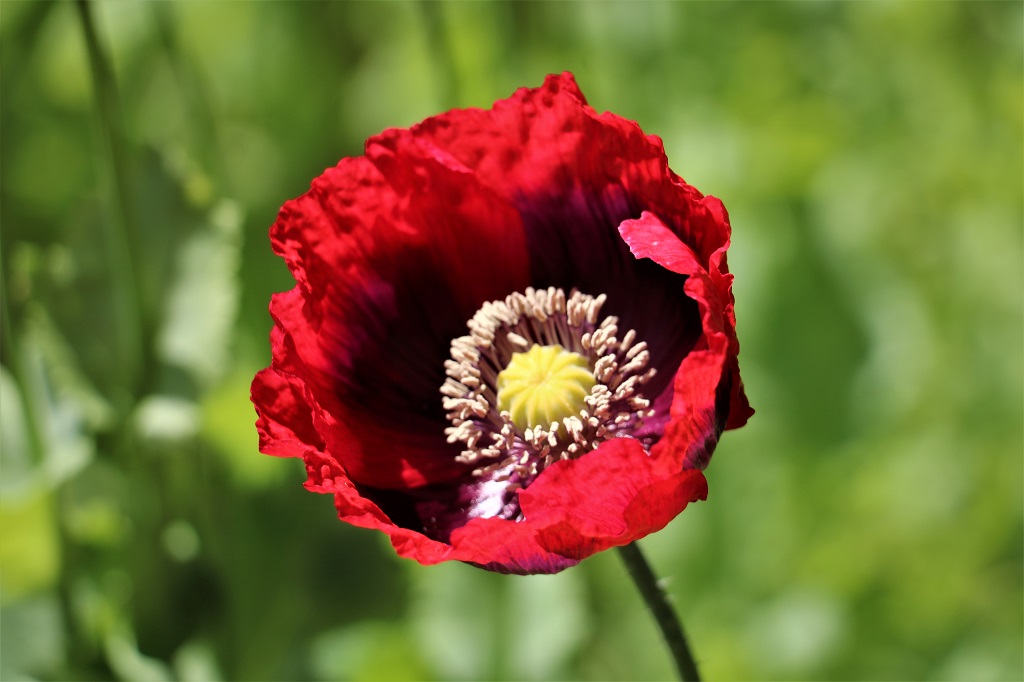
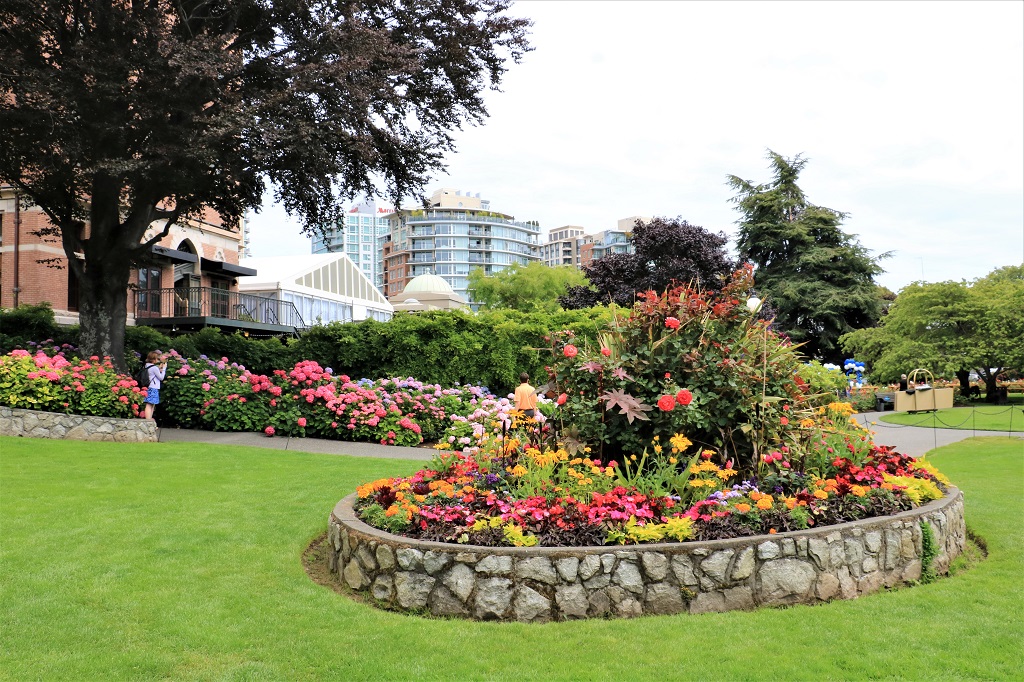
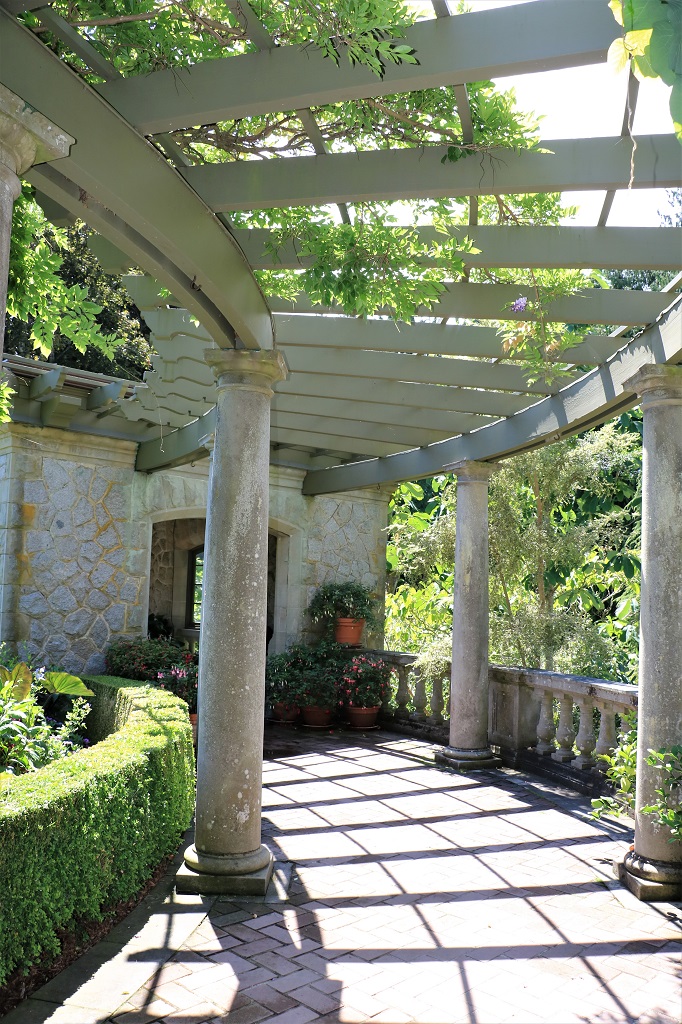
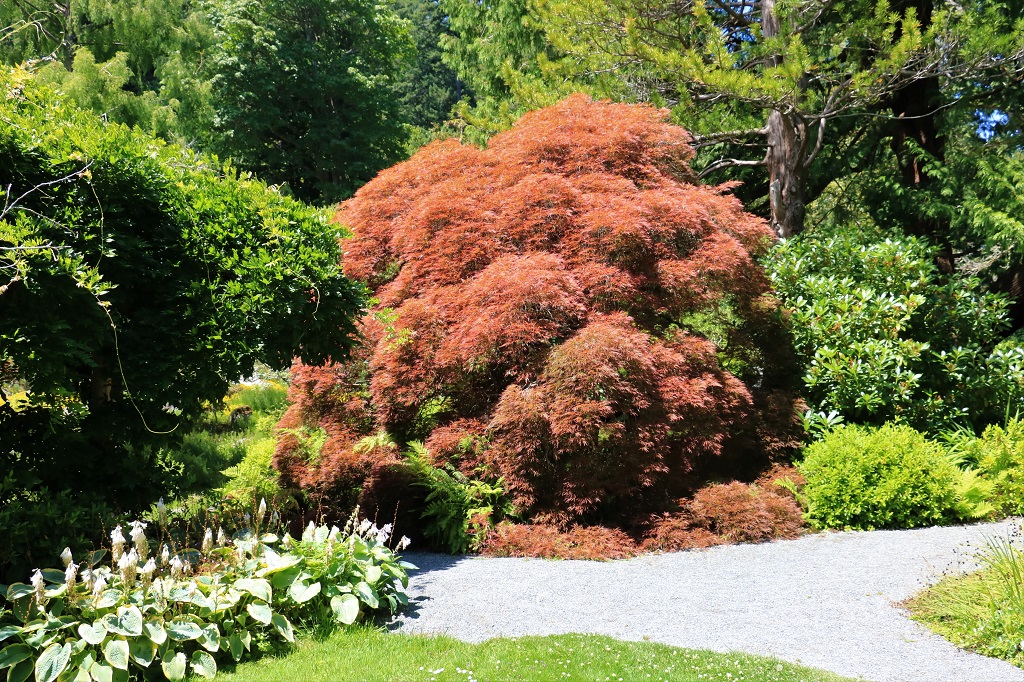
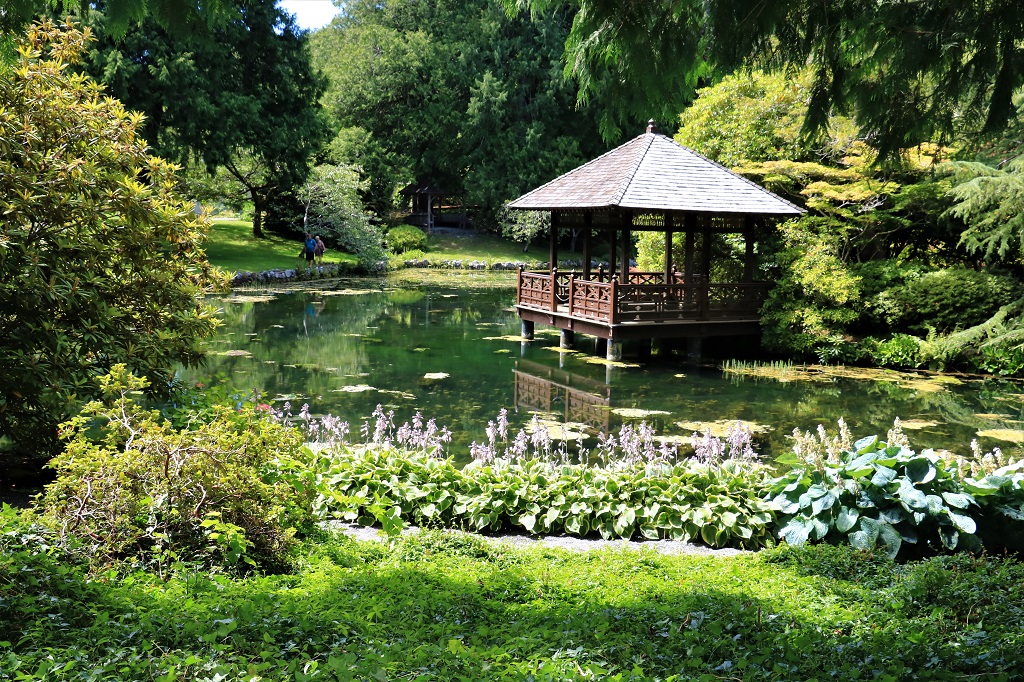
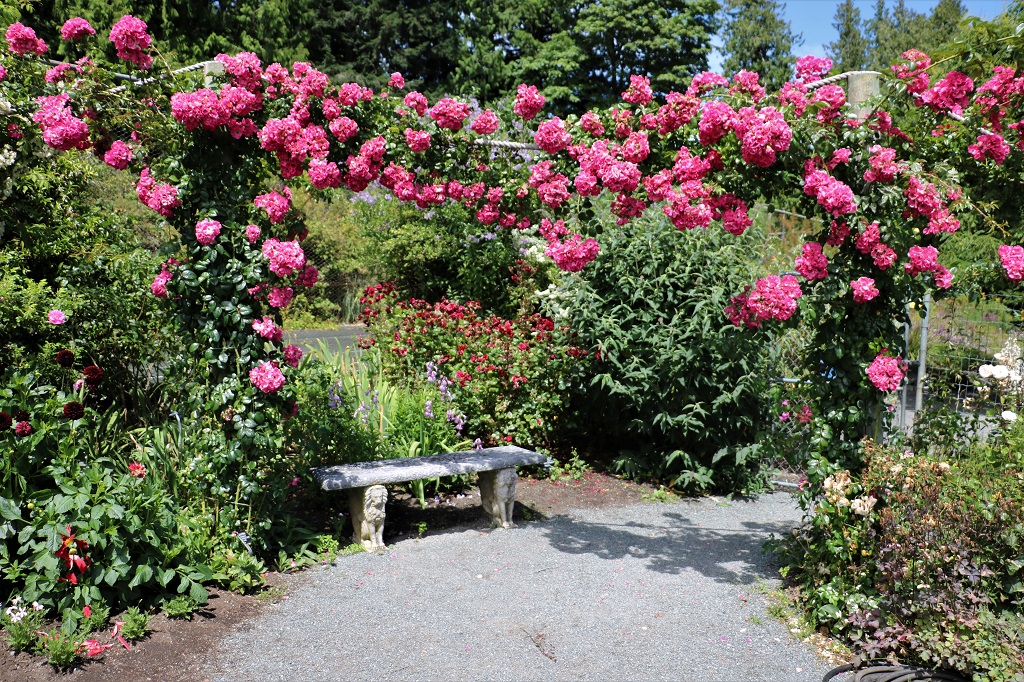
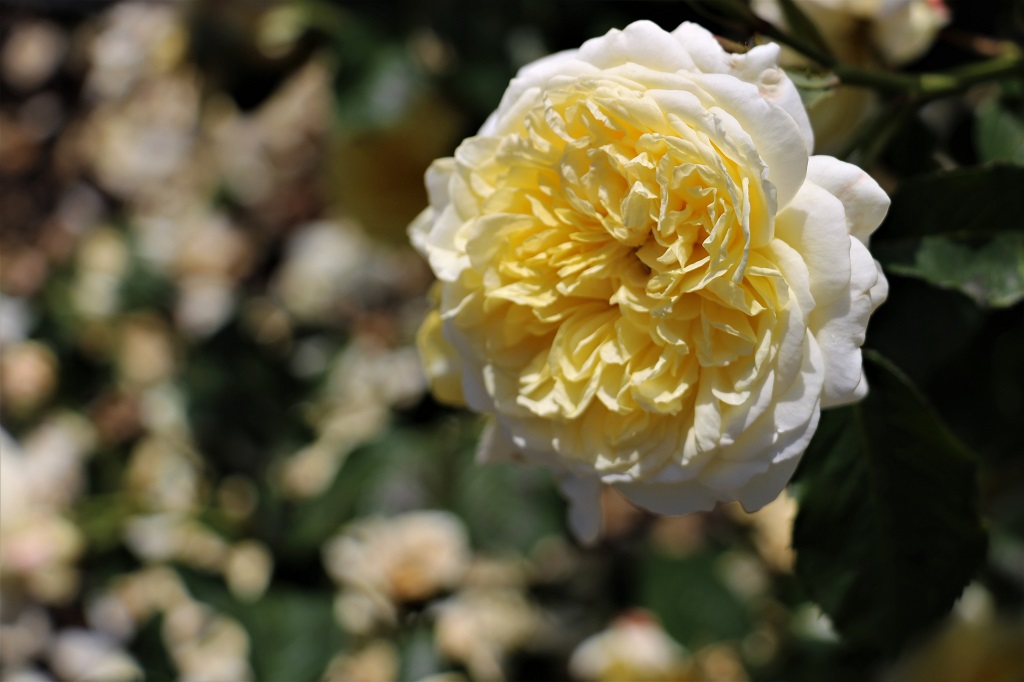
We went up to the cafe in the Grant Building and had some lunch then came back and wandered through all the gardens.  There is no cost of see the gardens.  Sadly, other than the Italian Garden and the croquet lawn below it which are beautifully maintined, the rest of the gardens are very over grown and unkempt.  But, it is a working college and their priority is the buildings and education, not expansive gardens. During the Dunsmuir days James and Laura employed 120 gardeners.  Not possible for the college to do. There are upper and lower Japanese gardens that were created by a prominent Japanese landscape designer. The beautiful big pond in the lower Japanese garden is filling up with weeds and algae.  It would need a lot of work to restore. The majority of the roses in the Rose Garden were finished blooming but there were still a few pretty ones to be seen – and some other nice flowers too. The Walled Garden and the Bog Garden were both very overgrown so all my photos just look cluttered.
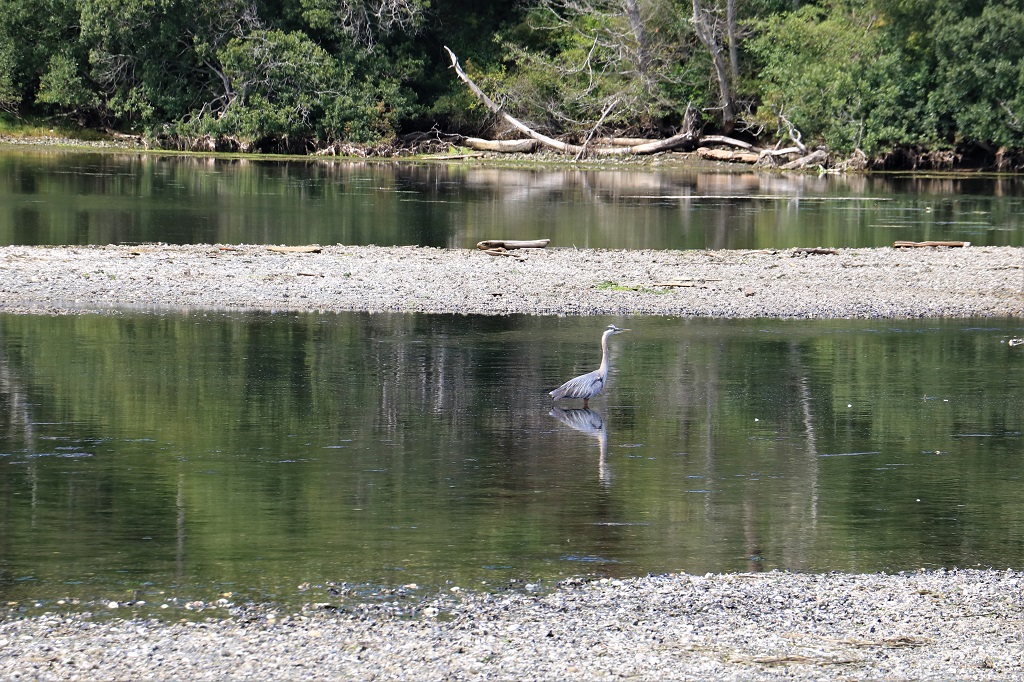
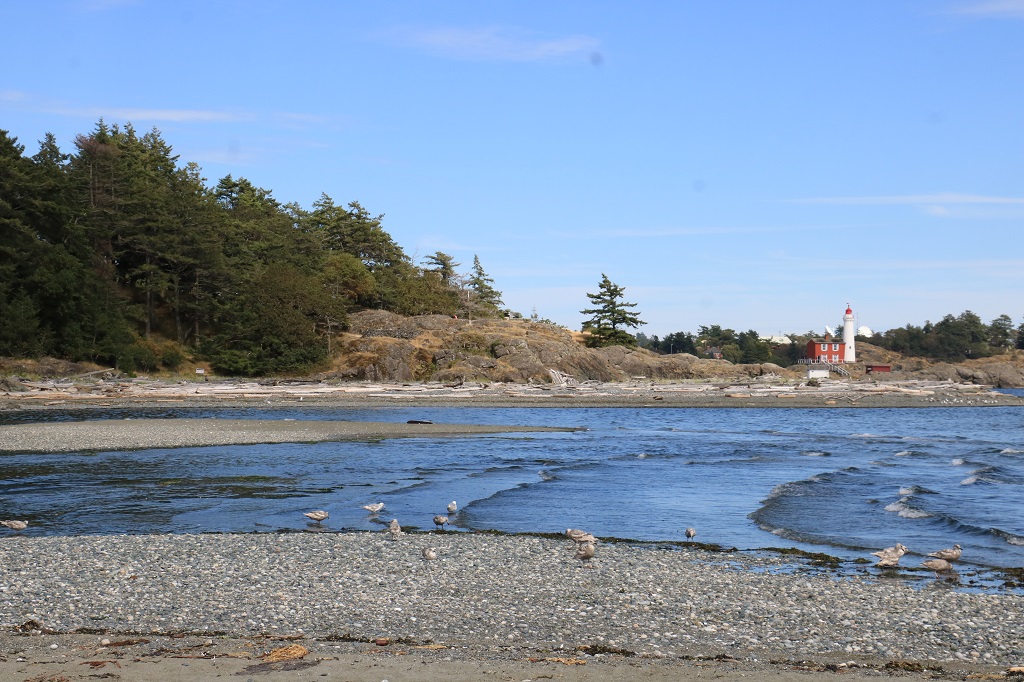
We finally left Hatley Park at 3:30 and drove back to Coburg Peninsula to get a couple of geocaches along the Esquimalt Lagoon Barrier Spit.  The lagoon is home to many species of birds including trumpeter swans, mute swans, and herons.  There were over a dozen herons wading in the water when we were there. We left the spit and headed for Sooke where we are staying for three nights in a cute little cottage on a quiet side road.  We got stuck in the same slow-moving traffic as yesterday and took forever to get to the store for a few dinner and breakfast groceries.  By the time we got back to Wisteria Cottage it was almost 7 so we had a late dinner before the usual evening activities of photo sorting and  blog writing.  Tomorrow, I suspect, will be a quieter, slower day.  My feet need a break.
2019 July Journey – Vancouver Island section – Day 3

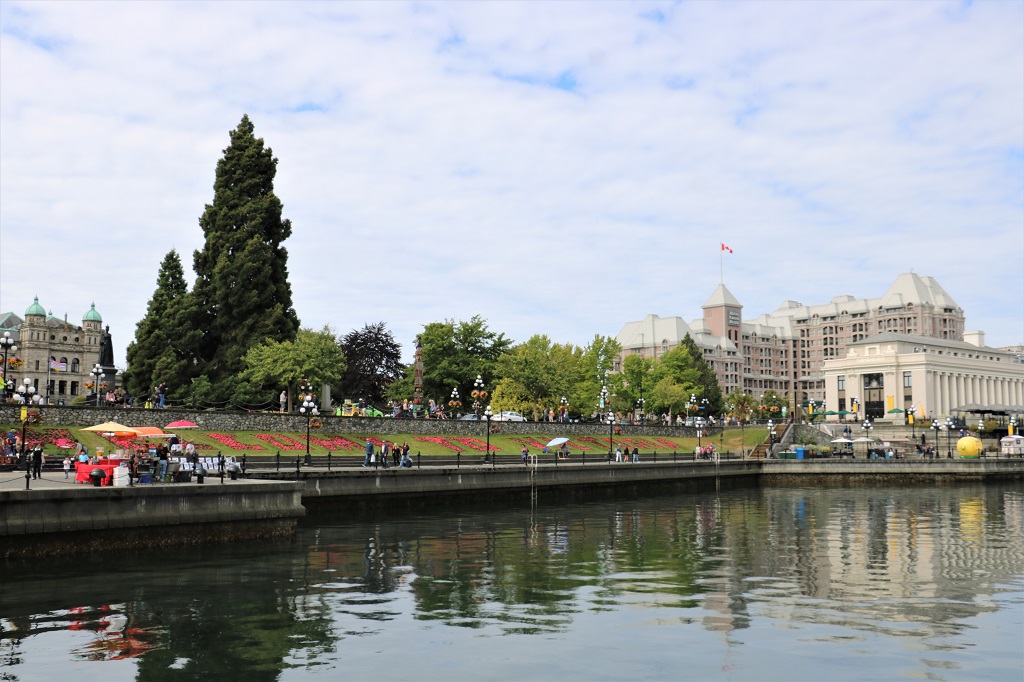
We spent the first half of our day in Victoria wandering around finding some geocaches and enjoying the Inner Harbour area.

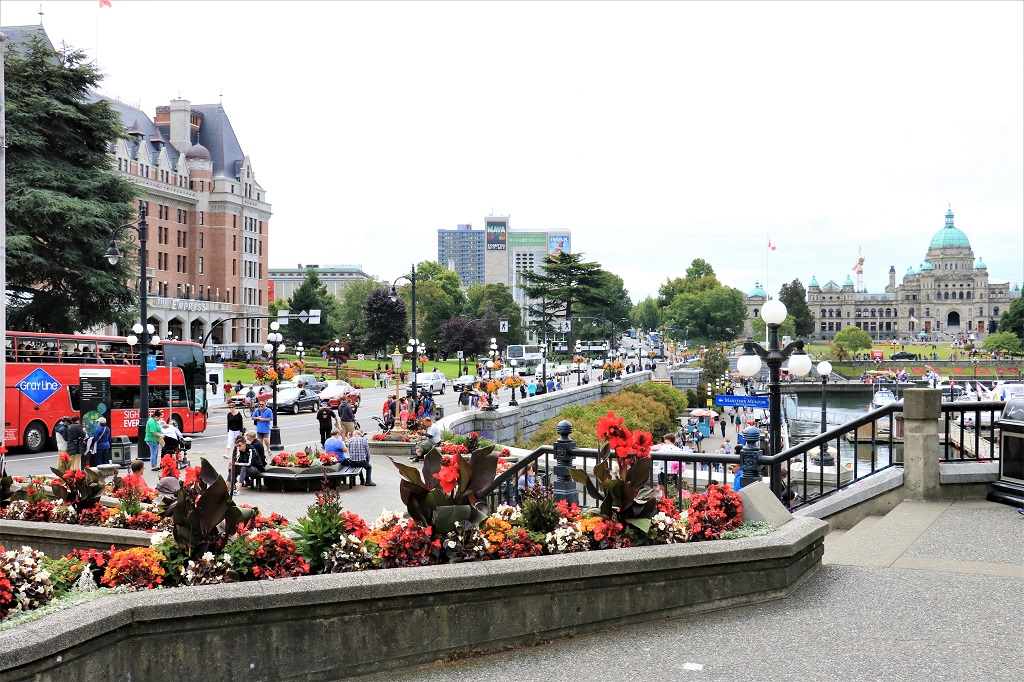
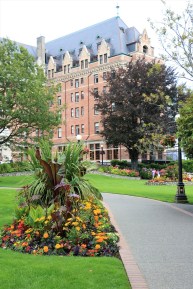
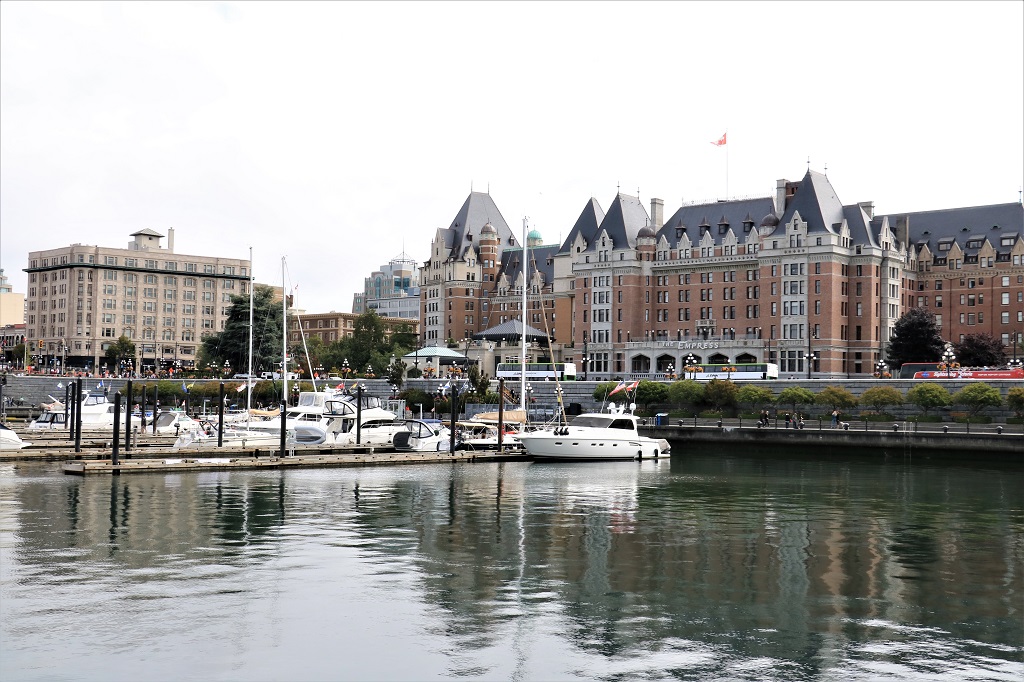
I suspect it may be illegal in Victoria to NOT take a photo of the impressive Empress Hotel.  It  is  a lovely  building  in  a beautiful  setting  and  everyone  takes  pictures  of  it.  Including  me.
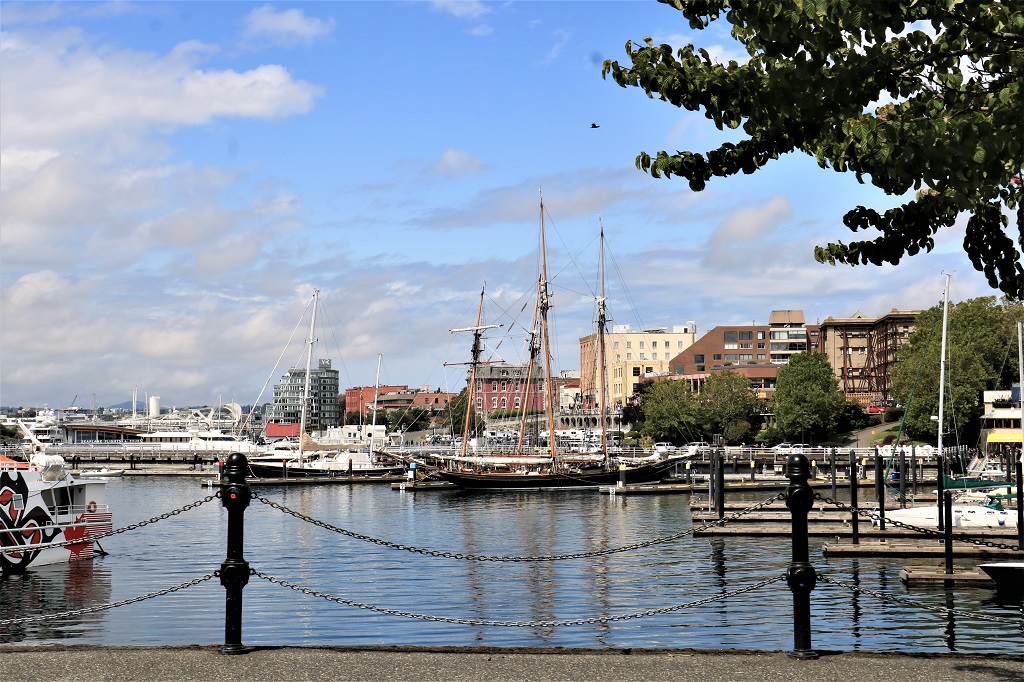
There is quite a bit of construction going on in various parts of the city so we saw lots of cranes.  I like the boats – from masted sailing vessel to sail boat to modern speed boat.  Every type of water craft can be seen in the harbour. As we walked along the top of the sea wall at the Inner Harbour, I noticed a fellow holding some old photos and looking out across the water.  I commented on his photos and he told us he was retired from the Australian navy and had been stationed in Victoria in 1979 on a navy exchange.  He had brought along his photos to compare with how the city looks today.  He said his wife was resting at their hotel, as she is not a really good traveler, but she was amazed by all the lovely flowers blooming everywhere in the city.  He was thrilled to have been able to come back after all these years.  Crossed an item of the bucket list he said.  They had spent 6 days in Vancouver, taken a 7-day Alaska cruise and were just completing 6 days in Victoria.  They fly back to Melbourne tomorrow.  We had a great chat.  He enjoyed telling us his story.  
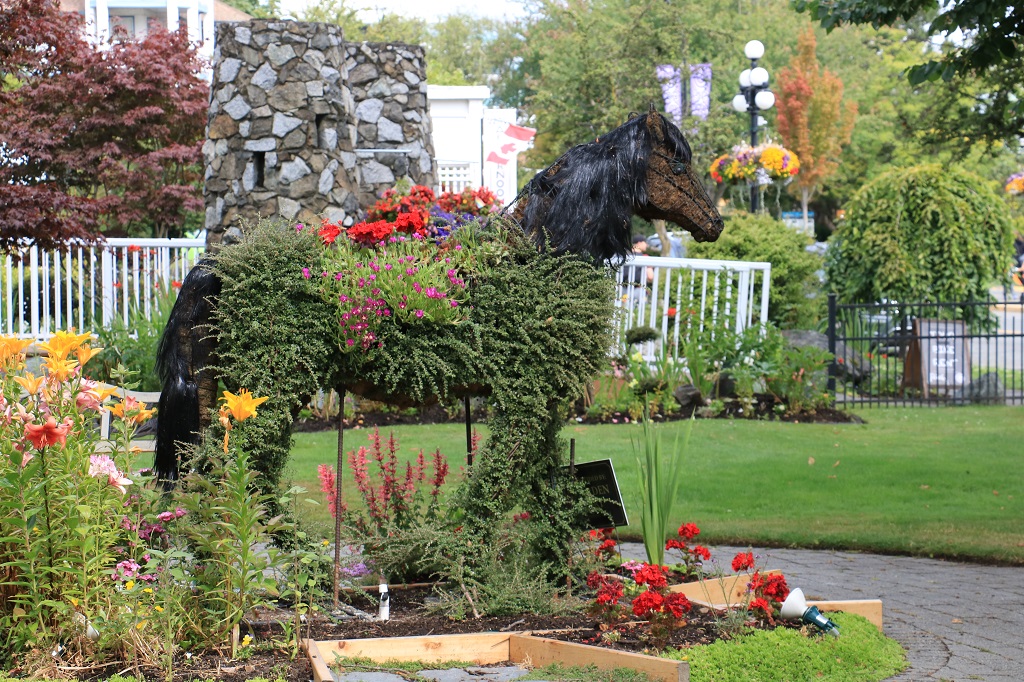
The garden at bed and breakfast on the corner by our hotel contains this lovely floral horse.

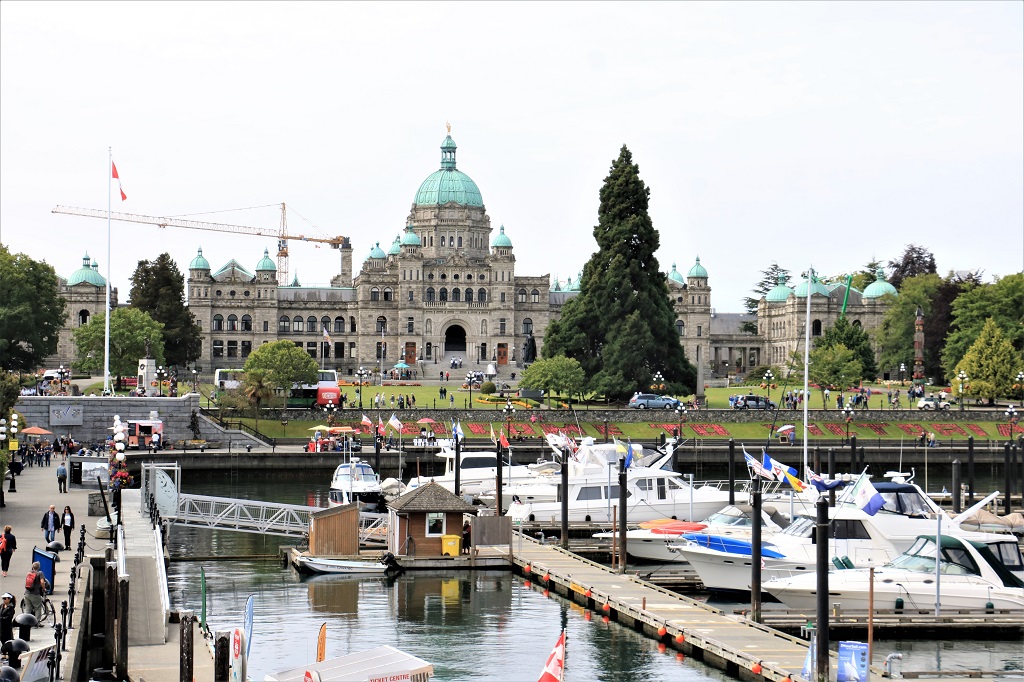
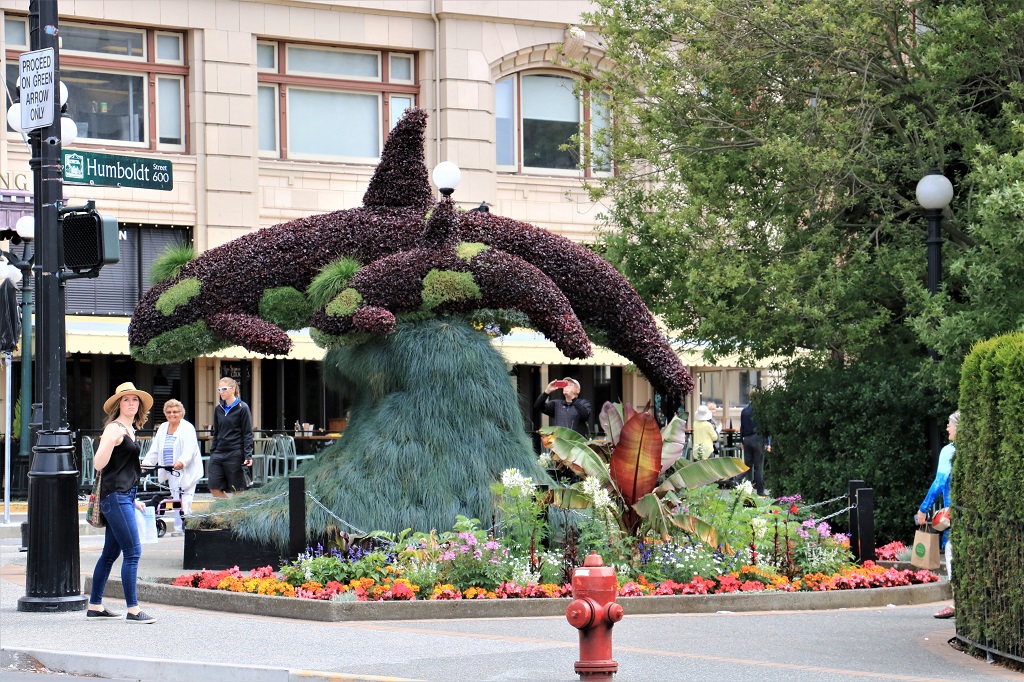
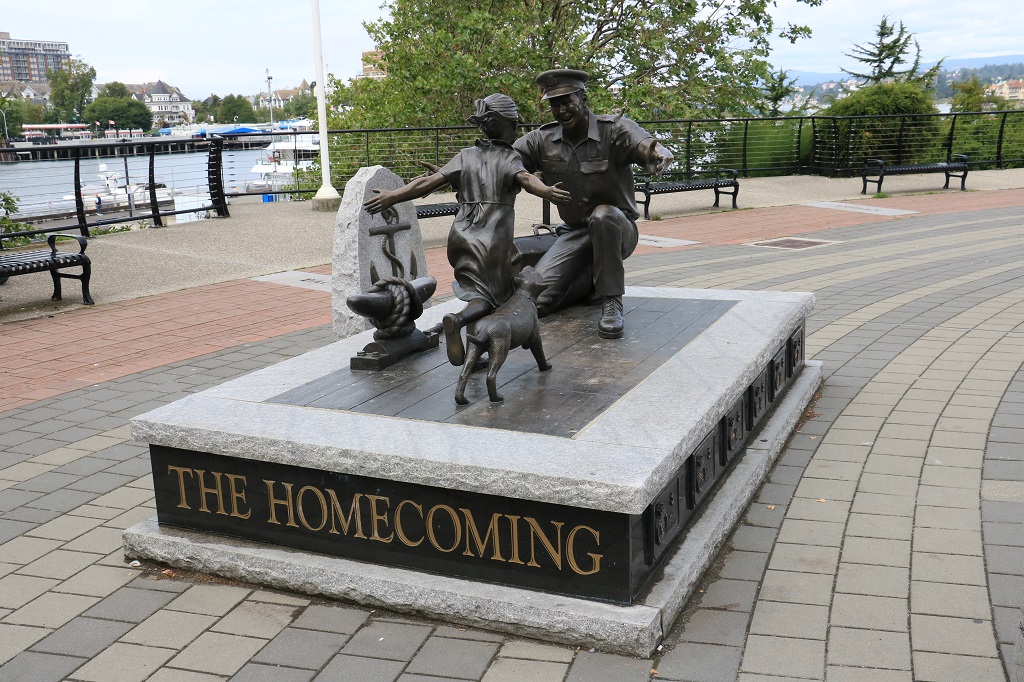
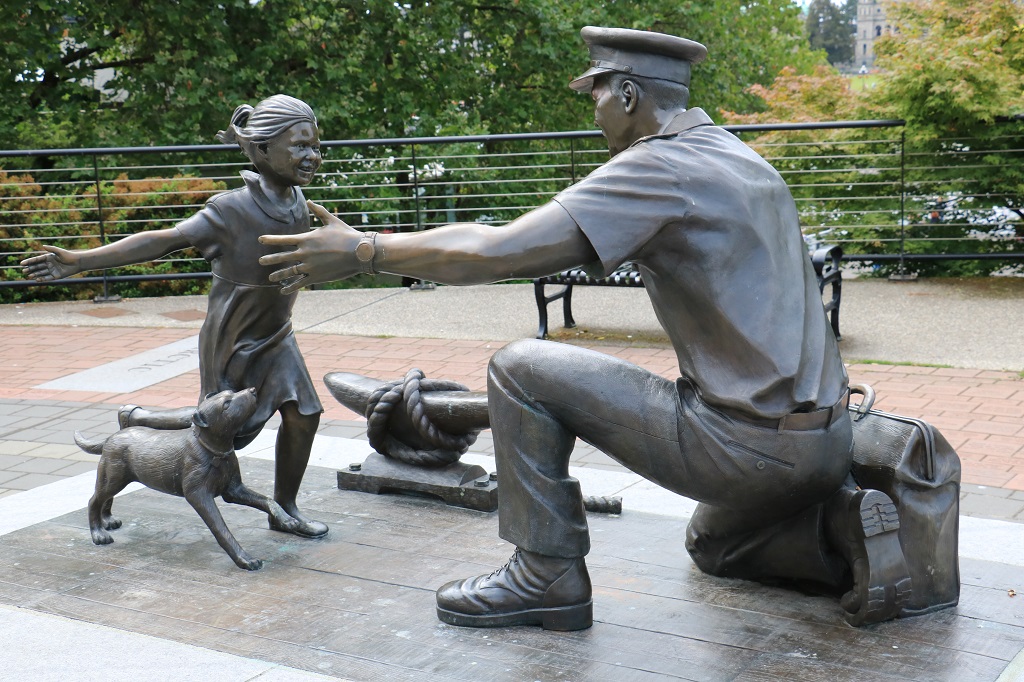
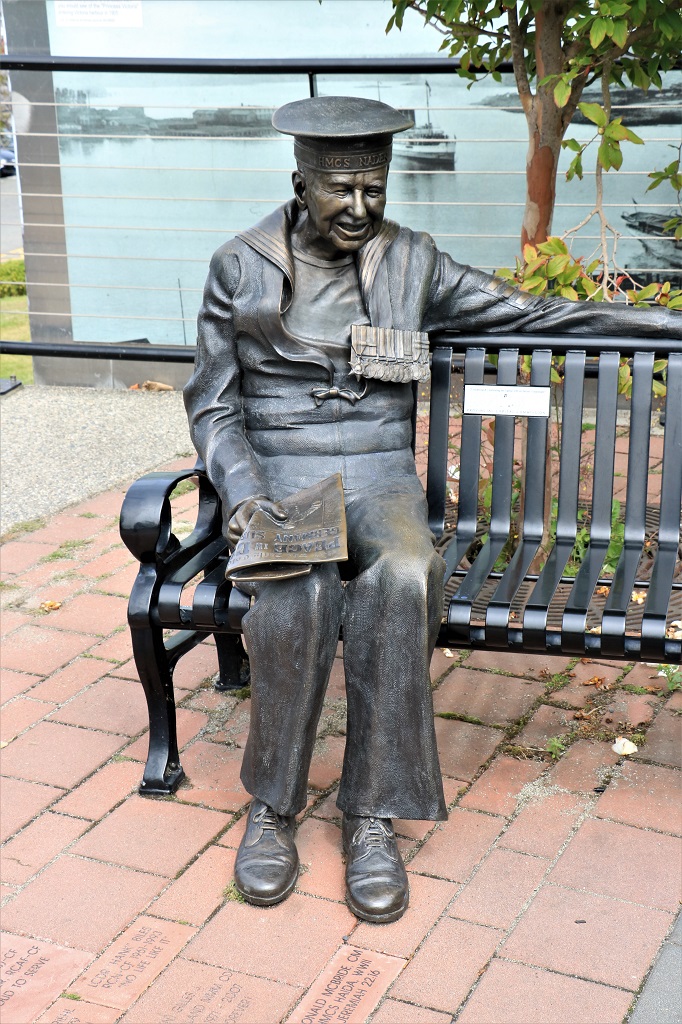
At the end of the Inner Harbour there is a floral orca and calf.One of the geocaches we found today was a two-stage one and all the numbers in the coordinates to find the cache were to be found in memorial bricks located at the 100th Anniversary of the Canadian Navy Memorial.   It  took  us  quite  awhile  to  find  all  the  right  bricks  and  collect  the  numbers.  It  was  fun  though. The other ‘must photograph’ building in Victoria is the BC Parliament Building.  Both  the Empress and the Parliament Building were designed by famous architect Francis Rattenbury (1867-1935).

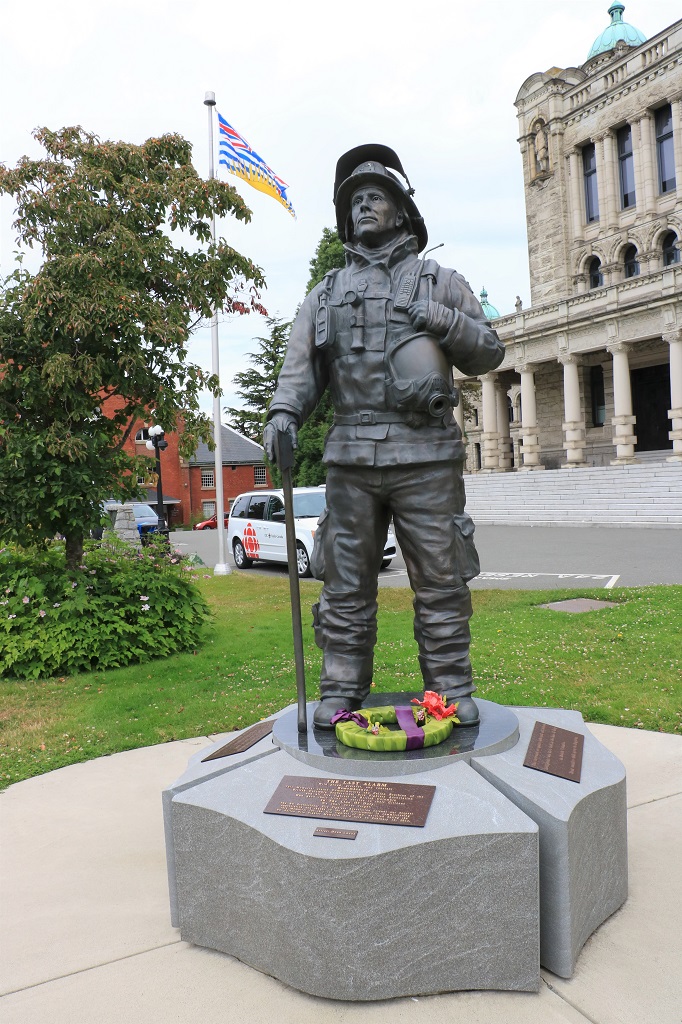
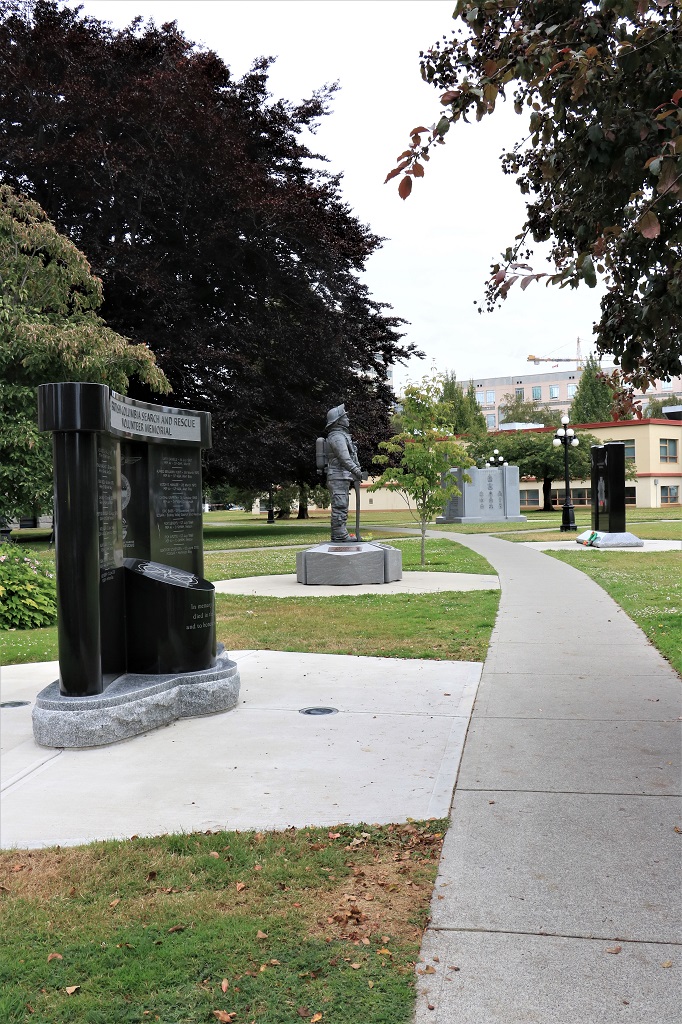
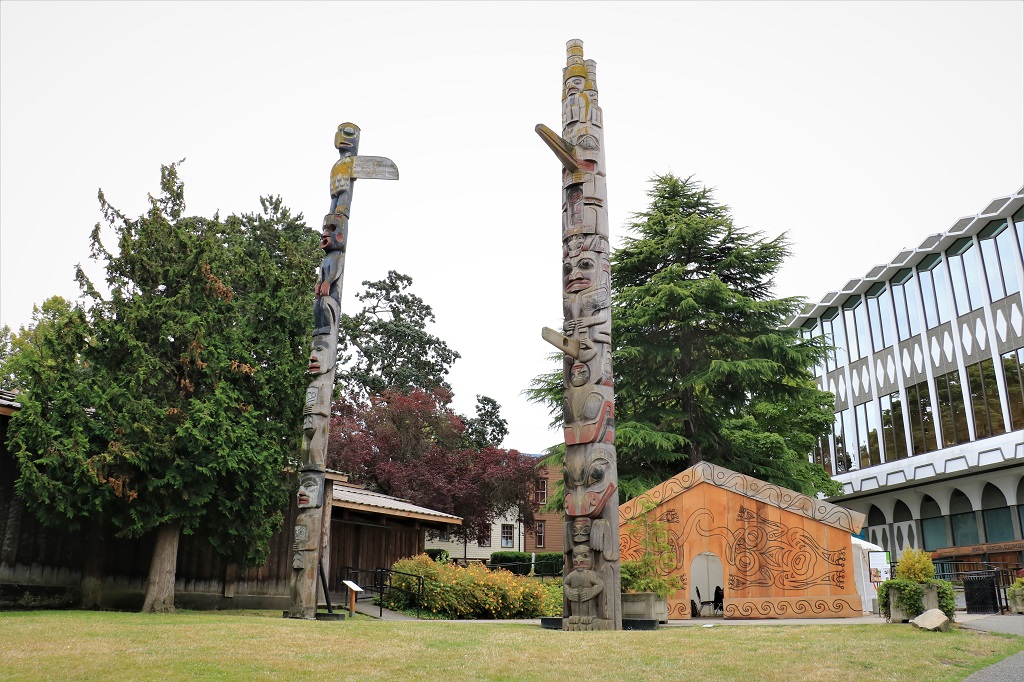
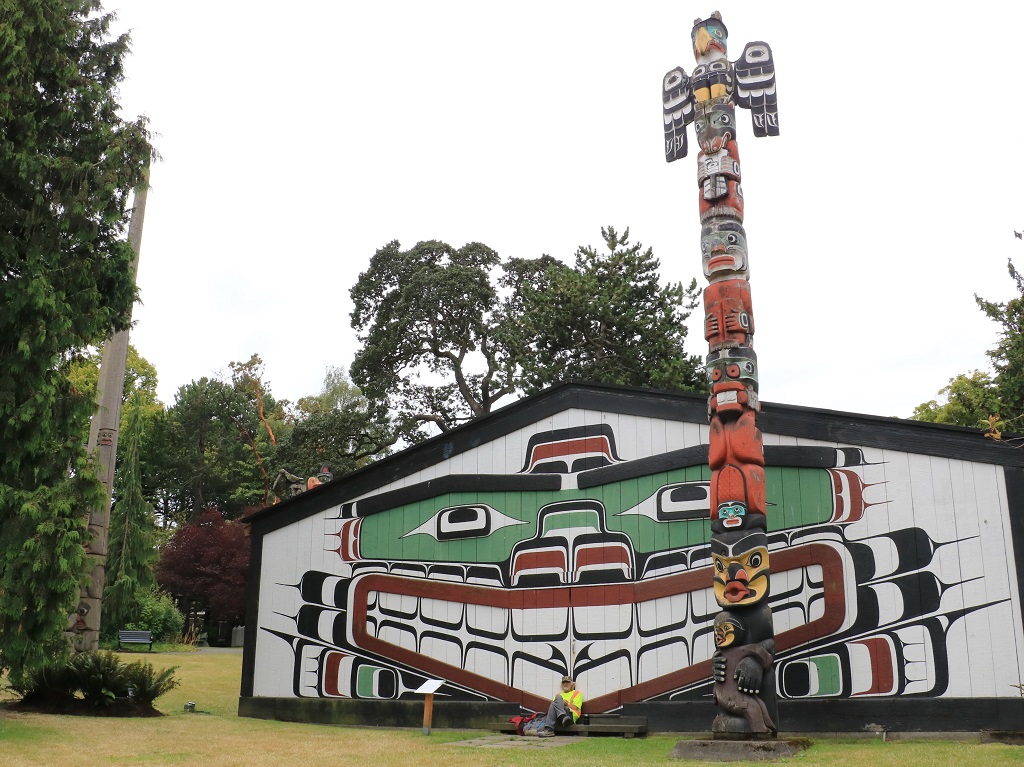
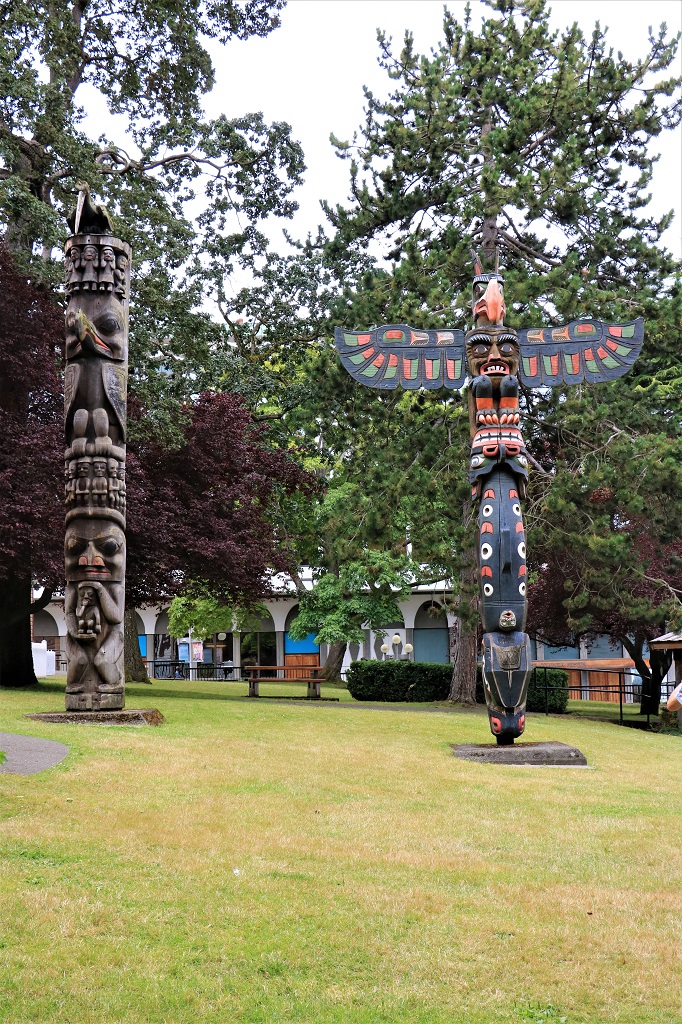
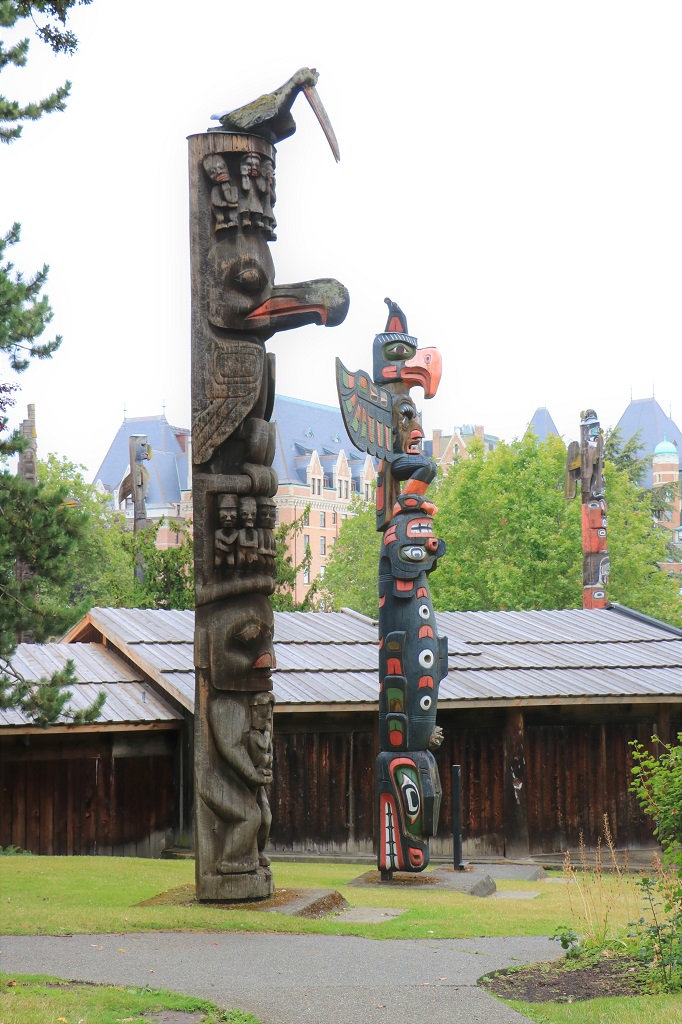
Another geocache led us to the back of the Parliament Building and we discovered the Emergency Services Memorials.  One for police, fire, ambulance and search and rescue members who had lost their lives in the line of duty.  We have been to Victoria several times and never knew this nice park was here.  I love all the places we see because we are searching for a geocache. We had a light lunch at the BC Provincial Museum and then wandered through Thunderbird Park and looked at some of the totems. We had planned on coming to Victoria on July 11 because a couple that we had met on the 2009 World Cruise who live in the Los Angeles area were on a cruise from San Francisco to Alaska.  The ship was berthed in Victoria from 2 until 11 pm.  We had not seen them for several years so we decided to come down.  It worked out well that a family reunion in Nanaimo got planned within the week so we had two excuses to come to the island.

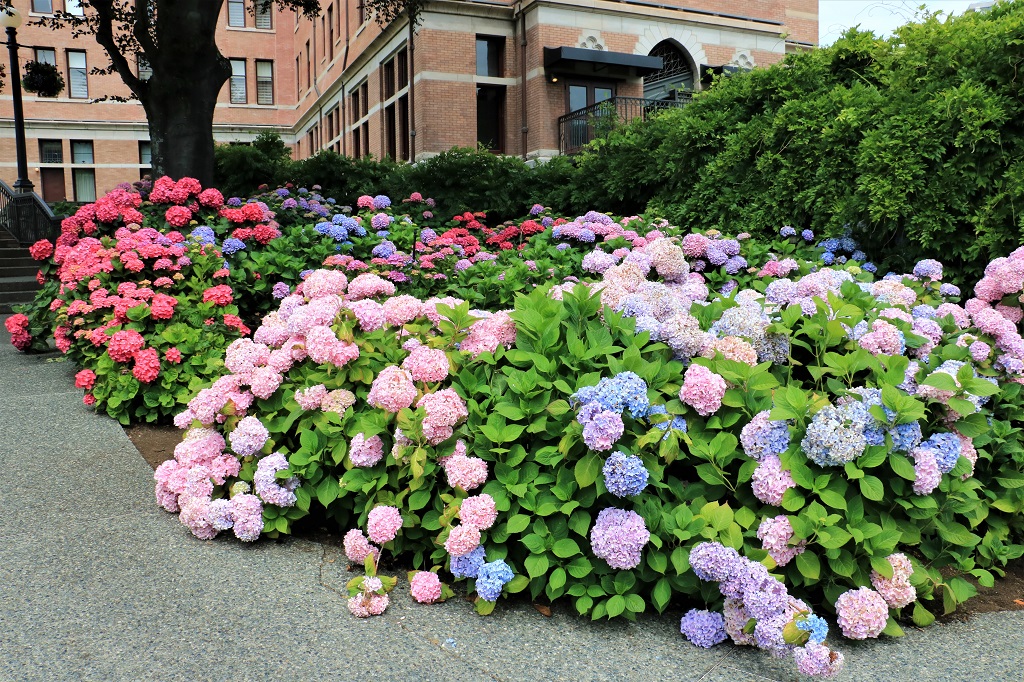
Our friends were having High Tea at the Empress at 3 o’clock so we stopped in to check on what time they would be done so we could pick them up and take them for a drive.  Of course, we had to admire the gorgeous flowers.

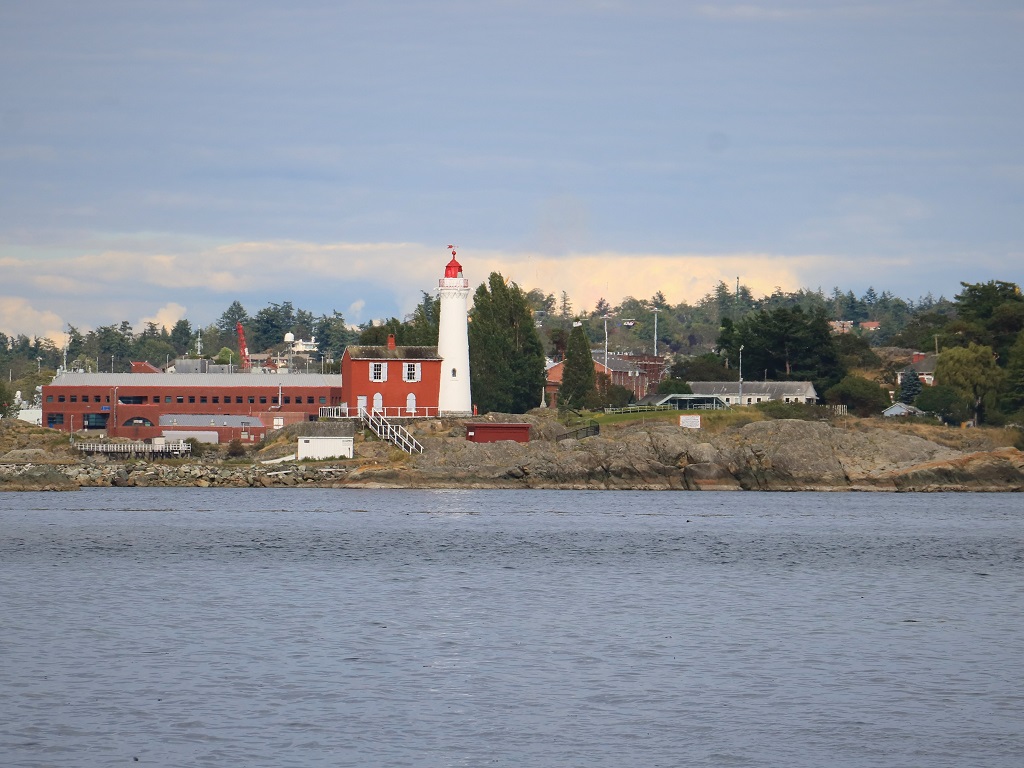
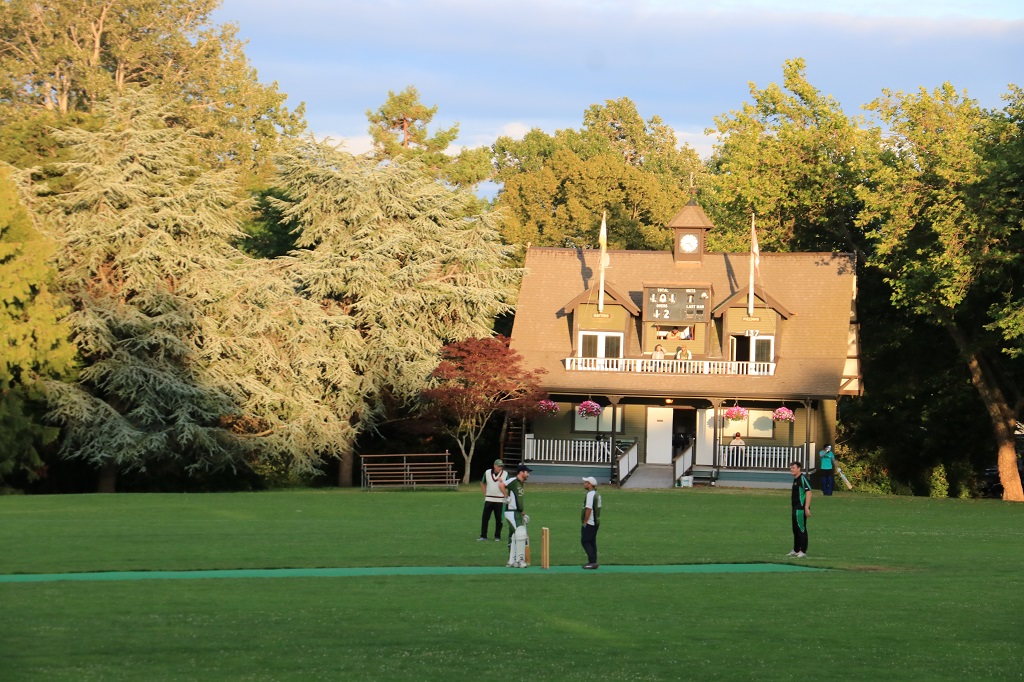
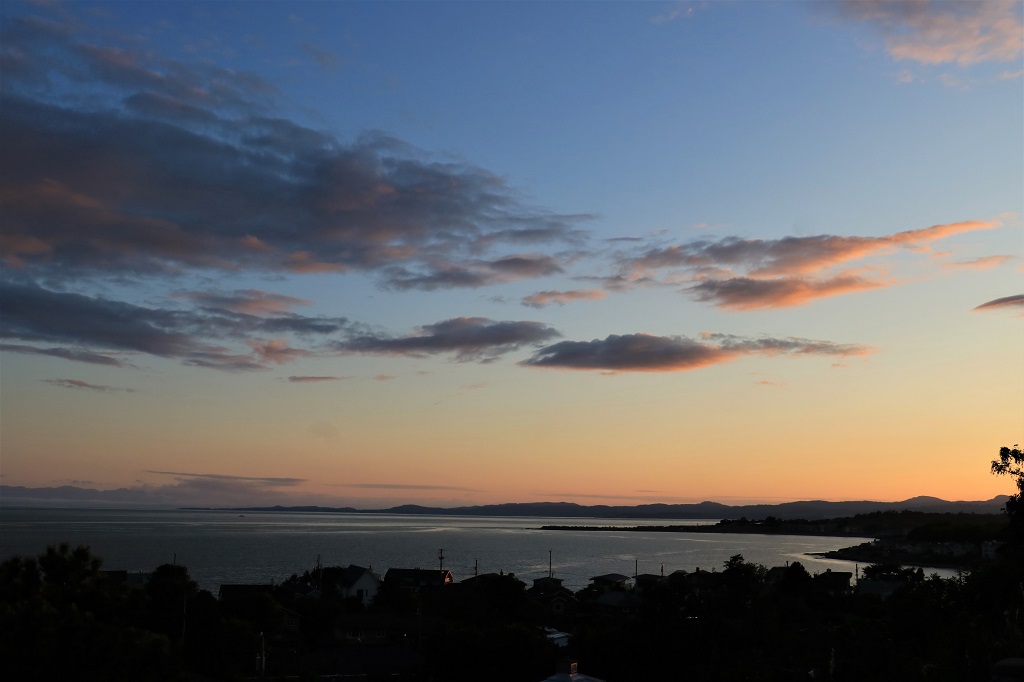
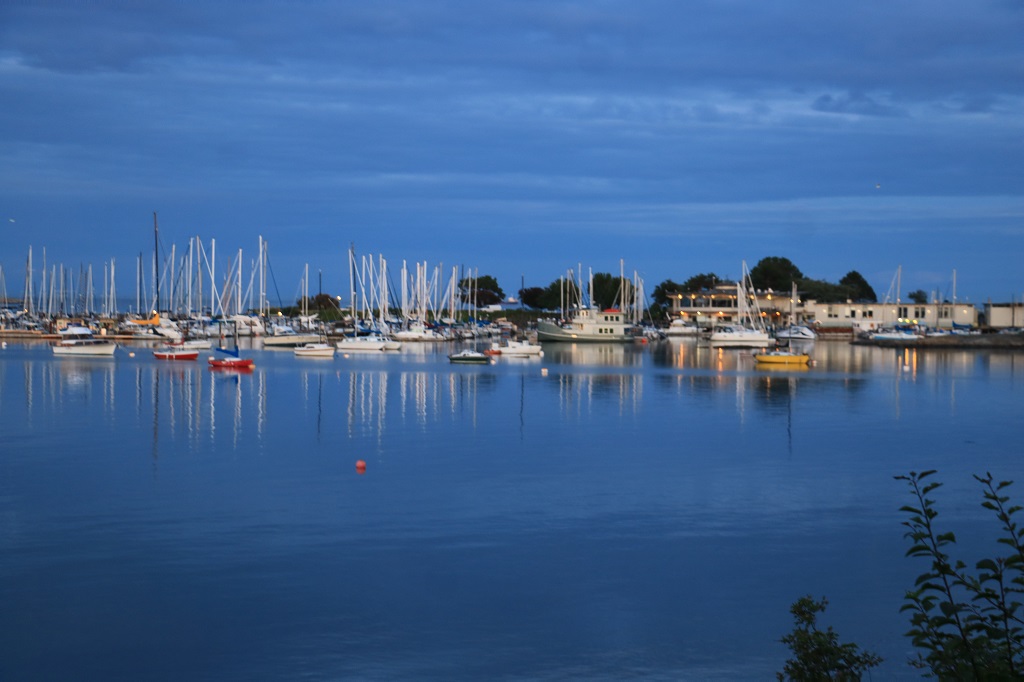
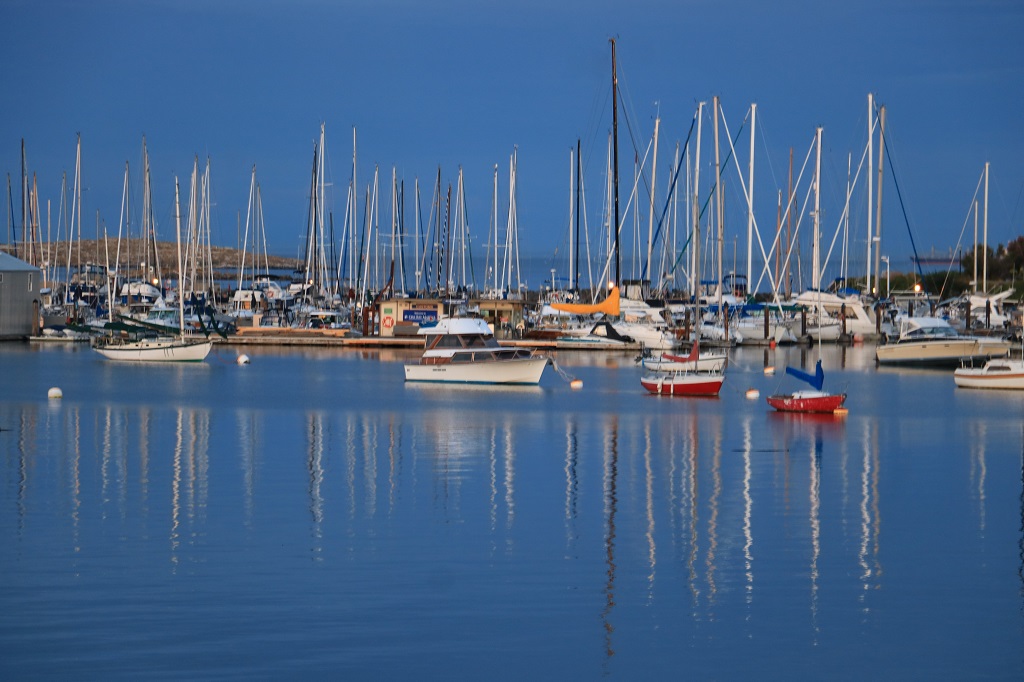
We picked Bill and Lynn up at 4:15 and drove out to Fisgard Lighthouse.  Well, we planned to go to Fisgard Lighthouse, but the traffic was moving at a crawl and by the time we got there they had just closed the gates for the day.  We did manage to show it to them from the Coburg Peninnsula – a thin spit of land across the Esquimalt Lagoon. We headed back into Victoria for dinner and then drove through Beacon Hill Park where we chanced upon a cricket match.John drove through the lovely Oak Bay area and we stopped here and there to take photos.  Below is the Trial Island Lighthouse.The sun was getting low which made for some nice light. As we were heading back to drop Bill and Lynn at their ship we stopped at the Oak Bay Marina where the setting sun cast a gorgeous blue on the sky and water. We said goodbye at the cruise terminal at 10 pm and headed back to our hotel to check photos, write a blog, and go to bed.  Tomorrow we drive to Sooke, which is a short distance west of Victoria.  We plan to stop at Hatley Castle and Gardens on the way so be prepared for flower photos.

2019 July Journey – Vancouver Island section – Days 1 and 2

We left home on Tuesday July 9 and drove down to Abbotsford, near Vancouver, where we spent our first night.  This is a drive we have made many, many times and the road travels primarily through mountain forest.  We saw no critters, stopped for no geocaches and made no detours.  Hence we arrived at our hotel at 4:30 and were able to relax a bit before dinner.

Our itinerary for this road trip includes traveling to Vancouver Island where we will visit with some friends for a couple of days, spend some time geocaching and exploring in the Sooke area before taking another ferry over to Salt Spring Island to explore for two days.  We will then return to Vancouver Island via a different ferry route and head to Nanaimo for a family reunion.  After the reunion weekend will tour around nearer the northern part of the island; seeing some sights and geocaching along the way, before getting on the overnight ferry from Port Hardy to Prince Rupert. We will spend a night in Rupert and take another ferry the next day to Haida Gwaii (formerly called the Queen Charlotte Islands).  We are spending four nights on Haida Gwaii before catching the ferry back to Prince Rupert and driving home.  We expect to get back about August second or third.  Lots of ferry rides on this journey.

This is not going to be as long of a trip as many others we have done, but we will be seeing some new territory, which is always fun and interesting.  I don’t think there will be a blog post every day, but you never know.  If I take enough photos of enough different things I will try post each day.  No promises though.  I hope you enjoy some of the beautiful sights of the British Columbia west coast through my camera lens.

We woke to overcast skies and rain, which continued most of the day. Every once in awhile it would clear off for an hour or so but then the clouds and rain returned.  We left our hotel in Abbotsford just after nine and arrived at the Tsawwassen ferry terminal just as the 10 am ferry was departing. We had a reservation for 11 am so were just directed to the appropriate waiting line.

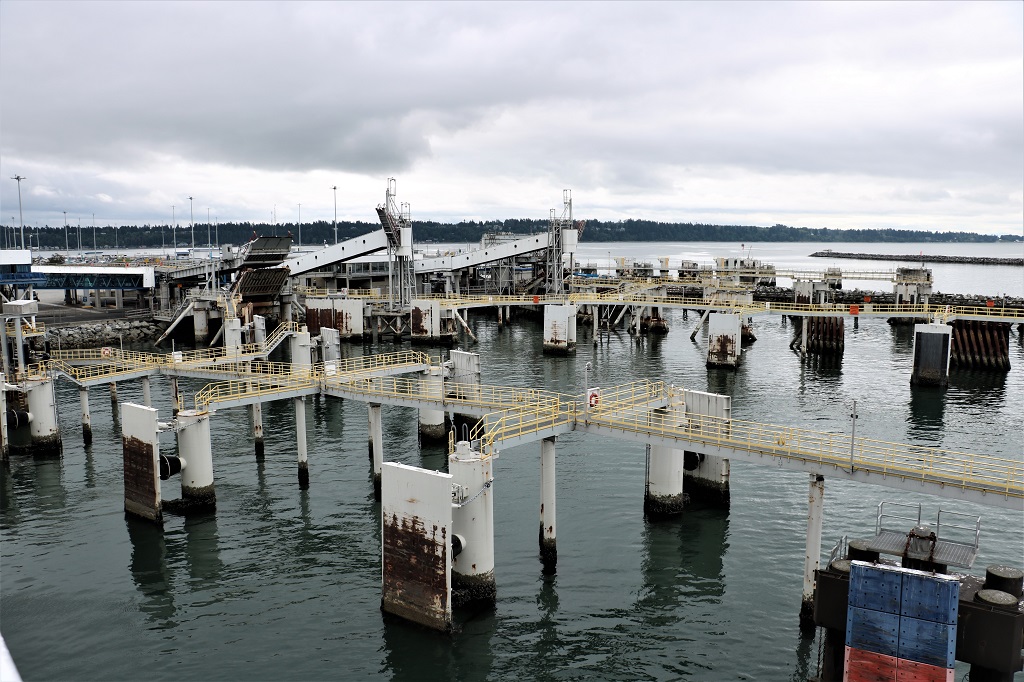
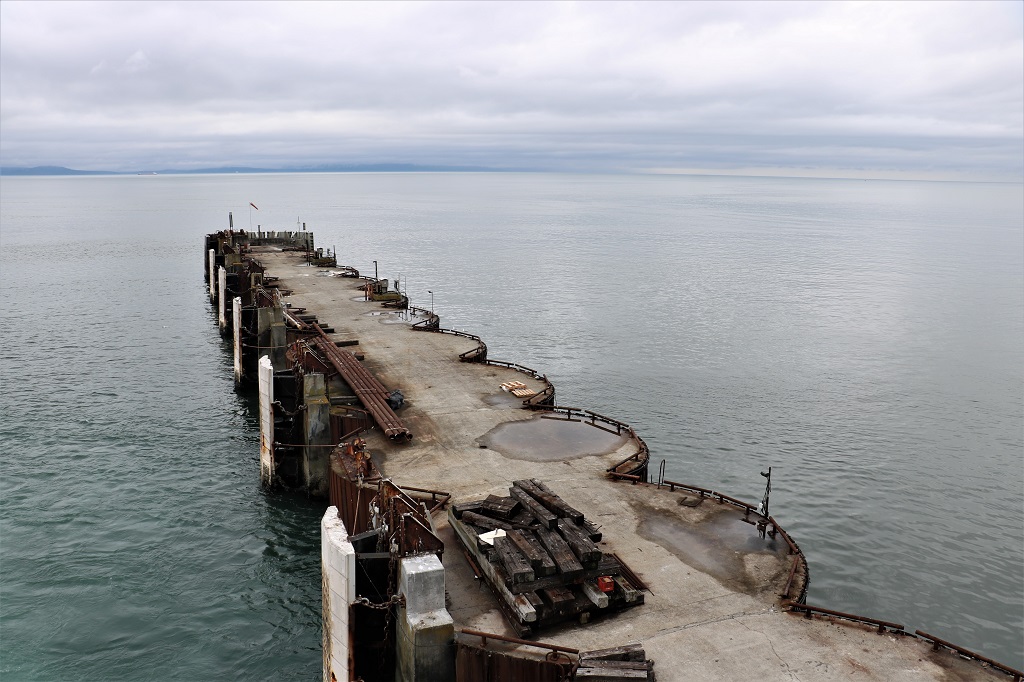
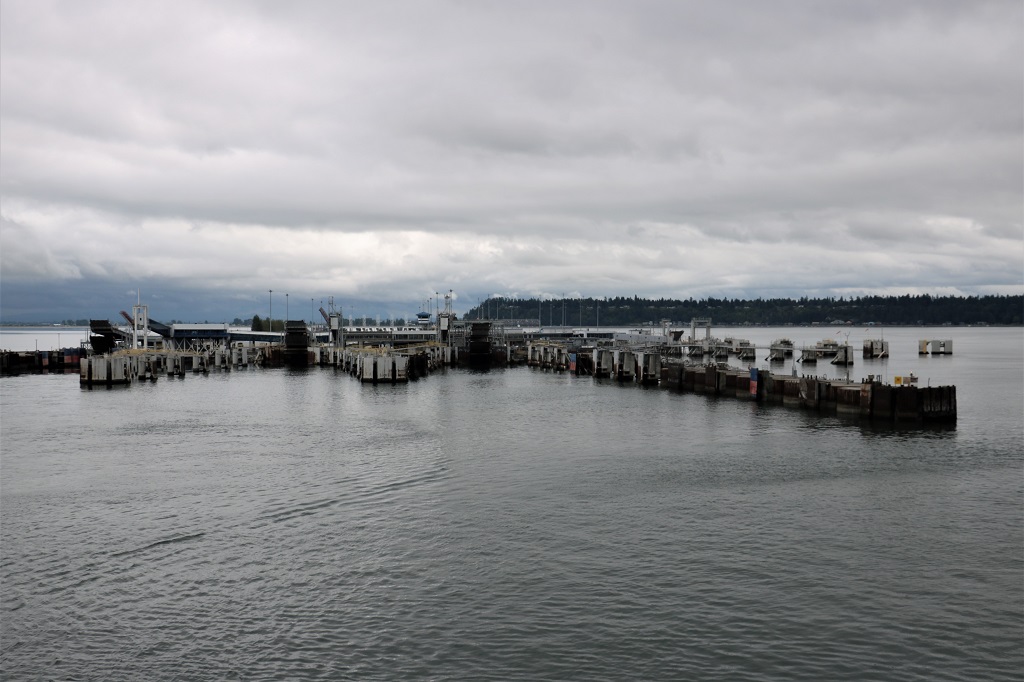
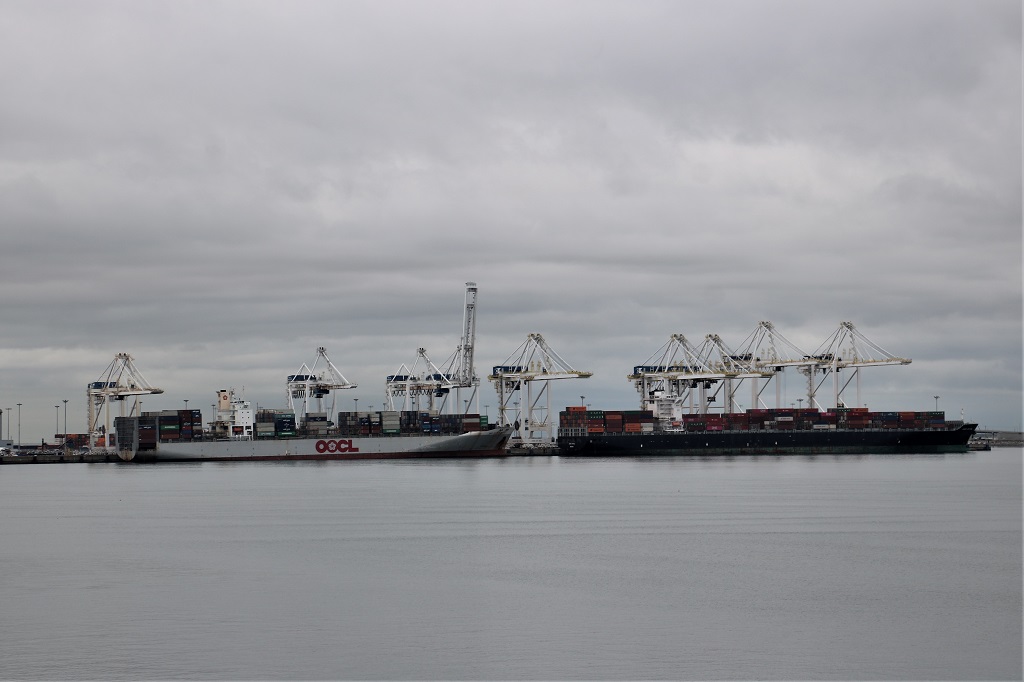
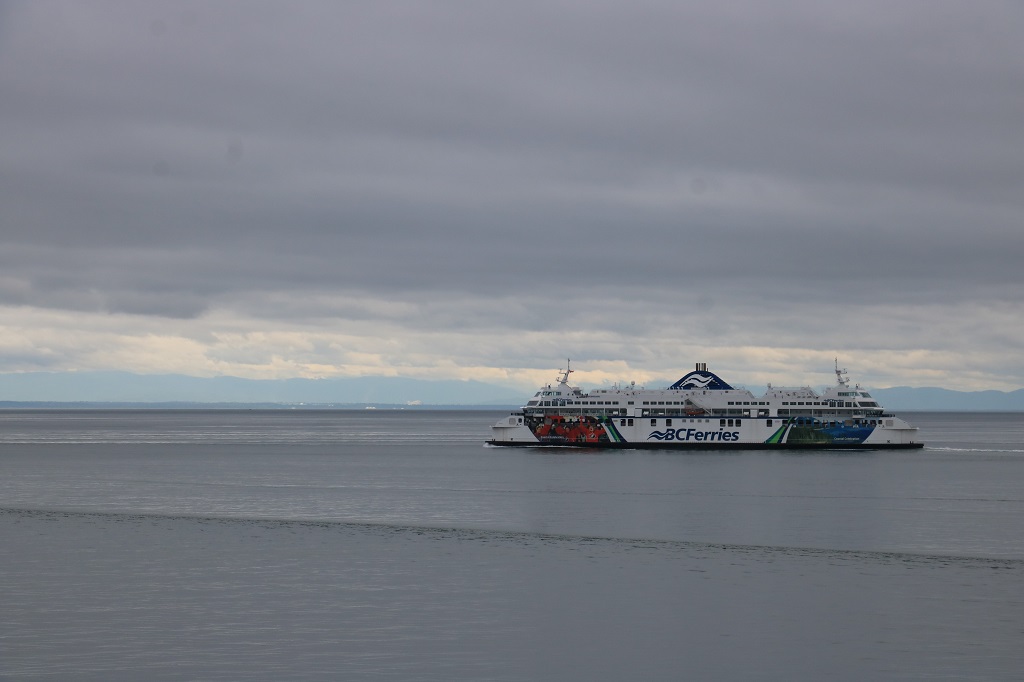
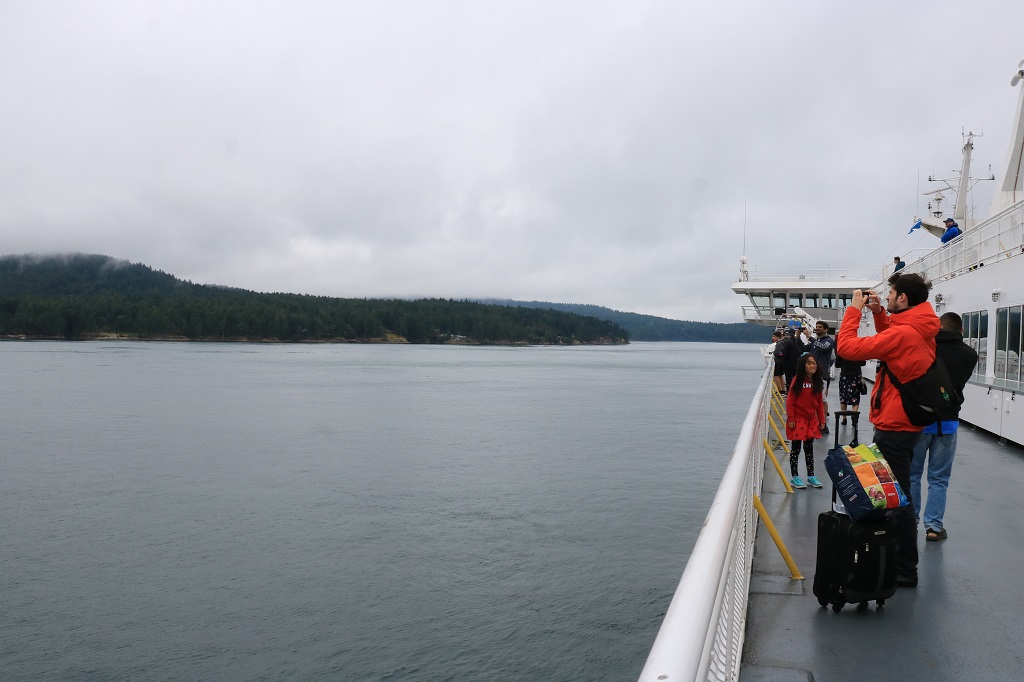
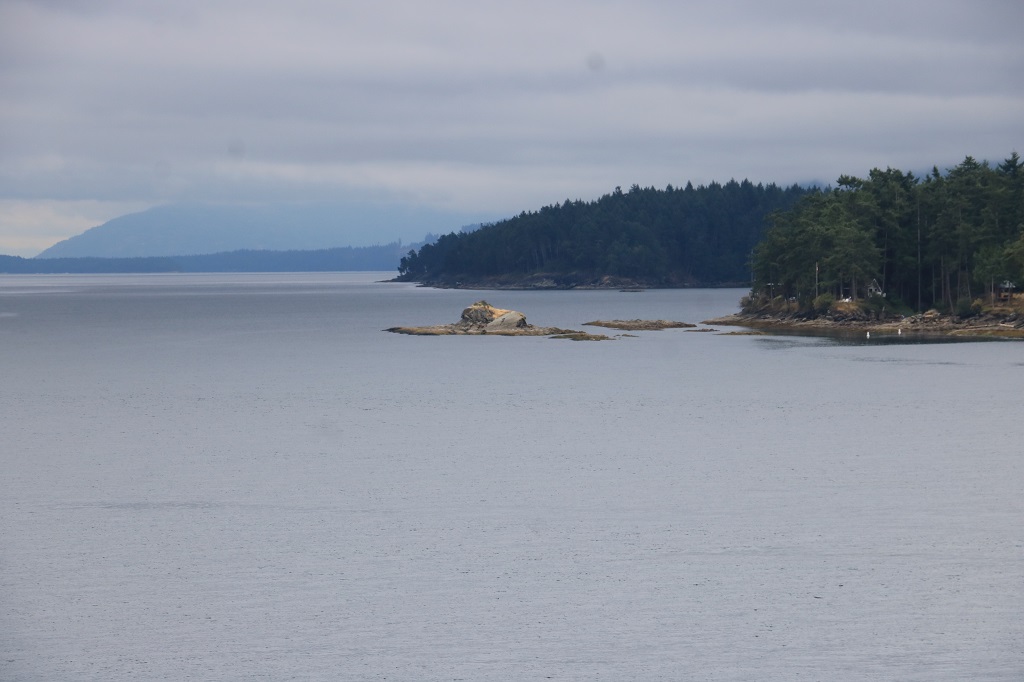
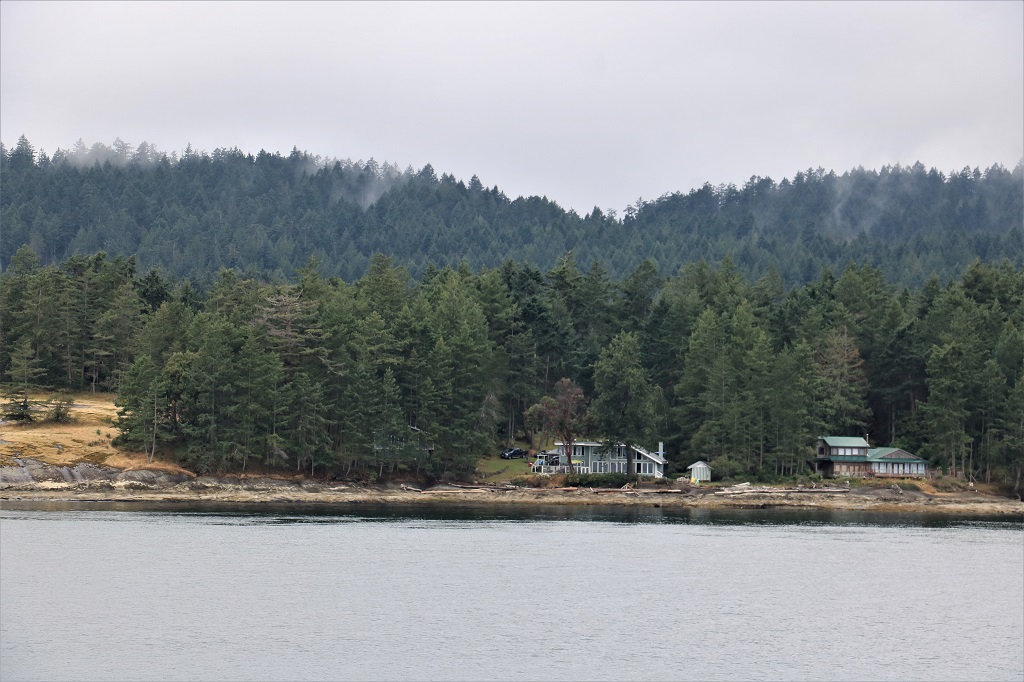
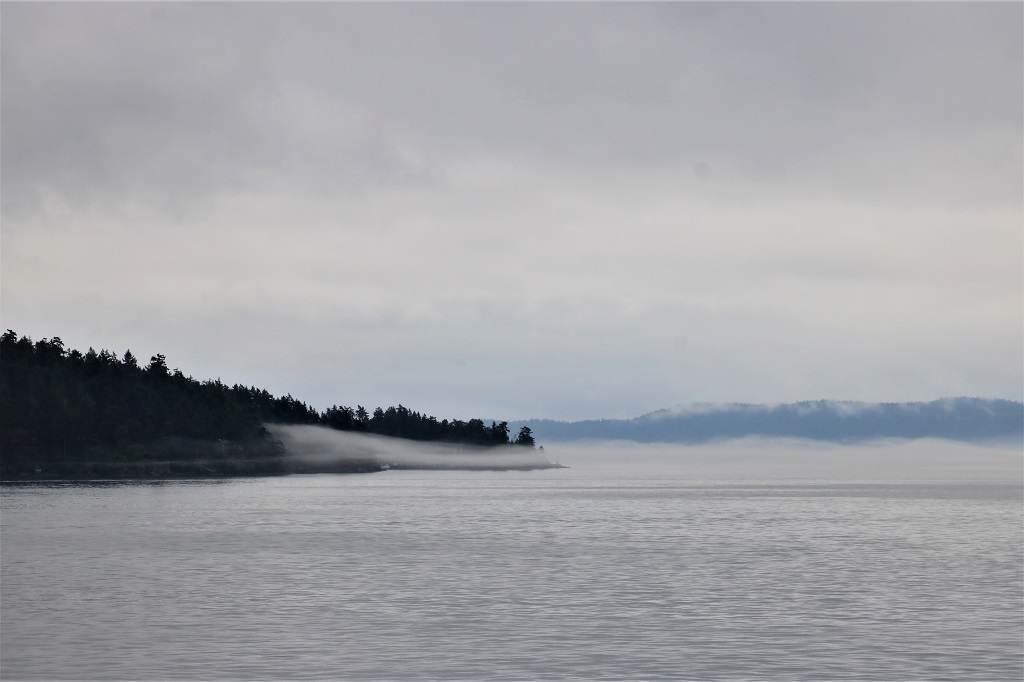
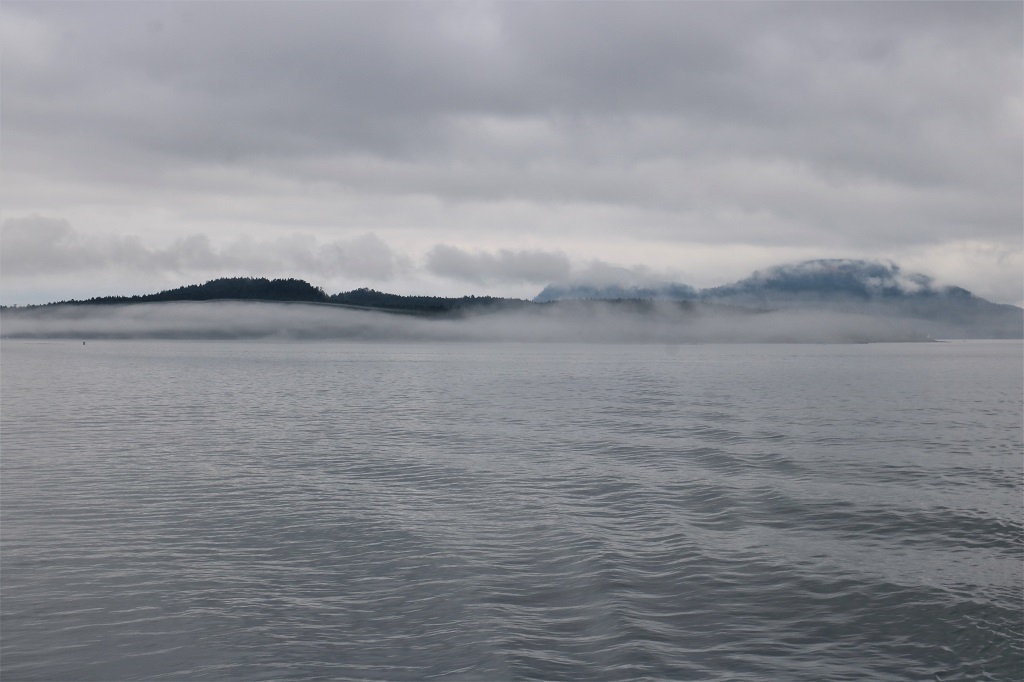
The ferry takes an hour and a half to sail from Tsawwassen to Schwartz Bay on Vancouver Island.  We had calm water all the way.  It wasn’t a particularly bright crossing, but it wasn’t torrential wind and rain which we have had on past trips to the island.Pilings and walkways and ramps here, there and everywhere as we leave the Tsawwassen Ferry Terminal. There are a lot of ferries that come and go from here each day. Just two of about five ships at the Robert’s Bank coal port. One ferry going west meets one ferry going east. Photographing the passing scenery is a popular way to spend the time. There are many islands in the Strait of Juan de Fuca between Vancouver and Vancouver Island.  And people live on all of them.We  were  sitting  inside  in  one  of  the  lounges  and I looked  out  the  window  and  noticed a low  band  of  fog  creeping  across  the  water;  which,  of  course,  means  I have  to  get  up  and  go  out  on  the deck  to  photograph it.We docked at 12:35 and stopped for some lunch in Saanich before heading into Victoria.  John spotted the Mayfair Mall as we entered the city and pulled in to see if he could find a new pair of shoes as his were beginning to fall apart.  A successful hour of shopping followed and when we got back in the truck to continue on our way, the clouds lifted and we had sunshine when we arrived at our hotel. We were able to check in even though it was only a little after 3 pm.  We rested in our room until it was time to walk over to our friend Mary’s apartment.  She had made reservations for us to have dinner and when we arrived at the restaurant we realized it was located in the same old hotel that we had staying in on our honeymoon; many, many years ago.  This was the only hotel room we could find in the city and we were made to pay for two rooms because there was a connecting bathroom.  The plumbing pipes were outside the walls, the tub was a massive claw-foot thing, the door to our room didn’t lock and I had made John check under the bed for critters.  The bed, however was a feather tick that just folded around you when you lay down.  We had a marvelous sleep.  John, Mary and I had a good laugh at the memories and a good dinner in the restaurant before we walked back to Mary’s apartment and continued our visit a bit longer.  Now we are settled in our room for the night and looking forward to visiting with our friends Bill and Lynn tomorrow.  They live in California and are on a cruise to Alaska.  The ship is spending the afternoon and evening in Victoria so we came to see them.  It worked out well that relatives planned a family reunion to be held a week later.

2013 Summer (Baltic and Britain – Northern Ireland – July 29 – Day 5 – Part 3)

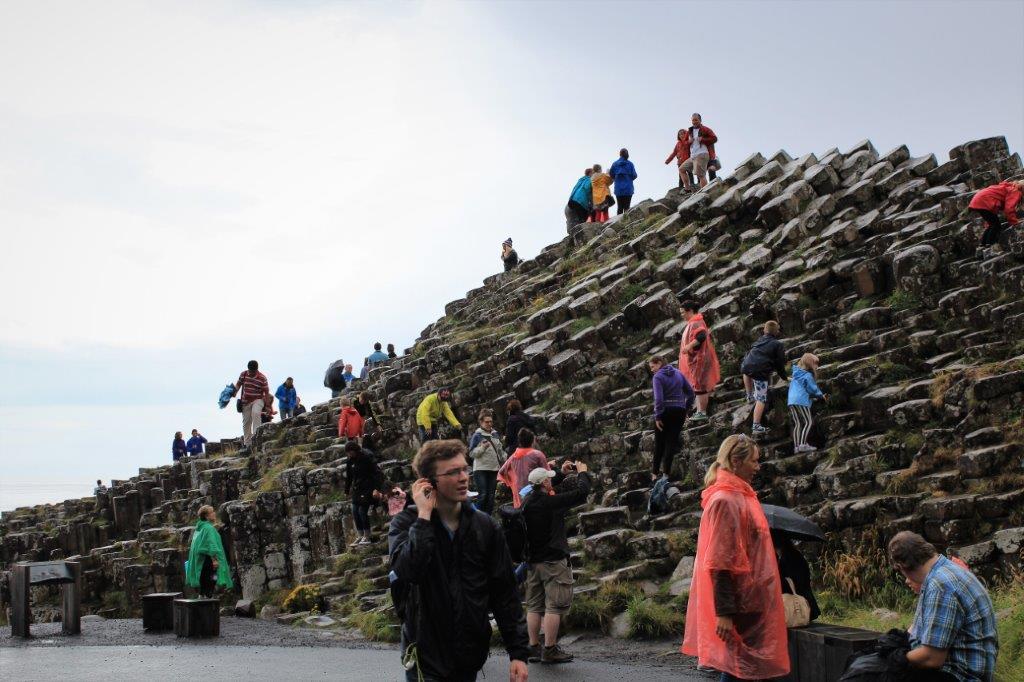
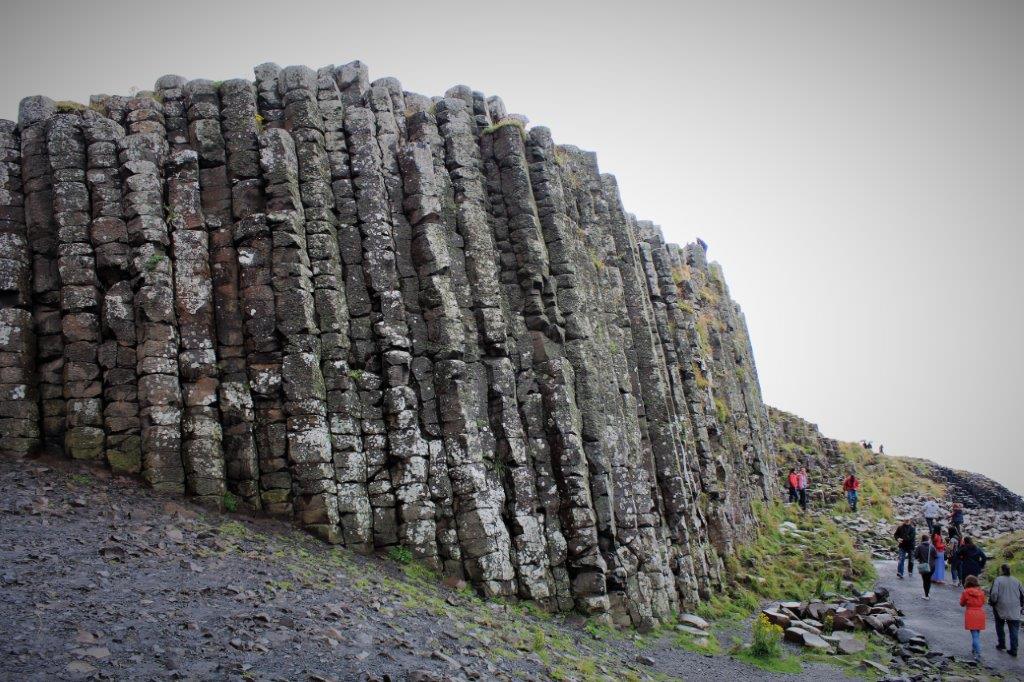
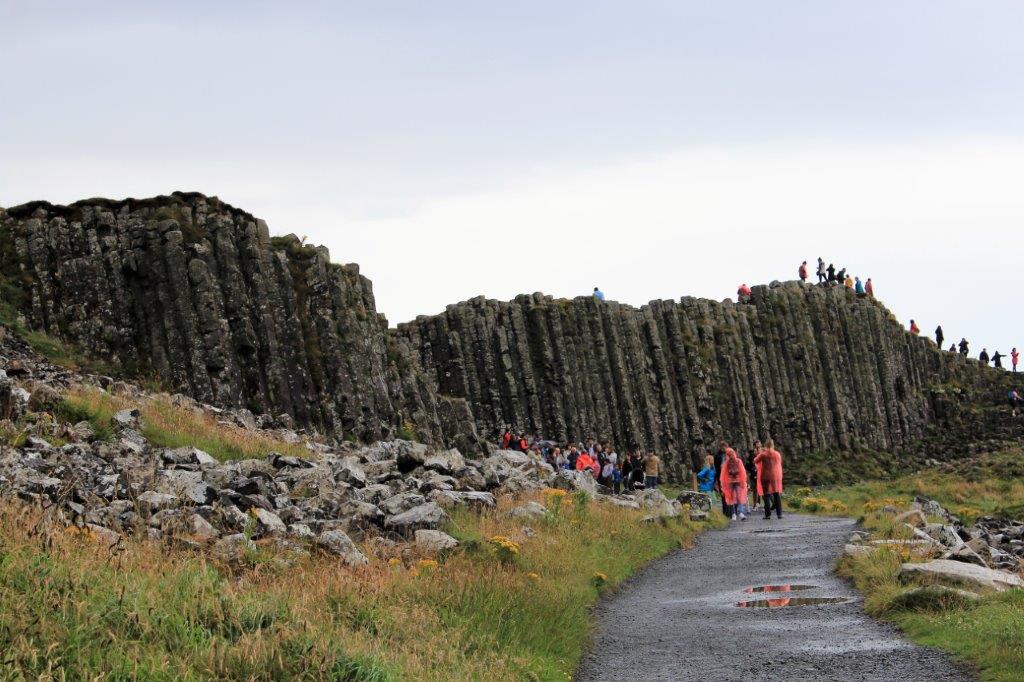
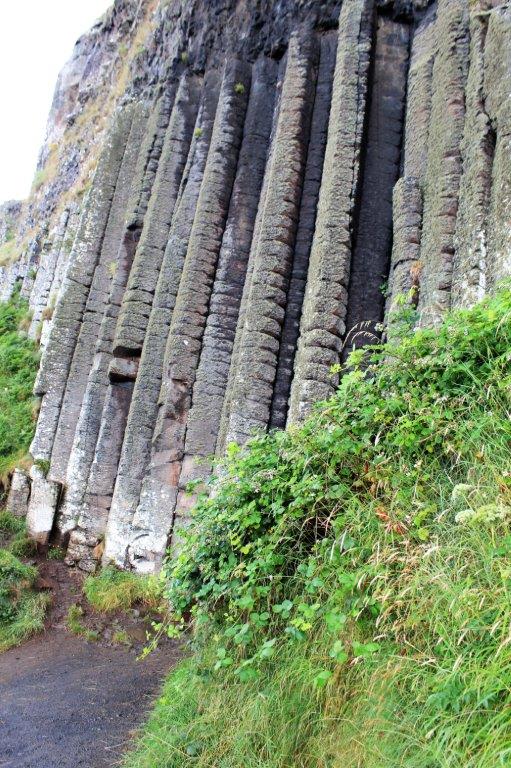
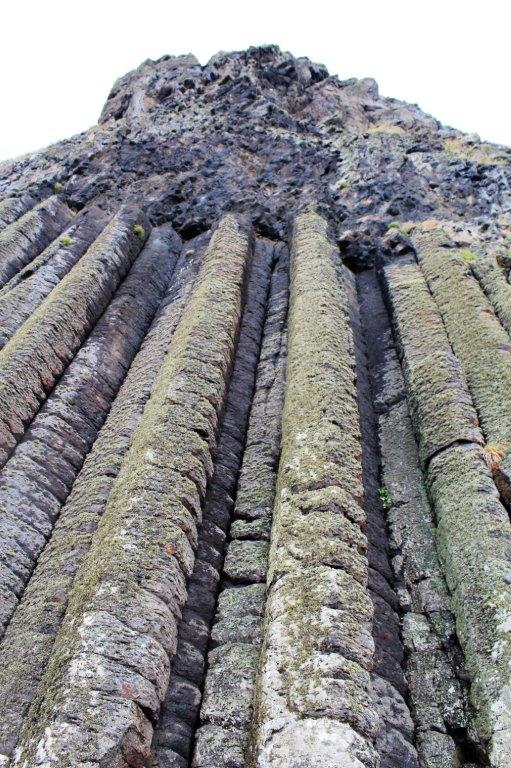
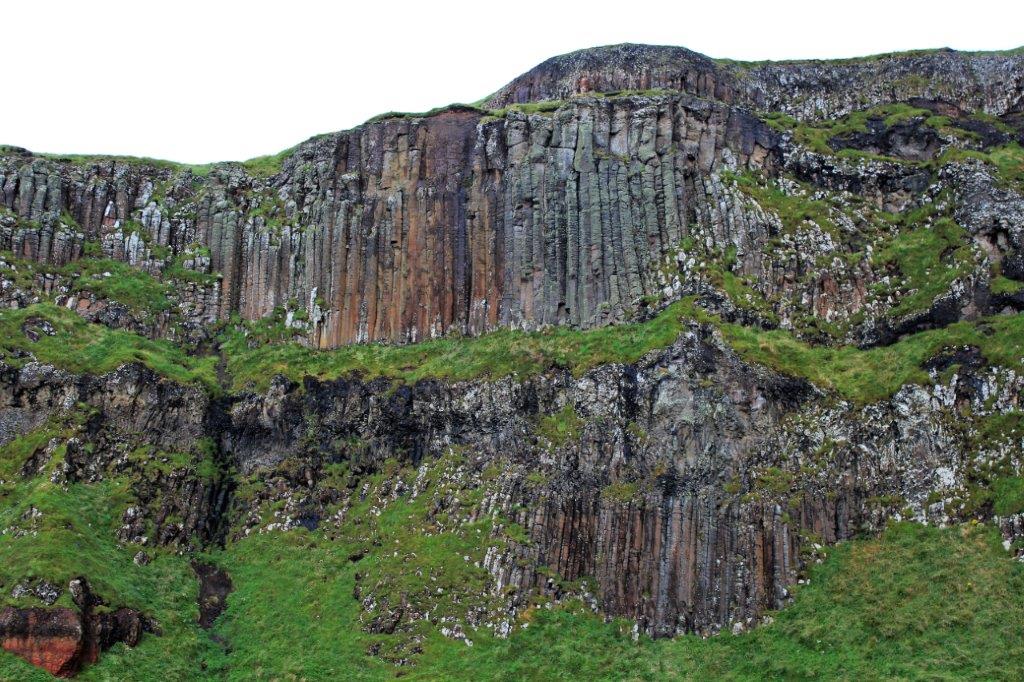
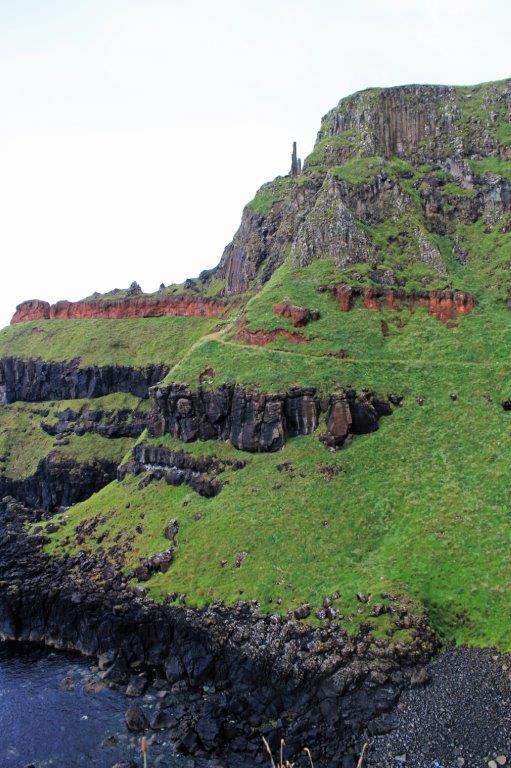
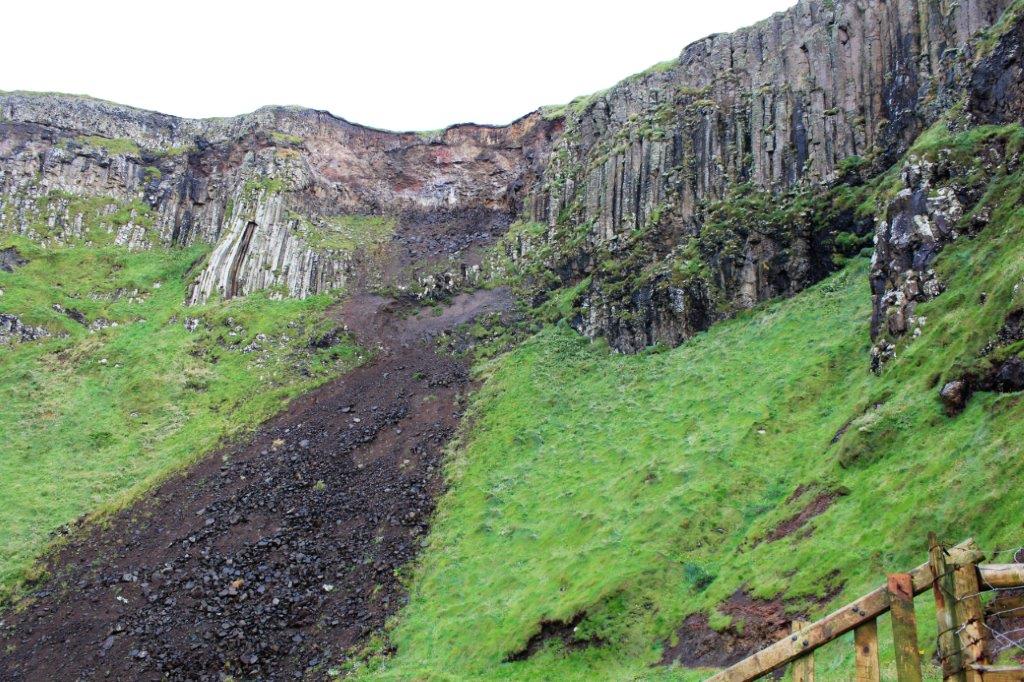
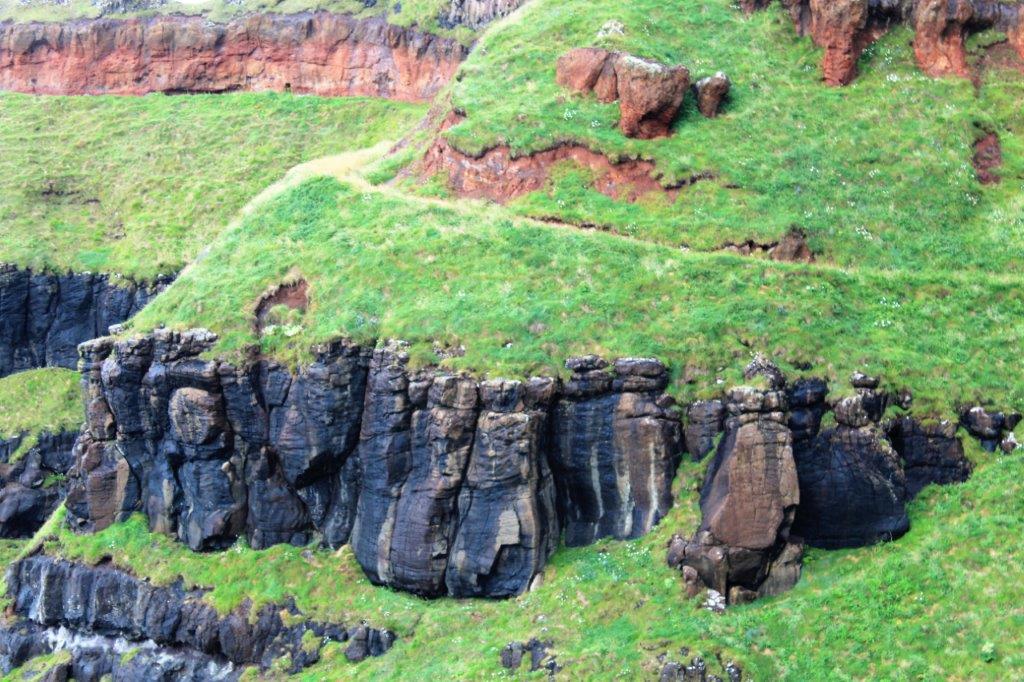
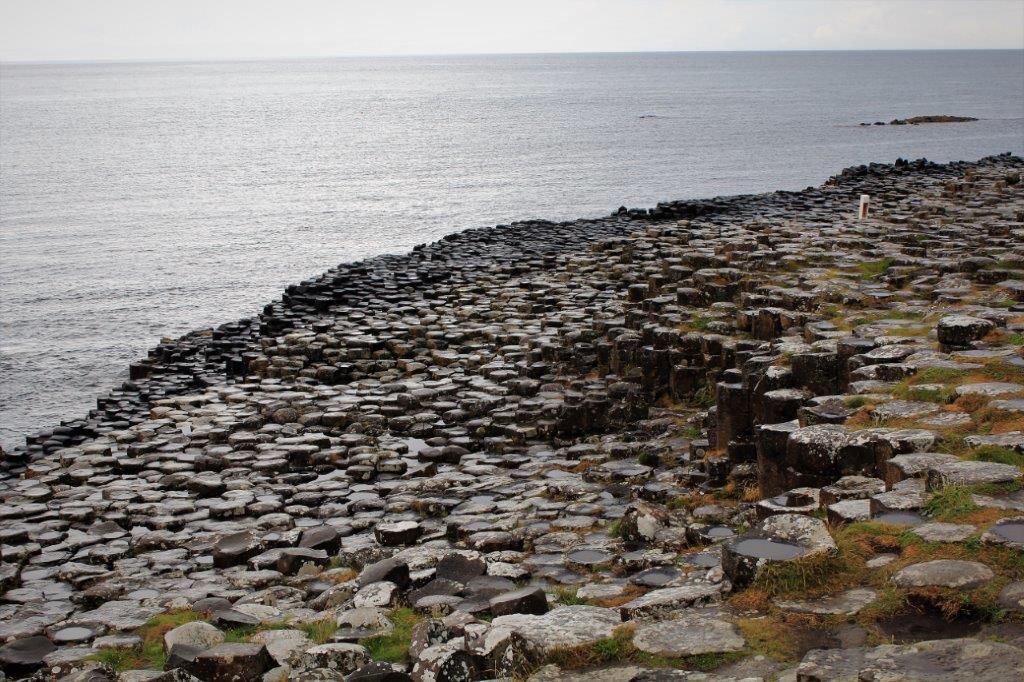
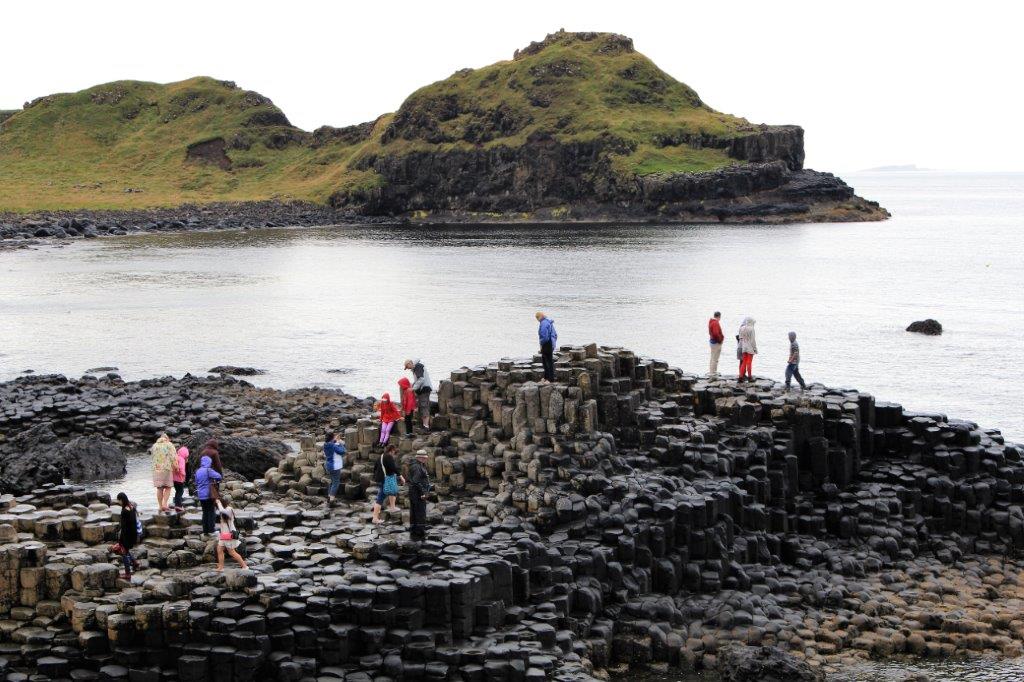
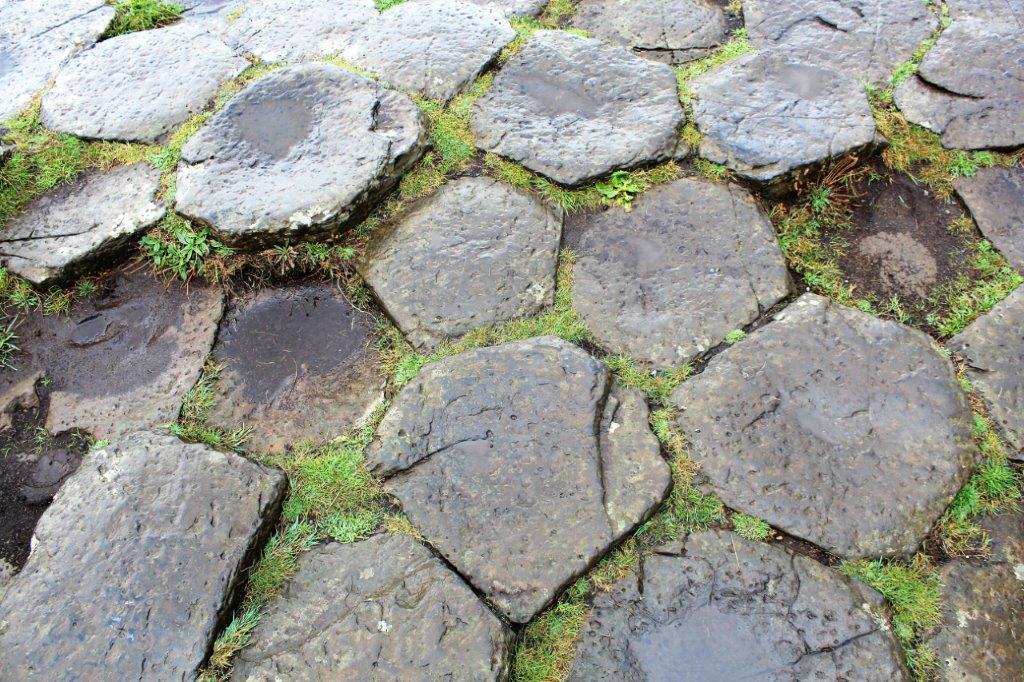
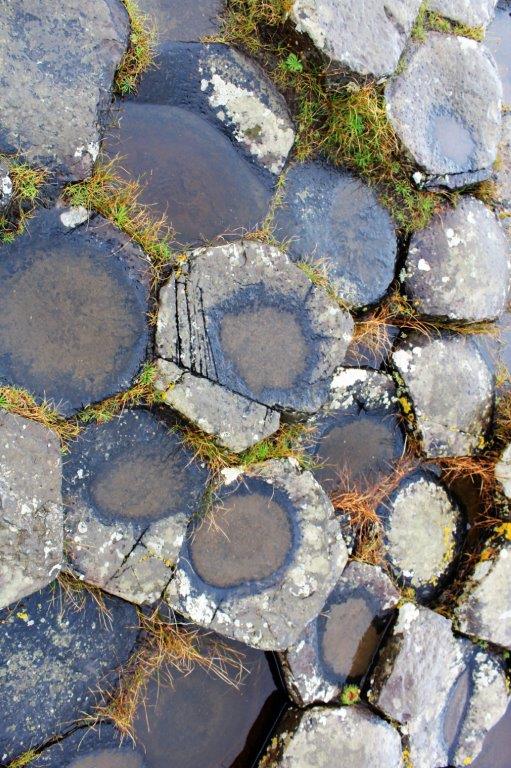
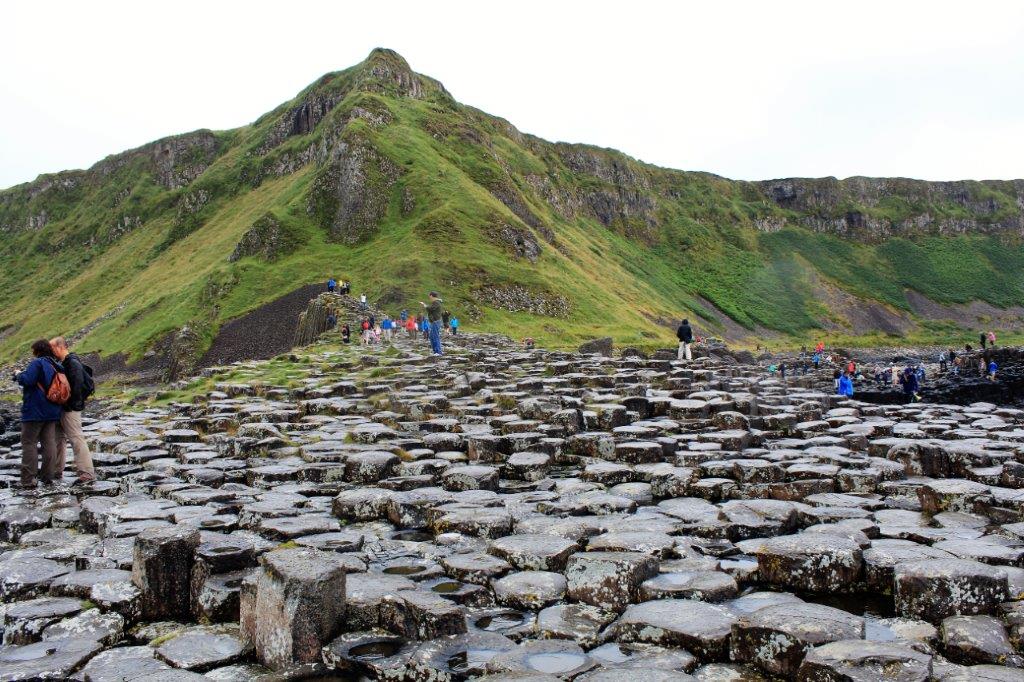
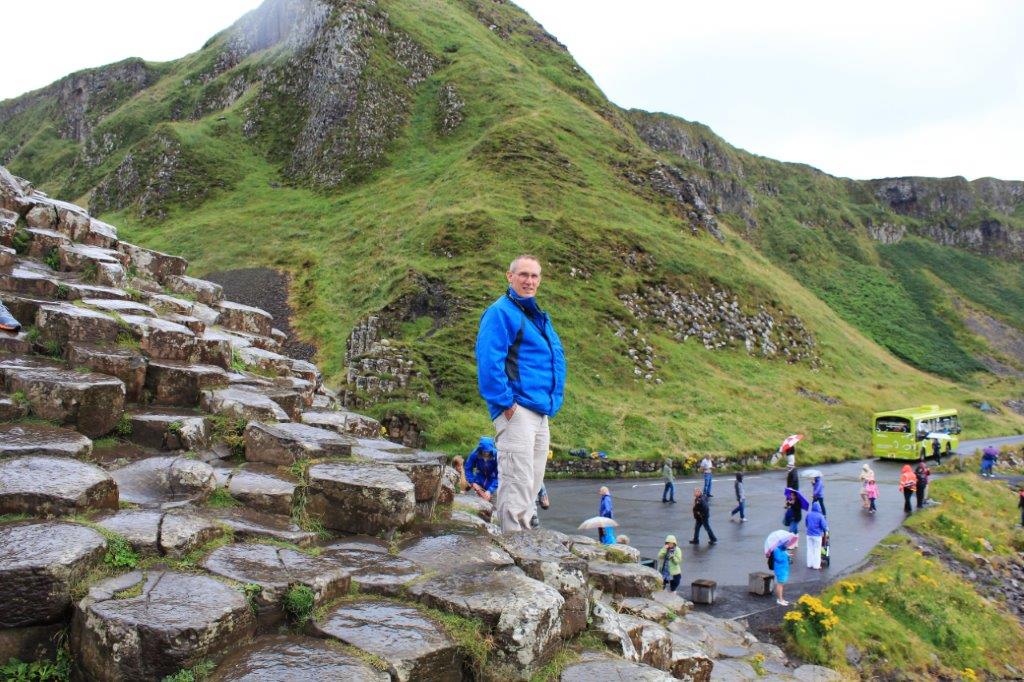
The Giant’s Causeway is an area of approximately 40,000 interlocking basalt columns, the result of an ancient volcanic fissure eruption. In a 2005 poll, the Giant’s Causeway was named as the fourth greatest natural wonder in the United Kingdom.  Our children were 9 and 11 when we were first here and they loved clambering around on the columns.

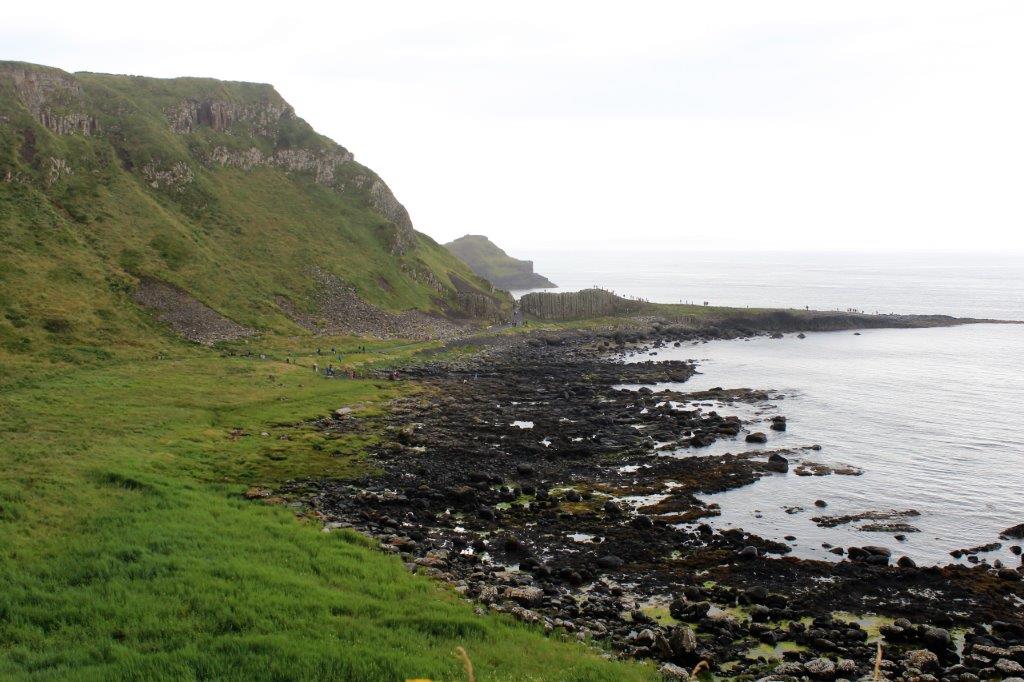
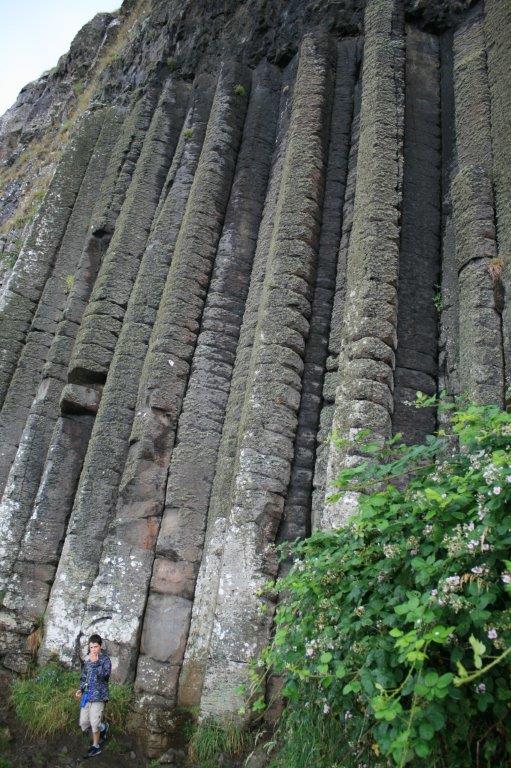
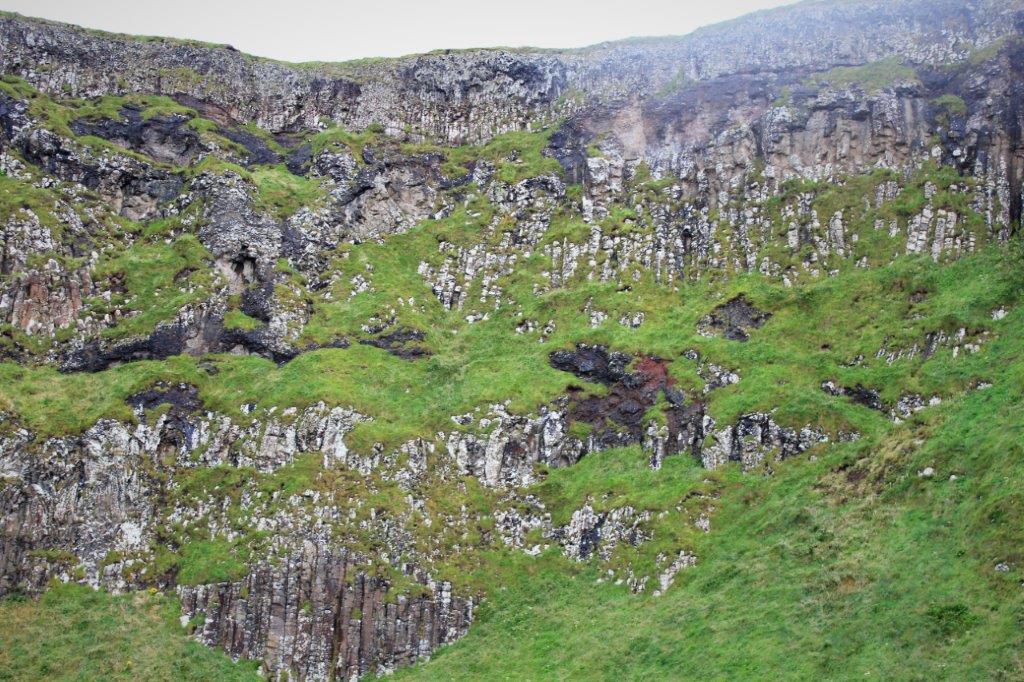
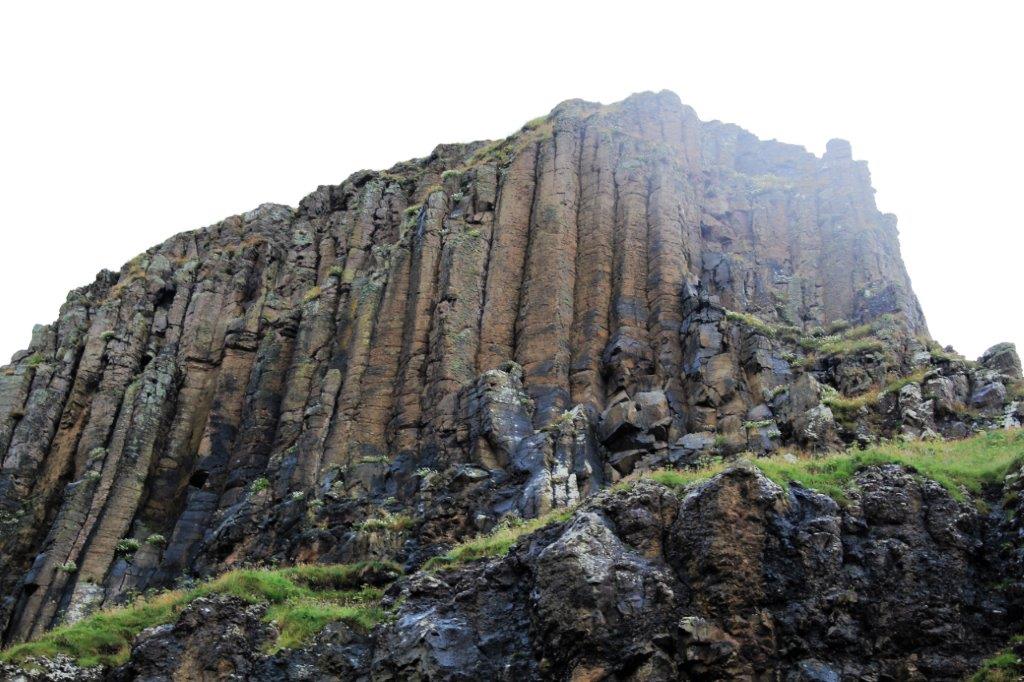
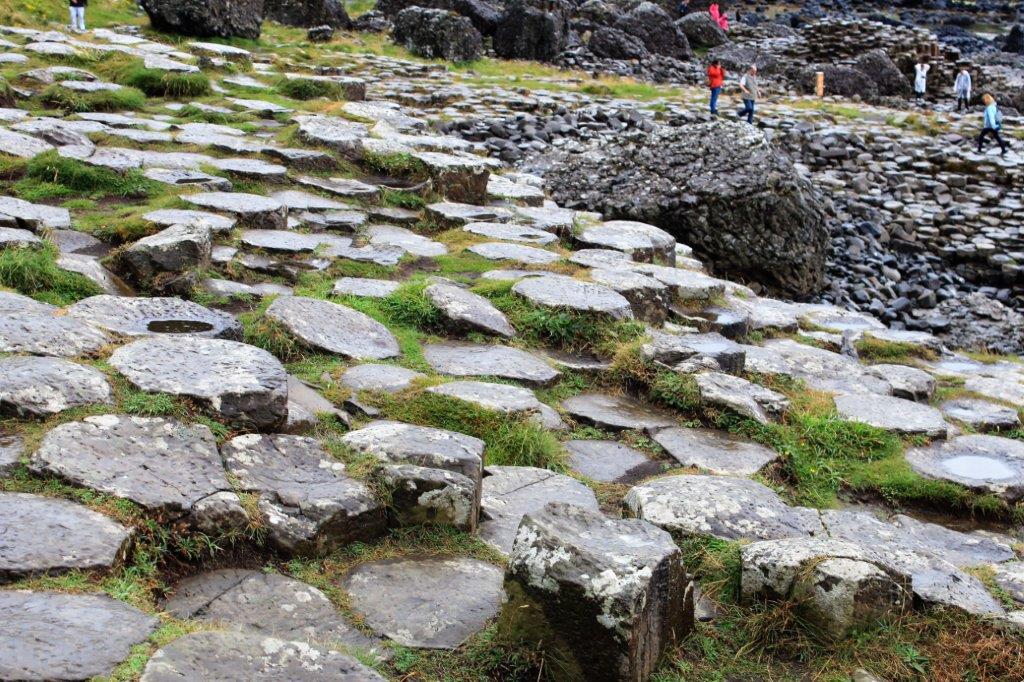
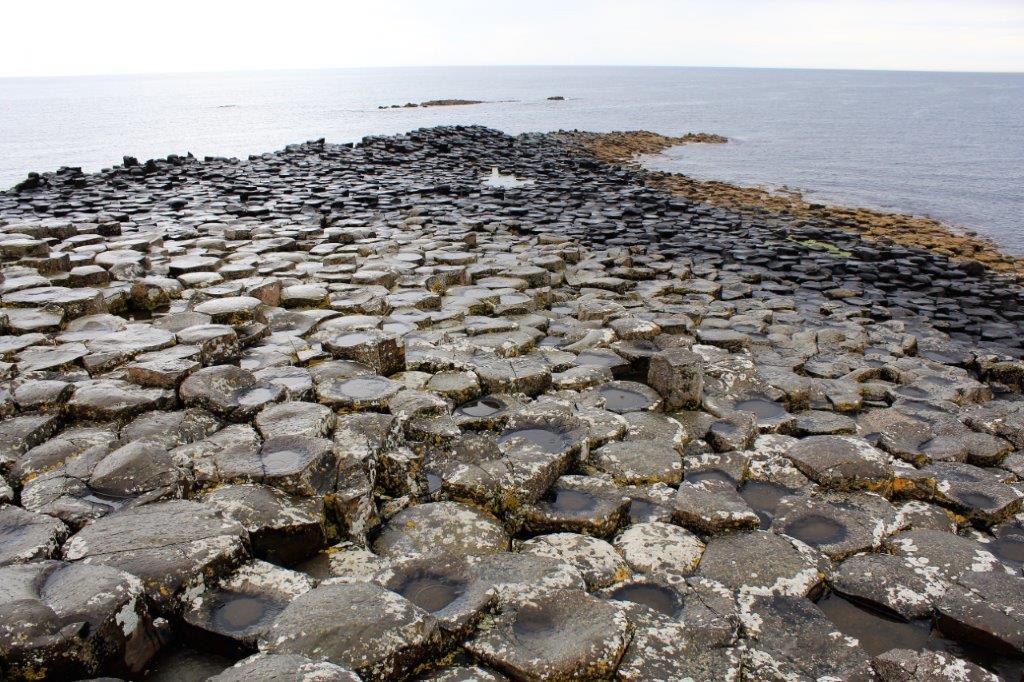
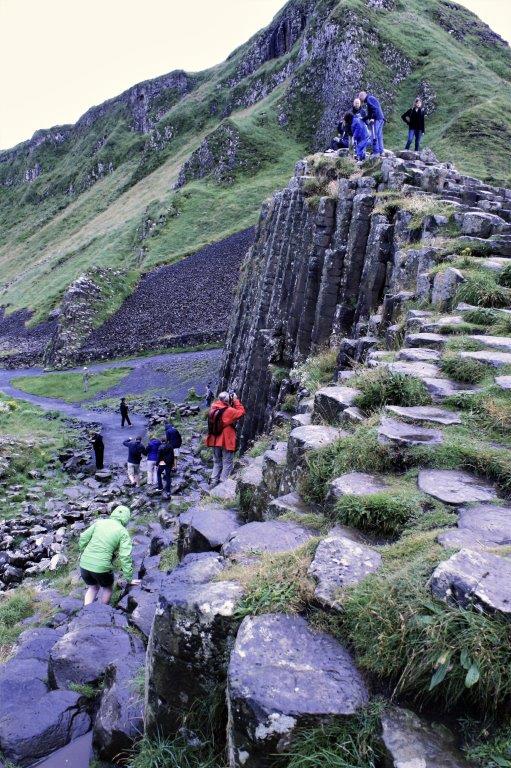
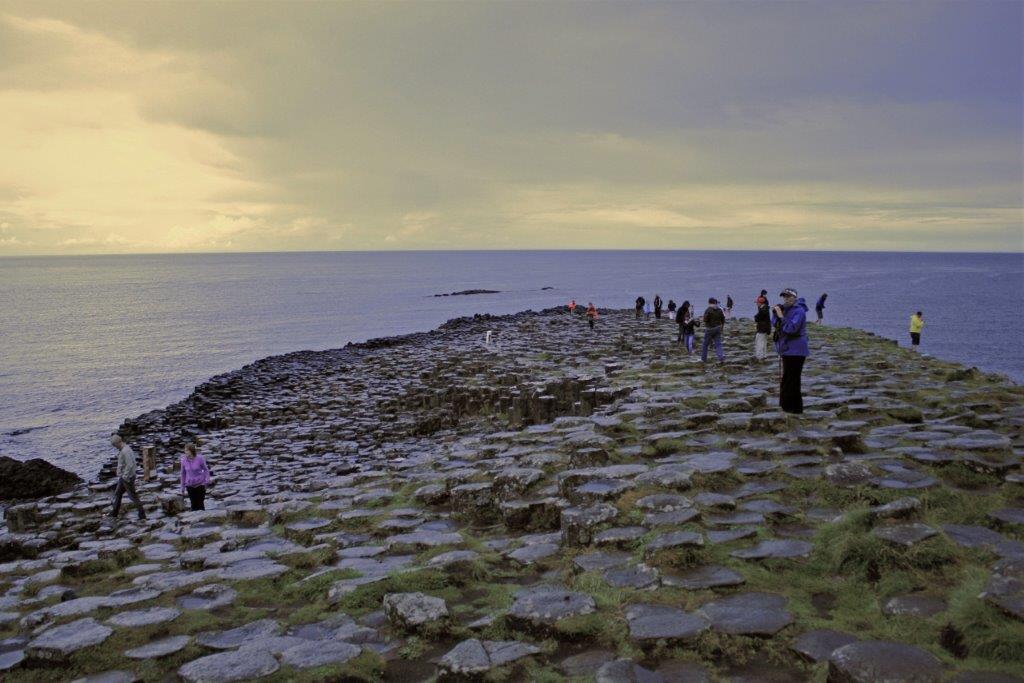
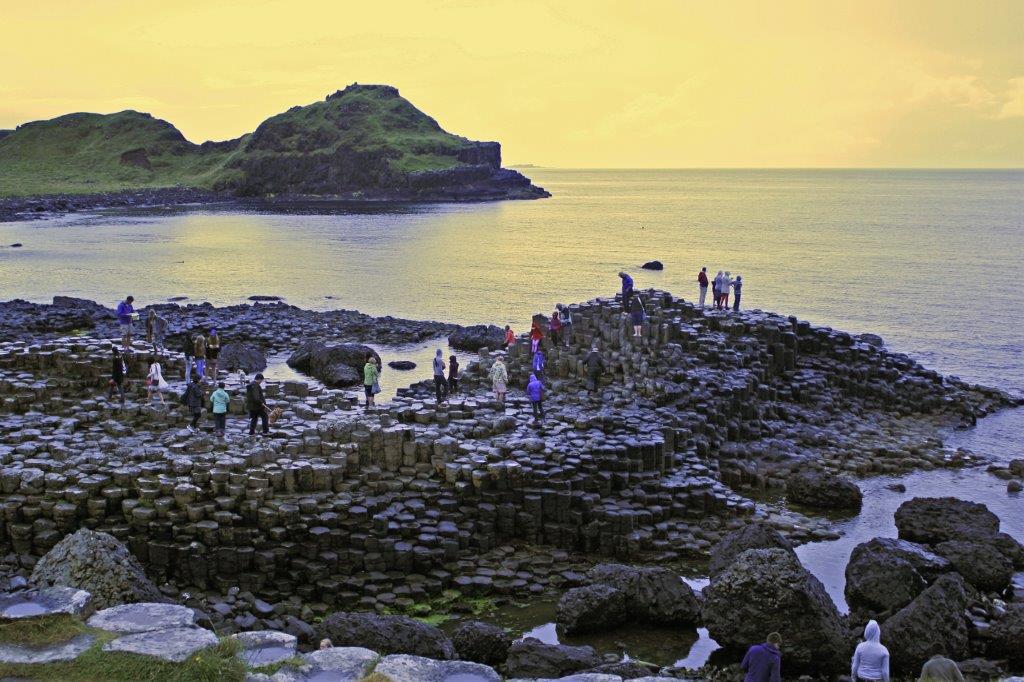
The tops of the columns form stepping stones that lead from the foot of the cliff and disappear into the sea.  Most of the columns are hexagonal, although there are also some with four, five, seven or eight sides. The tallest are about 12 meters (39 ft) high, and the solidified lava in the cliffs is 28 meters (92 ft) thick in places.

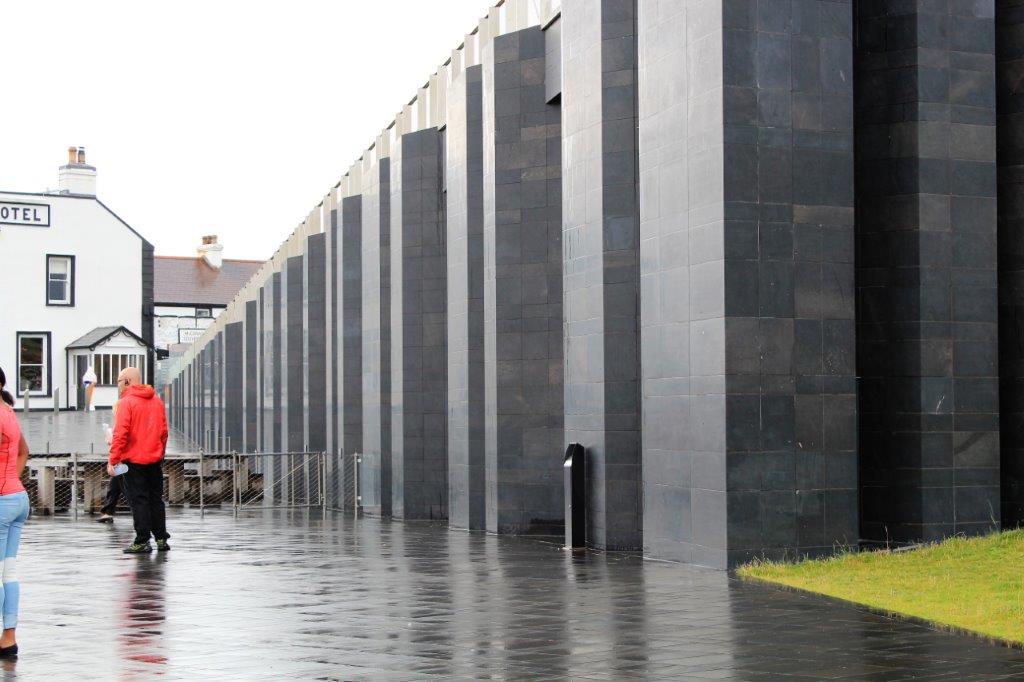
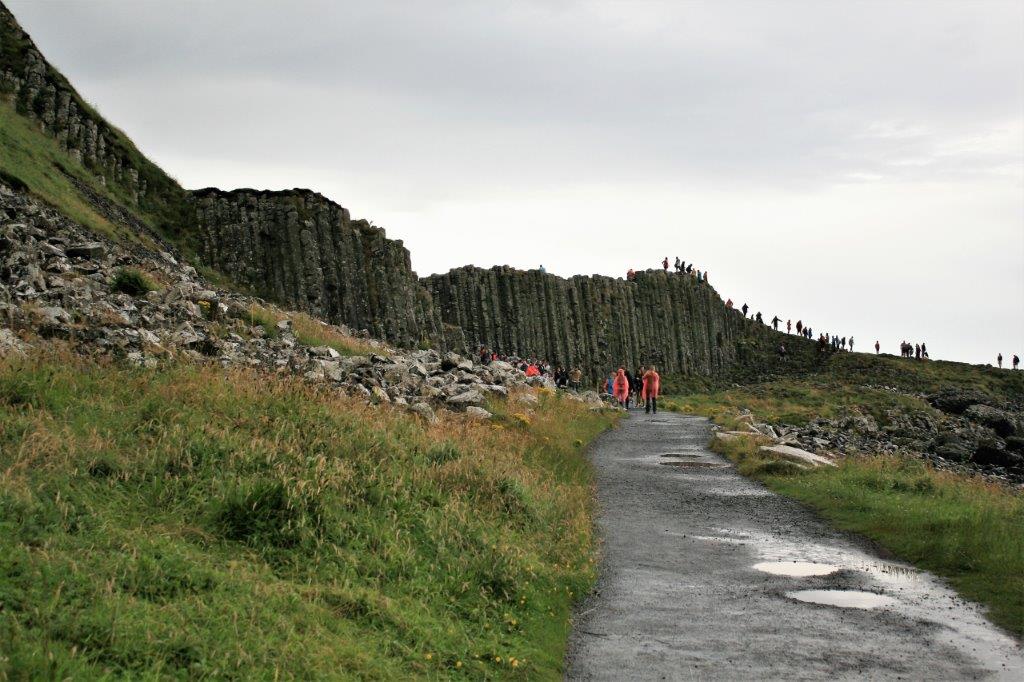
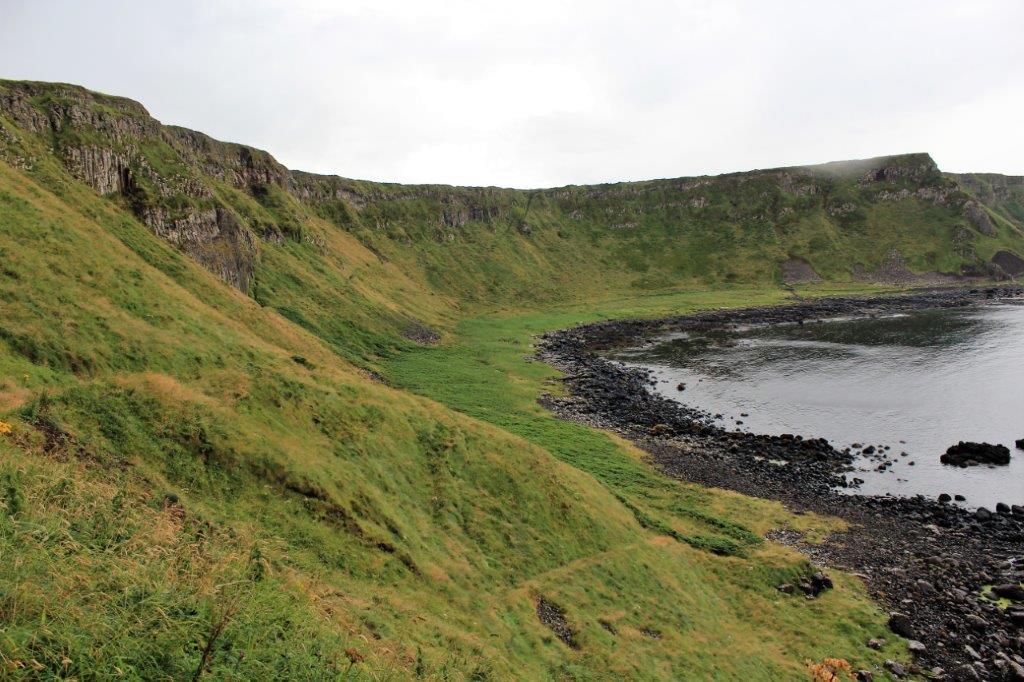
Much of the Giant’s Causeway and Causeway Coast World Heritage Site is today owned and managed by the National Trust and it is one of the most popular tourist attractions in Northern Ireland. Access to the Giant’s Causeway is free of charge: it is not necessary to go via the visitors center, which charges a fee.The design of the Visitor’s Center obviously mimics the columns of the Causeway.  This  building  was  not  here  in  1986. I couldn’t remember the details of the legend we had been told on our first visit so I looked it up on the internet.  You just have to love Google!  “According to legend, the columns are the remains of a causeway built by a giant. The story goes that the Irish giant Fionn mac Cumhaill (Finn MacCool), from the Fenian Cycle of Gaelic mythology, was challenged to a fight by the Scottish giant Benandonner.  Fionn accepted the challenge and built the causeway across the North Channel so that the two giants could meet. In one version of the story, Fionn defeats Benandonner.  In another, Fionn hides from Benandonner when he realizes that his foe is much bigger than he is. Fionn’s wife, Oonagh, disguises Fionn as a baby and tucks him in a cradle. When Benandonner sees the size of the ‘baby’, he reckons that its father, Fionn, must be a giant among giants. He flees back to Scotland in fright, destroying the causeway behind him so that Fionn would be unable to chase him down. Across the sea, there are identical basalt columns (a part of the same ancient lava flow) at Fingal’s Cave on the Scottish isle of Staffa, and it is possible that the story was influenced by this.” The pathway goes around the cove and over to the cliff side columns.  This big set is called the Pipe Organ. There was a bit of Irish mist, but the rain wasn’t too bad so we still enjoyed our walk around. It was really nice to be back at this amazing place. The causeway disappears into the North Sea. It was getting late by the time we were ready to leave and the sun was beginning to set.  It  cast  such  a pretty  yellow  shade. We arrived back at Clenahagn’s at 7 pm, had some supper and went to bed satisfied with our wonderful day in Northern Ireland.

The next day, July 30 was our last day.  Colin came over in the morning and we went into the town of Markethill and did some window shopping .  We returned to our apartment mid-afternoon. and had dinner in Clenaghan’s pub.  We checked out the next morning and drove to Belfast International Airport to catch our plane home, only to find were at the wrong airport!  By then we had returned our rental car and were stranded.  One of the Customer Service Volunteers hailed a taxi driven by a friend of his and told him our problem.  We were assured we would arrive at the Belfast City Airport in time to make our flight.  We did – just – and only because he drove like a mad fool to get us there.  Whew.

So, finally our trip to Scotland to attend our son’s July 22 wedding had ended.  We left home May 31; took a 17-day Baltic cruise, spent a week in London, and then toured around Scotland for over three weeks.  We attended the wedding and then spent a week in Northern Ireland before returning home July 30.  Now that was a great way to “go to a wedding!”

This is my final catch-up blog.  I have now written a blog series about all of the long trips, either by cruise ship or by road, that we have taken since we retired in 2007.  Hopefully, there will be some new journeys to write about in the future. Thanks for coming along.

2013 Summer (Baltic and Britain – Northern Ireland – July 29 – Day 5 – Part 2)

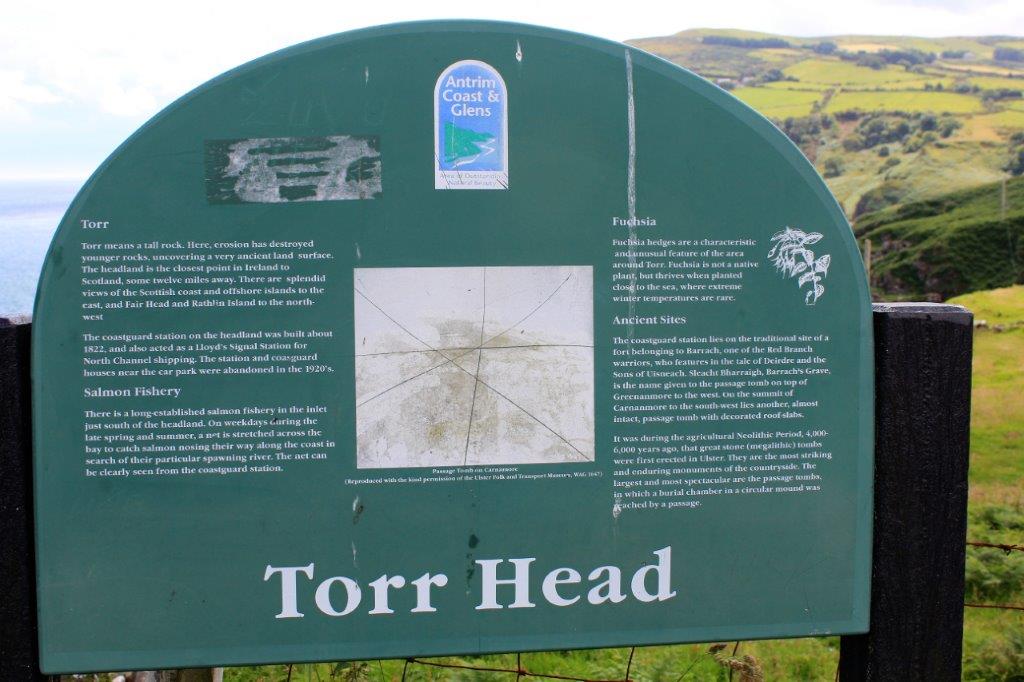
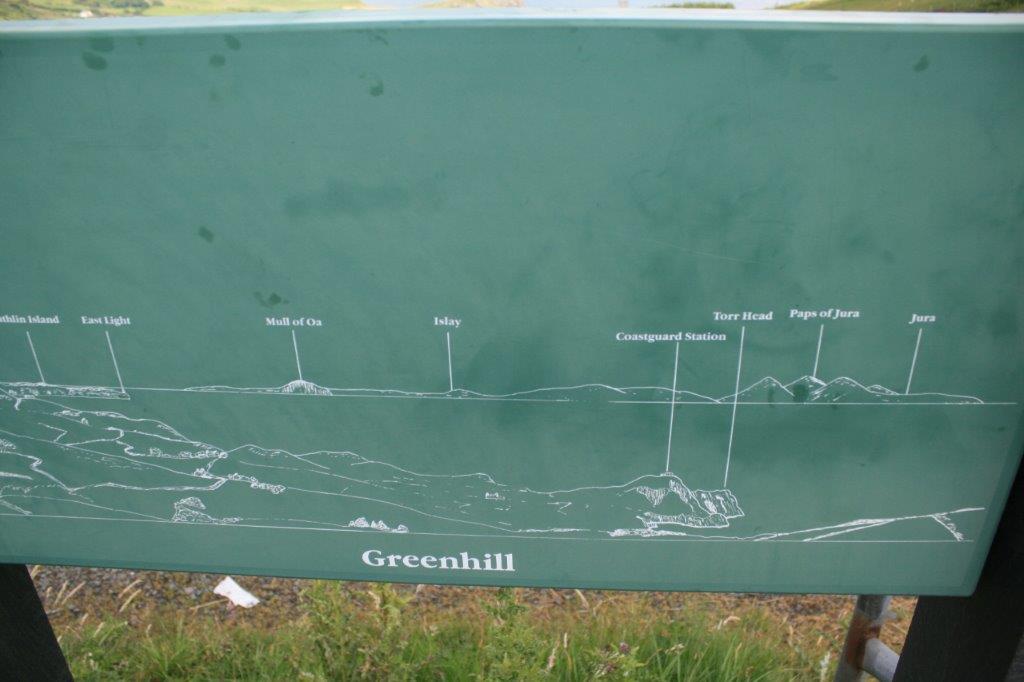
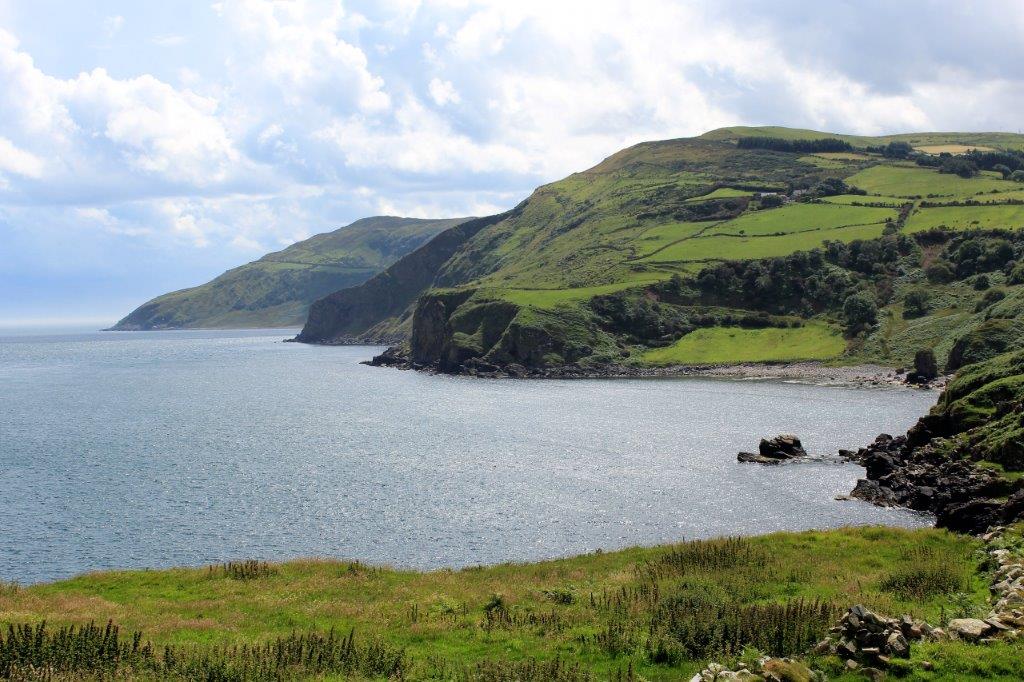
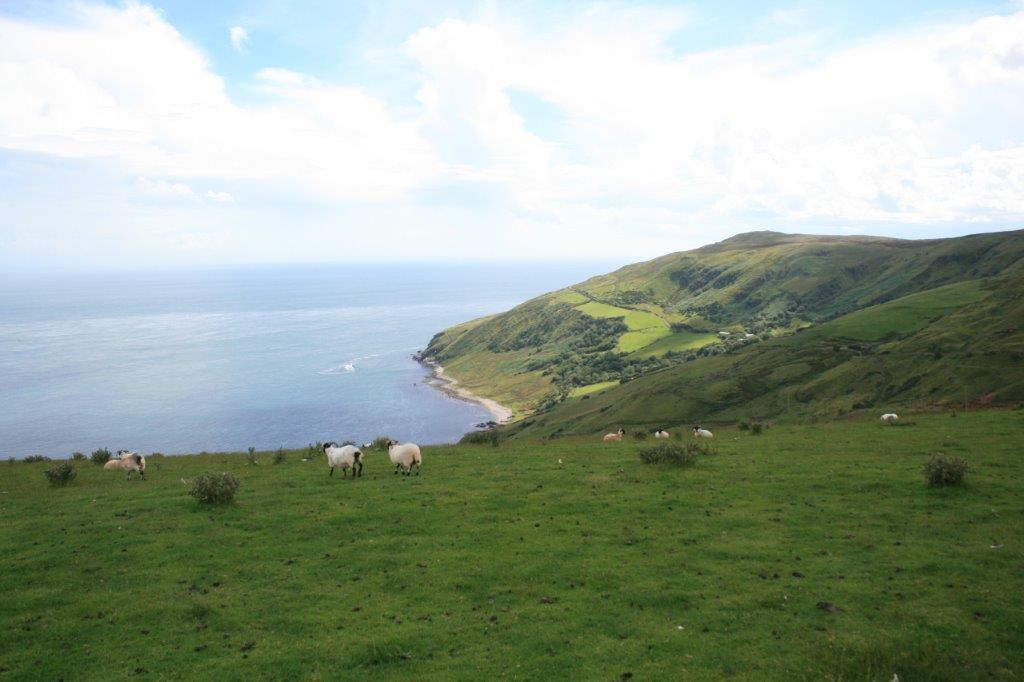
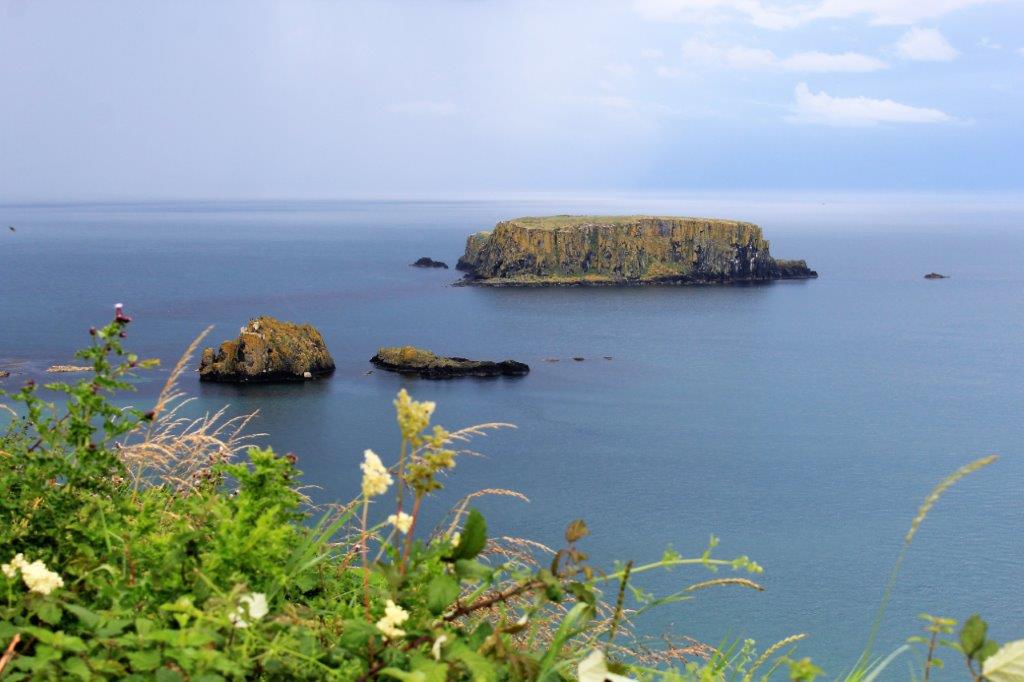
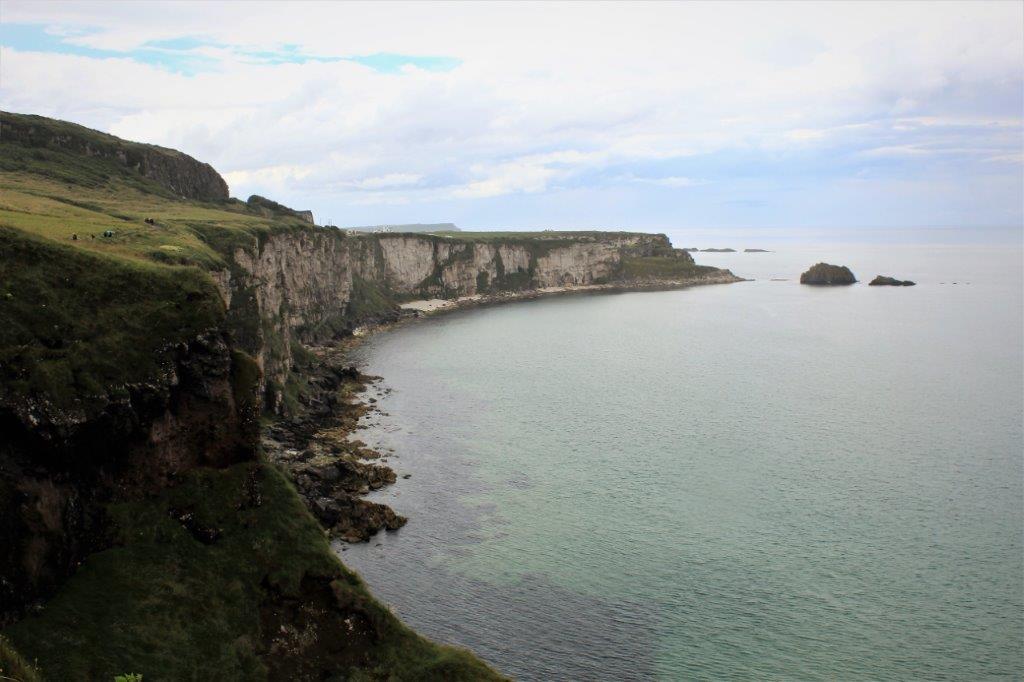
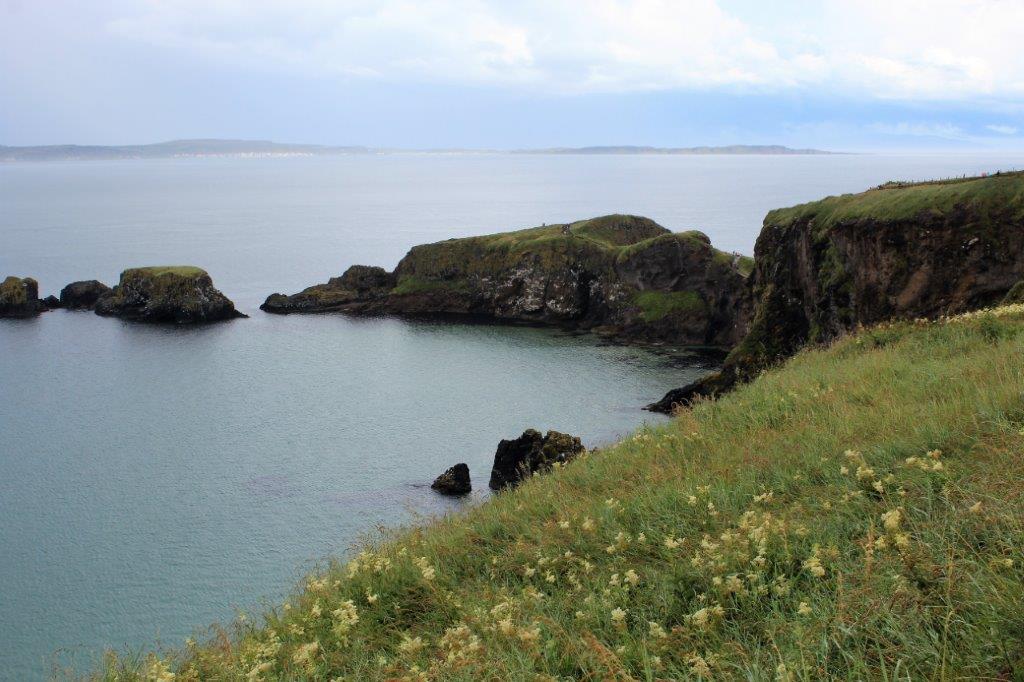
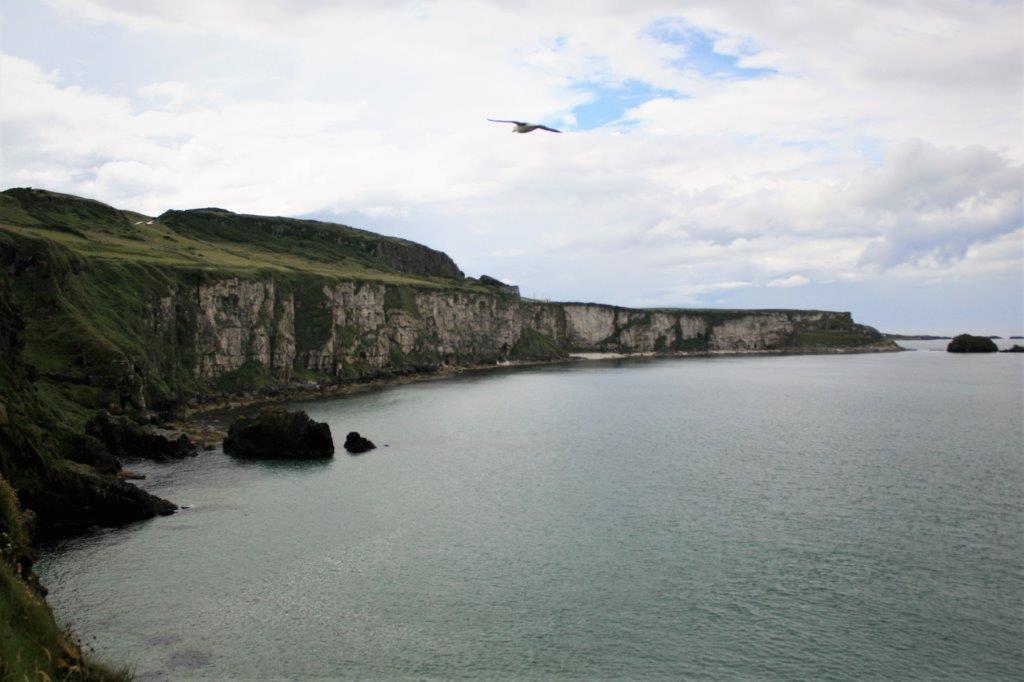
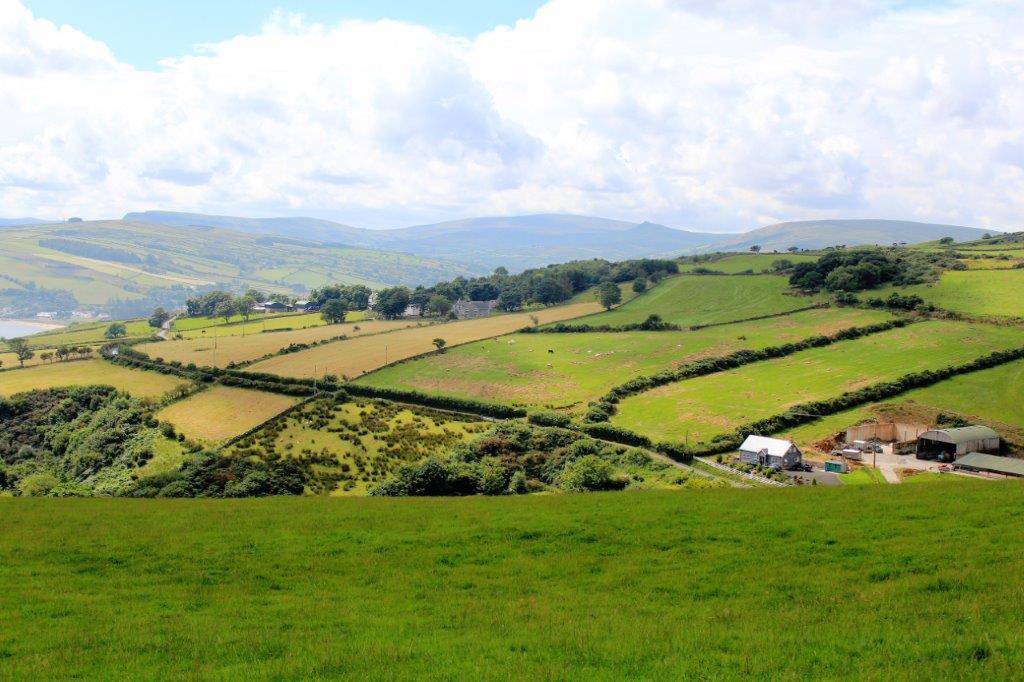
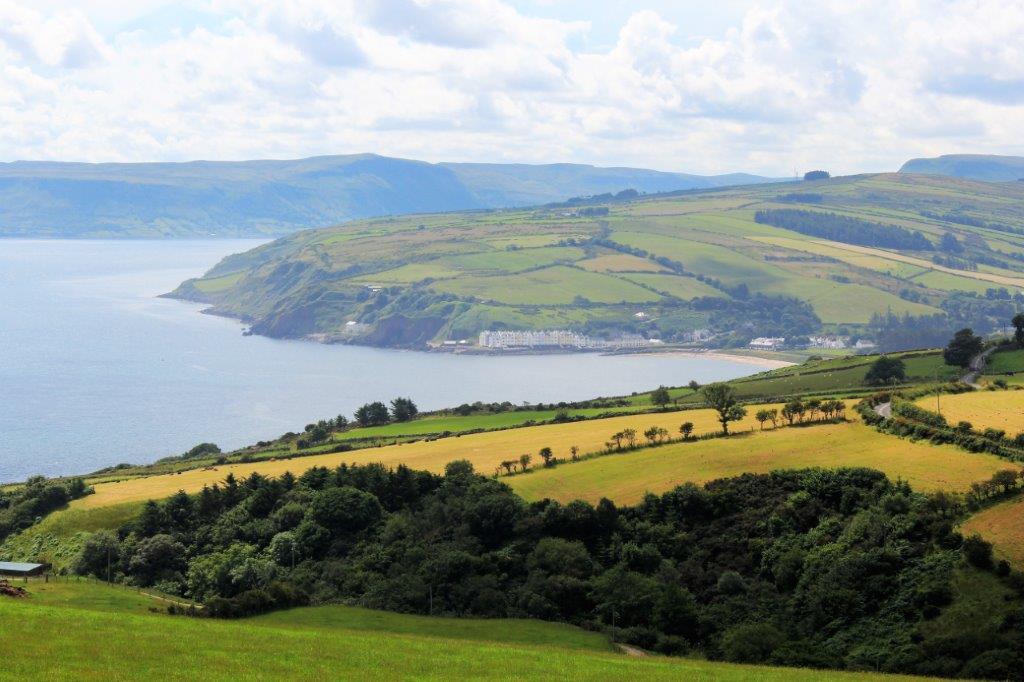
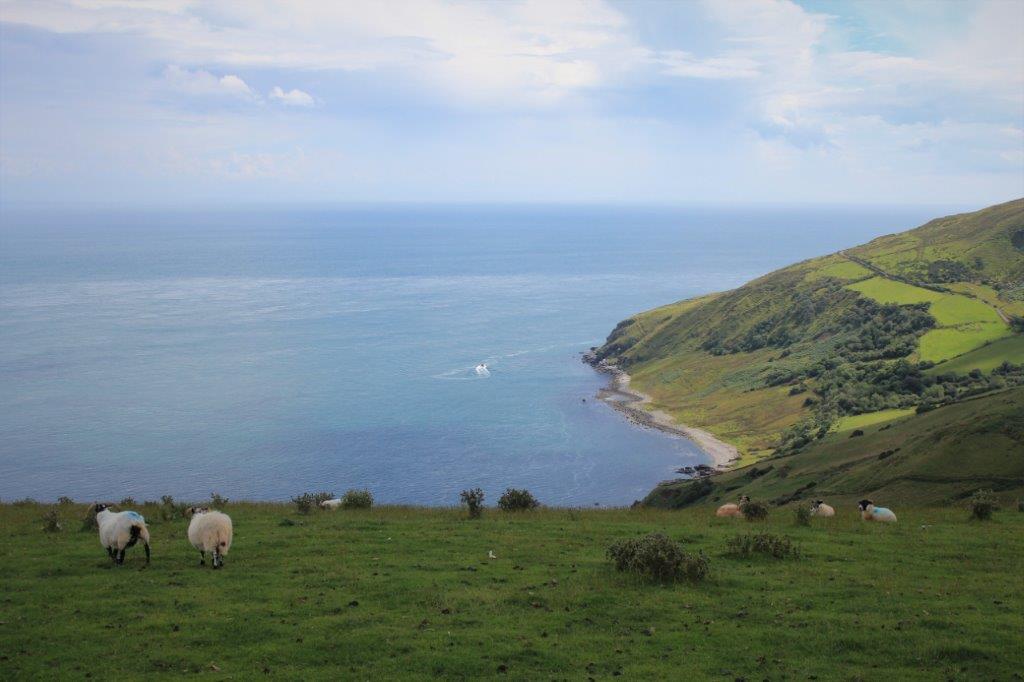
Our first main stop on the drive up the Antrim coast was at Torr Head which was a lovely viewpoint.

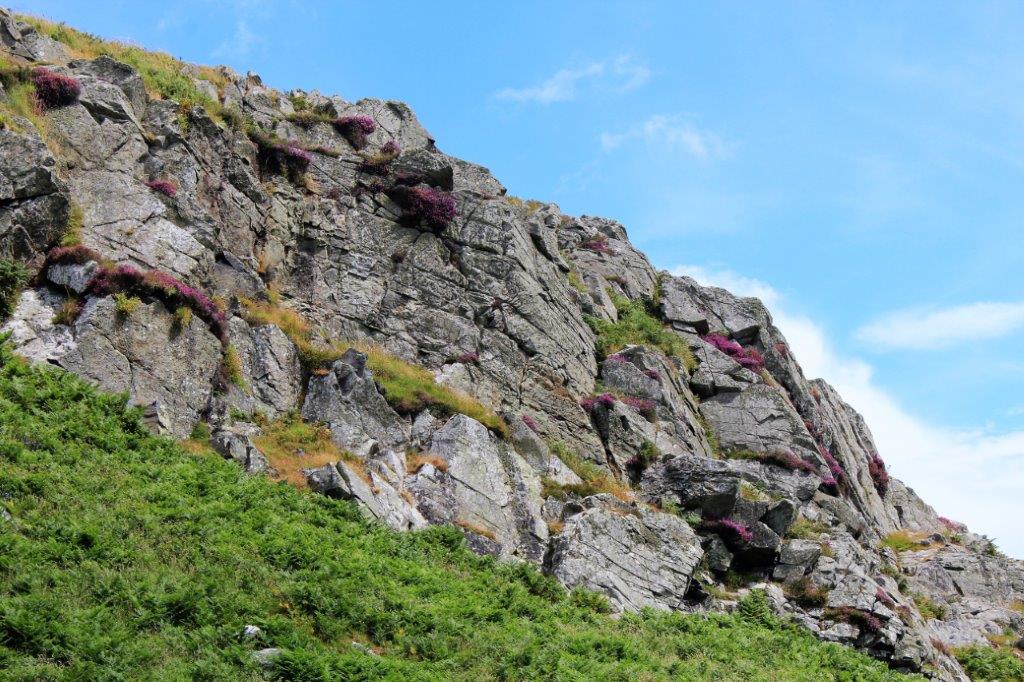
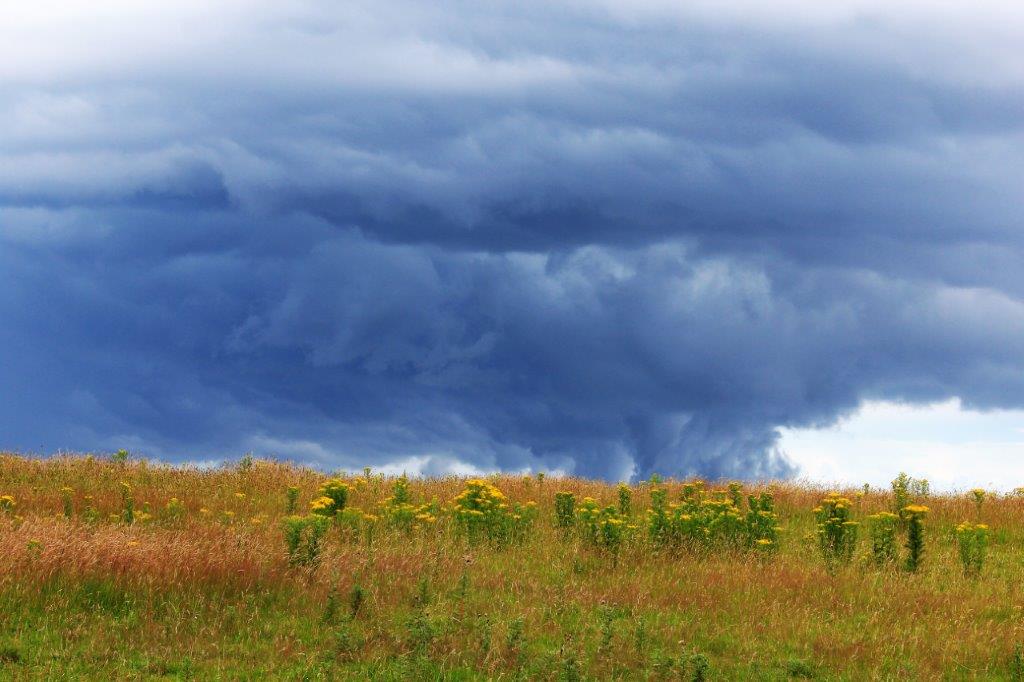
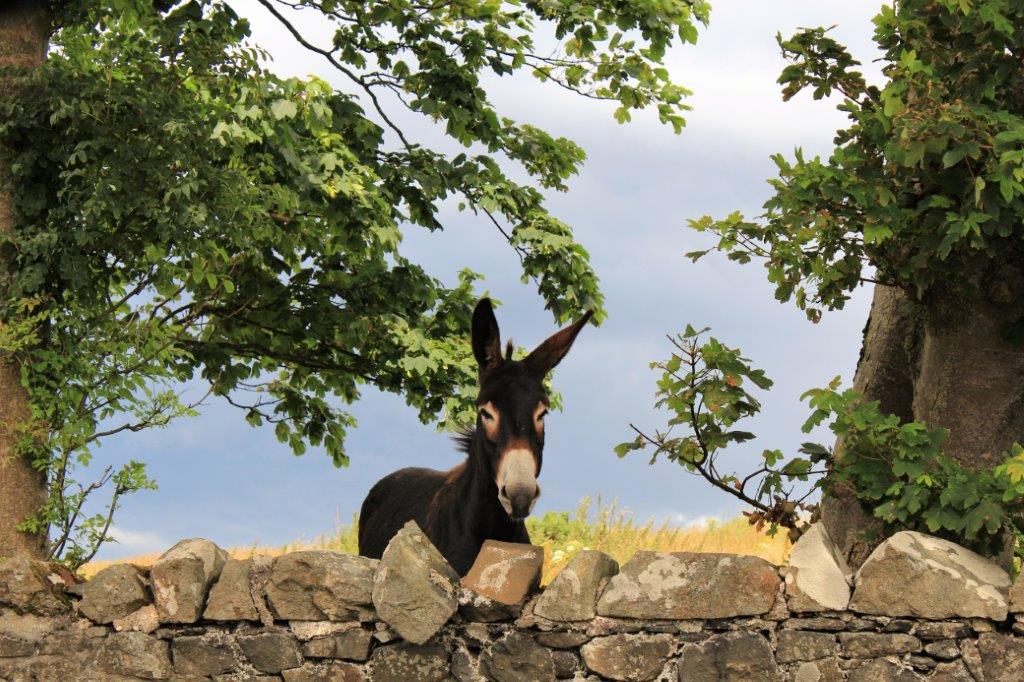
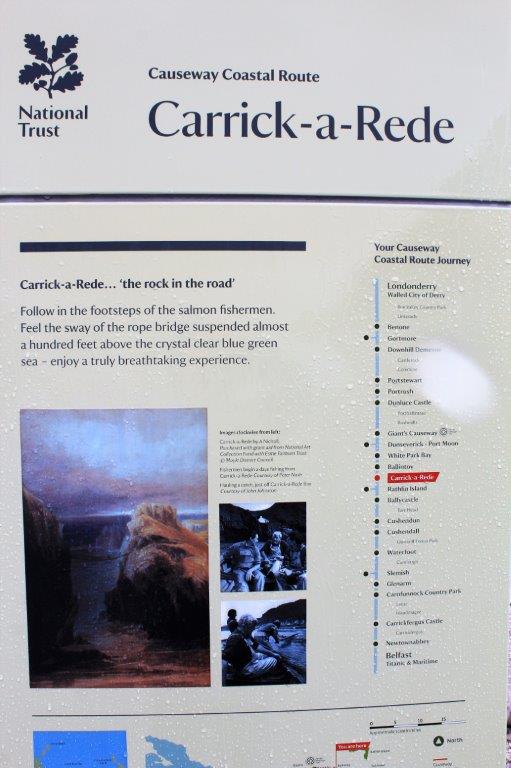
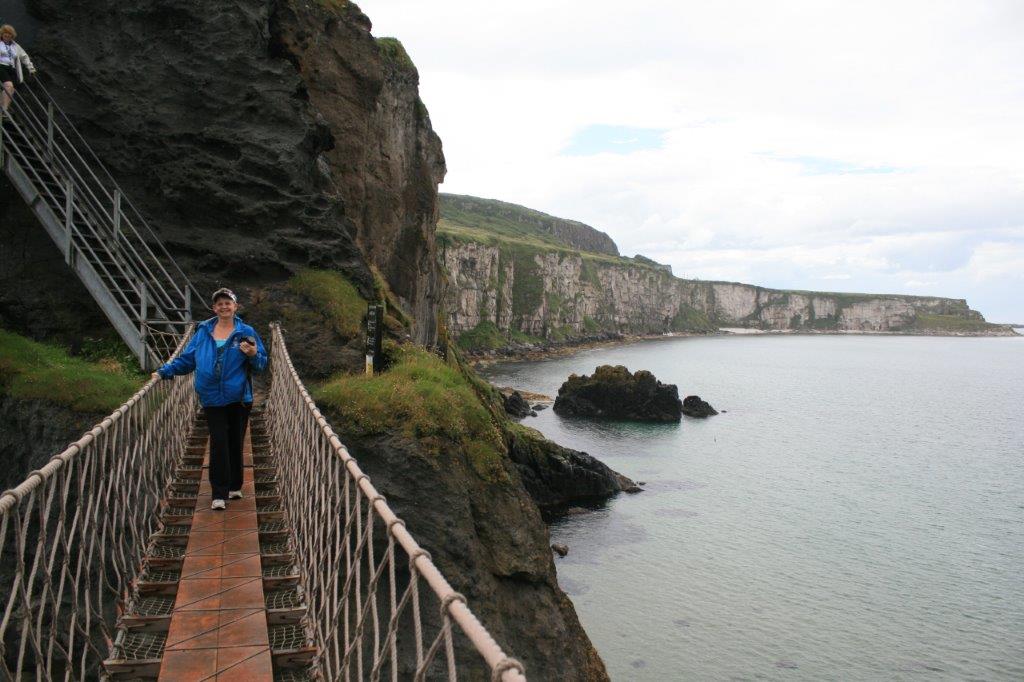
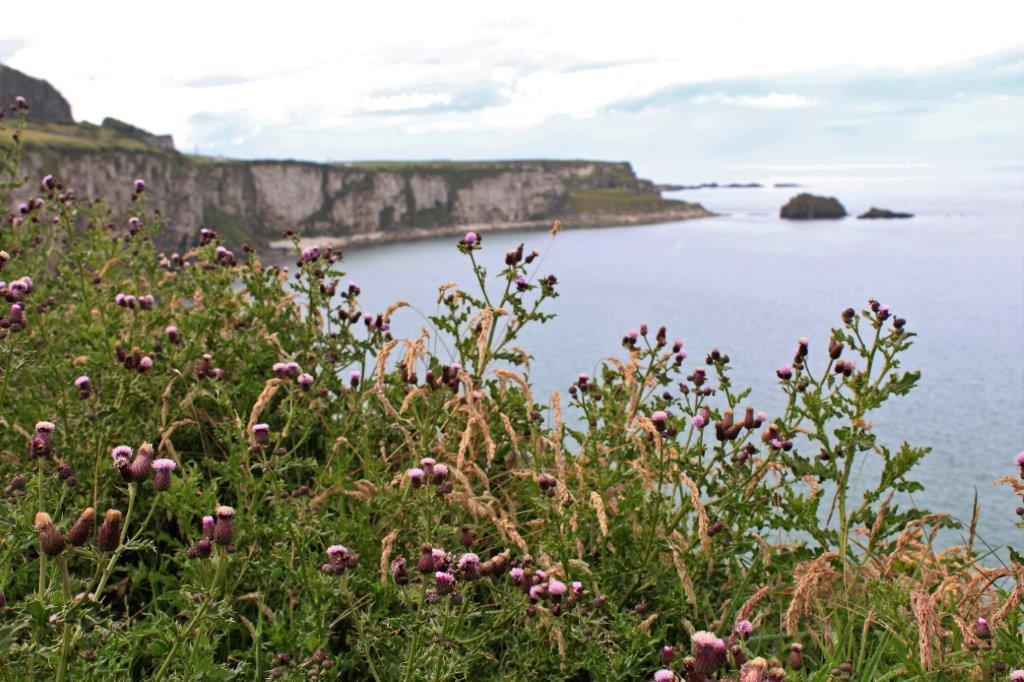
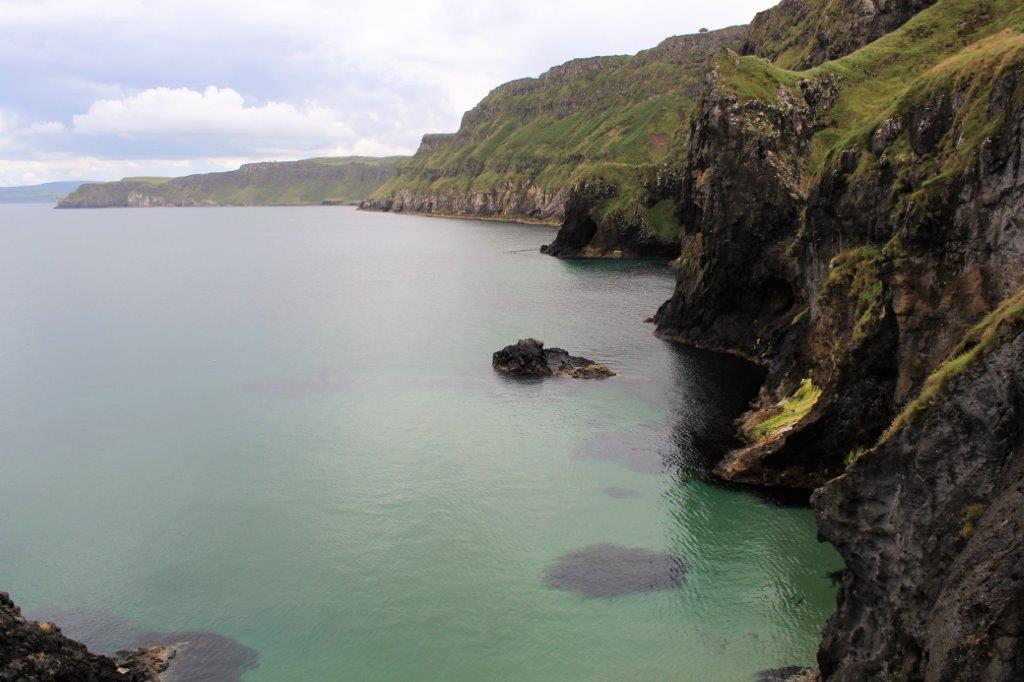
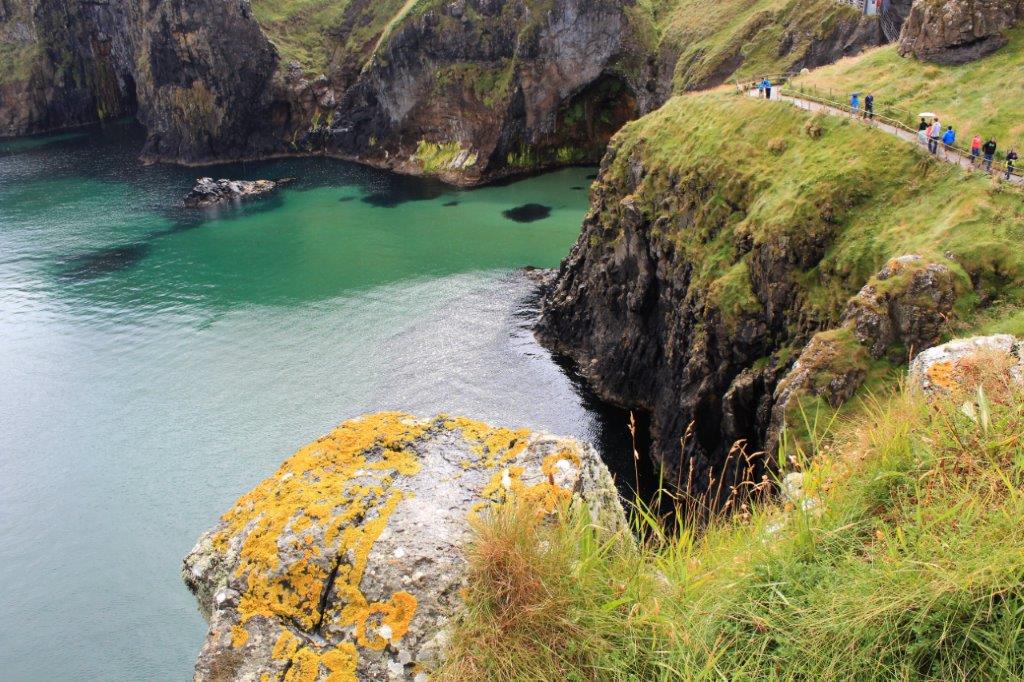
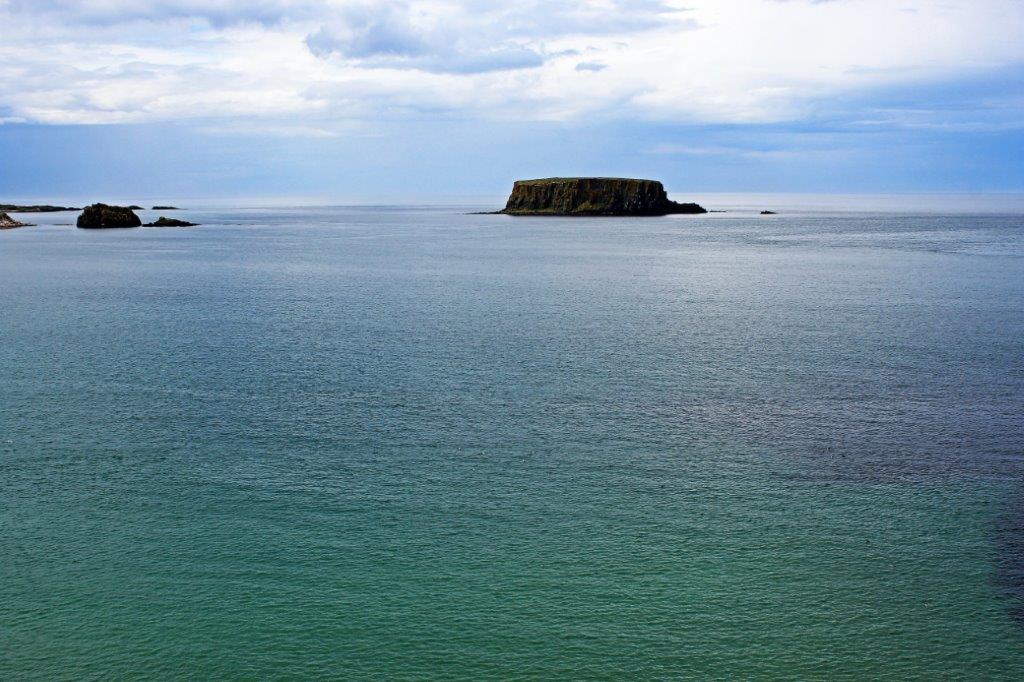
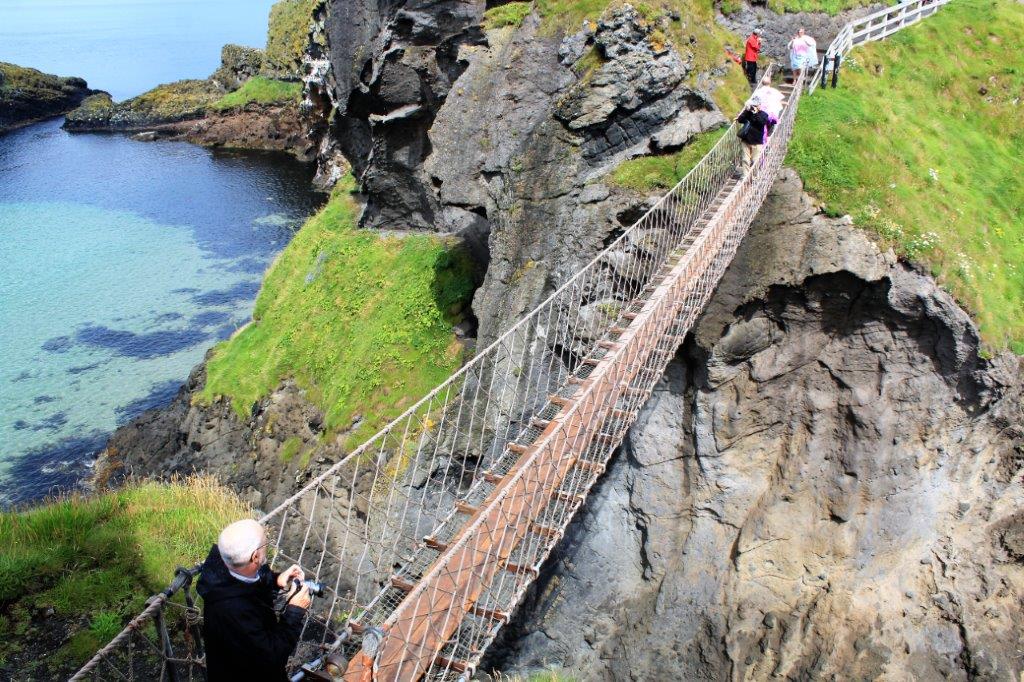
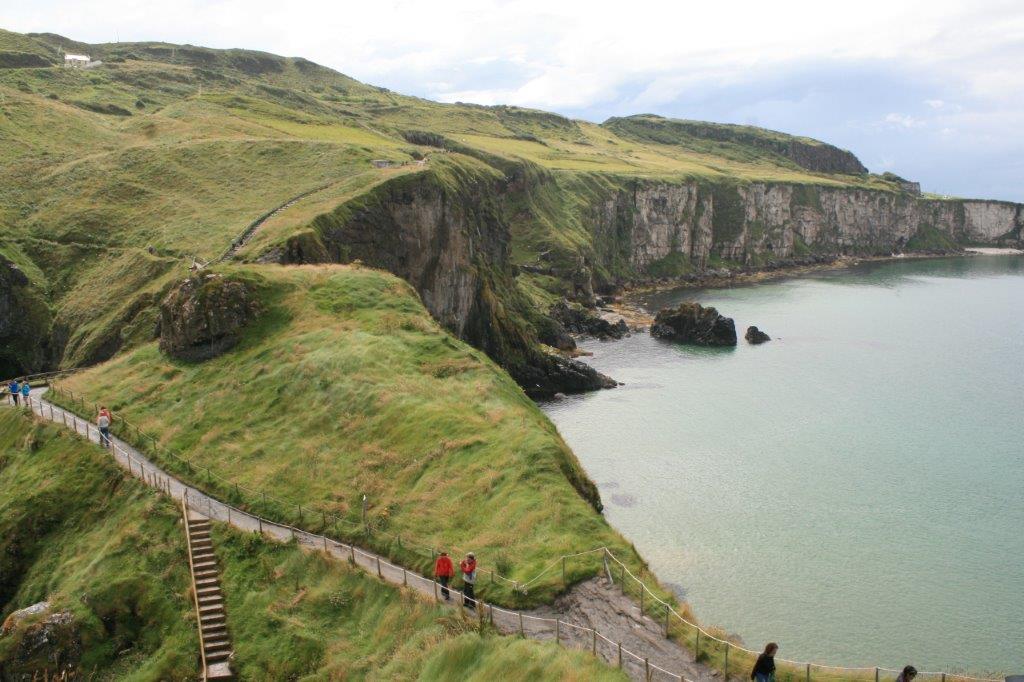
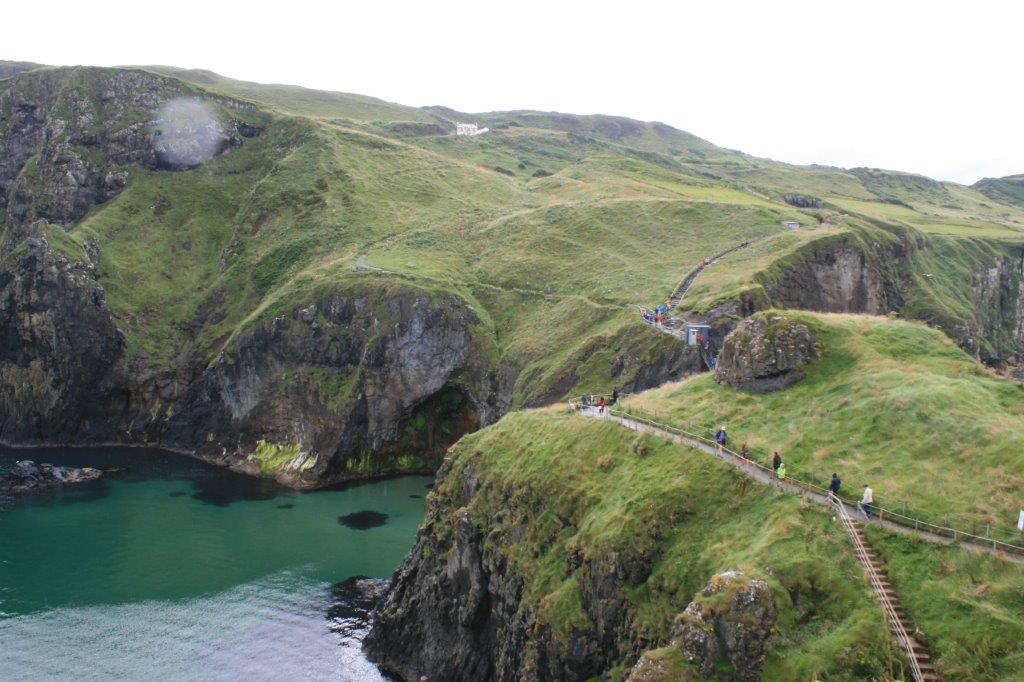
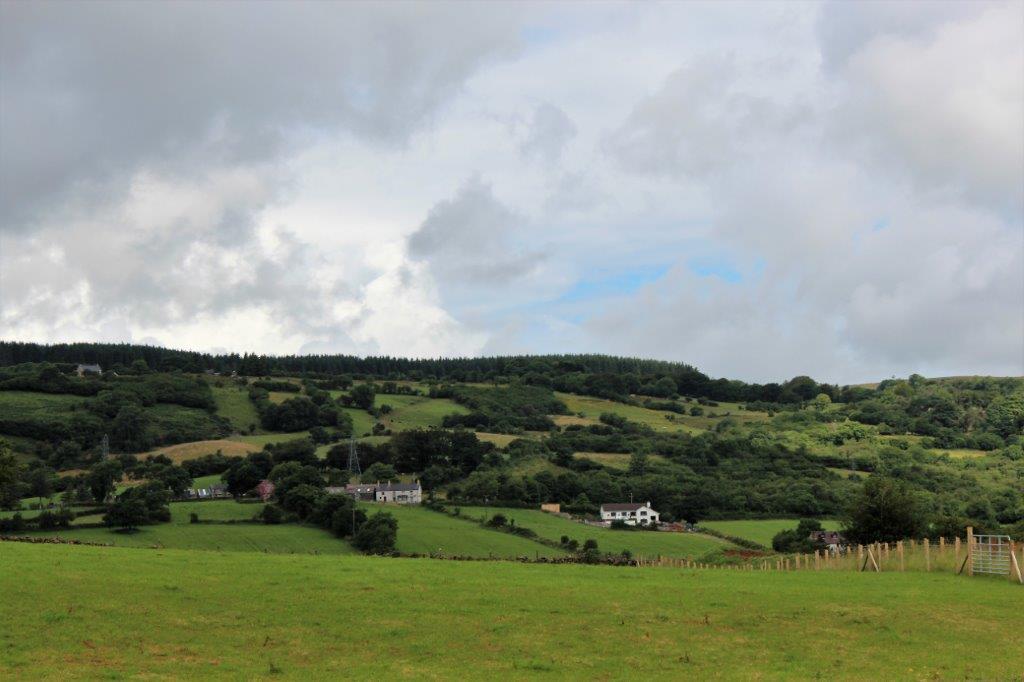
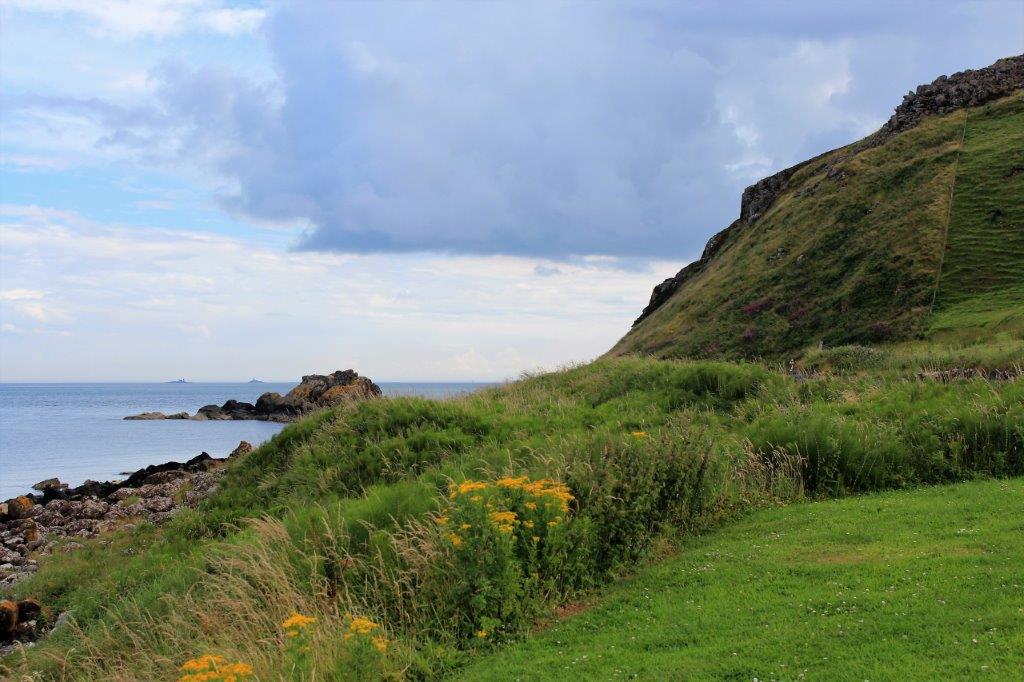
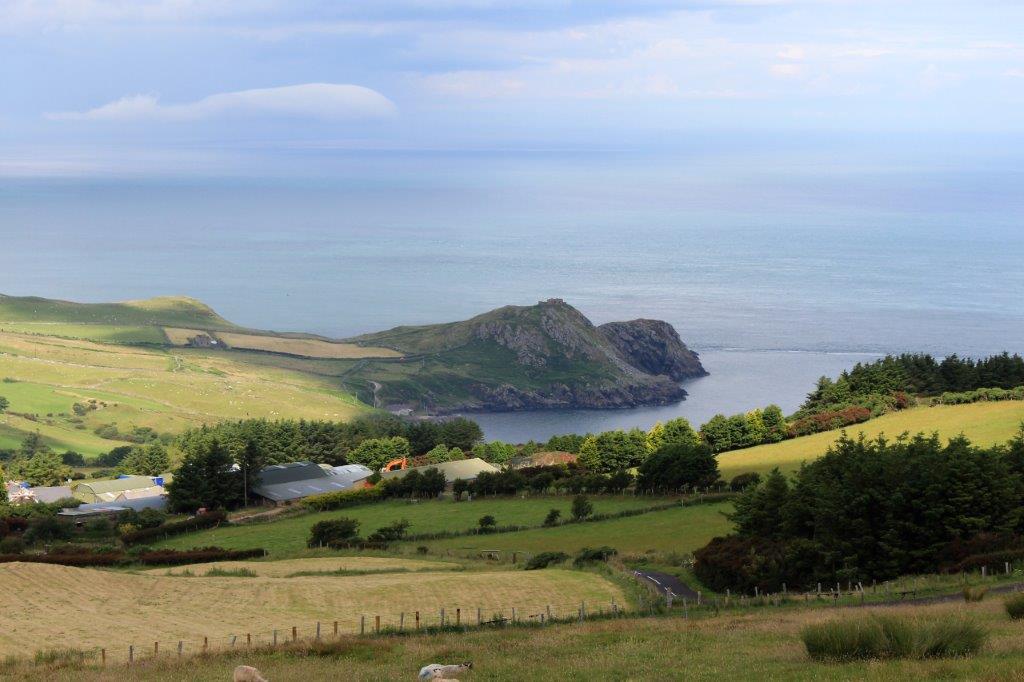
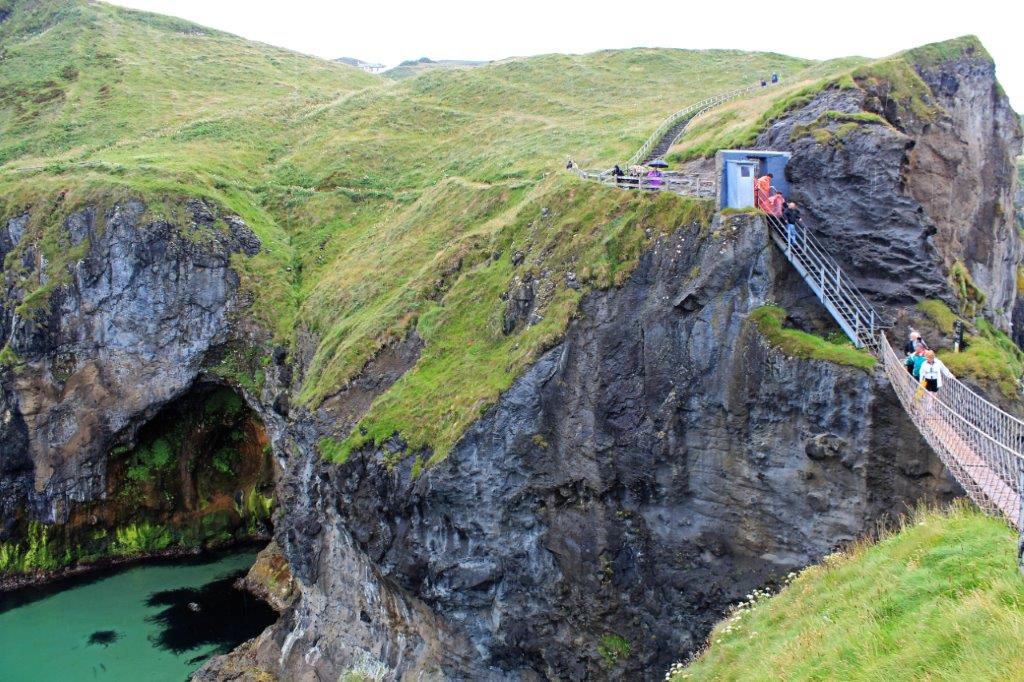
There were just enough clouds and blue sky to make all the lovely greens of Ireland show beautifully. Heather grows and blooms in the most rugged places. I love the gloomy clouds on the horizon in this shot. This mule was very curious as we drove past. When we drove this coast with our friend Colin in 1986 we stopped at Carrick-a-Rede Bridge, which was traditionally a rope bridge strung across the rocks during salmon fishing season.  It became a popular jaunt for people to cross and was made ‘permanent’ for tourists to use.  Since we were there in ’86 the pathway, stairway, and bridge have been upgraded from the dirt path, rugged rocks, single slat base and plain ropes for handholds that we had used to make the crossing.   Now the access and the bridge are much more stable.

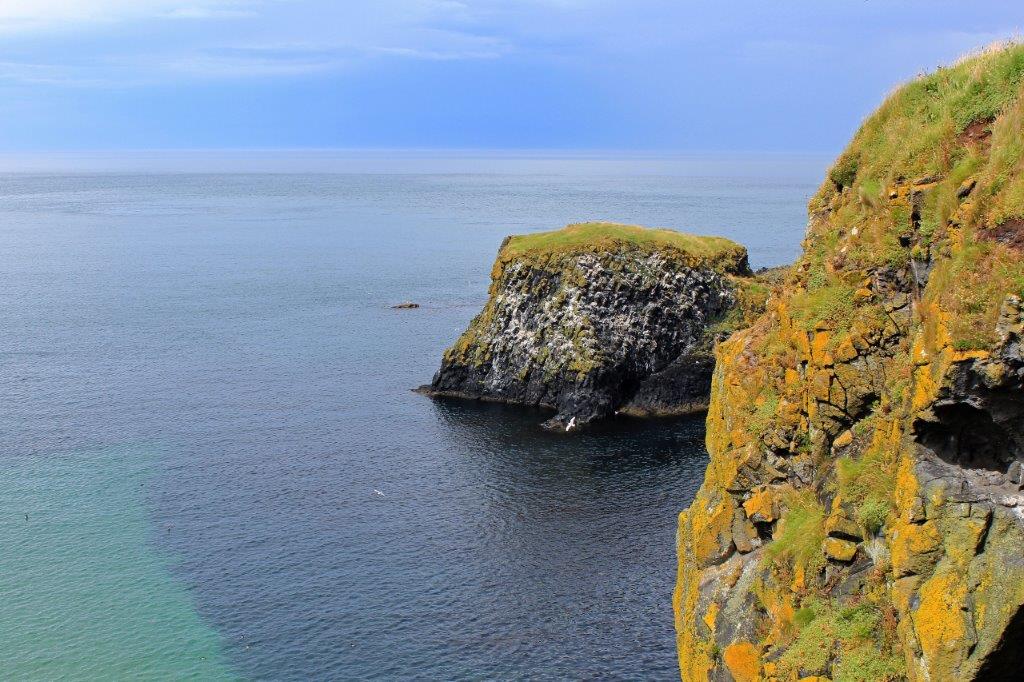
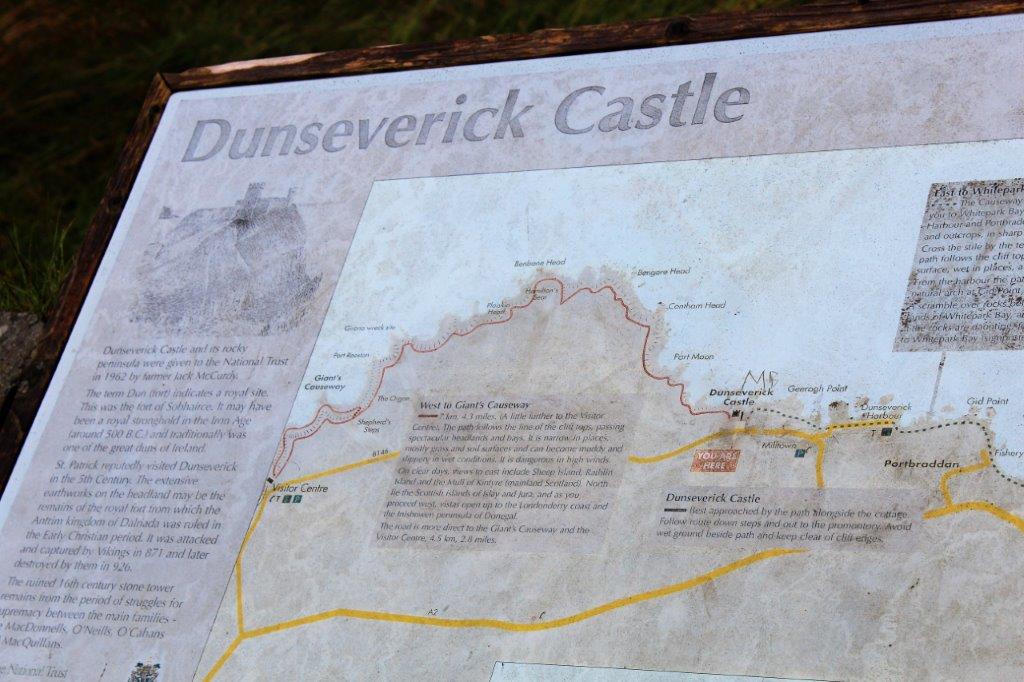
Fishermen still use the area during salmon season and the boats are brought up onto the rocks during the off-season. There is a large sign that says “No more than six people on the bridge at one time.”  This was ignored by most people.  When I was crossing a large family group just tromped onto the bridge after me. There is not much left Dunseverick Castle. Our next stop was the Giant’s Causeway, which has been declared a UNESCO World Heritage site since our last visit.

2013 Summer (Baltic and Britain – Northern Ireland – July 29 – Day 5 – Part 1)

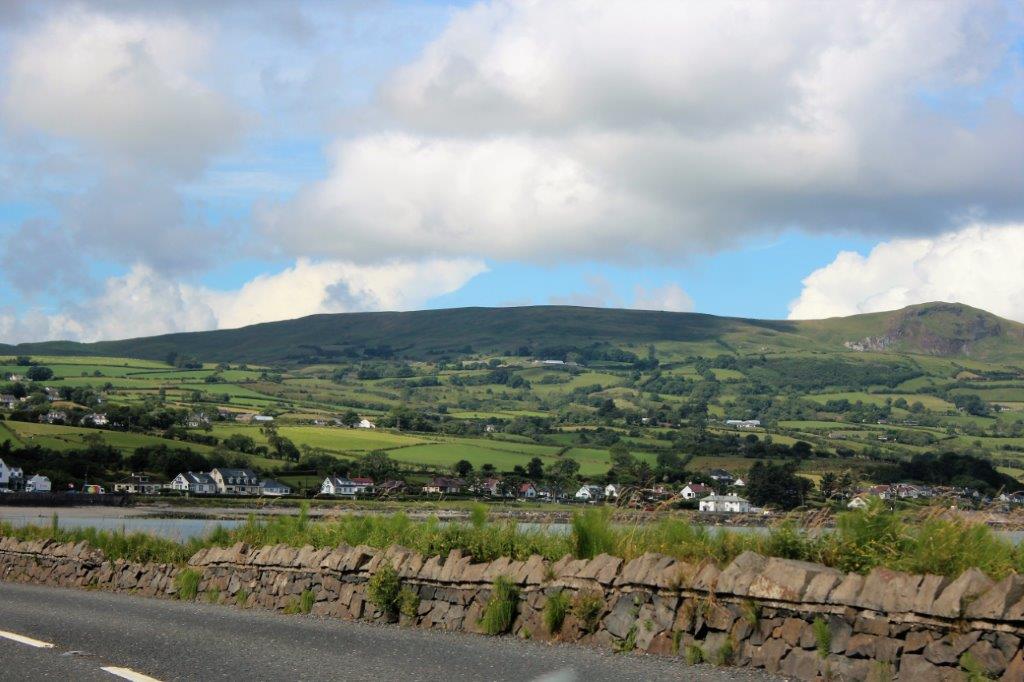
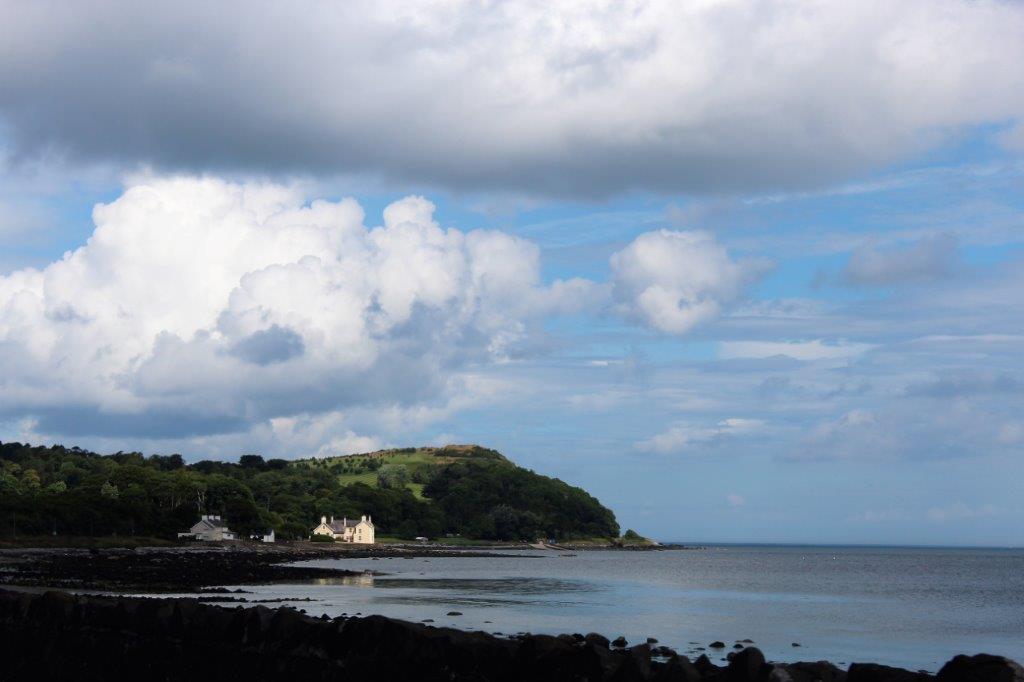
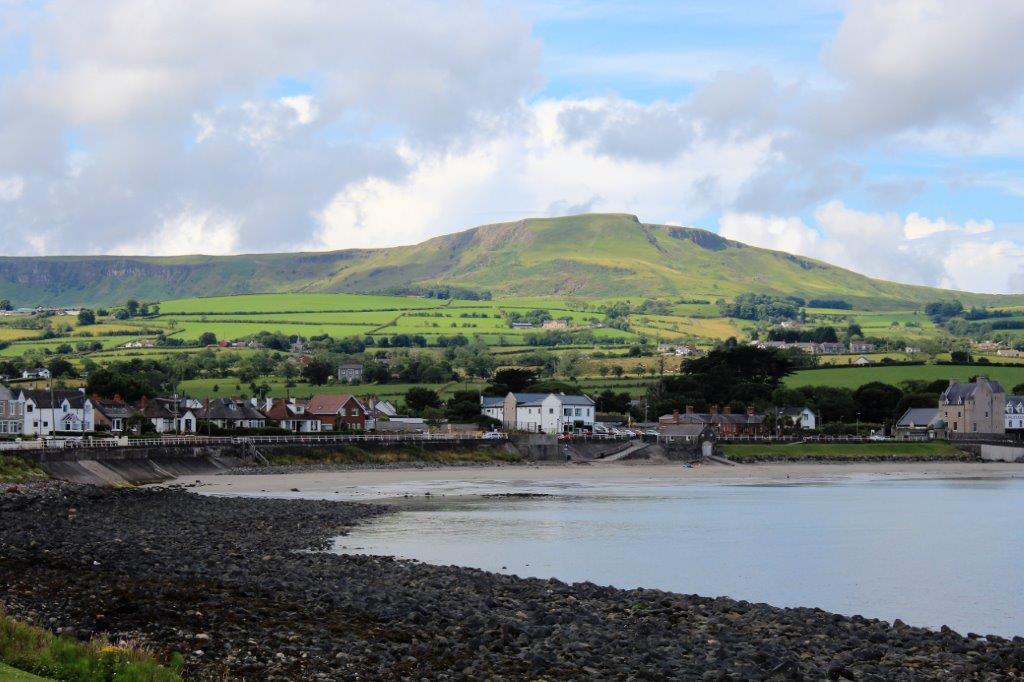
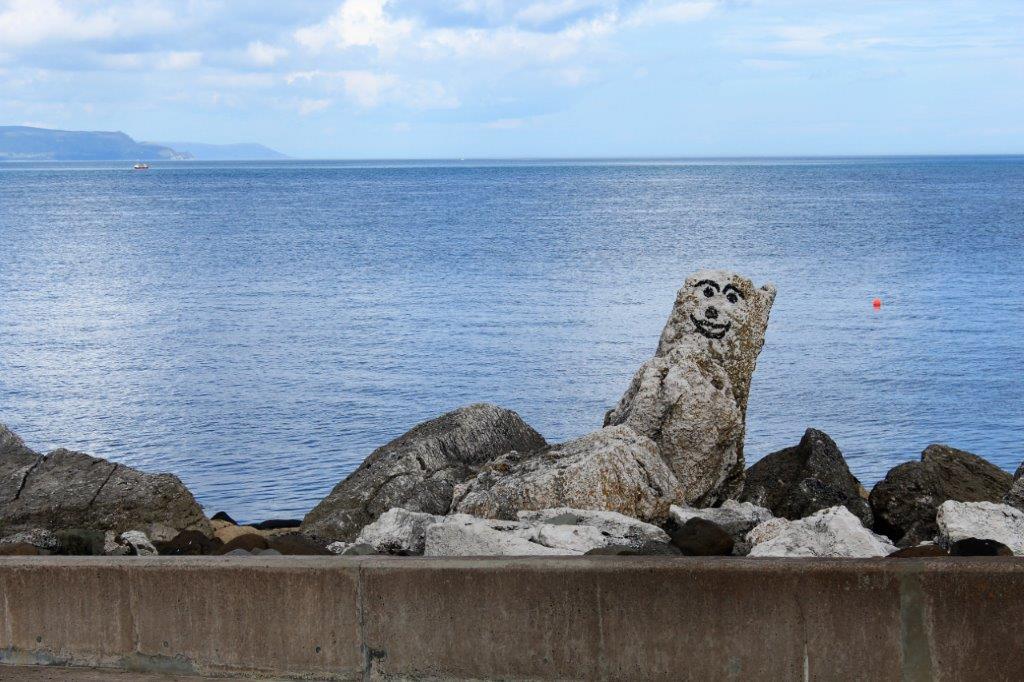
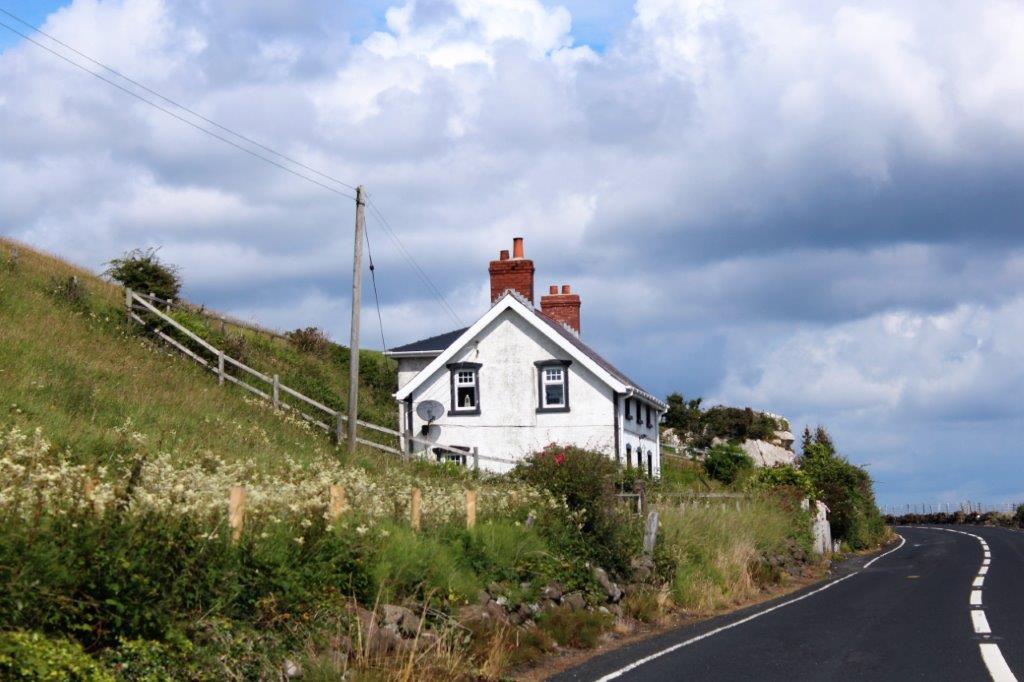
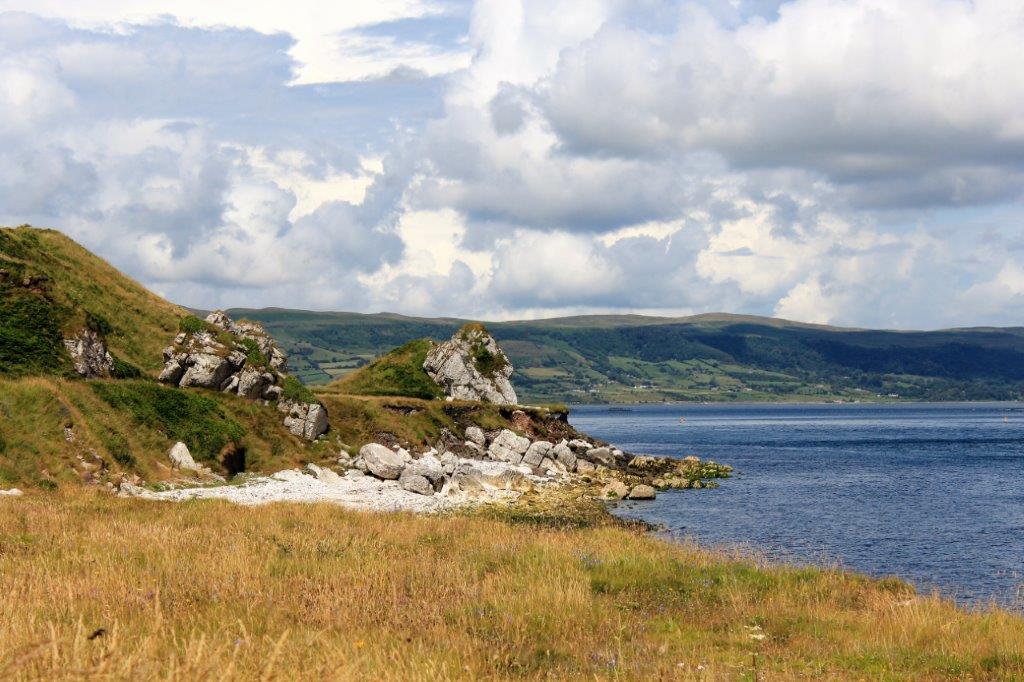
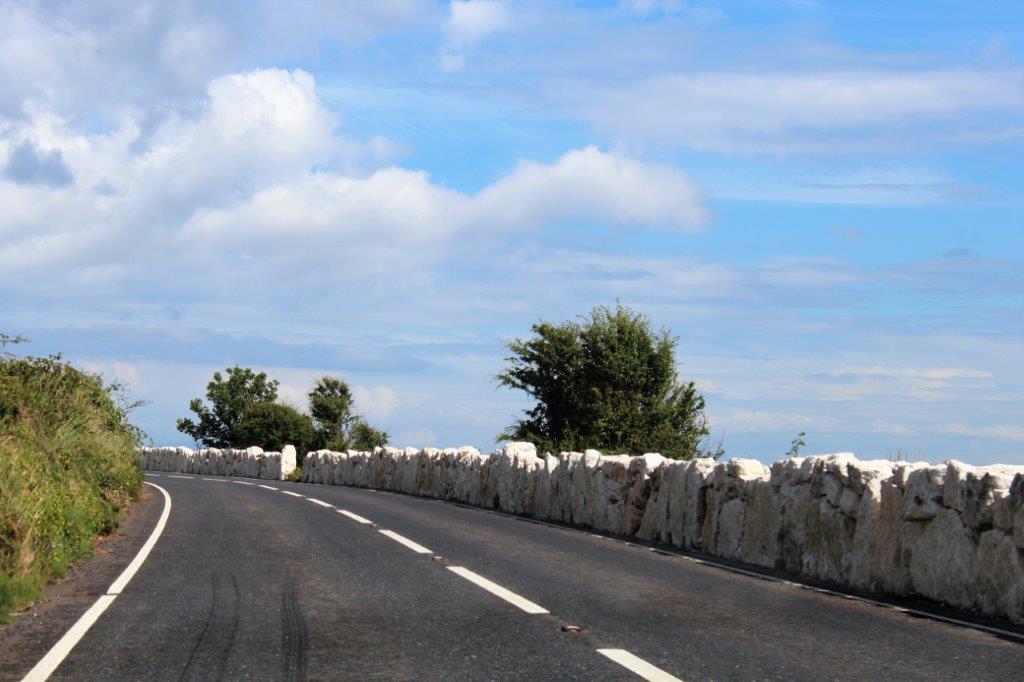
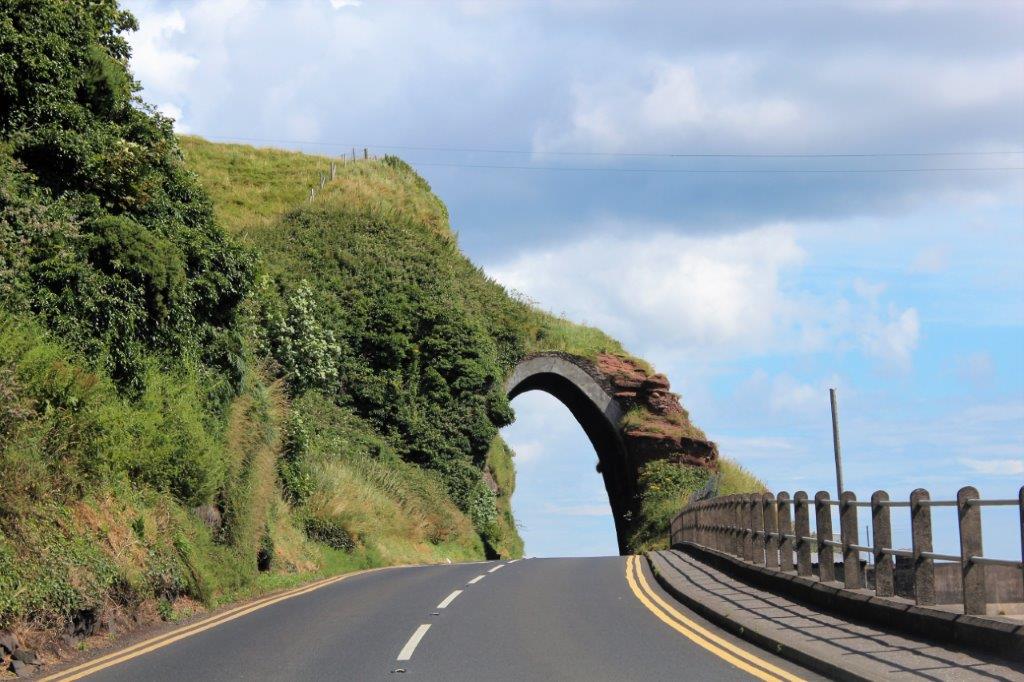
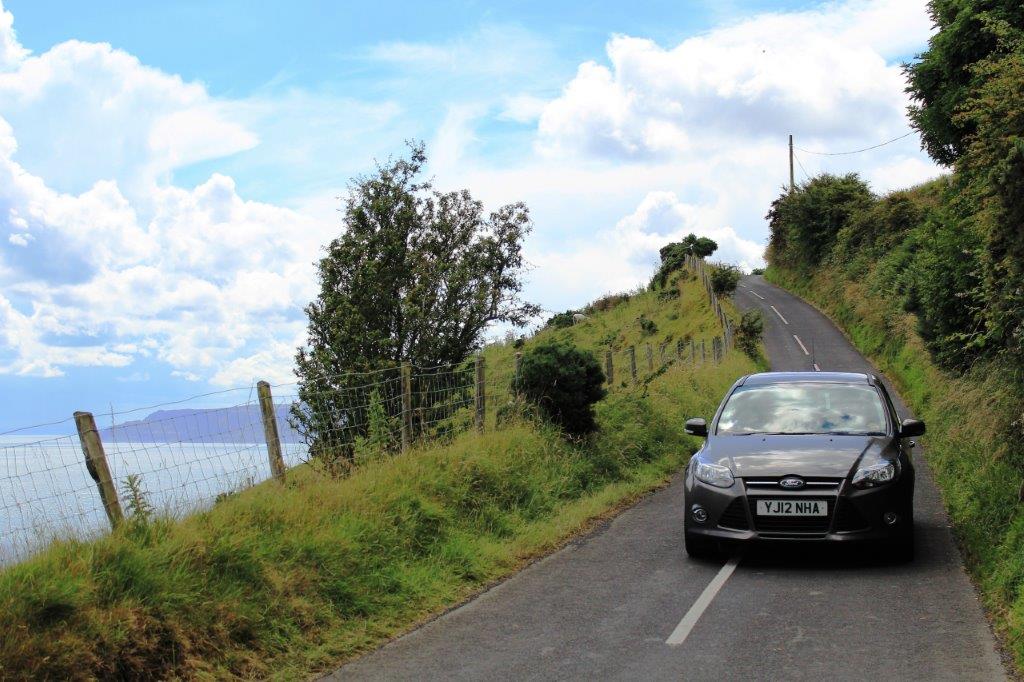
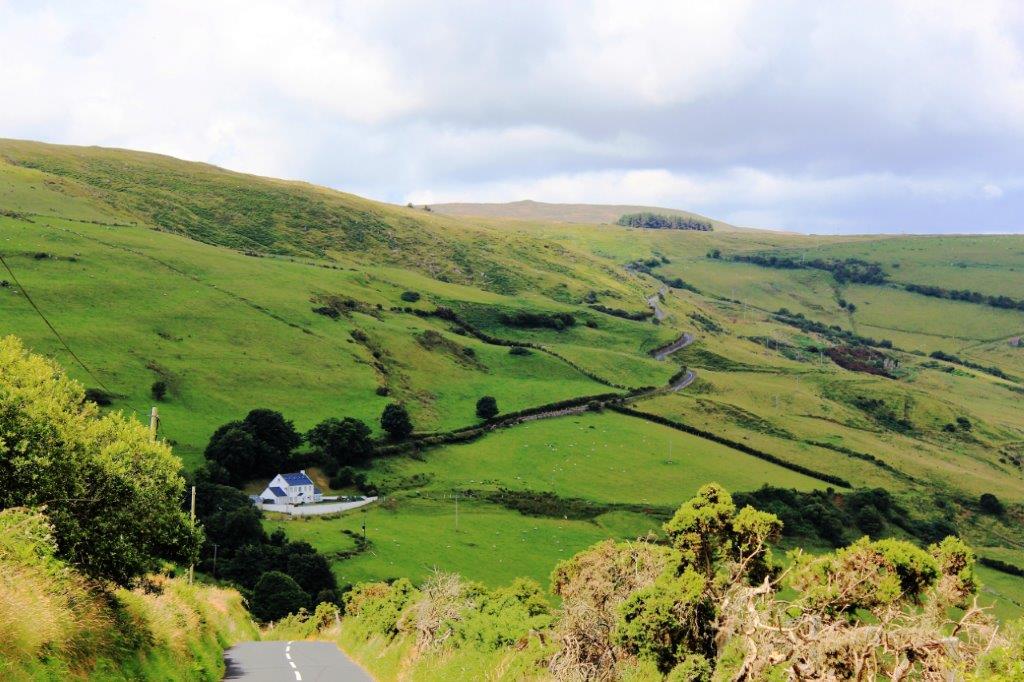
I was woken at 6:30 am by water pouring out of the ceiling light fixture onto my legs and the bed.  Apparently it was coming from the upstairs shower.  By the time we got things mopped up we decided to just stay up. We left at 10:30 to go north up the Antrim Coast – a very scenic drive. We remembered this section of the road.  The kids had a great time climbing on all the huge white rocks. One must marvel at the width of some of the roads. This is a main coastal road and yet it is just barely two lanes wide.  I don’t believe I would ever tire of the myriad shades of green in Ireland!  I love this country.

Northern Ireland  also  has  its  share  of  castle  and  abbey  ruins.

2013 Summer (Baltic and Britain – Northern Ireland – July 26-28 – Day 2-4)

We went to Northern Ireland after our son’s wedding to visit our good friend Colin and his family.  The majority of our time was spent doing just that.

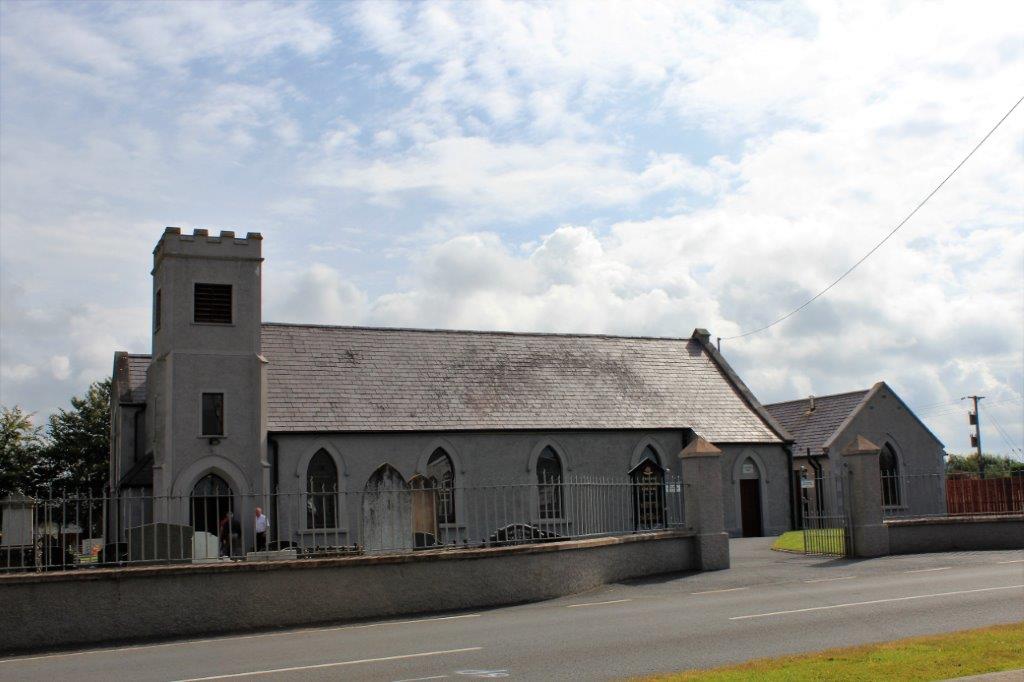
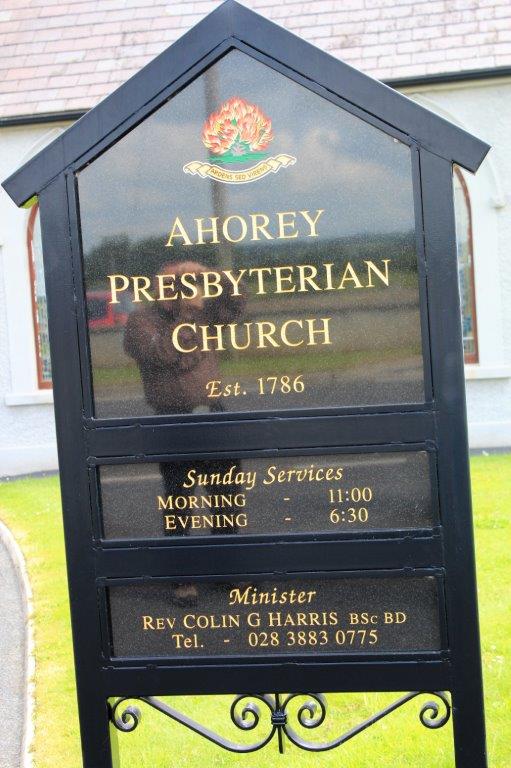
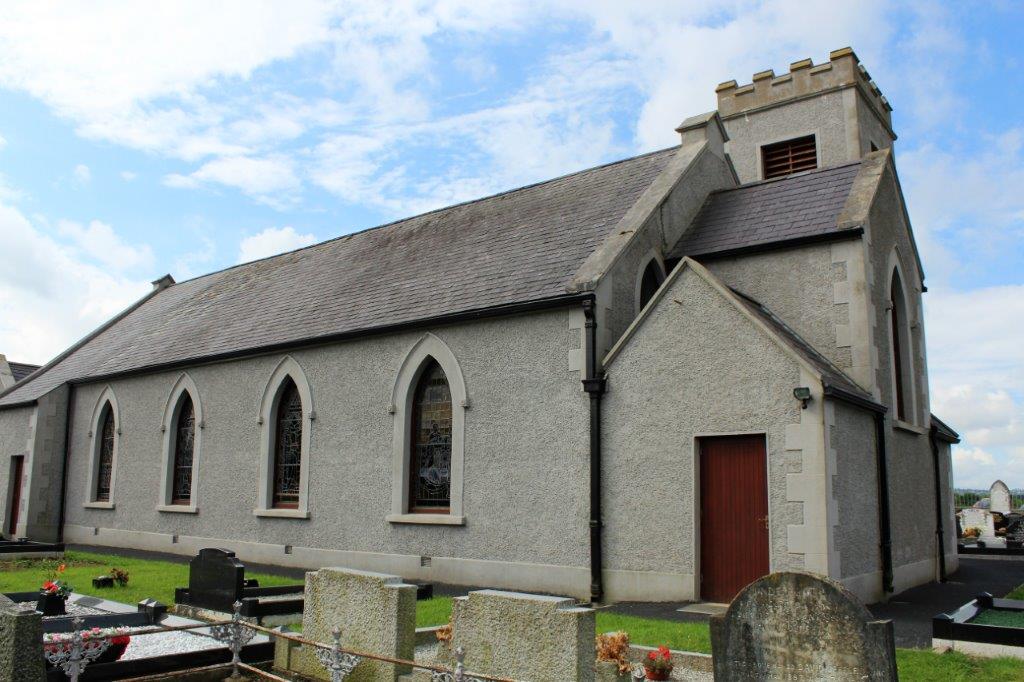
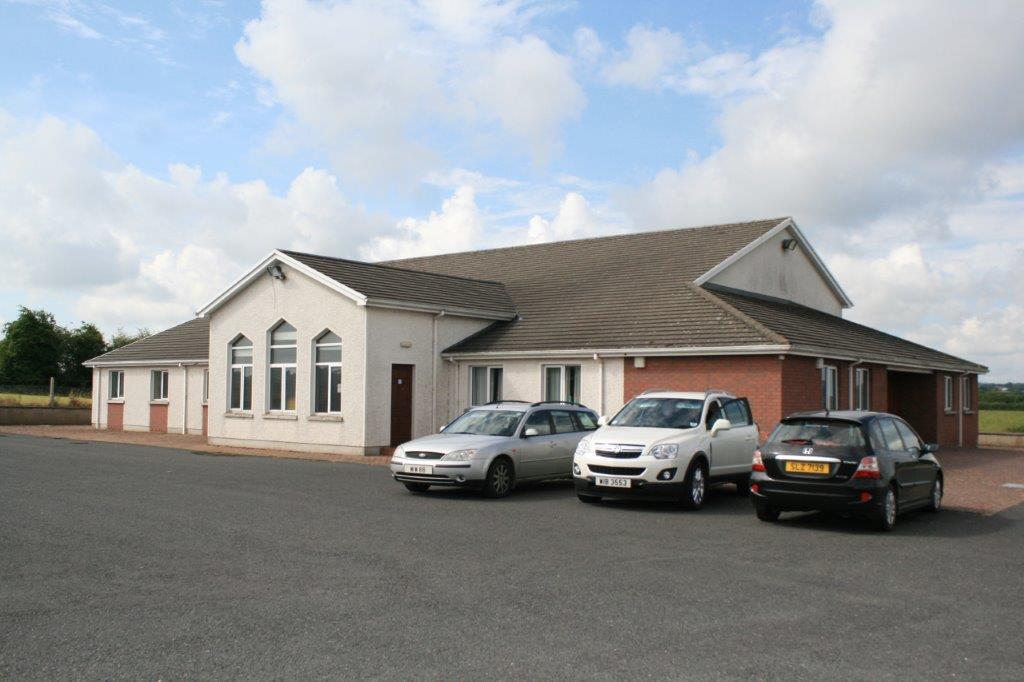
On the 26th we lazed around our apartment and uploaded wedding photos for the folks at home to see.  On the 27th, Colin took some time off work and came to visit for a few hours.  After he left in the afternoon. we took a drive to locate his church where we would be attending service the next day.  We had been there before, but we were staying in a different part of the country from the last time, so we needed to find the route and note the driving time. The  church  hall  is  located  across  the  street  and  had  been  built  since  our  last  visit.July 28 was Sunday so we attended church, then went home with Colin’s wife while he went to his second church to do the service.  When Colin go home we all had lunch and then went to visit Cathy’s parents, after which we went to visit Coin’s parents whom we had stayed with when we came over in 1994 for Colin and Cathy’s wedding. Colin and Cathy’s little dog liked John.  Once again it was after 10 PM by the time we got back to our apartment. The next day was our only touring day.  We took a drive up the Antrim Coast.  A trip we had taken with Colin in 1986 on our first visit to Northern Ireland.  It was grand to see all the sights again.

2013 Summer (Baltic and Britain – Scotland – July 24 – Day 31 and Northern Ireland – July 25 – Day 1)

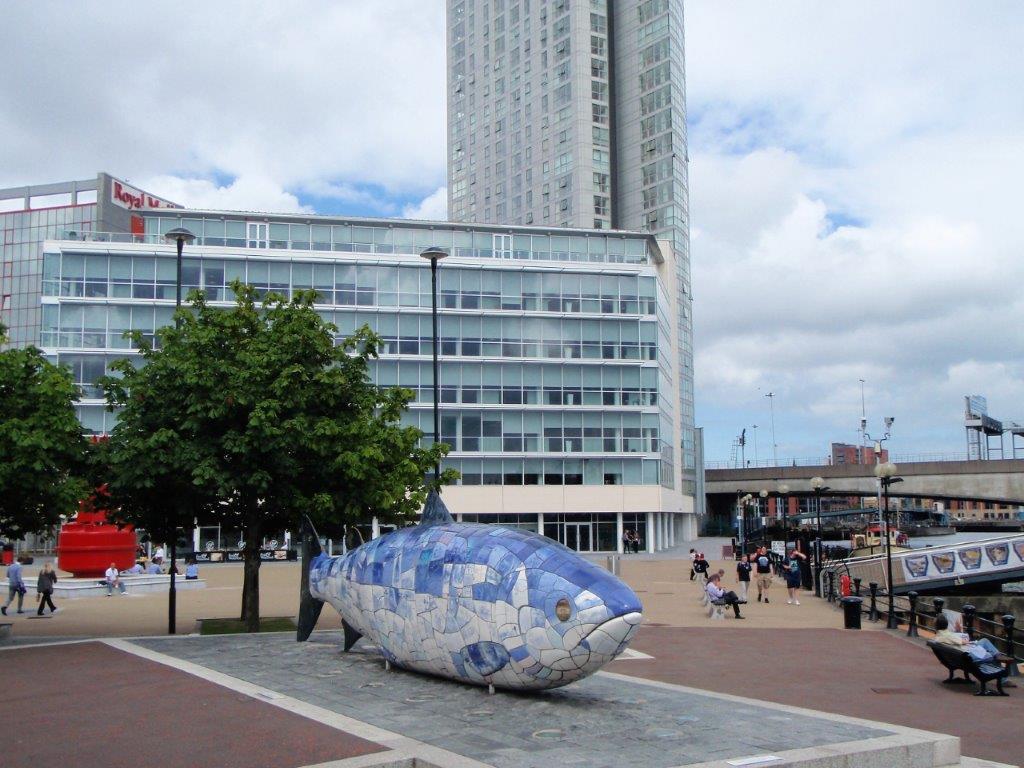
Our last day in Edinburgh (July 24) was spent lazily.  We met with our daughter and her husband for lunch, checked the trains to Glasgow for them as they were flying home from there, checked out of our spacious apartment and drove to the airport for our short flight to Belfast, Northern Ireland.

We have a dear friend in Northern Ireland.  We met him in 1980 when he came to our town as a student minister to help our church with their summer youth programs.  He stayed at our house for four months and returned to BC for a visit in 1982.  Our family visited him in 1986 and we were back again in 1994 when John was Best Man at Colin’s wedding.  Since we were in Scotland for Joseph’s wedding we decided we were much too close to Northern Ireland to not go visit him and his family.

The flight is only about an hour. We had a bit of a problem at the airport when we went to check in.  Our travel agent had booked all our flights for the trip and we did not know that the airline we were to fly on was a quick commuter that only allowed one carry-on bag.  John and I each had three – me with my purse, my camera bag and my carry-on and John with his carry-on, camera bag and laptop.  We were told we had to consolidate everything into one bag before we could board; which really doesn’t make a lot of sense because the combined weight of the items is the same whether they are in one place or three, but whatever.  Well, of course there was not room in our carry-on bags for our other items.  I eventually just told the staff to take our checked bags off the plane and we would make new arrangements to fly on another airline.  They didn’t want to do that either.  The upshot was that the plane was fully boarded and waiting for us before the check-in lady called the captain and received permission for us to get on with all our extra pieces.  If we had know about the carry-on restriction in advance we would have packed differently, but we didn’t know.  It would have been no problem for us to get a different flight another time, but, even though they wouldn’t let us on board because we had too many carry-on items, they also wouldn’t take our checked bags off so we could take a different airline.  Sometimes traveling can be quite interesting.

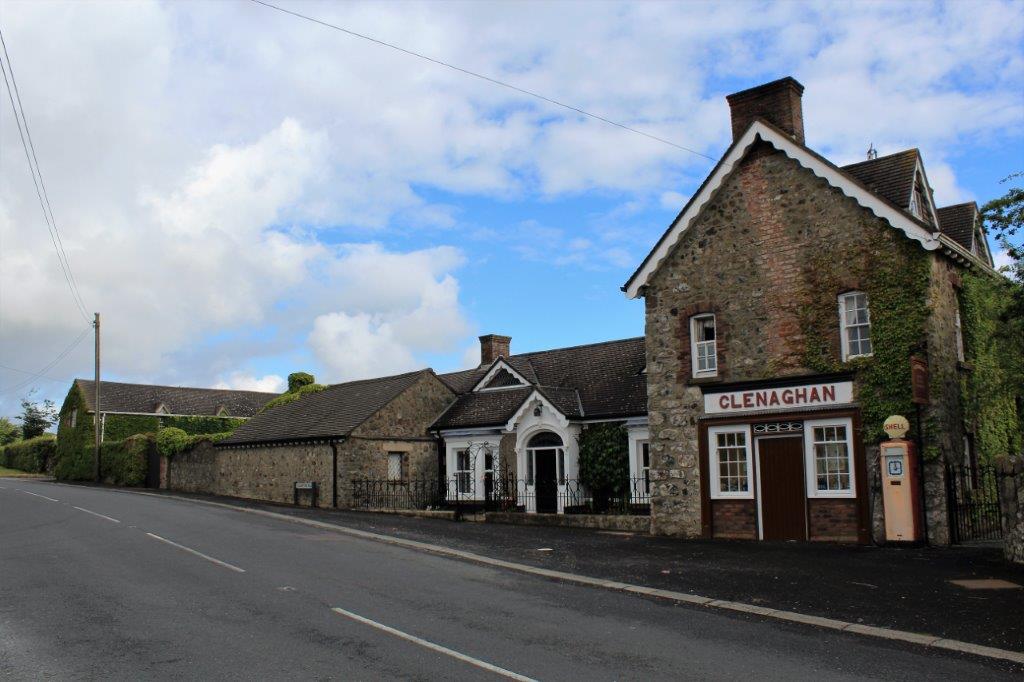
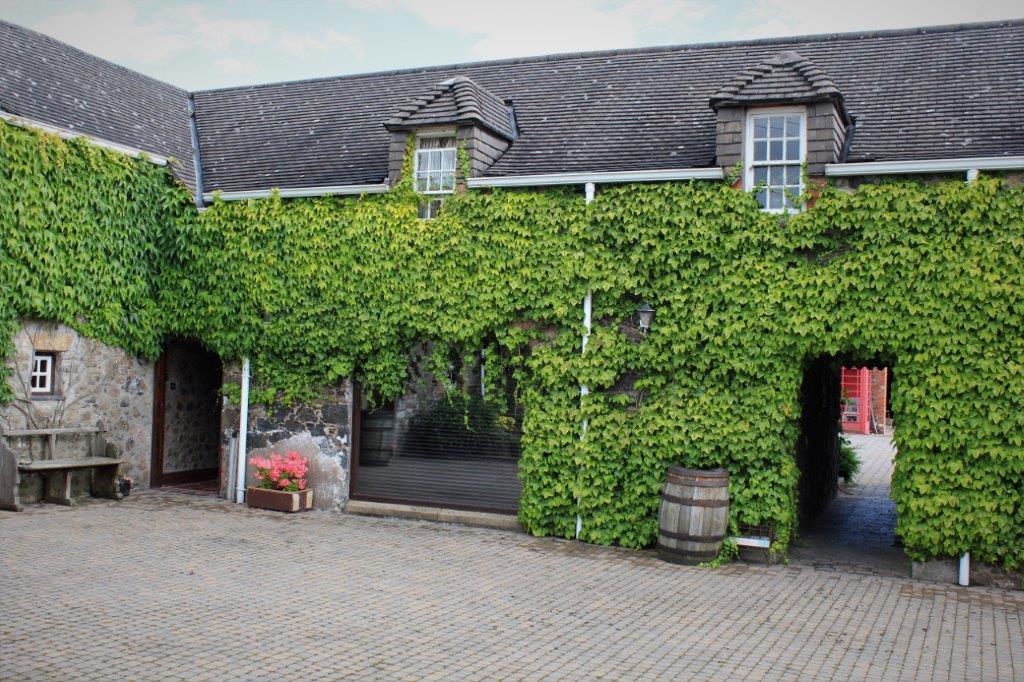
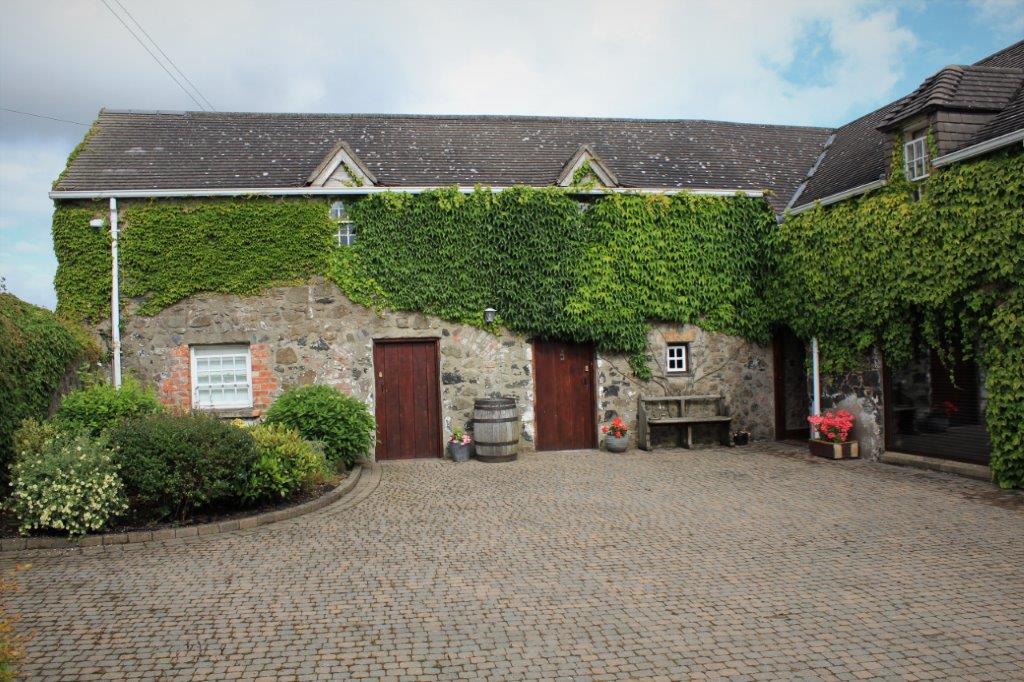
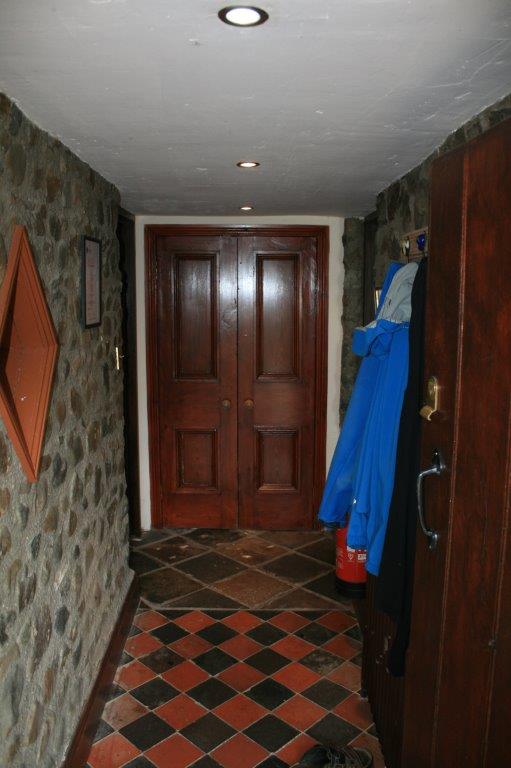
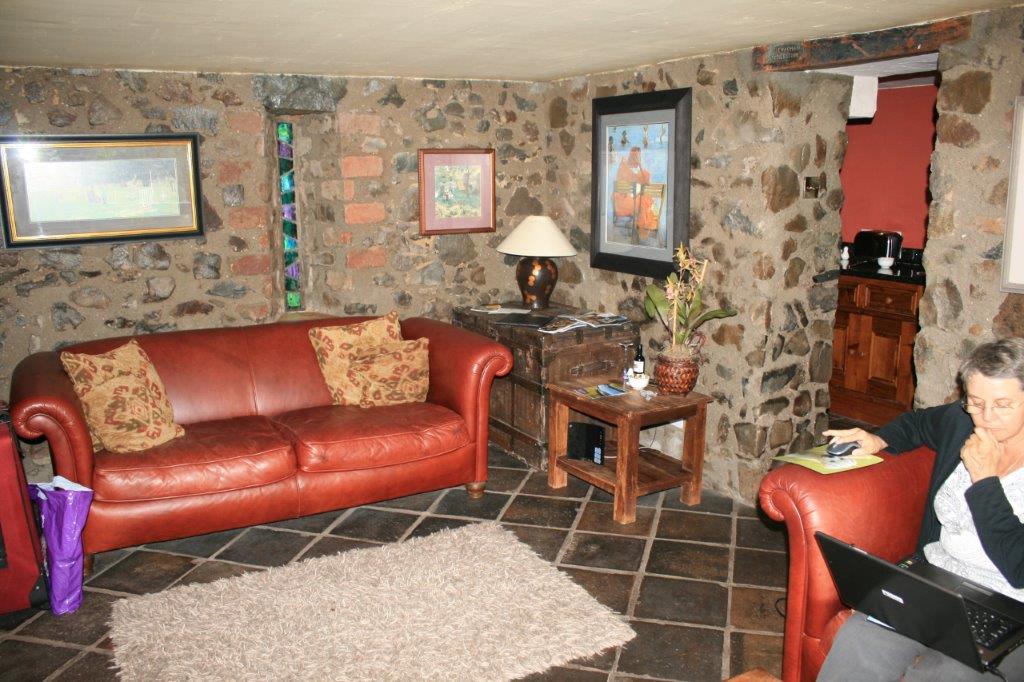
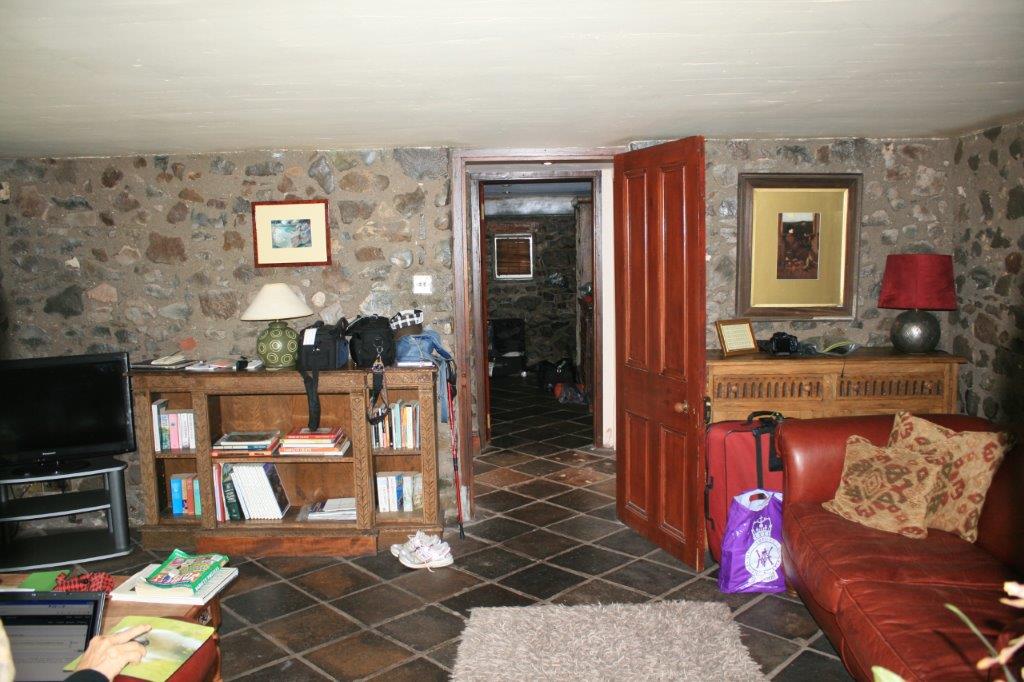
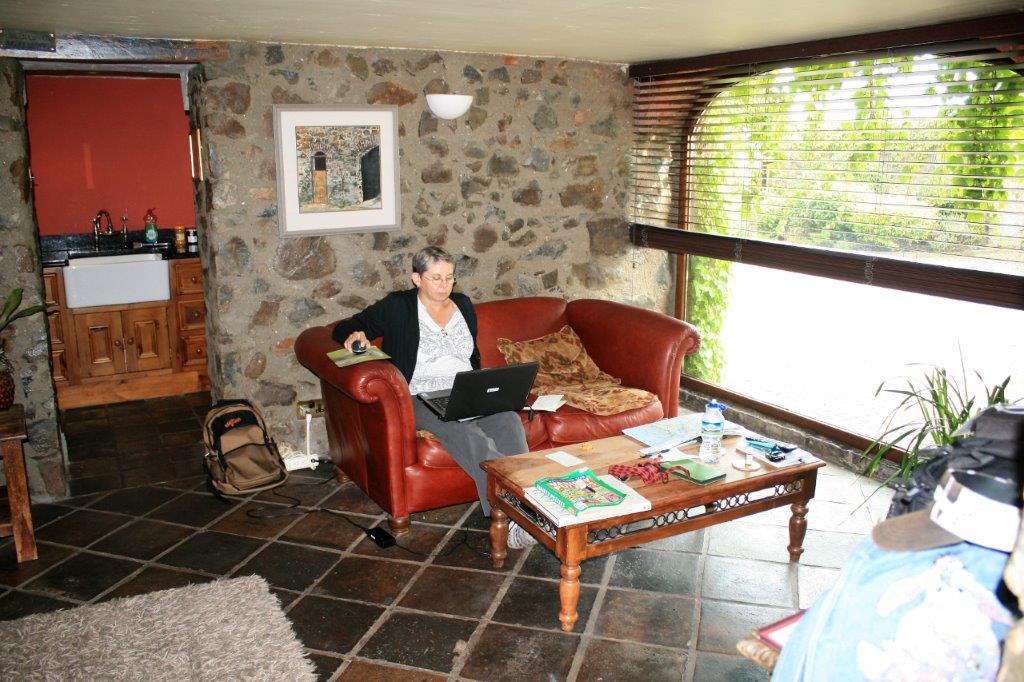
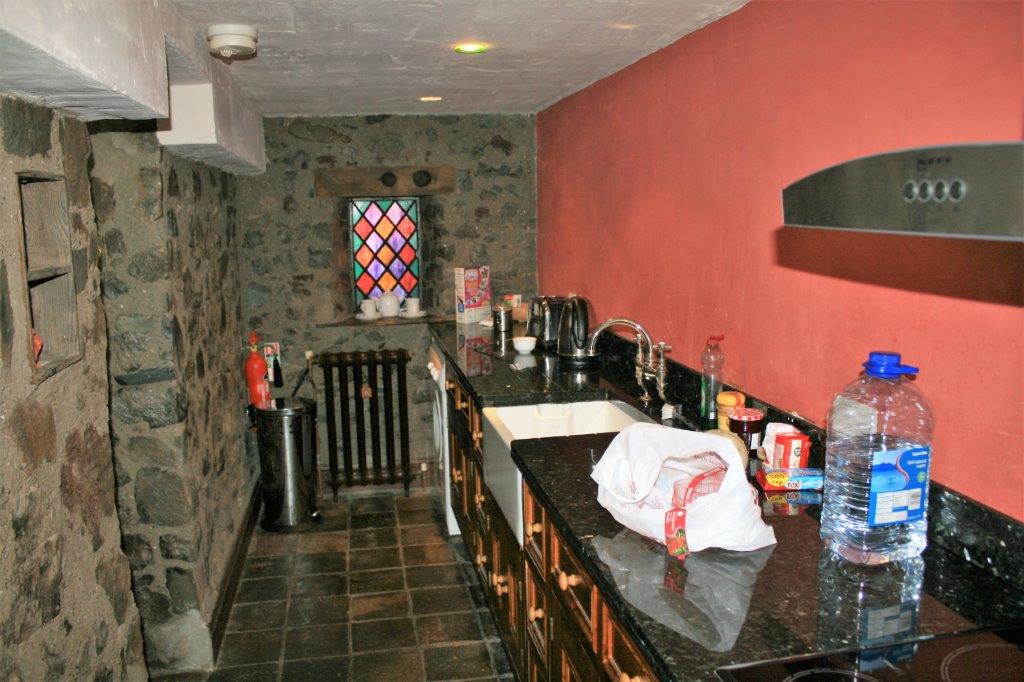
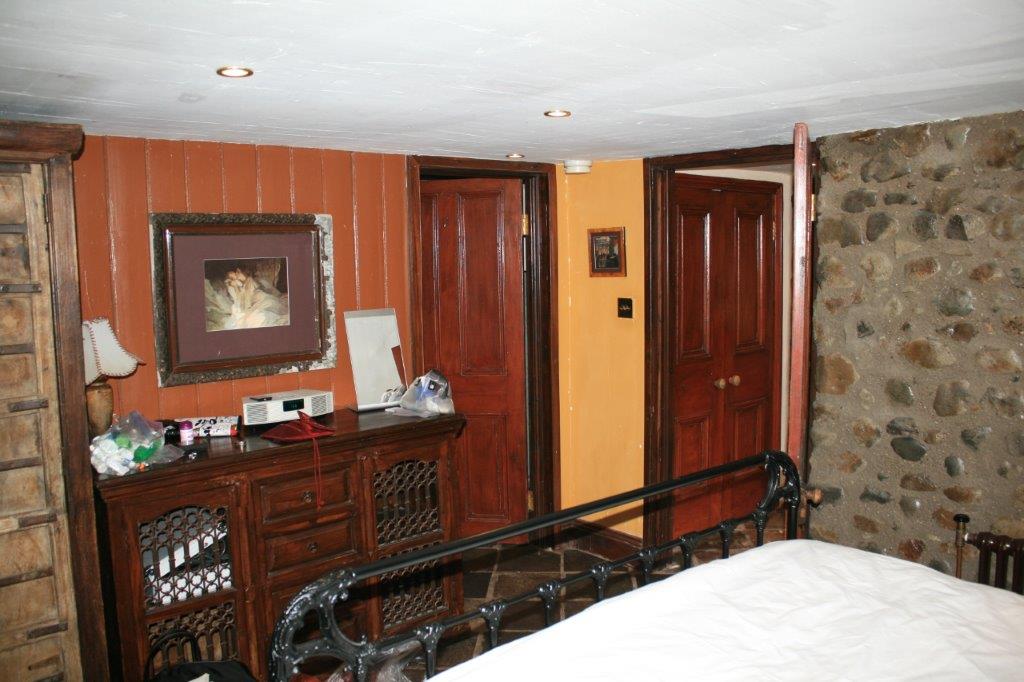
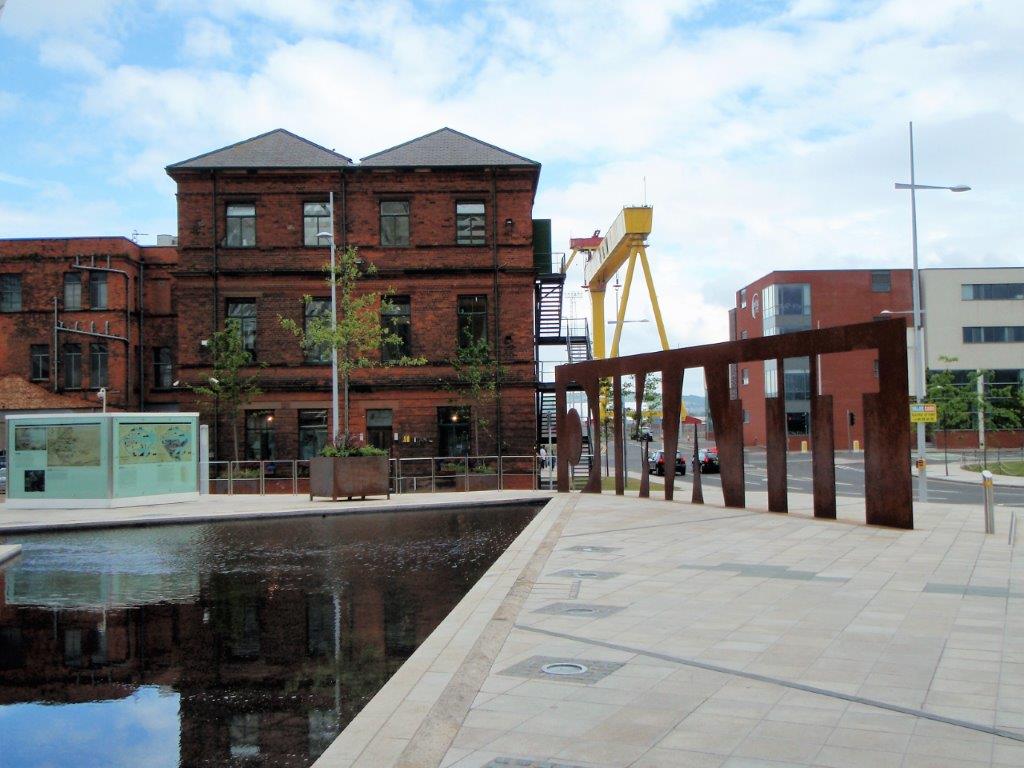
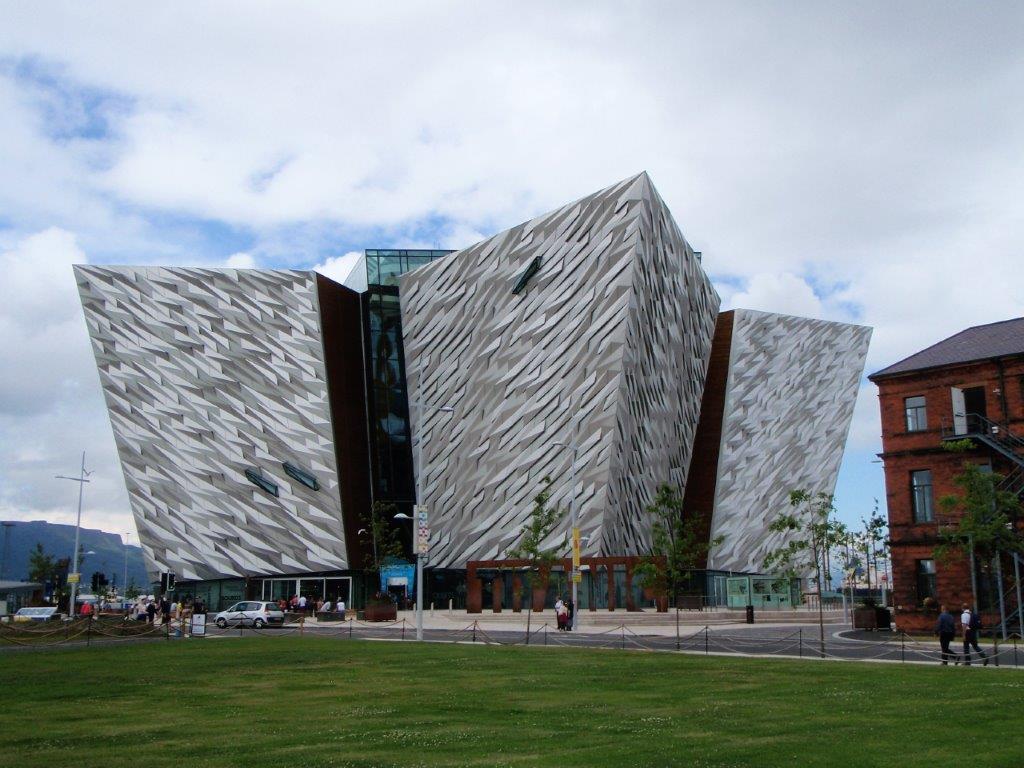
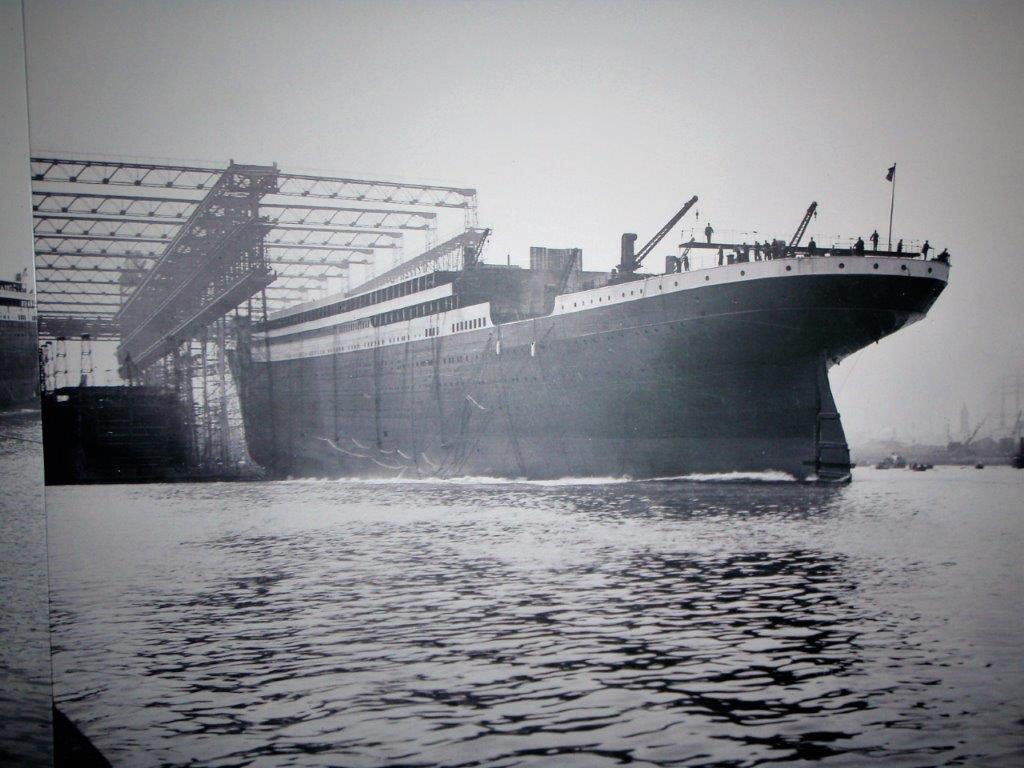
We had rented a place with a full-kitchen for the week we would be in Northern Ireland, so once we had  deplaned we picked up our rental car and set off to find the place.Clenaghan’s is not in a town. It is in farm country and used to be a farm. All the buildings are made of stone.  The building on the corner is the local pub.  We were located around the back in a very quiet corner unit. The doorway in the corner near the red flowers is the entrance to our place.  The two  doors  below  also  access  rental  units,  but  we  didn’t  see  anyone  in  them  while  we  were  there. We settled in and called our friend to let him know we had arrived.  He and his wife and two children came over the next day and we all took the train to Belfast and had an enjoyable time at The Titanic Experience.  The ship had been built in Northern Ireland.  By the time we arrived back at  Clenaghan’s and our friends left it was 10 pm. It was wonderful to see Colin and Cathy again and to meet the children.  We had a great first day in Northern Ireland.


2013 Summer (Baltic and Britain – Scotland – July 23 – Day 30 – Part 2)

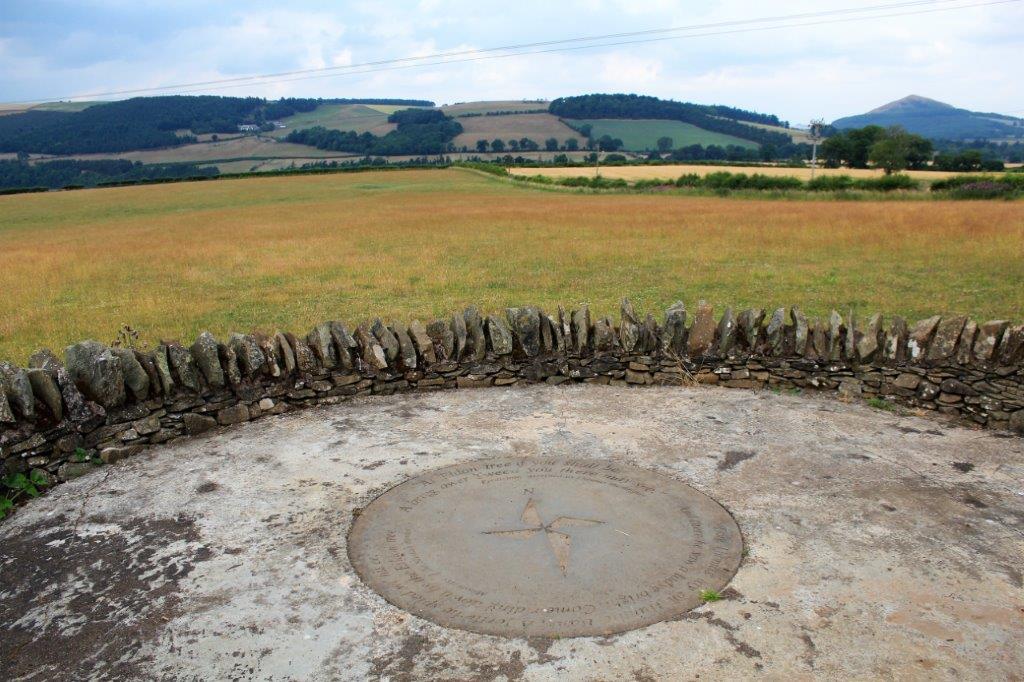
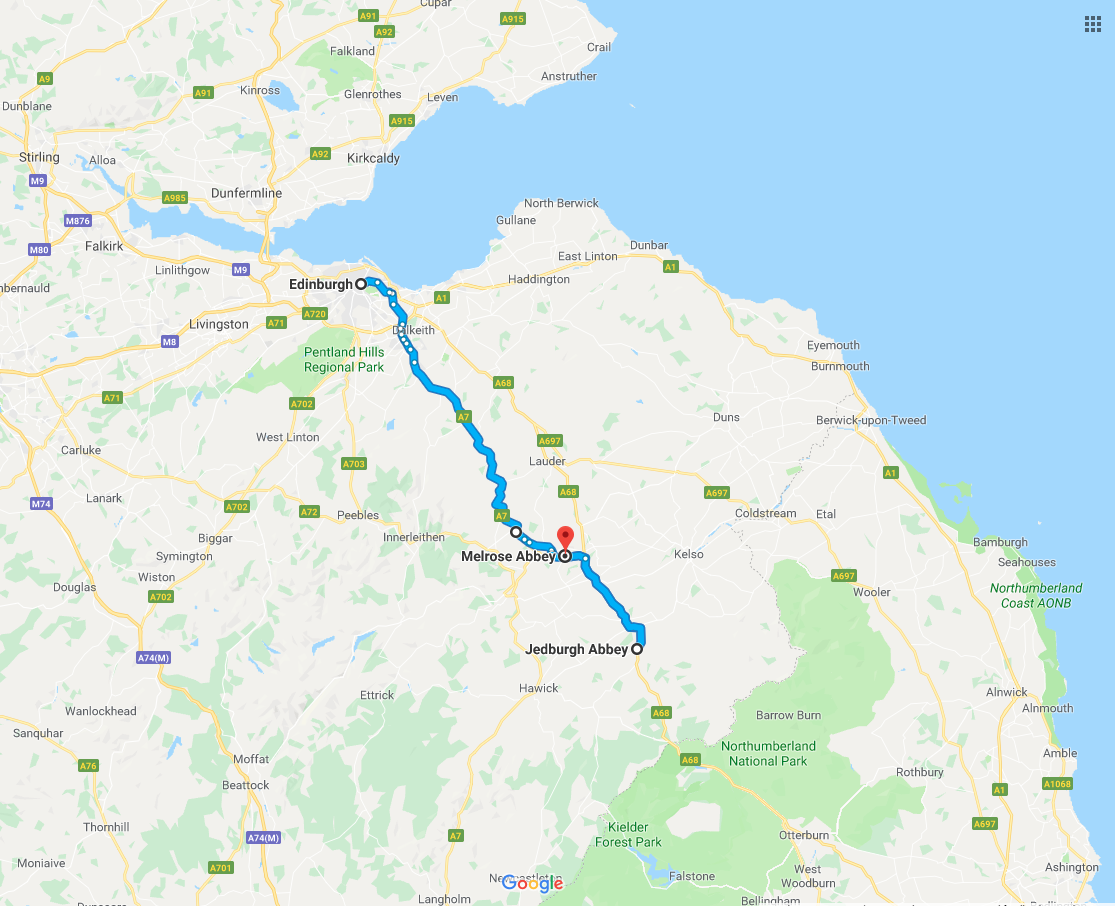
After we finished walking around Jedburgh we headed back toward Edinburgh, making a couple of stops.  The first was at the Rhymer’s Stone,  which  is  just  outside  the  town  of  Melrose.Rhymer’s Stone is a combination memorial stone and viewpoint.  It was erected in 1929 by the Melrose Literary Society and marks the spot on which the fabled Eildon Tree once grew. It was under this tree that Thomas the Rhymer took a fateful nap while hunting on the estate of Melrose Abbey. He was awakened by the Queen of Elfland, who he kissed. He then spent seven years with her in the Land of the Elves before returning to his home in Earlston for seven years, then disappearing for good: presumably back to the Land of the Elves. Thomas Rhymer was also known as “True Thomas.”  He was born in 1220 and had a reputation for making accurate predictions; including the death of Alexander III falling from a horse in 1286.  He was also said to have several supernatural powers to rival the great magician Merlin.

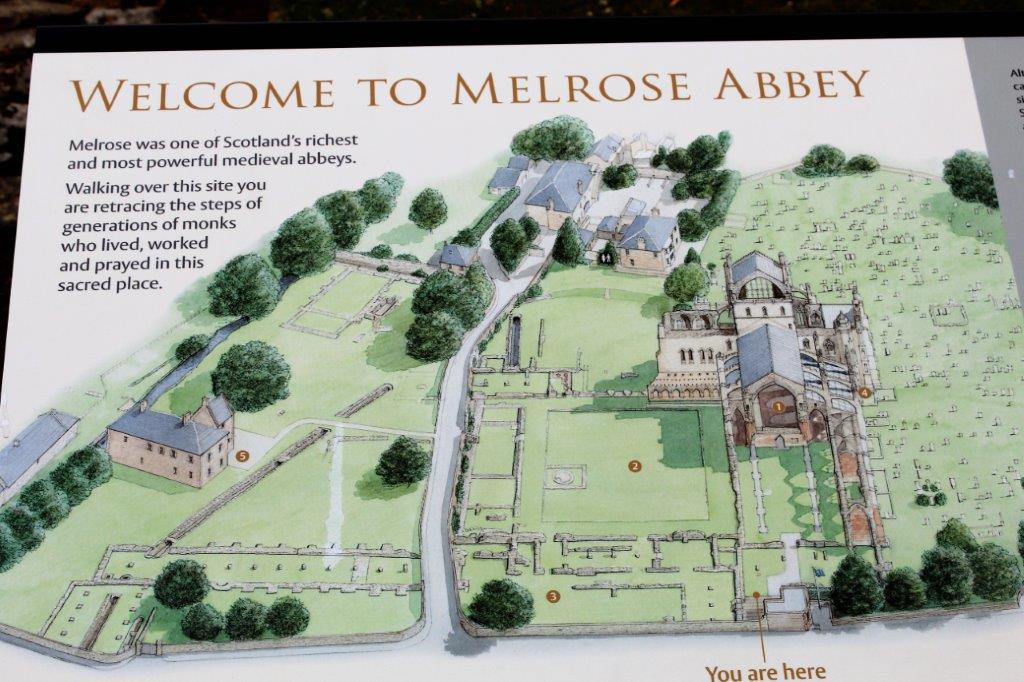
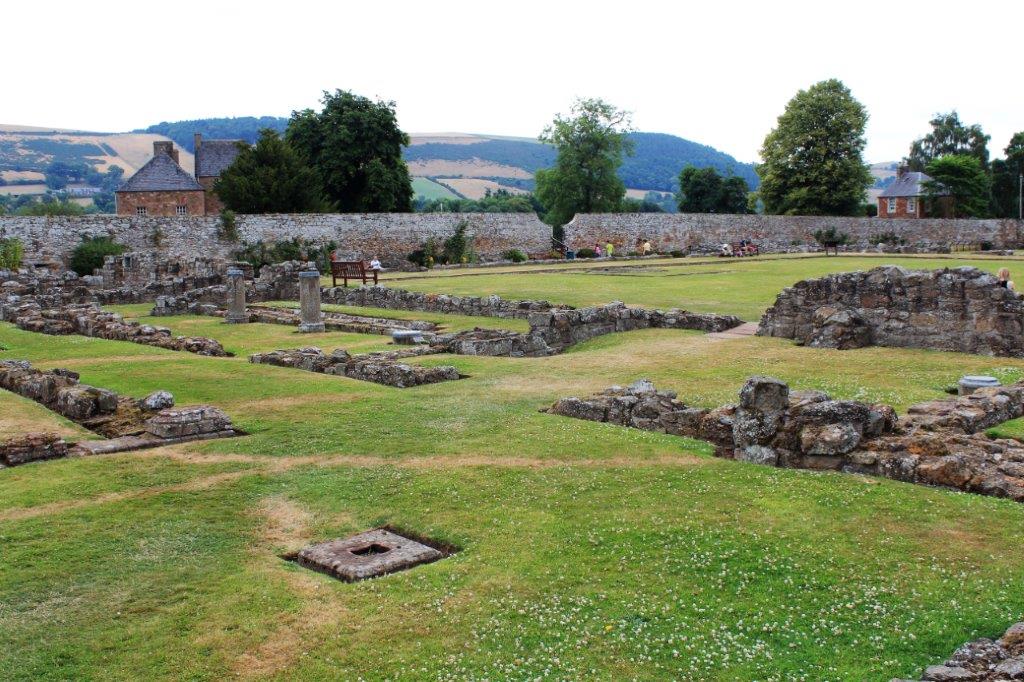
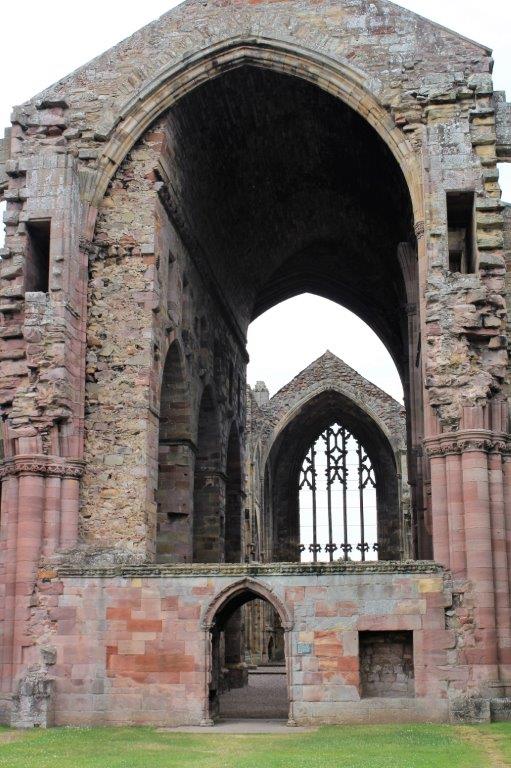
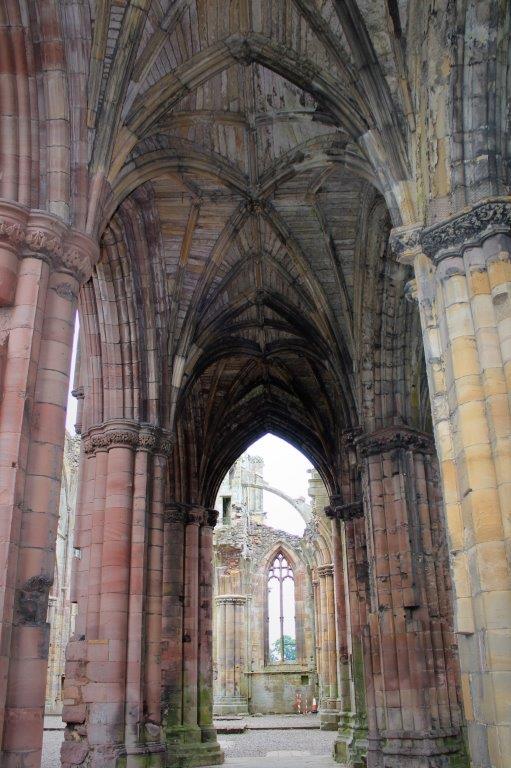
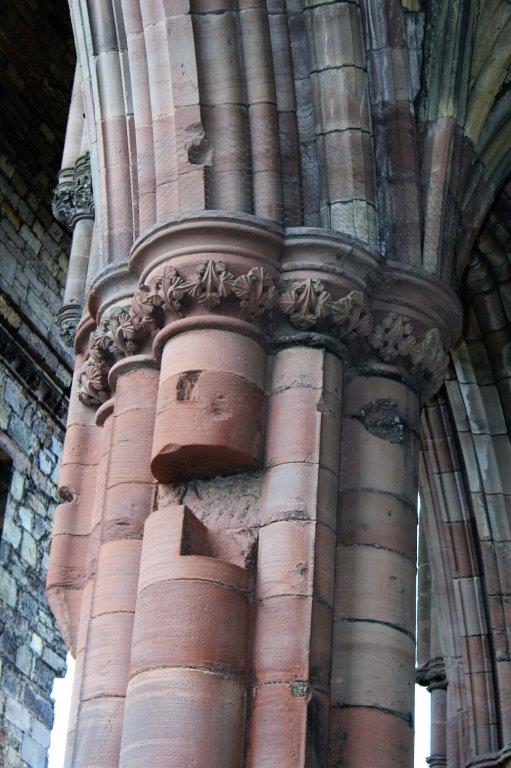
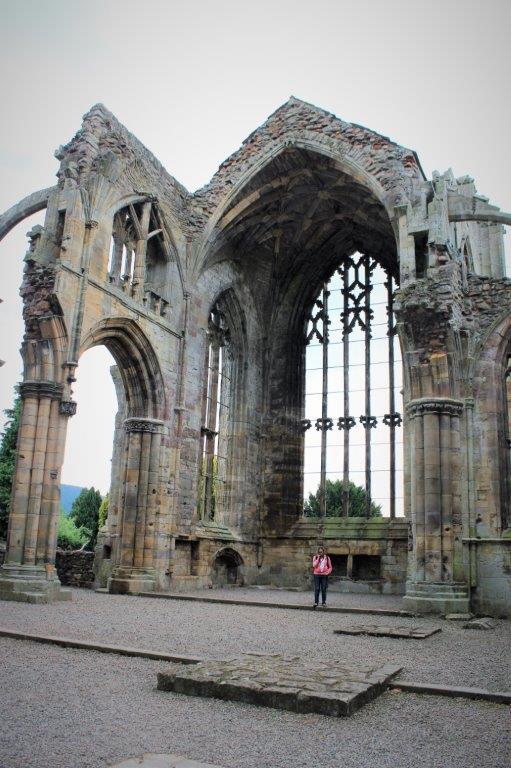
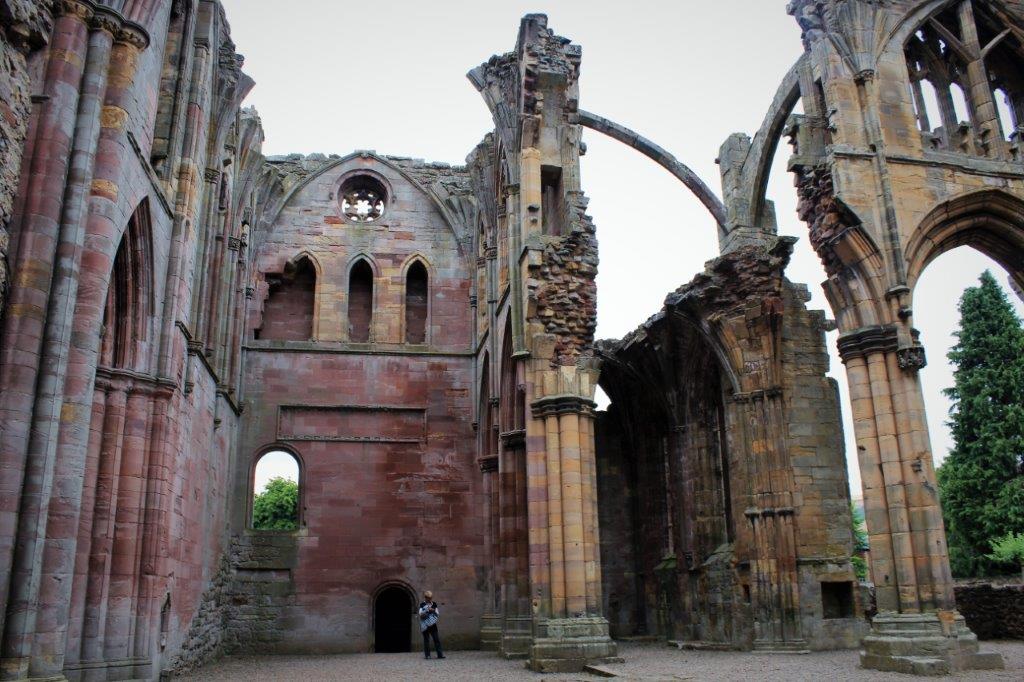
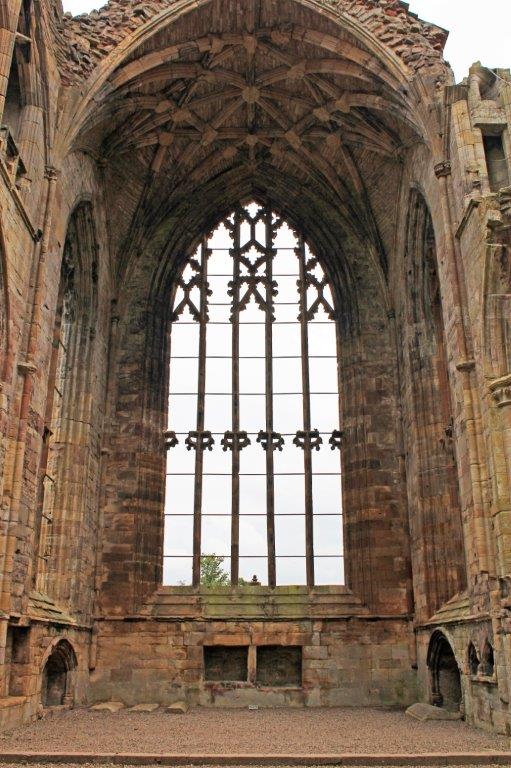
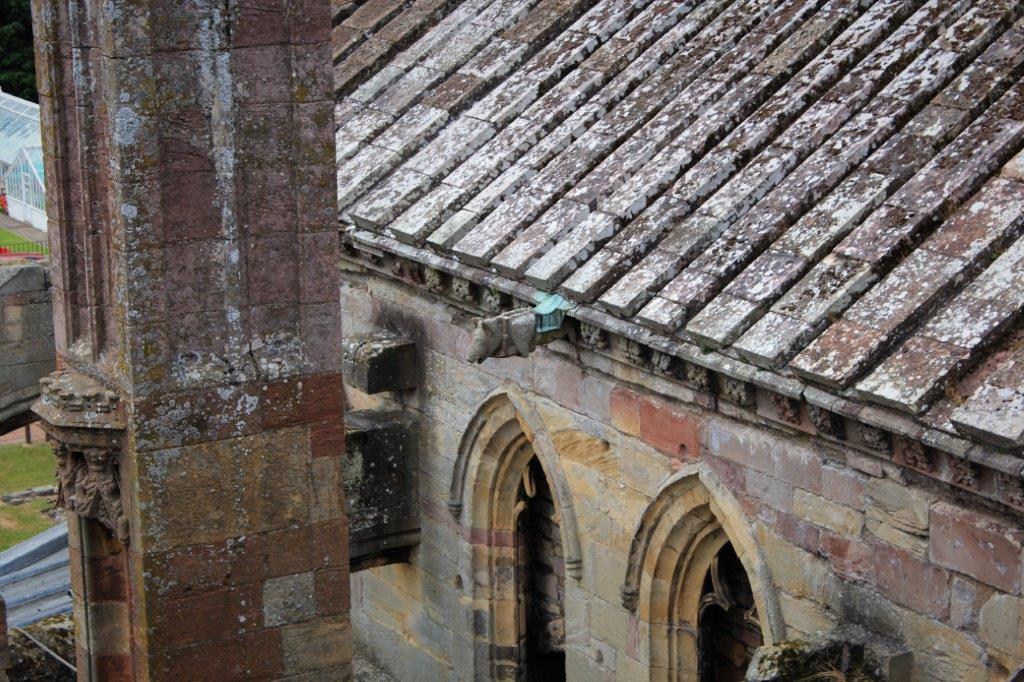
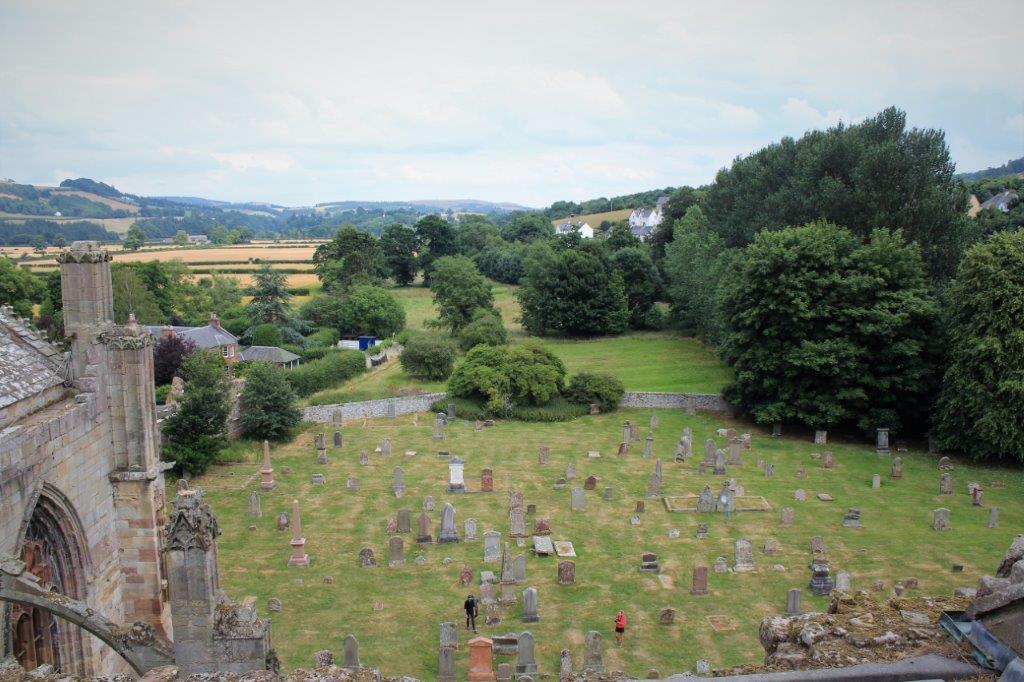
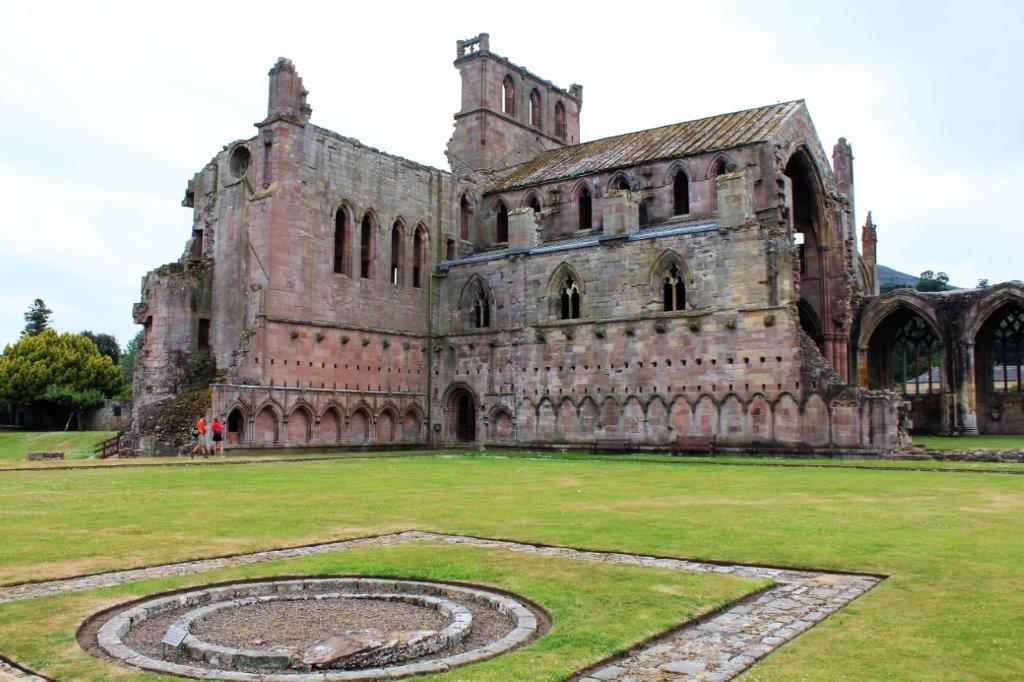
Next, we drove into Melrose and visited the Abbey.St Mary’s Abbey, Melrose is a partialy ruined monastery of the Cistercian order in the Scottish Borders. It was founded in 1136 by Cistercian monks at the request of King David I of Scotland, and was the chief house of that order in the country until the Reformation. The east end of the abbey was completed in 1146. Other buildings in the complex were added over the next 50 years. The abbey was built in the Gothic manner, and in the form of a St. John’s Cross. It never ceases to boggle my mind that these enormous and beautiful structures were all built with hand tools and simple wooded scaffolding!  Absolutely astounding. Alexander II and other Scottish kings and nobles are buried at the abbey.  A lead container believed to hold the embalmed heart of Robert the Bruce was found in 1921 below the Chapter House site; it was found again in a 1998 excavation. This was documented in records of his death. The rest of his body is buried in Dunfermline Abbey. We headed back to Edinburgh, arriving just after 6 pm and checked into our unit at the Playhouse Apartments.  We were staying for just the one night but the place was outfitted for a crowd to live in for weeks.  There were 4 bedrooms containing one king-size bed, 7 single beds, two sets of bunk beds and three hide-a-bed sofas in the living room.  The place was equipped with two refrigerators, one freezer,  and three full bathrooms.  Our daughter and her husband had another unit in the same complex and they too had several rooms.  Nothing in the information indicated the size of these places when we booked them and the price was that of a regular hotel room.  We could have housed half the wedding guests between the two apartments.  You encounter the strangest things sometimes when you travel.

2013 Summer (Baltic and Britain – Scotland – July 23 – Day 30 – Part 1)

My mother was born in Scotland and her maiden name was Young Her parents emigrated to Canada in 1930, when my mother was only 8 1/2 months old.

According to the internet: “The name Young in Scotland is synonymous with Younger, which was used to describe the heir to a feudal title.  Earliest records of the name in Scotland include Malmor and Ade Young who appear at Dumbarton in 1271.  In 1439 Alexander Young was chaplain to the House of the Holy Trinity in Aberdeen.  Peter Young became assistant preceptor to the three-year-old James VI of Scotland, upon the recommendation of the Regent Moray in 1569.   He was knighted at Whitehall in 1605. Sir Peter Young had a large family and many of them rose to enjoy royal patronage.”

Clan Young no longer has a hereditary chief so it is considered an armigerous clan. Wikipedia defines an armigerous clan as: “A Scottish clan, family or name which is registered with the Court of the Lord Lyon and once had a chief who bore undifferenced arms, but does not have a chief currently recognized as such by Lyon Court. Before 1745 all chiefs had arms; however, not all of these are recorded in the Public Register of All Arms and Bearings in Scotland, which was only established in 1672.

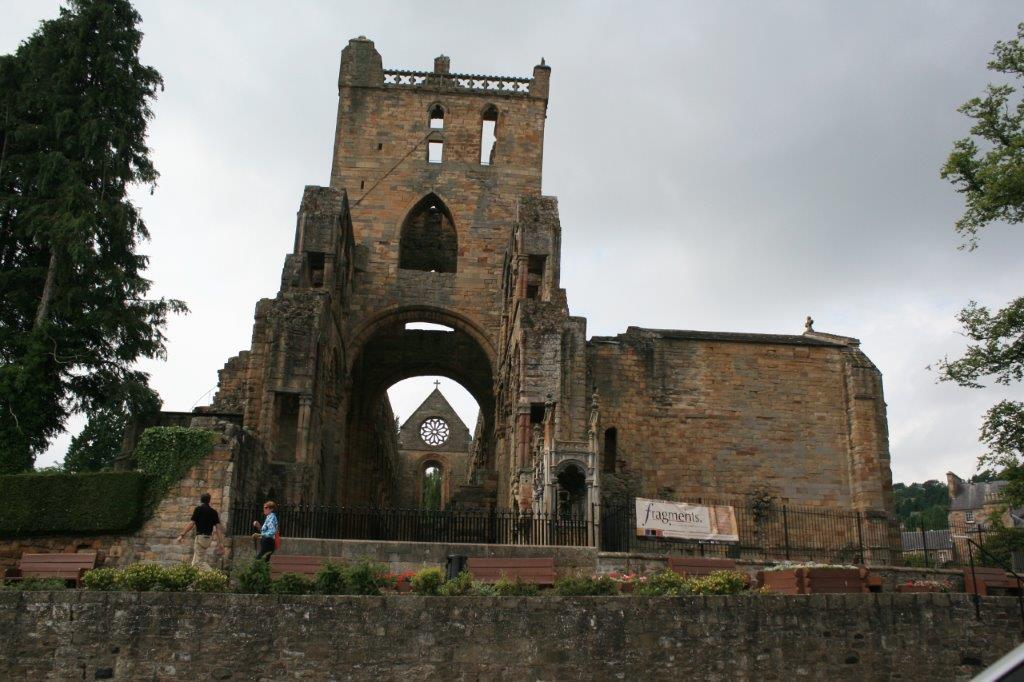
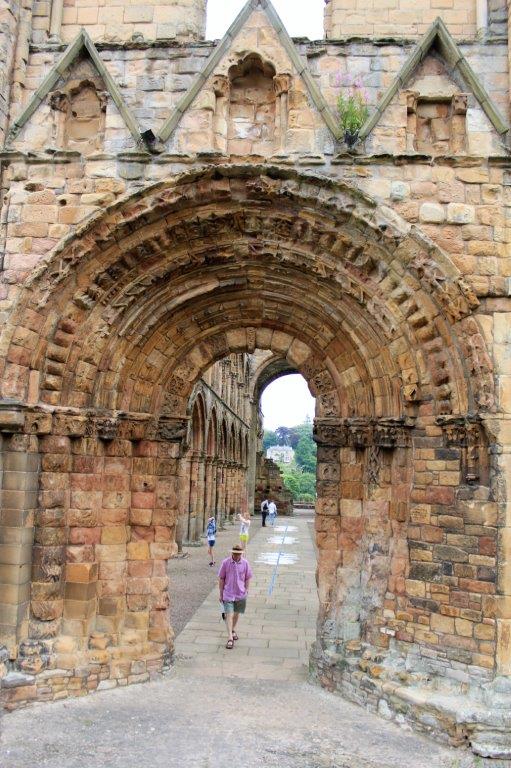
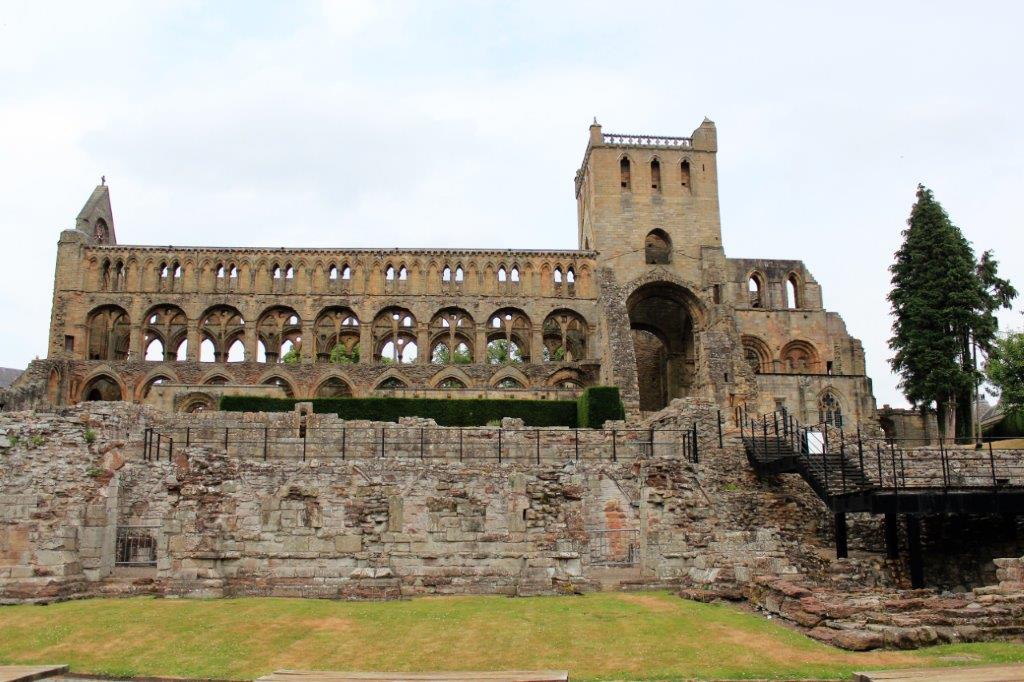
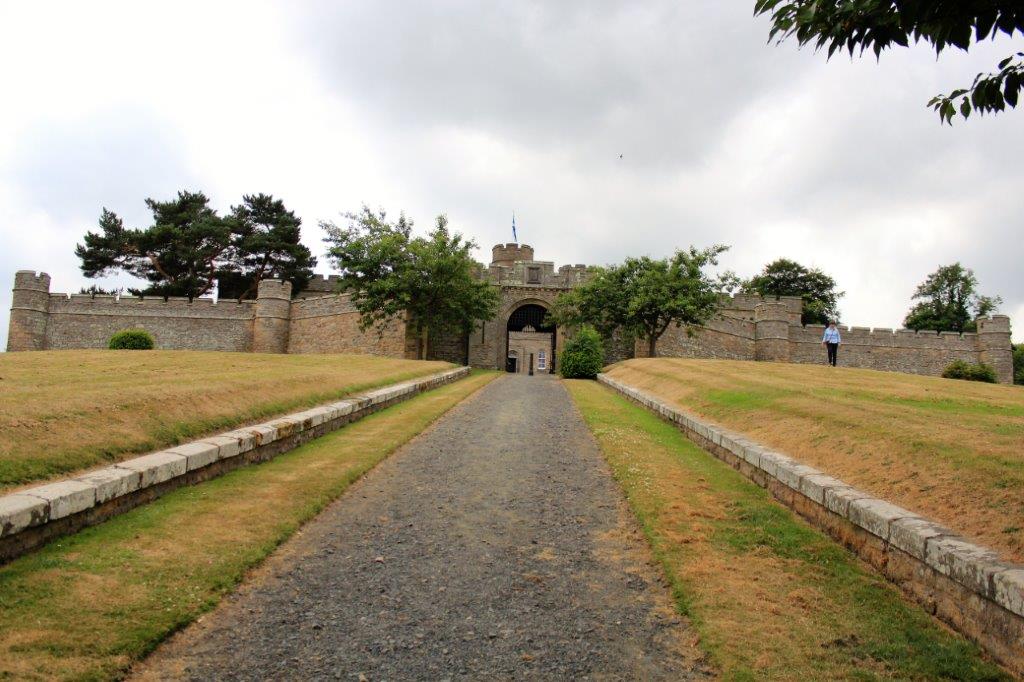
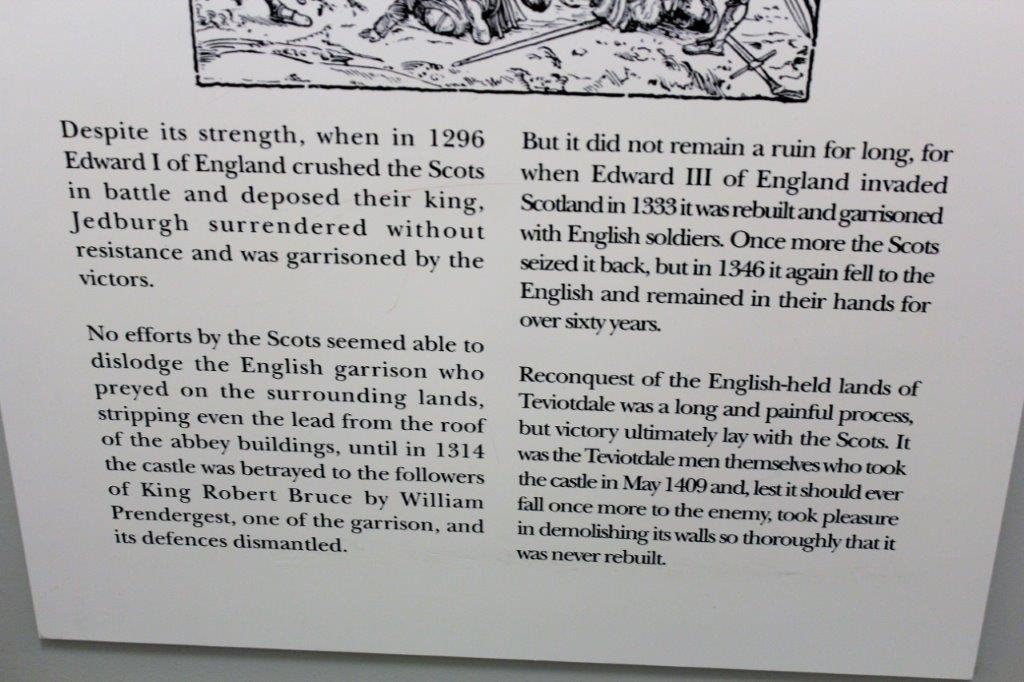
In Scottish heraldry only chiefs or heads of clans, families, or names bear undifferenced arms. A clan is considered a “noble incorporation” because a clan chief is a title of honour in Scotland and the chief confers his or her noble status onto the clan. Because armigerous clans do not have such chiefs, they are not recognised as noble communities and have no legal standing under Scots law.Jedburgh lies on the Jed Water, a tributary of the River Teviot, 16 km (10 miles) from the border with England, and is dominated by the substantial ruins of Jedburgh Abbey.   The abbey was founded in 1147, but border wars with England in the 16th century left it a ruin. David I built a  castle at Jedburgh, and in 1174 it was one of five fortresses ceded to England. It was an occasional royal residence for the Scots but was demolished in 1409. The proximity to England made it subject to raids and skirmishes by both Scottish and English forces but its strategic position also brought the town valuable trade. At various times and at various locations the town supported a horse market, a cattle market, a corn market and a butcher market. Farm workers and servants also attended hiring fairs seeking employment

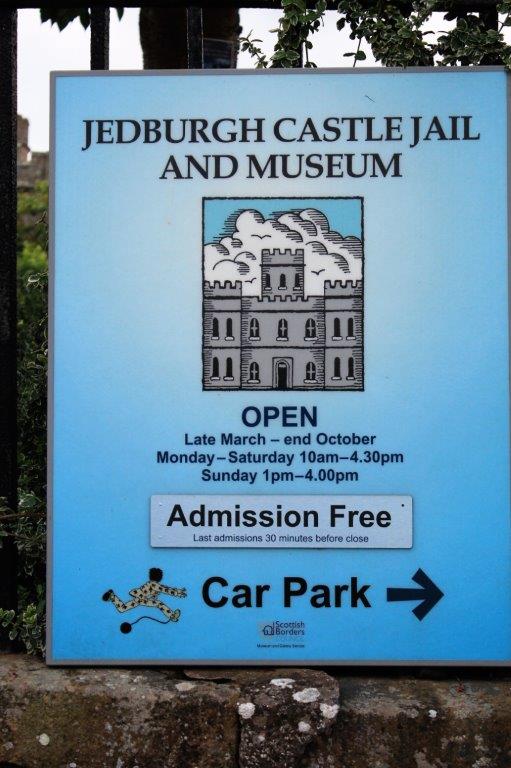
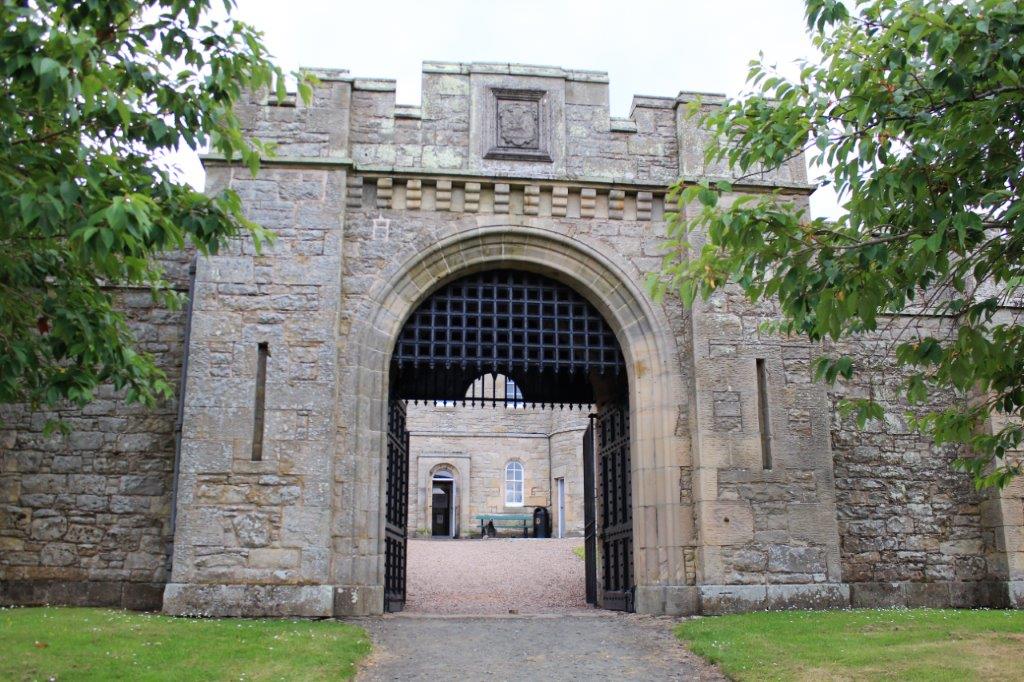
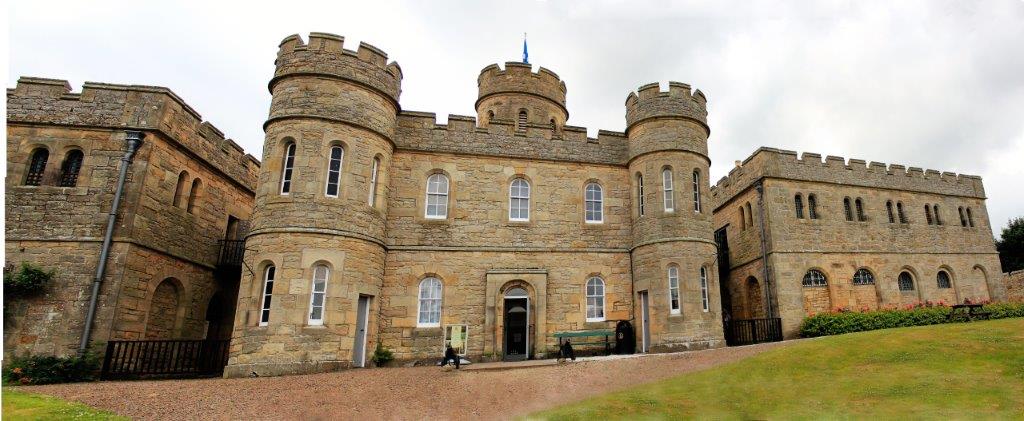
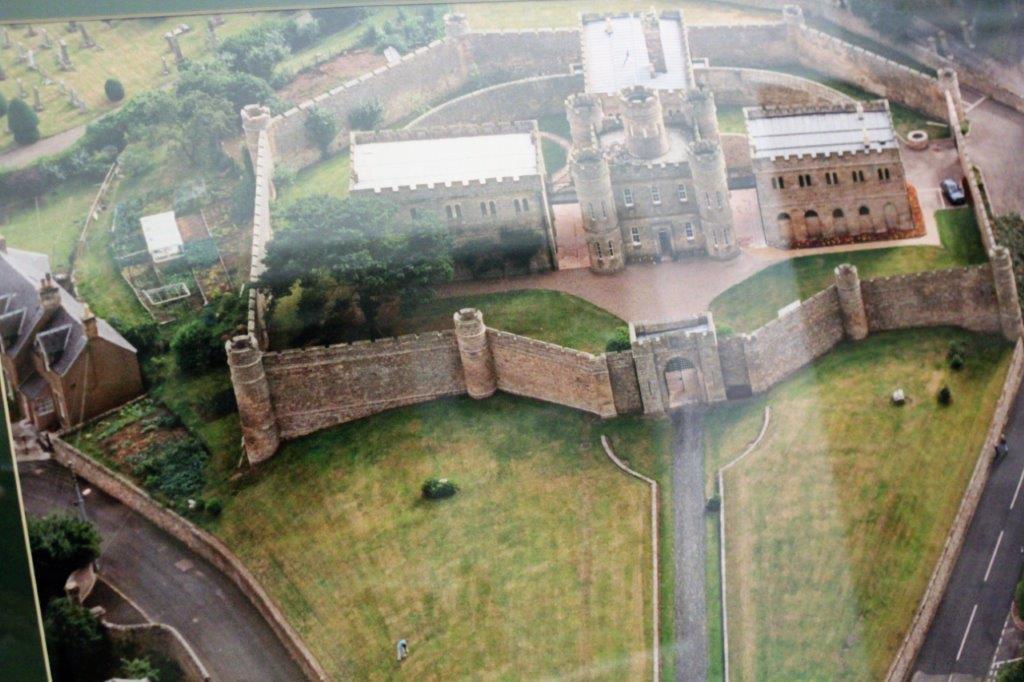
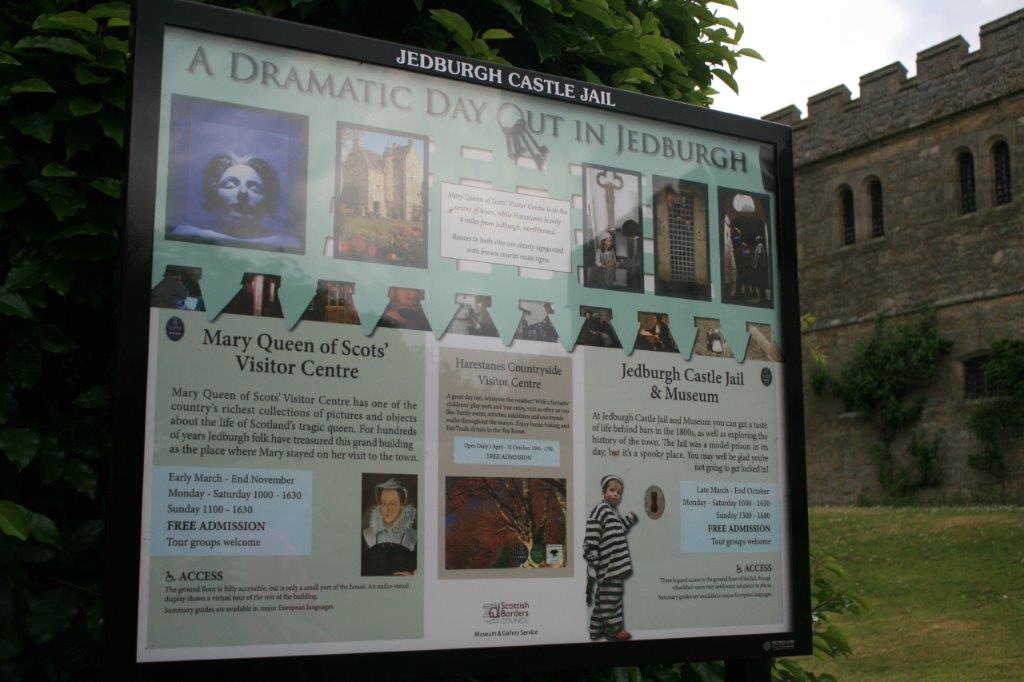
Jedburgh Castle is located not far from the Abbey ruins.