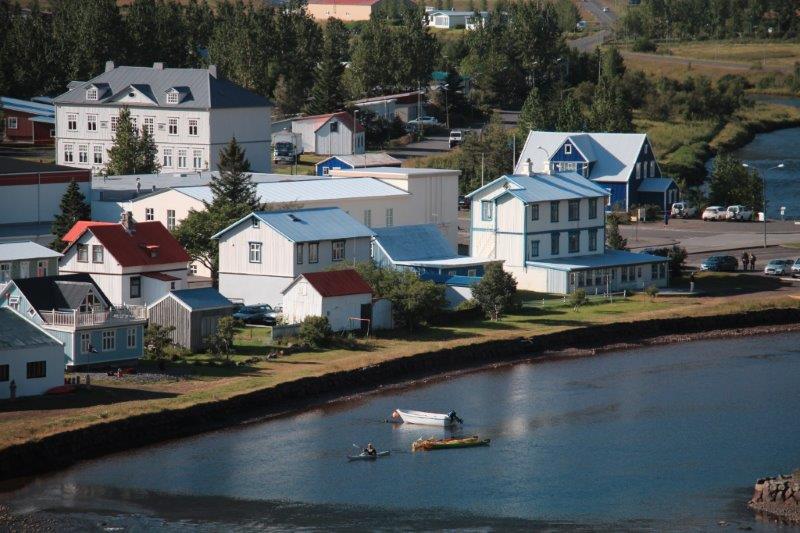
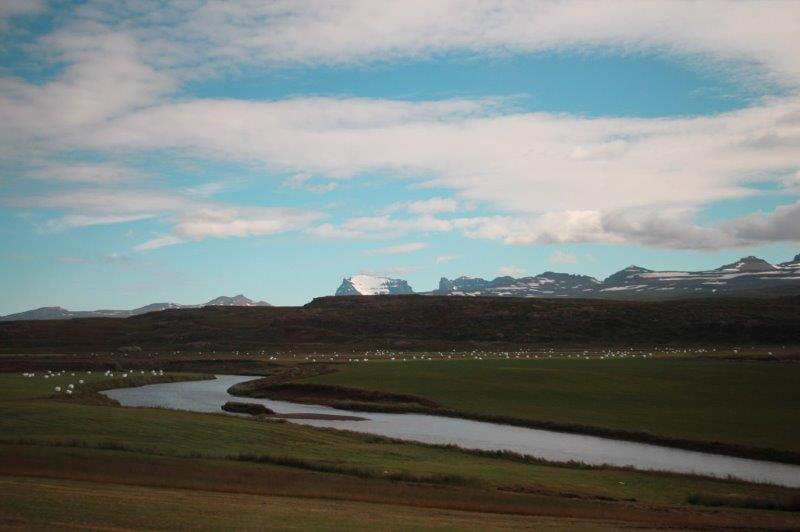
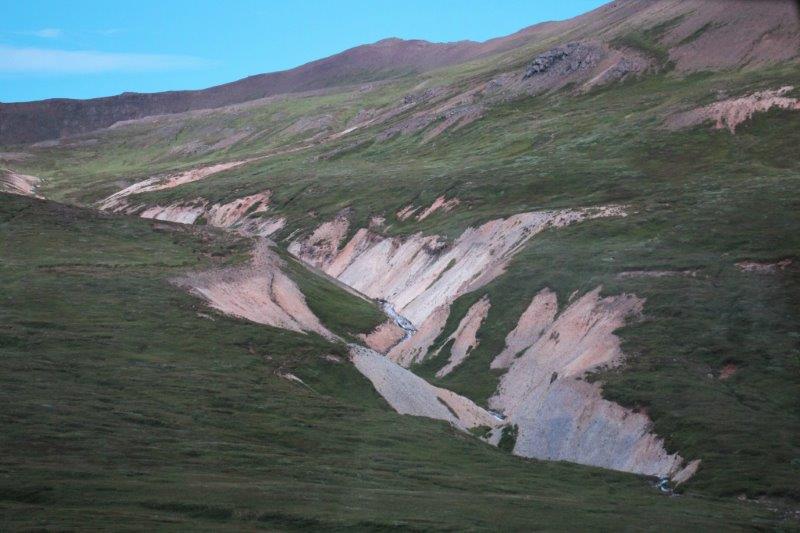
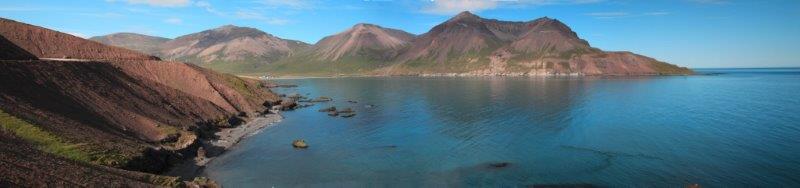
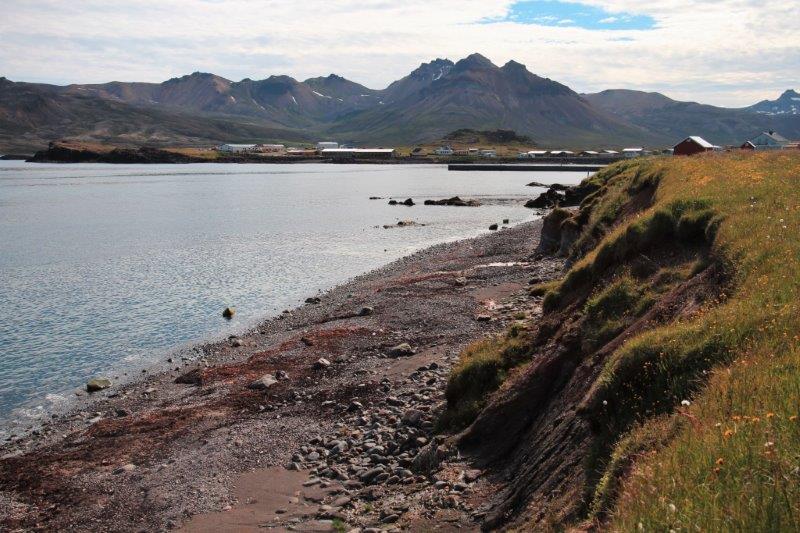
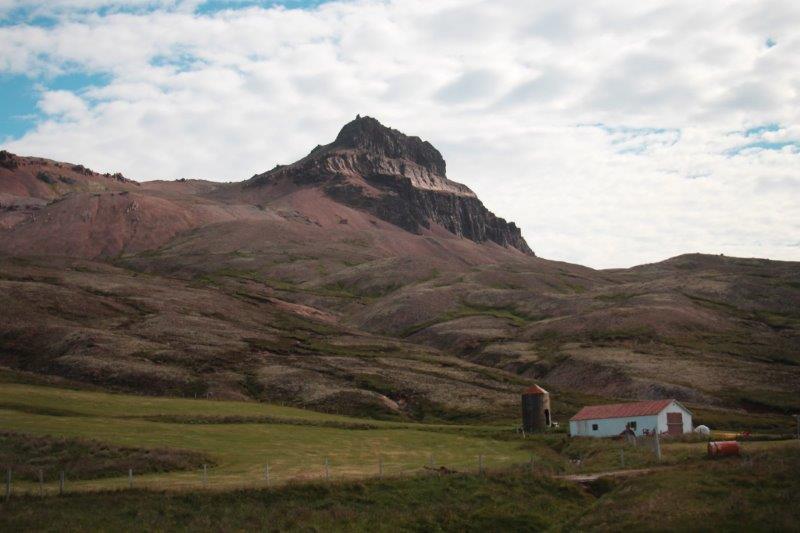
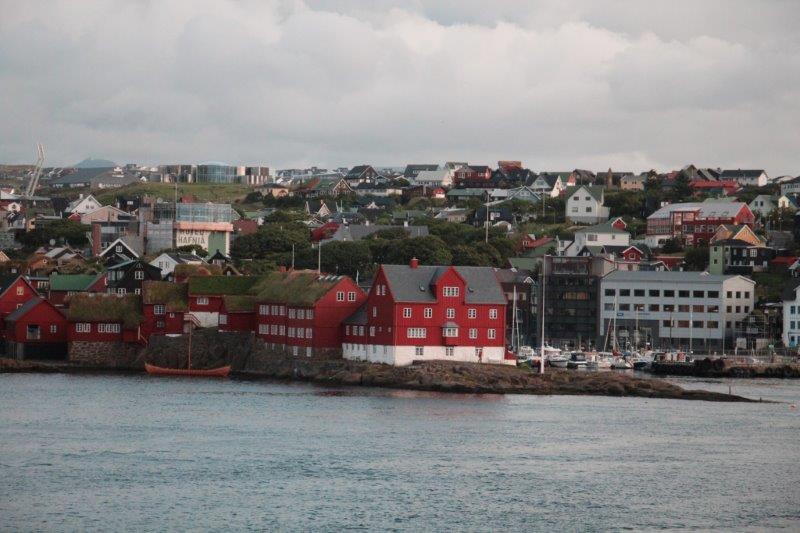
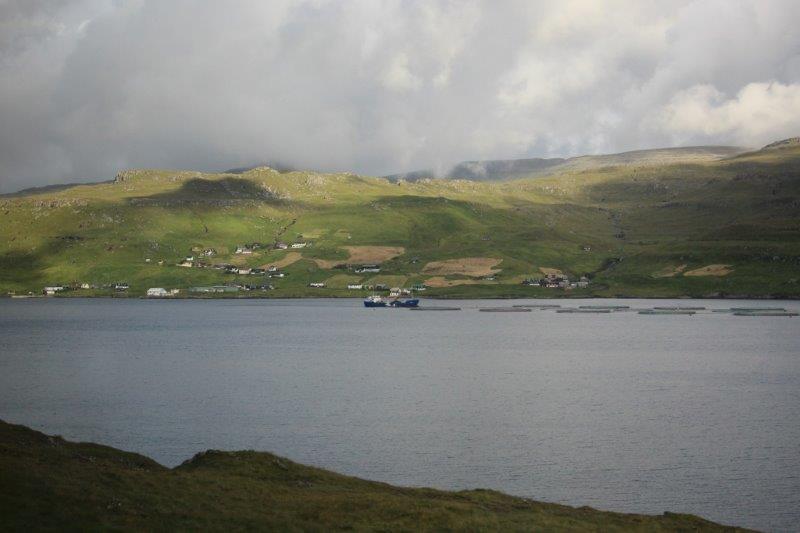
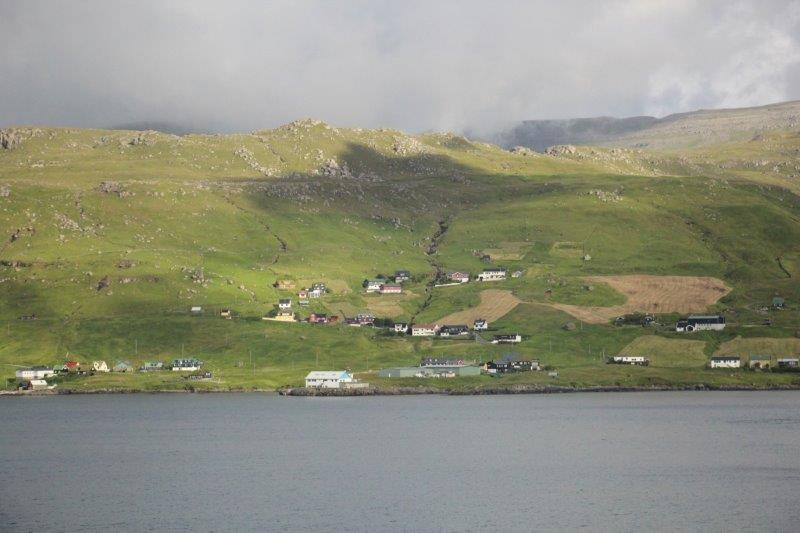
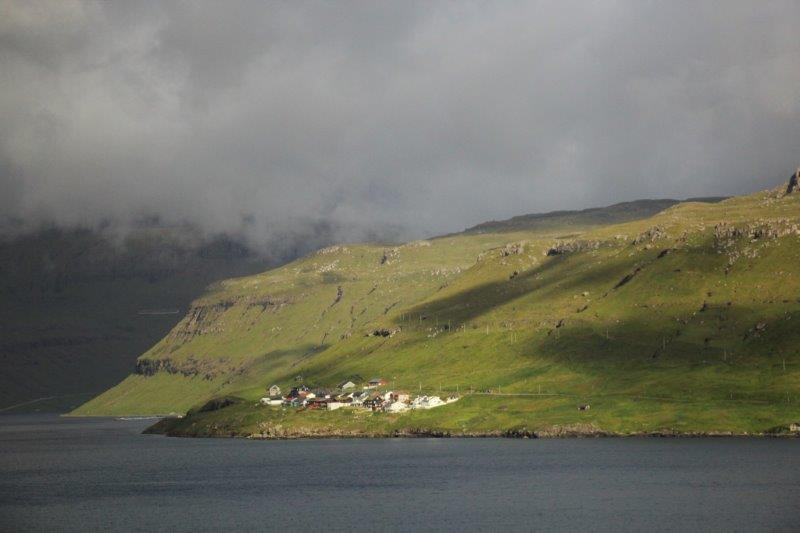
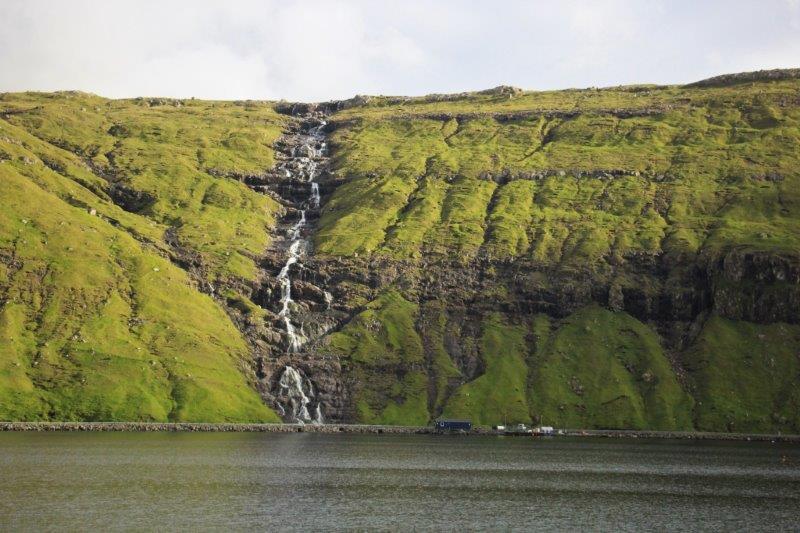
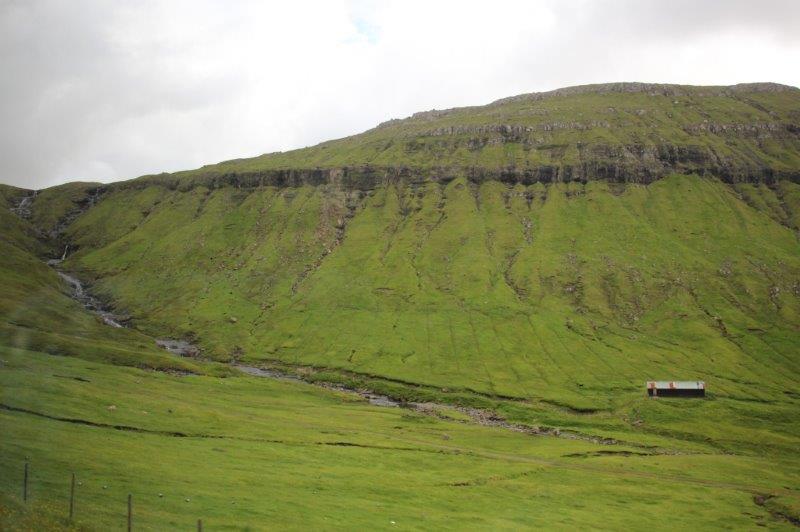
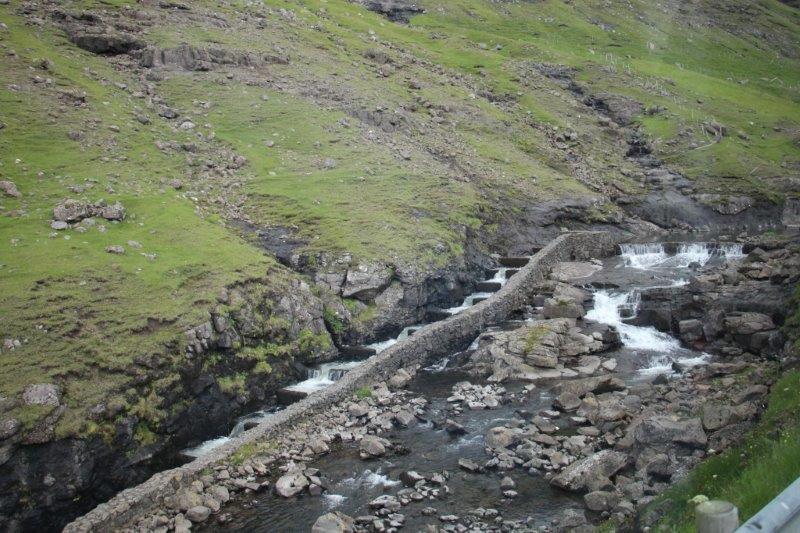
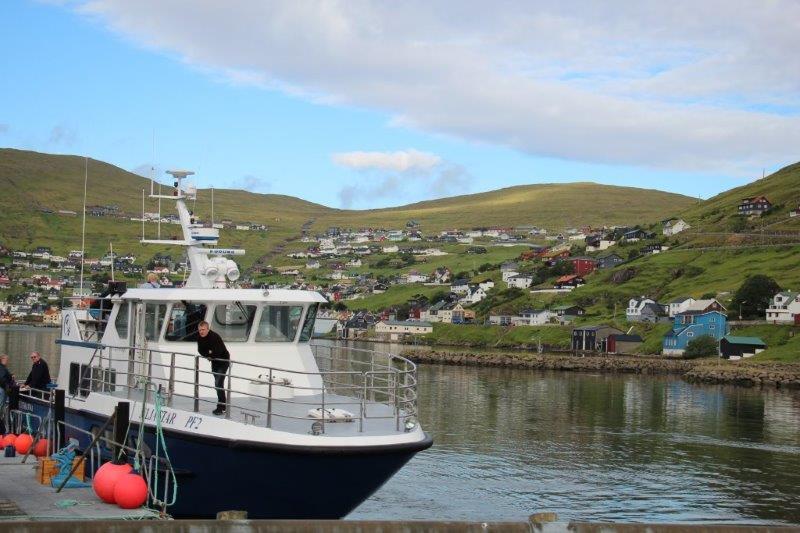
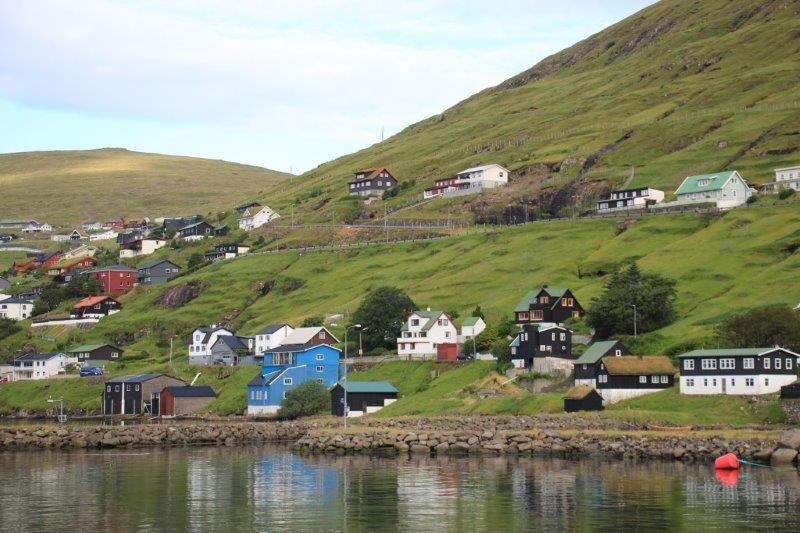
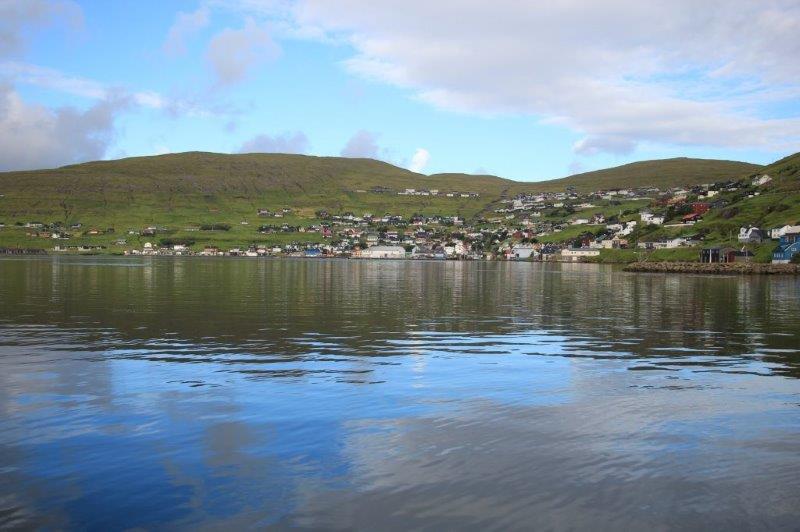
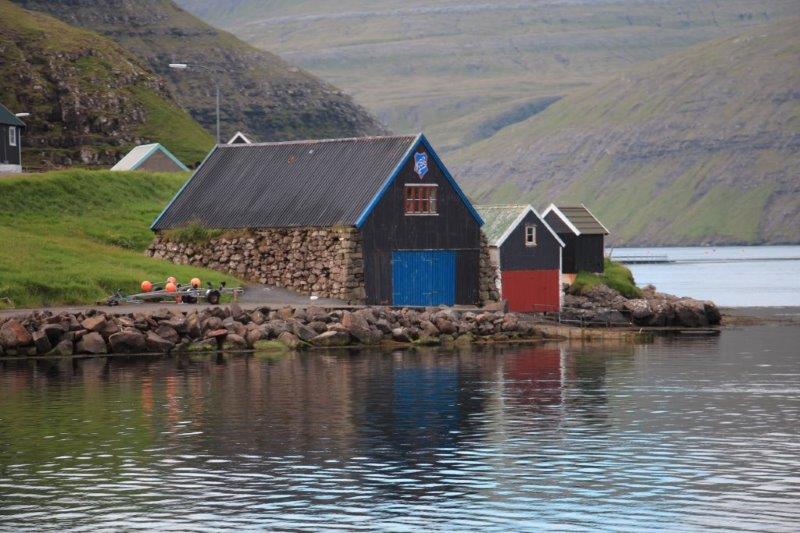
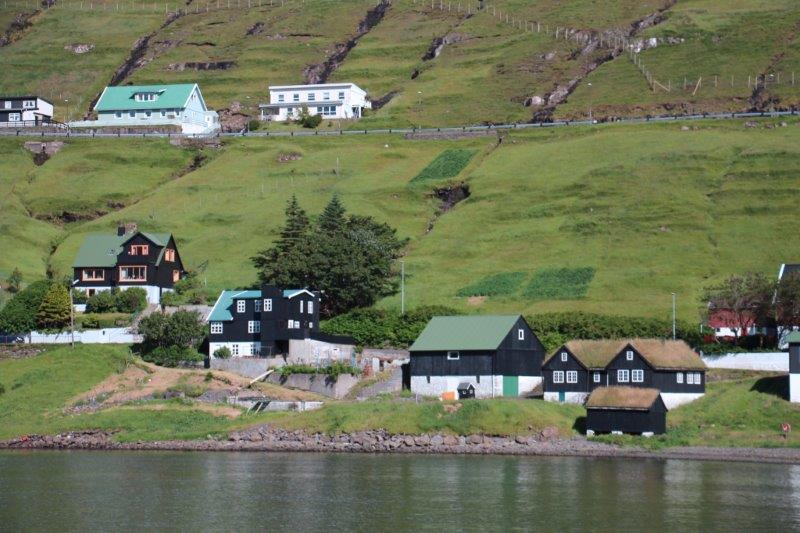
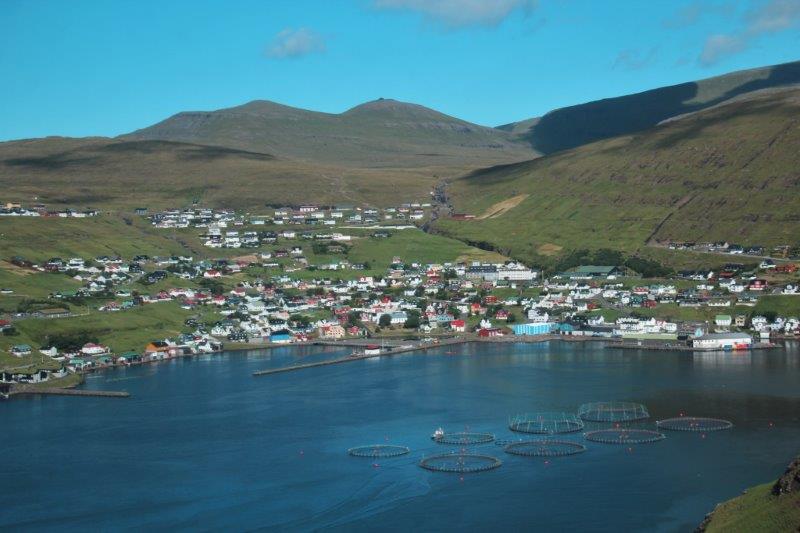
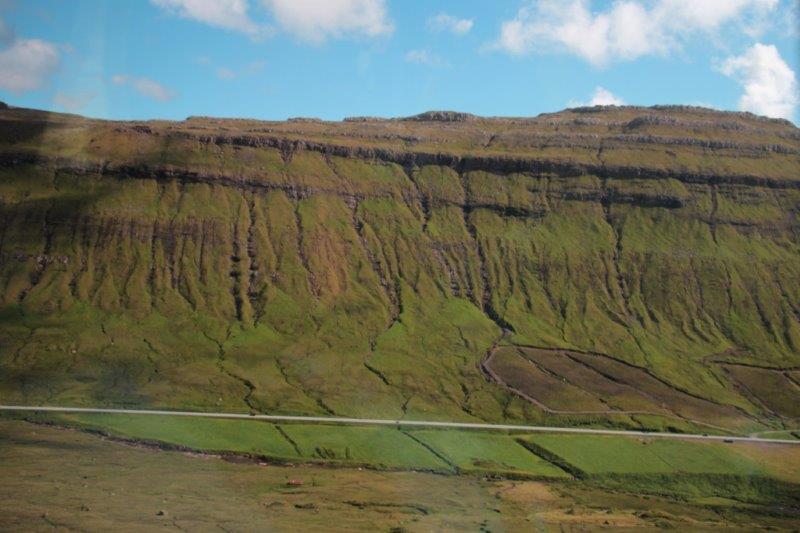
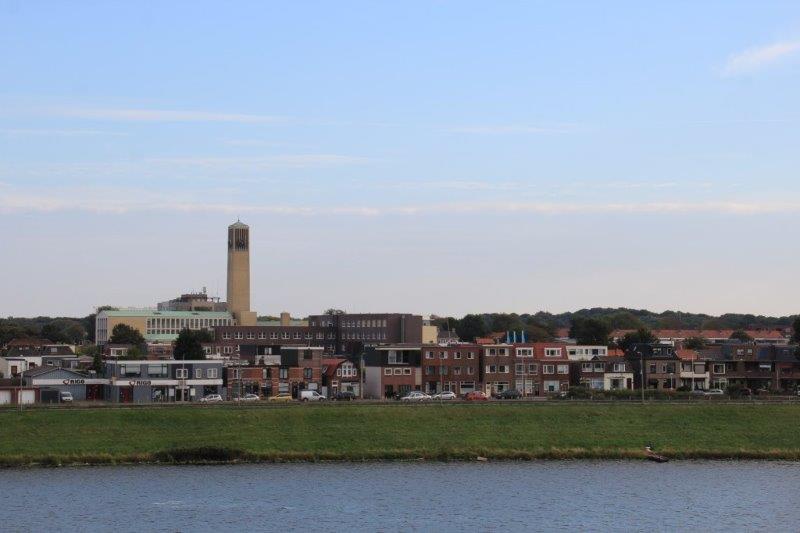
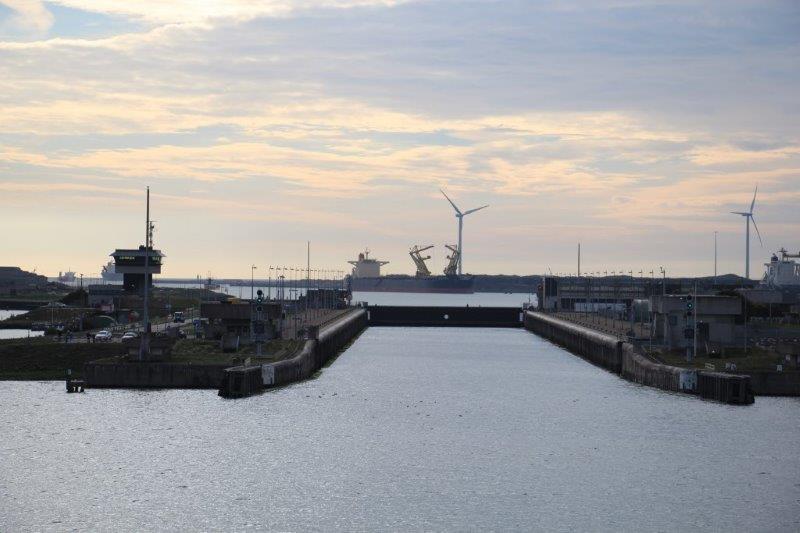
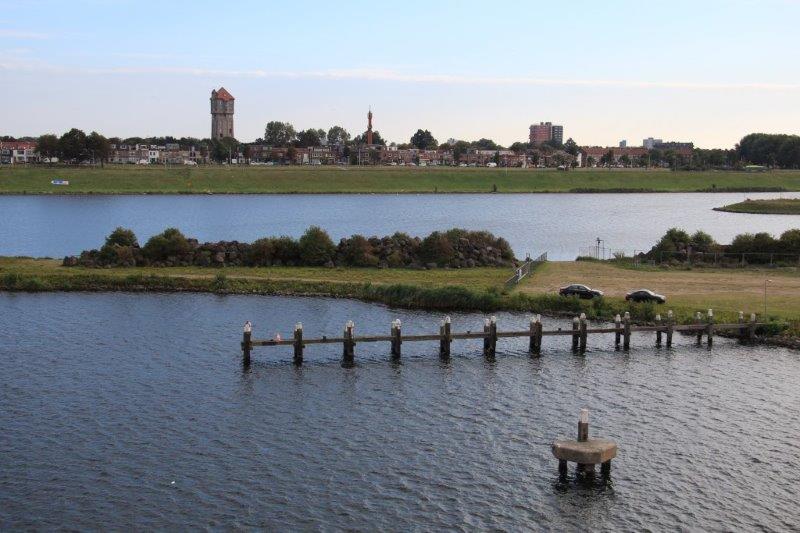
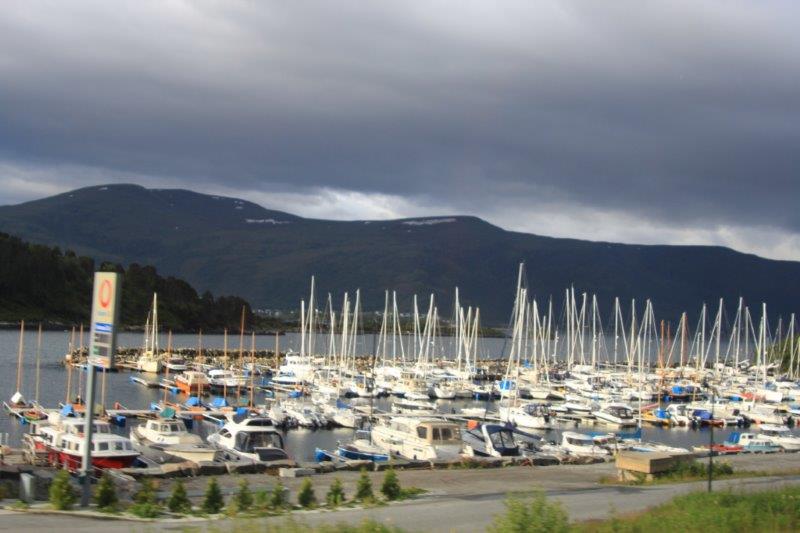
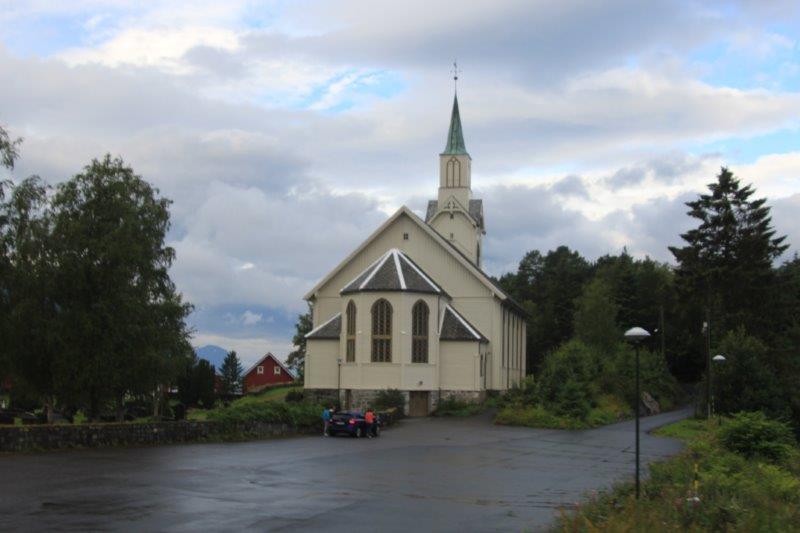
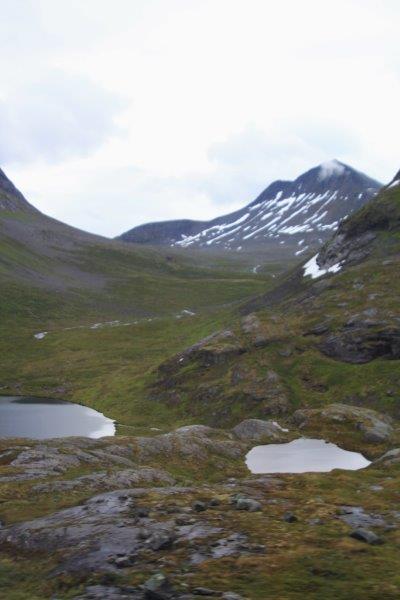
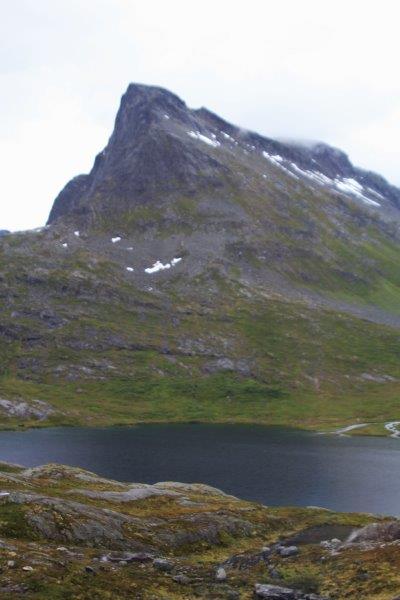
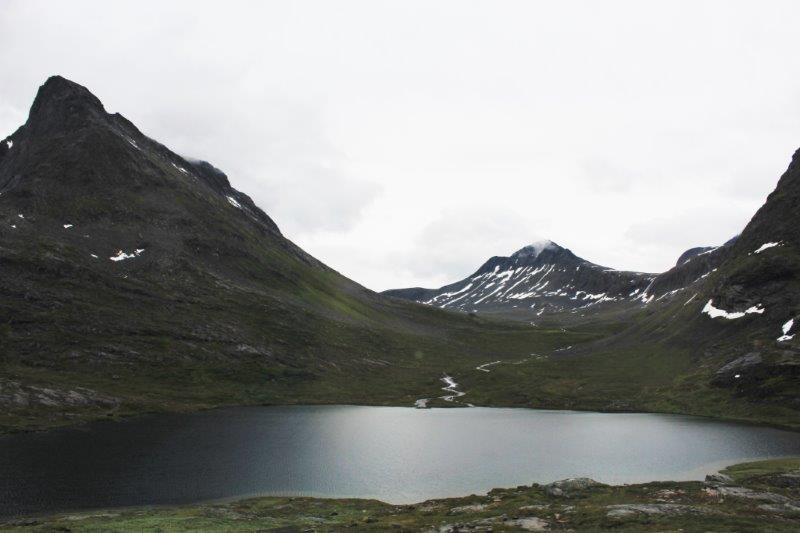
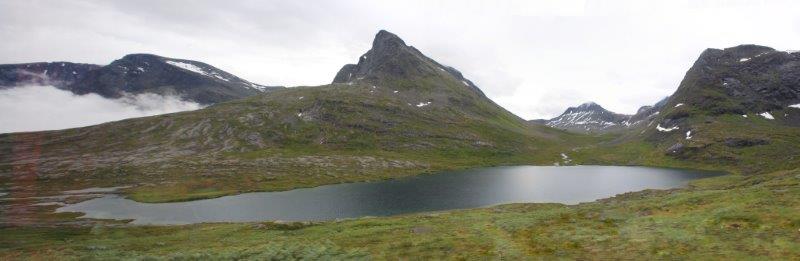
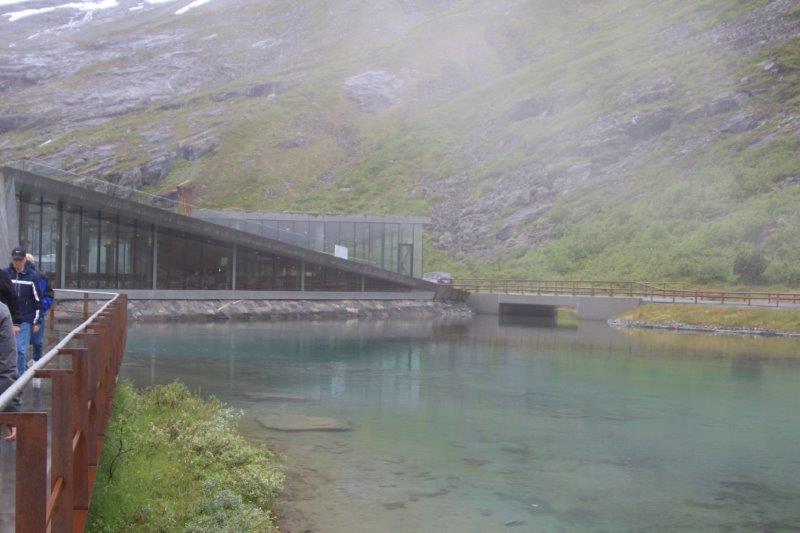
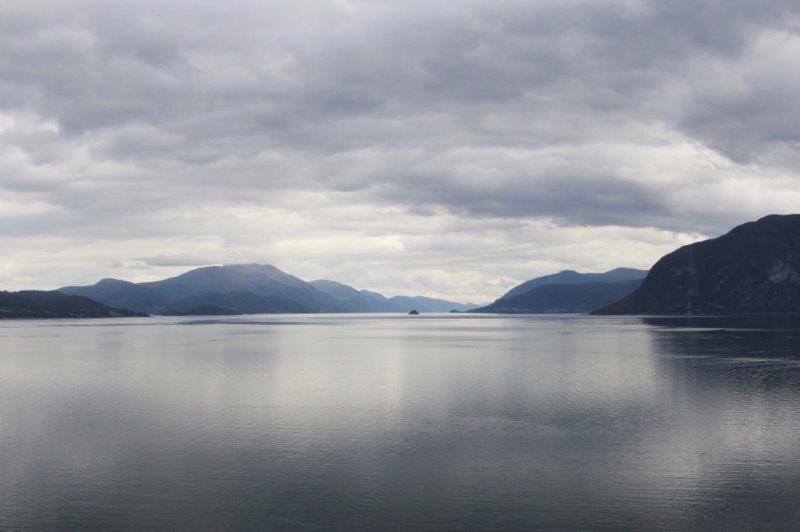
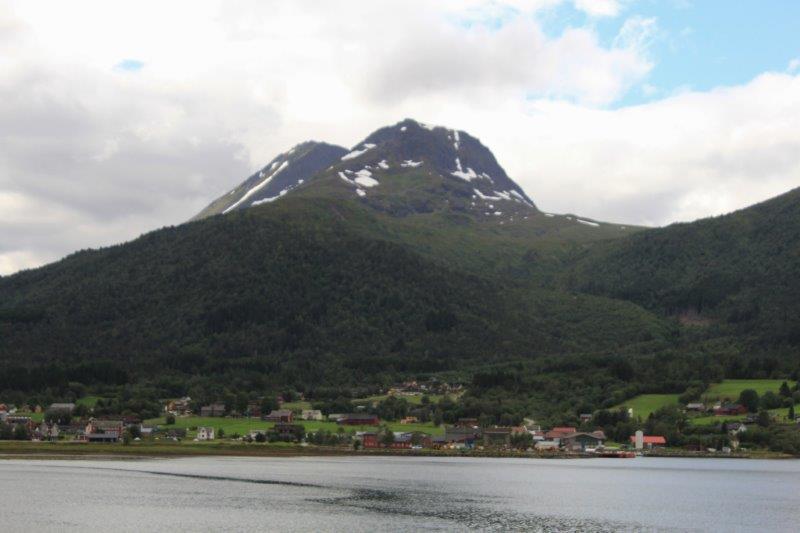
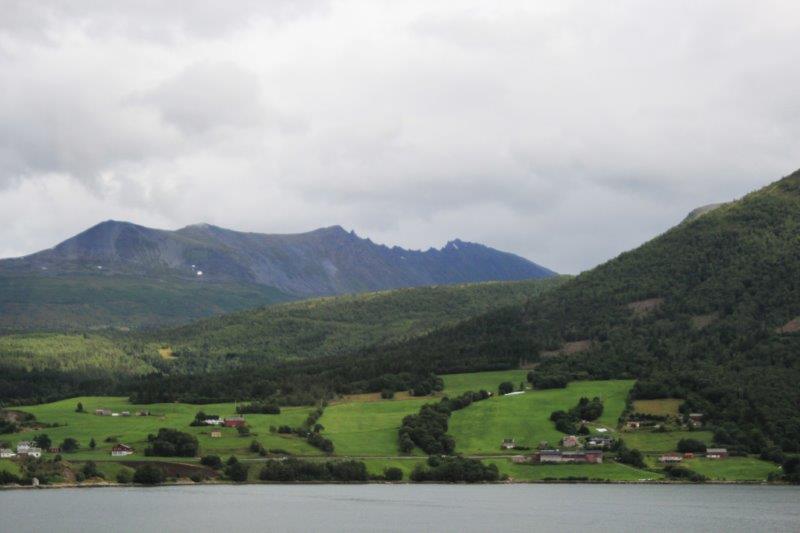
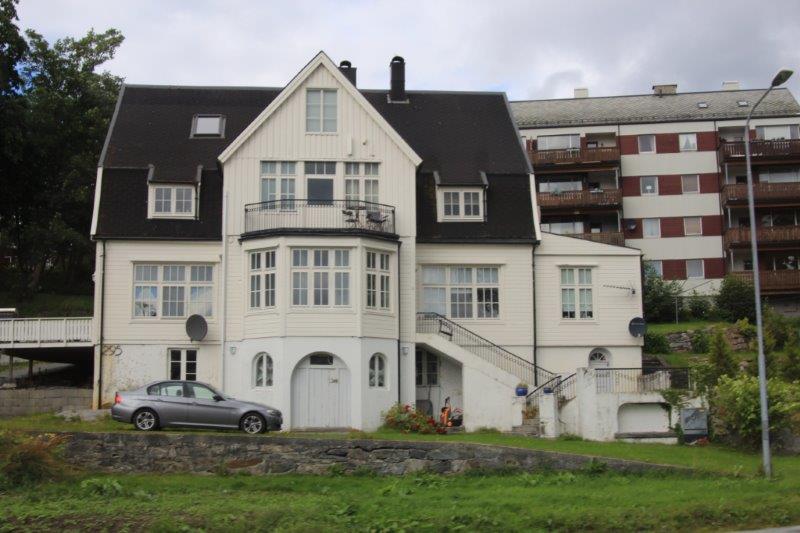
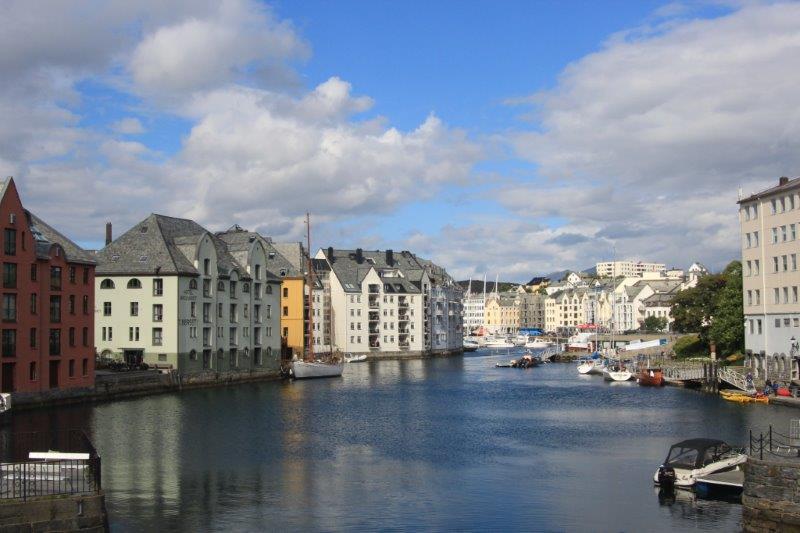
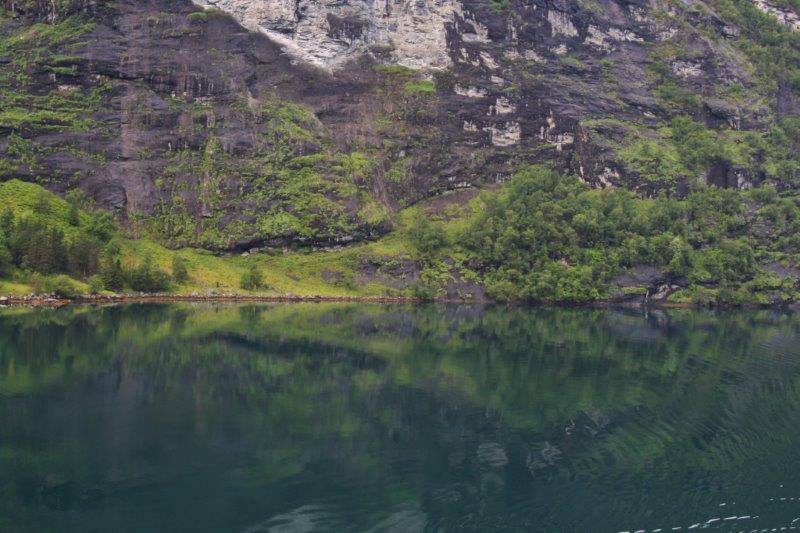
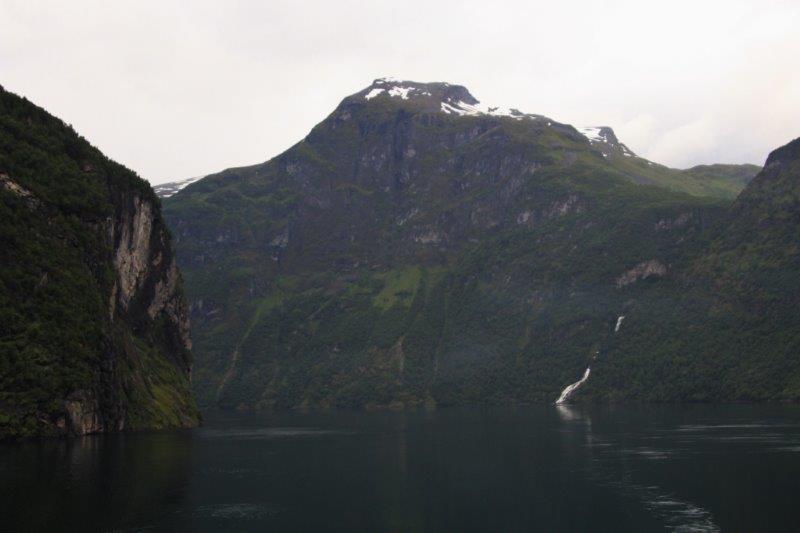
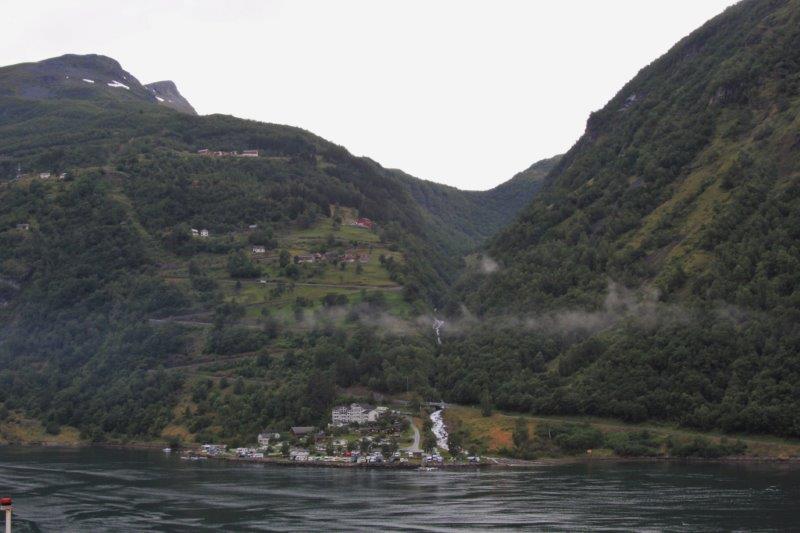
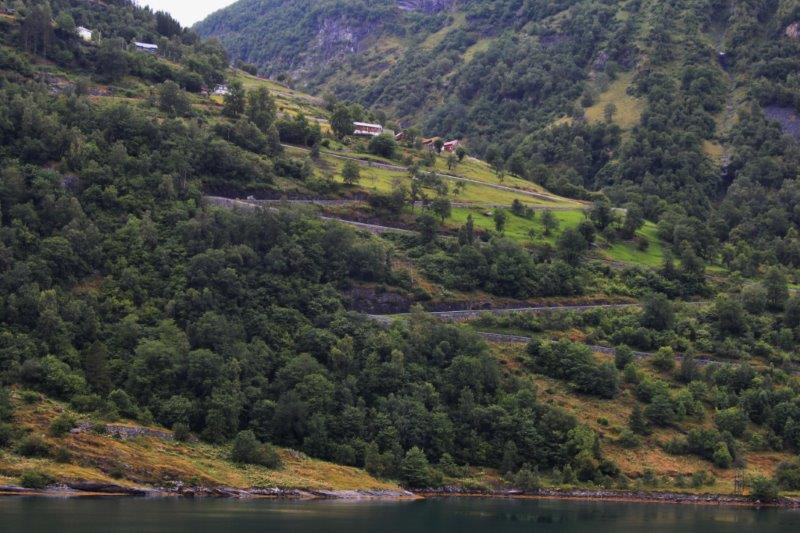
2015 Aug 18 – Day 25 – Seydisfjordur, Iceland

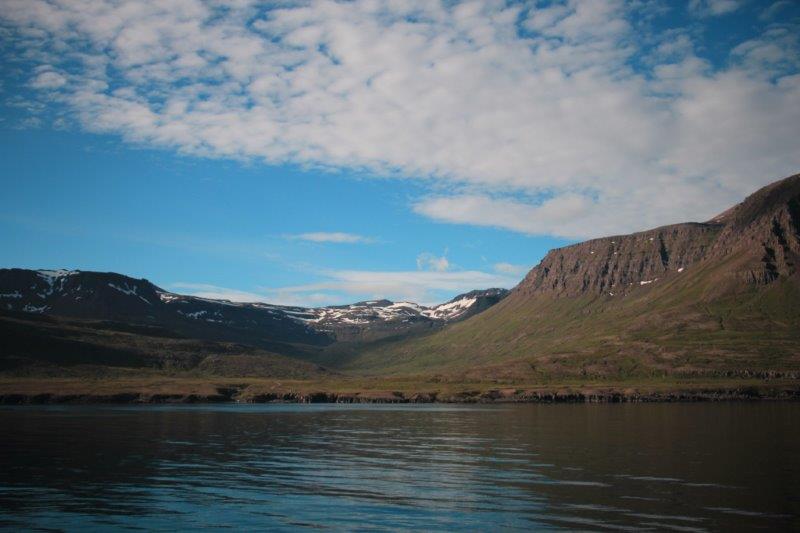
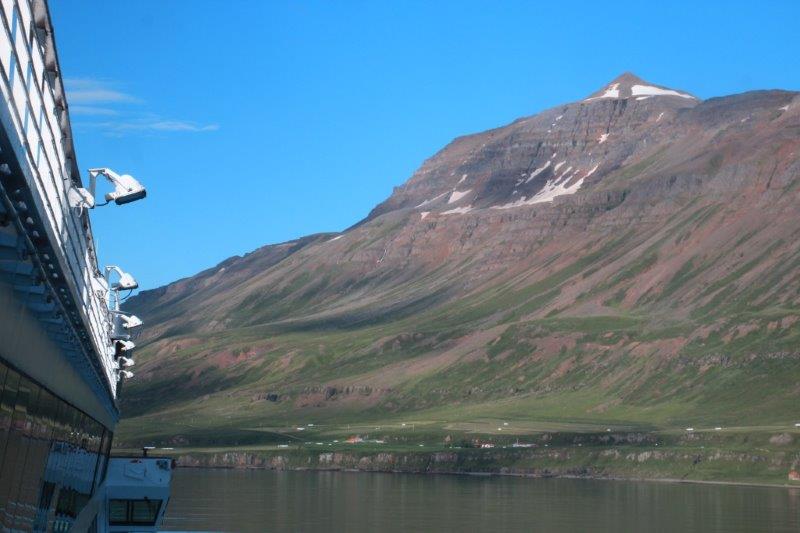
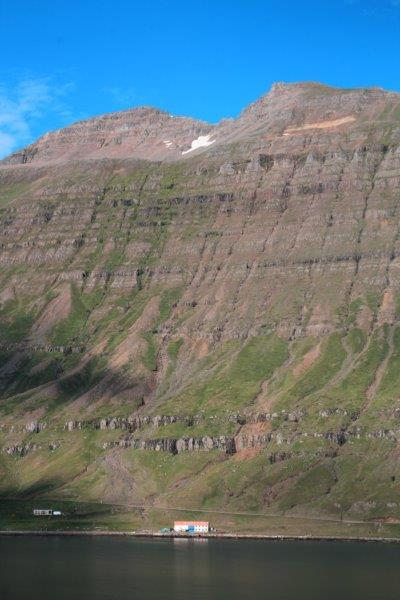
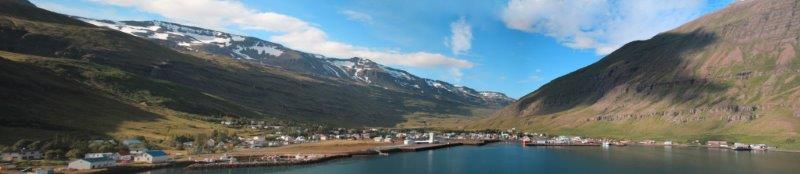
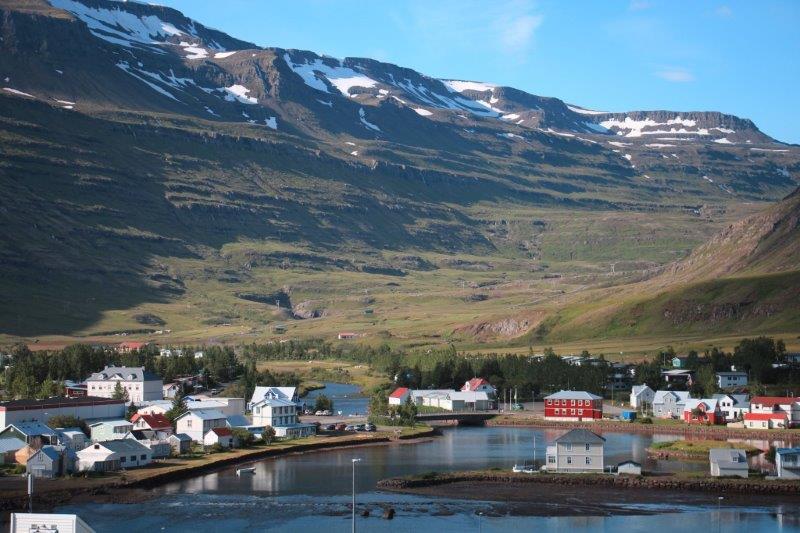
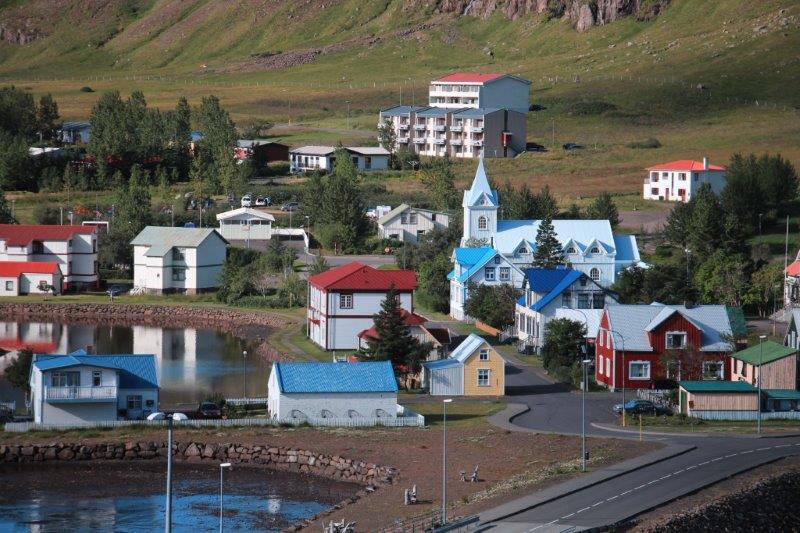
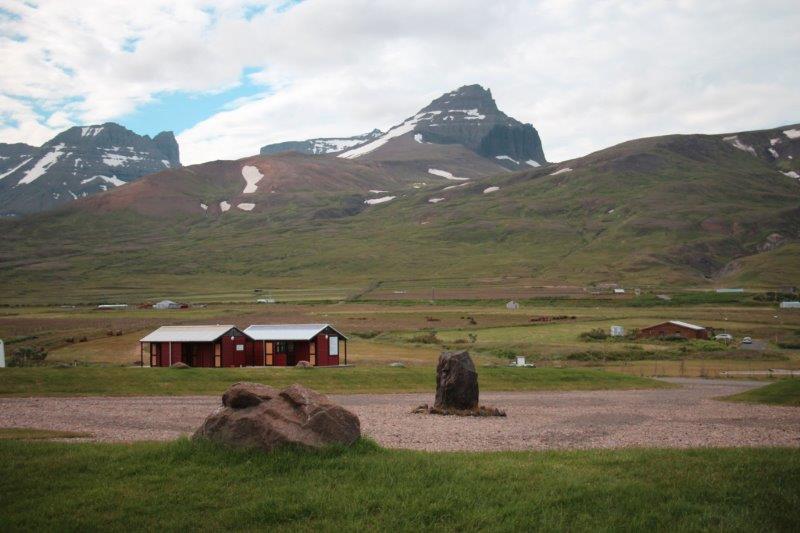
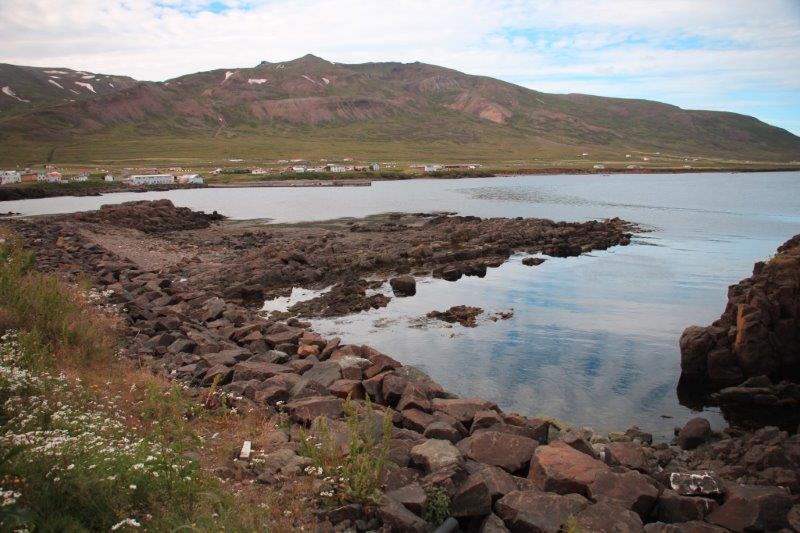
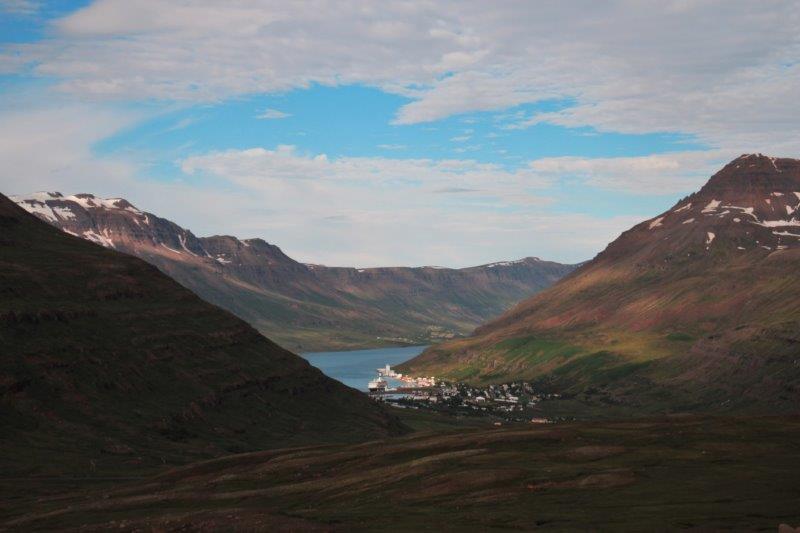
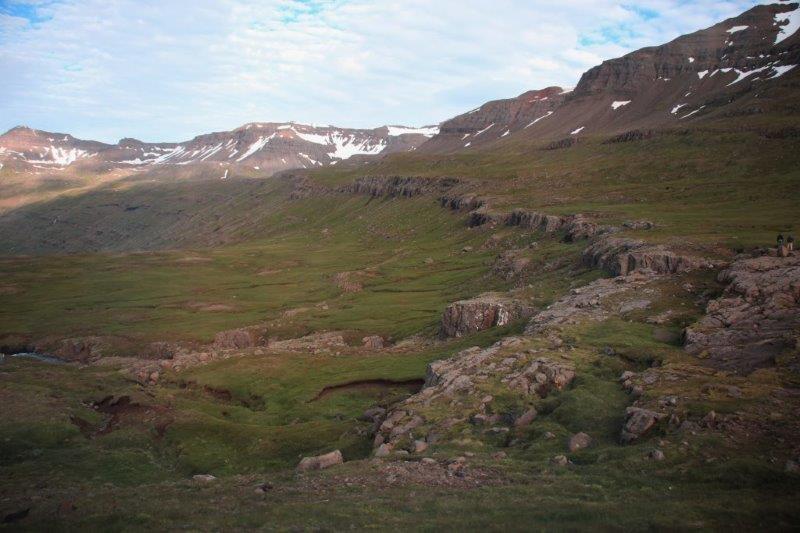
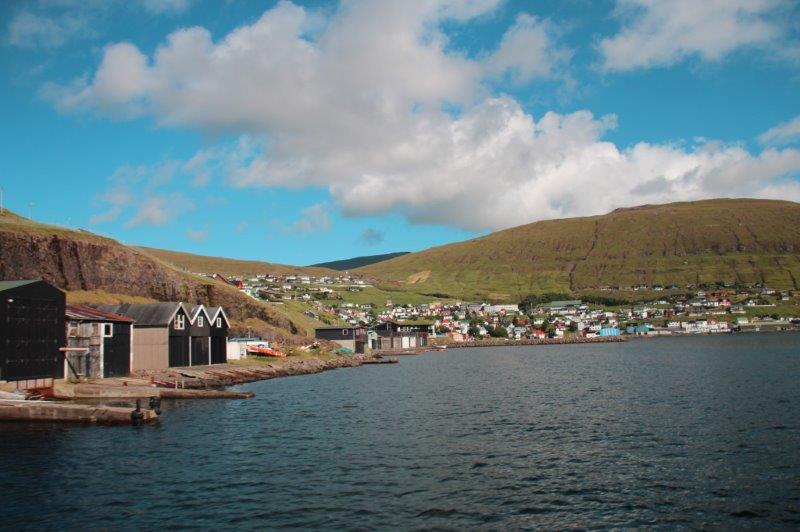
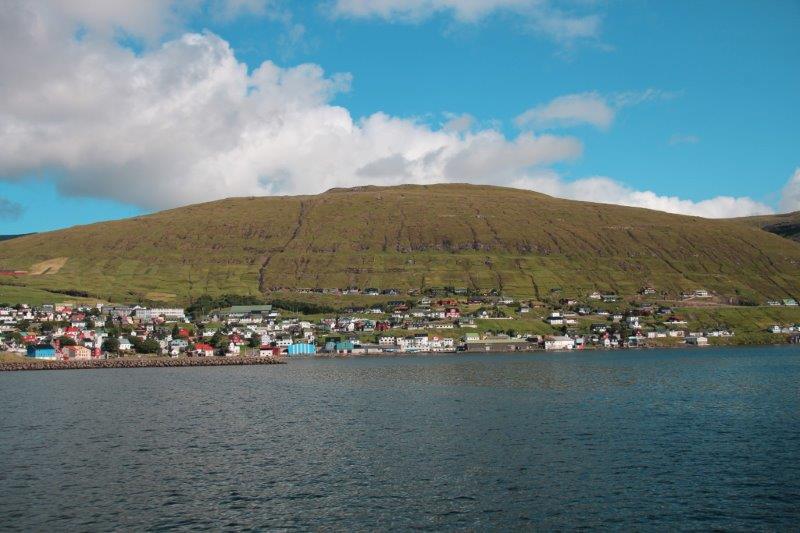
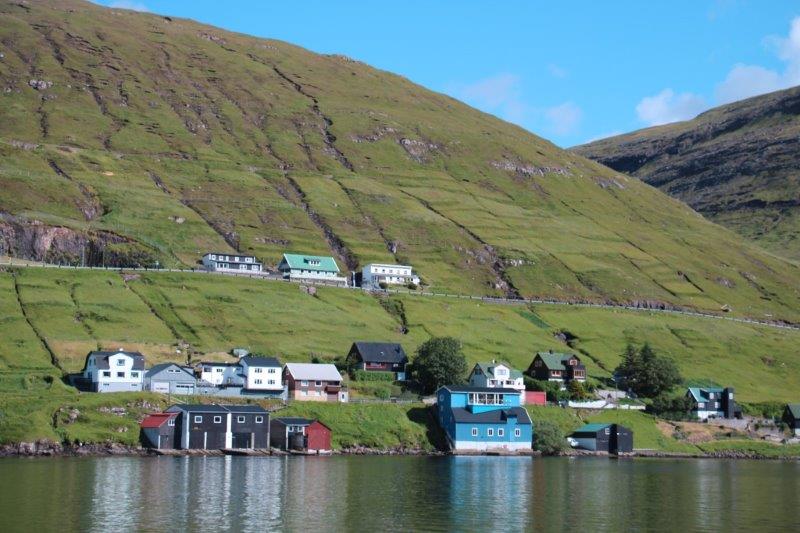
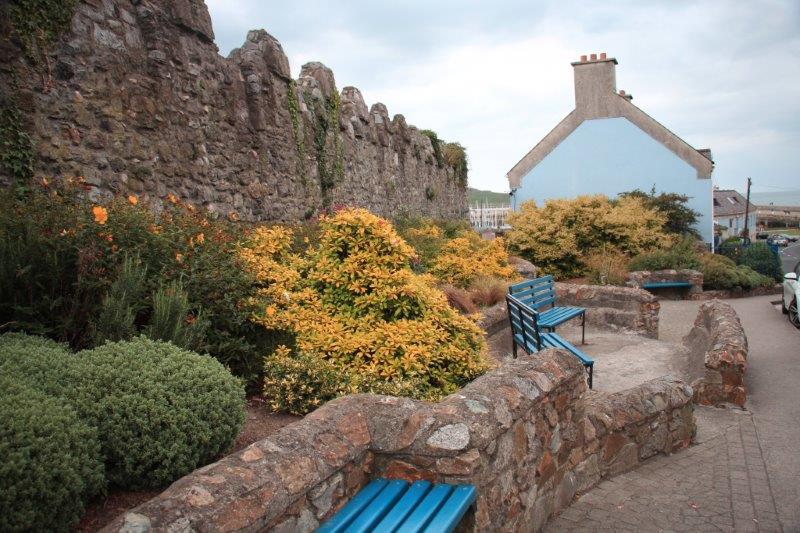
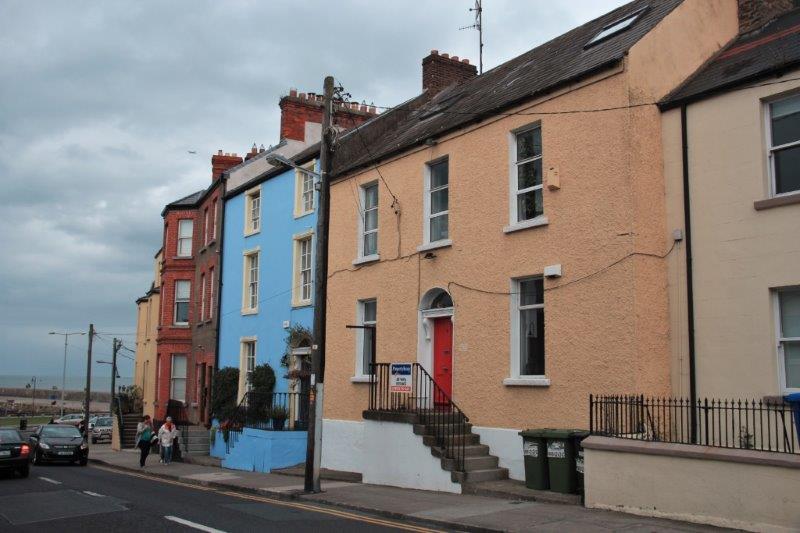
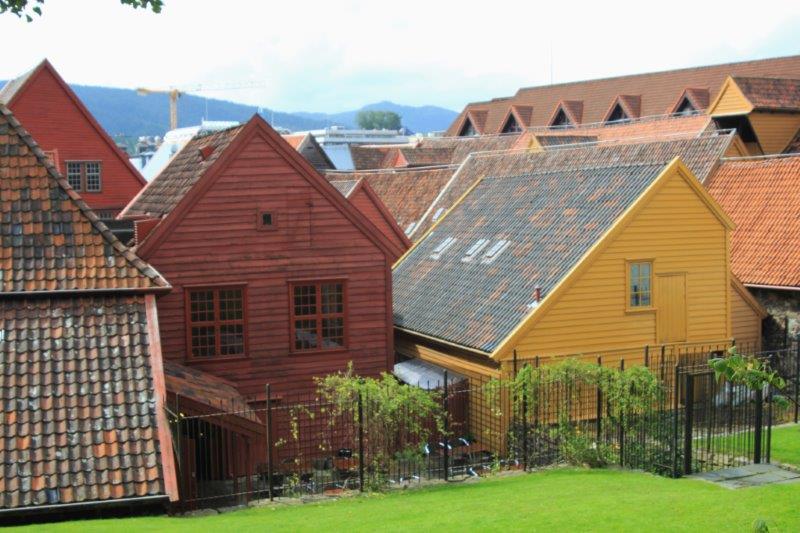
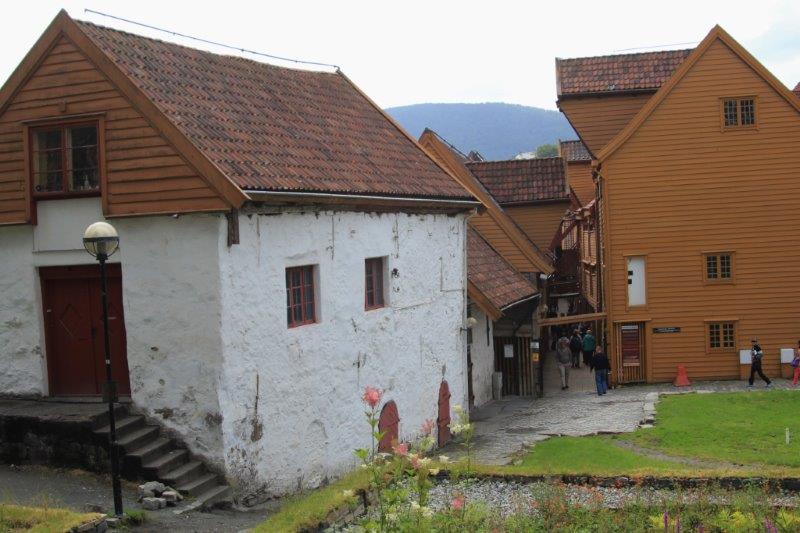
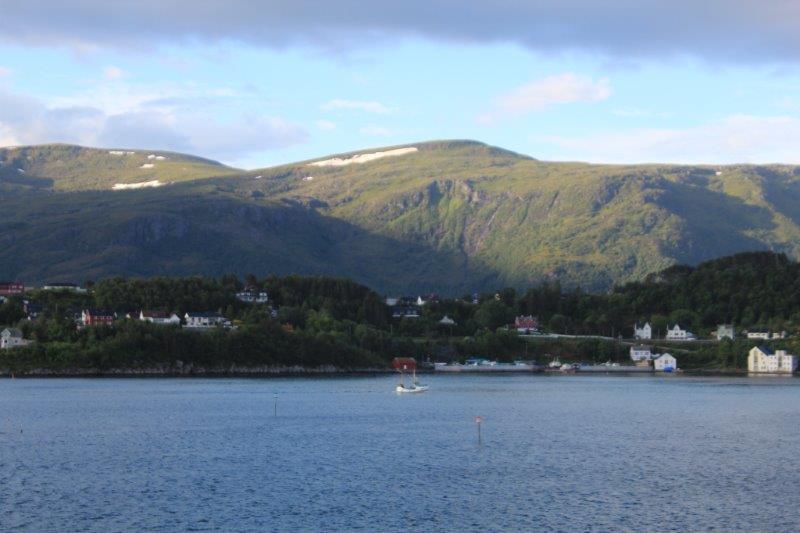
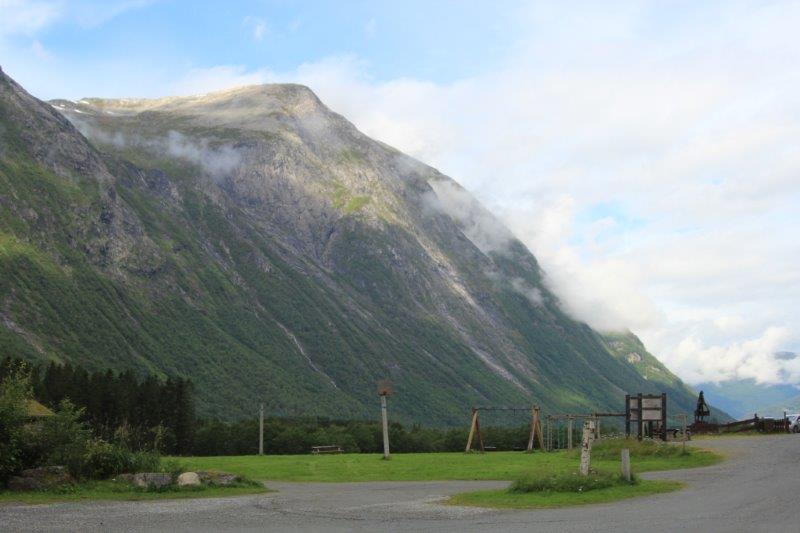
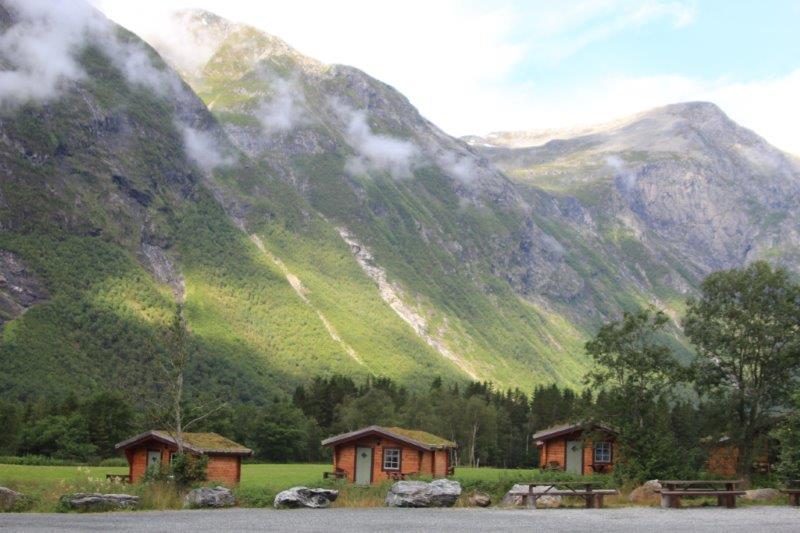
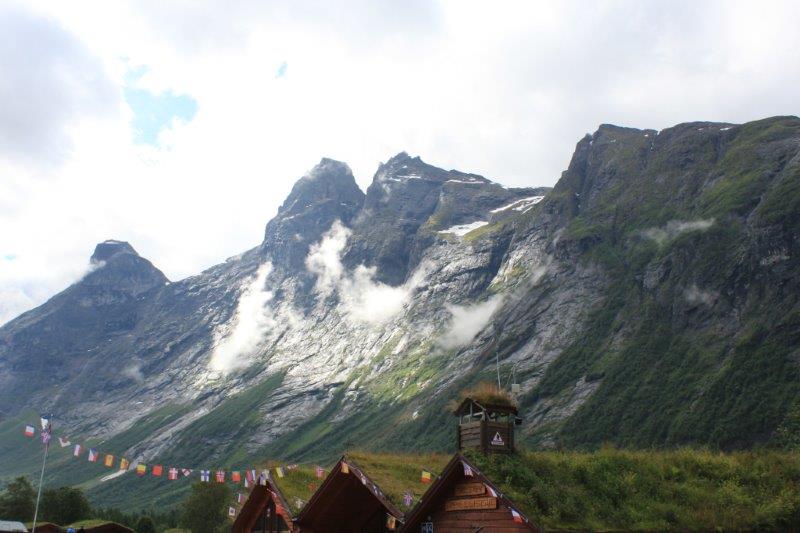
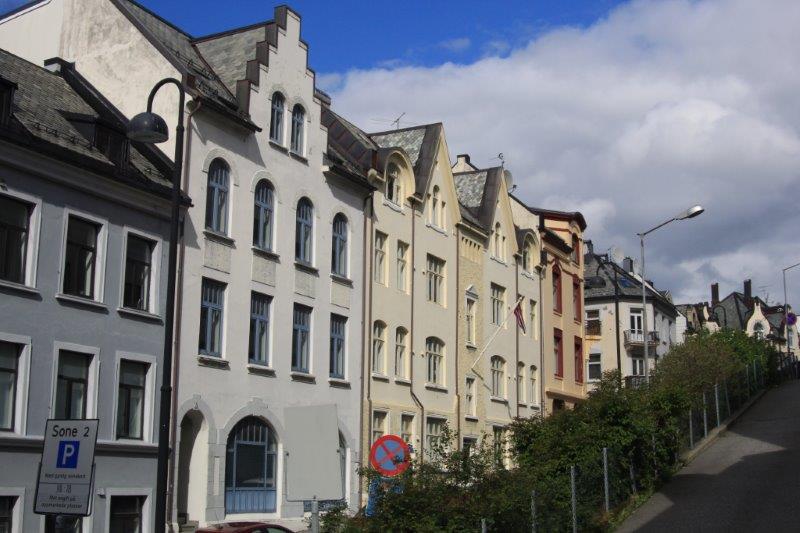
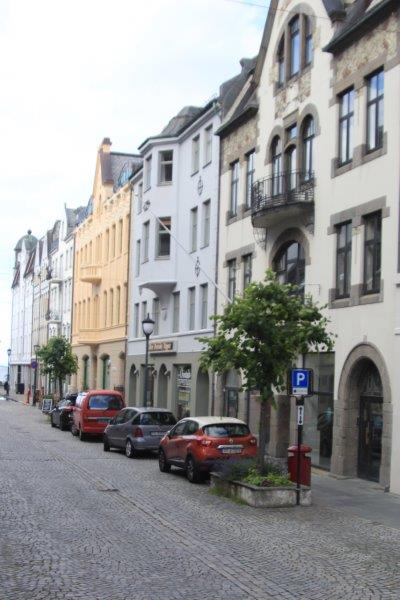
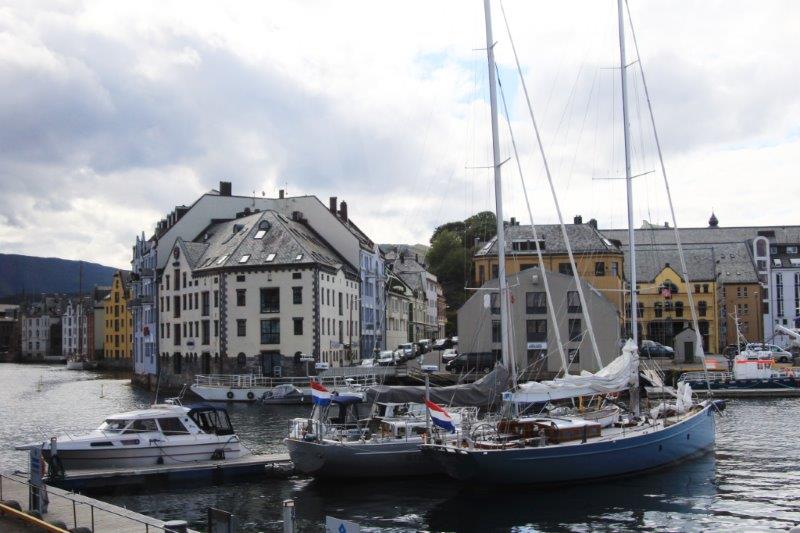
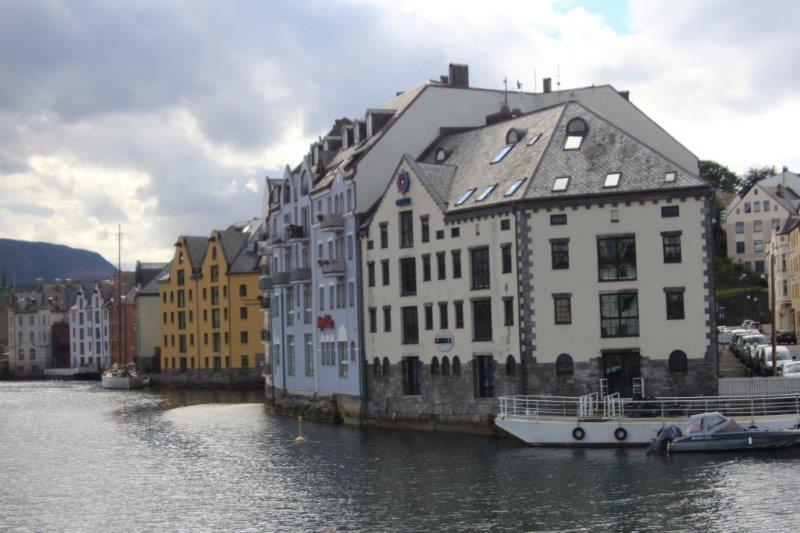
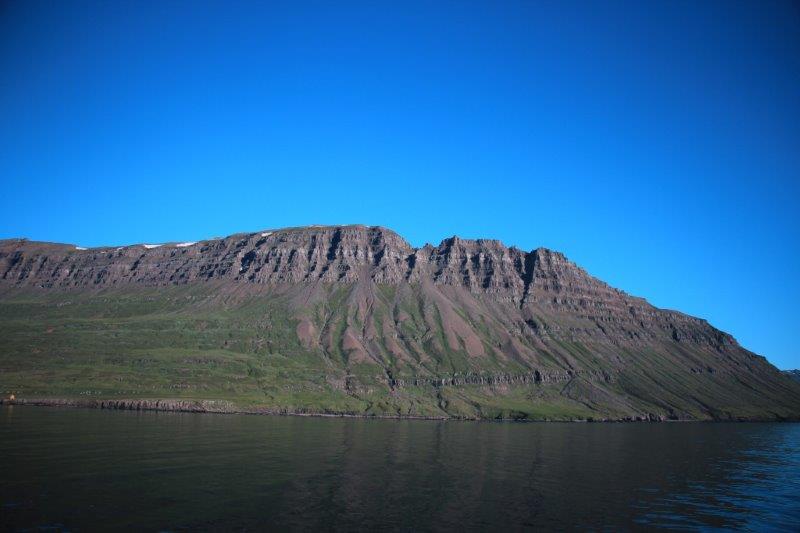
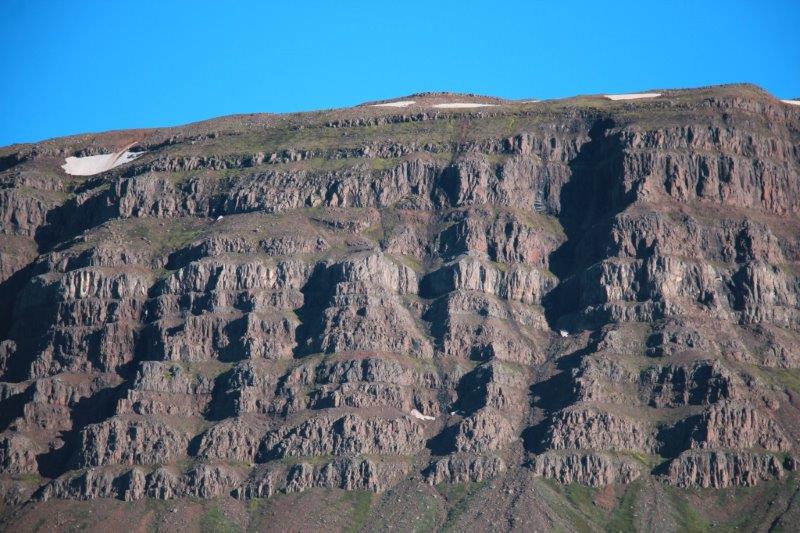
We were blessed with another sunny day for our port in East Iceland.  Seydisfjorder (Say-diss-fjor (fyour)-dur – in Icelandic the stress is always put on the first syllable of the word) is considered to be one of Iceland’s most picturesque towns, not only due to the impressive environment but because nowhere in Iceland has a community of old wooden buildings been preserved so well as here. It is a mid-size town with a population of 670.  11,000 people live in East Iceland, spread over a large area.  The biggest community in East Iceland is 3600-3700 people.

IMG_0330 IMG_0333 IMG_0337 IMG_0342 IMG_0368 IMG_0379


IMG_0383 IMG_0399 IMG_0400 IMG_0402 IMG_0405Iceland was first settled by two brothers in 874 AD; one was killed and the other settled near Reykjavik.  The country was completely settled between 870-930AD.  Icelandic parliament began in 930 with an annual meeting of all the chieftains who represented all free men who could bear arms.  At the parliament they split the country into quarters with 9 chieftains in three quadrants and 12 in the north.  Every farmer had to swear allegiance to one of the chieftains and in turn the chief would handle issues for the farmers in parliament.

They felt they did not need to have a king because the country is so remote and has a harsh climate so invasion was considered unlikely. A king is, above all else, mainly a military General and Iceland figured they had little risk of war from outside so they didn’t need one.  However, eventually several of the chieftains wanted to control more territory and fights and wars continued for 60 years.  In 1262 they realized that none of them had enough might or power to control the others so they decided that for the sake of national peace, all the chieftains would swear allegiance to the King of Norway.  One chieftain did not take the oath until 1263 and an East Iceland chieftain did not submit until 1264.

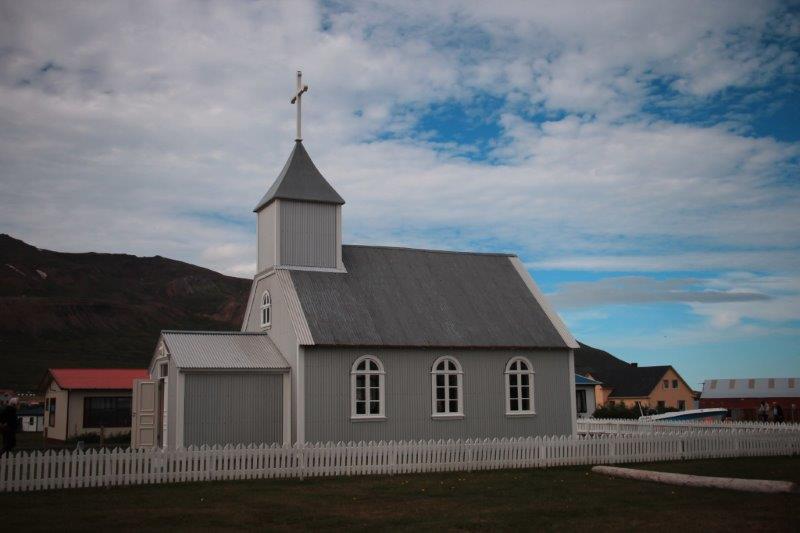
The religion was Norse paganism until 1550 when it became Christian (by vote of parliament).  Catholicism was the religion until Protestantism was brought to the island, then all the catholic priests and bishops were either kicked out our killed and the country’s state religion became Lutheran; which it is to this day.IMG_0436 IMG_0440 IMG_0467 IMG_0472Iceland is 80% uninhabitable.  Settlement can only be done on the coast as the center is either glacier, lava fields, or alpine desert.  All the towns and villages around the coast are located at the end of fjords or in fjordal inlets.  The country has a vastly long coastline due to all the fjords and the offshoots.  Seydisfjorder is at the end of a 17 kilometers long fjord with the same name, and the community was first settled in the 19th century by Danish fishermen, which makes the town quite new in relation to the country’s long history.

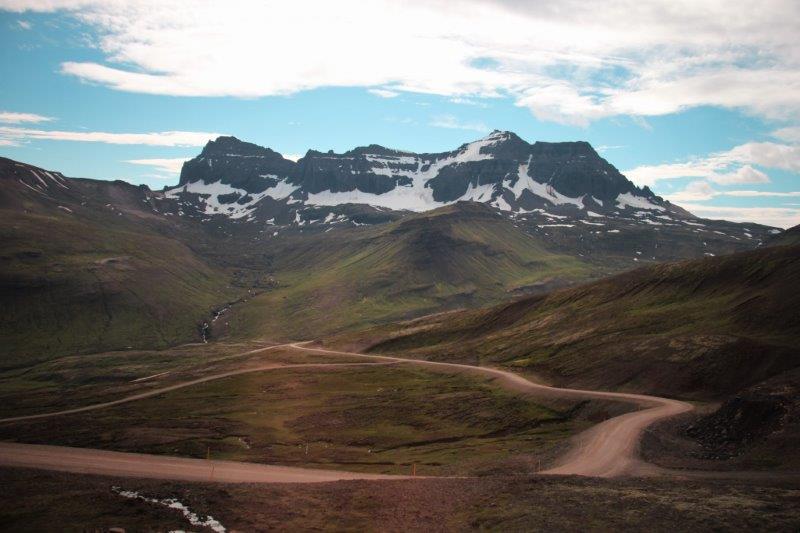
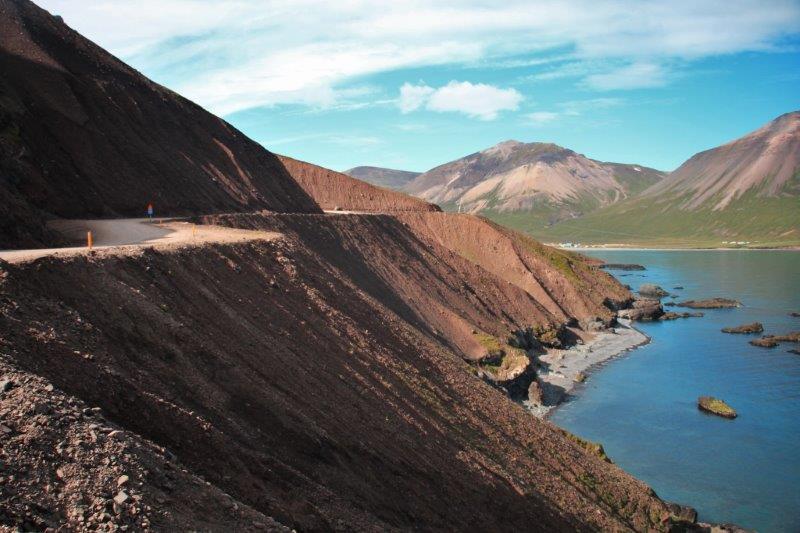
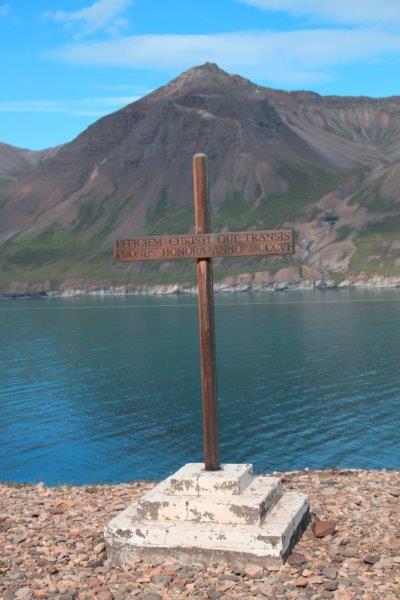
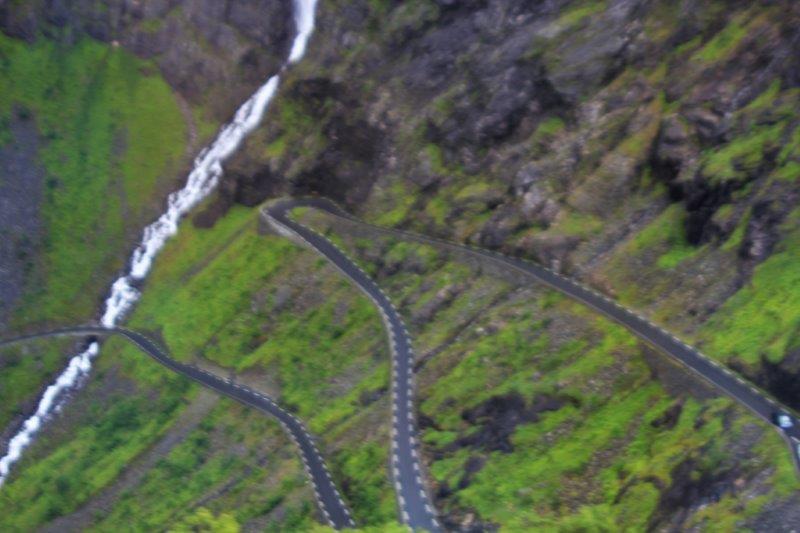
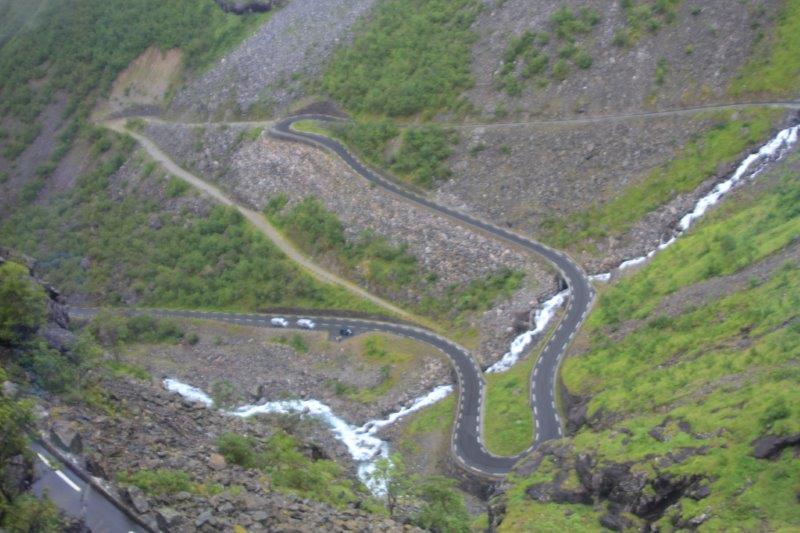
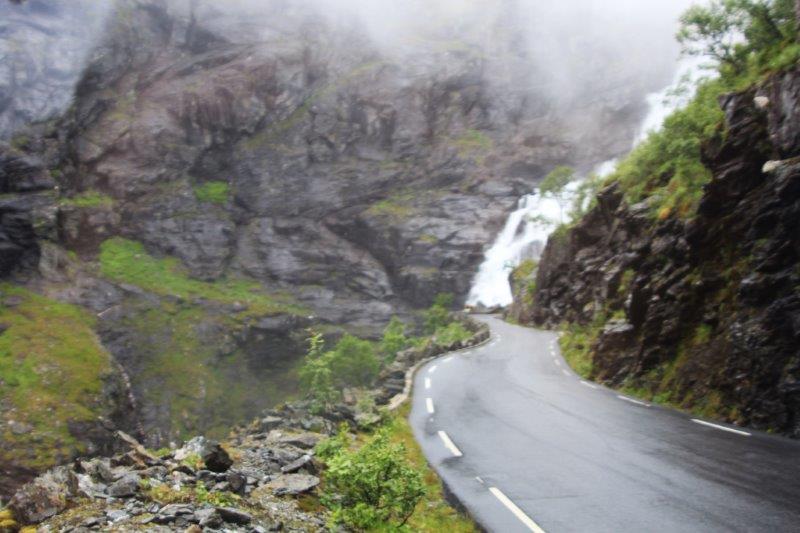
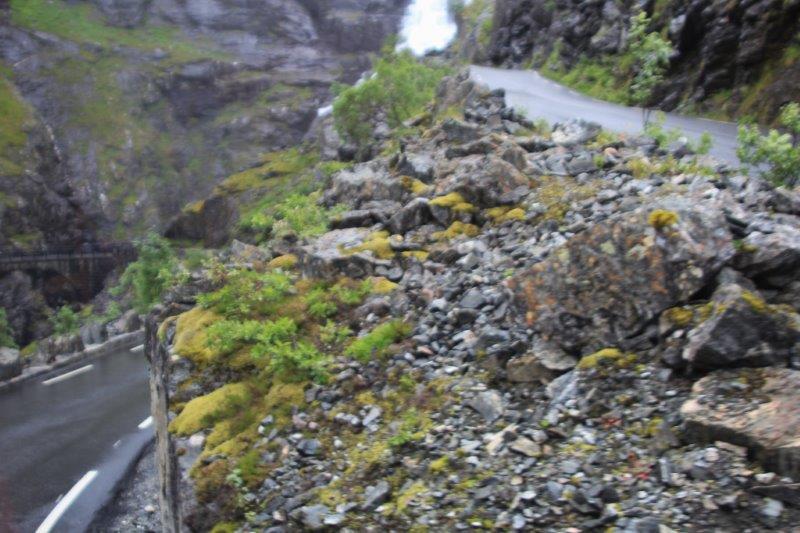
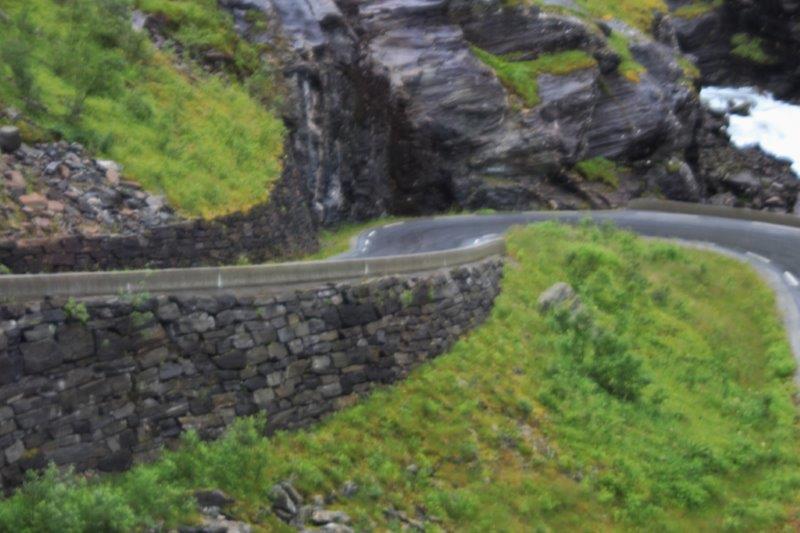
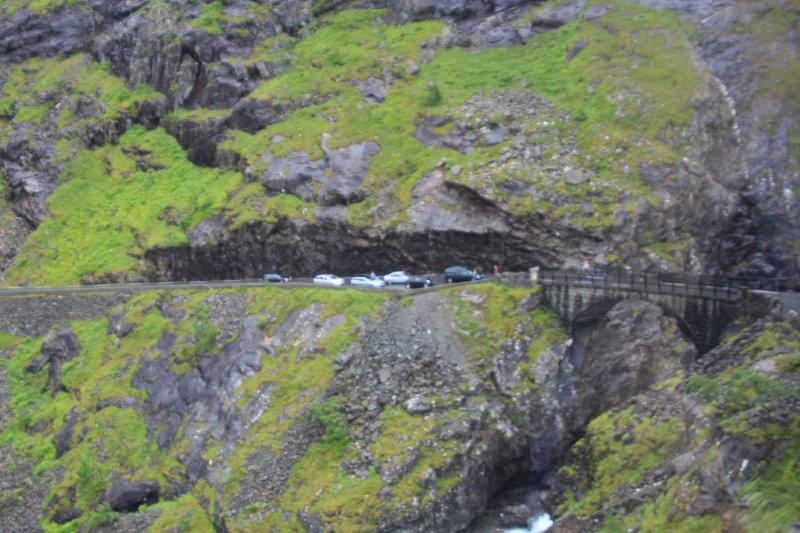
We had a long tour with several stops that took us over the mountains to what was once known as the most dangerous path in Iceland – over a steep scree slope that constantly sluffed off and was susceptible to slides – that were blamed on a monster called The Rumbler.  The path has been turned into a safe road but the cross erected to pray for safe passage remains and is renewed every few years with the same Latin prayer inscription and the date 1306.

Our tour was called Monsters and Elves and our tour guide regaled us with many Icelandic folk tales about trolls, Elves – the hidden people, and ghosts.  We had a great day.  The scenery was fabulous, lunch was really good and the sun shone all day.  We had no time to tour the town as all-aboard was 5:30, exactly when our tour ended.

IMG_0499 IMG_0475

IMG_0487

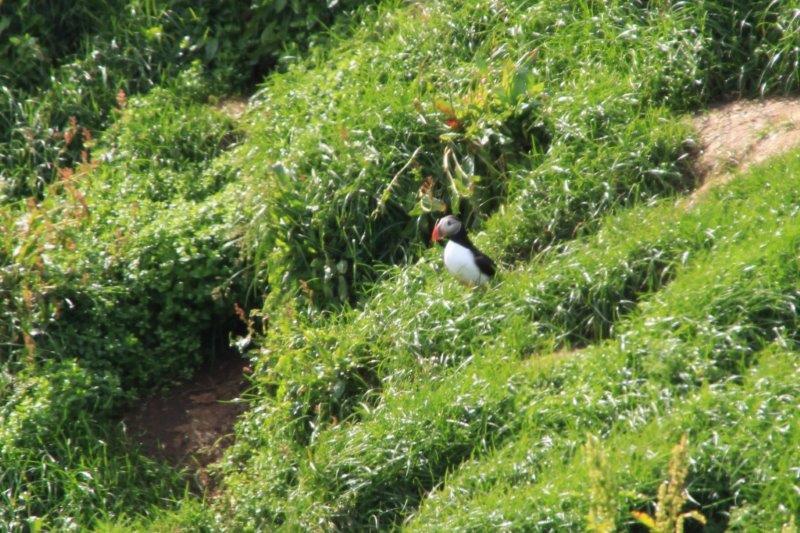
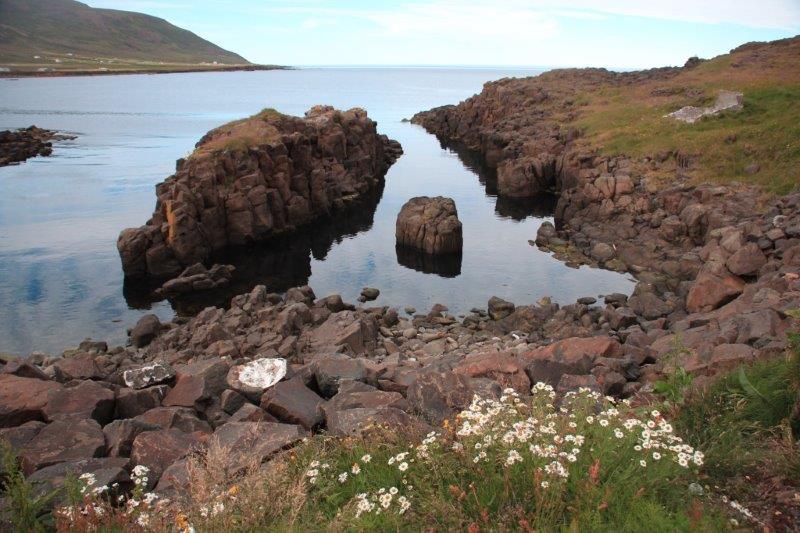
IMG_0478 IMG_0497We stopped for lunch at a little fishing village called Bakkagerdi.  After lunch we drove over to the sheltered little harbour where we managed to see some puffins and then went back for a walking tour of the town.  A very pretty place.

IMG_0506 IMG_0508IMG_0510 IMG_0512 IMG_0514 IMG_0516 IMG_0533 IMG_0537 IMG_0540 IMG_0543 IMG_0546 IMG_0554 IMG_0569 IMG_0578 IMG_0582 IMG_0587 IMG_0593 IMG_0598 IMG_0600 IMG_0601 IMG_0604 IMG_0613 IMG_0617

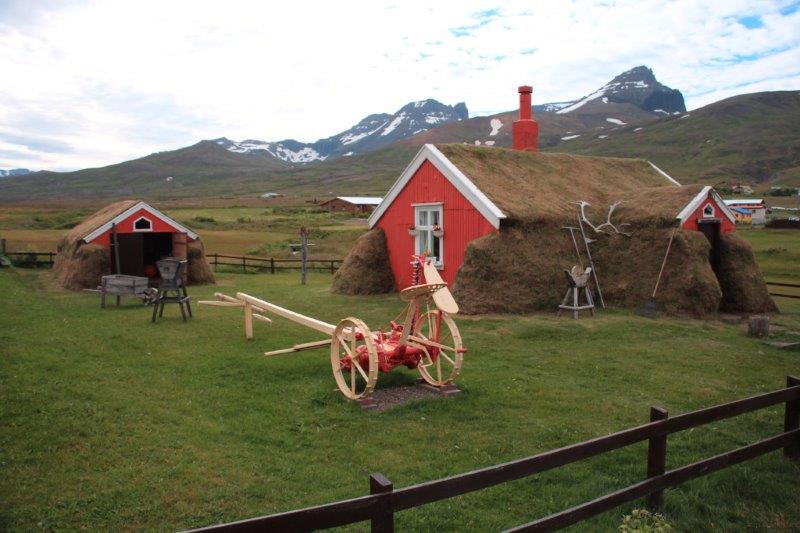
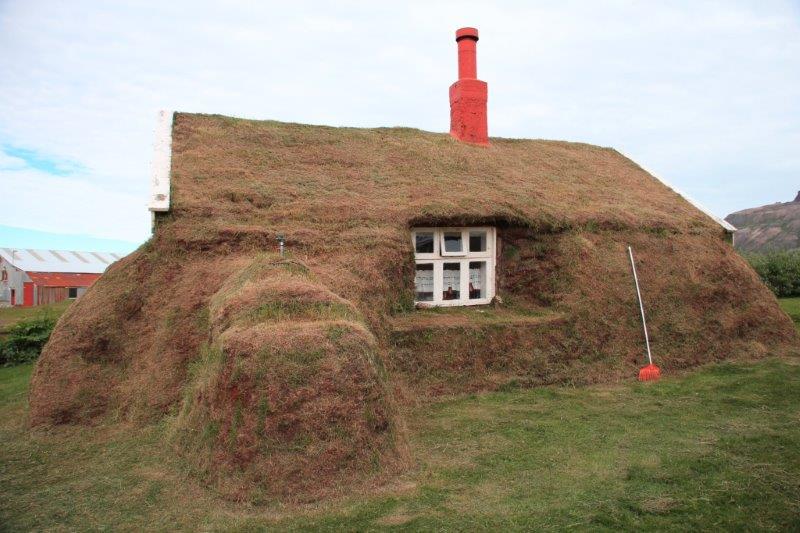
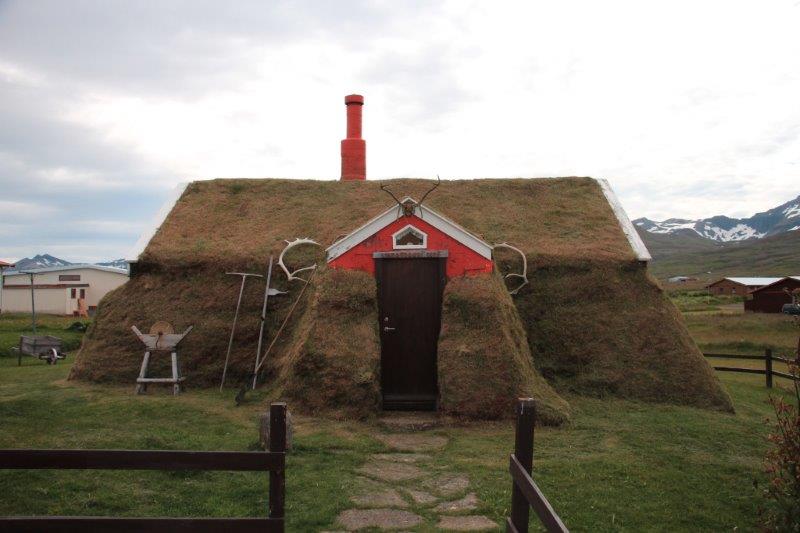
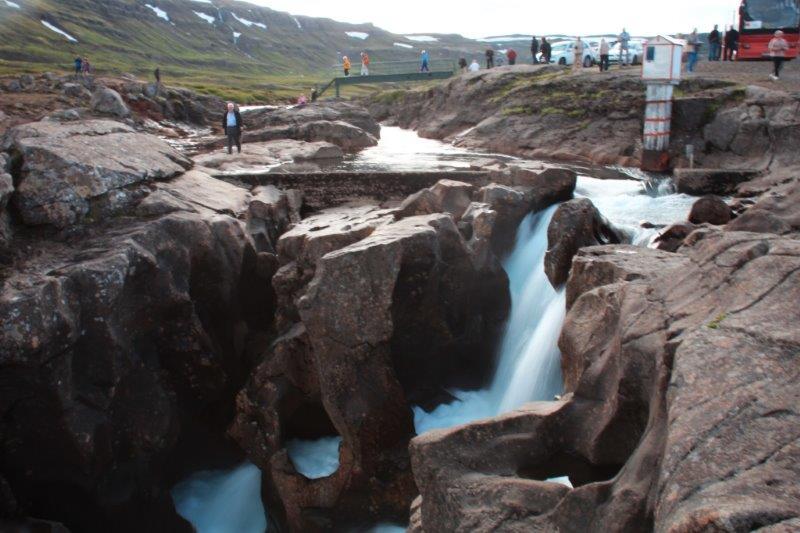
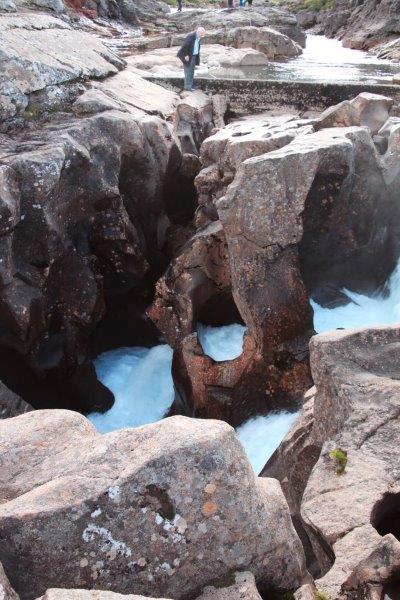
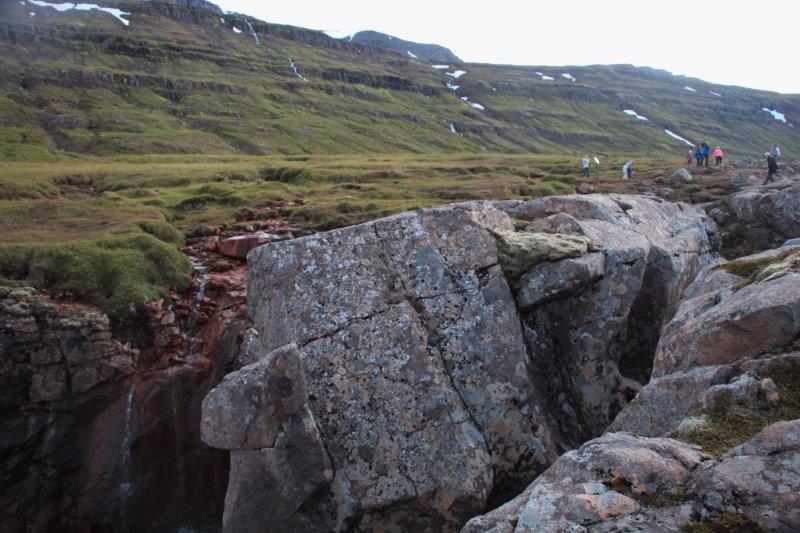
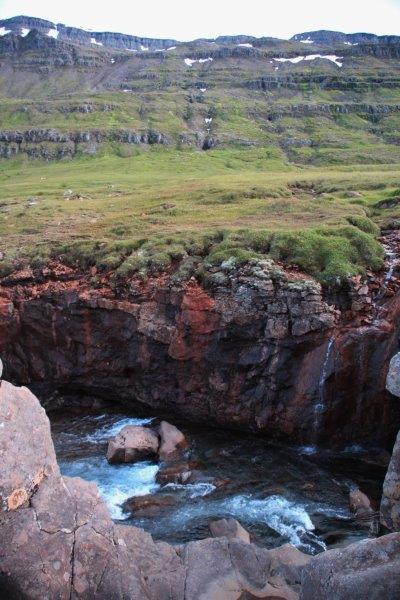
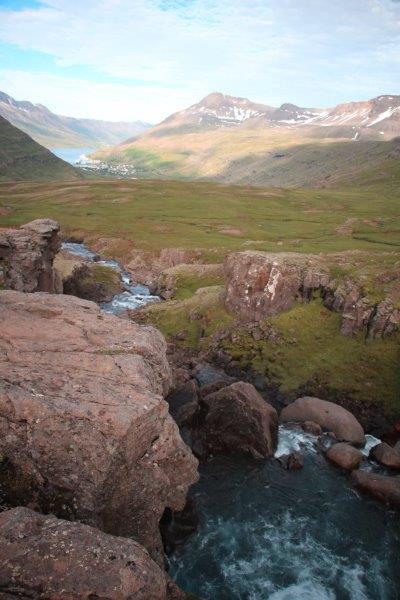
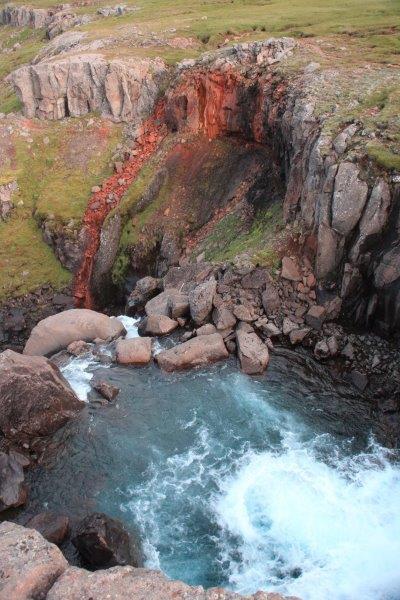
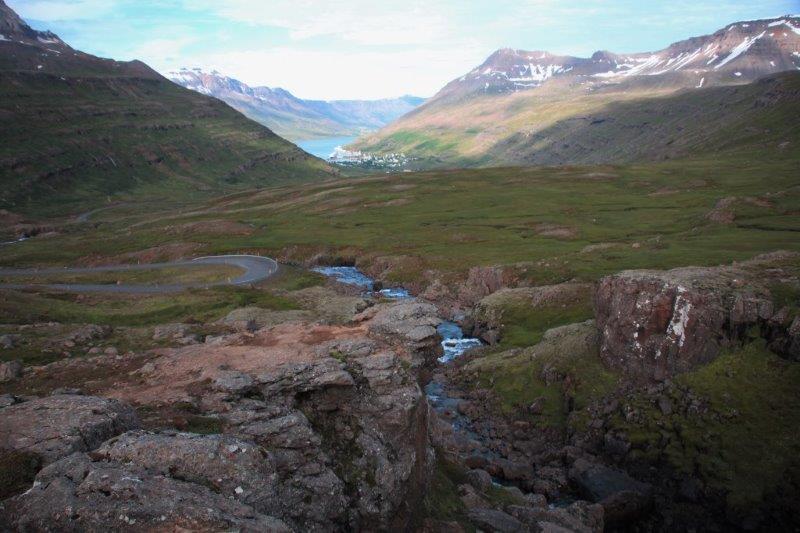
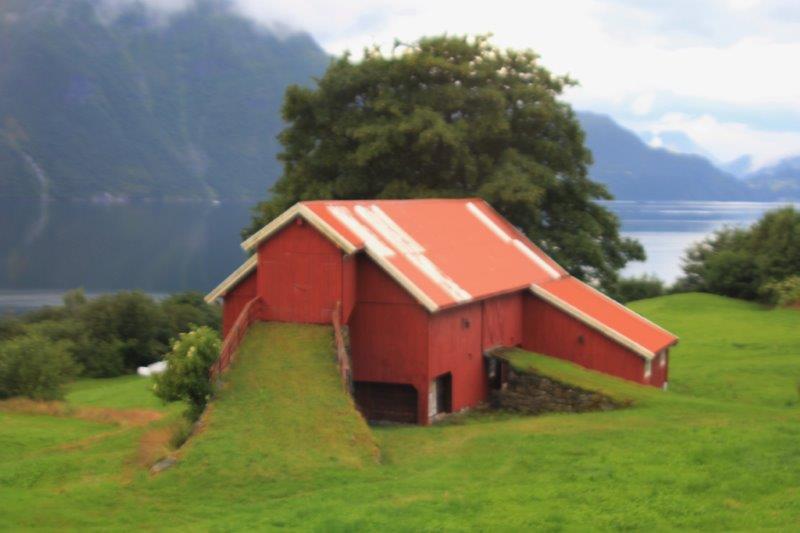
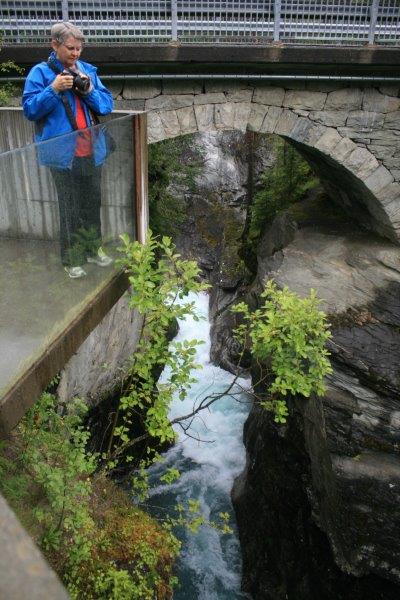
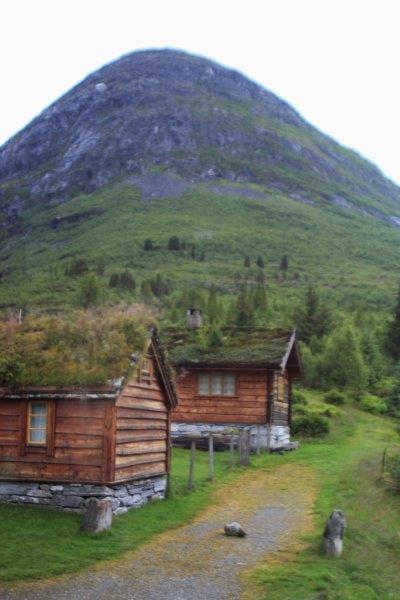
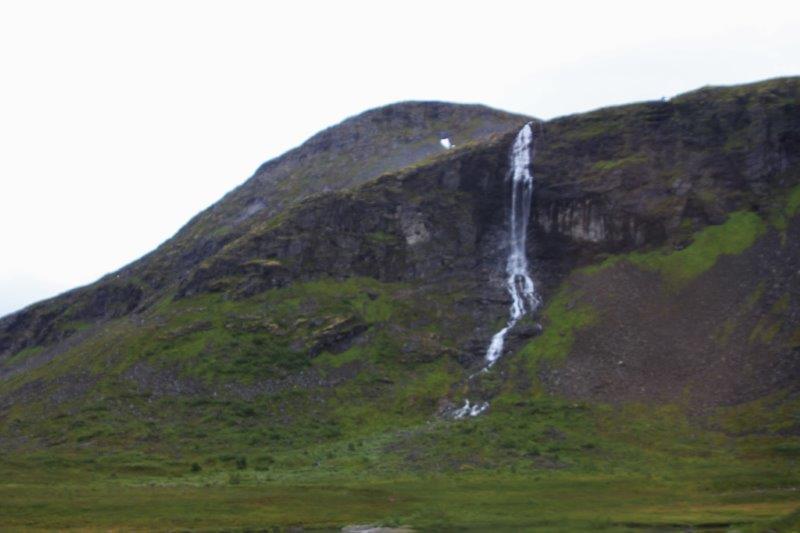
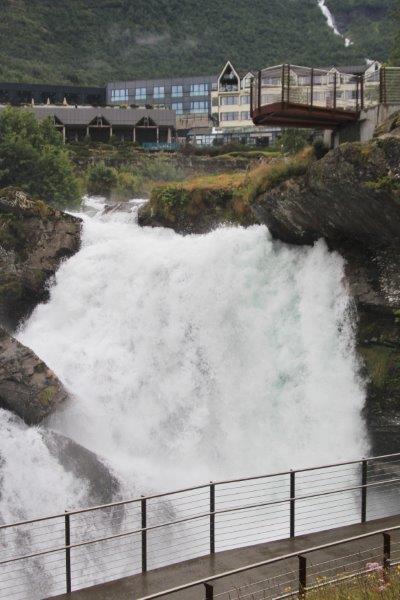
The most photographed house in Iceland.  Sod-packed sides.  It is still lived during the summer months.IMG_0620 IMG_0626 IMG_0632 IMG_0633We made a couple of  short photo op stops at a nice gorge and a waterfall  before the last bit of driving back to the pier.

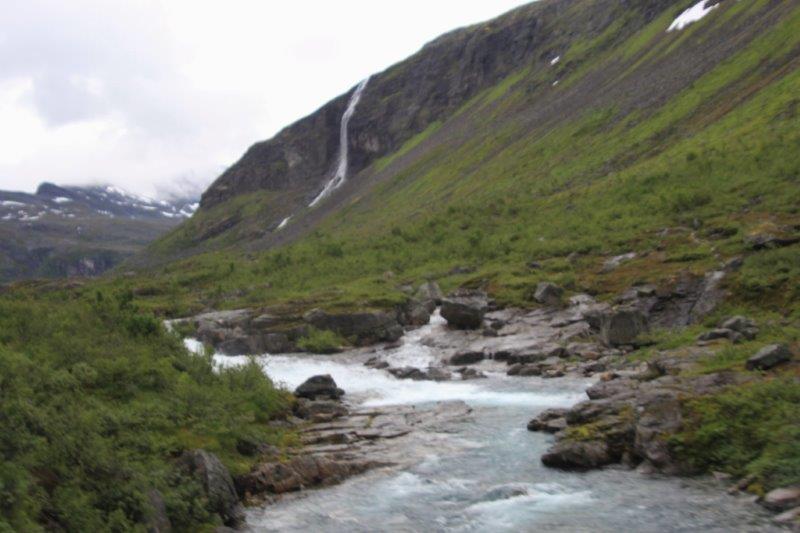
IMG_0711 You know it has been a cool summer when there is still ice in the river.
IMG_0726


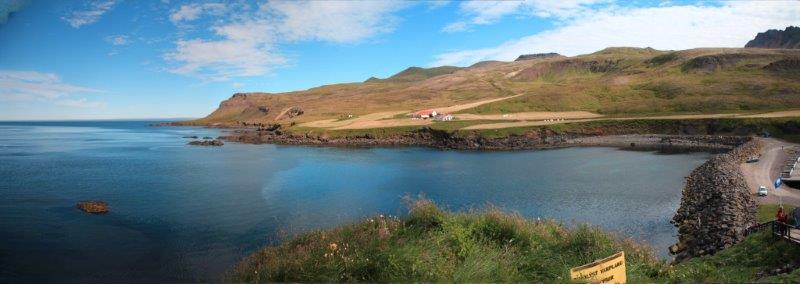
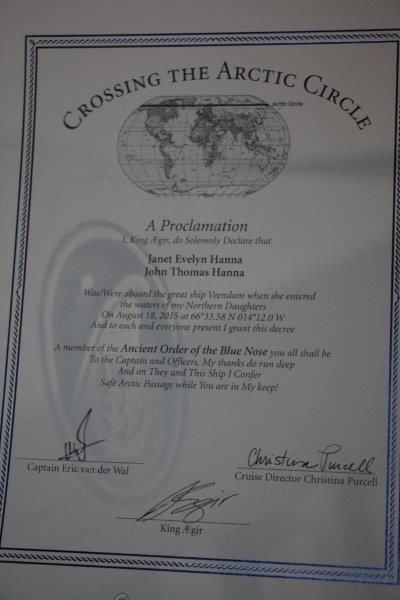
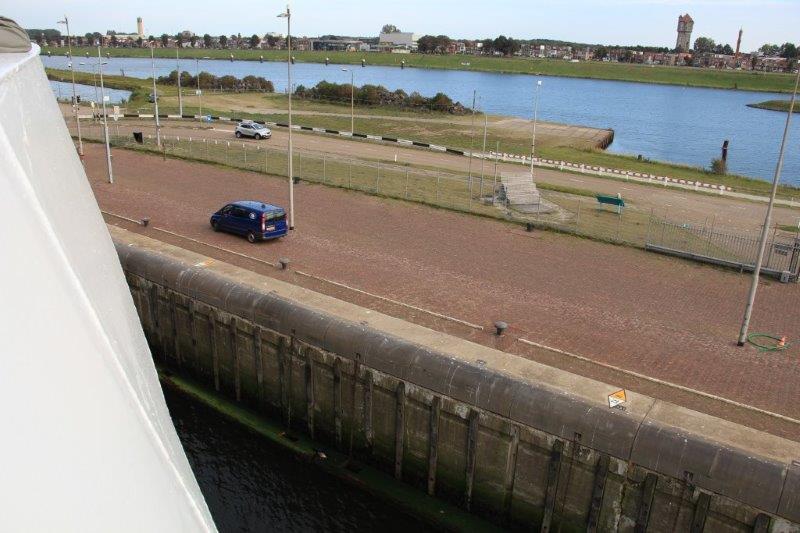
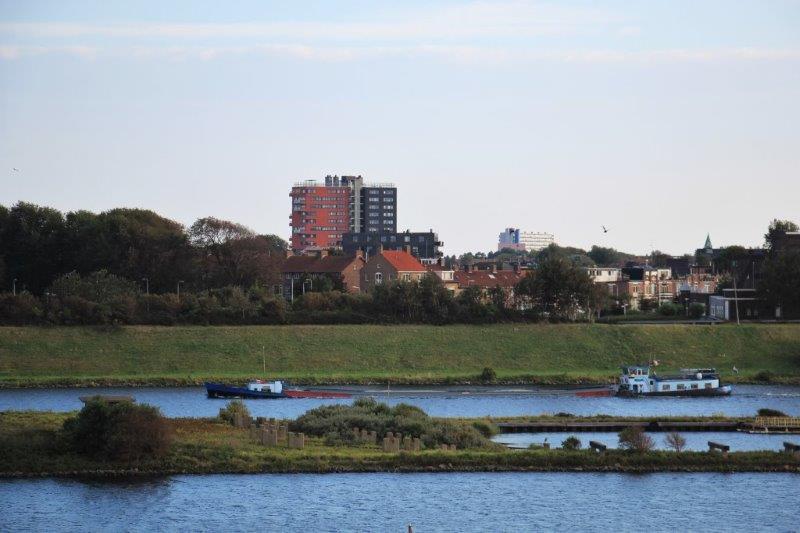
Seydisfjordur and our shipIMG_0729 IMG_0731 IMG_0735 IMG_0736 IMG_0737 IMG_0740 IMG_0741 IMG_0744 IMG_0754During the night, as we rounded the end of the fjord and made our way towards Akureyri we crossed the Arctic Circle so we have a new certificate and we are now official members of the Ancient Order of the Blue Nose.

IMG_1062


2015 Aug 16 & 17 – Days 23 & 24 – At Sea and Torshavn, Faroe Islands

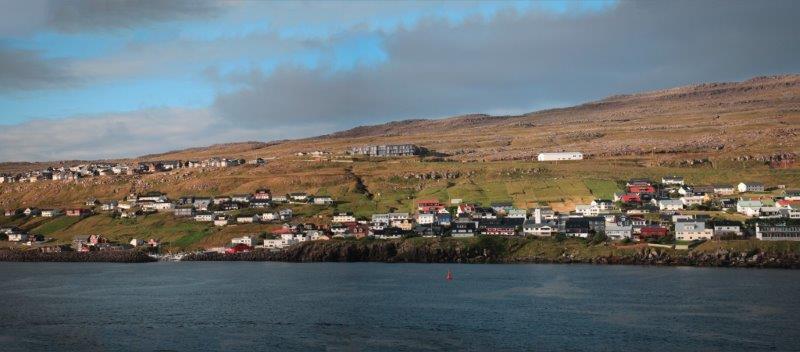
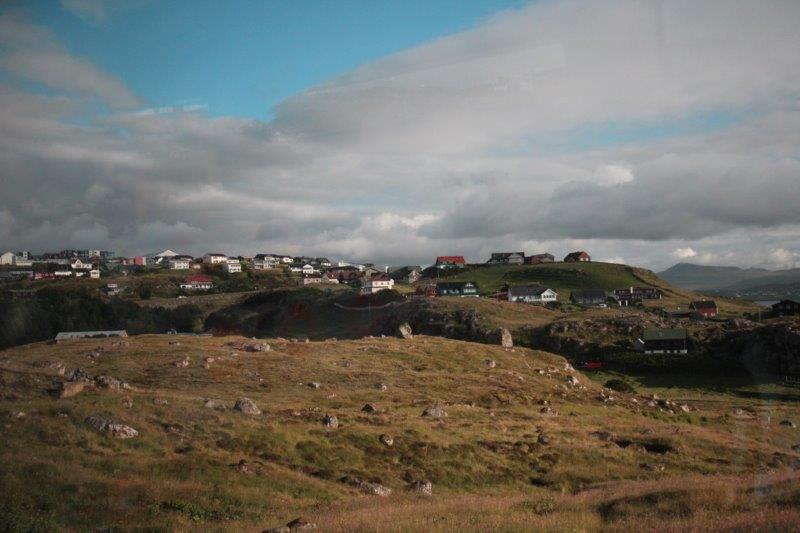
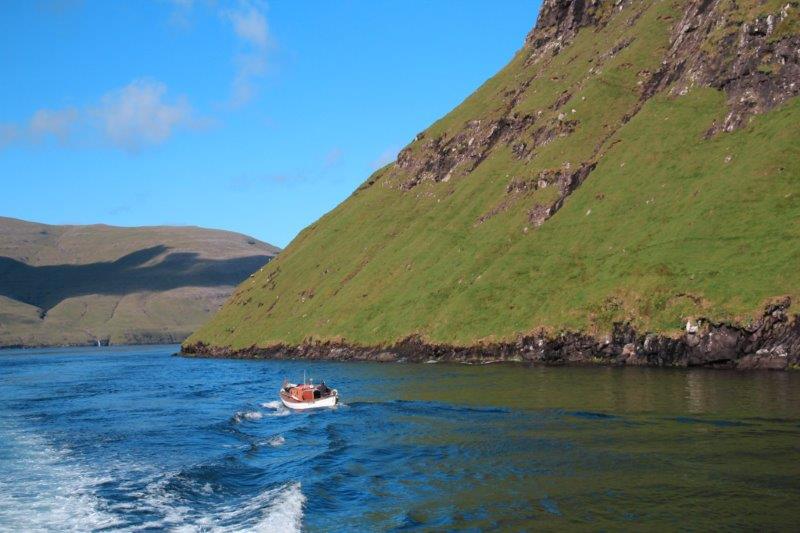
After a day at sea out of Dublin we arrived this morning at one of the world’s smallest capital cities, Torshavn (Tors haa ven), meaning Thor’s Harbour, the capital of the Faroe Islands and home to 35% of the population.  The Islands are affiliated with Denmark and use the Danish Krone for their currency. They have two national languages, Faroese and Danish and most also speak English extremely well.  The population of the Faroes is 50,000 people and 80,000 sheep. The first parliament was held in 1000 AD and the islands became a part of the Kingdom of Norway in 1035.  When the switch to Denmark took place I do not know.

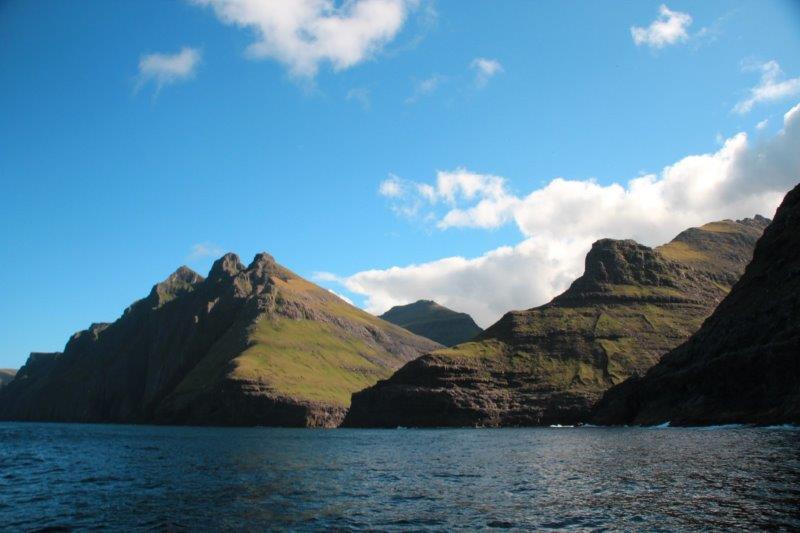
The archipelago is comprised of 18 islands and is geographically north of Scotland and halfway between Iceland and Norway and wherever you are on whichever island you choose you are never more than 5 km from the ocean. The highest mountain is 882 meters (2882 feet) above sea level and the average height of the Faroes above sea level is 300 meters (982 feet).  There are massive sheer vertical cliffs on these islands and 18 long tunnels, two of them under the ocean floor connecting islands.

IMG_024 IMG_0025 IMG_0039

IMG_0023Fishing and fish products are the most important ‘crops’ and account for 97% of all exports.  The cliffs are nesting places for 200 species of birds; only 40 of which remain all year round.  For a place so far north you would think it would have very harsh winters but that is not true.  The Mexican Gulf Stream flows by and keeps the temperatures quite moderate.  Winter temperatures rarely go below freezing with snow that comes and goes.  Summers are also cool though with an average of 15C (60F).

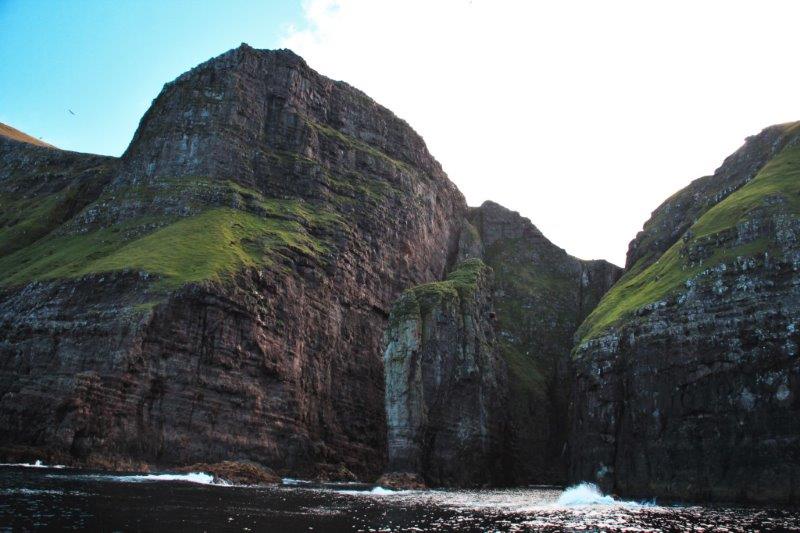
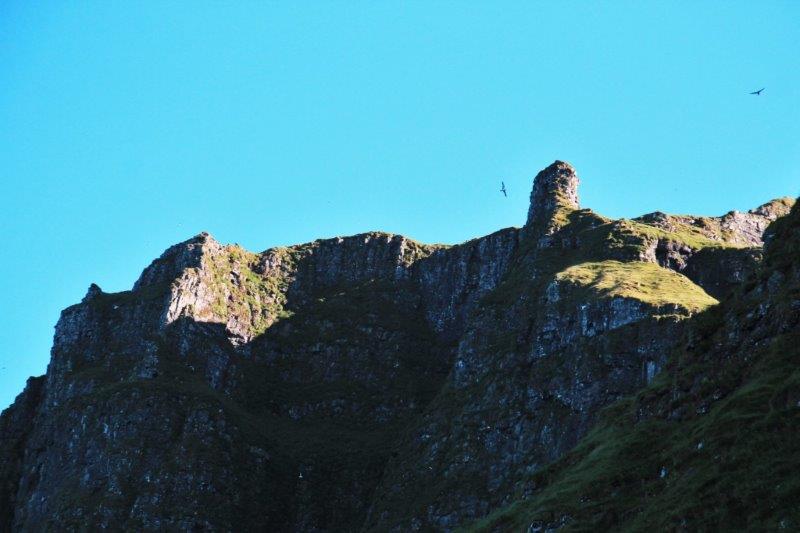
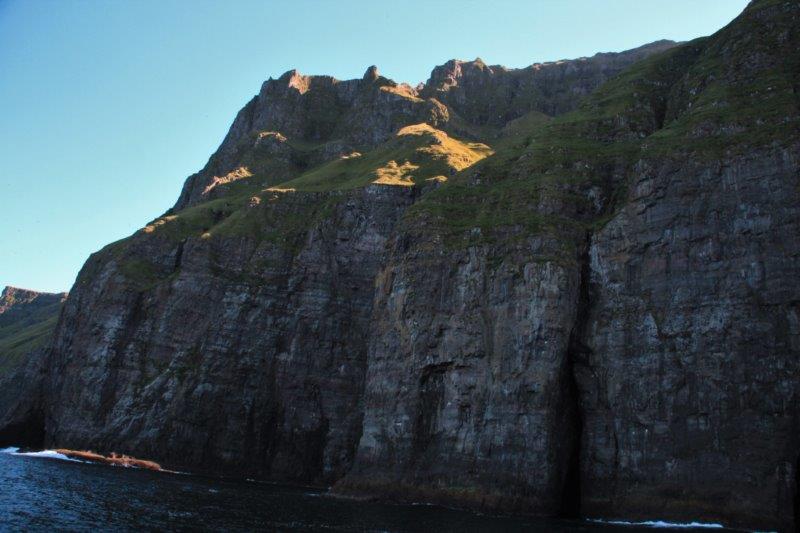
We took a tour to see the Vestmanna Seacliffs where thousands of birds nest in the spring and early summer, including puffins.  Most of the birds have raised their young and flown south already.  We did see a few puffins but they were too far away on the cliffs or diving in the water for food so I wasn’t able to get any photos.  We were also on a boat so focusing was an issue.

We were driven by bus to the western side of the Streymoy, the largest island and location of Torshavn.  The day was lovely, sunshine and fluffy white clouds.  Like most of the northern countries we have visited the Faroes have been having a cool cloudy summer. They have had four days of sunshine so far, yesterday and today being two of them and today was the best to date.

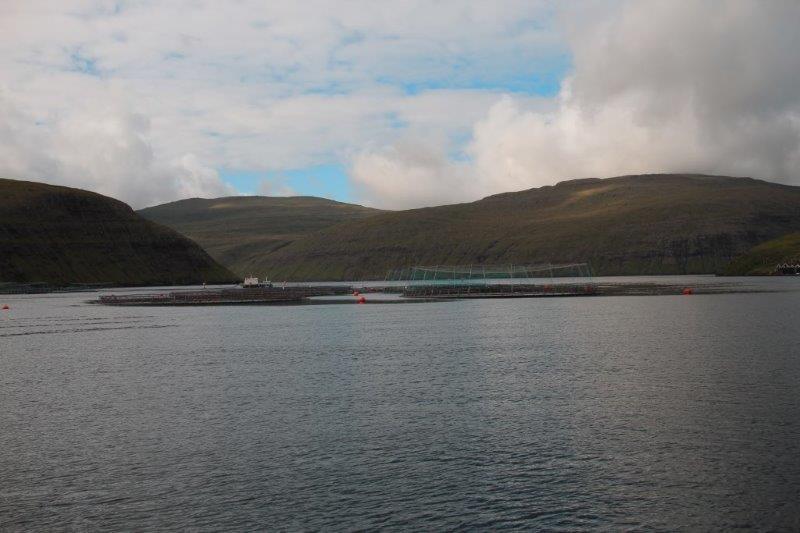
IMG_0042 IMG_0043 IMG_0044 IMG_0048 IMG_0055 IMG_0056 IMG_0057Much of the fish are now farmed and you will see the huge rings in the water of most fjords.  There are 85,000 salmon in each ring and they stay in them, getting fed daily, for 16 months at which time they weigh about 10-12 kg (22-26 lbs).  The salmon is also fished in the rivers and fish ladders were made years ago to aid them in going inland to spawn.  We passed a section of a river that had ropes festooned with blue plastic ribbons criss-crossing from one side of the river to the other.  The fishermen put them up to discourage birds from catching the fish.

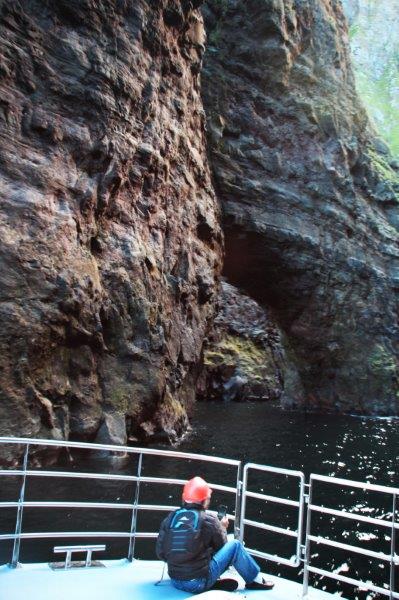
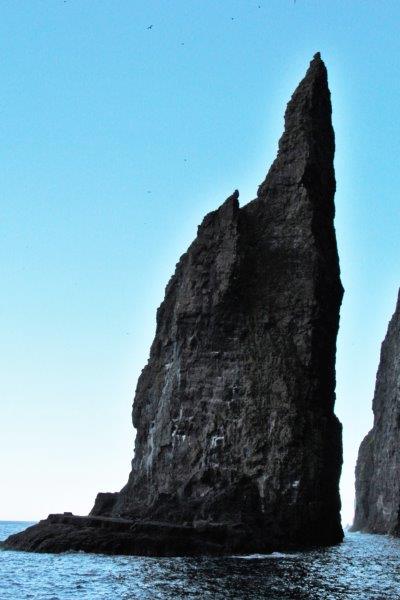
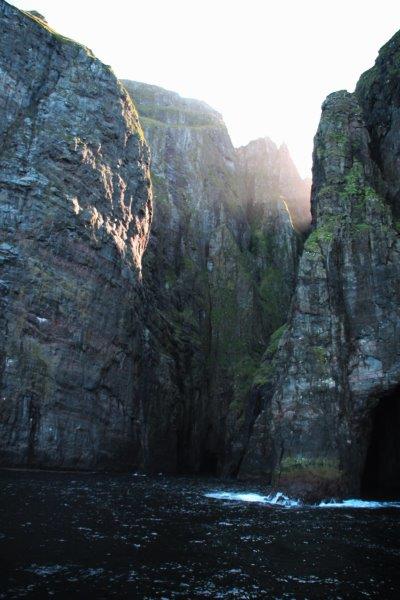
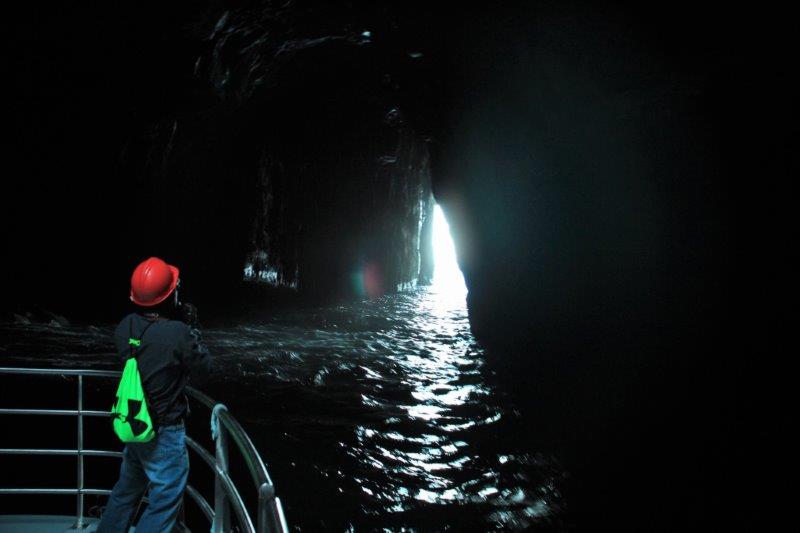
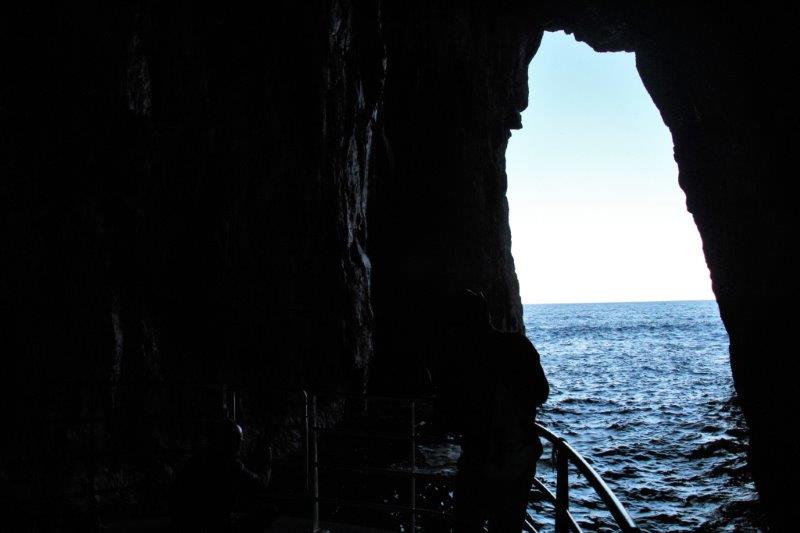
IMG_0063We arrived at a largish community whose name I don’t remember and boarded our boat for the ride to the sea cliffs.  There were 46 of us on the tour and we all got on the one boat with room for everyone.  The skipper put-putted out of the harbour and around the point to hug the cliff-side for over an hour.  There are lots of huge caves and cuts into the cliff face and we were taken into several of them and back out or through a natural rock arch or around a gigantic rock pillar; the last one we went through took us into a grotto and out the other side.  Really cool!

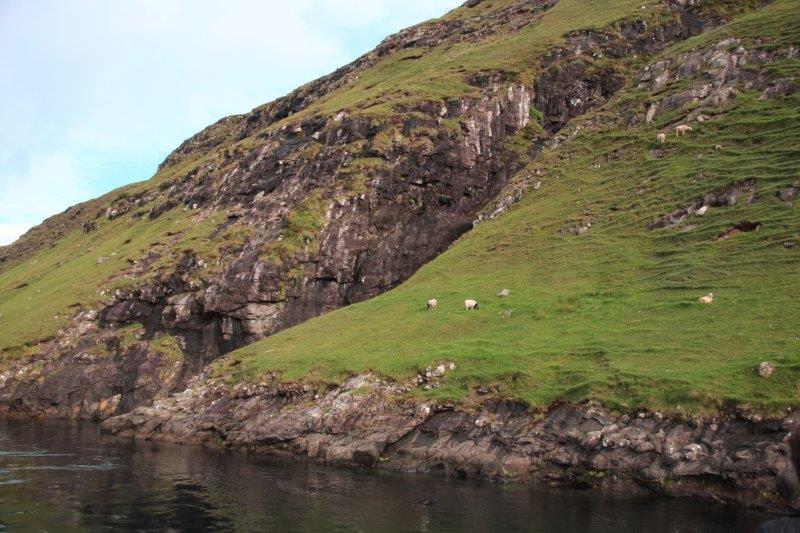
IMG_0069 IMG_0070 IMG_0071 IMG_0074 IMG_0075 IMG_0077 IMG_0087 IMG_0106 IMG_0107 IMG_0130 IMG_0132 IMG_0139 IMG_0147 IMG_0153 IMG_0180 IMG_0185 IMG_0186 IMG_0187 IMG_0190 IMG_0192 IMG_0208 IMG_0209As we went along the base of the cliffs we could almost always see some sheep grazing on the grassy slopes far above.  Farmers leave the sheep out on the cliffs to forage from spring until fall when they are brought in for shearing and butchering.  How do they get the sheep to the pastures, you ask, since these cliffs rise between 300 (700’) and 600 (1500’) meters right out of the sea?  Well, some of them are driven over the hilltop from the valley side.  Others, the ones on the more remote cliff tops are brought out by boat and hauled up the cliff face by rope, set free to graze all summer, then caught one at a time by some very energetic and brave fellows, and tied around the middle with a rope and lowered over the side and into a boat again.  Absolutely crazy!  It is a sort of fall sport to go to the cliff tops to try catch the sheep.  You would not want to miscalculate your step and fall off!  If you survived the fall (which is unlikely) the current flows at 8 knots and will just take you away southward.  This happens sometimes to sheep that stray too close to an edge and fall into the water.

IMG_0084 IMG_0089 IMG_0200The bus driver took us back via a different route and let off those who wanted to stay in town before driving the rest to the ship.

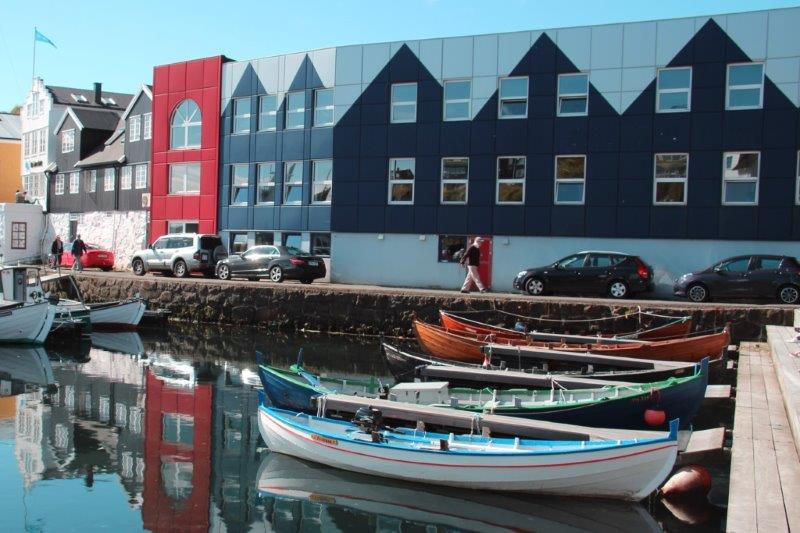
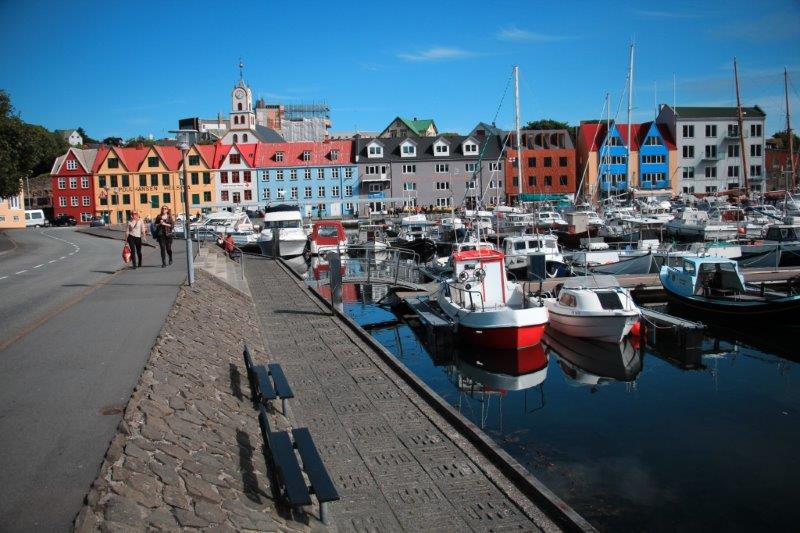
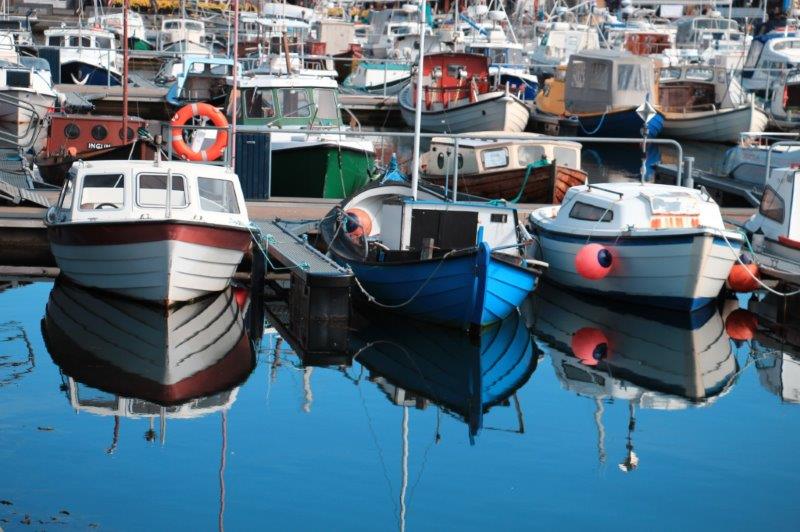
IMG_0212 IMG_0213 IMG_0216 IMG_0218 IMG_0224 IMG_0225 IMG_0227 IMG_0232 IMG_0236 IMG_0237 IMG_0238 IMG_0240 IMG_0244 IMG_0247We were docked at a working port so there was no walking from ship to shore.  A shuttle bus would take you to the edge of town and bring you to the ship if you were not on a tour bus.  We had two hours before all-aboard so we found a place to buy some lunch and afterward wandered around town.  We tried to locate a geo-cache or two but all the caches seemed to be multi-caches that were strung out too far for us to find in the time we had.  The reflections in the water of the boat harbour were stunning!

IMG_0250 IMG_0251 IMG_0252 IMG_0254 IMG_0262 IMG_0263 IMG_0265 IMG_0269 IMG_0276 IMG_0277 IMG_0278 IMG_0279 IMG_0280 IMG_0285 IMG_0286 IMG_0287

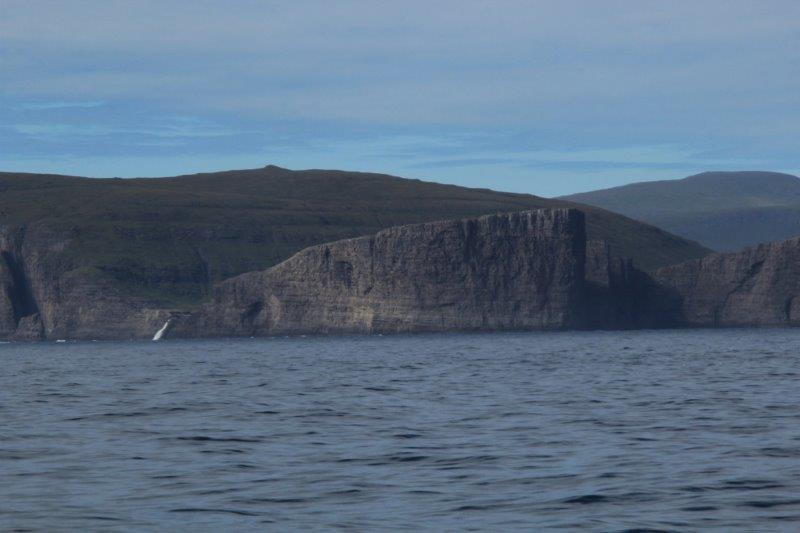
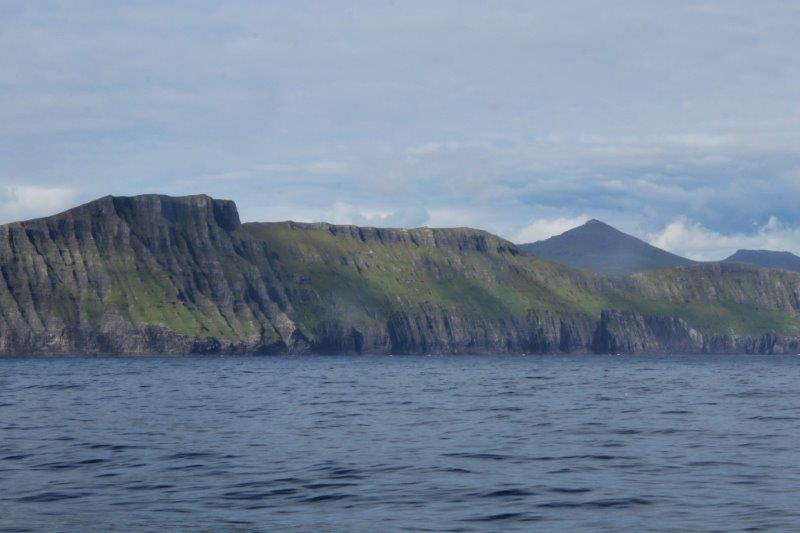
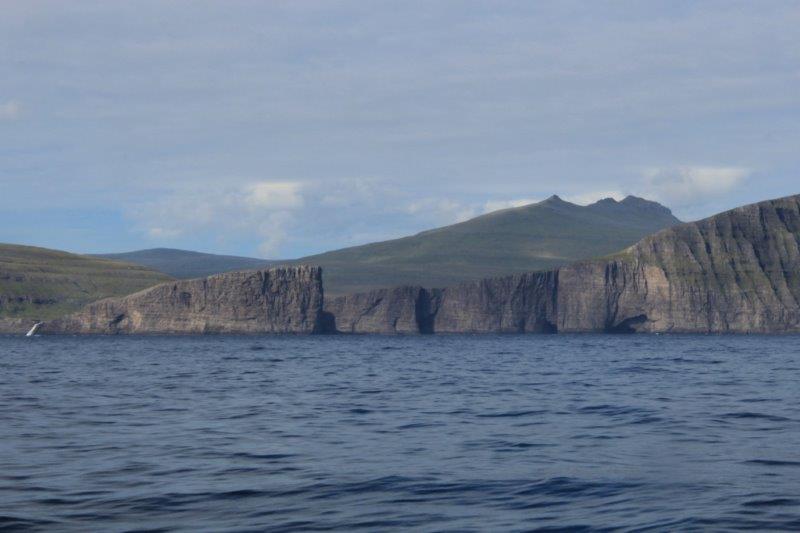
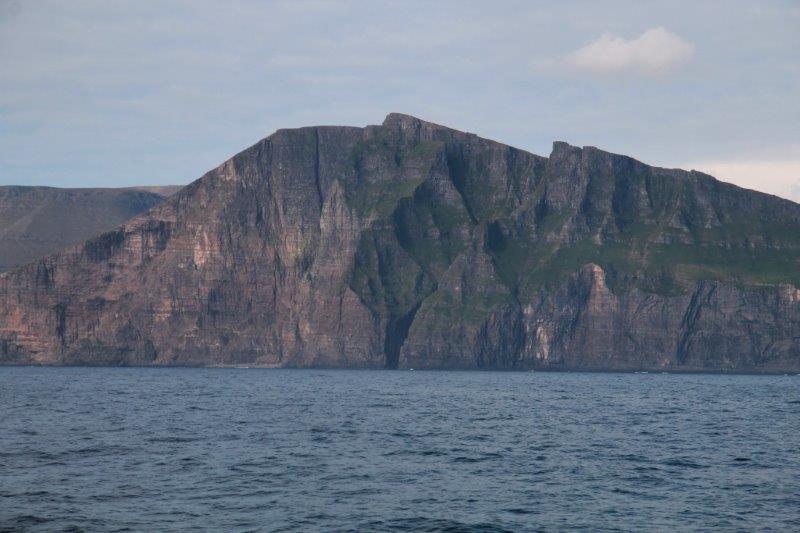
IMG_0291IMG_0293We set sail again at 3 pm and the captain took us past some more of the island’s amazing cliffs.  John and I just lay on our bed and took photos out the window.  It was a great day!  One of the best, along with Qaqortoq, Greenland, so far on our trip.  Three more ports in Iceland over the next three days.

IMG_0295 IMG_0299 IMG_0304 IMG_0306 IMG_0308 IMG_0312 IMG_0316

2015 Aug 14 & 15 – Days 21 and 22 – At Sea and Dublin, Ireland

Aug 14 and 15 – Days 21 & 22 – At Sea and Dublin, Ireland

I spent our sea day on the computer selecting photos and writing my blog for the two days in Amsterdam and our day in Zeebrugge.  John gets lots of reading and Sudoku done on those days.  Our cabin is on deck 4, the dining room and the front desk are on deck 7, library is on deck 8, laundry is on decks, 5, 6, & 10 and the Lido restaurant where we eat breakfast and lunch is on deck 11.  We never use the elevators.  To get to the Lido we climb 112 stairs so we get quite a bit of exercise just going from food to food!  On smooth sailing sea days we also walk the Promenade Deck.  4 laps is one mile. So far when we sail we have never gained weight.  Some people pack on pounds and pounds.  We try to be good.  Our friend Bill said, “I came as a passenger, I don’t want to leave as cargo.”

Chapter 1 – Dublin

The ship was docked at the port terminal a few miles out of the city.  There were free shuttles running all day.  The Celebrity Silhouette with 4,000 passengers was docked for the day also.  We were to be in Dublin from 8 am until 7:15 pm and our tours were in the afternoon so we caught a shuttle at about 10 and walked a loop that contained Merrion Square, St. Stephen’s Green (donated by the Guinness family) and Trinity College.

IMG_9774 IMG_9796 IMG_9797 IMG_9813IMG_9798 IMG_9849


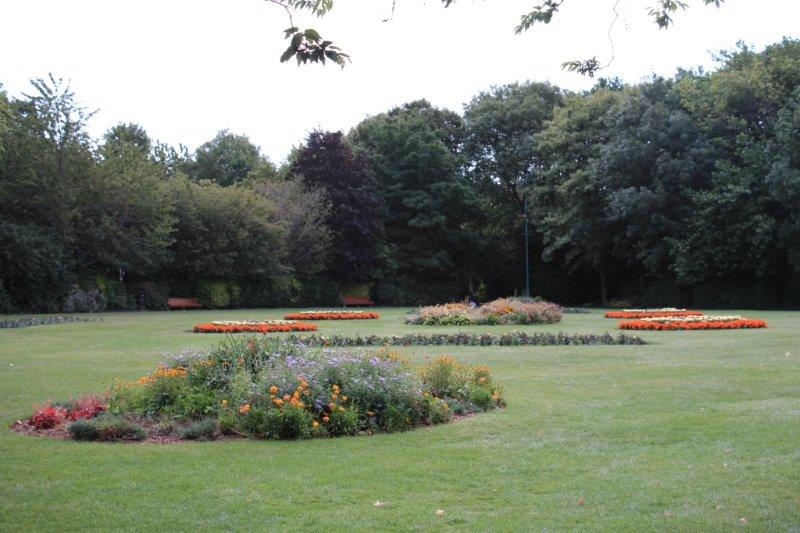
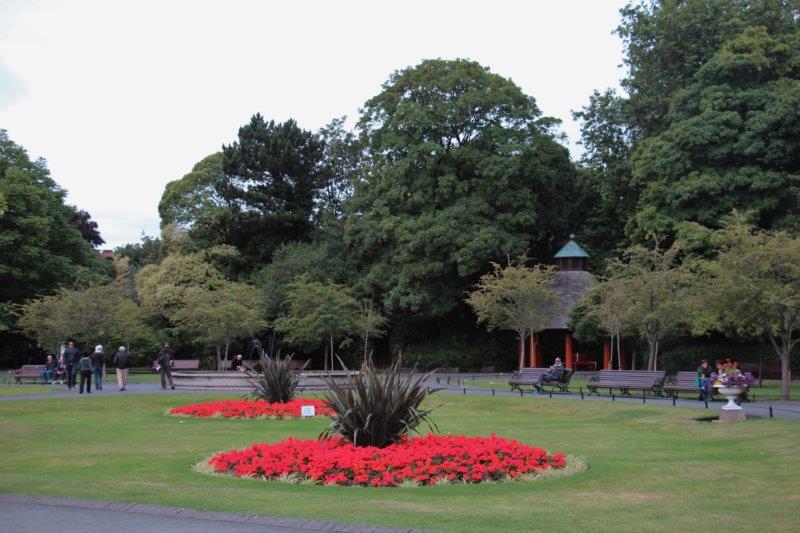
Merrion Square Park


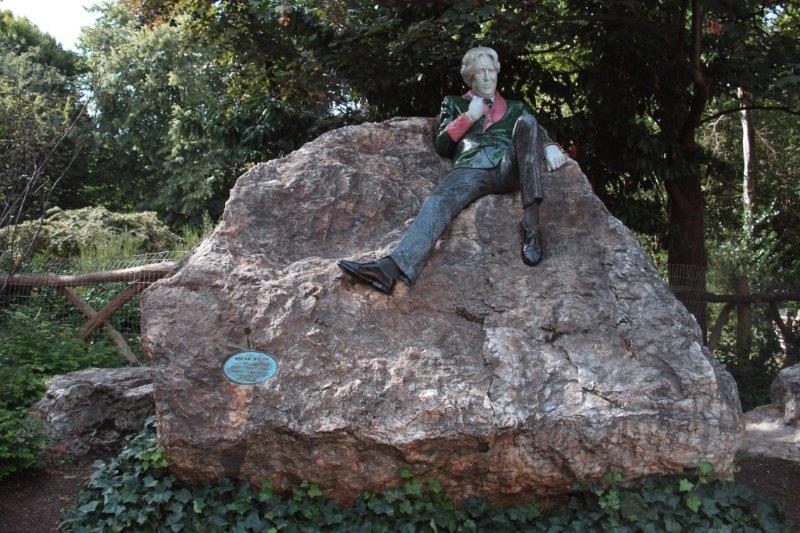
IMG_9776 IMG_9789 IMG_9781 IMG_9792  Oscar WildeIMG_9786 IMG_9818

IMG_9819


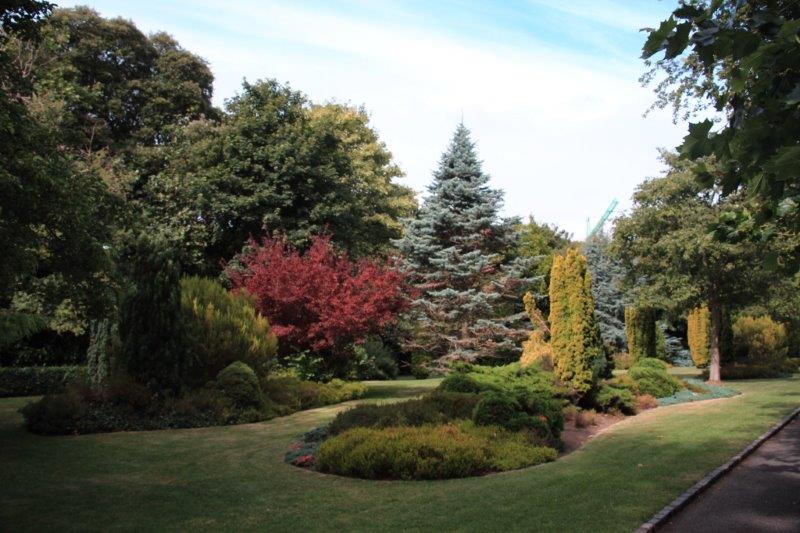
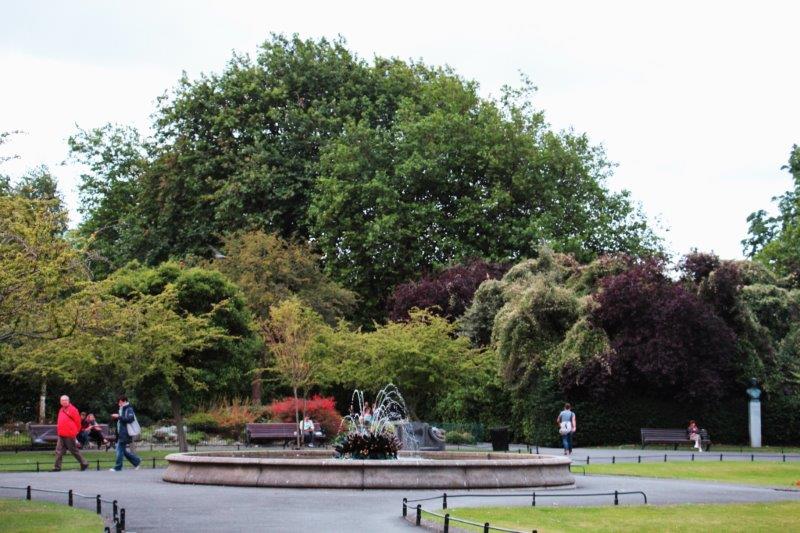
St. Stephen’s Green ParkIMG_9822


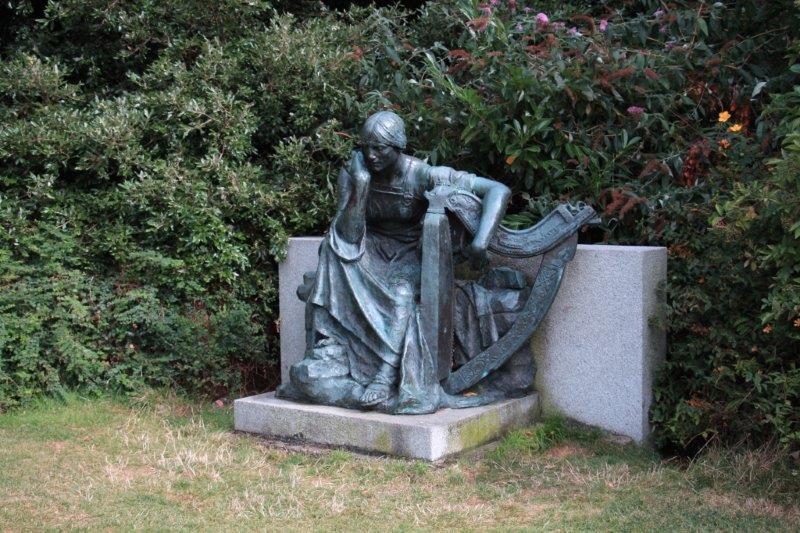
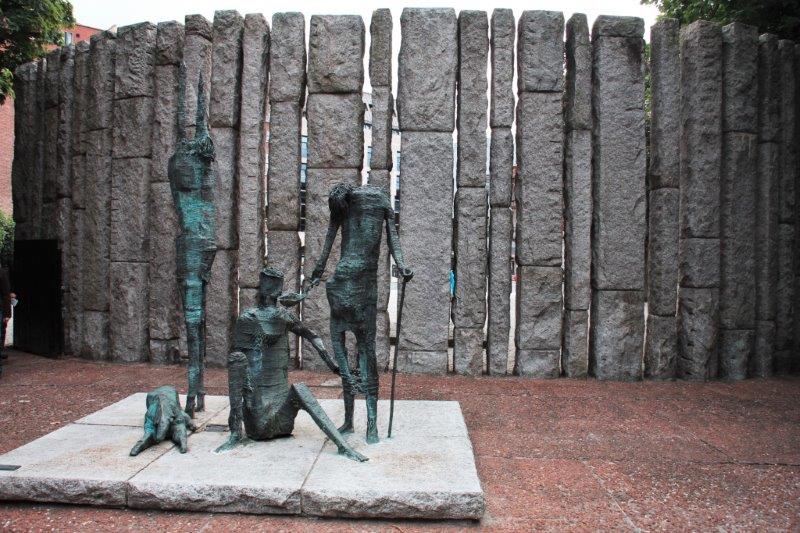
Sculpture entitled “Famine”IMG_9828 IMG_9832 IMG_9834 IMG_9837

IMG_9842


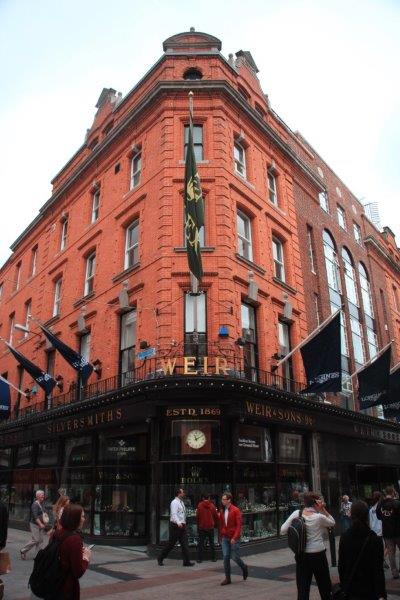
Grafton Street – a major shopping streetIMG_9848 IMG_9846

These are for you Trish.

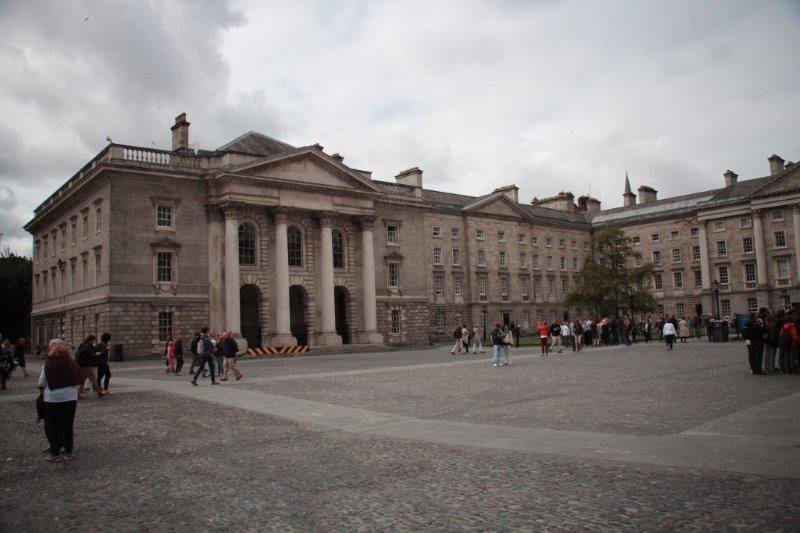
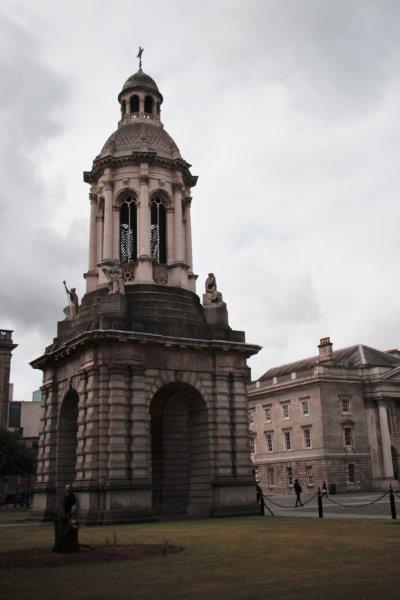
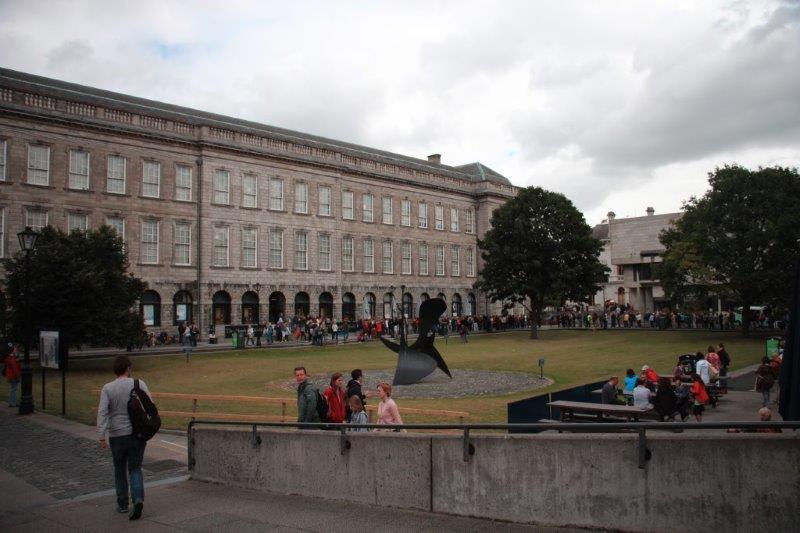
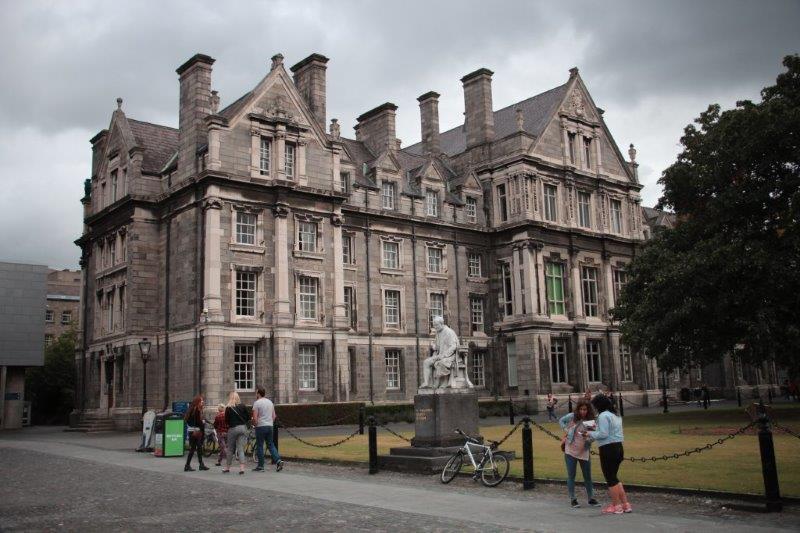
Trinity College was established by Queen Elizabeth I in 1592, the oldest university in Ireland, and is a Protestant College.  A Catholic could attend free but only if they first converted to Protestantism.  Housed at Trinity College is the world’s most famous Medieval manuscript, the 9th century book known as The Book of Kells; Ireland’s greatest cultural treasure.  The Book of Kells is a richly decorated copy of the four Gospel of the life of Jesus Christ.  I would like to have seen it but the line waiting to get into the library stretched half-way around the square. We only had 20 minutes until we wanted to be making our way back to Merrion Square to get the shuttle back to the ship.  It would have taken almost an hour just to get to the door.  Next time…

IMG_9850

This about half the line waiting to see the Book of KellsIMG_9858 IMG_9859 IMG_9861 IMG_9864 IMG_9868 IMG_9869 IMG_9870 IMG_9871

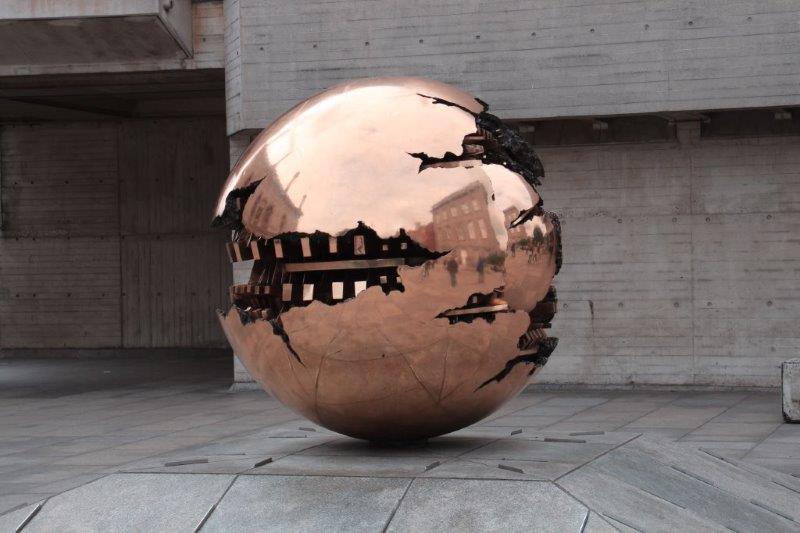
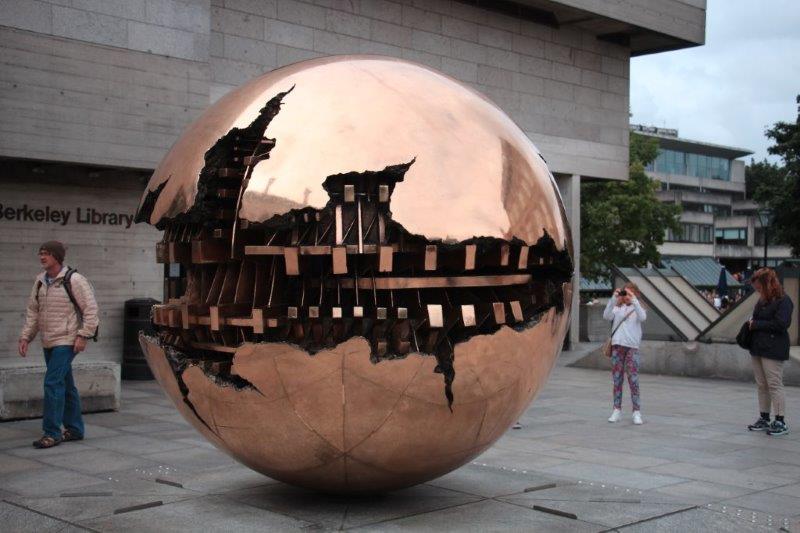
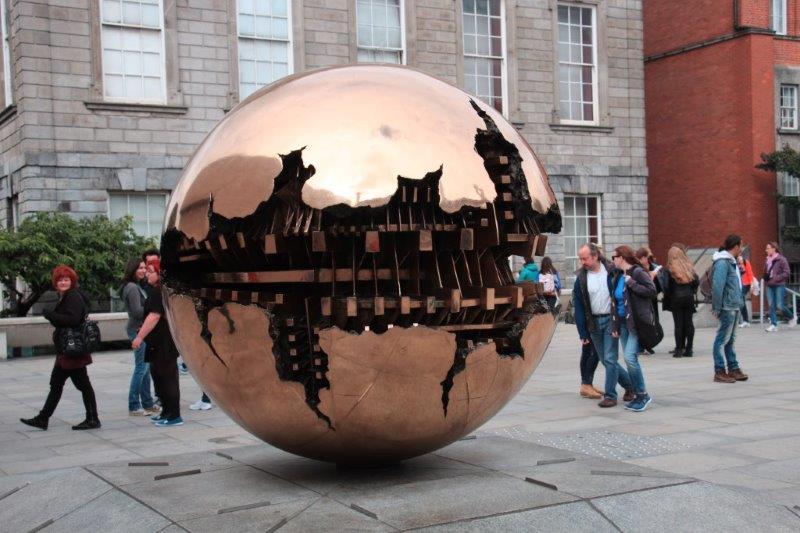
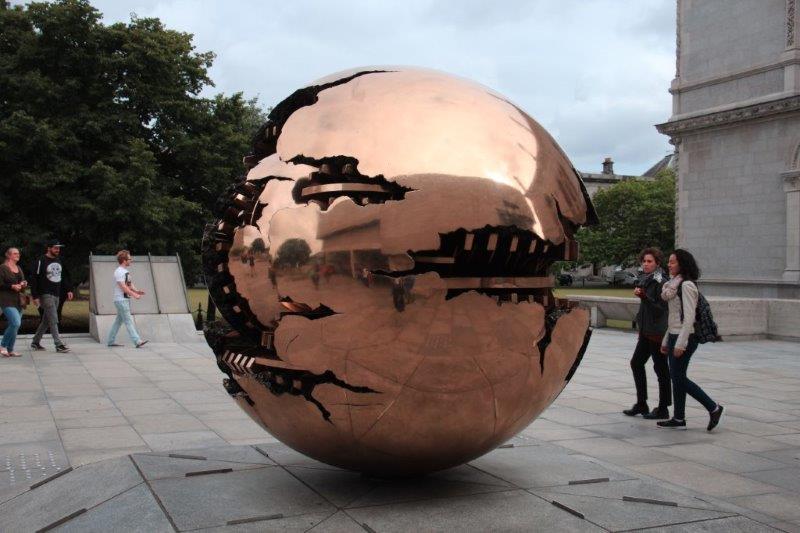
A Sphere in a Sphere Sculpture at Trinity College

Chapter 2 – Guinness Factory

John went on a tour of the Guinness Factory; a must see for him as he likes a pint of Guinness every now and then.  The bus took them on an extensive drive around the city pointing out various points of interest with some photo stops.

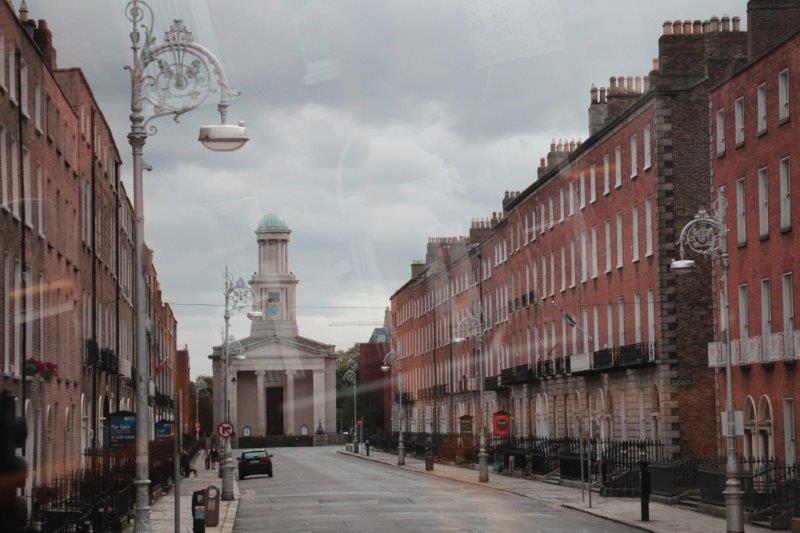
These four-story Georgian row houses were slums back in the day of the early King George’s with no plumbing and 100 people living in each unit.  Today the houses have been modernized with the kitchen on the entry level, 2nd floor containing the living room and the top two floors for the bedrooms.  Before the 2008 economic crash they would sell for 6 million Euros.  Today you can get one for a measly 1 million.

CAM01843

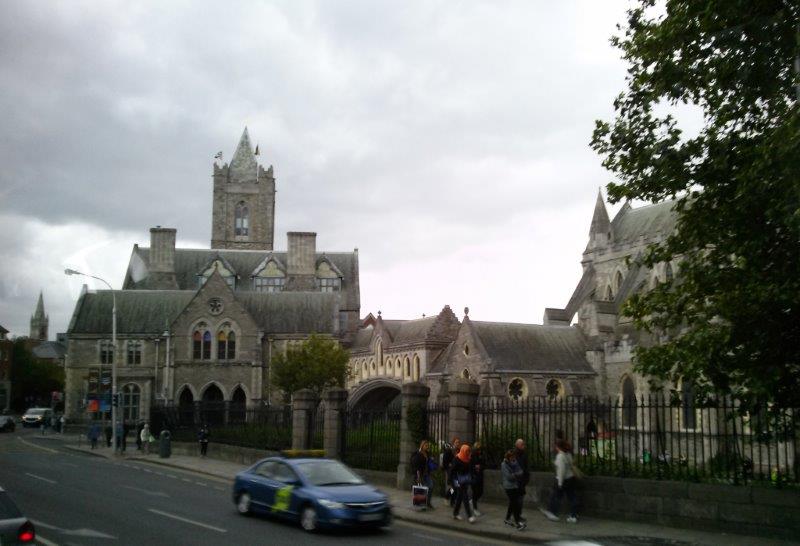
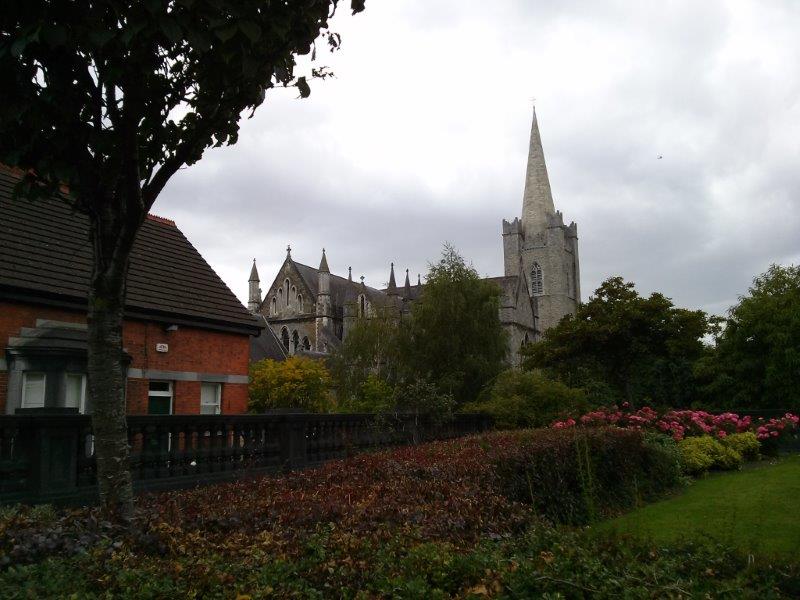
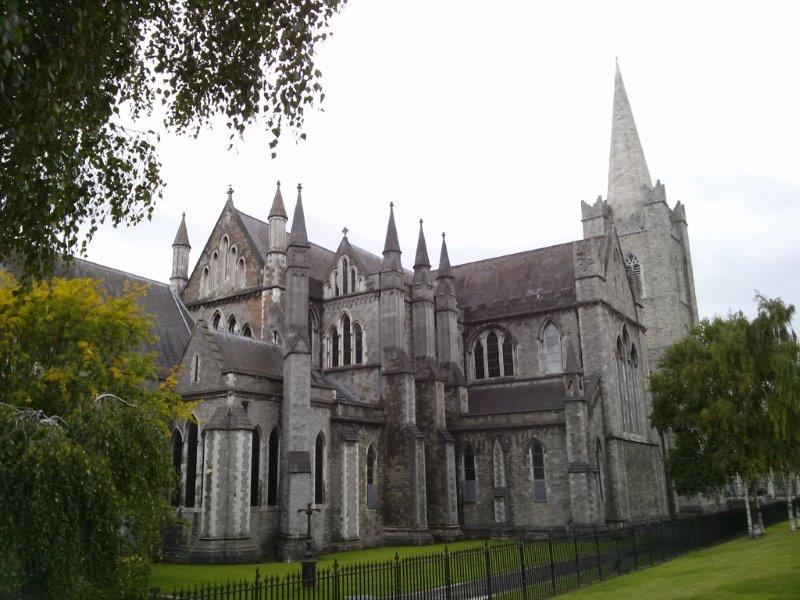
Another stop was St. Patrick’s Cathedral, founded in 1191.  Since the time of Arthur Guinness the Guinness family has contributed to the Cathedral.  In the 1860’s Sir Benjamin Lee Guinness donated 150,000 pounds of his own money to its restoration.

CAM01867 CAM01872 CAM01874The Guinness family were ruthless businessmen, beginning with Arthur, but have always taken care of their people. In the mid-1700’s a person was either nobility or, if rich, charitable.  Since Arthur Guinness was not nobility and was a self-made businessman he decided to be charitable.  To this day the family contributes millions to foundations and charities set up by successive members of the family over the years.  In the early 1900’s the housing situation was so bad the family built houses for the workers at the brewery; which are still in use today.  They built very modern buildings with plumbing and adequate space for the families.

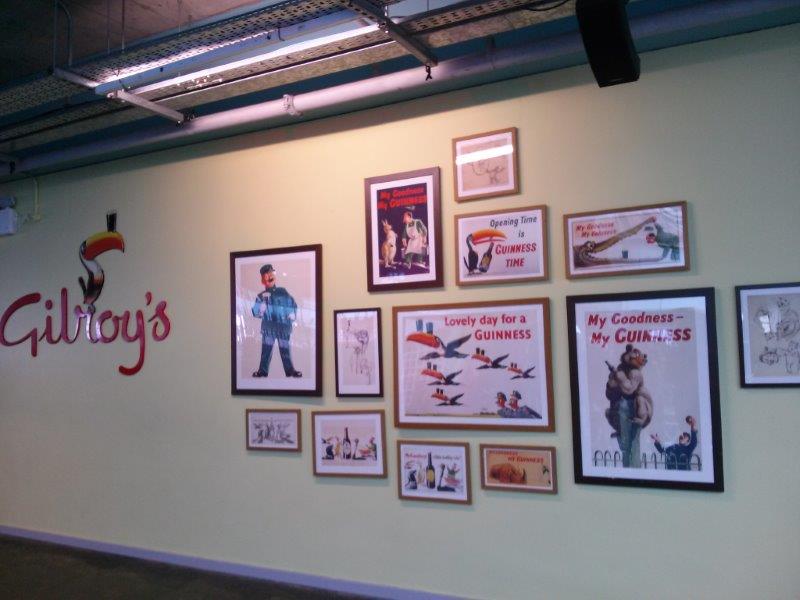
Pride of place in the brewery is a copy of Arthur Guinness’ famous 9,000 year lease for water rights, which he signed Dec. 31, 1759.  The lease is still in effect today although it has been challenged in court several times.  The Guinness factory makes 6 million pints of beer every day using the free water obtained from this lease.  90% of all the barley grown in Ireland is bought by the Guinness factory.  Guinness is made from only four ingredients: barley, hops, yeast and water.  And – this is important – Guinness is ruby red NOT black!  The best part of the tour was at the end when everyone was given a pint of Guinness. The brewery guide said, “You’ll never taste a Guinness as good as the one you get here. Guinness doesn’t travel well.”  John agrees.  It was the best pint of Guinness he has ever had.

CAM01878


The housing Guinness built for his workers

CAM01891


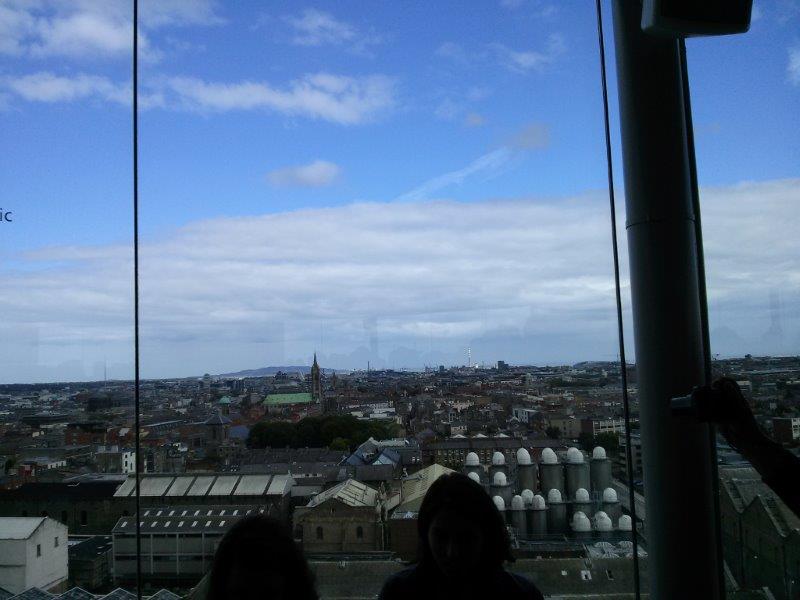
View from the top of the Brewery CAM01896 CAM01897FYI: The Guinness Book of World Records was started in a pub over a bet regarding something.  When the correct answer had been located they decided they should write a book that could be used as a reference for who was best at this or that, or who won what.

Chapter 3 – The North Coast and Malahide Castle.

Since I don’t drink beer, especially one as dark as a Guinness I have no interest in how they make the stuff.  Instead I took a tour to Malahide Castle which is located a few miles to the west of the city.

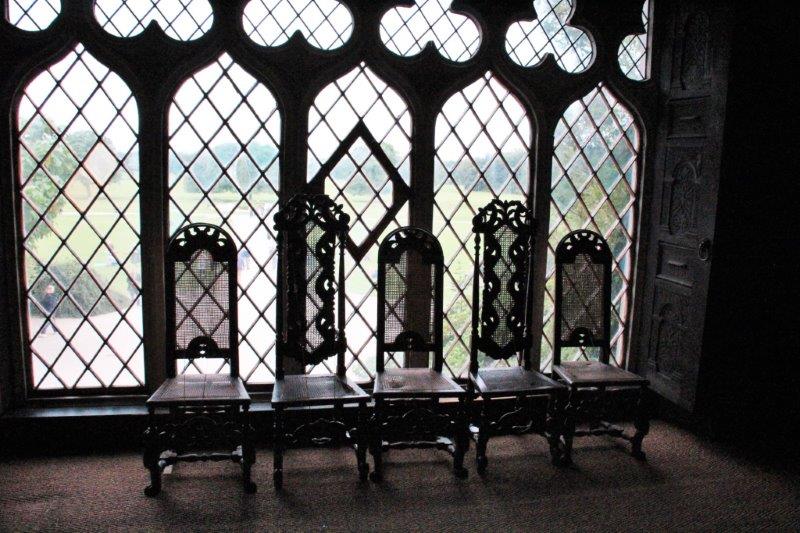
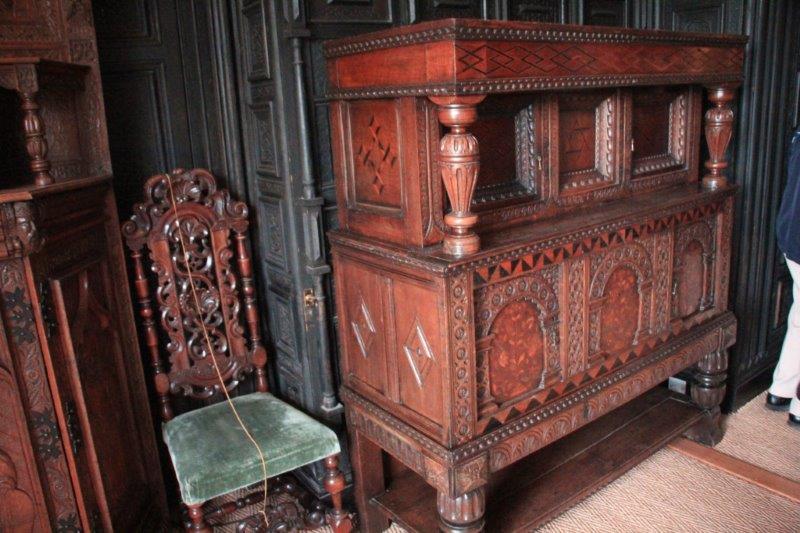
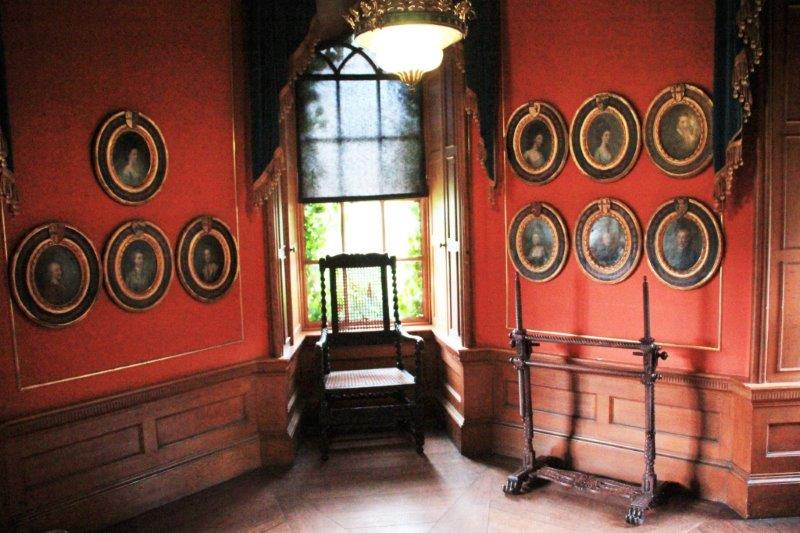
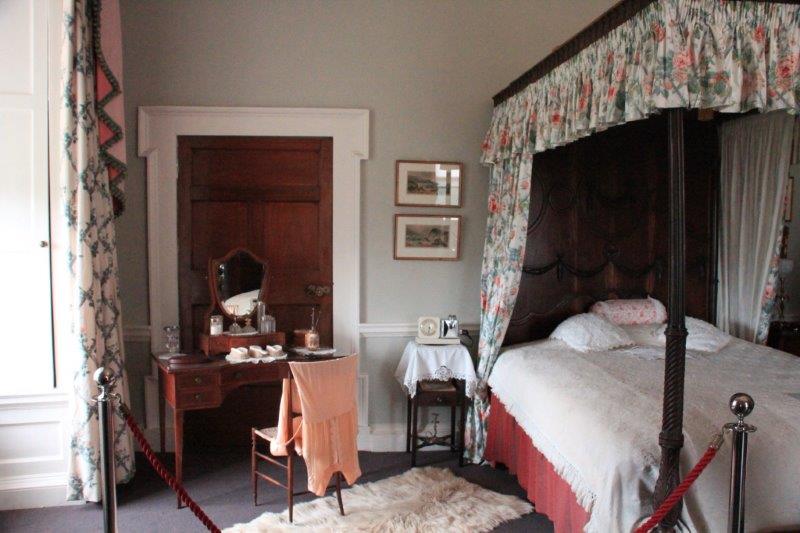
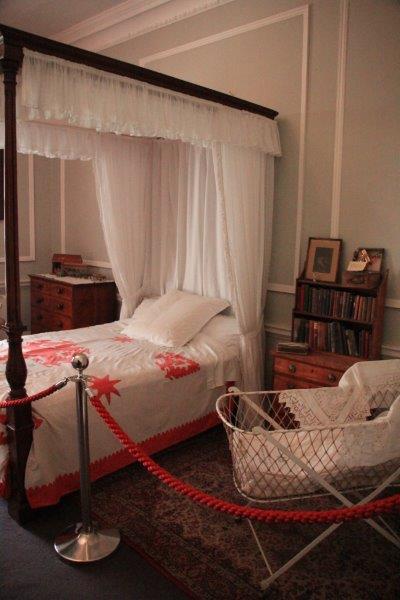
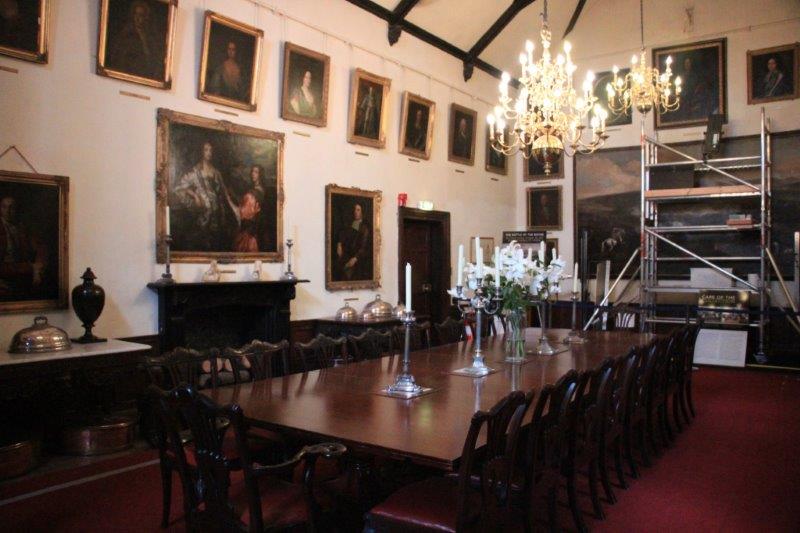
IMG_9874 IMG_9875 IMG_9878 IMG_9882 IMG_9887 IMG_9889Malahide Castle was the home of the Talbot family for over 700 years (they are listed on a document on display in the house as one of the families with William the Conqueror at the Battle Abbey in 1066) and became a property of the government over 50 years ago when the last Talbot, Richard, died leaving the estate to his sister.  She could not afford all the estate taxes – as is often the case – and sold some of the antique furniture and paintings to make pay the debts, after which she moved to New Zealand.  The government has since managed to buy back almost all of the items she sold.  The castle is full of some of the best pieces of Irish furniture through the ages.  There was no flash photography allowed so my 6400 ISO setting came in handy.  It makes things a bit grainy but good enough to see in the dim light available.

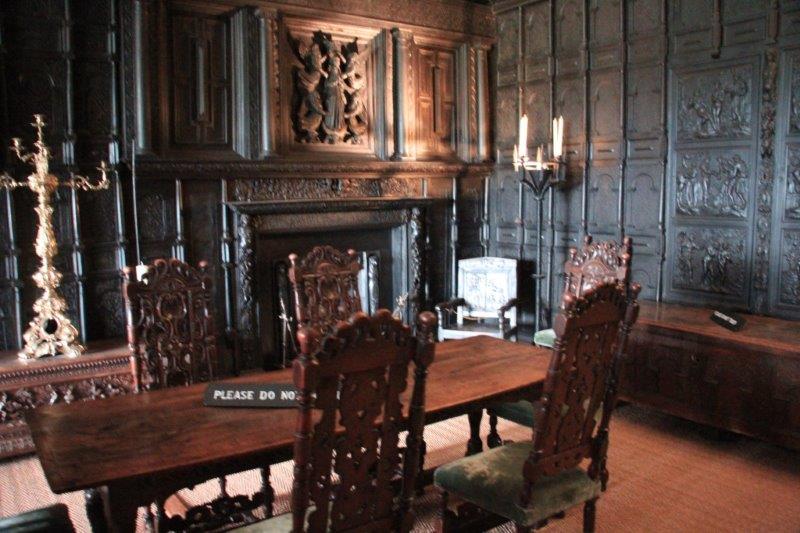
The original castle was destroyed at some point, no one knows why, and the current one built in the 14th century.  The oak paneling in one of the rooms is the oldest hand-carved woodwork in Europe and many of the furniture pieces are written up in books on valuable and significant antiques.  The tour lasted about 40 minutes and the fellow told lots of stories as he pointed out the features of the rooms.

IMG_9969 IMG_9901 IMG_9903 IMG_9905 IMG_9908 IMG_9910

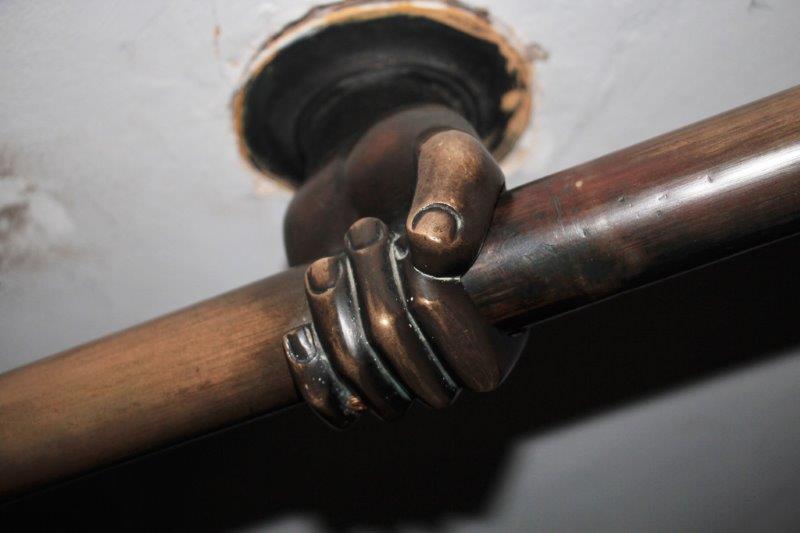
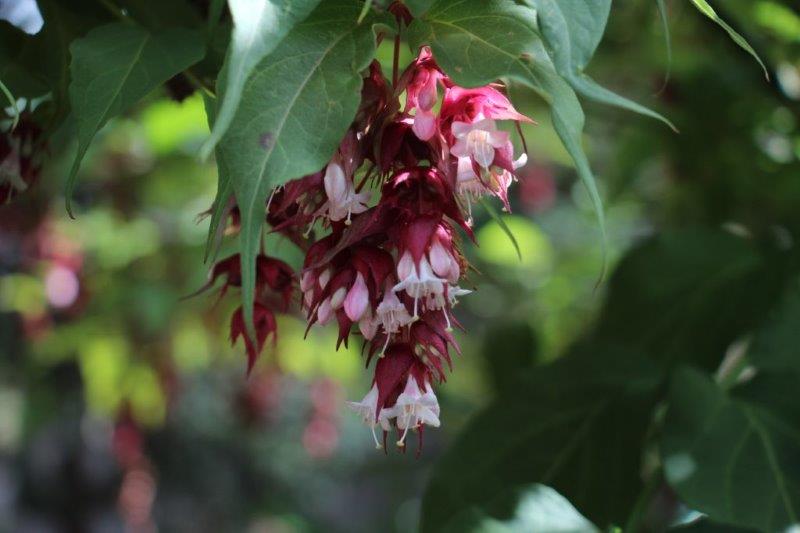
One of the hands holding the handrail on the stairwell.IMG_9911 IMG_9914 IMG_9931 IMG_9932 IMG_9936 IMG_9939 IMG_9961 IMG_9963 IMG_9973 IMG_9974 By the end of the tour I had about 10 minutes before I was due back on the bus so I did a fast walk out to the gardens.  Malahide has famous greenhouses where they grow all kinds of tropical and exotic plants and they have a huge walled garden.  I was only able to walk a short distance along the path either side of the entrance but I snapped a few pics and hurried out to the bus.  I would love to have had the time to explore further.  Next time….again.

IMG_9977 IMG_9978 IMG_9979 IMG_9980After we left Malahide we were driven along the Dublin Bay to the fishing port of Howth.  Before returning to the ship in Dublin we stopped at the 11th century Abbey Tavern in Howth to enjoy an Irish Coffee.  Yummy! “Sir, can I have some more please?”

IMG_0010 IMG_0012 IMG_0014 IMG_0015How to make proper Irish Coffee: heat your glass mug with hot water.  Pour out the water and put in a measure of whiskey (whatever size ‘measure’ you desire), add a spoonful of brown sugar and stir well.  Pour in hot coffee.  Invert your spoon and slowly pour some thinly whipped cream over the back of the spoon bowl onto the coffee so it floats on top.  Do not stir!  Sip the coffee through the cream.  Delicious.

We went along the coast – beautiful sandy beaches; mostly unused due to the cool climate and colder water – but my seat was on the other side of the bus so I was only able to snap a couple of photos across the aisle and out the other window.  We drove to the top of The Summit for a view of Dublin Bay and the Dublin Mountains.  The sky was overcast so it wasn’t a particularly fabulous view, but on a sunny day it would be quite nice.

IMG_9985 IMG_9989 IMG_9995The end.

2015 Aug 13 – Day 20 – Zeebrugge, Belgium

I am going to restrain myself.  I promise.  I hope.

Zeebrugge port is second only to Antwerp in the country and is the largest car shipping port in the world moving 2 million cars annually.

Belgium is a very small country, 30,000 sq. km (65 km of coastline) but is one of the most densely populated countries in the world with 11.2 million inhabitants. It has more castles per square inch than anywhere else, with about 470 in the country – unfortunately we were not going to see any of them today.

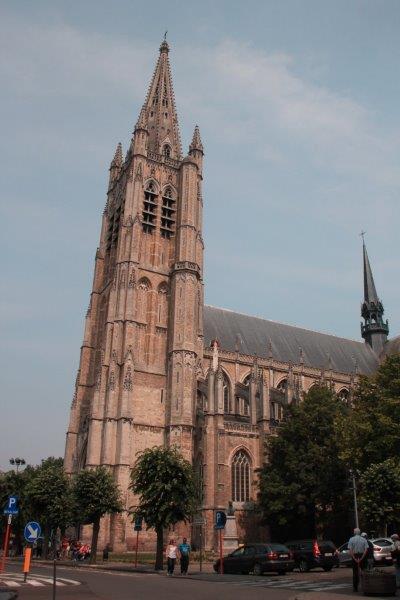
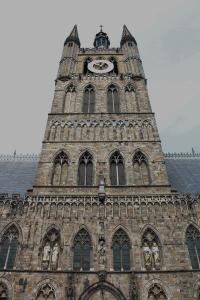
We were on our way to Ypres – correctly spelled and pronouced Eiper (Eeeper) by the Flemish.  The French spelling, Ypres, came about because Belgium is a dual-language country: the north which borders Holland uses Dutch, the south which borders France uses French.  French was the dominate international business language pre-WW1 and used on all the maps, thus Ypres.  They are working hard to get the correct Flemish name and spelling recognized.
IMG_9477 IMG_9482 IMG_9483This was a WWI memorial tour and my head is brim full of information about the Eiper (Ypres) Salient and the Flanders Fields area. (A salient is a curved ‘front line’ that projects into enemy territory and therefore needs to be defended on three sides.)  Oh no, you say.  But, I promised to be good so I will do my best to keep the majority of it to myself, else this will become a book.  If you want to know more there are hundreds of books written and tons of info on the internet – knock yourself out.

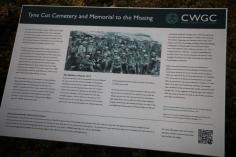
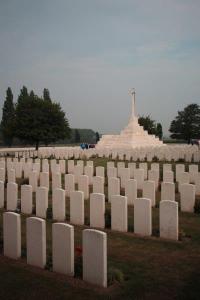
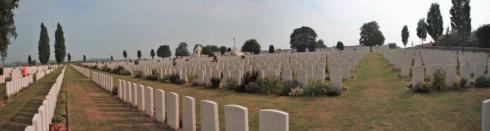
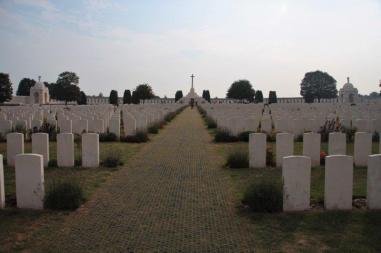
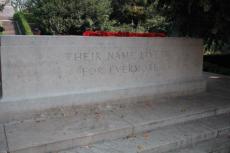
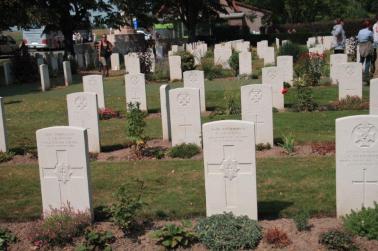
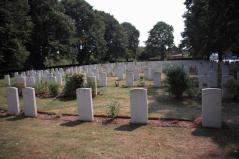
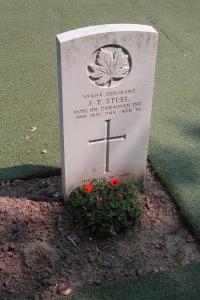
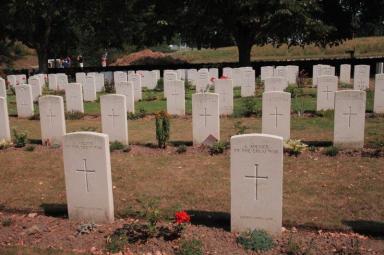
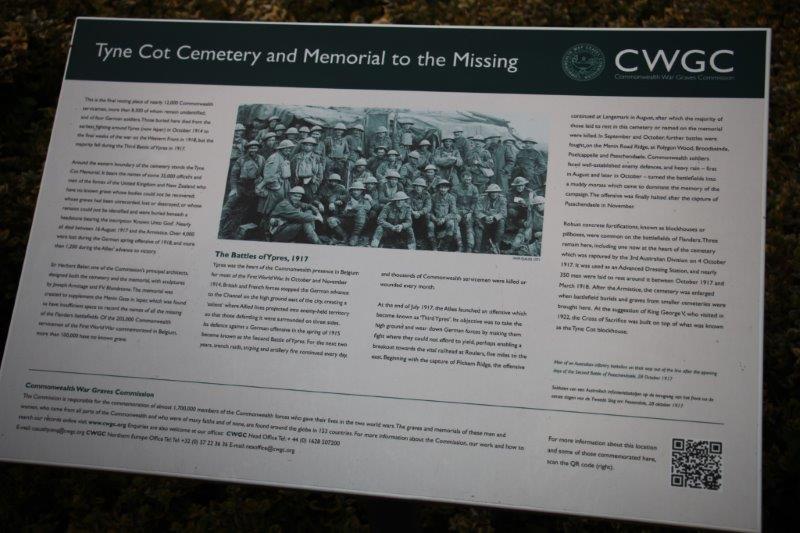
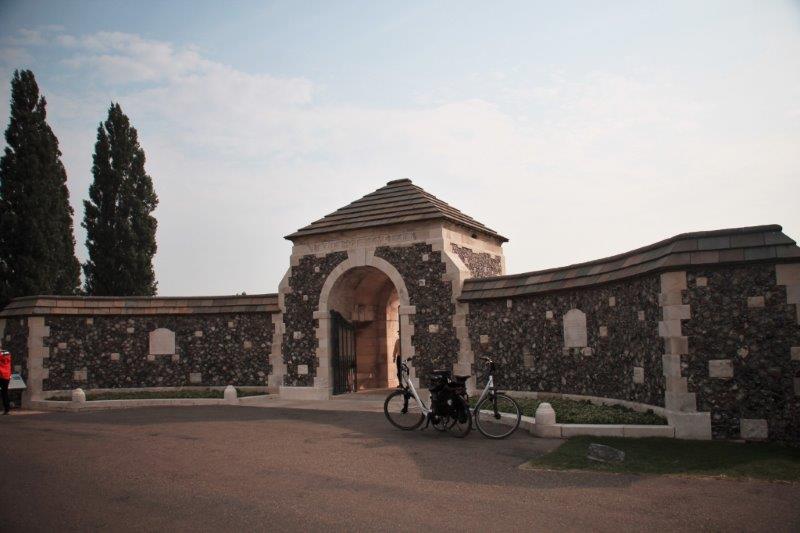
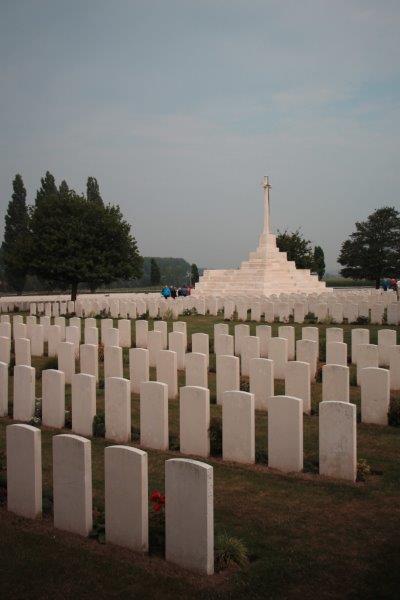
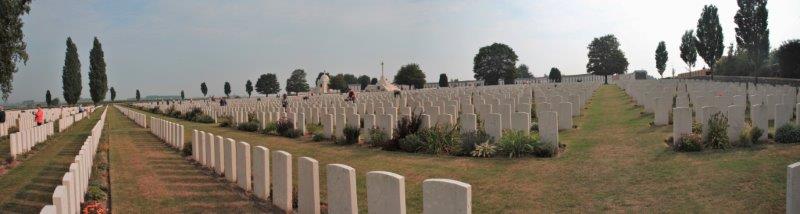
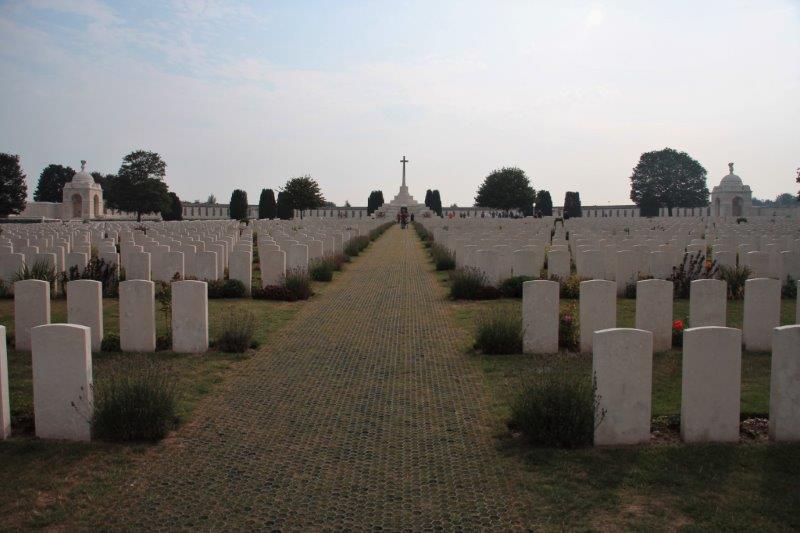
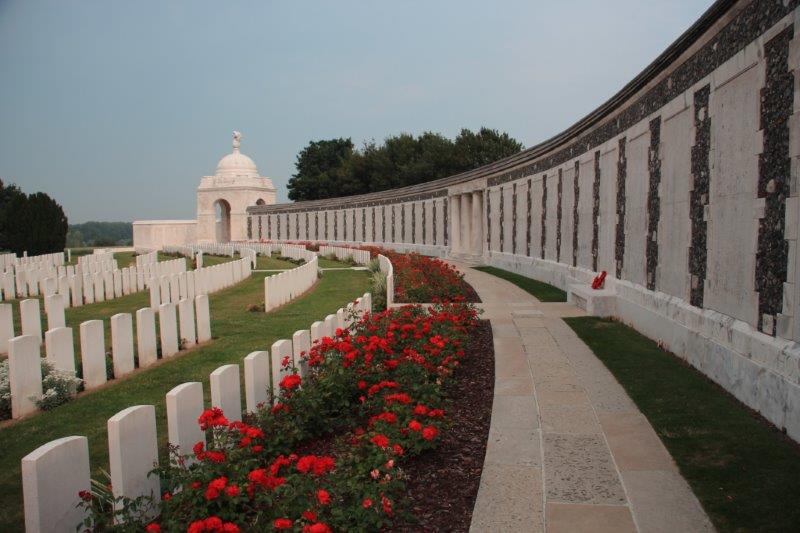
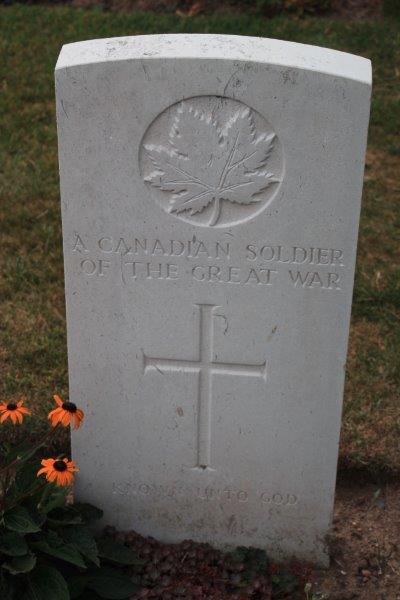
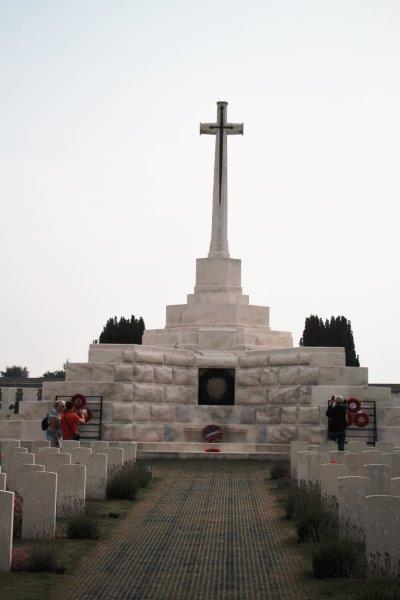
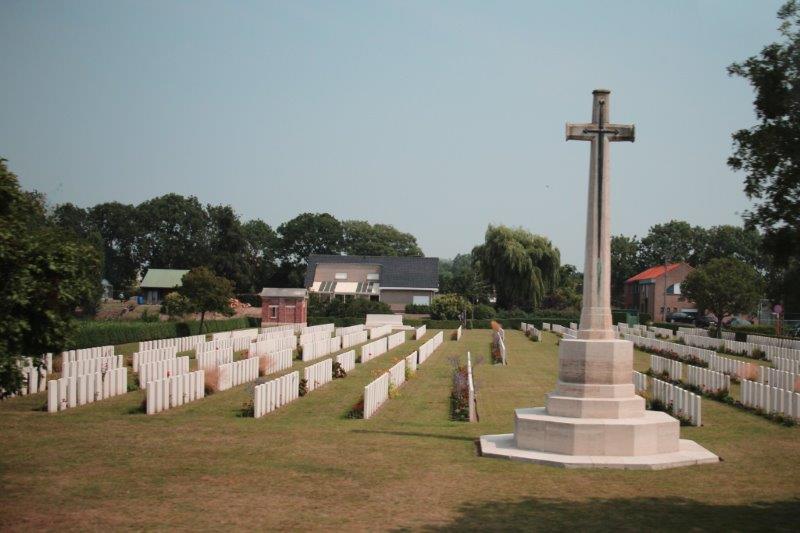
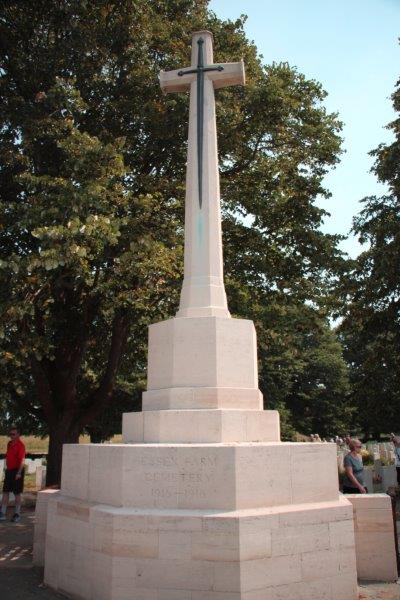
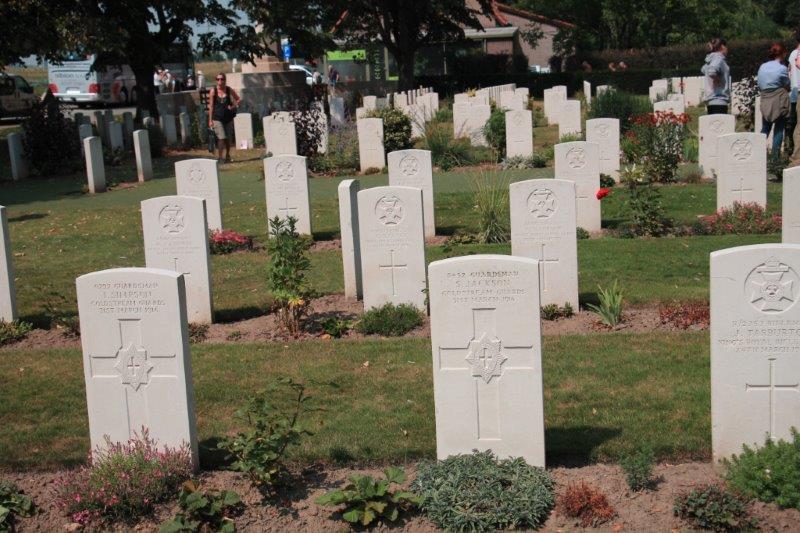
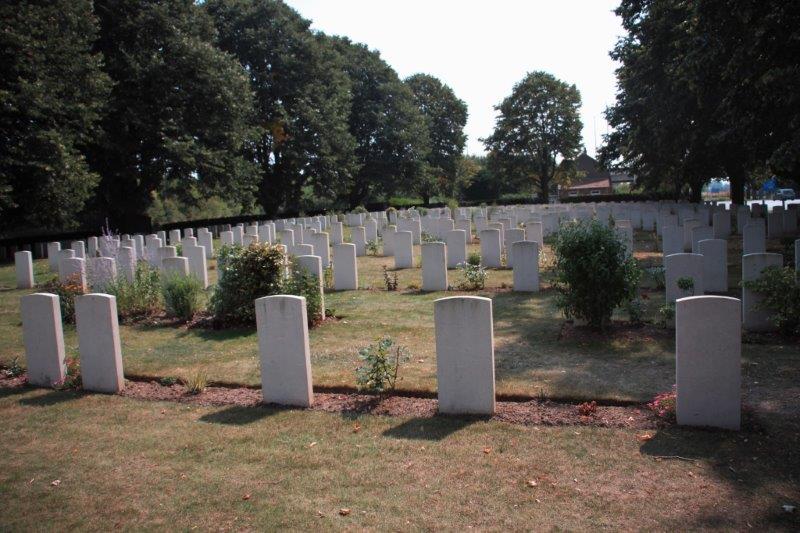
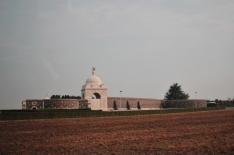
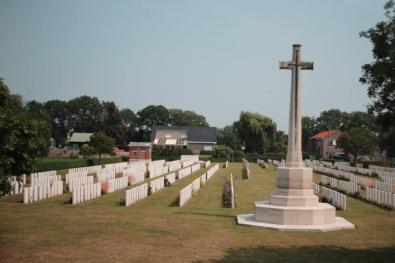
Our first stop was at Tyn Cot Cemetery (so named because a farm in the area reminded the British soldiers of a similar area in Tyn County at home and the name stuck when the cemetery was created.  There are many British names in the area’s cemeteries, towns and streets for this same reason).  Tyn Cot is the largest Commonwealth war cemetery in the world and contains 11,956 graves (8,961 British, 997 Canadians, 1,368 Australians, 520 New Zealanders, 90 from Newfoundland (which at the time was not part of Canada), 2 British West Indians and four German soldiers).  Of these almost 12,000 graves 8300 are unidentified and are inscribed with the regiment of the soldier, if known, and the inscription “A (nationality if known) soldier of The Great War.”  Along the bottom of each marker is the phrase, composed by Kipling, “Known Unto God.”
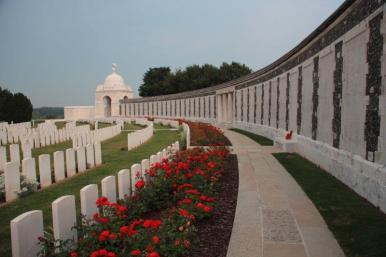
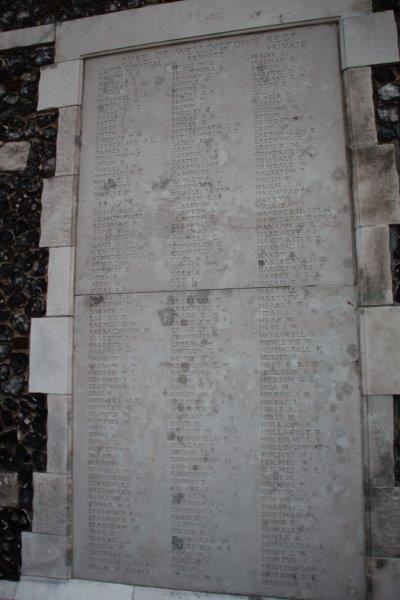
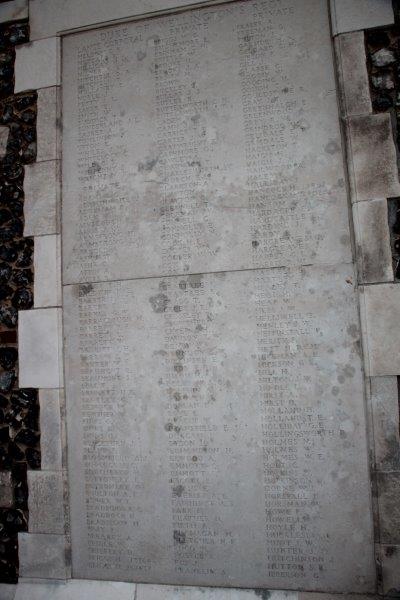
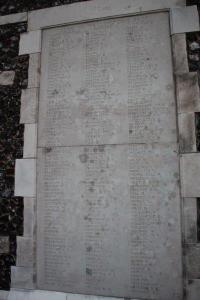
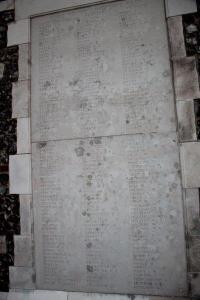
IMG_9485 IMG_9487 IMG_9527 IMG_9526 IMG_9498 IMG_9515 IMG_9536The wall around the cemetery bears the names of 34,857 unknown dead.  The descriptive plaque at the entrance says, “Oct 1914 – Nov 1918.  35,000 officers and men of the forces of the United Kingdom and New Zealand who have no known grave, whose bodies could not be recovered, whose graves had been unrecorded, lost or destroyed, or whose remains could not be identified.”  Nearly all died between Aug 16, 1917 and Nov 11, 1918.  There are 250,000 Commonwealth servicemen of WWI commemorated in Belgium, 100,000 of whom have no known grave. (750,000 soldiers, sailors and airmen died on the Western Front during WWI, 200,000 in Belgium and over 500,000 in France – 60 million mobilized worldwide with 50% casualties; wounded or dead.) They are commemorated upon headstones marking graves in over 1000 war cemeteries and 2,000 civil cemeteries or on one of the six memorials in Belgium and 20 in France which carry the names of more than 300,000 who have no known grave.)
IMG_9541 IMG_9542 IMG_9544Belgium was the only completely occupied nation in both World Wars.  Located as it is between The Netherlands and France, even though it was a neutral country, it was invaded by Germany and occupied for four years during each war.

The area of Flanders was completely destroyed.  There were virtually no recognizable buildings, no trees, no roads, no canals and ditches, no landmarks remaining by the end of the war.  Everything had been shelled or trenched.  Many of the major battles of WWI occurred within the area of Flanders Fields in northern Belgium; Ypres, Passchendale, Hill 60, Sanctuary Wood, Polygon Wood.  The front line moved back and forth several times over the years and every 50-100 meters cost thousands of lives on each side.

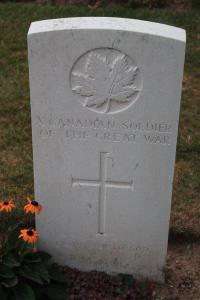
IMG_9762 IMG_9500 IMG_9509 IMG_9510 IMG_9511We had 45 minutes to wander the cemetery.  Our guide explained about the creation of the Commonwealth Graves Commission after the war to deal in a consistent manner with all the dead regardless of rank.  Most of the Commonwealth dead remained in Belgium, very few were re-interred back home.

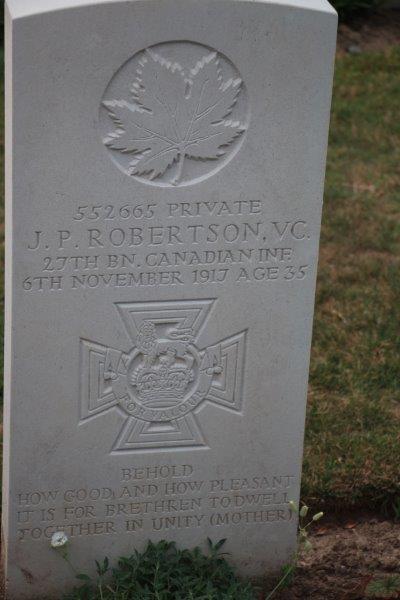
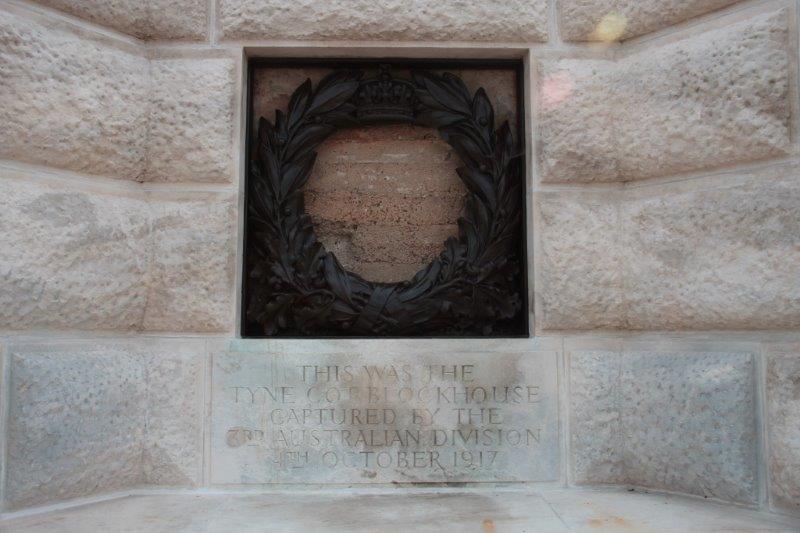
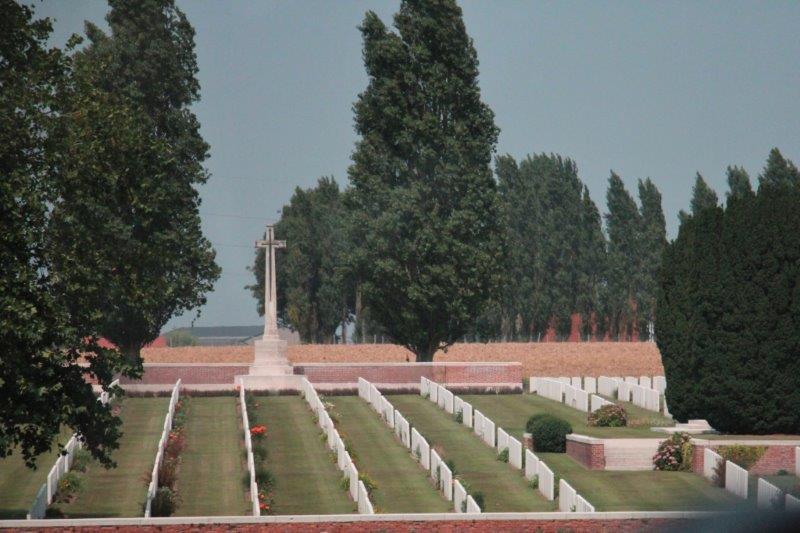
There are smaller cemeteries all over this area where battles took place and the dead were buried on the spot. Tyn Cot was one such but other bodies as they were found were brought here for a proper military burial and it became a major cemetery. There are also separate cemeteries for Scotland, Australia, the US (some of whom fought here during the last year of the war), etc.  We were shown the grave of a Canadian private who was awarded the Victoria Cross and told about the two bunkers remaining on the site; one bare concrete near the original entrance gate and the other that was incorporated into the Cross of Remembrance located in the center of the cemetery.

IMG_9502 IMG_9537 IMG_9539 IMG_9538

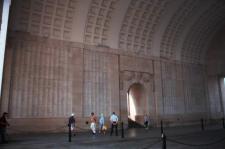
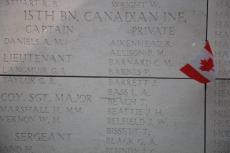
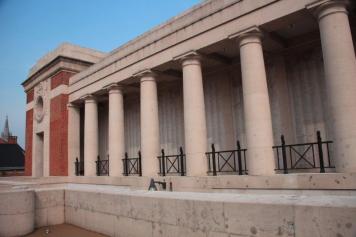
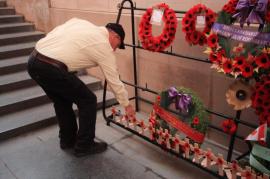
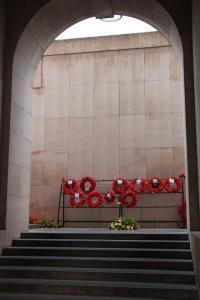
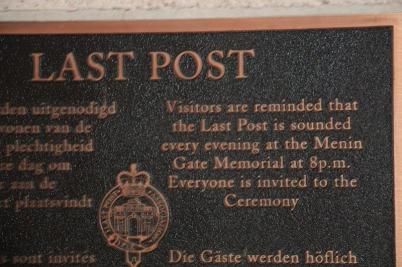
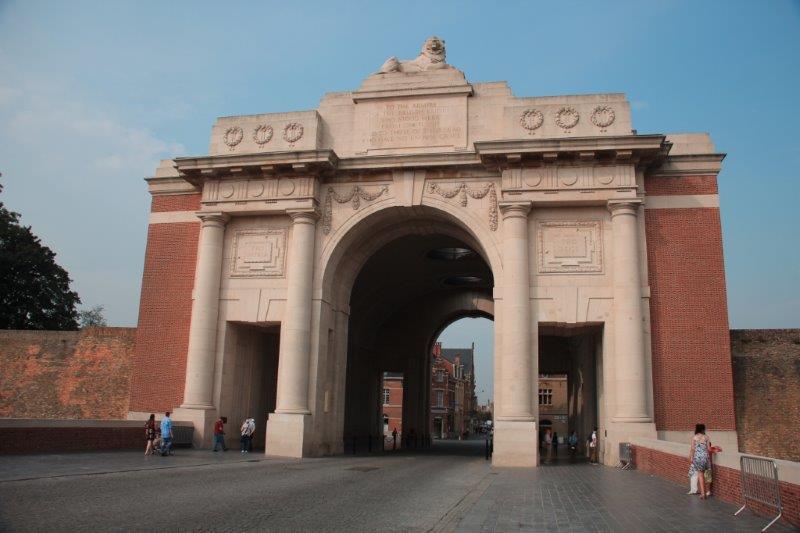
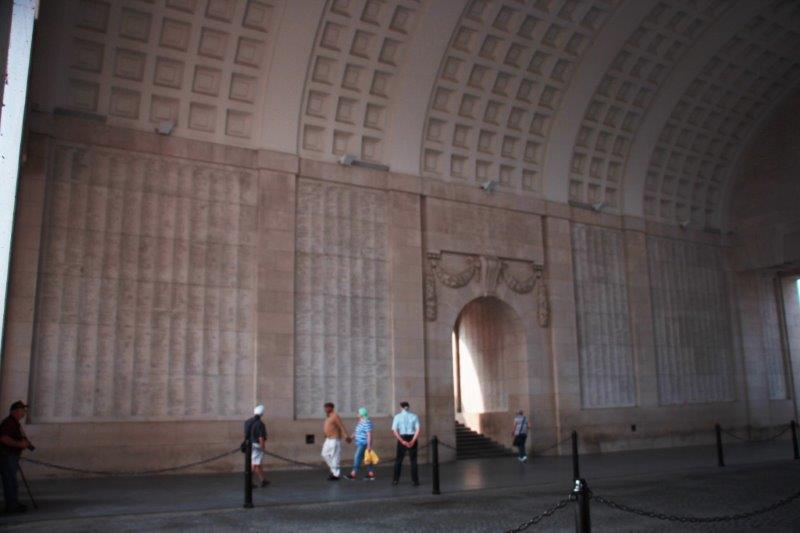
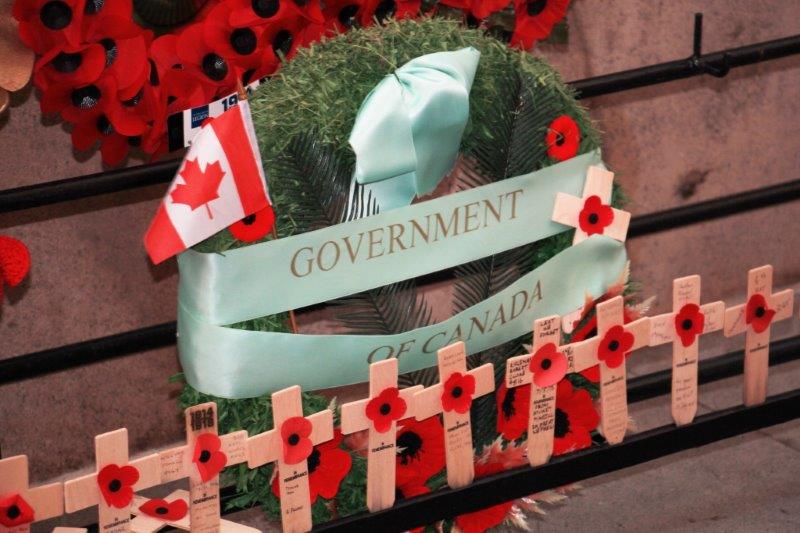
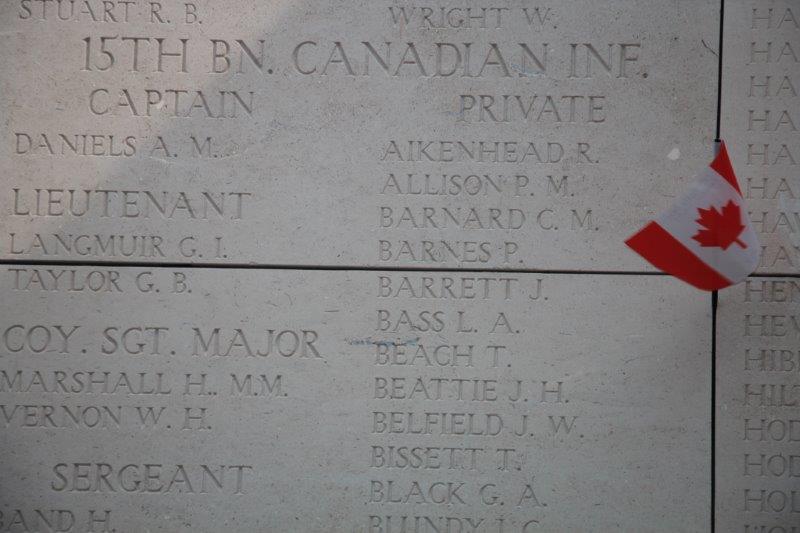
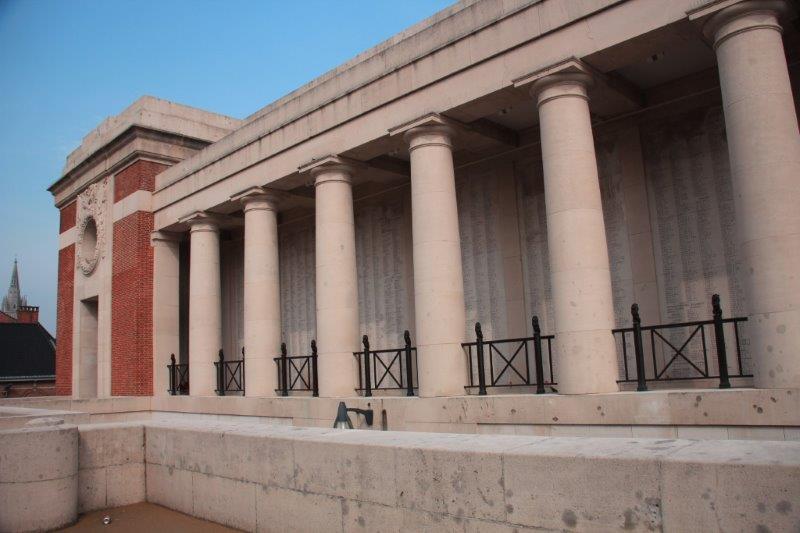
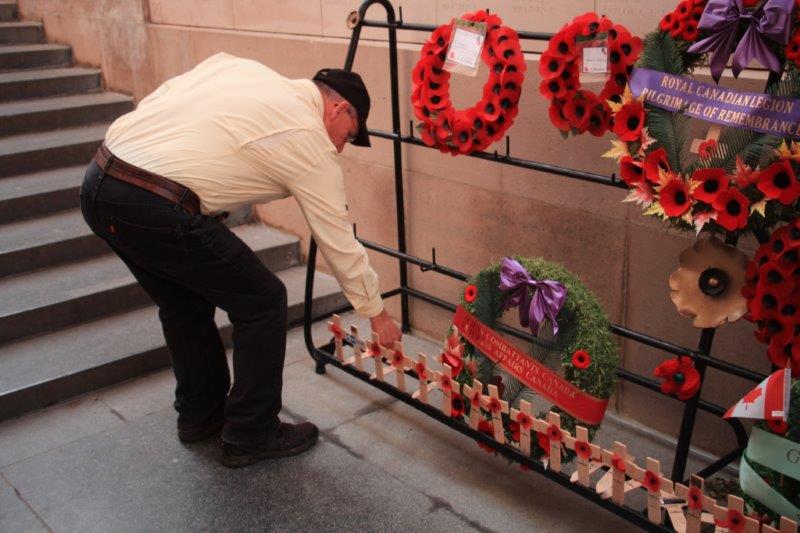
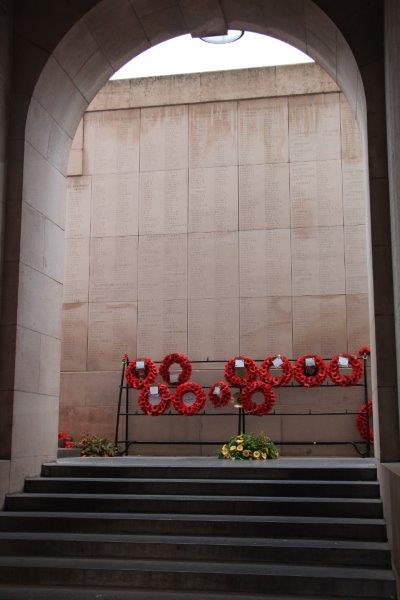
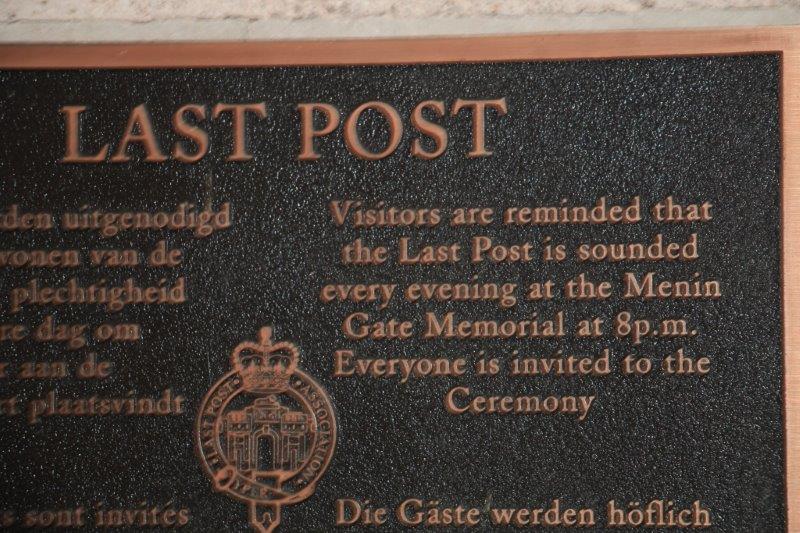
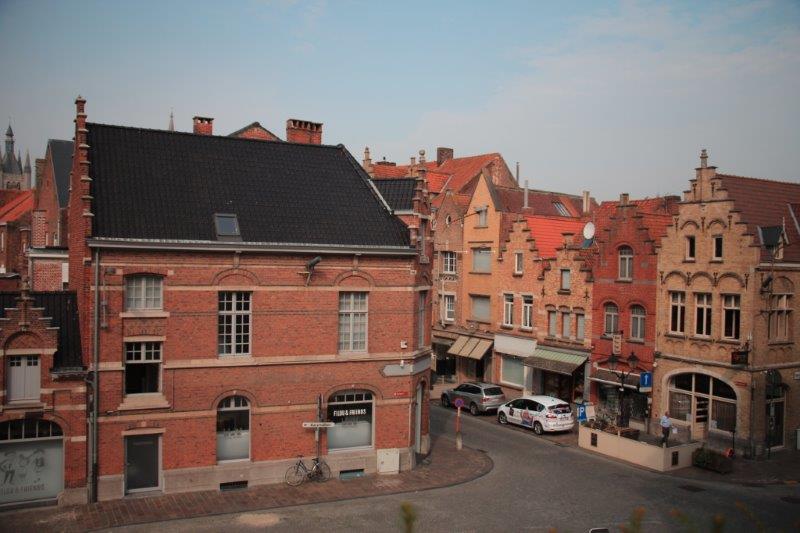
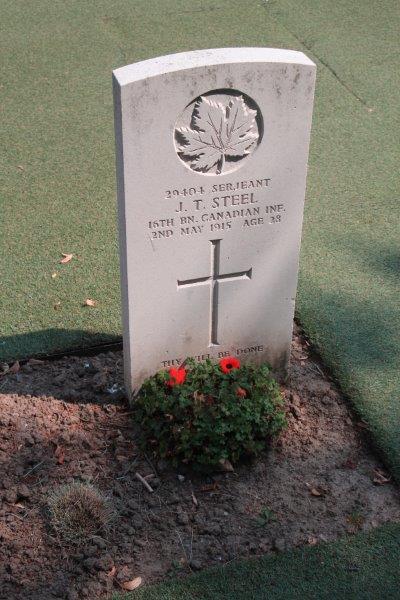
IMG_9545Scottish CemeteryWe next drove to the town of Eiper and the Menin Gate, whose walls are inscribed with the names of 54,896 soldiers who fought in the Ypres Salient from 1914-1918 and who have no known grave.  I had gone to the Royal Canadian Legion in Salmon Arm before we left for Boston and got some poppies and red maple leaves.  I laid a couple on graves of unknown Canadians at Tyn Cot and John and I each laid one at the Menin Gate. When the memorial was officially opened by George V part of the service included the playing of The Last Post.  People requested that it be played again, and again and again.  The street on both sides of the Menin Gate are closed off every evening at 8 pm and a Short service of Remembrance including The Last Post takes place.  A year ago they commemorated the 30,000 playing of The Last Post at the Menin Gate.

IMG_9551 IMG_9560 IMG_9558 IMG_9567 IMG_9570 IMG_9571 IMG_9565 IMG_9661 IMG_9555You may be wondering about all the German dead.  Understandably there was not much sympathy for them during or after the war. Over 600,000 people of Belgium were displaced, forced out, suffered injury and death, and had everything they owned confiscated or destroyed.  Most of the German dead were just buried in mass graves. Very few, if any, have ever been re-patriated home.

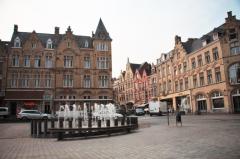
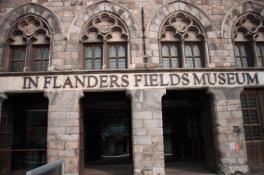
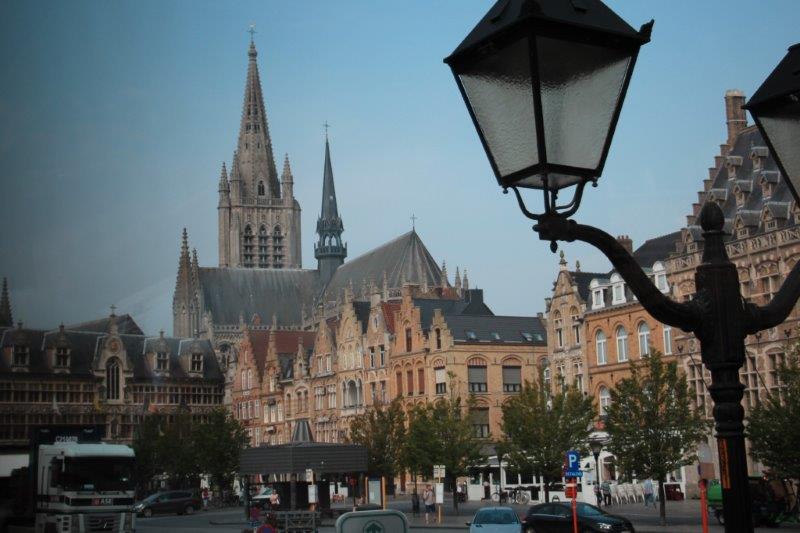
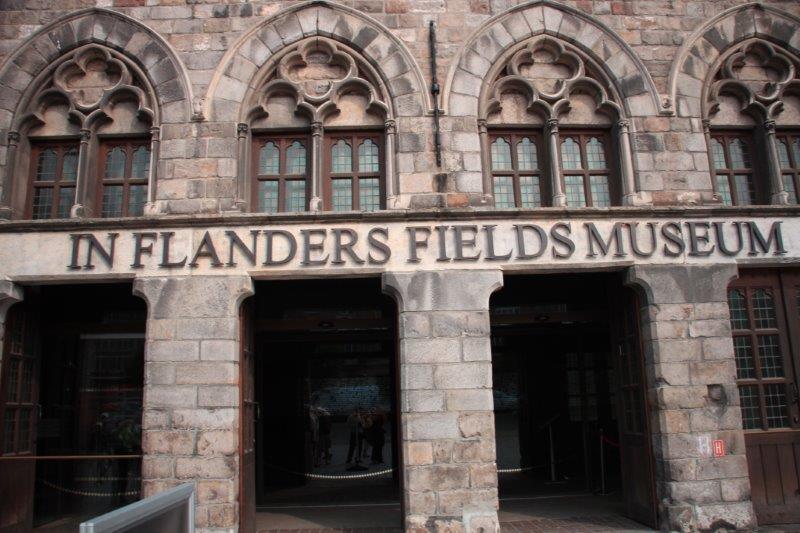
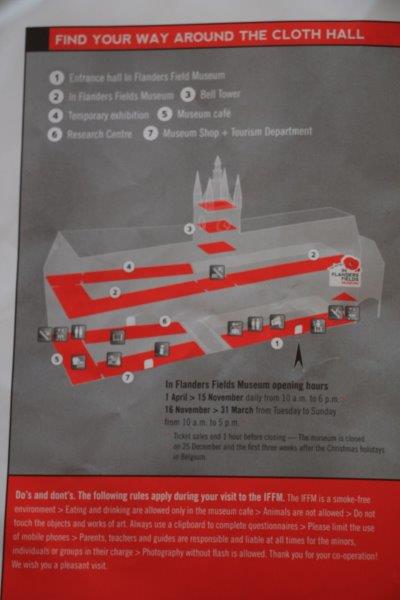
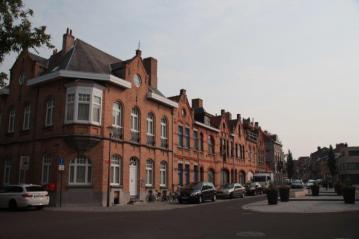
Our next stop was a couple of blocks away in the town of Eiper; the Flanders Fields museum; considered to be one of the best museums in the world.  Oh no!  Thankfully we had three hours before the bus would return to pick us up.  Our guide said most people go through the museum in about an hour so that gave people lots of time to find some lunch and explore or shop.  Our friends Bill and Lyn and Bob and Barbara were on the tour and we had gathered together on the ship so we were all on the same bus.  Barb said we would meet at the exit at 12 and go for lunch.  I said I would tell John but told her I was a museum junkie and if I was done by then I would join them.  Guess…. Did we meet them for lunch?  Not.
IMG_9550

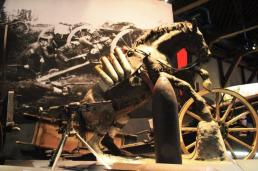
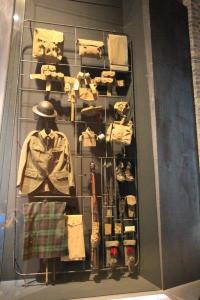
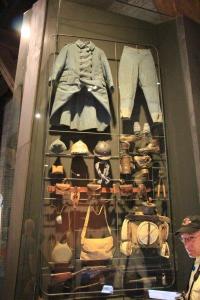
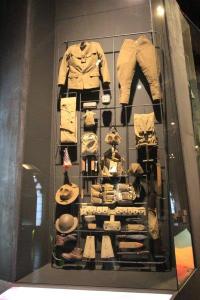
IMG_9572 IMG_9573 IMG_9577 IMG_9590 IMG_9592 IMG_9591 IMG_9761We spent over two hours in the museum which was loaded with images, paintings, uniforms, videos, before and after shots of the countryside, models, videos of actors and actresses narrating ‘personal’ experiences of the war.  It was really good.
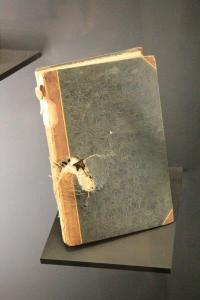
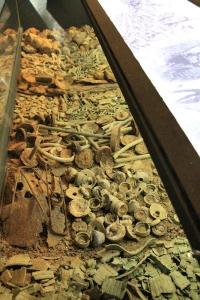
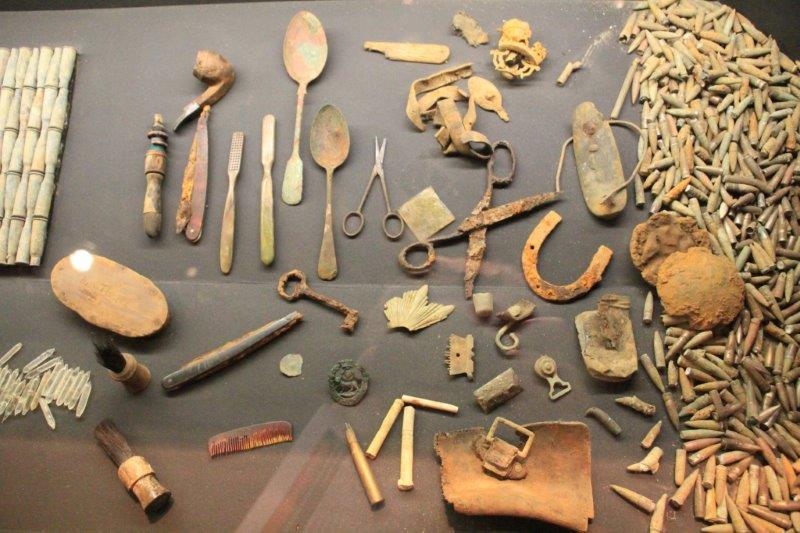
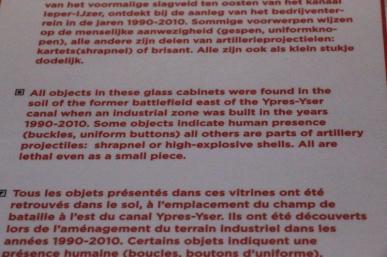
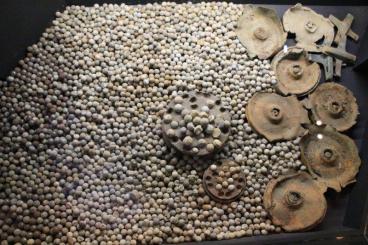
IMG_9602 IMG_9621 IMG_9638 IMG_9639 IMG_9640 IMG_9643In Belgium it is still common 100 years later to come across unexploded shells, pieces of shrapnel, weapons, equipment and bodies during construction or farm work.  The Commonwealth War Graves Commission maintains an office in Eiper and they come to the site and care for the remains.  With DNA and other modern equipment it is possible sometimes to identify the victim.  If it is a soldier of the Commonwealth he is given a full military funeral and interred in Tyn Cot or one of the other cemeteries.  If a German, I think the Commission gets in touch with Germany to care for the body.

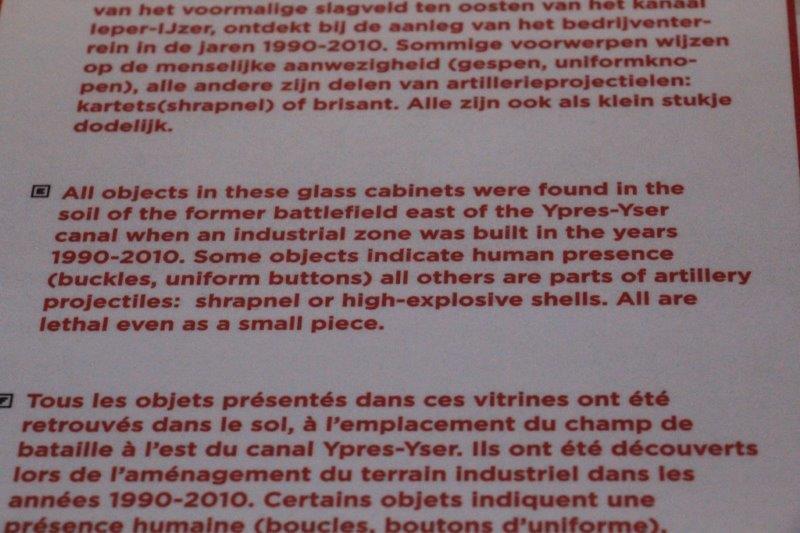
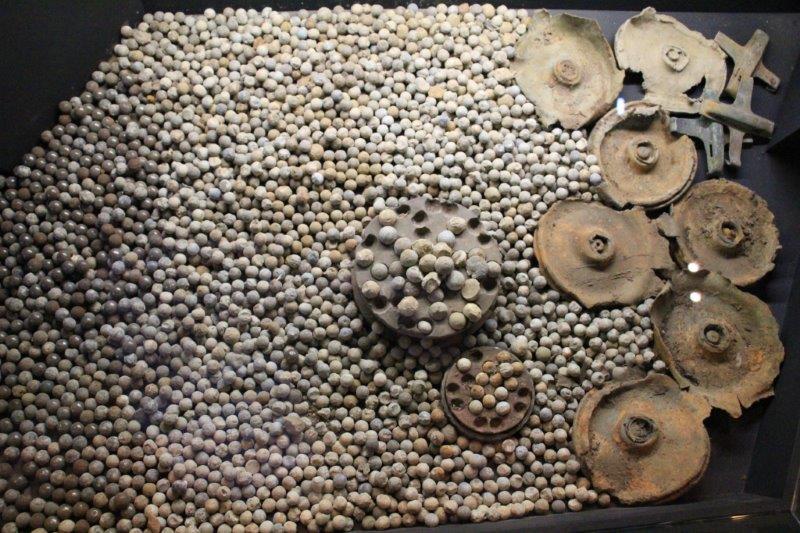
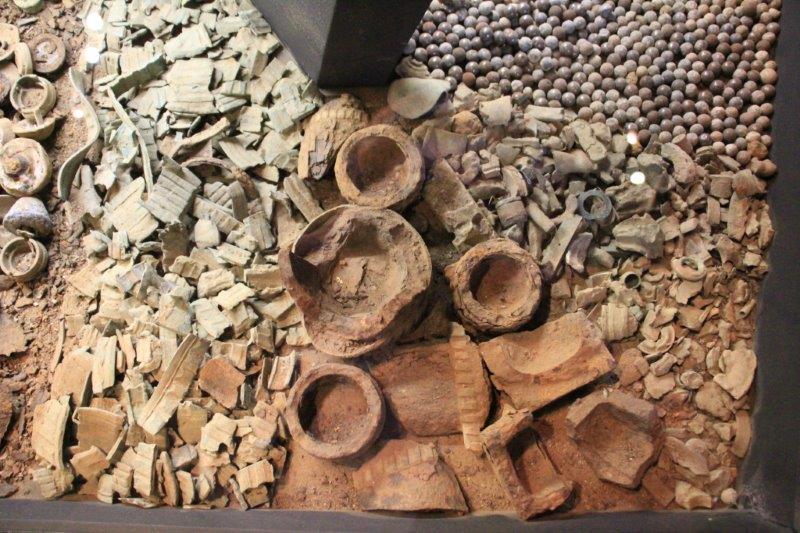
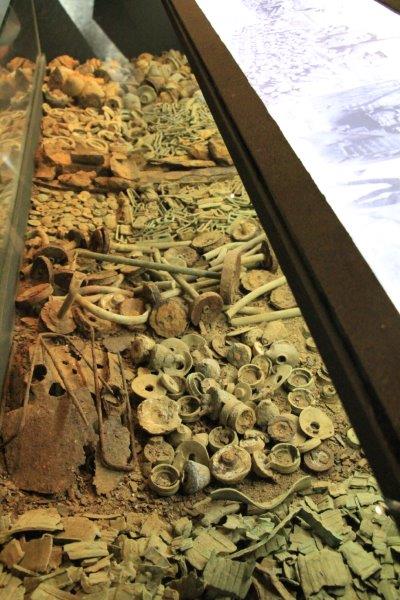
In the museum there was a display case crammed full of items that were all collected during an industrial construction built between 1990-2010.
IMG_9613 IMG_9614 IMG_9615 IMG_9616 IMG_9620

There are still unexploded shells and mortars buried in the ground.  Sometimes they are detonated by the discovery – hit by equipment or farm machinery – with deadly results.  Sometimes they explode underground and do no damage.  A few weeks ago a farmer was working his field and suddenly the tractor lifted right off the ground.  A mortar had exploded underground and the force lifted the tractor.  On one 25 acre parcel a farmer found 120 bodies, 4 air planes, 1 English tank and over 2000 shell holes.

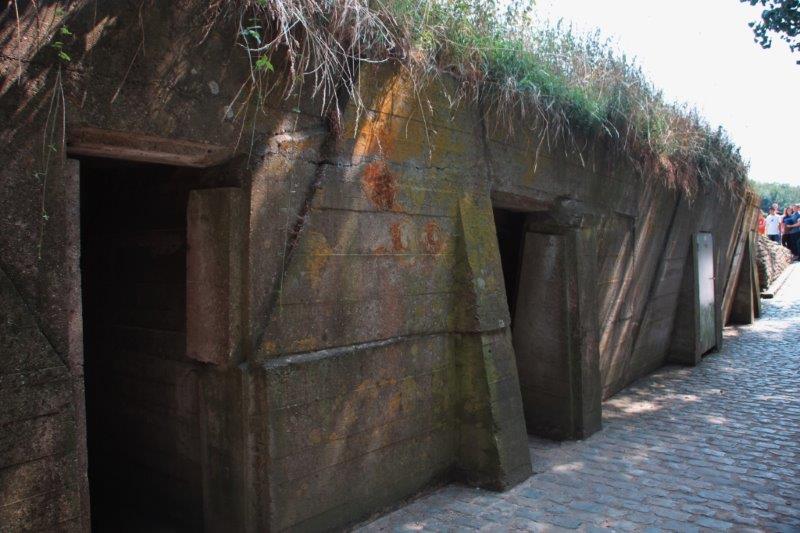
Also hidden around the country are old trench works and fortified bunkers.  These too are regularly discovered during construction projects.  A year or so ago a farmer was returning home for lunch and half of his farm sunk into the ground in front of him.  There had been a wood-beam trench room under his land.  Over time water had seeped into it, rotted the timbers and the whole thing caved in.

After we came out of the museum we ate the bran muffins we had brought from the ship, bought some ice cream and then wandered around Eiper for an hour or so until the bus returned to pick us up.
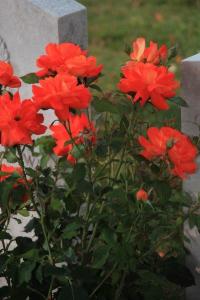
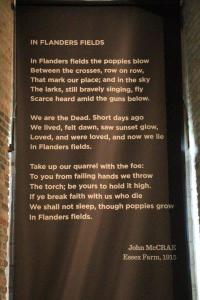
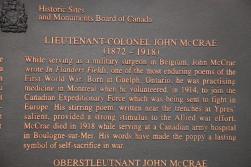
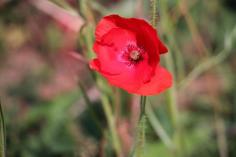
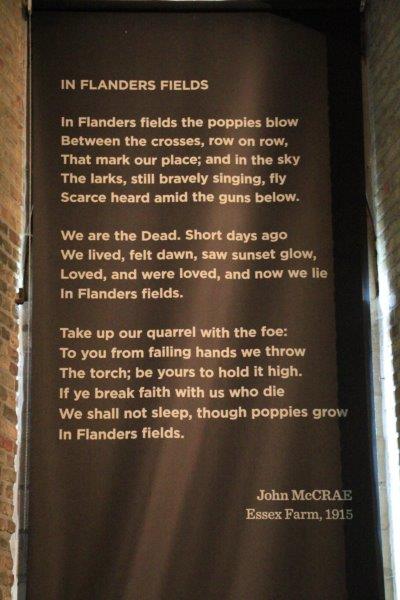
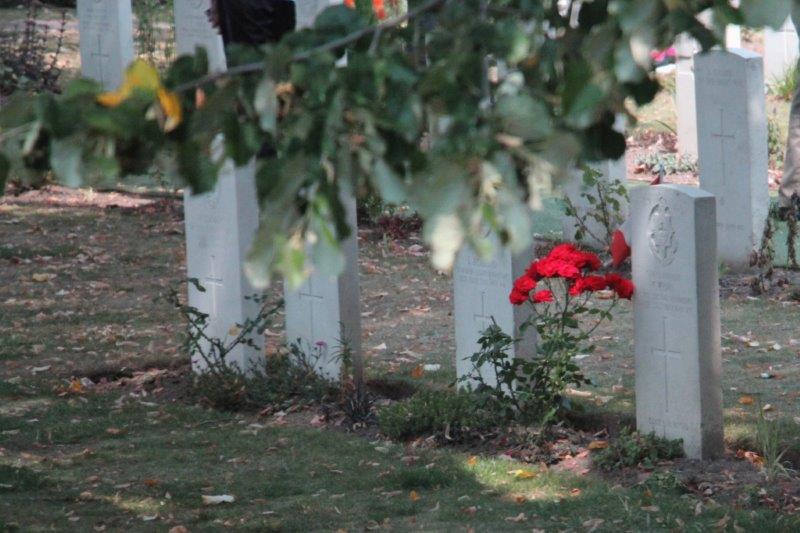
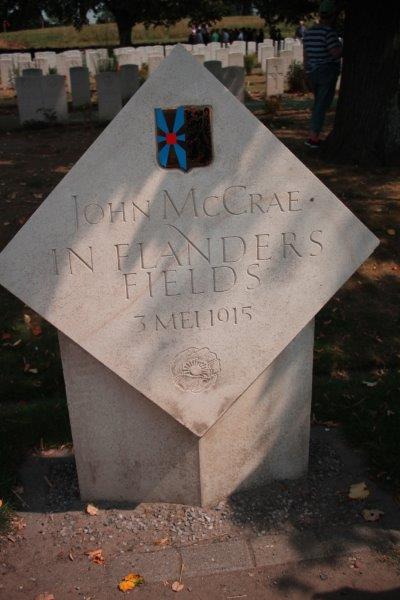
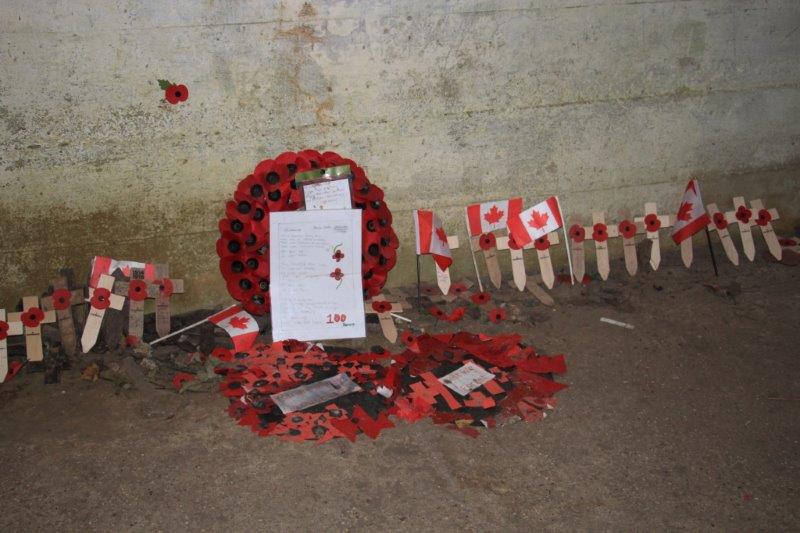
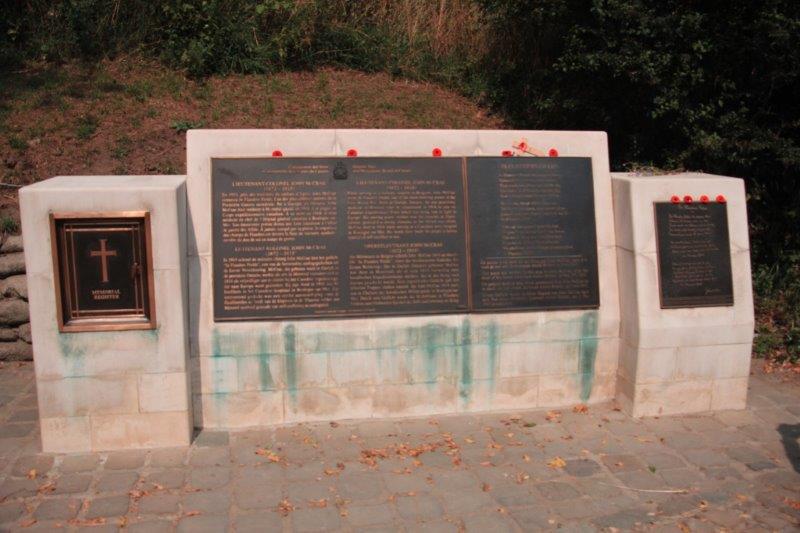
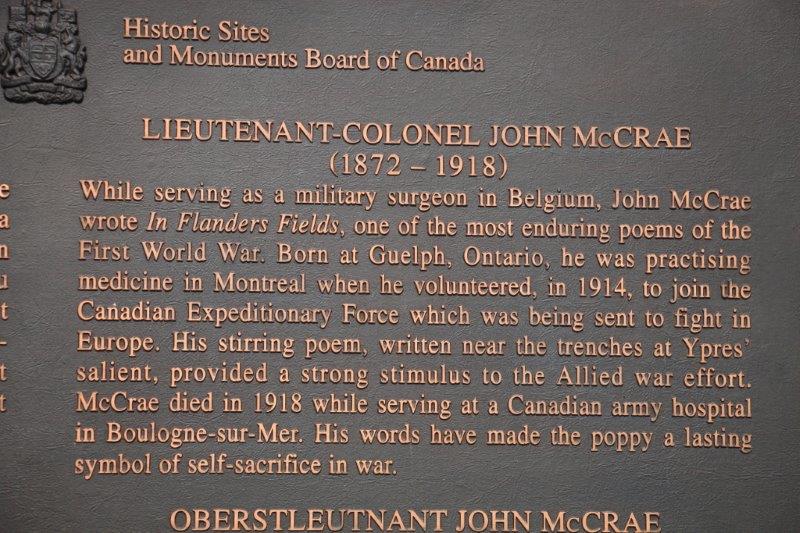
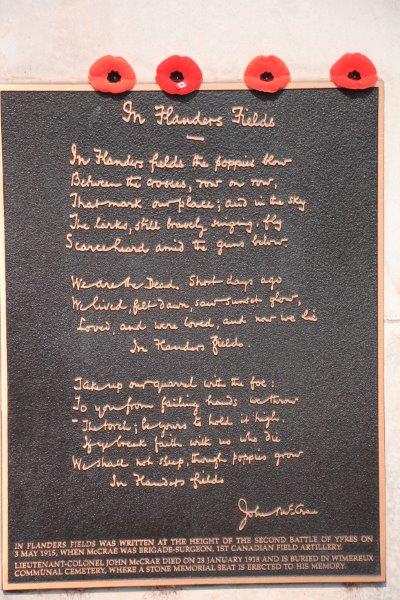
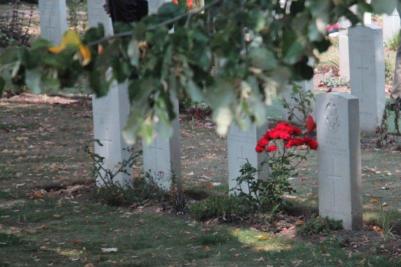
IMG_9649 IMG_9651 IMG_9652 IMG_9653 IMG_9655 IMG_9671 IMG_9684 IMG_9686Our last stop – finally, you say – was Essex Farm Cemetery.  In the near vicinity of the cemetery was the medical aid tents where Canadian doctor Major John McCrae (later Lieutenant-Colonel) was working as Brigade-Surgeon of the 1st Canadian Artillery Brigade who were lined up along the nearby Canal Bank.  His good friend was brought in, gravely wounded, and died not long thereafter.  Major McCrae penned the poem “In Flanders Fields” on May 3, 1915 at the height of the 2nd Battle of Ypres.  He read the poem at his friend’s funeral and then tossed it away.  It was picked up by another soldier who sent it to Britain where it was published in “Punch” magazine.  Immediately it resonated with the public and the military as a poignant reminder of the self-sacrifice and futility of war.  It is still recited at most every year at Remembrance Day (Nov. 11) ceremonies in Canada.  (We had to memorize it in elementary school and I can still recite most of it.  Funny how some things stick in your brain.)  Coincidentally there were still a few poppies in bloom at Essex Farm. (The soil in Belgium is clay. They say every Belgian is born with a brick in their stomach because all of the ingredients to make bricks are just below the surface. When the clay-mixed soil is churned up and the top soil destroyed the first plant to grow again is the poppy, which makes it a fitting symbol for survival during and after war. We laid the rest of our poppies from home at Essex Farm Cemetery.
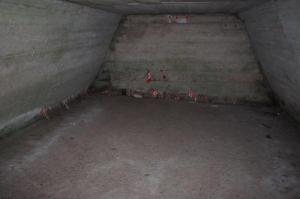
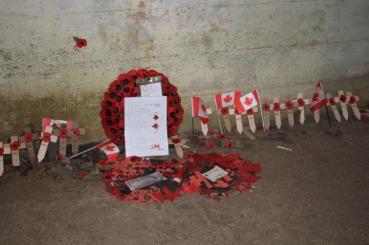
IMG_9692 IMG_9694 IMG_9696 IMG_9698 IMG_9707  One of the bunkers

IMG_9705


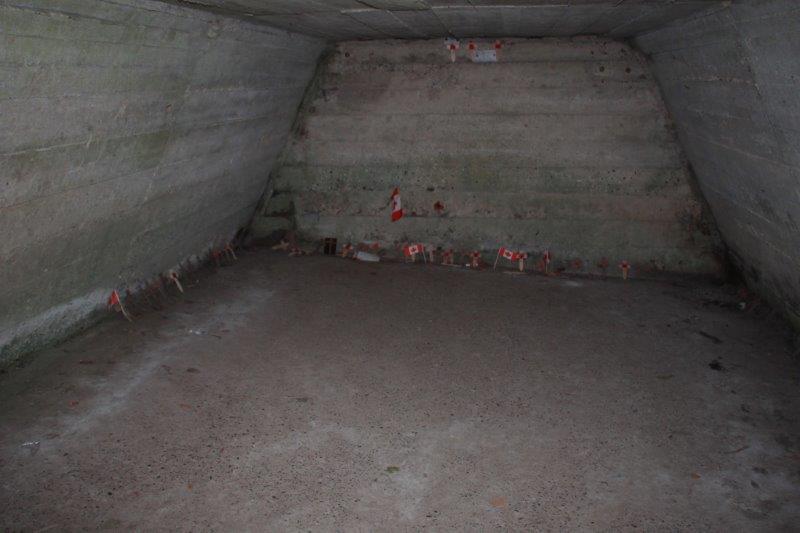
Memorial flags and wreaths placed inside the bunkers.IMG_9708IMG_9714  IMG_9713 IMG_9715 IMG_9719 IMG_9730 IMG_9732 IMG_9733 IMG_9736 IMG_9737
On the way back to Zeebrugge we passed the Australian Cemetery and a few other small ones.  We got back at 3:30, the ship sailed at 5, we ate dinner, turned our clocks back another hour and were in our jammies with our sore feet up by 7:30.  A day at sea tomorrow. We need it.

IMG_9740


The Australian Cemetery


It was a very poignant day, but I am so very glad we went.  We owe everything we have today in our wonderful country to the sacrifices of these young men. May they rest in peace and never be forgotten.
2015 Aug 12 – Day 19 – Amsterdam and At Sea

I tried to talk John into taking the train to the windmill museum located 22 miles out of Amsterdam, but he knows how I am in museums so he was hesitant to go out of the city when we needed to be onboard by 3:30.  Our original plan for the day was to walk to the Hermitage and see this summer’s exhibit, so that is what we did – the windmill museum can wait until next time we are here.  Probably a good thing because it takes half an hour to walk to the museum, then the time to view the exhibit (with a museum junkie in tow) and half an hour to walk back.

The Hermitage in Amsterdam is linked to the famous Hermitage in St. Petersburg and every year Russia sends a new collection for display in Amsterdam for the summer.  We chanced upon the museum when we were in Amsterdam several years ago – the collection that year was Tsar Nicholas’ Court.  Two years ago we saw The Dutch Masters (St. Petersburg Hermitage has a large collection of art work by Rembrandt, Reubens, Van Dyke, etc. as the Tsarina’s daughter lived in Amsterdam and sent paintings to her mother in St. Petersburg).  This year’s collection was called “Napoleon, Josephine and Alexander.”

Tsar Alexander I and Napoleon became good friends and signed a treaty to support each other in war and for Russia to join the French trade embargo against Britain.  This treaty was very costly to Russia – especially the trade embargo and eventually collapsed. Napoleon’s Grand Armee invaded Russia with disastrous results.  He entered the country with 600,000 troops and 175,000 horses. The Russians drew the French deeper and deeper into the country, sacrificing thousands in the process.  As the French moved forward the Russians burned all the crops, all the buildings and destroyed anything the French army could possibly use.  Eventually winter set in and the French needed supplies to camp until spring.  There was no place to shelter and no food for man nor animal.  Thousands died of cold, of drowning in the frigid waters and of starvation.  By the time Napoleon crossed the border back into French territory there were 30,000 men and several thousand horses remaining.  The beginning of the end for “The Little Emperor.”
There are no photos allowed inside so we left our cameras at the coat check.  The Hermitage does an exceptional job displaying and describing their exhibits and I love to go there.  The displays included paintings, sculptures, lances and swords, some furniture, jewelry and trinkets like snuff boxes, uniforms and other items of clothing, etc. etc.  Really great stuff!!
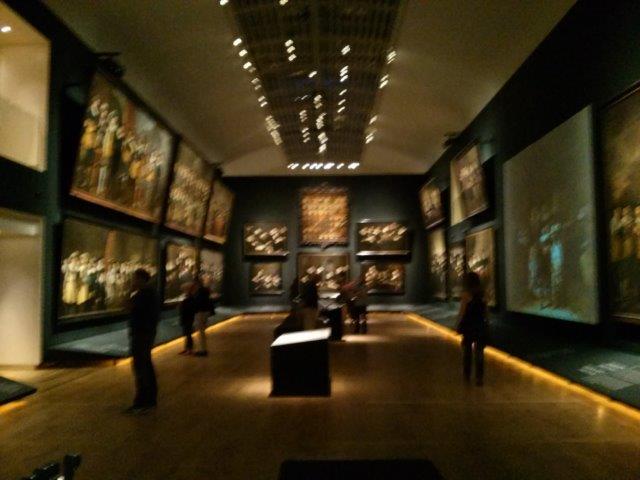
We actually saw two different exhibits this year, the Napoleon one from Russia and a portrait exhibit of leaders of the Dutch Guilds who took care of all trade and the security in the city during The Golden Age of the late 17th century.  These paintings are unique in the world and are rarely seen due to their enormous size. It was permissible to take photos without flash in the portrait gallery but we didn’t have our cameras.  I took one quick photo with my phone; which isn’t very good but will give an idea of how big these paintings are.  Only the wealthy could afford to have their portraits taken so these works clearly show the leaders of commerce and trade.

CAM00342We emerged from the Hermitage after 1:30 and walked a different route back to the ship.

IMG_9357 IMG_9359 IMG_9364 IMG_9365 IMG_9370 IMG_9372 IMG_9373 IMG_9374 IMG_9375


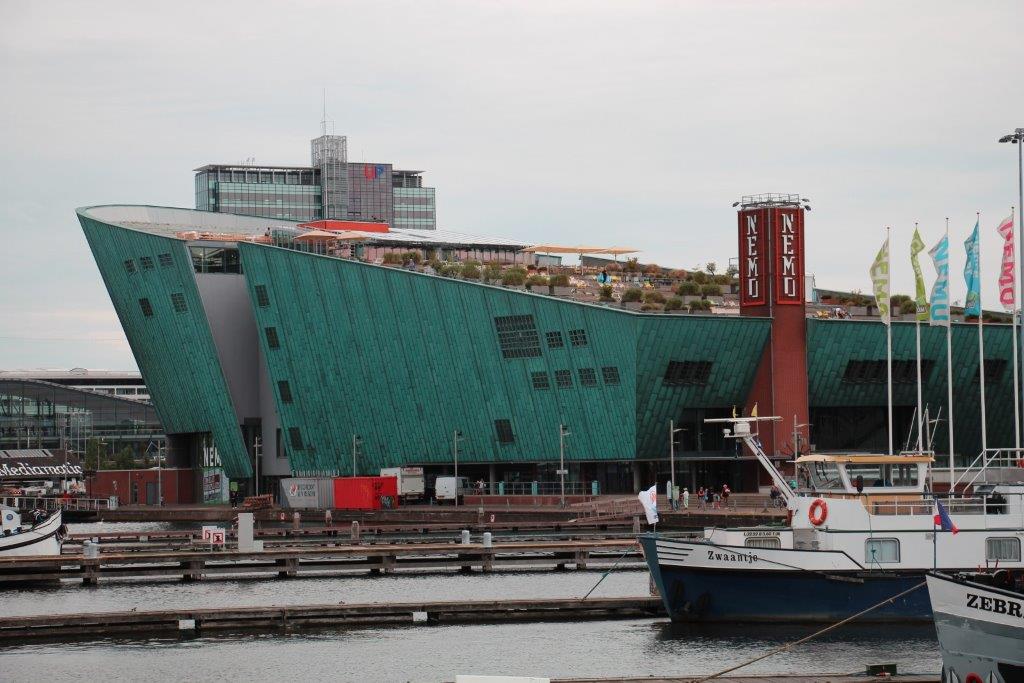
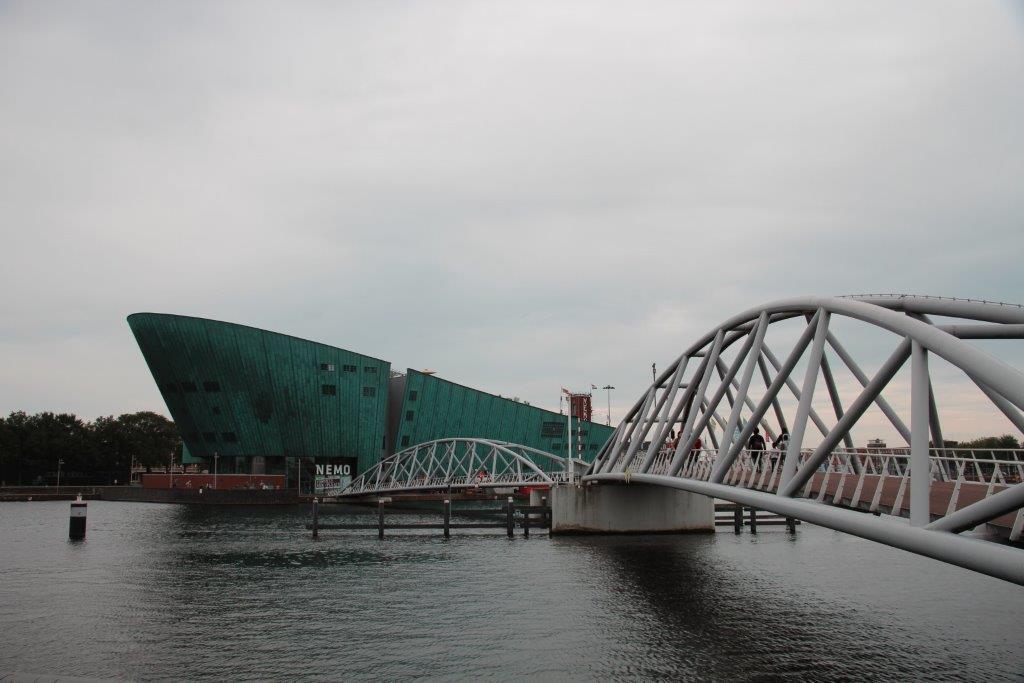
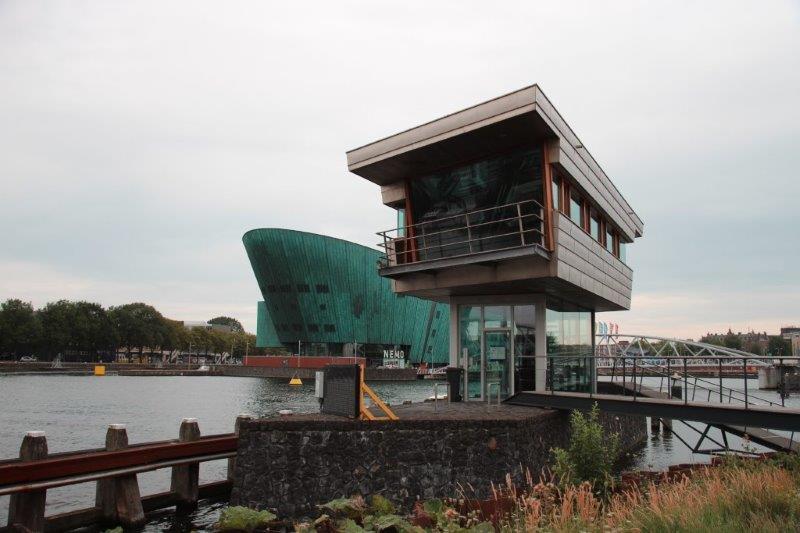
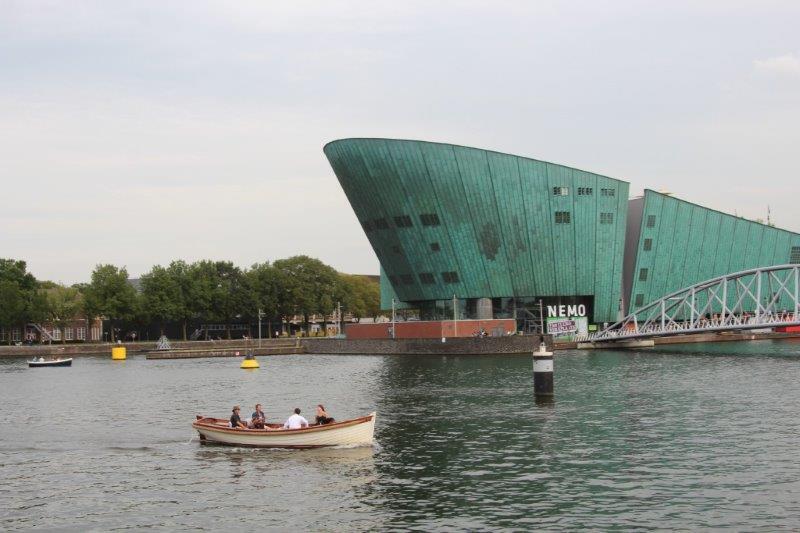
NEMO is the Science CenterIMG_9380


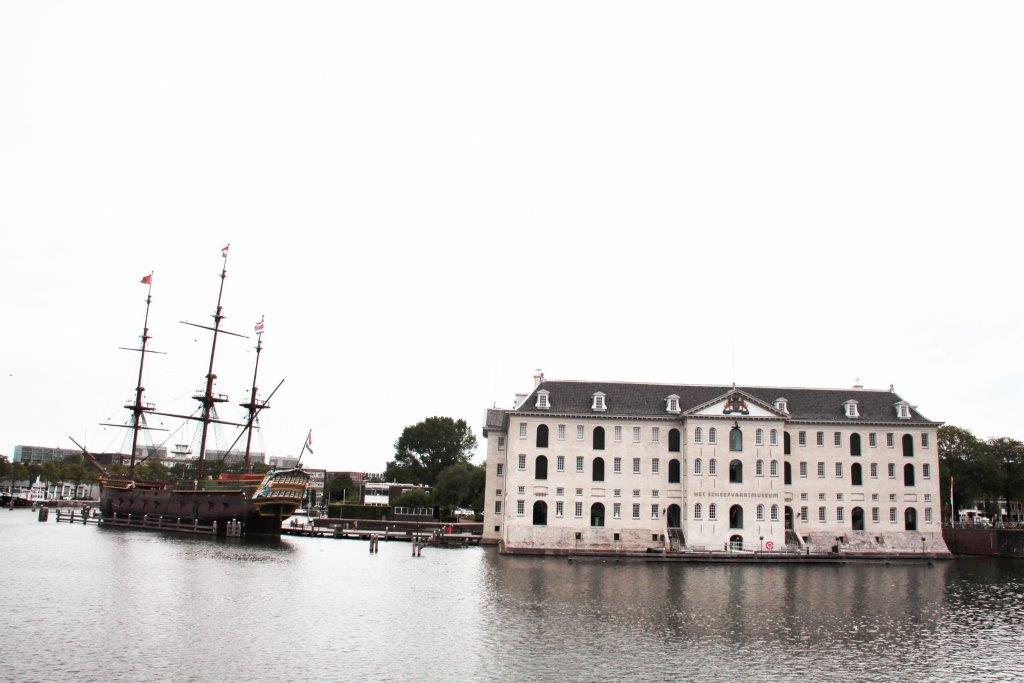
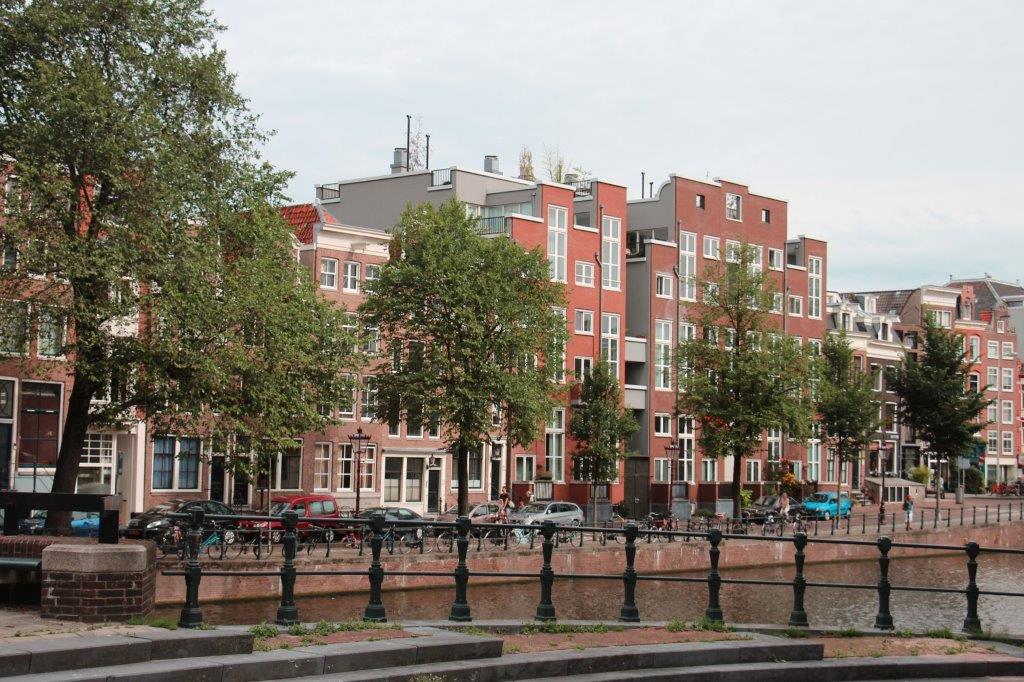
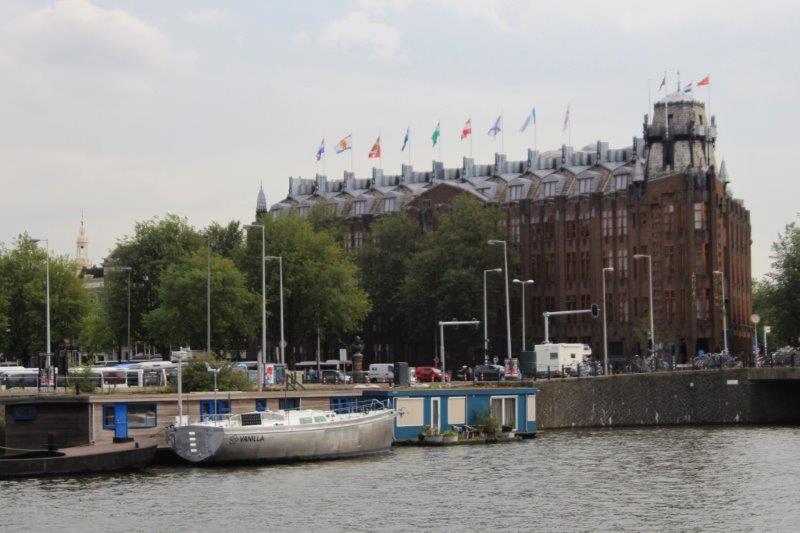
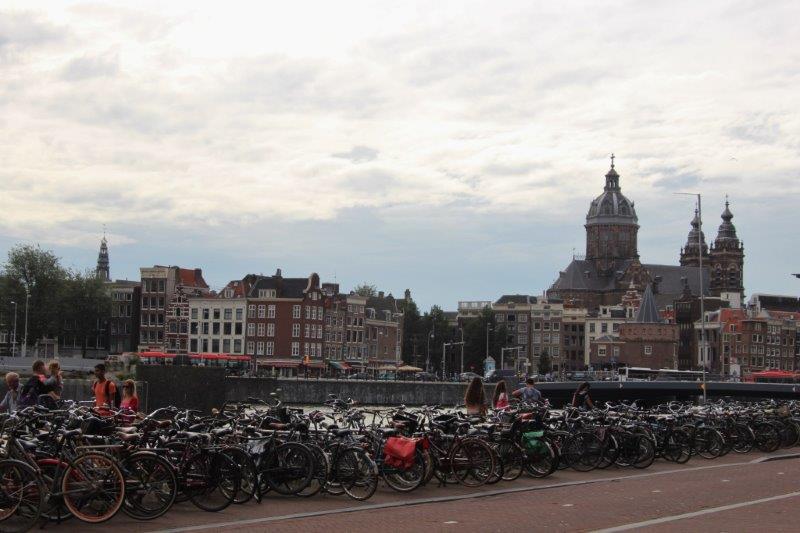
This is the Maritime MuseumIMG_9384 IMG_9385 IMG_9388 IMG_9393 IMG_9397 IMG_9400 IMG_9401  This is a private houseIMG_9402


Two of our favorite crew: Dharma and Aurora


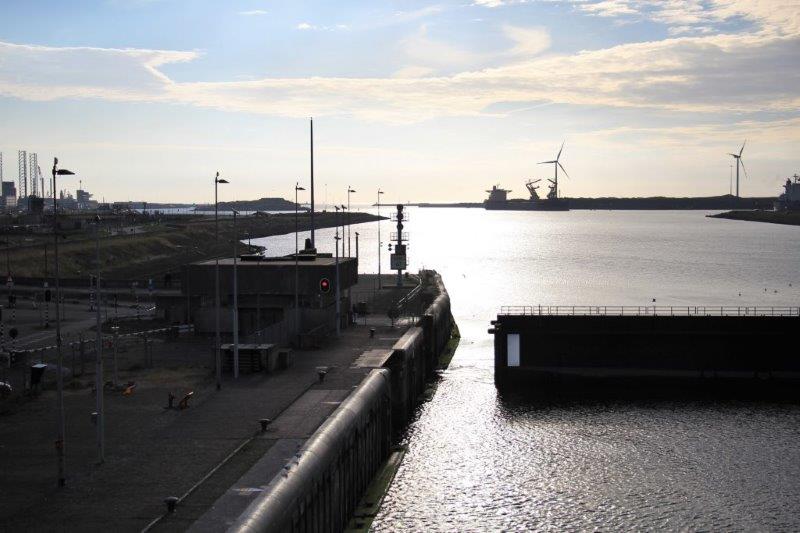
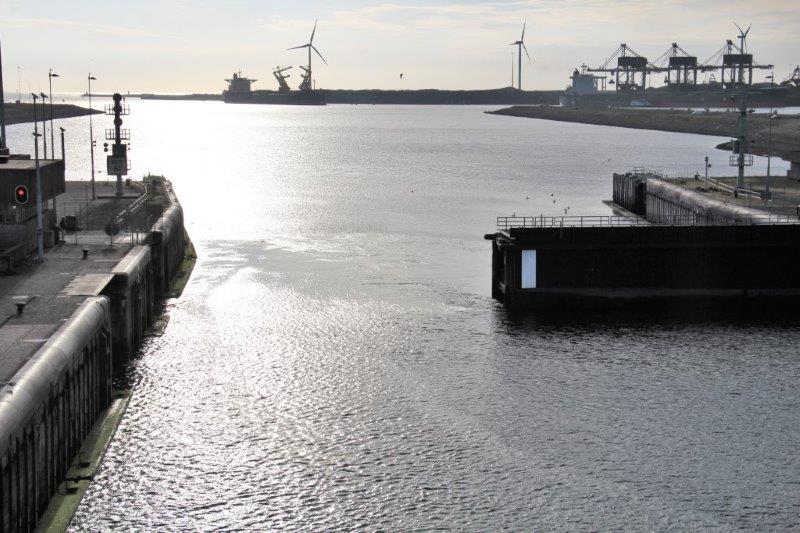
While we were eating dinner we sailed the long channel out of Amsterdam.  We went to the cabin, got our cameras and went onto the bow deck to watch the sail through the lock taking us out to sea again.  The captain had announced that he expected to be in the lock at 7 pm and at 6:59 were tied inside waiting for the gate to open to lower the water level back to the sea.  (Amsterdam sits 18’ below sea level.)  Tomorrow we are in Belgium, the port city of Zeebrugge (Zee-rouge with a B sound at the beginning) and are taking my most-wanted tour of this trip – “Ypres, In Flanders Fields.”

IMG_9404 IMG_9408 IMG_9411


Former ventilation shafts – now de-commissionedIMG_9416 IMG_9421 IMG_9422 IMG_9424 IMG_9425 IMG_9427


Not a lot of spare room in the lockIMG_9431 IMG_9434 IMG_9435 IMG_9439 IMG_9452 IMG_9458 IMG_9460


Seaside holiday cabinsIMG_9462 IMG_9463 IMG_9467 IMG_9472


2015 Aug 10 & 11 – Days 17 & 18 – At Sea and Amsterdam

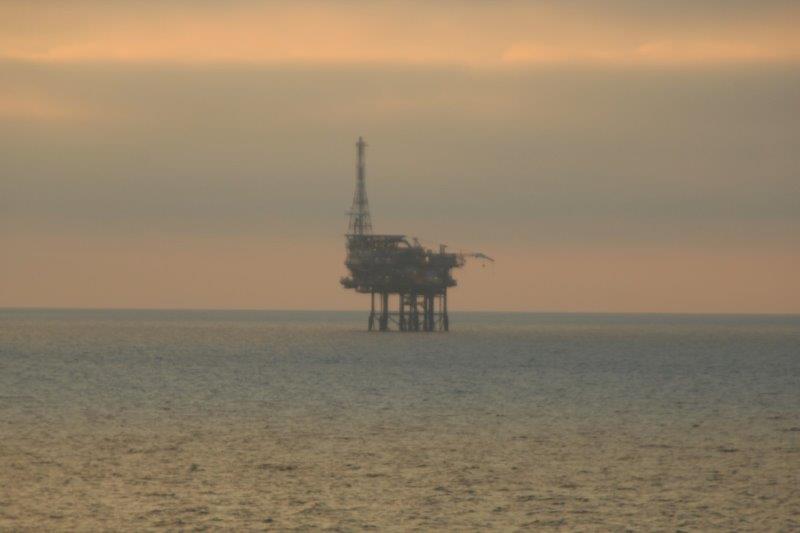
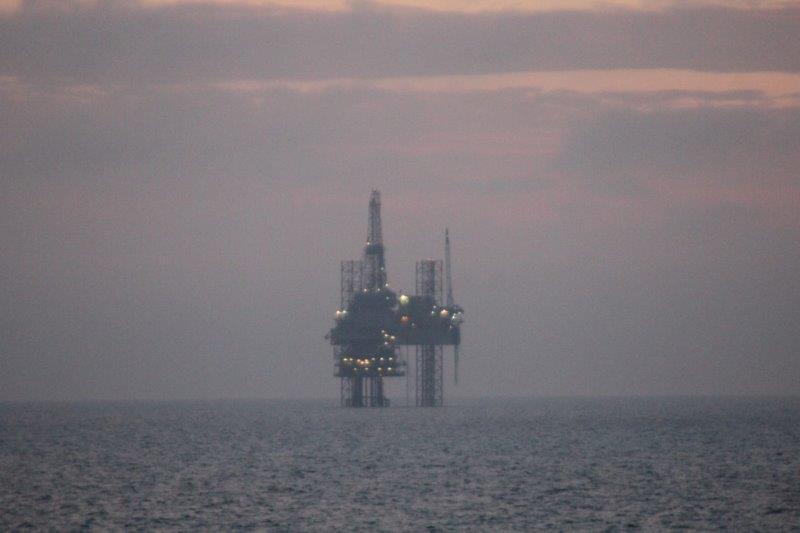
We had a day at sea between Bergen, Norway and Amsterdam.  We spent a quiet day as we usually do on sea days.  We didn’t see anything interesting until after dinner. We had heard that we had been passing oil drilling platforms during the day and when we went out onto the Promenade Deck after dinner, as we often do, there were six platforms visible.  The sun looked like it might give us some nice colour as it set so we went to the cabin and got our cameras and went back on deck to see the show.  Nothing as spectacular as in Iceland, but it was a nice sunset and the lights on the platforms lit up as night approached.

IMG_9111 IMG_9112 IMG_9155 IMG_9158 IMG_9174 IMG_9177The ship sailed from the North Sea through the lock and down the long channel to Amsterdam while we were sound asleep.  By the time we woke at 8 the ship was docked, all the paperwork and processing had been completed, and we were free to go ashore.  The cruise terminal is located about a kilometer from Amsterdam downtown and Central (Train) Station.

We had breakfast, gathered up our coats and cameras and headed to Central Station to find which train would take us south to Dordrecht.  The Netherlands has a very effective and efficient network of trains which move thousands of people every day between cities and to and from work.  We purchased a Class 2 Intercity ticket to Dordrecht and got to the correct platform less than ten minutes before the train arrived (if we had missed it we would only have had to wait half an hour for another one).

The train took us out of Amsterdam, through farm and flower countryside and made 5-10 minutes stops at about 8 towns and cities, the largest of which was Rotterdam.  It took about an hour and 40 minutes to get to Dordrecht.

IMG_9180 Central StationIMG_9187 IMG_9193 IMG_9196 IMG_9197 IMG_9198Once we got to Dordrecht we asked directions to Maasstraat where Noah’s Ark was docked.  Our information said it was about 1.4 km so we thought we would just walk, but the information folks said it was too far and we should go round the corner and catch the No. 4 bus.  We had no Euros (we needed $2 coins for the bus tickets) and had meant to exchange some money at the front desk before leaving the ship but we had forgotten.  Fortunately there was an ATM at the train station and a currency exchange office that gave us some coins for our Euro notes.

The number 4 bus arrived just as we got to the bus stop (again, not a worry if we had missed it as another one would be along in 15 minutes).  It took about 10 minutes to get to Maasstraat and we just got off the bus, crossed the street and walked up the road to the Ark.

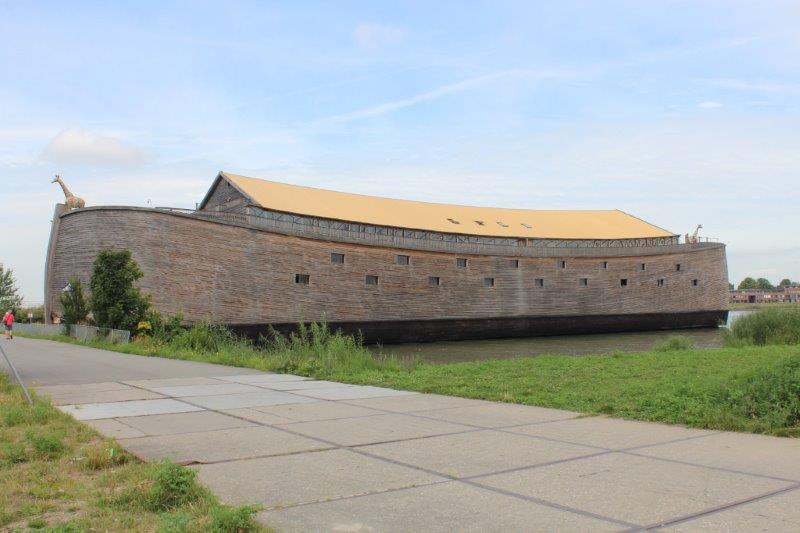
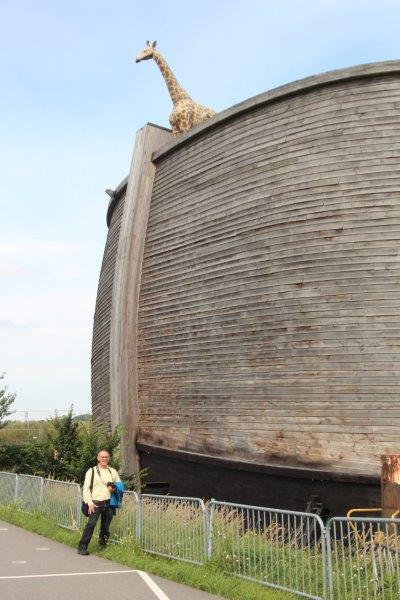
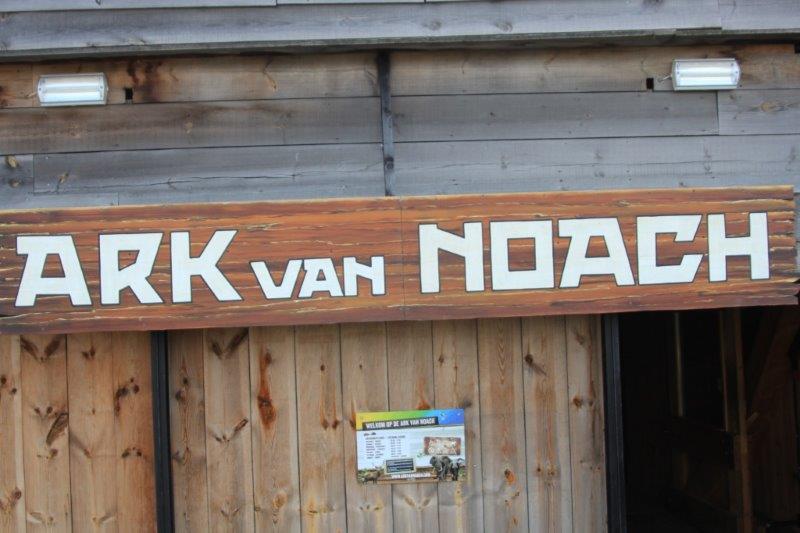
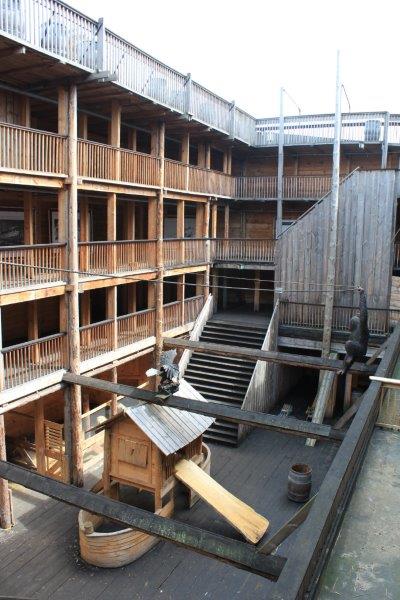
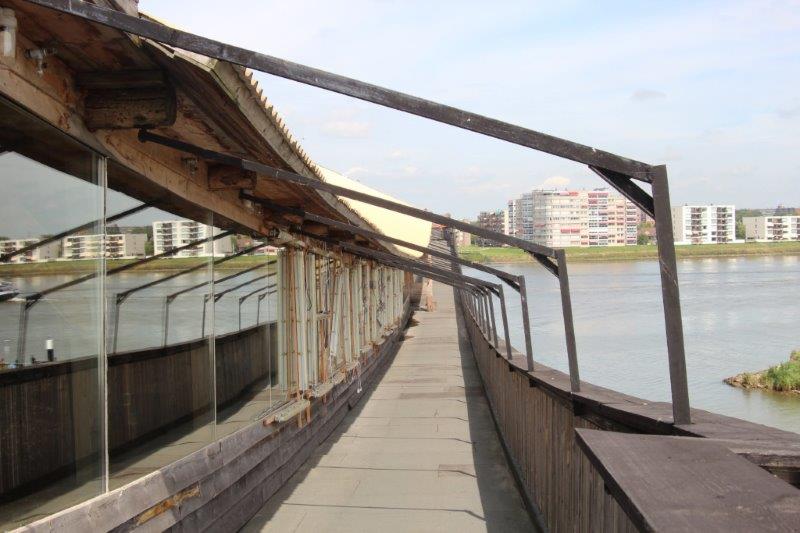
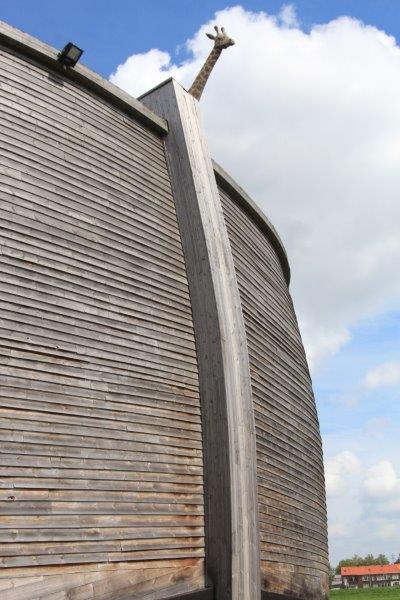
A Dutch man, a construction contractor, received a vision to build Noah’s Ark in 2004 to show people that the Bible stories were real and God did care for them.  I haven’t read the book of the whole story (we bought it) but I think it took him about 2-3 years.  The ark is ‘life size,’ made of pine wood and at anchor in the canal.  It is 150 meters long (495 feet), 35 meters wide (115 feet) and 25 meters tall – four stories above the water level (82 ½ feet).  It is HUGE.

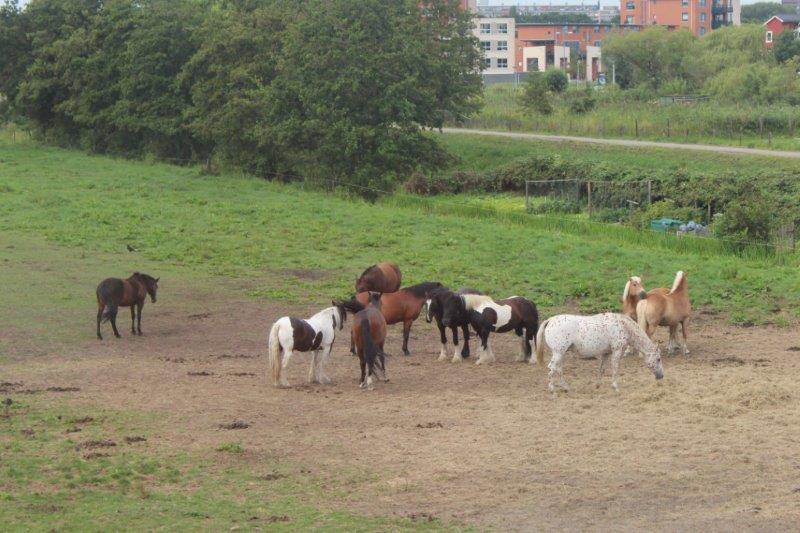
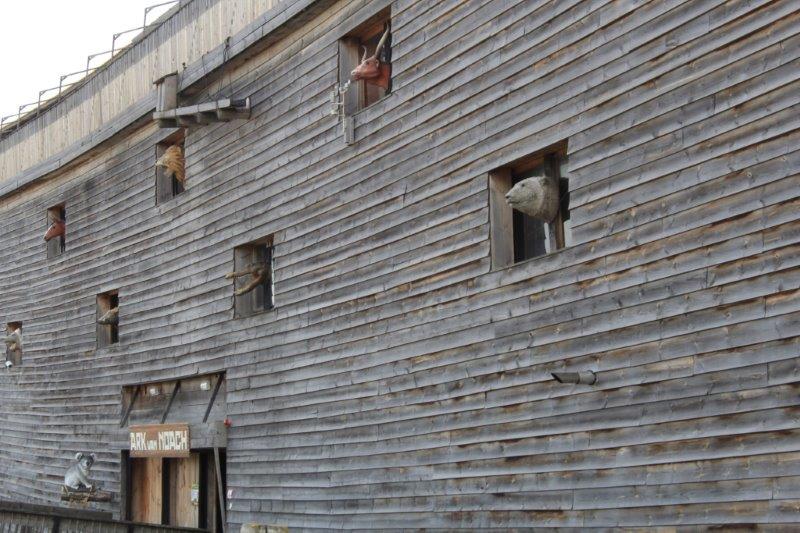
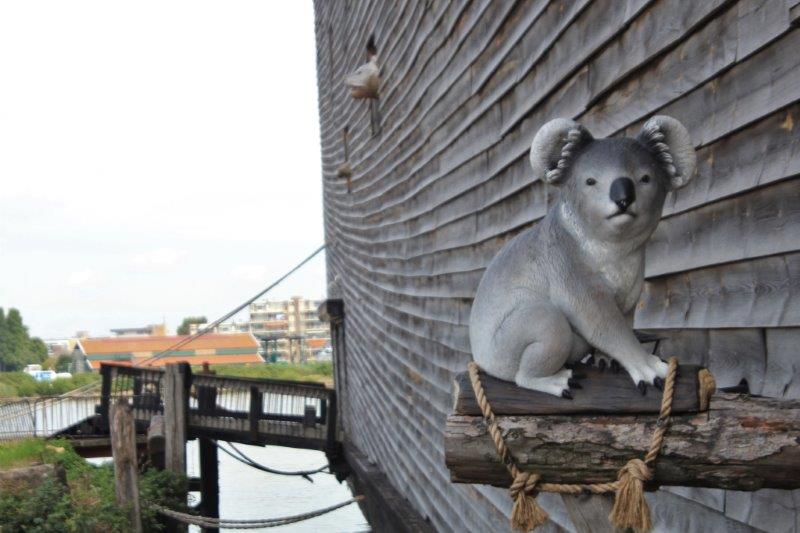
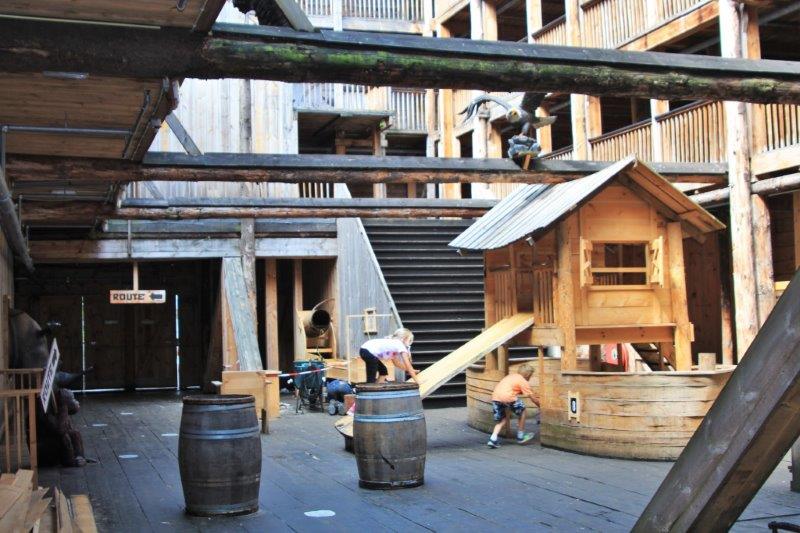
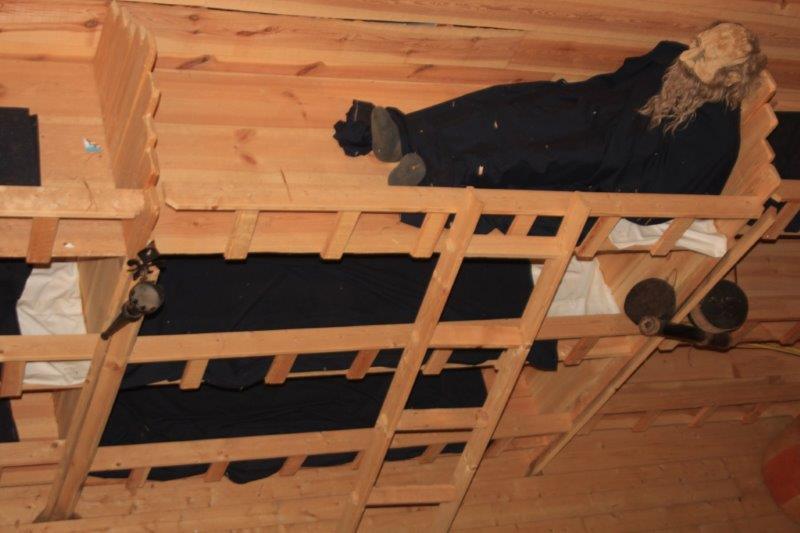
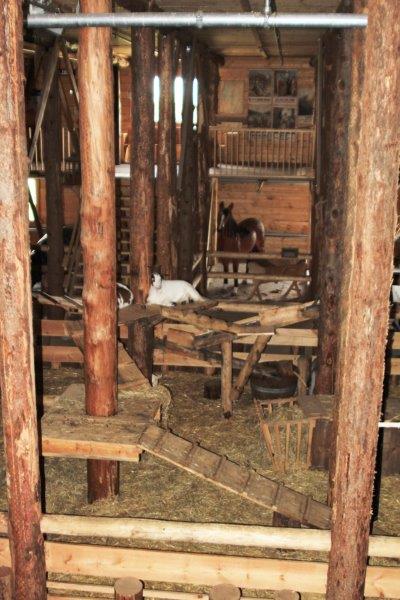
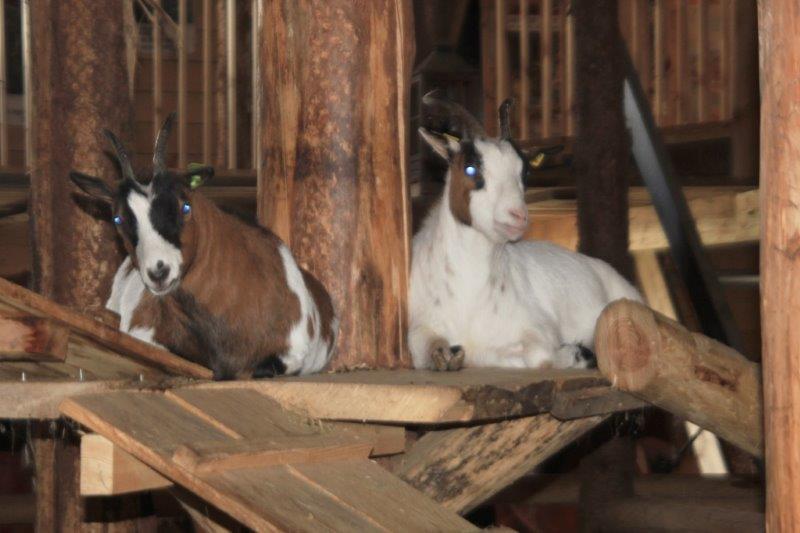
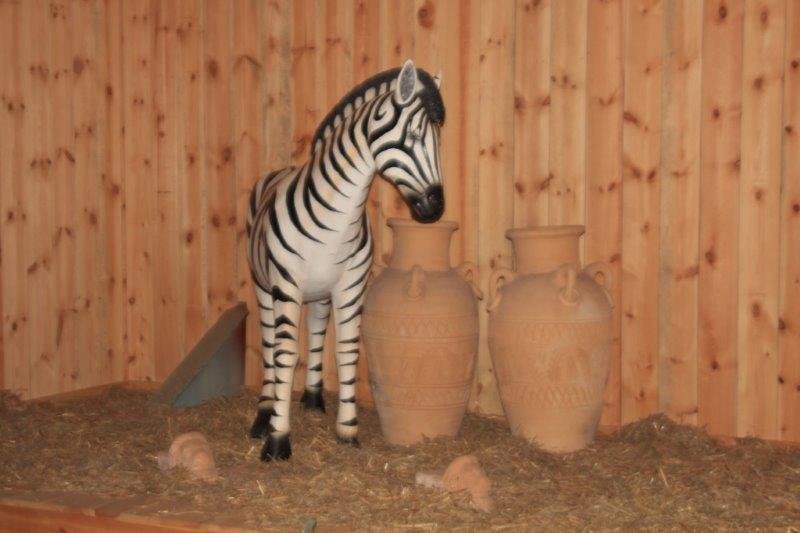
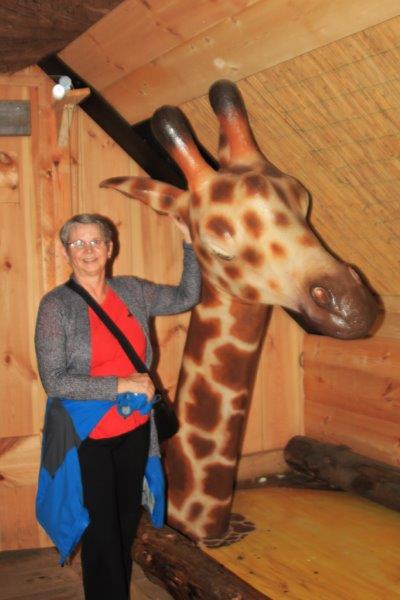
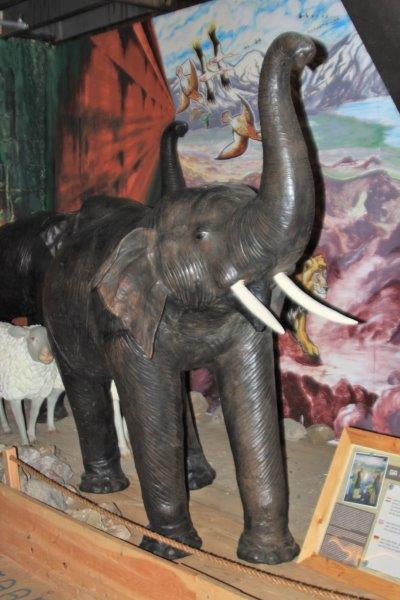
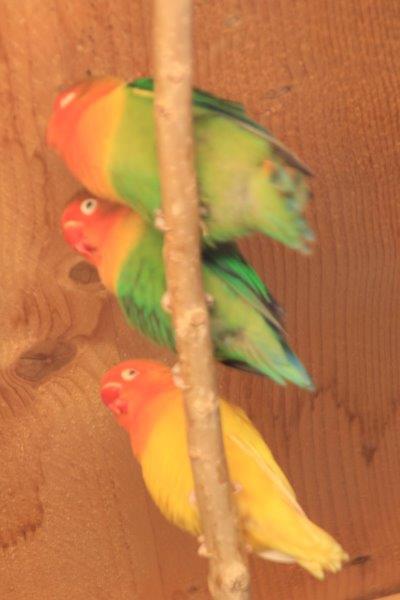
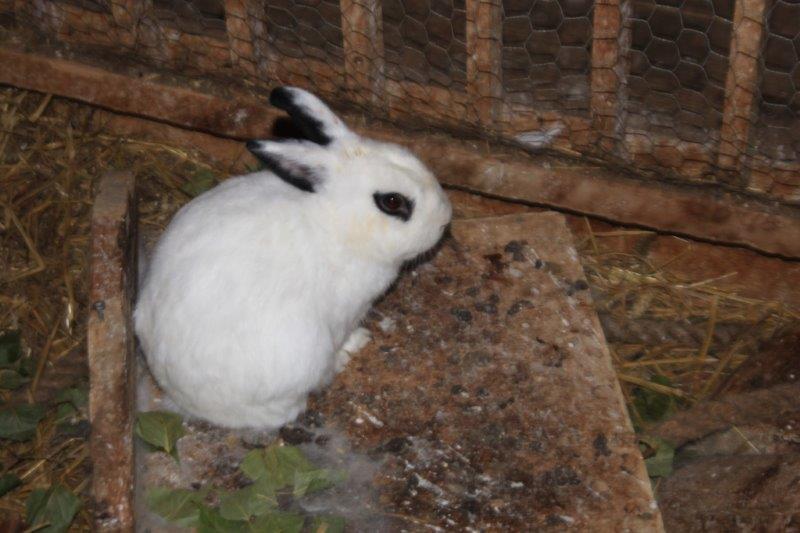
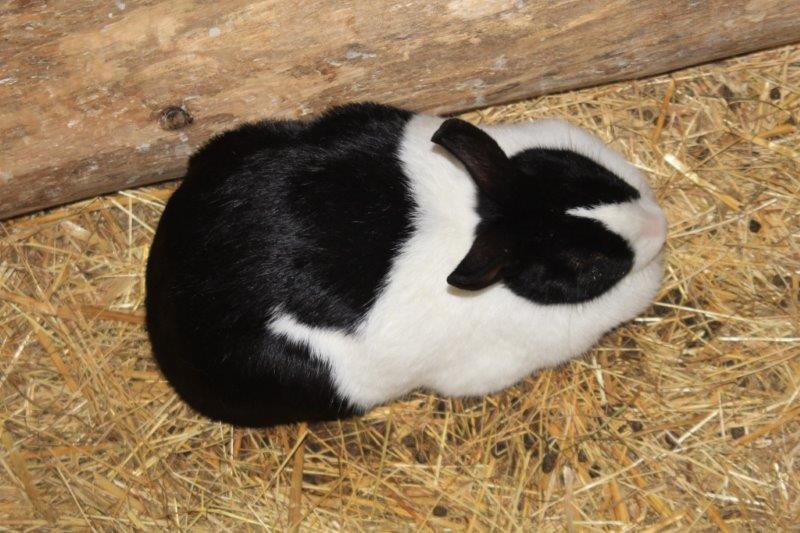
IMG_9203 IMG_9204 IMG_9205 IMG_9211 IMG_9212 IMG_9214Once inside you follow the ‘elephant’ footprints through the Ark, hear about how they built it, and what tools and equipment Noah may have used when he built his ark.  Pertinent Bible passages about Noah and other important Bible characters, and about Jesus are related with mannequins and murals.  There are life-size models of animals from Elephants to DoDo birds, a section on the seven days of creation, the time of the dinosaurs, the mysteries of the cosmos, a restaurant, a conference room, two open air courtyards – one at each end – a walking deck around the top story, live birds, ponies, goats, rabbits, a wallaby, and a donkey.  Everything on the ark is made of wood.  It was very interesting, well presented and truly an amazing feat of construction.

IMG_9246 IMG_9221 IMG_9256 IMG_9283 IMG_9300 IMG_9301 IMG_9223 IMG_9235 IMG_9244 IMG_9252 IMG_9268 IMG_9269 IMG_9275 IMG_9302 IMG_9304 IMG_9312We spent over two hours touring around, then walked back to the bus stop, caught a bus back to Dordrecht train station and the Intercity back to Amsterdam; arriving at 4 pm.

IMG_9277 IMG_9279 IMG_9278 IMG_9325My wide angle lens broke/locked up and the focus ring will not move so I have been having to use my zoom lens since leaving Boston.  John kindly loans me his wide angle every now and then when I just can’t get the shot I want with my zoom, but it has been driving me crazy not to have my 18mm.  Amsterdam is a shopping mecca so we were sure we would be able to find an electronics/camera shop if not on the ‘main street,’ at least not too far away.  We walked almost as far as Dam Square (about 500m from Central Station) before spying a large department-type store.  They did not carry camera equipment but the information guide told us there was a large electronics store on the other side of Central Station which sells everything.  So-o-o, we walked all the way back to the train station, through to the other side, up one side of the building and down the other and no Media Mart. We asked someone else, “It is about a 12 minute walk down by the Hilton Hotel – which is on a street across the canal from the cruise terminal! Sheesh.  Finally we located the store only to be told they don’t sell 18-55mm lens separately (this is the normal size that comes with a camera body).  He had an 18-135 in stock though so 339 Euros later (about $500) I walked out with a new lens.  Heaven!

IMG_9330 IMG_9331 IMG_9335 IMG_9336 IMG_9337 IMG_9340 IMG_9342 IMG_9348 IMG_9351 IMG_9352 IMG_9353My poor feet were aching by this time and it was after 5 o’clock so we went back to the ship, changed clothes quickly and went to dinner.  We are in Amsterdam until 5pm tomorrow, which is the half-way point of the cruise.  200 people just booked the Boston to Amsterdam segment and are getting off and an equivalent number of people are getting on to sail from Amsterdam to Boston.  Sure beats being stuck in an airplane for hours.  Sail the Seven Seas from continent to continent.
2015 Aug 10 – Day 16 – Bergen, Norway

Our third and final stop in Norway was in Bergen. We had no tour planned for our day here.  When I read through the shore excursion options there were 3 or 4 tours and all of them seemed to drive around town and then take you to the funicular car to go up to the top of the overlooking hill for a panoramic view of the city.  We thought we could probably just do that on our own.
A few days ago I was looking over the shore excursions for the spelling of some place or other and noted a 7 ½ hour tour out of Bergen taking you to “The Queen of Fjords” – Hardanger.  I was tempted to book the tour as Hardanger is the most famous fjord in Norway, but we had just completed two long tours at our other stops, both finished off by blanketing fog.  I overcame the impulse and was glad I had not succumbed when we woke up in Bergen to overcast skies and a light rain. (Bergen, we learned, is like Vancouver.  It gets lots of rain.  They have about 320 days of precipitation – rain or snow – per year.)

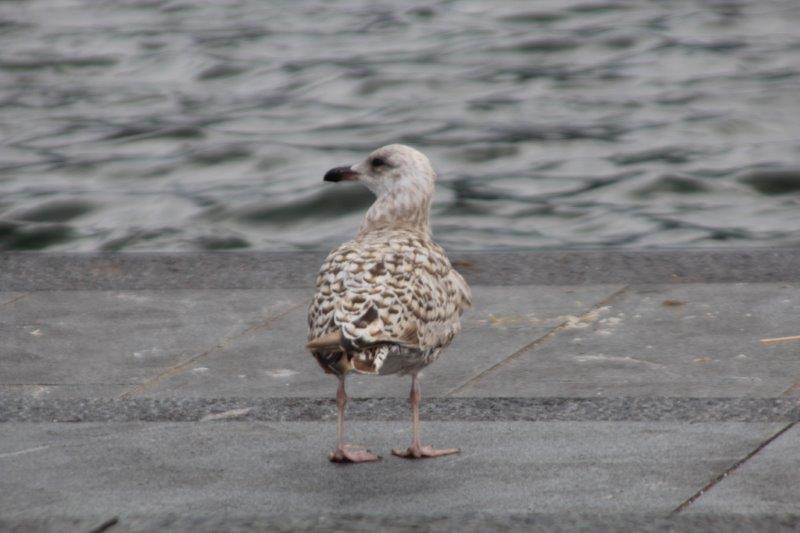
We lingered over breakfast, then climbed up to the open deck at the top of the ship and took some photos of the city.  The ship was docked within an easy walking distance of the downtown.  As we were walking along the deck I caught a flash of white out the corner of my eye.  When I turned to see what it was there was a seagull sitting on the railing a couple of feet away and totally unconcerned about our presence.

IMG_8847 IMG_8850 IMG_8855 IMG_8858 IMG_8861 IMG_8869 IMG_8879About 10:30 we walked down the gangway, picked up a street map at the gate and went on our merry way.  John turned on the GPS because we knew there were a few caches quite nearby.  As usual it had us going back and forth from one side of the street to the other and never settling on where we were supposed to go.  John looked for the next cache which was just down the street in The Ramparts.  We looked all along the stone wall with no success and it was posted as magnetic and there was nothing metal it could be stuck to.  Perhaps it was inside?

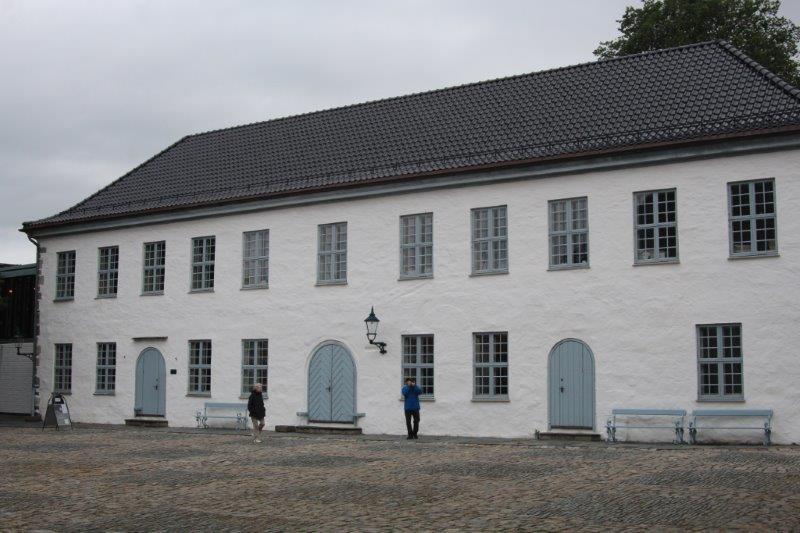
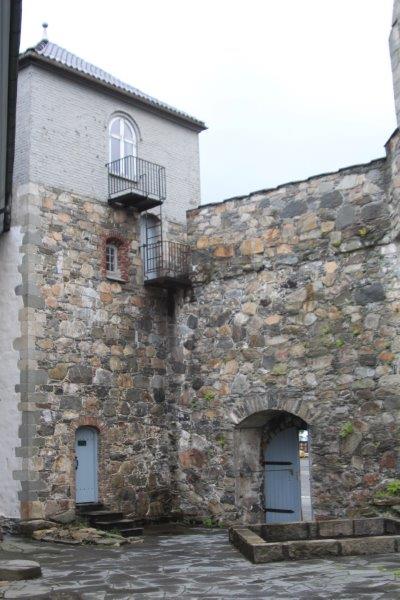
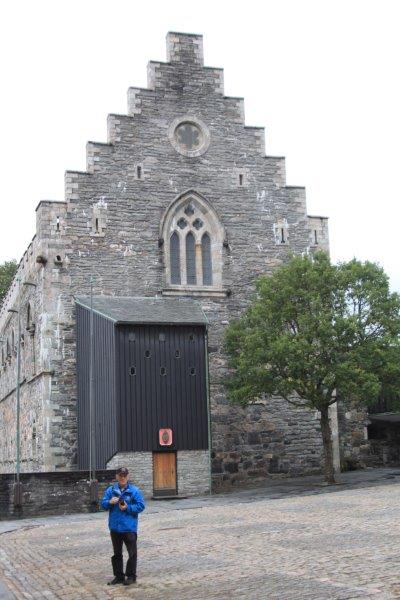
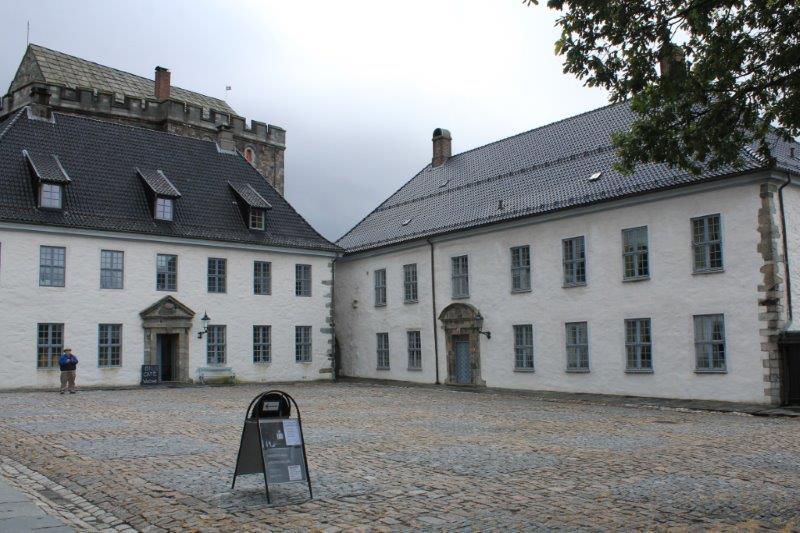
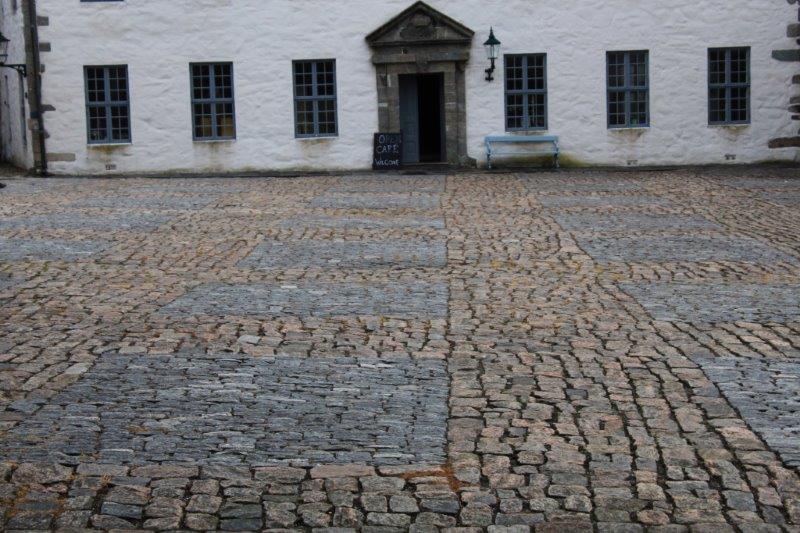
We turned the corner and walked into the courtyard.  This area is called Bergenhus Festning (or Fortress).  It dates back to medieval times.  You can take a guided tour of the two towers but we decided not to.  The GPS led us through the courtyard to the back of the church and lo and behold, we found it.  It turned out to be the only one we found although we did try some others.  Between the bouncing GPS and the muggles all around we gave up and concentrated on our site seeing.

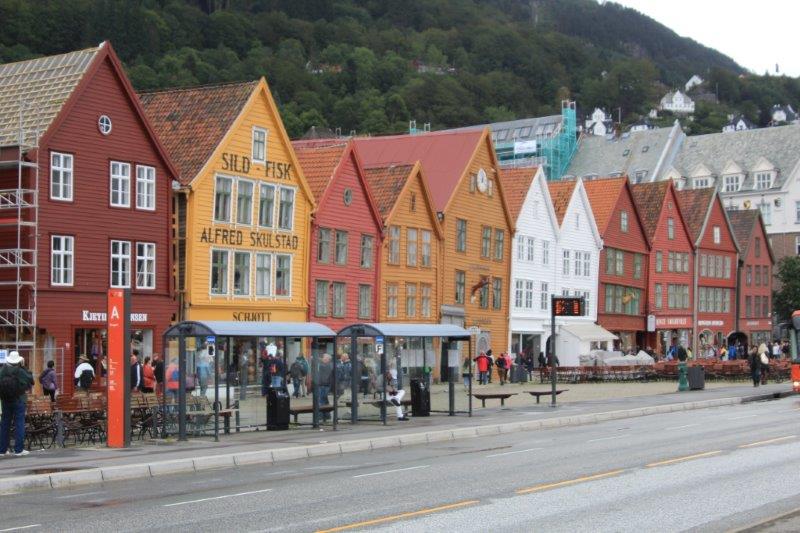
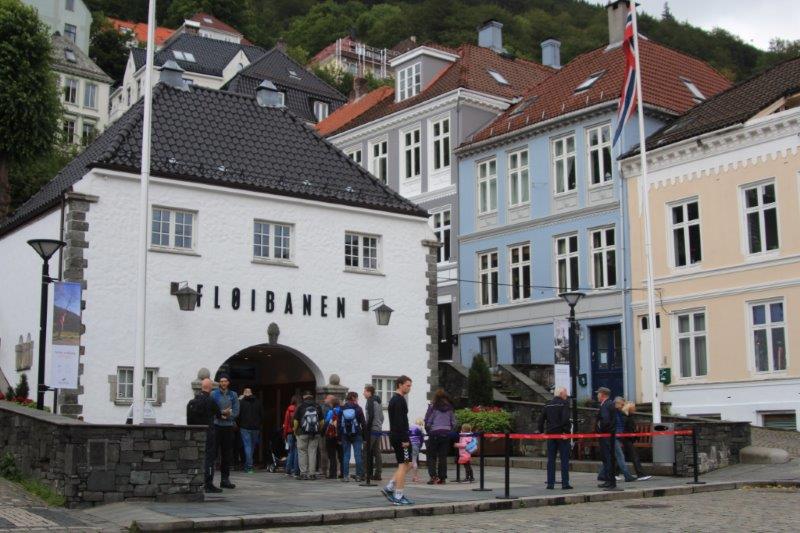
IMG_8884 IMG_8886 IMG_8891 IMG_8892 IMG_8893 IMG_8894 IMG_8895 IMG_8898 IMG_8901 IMG_8902 IMG_8906 IMG_8909The main tourist shopping area was just a little ways down the street.  I was thinking that it being Sunday many of the shops would be closed and the church bells were ringing for services as we were in the Fortress. However, the mighty dollar has won out, at least on the dockside street (shops a block back were closed) and people were happily hopping from store to store looking for the perfect souvenir or T-shirt.

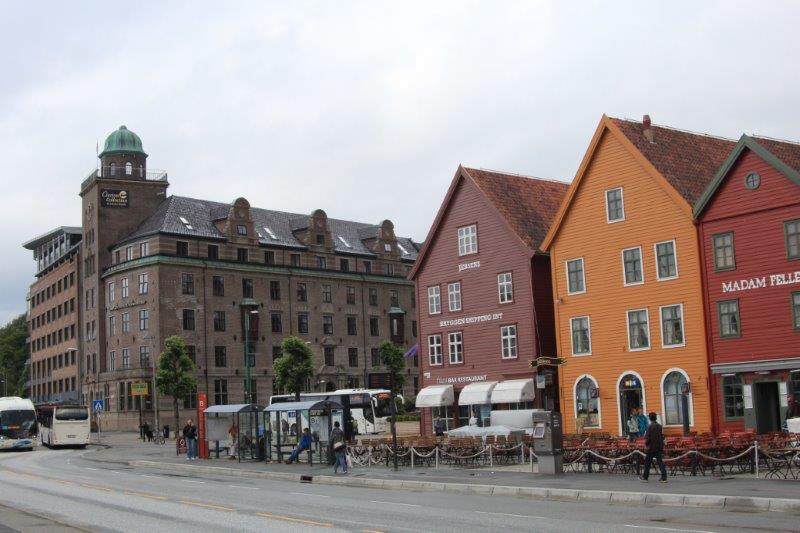
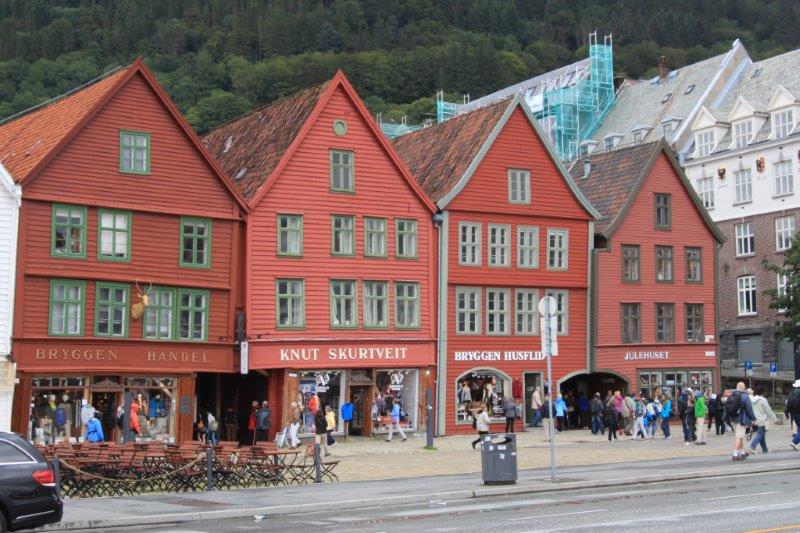
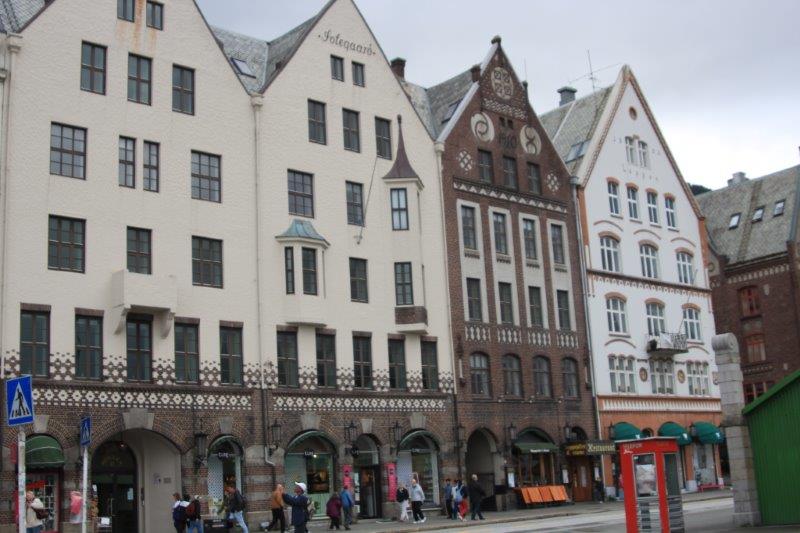
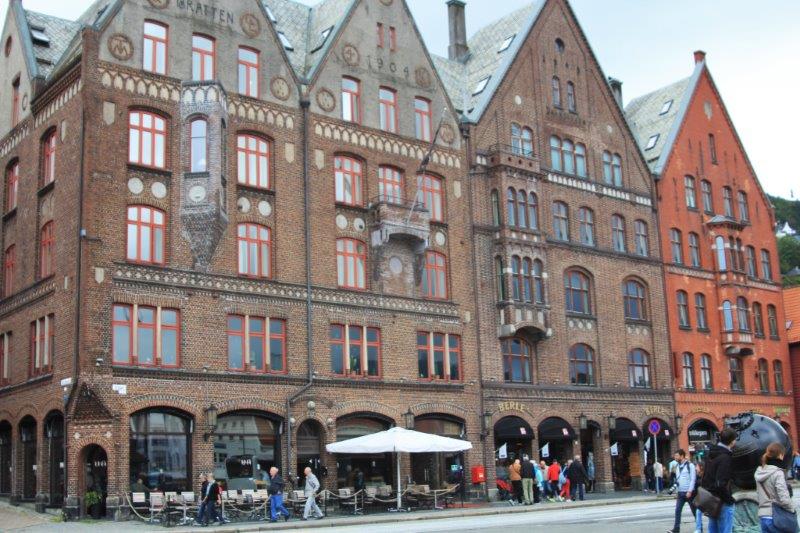
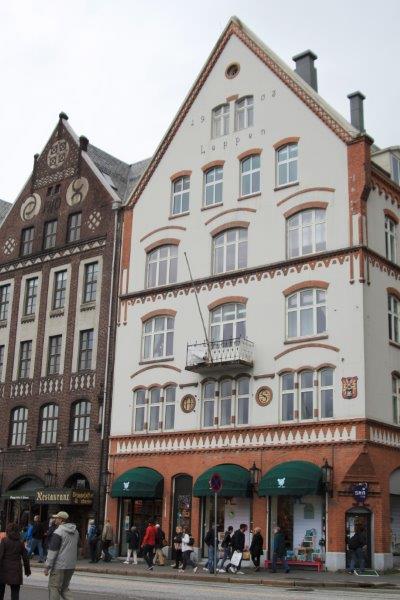
The quayside area dates from the 11th century is built upon detritus from past fires when any fire debris, burned timbers, household refuse, etc. was mixed with earth to reclaim land.  Thus, the quayfront was pushed by stages into the harbour layer upon layer and level upon level which, in turn, provided a deeper draft for larger ships to enter and dock.  There is all kinds of archaeological treasures in the ground under the buildings – pieces of china, inscribed pieces of wood or bone, shoes, sheaths, pottery shards, jewelry, etc.  Archaeologists call it Cultural Deposits and all the ground under the tenement houses is protected.  The buildings along the street were edge to edge with each other and several of them had distinct leans.  One house has sunk about 8-10” and will have to be lifted and shored up soon.  How I have no idea.

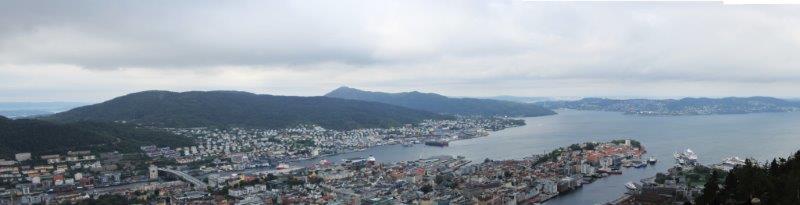
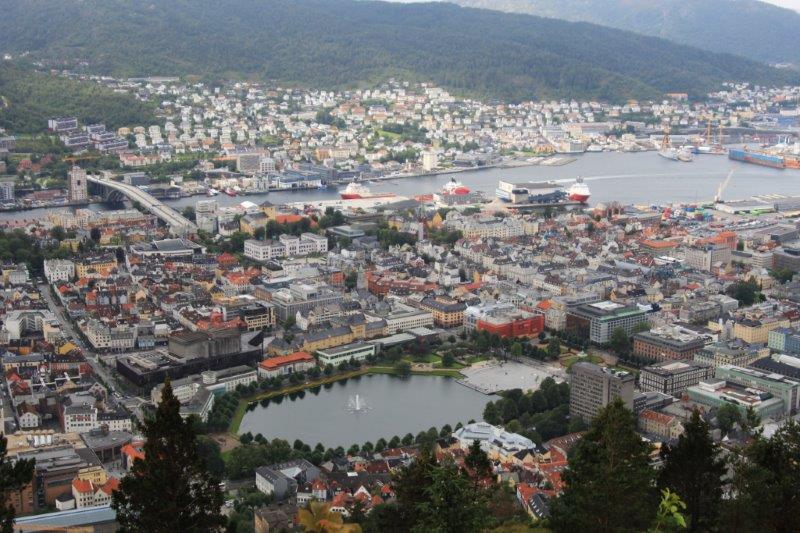
IMG_8923 IMG_8924 IMG_8927 IMG_8928 IMG_8932 IMG_8934 IMG_8935 IMG_8936 IMG_8937 IMG_8940 IMG_8942 IMG_8944By this time the clouds had lifted quite a bit and everything looked considerably brighter.  We decided we would walk up the side street to take the funicular up the mountain.  There were only a few people in line and the funicular goes up and down every 15 minutes.  The car came to a stop just as we approached the ticket readers.  Once our ticket was scanned the little gate opened and we walked on.  It only takes about 5 minutes to get to the top but the view was outstanding.  There was access to 320 degrees of views of Bergen stretching toward the sea and up the hillsides.

IMG_8951 IMG_8962 IMG_8973 IMG_8975 IMG_8977 IMG_8985 IMG_8986 IMG_8987 IMG_8988 IMG_8991 IMG_8993We snapped a bunch of photos, wandered around for a while and then went into the café restaurant for a light lunch.  When we came out again there were people everywhere!  Obviously several of the tour buses had disgorged their passengers at the bottom.  Bergen runs a Hop On, Hop Off bus that stops at the funicular ticket shack too.  We were glad we had taken our photos earlier and made our way through the hordes to a waiting car going back down.

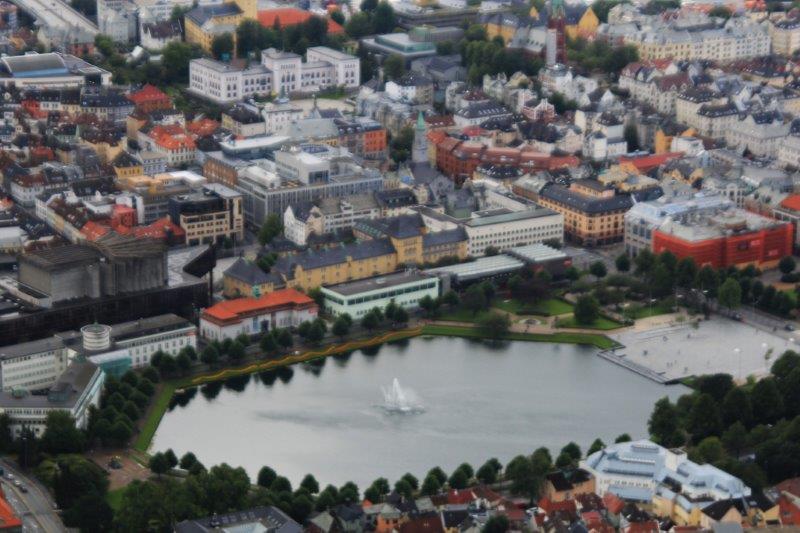
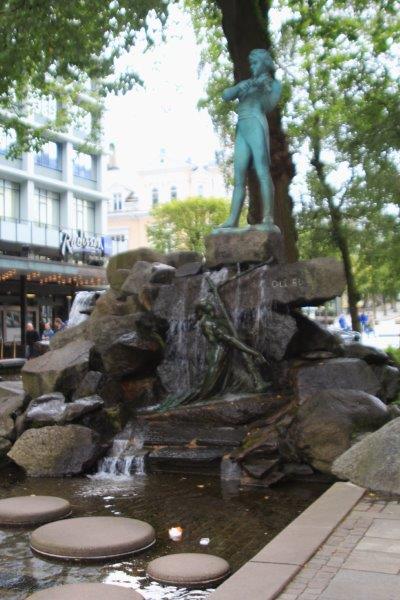
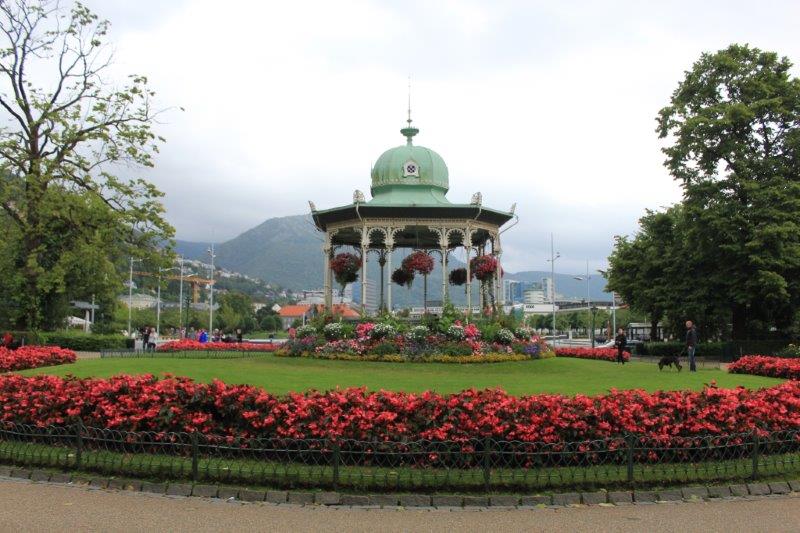
When we were up top we spotted a nice looking park with a fountain in the center and decided we would walk over to it and take a look.  We walked through a huge pedestrian square and past a lovely flower bedecked gazebo before crossing the street to the large plaza beside the small lake.  There were supposed to be two geocaches in the area, but again one was magnetic and we could find nothing in the vicinity of the co-ordinates that a magnet could stick to and after much wandering around and searching in bushes we discovered that the second had been disabled.  So much for that.  The park was lovely though.

IMG_9003 IMG_9011 IMG_9012 IMG_9013 IMG_9014 IMG_9017 IMG_9015 IMG_9019 IMG_9021 IMG_9022 IMG_9026 IMG_9034 IMG_9037 IMG_9038 IMG_9041

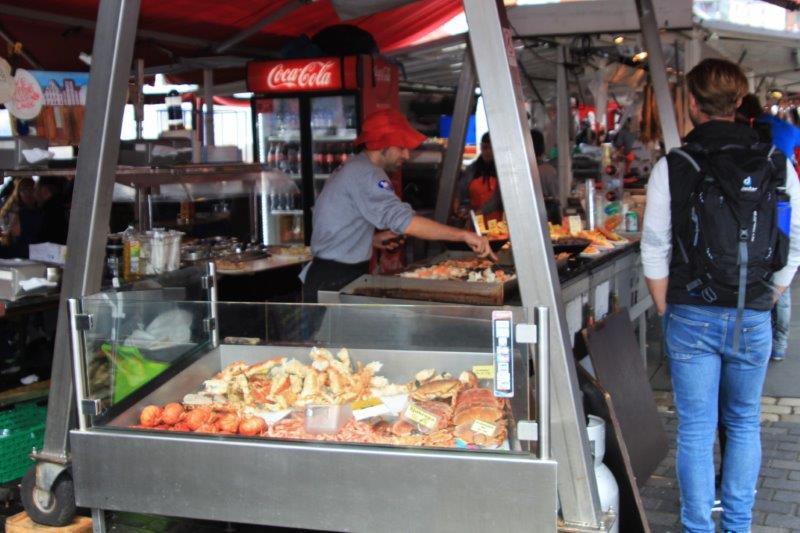
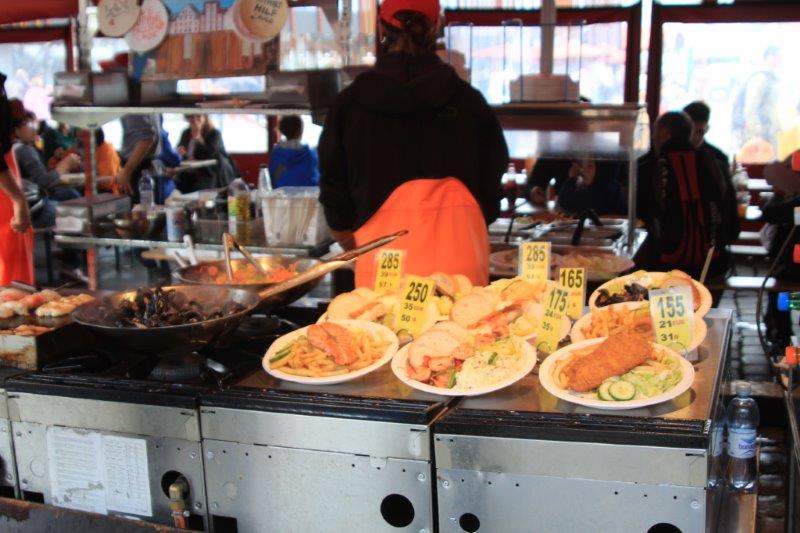
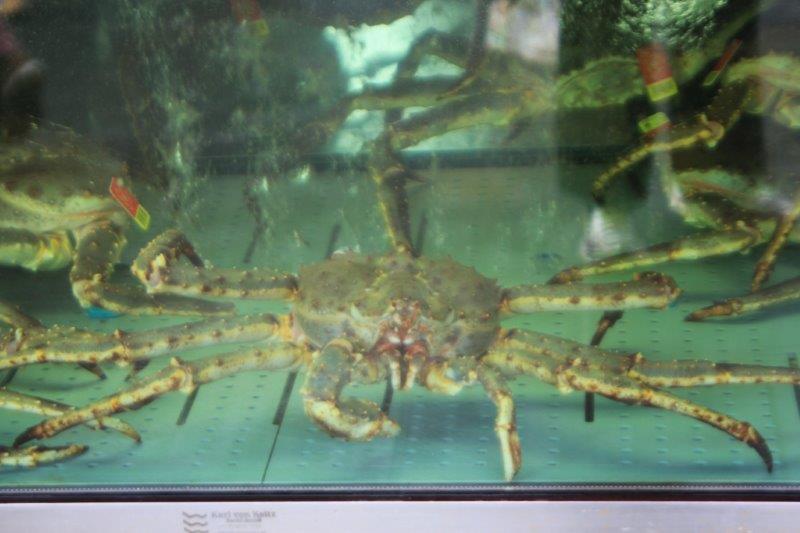
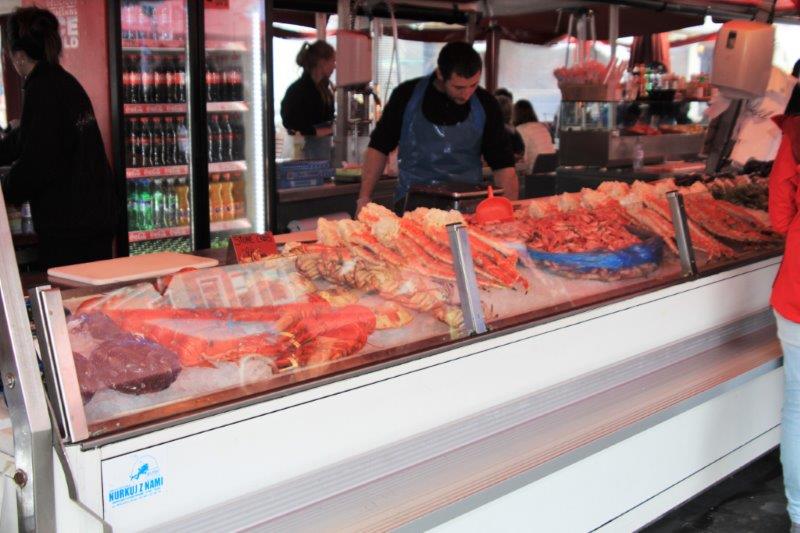
IMG_9046 IMG_9042 IMG_9049 IMG_9052 IMG_9054 IMG_9057 IMG_9063 IMG_9065Our path back to the ship took us through the fish market which has been held at the end of the quay since 1796.  There were dozens of tented booths with ice-filled display cases full of whole and fillets of various types of fish, crab legs, mussels, and clams, and tanks with live crabs and lobsters.  Each booth not only sold the food from the sea they also had huge gas-fired grills and they would cook your dinner on the spot.  Tucked among the seafood vendors there were also some sellers of jams or reindeer sausage and a few other types of food.  Across the street were the sellers of T-shirts, sweaters, caps, jackets, jewelry etc.  Needless to say it was a very crowded length of street.

IMG_9079 IMG_9080 IMG_9082 IMG_9084We wandered up a couple of blocks off the main street and walked past closed art galleries and antique shops and the backs of a collection of the tenement houses that are along the quayside street until we came to the gardens by the fortress which was a straight path back to the ship. We were onboard by 4 o’clock, half an hour before all aboard.  It was a great day and I am so glad we didn’t take a tour so we could just wander.

IMG_9094 IMG_9095 IMG_9101 IMG_9102 IMG_9104 IMG_9106Tomorrow is a day at sea before we spend two days in Amsterdam.

2015 Aug 9 – Day 15 – Alesund, Norway

Alesund (pronounced just like Allison, but ending with a D sound) is a port town established in the early 19th century and incorporated as a town in 1848.  It is still the most important fishing harbour in Norway due to its central location along the west coast and the discovery of off-shore oil in the North Sea in the 70’s (which has made Norway one of the richest countries per capital in the world, but along with that it is a very expensive place to live). Alesund has a population of 46,000 and is built on seven islands. There is archaeological evidence of community activity 6,000-10,000 years ago and the area was a major trading center for 500 years around 1000 AD.  A Viking cargo ship that was built in this area (verified by the wood used) about 850 AD was discovered elsewhere and a replica is docked outside the Maritime Museum.

Jan 23, 1904 when the city had a population of about 14,000, at 2:15 am, a fire started in a cannery.  There were gale force winds blowing and the fire department consisted of 15 men, 2 horses and various pumps and tools.  Arriving on the scene the firemen quickly realized they had no hope of combating the blaze and concentrated their efforts on evacuating the area.  Fourteen hours later the fire halted on the far edge of town.  850 homes were destroyed (out of 1000) and 10,000 people lost everything.

One fellow told his wife as she was taking things out of the house that he had been visited by an angel and told that his house would be unharmed.  She didn’t believe him and continued to remove items from the building.  The fire passed right over the house, burning everything in the vicinity, including all of the things his wife had removed.  The house is still standing today.

Alesund was a favorite summer holiday spot of the Dutch Queen and German Emperor Wilhelm II, who came every year for the salmon fishing.  Four days after the fire four ships arrived from Germany filled with building materials and labourers, food and clothing.  The German Kaiser fed 3000 people three meals a day for weeks.

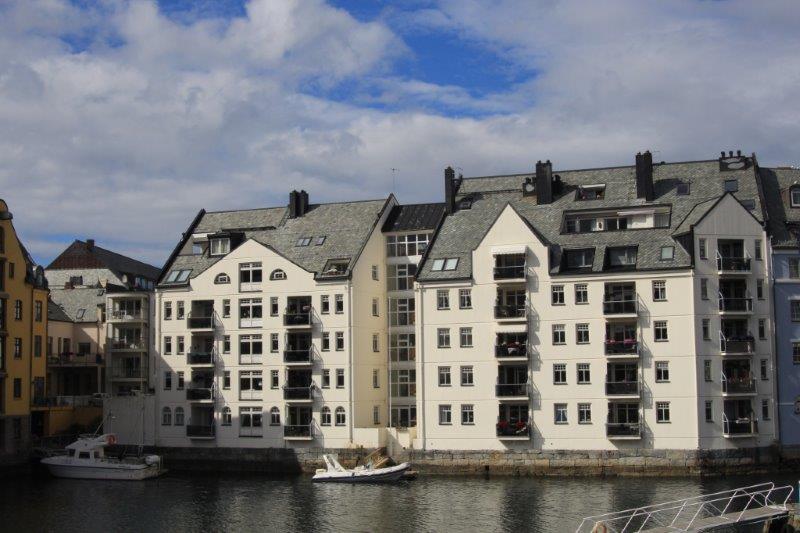
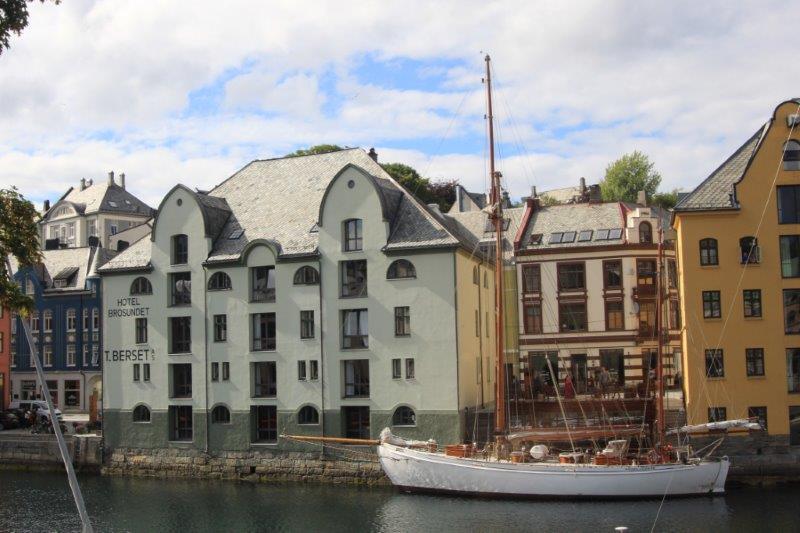
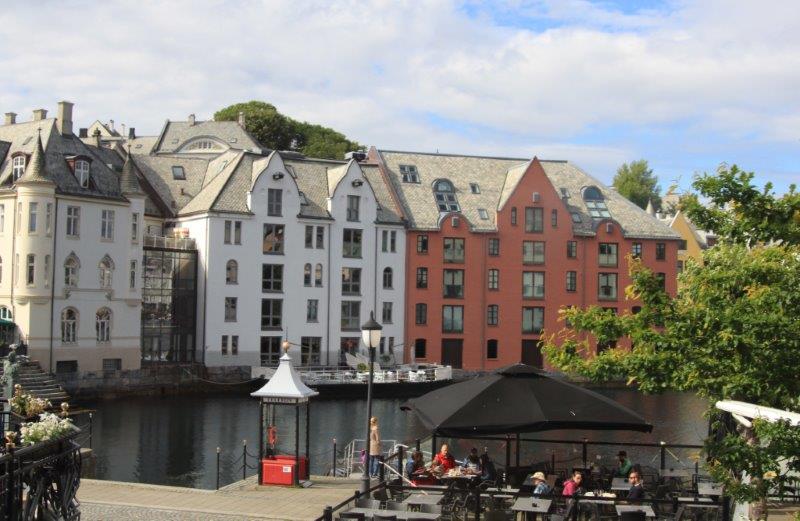
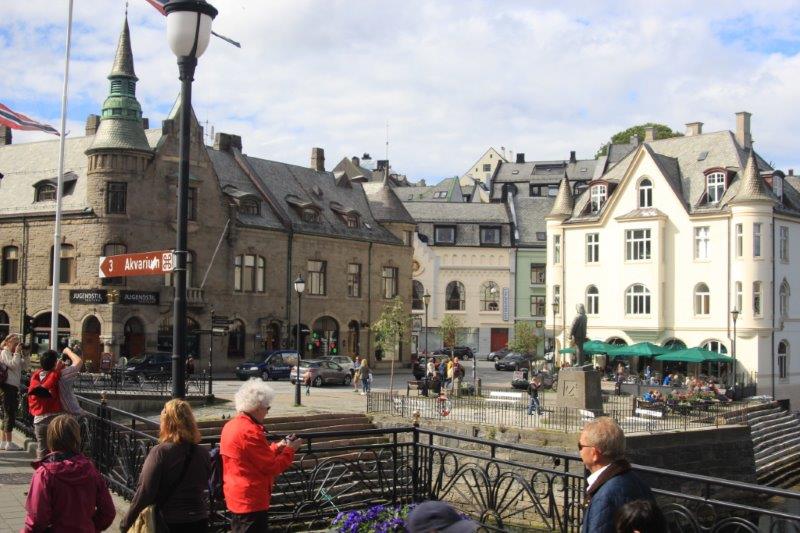
Most of the architects of the day had been schooled in the Art Nouveau style so when the town was re-built all the buildings were Art Nouveau even though several different designers and planners worked on the designs.  It only took 3 ½ years to re-build 500-600 homes and businesses.  Since all the businesses had been destroyed all the trades people were available to work on construction. Alesund became a city unique not only in Norway and Europe, but in the world as one town/one architecture.

However in the 1950’s people wanted to modernize and many of the buildings were torn down and new ones built.  It wasn’t until the mid-60’s before a new city planner realized the unique quality that was being destroyed.  Today legislation is in place to protect all the Art Nouveau buildings.

Once again our tour took us out of town.  We would like to see some of the towns but so often a city is a city is a city and the things that interest us are more often than not out in the countryside.  Alesund was no exception.  We left town at 8 am and had a two hour drive along the shoreline of Storfjord to the turn-off into the mountains to get to the Troll Path.  We passed many small farms (often the farm became summer work and the men would fish in the winter months to earn enough money to support the family.  This is now considered to be an actual profession, called a fisherman-farmer.)

We also drove through a micro-climate area where they grow 60% of all the strawberries in Norway.  There were many people in the various fields picking the berries.  Usually the strawberries are ready in July but they were late due to the cool summer.  Beginning in 1946 Polish migrant workers of all professions have come to pick the berries every year. Some are even doctors or accountants but in a few weeks picking strawberries they can earn the equivalent of an annual salary at home.  The workers are housed and fed by the farmers while they are in Norway.

Being a country of fjords and mountains the Norwegians have constructed many bridges and many tunnels.  We drove through over a dozen tunnels on our way to the Troll’s Path turnoff.  Most were 1-2 km long and the longest was 6.6km (4 miles).  The road used to go along the edge of the mountain but it was destroyed so many times by avalanches and was constantly needing to be re-built so the government just had a tunnel drilled through the mountain instead.

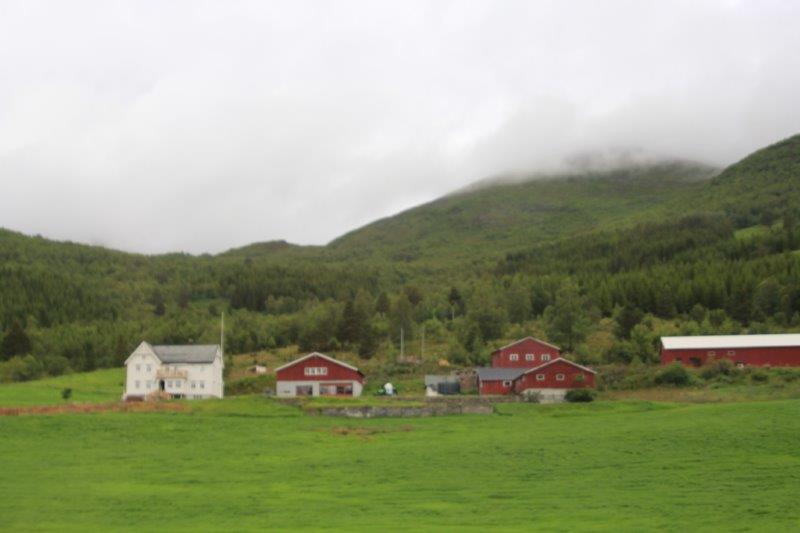
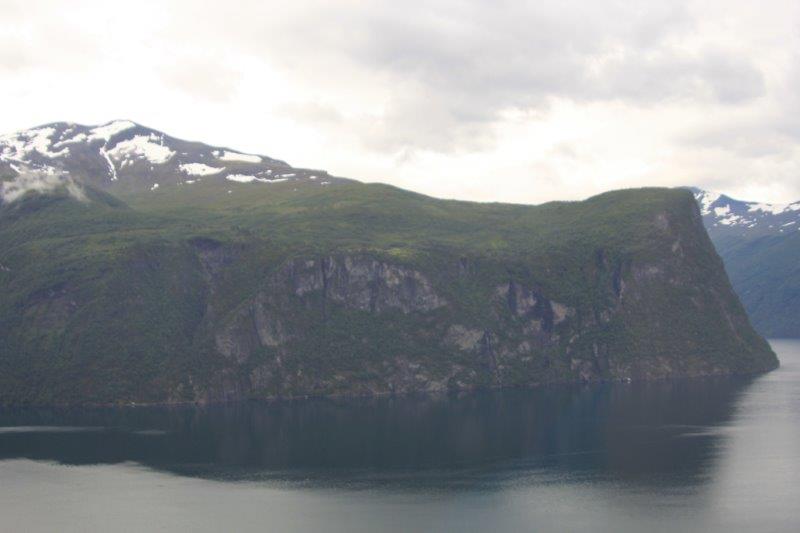
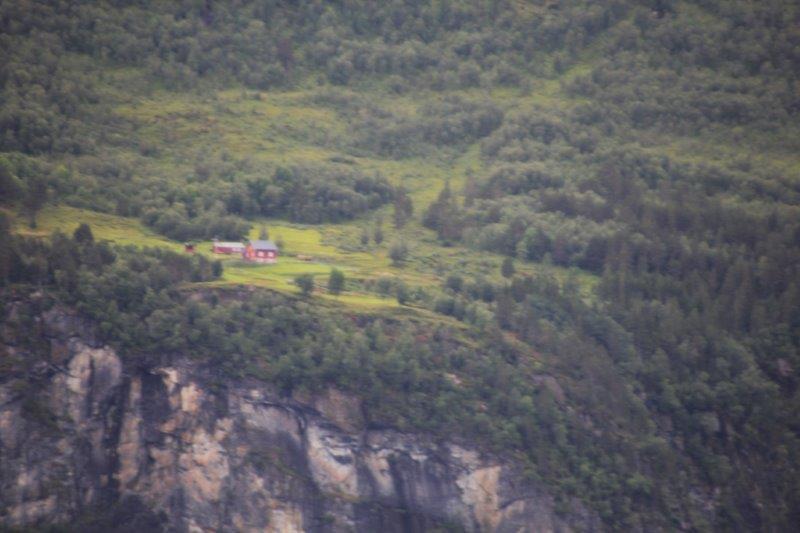
IMG_8432 IMG_8437 IMG_8449 IMG_8454 IMG_8463 IMG_8471 IMG_8472 IMG_8480Here too there was a very remote farm on the cliff face only accessible by track up from the boat launch in the fjord. This farm was quite large and if they needed more space they just cut down some of the surrounding trees.  The land was farmed by the family for over 50 years and whenever they purchased new equipment or brought in household goods or foodstuffs it had to be carried by hand up the cliff to the farm – no pack animals.  It was also abandoned when education became compulsory for children – even though they only HAD to go to school every second day it was almost impossible for them to make it.

IMG_8475


Here is the farmIMG_8477


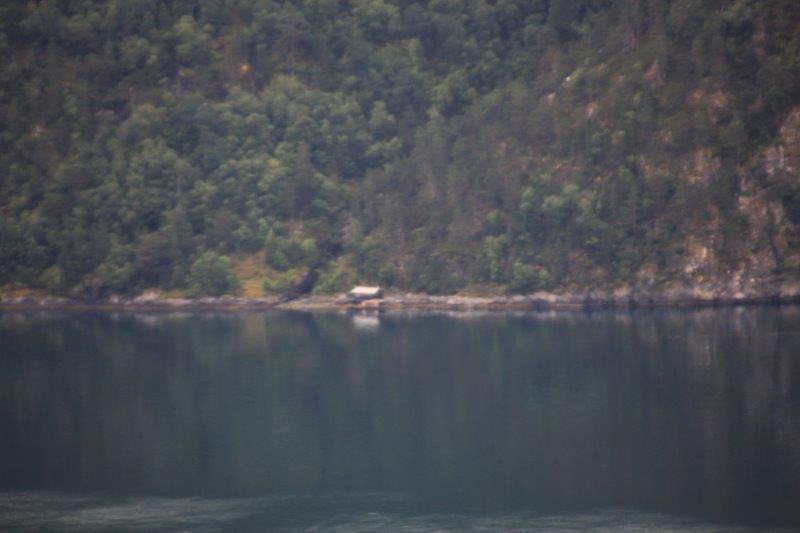
Here is the boathouse on the shore of the fjordIMG_8478


Now look near the middle of the photo to find the farm and then look to the lower left to see a small white spot that is the boathouse.  There was a path up the cliff side from one to the other.

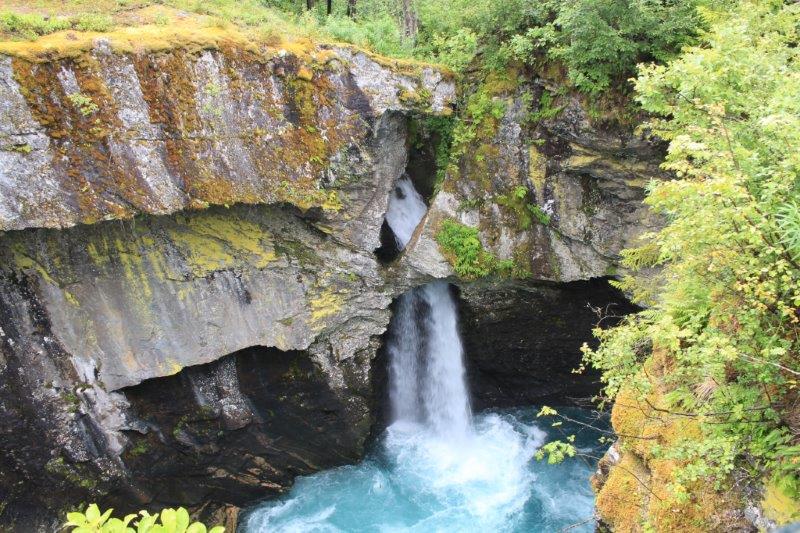
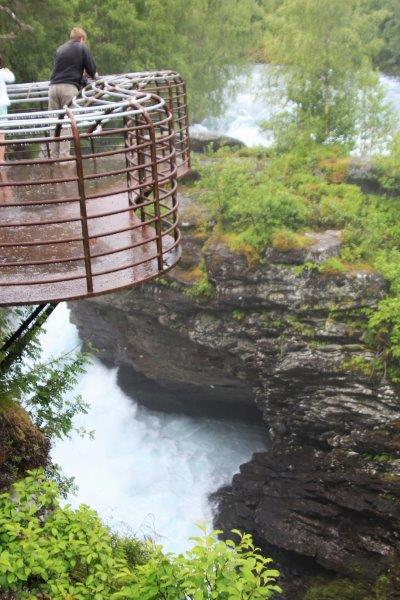
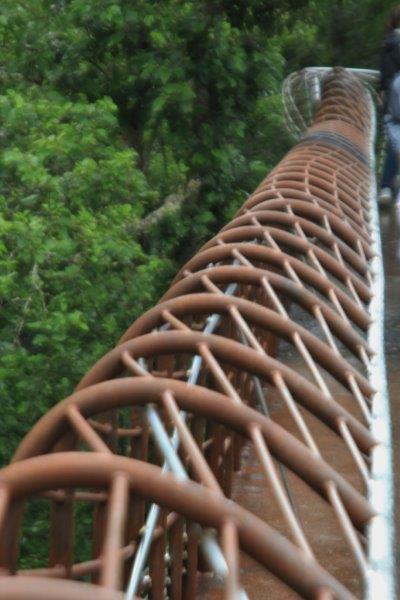
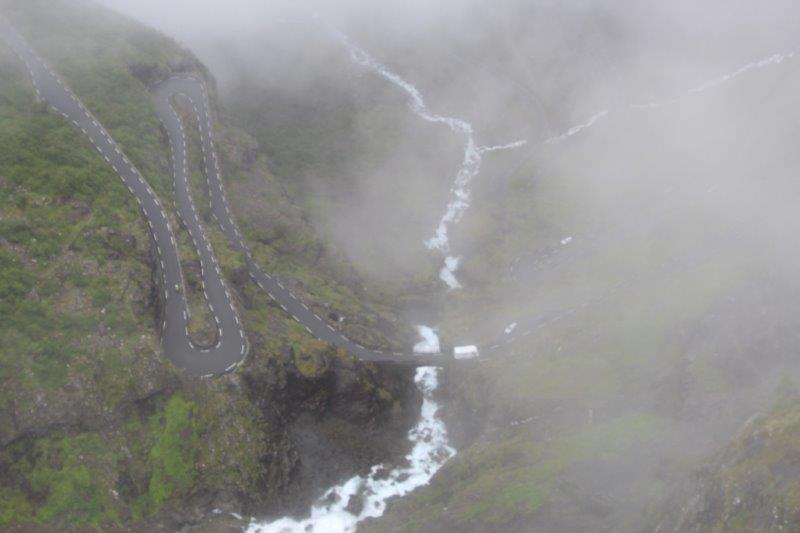
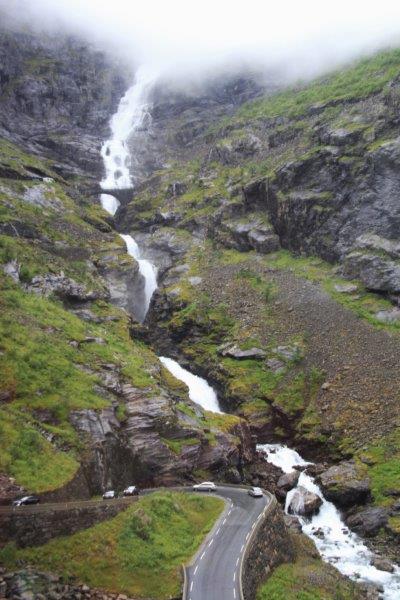
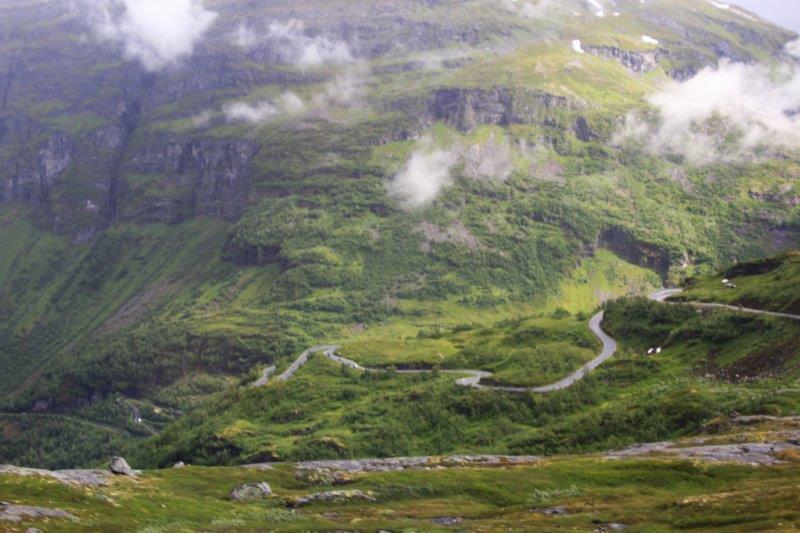
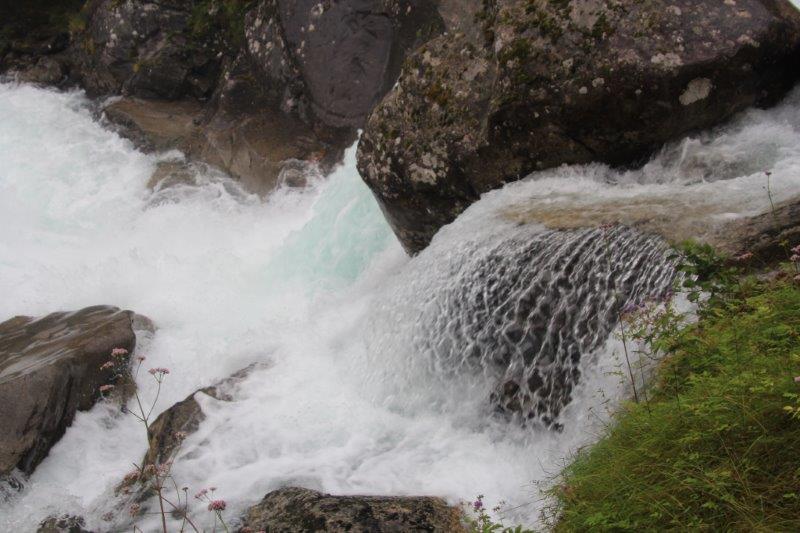
Our first stop along the way was at the Gudbrandsjuvet Gorge.  There is a zigzag metal walking path that takes you over the gorge and past the waterfall.  It is an easy 10 minute walk. The bus drive lets you off by the visitor’s center and picks you up at the end of the walkway.IMG_8507 IMG_8509 IMG_8515 IMG_8516 IMG_8519 IMG_8517 IMG_9113 IMG_9117The Troll’s Path is now a road but originally it was a handmade path over the mountain and down the other side that the farmers built so they could move their goods back and forth without going all the way around.  The idea was first thought of in the mid-1700’s and begun in the late 1800’s by volunteers on both sides working only in the summer months.  It took 14 years to build and you can still climb it today. We actually saw one intrepid fellow making the climb as we were driving down the far side.  The highest point of the Troll’s Path is 2800’ above sea level and the road is narrow (two buses passing almost touch mirrors and are at the very, very edges to do so), winding and with many hairpin turns on the way down. The cliff on the far side is almost a vertical climb and the other side isn’t much better. It would have been an absolutely exhausting way to move merchandise and goods, but quicker.

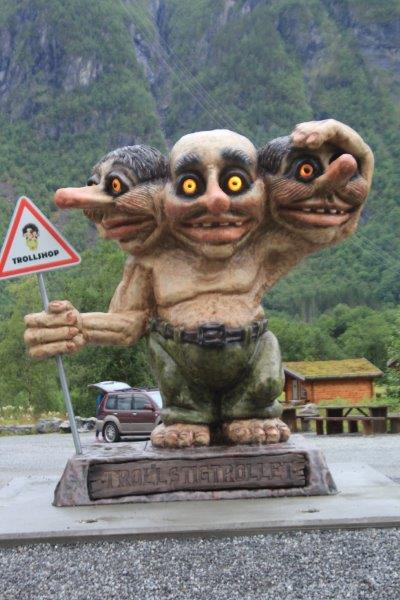
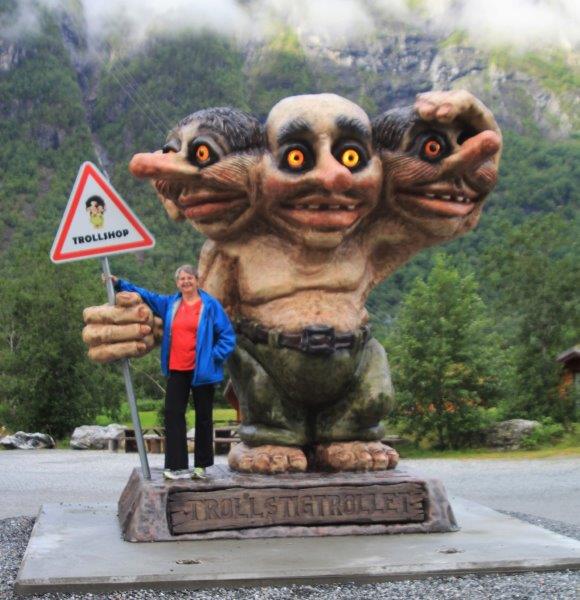
(Trolls, by the way, were created by the Norse God Odin when he decided he wanted to make some things like the two creators who made the gods and the people.  But Odin wasn’t very good at it and he just used spare parts and odds and ends so all trolls are very ugly. Some are huge, some are small.  Some have one head, some have two or three.  They all have tails. All of them tolerate children but don’t like adults.  Odin asked his son Thor what he thought of his creation and Thor told him they were really ugly and would scare the people and that Odin should destroy them.  Odin did not want to do that because he had made them but he made the Trolls nocturnal so they wouldn’t be around people during the day.  If a troll gets caught outside of its cave and gets hit by sunlight it turns into a rock.  Many of the rocks strewn about the hillsides and mountains of Norway were once trolls. There are many, many stories, sagas, and tales about trolls in Norway and every gift shop is full of books and T-shirts and small and large troll knick-knacks.)

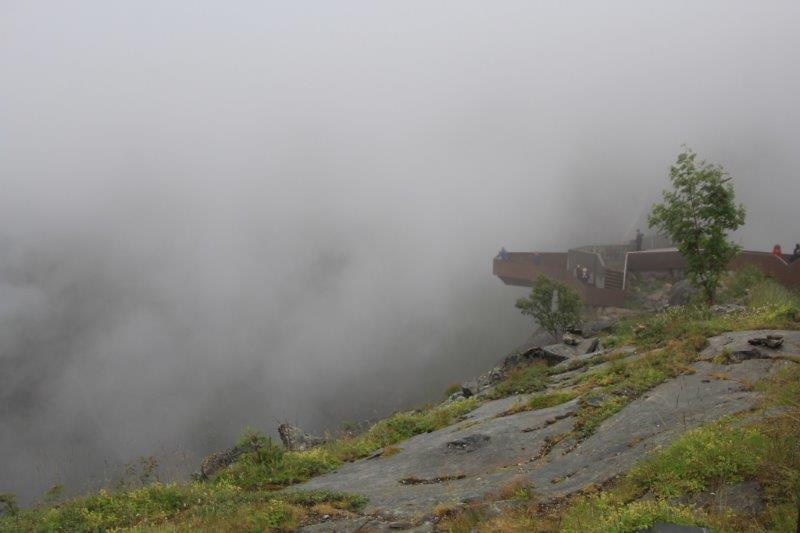
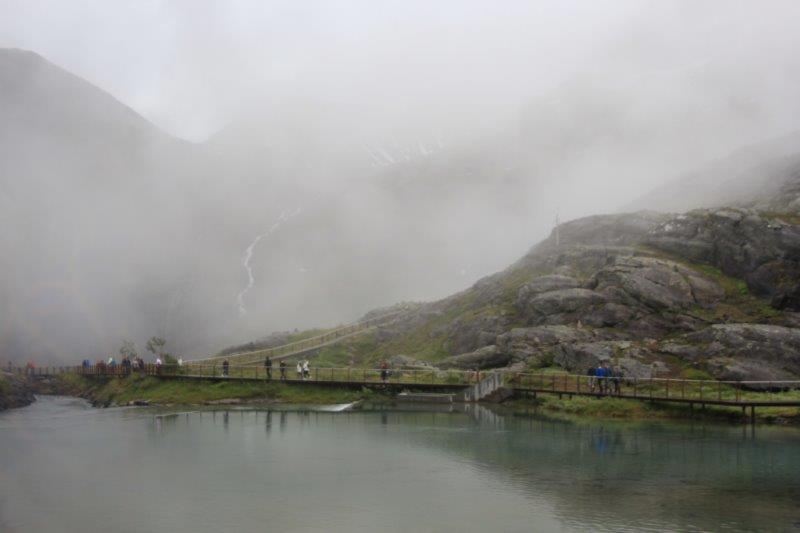
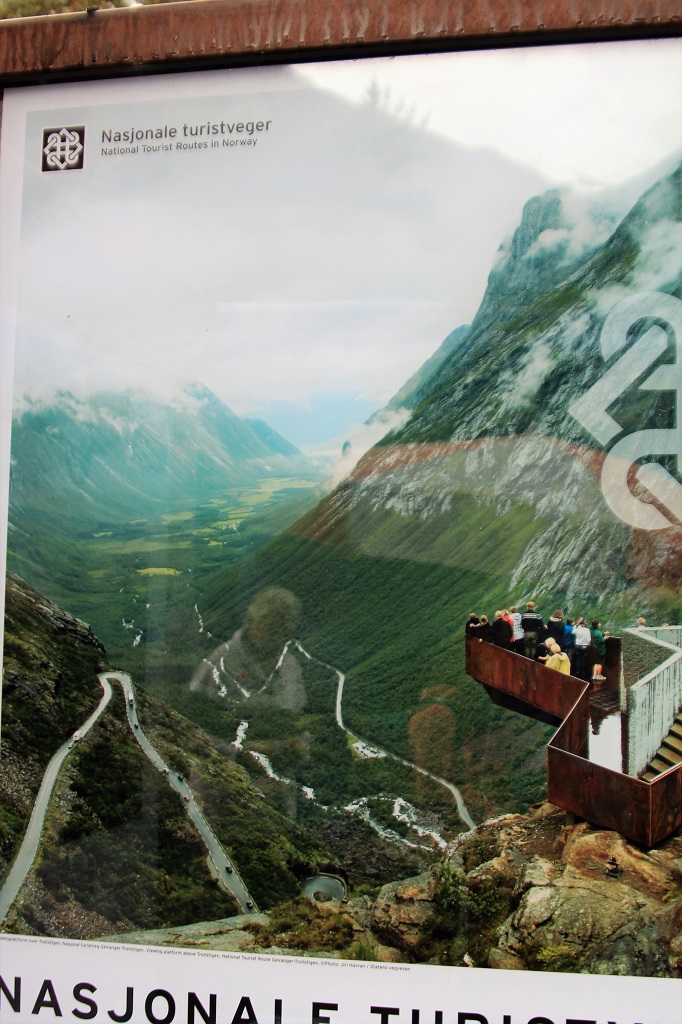
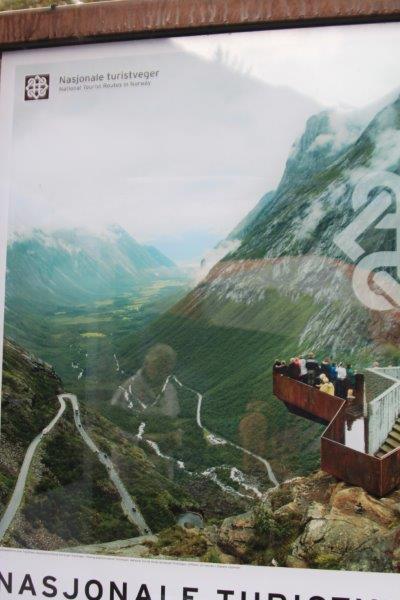
We passed some lovely scenery on our way up the mountain and, just like the day before, just as we arrived at the parking lot the fog rolled in and everything turned white! We had 35 minutes at the summit and I hotfooted it to the very end of the path to the lookout where there is a spectacular view down the mountain and out through the valley. (We had seen a poster of it at the gorge – see photo)  Everything was totally white.  You couldn’t distinguish anything.

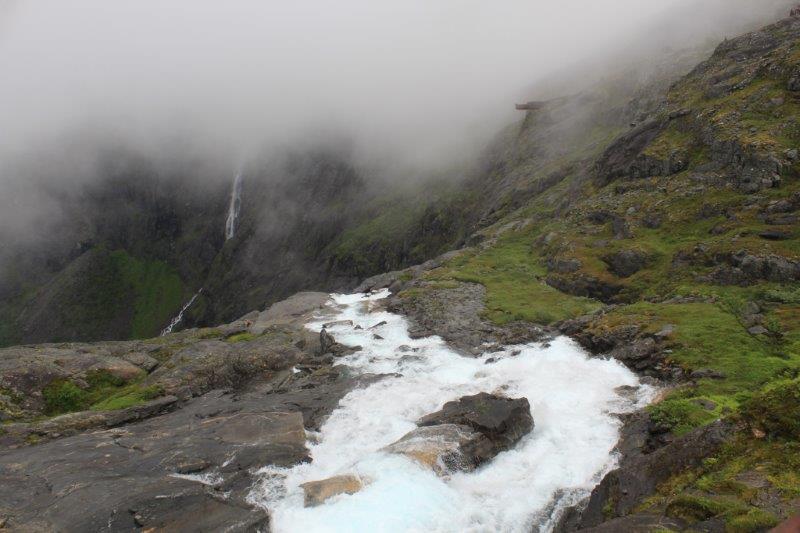
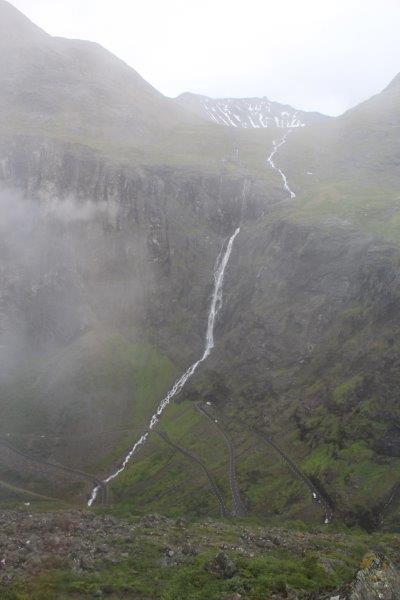
IMG_8533 IMG_8544 IMG_8550 IMG_8561 IMG_8562 IMG_8564 IMG_8570 IMG_8575 IMG_8576 IMG_8577 IMG_8580The family from Louisiana that sit next to us in the dining room were on our tour and when they arrived at the lookout I said that I wasn’t moving until 5 minutes before we had to be back on the bus because I knew how fast fog can lift if it decides to.  Sure enough after about 10 minutes or so we could see a different shade of white where the waterfall began at the cliff edge and a few minutes after that we could see the hairpin turns winding down the mountain. It never did clear enough for us to see the view out the valley but we could see it as we drove down so it worked out well.

IMG_8591 IMG_8594 IMG_8601 IMG_8604 IMG_8605

                                    This is what we were supposed to see at the top.

We navigated all the very tight turns with a bit of backing up and shifting about now and again and drove through the valley to the Troll’s Shop and Restaurant for lunch – a nice buffet with wonderful Norwegian salmon.
IMG_8609
IMG_8611 IMG_8624 IMG_8627 IMG_8630


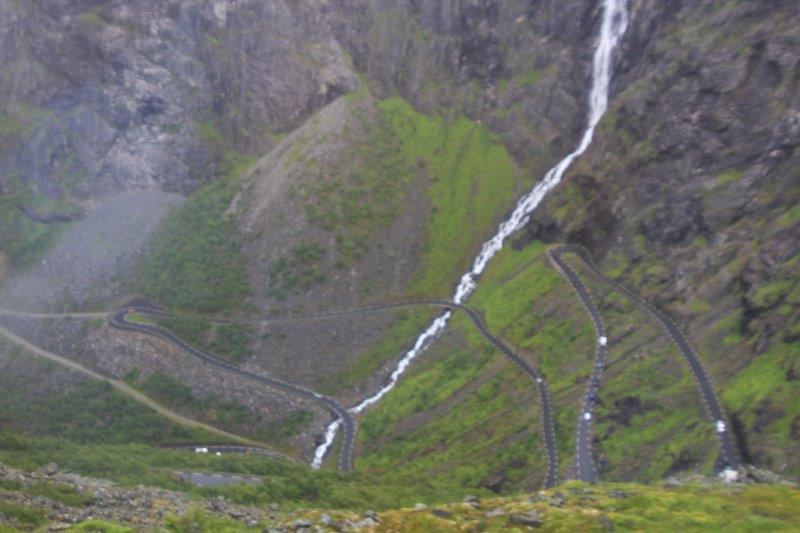
A very narrow winding road.IMG_8631


In this pic you can see road on the lower left and upper right. There is a haripin turn between them.IMG_8639 IMG_8644 IMG_8669 IMG_8672 IMG_8677 IMG_8678 IMG_8695 (2) IMG_8697 IMG_8700 IMG_8713The road was completed in 1921.  All the walls and the bridge were built by hand with no mortar or cement between the rocks.  The weight of the rocks and on the rocks creates the strength.  The road was to be officially opened by the King and he would be driven down the mountain. The engineer was so afraid that the bridge or one of the supporting walls would collapse and kill the monarch he committed suicide the day before so he would not have to bear the blame.  The bridge has been untouched and unaltered since the day it was built and big buses, campers and cars and trucks go up and down it all summer long.IMG_8646 IMG_8629Our last stop of the day was at the Troll Wall which is a row of black cliffs that create an almost impregnable wall.  One face is the tallest vertical drop in Europe at about 600 meters and was first successfully climbed over two days (albiet along the outer edge) by a Norwegian team in 1940-something.  An English/Norwegian team climbed the vertical face in the early 1950s.  It took two weeks. They spent 13 nights anchored by pitons and ropes to the rock.  It became a very popular place for parachutists to basejump.  About 300-400 jump were attempted and so many deaths and expensive rescue operations have occurred that the government has now outlawed jumping from the top.  You can still climb it and several different teams have done so by several different routes.  If you find and succeed along a new route it is named for you.  There is a memorial near the gift shop listing the names and nationalities of all the climbers (10) and jumpers (9) who have died on the mountain.

IMG_8737 IMG_8740

IMG_8756 IMG_8757

After leaving the Troll Wall we were driven back to Alesund.  Not too far out of town our guide told us there is a new bridge ahead crossing the fjord.  It is due to open in a few weeks.  The only thing needed to be finished is the connecting road.  In the meantime, we have to drive around. Well, we drove at least 30 km going down one side of the fjord, around the end and back up the other side.  The bridge is about 1 km long. I’ll bet folks are pretty anxious for it to be open.

IMG_8787

IMG_8759IMG_8763 IMG_8775


If this photo was reversed it would look almost like Bastion Mountain at home.IMG_8782


So very reminicent of home.  IMG_8797 IMG_8806We had to be on board by 4:30 and our tour was to end at 4.  John and I were hoping it would be on time because the ship was literally docked at the edge of town and we were hoping to have a bit of time to walk a few of the nearby streets.  However, since everyone had been so prompt getting back on the bus at each stop we were running ahead of schedule.  Our tour guide had the bus driver come back into town on the old highway and show us where the 1904 fire stopped and told us all about it and then drove us through many of the streets to show us the Art Nouveau buildings.  It was great!  So we didn’t have to hurry to go see some buildings when we got back we could just go onboard and get ready for dinner.  Despite the fog at the summit it was a good day.  Long, but good.  Tomorrow is Bergen and we have no tour planned.IMG_8811 IMG_8815 IMG_8817 IMG_8819 IMG_8821 IMG_8825 IMG_8827 IMG_8829 IMG_8830 IMG_8831 IMG_8840

2015 Aug 5 & 6 – Days 12 & 13 – Djupivogur, Iceland and At Sea

We left Reykjavik at 1 pm on Tuesday Aug 4 under cloudy skies.  The itinerary said we would have scenic cruising in Berufjordur as we sailed away, but the fog rolled in and we saw white sky and grey water on both sides of the ship. The further we sailed from Reykjavik the worse the weather got and we were pitching and rolling during dinner.

In the morning we woke to high waves and thick cloud.  The captain came on the intercom to tell us that the high winds and rough seas may affect our stop in Djupivogur, which is a small village on the southeast coast of Iceland.  Djupivogur is a tender port with limited good anchorage offshore so the captain was unsure if they would be able to safely secure the ship or use the tenders to take passengers to shore. He said he would sail in and assess the situation.

We have cruised enough that we knew our stop was going to be cancelled.  There is no way the tenders would be able to ferry people back and forth even without the issue of having a secure anchorage for the ship.  And, sure enough, a couple of hours later the captain came on again and informed us the port call was cancelled.

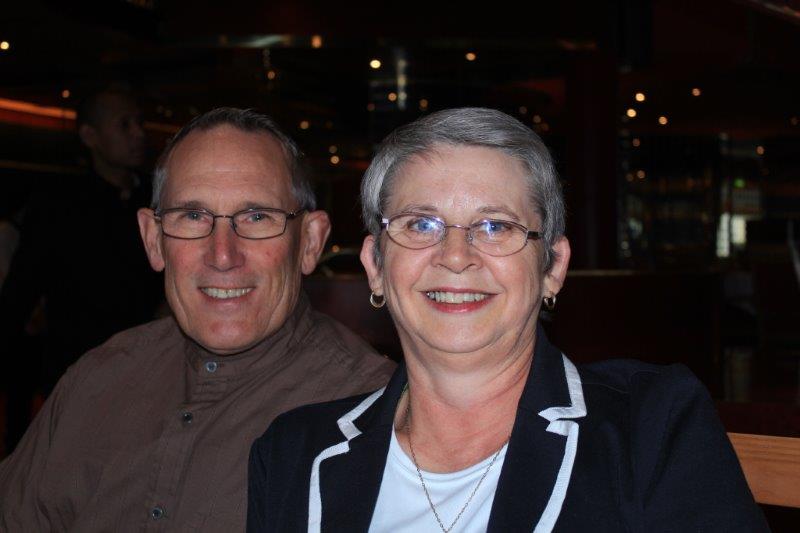
Aug 5 was our 43rd wedding anniversary so on Tuesday night John ordered two bottles of wine to be brought to our table at dinner.  The eight of us have a great time making jokes and telling stories.  And I guess we got too rowdy for a nearby guy because he complained that we were too loud and it was hard for him to enjoy a nice dinner.  Oops.  Some of the people at other tables looked quite surprised so I guess we don’t bother them.  Of course, several of the people at our table made comments about it apparently being a bad thing to have fun, but I think that fellow will request a table on the other side of the dining room from now on.

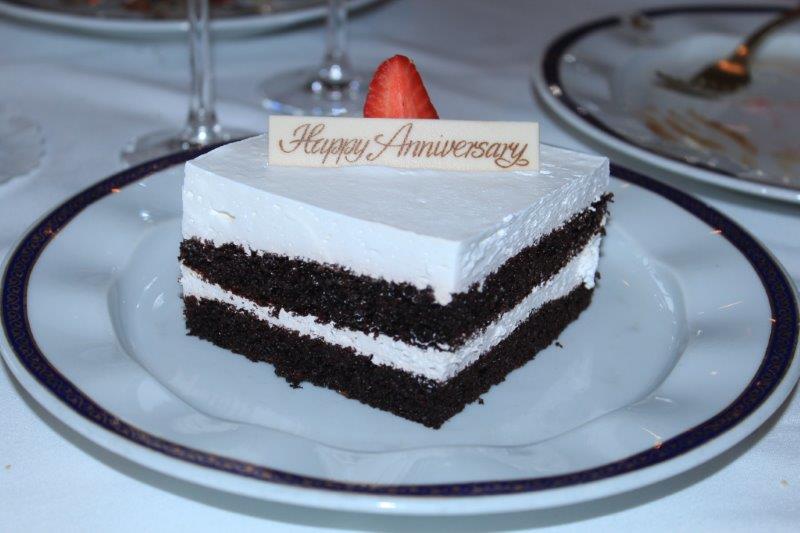
We tried to keep it quiet that it was our anniversary but our waiter must have overheard the well wishes or the table toast and after dessert we were presented with a large slab of cake with Happy Anniversary on it.  The Indonesian waiters sing a local celebration song for people’s birthdays and anniversaries and all the nearby fellows came over and sang for us.

IMG_8082 IMG_8083

The icing on the cake, so to speak, was free champagne: not because it was our anniversary but because we had our port of call cancelled.  Everyone in the dining room received a glass of champagne compliments of the captain – well HAL really, but the gesture was appreciated because I like champagne.

Aug 6 was to be a day at sea on our way to Geiranger, Norway so with the cancellation of Djupivogur, Iceland the captain has lots of time to get there.  The sky was still cloudy and the water was dark rolling waves but they were not as high as yesterday.  After breakfast we were able to walk 2 miles on the promenade deck and not get cold.  Internet was down in the morning, but in the afternoon I finally managed to publish my blog for our second day in Reykjavik.

We are now 8 hours ahead of Pacific time back in BC and we will be setting our clocks ahead another hour tonight so as to be on Norway time in the morning. Being this far north really shortens the length of time between zones.  The ship usually changes the time at noon so we just skip from 12 to 1.  This only creates a problem if you forget and go up for a late lunch to find that the Lido is closed because it is now after 2 pm when you thought it was 1. BUT – you needn’t fret too much because the pizza stand is open all afternoon and the taco bar is loaded with goodies to choose from and the hamburger and hot dogs can be ordered anytime – not to mention room service, which is available all the time.  As you see we don’t suffer much onboard.

Hopefully the weather will improve tomorrow.  The sail-in to Geiranger is supposed to be gorgeous with soaring mountains right to the water’s edge.  The captain said we will be sailing into the fjord about 4:30 am and by 7 the scenery should be lovely.  He expects to dock at 9 so we can go ashore by 10.  Not too sure if I will get up that early but you never know.  Usually if my brain registers information like that my internal alarm clock will wake me up even if I don’t plan to get up and then, since I am awake, I get up anyway.  Tomorrow will tell.

2015 Aug 7 – Day 14 – Geiranger, Norway

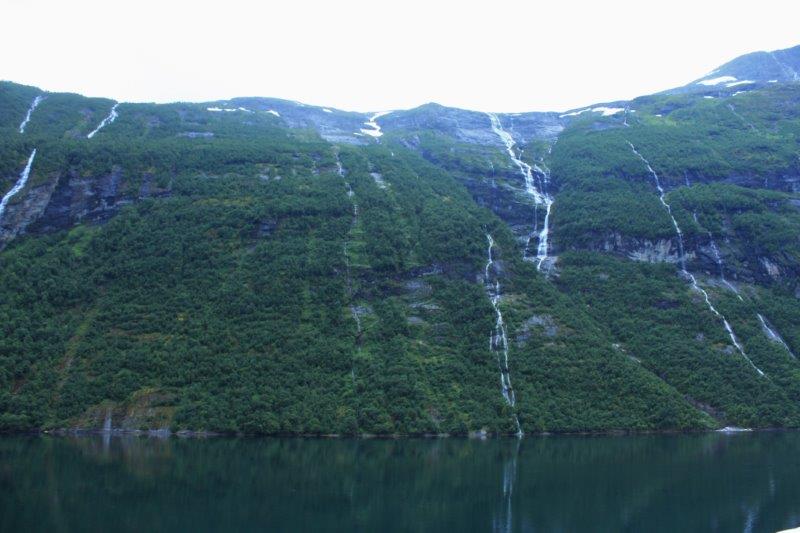
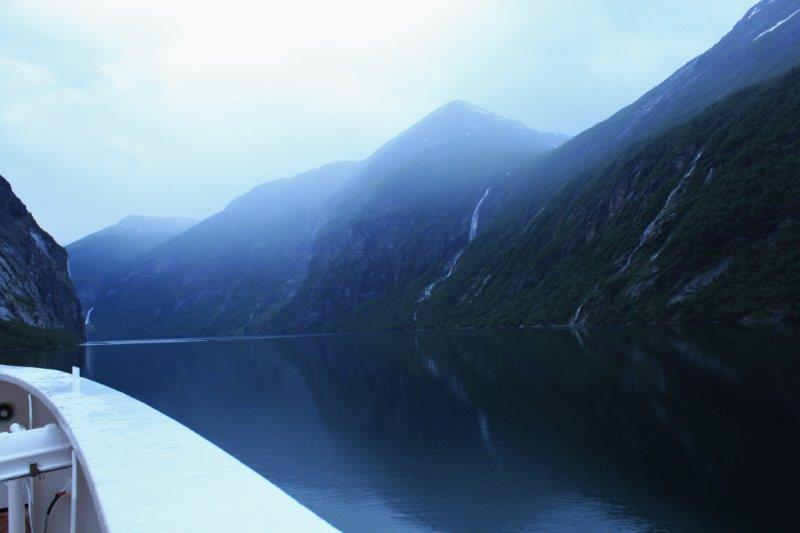
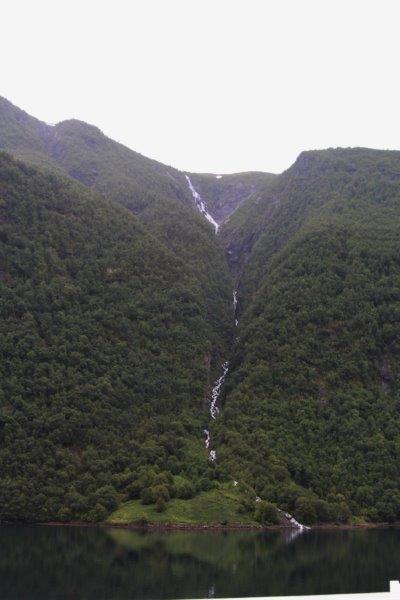
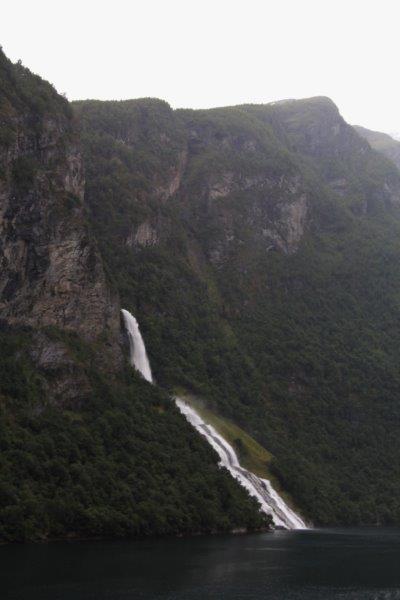
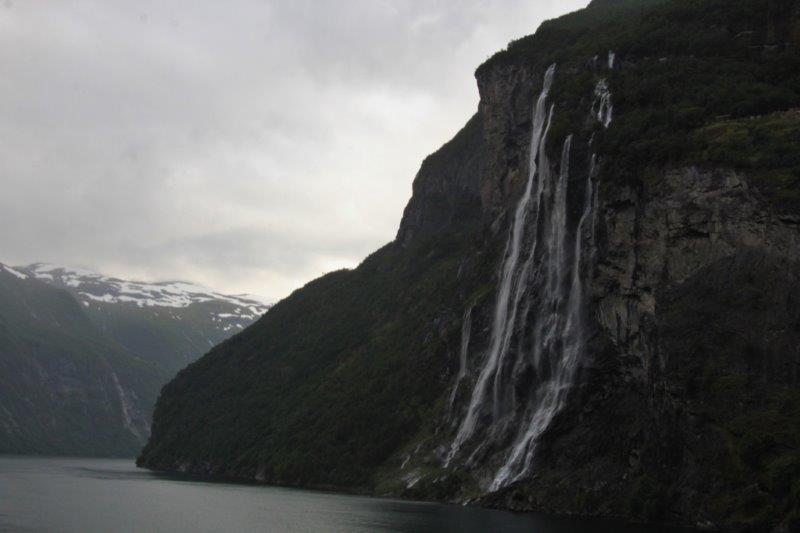
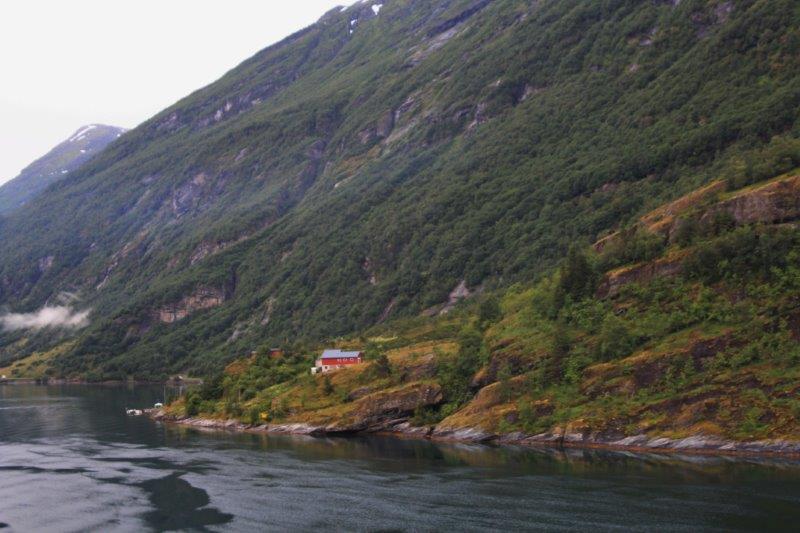
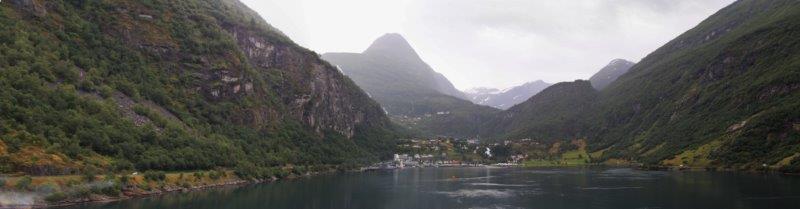
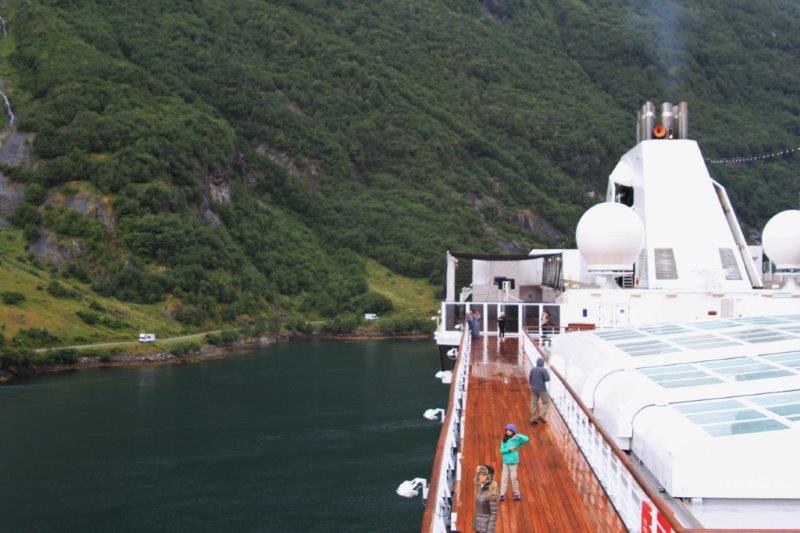
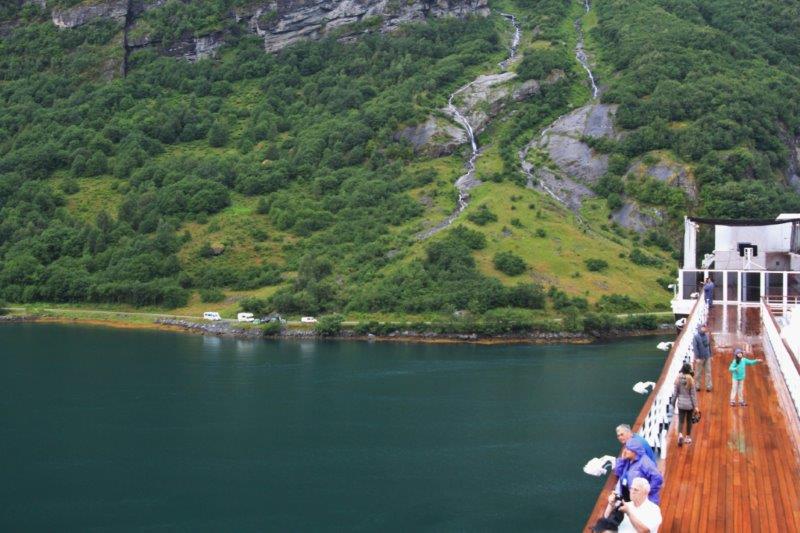
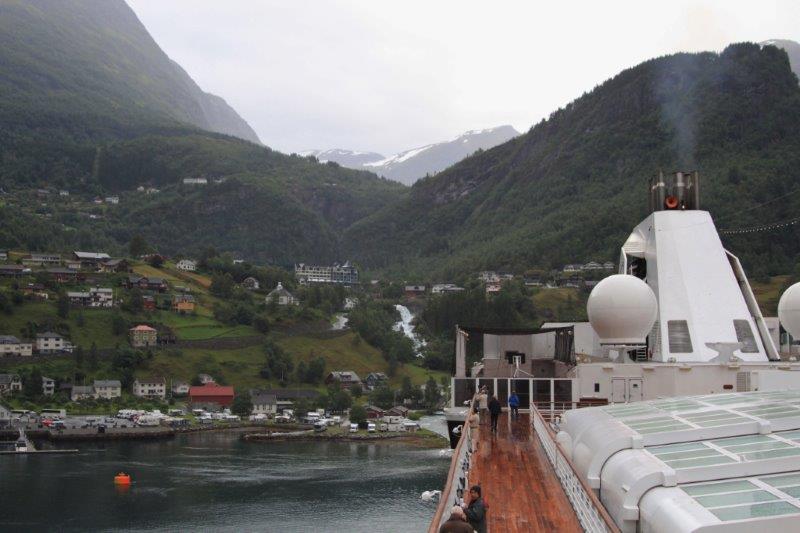
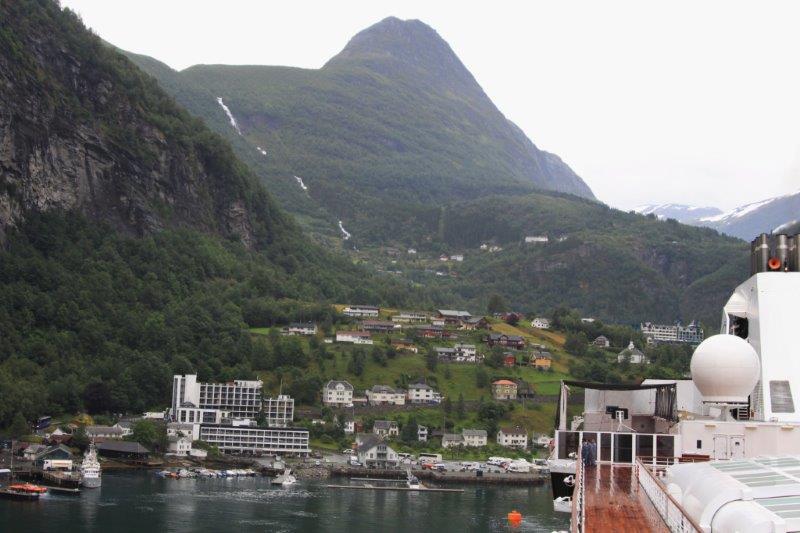
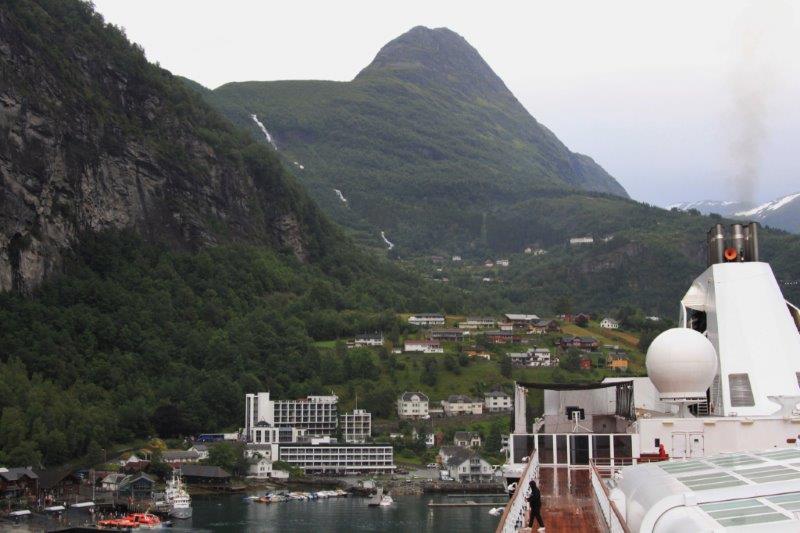
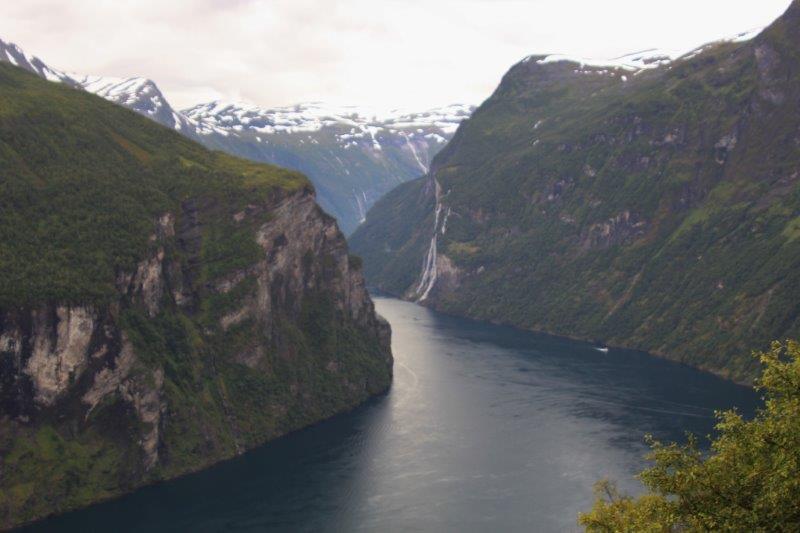
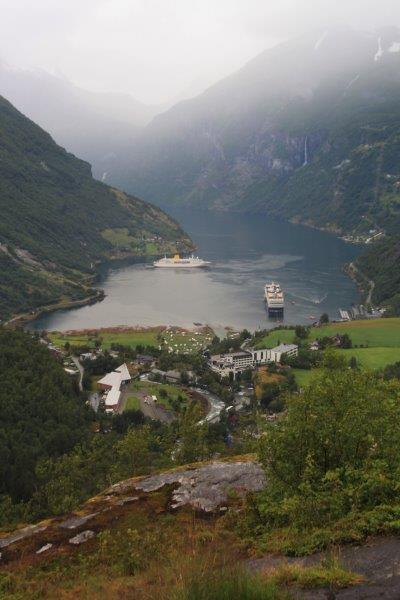
We have completed three consecutive stops in Norway.  We sailed along the Geirangerfjord in the early morning hours.  John and I got up a little after 7 and went out onto the bow.  The sky was overcast so the steep mountains on either side of the ship were grey and misty.  Still, it was nice with dozens of waterfalls dropping hundreds of feet into the fjord.

IMG_8086 IMG_8087 IMG_8093 IMG_8106 IMG_8109

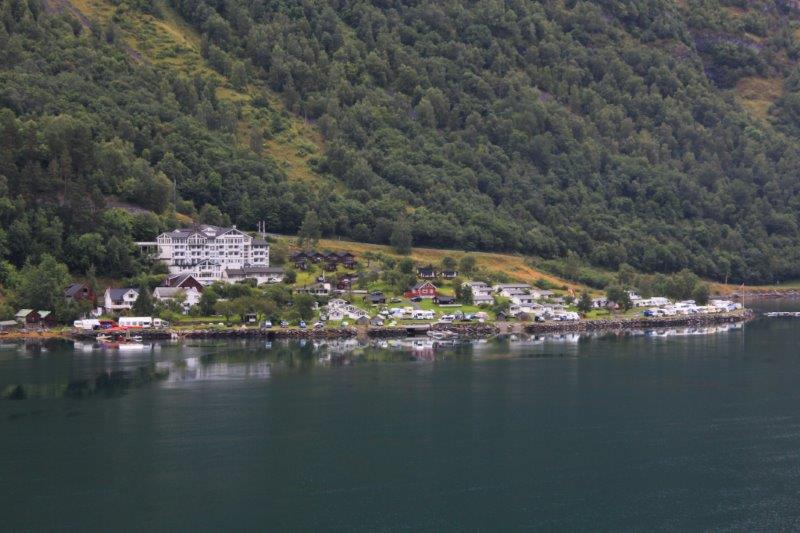
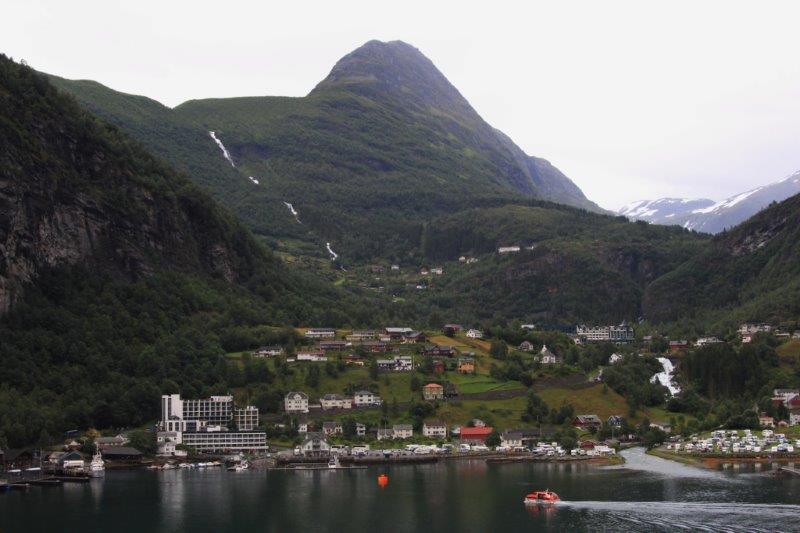
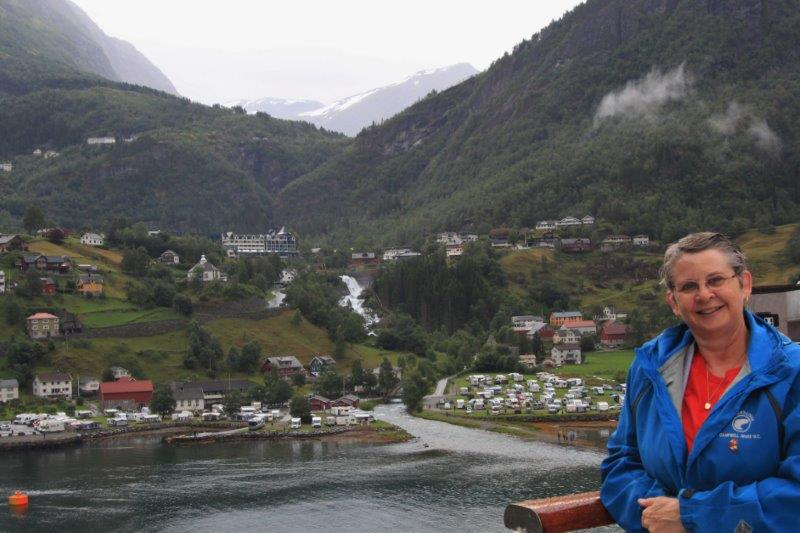
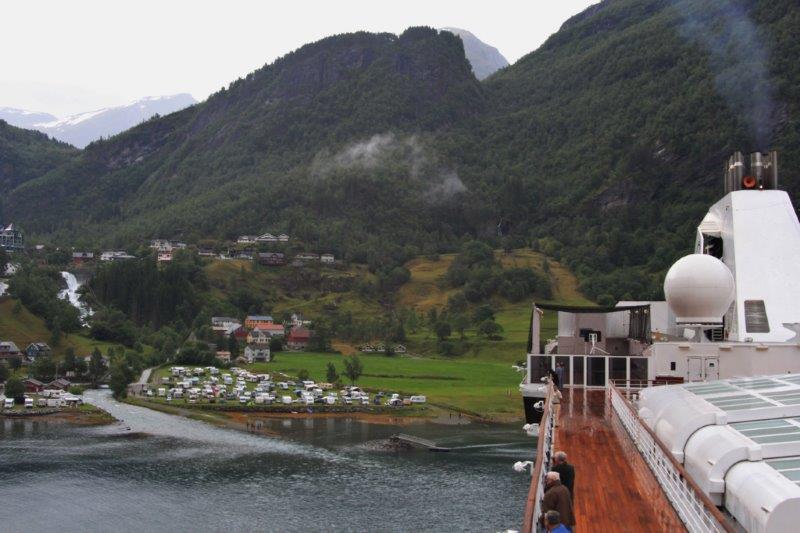
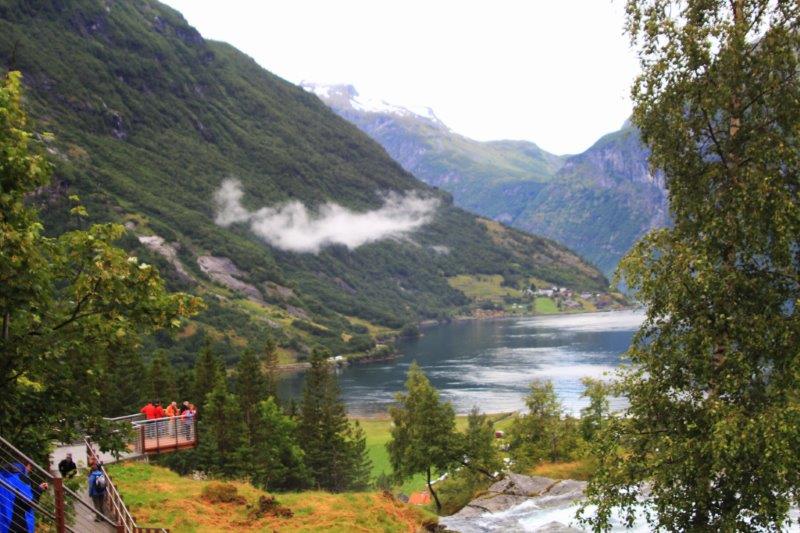
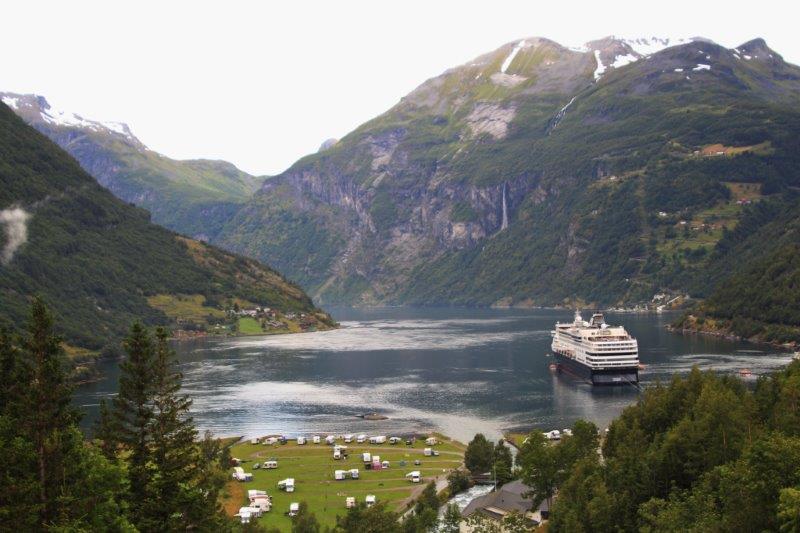
The Seven Sisters WaterfallIMG_8111  IMG_8113We putted slowly past a small ‘community’ – called Grande after the family that orignally had a farm on the site – with a hotel and lots of trailers and campers and further on to the end of the bay to the main town of Geiranger (pronounced like HAIR but with a hard G like in GUARD and a syllable break before the ANGER which is pronounced just like ANGER – so, GAIR-ANGER).

IMG_8122


 Notice the switchback road above Grande.  This is the Eagle Road.

IMG_8116IMG_8114There are only 200 year-round residents but the population swells to 1000 in the summer months and accommodates 600,000 visitors annually (including 149 cruise ships)!  There were campgrounds and cabins to rent tucked all over.  We even saw tents set up right beside the road and campers stopped for the night on the roadside.  Geirangerfjord is the second most visited fjord in Norway, after Hardanger Fjord in Bergen.

The day before we were in port there were four cruise ships anchored in the bay and the day after we left there would be four more arriving.  The Deutchsland ship left mid-day and after that we were the only one here.  The community is so small, the roads are so narrow I can’t imagine how crowded it would be with 10,000 people from four ships in town at once. On those days there are upwards of 100 busses plying the only two roads.

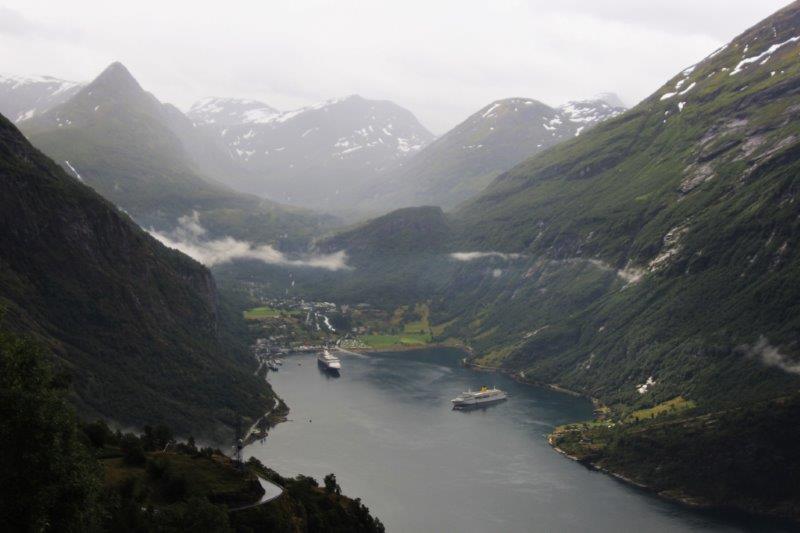
Geiranger sits at the end of the only S-sharped fjord in the world.  We sailed 167 nautical miles from the coast to Geiranger at the very end.  The town is accessible via two roads and the fjord in the summer.  In winter the fjord freezes over and one of the roads is closed as it goes up the mountain behind the town and is blocked by snow and frequent avalanches; so the only way in or out is via the Eagle road with its 11 switchbacks.

There is no hospital nor medical center.  There is a doctor but he is only ‘open-for-business’ on Wednesdays for 2 hours.  The community is serviced by helicopter in the event of a medical emergency.  The nearest bank is over 2 hours drive away and also only open on Wednesdays.  There is one grocery store.

IMG_8120 IMG_8123 IMG_8125 IMG_8142

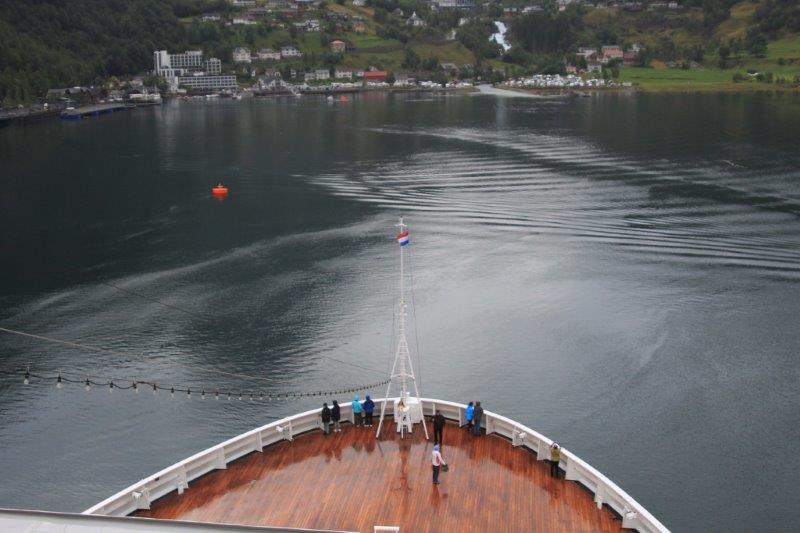
Note the two orange buoys.IMG_8148 IMG_8149 IMG_8150 IMG_8162As we sailed in we passed a small German cruise ship anchored in the bay and headed straight for shore; at least it seemed that way.  There were two large orange buoys anchored parallel to the pier and ferry dock. When the bow of the ship reached the buoy nearest the shore we halted and the captain turned the ship 180 degrees in that small space so we were now positioned stern-to-shore between the buoys!  It was really a cool maneuver!

IMG_8155Watch  the campers beside the road as we turn.IMG_8157 IMG_8158 IMG_8159 IMG_8161 IMG_8165 IMG_8166 IMG_8167


The ship’s stern is now tied to the orange buoy closest to the shore.


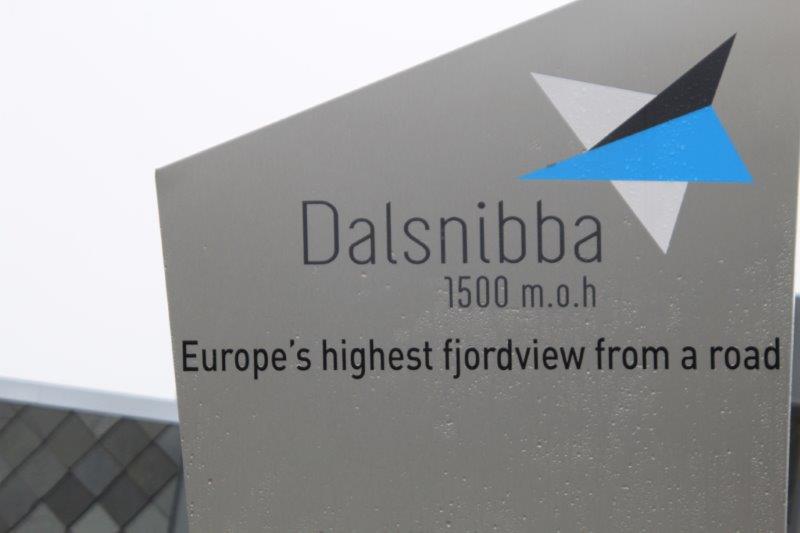
Geiranger was a tender port but we were so near the pier it only took a few minutes.  Our tour was called Mt. Dalsnibba (DOLLS-NIB-BAA) and the Eagle Road.  It was VERY popular choice and there were six busloads of passengers taking the tour.  We were the last bus to leave.  The Eagle Road is on the right of Geiranger and to get to Mt. Dalsnibba you take the road that goes up behind town.  (There is a third road that curves around the bay along the fjord shoreline but it dead-ends not too far out of Geiranger.) The six buses were divided – even numbered buses went up to Mt. Dalsnibba first and then up the Eagle Road and odd numbered buses did the opposite.

The day continued to be cloudy and misty but visibility was still good.  Norway has been experiencing a very cool and wet summer this year.  Our bus driver very capably negotiated the switchbacks up the Eagle Road to the view point.  All the passengers got off the bus and it continued to the top where it could turn around and pick us up for the drive down.  From the viewpoint you could see the entire end of the fjord and look back the other way to view the Seven Sisters waterfall – of which only Four Sisters were flowing as it is late in the summer and most of the spring melt has finished so Three of the Sisters have stopped.

IMG_8181 IMG_8183 IMG_8207 IMG_8219


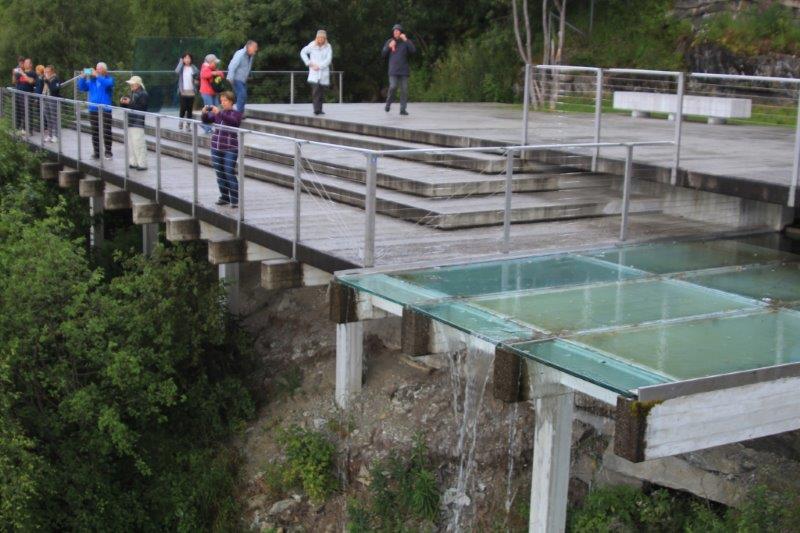
The viewpoint hanging out over the cliff edge.


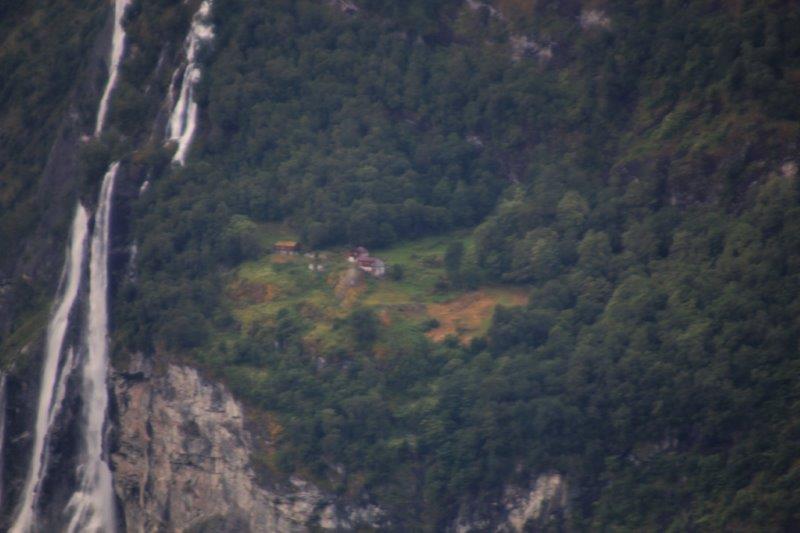
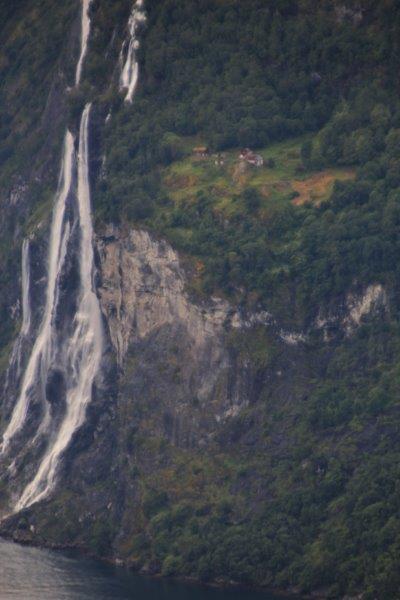
There are several abandoned farms scattered around the area.  Mostly, they raised sheep and goats. Only 2.7% of Norway is arable land and only .7% is in permanent crops.  Sheep and goats are the only domestic animals that can navigate the steep slopes.  One such of these farms was located on a relatively flat parcel of land near the Seven Sisters.  But it was so high up the cliff face that it took hours to carry any supplies up or down to the fjord and was completely inaccessible in winter. The mother of the family used to tie a rope around each of her children’s waists when they went outside to play so they would be safe from falling off the cliff into the fjord. When education became compulsory for children in the 1950’s the farm was abandoned.  With my zoom lens I was able to get a shot of it – not a very clear one but it gives you an idea of where they lived.

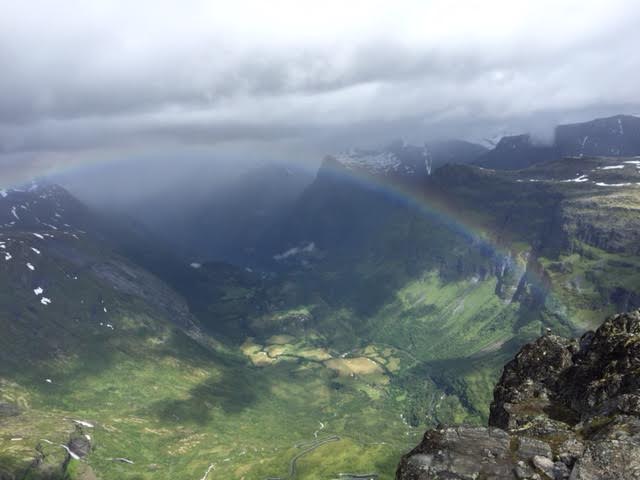
IMG_8185 IMG_8187After we navigated the hairpins back down we drove through Geiranger and up the steep road on the way to the top of Mt. Dalnibba, which is above the treeline at 5000’ above sea level.  We reached Big Lake and turned off the road onto a private toll road to reach the mountain top.  We were literally two corners from the top and the fog rolled in. By the time we got parked and out of the bus you could see nothing. Even the little lake behind the visitor’s center that I glimpsed as we drove in was obscured.  Very disappointing – but there is nothing you can do about the weather.  Barb and Bob took the same tour at the same time but they were on an even numbered bus that went to Mt. Dalnibba first and she got some lovely photos.  She sent me a couple that even had a rainbow from edge to edge.  This is what we didn’t see.

IMG_8234 IMG_8252 IMG_8262 IMG_8265


The long and winding road.IMG_8270


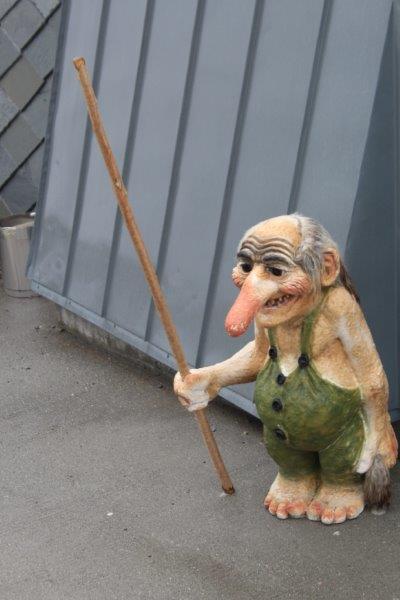
Appropriately called the Big Lake.IMG_8271 IMG_8281 IMG_8286 IMG_8287 IMG_8293 IMG_8294  Trolls are everywhere.IMG_8298


The viewpoint when we got there.


What we should have seen.rainbow2We arrived back in Geiranger at one o’clock.  We tried to find a geo-cache that was located in town but the GPS bounced all over and we gave up. (This happens ALL the time with that thing.  It is totally useless and unreliable.  $160 wasted.  We have tried at several ports to locate caches only to be directed over here and then back there and then back here again.  You never know where it acutally is!  Very frustrating.  That GPS is getting junked as soon as we get home).

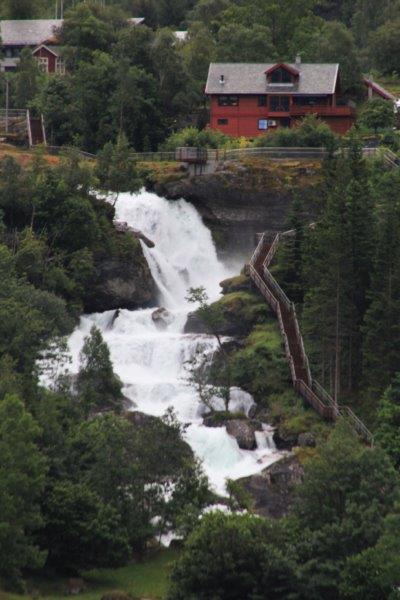
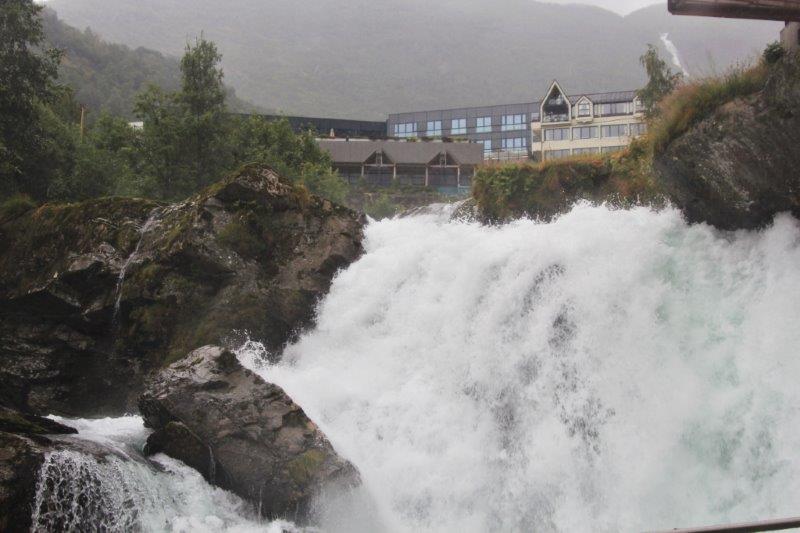
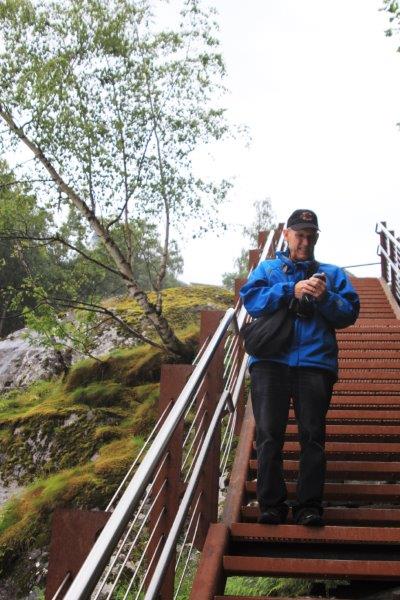
Two years ago a staircase was built alongside the furious waterfall that splits the town in two. There are 327 steps to the top.  We climbed to the top, trying to find a cached that was located on one of the many landings but there were way too many ‘muggles’ (non-geocaching folks) to do a search. The GPS had us going up and down the stairs several times not settling anywhere so we gave up and continued the climb.  The view of town and the ship were pretty nice.

IMG_8326 IMG_8327 IMG_8336 IMG_8345 IMG_8376 IMG_8381 IMG_8386 IMG_8354 IMG_8372 IMG_8389 IMG_8401At the top is the Fjordcenter.  Geirangre is a UNESCO World Heritage Site and the center has displays all about the landscape and the effects of glaciers.  We tried for awhile to find the cache that is hidden at the center but again the GPS didn’t know what it was doing.

We continued up the hill to the Geo-Nature Park and after a considerable time searching we finally located a cache!  On the way down again John suggested we go around the back of the Fjordcenter in case the cache was there.  It was a magnetic cache (meaning it is held in its hiding place with a magnet and there were no metal places around the front of the building where we were looking before.)  Success again!  We located the cache tucked in a corner at the far end of the back of the building.  We became so optimistic after this that we decided to go back down the stairs to town and see if we could find that cache instead of walking back via the road as first planned.IMG_8408 IMG_8409There were still many people going up and coming down but during a break when all the people were walking away from us John got down on his knees and felt under the edge of the metal landing and while down there he spotted the cache hidden under the hand rail.  Three for three!  Yea.

The ship sailed out of Geirangerfjord at 11 pm.  We stayed so long because our next port of call is Alesund which is located at the entrance to the Geirangerfjord and the ship only has to travel 167 nautical miles at slow speed to be docked by 7 am the next day.