Category Archives: Hanna Travels

2009 World Cruise – Jan 10 and 11 – Days 7 & 8- Puerto Caldera, Costa Rica

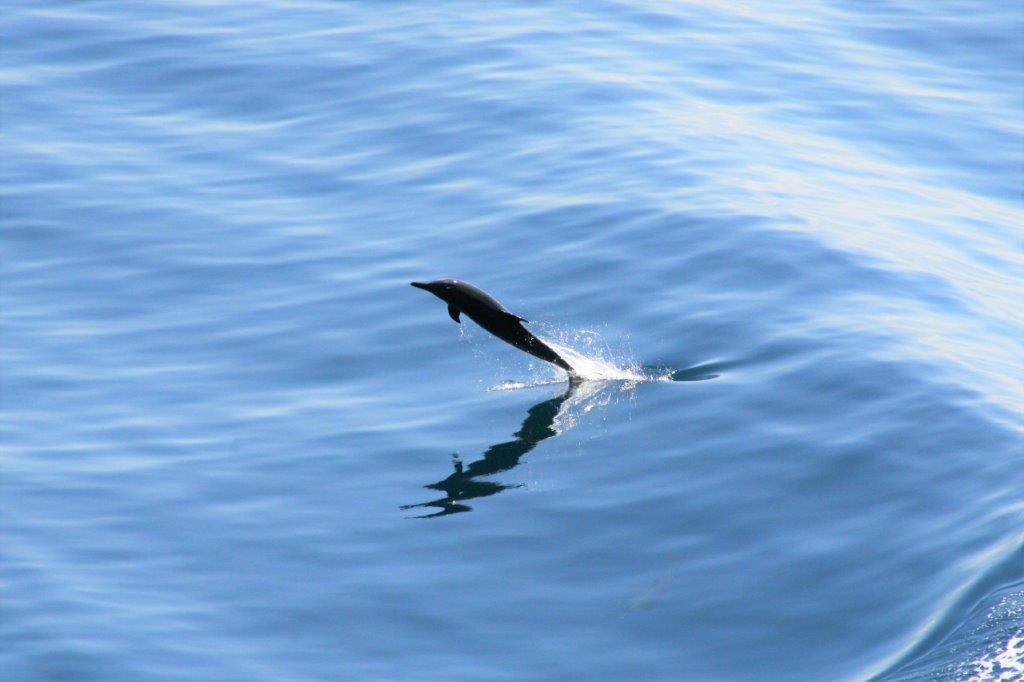
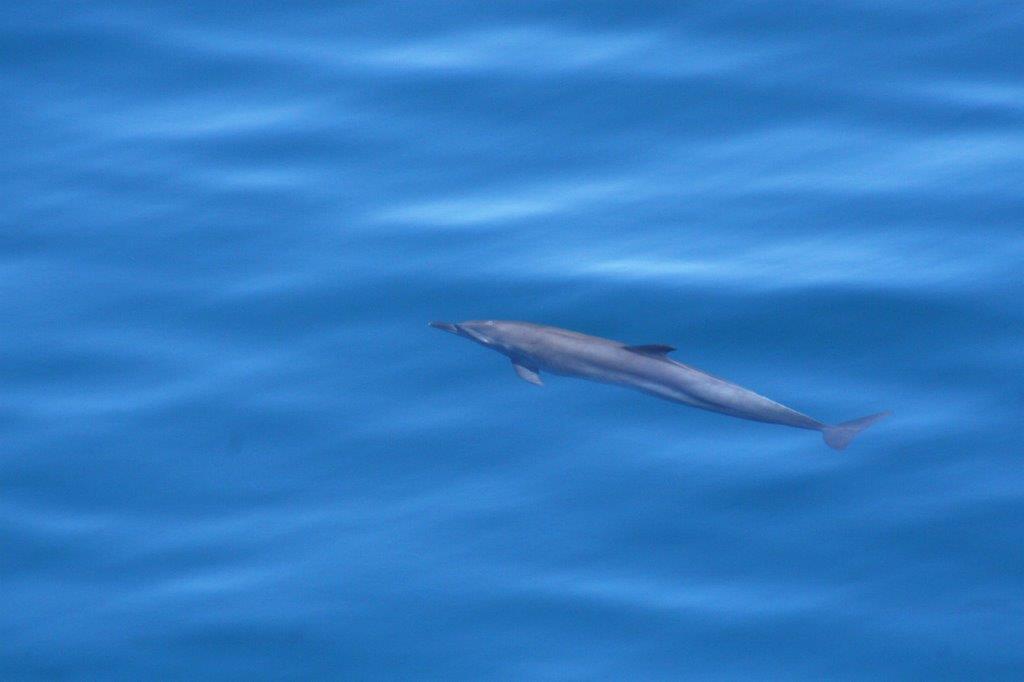
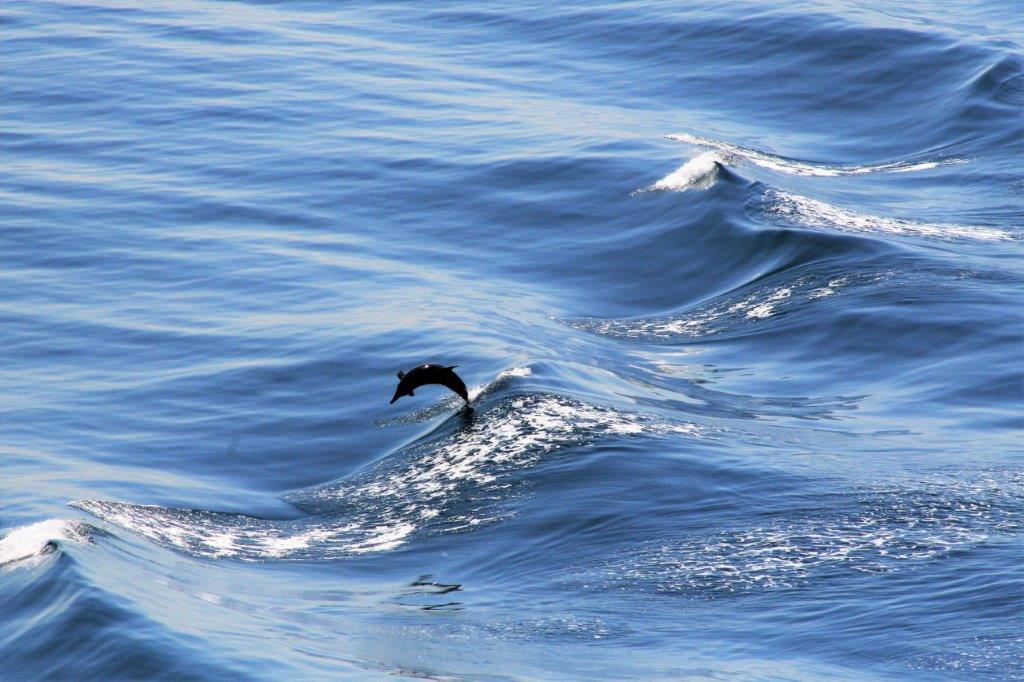
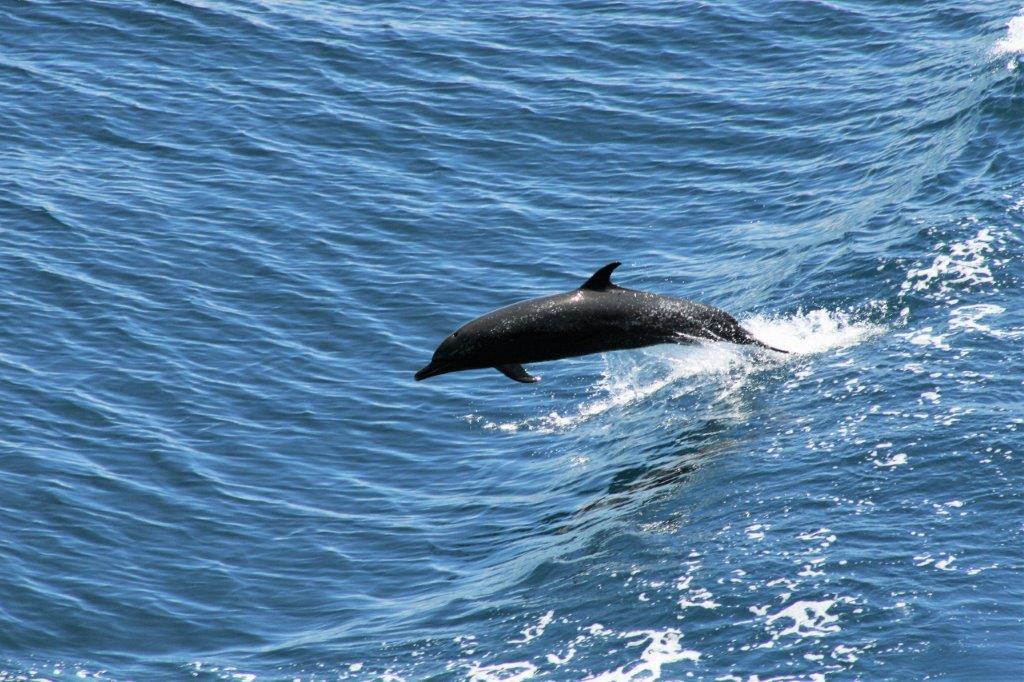
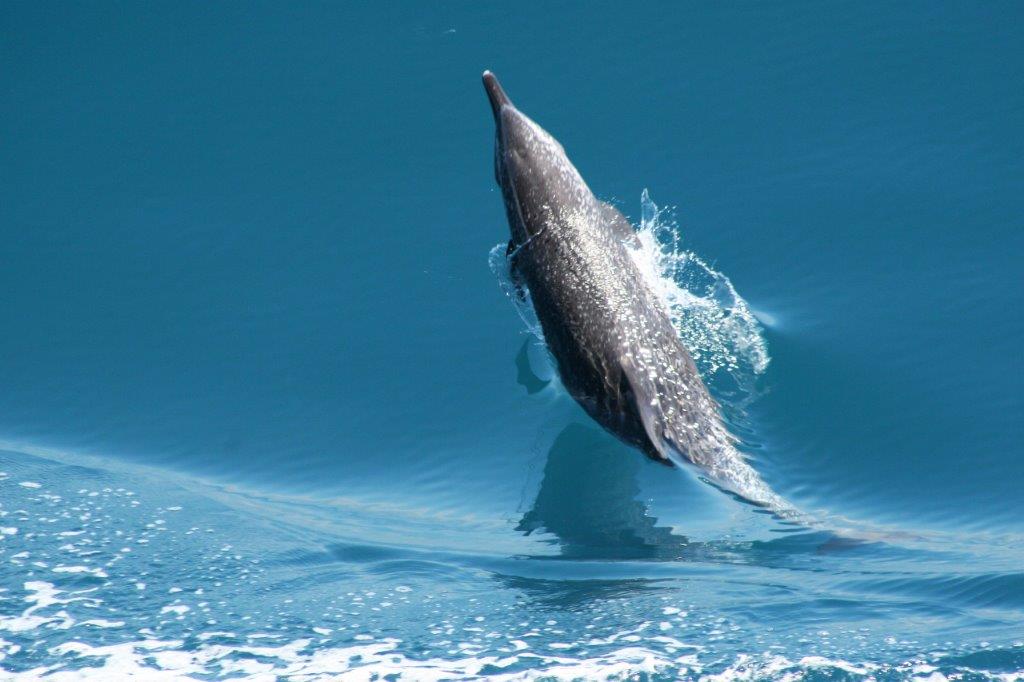
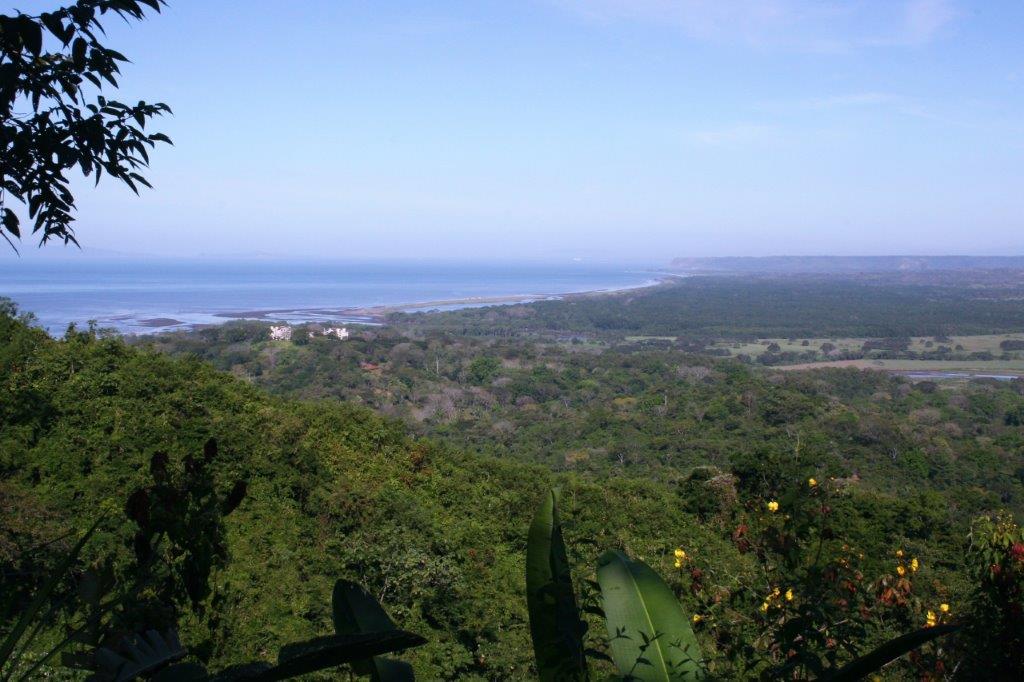
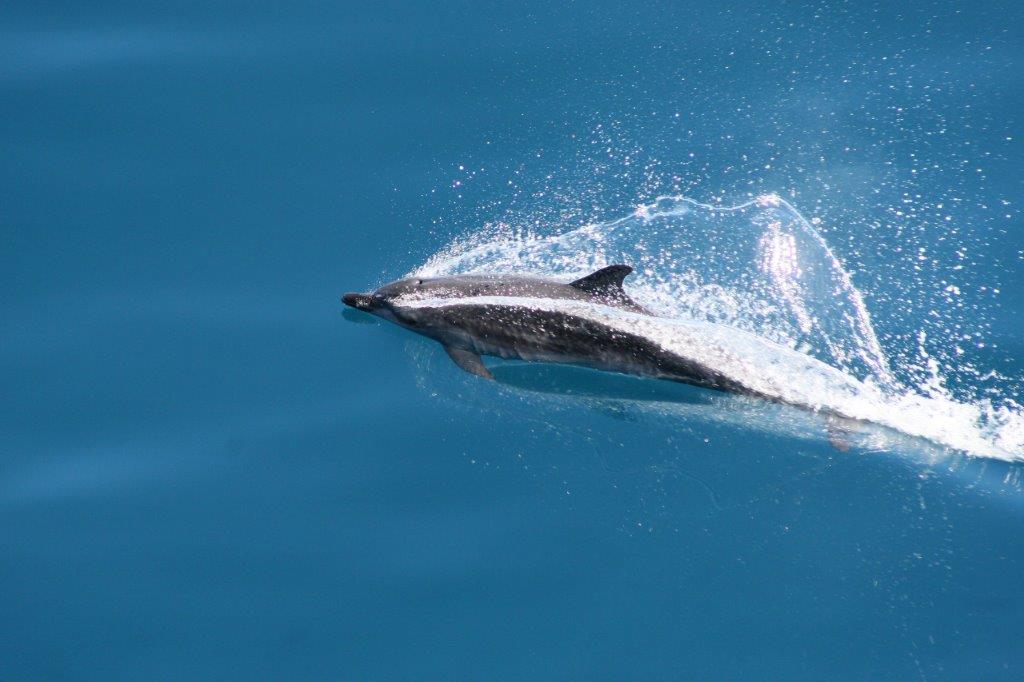
2009 World Cruise – The ship spent Saturday (Jan 10) slowly cruising along the Golfo  Dulce coast of Costa Rica.  This area is rarely seen by tourist as many of the beautiful, pristine beaches are set aside as breeding habitat for three species of turtle: the olive ridley, the Pacific green and the leatherneck.  What we saw most of the day – which we spent on the balcony of our suite – was crystal clear, gorgeous turquoise water and a pod of dolphins that jumped and twisted and dove along and through the ship’s wake.img_2781

img_2771 img_2780 img_2783img_2789 img_2786 We spent the next day in Puerto Caldera, one of the main ports of Costa Rica.  The population of the city and surrounding area is about 100,000 and it  is located about 10 miles (16 km) south of the capital city of Puntarenas.  A newer, larger port was built here when the one in Puntarenas became too old and too small for the volume of shipping coming and going in Costa Rica.

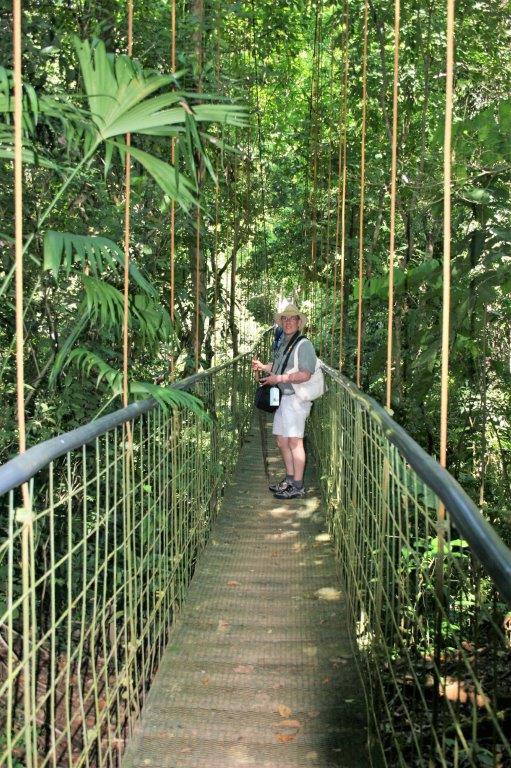
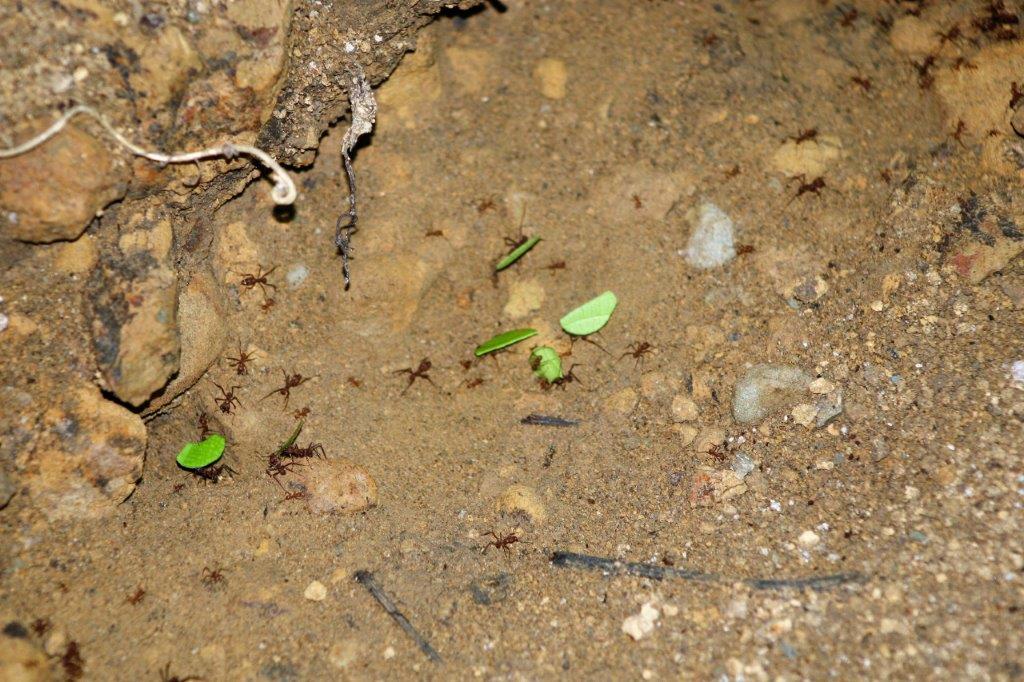
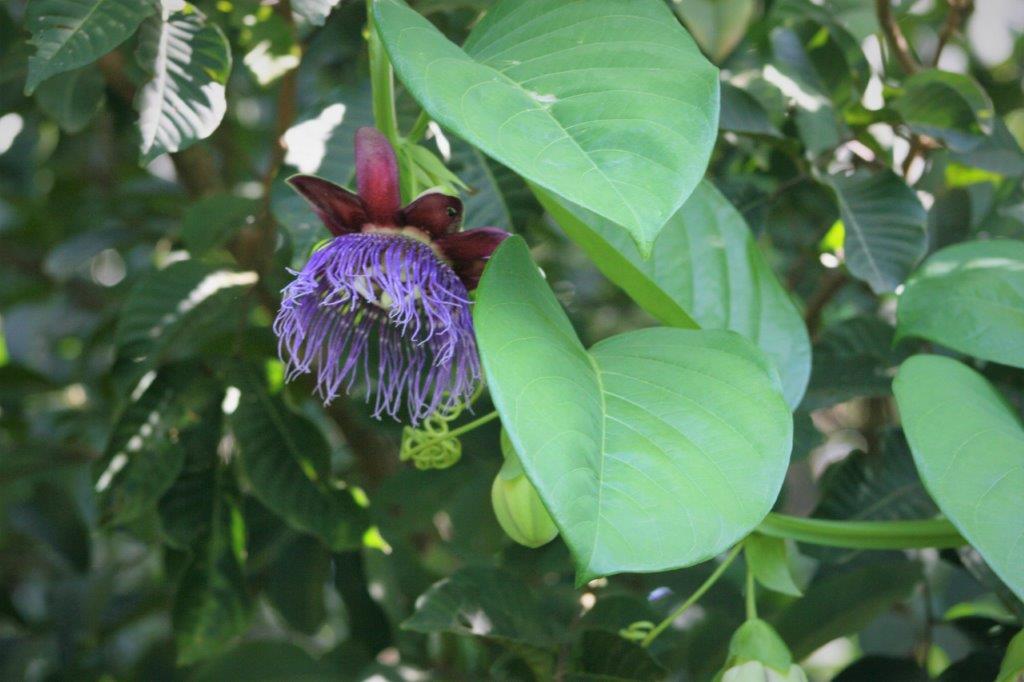
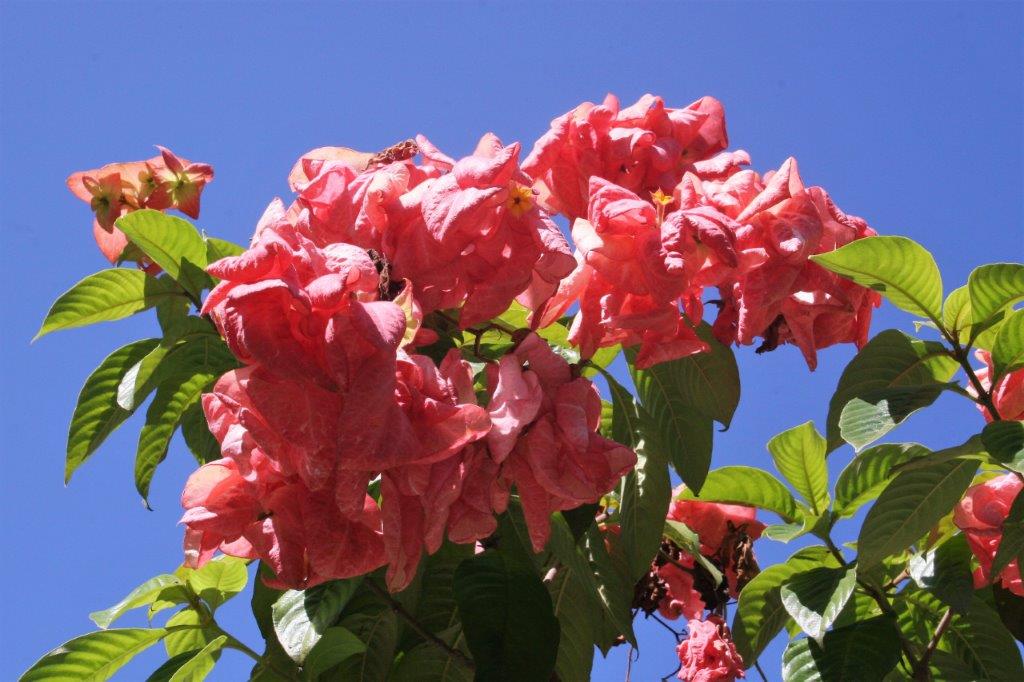
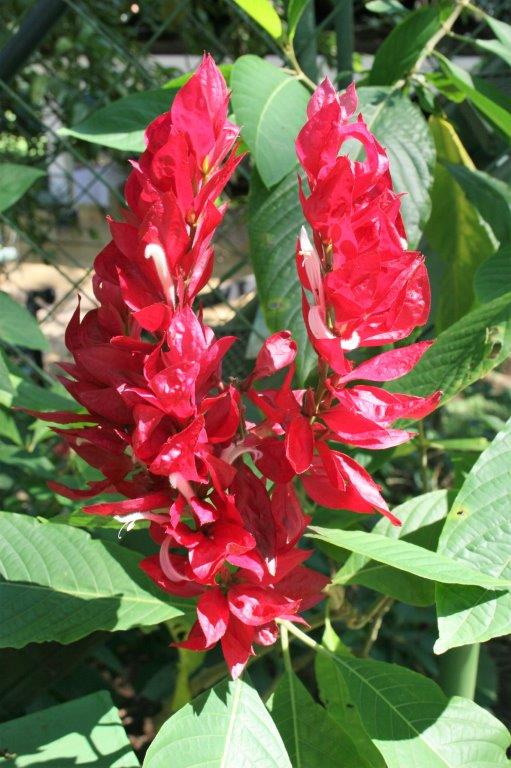
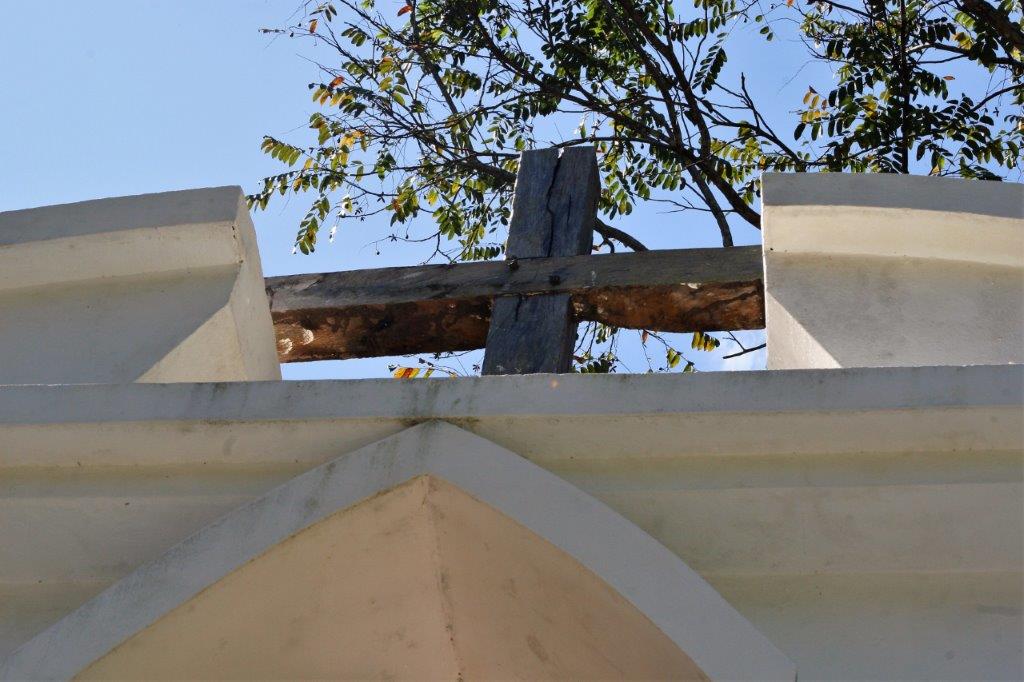
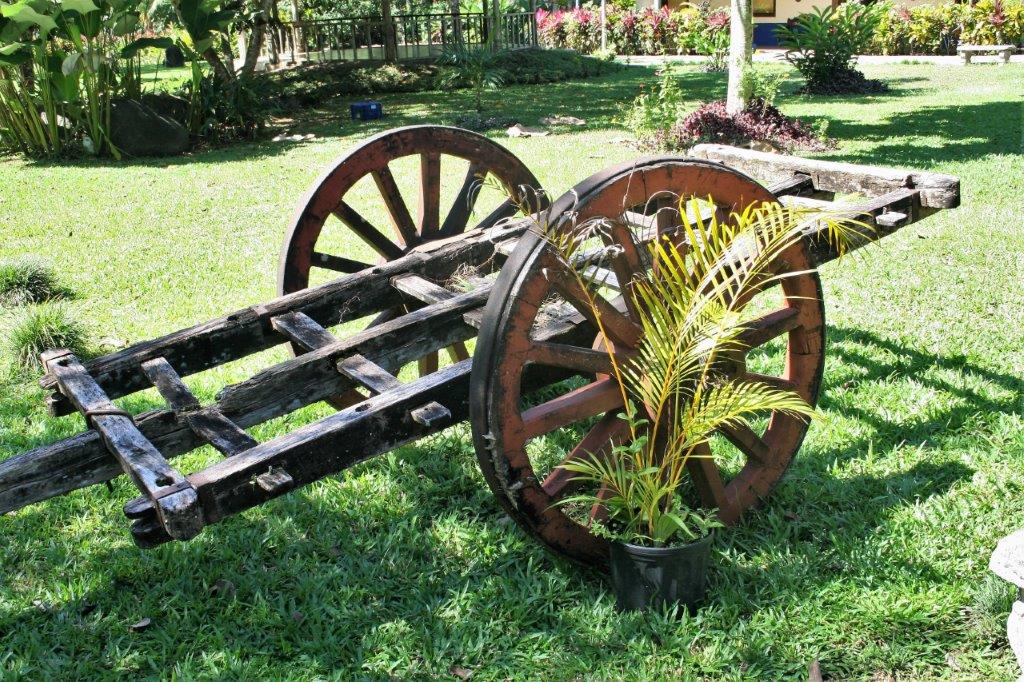
We had a one hour bus ride to the beginning of our tour.  I don’t mind a lengthy bus ride out to a tour since you get to see the countryside and the local people going about their daily lives.  The Skywalk took us up and down in the jungle and high into the leafy treetops of the rain forest.  Costa Rica has a very, very rich diversity of plants, birds and animals.  Unfortunately, we only saw an iguana and a lot of leaf-cutter ants.   img_2806 img_2808 img_2821 img_2820I was fascinated by the leaf-cutter ants that we saw on the pathways and tree trunks.  They actually make roads – smoothing areas or removing debris from the path to facilitate the traffic.  They work in a constant rotation to and from the nest and follow the road lane better than than a lot of human motorists.img_2815Some of the flowers were very pretty.img_2817

Passion Fruit.


img_2829   Coffee.

img_2835  img_2827                     Water Hyacinth                                    Brazilian Red Cloak

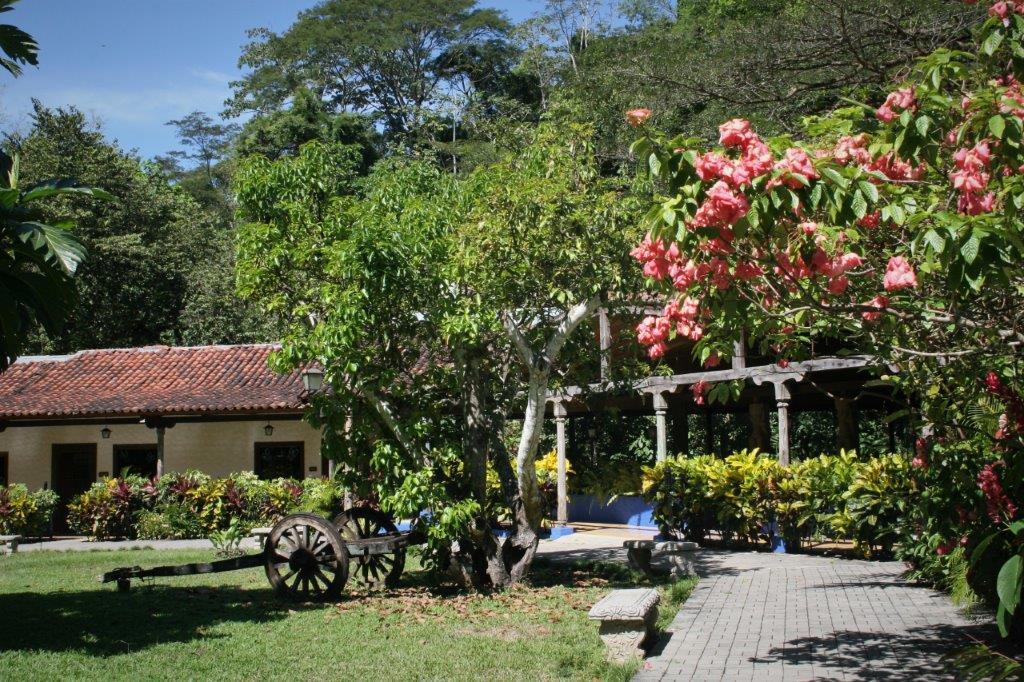
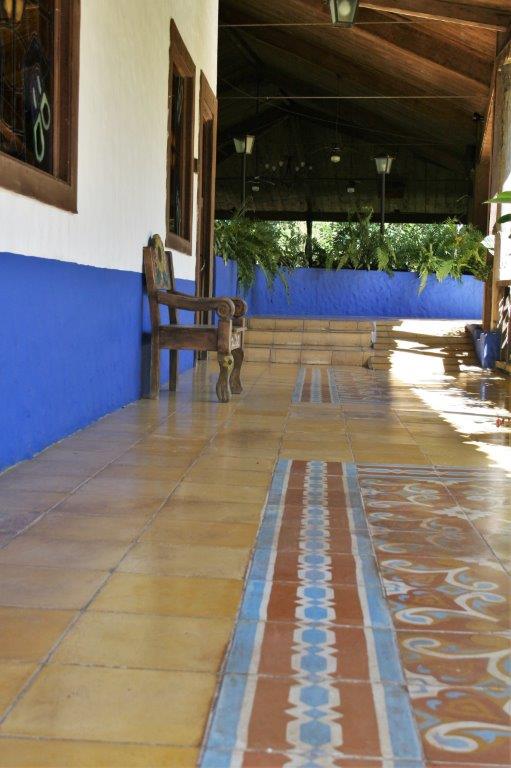
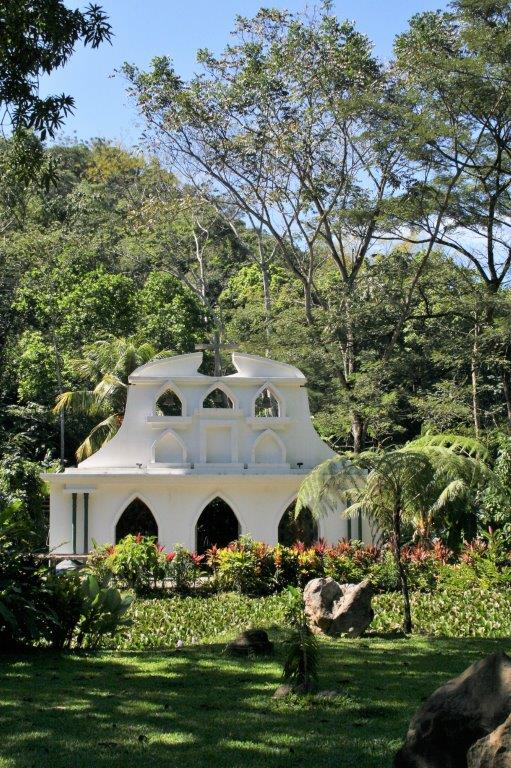
After a stop at Hotel Villa Lapas for a snack we were driven back to the ship and arrived at noon.img_2832 img_2842img_2834 img_2838img_2831We usually went to the theater each evening to enjoy the various entertainment – some we enjoyed more than others.  That night the show was late: 10:30 – 11:30, and was presented by the Filipino crew.  They shared their native music, stories and dance. It was very good.

2009 World Cruise – Jan. 9 – Day 5 – Panama Canal Crossing

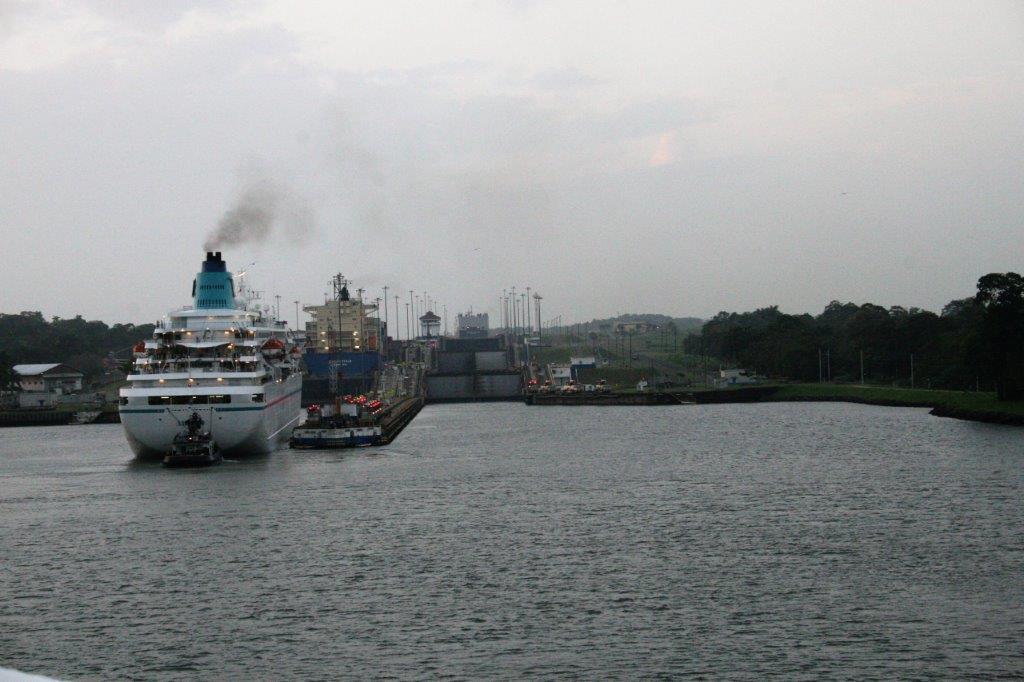
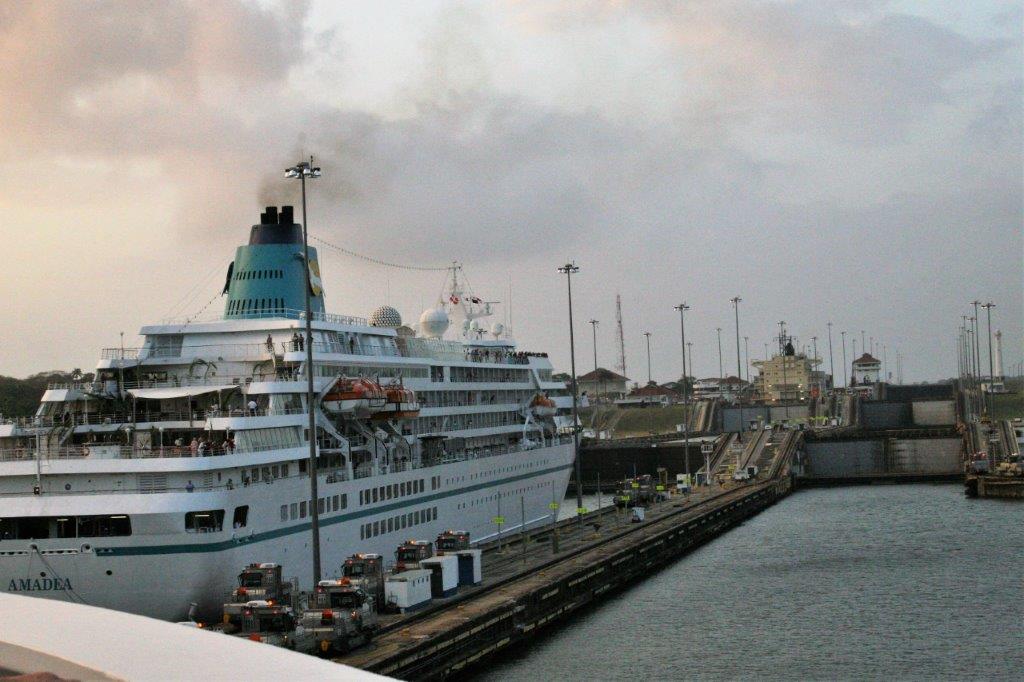
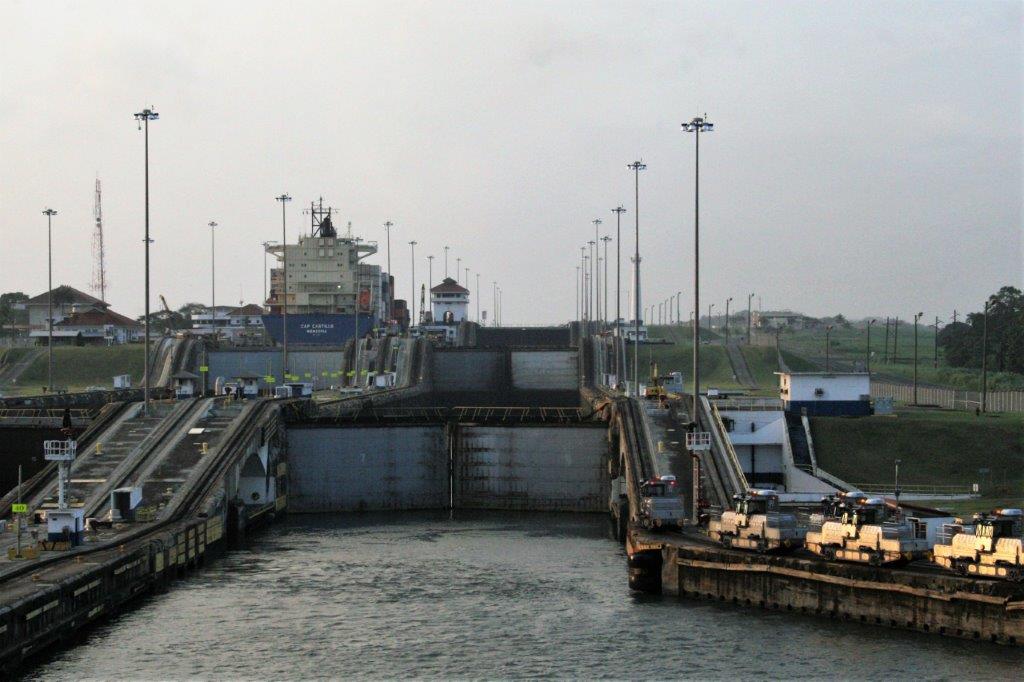
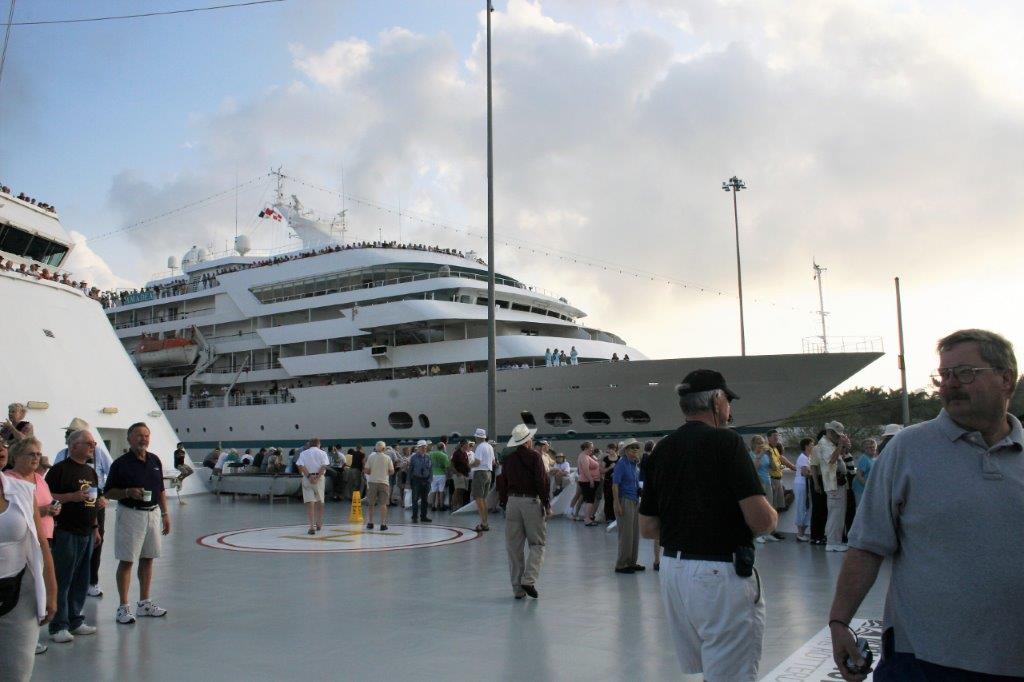
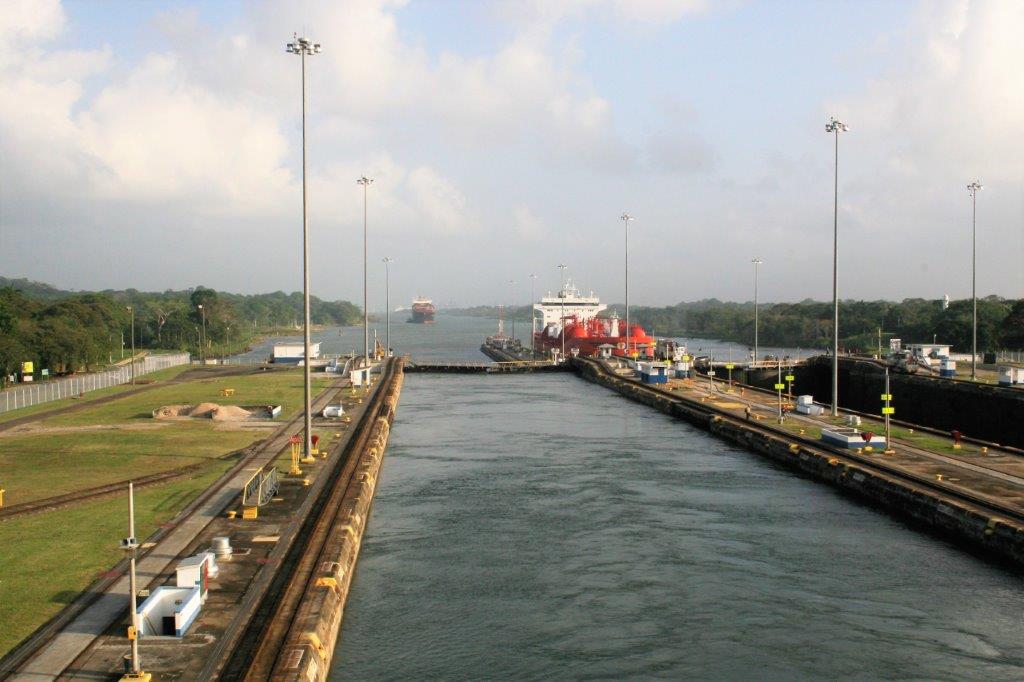
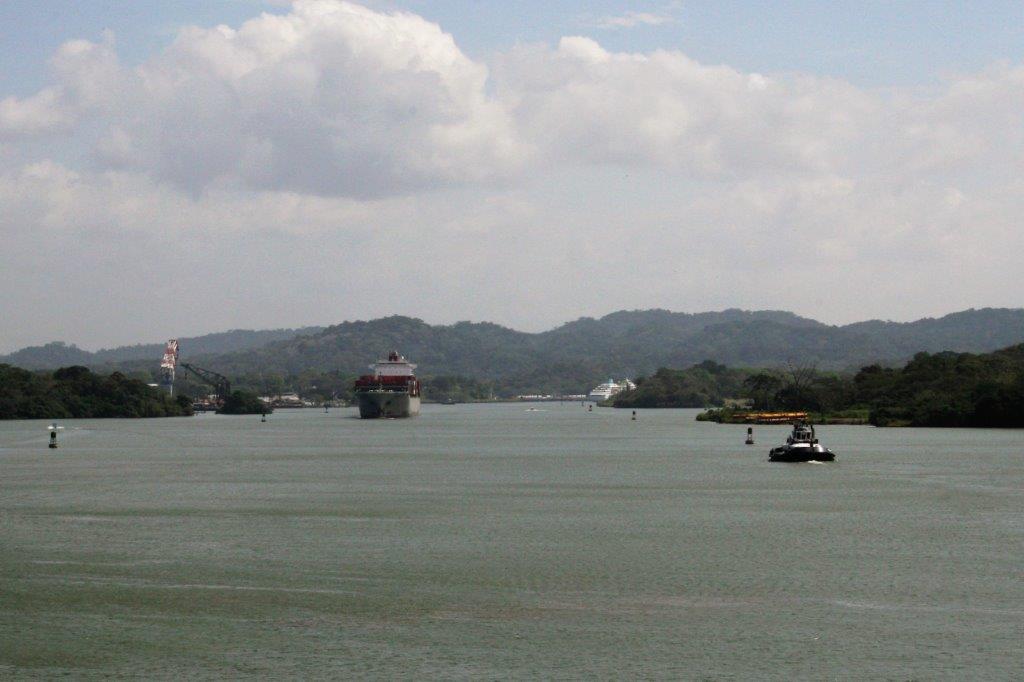
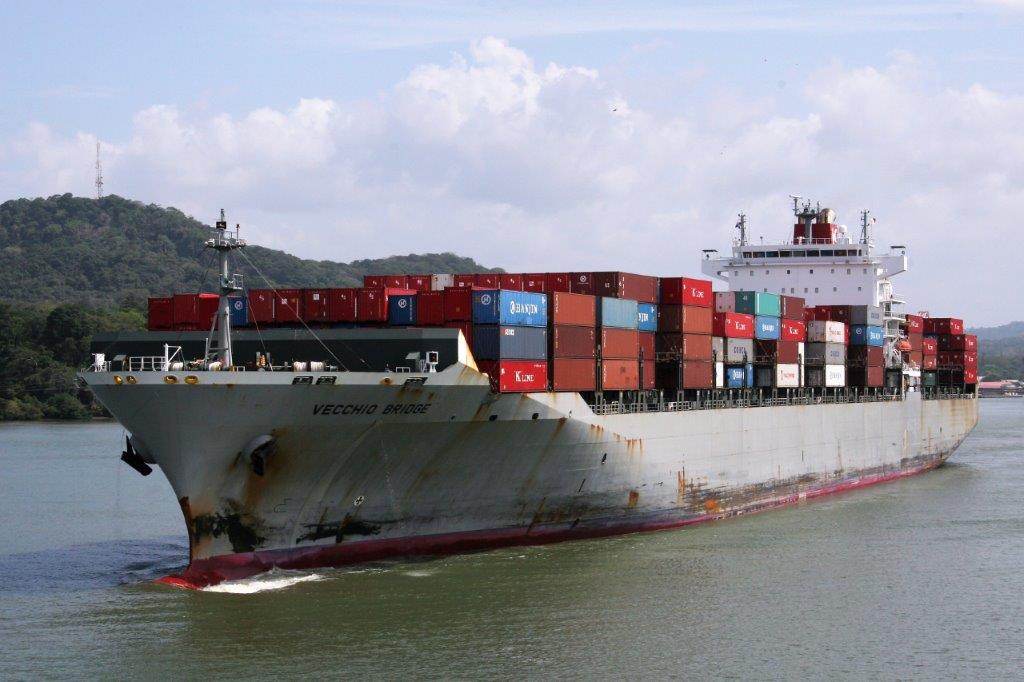
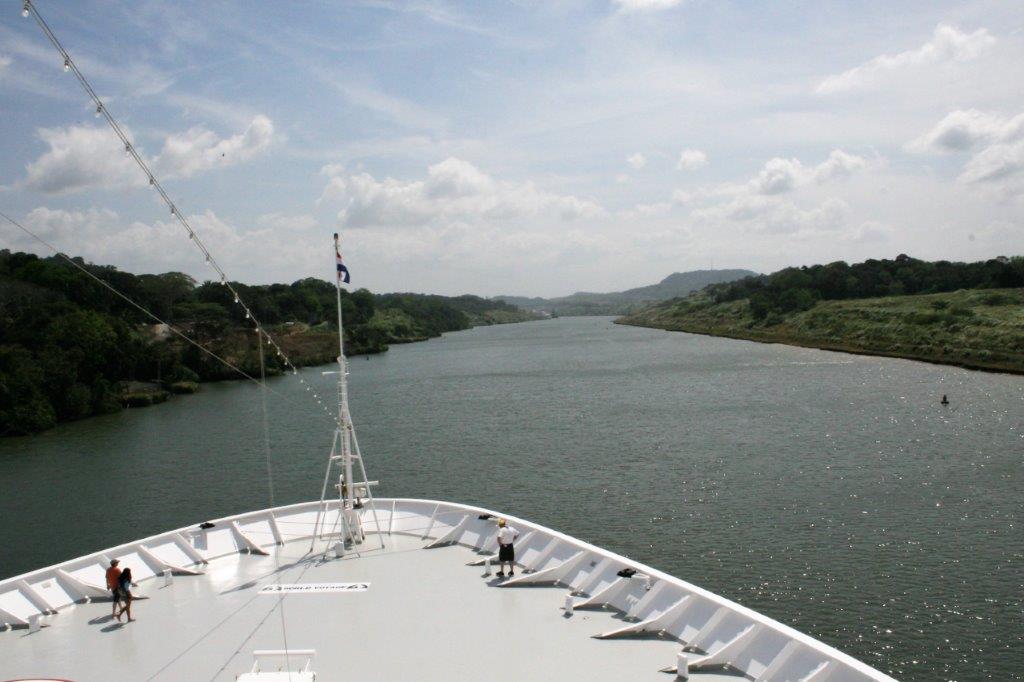
2009 World Cruise – I woke up early; really early – as 4:30 am and got up at 5:15.  I was on the bow before 6 to watch the sail-in to the Panama Canal.  There are two parallel lanes making up the canal so two ships go through at once.  We followed another cruise ship called “Amedea” into the right side set of locks.  John and I spent pretty much the entire day on one or another of the outside decks; mostly on the bow, watching the ship go in and sail out of the locks and the land pass slowly by.img_2628 img_2629The Panama Canal is considered to be the Eighth Wonder of the Modern World and has shortened the trip around the continent of South of America by 7,000 miles (11,265 km).  Amazingly the idea of a canal through the Isthmus of Panama was conceived by King Charles V of Spain in 1523.  He even commissioned a survey of the Canal area, which was completed the following year.  The sheer magnitude of the task though was too daunting for the Spanish and the idea was shelved.  The Gold Rush of 1894 brought the completion of the Panama Railroad across the Isthmus and it wasn’t until Panama’s independence from Colombia in 1903 that the idea of building a canal was seriously undertaken.

A deal was struck with the United States.  The US would guarantee Panama’s independence and, for the measly sum of $10,000,000, Panama granted the USA power and authority within the then ‘Canal Zone.’  America also paid an annuity of $250,000 beginning nine years after the treaty was signed.  This annual fee increased a few times over the years until it reached $1,930,000 in 1955.  On December 31, 1999, Panama assumed full responsibility for the administration, operation, and maintenance of the Panama Canal.

img_2630 img_2644 img_2665 The project was originally started by a French company but they went broke and the States bought them out for $40,000,000.  It took 10 years and 6,000 lives from yellow fever, cholera and accidents before the $387,000,000 Panama Canal was opened.

It has remained virtually unchanged since the opening in 1914.  The installation of lights in the 70’s allowed ships to go through the Canal 24/7.  It has only been closed for a few days two times since it opened.  The Canal is a neutral zone so any ship that can pay the passage fee is allowed through. (Average cost for a container ship or cruise ship is $100,000 – $200,000.  The smallest amount ever paid was 36 cents in tolls paid by a fellow, who in 1928 took ten days to swim the Canal.)

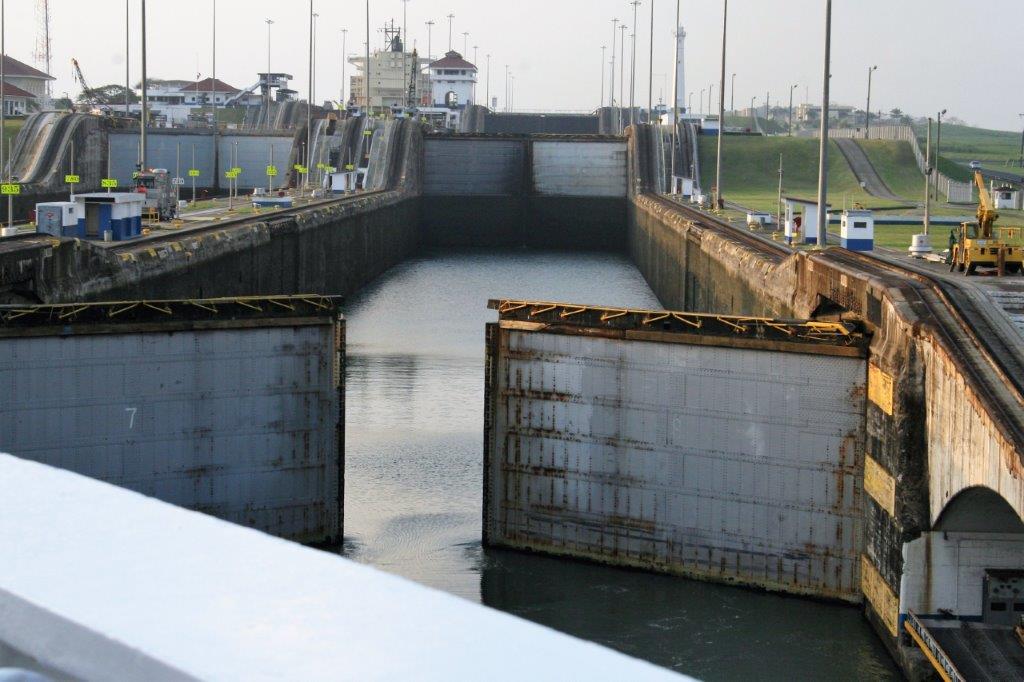
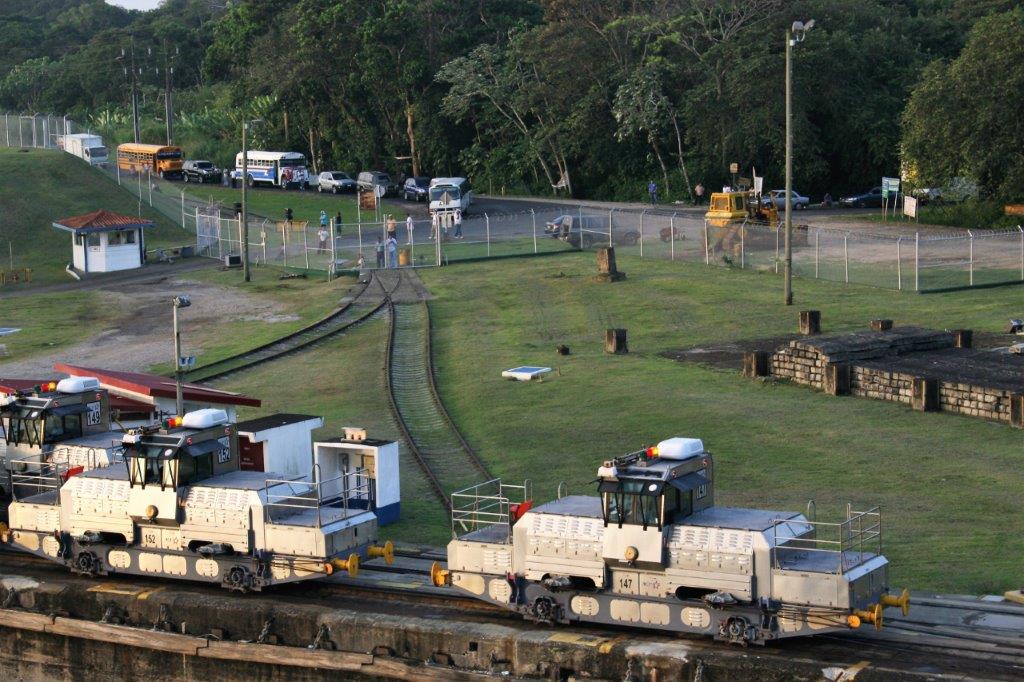
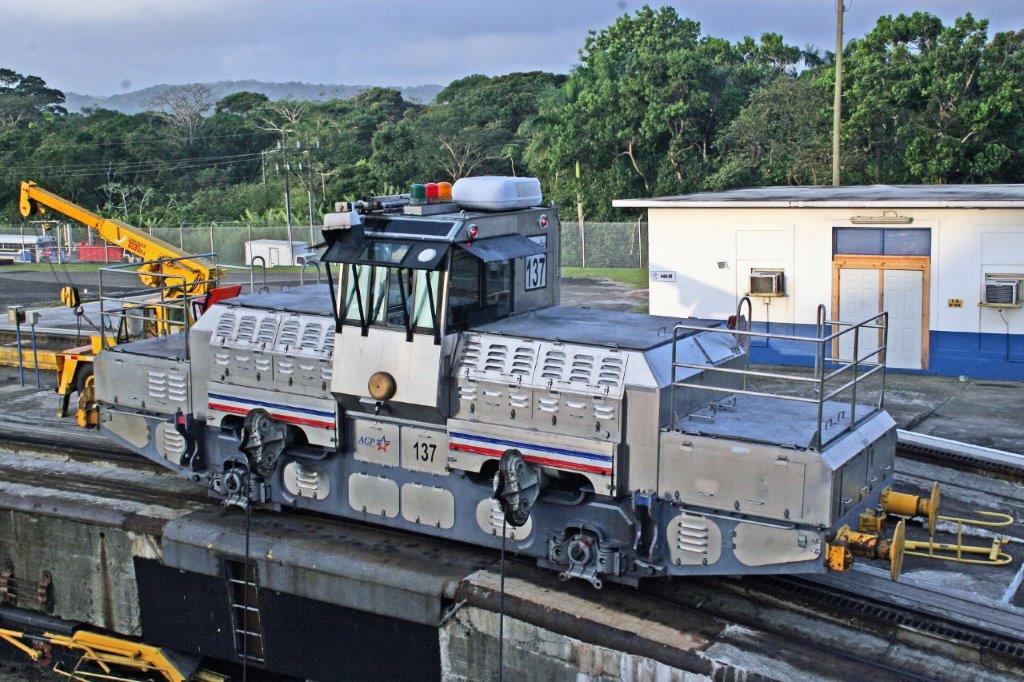
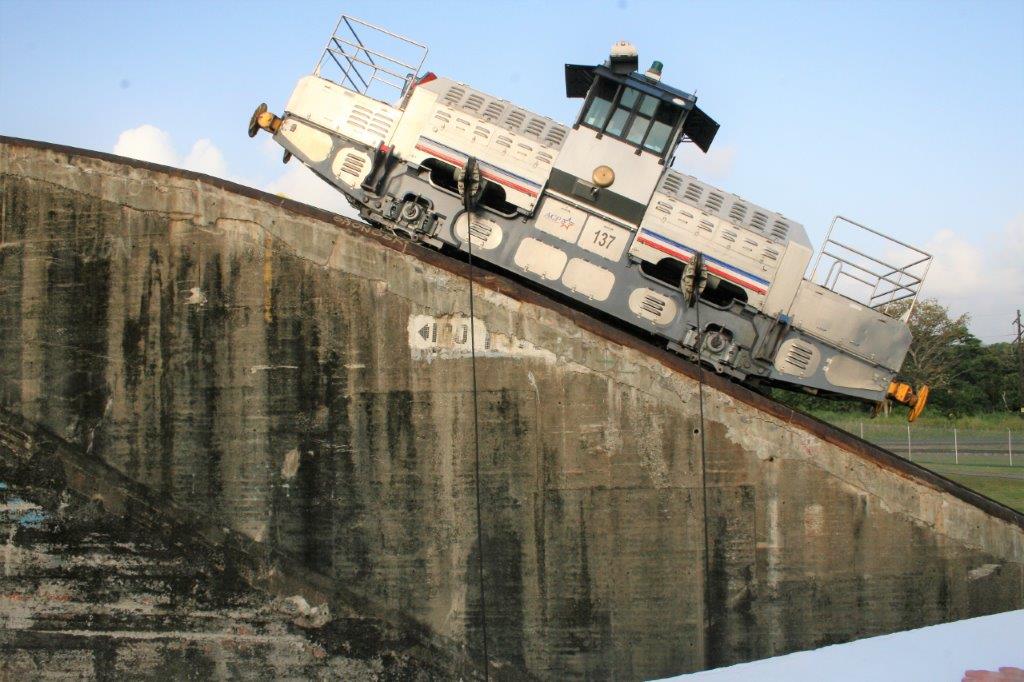
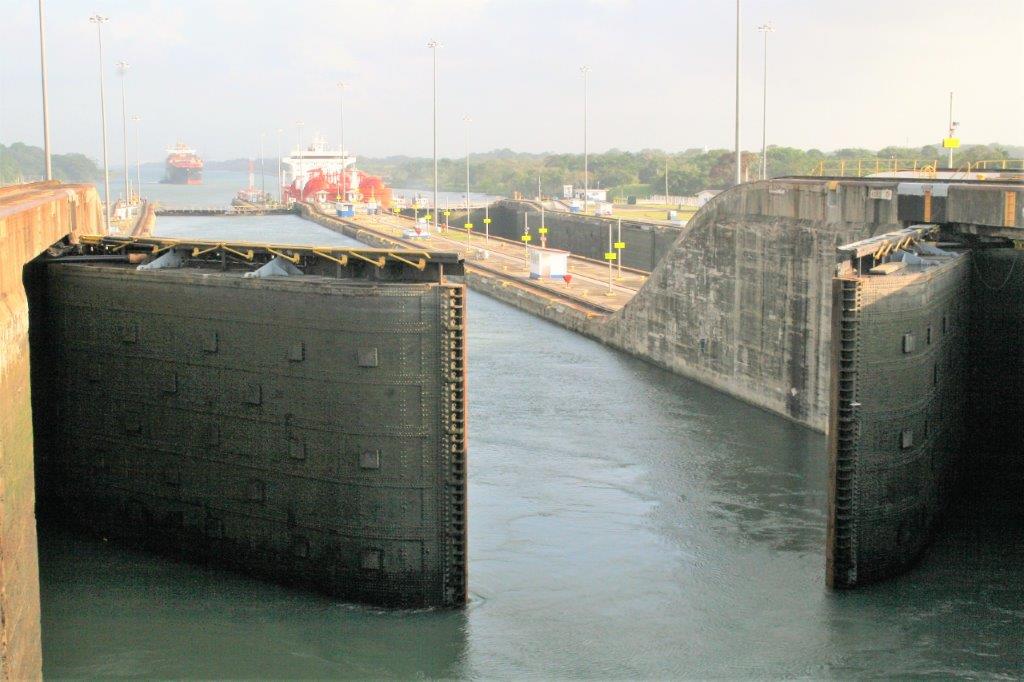
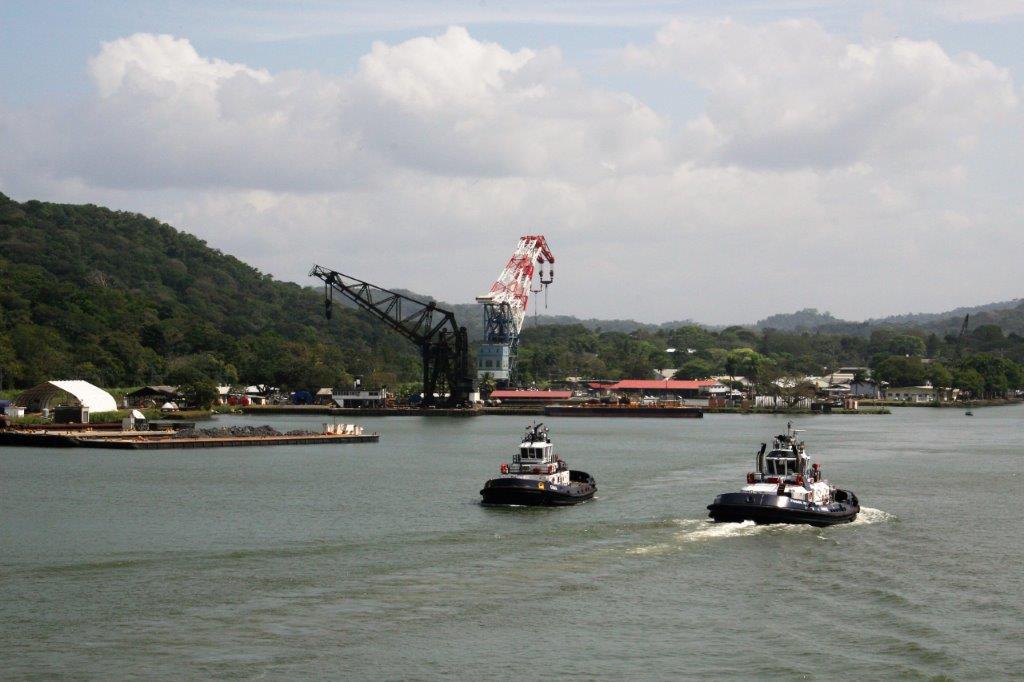
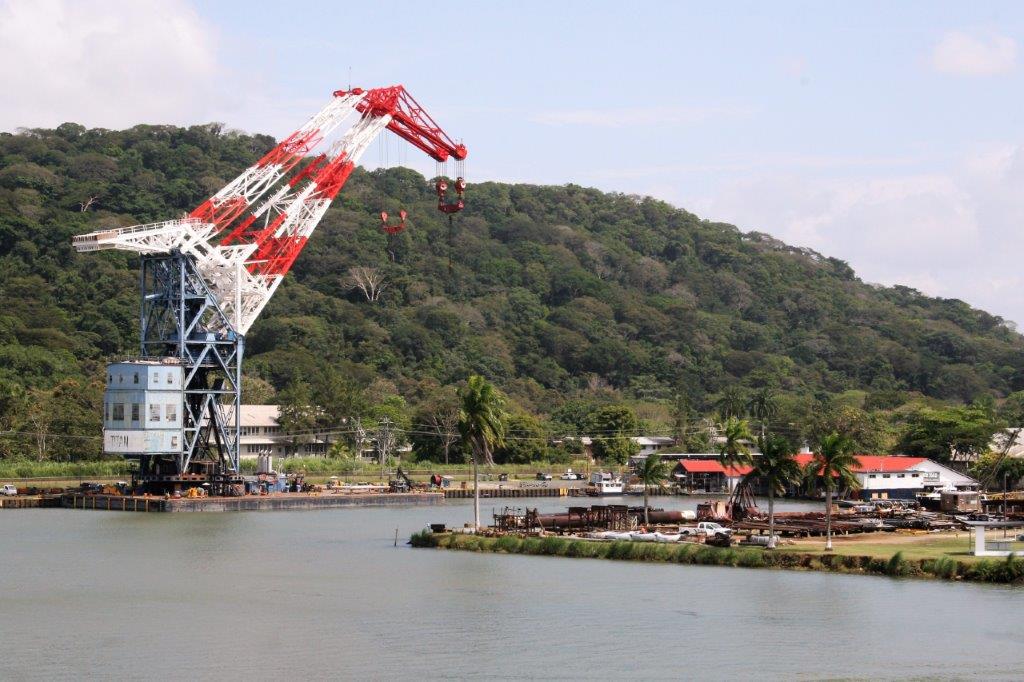
The ships pass through three sets of locks that effectively lift the vessels 26 meters above sea level to the level of Gatun Lake and then lower them back to sea level on the opposite side of the Isthmus.  The ships use their own power to navigate the lake but are assisted by pairs of electric locomotives (called Donkeys) on rails that use cables to keep the ships in position within the locks chambers.  The transit is 48 miles (77 km) long and each crossing flushes approximately 197 million liters of fresh water into the sea.  It is a good thing the area has a very high rate of rainfall.

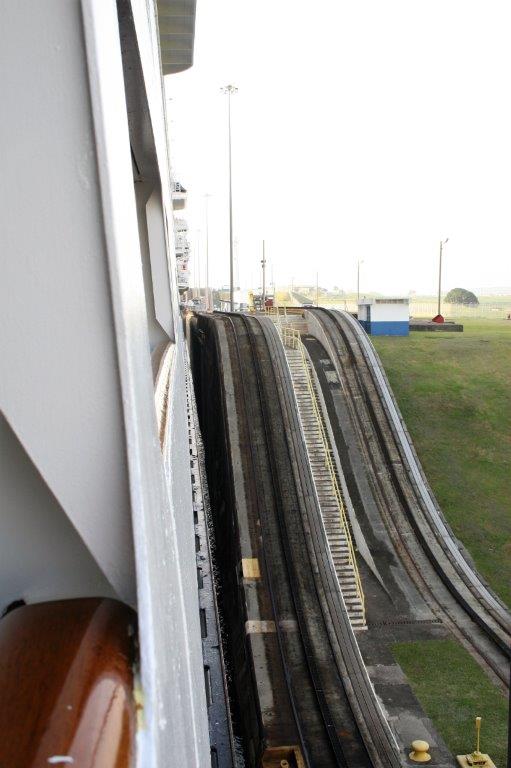
img_2634 img_2653_edited-1 img_2662 img_2655 img_2656_edited-1Our ship, the MS Rotterdam is one of the smaller cruise ships around these days and pretty much the largest that could go through the Canal.  We had very little clearance on each side of the concrete walls.  All the big cruise liners today just stay on one side or the other and do the same cruise over and over.

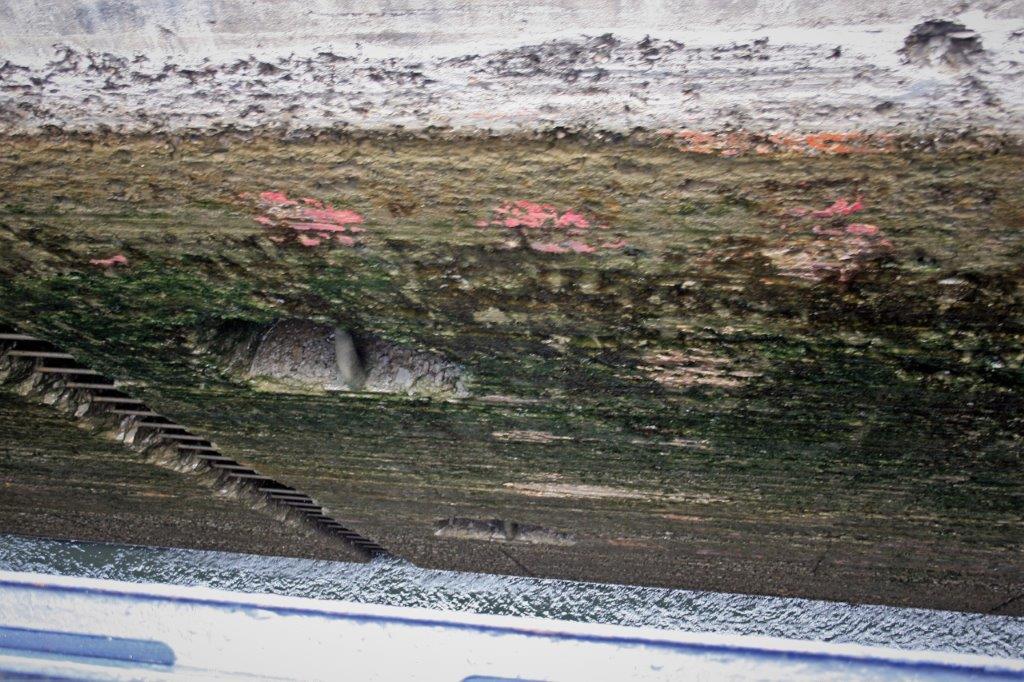
The glimmer at the bottom of this photo is the water in the lock.  You could easily touch the concrete walls if you reached out from one of the cargo doors on the lower deck.

img_2669 img_2735_edited-1img_2671

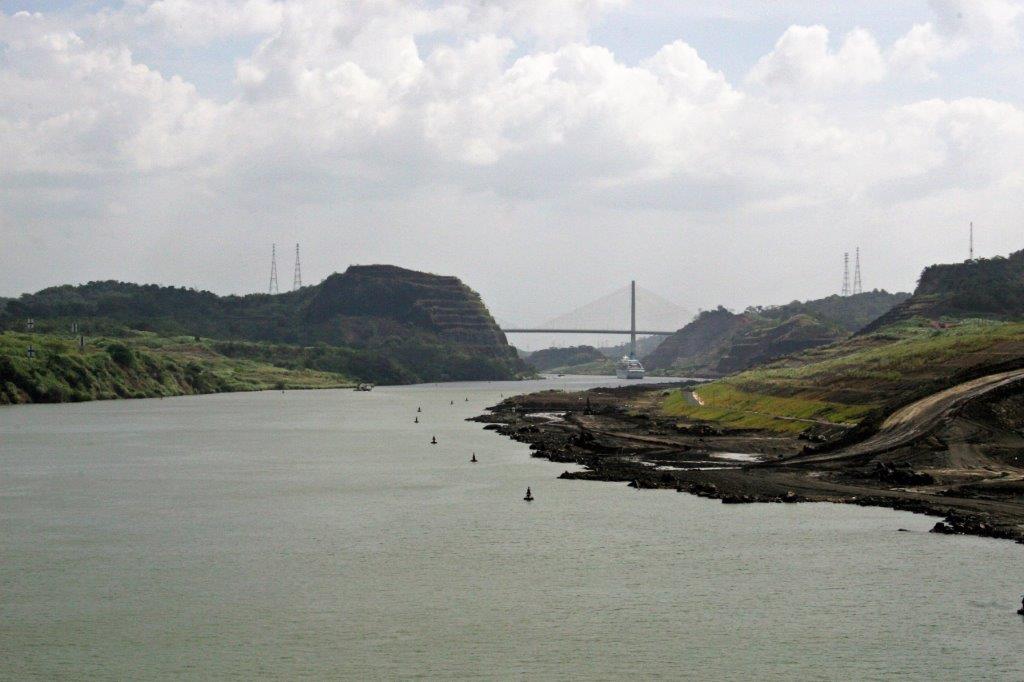
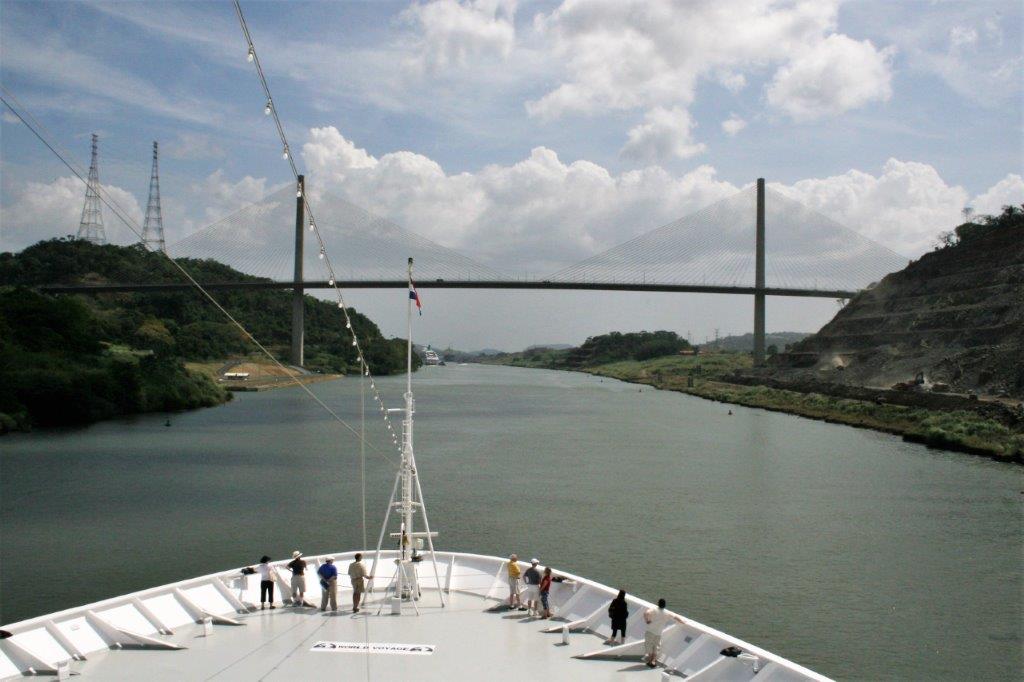
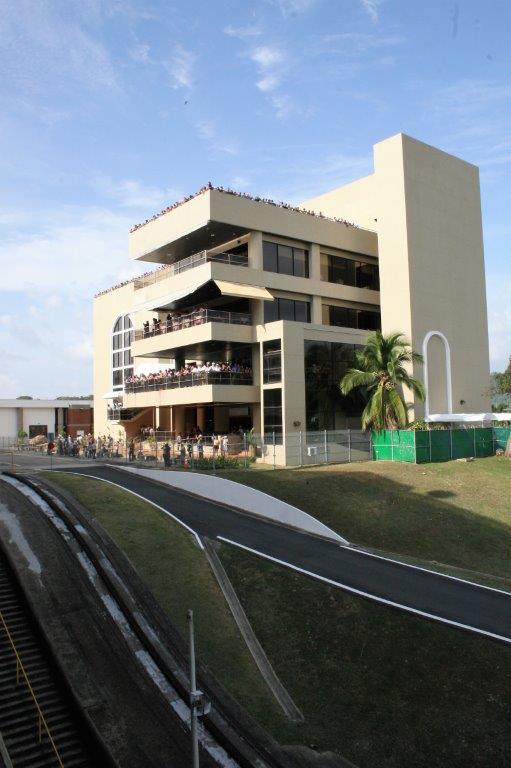
img_2677There is a lot of traffic along the lake shore and within Gatun Lake as you sail from one set of locks to the other.  Everyone moves dead slow so it takes all day to make the crossing. img_2693-1 img_2696-1 img_2707 img_2711 img_2719 img_2744We passed the Panama Railway Bridge and sailed under the beautiful Centennial Bridge before entering the Gatun Locks on the west side of the lake (The locks on the east side, where we entered the Canal, are called the Miraflores Locks).img_2680 img_2721_edited-1 img_2726After we passed through the last lock and past the Visitor’s Center, whose three levels of balconies – and the roof – were packed with people watching the ships; we entered the Pacific Ocean. We made our way to the beautiful Golfo Dulce coast of Costa Rica where we did scenic cruising all the next day.img_2730 img_2753 img_2761


2017 Jan 10 – Day 8 – Escondido, CA

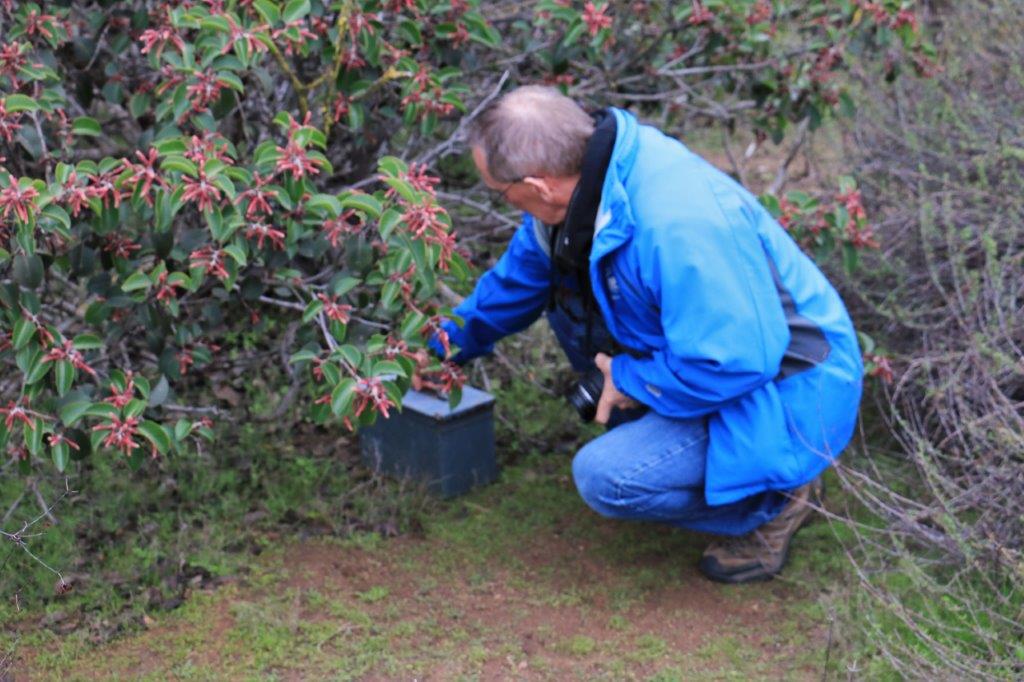
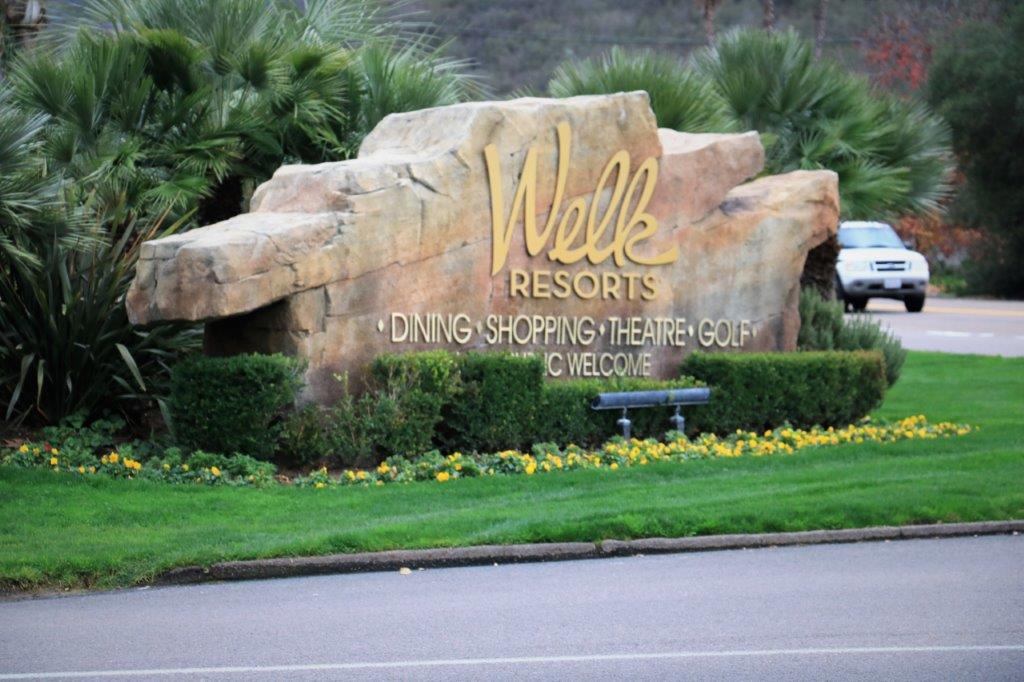
Yesterday was our first full day at the Lawrence Welk Resort in Escondido, CA.  We went no where and did nothing – well nothing scenic or historical or artsy.  John read and napped. I finished up the incomplete blog from Ridgecrest and did another blog for our drive from there to the resort.  I also started my new project – writing a blog about the World Cruise we took in 2009.img_6878This morning was a repeat of yesterday.  It was supposed to rain today but by mid-afternoon the clouds were still high in the sky and the rain had not arrived, so we decided to go for a walk and try find  the three geo-caches that are hidden near-by.  The first was across the road – appropriately called Champagne Boulevard –  and was an easy find.  The second was supposed to be right at the fountain at the resort entrance.  We looked and looked and looked and couldn’t find it.  Yet, someone had found it in October.  We will try again on another one of our walks.

img_6861 img_6862 img_6863While John searched through the bushes and trees I took a few photos as a distraction to all the traffic going by.

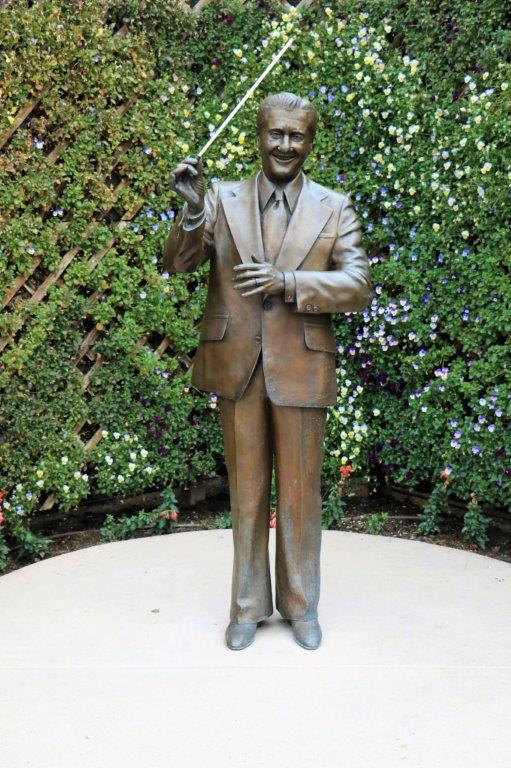
img_6865 img_6867 img_6869 img_6873 img_6875img_6879The third cache was hidden not far away from the life-size statue of Lawrence Welk that sat in the middle of the fountain in the square of the ‘village’ shops.  We confidently walked over there only to have our GPSs say we had to go forward another 20-24 meters.  Since we were here last they moved the statue to the other side of the gift shop and positioned it in front of a nice flowered lattice.  I guess people wanted to photograph the statue and photograph themselves beside it and it wasn’t possible to do so with it in the fountain.img_6884Lawrence Welk, as any Baby Boomer will recall, was an entertainer.  He played the accordian and was a big band conductor.  The Lawrence Welk  musical variety show was aired on TV for 27 years.  He retired in 1982 at the age of 79.  We used to watch his show.  It always began with the sound of a champagne cork popping out of a bottle and the TV screen showing the bubbles flowing by.

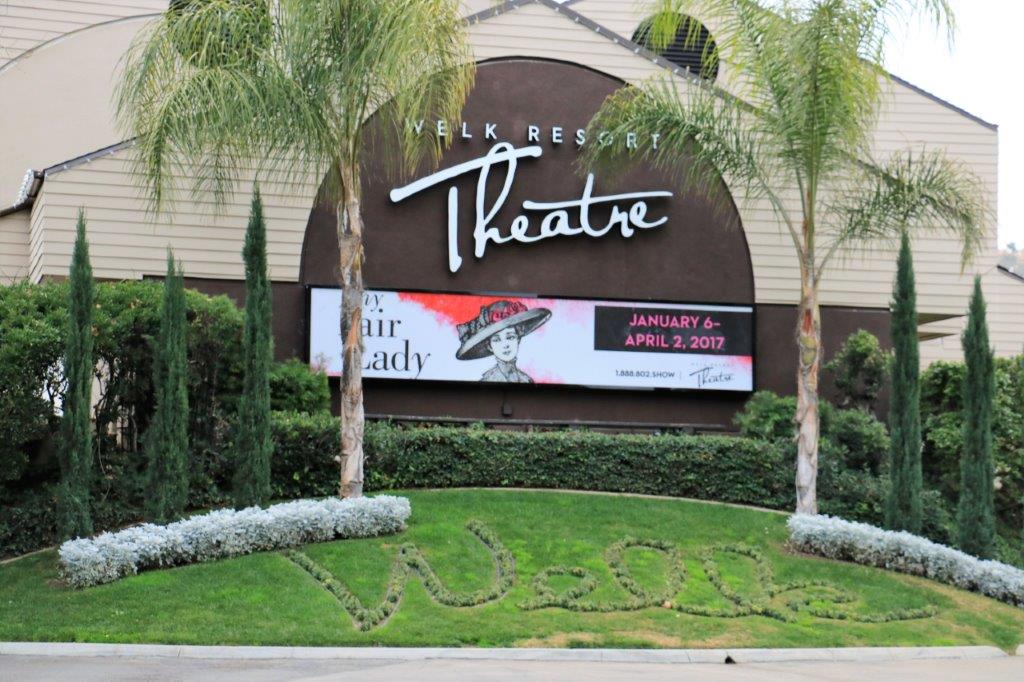
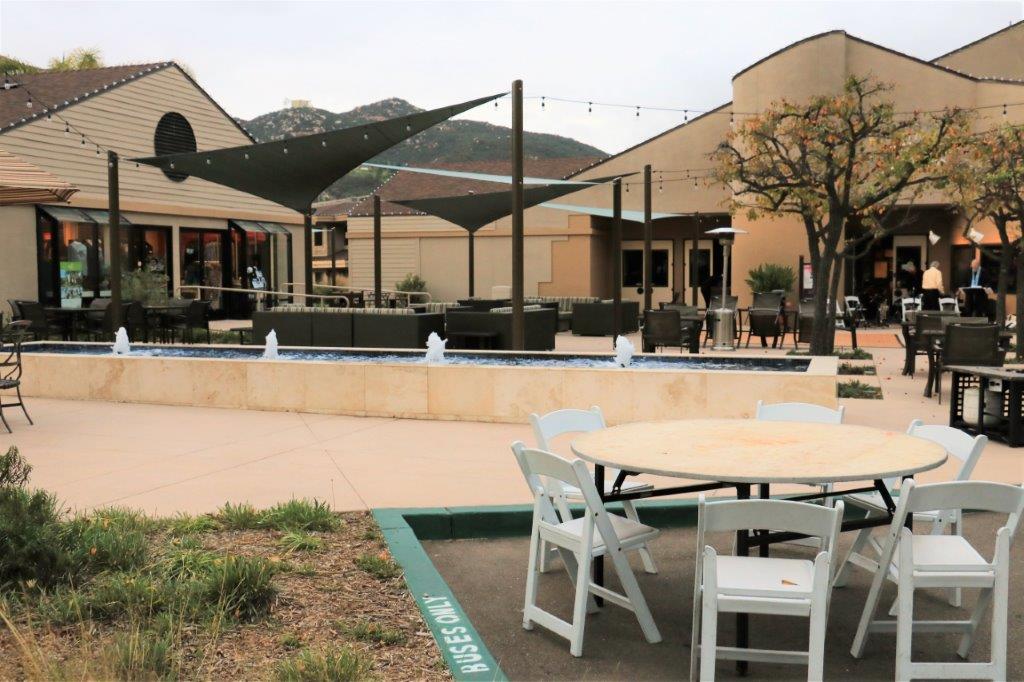
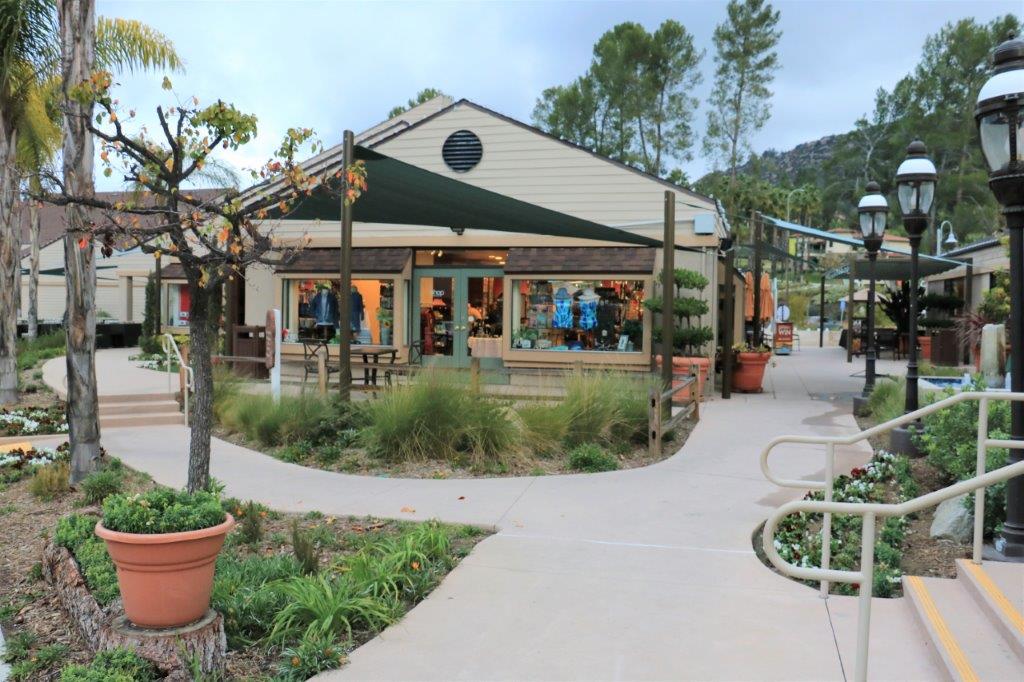
Welk purchased the property where the resort now sits for a 9-unit mobile home park.  It is now 600 acres with 4-5 sections of condo  units for vacationers; each with its own swimming pool and activity center, two golf courses, a theater, restaurant, and a gift/clothing shop.  There are 5 Lawrence Welk Resorts – Escondido (San Diego), Lake Tahoe, Branson, Cabo San Lucas and Palm Springs.img_6876 img_6882 img_6883 img_6880We will be going to see My Fair Lady on Thursday evening.

After we found the cache hidden near ‘Mr. Welk’ we walked the hill back to the condo to make dinner and relax for the evening.  A tough day in the California sun – even without the sun.

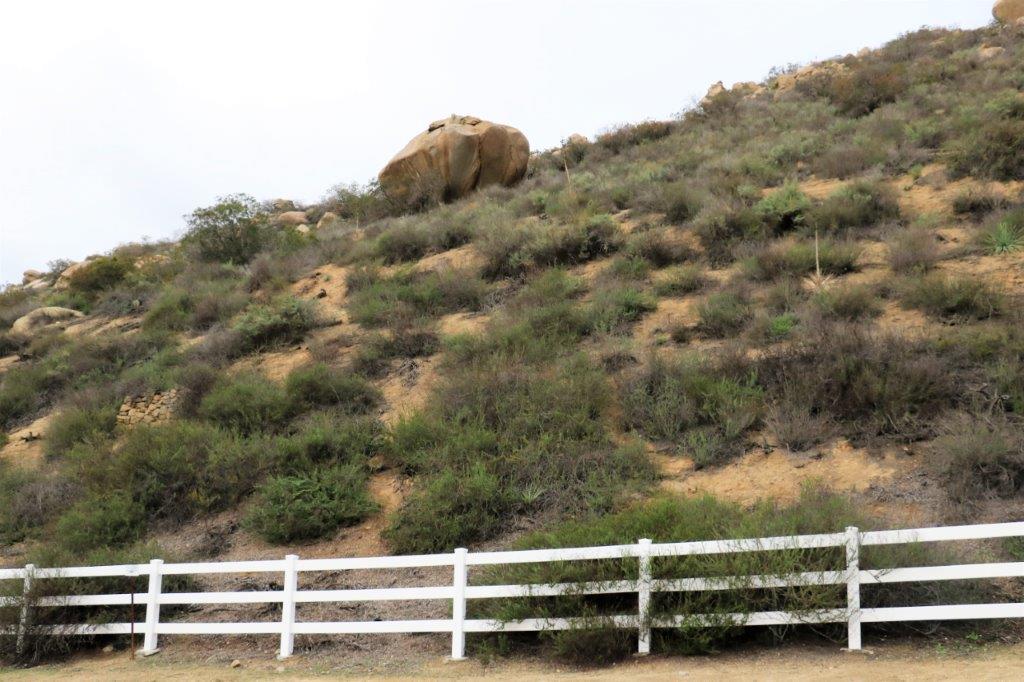
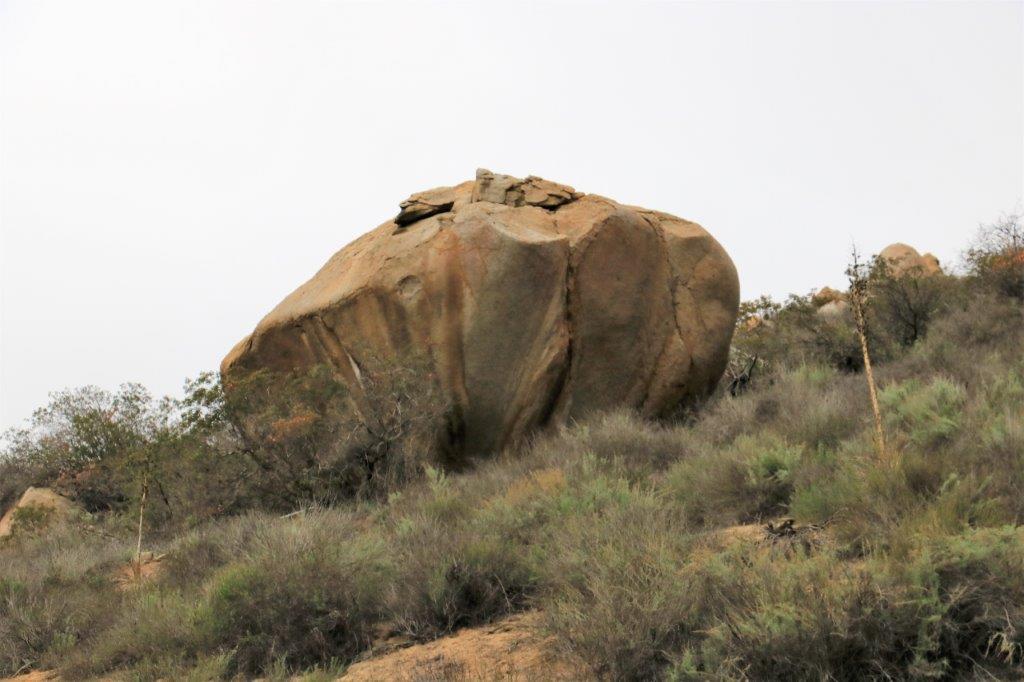
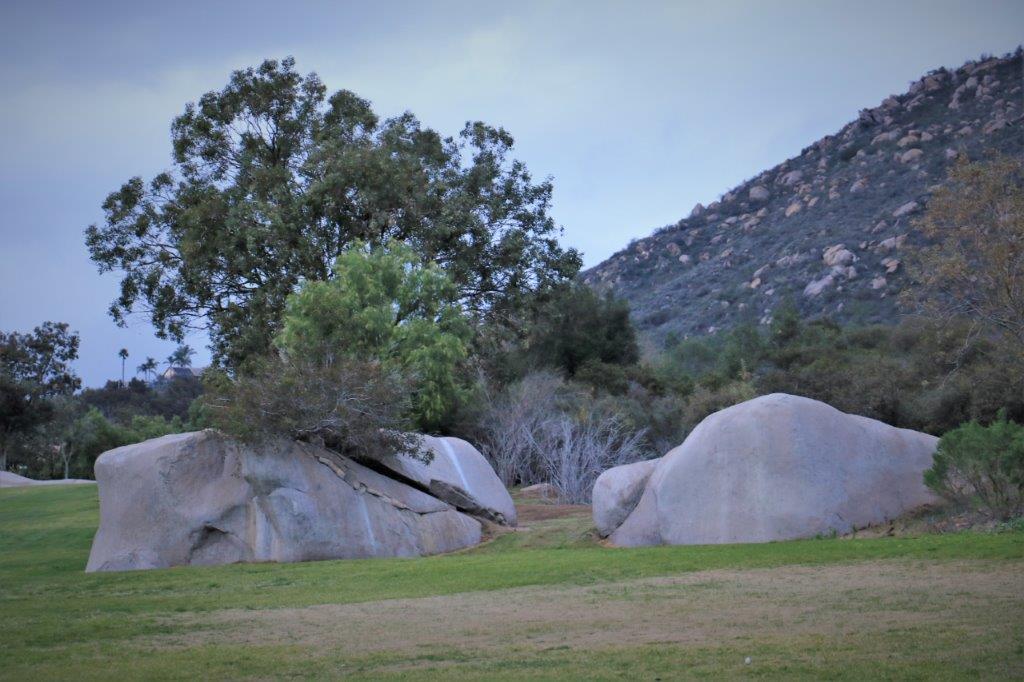
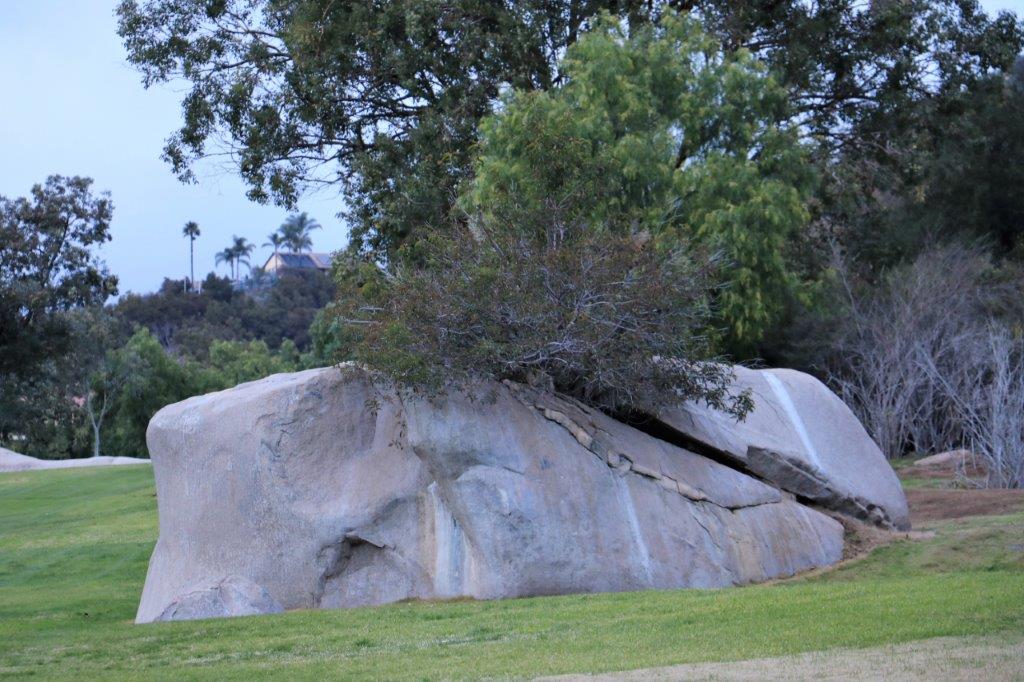
I love this bush that is growing right out of the crack in this big boulder.

img_6886img_6887 This is our unit complex.  img_6888

2009 World Cruise – Jan 8 – Day 4 – Cartagena, Colombia

2009 World Cruise  – We were up at 6:45 in order to have lots of time before our first tour of the cruise.  Thank heaven for room service breakfasts.

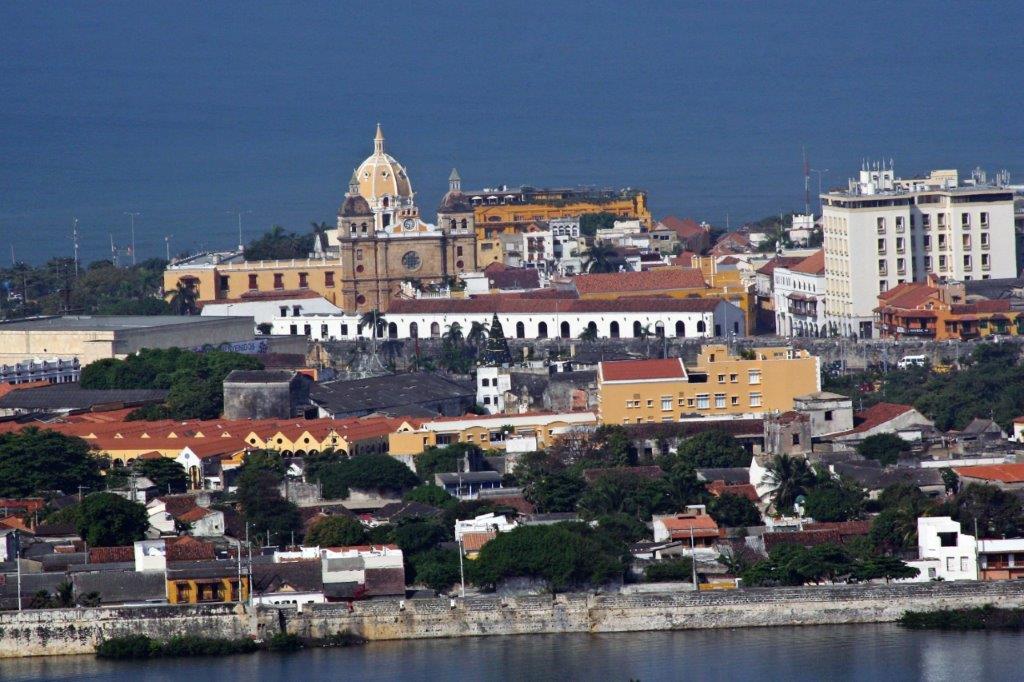
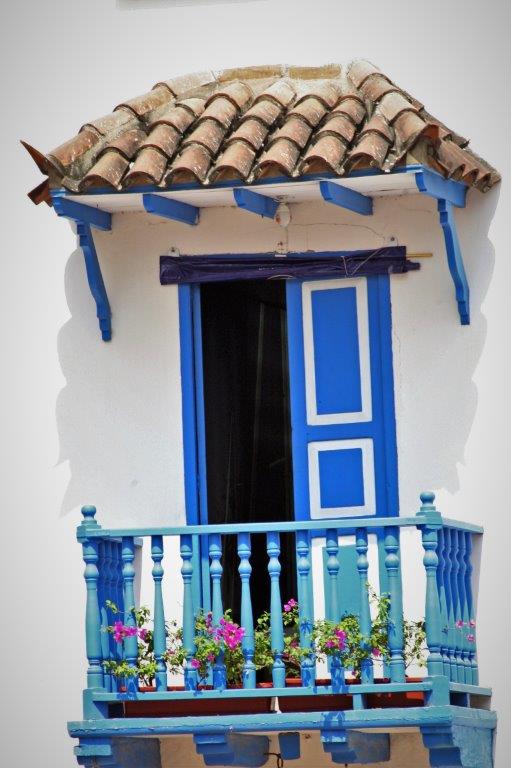
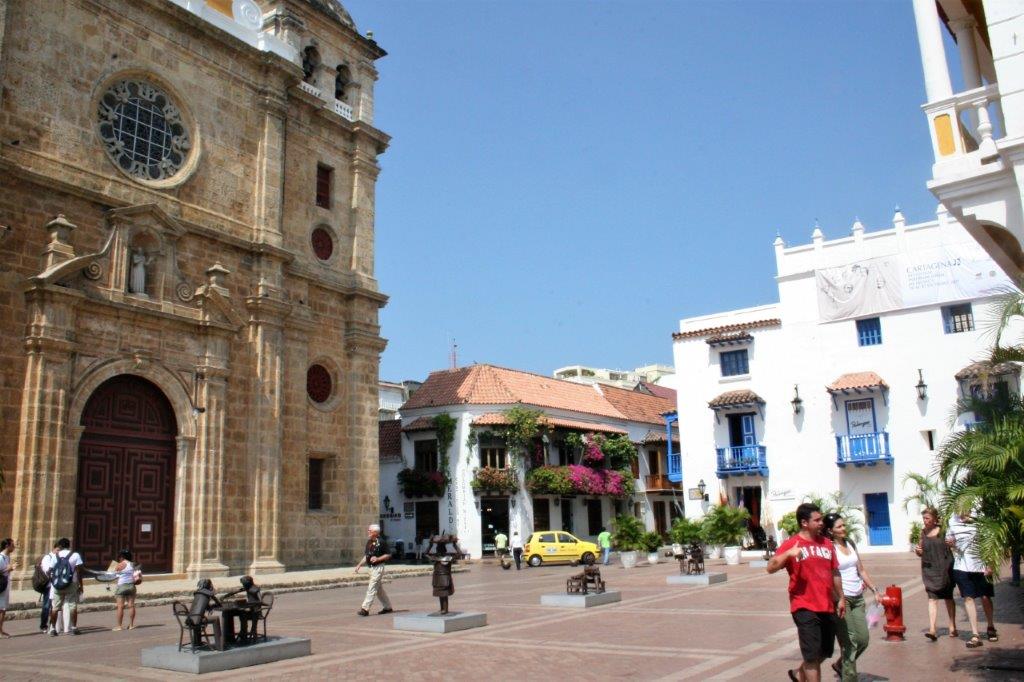
Our home for the next four+ months.img_3123 img_3124Cartagena de Indias was founded in 1533 and became a major port for Spanish ships taking gold and other products from northern  South America.  The city also became a center for the Inquisition and a major slave market.  The province declared its independence from Spain in 1811 and years of civil war followed.  Today the city is Colombia’s fifth largest, mainly due to petroleum fields discovered in the Rio Magdalena Valley in 1917.

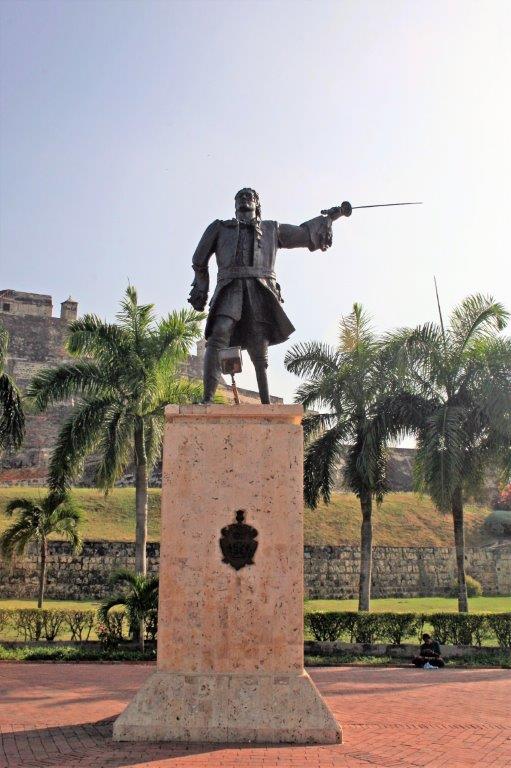
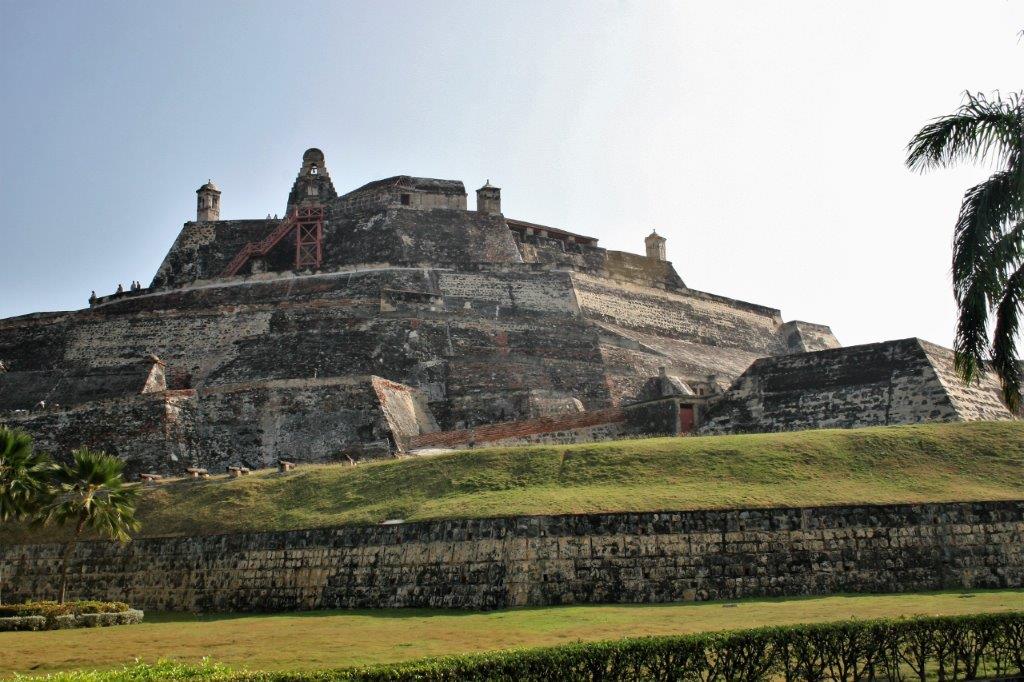
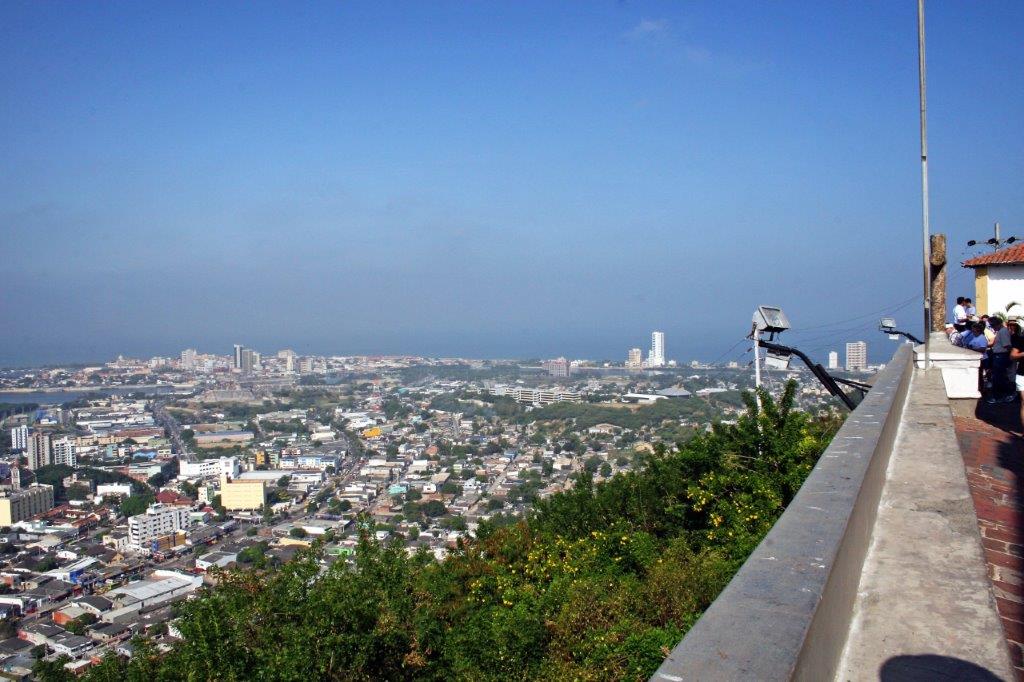
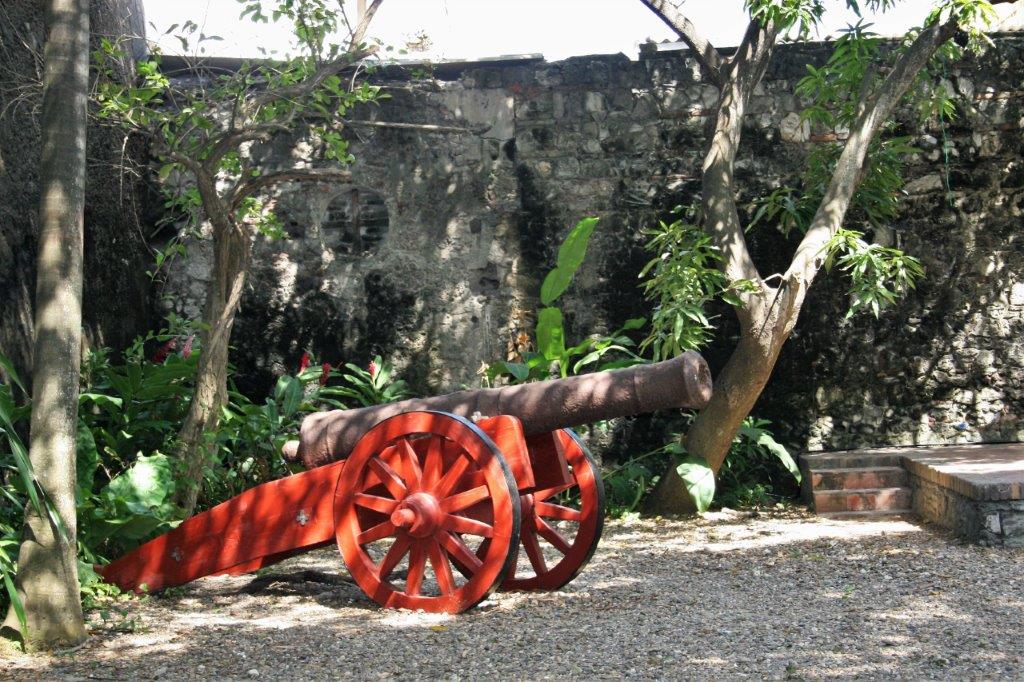
The first stop on our tour was Castillo de San Felipe de Barajas, a massive stone fortress that covers a hill 135 feet above sea level.  it was originally built in the 1600’s and named after Spain’s King Philip IV.  Over the years it was re-fortified and expanded.  In front of the fortress is a statue of Don Blas de Lezo, a Spanish Admiral who defended the fortress and city from an attack by Great Britain in 1741. (If you look closely at the statue you will notice the empty right sleeve – hence the left-handed swordsman – and a wooden left leg.  Don de Lezo lost these limbs in other battles and also lost an eye – brave and persevering fellow, I think.)img_2569_edited-1img_2572 img_2571  The view over the city was magnificent.

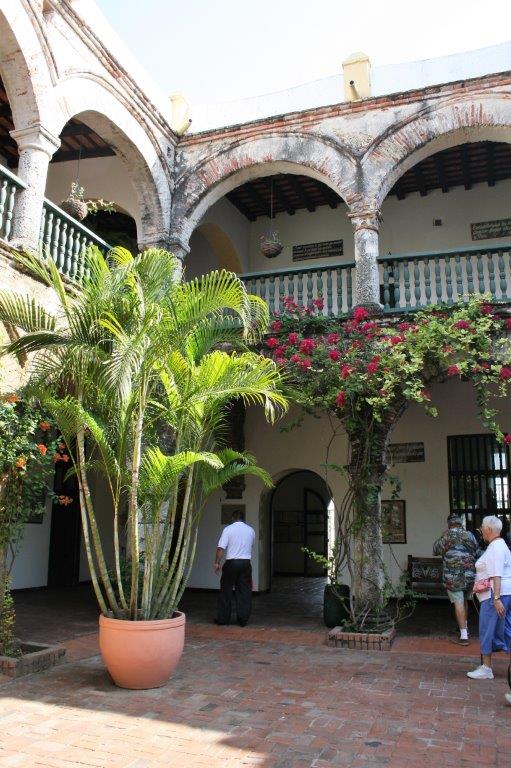
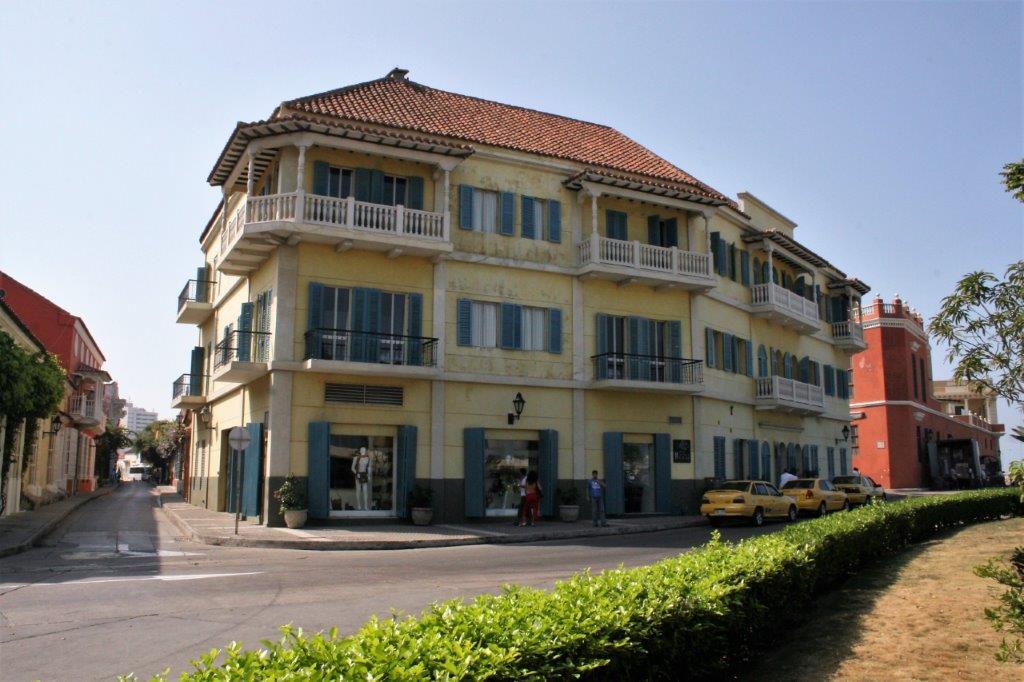
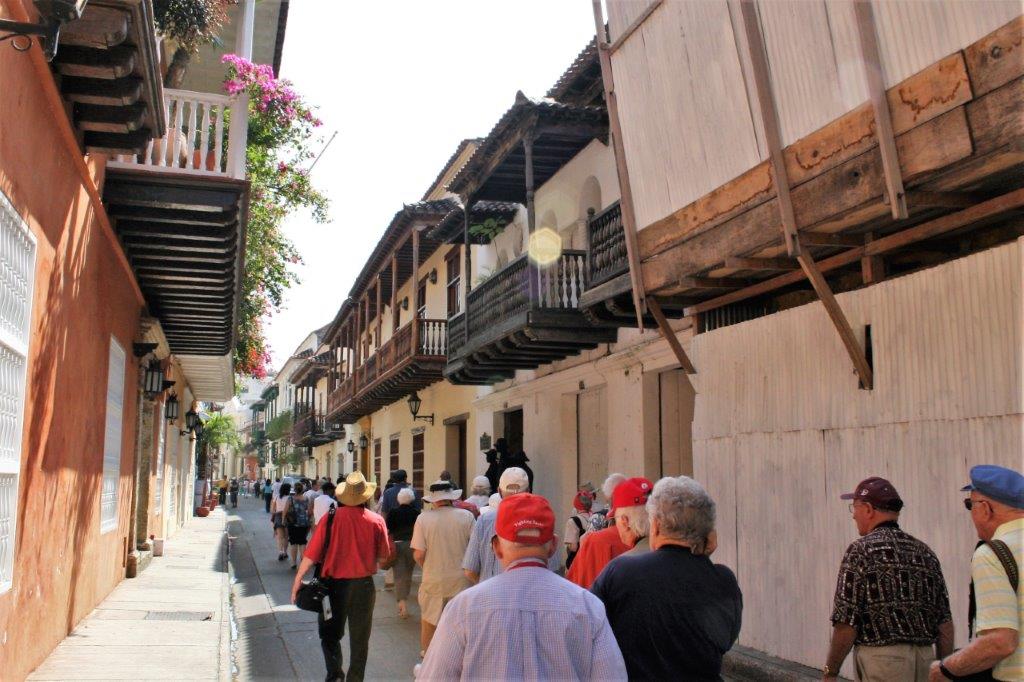
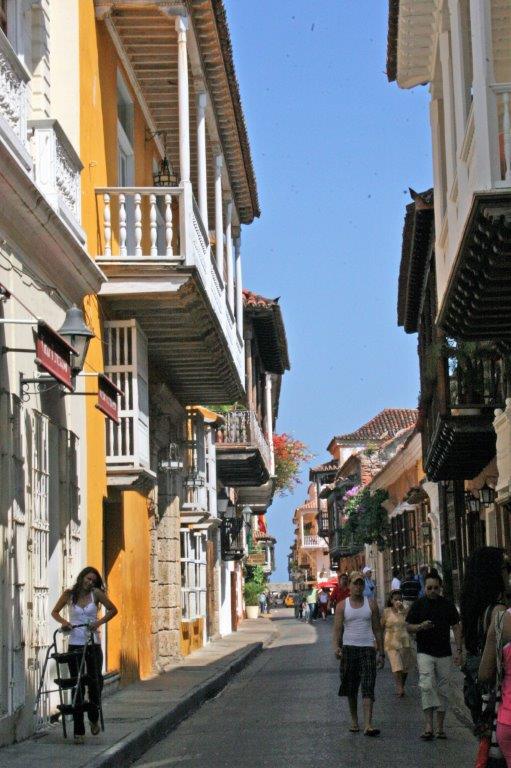
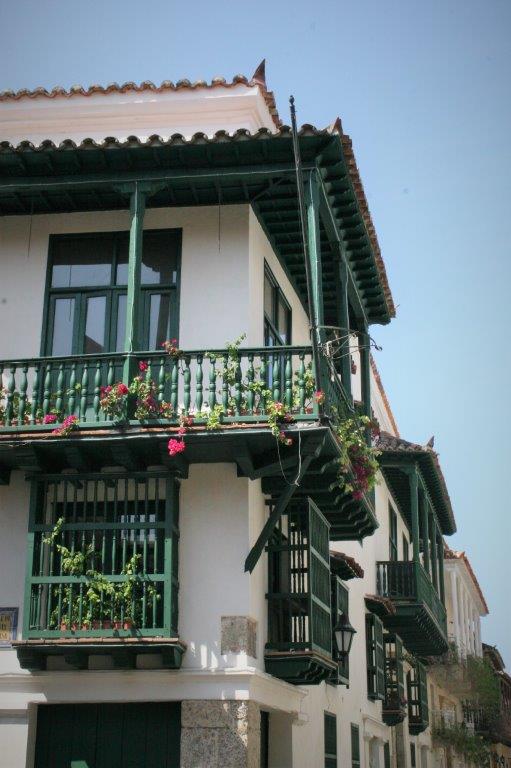
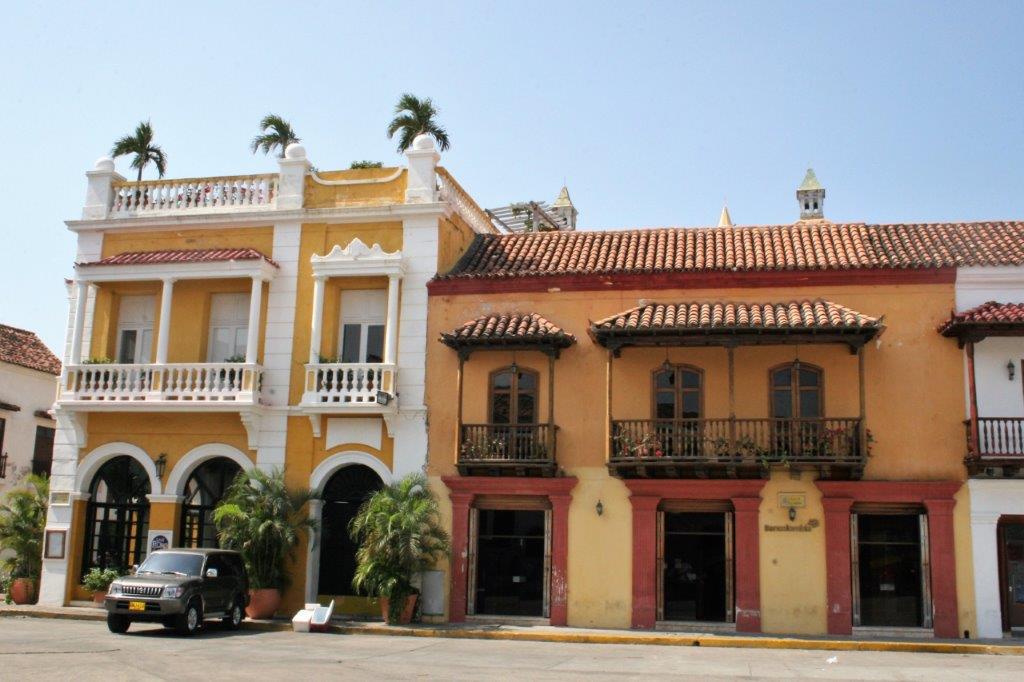
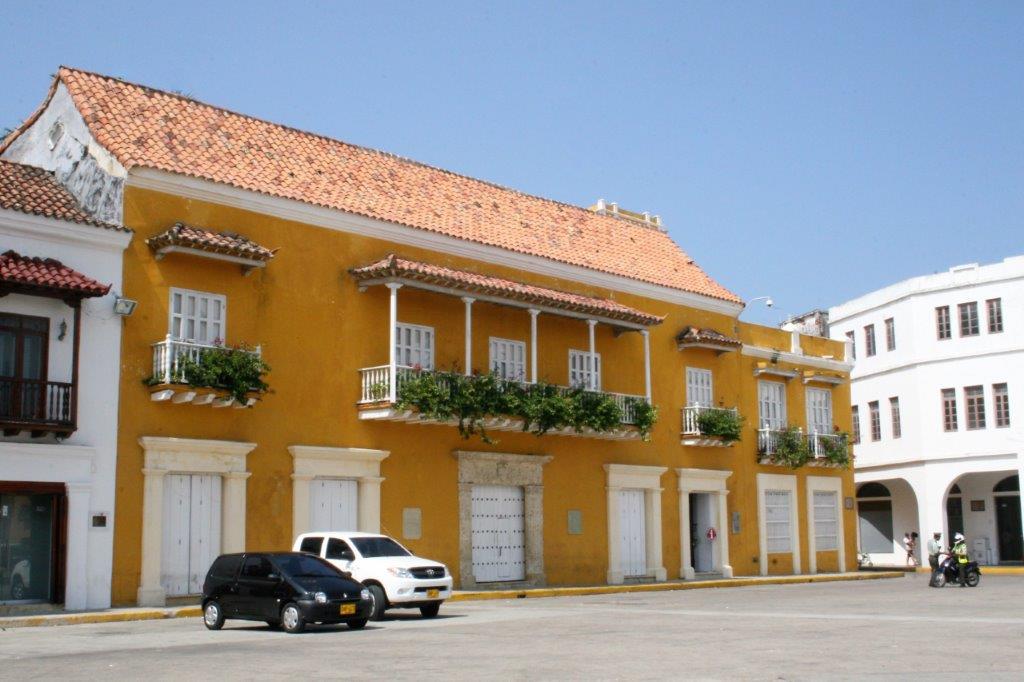
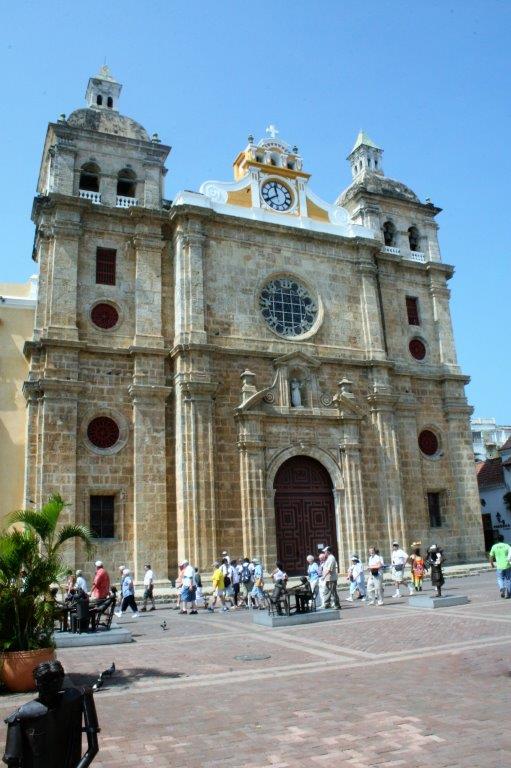
img_2579 img_2580_edited-1 img_2583_edited-1After we toured the fortress we had a walking tour through the narrow streets of the Old Town.

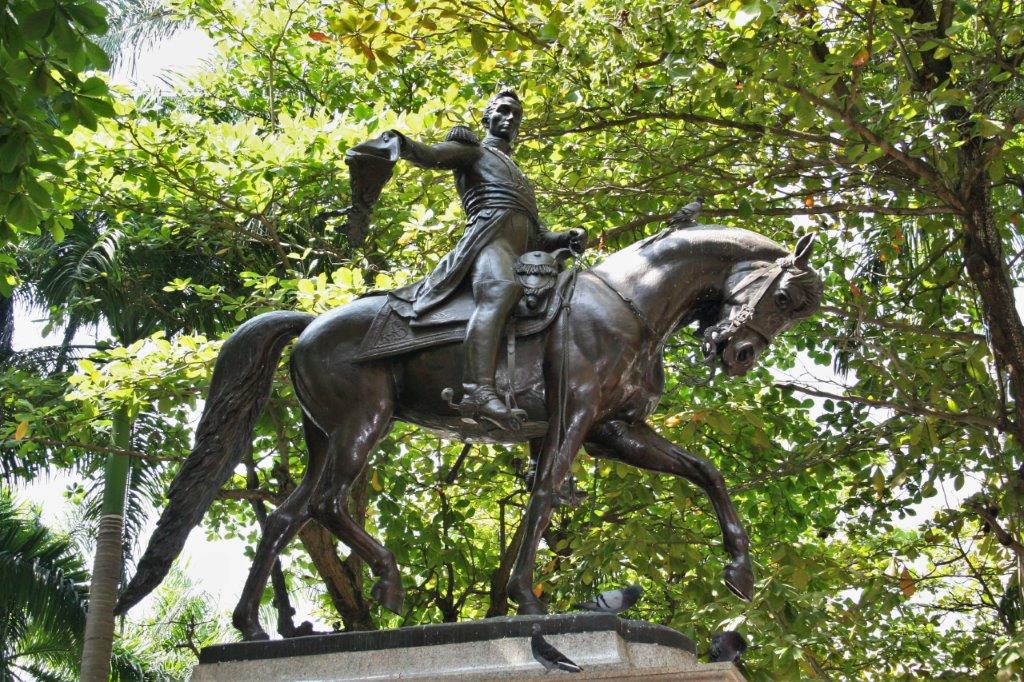
img_2584 img_2590 img_2593 img_2596_edited-1 img_2597In a park there is a statue of national hero Simon Bolivar, who defeated the Spanish and liberated most of South America.  He died Dec 17, 1880 from, it is commonly believed, tuberculosis (known at the time as Galloping Consumption).

(FYI – It is commonly held – although not universally adhered to (as proven by this statue) – that the position of the legs of the horse in an equestrian statue signify the death of the rider.  If the horse is rearing with both front legs off the ground, the rider is said to have died in battle.  If only one front leg is off the ground, the rider was wounded in battle and died of his wounds later.  If all four feet of the horse are on the ground, the rider survived any battles and died later of other causes.  Just so you know.)  img_2605 img_2601 All in all, it was a good first port-of-call and an interesting tour on a nice day.

img_2608 img_2609 img_2611 img_2613_edited-1img_2612

2009 World Cruise – Jan. 3- The Adventure Begins

2009 World Cruise – I began writing my travel blog when we drove across Canada in 2014.  But that was not the beginning of our travel adventures.   I had never heard of a blog at that time and had no idea how to share one.  Times have changed; I have learned.

I have decided a fun project would be, whenever I have the time and the notion to write up a blog about our other holidays.  They won’t be done daily.  Perhaps not even weekly.  There will probably be large gaps between posts, but I thought it might be fun to reminisce.  So…. here we go.

John and I retired in the spring of 2007.  We wanted to go somewhere warm for a month or so of the winter in early 2008 so, in the fall of 2007, we went to see a travel agent at BCAA Travel in Vernon.   We were directed to the desk of Lindy Frazao, a very friendly, professional and competent lady.  While Lindy was scrolling through her computer to see what she could offer us she said, in an off-hand comment to herself, “Oh, they are doing another World Cruise.”  My ears immediately perked up.  I had never heard of such a thing.  “A World Cruise,” I said. “Who does that?”

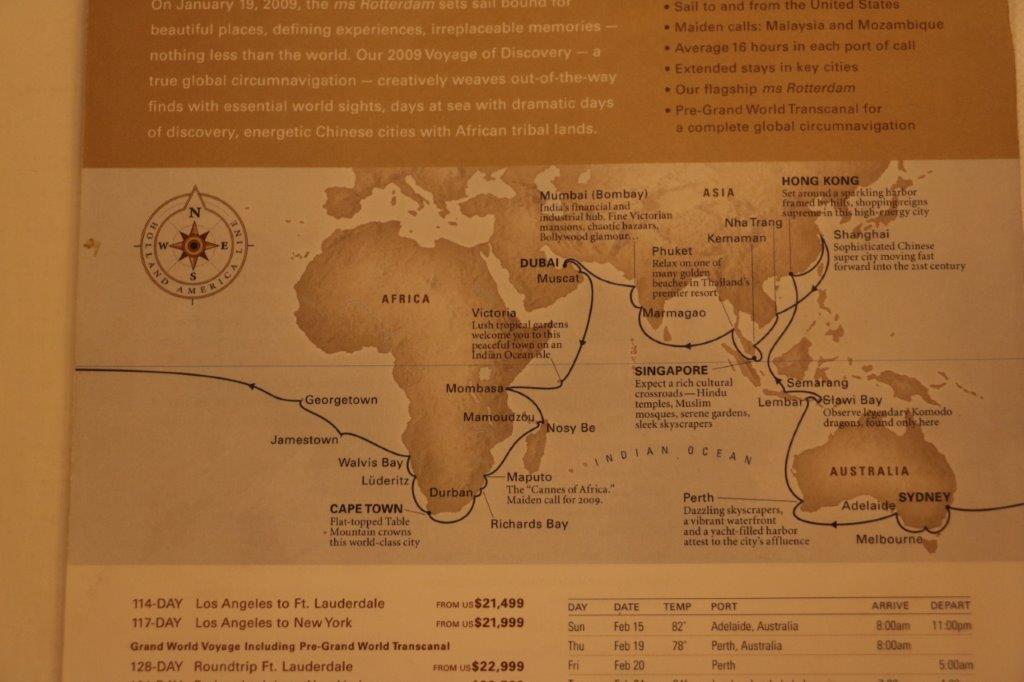
Lindy explained that Holland America Cruise Line does a series of ‘Grand Voyages,’ the longest of which is a cruise around the world lasting 110-115 days.  “Well.”  I said, “If they plan one for 2009 please let us know.”  They did; and she did.  So there we were.

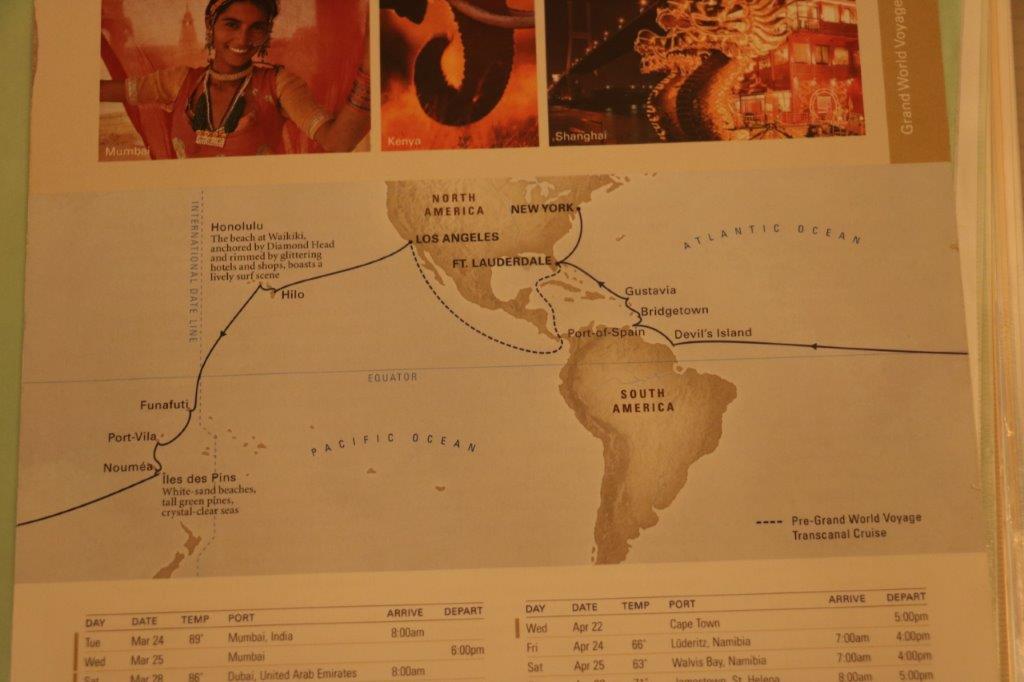
We had never sailed on a Holland America ship (We cruised a few times with my dad who liked Royal Caribbean.  We had also done a cruise with friends on Norwegian) and we had never been on a cruise longer than two weeks.  We booked it anyway.  And – we didn’t just book the 114- day World Cruise, we added on another two weeks at the beginning.  This is entirely due to my obsessive, compulsive issues.  That year the world cruise began in Los Angeles, CA and ended in either Ft. Lauderdale, FL, or three days later, New York, NY.  My brain did not compute a cruise around the world that began on one side of a continent and ended on the other – you would miss a big bit.  Fortunately for me, the MS Rotterdam was doing a regular weekly cruise in the Caribbean and needed to get to LA to begin the round-the-world voyage.  Therefore, there was available a regular 14-day cruise through the Panama Canal from Ft. Lauderdale to Los Angeles.  We booked that too.

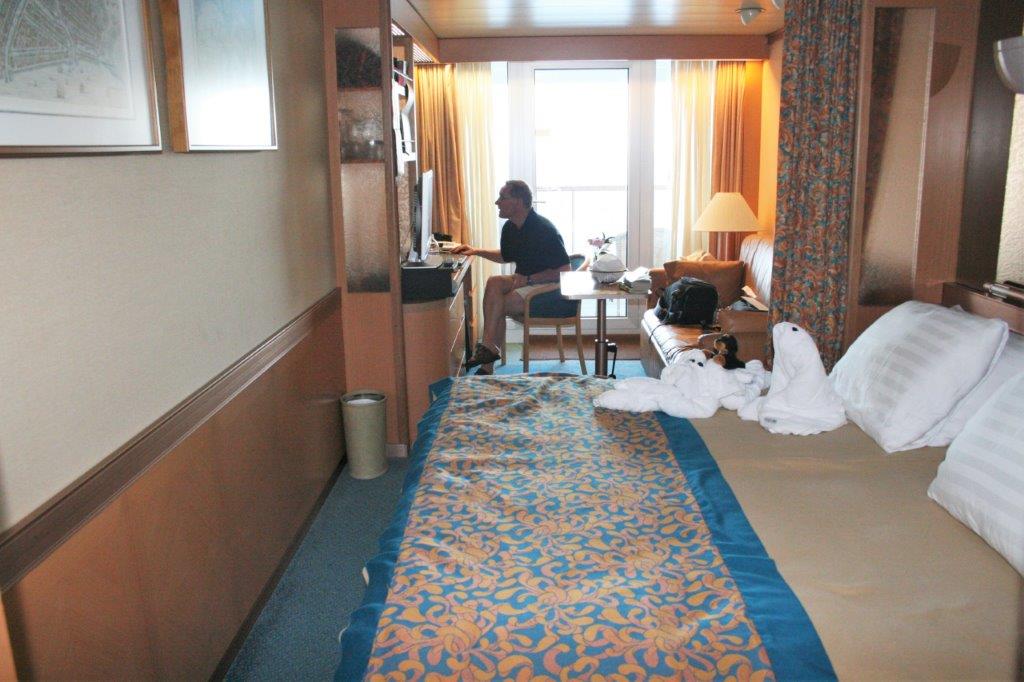
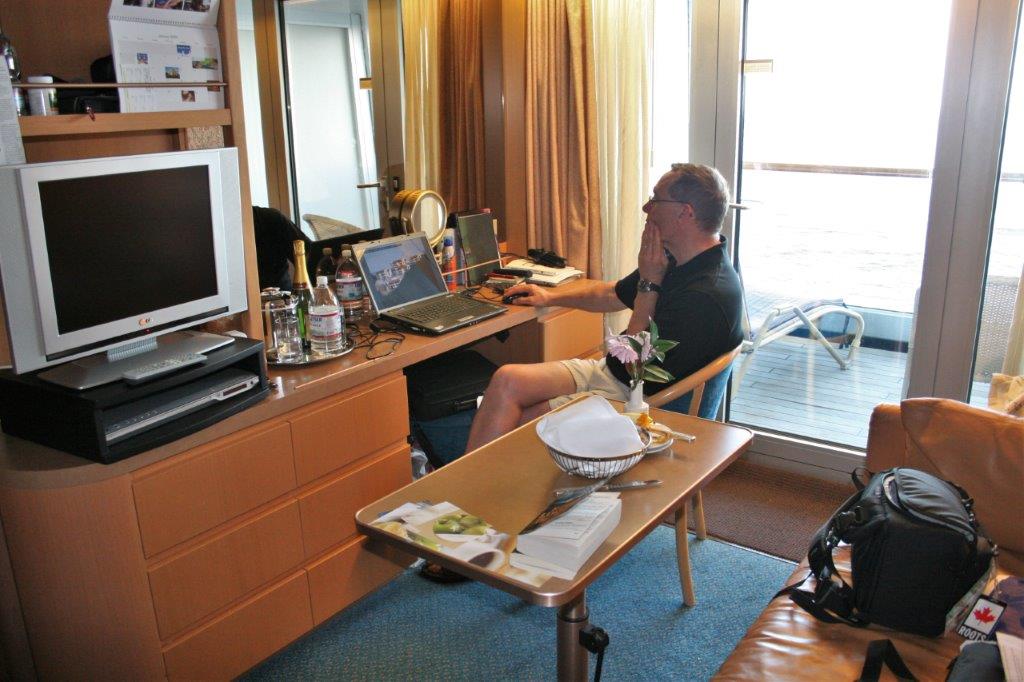
img_6858img_6857 We also decided that if we were going to be on a ship for over four months we wanted some personal space and reserved a balcony suite.  This cabin option came with perks: unlimited luggage picked-up and returned to our door by courier, First Class flights to Ft. Lauderdale and back, and limousine service from the airport to the hotel on arrival in Florida.

The unlimited luggage was a fabulous perk.  How could you pack for over four months into one 50-lb bag?  You couldn’t which would mean extra fees at the airport.  The goodie did have a down side we discovered.  In order to ensure sufficient time for our bags to  arrive at the Ft. Lauderdale Cruise Terminal the courier would come and pick them up on December 3.  The ship sailed January 5.  I usually pack the night before I leave.  Packing a month early was a killer.  Downside number two:  Since we live in Canada and our un-accompanied luggage was being sent to the USA we need to itemize and value every item in our bags – in triplicate.  We wanted to have a variety of clothes for each of us in each bag in case one of them went missing so we made piles all over the living-room and wrote out the manifests as we loaded the bags (2 big bags each).  This took all afternoon!  When I complained to my sister Irene, she, very kindly and sympathetically said, “My heart bleeds for you; you will not have to cook, or do the dishes, or make your bed, or clean the house for four months.”  Nice.

We left home on January 3 in order to have an extra day in the event of flight delays. (The flight from Kelowna to Toronto was an hour late leaving and the Toronto to Ft. Lauderdale flight was over three hours late.)  Flying business class is a whole new world.  We had real food!  On real plates!  With real cutlery!  Lots of leg room and 2 flight attendants to take care of 16 passengers.  Oh, if only I could fly that way all the time.

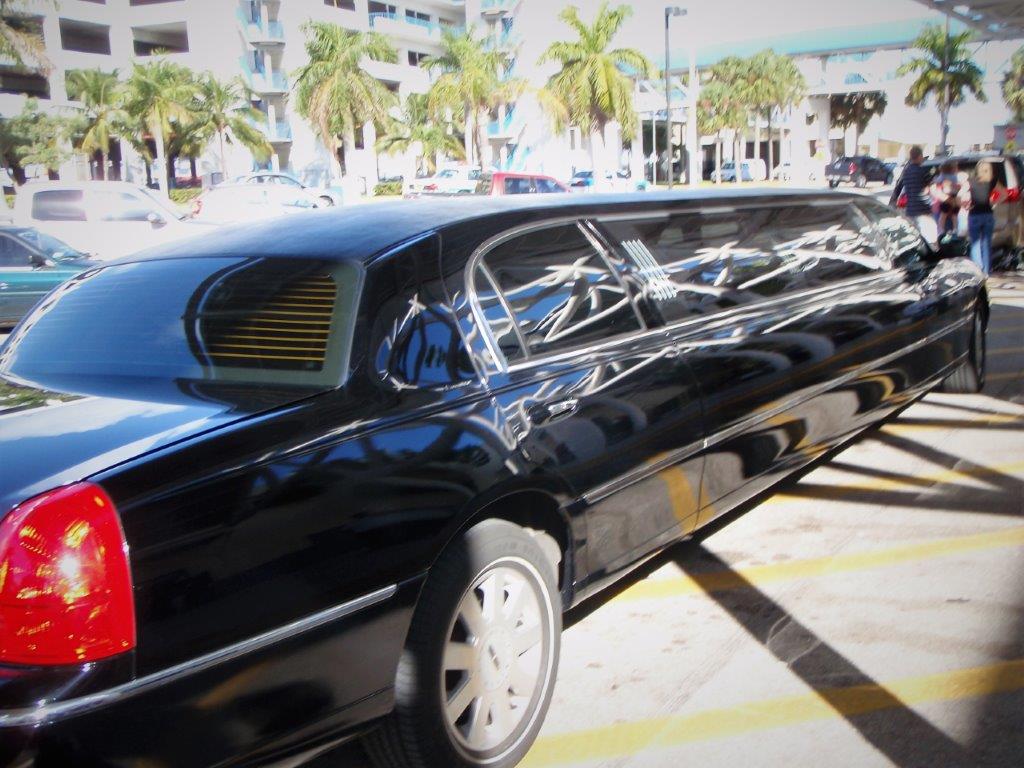
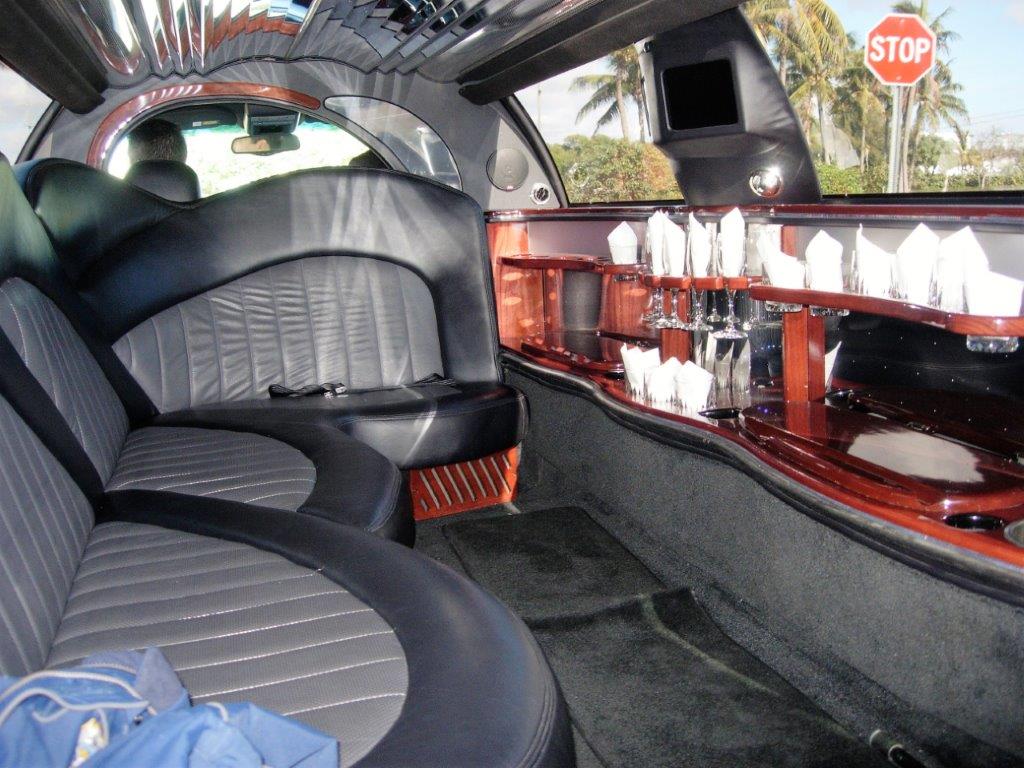
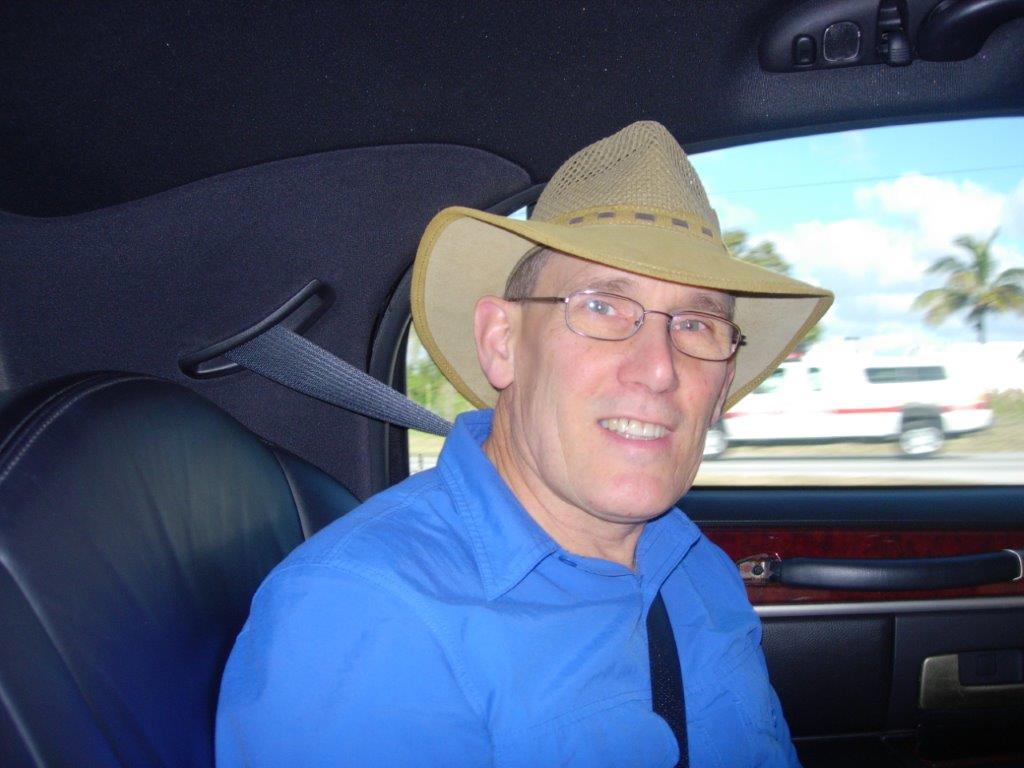
A Holland America representative met us at the airport in Florida and told us where to wait outside for our ride to our hotel.  There was another couple standing beside us who were also going on the cruise and who also had booked a balcony suite.  Down the drive comes this long, black stretch limo.  The driver gets out, asks our name, opens the door and directs us inside.  “These folks are going to the same hotel,” I said.  “Their car will be along shortly,” he said.  Sure enough, driving up the road I could see another stretch limo.  My practical side thought that was a bit silly. There was room for 10 people in each of those cars.  I wouldn’t have been offended if I ‘didn’t get my own limo.”  I do admit that it was a fun experience.

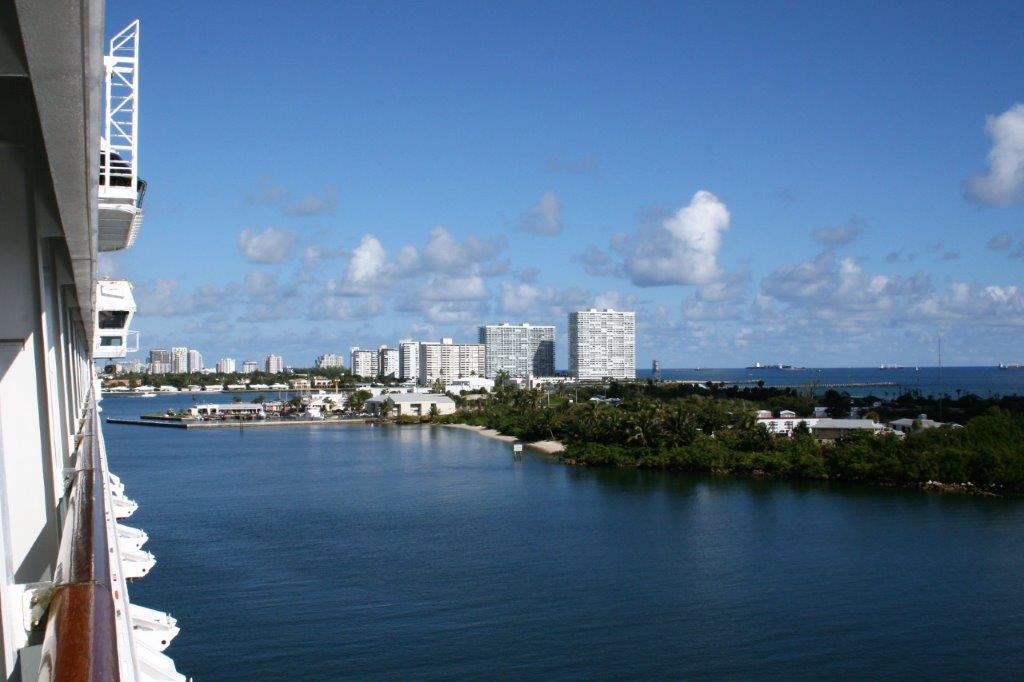
p1050106 dscn3153 dscn3154 dscn3155We spent the night in a lovely hotel and were taken by limo again from the hotel to the cruise terminal at 10 am the next day.  We boarded the ship at noon and set sale at 5. We sailed two days before our first port-of-call: Cartegena, Colombia.

img_2556 img_2564


2017 Jan. 8 – Day 6 – Ridgecrest, CA to Escondido, CA

We have arrived at our destination safe and sound.  We checked into the Lawrence Welk Resort at about 4 pm.  Today was pretty much just a drive day.  We only stopped to look for two geo-caches – found one, didn’t find the other.

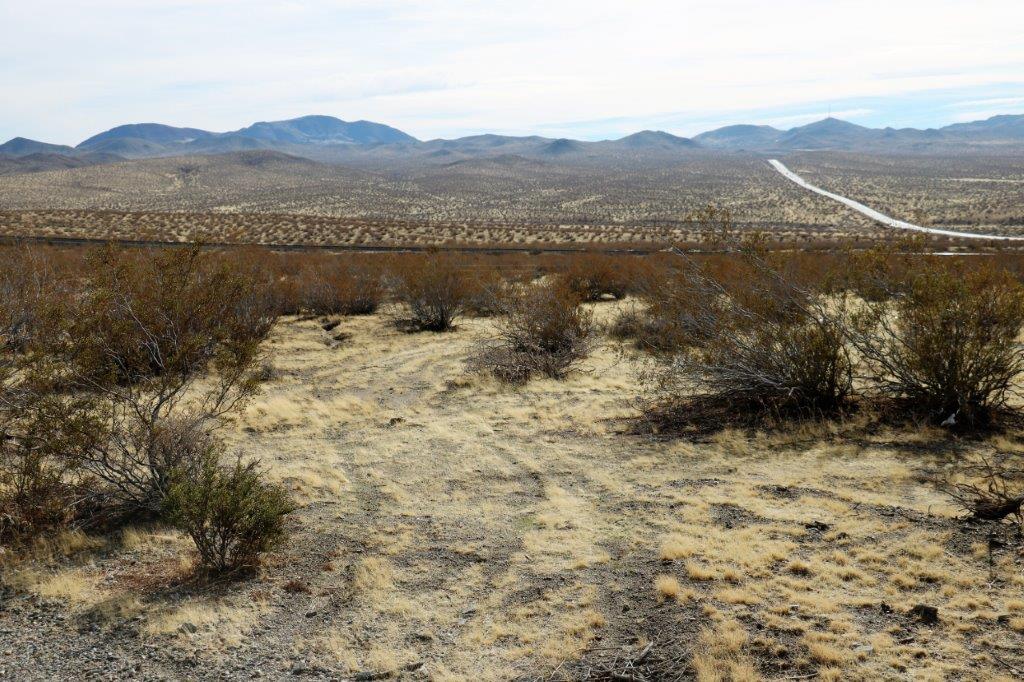
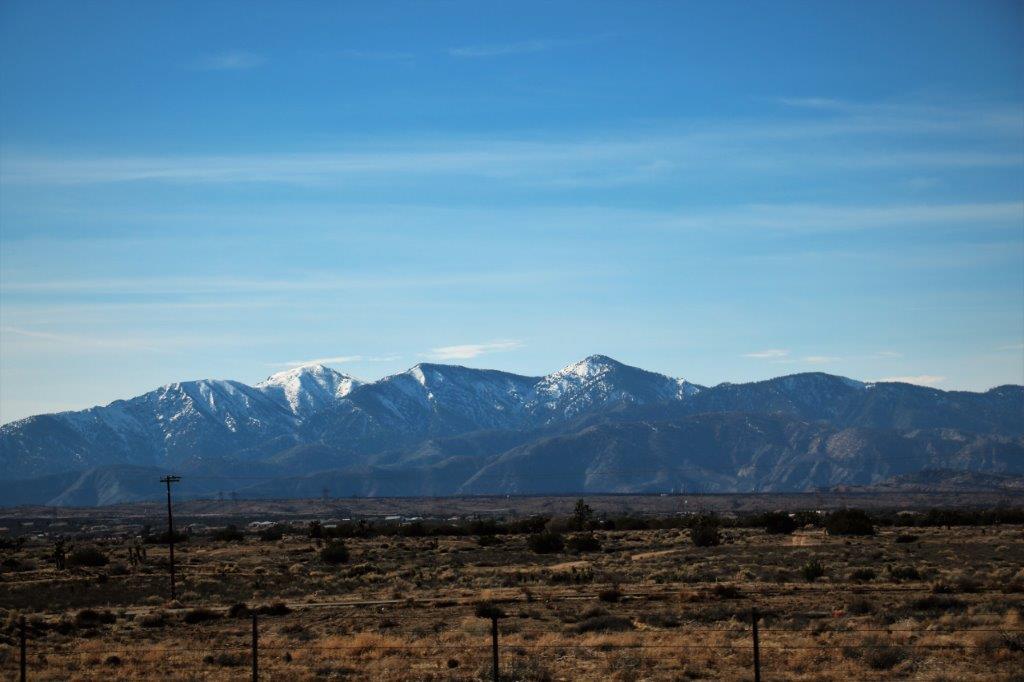
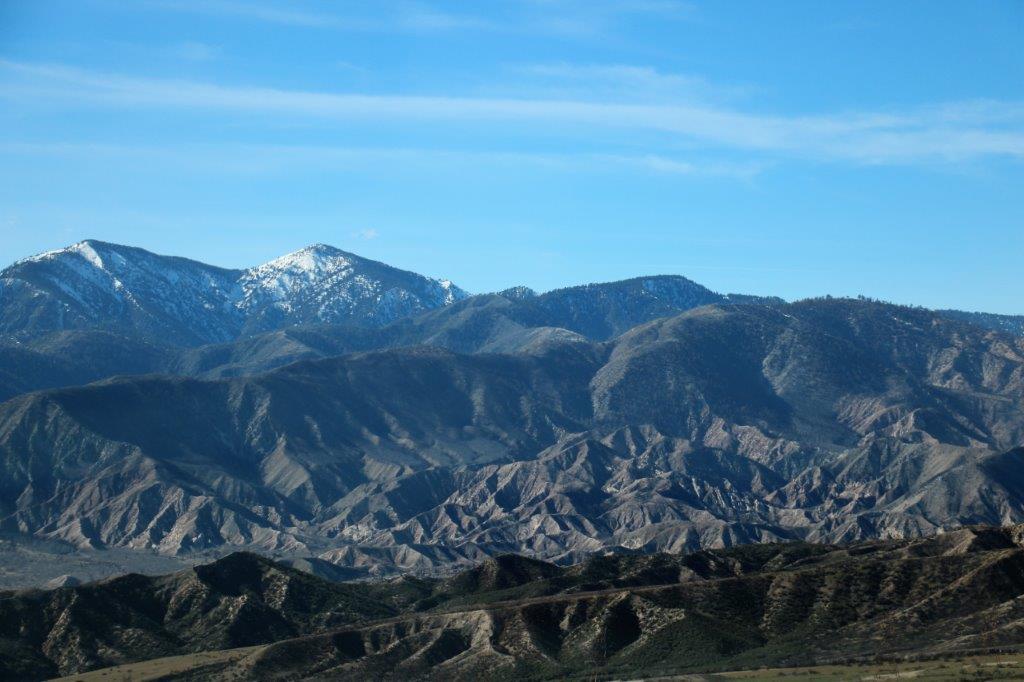
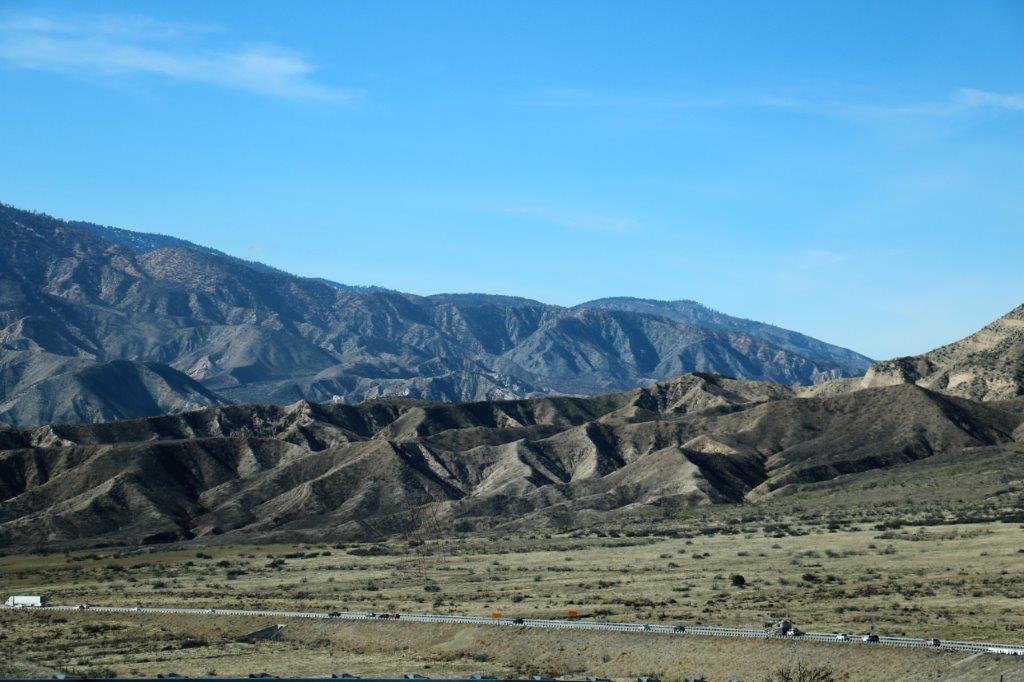
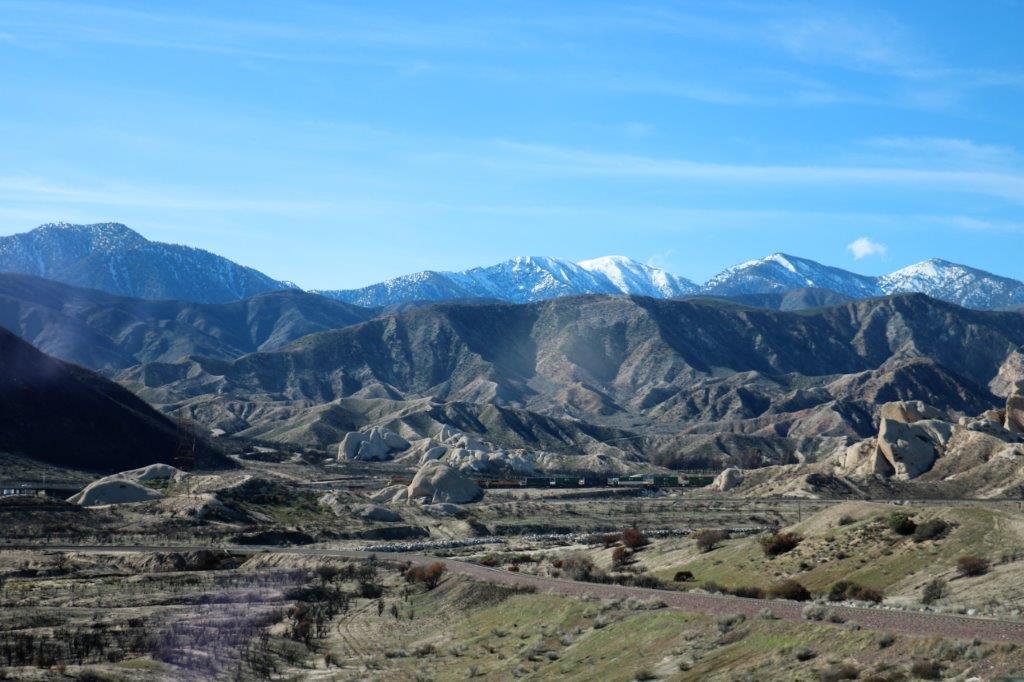
The desert scrub and long straight roads changed to distant mountains and multi-lane freeways.

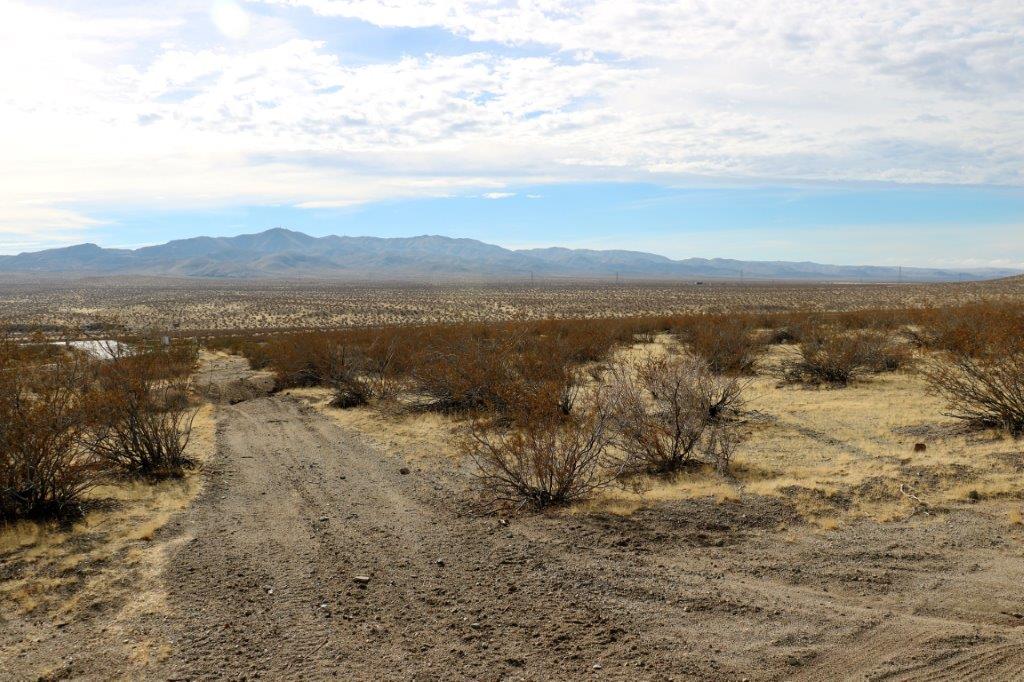
We pulled off the highway onto this dirt section to find a cache.  I often take photos (or pretend to take photos) while John picks up or replaces a cache, or is busy signing the log paper.  It is a distraction for any passing ‘muggles’ – non-geo-cache folks.

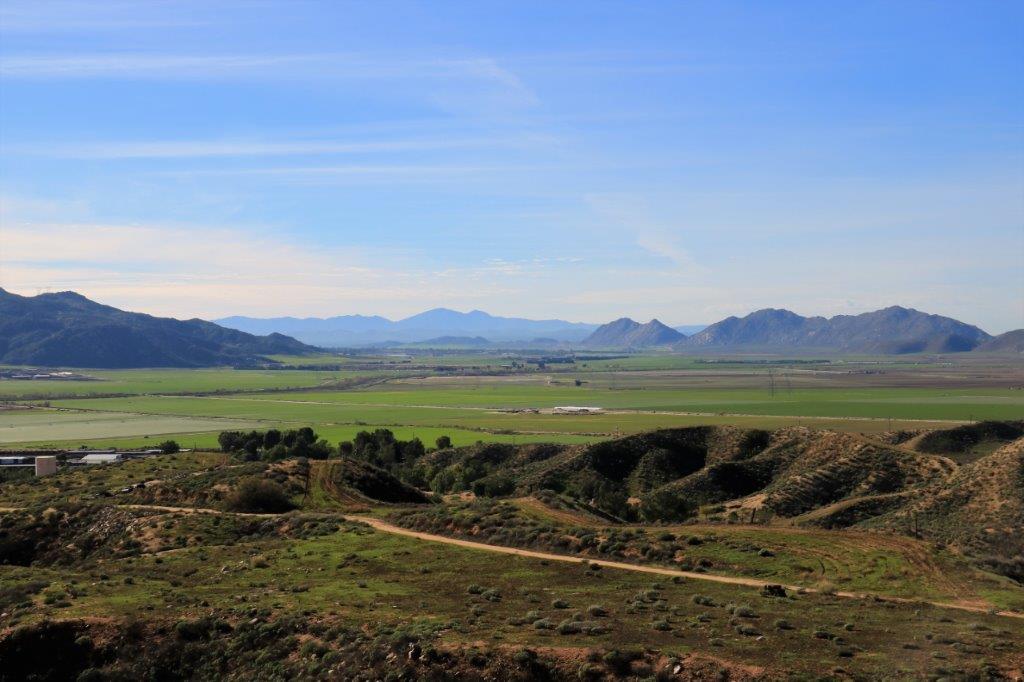
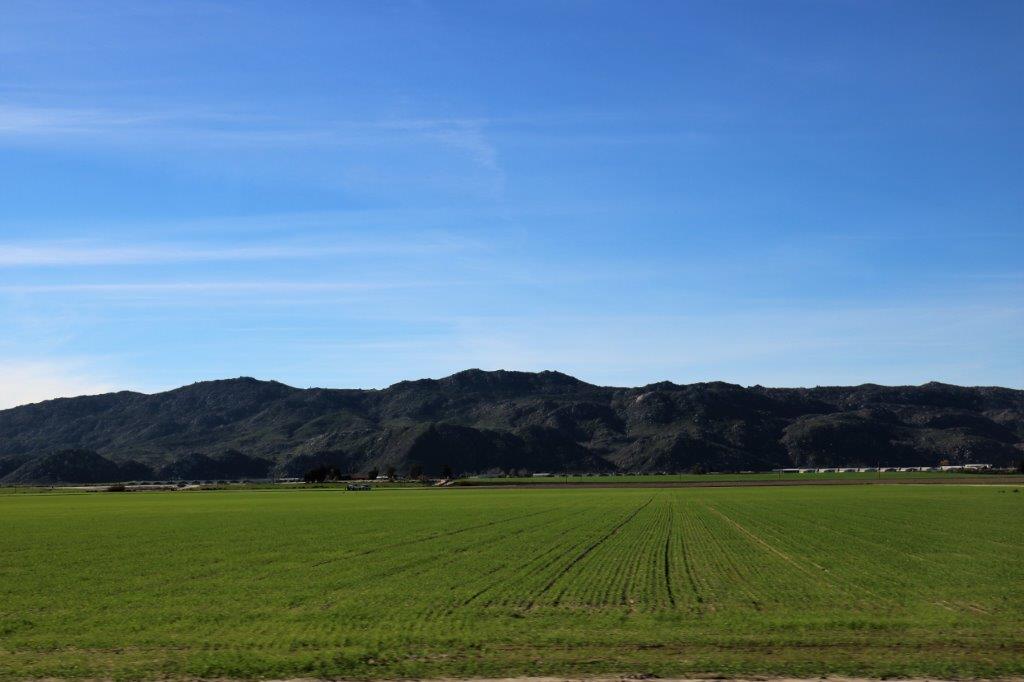
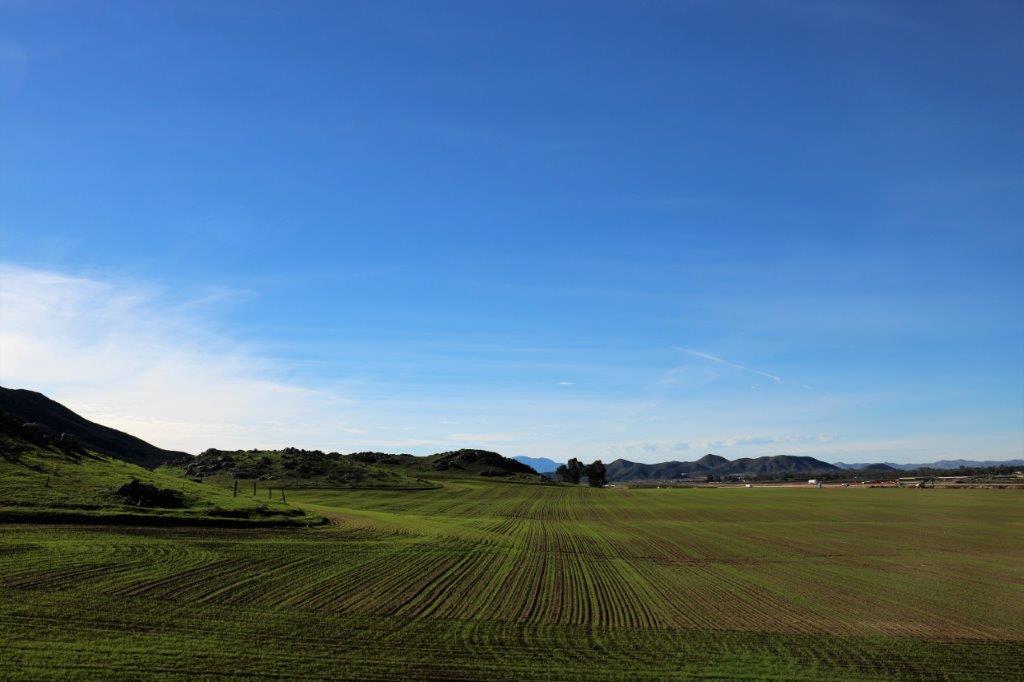
img_6780 img_6782 img_6784 img_6802 img_6804 img_6806 img_6810 img_6816I really don’t like busy freeways.  Today, being Sunday, the traffic through the San Bernardino area wasn’t too bad.  John, very kindly took the ring road around the city and drove about 10-15 miles east so we could take a quieter road through Hemet to Temecula.  This cut off about 25-30 miles of the freeway and took us through a new area.  There were a few too many stop lights for John’s liking but we passed through some very nice-looking agricultural lands.  We turned a corner after going through a bit of a rocky pass and a beautiful valley was spread out before us.

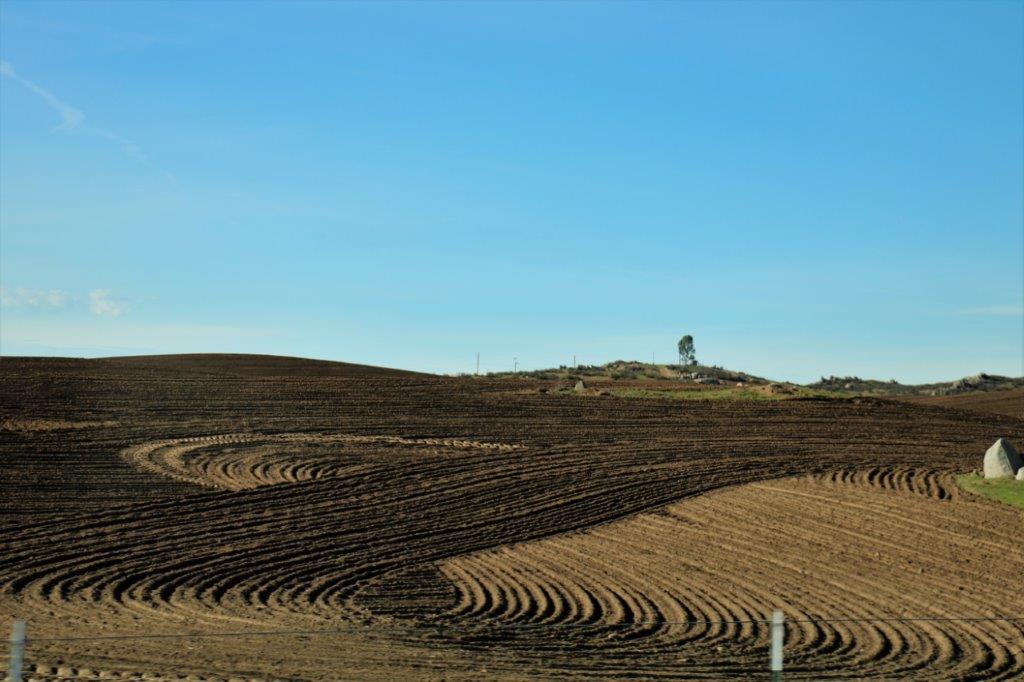
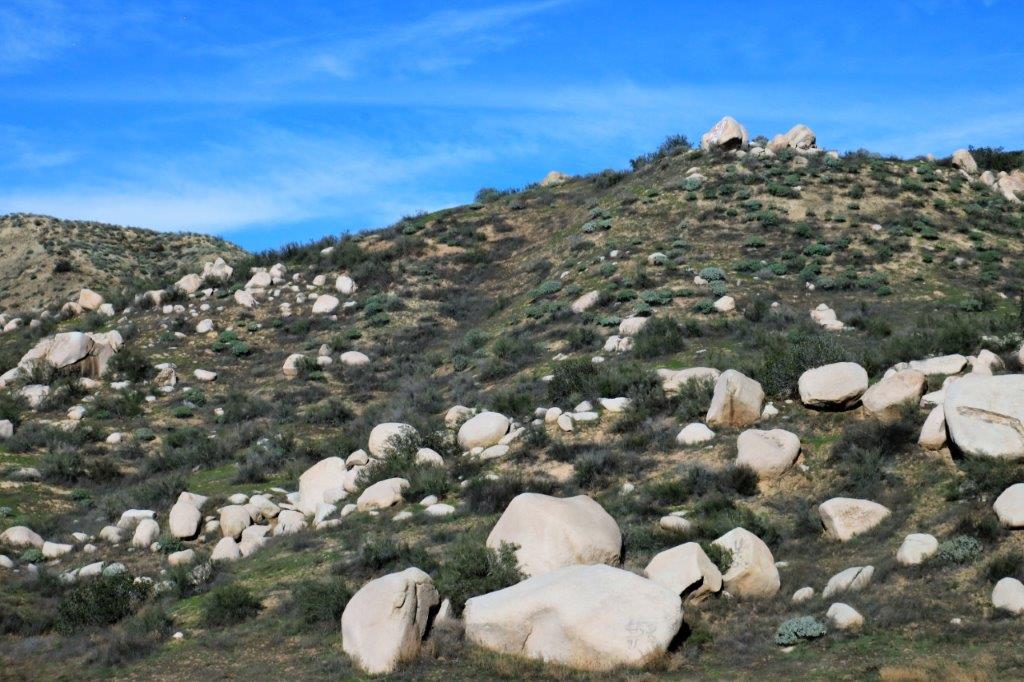
img_6821 img_6831 img_6839 img_6844There are a lot of rocks here.  One of the farmers had paths around all kinds of rock outcroppings in his fields.  The nice disc trails wound over and around and up and down navigating the rocks.img_6819When we got to Temecula we found a grocery store and stocked up on fresh fruits, veggies, meat, bread, etc.  We have learned to bring along some canned goods, pasta, rice, and other dry foods so we don’t have to buy everything and anything to make dinner.  We tend to eat in when we are staying at our time-share places.  We just make simple meals so we don’t need to get a lot of groceries; just the basics.

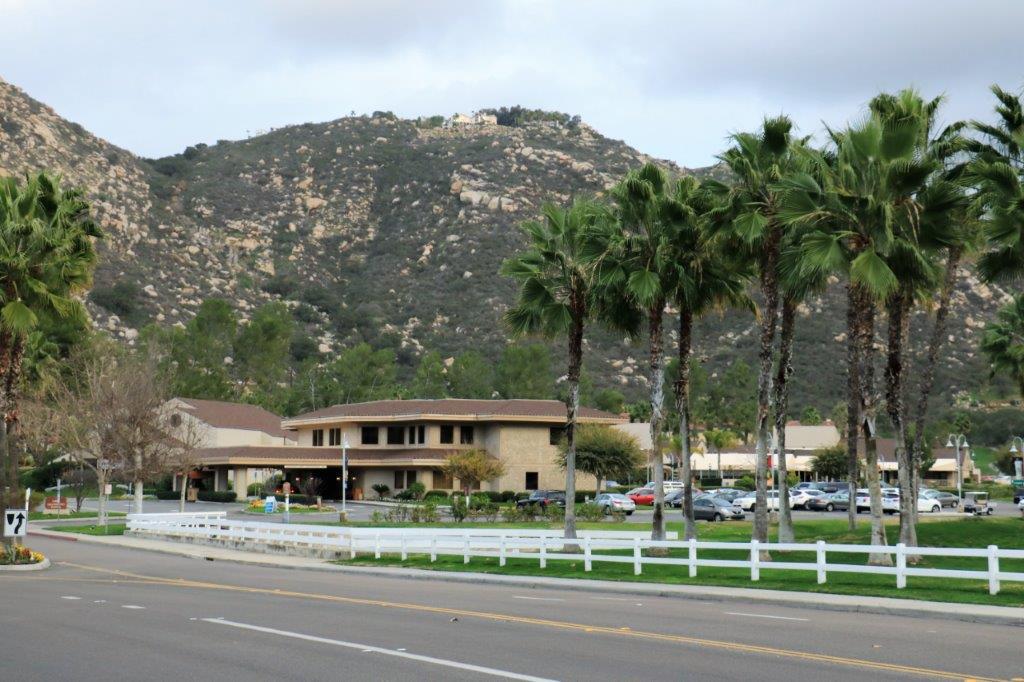
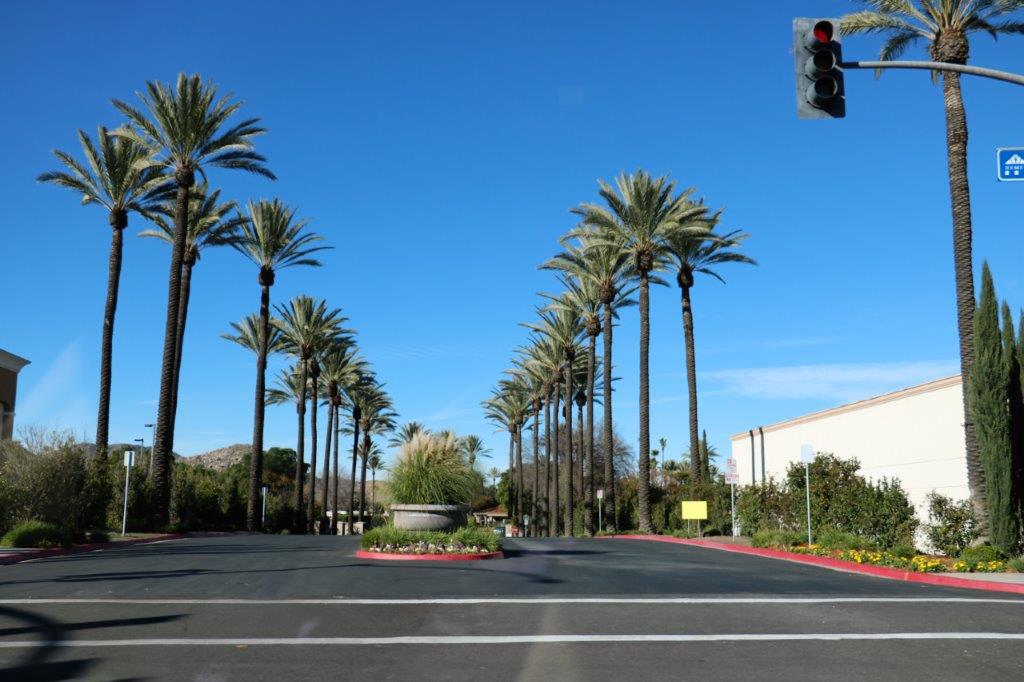
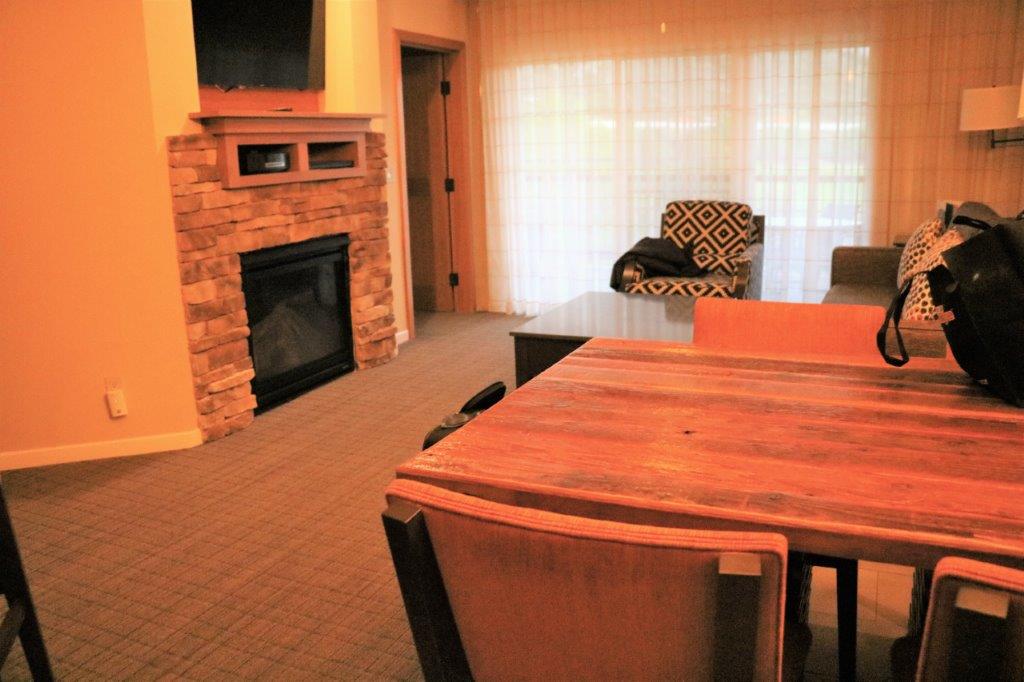
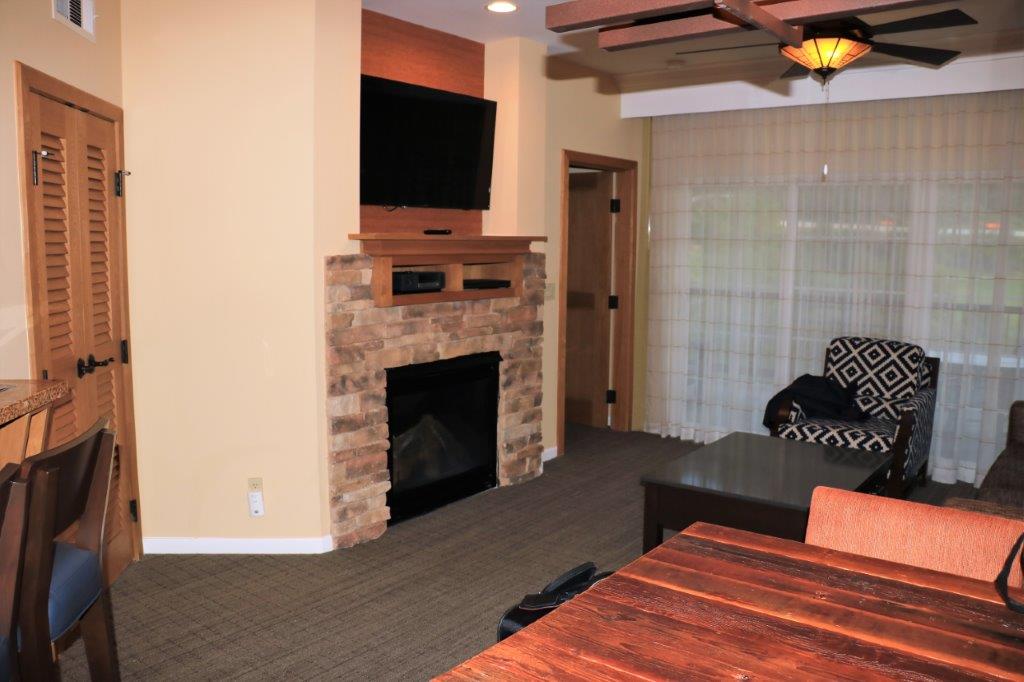
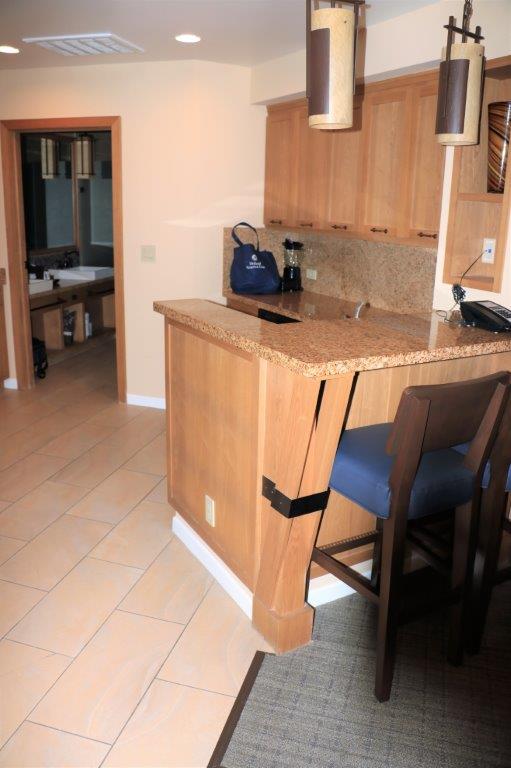
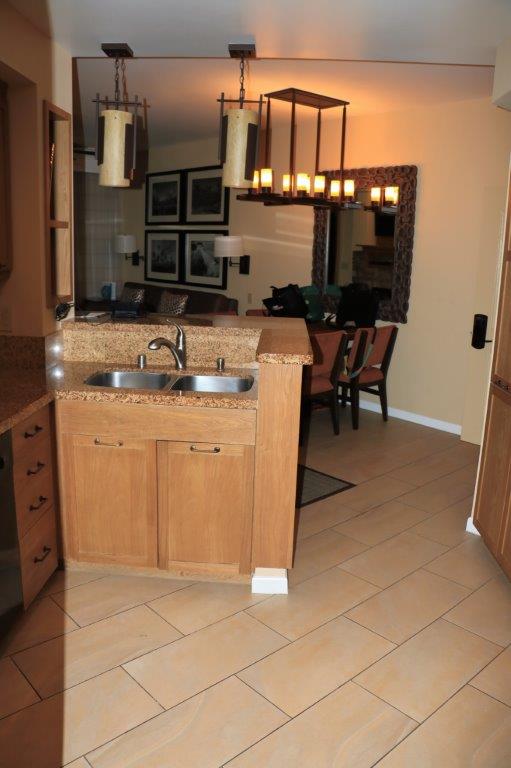
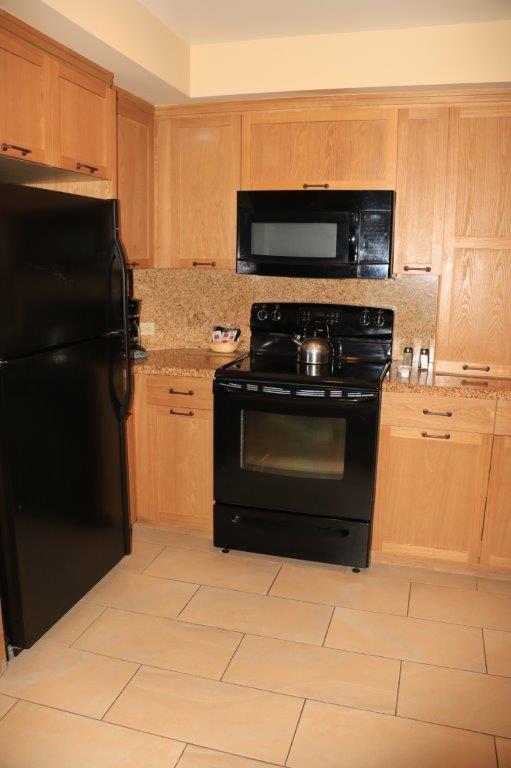
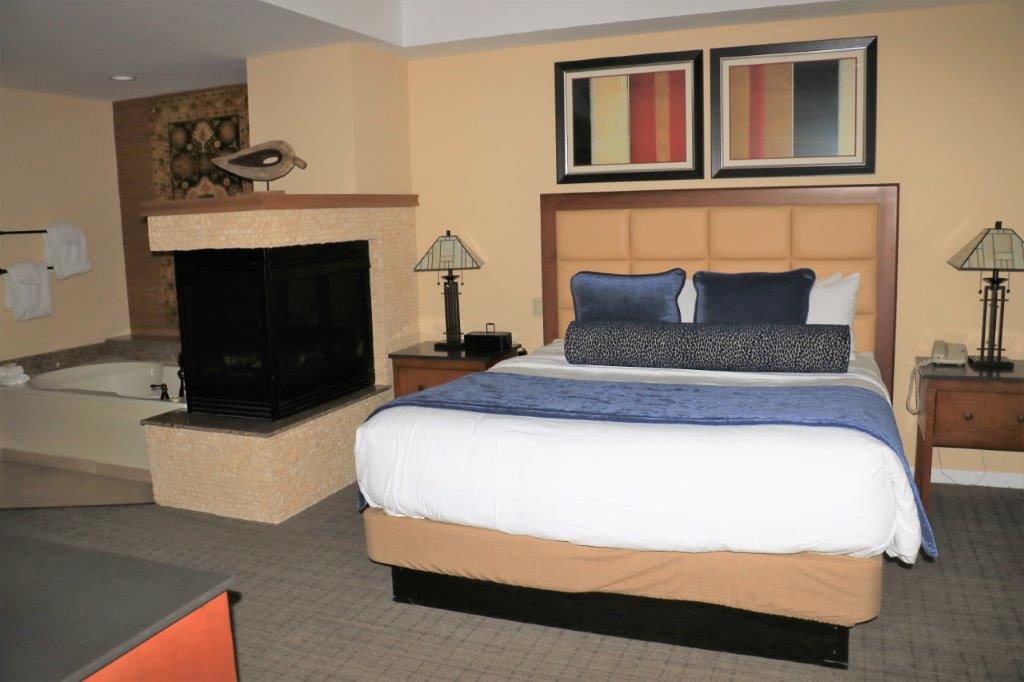
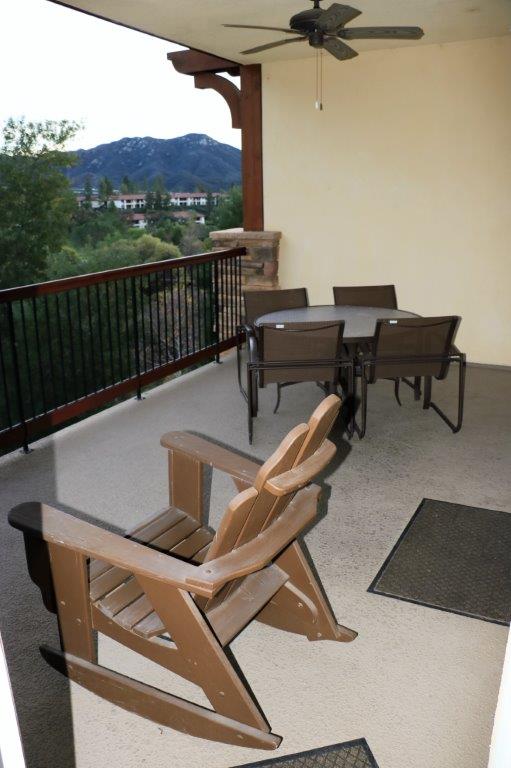
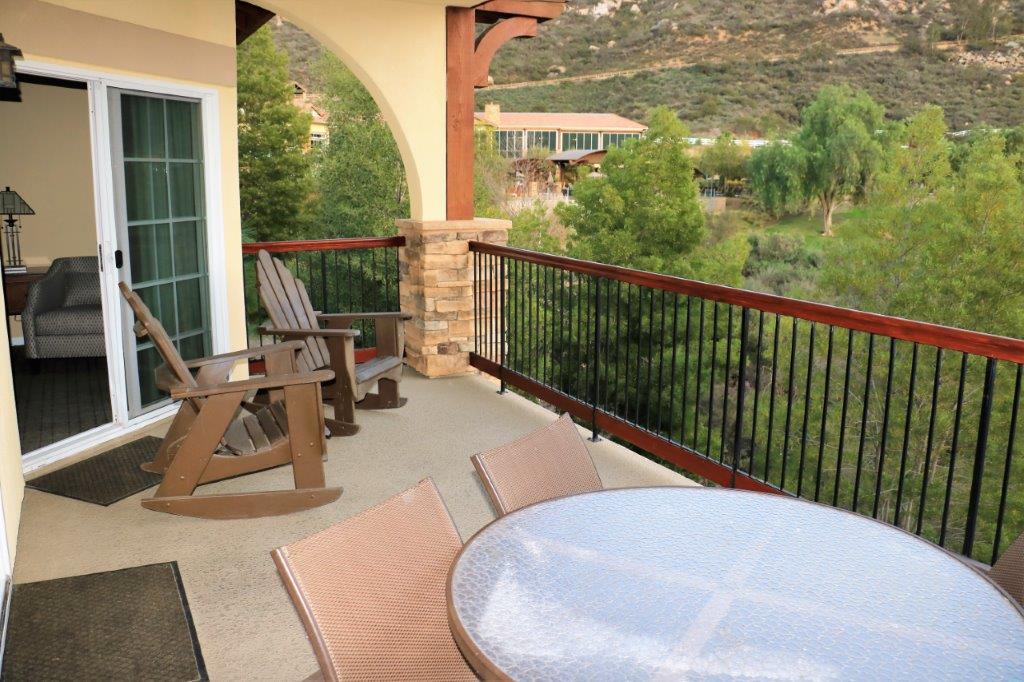
This nice palm tree-line drive led to the Temecula Four Seasons Hotel.img_6837We have been to the Lawrence Welk Resort before.  Last time our unit was down by the shops and the golf course.  This time we are up on the hillside.  We did a loop walk around the resort almost every day we were here before and walked past these buildings.  The unit is very nice.  We are on the top floor so have a nice view over the resort below.  It is a very nice one-bedroom place – we have two fireplaces; one in the living/dining area and one in the bedroom.  The kitchen has more cupboards than any condo we have stayed in before.  Usually we are shifting dishes and pots into stacks so we have somewhere to put our food.  Here, we have a pantry cupboard and lots of storage spaces in the kitchen, bathroom and bedroom.

img_6845 img_6846 img_6847 img_6848 img_6849 img_6850 img_6851 img_6853 img_6854So.  Here we are for the next four weeks.  Tomorrow will be a do-nothing day.  We probably won’t leave the condo except to go for a walk.  Blogs will only be posted on days we do something or go somewhere. And, I make no promises as to how often that will occur.

2017 Jan. 7- Day 5 – Tonopah, NV to Ridgecrest, CA

Note to readers:  I don’t know if you are all aware that you can enlarge the photos by clicking on any of them.  I like to size them down for the blog to give the impression my ramblings are not so long.  Probably doesn’t fool anyone but I try.

We drove through Death Valley today.  So, this is your official warning that there are lots of photographs in this blog; and they are not of snow either!

We left Tonopah this morning in a biting cold wind, but it didn’t take too long before I could take off the winter jacket and put on a light one.  Thank goodness.  I was seriously getting tired of winter.  (Sorry, all you folks that are still stuck in it.)
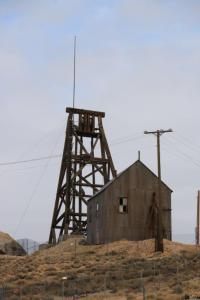
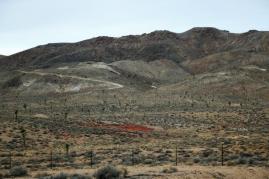
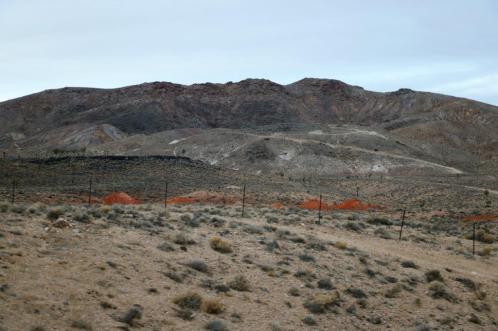
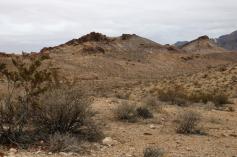
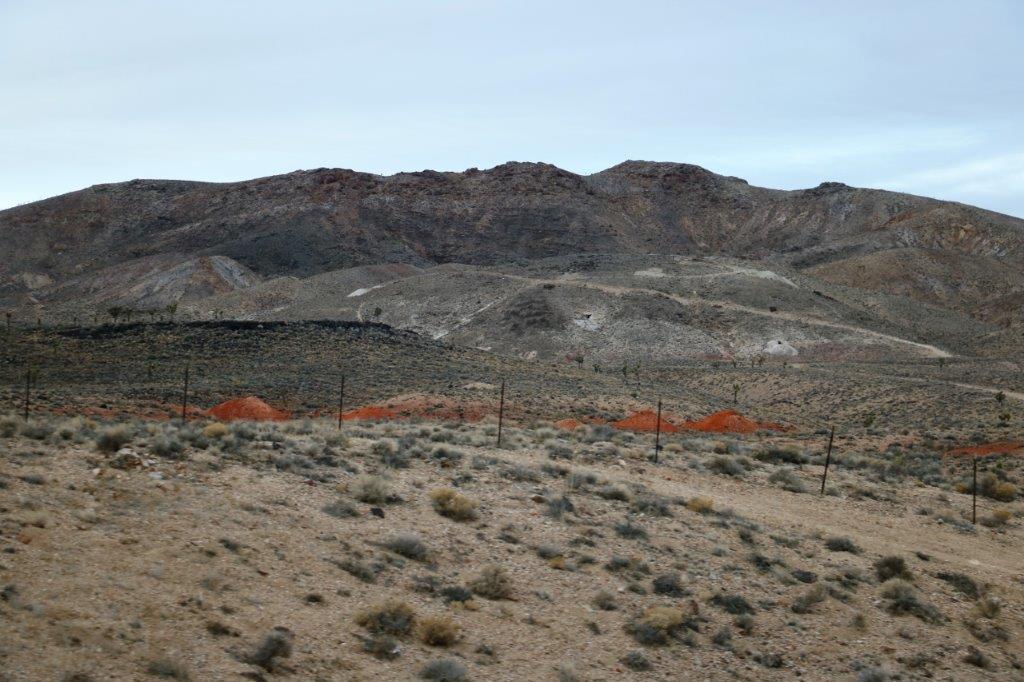
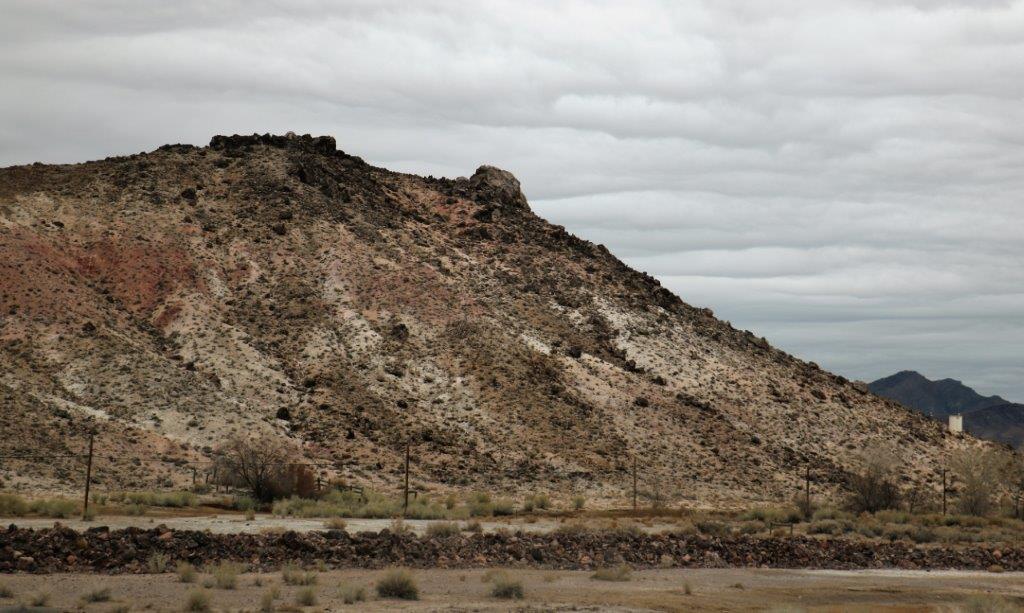
img_6521 img_6529We climbed a little pass and entered, once again, into long straight roads through scrub and sand.  However, not too far south of Tonapah Joshua Trees appeared as well, so there is a little more moisture in the ground.

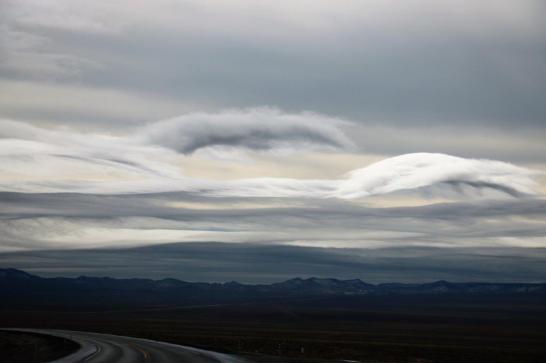
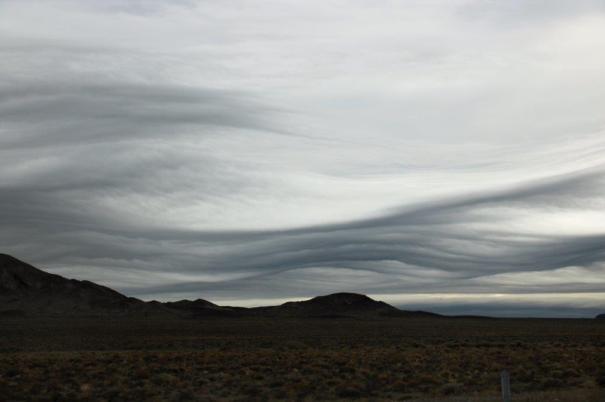
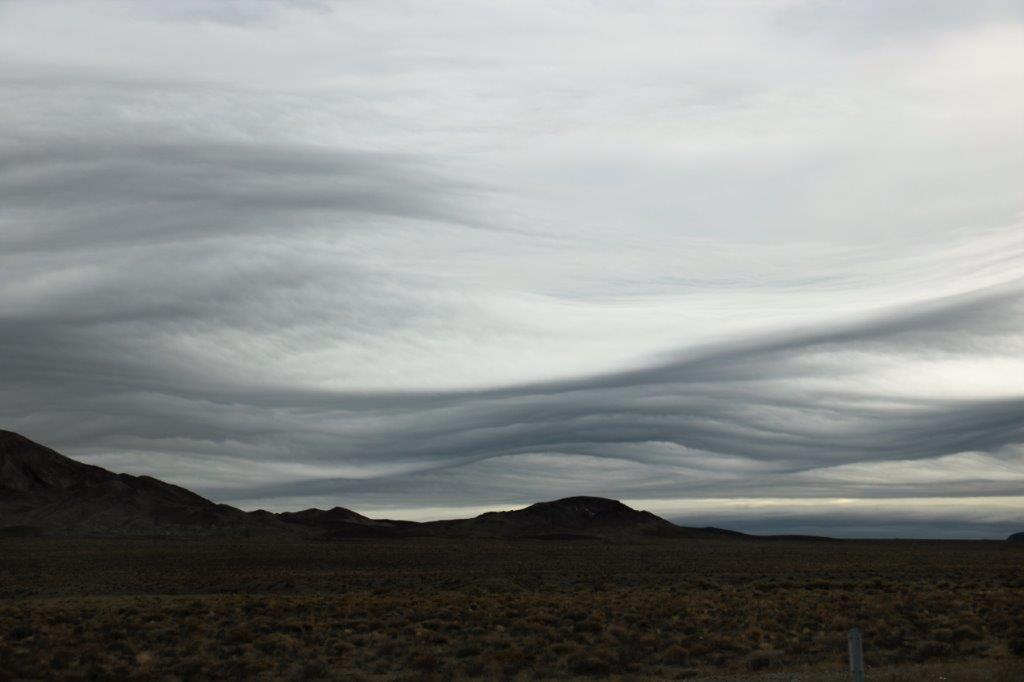
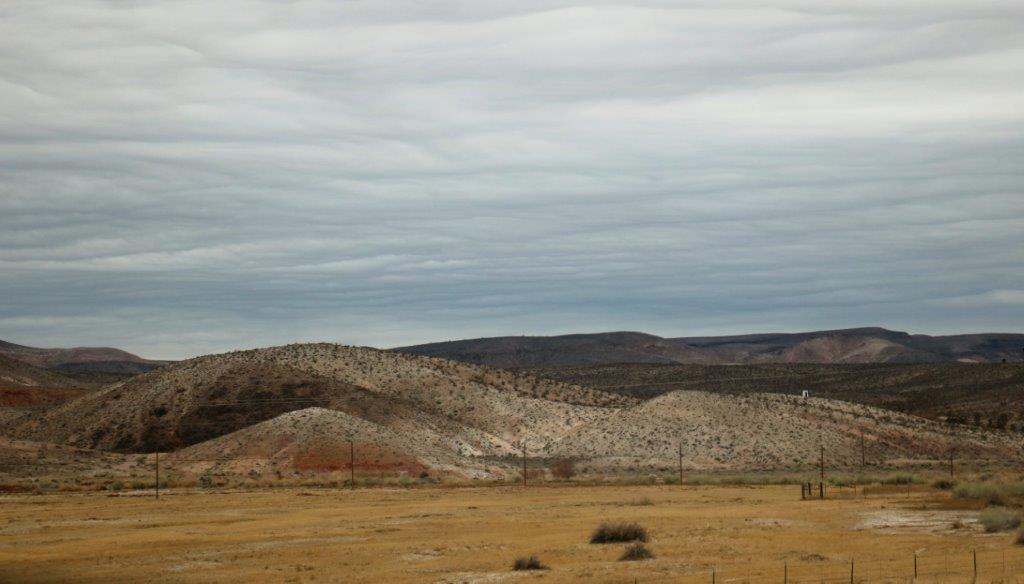
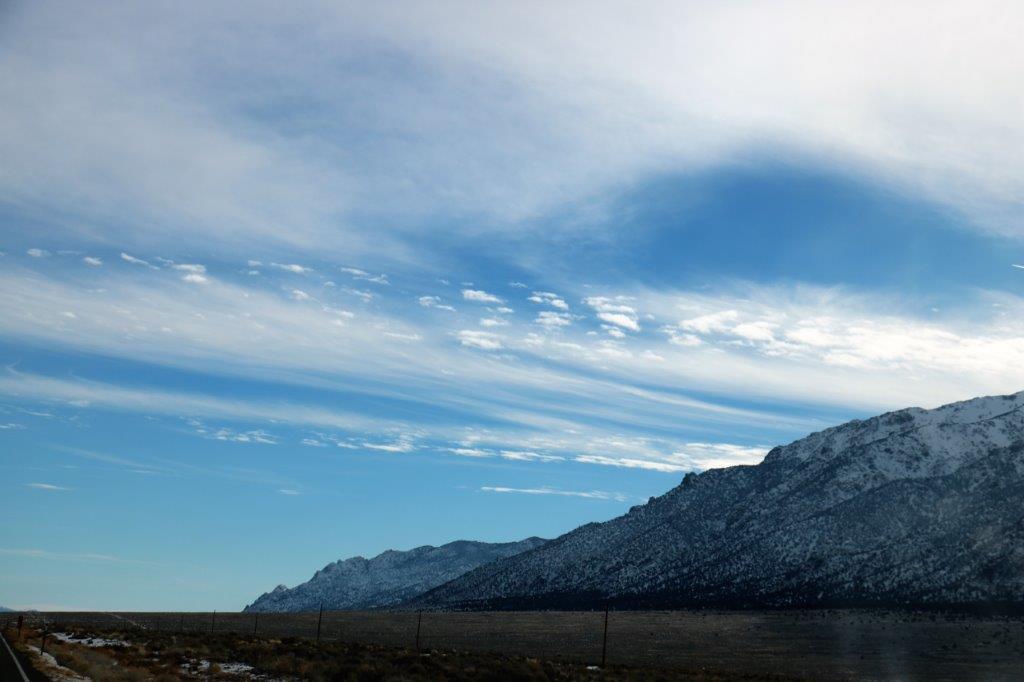
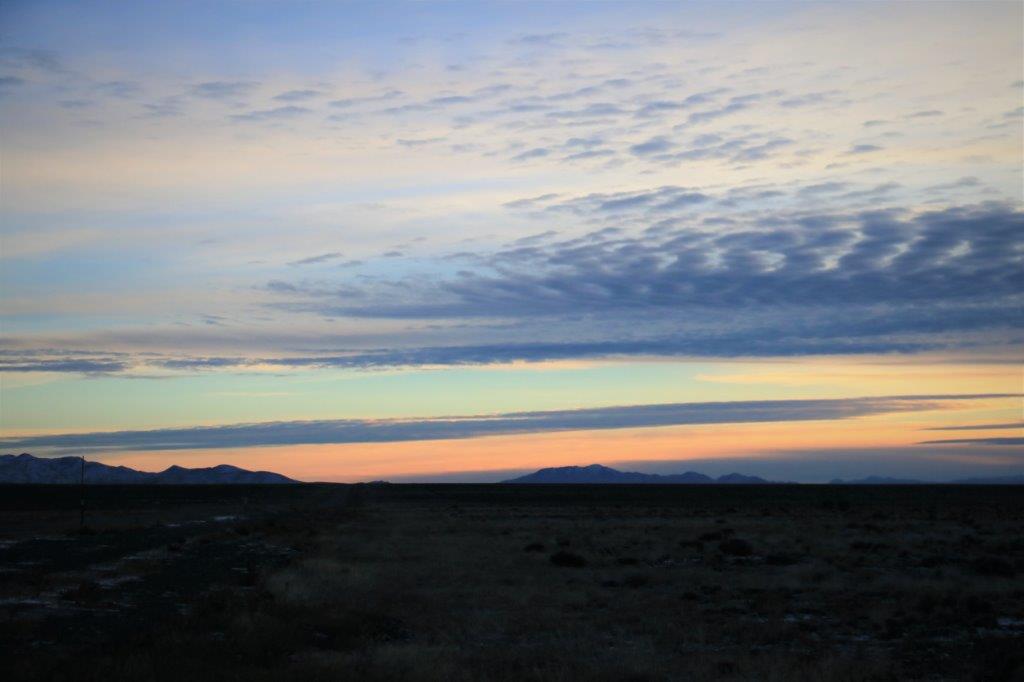
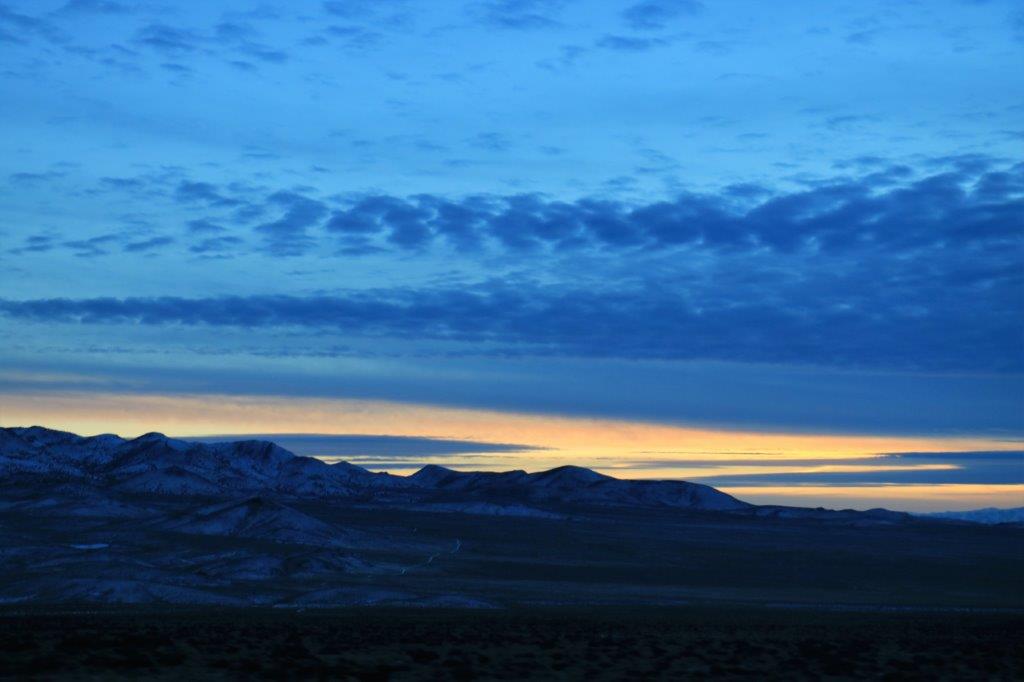
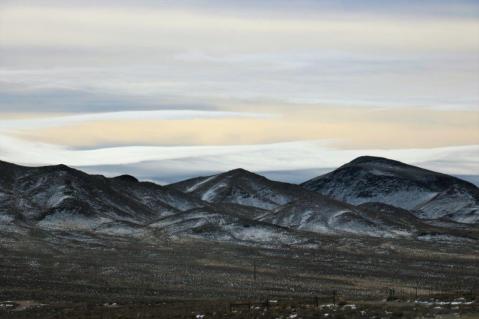
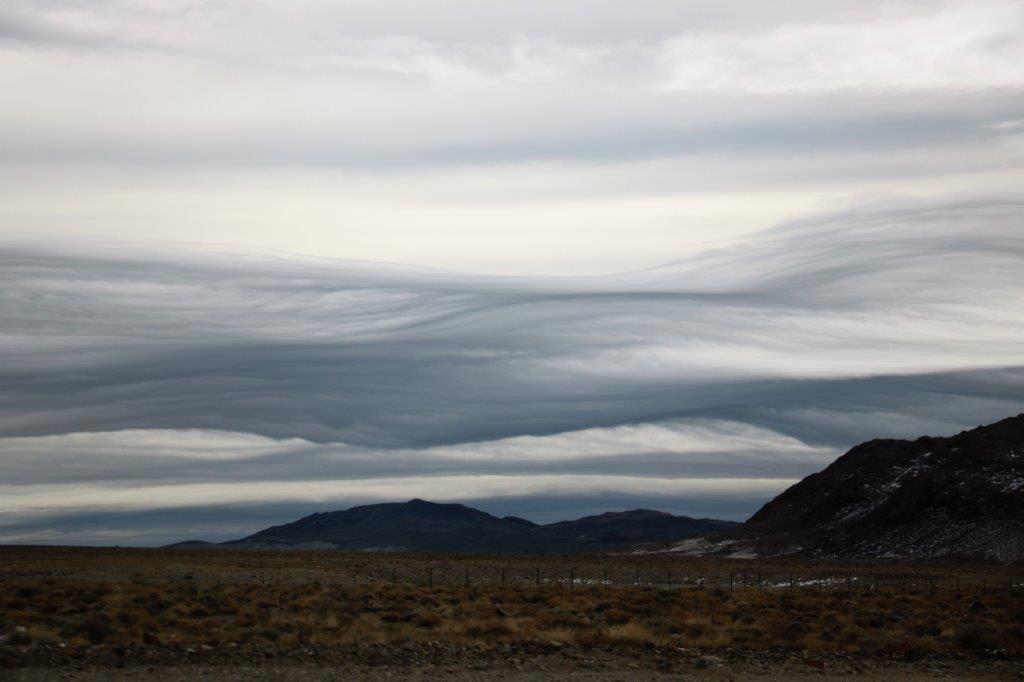
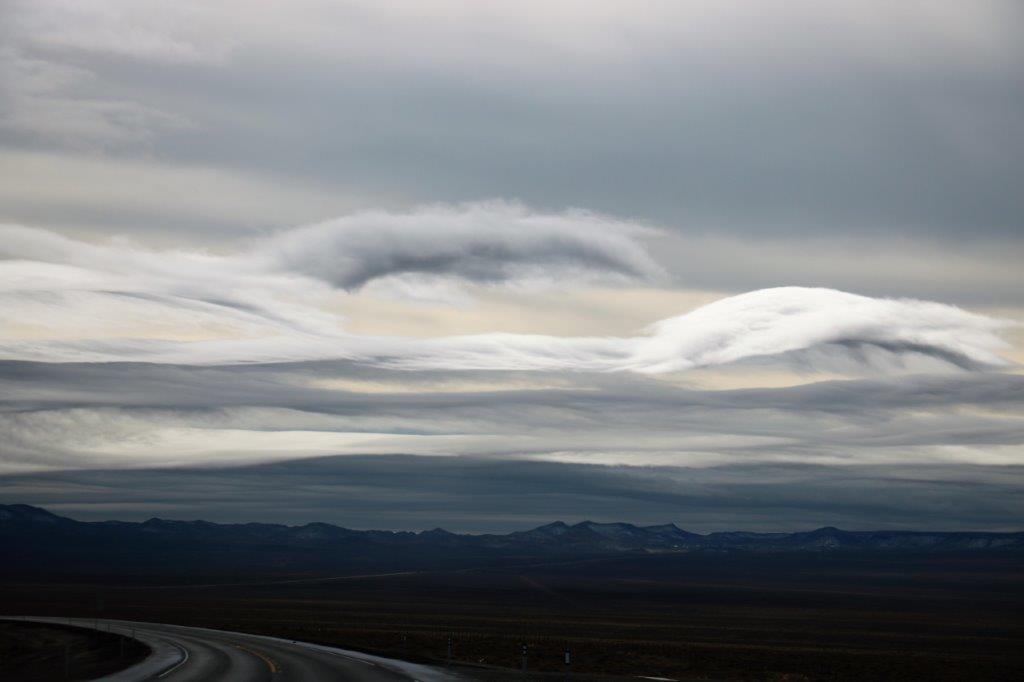
The best part of the first few miles of our trip today were the clouds.  I love clouds.  They are an infinite number of shapes and colours.  Today’s clouds were waves.  Very, very cool.
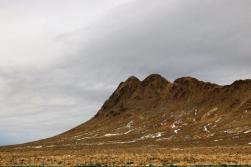
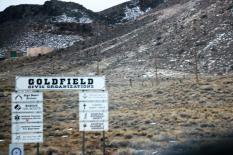
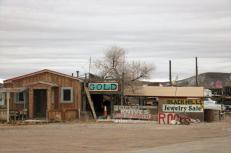
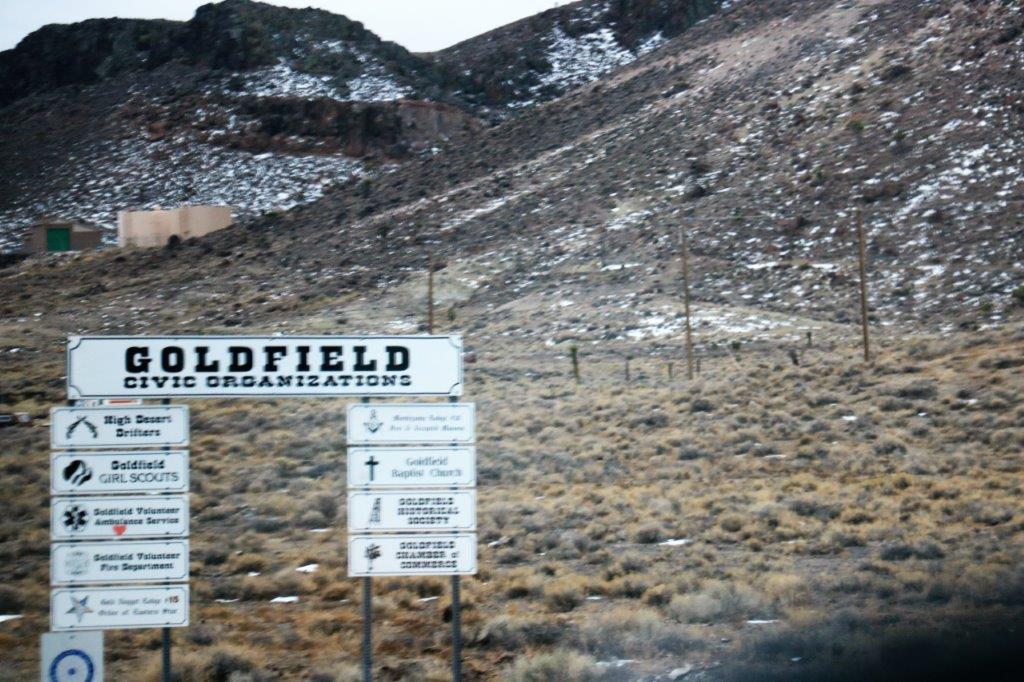
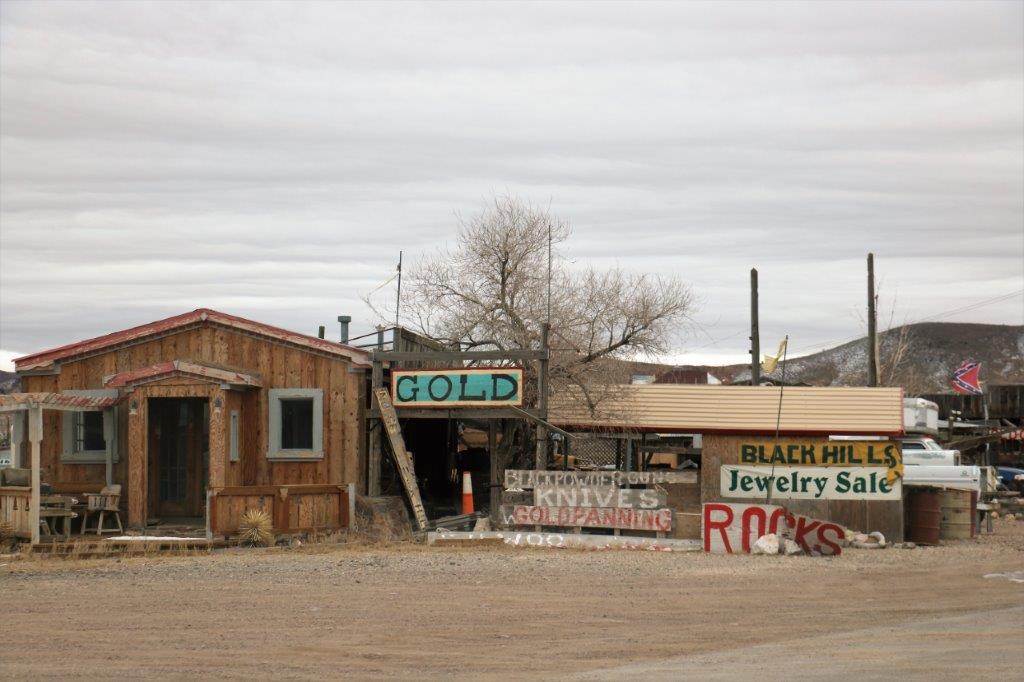
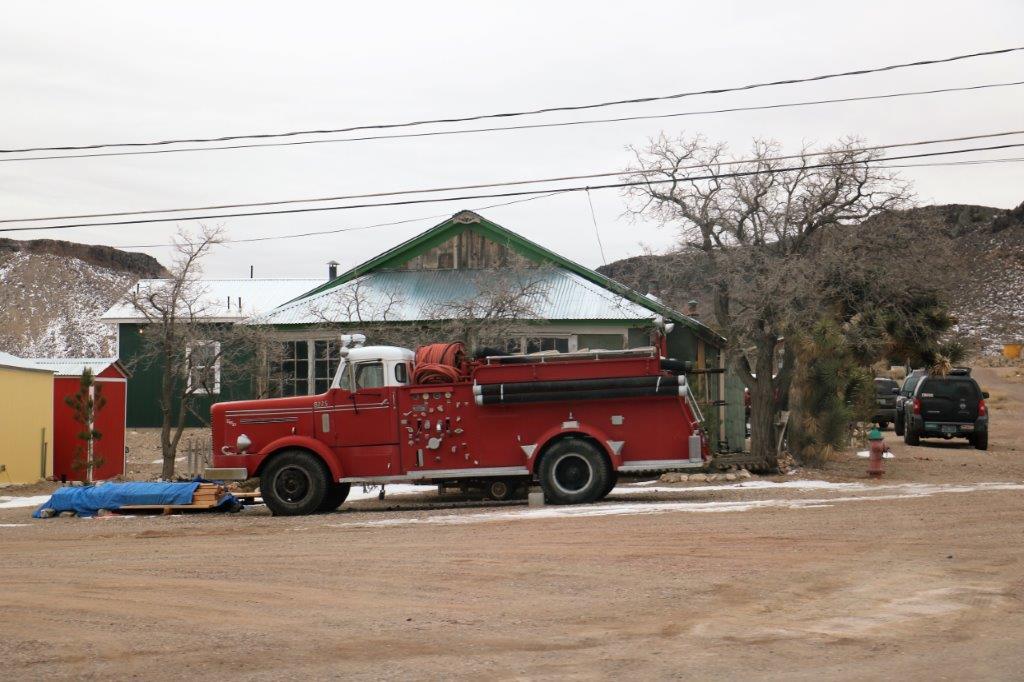
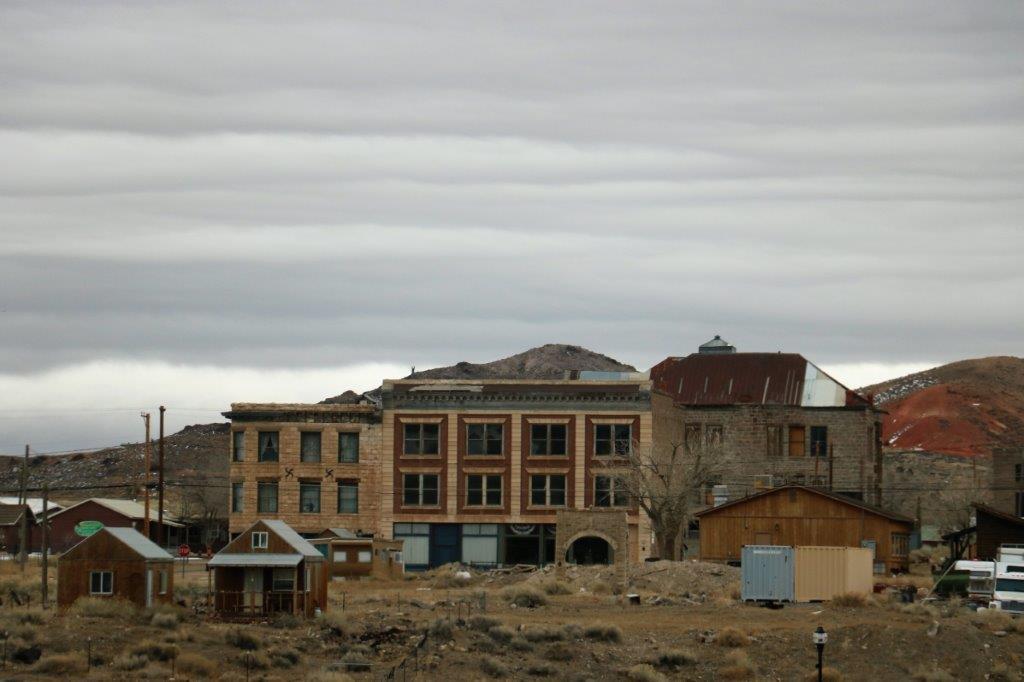
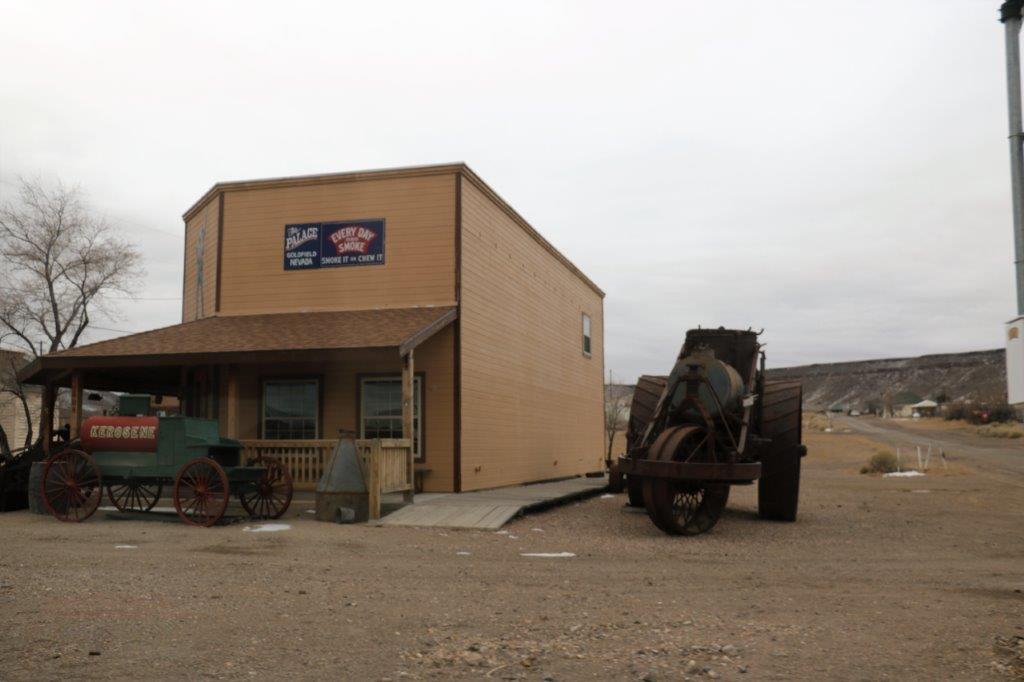
img_6528 img_6541 img_6542 img_6547 img_6548 The first little community we passed through was Goldfield, named, obviously for the gold mining in the area.  Goldfield was small, but spread out, with many boarded up, derelict buildings.  There were stores and other business open, so it is not a ghost town by any means.  Another very typical tiny old western mining town.img_6549
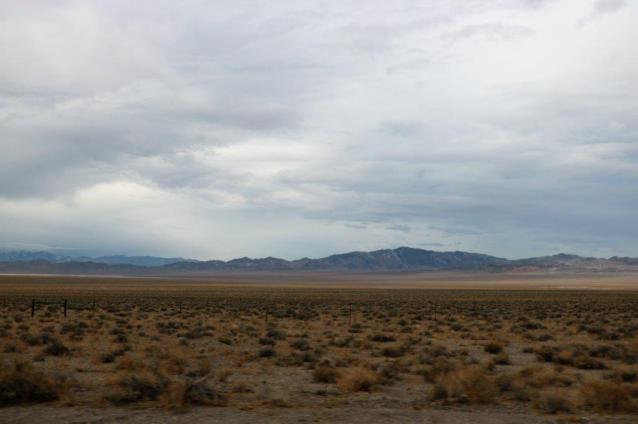
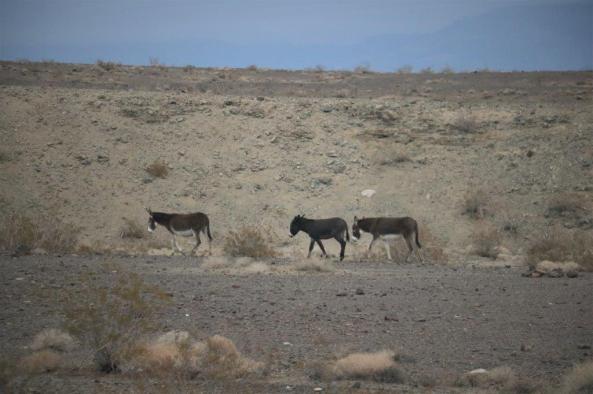
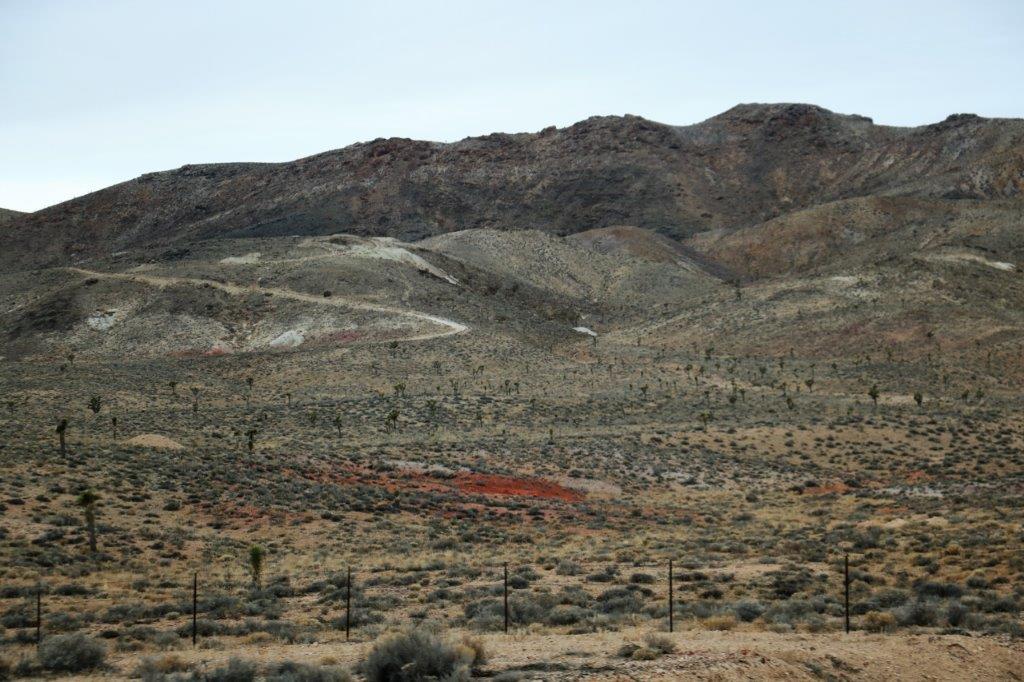
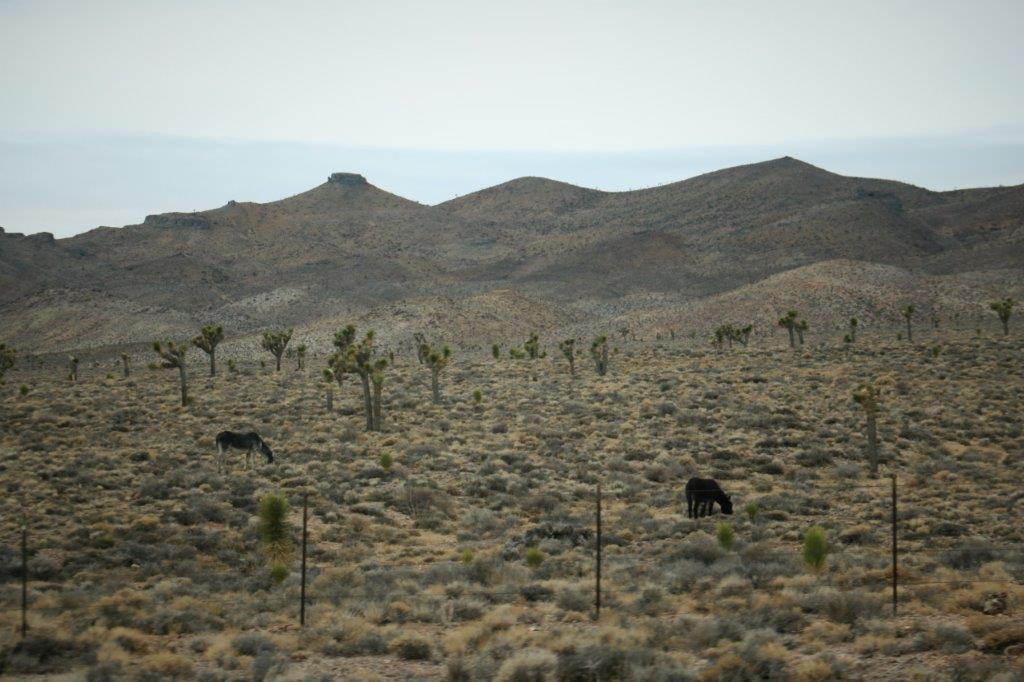
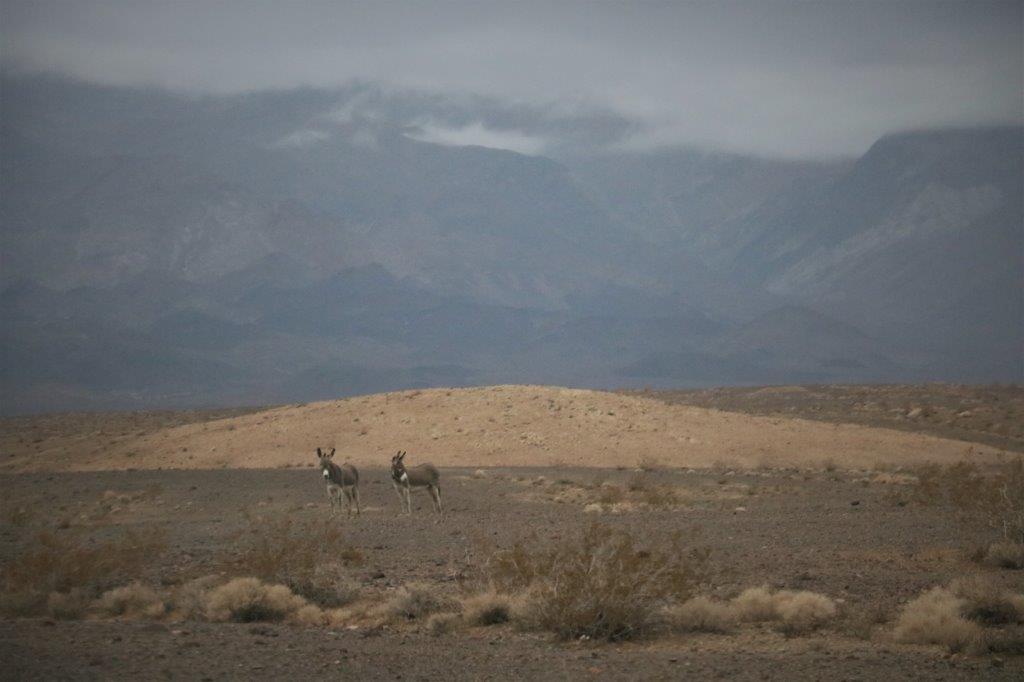
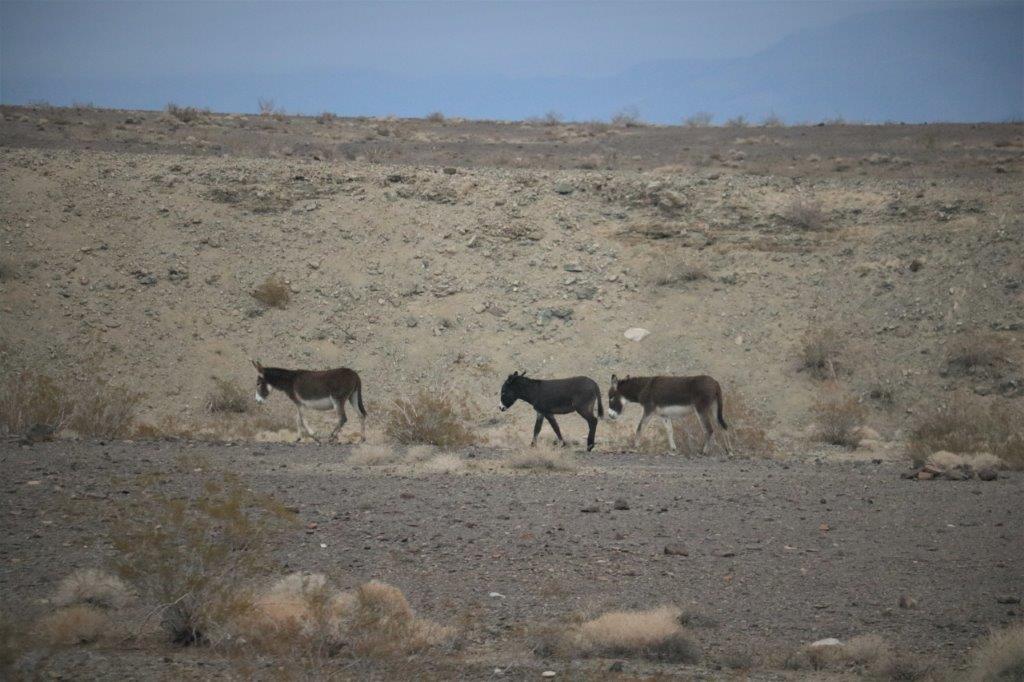
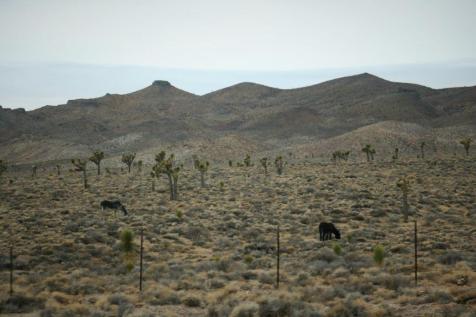
img_6555 img_6556 img_6557 img_6558 img_6560 img_6563 img_6564 img_6565 img_6567 img_6568 img_6569 img_6570 img_6575 img_6576 This area is home to wild burros and we saw a couple of them a few miles south of Goldfield.
img_6581It was about 93 miles from Tonopah to Beatty, one of the eastern gate-ways from Nevada into Death Valley National Park.
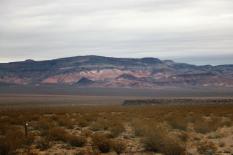
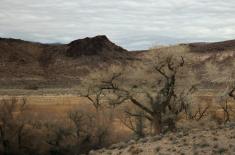
img_6587 img_6590 img_6591 img_6593A few miles before we reached Beatty I checked to see if there were any near-by geo-caches.  I know we missed a lot of them on our drive to this point, but geo-caching is not the focus of this part of the trip; destination Escondido is.  A few caches found along the way just make the drive more fun.

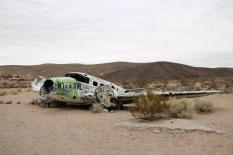
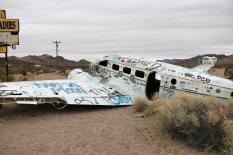
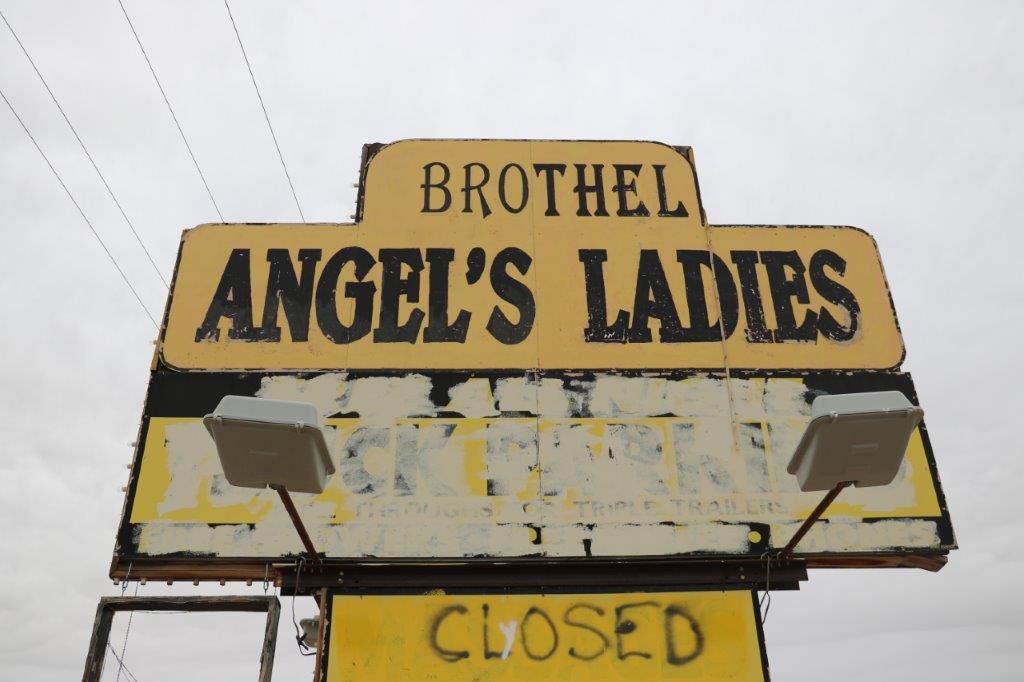
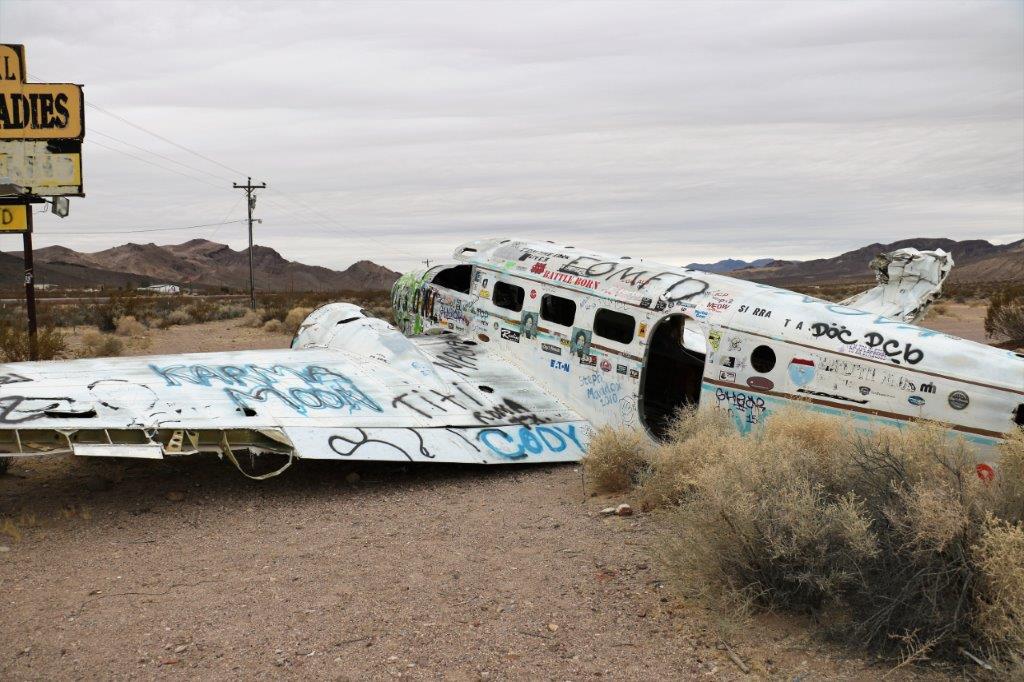
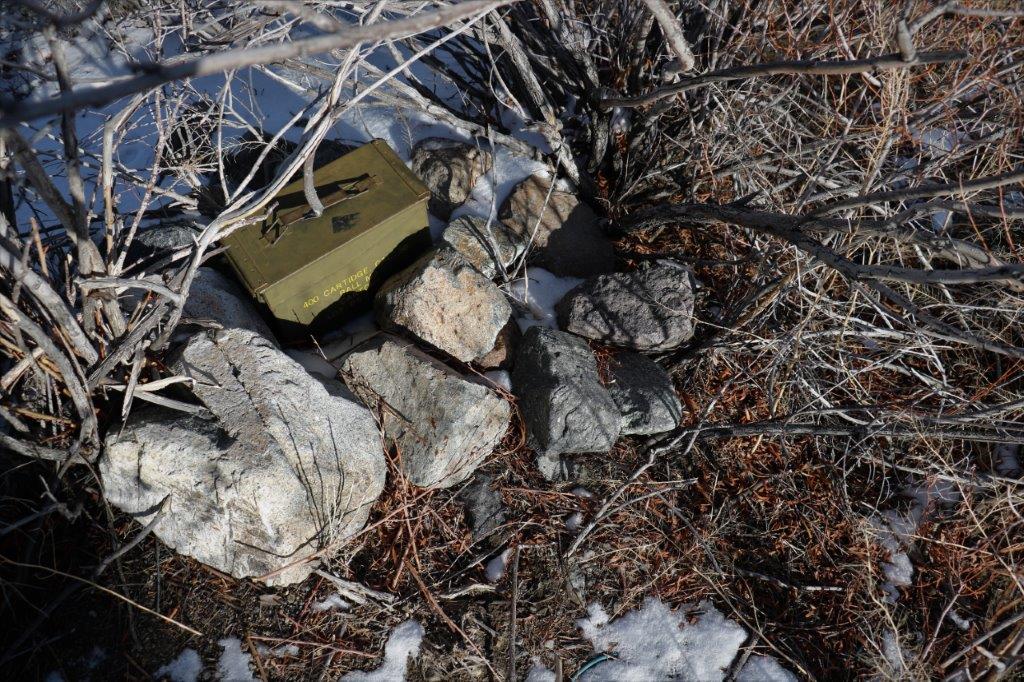
A cache popped up a short distance ahead so John pulled over beside a chained driveway that had a much-graffiti-ed crashed airplane sitting on the other side of the cattle guard.  Notes on the cache logs said the owner of the property did not mind people crossing the chain to find the cache hidden in the airplane they just didn’t want folks wandering further up the drive.  We looked all around the airplane but couldn’t find the cache.  We did find two others as we drove through Beatty.
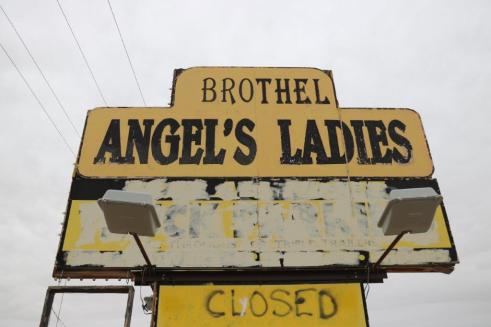
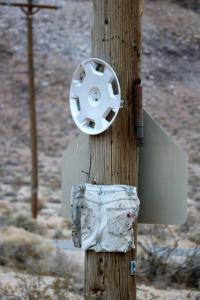
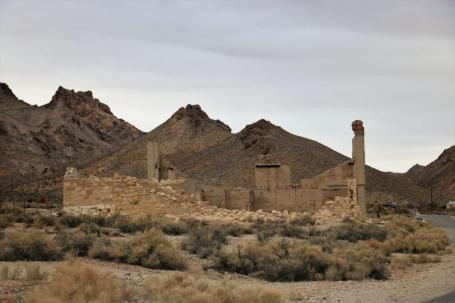
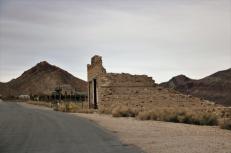
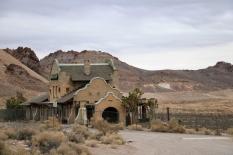
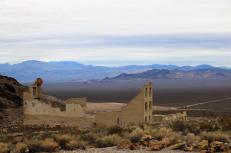
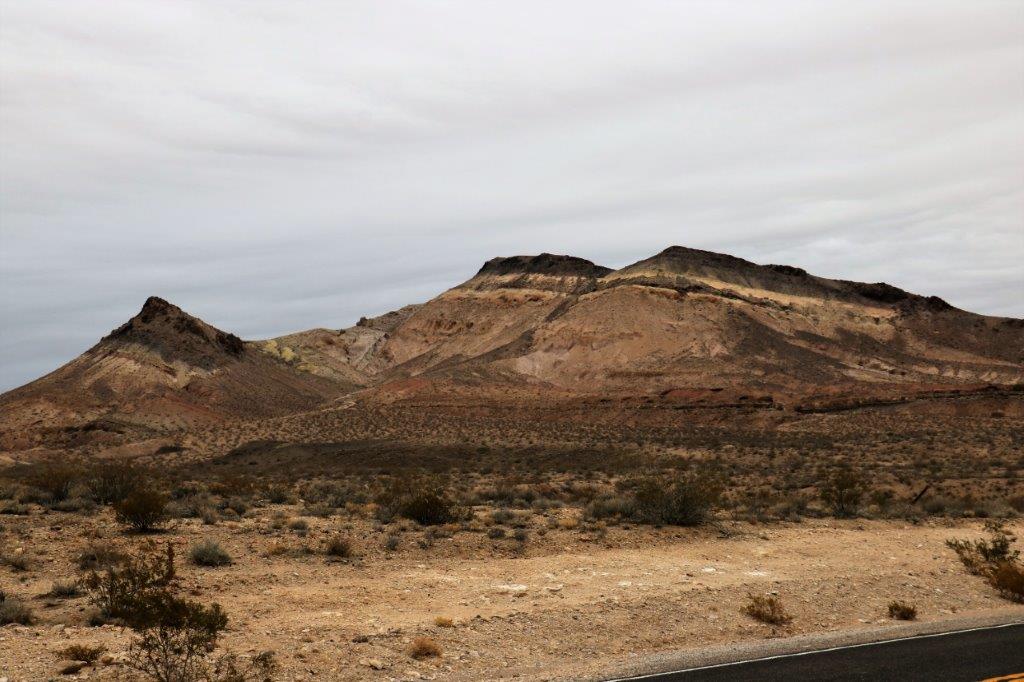
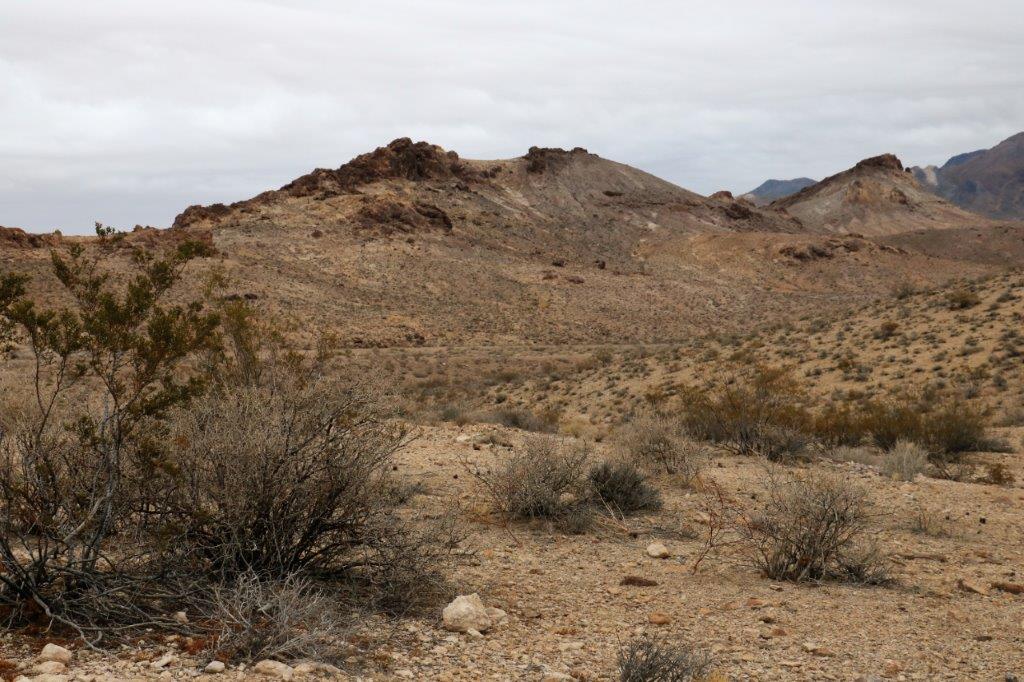
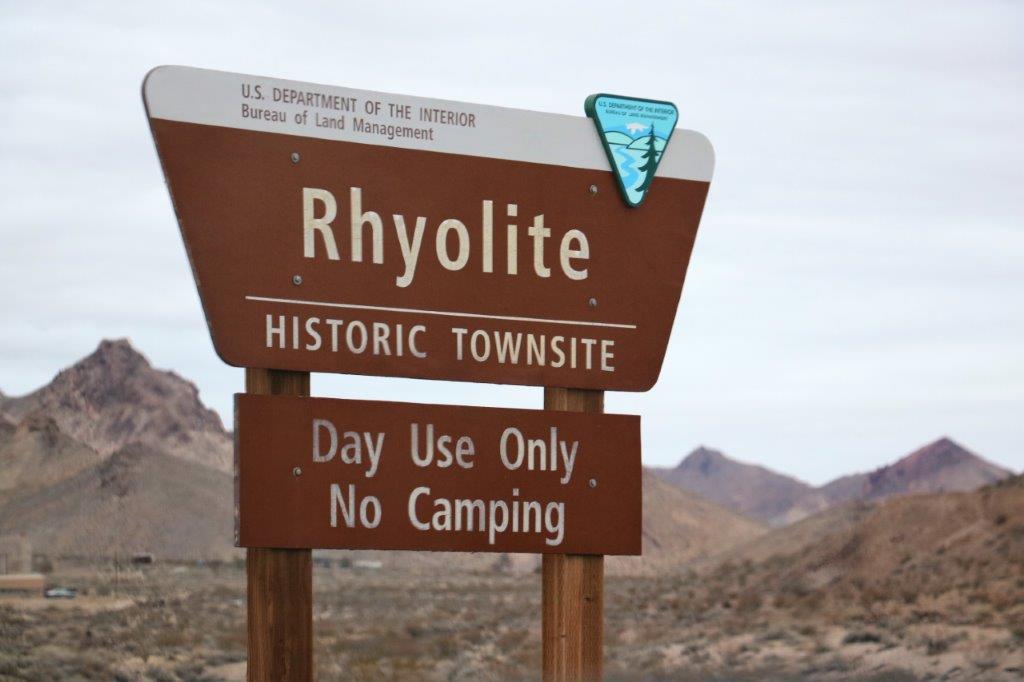
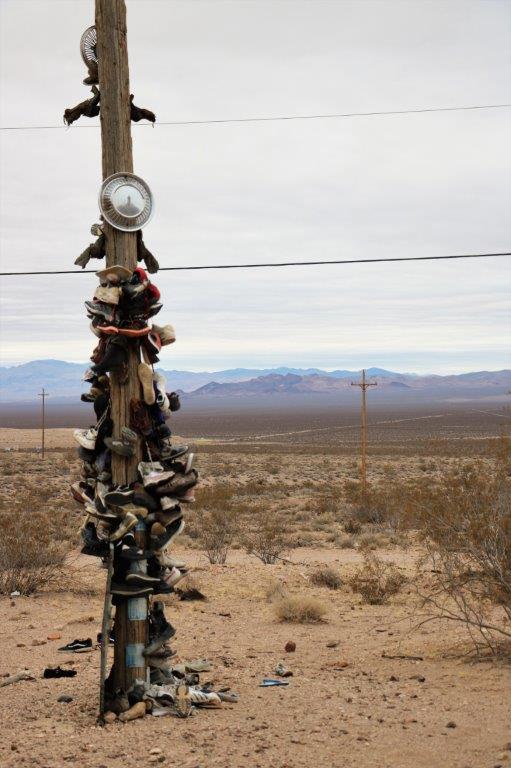
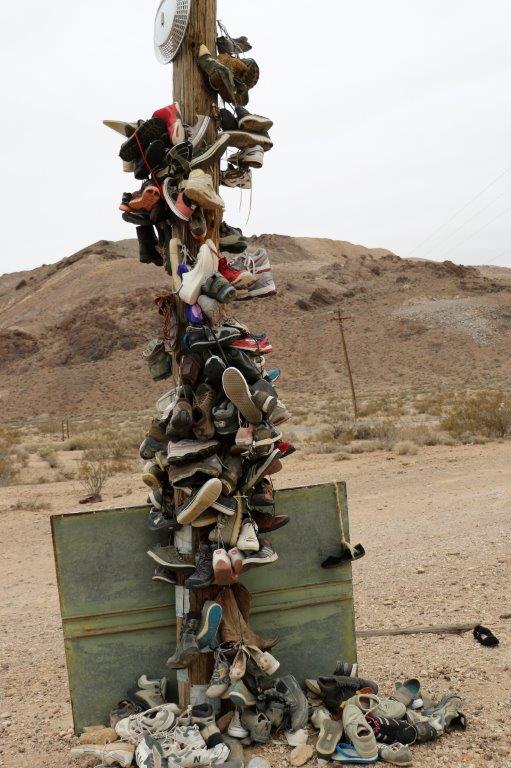
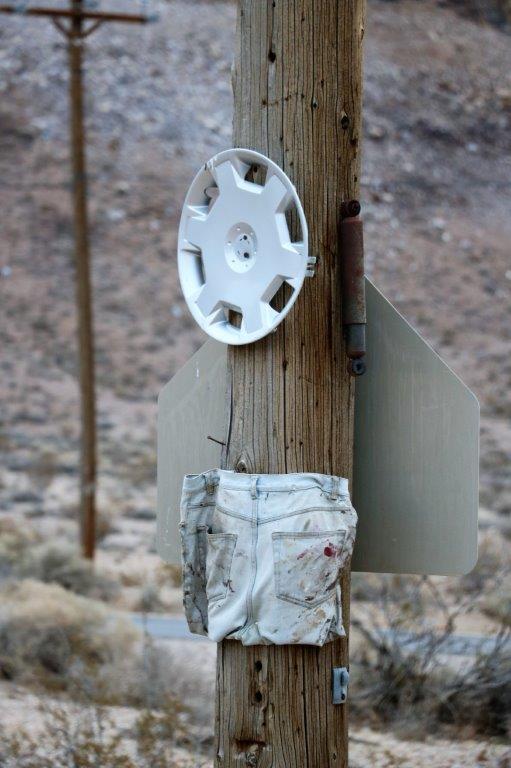
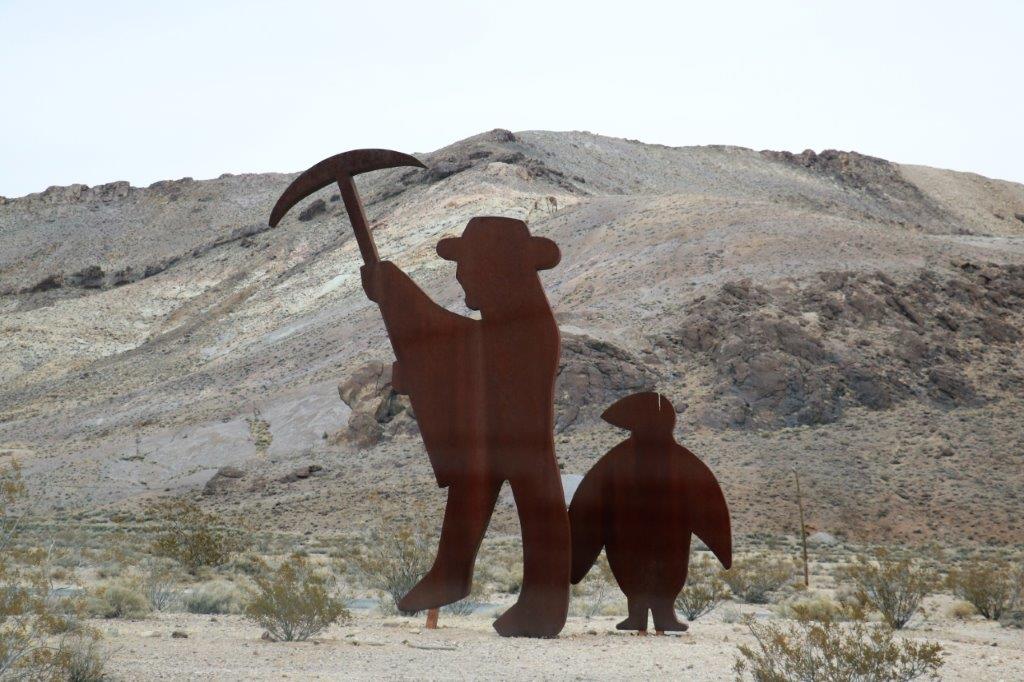
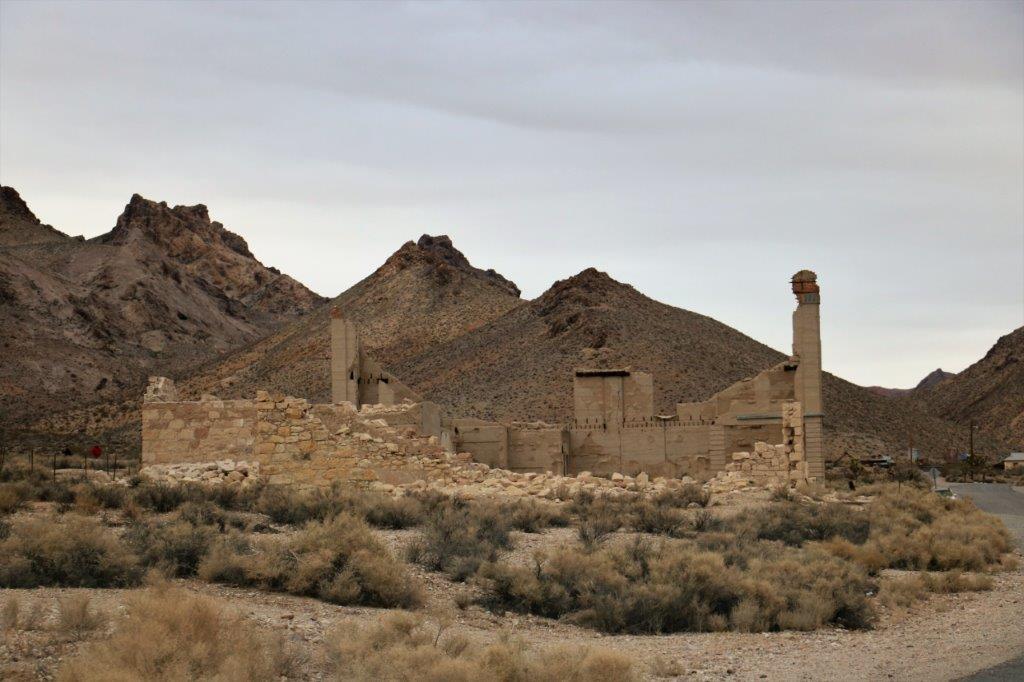
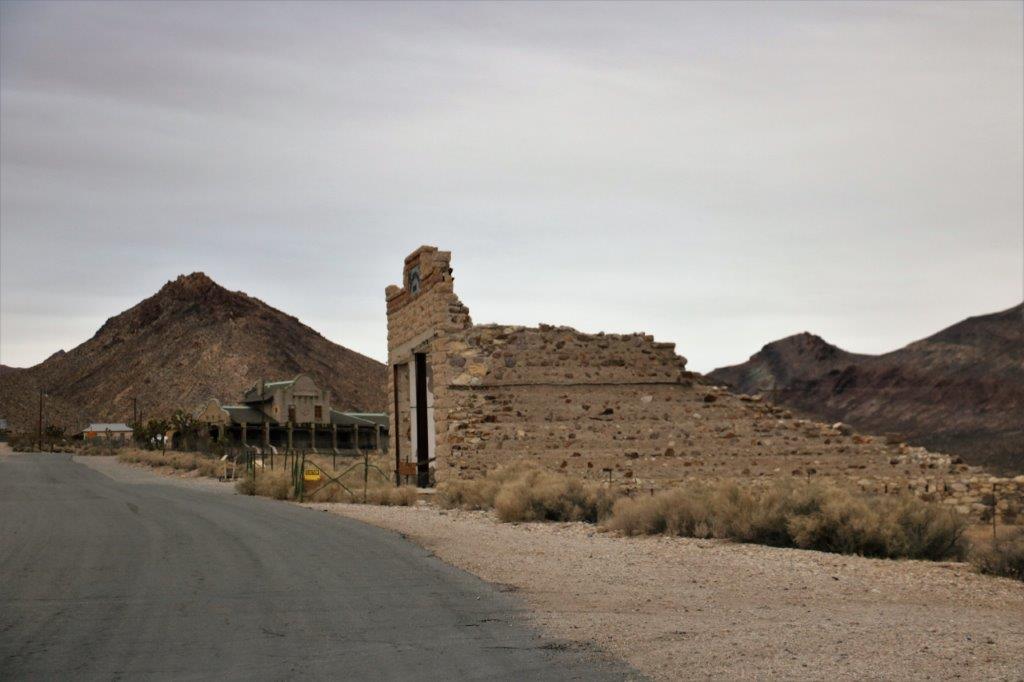
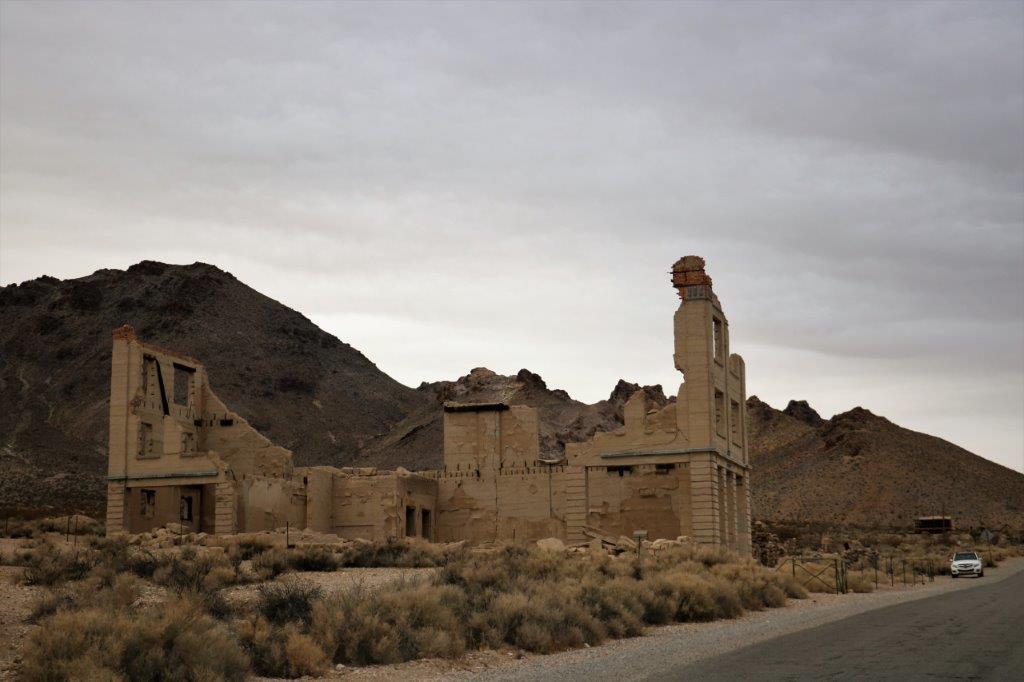
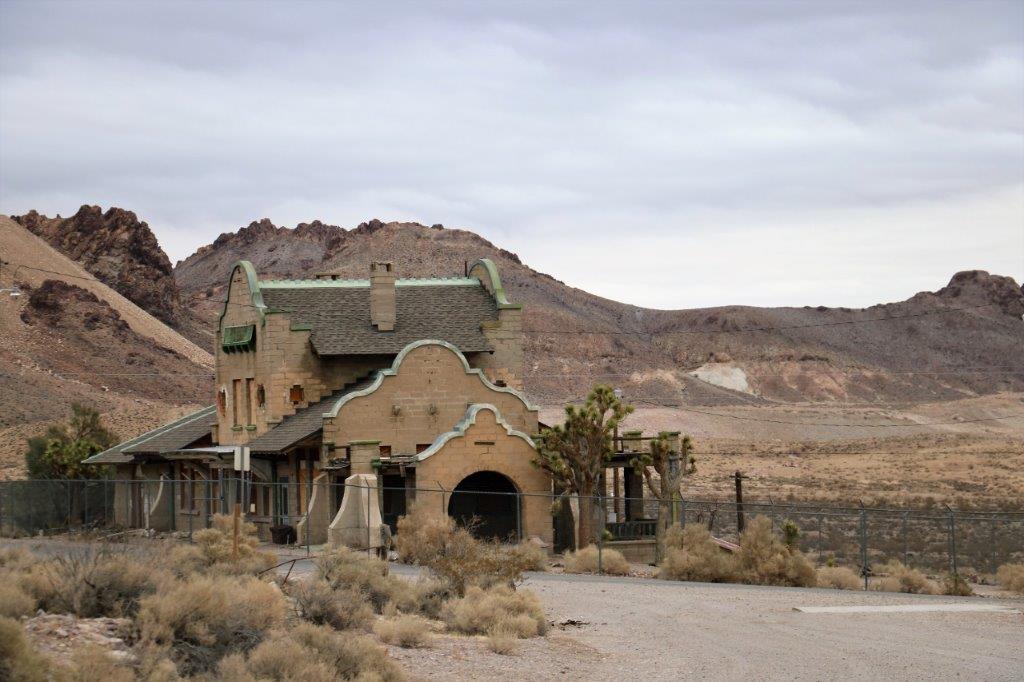
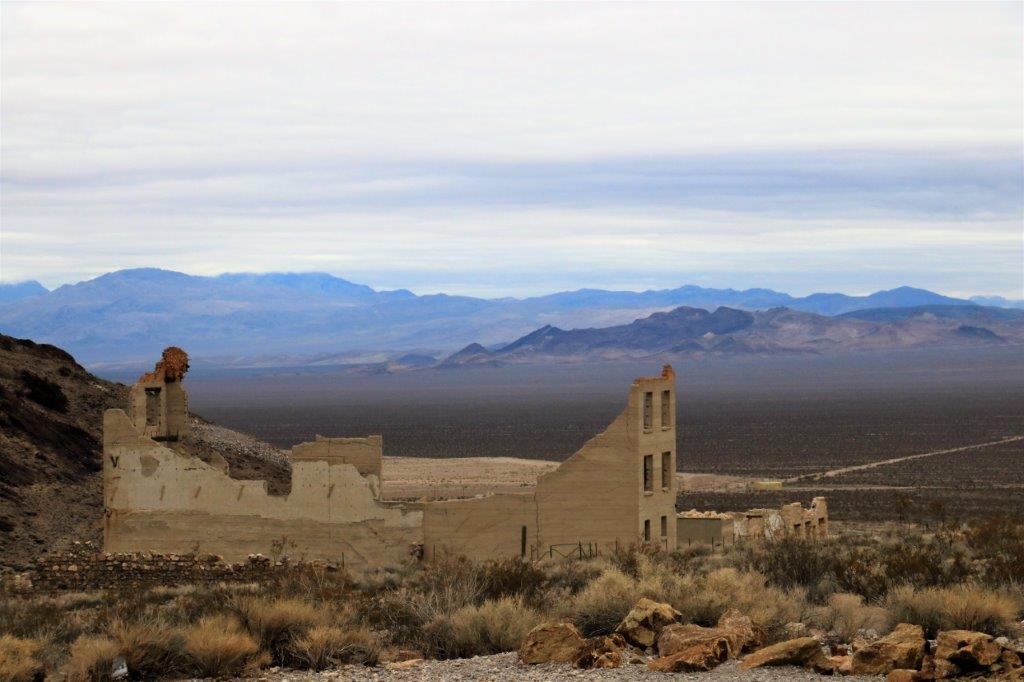
img_6596 img_6597 img_6598 img_6601 img_6603 img_6605The drive from Beatty to the Nevada/California border and the boundary of Death Valley National Park is about 10 miles.  About half-way there is the Rhyolite Ghost Town.  It had a population of over 8,000 in 1901 and only a few ruined buildings remain.  There is a small Open Air Museum (it seemed to just be small collection of odd art pieces).  At the driveway entrance there is a ‘Shoe Tree,’ where, for whatever reason, people leave pairs of shoes.  At the base of the pole is a cache and there was another one under the concrete Gaudi-style couch behind the museum.
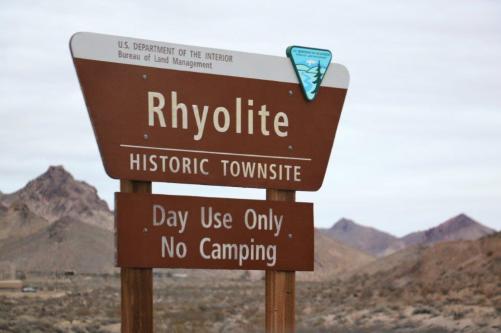
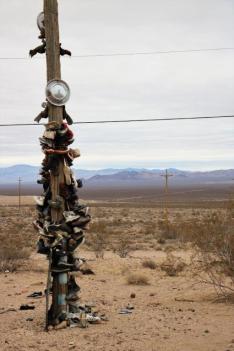
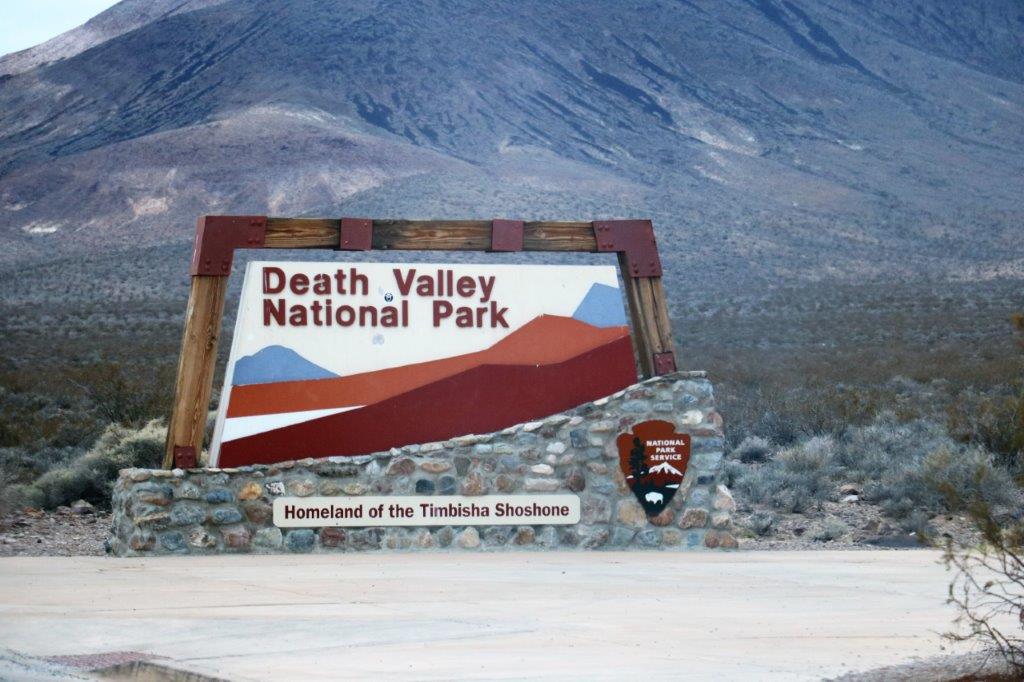
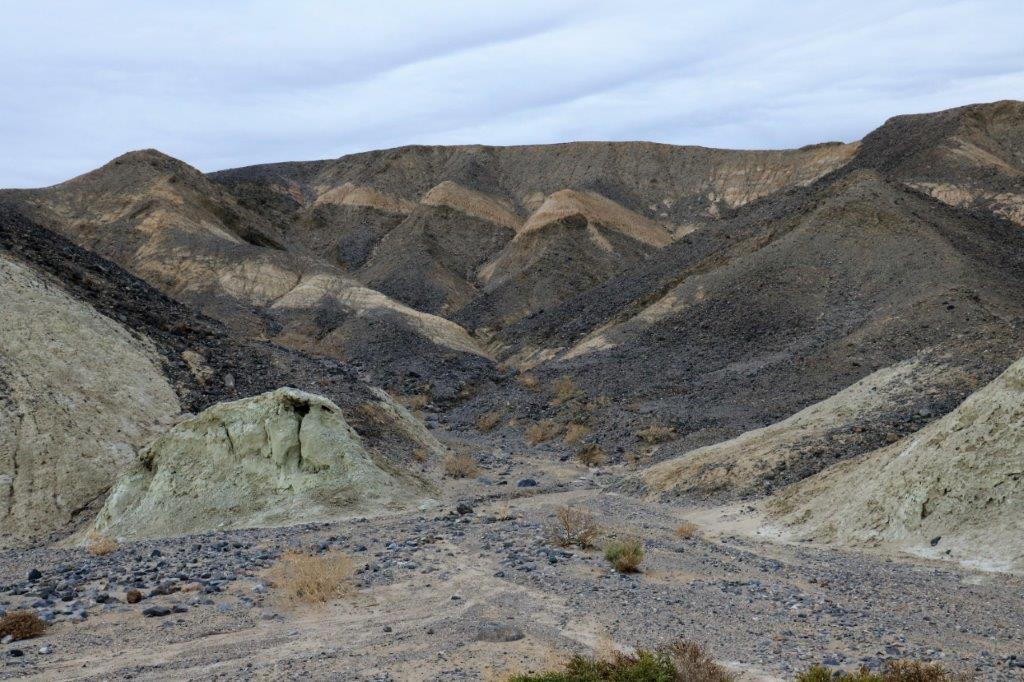
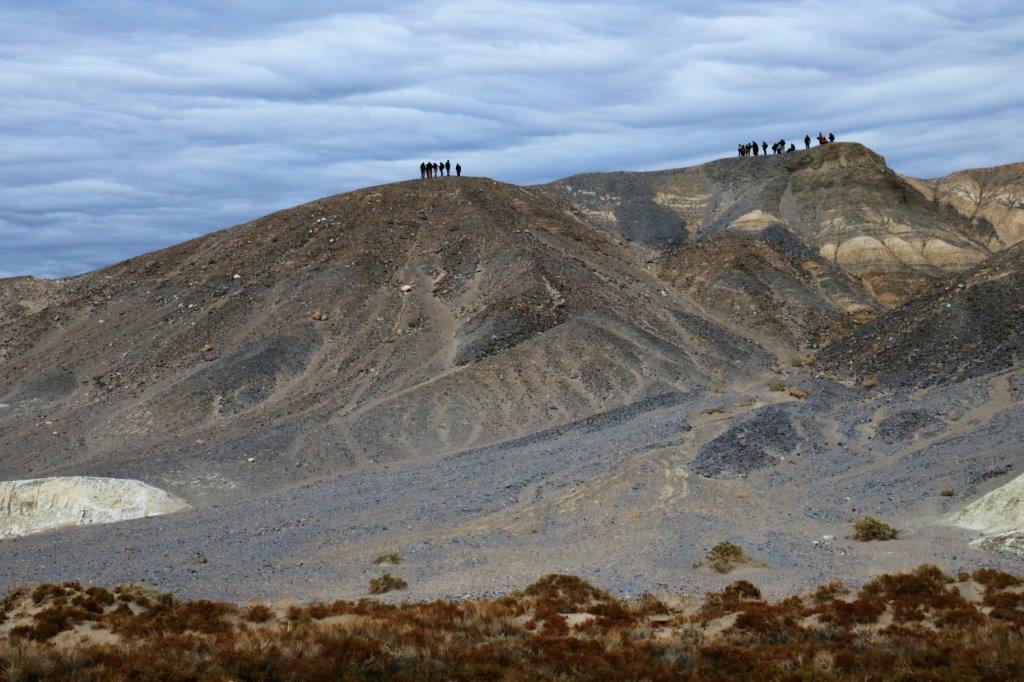
img_6607 img_6608 img_6609 img_6610 img_6612 img_6614 img_6615 img_6617 img_6619 img_6621It is only a few miles from Rhyolite Ghost Town to the border of Death Valley National Park.  We spent a week here last year and I was very excited to be back.  Before we left home John tried to book a hotel room so we could stay overnight but there were no vacancies at Stovepipe Wells or Furnance Creek so we could only spend a short time in the park.  We are spending the night at Ridgecrest, which is about 100 miles west and south from Stovepipe Wells, which is about 1/3 of the way into the park from the eastern boundary.

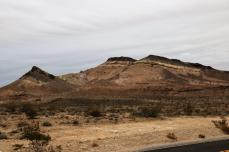
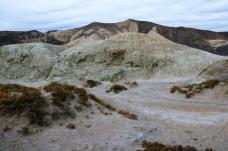
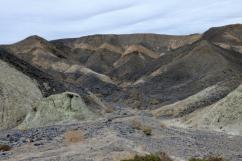
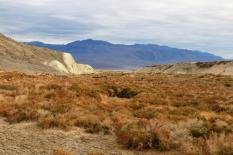
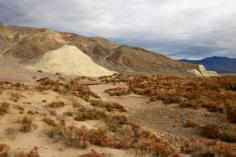
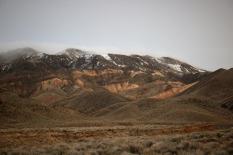
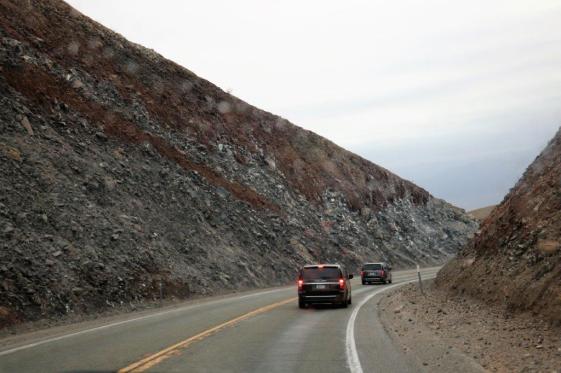
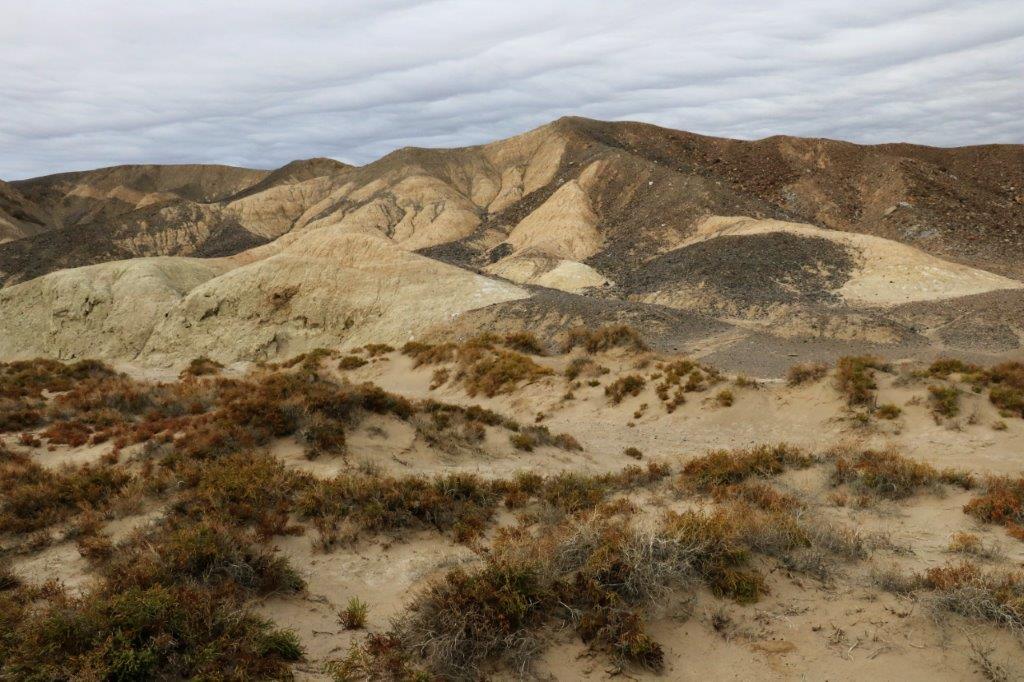
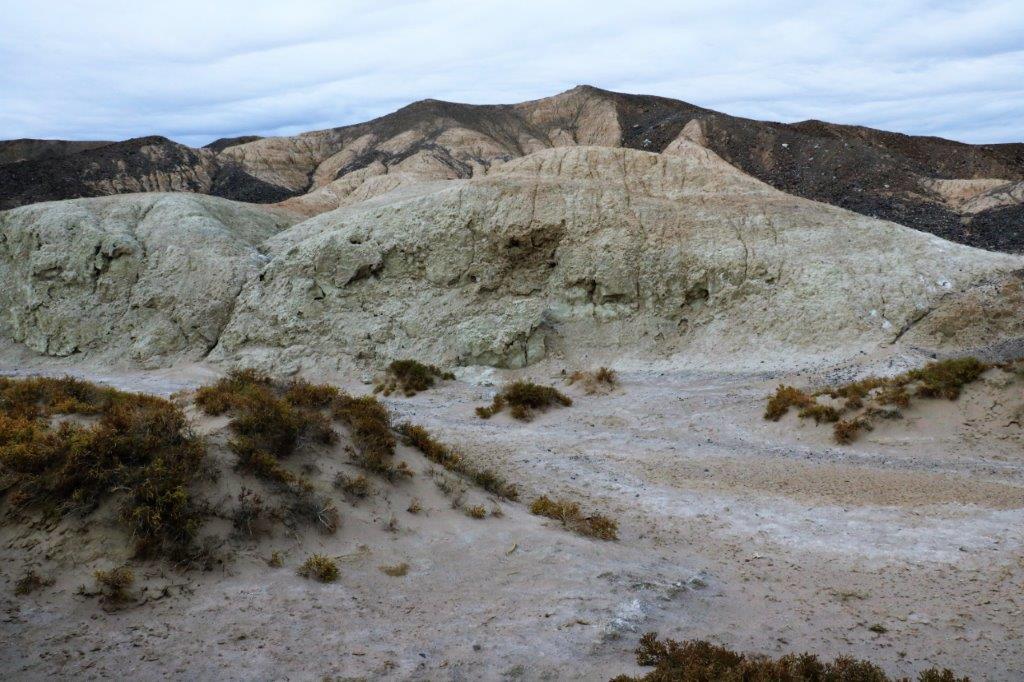
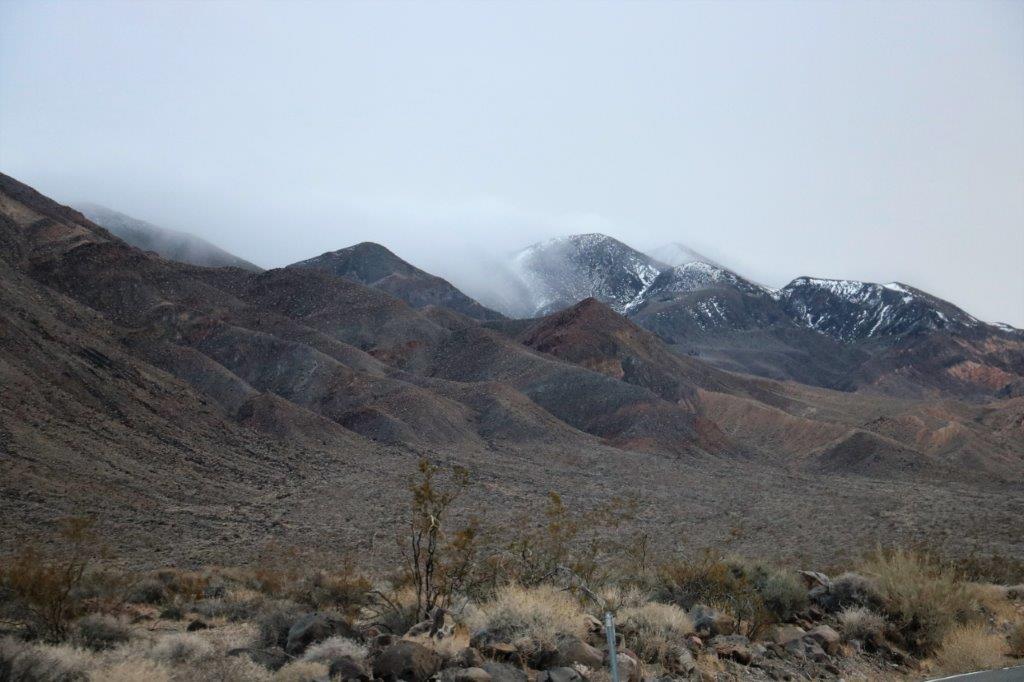
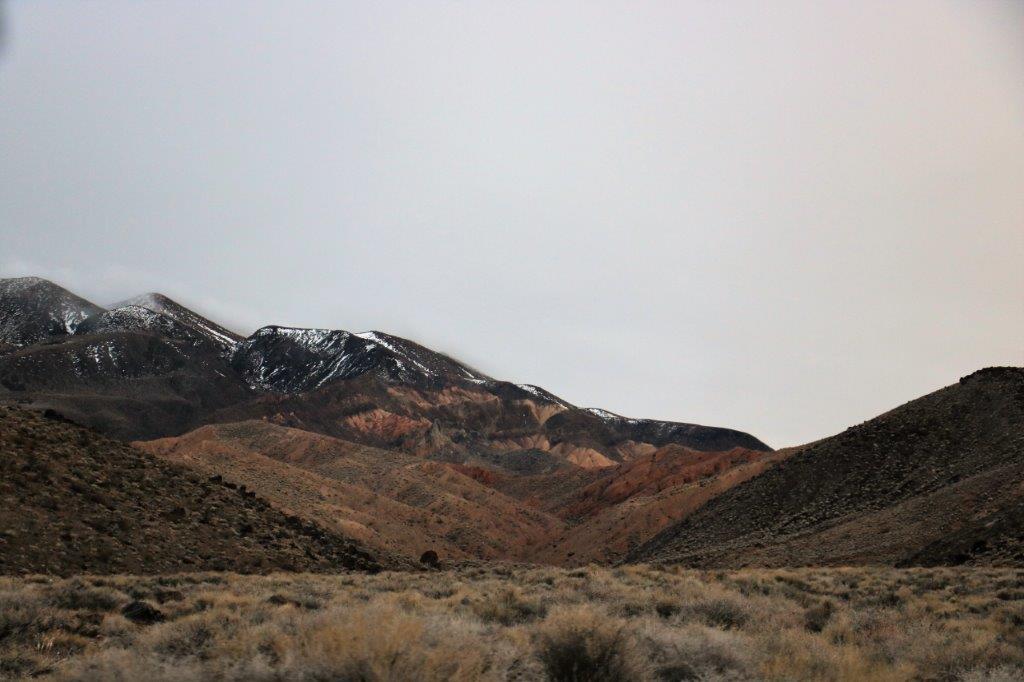
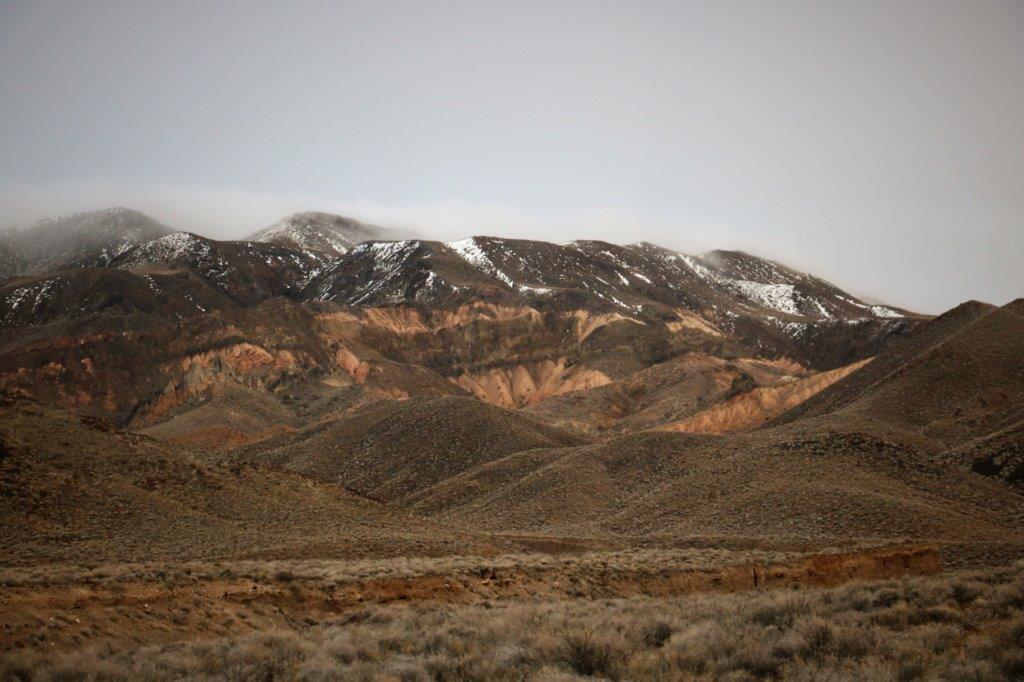
img_6627Death Valley, as we all know, has the lowest elevation in the US (282 feet BELOW sea level – at Badwater Basin – and; only 15 miles away, is the highest peak in the Panamint Ridge – Mt. Telescope; at over 11,000 feet. The Valley stretches 140 miles between the Amargosa Range on the CA/NV border and the Panamint Ridge on the west.  The Park is 3.4 million acres and is a photographers dream with all the different geologic shapes and colours.

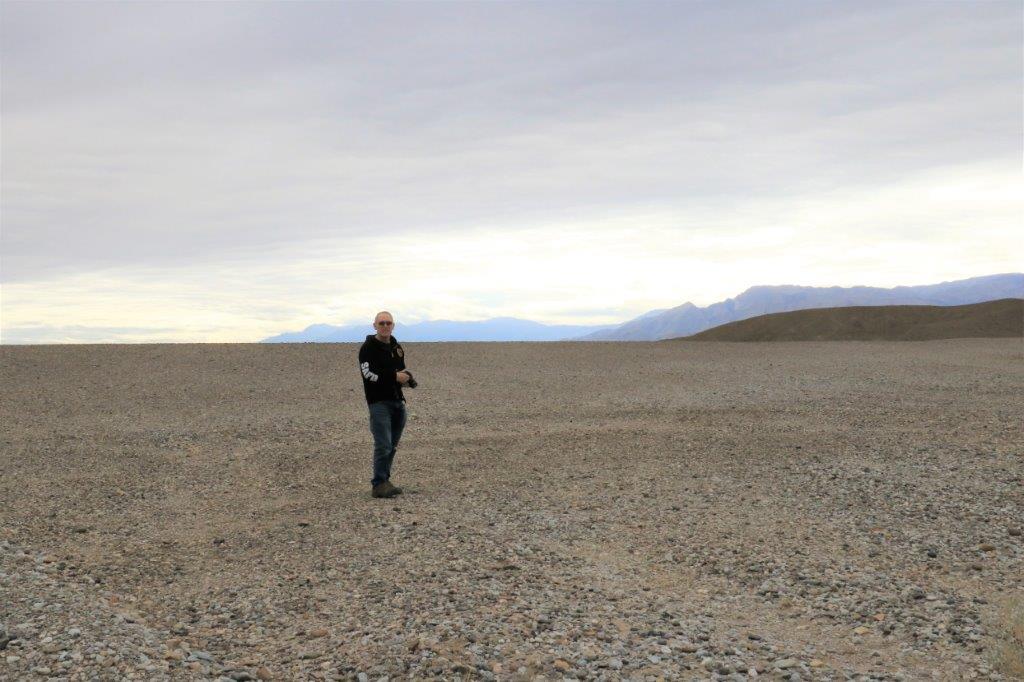
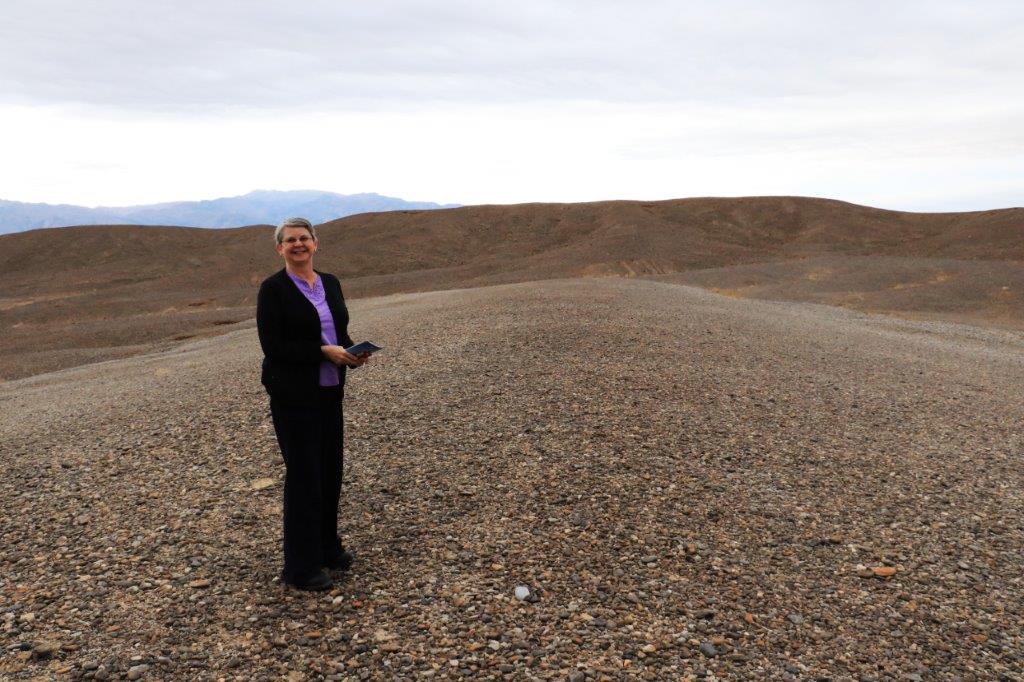
There were, near the Stovepipe Wells Junction,  two areas we had not visited last year and both of them are the site of an Earth Cache. (No physical caches are allowed in the National Parks so at various interesting places people log an Earth Cache.  To claim them you must answer some questions about the area that will prove you actually visited, and, if you choose, post a photo of yourself at the site.  There are over a dozen Earth Caches in Death Valley.  We claimed a couple last year and thought we would pick up another few today.

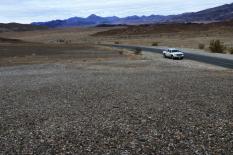
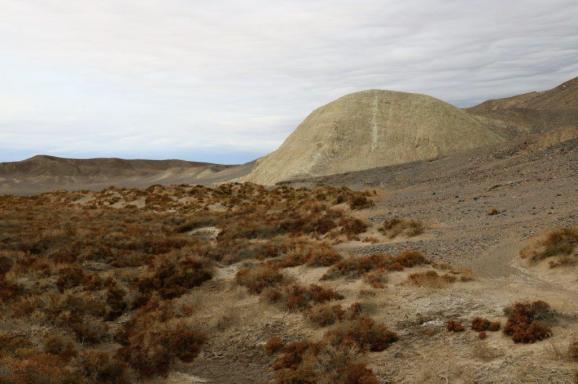
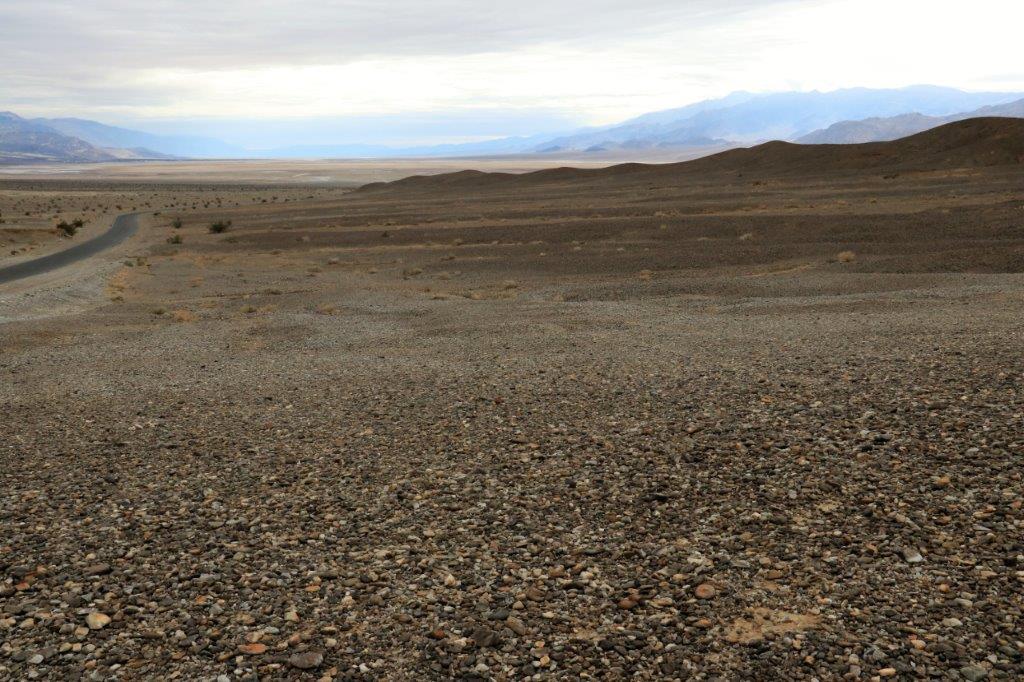
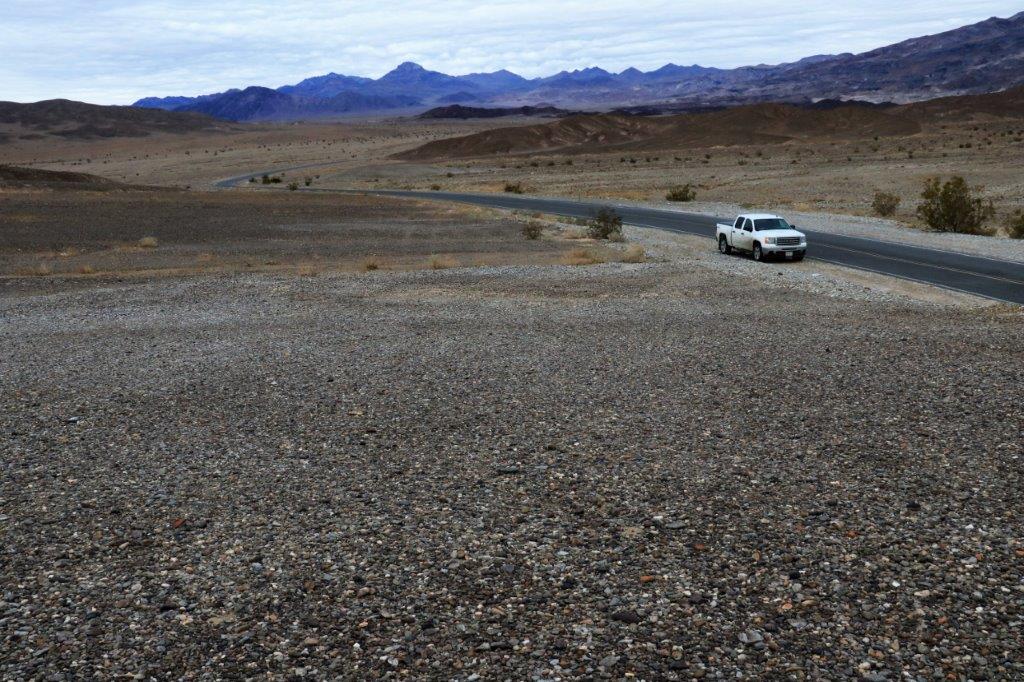
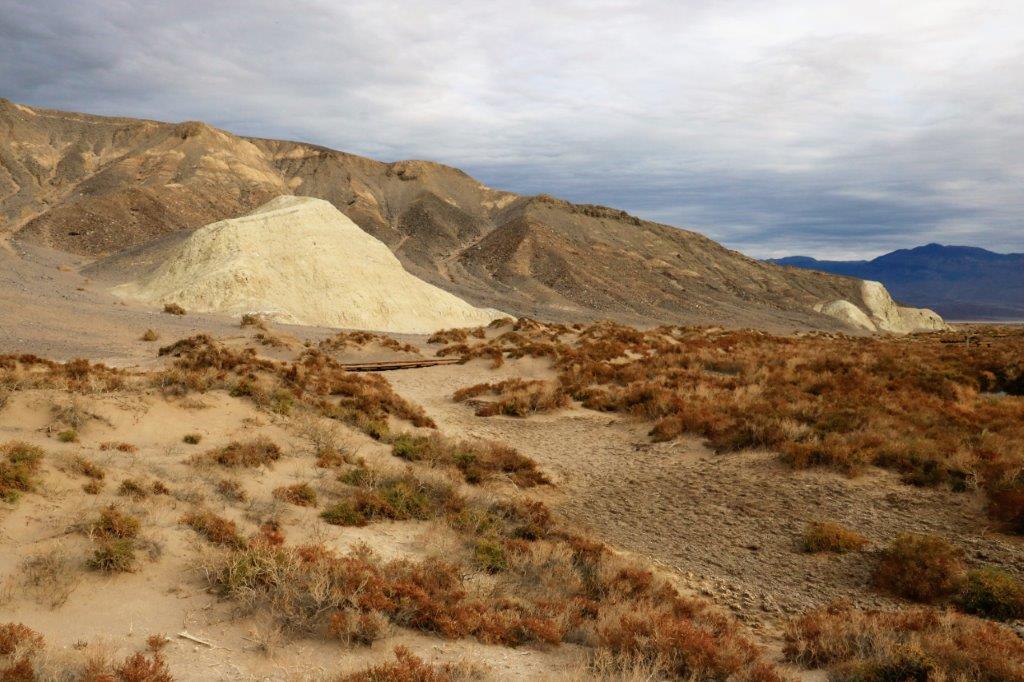
The first place was the Lake Manley Gravel Beds where acres and acres of small rocks to pebbles were deposited by glaciers many feet thick over a huge former lake bed.

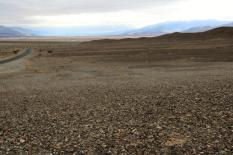
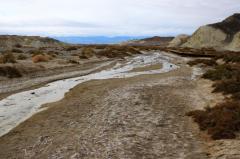
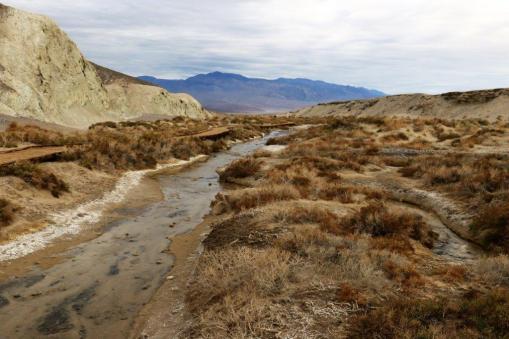
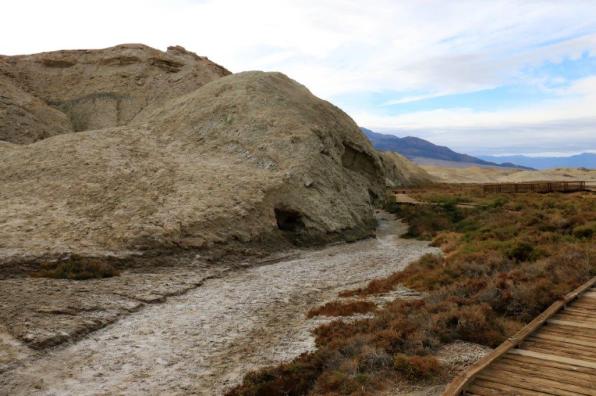
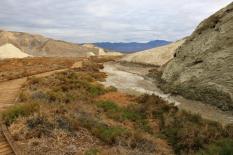
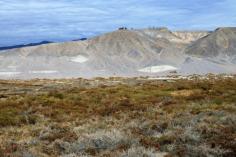
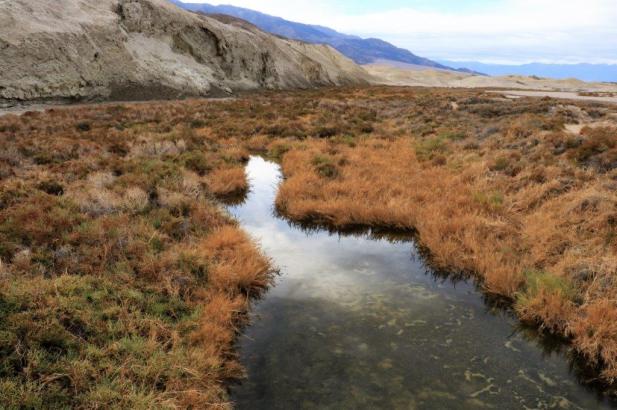
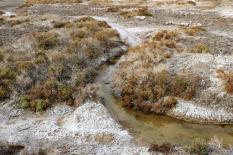
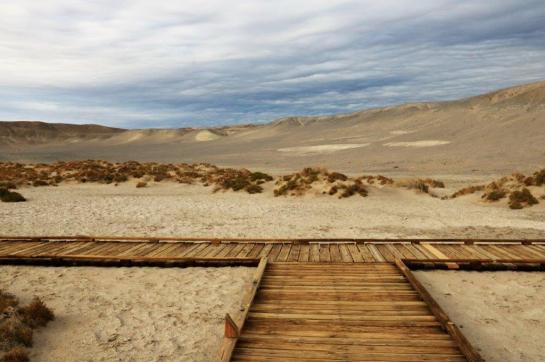
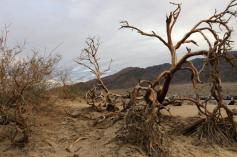
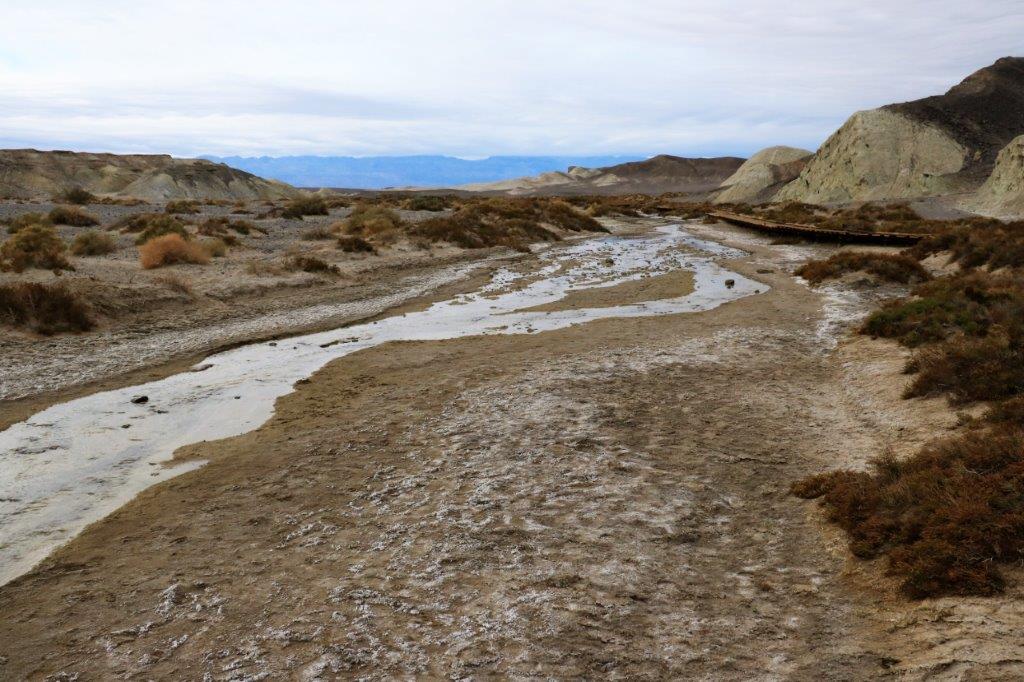
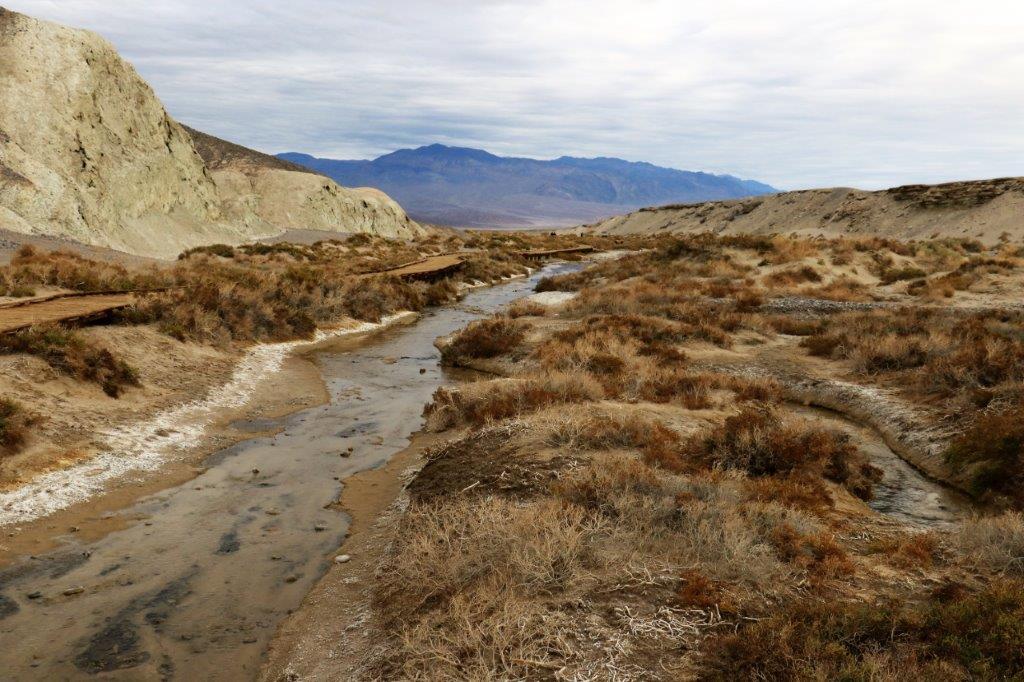
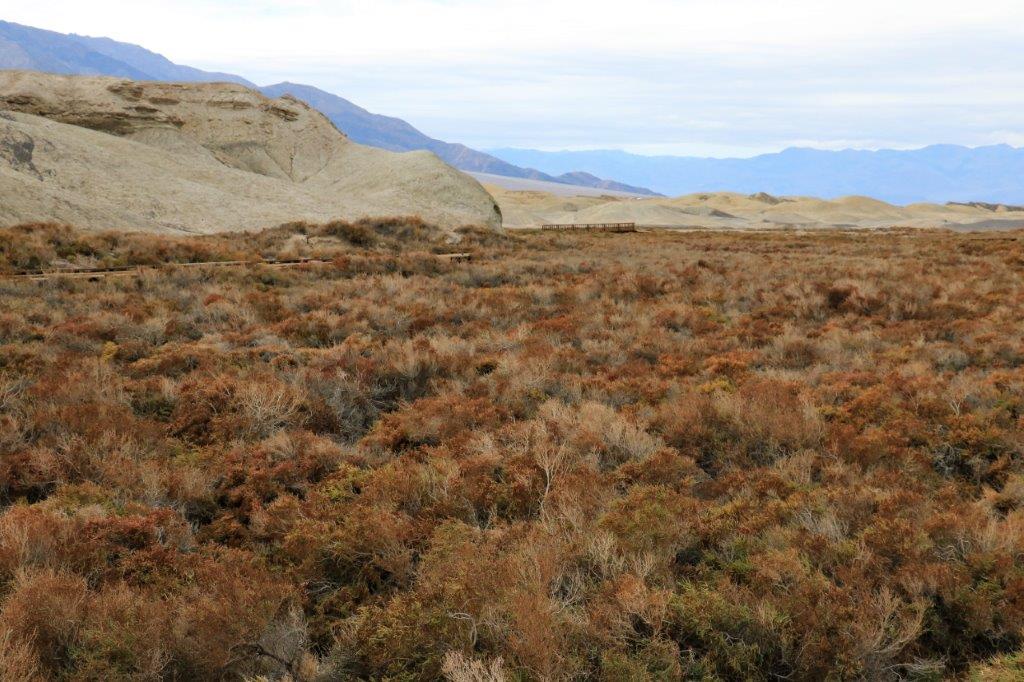
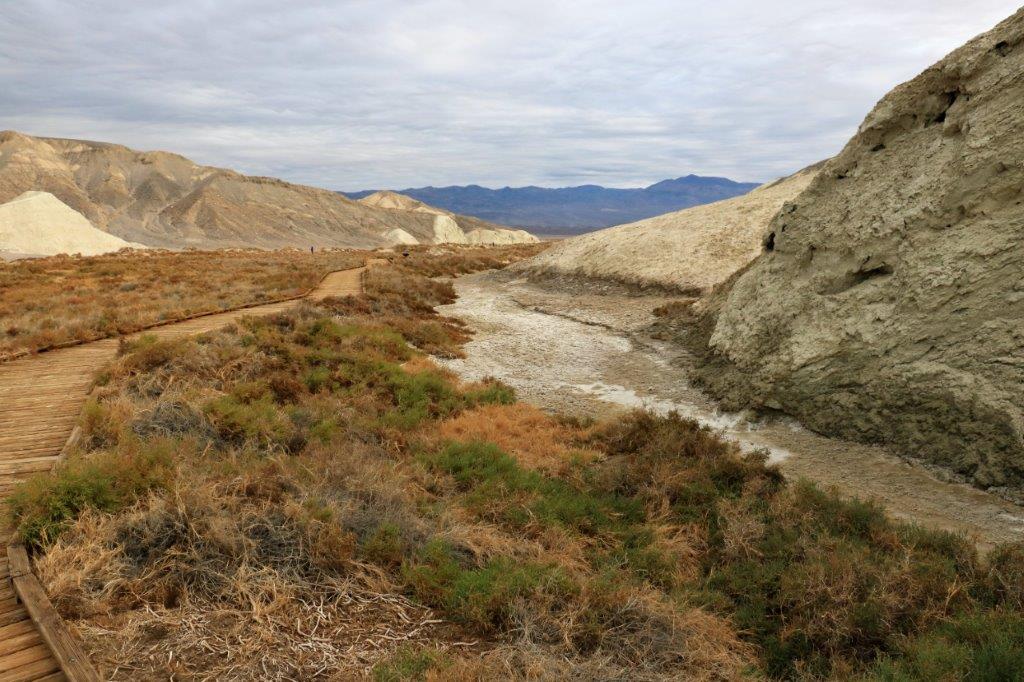
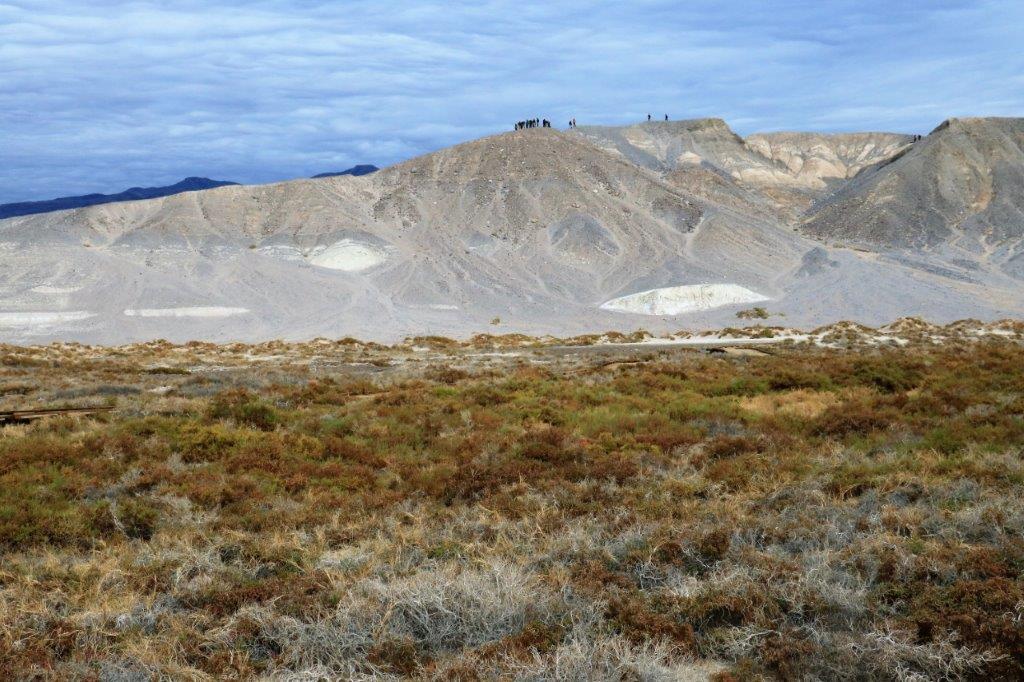
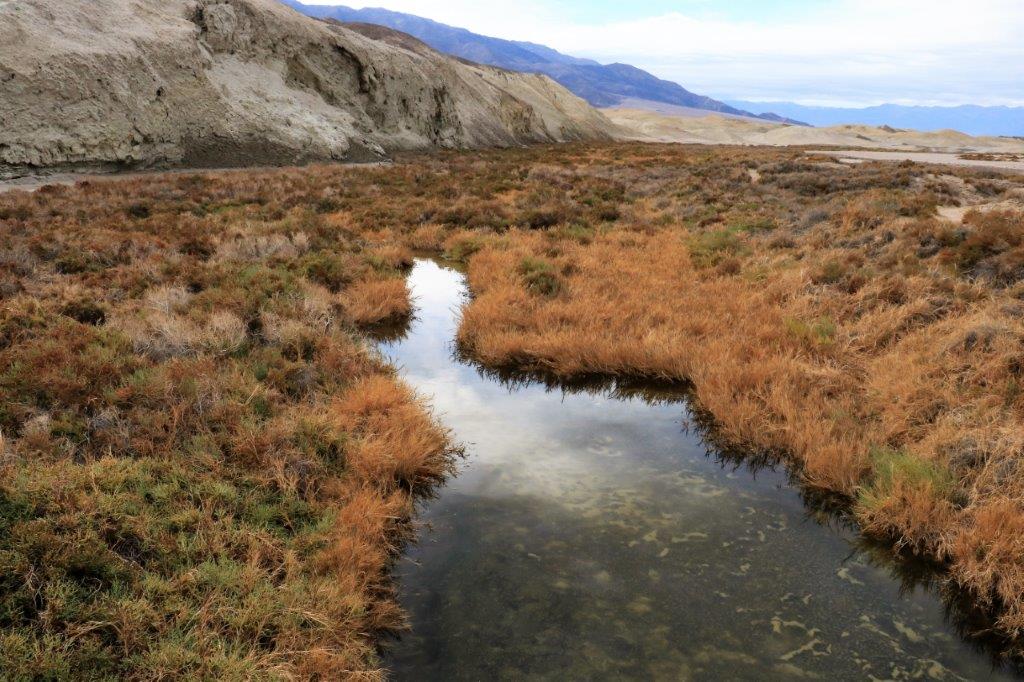
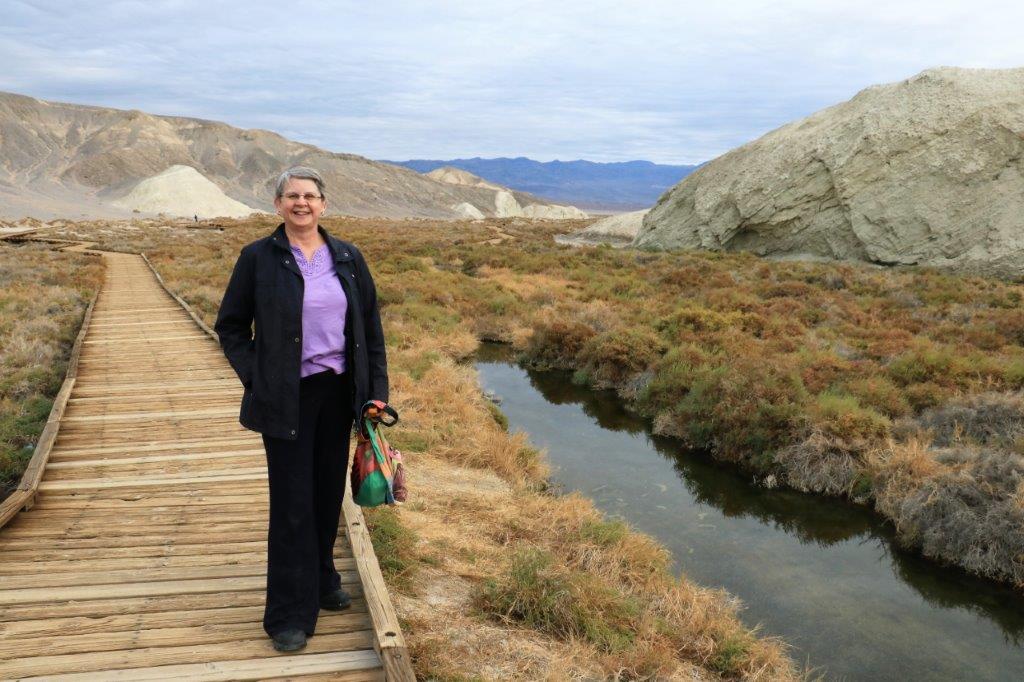
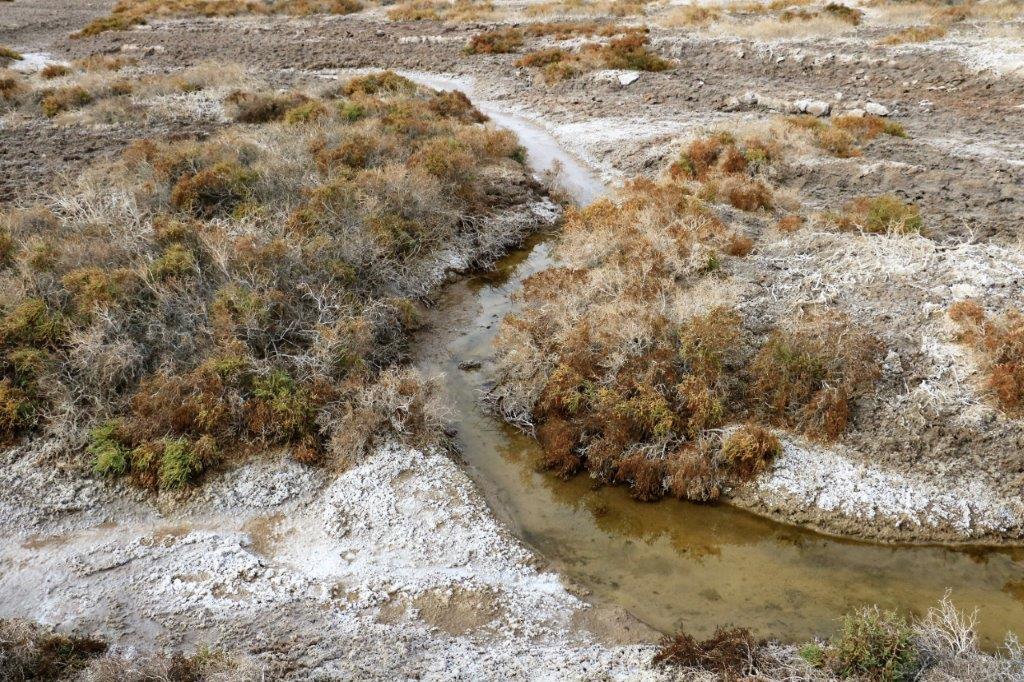
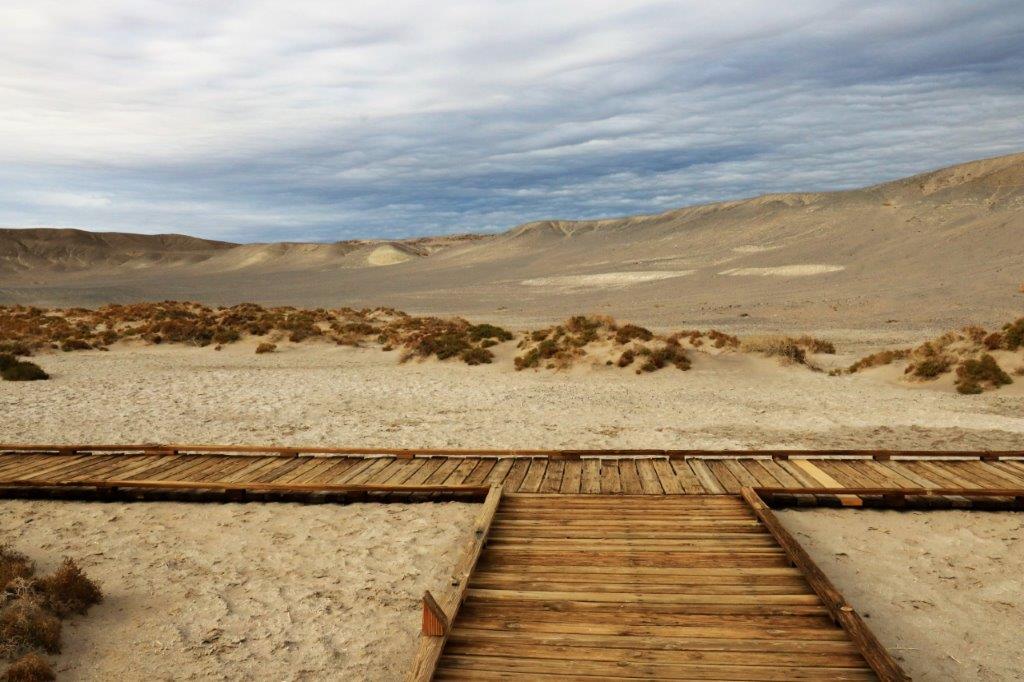
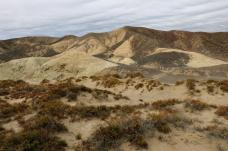
img_6637 img_6638 img_6639 img_6641On the way to Lake Manley we passed the turn-off for Salt Creek which was our next stop.  This was a very picturesque 1/2 mile long boardwalk loop trail so I took many, many pictures in that short time.  It was just so pretty…..
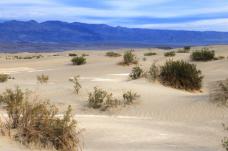
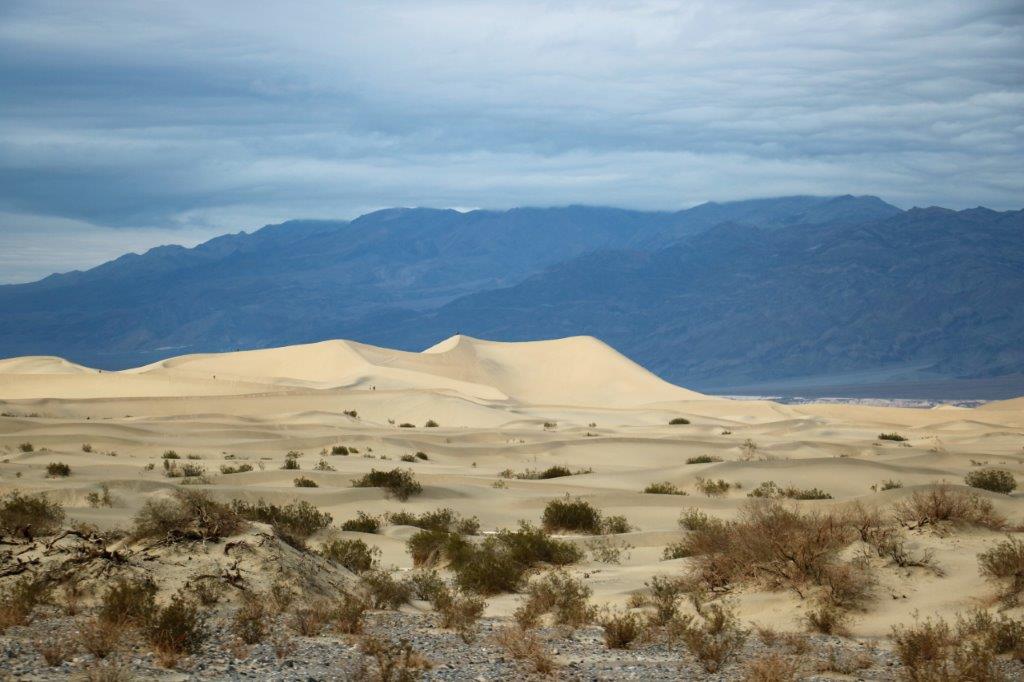
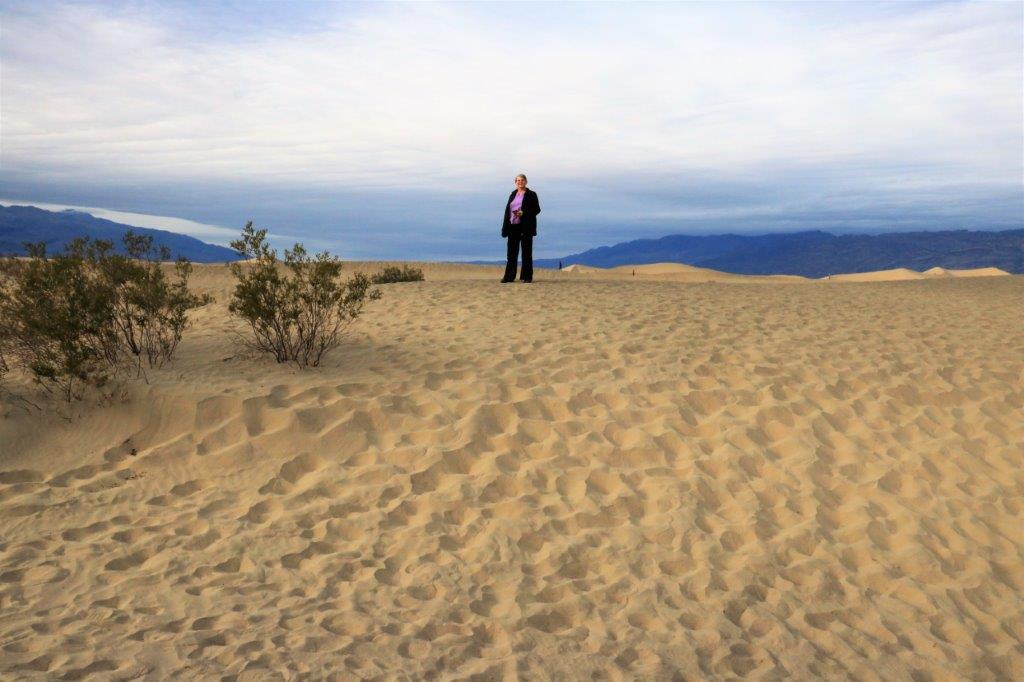
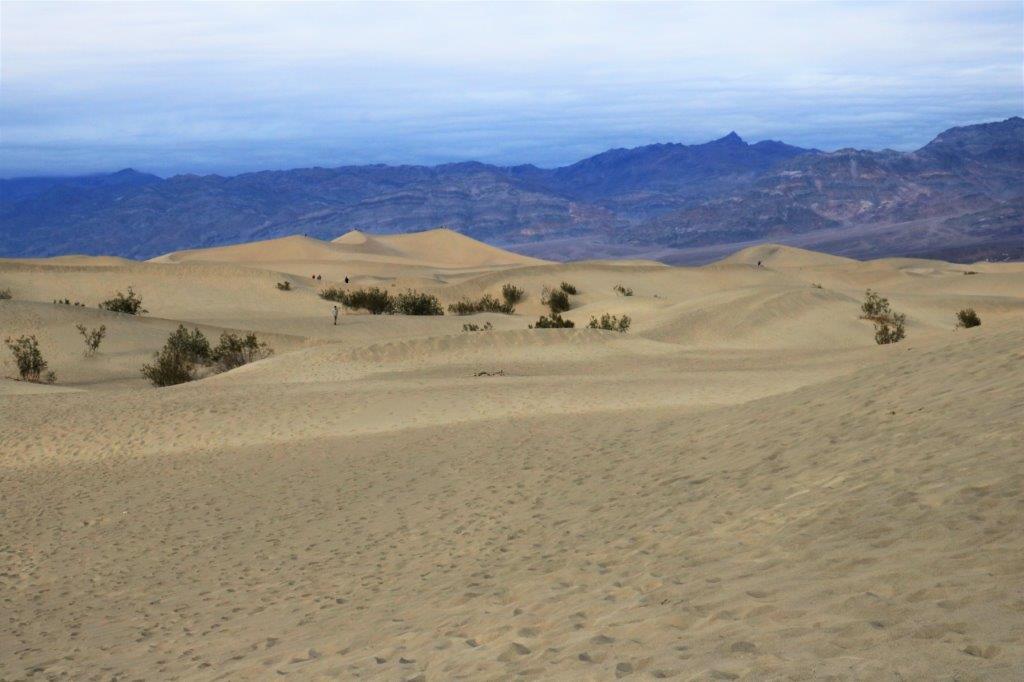
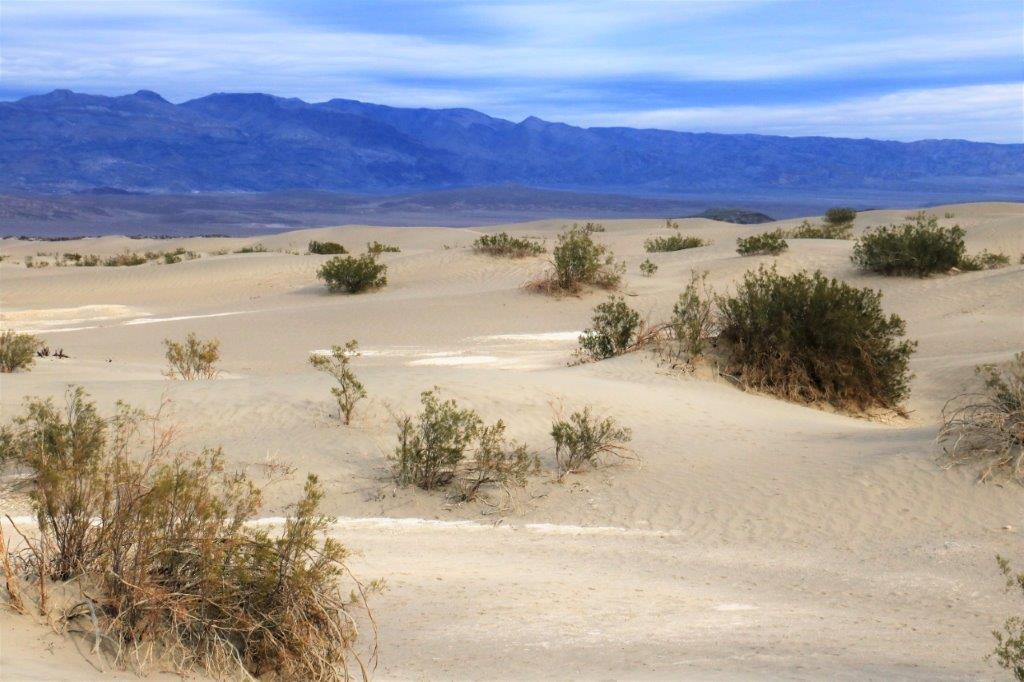
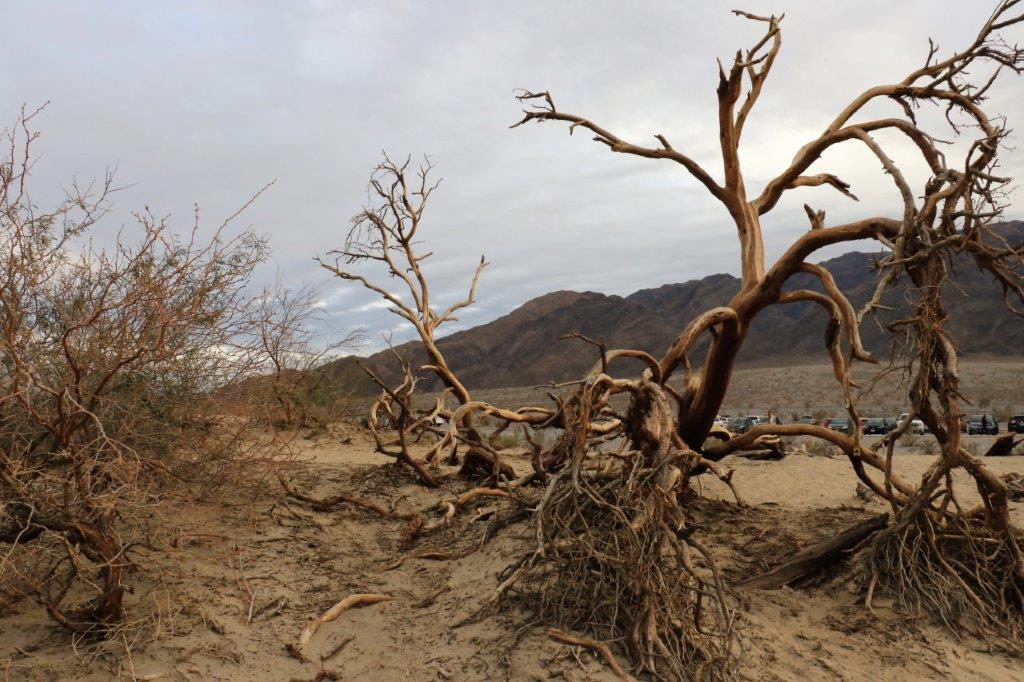
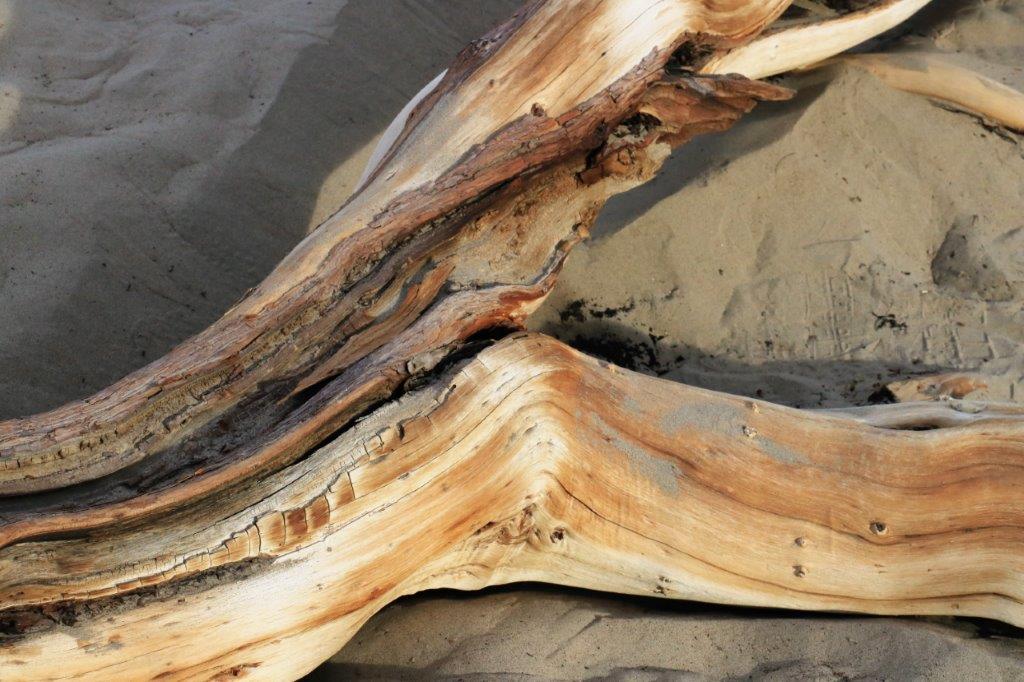
img_6653 img_6654 img_6661 img_6663 img_6664 img_6665 img_6669 img_6670 img_6673 img_6674 img_6677 img_6678 img_6680 img_6681 img_6683 img_6684 img_6686Our last stop was at the Mesquite Sand Dunes. We had been here last year not realizing there are two Earth Caches here. The dunes are right beside the road we need to take to leave the park so we stopped in again to find the information we need to get the Smileys (a smiley face will display on the map to show caches you have found.)

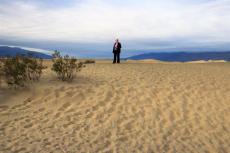
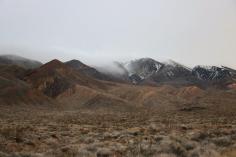
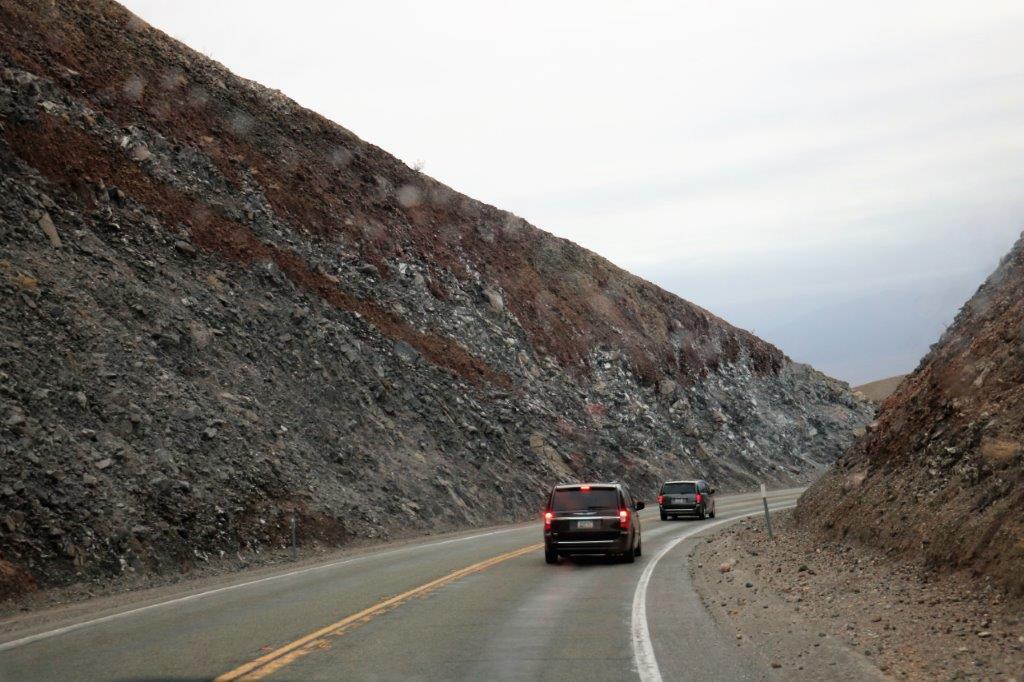
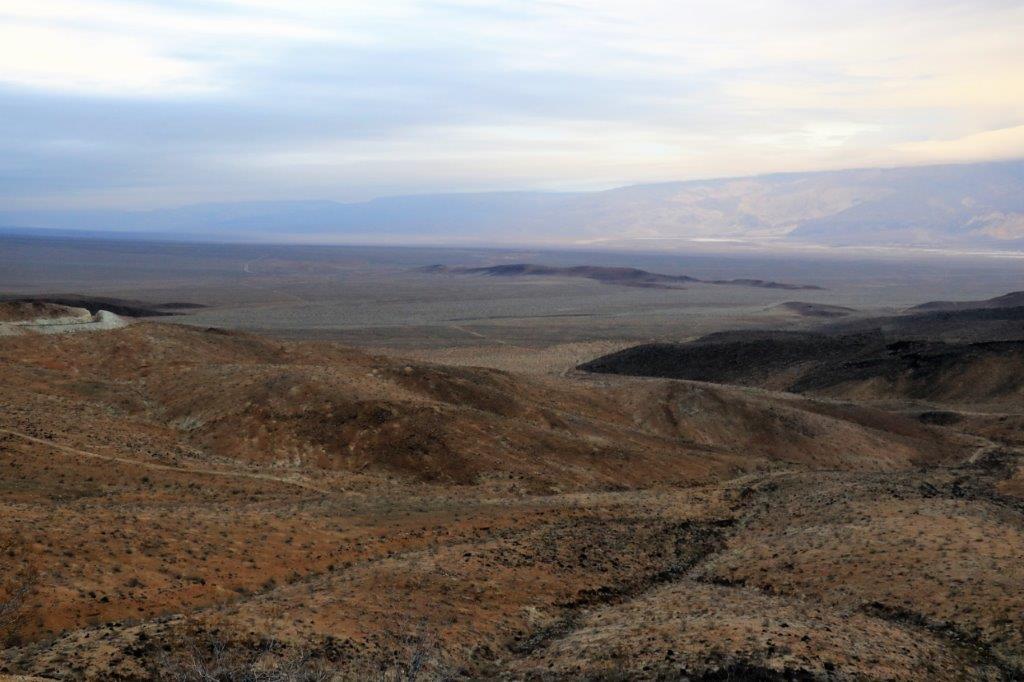
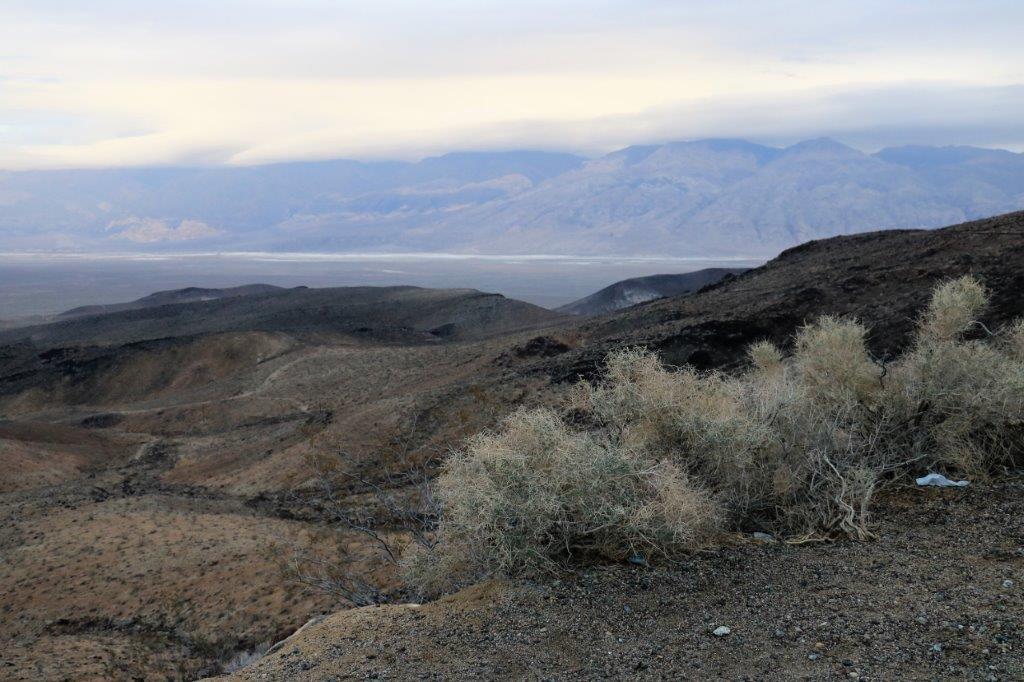
img_6691 img_6699 img_6701 img_6703 img_6707 img_6709After we climbed a few of the sand dunes we made a brief stop at the General Store at Stovepipe Wells for a sandwich to eat on the way.  The man at the counter said a big storm was coming in and we could see clouds gathering in the mountains.img_6716 img_6717The western boundary of Death Valley National Park is the Panamint Ridge.  It is a very long climb from the valley through the pass and down the other side to the Panamint Valley.  Panamint Valley is 65 miles long and 10 miles wide.  Death Valley runs in a NW-SE direction.  Panamint Valley runs due North-South and is bordered on its western side by the Amargosa Range.  The Valley is used extensively for low-level test flying by the American military.  If you are up at  Aquereberry Point high in the Panamint Ridge it is not unusual to get buzzed by a jet plane.
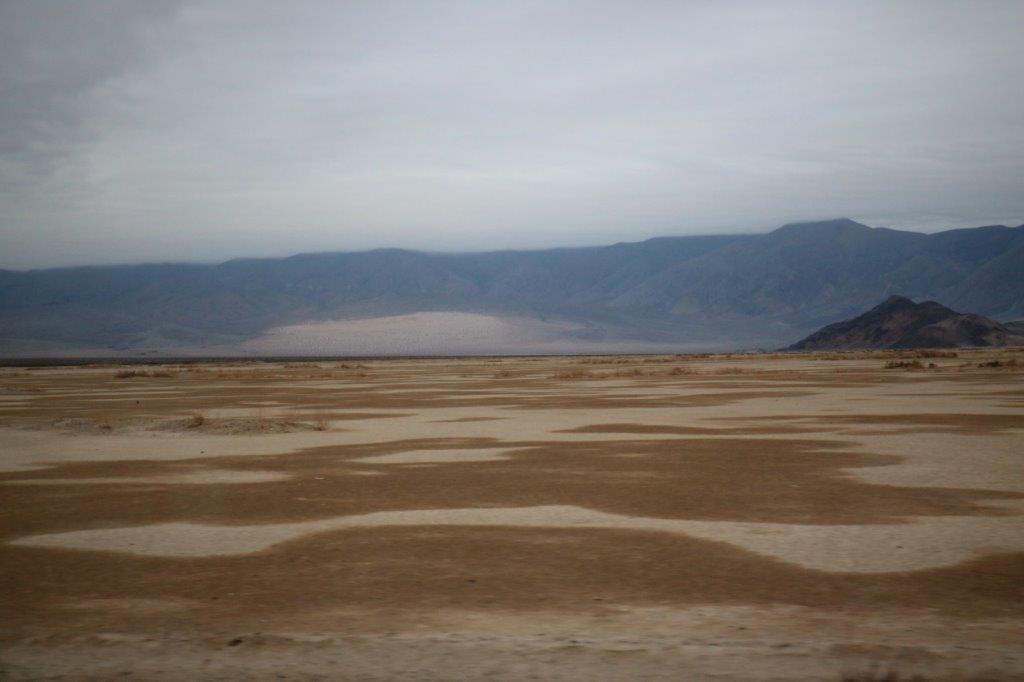
img_6721 img_6724 img_6740 img_6745 img_6748The ‘white’ strip in the middle of the valley bottom is a miles-long strip of compacted sand.  There had been rain recently and the sand had interesting, blotchy patterns of moist and dry.

img_6756 img_6760 img_6767-2 img_6769-2Once we left the Panamint Valley it was a short 15-20 miles into Ridgecrest and our stop for the night.  Chock up another day of interesting sites and places.
 

2017 Jan. 6, – Day 4 – Winnemucca, NV to Tonapah, NV

It was freezing cold, still, when we got up this morning.  The poor staff at the hotel desk had to go buy some space heaters to deal with the cold air that kept coming in when the lobby doors opened.  The amount of snow they have now is quite normal, but the cold snap is not.  And they don’t like it.  I told the greeter at Wal-Mart (John needed some sunglasses and we stock up on our soap when in the US) that it was my fault.  We dragged it with us.  I told her to tell any of the customers that Janet is to blame.  She promised she would place all the blame on the Canadians.  For the first time on our trip all the bottles of water in the back seat of the truck froze solid overnight.  Did I mention it was cold in Winnemucca this morning?
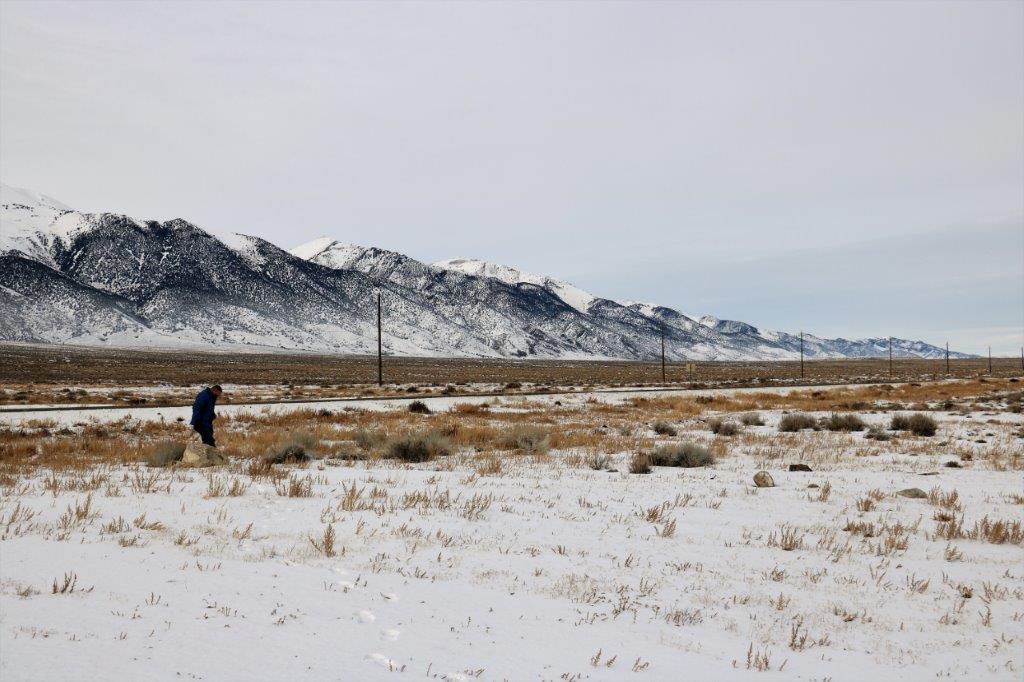
We found our first geo-cache of the day, “Wally Rock,” under a tree (fake rock) at the far end of the Wal-Mart parking lot.   It was so cold none of the pens would write on the log paper so all that shows is some indentations with a few ink marks.

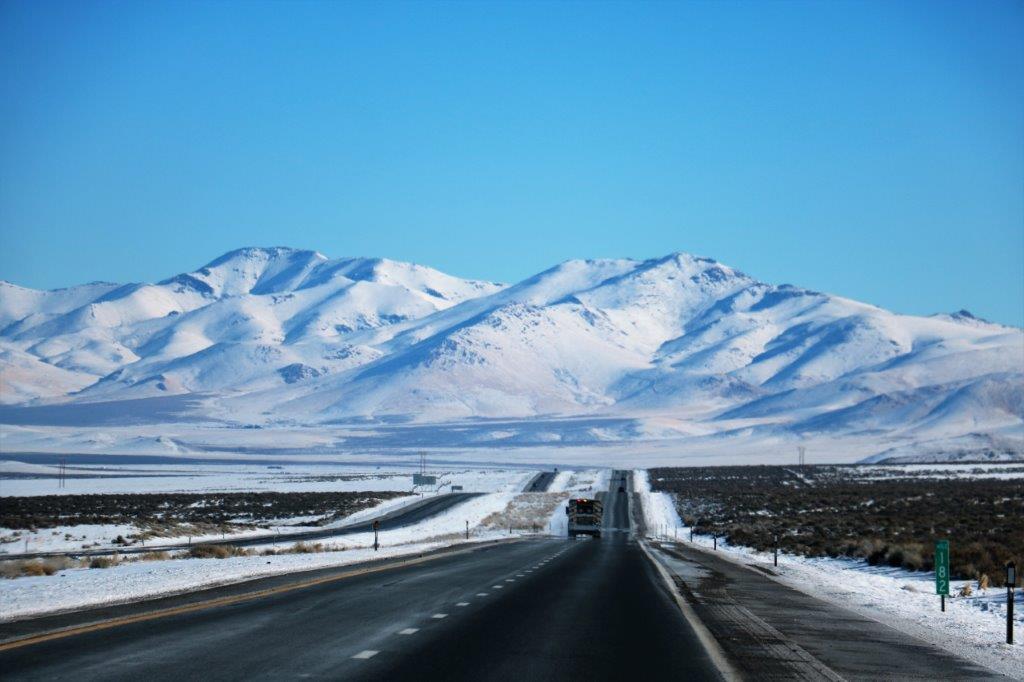
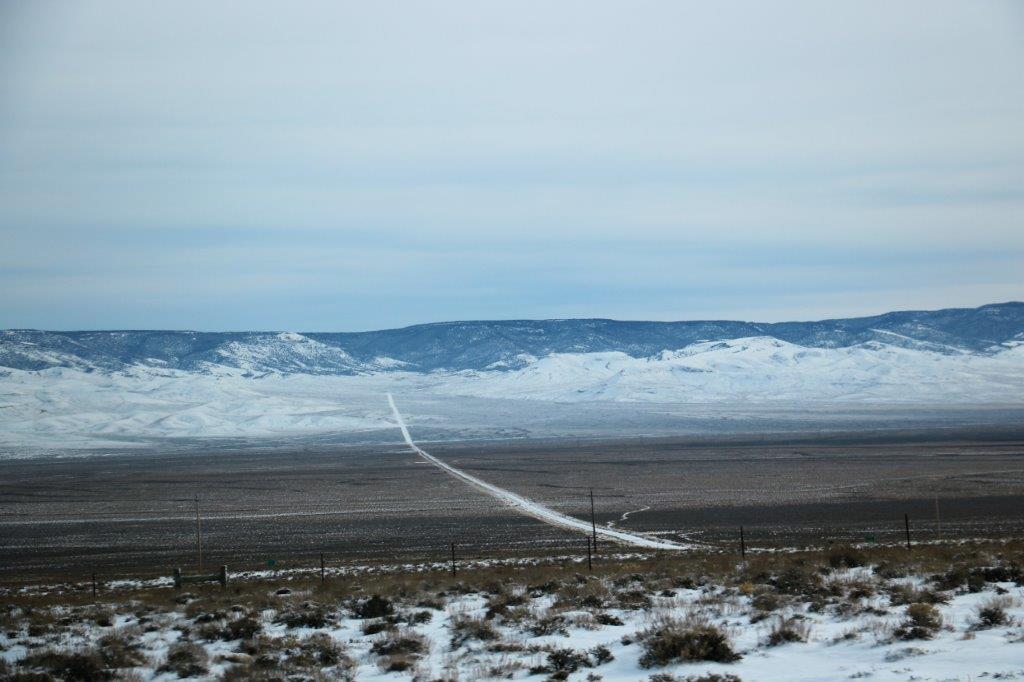
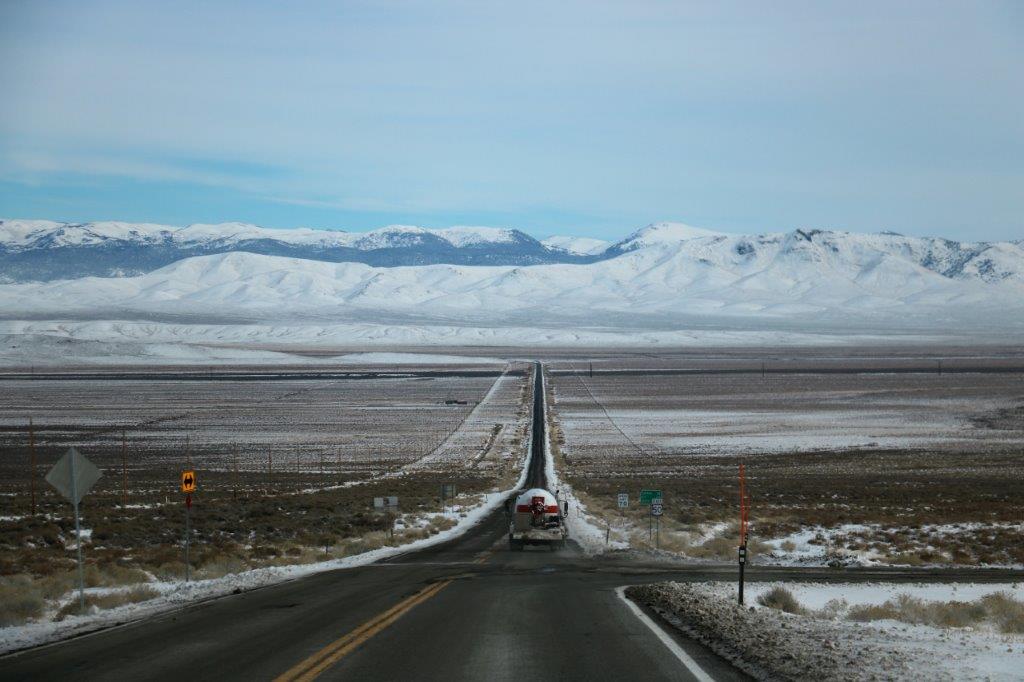
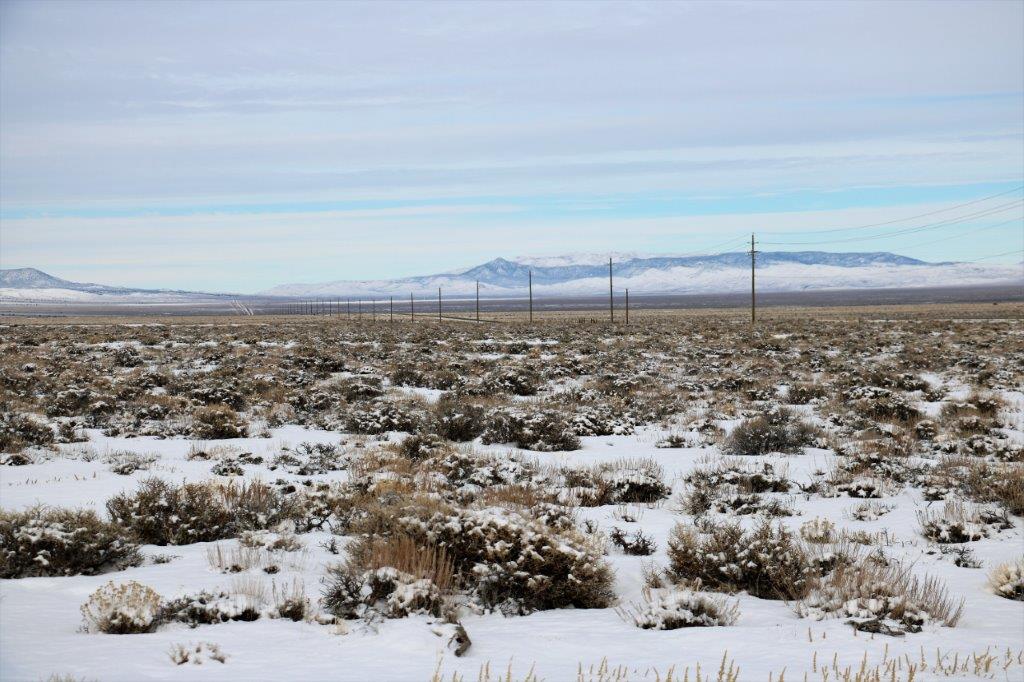
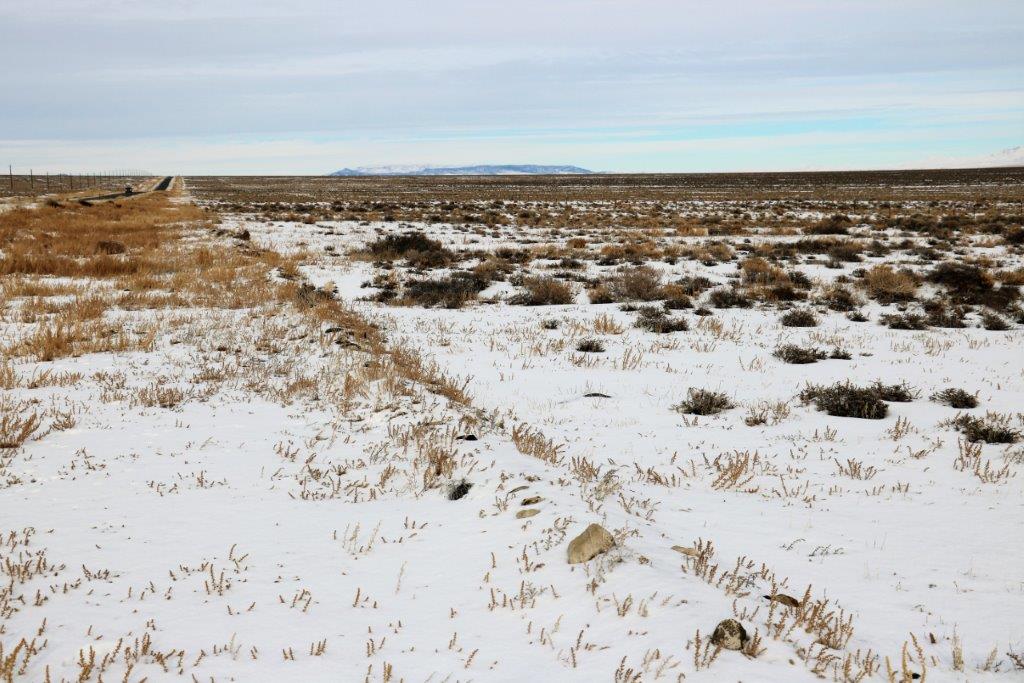
We left Winnemucca about 10:30 and drove SE on Hwy 80 to Battle Mountain.  We followed a long  stretch of straight, flat road then went up through the Golconda Pass, descending into flat valley bottom again.  After that it was straight road all the way south from Battle Mountain to Austin on Hwy 305.  There is nothing out here but sand and scrub so no need to make turns in the roads.

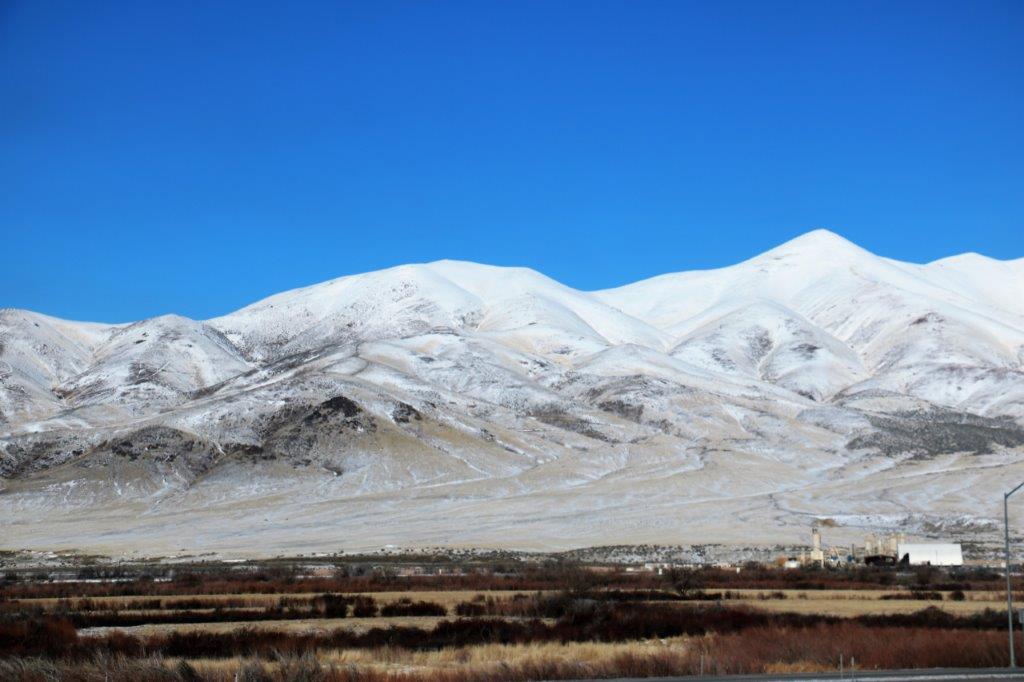
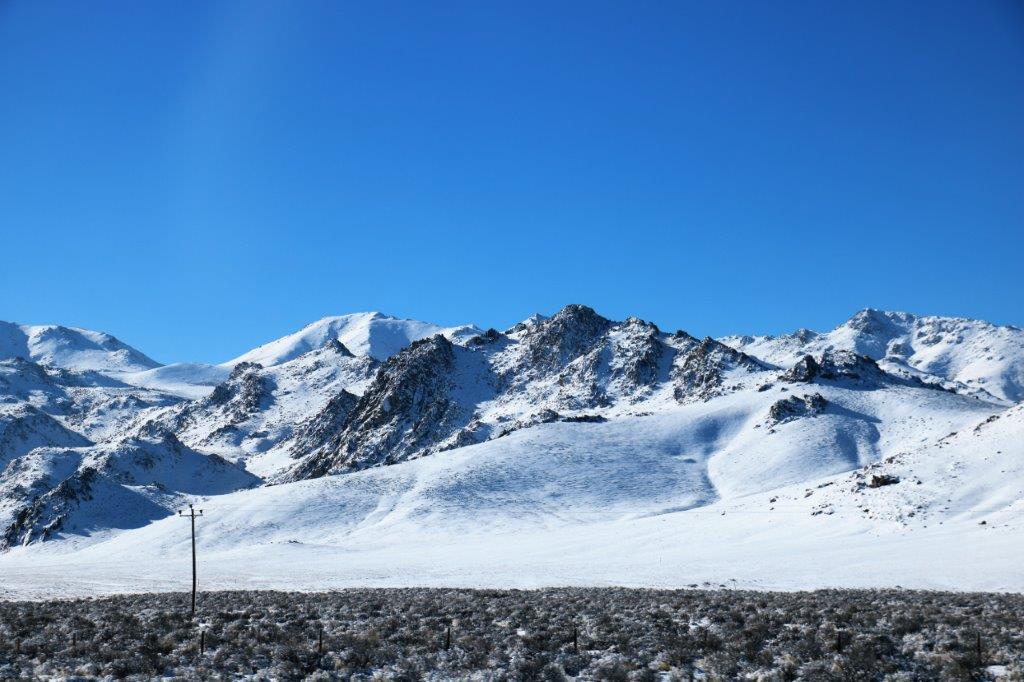
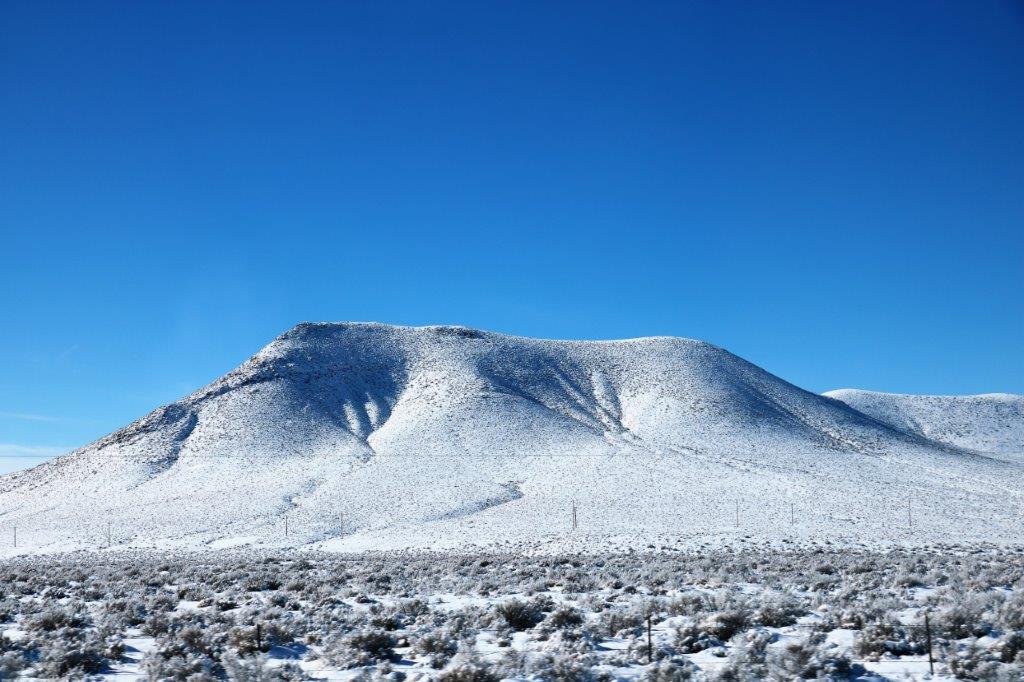
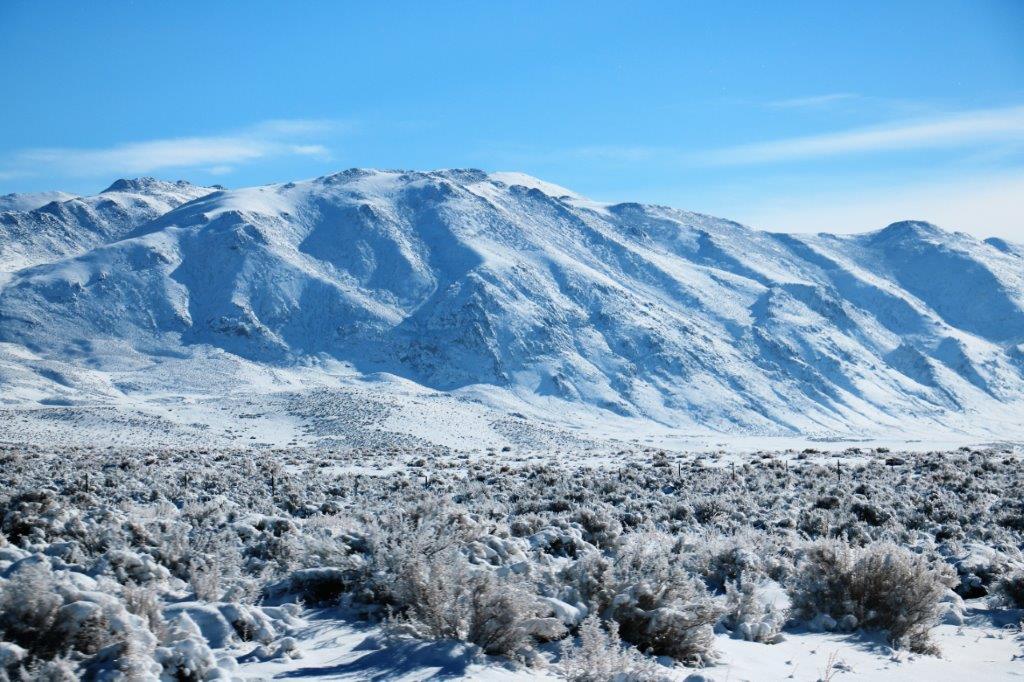
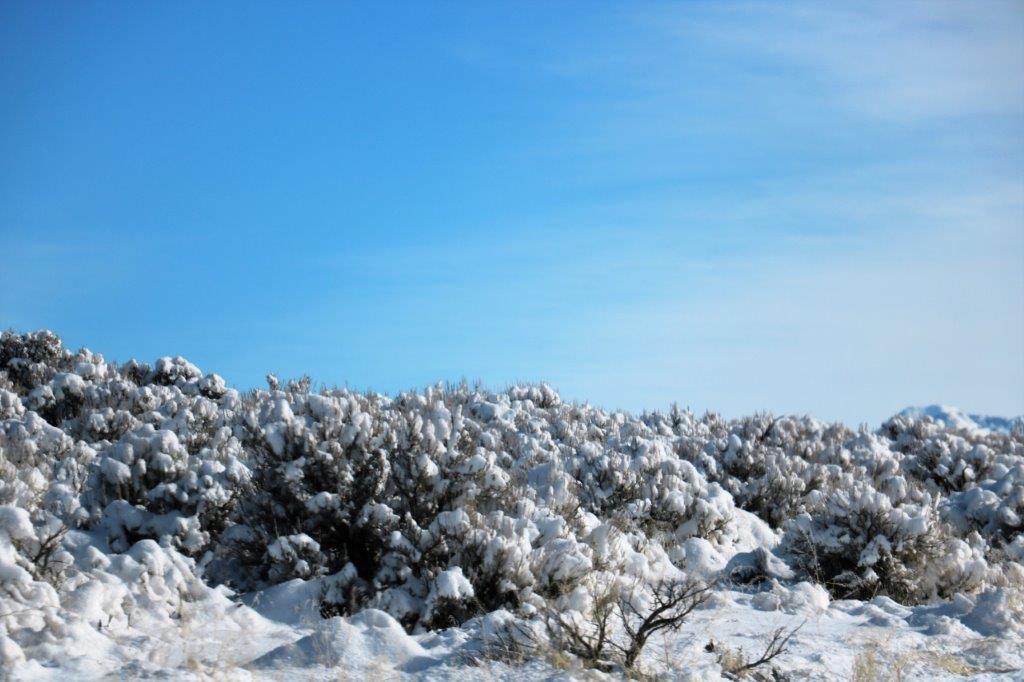
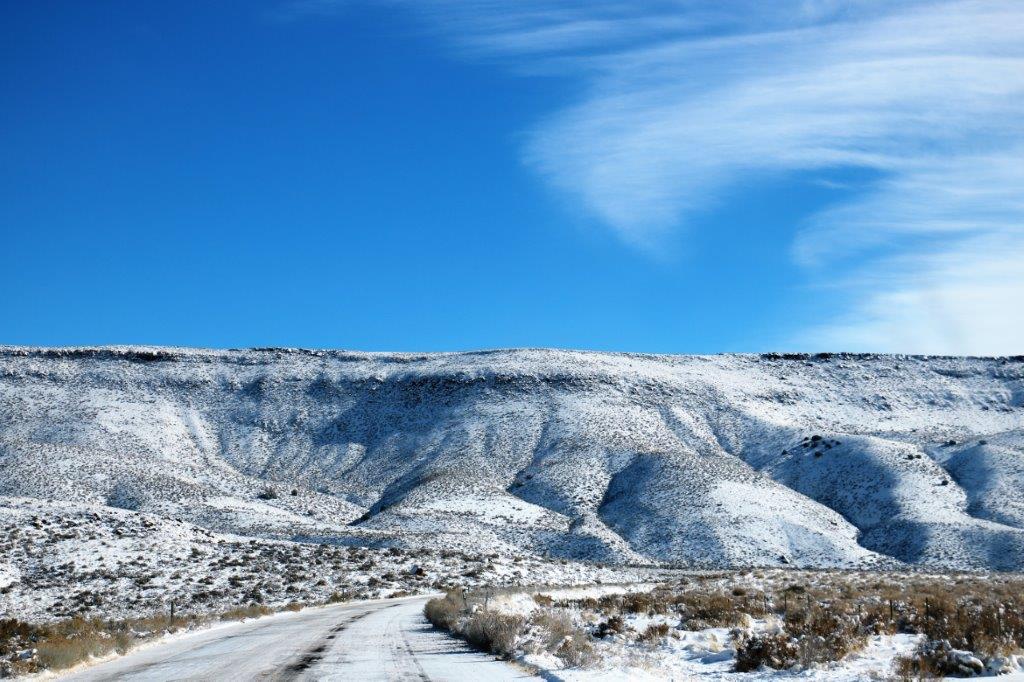
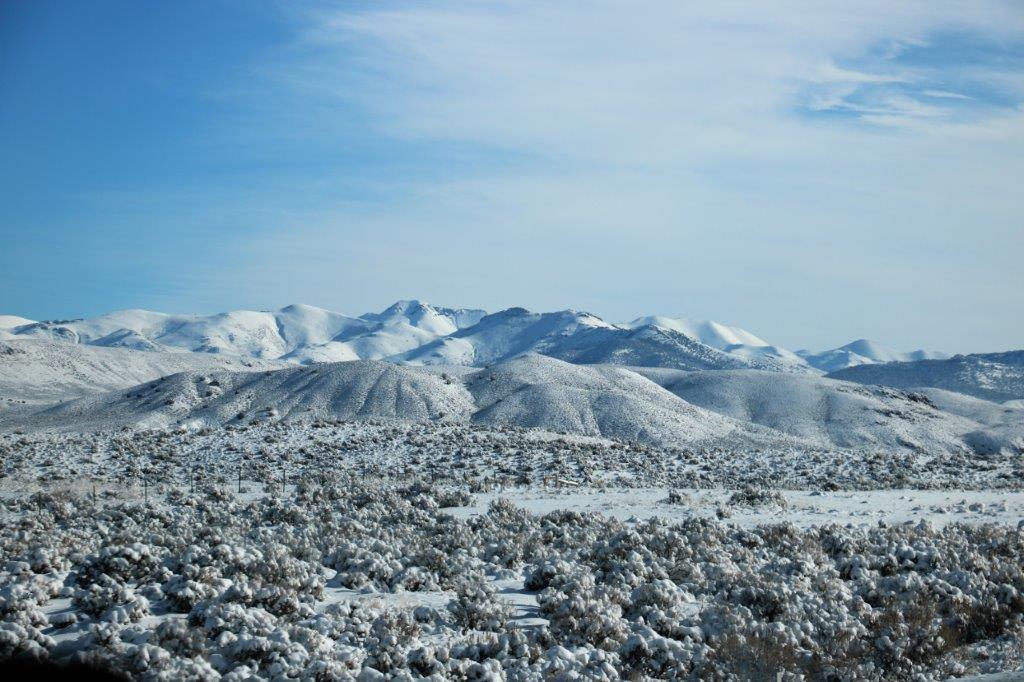
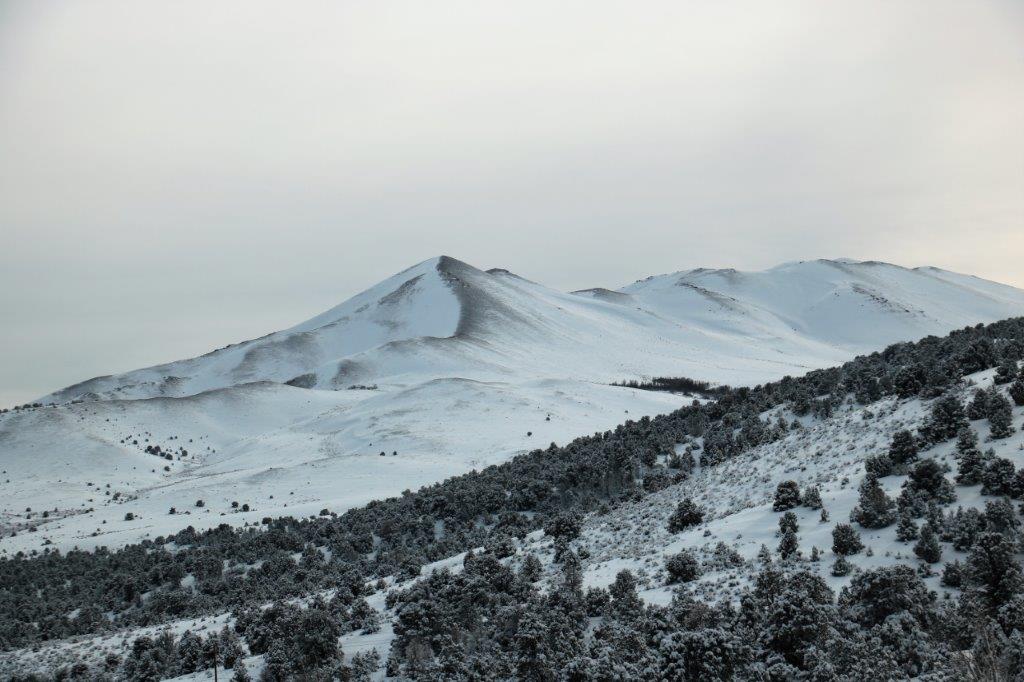
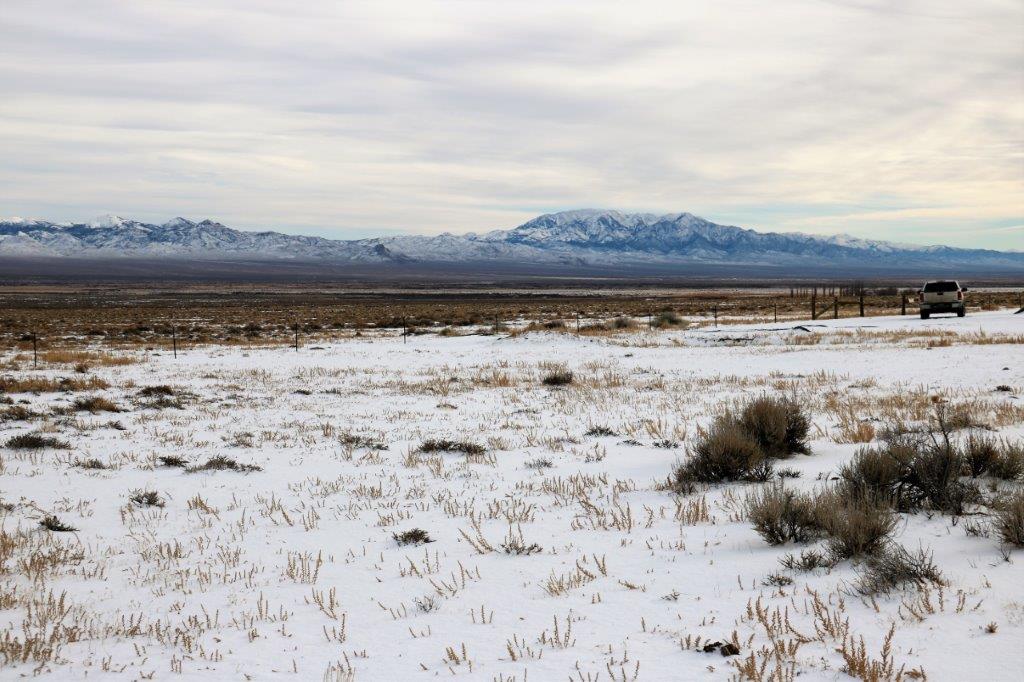
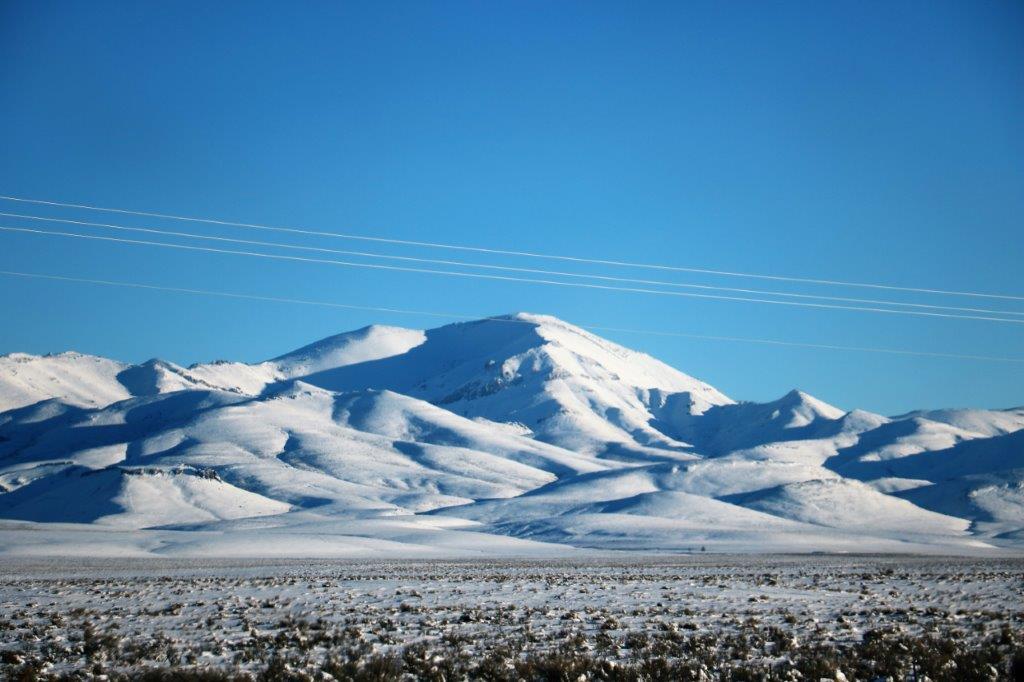
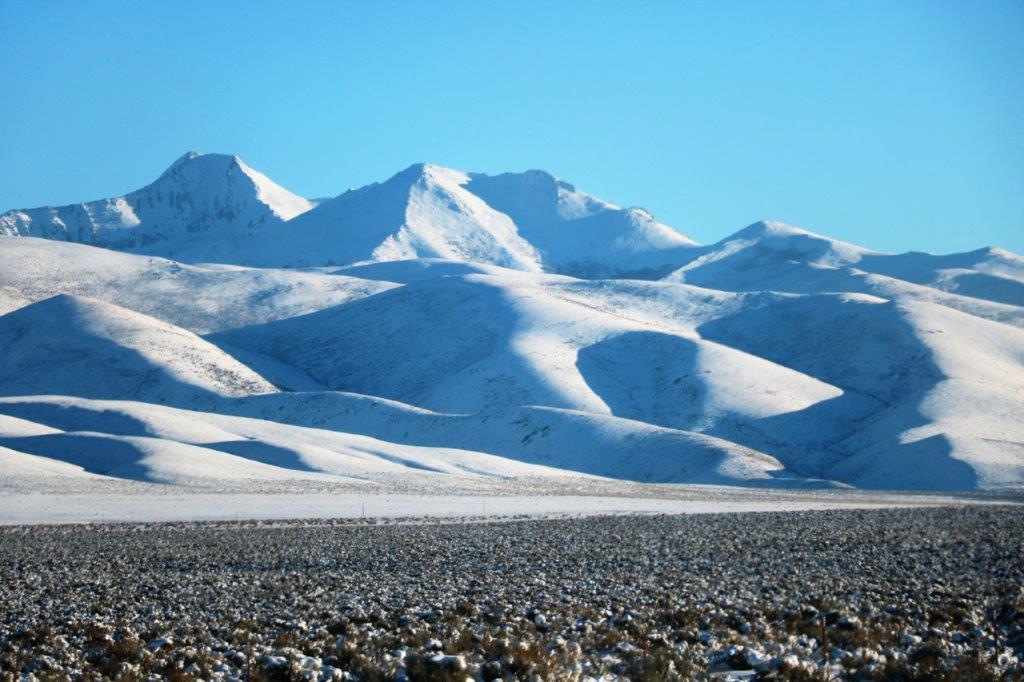
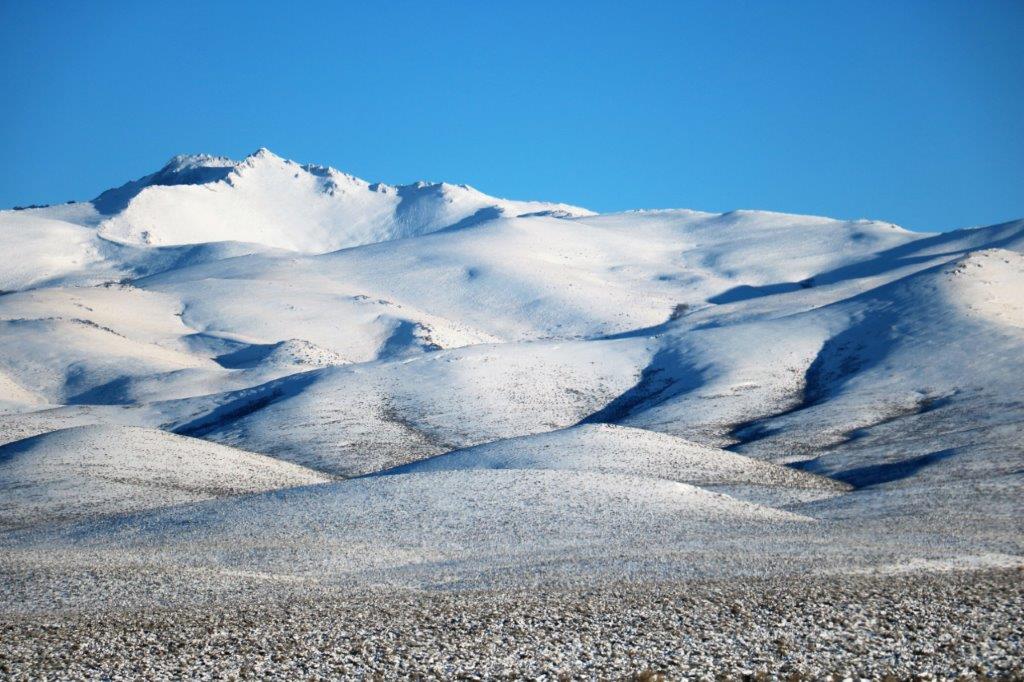
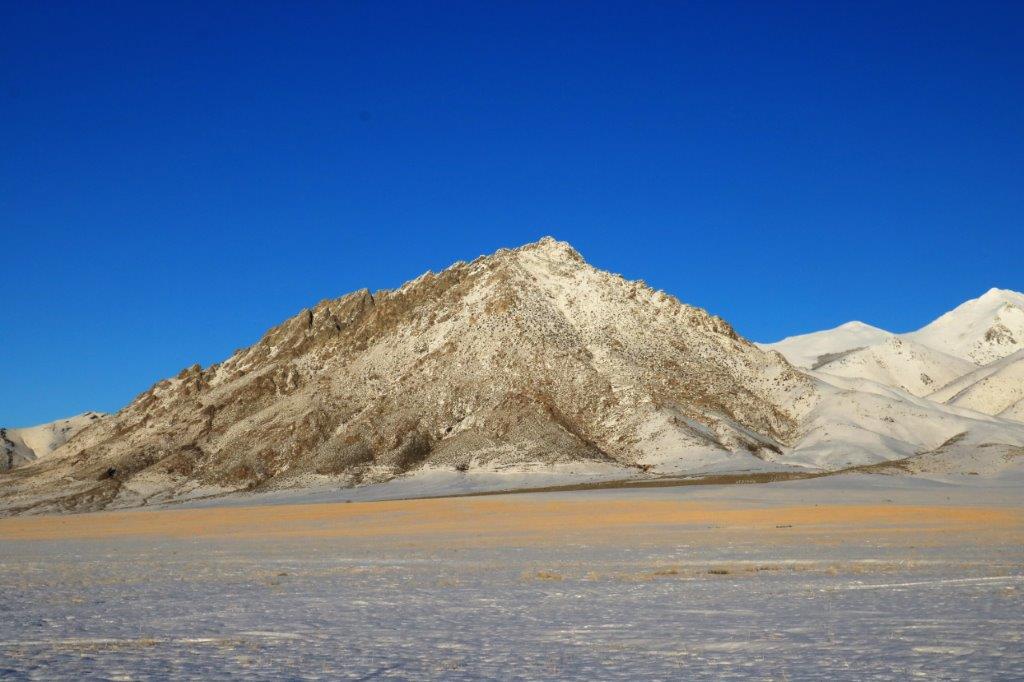
Most of the scenery was the same as yesterday; snow-covered trees, scrub brush, and mountain slopes.  As usual I took lots of photos of all of the above but I have weeded out a lot of them so you won’t get too bored (hopefully). I can’t help myself, it all looks so pretty!

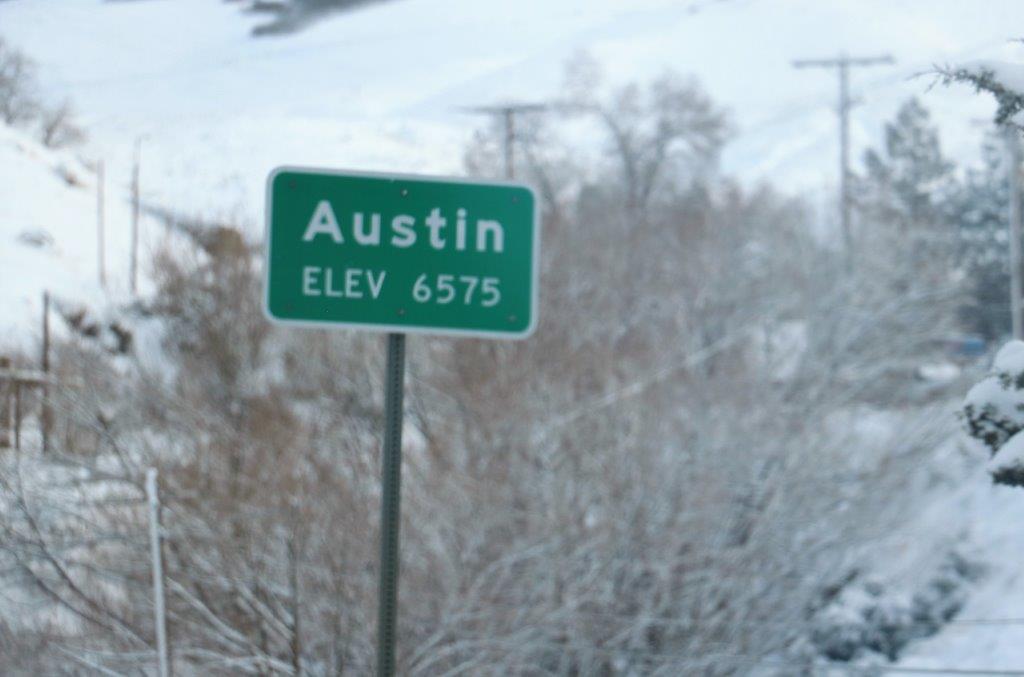
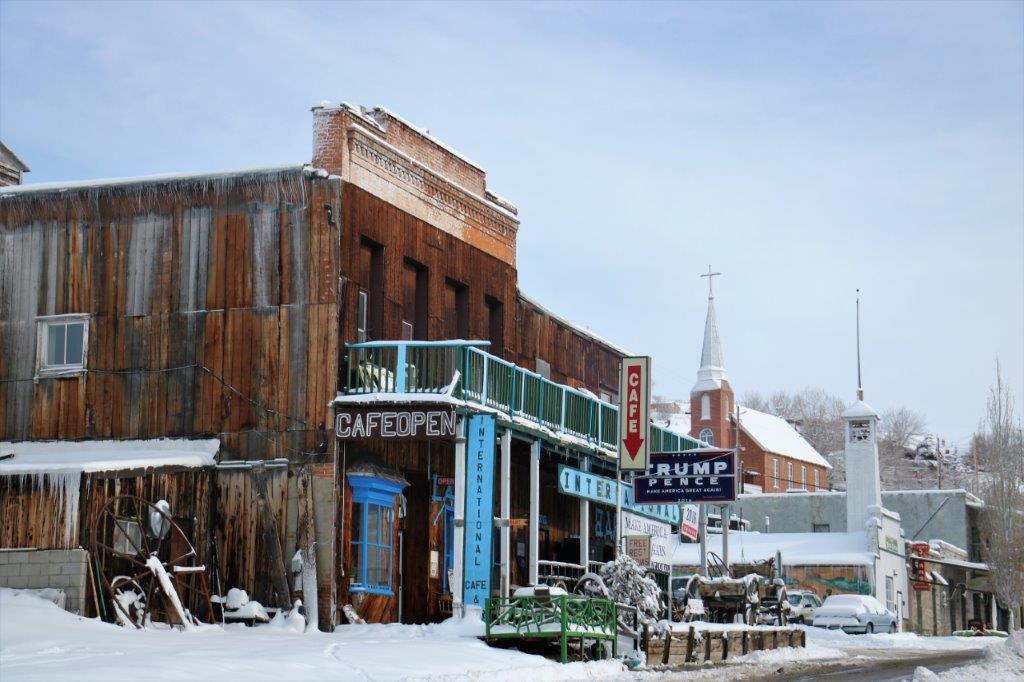
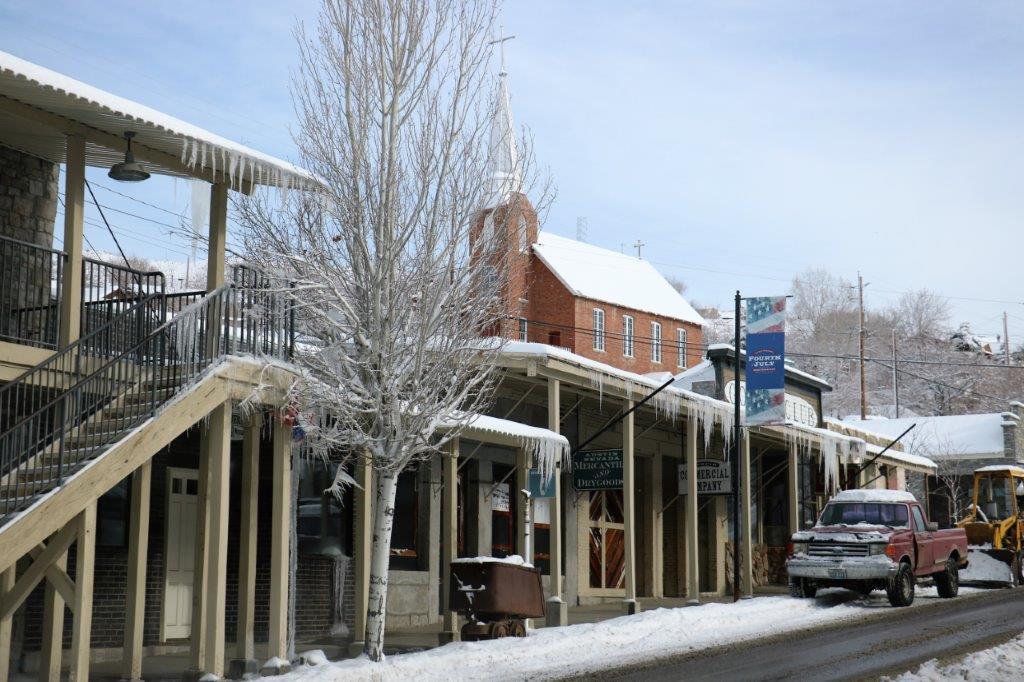
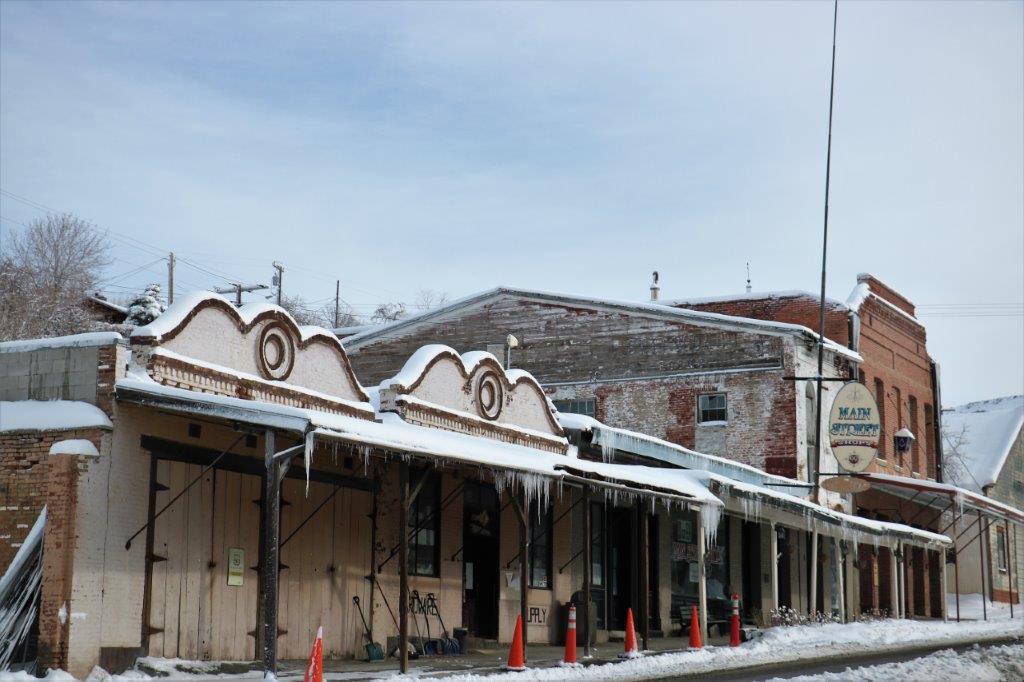
img_6341 img_6346 img_6348 img_6352 img_6355 img_6359 img_6362 img_6365 img_6373 img_6370img_6375 img_6380Austin is a typical old cowboy town.  The area is billed as “The Heart of Pony Express Country.”

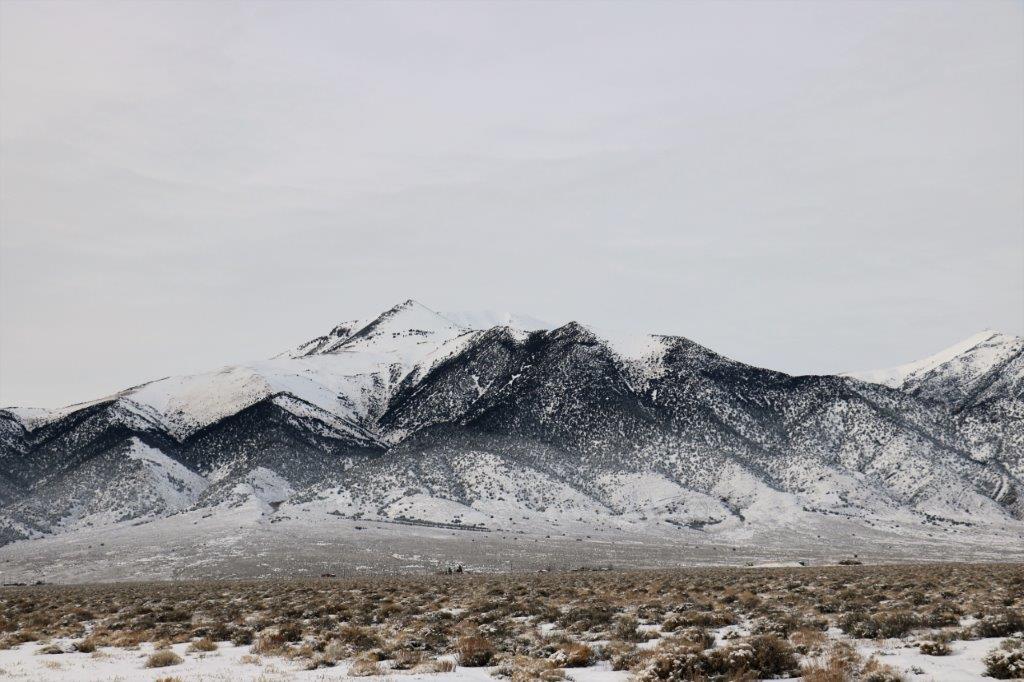
img_6398 img_6399 img_6400 img_6402 img_6404Immediately east of Austin we climbed through the Toiyabe Range along Hwy 50 for a few miles before turning south on Hwy 376  to Tonapah, where we are spending the night.  We drove pretty much down the middle of the middle of Nevada through the Big Smokey Valley with the Toiyabe Range on the right and the Toquima Range on the left.

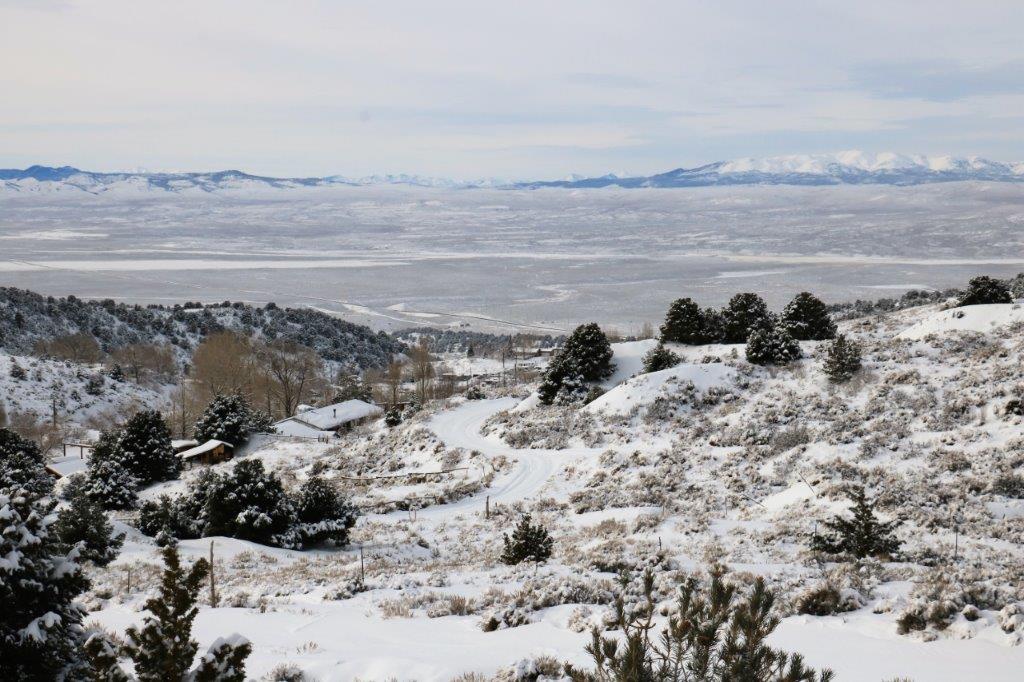
Looking down on Austin and back along the flat valley we crossed.img_6406img_6420 img_6424 img_6427 img_6430 img_6432 img_6444About half-way between the turn-off to Hwy 375 and Tonopah is a small community called Carvers. I turned on the data on my phone to see if there were any geo-caches in the area and spotted two not far ahead.
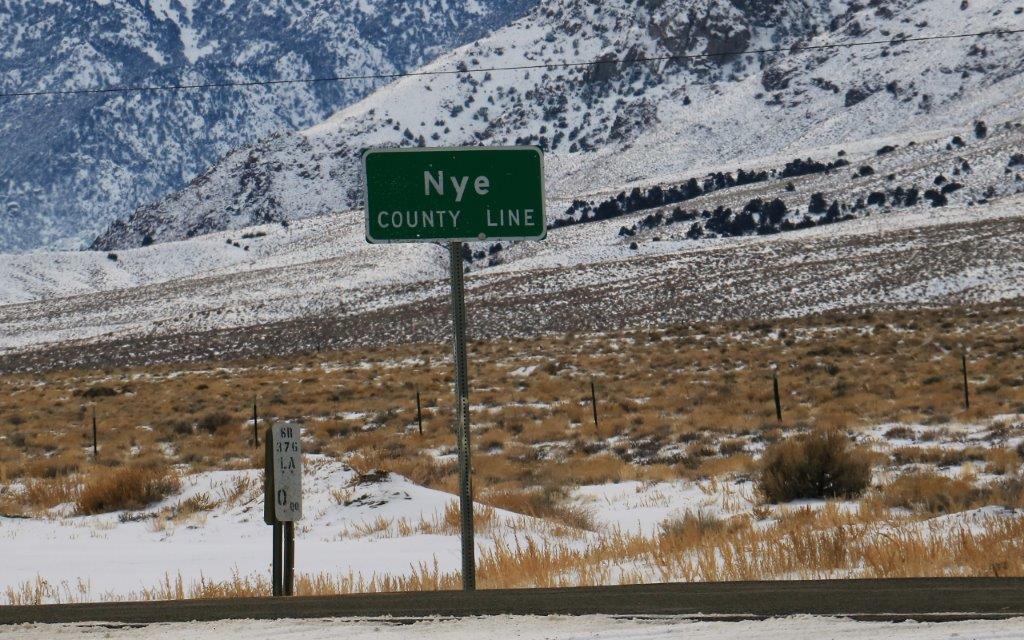
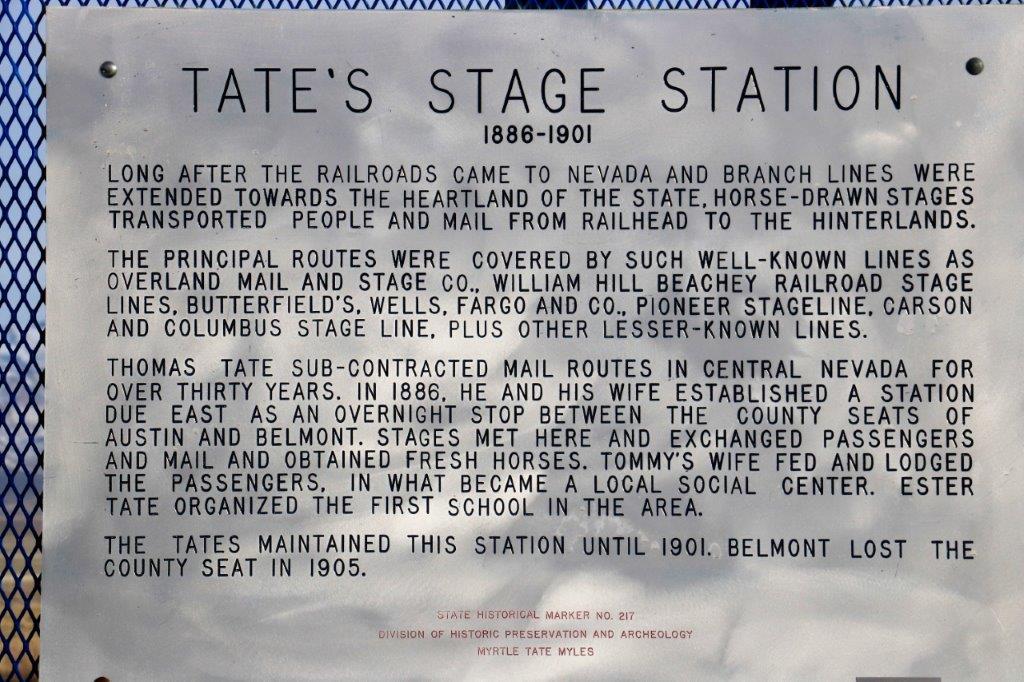
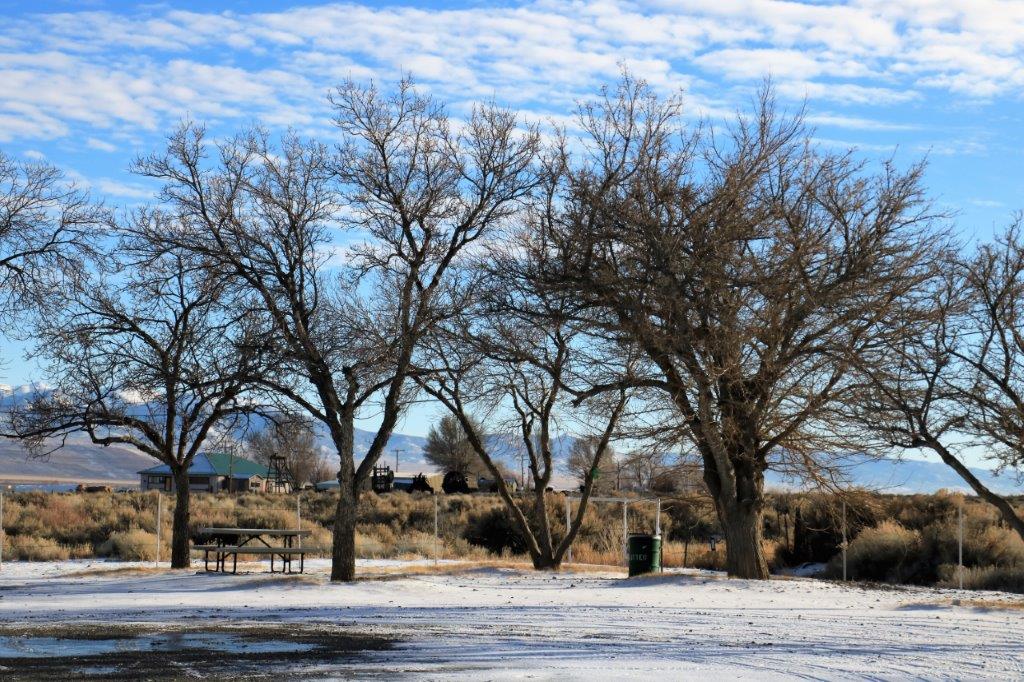
The first was hidden among a pile of rocks at the Nye County line and the second was at a State Heritage Marker where Tate’s Stage Station was once located.img_6445 img_6447 img_6450 img_6452 img_6456img_6457img_6458img_6463A bit further down the road was a rest stop at another State Heritage Marker about the Big Smokey Valley.  Once again it was so cold the pen wouldn’t write (after this I took a pencil for signing the logs).
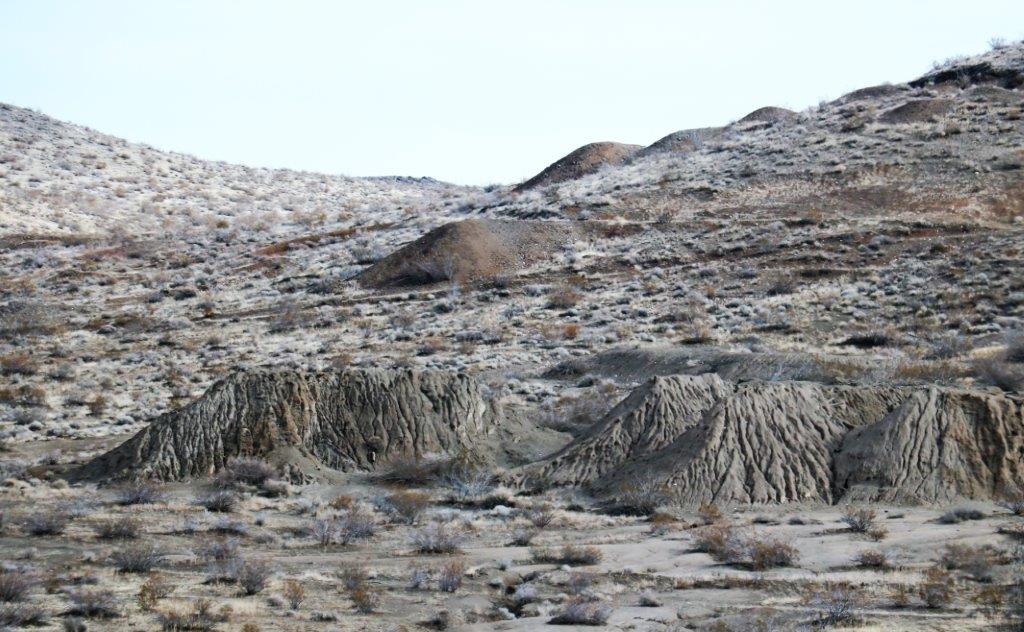
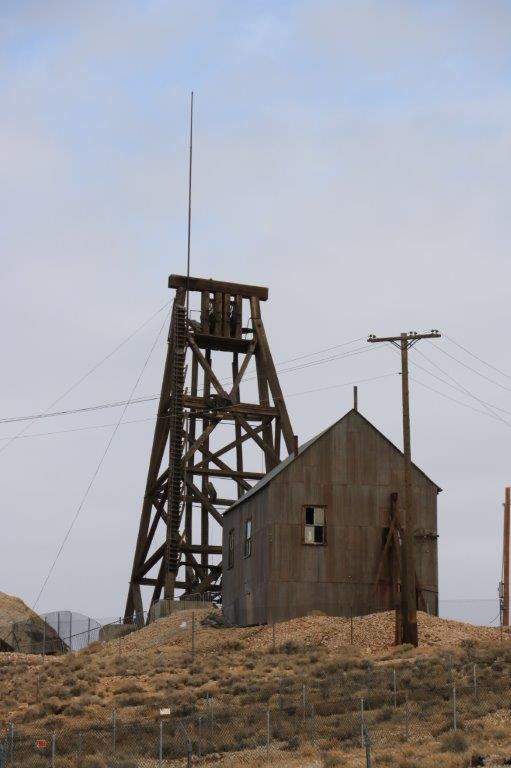
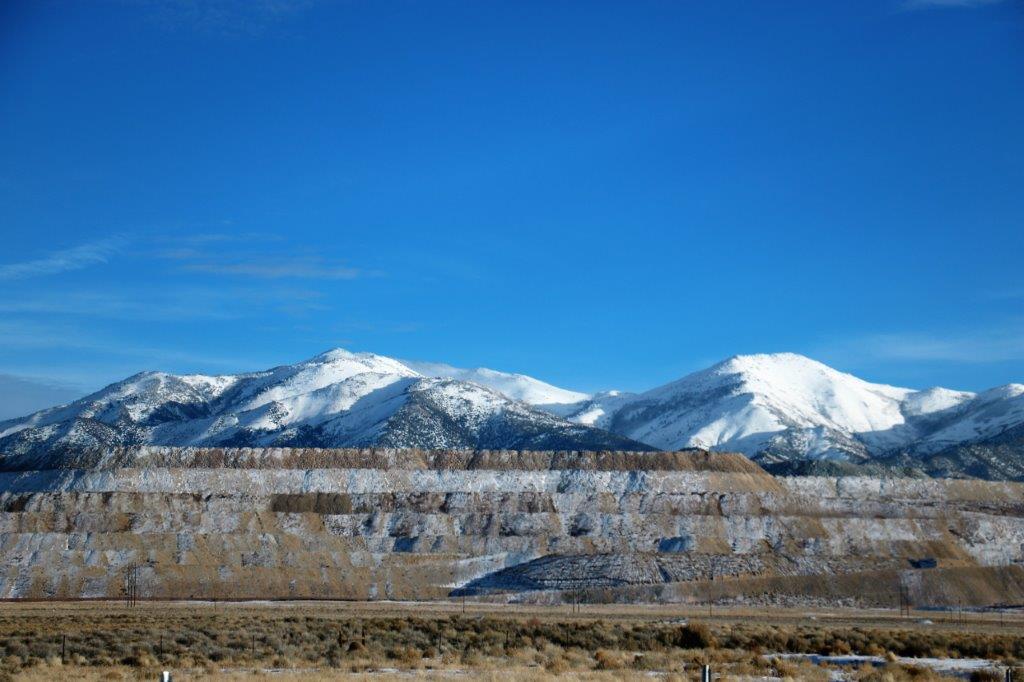
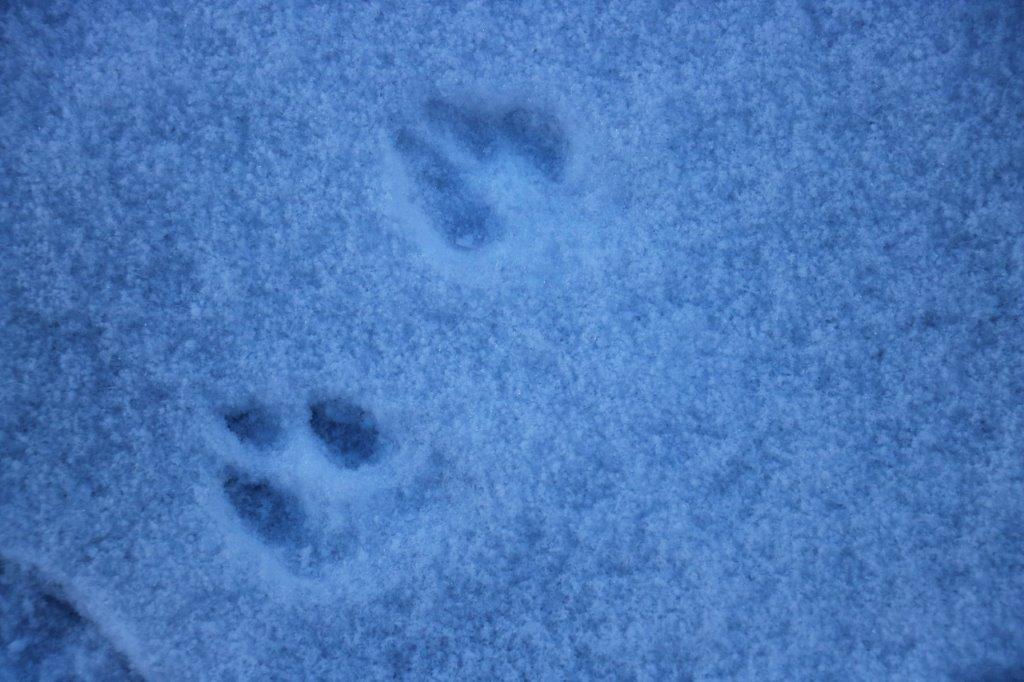
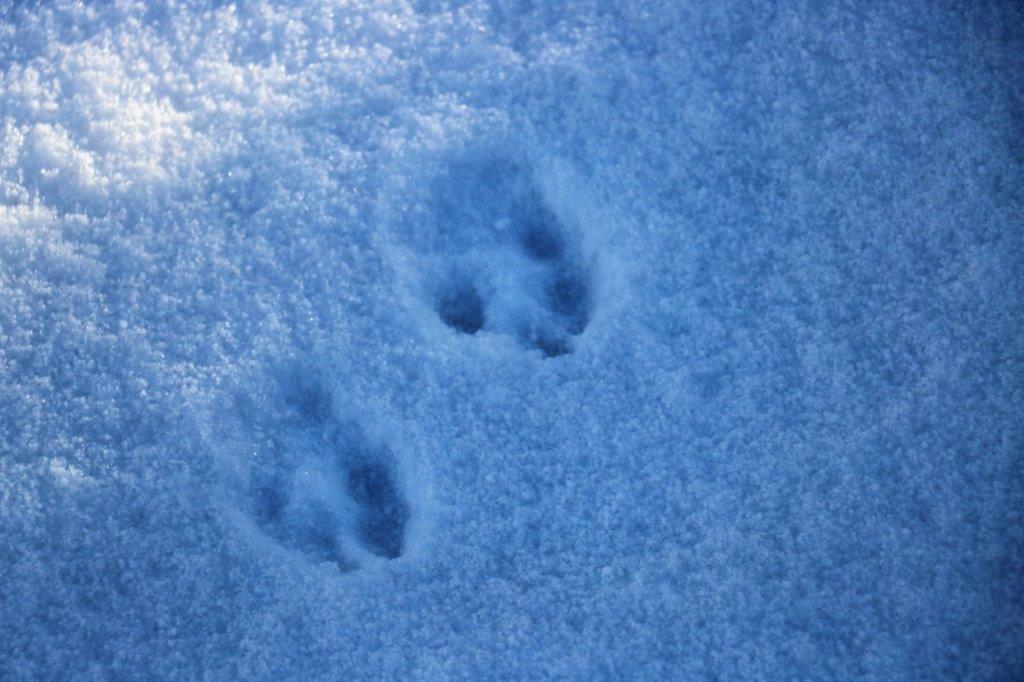
img_6465 img_6467 img_6473 img_6474 img_6476 img_6477 img_6479There were tracks from little critters winding all around the bushes.img_6469 img_6470We passed the tailings from a gigantic pit mine.  There were three or four separate multi-layer hills of them.  I commented that it must be a big pit.  We looked it up on the internet and the Big Smokey mine is an open pit heat-leech gold mine.  Between 1906 and 2006 it yielded 10,000,000 ounces of gold.  The pit is 2 1/2 km long and 1 1/2 km wide.

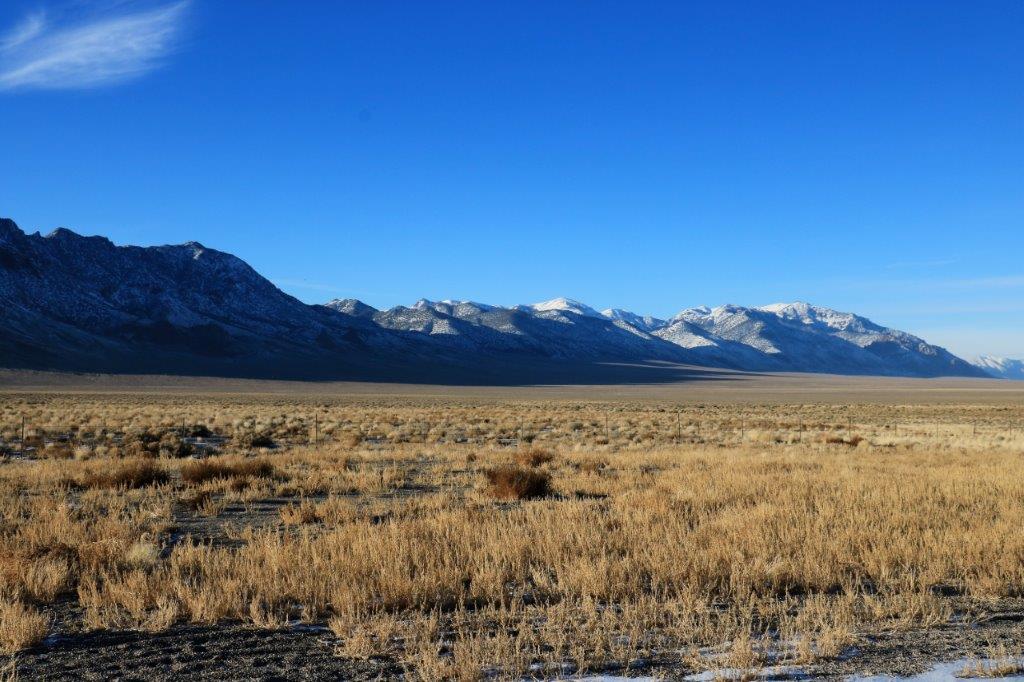
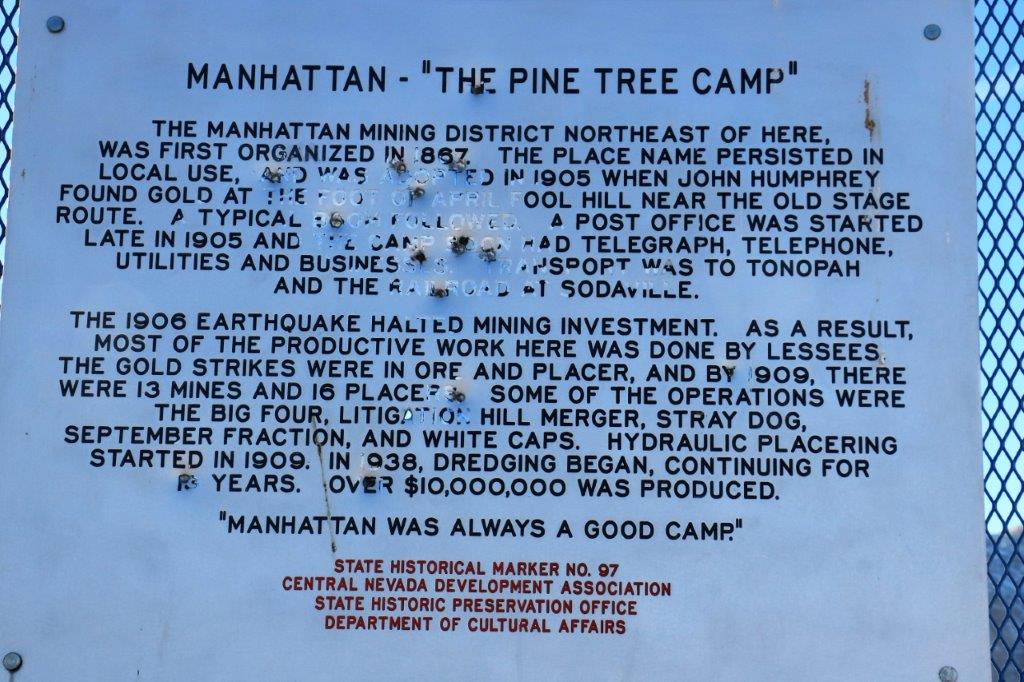
img_6479We found another cache at another State Heritage Marker about Manhattan Junction, a former gold mining community.  img_6481 img_6482 img_6485When John was looking at the geo-cache map in the hotel room last night he discovered that the area between Battle Mountain and Tonapah is positively riddled with power trails and mega-power trails. (A power trail is a series of geo-caches hidden close together along roadsides or trails.  We did four power trails containing 525 caches at Anahim Lake in the BC Caribou this summer.)  The power trails here are VERY long.  Several of them contain over 300 caches.  A group of cachers from the east coast came out here in October and found over 500 caches IN ONE DAY!  We, obviously, cannot take on any of these right now but it has been noted for a future spring or fall road trip.

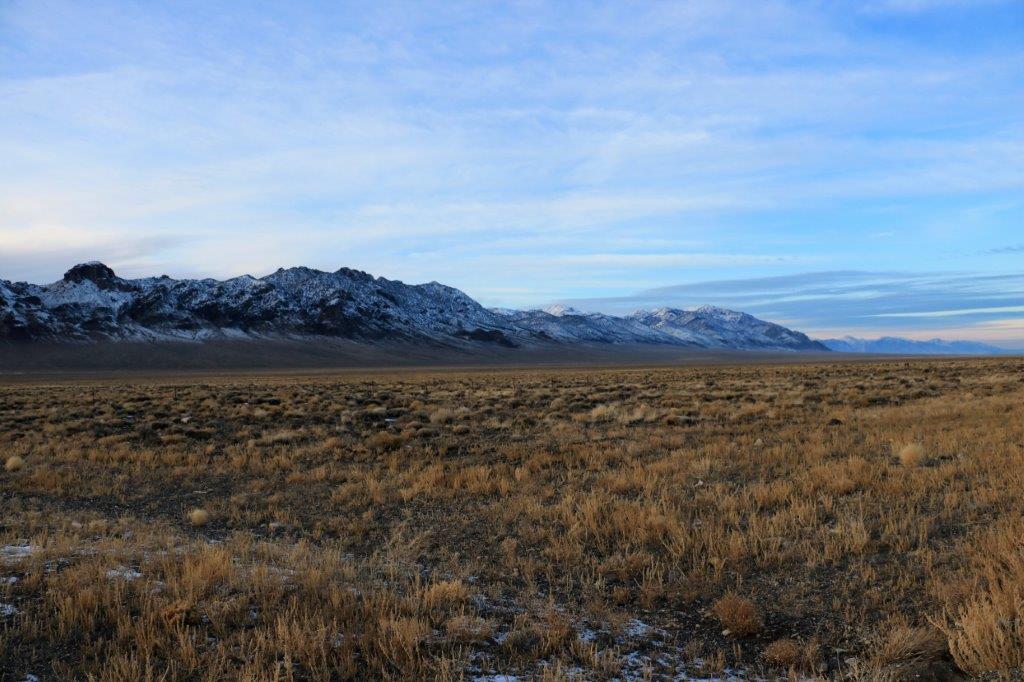
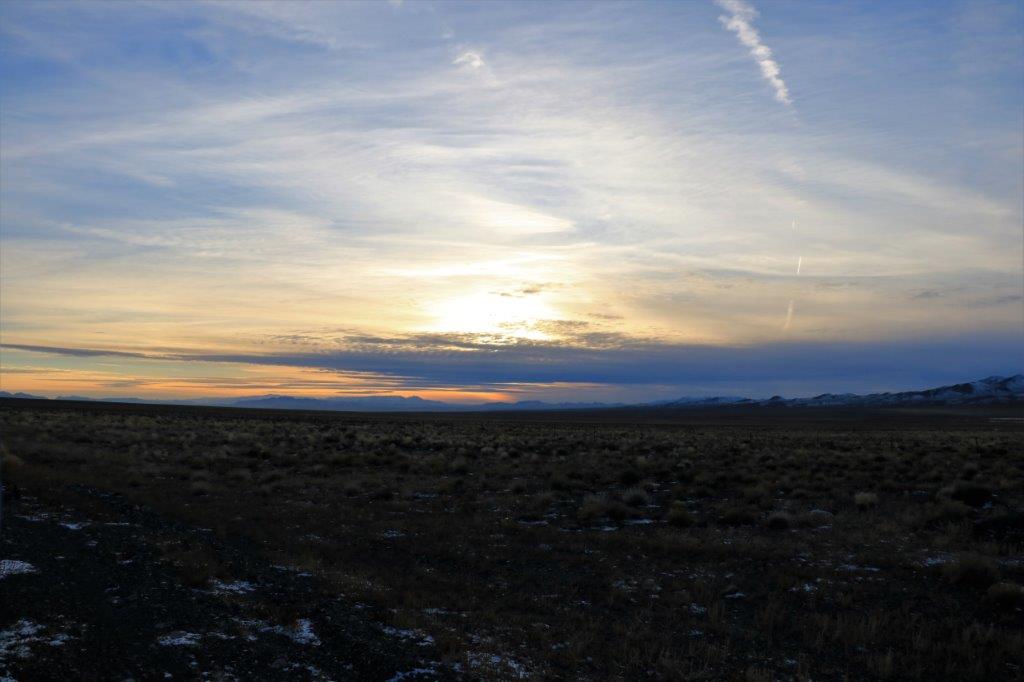
We did however pick up 16 caches from the middle of the BAM series – numbers 285-300.  By then the sun was setting and we still had a 45 minute drive to get into Tonopah.  In total, we found 22 caches today.  Not bad for a traveling day.  (Observe: we left the worst of the cold behind today and you will note from the photos from the latter part of the day that we have almost left the snow behind too.  I knew we would succeed eventually.)img_6499 img_6500 img_6501 img_6506 img_6510

2017 Jan. 5 – Day 3 – John Day, OR to Winnemucca, NV

The snow that was falling when we returned to our hotel room last night in John Day thankfully quit not long after so we did not receive any nasty surprises this morning.

After breakfast we walked around the corner to the Chamber of Commerce building where a cache is hidden.  While I visited with two dogs out for their morning walk, John tried to find it.  No luck.  A staff person came out to see if we needed help with something and we explained why we were wandering around the front of the building.  He did not know where the cache was hidden but he sent out a lady who was a fellow geo-cacher and she told us the cache was hidden in a kettle at the base of a large rock at the edge of the frozen, snow-covered pond.  She told us we could log the find, but we don’t feel right doing that.  We just made a note to come back and actually find it one day and sign the log proper-like.  It was very nice of her to tell us to log it though.

She also told us that having as much snow on the ground as they currently do is very unusual for the area, as is the cold they are experiencing.  We did not escape the cold all day, but we had glorious sunshine for our drive.

We had two part bottles of water (now frozen) in the truck and decided to top them both up with liquid water from another bottle.  I wish I had filmed it.  The new water froze into slush on contact with the ice in the bottles.  It just piled up in a tower to the top of the bottle.  I have never seen anything like it.  Obviously the unopened water was a hairs-breadth from freezing and contact with the ice just pushed it over the edge.  A great science experiment, I think.

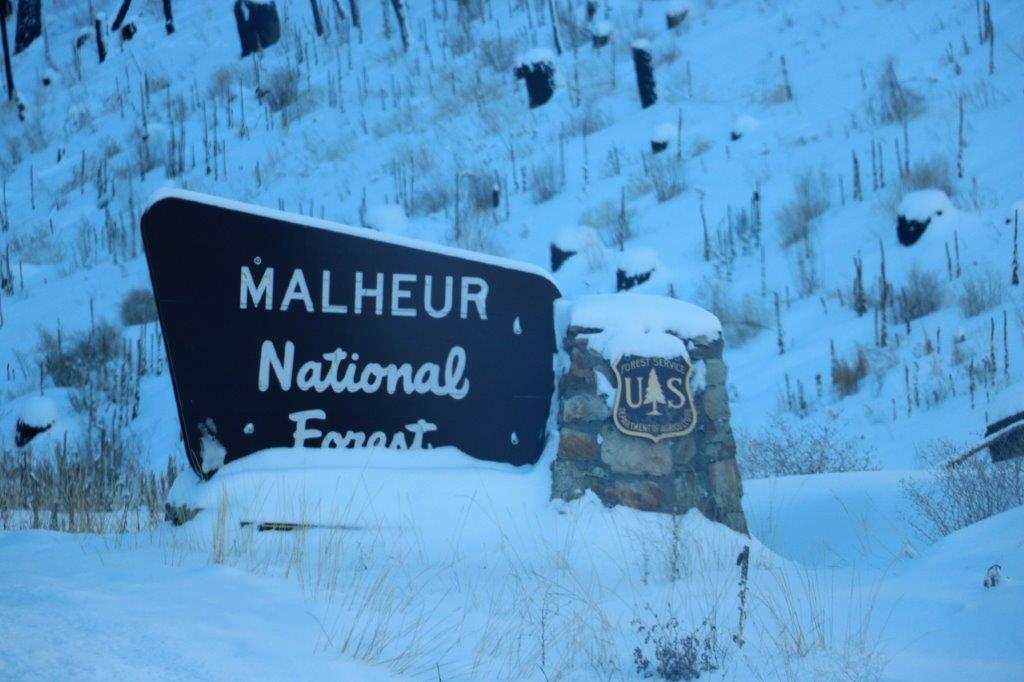
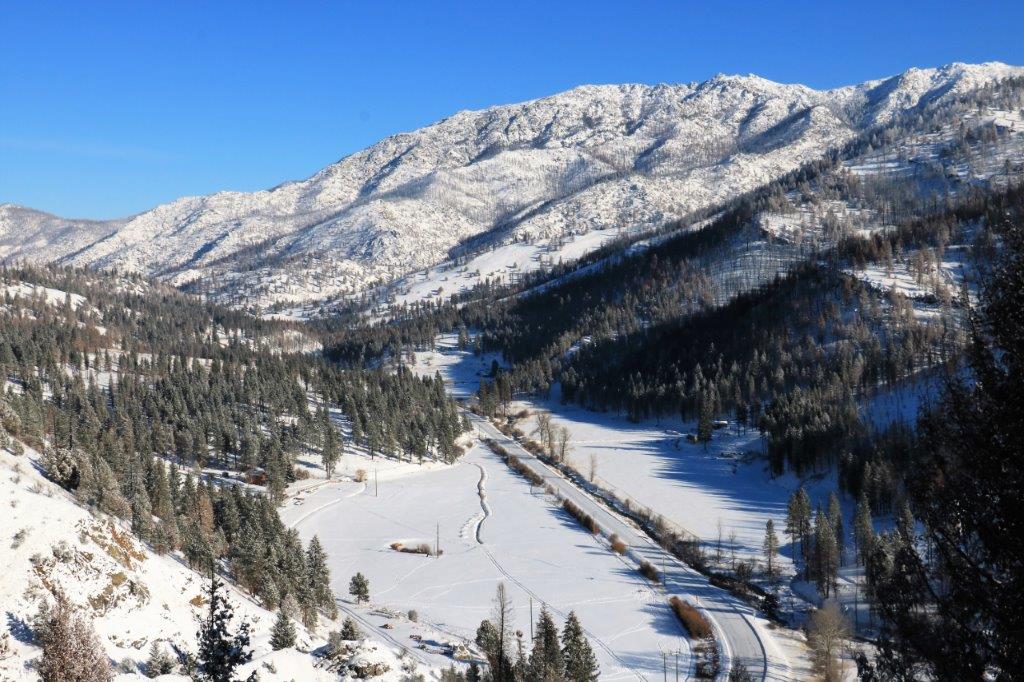
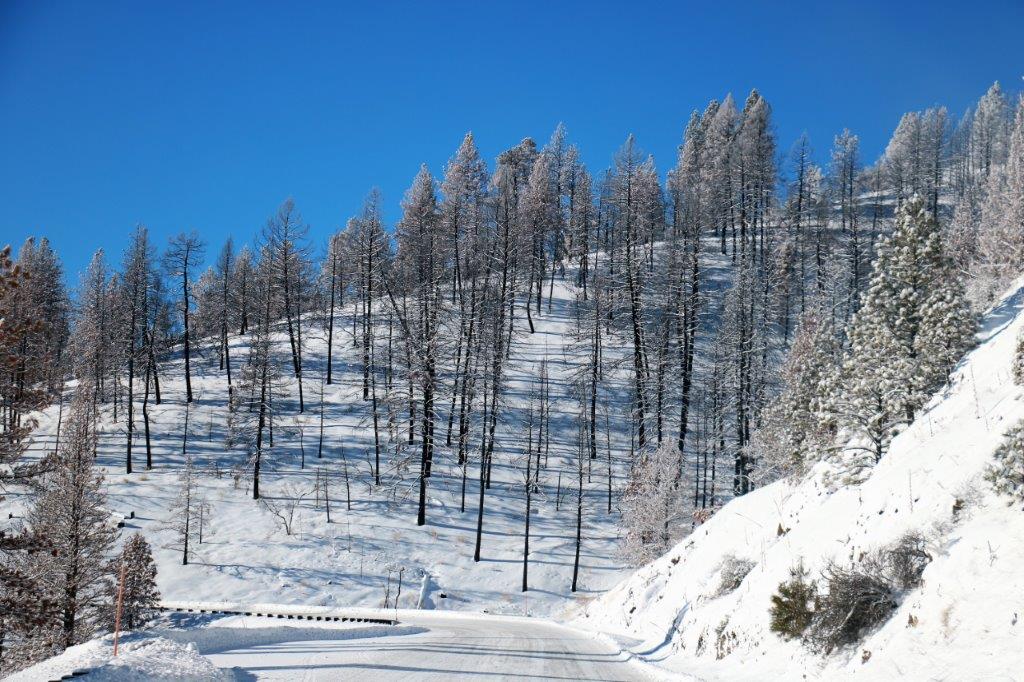
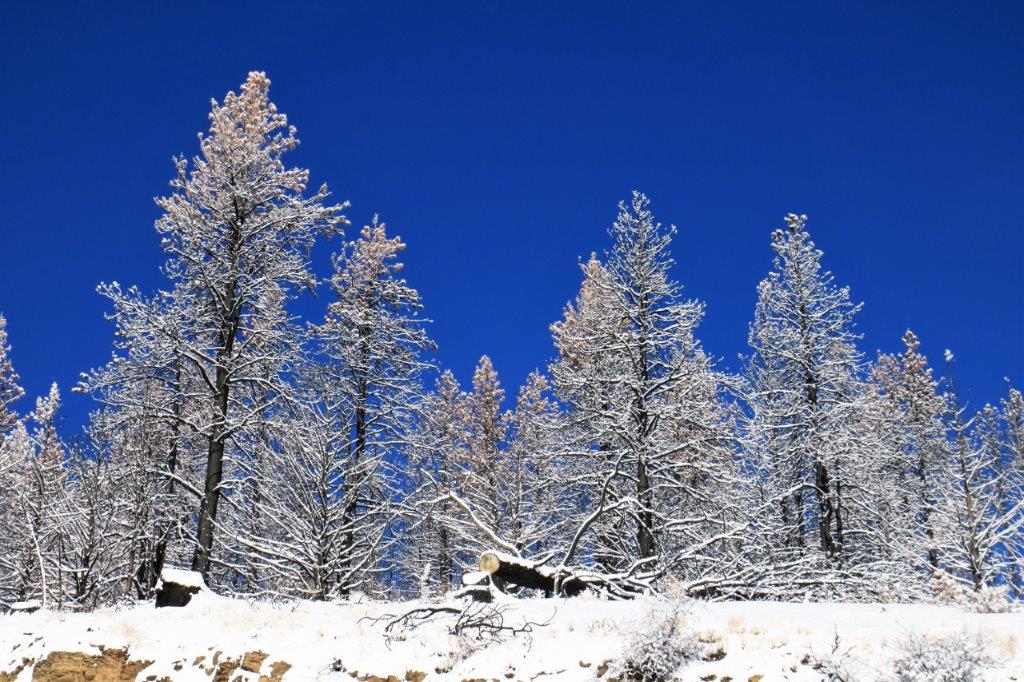
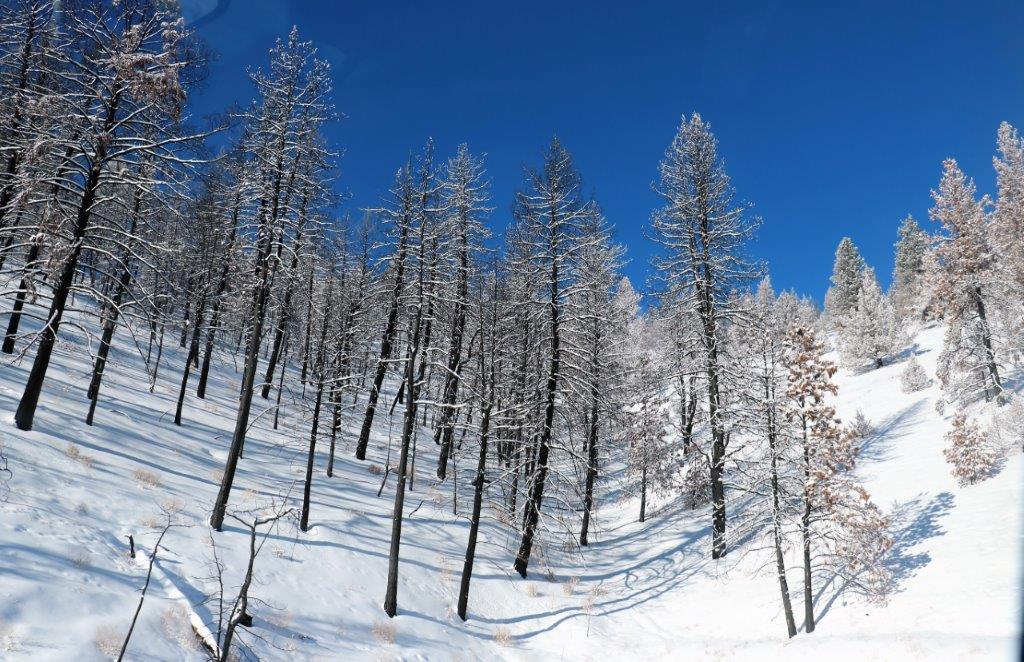
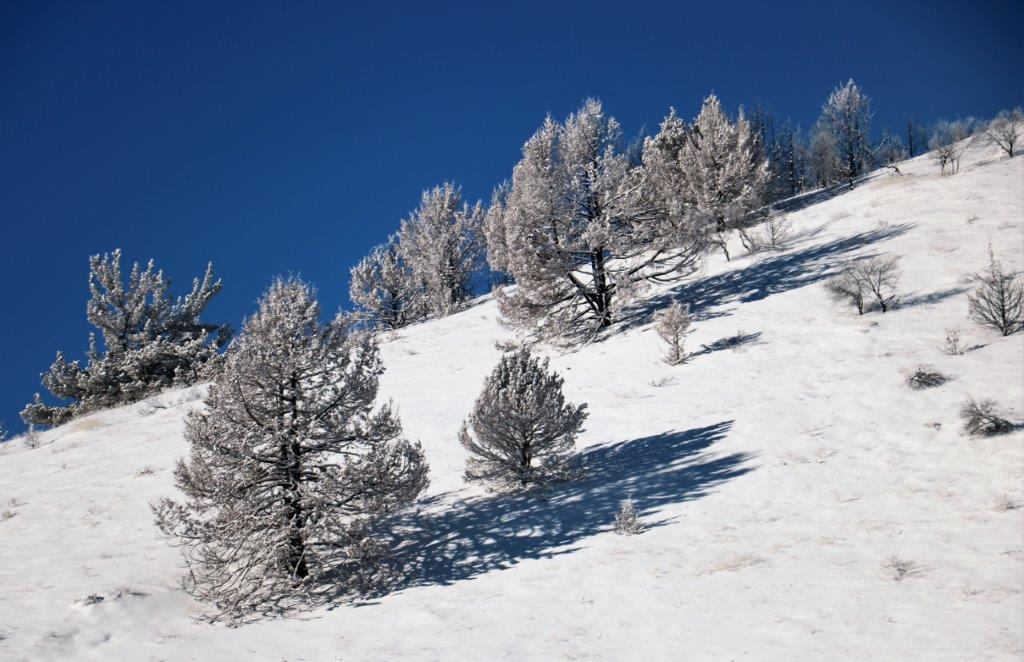
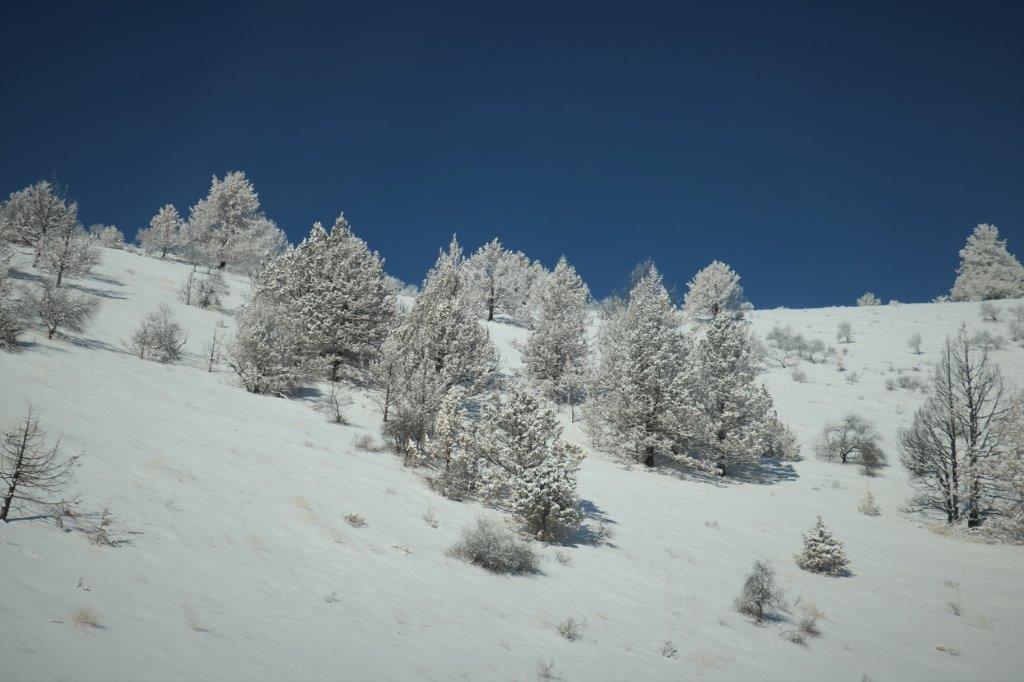
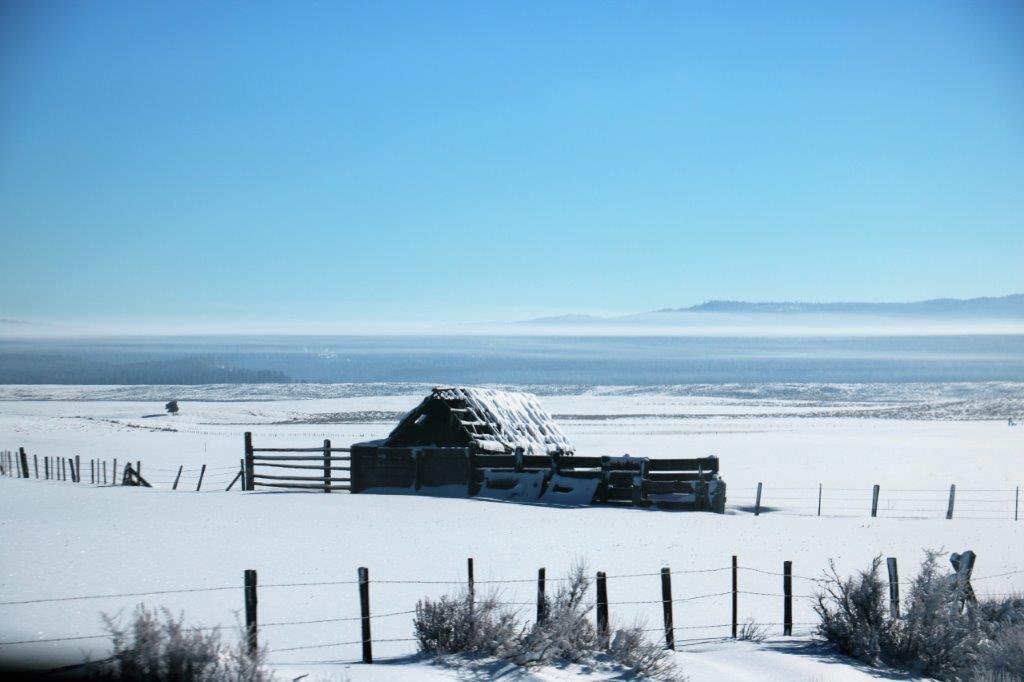
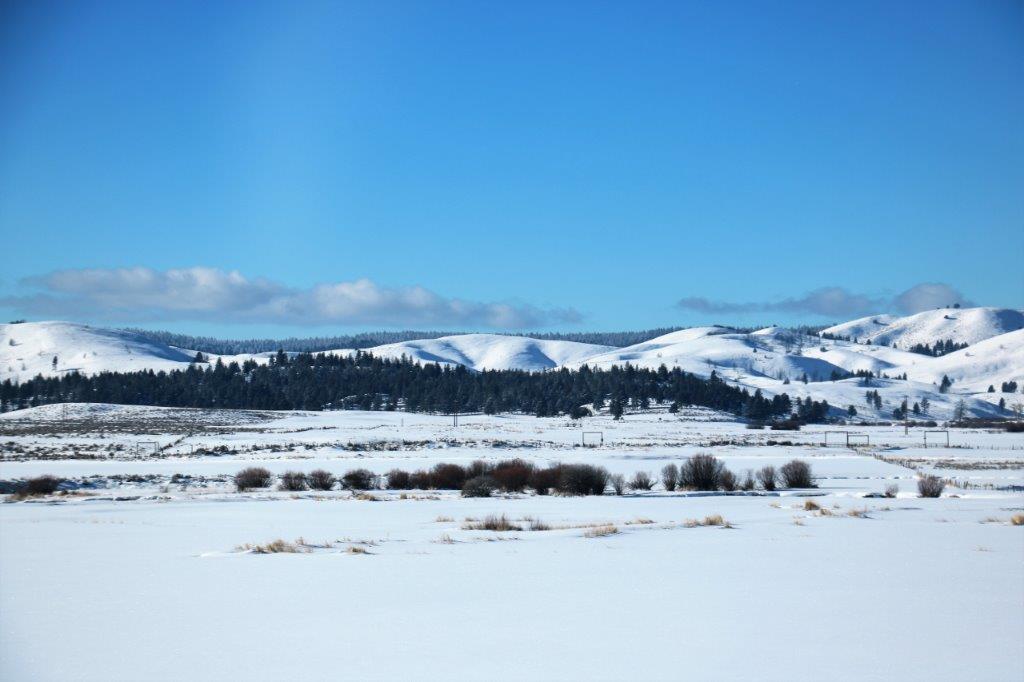
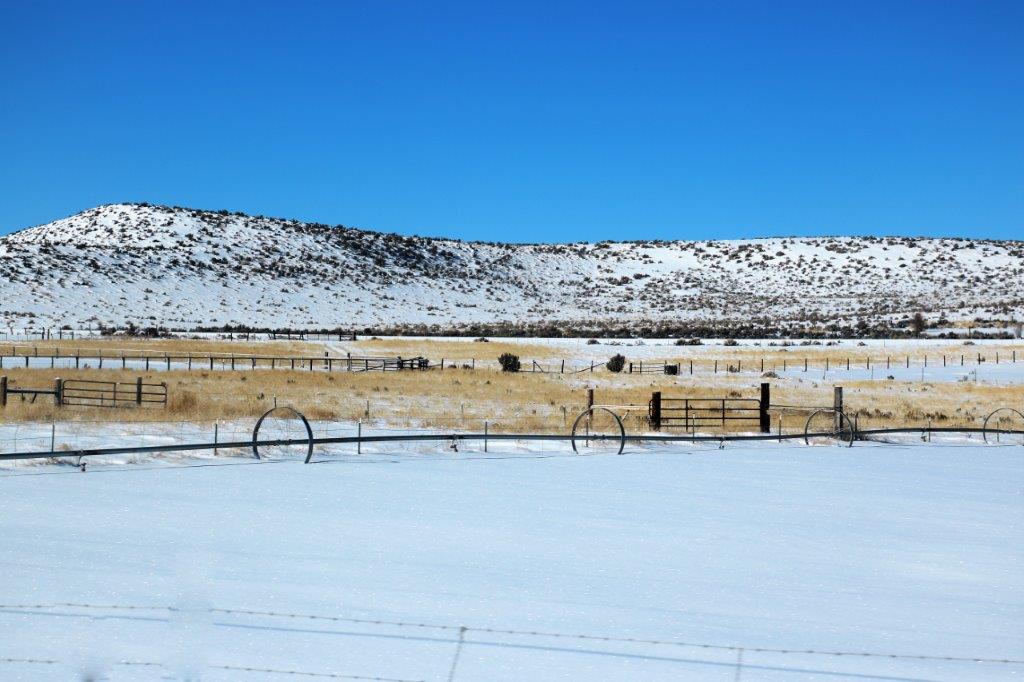
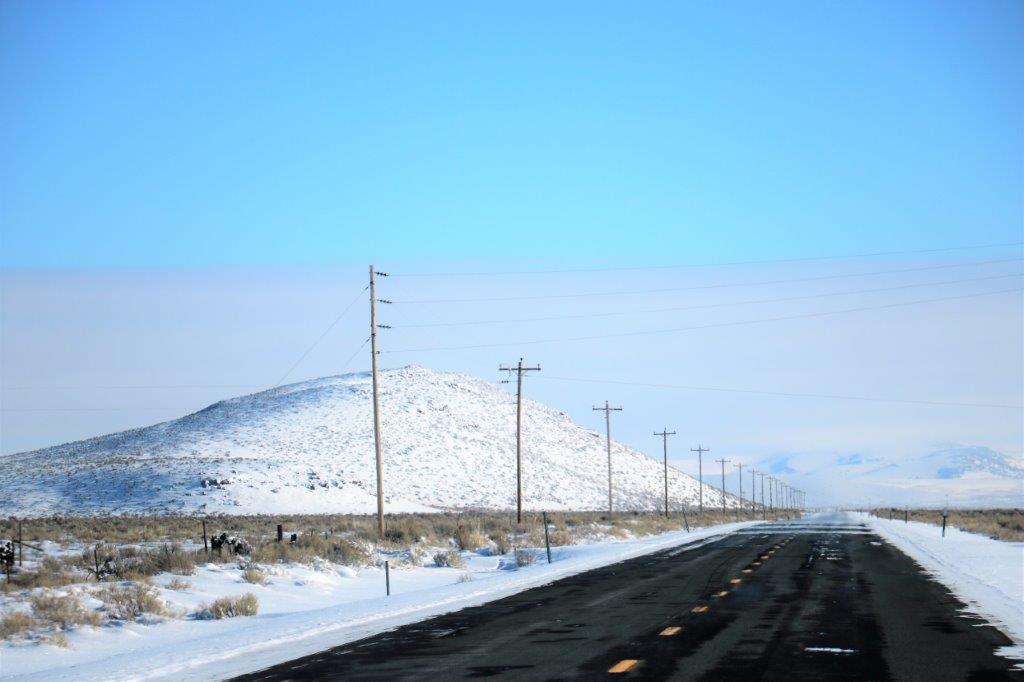
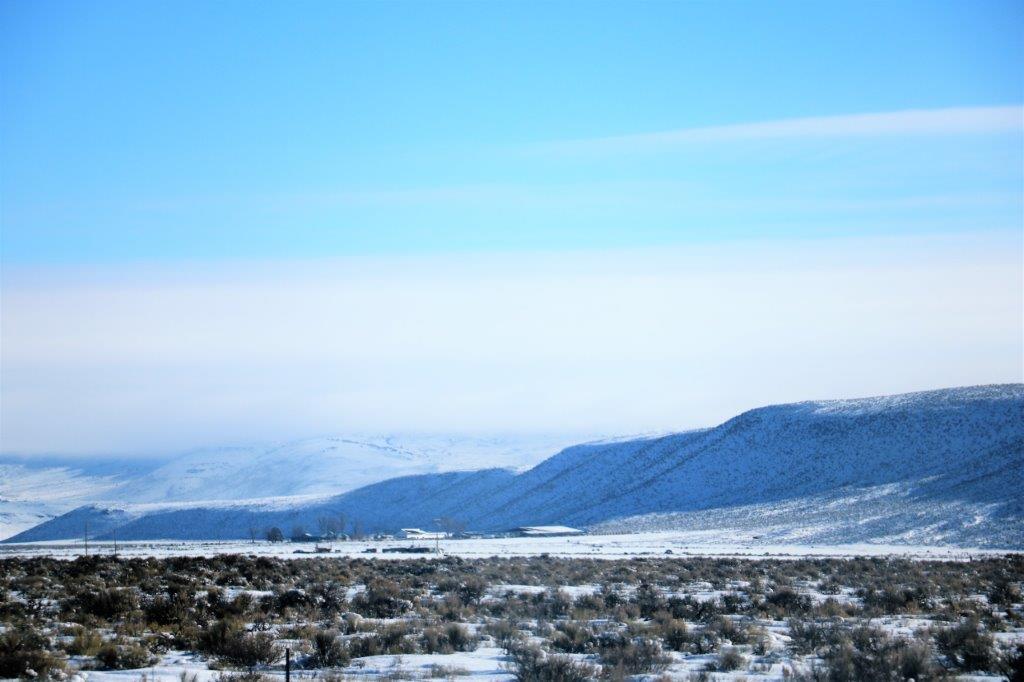
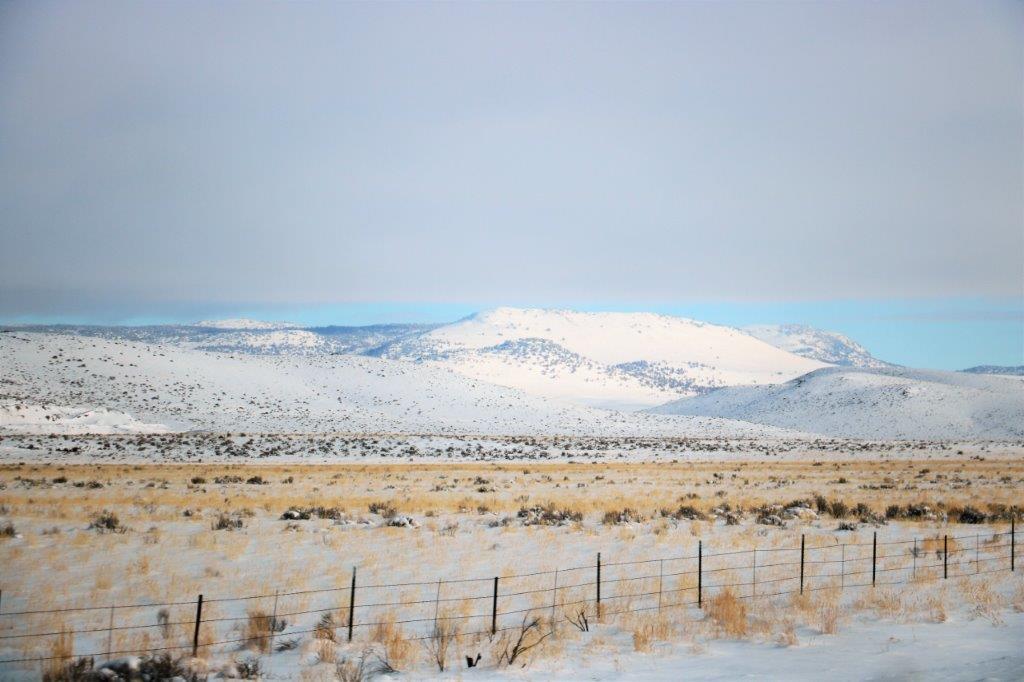
We drove directly south from John Day on Highway 395 to Burns, Oregon through Canyon Creek Pass.  The view from near the summit was spectacular.img_6128 img_6129 img_6138 img_6144 img_6148 img_6152 A few years ago the area was ravaged by a forest fire.  The contrast of the blackened trees against the white snow and blue sky was very pretty.img_6155 img_6156 img_6159 img_6162 img_6166-1 img_6170 img_6172 img_6178After we came through the pass we entered the Oregon High Desert Scenic By-Way and drove for over  40 miles through a flat valley belonging to the Silvies Valley Ranch.  Silvies Ranch was established in the late 1800’s and today is owned by a Limited Company.  It owns and leases 140,000 acres and has 60 square miles of deeded land; with 6,000 acres of meadows, 14,000 acres of Ponderous Pine forest, and 20 miles of the Silvies River running through it.  They raise kids, cowboys, quarter horses and heritage beef.  They have a full conference center and will soon have golf courses and all kinds of other amenities.  Quite an operation!

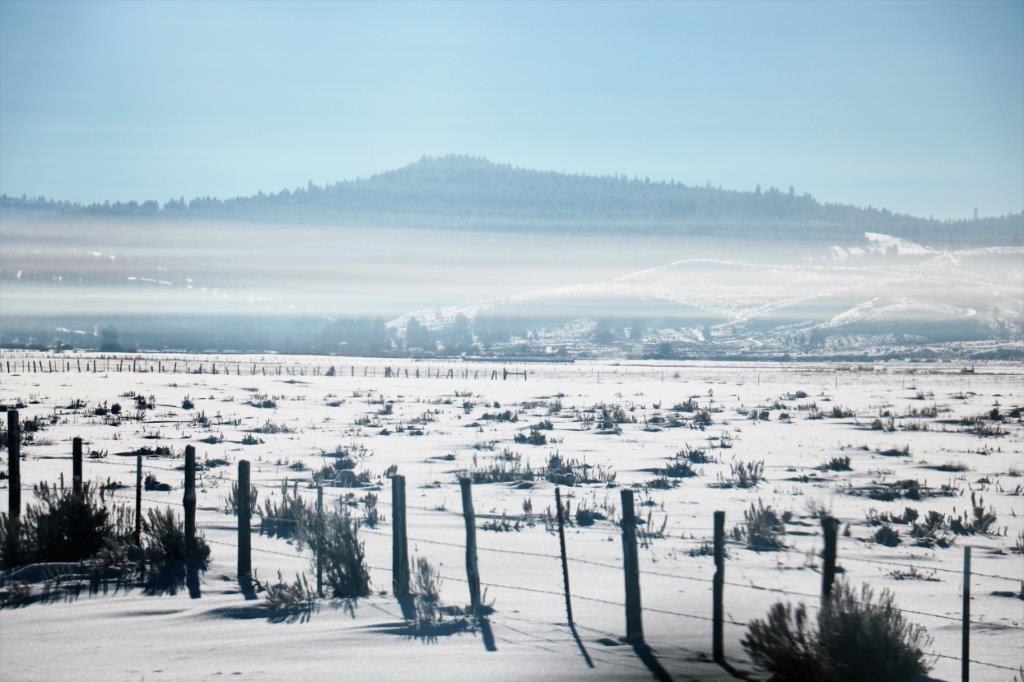
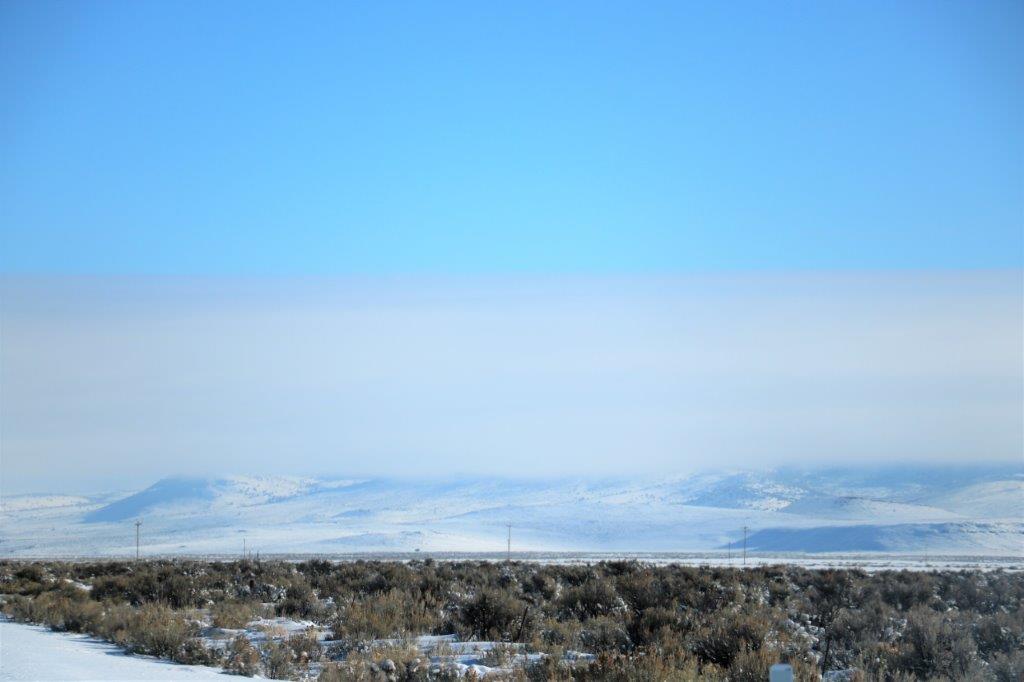
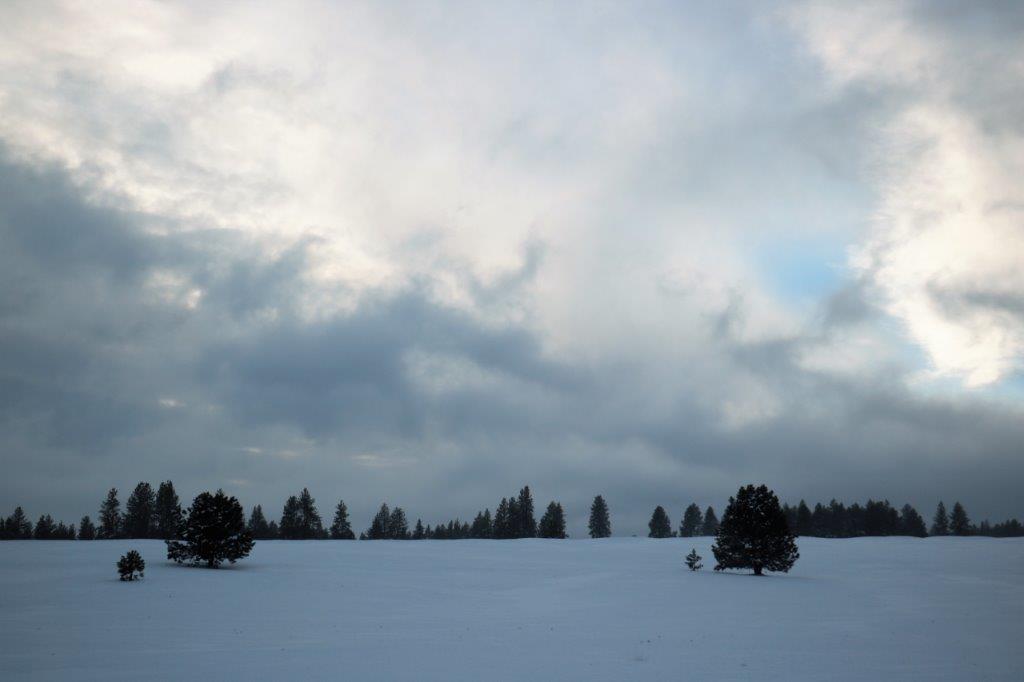
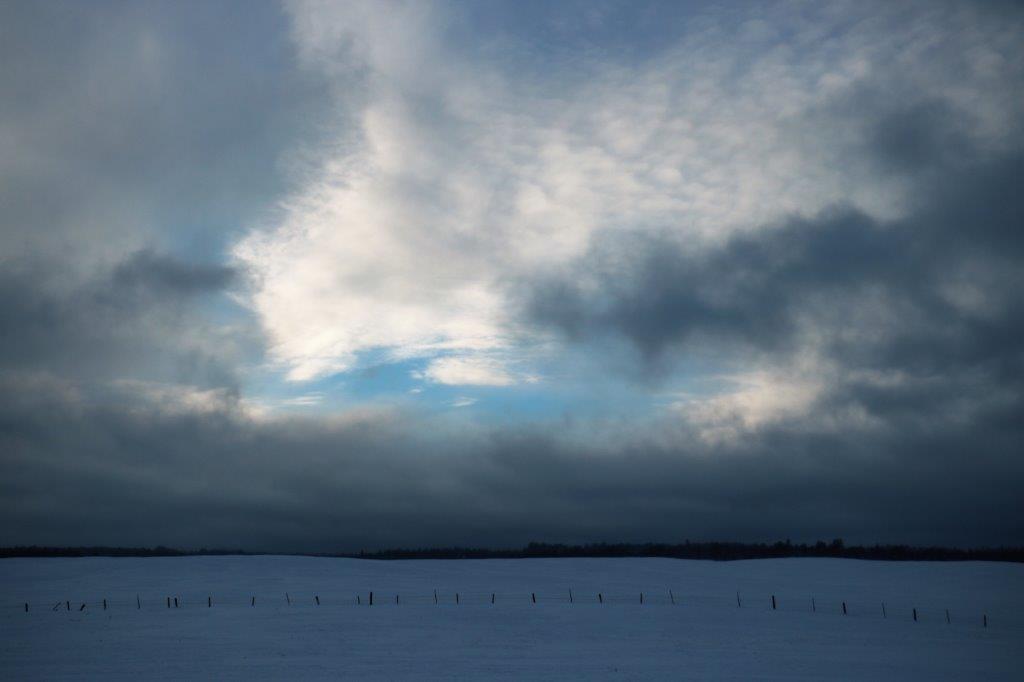
As we drove through the valley we could see a white strip of fog/cloud hanging just above the hills or the horizon.  It was quite an interesting phenomenon.

img_6182 img_6187 img_6191 img_6192 img_6194 img_6197We stopped for lunch at Burns and, once again, there was a geo-cache hidden in a tree in front of the Chamber of Commerce.  This one we did find.  Burns, according to the server at the restaurant doesn’t have much snow yet but they are not used to such cold temperatures.

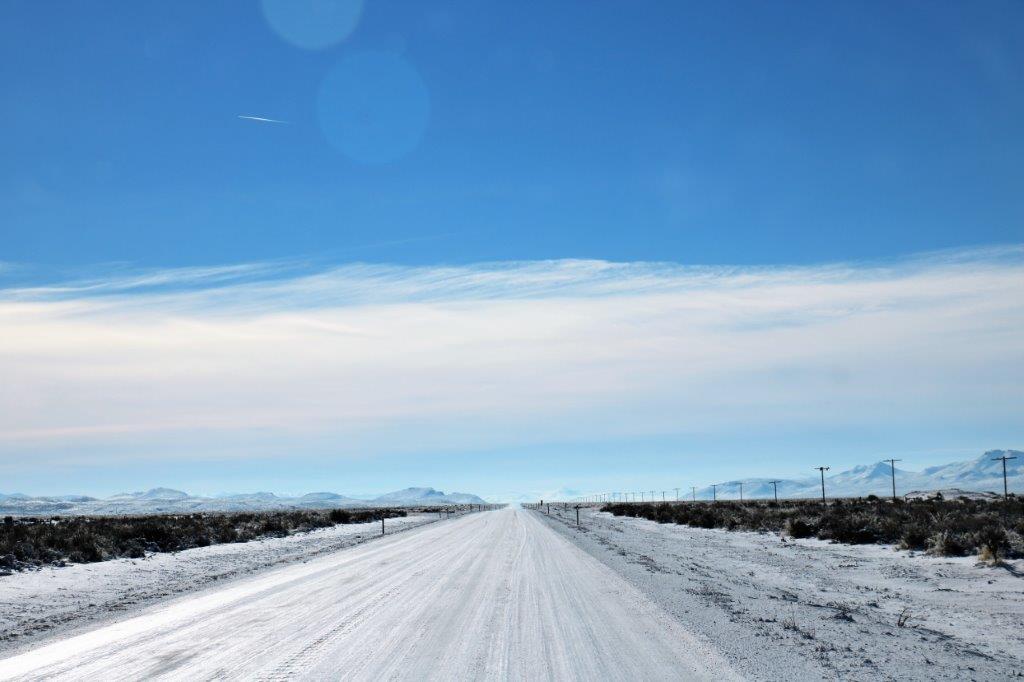
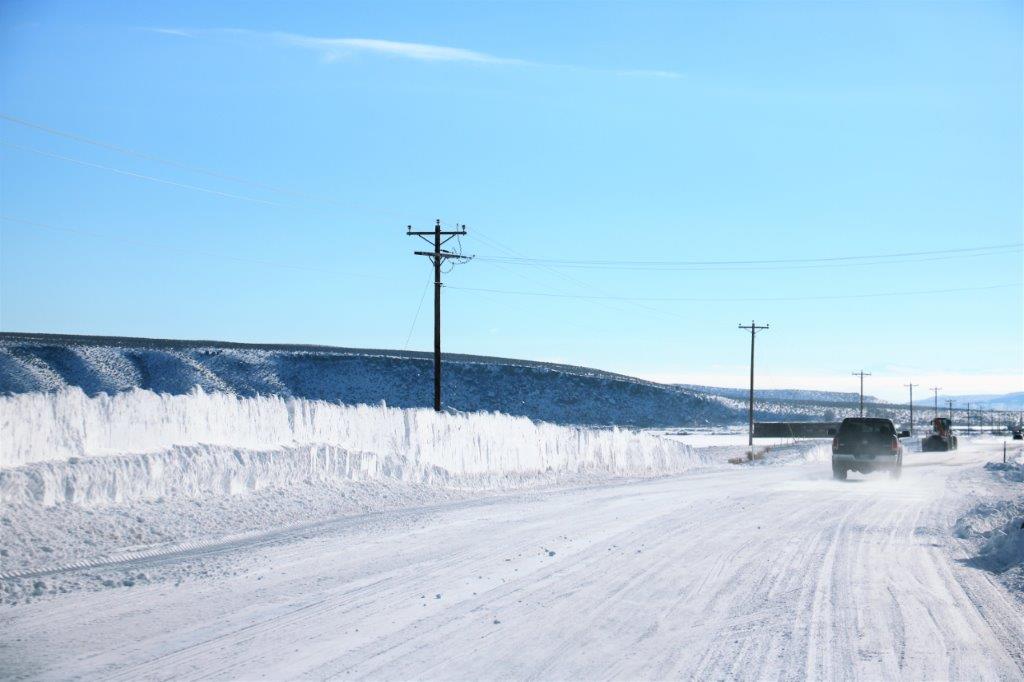
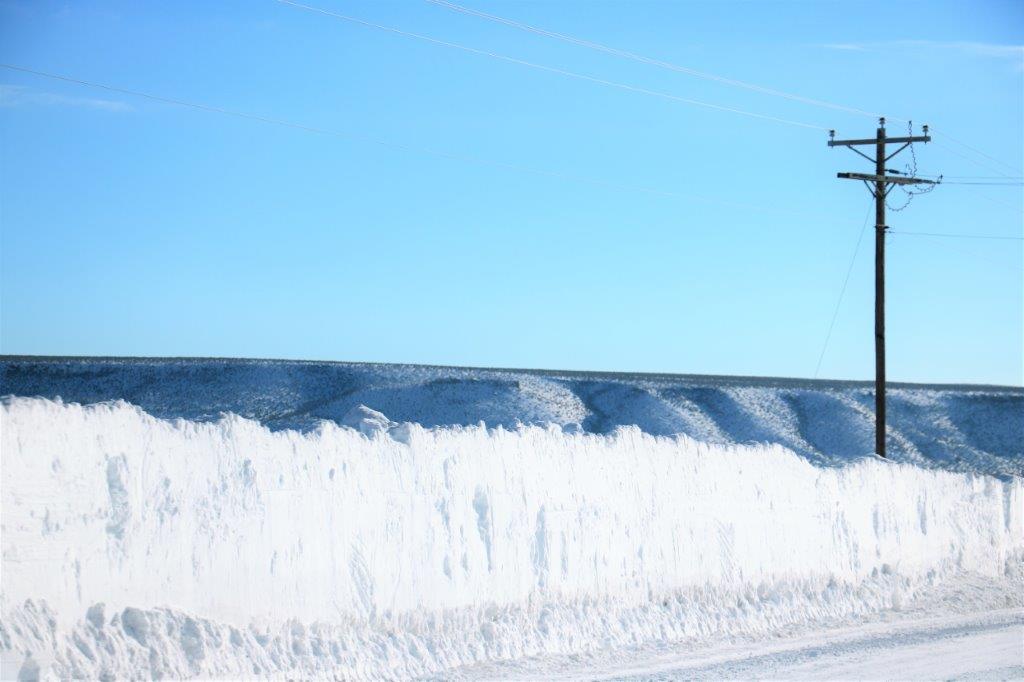
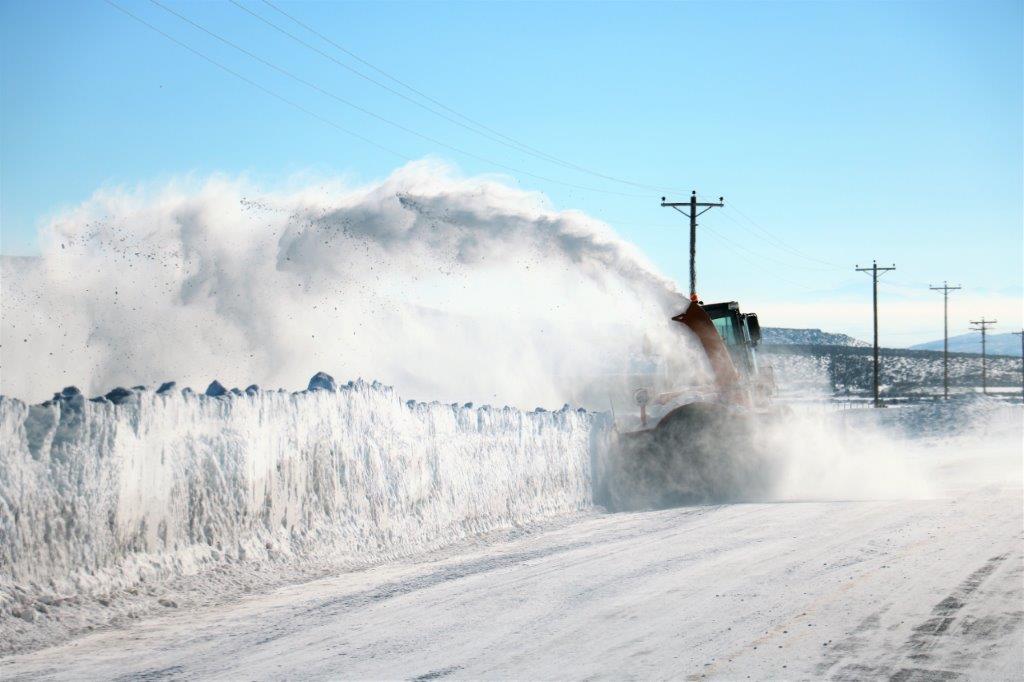
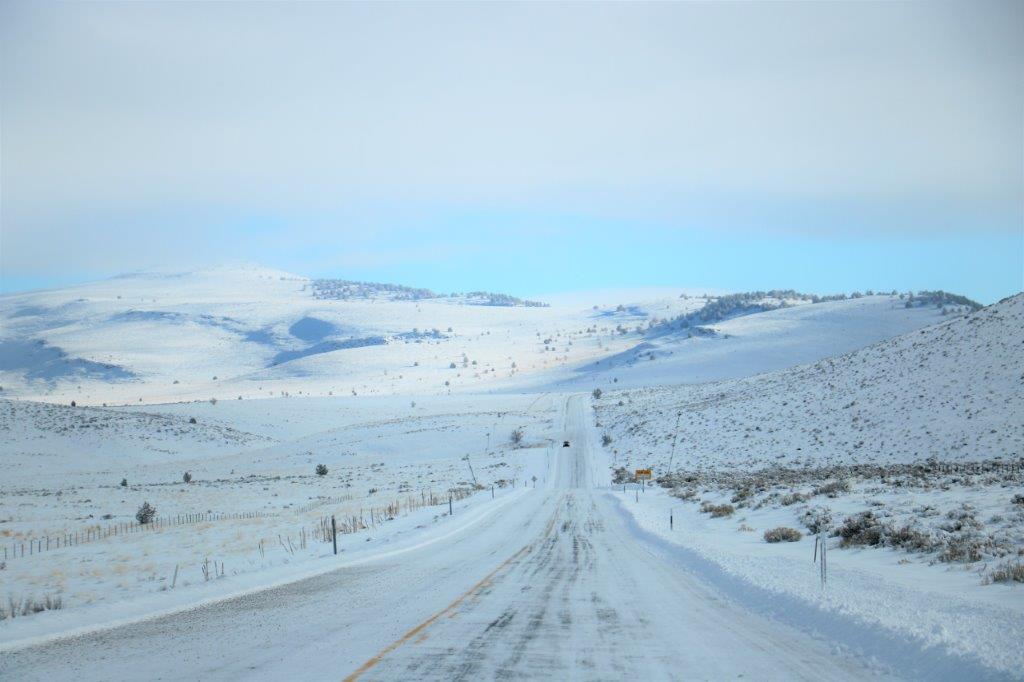
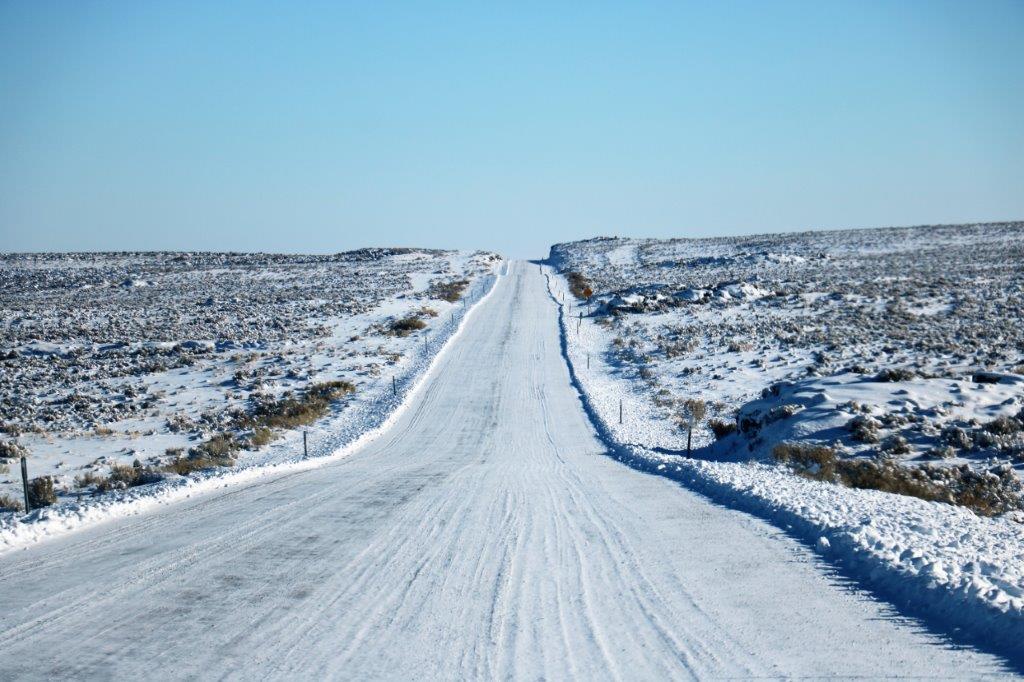
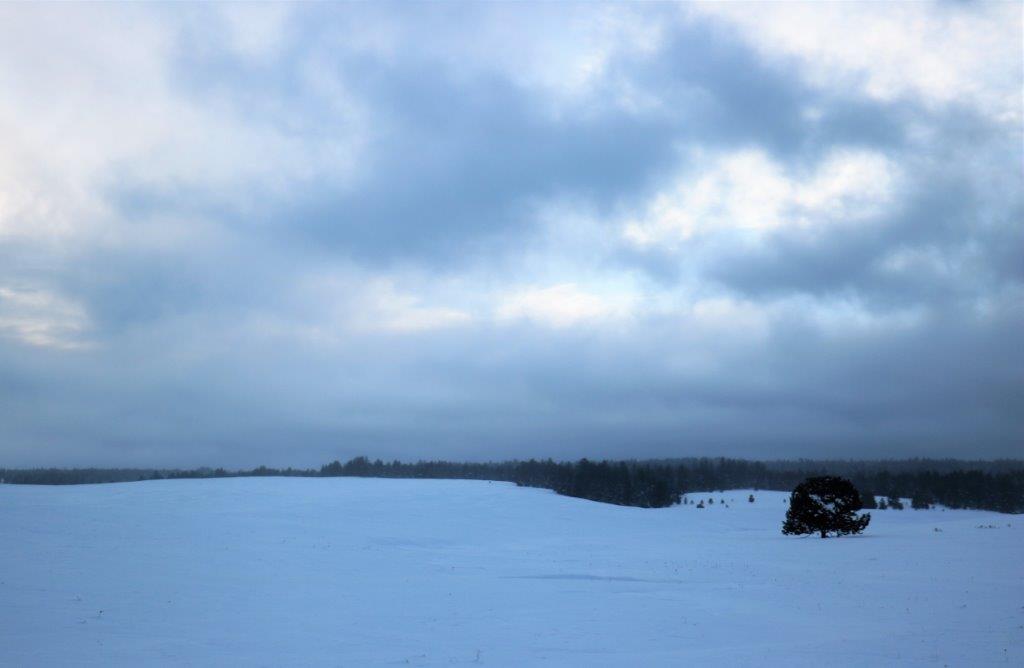
img_6199Two ladies decided to decorate this juniper bush.  They change the decorations every month.  There is a cache hidden here but we suspected it was buried under all the snow at the base of the tree and didn’t want to disturb it.img_6220The drive through Crooked Creek Valley was flat, flat, flat with a straight-as-an-arrow road.  It is so flat that the snow drifts in and covers the road.  A crew was almost finished clearing a section that had drifted full of snow.

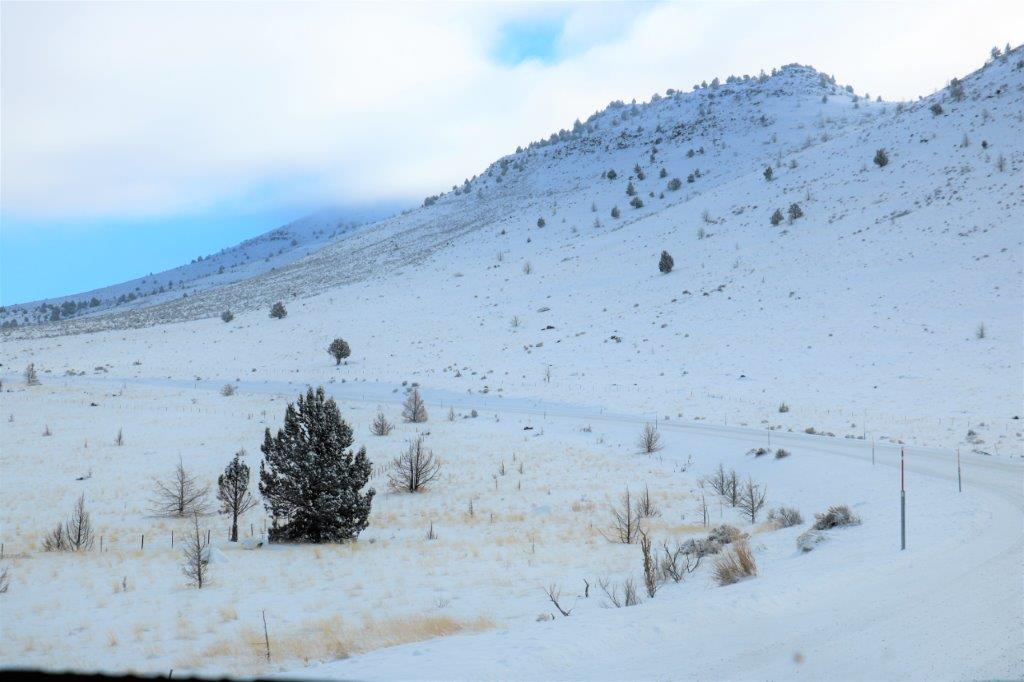
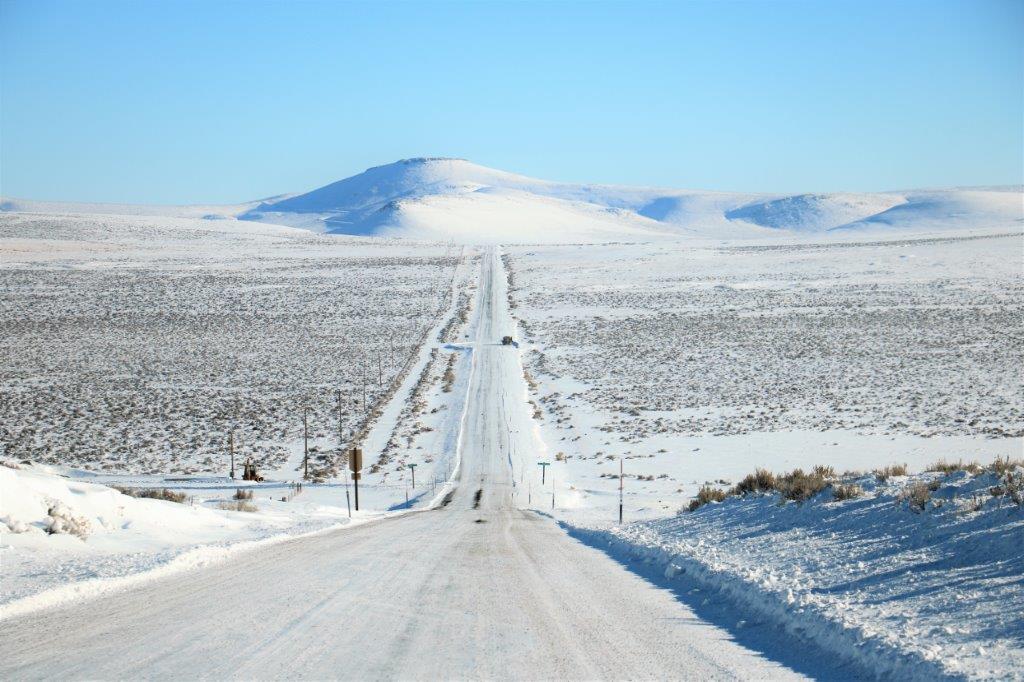
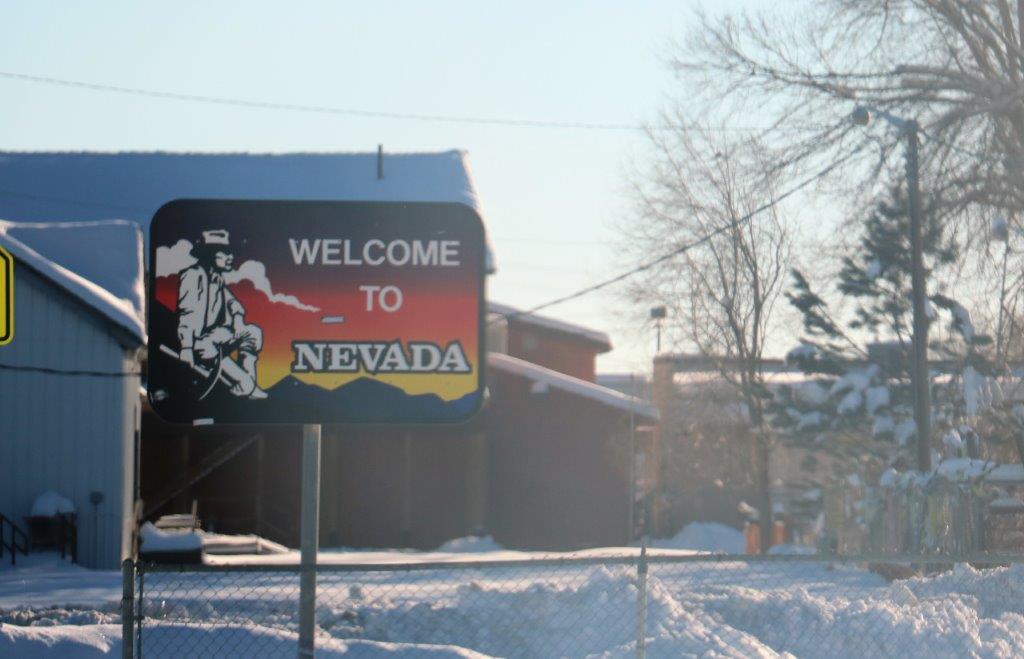
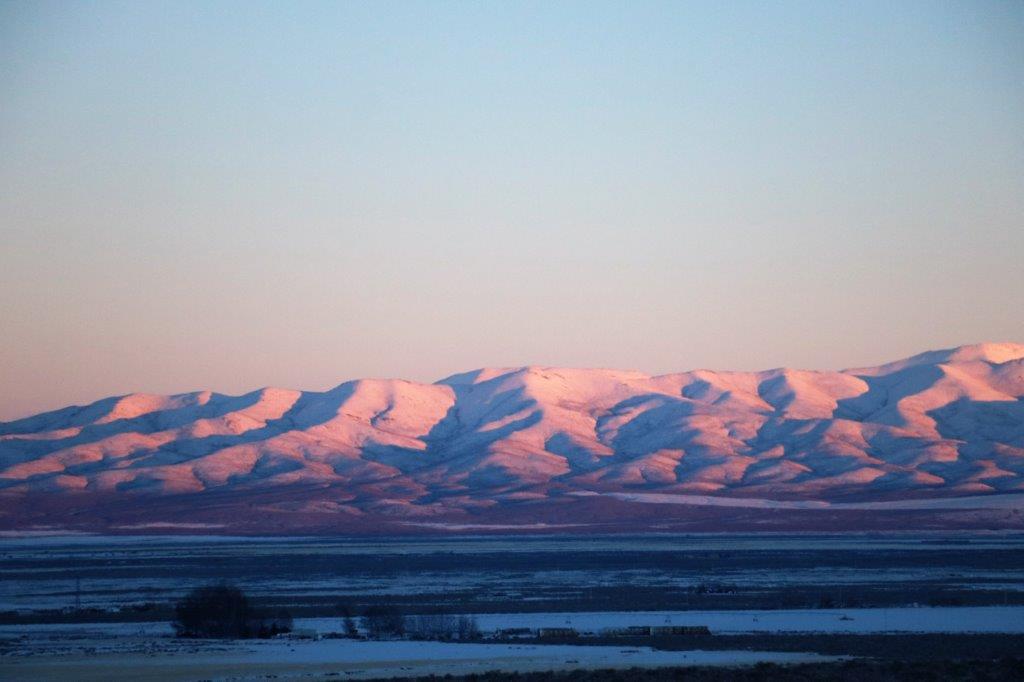
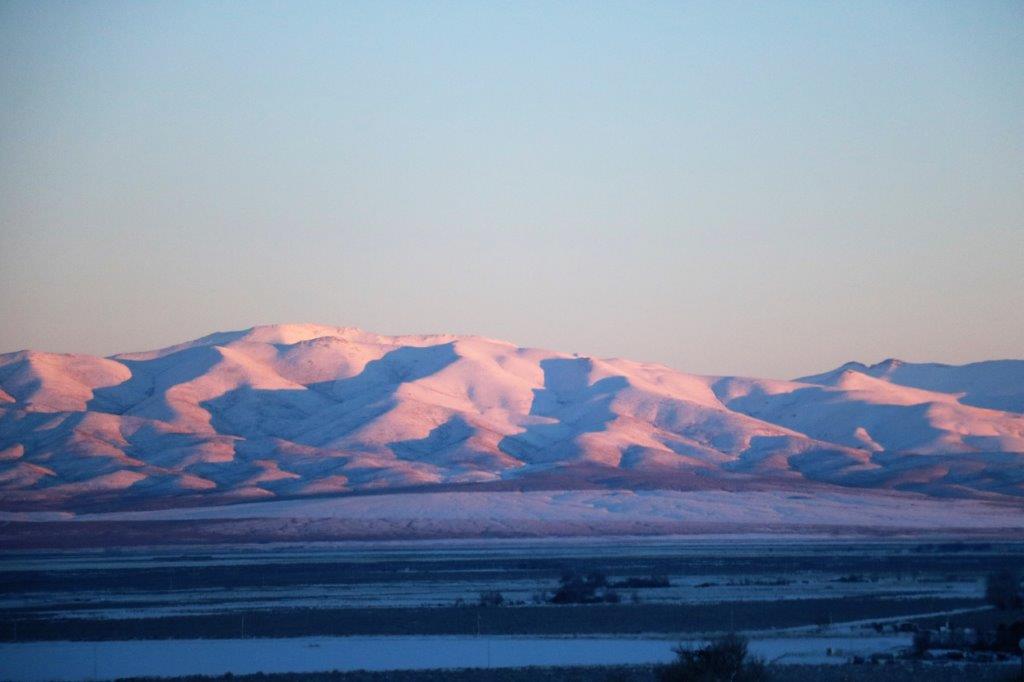
img_6228img_6229 img_6230 img_6235 img_6240 img_6242 img_6247 img_6255 img_6259 img_6264 img_6270 img_6274 img_6276 img_6285 img_6290 img_6293 img_6304 img_6305From Burns it is 55 miles to the Nevada border, and from the border it is 78 miles to Winnemucca and our stop for the night.  The topography changed eventually from flat valley bottom to hills but it was still cold with a wind blowing and everything is covered with pristine, glistening white snow.  We just are not far enough south yet. We’re getting there though.img_6306 img_6309 img_6315 img_6316 img_6318 img_6320As we approached Winnemucca the sun was setting and cast a gorgeous pink glow onto the hills.  Mark this down as another good day.img_6332 img_6335


2017 Jan. 4 – Day 2 – Ephrata, WA to John Day, OR

We checked out of our hotel in Ephrata at 9:30 am.  My nice husband braved the bitingly cold wind and -10 F ( -20 C) temperature on the long walk out to the truck and drove around to pick me up at the lobby.

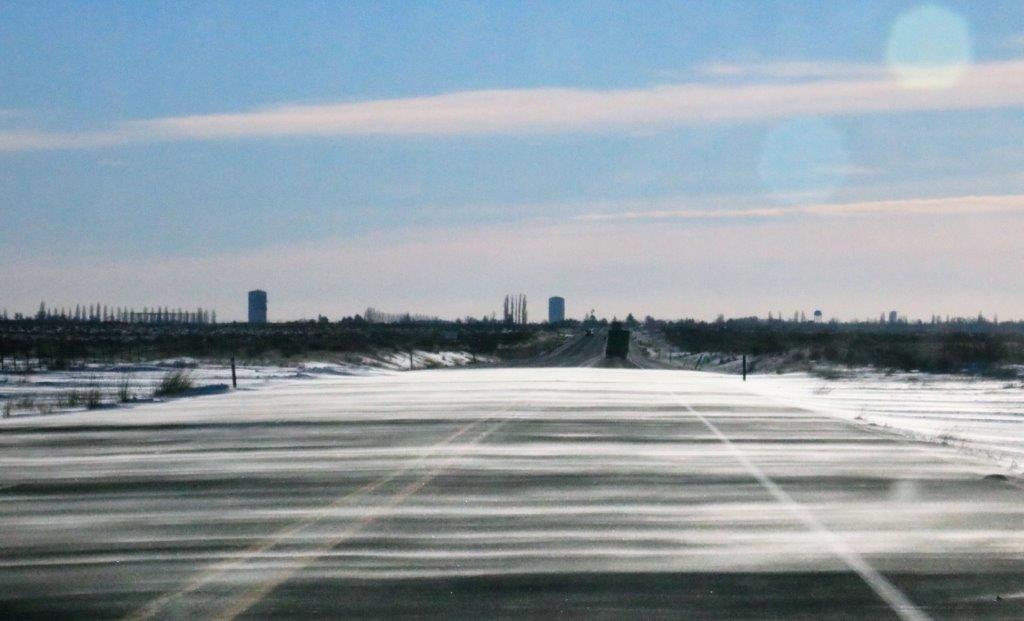
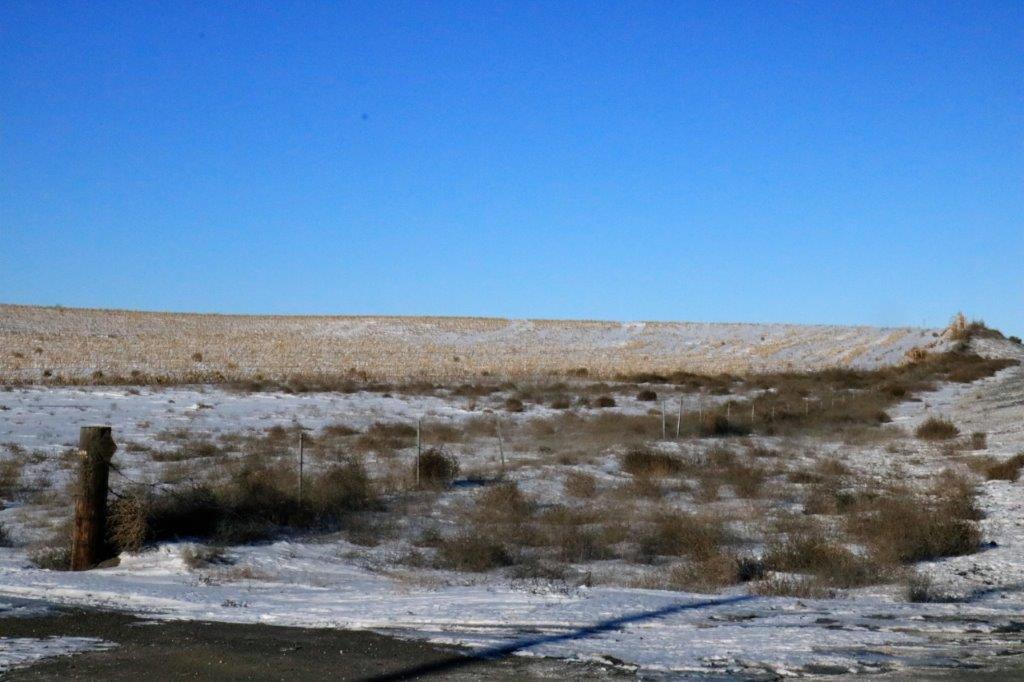
We wanted to find a few more caches in Washington if we could and spent most of the morning stopping now and again to try find some that were hidden close to the road.  Of the approximately eight we looked for, we found three.  We are usually pretty tenacious when looking for a cache.  Neither of us like to give up and move on.  However with the cold temperature and the colder wind we did not linger if the container was not located quickly.  Many of them were now covered with too much snow for us to locate.  I want to find at least one cache in each state.  We found three in WA as we drove along and one in OR so far.  We will see about finding a few more tomorrow.  Success will depend on the temperature, snow levels and our frost bite tolerance.img_5923The wind was blowing a thin layer of snow across the highway.img_5926img_5927

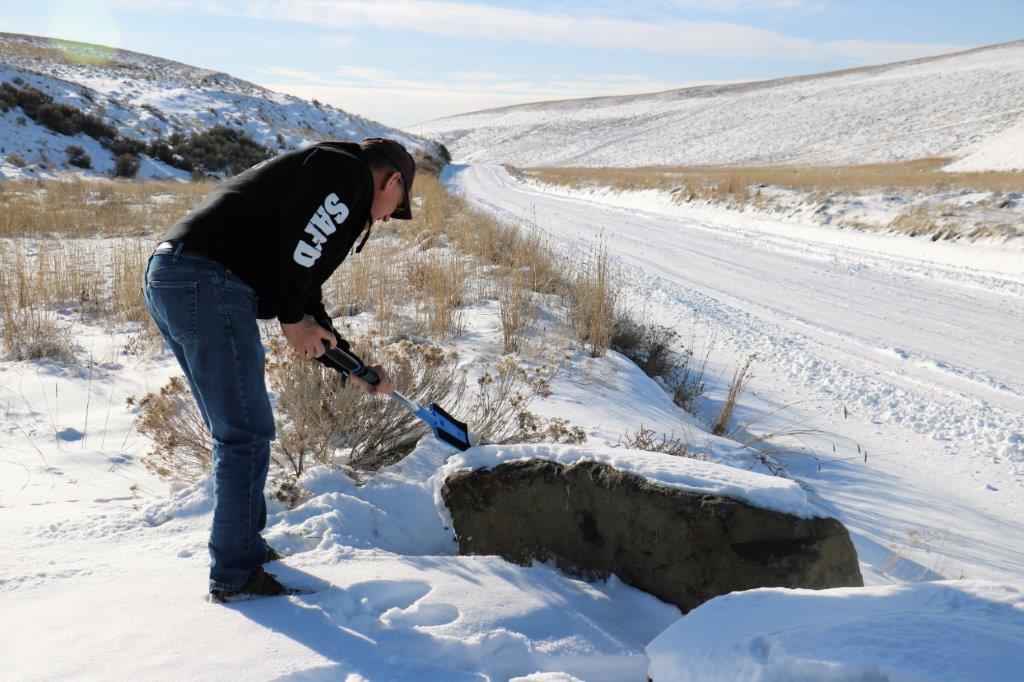
img_5935We didn’t find the cache hidden under one of these rocks, but we did try.

img_5937John stepped off the road to look inside a culvert for a cache that was supposed to be hidden there.  He didn’t find it but he did sink up to his thighs in snow!

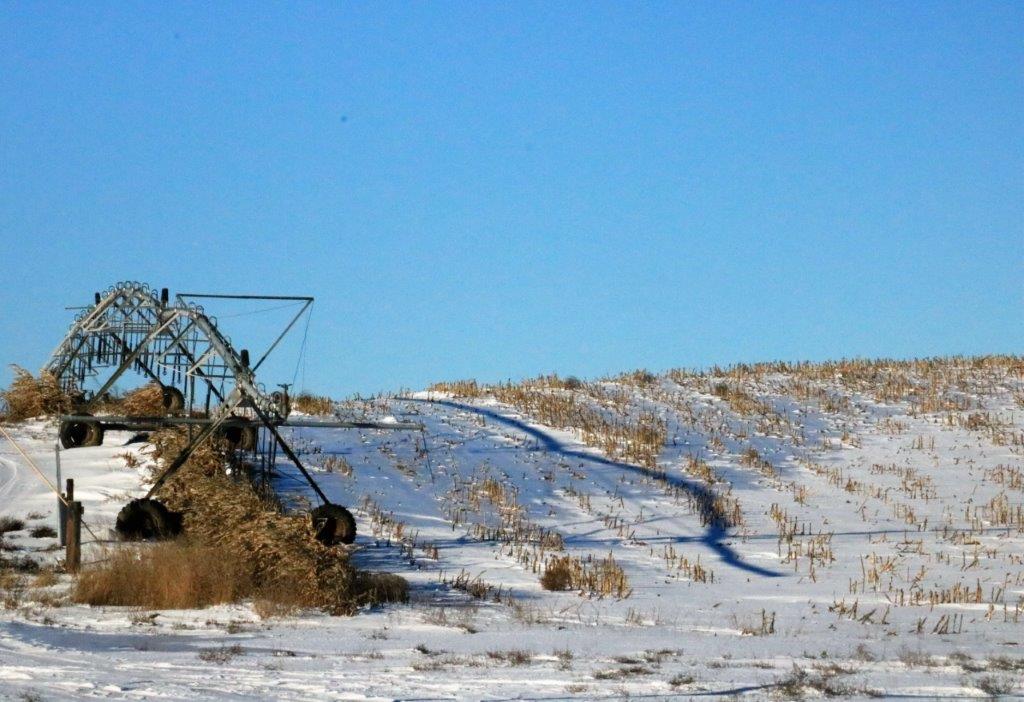
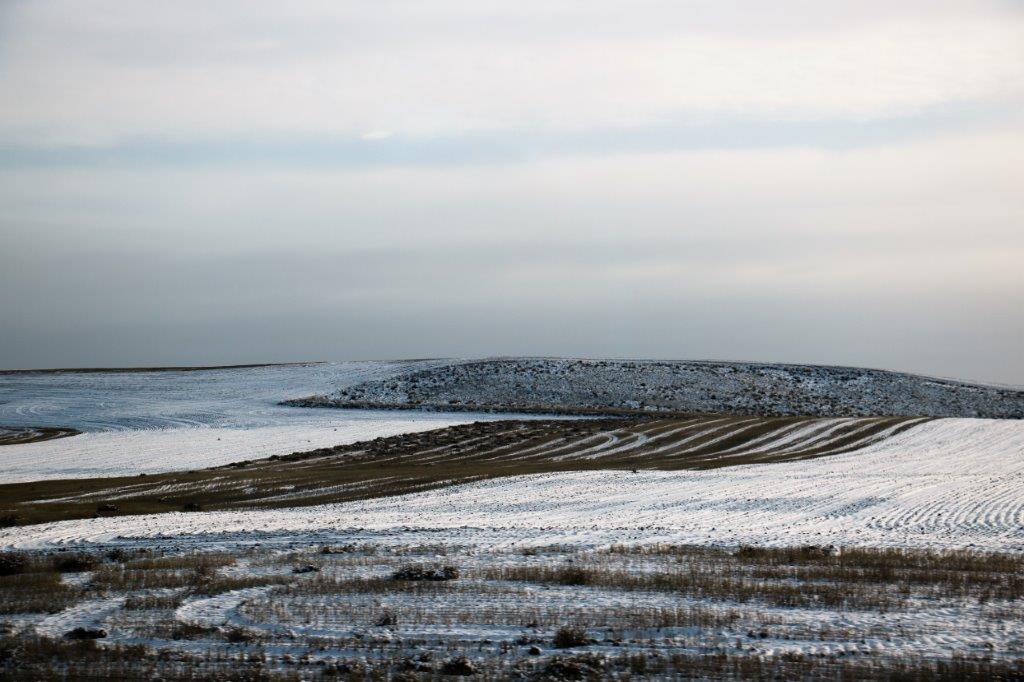
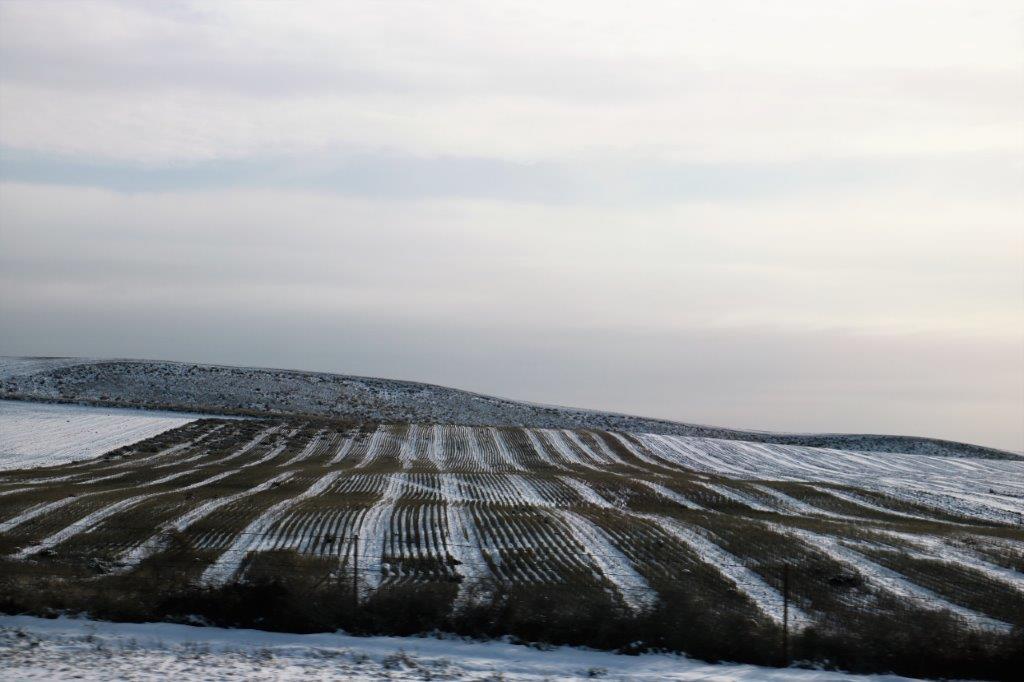
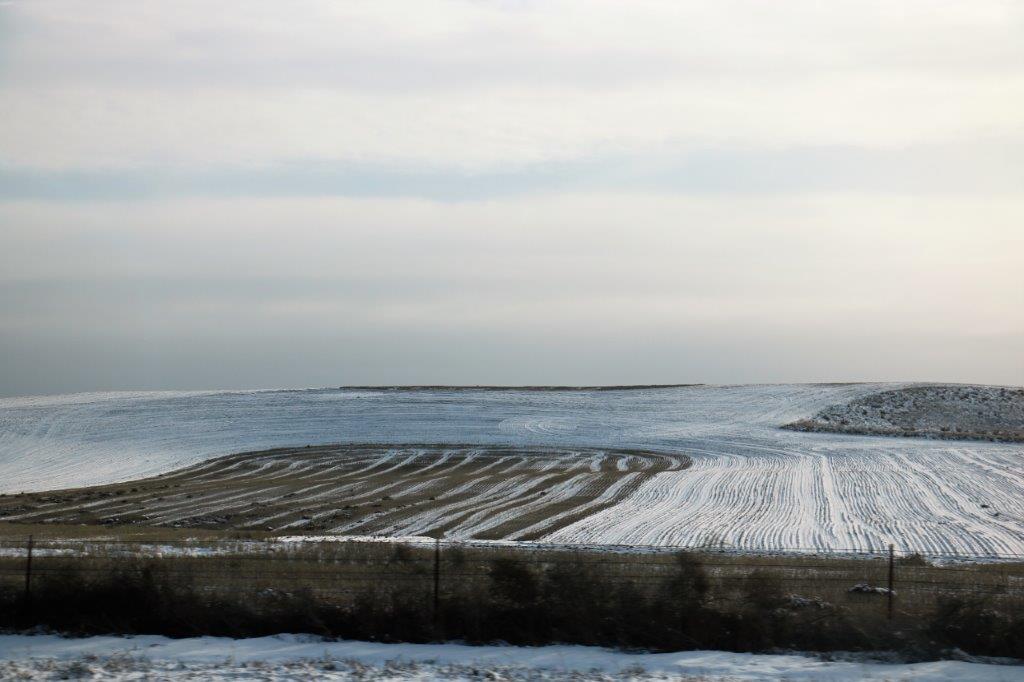
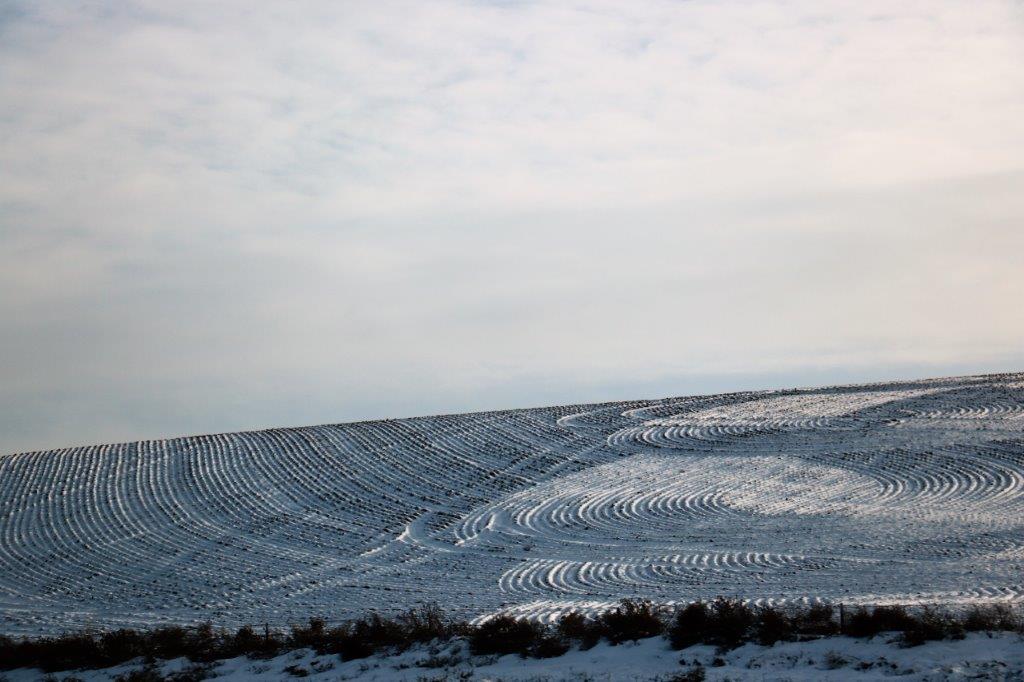
We stopped for lunch just across the Washington – Oregon border and drove for miles through farm country.  I liked all the patterns the snow made in the fields.

img_5941 img_5944 img_5946 img_5950 img_5958

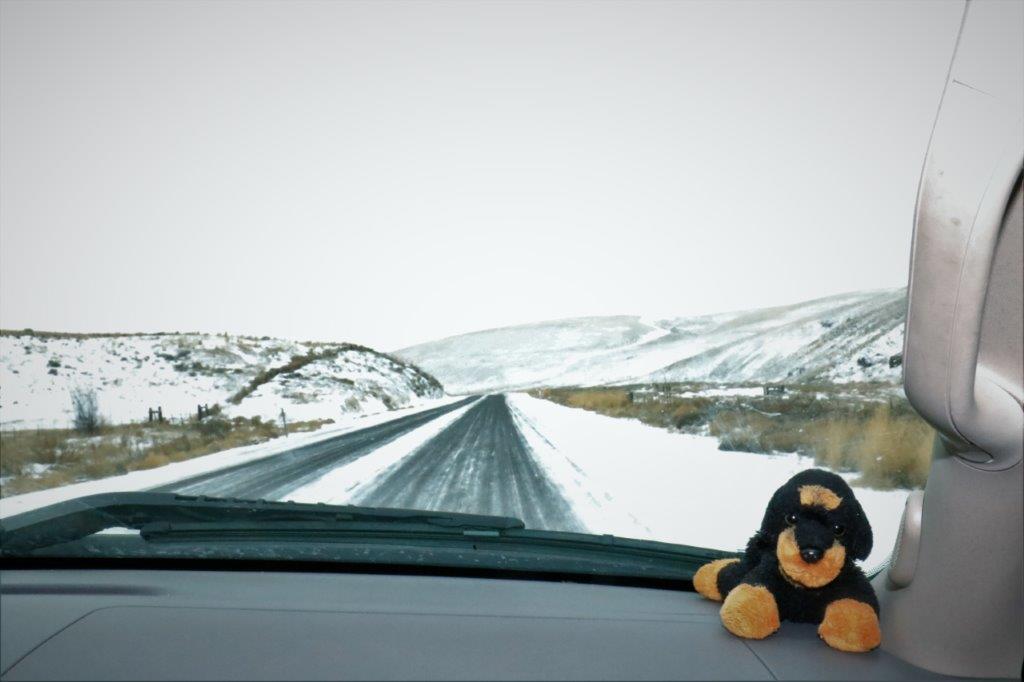
My little “Sampson” dog travels with us all the time.


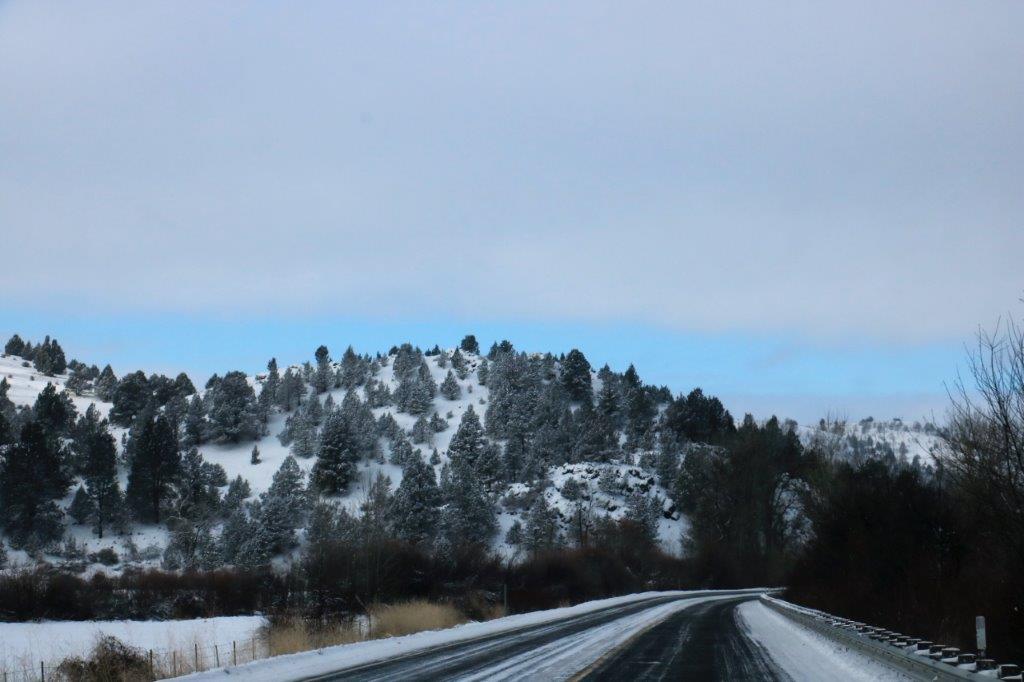
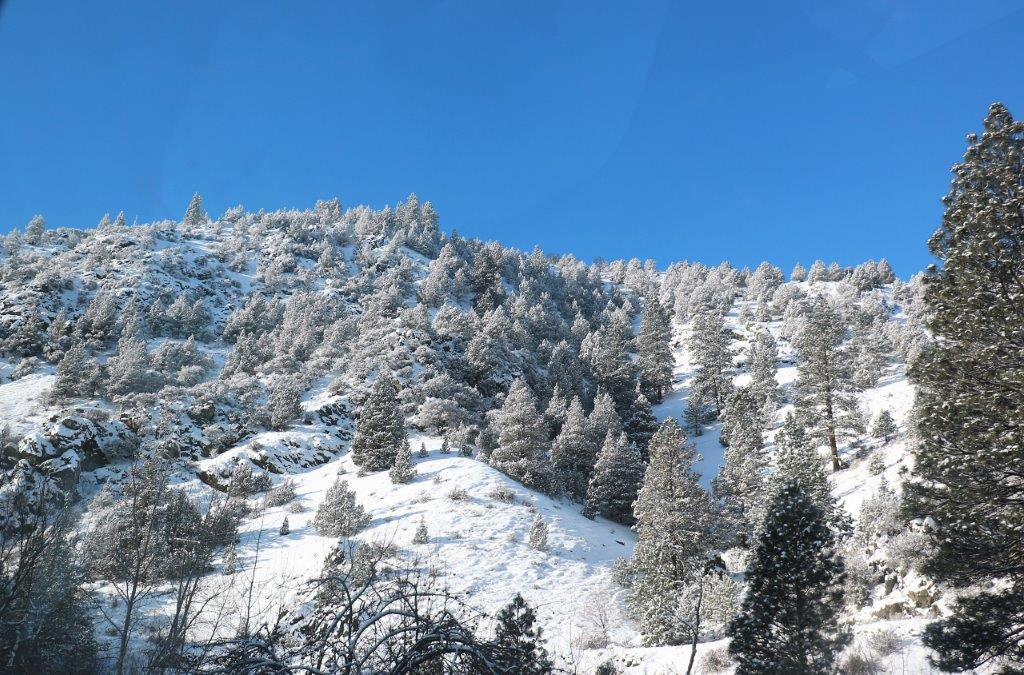
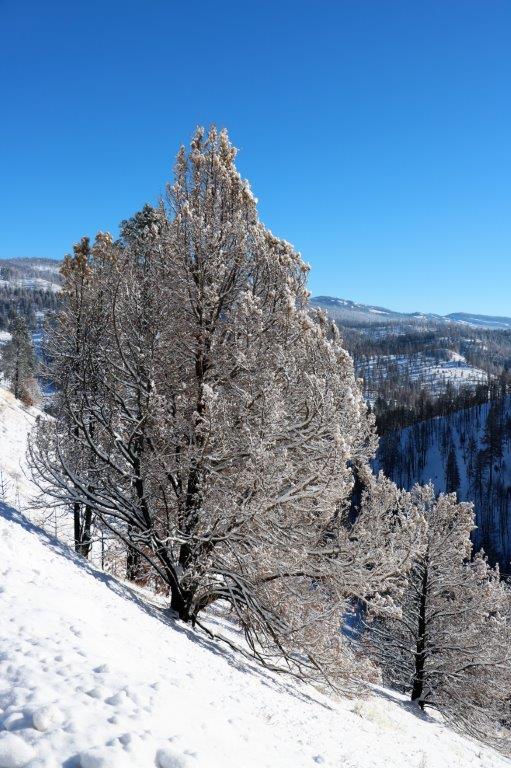
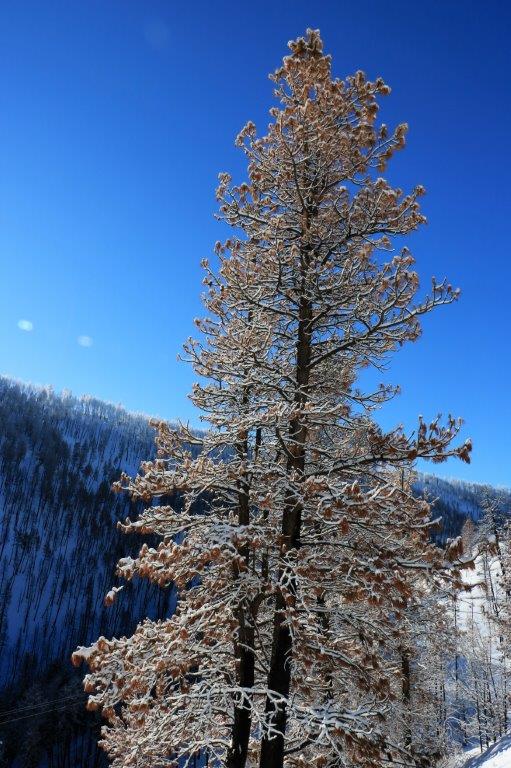
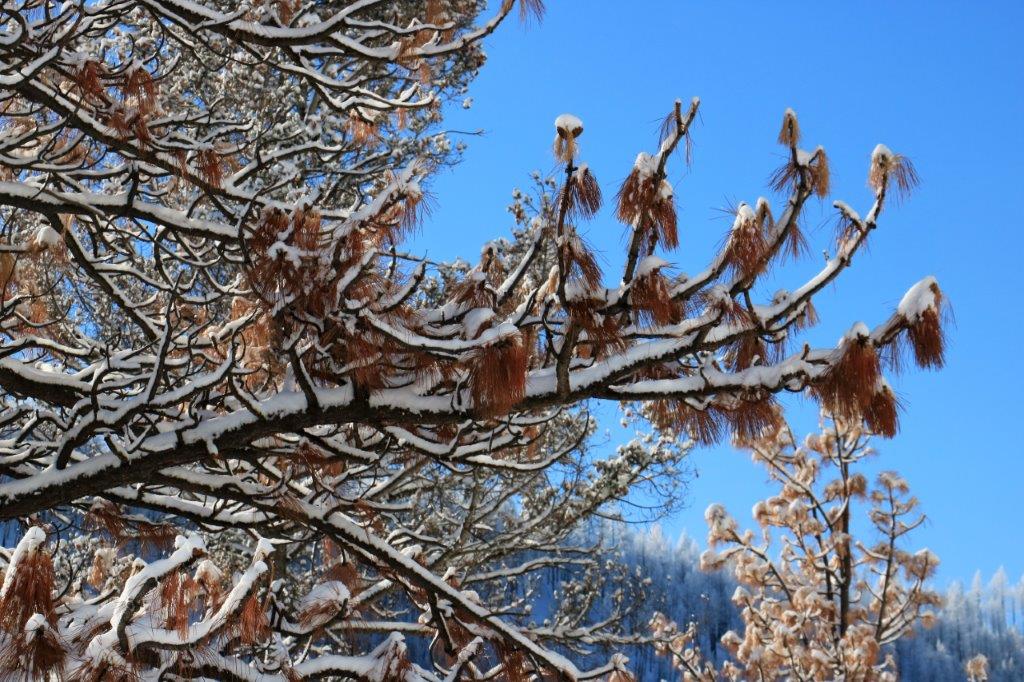
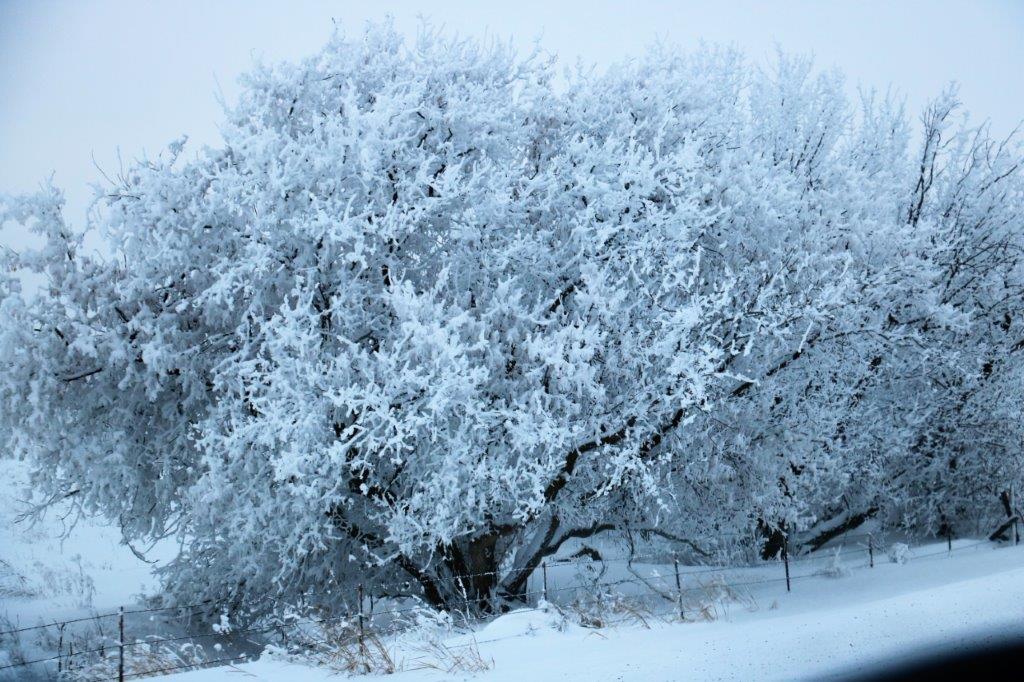
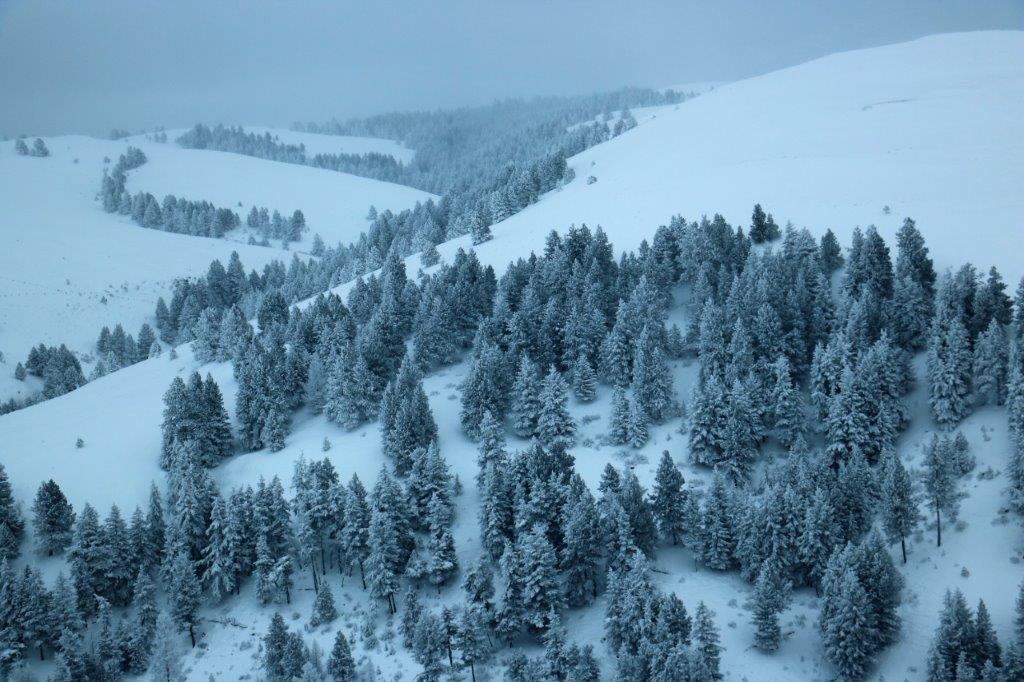
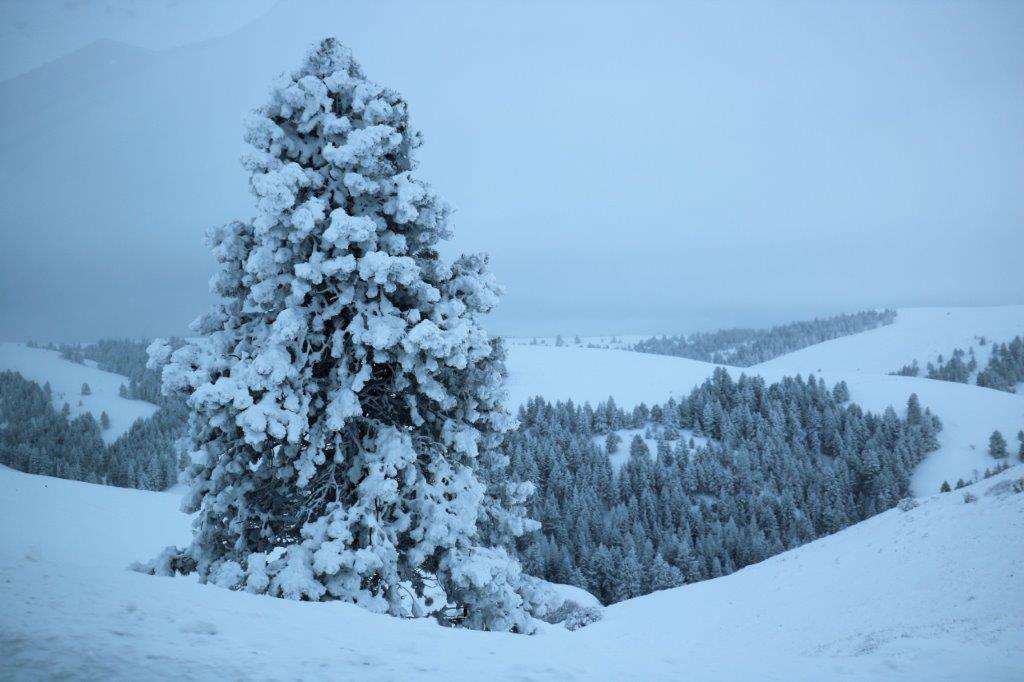
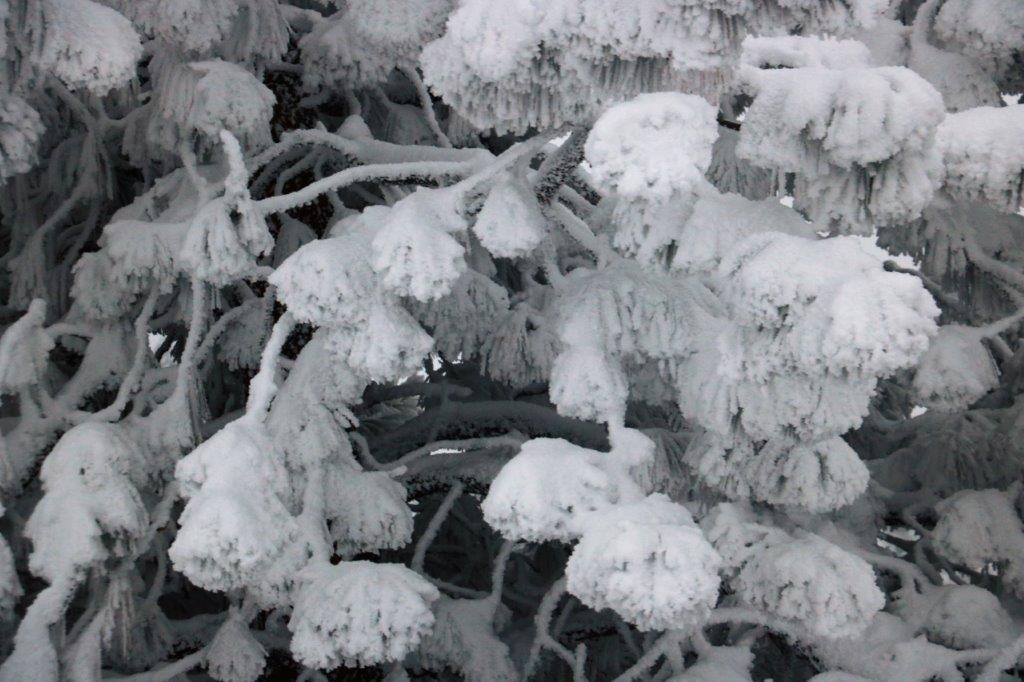
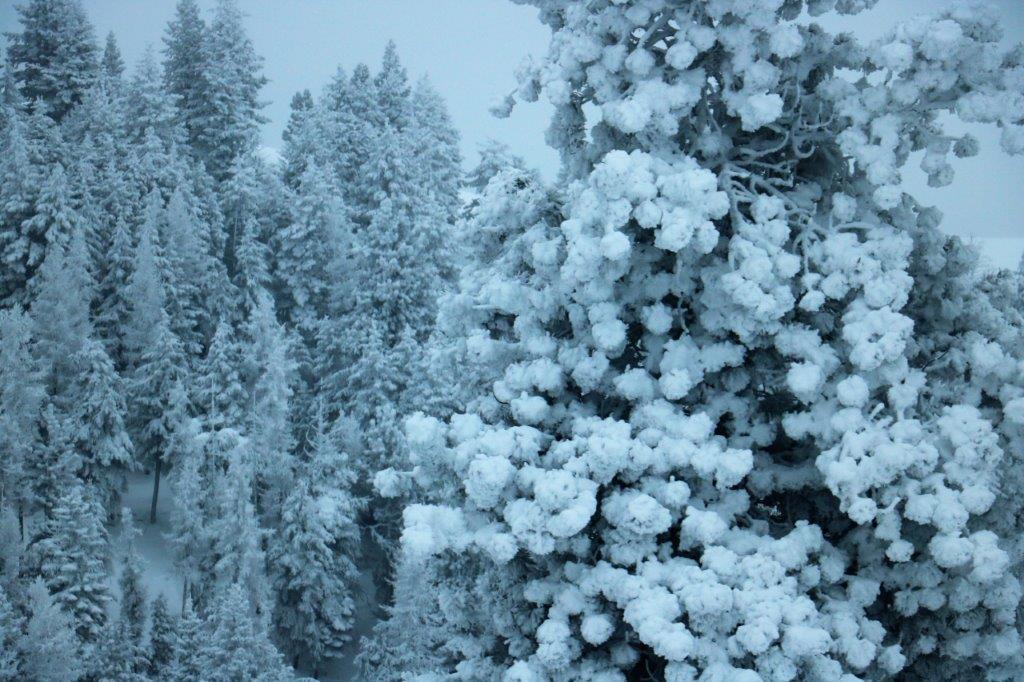
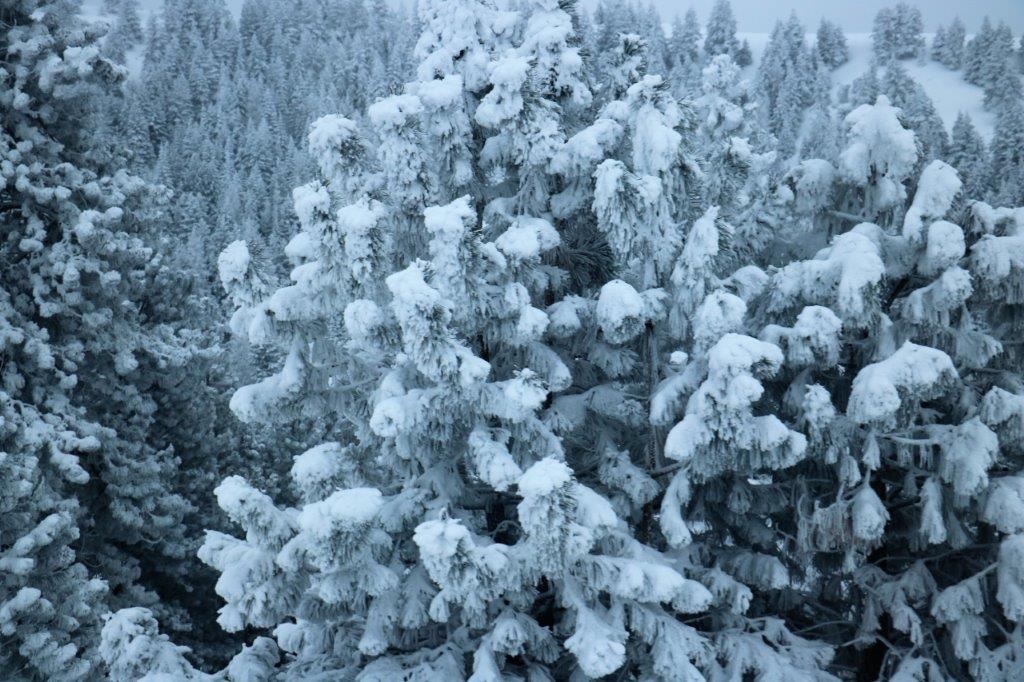
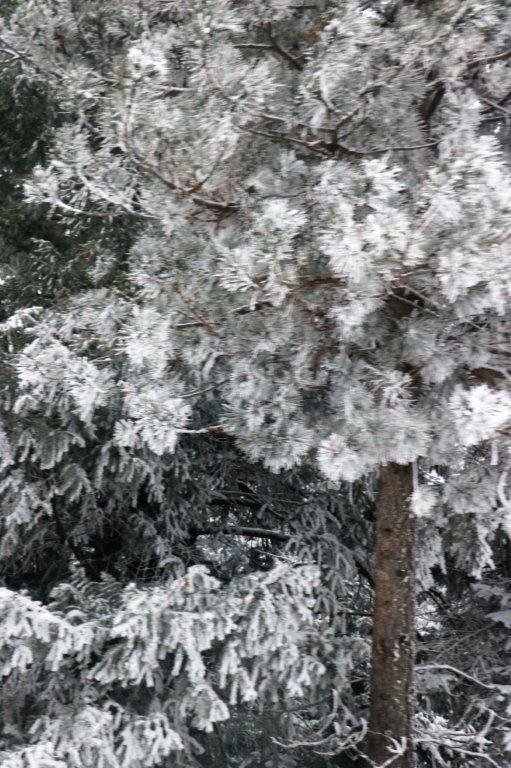
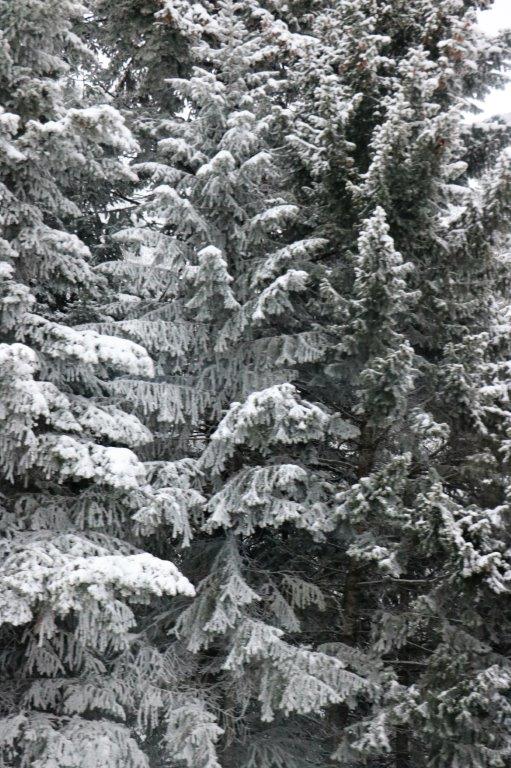
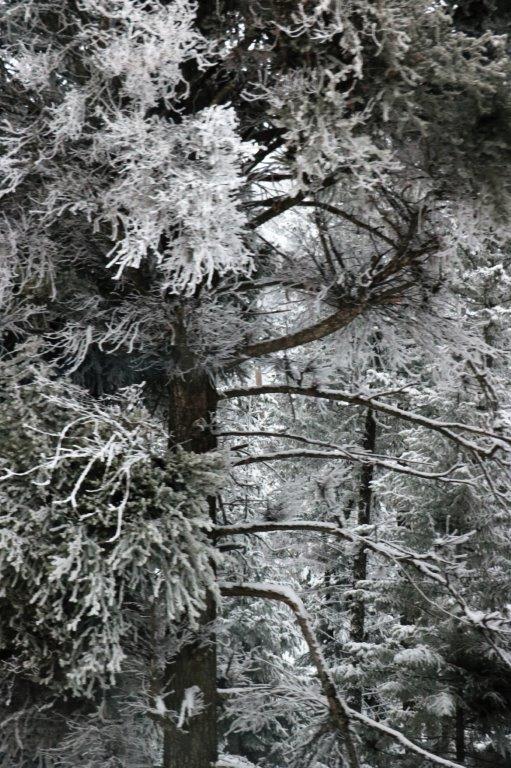
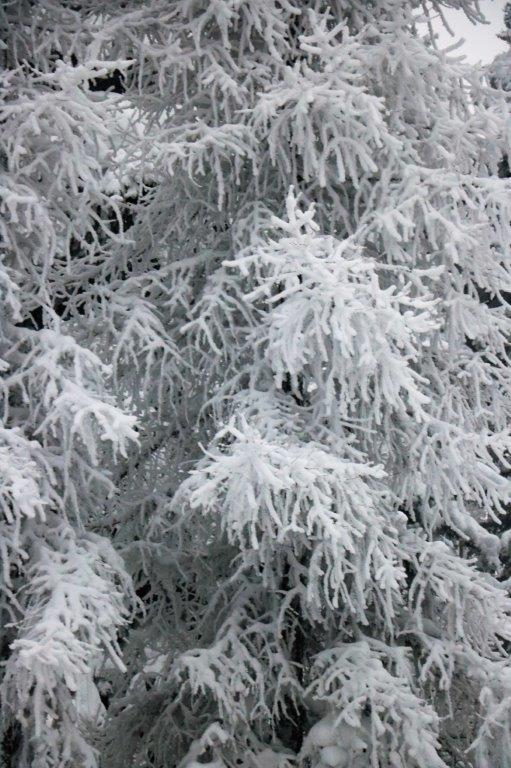
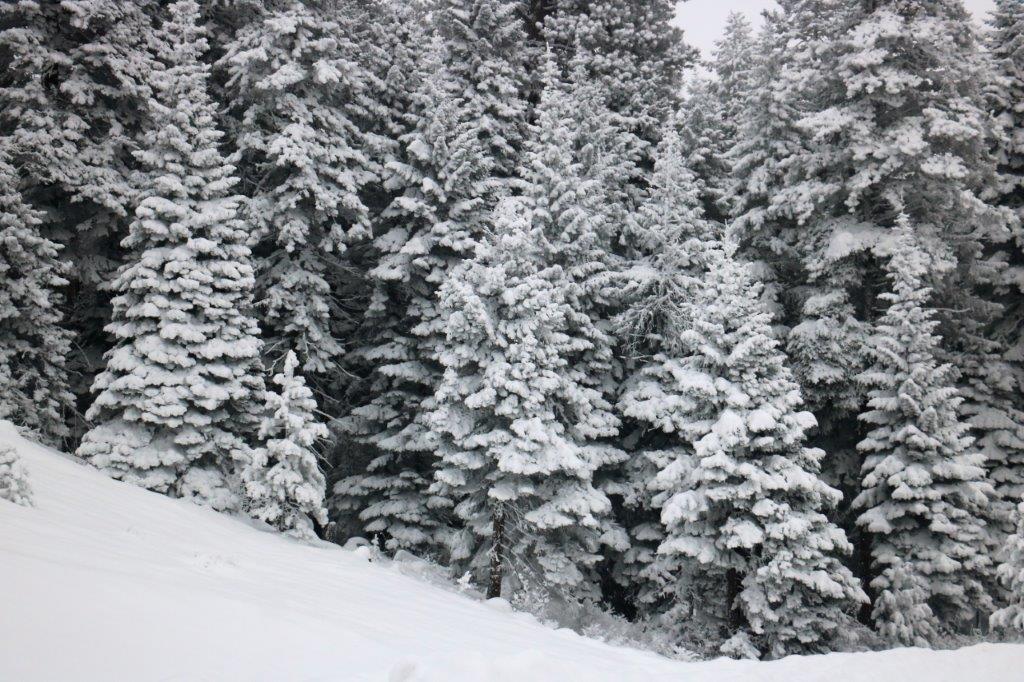
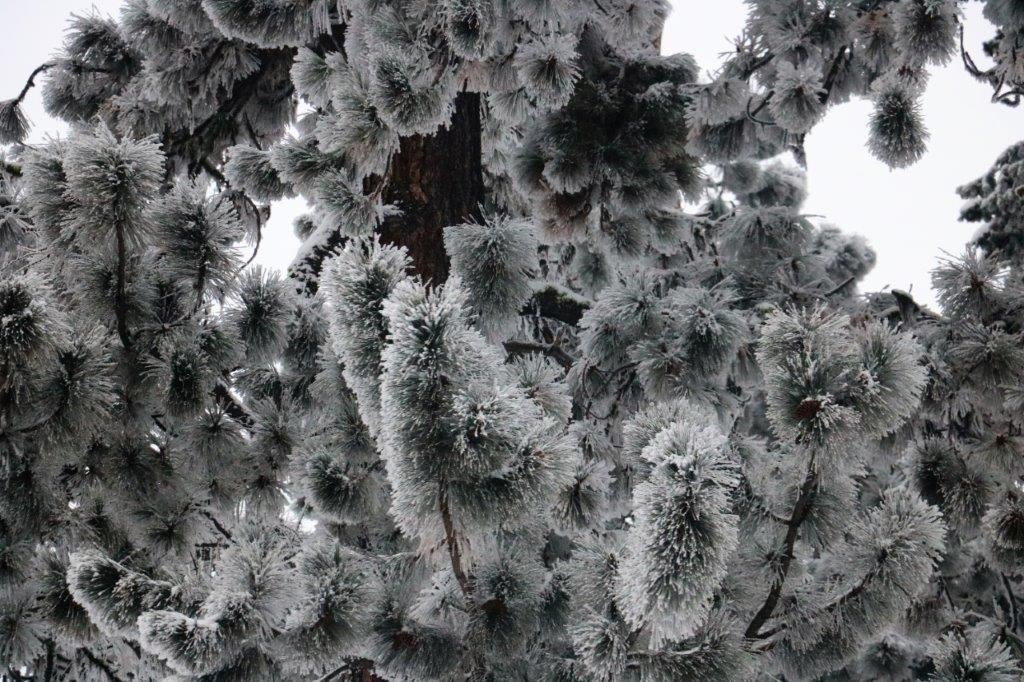
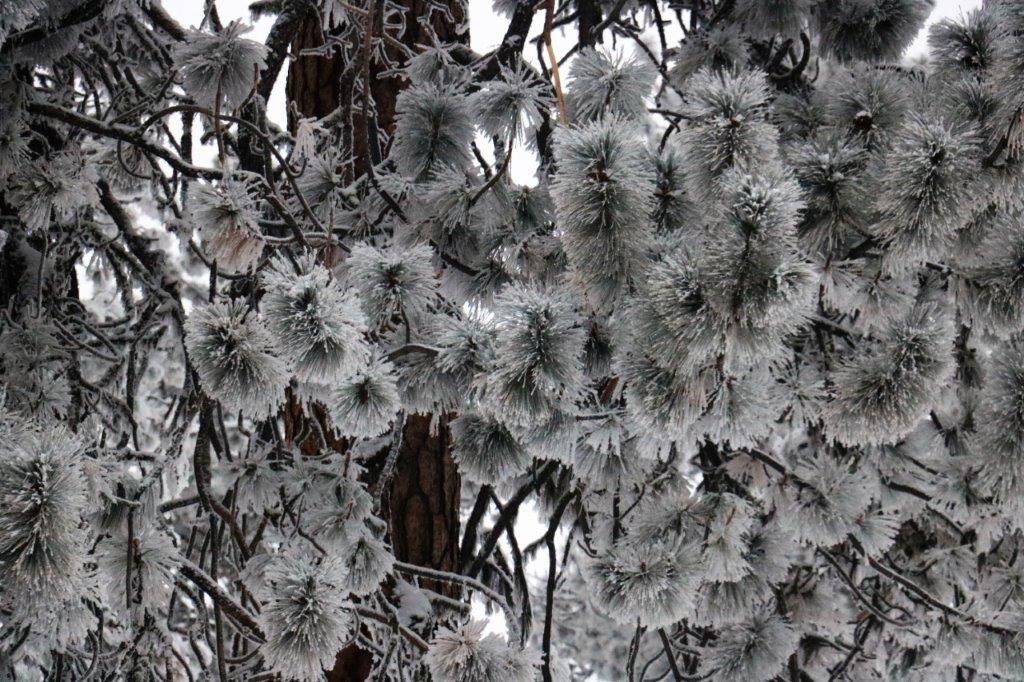
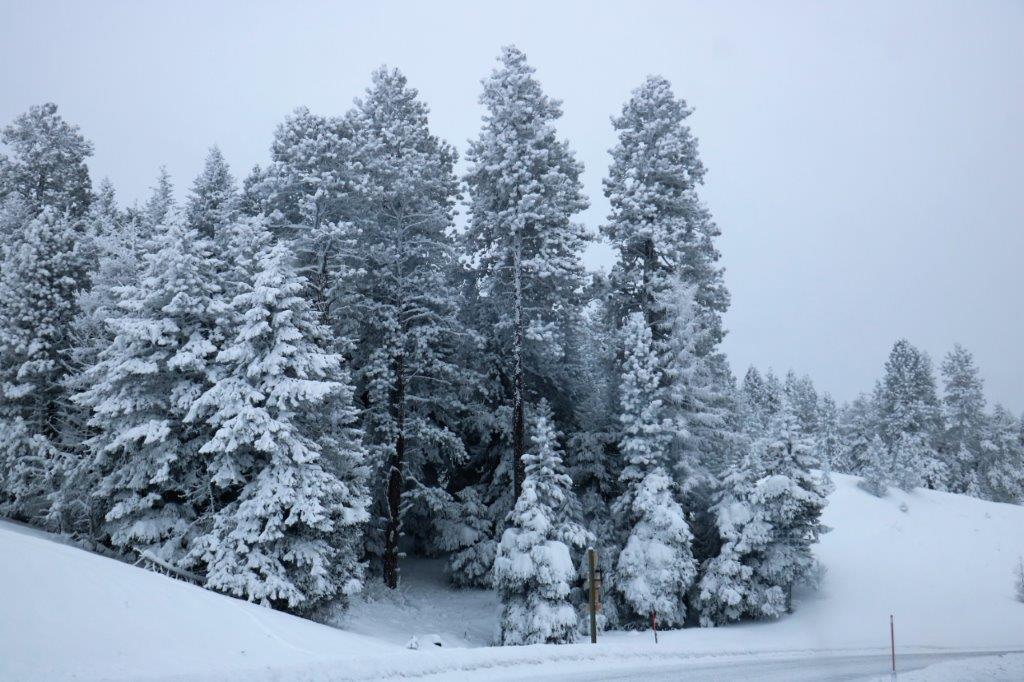
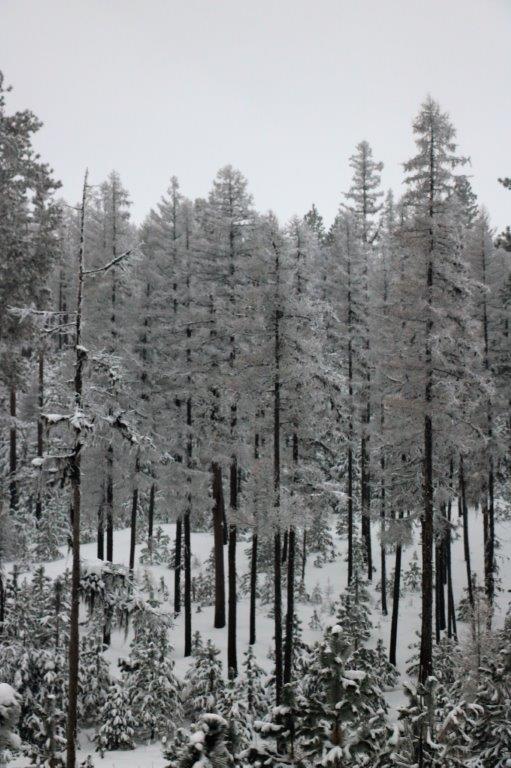
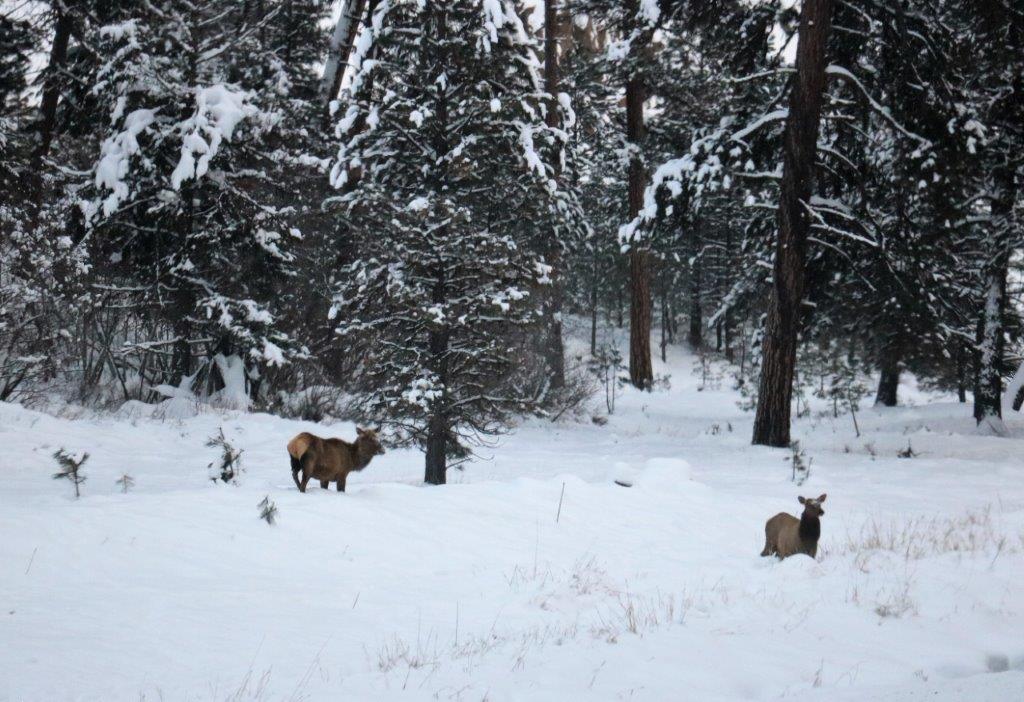
As we drove along, I was thinking that there would be very few photos and nothing of interest for a blog post today; and then we began driving into the mountains and the trees and bushes were completely encased in snow.  It was magical!

img_5965img_5964

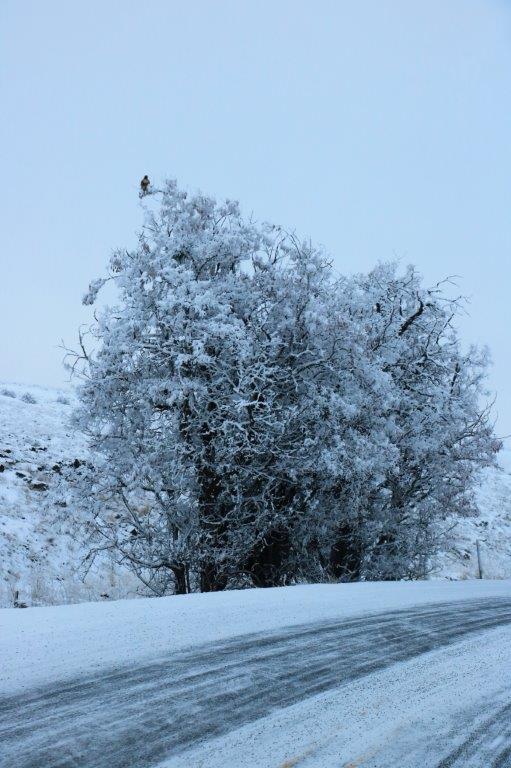
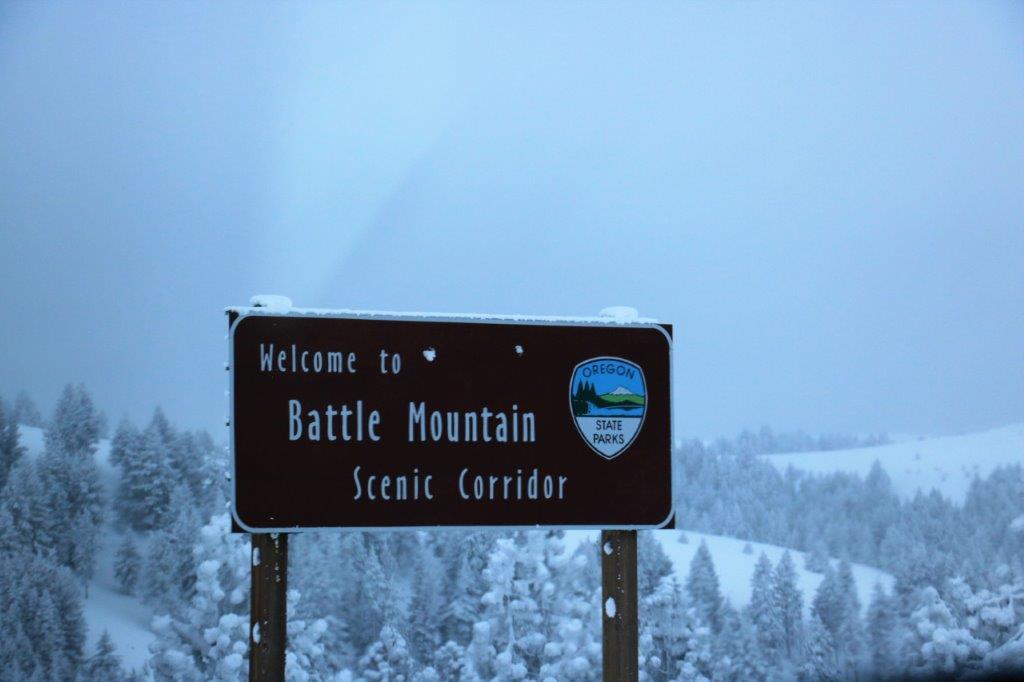
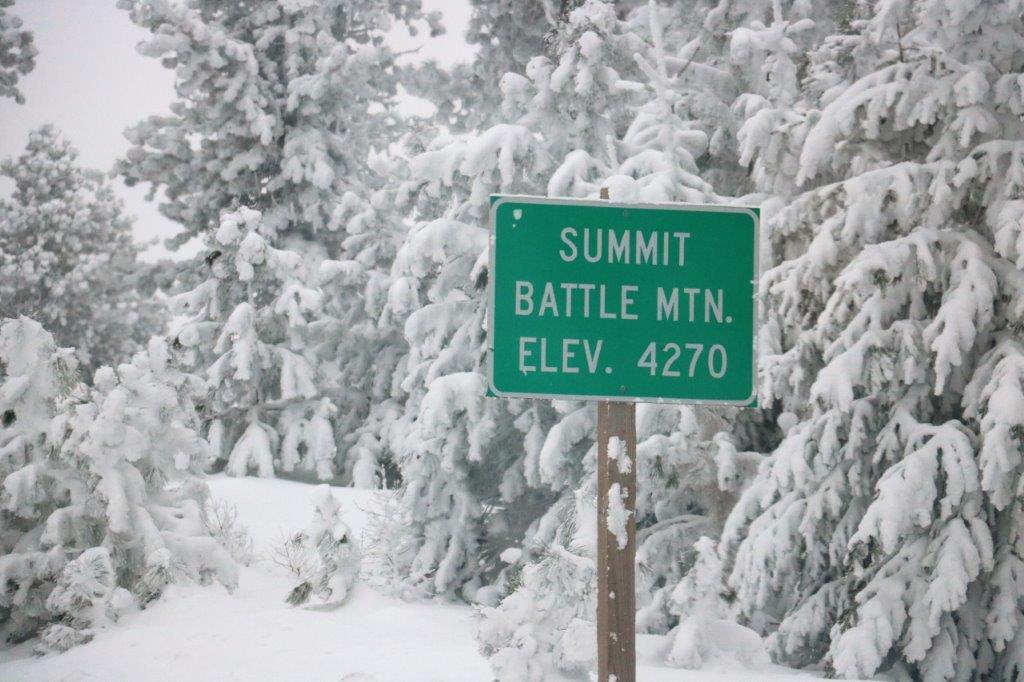
There is a lovely hawk at the top of the tree – looking for dinner, no doubt.img_5969 img_5982 img_5986 img_5989We entered the Battle Mountain scenic corridor and over the next 3 1/2 miles I took almost 100 photographs of the trees and the road-side scenery.  There are not anywhere near that number in this blog but I must post some….img_5993img_5996 img_5997 img_5999

img_6010 img_6015 img_6021 img_6038img_6032 img_6039 img_6040 img_6051img_6043

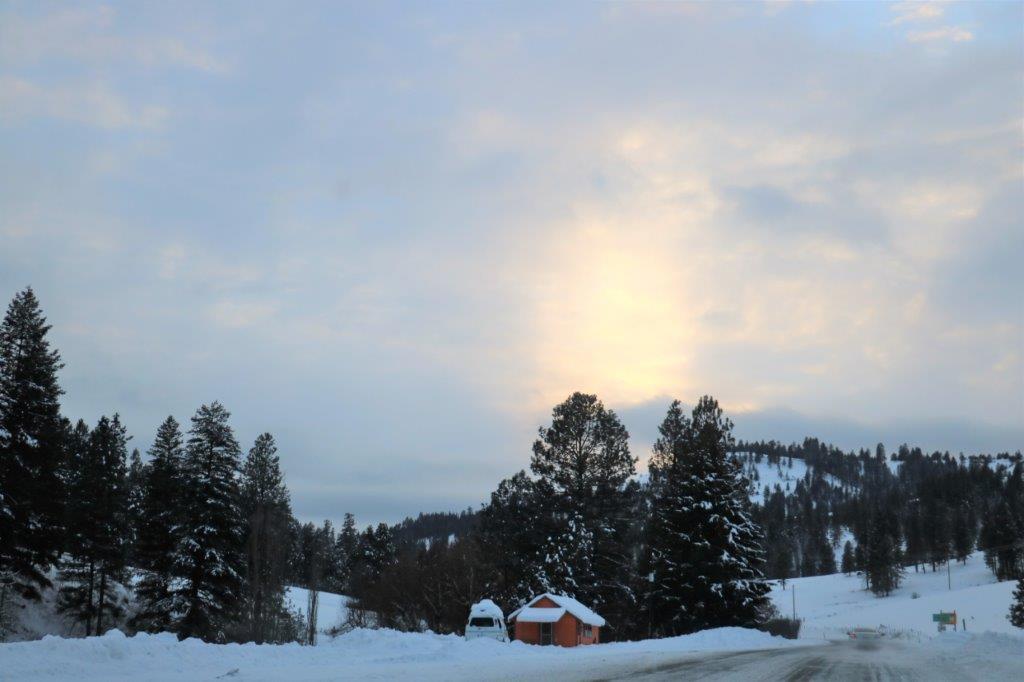
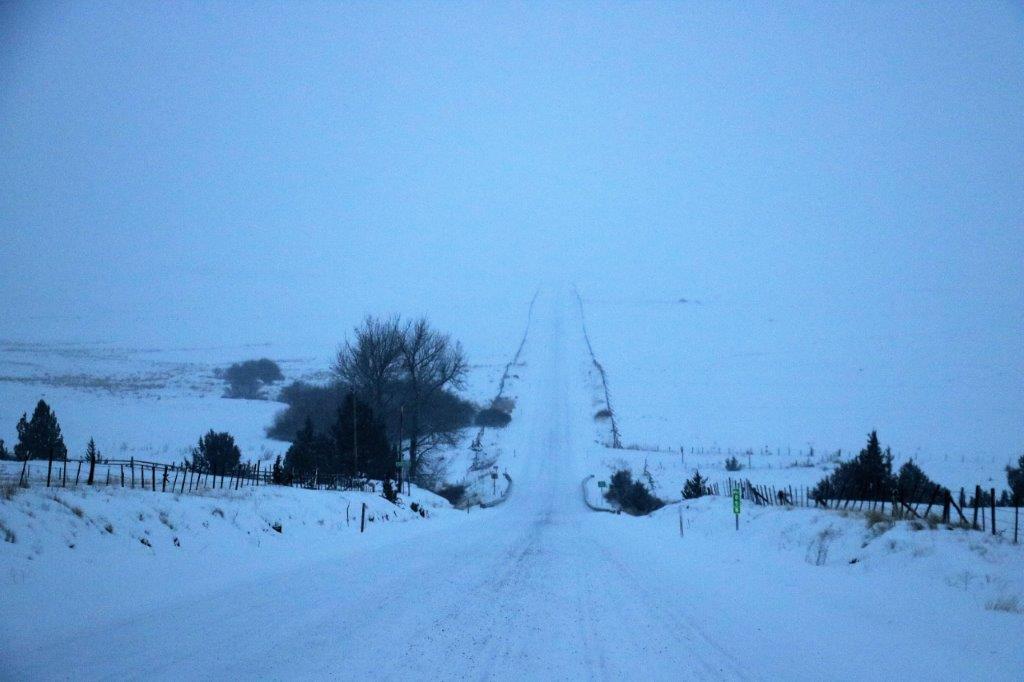
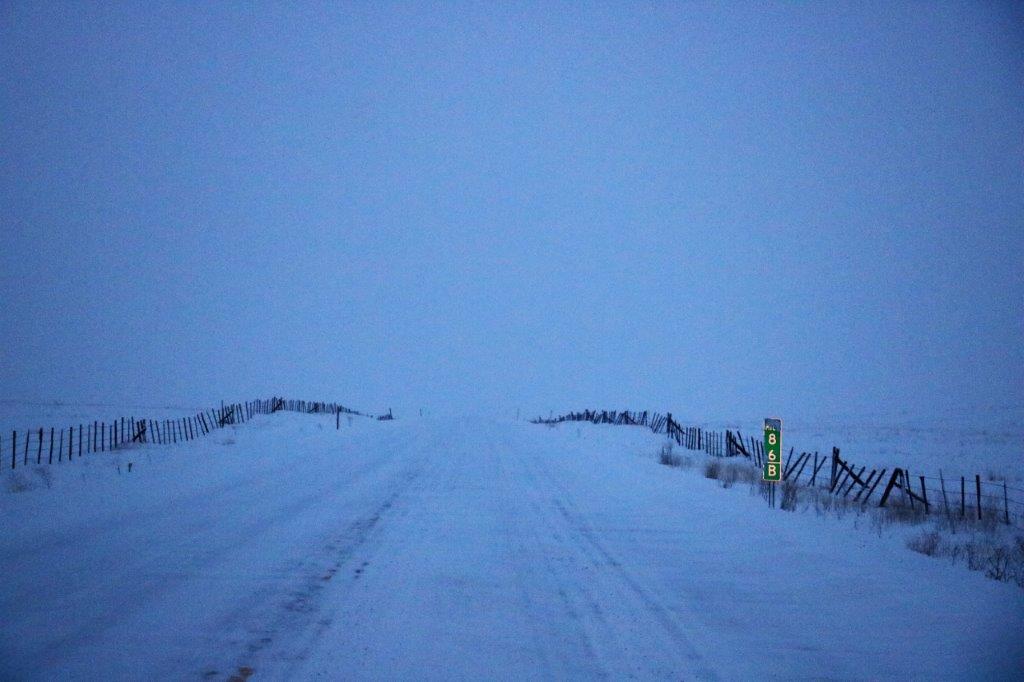
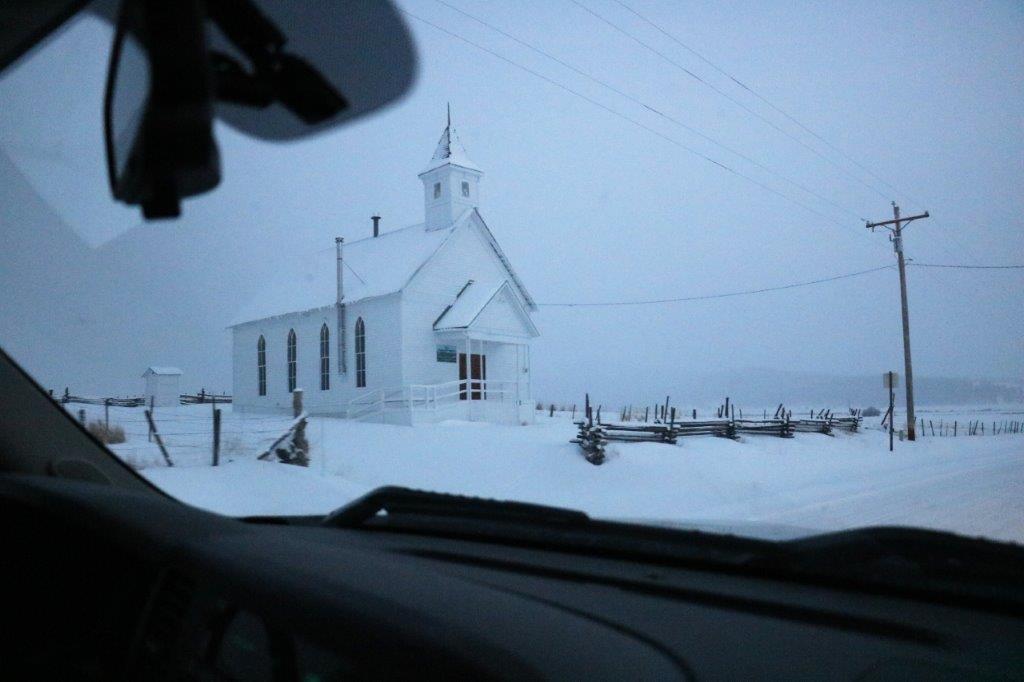
img_6053After we descended out of the Battle Mountain Pass we climbed up and descended four more summits: Meadow Brook, Ritter Butte, Long Creek and Beech Creek before descending into Mount Vernon.img_6060 img_6067 img_6069 img_6075 img_6080 img_6089 img_6093 img_6097We had been driving under high clouds most of the day, but as we were driving down from Beech Creek Summit the clouds lowered to the point where the snow-covered horizon almost disappeared.img_6107 img_6112 img_6121I was checking the map to see how much further it was to Mt. Vernon and John said, “Church.” “Church.”  I looked up just in time to catch a pic through the front window.img_6122We arrived in John Day at about 5:30, checked into our hotel, unloaded our bags and drove two blocks to the Grubsteak Diner for dinner.  No way were we walking those two blocks in the cold wind and falling snow.

But, what I thought was going to be a pretty boring day turned into an absolutely beautiful drive.  The Lord is Creator of such majesty!