Category Archives: Hanna Travels

Ottawa, ON to Drummondville, QC – Dec 2

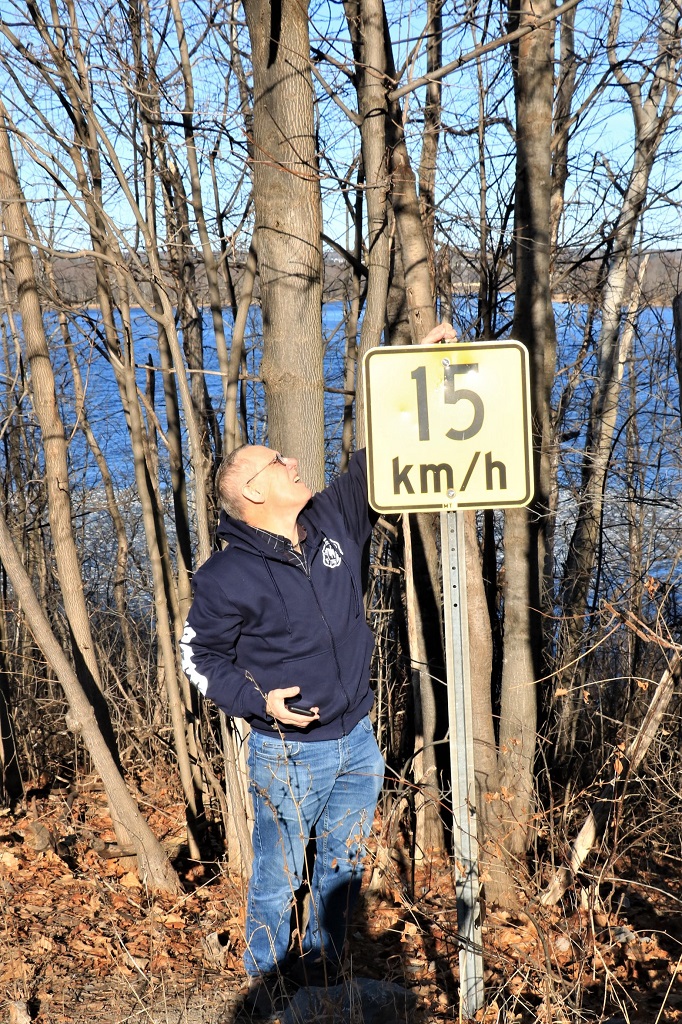
We left our comfortable little studio apartment at 11 am and headed south out of Ottawa.  Our destination for the day is Drummondville, Québec, which is about 300 km away.  We planned to do some geocaching between the road section south of Ottawa and Hawksbury.  After that the rest of the trip is divided highway.  It was a lovely sunny day and we did not even have to put our coats on to go find the caches.  We located 16 of them before we arrived at the freeway portion of the drive.

Our goal on this mini-10-day road trip is to reach 4000 geocache finds and to find a cache in the provinces of New Brunswick and Prince Edward Island.  They are the only two provinces of Canada that we have not yet found a geocache.  We would have liked to fly up to the territory of Nunavet while in Ottawa because that is the only one of Canada’s three territories we have not logged a geocache find as well.  But the three-hour flight from Ottawa to Iqualuit costs $1,600 per person and we would only be there for 24 hours so we decided to pass (for now).

We checked the Maritime weather before we left Ottawa and there are supposed to be four winter storms coming one after another with ice rain, ice pellets and 60 kph winds in southern New Brunswick and up to 20 cm (over a foot) of snow in northern New Brunswick over the majority of the upcoming week.  Us being us, or rather John being John, that did not change our plans.  Yet.  We will keep an eye on things and perhaps have an earlier return to Ottawa than planned. That would be okay as well  since there are lots of places to see and things to do in Canada’s capital city and we could amuse ourselves nicely until our flight home to BC on Dec, 12.

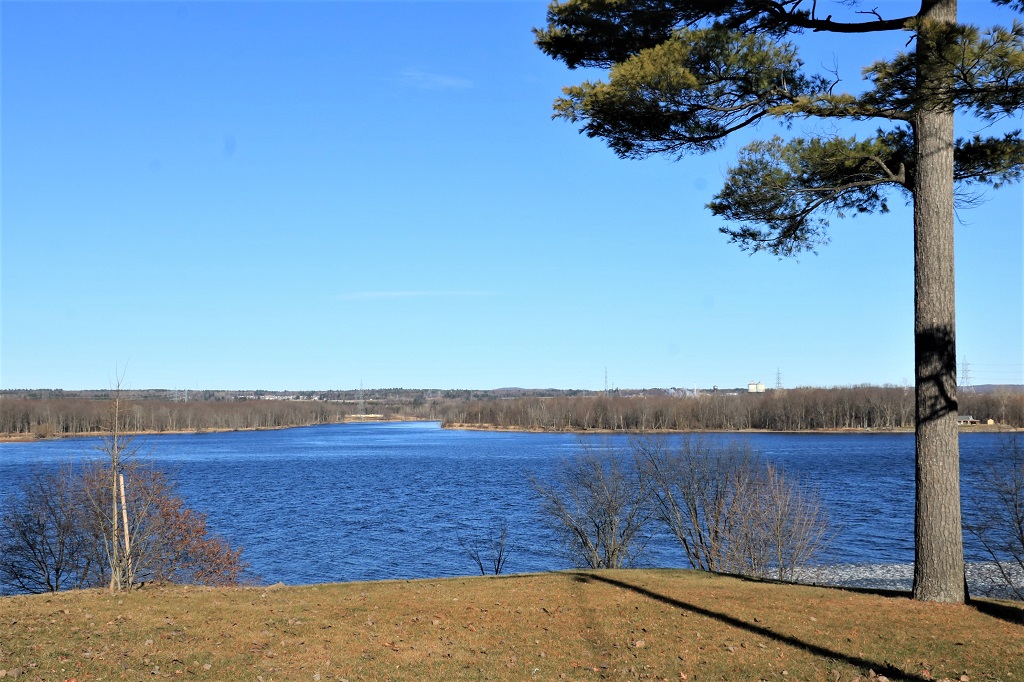
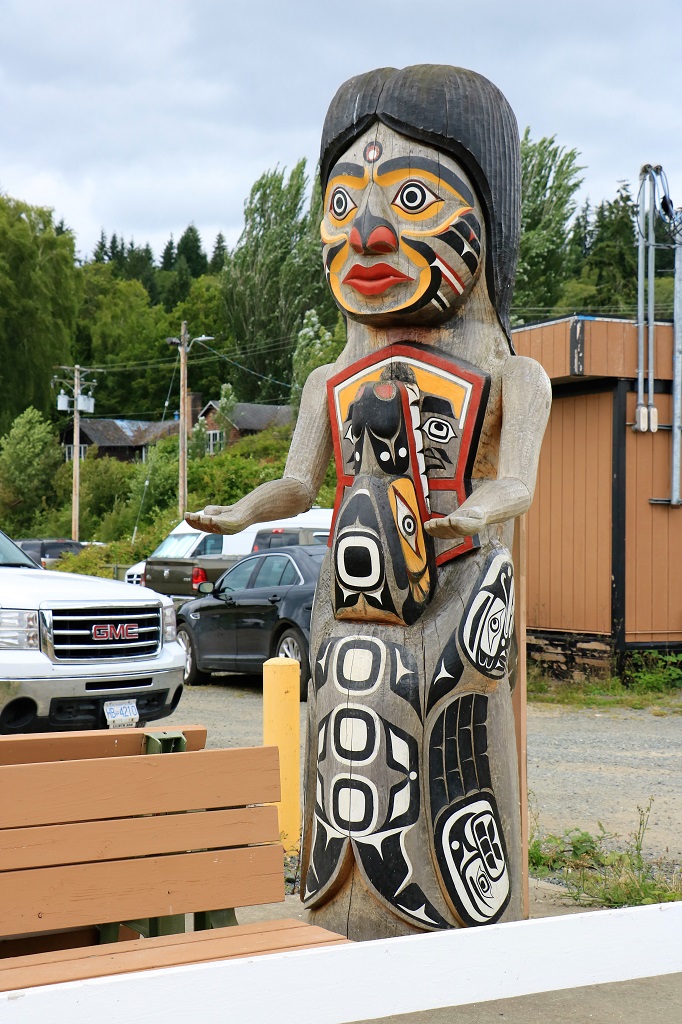
Our first stop was a little roadside park called Barnett Park on the outskirts of Cumberland.  There was some nice ice pools near the shore of the Ottawa River.
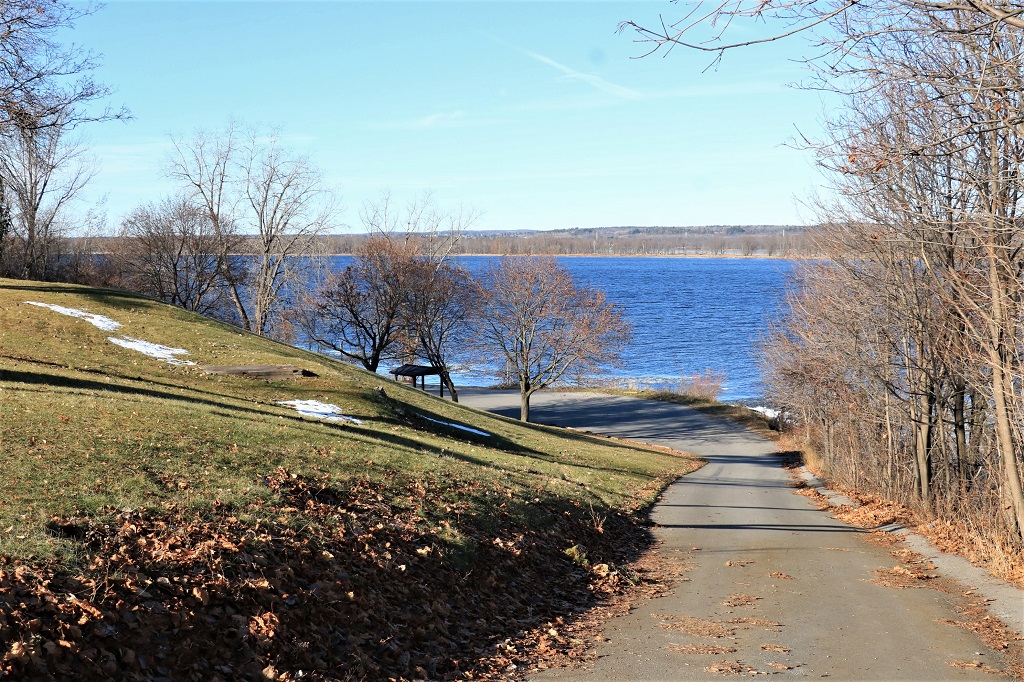
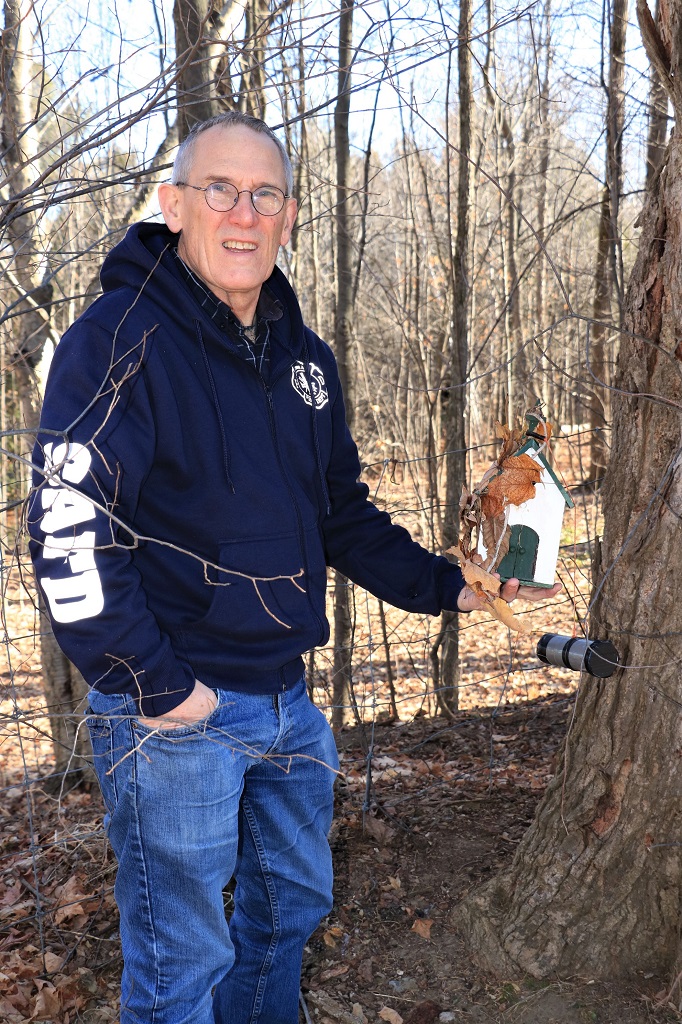
Across the highway from Barnett Park is Quigley Road and we drove along it into Cumberland and Rockland finding several caches.This nice little birdhouse cache was hidden in a hollow at the back of a large tree.
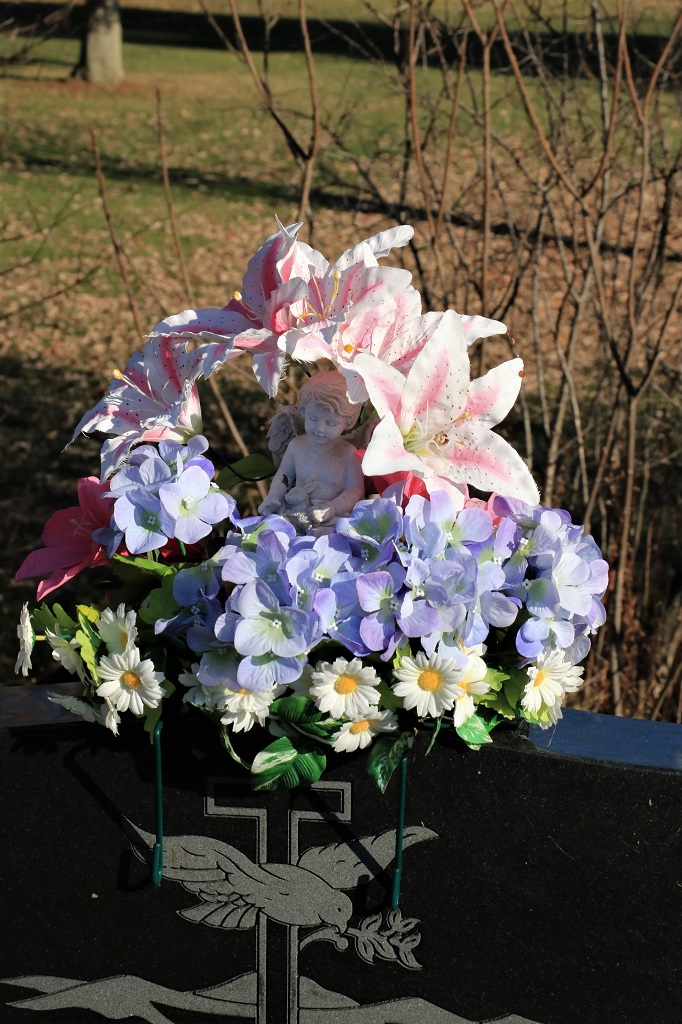
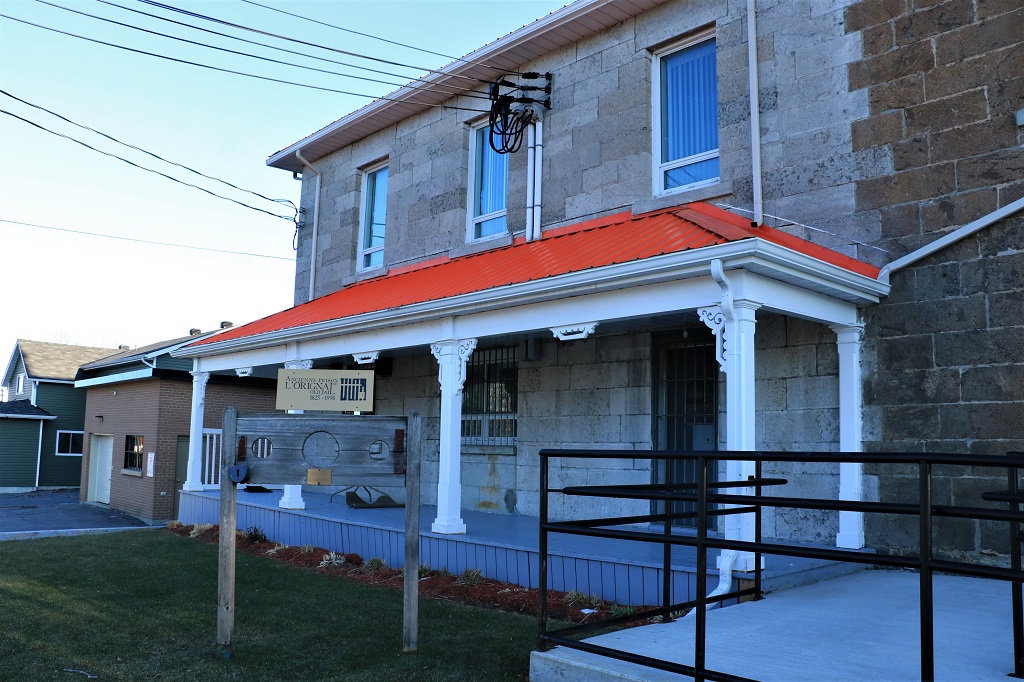
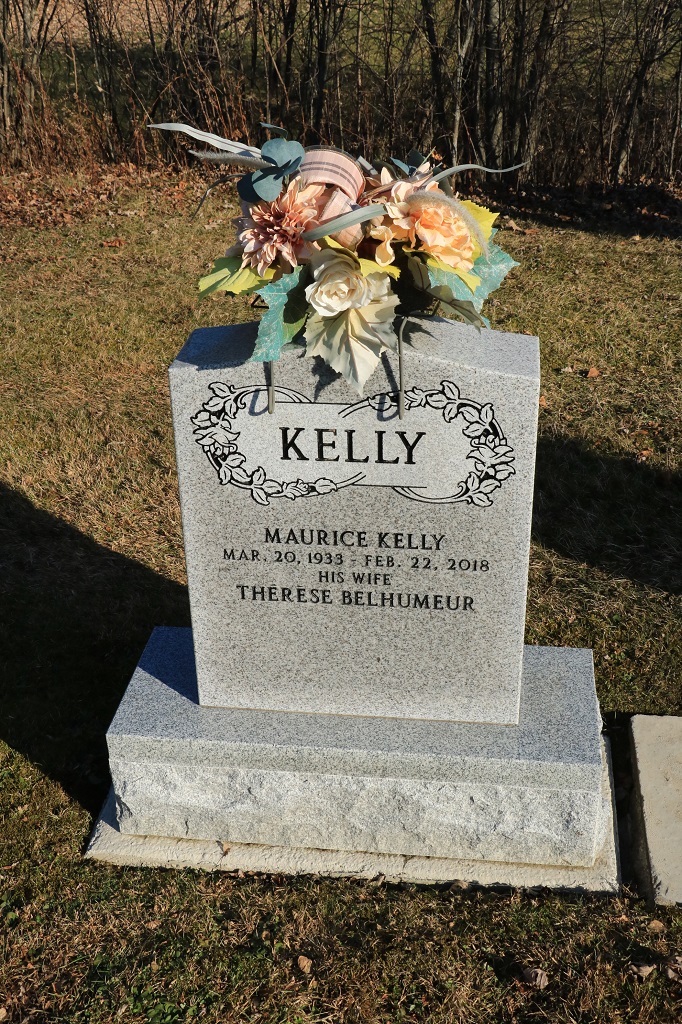
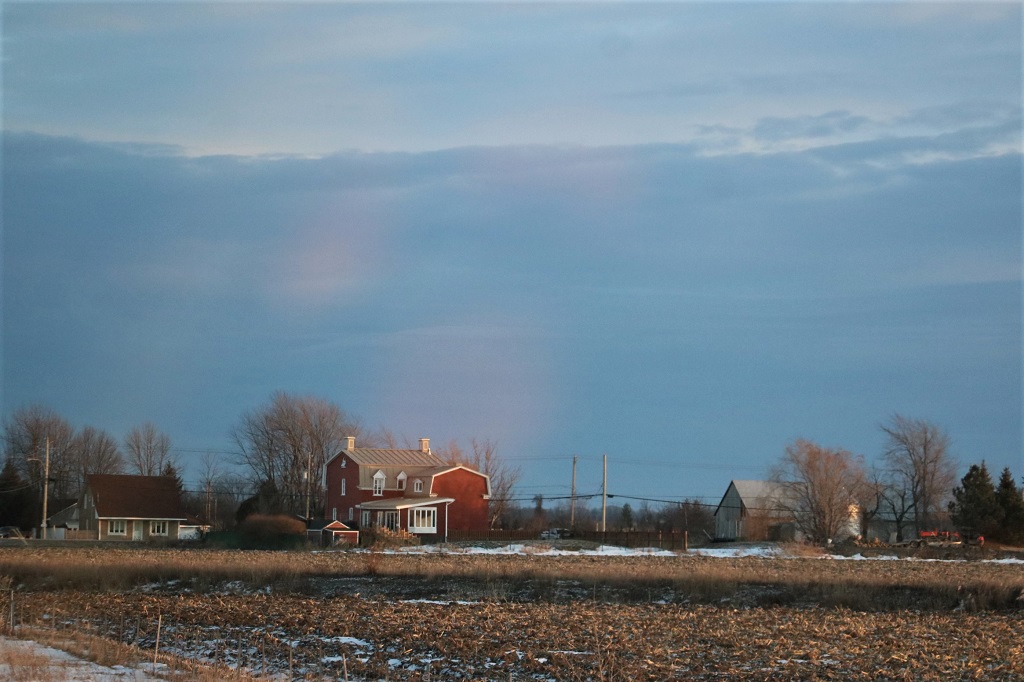
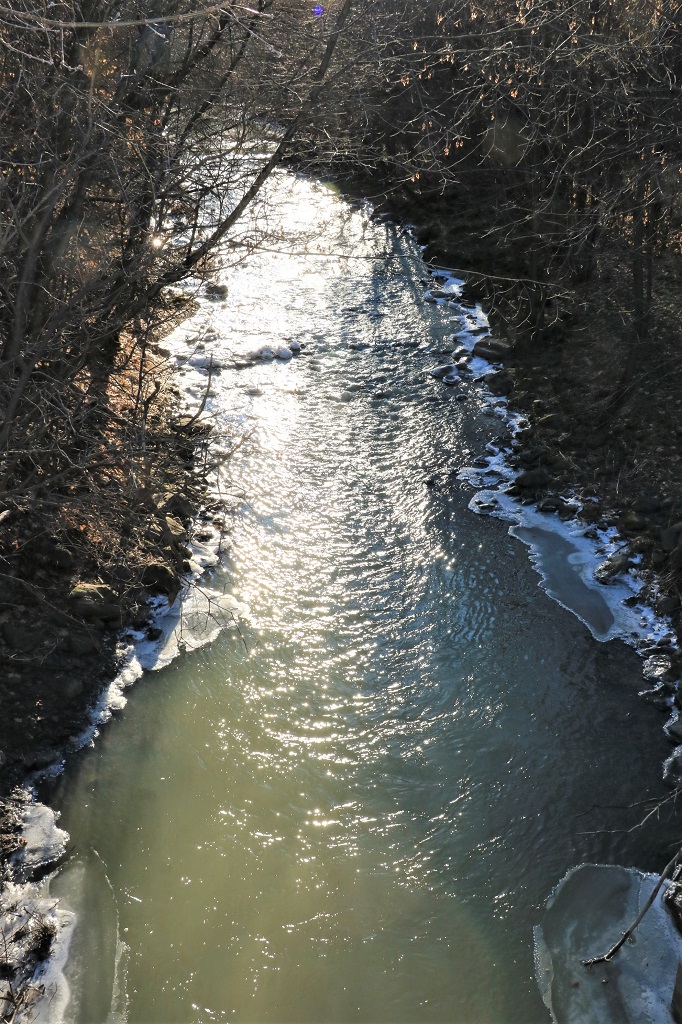
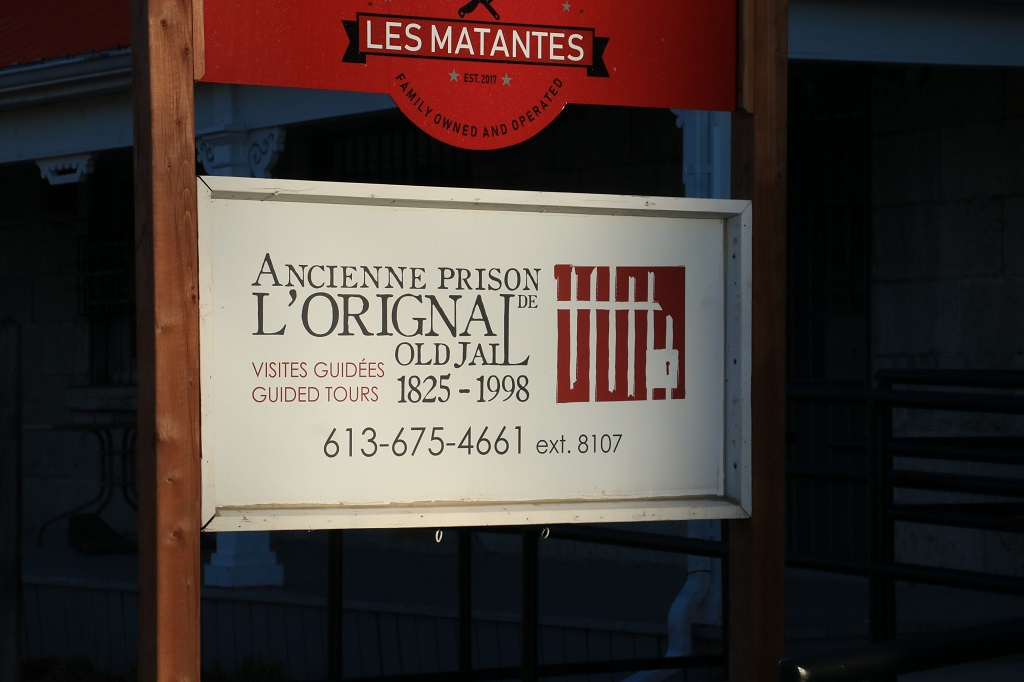
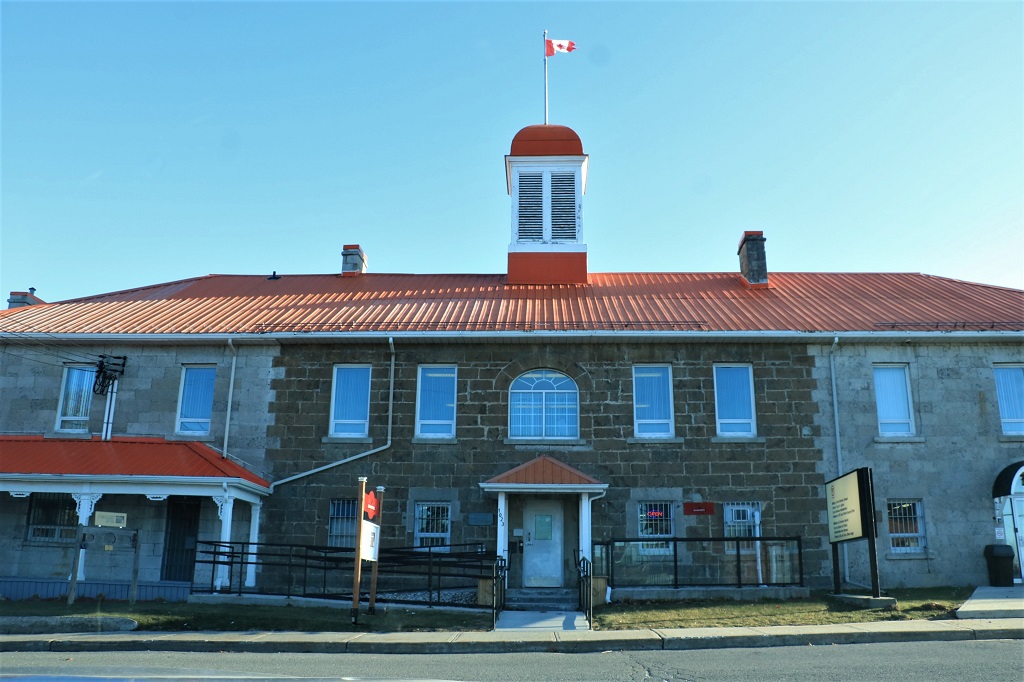
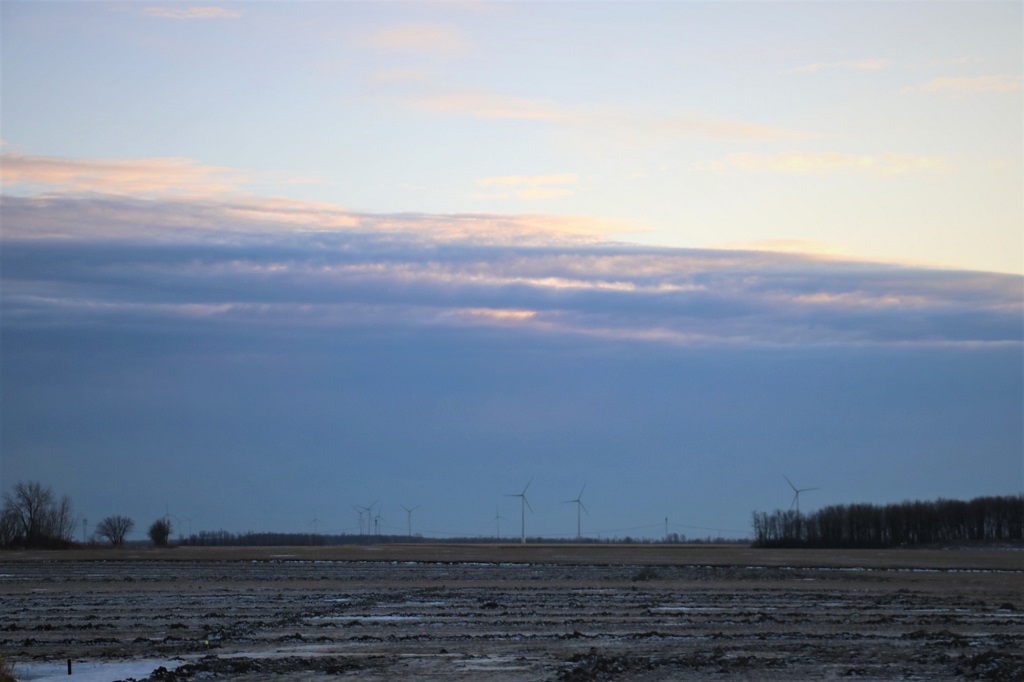
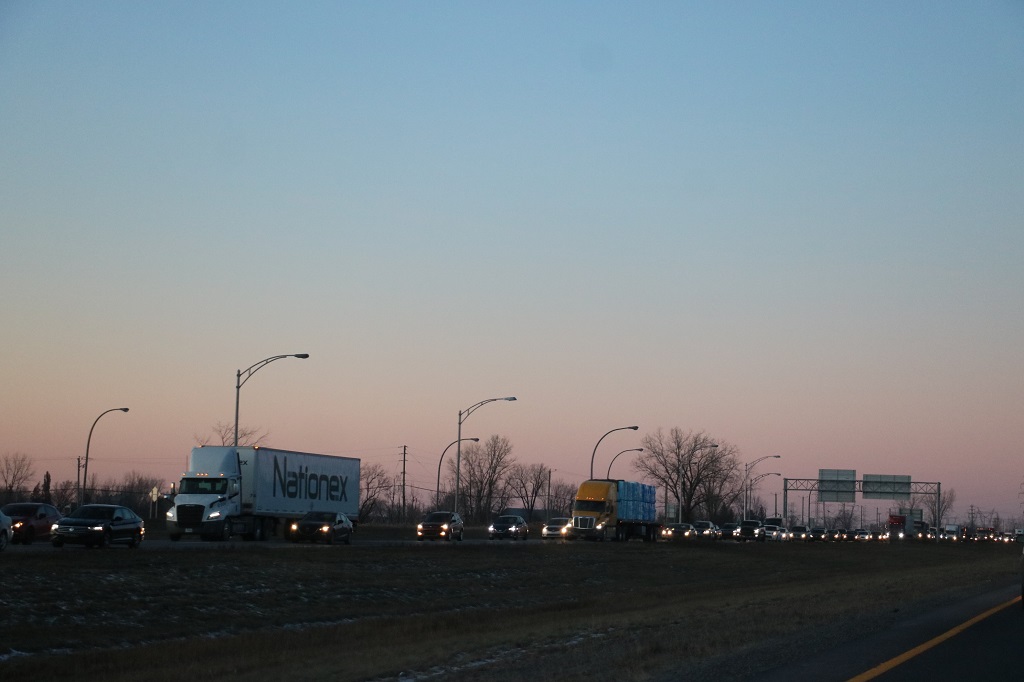
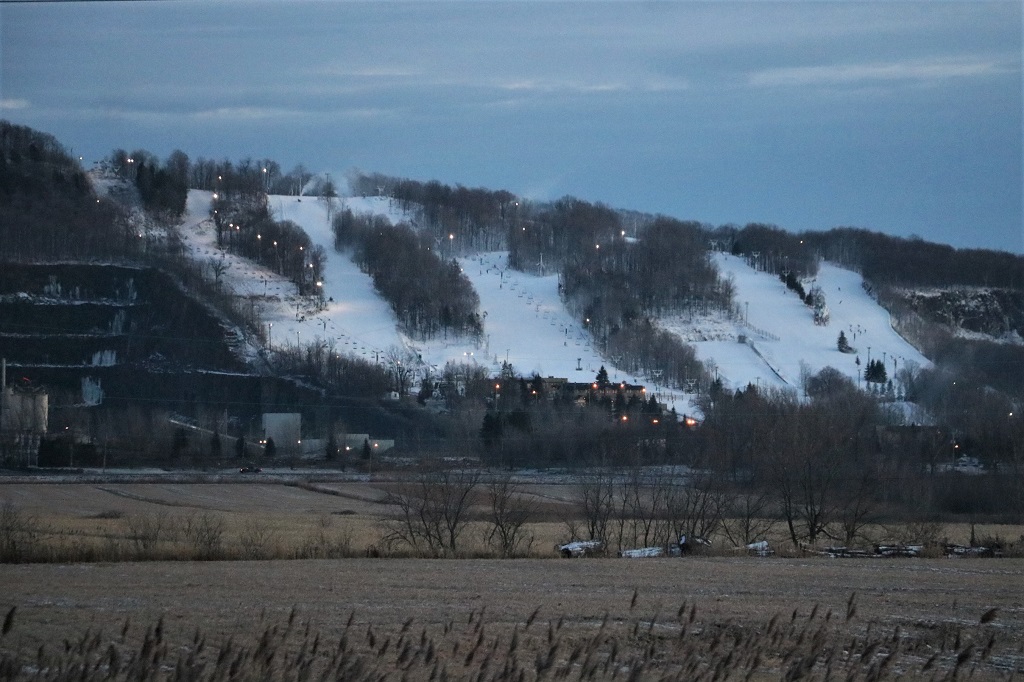
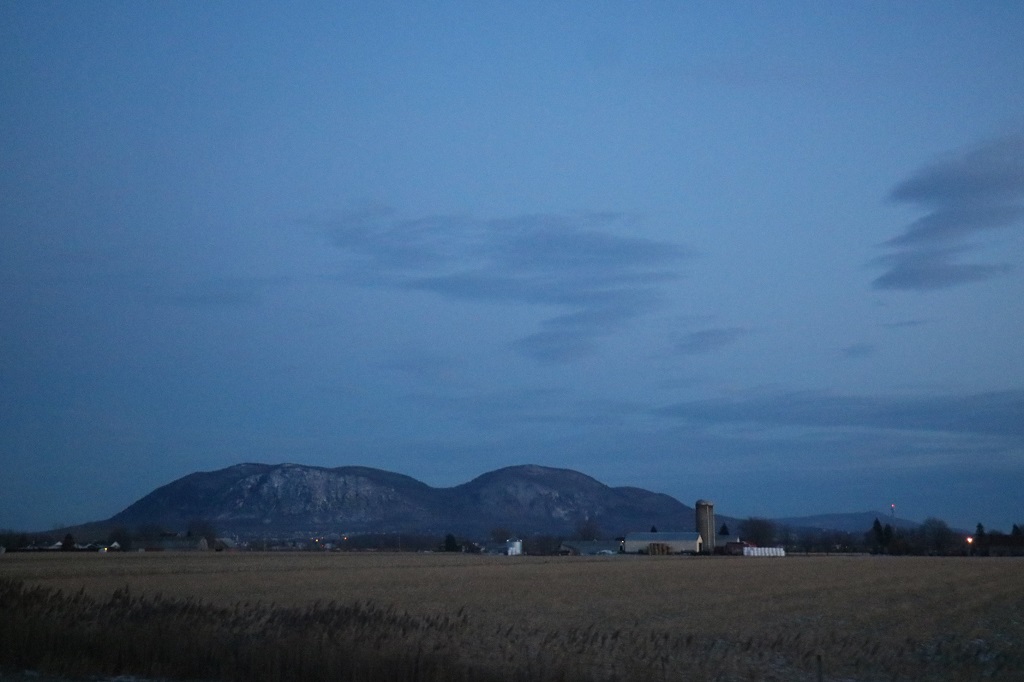
Another cache was located at the far end of the Cumberland Cemetery. (Cemeteries are popular geocache hiding spots.)  While John was off signing the log I checked out the lovely silk flower arrangements in handy over-the-top-of-the-headstone holders. Much of today’s drive was through farm country and we were surprised at how much corn was still standing in the fields.  We saw several combines working to harvest it and it looked like the farmers had cut some earlier in the fall and then left sections of the fields until later.  We are not sure that is what they do or whether the weather was too wet to harvest earlier, but it was interesting to see crops coming off in early December. We took a few short detours into small communities to find a few of the geocaches.  One of them was L’Original where we found a cache hidden under the edge of the Mill Creek Bridge.Also in L’Original is an old jail.  It was open and I think guided tours were still available even though it is the off season, but we had not traveled very far by this point and had over 200 km to go so we decided not to check it out. Much of our freeway travel was skirting Montreal and the sun was setting by the time we were passing the community of Bossard and heading toward Drummondville.  It was also rush hour for those getting off work in the city and heading home. We were happy to be going east instead of west; although the traffic in our lanes was quite thicks we had very few slow sections unlike the opposite lanes which were crawling. I did not see the sign for this ski resort but it certainly would not take long to reach the bottom of the runs.  The hills at home are three times as high as this.I remember from my long ago geography classes that the central and eastern parts of Canada are much older than the west.  The ‘mountains’ out here have had many more centuries to round-off and wear down.  Unlike the western Rockies and Coast mountains, which are relatively young and therefore very high and rugged.  The short length of the range below was by far the highest land we saw all day.We checked into our hotel in Drummondville at 5:30 and headed to the restaurant for some dinner.  It was a much more pleasant winter geocaching day than I was expecting to have.  And, if the weather man is correct, it may be the only one we get.

Ottawa – Nov 30 and Dec 1 – Baby Shower and Art Opening

We had a ‘free’ day on Thursday, Nov 29 because Carrie was staying with friends and spent the day visiting with them and relaxing.   We used the opportunity to drive out of Ottawa to Smiths Falls and visit John’s cousin Tom for a few hours.  Our son flew into Ottawa from Houston in the evening  and Carrie picked him up at the airport.  We didn’t see them again until the next day when they came over to our place to visit and play some cards.  Also on Friday several of Carrie’s family members arrived from North Carolina, Massachusetts, and Michigan to attend the opening of her art exhibit.  All of them were staying for the weekend in a large apartment about five minutes drive from our place.

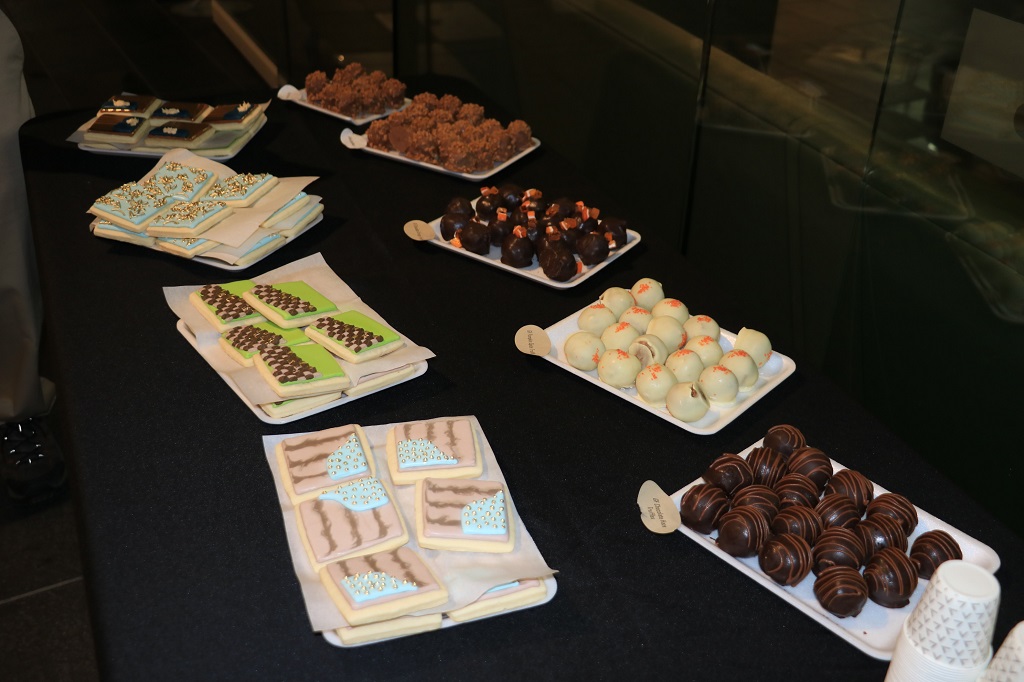
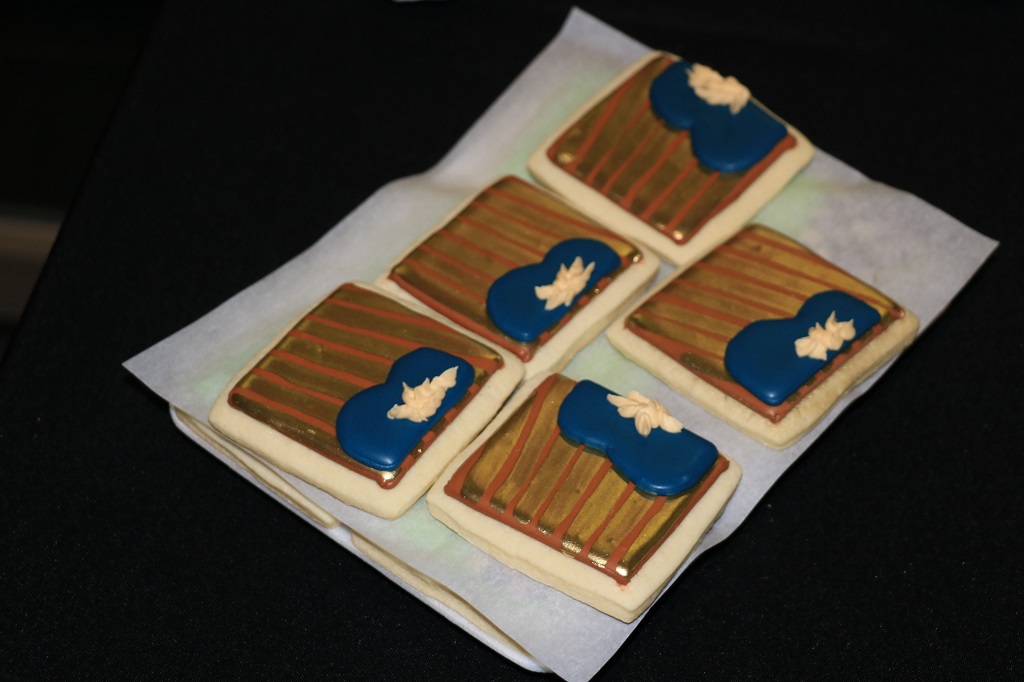
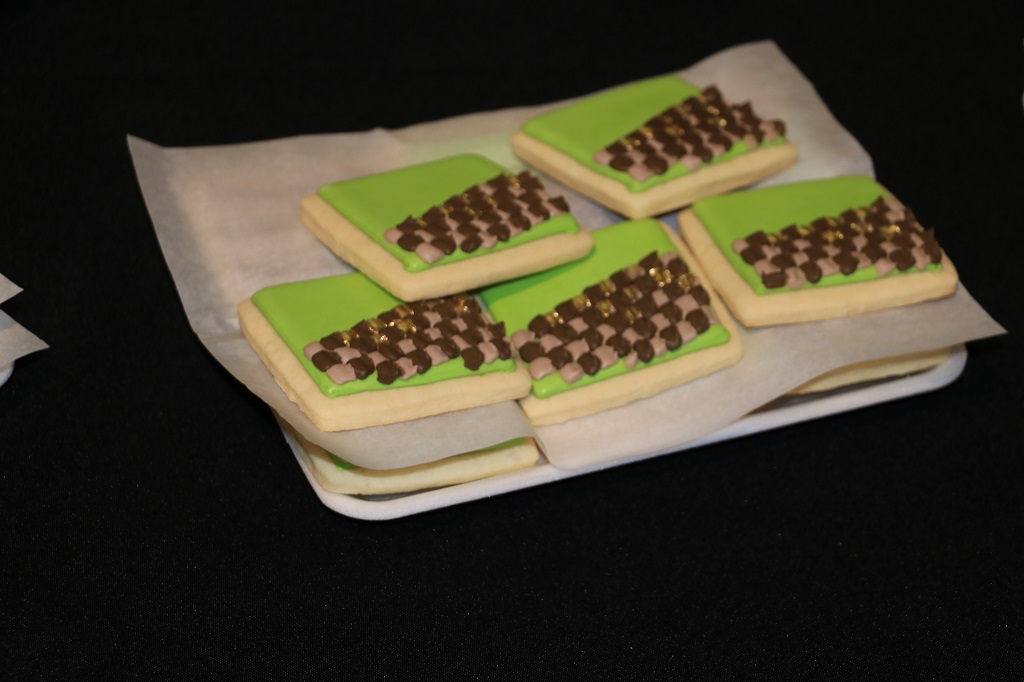
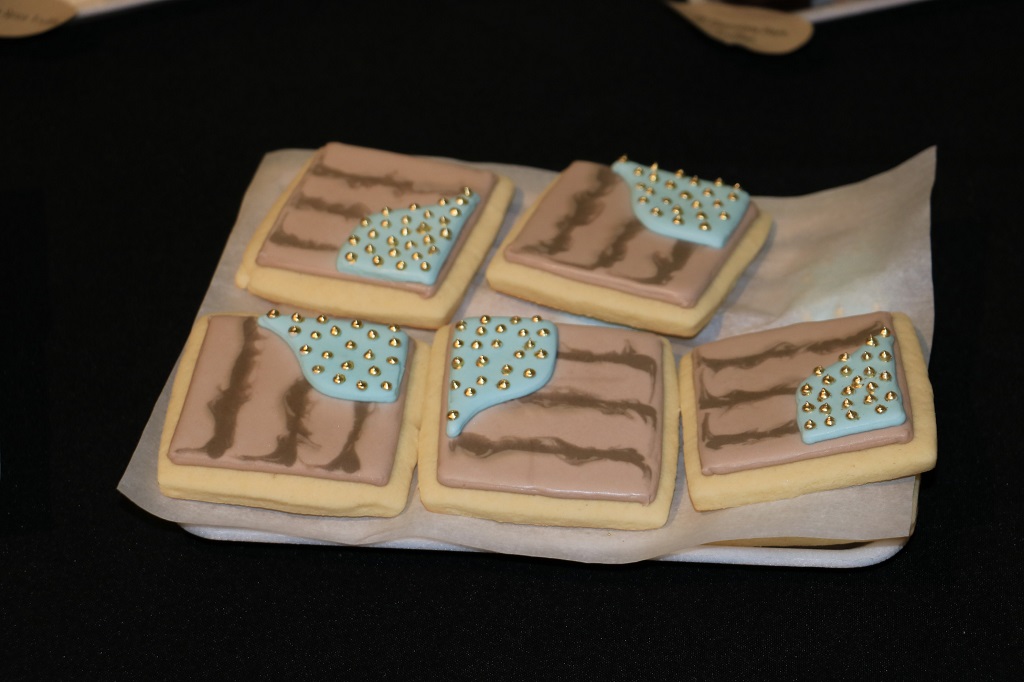
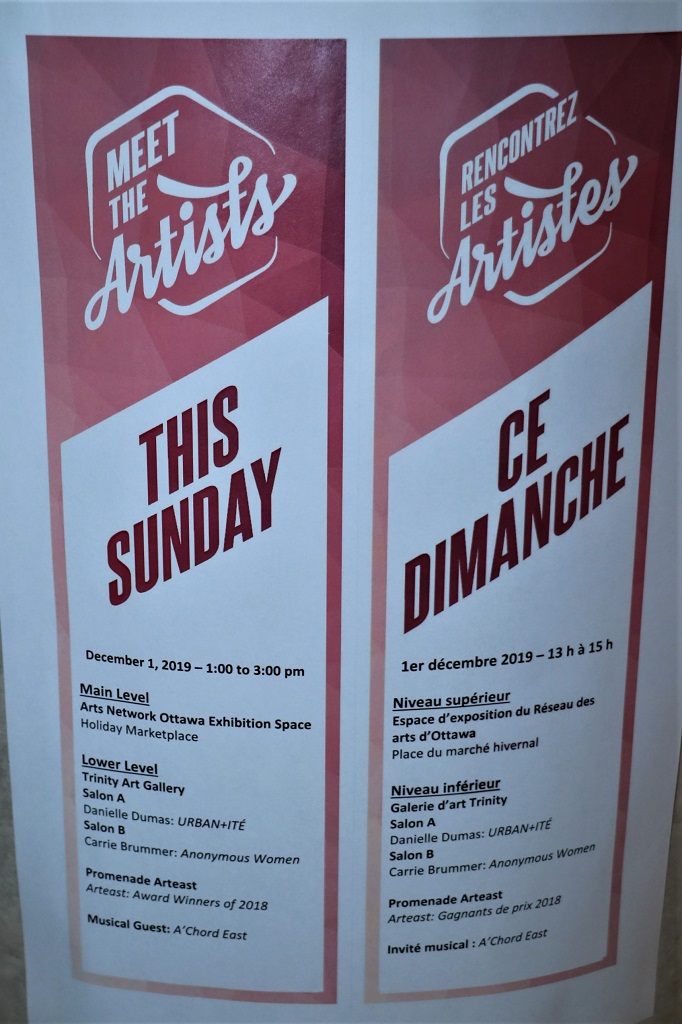
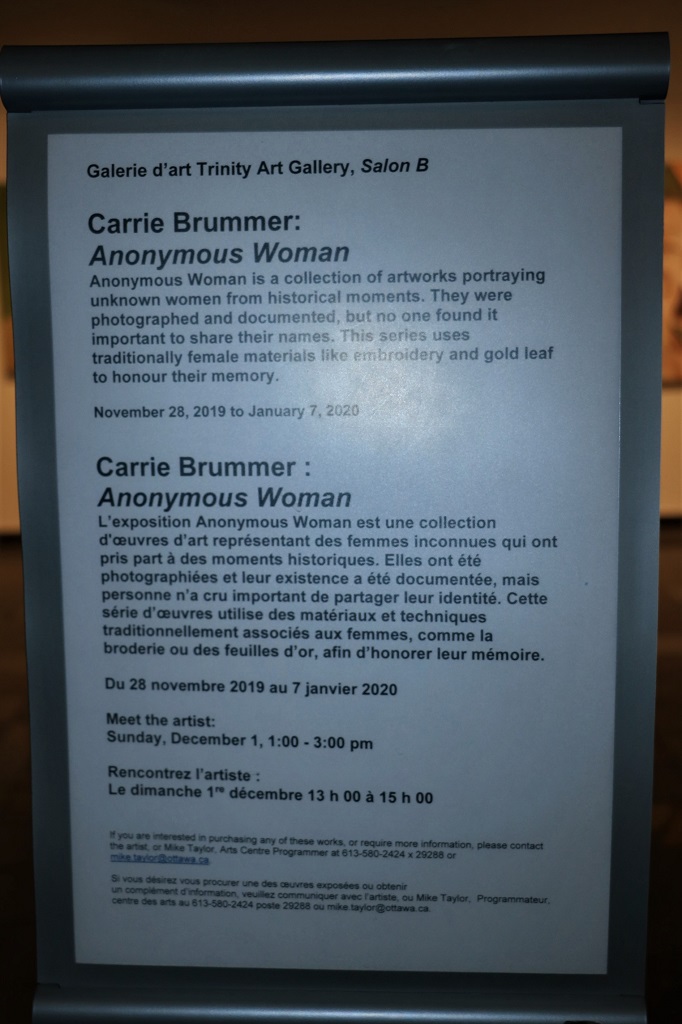
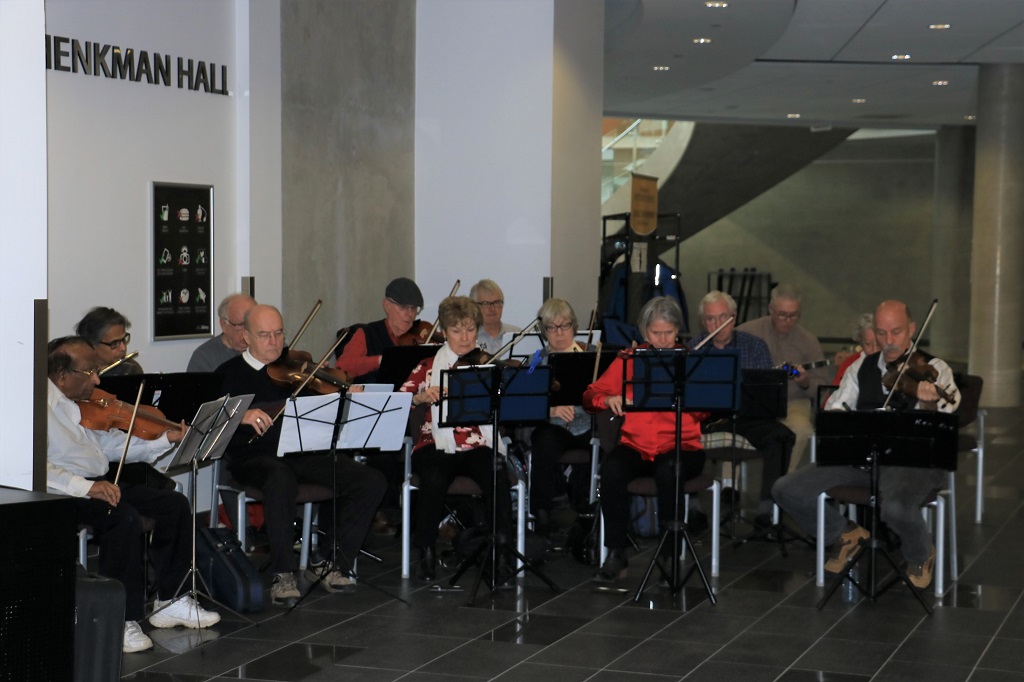
The next day, Saturday, we went over to the apartment for a visit and in the afternoon we took Joseph and Carrie back to our studio while her sister, niece and other relatives decorated their apartment for a Jack and Jill baby shower.  Since so many of her family had come up for the art show and we were here too, they decided to host a welcome party for the upcoming little arrival. Sunday afternoon was the ‘Meet the Artists’ event at the Shenkman Art Center and the opening of Carrie’s “Anonymous Woman” art show.  The opening of the three art exhibits was from 1-3 so we went over at 12:30 to help set out all the cookies and other goodies that Carrie’s friend had decorated to showcase aspects of her paintings. There was a violin ensemble in the hallway outside the art galleries that played during the event.  Lovely, quiet carols. It was a well attended event.  Carrie received many compliments on her series, had some in-depth discussions on her theme and the various paintings.  She even had several sales, which is always wonderful for an artist!

We enjoyed one final gathering at a restaurant for dinner before heading back to our little apartment.  Everyone but us heads home to their various US residences.  We are driving to New Brunswick and Prince Edward Island.  They are the only two provinces in Canada in which we have not found a geocache, so a little winter cache searching is coming up over the next ten days..

Ottawa – Nov 27 – Art set-up at the Shenkman

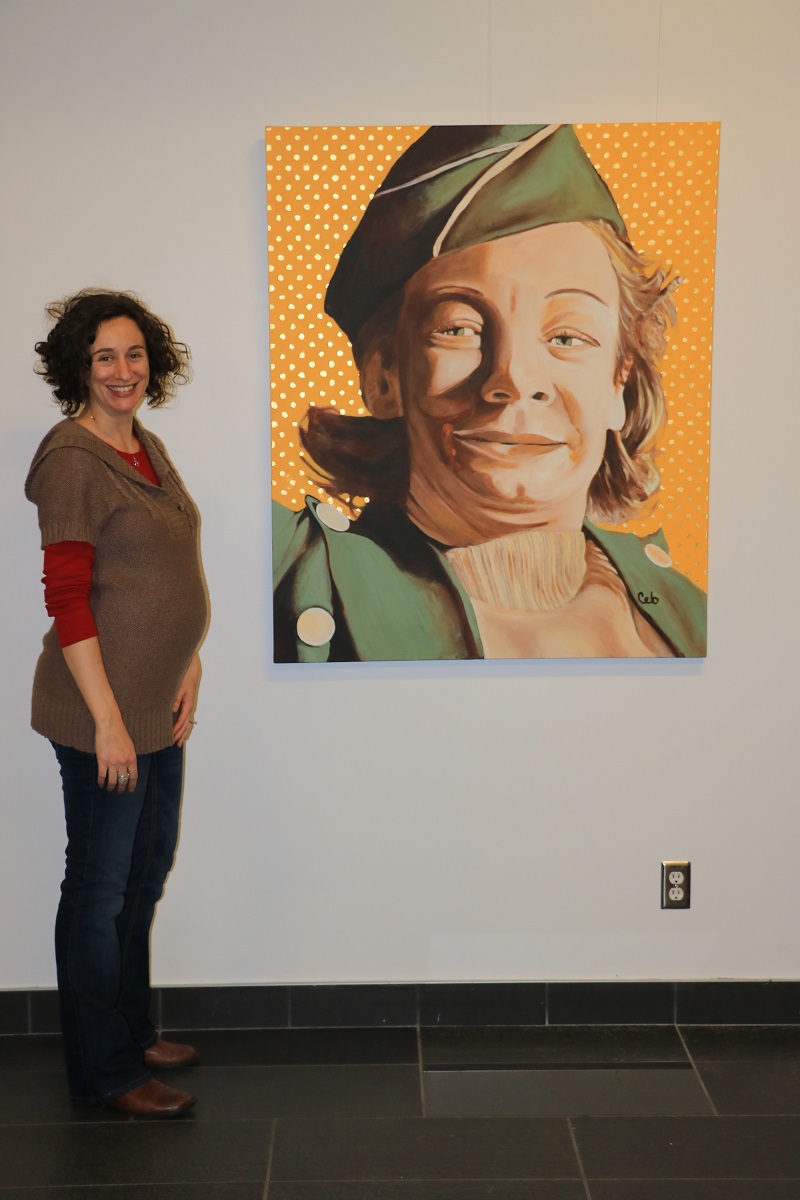
We flew to Ottawa on Tuesday, November 26.  The purpose of our trip was to attend the opening of our daughter-in-law’s exhibition of her art series “Anonymous Woman.”  Carrie had arranged the solo show while she and our son were living in Ottawa.  Since then they have moved to Houston, Texas.  She flew back to Ottawa on Monday and had to hang all the art in the gallery on Wednesday.  We decided to fly out a few days early so as to assist her with preparing the exhibit since she is now six-months’ pregnant.

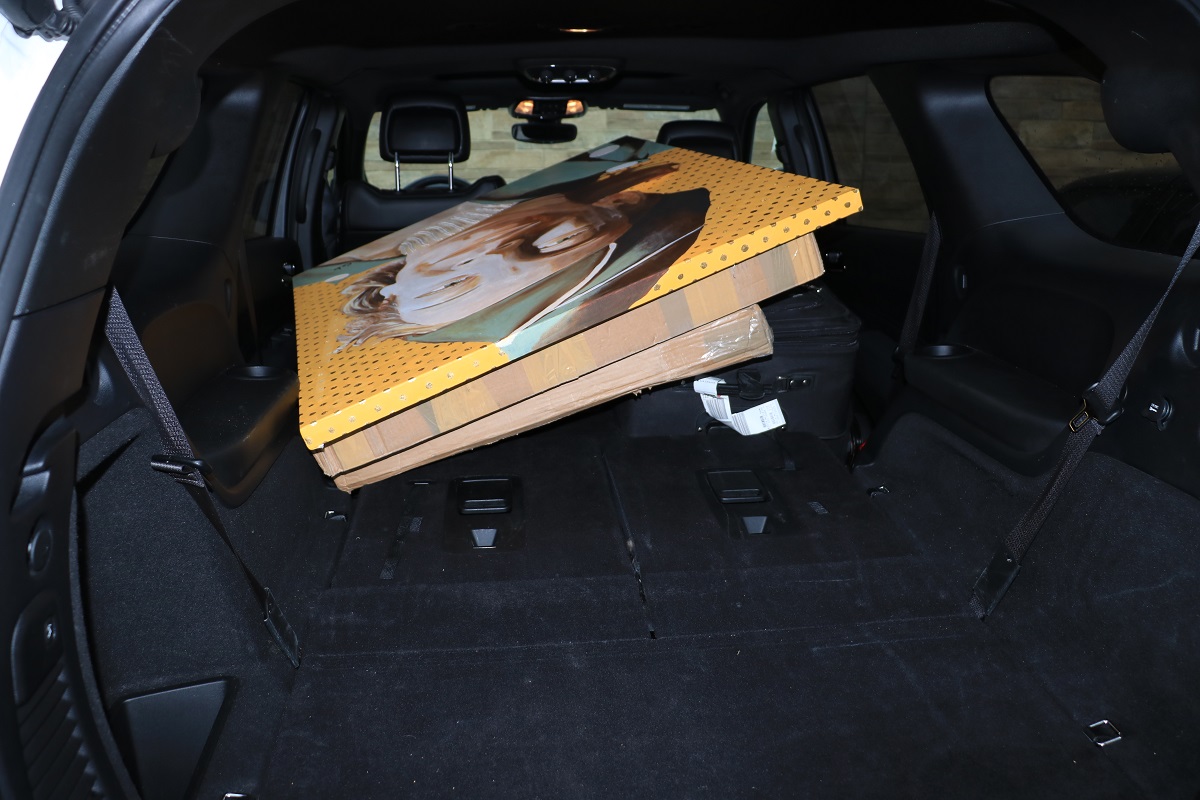
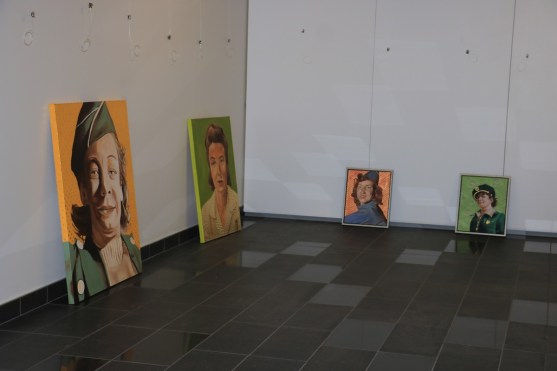
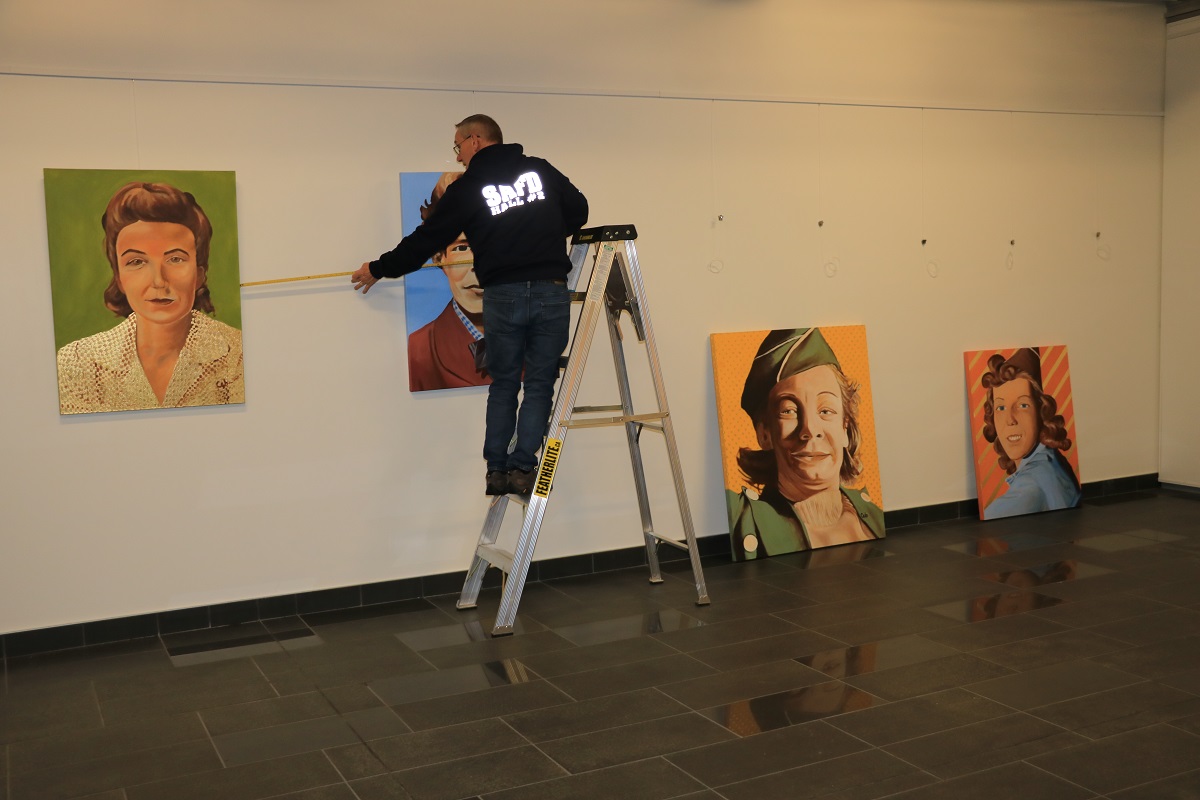
The Shenkman Art Center is a large facility with a performance theater, dance and music lesson studios, plus three art galleries.  There is a really nice man that manages the space and was very helpful as we hung the paintings.  Carrie had stored one of her larger pieces with friends before they moved to Texas and shipped several others to a shop in Ottawa to be framed.  All the smaller works were brought with her in a big suitcase.The space was quite intimate; which is why Carrie selected it for her show.  The center panels are movable/removable which helps the artists chose where to hang what.All the larger pieces were placed against the walls and moved around to find the best placement and the smaller ones were sorted on the floor.
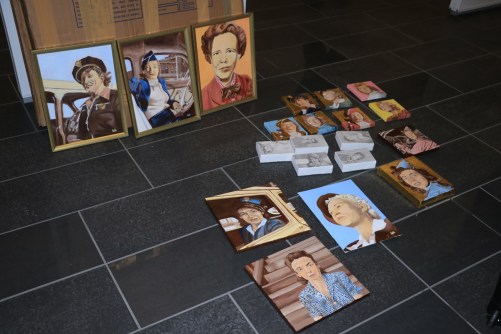
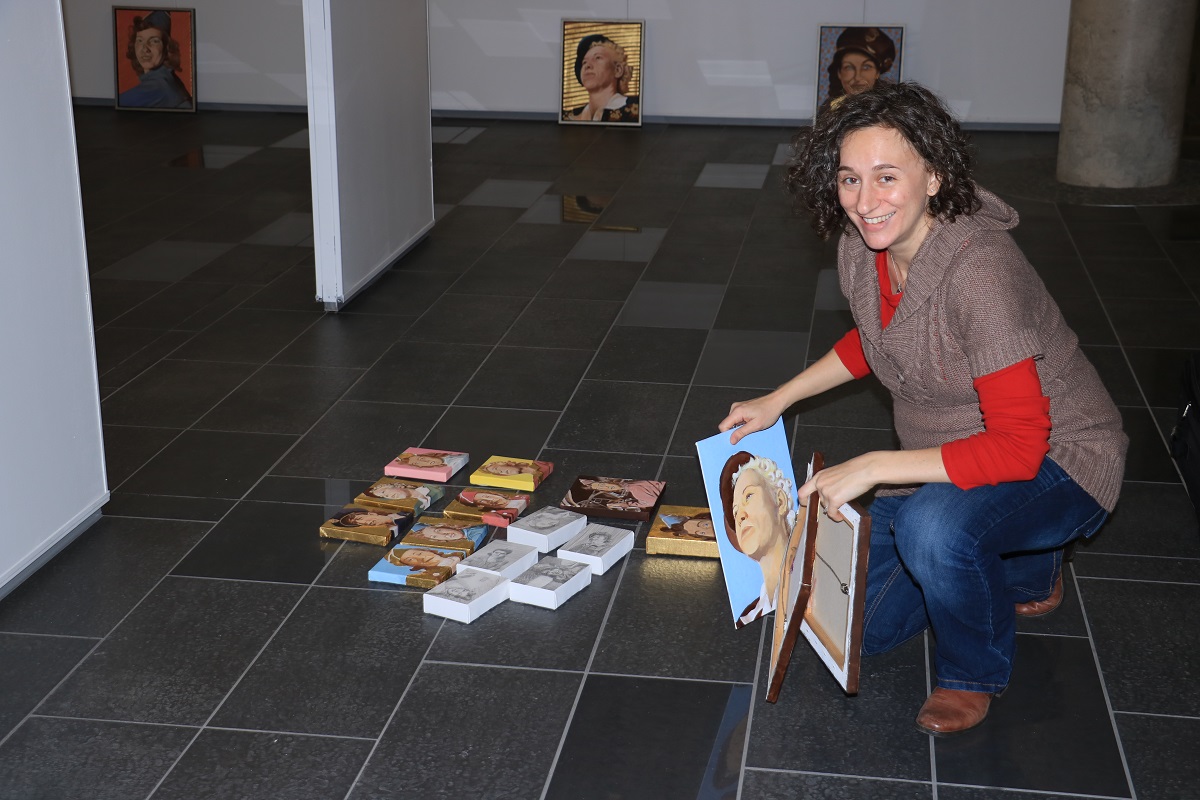
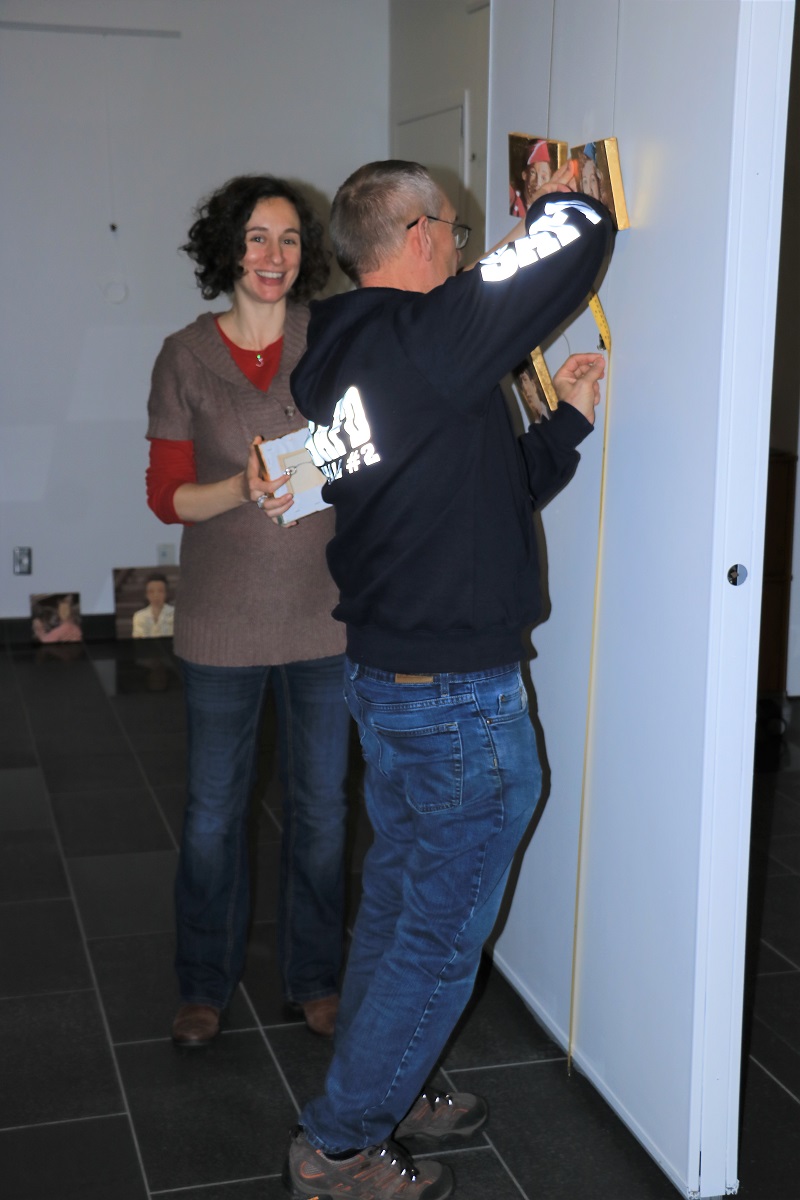
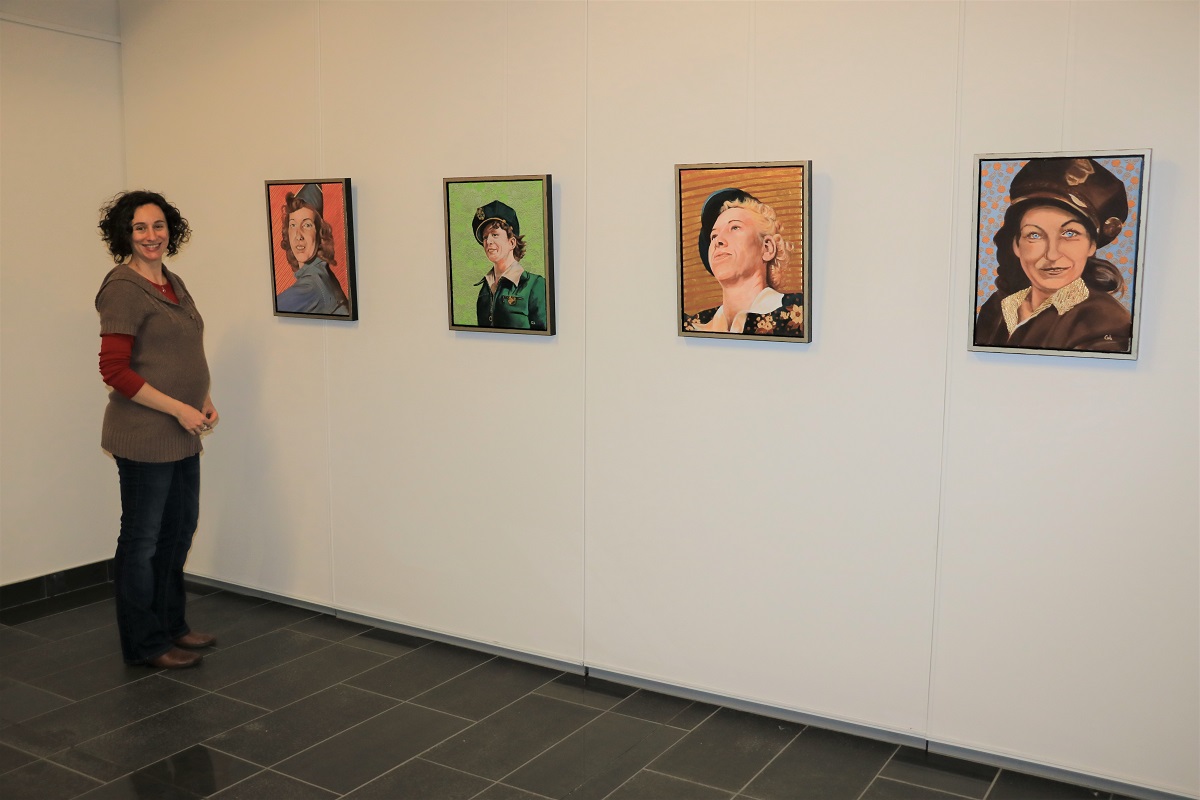
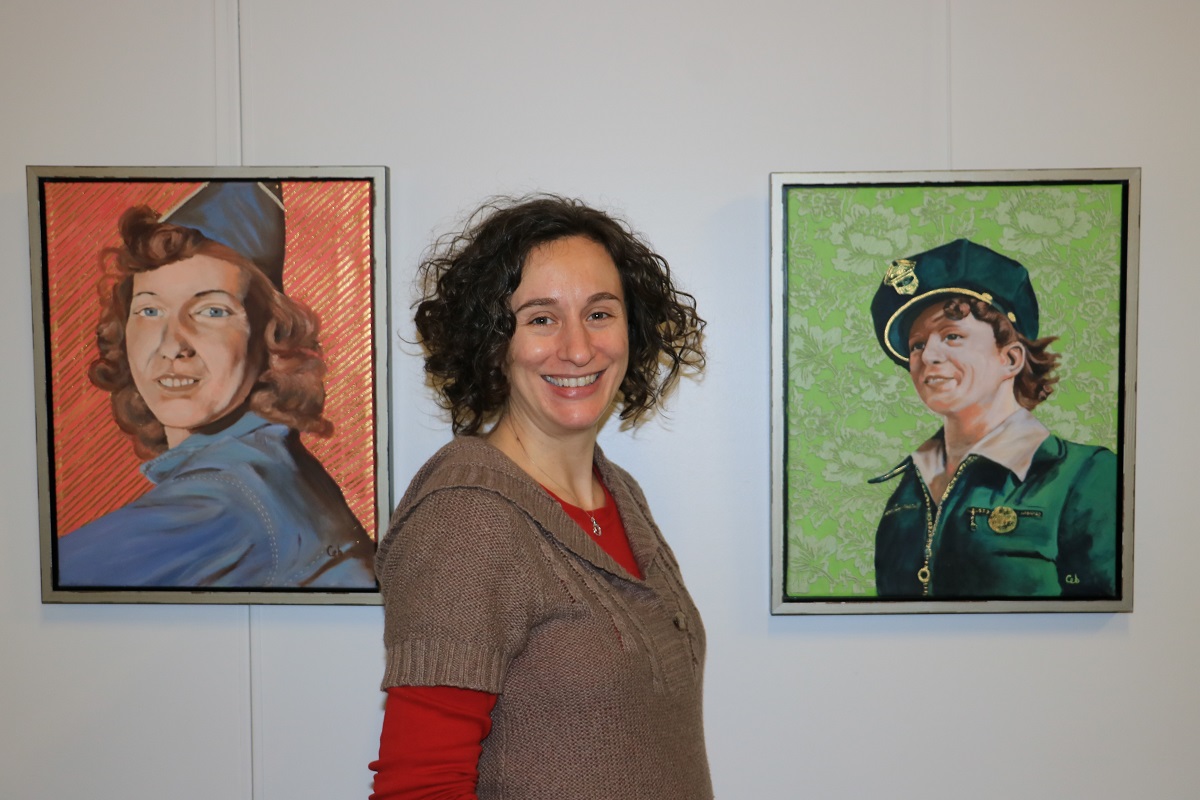
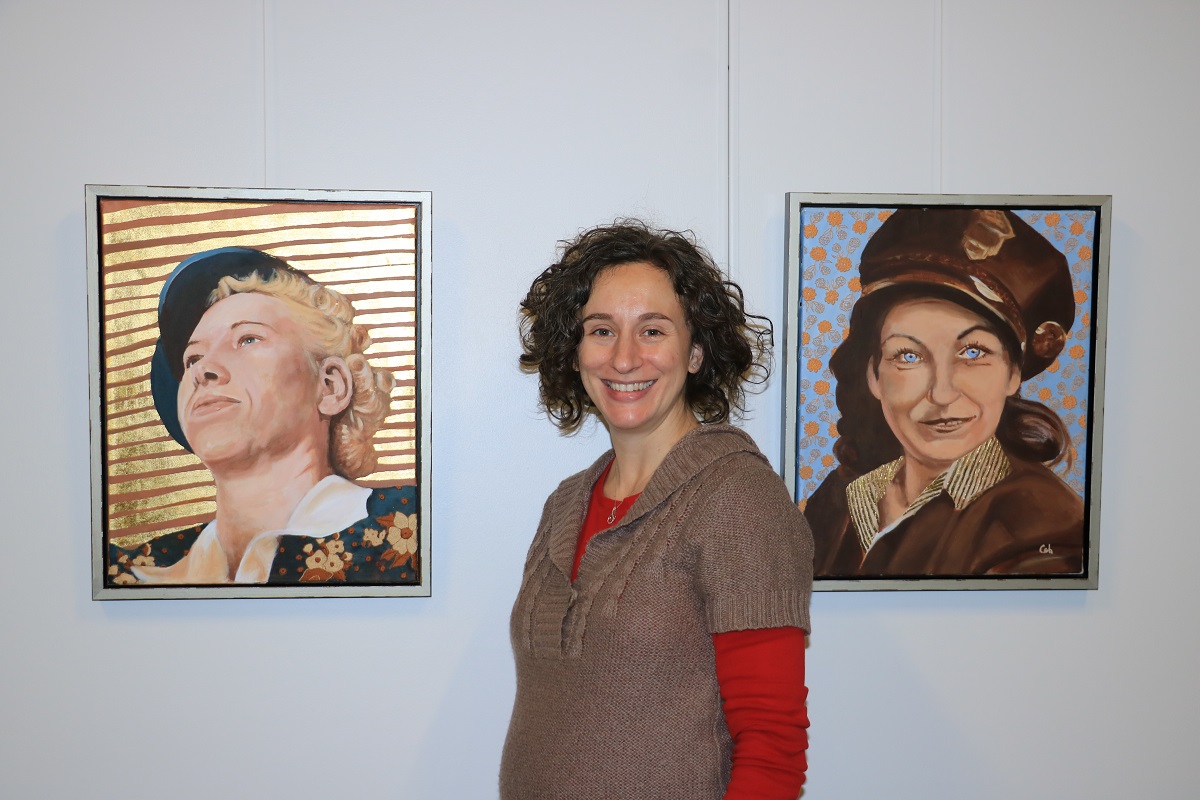
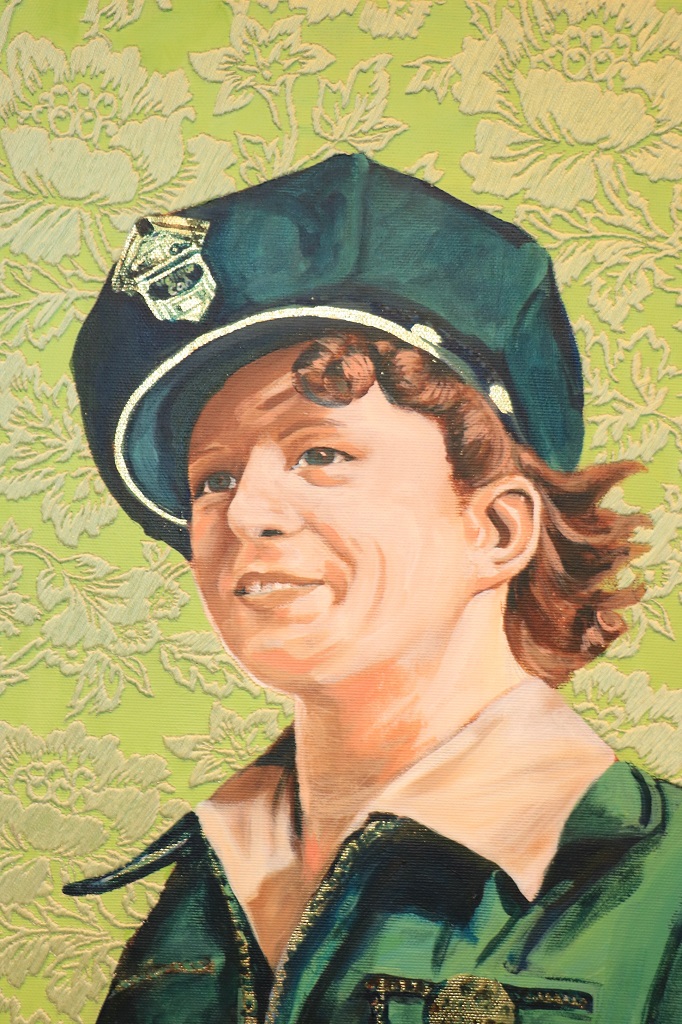
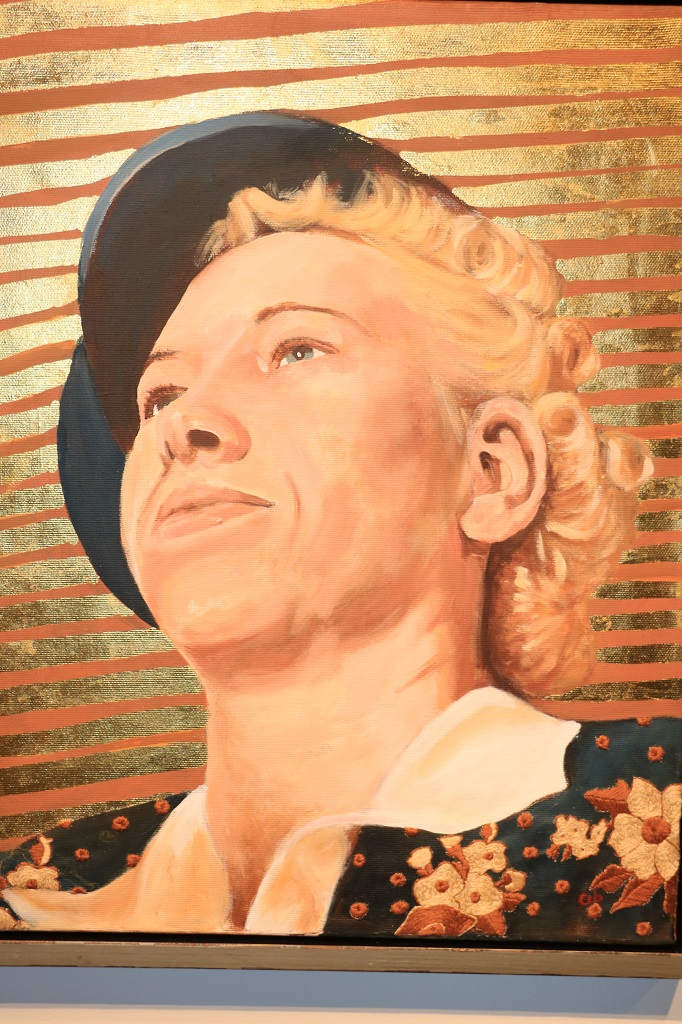
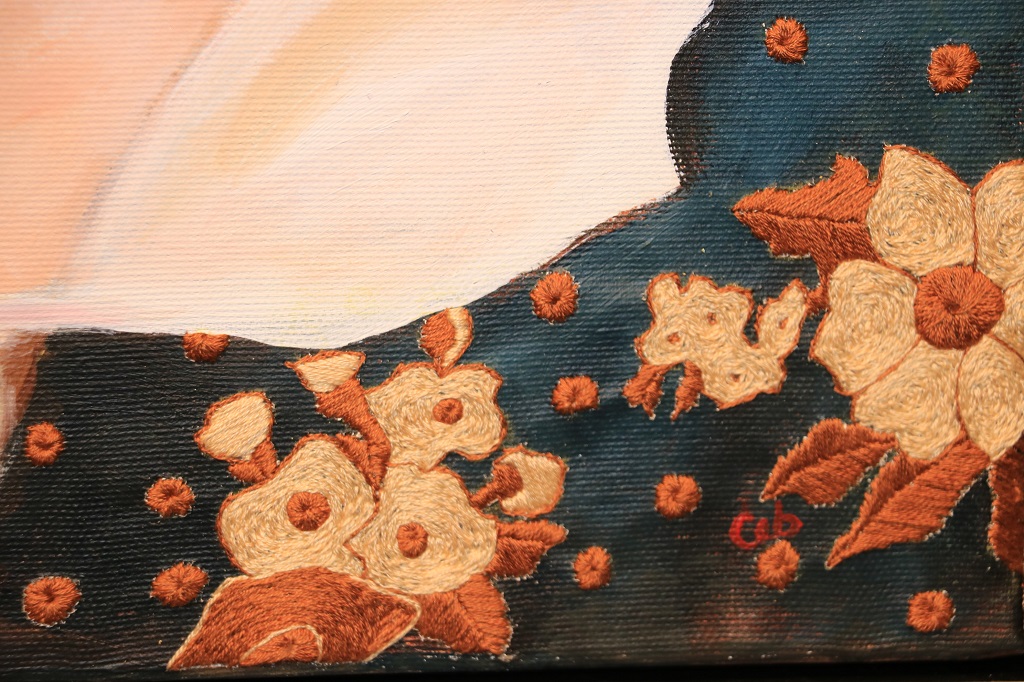
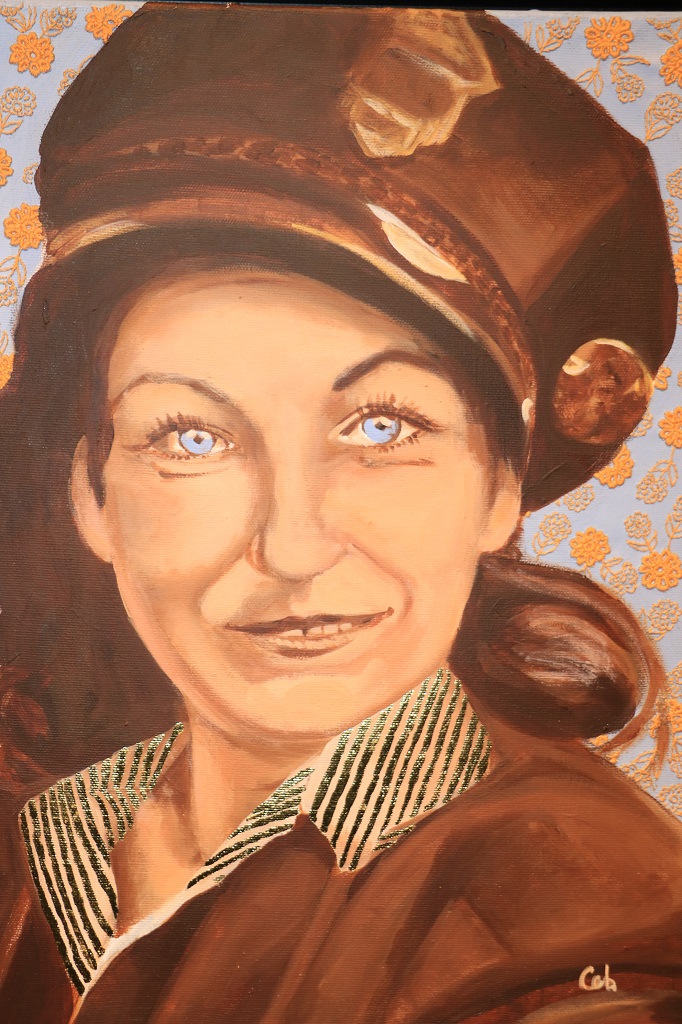
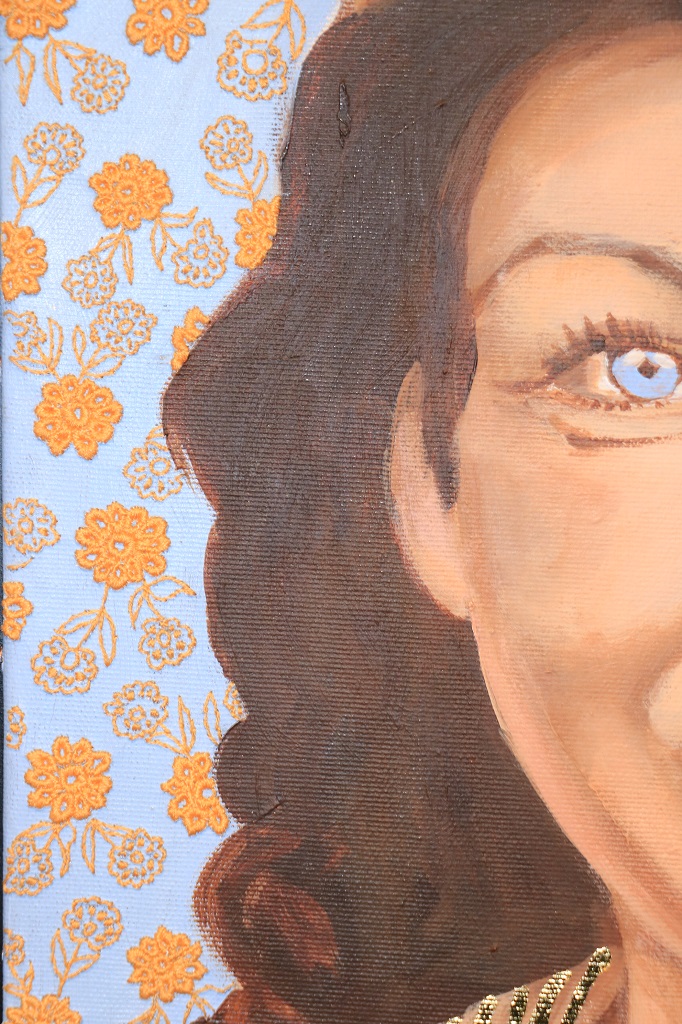
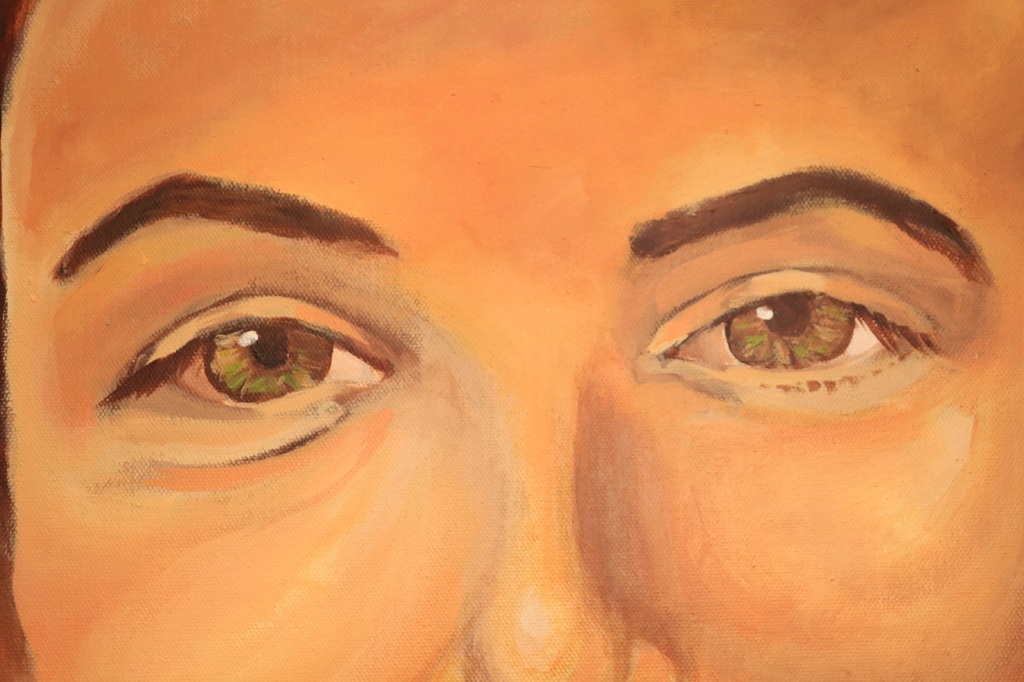
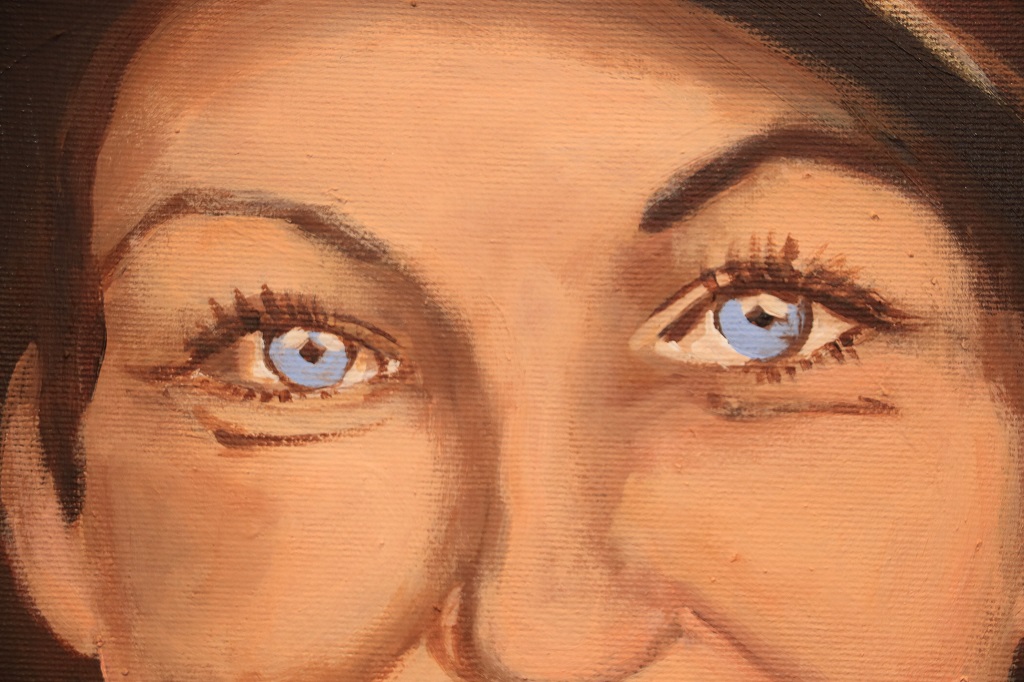
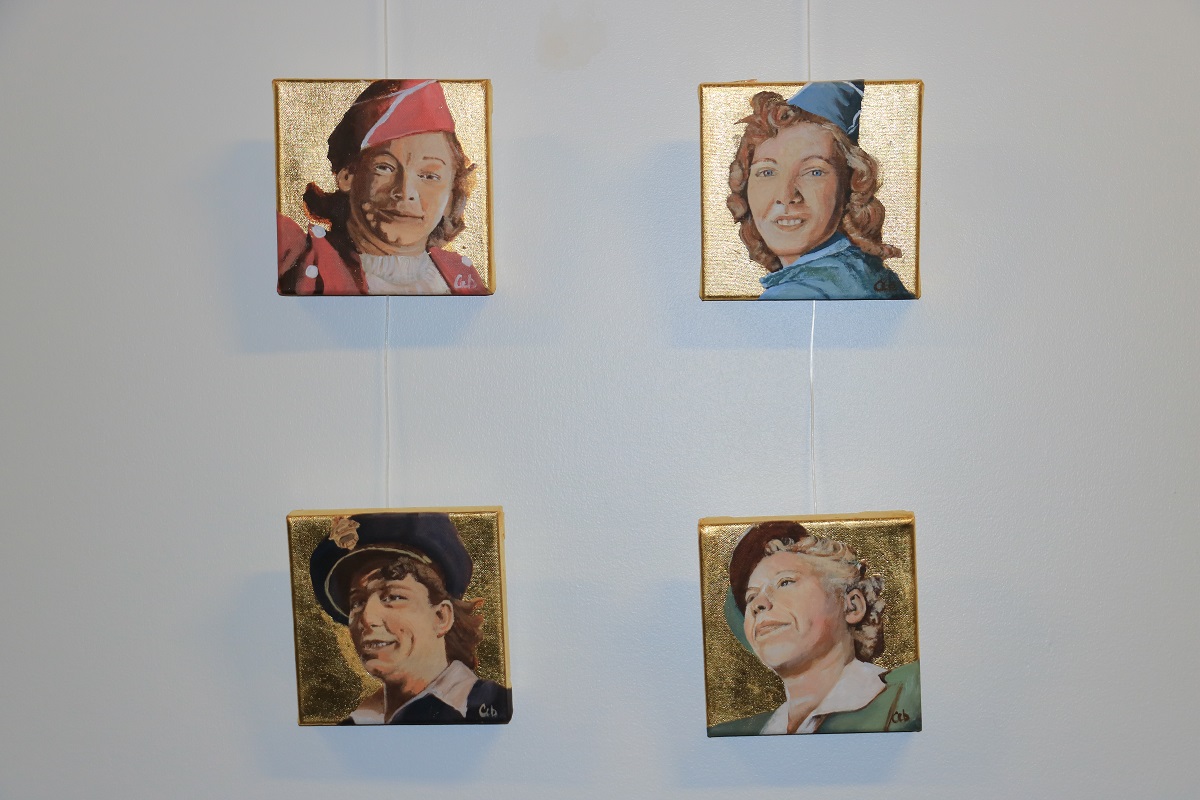
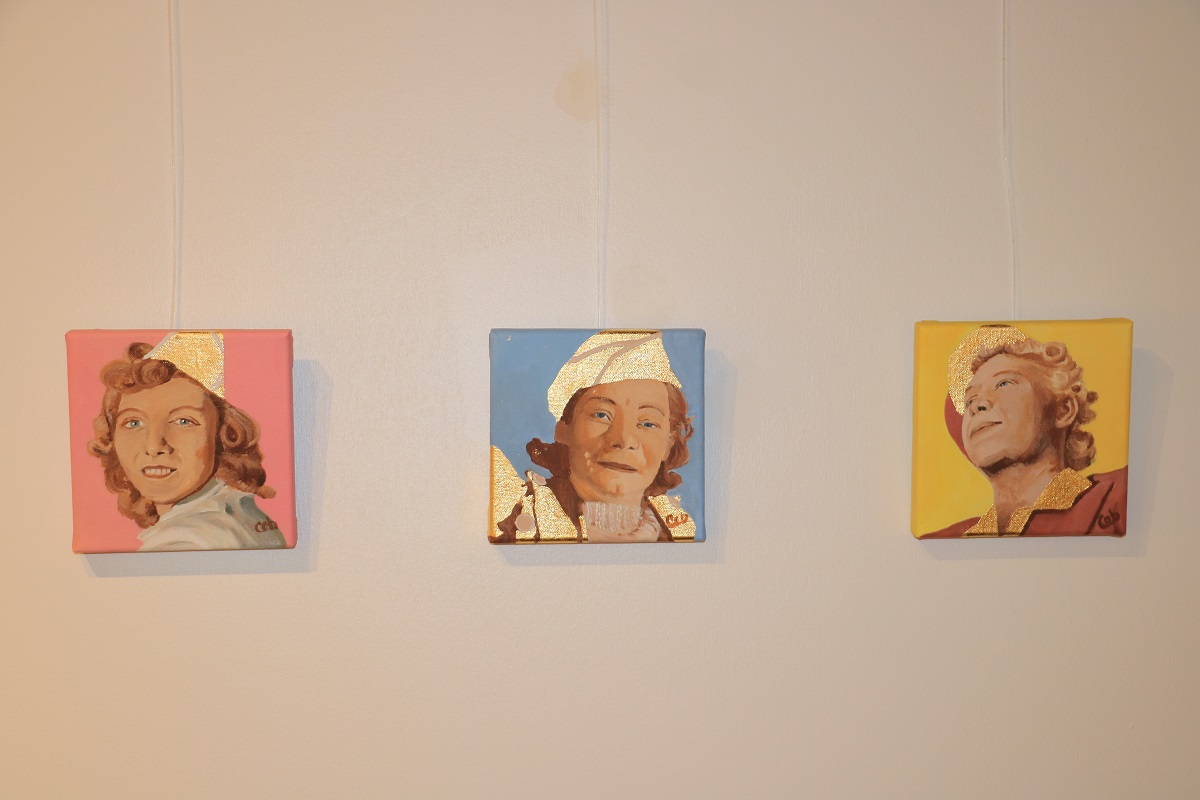
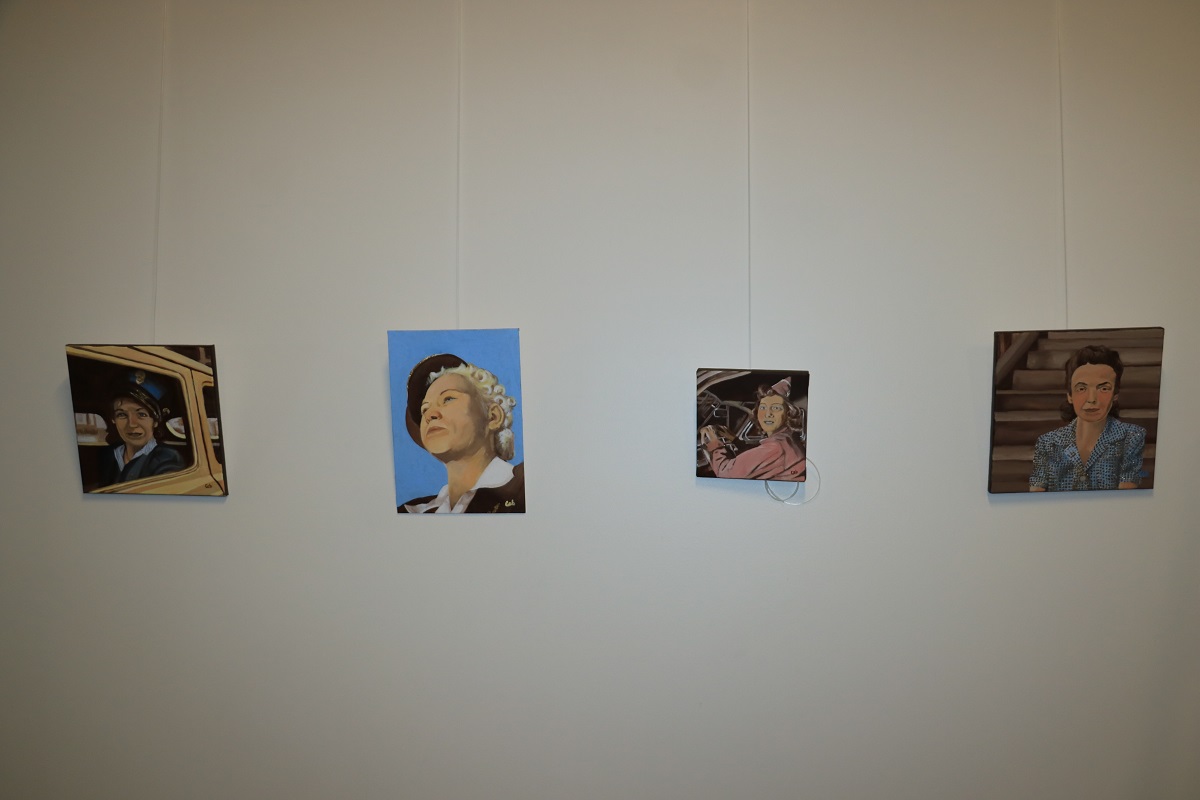
John is good at measuring and calculations so he was put in charge of figuring out where each piece was to go.  Carrie worked on some fixing of the labels and I carried things to wherever they were needed.  We got everything in place by mid-afternoon. Mike from the Shenkman staff did the final adjusting to ensure the smaller pieces were hung straight and upright.Carrie’s series is called “Anonymous Woman”  She had been inspired a few years ago by a series of black and white portraits of women from the 1940’s that she saw in the US National Archives.  The women were photographed because they were doing traditionally male jobs since the men were off at war.  There were five cabbies and two photographers.  None of the women were named.  Carrie wanted to honour these women and began her art series.  The paintings are acrylic on canvas and linen, but she also incorporated ‘feminine’ highlights of embroidery and gold leaf.    The four ‘ladies’ that started it all: Helen, Barbara, Ruth, and Dorothy ‘Dot.’  Since none of the women in the photographs had been named Carrie gave each one a name that was period appropriate and ‘fit’the woman.                     “Barbara” has over 200 hours of satin stitch emboirdery in the background wallpaper.  “Ruth” has a gold leaf striped background plus emboidery on her jacket.                               Carrie researched period wallpaper patterns so the background of each portrait would be correct.  “Dot’s” floral pattern is also embroidered and her shirt collar is gold leaf.   Even though the photographs that inspired the paintings were black and white Carrie selected colours for clothing, hair, skin tones and eyes for each woman.  She made several studies of each woman in different sizes and with differing backgrounds or gold leaf accents. We were all very pleased with the overall display of the paintings in the space.  Carrie has created an awesome body of work to honour these unsung women from the past.  If you are interested in learning more about the paintings go to artiststrong.com and watch the short videos Carrie has posted. as well as many photos about the works as she created them.

2019 July Journey – Heading Home section – August 1 and 2

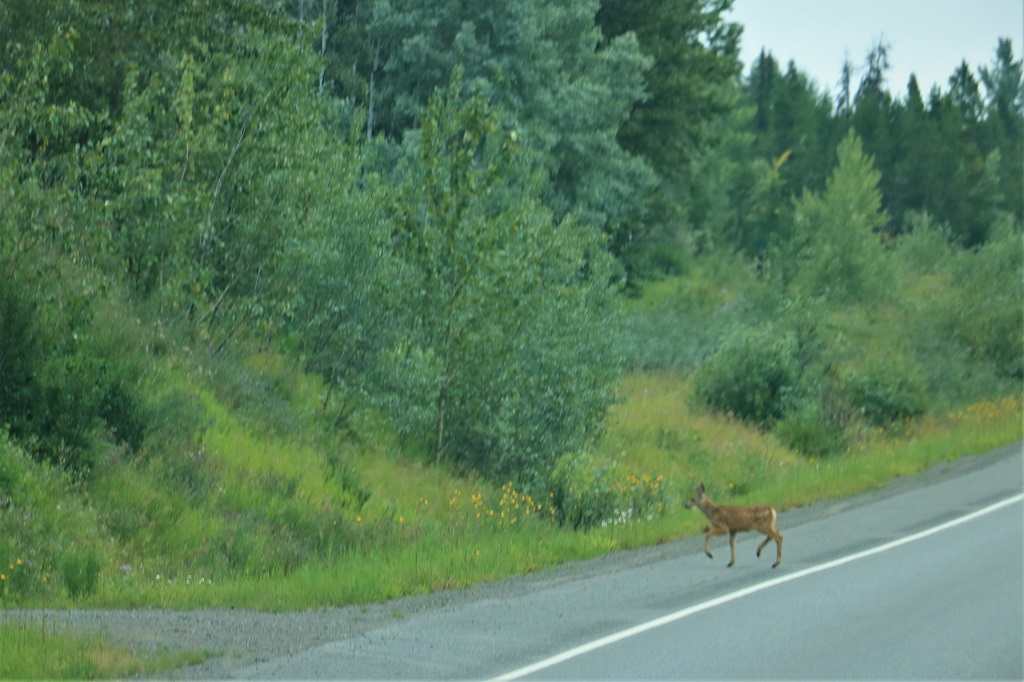
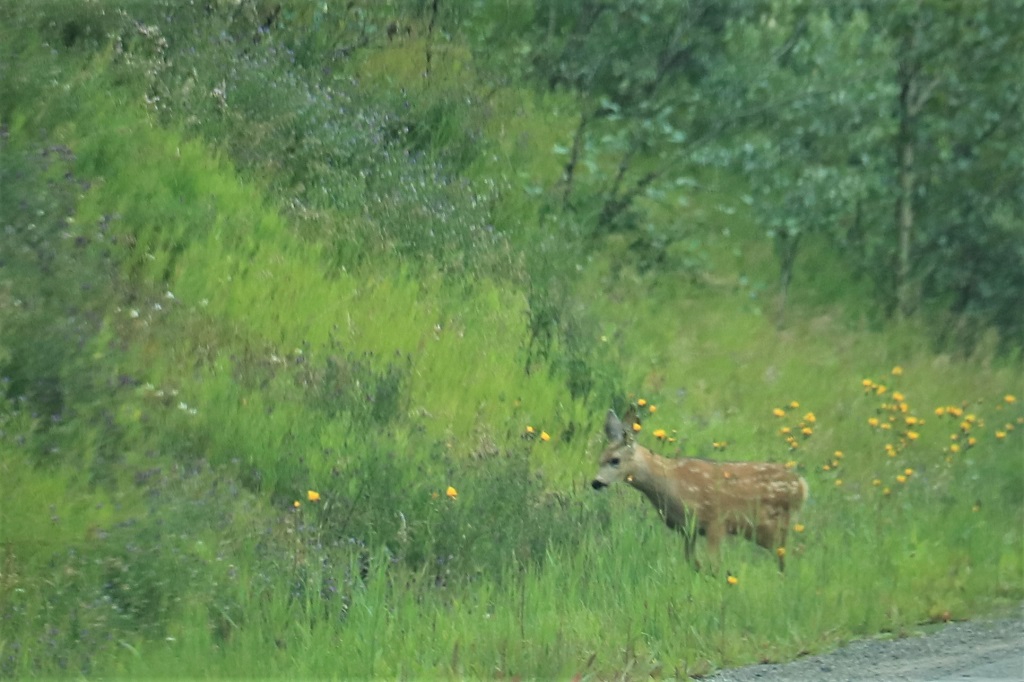
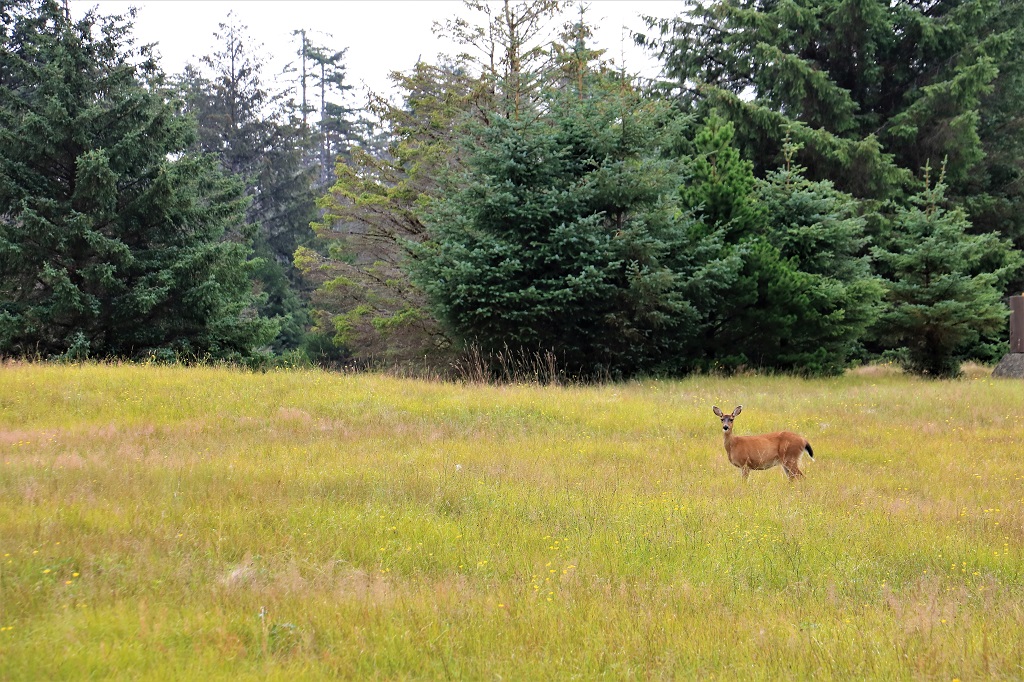
This will be my last post on our July Journey and it won’t be much of one.  We drove from Houston to Prince George yesterday with intermittent rain showers all day.    We had a deer cross the road as we were leaving Houston and John saw a bear.  I was reading so I missed it.  Last year when I was dragging out our trip home from up north we stopped at most of the places of interest along this road so we didn’t even have stuff to see and do.  It rained so often and so hard it would have been difficult to plan stops anyway. This young deer still had its fawn spots.

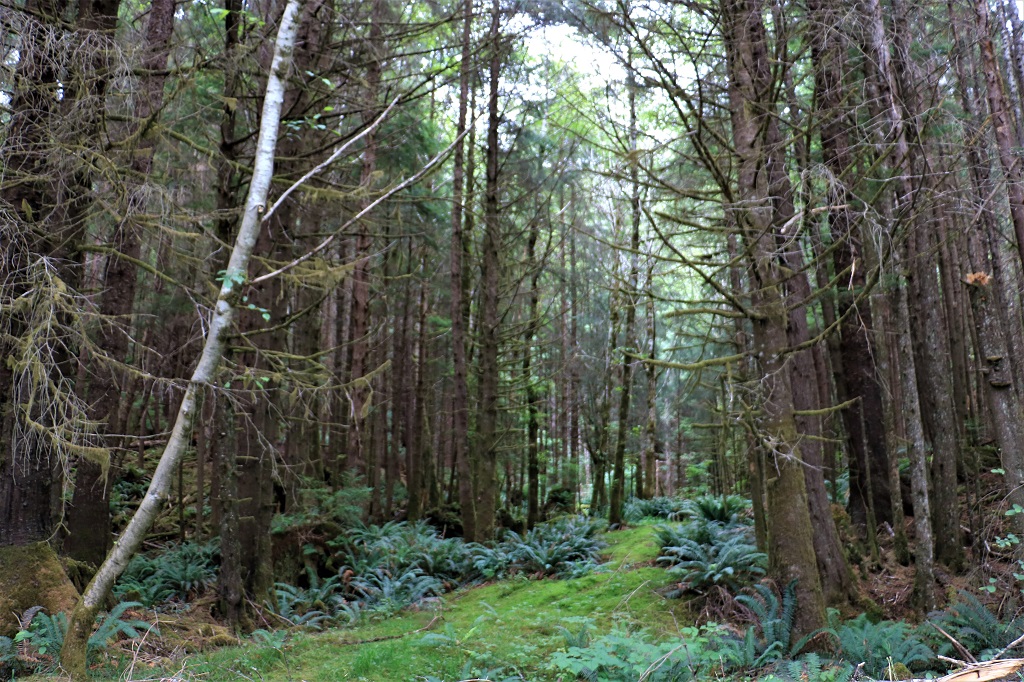
During a break in the weather we took a side road north of Prince George to find a short trail of geocaches, but everything here is forest so lots of trees to see and not much else.

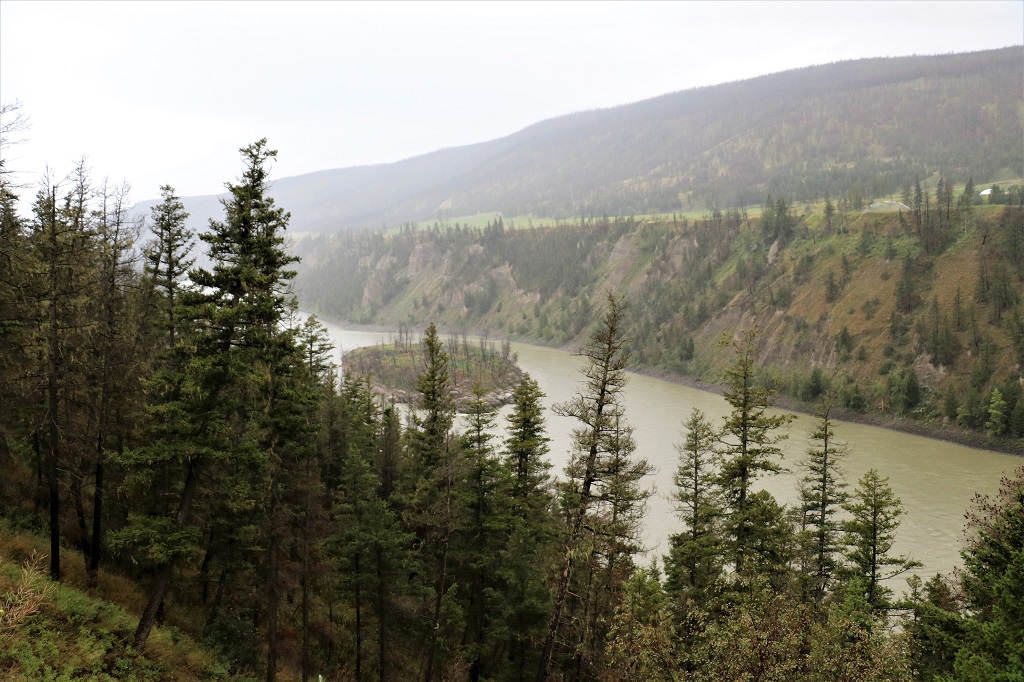
We woke this morning to pouring rain for our drive to 100 Mile House.  It should take about 3 1/2 hours and even with our usual puttering around we should have arrived at 5 or so.The Fraser River.

Unfortunately as we were leaving the outskirts of Quesnel we were passed by three fast moving police cars with lights and sirens going.  A short time later there was a wrecker and an ambulance.  Then two Highway rescue vehicles.  By the time we got about half way between Quesnel and Williams Lake (50 km each way) we arrived at the tail end of the line up of stopped traffic.  After about an hour a police officer drove by with his PA system on saying the highway would be closed for quite awhile and it was recommended people return to Quesnel.  Quite a few cars, trucks, and camper rigs had been turning around even as we waited and more made the turn after the cop went by.  We had  looked up an alternate route and then figured by the time we drove back to Quesnel and around the other side of the river and down again the traffic could be moving again.  We decided to wait and see.

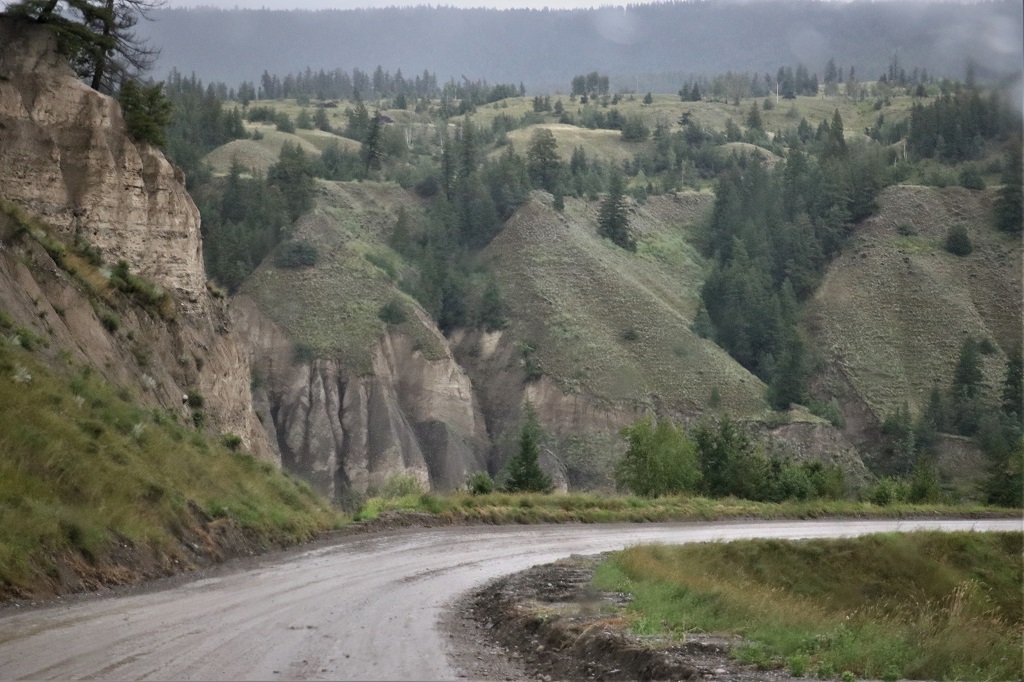
Two hours later a traffic control truck came by and stopped at each vehicle and said the highway would be closed in both directions for 6 or 7 more hours.  By then it was four o’clock.  That meant we would be sitting there until 10 or 11 at night. We decided to drive back to Quesnel and go the back way.  We had a quick bite to eat in Quesnel, drove across the bridge into West Quesnel and followed the road down the west side of the river.  A section of this road had washed out last year and was not yet repaired so there was a lengthy detour along a gravel road that took two hours before we rejoined the paved secondary road.

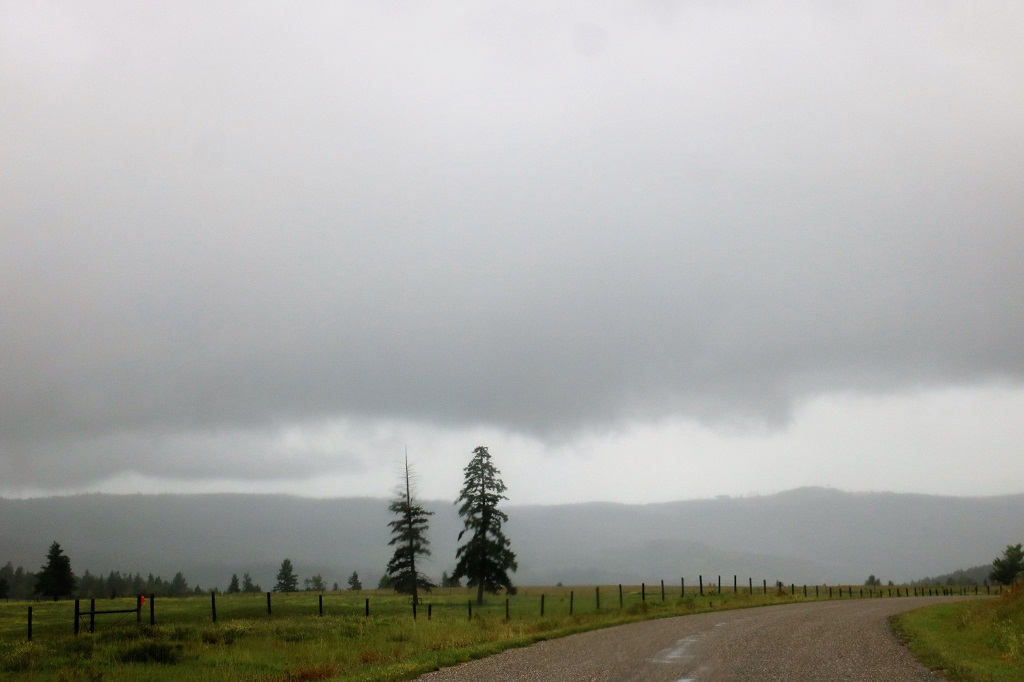
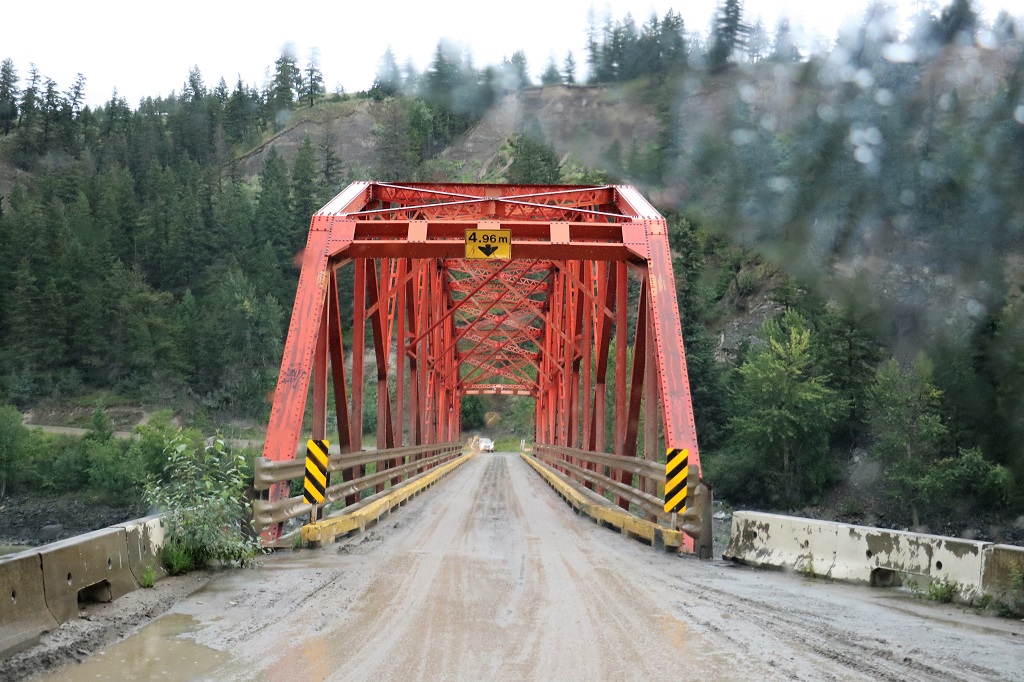
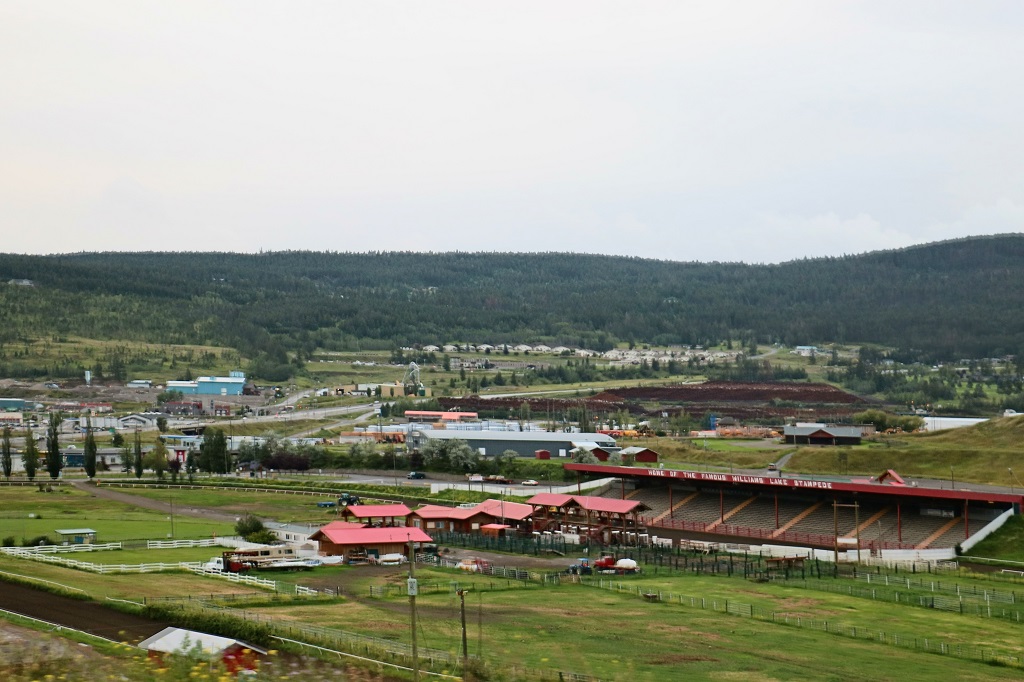
The rain came and went and when it came it was torrential. The poor wipers couldn’t even keep up. Then it would stop for a half hour or so before beginning again.  I snapped a few photos as we drove along; none of which are very noteworthy. This was actually a pretty stretch of countryside, but the cloudiness and constant rain made the day pretty dreary. We crossed the river on this one lane bridge and then did a long climb up the other side before getting back on the main highway just north of William’s Lake. It took just over an hour to go from Williams Lake to 100 Mile House, and we arrived at our hotel at 8 pm.  The lady said she had been receiving calls from people that also had reservations saying they would not be arriving until about 1 am as the highway was due to open at 11.  We were glad we had turned around and gone the alternate route.  Lots of other vehicles did the same, but many people would not have been aware that there was a choice and with some of the long trailers would not have wanted to drive the lengthy gravel section anyway.  We spoke to a fellow who knew of the route but didn’t want to take his 5th wheel over the gravel part. So, a three and a half hour drive took us 10 hours and we weren’t stopping to find geocaches or see historic sites.  I was glad to get to our hotel at last.

Tomorrow we do the last leg home again and another fun trip comes to an end.

2019 July Journey – Heading Home section – July 30 and 31

We woke in our room in Queen Charlotte yesterday morning to the type of weather I had been expecting during our three-day visit to Haida Gwaii. But by the time the ferry was loaded and sailing away at 10 am the rain had stopped and the sky was much lighter for our 7 hour sailing to Prince Rupert. We  spent  the  night  in  Prince  Rupert  and  checked  out  of  our  hotel about 10:30  for  the  413  km  (256  miles)  drive  to  Houston  (the  British  Columbia one,  not  the  Texas  one).

We had a mixed bag of weather throughout the day with rain fallling for a few miles and then sunny skies again.

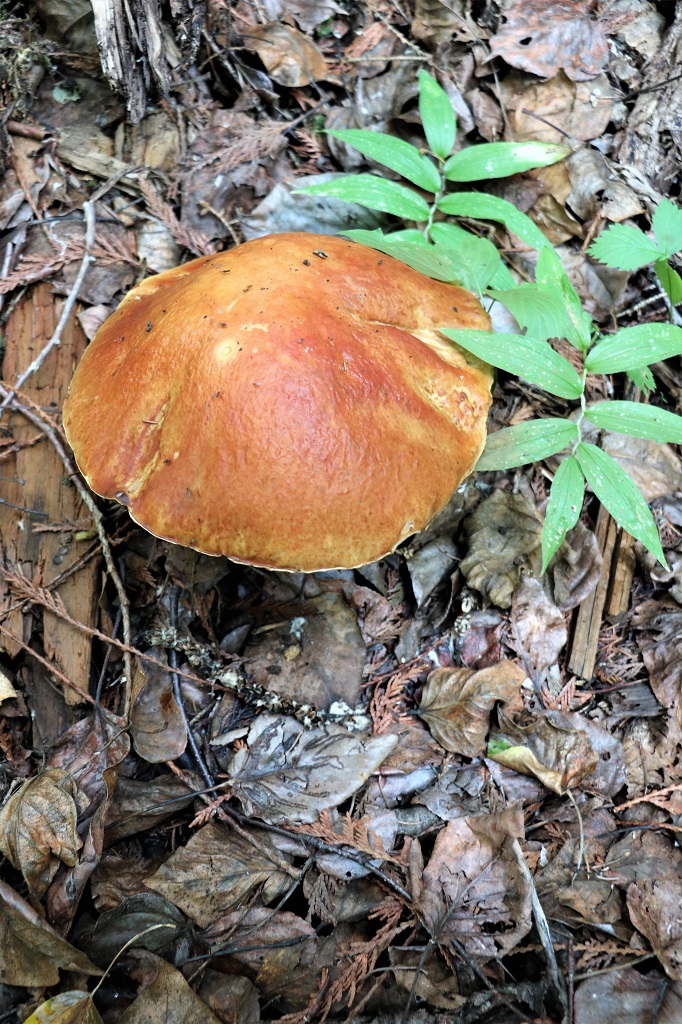
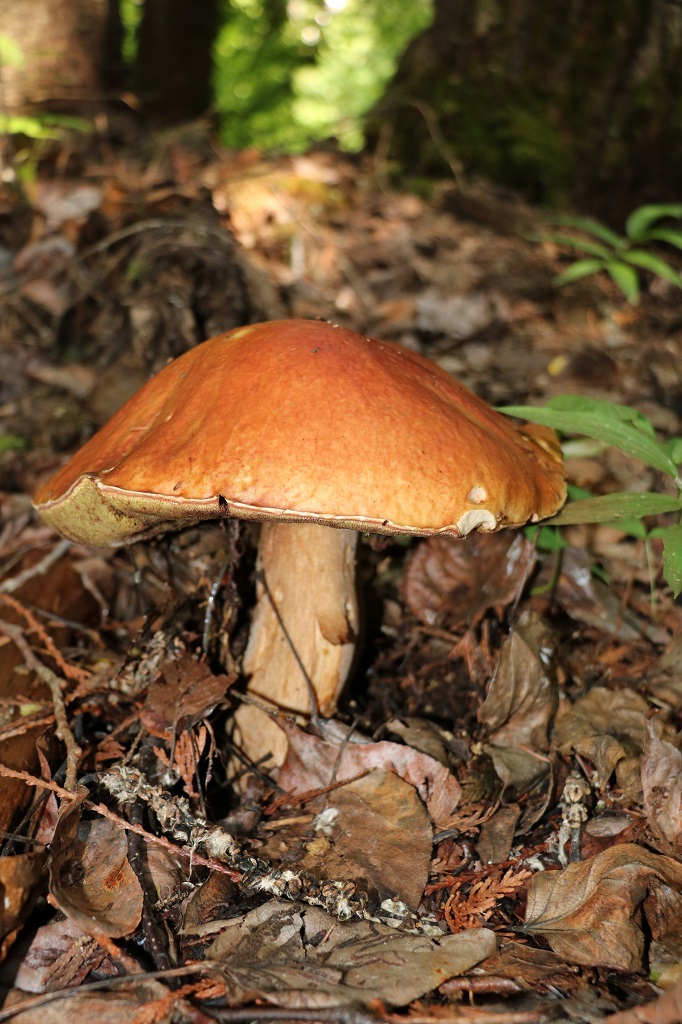
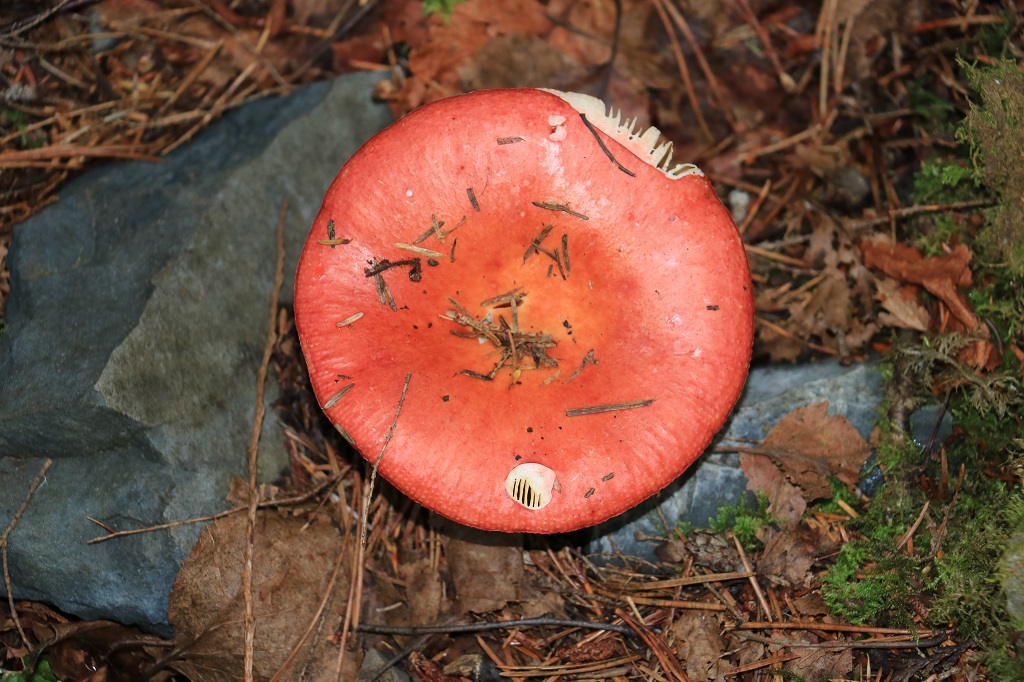
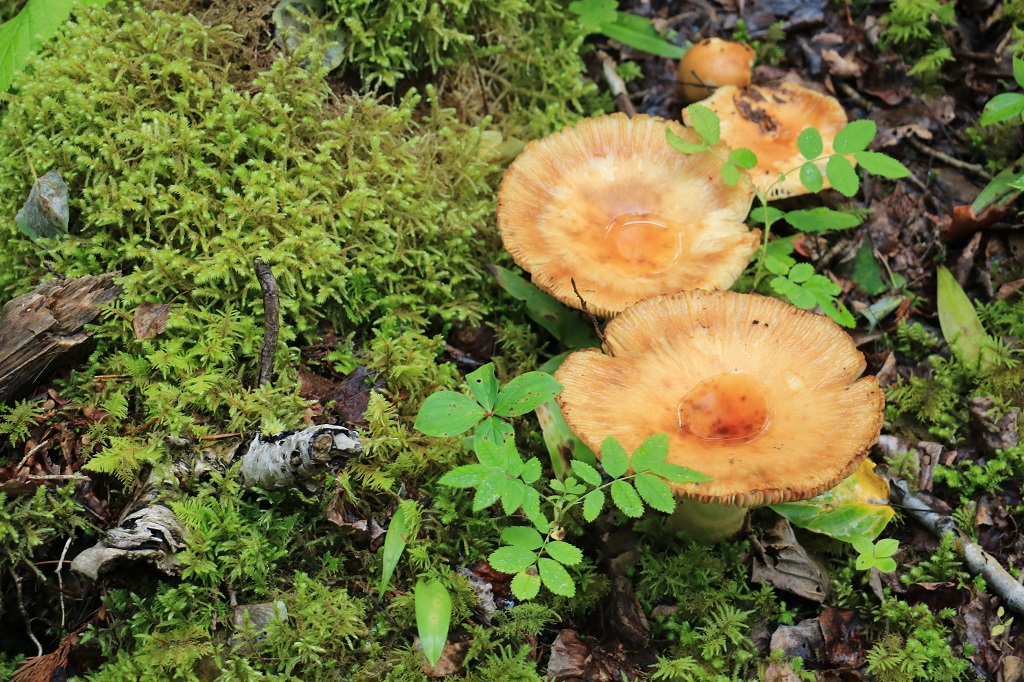
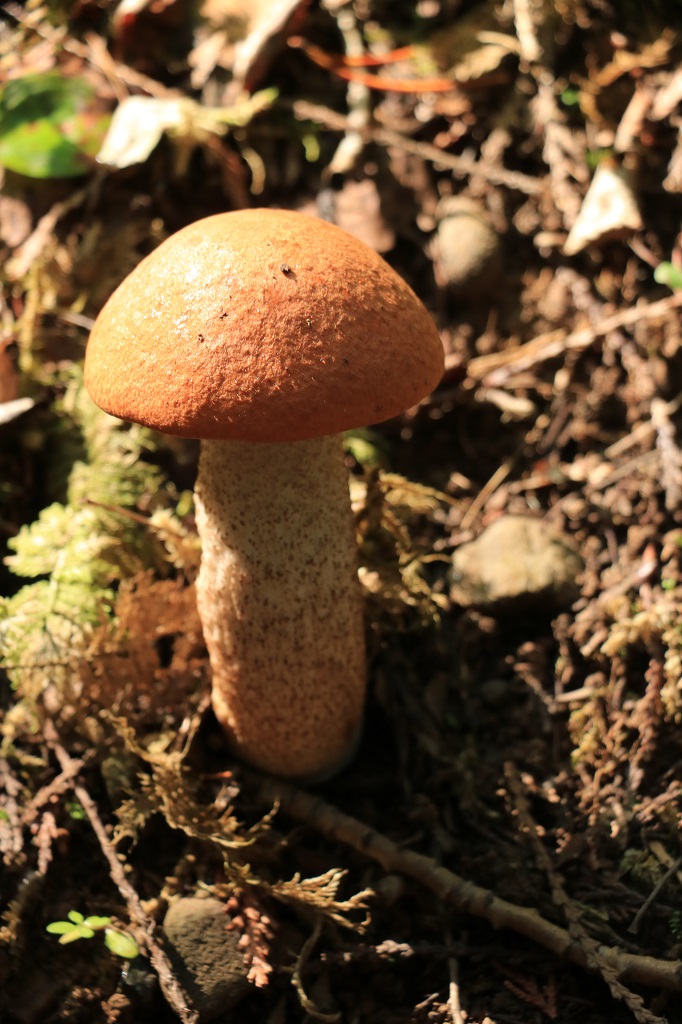
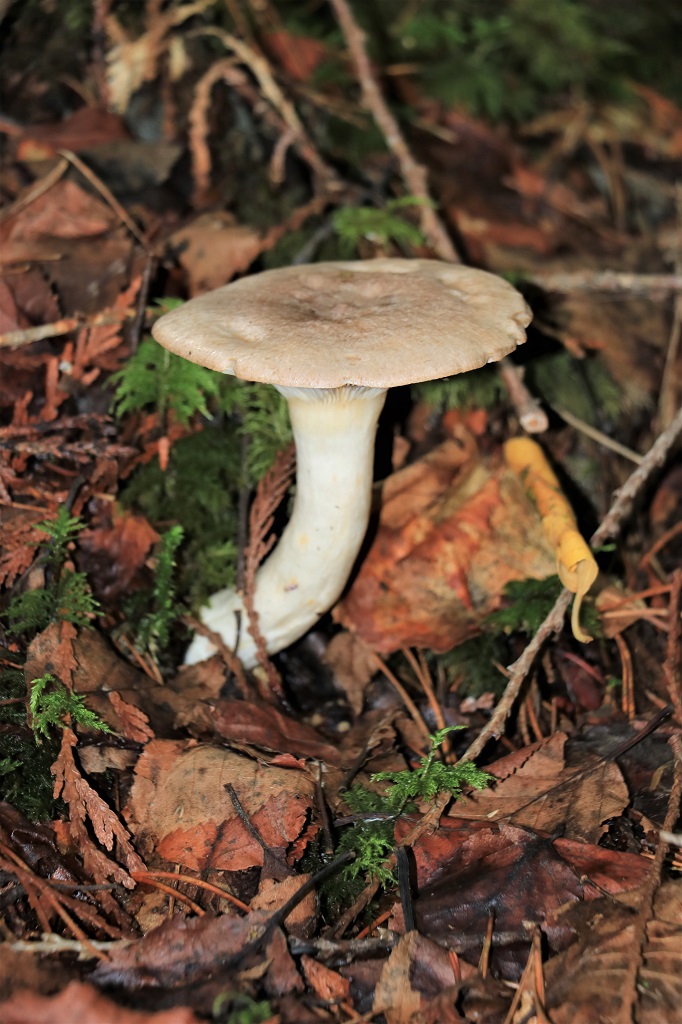
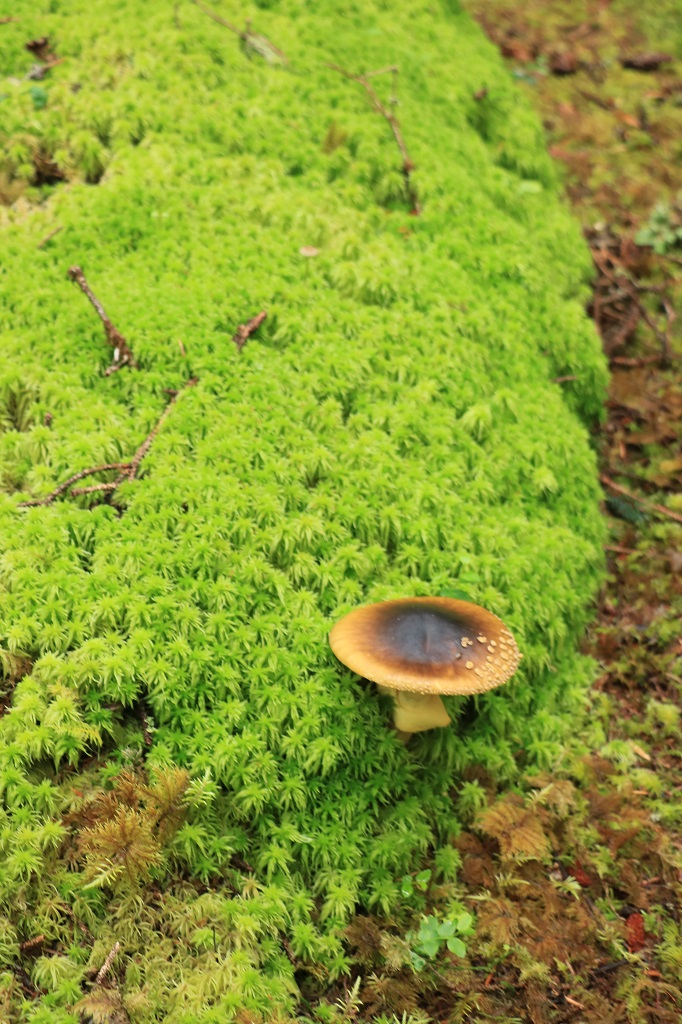
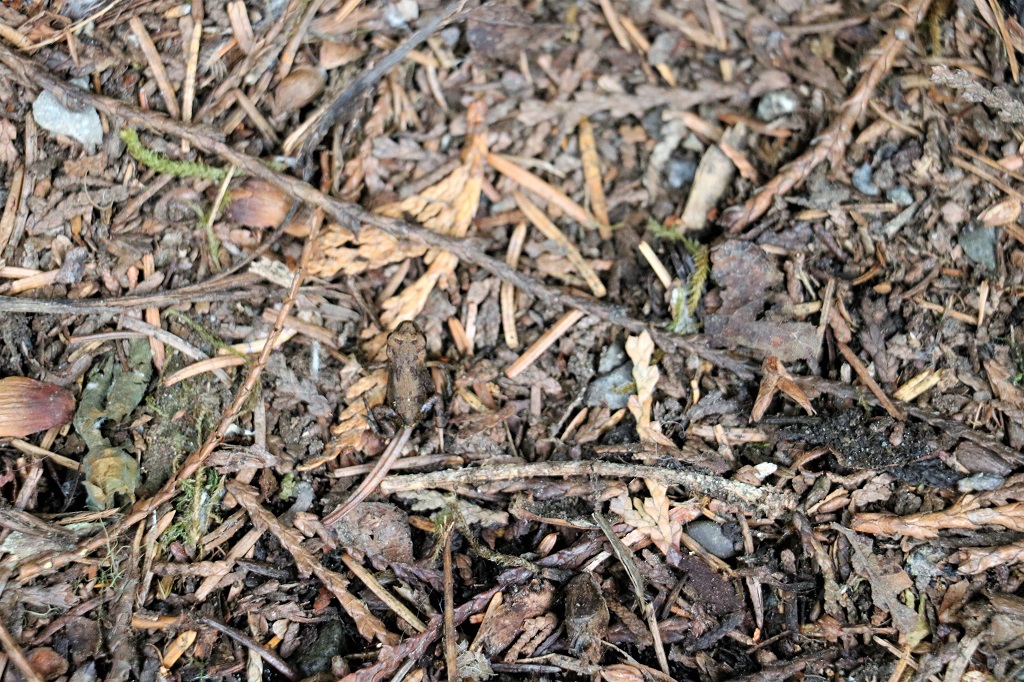
We have traveled this road quite a few times, most recently, at close to the same day when we were returning from our trip up north last summer.  This is an area of forests and rivers and waterfalls.  We only made a few stops.  The first was at a rest stop to find a geocache and we discovered that the pavement and the forest floor were literally hopping with hundreds and hundreds of tiny frogs.  We had to look very carefully before we put a foot down so we did not step on them.  It was really quite bizarre.  They  also  blended  with  their  surroundings  really,  really  well.On the outskirts of New Hazelton we took a short detour to find a geocache hidden at the Outlook.  We walked for quite a distance up an ever-increasingly steep path and then learned from a descending hiker that the trail gets even steeper and is quite a bit longer.  I thought the outlook was a view over the waterfall but it took you high enough for a view over the community.  We decided to turn around and take the other trail to the waterfall.  There were many different colours and shapes of mushrooms alongside the path.  I didn’t get a photo of the bright yellow ones, but I think I got a pic of all the other kinds.

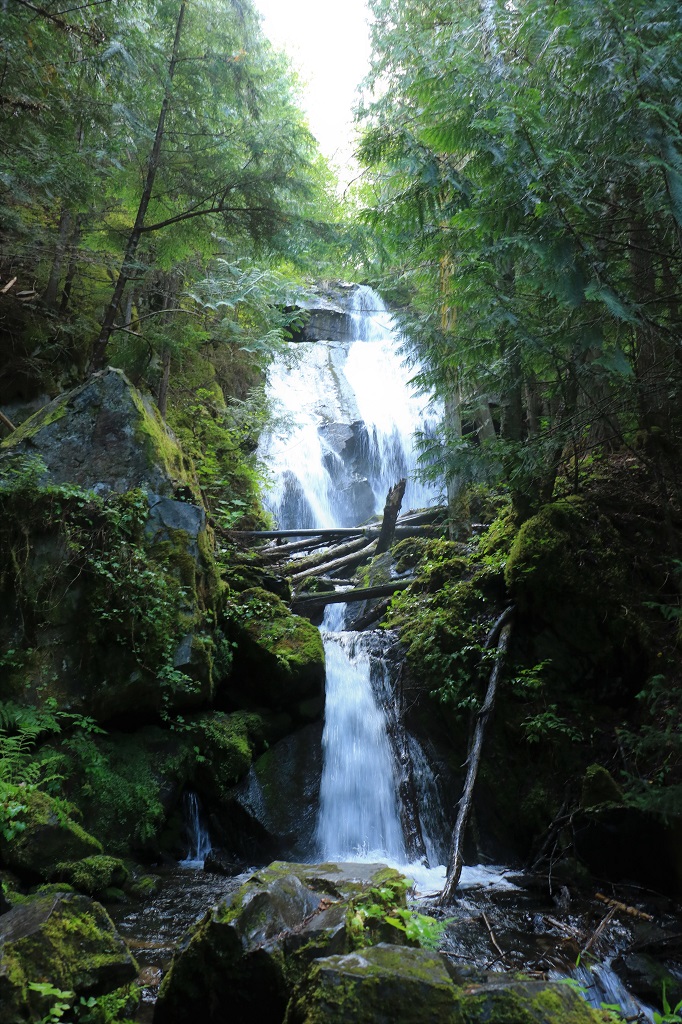
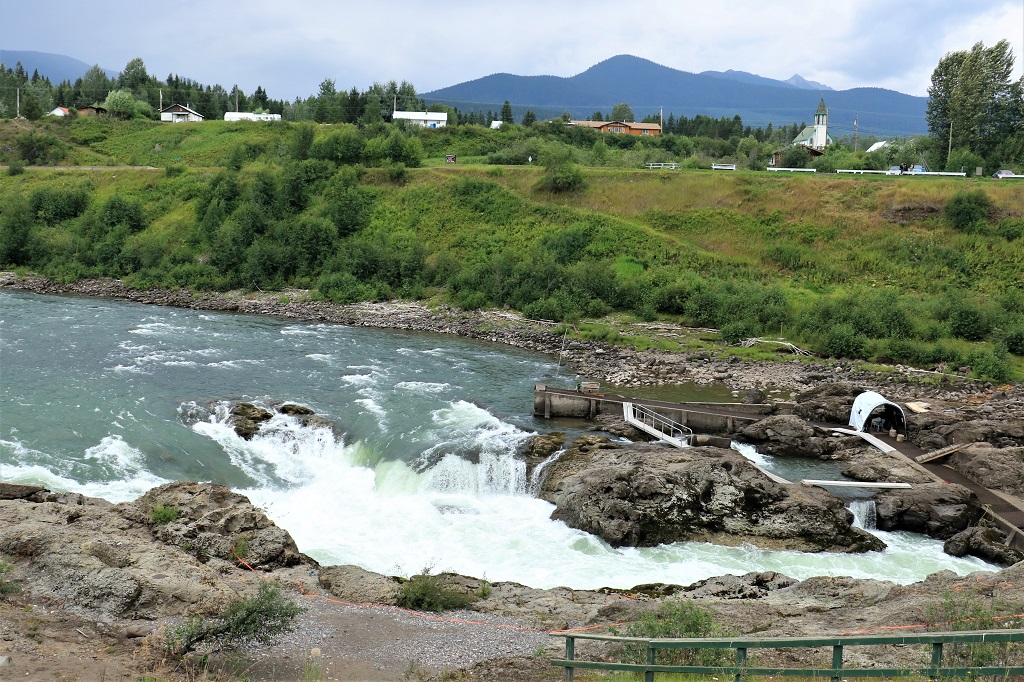
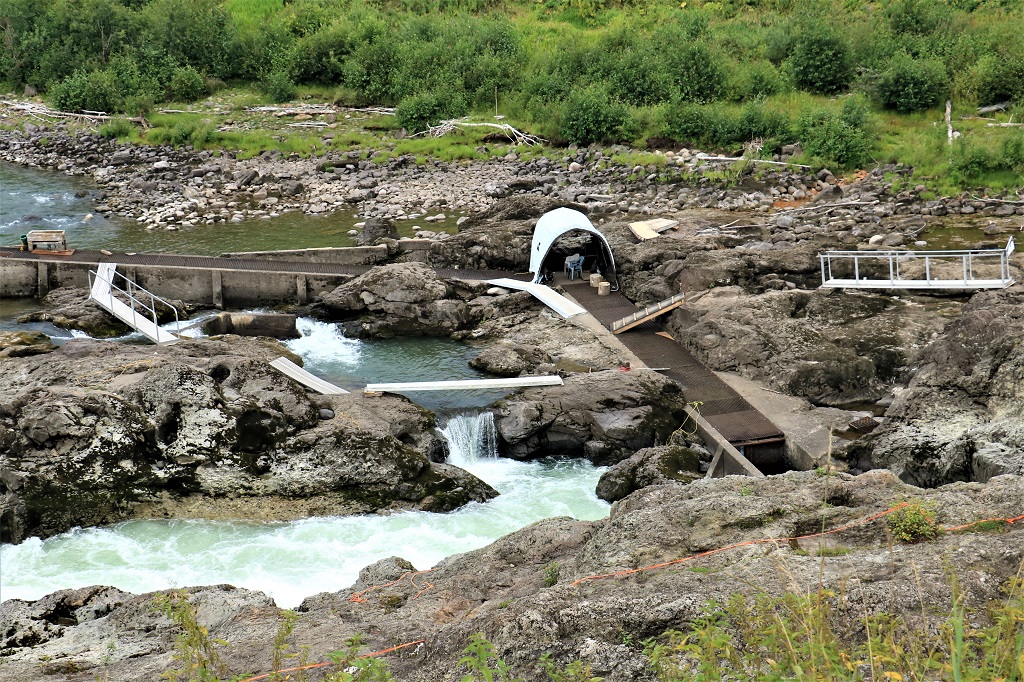
It was difficult to get a good photo of the waterfall as the surroundings were dark due to the thick forest and the top of the water was really brightly lit from the sky.  It was a nice falls.We found a few geocaches throughout the day but they were all just hidden in trees along the road.  There was a cache hidden at the salmon fishing area in Witset that was not there when we came through last so we stopped to find it.  When we were here last year there were lots of fishermen out on the rocks.  Today they had just quit and were heading home so there was no one on the planks. It is amazing how fast the river runs on one side of the bridge and how calm it is when it comes out the other side.That is as exciting as our day went.  We drive to Prince George tomorrow, then to 100 Mile House, then home.  I will likely post one more blog either tomorrow or the next day and then that will be it for this journey.

2019 July Journey – Haida Gwaii section – Day 21

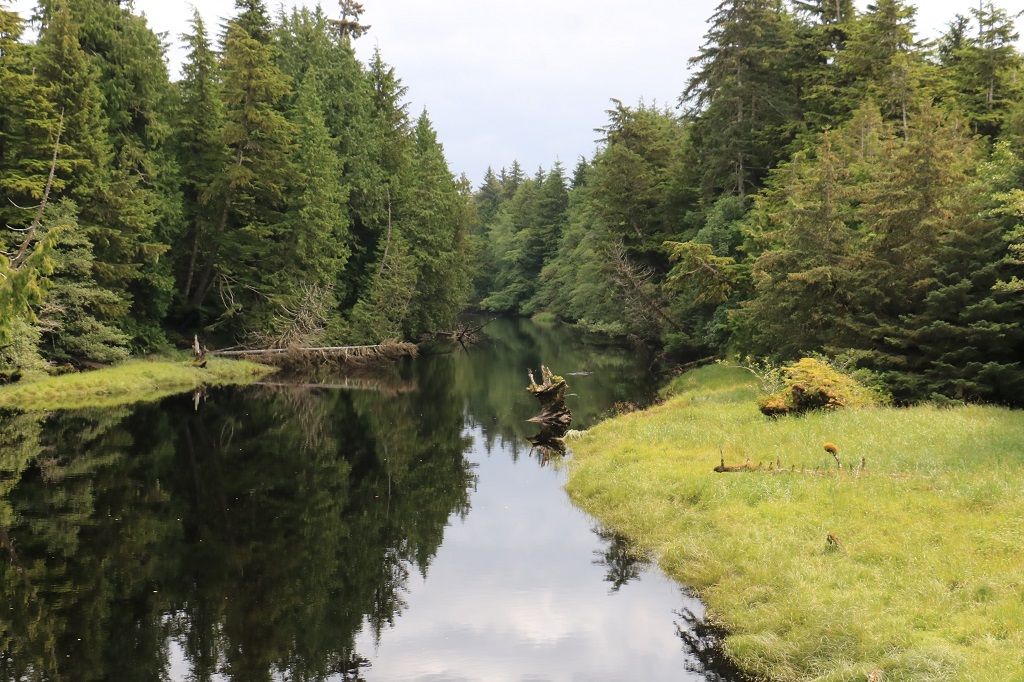
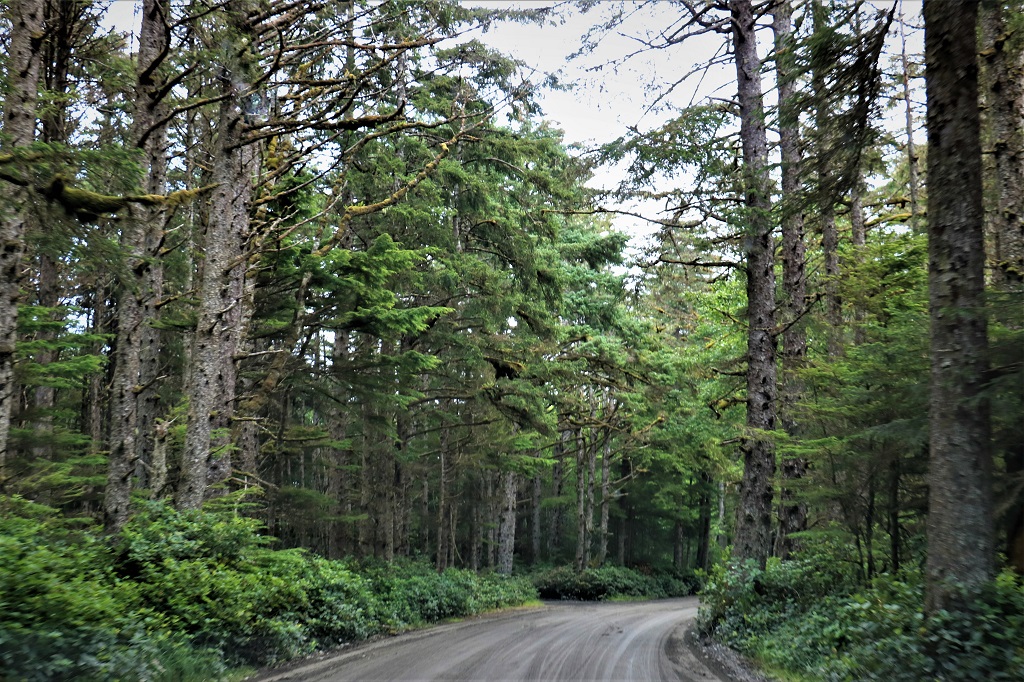
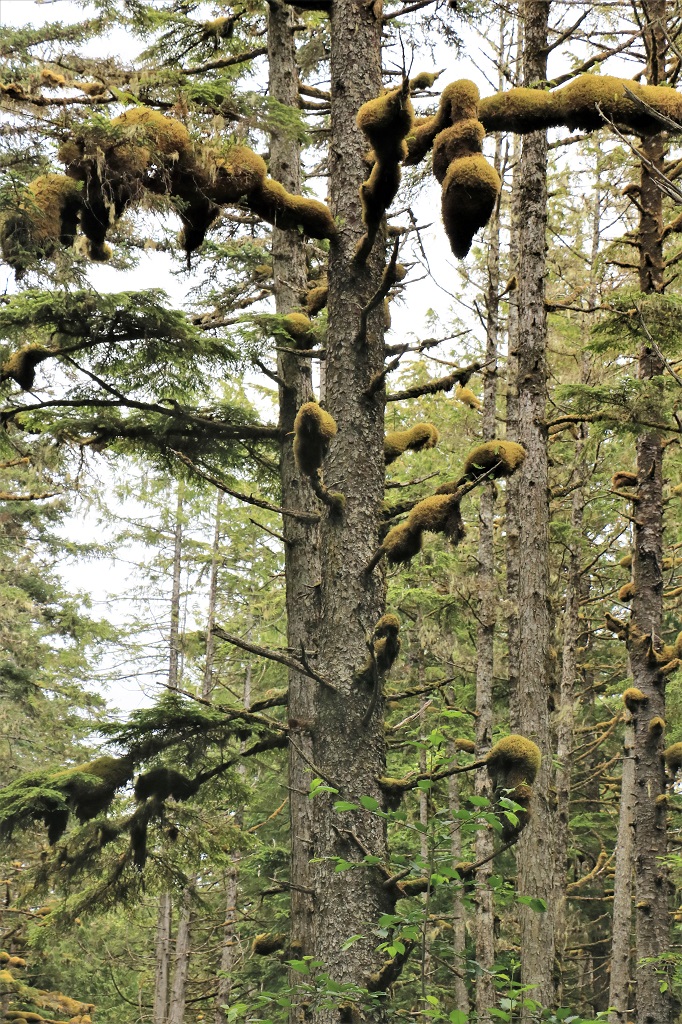
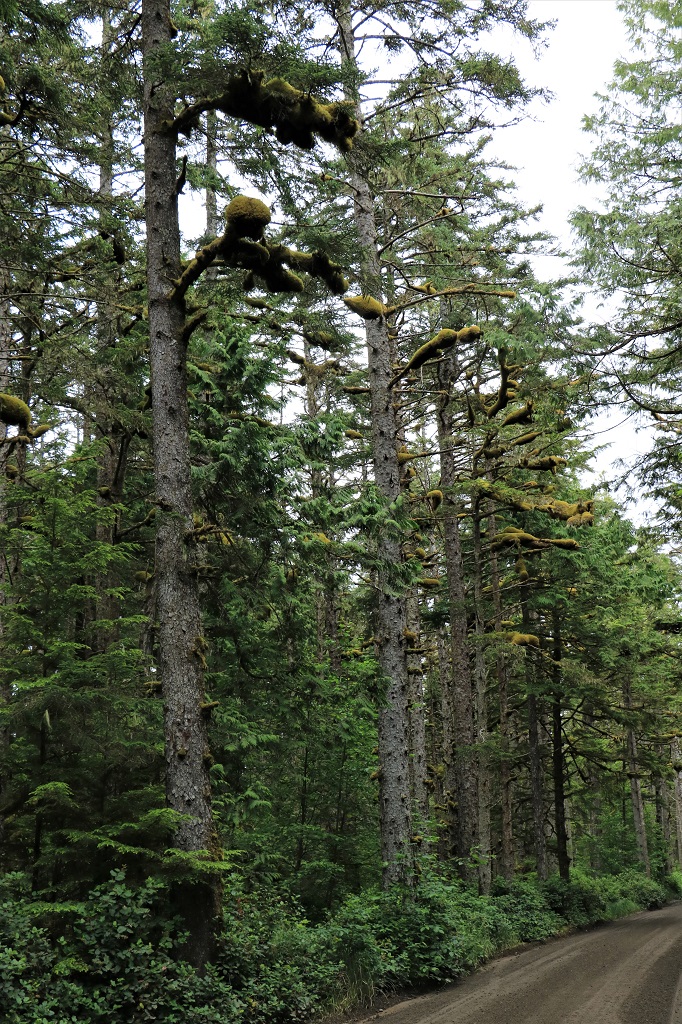
Today was our last day on Haida Gwaii.  Tomorrow morning we will be on the ferry back to Prince Rupert.  We drove all the way to the end of the road at the northeast end of Graham Island – to Tow Hill.  We saw over a dozen deer today.  They were beside the road eating the grass on the way out and on the way back. The Sangan River looking both directions from the middle of the bridge. Once you go about 12 km past the turn off to Massett the pavement ends and the road is gravel the rest of the 14 km to Tow Hill The thick masses of moss on the tree limbs were really something.

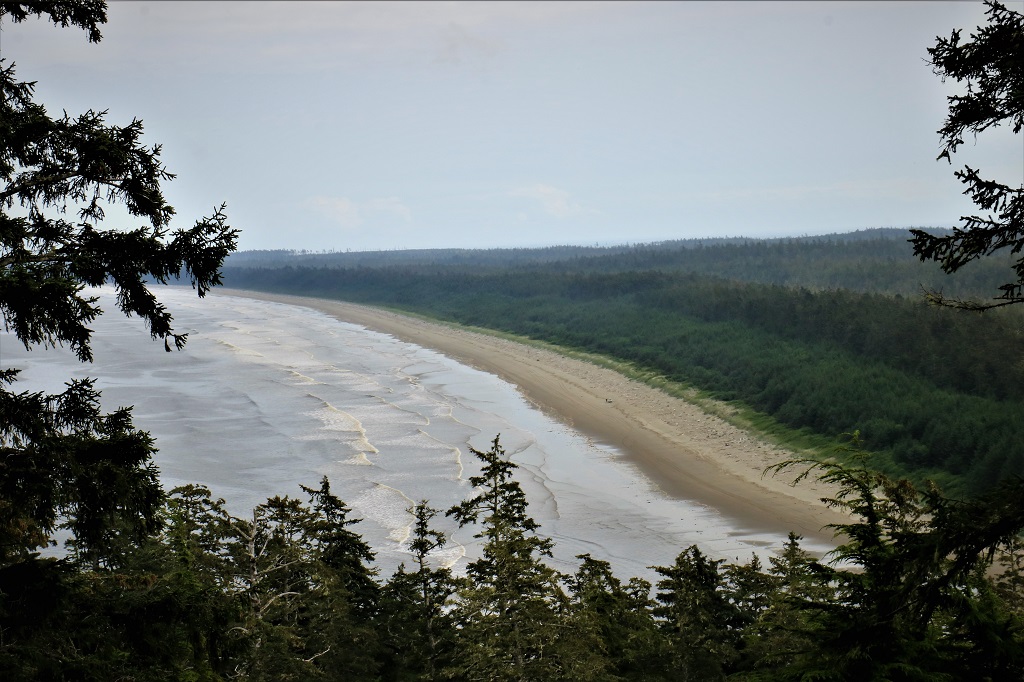
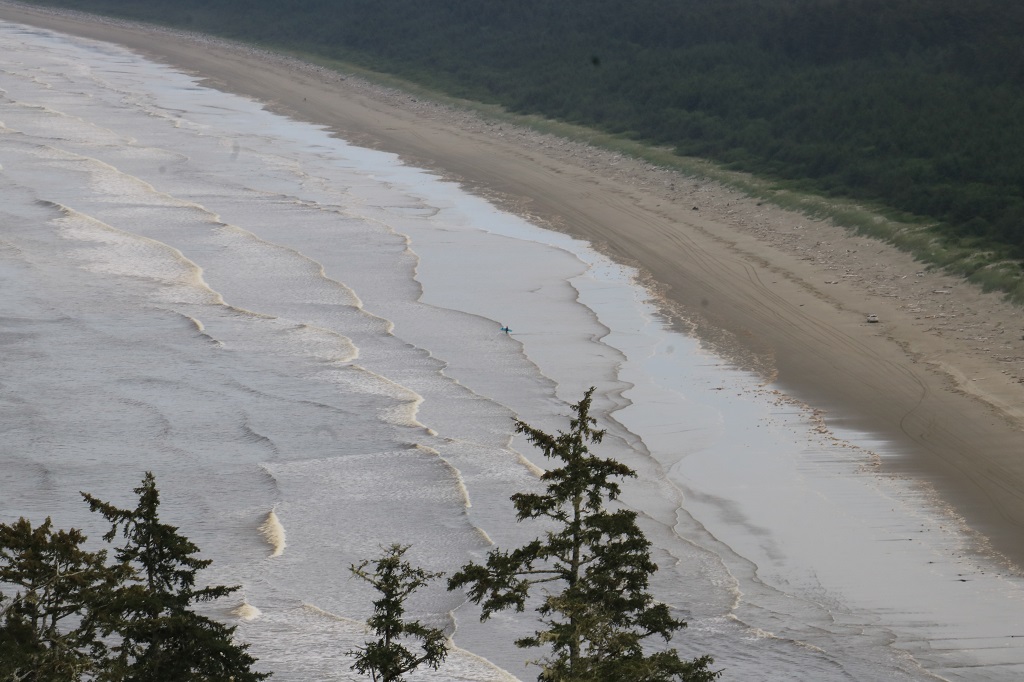
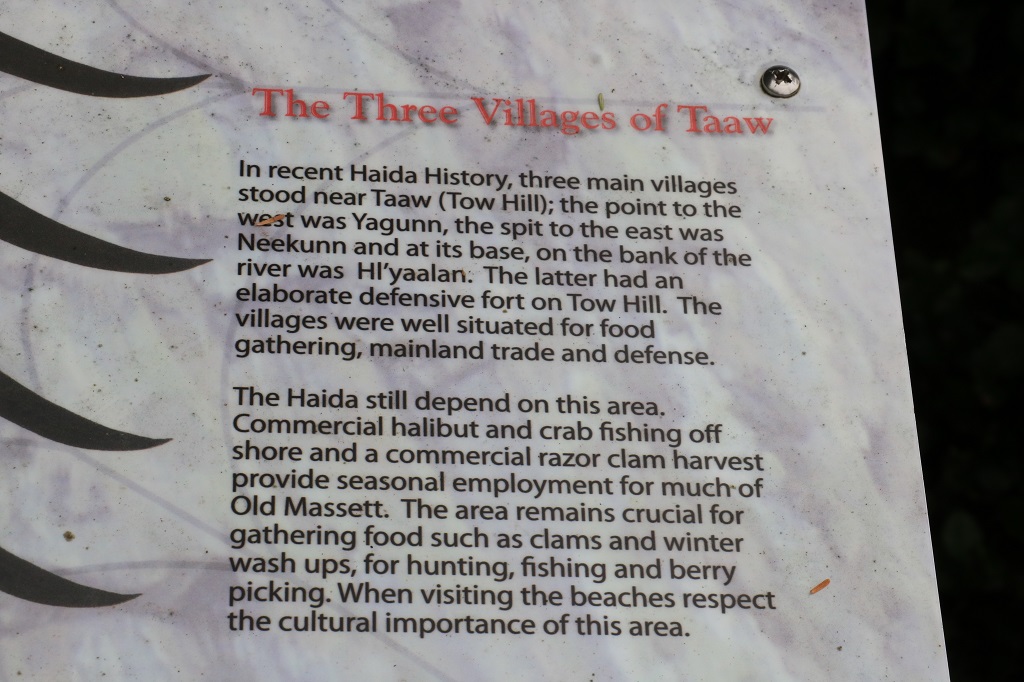
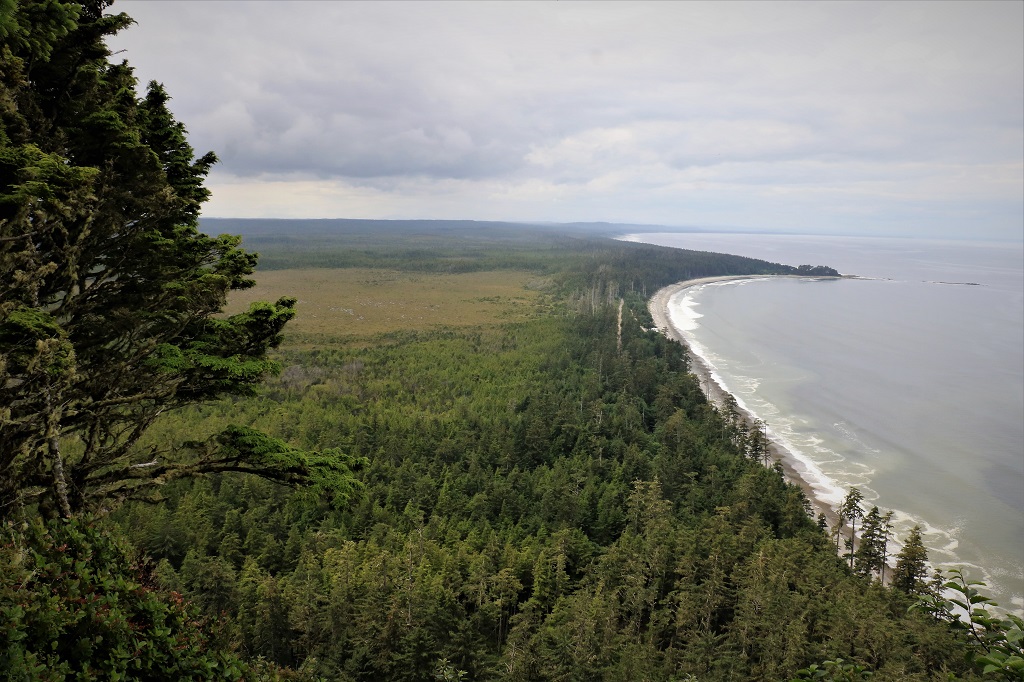
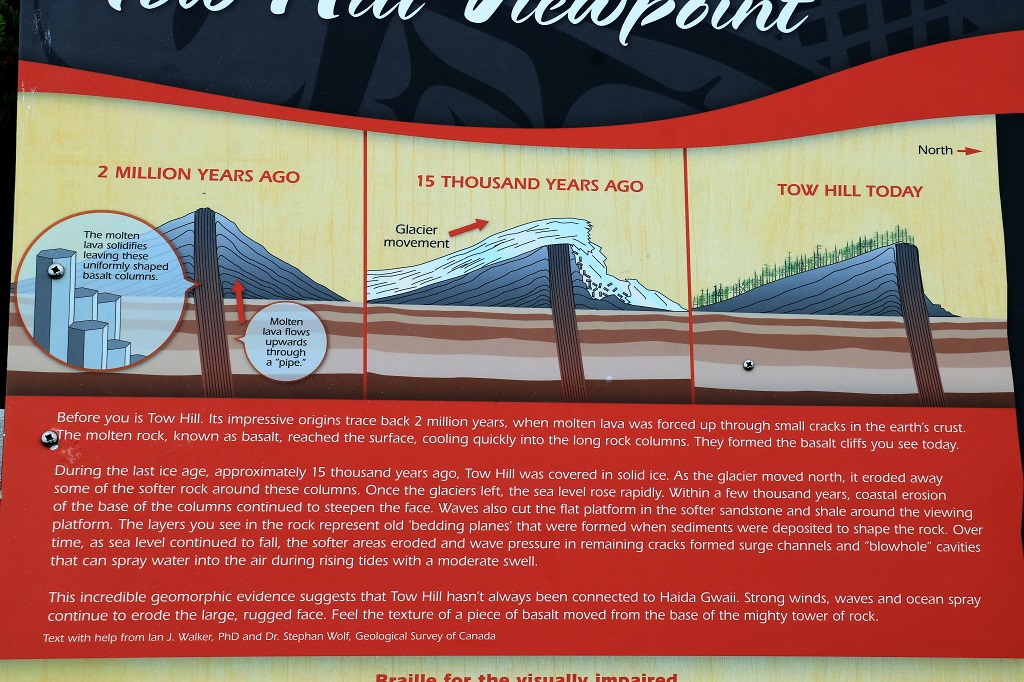
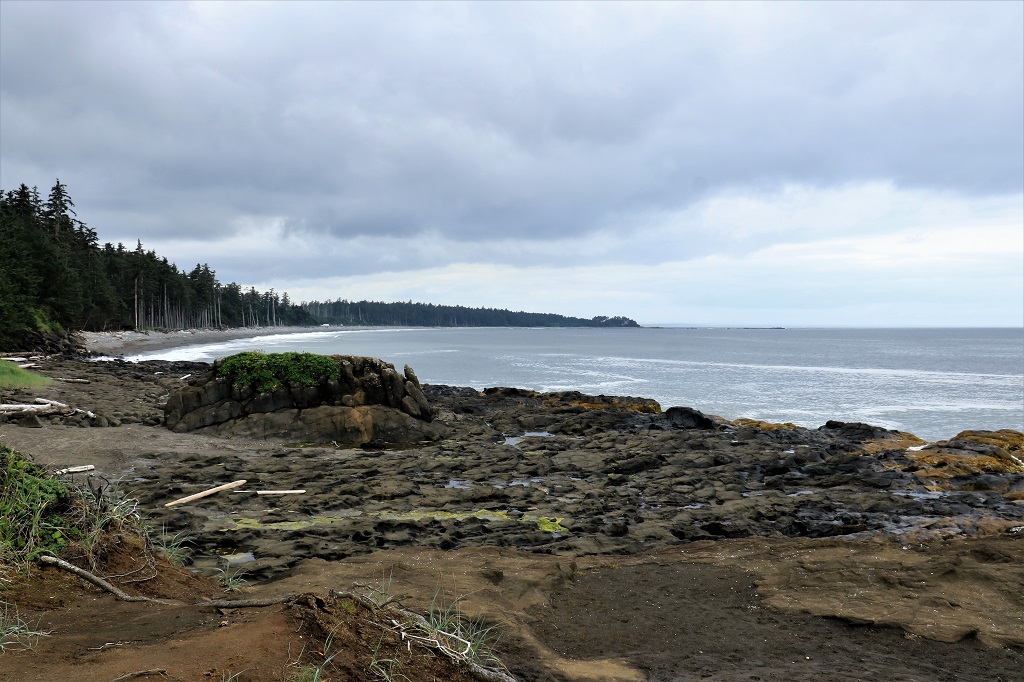
Since my sisters lived here 50 ago a boardwalk and stairs had been installed instead of the dirt track up the 109 meter (357′) basalt outcrop that is called Taaw by the Haida and Tow Hill by the Europeans.  It was 25 years old and getting very worn in places. Also the climb grade was about 30%, so it was steep.  In 2011  BC Parks worked with the Haida Nation and re-did the boardwalk reducing the grade to 15% by adding 200 additional steps.  They also built a connecting boardwalk/staircase betweent he Rose Spit viewpoint which is about halfway up to the top of Tow Hill, and the Blowhole; plus a new wheelchair accessible boardwalk to the Blowhole from the parking lot.  It is 895 meters (2,536′) from the parking lot to the top of Tow Hill, 770 meters (2,526′) across to the blowhole from half way down Tow Hill, and a further 1 kilometer (3,280′) from the Blow Hole back to the parking lot.  Needless to say, my legs and feet hurt this evening.  But the view was well worth the climb! If you click on the above photo and look right in the middle you can see a surfer watching the waves in the hope of having a ride. Rose Spit is a very popular surfing area and it is also common to see 4X4s, Jeeps, and ATVs roaring up and down the long sandy spit. Every year two or three get stuck and provide amusement for the locals. If it was a bit clearer to the horizon you can see the Alaskan panhandle from the top of Tow Hill.  We were blessed with a good day, sometimes you can’t even see the ground, let alone miles out to sea.

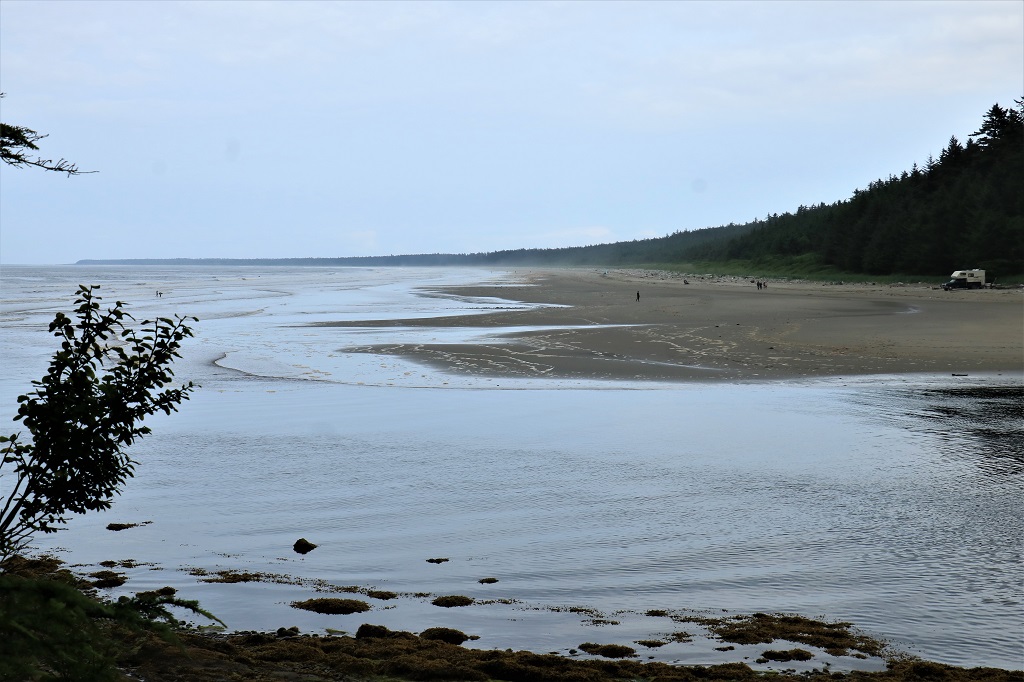
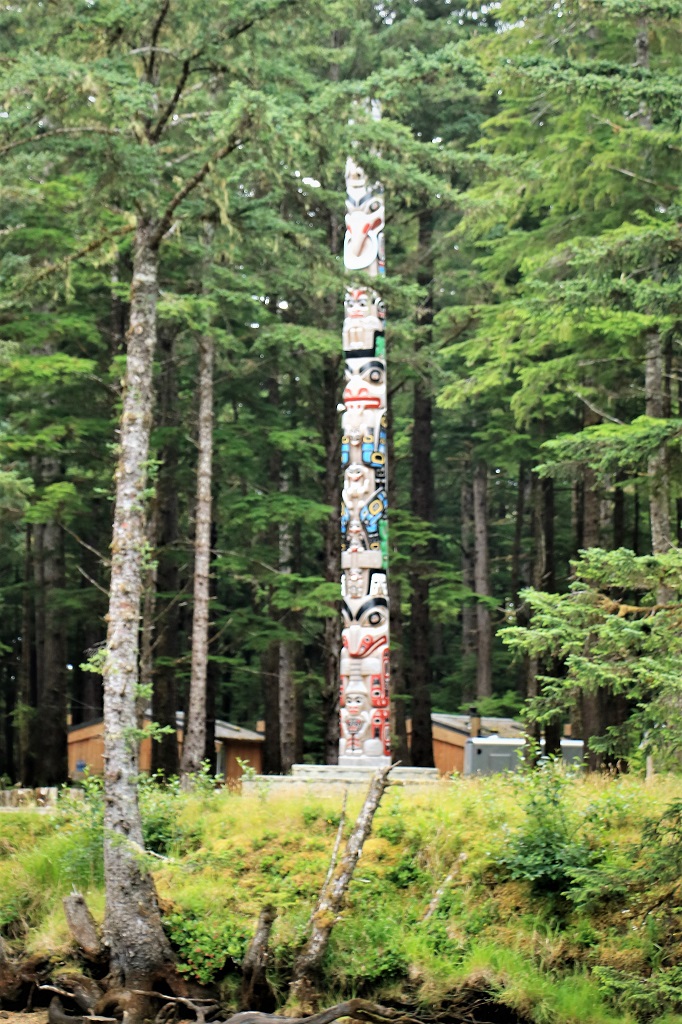
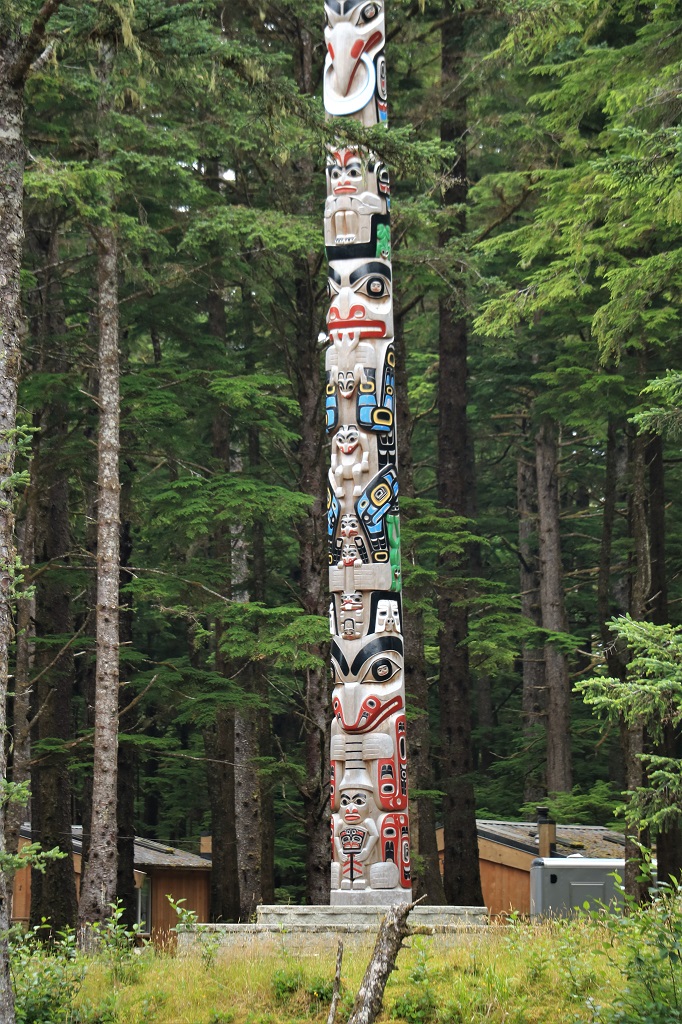
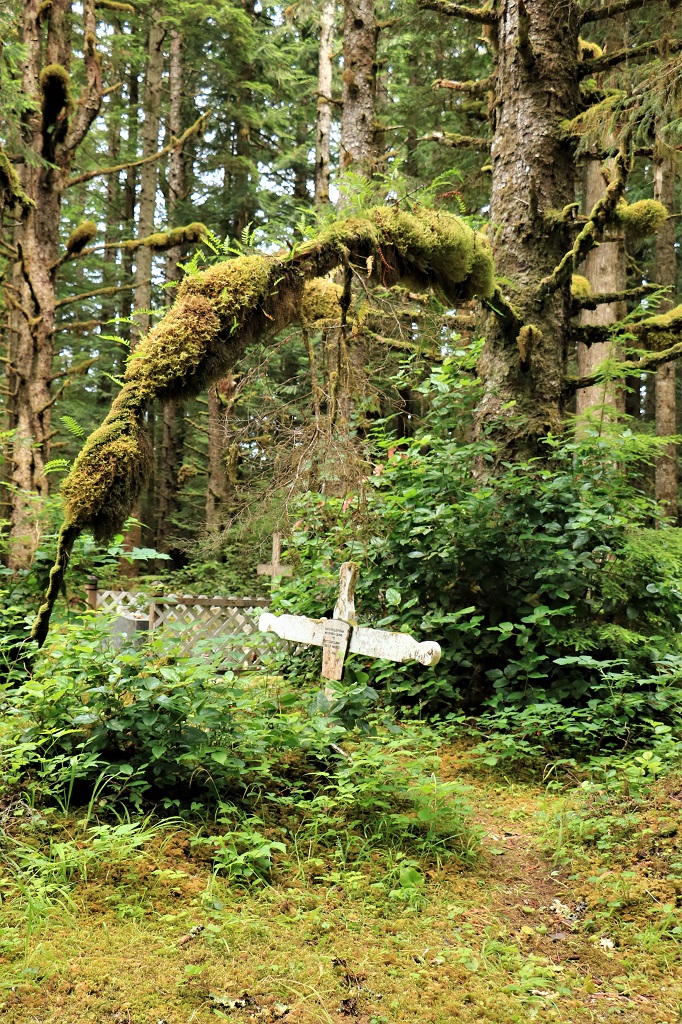
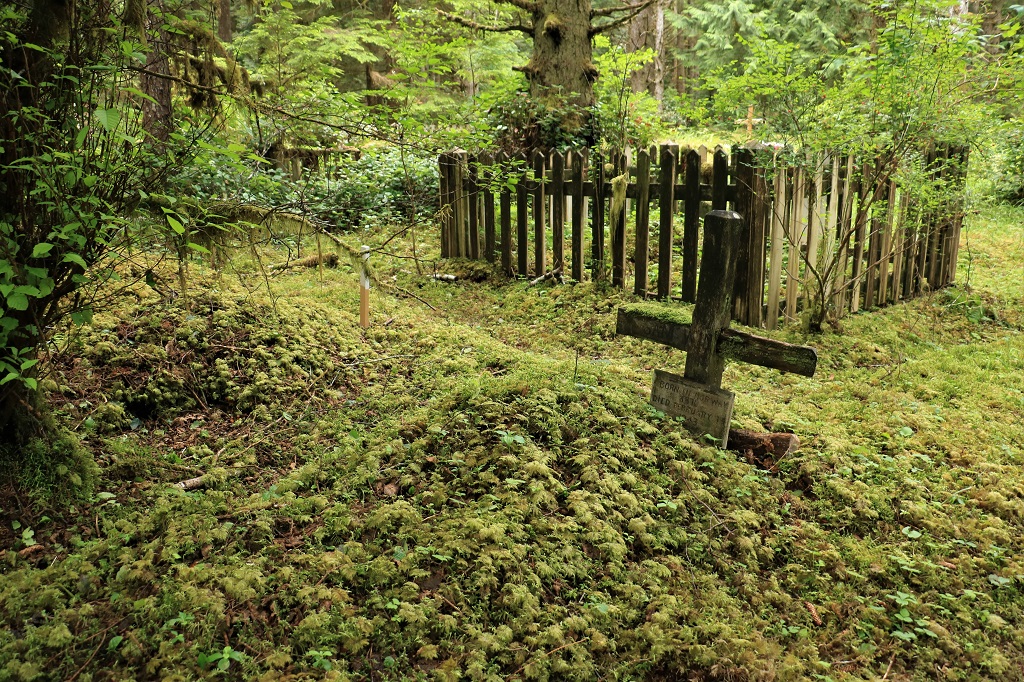
We rested for awhile, found a geocache that was hidden under the viewing platform and began the descent to the Rose Spit viewpoint where we branched off and took the boardwalk across Tow Hill and down to the Blowhole. Because the waves were not running too high the blowhold did not put on a very good show.  Still it did blow a few times for us. Then it was back to the parking lot and a sandwich for lunch before we headed back to visit Massett and Old Massett. The beginning of Rose Spit where the Hiellen River enters the ocean.  This is a very important razor clam harvesting area and at one time the entire village of Massett would decamp to come up here and dig for clams. There was a commercial cannery in Massett for many years.  The Haida Nation has built a few longhouse-syle cabins on the other side of the river that people can rent. There is a nice totem at the riverside by the cabins. On the way back to Massett we took a detour up Cemetery Road and visited the old cemetery, which is still being used as we saw some recent grave makers.  The moss and vegetation is so think you feel like you are walking on a foam pad.

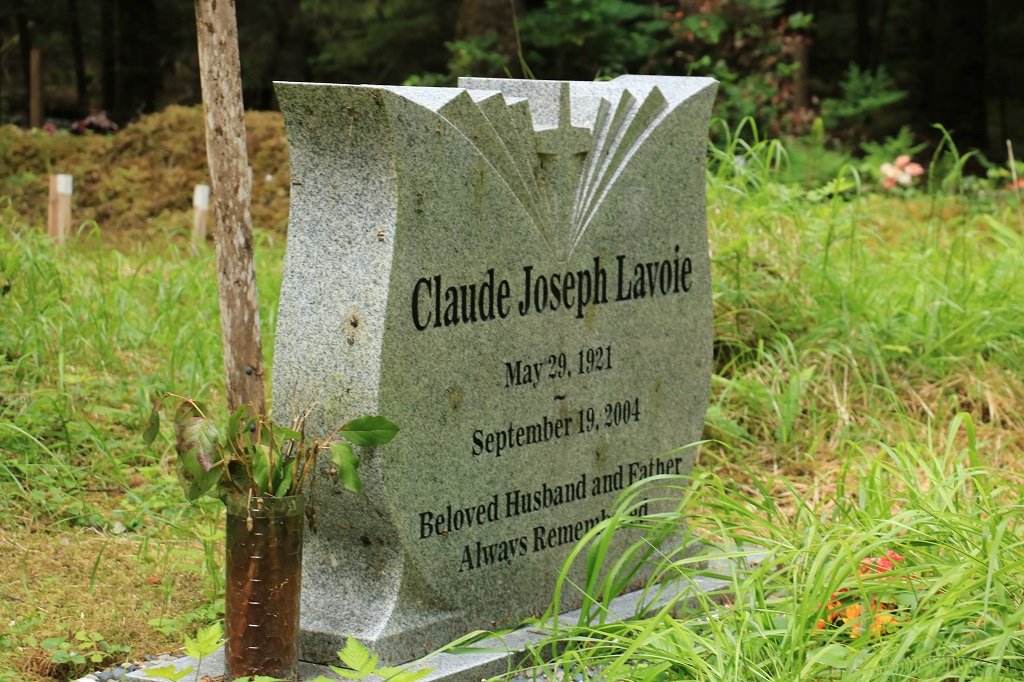
On the back of this large gravemarker were a column of popular sayings said by Mr. Lavoie and this poem, which I assume he wrote.  Wise words indeed.

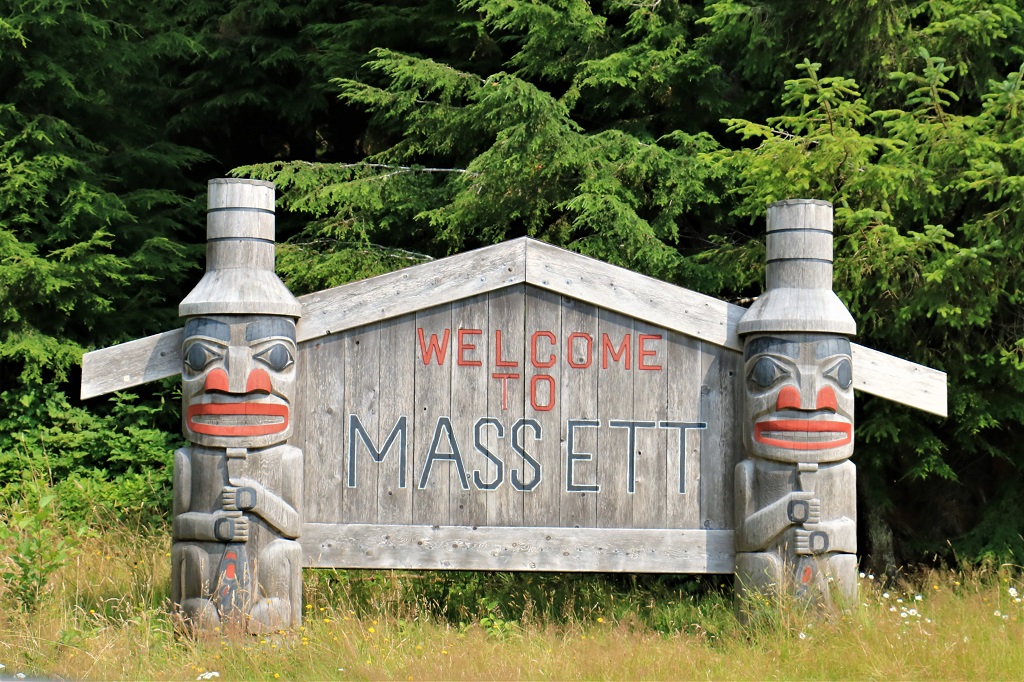
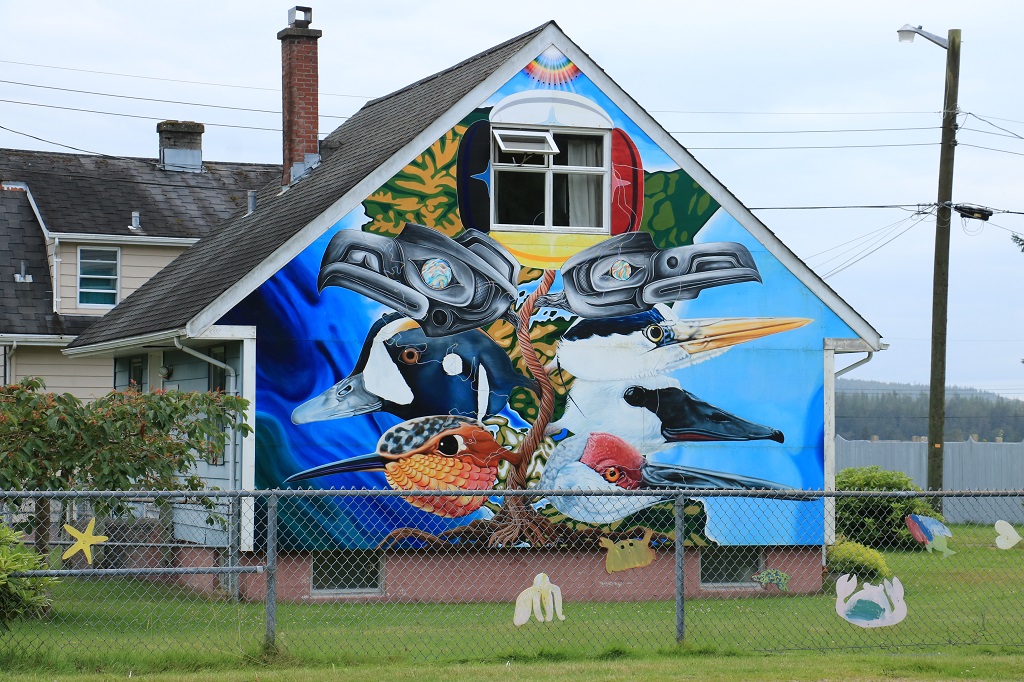
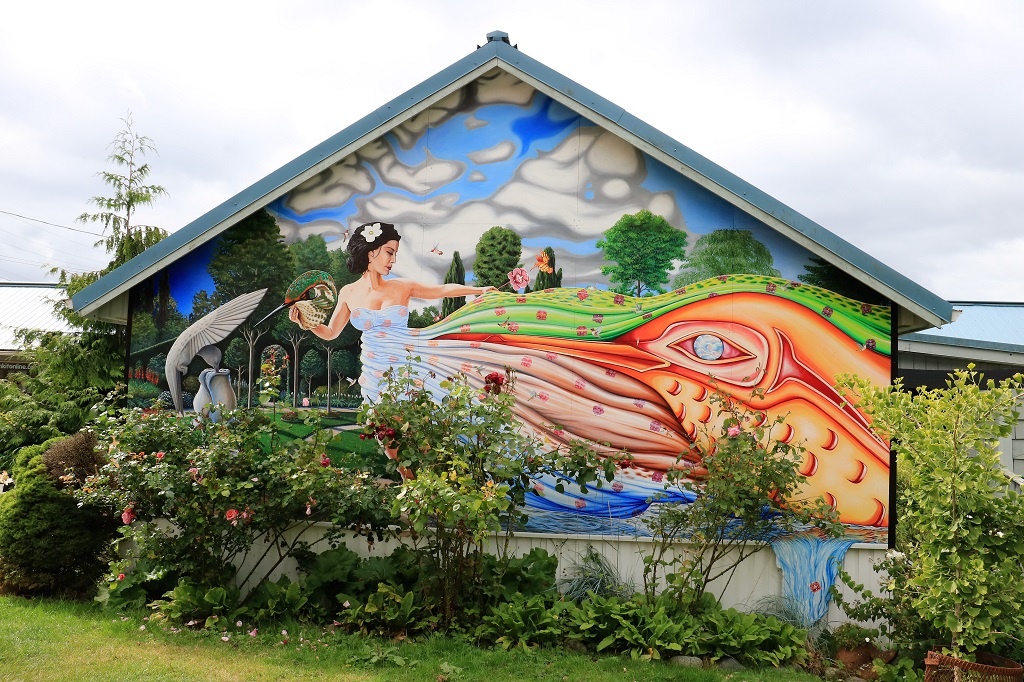
We crossed the river and drove through Massett to Old Massett a short distance down the road. The  highway  up  the  coast  of  Graham  Island  is  actually   part  of  the  northern Yellowhead  Highway  on  the  BC  Mainland.  Massett  is  Mile  0 of  the Yellowhead.We loved this colourful mural on the side of a house as we drove into Massett.  The road does a big curve around the high school and it’s playing fields.  There was a hand-written sign at the end of the driveway that said, “Always give 100%, unless you are donating blood.”  That was good for a chuckle or two.

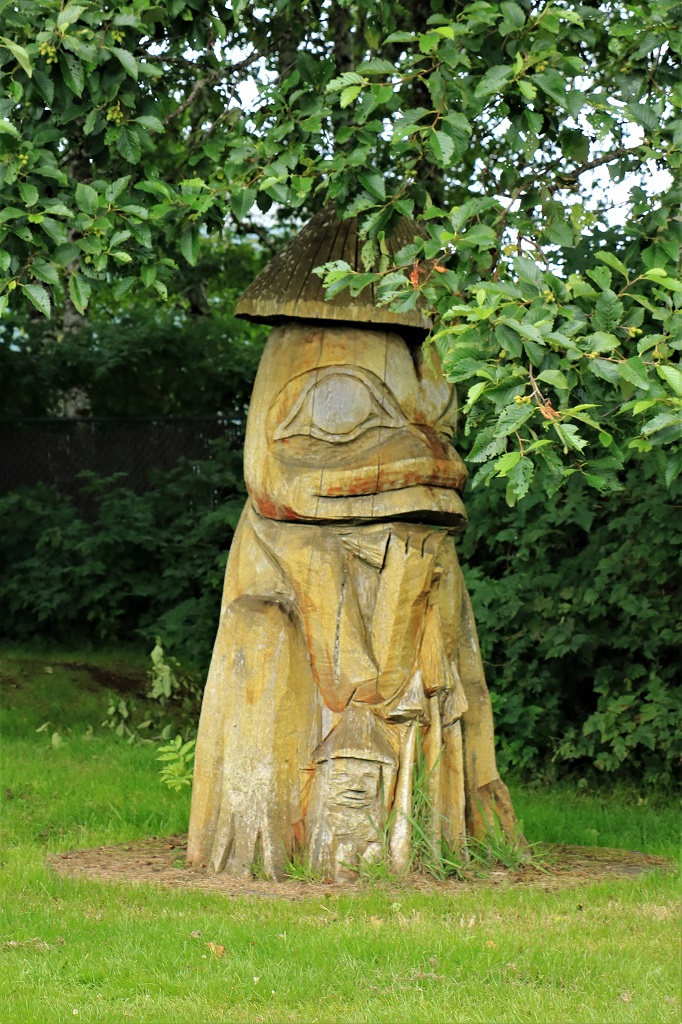
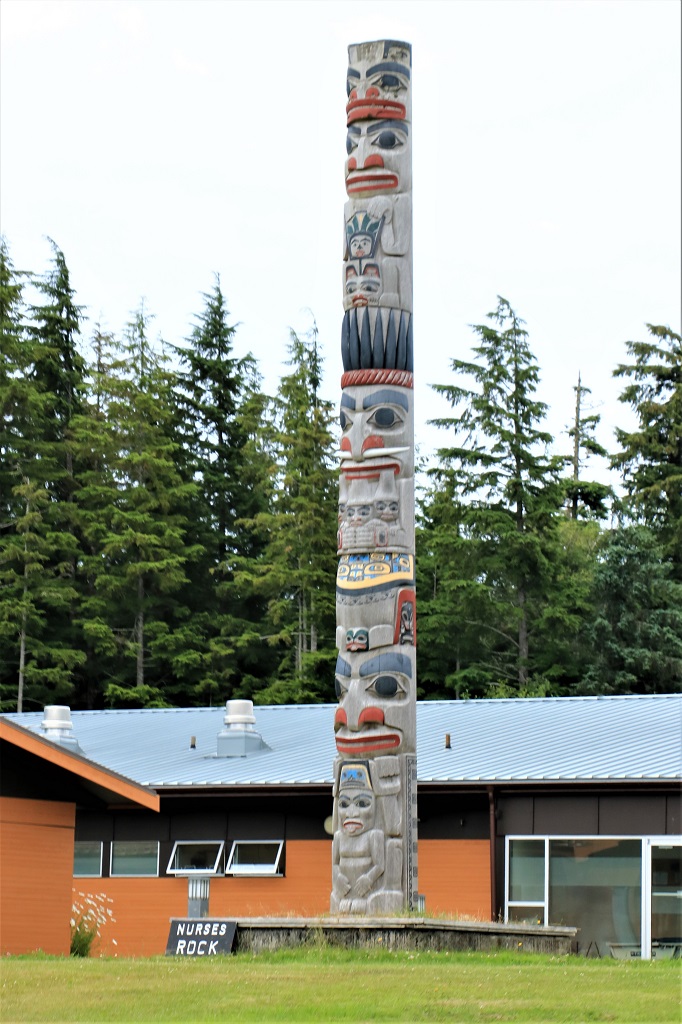
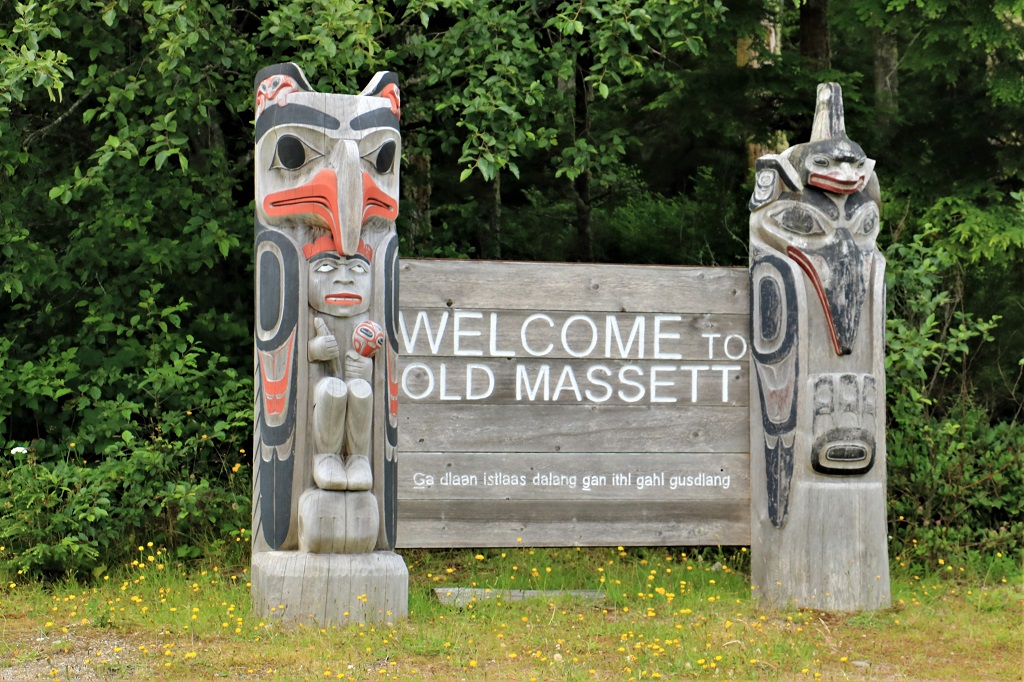
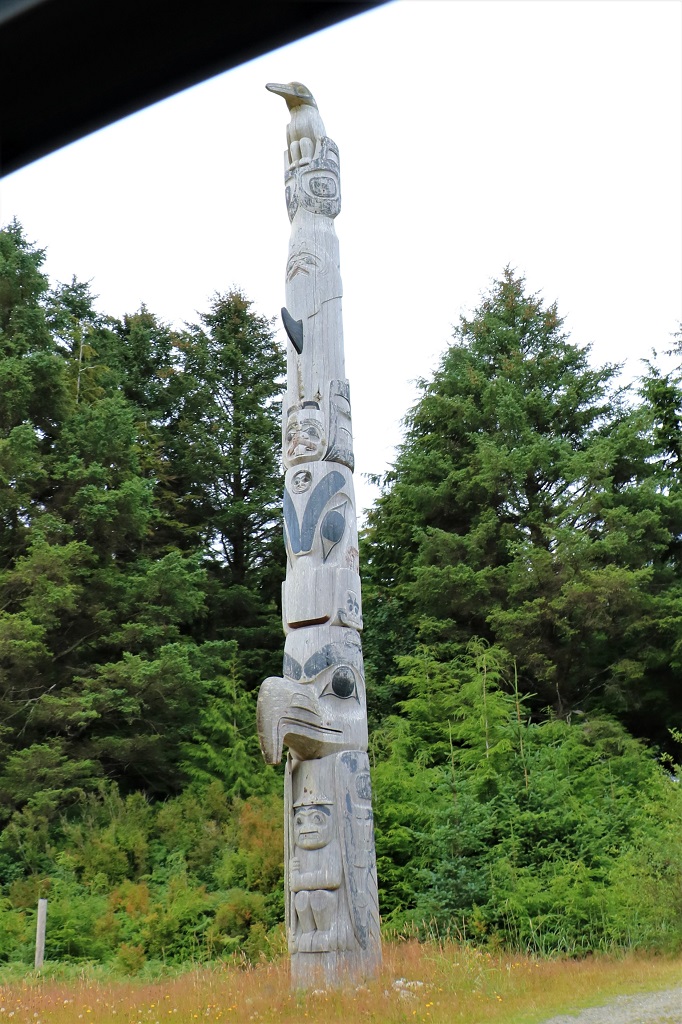
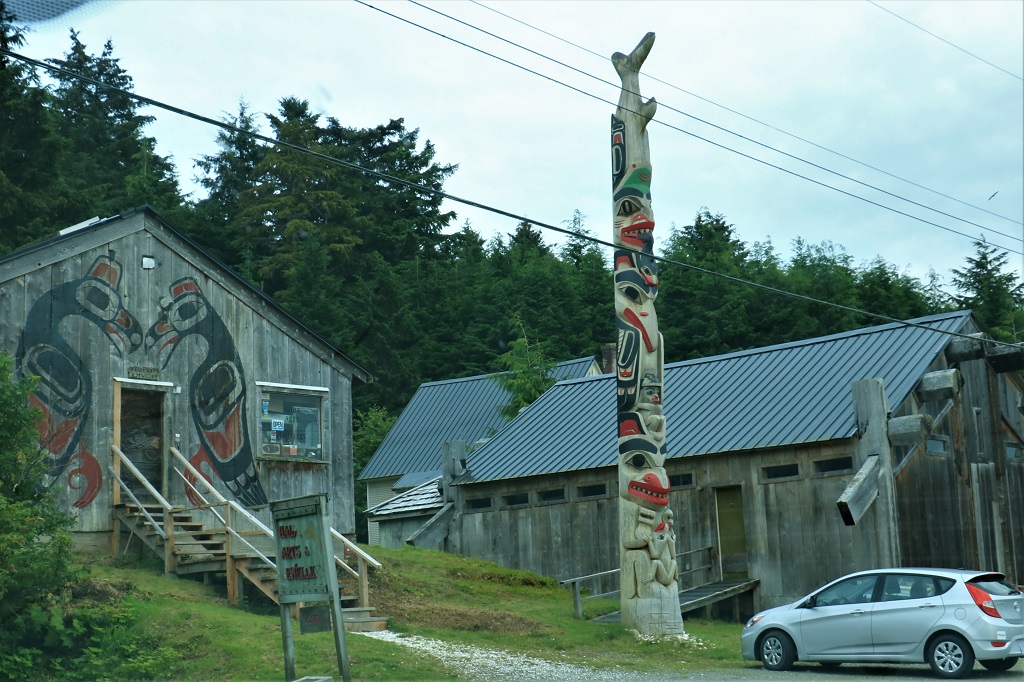
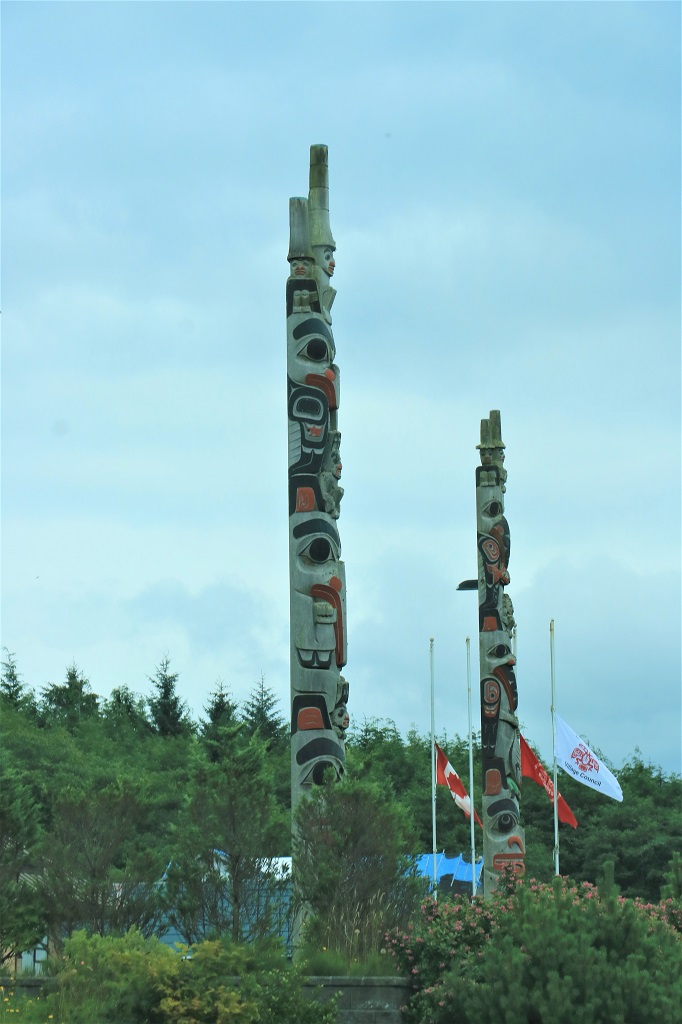
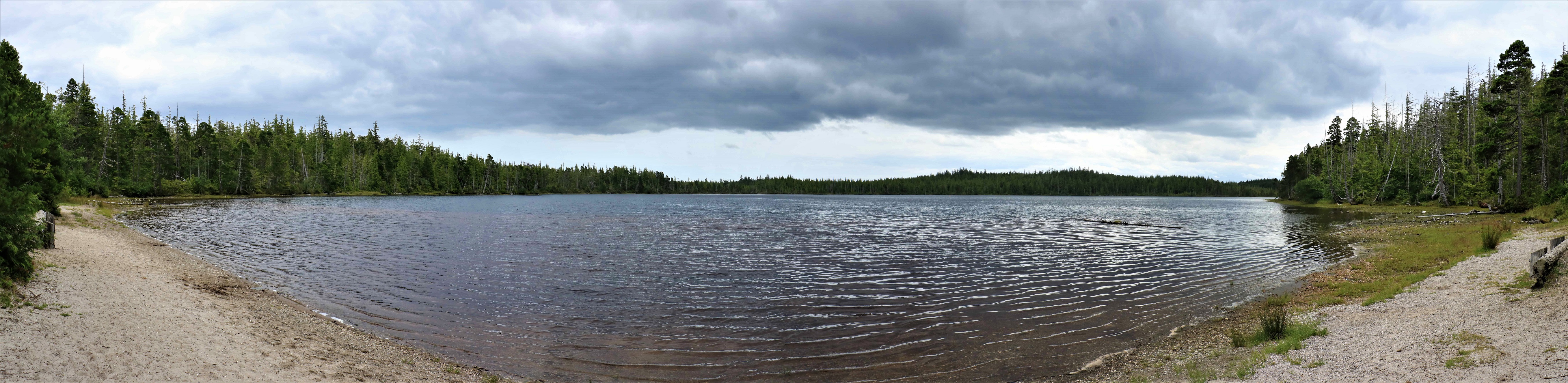
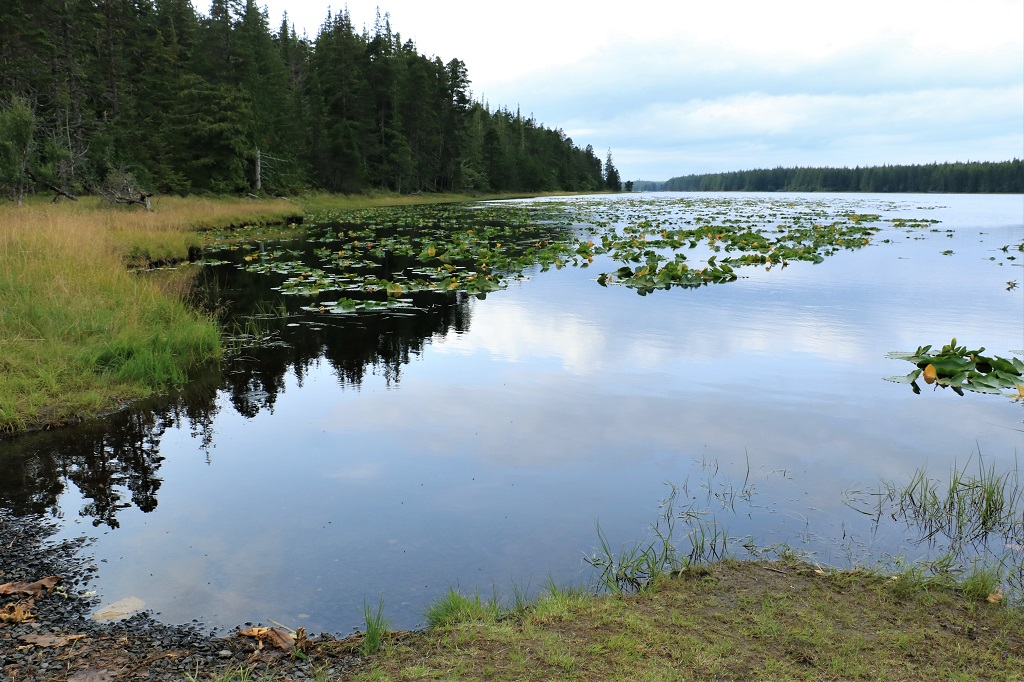
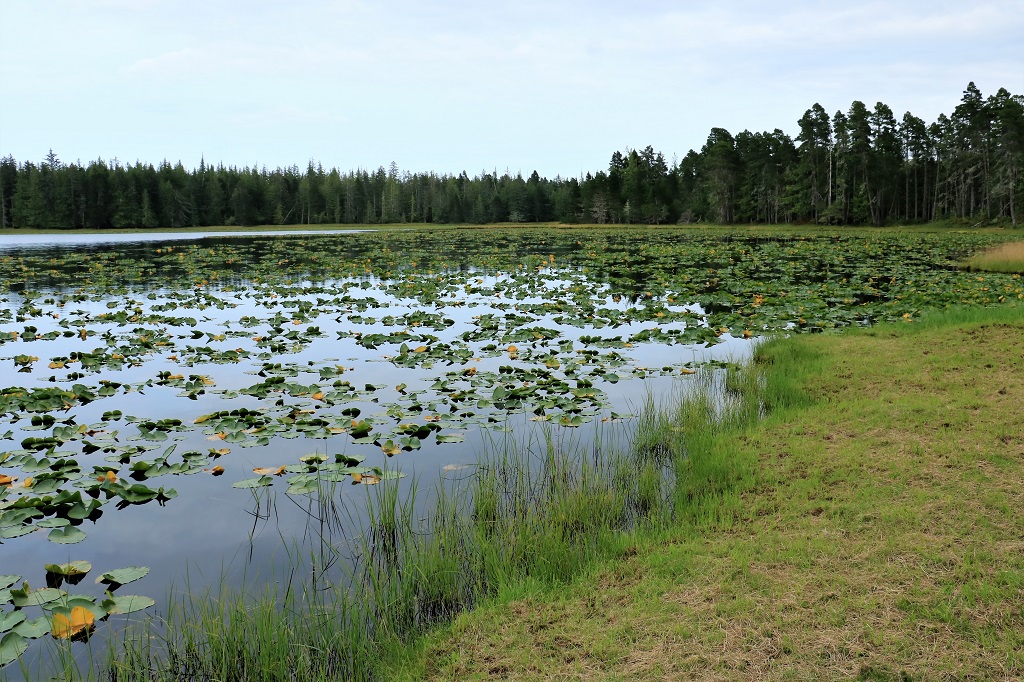
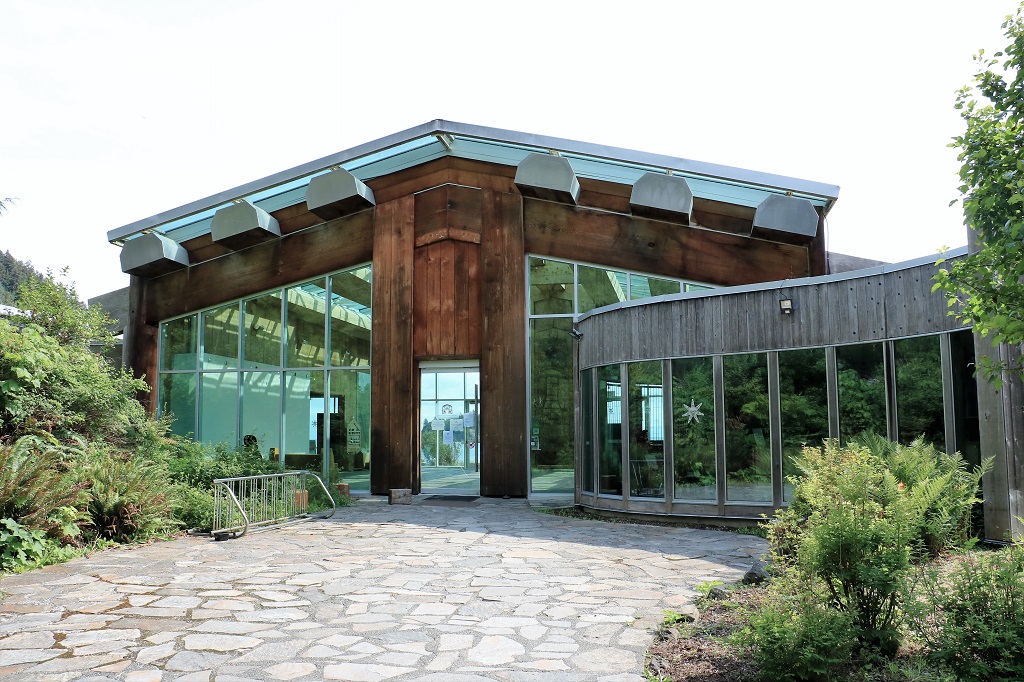
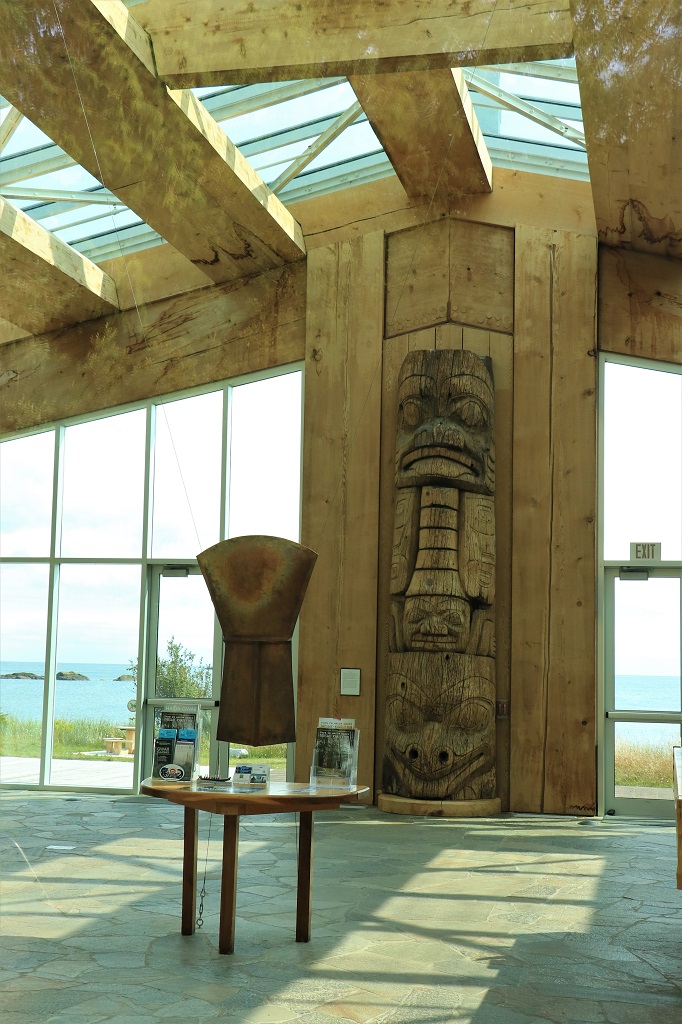
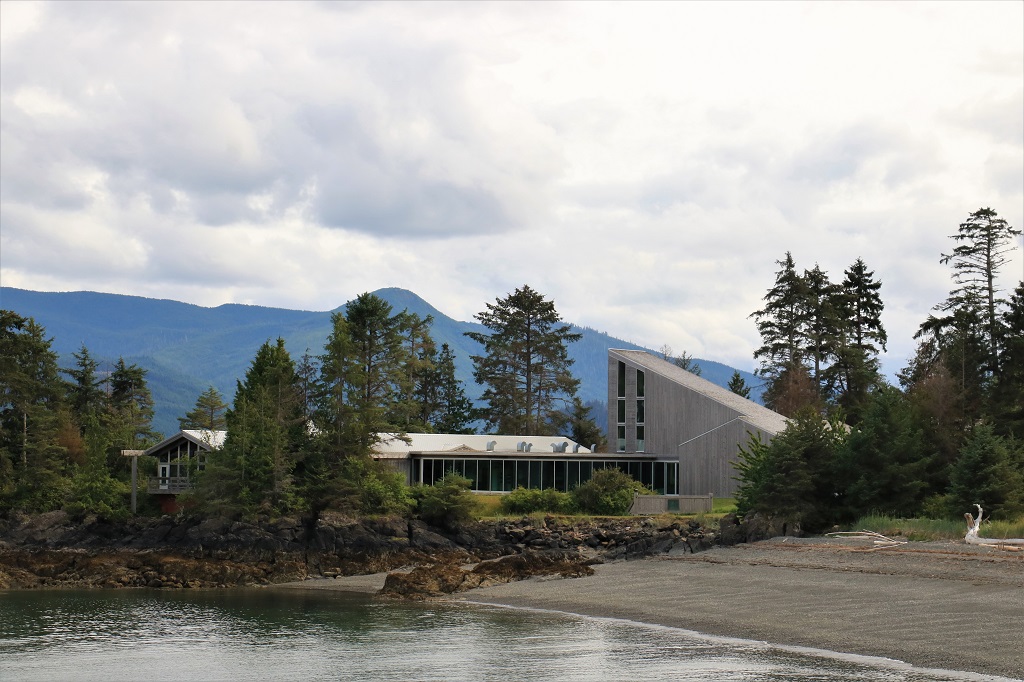
Old Massett pretty much has two roads so we took one on the way out to the end and the other on the way back.  There are many totems in front of houses and buildings in Old Massett.  Many of them are carved and erected for special events or family memorials. I only got photos of a few of them and they were snapped through the truck window as we drove along. After the drive-by tours of Old and New Massett we turned south to head back to Queen Charlotte and some dinner. We made three stops for geocaches along the way.  One behind a fence post in Tlell, one at little Pure Lake, which had a lovely sandy shore, and one at the much larger  Mayer  Lake,  which  had  a really  good  crop  of  waterlilies. We were too late go go see the Haida Museum and Heritage Center that we wanted to visit on Sunday but it was closed, and we didn’t get over to Sandspit on nearby Moresby Island, so I guess we will just need to come back again some day. We were very blessed with three days of good weather while we toured around.  Up here rain is more the norm so we were very thankful to only have the one short shower that came down while we were in our room.

We have to be at the ferry terminal by 8 am to go through the laborious back-in boarding process again.  The ferry is scheduled to leave at 10 and arrive back in Prince Rupert at 5. We will see if it keeps to the timetable.

2019 July Journey – Haida Gwaii section – Day 20

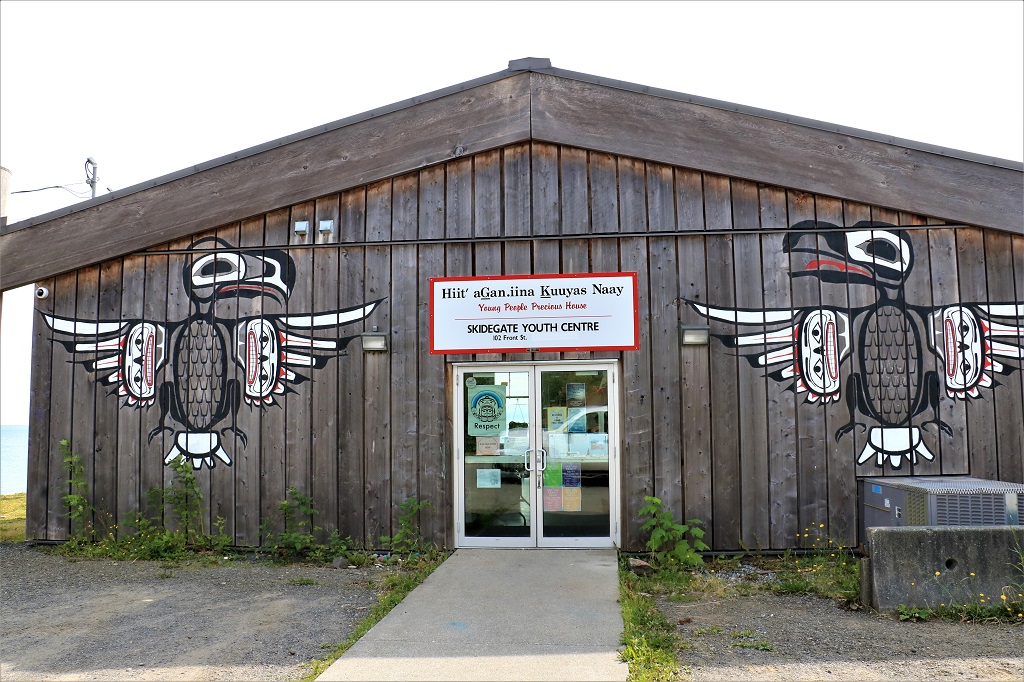
We headed out this morning to explore the communities of Skidegate, Tlell, and Port Clements.  The populations of each of these three towns is between 180-300. Skidegate is nearest to Queen Charlotte at just over 9 km up the road.

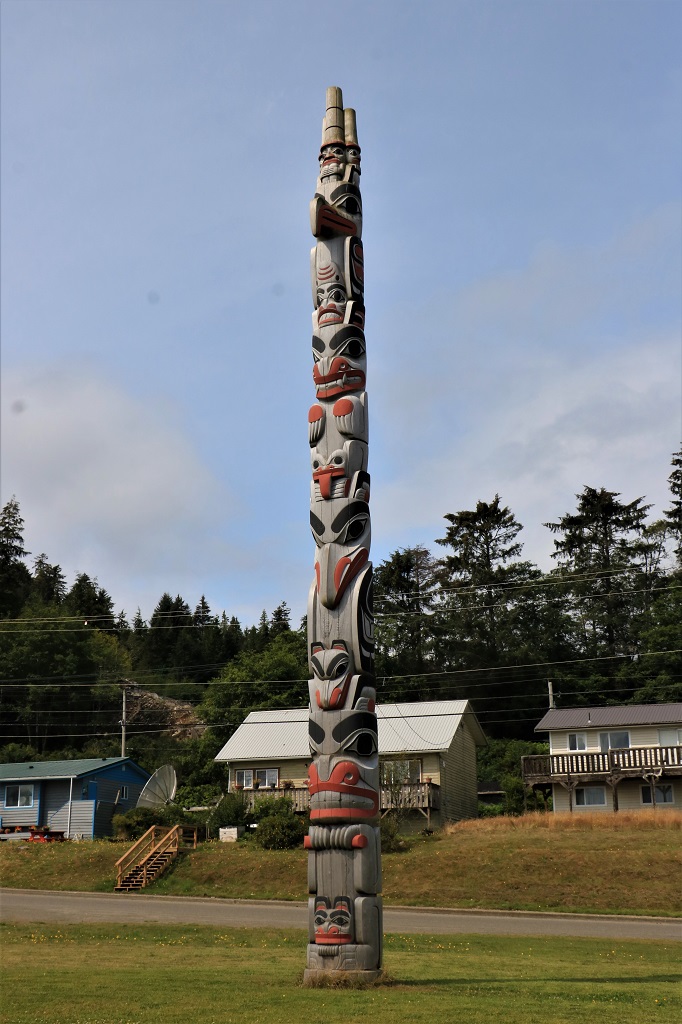
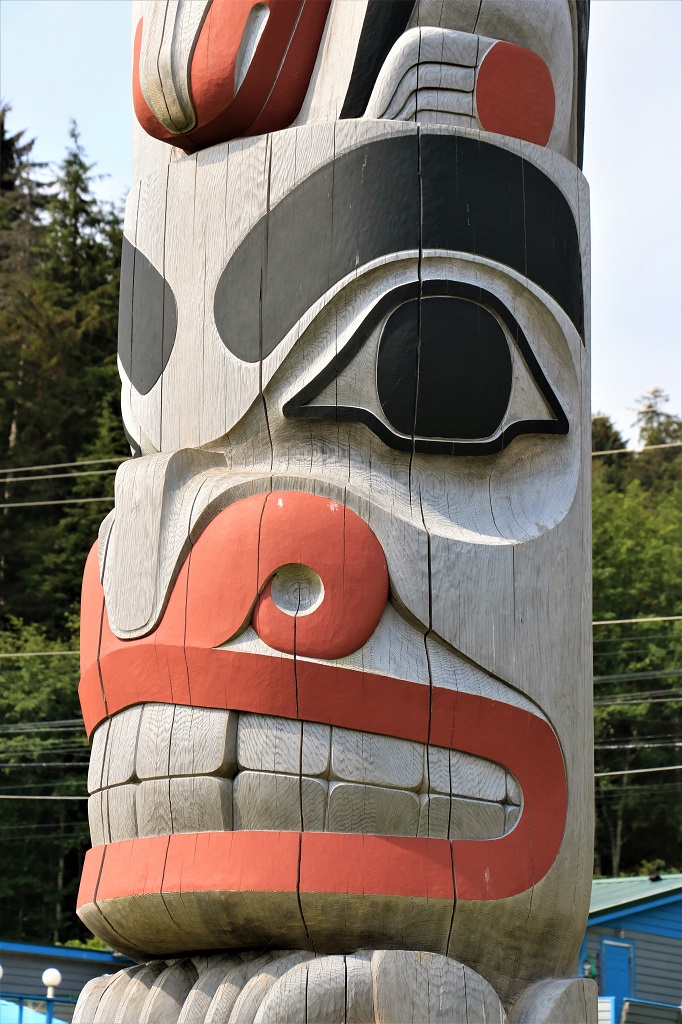
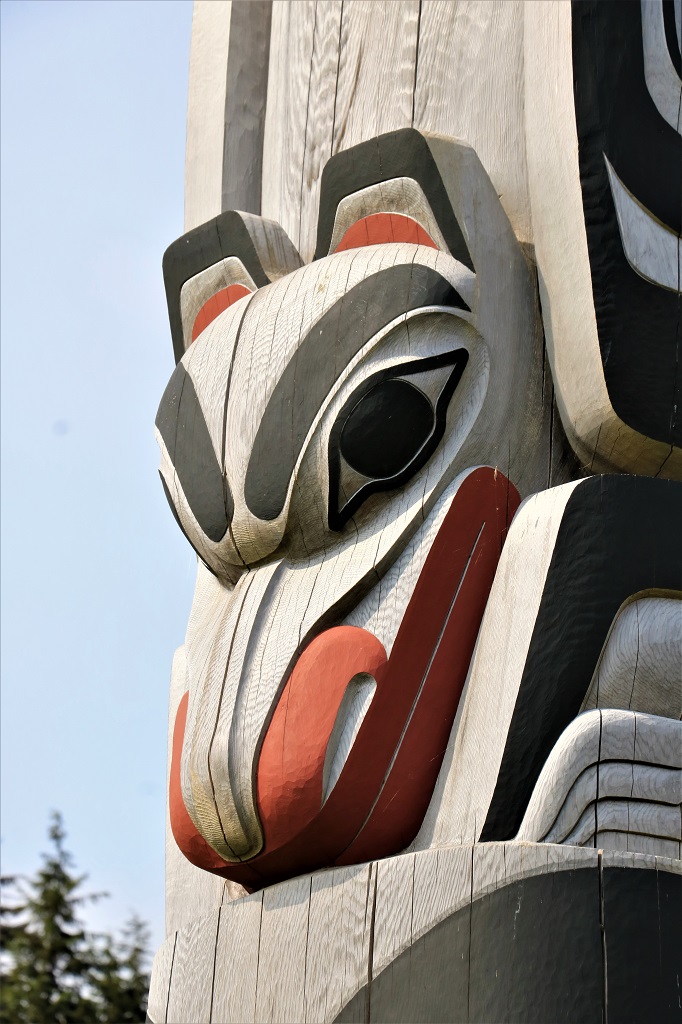
We stopped at the Hadaii Gwaii Museum only to find it was closed today with no explanation as to why.  We plan to go again tomorrow. At a park on the outskirts of Skidegate we stopped to take photos of the famous carver Bill Reid’s totem.

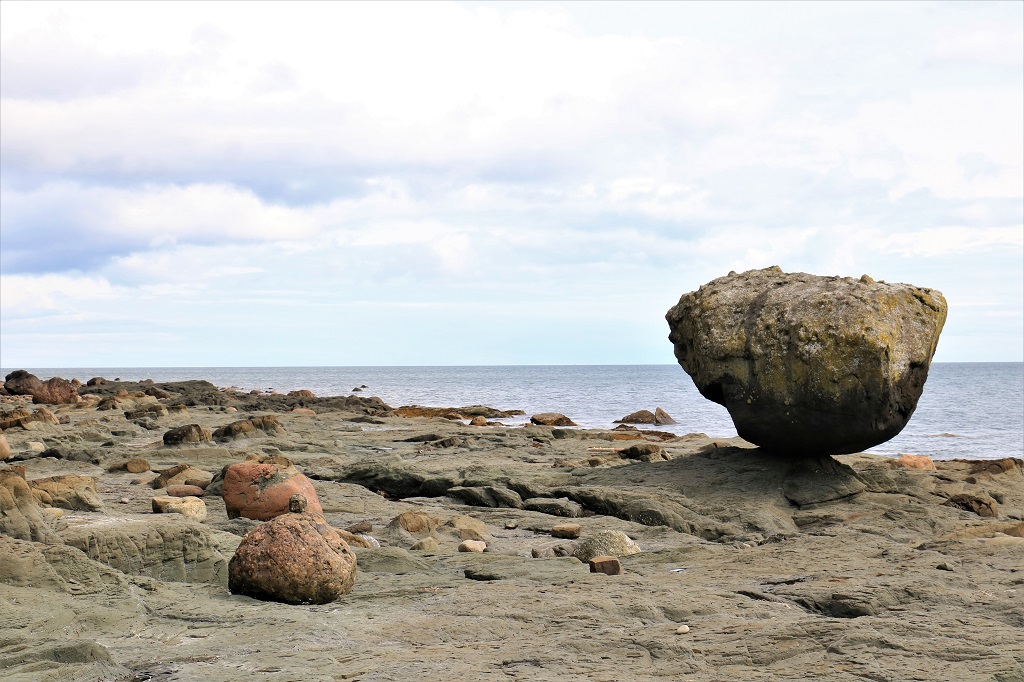
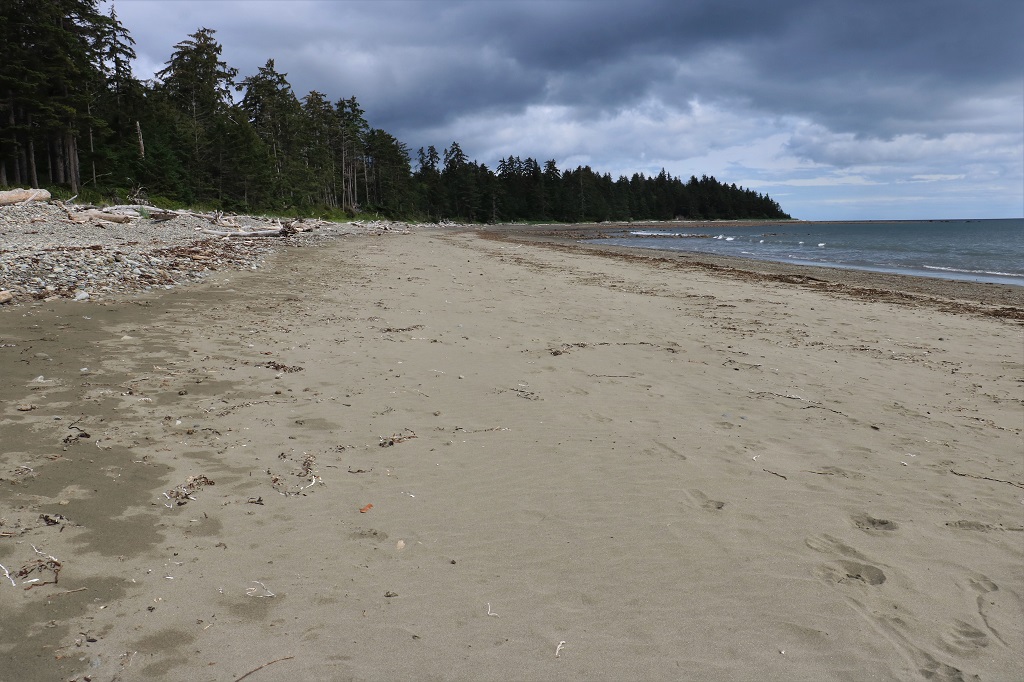
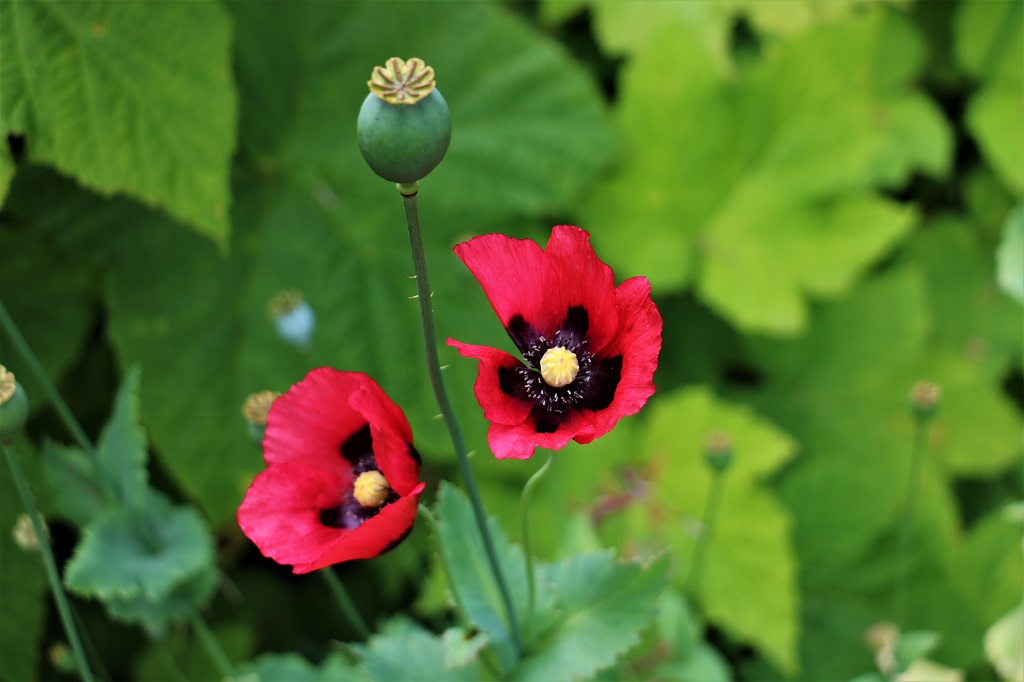
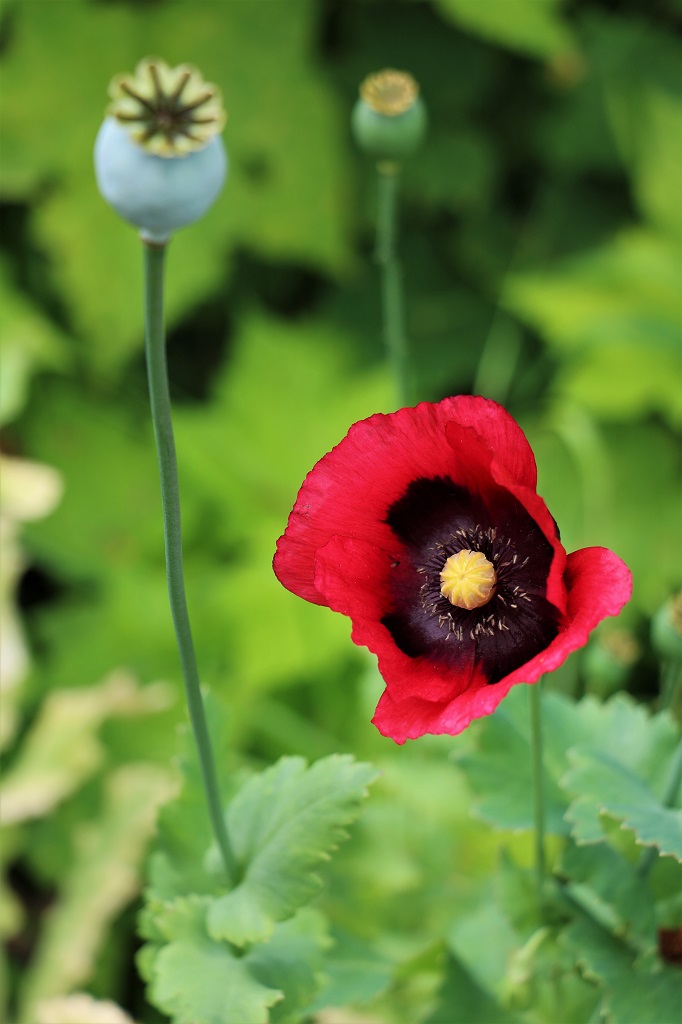
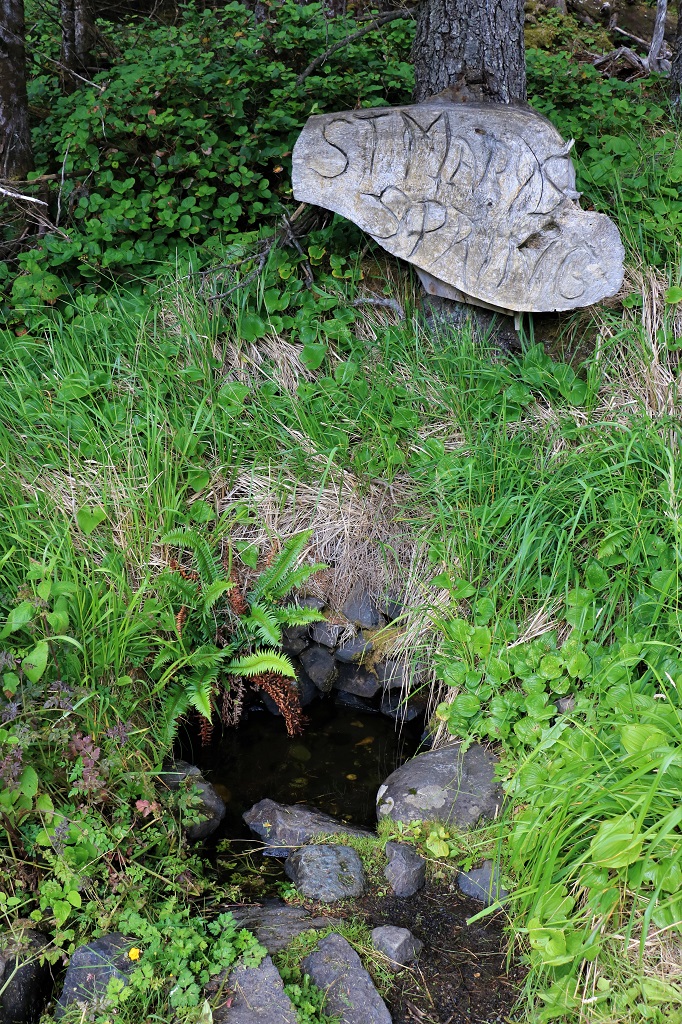
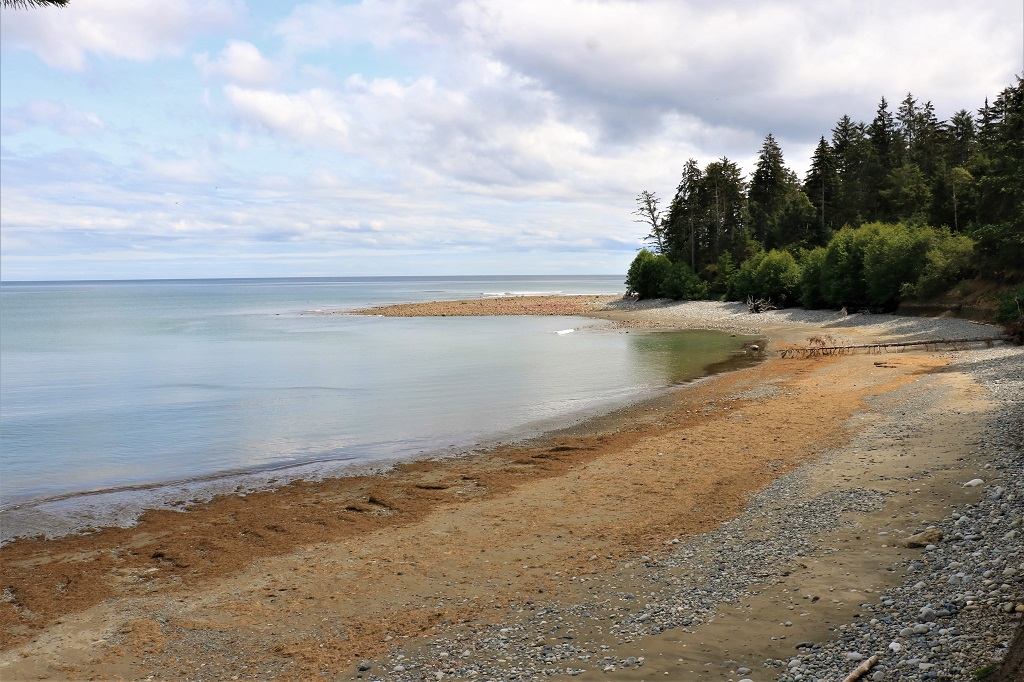
Balance Rock is on a beach on the other side of Skidegate.  It is a moraine deposit delicately set in place by a powerful glacier.  The village of Skidegate’s primary Haida name is “Place of Stone” and Balance Rock is considered a Supernatural Being. Nude Beach is a sand beach; by far the majority of Haida Gwaii beaches are rock.  The nude part is only for small children; not teens or adults. When we made our way back to the road via a different path than we entered the beach we found that someone had spread poppy seeds in the ditch on the other side of the road. An old legend says that if you drink from St. Mary’s Spring you will someday return to Haida Gwaii.  The little pool is pretty stagnant now so they do not encourage you to drink the water.  Many folks will sprinkle themselves with it though.  The chainsaw carving that was made many years ago was stolen 30 years ago.  The authorities searched every vehicle on the departing ferry and recovered it.  People never cease to amaze me with the greedy and senseless things they do.

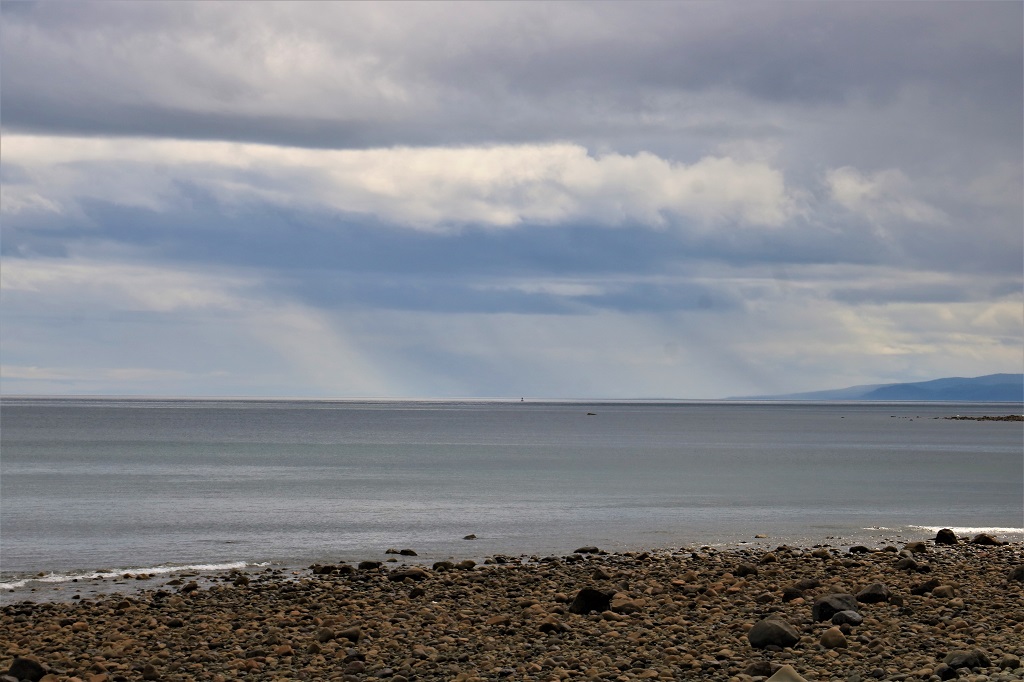
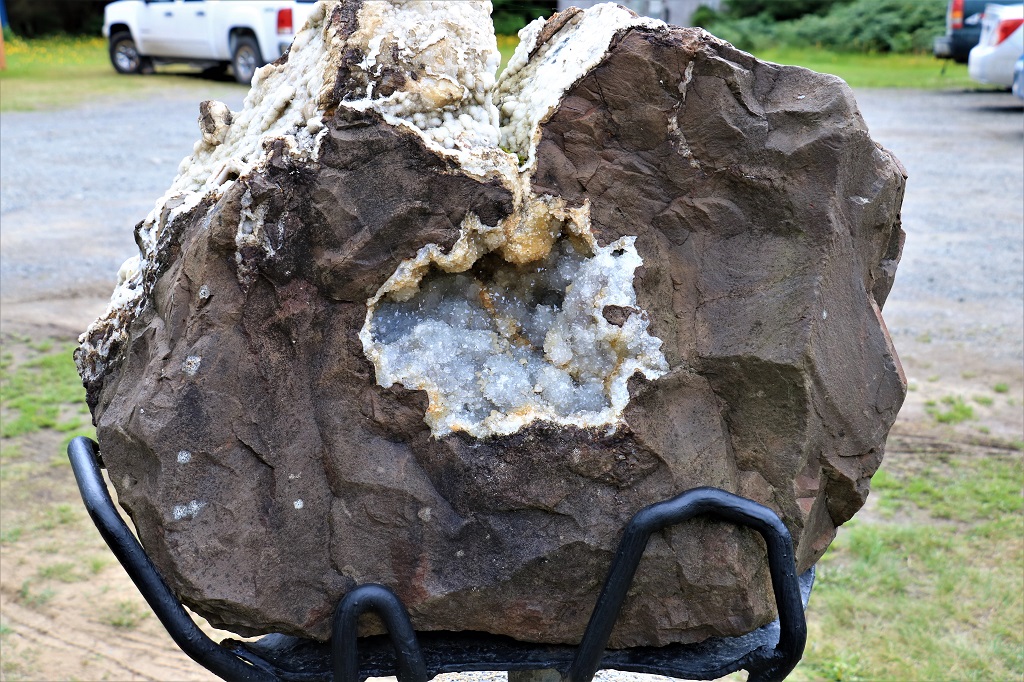
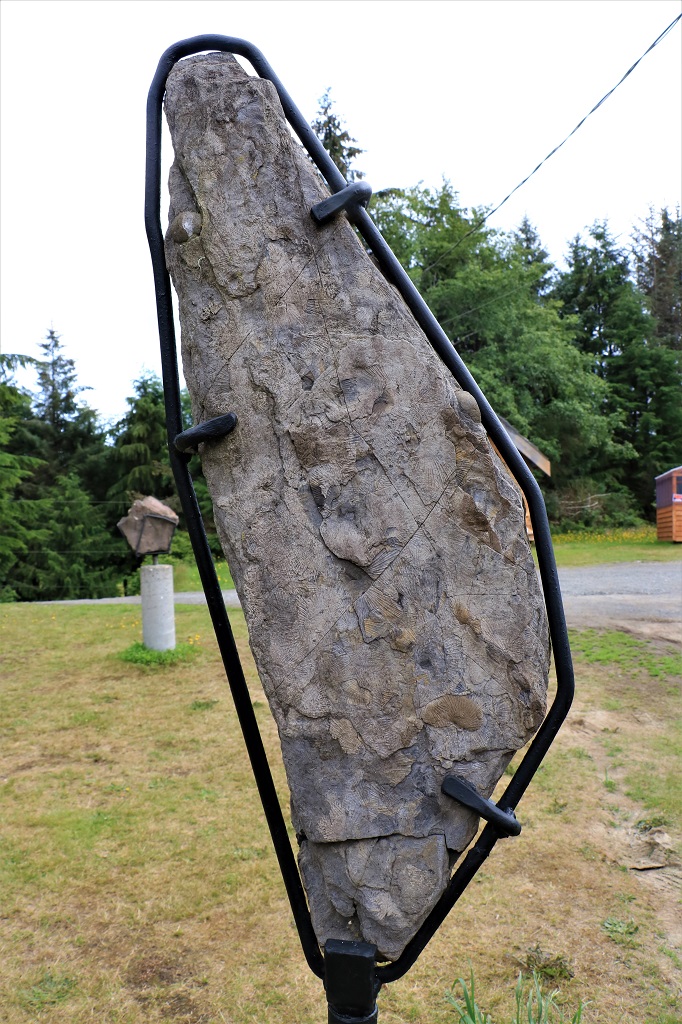
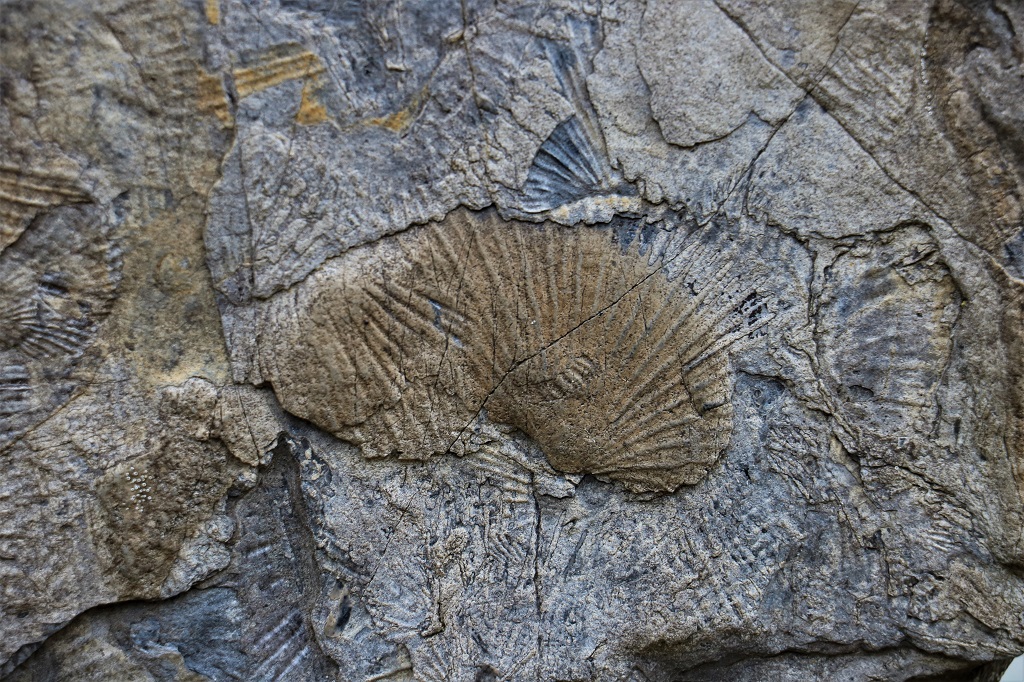
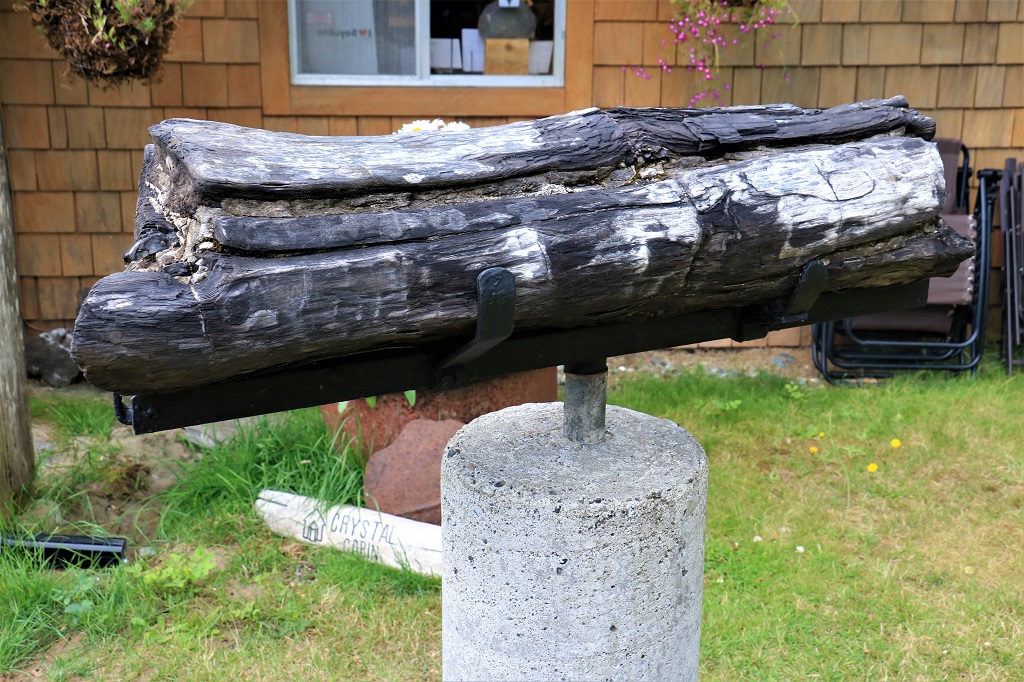
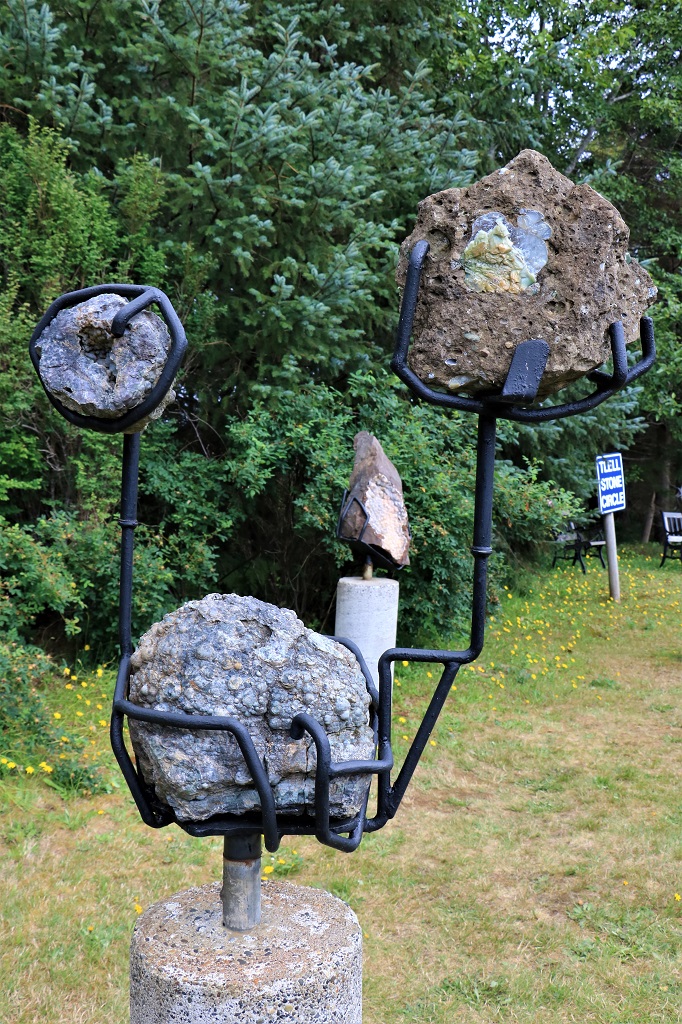
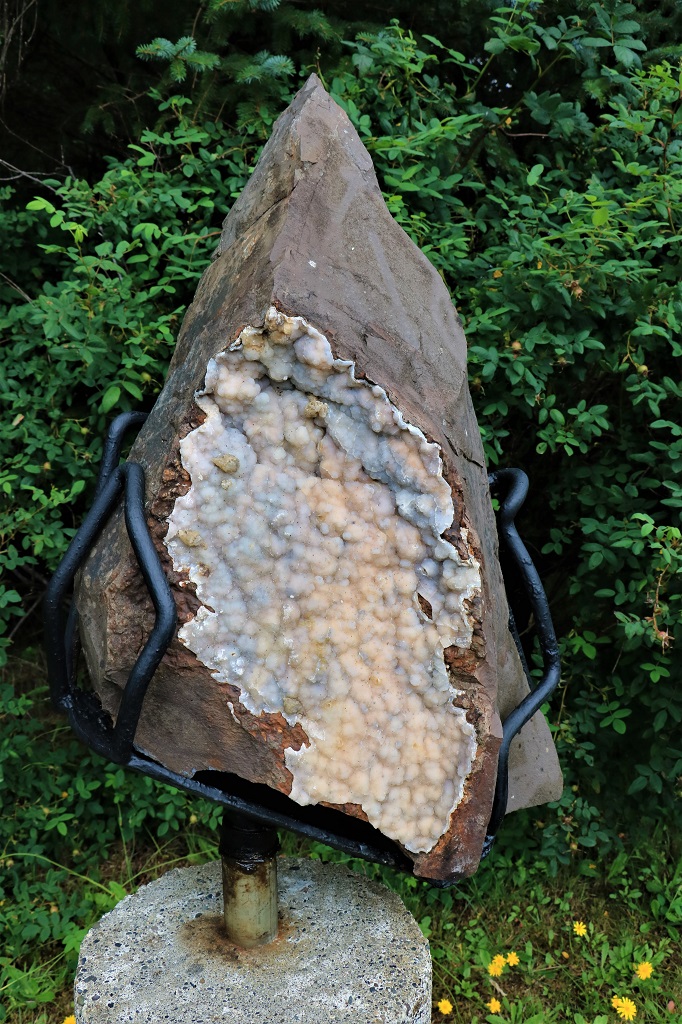
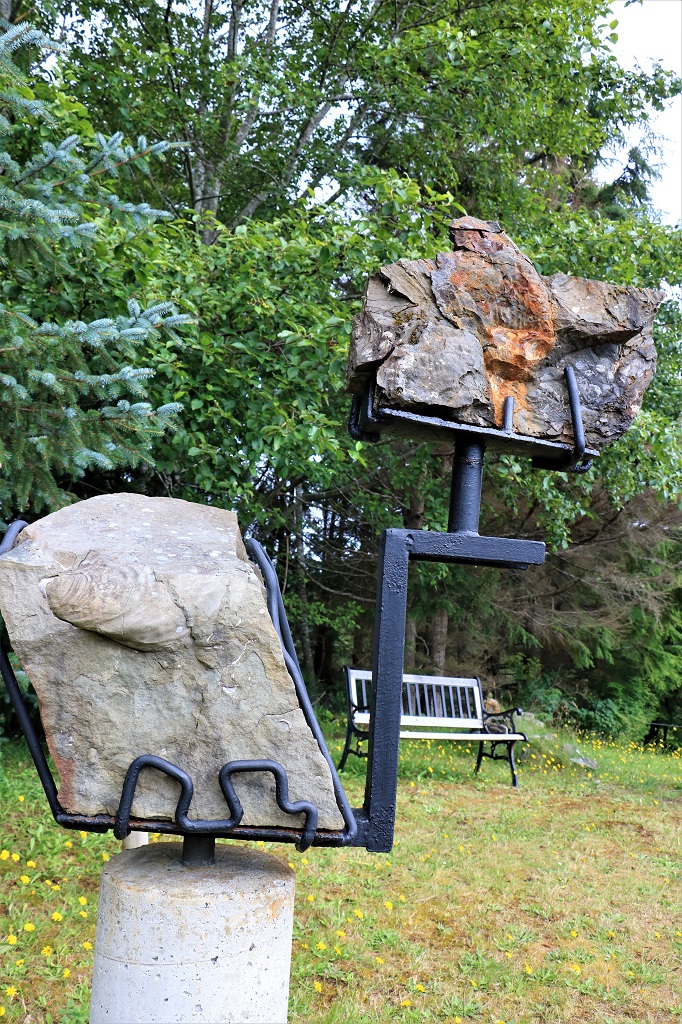
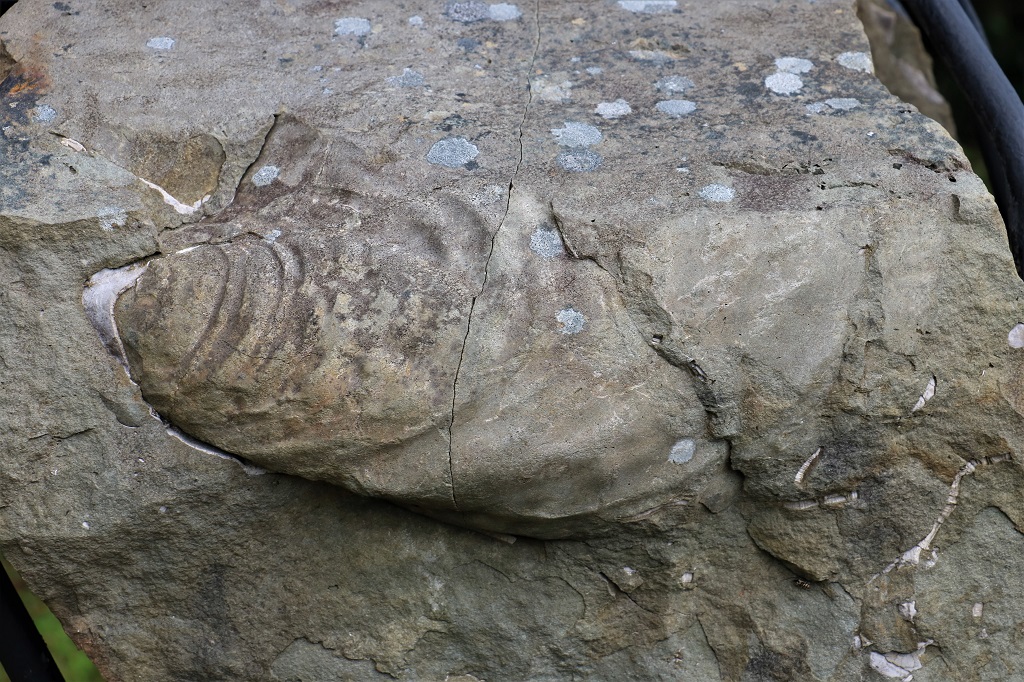
We stopped to find a geocache at the Halibut Bight Rest Stop and decided to have lunch while we were there.  We could easily see the rain falling on the water at the horizon.  We did not have any rain all day.  On the outskirts of Tlell we took a side road and went up to Crystal Cabin.  There is a Stone Circle outside the gallery that is made up of different geological stones that a fellow found on Haida Gwaii.  The tourist brochure had a write-up about vortexes and energy lines, etc. but we just wanted to see the different stones.  Unfortunately the fellow did not identify each of then nor say where he found them. This  long  thin  rock  was  covered  with  fossil  lines.This is petrified wood.

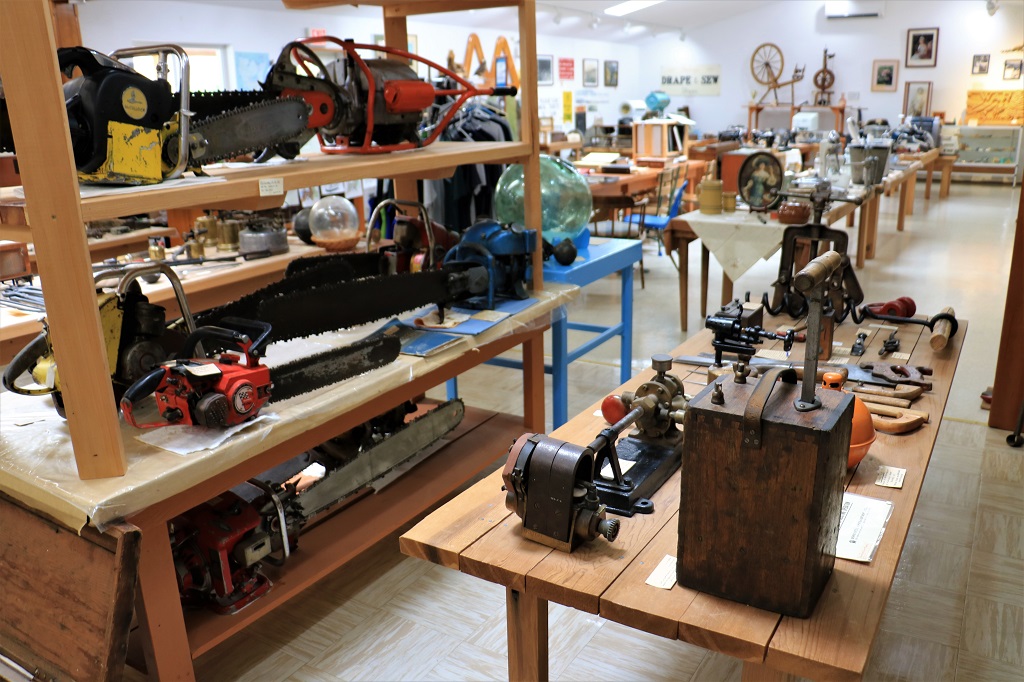
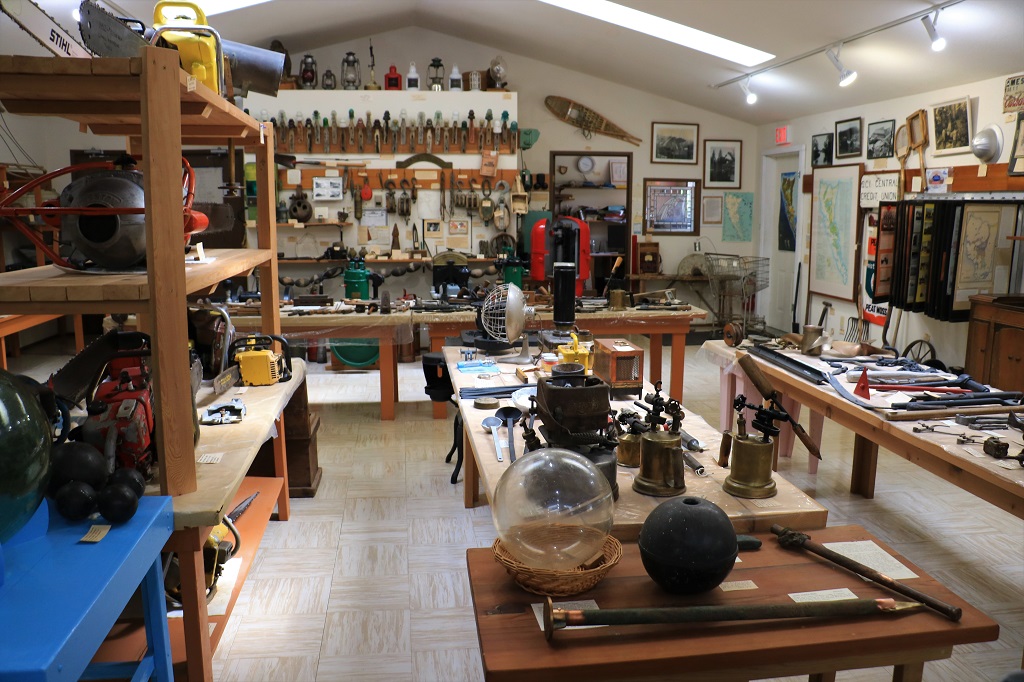
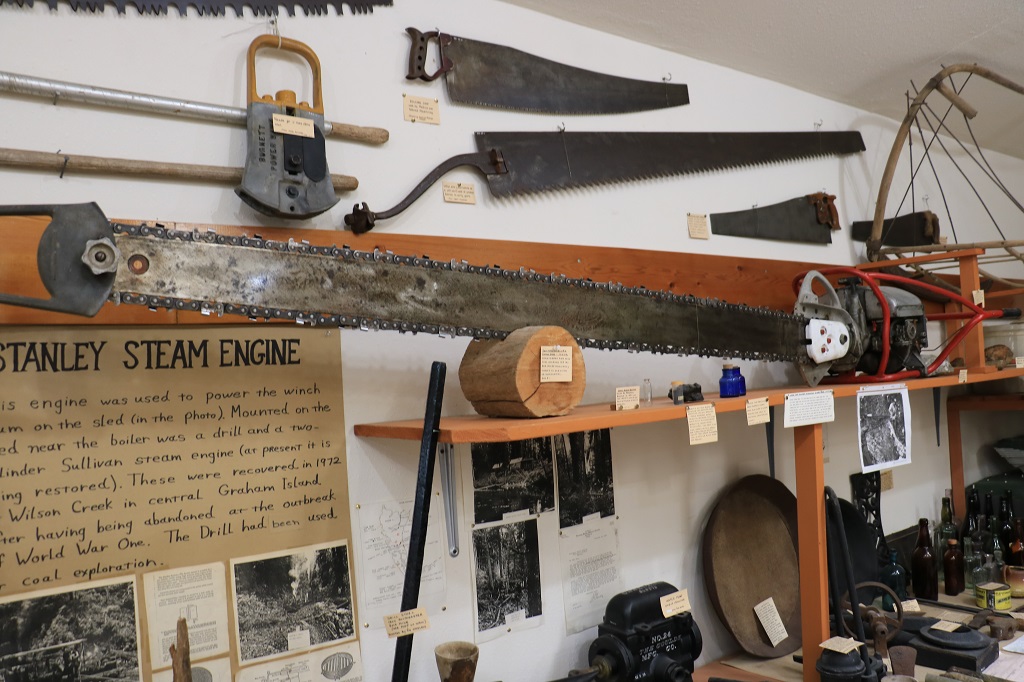
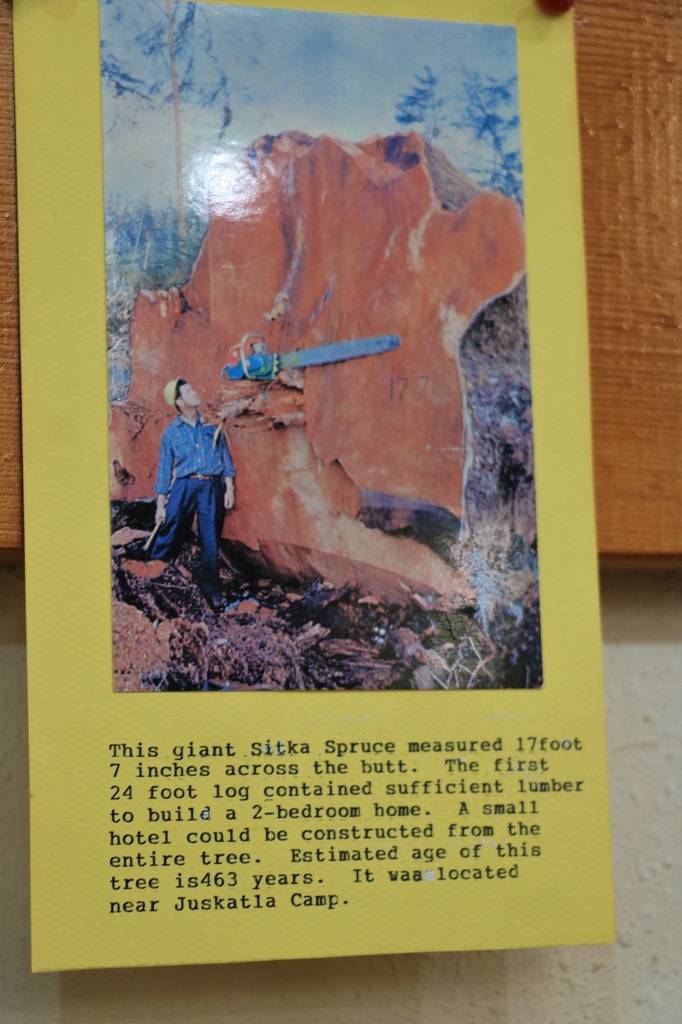
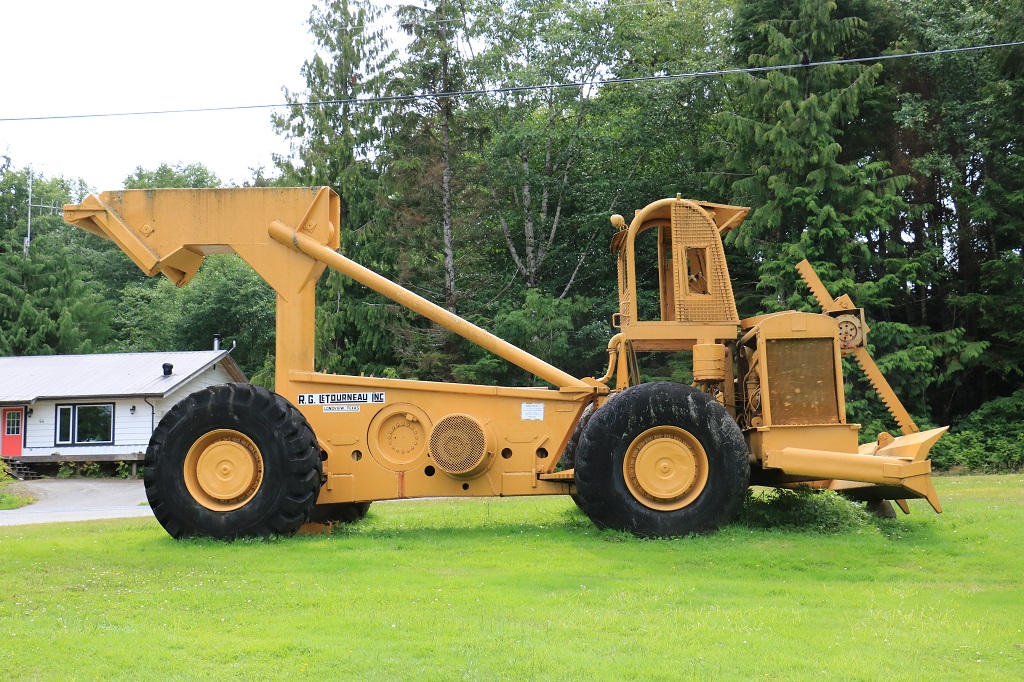
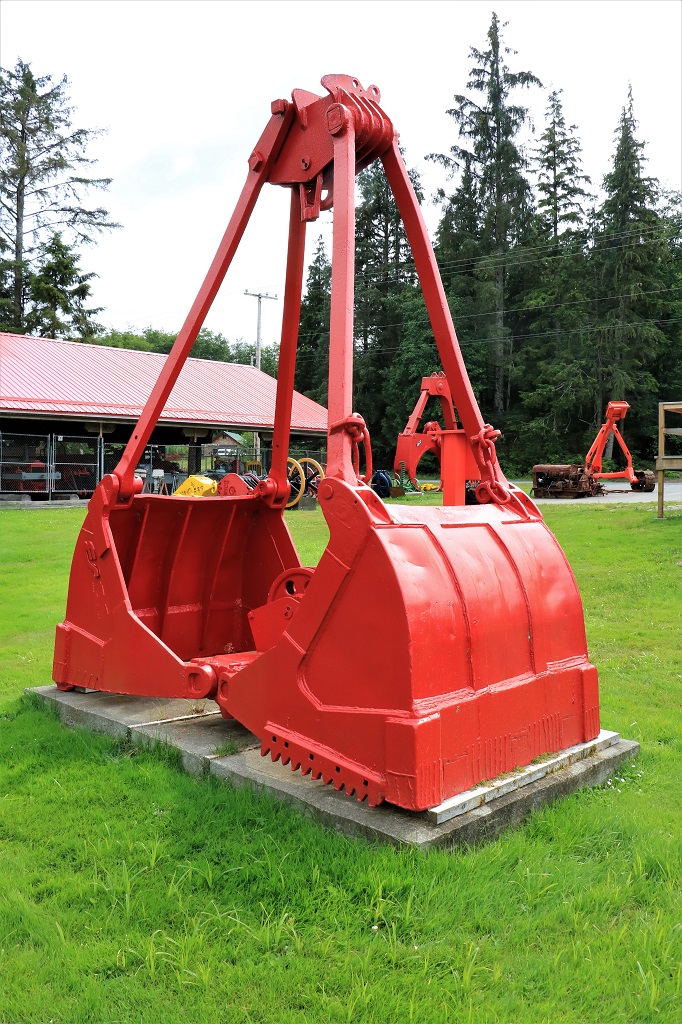
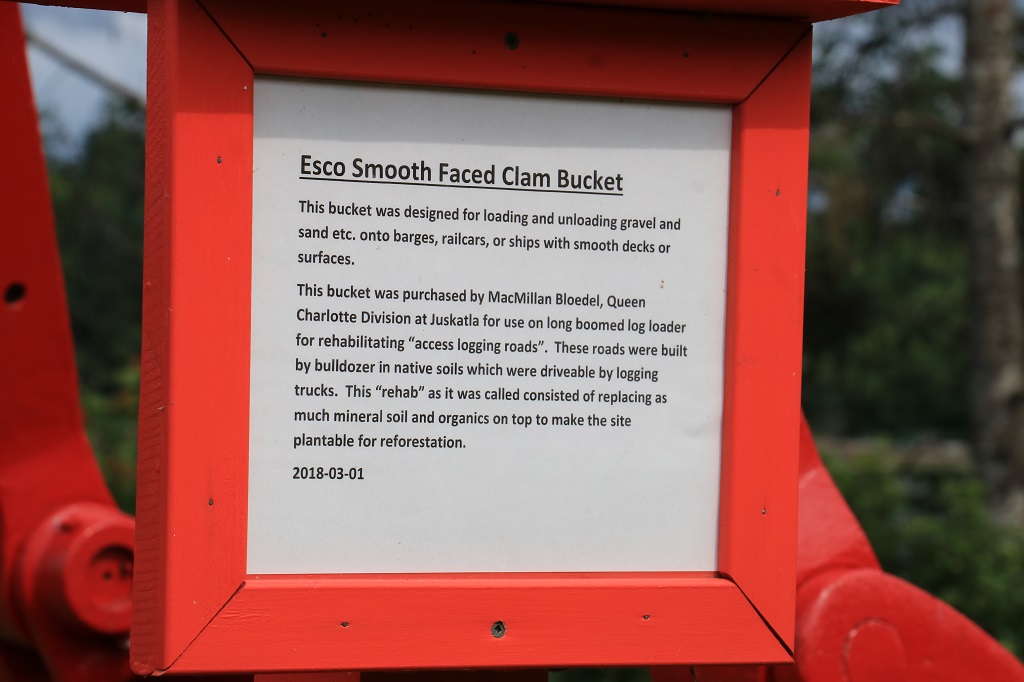
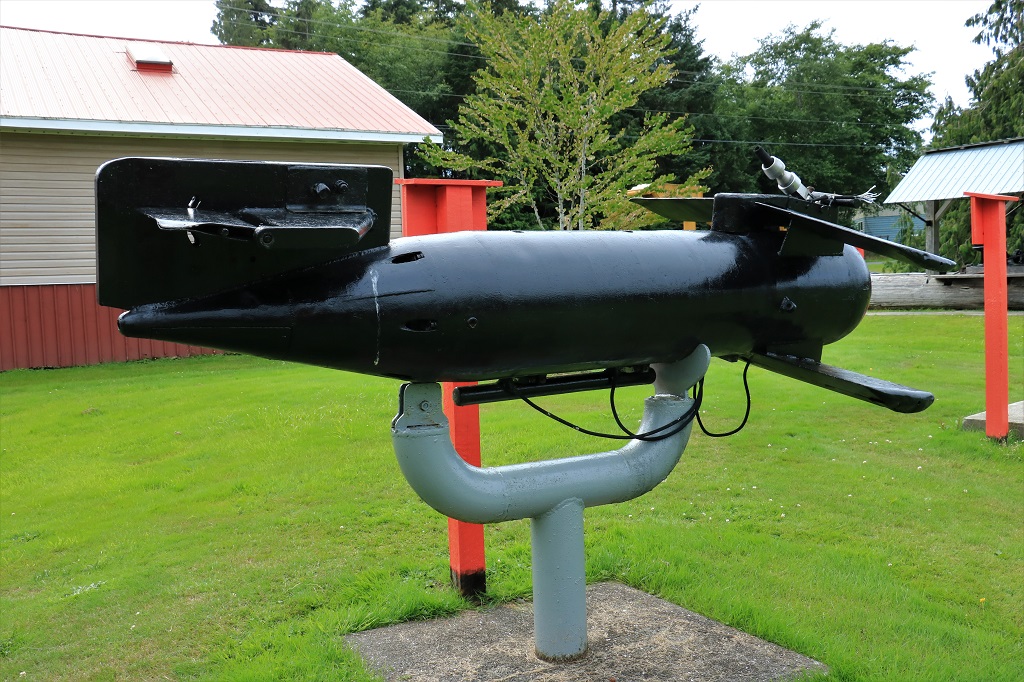
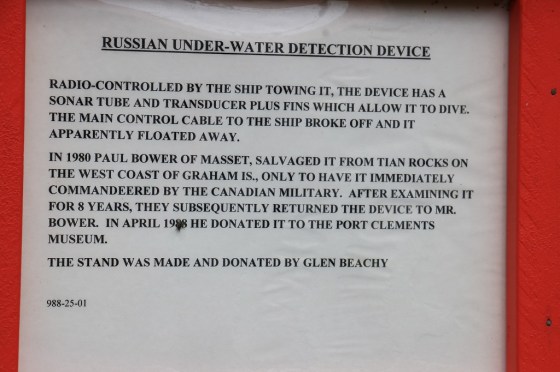
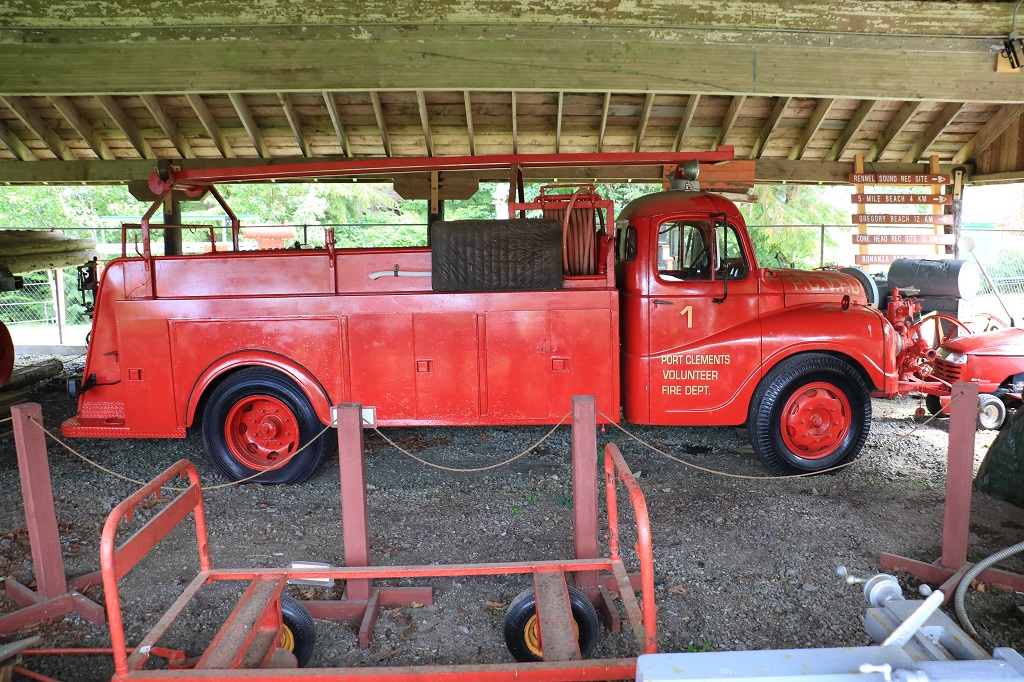
The museum at Port Clements has a lot of logging memorabilia and machinery.  The huge Justkatla logging camp was close by and many artifacts and information relating to the days of the camp were on display. Look at the length of the blade on this chainsaw.  Then look at the photo below of two men using it. One thing I love about museums is that you so often find something you have never seen or heard of before.  Such is the case with the object below. On the grounds around the museum there were many pieces of logging equipment on display.  I have  seen  most  of  it  before  so I only  photographed  a few  items  and  included  even  less  here.M If there is an old fire truck on display I just feel I must take a picture of it.  Too many years of seeing John admire fire equipment, I guess.

From the museum we drove down to the wharf.  There was a geocache hidden at the pub next door, but there were too many people going in and out for us to find it.

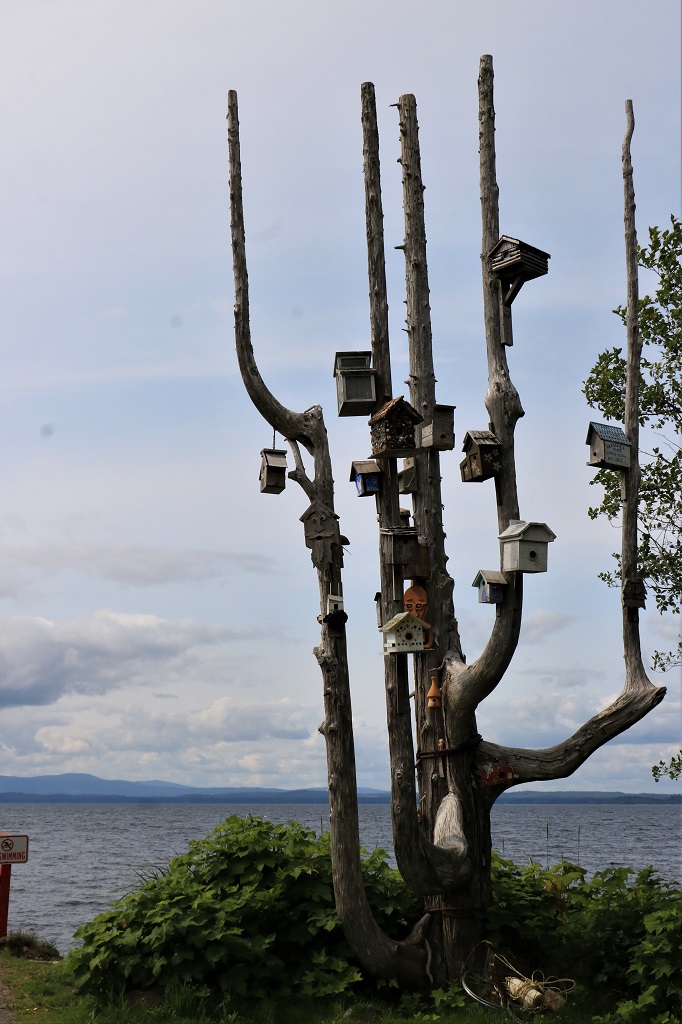
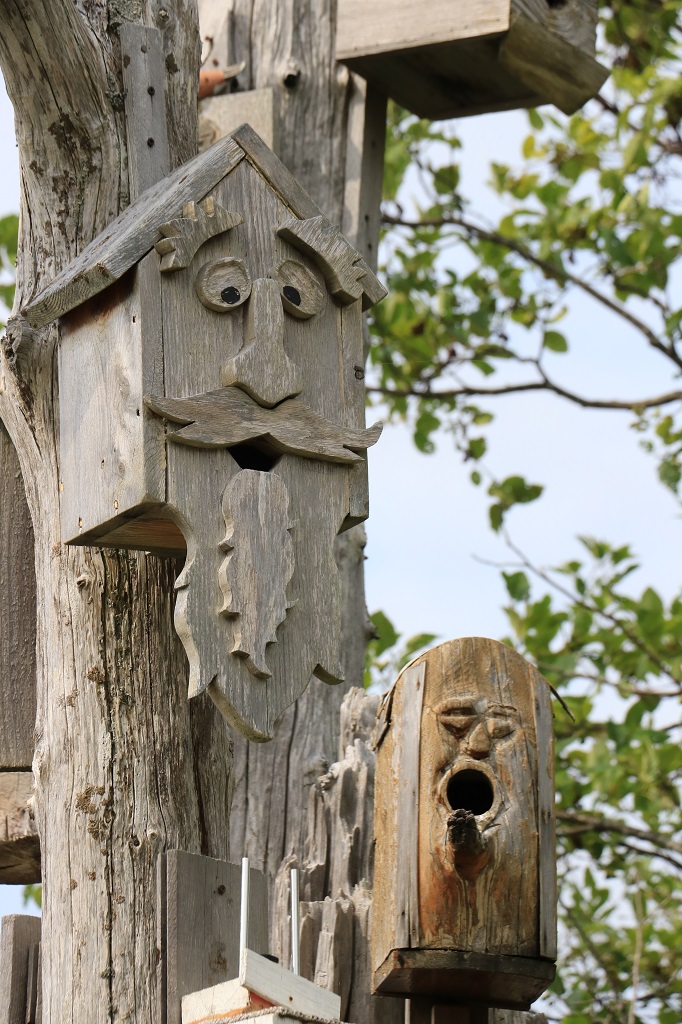
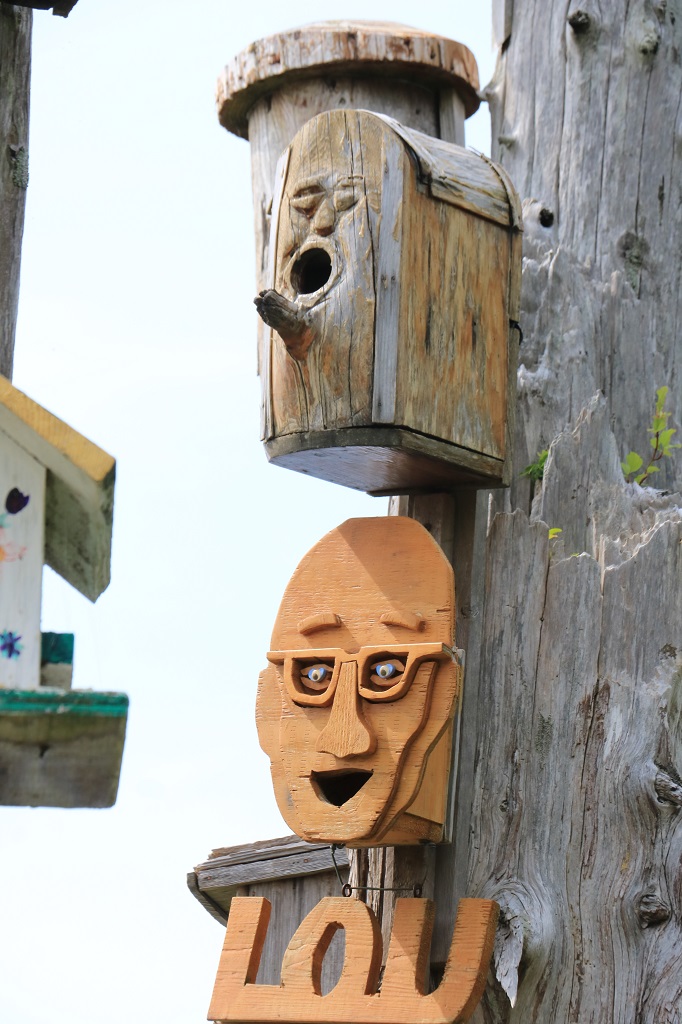
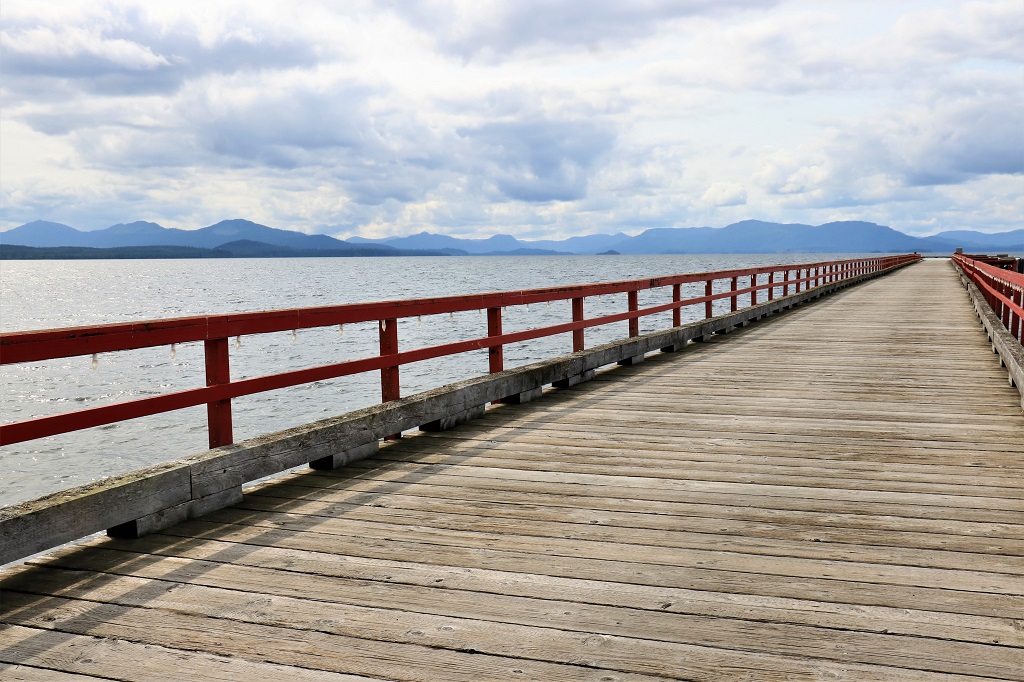
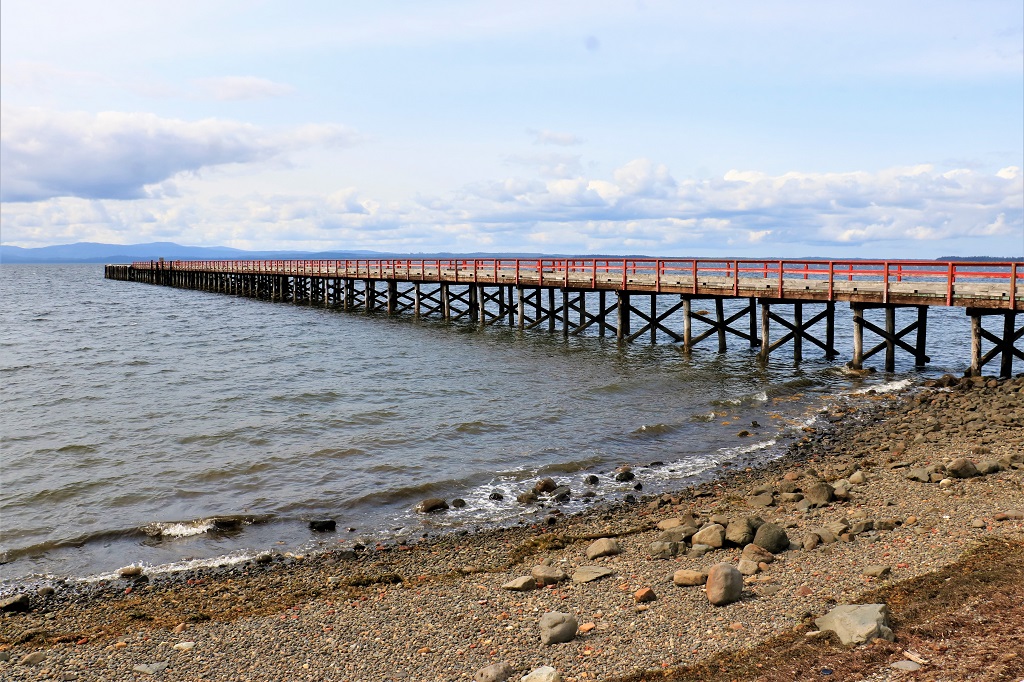
The birdhouse tree is right at the end of the wharf and has lots of different birdhouses; from log cabins to an old guitar and many others in between.  Birds even nest in many of them.

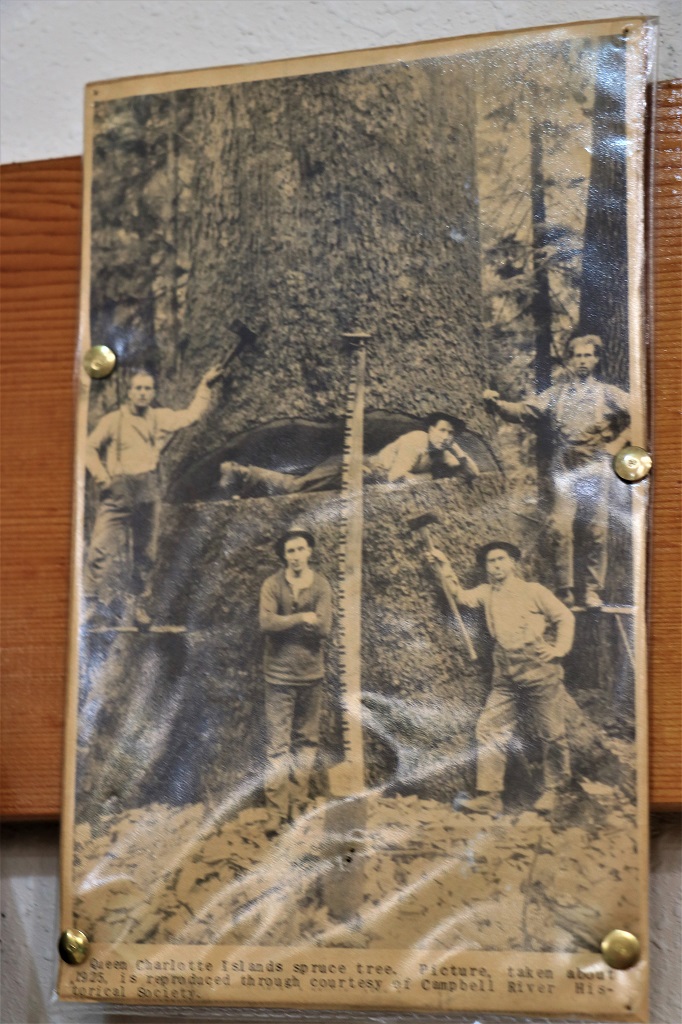
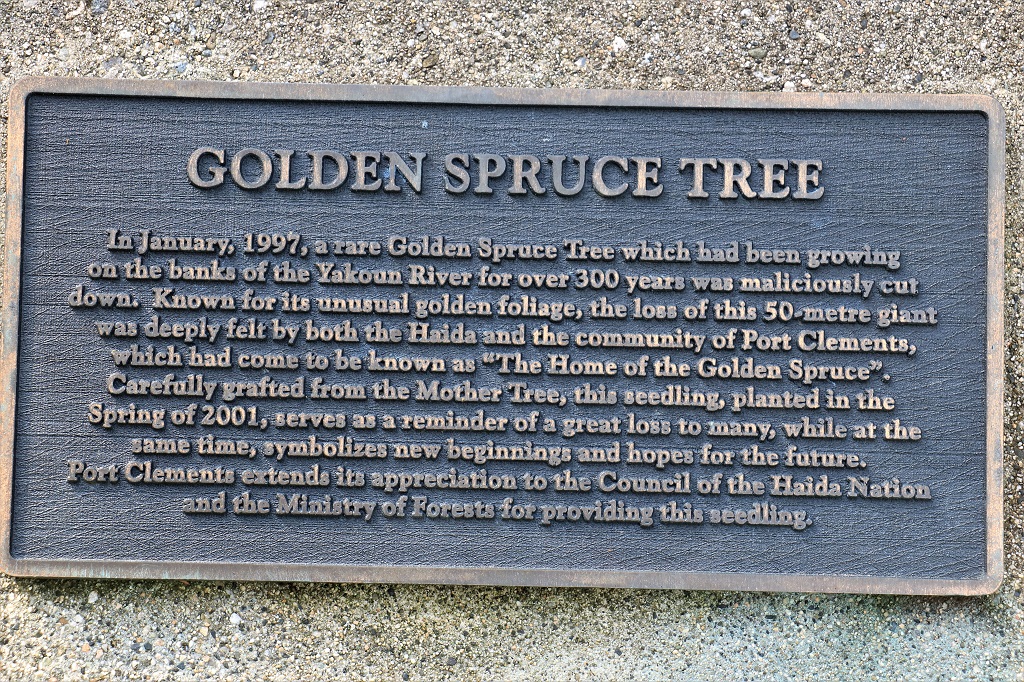
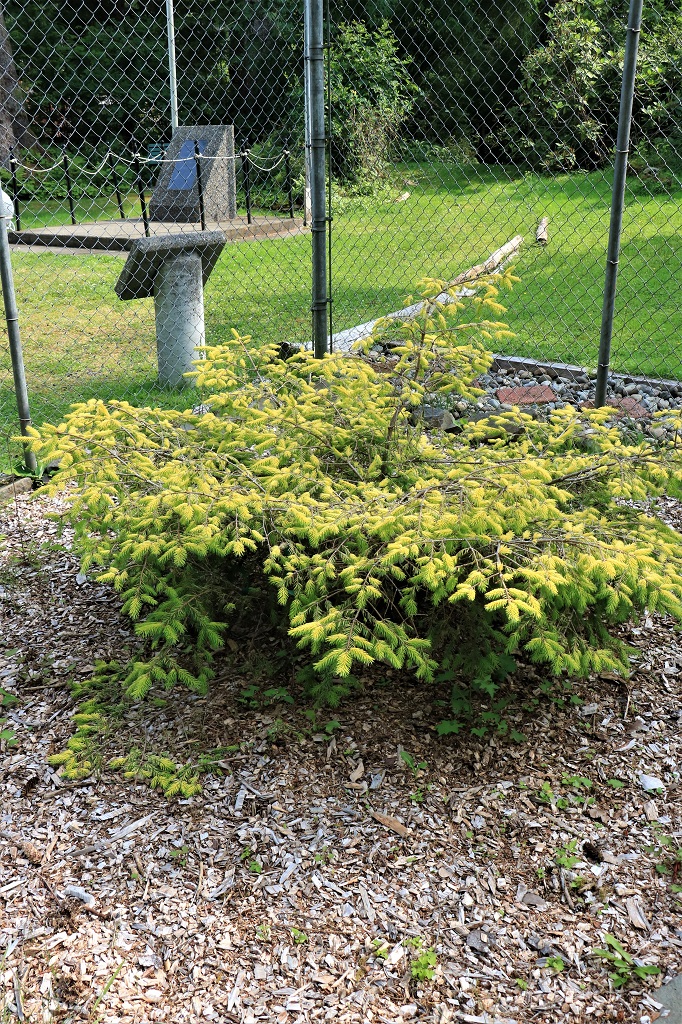
On the way out of town to head back to Queen Charlotte we stopped at the Millenium Park beside the nicely restored St. Mary’s church (which is now a gift shop and gallery).  In the park there is a seedling from the famous Golden Spruce – protected by a very high fence all around.  I remember trekking into the bush to see the Golden Spruce when I was here 50 years ago.  It was genetically an ordinary Sitka spruce tree, but for some reason it’s needles were a deep luminous gold instead of green.  The tree was estimated to be about 300-years old and it was 50 meters (165′) tall and the trunk was as wide as a car is long.  On January 20, 1997 a disgruntled foresty worker (turned radical environmental activist) went out in the middle of the night and cut it down.  The tree was a very sacred symbol for the Haida nation (they saw it as a human being transformed) and the people in the town of Port Clements and it was a devastating loss to the area.  Some cuttings were taken and one was planted at the park.

Grant Hadwin, the man that did the deed, was charged with indictable criminal mischief, which is a felony, and ordered to appear in court in Prince Rupert.  He was afraid to take the ferry because people were threatening to lynch him so he decided to paddle across 50 miles of open water in the middle of winter during a storm. Four months later his kayak, life jacket and gear was found on an isolated uninhabitated island in Alaska.  He has never been heard from nor seen since.

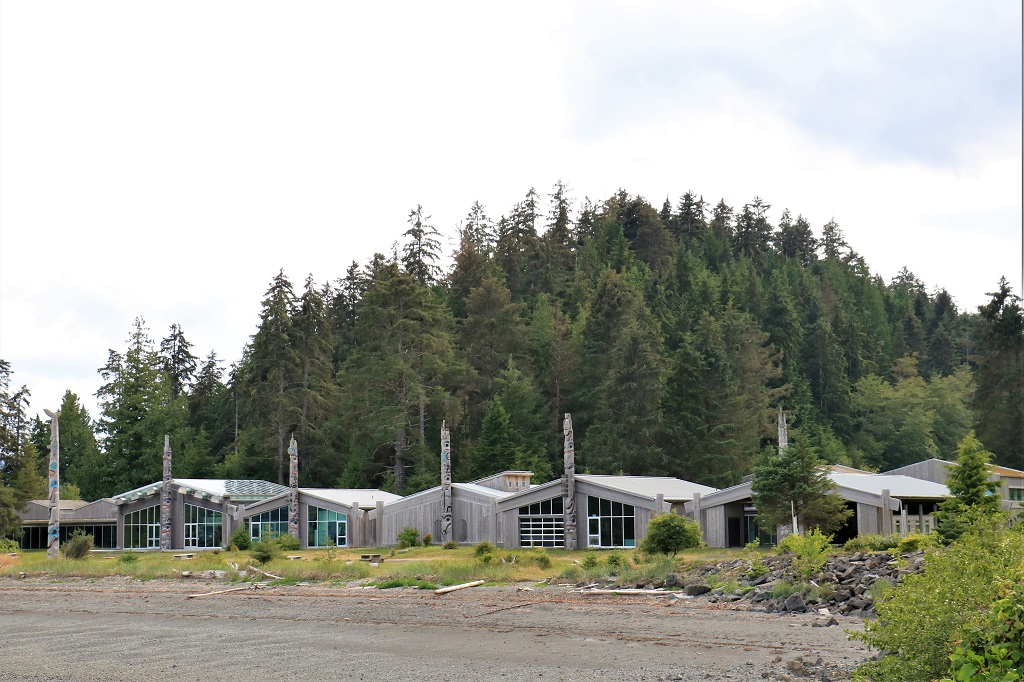
The loss of the tree was so significant that they actually held a funeral for it with speeches and music and ceremonies.  Of all of the trees in the forests the Golden Spruce was the only one that the Haida Nation had given a name. On the way back to Queen Charlotte we had a good view of the long houses and six totems that were raised in six days at the Haida Museum that we were unable to visit.  Tomorrow we will stop in again as we are heading back up island to go to Masset and Old Masset and have to pass right by.

2019 July Journey – Haida Gwaii section – Day 19

Haida Gwaii (formerly called the Queen Charlotte Islands) is an archipelago of about 400 islands located 45-60 km (30-40 miles) off the west coast of British Columbia.  The two largest islands are Moresby and Graham.  There is only one community on Moresby, Sandspit (which hosts the airport) and 20 km of paved road.  The majority of the population of 4,500 live on the northern Graham Island which boasts 120 km of highway.  It will take about 90 minutes to cover it all.  But there are numerous gravel logging roads snaking into the wilderness as well – just watch out for trucks.

The Haida First Nation have called these islands home for thousands of years.  Recent archaeological activity in the south has uncovered some of the earliest known evidence of human activity in North America.  Spear points, butchering tools and animal bones carbon dated to be about 12,500 years old have surfaced.  At one dig archaeologists found 4,000 worked-wood materials such as splitting wedges and braided cord, dated at 10,700 years old, the oldest ever found in the Pacific Northwest.

Almost the entire lower half of southern Moresby Island is protected as a National Park Reserve.  The coast of Gwaii Hanaas is an area rich in sea life and it is in the works to create a protected Marine Park that would extend 25 miles out from the land.  The park is only accessible by boat or float plane on guided tours. There are many unique plants, animals, and sea life here.  The area is temperate rainforest so plant growth is fast and thick.  Haida Gwaii receives the same amount of annual rainfall as Vancouver (48″) and has a mild winter; although it can be battered by some nasty storms.

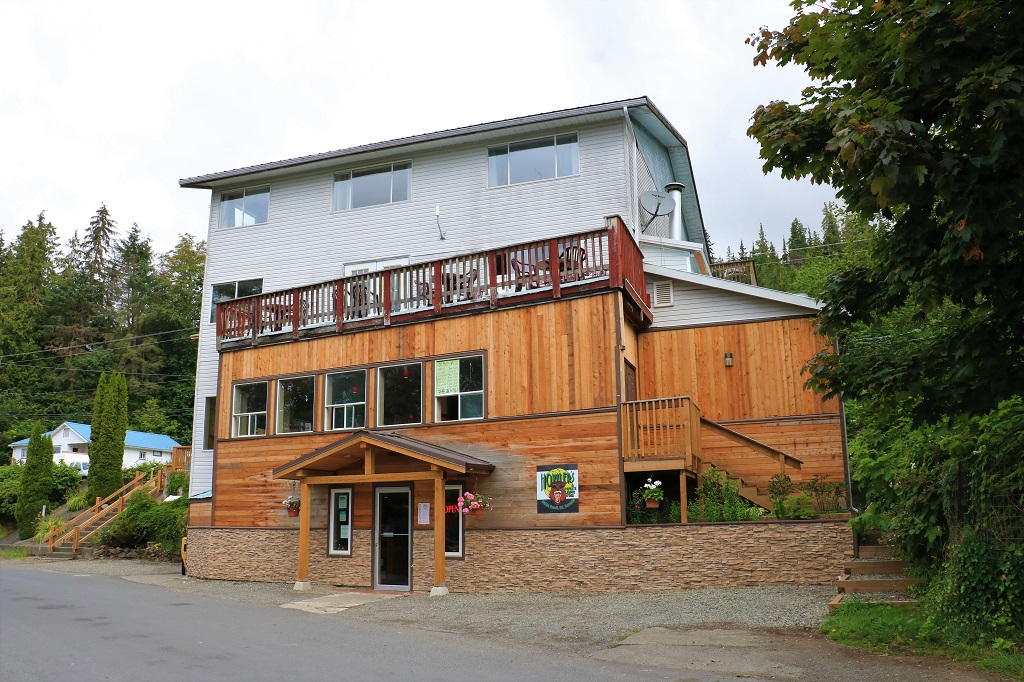
We took our time getting up and out the door this morning.  The Misty Arms isn’t really a hotel at all, but five nicely renovated rooms and a communal kitchen located above a pizza and grill, which is above a pub, which is above a liquor store. We walked up the road and across the street to a restaurant for breakfast.  We have learned that there are very few places to dine in Queen Charlotte and you have your choice of Chinese or Koreasn cuisine or burgers and fish and chips pub fare.  That’s it.  I think by the end of our stay the communal kitchen will get used.Our room is behind the two windows on the upper left.

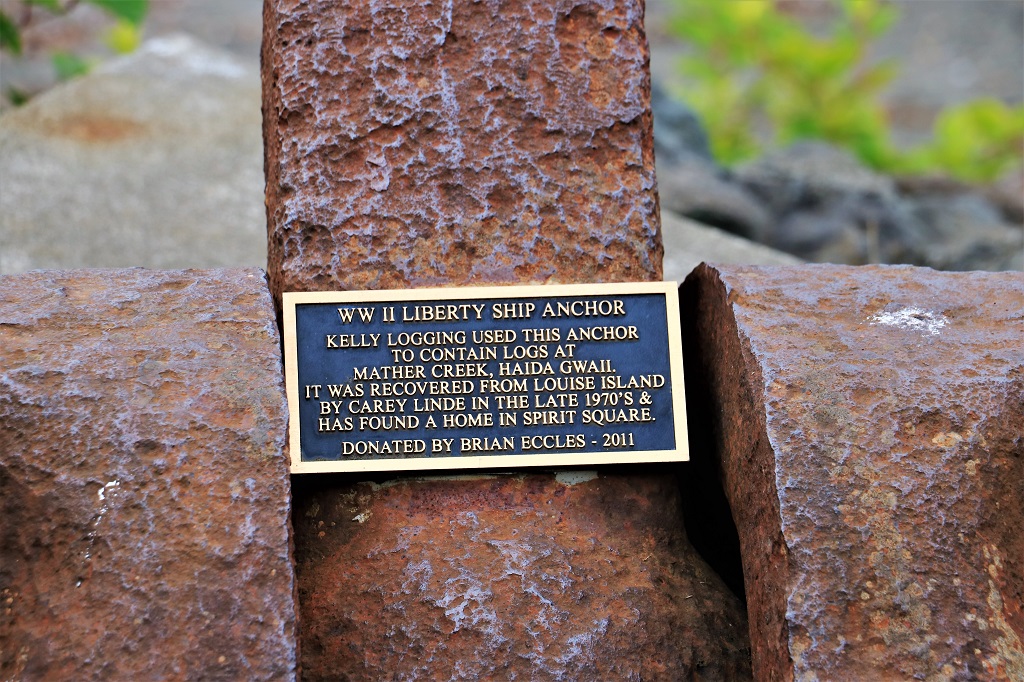
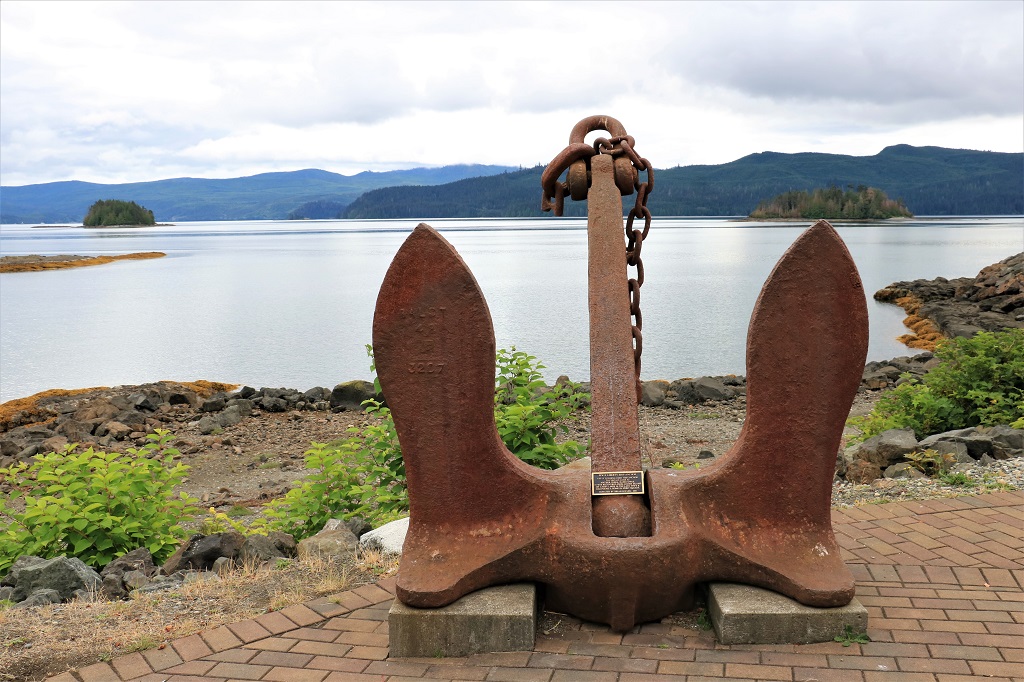
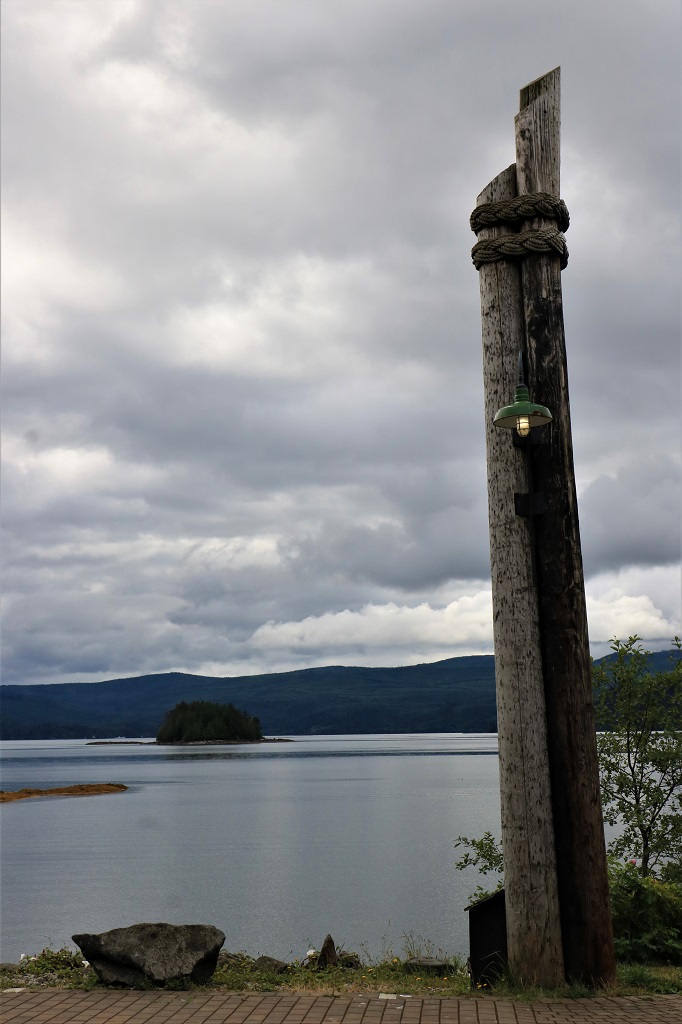
After breakfast we crossed the street and walked down a block to the Visitor’s Center.  There is a geocache located inside, which would be our first cache find on Haida Gwaii.  Outside the museum is a garden and Spirit Square.

We walked past the nice mural on the Queen B Cafe building and a house we overlook from our room that we both like. Then we got in the truck and headed further down Oceanview Drive, the main road and into the other ‘downtown’ section of Queen Charlotte. There is no retail core here, the town is strung out along 2 or so km of the highway with many businesses located in former houses.  The only clusters of business are those located near the new hospital and the Visitor’s Center, where we are accomodated, and those located near the post office and liquor store a short distance away.  That is the area I remember from my visit here 50 years ago.  I was able to locate the building that my eldest sister and her husband rented when I was here, but could not find the little house my other sister lived in.  I found one that was tiny enough but it was situated in a hollow and I remember being able to see right across the road to the shore.

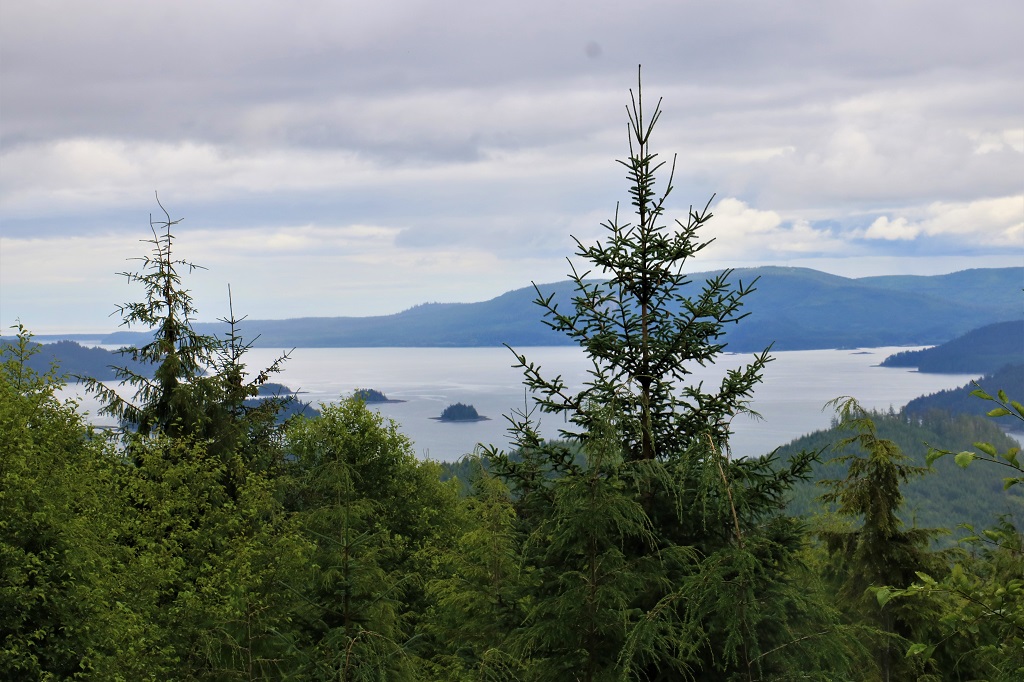
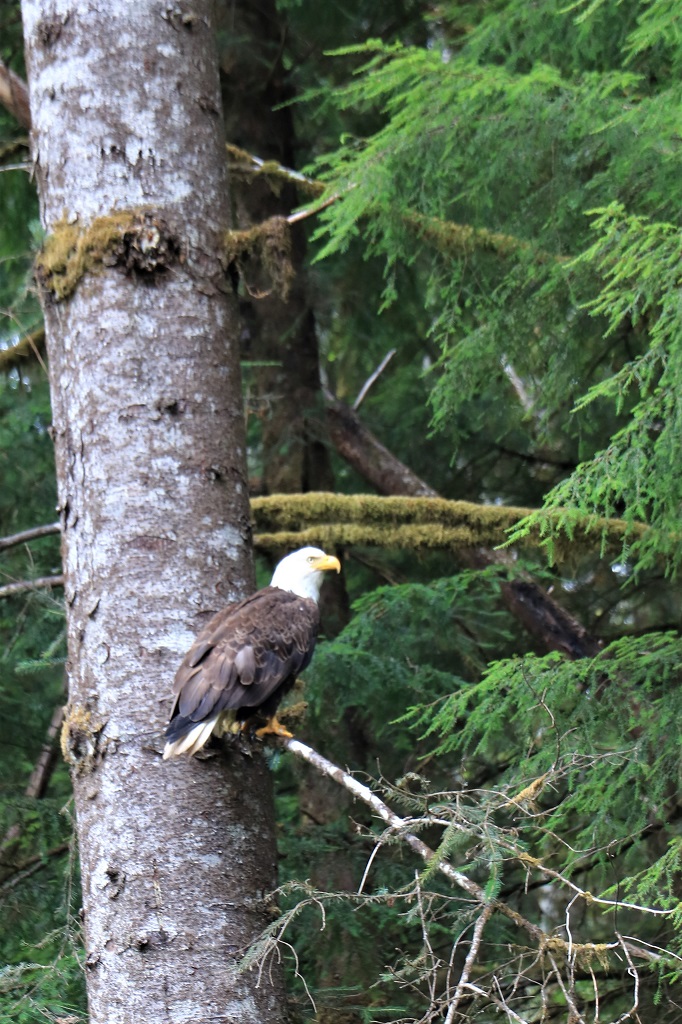
The paved road ends about a kilometer past the post office area.  After that you are on gravel road.  It is a pretty good gravel road and travels through residential areas until you reach the forest. About 6 kilometers on the gravel road takes you to Kagan Bay, a recreation camping and picnic site.  There was a geocache hidden here but we could not find it.  It was hidden for Canada’s 150th birthday in 2017 and has only been found once.  We were hoping to be number two, but no luck.  You can camp at Kagan Bay for up to 14 days.Another 1.5 kilometers past Kagan Bay is the Dry Land Sort area where you can camp as long as you like. This is where the road ends.We turned around and took one of the logging road forks that lead to Sleeping Beauty trail.  Sleeping Beauty is the mountain cleary visible from Queen Charlotte and is a popular, but very strenous 4.5 hour continuous uphill climb.  The views are reputed to be glorious.  We did not attempt to see it for ourselves.  We went up the road to get a geocache at an opening in the forest that has a nice view overlooking Skidegate Inlet.On the way back down after successfully finding the cache we passed a bald eagle sitting in a tree right beside the road.  He just swiveled his head to keep an eye on us as we drove past.  We also saw two of the tiny deer; one as we were heading out of town and another one dashed across the road a little while after we saw the eagle.  They are only about the size of a Great Dane dog.  I hope to see another one that is not in so much of a hurry so I can get a photo.We returned to our room for a late lunch and some down time just as it began to rain.  Twenty minutes later the rains stopped and the sky slowly cleared and the clouds lifted until by the time we had finished our dinner it was a lovely evening.  That  is  what  the  weather  does  here  – changes  every  half  hour or  couple  of  hours. Tomorrow we are heading the opposite direction and making stops in Skidegate, Tlell, and Port Clements.

2019 July Journey – Haida Gwaii section – Days 17 and 18

We were up at 5:00 am and checked out of our Port Hardy cabin at 5:25.  At 5:30 we were at the ferry terminal.  You must arrive two hours before sailing so they can check your reservation and have time to get every vehicle boarded.  This is a LONG ferry.  The trip is scheduled to last 15 hours and every vehicle has the wheels chocked because it is not unsual to have some rough seas.

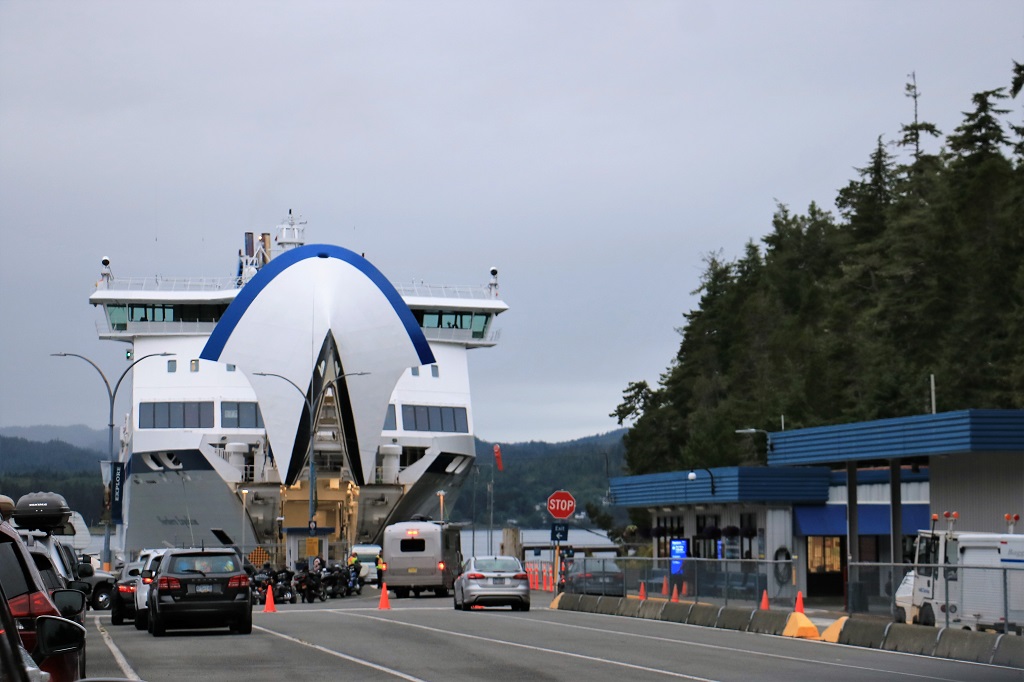
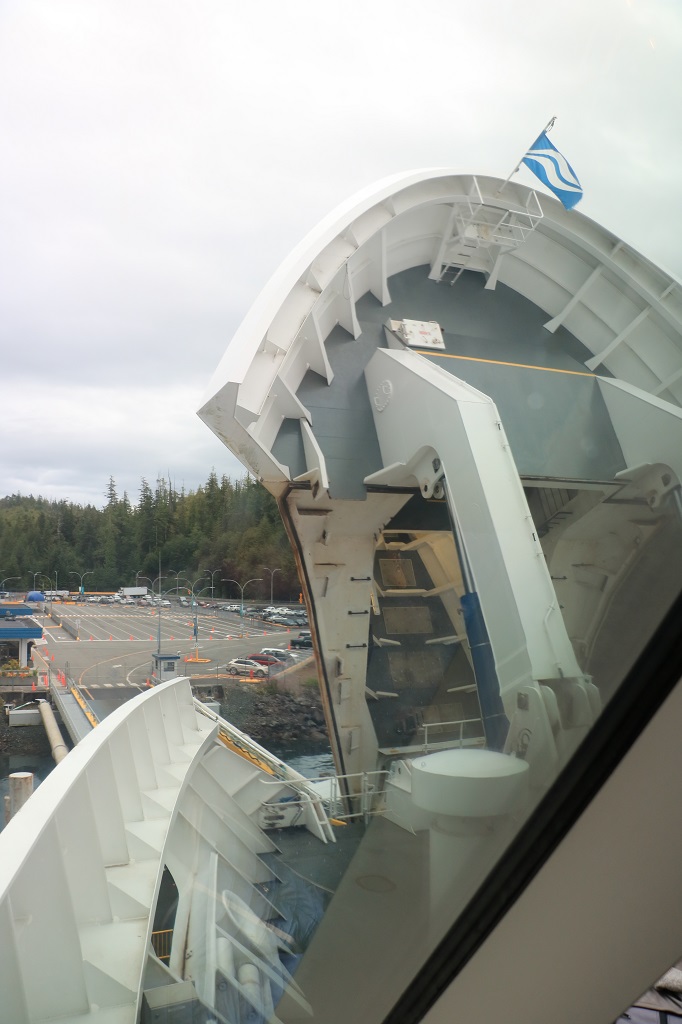
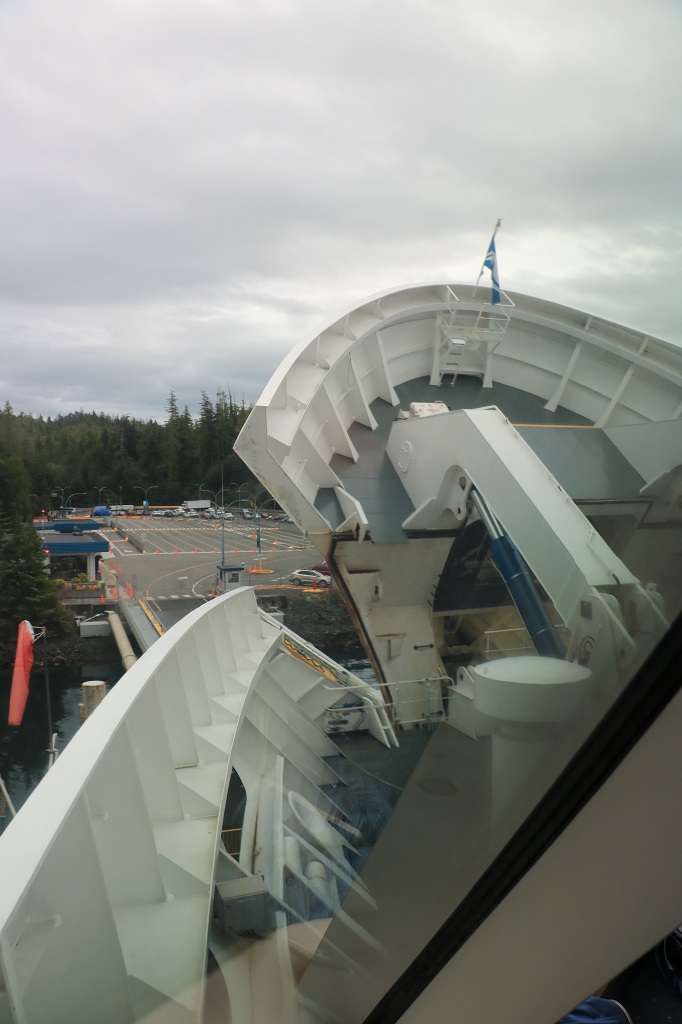
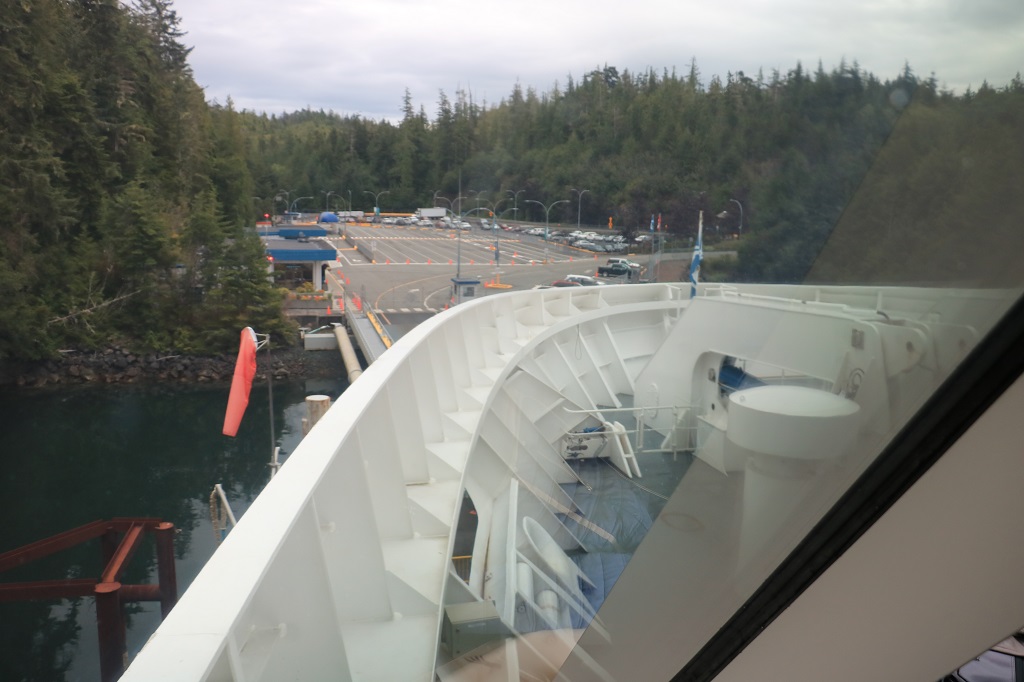
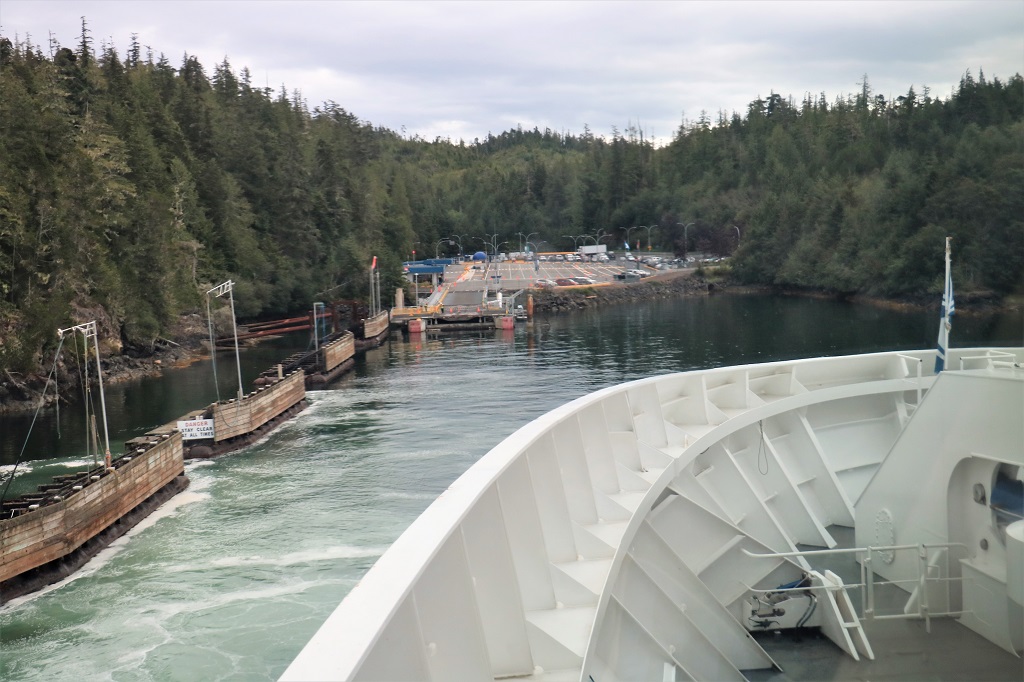
The entire nose of the ferry opens for the vechicles to drive in.  It is not a small boat at all.  There are lots of cabins if you wish to rent one, seating all over the place and a quiet lounge with paid seating at the bow; which is where we sat. It took over an hour to load the ferry and we were a little bit later than our 7:30 am sailing time.  When all was ready to set sail the hydraulics put the nose down.

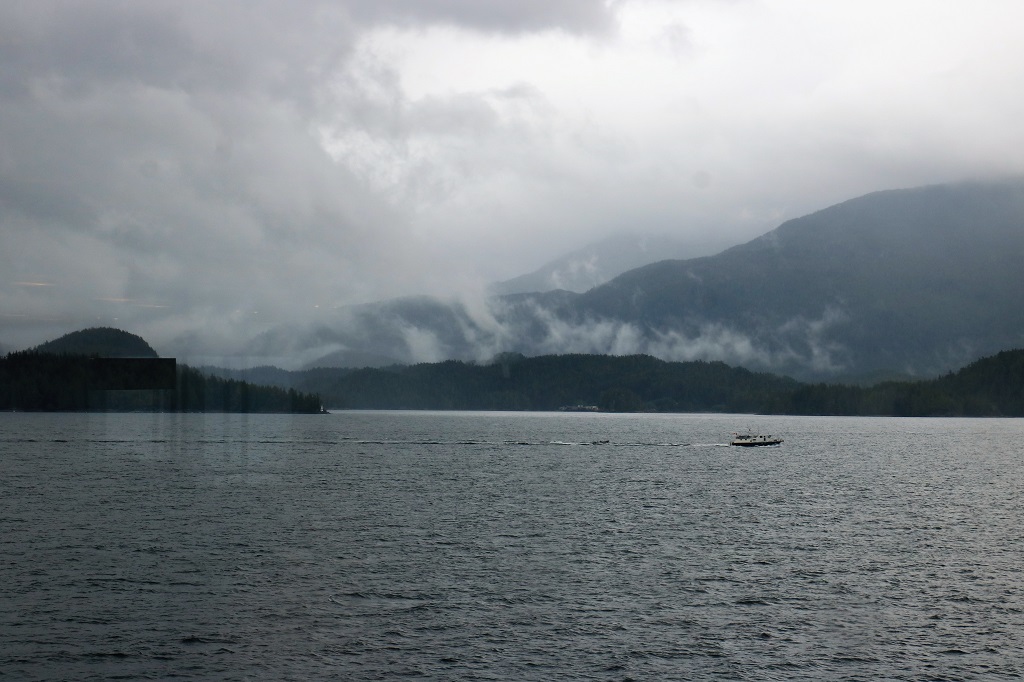
And off we go.  It was still raining from the night before when we got up and it rained all day long without let up. This dampened (pun intended) the anticipation of the journey somewhat as the Inside Passage route along the BC coast is beautiful.  Not quite so much through rain drops and low clouds.  Still we had good water and calm sailing the whole trip so we can’t complain.  We could have been rock and rolling big time on rough seas.

There were a few points of interest along the way and whenever we approached one of them an announcement came over the public address system to tell us what to look for.

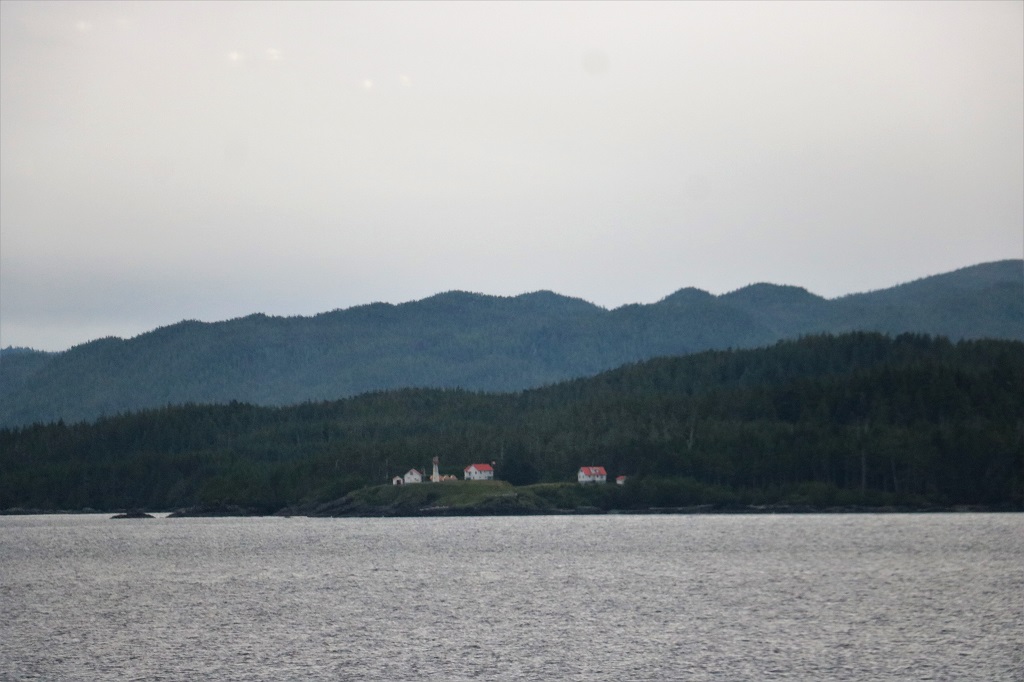
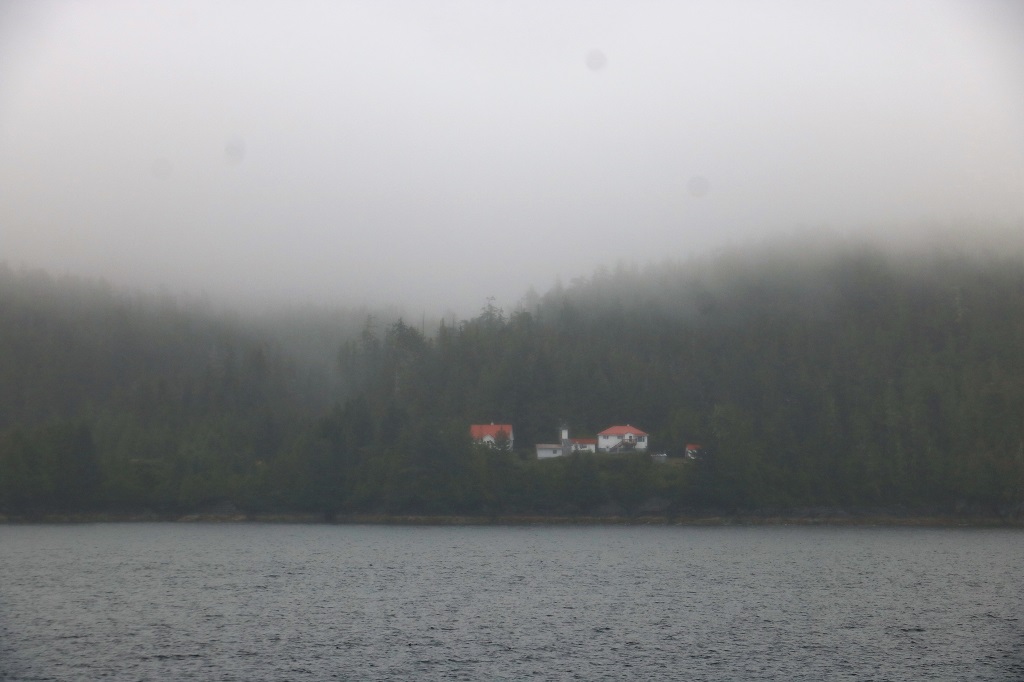
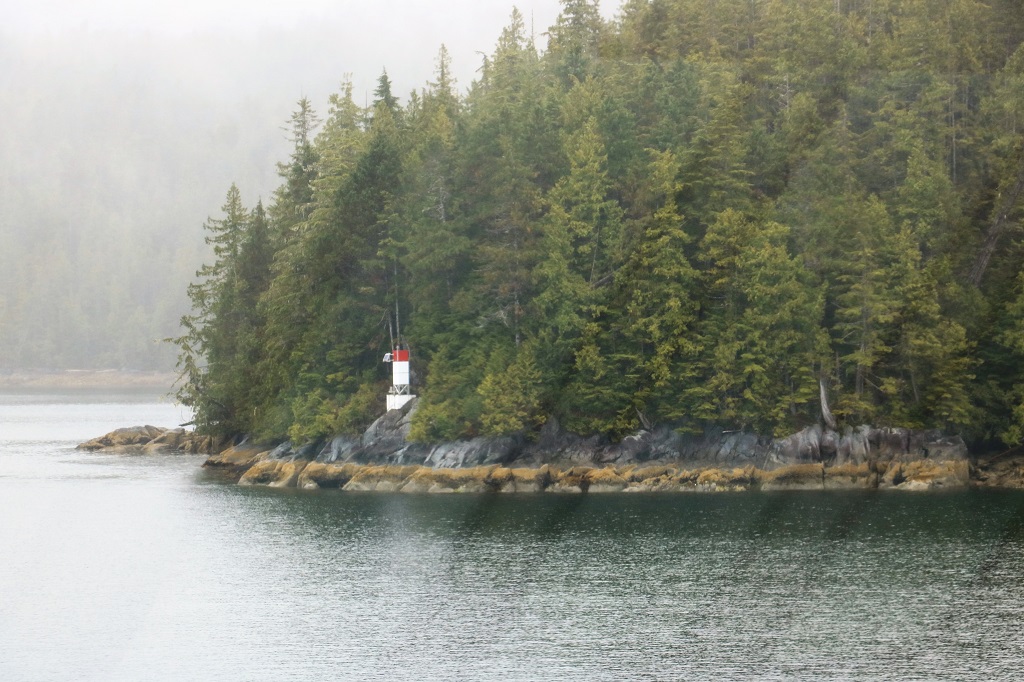
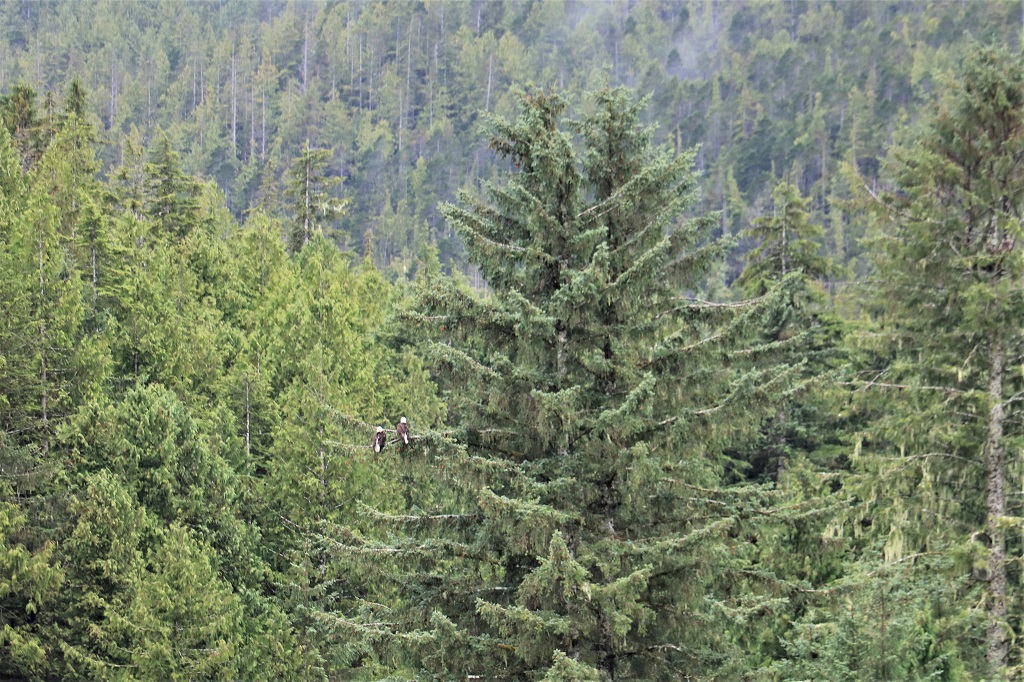
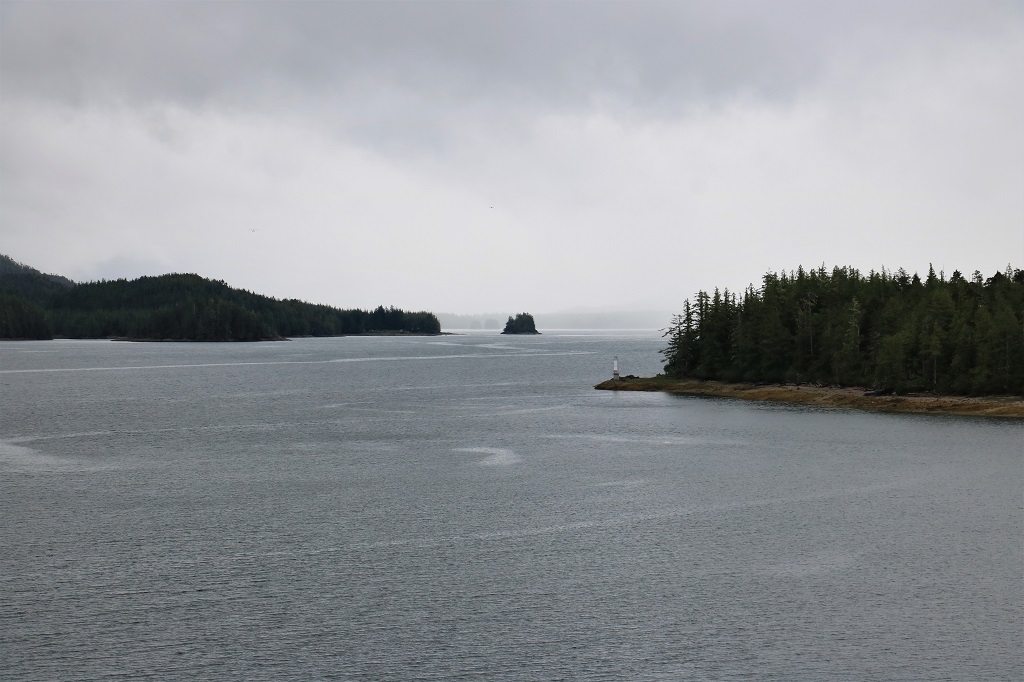
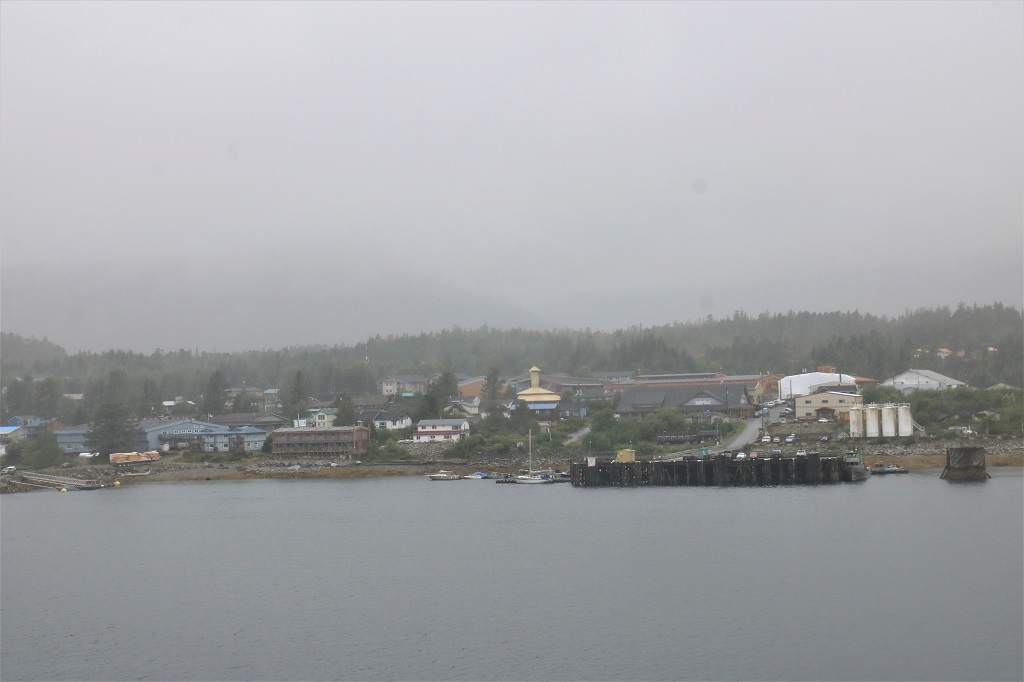
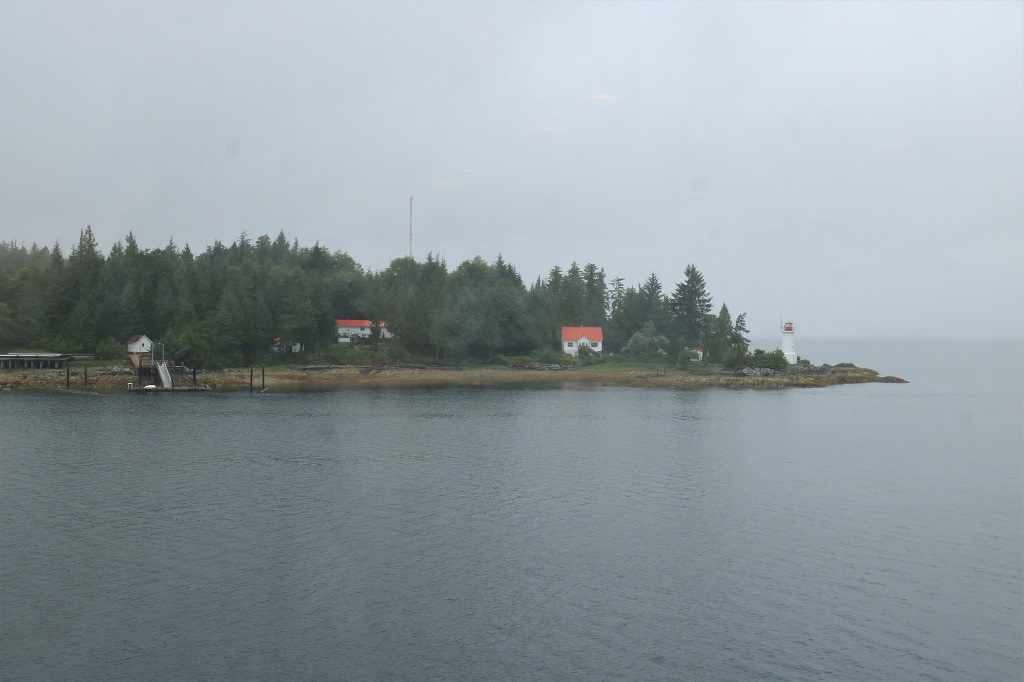
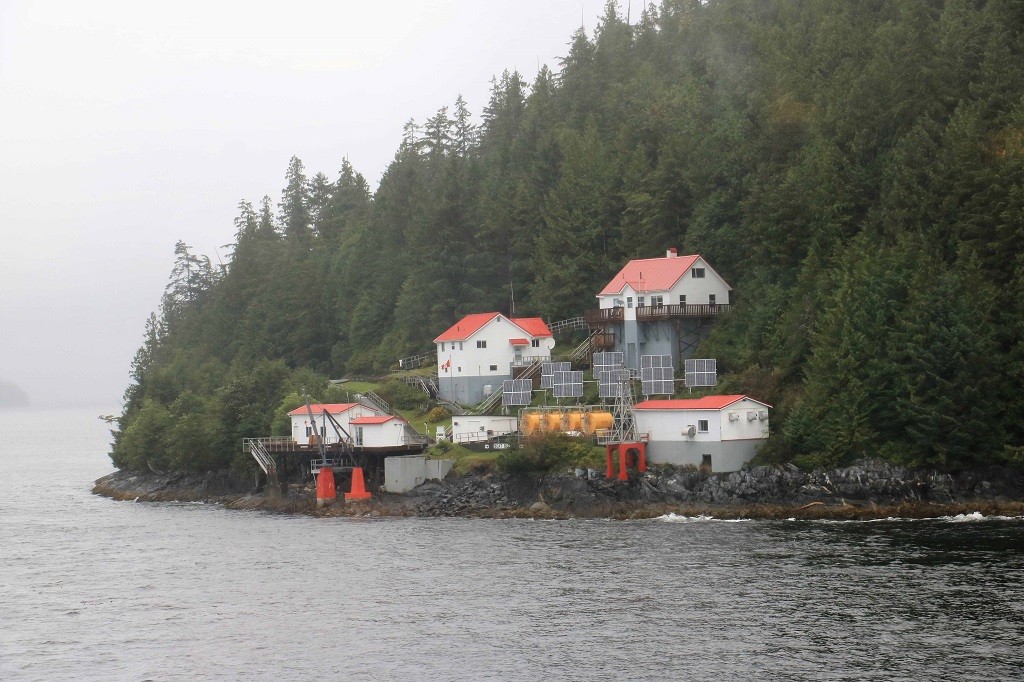
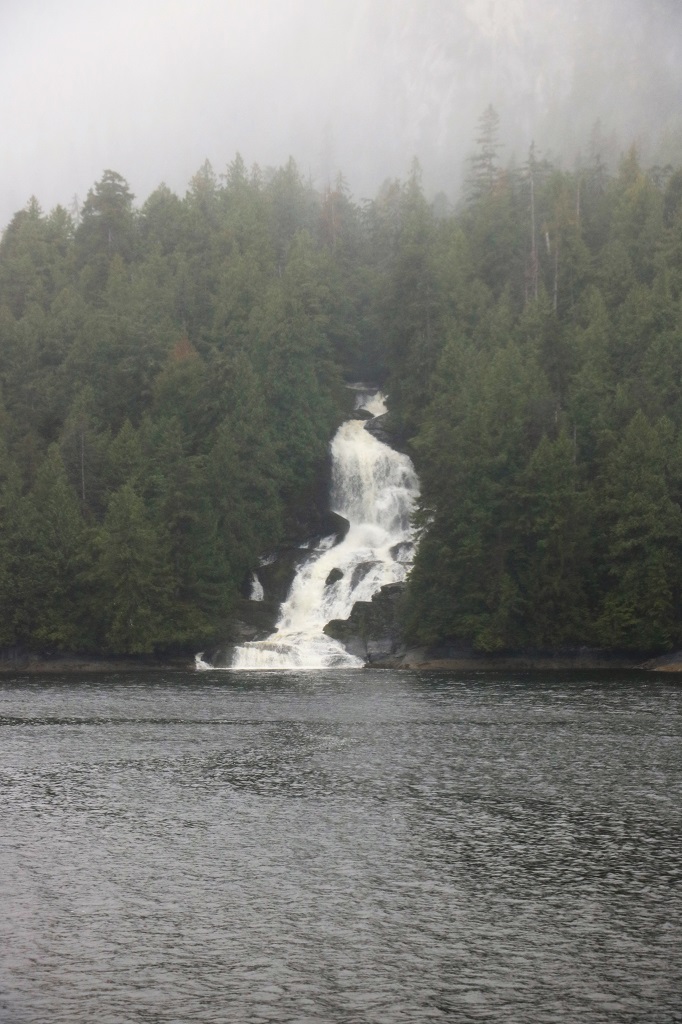
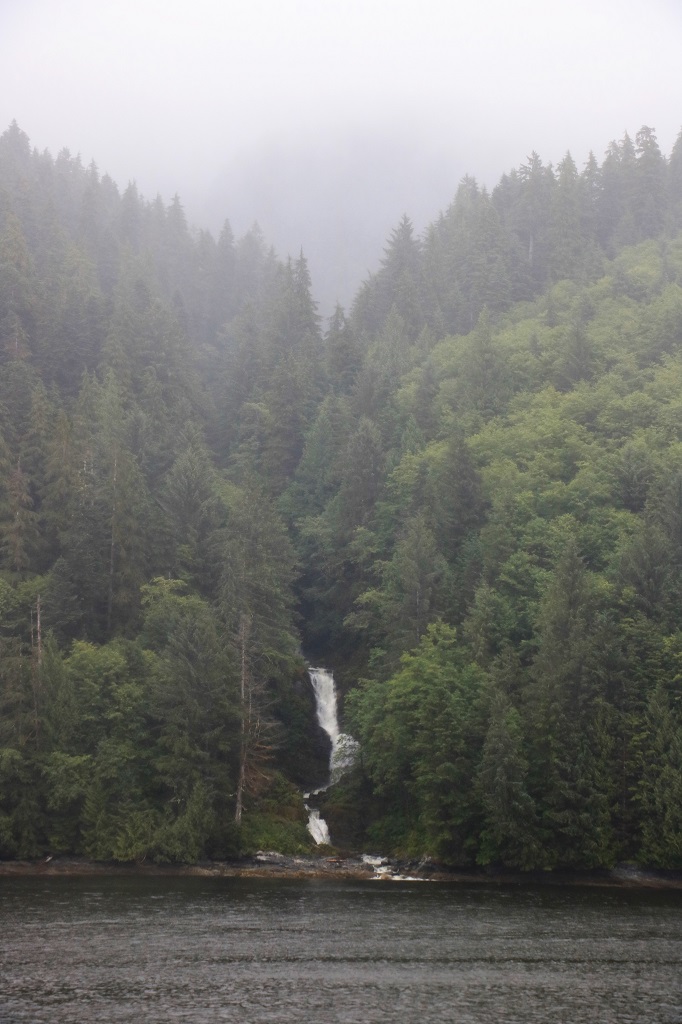
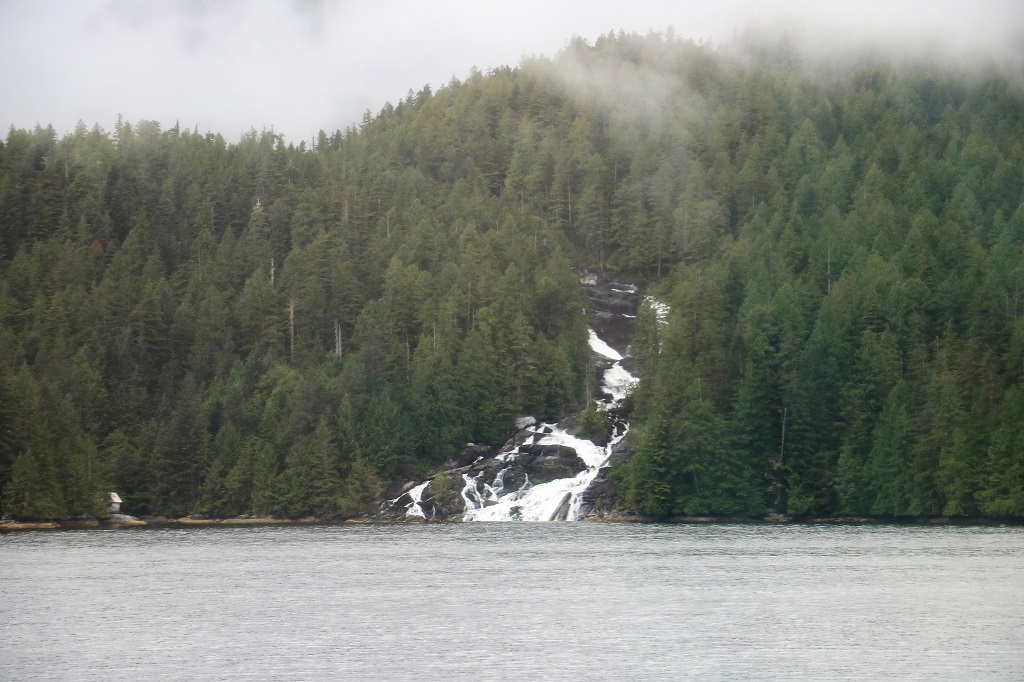
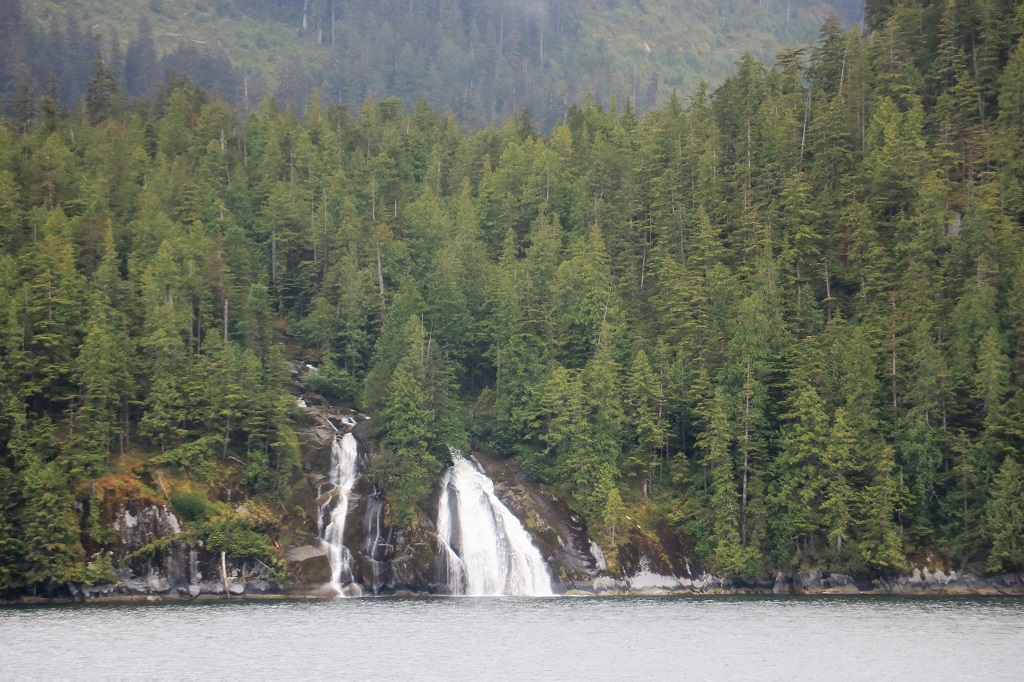
There is a lighthouse on tiny Addenbroke Island. Namu the famous orca was captured in Namu bay; an area not recommended during the autumn months because winds known as ‘willy-waws’ (whirlwinds) blow strongly over nearby mountains,The only stop between Port Hardy and Prince Rupert is the small coastal fishing and logging community of Bella Bella.  Bella Bella is not accessible by road, you must come by boat or by plane.  You can drive to Bella Coola which is at the end of a long inlet and take a short ferry ride to Bella Bella if you don’t want to take the long ferry from Port Hardy.  BC Ferries has provided year-round service to Bella Bella since 1977.The two bald eagles sat in this tall tree the entire hour we were offloading and onloading passengers at Bella Bella. Dryad Point Lighthouse was established in 1899.  Its red and white light can be seen for 29 km (18 miles).  The lighthouse is on the eastern side of Campbell Island and marks the narrow northern entrance into Lama Passage.  The narrowest point of the passage at 800′ occurs just south of Dryad Point.  We were told that the keeper at Boat Bluff will often be out and about and give a wave to the passing ferry.  He was smart enough to be inside on such a rainy day.  This light was established in 1907 and is  perhaps  the most  scenic  of  lighthouses  along  the  Inside  Passage.We saw many waterfalls tumbling down the mountainsides through the trees.  Many of them were just sections of white between the greenery, but a few of them made quite an entrance into the ocean water.

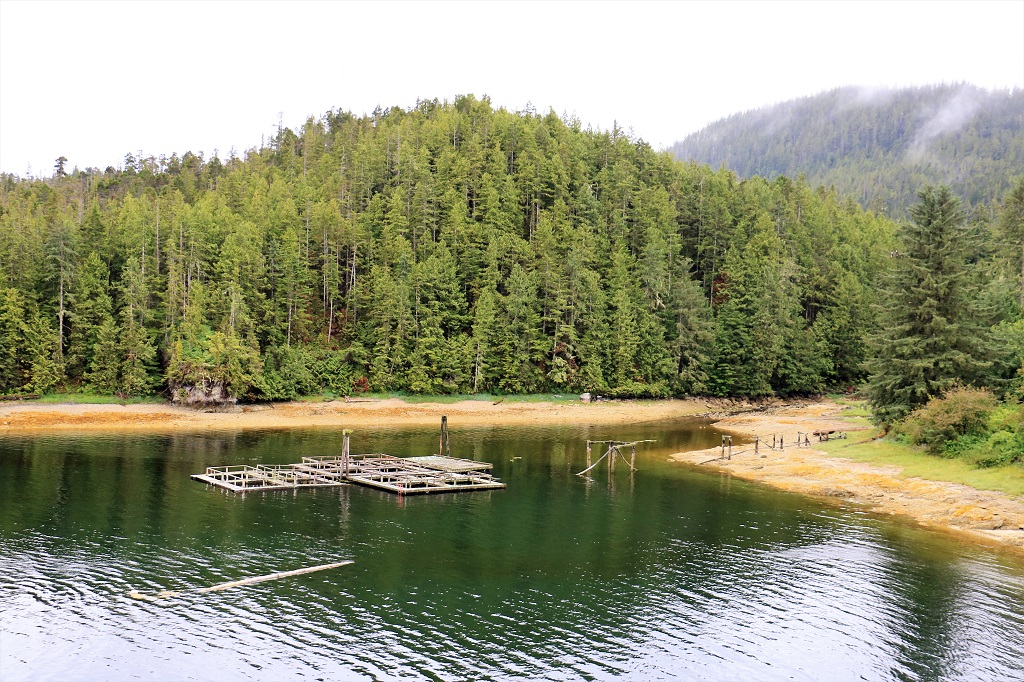
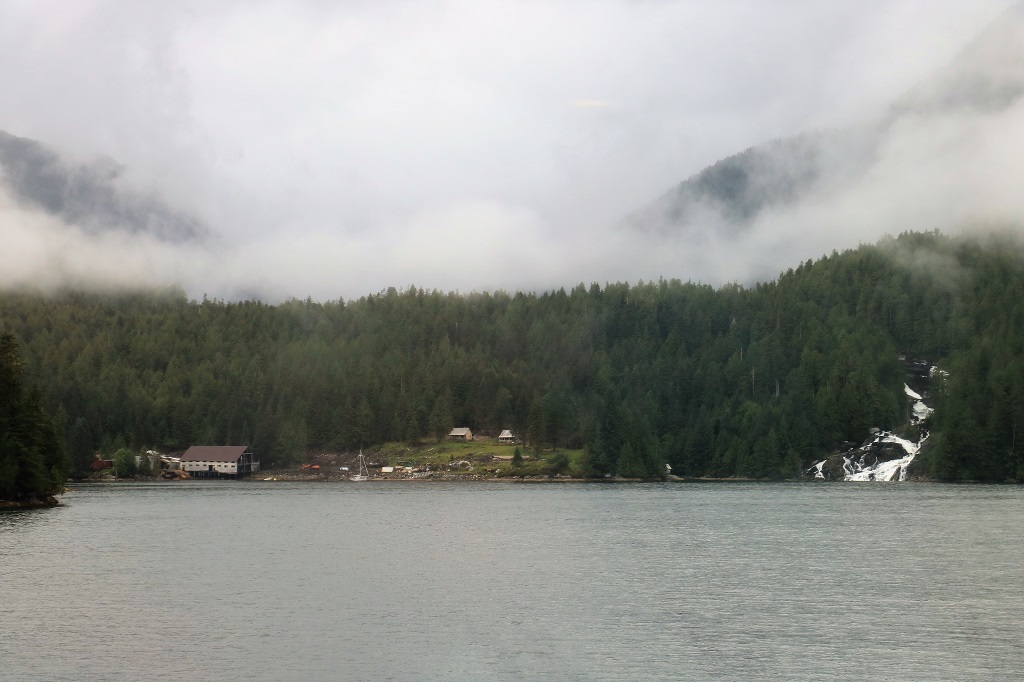
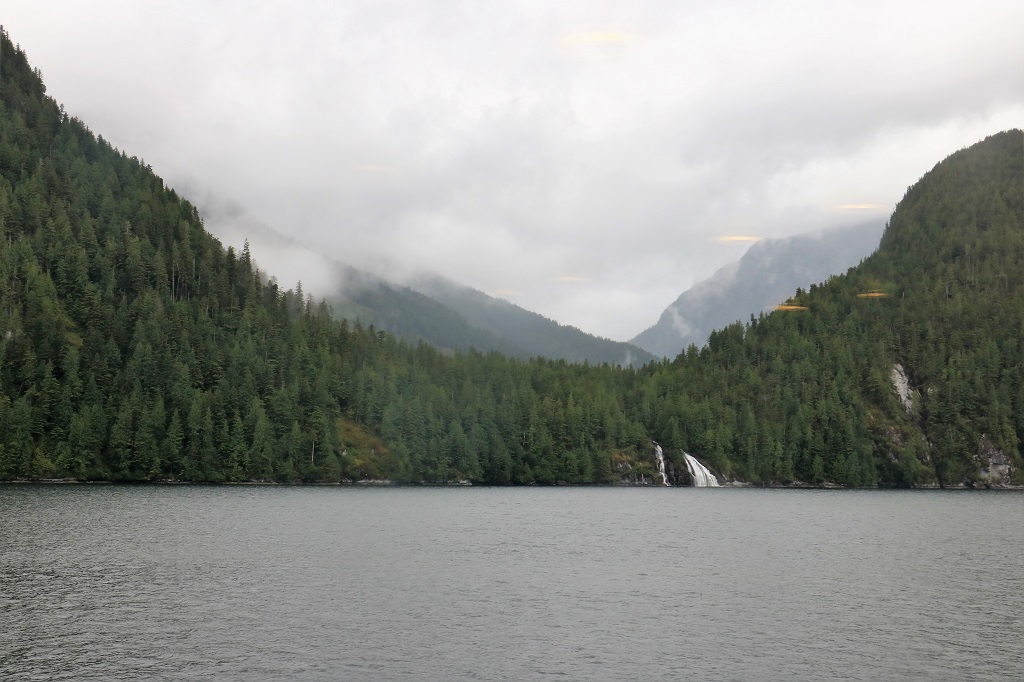
The ferry slowed down as it passed Butedale so that the ferry’s wash does not do further damage to the old cannery and fish reduction plant that was operated here until the 1960s.  Butedale was established on Royal Island in 1918 as a fishing, mining and logging area.  At its peak the community had a summer population of 400 people.  It is one of the few remaining cannery villages on the coast. I liked this waterfall. Well, not just the waterfall but the huge dip in the mountain that provides a clear view of the distant mountains behind it We were scheduled to arrive in Prince Rupert at 10:30 pm, but we were almost an hour late.  Thankfully the terminal is only 10 minutes away from our hotel.  We got into our room at midnight, set the alarm for 7 am and crawled into bed.

Once again we had to be at the ferry terminal two hours prior to the 10:30 sailing time to get to Haida Gwaii.  We were there by 8 and fell into line behind all the other vehicles.  They began boarding at 9:30 and took two hours to get all the vehicles on.  This is a much smaller ferry than the one we sailed in from Port Hardy and we learned when it was finally our time to board that all the vehicles had to BACK onto the ferry and into their lane spot.  It took so long to board because a lot of the truck and trailer units and big motorhomes had difficulty backing down the ramp and into the narrow lanes inside the ferry.  The reason they had to back in was because the ferry only has one door, not the usual door at each end so you drive on through one door and and drive off through the oppposite end.  The ‘back’ door on the Northern Adventure has been sealed.  There had been a horrible accident quite a few years ago when the ferry to Haida Gwaii got caught in a very bad storm and the back bay doors opened which caused the ferry to sink and 150 people died.  In order to prevent something like that from happening again the ferries that make the crossing to the Haida Gwaii islands only have one opening door.
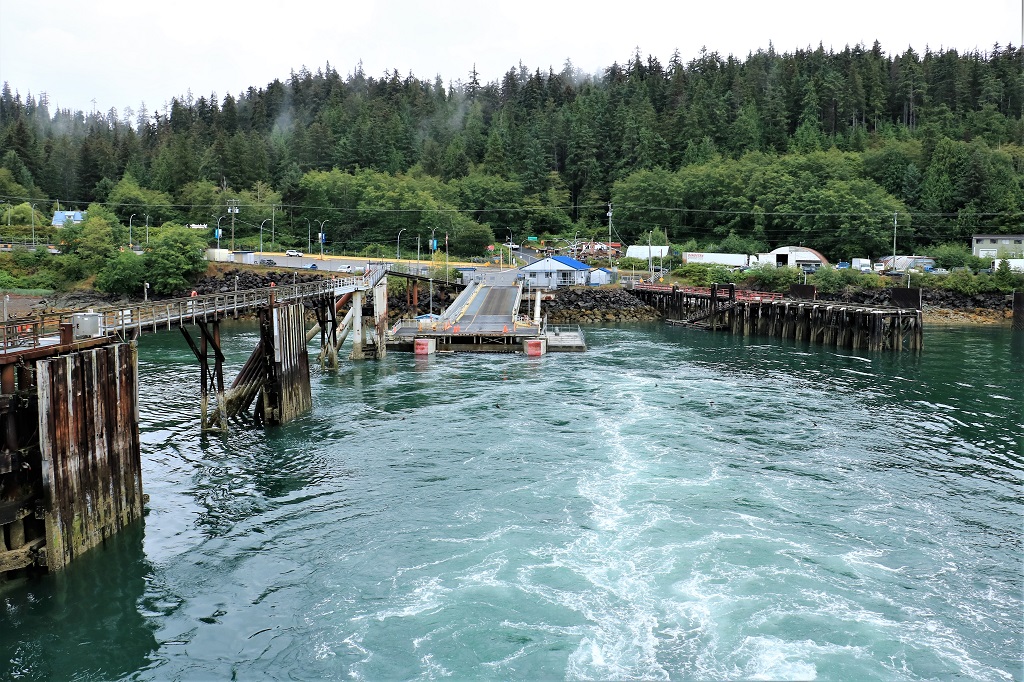
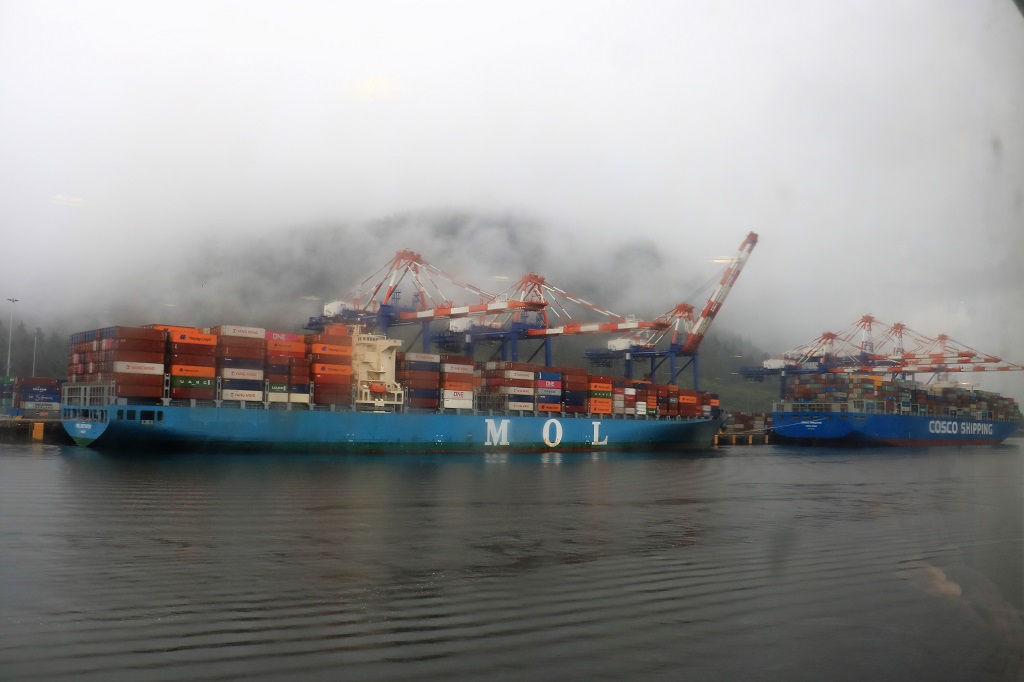
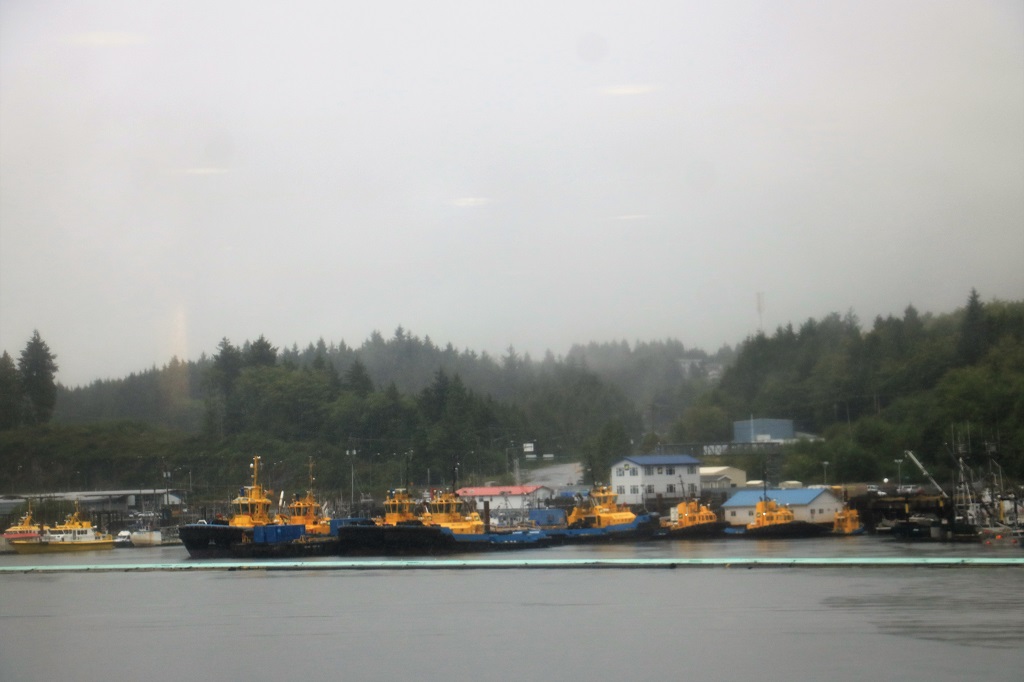
Leaving Prince Rupert you pass the huge container port that was built up here a few years ago. It was lightly raining when we boarded but it stopped and started several times during the day; finally quitting altogether a couple of hours out of Skidegate.  The sky lightened more and more as the day progressed and it was quite nice by the time we arrived.  The captain more than made up the lost hour from the boarding and we arrived ahead of schedule at 5 pm.Our hotel for the next few days is located on the eastern edge of Queen Charlotte City and we have a very nice view of the harbour.  Tomorrow we begin to explore.  But not too early.  I need to rest up from the short sleeps and long hours sitting on a chair in a ferry. I am happy to be here again, 50 years since my two elders sisters who lived here at the time paid my flight to come visit them for the summer as my high school graduation gift.  I spent July with one sister and her husband and August with the other one and her husband.  John has never been here at all so we are both eager to see check things out.
 

2019 July Journey – Vancouver Island section 2 – Day 16

The internet was slow to non-existent in our cabin at Port Hardy.  You could get service if you sat outside but by the time we returned from puttering around and having dinner it was dark and too cold to sit outside.  So…no blog.

We didn’t even leave the cabin until 1:30 in the afternoon and it was nice to have a quiet relaxing morning.  The afternoon was spent driving various roads, walking along the waterfront and finding a few geocaches, as we usually do.

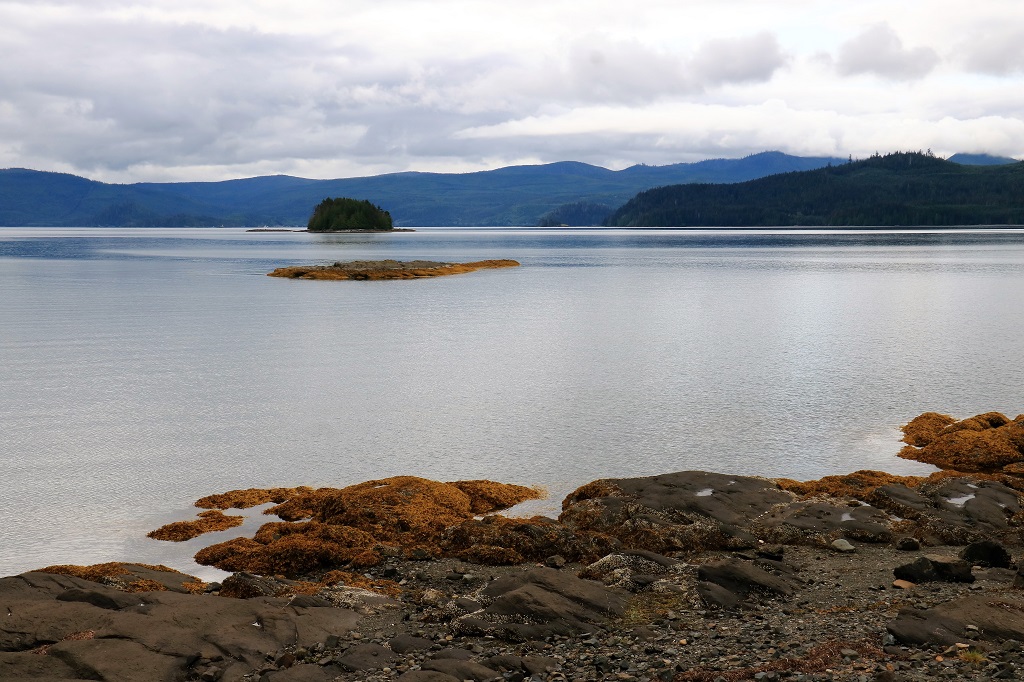
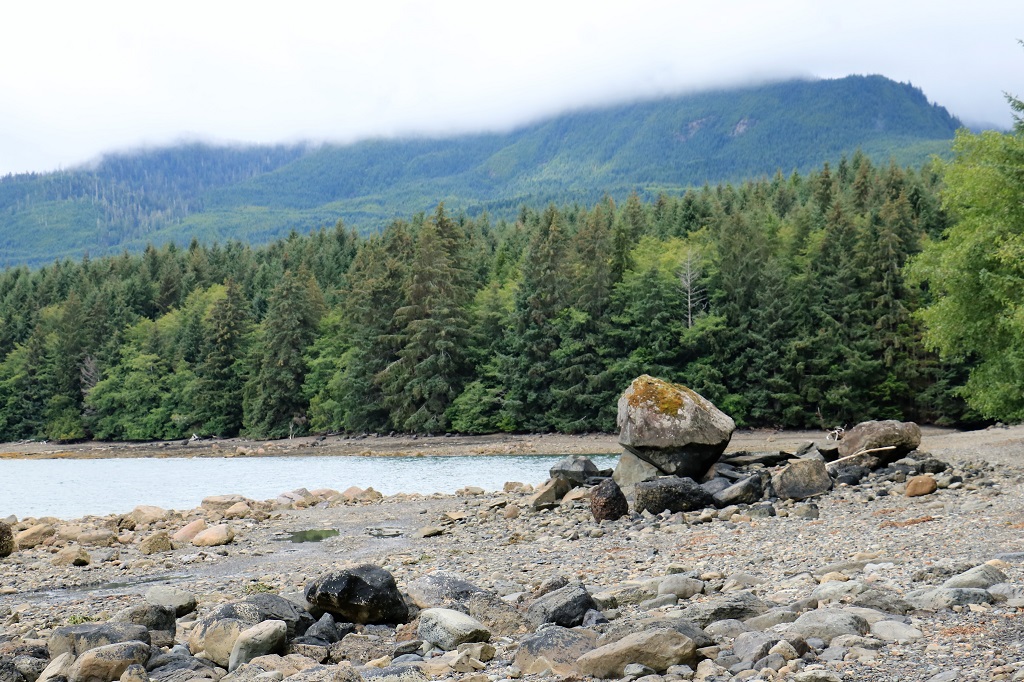
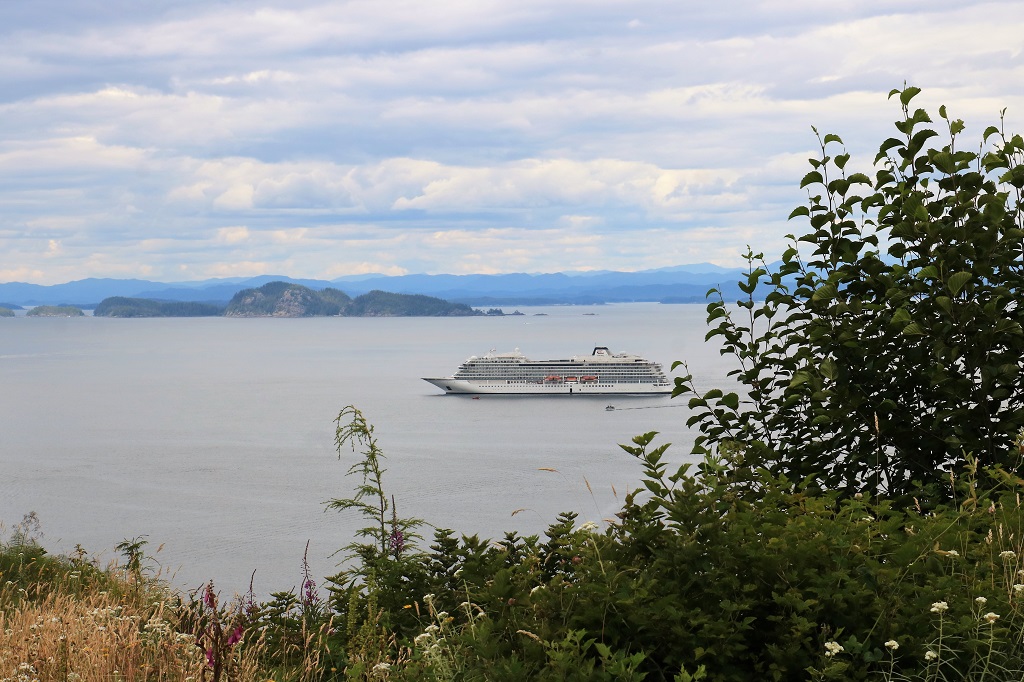
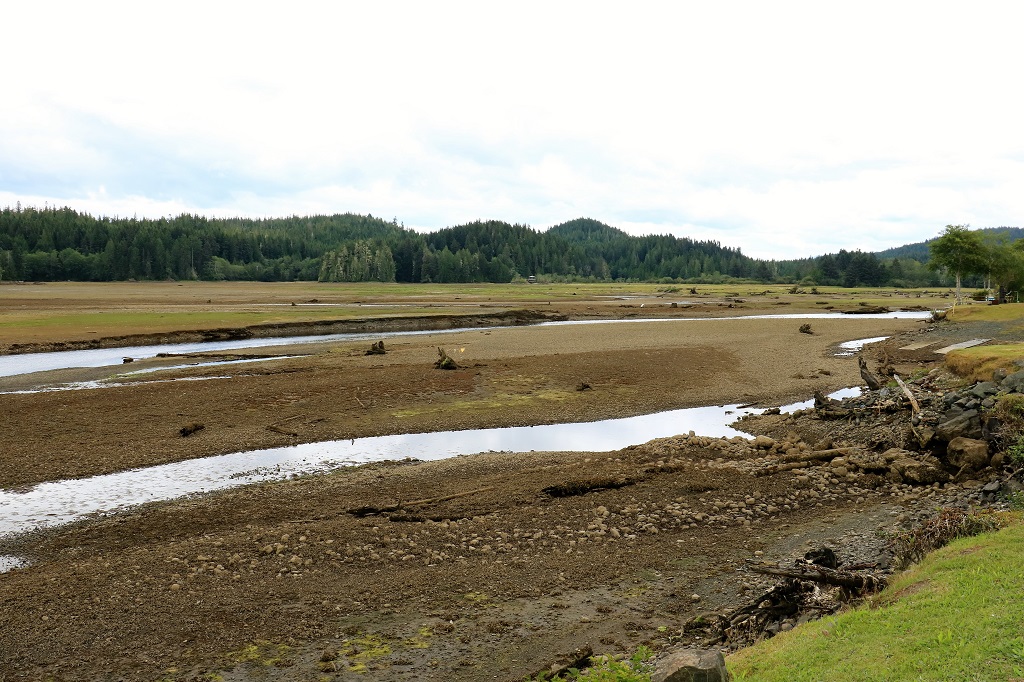
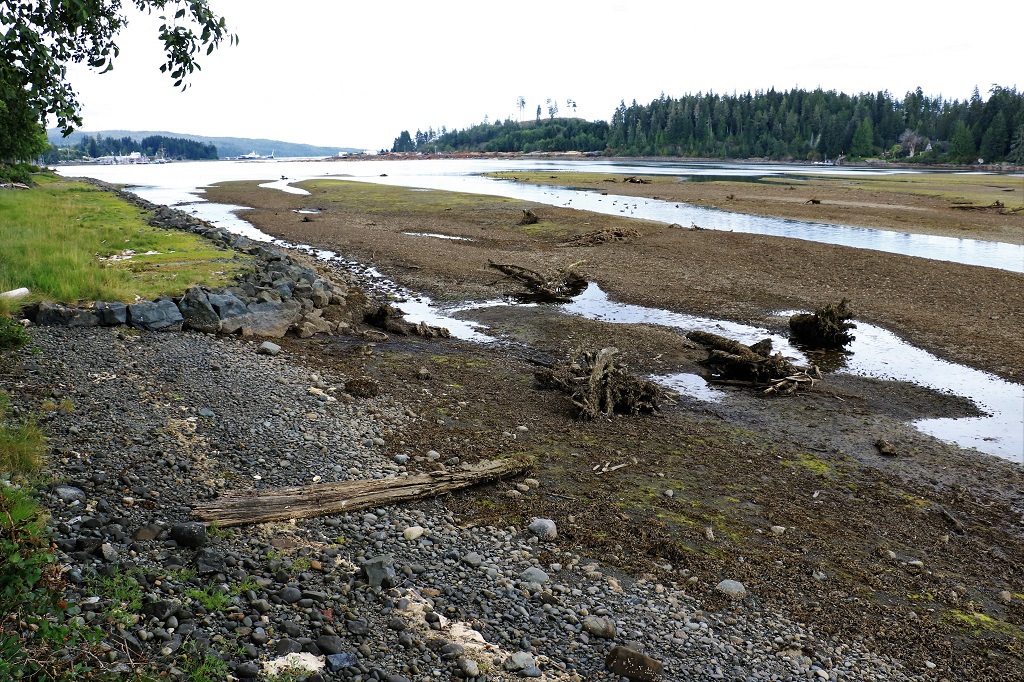
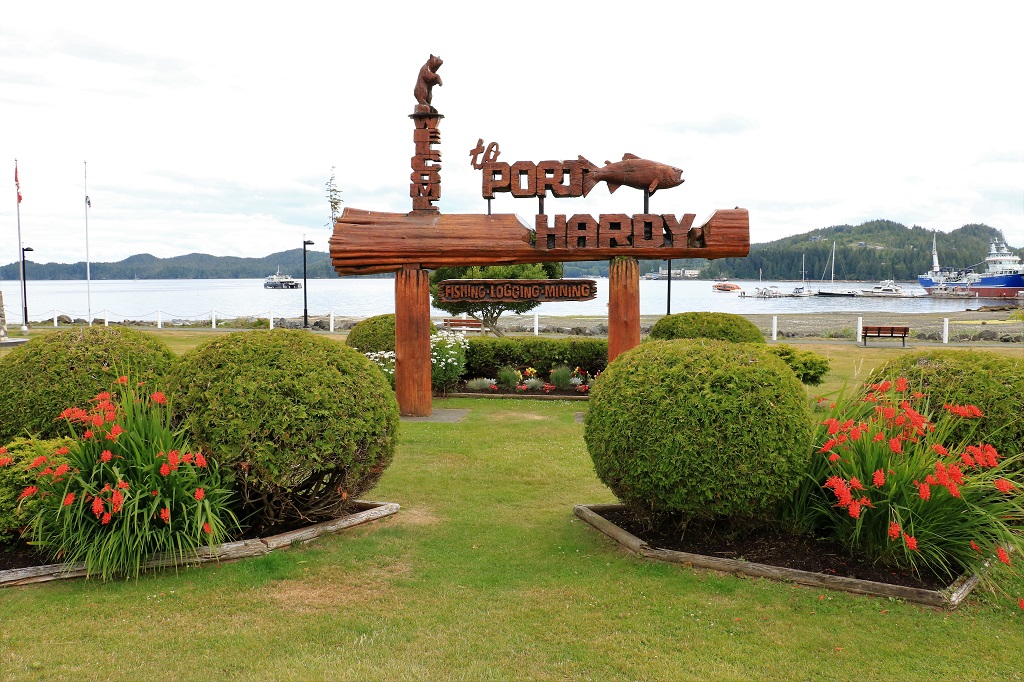
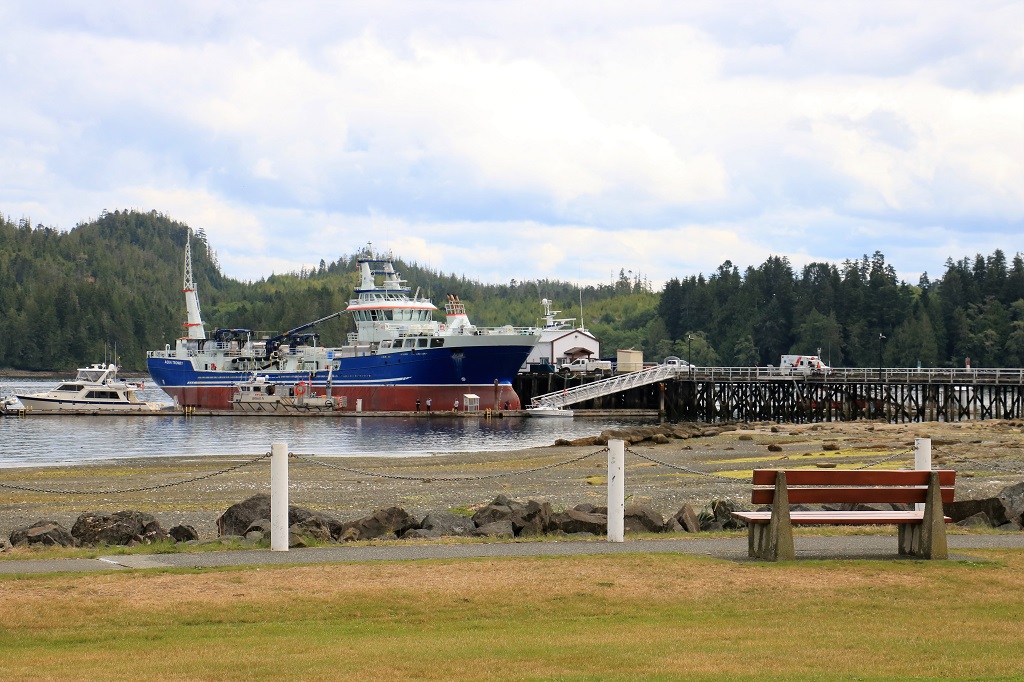
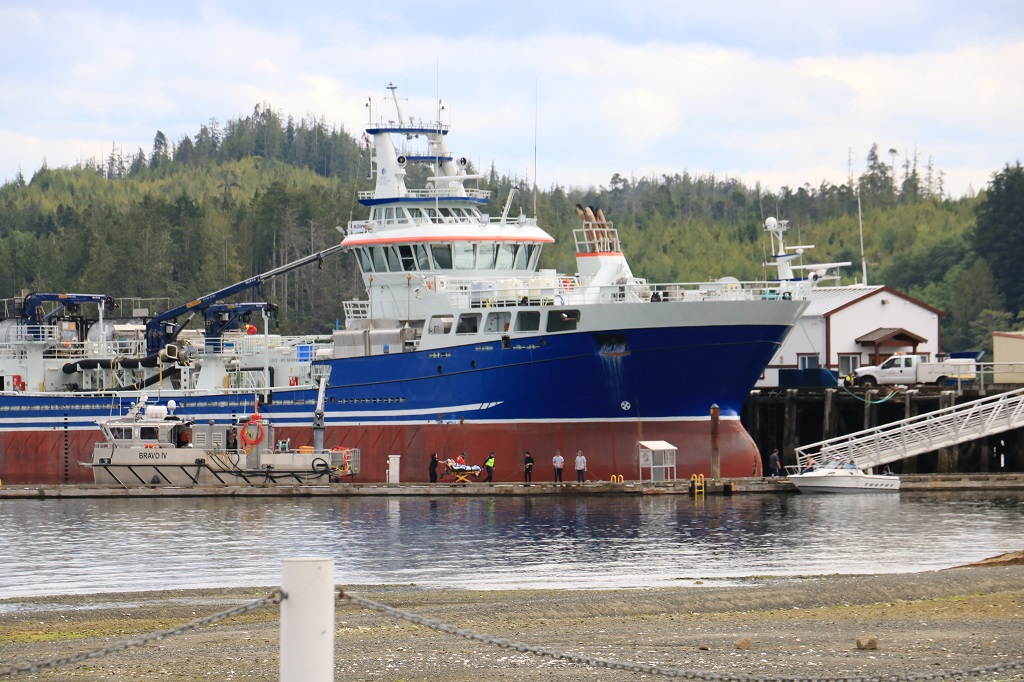
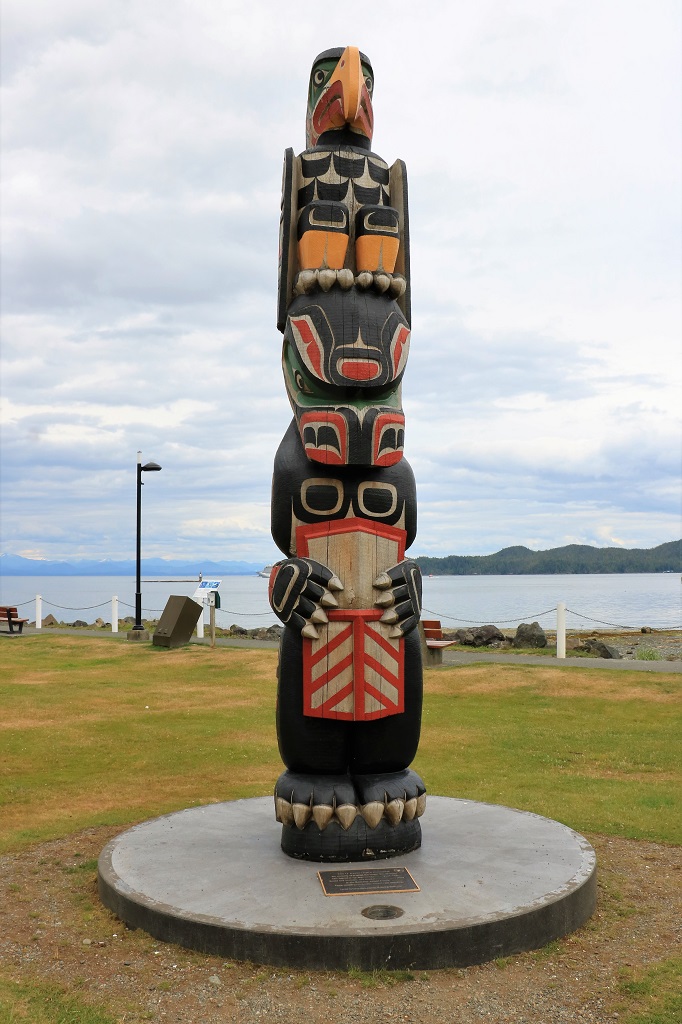
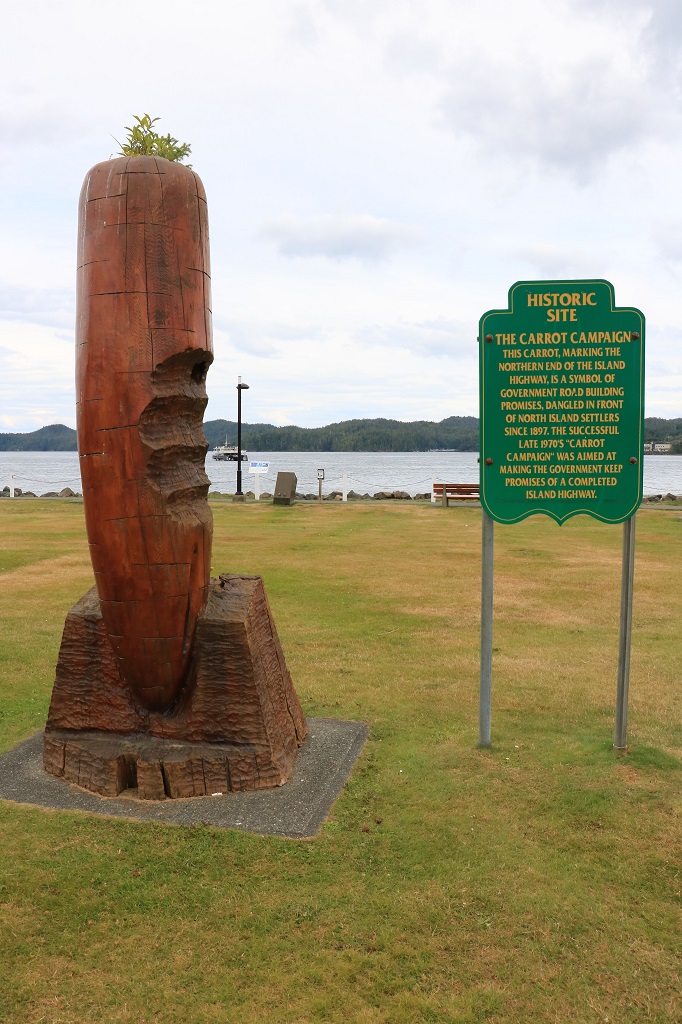
We drove out of town just to look around and took a turn into a subdivision that is up on a steep rise with unobstructed views of Port Hardy and Georgian Bay.  There were some huge, gorgeous houses up there.   Looking out from an empty lot at the view we saw a cruise ship anchored in the bay.  Cruise ships do not stop in Port Hardy as far as I know so I said to John that they probably have had a medical emergency and need to bring someone ashore for more attention than could be provided in the ship’s infirmary. We stopped along an inlet to find a geocache and took a couple of photos.Judging  by  the  amount  of  bare  ground  I will  guess  the  tide  was  out,  but  it  could  be  like  that  all  the  time.  I have  no  idea  of  tides. Back in town we wandered along the waterfront and back.My guess about the presence of the cruise ship was correct.  As we were  walking  the  sea  path  we  spotted an  ambulance  waiting  on  the  wharf.  The  tender  from  the  ship  docked  a few  minutes  later  and  we  could  see  the patient  in  the  stretcher  being  pushed  along  and  up the  ramp.  The  ambulance  did not leave  with  lights   and  sirens and  the  loading  process  took  a bit  of  time  so  I suspect  the  person  was  ill  or  had  taken a fall  and  broken  something.  It  was  a condition  serious  enough  that  the  ship  couldn’t  handle  it,  but  obviously  not  life  threatening. The totem on the left is part of the cenotaph of remembrance for WWI, WWII, and Korea veterans.  There is a traditional cross beside the totem, but it was nice to see both of the community cultures honoured..  I do like the protest sculpture of the carrot mocking the government for its constant failure to many, many years to provide a good road into the community.

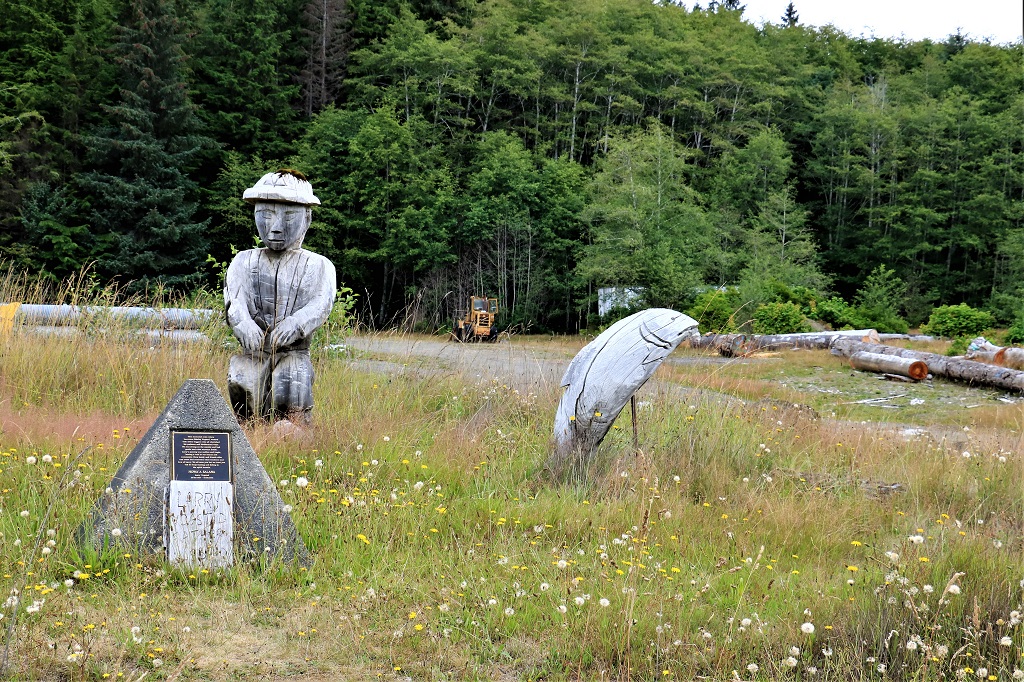
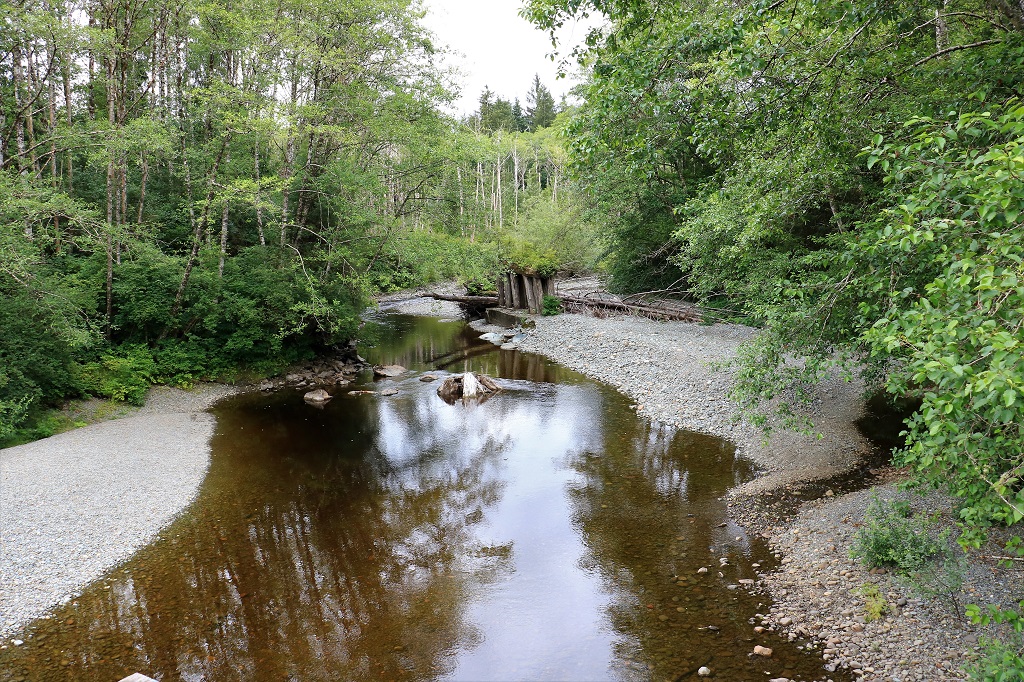
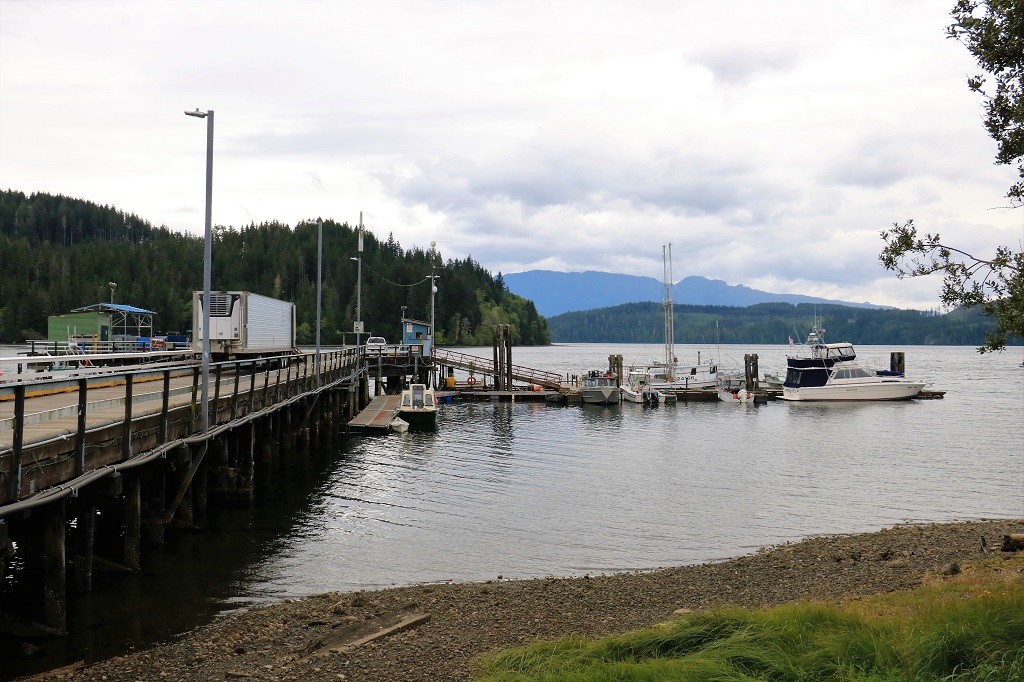
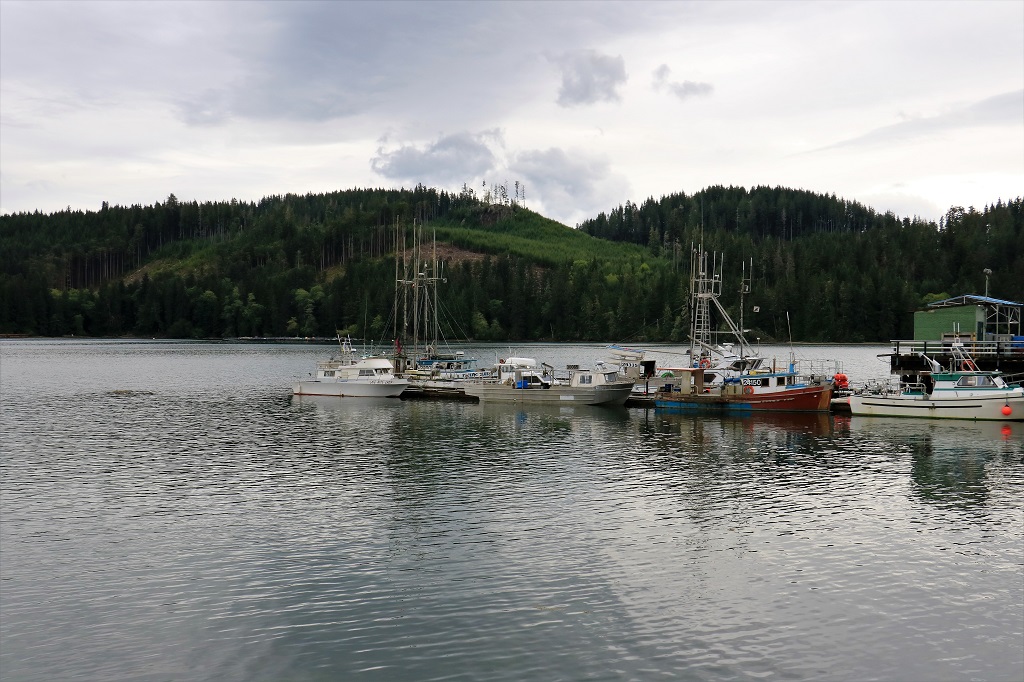
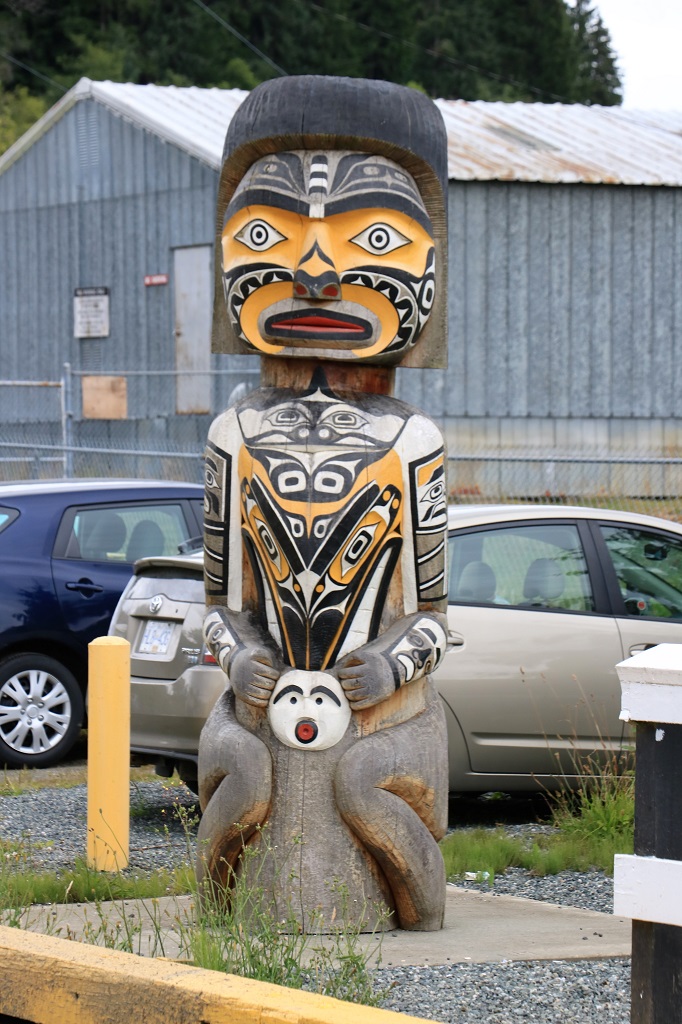
From the water front we headed out of town again and turned up some logging roads to find a few geocaches.  The Western Forest Products employees are currently on strike so we had no risk of meeting a logging truck.Looking  up  river and  down  river  from bridge  the over  the  Quatse River.We ended up literally at the end of the road at the small fishing community of Coal Harbour.  They had two colourful totems at the end of the wharf. It was after 5:30 when we left Coal Harbour and drove back to Port Hardy.  We stopped at a hotel restaurant along the way and had dinner.  Then it was back to the cabin and an early night. We had to be up at 5:00 am in order to be at the ferry terminal the required two hours early to begin our journey to Haida Gwaii.  Farewell Vancouver Island – until we come back again.  The reunion and the travels were great.