All posts by jj1951

My husband and I retired in 2007 and decided to spend the kid's inheritance by travelling as much as we could until either the money or our health runs out. So far so good.

2018 July 8 – Eagle Plains to Dawson City, YT

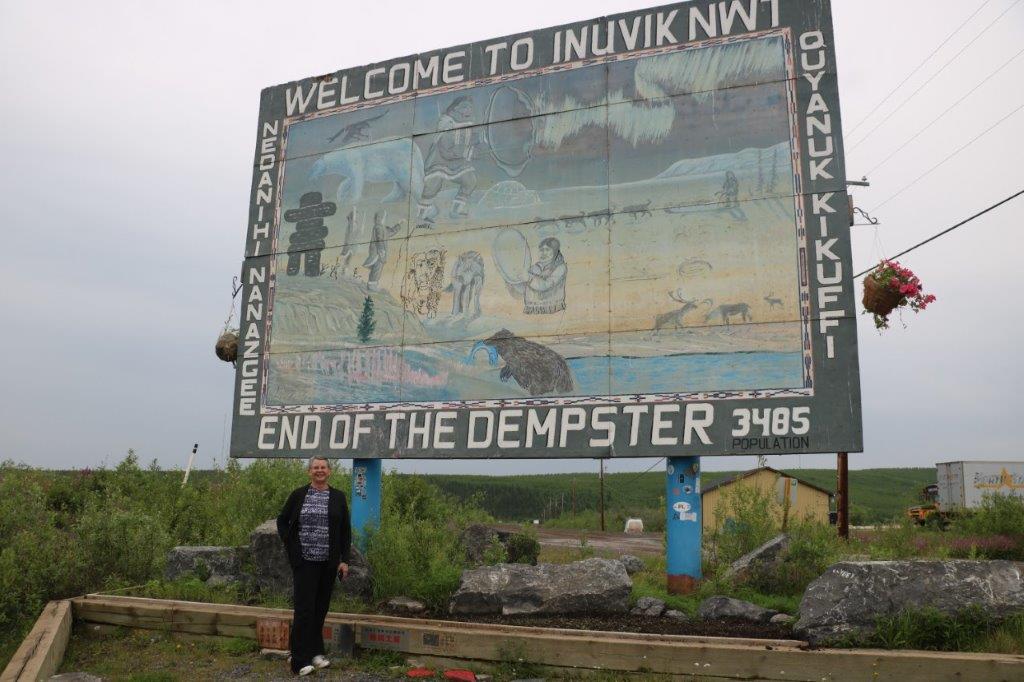
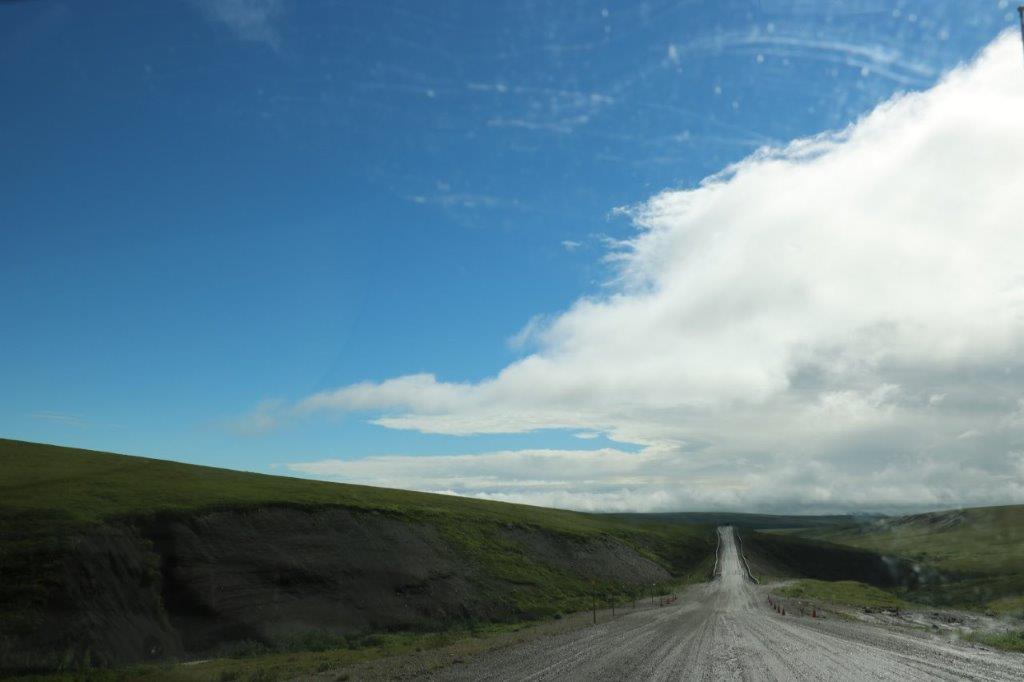
The ravens were squawking this morning when we woke at 8.  They are as prolific up here as crows are at home.  We checked out of the hotel at 9 and continued our drive back down the Dempster Highway toward Dawson City.  We had 410 km (250 miles) to drive today.  Yesterday’s smoke had drifted off and the sky was a mix of sun and clouds.

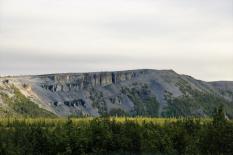
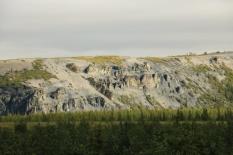
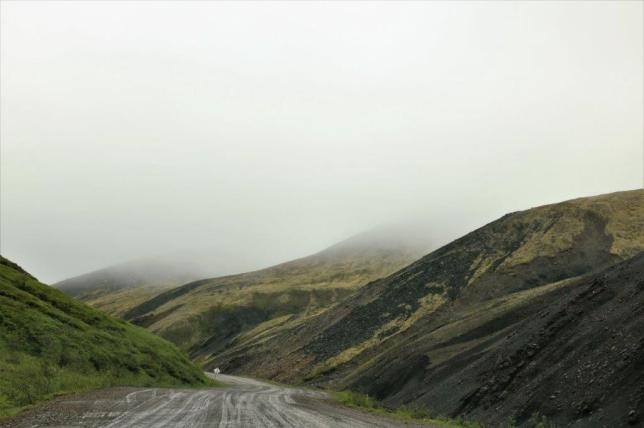
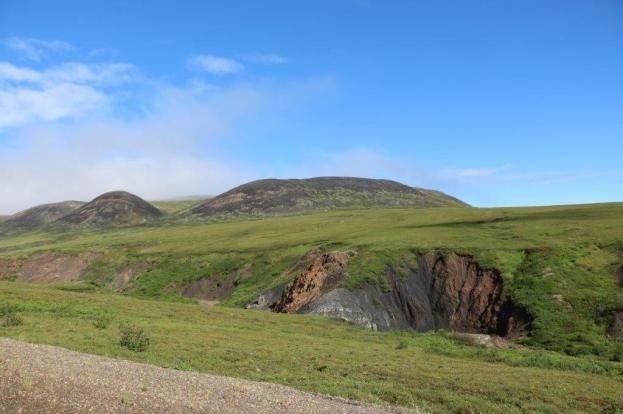
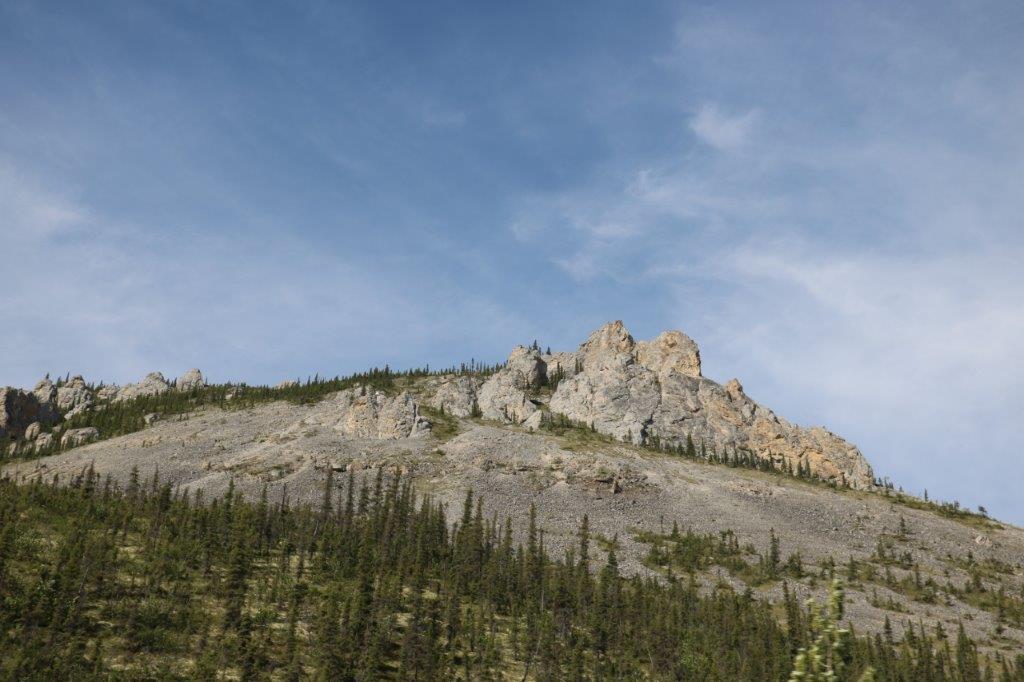
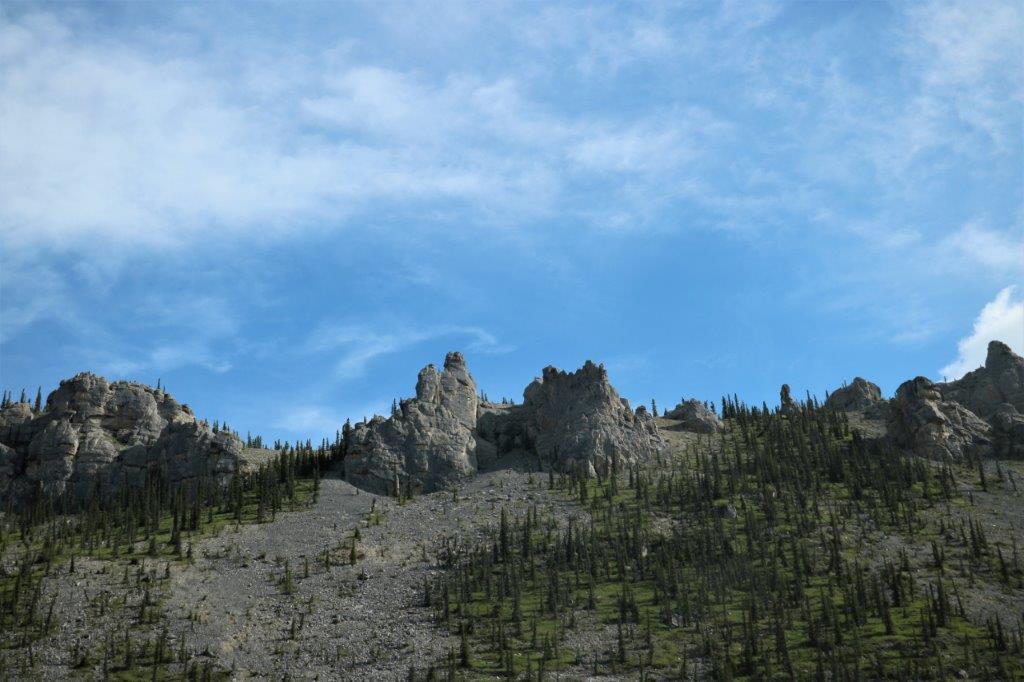
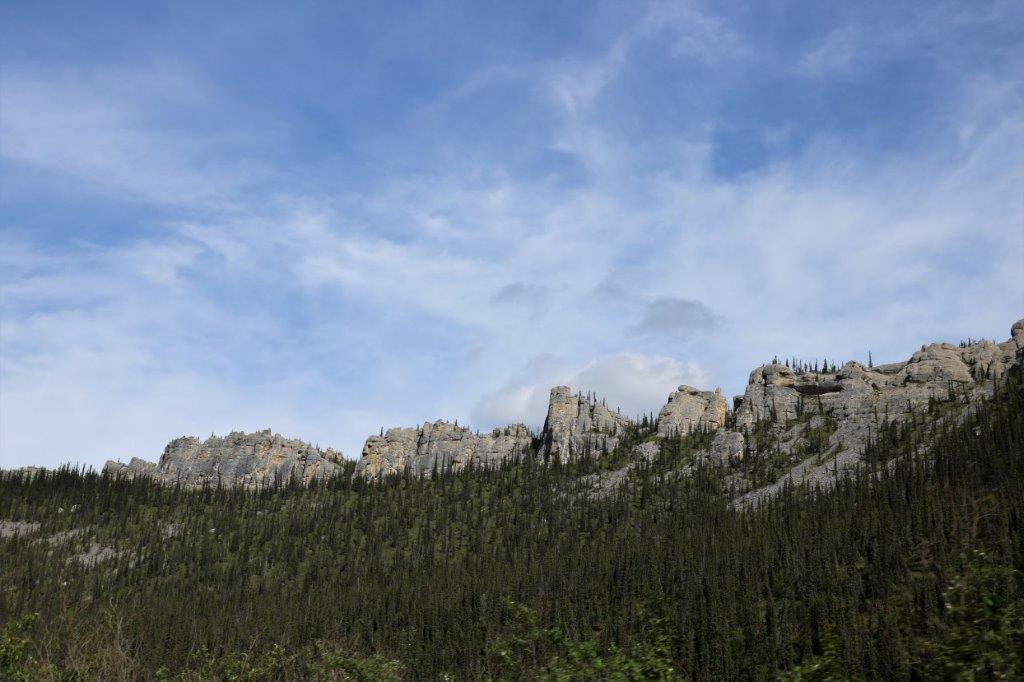
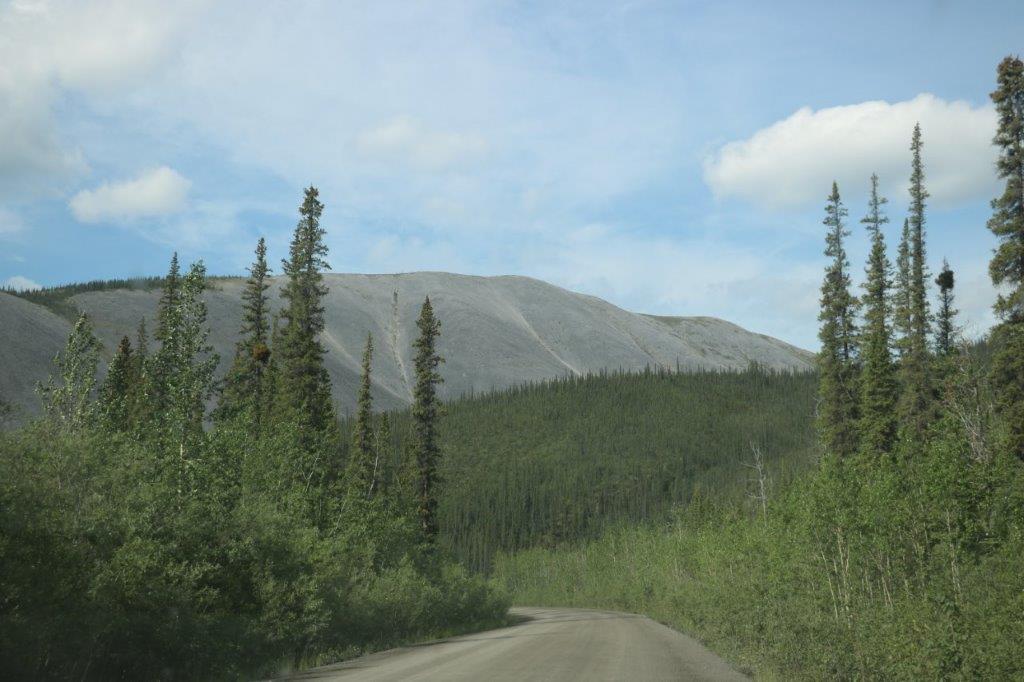
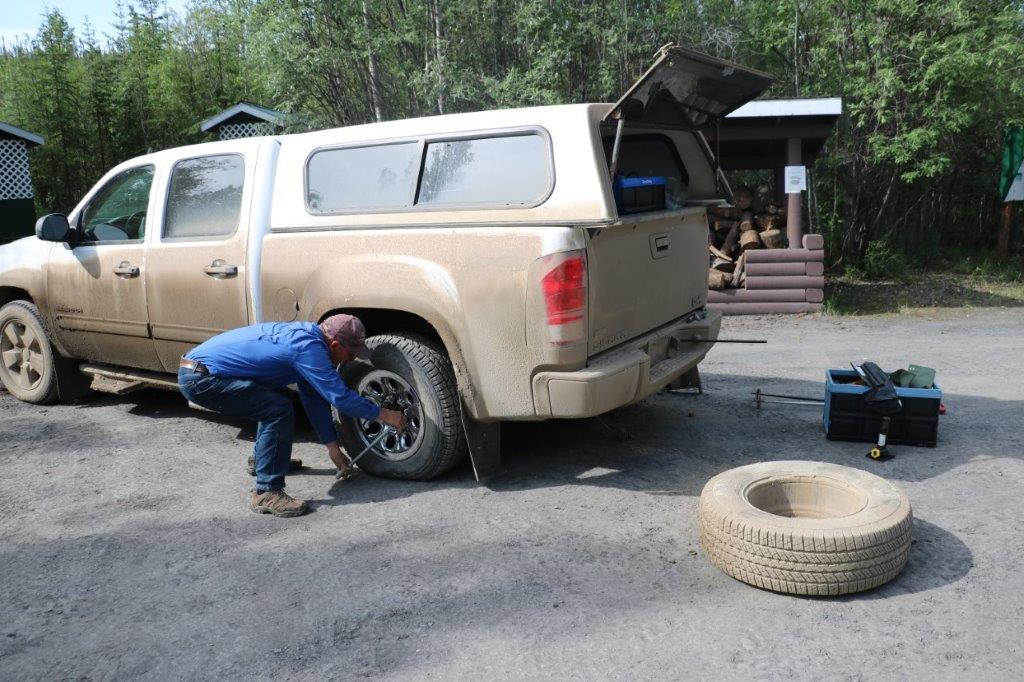
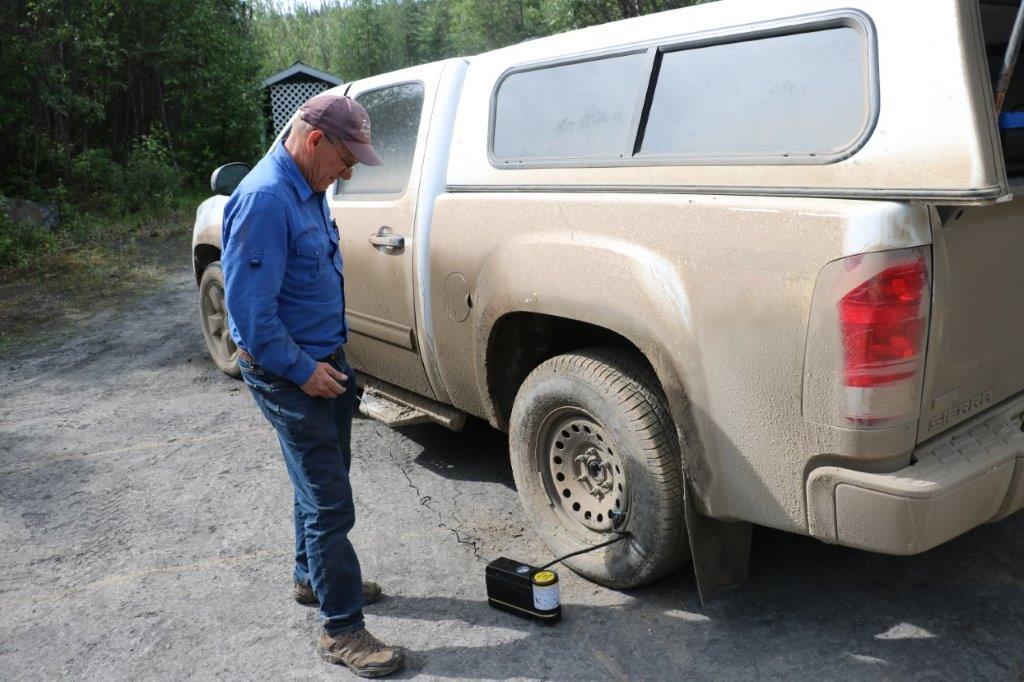
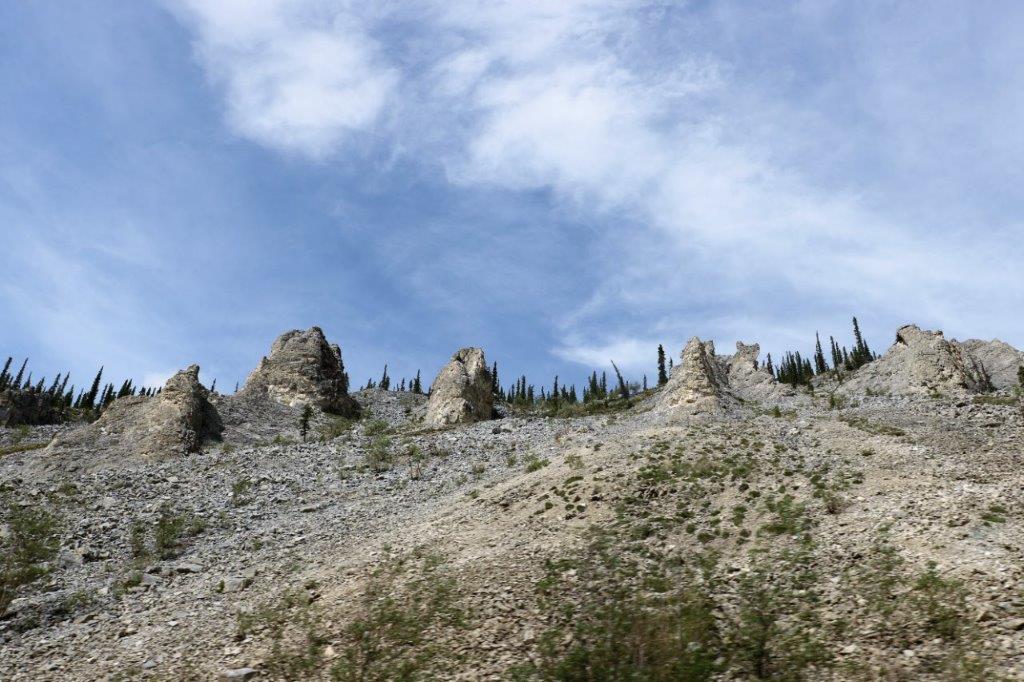
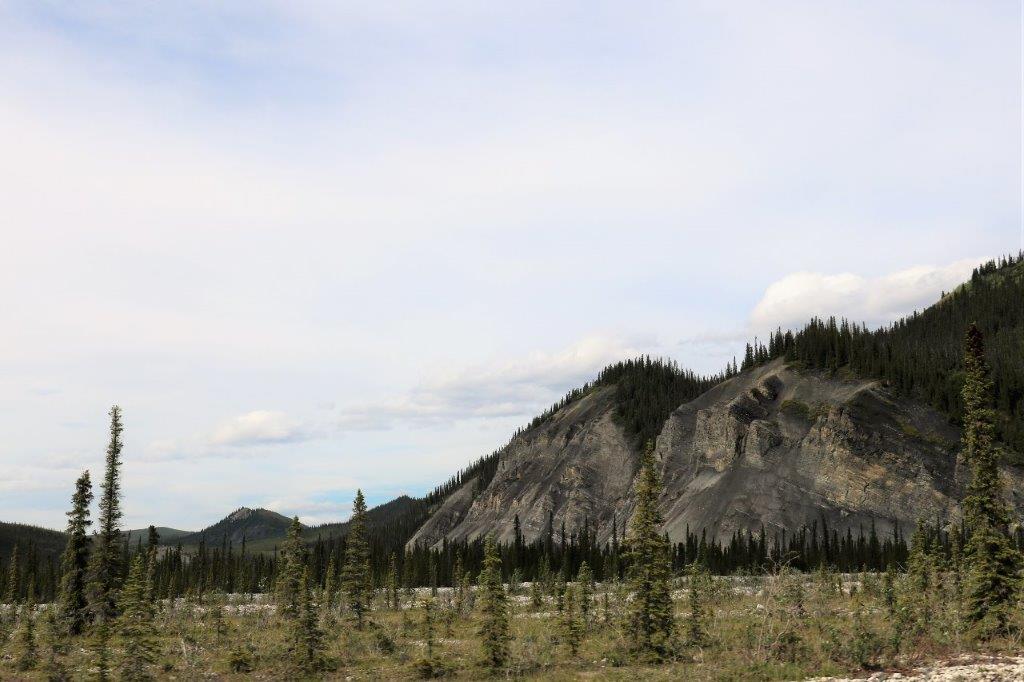
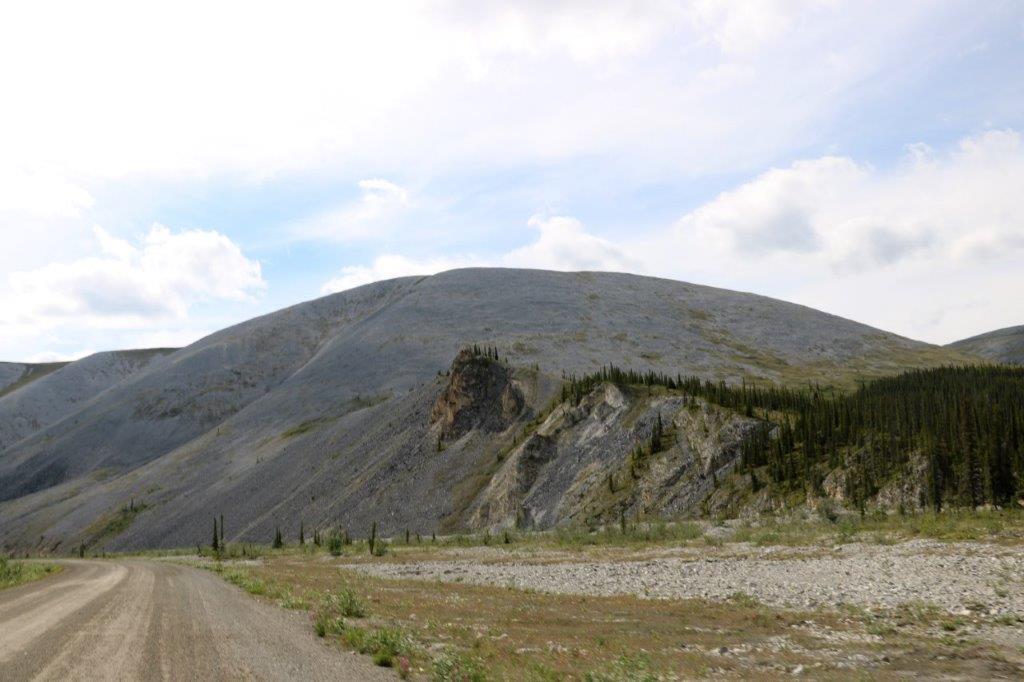
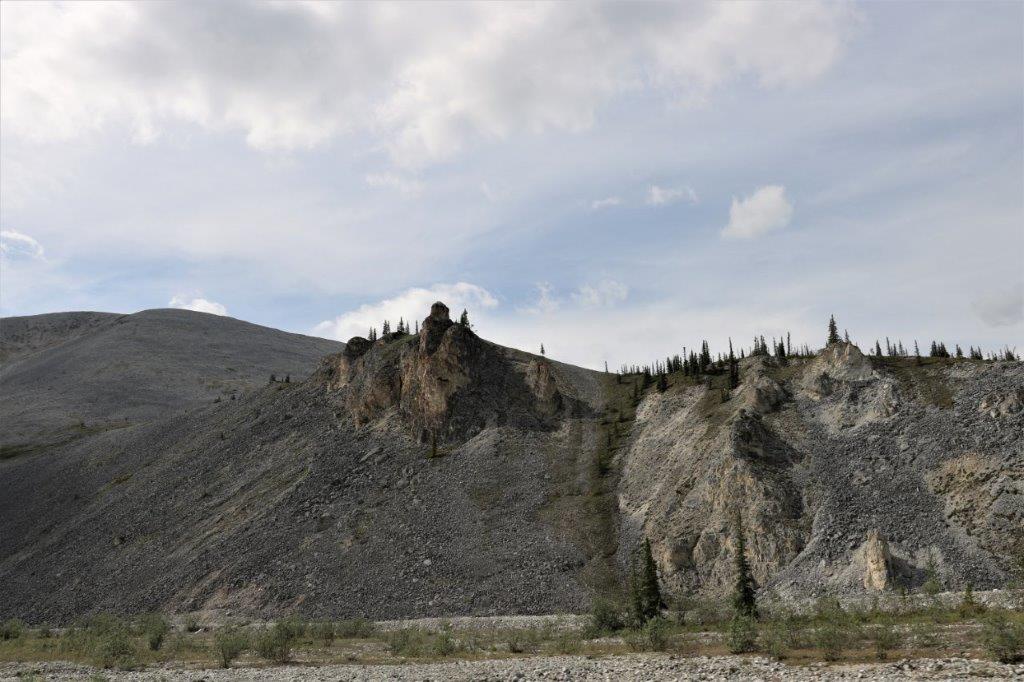
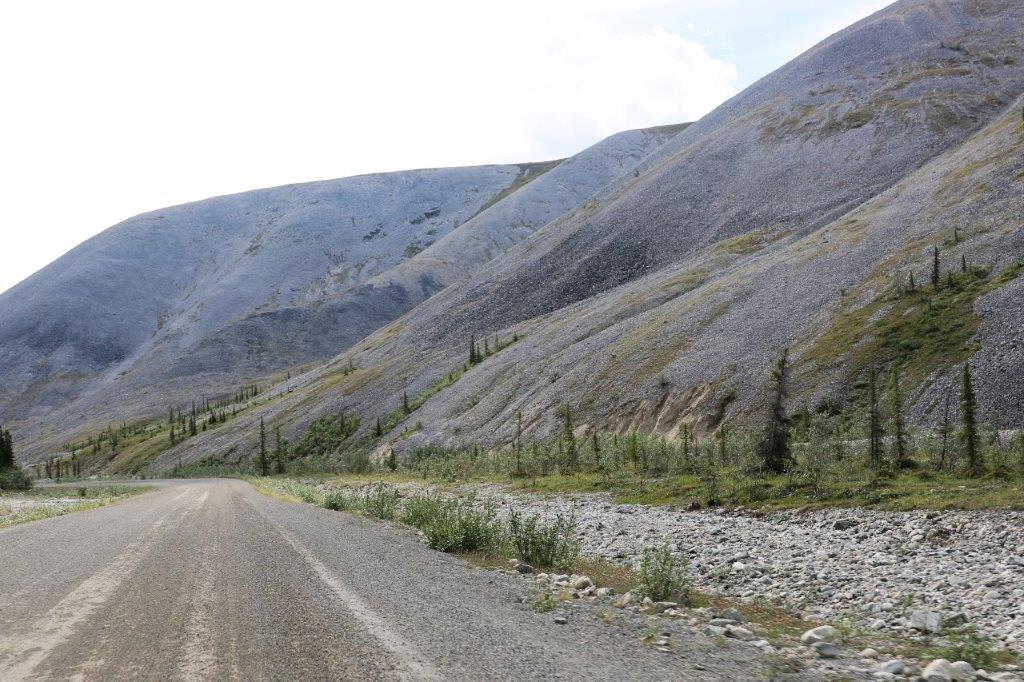
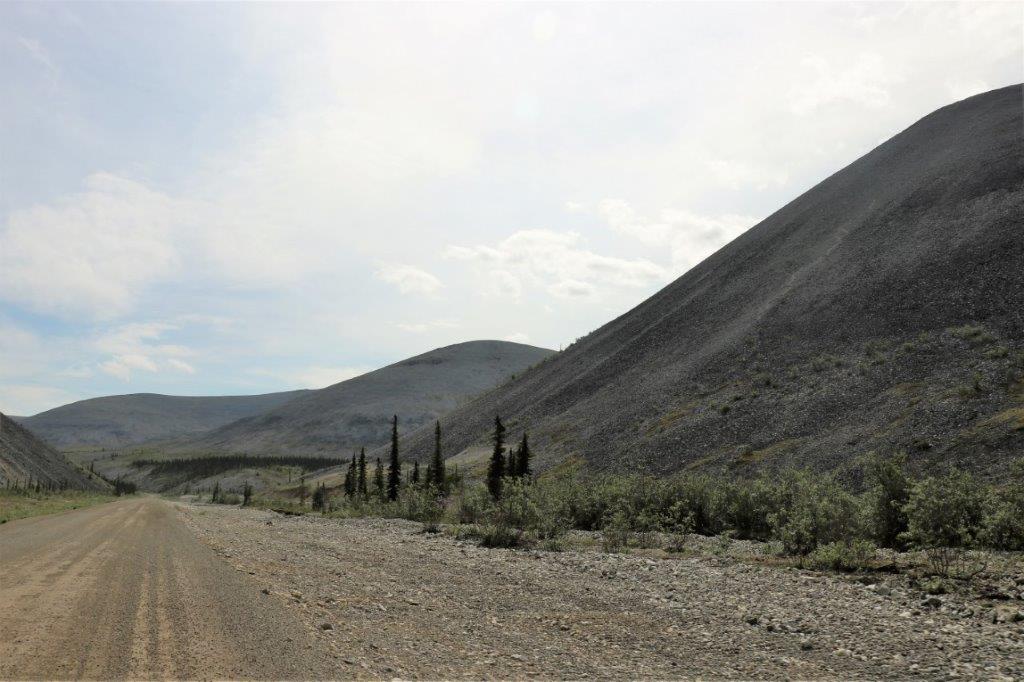
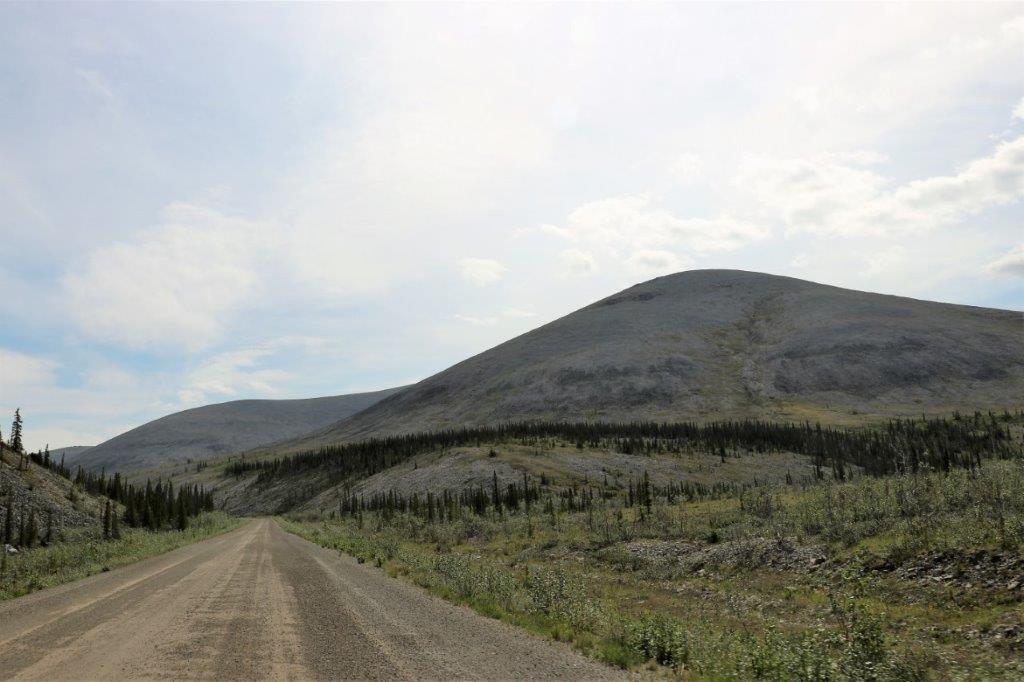
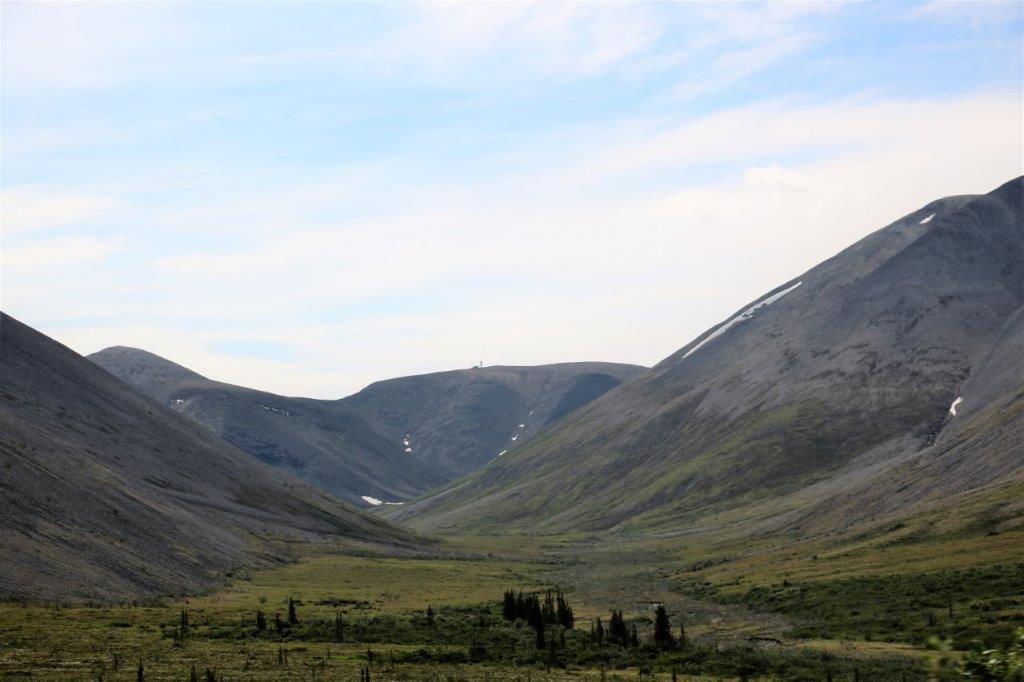
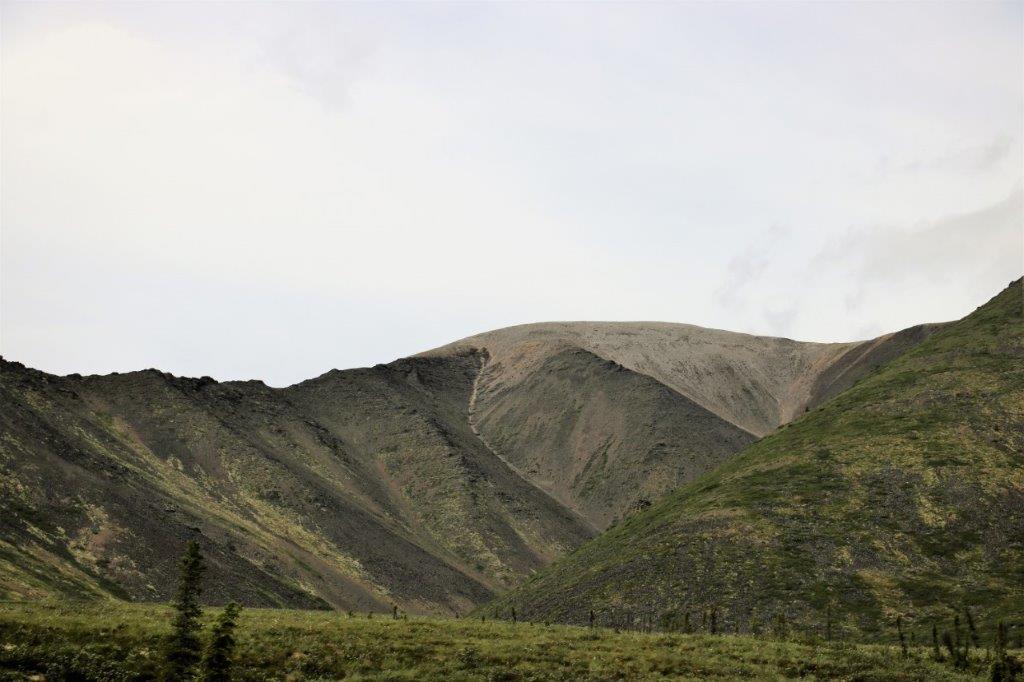
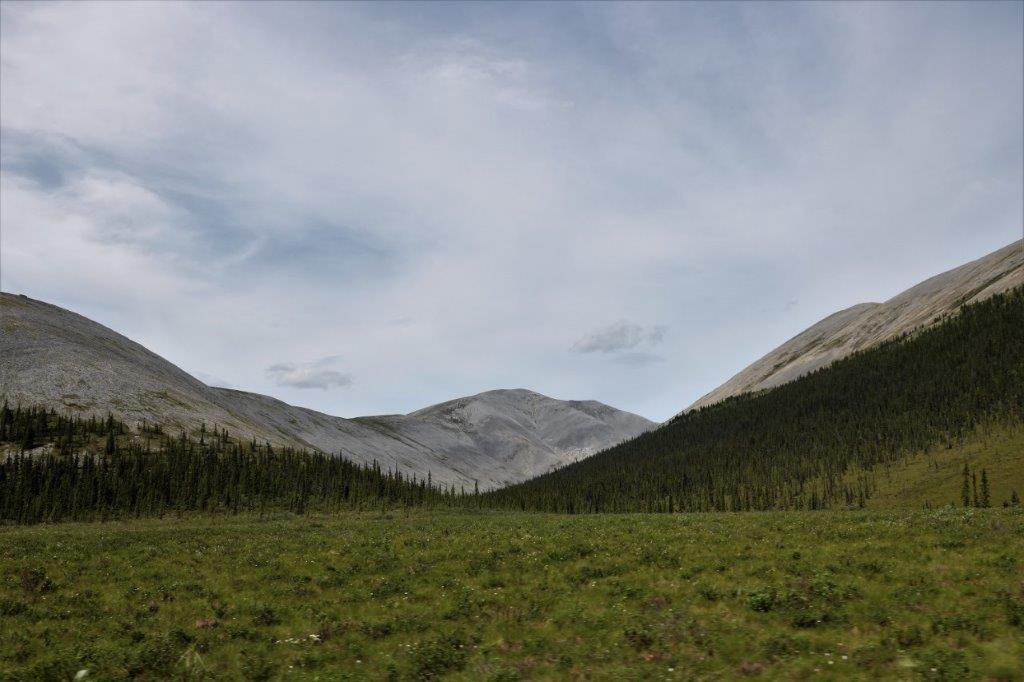
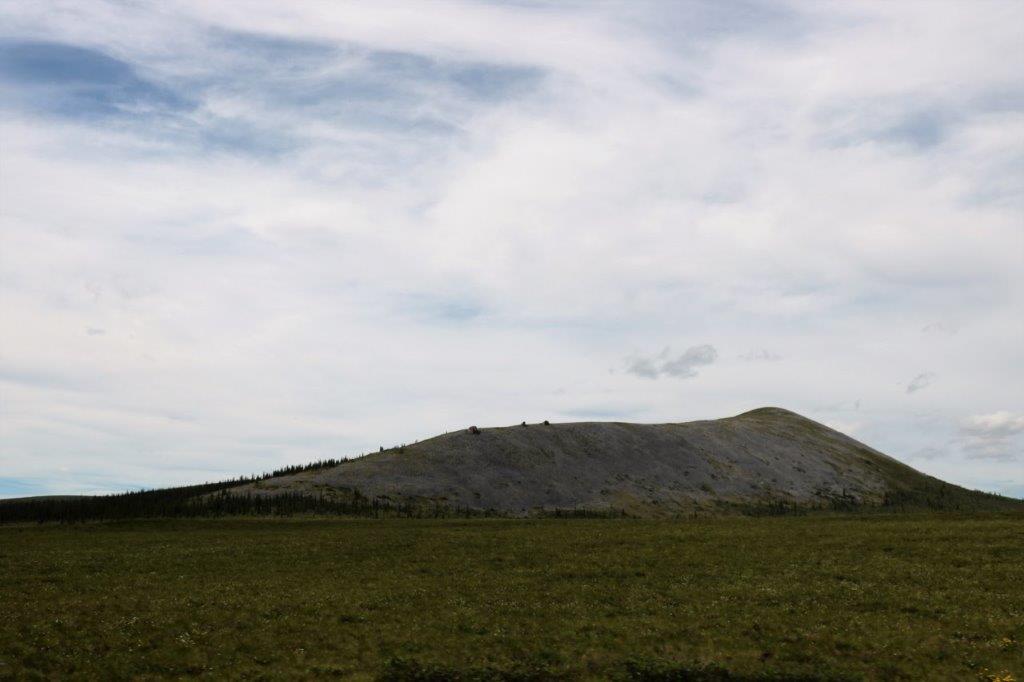
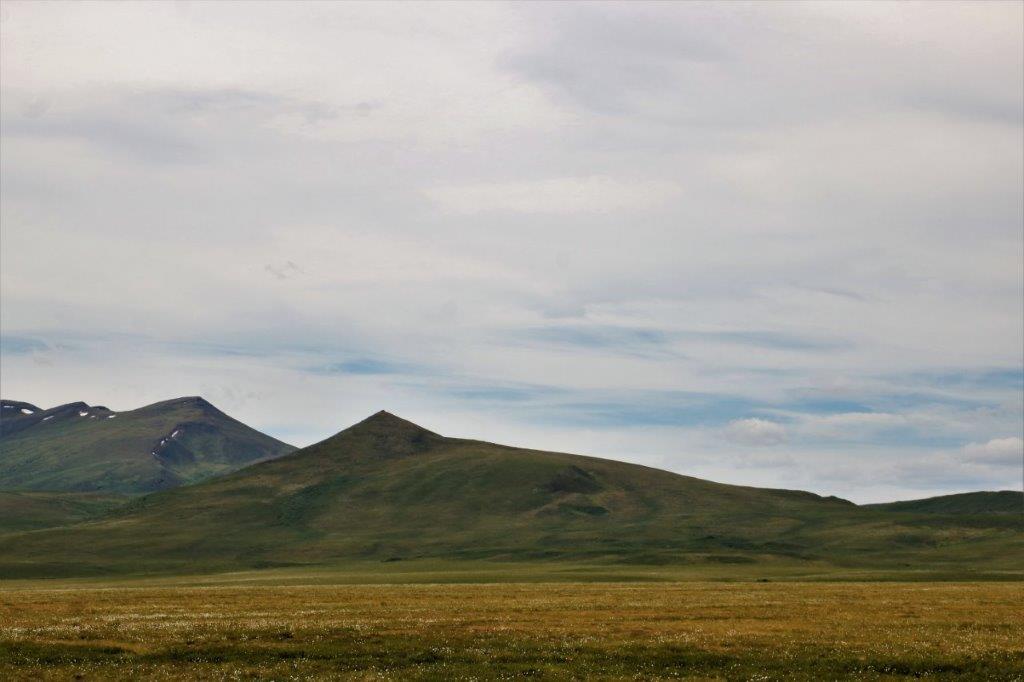
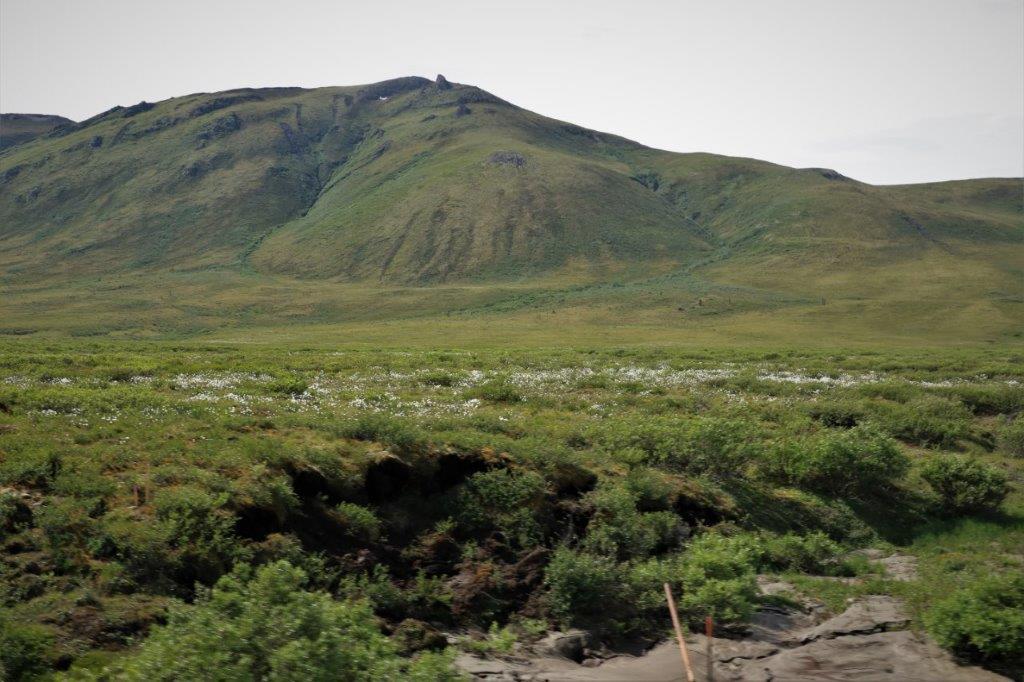
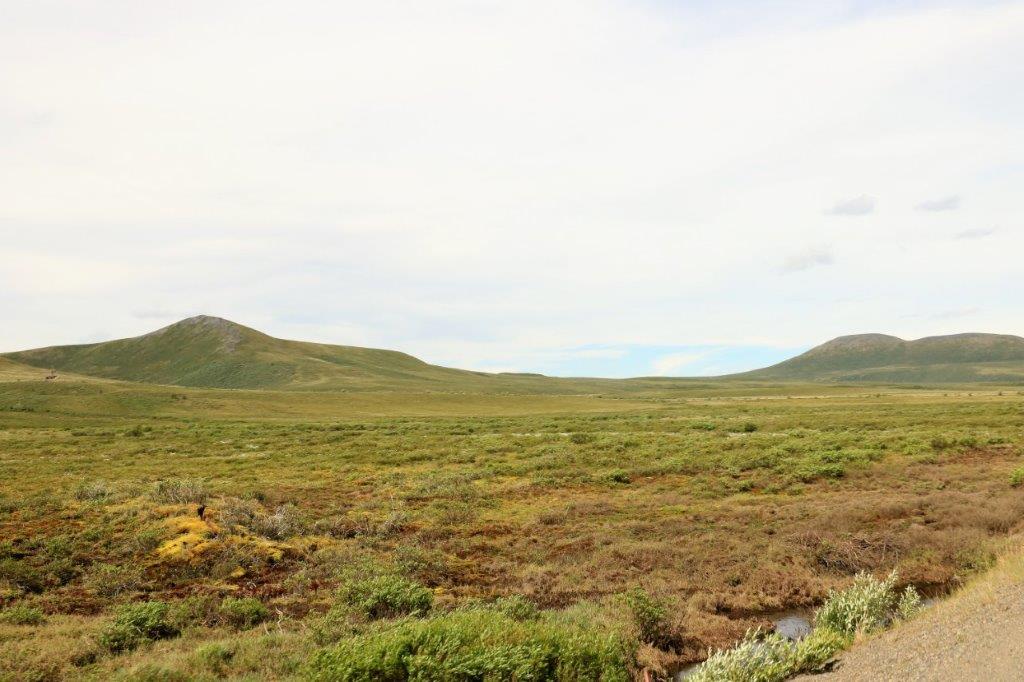
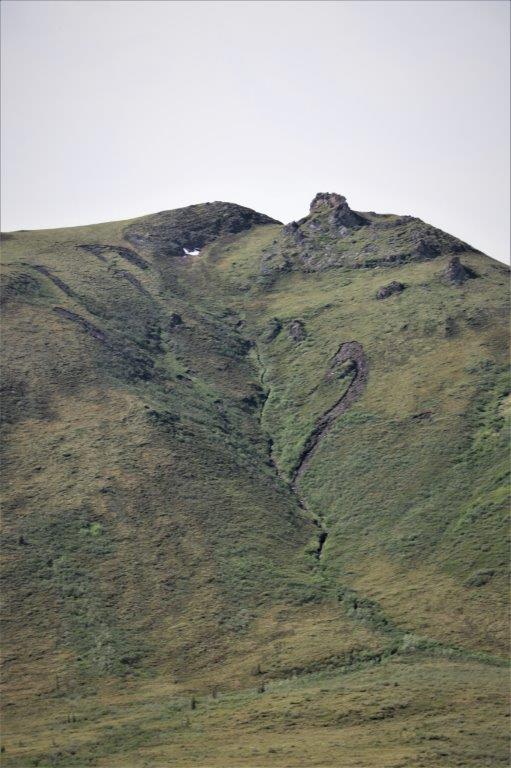
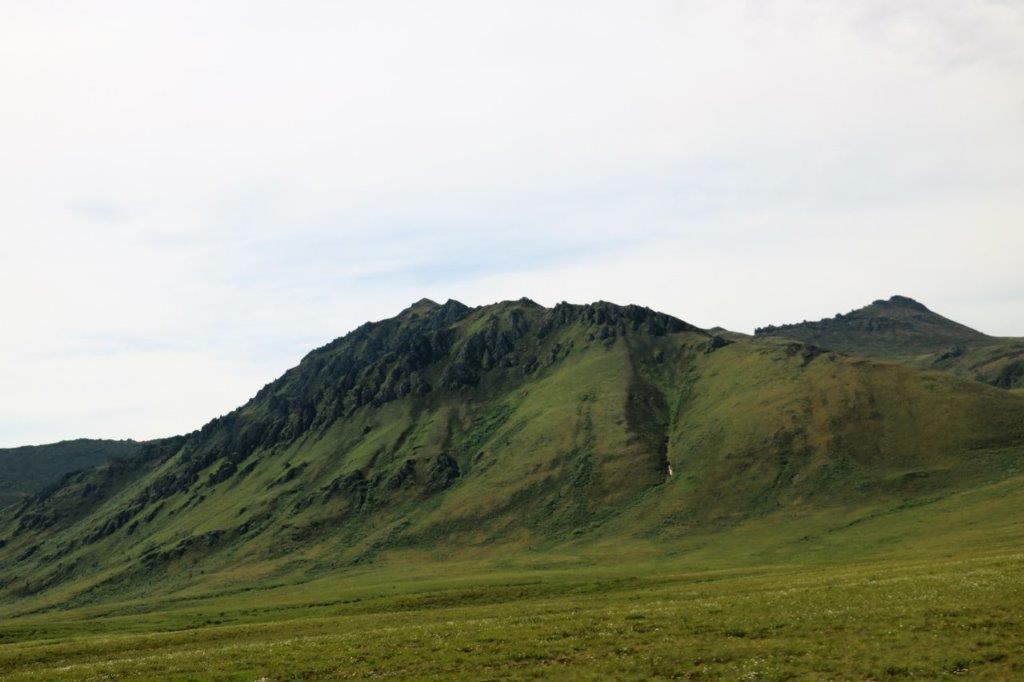
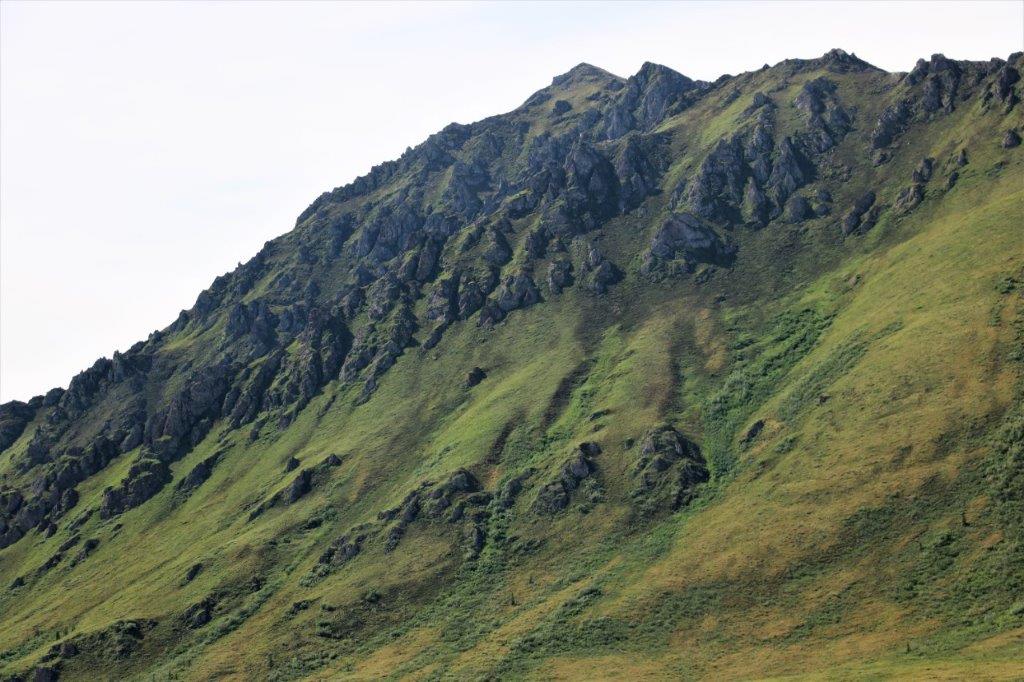
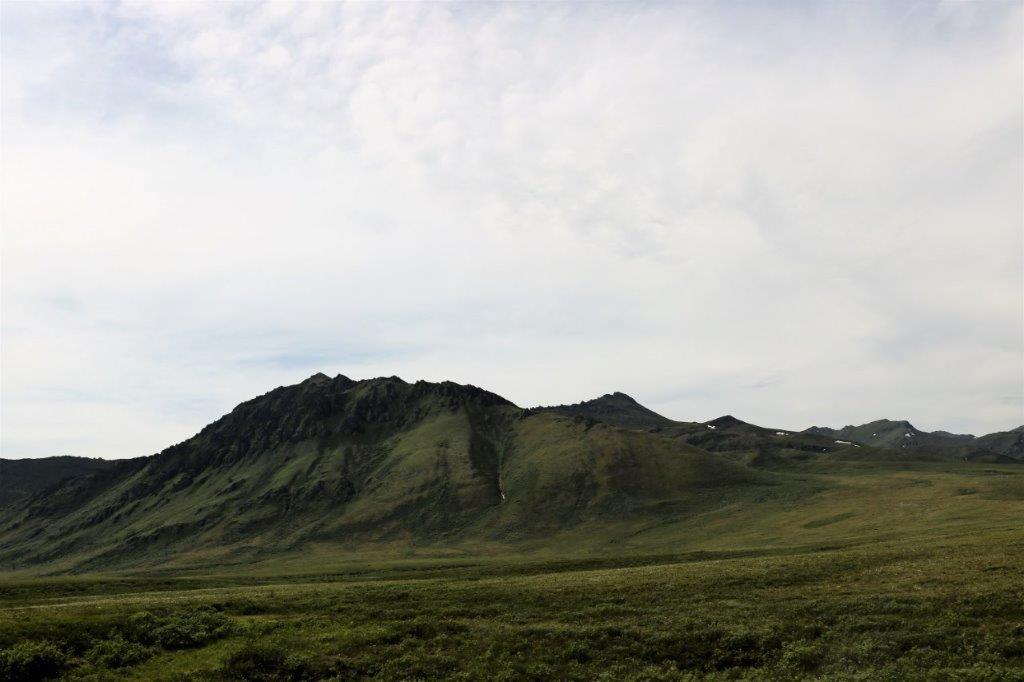
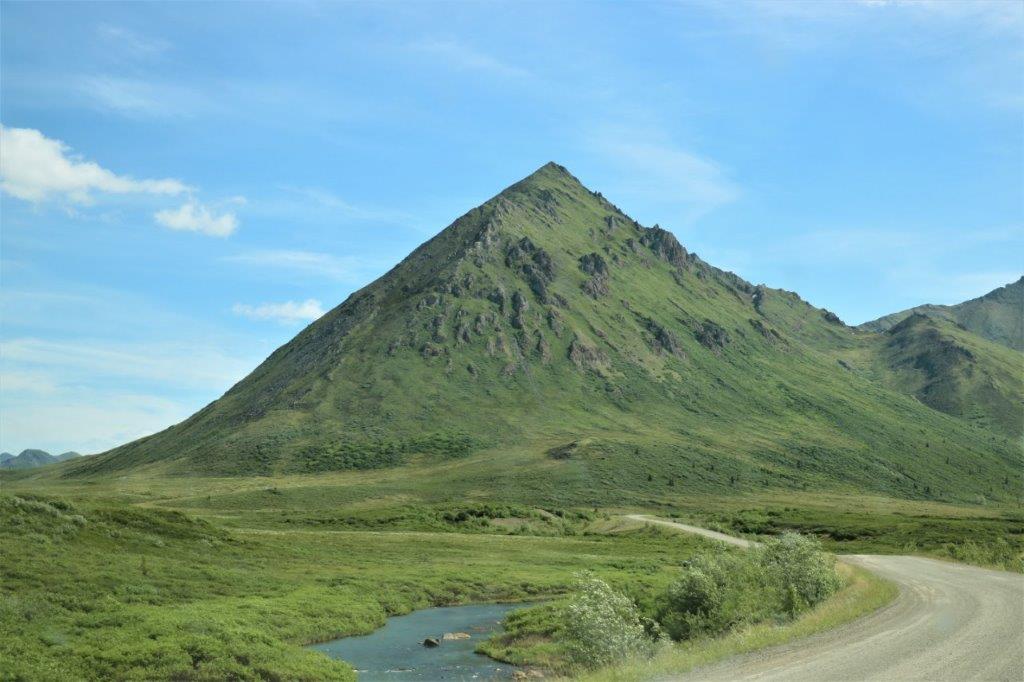
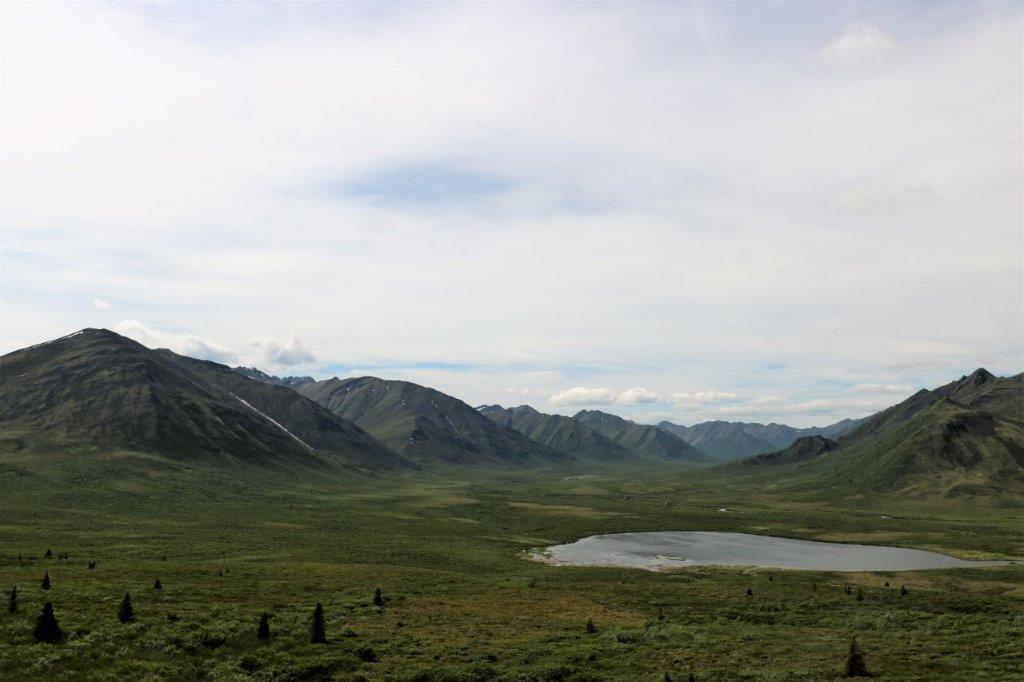
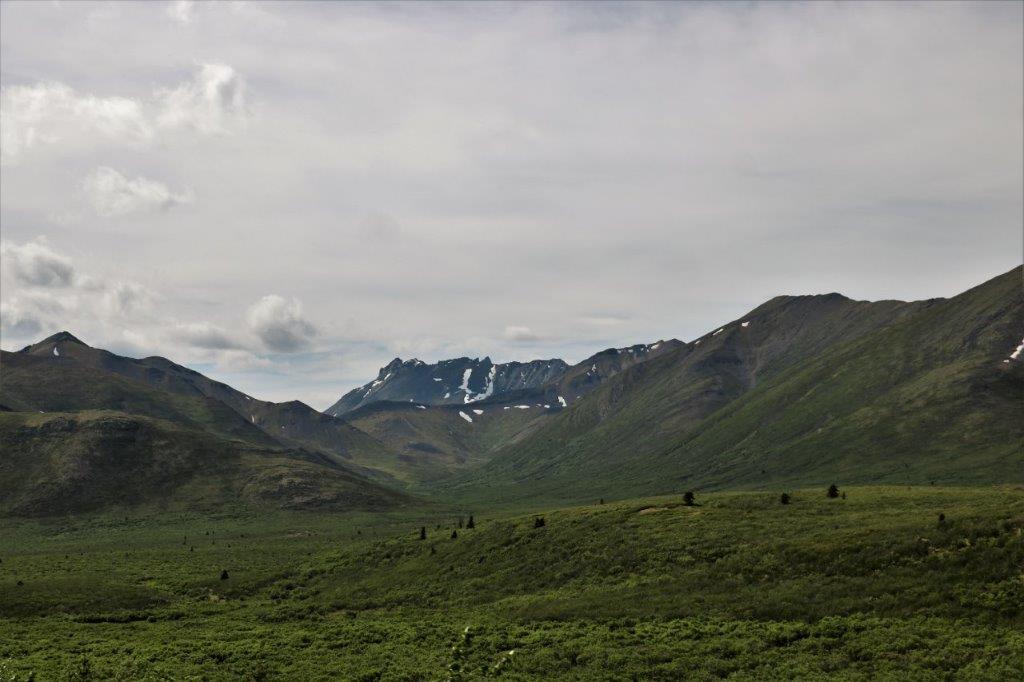
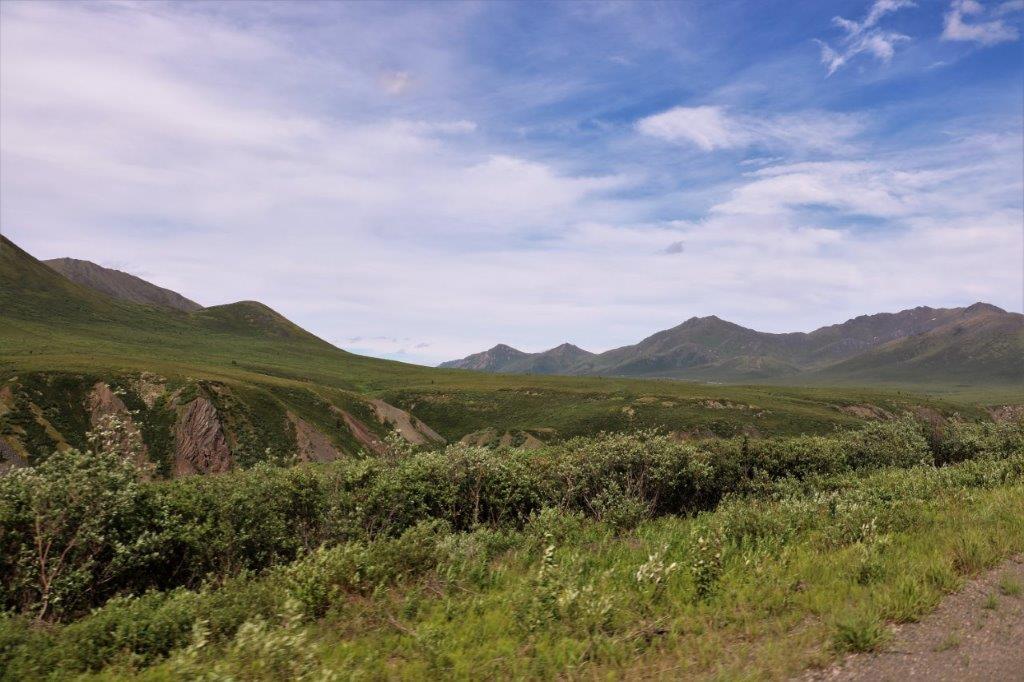
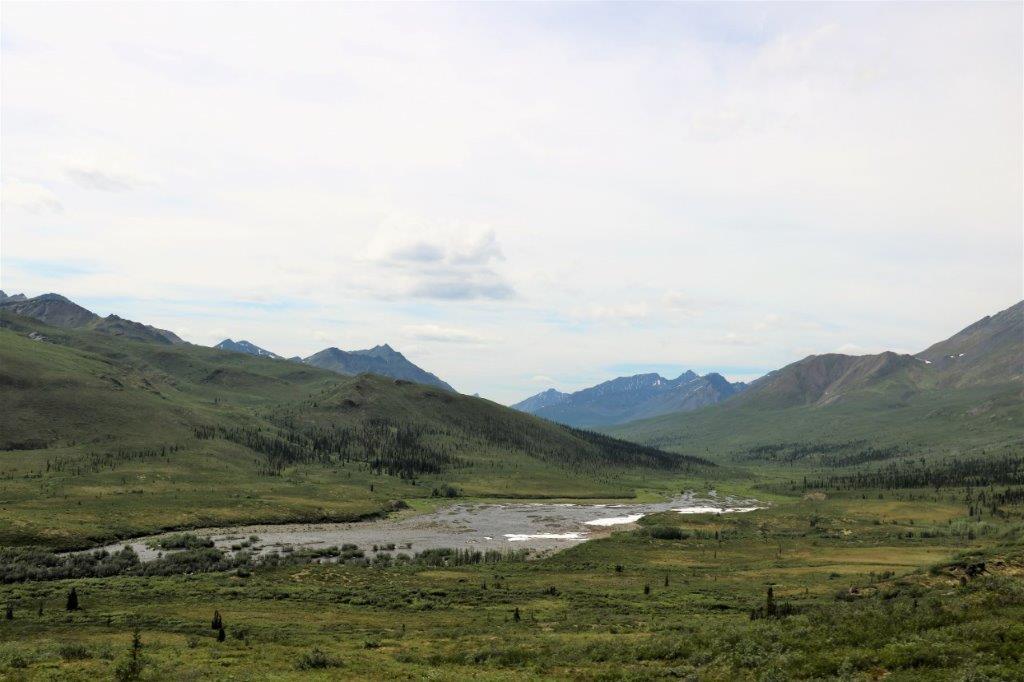
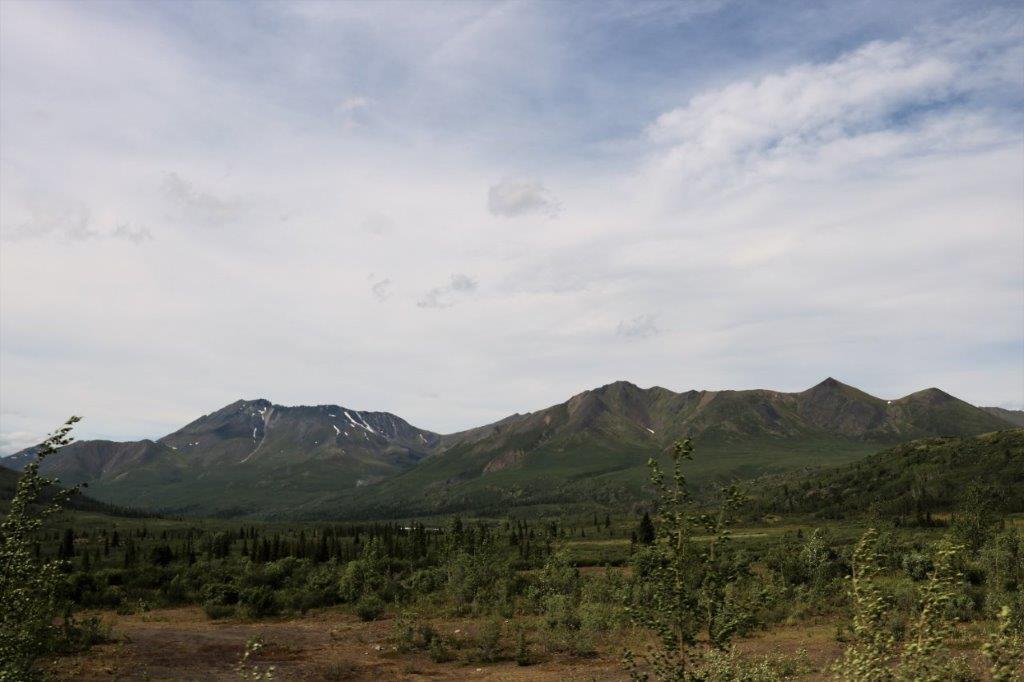
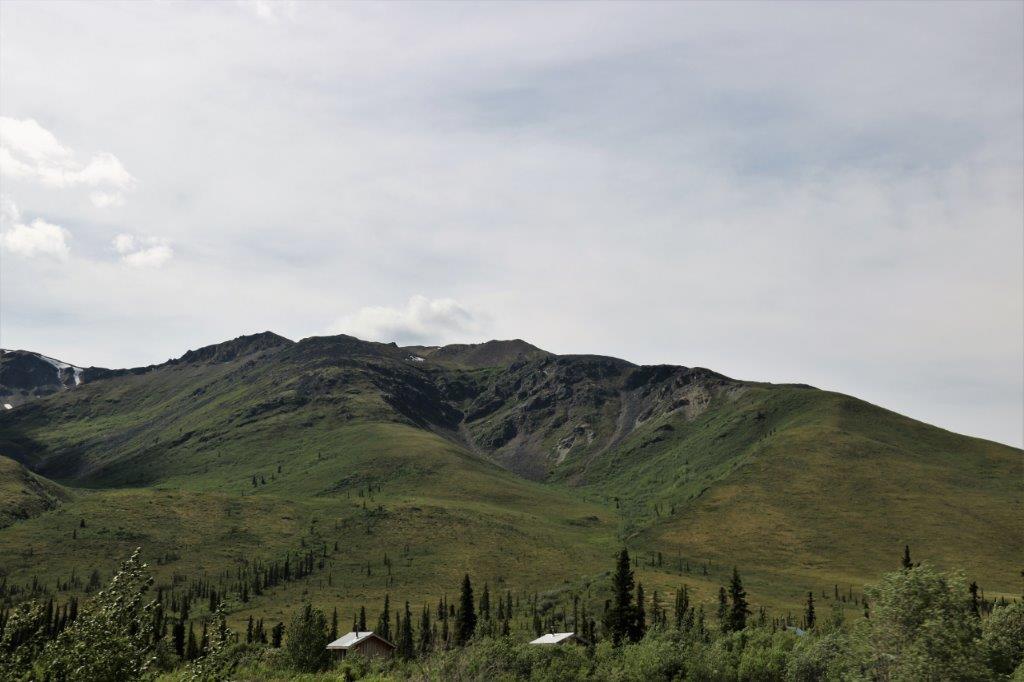
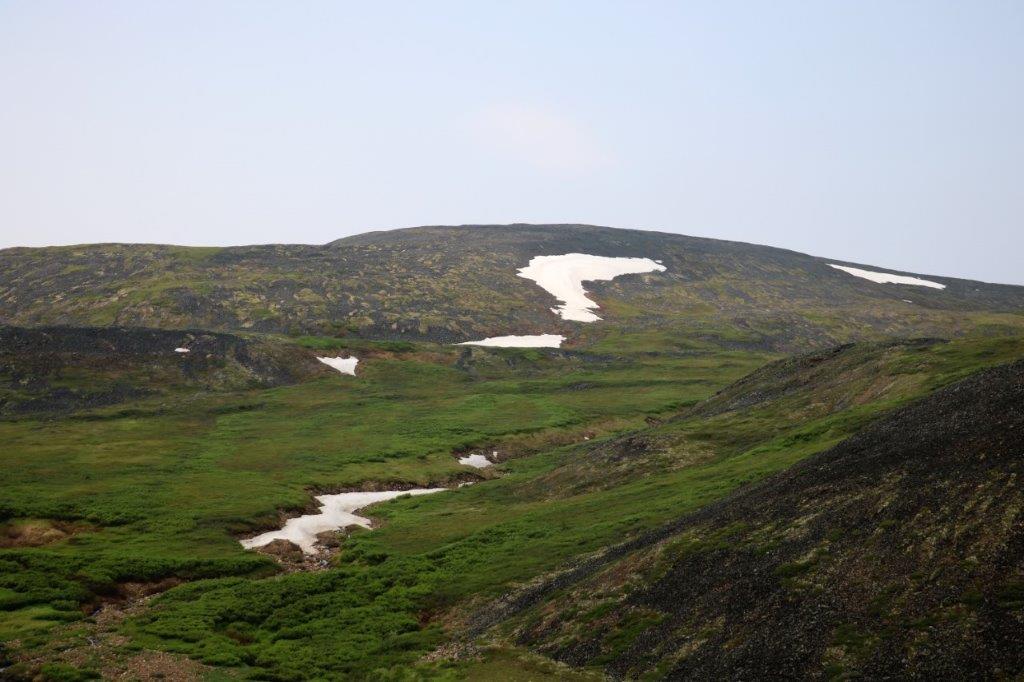
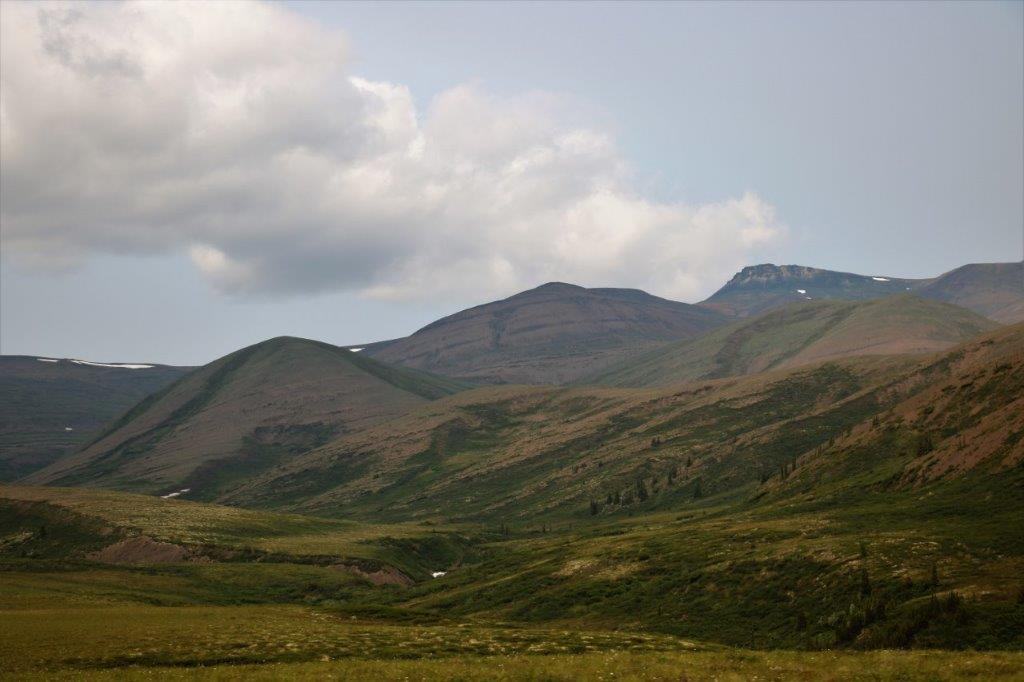
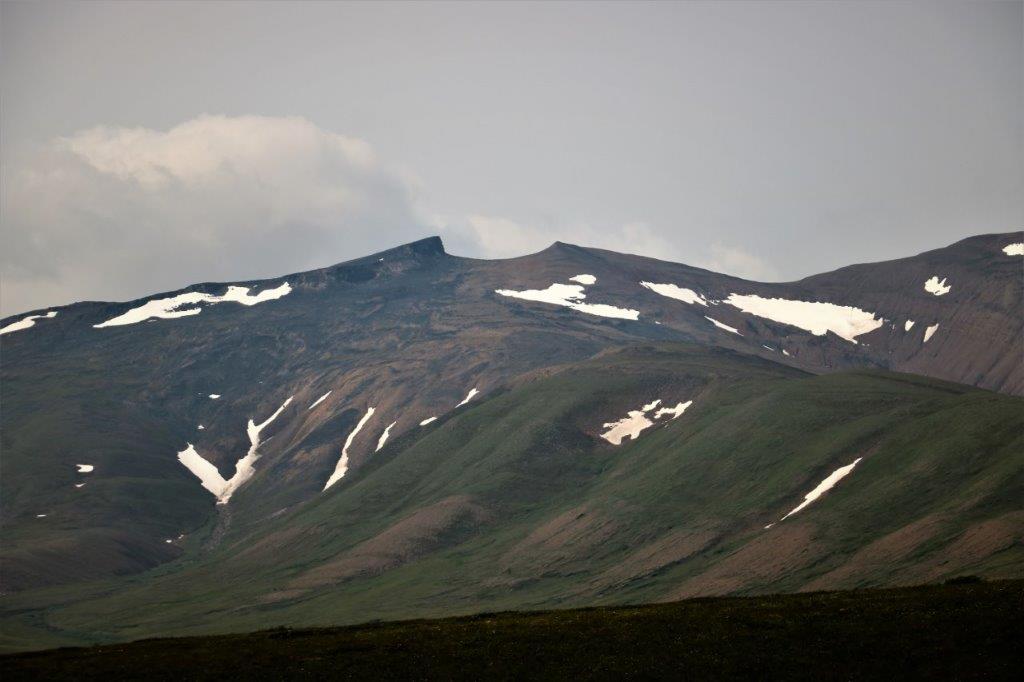
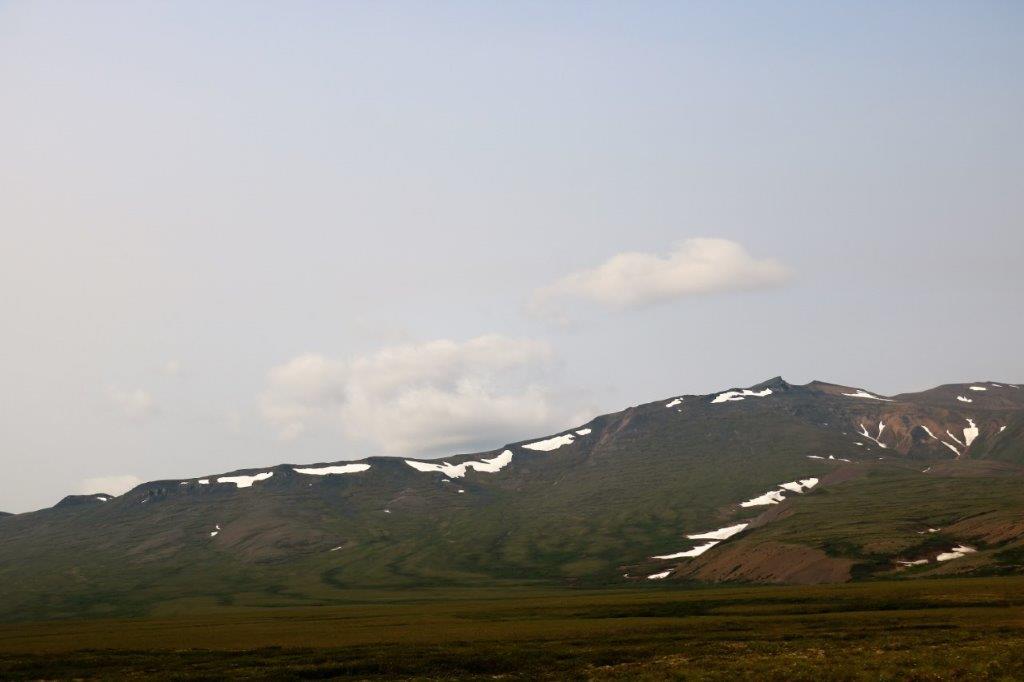
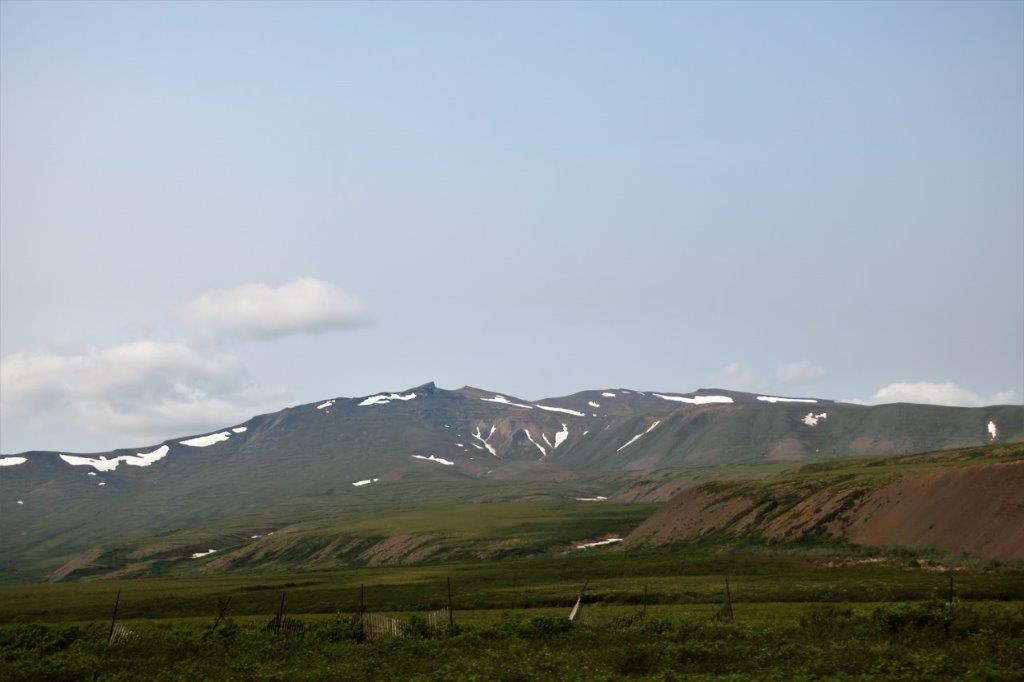
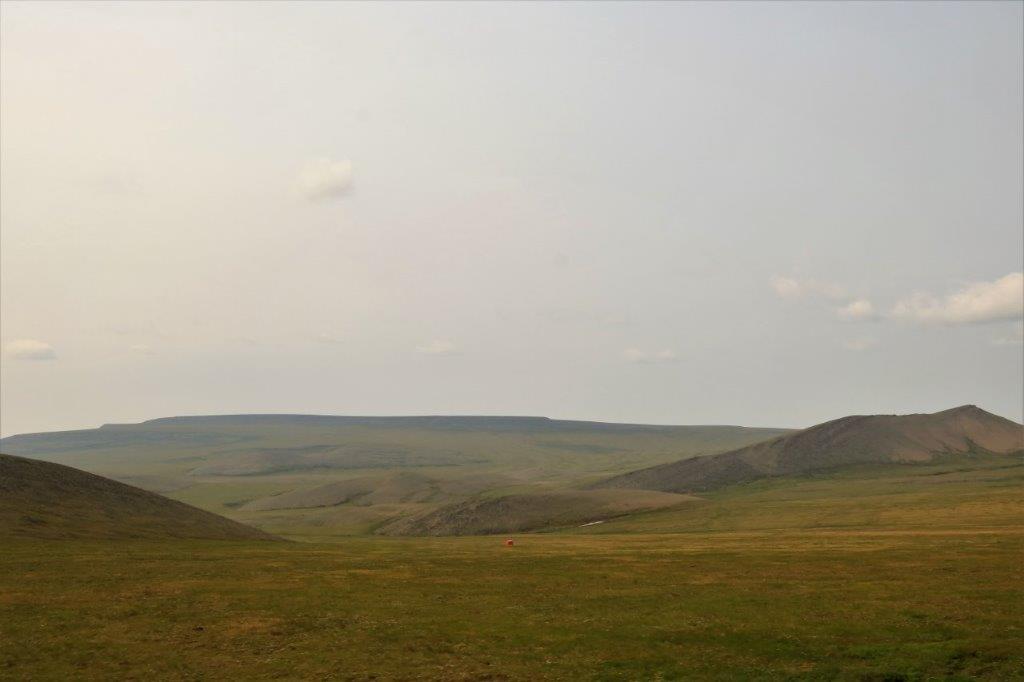
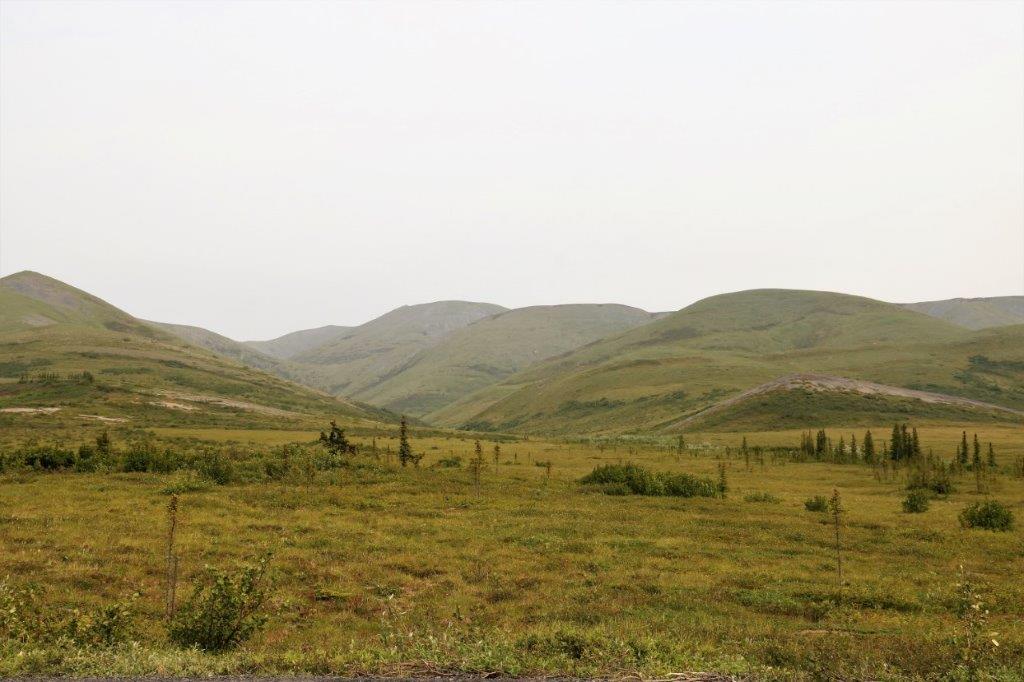
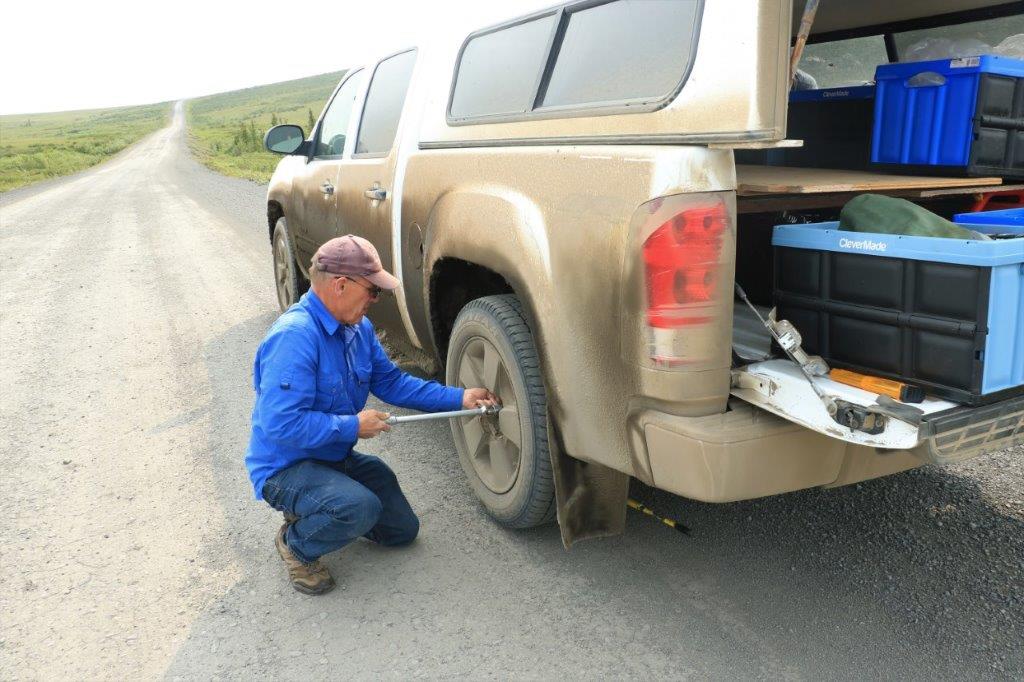
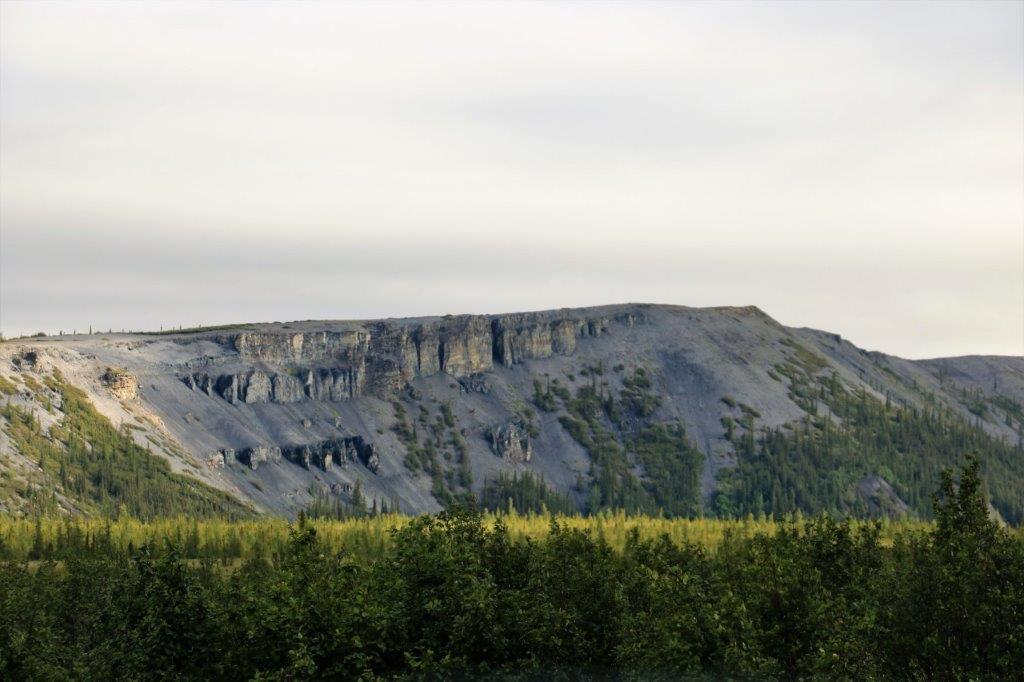
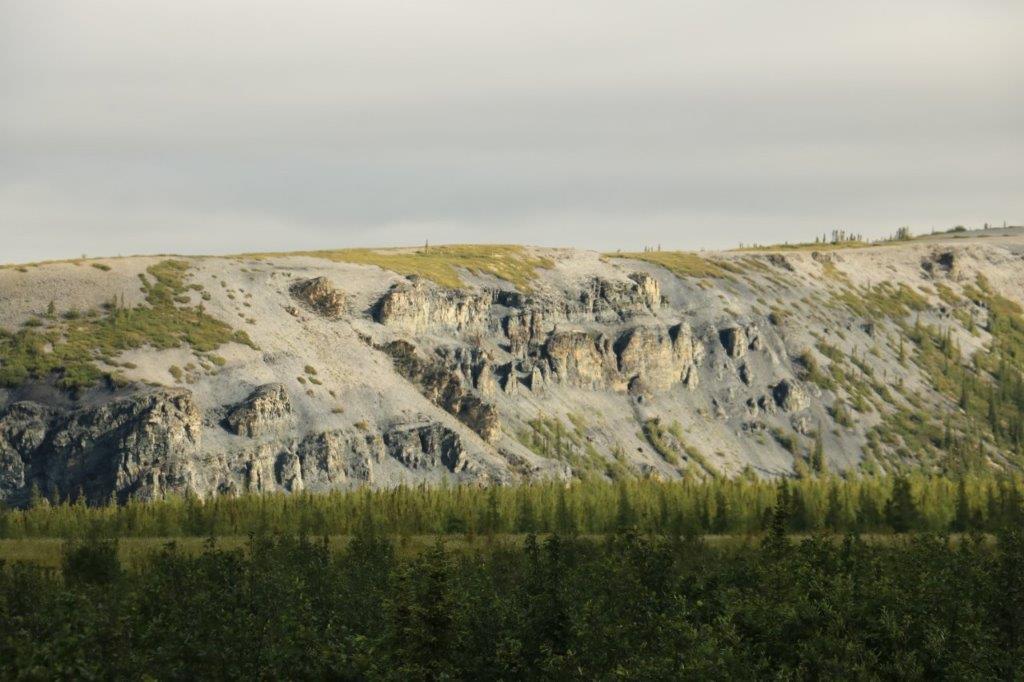
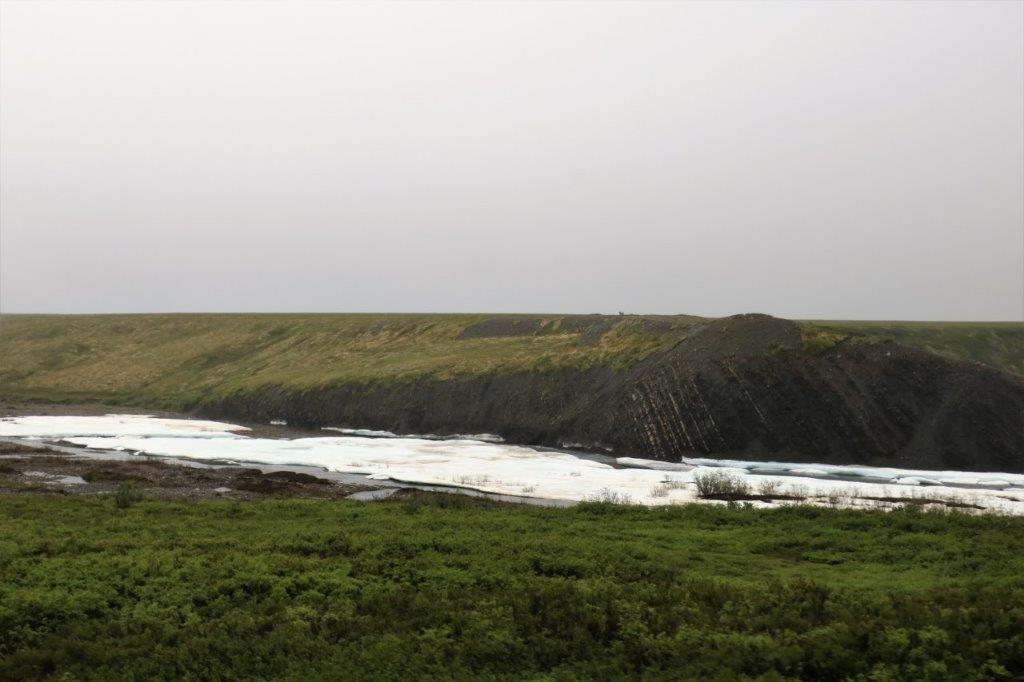
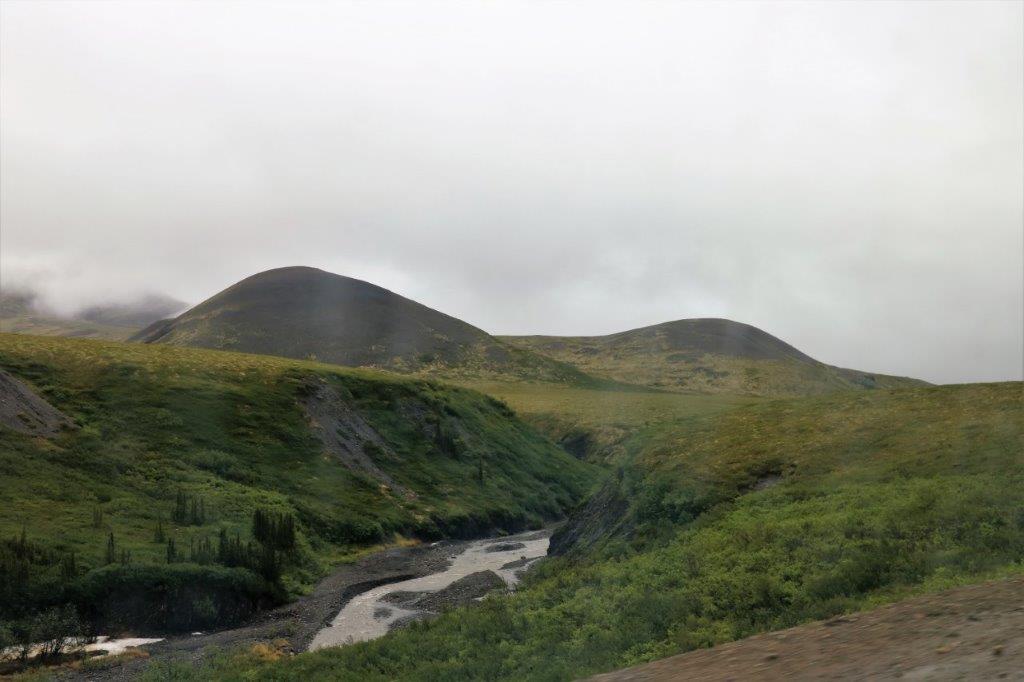
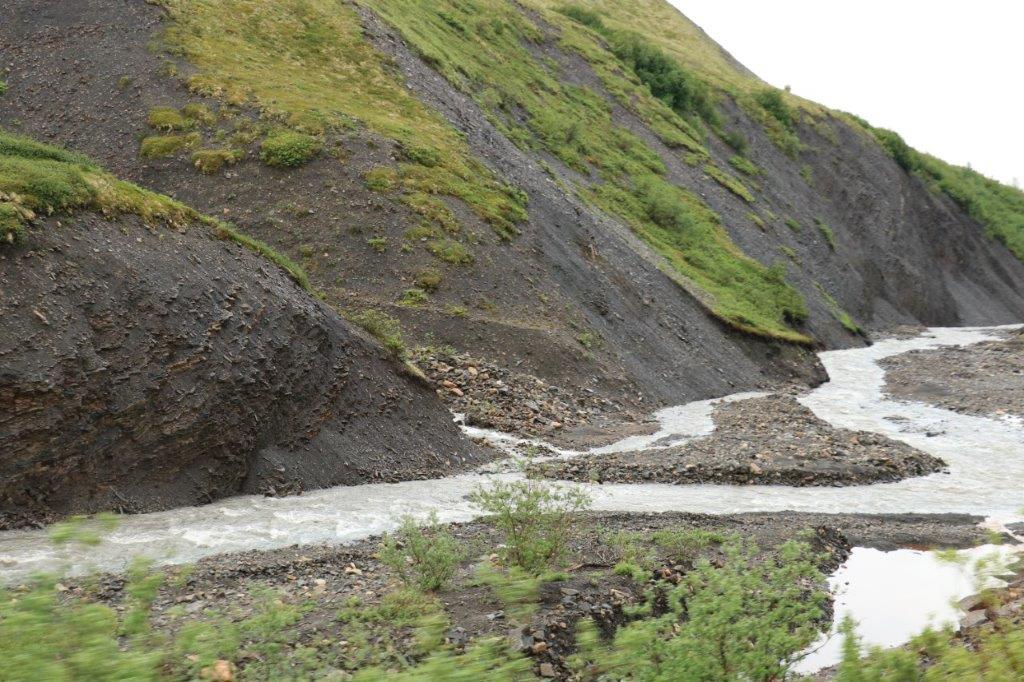
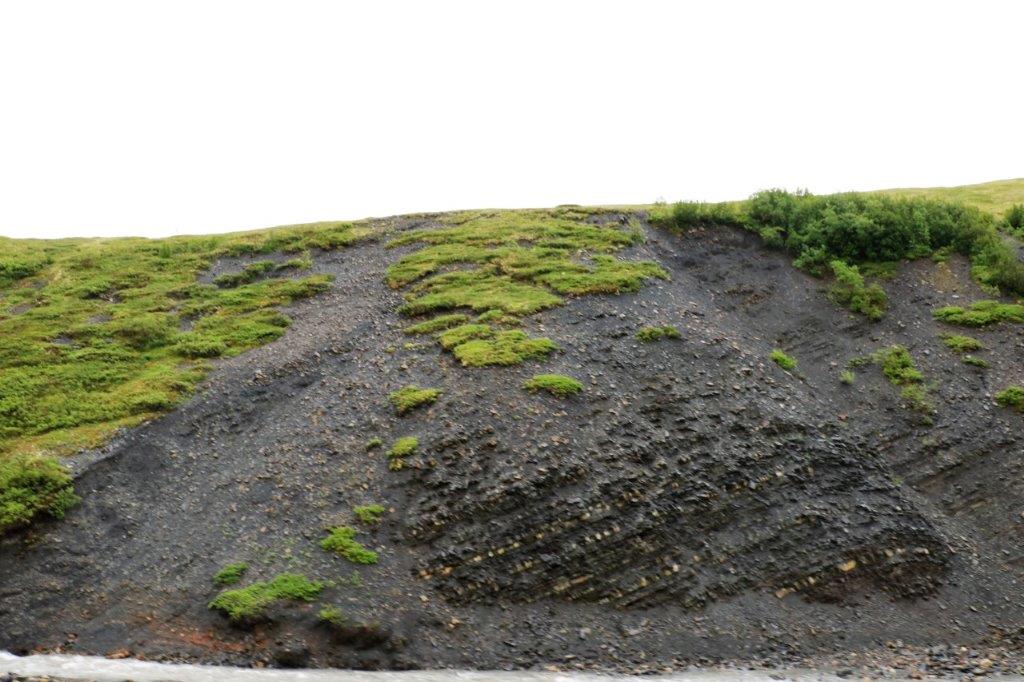
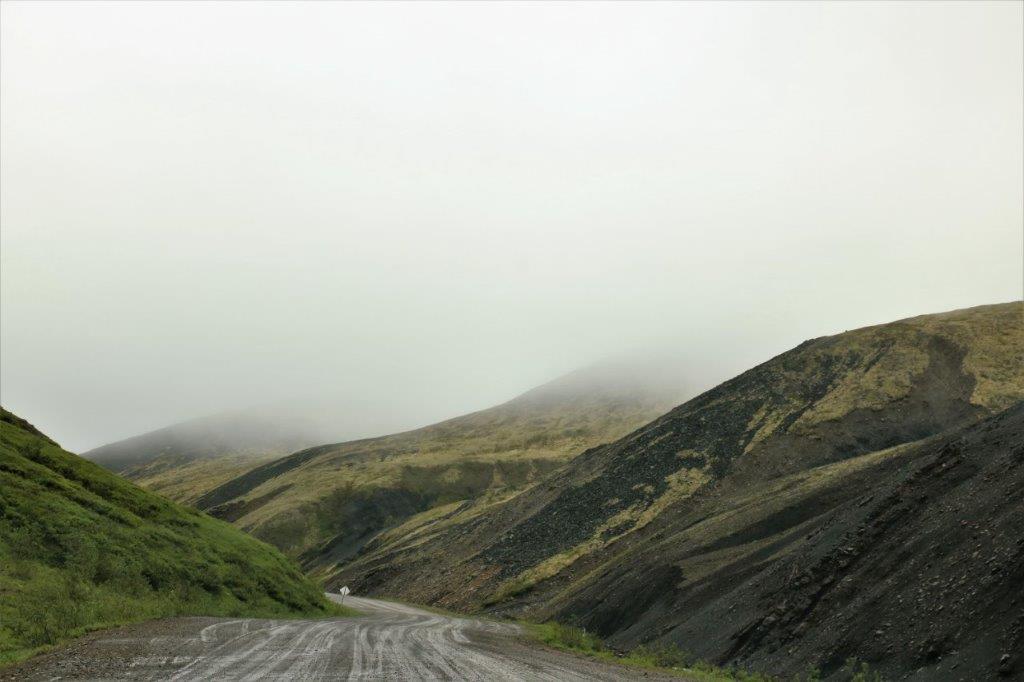
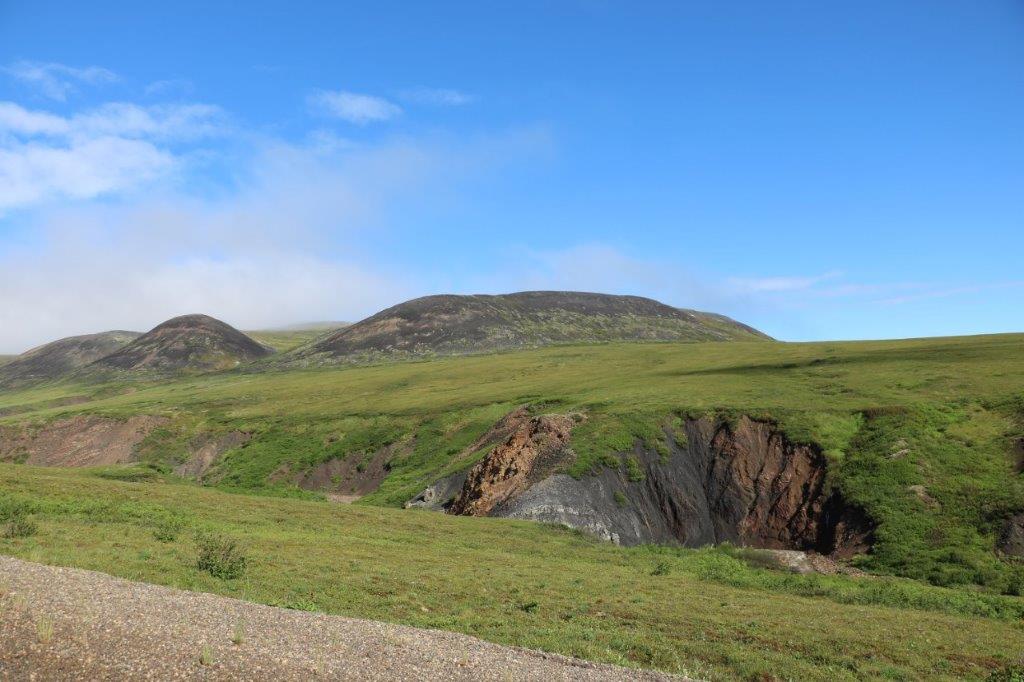
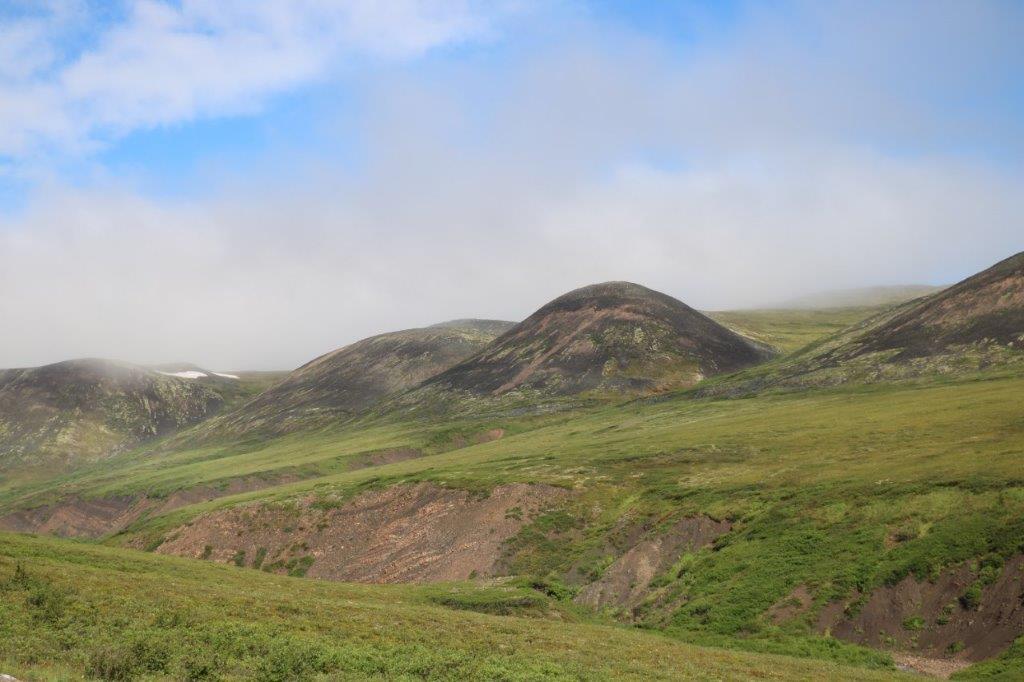
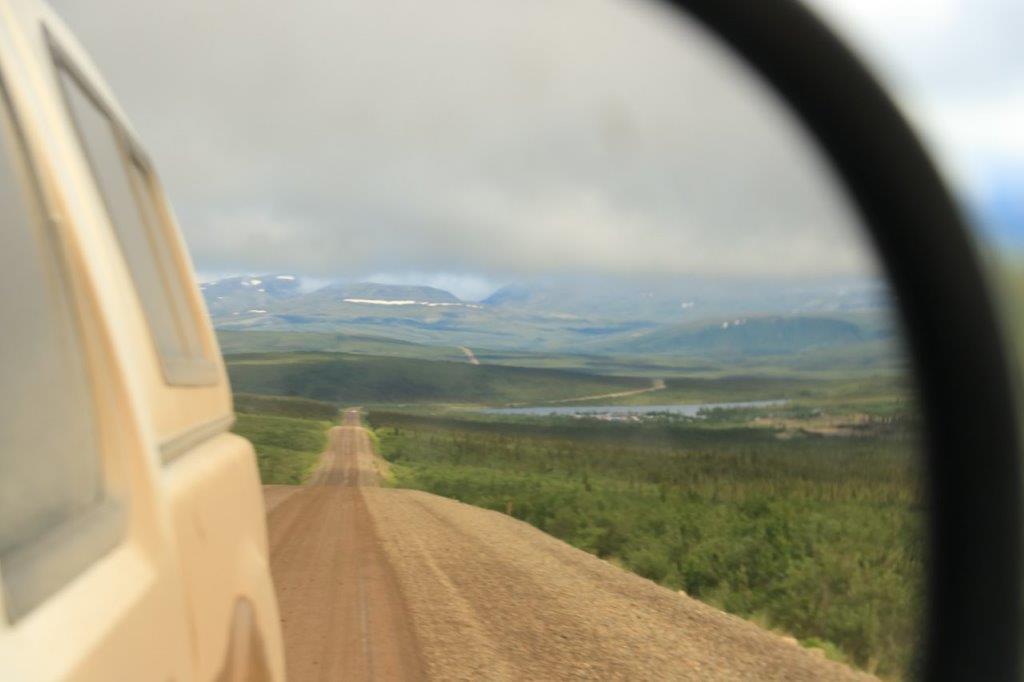
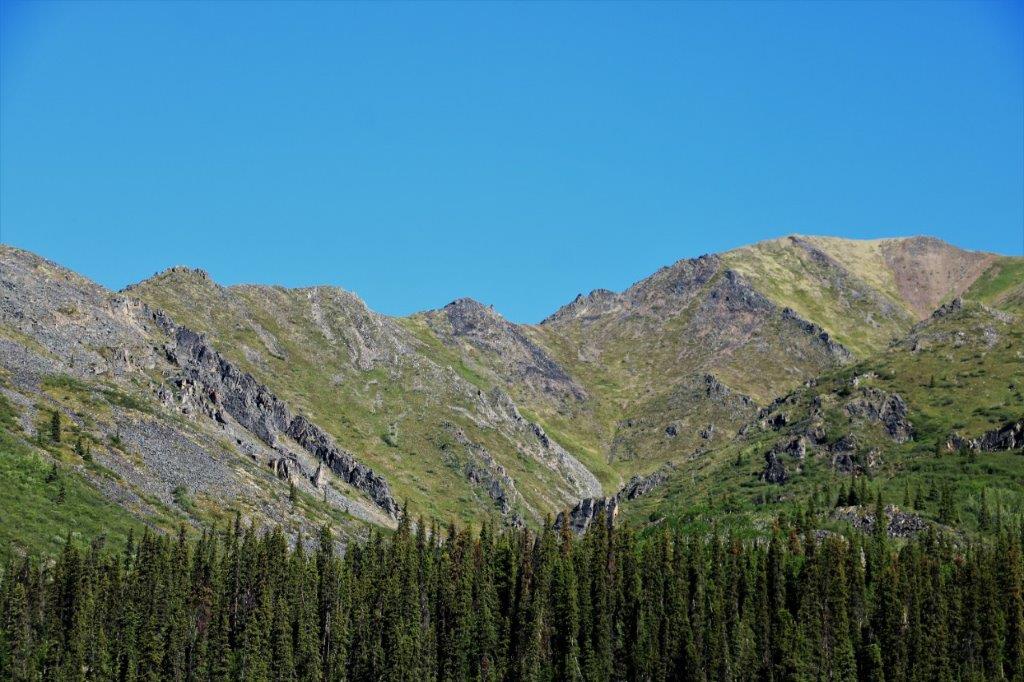
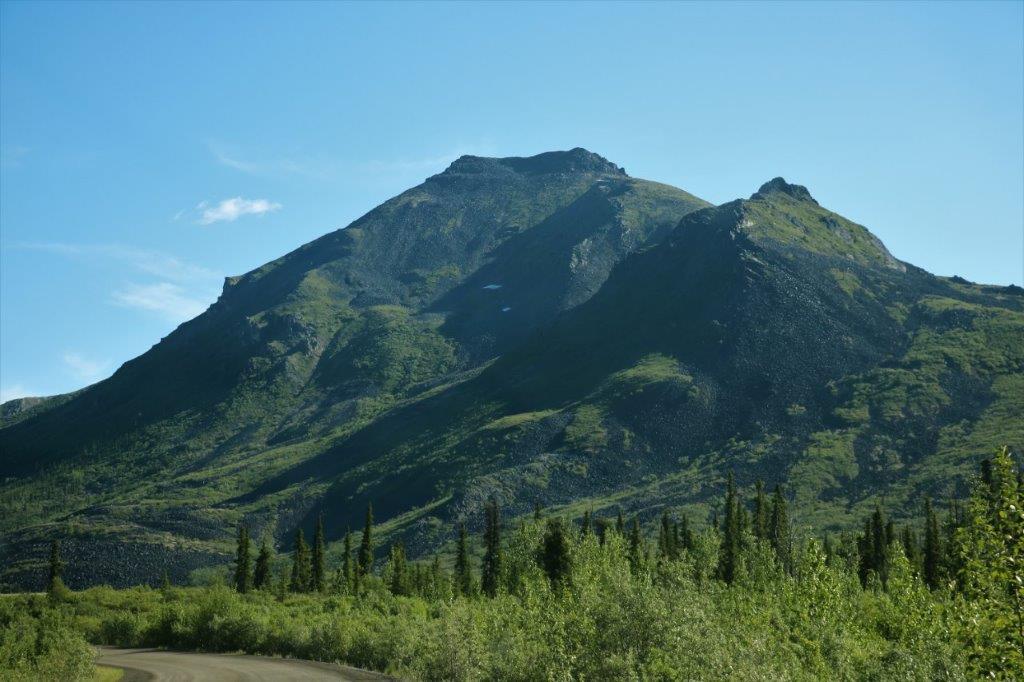
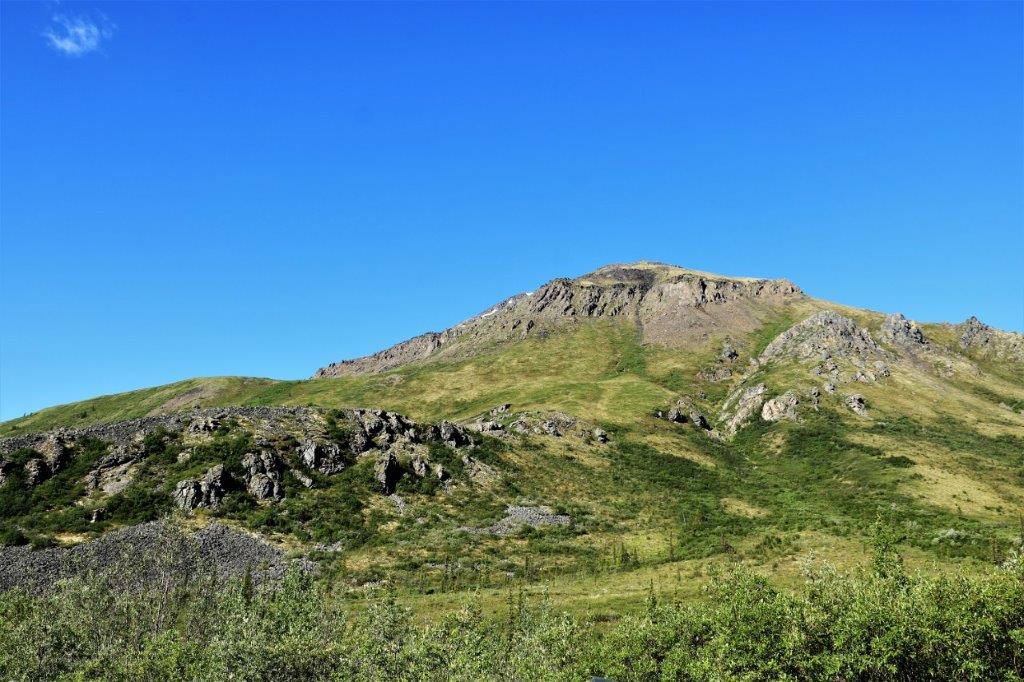
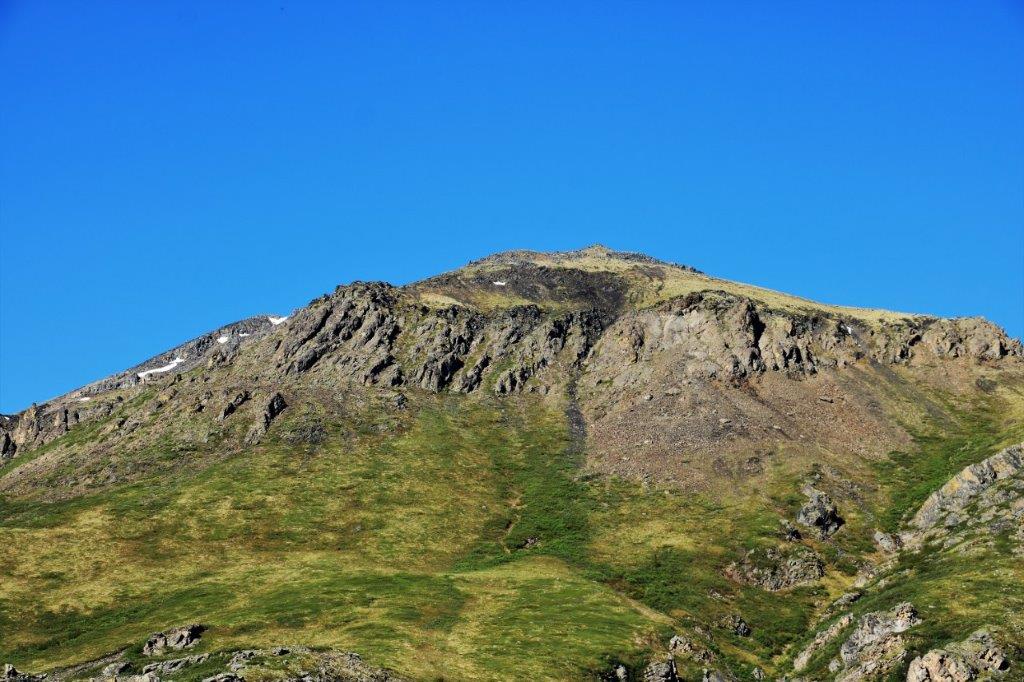
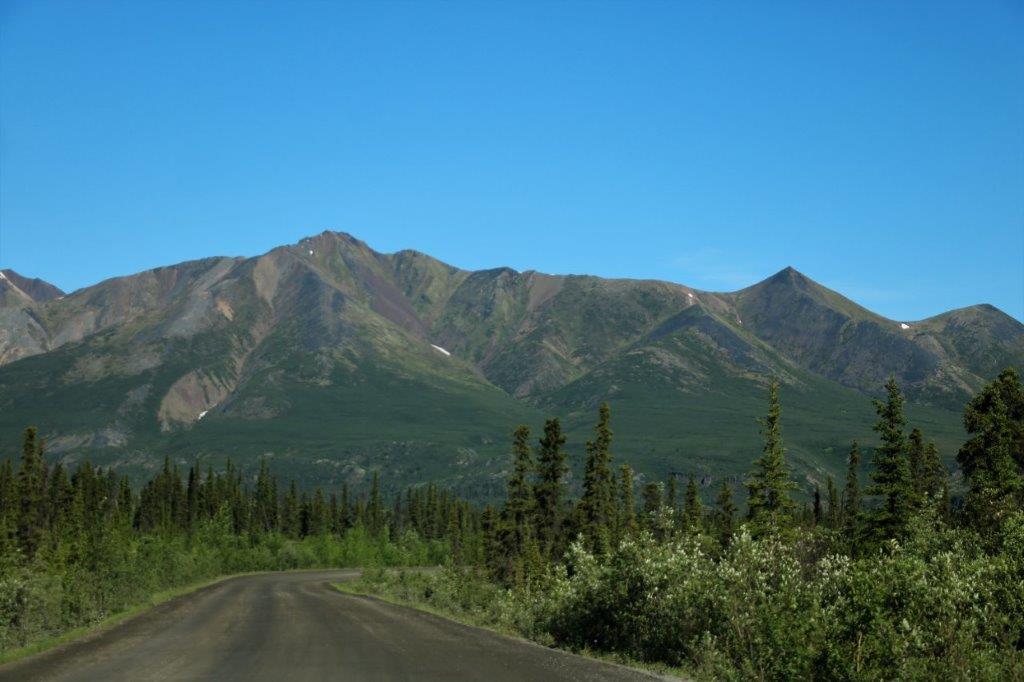
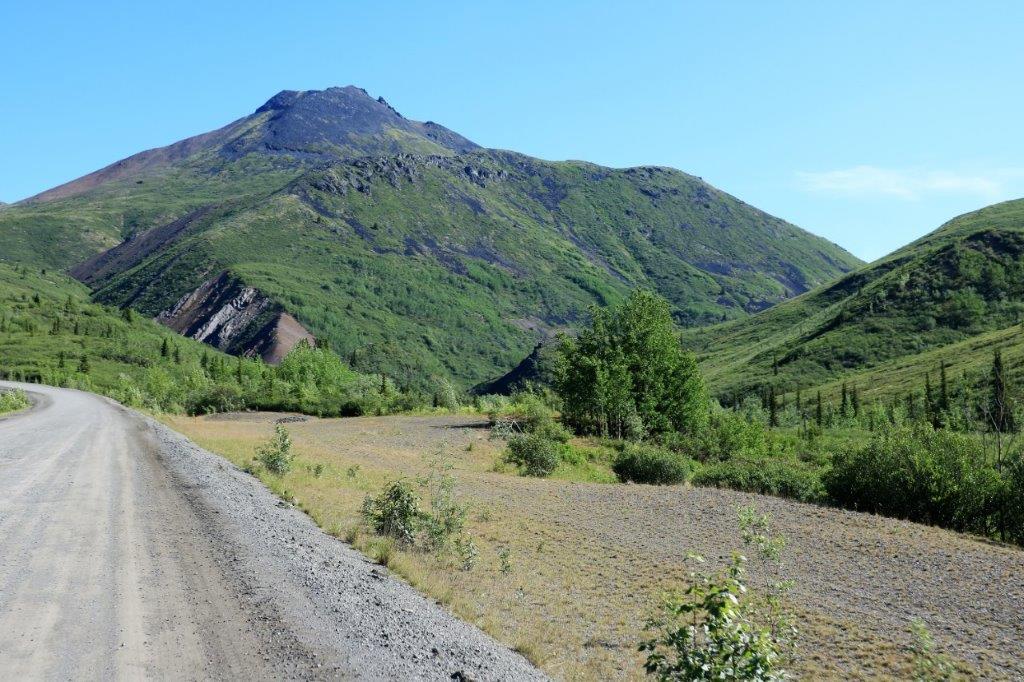
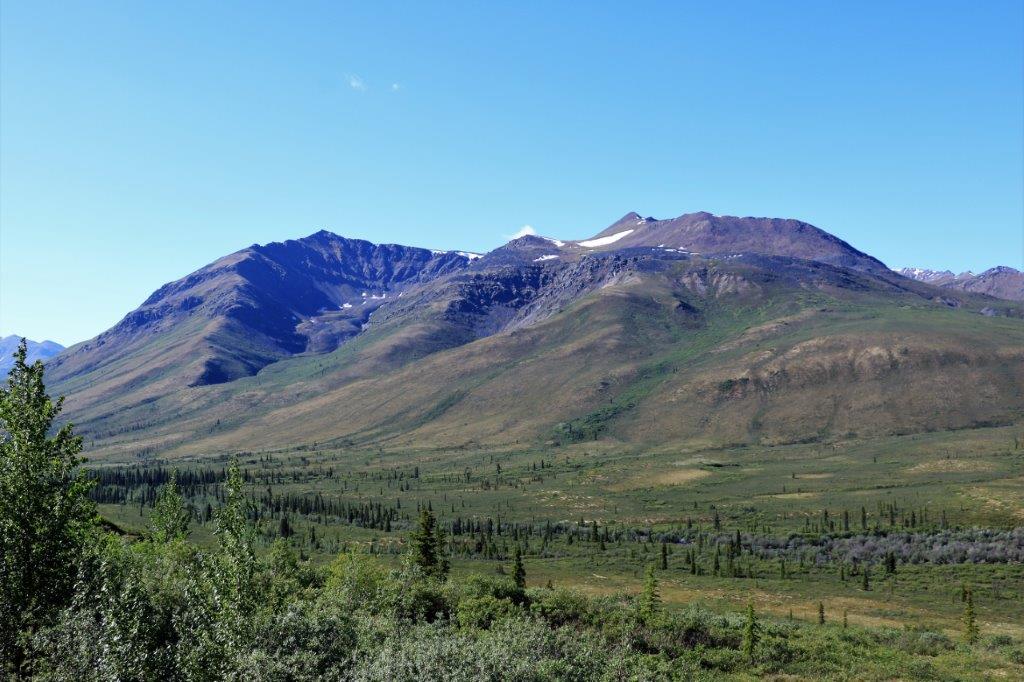
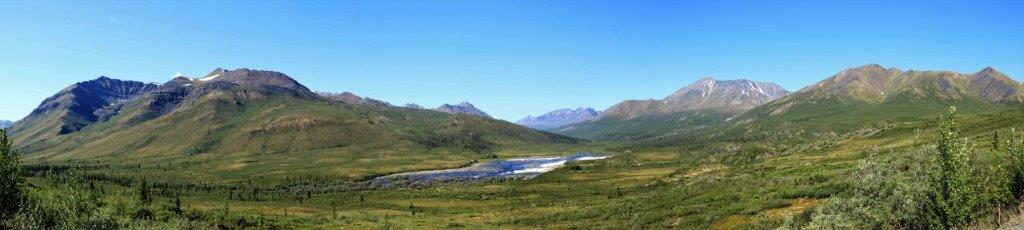
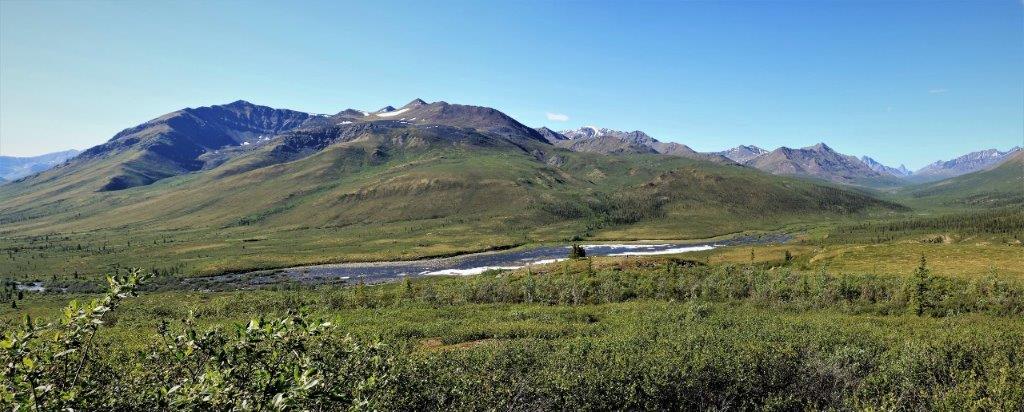
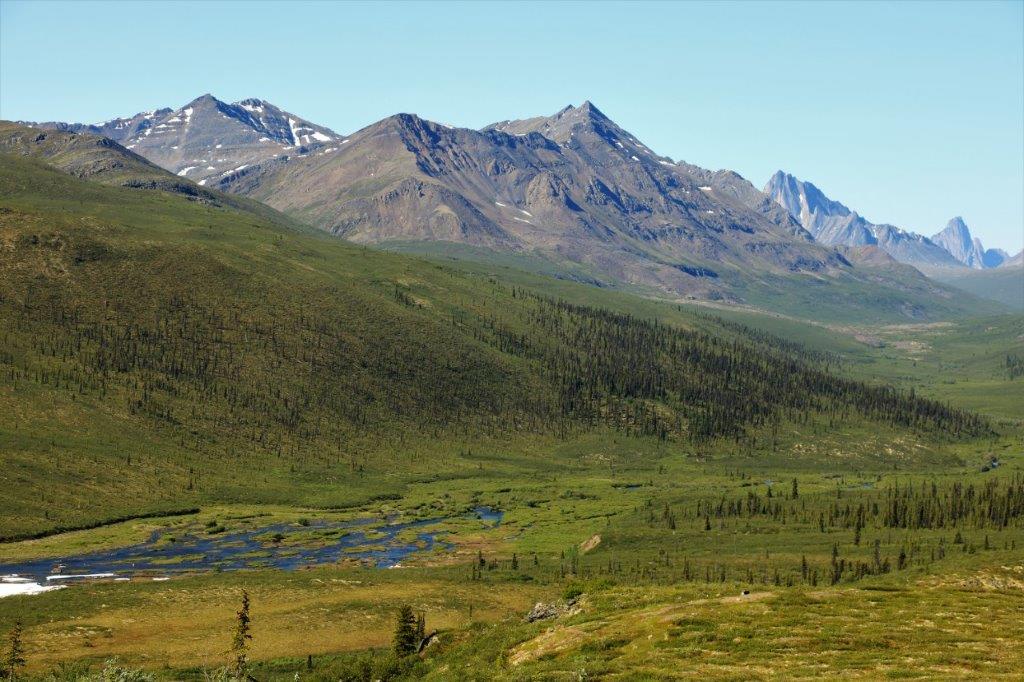
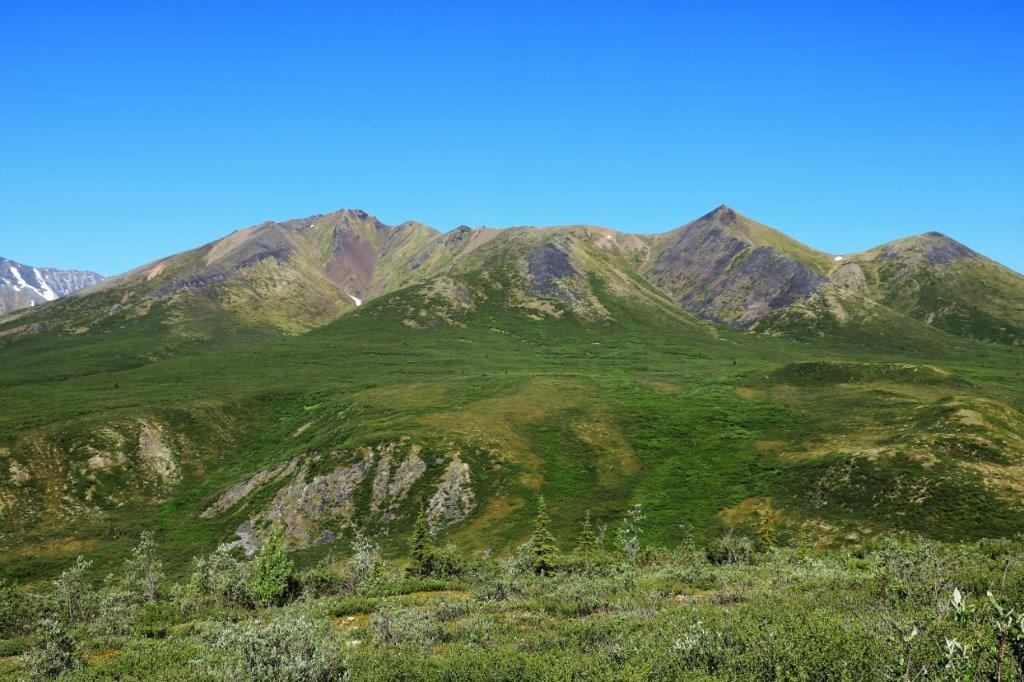
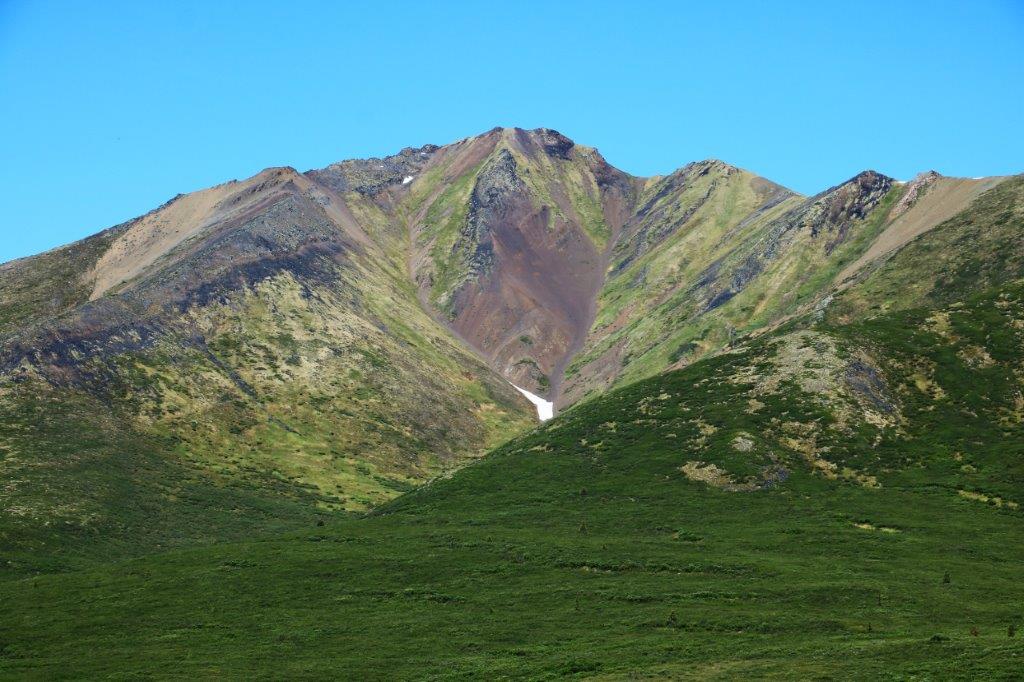
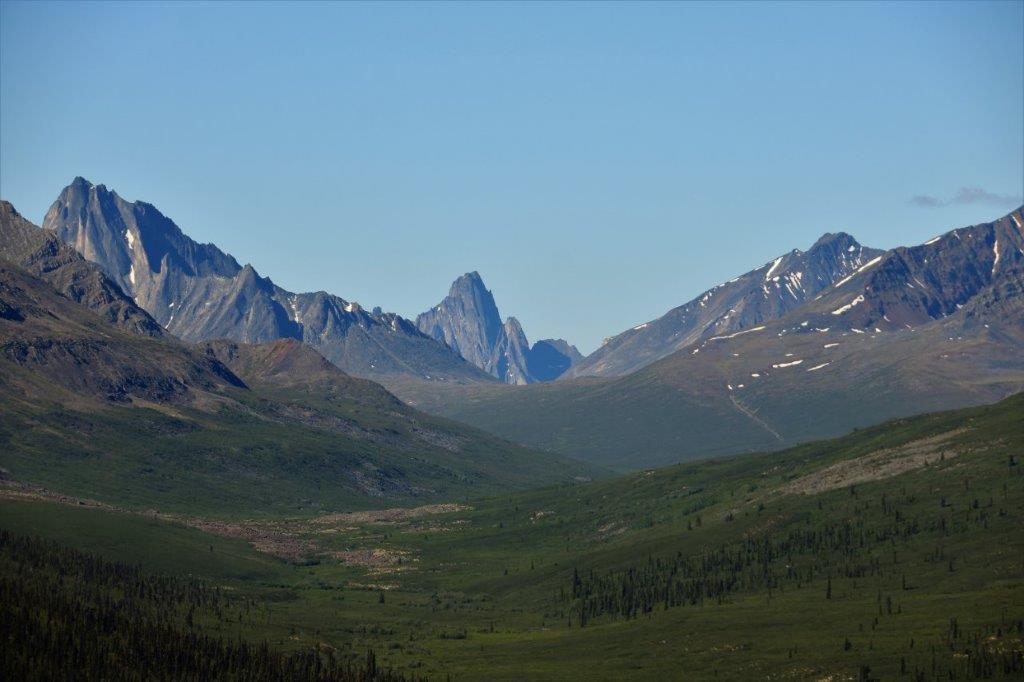
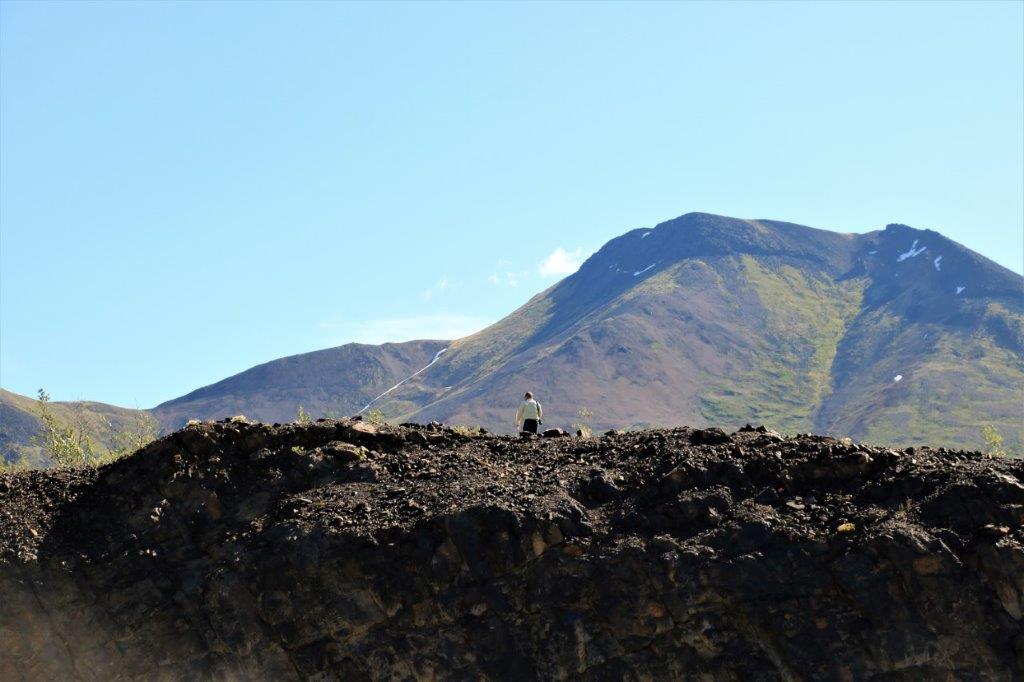
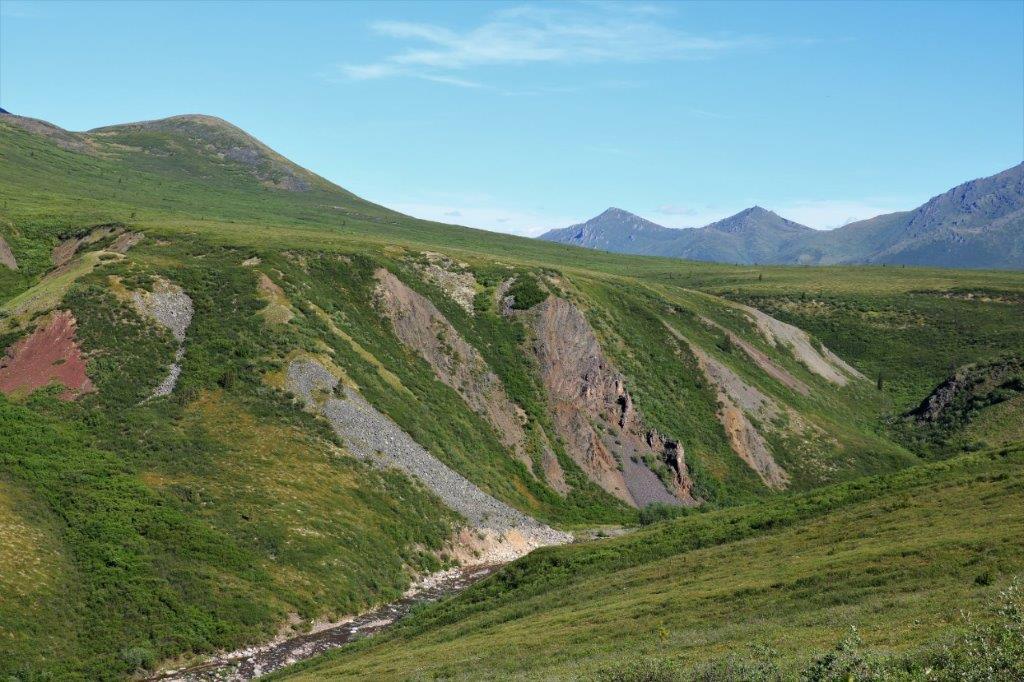
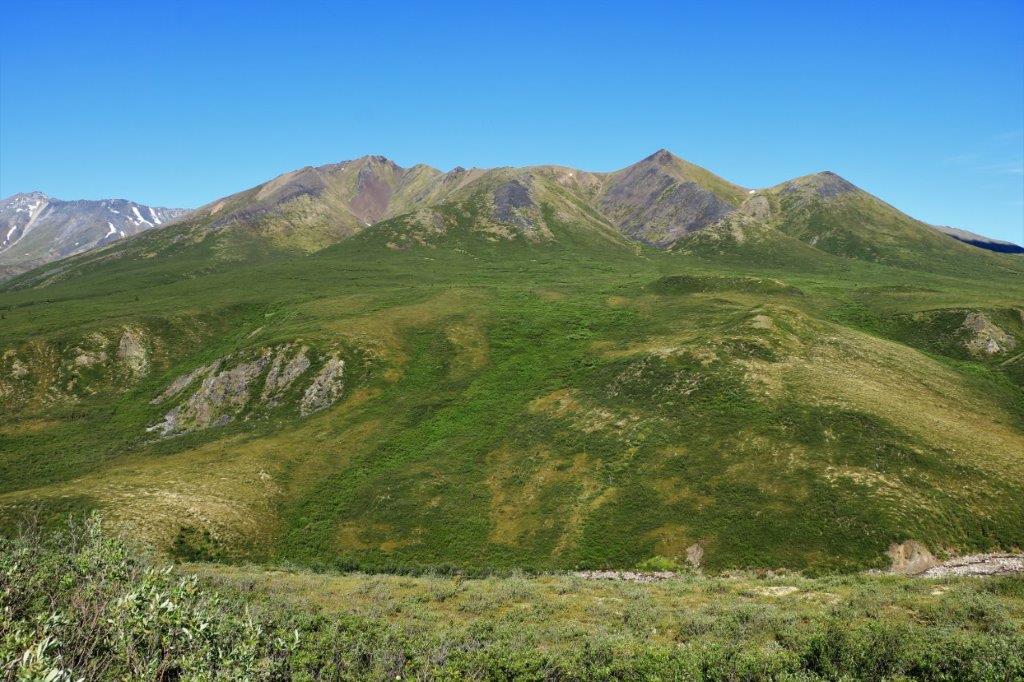
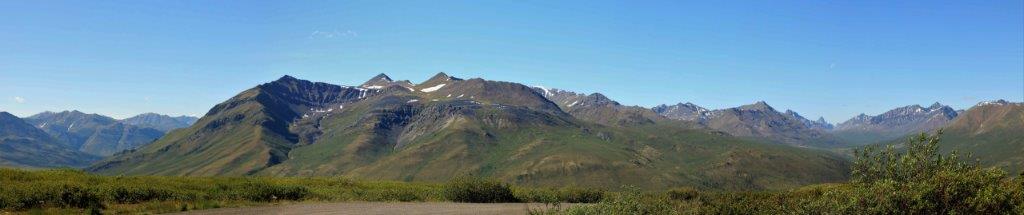
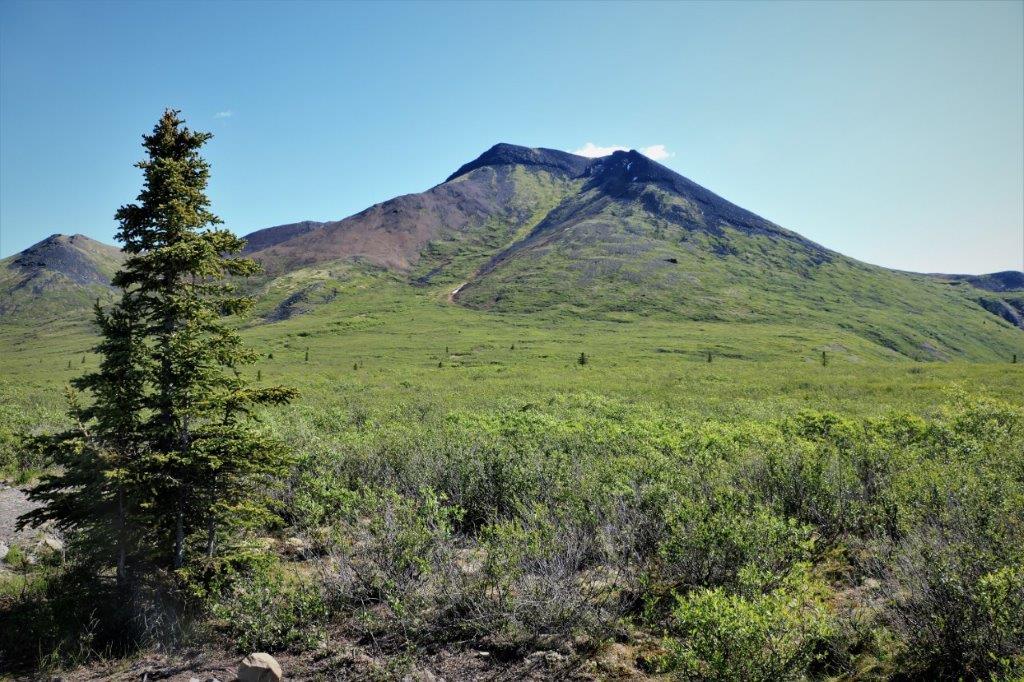
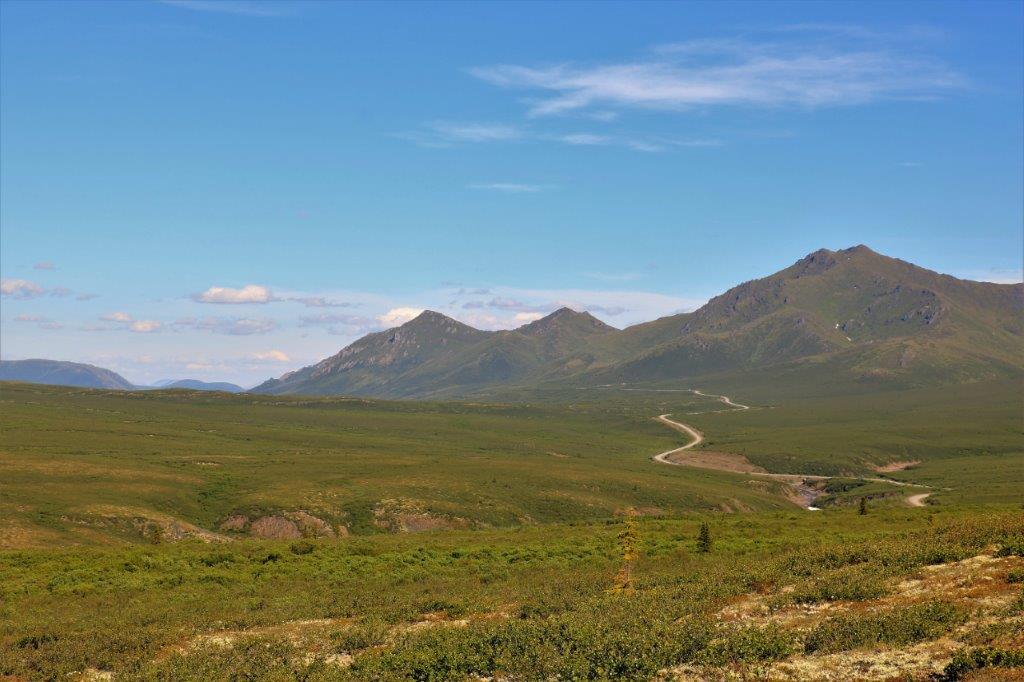
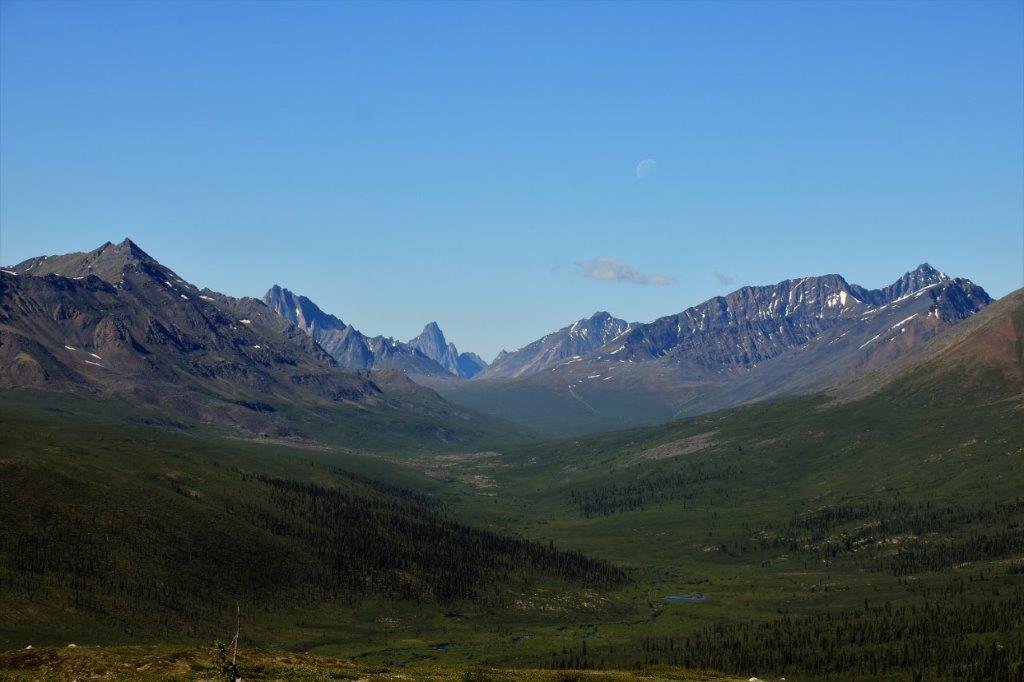
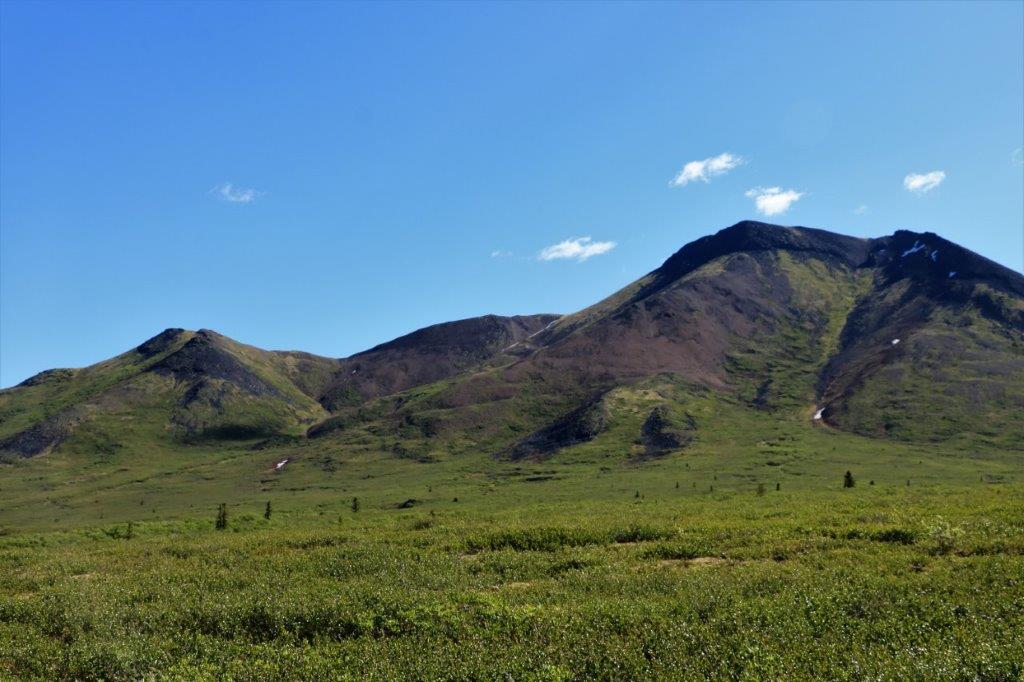
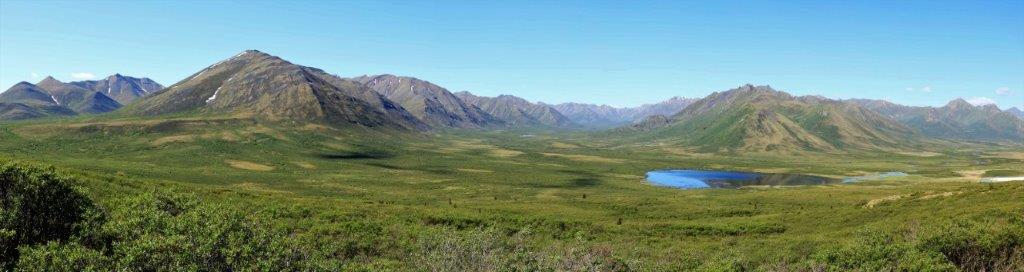
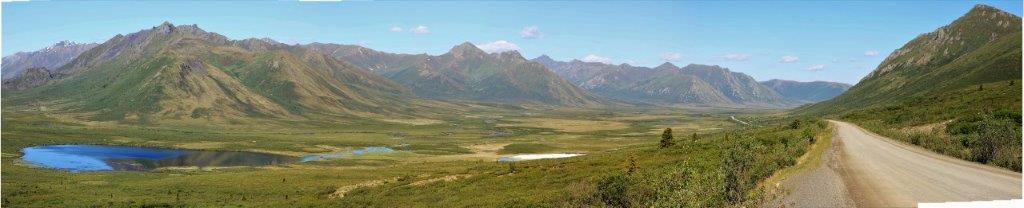
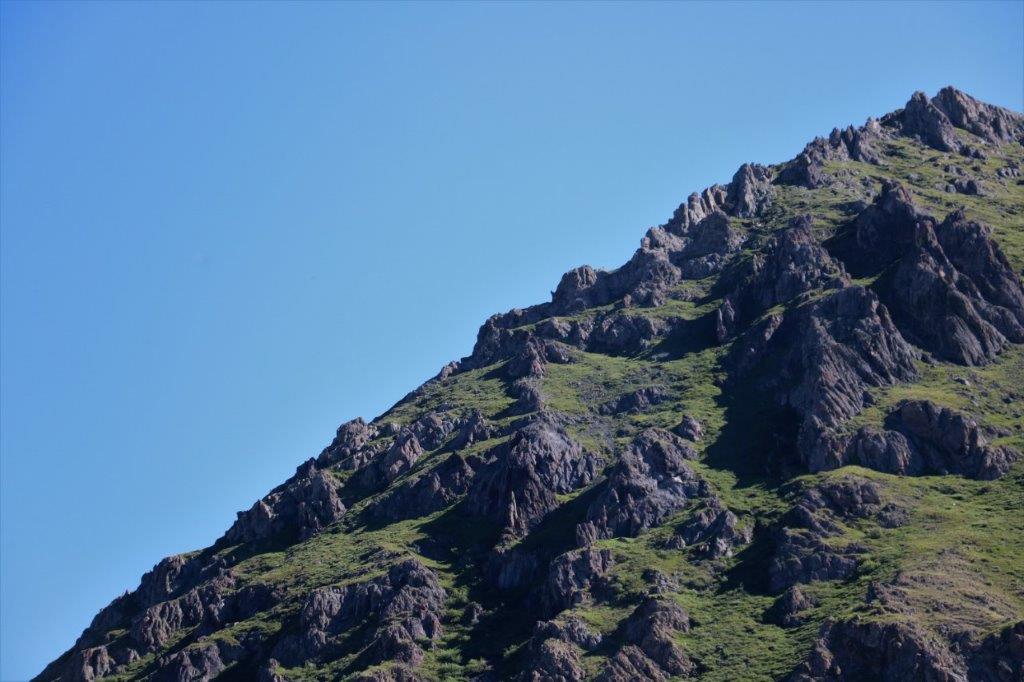
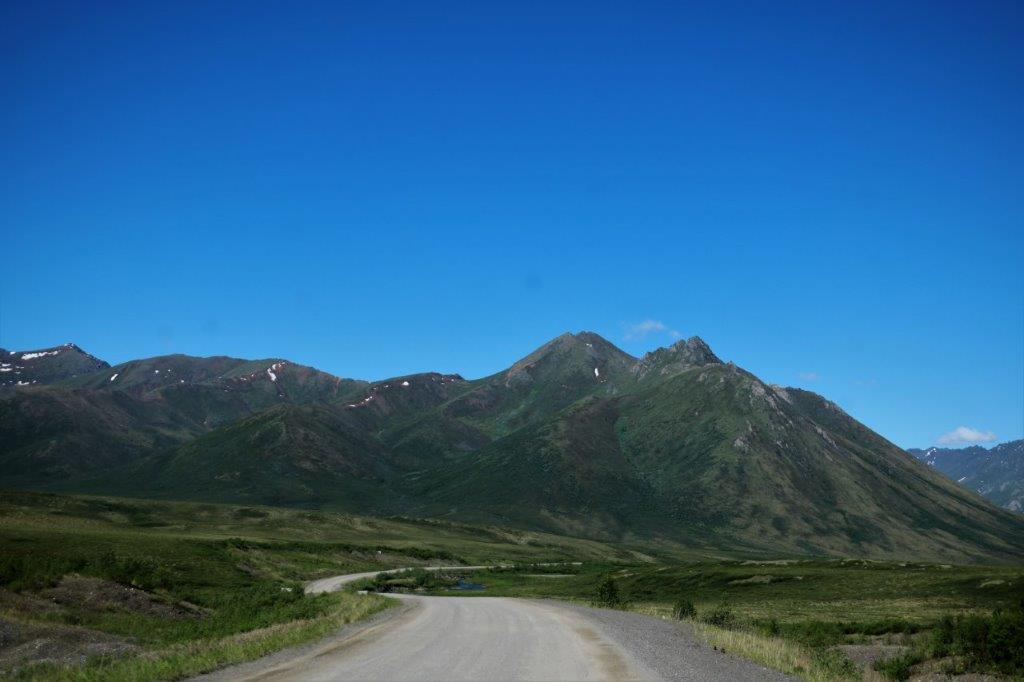
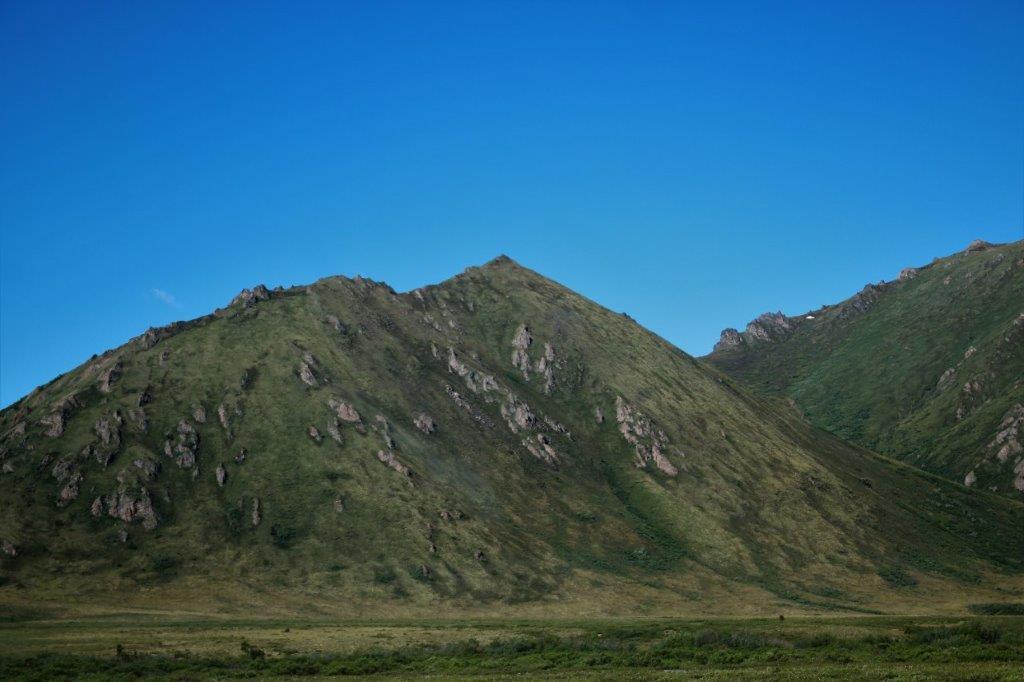
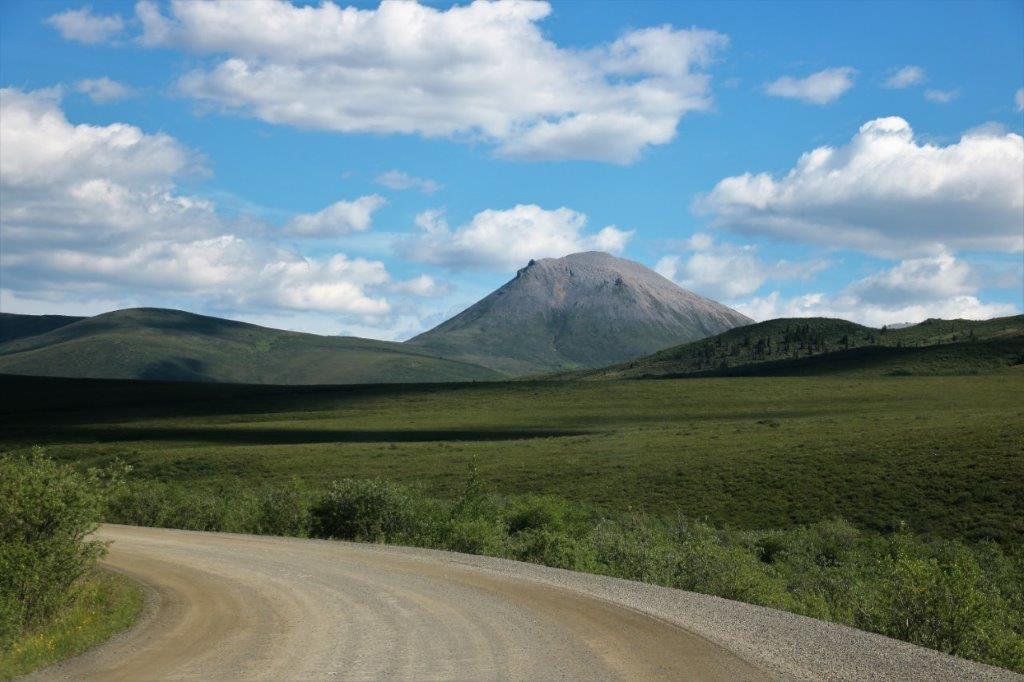
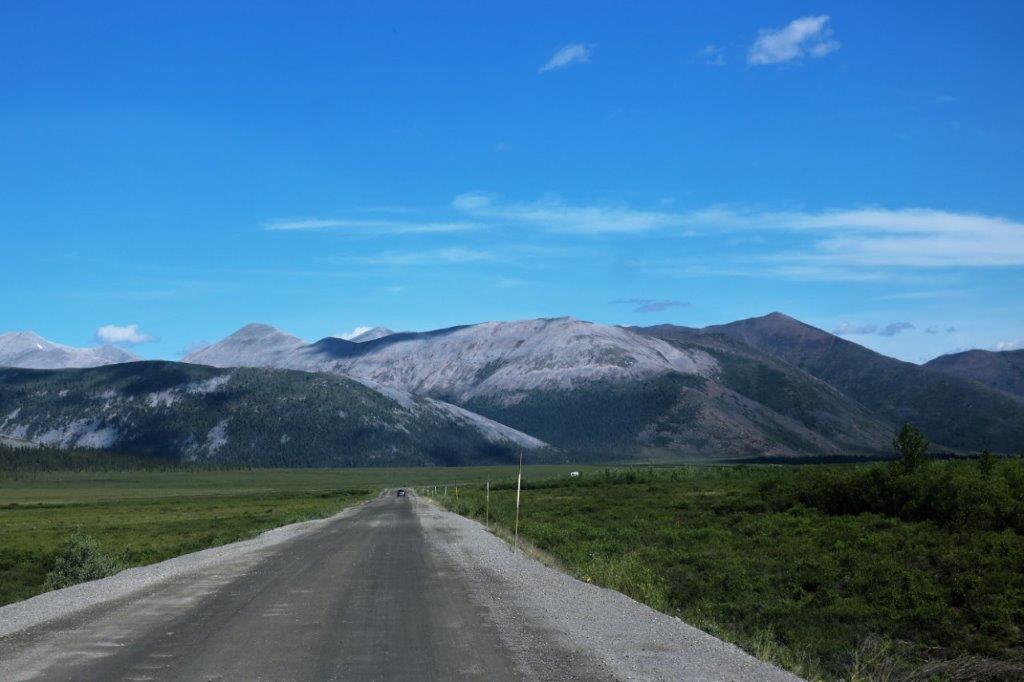
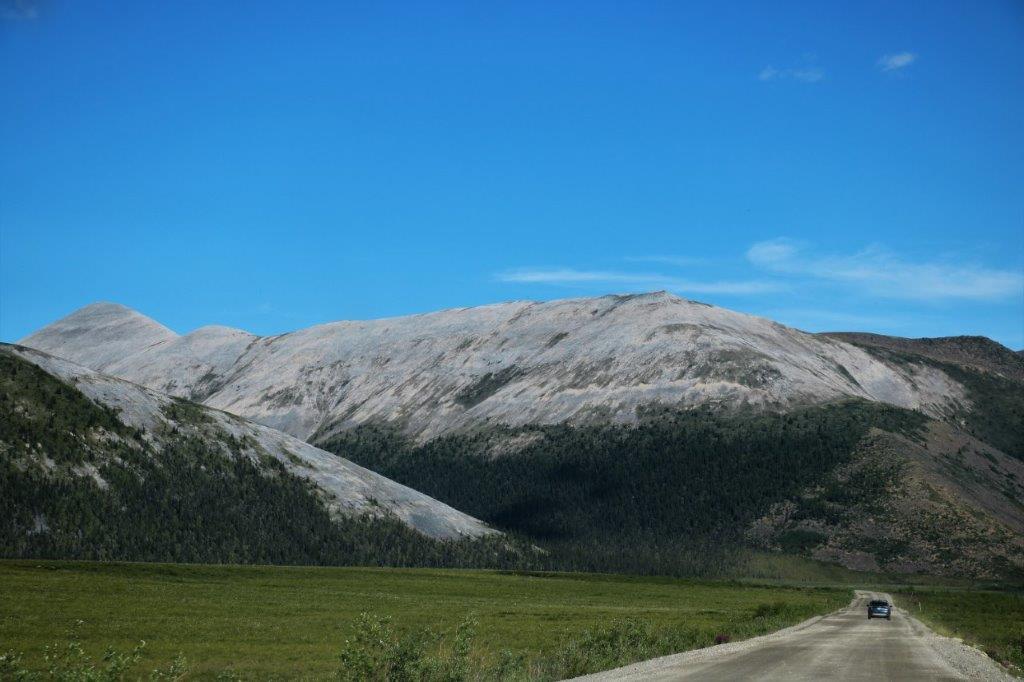
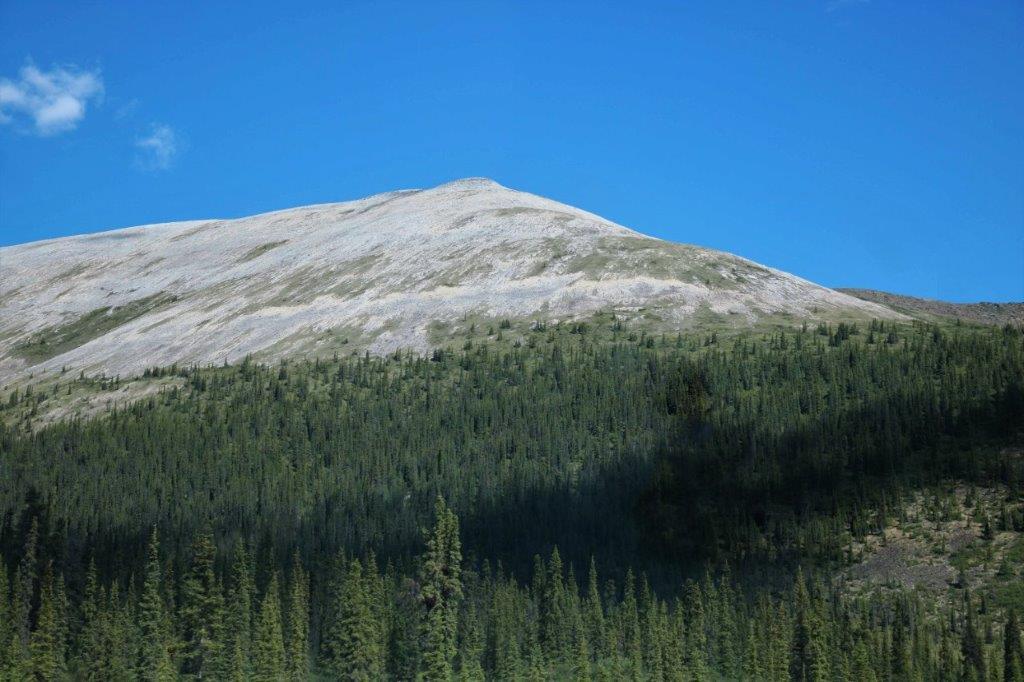
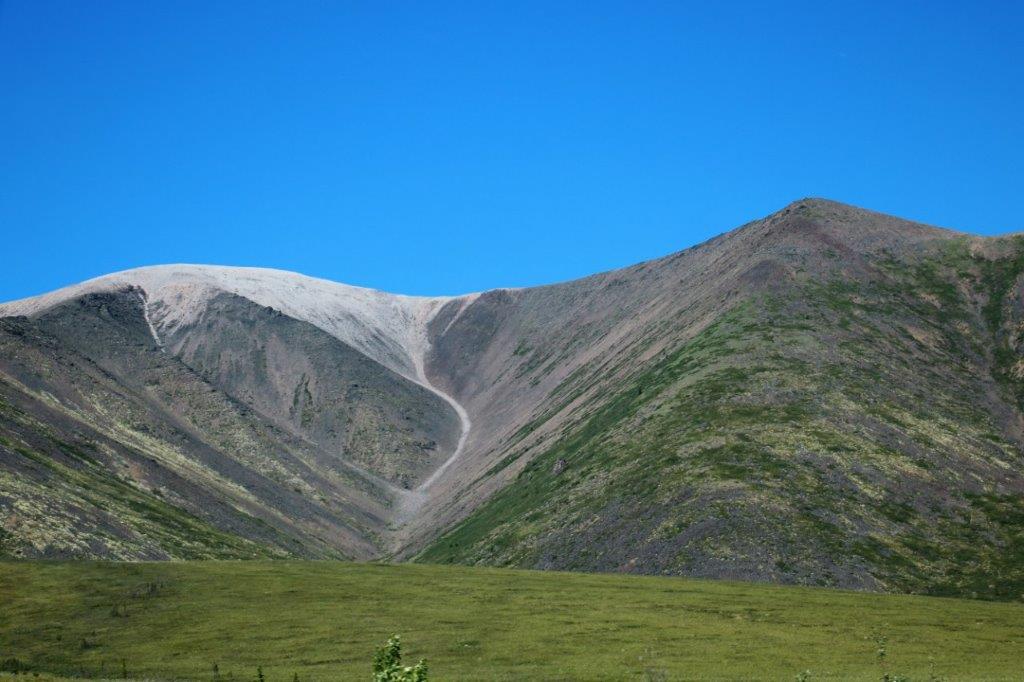
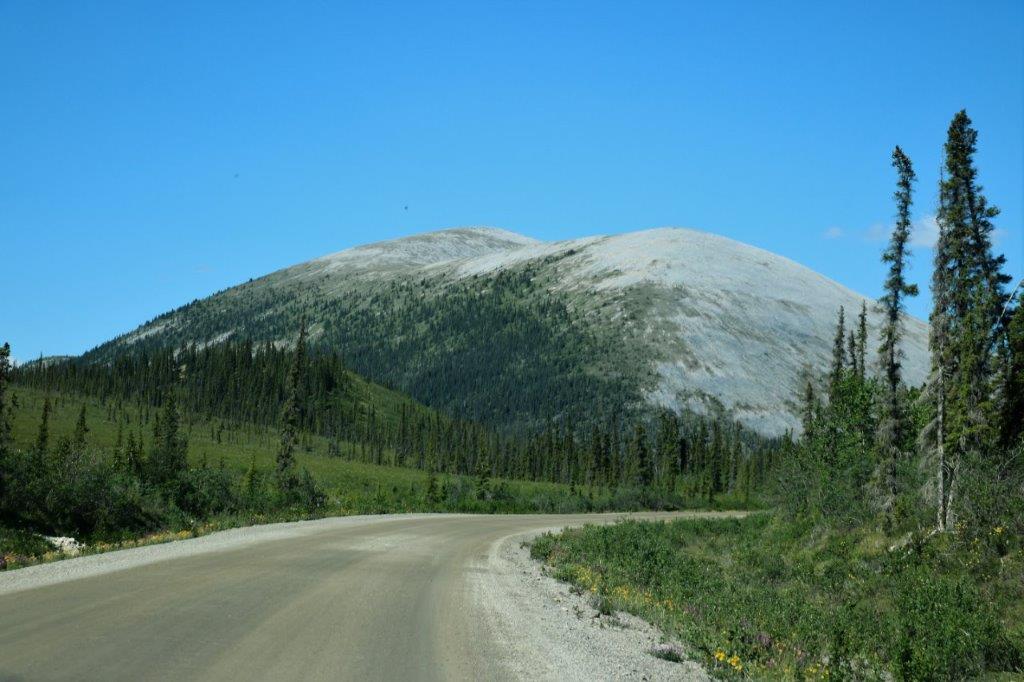
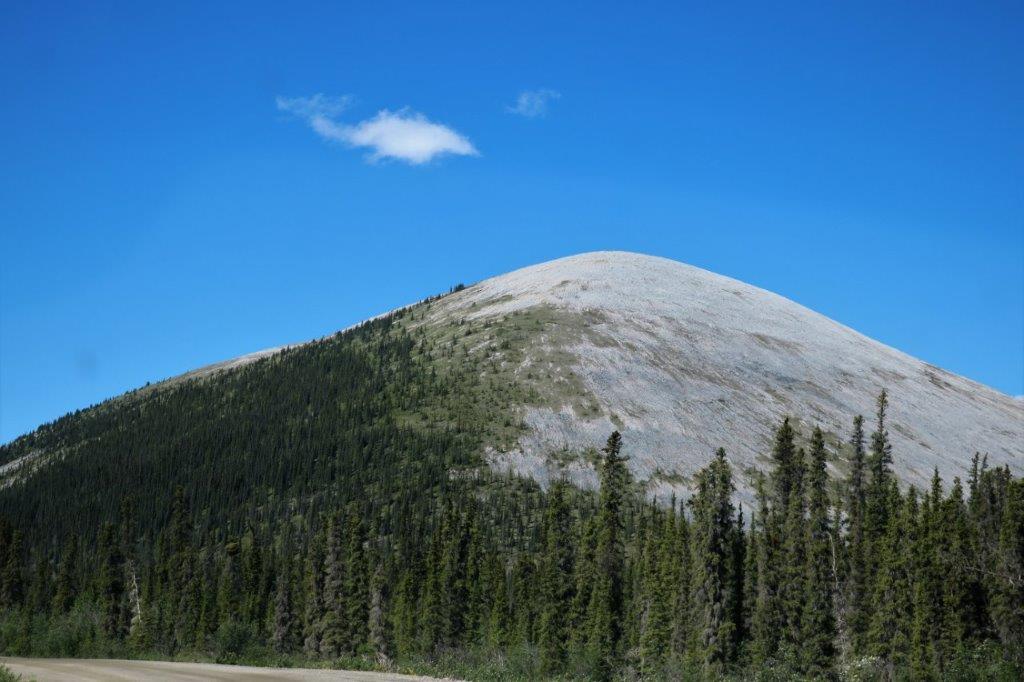
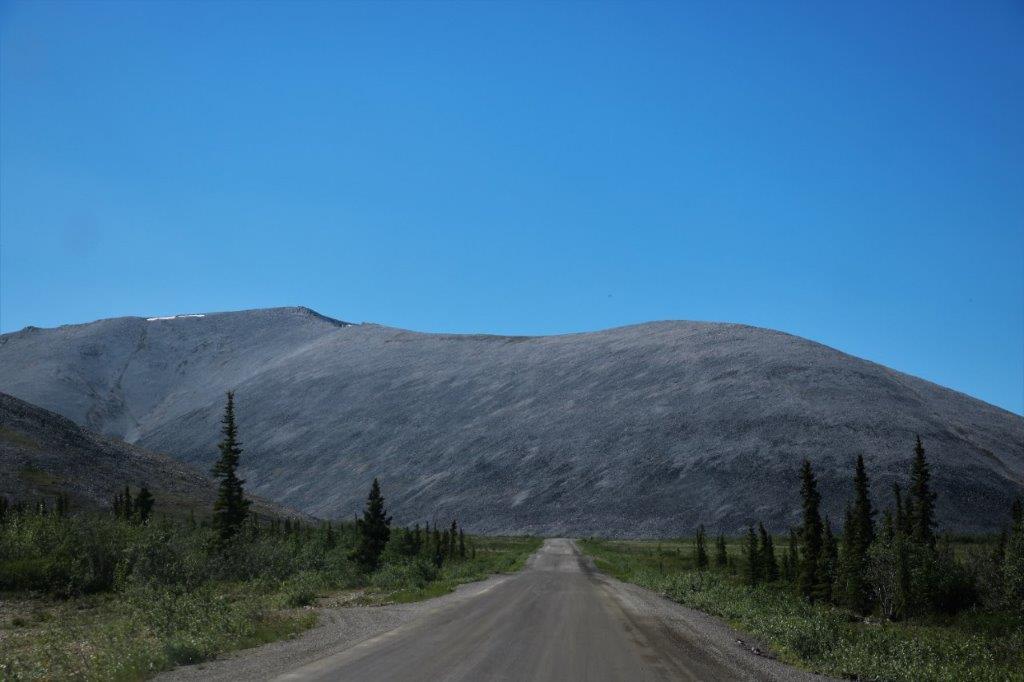
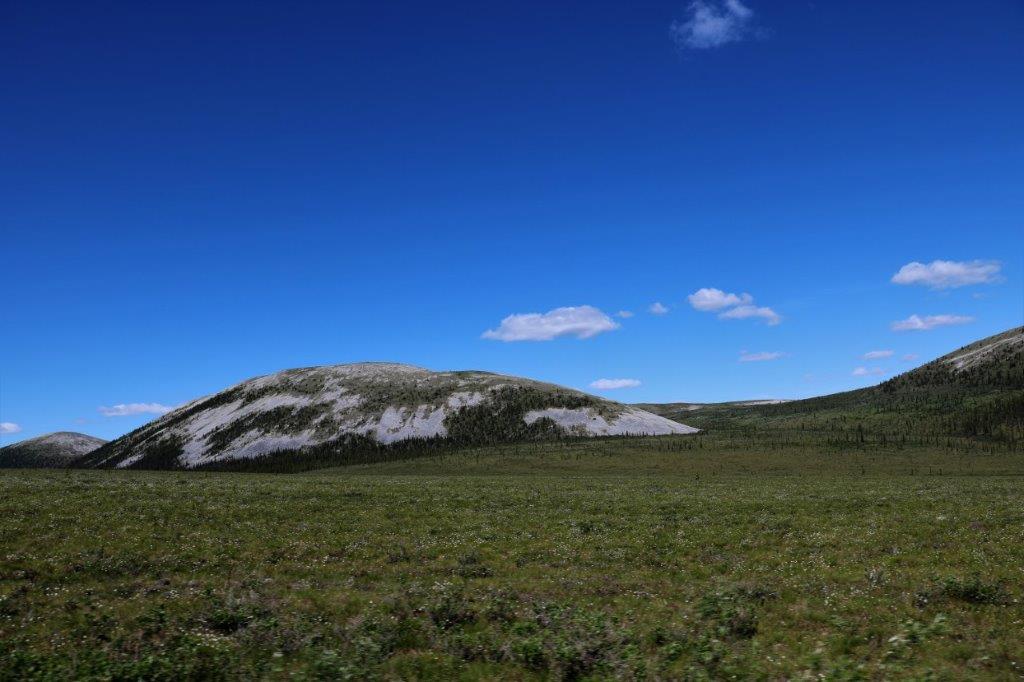
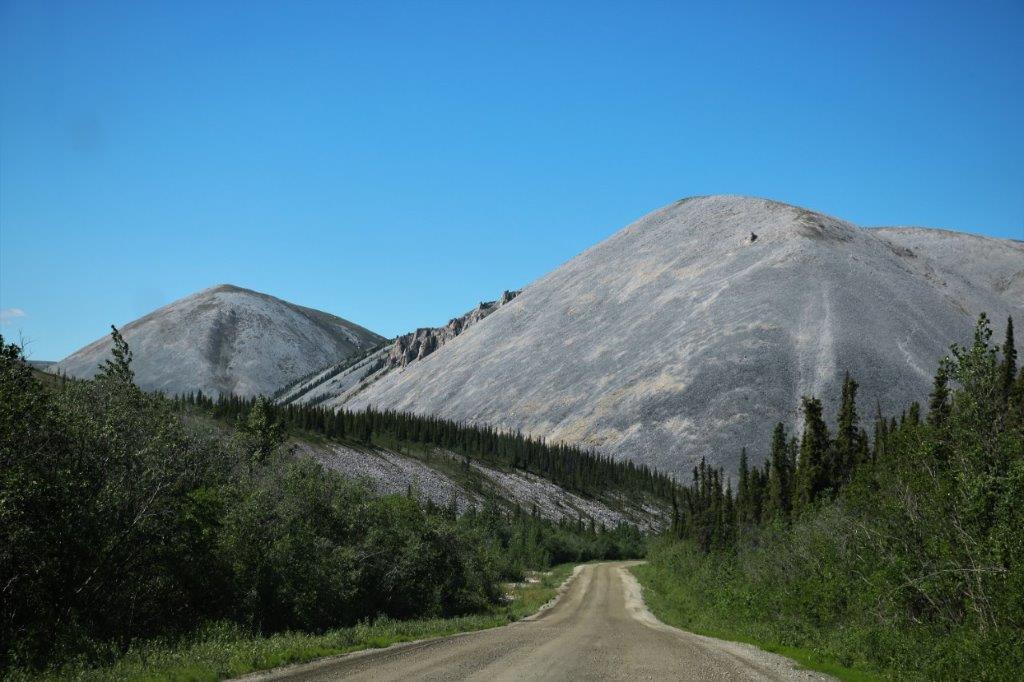
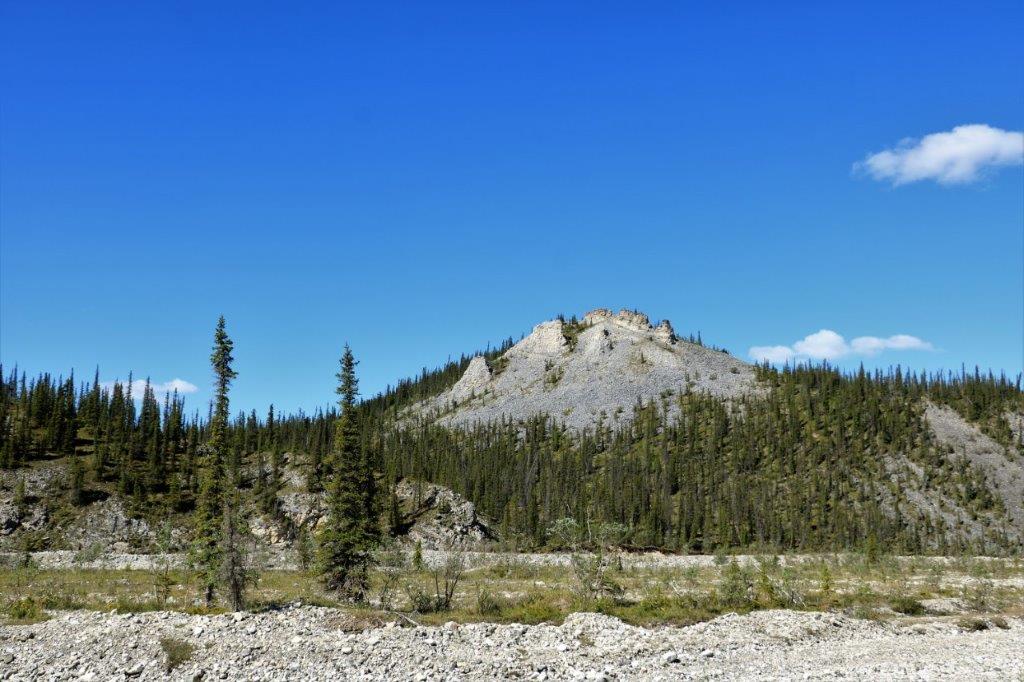
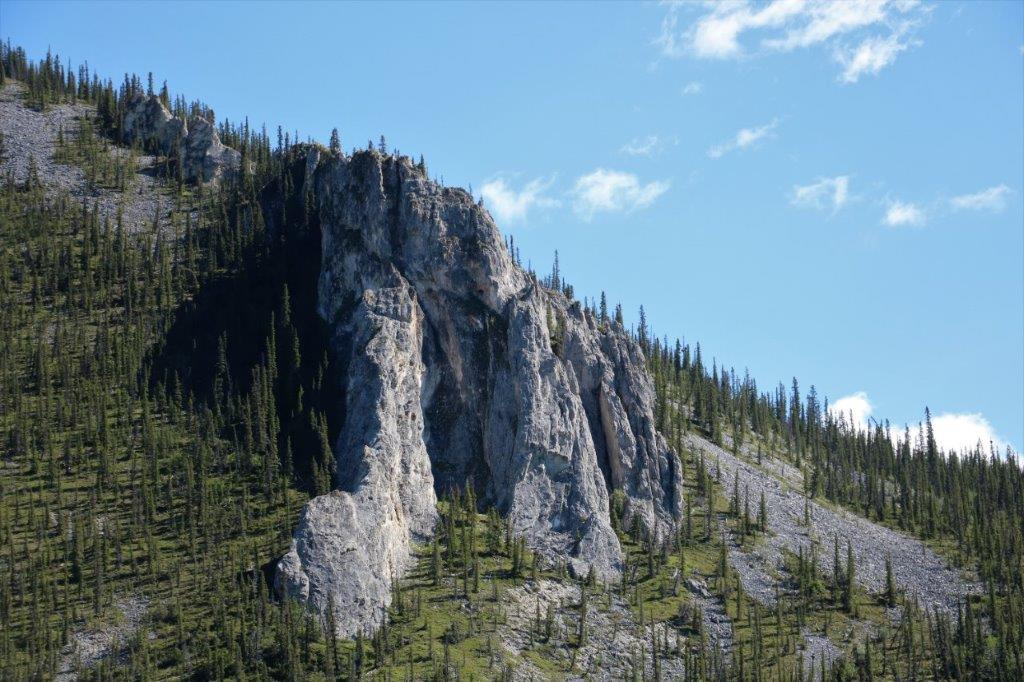
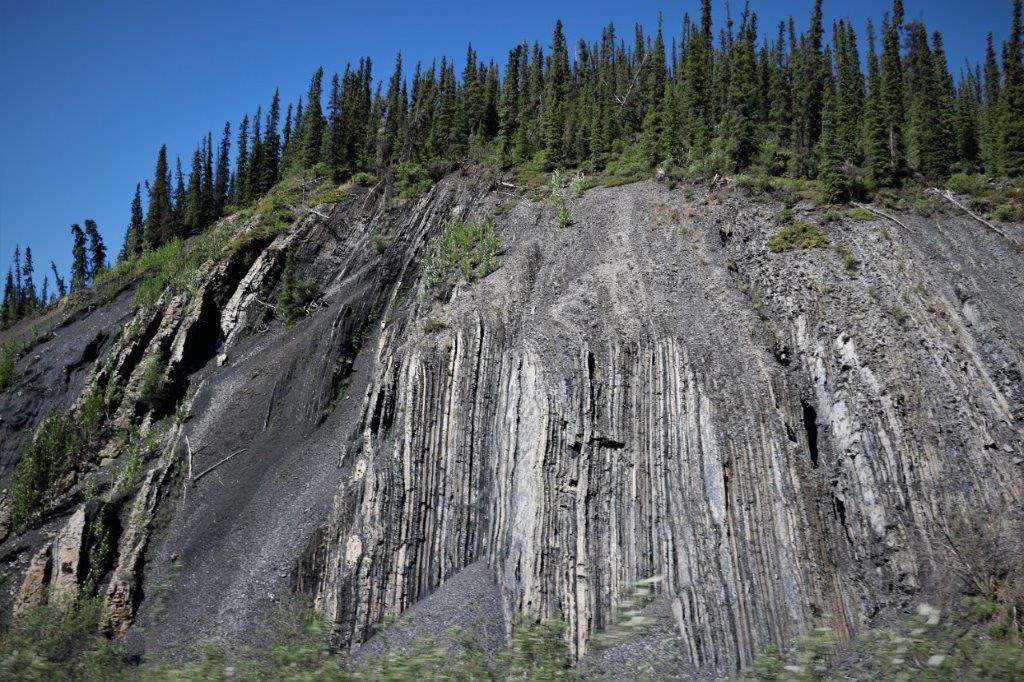
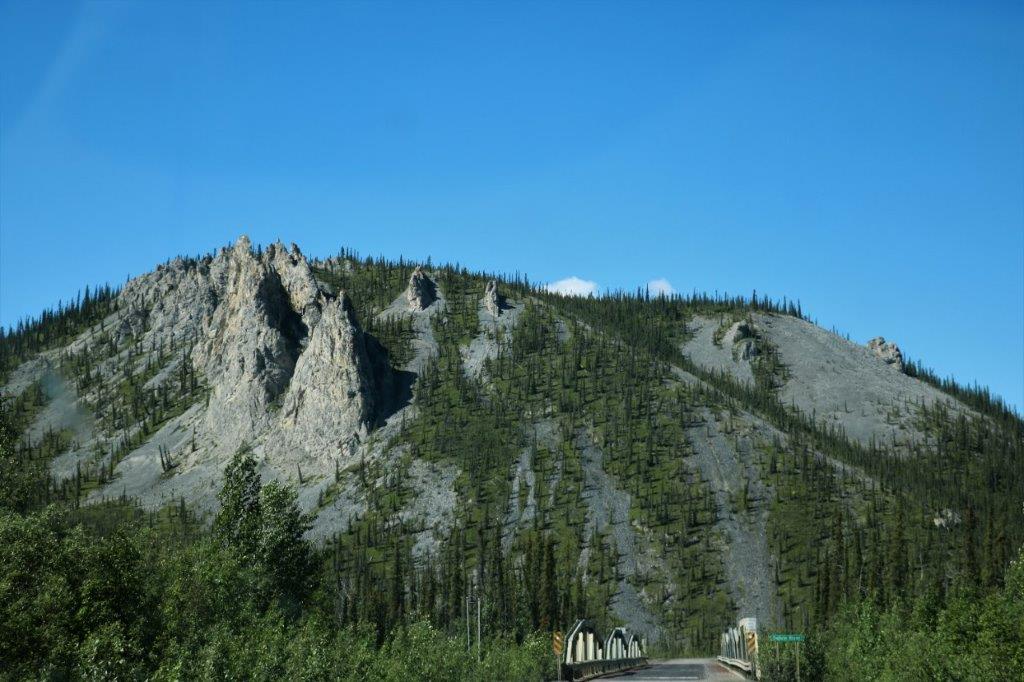
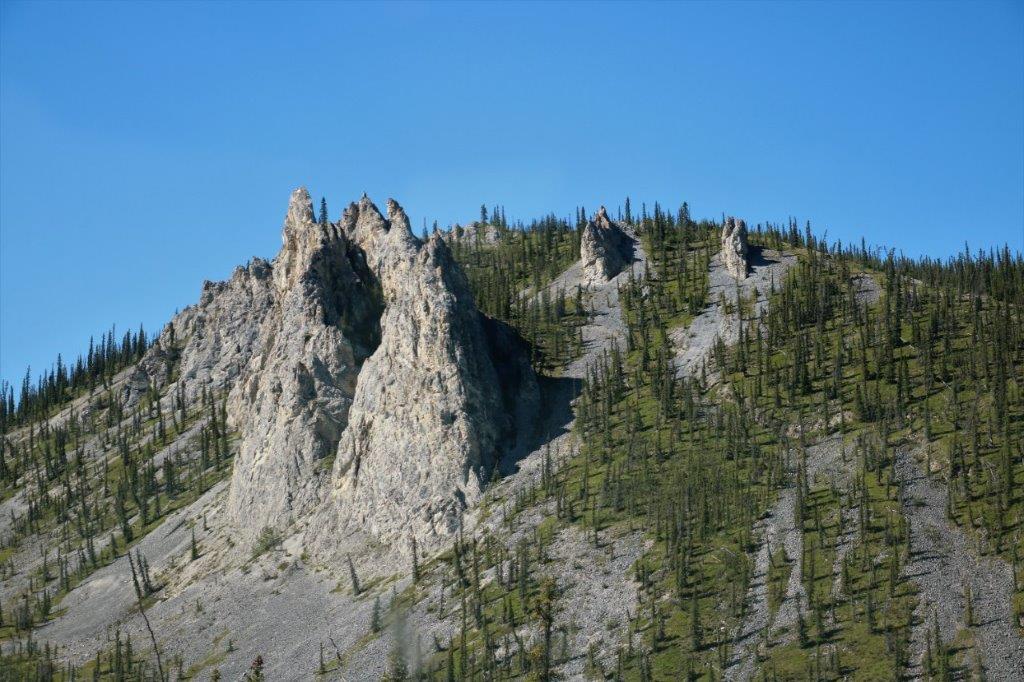
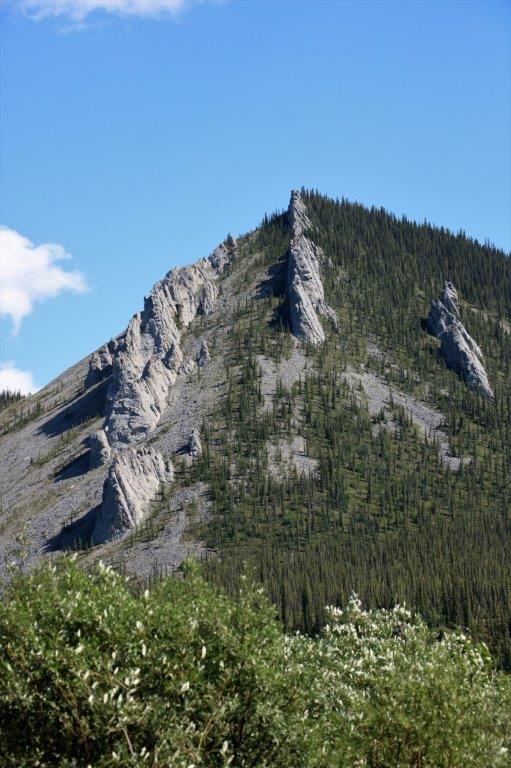
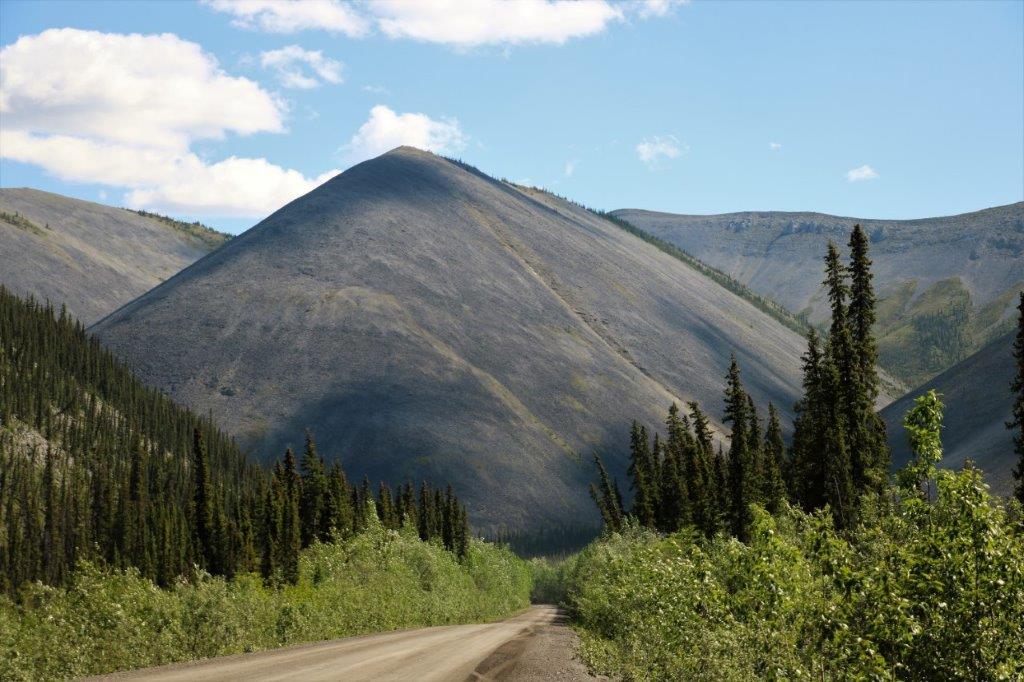
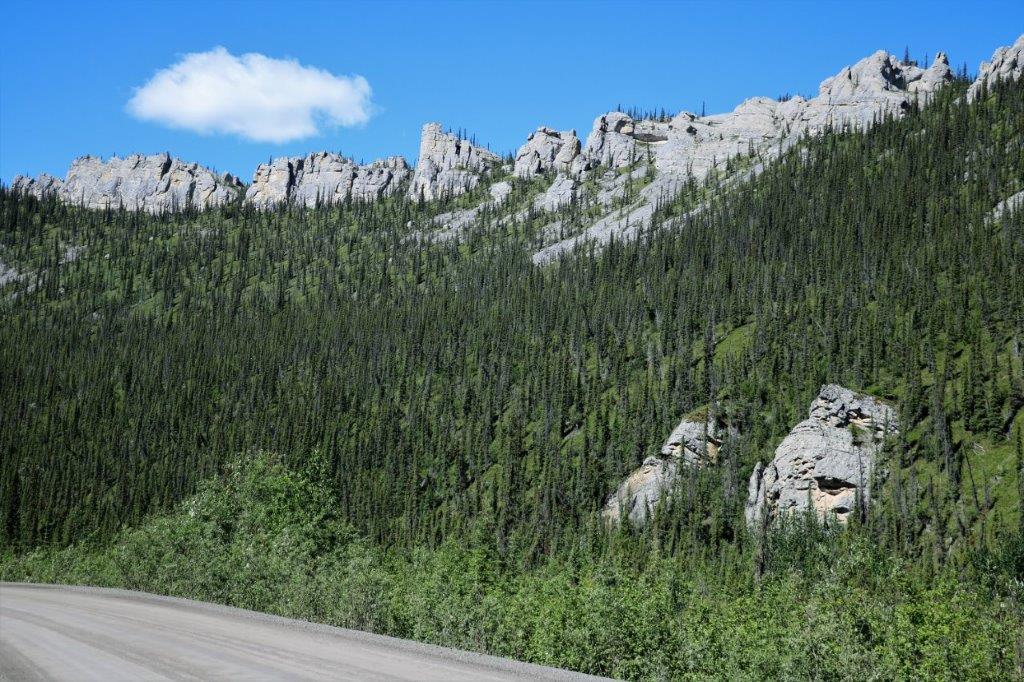
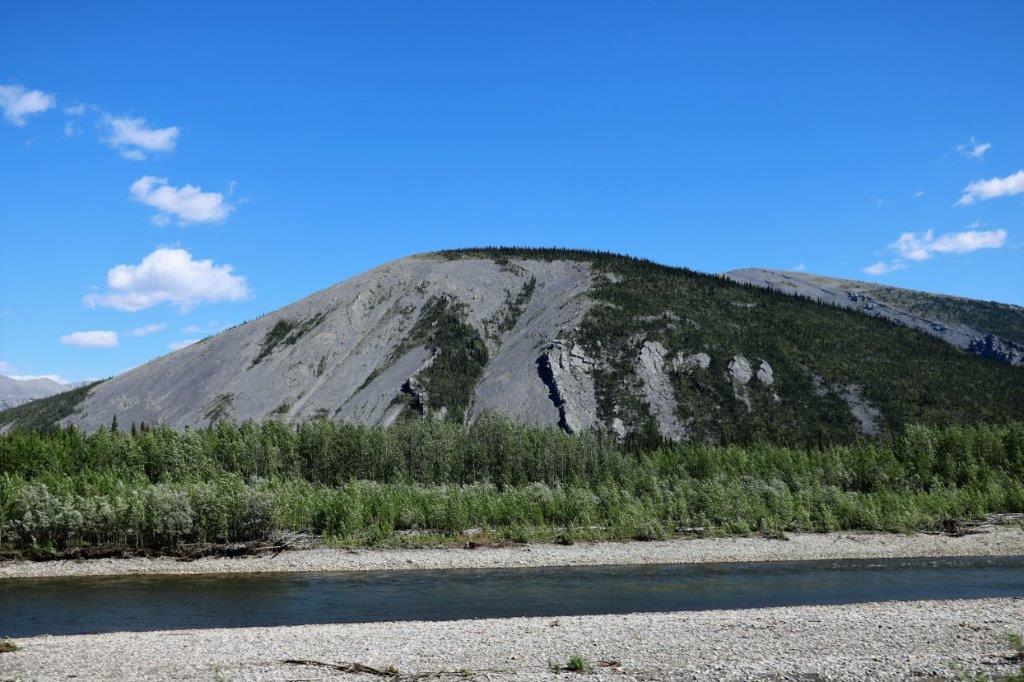
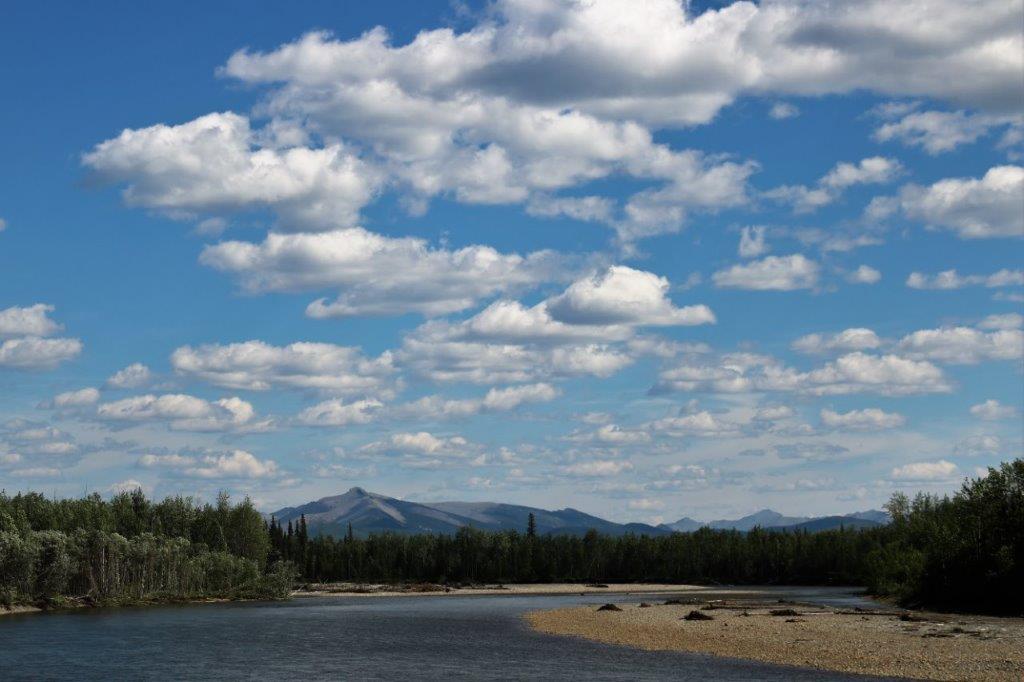
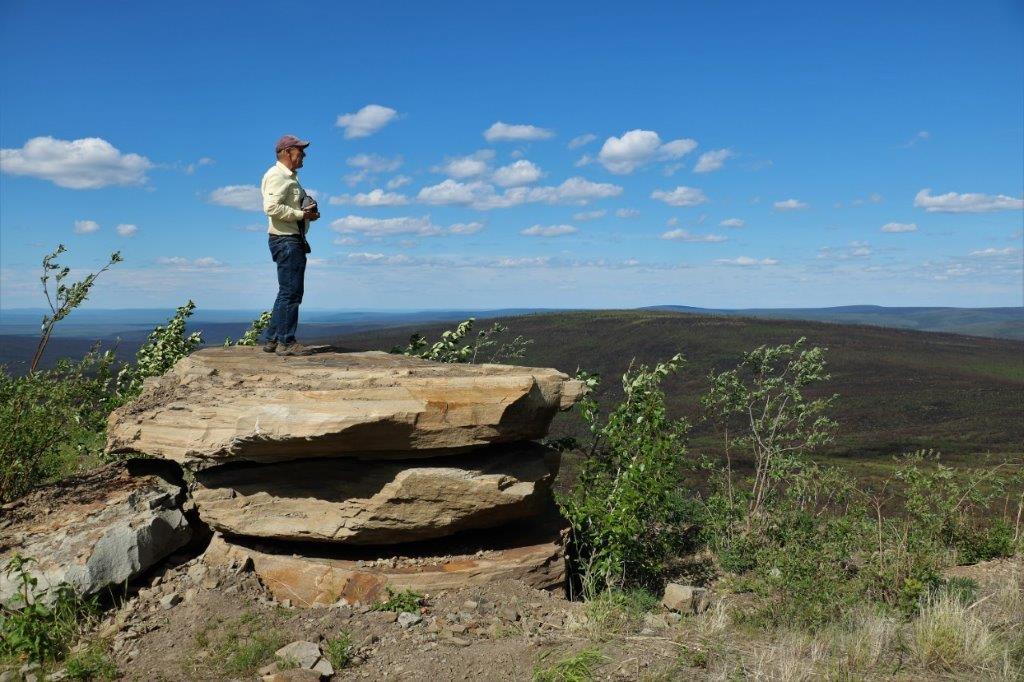
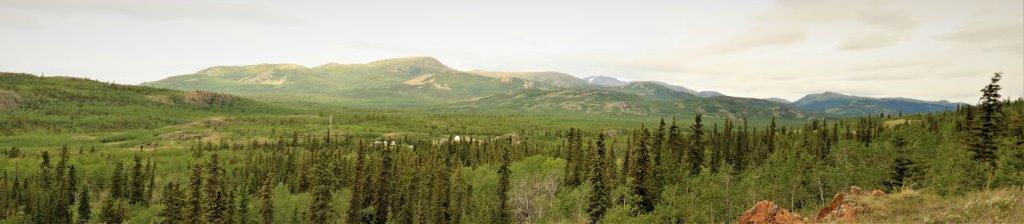
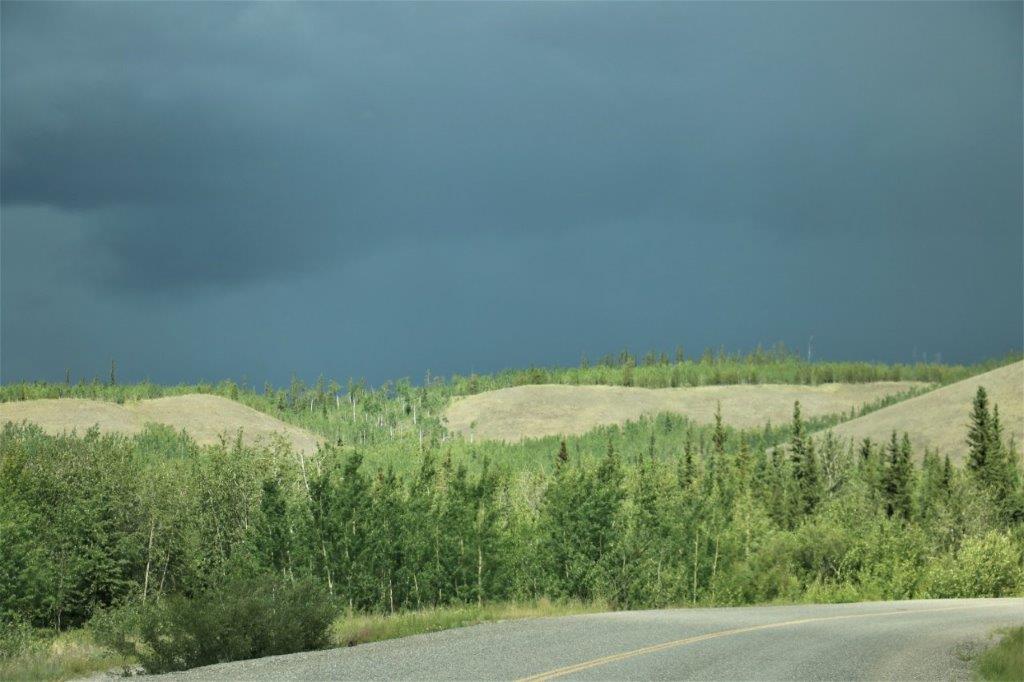
The first couple of hours of the drive we were just traveling through the larch forests, then we drove for another half hour through all the fire burn before anything became scenic.  More photos of mountains to follow:                         All the tors were very pretty against the blue sky.We pulled into the campground at Engineer’s Creek for a pit stop and some lunch and when John stepped out of the truck he discovered that the new tire he had put on yesterday was flat.  Thankfully we came prepared with three tires on rims as the Dempster Highway is famous for creating flat tires.  The repair shop at Eagle Plains sometimes gets as many as 25 flats to repair in a day.                     Beef up the air pressure a bit and off we go once again.

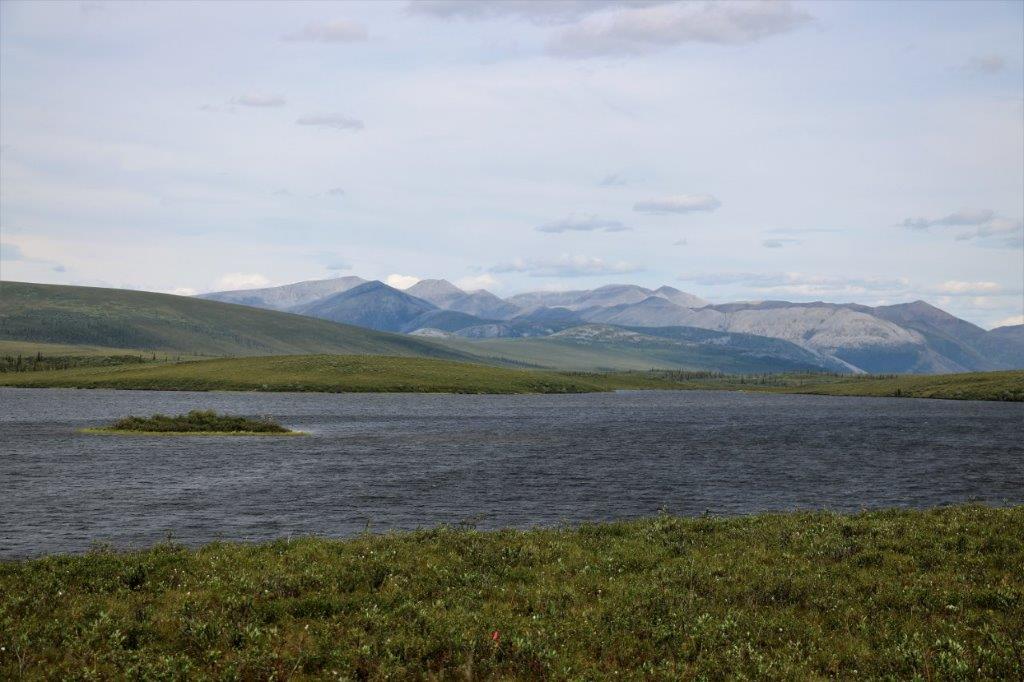
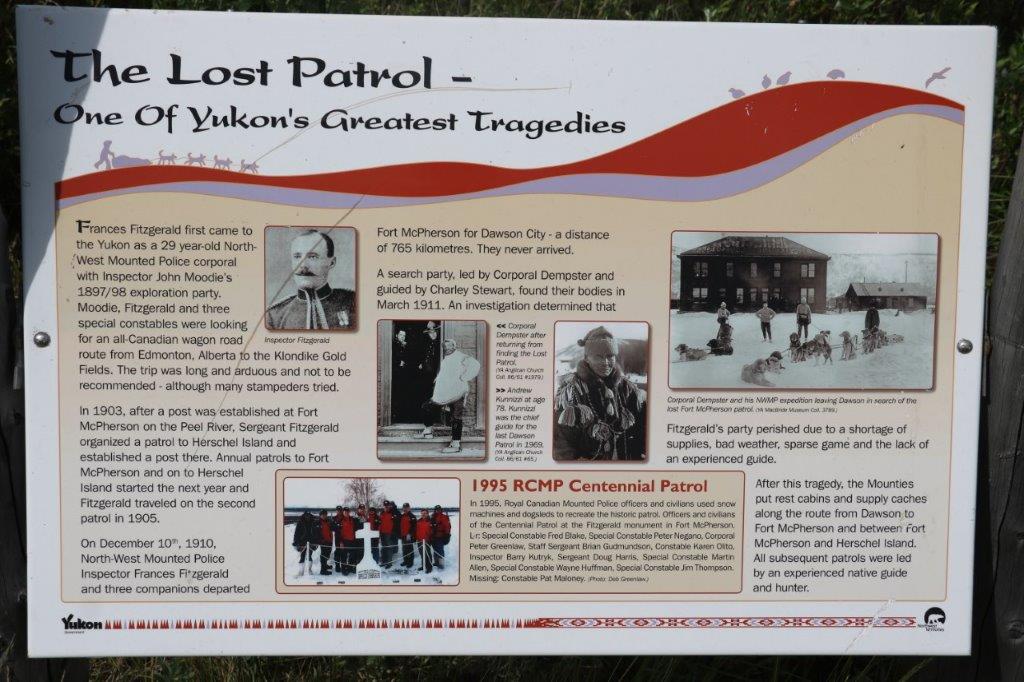
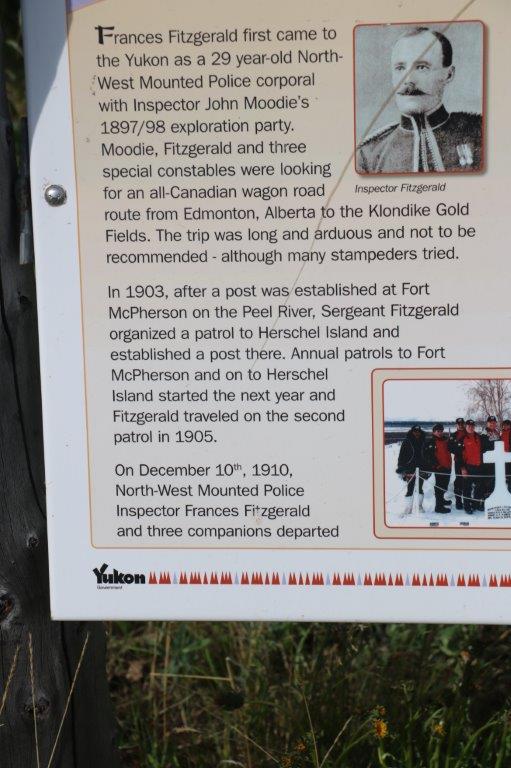
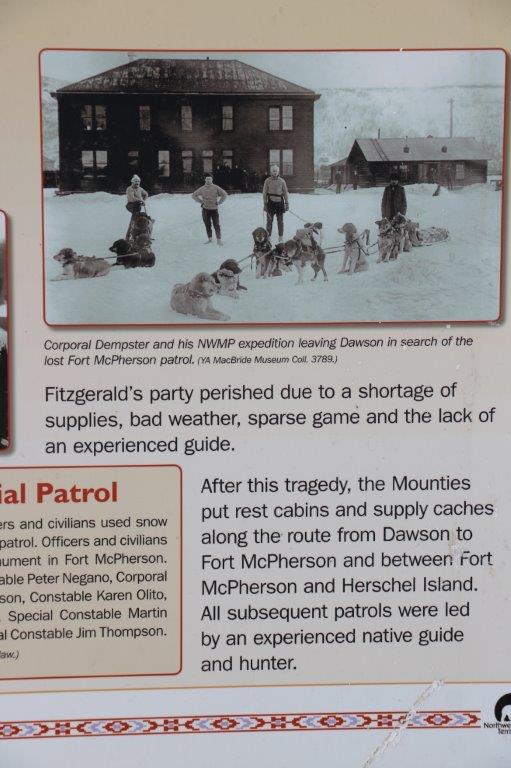
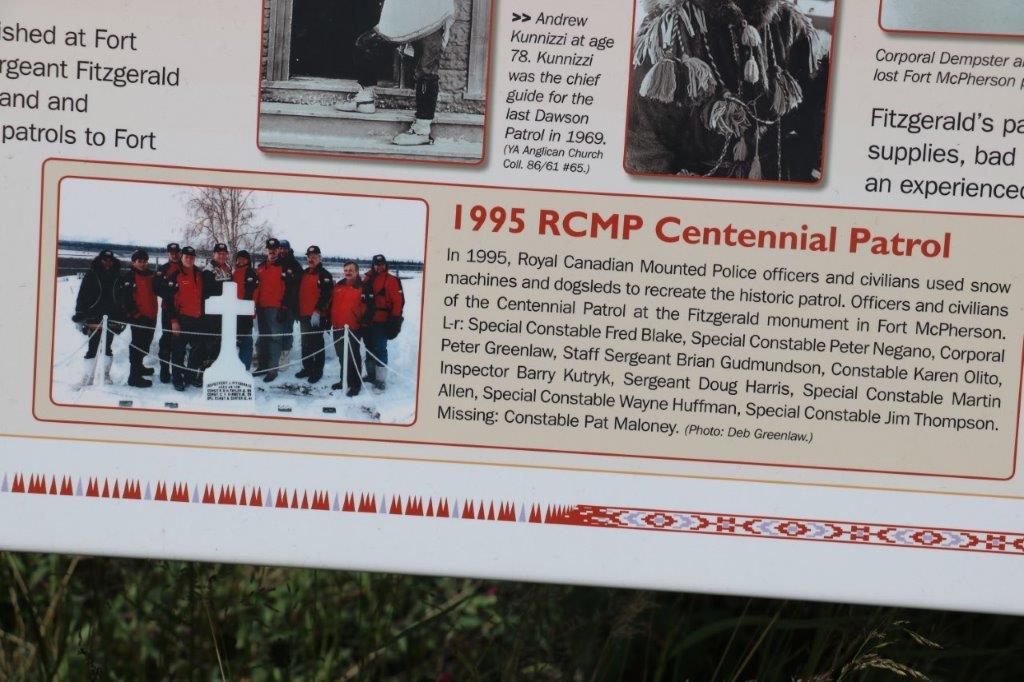
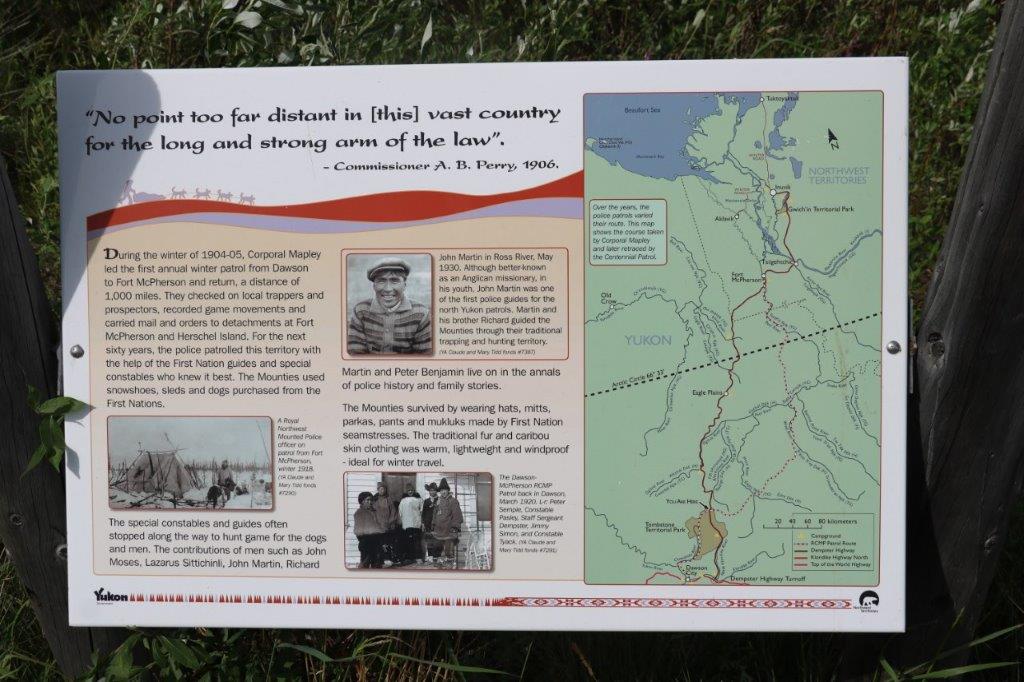
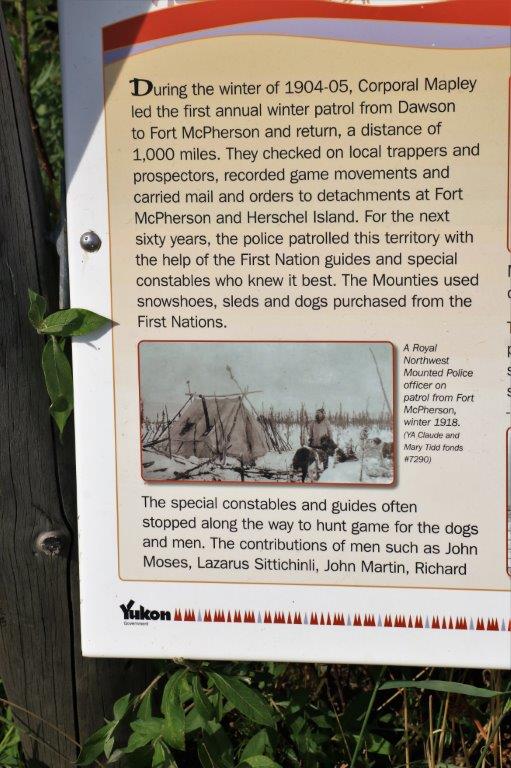
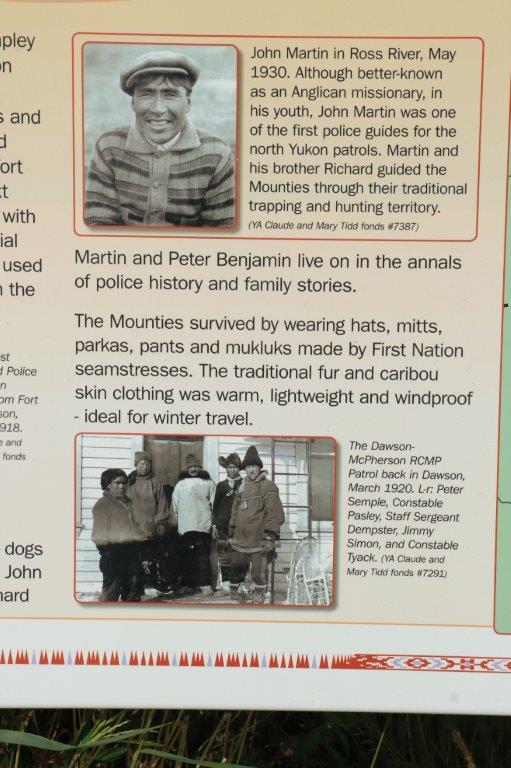
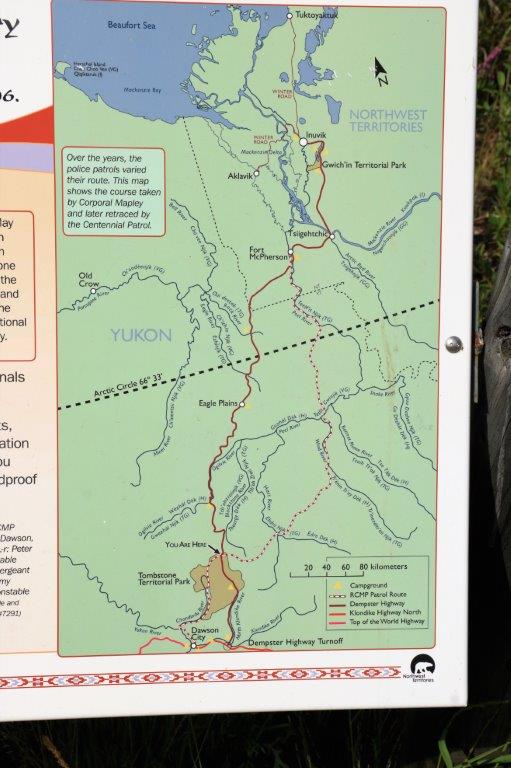
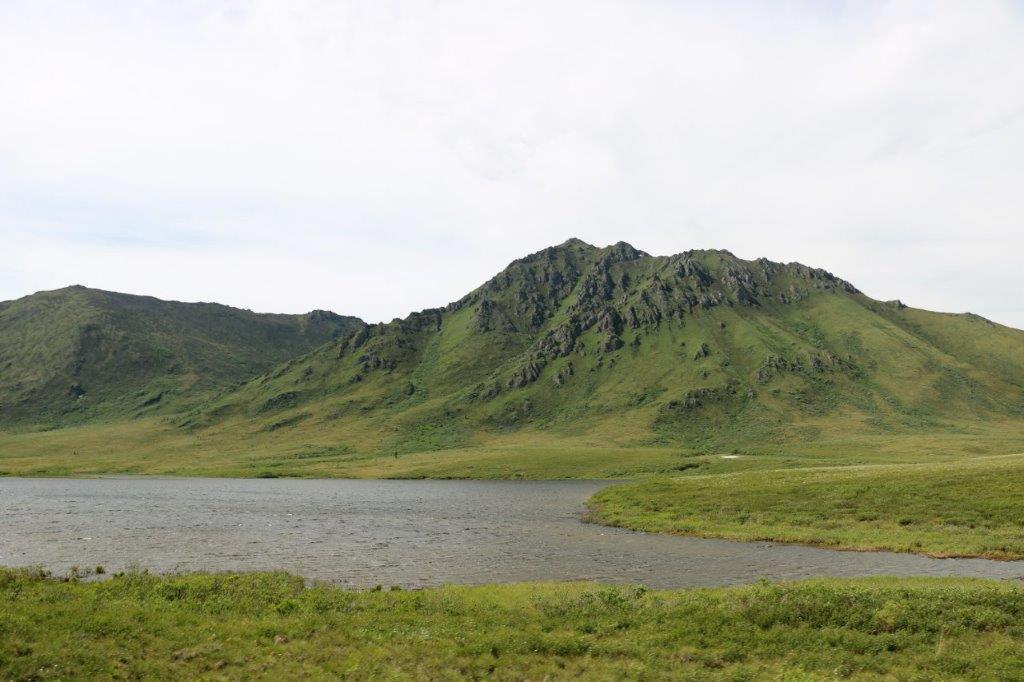
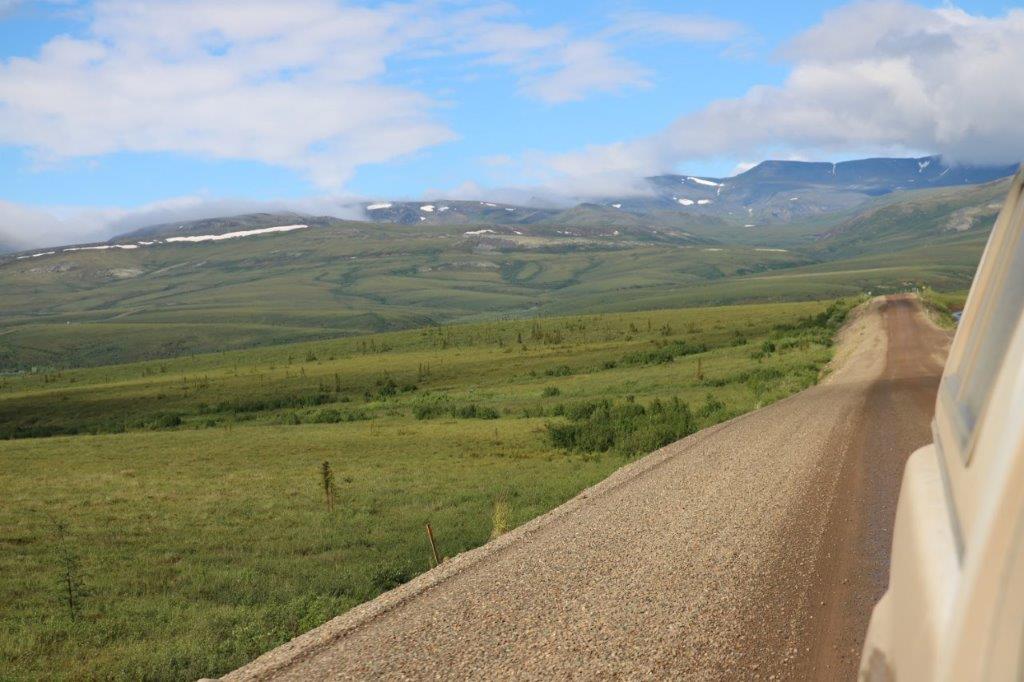
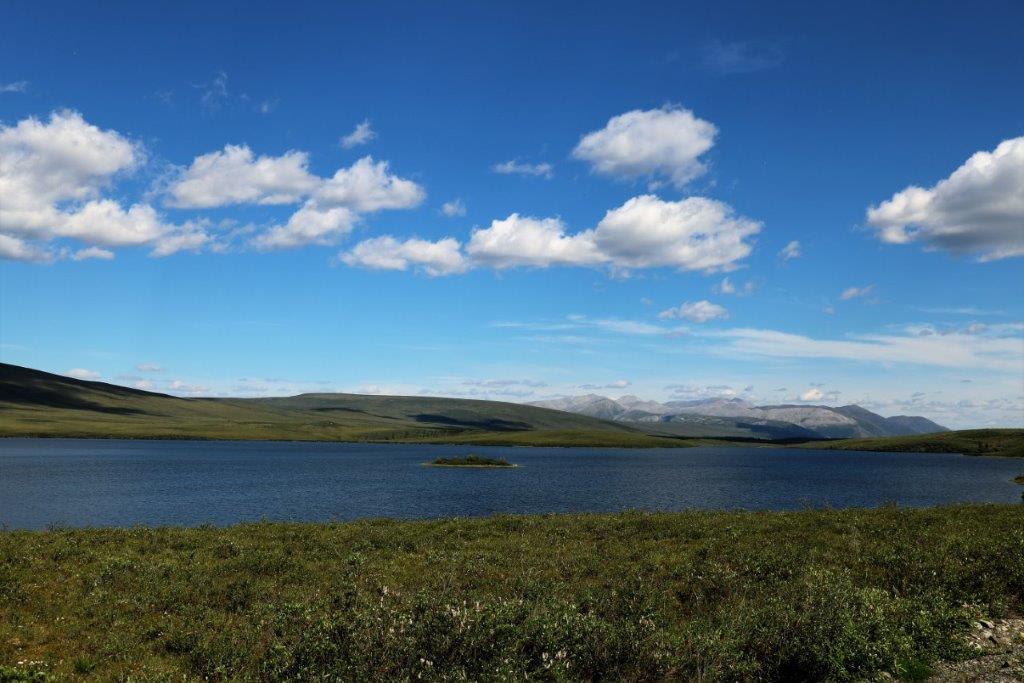
I didn’t keep out my little Travelogue booklet to follow our journey in reverse so I can’t tell you exactly where all these mountains, etc. were. They were just pretty so I took photos of them. We had not stopped at Chapman Lake on the way north so decided to pull in for a photo stop on the way back.There were some placards about the RCMP ‘Lost Patrol.’
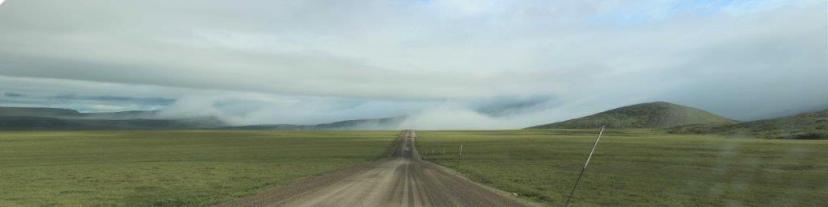
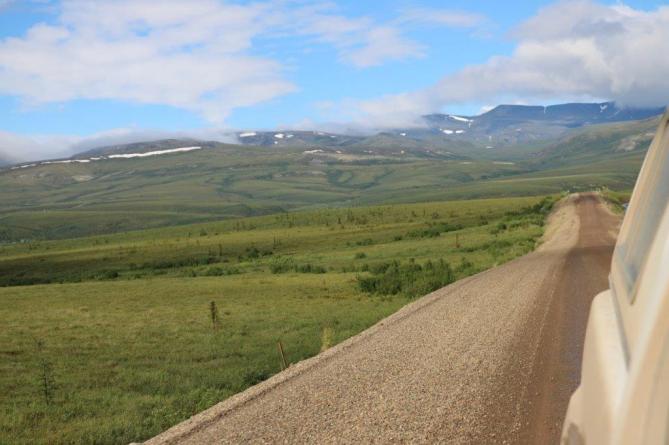
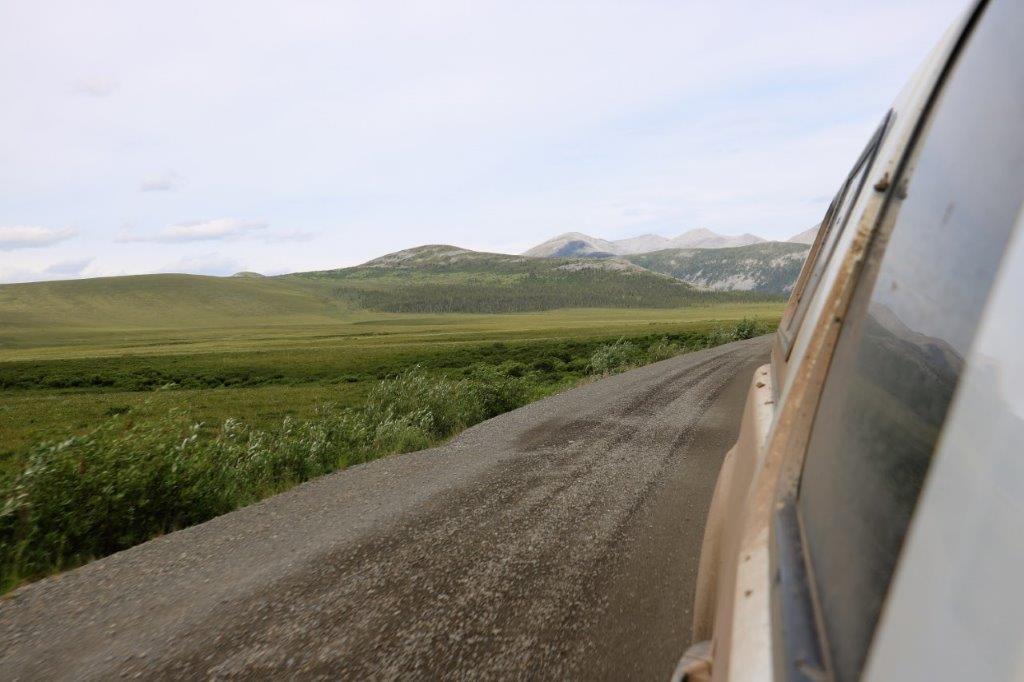
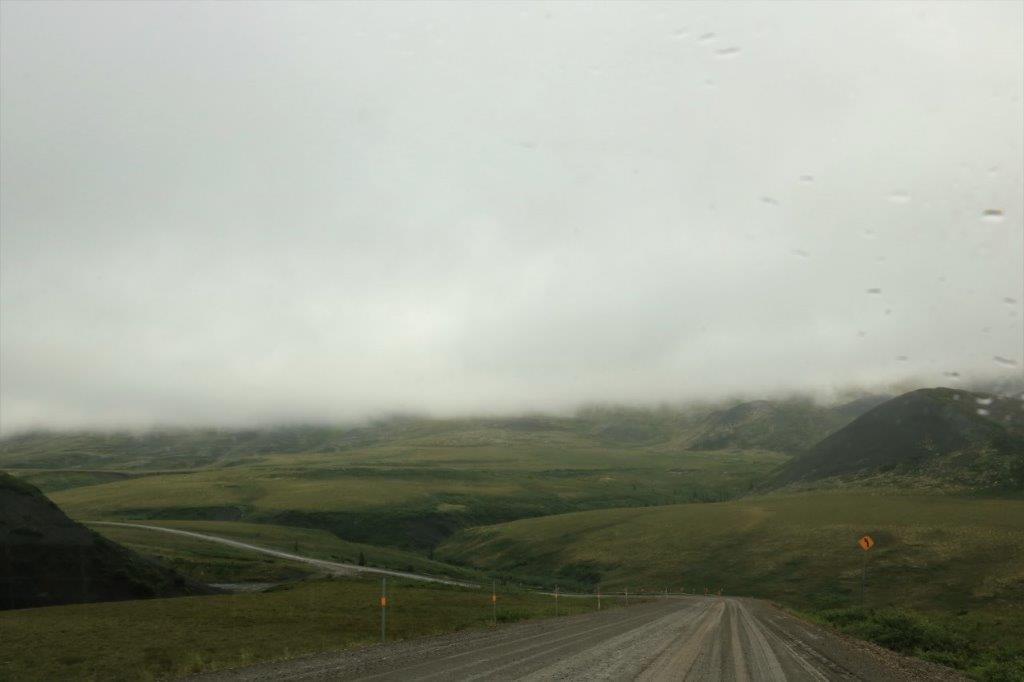
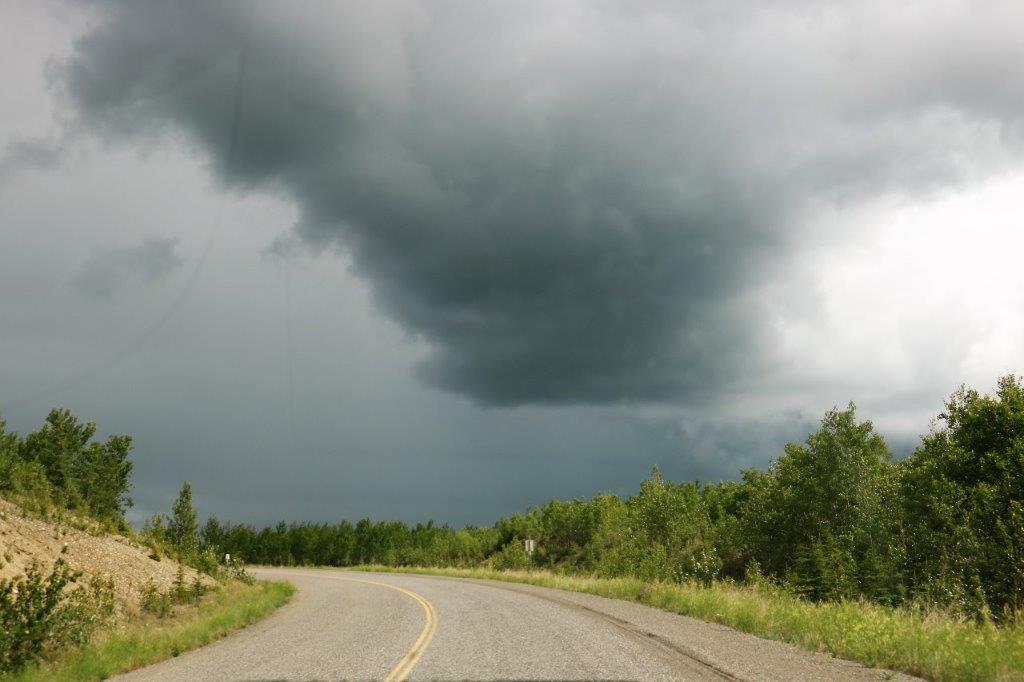
The windshield had so many bugs on it I stuck my camera out the window to take a photo of the view in front of us.We didn’t stop at the Tombstone Range Viewpoint today but that doesn’t mean I could pass without taking another photo. The view is glorious! I had been in communication with a fellow geocacher from the Revelstoke area who was also coming to the north to drive the new road to Tuktoyaktuk.  We were hoping to connect somewhere along the road and sure enough as we were driving back to Dawson City after finishing our drive down the Dempster John recognized his truck and camper from the photo he had sent us.  We flagged him down and we introduced ourselves by our real names, not our geocache ‘handles.’  He was just leaving Dawson City to drive up to Eagle Plains.  The weather is forecasted to be sunny for the next three days up in Inuvik and Tuktoyaktuck so after hearing about our experience driving on the road when it was wet from rain, he decided to push straight through and get up there while the going was good.  Any wandering around and fishing he wanted to do he would do later.  It was fun to meet up with someone who likes our hobby as much as we do.

It was 4:45 when we were taking our luggage out of the truck so we did the whole drive in just under eight hours, which included the time it took to change the tire.  These are our last long, long driving days for awhile.  We stay in Dawson City tomorrow then on Tuesday we will take the Top of the World (gravel) road across the border into Alaska.

2018 July 7 – Inuvik, NT to Eagle Plains, YT

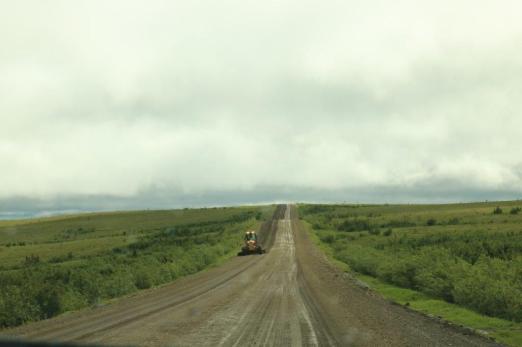
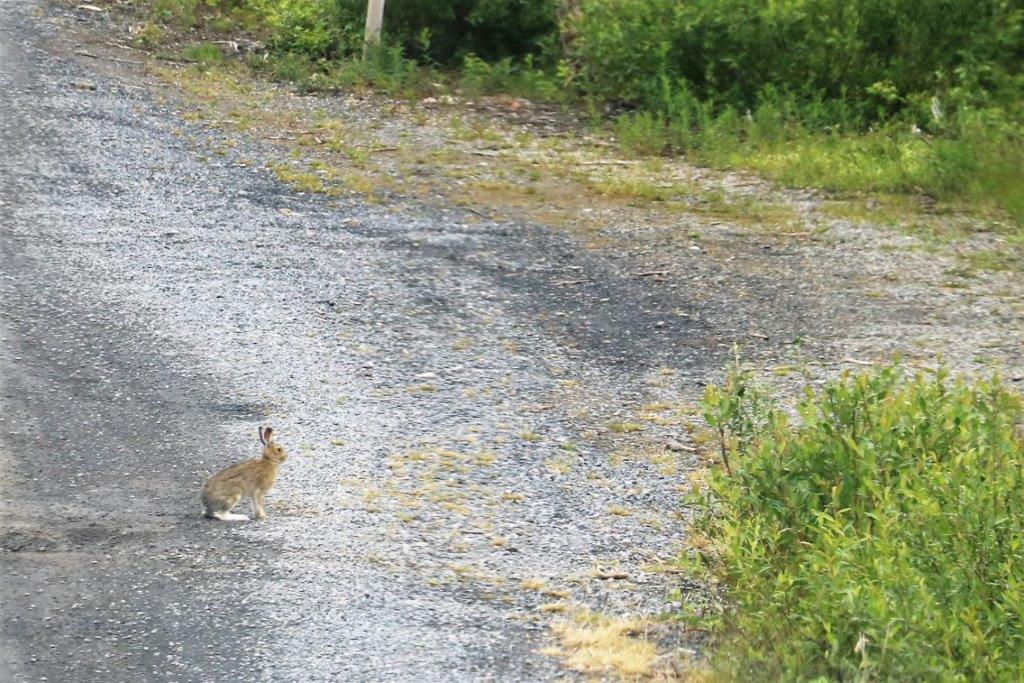
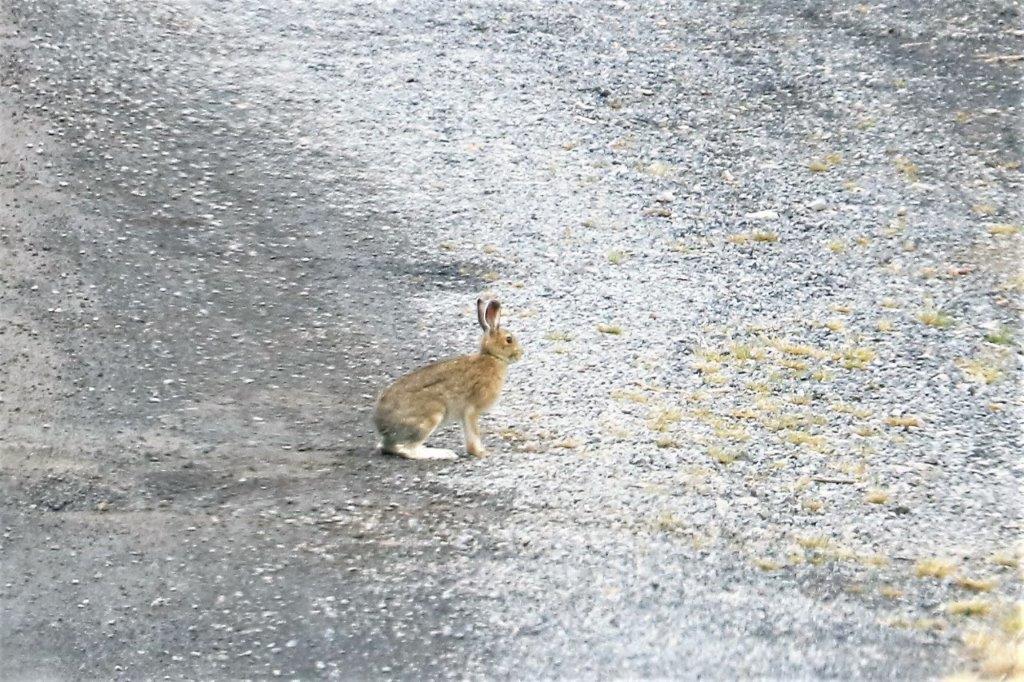
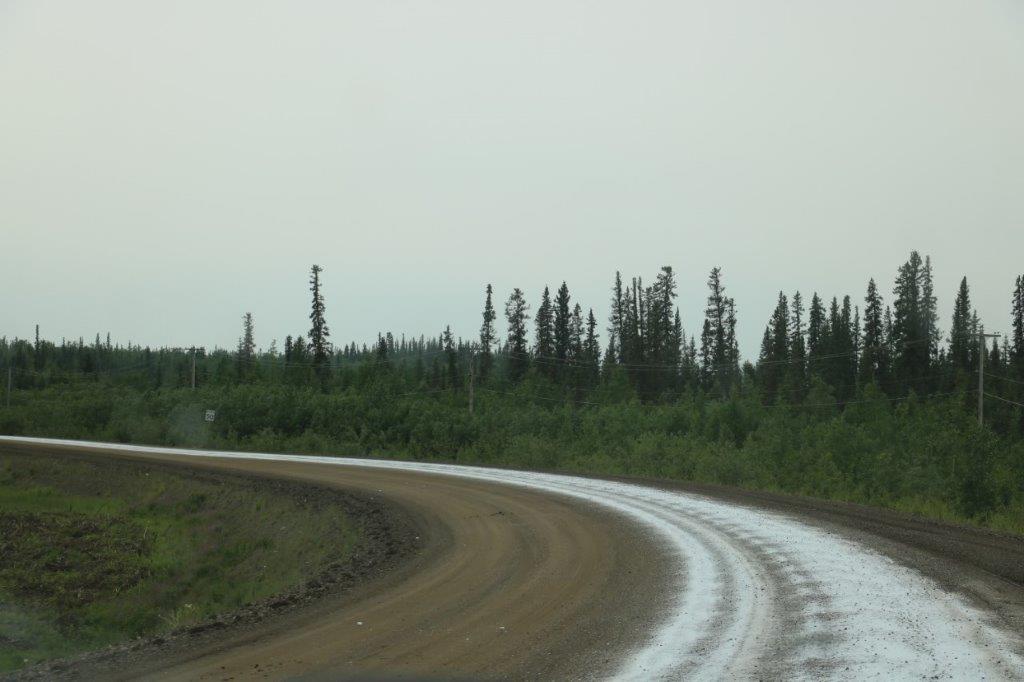
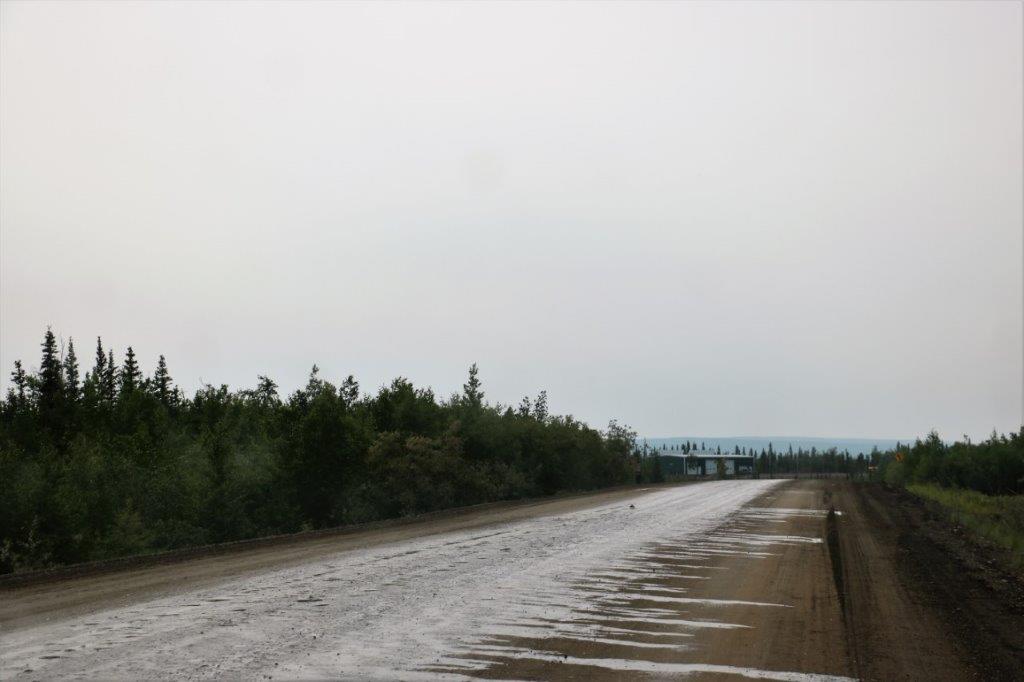
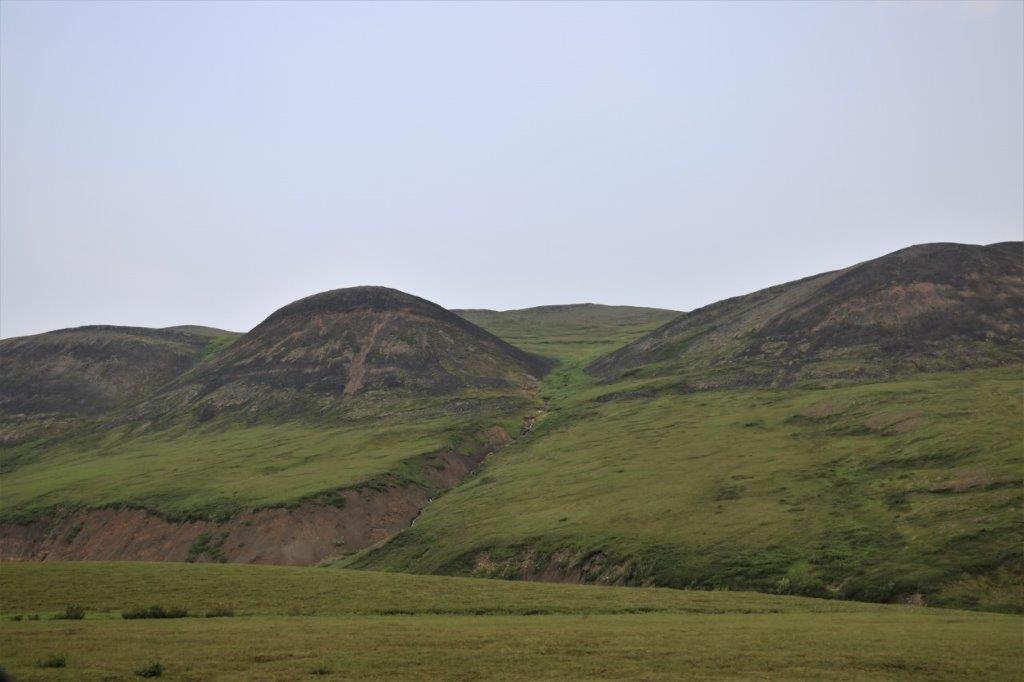
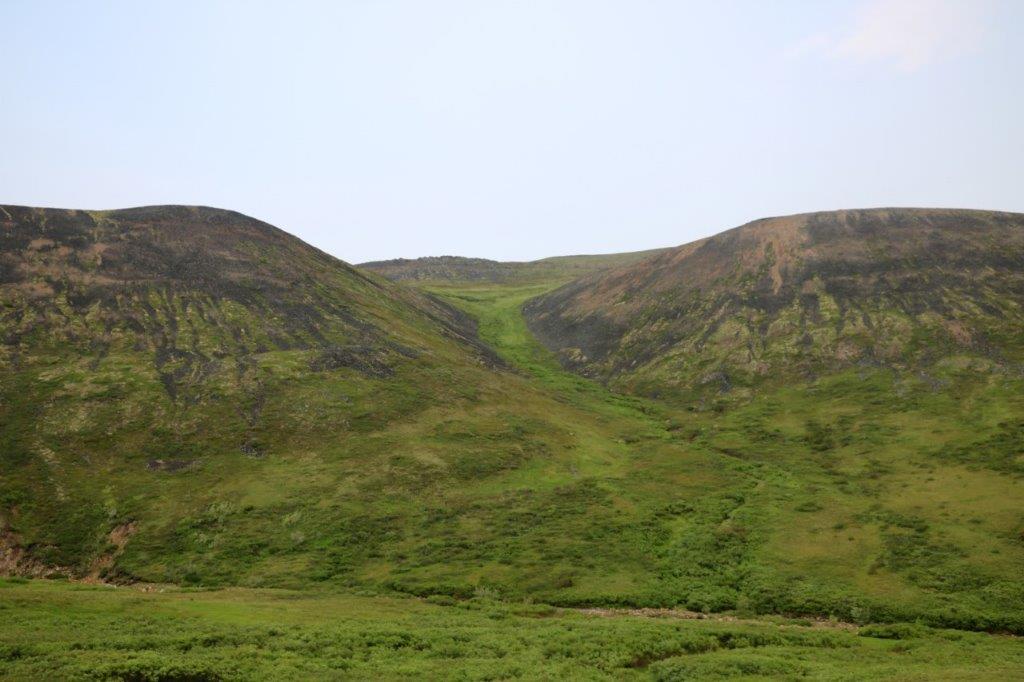
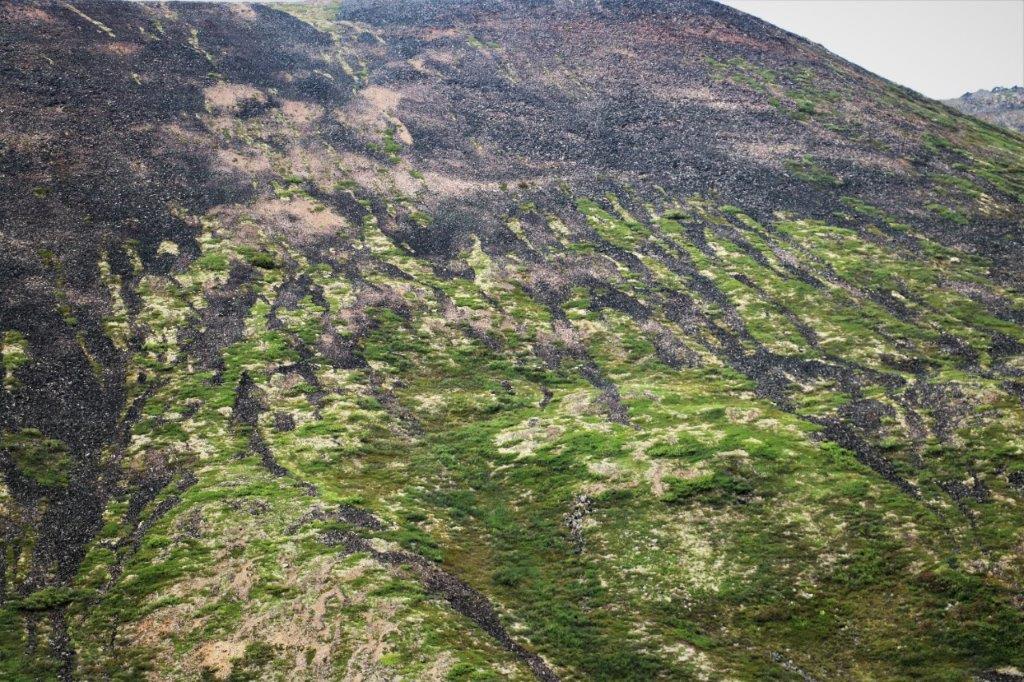
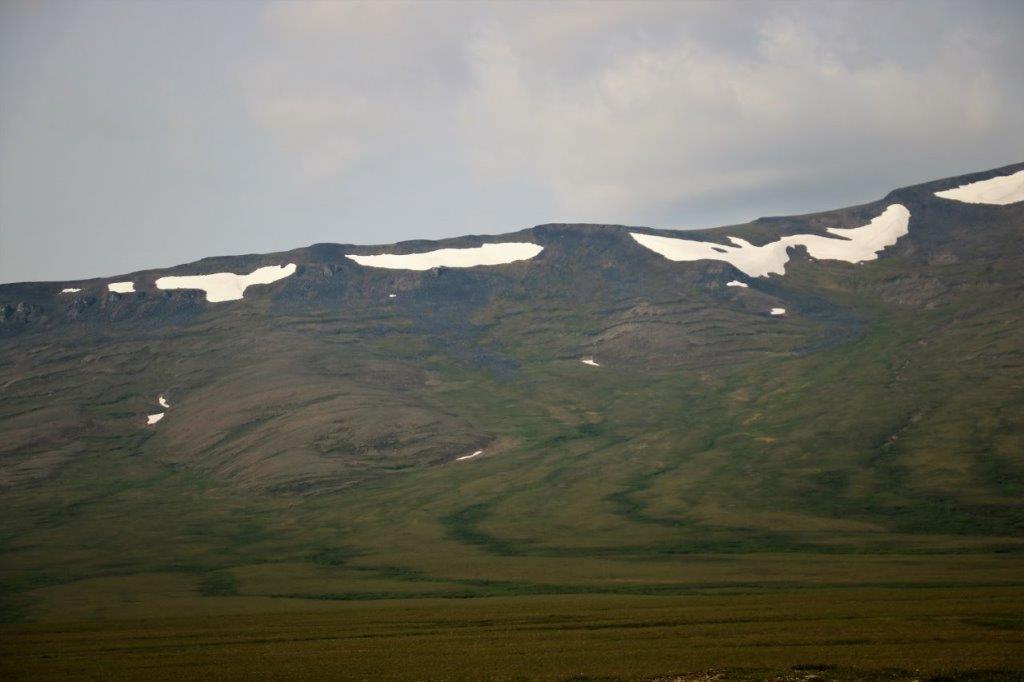
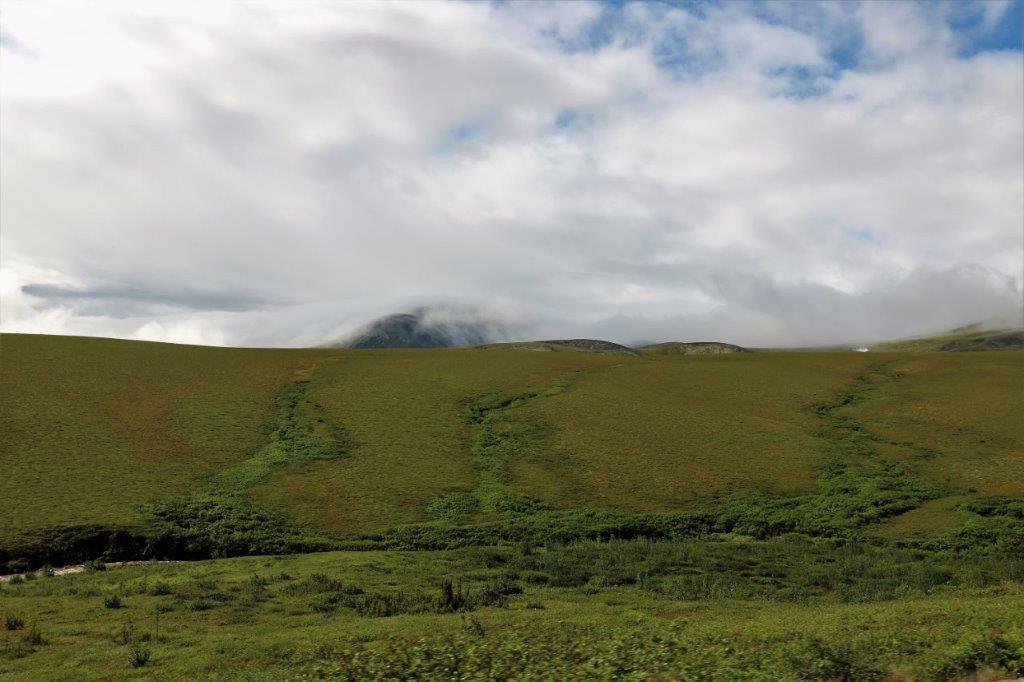
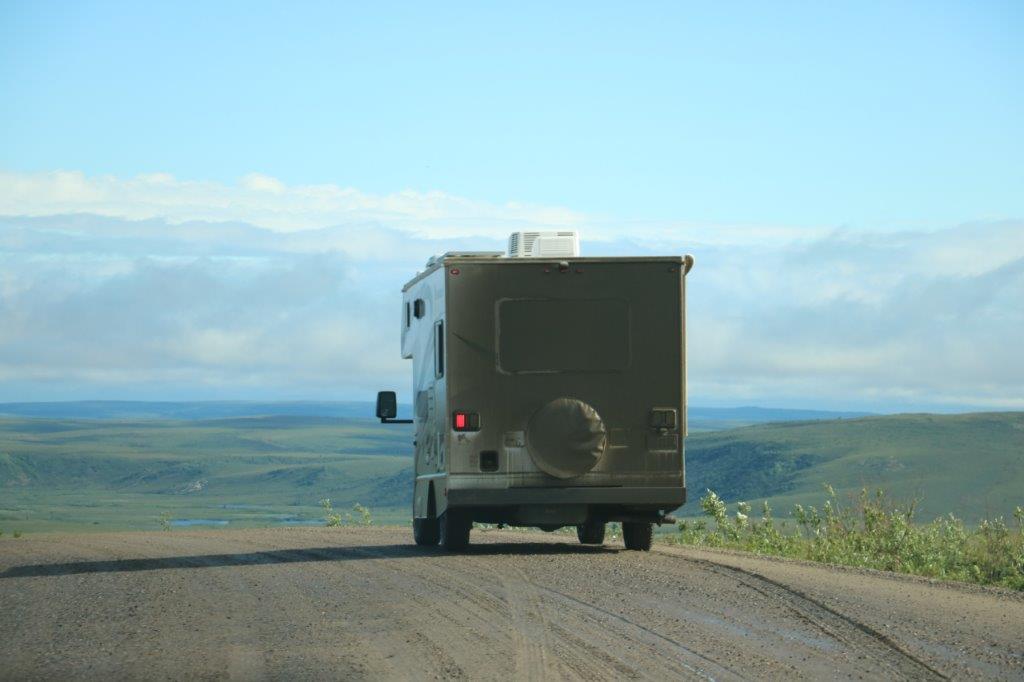
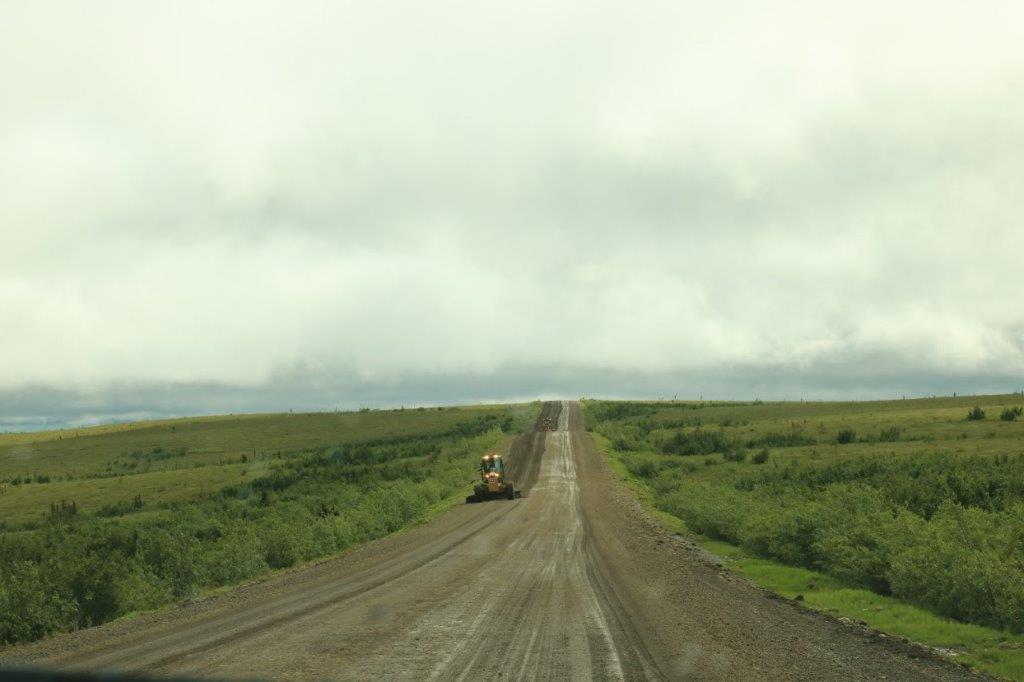
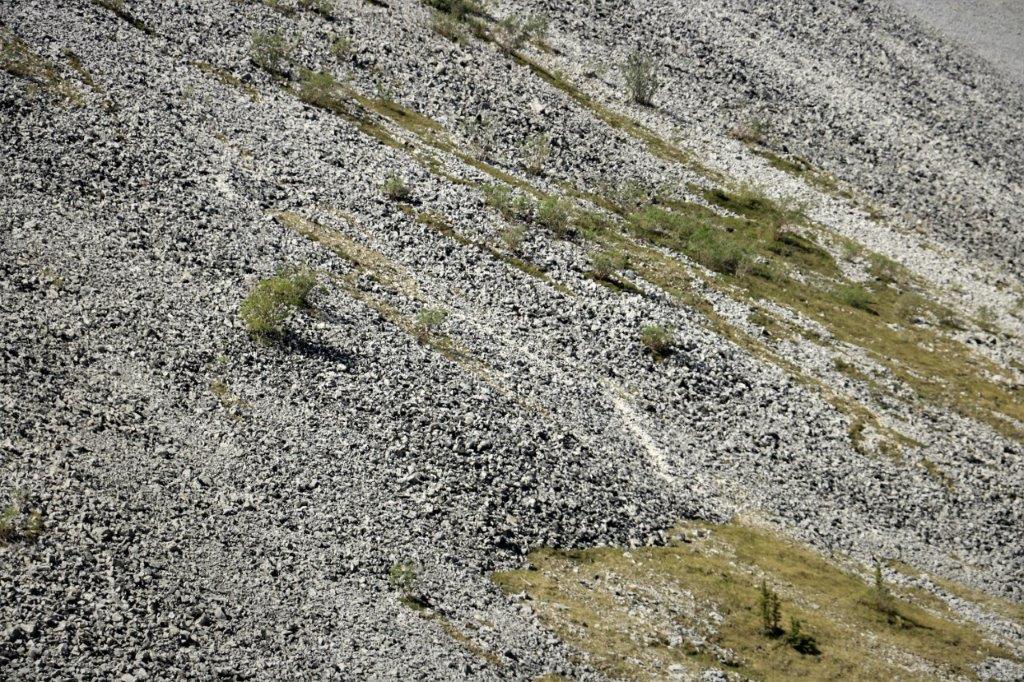
We had skipped all the geocaches hidden near the road coming into Inuvik so planned to find some of them on the way back to Eagle Plains.  We were on Northwest Territories time which is an hour ahead of BC and the Yukon.  Since today was just going to be a driving day once we found the geocaches we wanted, we slept in a bit and left town at 9:30.  It started to rain, stopped after a short while, but we were under cloudy skies pretty much all day. There also was a smokey haze for most of the trip.  We couldn’t smell it, but everything had a bluish cast.  We were told it was probably coming from fires in Alaska.The last geocache we stopped to find out of Inuvik was at a boat launch at Gwin’ich Territorial Park and this little bunny was waiting to greet us. We encountered one of the calcium trucks this morning.  The highway maintenance crews lay a coat of calcium on the road, then soak it with water to spread it over the whole surface, and then the calcium abosorbs moisture out of the air and keeps the road surface dust free.  Unfortunately, it also makes the dirt being lifted by the tires very wet and it does not dry, so you don’t want to lean against the sides of the truck or you will get calcium loaded mud on your clothes. The patterns created by the mix of bushes and rocks that stream up the mountain side is so very interesting.  Everything looks different when you come at it from the opposite direction.          The vegetation lines look like a plowed farmer’s field.

As we crossed the Vittrekwa Valley we passed two graders working on the road heading northward.  About a quarter of a mile behind the graders we came across a big white dog running down the middle of the road.  His tongue was hanging out and he looked exhausted.  I immediately thought he belonged to one of the grader operators and was trying to catch up.

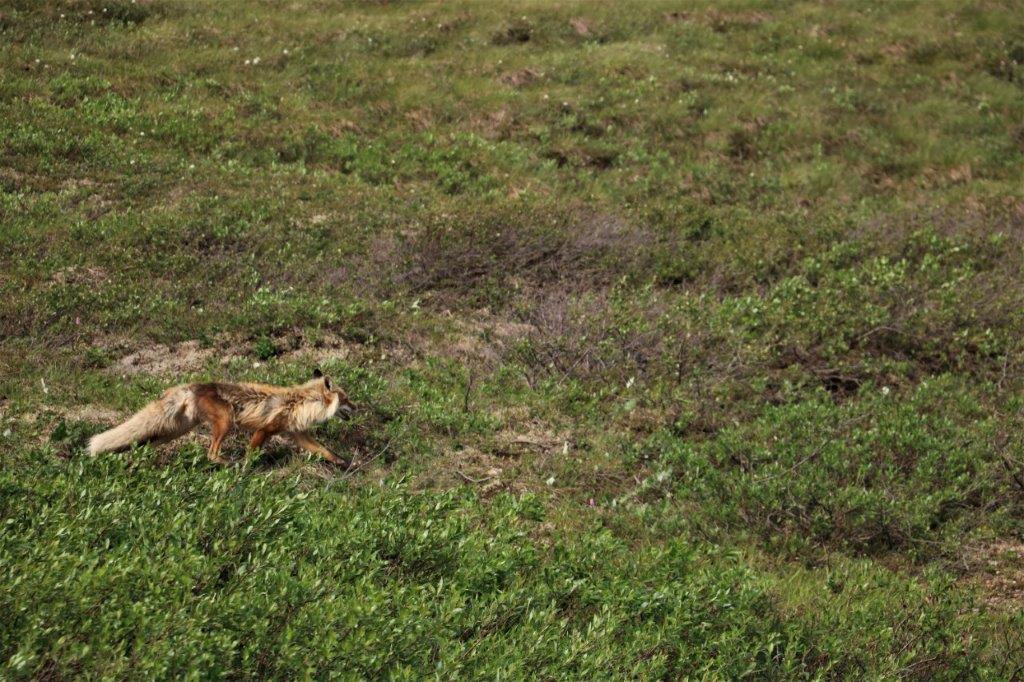
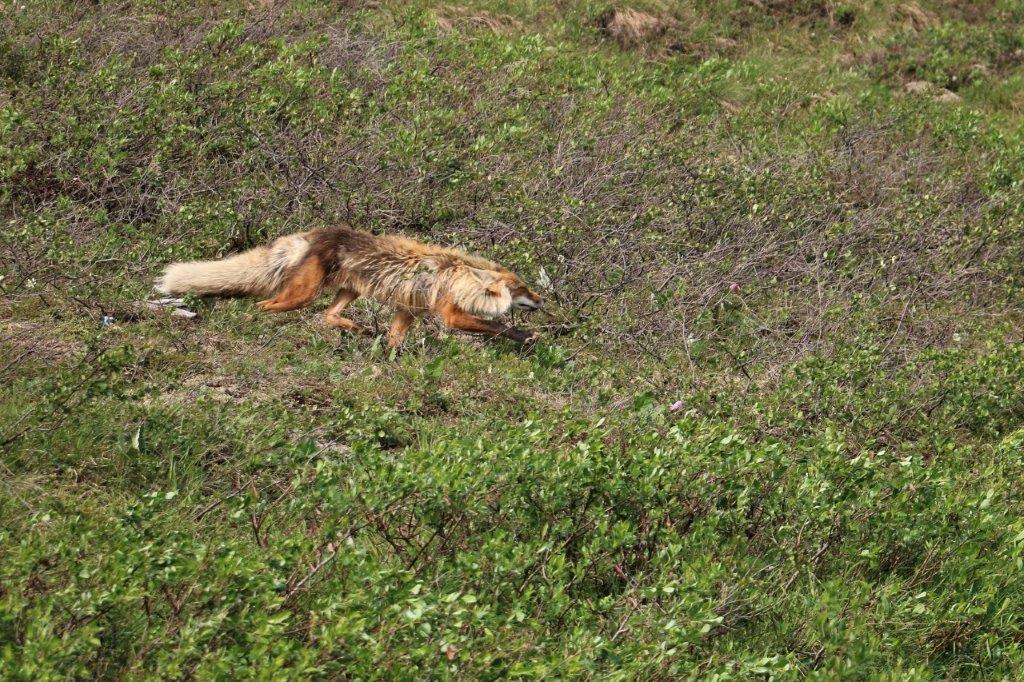
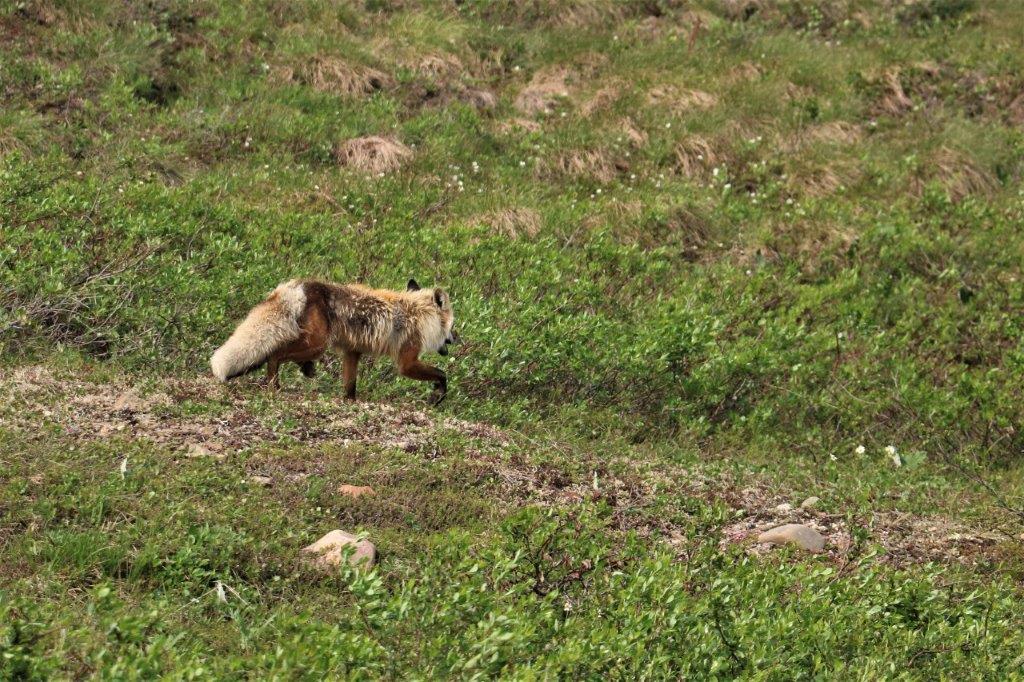
Not very far down the road from the dog we saw this nice healthy fox. I was still fretting about the poor dog, so John turned the truck around and we went after him.  When we caught up with him again he was just trotting along, not looking nearly so worn out as he had 10-15 minutes ago.  He would not come near me and headed off into the bushes.  We surmised he is probably feral and used to living out in the wilderness.  He had no collar or tags at any rate.  Hopefully he is okay.

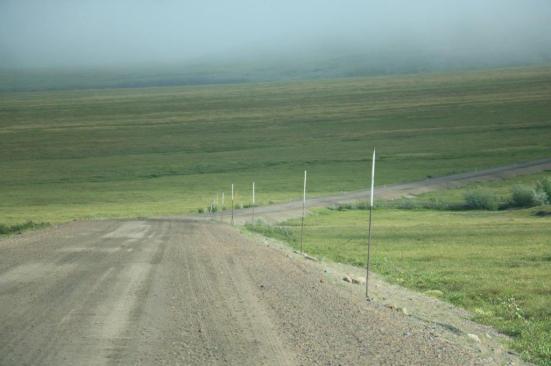
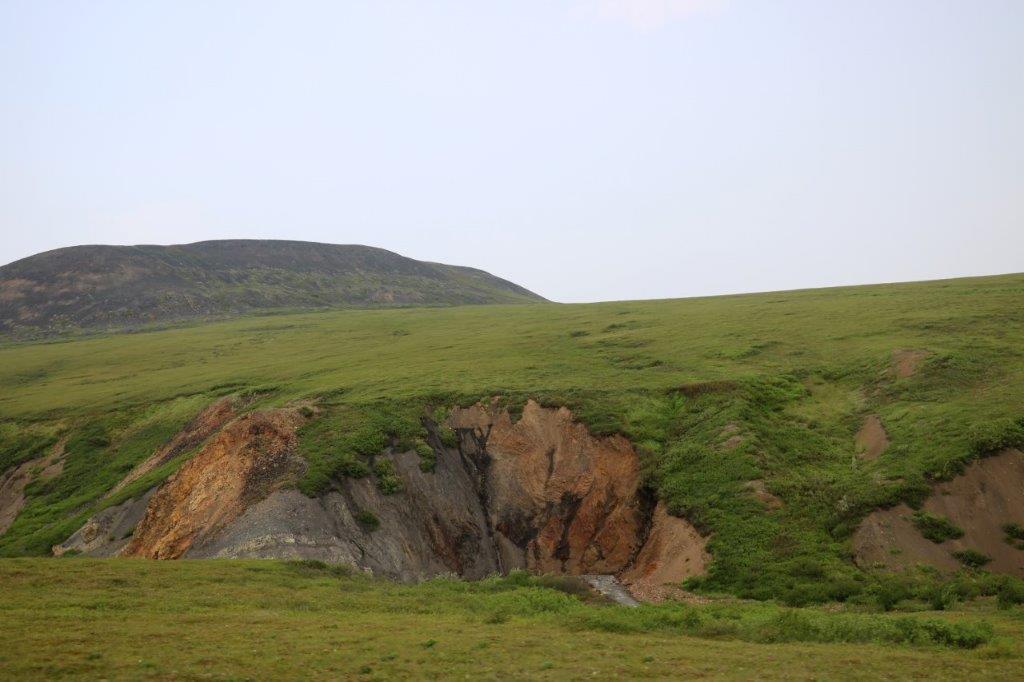
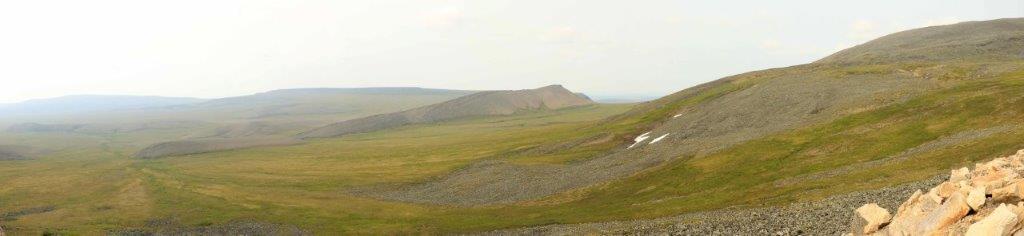
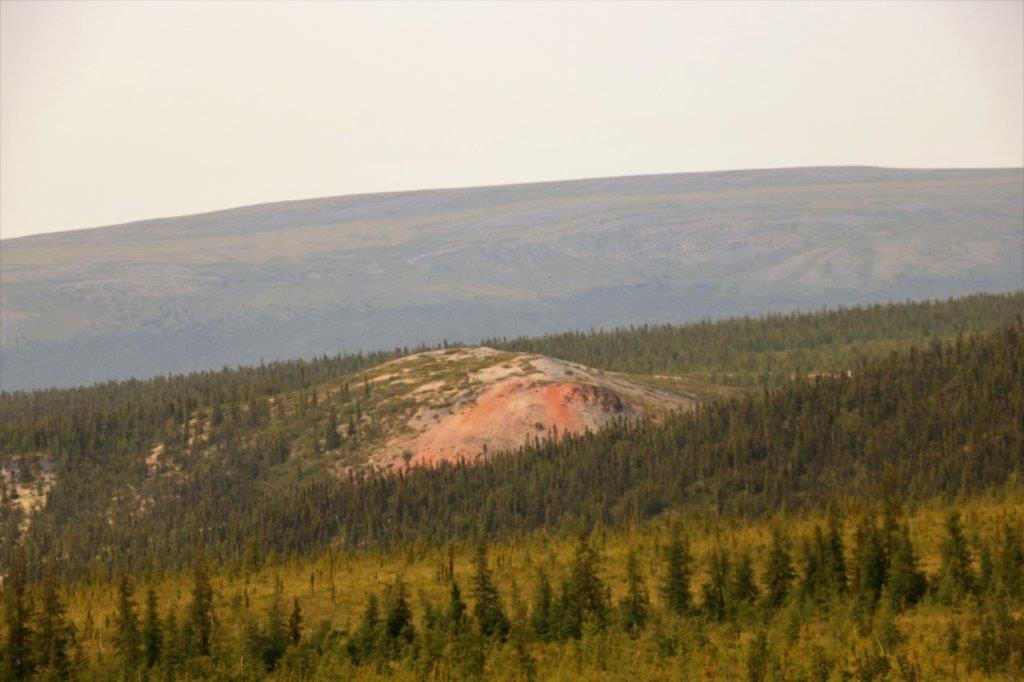
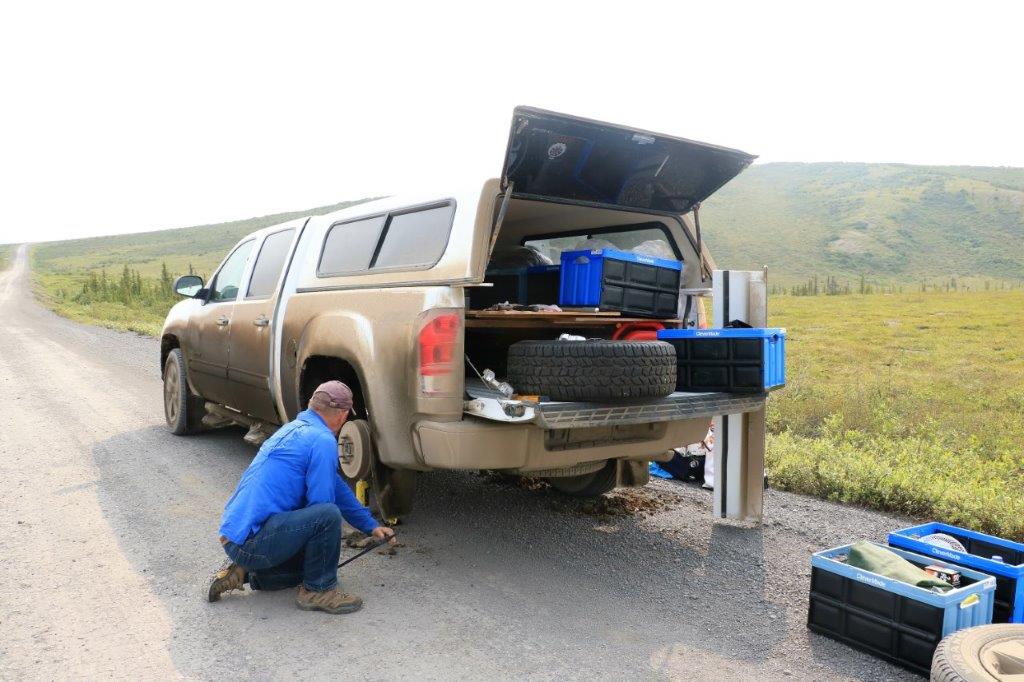
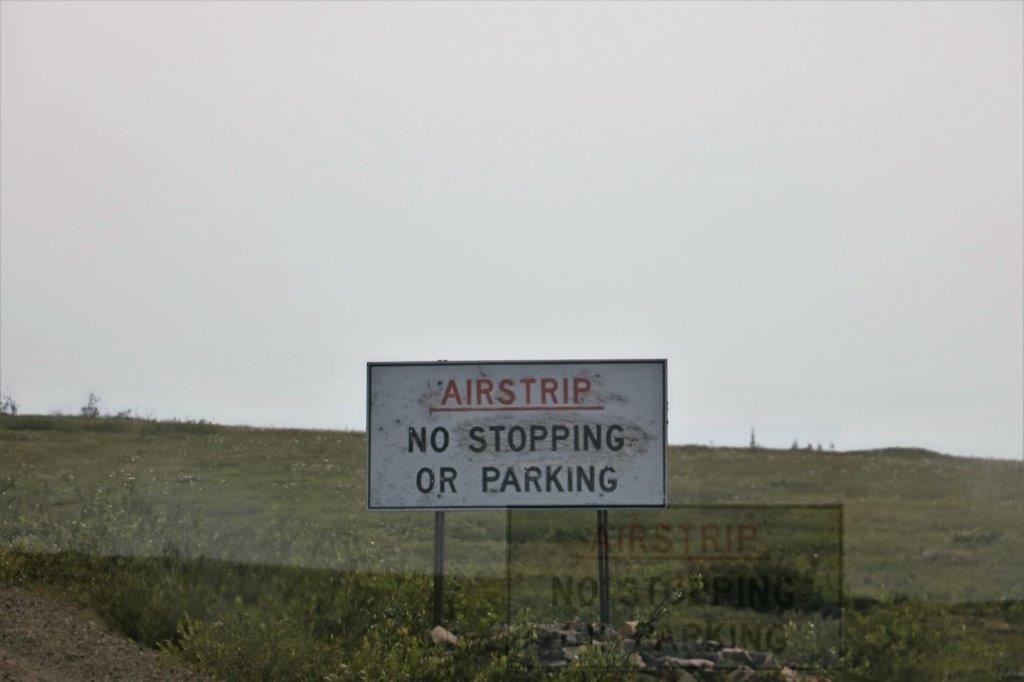
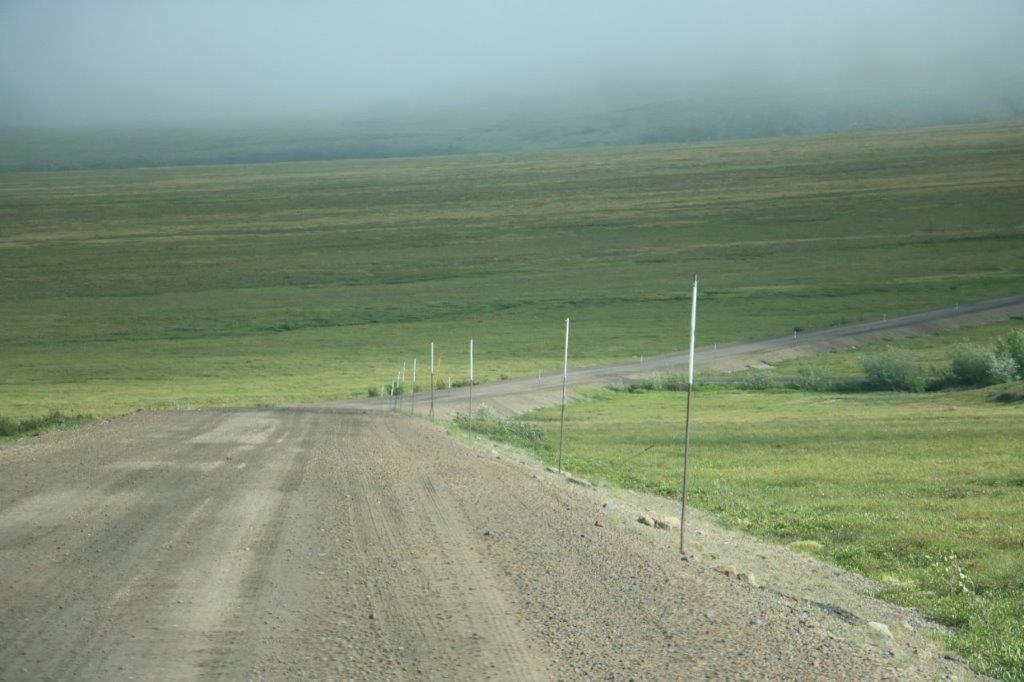
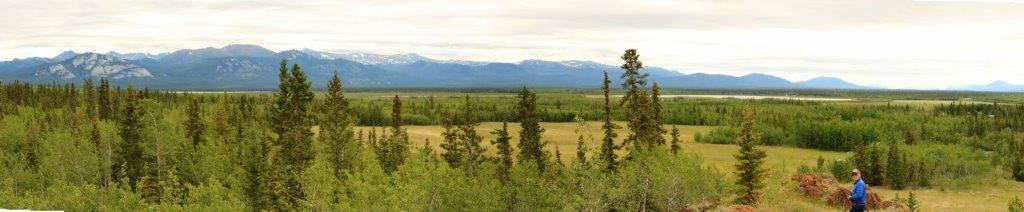
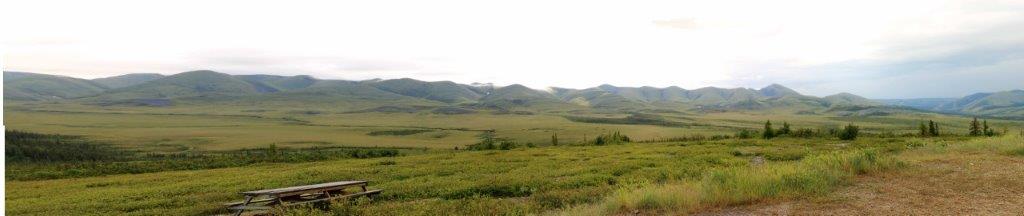
The Wright Pass takes you through the Richardson Mountains.  The stitched photo below shows the scenery behind the monument. I had seen this very red rock on the far-off mountain as we drove up to Inuvik but it was on John’s side of the vehicle so I couldn’t get a good photo of it until we came back down. We were about 100 km from Eagle Plains and the tire sensor light came on.  John had checked the tires before we left Inuvik and wondered if one of them was getting low, so he immediately pulled over to check and, sure enough the left rear was flat.  After 1,100 km (683 miles) of gravel roads we got a flat!                                New tire on and ready to go again.There are two sections of highway along the Dempster that are designated as emergency runways for planes.  There is also a gravel runway that is parallel to the road on the section between Eagle Plains and Mile 0 outside of Dawson City.  There are red-tipped stakes on both sides of the emergency road sections with wind socks off to the side.

There were the same names over and over on many of the logs for the geocaches we found.  Someone who goes by Turtle61 was on the same journey about two weeks before us and found many of the same caches.  I was looking at the map before we left Inuvik and discovered a brand new cache had been approved the day before.  It had been hidden by Turtle61 and was about 40 km north of Eagle Plains.  We thought we had a good chance of being the first to find it and we were correct.  The cache was hidden under one of these signs at a little pullout.   We also received our fourth rock chip in the windshield on this day.  Every one of them has been caused by an oncoming motorist who is either unaware of the ‘driving courtesy code’ for gravel roads, or doesn’t care.  John always drives closer to the edge of the road and slows down when meeting another vehicle.  This reduces the chance of throwing up rocks into the other car’s windshield.  When we pass another vehicle he stays in the opposite lane for quite a distance before pulling back into our own lane again for the same reason. Thankfully there is very little traffic up here so you are not in danger of causing any accidents by slowing down or staying in the wrong lane.

We arrived in Eagle Plains at 5 pm Yukon time (6 Northwest Territories time), so even with having to change the tire we made pretty good time.

2018 July 6 – Inuvik to Tuktoyaktuk and back, NT

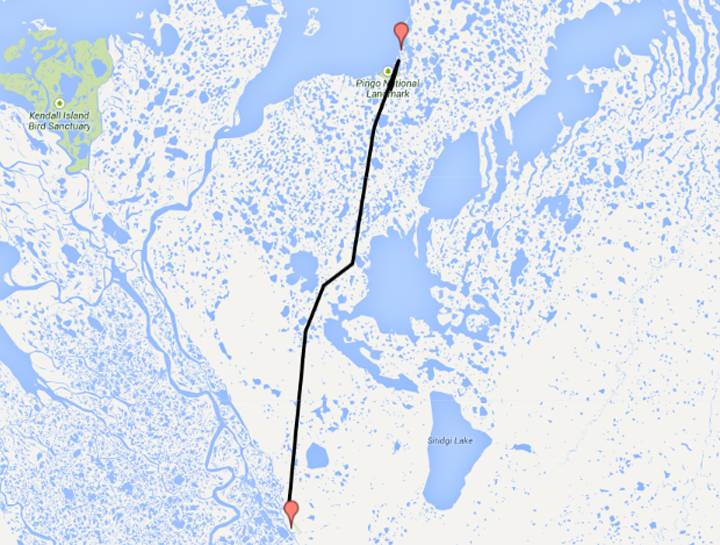
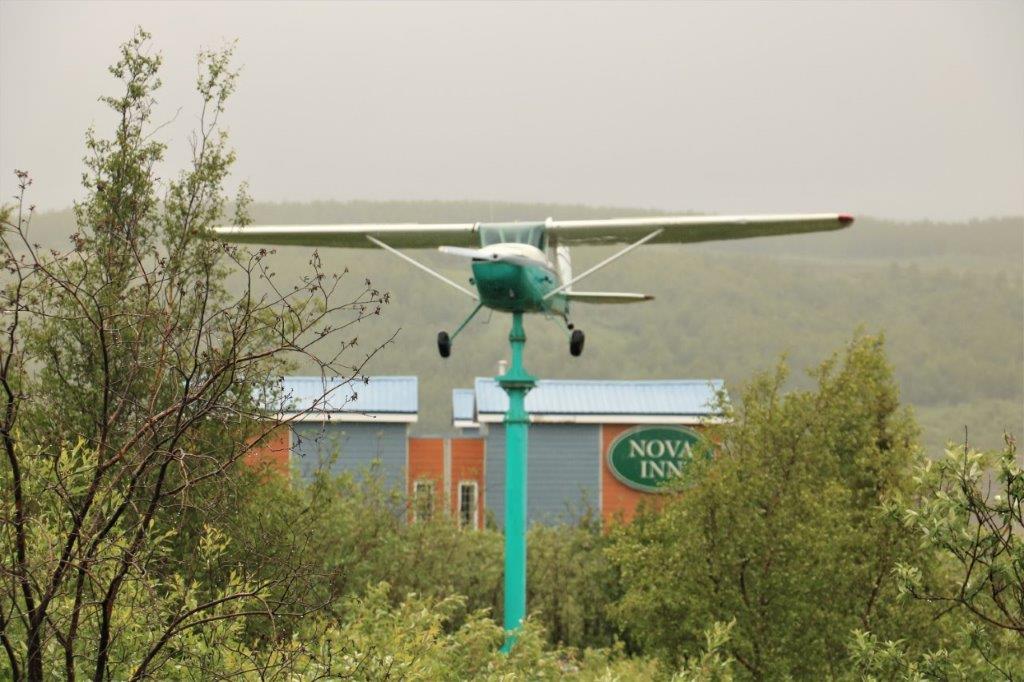
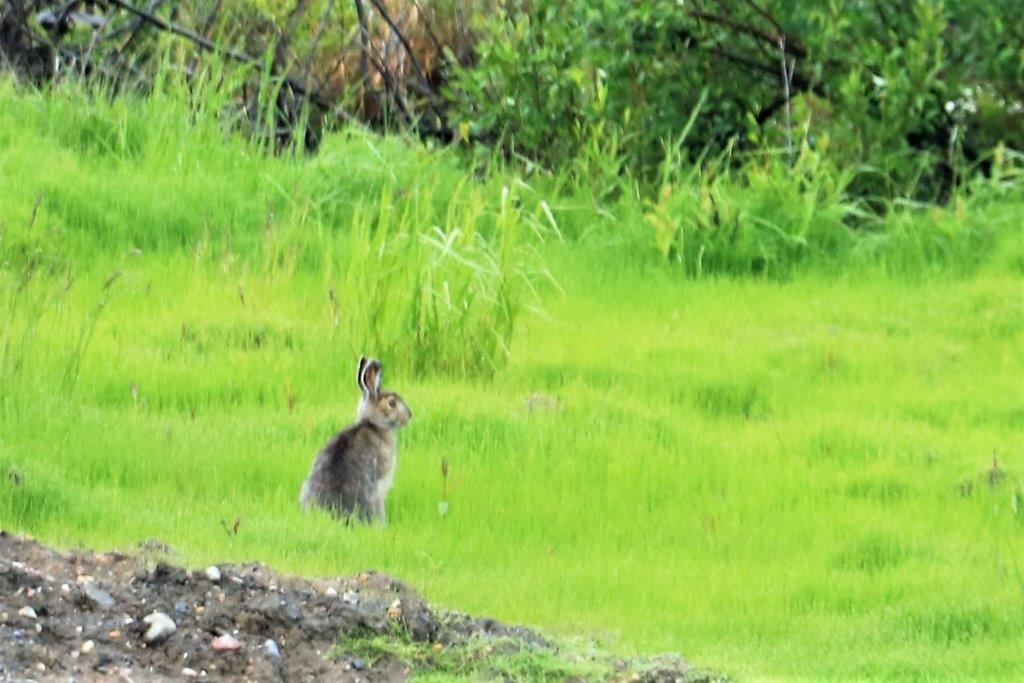
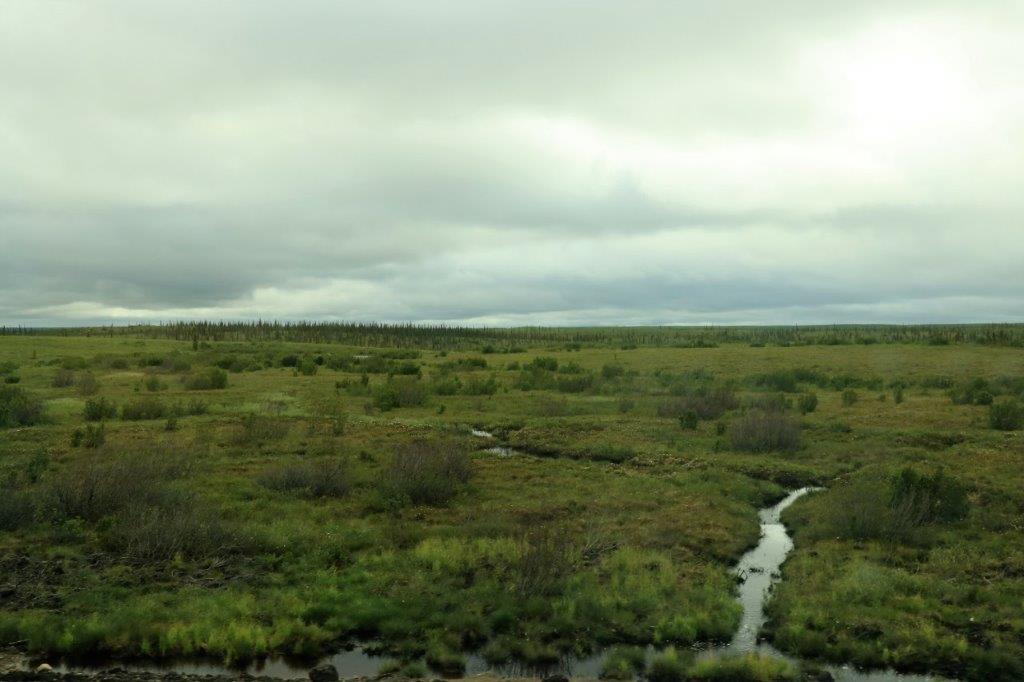
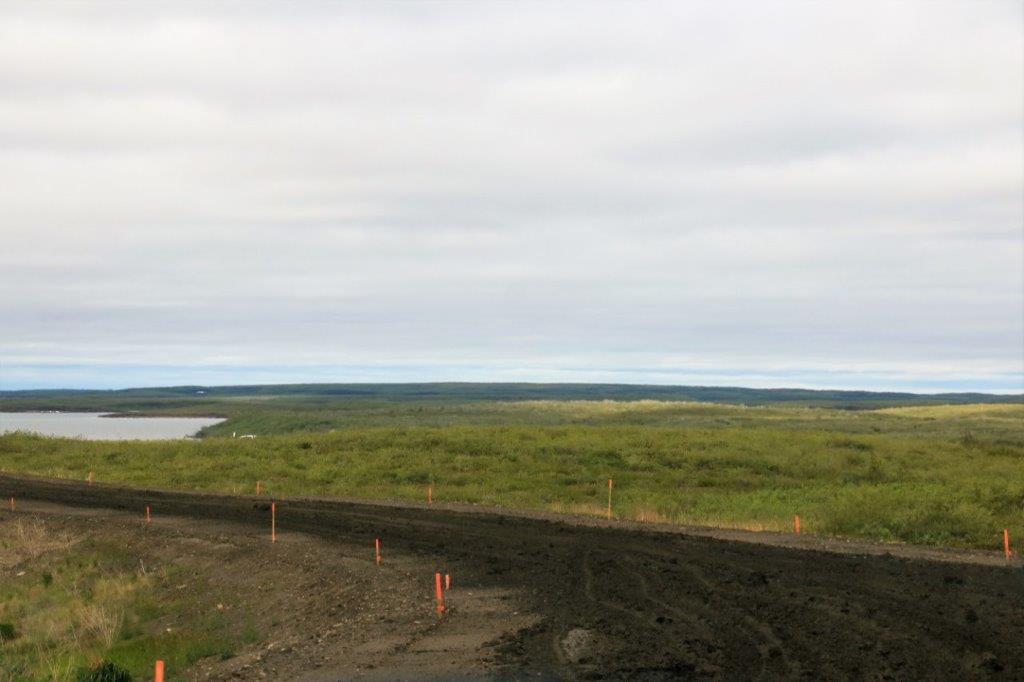
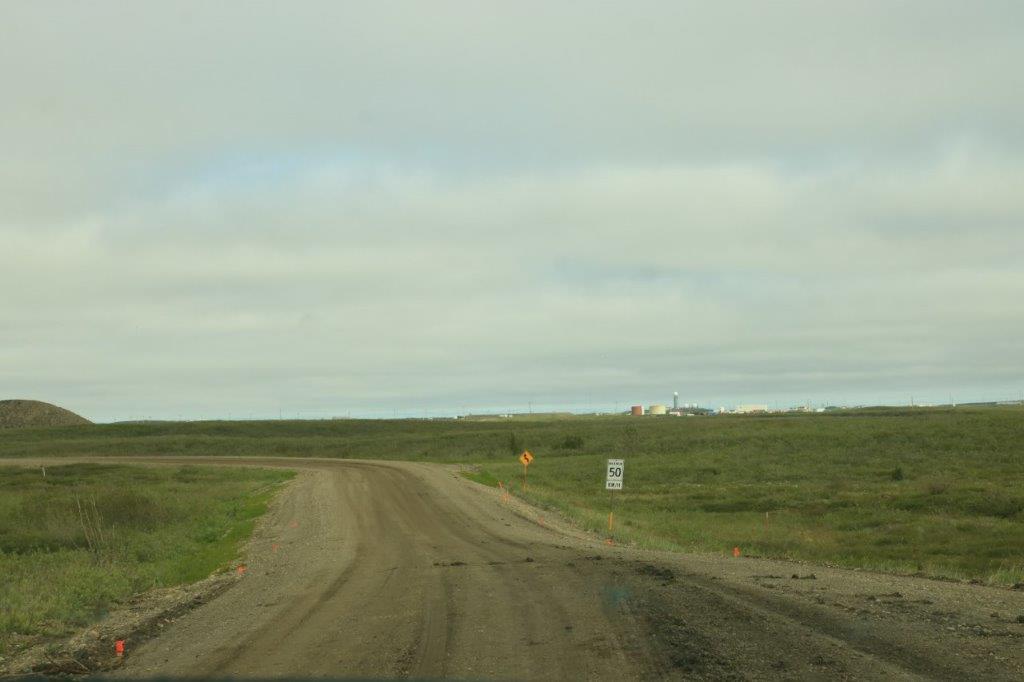
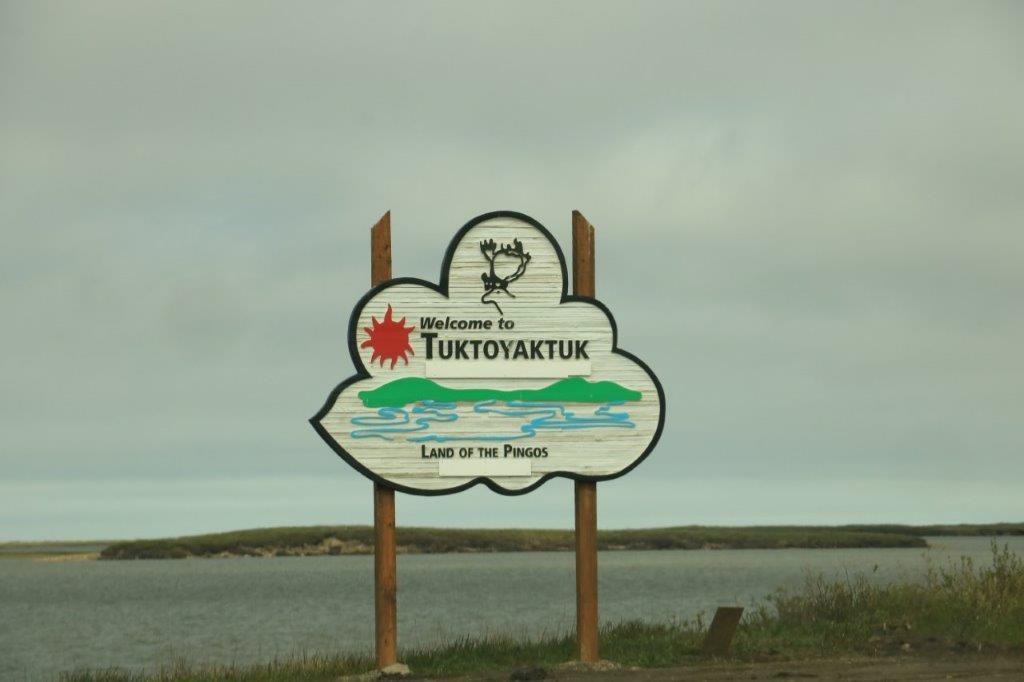
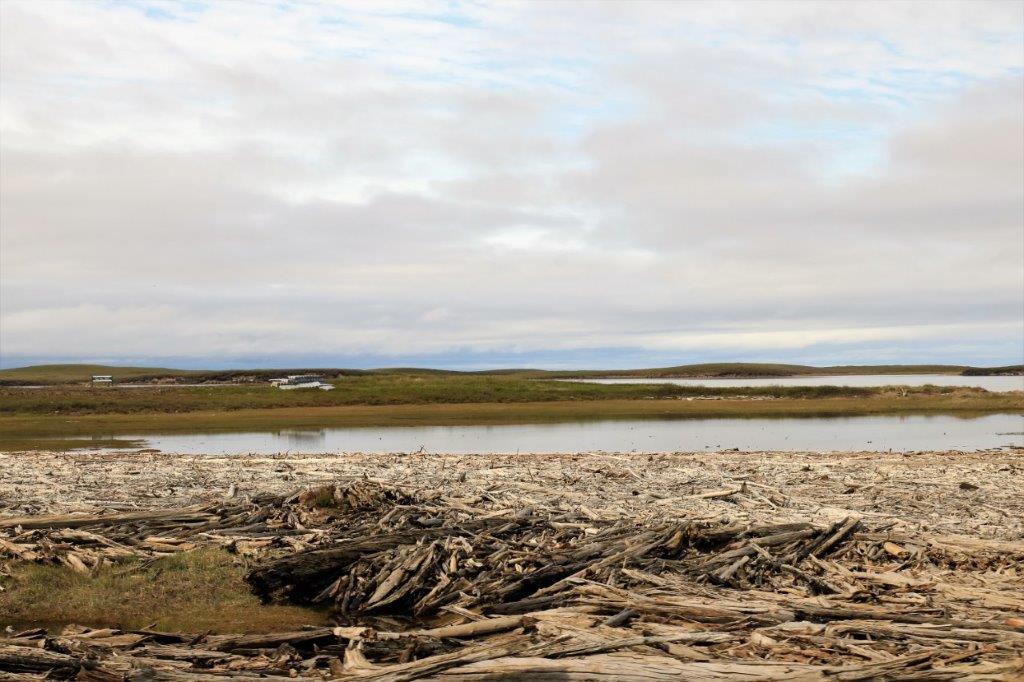
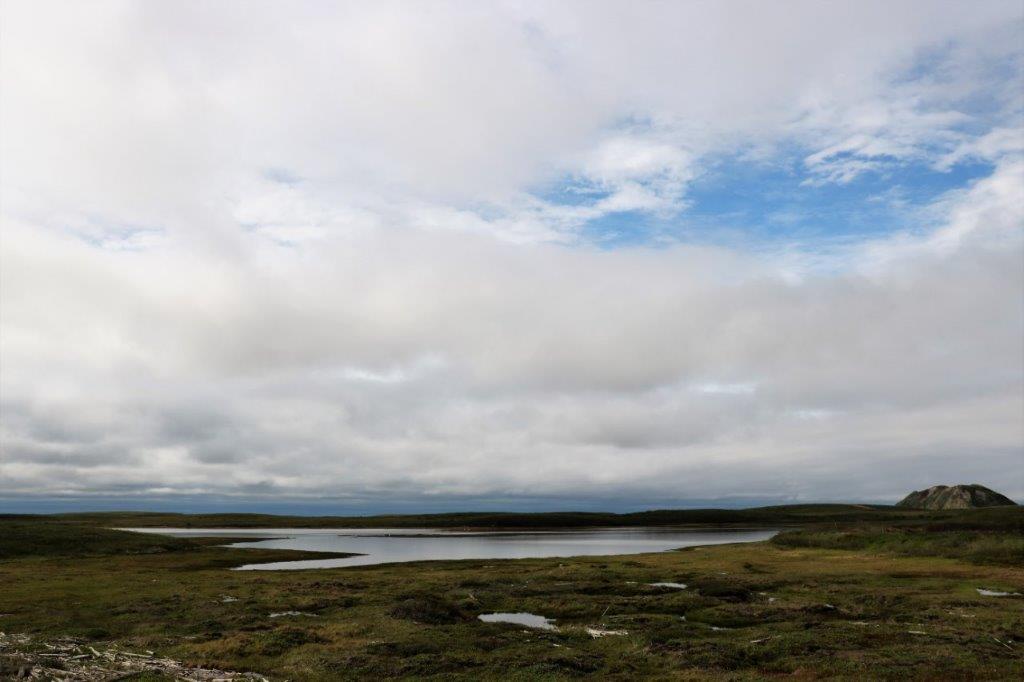
The new road from Inuvik to Tuktoyaktuk is 148 km (92 miles).  It took four years to build and opened in November of 2017.  The road had been a ‘priority’ since the 1960s.  It is the first all-weather road to Tuk.  Previously the only road was an ice road in the winter.  You had to take a plane to get there in the summer.  We were told that the contractors had rushed the completion of the road at the Tuktoyaktuk end in order to have it finished for the announced opening day last November.  Consequently it is not as good as the rest of the road.  The road bed is compacted gravel built 1.8 meters (6′) above the permafrost.  The terrain between Inuvik and Tuk is nothing but ponds and small lakes so the road literally weaves among them.  There are eight bridges along the route, and a total of 68 areas where the highway has been engineered to pass over waterways. In a straight line the road would be about 25 km shorter.  The map below is not detailed enough to show you all the turns and curves but it gives you an idea of the conditions they had to deal with. The weatherman had predicted 76% chance of rain today and he was 100% correct first thing this morning.  It was lightly raining when we got up but as we waited for the Visitor’s Center to open at 9 to check on the road conditions it began to really come down.  I was very skeptical about going even though I really wanted to make it all the way to the Arctic Ocean.   Inuvik has a Cessna 150 weathervane and there was a geocache hidden at the base of it.  So, these intrepid cachers hiked off into the rain to find it. As we were leaving town we spied this rabbit/hare beside the road. When it took off the underside of it’s hindquarters and tail were white.The views along our drive today were not really exciting; it was a lot of low ground and bodies of water.  Under the cloudy skies it wasn’t terribly inspiring, although the huge expanse of the tundra was, as always, impressive.The gal at the Visitor’s Center told us that there was a rough section of the road for about 30 km out of Inuvik and then the road was good until the last 20 km into Tuktoyaktuk; where it was quite rough and muddy.  But, she assured us, if we took it slow we would make it through.  Music to John’s ears!  He really wanted to give it a go.

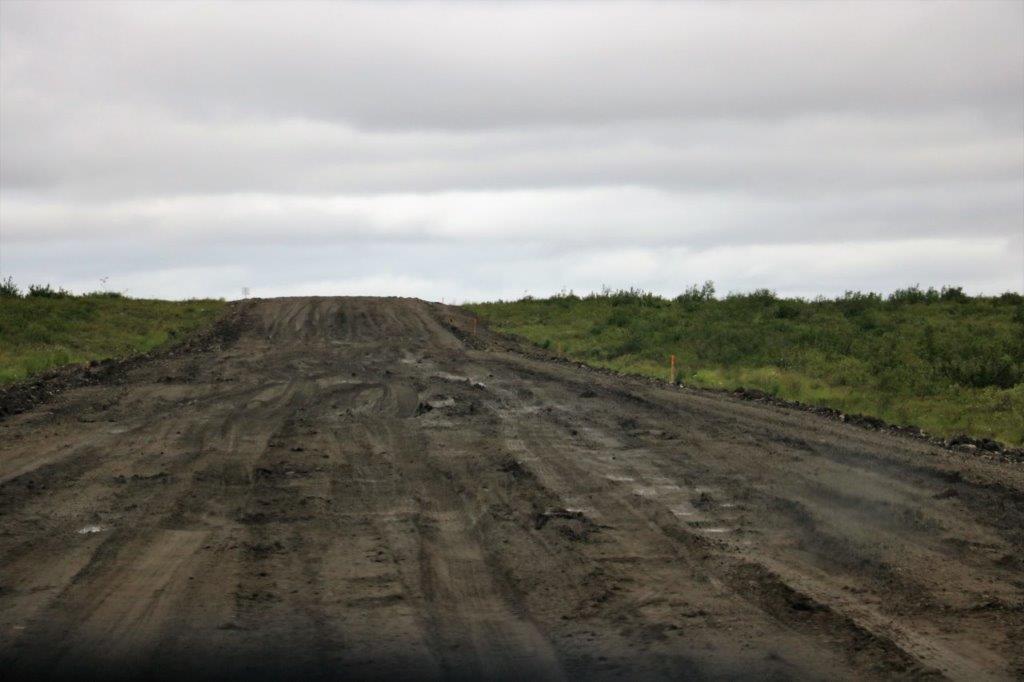
The lady was correct.  There was a rough section – a vast understatement – for the next 30 km, that we came to about 10 km out of town. I don’t think we had one place along the road all day that there was not water on one, or both sides of the road.

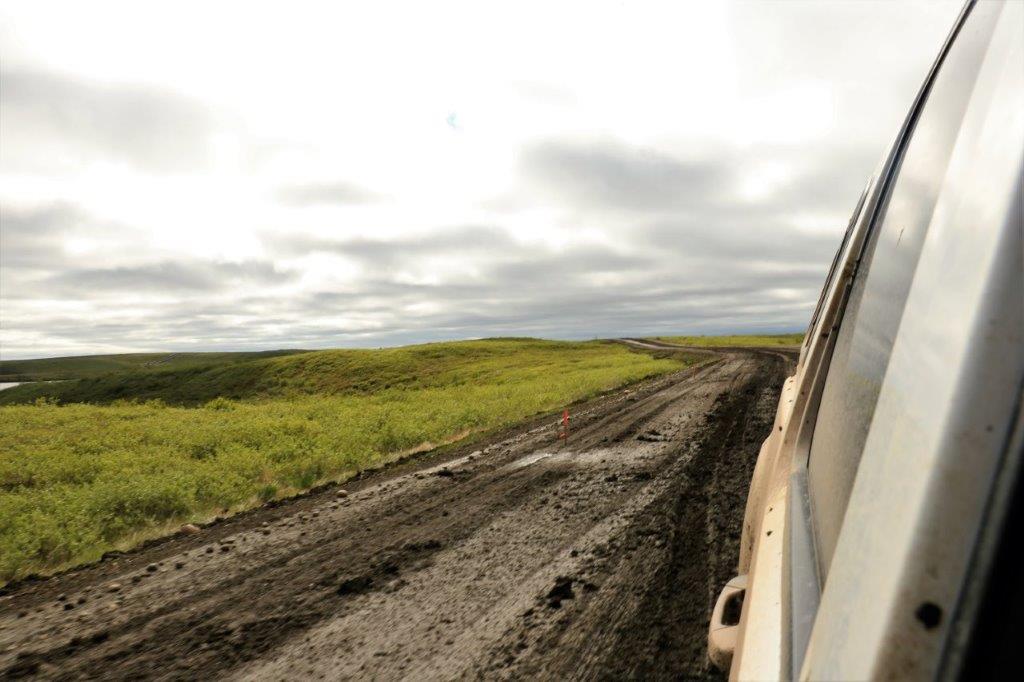
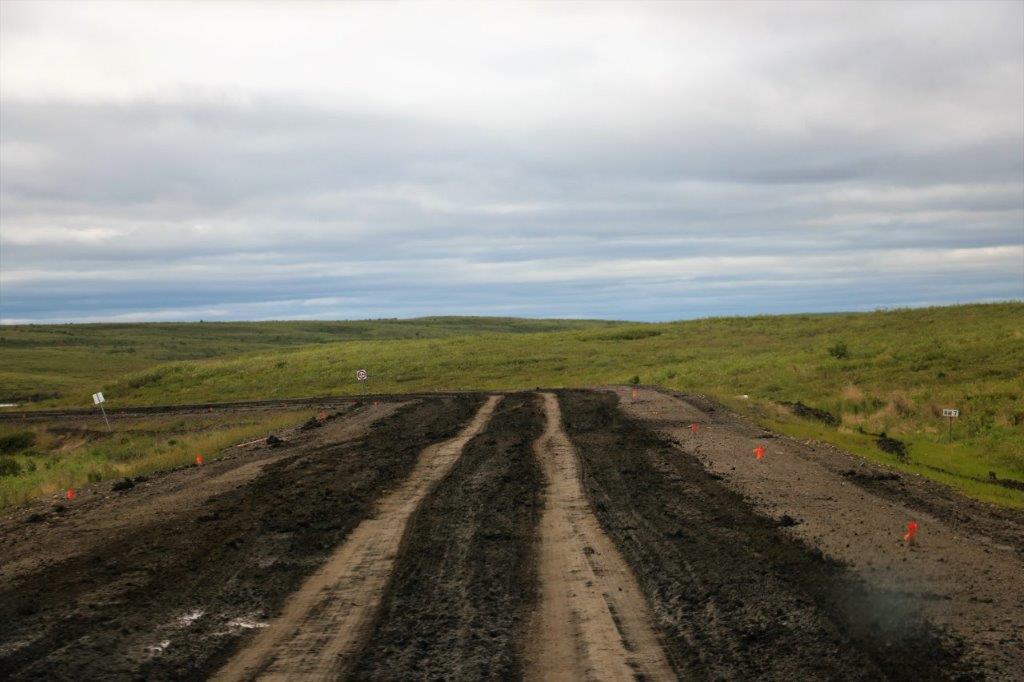
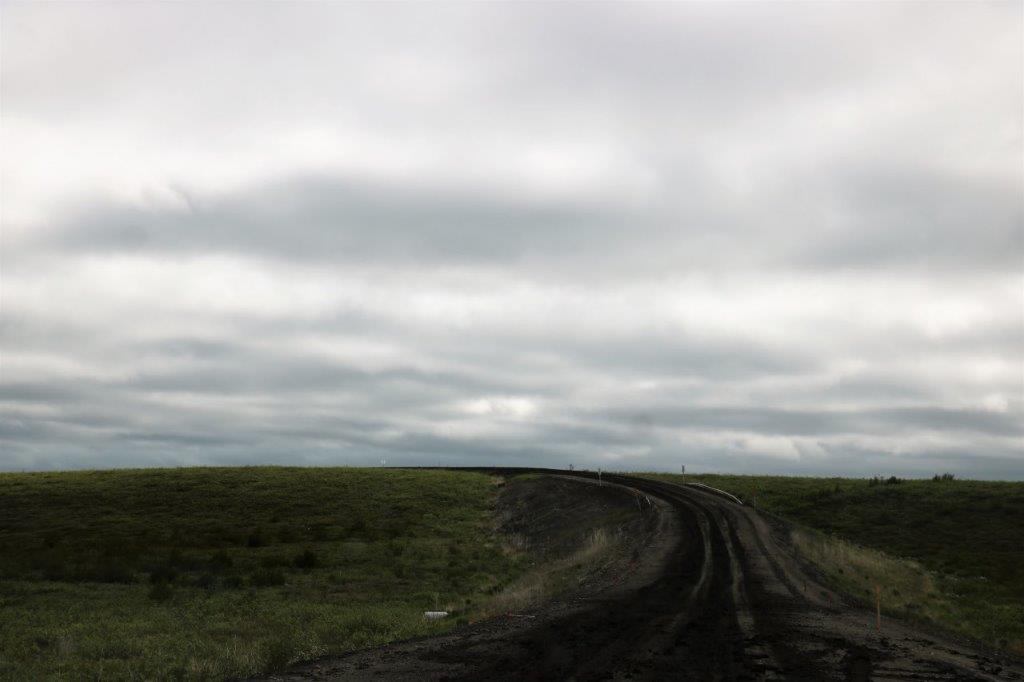
She was also correct that the road would be good later.  And we drove the majority of the way on nice compacted gravel. The last 25 or so kilometers to Tuktoyaktuk were a muddy, slippery, sliding nightmare!  I kept my head down and prayed a lot.  Thankfully John is an experienced driver on rough roads and knew how to compensate for the slipping rear-end and mud grabbing road.  Also thankfully there were very few oncoming vehicles because moving out of the ruts was difficult and you risked getting mired in the soft muck on the sides.

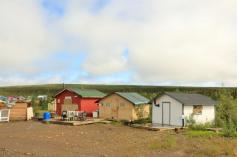
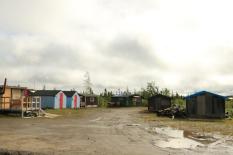
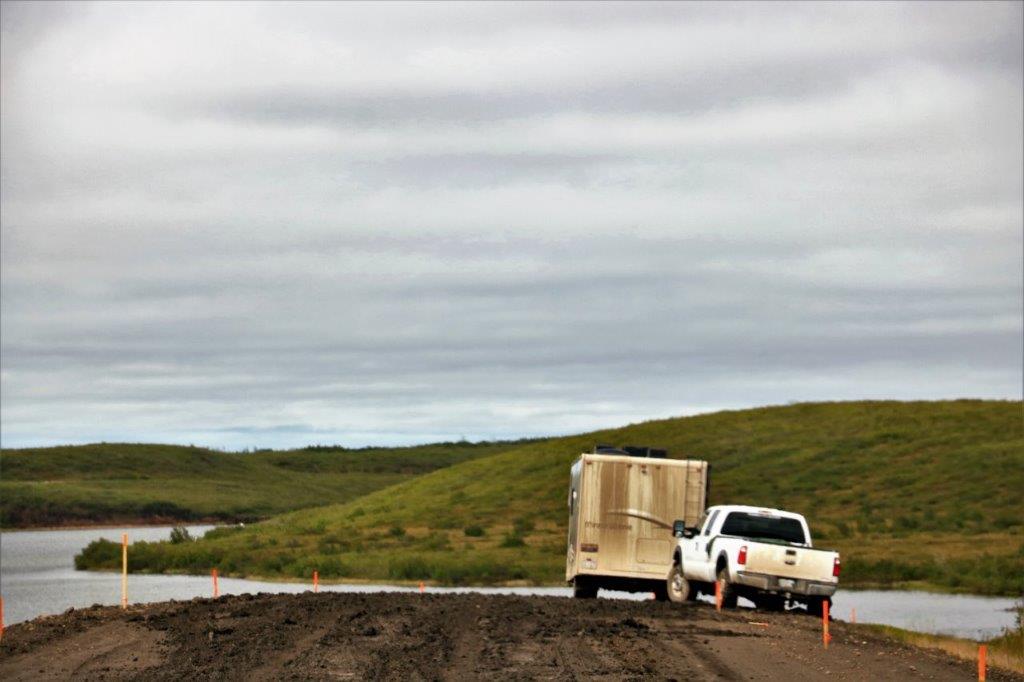
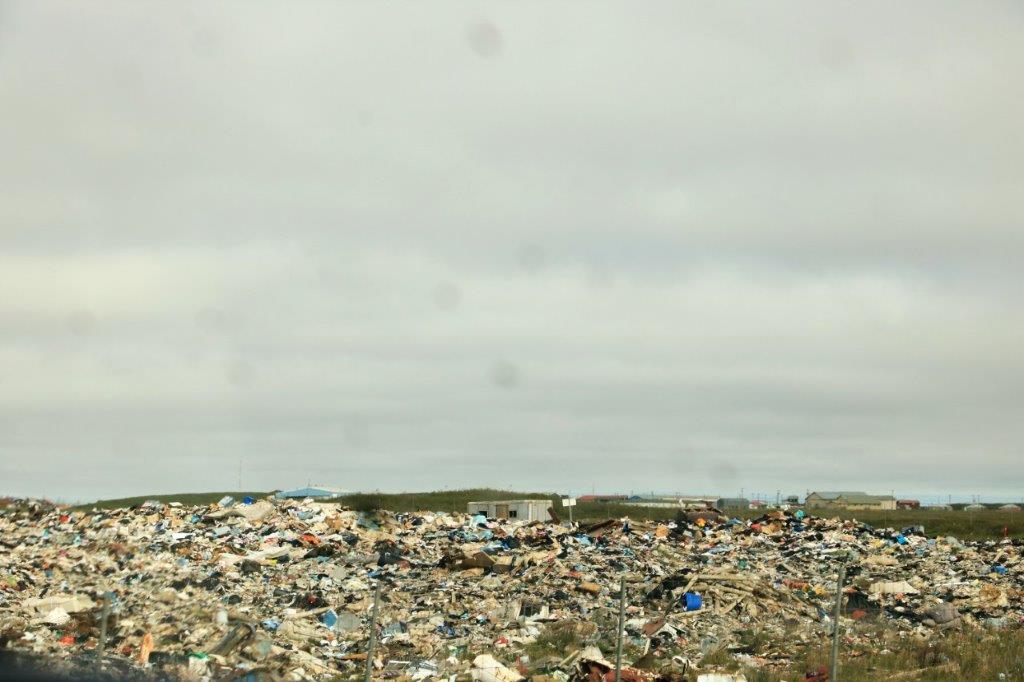
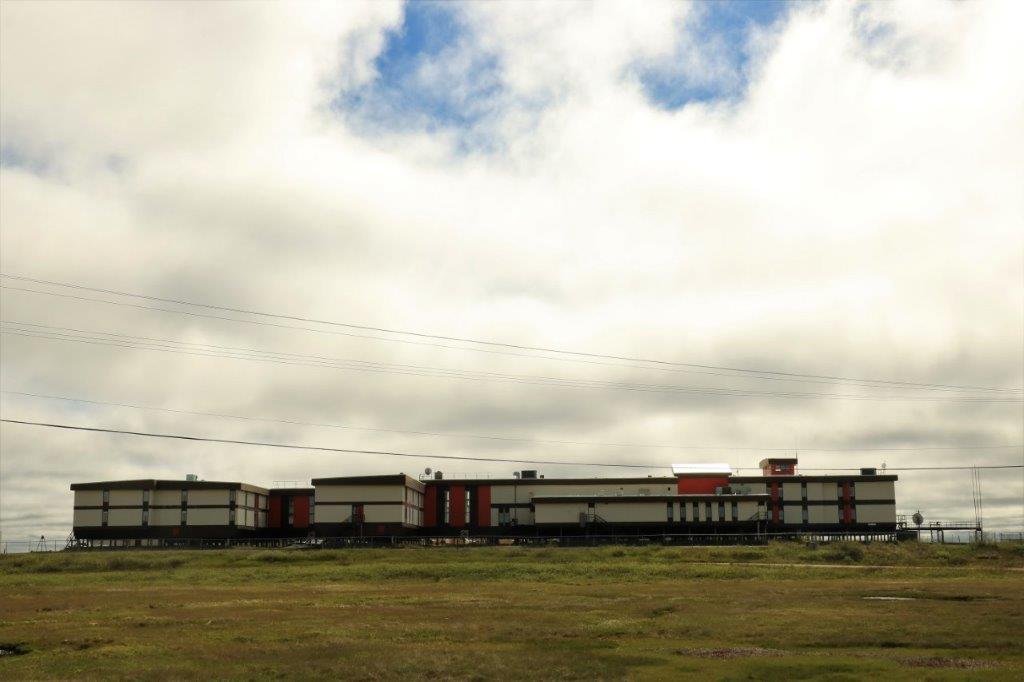
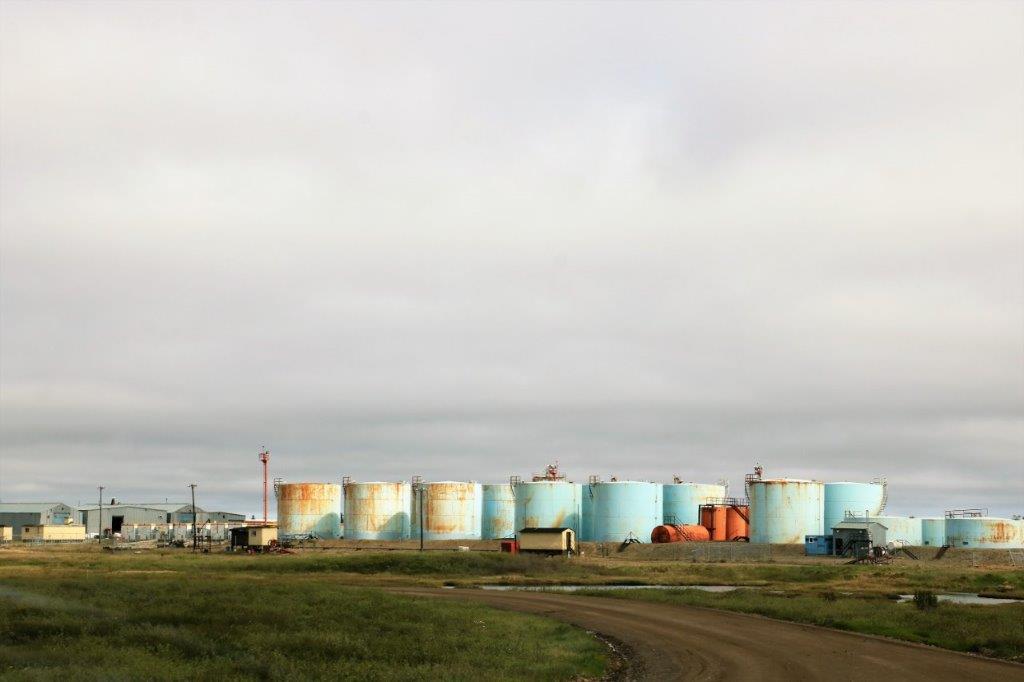
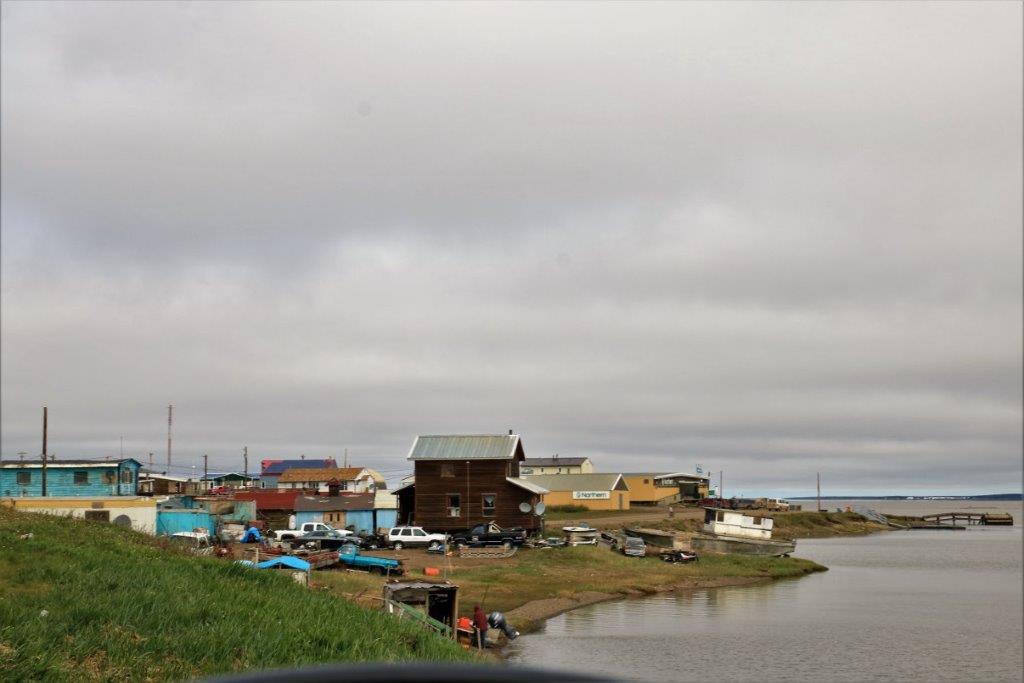
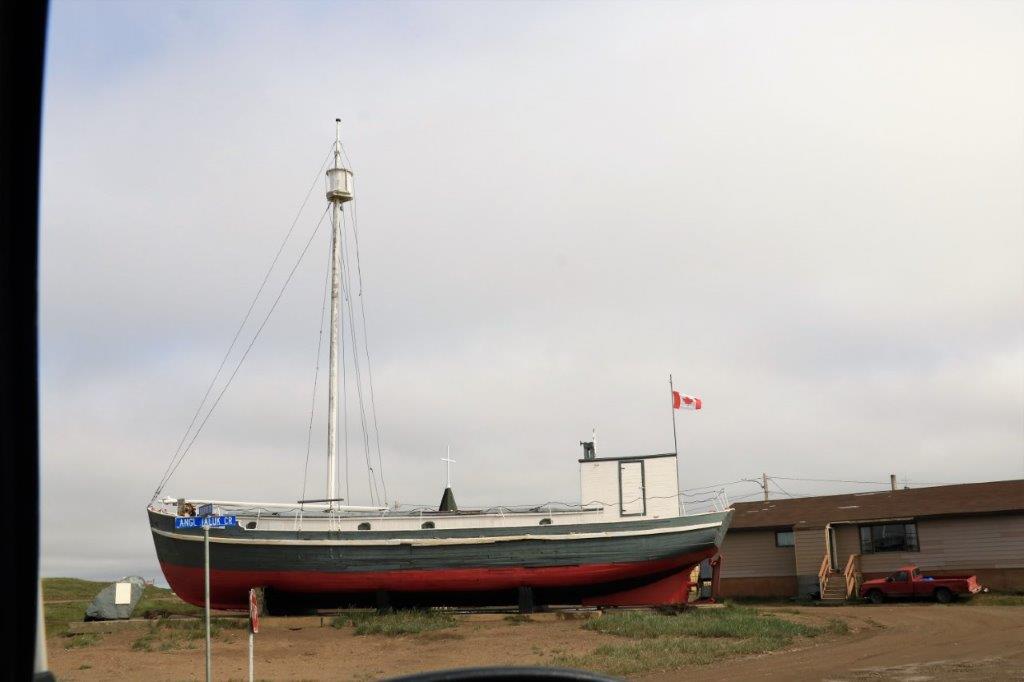
There was a couple and an older woman from Victoria on the tour with us of the gold dredge in Dawson City the other day.  They were in the Visitor’s Center at the same time as us this morning, also inquiring about the road to Tuk.  The woman said they had gone out yesterday, but turned back at the last 20 km.  They were trying it again today and we passed them on the good stretch.  We also passed a trio of cars with Asian visitors who had also been in the Visitor’s Center.  We never saw either party while we were in Tuk.  I strongly suspect they turned back.  Unless you are an experienced off-road and 4×4 driver with really good nerves you would not make it.  John did an awesome job.  I would have been over the side at the first turn.  What a mess.  I took a couple of videos – shaking and bouncing all over the place – and John is going to post at least one of them on his Facebook page if he can.  To put it mildly it was an EXPERIENCE!  One I would be very happy to not repeat. I was not looking forward to the drive back to Inuvik! We think the driver of the little motorhome, just parked it atop this hill and left it until the road dries out.  The truck may have stopped to offer assistance or something but its right rear tire is almost off the road so it was left as well.  Both vehicles were in the same spot when we returned. We had also passed a motorcyclist heading south – well stopped in the muck facing southward.  He, too was still in the same spot when we drove back.  He told us he was fine and would be making his way out soon. It was a terrible road to drive in a four-wheel drive truck.  I can’t imagine how it would be on a motorcycle. As the fellow we met in Whitehorse had told us after he had been down the road in the rain, “This was the road from hell.” The worst he had ever ridden and he had been all over the world on his bike.The final 3 kilometers into Tuk was a good road again. Boy was I happy to see it too! The road into the town passes right past the local dump.  Of course, there had never been a road from that direction before, so the dump was at the back of town away from the airstrip and the water.  Now the road takes you right past it. Workers accomodations.  I don’t know if they are used right now or not.  We saw other camp buildings that were boarded up. In the 1980s Tuktoyaktuk was booming with oil workers, but after the crash they left and have never returned in such numbers.  The town is primarily home to Inuvialuit.  The population of the community is about 900.

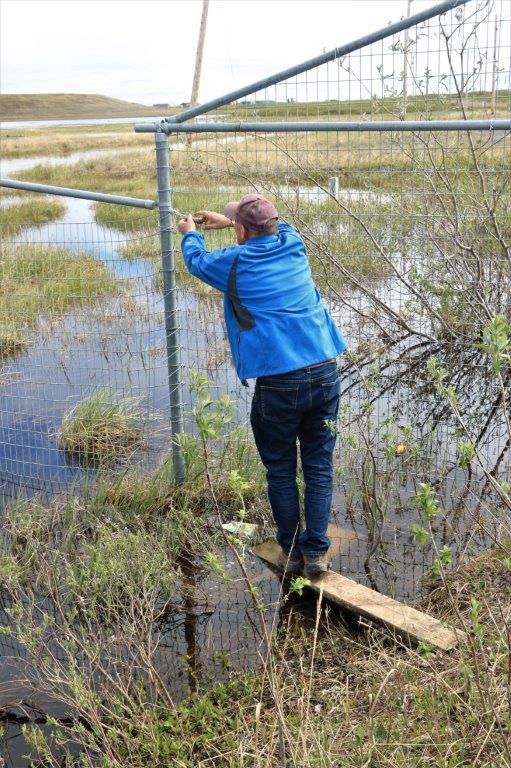
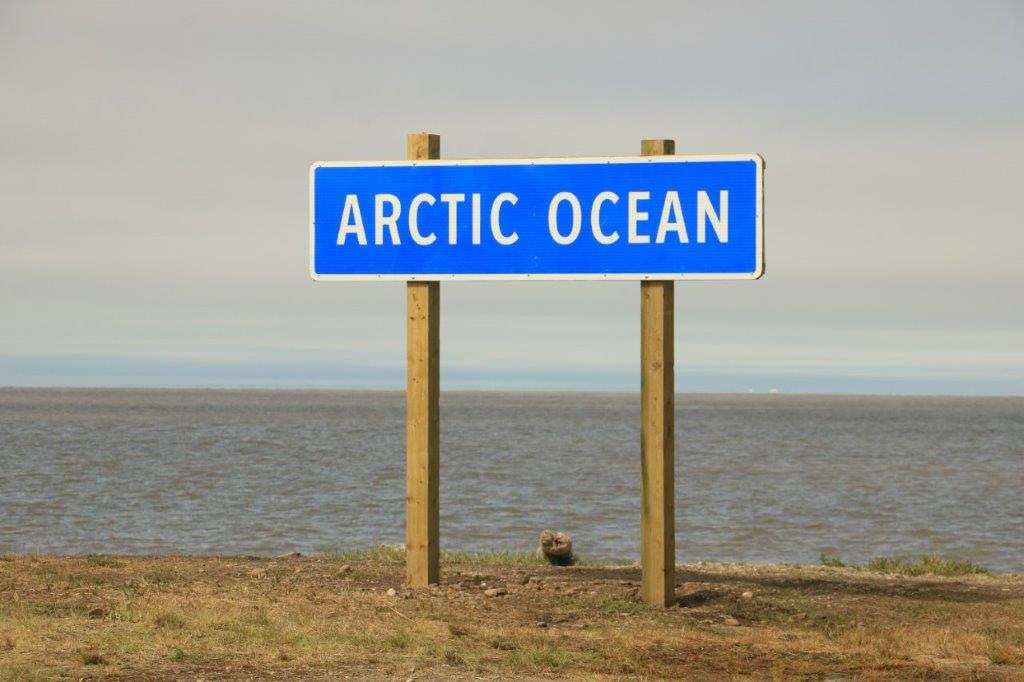
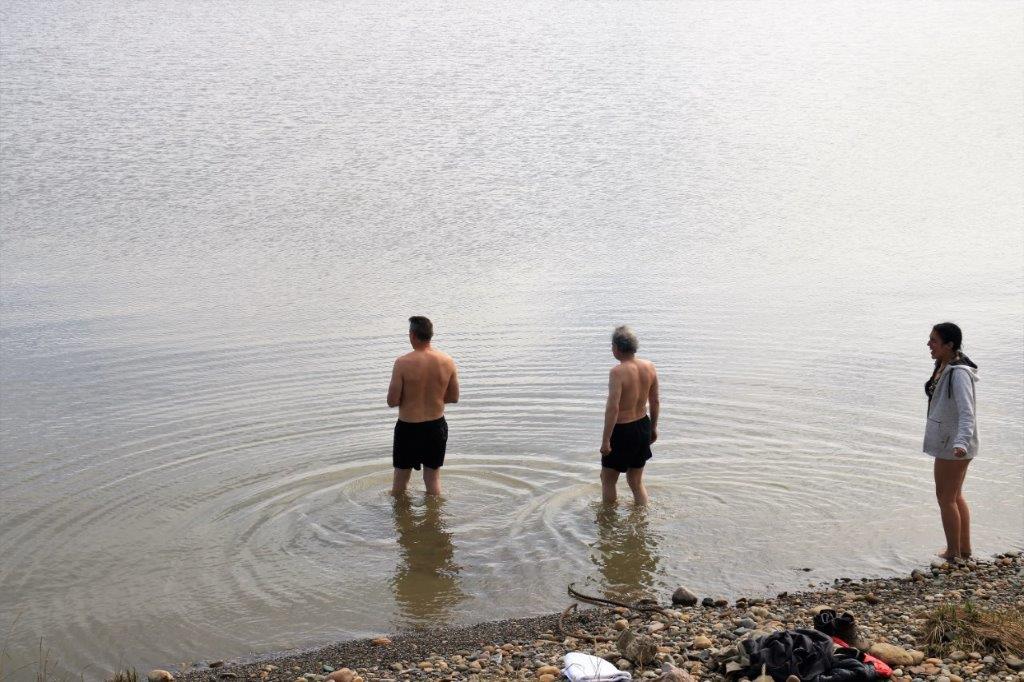
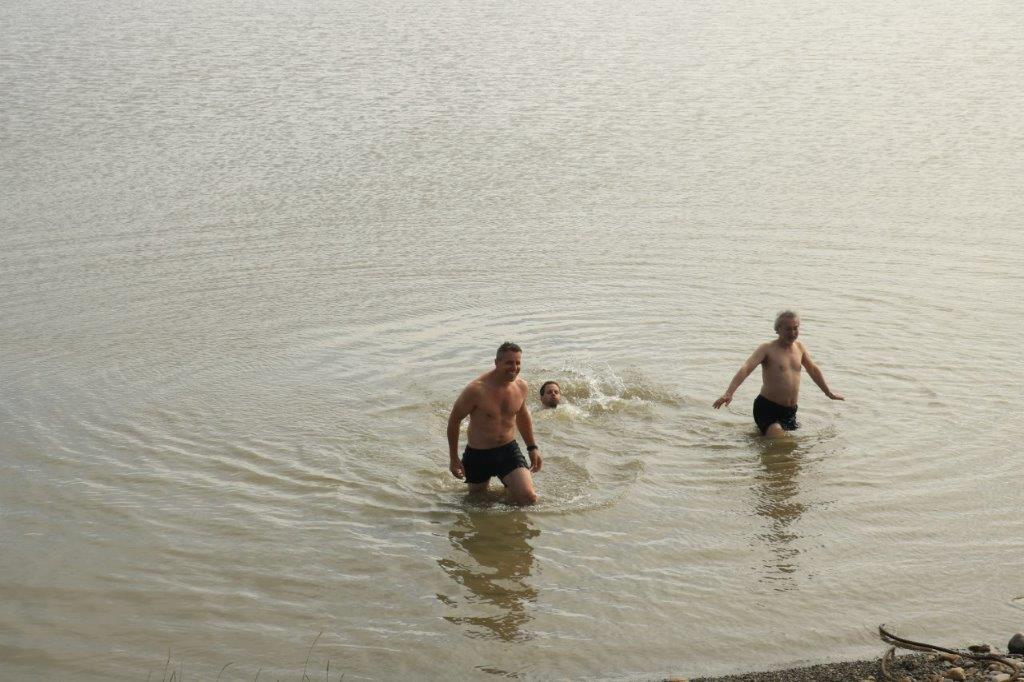
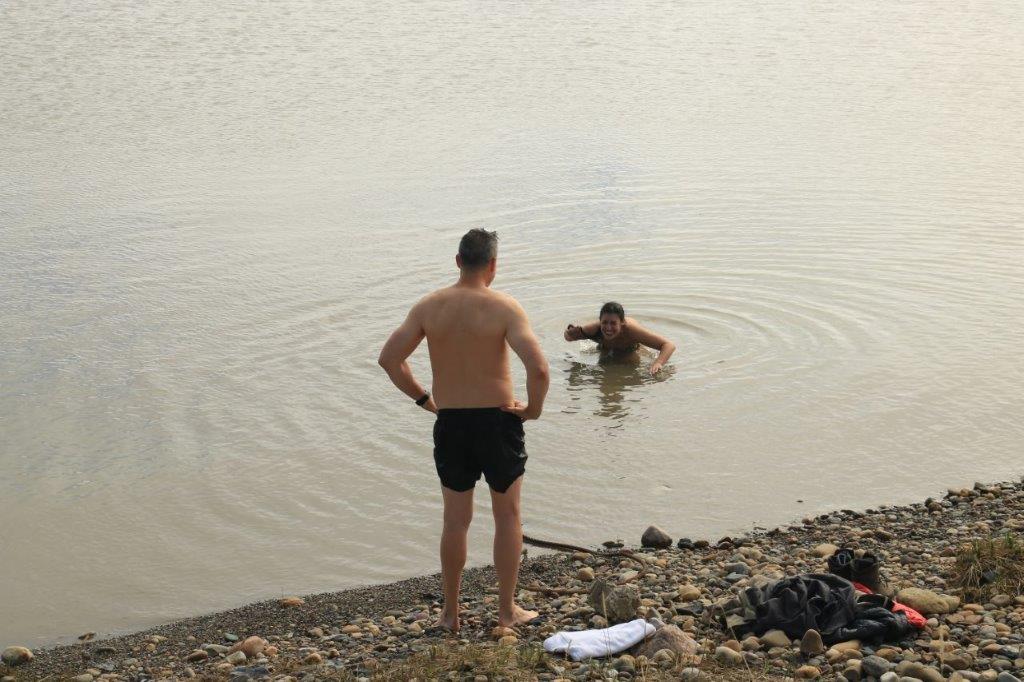
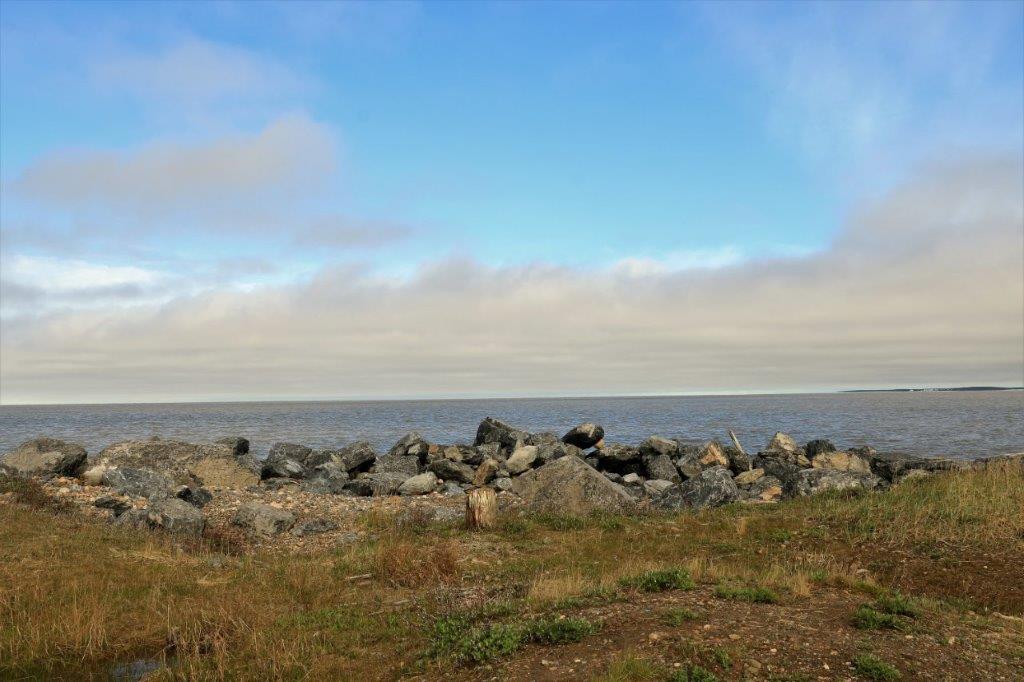
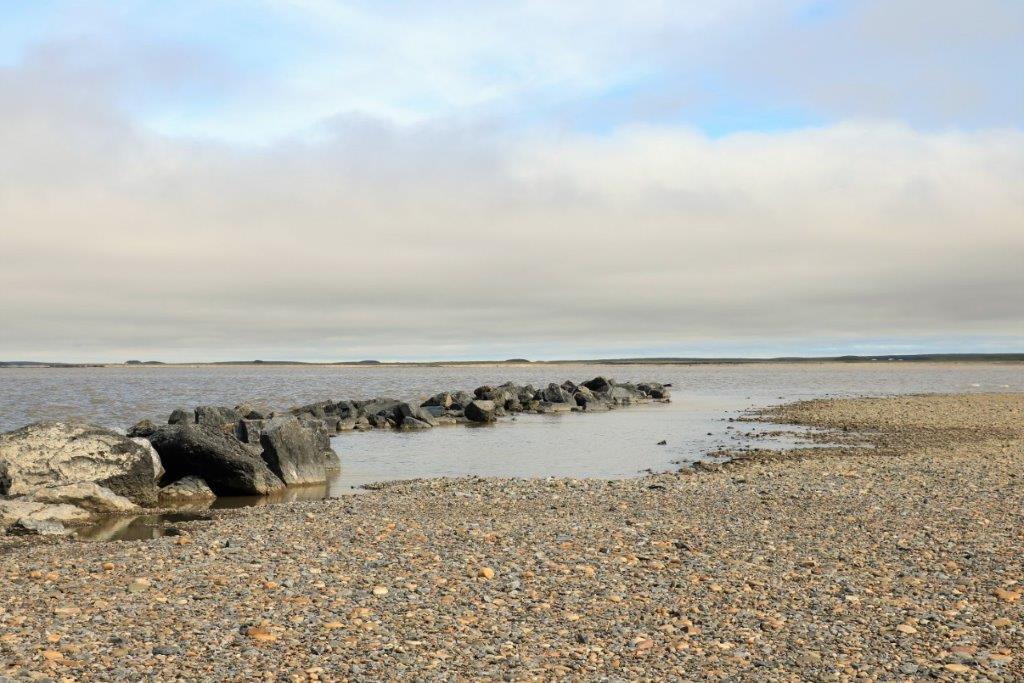
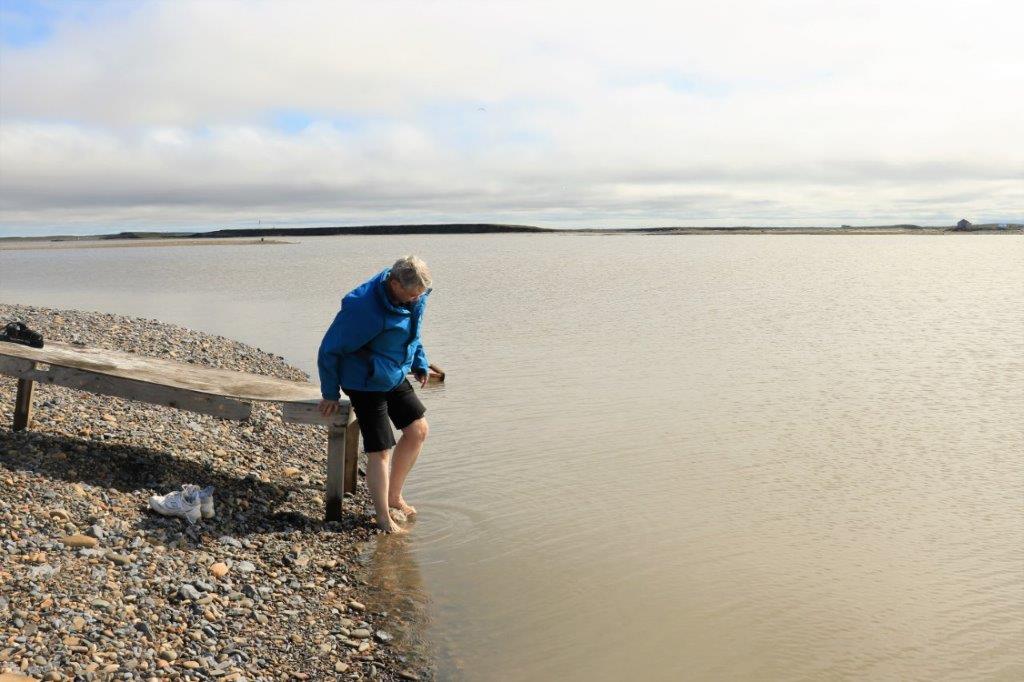
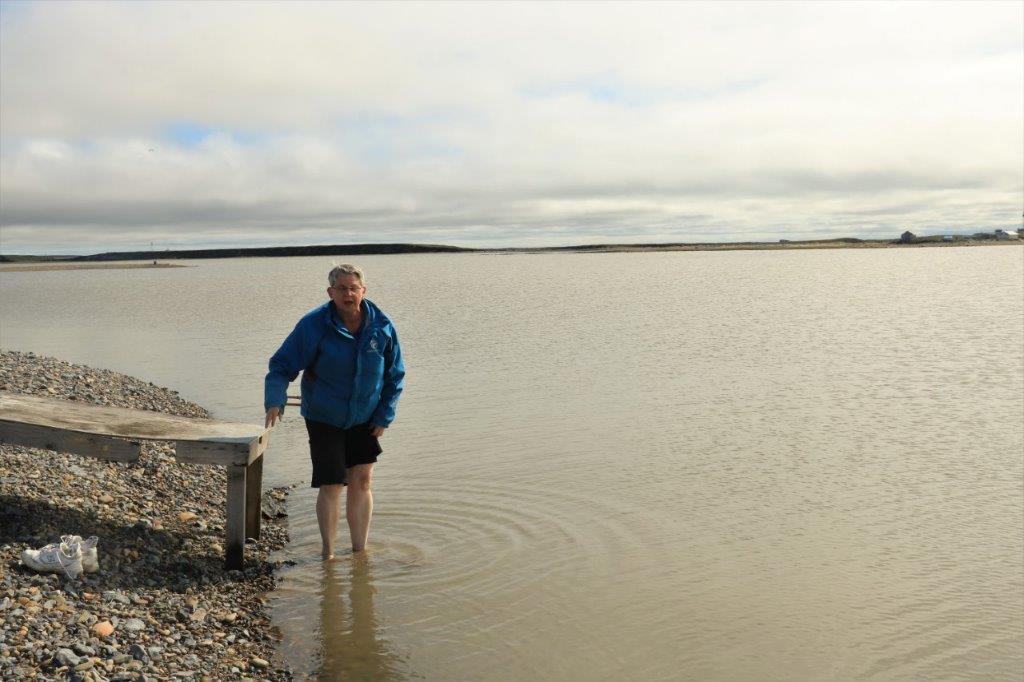
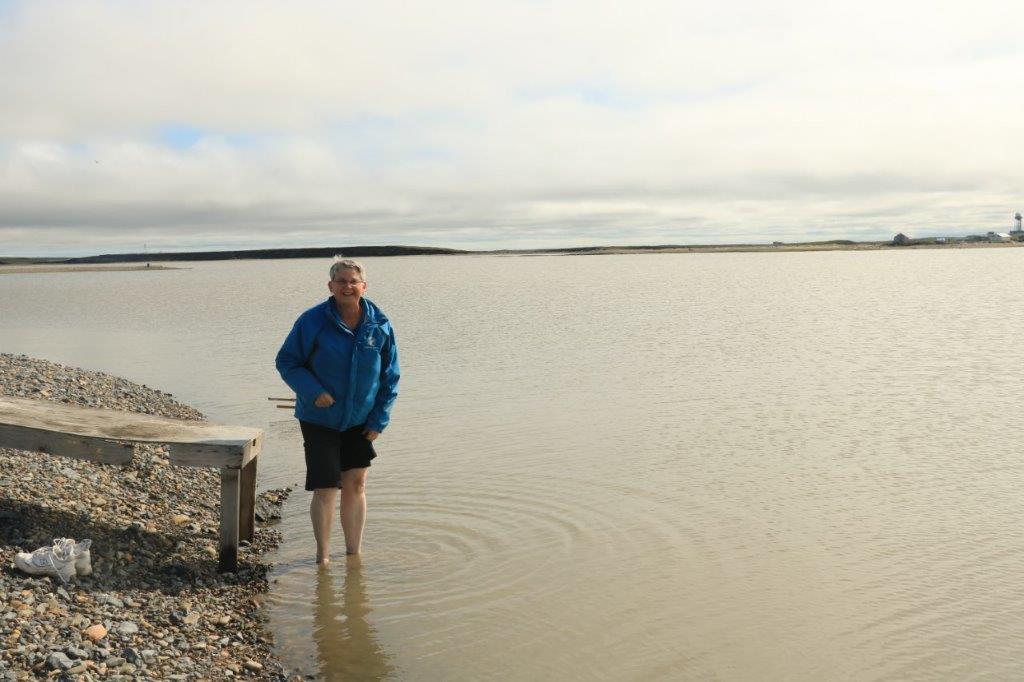
There is one geocache in Tuk and before we drove into the town proper we stopped near the airport to find it.  John had to do some make-shift bridge building to reach it. (He moved it to a nearer section of fencing away from the water.) At the end of a spit of land there is a rustic camping area. There was a couple of car and trailers, several small single-man tents and these cute pop-up units.As we were walking toward the shore we saw this group of four people preparing to dunk in the frigid waters of the Arctic. I don’t know whether that is brave or crazy? On our travels I have stood in the Atlantic, the Pacific, all five of the Great Lakes, and Lake Winnipeg.  I wanted to stand in the Arctic as well. Did anyone mention it is cold?We walked back to the truck, had our pb&j sandwich lunch and started back to Inuvik.

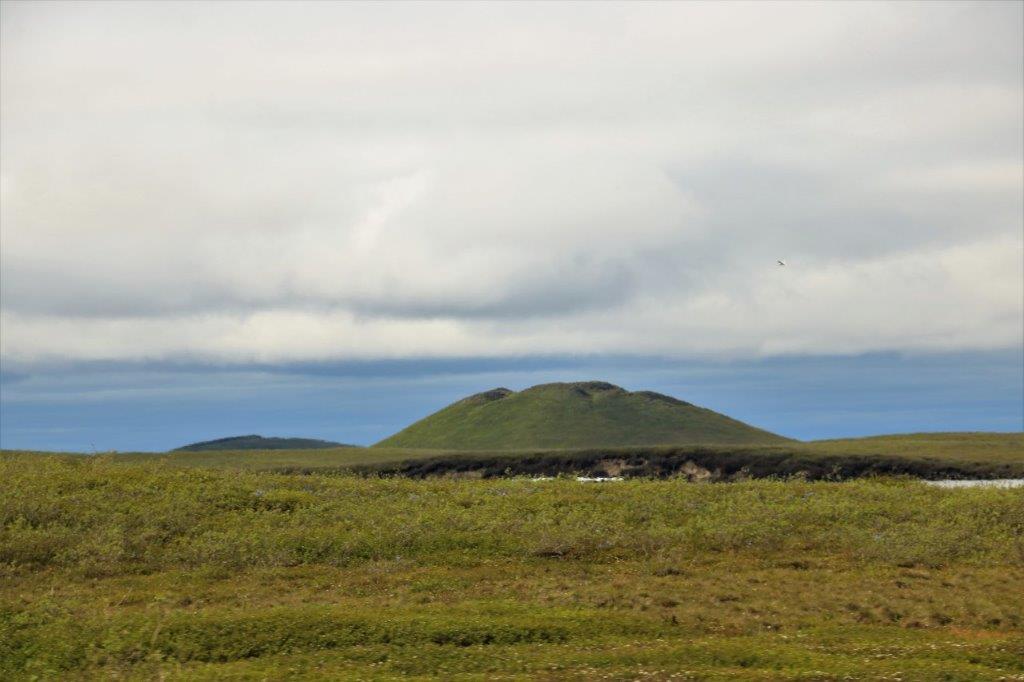
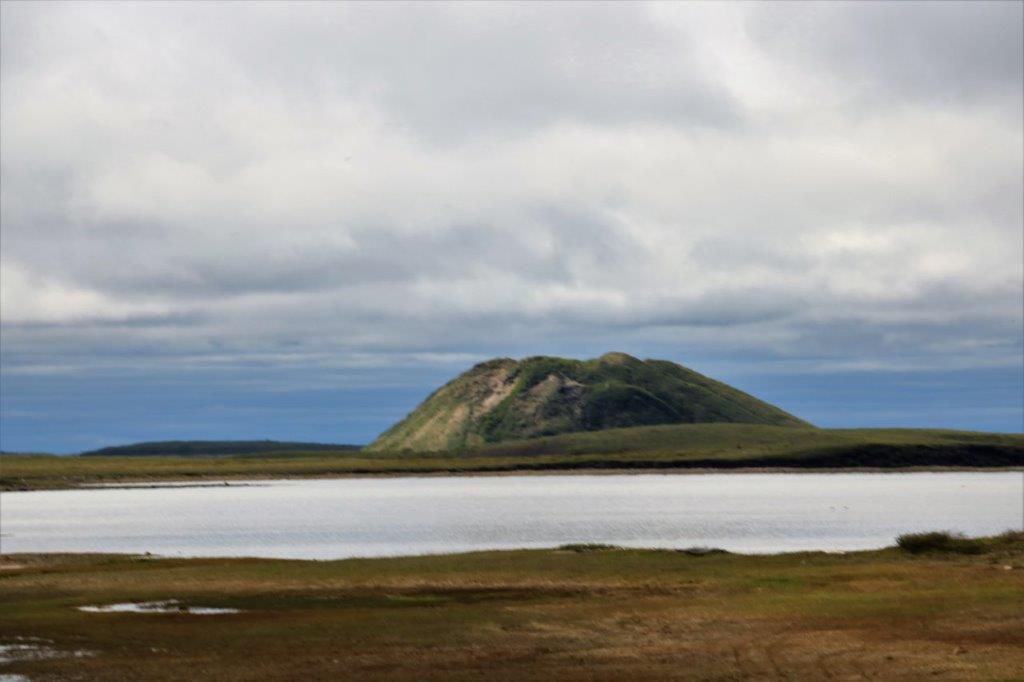
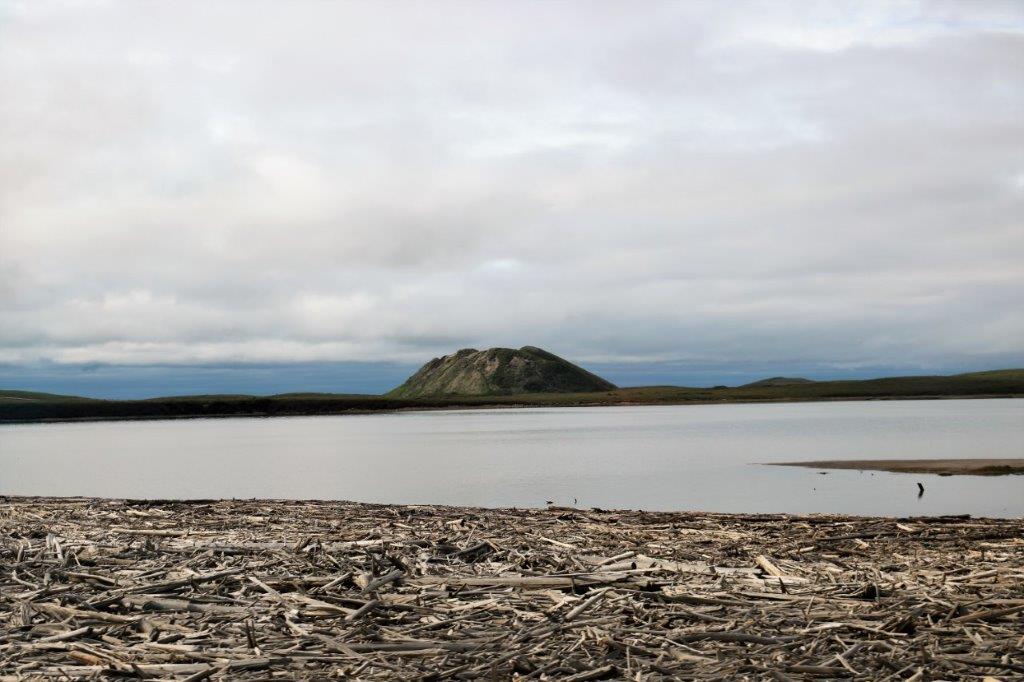
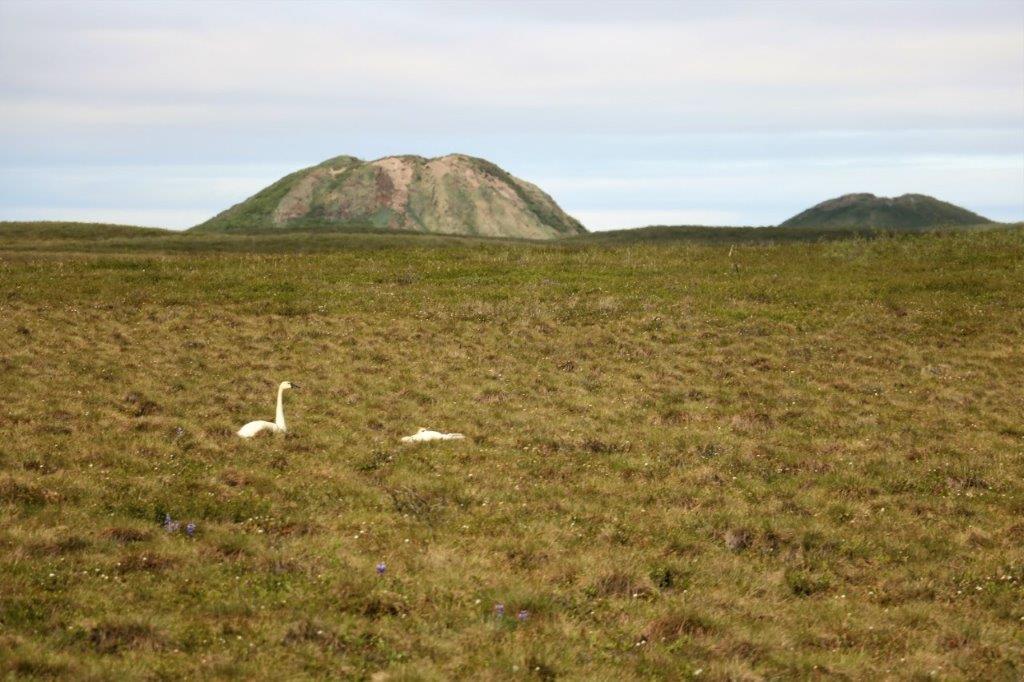
We passed several of the Pingos for which the area is known.  A Pingo is unfrozen ground water (from a drained lake or pond) that gets put under pressure by the surrounding freezing front and the thin layer of permafrost is forced upwards.  It continues to grow until it is frozen solid – the unfrozen ground becomes permafrost and the pingo has a core of almost pure ice.                                          Tundra swans nesting.

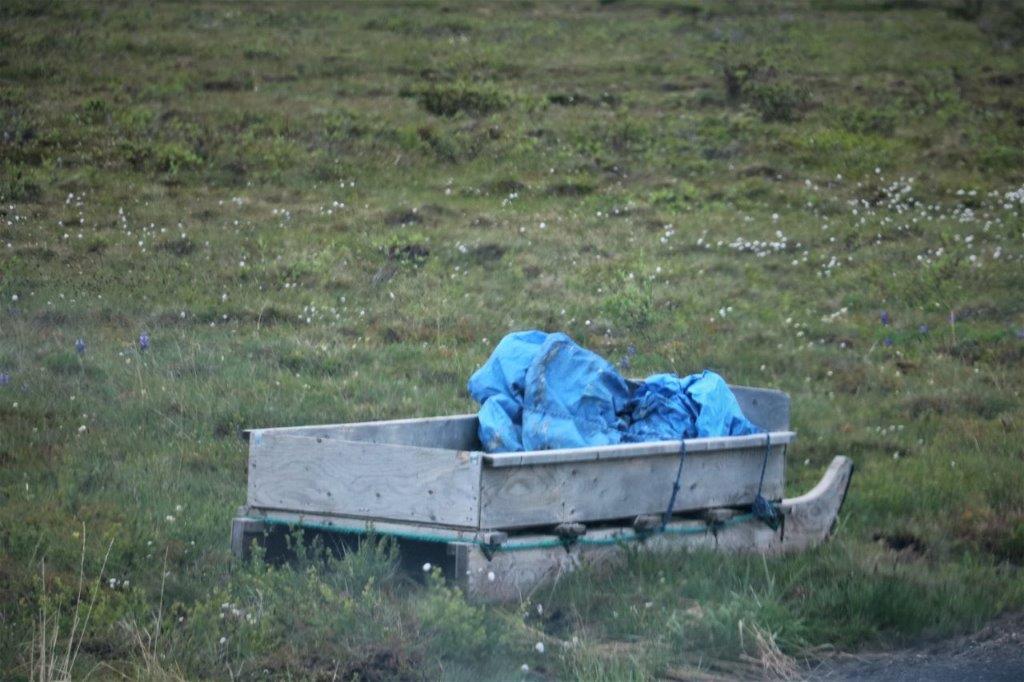
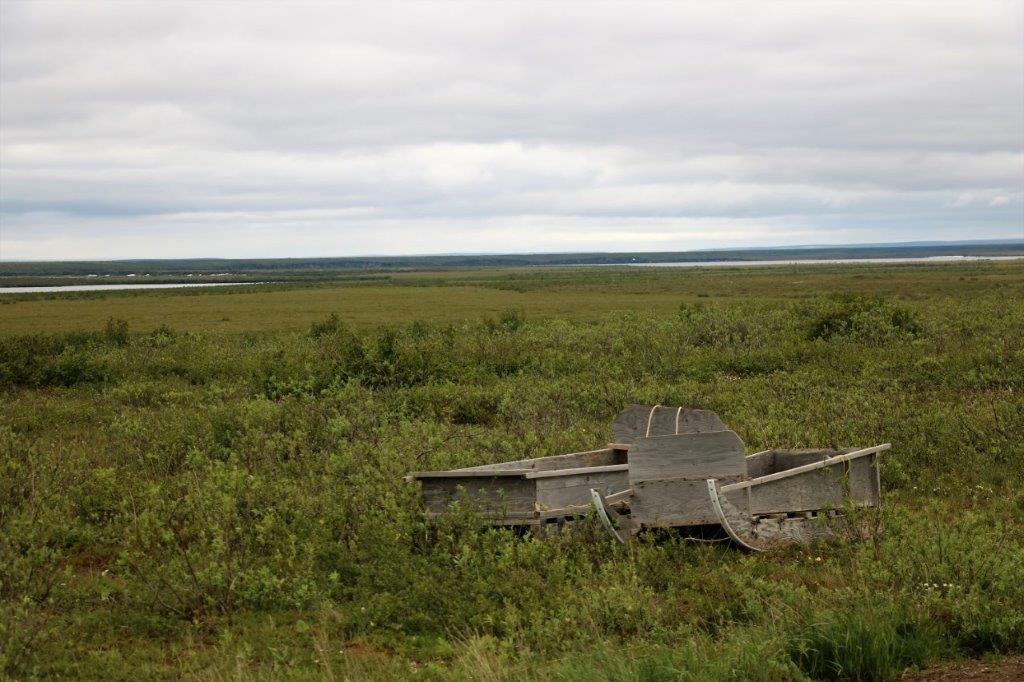
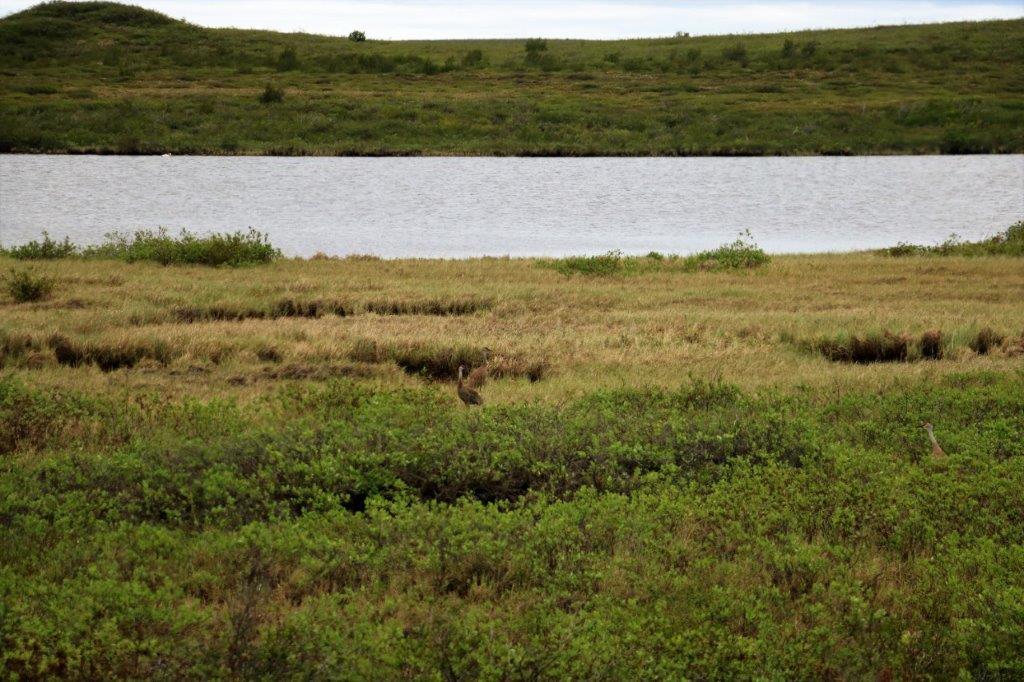
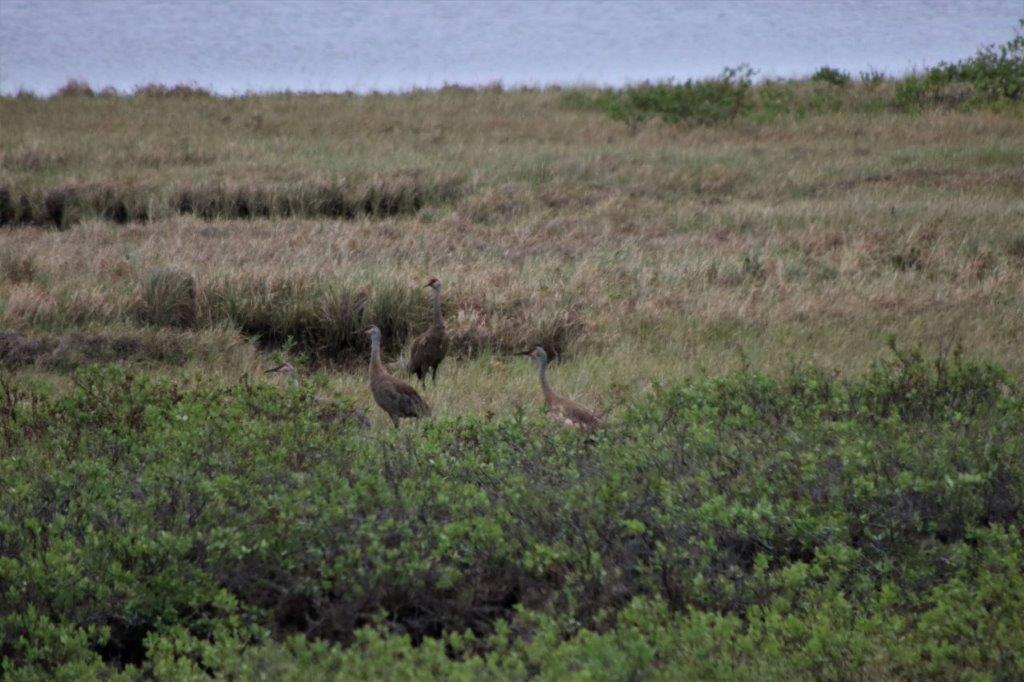
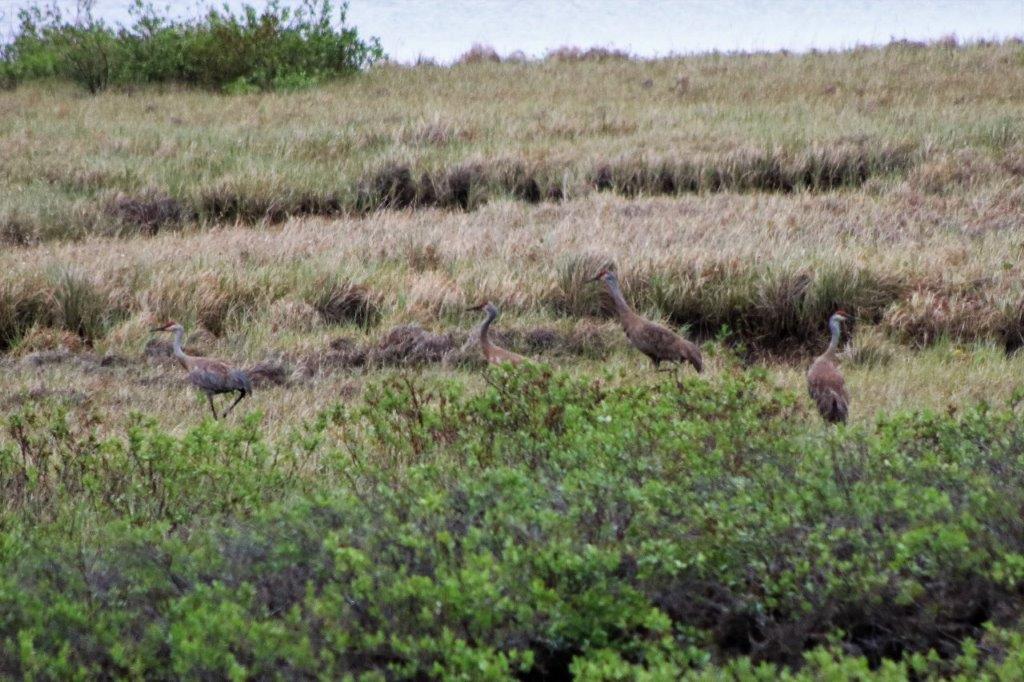
In the hour and a half that we had been in Tuk the sun had done a surprising amount of mud drying.  The mud bog that we drove through on the way into town now had two dry ruts down the middle.  As long as you were able to stay in them you made good time.  It took us only 20 minutes to navigate the worst section of the road, which was about a third of the time it took us to go through on the way in.   Back on the good road we stopped to take photos of a couple of the sleds that have been stored along the roadside. We also got a few photos of this heron or crane family. We arrived back in Inuvik at 5 o’clock, and went an early dinner before returning to the hotel.

Because the community is sitting on permafrost all the water and sewer systems are above-ground pipes and all the house are built on stilts so as to prevent the heat from the house melting the ground underneath it. The space allows the cold air to move under the buildings and keep the permafrost solid.

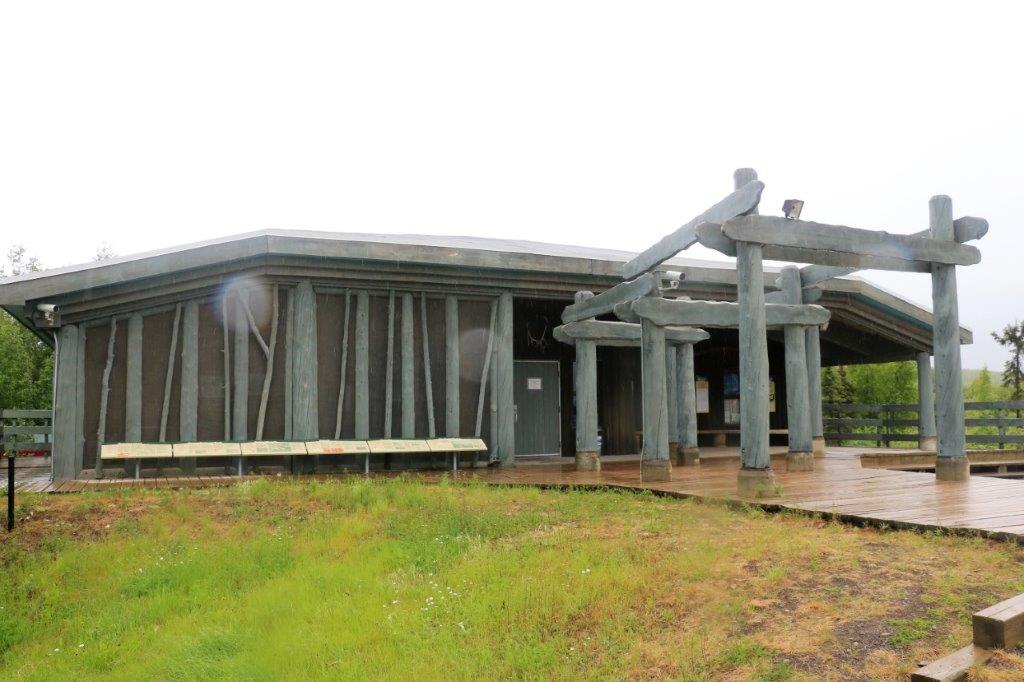
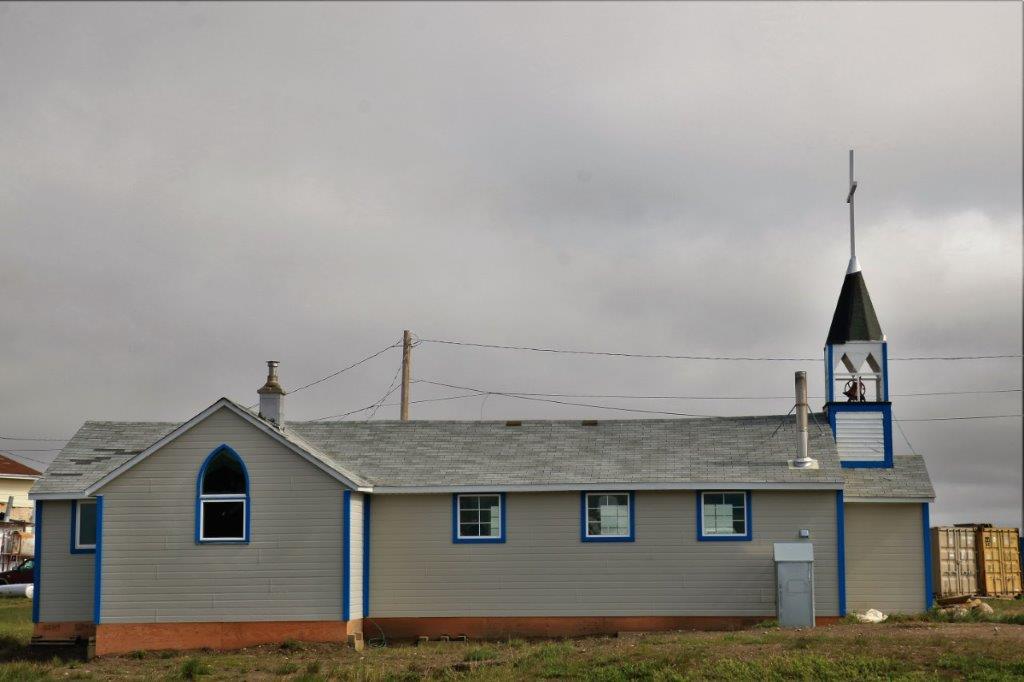
We didn’t have time to take one of the tours of the Igloo Church but we satisfied ourselves with a view of the outside.Tomorrow we start back to Dawson City with a half-way stop again at Eagle Plains.  I think the weatherman says there will be sunshine so the drive we saw under cloudy skies the other day we will get to see in better light tomorrow.  Here’s hoping anyway.

2018 July 5 – Eagle Plains, YT to Inuvik, NT

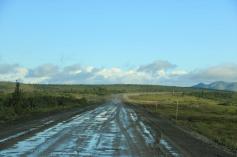
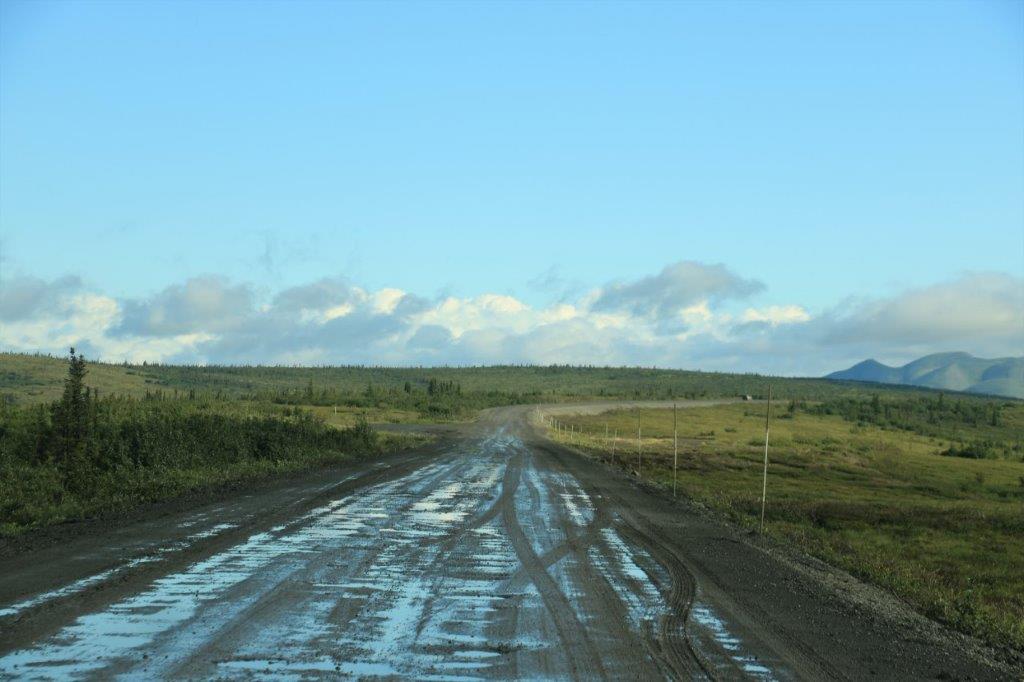
We woke at 6:45 to see that it was raining.  Not a good thing on the Dempster Highway.  The road is built on a gravel bed  above the permafrost and when it gets wet, the calcium and other minerals in the soil leach to the surface and create a slippery mess that tires cannot get a grip on.  All the space in the treads just fills up with the muck and you have no control of your vehicle.  We ate breakfast and by the time we finished the rain had pretty much stopped.  We checked with the staff at the hotel and they said that if we drive for the conditions of the road we should be fine.  And we were.  No really bad spots, just a slower pace.
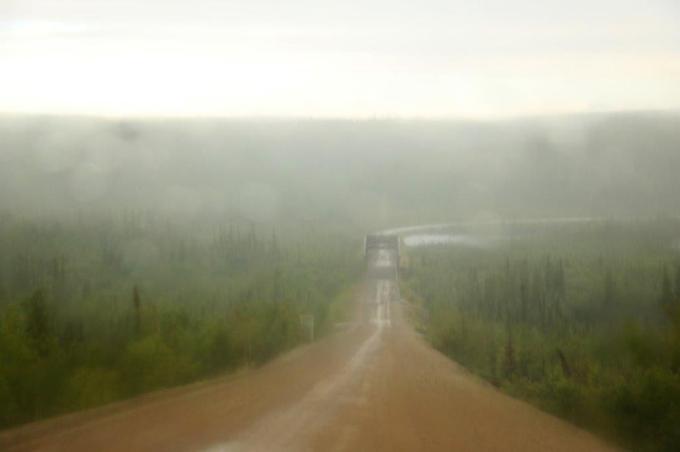
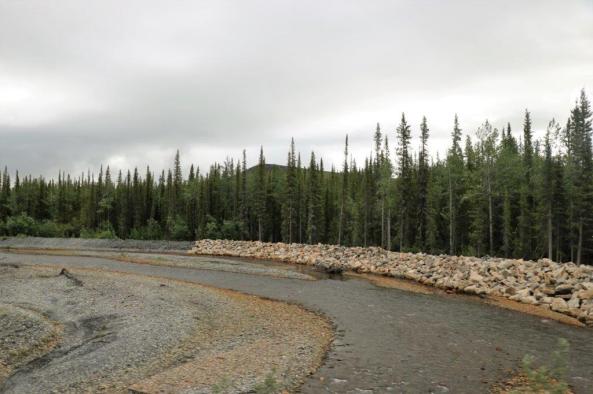
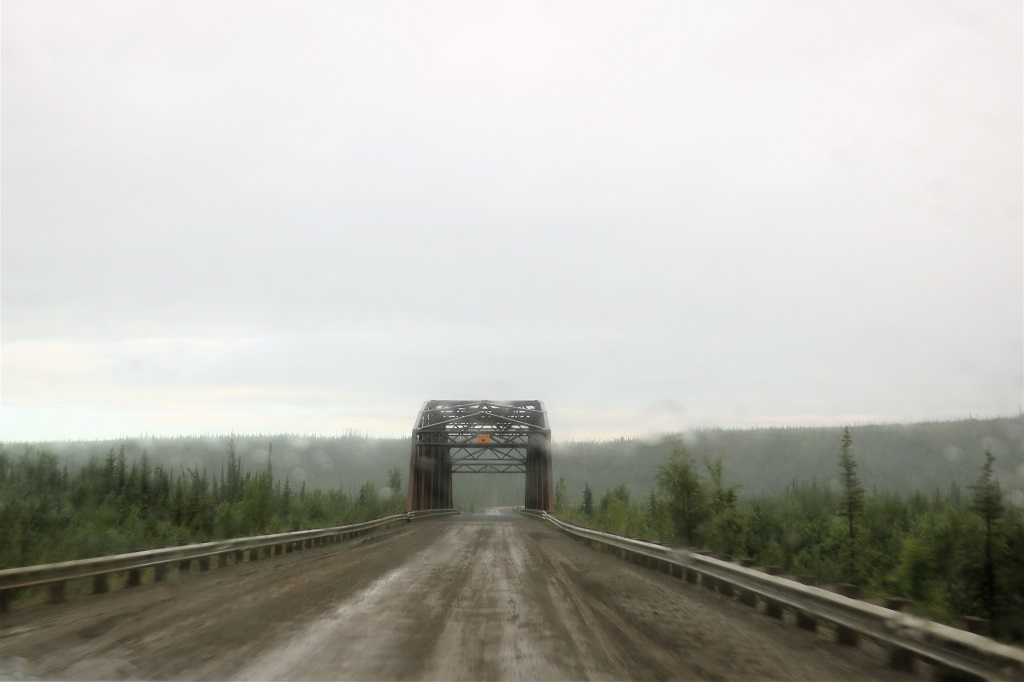
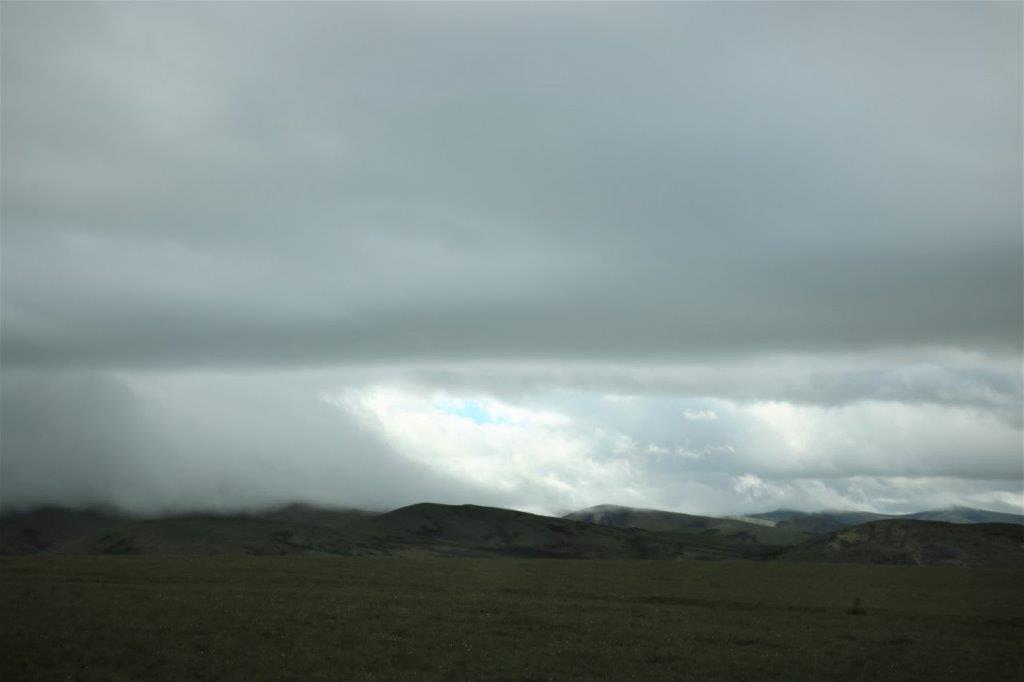
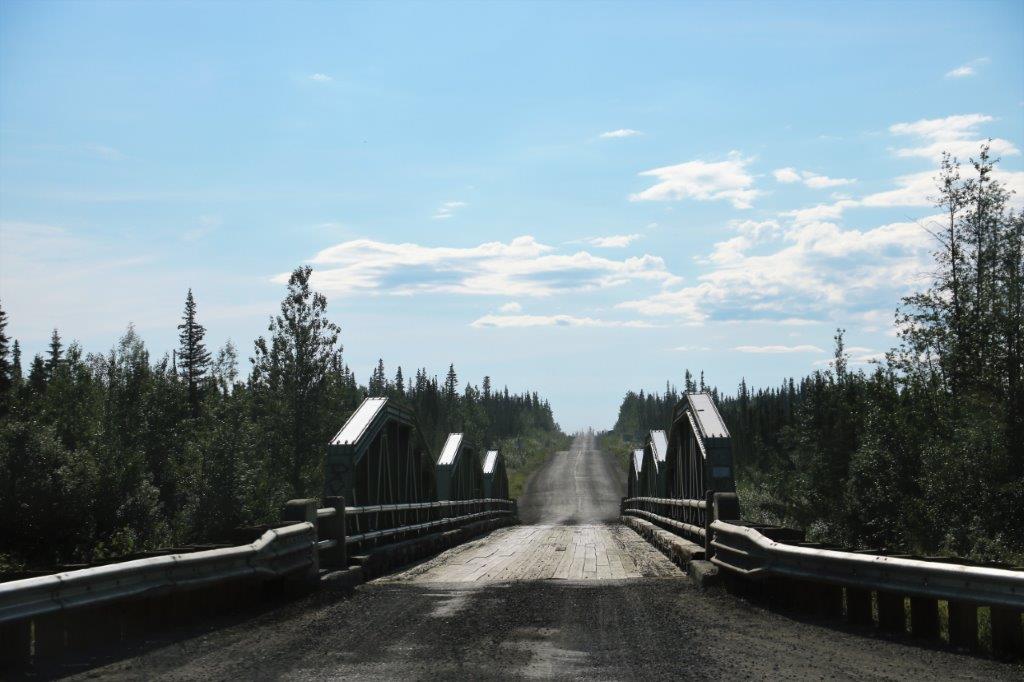
When you leave the Eagle Plains hotel/campground/gas station – population 9 – you enter the next ecoregion on the Dempster Highway.  The road drops down to cross a glacial outwash channel of what was once a mighty river, but is now just a small stream, even though it is still called the Eagle River. The Richardsons are a mountain range to the east of the road that we cross at the Northwest Territories border.  This ecoregion is called the British-Richardson Mountains ecoregion.The bridge over the Eagle River is built on permafrost.  The pilings supporting the structure were driven 30-meters (98′) into the ground, passing through a 10-meter (33′) layer of permafrost.                           Miles and miles and miles of open space.                   I love all the shapes and moods of clouds.
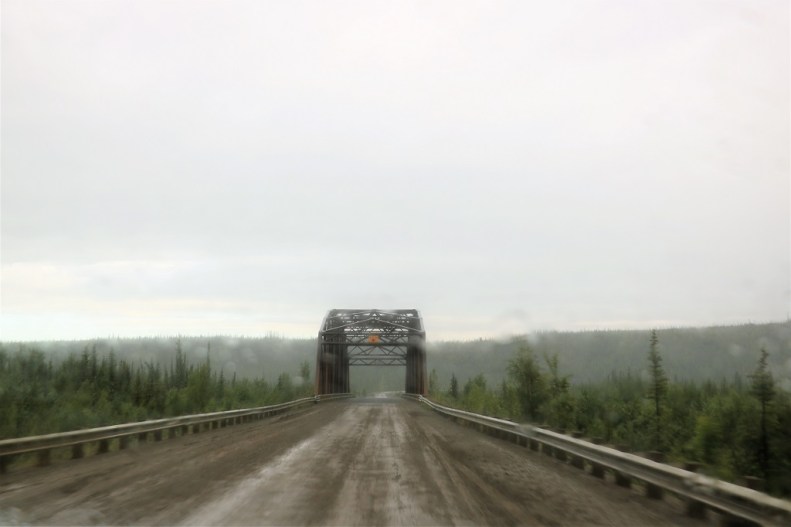
Thankfully the rain stopped about a half hour into the drive so the road did not become the notorious quagmire it is purported to be when it gets wet.
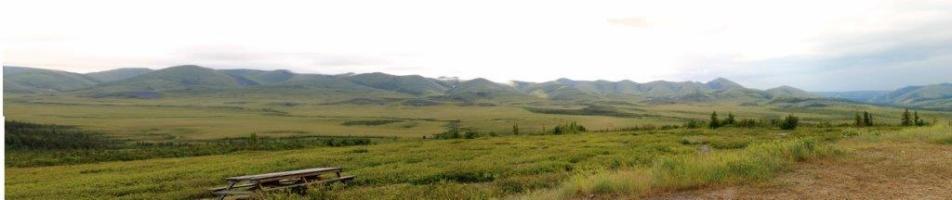
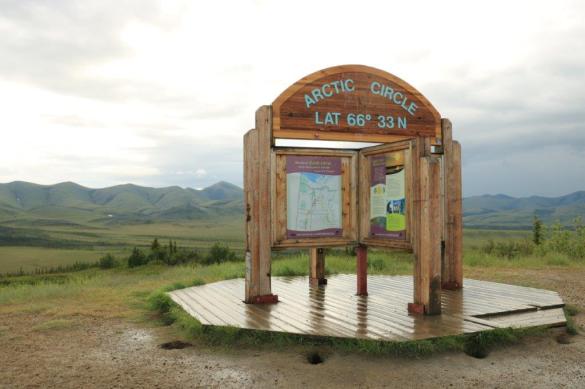
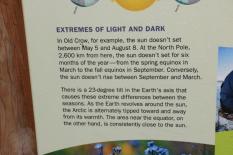
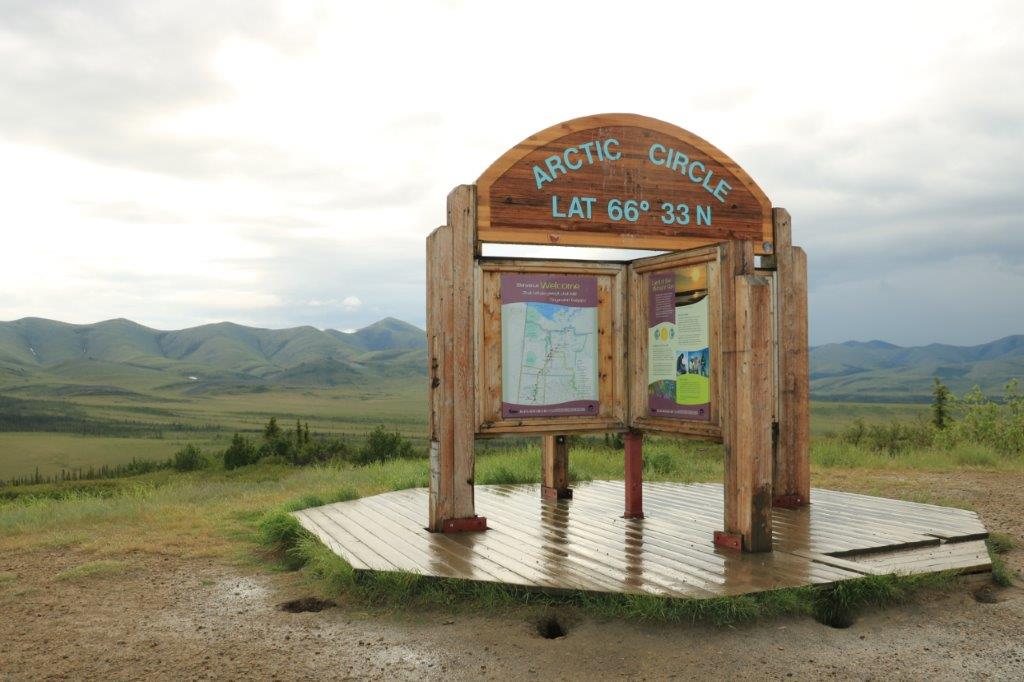
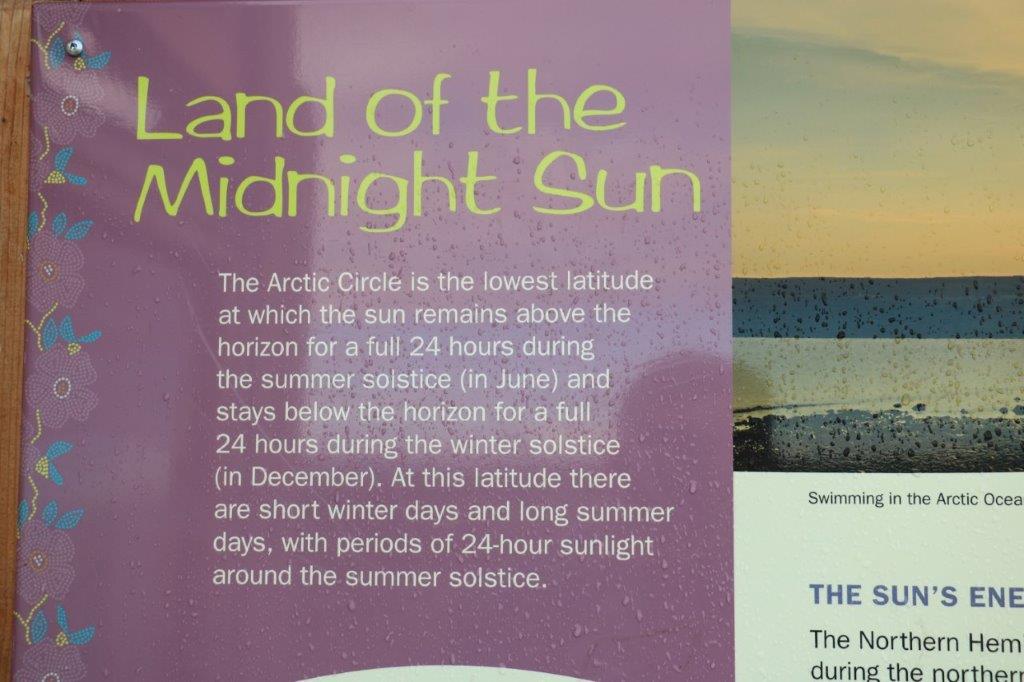
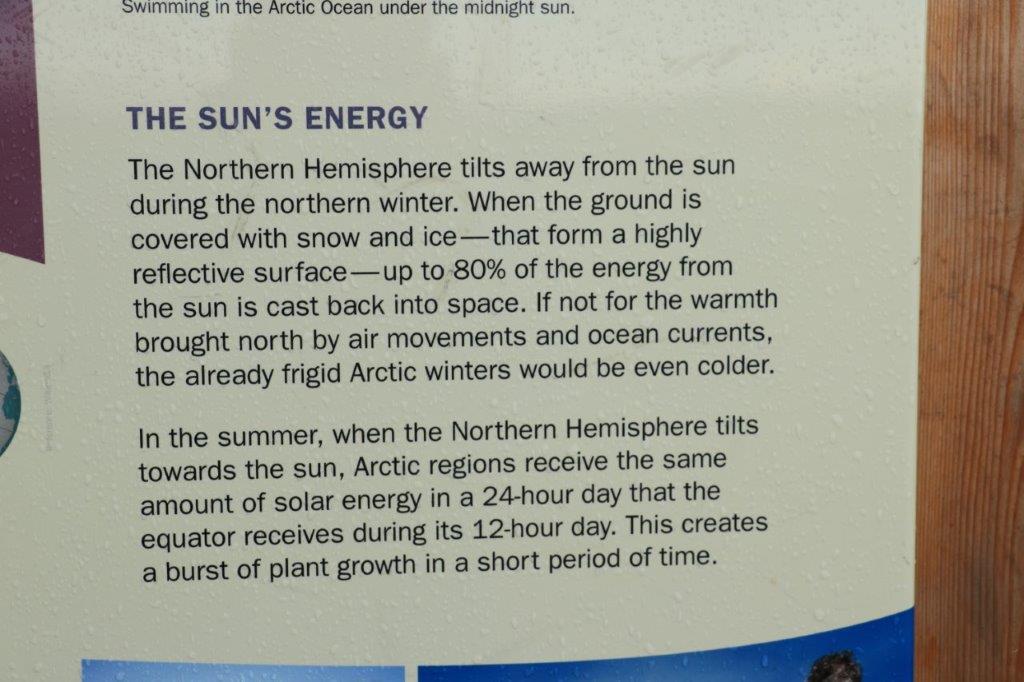
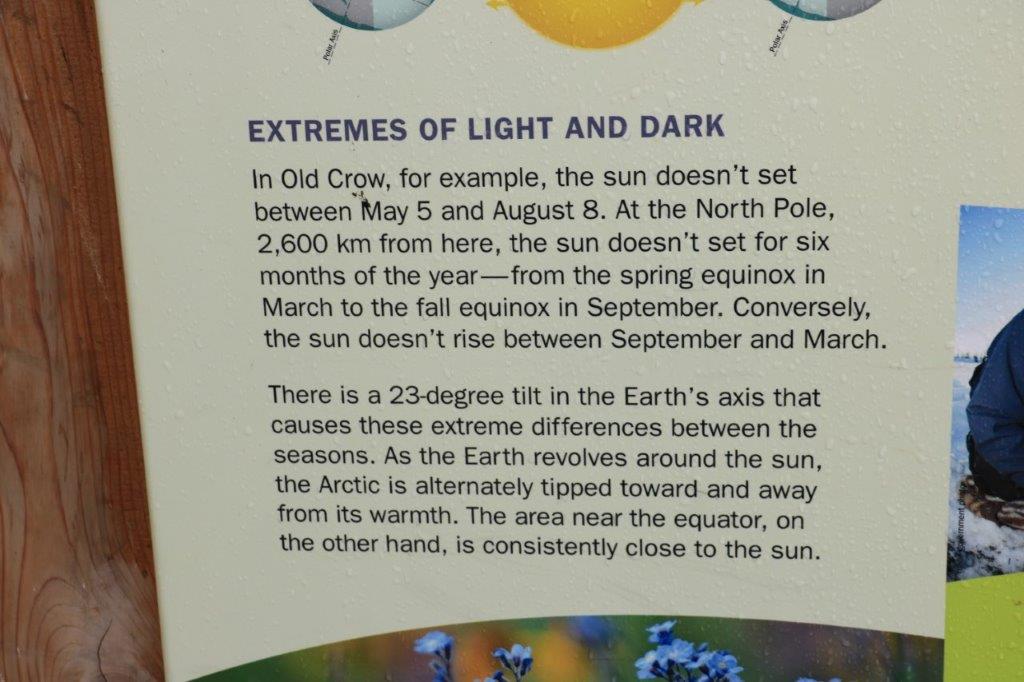
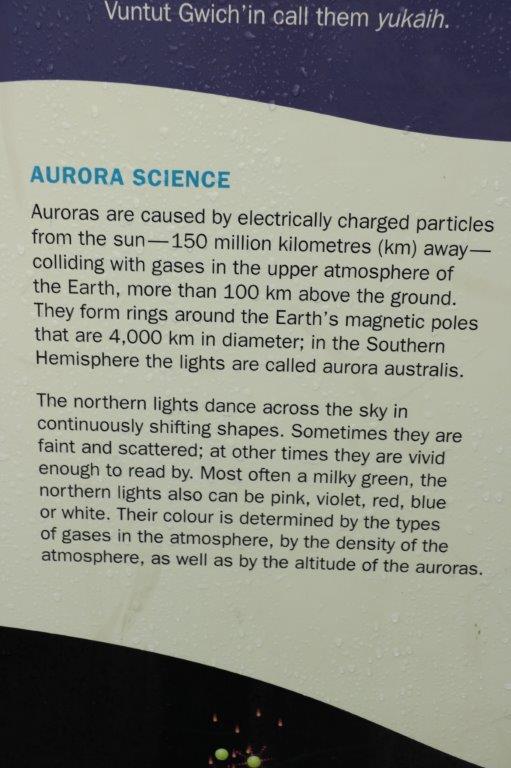
Another photo stitch that does not do justice to the scenery or the vast scope of the land.  This is our second time crossing the Arctic Circle.  The first time, though, was by sea on the Voyage of the Vikings cruise in 2015. This is a good, short, explanation of the creation of the Northern Lights.
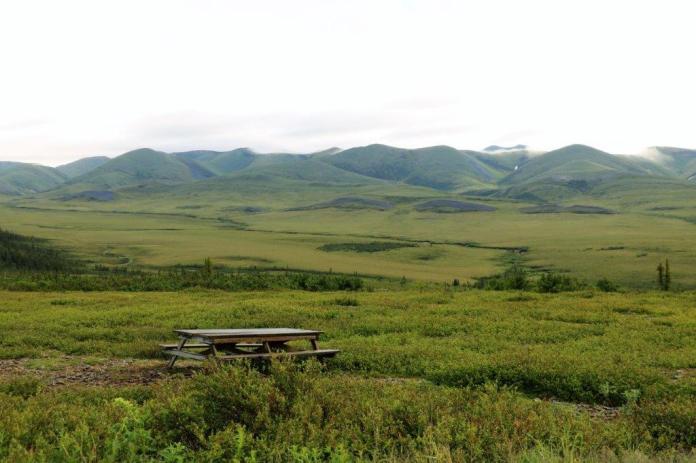
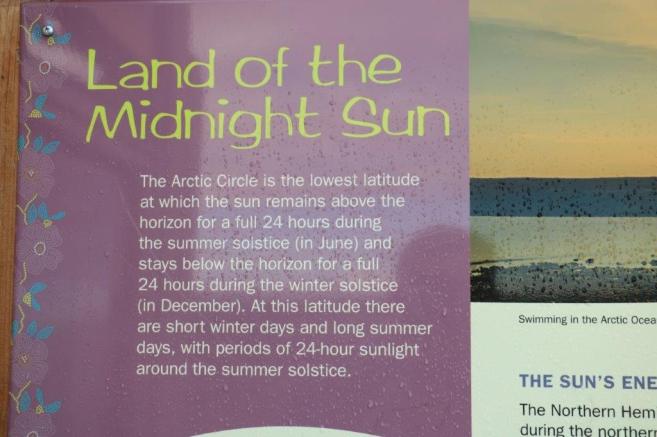
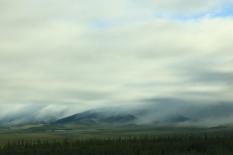
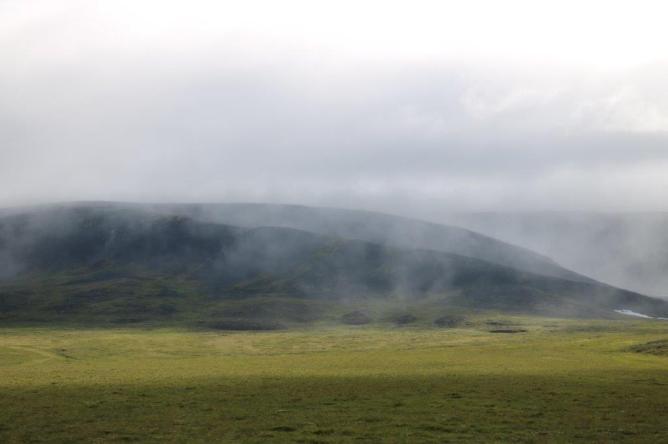
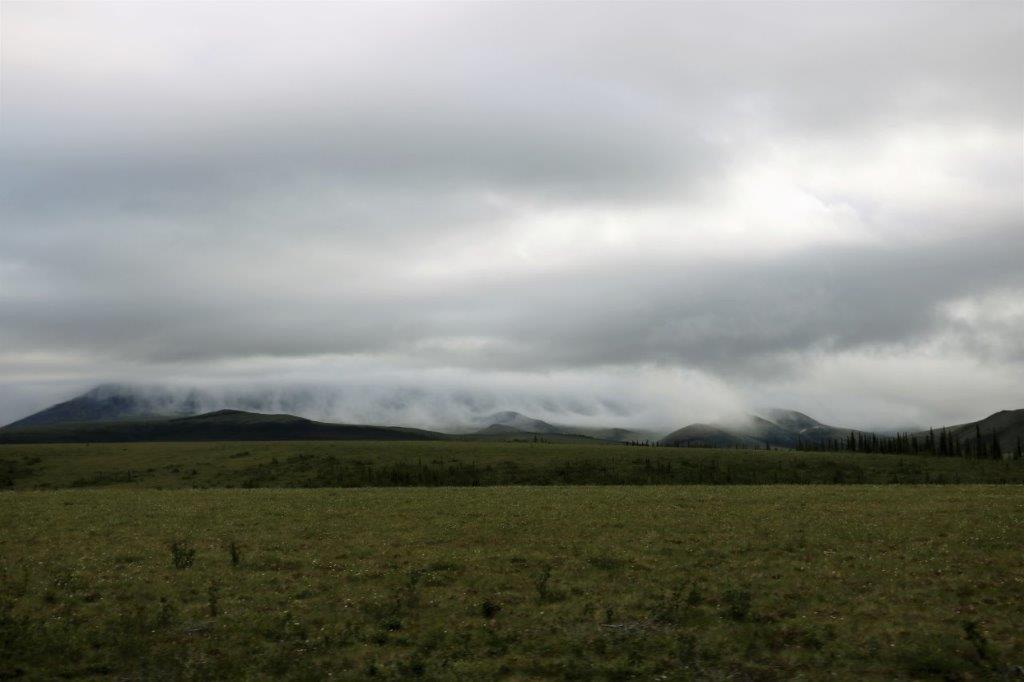
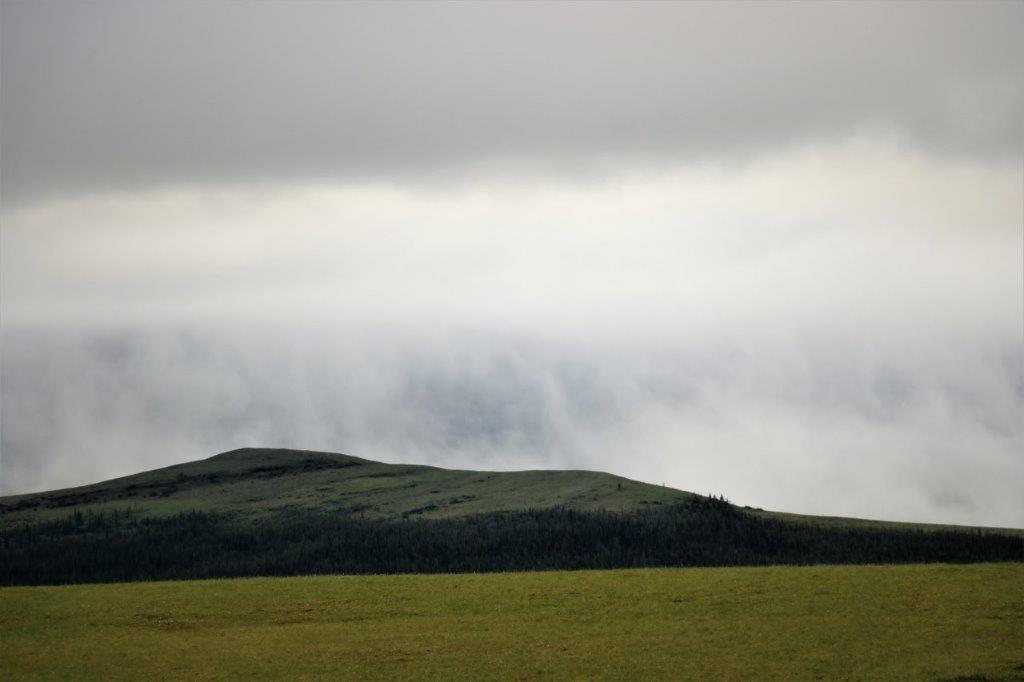
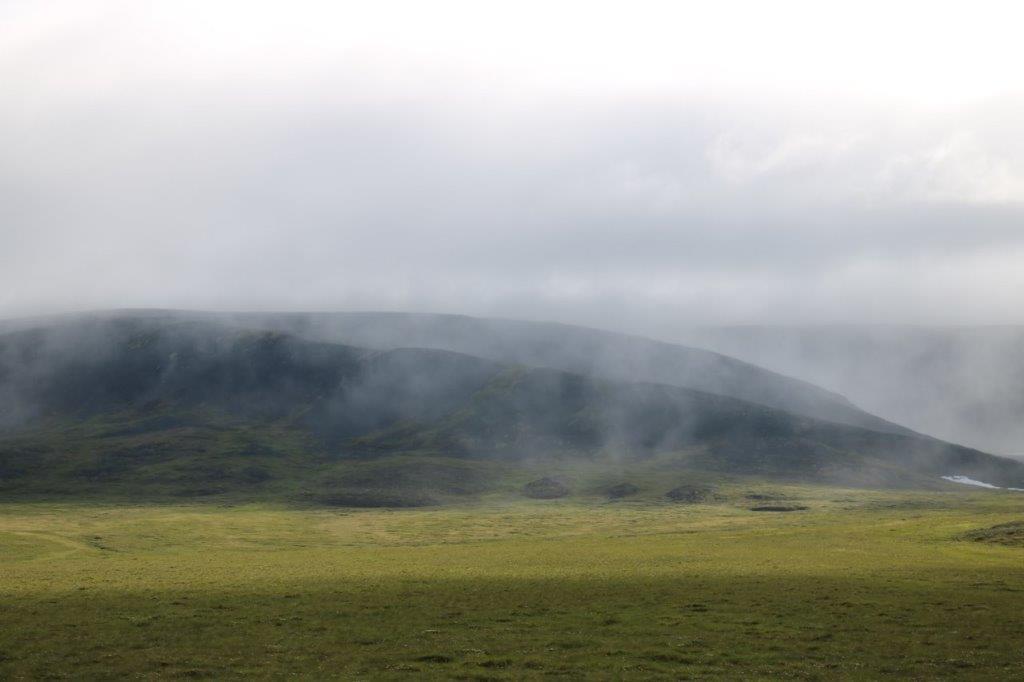
There was a geocache hidden off into the scrub behind the Arctic Circle sign.  Everything was still wet from the rain and it took us awhile to find it so our shoes and pant legs were a tad wet by the time we got back.                              Lovers had some time on their hands.        The cloud roll along the base of the mountains is so cool.                                                            Yes, that is snow. If you are curious about how much snow they can have up here just look at the height of the markers beside the road that are a guide for the snowplows.
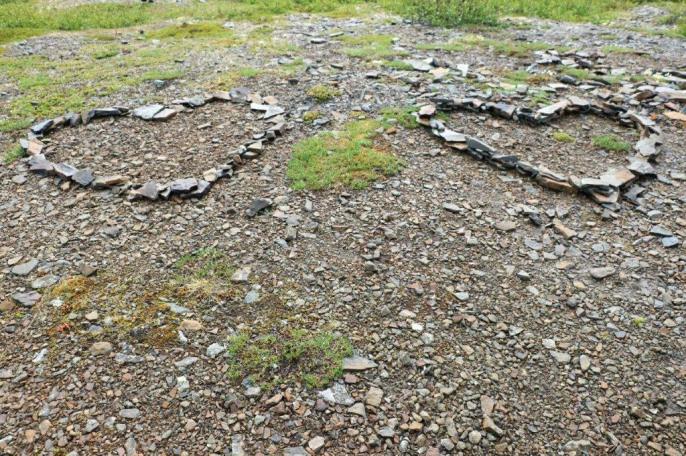
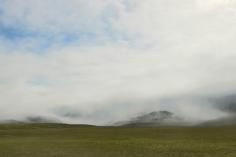
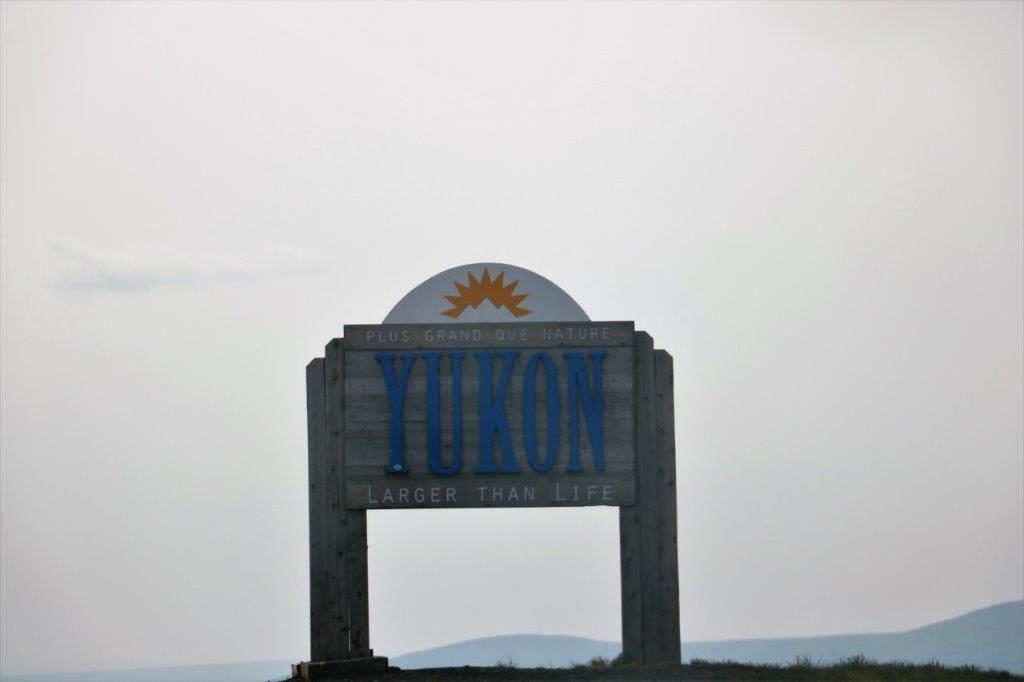
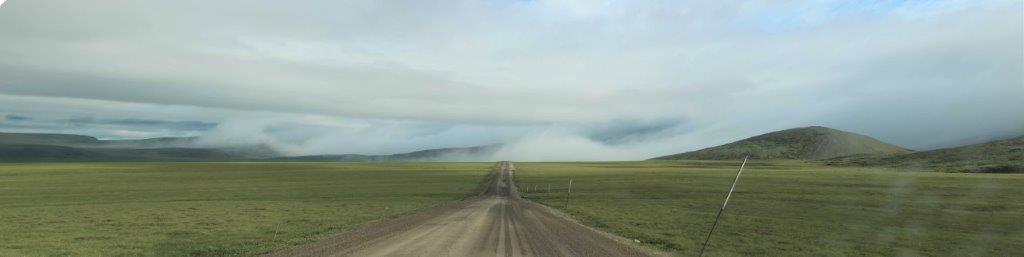
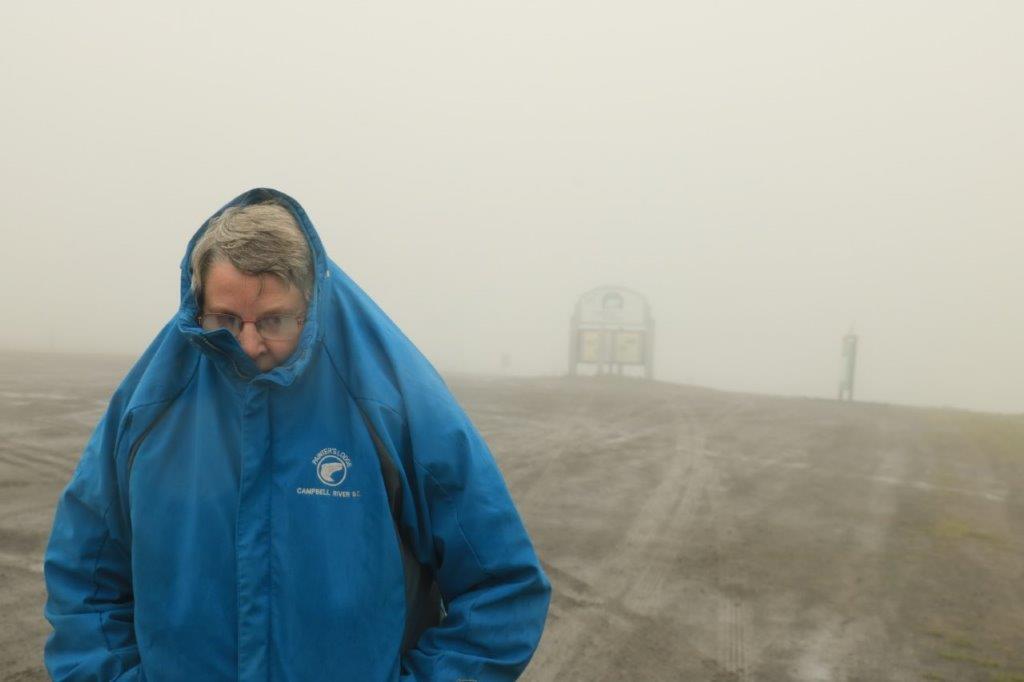
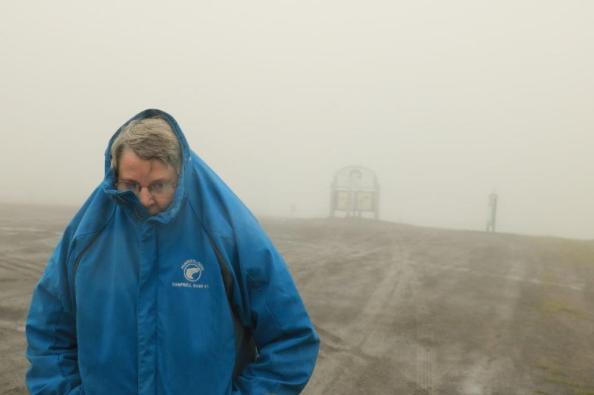
About 4 km before we reached the Yukon/Northwest Territories border the fog rolled in.  This is another nasty weather condition on the Dempster. Thankfully the fog was thin enough that we could still see 100 meters or more in front of the truck. I walked across the parking lot to the big Northwest Territories sign while John signed the geocache hidden at the above sign.  There was a VERY cold wind blowing and my poor ears almost froze.The faint striping on the photo on the right is from dirt on the window.  I didn’t open it for that pic.
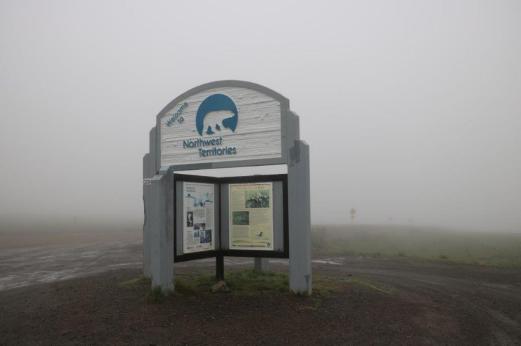
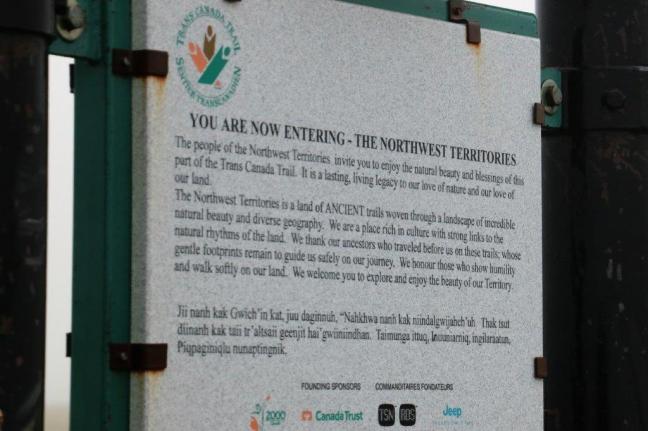
And then, half an hour later we had lovely blue sky.  We had been told as well that once you cross the border into the Northwest Territories highways jursidiction the road improves noticably.  This was true.  We were now on a smooth graded gravel surface like we experienced on the Liard Highway.We crossed the Vittrekwa Valley, which leaves behind the Richardson Mountains and takes us to the Peel Plateau; a broad upland plateau that continues to the Peel River.
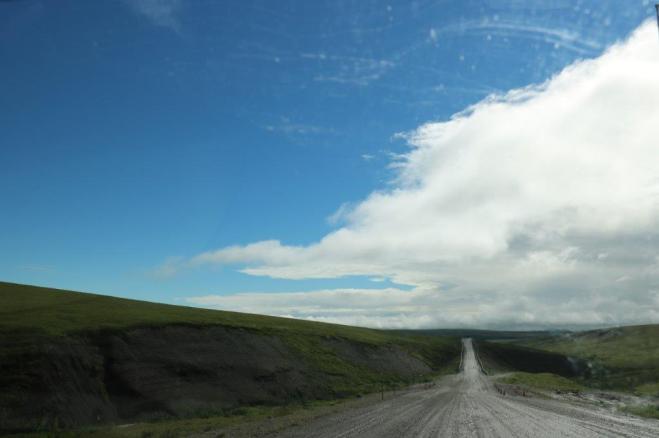
We were now driving in the Mackenie Lowlands ecoregion.  When we crossed the border all of the mile markers in our little travelogue booklet started over at mile 0 since we are now on Northwest Territories roads. (It was 465 km – 289 miles – from Mile 0 of the Dempster Highway east of Dawson City to the Yukon/Northwest Territories Border. On the NT markers it is 272 km – 169 miles – from the border to Inuvik.)

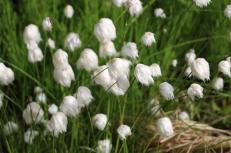
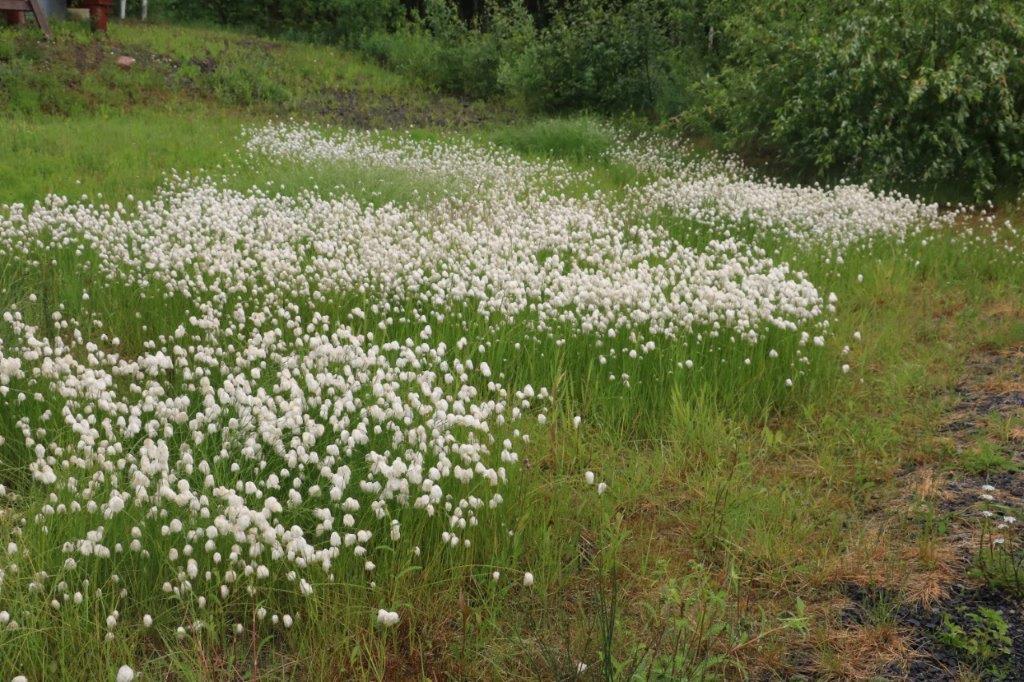
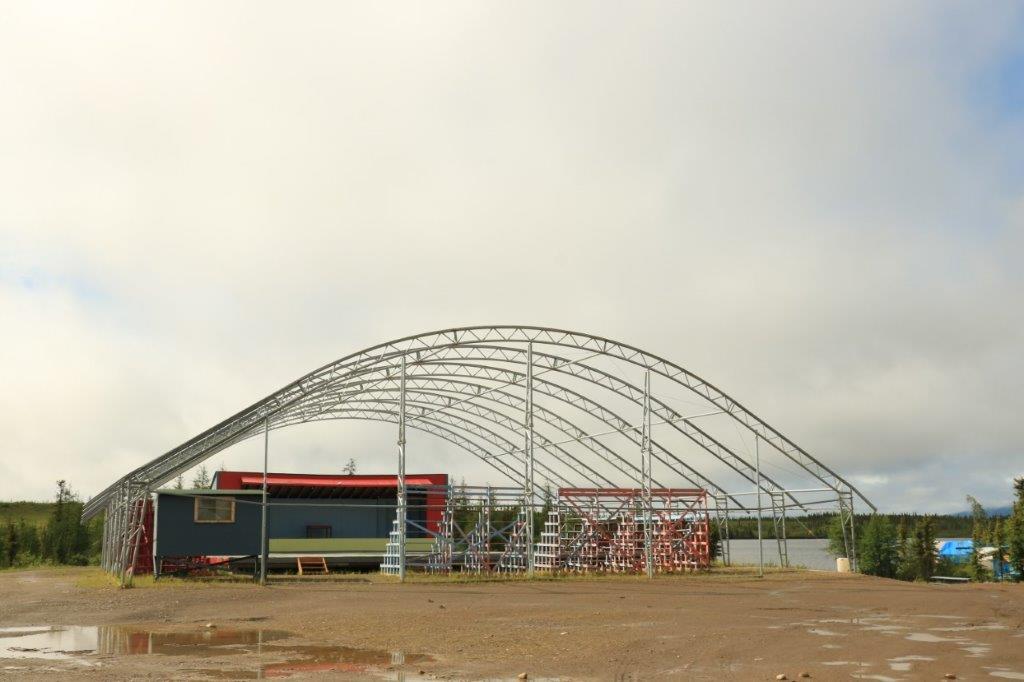
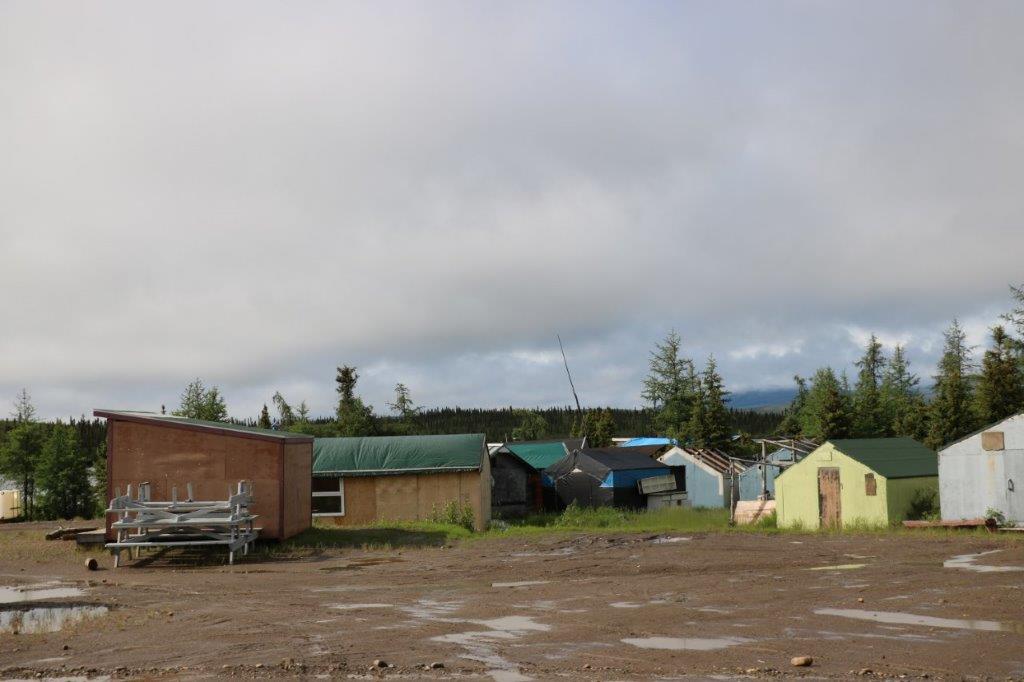
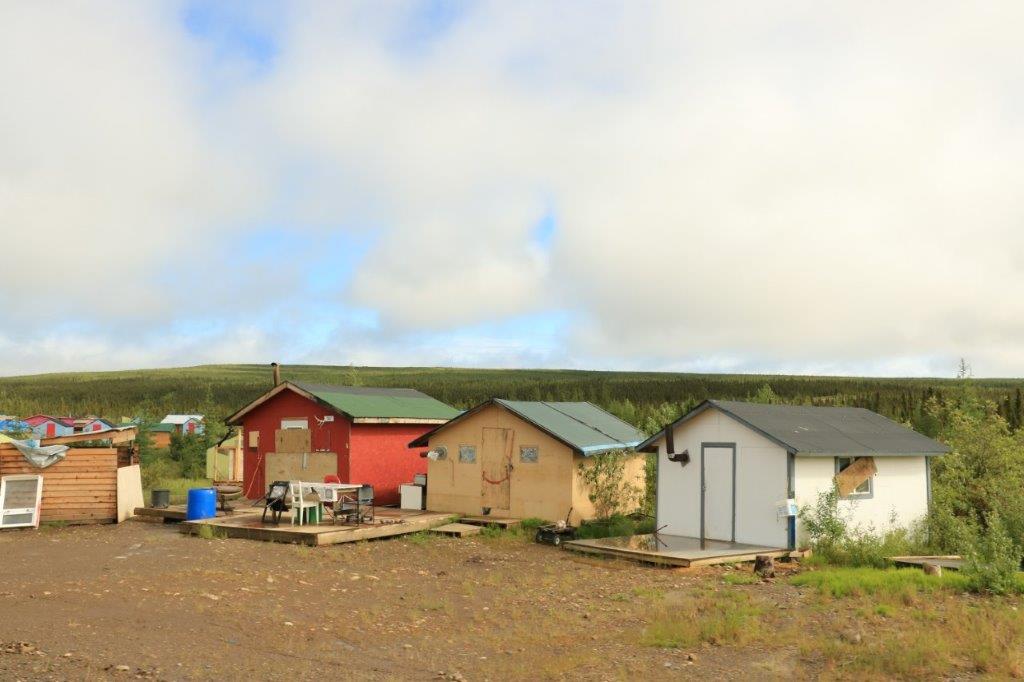
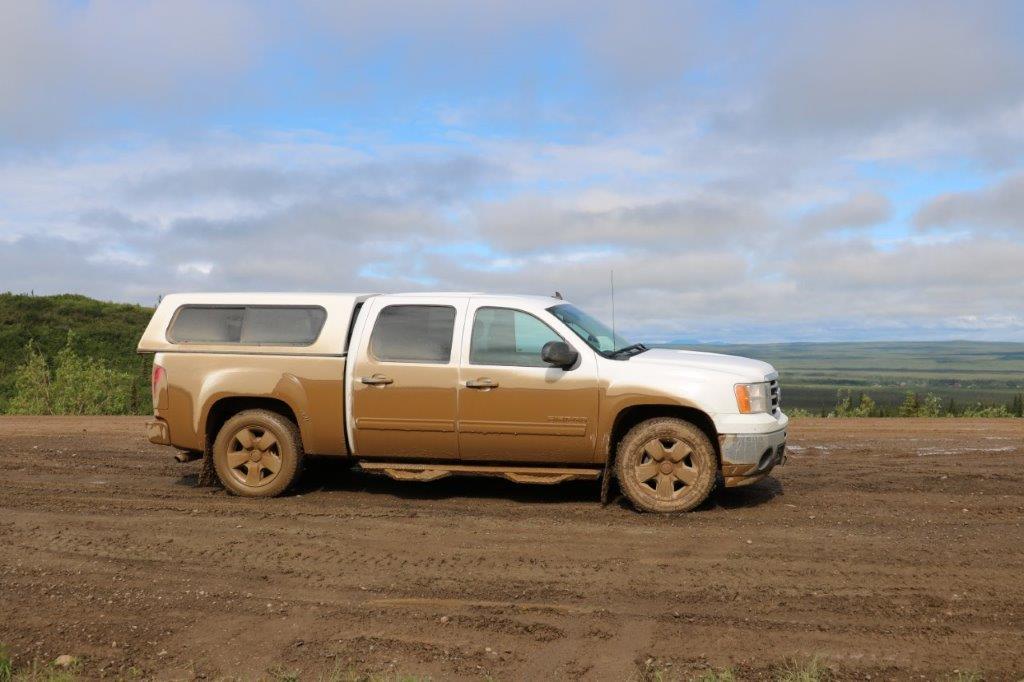
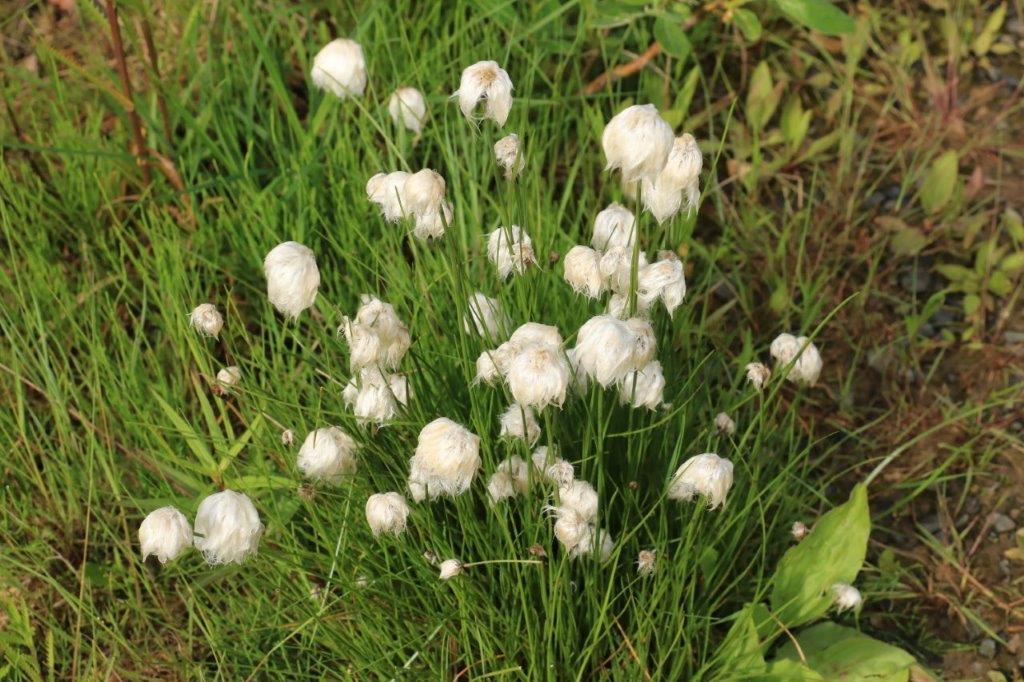
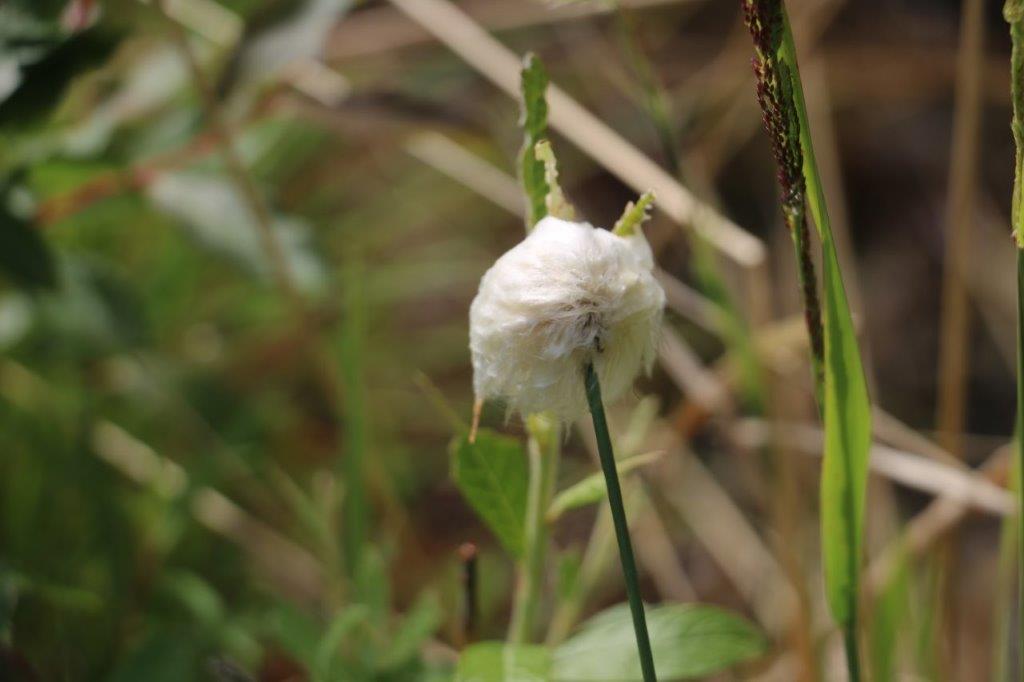
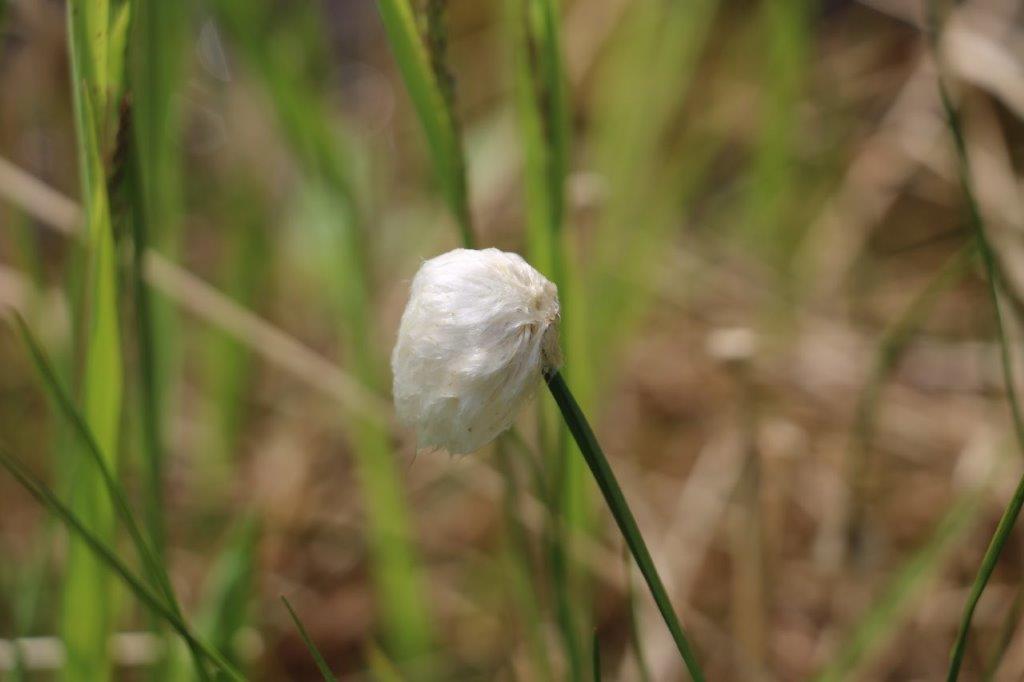
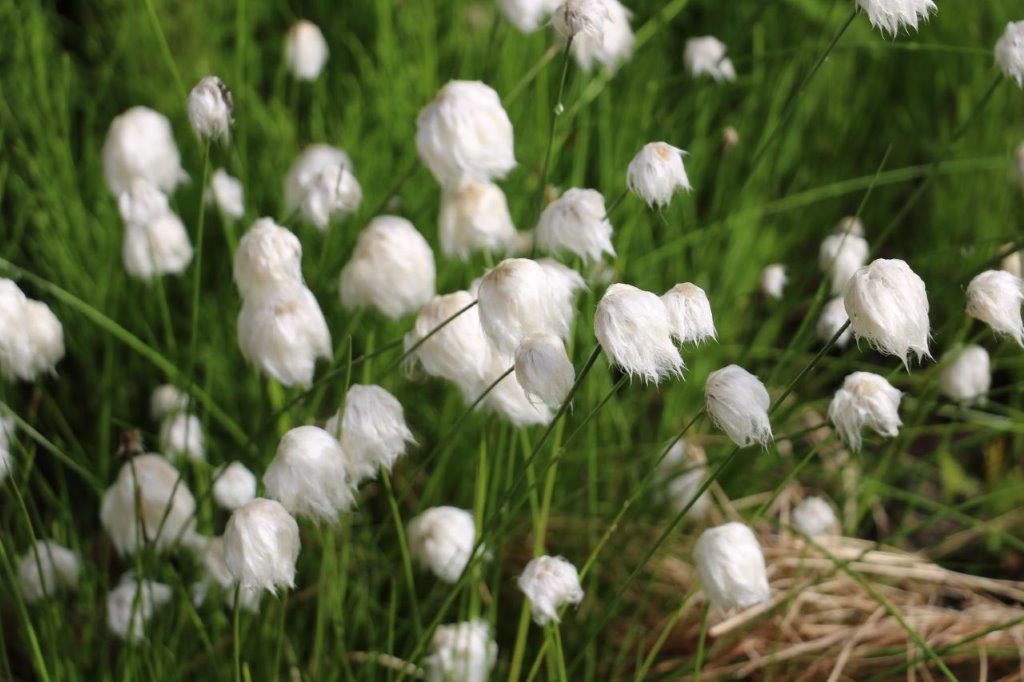
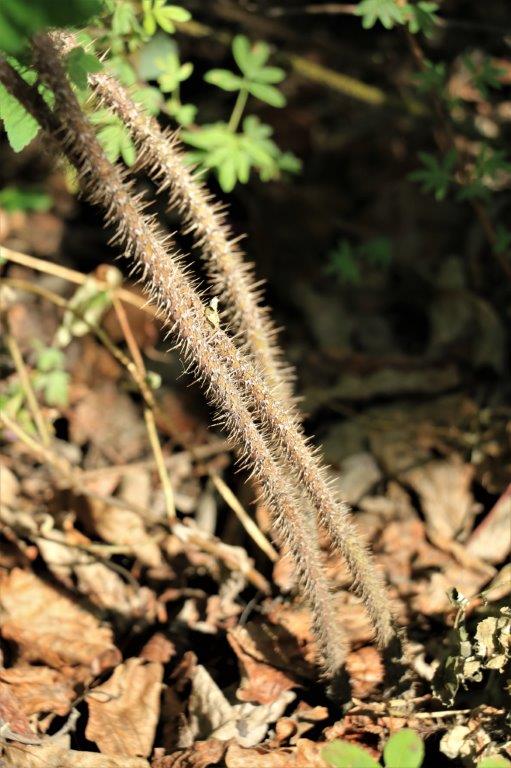
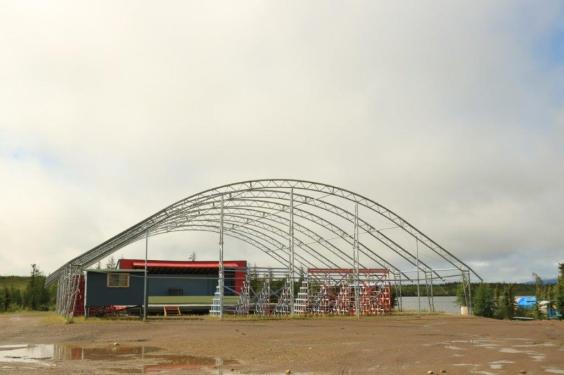
Midway Lake is 44 km (27 miles) from the border and 25 km south of  the small town of Fort MacPherson.  The lake is the site of the annual Midway Lake Music Festival held the first weekend of August (they celebrated their 30th anniversary in 2015). This festival is a wonderful opportunity for families to come out and enjoy live music and storytelling. There is a dance floor to accommodate those who wish to show their steps to traditional Gwich’in jigs, waltzes and square dances. The festival helps celebrate the Gwich’in culture that is spread throughout not only the NWT but the Yukon and Alaska. There are simple little cabins all over the grounds that families stay in during the festival. I couldn’t find any information on a 2018 event but there was one last year.  There was a geocache hidden near this viewpoint so we parked the poor dirty truck and went for a short hike to find it. We saw more of these cute cotton-type plants.
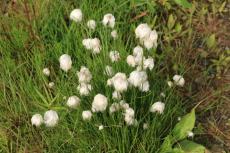
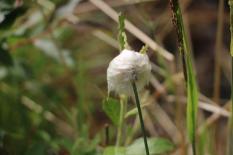
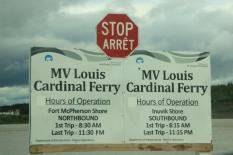
Thirty km from Midway Lake is the Peel River where the ferry comes to whichever side of the river the ferryman sees a car waiting and takes you across. We did a little drive-through of Fort McPherson, bought some gas and a chocolate bar for sustenance and off we went again.

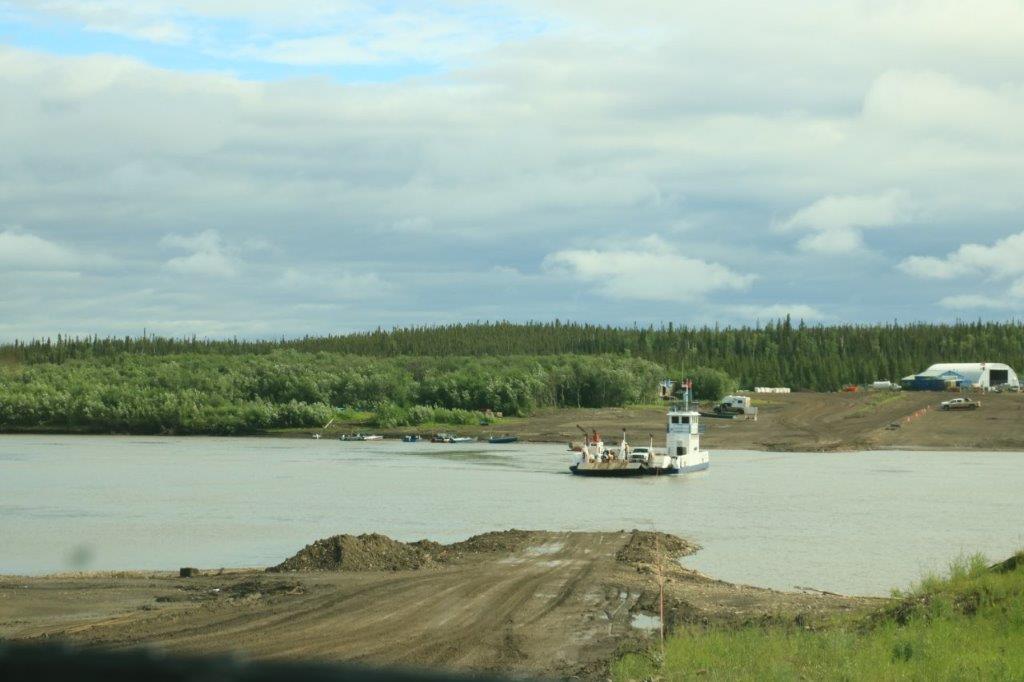
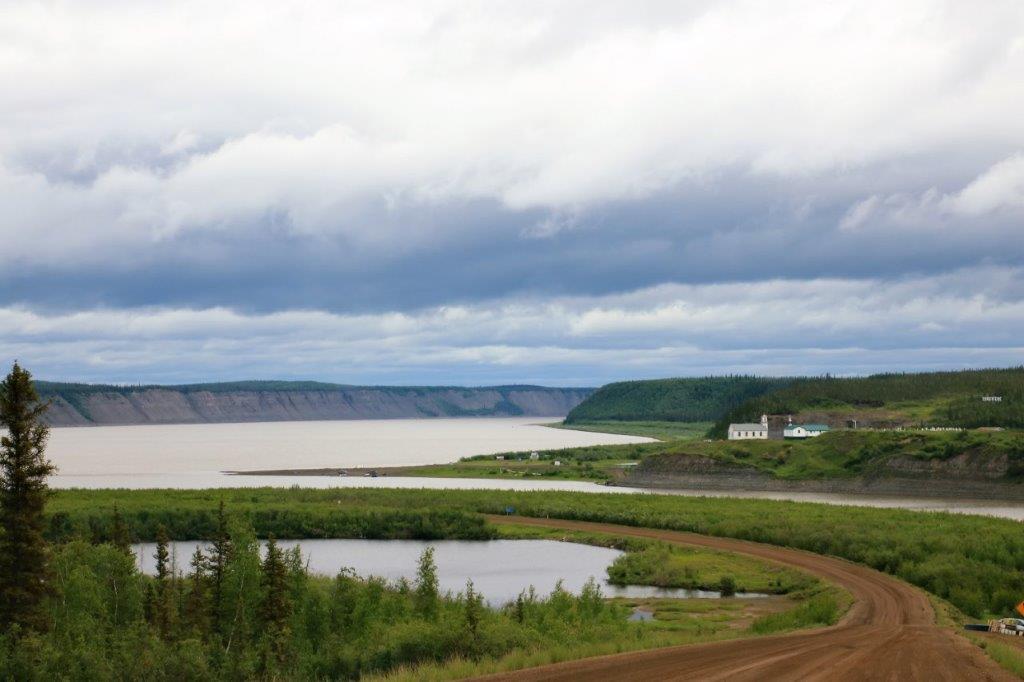
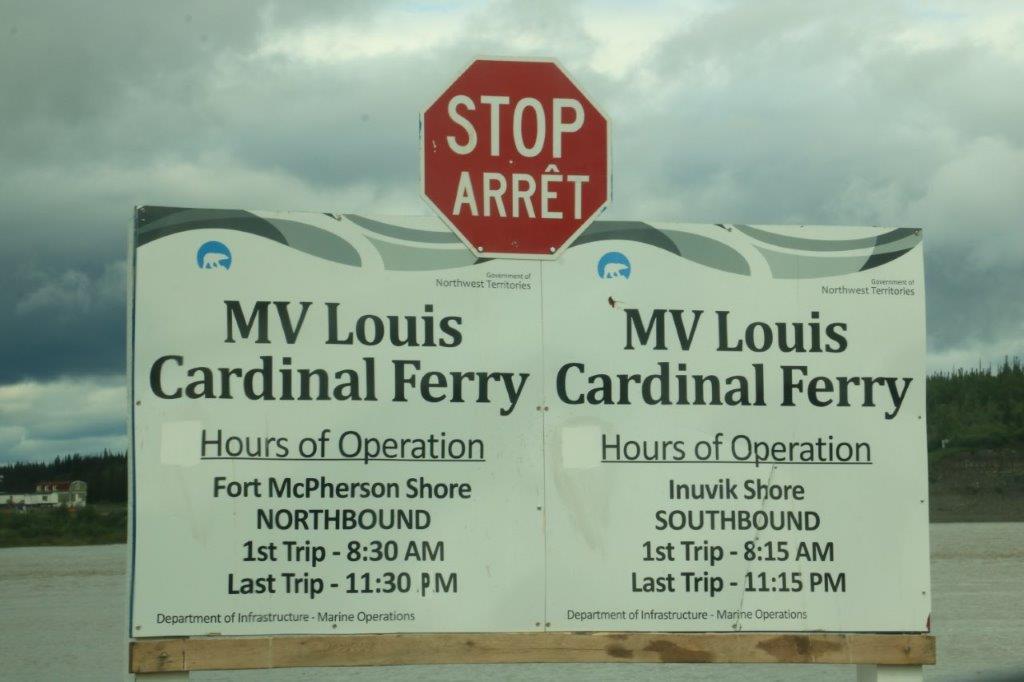
The next river you get ferried across is the Mackenzie River.  At this spot also is the confluence of the Arctic Red River and the Mackenzie.  The Arctic Red River was declared a heritage river in 1993.  The ferry will take you from the Fort McPherson side to the Inuvik side, or over to the small village of Tsilgehtchic (pronounced sik-a-chik); whichever destination you wish.  Across the Mackenzie river we are now in our last ecoregion; the Mackenzie Delta.  Fifty percent of the Mackenzie Delta ecoregion is wetlands.  The Mackenzie is Canada’s longest river.  It flows over 4,200 km (2,610 miles) from its headwaters in northern British Columbia to its terminus in the Beaufort Sea.  The watershed of the Mackenzie Delta comprises one-fifth of Canada’s area.
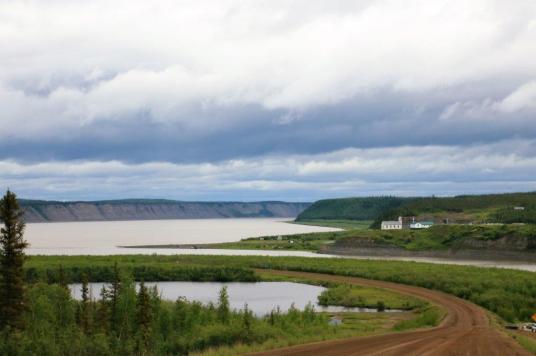
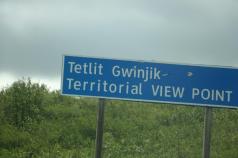
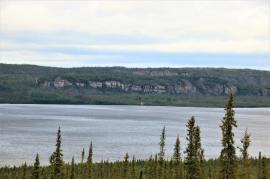
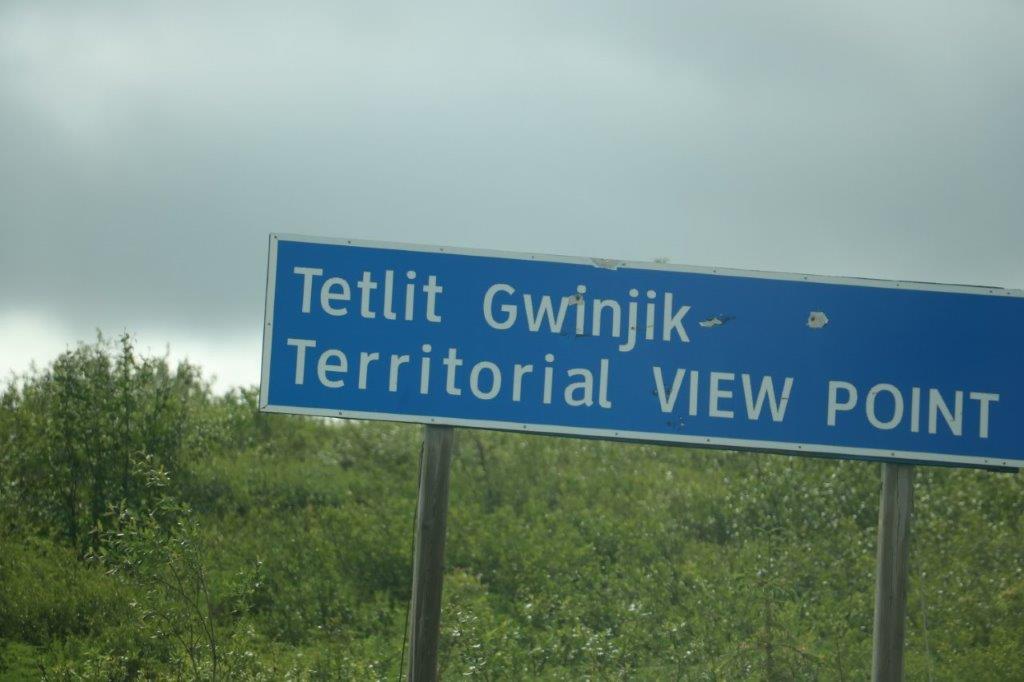
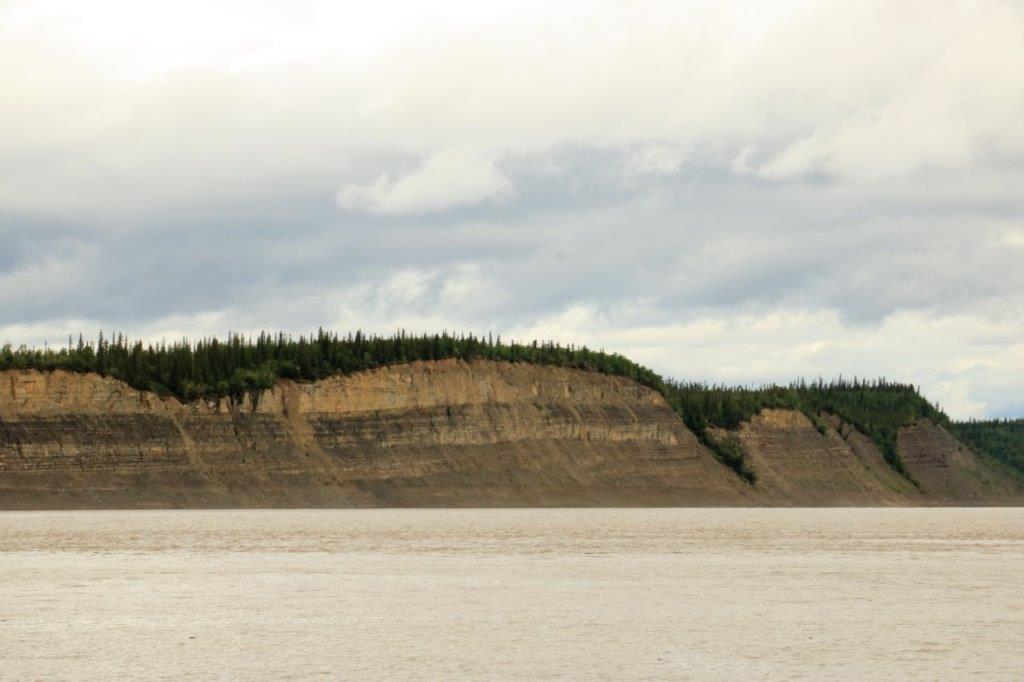
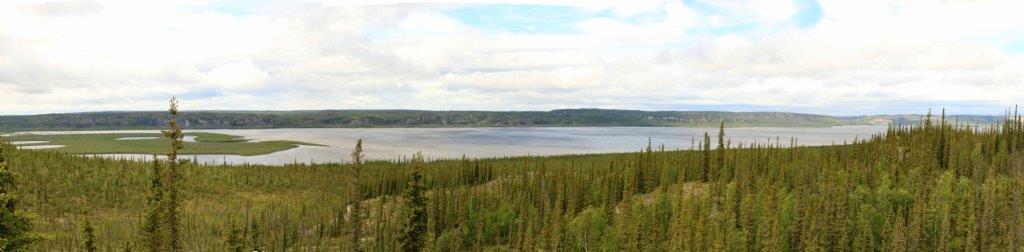
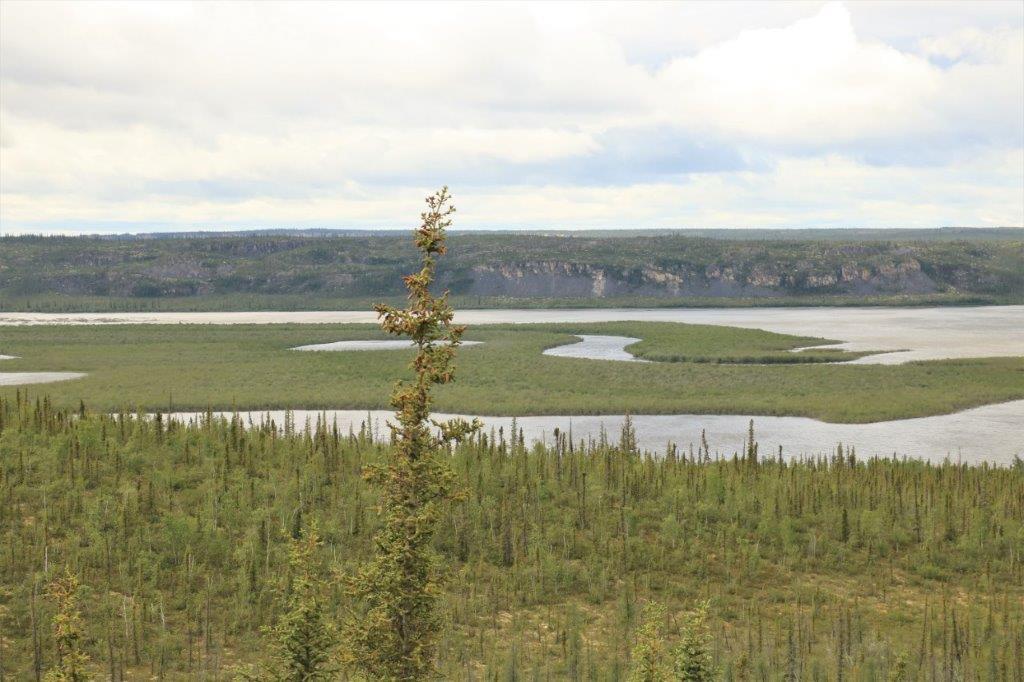
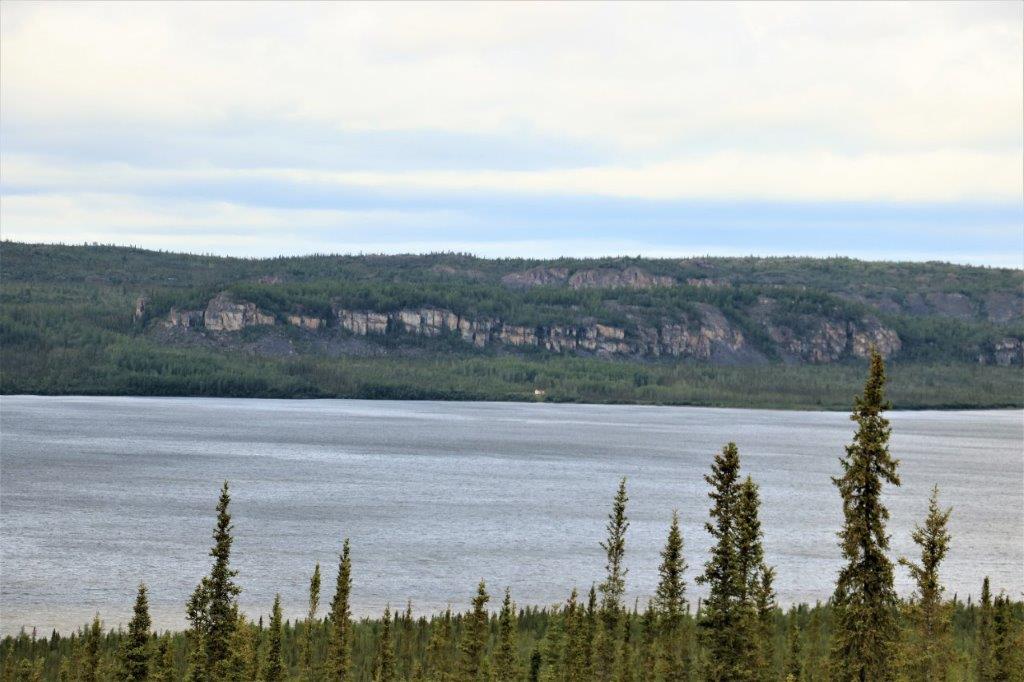
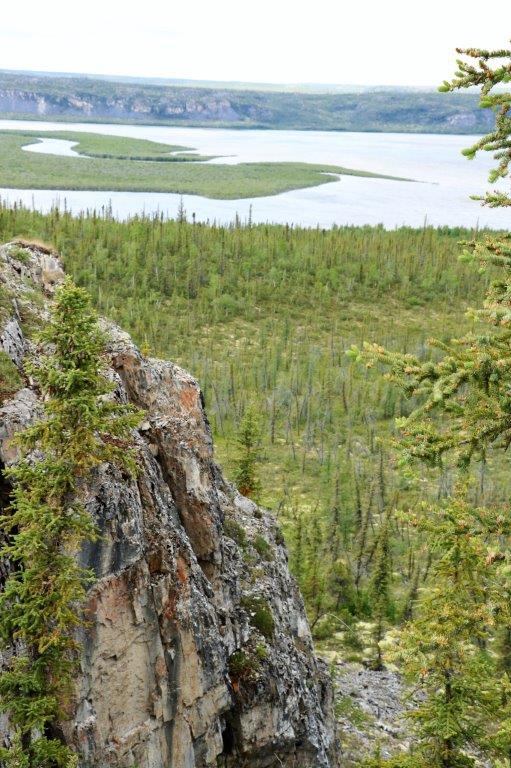
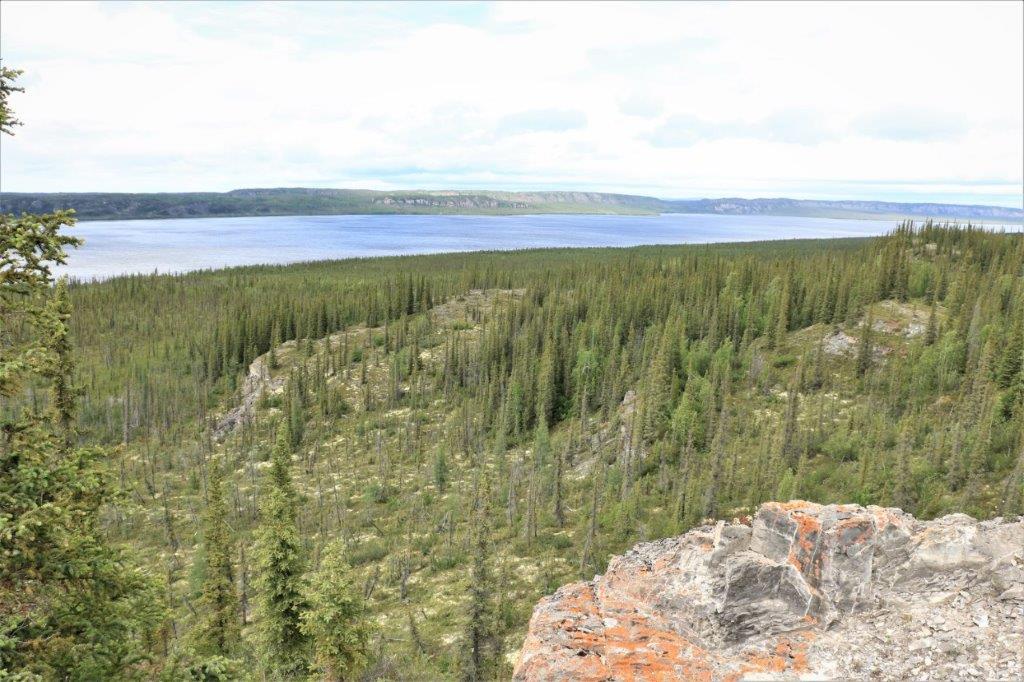
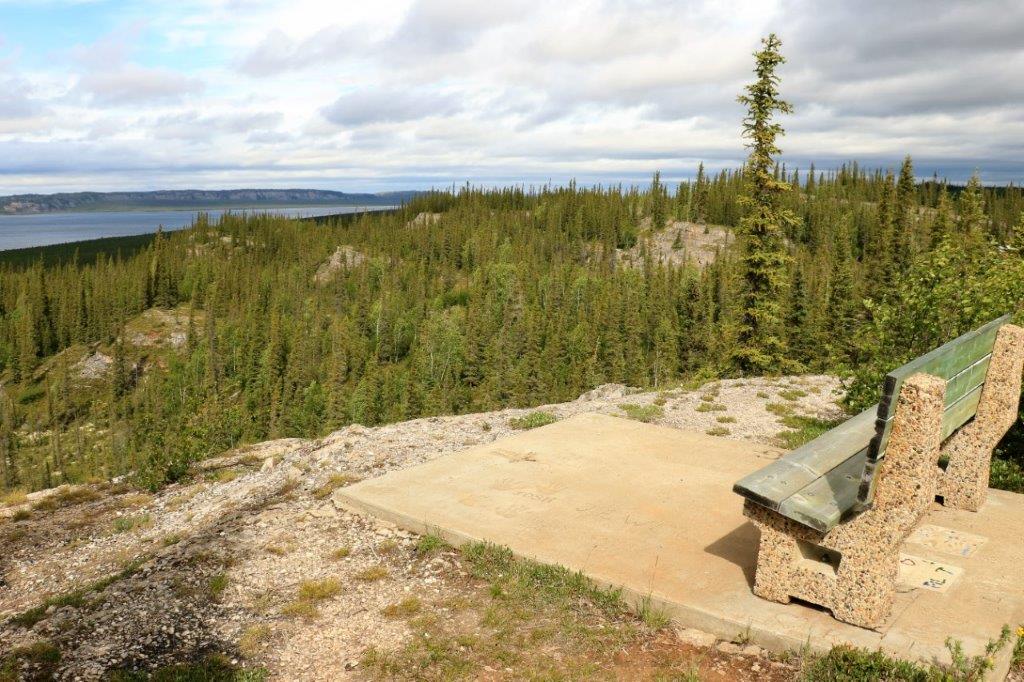
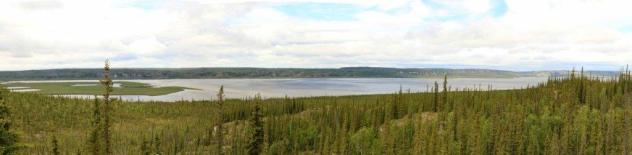
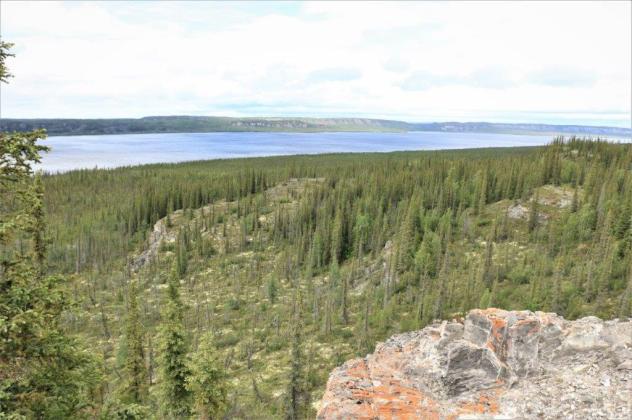
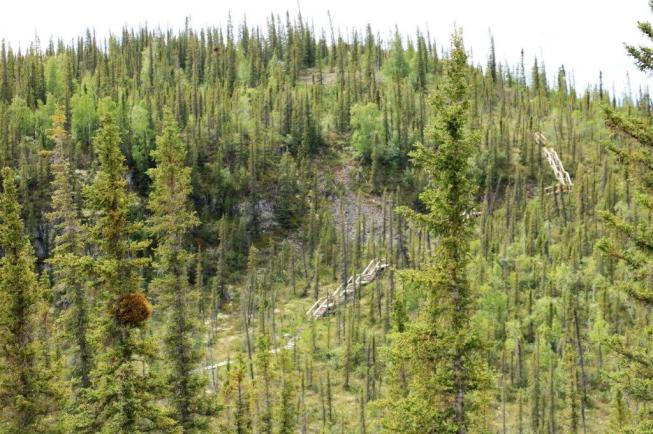
At the Tithegeh Chii Vitaii lookout (no idea how to pronouce this one) there were two geocaches so we took the short hike to find them.                                         The view was pretty good!   The first cache was at the actual viewpoint.  The other one was 100 meters or so along the cliff face and down a couple of terraces.  John did the clambering to find it.  If I go down steep things like that nowadays, I don’t get back up.  How I have fallen from my ‘mountain-goat’ youth!There is a long loop trail in the area.  I think this massive staircase is part of it.  My knees are very happy we did not have to go down them – or up. A pretty nice spot to sit and enjoy the view.  As long as the wind that we experienced wasn’t blowing.
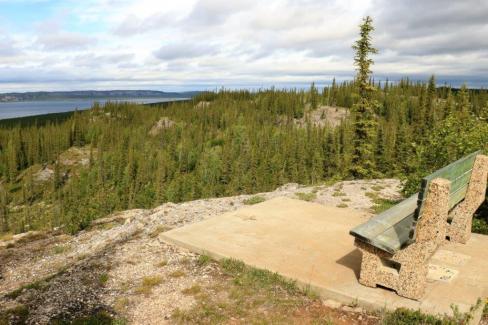
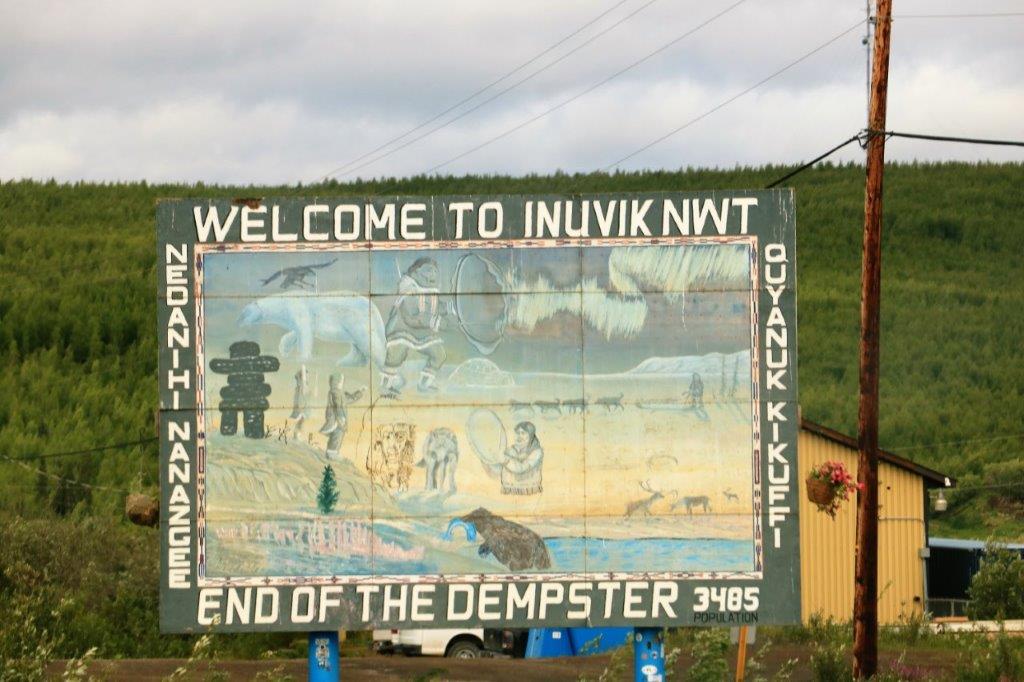
Northwest Territories is one hour ahead of Yukon Territories time so we arrived in Inuvik at 5:10 mountain time.  The drive, including all our stops, took 8 1/2 hours and we were settled in our hotel in time to load photos and do my missed blog from the day before.
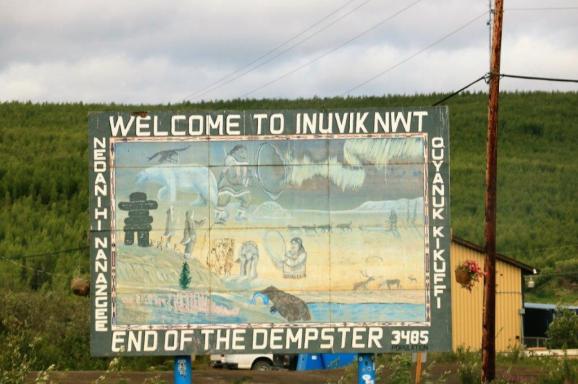
 

2018 July 4 – Dawson City to Eagle Plains, YT

OH MY GOODNESS! What an incredibly beautiful day!

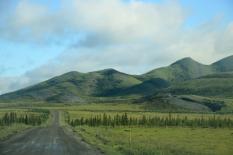
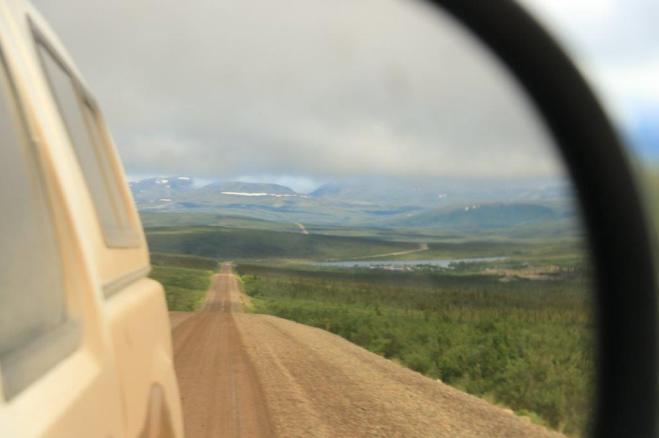
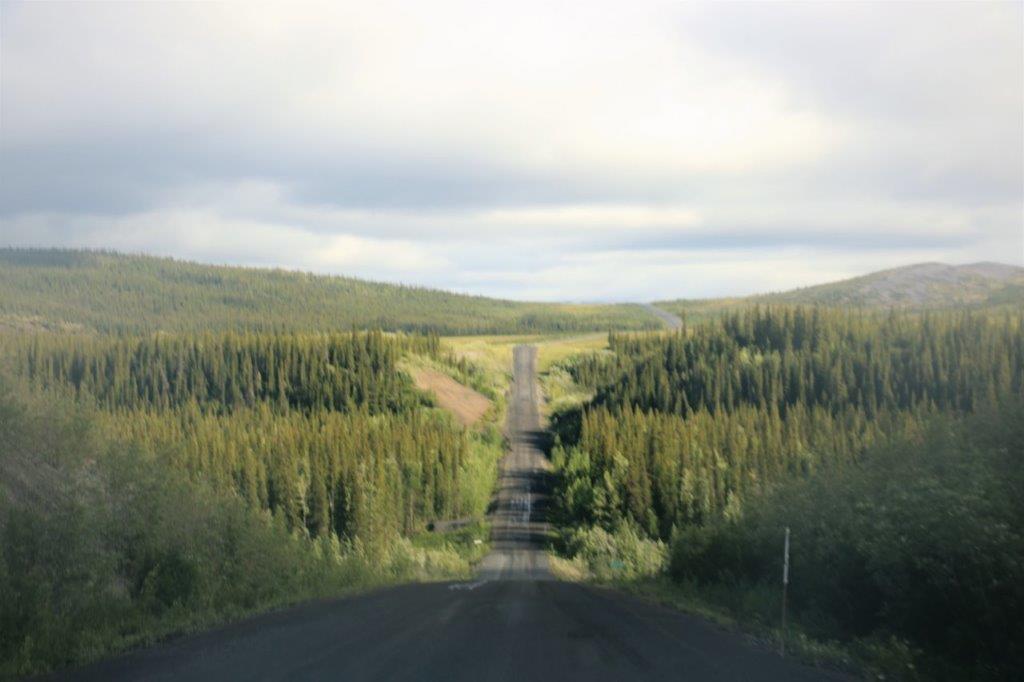
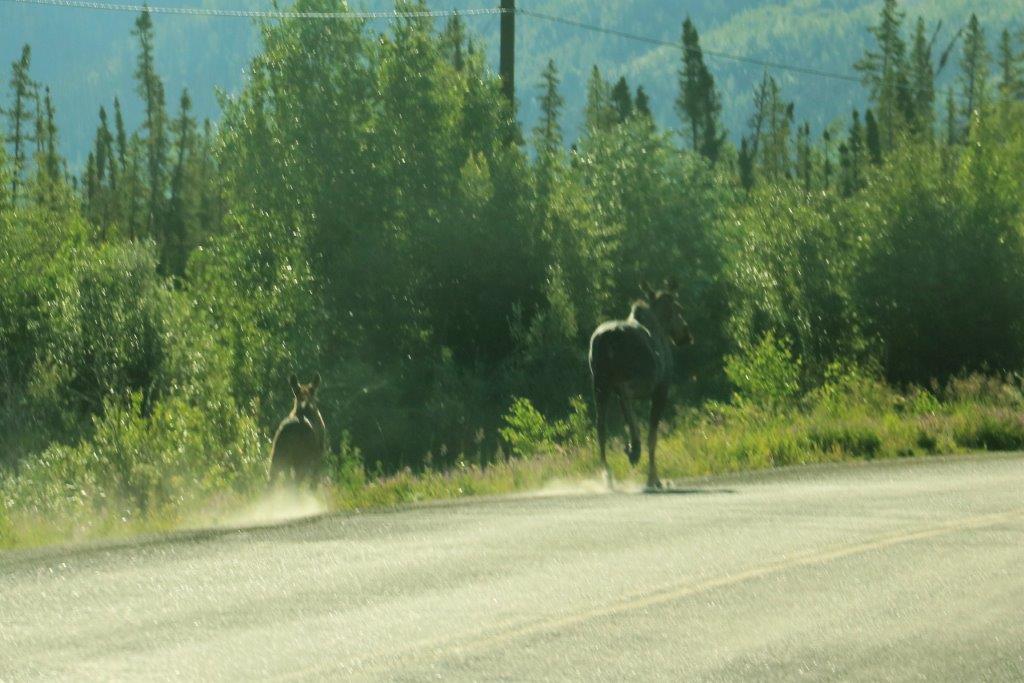
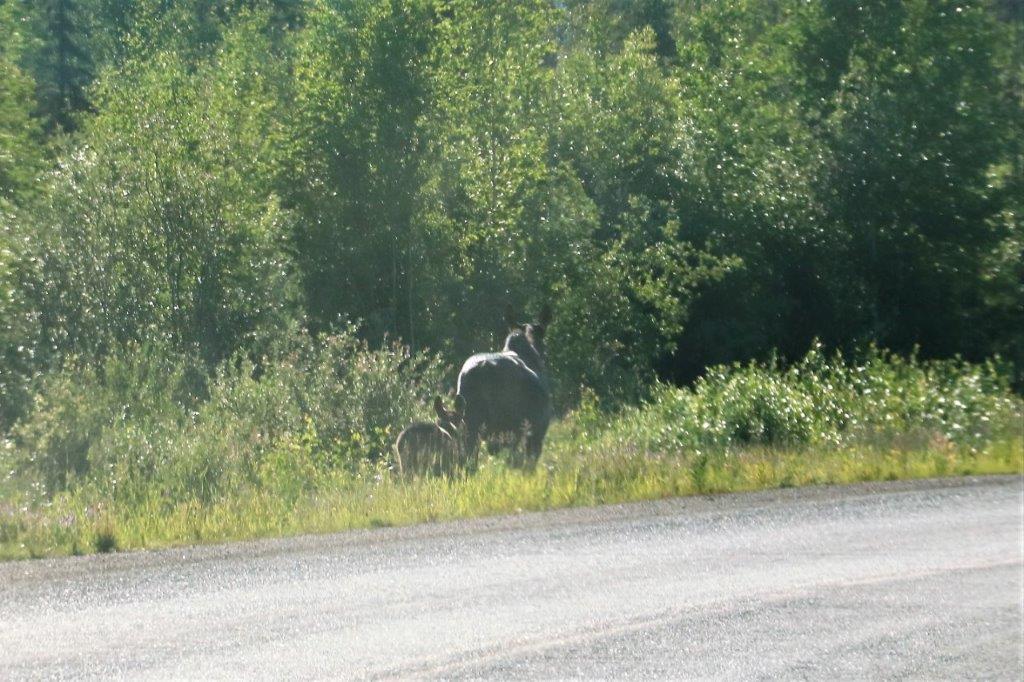
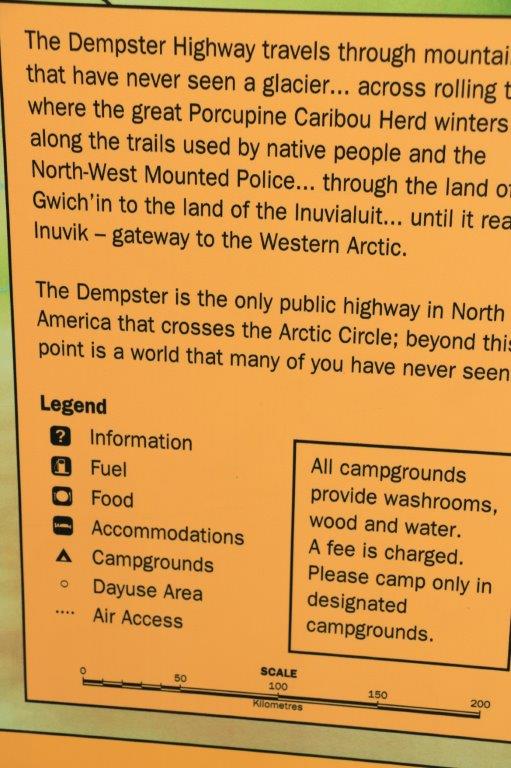
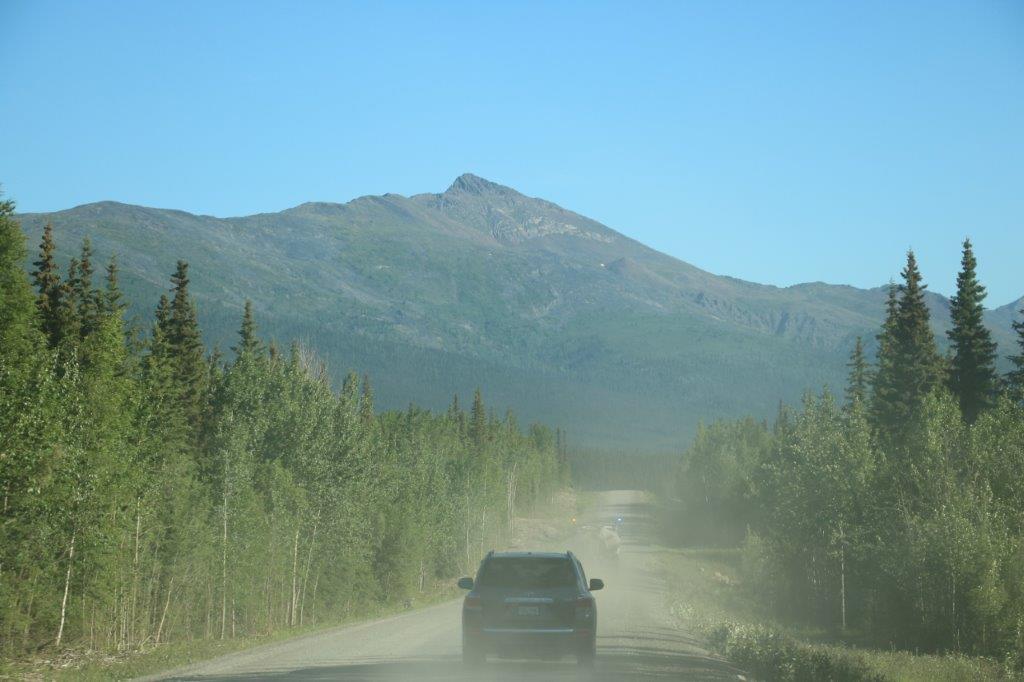
We left our hotel in Dawson City at 8:30 and as we were driving out of the city, past the 10 km of dredge tailings on either side of the road, the car in front of us – that was traveling quickly – startled a cow moose and her calf. The car braked, but by then the moose was on the fun for the bush.  I only managed to catch two photos as they ran away.   Our first few kilometers were somewhat slower than we liked.  We were behind a car that was behind a big water or oil truck, so we drove in their dust, literally.The truck, very kindly, pulled off in the first wide spot it came to and then we were off.  The Dempster has two road conditions: dry and dusty OR wet and slippery.  The road has a notorious reputation with many horror stories of getting stuck in mud, or sliding off the road, or driving through huge ruts and rocks that eat your tires.  We have driven a lot of forestry roads, which can be very rocky and rugged, so we found the Dempster to be pretty good in comparison.All we had ever heard about the road, other than the scary tales of vehicle disasters was the it was a nice, scenic drive.  That is an incredible understatement.  It is 369 km (229 miles) from Mile 0 of the Dempster to Eagle Plains (just over half way). The first 250 km were gorgeous, with every bend and corner revealing another beautiful mountain, or open valley.
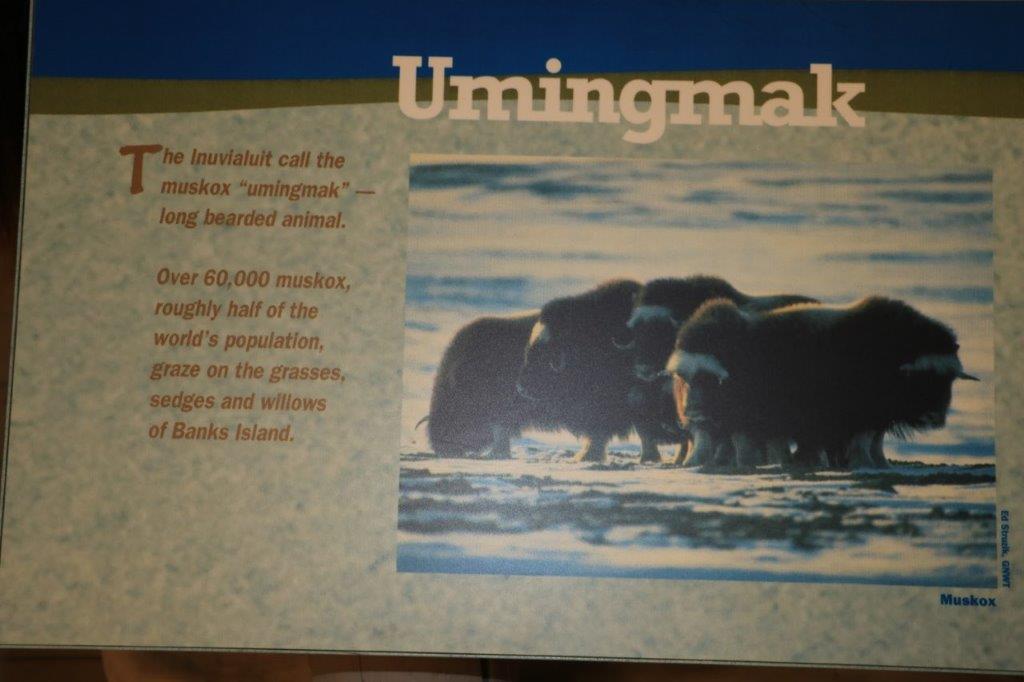
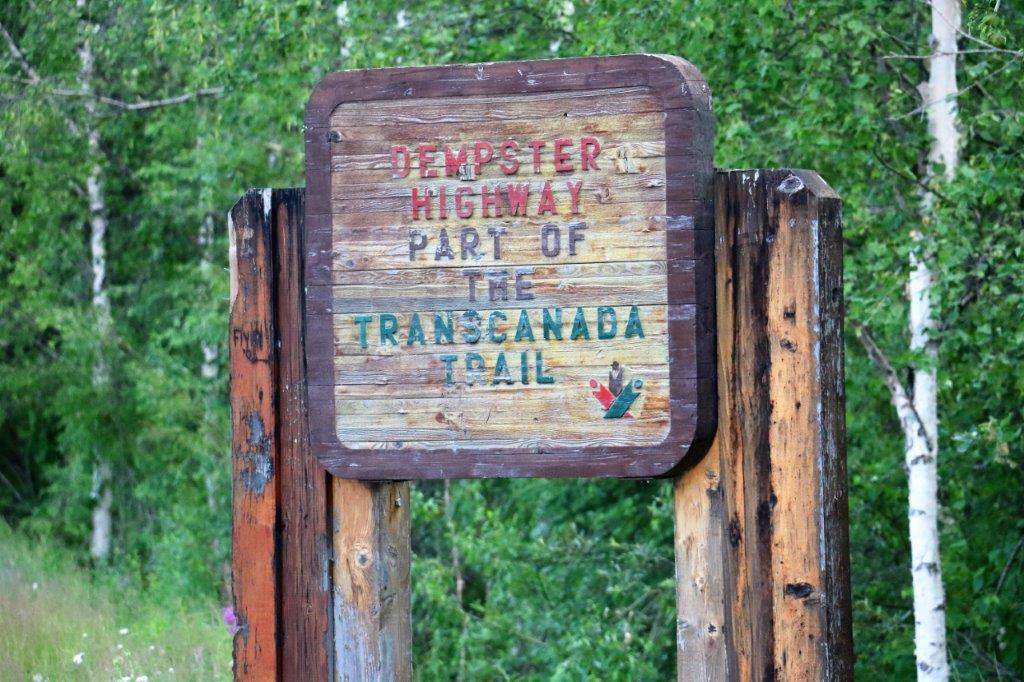
We had been given a travelogue booklet by the lady at the Northwest Territories Visitor’s Center in Dawson City and it contained all the points of interest or geological information by the kilometer road markers.  It was a very handy little book to have.

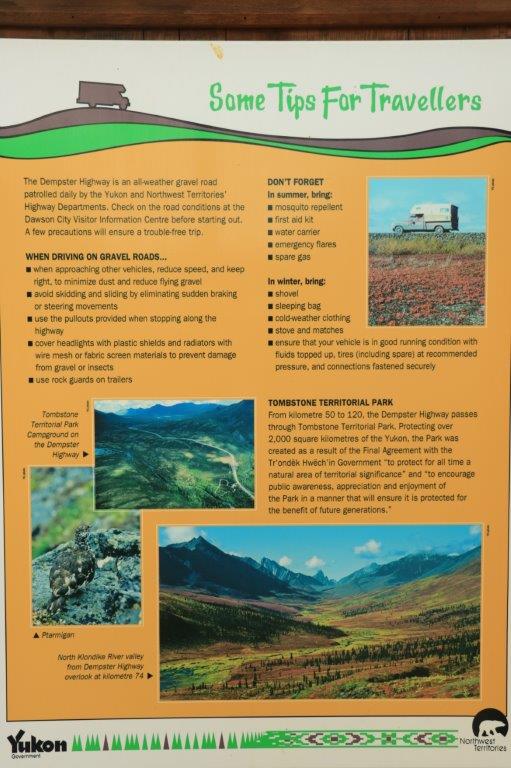
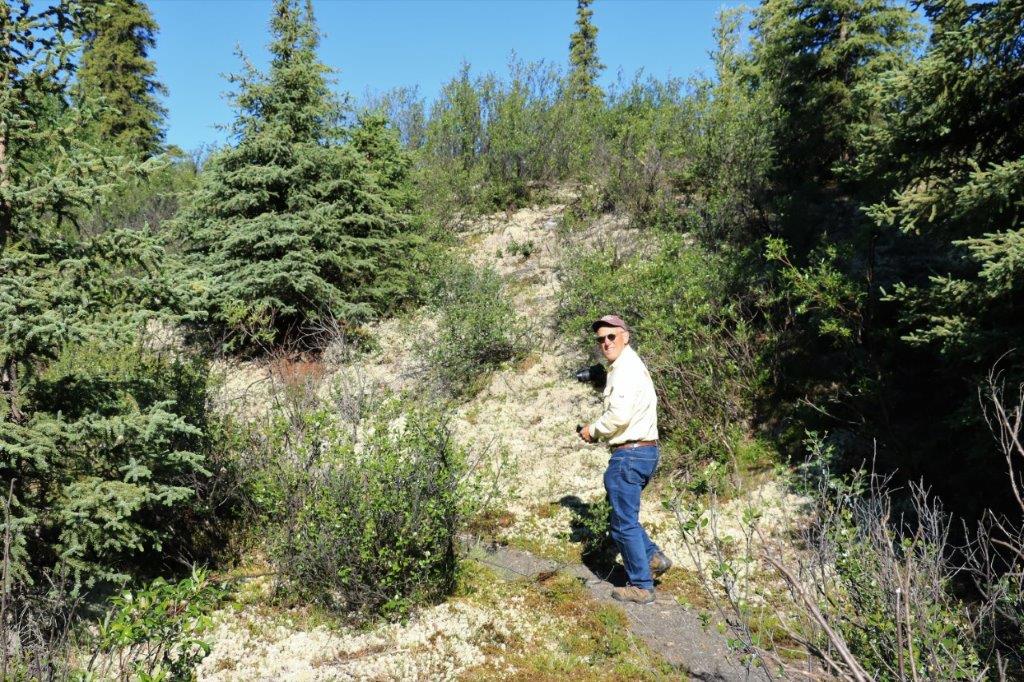
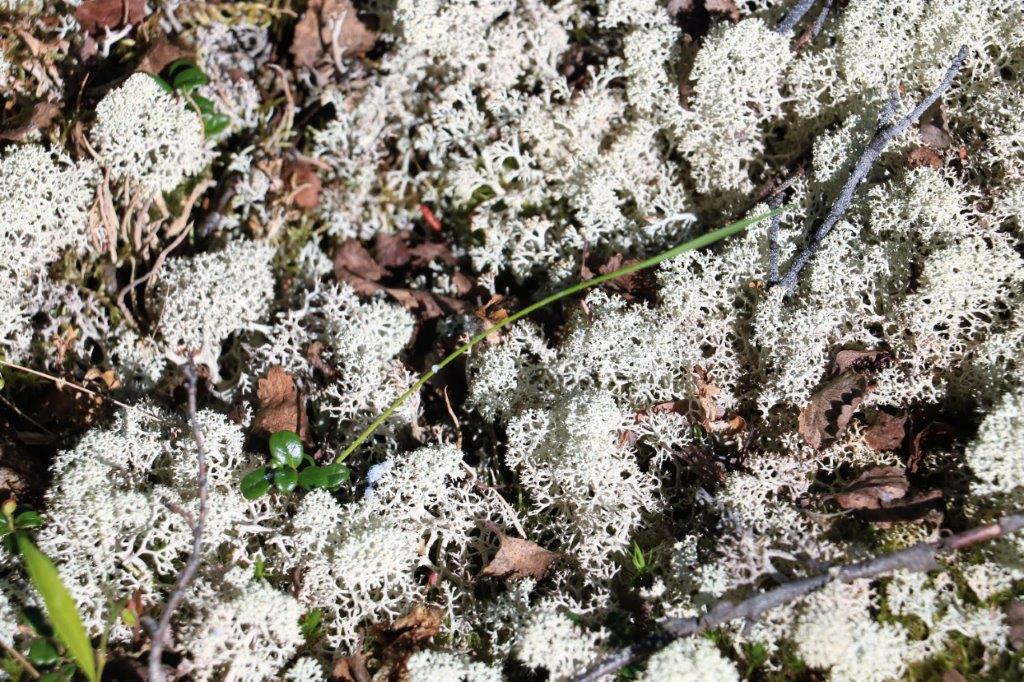
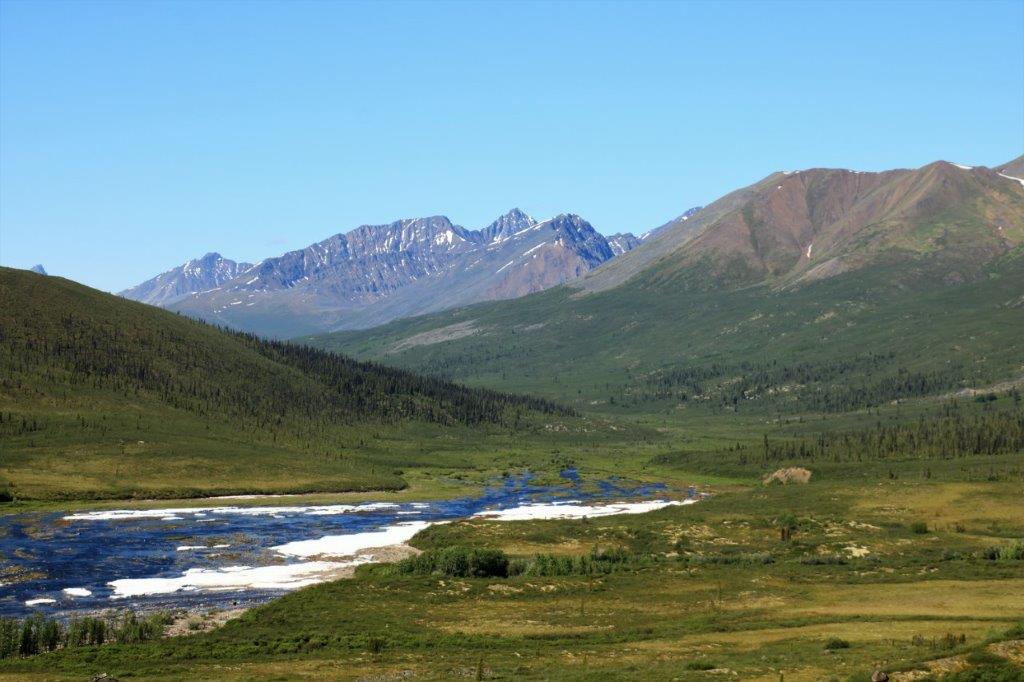
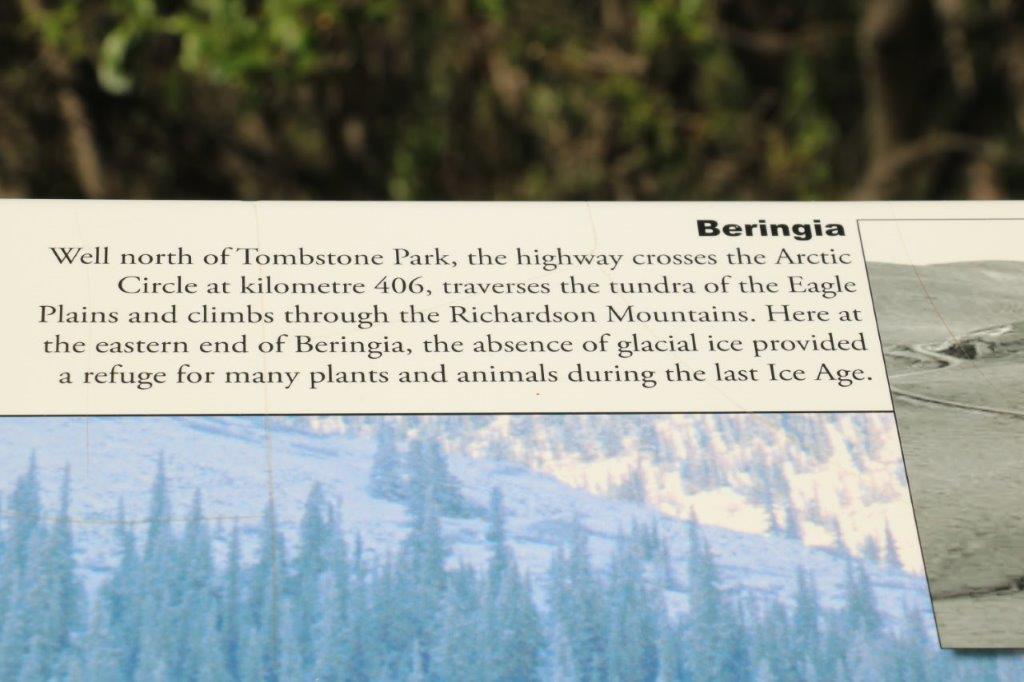
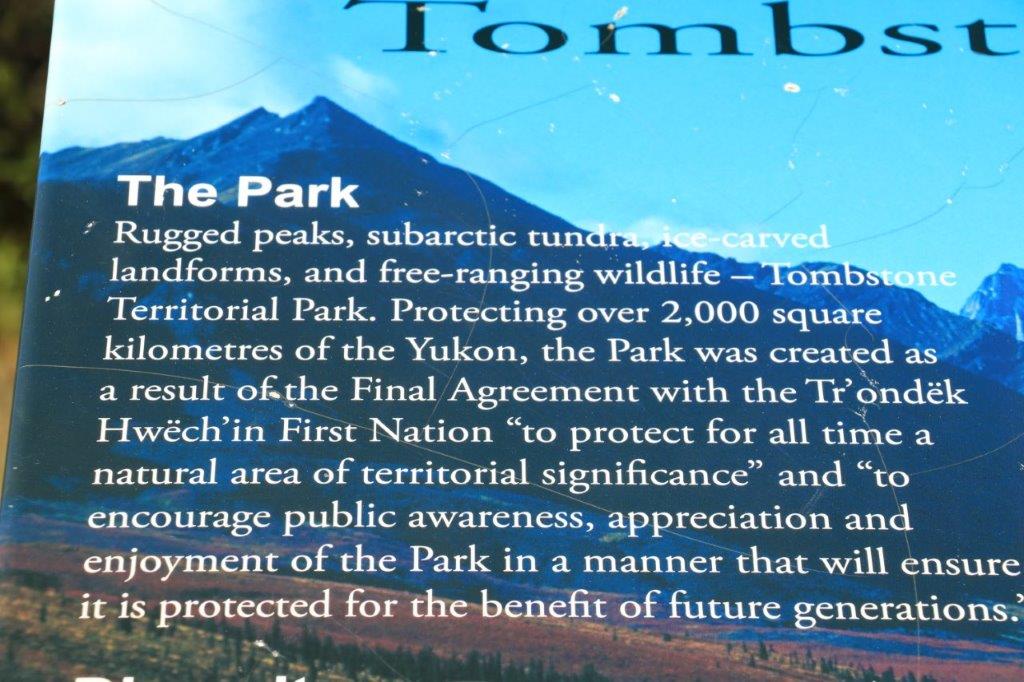
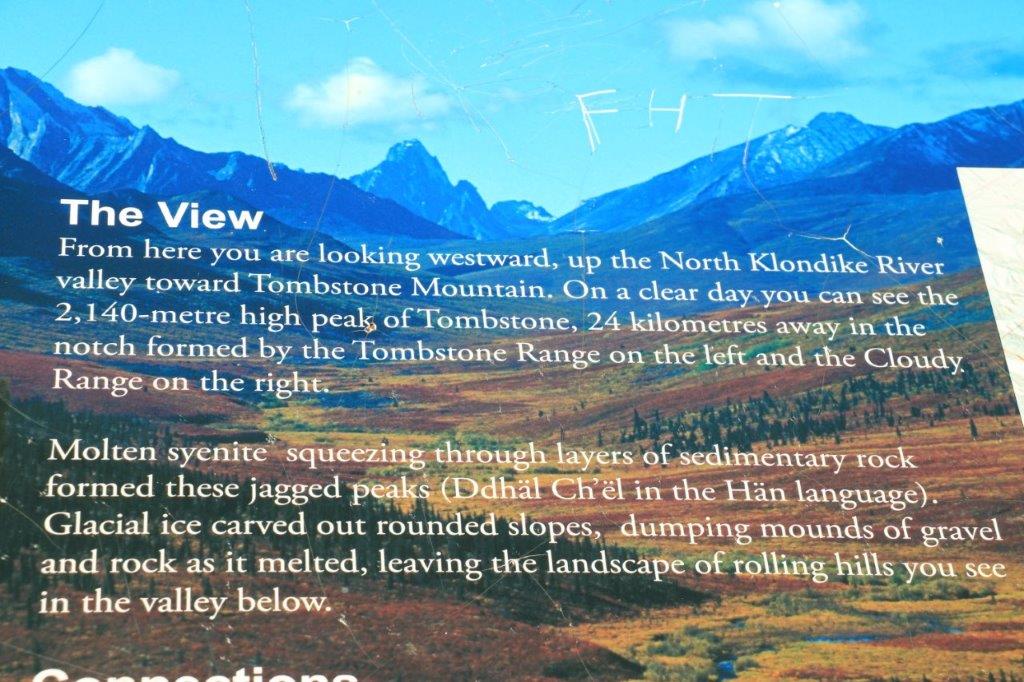
This blog will be very full of photographs of scenery.  There are no towns or buildings other than road maintenance camps between the beginning of the Dempster and Eagle Plains. 71 km (45 miles) up the road is Tombstone Territorial Park.  The highway travels for 70 km through the park.  Tombstone protects 2,200 square kilomters of the Ogilvie Mountains and the Blackstone Uplands; which are two of the seven ecoregions that the Dempster passes through before it reaches the end of the road at Inuvik. There are not many geocaches hidden along the Dempster Highway between the beginning and end of the road – only about 6-7; the first one of which was hidden off one of the hiking trails in Tombstone.There was this lovely lichen growing all over the hillsides along the trail.       This is the view from the Tombstone Range Viewpoint.There’s that word – Beringia – again.  There was a vast area of this northern region that was not covered by glacier ice and therefore  has very different geology, topography and plants than that which was carved by the glaciers.  It is called Beringia.While I was taking photos from the viewpoint, John crossed the road, climbed up the sloping side of this bluff and found another geocache that was hidden 25-30 meters away.A kilometer or so up a side road took us to a microwave tower, another cache, and a lovely view of Goldensides Mountain.

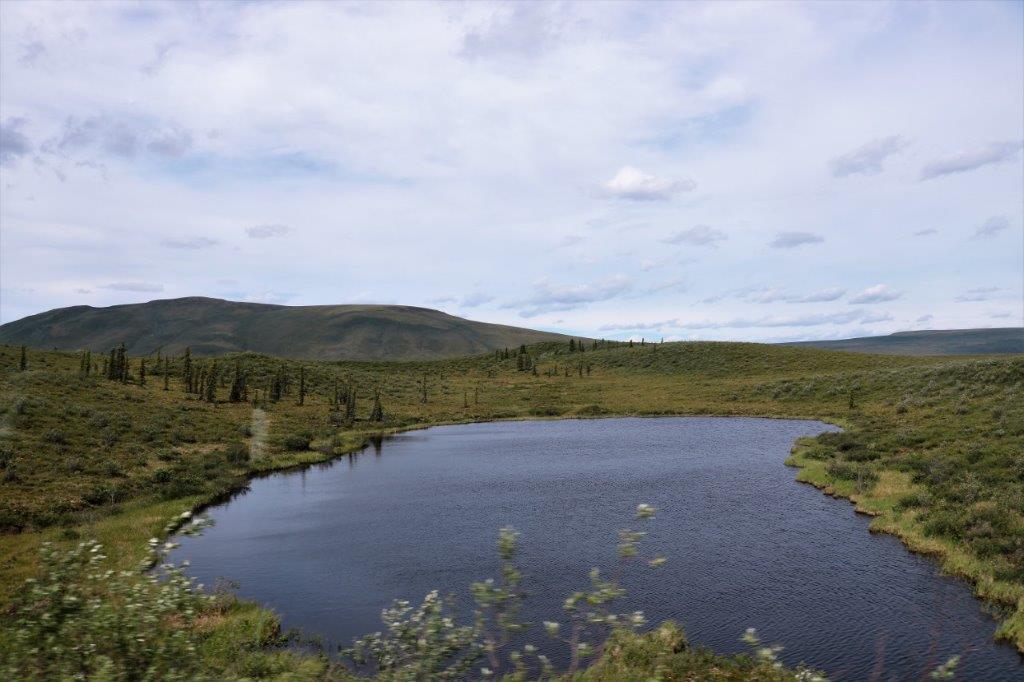
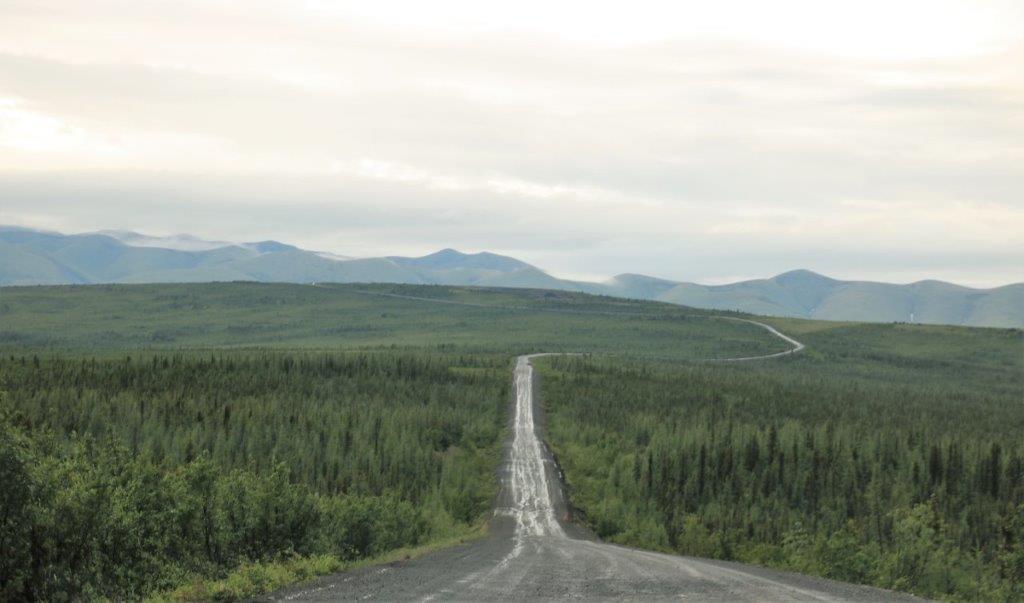
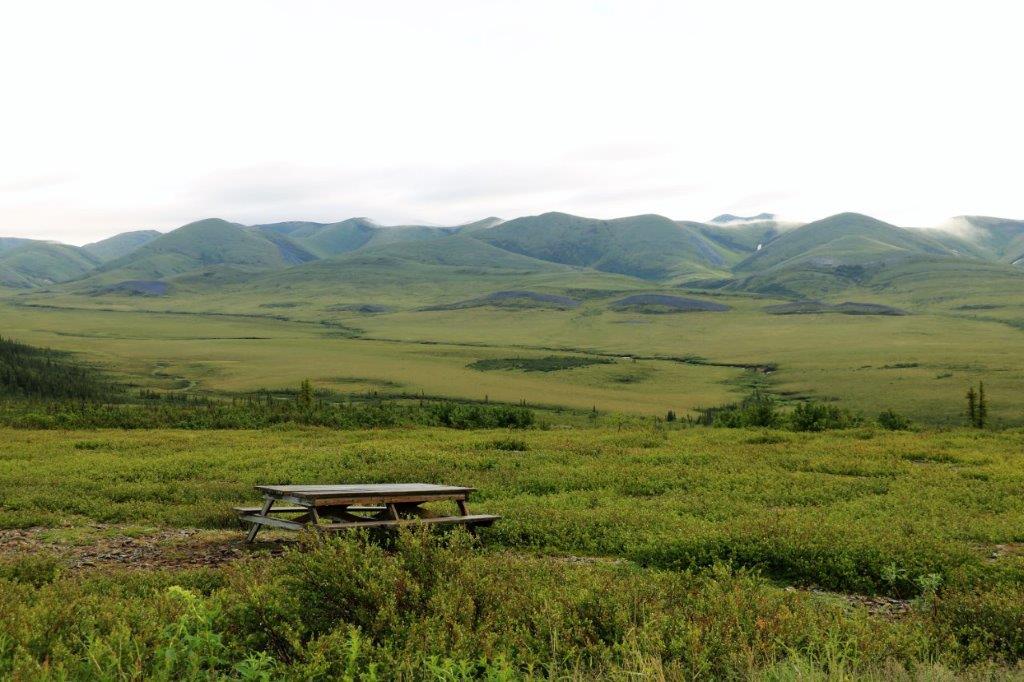
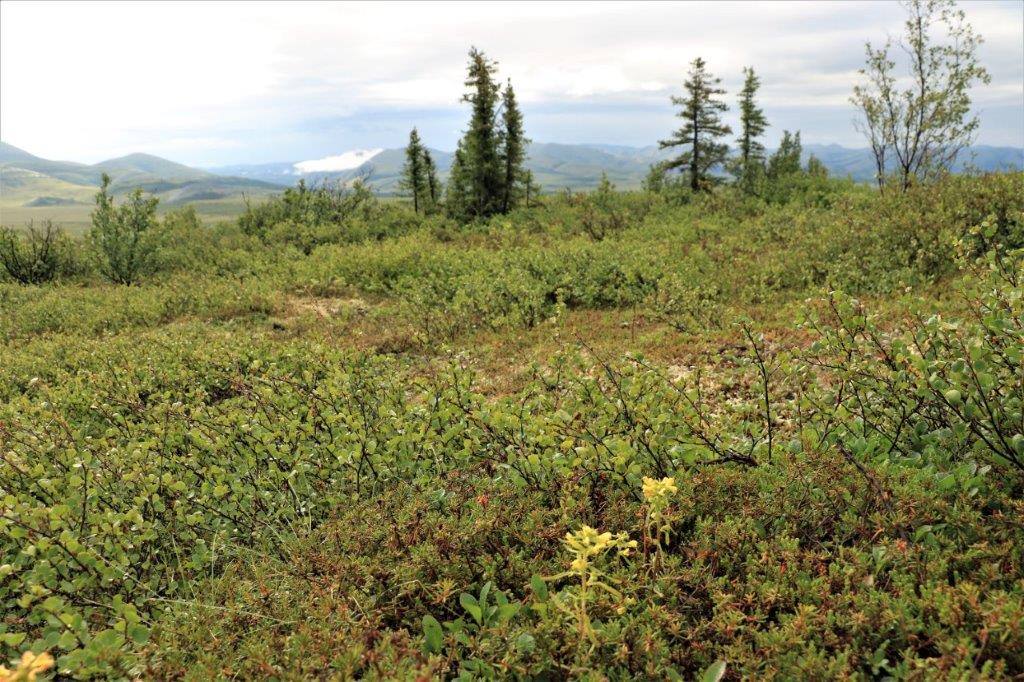
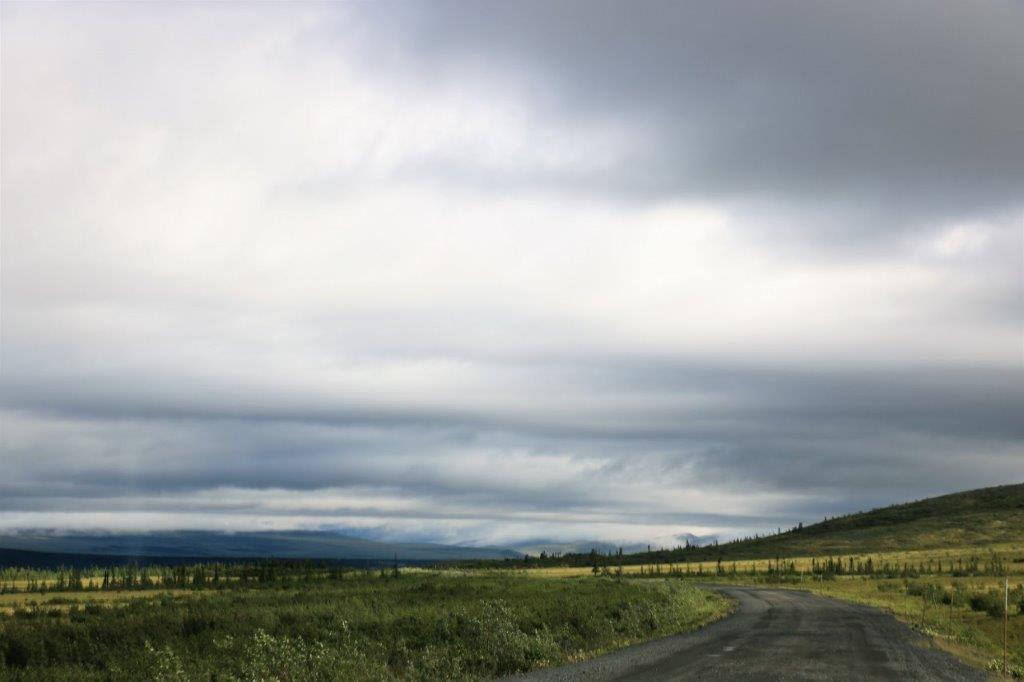
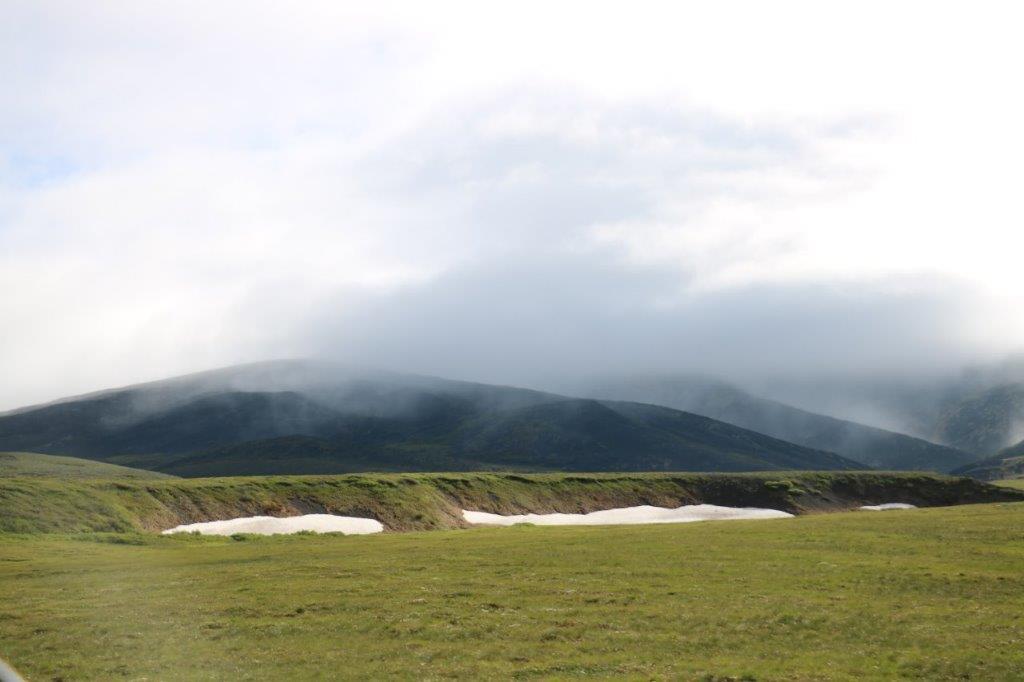
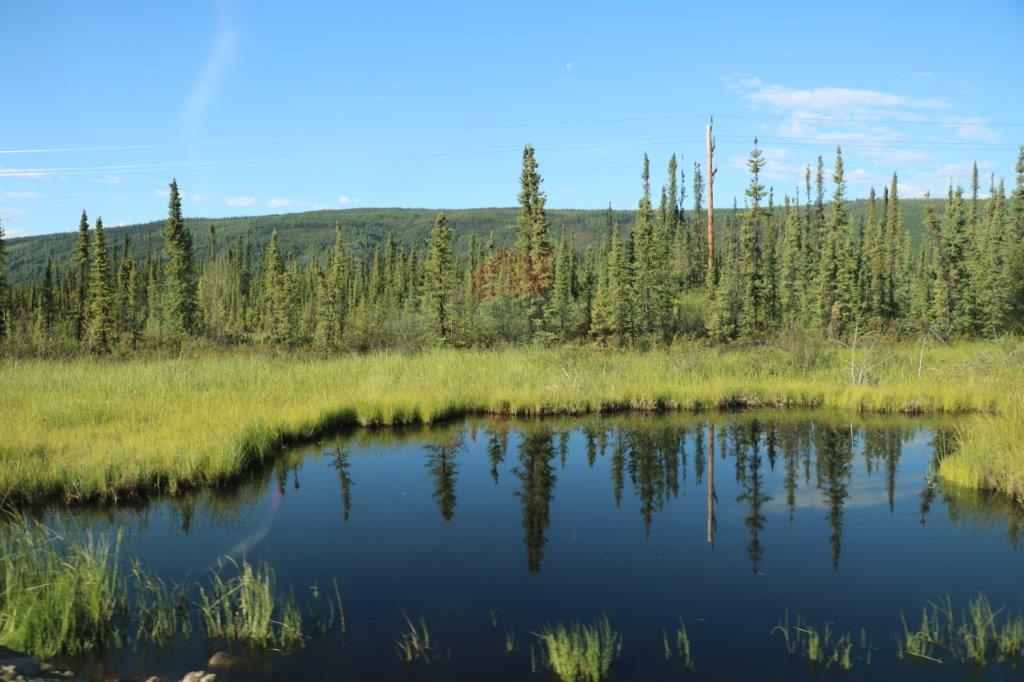
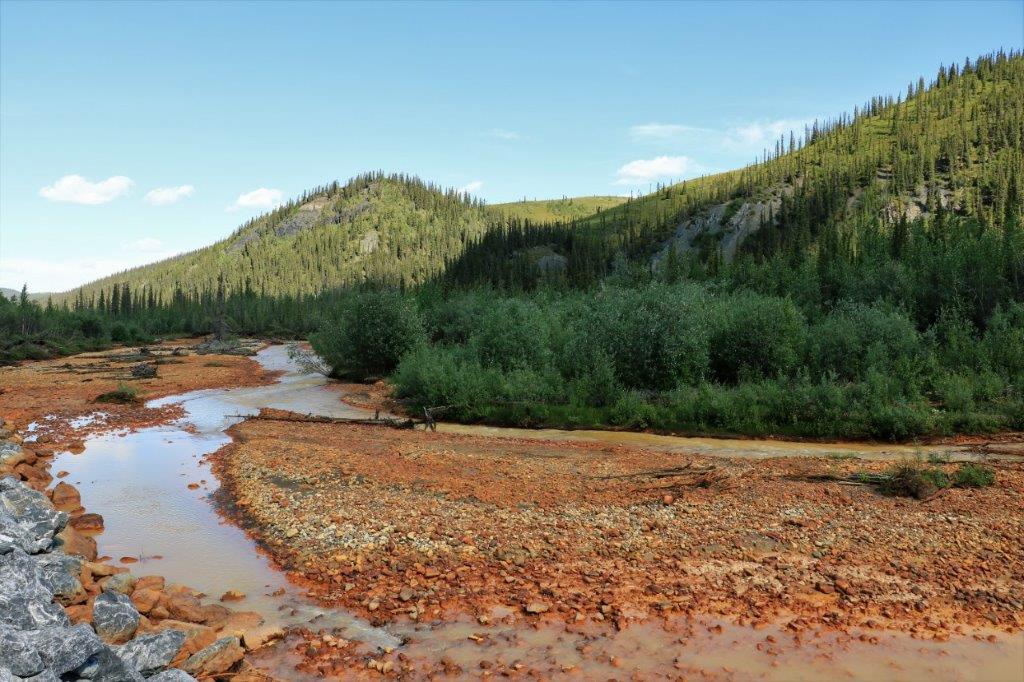
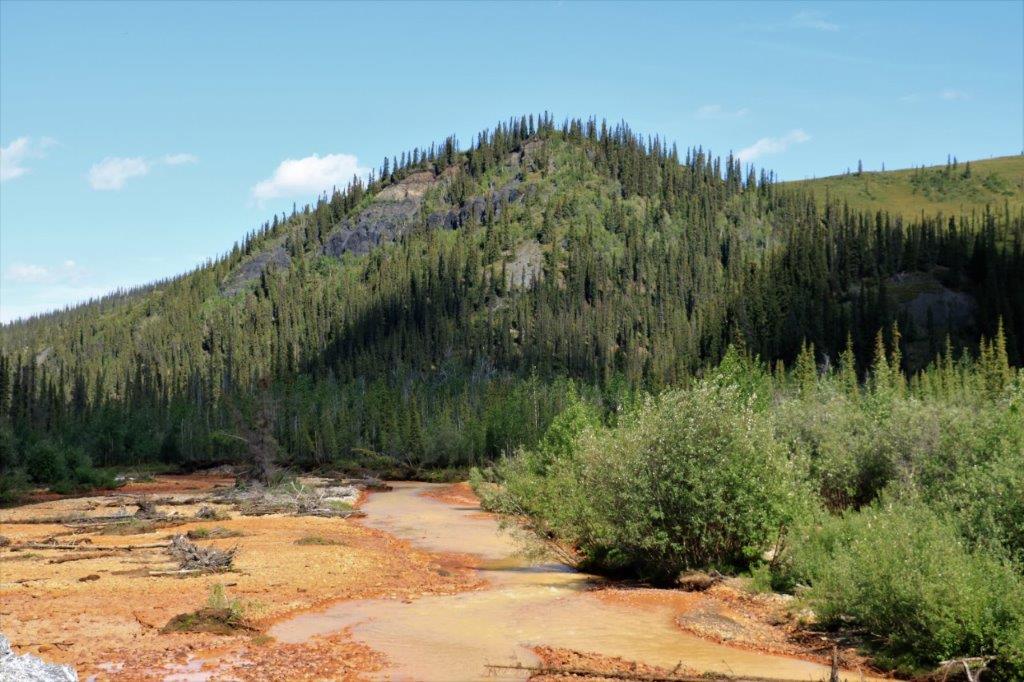
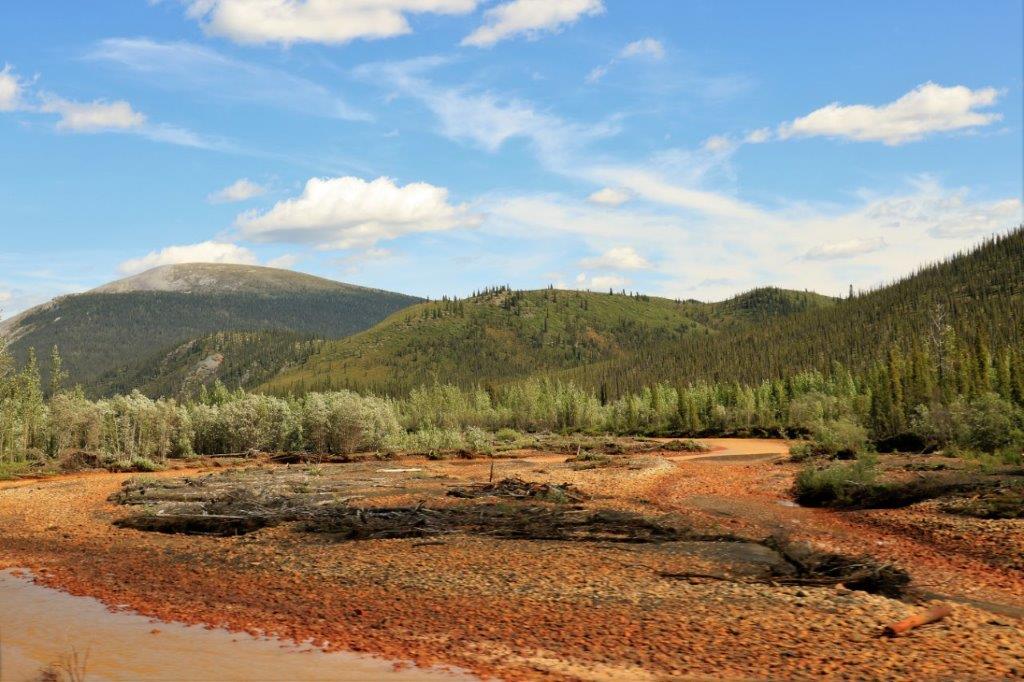
Between km 78 and 158 we drove through the Blackstone Uplands The viewscape is just immense.  I often comment as we drive through the Rockies along the Trans-Canada Highway that Canada has a tremendous amount of space and open, forested countryside.  When you come up to the Yukon and the Northwest Territories and drive for hours with no towns, very few vehicles and open views like these you understand how true that is! We are truly blessed. Moose are not abundant in the Blackstone Uplands but they are sometimes seen feeding in this small lake.  The lake is also a favourite place for waterfowl.  There were several kinds of duck-type birds swimming on the far shore as well as three Tundra Swans.  Even with my zoom lens they were too far away to photograph.  About 150 bird species have been seen in the area.Chapman Lake is at km 116 and is the largest lake on the Dempster Highway. Aside from the establishment of the Dempster Highway, this alpine tundra environment has probably changed very little over the past 100,000 years or more.  What we saw today is likely the same view the first people would have had as they roamed eastword from Asia, across the Bering land bridge, and into what is now the interior of Alaska, and northwestern Yukon.  This area is on the migration route of the Woodland Caribou.  The animals are all up at the Bering Sea at this time of year having calves and mating for next year, but you can see the trails (faint white lines) they travel on the side of the rocky scree of this mountainside.  Personally, I think it would just be easier to follow the road… Red Creek and Sulpher Springs is at km 168 and the beginning of the Ogilvie River ecoregion. The brilliant orange-brown stain in the mud and the surrounding vegetation, for the next 25 kilometers, is the high parts of calcium, magnesium, bicarbonate, sulfate, hydrogen sulfide, sodium and chlorine in the water.  Some of it is highly acidic as well.  Don’t drink the water. Sapper Hill was named in 1971 in honour of the 3rd Royal Canadian Engineers who built the Ogilvie River bridge.  “Sapper” is a nickname for an army engineer.

We stopped at the Engineer Creek Campground and had some lunch.

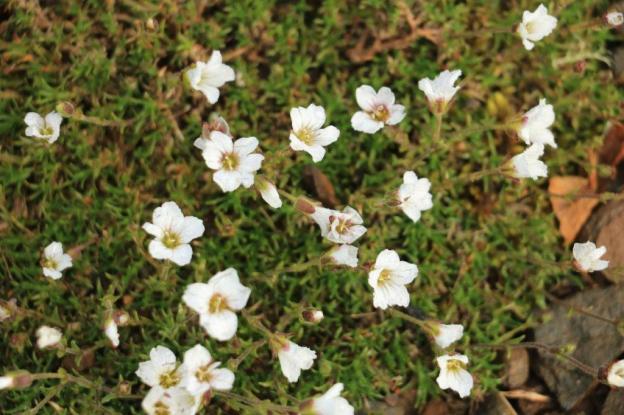
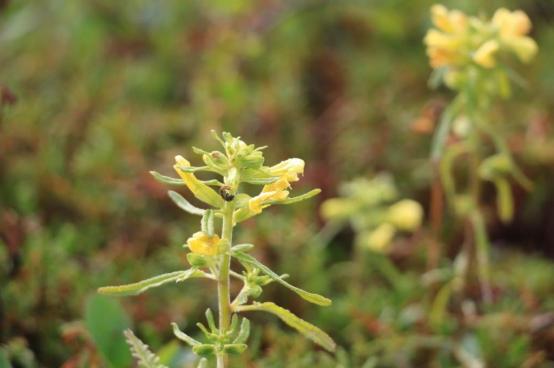
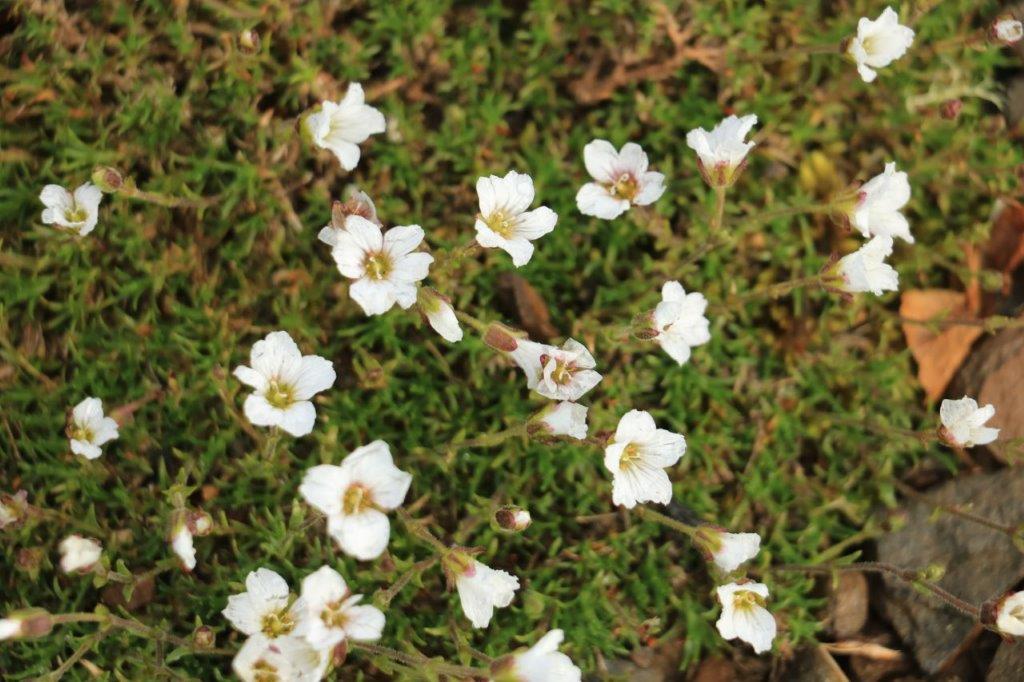
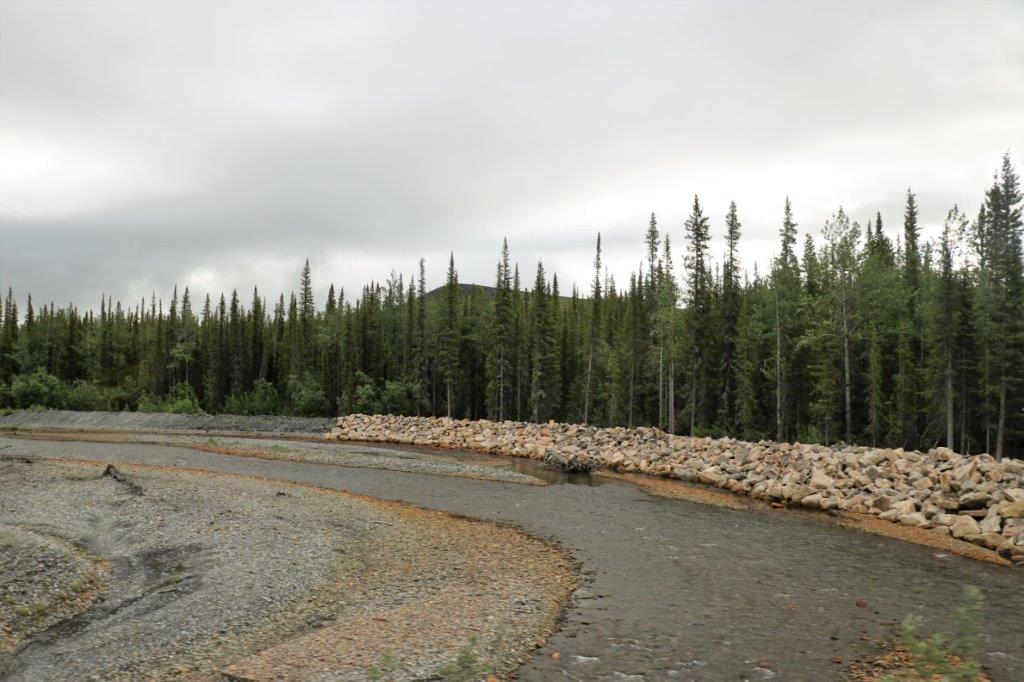
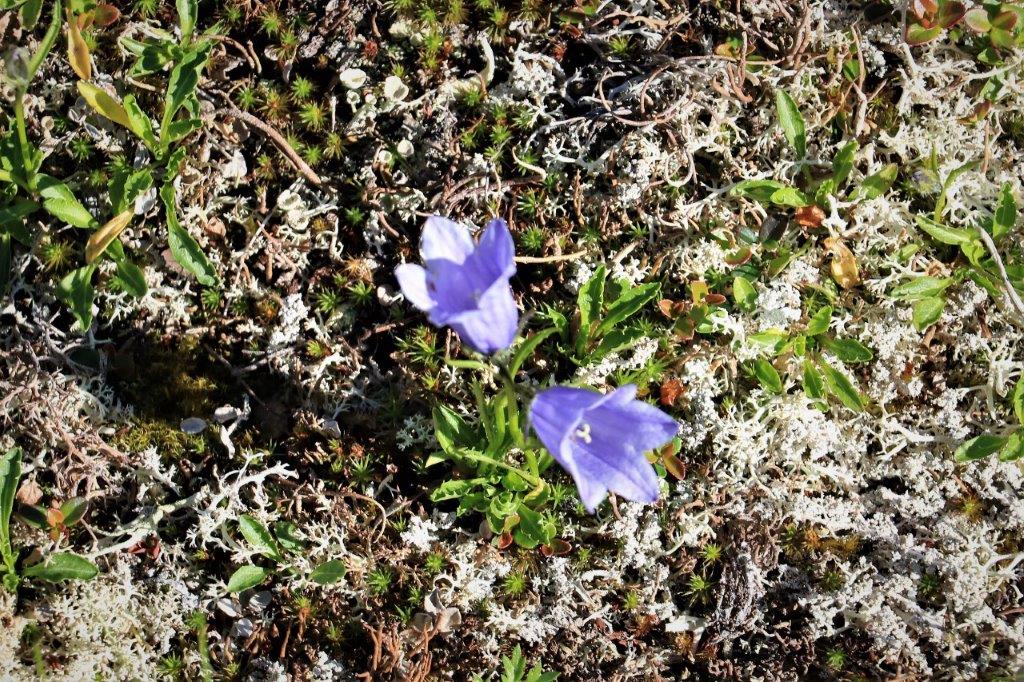
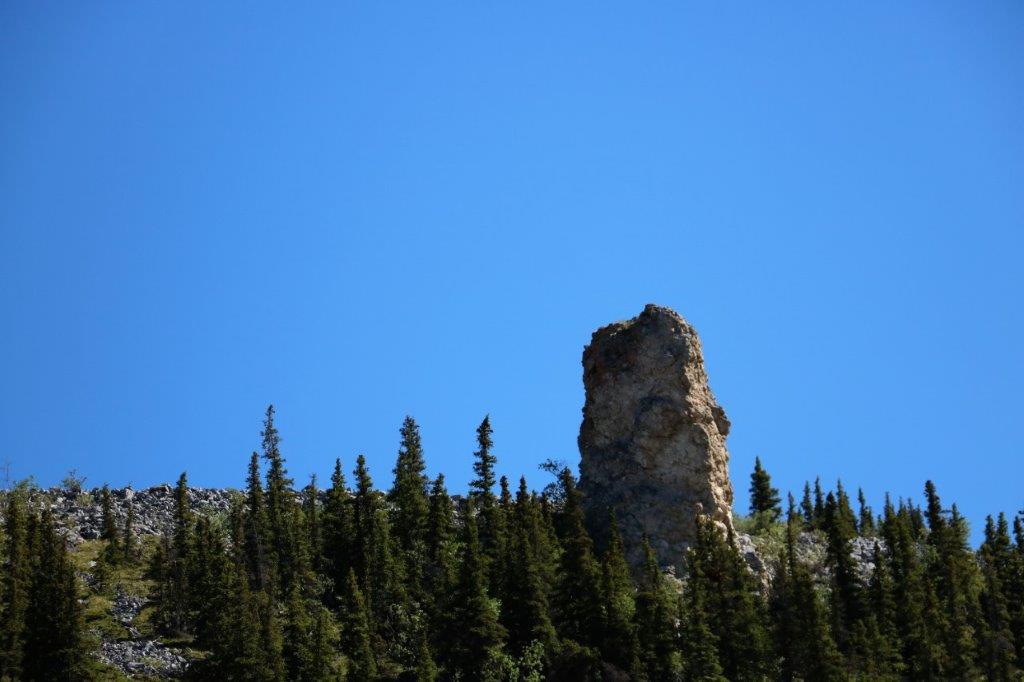
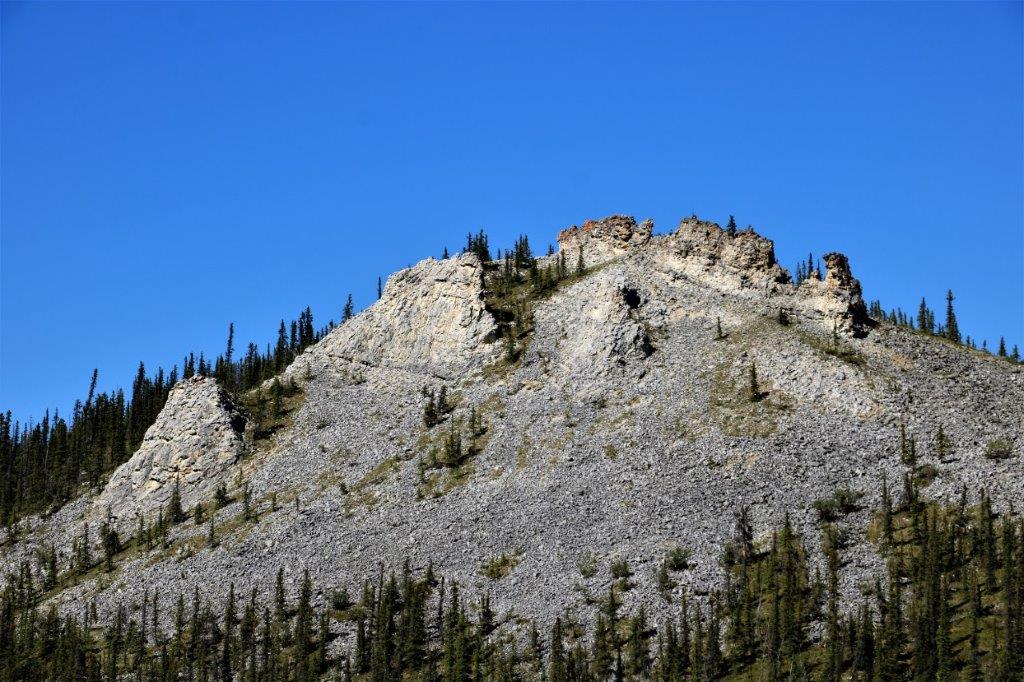
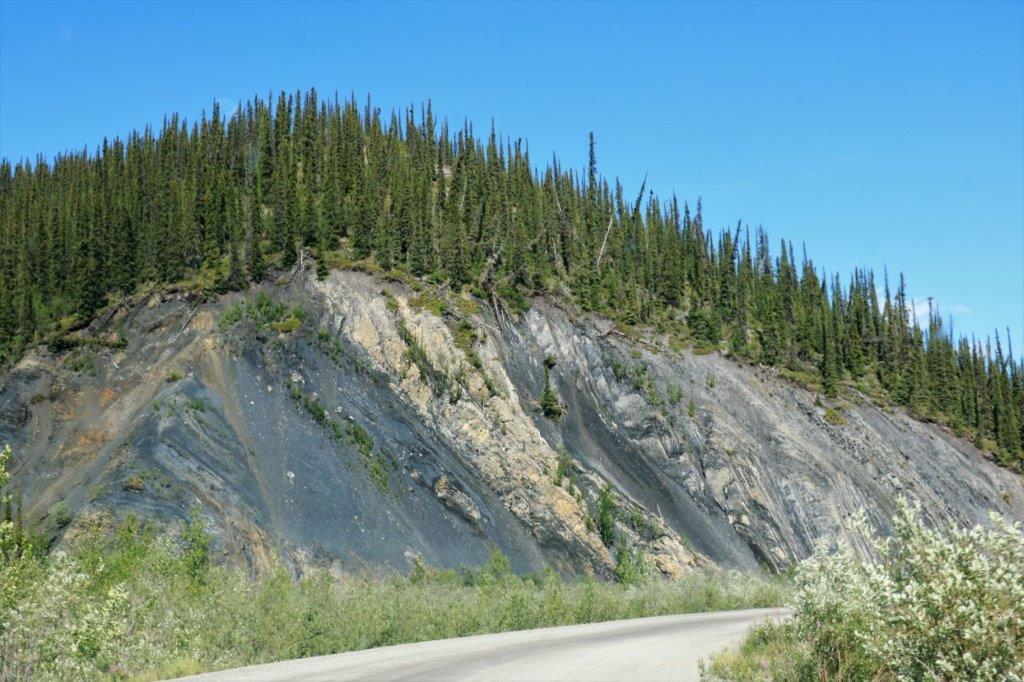
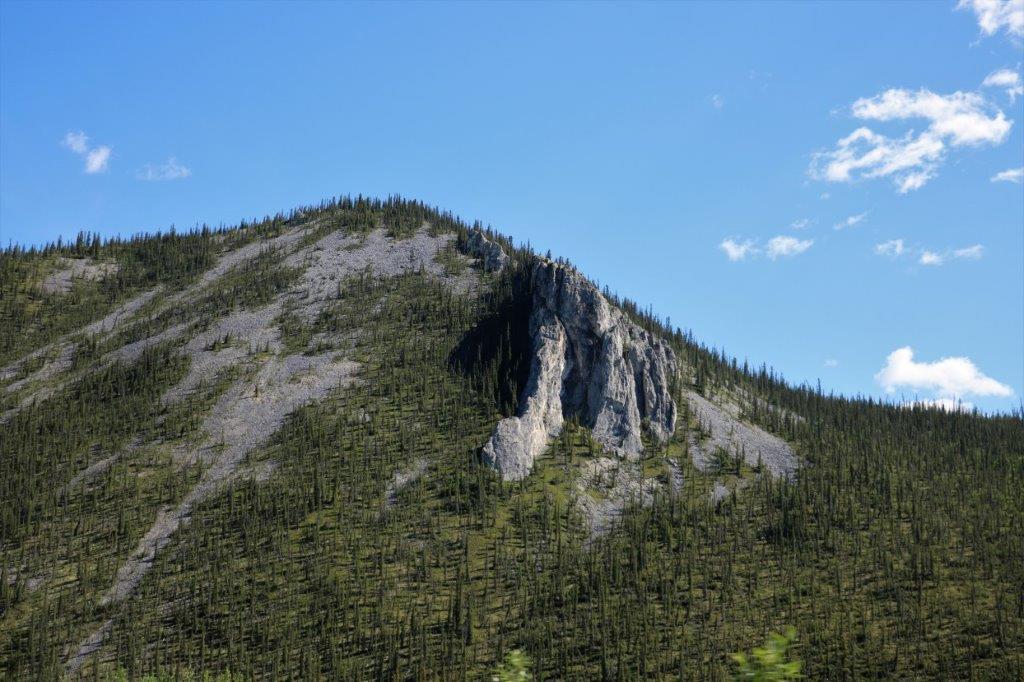
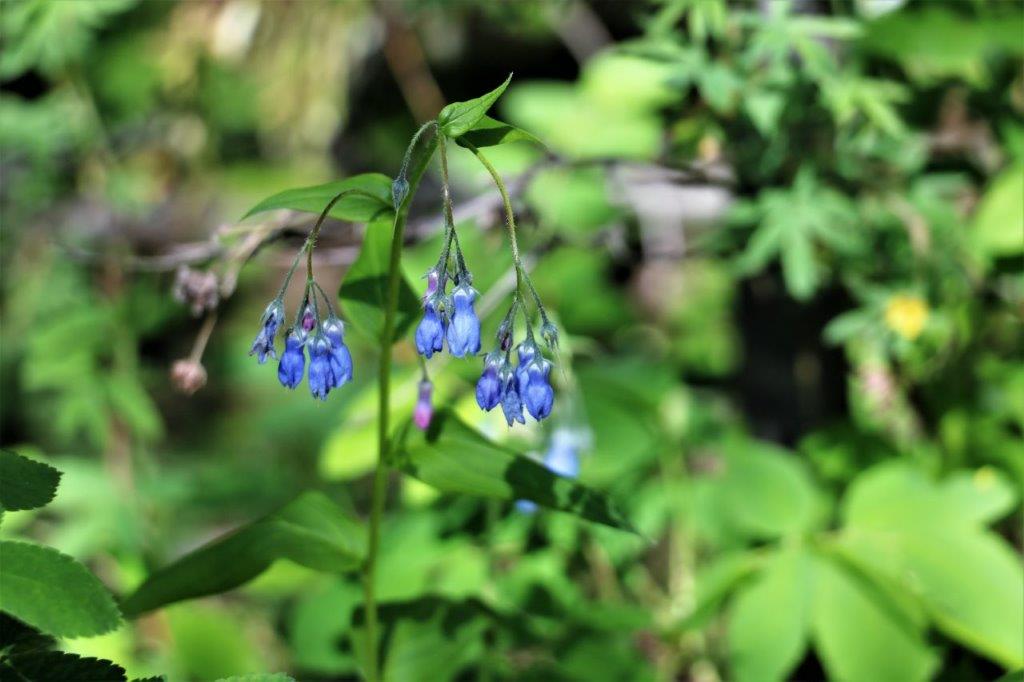
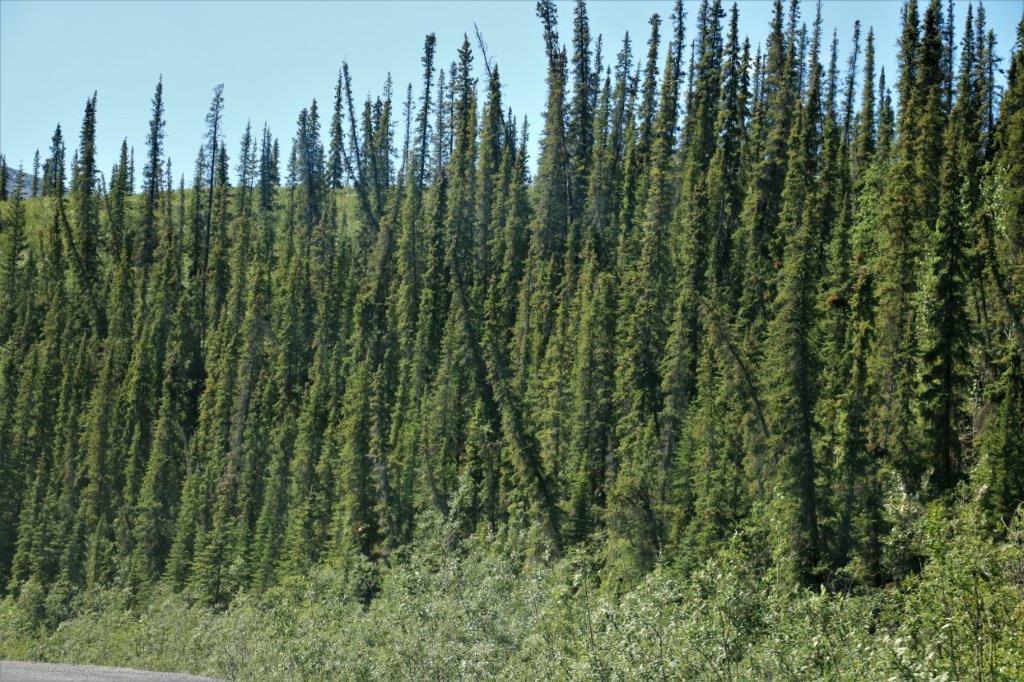
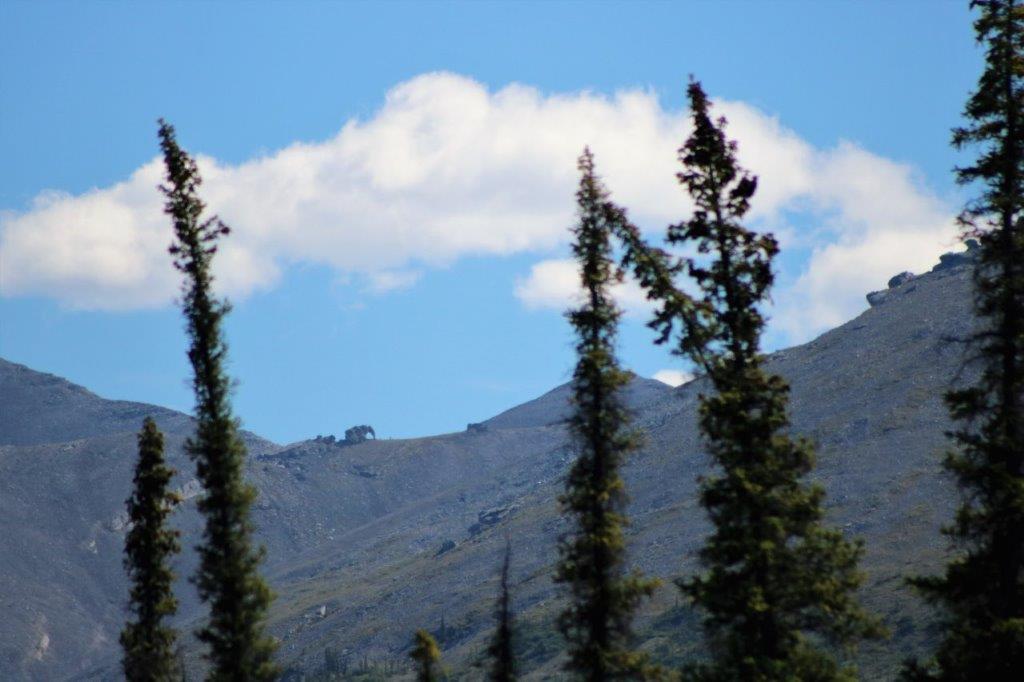
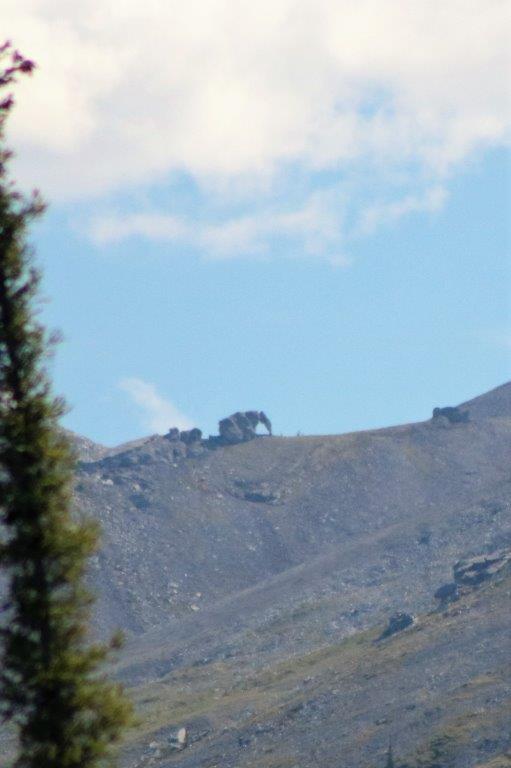
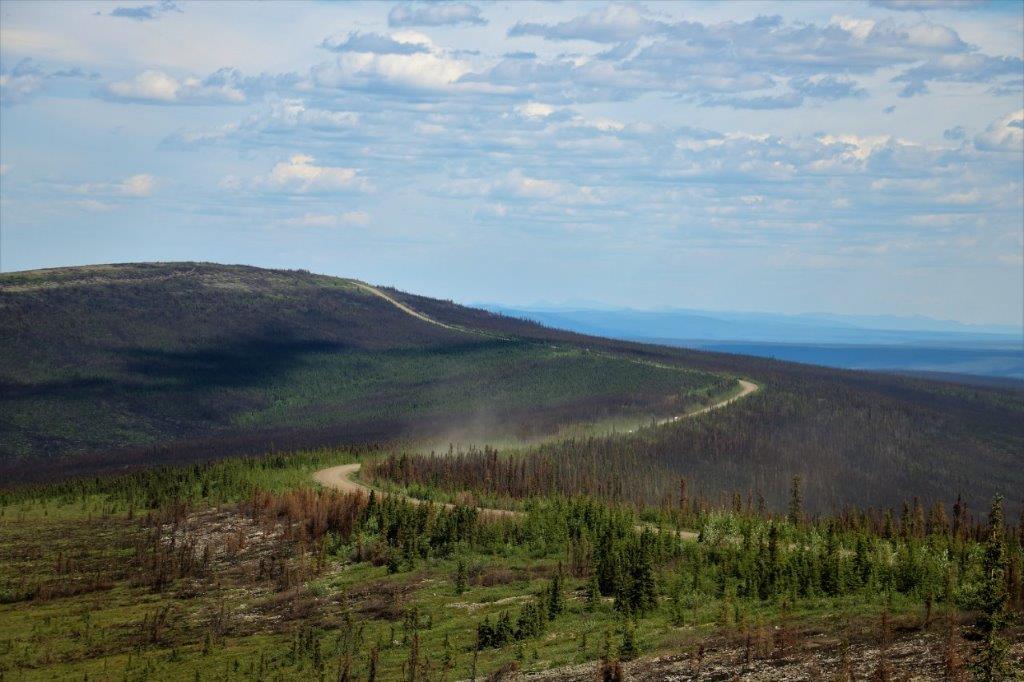
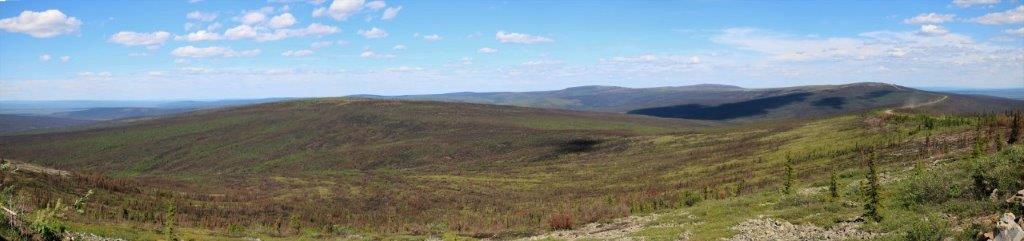
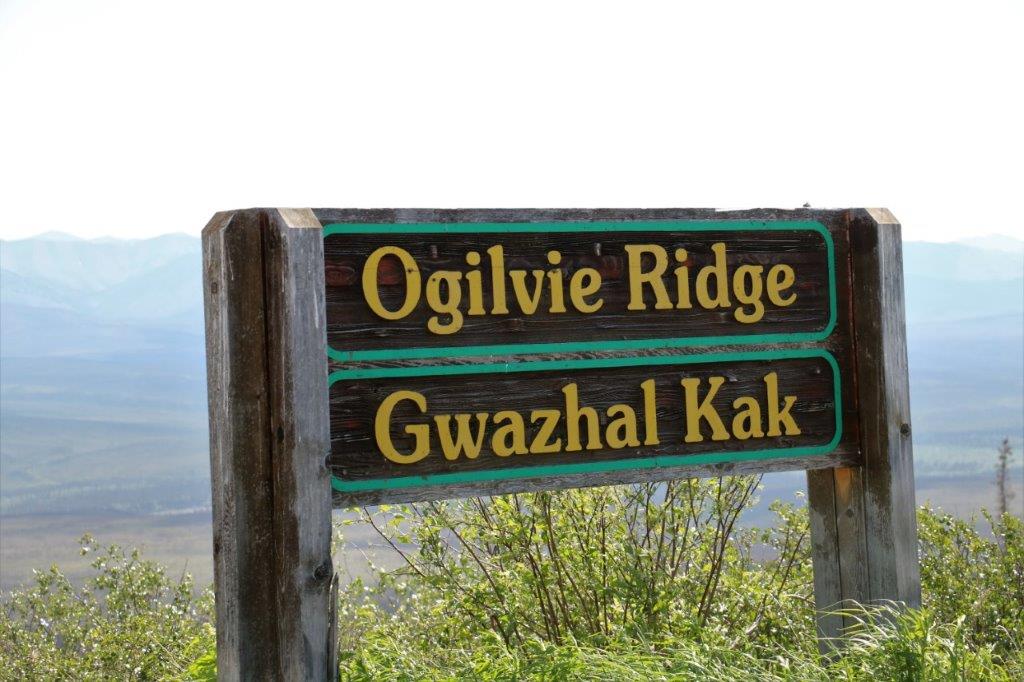
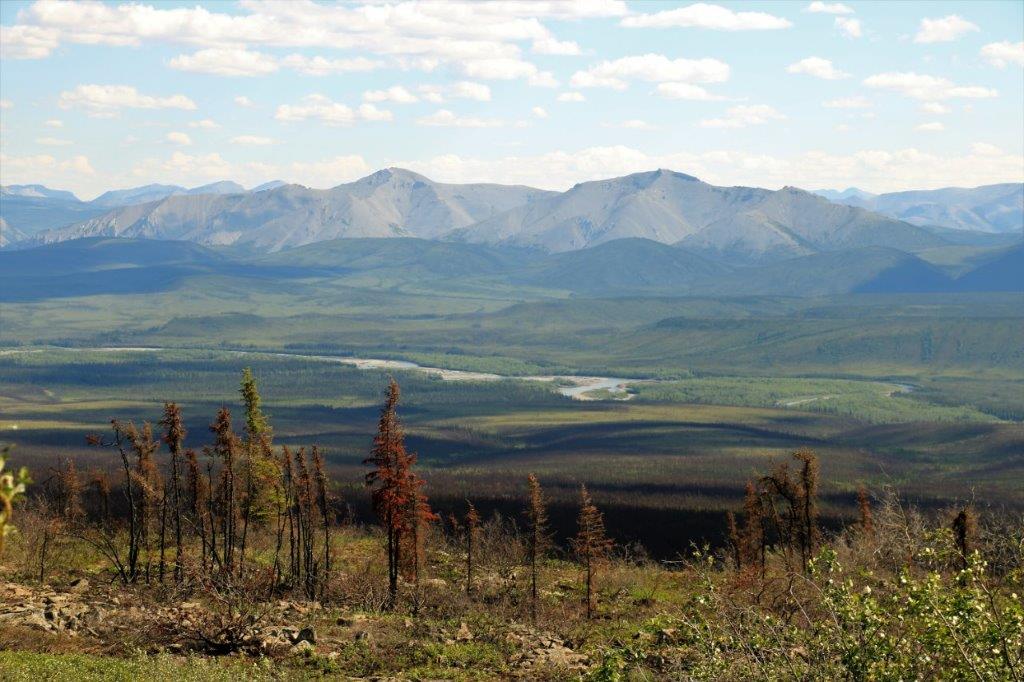
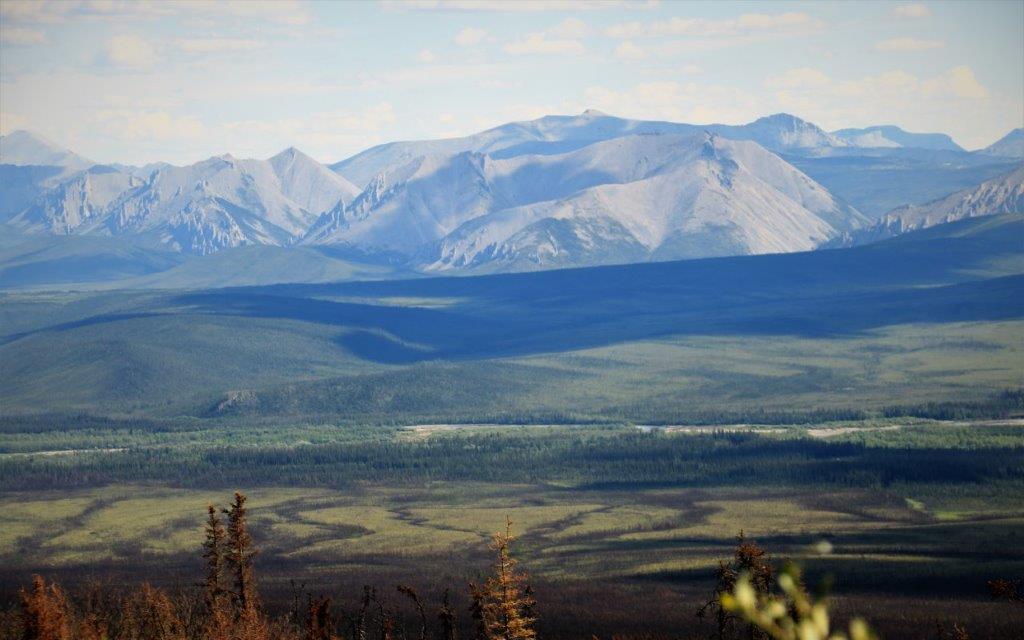
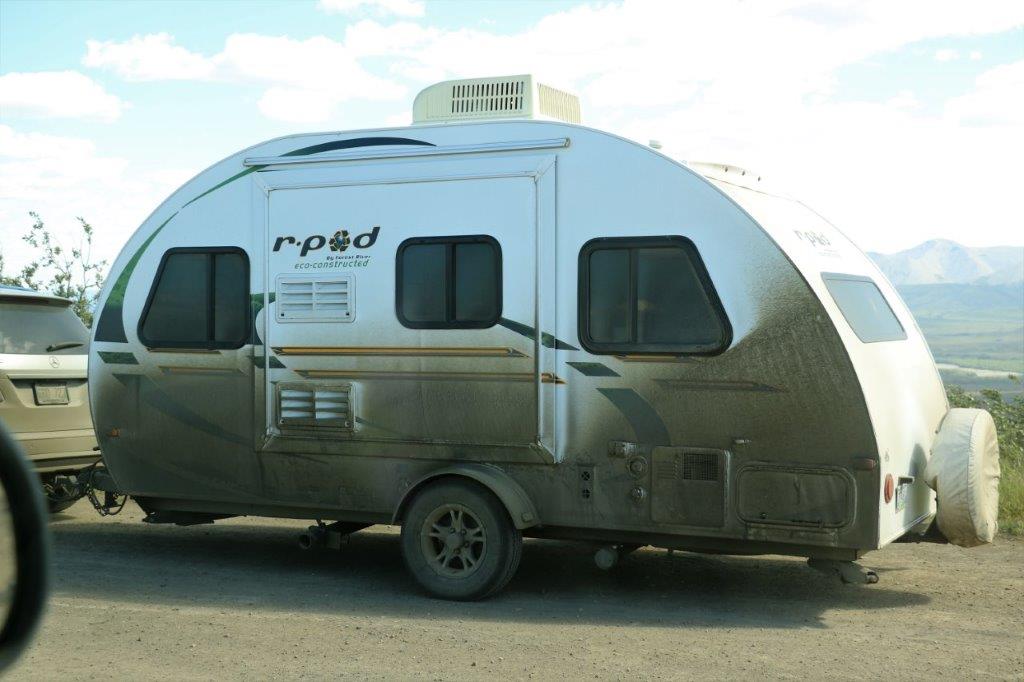
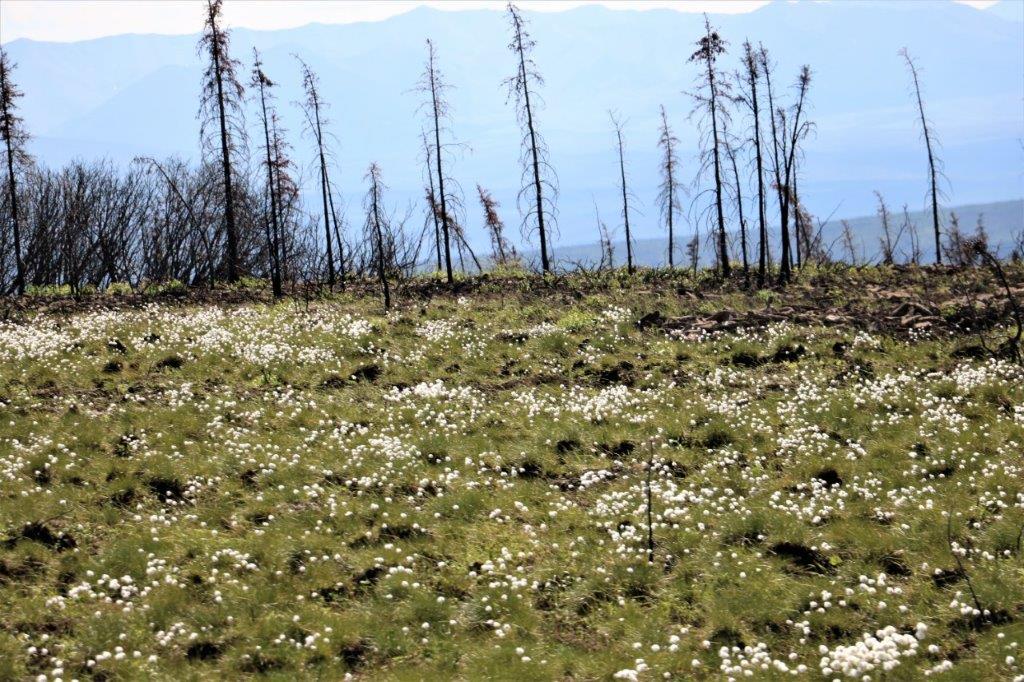
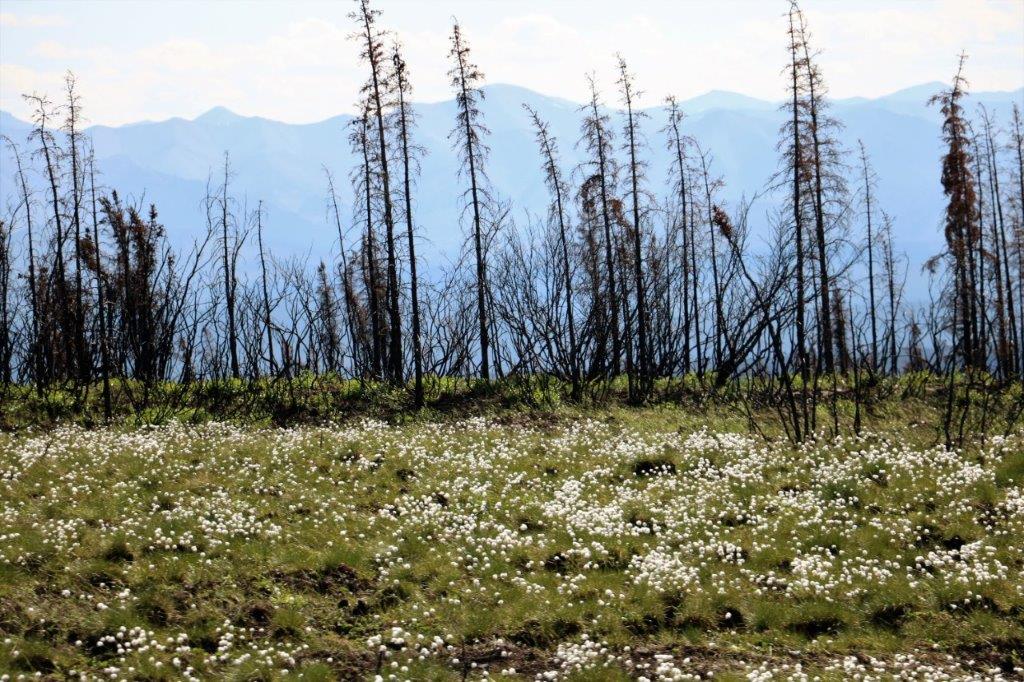
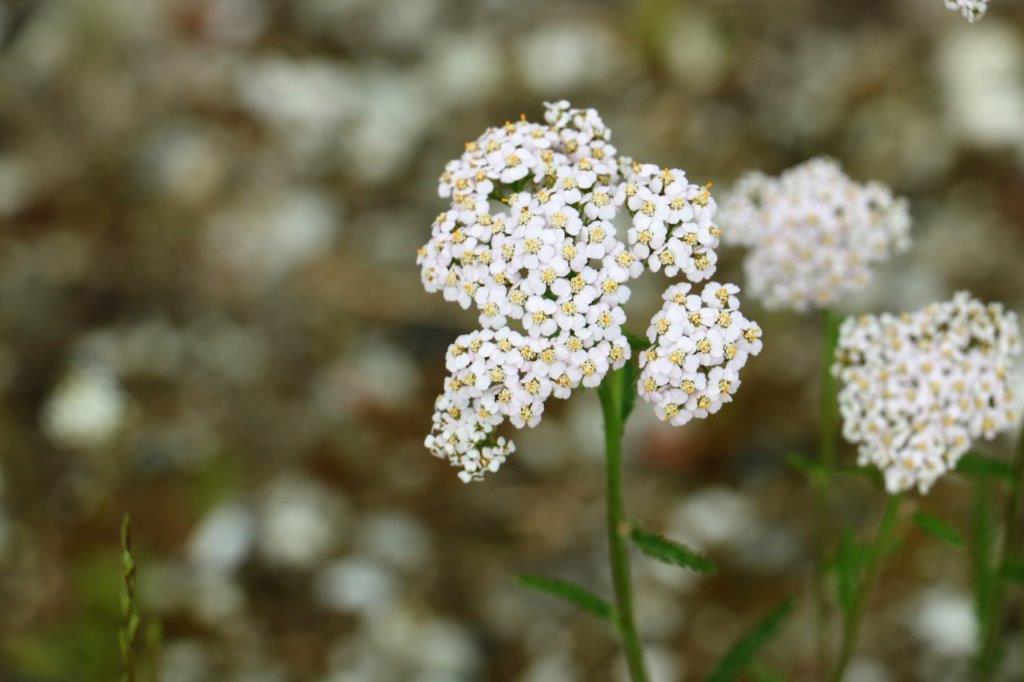
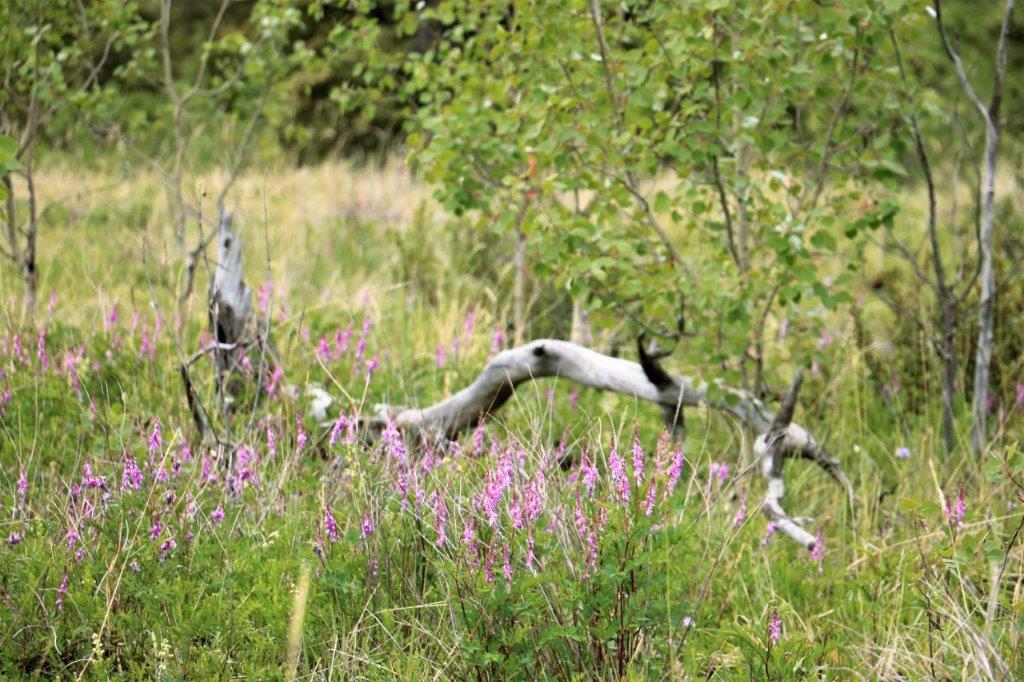
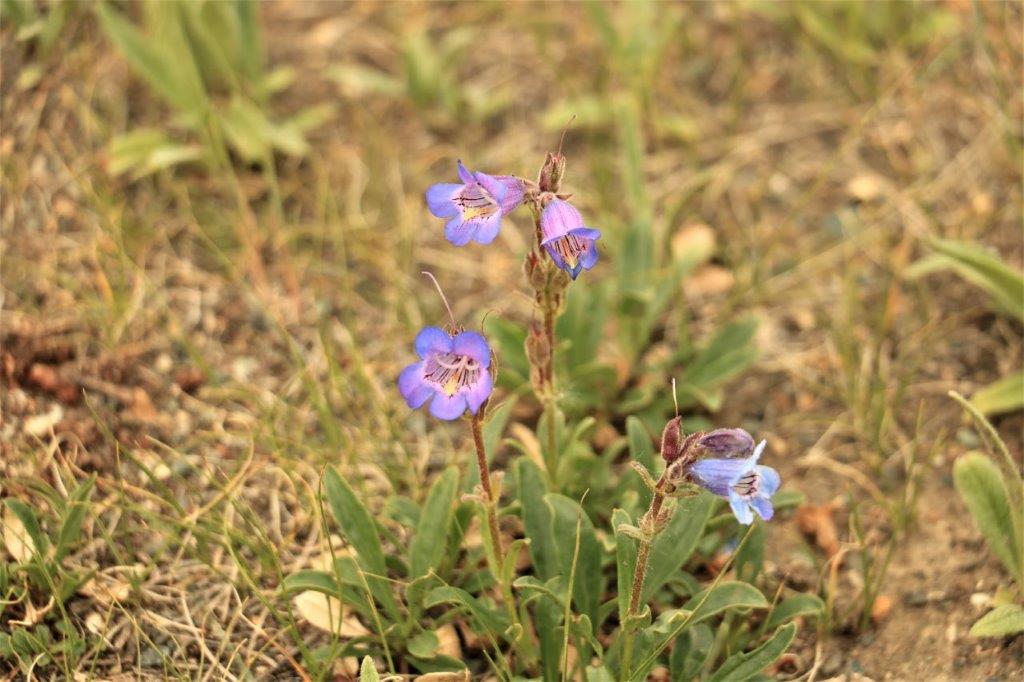
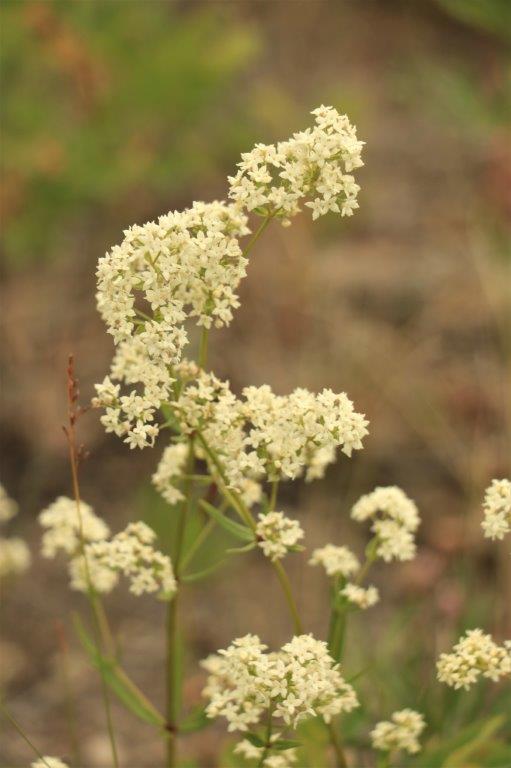
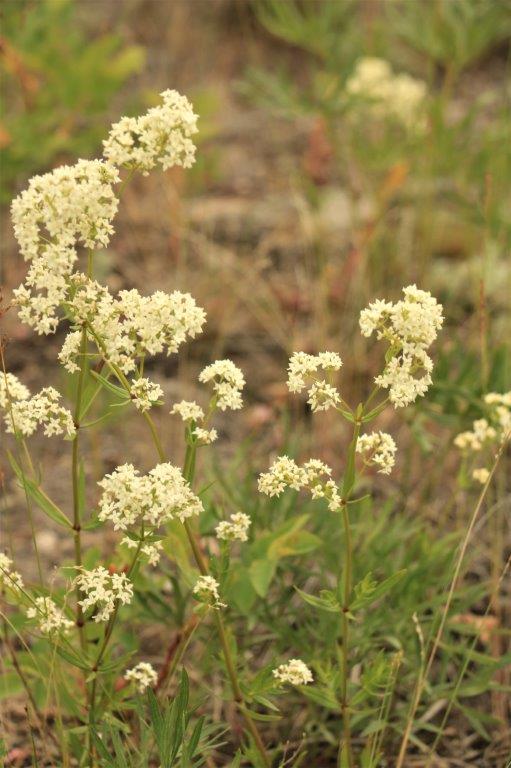
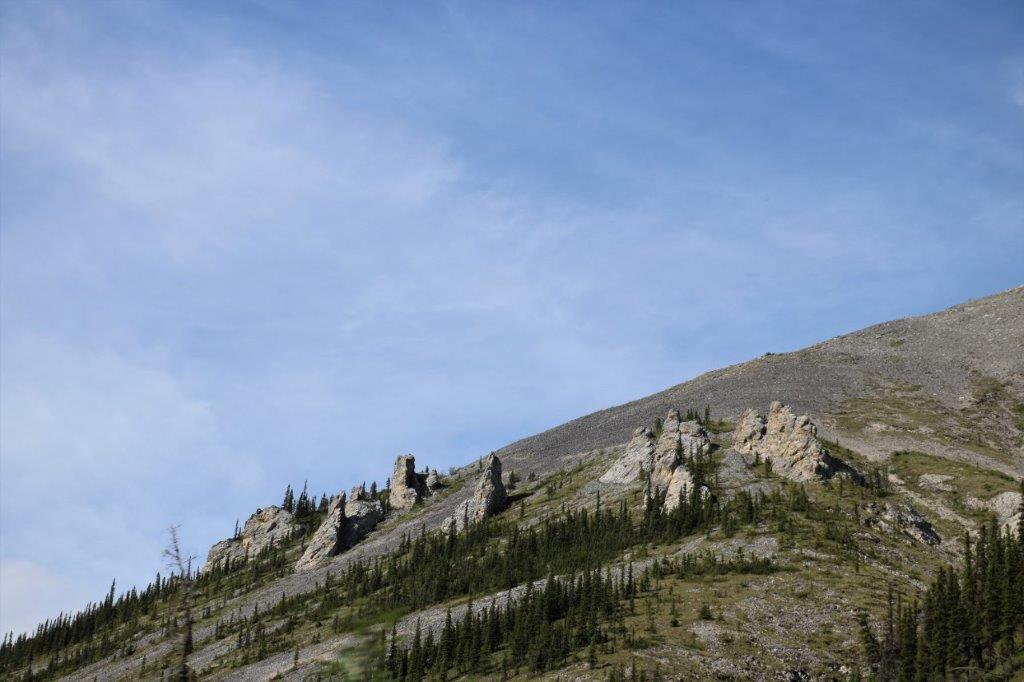
 The wild roses are abundant here, but the stems are not at all friendly.  Late June and early July is the best time to see the wildflowers.The thick, but spindly trees are called ‘drunken’ boreal forest.  Since they are growing on the thin layer of dirt above the permafrost they are constantly shifting with the freezing and thawing of the soil that holds their shallow roots.Crossing Engineer Creek bridge over the Ogilvie River.These spires, towers, and spikes are called tors.  They are the product of frost shattering.  Water seeps into cracks and joints in the hard bedrock, then freezes and expands, forcing the rock apart until it falls down the slope.  The larger, more solid blocks remain.  All of these photos are posted here in the order I took them during the day.  The variety of mountains and how quickly they change from one type to another is amazing.There is a pullout at km 221, called Elephant Rock.  If we did not have our handy-dandy little travelogue booklet we would never have stopped here.  There is a tor on a distant mountain ridge that has the shape, complete with trunk, of an elephant.  You have to know where to look or you would never notice it.  We could see it very clearly with the binoculars. The photos, even with maximum zoom, had to be cropped quite a bit. The Eagle Plain Plateau is the last of the ecoregions we drove through today.  At the top of seven-mile hill (which is seven miles long and steep) is the Ogilvie-Peel viewpoint.  We pulled into an unofficial pullout and looked out over the vast burn from the July 1991 fire that descimated 5,500 hectares of forest and was only one of many fires in the region.  This burn was on both sides of the road for many, many kilometers. From the Ogilive viewpoint you can see the northern fringe of the Ogilivie Mountains and the valley of the Ogilvie and Peel rivers, which continues for 180 kilometers eastward.  This car and trailer were parked at the Ogilvie viewpoint.  Somebody needs a car wash.These little white flowers covered the hillside. The last 100 or so kilometers before we reach Eagle Plains at 5 pm was primarily forests on both sides of the road.  All the lovely mountains were left behind.  As I said, OH MY GOODNESS!  what a glorious day.

2018 July 3 – Dawson City, Yukon

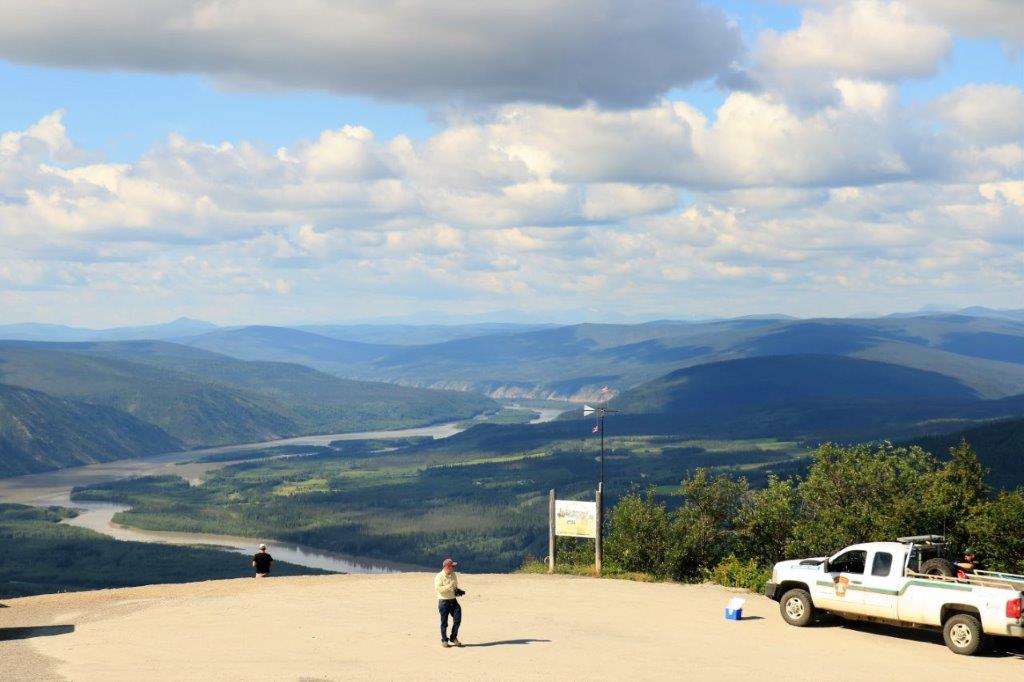
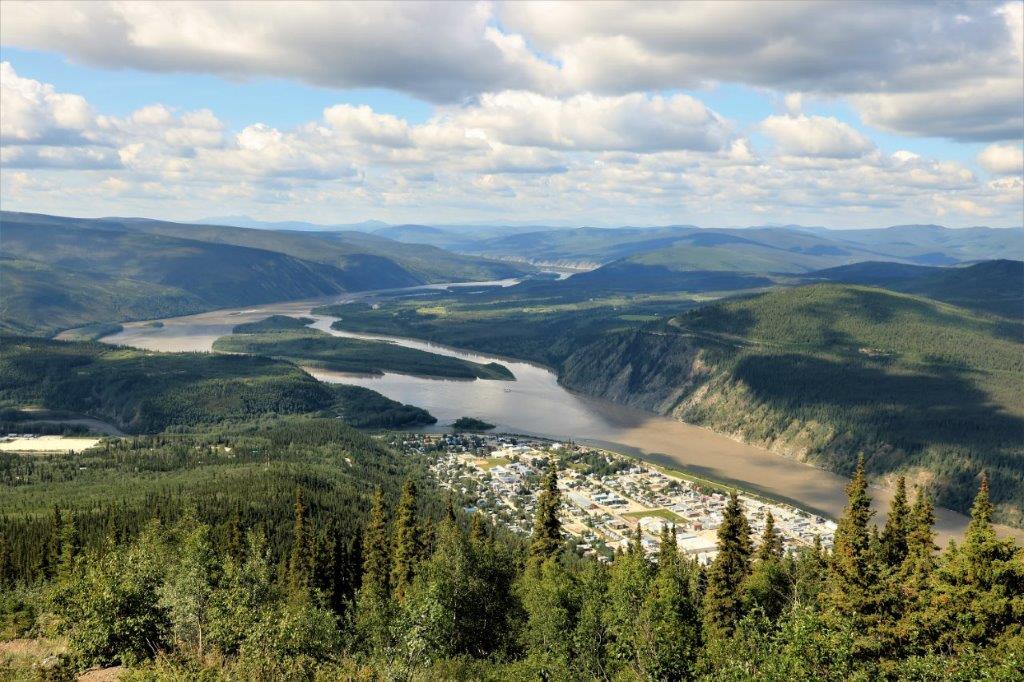
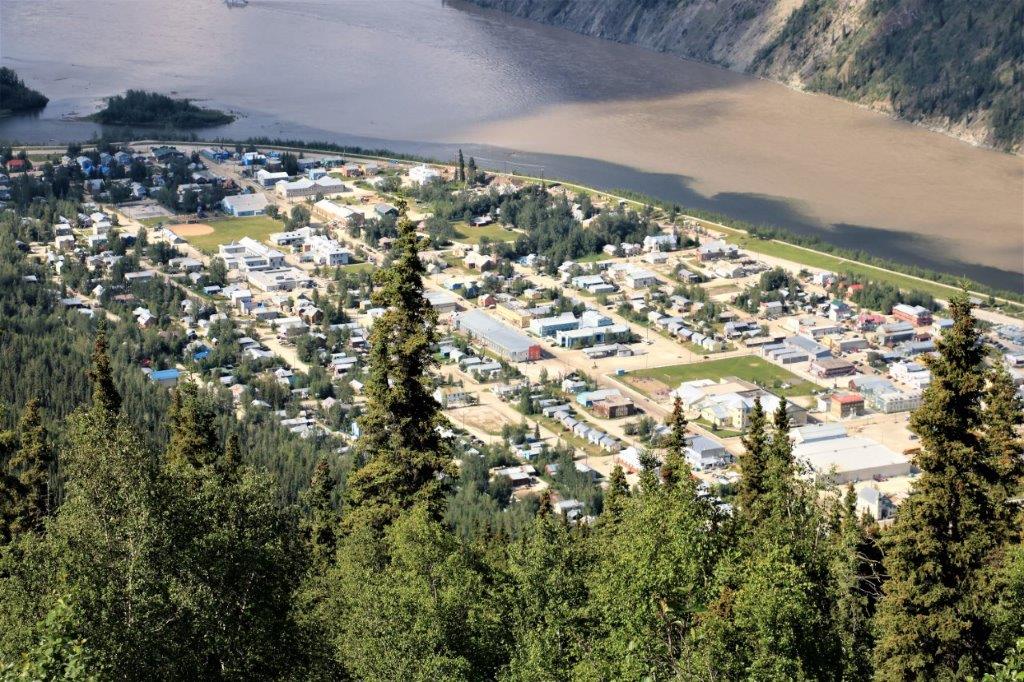
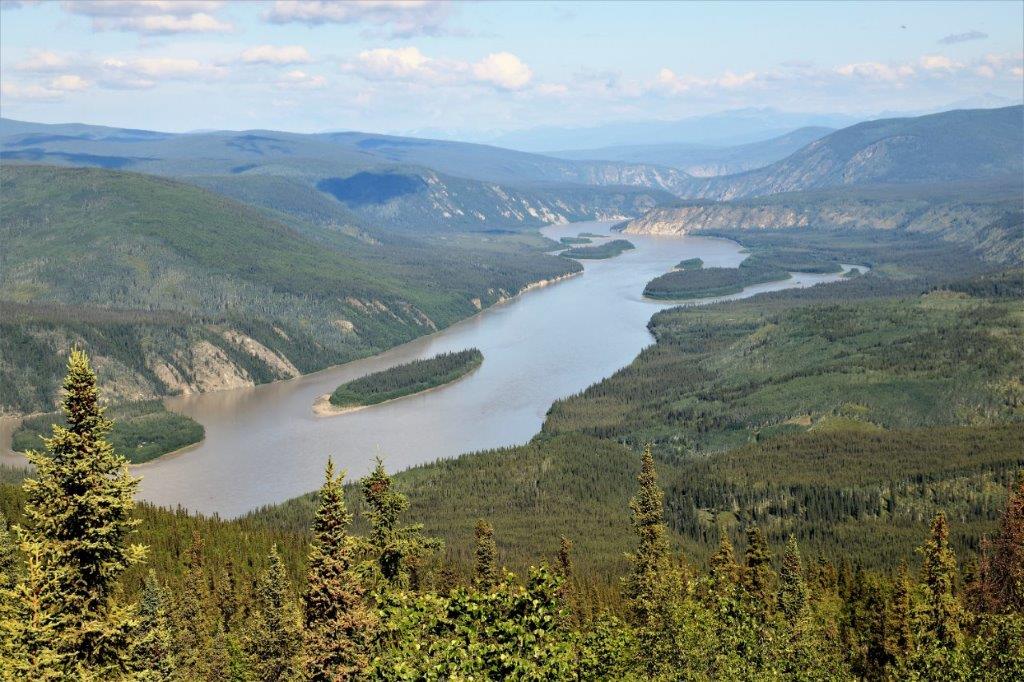
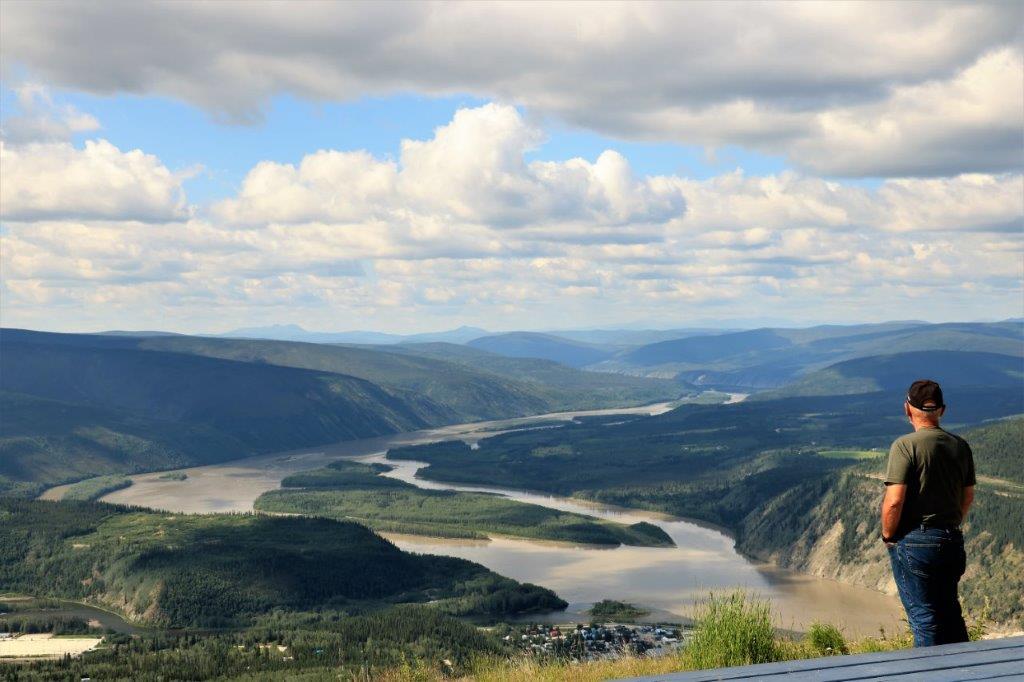
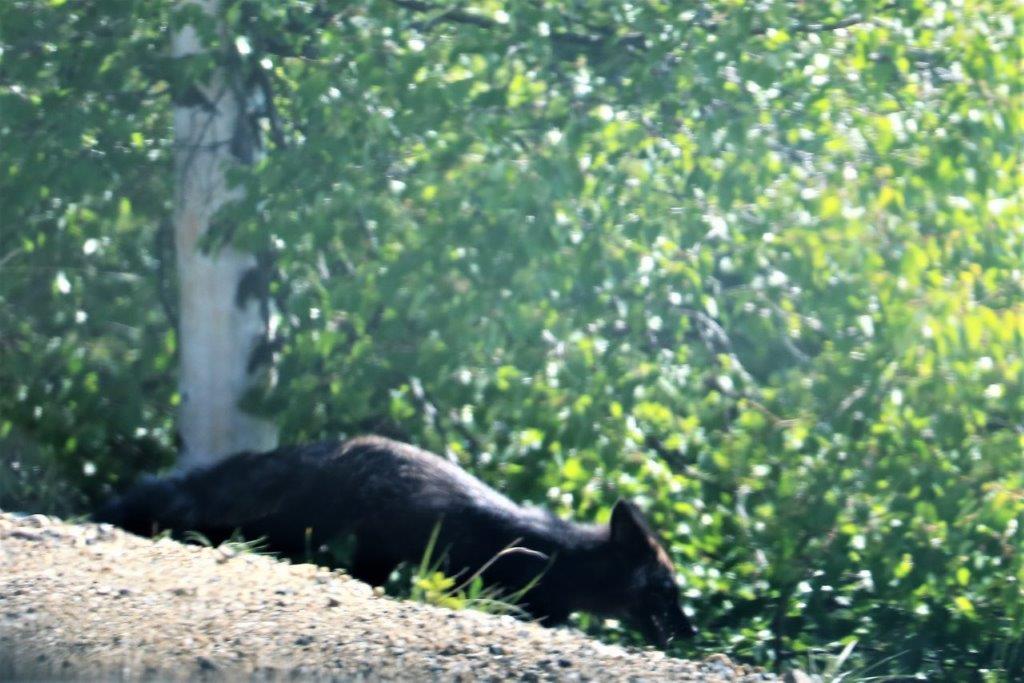
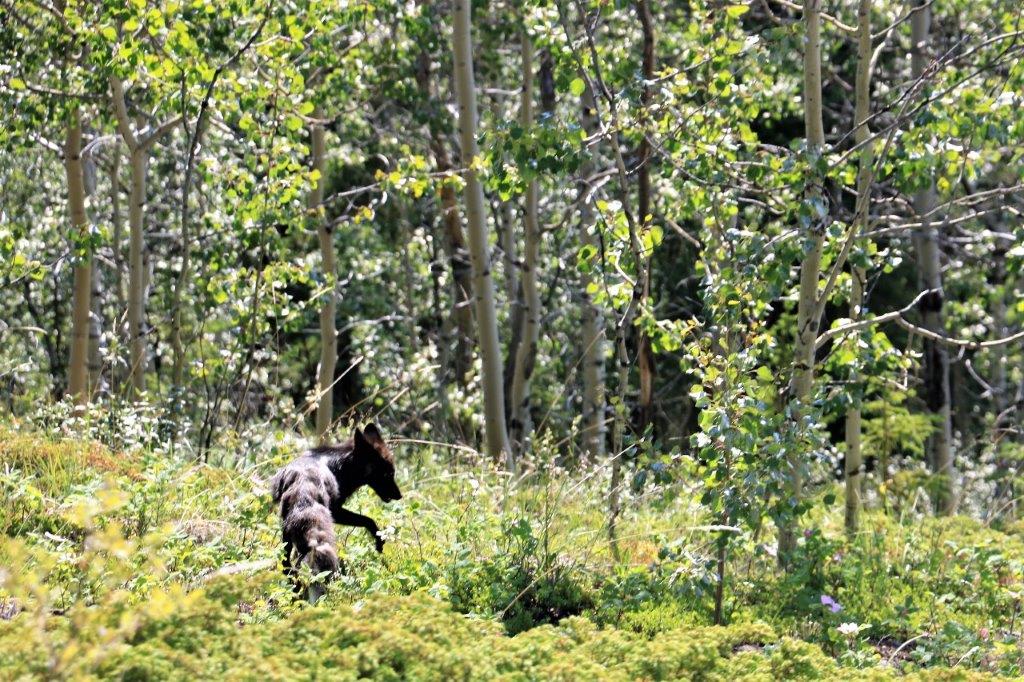
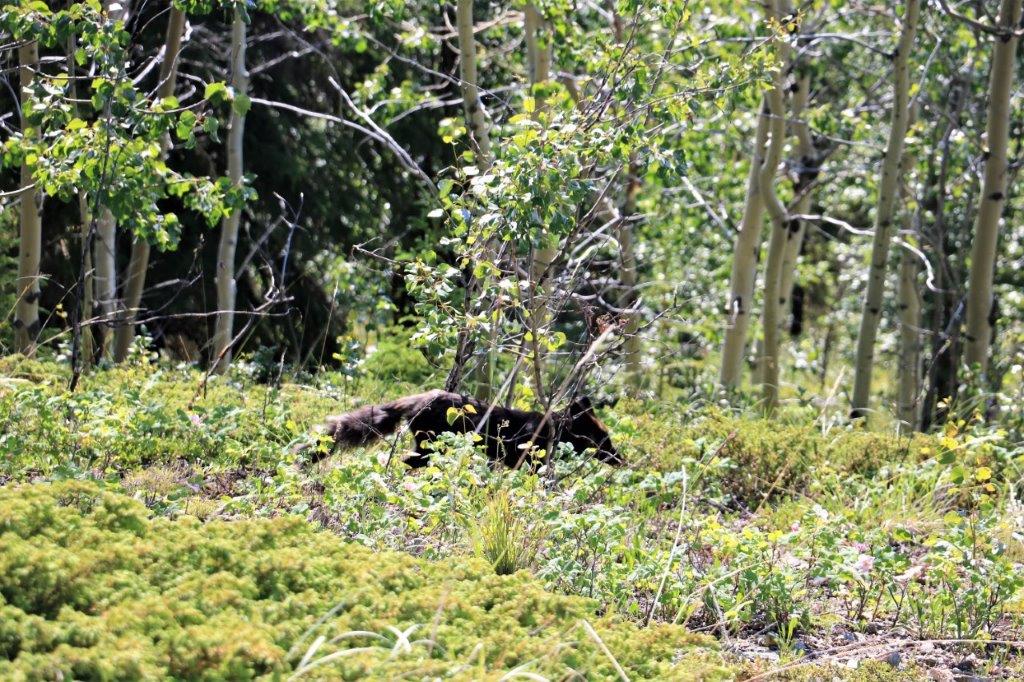
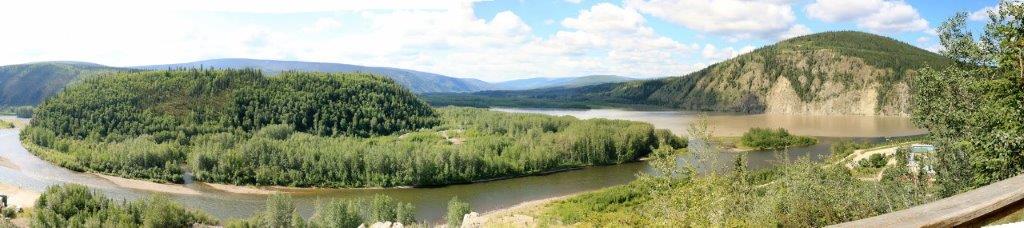
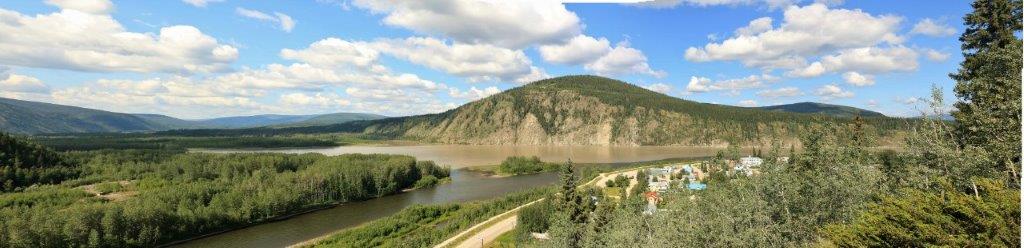
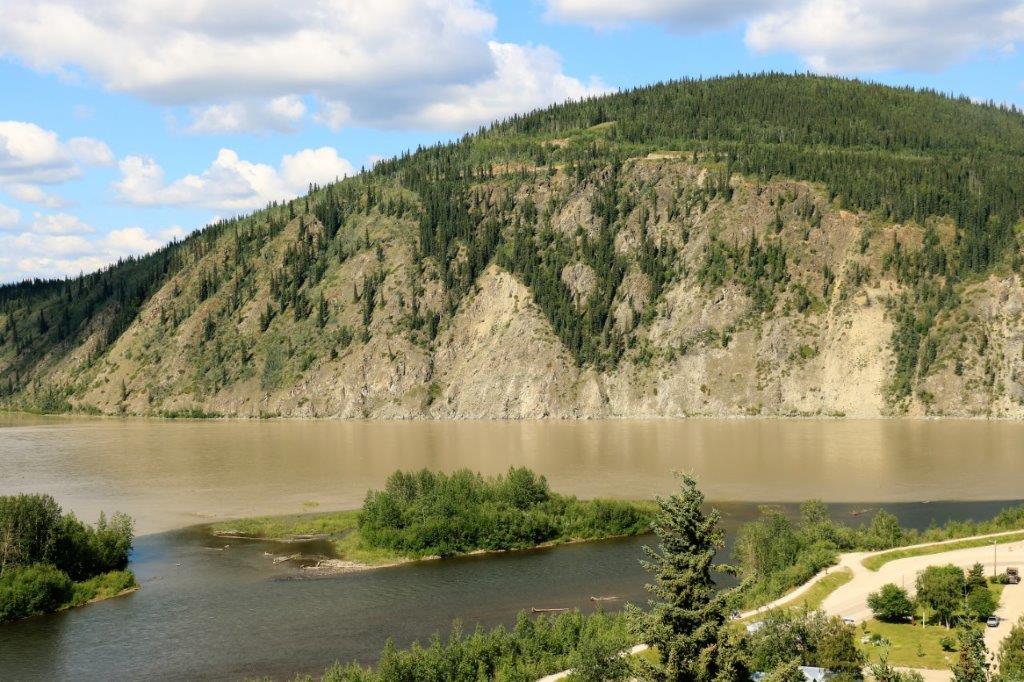
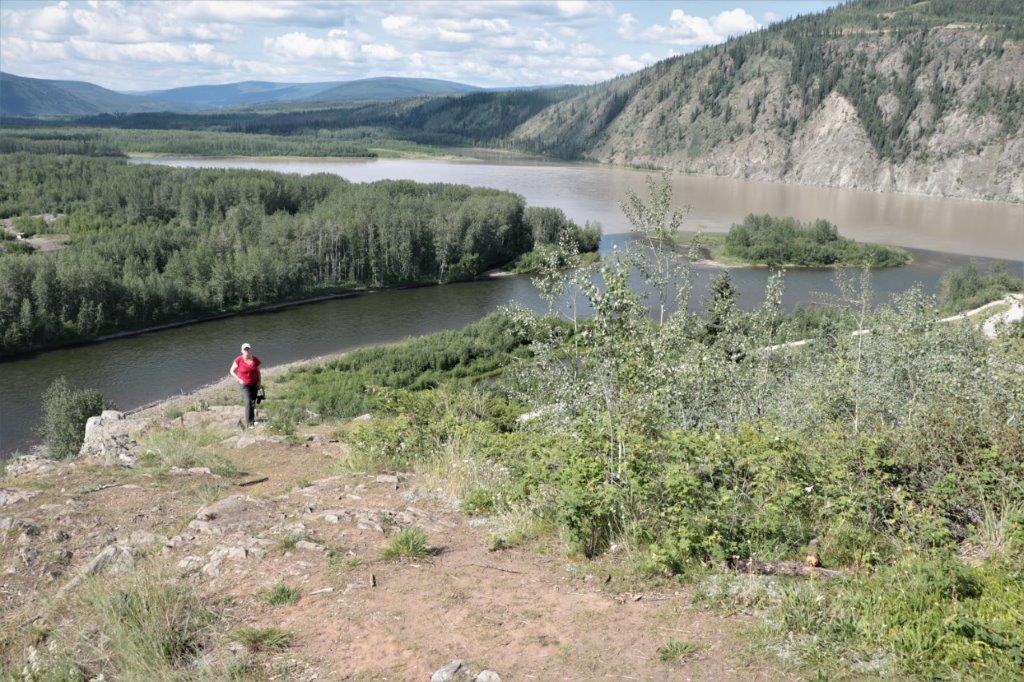
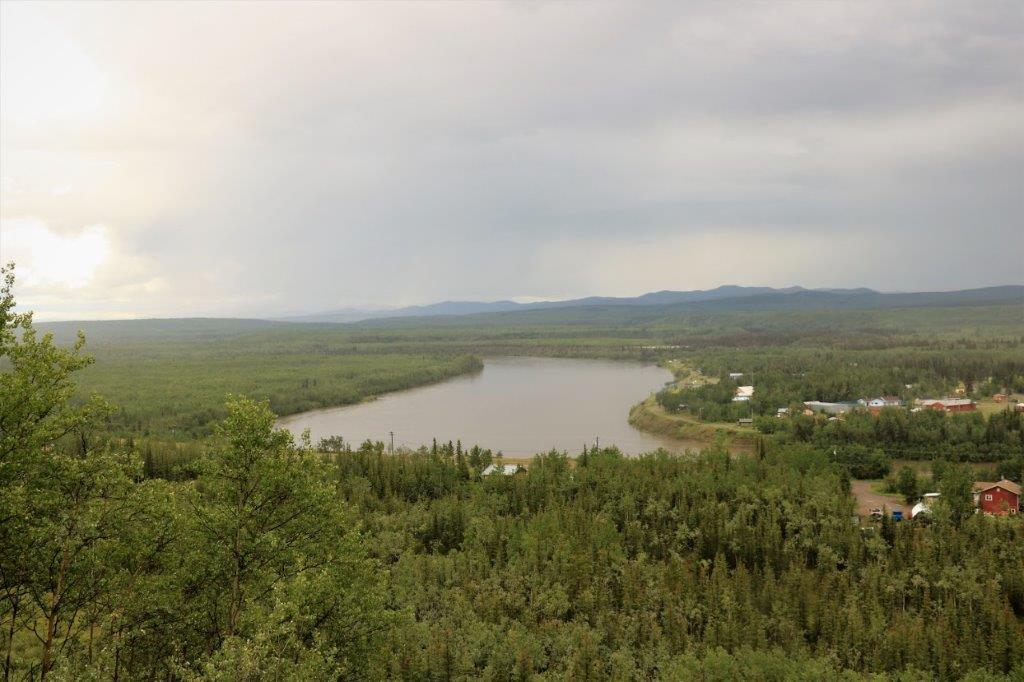
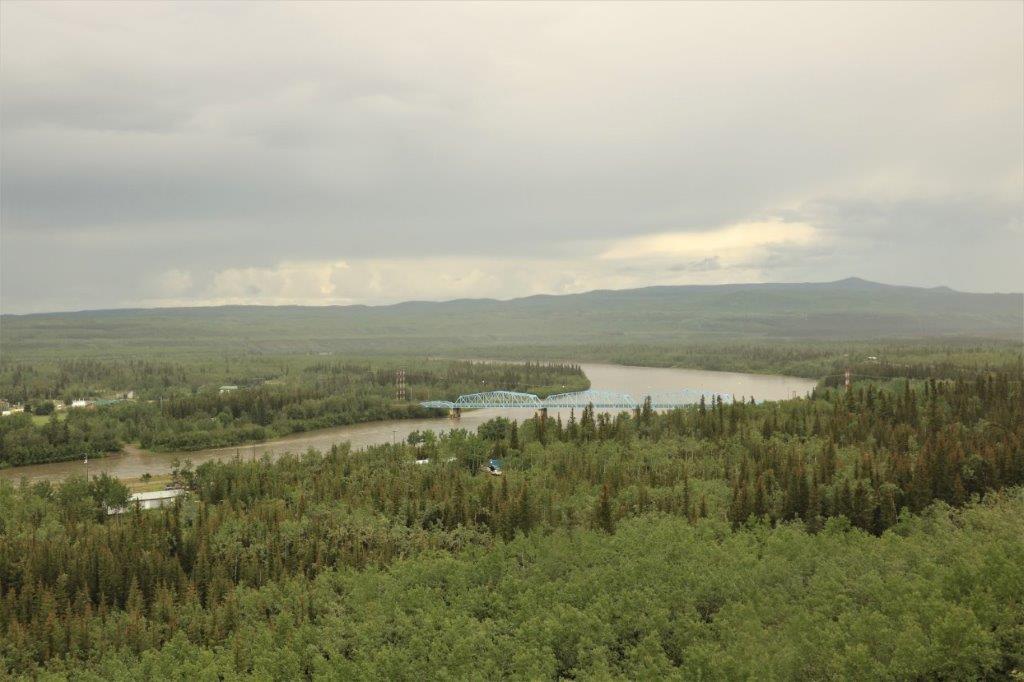
Today was a viewpoint and goldfields day.  After breakfast we drove up to the Midnight Dome which is a high hill overlooking the Klondike and Yukon Rivers and the town of Dawson City.  The vastness of the view was seriously impressive. Notice the two colours of water in the river.  At the upper left of the photo is the Klondike River merging with the muddy Yukon River.  It takes a fair distance downstream for the waters to fully merge.  As we were driving back down Dome Road we spotted a silver fox at the side of the road.  It turned around and disappeared into the bush. They look like a black fox, but the tips of their hair is silver, hence the name.

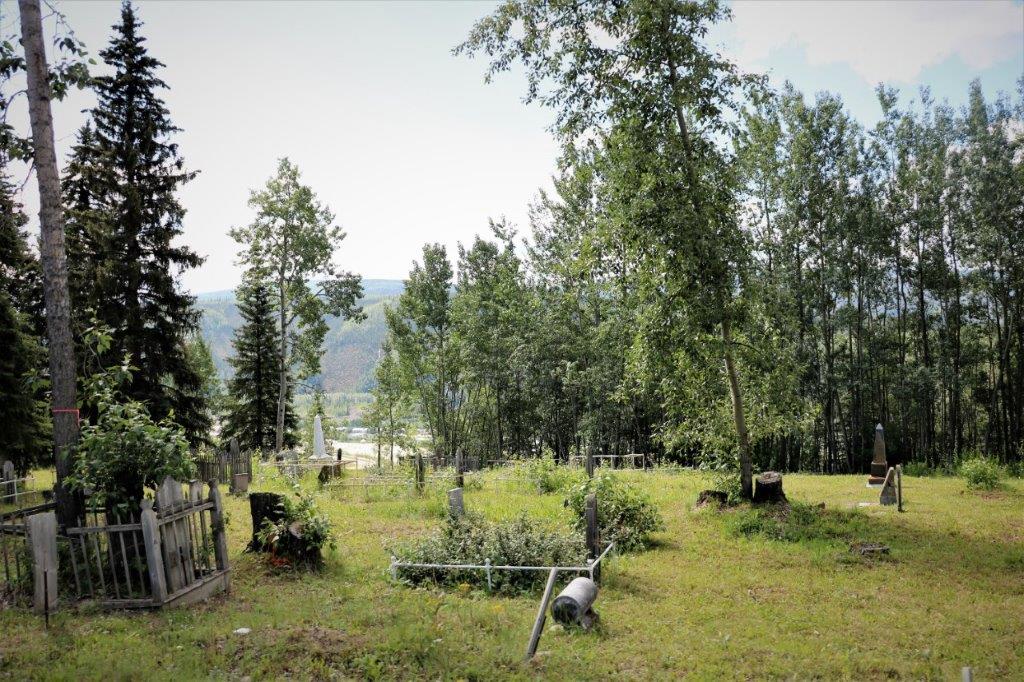
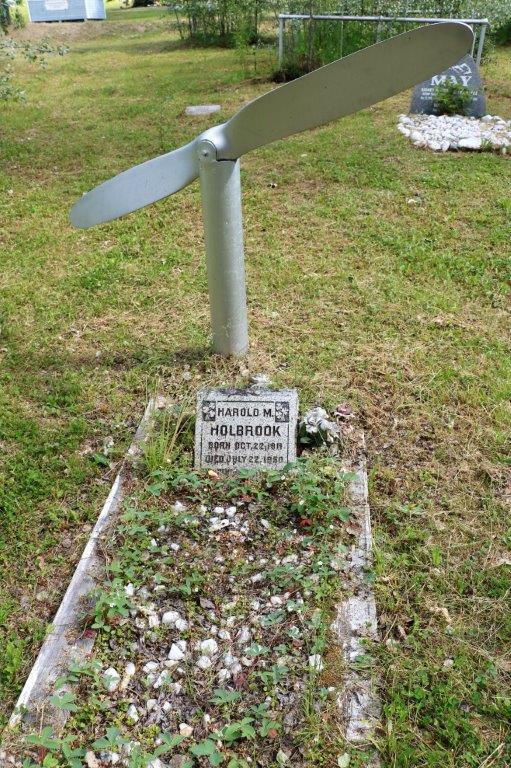
There was a geocache hidden at Crocus Bluff Viewpoint and the road to the bluff joins the Dome Road so we went over to find it. The Mary McLeod Road, where Crocus Bluff Viewpoint was located, also was the site of the Hillside Cemetery; begun in 1898. My brother-in-law would like this grave marker.

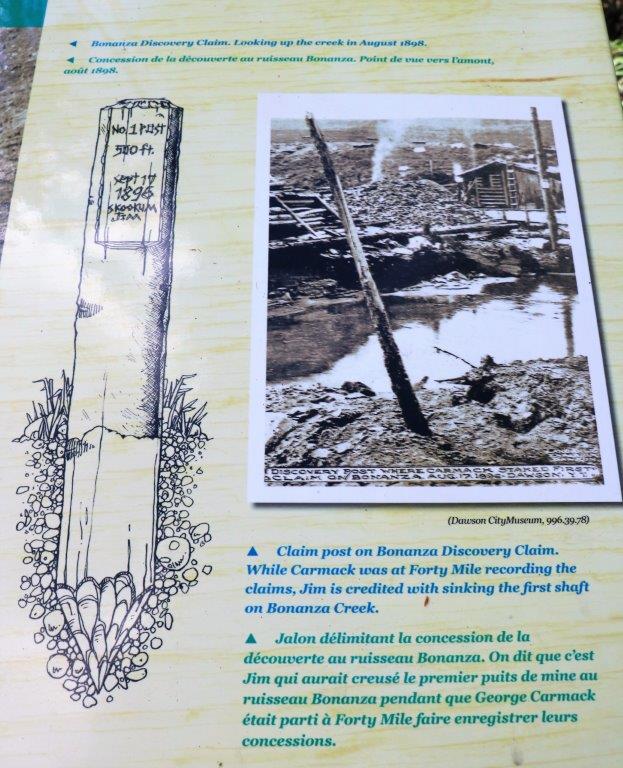
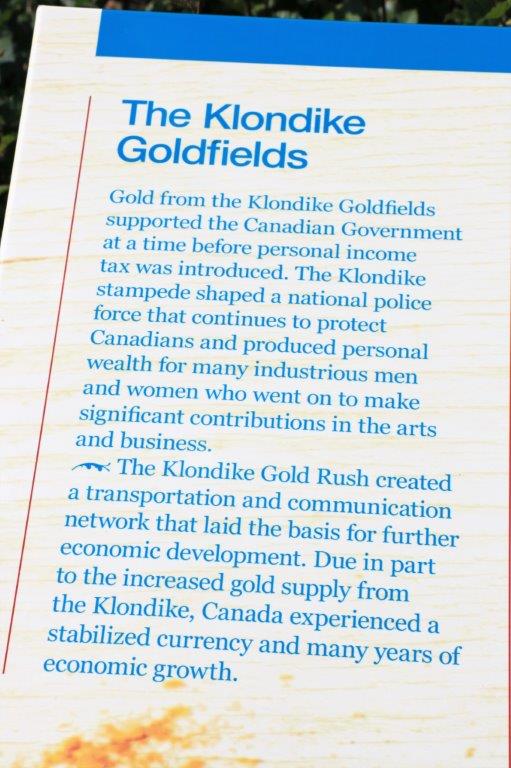
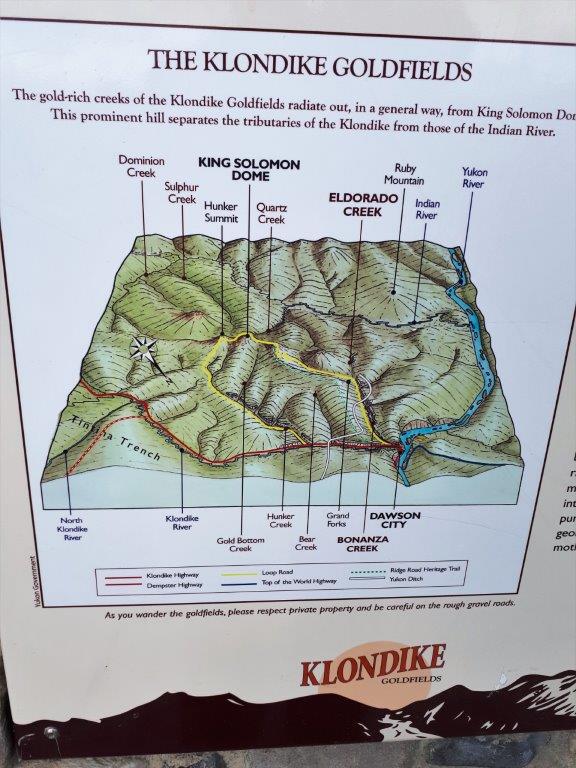
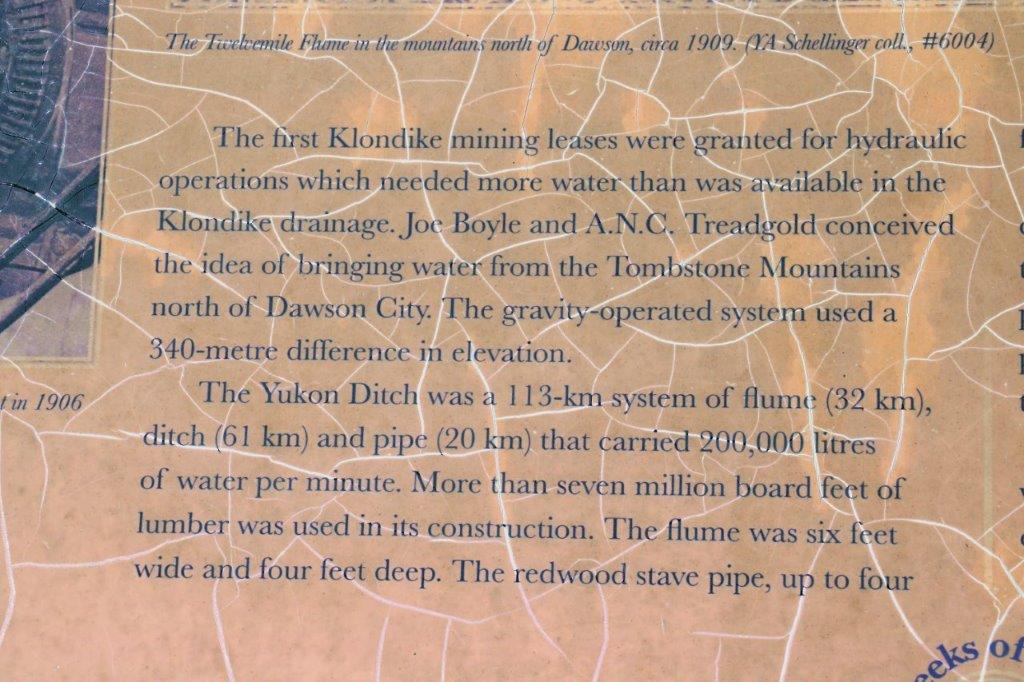
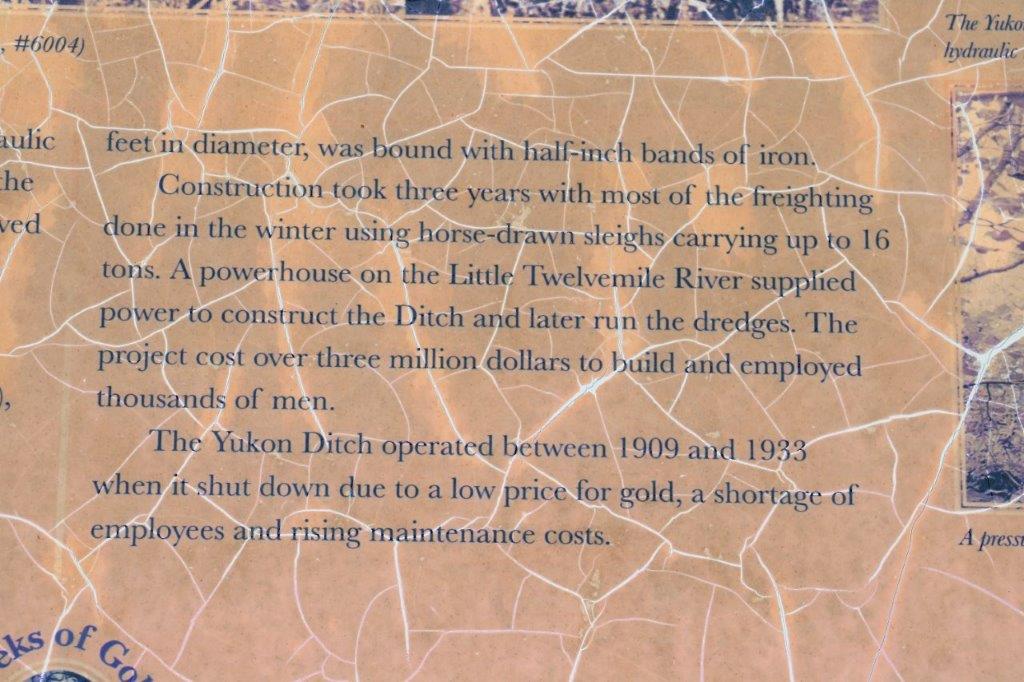
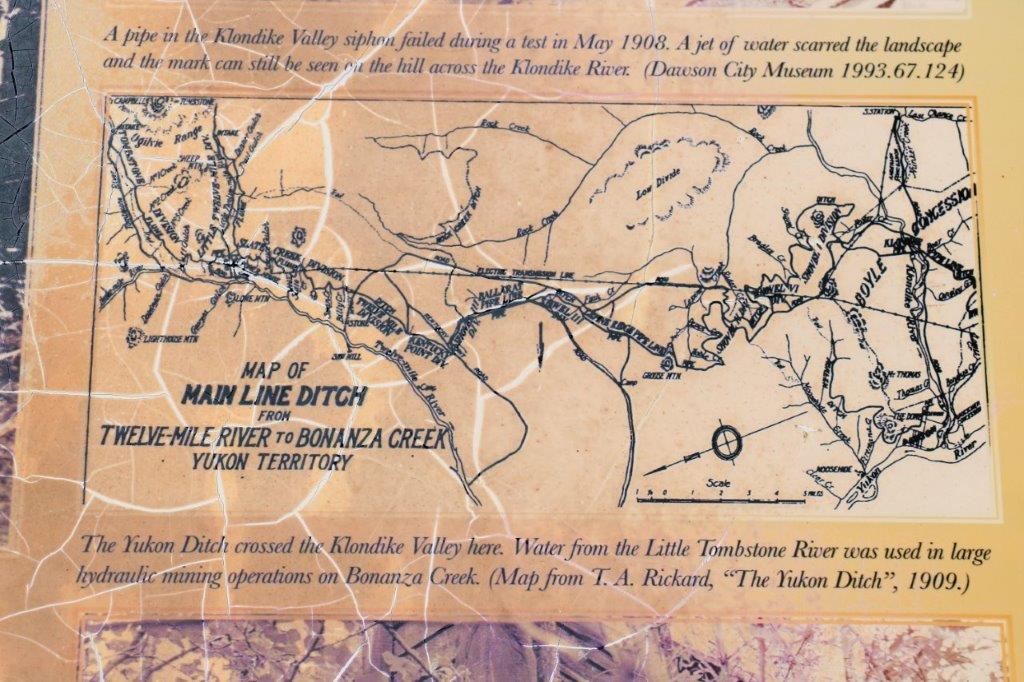
At the bottom of Dome Road we took the highway out of town a couple of kilometers and then turned off onto Bonanza Road.  Bonanza Road extends far down the valley and is home to the Klondike Goldrush Discovery claim and all the subsquent claims made by most of the local miners even before word of the discovery was leaked to the world.

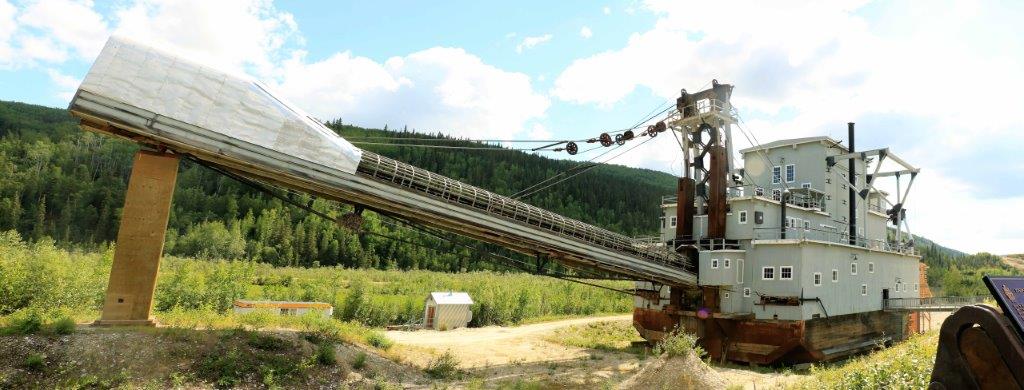
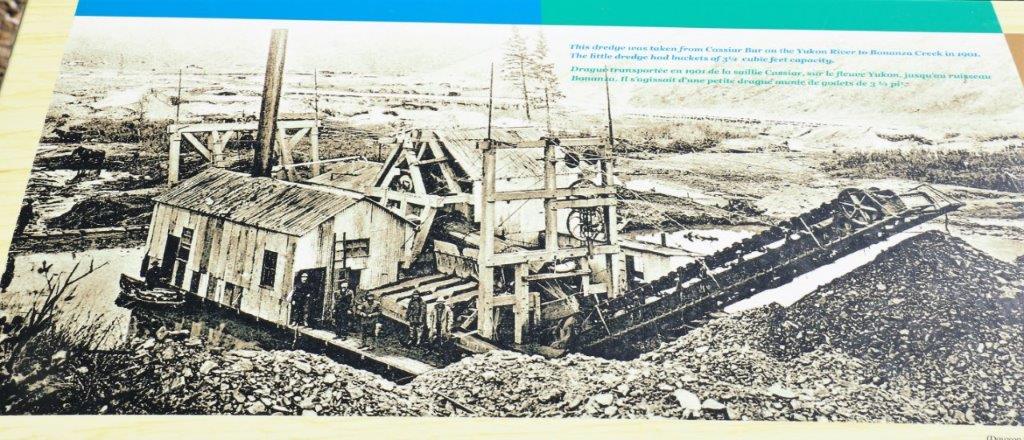
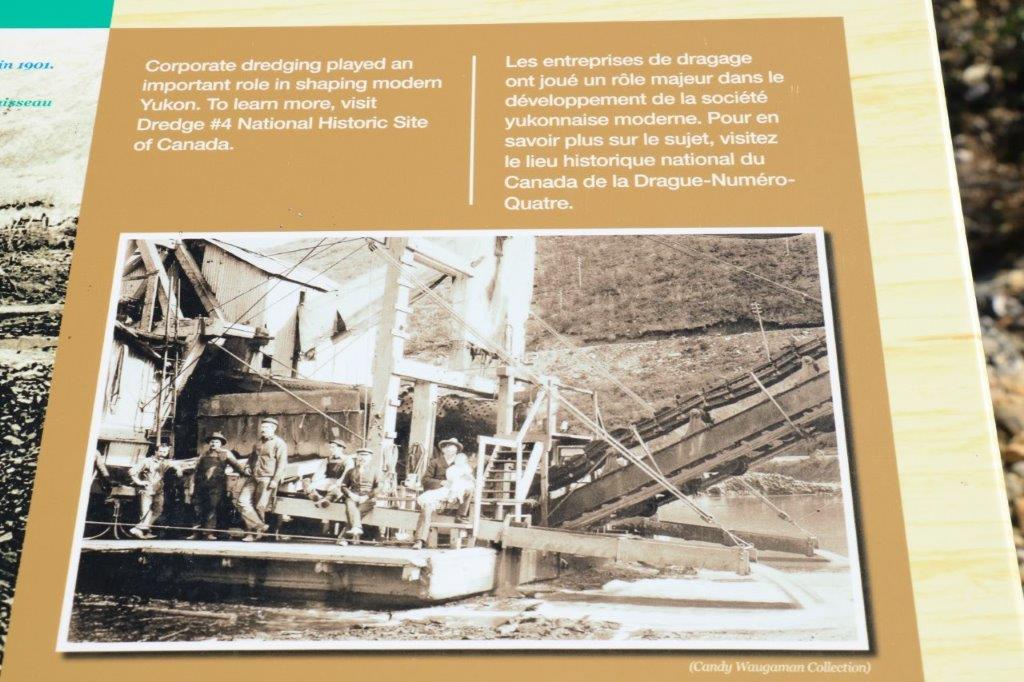
Our first stop was Dredge #4, the largest dredge to work the gold fields.  After the first rush was over (1-2 years), many of the hopefuls who had no luck headed off to Alaska for the new discoveries there.  Dawson City was headed to be a boom/bust town. However, the town and the gold mining was saved by bringing in dredges that could remove the rock and soil from the bedrock layer.   The hardest part of finding gold in the Klondike was the permafrost.  Once you remove the top layer of soil you hit permafrost, which is frozen soil from the Ice Age and is many many meters thick. Even an iron dredge shovel cannot break through it.

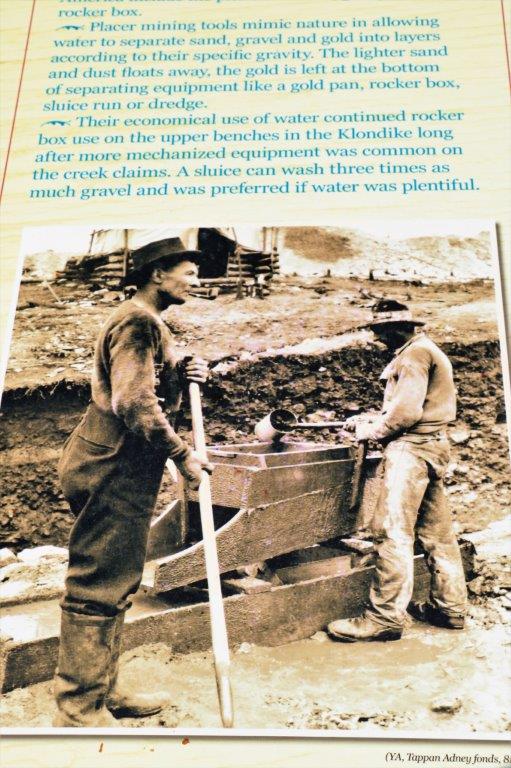
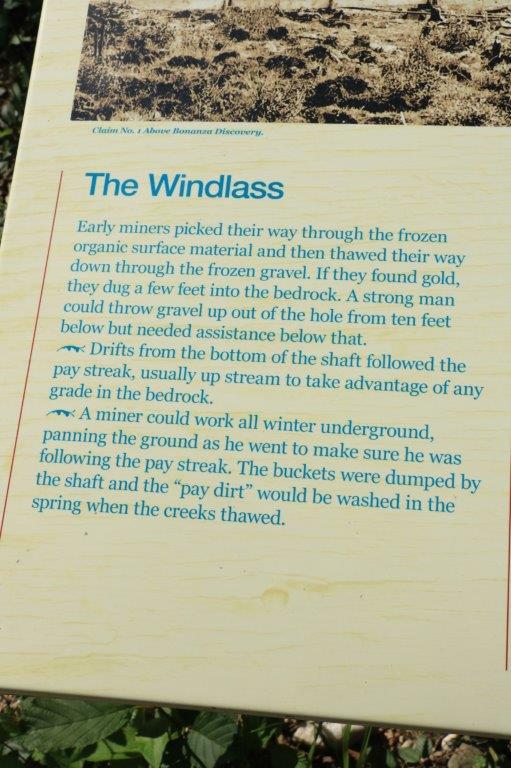
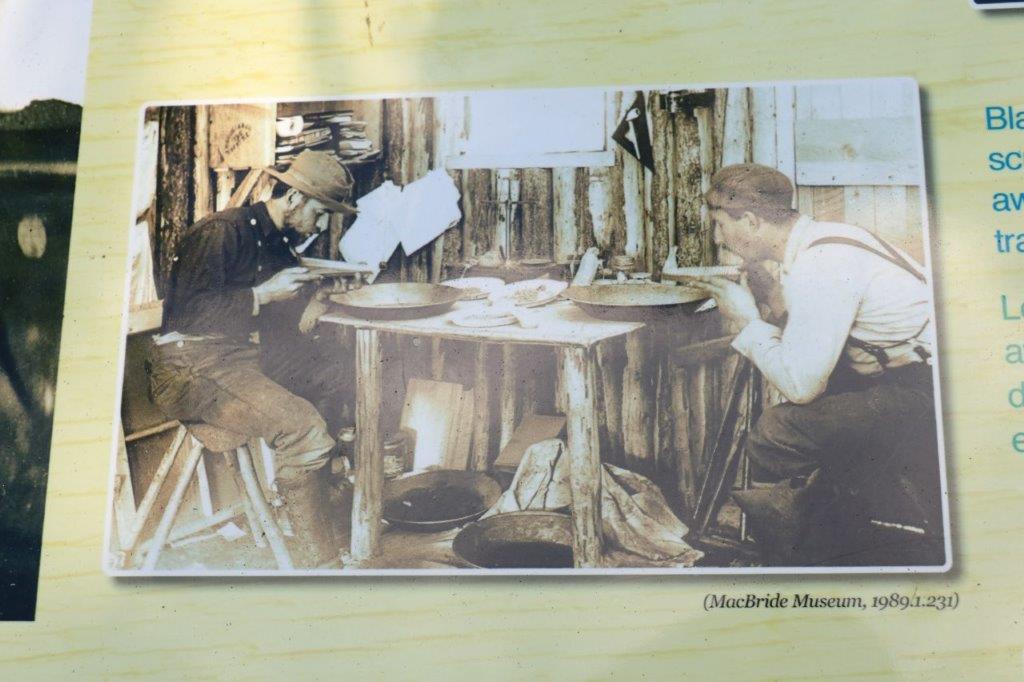
The miners working their claims by hand had to build a fire on the permafrost layer of a space they had cleared, let it smolder overnight, clear away the foot or so of thawed dirt, light another fire, let smolder to melt the permafrost, clear it off, repeat, repeat, repeat until they reached bedrock.  Gold is 19 times heavier than water so it will work its way through crevices and cracks in dirt/rock until it rests on the bedrock.  Then they could extract the gold they find before moving to begin a new hole.

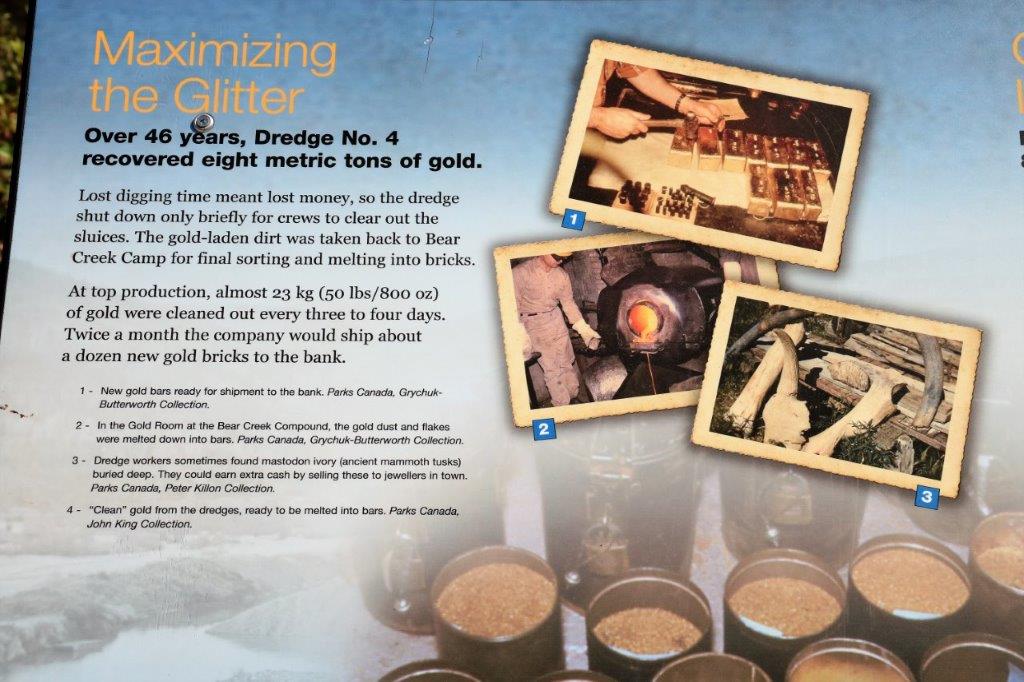
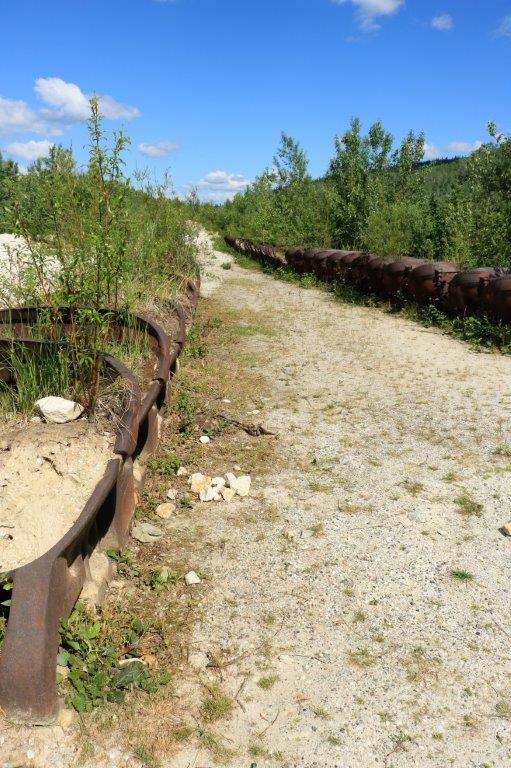
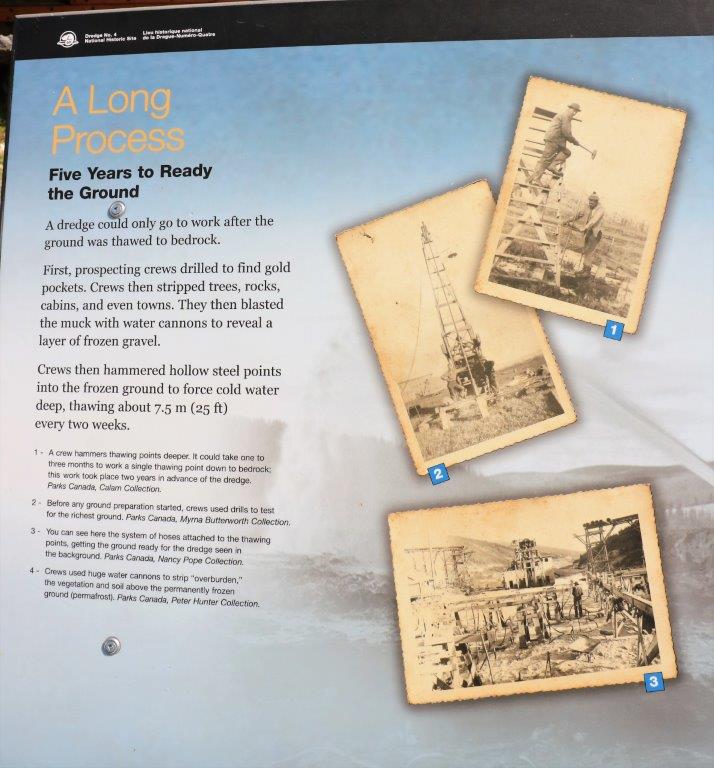
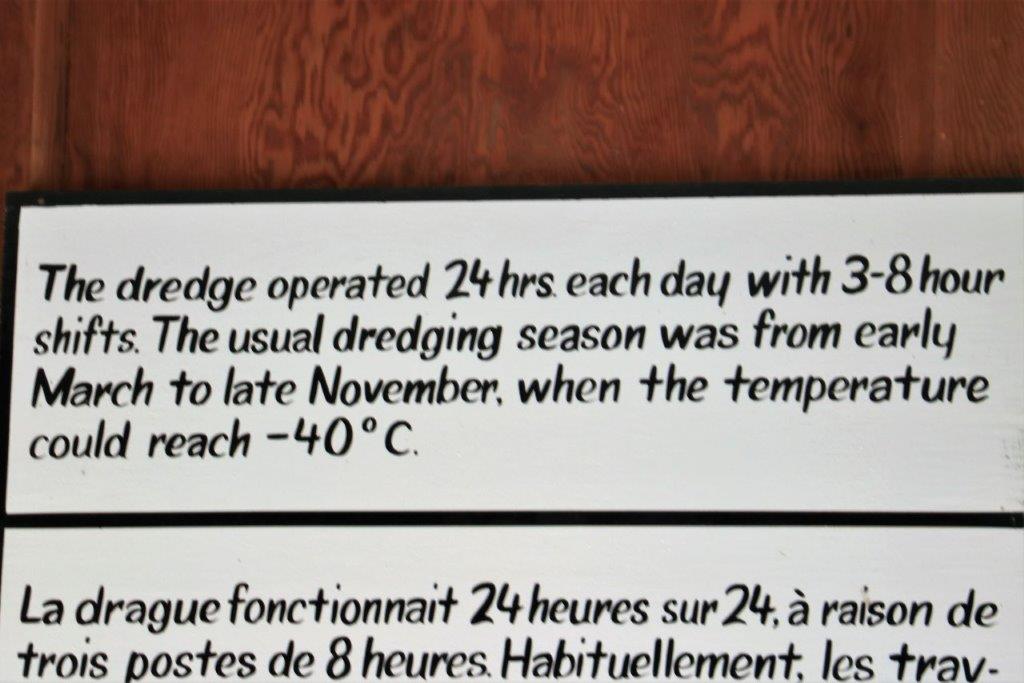
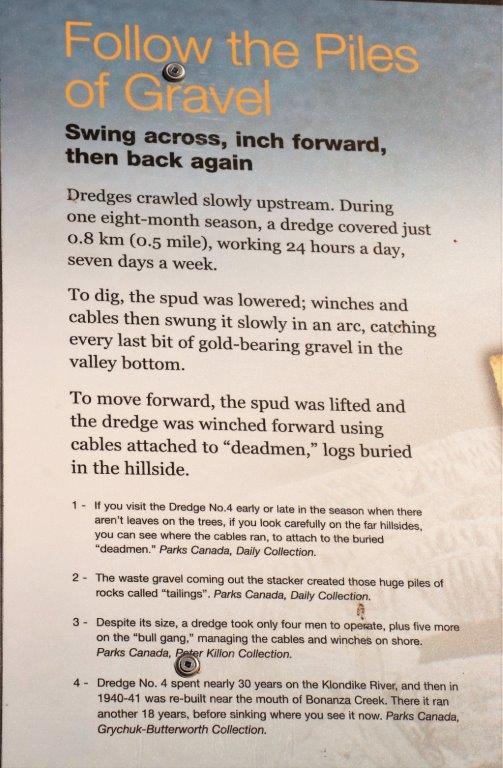
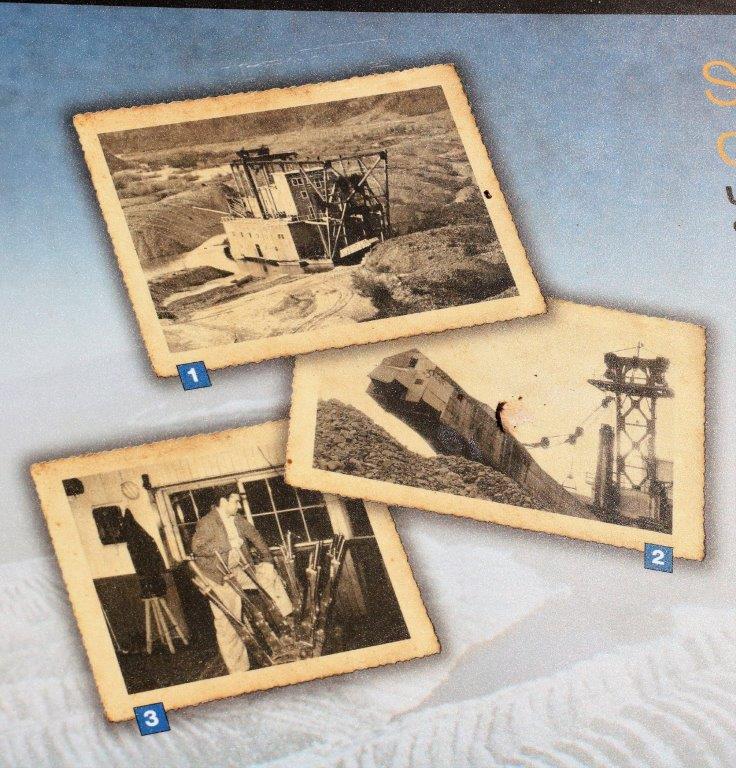
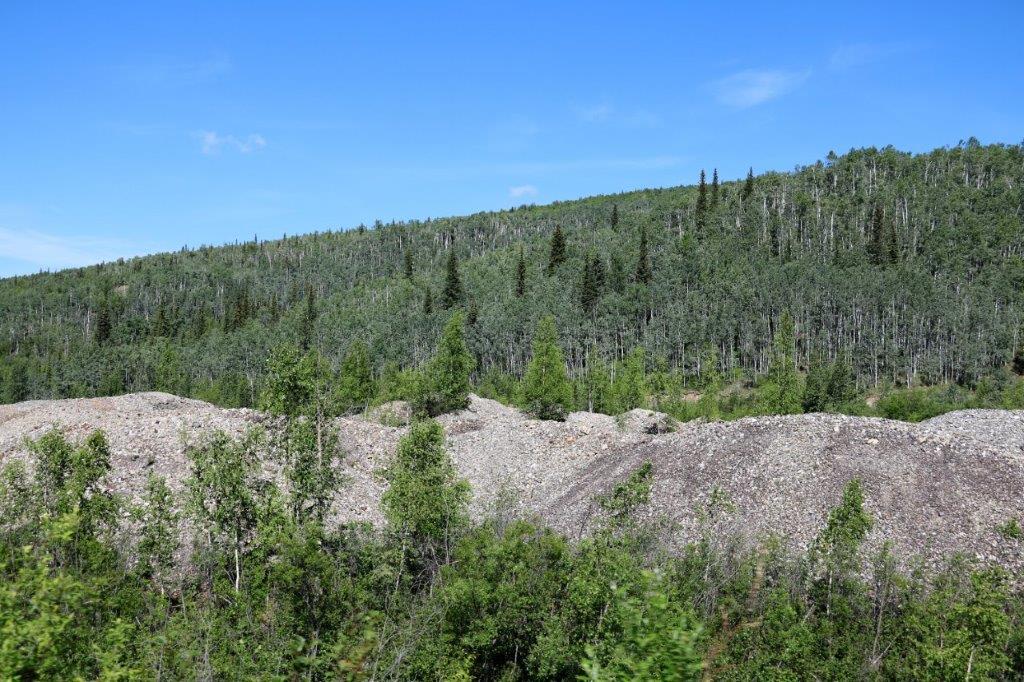
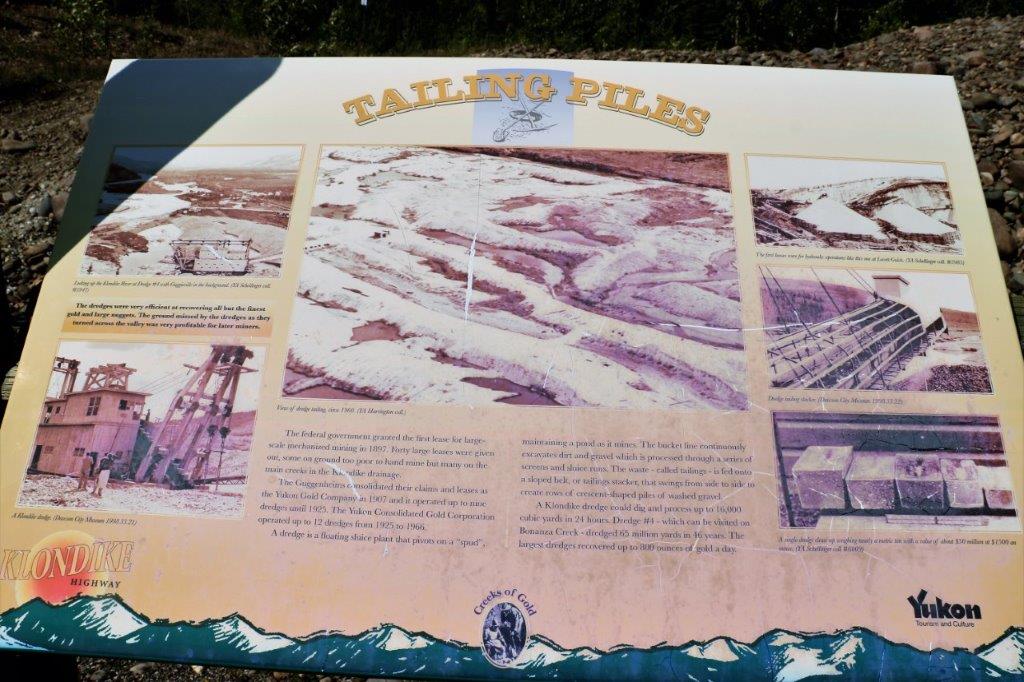
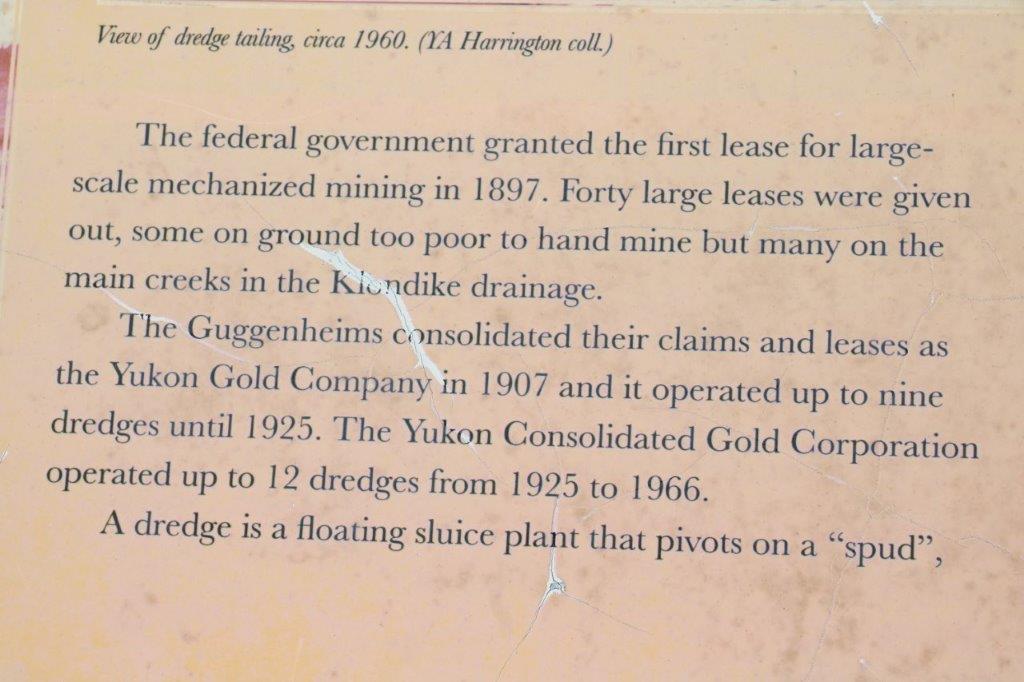
The dredges were floating dirt movers. There is a 12 man crew that works ahead of the dredge melting the permafrost.  #4 dredge worked the Bonanza Creek for 46 years before it was flooded when a hydro-electric dam burst and flooded the creek.  The dredge was buried in sludge and water for thirty years before Parks Canada had it lifted out of the pond, cleaned, and restored for an historic monument. (Note of trivia:  Due to the demand for water for the dredges there were dams put on the Yukon River and Dawson City was the third city in all of North America to receive electricity.)These tailing piles extend the full length of the creek into the valley. 
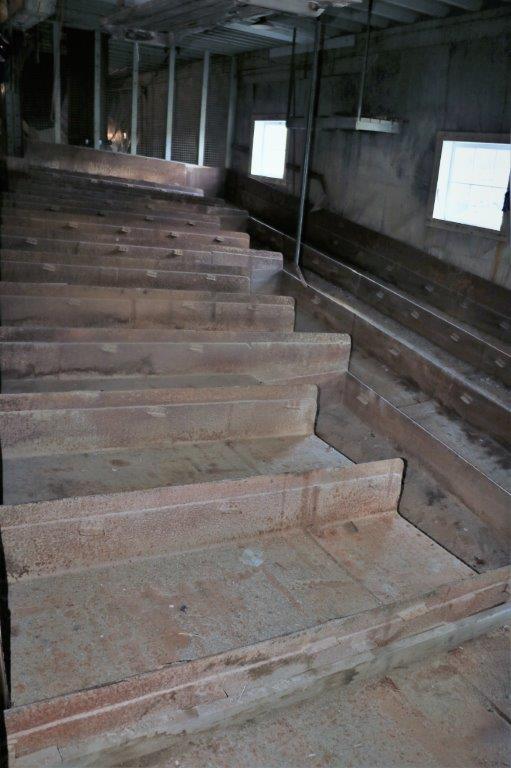
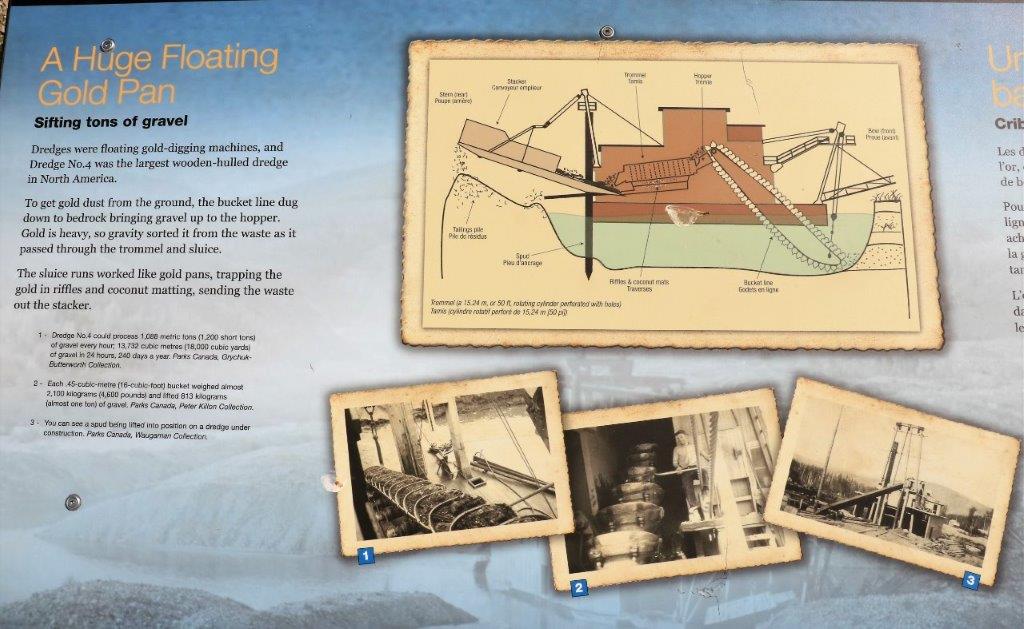
The long arm at the front of the dredge had 66 of these big steel buckets attached and it took 3 minutes to make one rotation digging up the dirt.

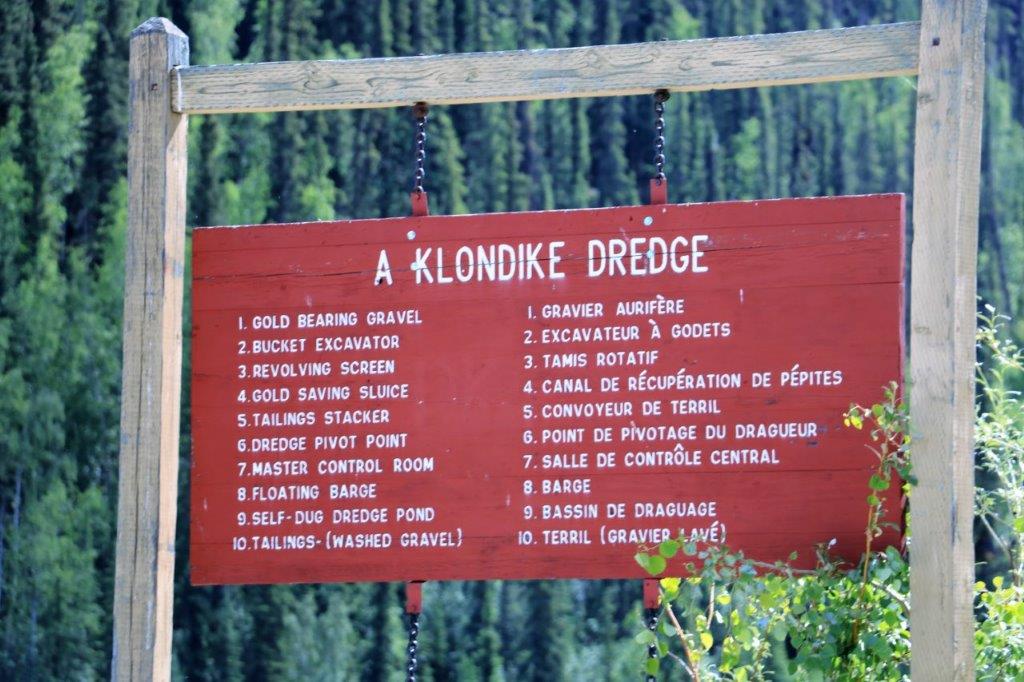
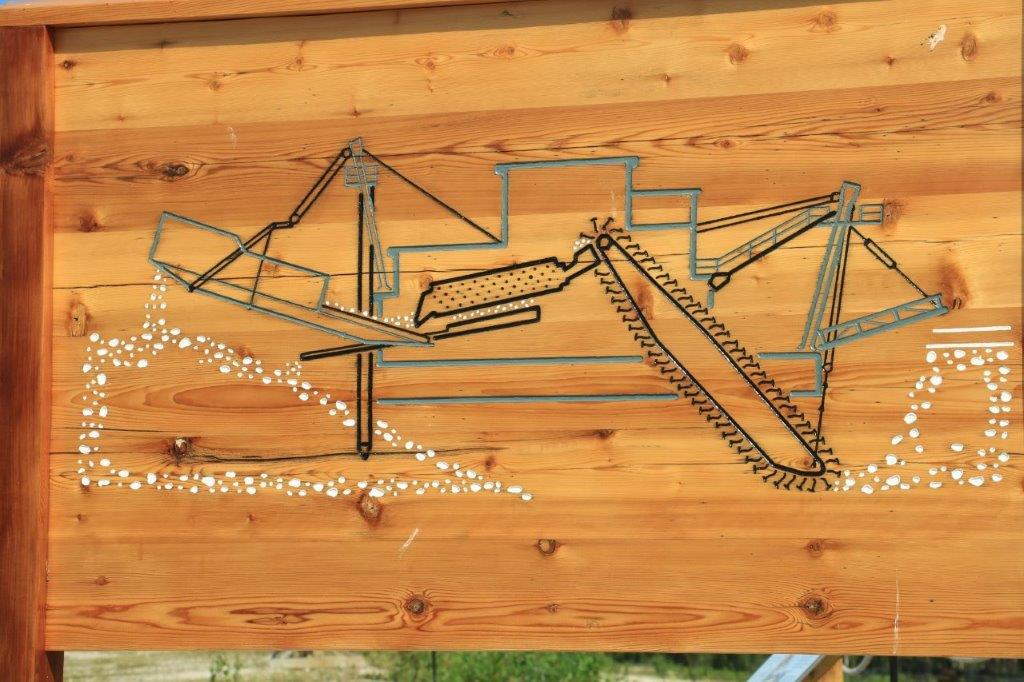
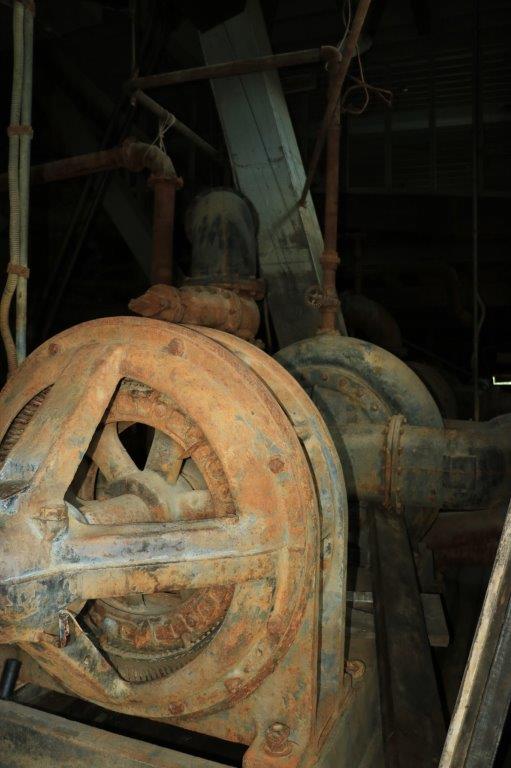
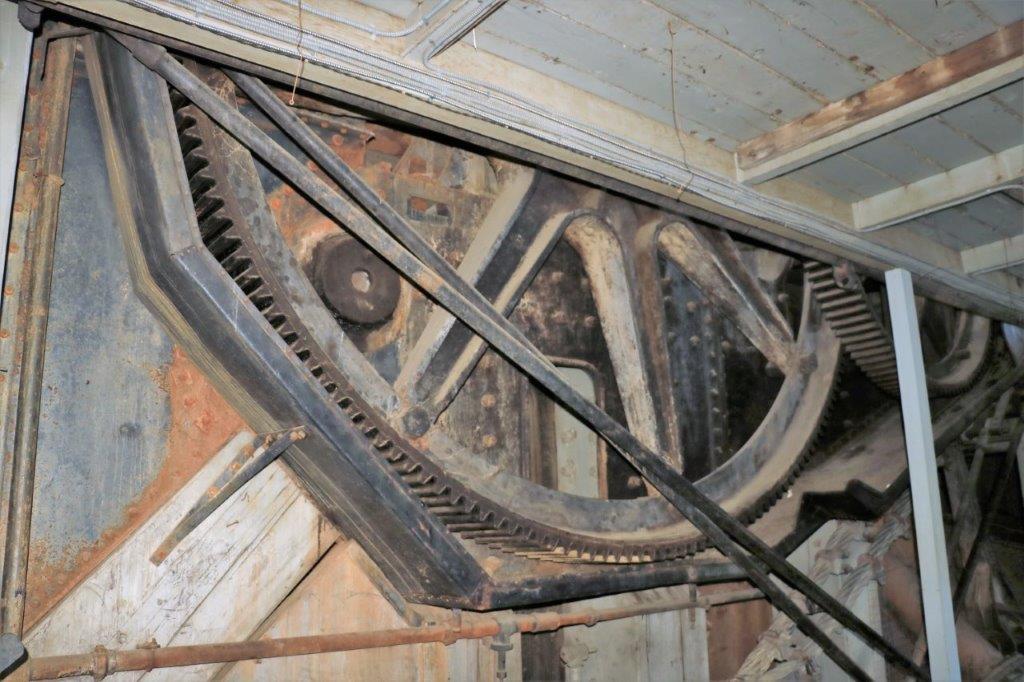
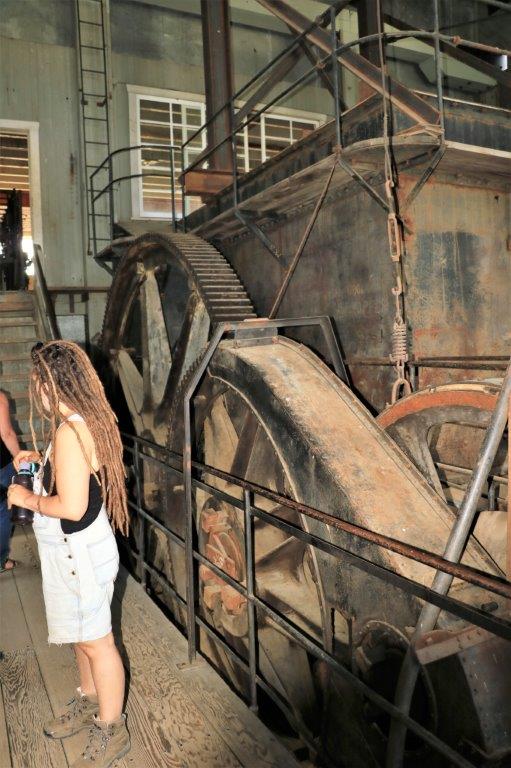
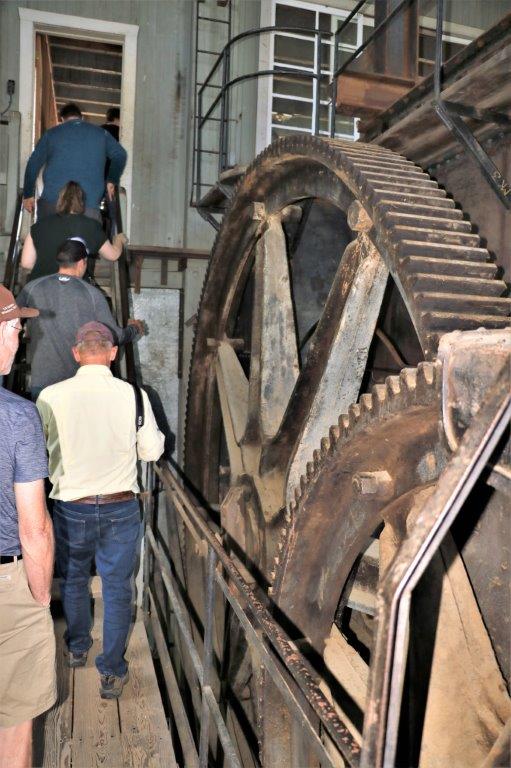
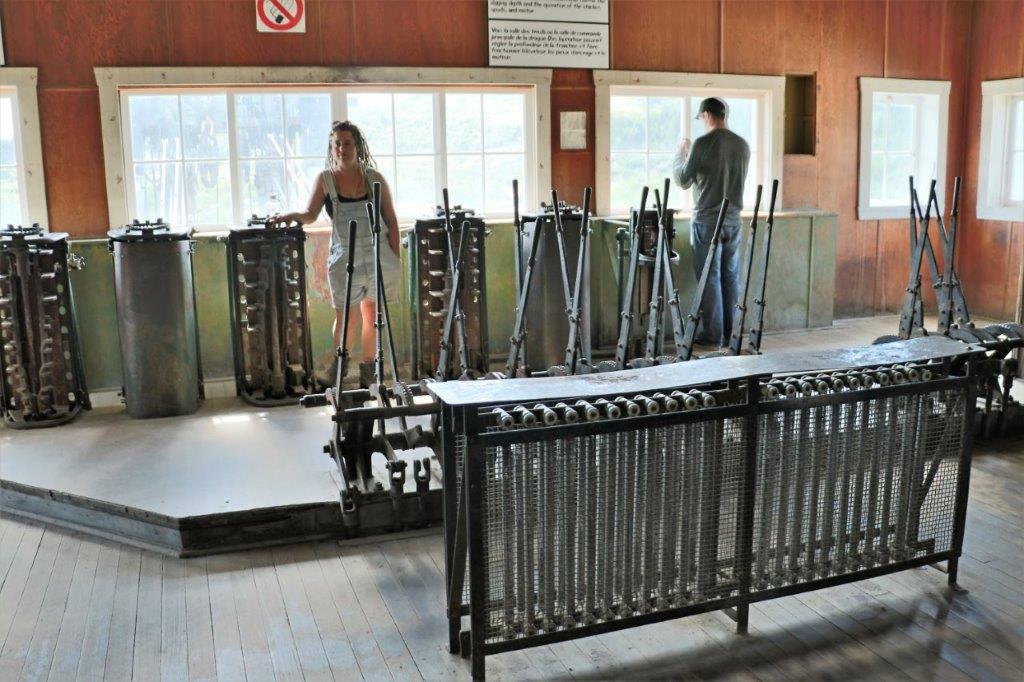
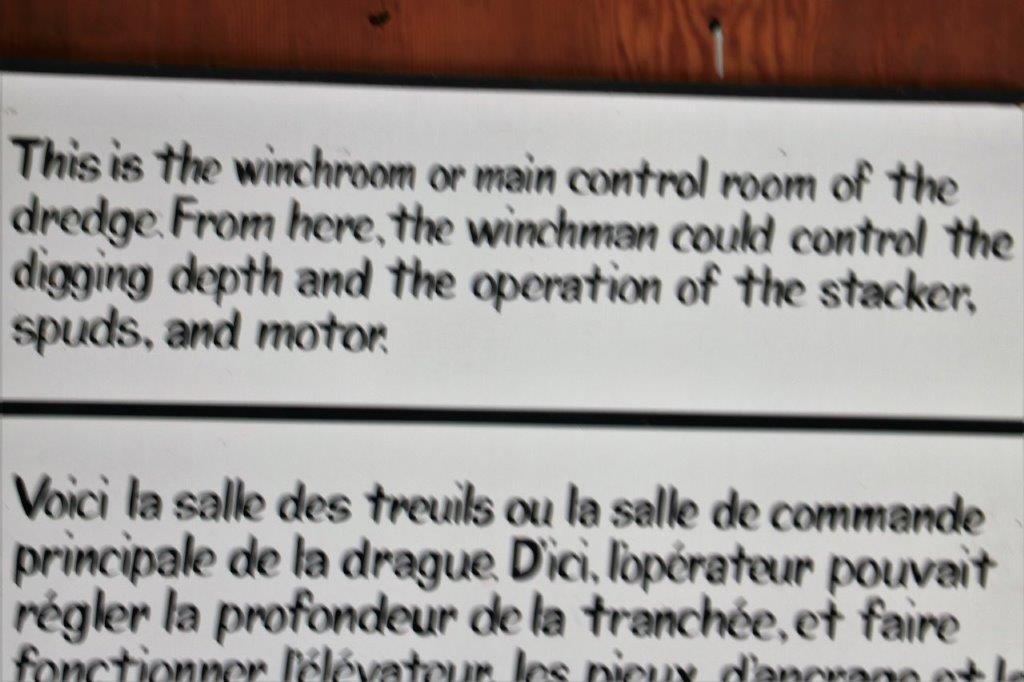
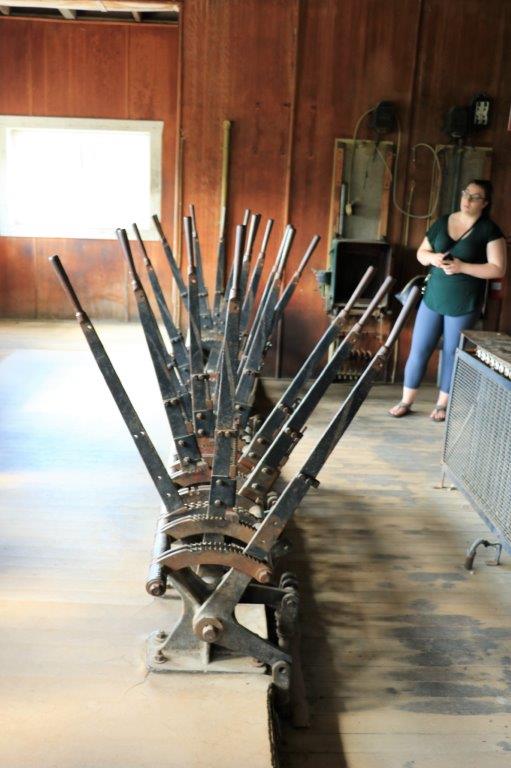
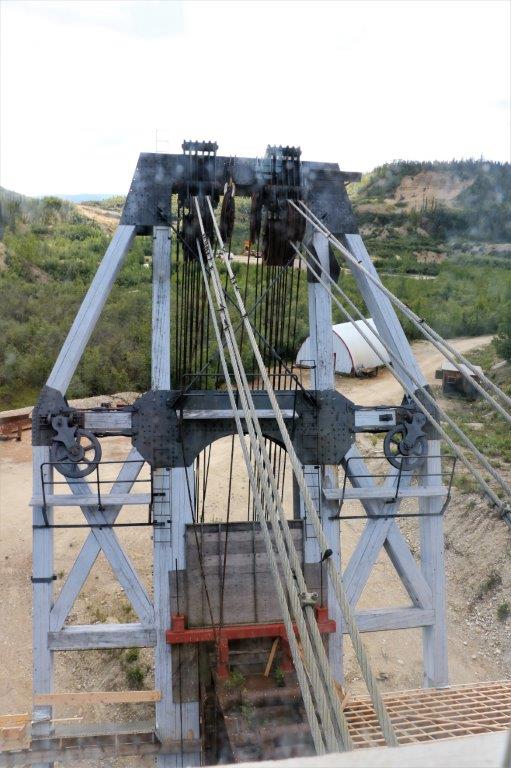
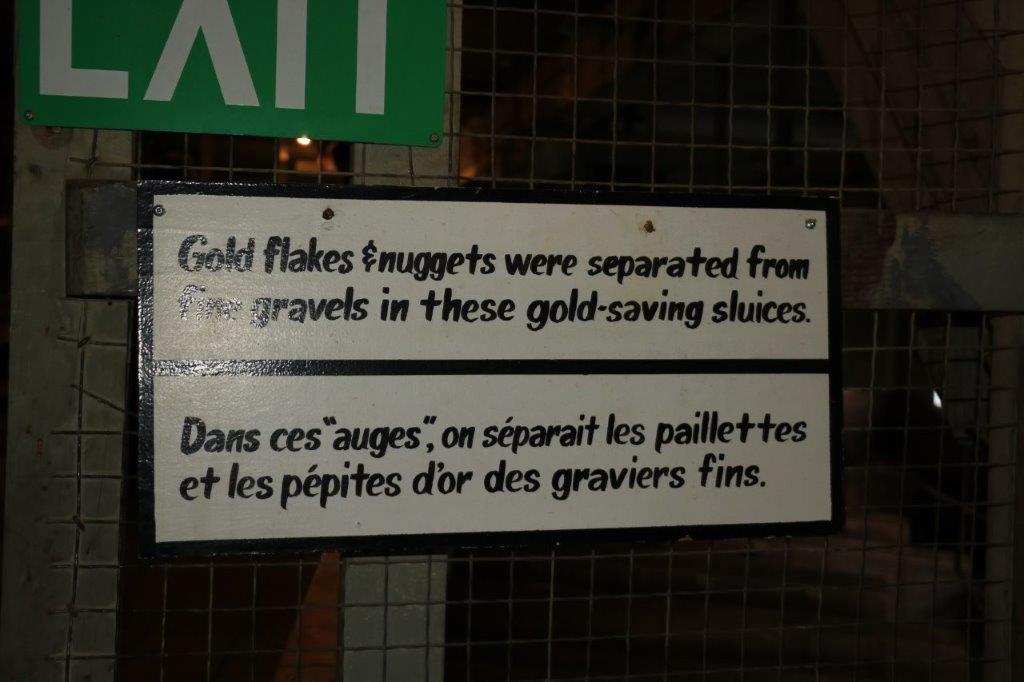
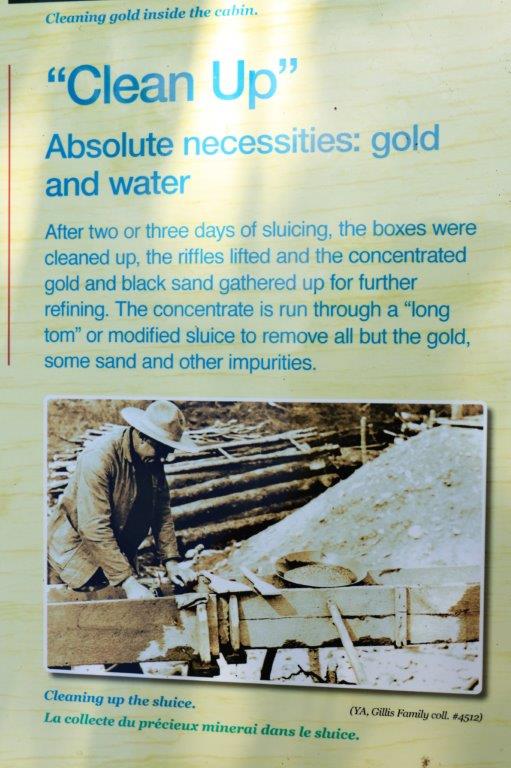
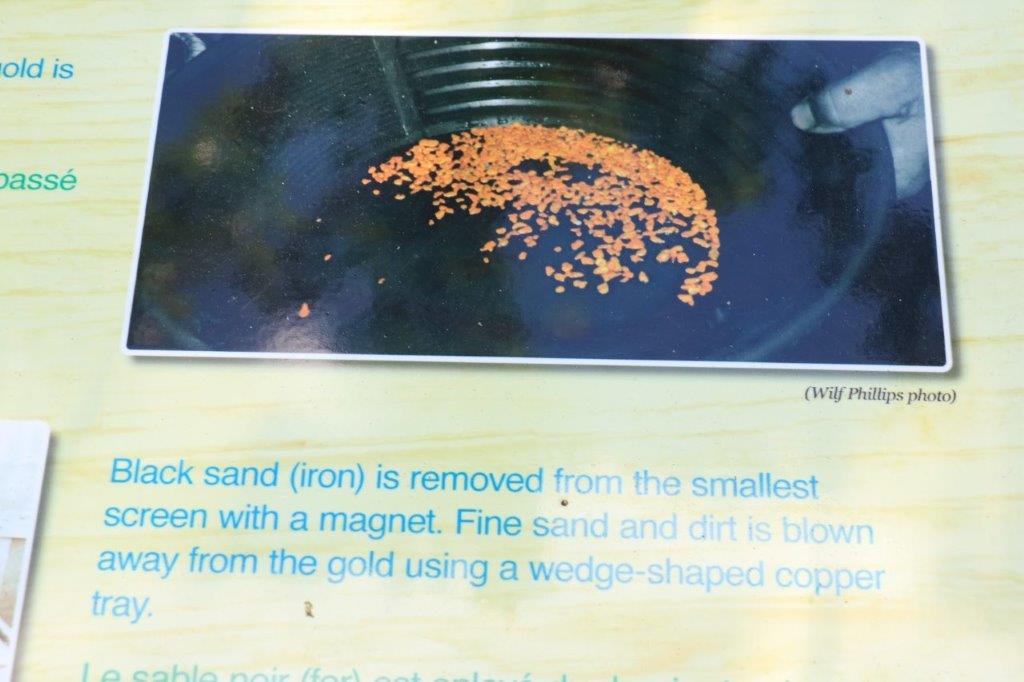
I took quite a few photos of the massive equipment in the dredge, but I am not about to try explain what they all did.  There were only 4 men required to run the dredge the majority of the time.  A fifth man would come on board to do the “Clean Up,” which is collect the gold. The dredge was built in Ohio in 1912, disassembled and sent by train to the coast, then by ship to Skagway, Alaska, and then the pieces were put on the narrow-guage White Pass and Yukon Railway to go up to the Klondike.  The large gear above is 14′ in diameter.  The tunnels on the rail line are not that wide.  They realized there was no way to get the two gears up on the railway, so they were sent back down, put on another ship and sent around to the mouth of the Yukon River in the Bering sea and brought down by river barge.  The dredge cost $500,000 and the cost was recouped in the first year.

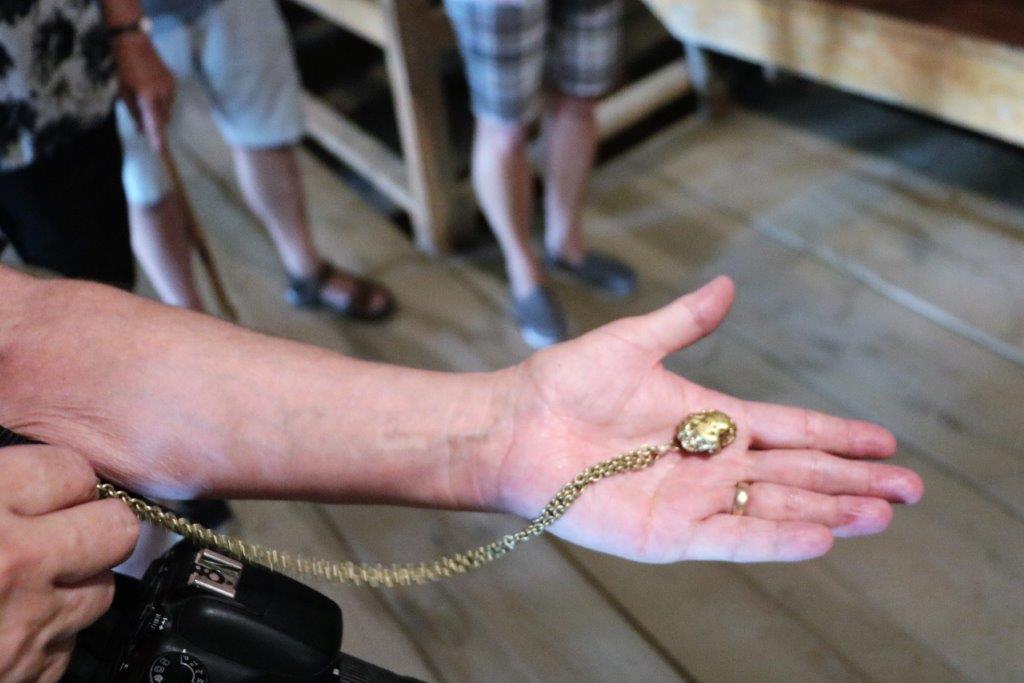
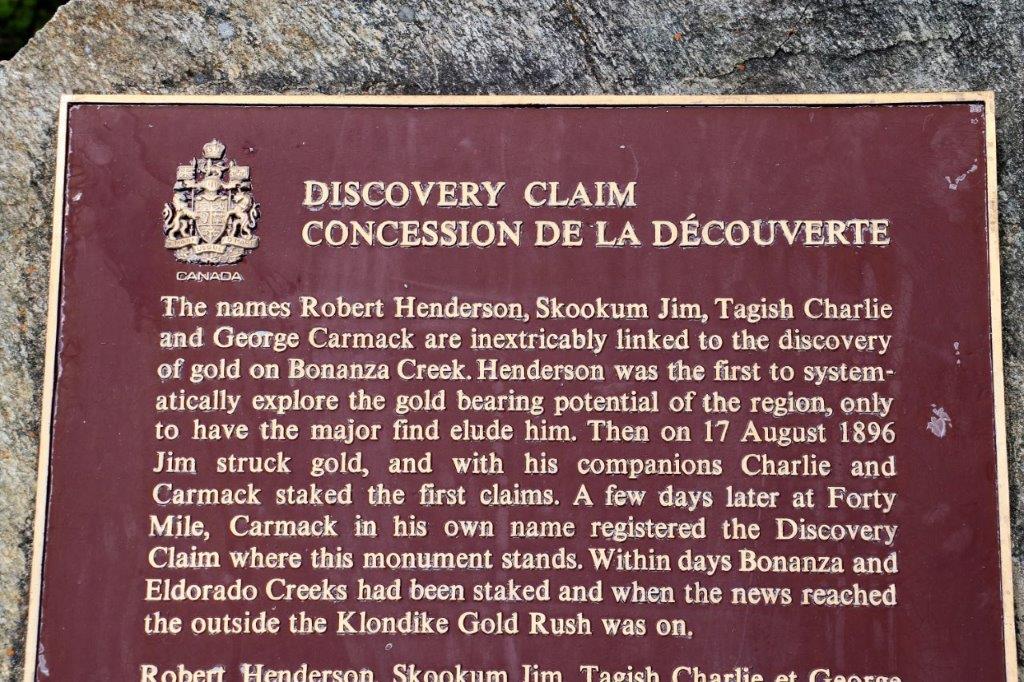
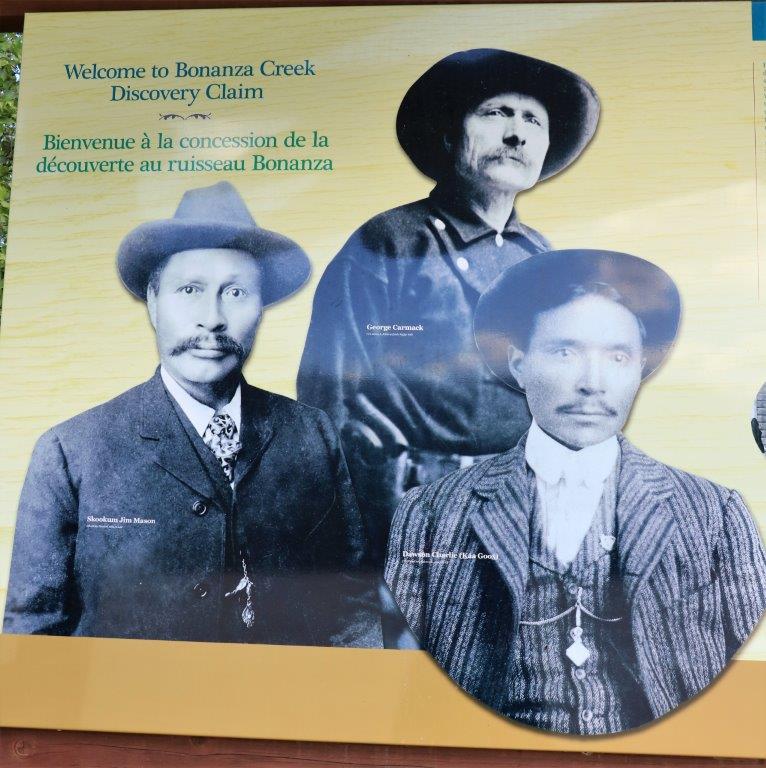
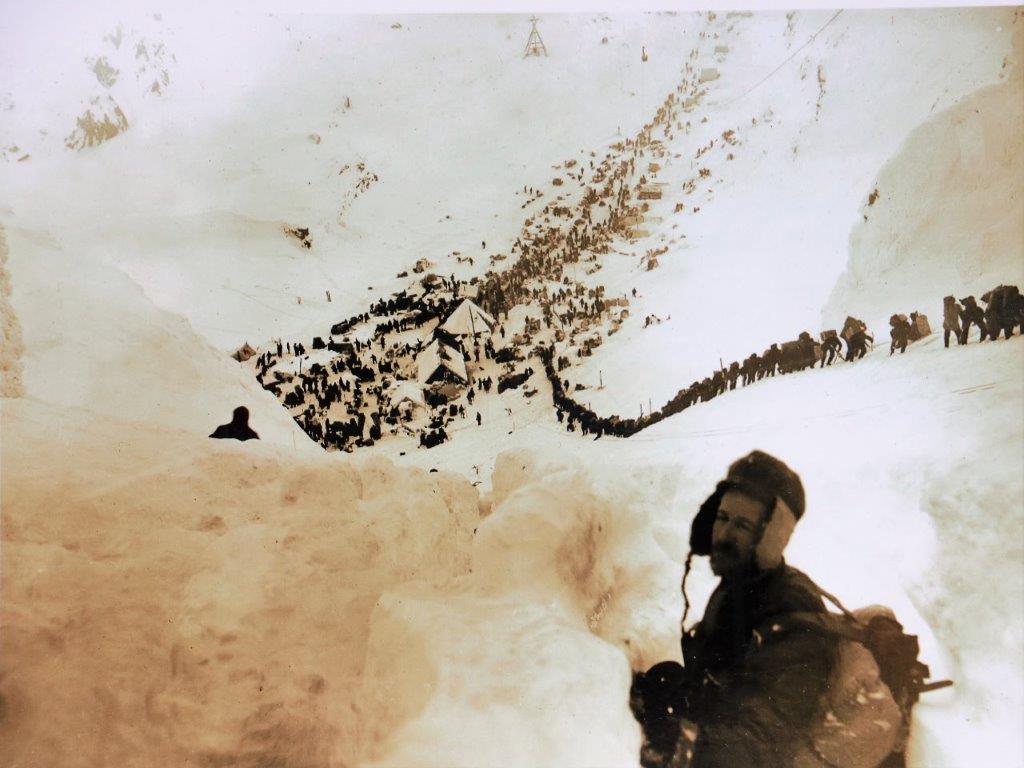
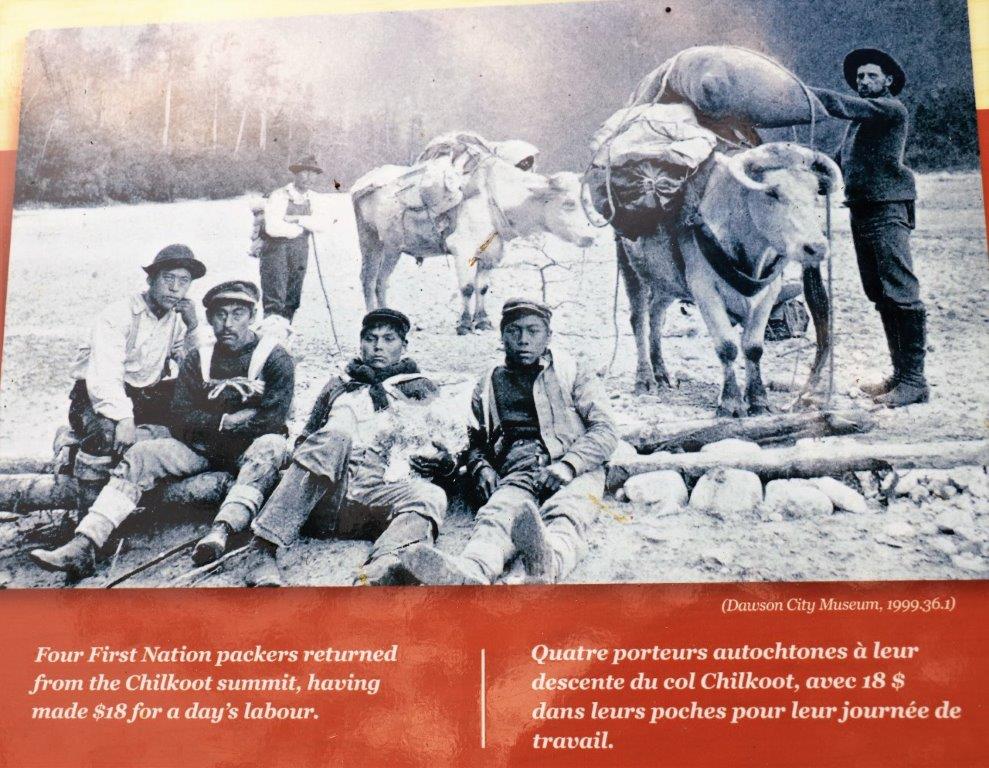
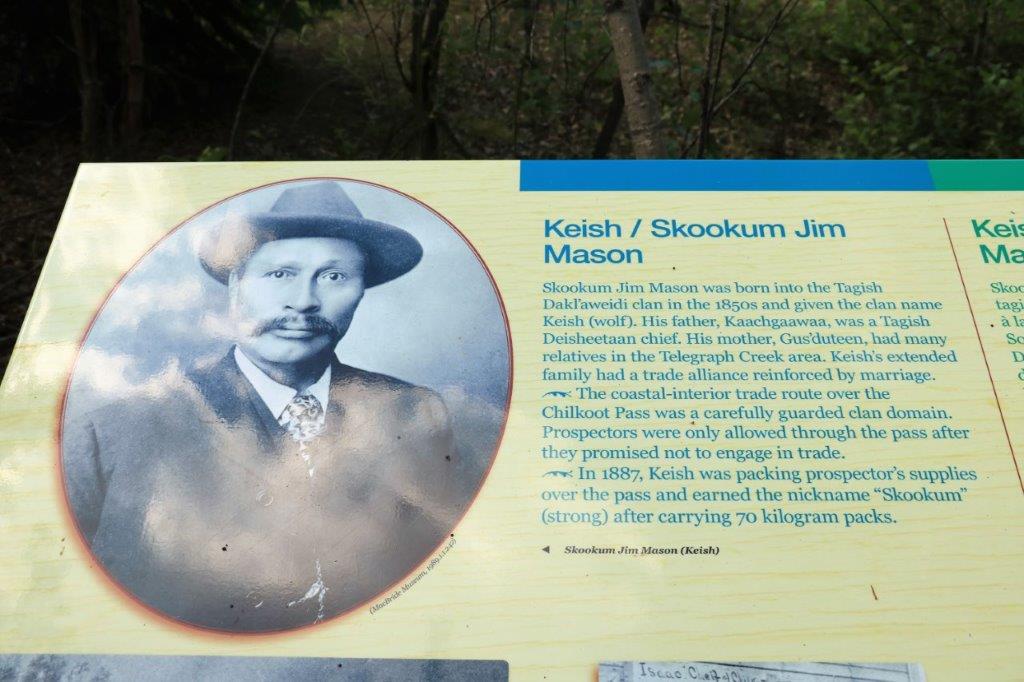
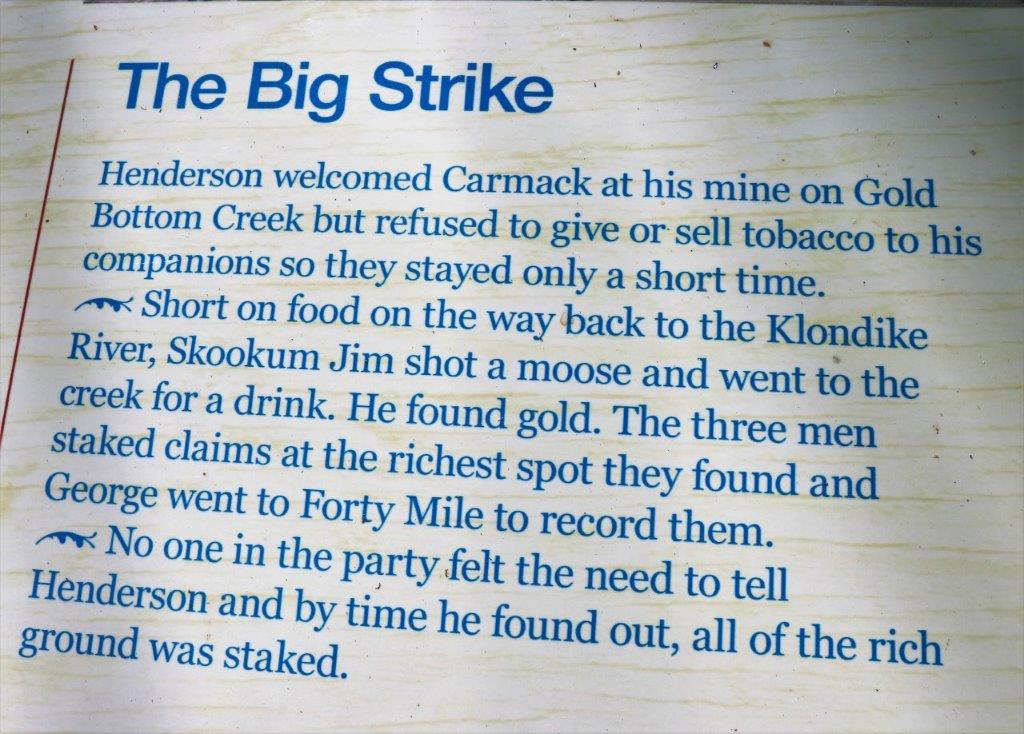
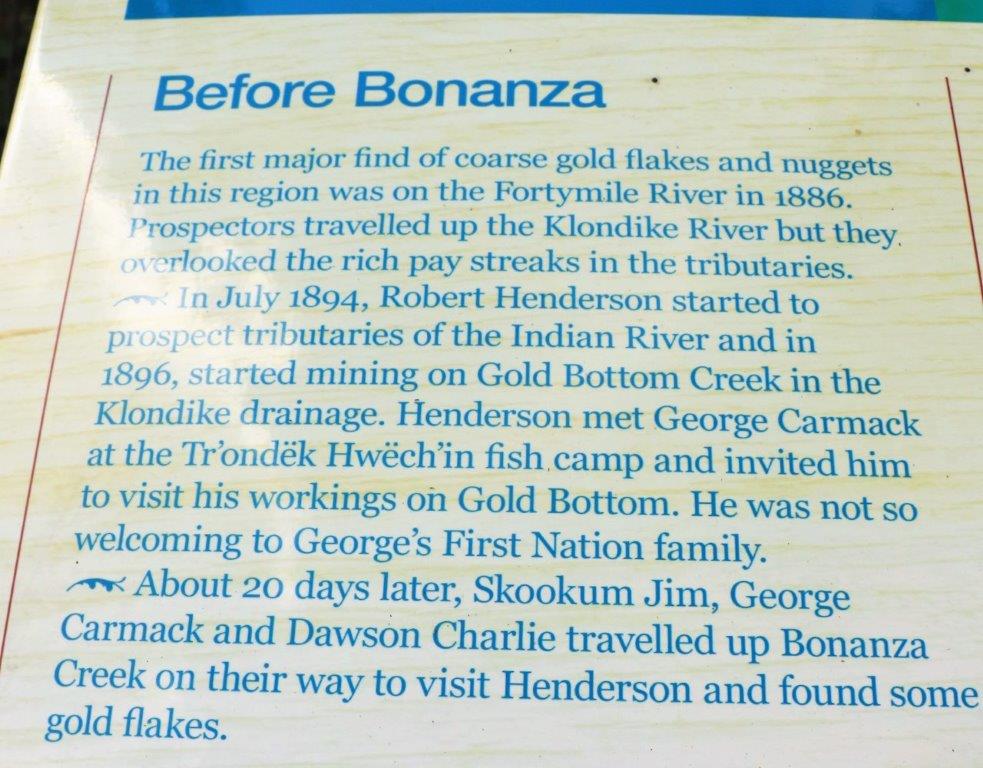
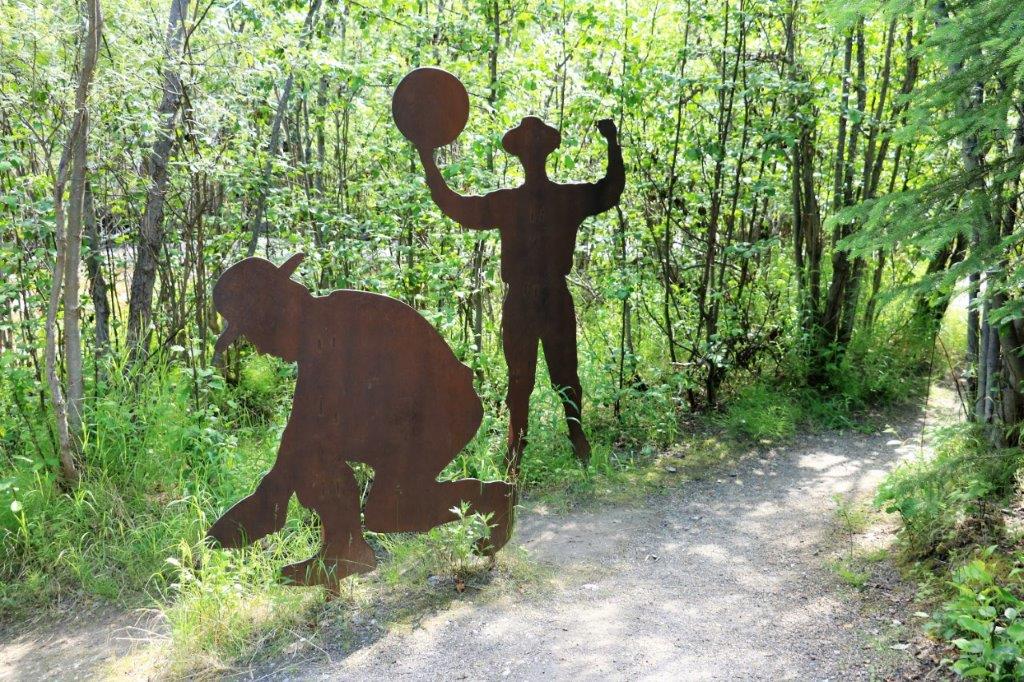
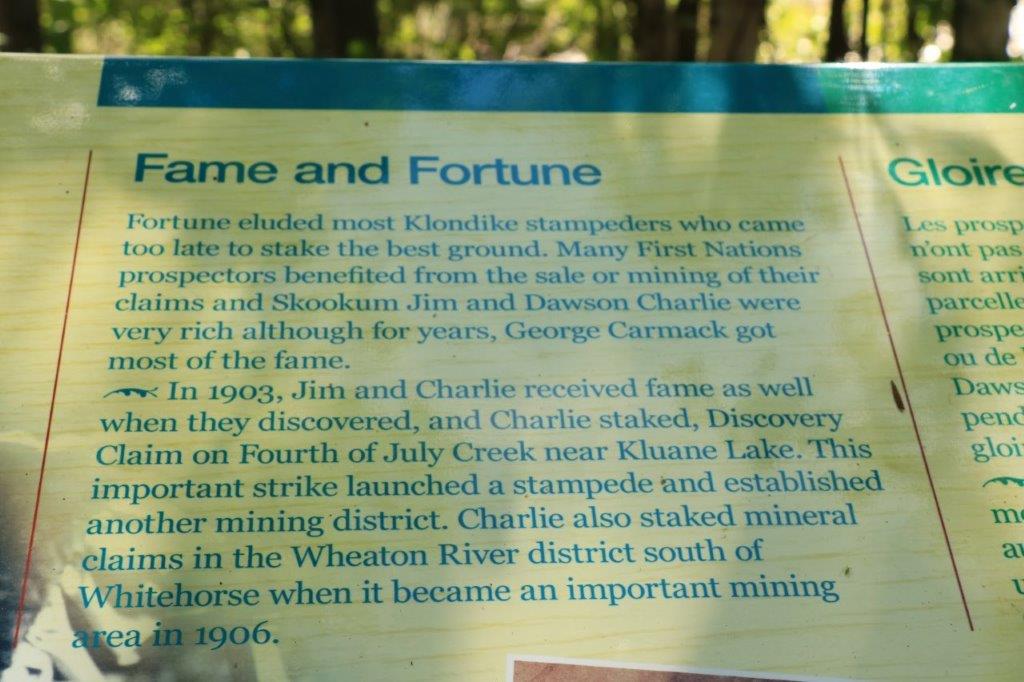
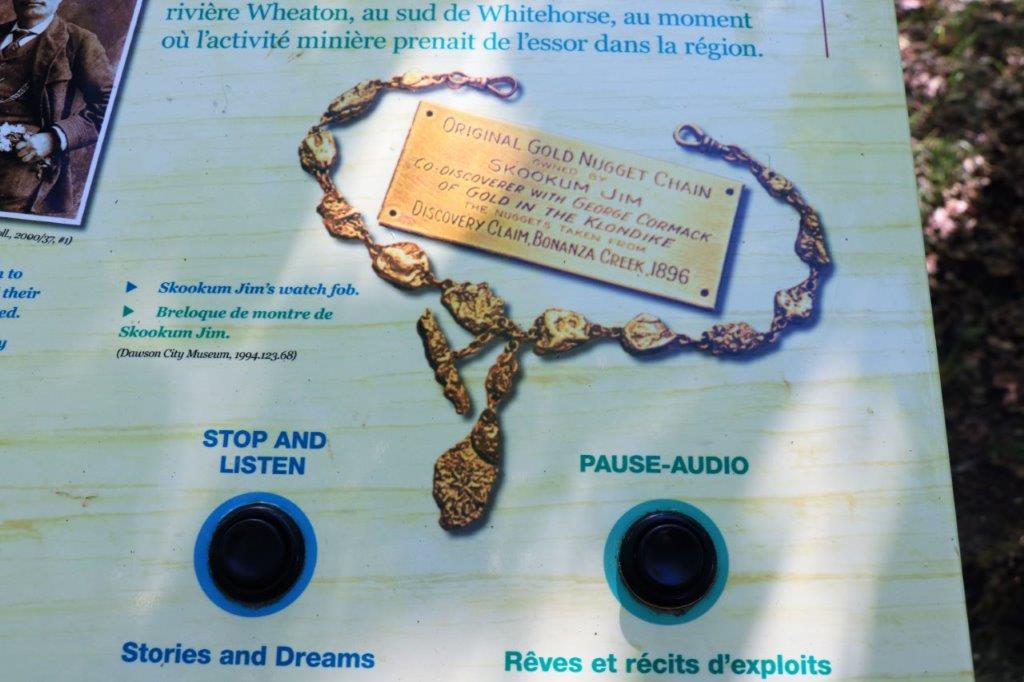
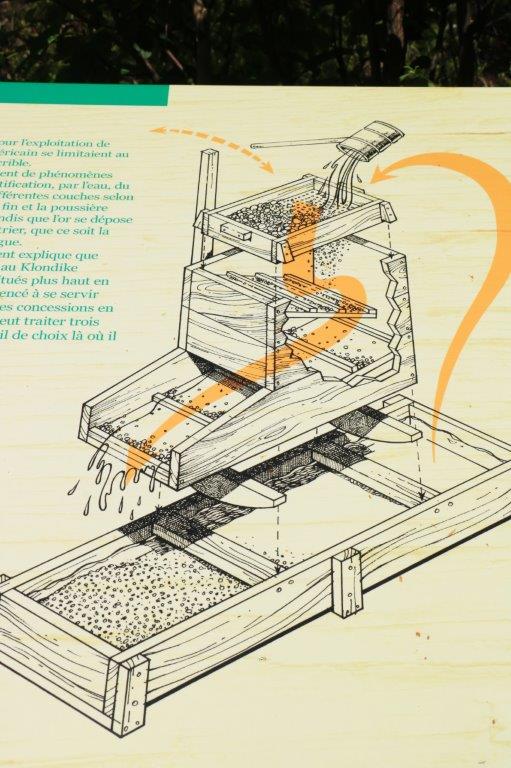
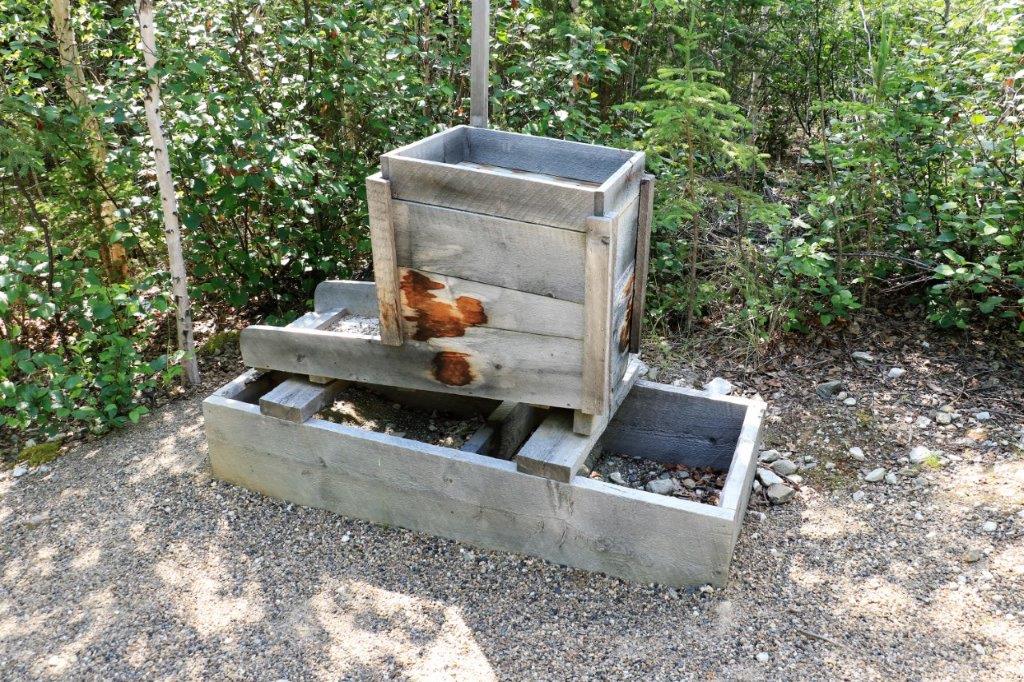
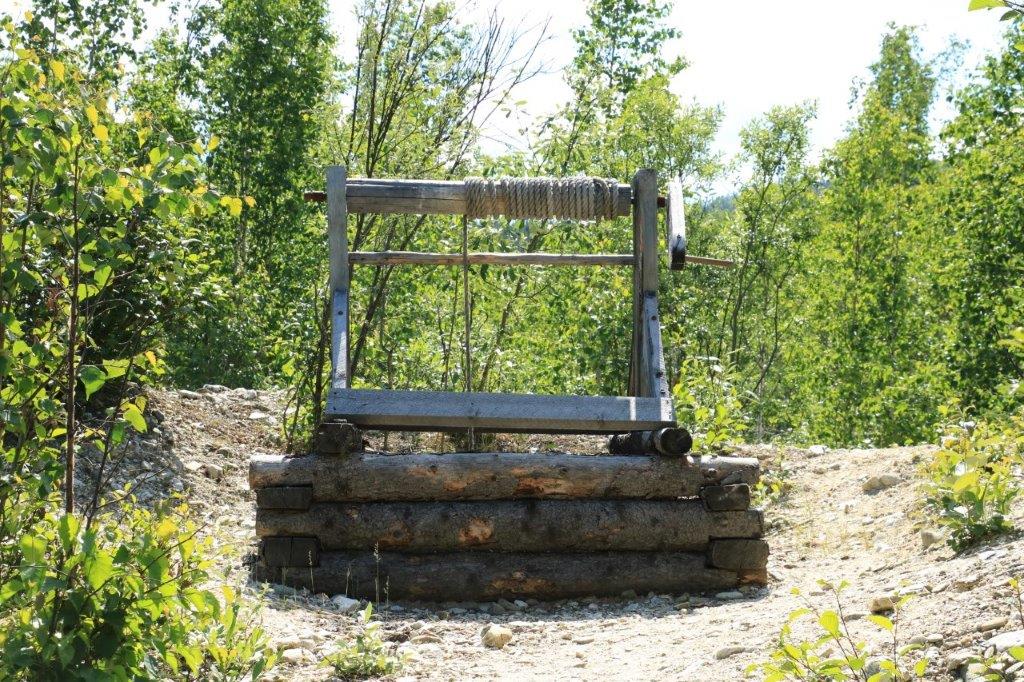
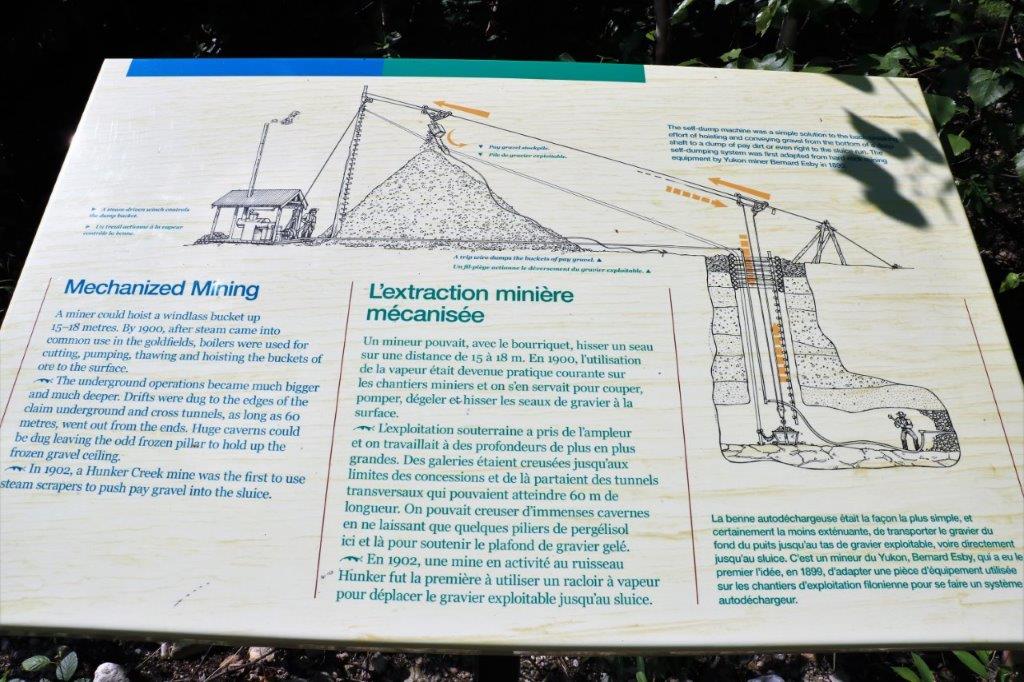
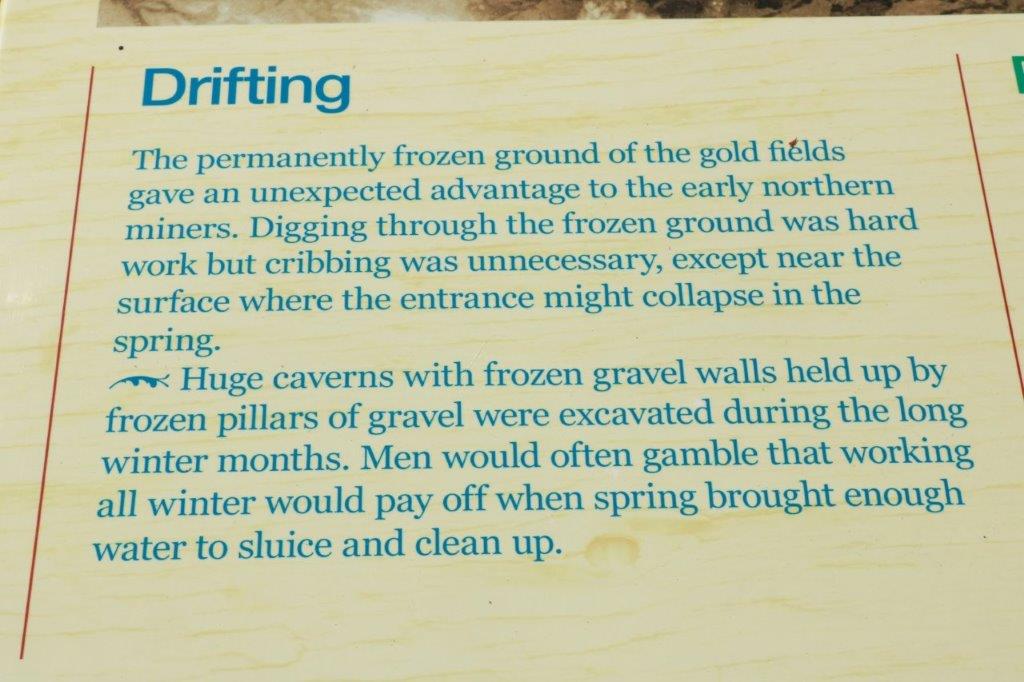
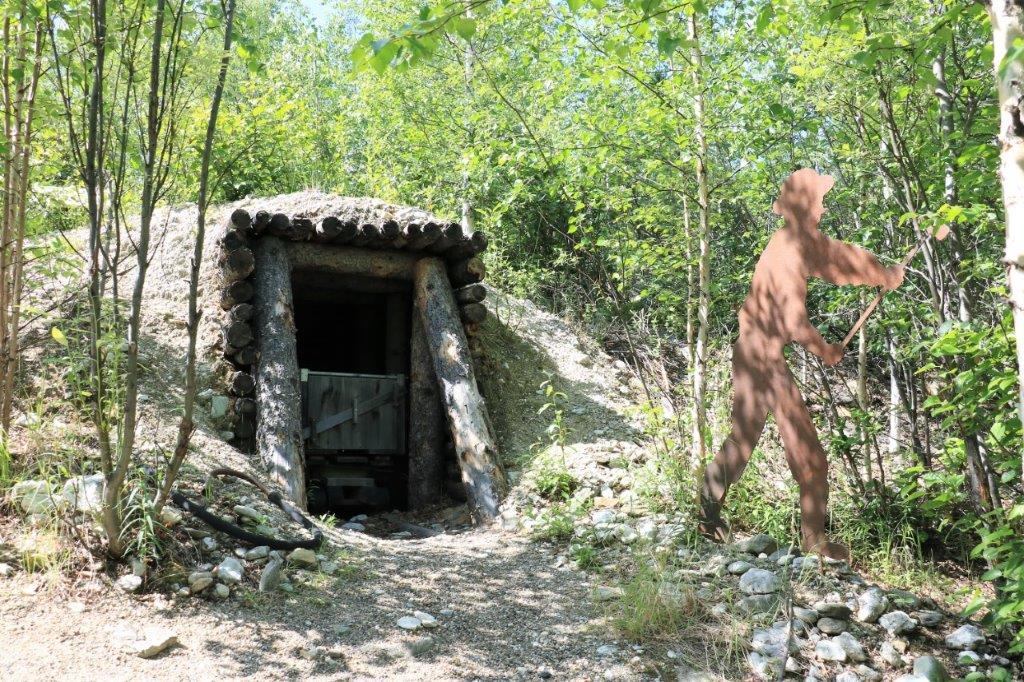
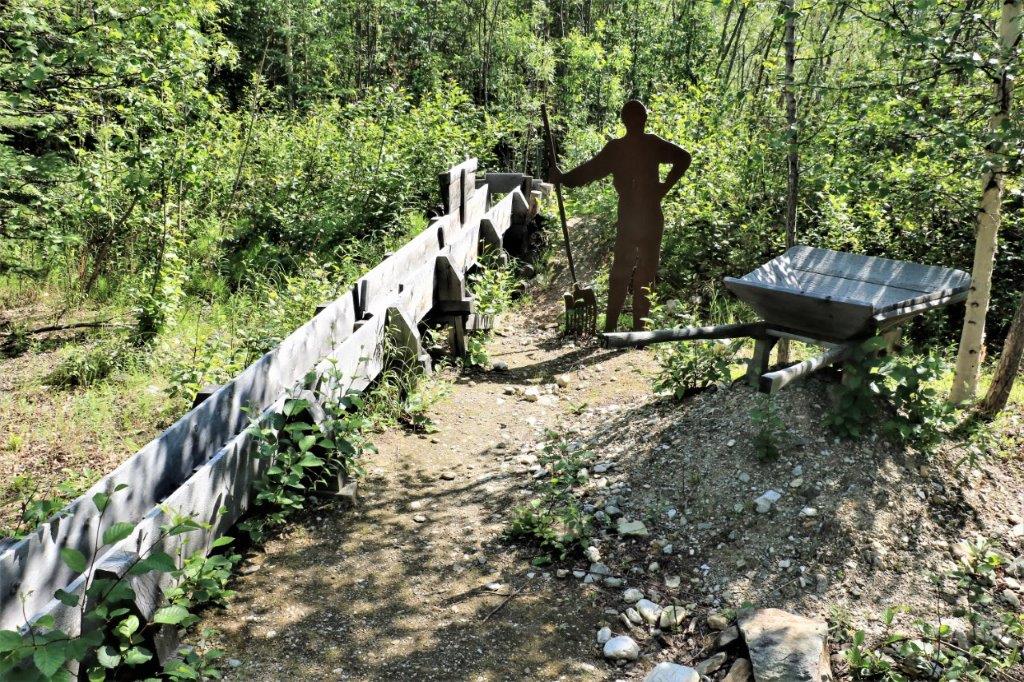
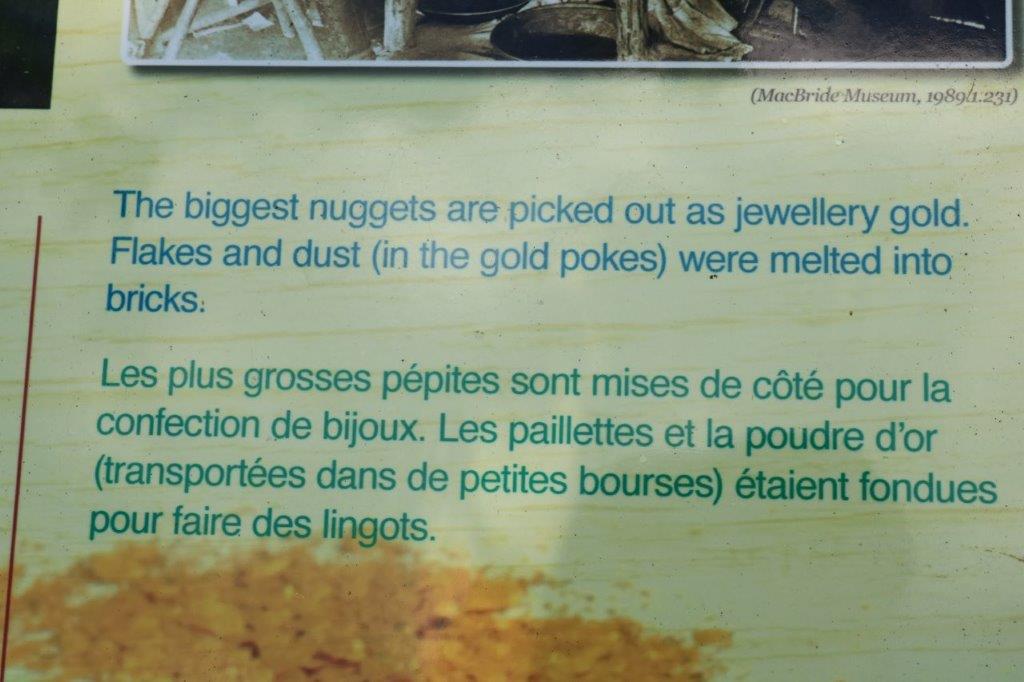
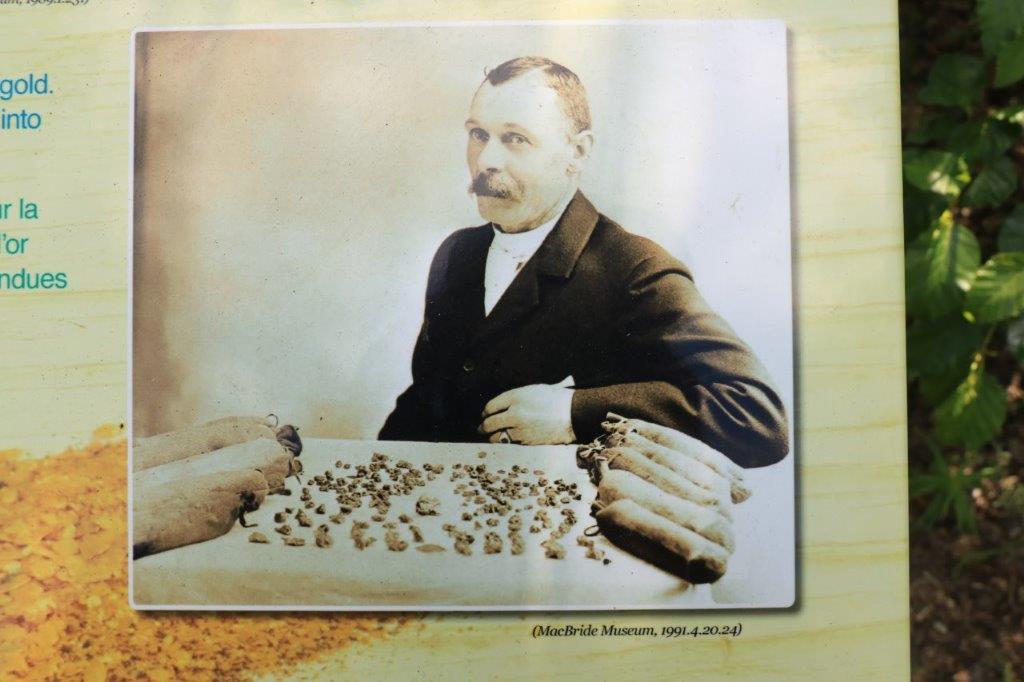
Our tour guide was a French-Canadian gal and she showed us a 1/2 ounce nugget her boyfriend had found at Hunker Creek. The chain is one ounce of gold.  There is still lots of active claims being worked around here.After we toured the dredge we continued down the road to the sight of the Discovery Claim, the first one staked.  The first claim staked and registered on a gold field is called Discovery Claim.  All others are numbered upstream or downstream from Discovery. Hopeful goldseekers climbing the steepest part of the Chilkoot Trail from Skagway, Alaska into the Yukon.   There was a loop trail that had tons of placards about the early days of the goldrush and the life and work of the miners.  I took tons of photos of them all but am only putting a few of the most interesting ones in here.

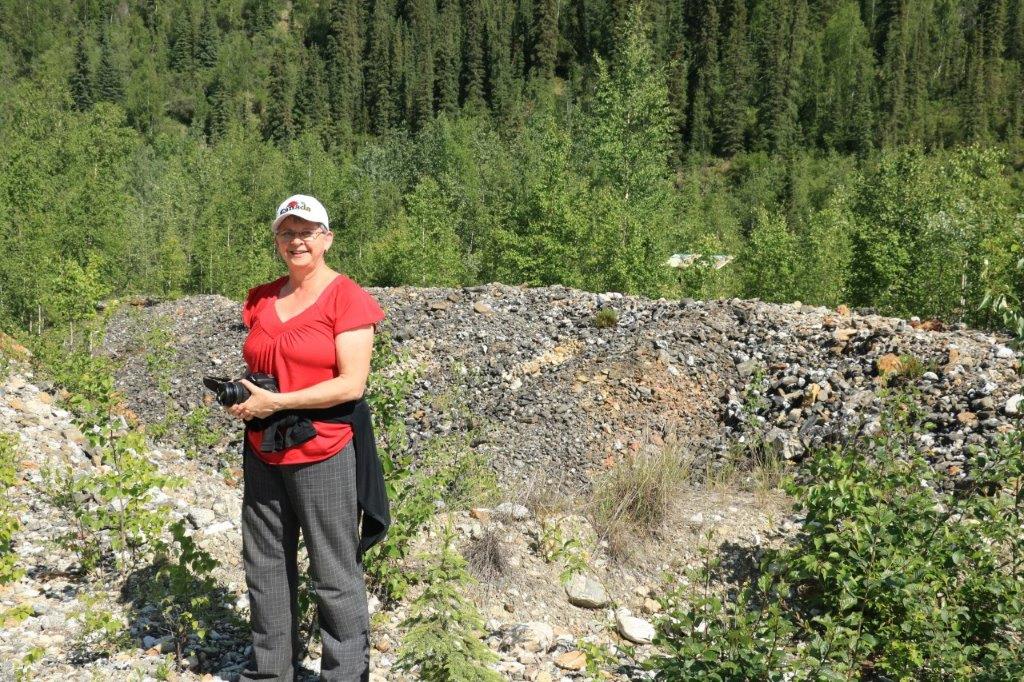
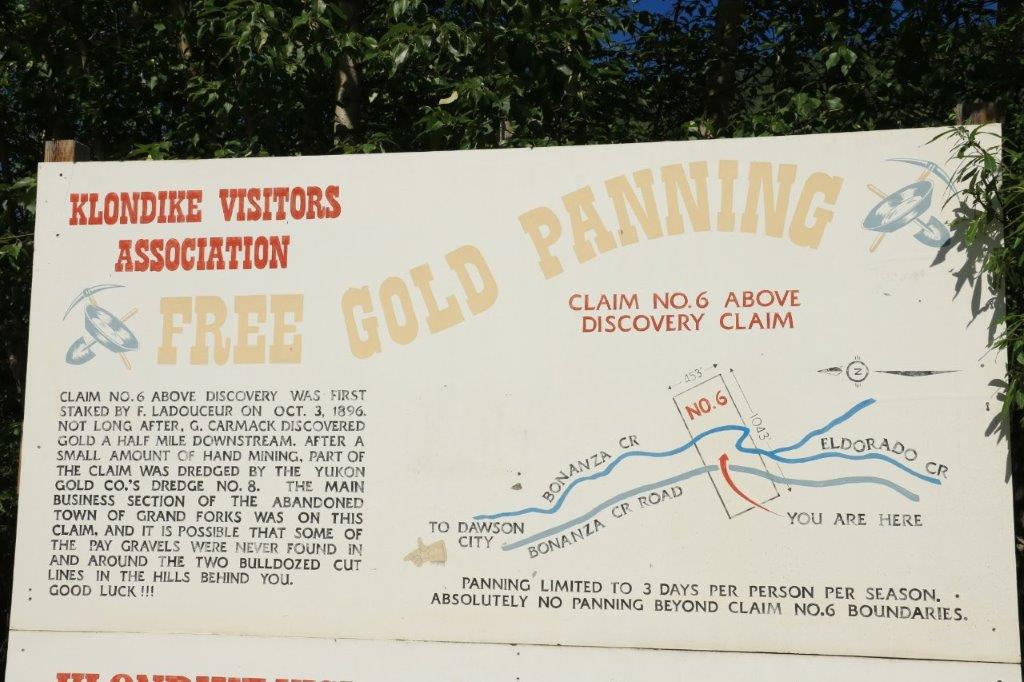
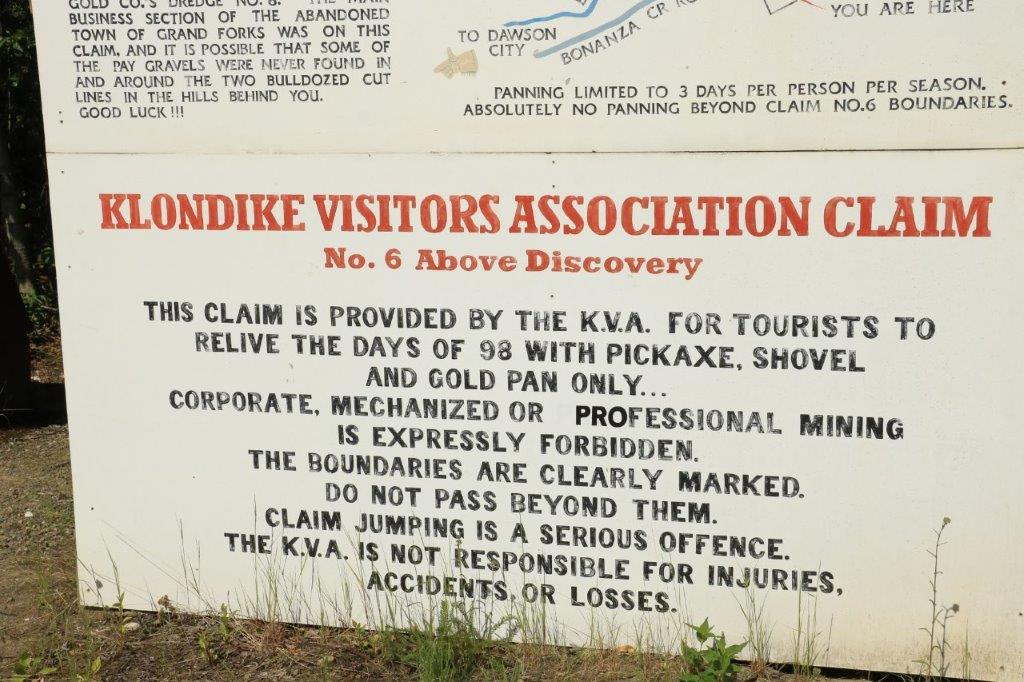
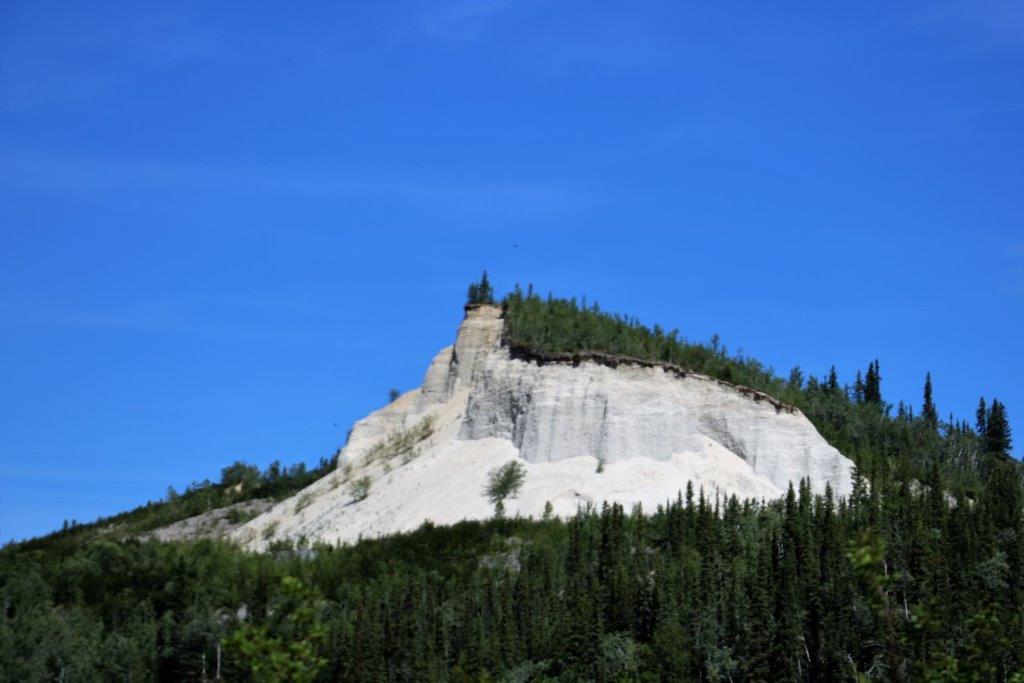
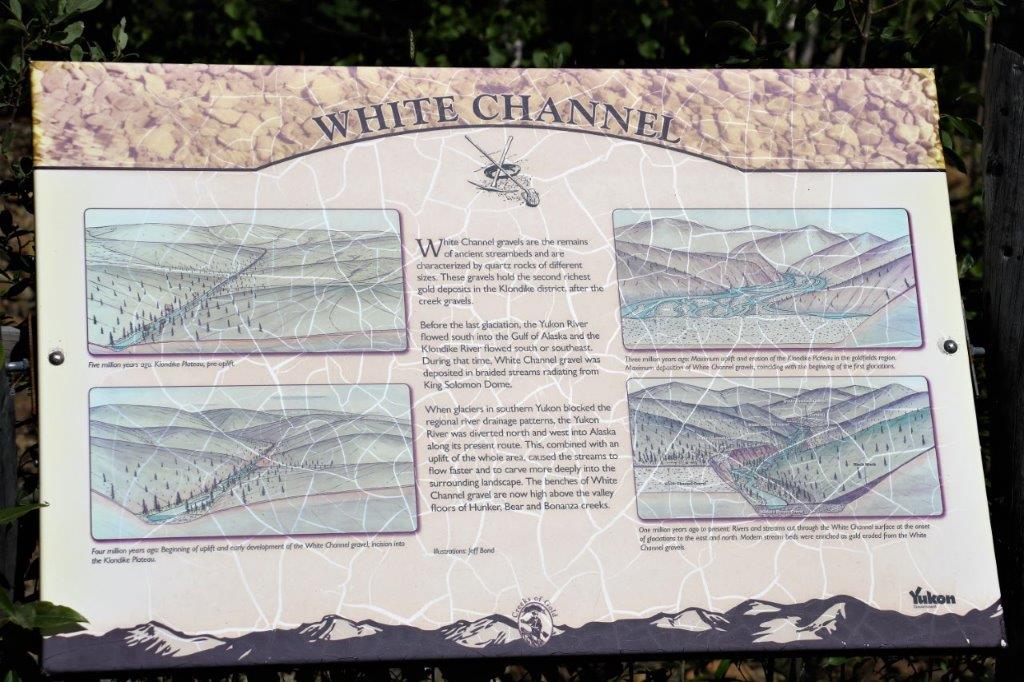
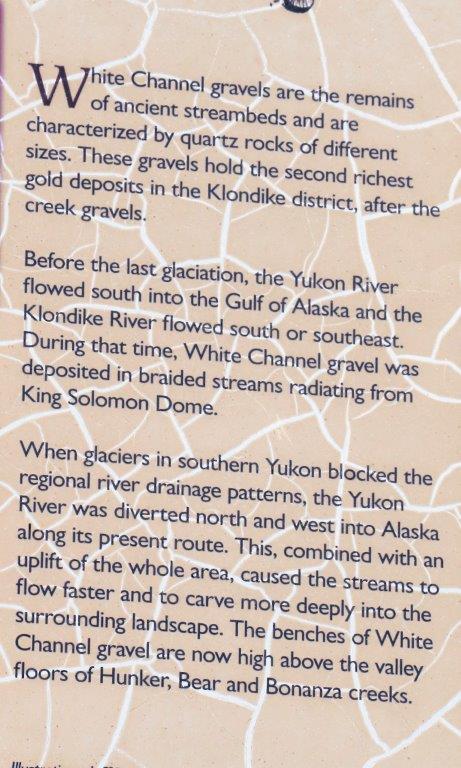
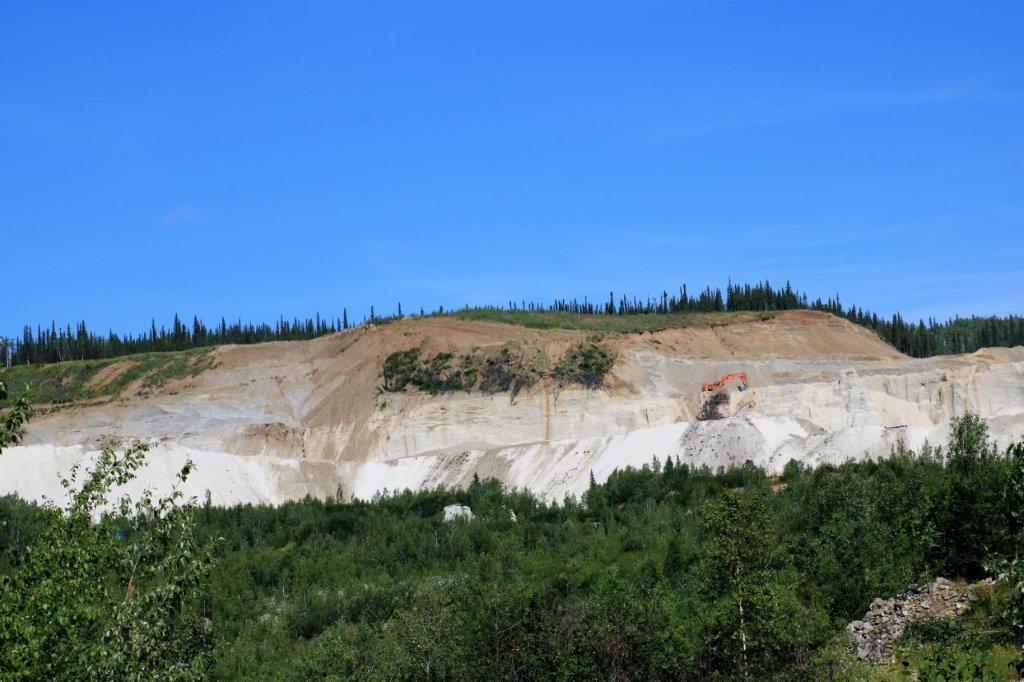
Further down the road from Discovery Claim is Claim #6. This is a Free Claim and people can bring their own gold pans and spend some time looking for gold. From Claim #6 we turned around and drove back to Dawson, passing the huge Dredge #4 on the way.  This White Channel operation was carving the whole side off a mountain.

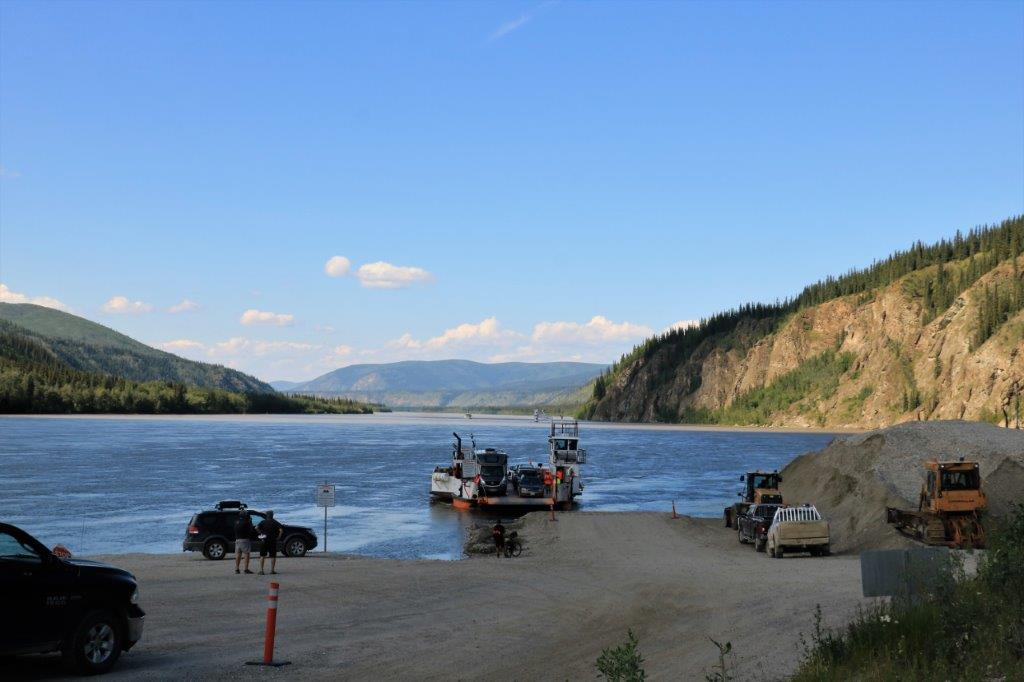
Back in Dawson we found a few more geocaches (we only have three of the twenty left to find. We will get them when we are back here on Sunday after we return from Tuktayuktuk.)  One was hidden under a huge rock at the ferry landing.  This is one of the free on-demand ferries that run on the rivers up in the north during the summer months.  We will be taking this ferry later as we cross the river to get to the Top of the World Highway into Alaska.Now you know more about placer gold mining than you ever cared to learn.  It was a most interesting day.  We have an early rise tomorrow to drive half of the distance to Inuvik, which is 766 km north (475 miles) on gravel road.  Hopefully it will not rain as the road becomes very muddy and slippery when it is wet which will turn the seven hour drive to Eagle Plains (the half way point) into a much longer one.

2018 July 2 – Dawson City, Yukon

We took a day off from ‘touristing’ today.  We slept in a little bit, had a late breakfast, and decided to take a walk and perhaps find some geocaches.  There are 20 of them around here and we will probably find them all – or close to that.

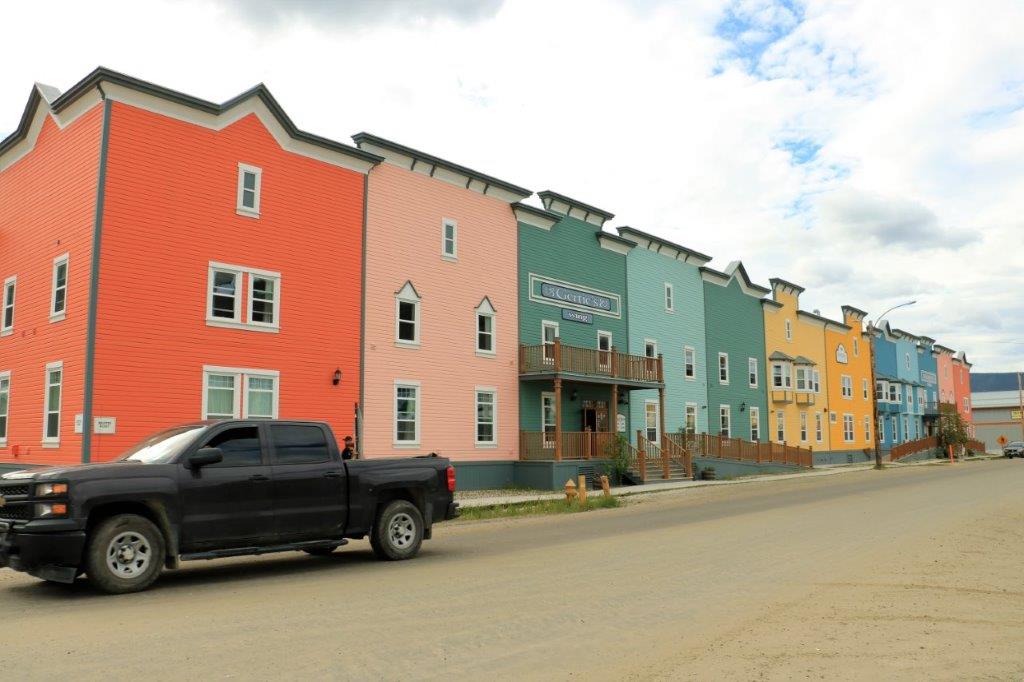
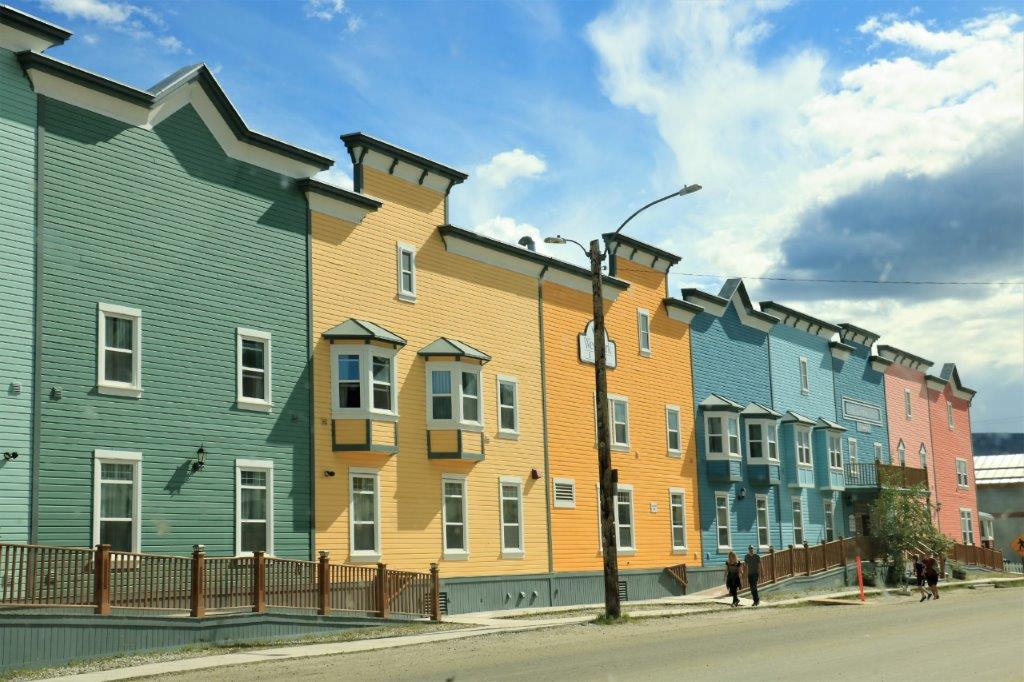
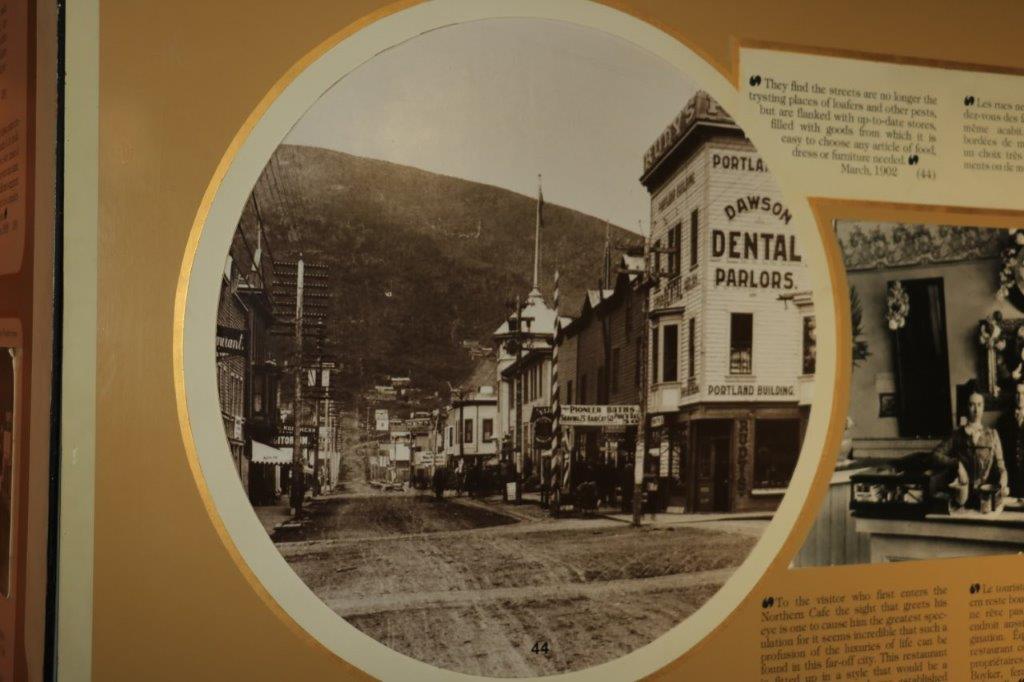
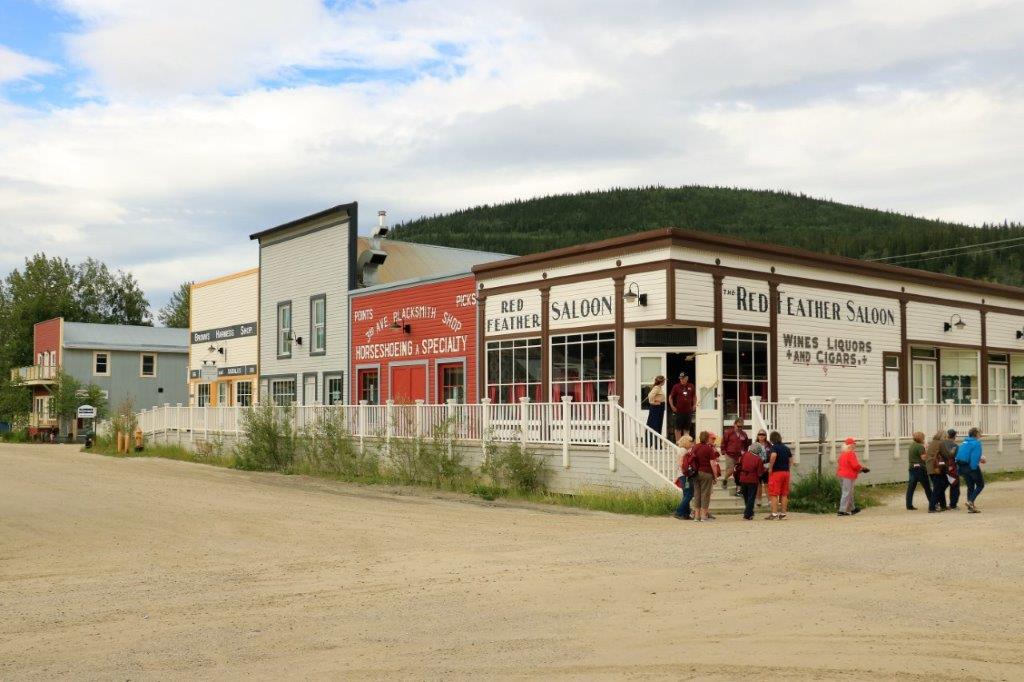
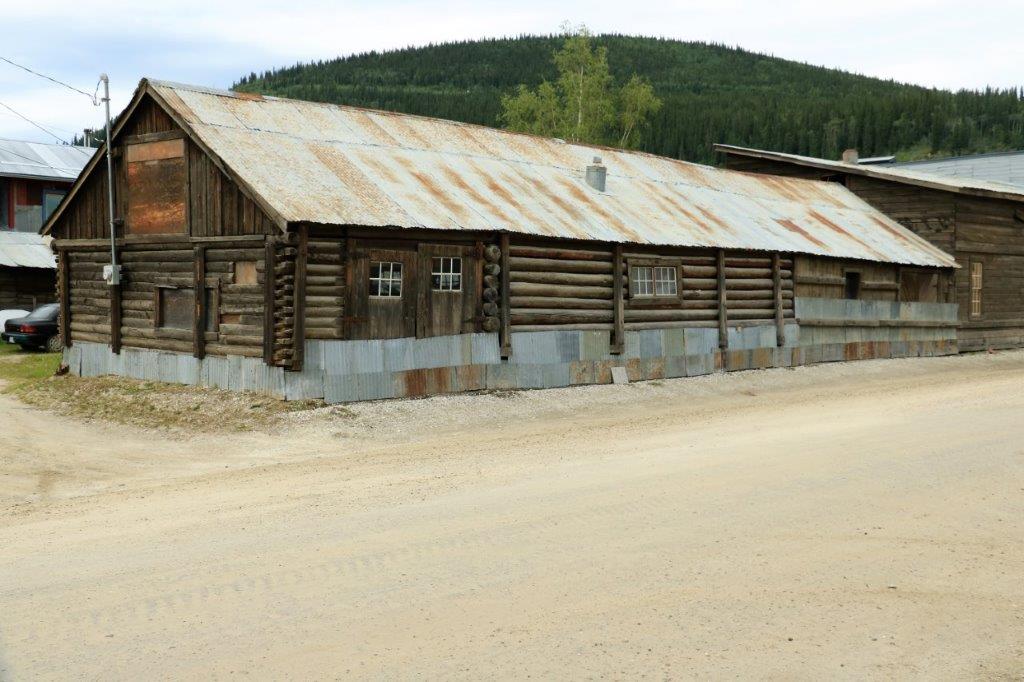
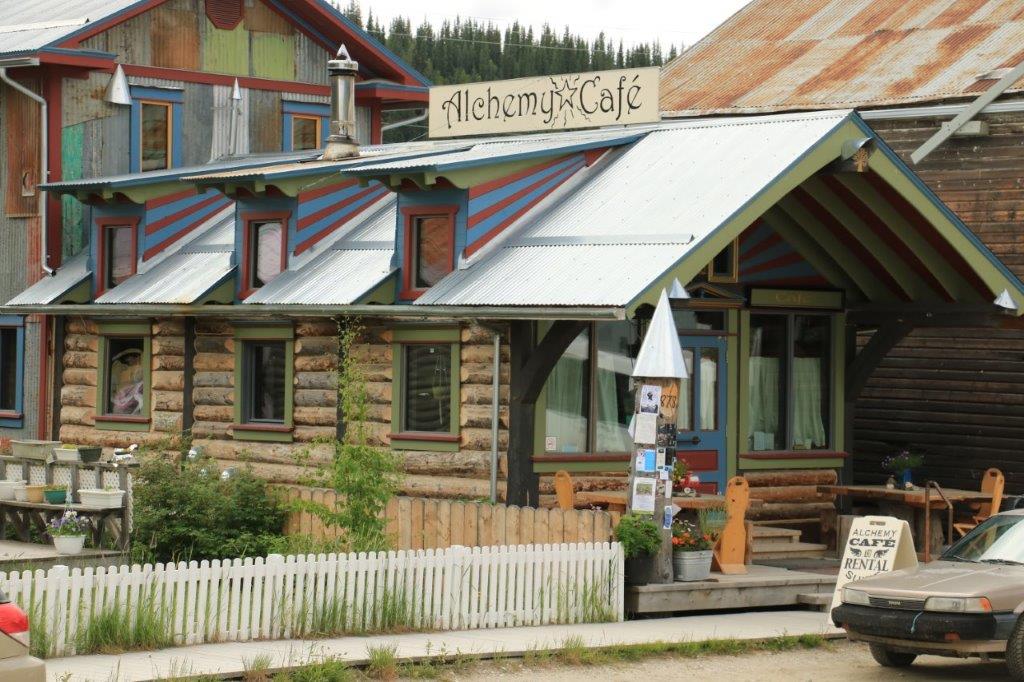
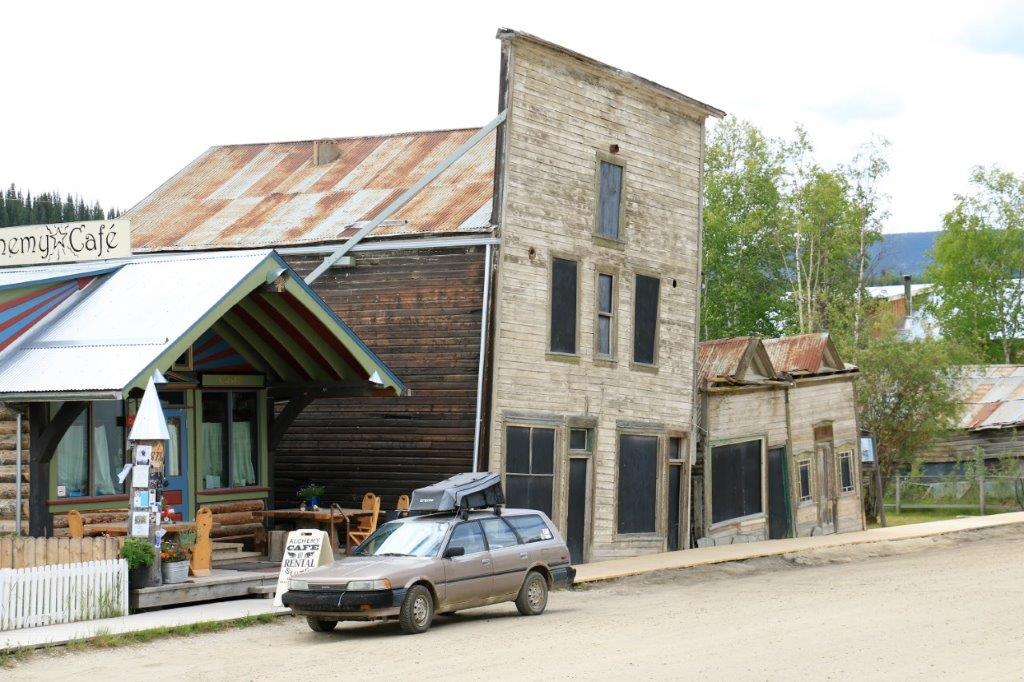
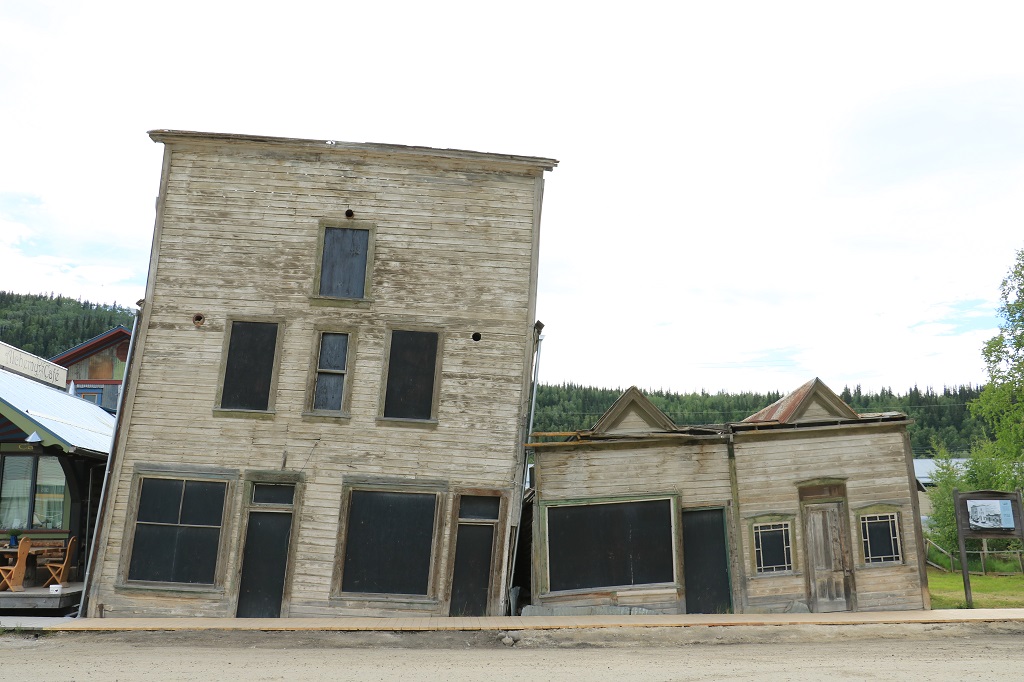
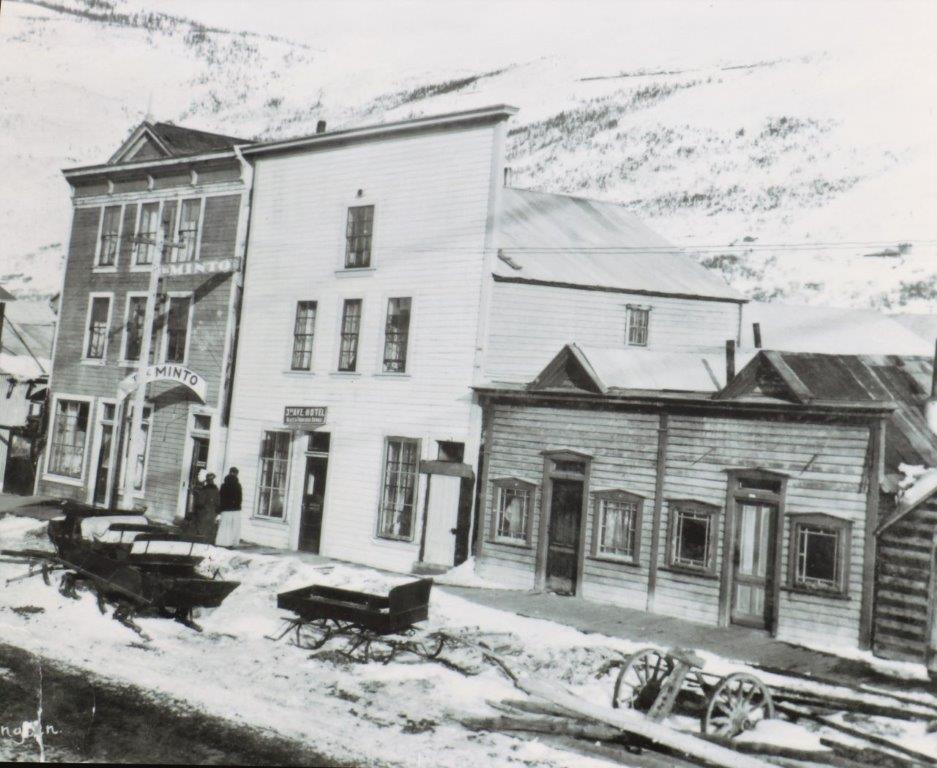
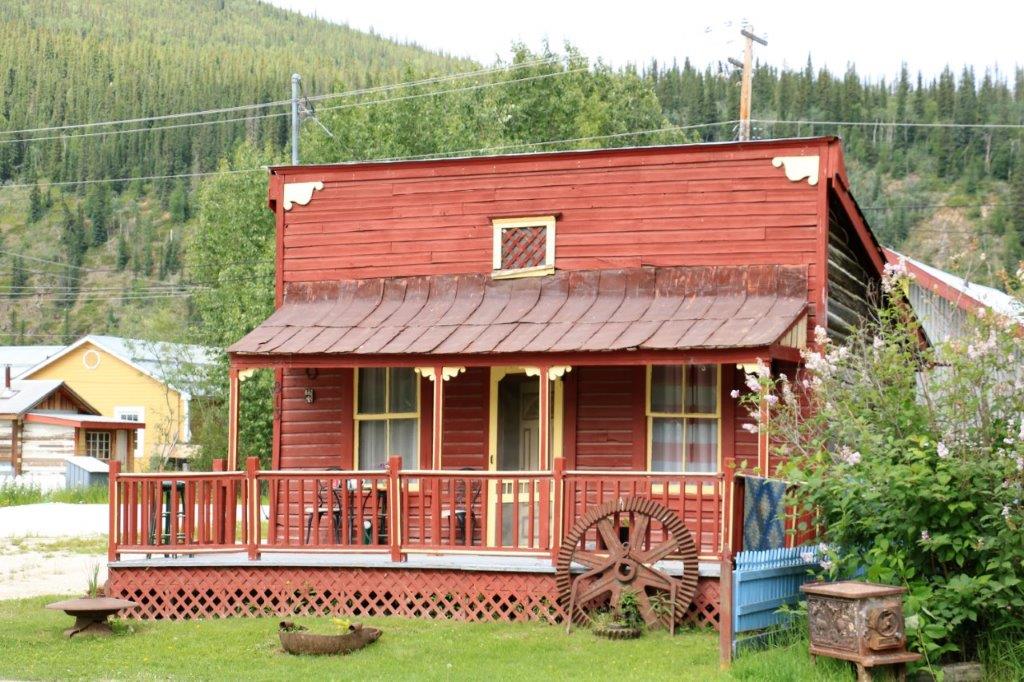
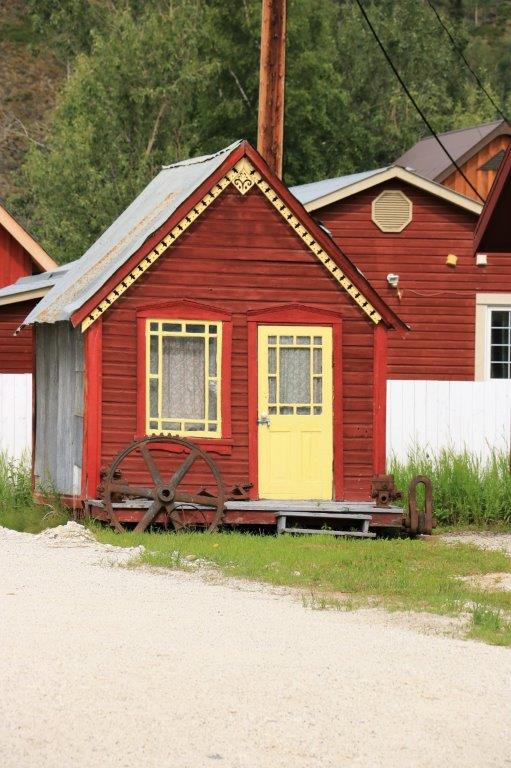
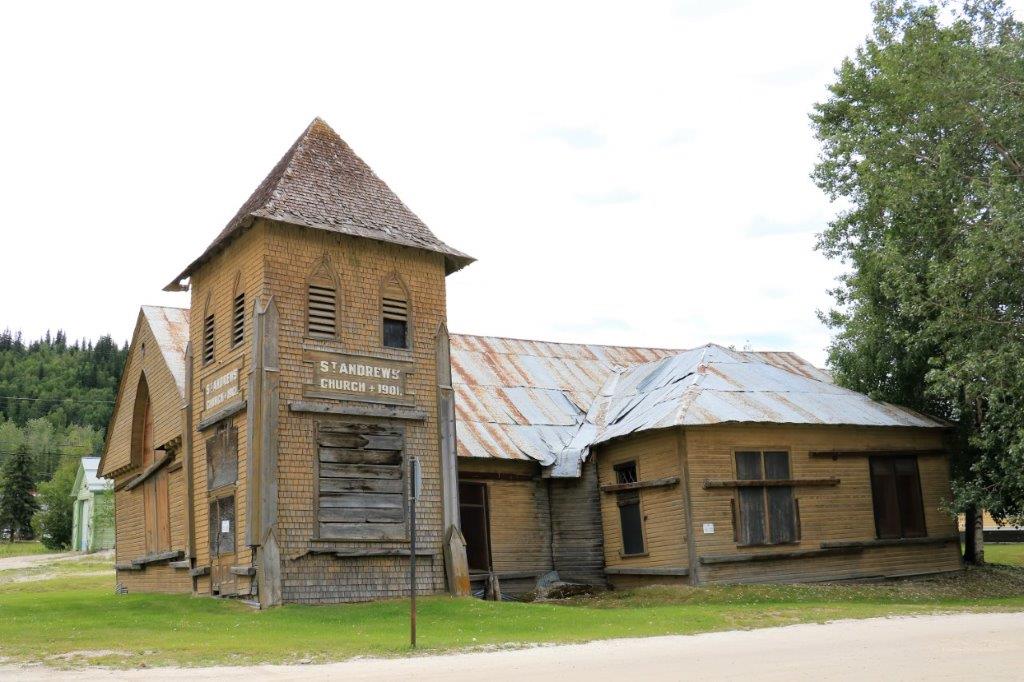
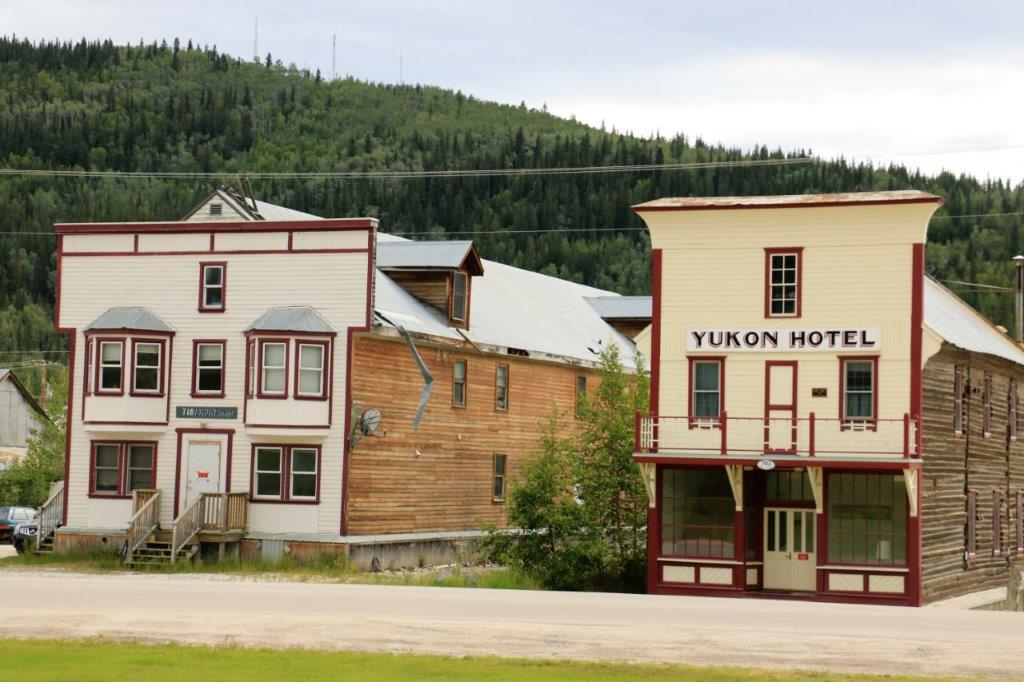
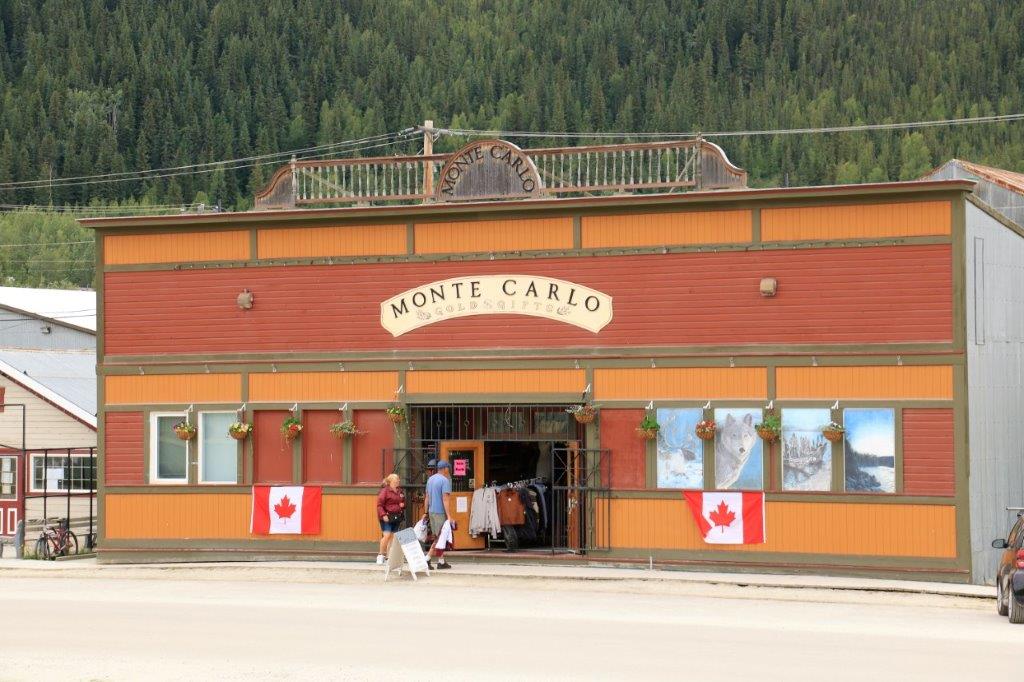
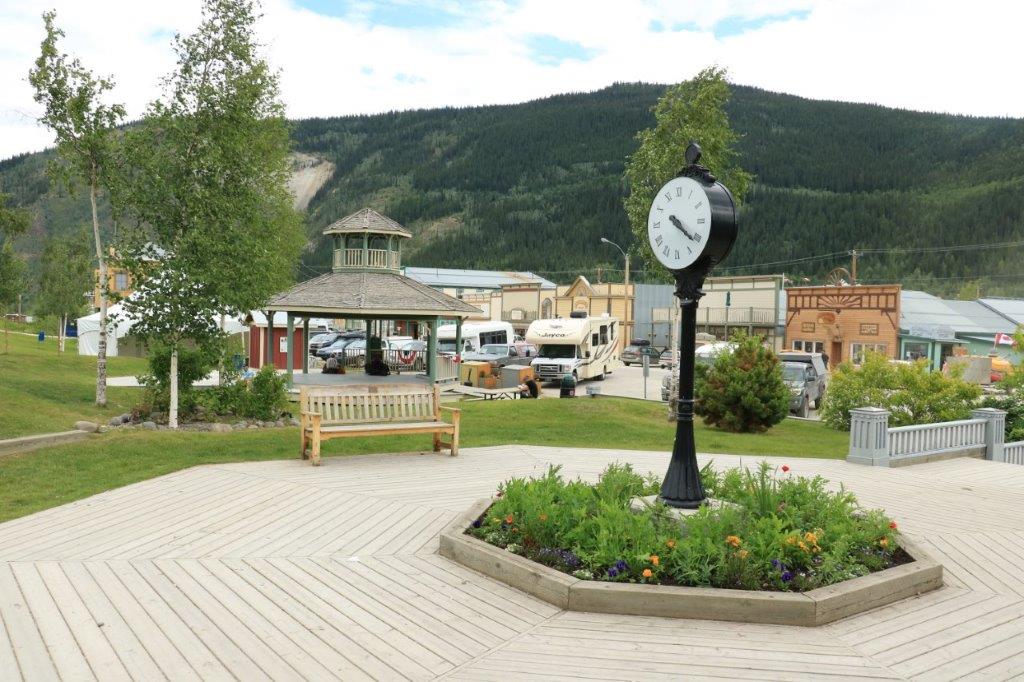
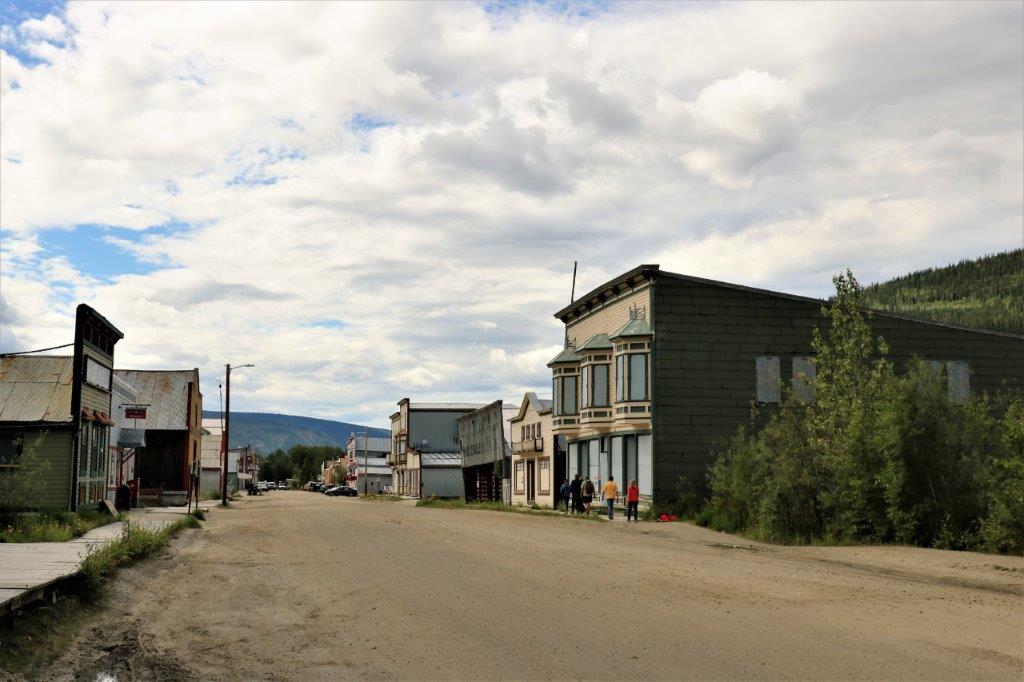
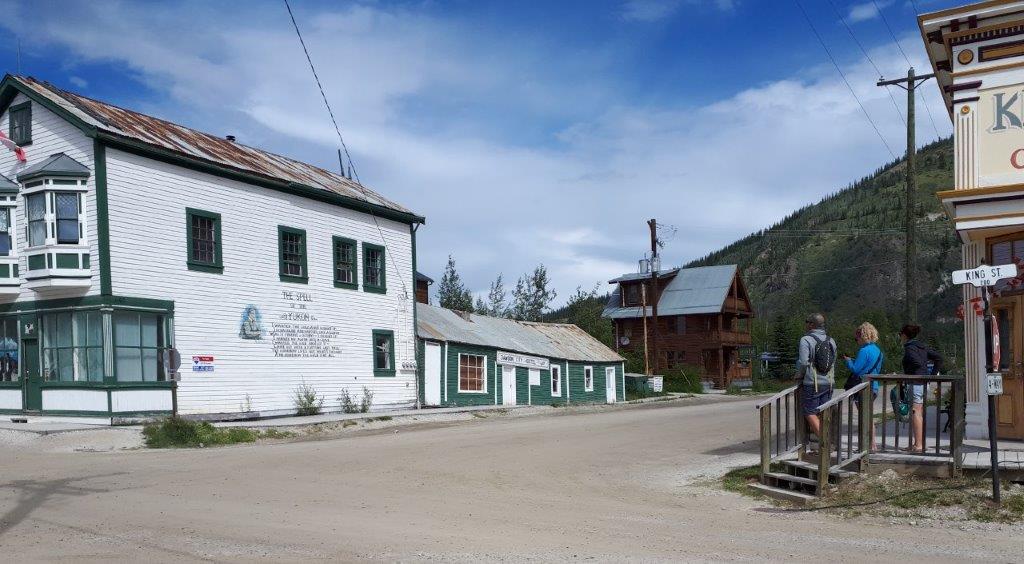
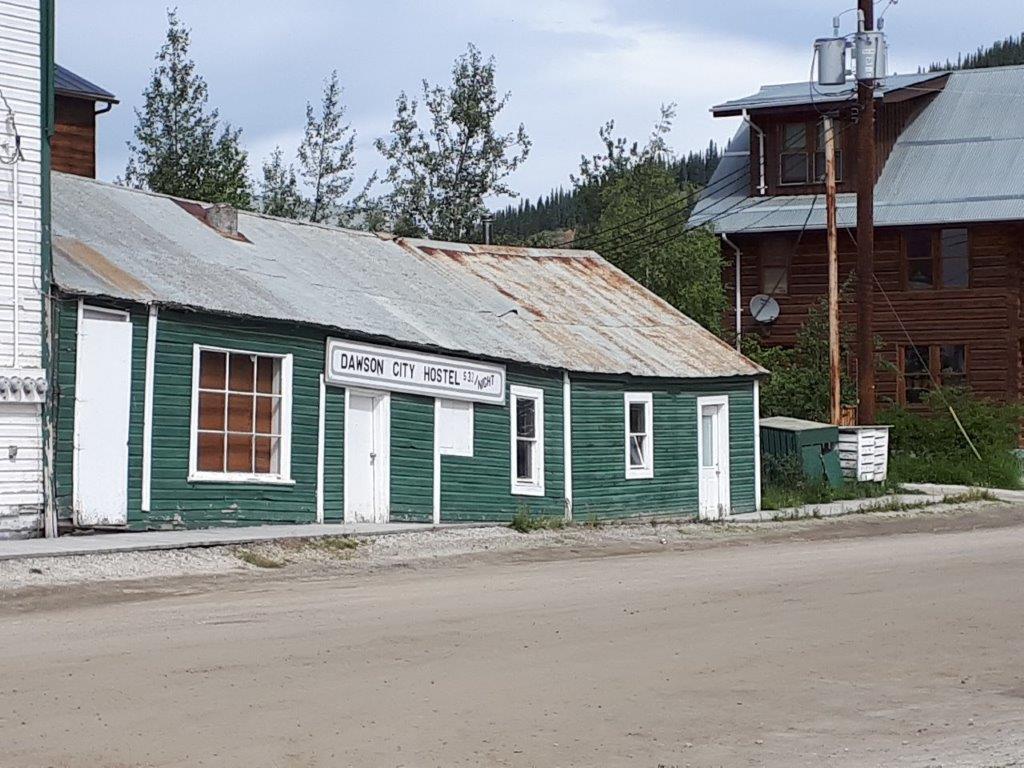
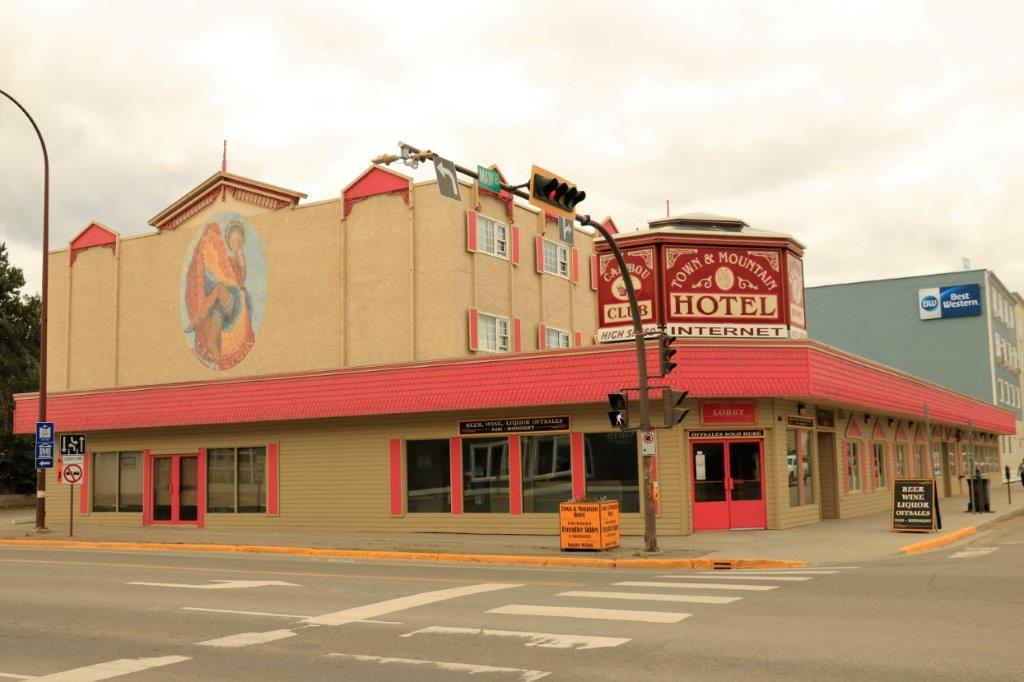
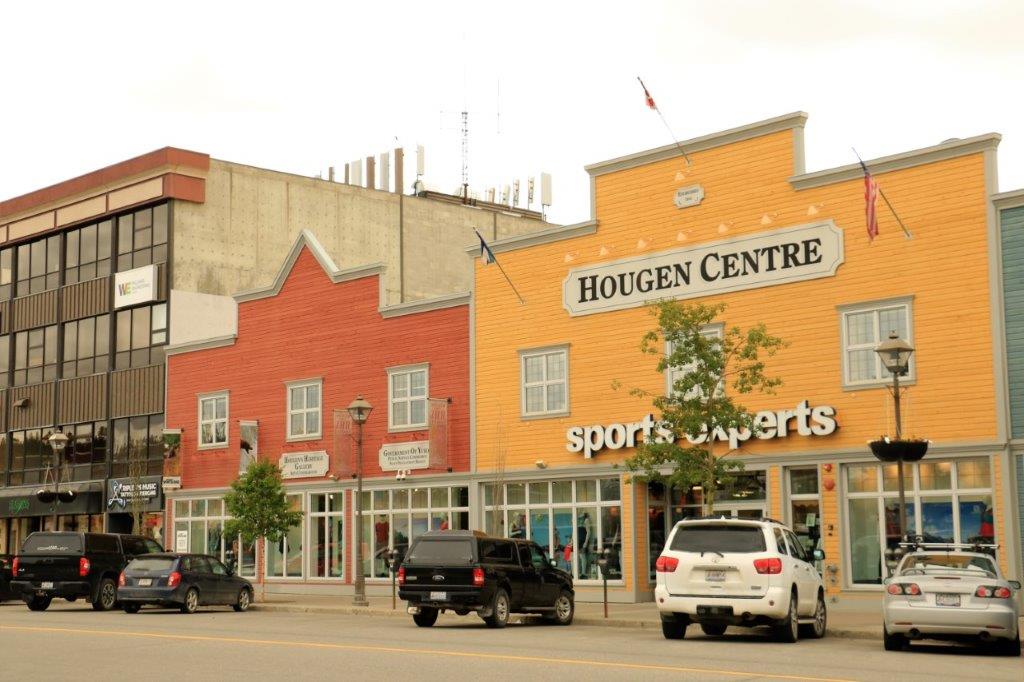
Dawson City is still very much an early 1900’s town.  The streets are wide and dirt.  The sidewalks are wooden boardwalks.  The buildings are restored from the goldrush era (1898) or have been built to look like they were built then.  The whole place is 12 blocks long and about 8 blocks wide so it is easy to get around by foot. Our hotel is a block long on both sides of the street.  The one side is all one building painted to look like several.  The other side, where our room is, has three separate buildings.  It is a nice place, except there is no wi-fi in the rooms, only the lobby, restaurant, and courtyard.  But we were told this would be the case so we were not too shocked.  It works pretty well and we are only usually on in the evening so, for us, it is not too bad.

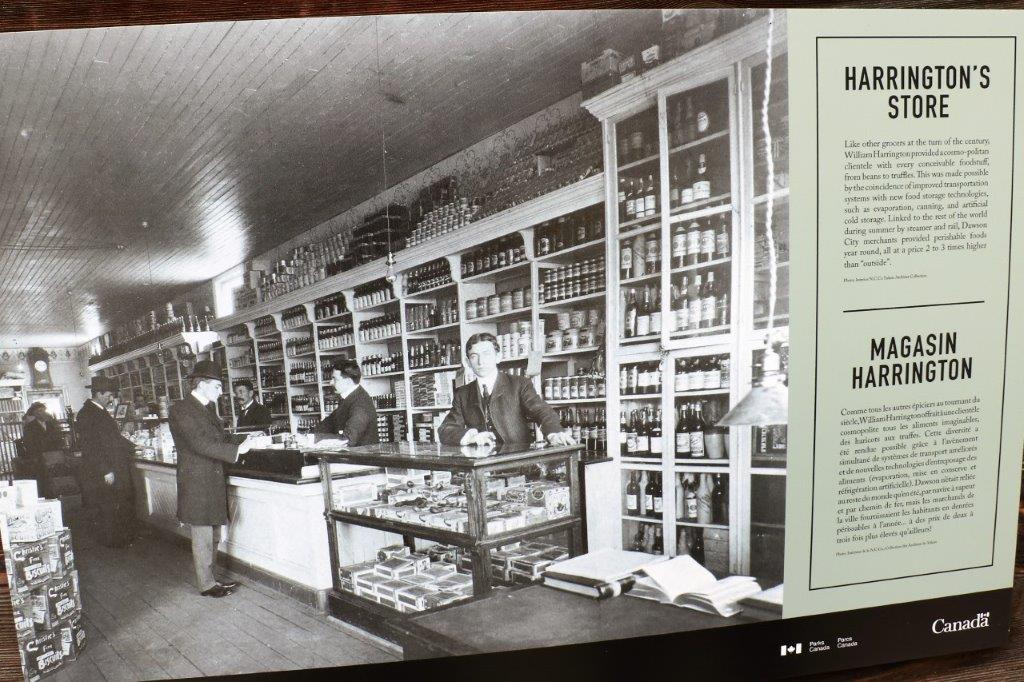
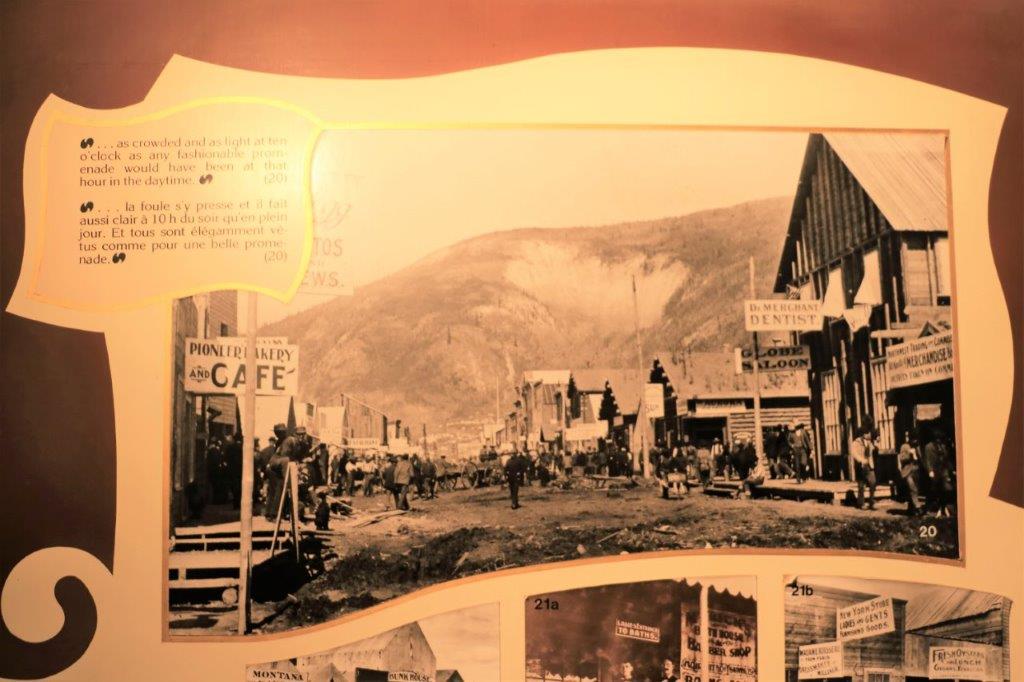
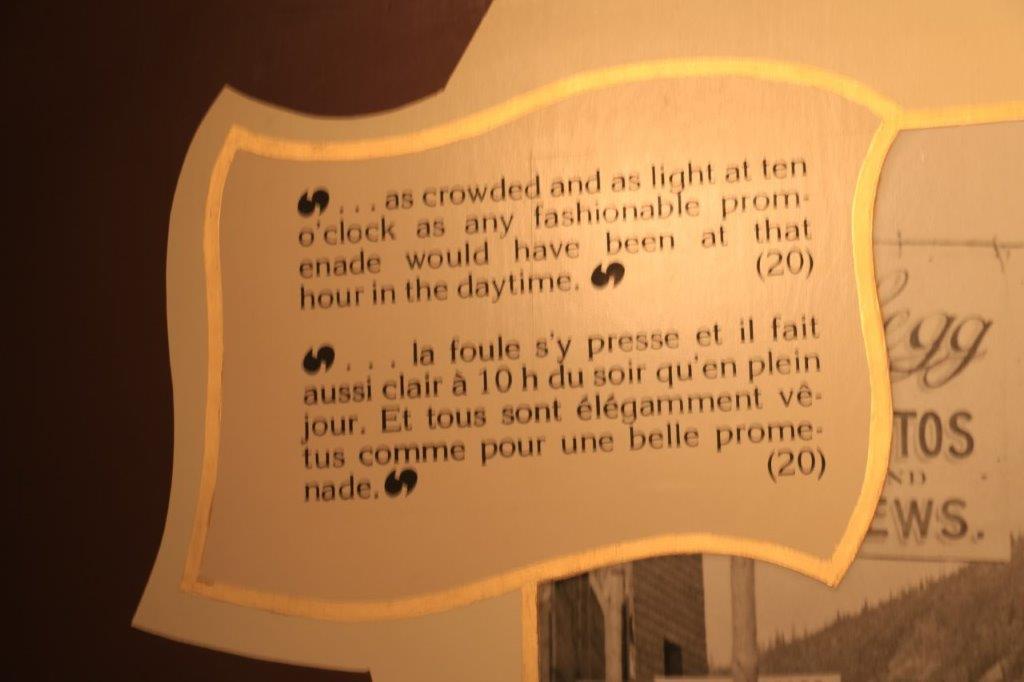
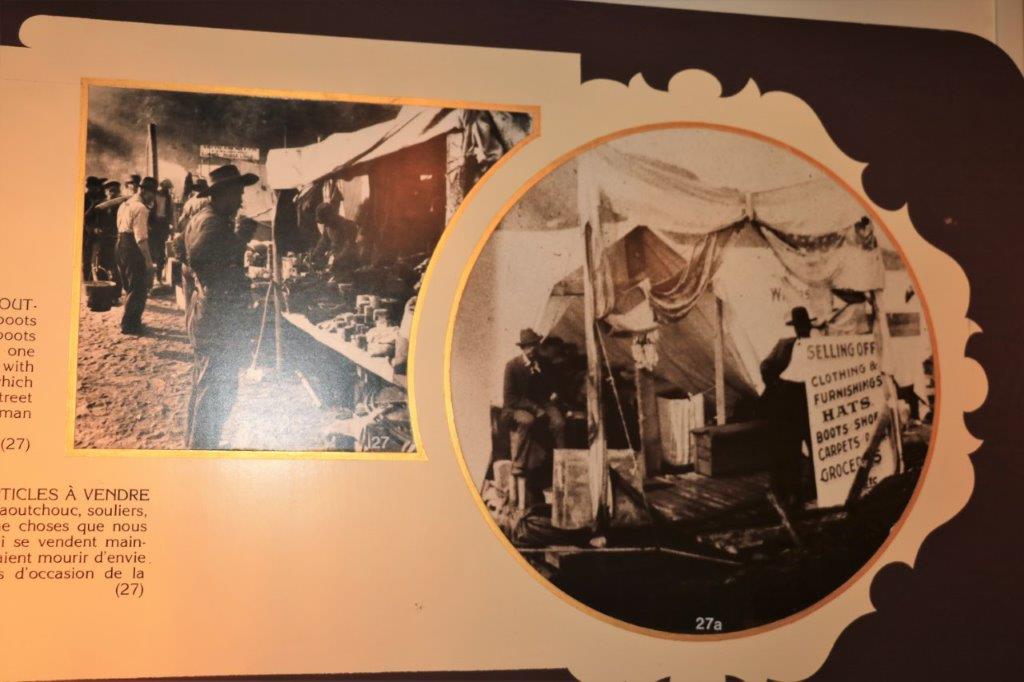
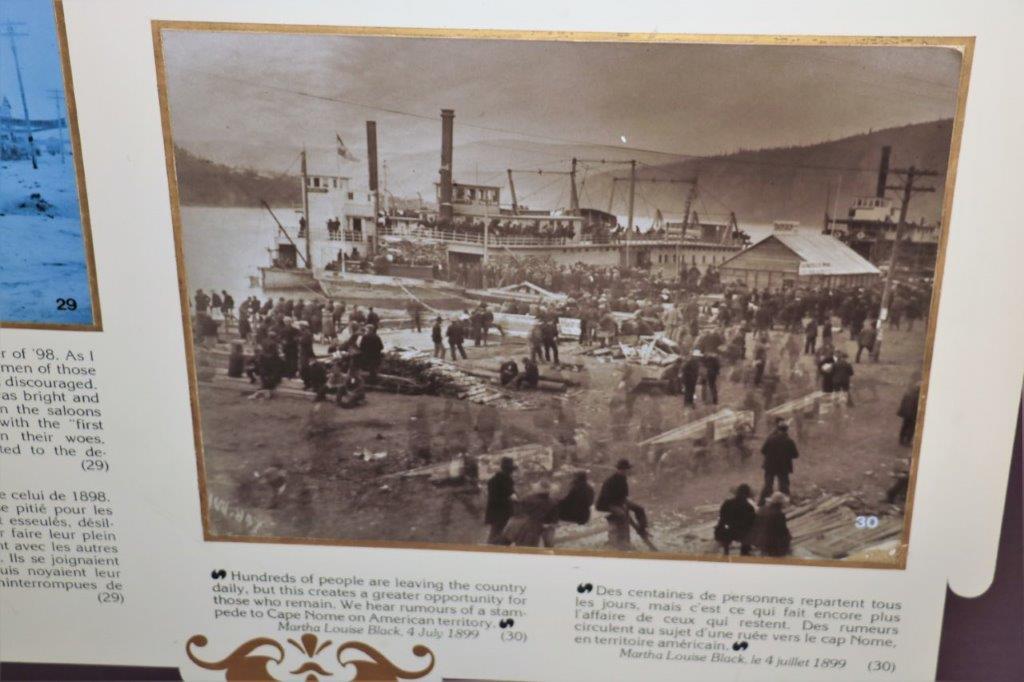
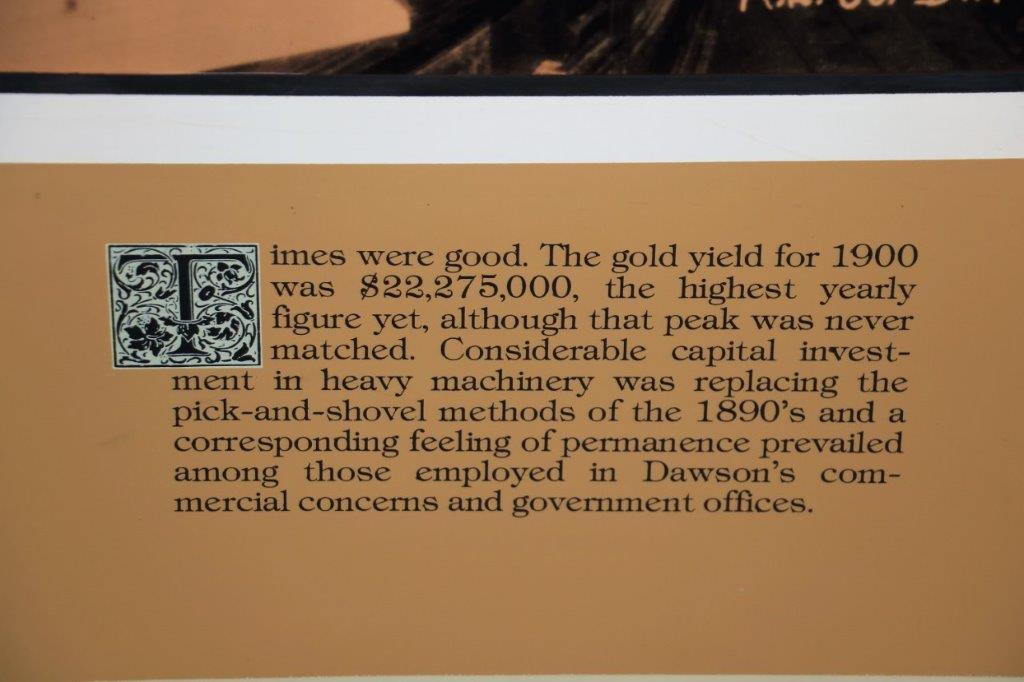
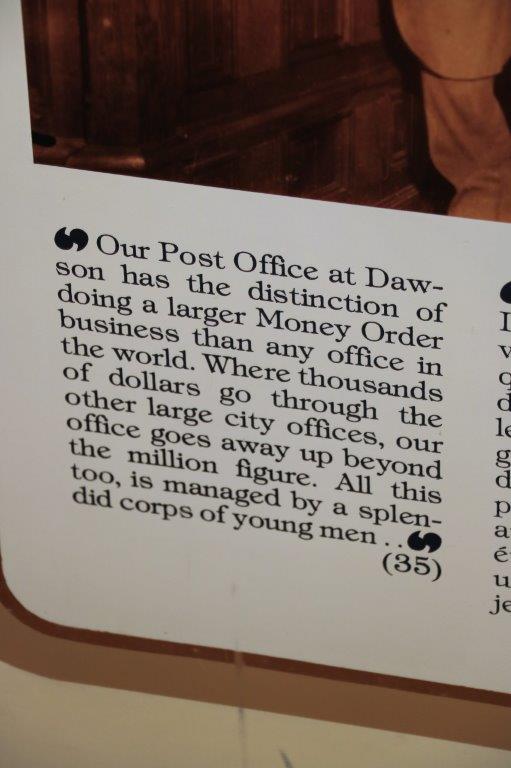
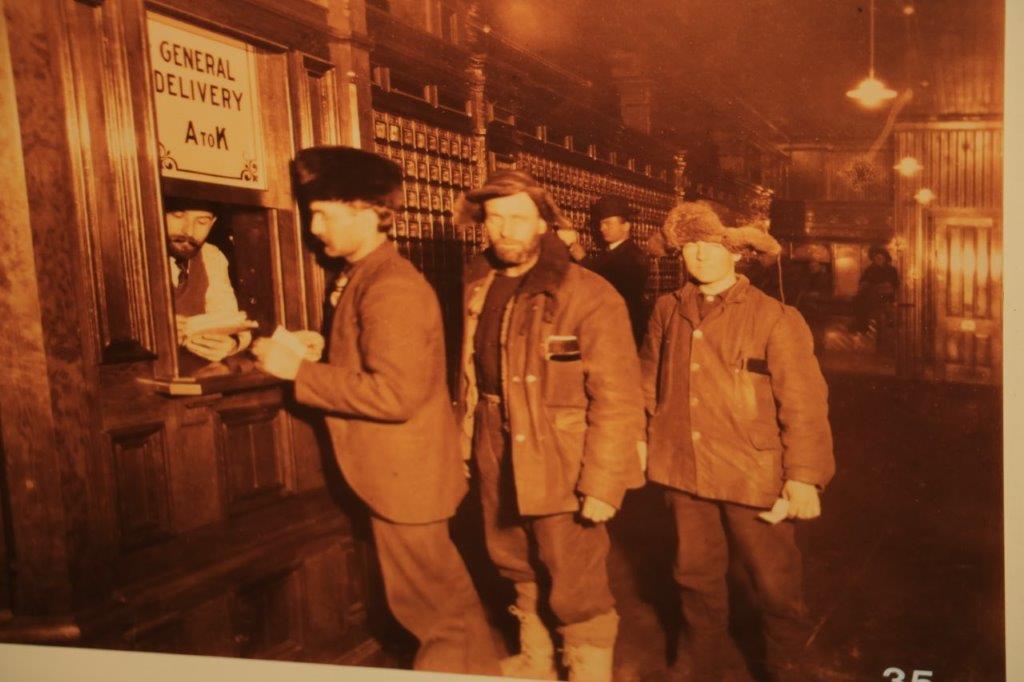
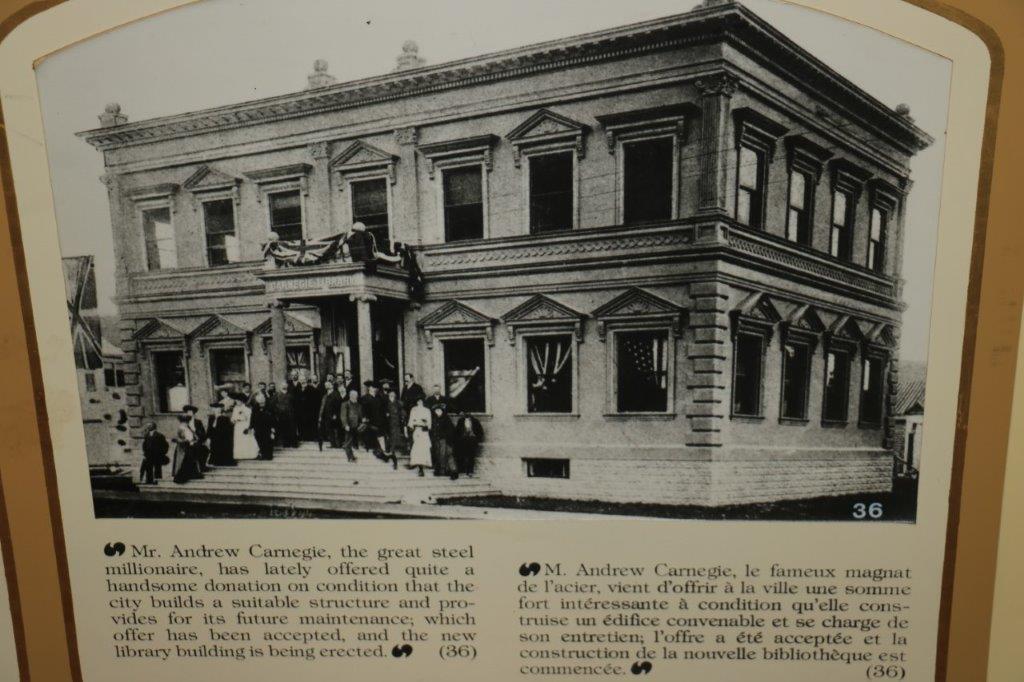
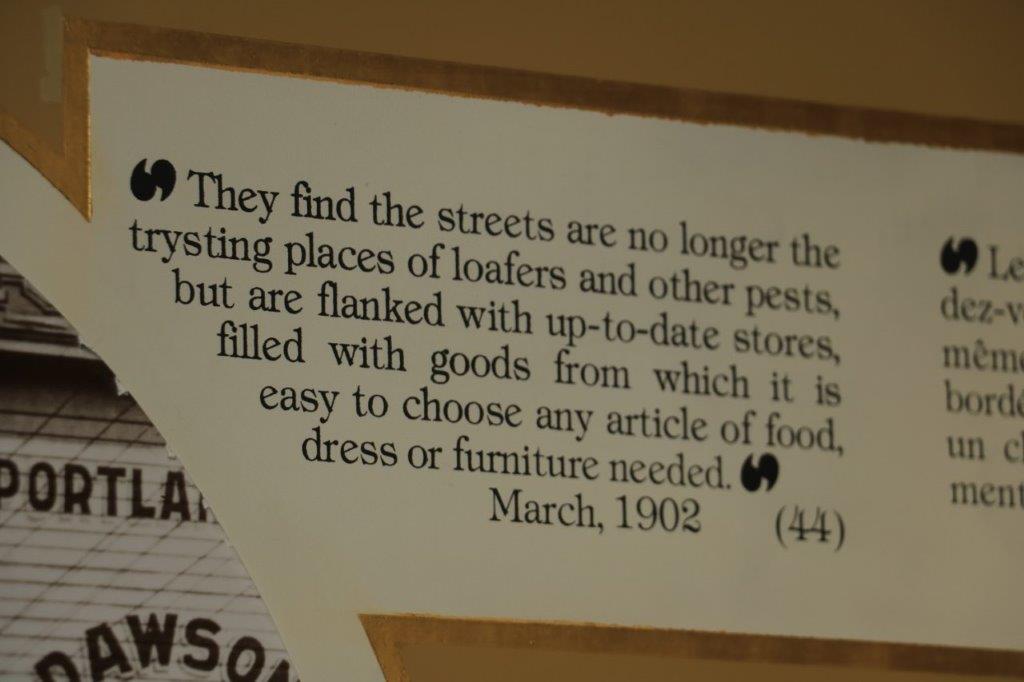
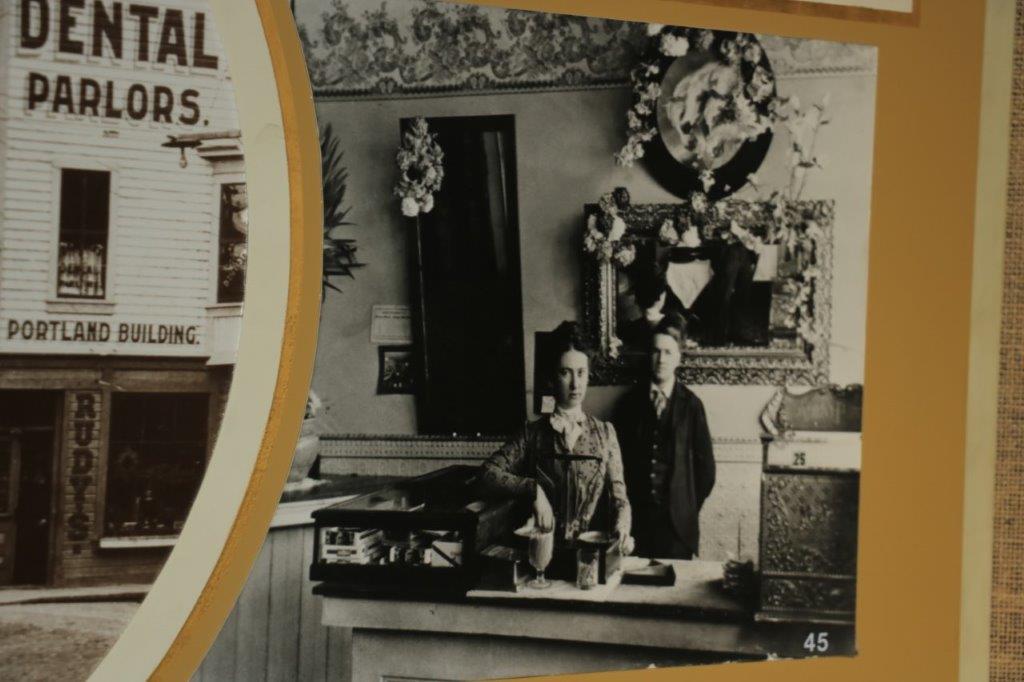
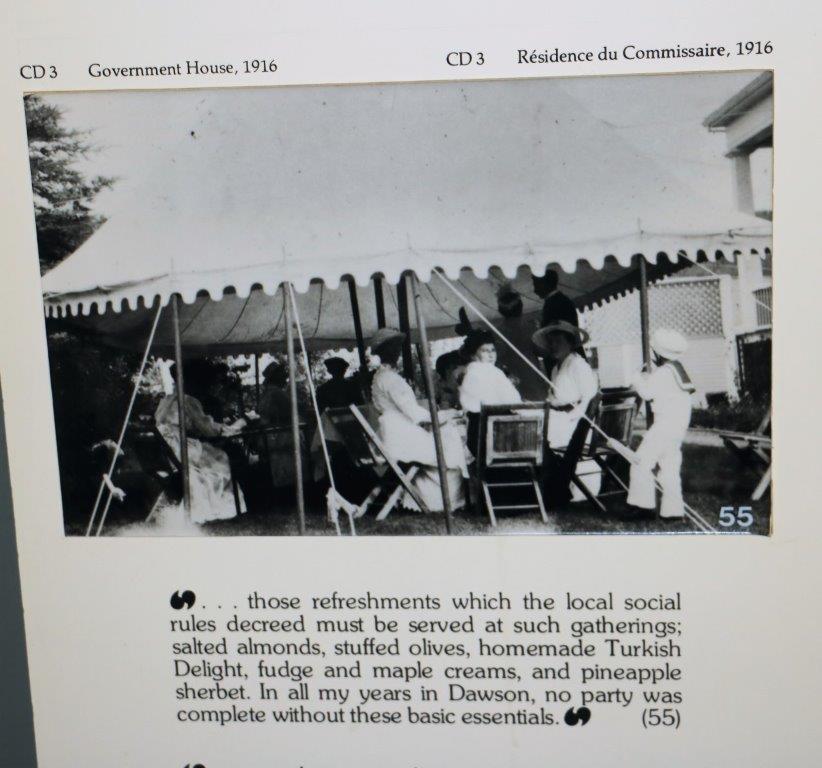
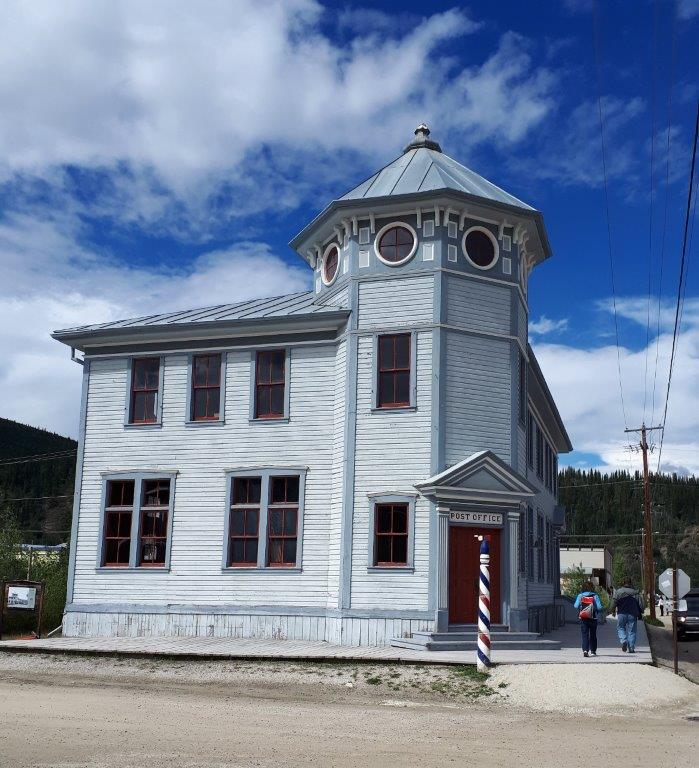
The first building we explored was a display by Parks Canada with photos and comments from people who were here during the goldrush and the early days of the city.  (The city of Dawson is a Canadian Heritage Site.)  These nice two-story buildings have been built only four years after the crude log shacks and mud bog roads!

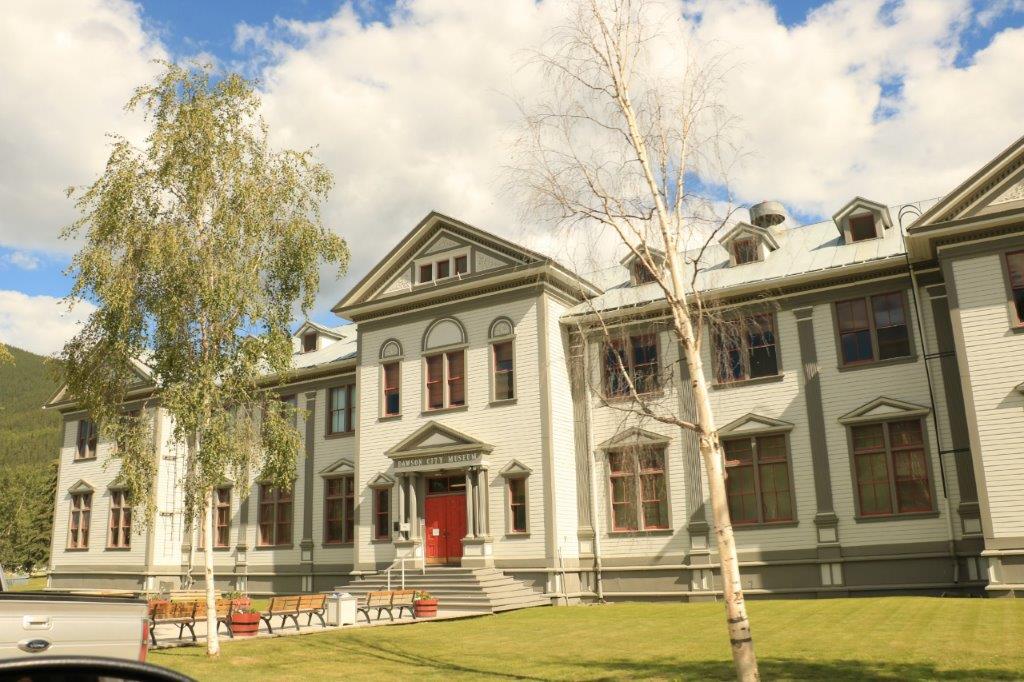
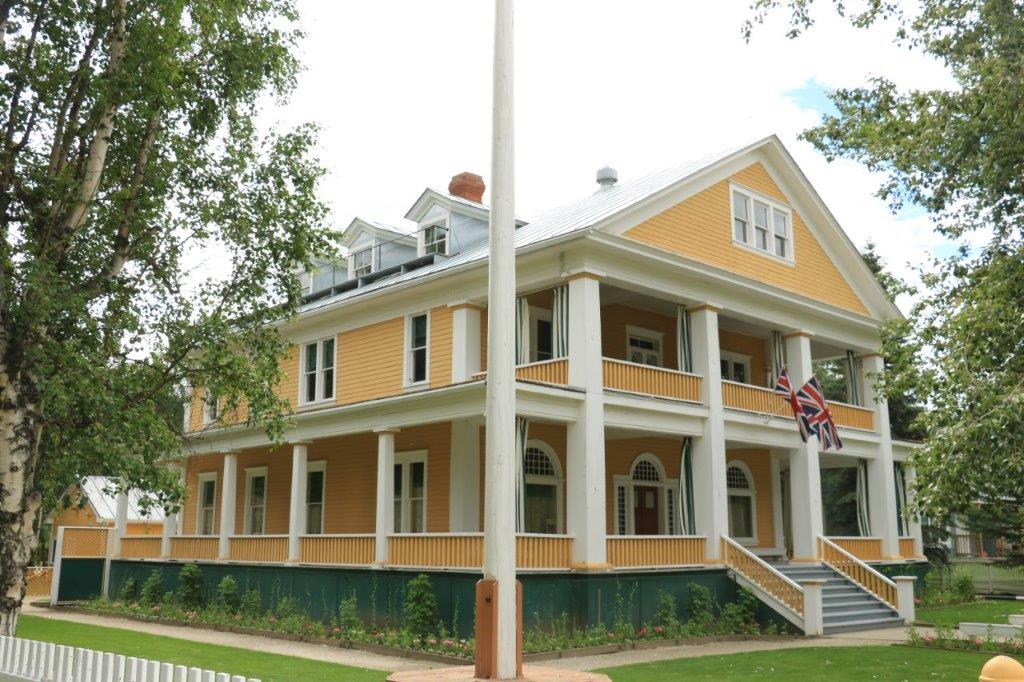
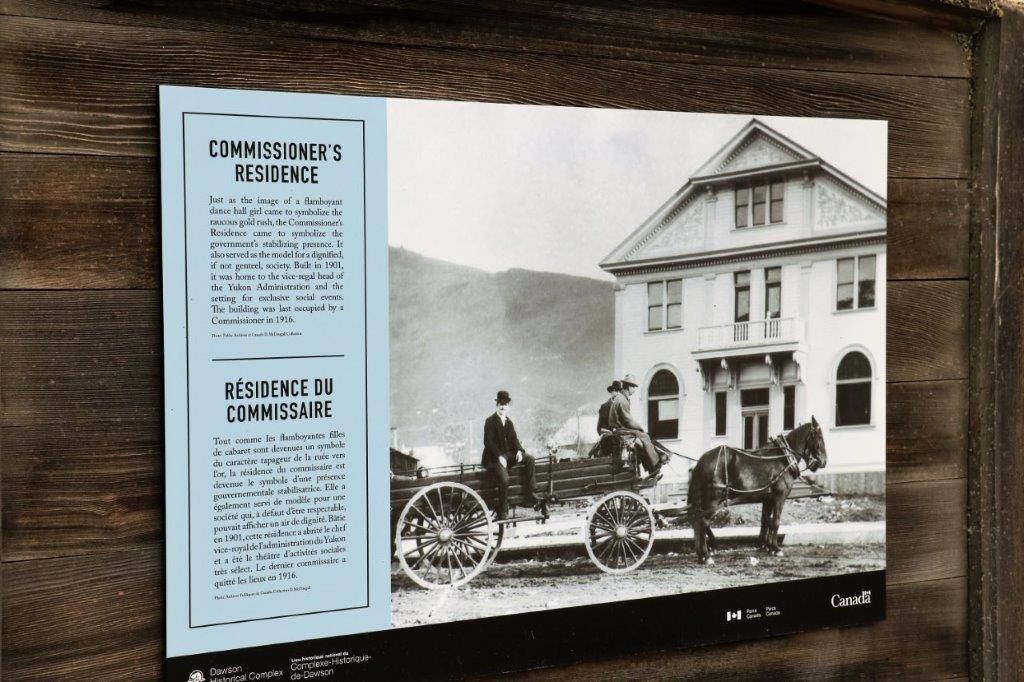
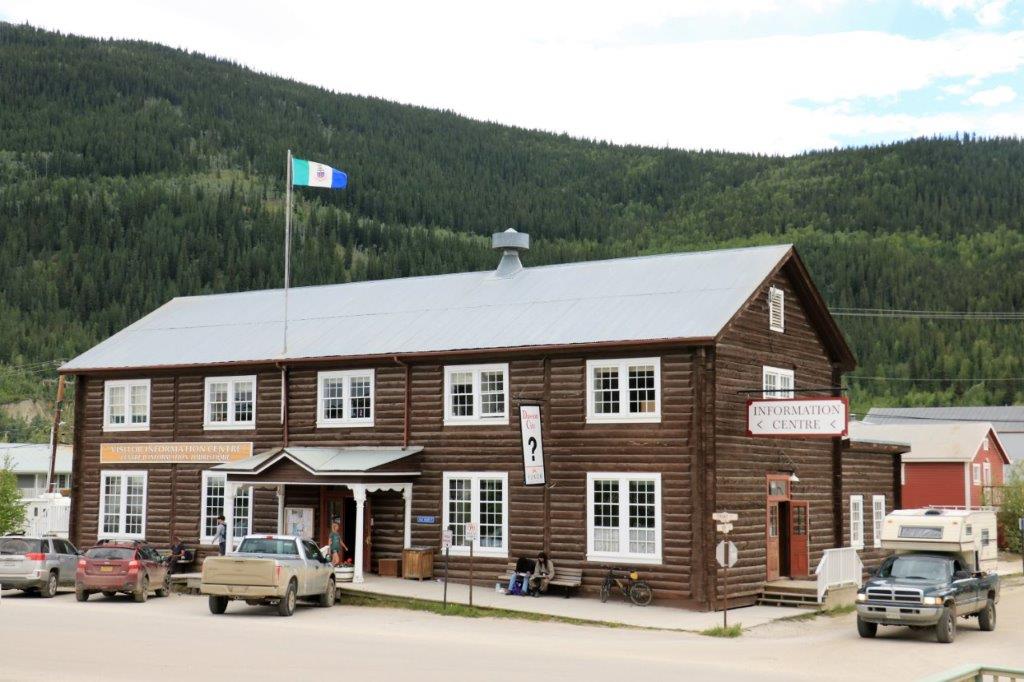
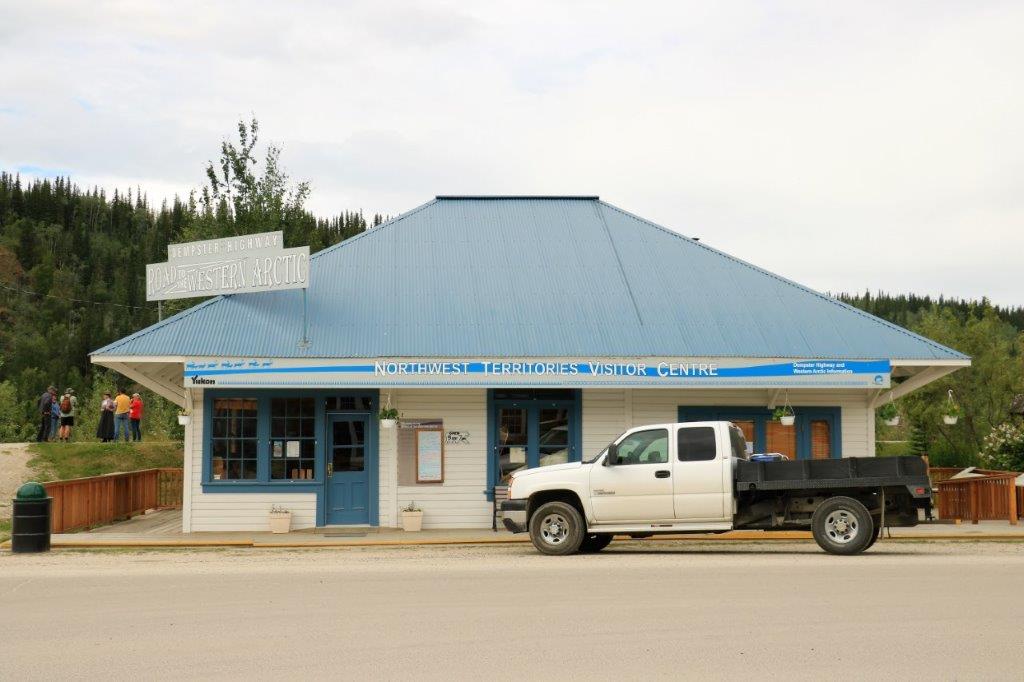
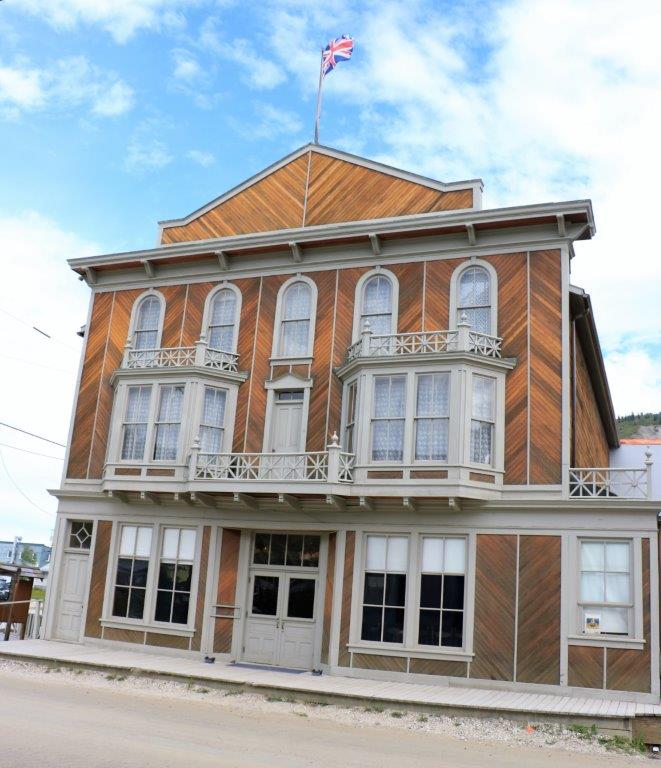
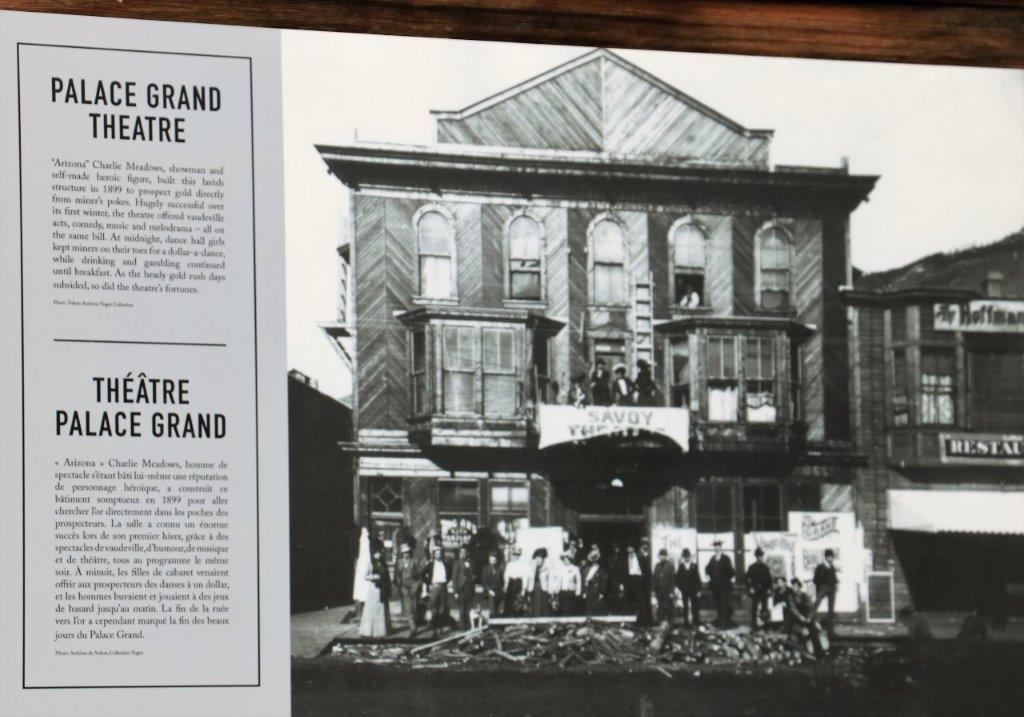
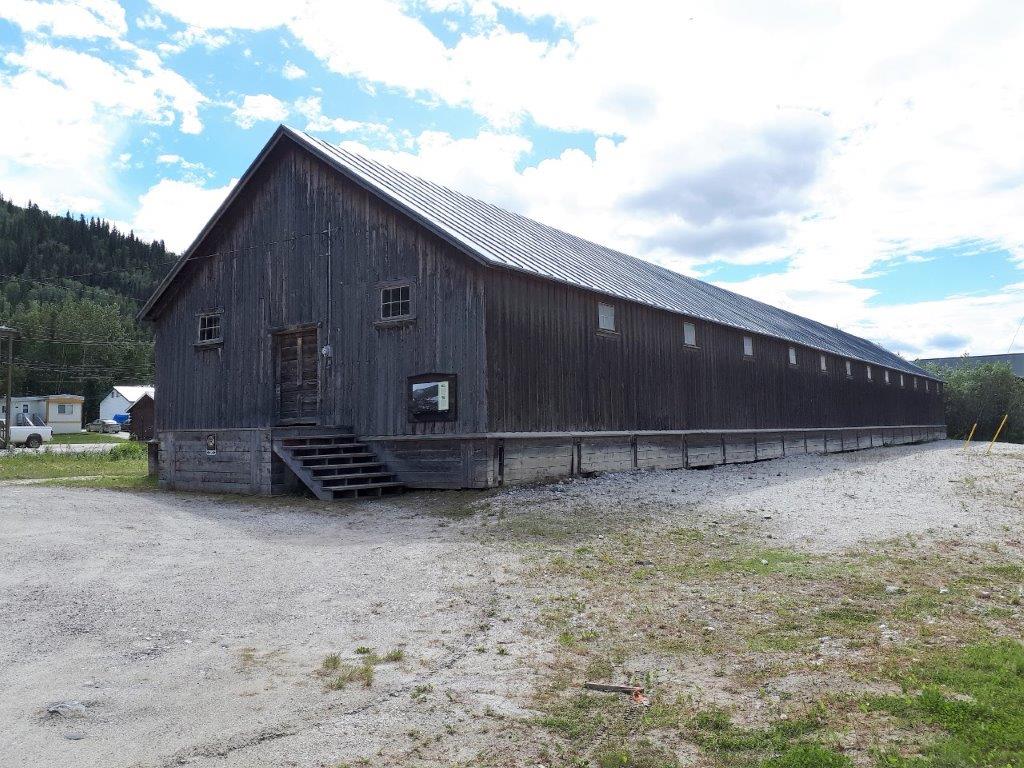
I loved the old doors at the entrance to the exhibit building.This used to be the Commissioner’s building, it is now the museum. Be worried, very worried, if I go explore it….  The Yukon Visitor’s Center and the Northwest Territories Visitor’s Center are across the street from each other.  Dawson City is in the Yukon Territory and the Dempster Highway is 40 km east of town.  The Dempter is 700+ km of gravel road and is the only land access to the Northwest Territories communities of Inuvik and Tuktayuktuk, so NWT staffs a Visitor’s Center here as well.  This hotel has been closed for a few years for renovations and is now open with regular entertainment shows.   During the four months of the year that the river was open, boats would bring supplies of anything and everything that might be needed in the town during the 8 months the river was frozen.  The goods would be stored in several long warehouses like this and distributed to the stores for sale to the miners and families as needed.  For a very high price, of course.Of the 20 geocaches in town, Parks Canada has hidden six and Grade 7 classes of the last few years have hidden four.  The Parks Canada caches are hidden at historic buildings and if you find at least four of the six you go to the Yukon Visitor’s Center and give them the answers to a question about each (the question and answers are on the log paper with each cache) and they will give you a prize.  On our stroll today, we found all six of them.

Tomorrow we will go back to seeing the various historical sites and museums in the area.  It was nice to have a lazier day.  We enjoyed our walk and even got some laundry done this afternoon.  It is almost 10 pm as I write this and outside it is a bright and sunny as if it were noon!

2018 July 1 – Whitehorse to Dawson City, Yukon

Happy Canada Day!  We spent the day driving 535 km from Whitehorse to Dawson City, mostly in the rain.  It was steady for the first few hours, then would quit for awhile, then start again.  As we were nearing Dawson City it stopped all together and we had a nice evening our first night in town.  We are staying two days and three nights.

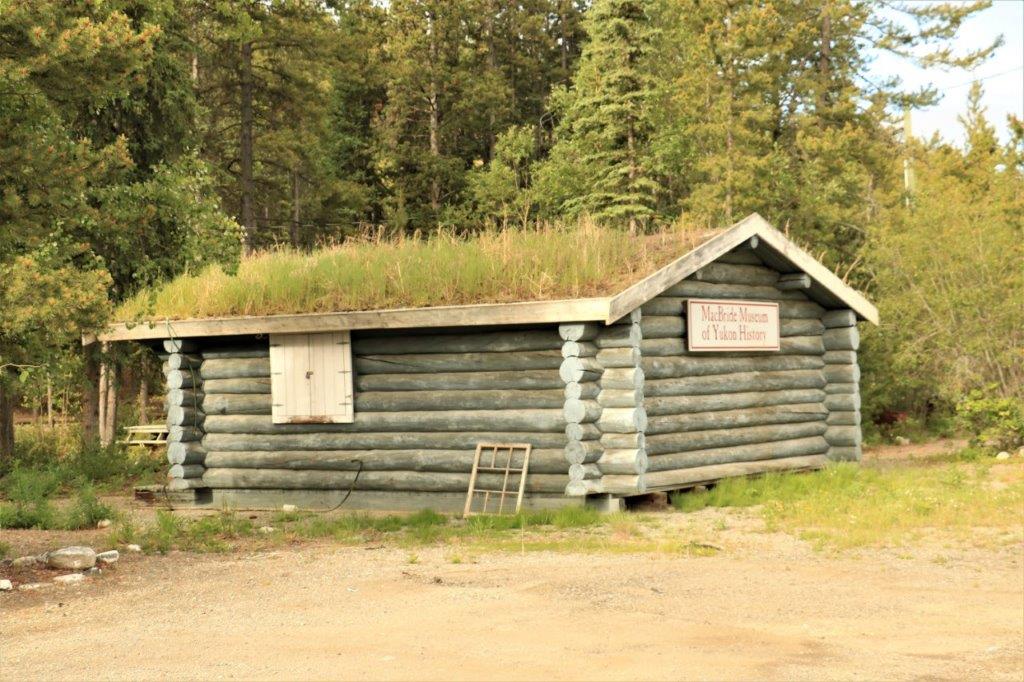
Not far out of Whitehorse we stopped at a mining museum to find a geocache. The museum wasn’t open. It was either too early in the morning or it wasn’t opening at all.  It did look a bit neglected.

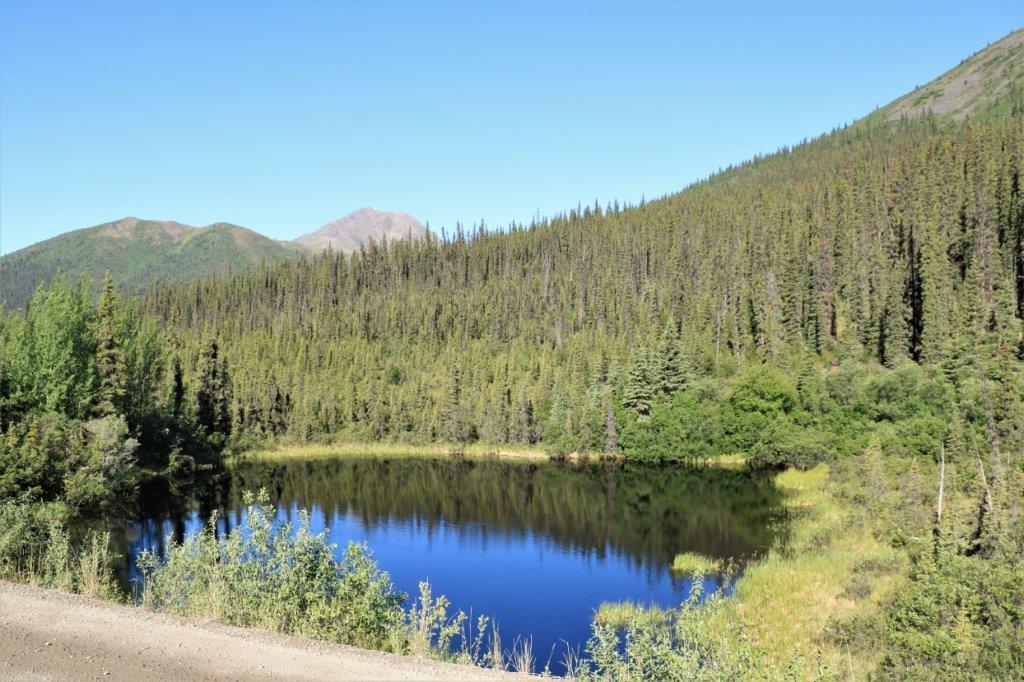
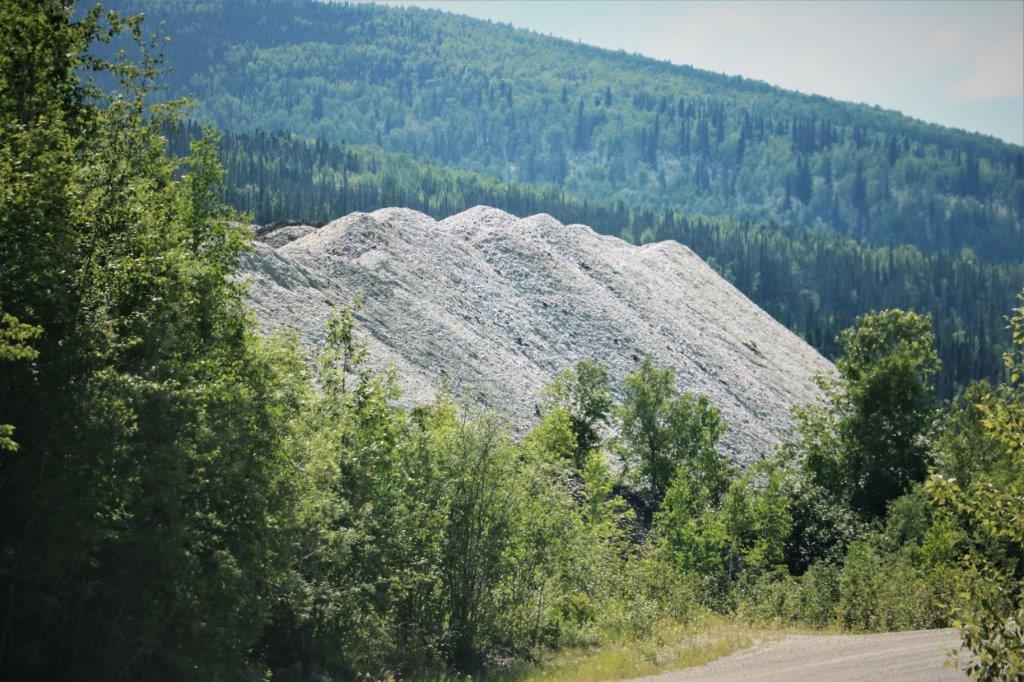
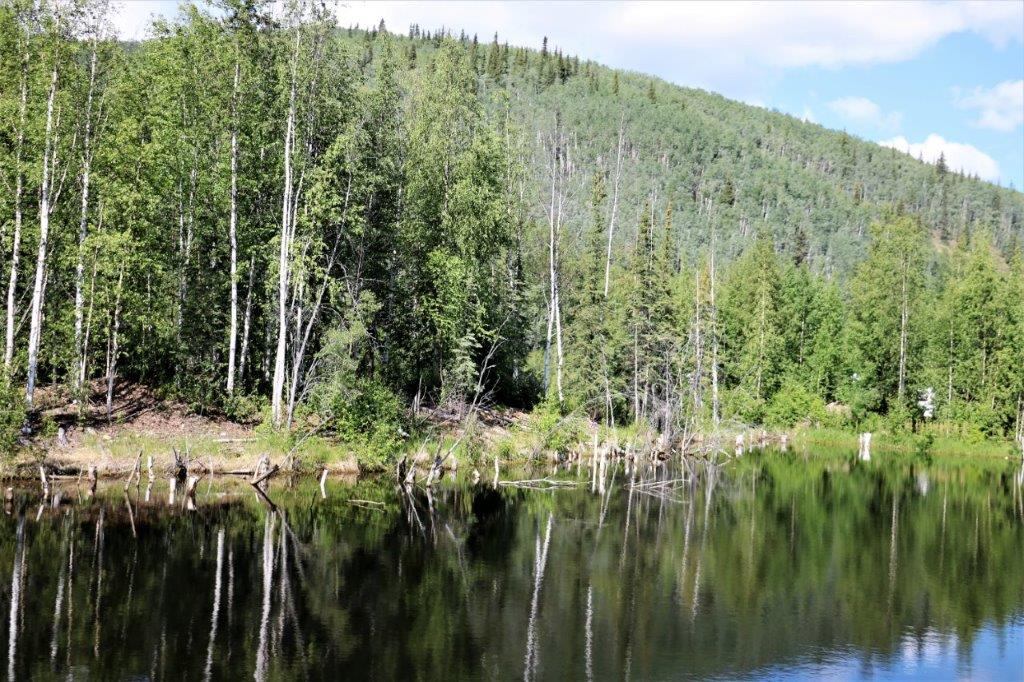
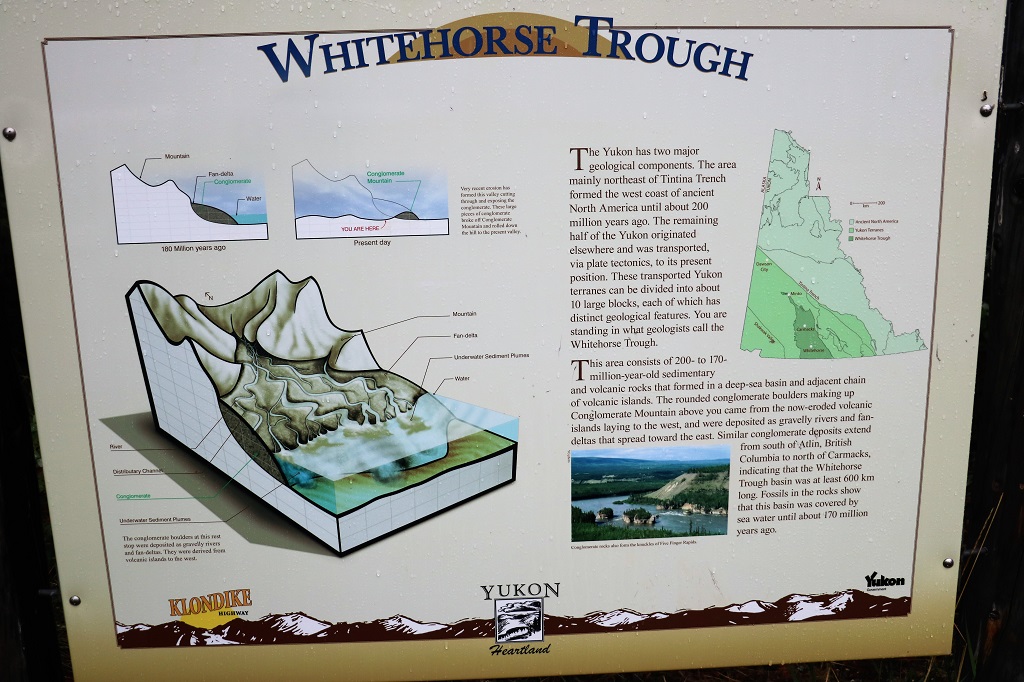
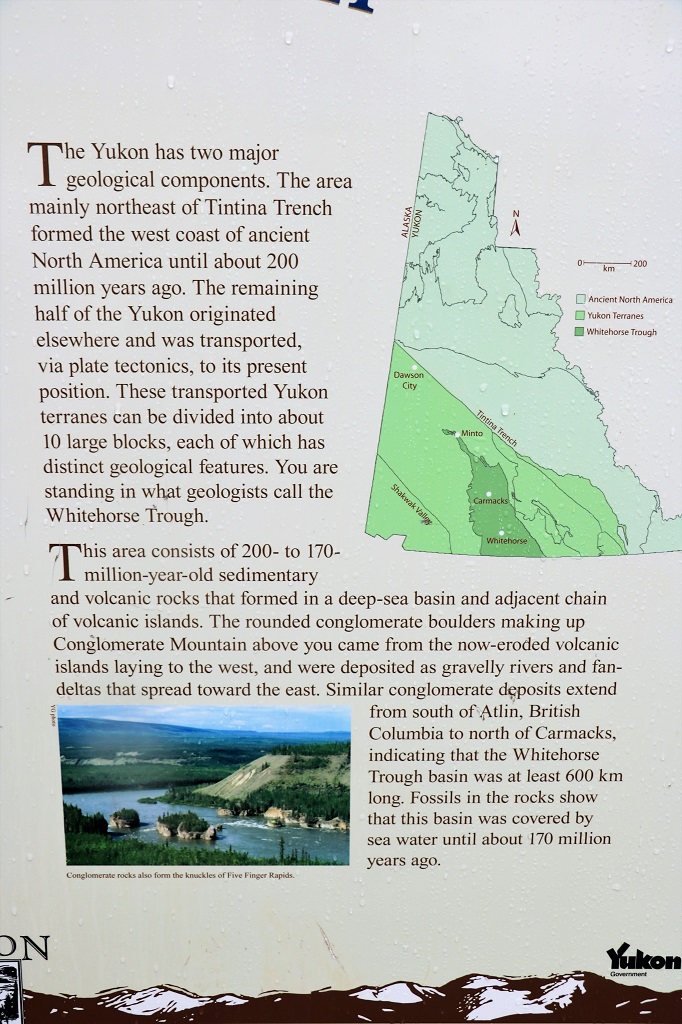
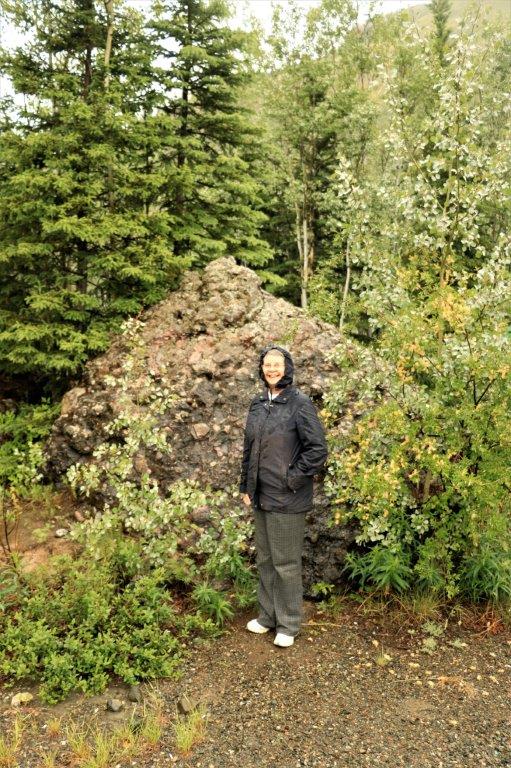
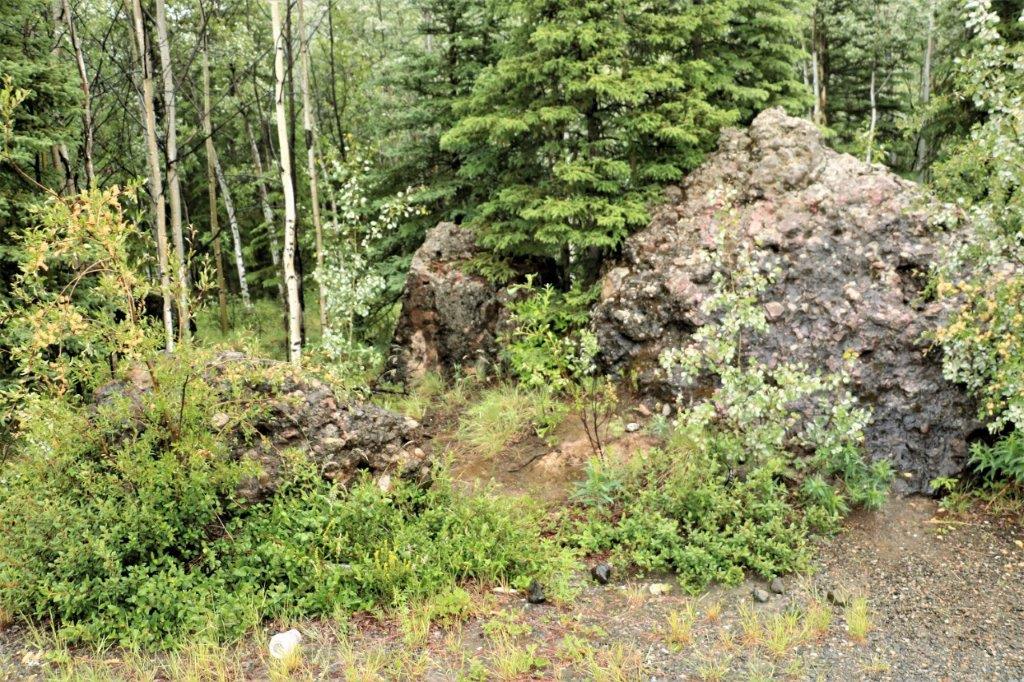
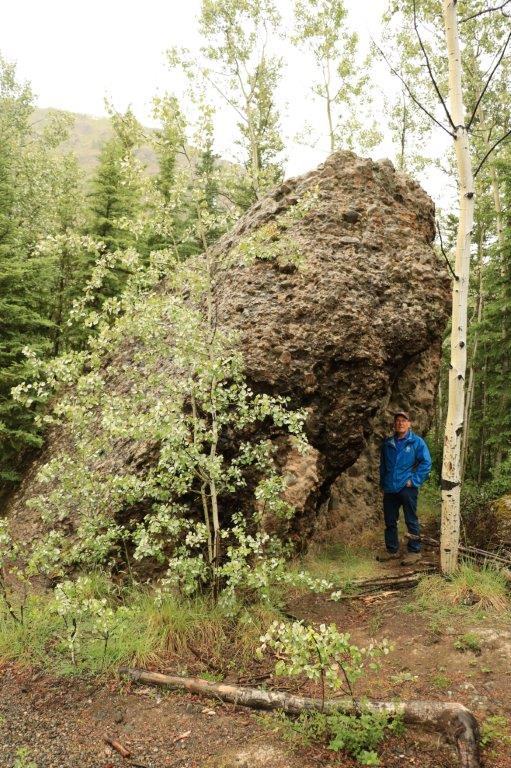
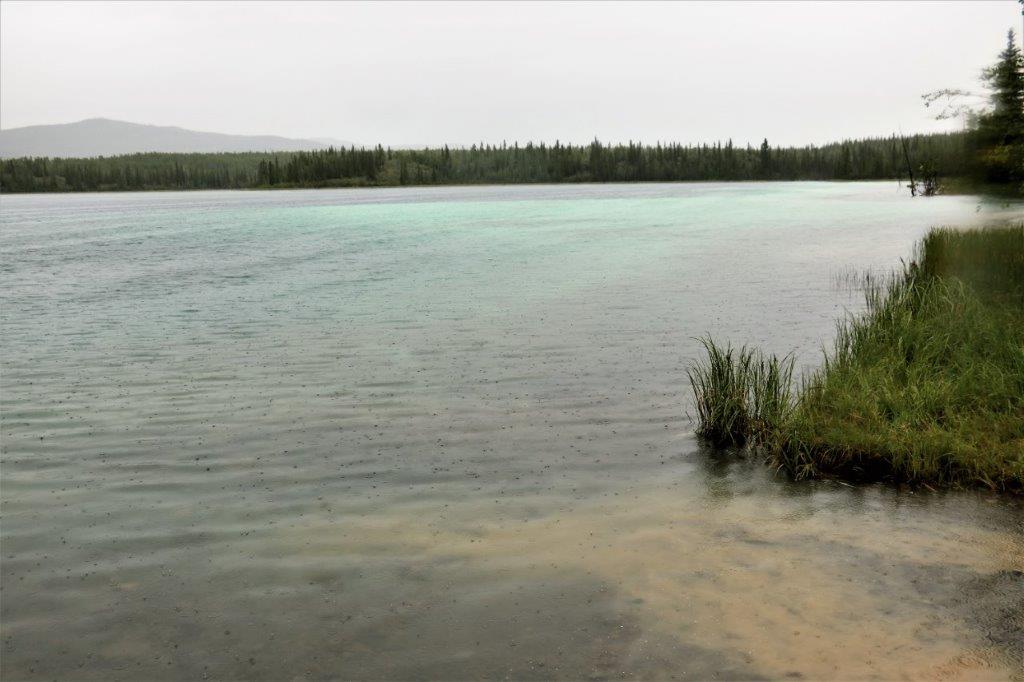
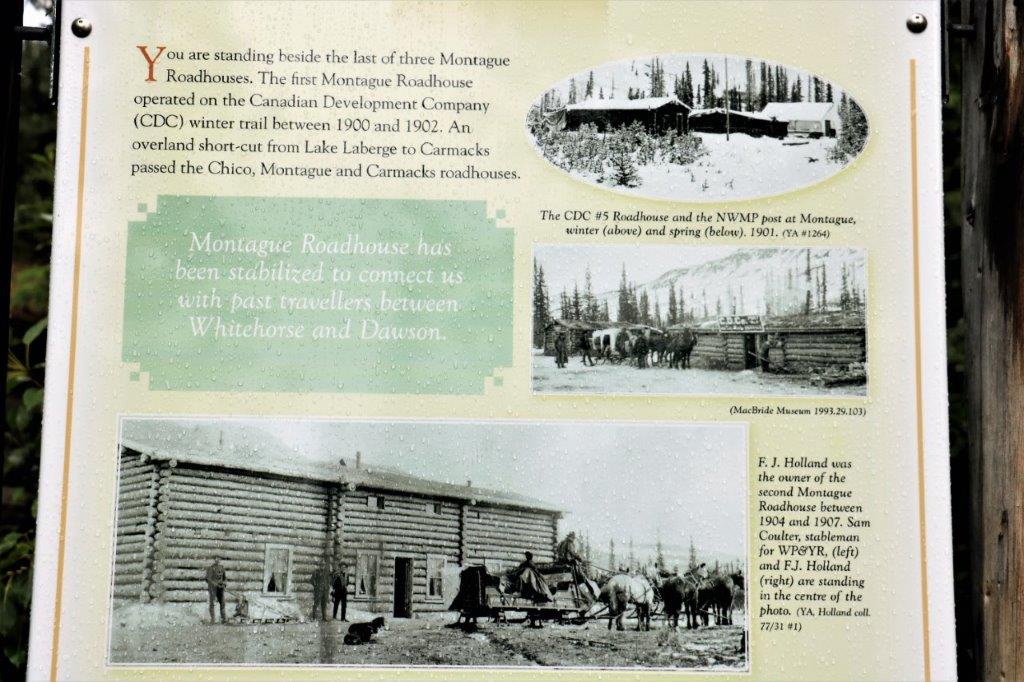
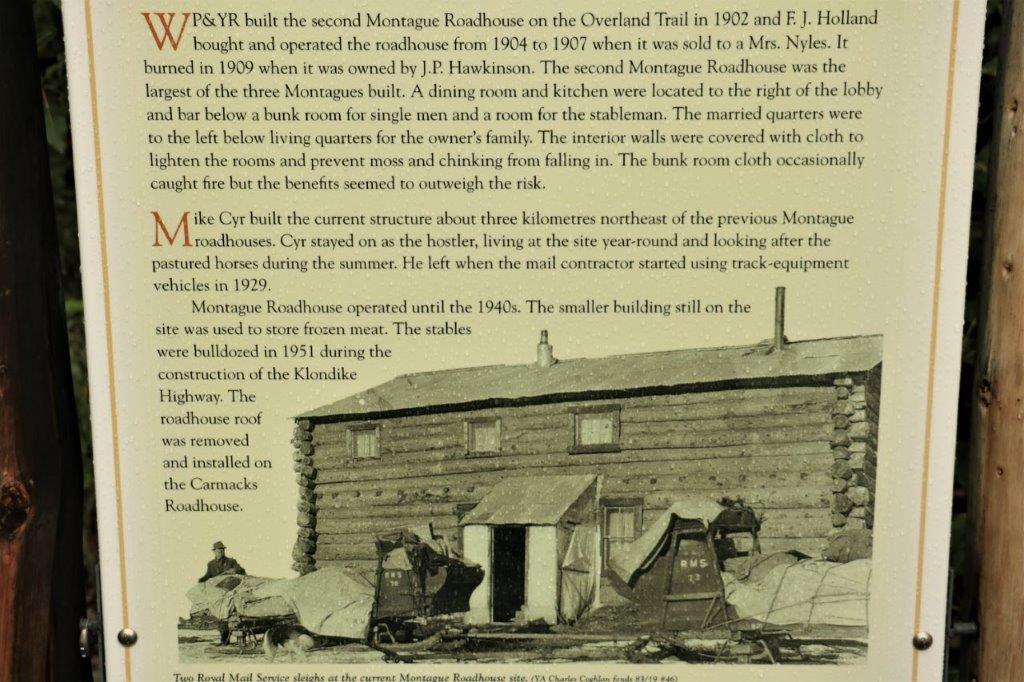
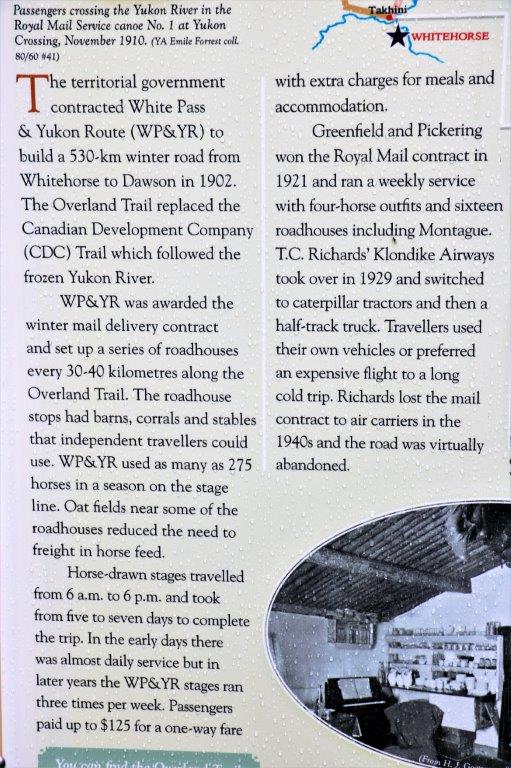
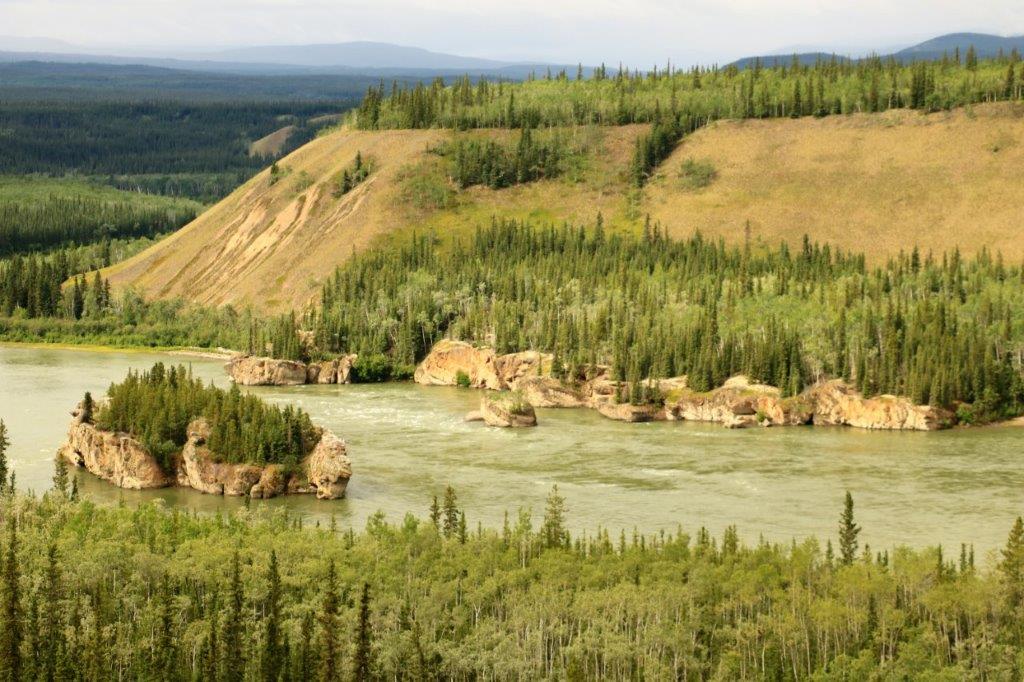
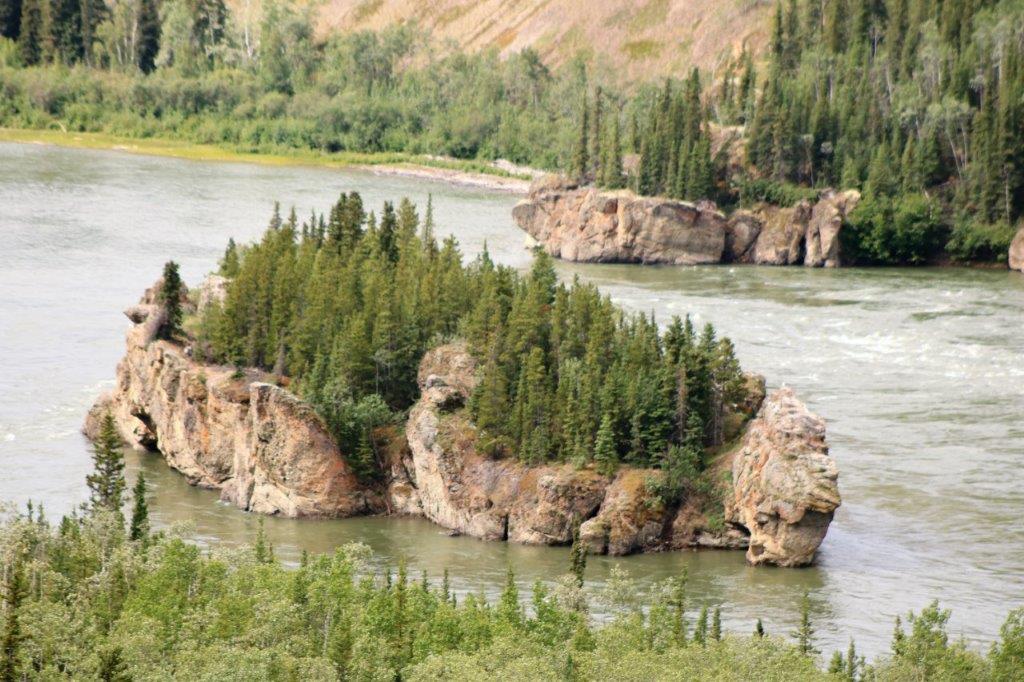
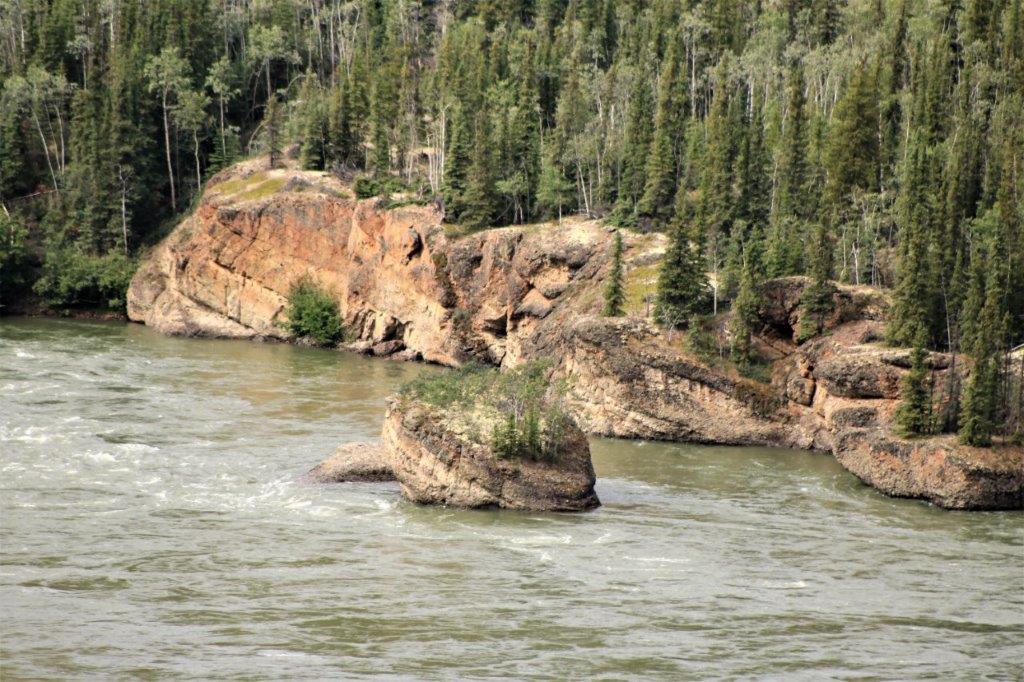
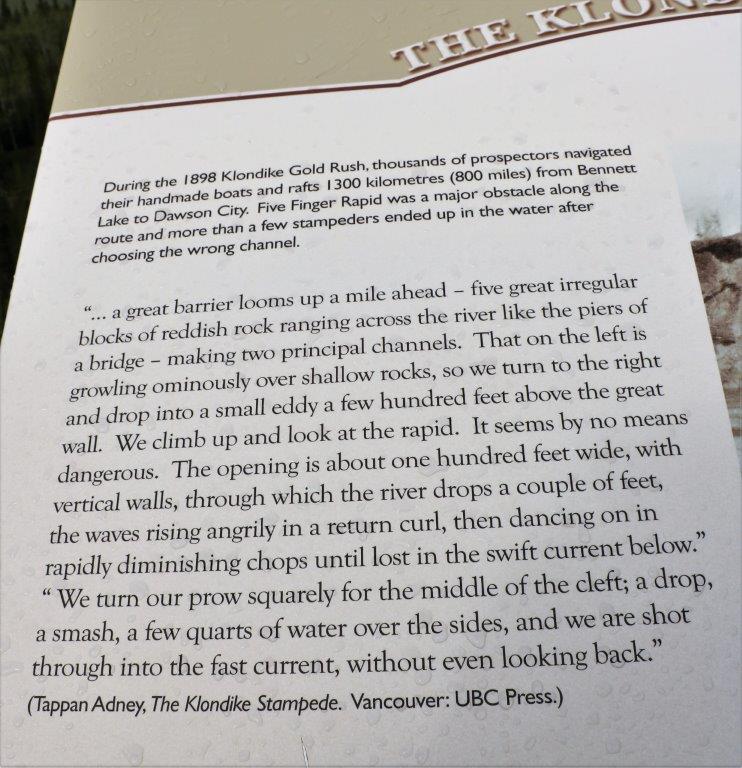
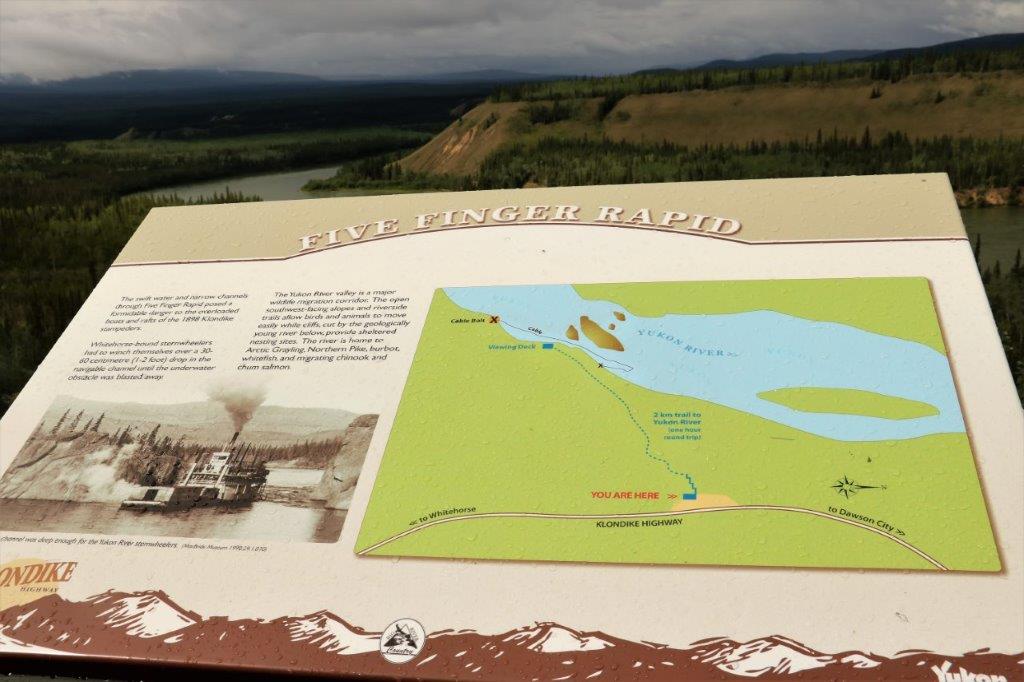
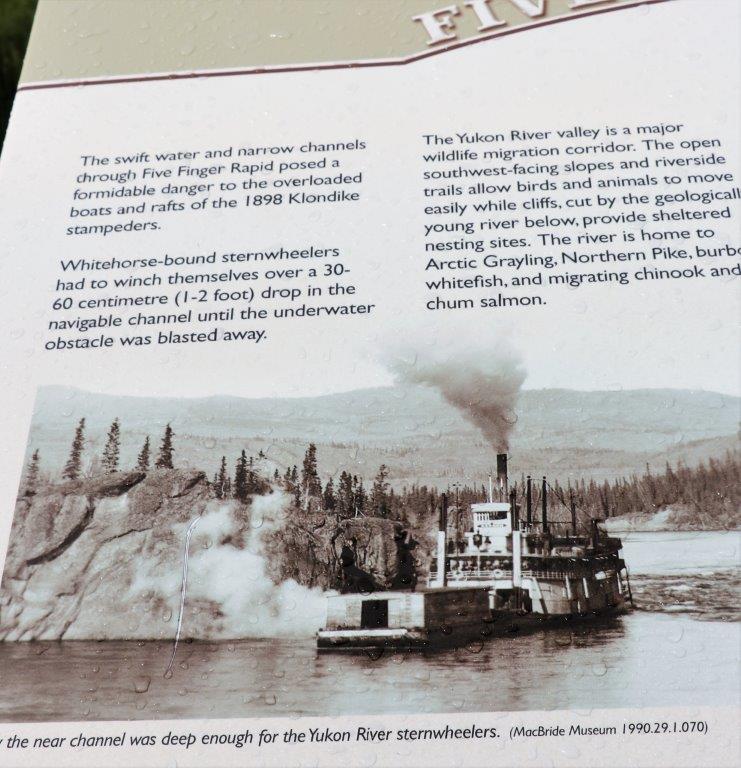
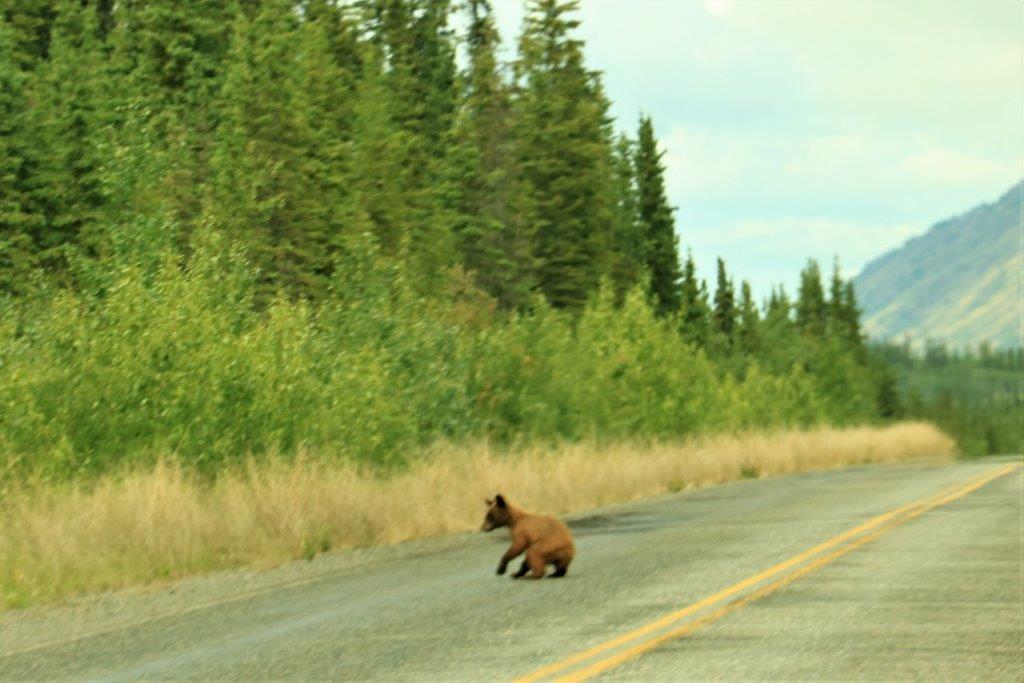
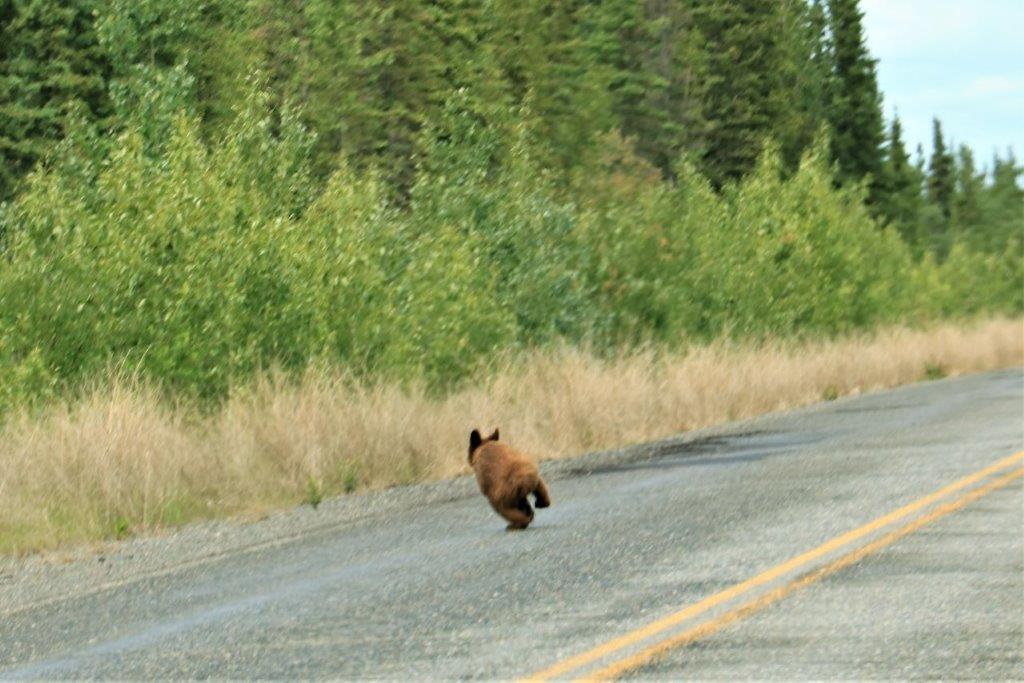
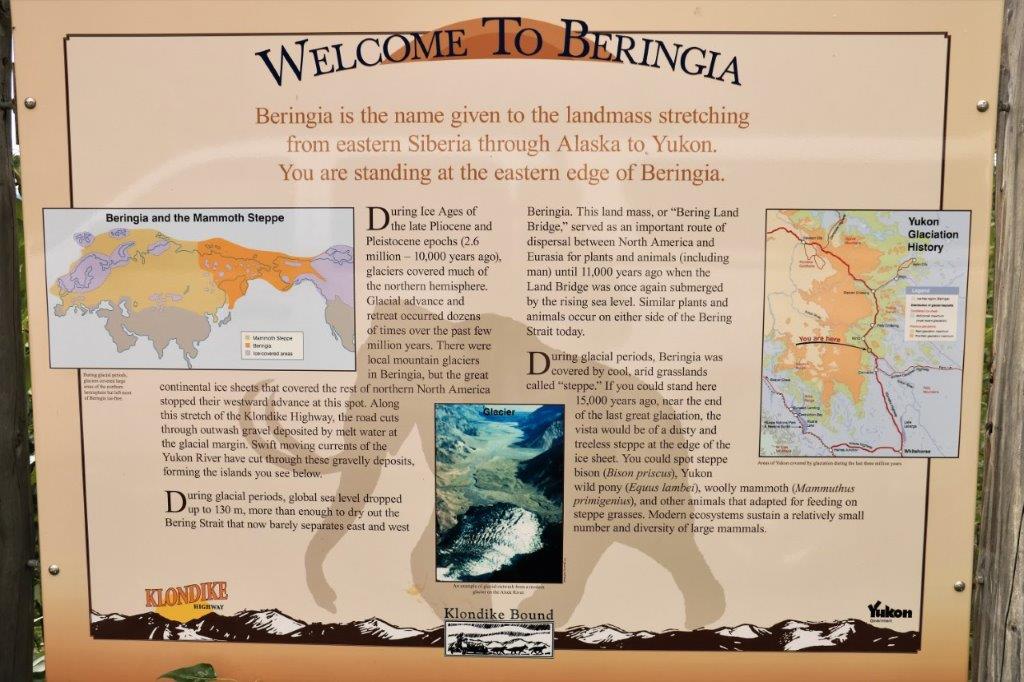
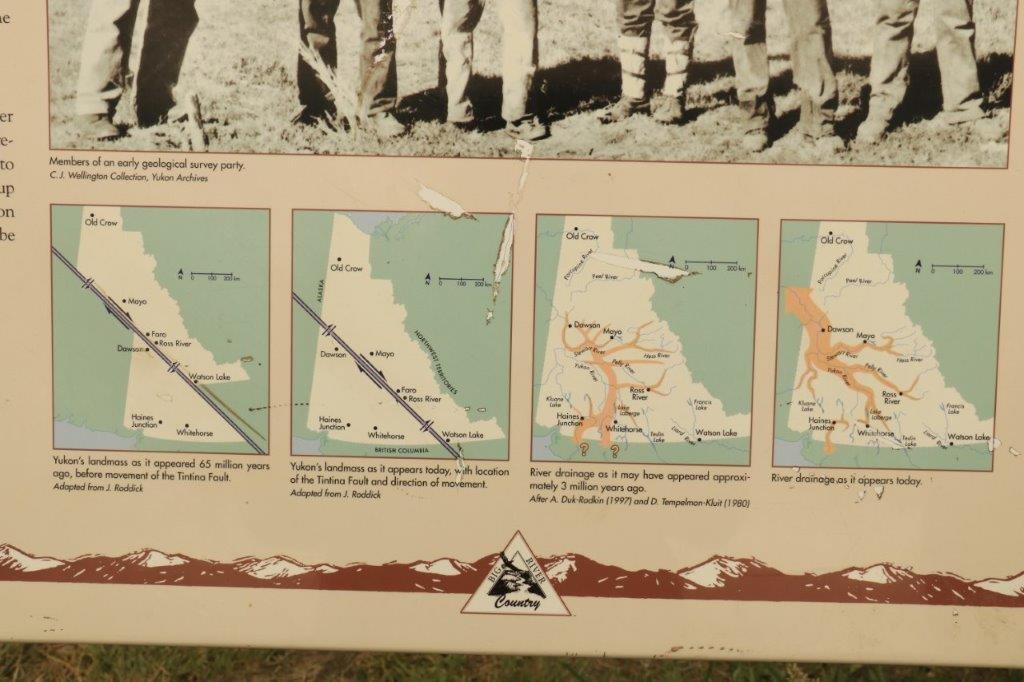
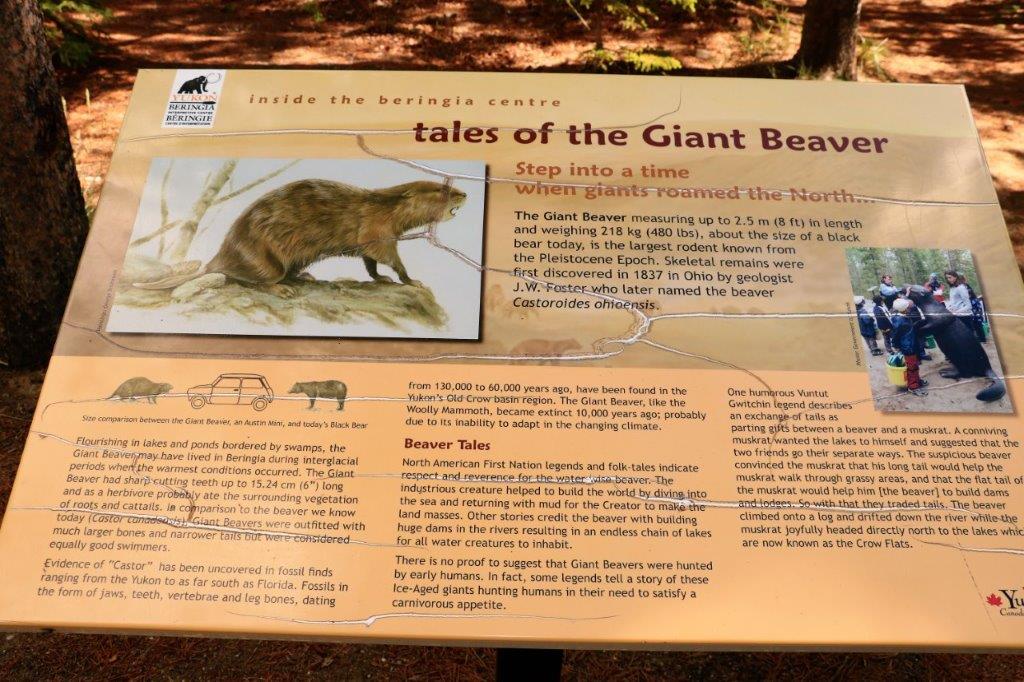
Our next find as we left Whitehorse was a short distance down Horse Creek Road and at the end of a 125 meter walk along a trail to a lovely view overlooking the valley. There was another earthcache hidden at a rest stop where there were Puddingstones.  I have never heard of them, but we learned all about them from the signs.  It was pouring rain. We got very wet even in the short amount of time we were out of the truck.As we drove past a break in the trees we saw some lovely colour in a little lake.  John kindly backed up so I could get a couple of photos. It would be gorgeous in the sunshine.The Five Finger Rapids are famous for the difficulty boats and rafts had in negotiating the currents around them in the river.  The columns are conglomerate stone the same as the Puddingstone. There was an earth cache here as well, but it was raining still and to find the answer to the last question you needed to log the find you had to go to the viewing spot down by the river – 219 wet steps down and back up.  We passed. During one of the lulls in the rain we spotted this cute little cub sitting on the road.  When it heard the truck coming, it hightailed into the bush; where, I suspect, momma was waiting. I commented on the name of the museum in Whitehorse saying who knew what Beringia was, well apparently it is an ice age era that contained lots of giant-size critters.  Now we all know. (I still think a different name would be more affective for that building though.) There is no shortage of geological placards around these parts.As we drove into Dawson City both sides of the road had high, long, long, long, piles of rocks and gravel.  There was even a housing subdivision in some of them.  They are all tailings from the gold mines.  I didn’t take any photos but we will be going past them again so I will take some shots later.It felt like a long day today, but we arrived in Dawson City at 5.  We left Whitehorse at 8:45 so the day was shorter than some others we have had lately.  Maybe it was the rain.  Tomorrow we have a full day in Dawson with no places we have to be.

2018 June 30 – Whitehorse, Yukon Territory (Part 2)

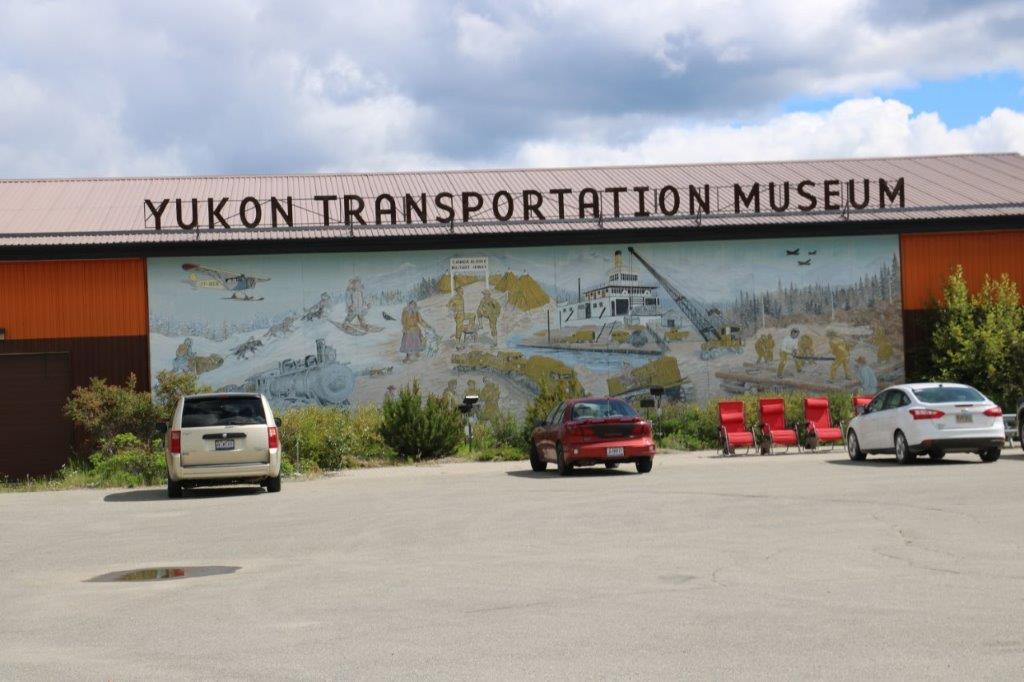
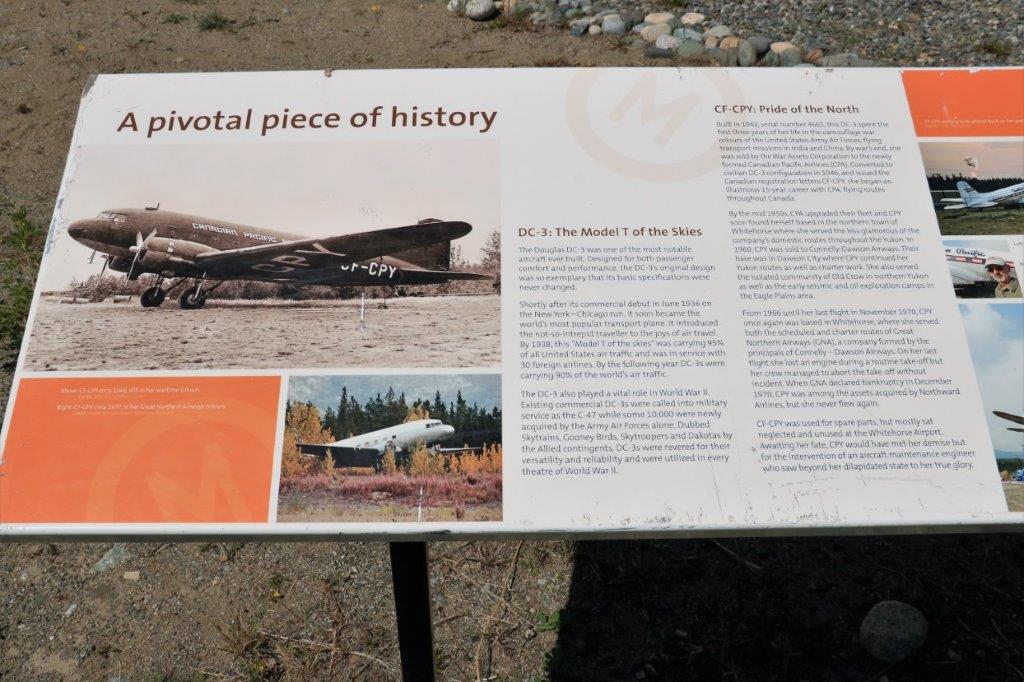
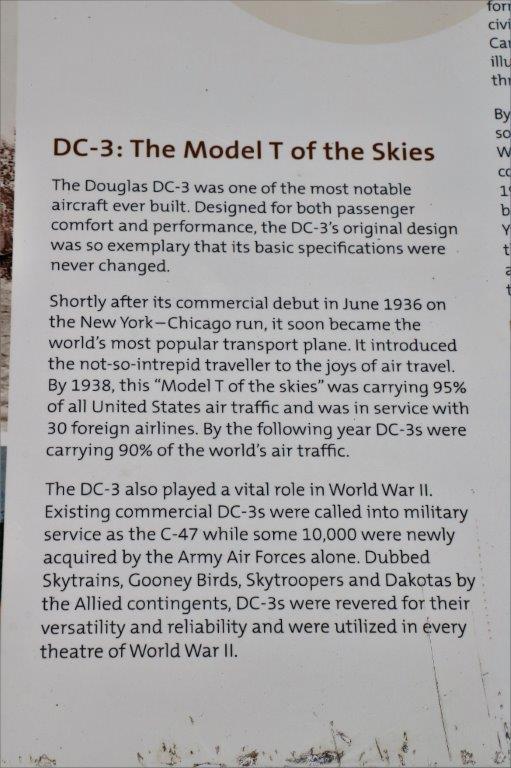
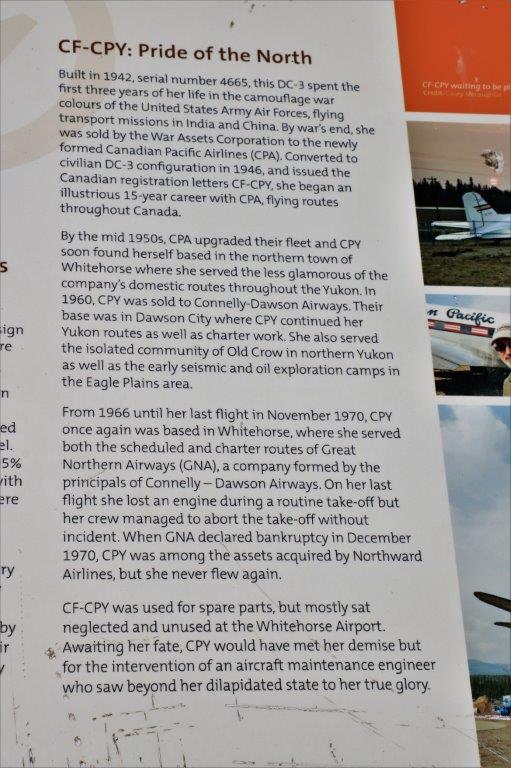
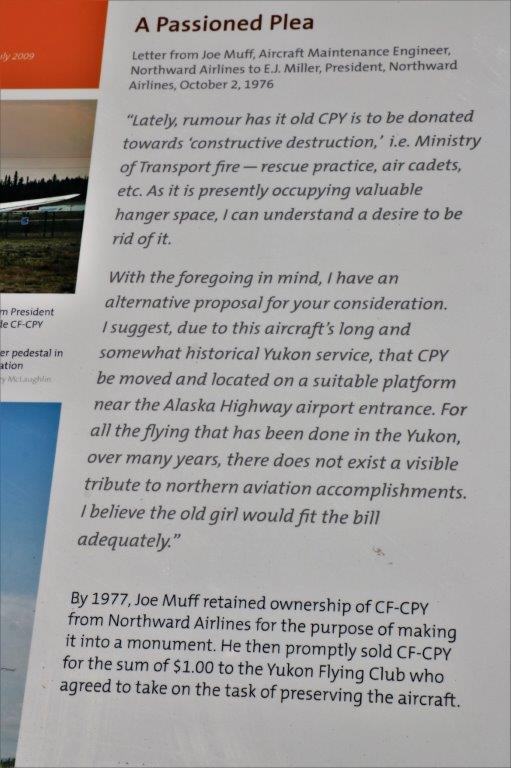
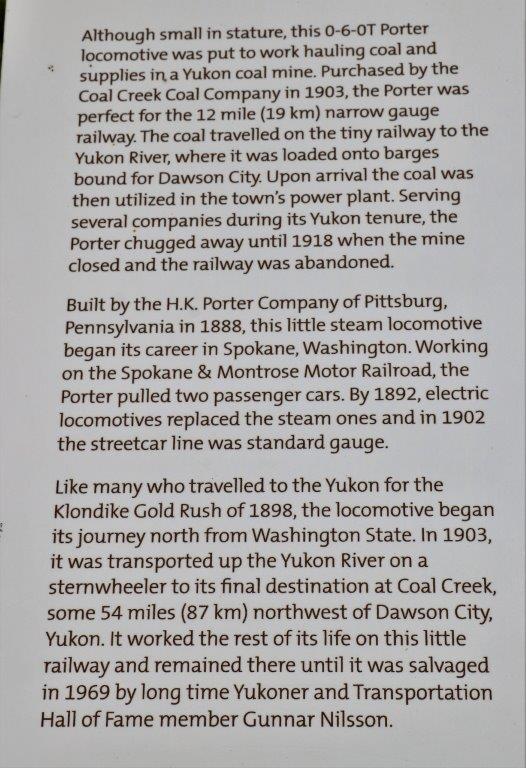
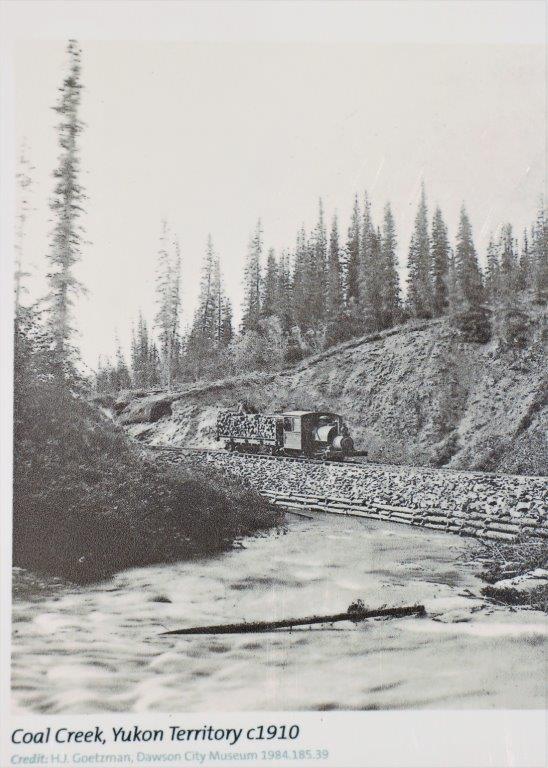
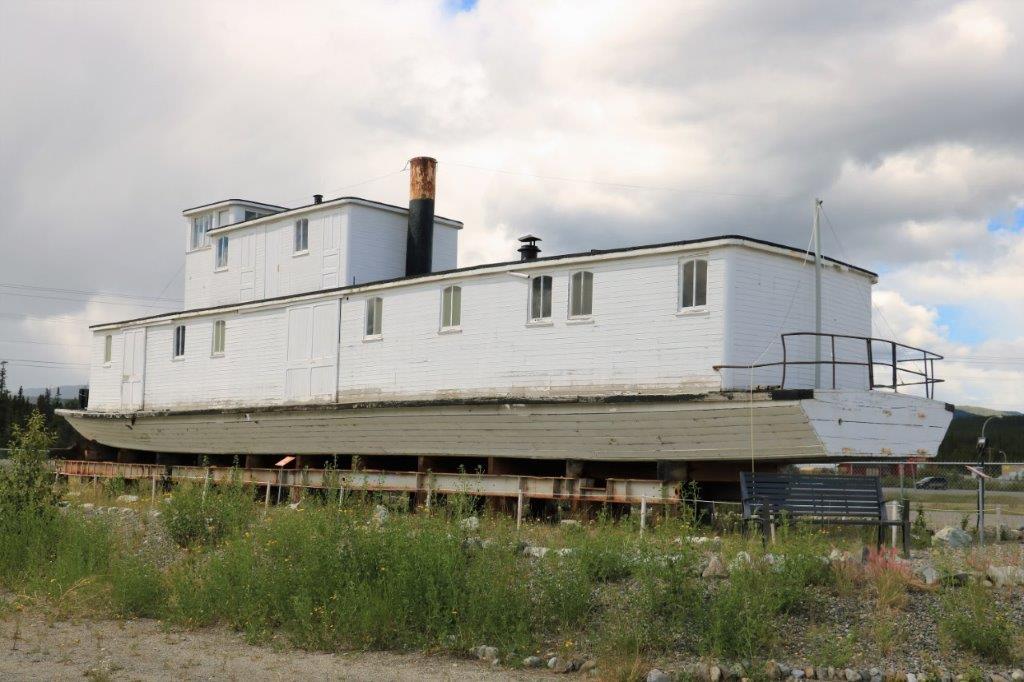
The Yukon Transportation Museum had two exhibition rooms.  There was also a large outside area with old vehicles in it. We spent a happy couple of hours wandering around.  And, as usual I took lots of photos of placards, items and photographs.  This blog will contain many of them, and not much else.

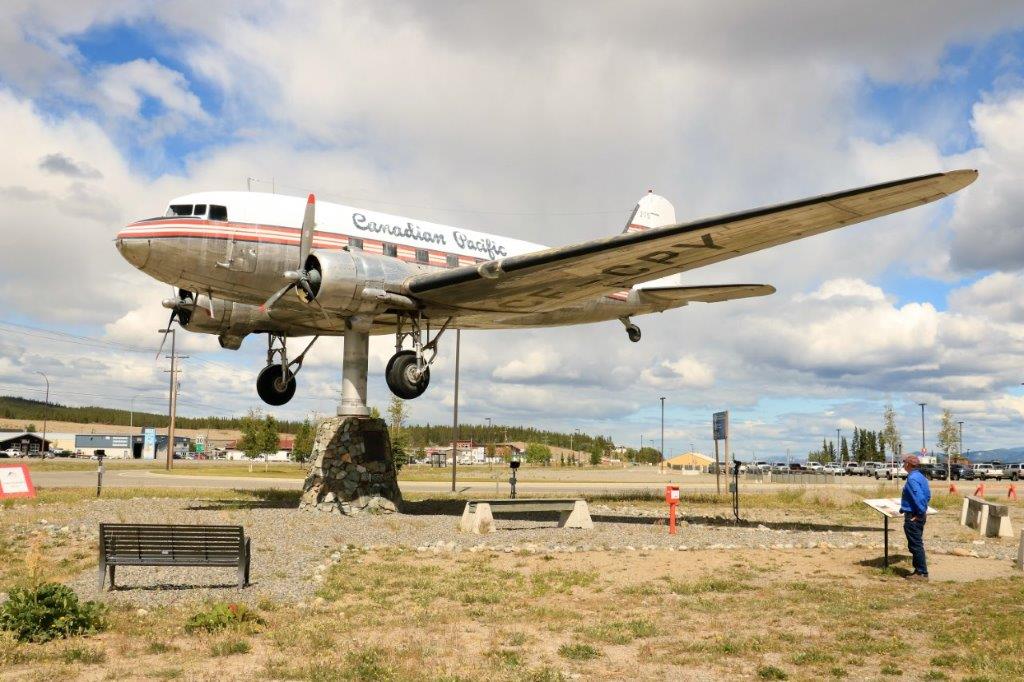
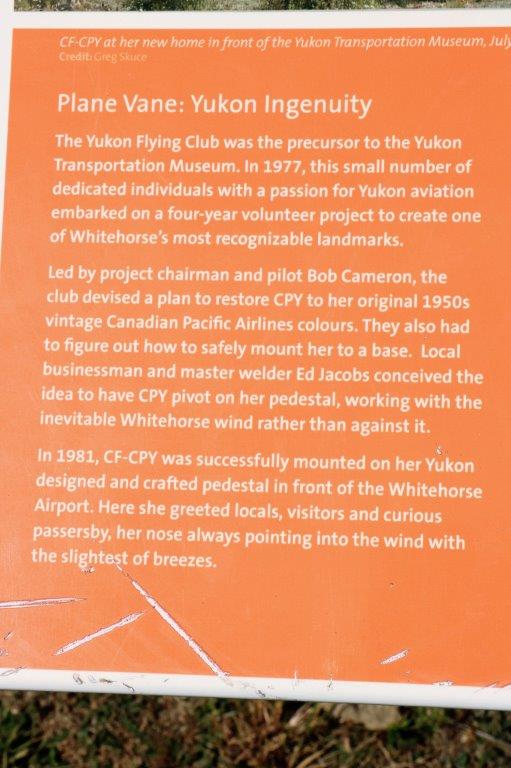
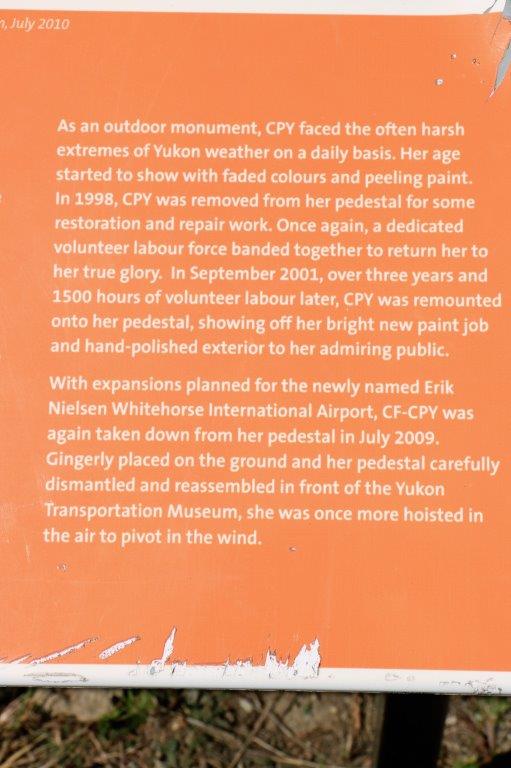
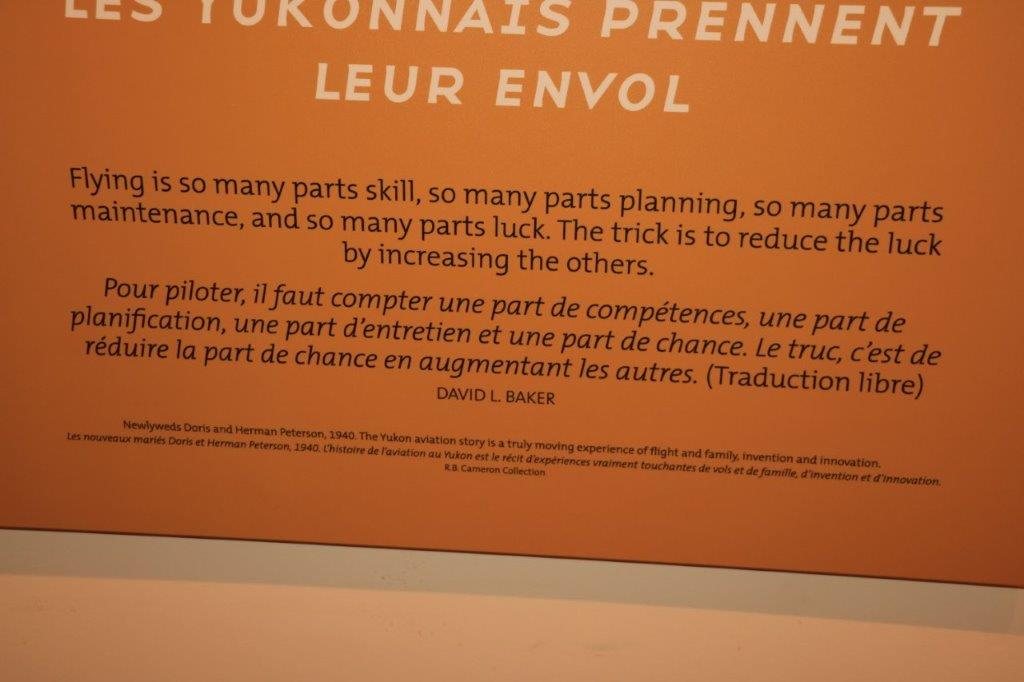
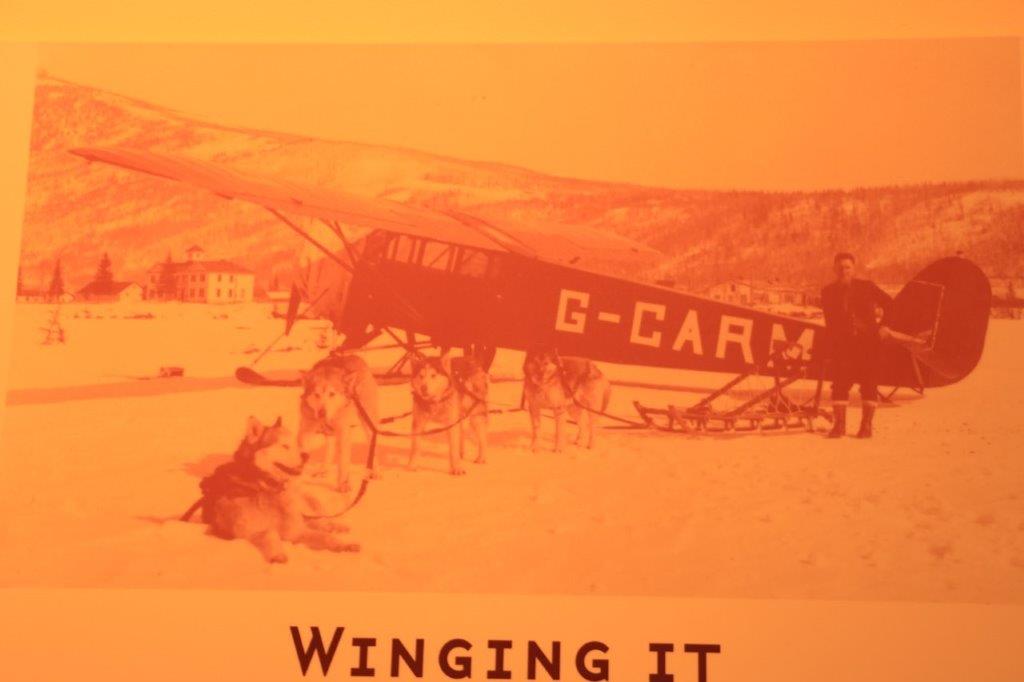
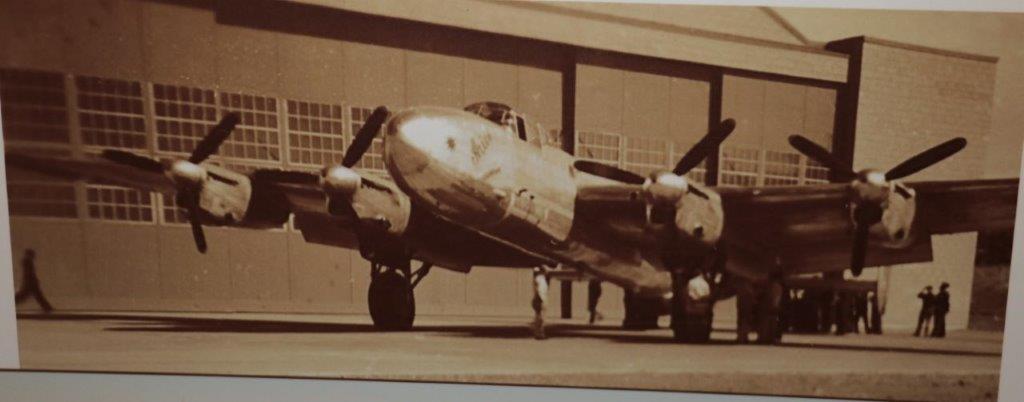
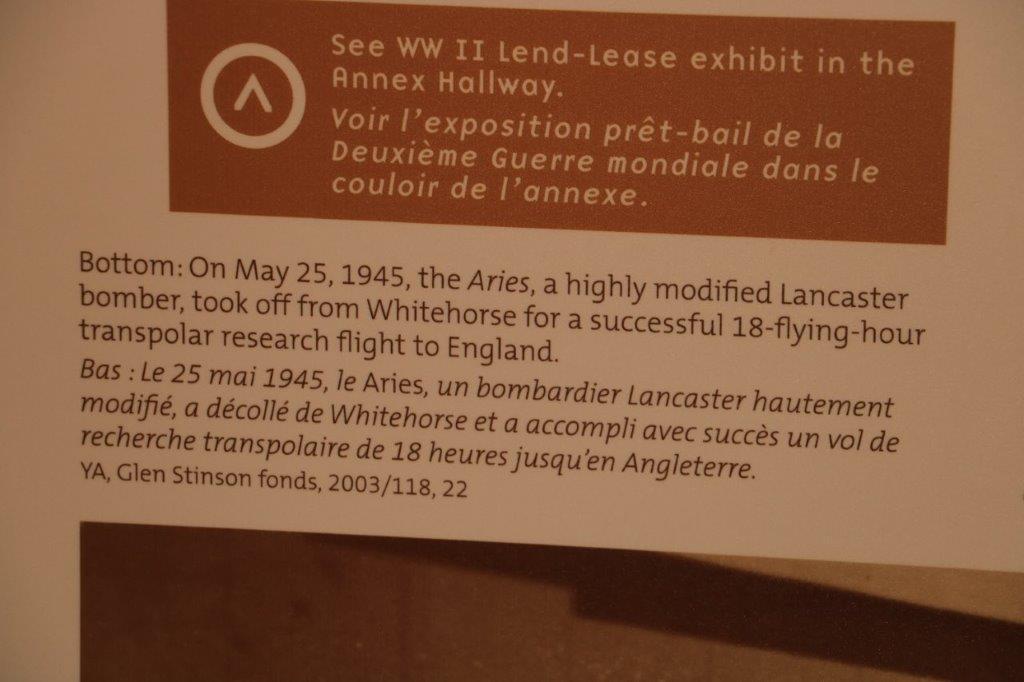
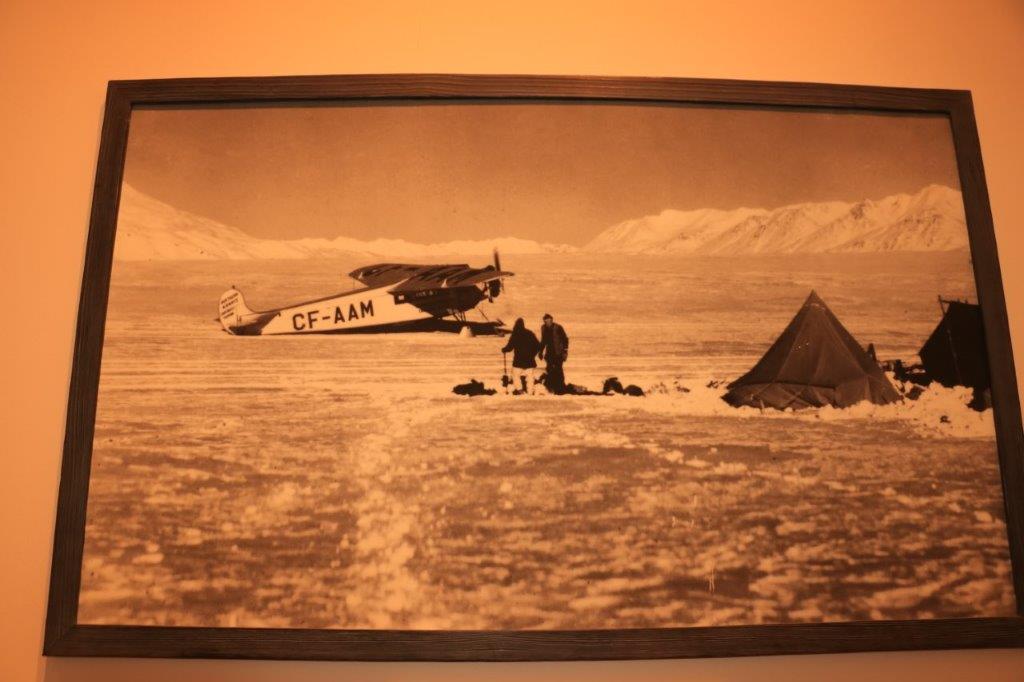
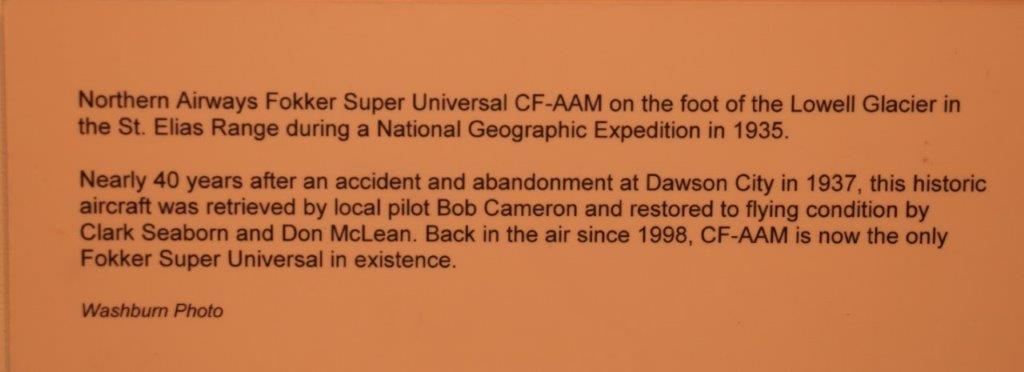
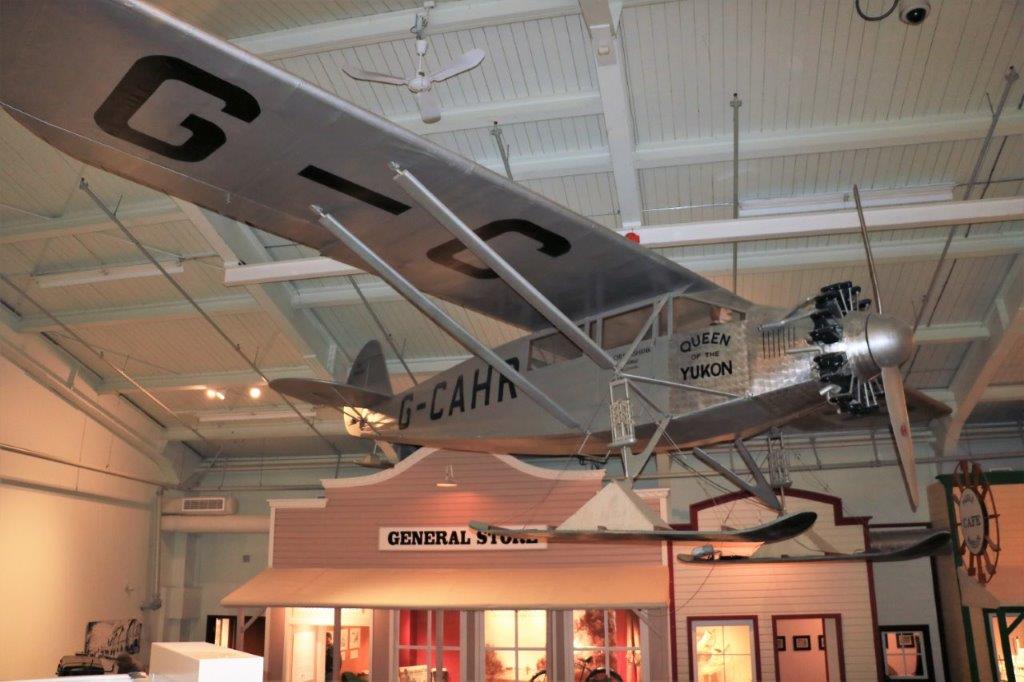
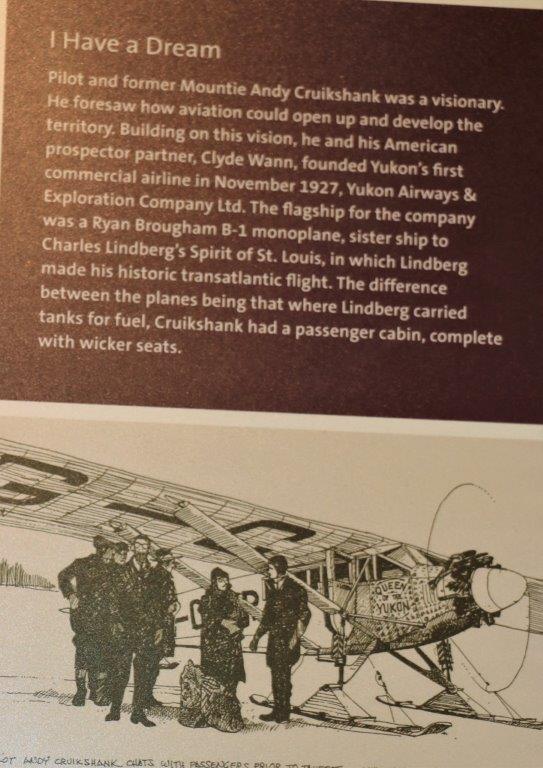
Outside the museum they had the world’s largest weather vane.  A DC 3 airplane that had been abandoned after a nosedive in the bush.  It was rescued, restored, and turned into a weathervane.  It was amazing how smoothly it rotated in even a light breeze. The firstroom  was all about the bush pilots and their adventures and daring during the early days of flying in the north.This sign was sitting on a table beside some postcards.  Something to think about.

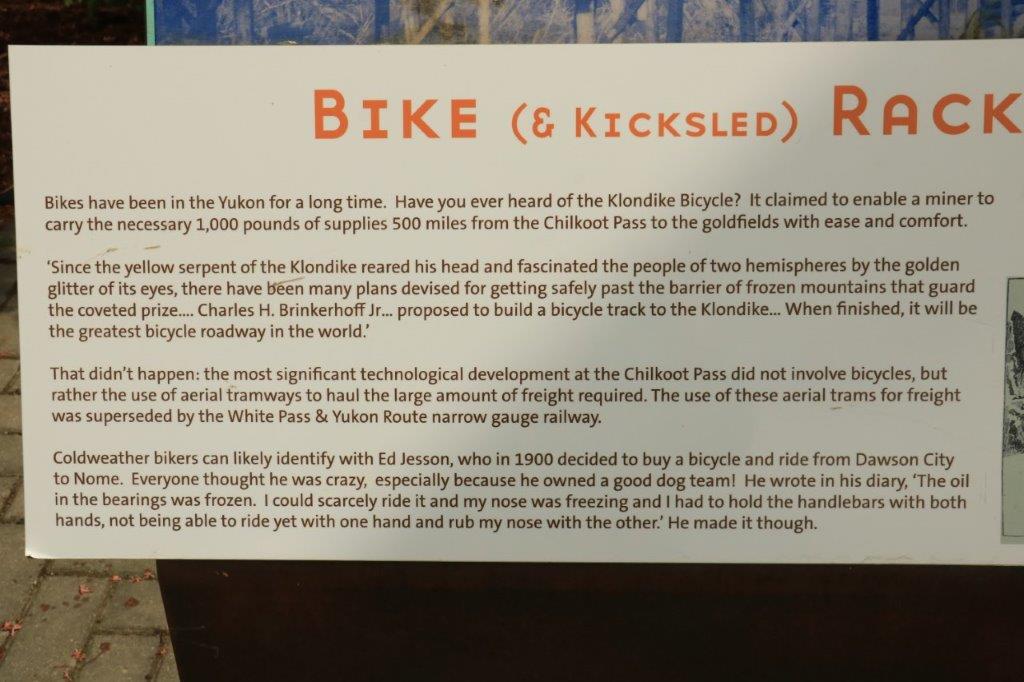
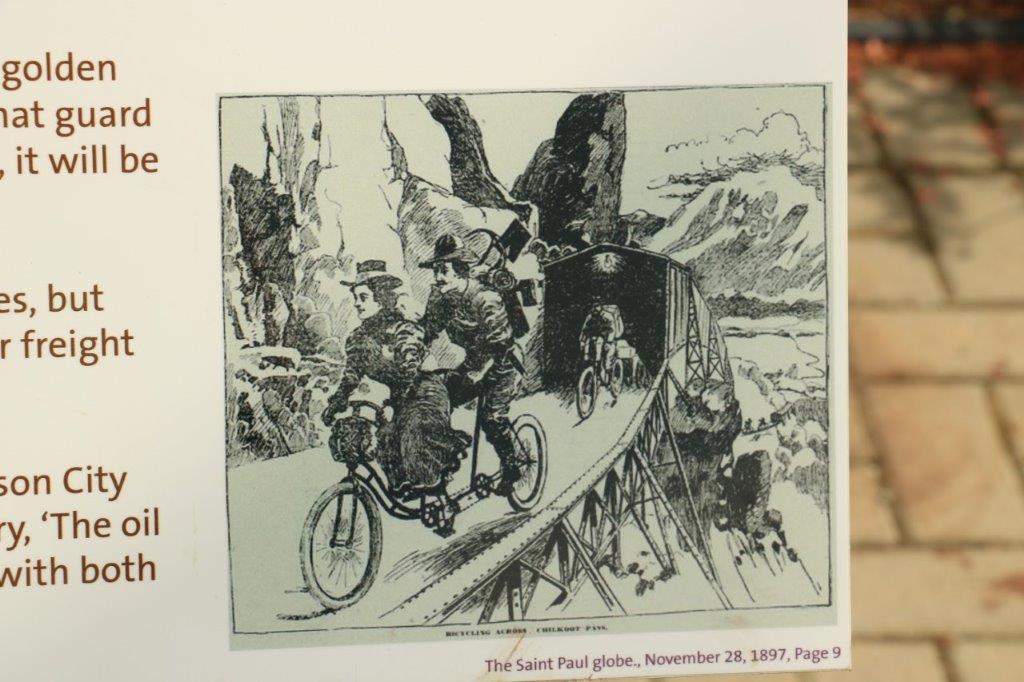
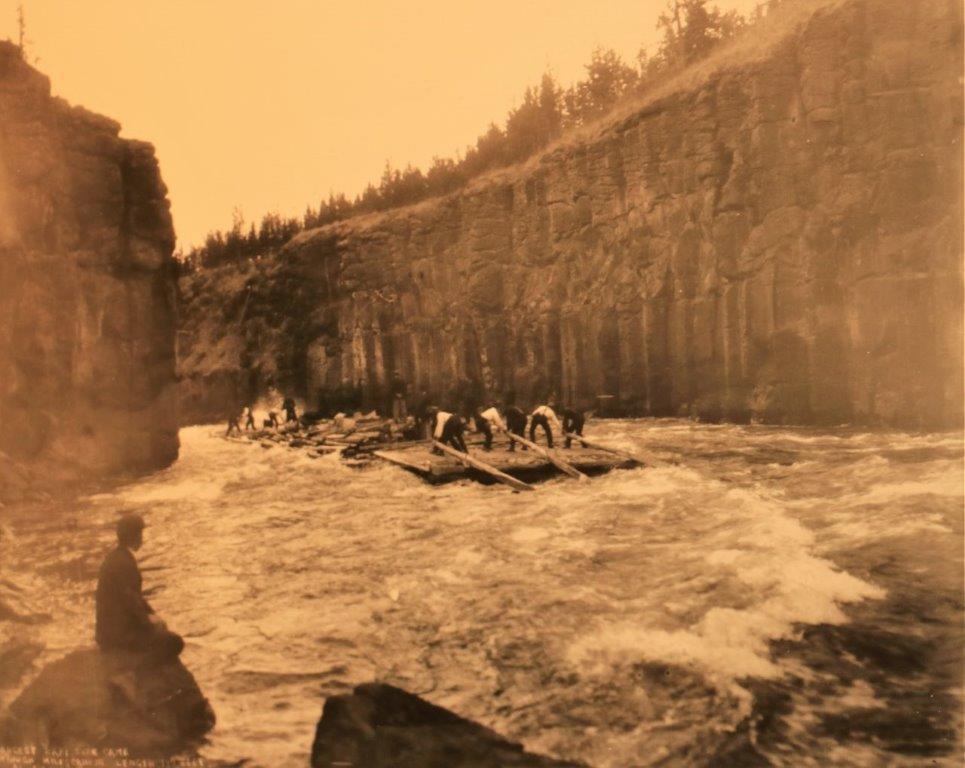
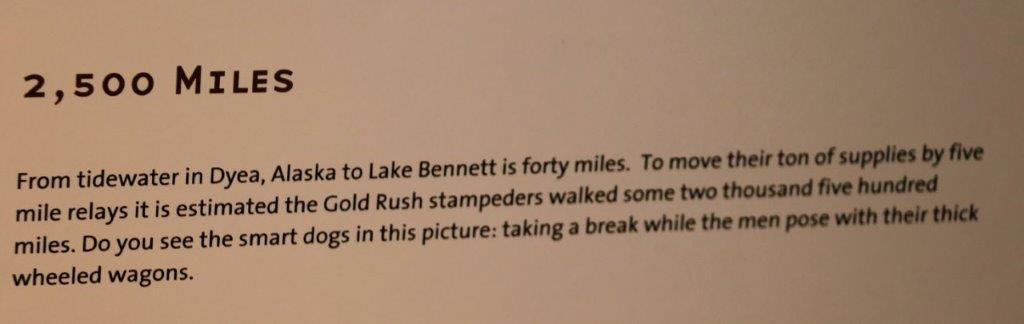
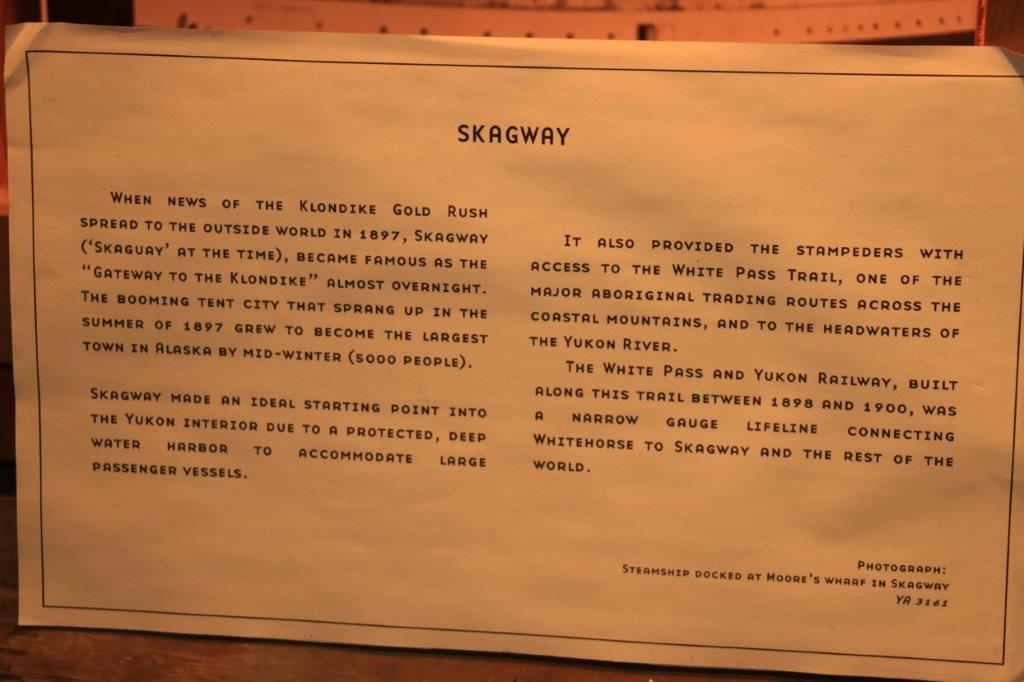
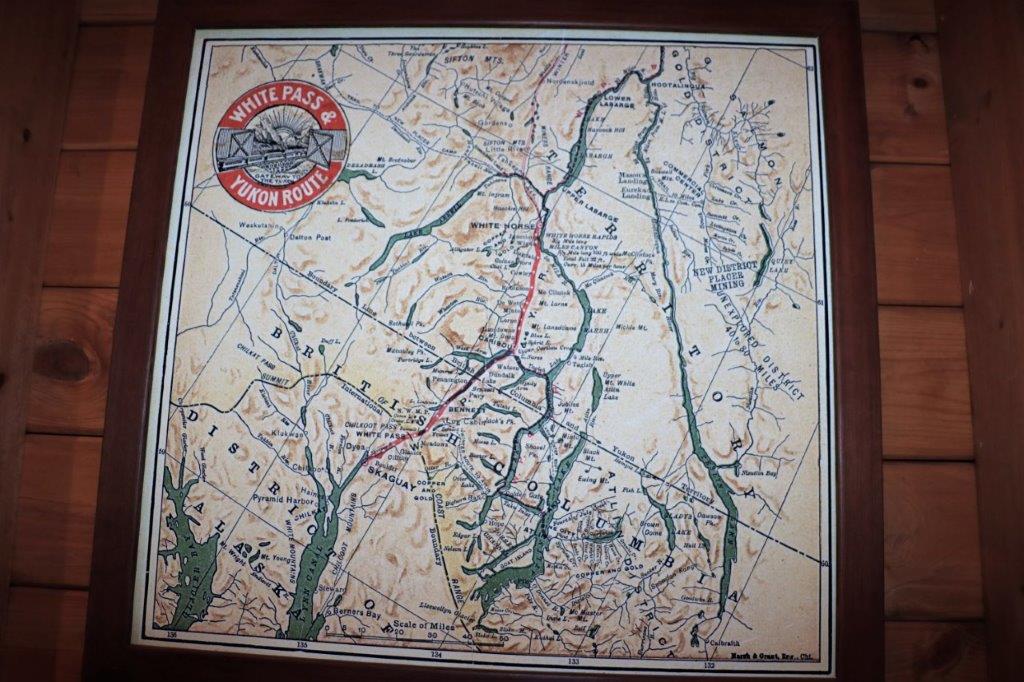
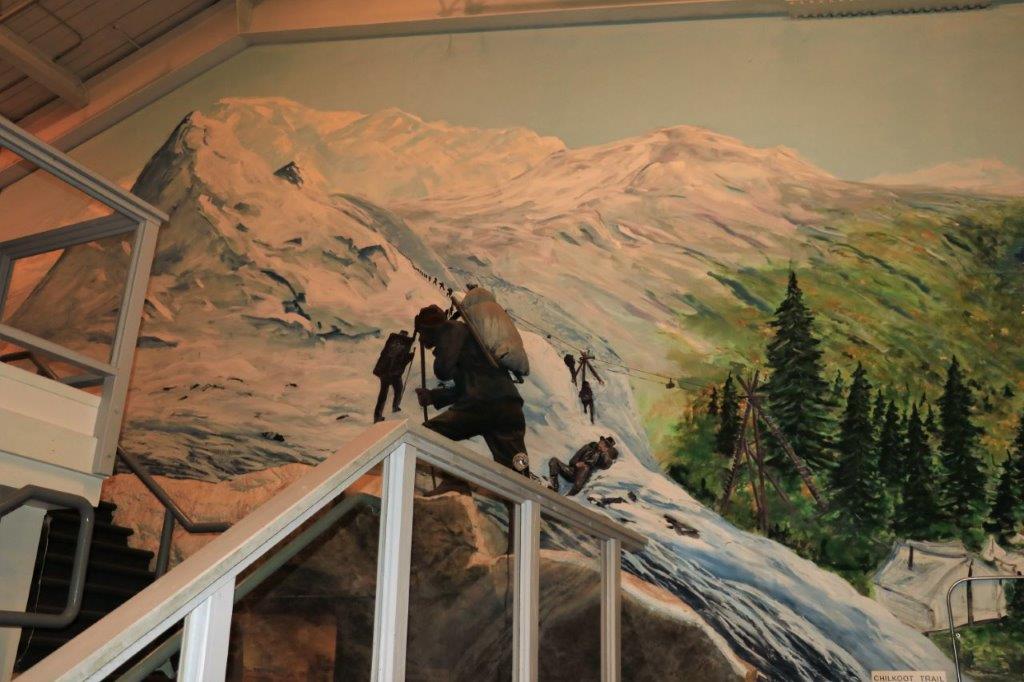
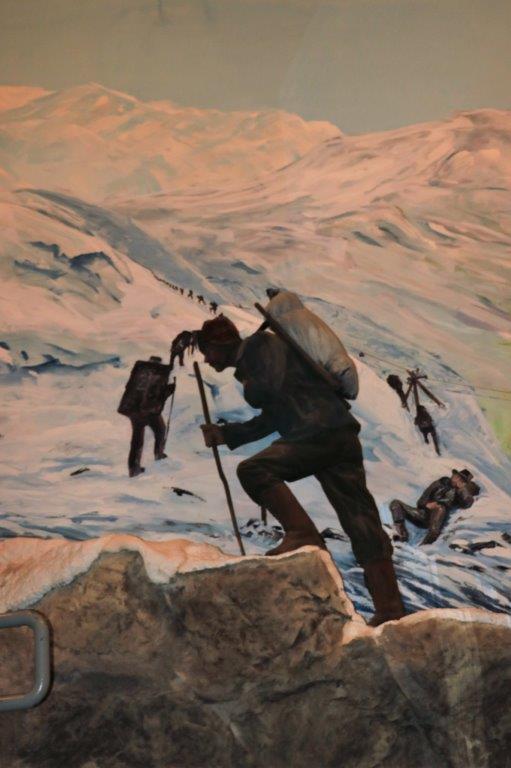
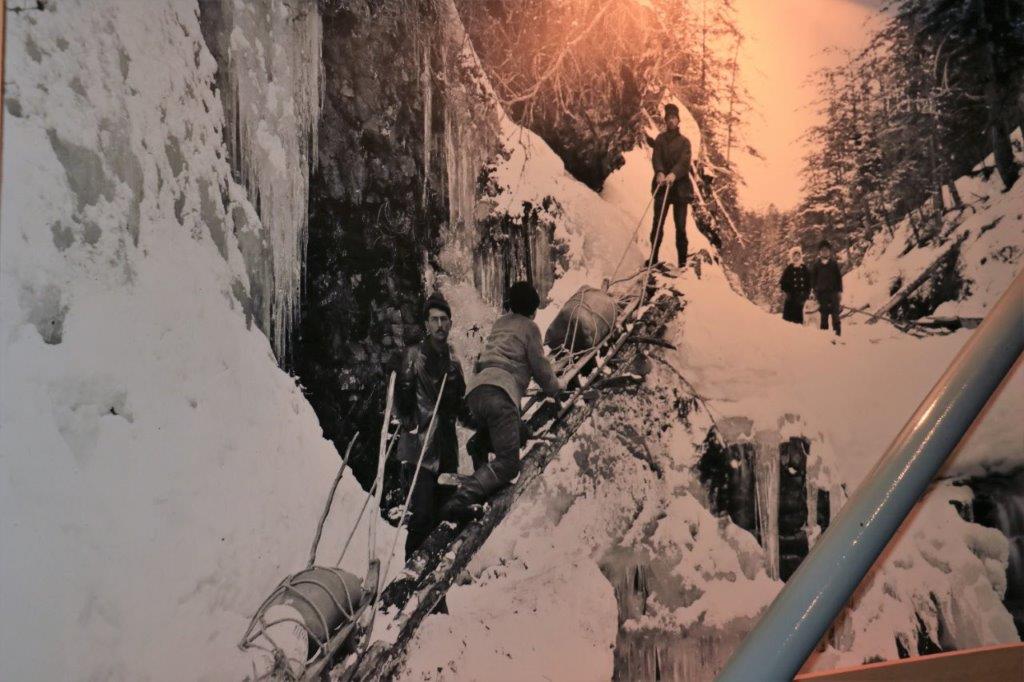
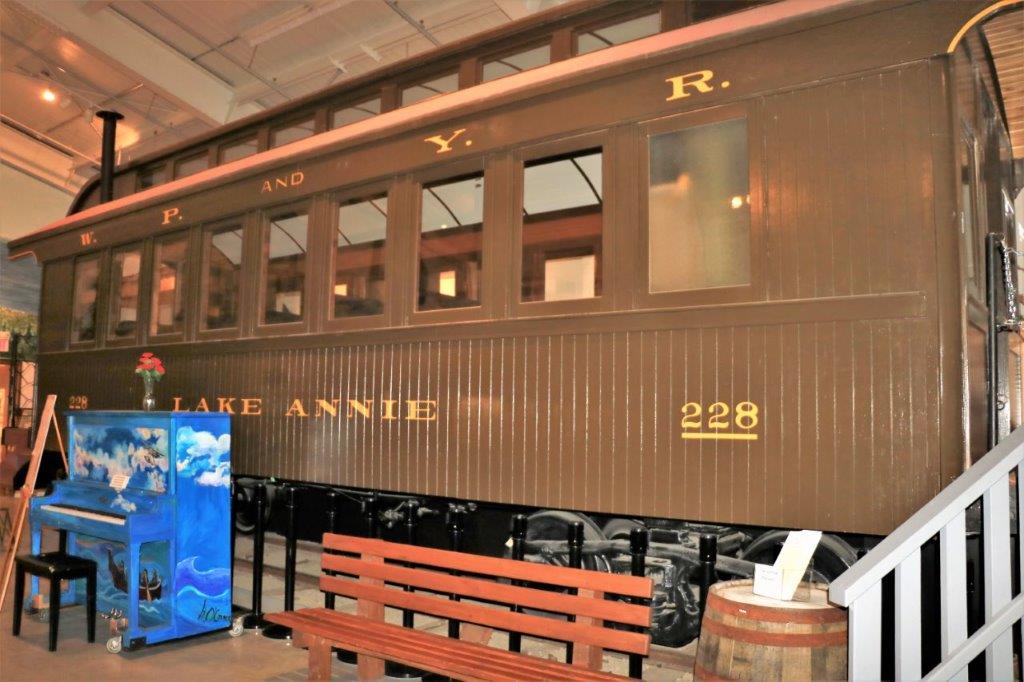
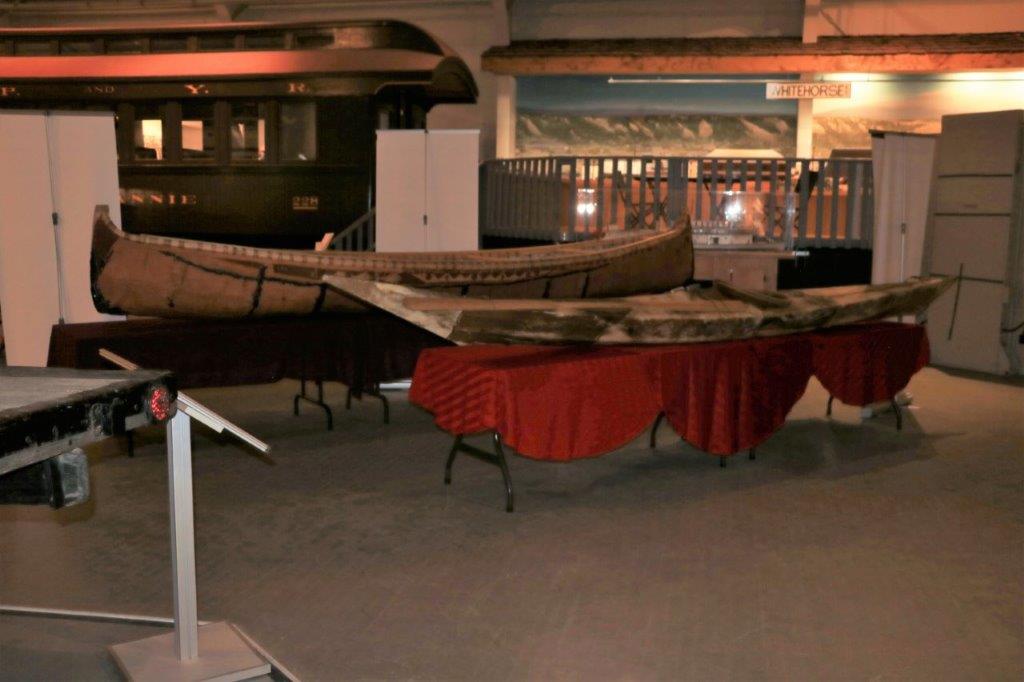
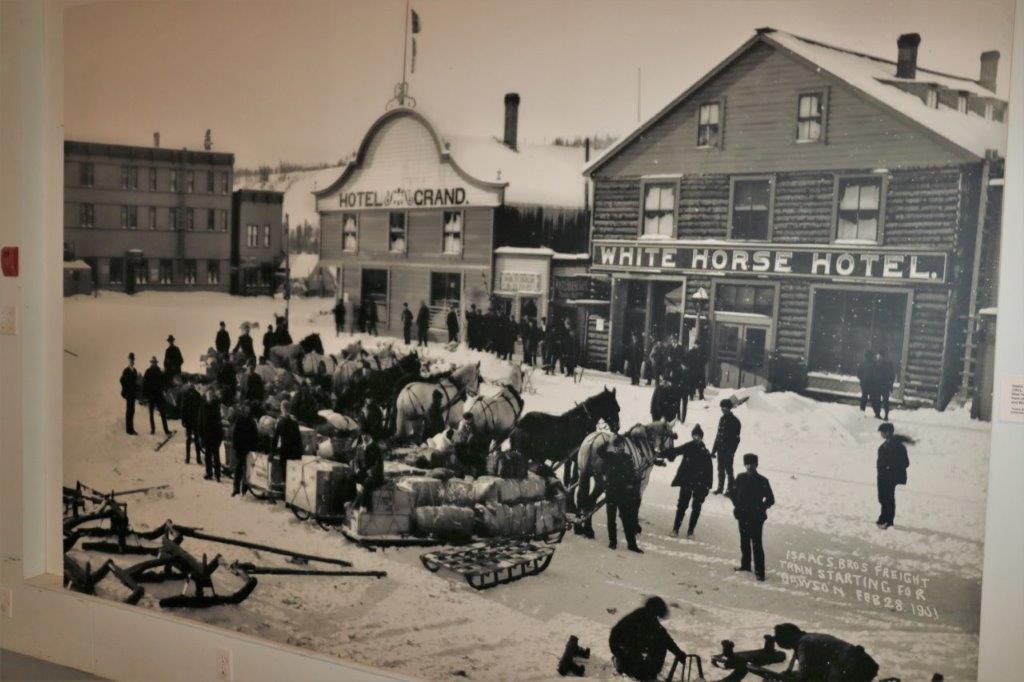
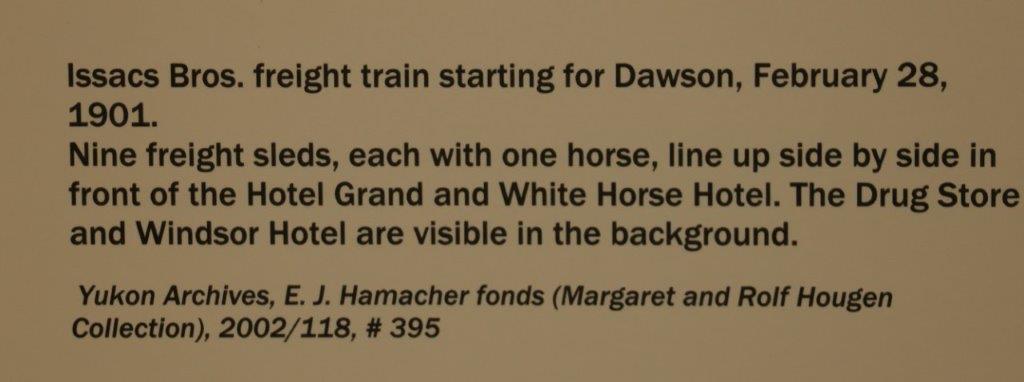
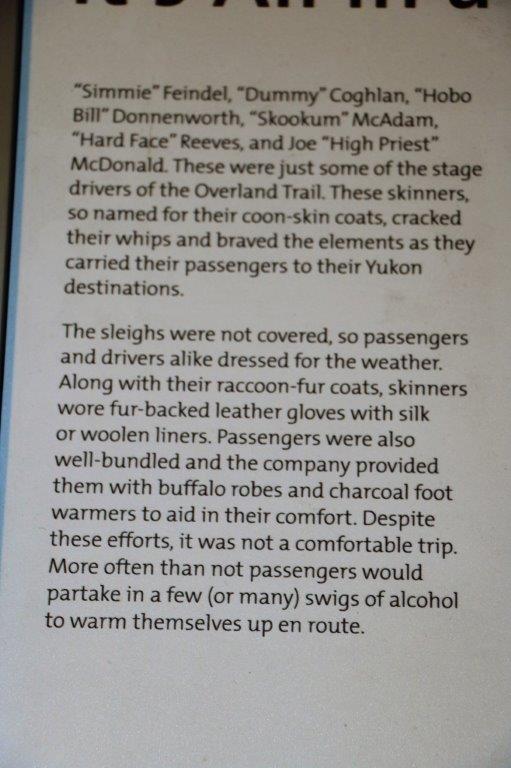
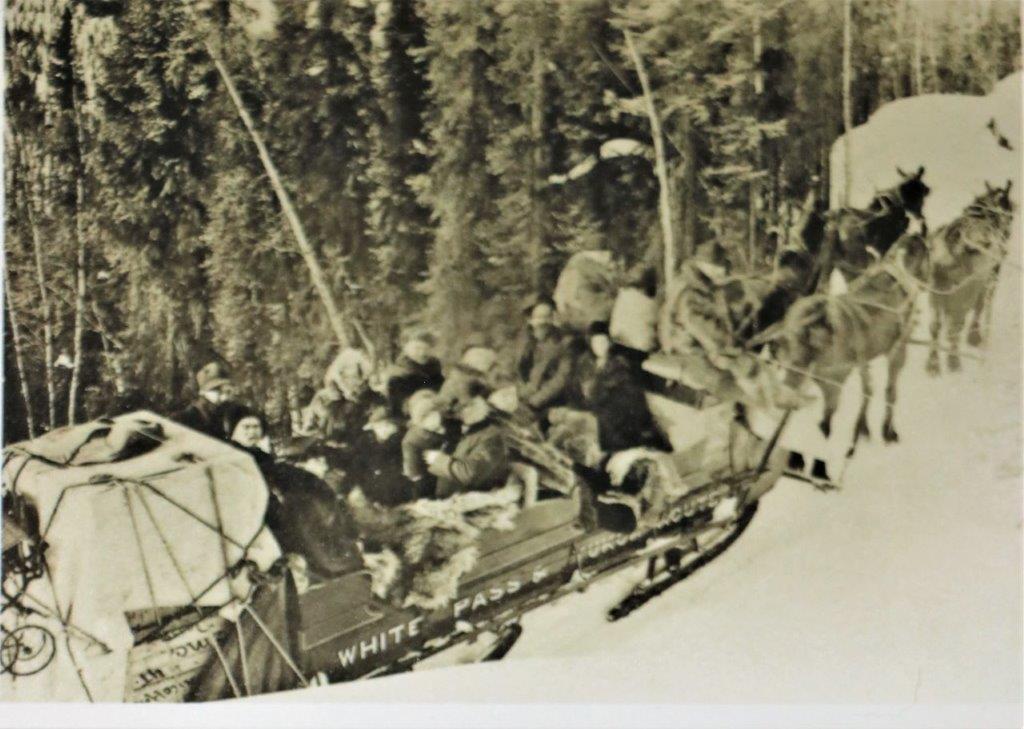
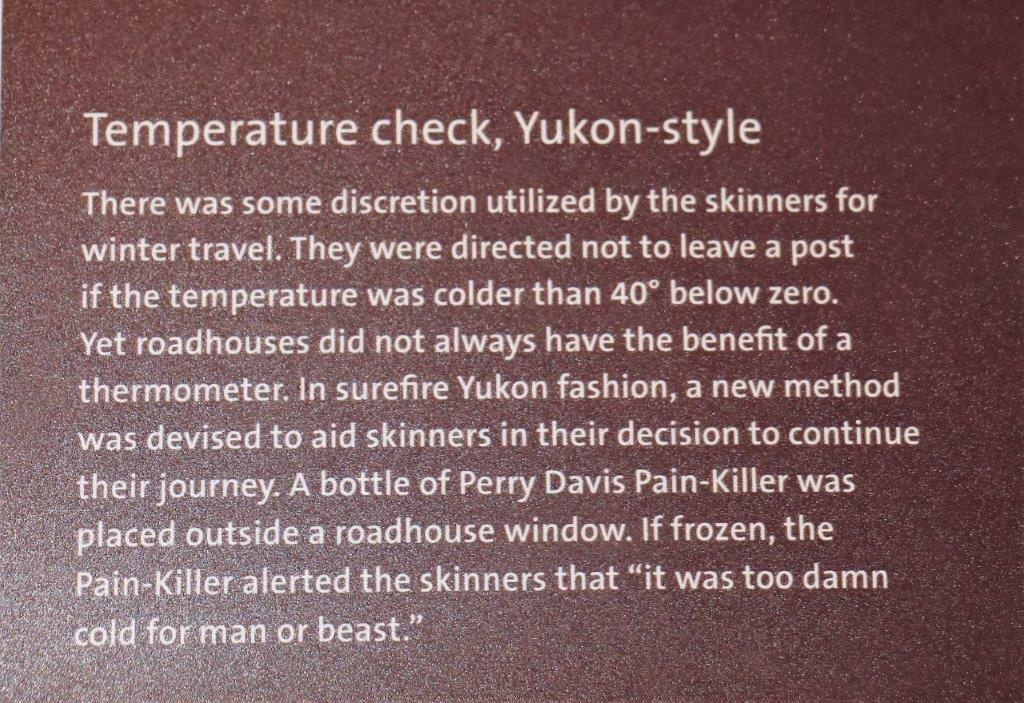
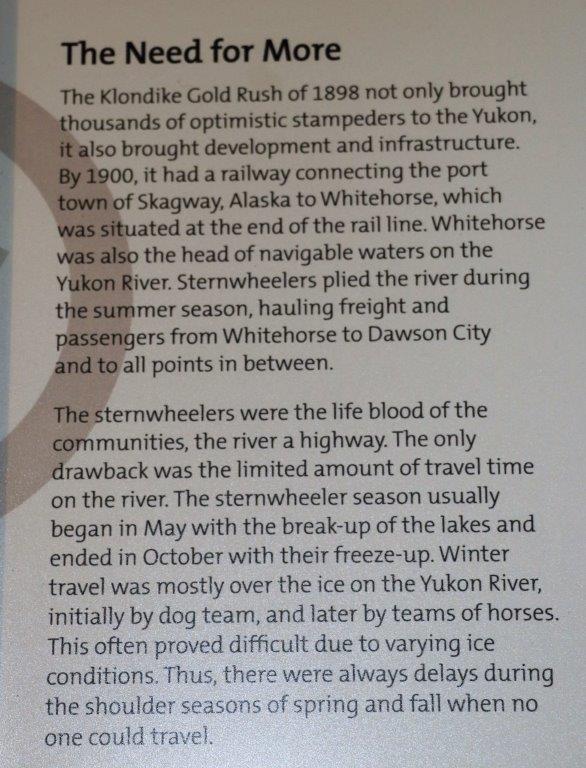
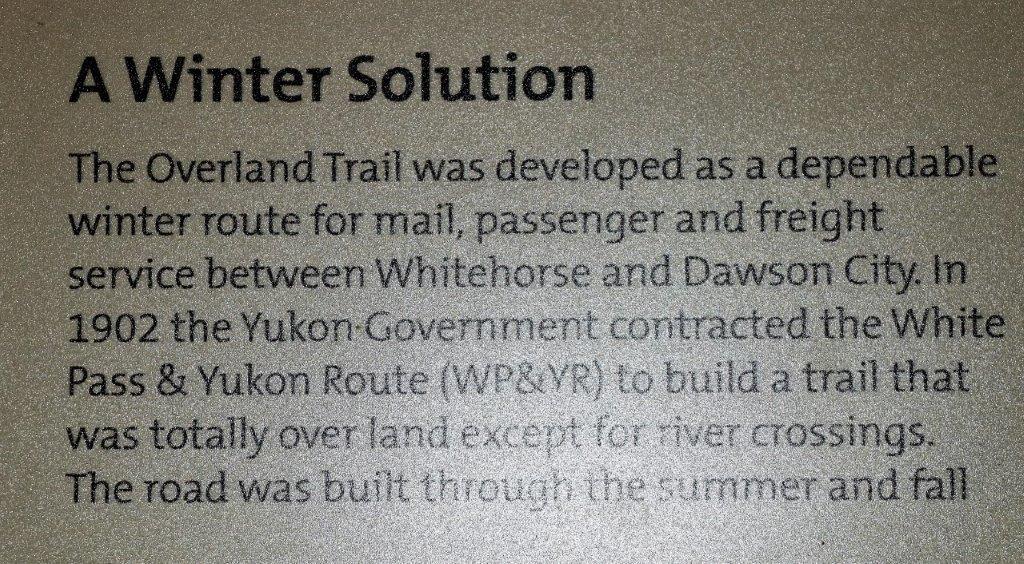
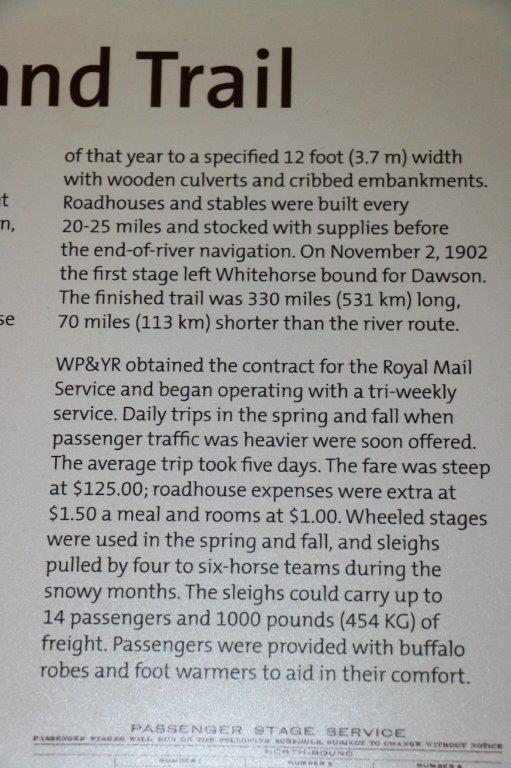
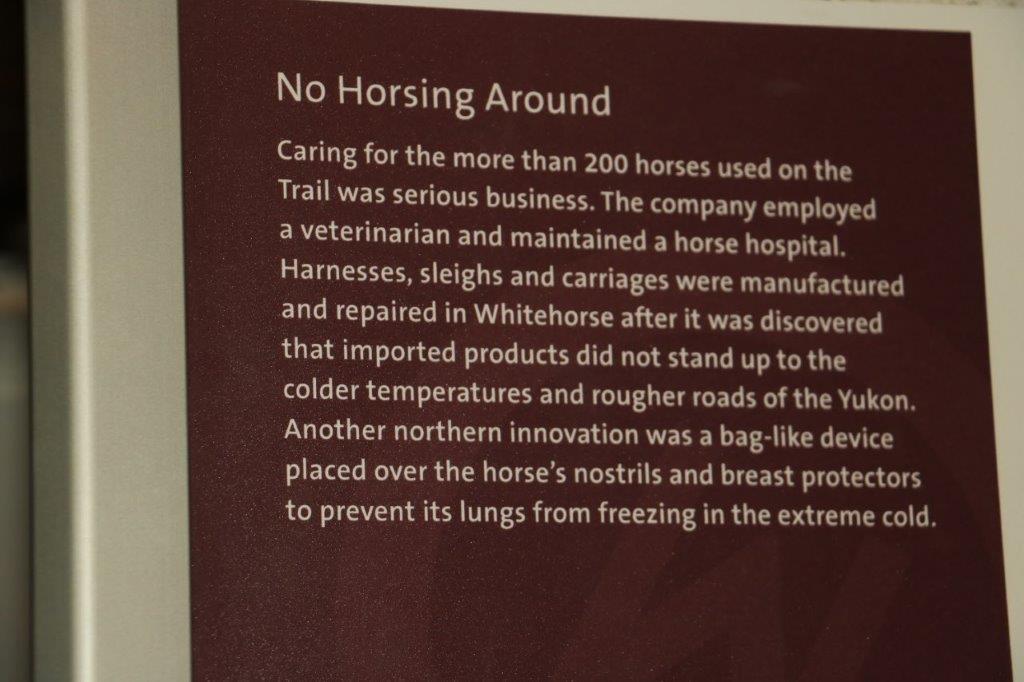
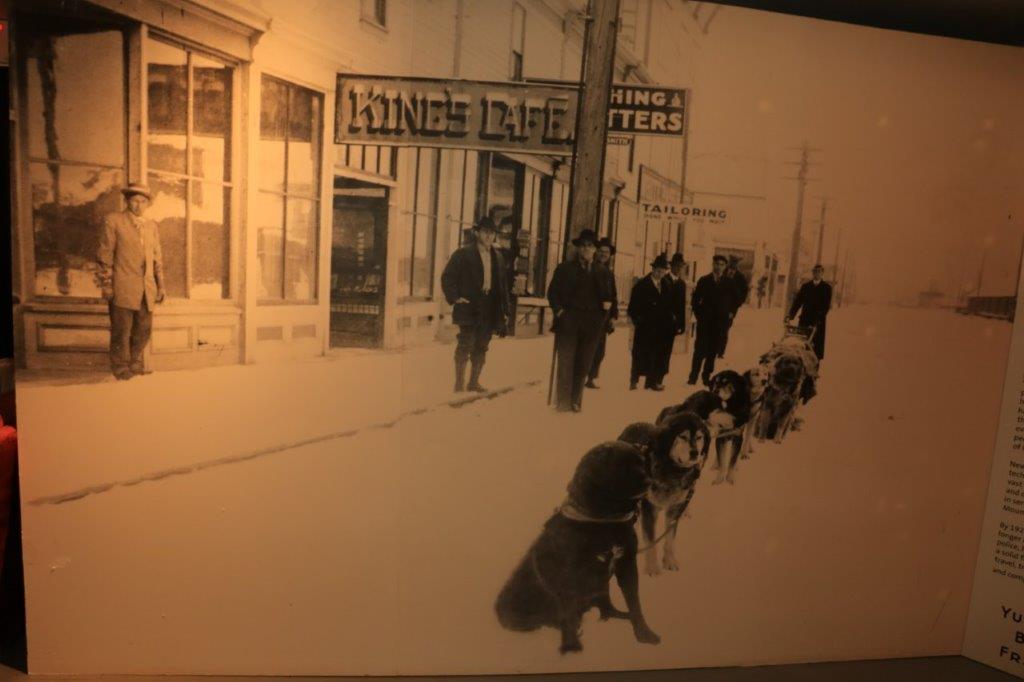
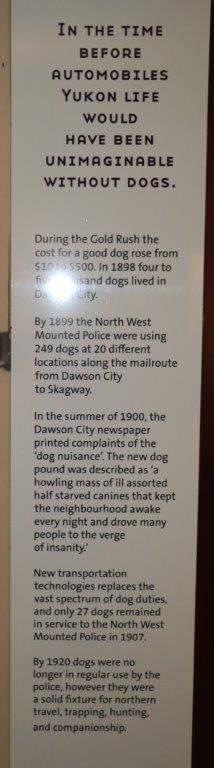
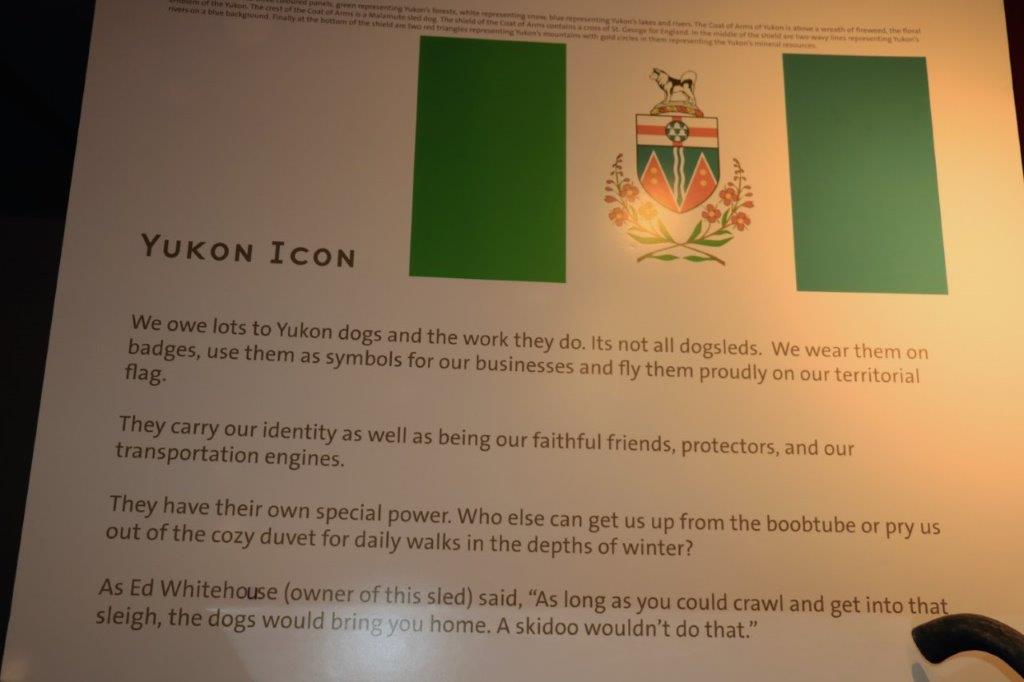
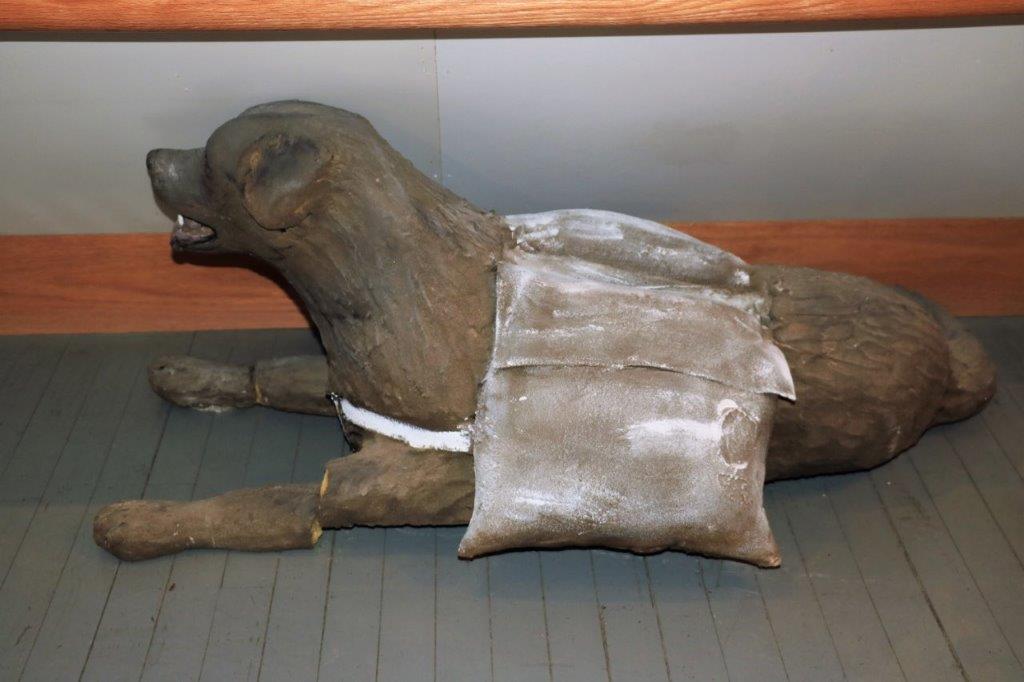
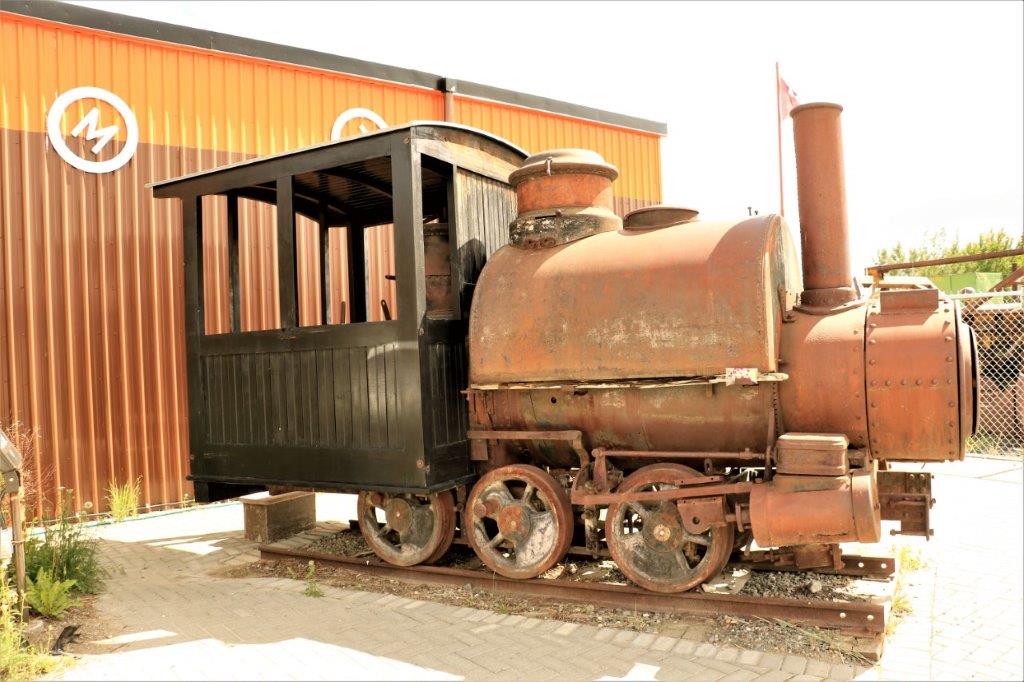
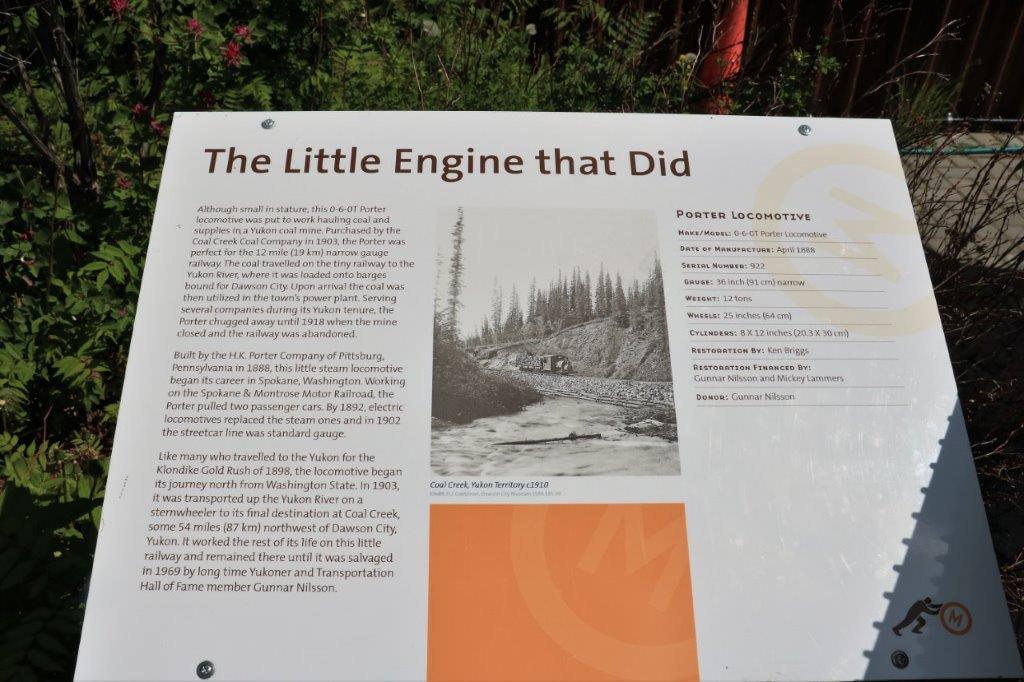
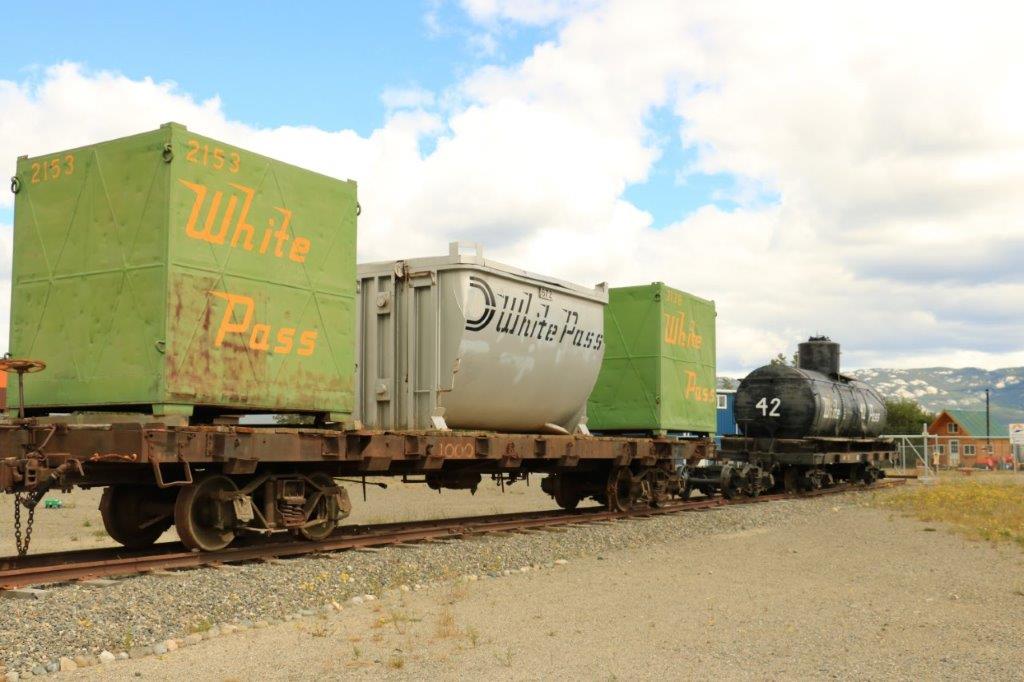
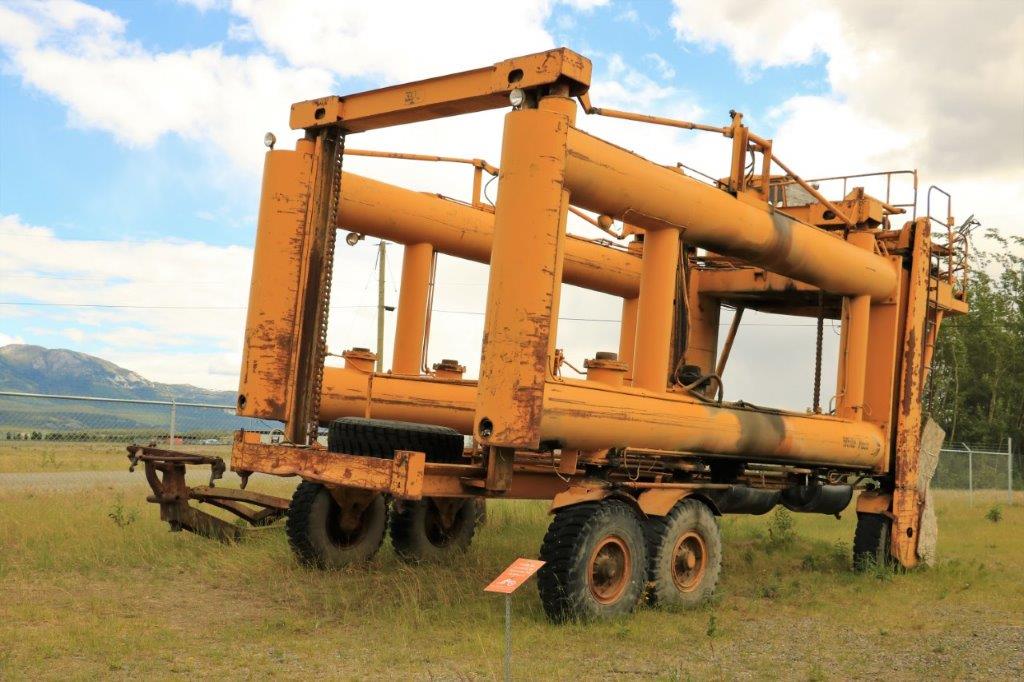
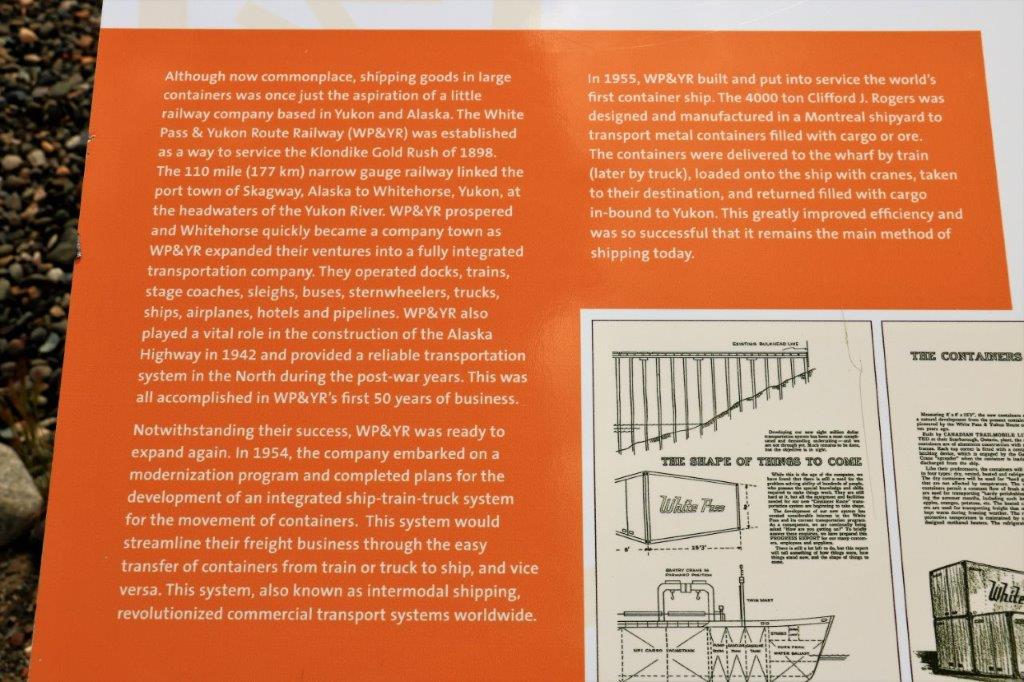
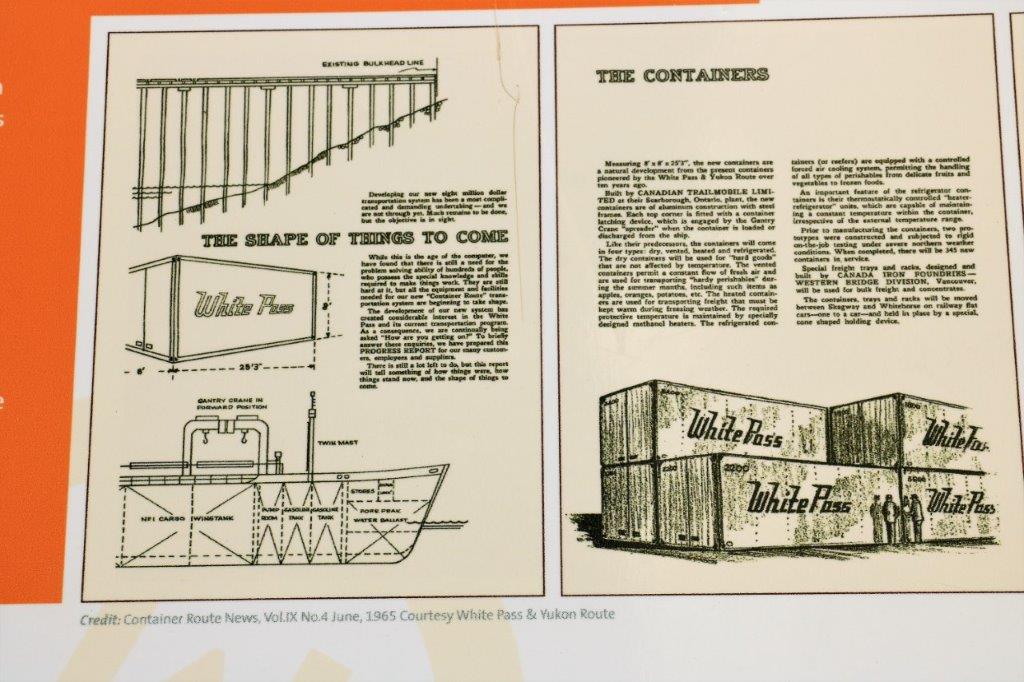
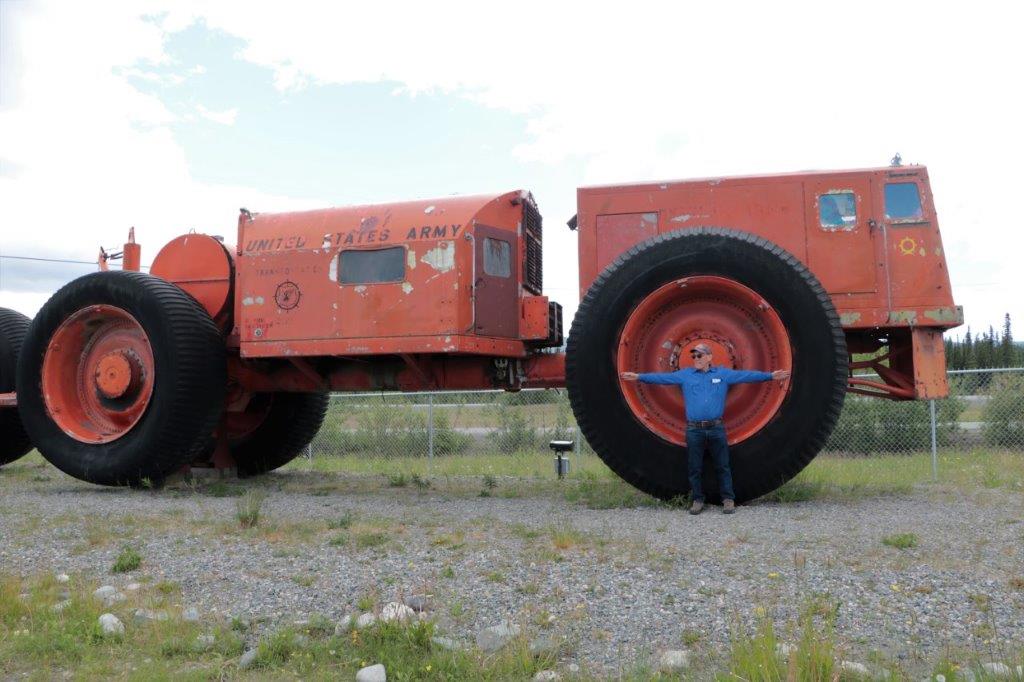
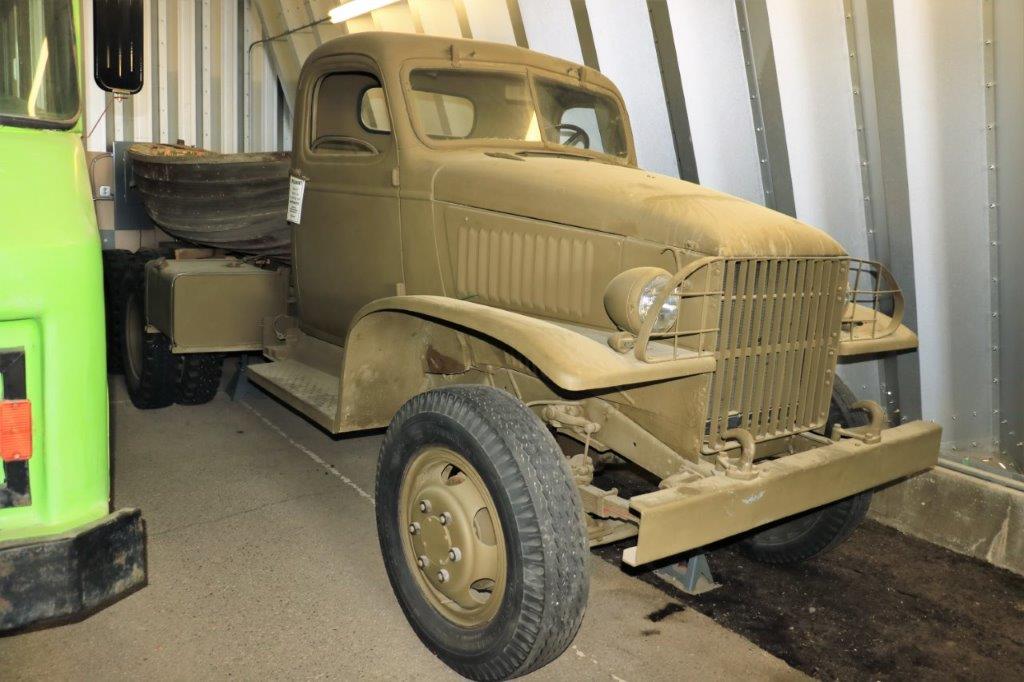
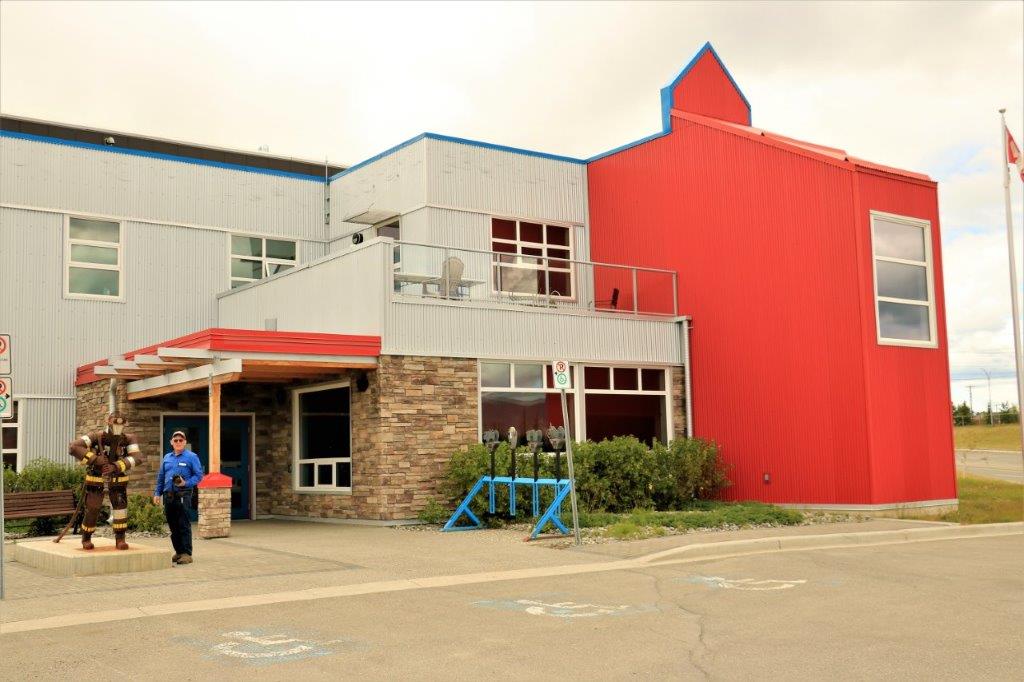
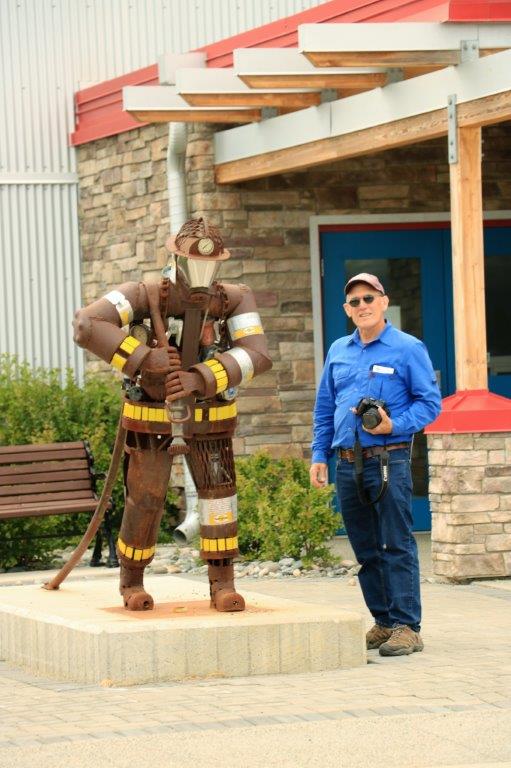
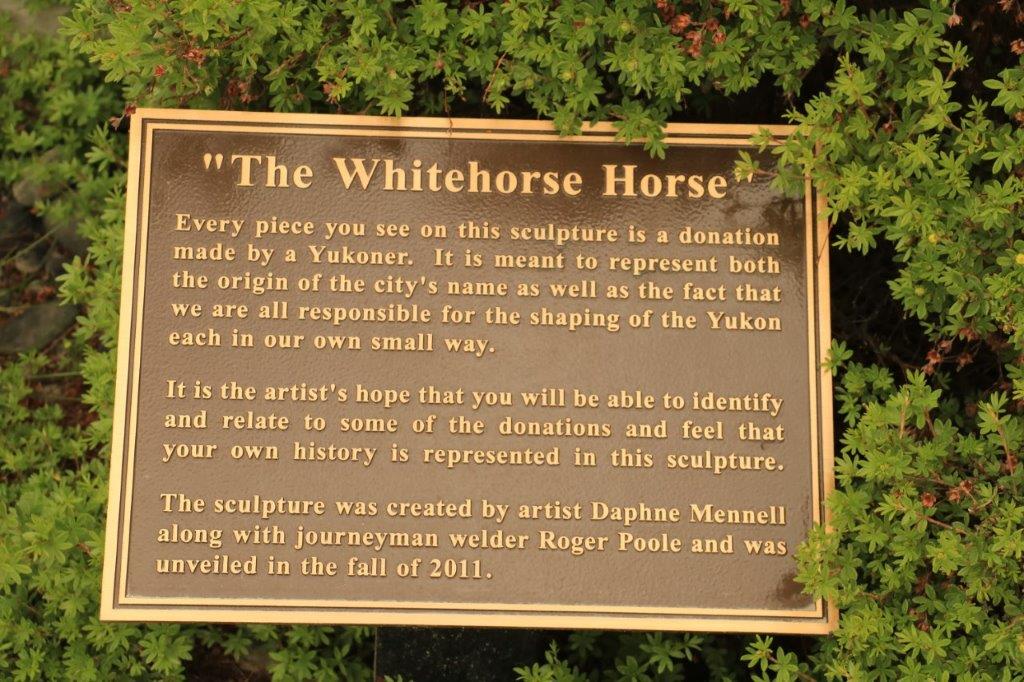
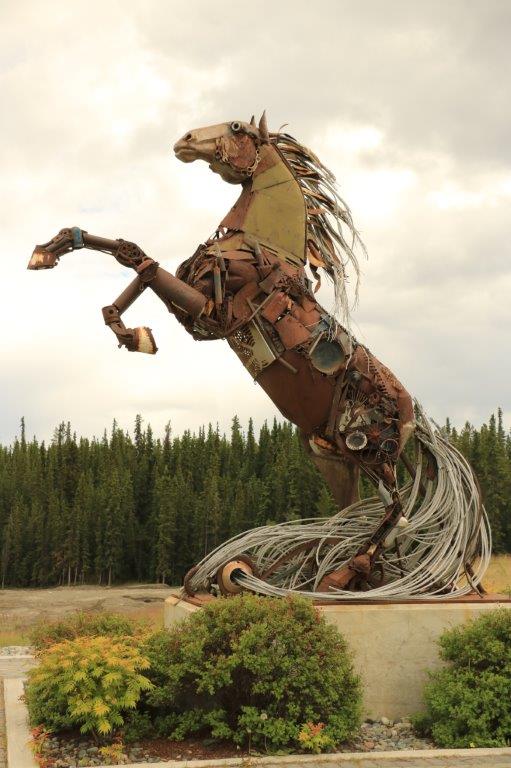
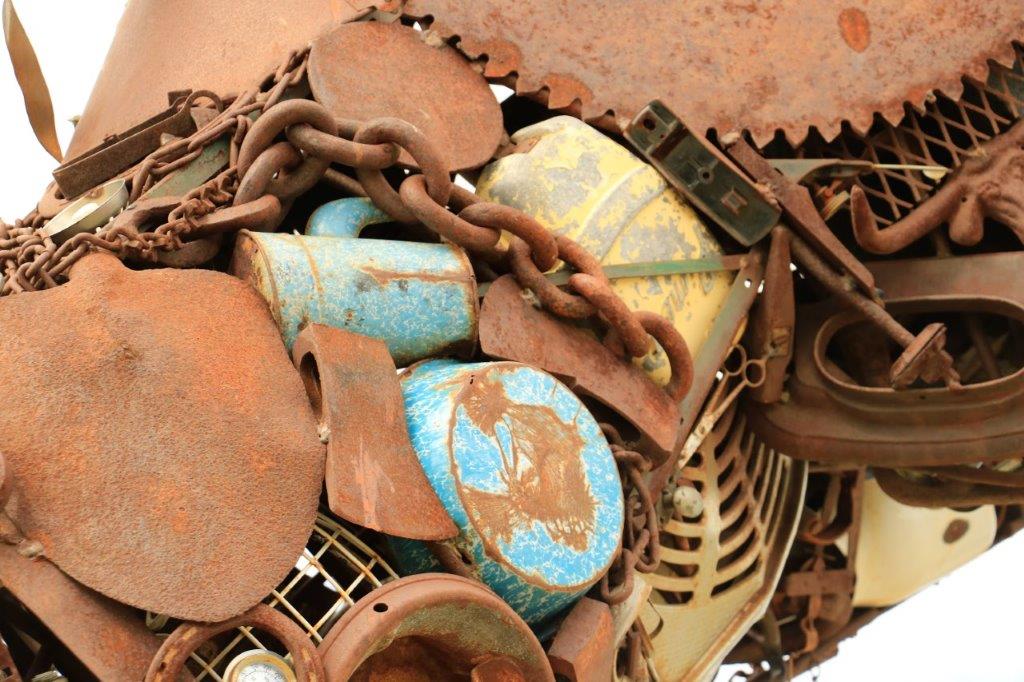
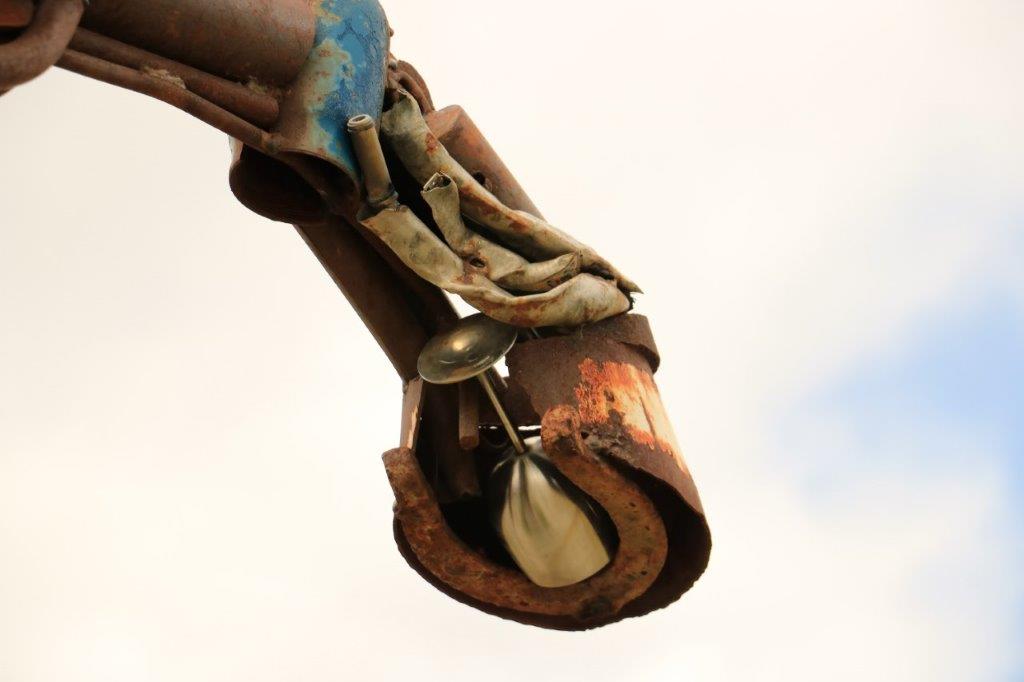
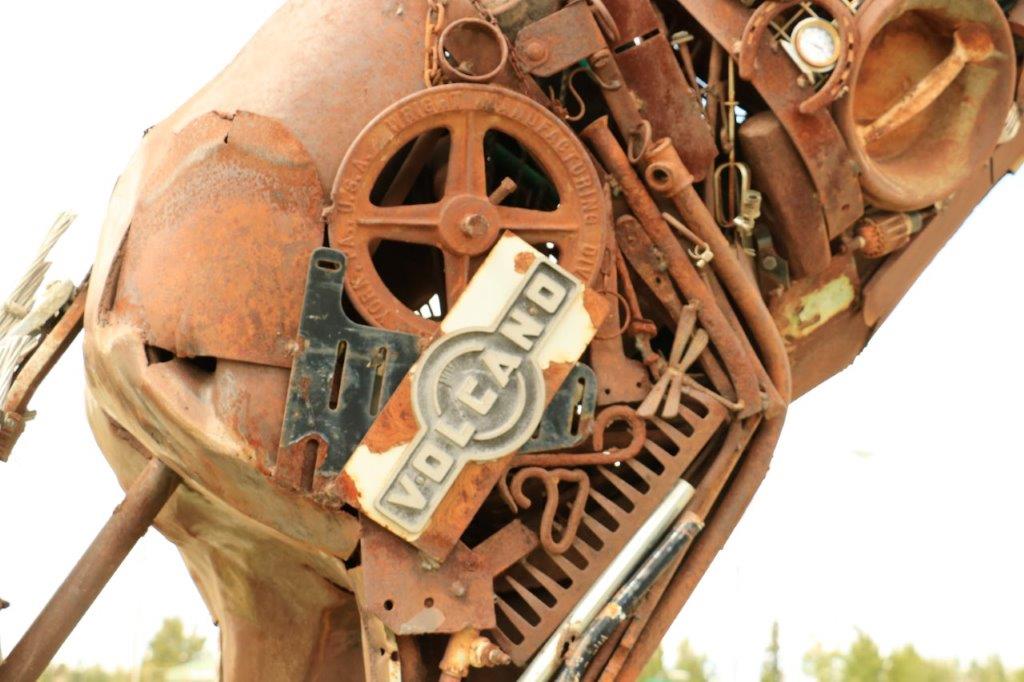
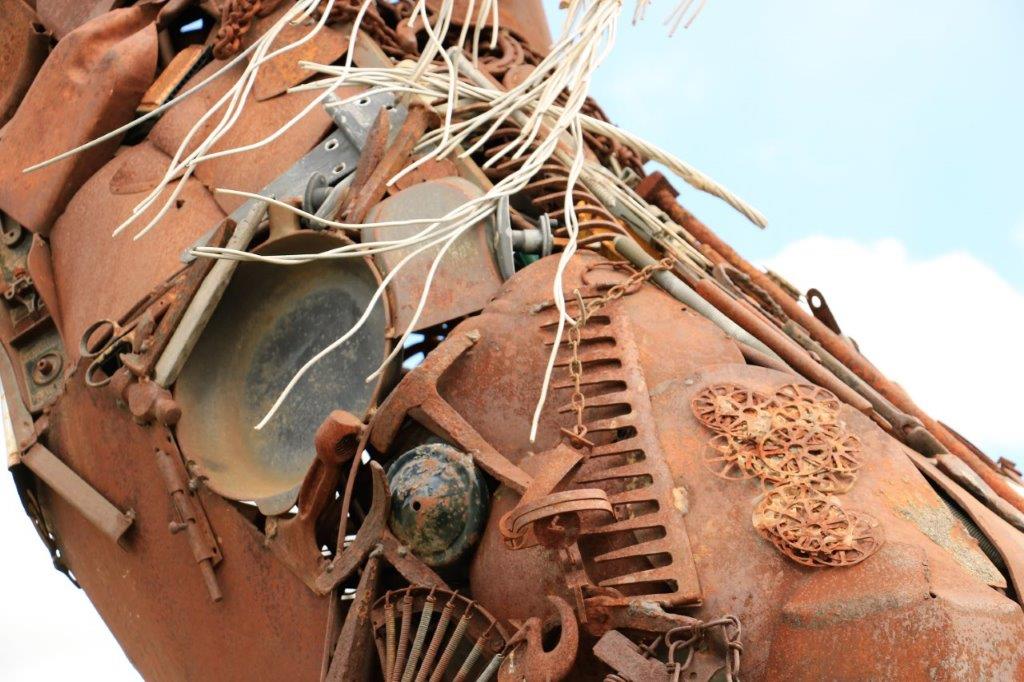
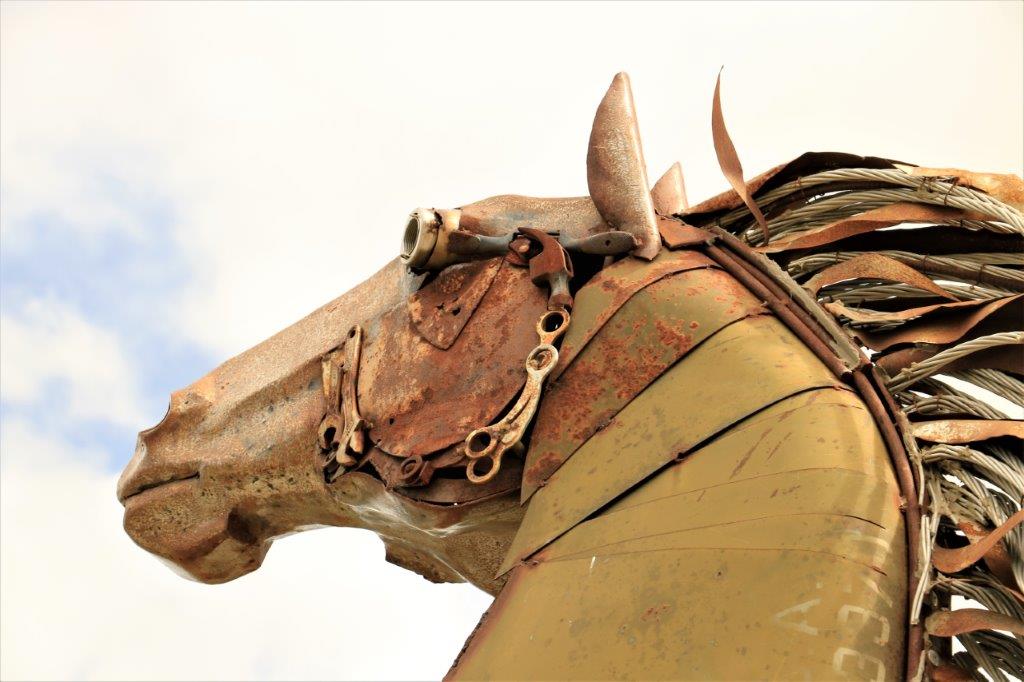
Rafting down Miles Canyon before the dam tamed the rapids. This mural of gold seekers climbing the Chilkoot Trail to the Klondike Gold Fields was painted on the museum wall.This photograph is of some would-be gold panners making the climb.  Notice the two young children watching from the top of the ridge.One of the White Pass and Yukon Railway cars that rode the narrow-guage rail up from Skagway, Alaska to the Yukon goldfields.  I had to crop lots of the signs to bring up the text so some of the sizes do not line up well.We learned that the White Pass and Yukon Railway developed the intermodal (container) method of shipping that is used world-wide today.This huge macine was used by the U.S. army, on snow, like a railway.The first truck my grandfather bought for his farm and orchard was a surplus army truck just like this one.At last, foot sore and brain filled we finished at the museum and went to find a couple of nearby geocaches; one of which was in front of the Whitehorse Fire Department.  And happily for John three of the firemen were outside at the back cleaning a monitor so he had the chance to chat for a minute.  (One must never miss an opporunity to talk to a fellow firefighter.)   There was a cache hidden at the base of this wonderful sculpture.    We had fun identifying some of the many objects that had been used to make the Whitehorse horse.                 The wineglass in the hoof is a nice touch.  And that concluded our day in Whitehorse. We will be stopping here again after we leave Alaska and there are a couple of things we didn’t have time to see today so I will have another opportunity to check them out.

We leave for Dawson City (544km/338 miles northwest) in the morning and will be spending three nights there.

2018 June 30 – Whitehorse, Yukon Territory (Part 1)

Since we were not traveling today we slept in until 9, then walked down the street to the restaurant in the neighbouring hotel for breakfast. .Our hotel – old, but well maintained and very quiet.

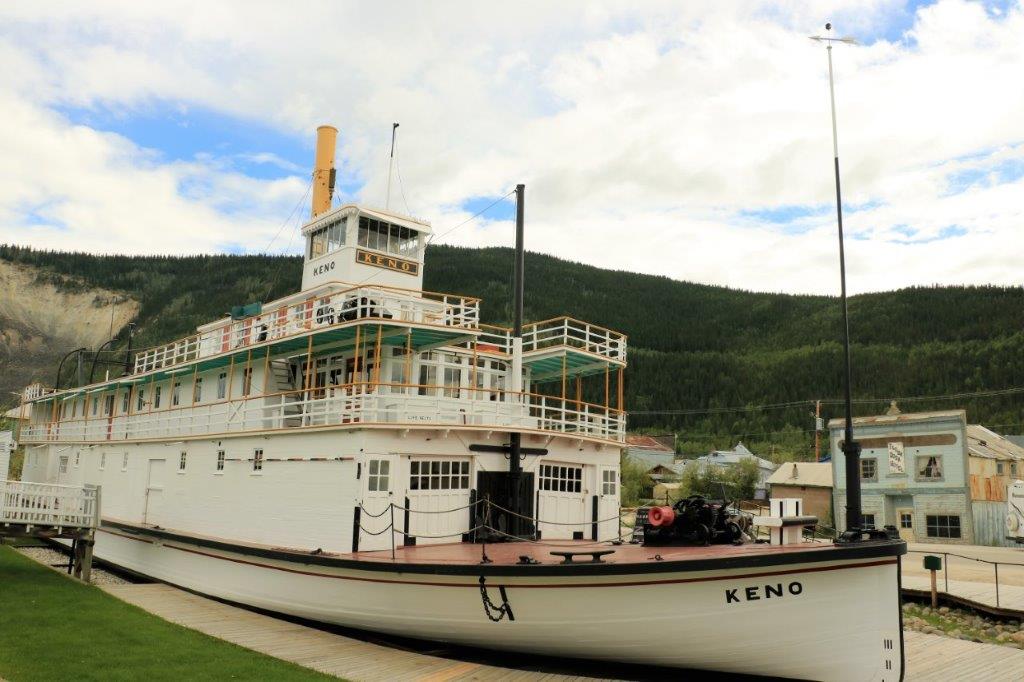
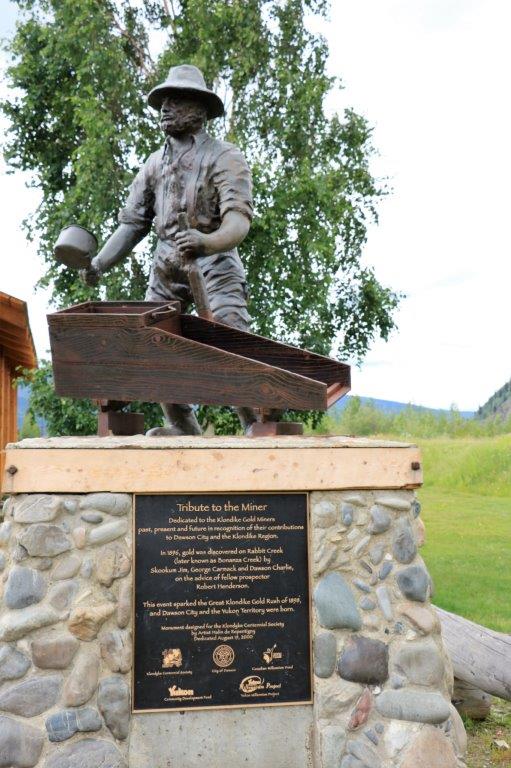
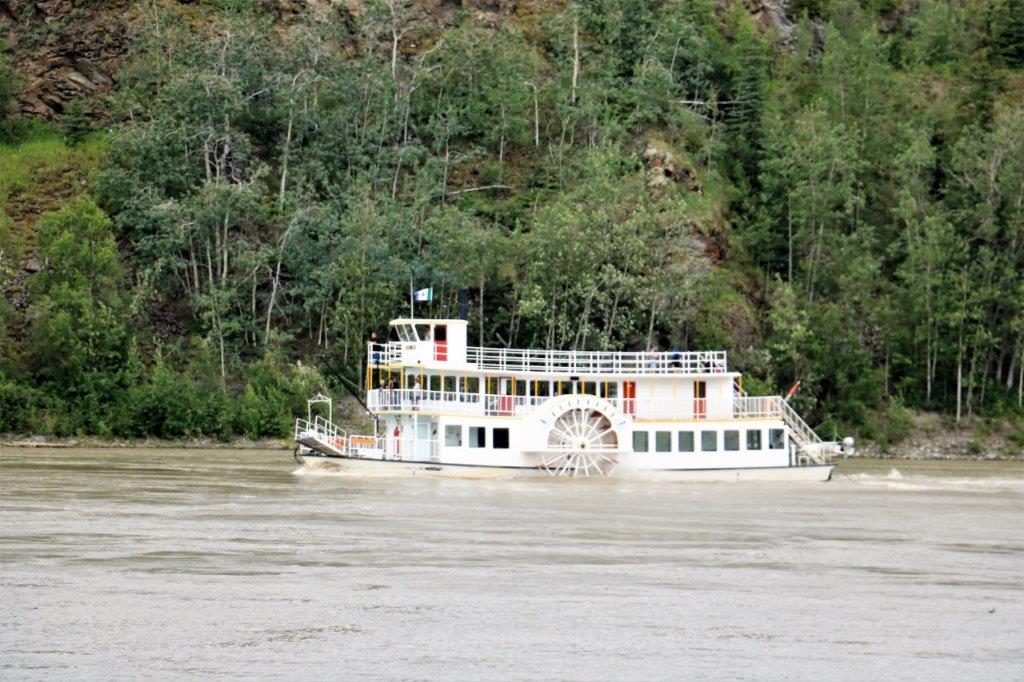
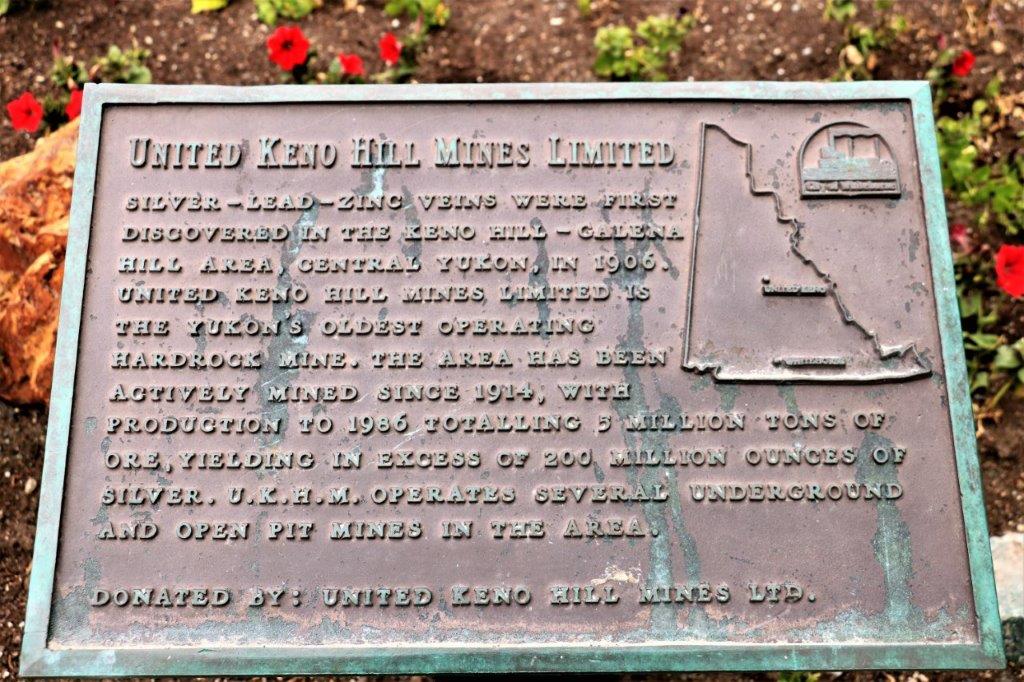
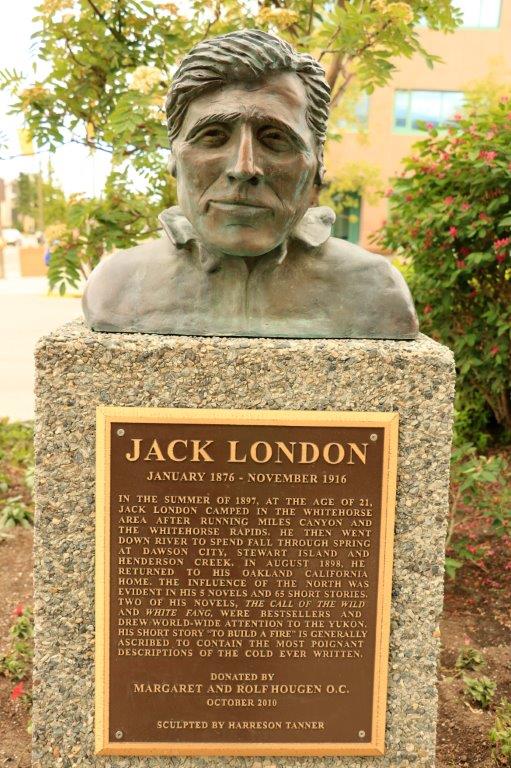
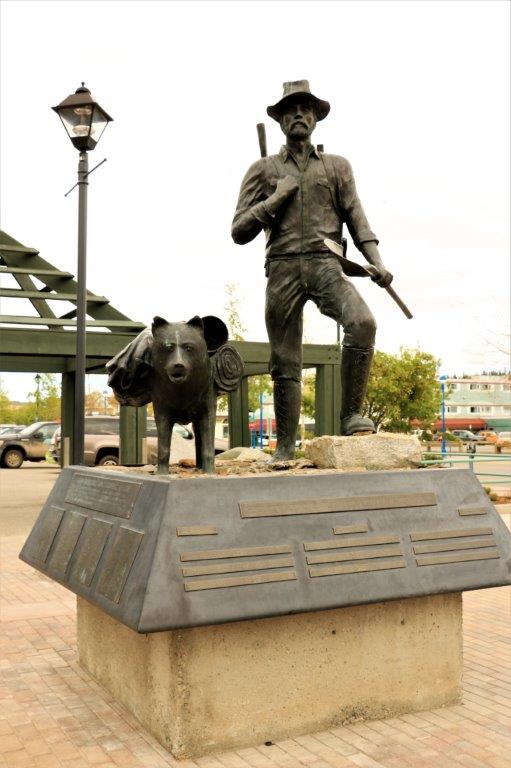
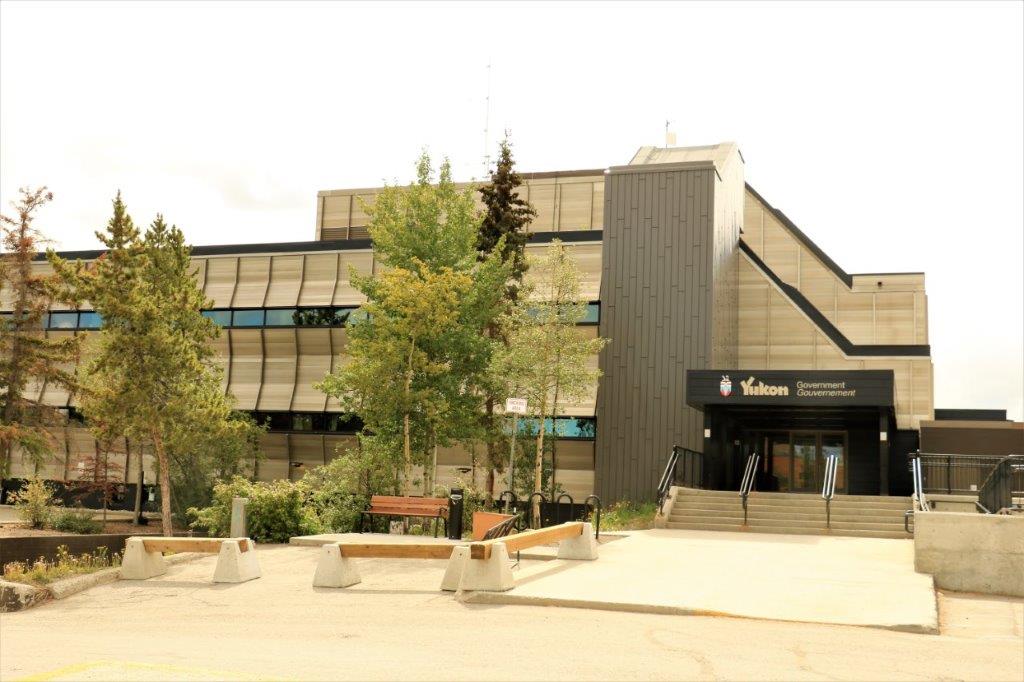
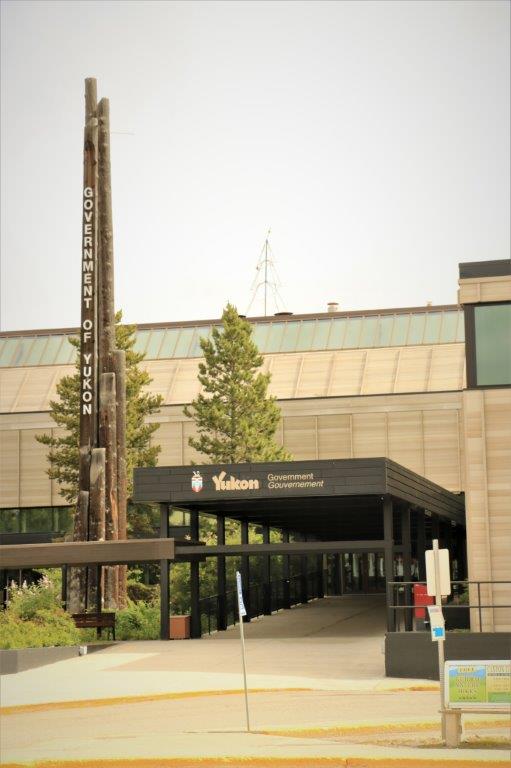
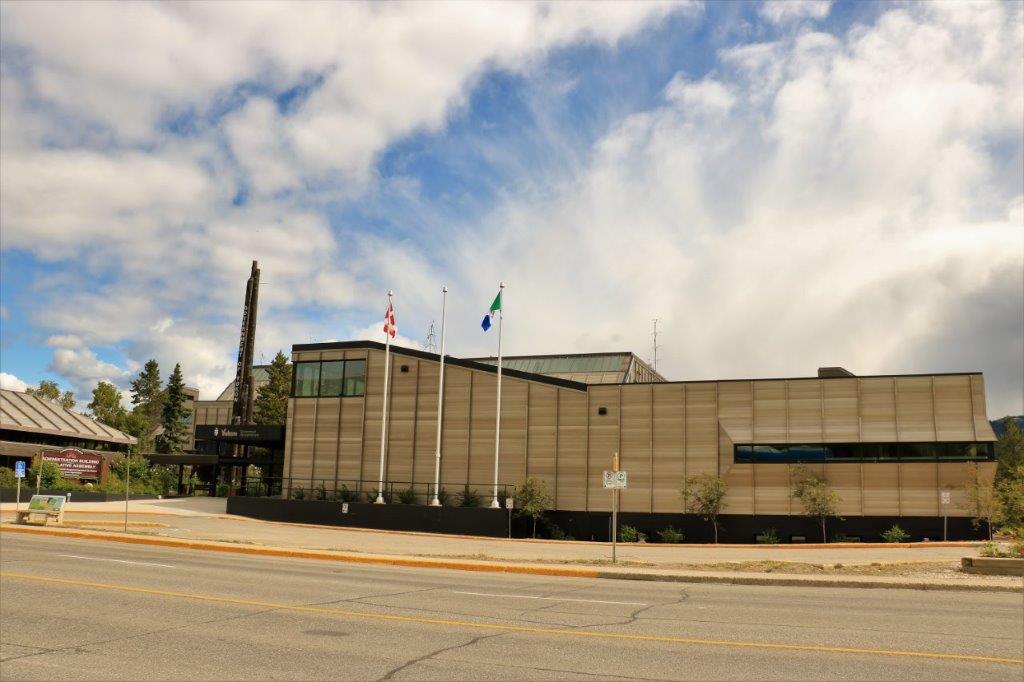
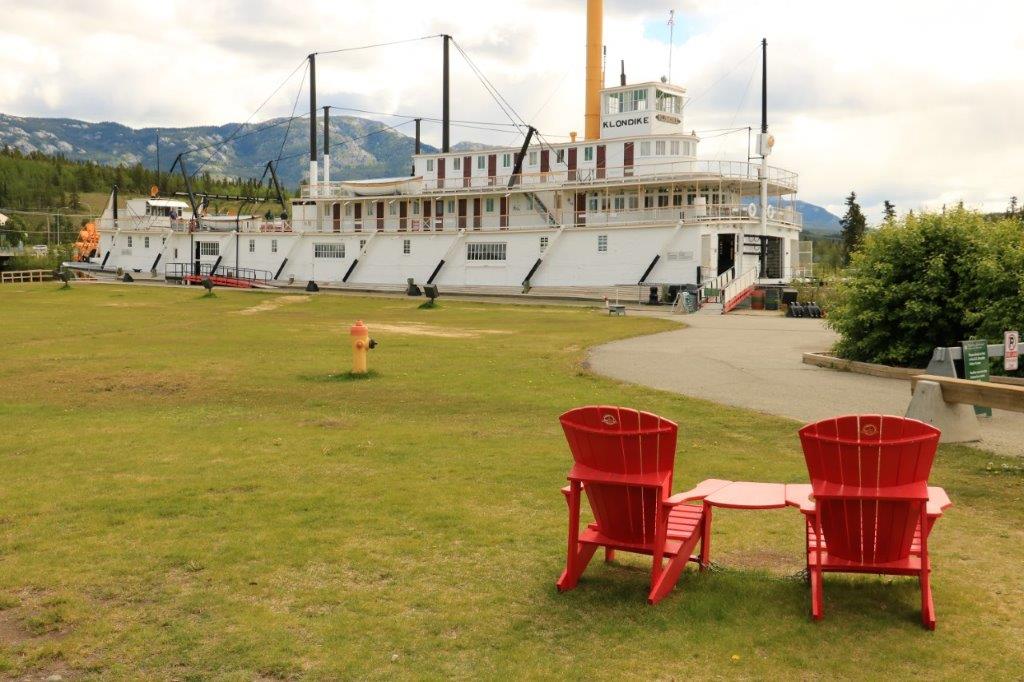
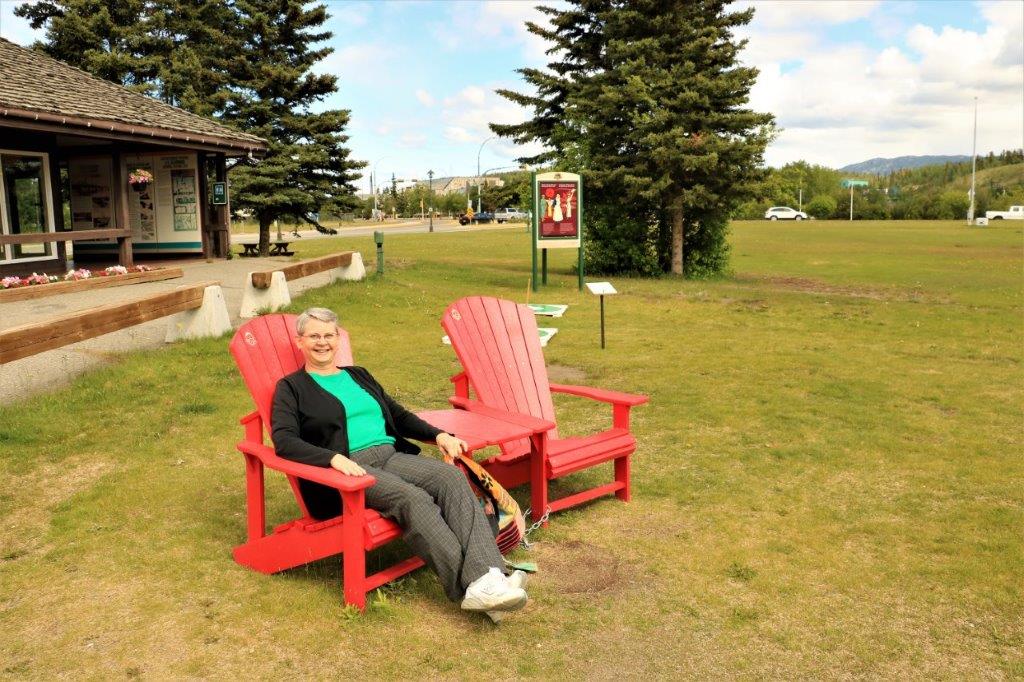
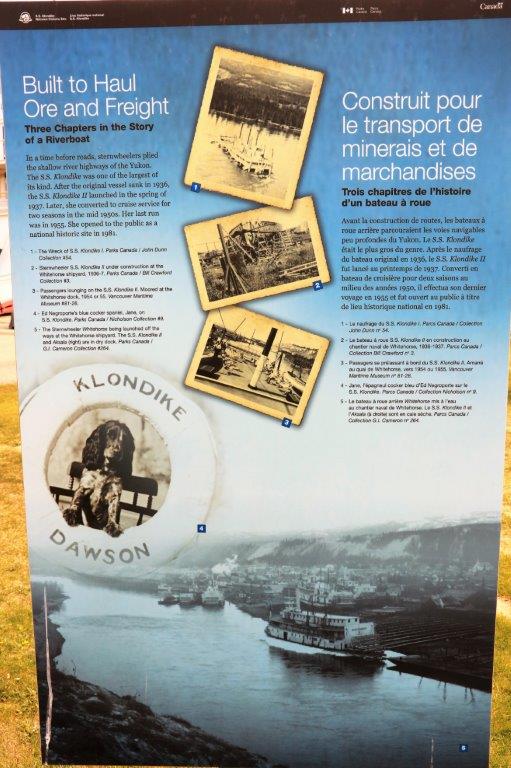
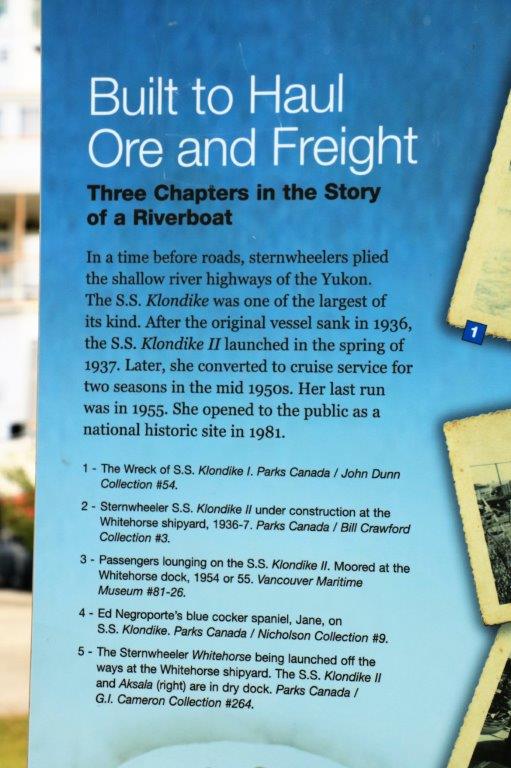
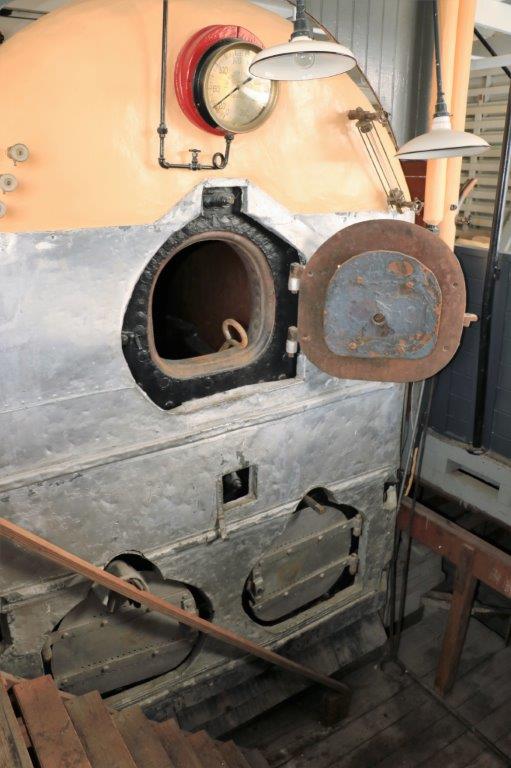
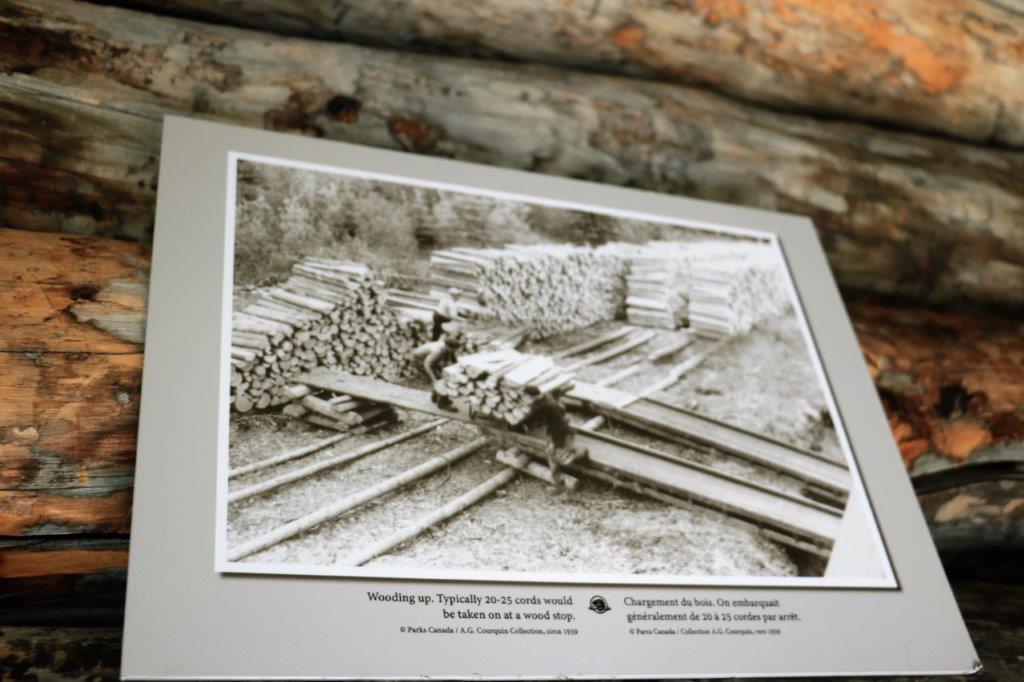
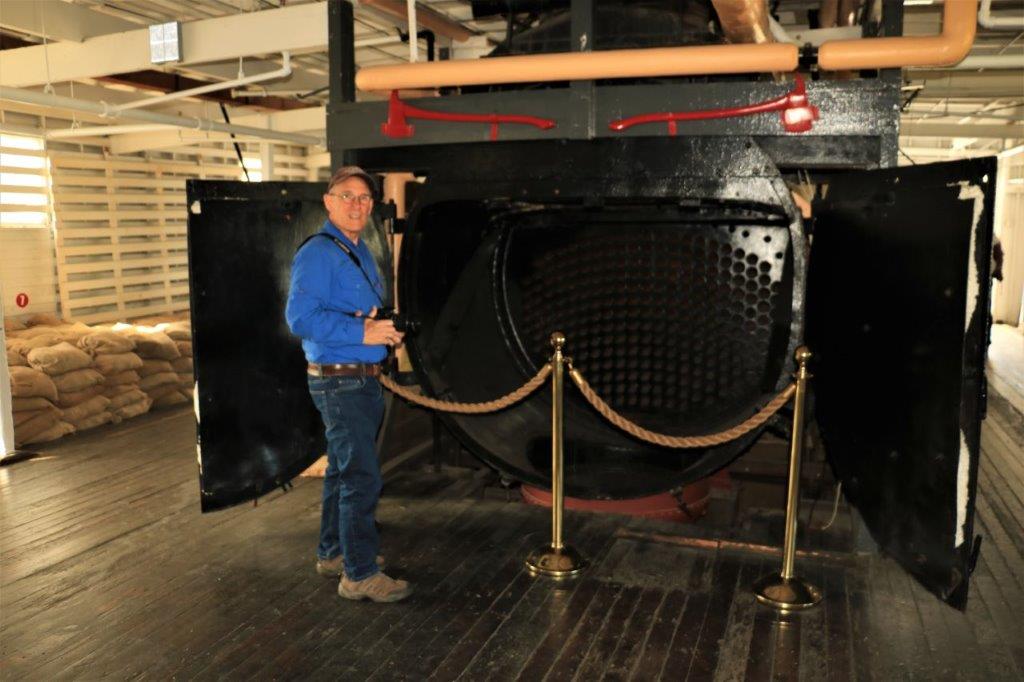
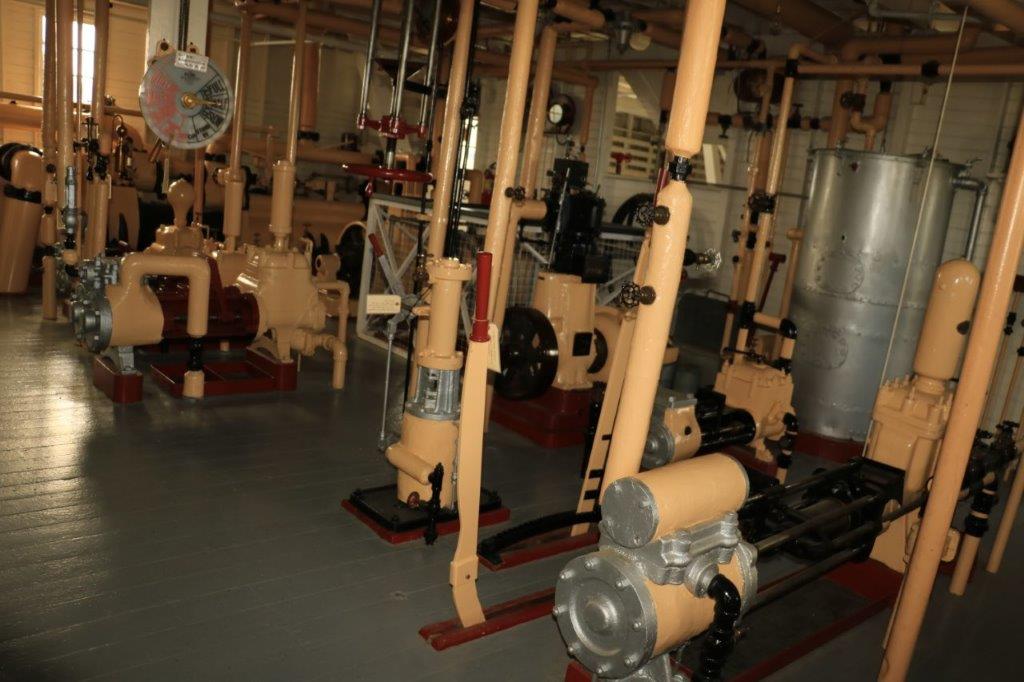
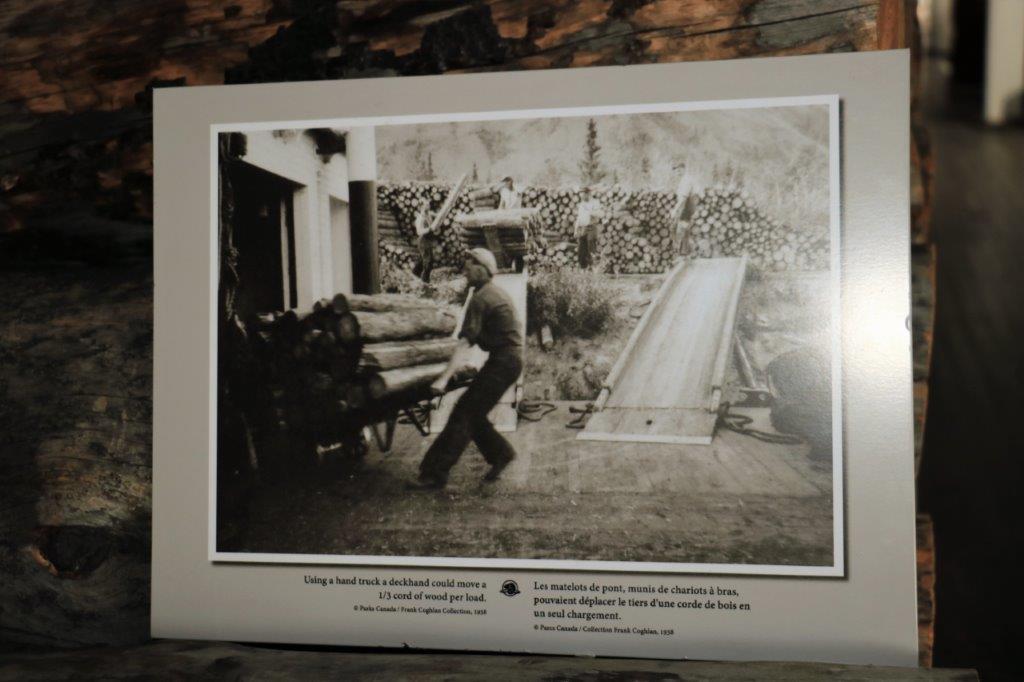
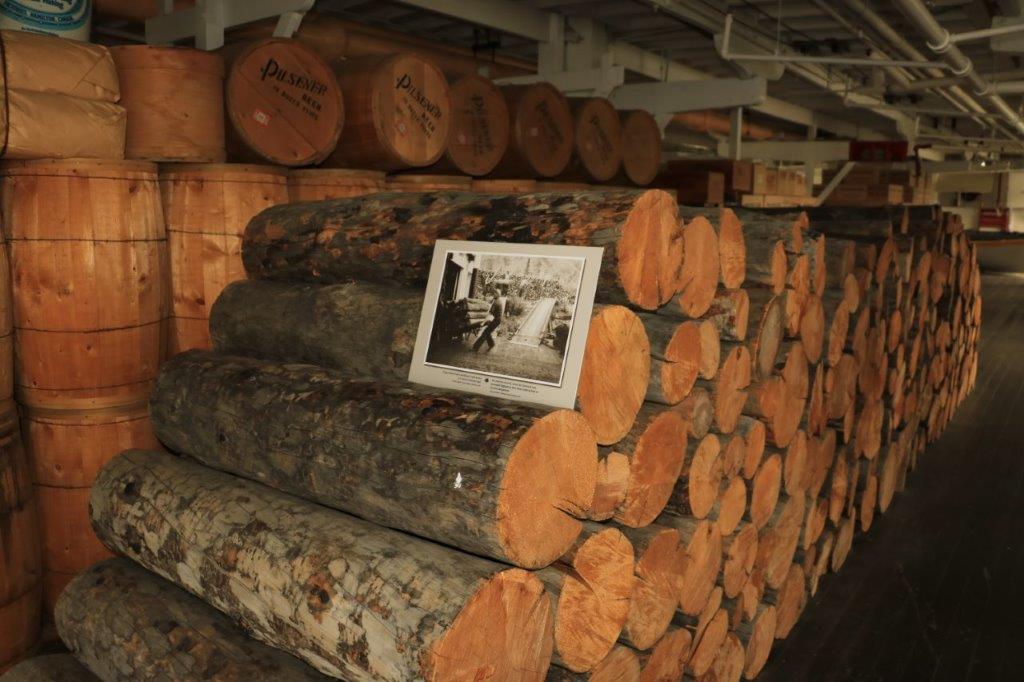
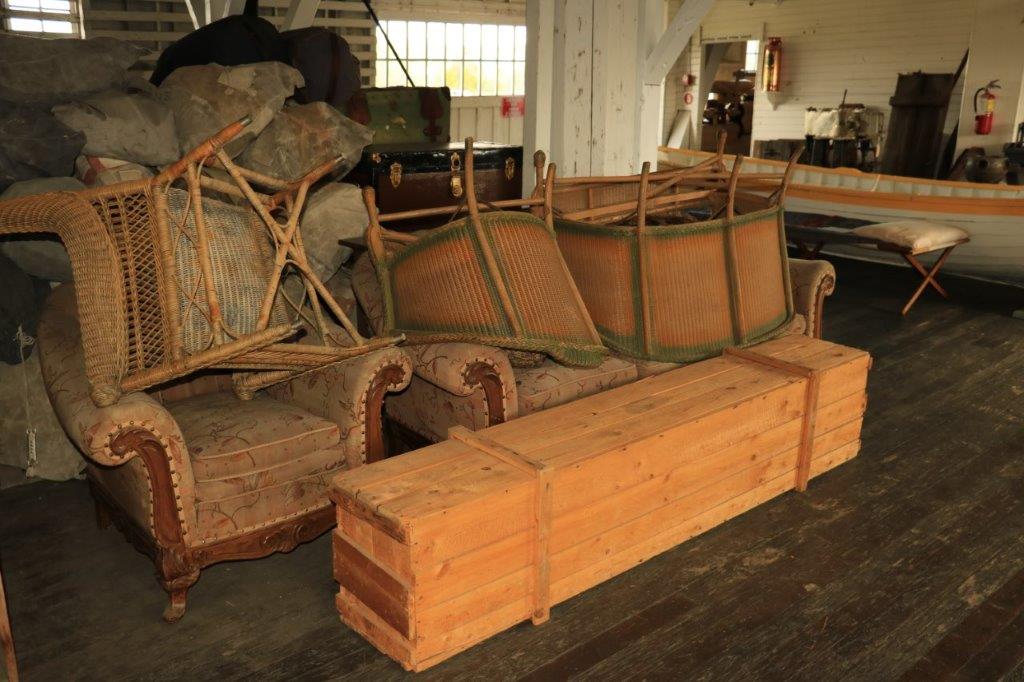
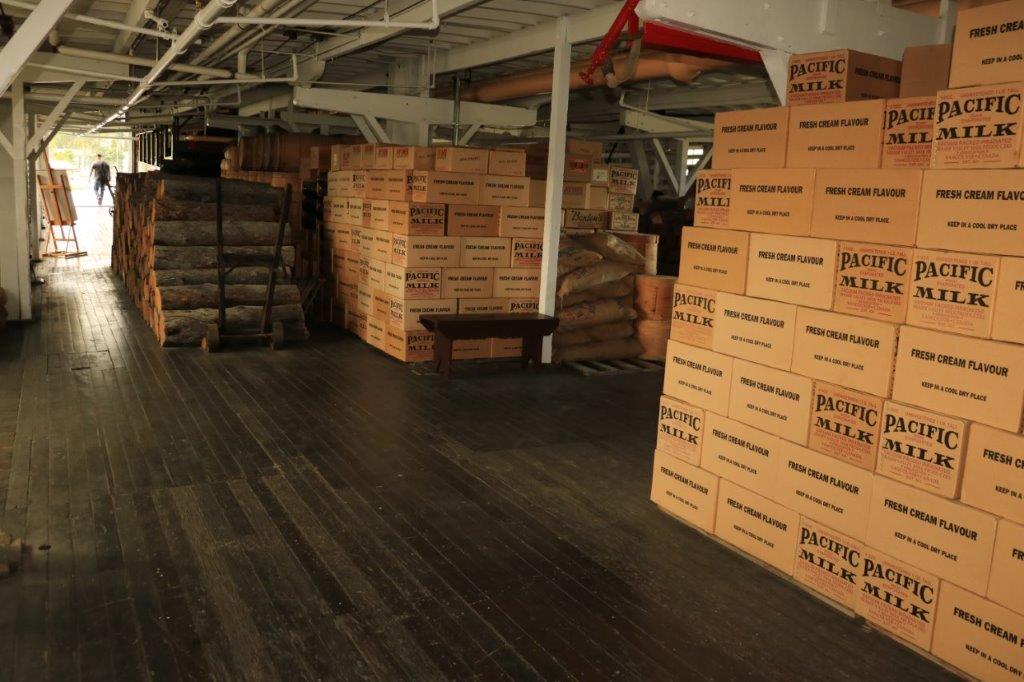
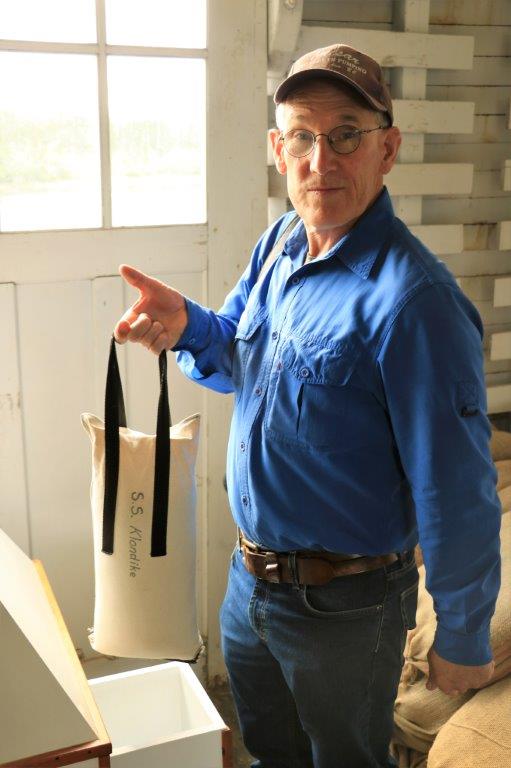
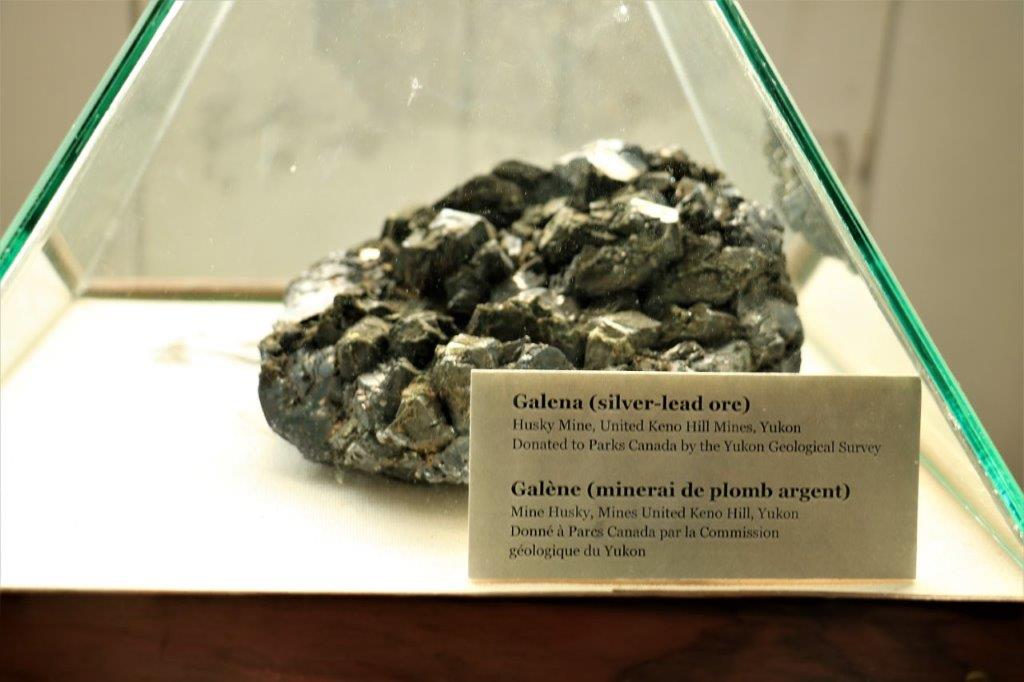
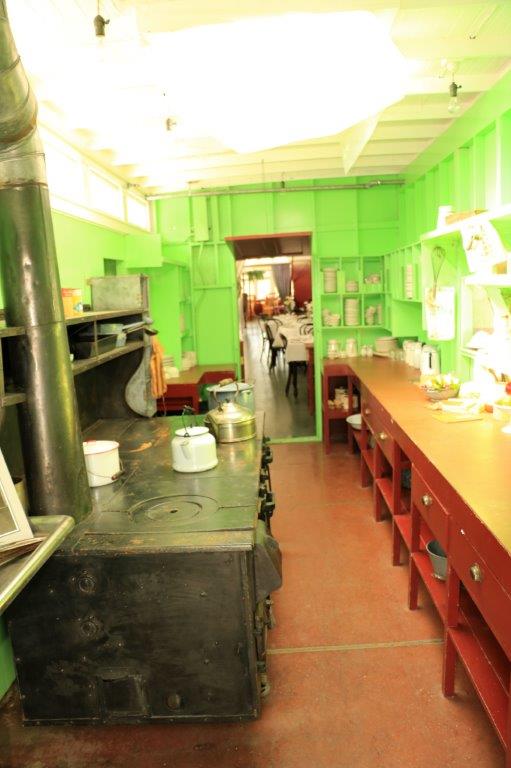
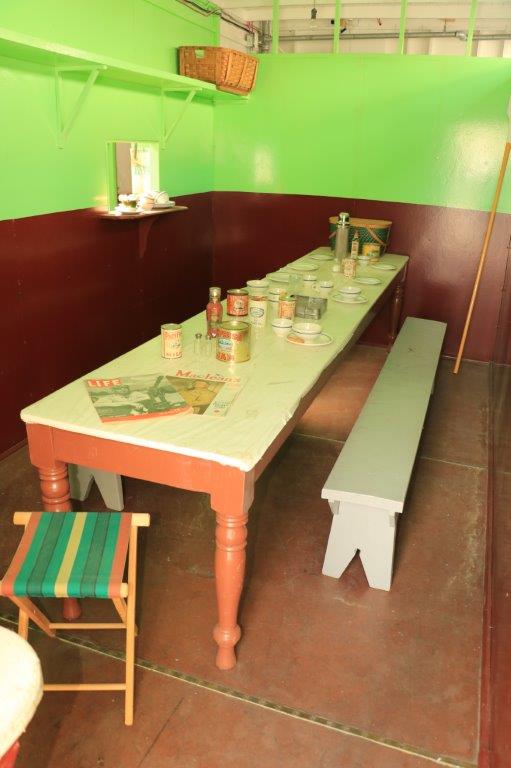
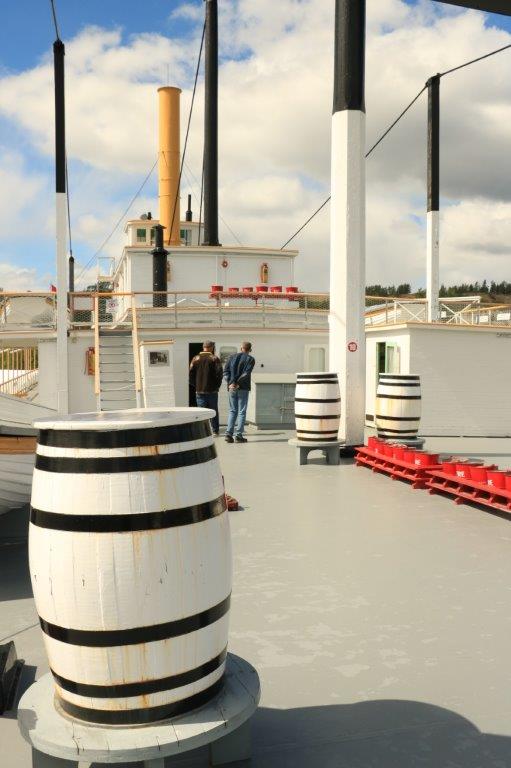
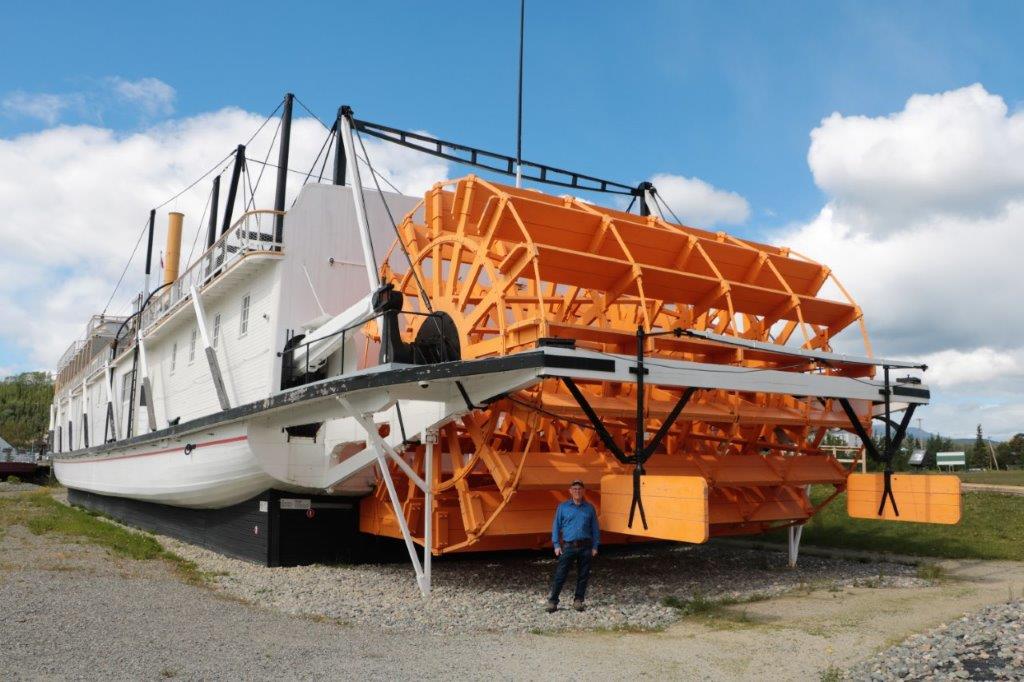
There is a Jack London Museum in Dawson City that I plan to visit.  The sculpture on the right is in honour of all the prospectors who opened up the north. We wanted to visit the Yukon Territory Legislative Building and it was right across the street from the Visitor’s Center.  Unfortunately it was closed for the Canada Day long weekend and would not open again until Tuesday.  Fortunately for us, we will be coming back to Whitehorse later in our journey so we will try get a tour then. Parks Canada adminsters the S.S. Klondike, the largest steam paddlewheeler to ply the Yukon River. I had to have my photo take in the red Adriondack chair.  When we drove across Canada in 2014 I had my photo taken sitting in all the red chairs we found in the various National Parks.    The fire box for the steam boiler.  It burned a cord of an hour.This is the vent tubes that sends the steam to the engine room.  The sand bag John is holding weighs 24 lb, the same weight as the chunk of galena (with silver and lead).  Each ore sack weighed five times that. By the time all these ore sacks arrived in the smelter in Kellog, Idaho they had each been handled about 18 times getting put on and taken off carts, boats and trains.Sadly, the upper decks were closed for renovations – although I saw no evidence of renovations going on.  We could peek through the kitchen to the officer’s and passenger’s diningroom.  The crew dining room was a lot more spartan.

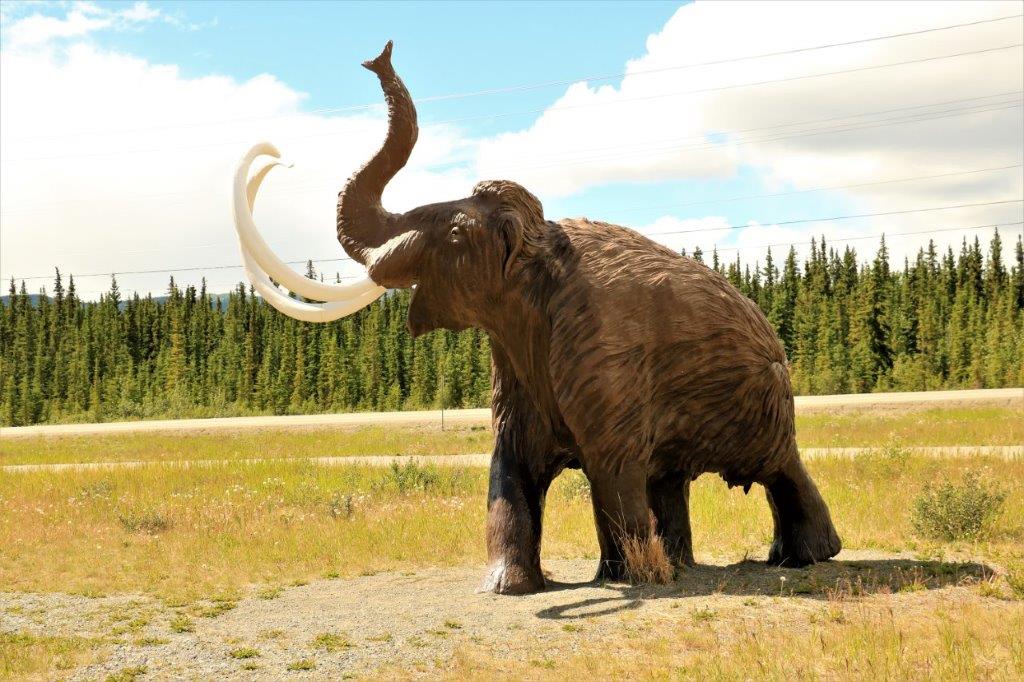
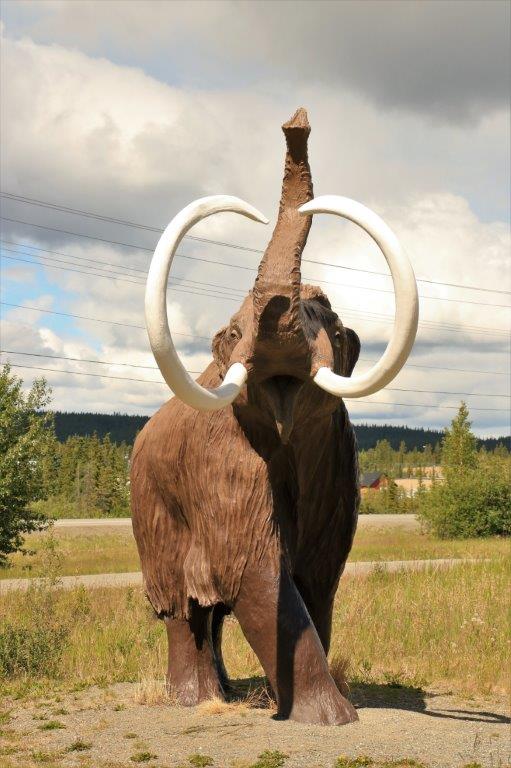
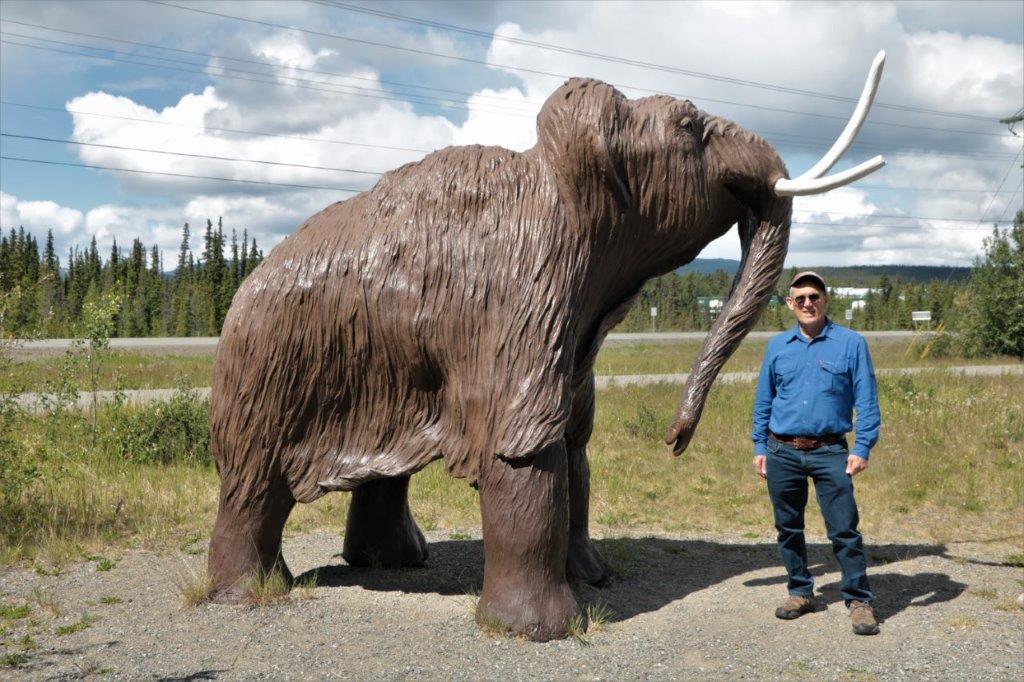
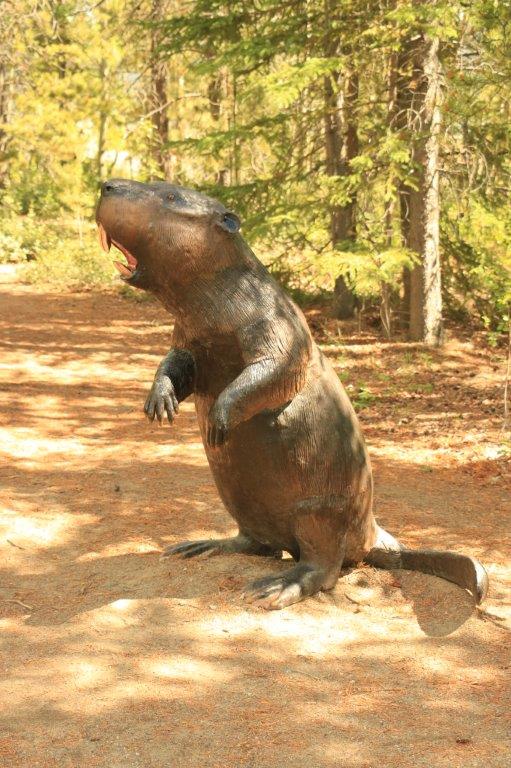
There is a Beringia Museum near the Transportation Museum and there was an earthcache and a regular cache nearby so we stopped to find them and take a picture of the mammoths.  The parking lot was empty.  I would suggest, even though it is not strictly correct, to rename the place the Mammoth Museum or something like that.  Who knows what a Beringia is?  Why would you stop there?  And the parking lot at the front of the building was small and only for handicap parking.  You needed to drive back onto the frontage road, past a little wood grove to the main parking lot and then walk back along a trail through the bush to the museum.  I would think between the signage and the awkward parking the place loses a lot of business. I may be wrong; could be packed all summer. I have cut this day into two blogs because after we saw found the geocaches and photographed the mammoth sculptures we went to the Transportation Museum and you all know what that means!  Lots of photos of stuff and informational signage.