All posts by jj1951

My husband and I retired in 2007 and decided to spend the kid's inheritance by travelling as much as we could until either the money or our health runs out. So far so good.

2018 July 17 – Kenai to Homer and back, AK

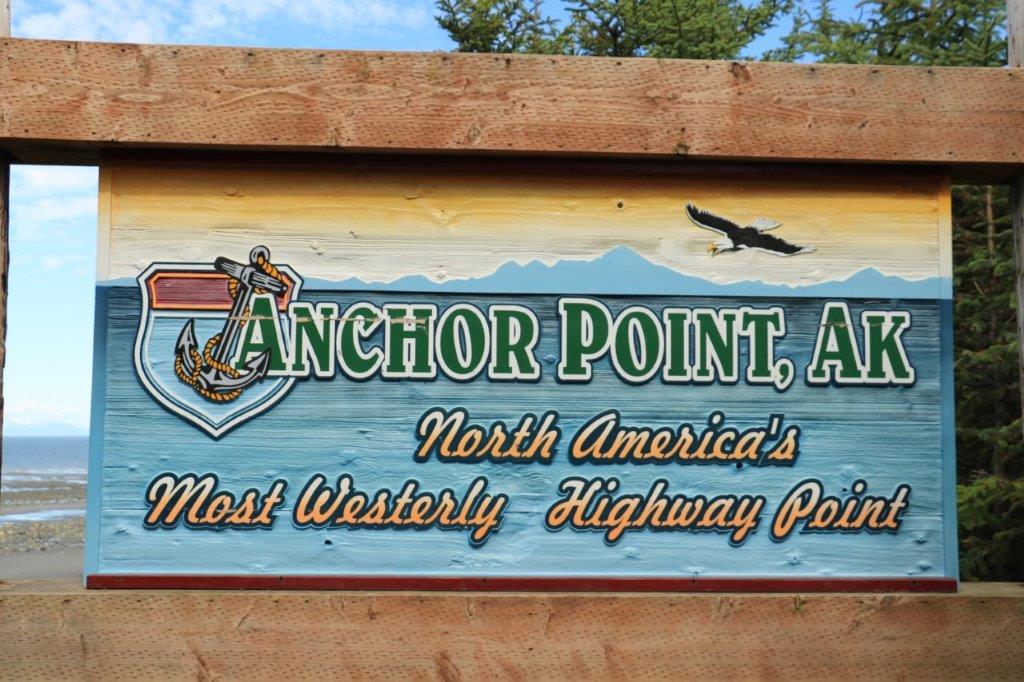
We had decided to drive down to the bottom of the Kenai (pronounced KEEN-eye) – Peninsula today to the southernmost town of Homer.  We woke to a beautiful clear day and set off immediately after we had breakfast.  A staff person had told John that it only took an hour to drive to Homer, which I knew was ludicrous as it is 81 miles to the town and 90 to the end of the road (130 km and 145 km).  There were geocaches all along the highway but we decided to ignore them all except one at Anchor Point because Anchor Point is the most westerly place in North America that you reach by road and we wanted to get the cache as our ‘furthest west’ one.

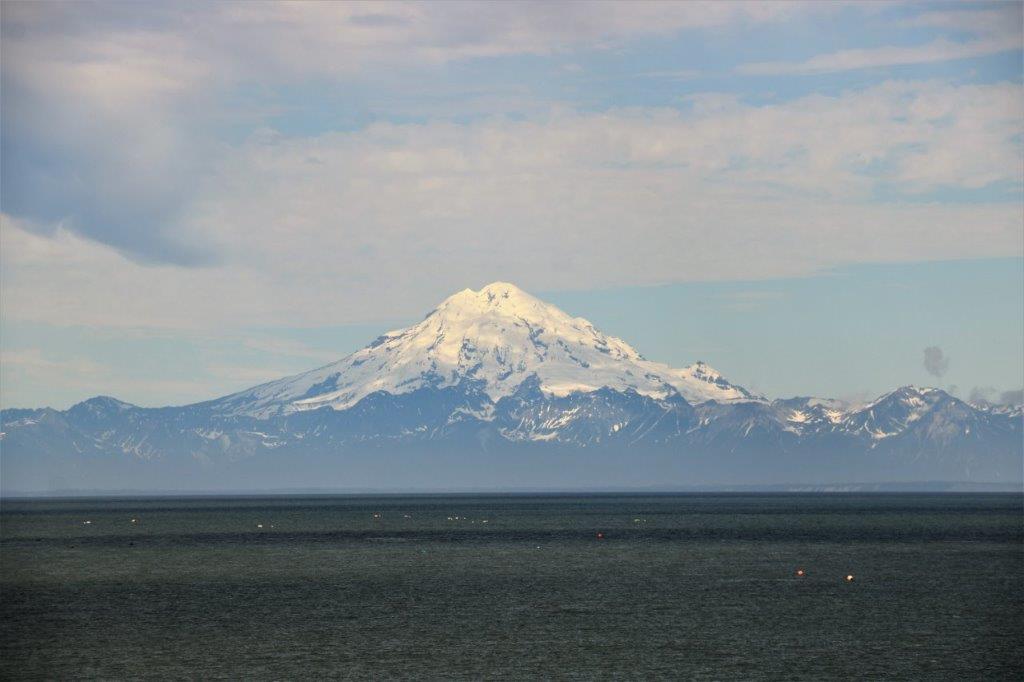
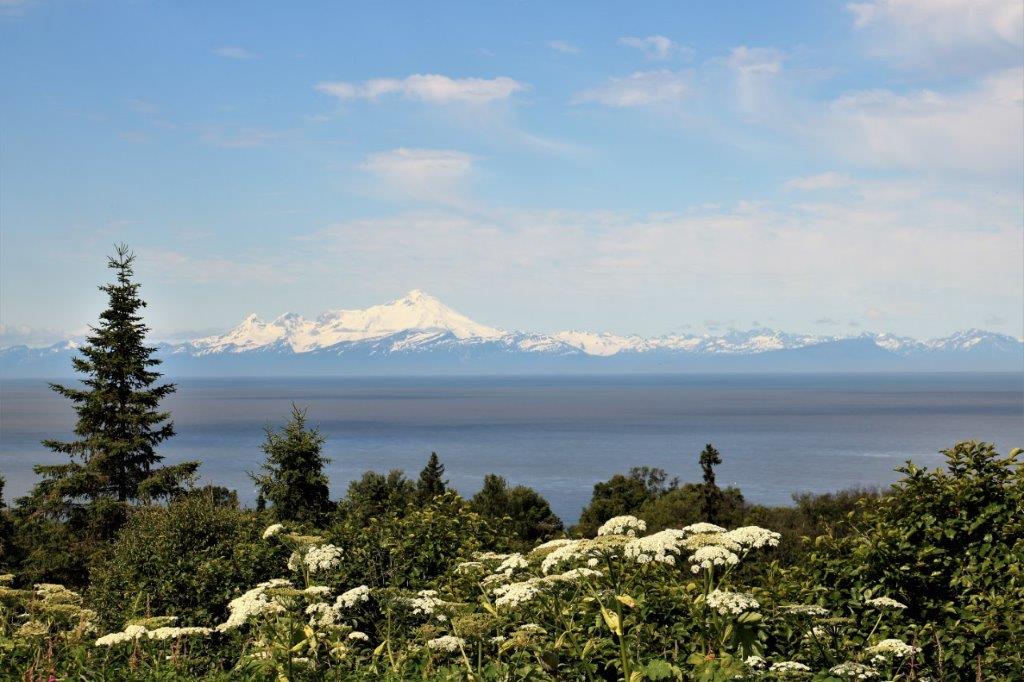
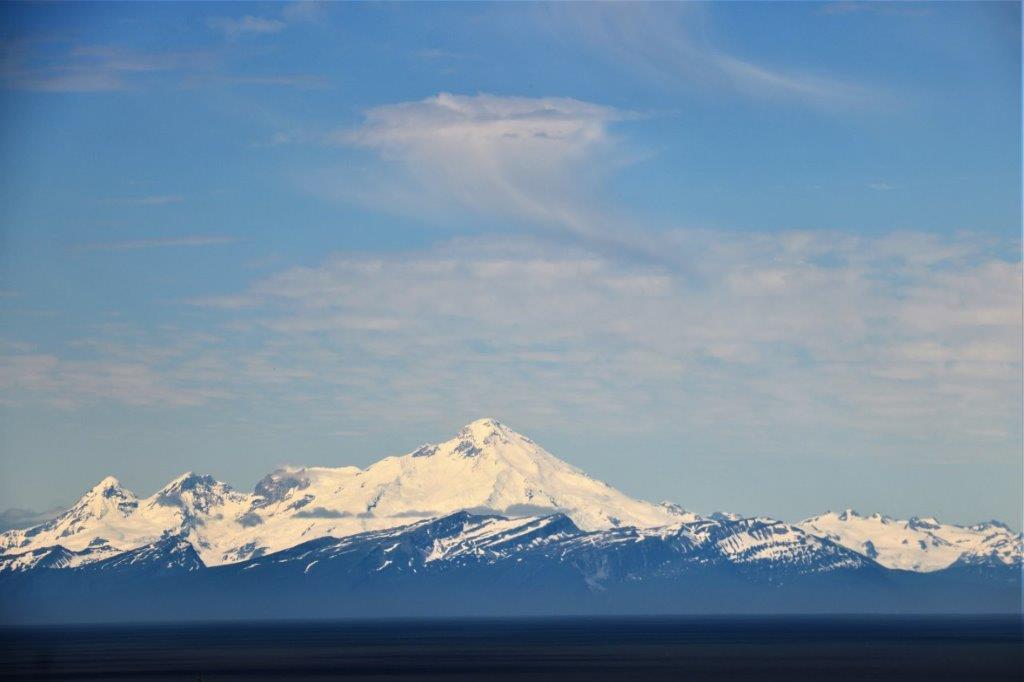
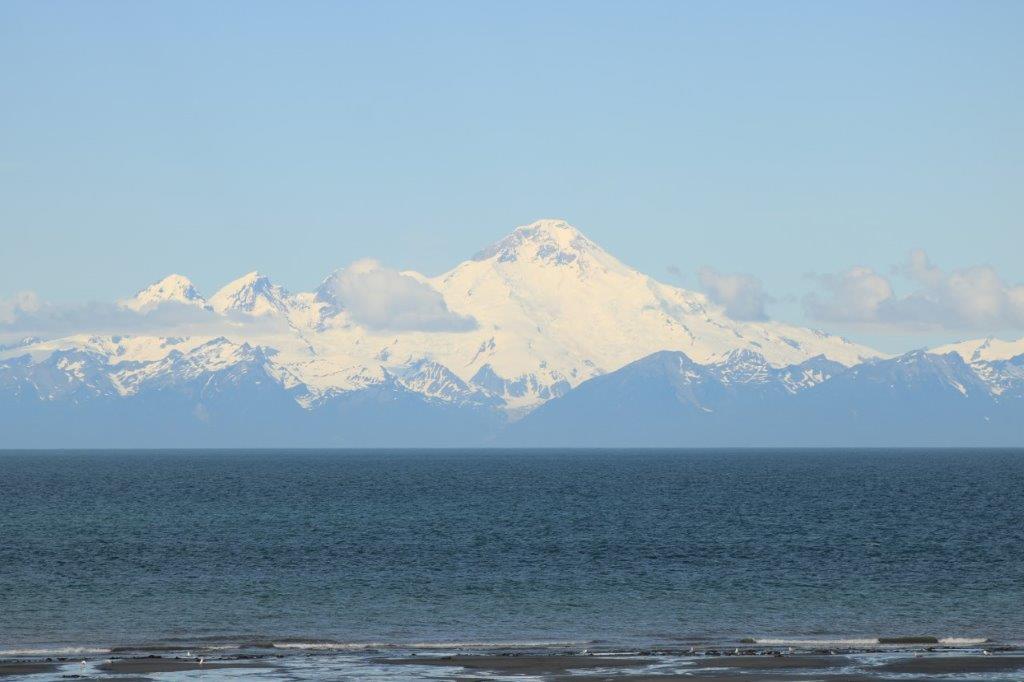
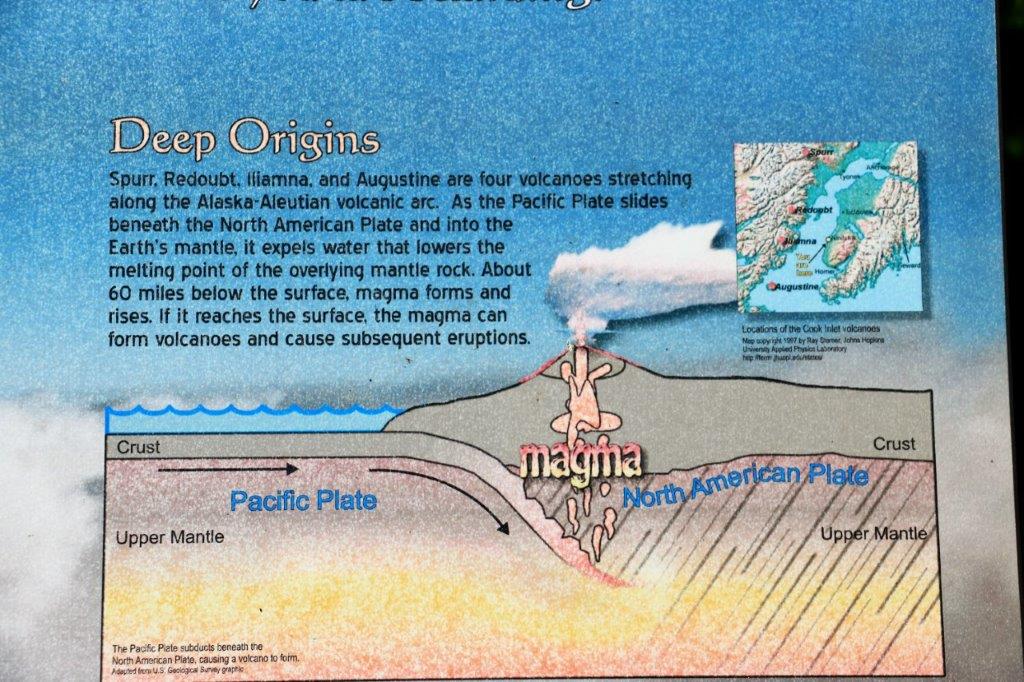
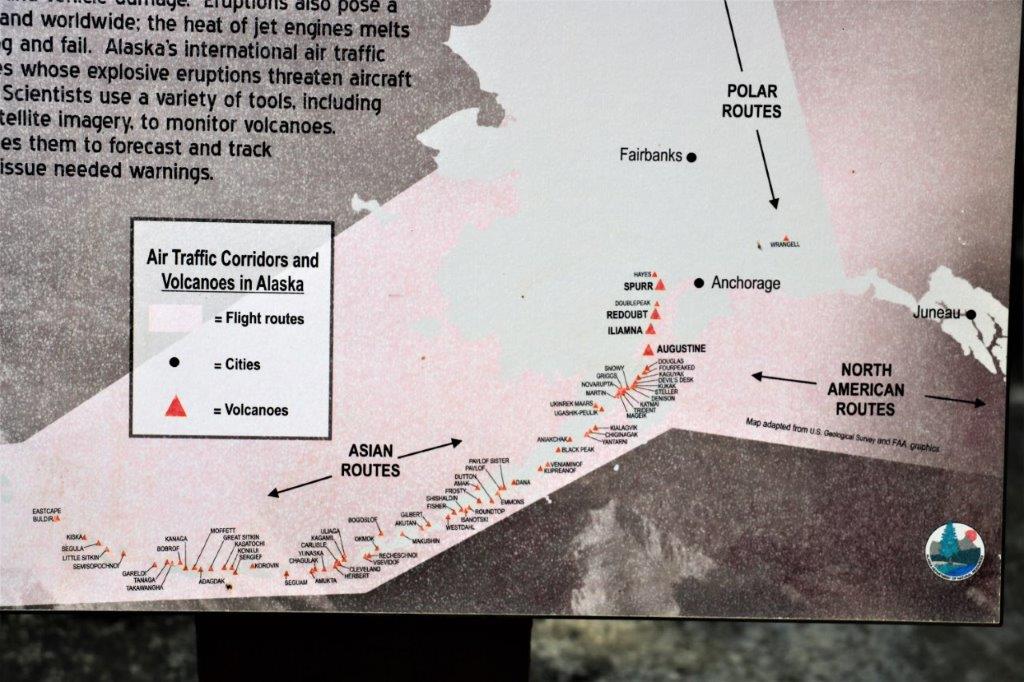
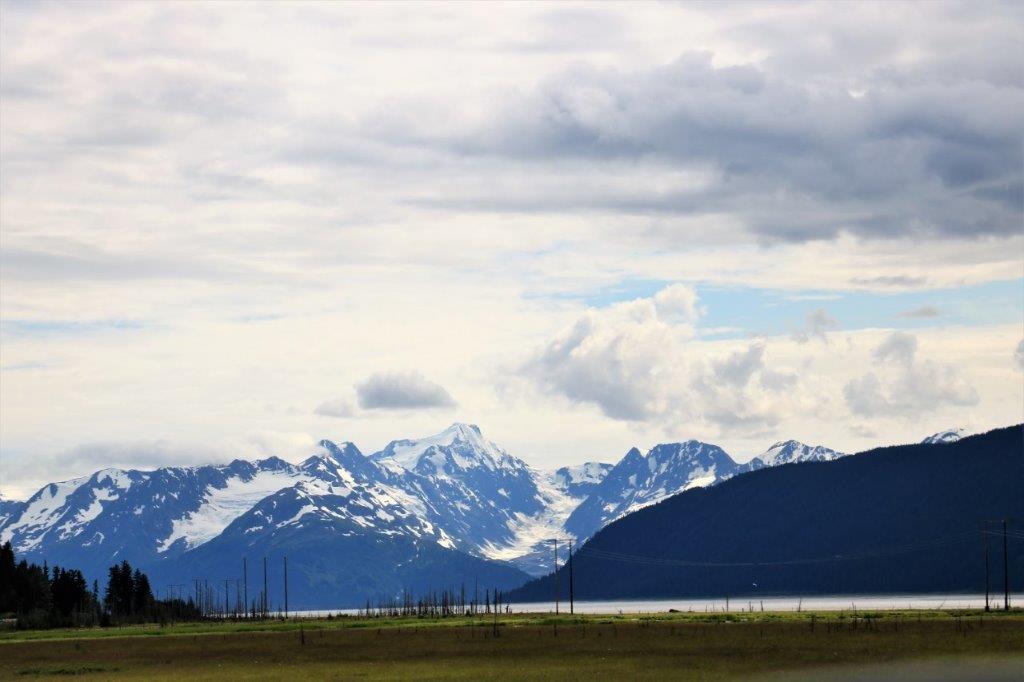
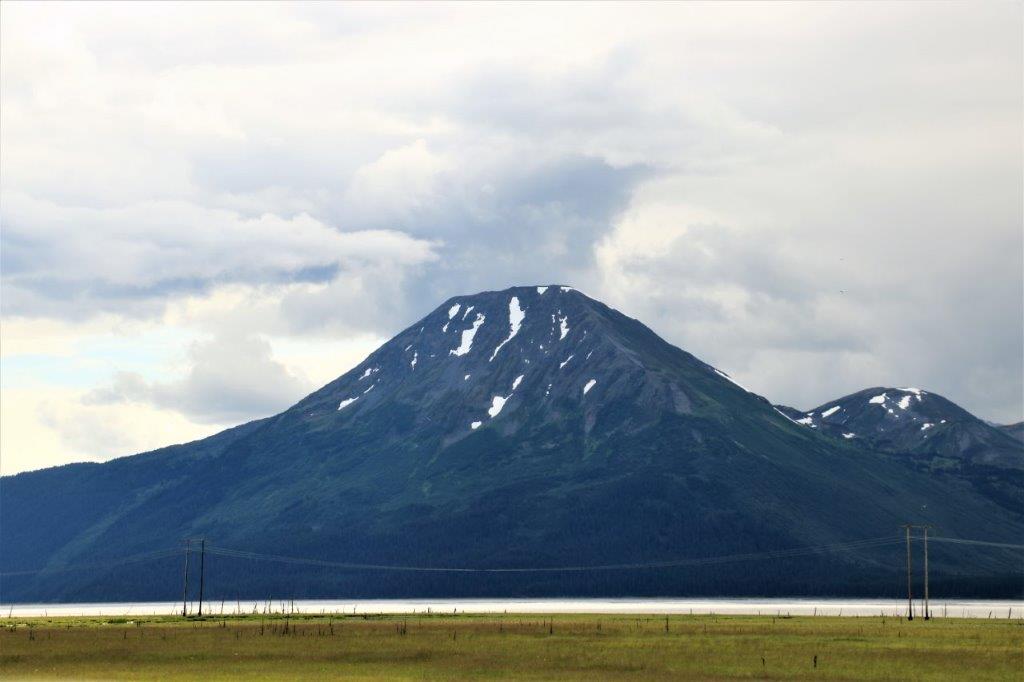
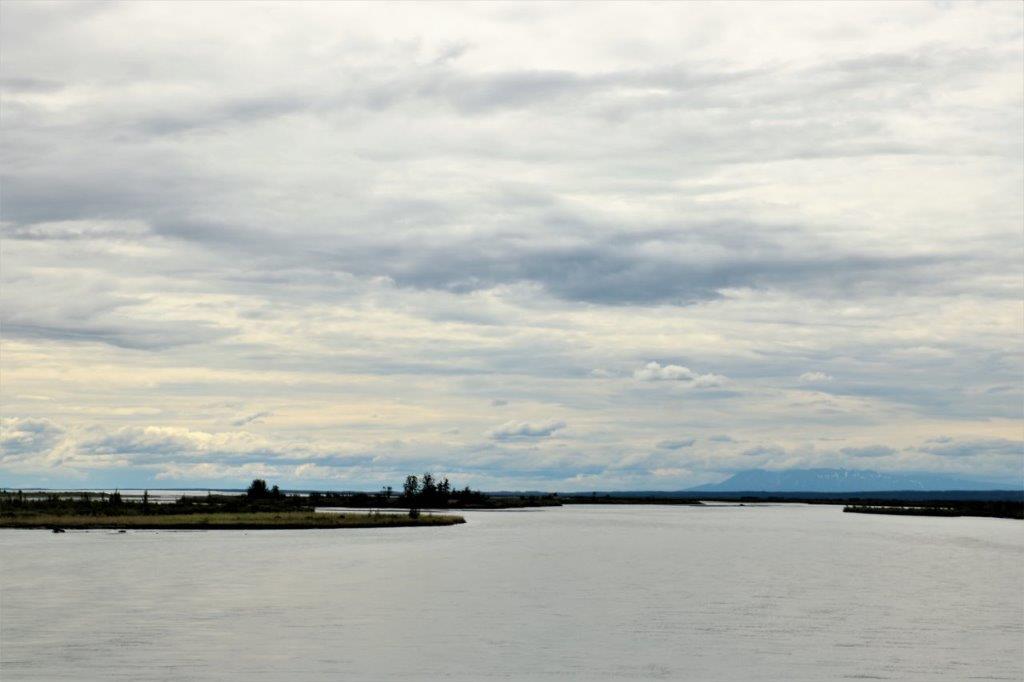
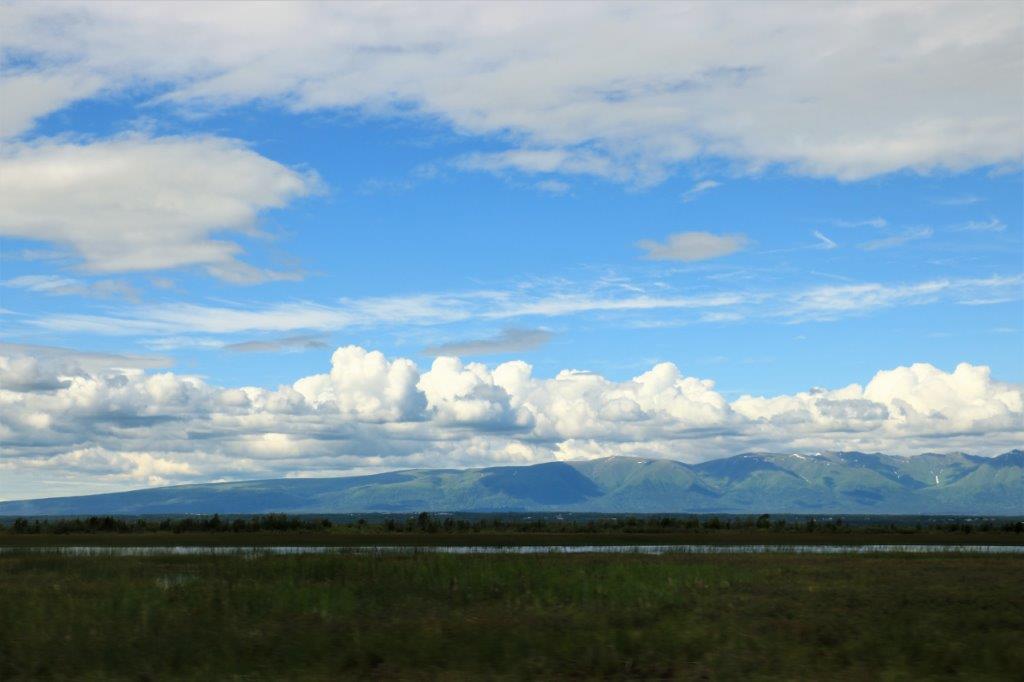
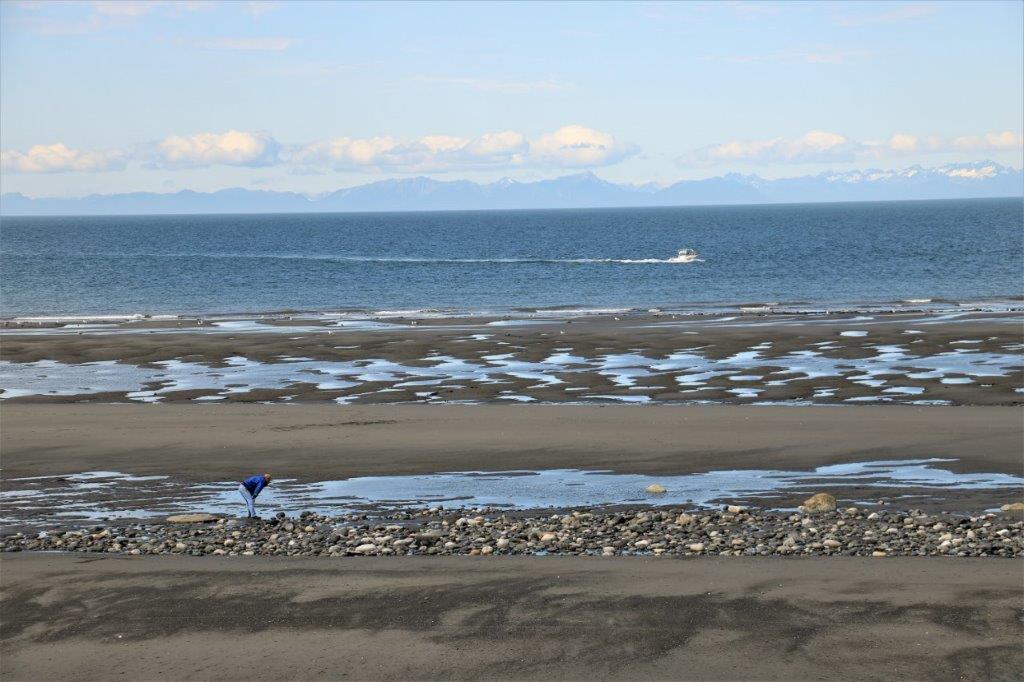
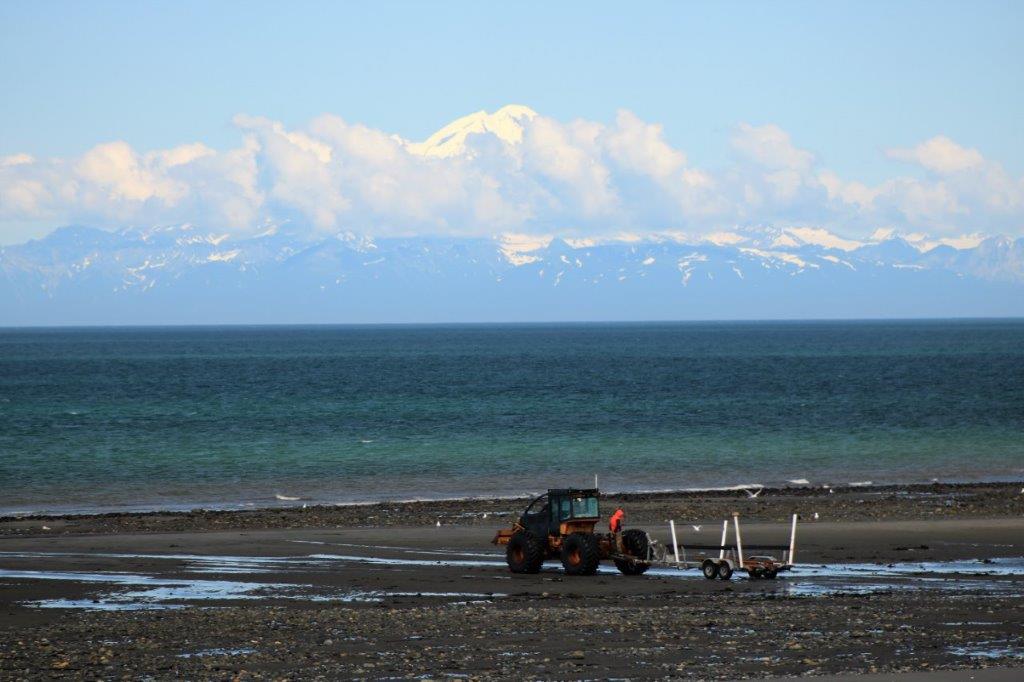
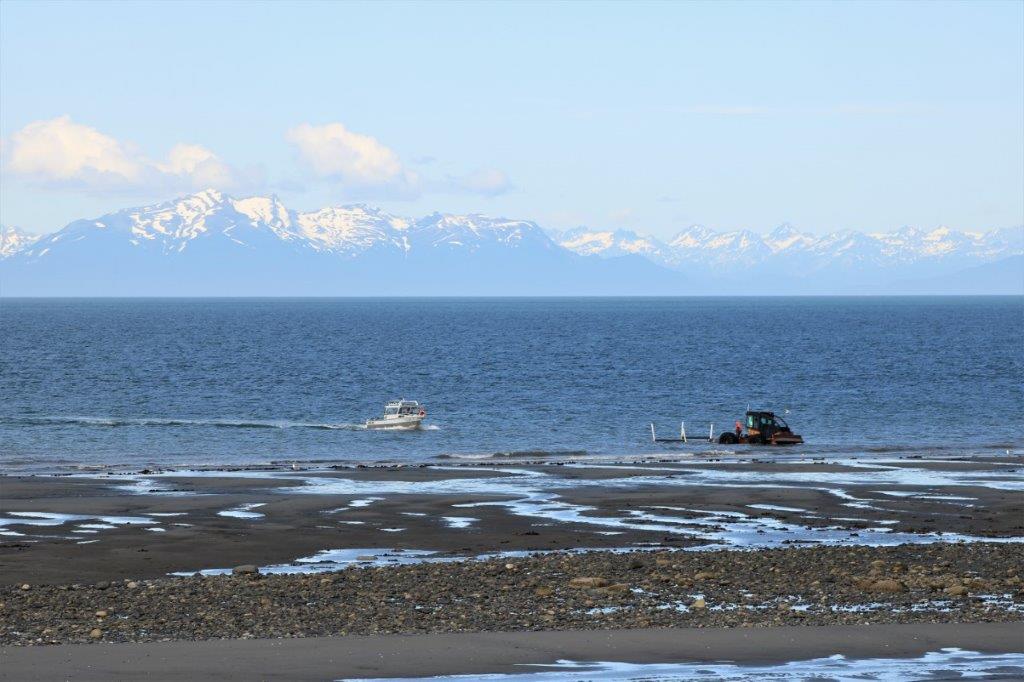
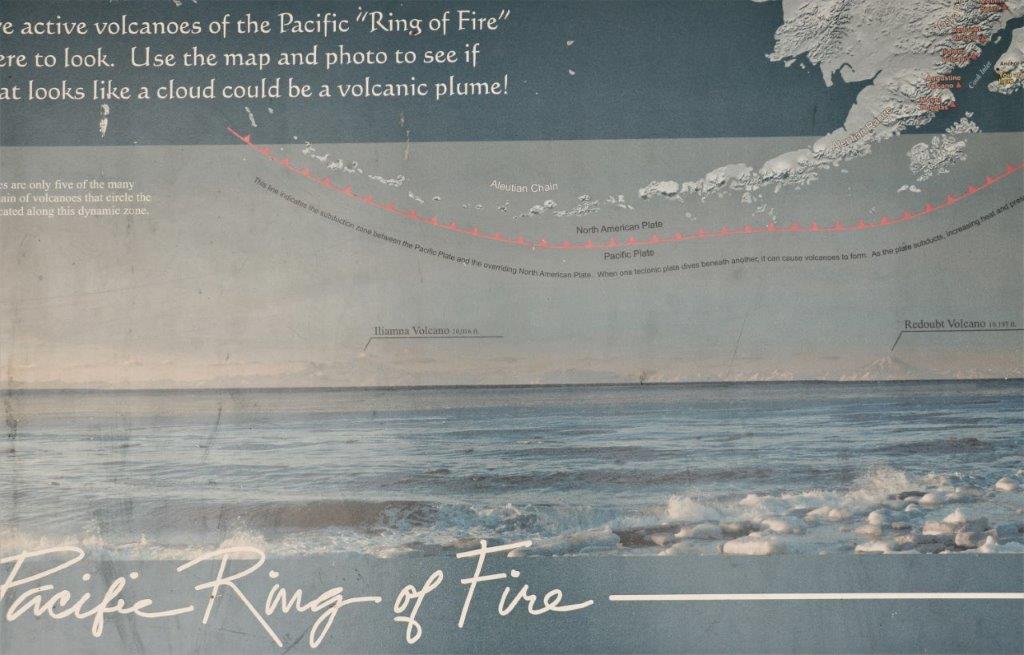
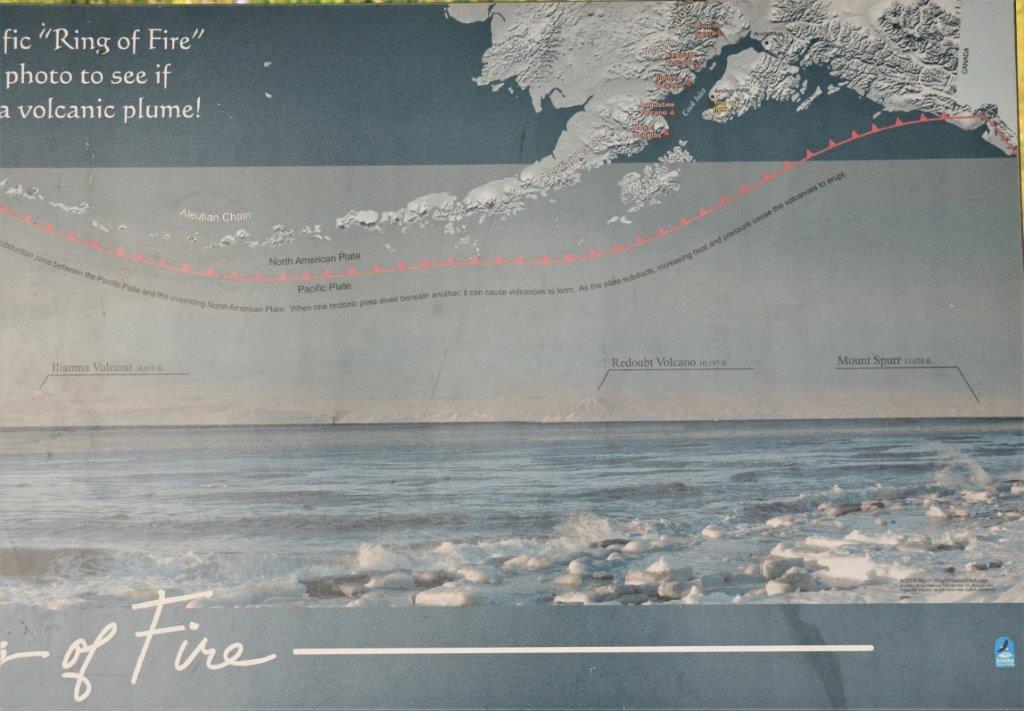
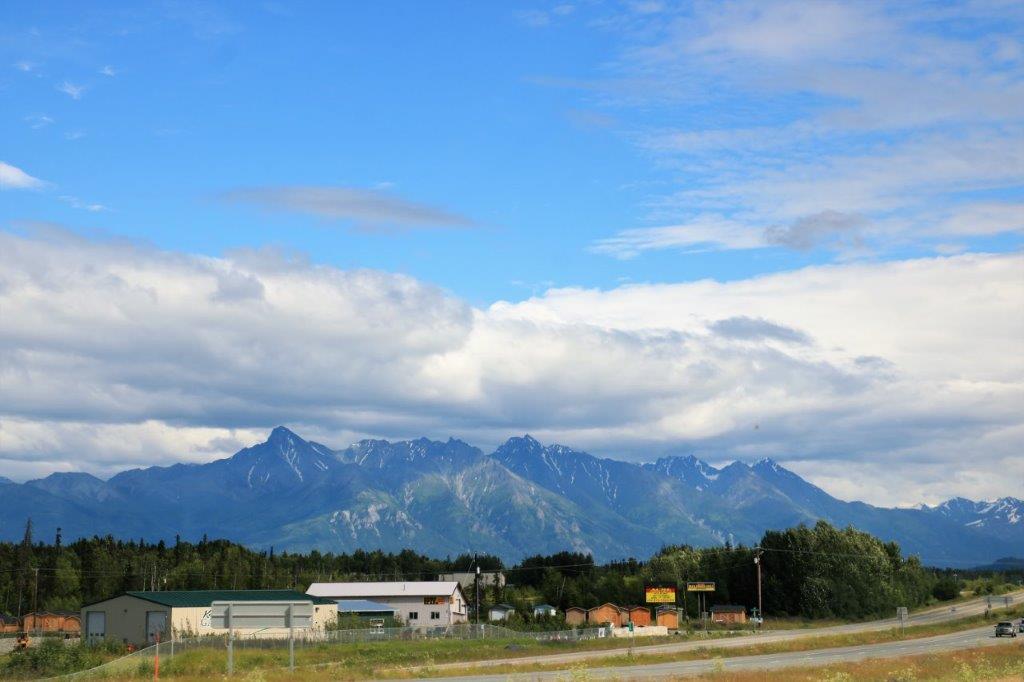
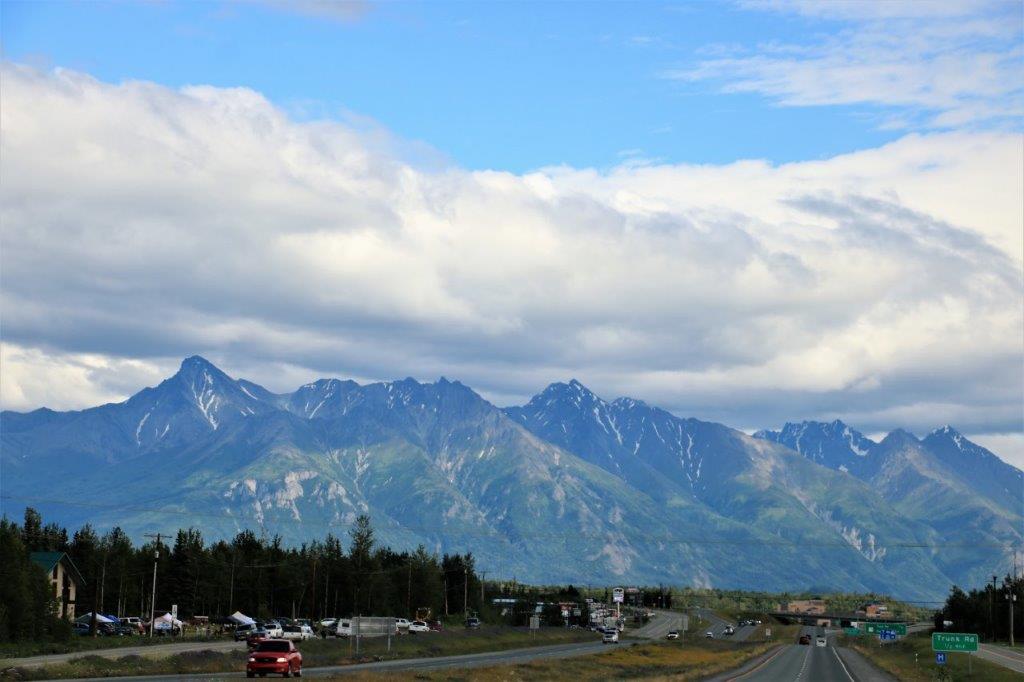
There is a huge grassland reserve not far south of Kenai where Caribou come to give birth and rear their young in the summer.  We saw not a single one, buy we got our first look at the mountain range we would get peeks of through the trees all the way to Homer. The mountains are part of the Aleutian Range across Cook Inlet from the Kenai Peninsula.  All of the most prominent ones we could see are volcanoes. (The town of Homer is the last red dot on the map that has no name beside it.)
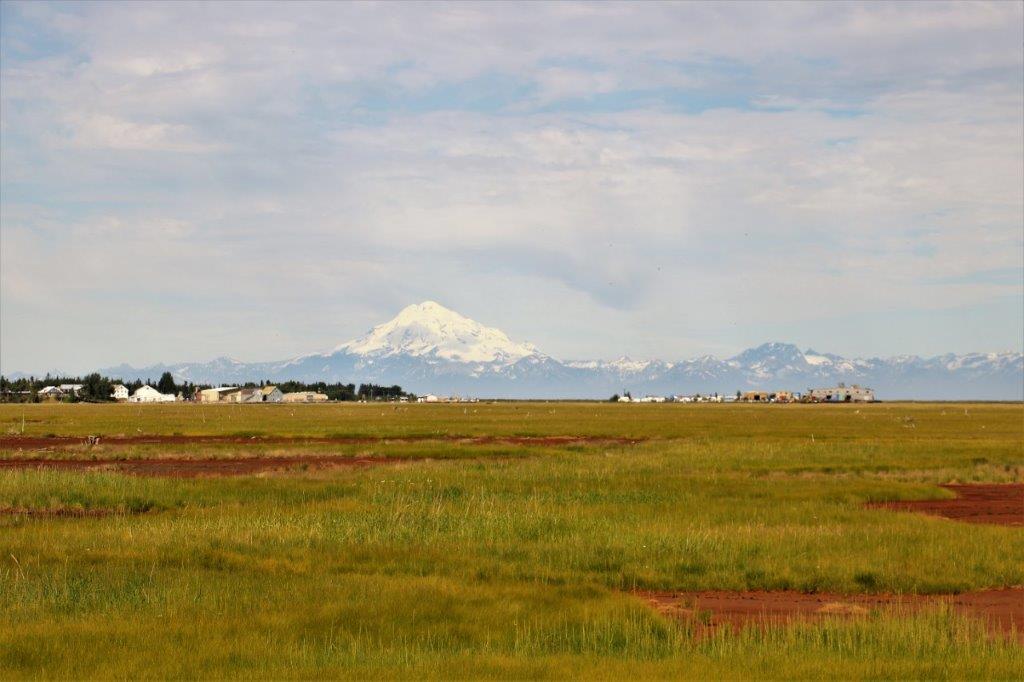
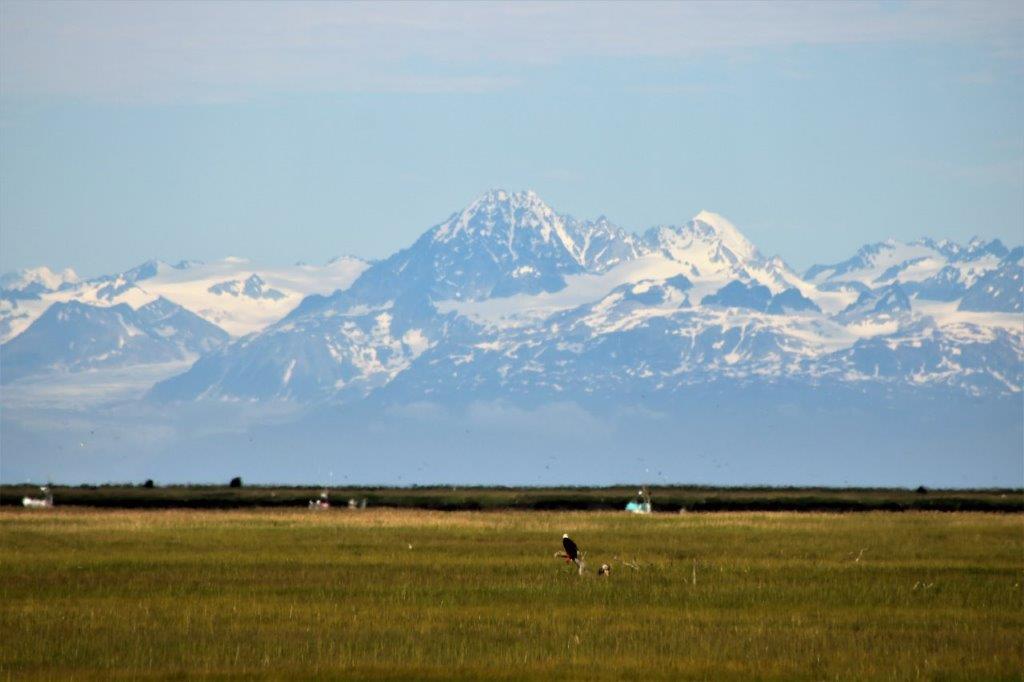
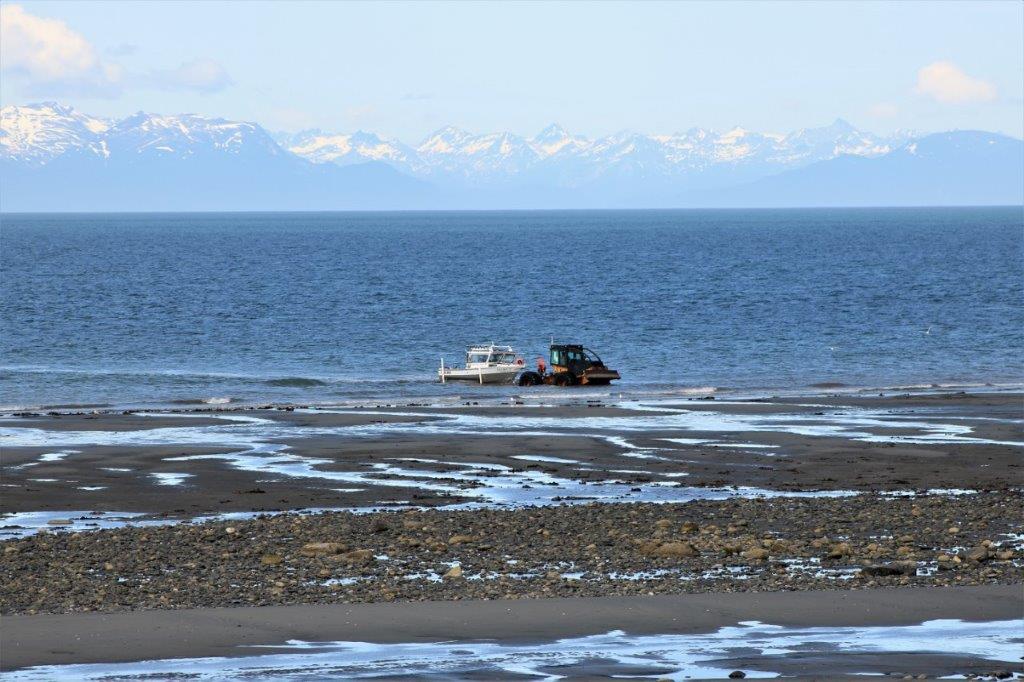
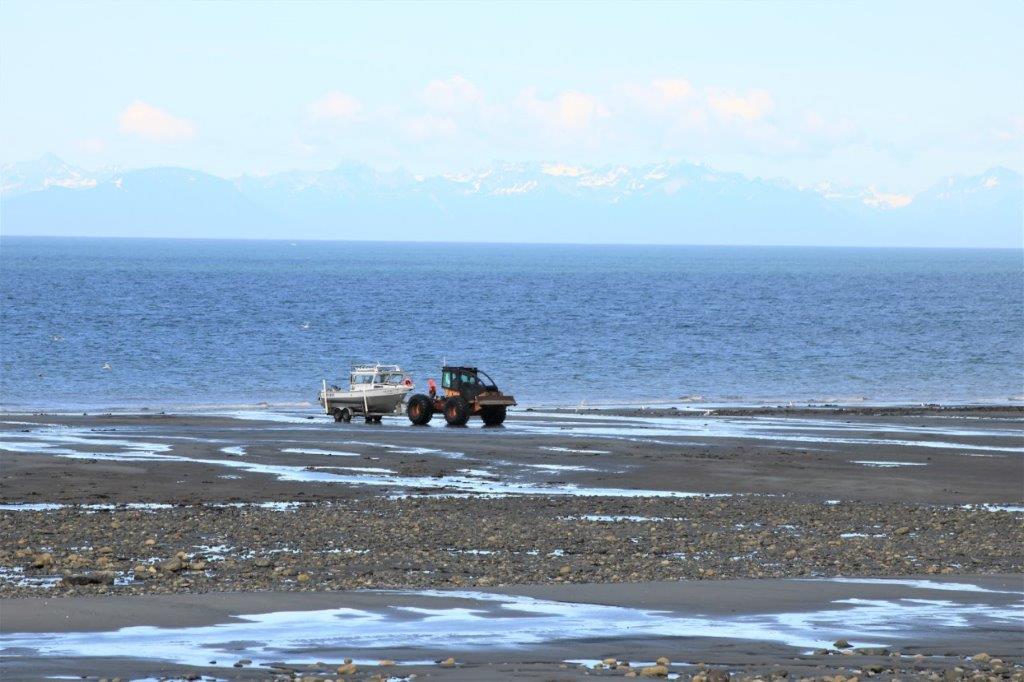
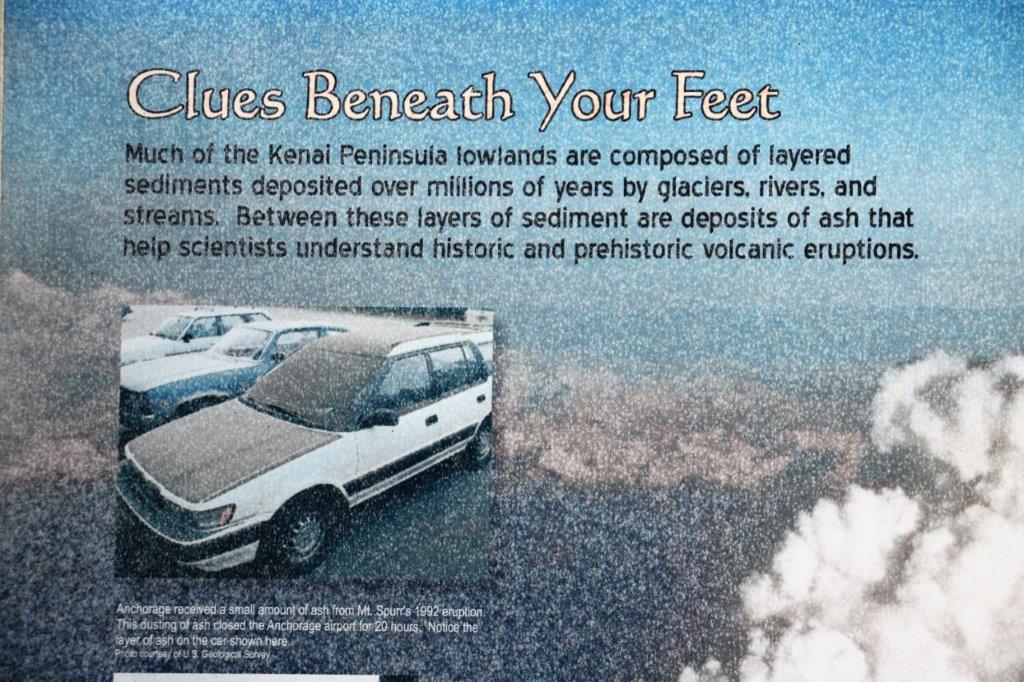
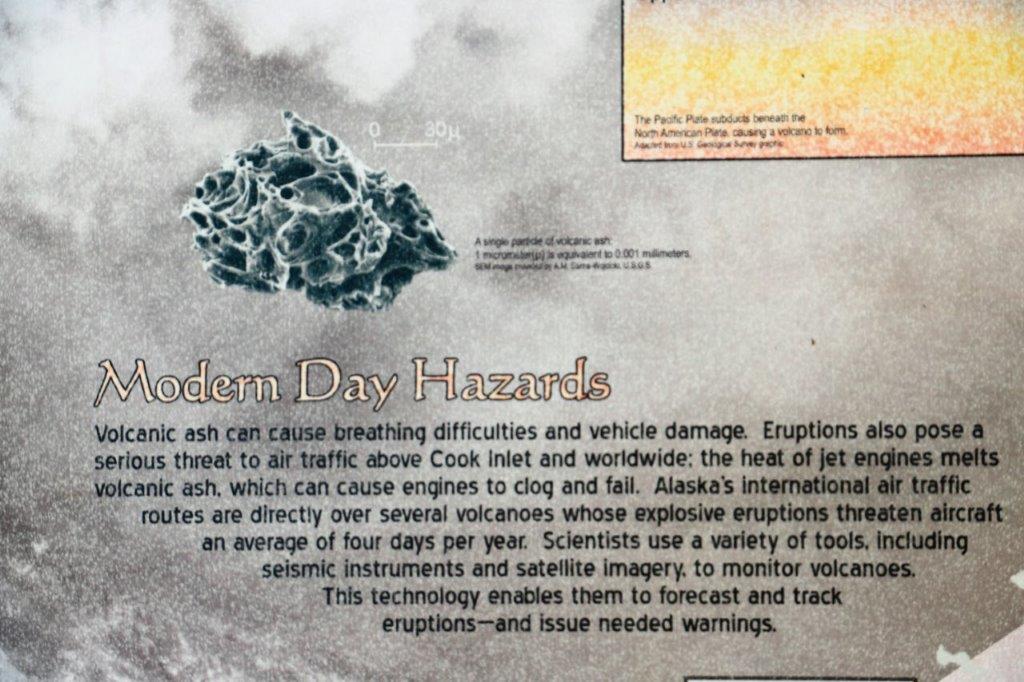
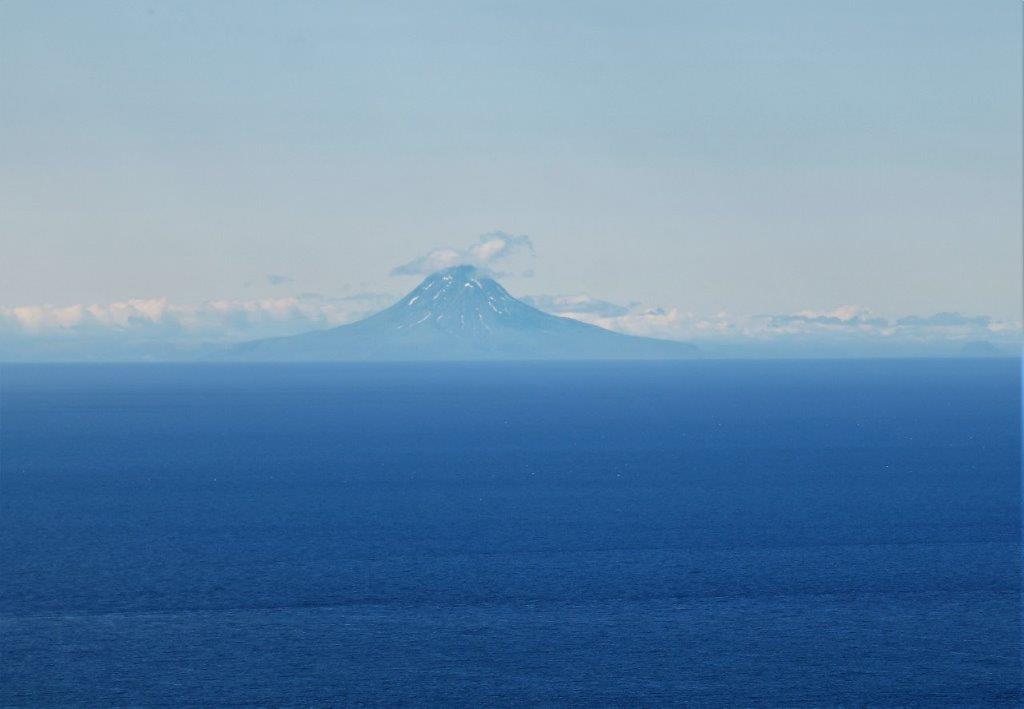
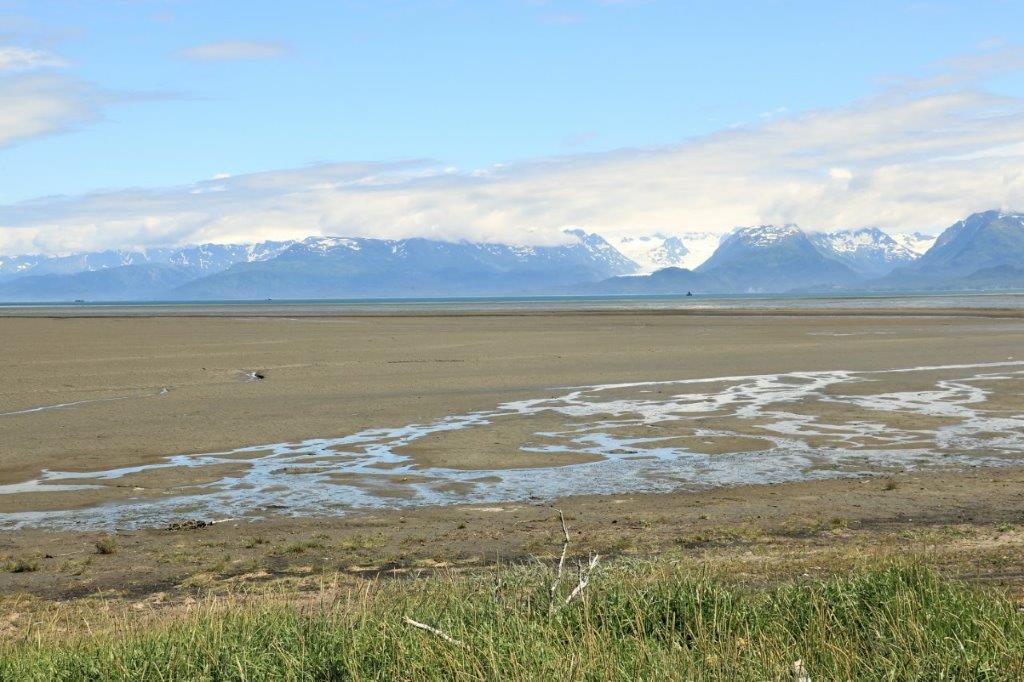
                            Mt. Redoubt  – last erupted 2009       Iliamna Volcano – last erupted 1876 (pronounced Ill-ee-am-na) St. Augustine.  It is the furthest distance south and is actually an island in the Cook Inlet, not a part of the mountain range.  Last erupted 2006.  It is not uncommon to see some of these volcanoes let of steam as they are all still active.  Note the boat.  Due to the long shallow shore, boats are launched and retracted by skidders with a trailer.  This is a very low tide, but they do the same thing at high tide. The signs are faded so you can’t see the pictures of the mountains under their names.                   The entire Aleutian Island chain is volcanoes.
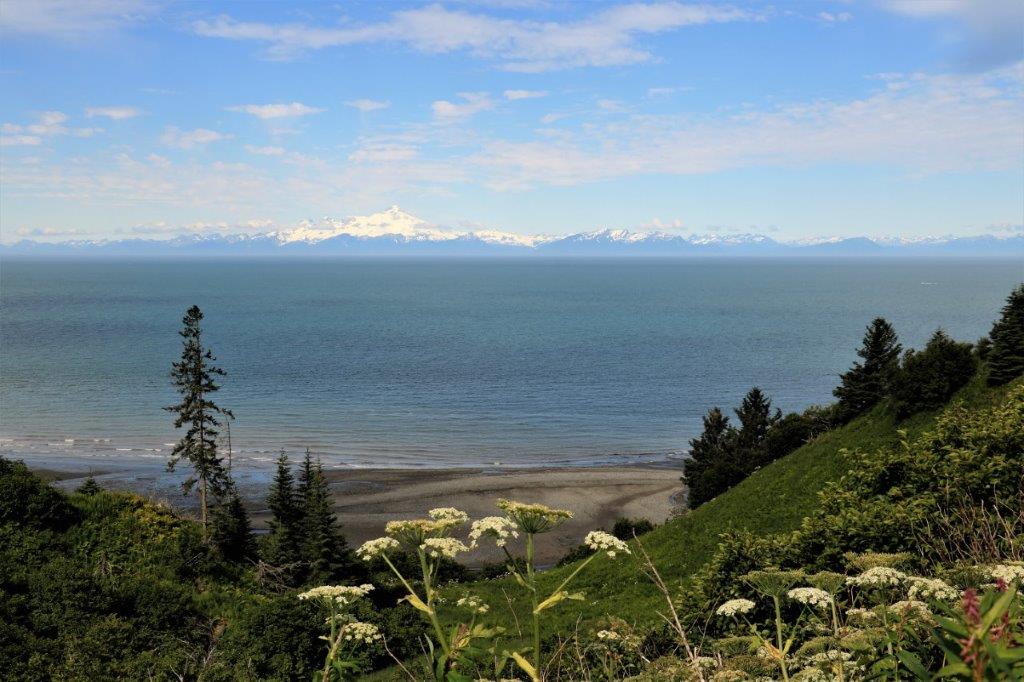
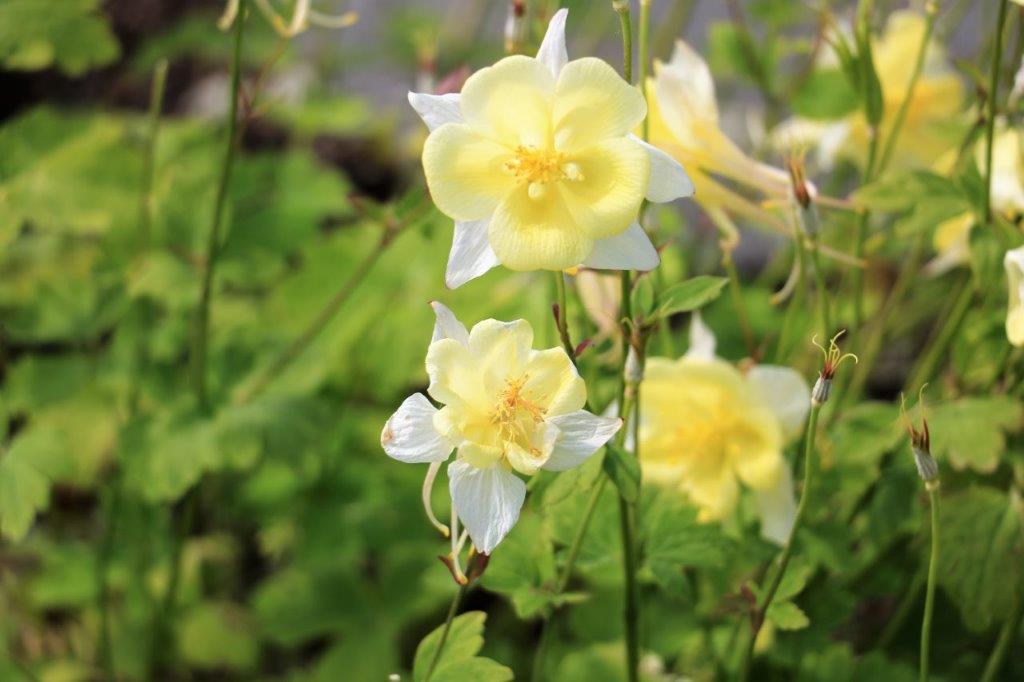
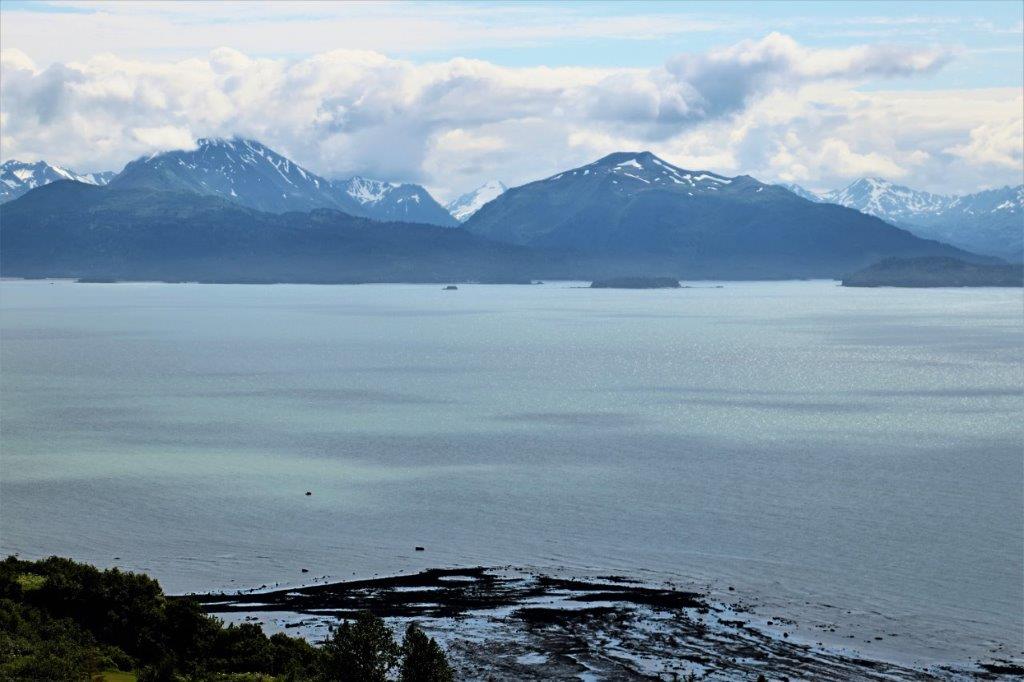
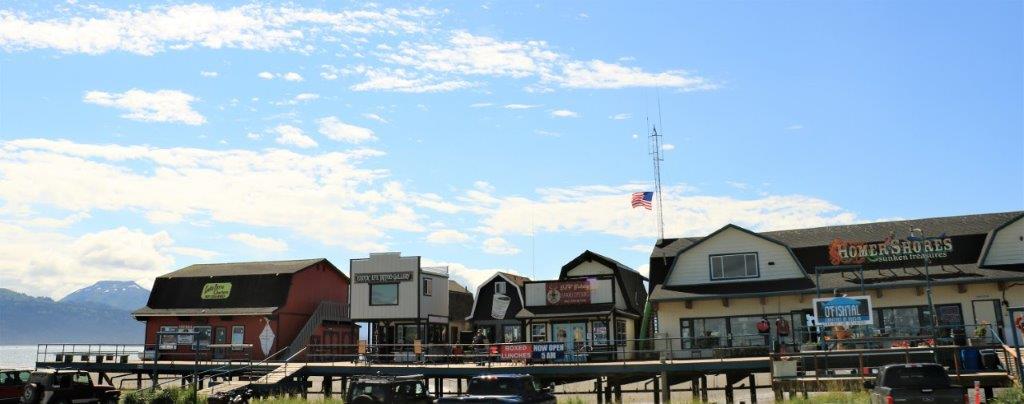
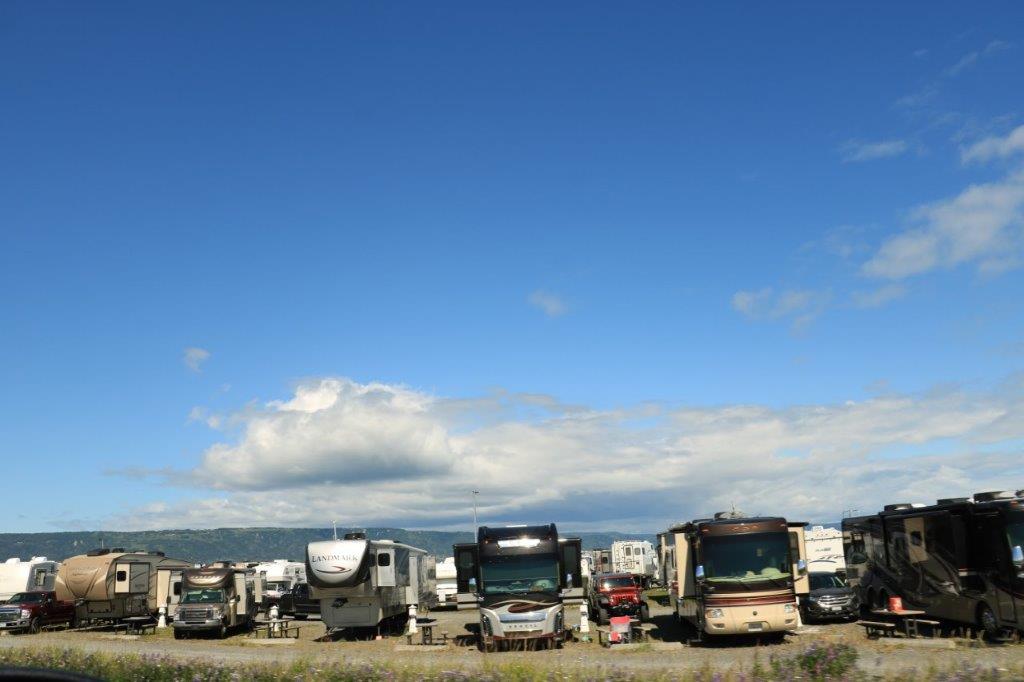
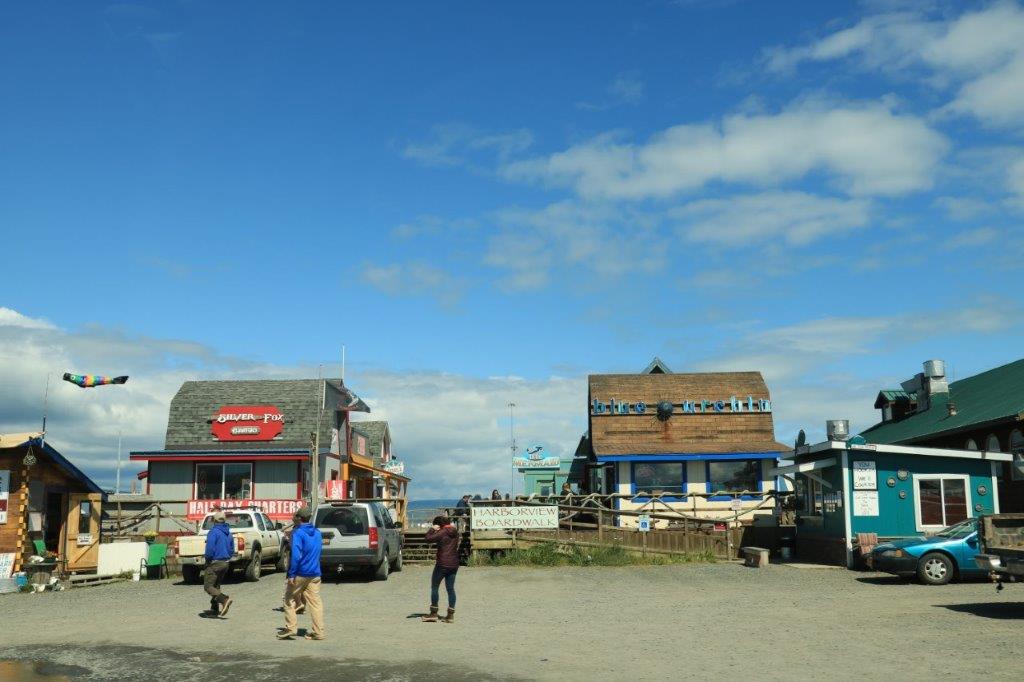
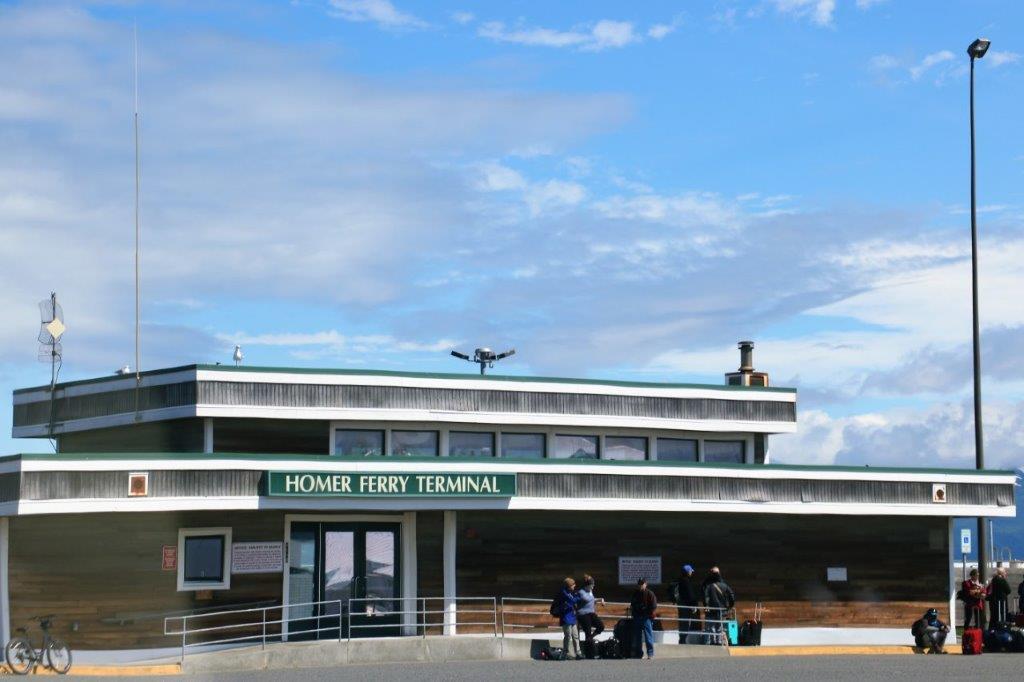
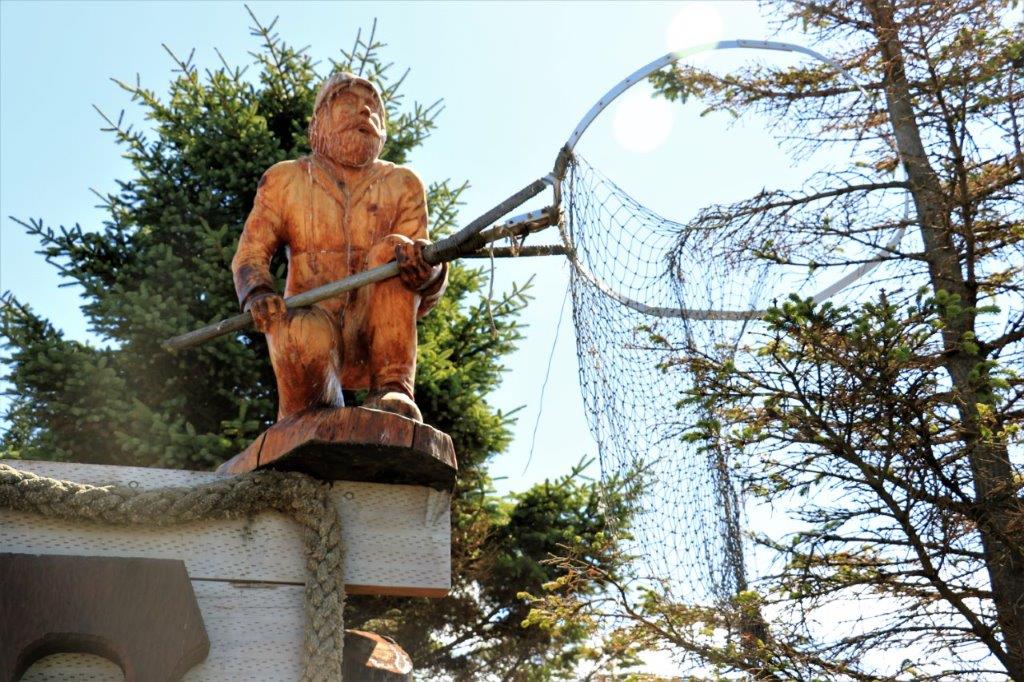
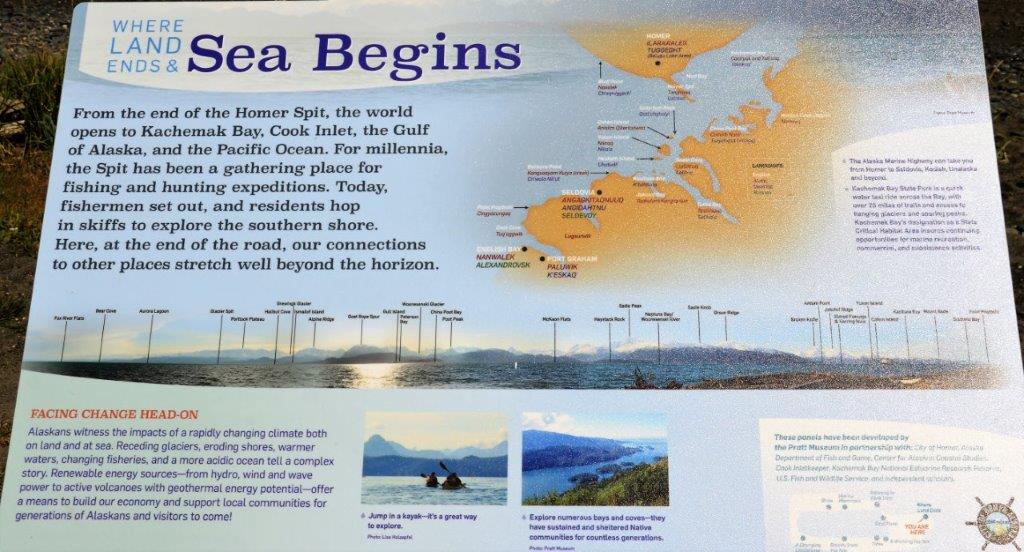
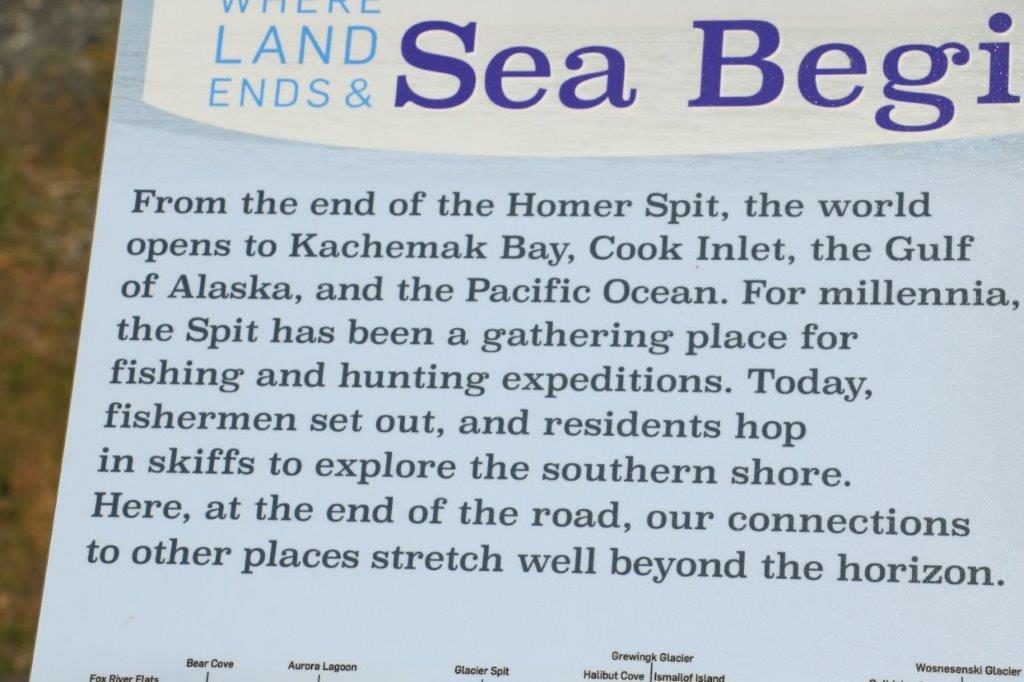
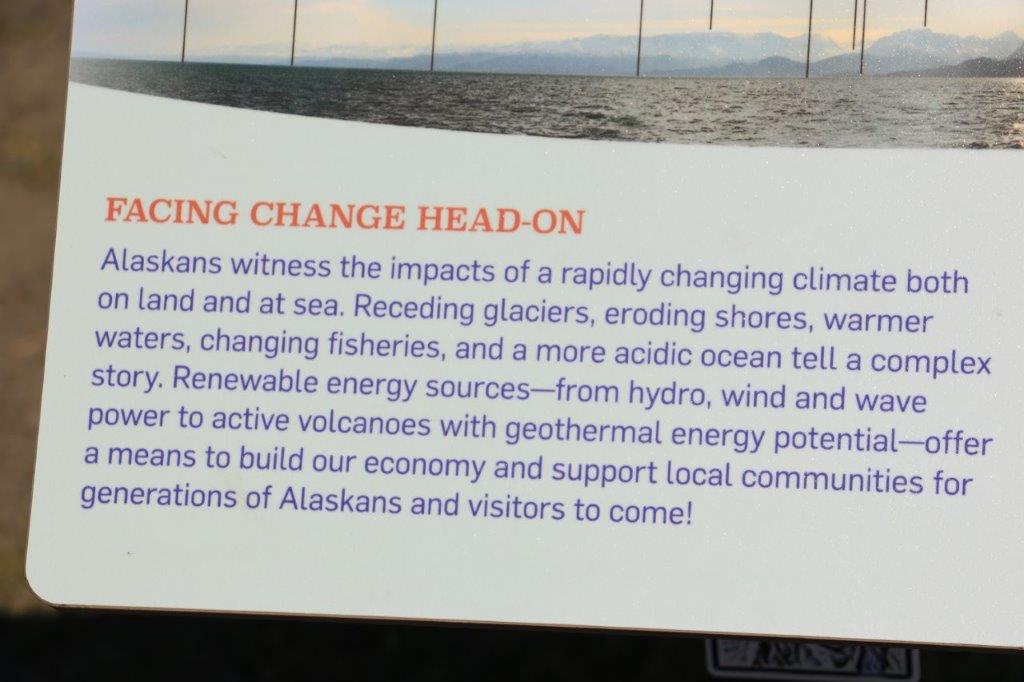
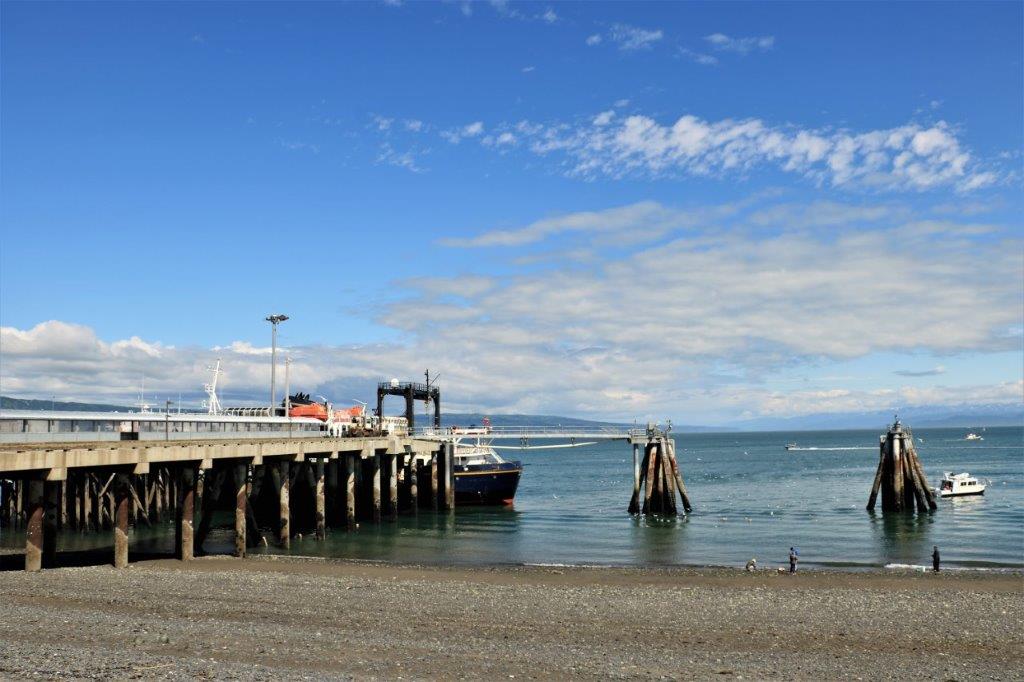
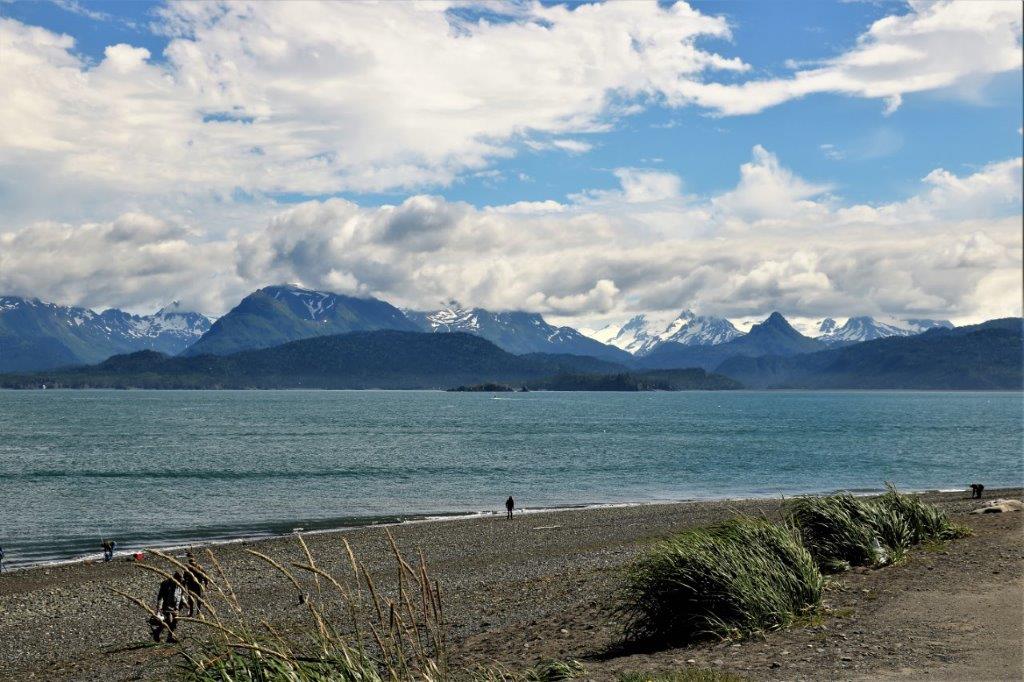
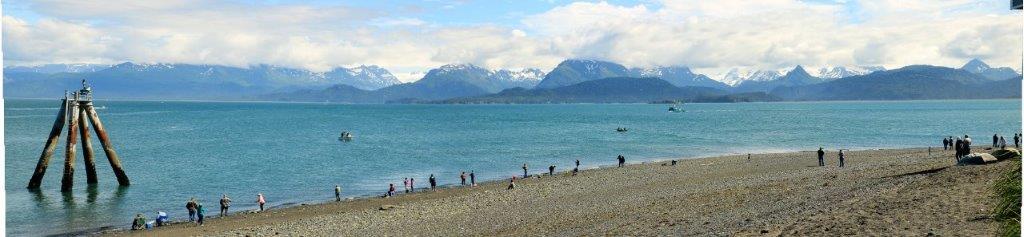
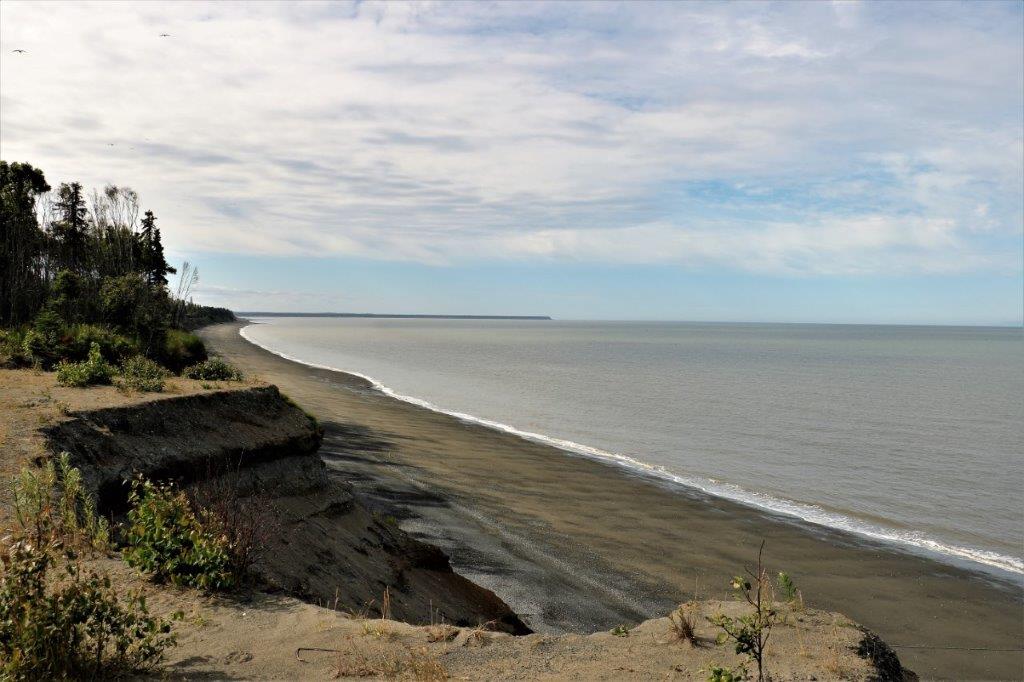
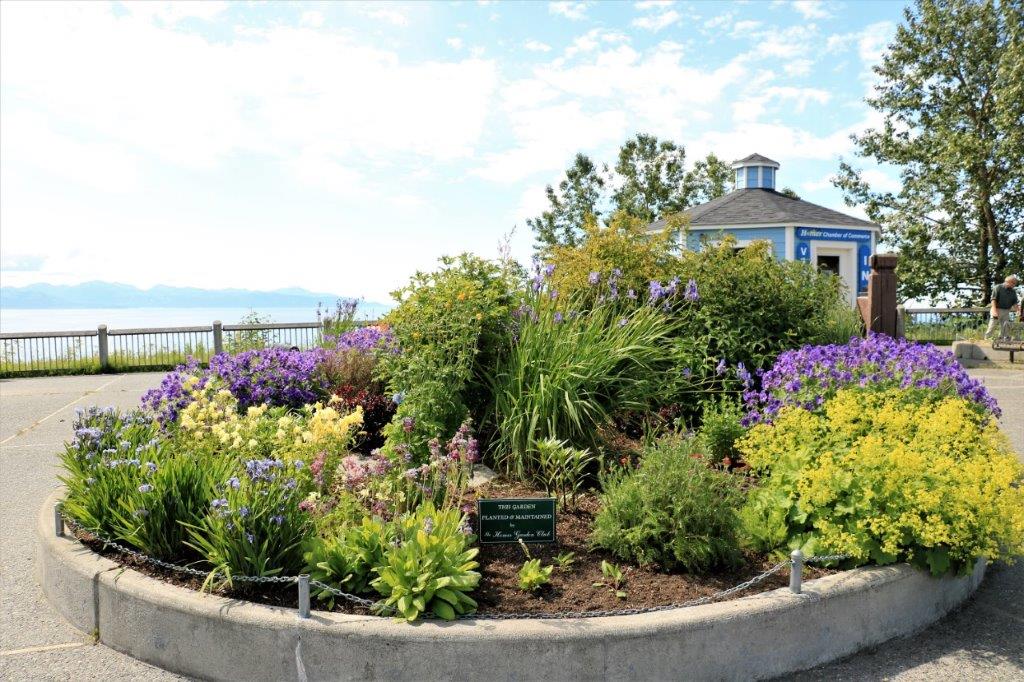
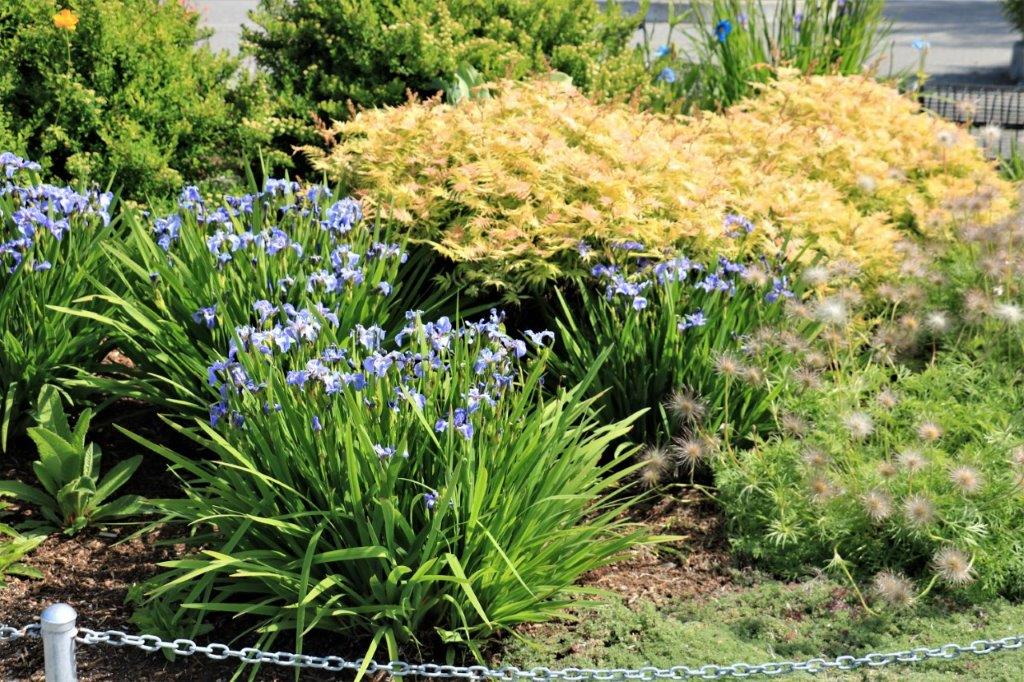
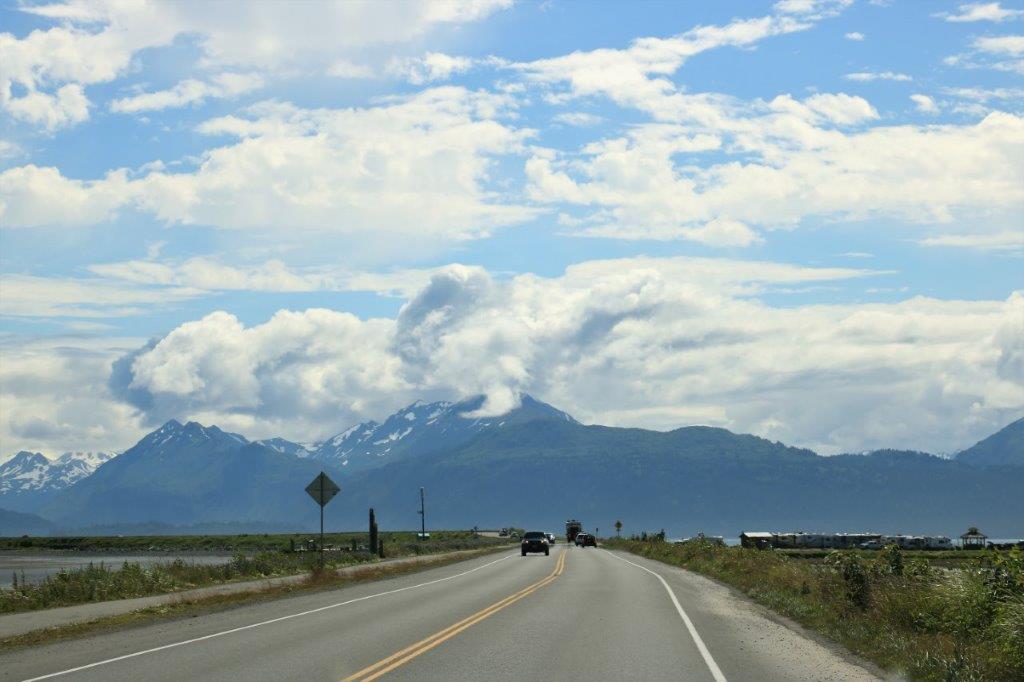
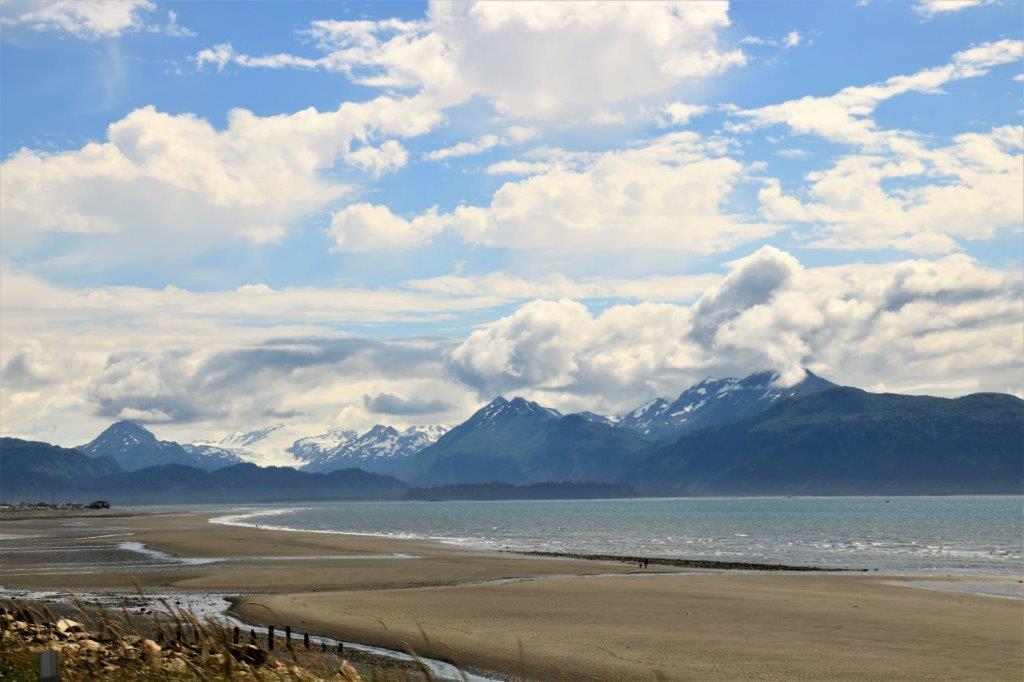
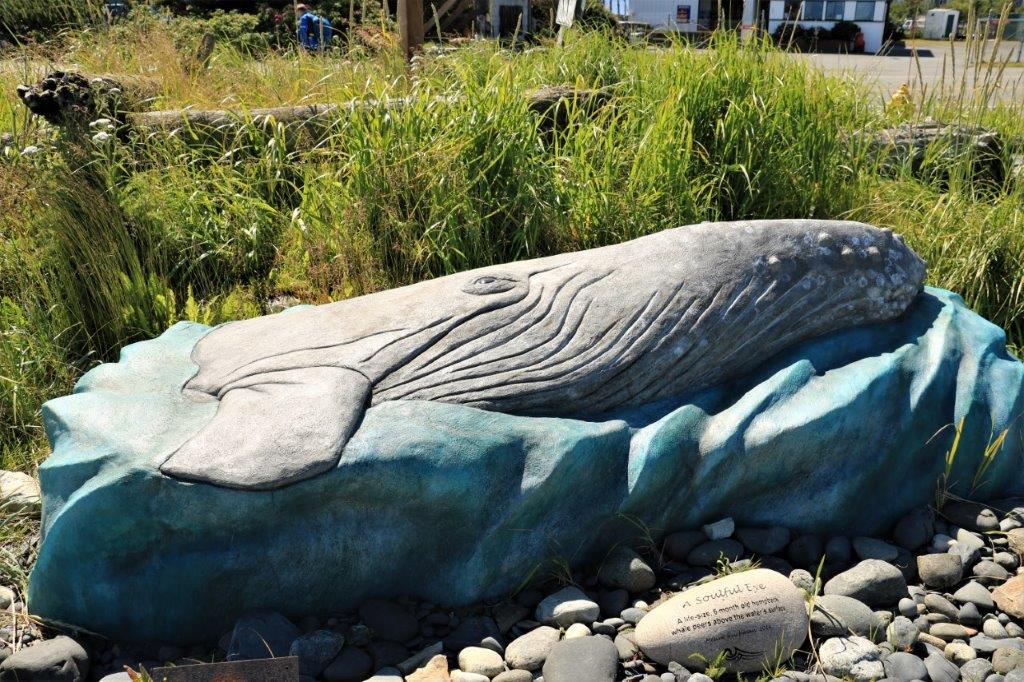
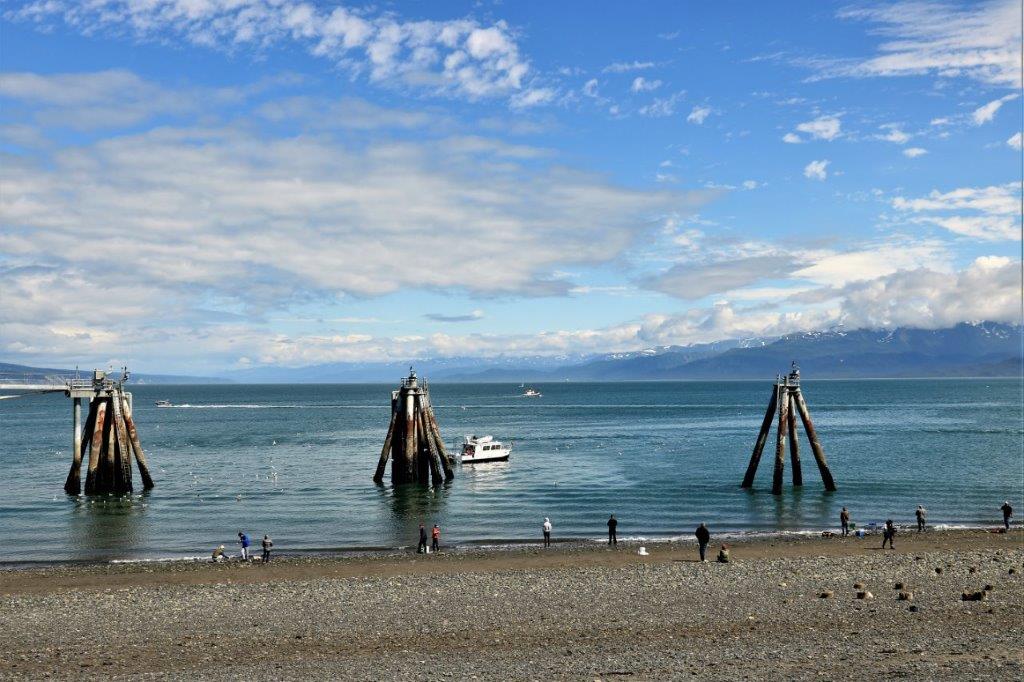
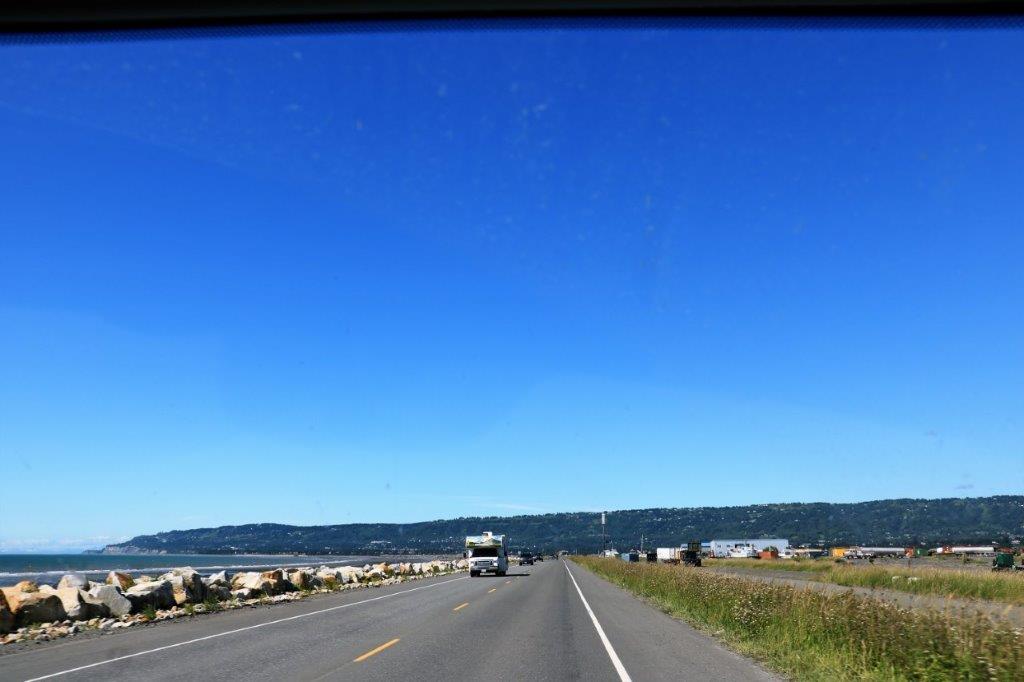
Just north of Homer is the Baycrest Overlook.  From here you can see the Aleutian range across Cook Inlet and you get a good view of the Kachemak Bay, which is considered one of the world’s richest marine estuaries.  Fishing is king here, in a big way.  Kachemak Bay also has the second highest tides in North America after the Canadian Bay of Fundy in New Brunswick.The Homer Garden Club plants and maintains these lovely large planters at the viewpoint.  Home is also home to many artists of various disciplines – from painting to antler carving to sculpture.One of the unique features of Homer is the Spit.  This narrow 4.5 mile long piece of land extends out into Kachemak Bay and became a commercial port in 1930 when the railway ran a line along it to export coal.  Today it is a tourist mecca with a ferry terminal, a hotel, a couple of campgrounds and many, many shops.  Cars lined the entire ‘street’ and motorhomes and campers were packed like sardines into the available spots.  It was crazy busy.This is the width of most of the Spit; wide enough for two lanes of traffic and a bike trail.  Near the end it widens enough for buildings and parking but I don’t think it was ever more than 500′ wide. This chainsaw carving is of a dip-netter.  Dip-netting is the first fishing done each season.   Fishermen (and women and kids) stand in the water with these long-handled big nets and wait for a fish to swim into it.  They are catching a small silver fish, called variously hooligan, eulachon, candlefish or smelt.  When the net collects some it is dumped on the shore, and they set the net out for another one.The shore was lined with people fishing.  They were catching some too.  A fellow walked up with a big, ugly-looking wide-mouthed one.After we found the geocache hidden at the little Land’s End Park we headed back to Kenai.
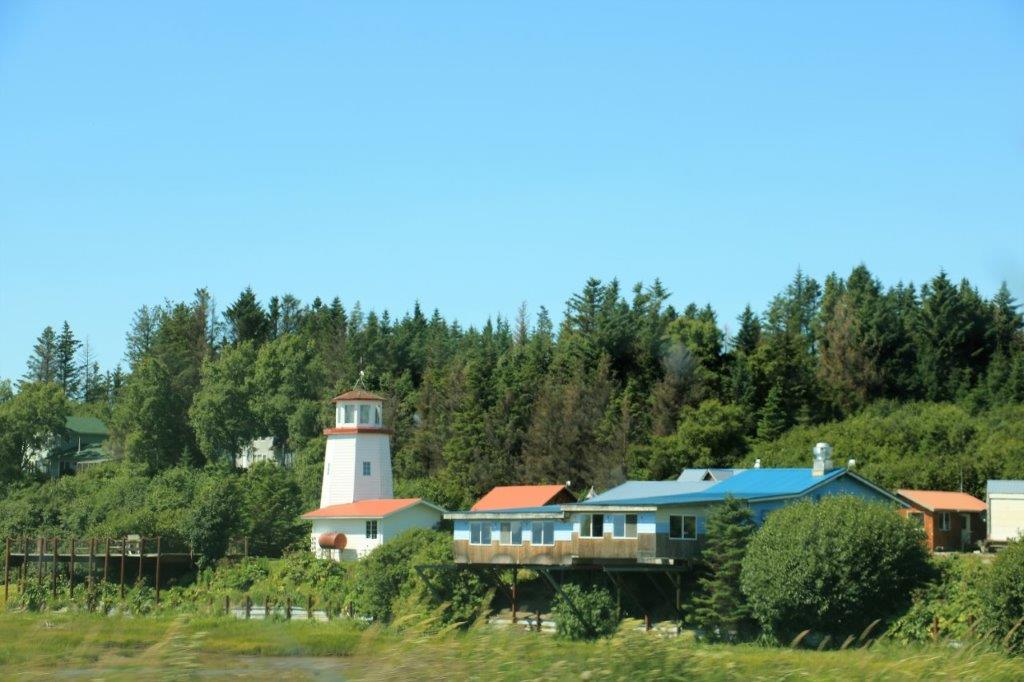
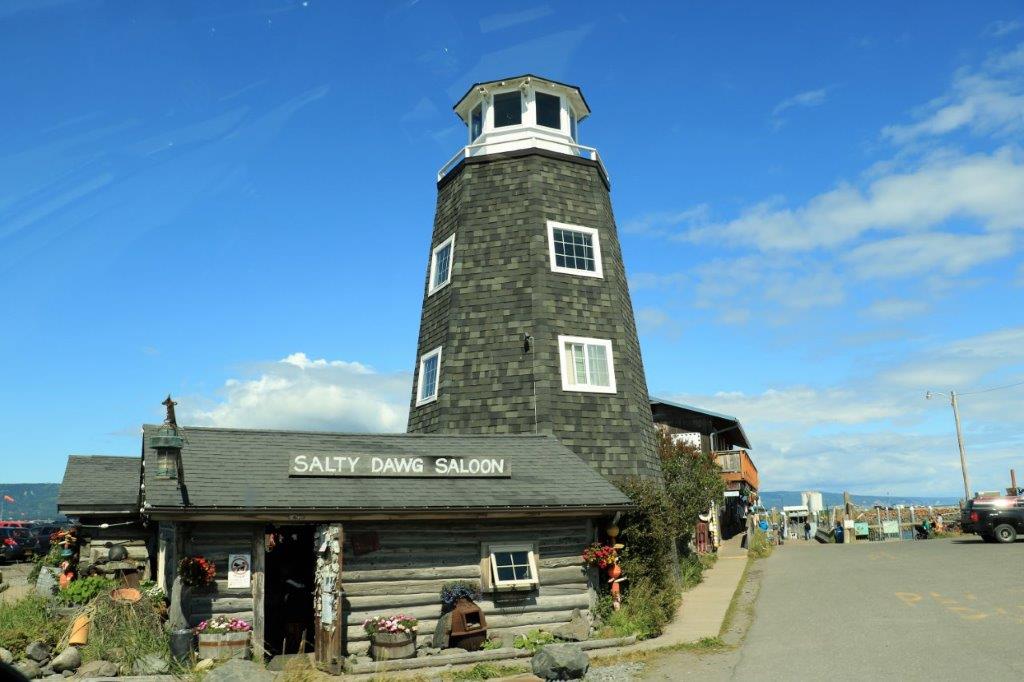
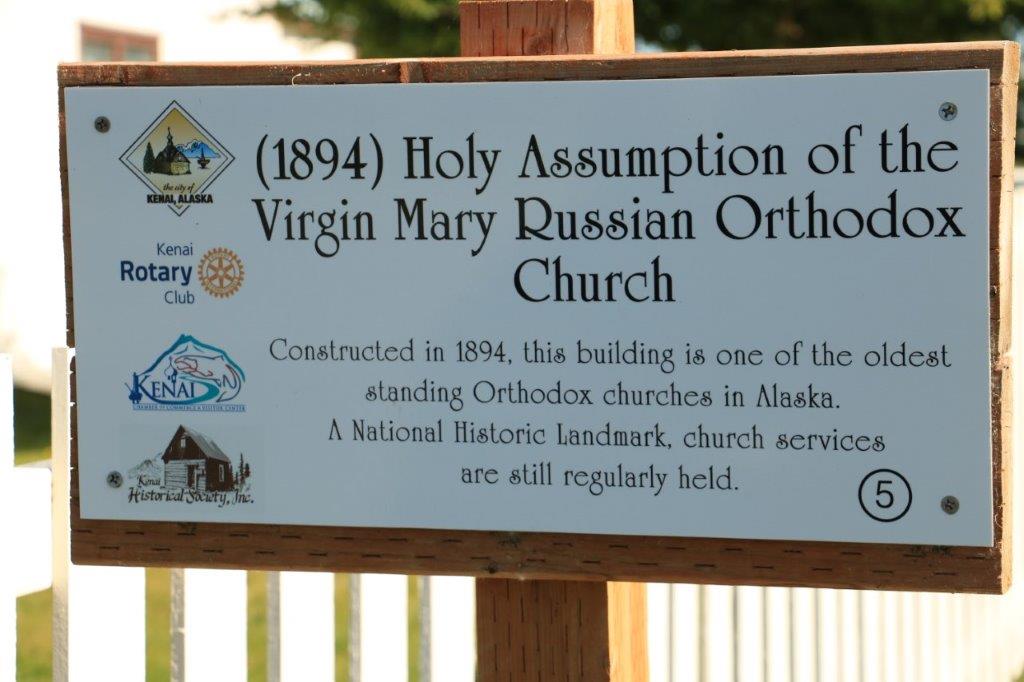
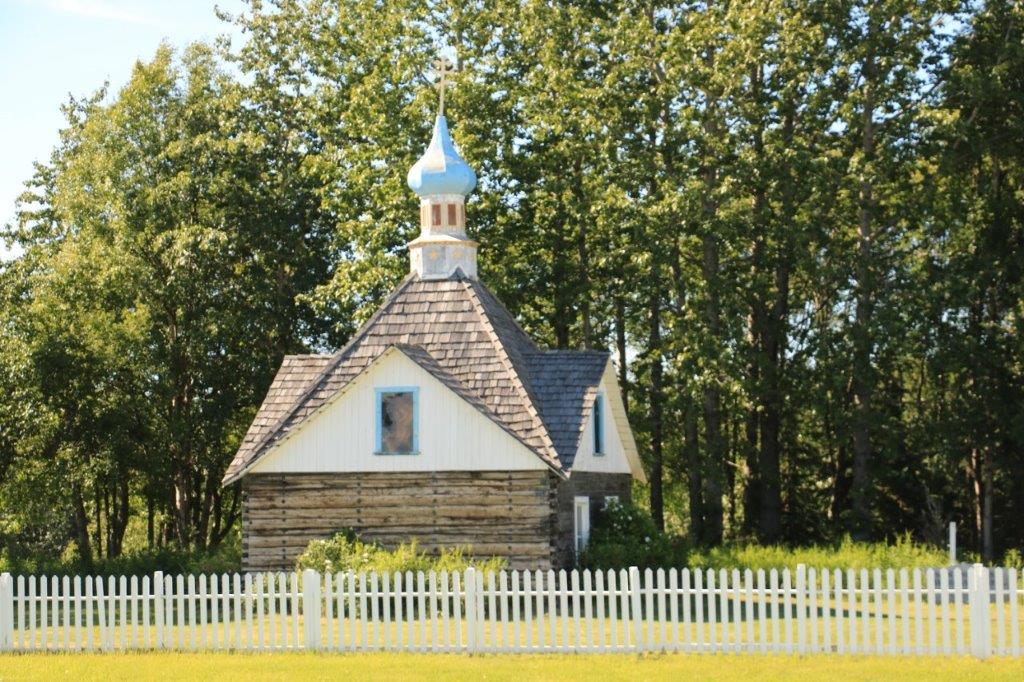
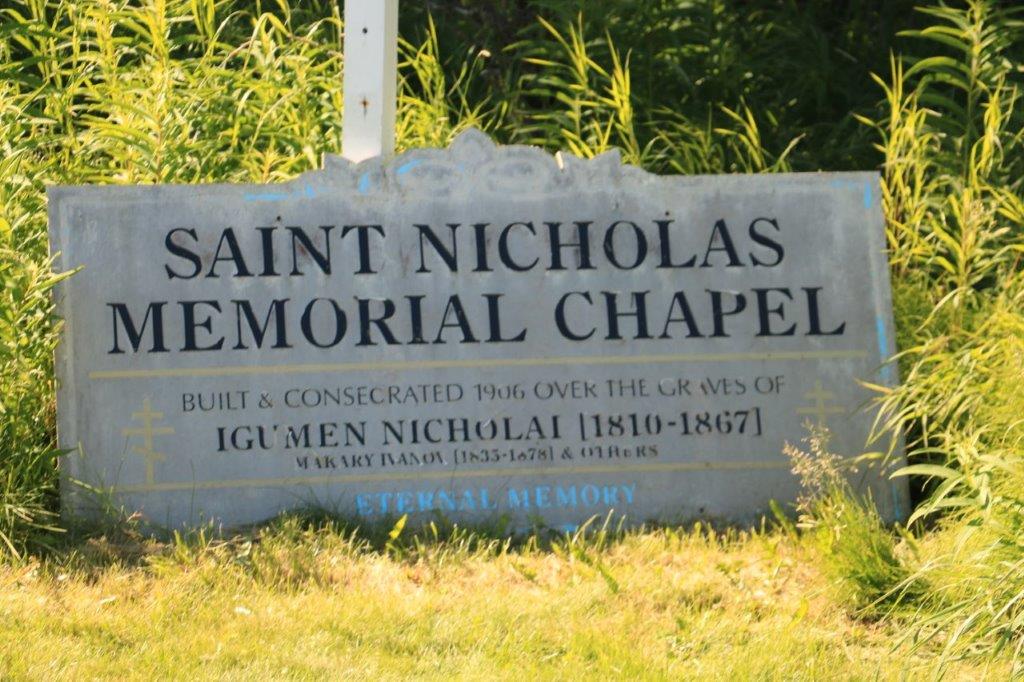
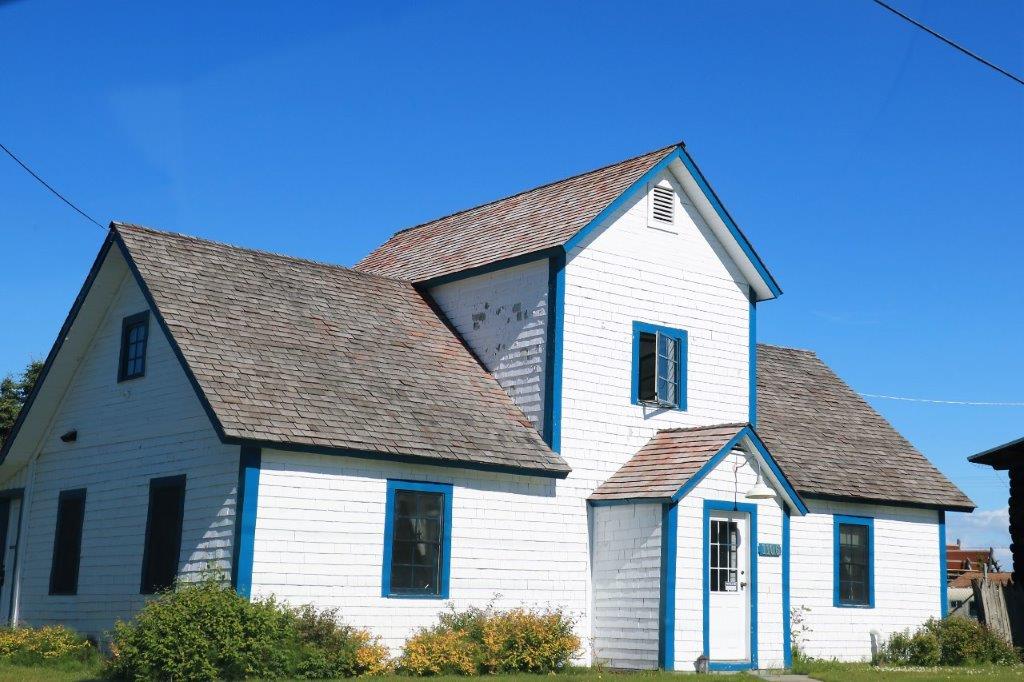
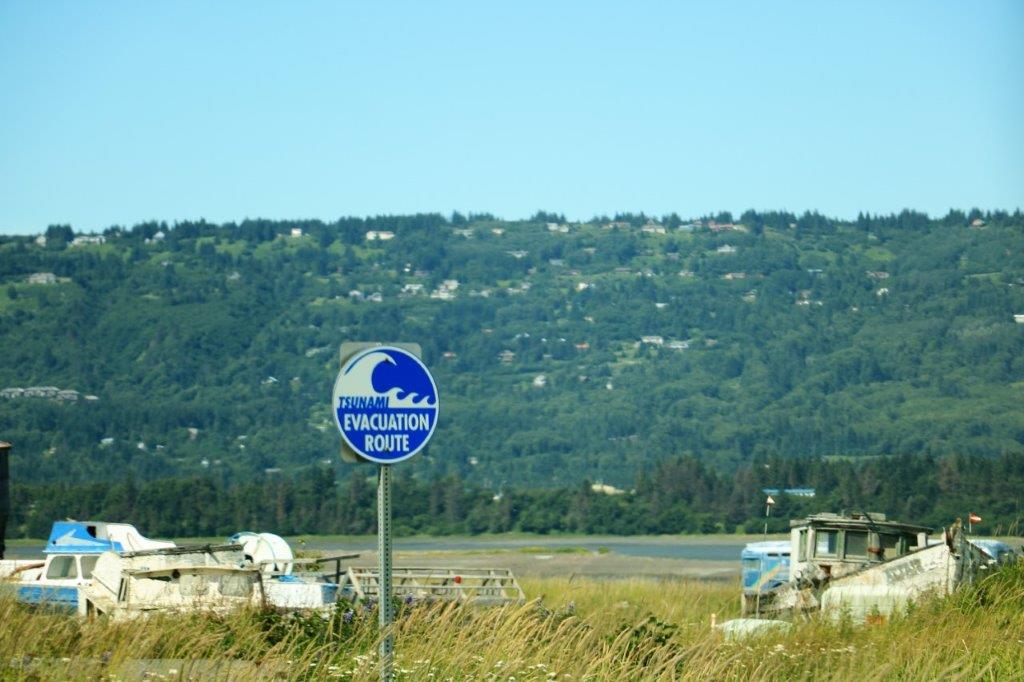
Me, being me, looked around at all the people and cars and structures and thought (well, I actually said, to John), “Talk about denial.  Alaska is an earthquake zone, there are five active volcanoes just across the inlet, and you’re on a spit of land barely 10′ above the water which is not a great place to be in the event of a tsunami.”  People are so strange.  In the event of a disaster occurring there is no way at all that all those people will be able to reach safety.  That one two lane road will be gridlocked within minutes – despite the fact it is ‘tsunami evacuation route’.  Hope really does spring eternal in the human breast. These folks must have felt that, since they live so close to the ocean they needed their own lighthouse.  Cool.  I want one. Back in Kenai we did a little drive around Old Town and spotted some of the heritage buildings.  Alaska used to be Russian territory so there are many places with Russian names and many communities that still have Russian Orothodox churches.
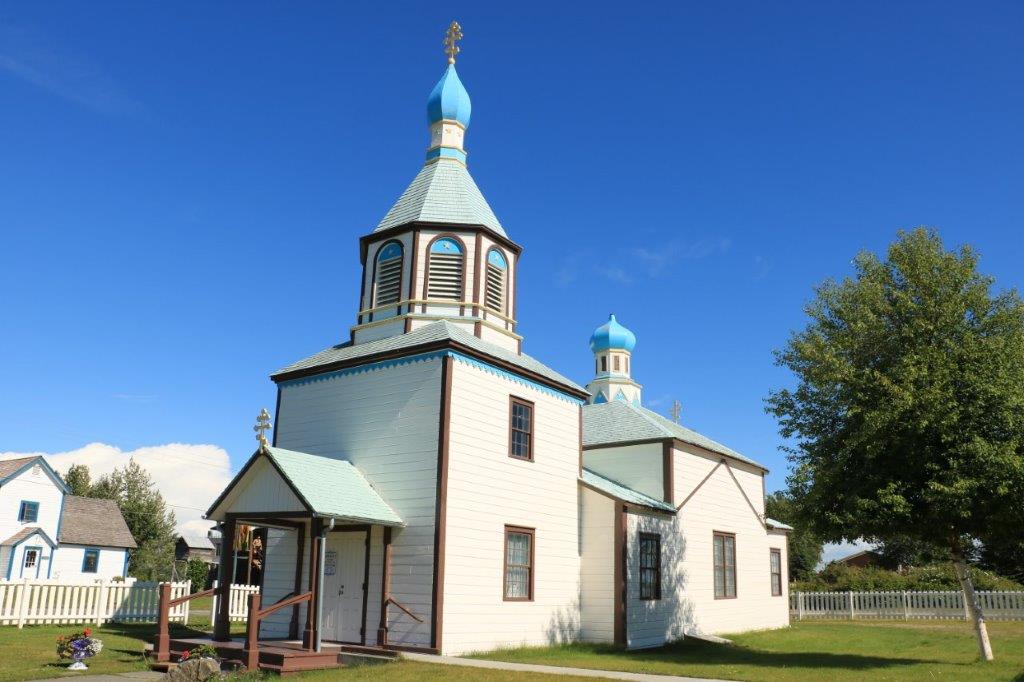
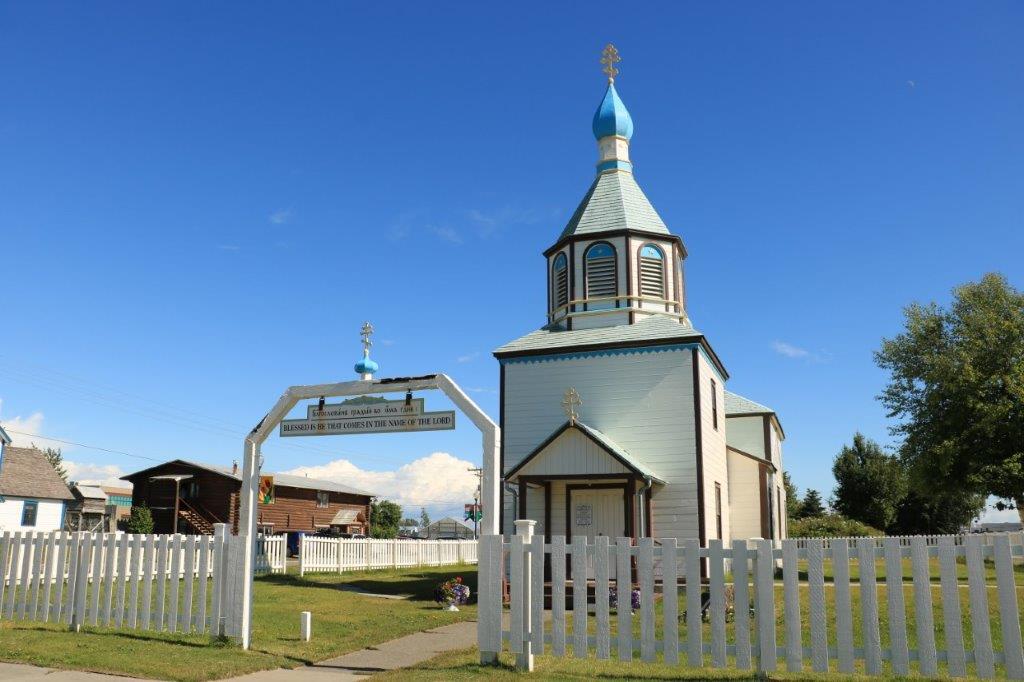
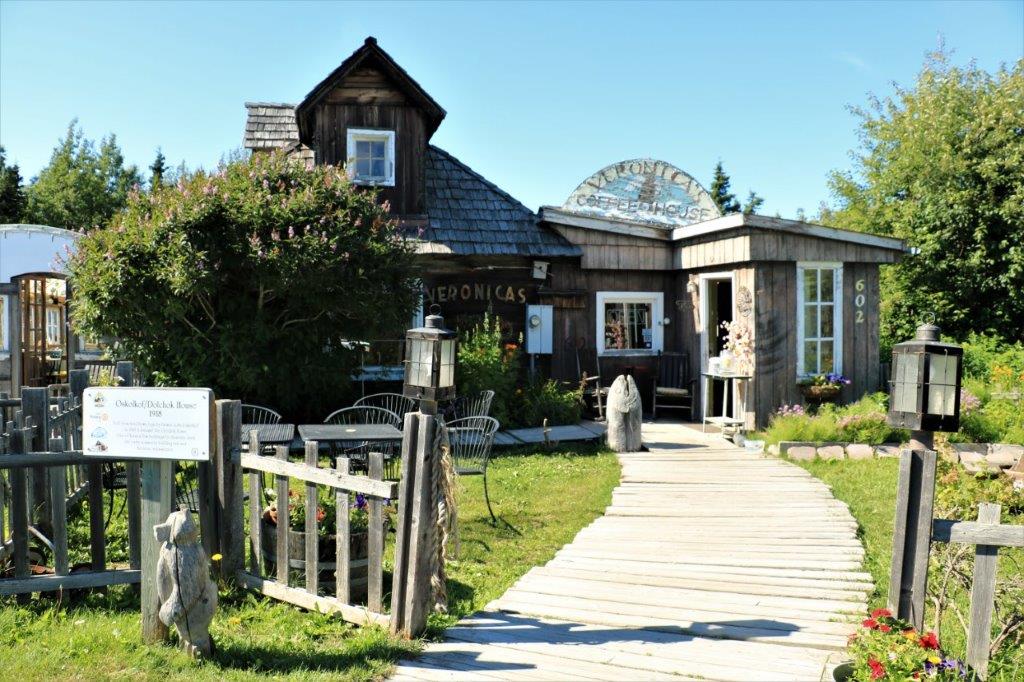
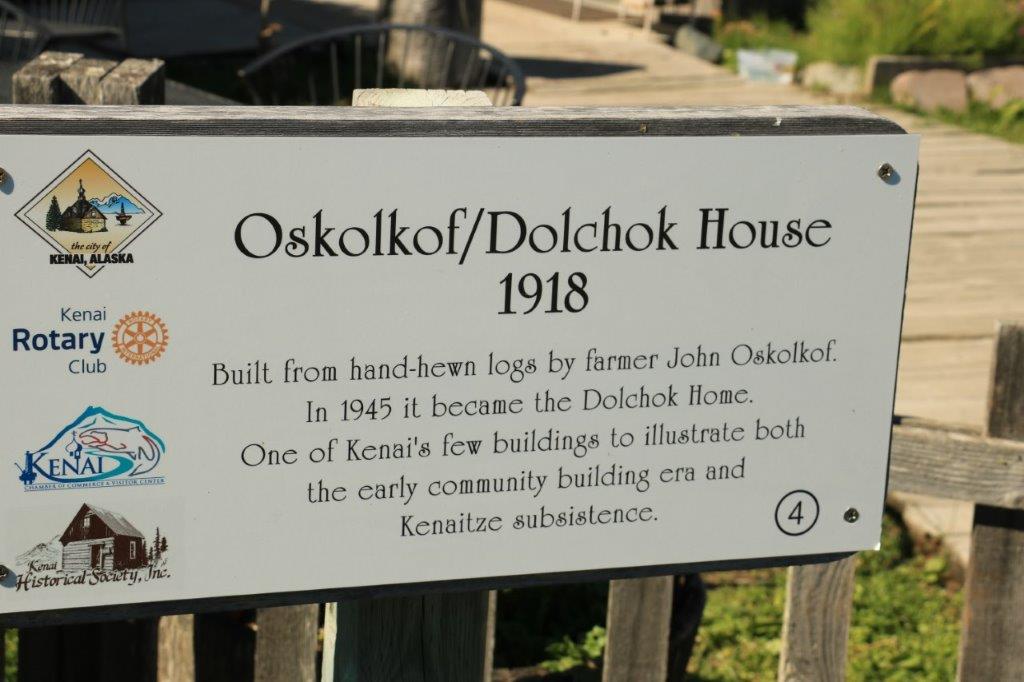
It was now 5 pm and our quick ‘1 hour’ drive to Homer was complete.  Time for dinner and blog writing.  Tomorrow we are off to Seward (pronounced Sue-ward) which is 169 km (105 miles) on the other side of the peninsula.

2018 July 16 – Anchorage to Kenai, AK

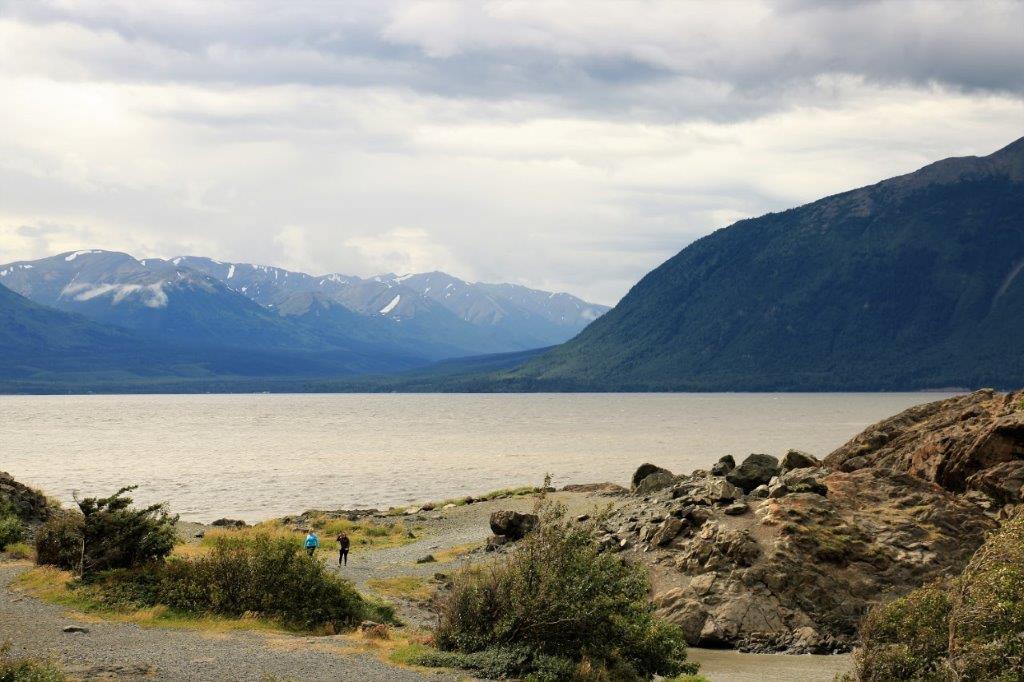
We left Anchorage at 10:30, under overcast skies.  The unsettled weather stayed for most of the day.  As we approached Kenai (KEEN-eye) about 5 o’clock the sky cleared and the sun came out, so we are enjoying a beautiful evening.

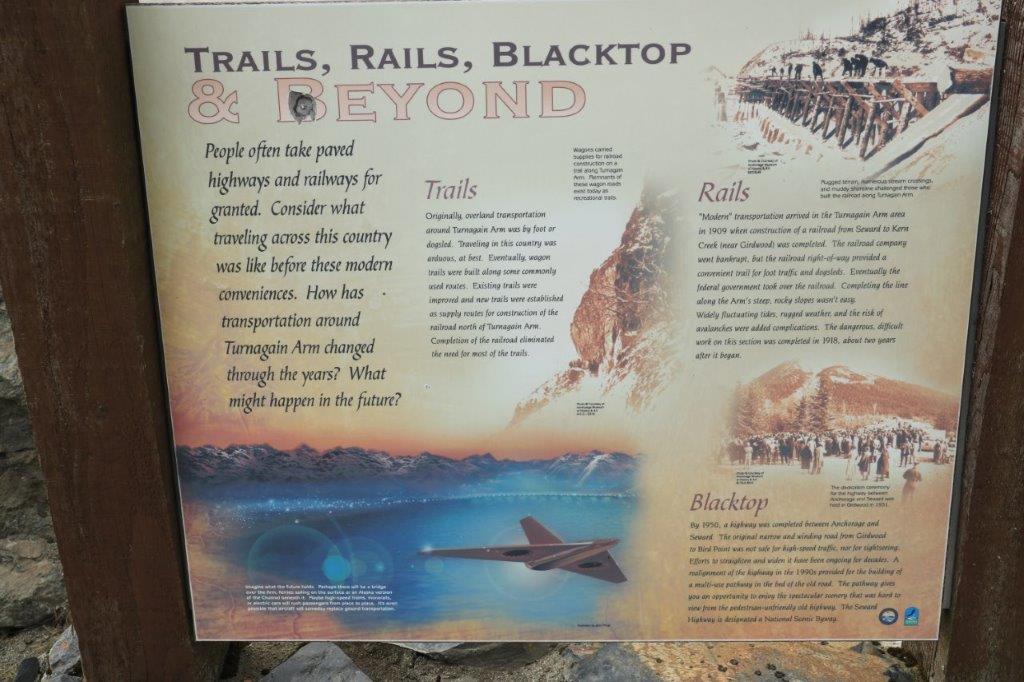
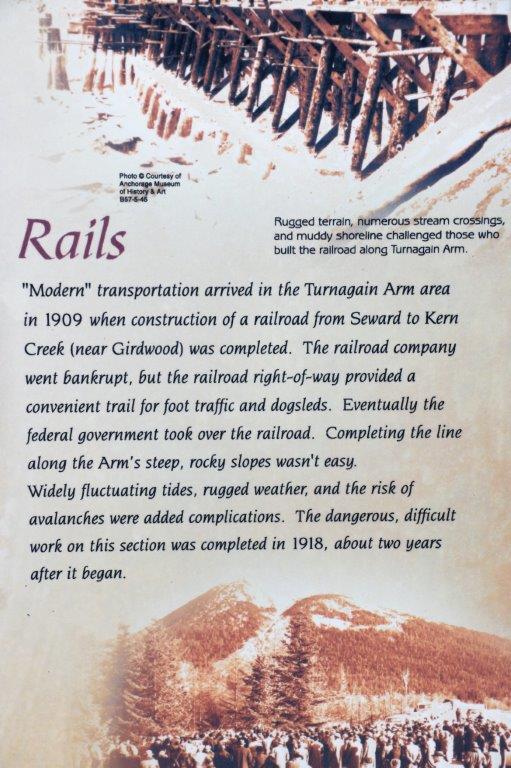
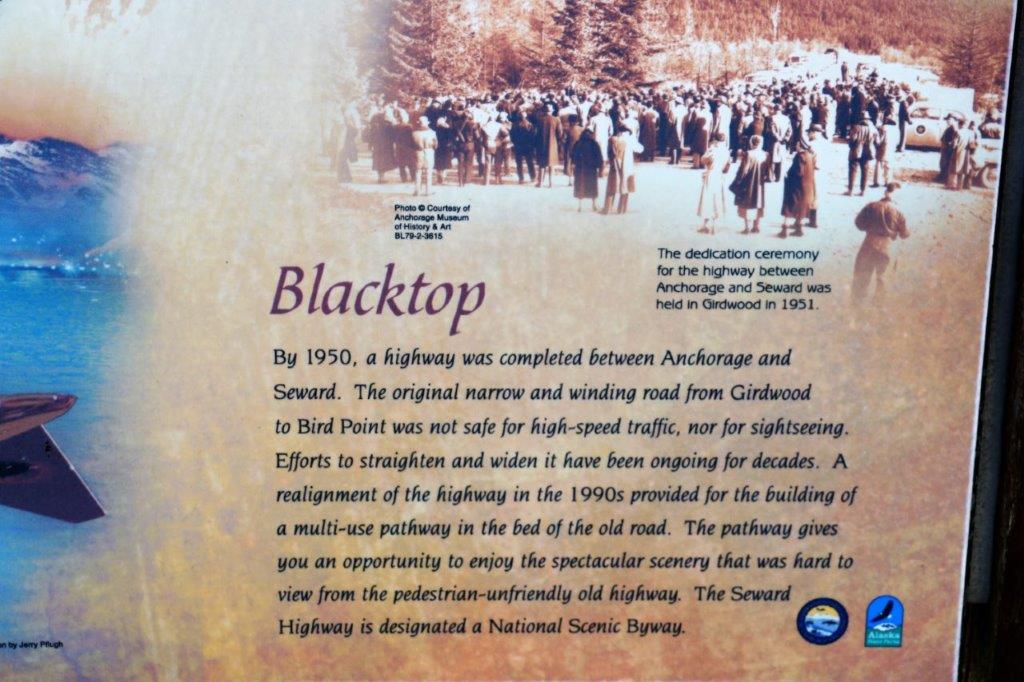
The drive from Anchorage to Kenai is a circuitous route.  You must drive to full length of Turnagain Arm and then go south at the end, through the Turnagain Pass before heading westward to Kenai.  Kenai is a larger place than we expected it to be.  For some reason both John and I thought it was a small fishing town.  Well, it is a fishing town, all right – world reknown for its salmon fishing – but the population is about  7,800, which in Alaska is a pretty big place.  All the big box stores are here, a hospital, and lots of hotels for the fishing folks.

There are geocaches hidden all the way down the highway so we made several stops.  There is an Alaska Geocachers group that hid a whole bunch of them at all the pull outs along the Seward Highway. We stopped for several and skipped lots more due to time.

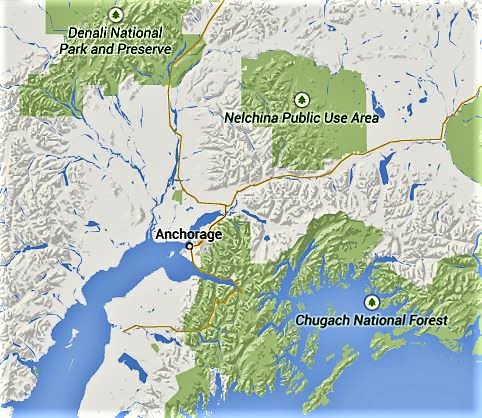
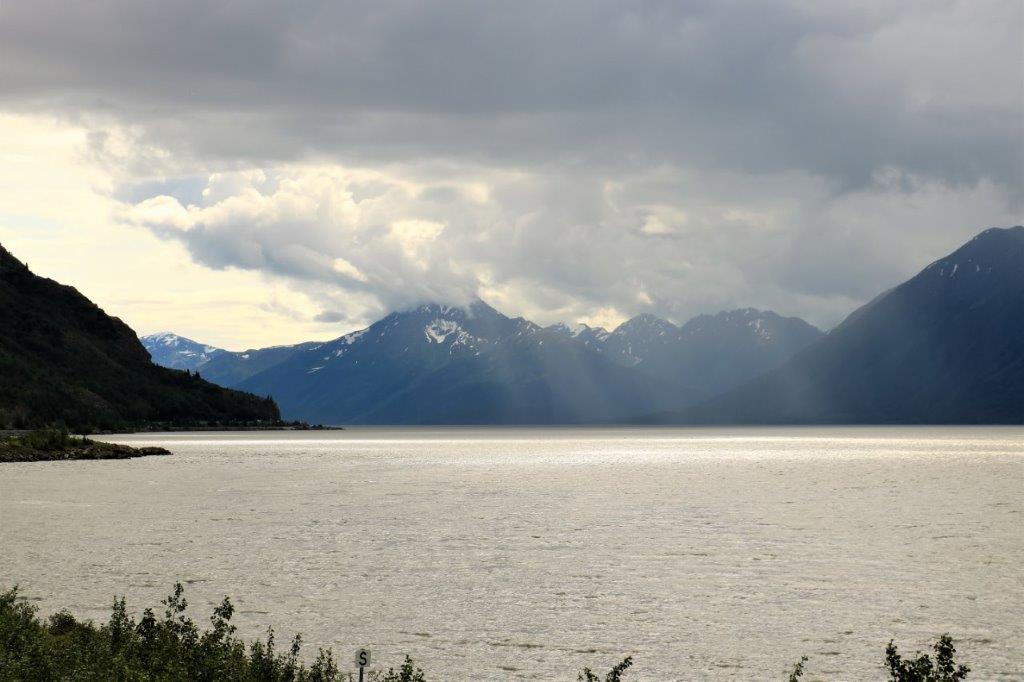
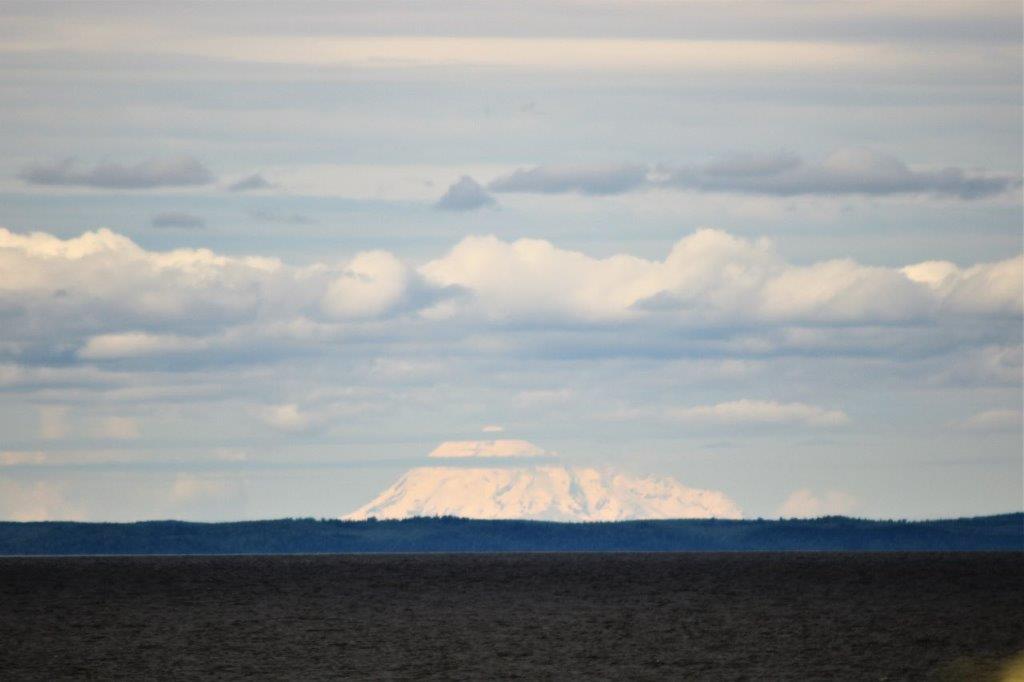
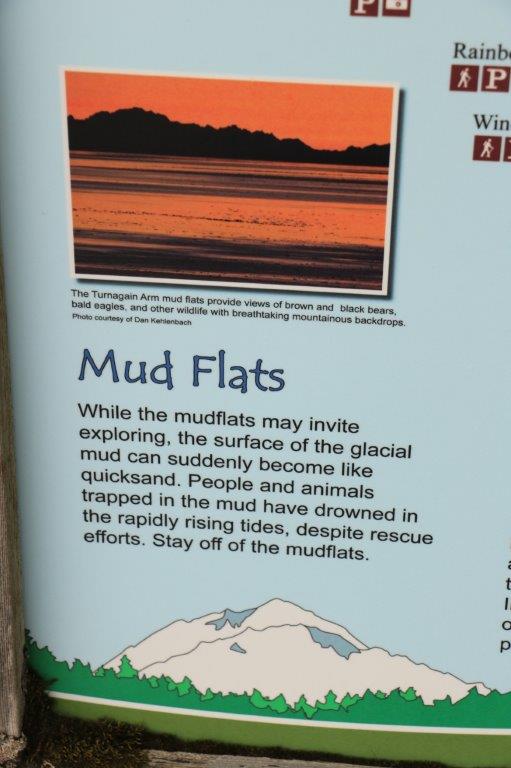
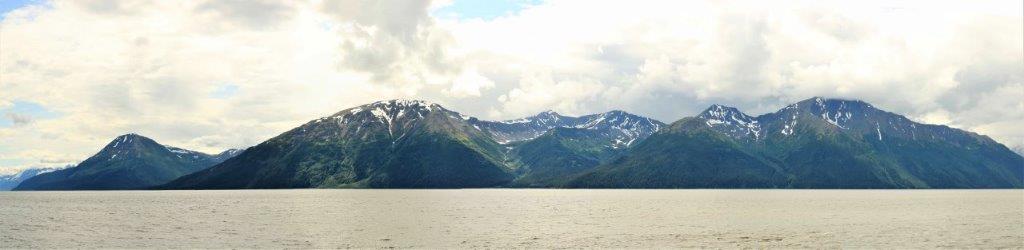
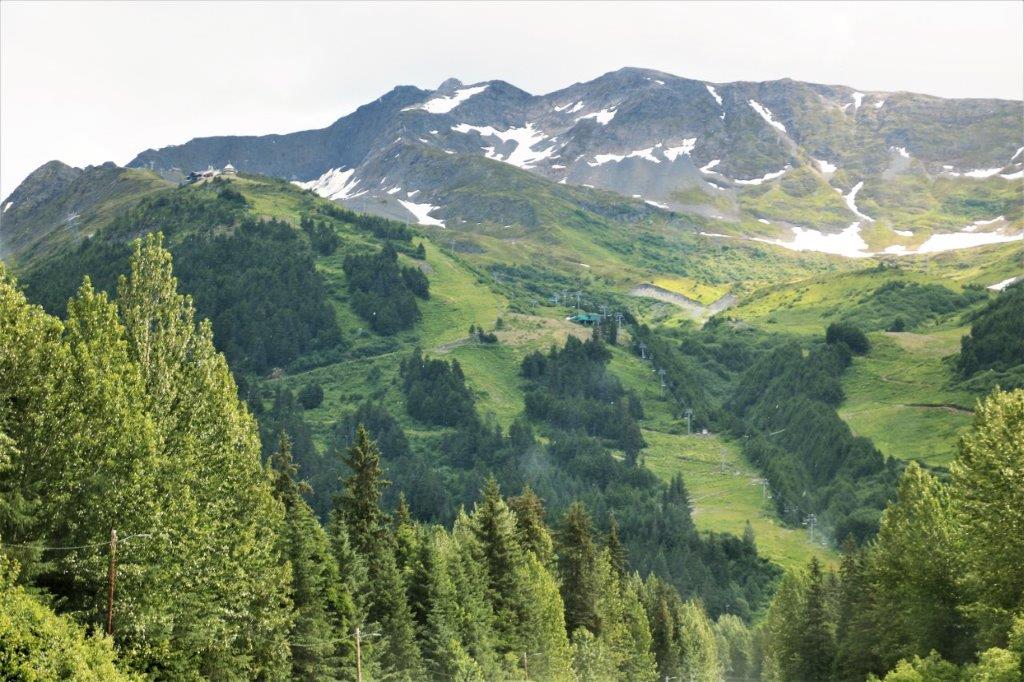
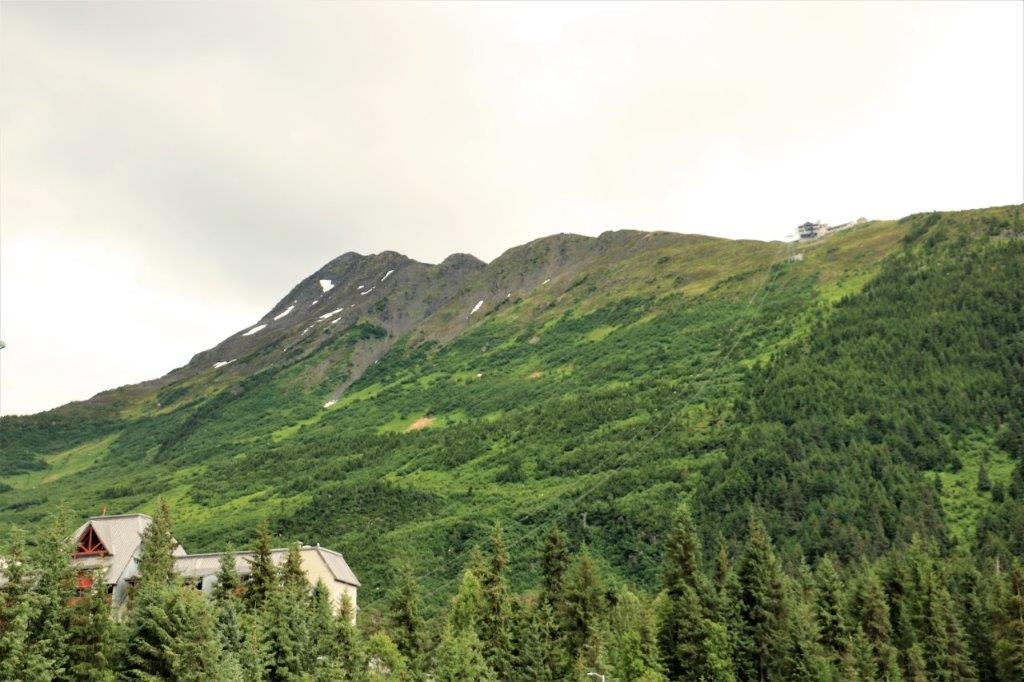
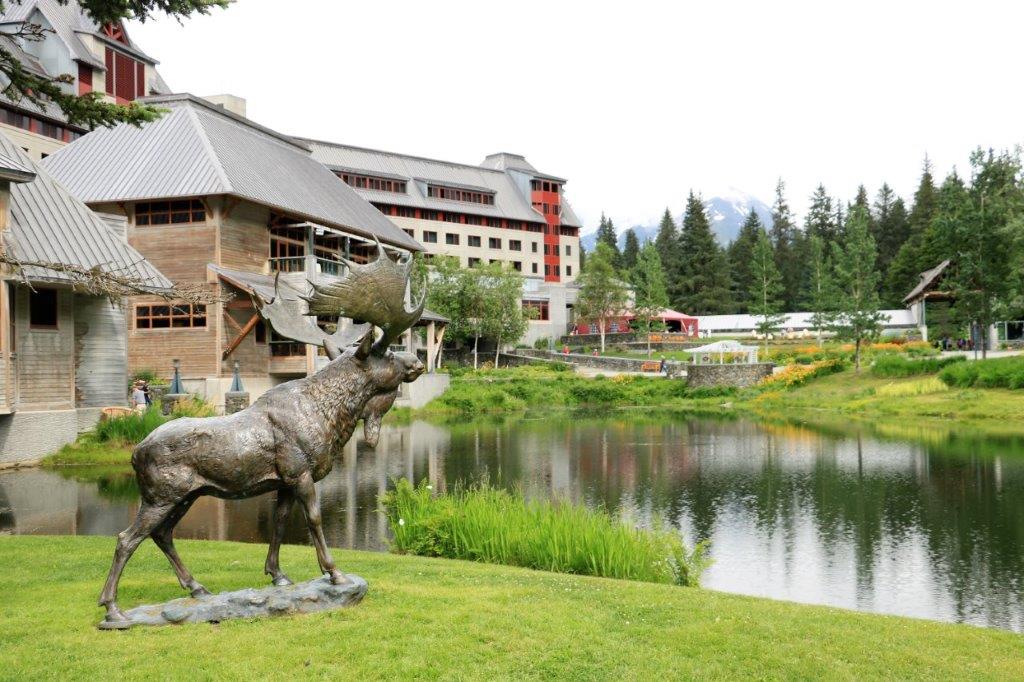
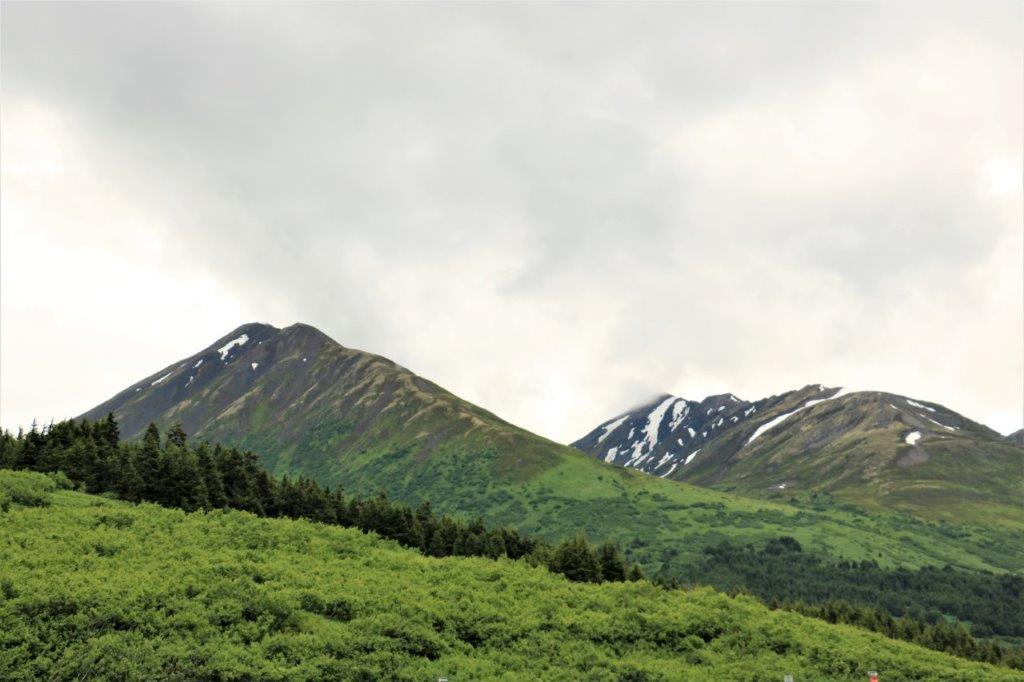
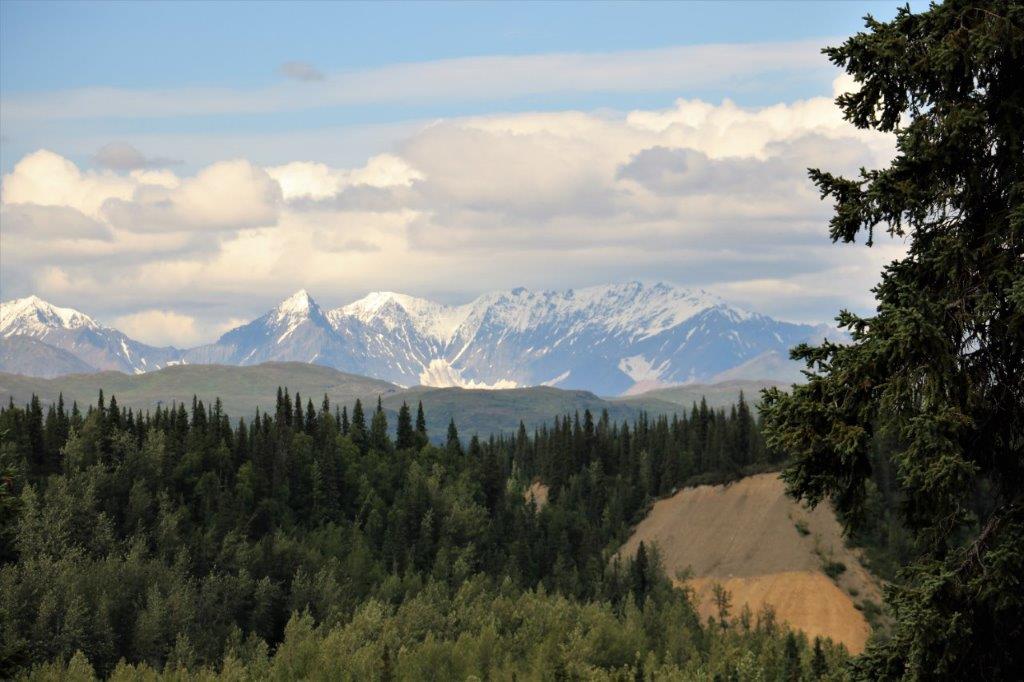
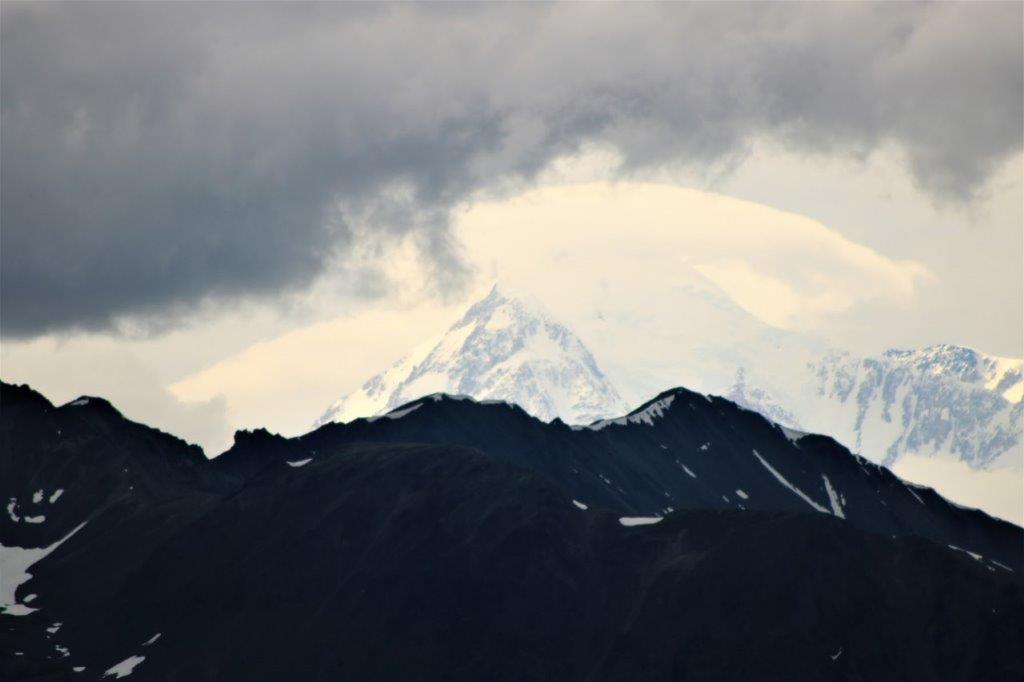
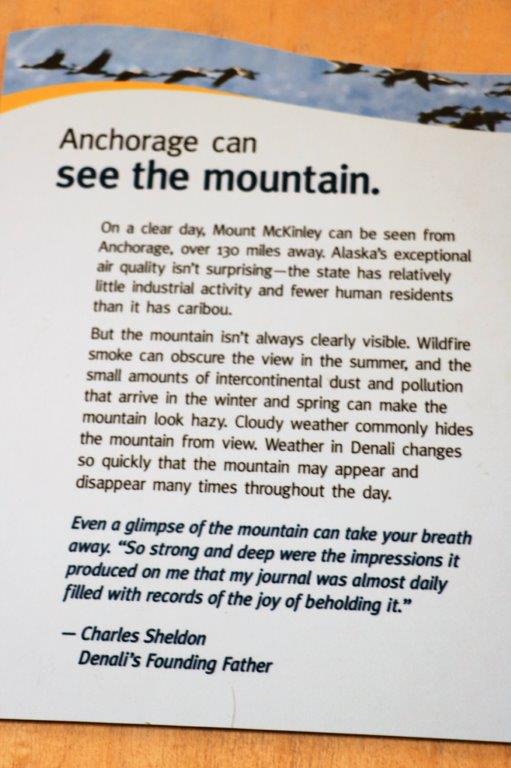
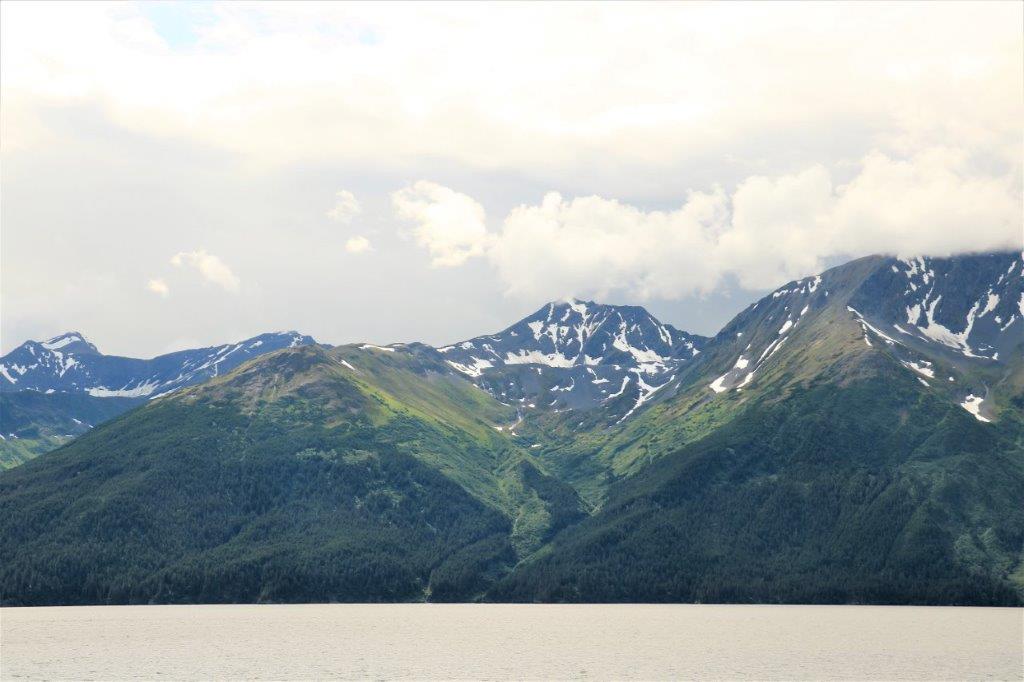
Even though the sky was often dark the ever-present moutains were gorgeous.  The fine orange line that heads out of Anchorage and goes along the long, narrow arm of water (Turnagain Arm), then down through the green mountainous part and over into the white of Kenai National Wildlife Refuge is the route we drove today.  If you just drive, the 254 km (158 miles) takes about three hours. At one of the pullouts I was looking northwestward and I am pretty sure this is Denali.  It is possible to see the mountain from Anchorage on a good day.  I am not totally sure, but the bulk of it looks like Denali.  This pictures is with my zoom lens and then cropped, so it is a lot further away than you would think. The dark grey in the foreground is the water of Turnagain Arm. I tried several times to get a photo of the mud flats as we drove along.  Unfortunately the water is so full of silt and rock flour that the mud is exactly the same colour so the photos didn’t show any definition between the two.  There were many spots where the mud lay in bumps and hollows, but to get a picture from a moving car was difficult.  We go back around the Arm in a few days and I will try again.  We had been told that the mud is just like quicksand and you will be stuck and sinking  if you walk out in it.  People have died even while rescuers tried to save them. At the end of Turnagain Arm we turned off into Girdwood, which was destroyed in the 1964 earthquake and re-built four miles inland.  At Girdwood there is the Alyeska Hotel.  The area is a favourite skiing spot and the Alyeska is a huge hotel.  They have a tram that takes you 2000 vertical feet up the mountain for a great view and lunch or dinner at the restaurant if you like.  Even though the day wasn’t really bright and clear we thought we would check it out – depending on cost.  Turns out it is $30 per person for the four-minute ride.  With the current Canadian exchange that would be $72 for the two of us.  We decided we didn’t need to see the view that bad.

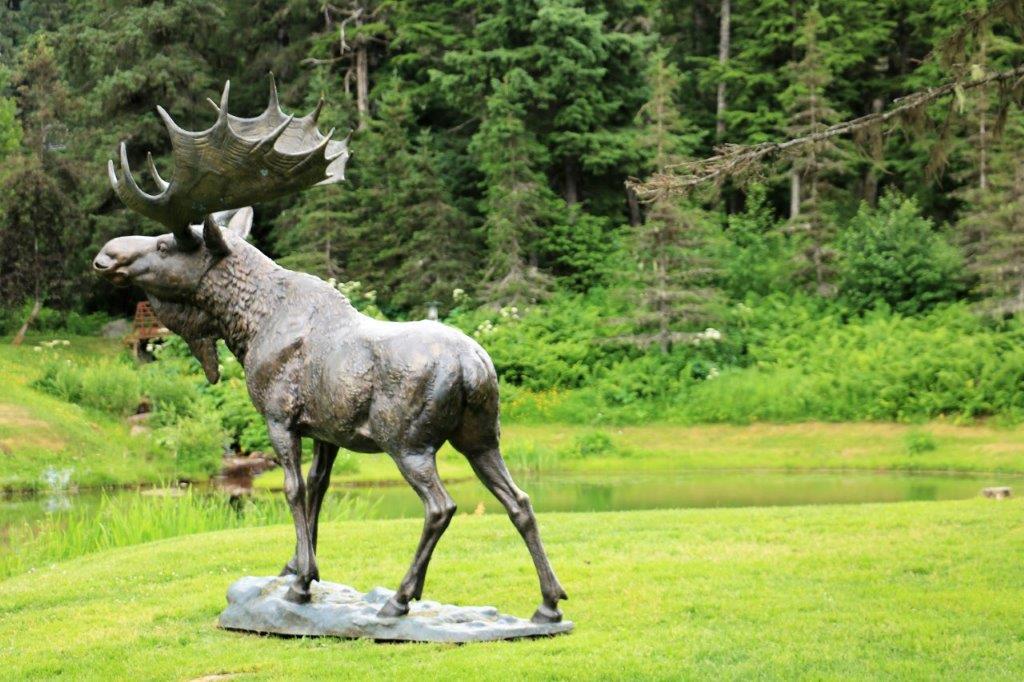
Instead we wandered around their pretty gardens and then had lunch out of the back of the truck in the parking lot before going back to the highway to continue our drive to Kenai. You can see the ski lift in the photo above.  The hotel tram station is on the knoll at the far left.                This is the only male moose we have seen so far. From the parking lot you got a good look at one of the many glaciers that surround Girdwood.                                                  This was a very pretty spot.

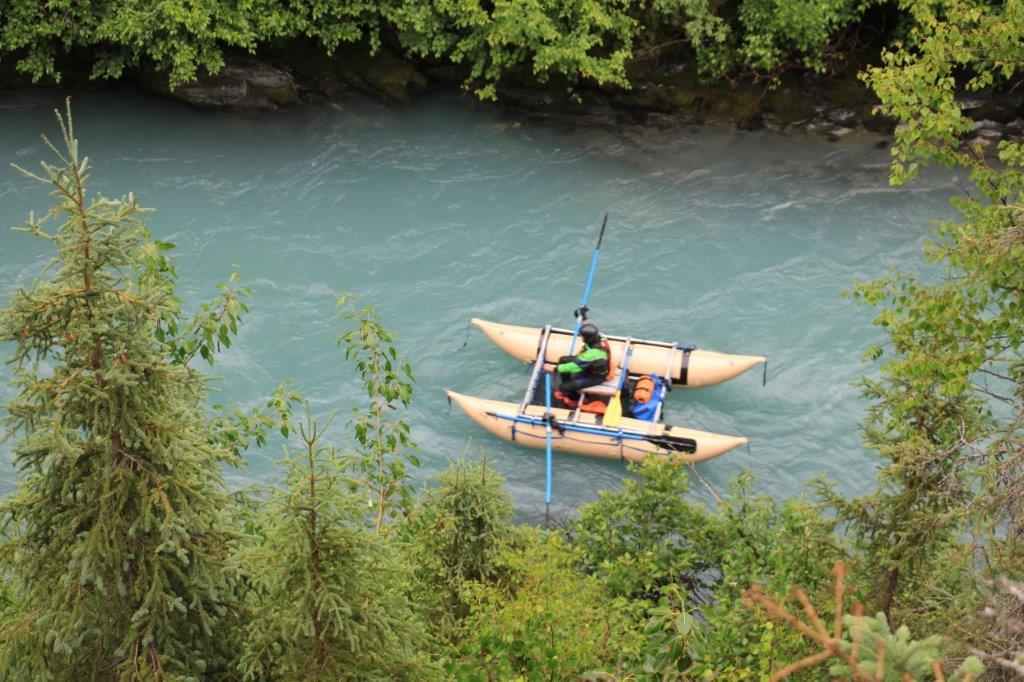
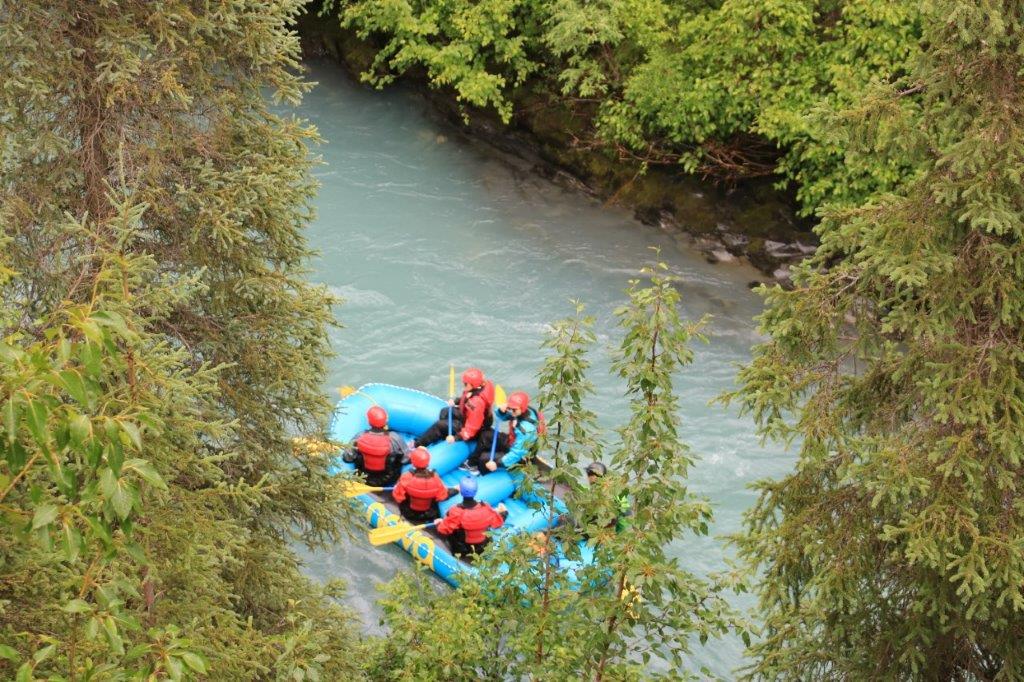
We had been driving alongside the lovely blue-green glacial Kenai River for quite some time and could only get glimpses of it through the trees.  We passed a spot where some rafts were getting launched to ride the white water and so at the next scenic pullout we stopped to see if we could see them come down.  (One of the weird things we have noticed in Alaska is the regular signs showing a camera, indicating a scenic pullout in 1,500 or 1,000 feet.  Yet when you get to the spot there is nothing to see but trees.  Now I don’t know if the trees have just grown so tall as to obscure the camera-worthy spot or not, but we now almost never pay attention to any of the ‘camera’ signs.)

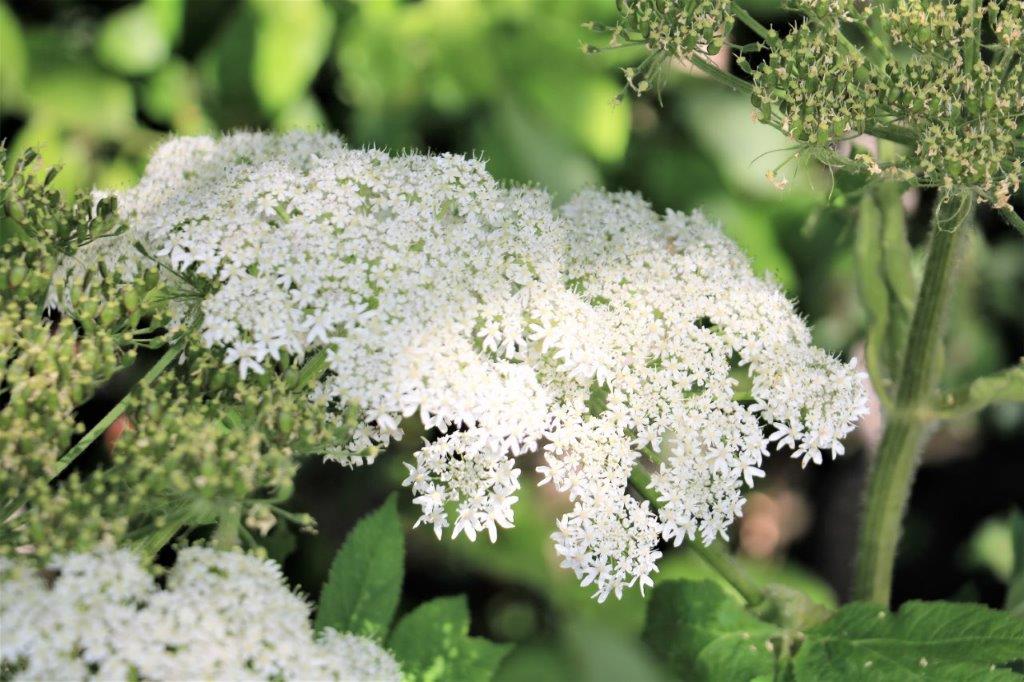
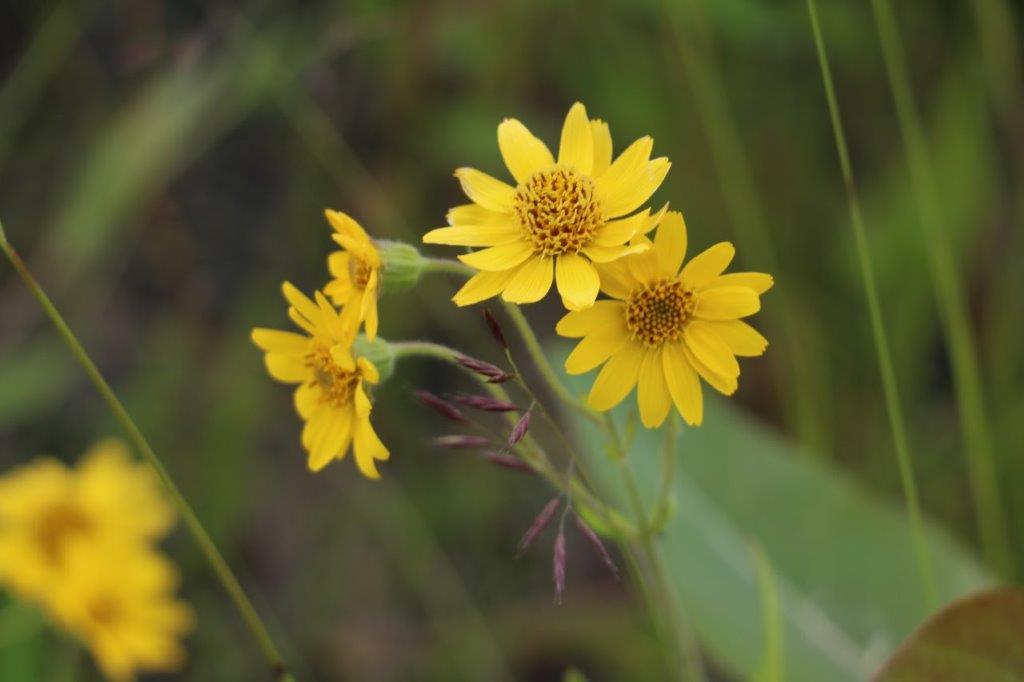
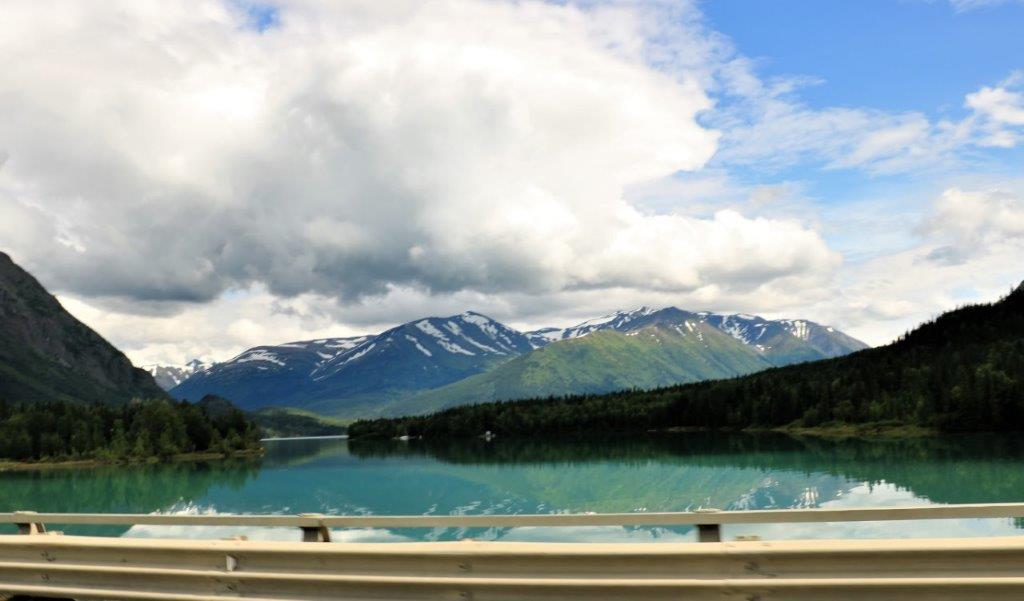
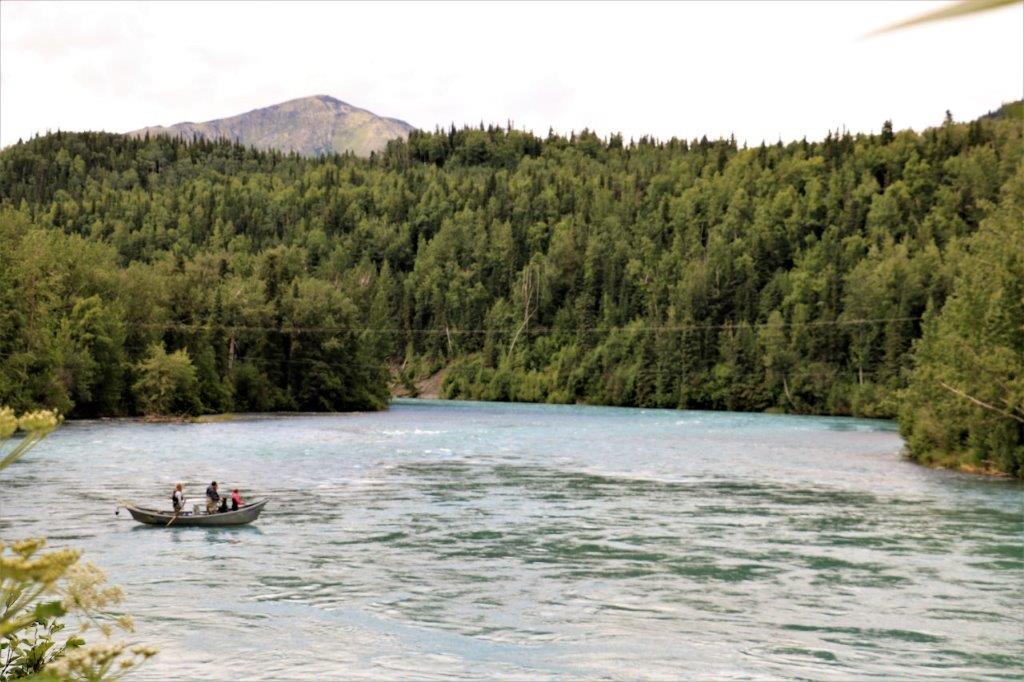
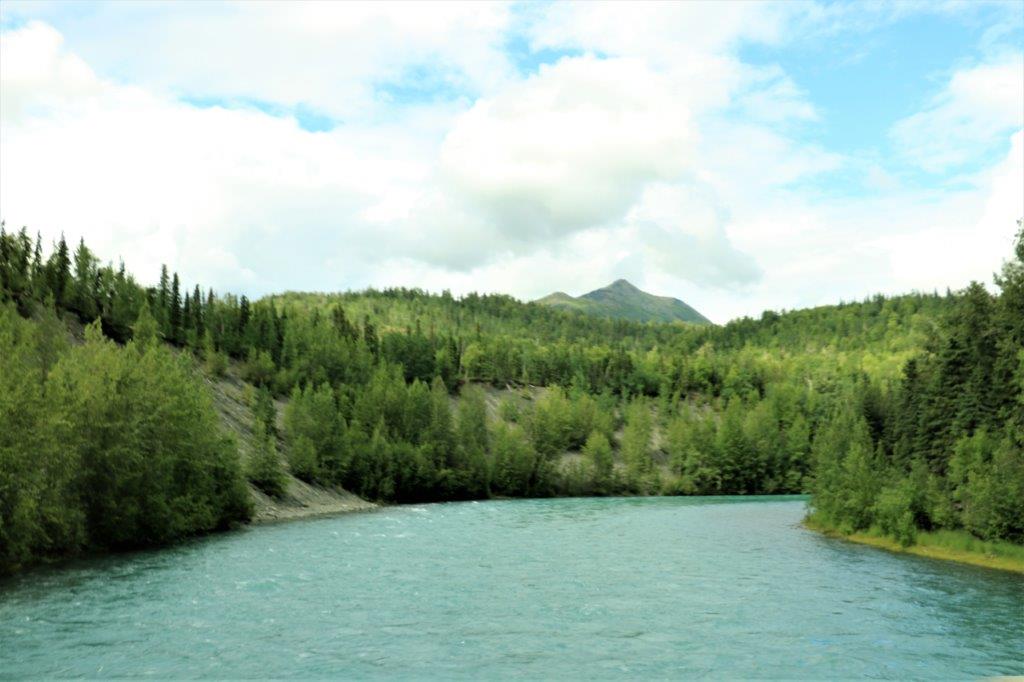
We had to head off into the trees at the ‘scenic’ pullout and walk for a short distance along a cliffside trail but we did find some open spots to see the river.  Sure enough, after ten minutes or so, down came the rafts.This fellow was navigating the river solo, but he was followed by two rafts full of funseekers and I think the third would arrive soon. Everything around this big patch of snow was green, green, green.  Even the mountaintops.This lake was the same lovely glacial green but it doesn’t show in the photos. Devil’s Club is a nasty weed but it has lovely Yarrow-like flowers. We crossed a bridge at the end of Kenai Lake and John snapped a couple of quick photos for me as he drove along since the view was on his side.                       The Russian River is also a pretty colour.

From here it was a short distance into Kenai and dinner.  In the morning we are going to drive to the end of the Kenai Peninsula to the town of Homer the end of the road.  Then we will return to Kenai for the night before driving over to Seward (on the other side of the peninsula)  tomorrow.

2018 July 14 – Talkeetna to Anchorage, AK

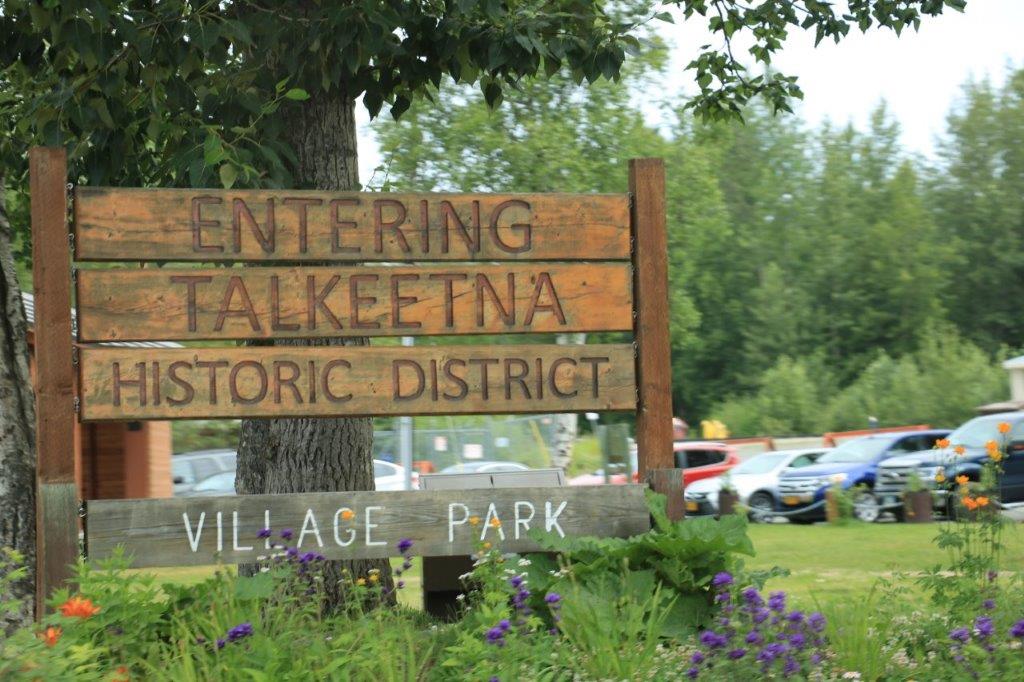
The town of Talkeetna is 14 miles up a spur road that parallels the George Parks Highway between Fairbanks and Anchorage.  I had read, tha, on a nice day, it afforded the best view of Denali, so, even though it was overcast we decided to drive up there after we checked out of our cozy cabin.

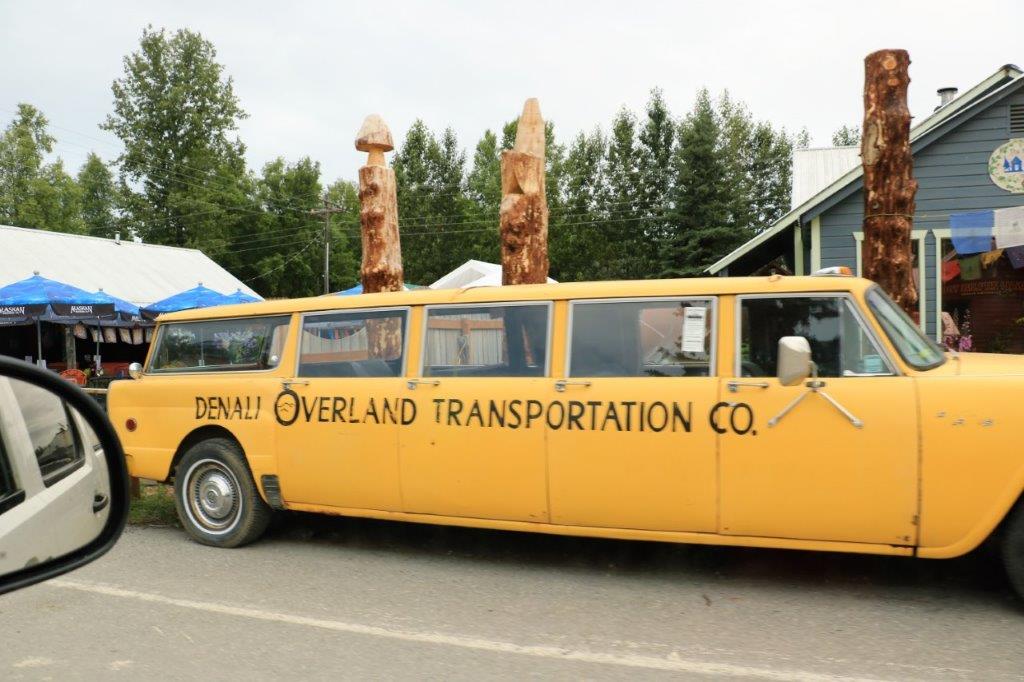
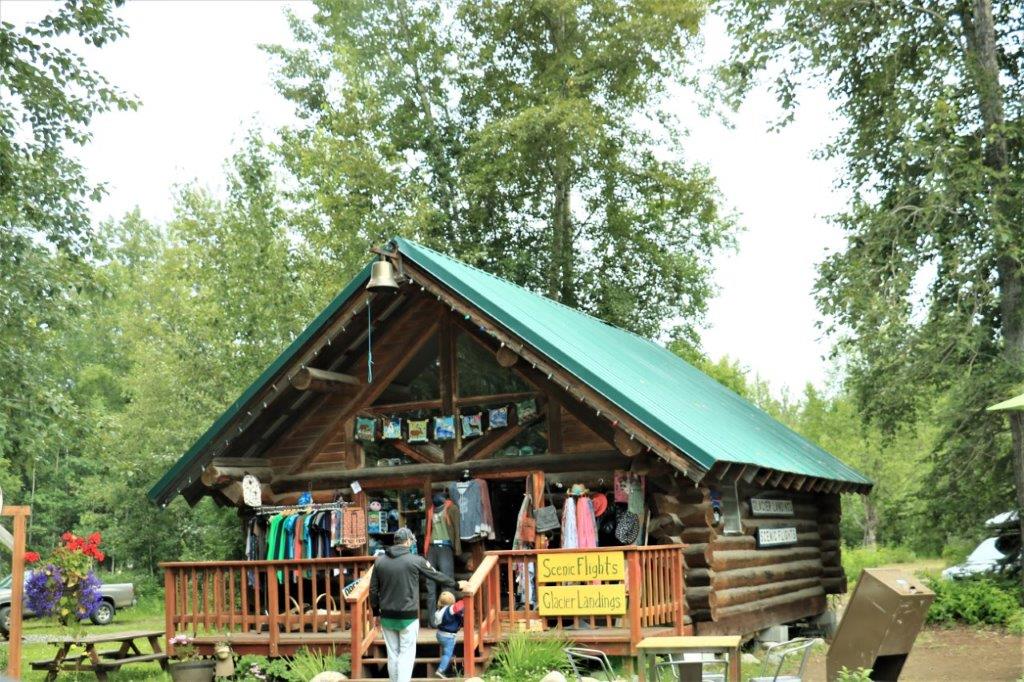
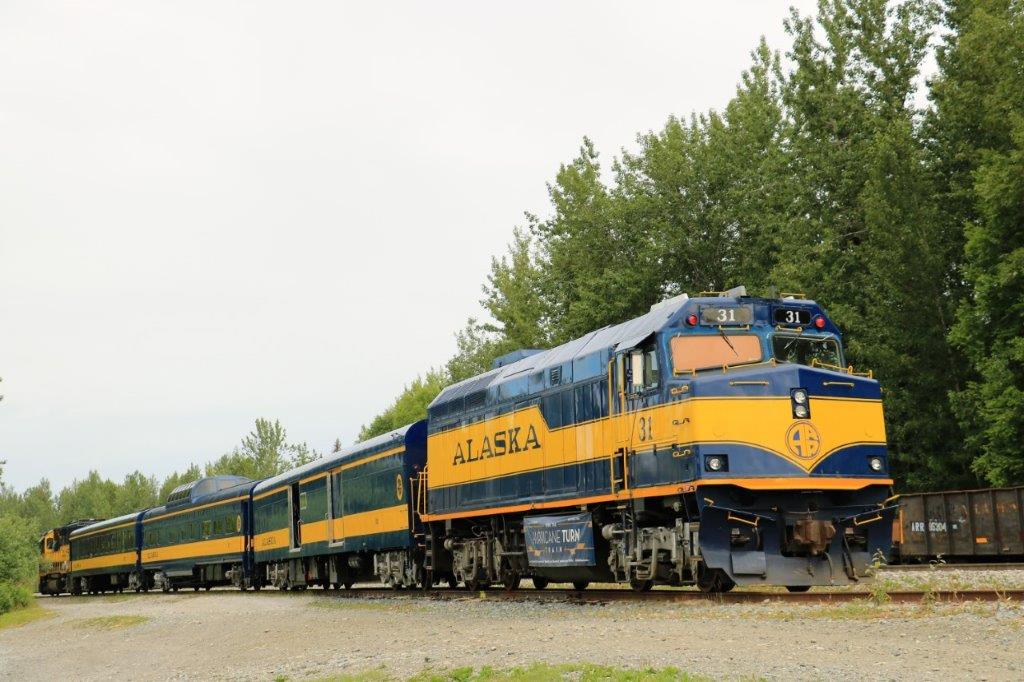
Boy, were we surprised!  The place was almost like Banff in the summertime, absolutely full of people walking everywhere.  Talkeetna, we learned, is the staging area for climbers to  attempt Denali (1,300 people try it each year; about 1/2 succeed) and the town also has many flightseeing companies so people come here to take plane trips over Denali National Park. I am not sure where the rail line comes from or goes to from Talkeetna but while we were there a bus arrived and all the passangers got out and boarded the train.  Must be a scenic rail tour of some kind.

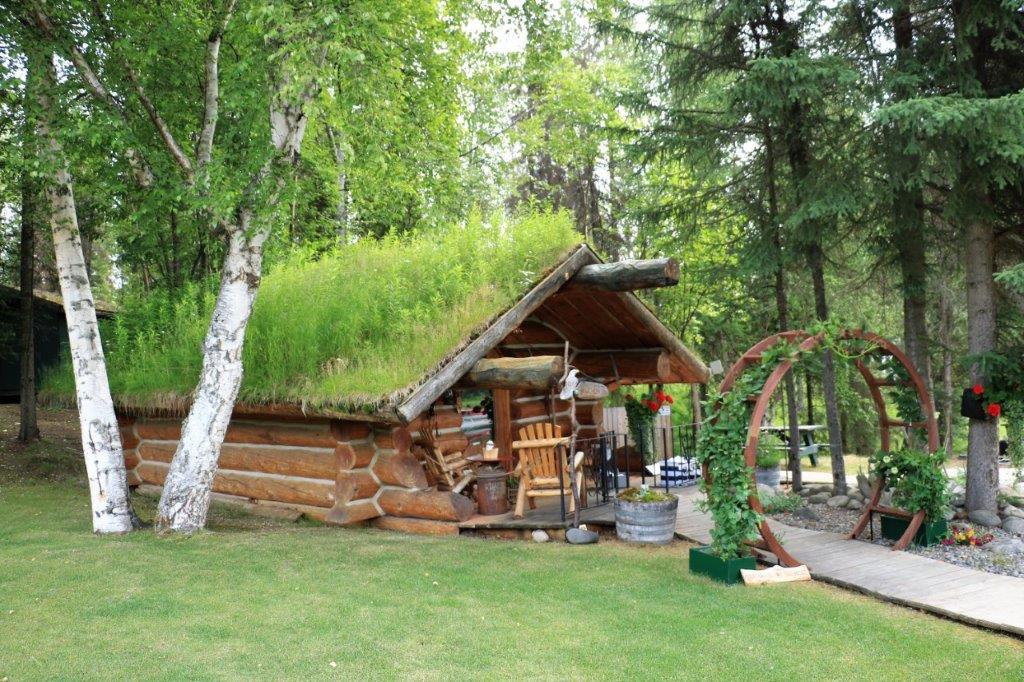
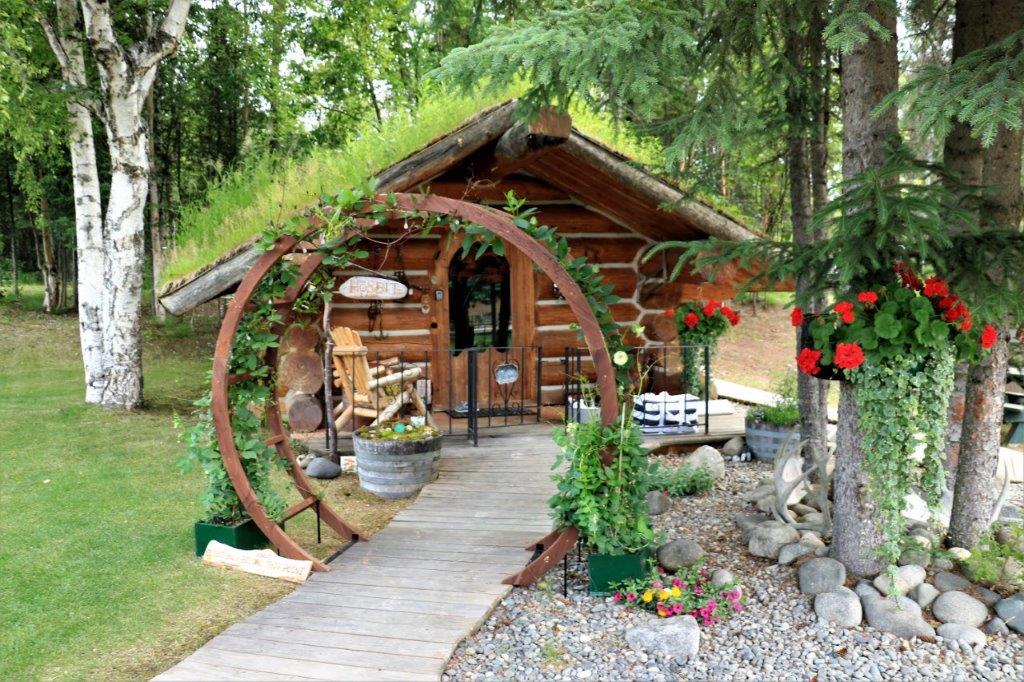
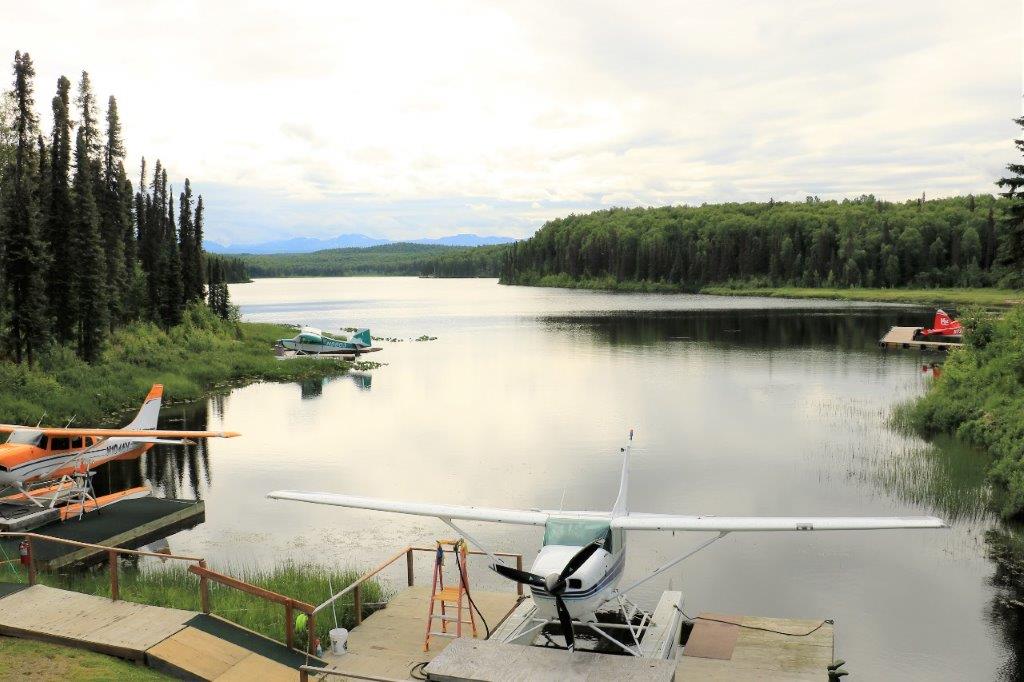
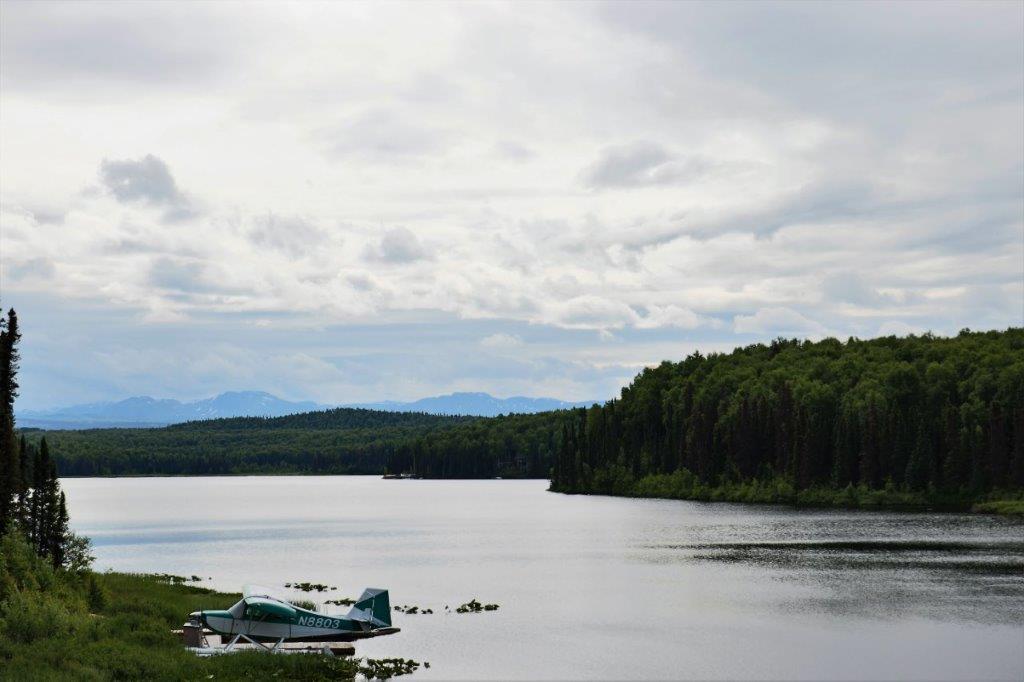
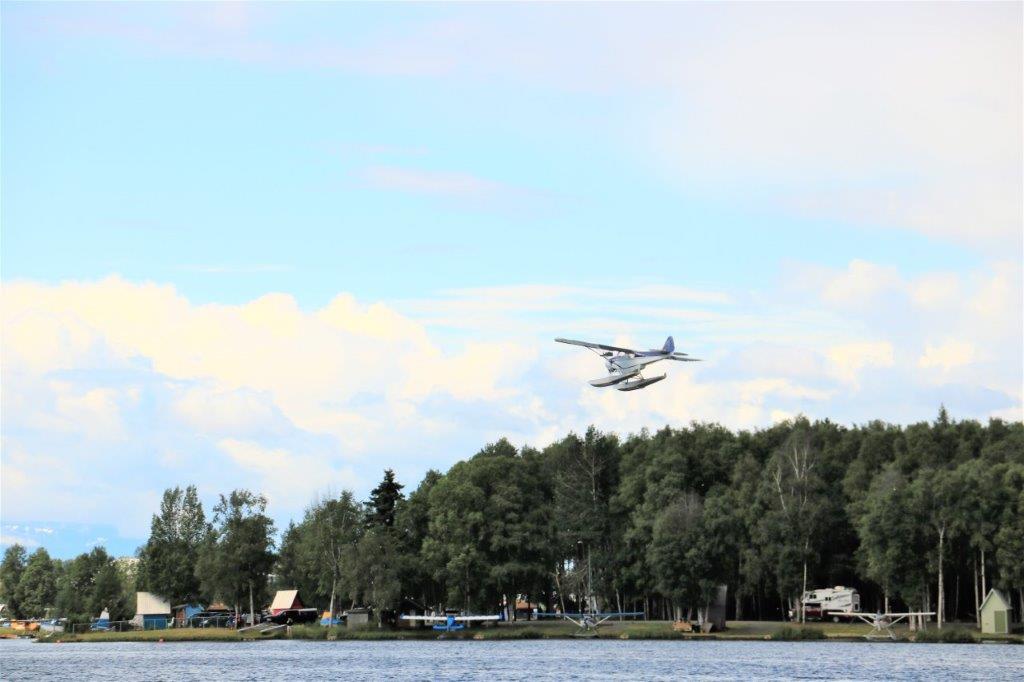
On our drive up the spur road to Talkeetna we passed a lovely lake with a few float planes docked at the shore.  We stopped in on our way back down and had a nice chat with one of the employees of the bush plane company that is situated there.  They also had a ‘Hobbit’ house you could rent.  The grounds were very tidy and well cared for.  It was a very nice spot.

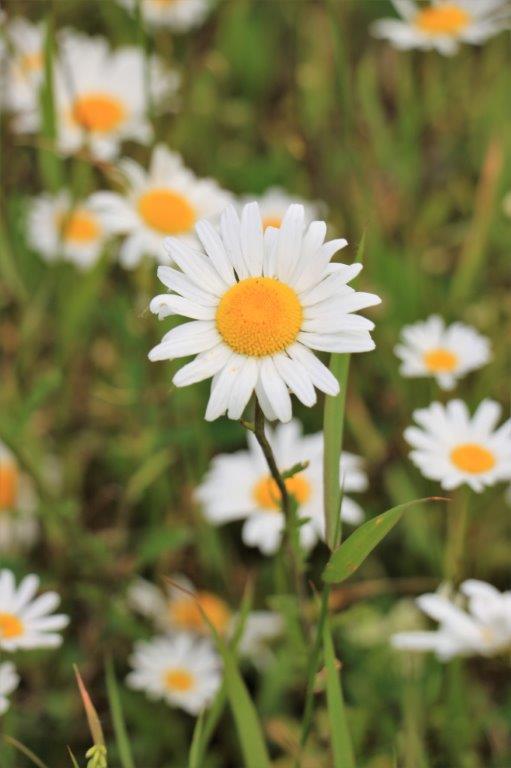
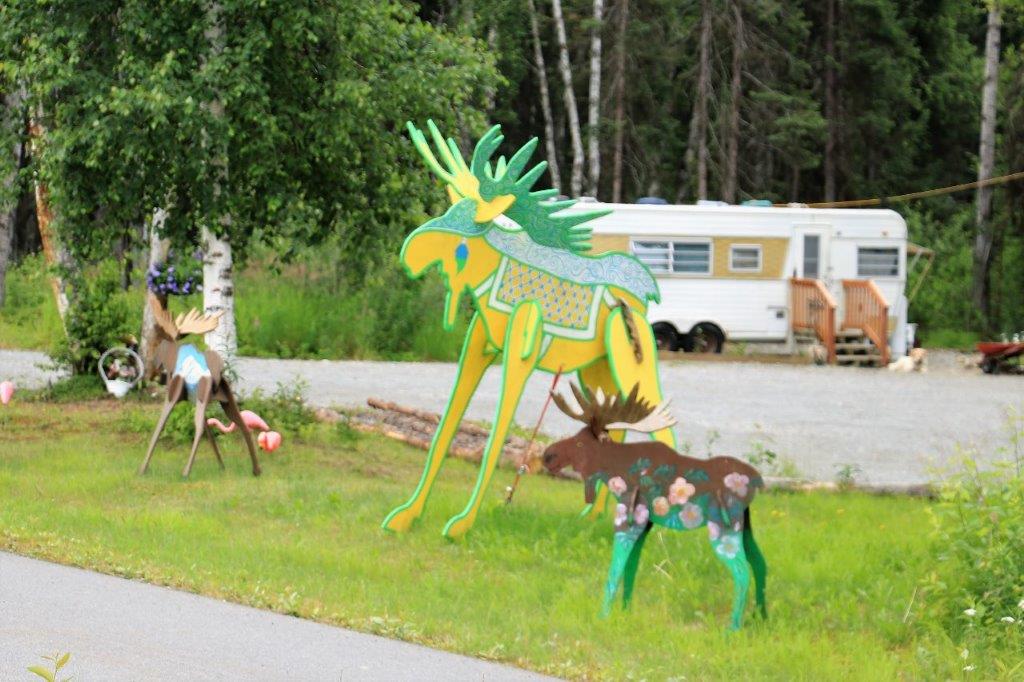
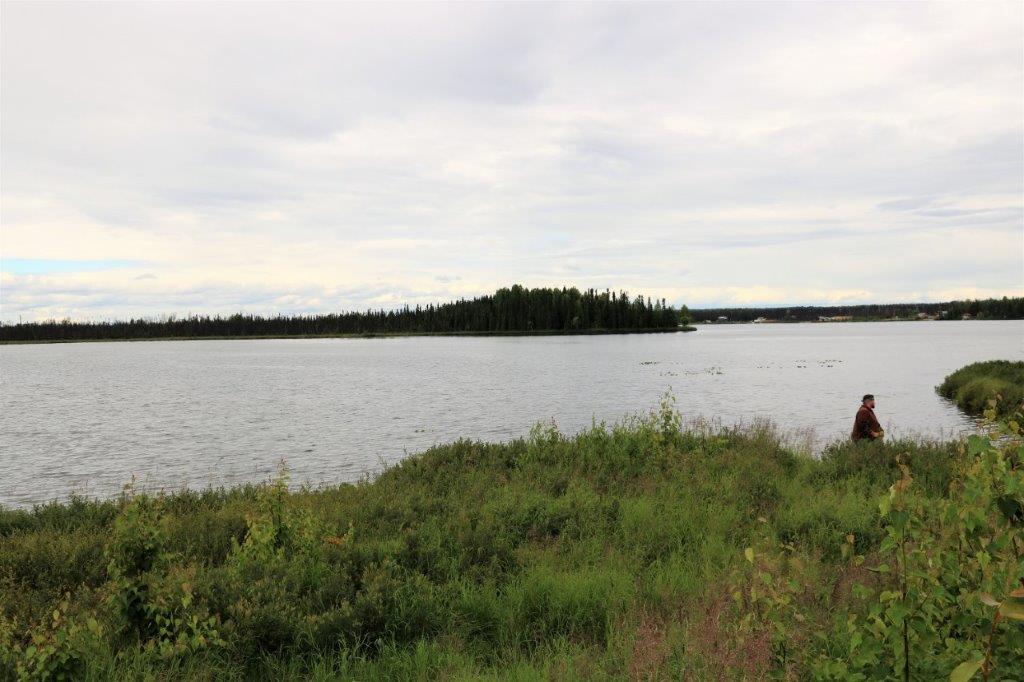
There were about six geocaches hidden along the road and near the turn-off to Talkeetna so on our way back to the highway we stopped and found them all.  I liked the painted moose in this yard. We pulled in to see this little road-side lake and find a geocache.  There was a family trying their hand at fishing from the shore – no luck though.  The scene would have been very pretty on a sunny day. We had to hike down from the roadside to the bicycle trail that runs along the highway and in the verge between there were lots of pretty wildflowers.  One can never take enough photos of pretty flowers, I think.  We reached dual highway north of Wasilla, and saw mountains again.  From Talkeetna to here is mostly trees on either side of the road. It is normally about a 2 1/2 hour drive from Talkeetna to Anchorage.  However, our usual slow pace was slowed even further by a very long stretch of road construction.  We thought they were adding an extra lane or two, but all the work was to clean up and seed the side verge and re-pave.  The line-ups waiting for the pilot car escort were miles long at both ends. The population of the State of Alaska is about 740,000.  300,000 of them live in Anchorage.  It is by far the largest city in the state.  Anchorage is as far west as the Hawai’ian Islands and as far north as Helsinki, Finland.  Of course, one must remember that the lines of longitude narrow as they get closer to the pole, so the Hawai’i comparison is a little deceptive.

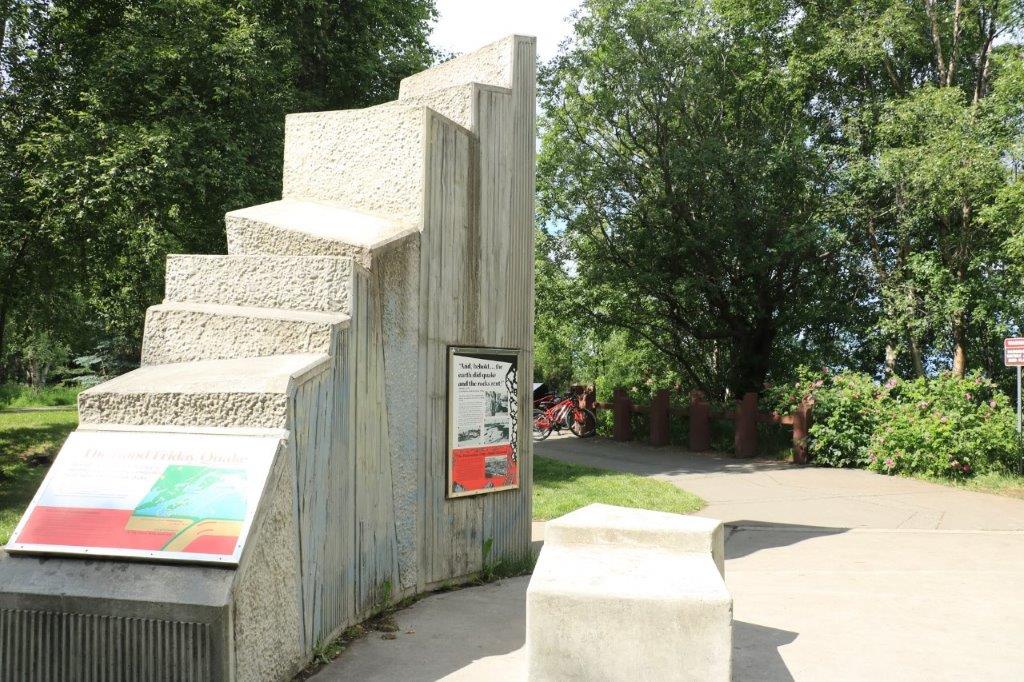
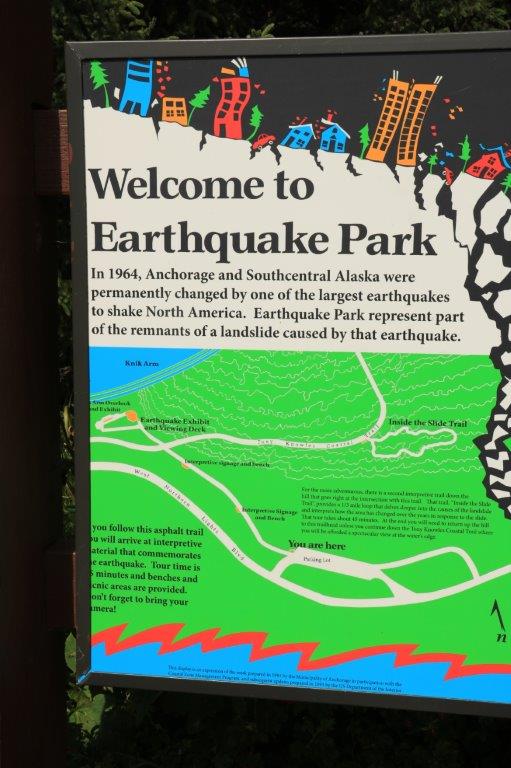
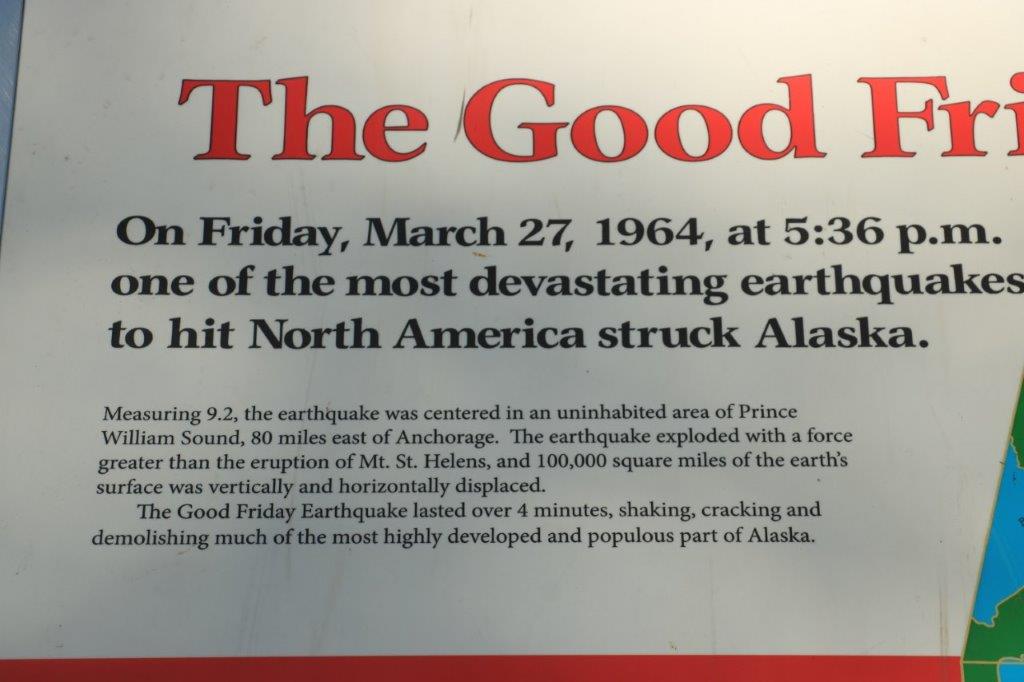
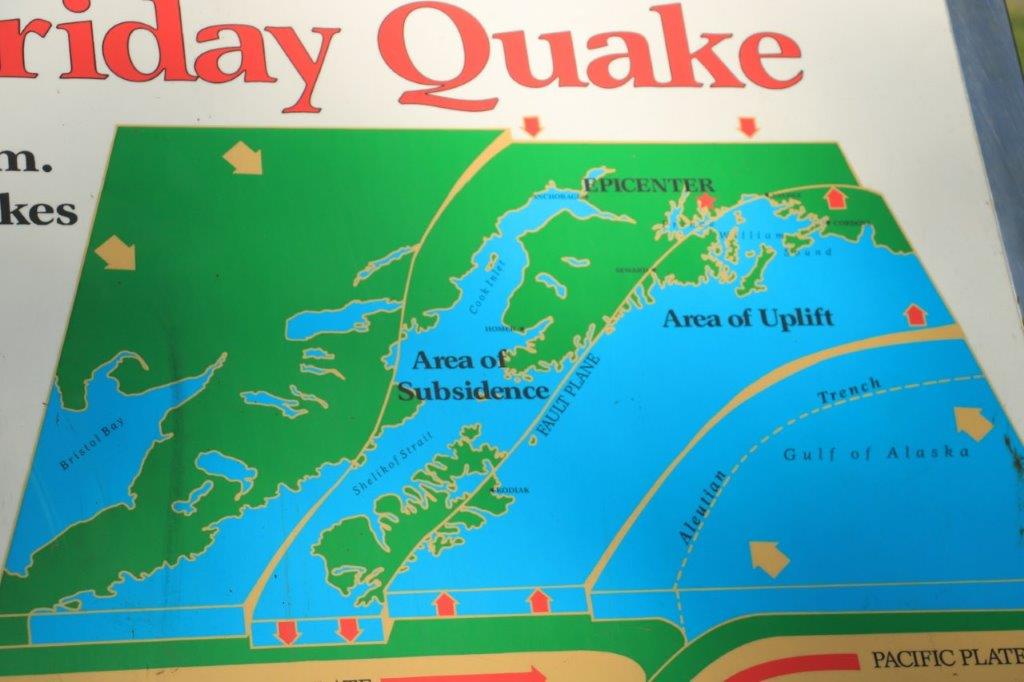
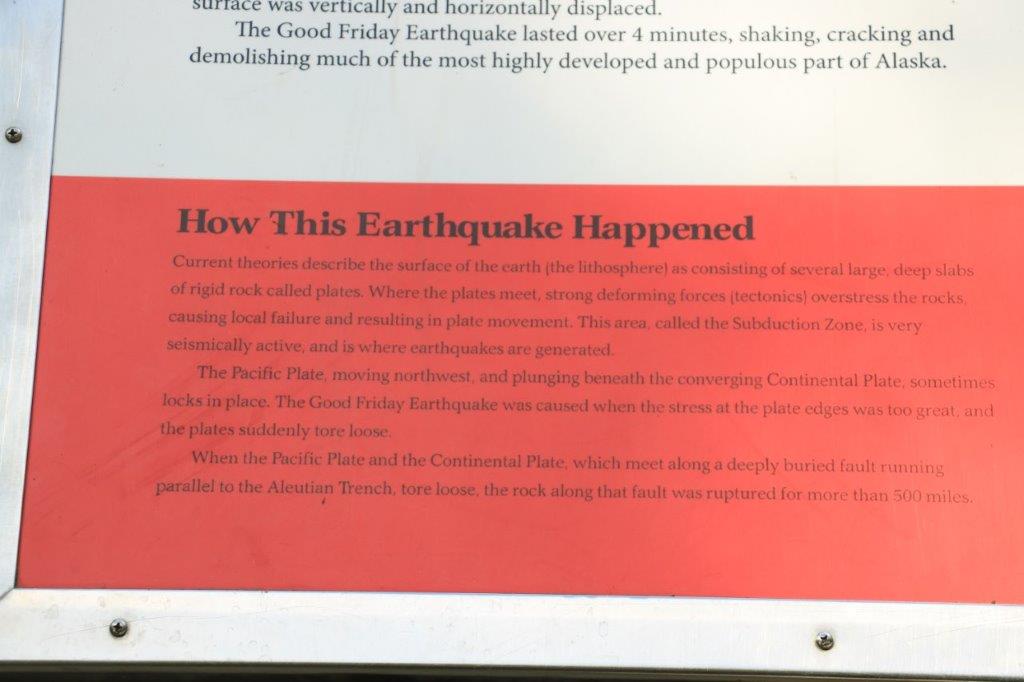
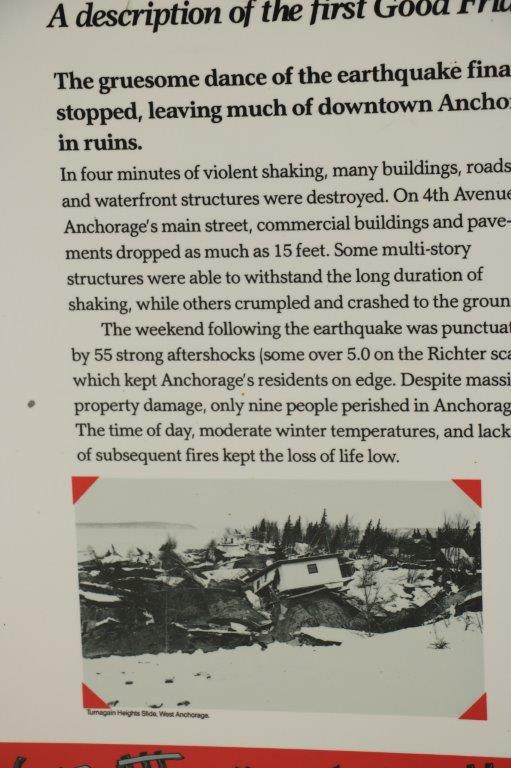
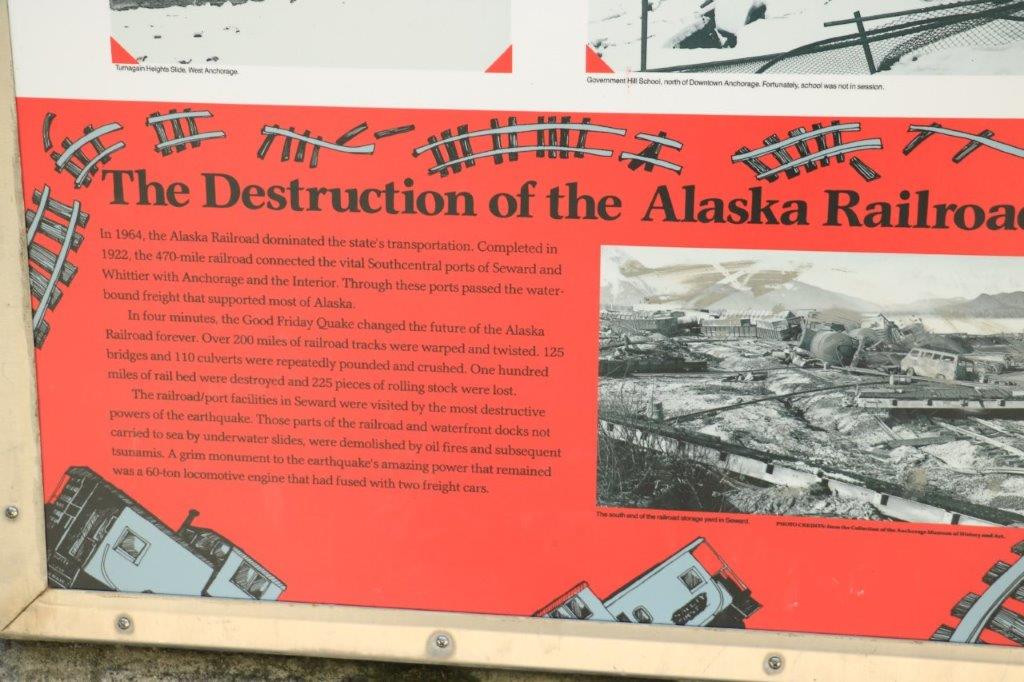
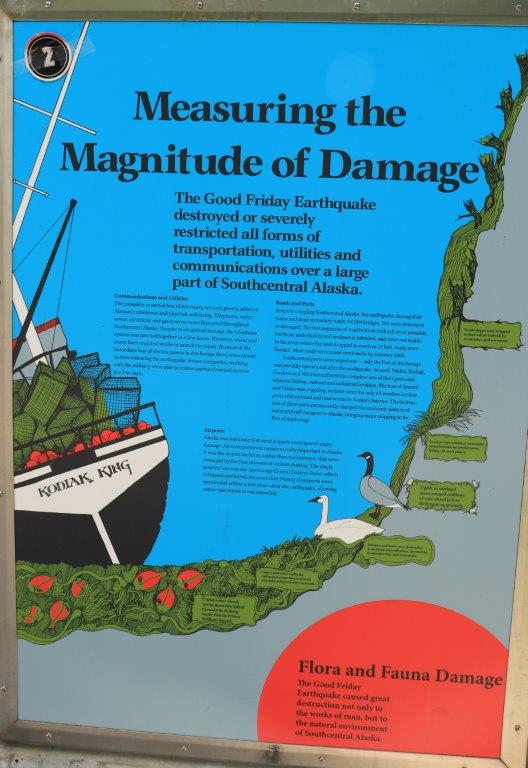
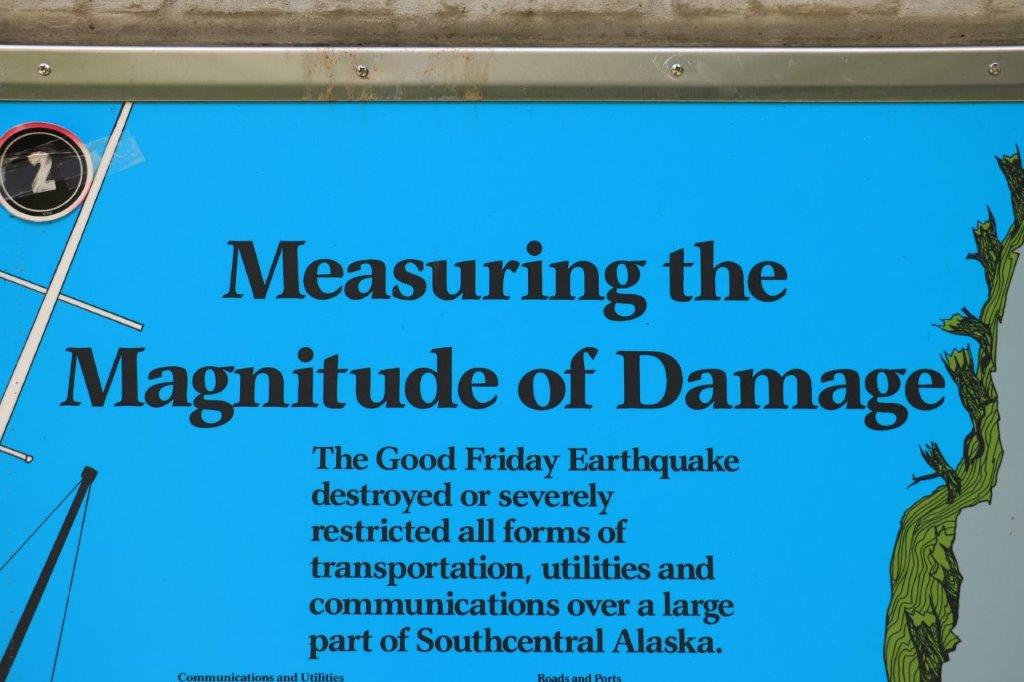
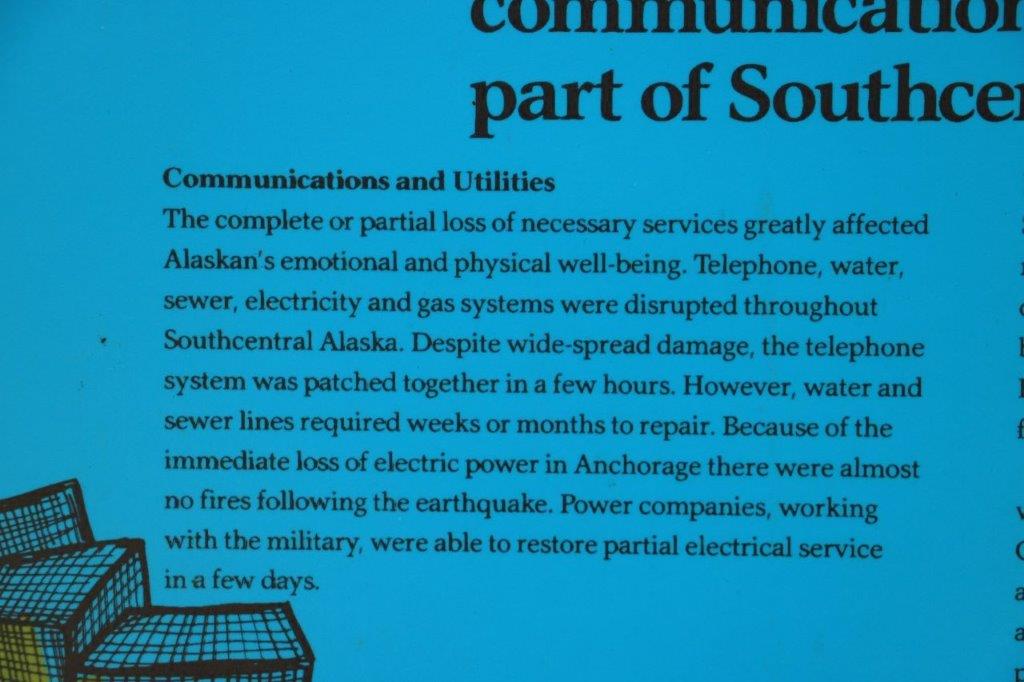
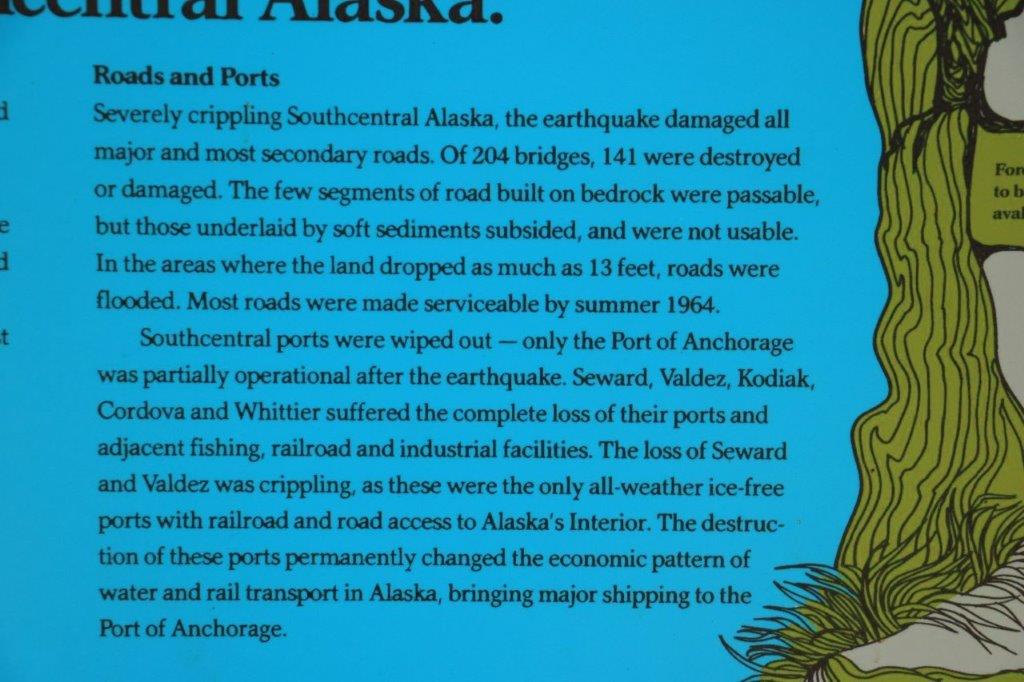
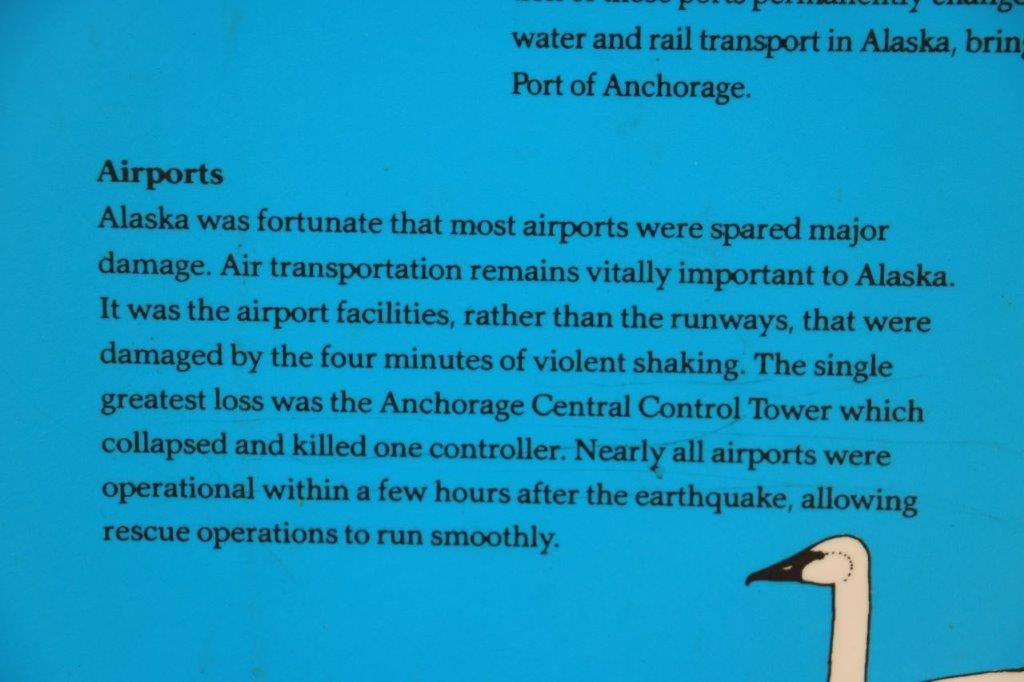
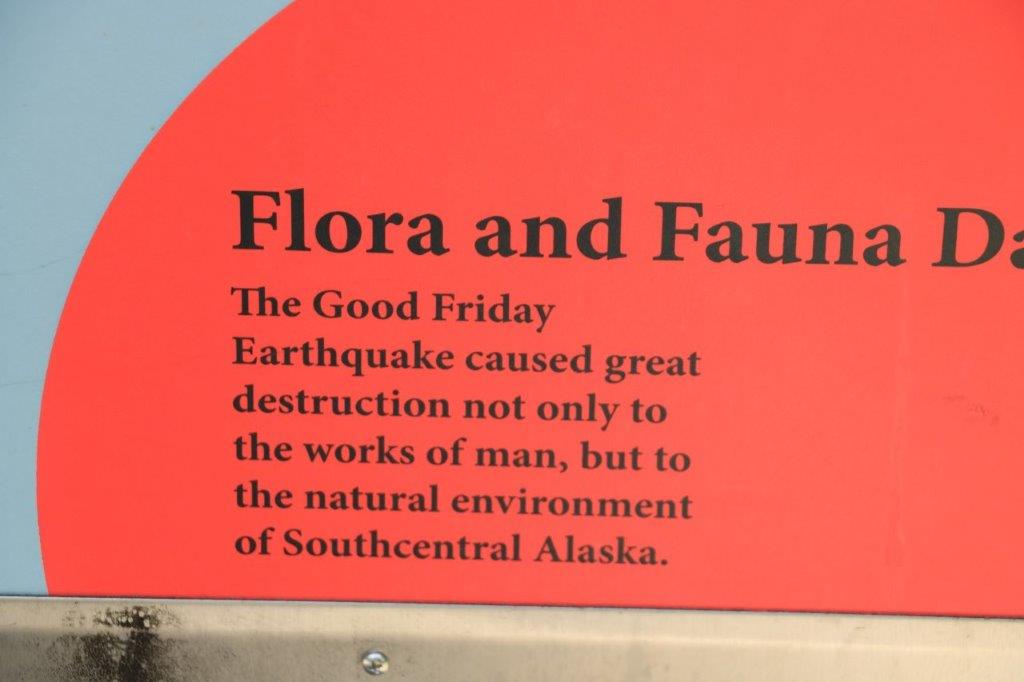
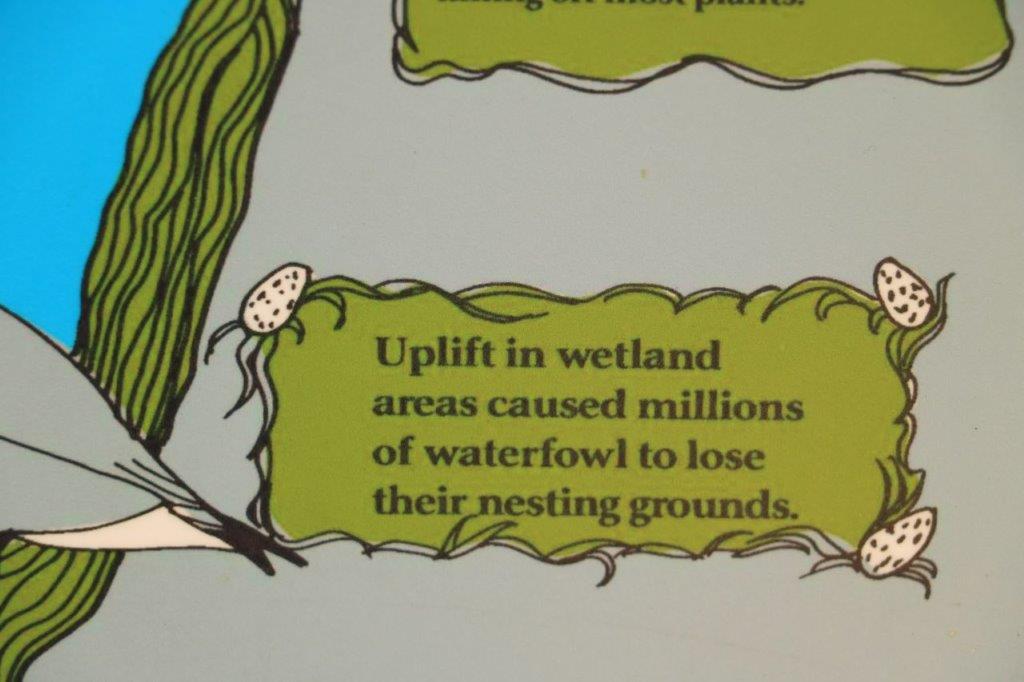
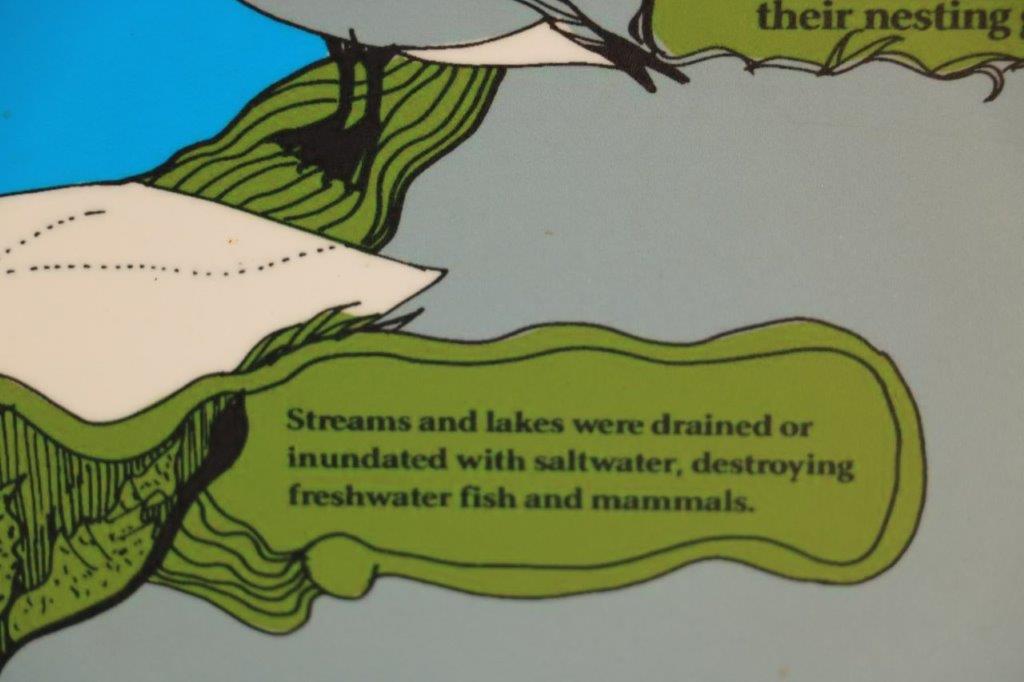
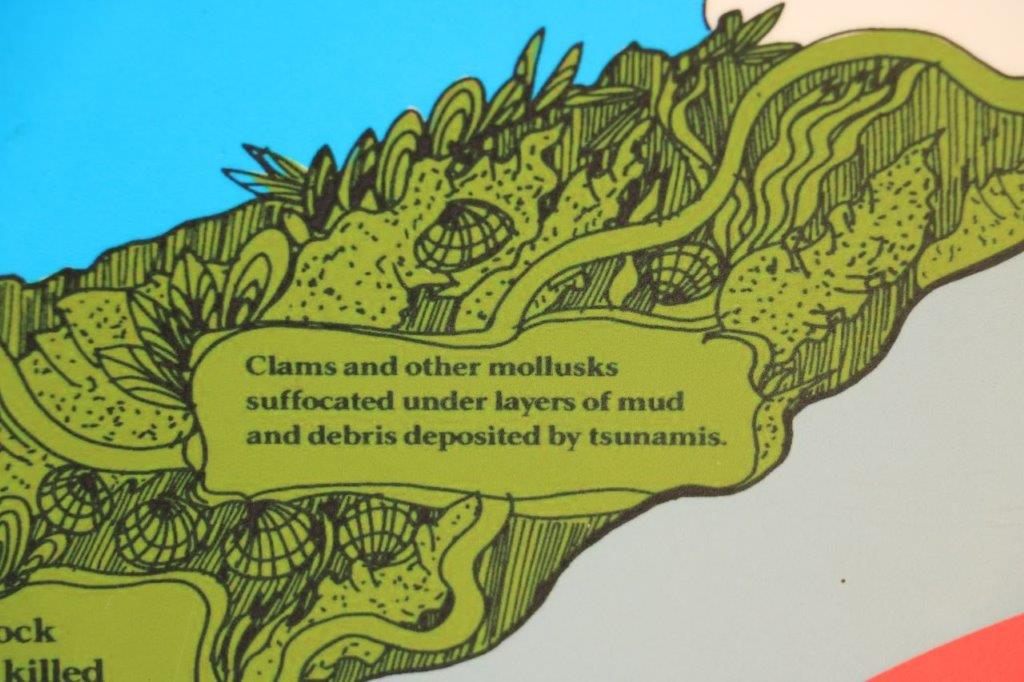
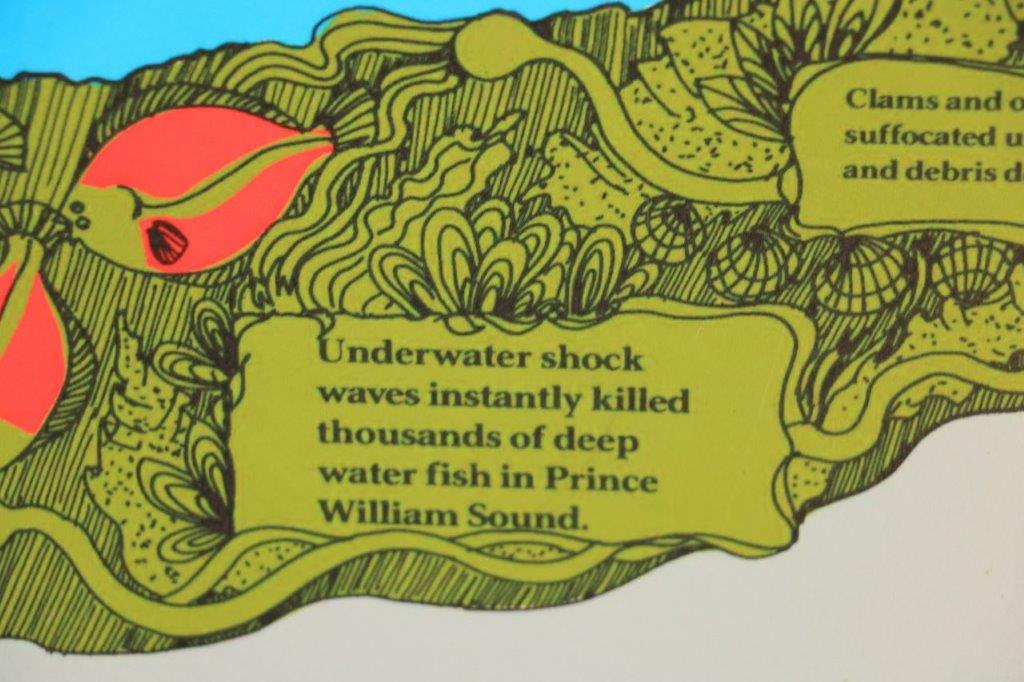
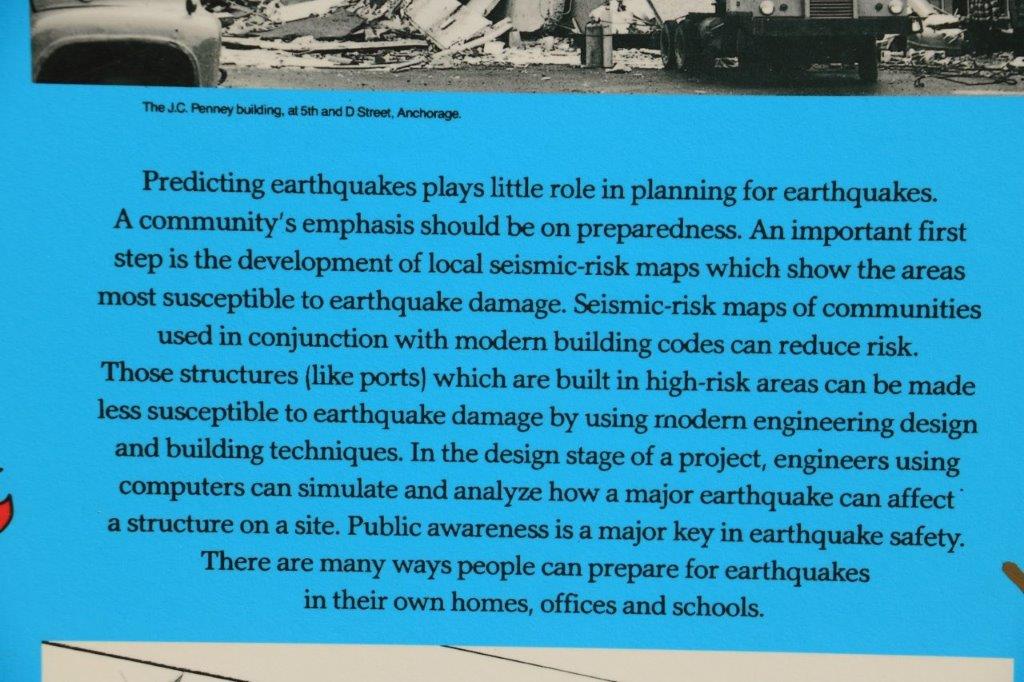
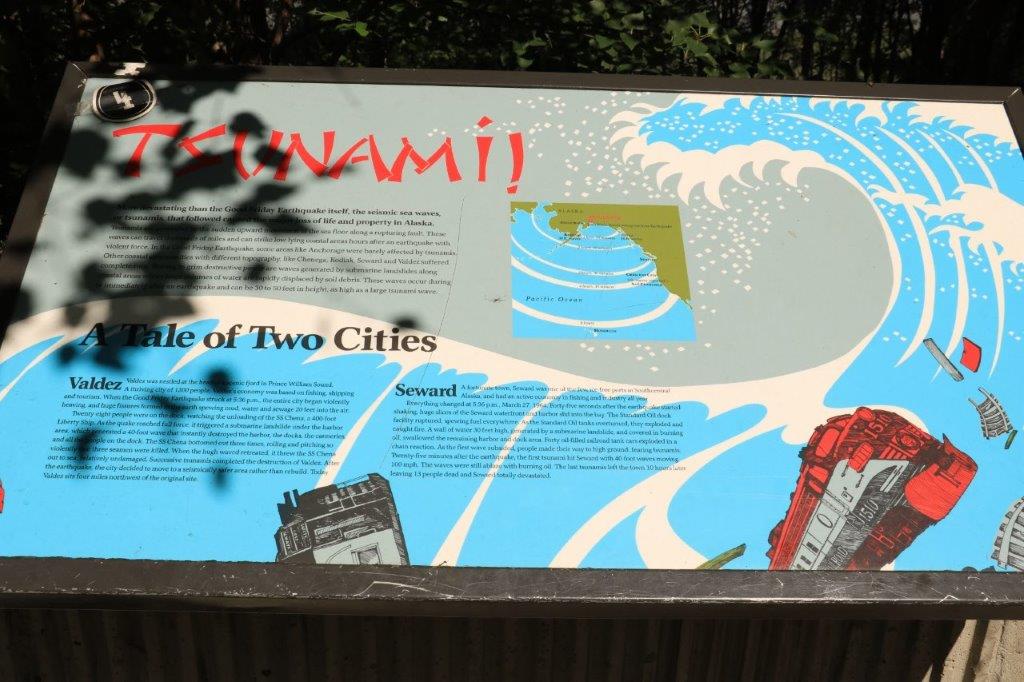
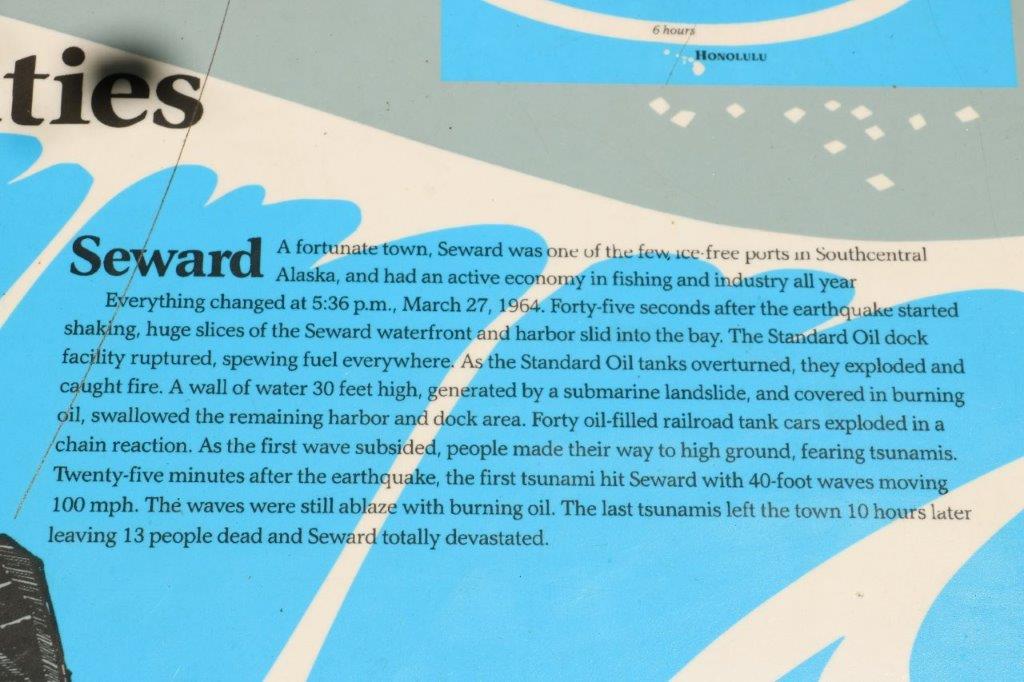
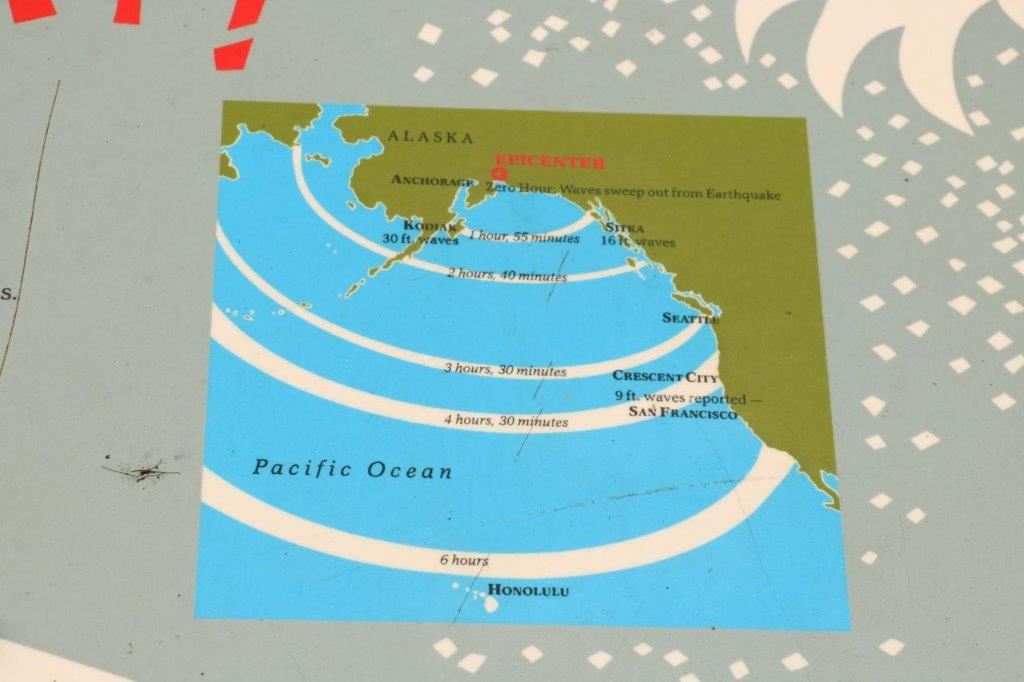
At 2:45 we were still 80 km (52miles) from Anchorage.  Remember now, that we had a late start due to not having had to rush out of the cabin in the morning.  We didn’t check-out until 10:30.  So…the  2  1/2 hour drive has only taken 4+ hours so far.  That’s not too bad. We did arrive in Anchorage eventually; at 5:30.  We found our hotel, had dinner and I wrote a couple of blogs to catch up from the day before when we had no internet.  Most of the museums and such in Anchorage cover topics we have already seen, so we are taking a bit of a lazy day.  Our only plan so far is to explore Earthquake Park and learn about the 1964 quake (the second largest ever recorded at 9.2 on the Richter scale) that took a huge swath of earth from Anchorage and Valdez and the Alaskan southeast coast. The death toll was about 140, with fifteen deaths as a result of the 4-5 minute quake and the rest from the subsequent tsunami.  The city of Anchorage was 78 miles from the epicenter and was the hardest hit area.  Many of the smaller coastal communities were almost wiped out entirely.  Apparently at earthquake park you can skirt the fault line.  Should be an interesting walk.

2018 July 12 – Fairbanks to Talkeetna, AK (Part 2)

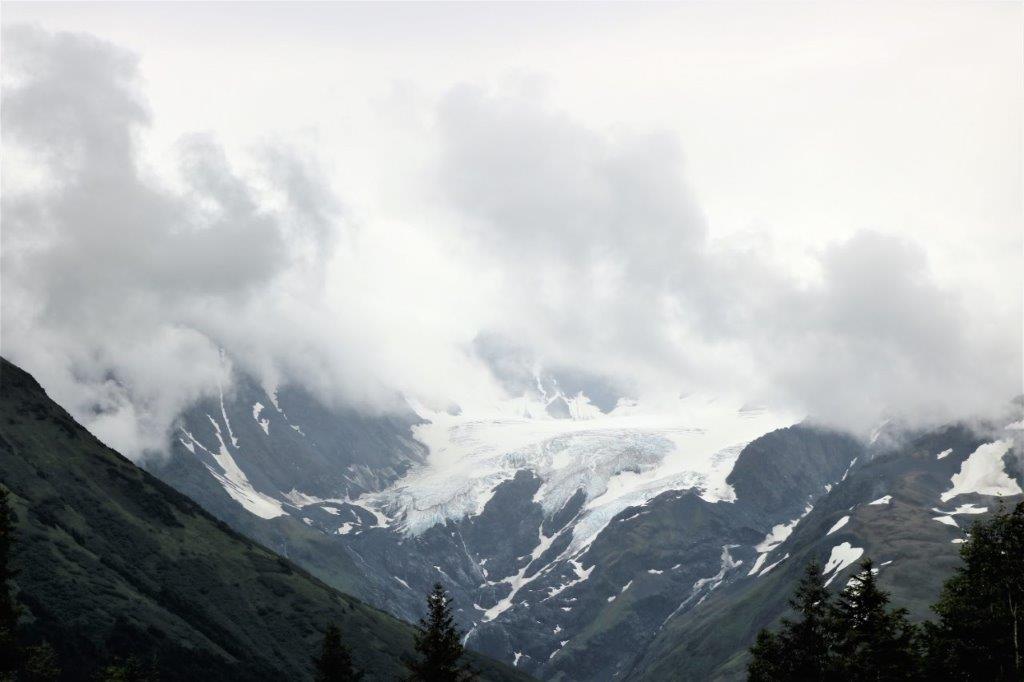
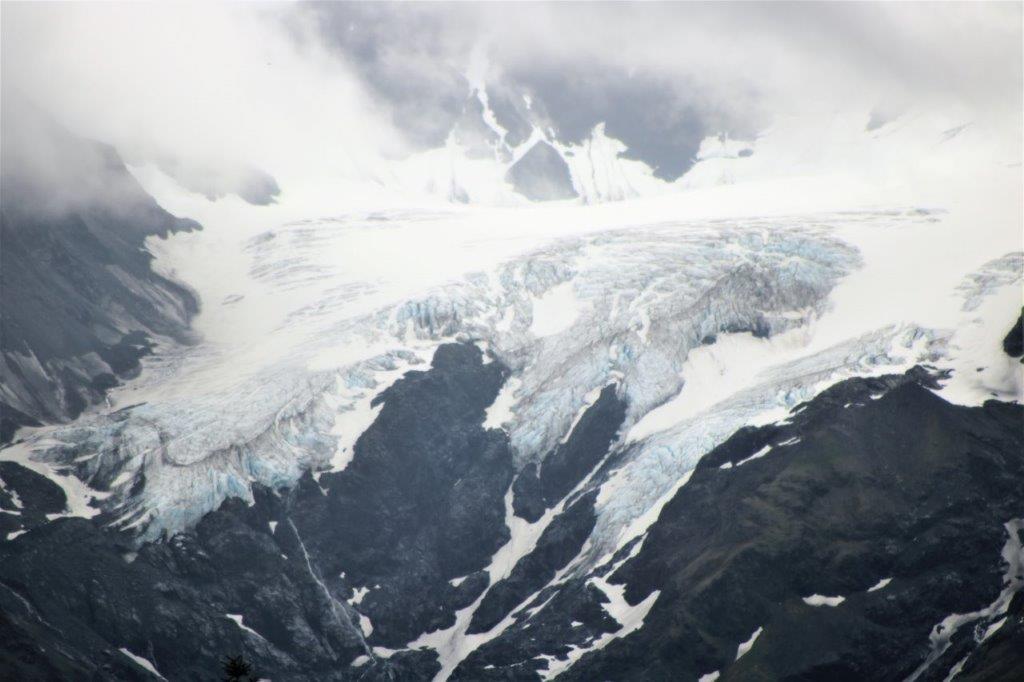
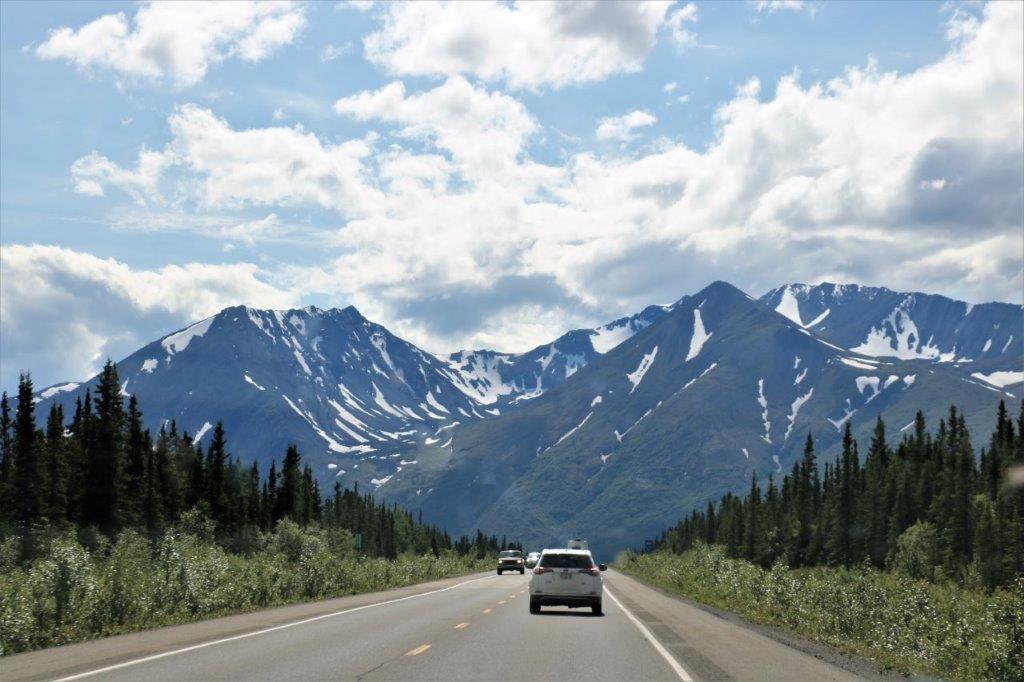
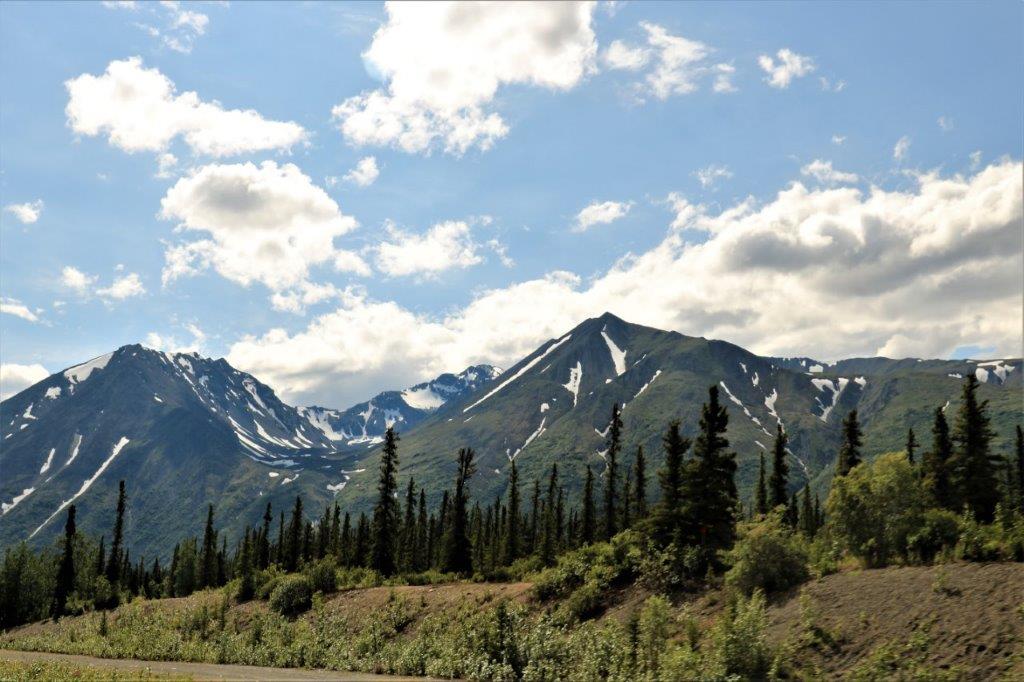
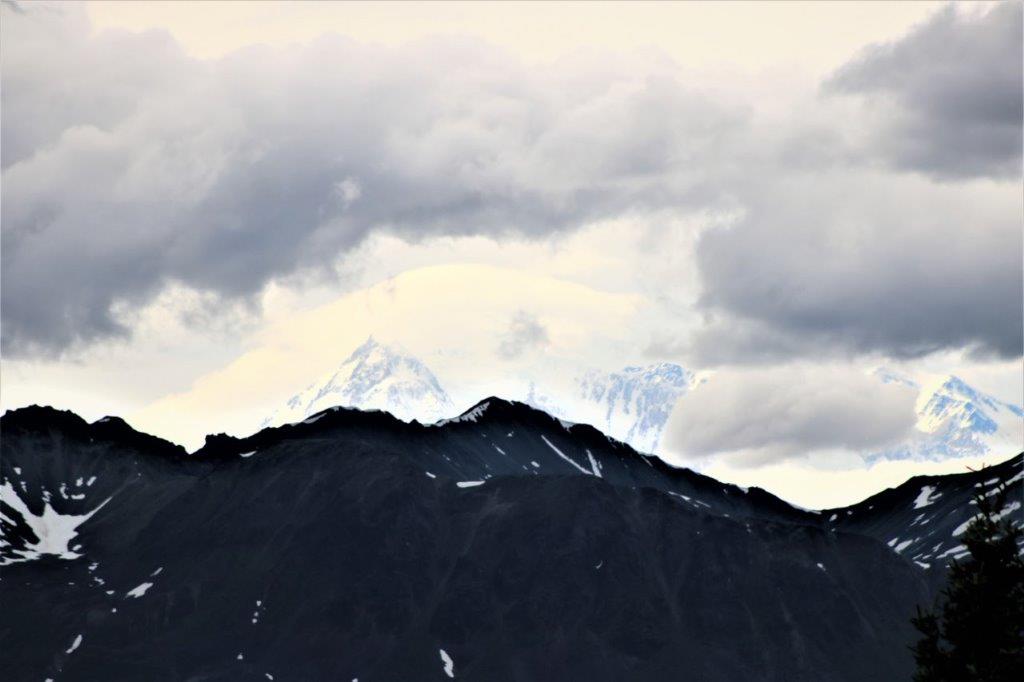
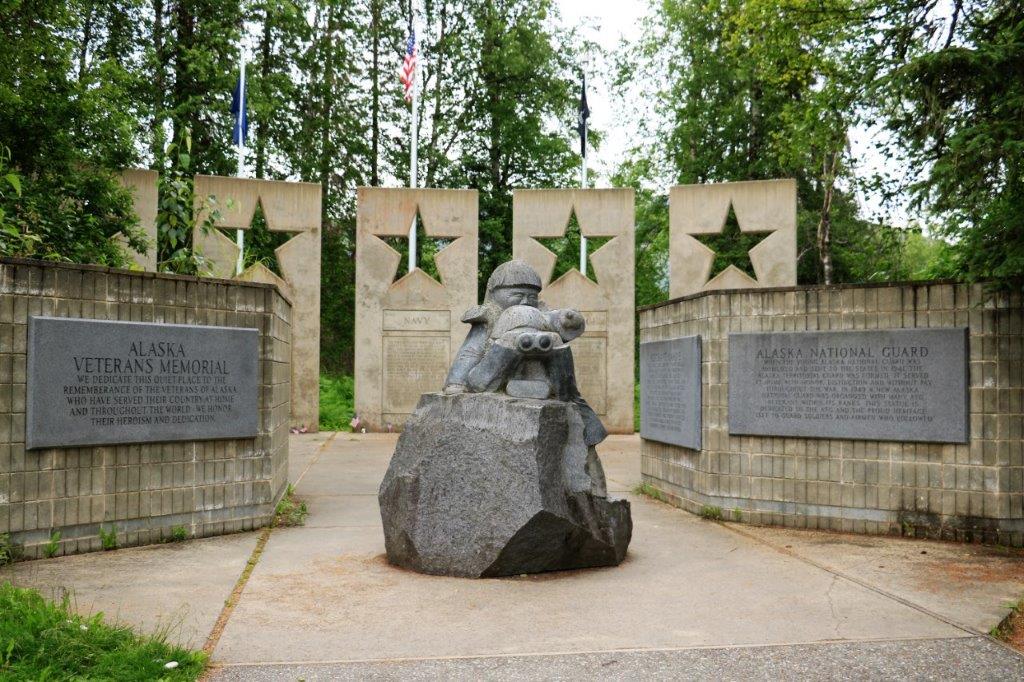
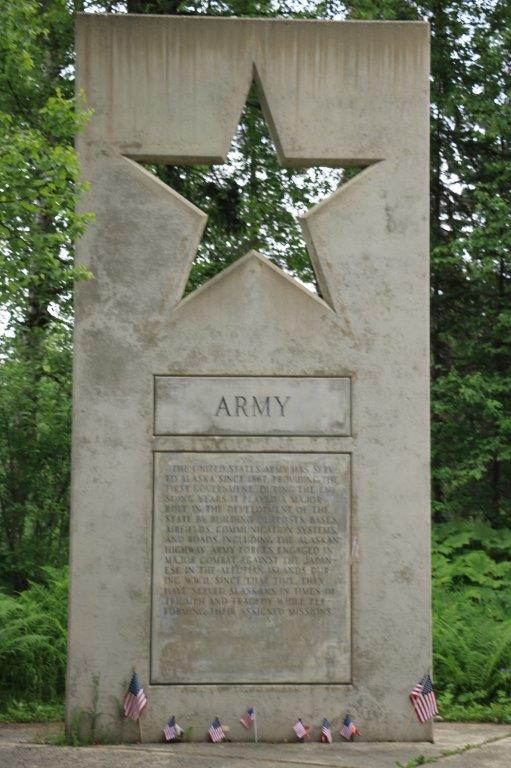
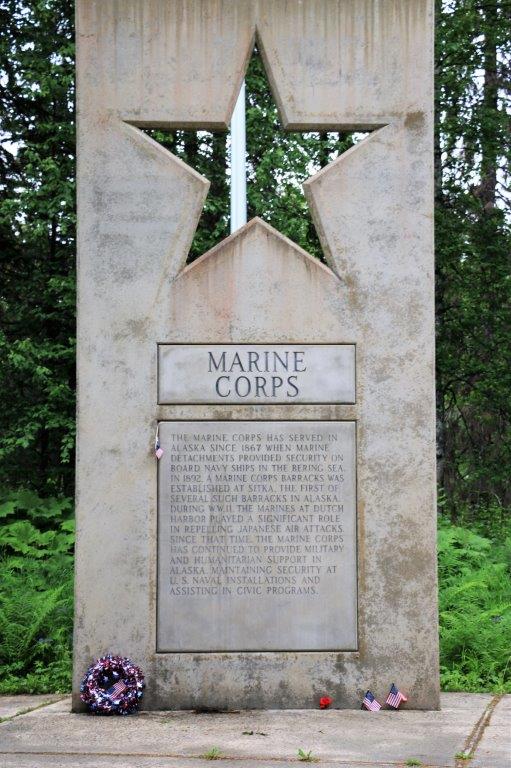
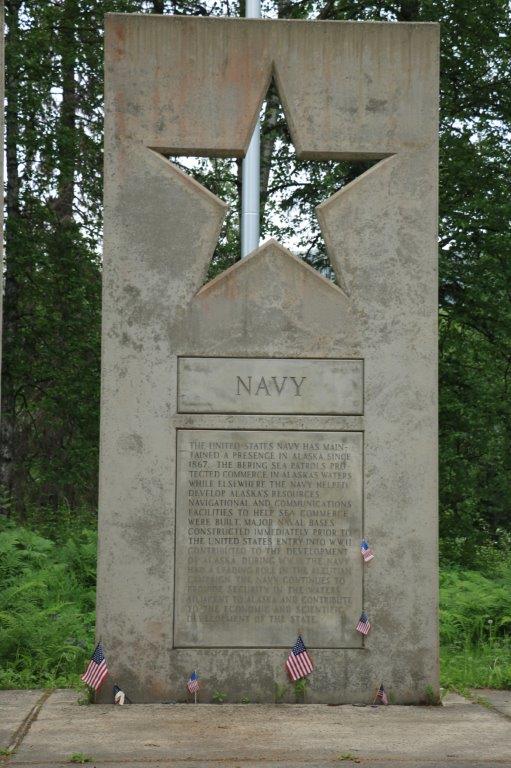
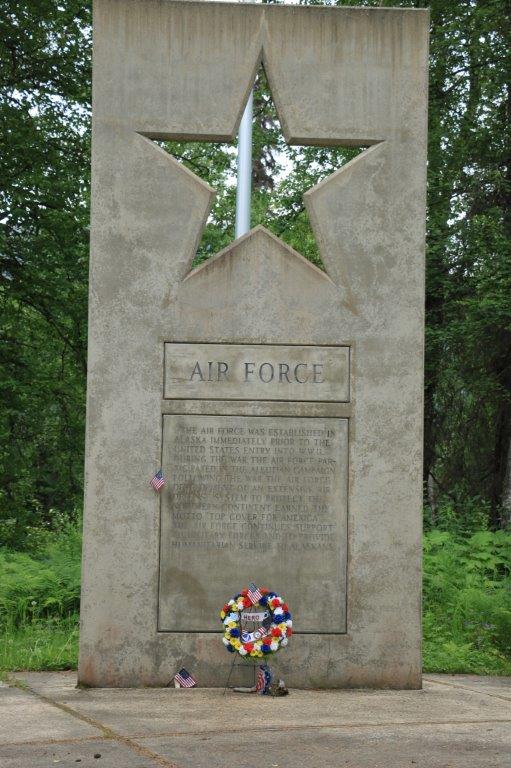
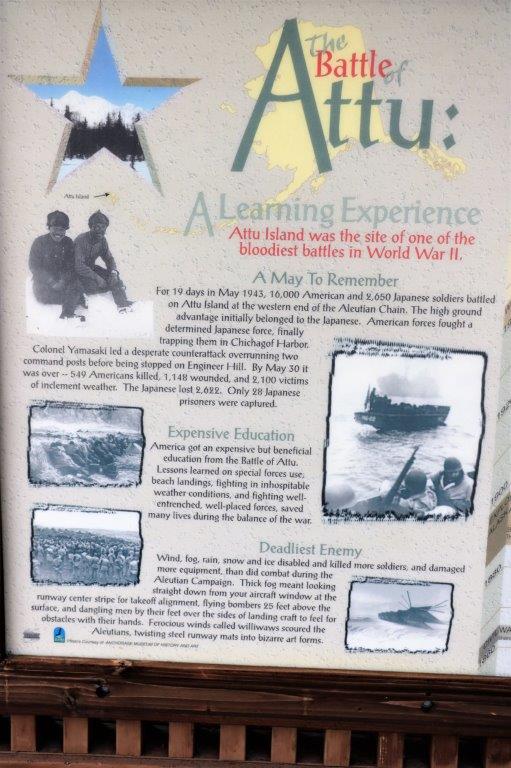
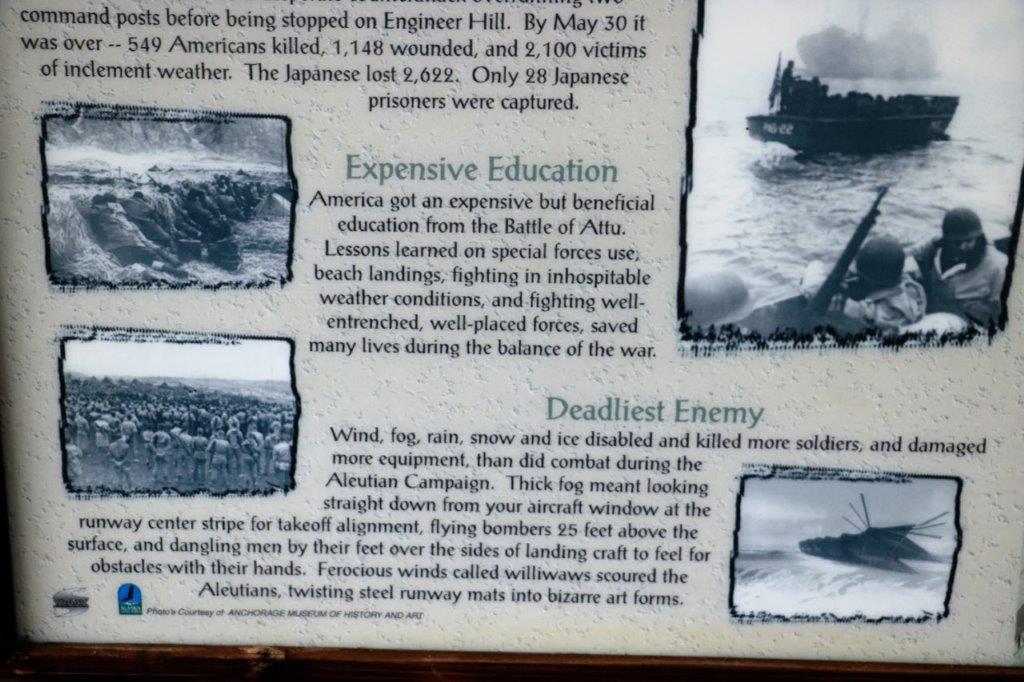
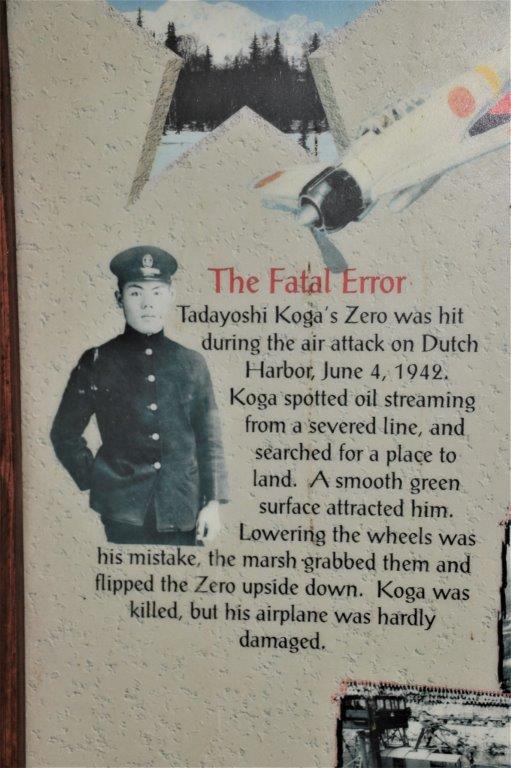
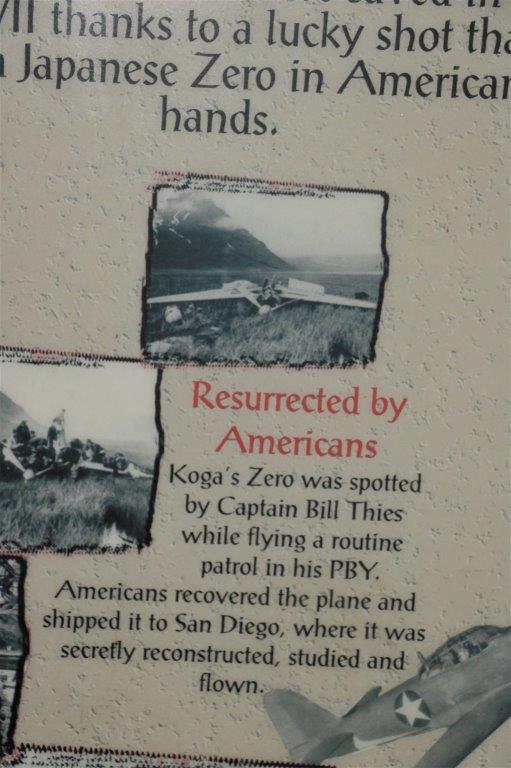
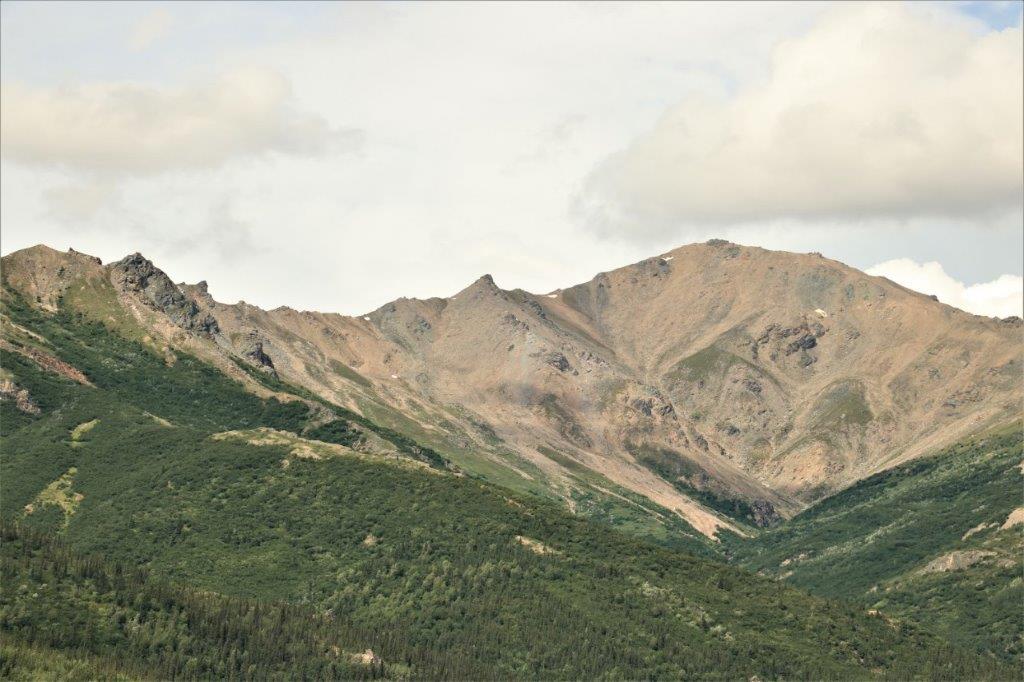
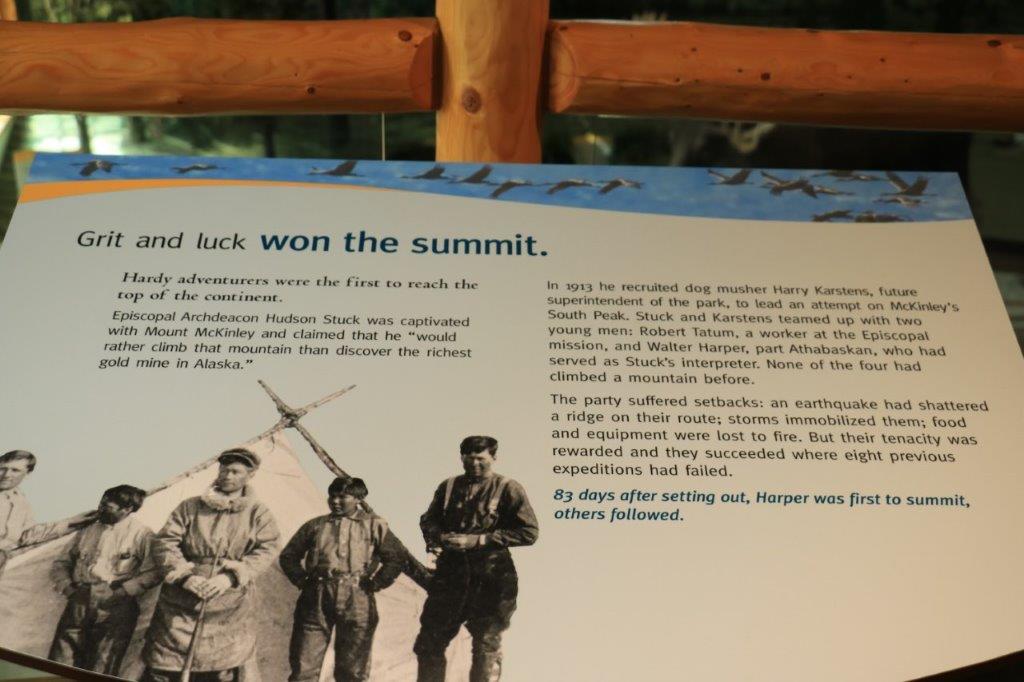
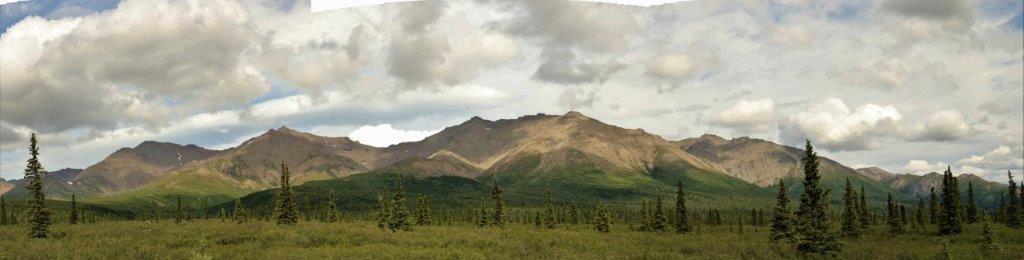
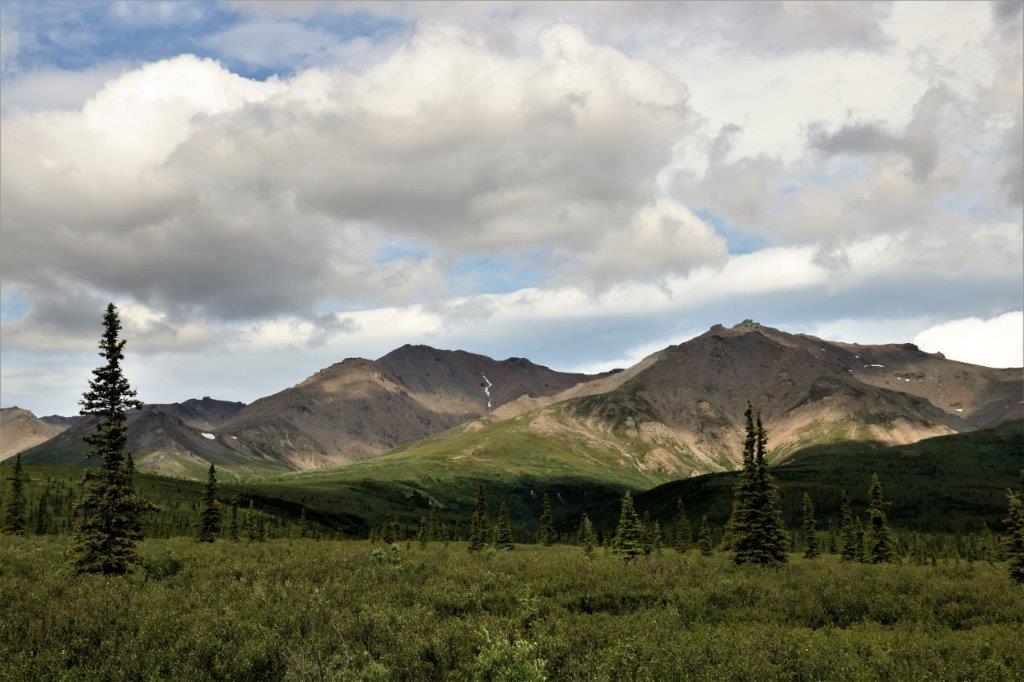
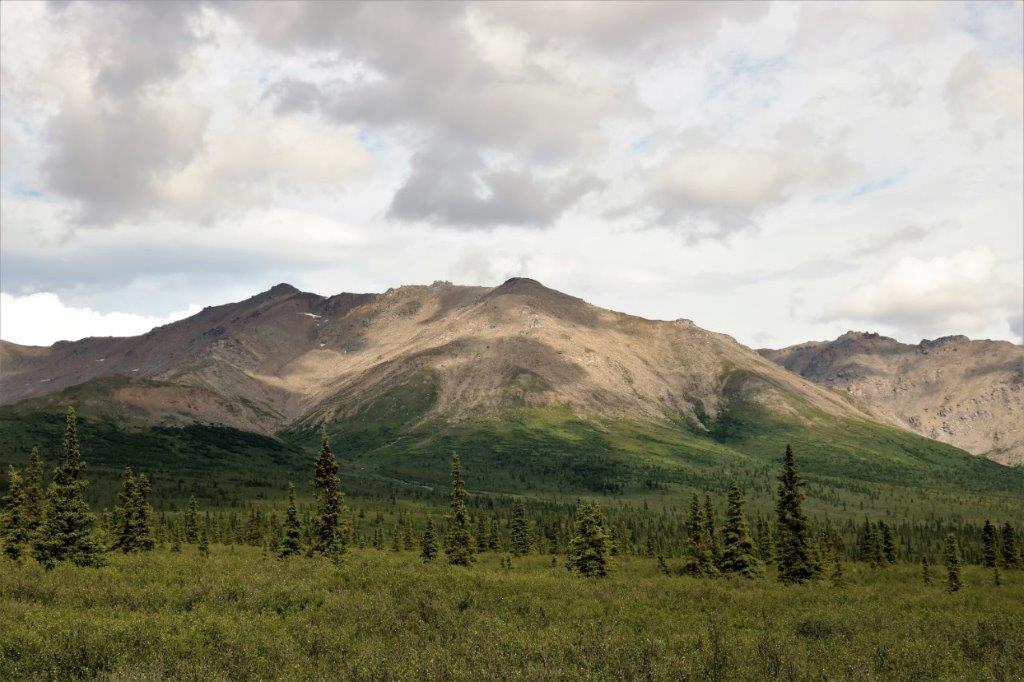
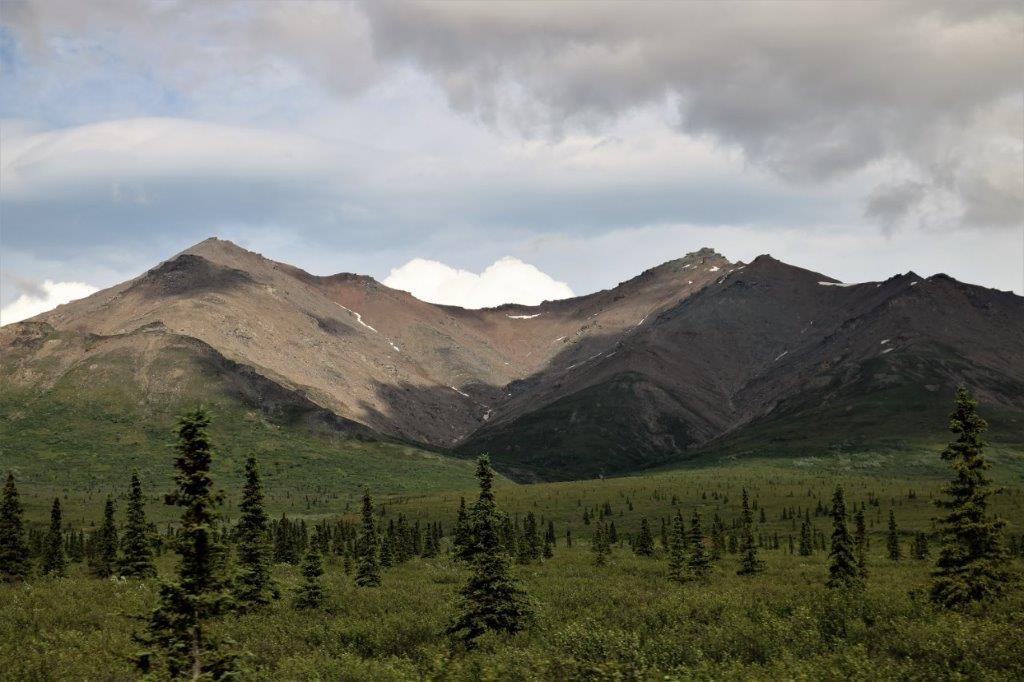
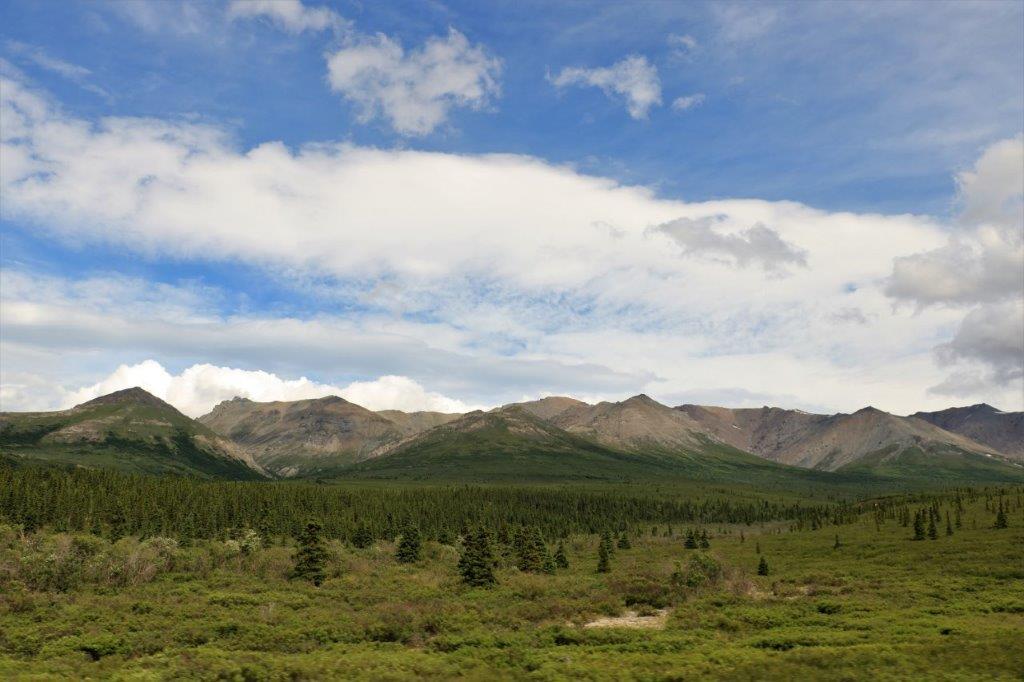
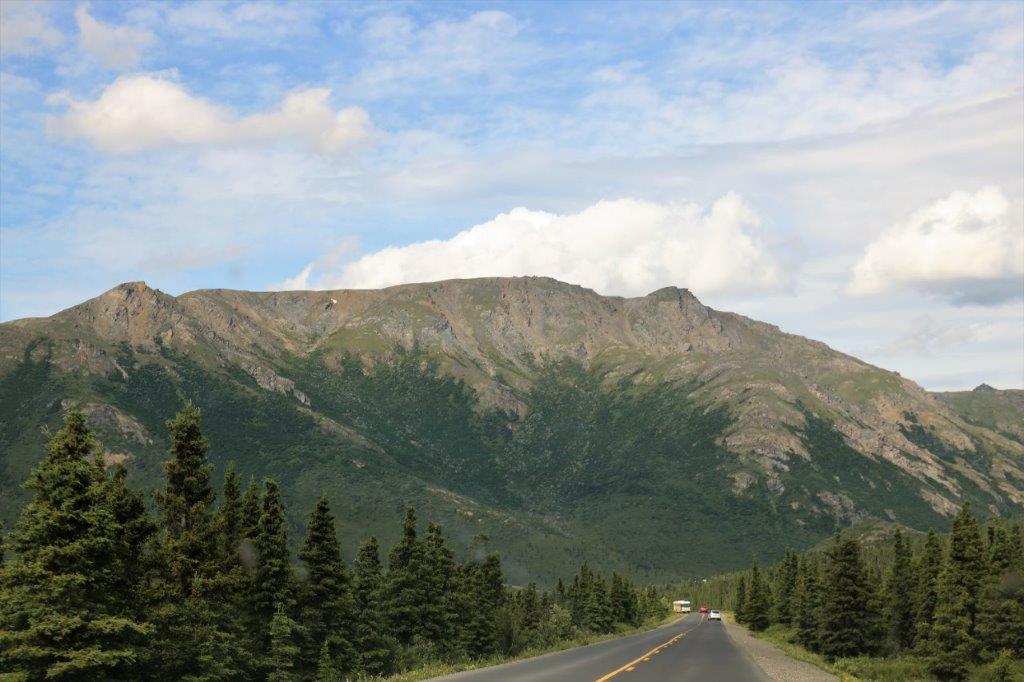
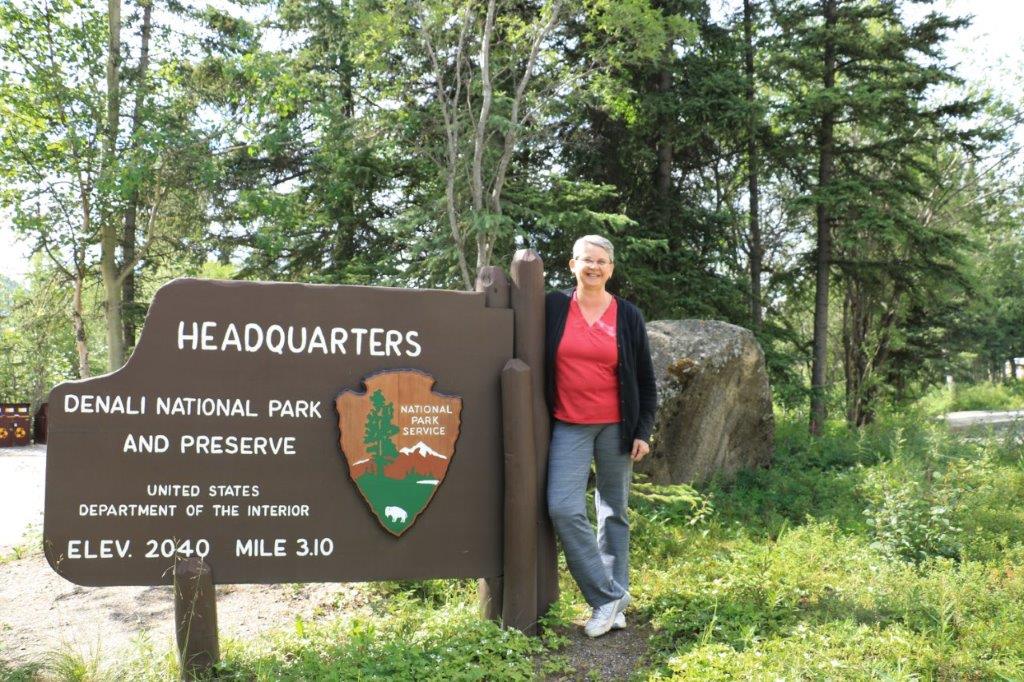
We drove the 15 miles of public road in Denali National Park, and stopped at the park’s dog kennel on the way back to the main highway.  From the park all the way to our cabin at the beginning of the spur road to Talkeetna we drove through the Alaska Range.  Consequently I was happily snapping photos of lovely mountains all day. At the Denali State Park south of Denali National Park (about 160 km or 100 miles) there is a good view point to see Denali’s south face.  We lingered there for quite awhile as the clouds slowly moved across the peak and finally got a shot of the northern peak clear of clouds. The big bright white cone on the left is a cloud covering Denali’s south peak. The north peak on the right side is free of clouds – for a few minutes.  Not very far before the turn-off to Talkeetna we saw a sign for the Alaska War Memorial.  I am always so thankful for the freedom I have enjoyed my entire life that was bought at the price of those men and women who have been willing to serve in the military – regardless of nation – that we always stop at memorials such as this.

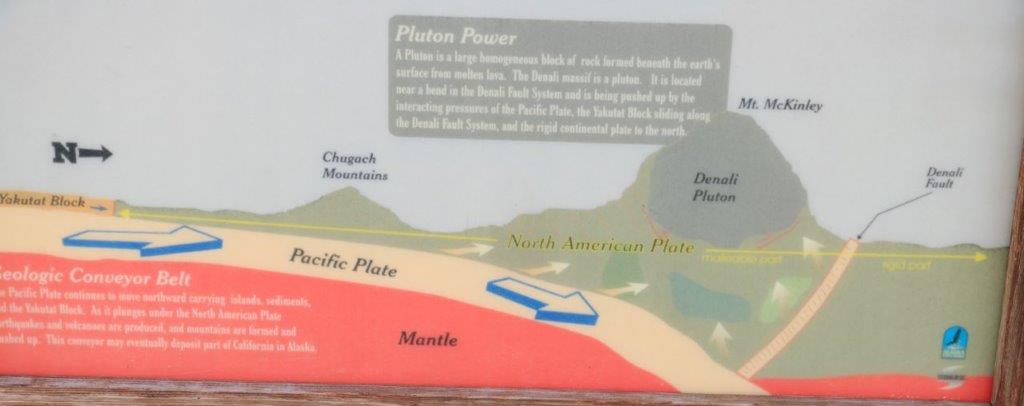
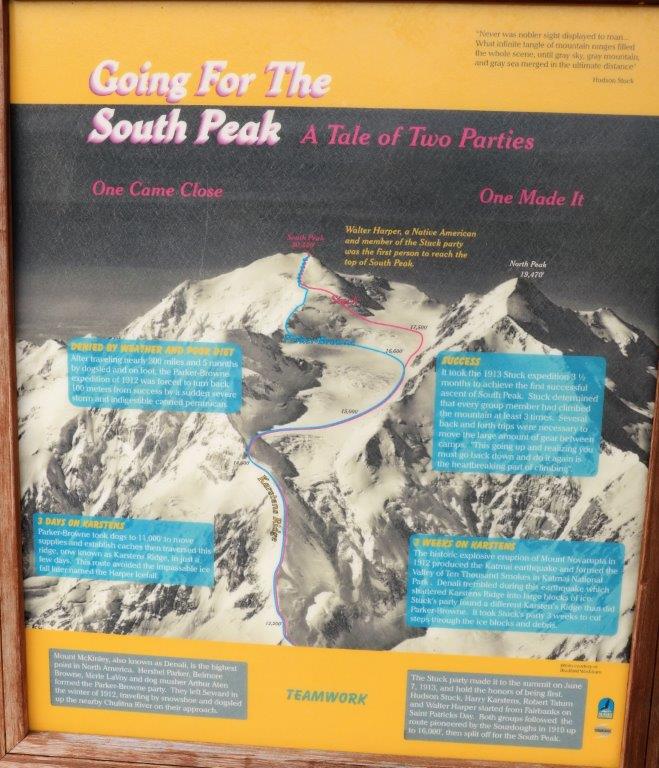
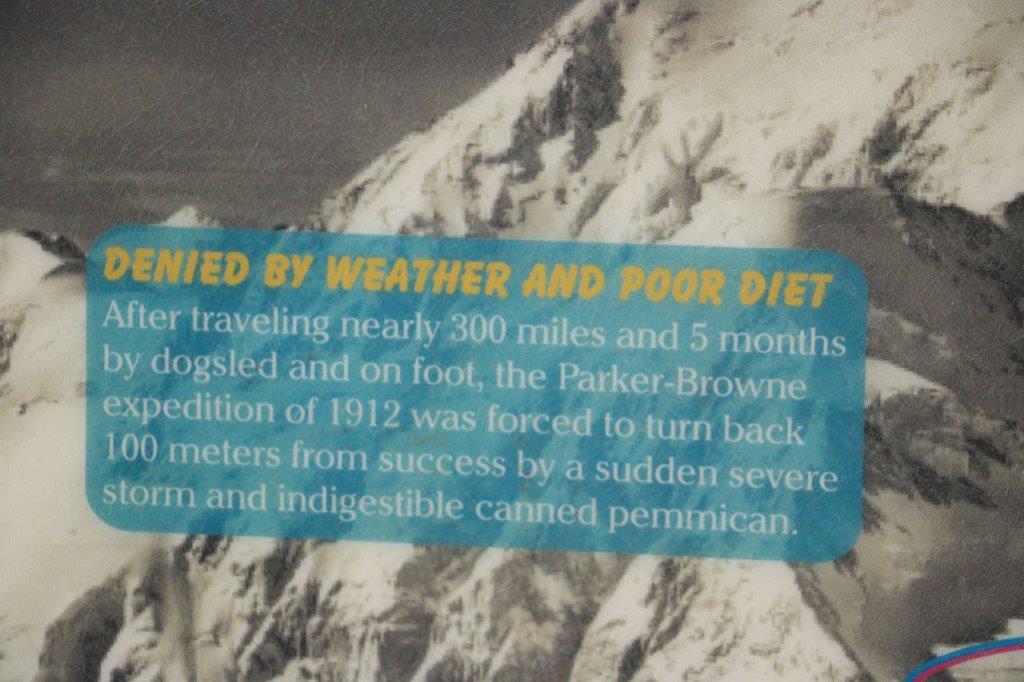
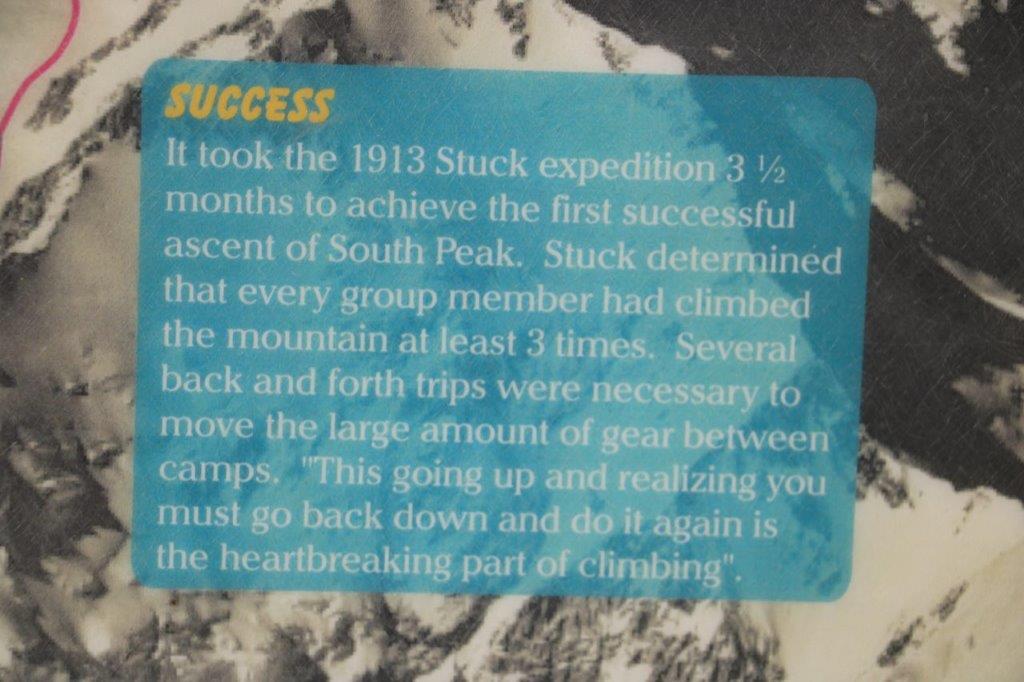
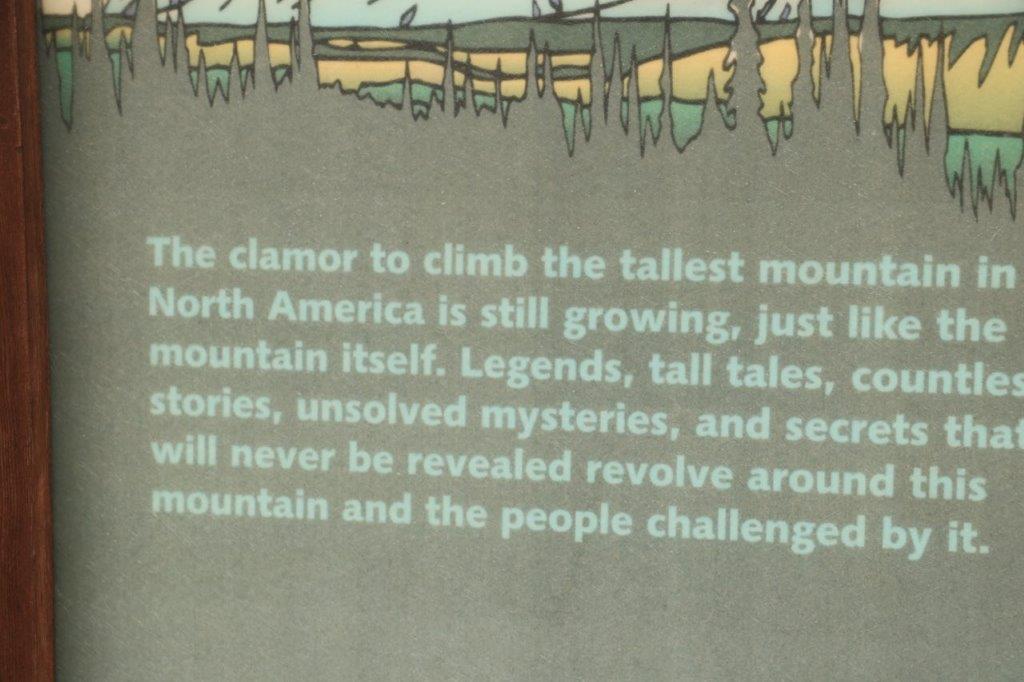
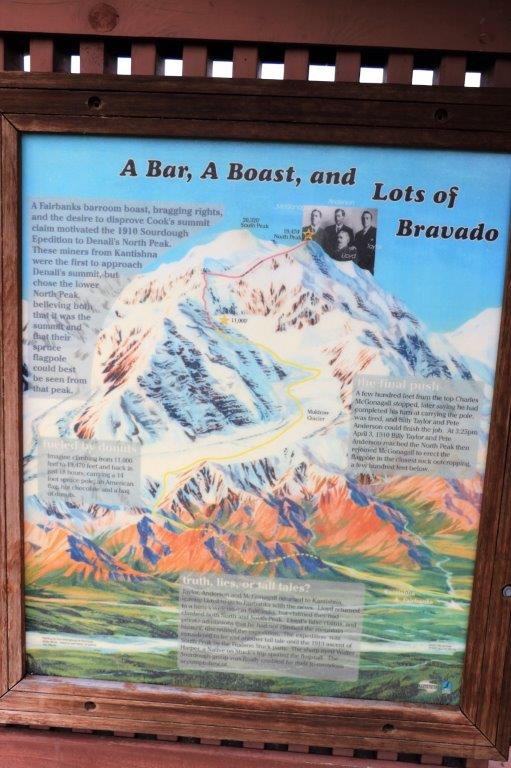
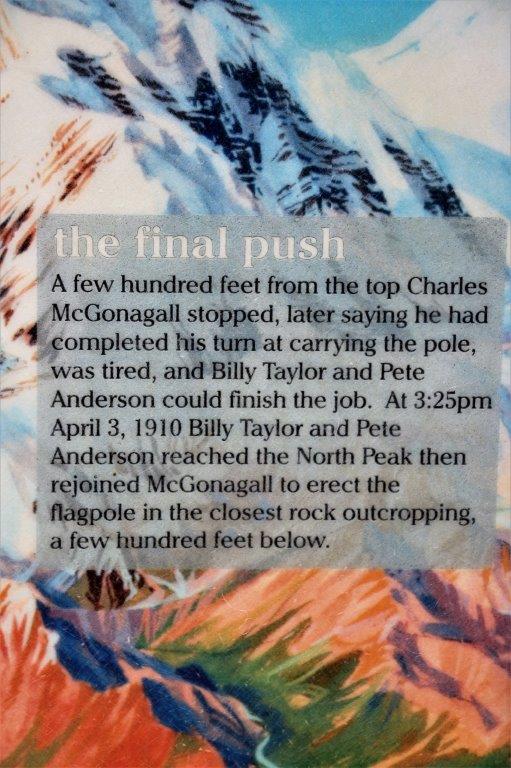
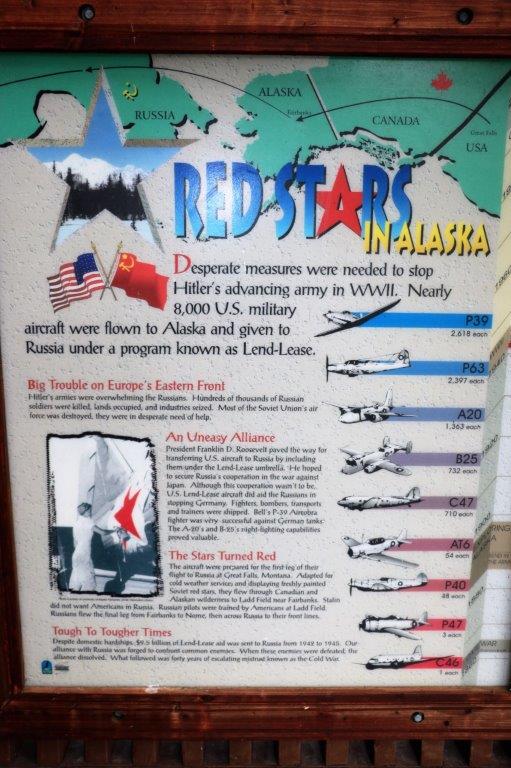
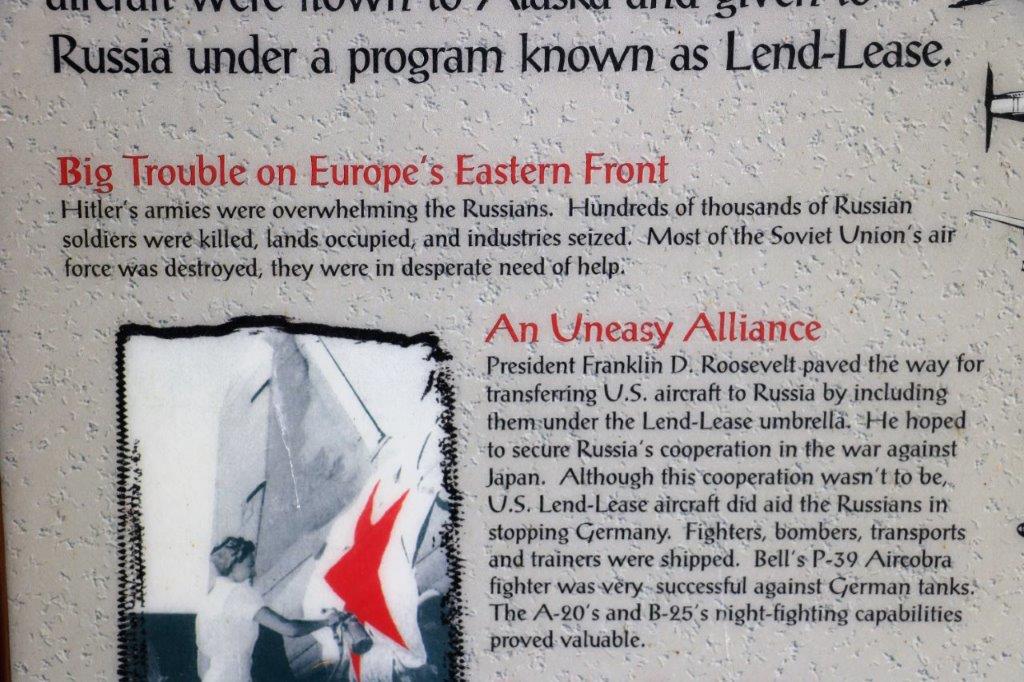
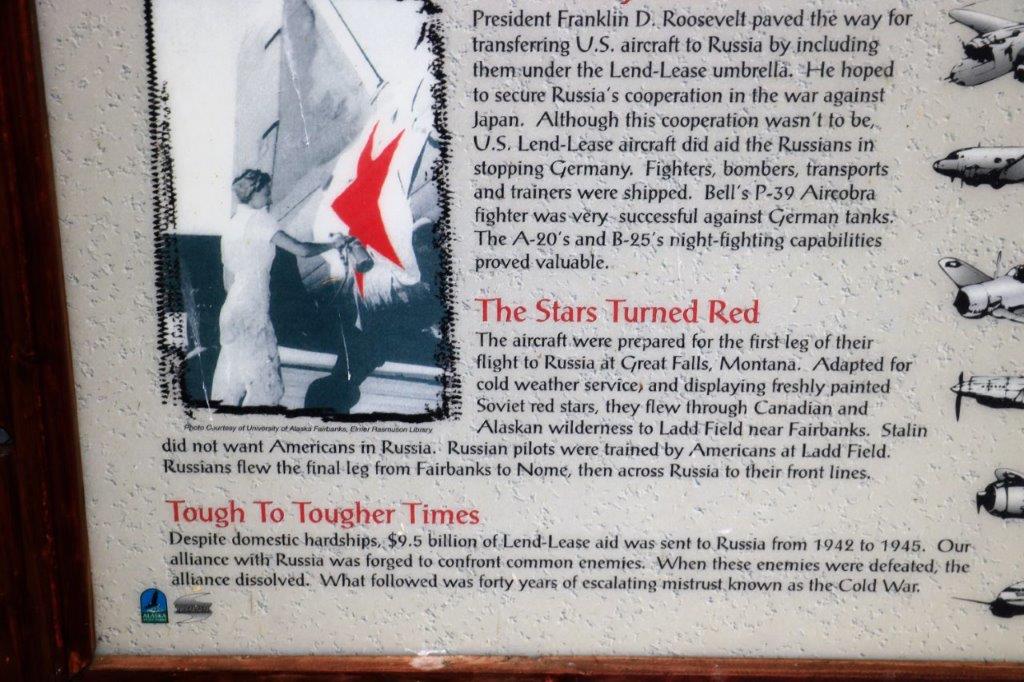
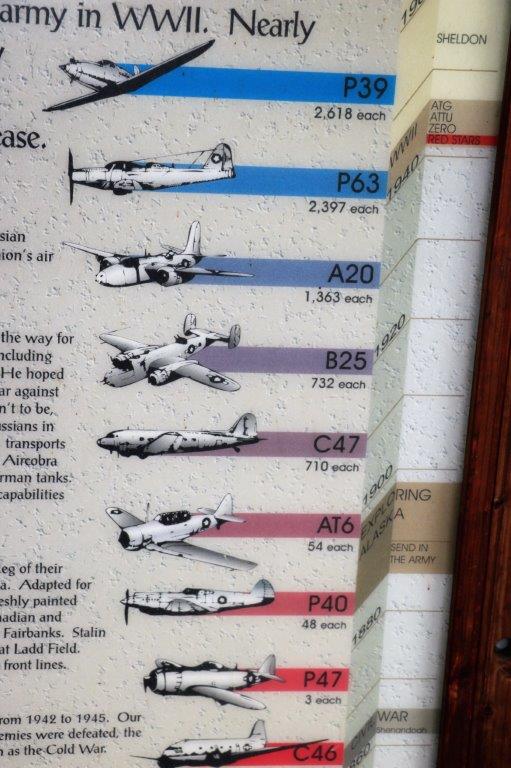
The memorial was set in the middle of the woods and unless you took the time to turn off the highway and drive into the grounds you would never know it was there.   There were some very interesting placards at the visitor’s center at the memorial.  I didn’t photograph them all, but here are the one’s I did take pictures of.

John had rented a little cabin about a mile or so up the spur road to Talkeetna and we arrived about 7 o’clock.  The manager had been trying to call us to see if we were coming because it was getting so late, but we don’t have cell phone plans for the US so our phones are on airplane mode and he couldn’t reach us.  All was well though.  He hadn’t rented our spot to someone else.

We had stopped at a nearby roadhouse for some supper before going to the cabin.  Apparently they don’t impose ‘no smoking’ laws in out-of-the-way places in Alaska.  You could almost cut the air with a knife.  I managed to stay until I had eaten half of my burger (which was really good) before the smoke started to stir up my asthma.  I bundled my last few fries and half burger into my napkin and ate the rest outside.

After we had taken our luggage into the cabin we drove back to the Talkeetna spur road to Cubby’s Market and bought some bagels and fruit and yogurt for our breakfast.  The cabin had a full kitchen and check-out wasn’t until 11 so we planned on a slower start.  Anchorage is only about 2 1/2 hours drive away.  But, of course, it will take us much longer than that!

2018 July 13 – Fairbanks to Talkeetna, AK (Part 1)

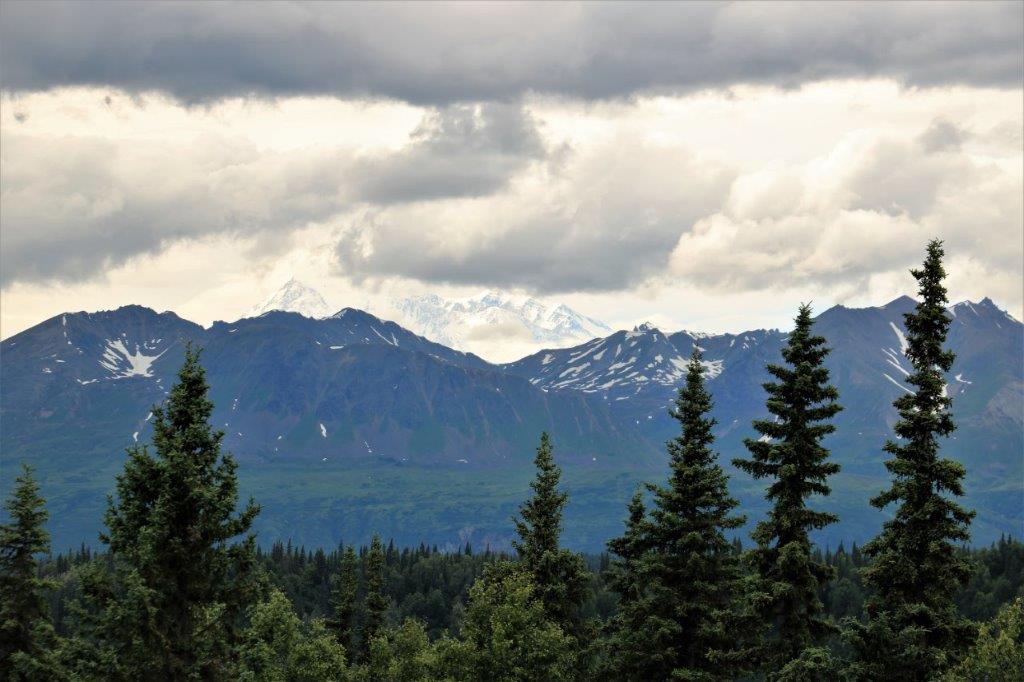
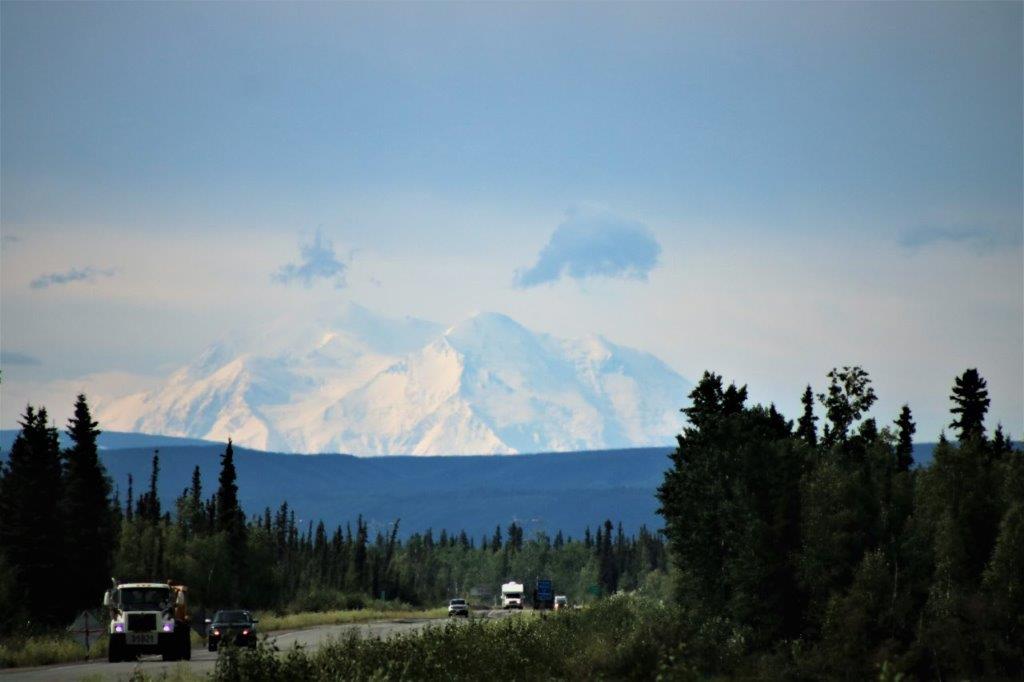
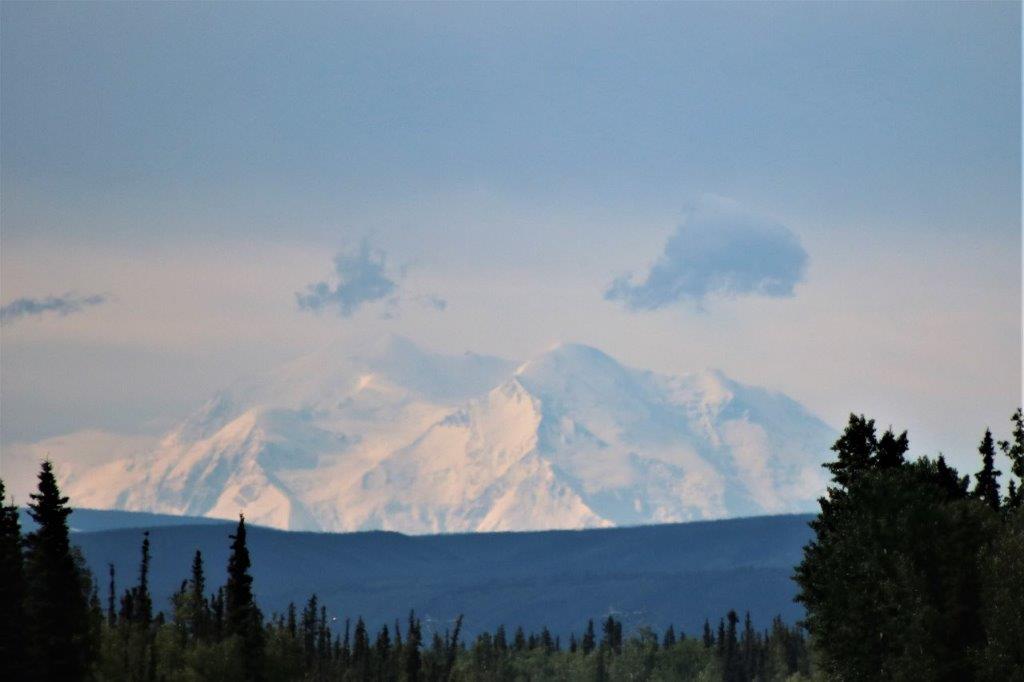
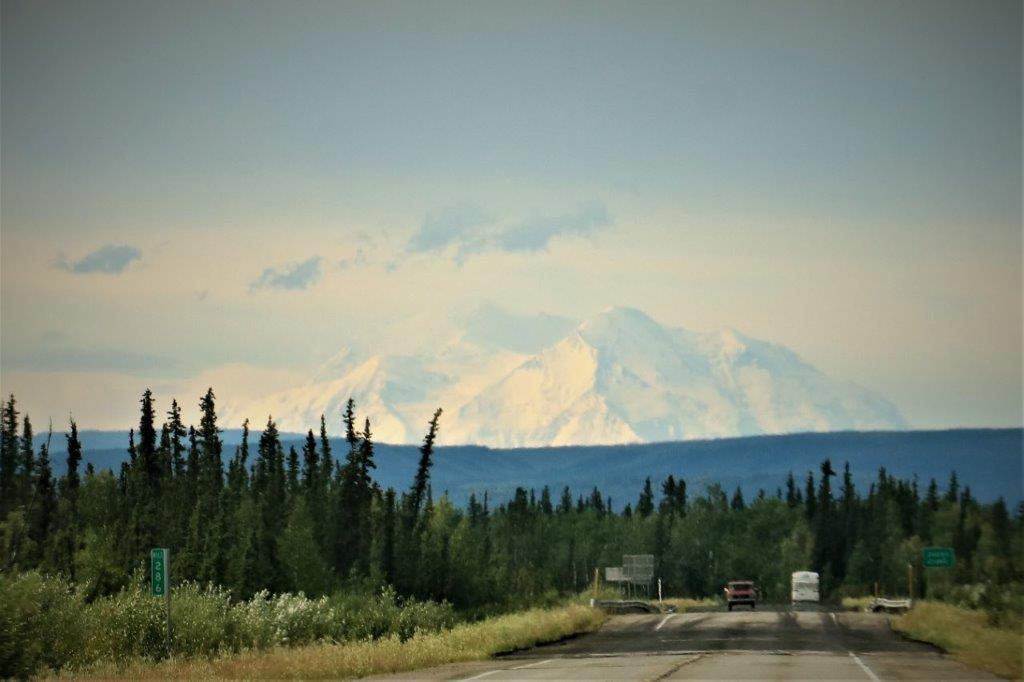
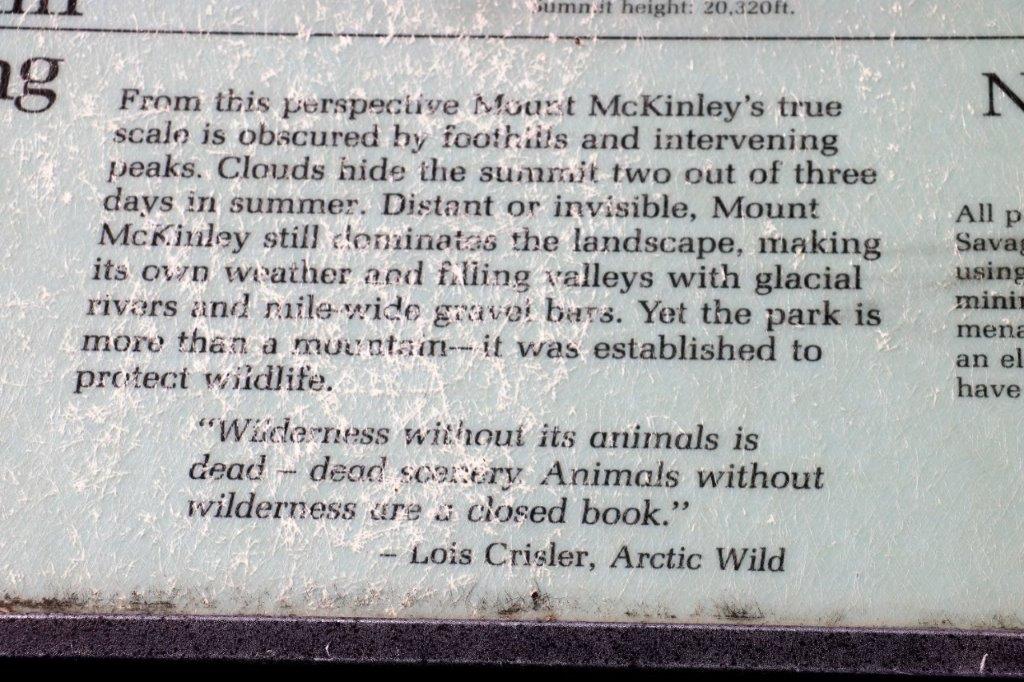
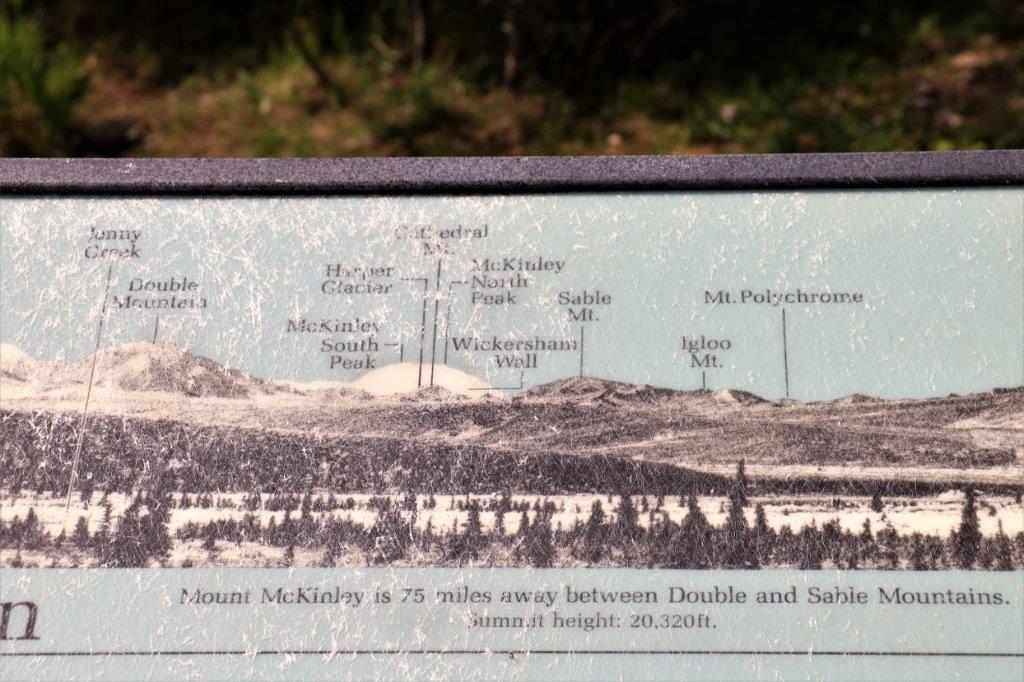
We were very happy to wake up to sunshine this morning.  The weatherman had predicted clouds and rain for the next four days.  Sunny with high clouds gave us a good chance of seeing at least some of Denali on our drive toward Anchorage.  We were going about 2/3 of the way and stopping for the night in a small cabin on the spur road to a little town called Talkeetna. There are places along the drive that you can see Denali and we kept an eye on the peak as we headed south.  At the Chulitna Overlook there is a clear view of the mountain, right down the road and the mountain was clear to the top.  It was a long way away, but with our zoom lens we were able to get some nice shots.  The spot is obviously well known as a good viewing area because there were five tour buses in the lot. Denali is 20,320′ above sea level and is so high and wide it creates its own weather.  Over 70% of the time the top is covered by cloud.

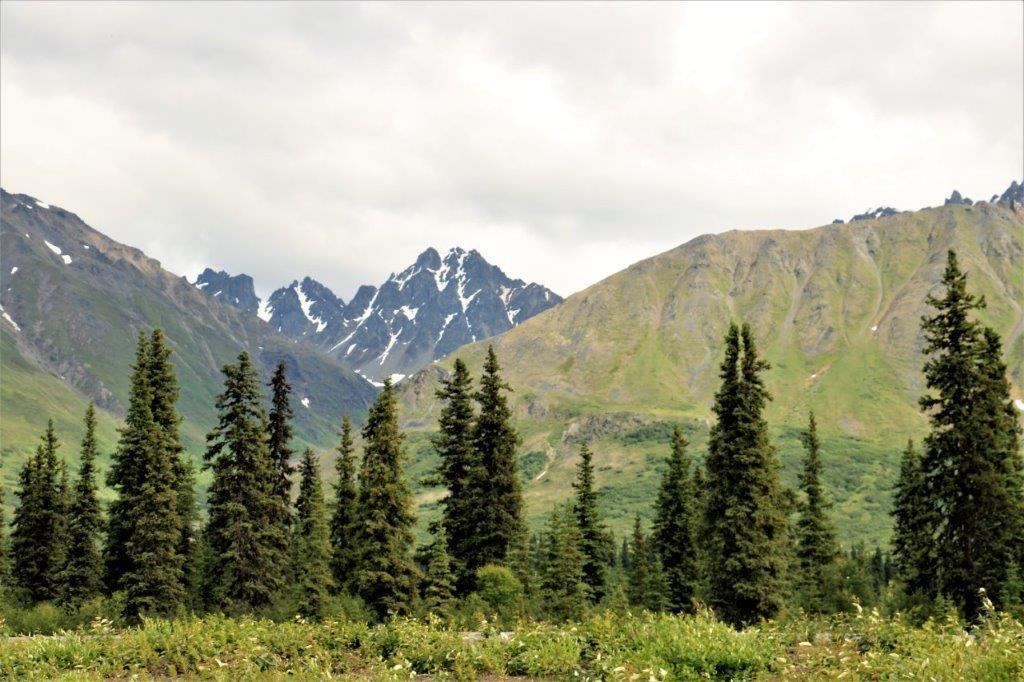
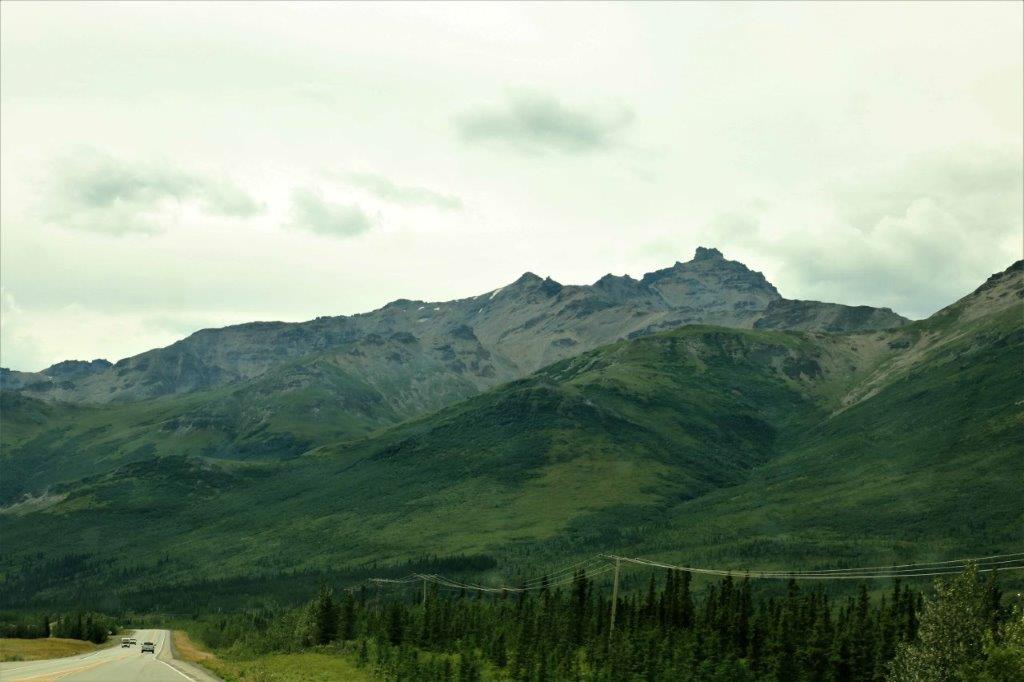
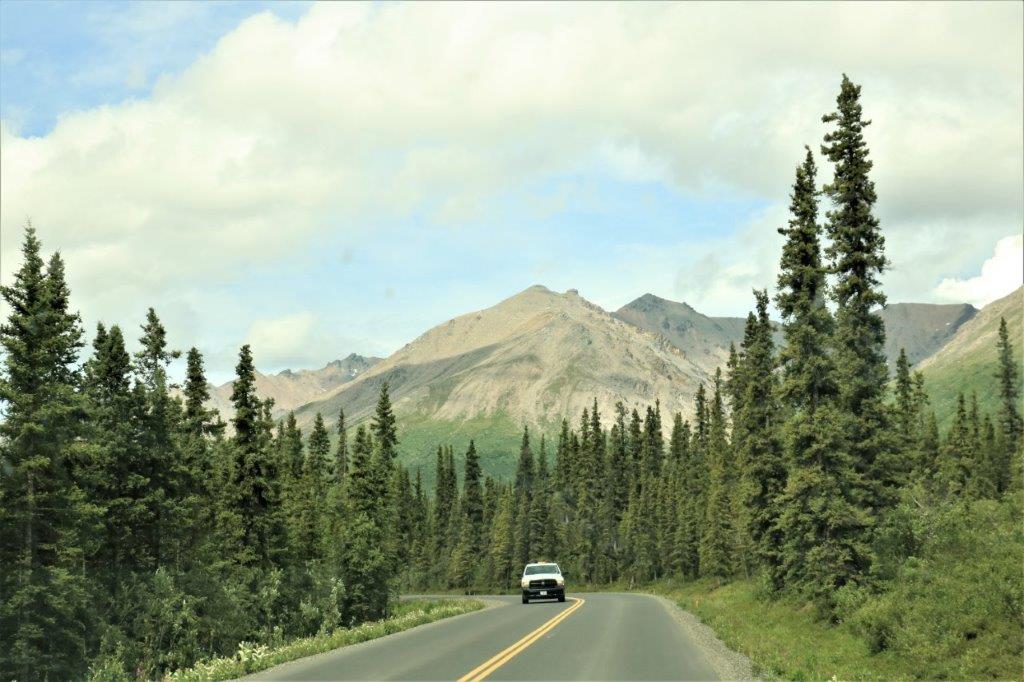
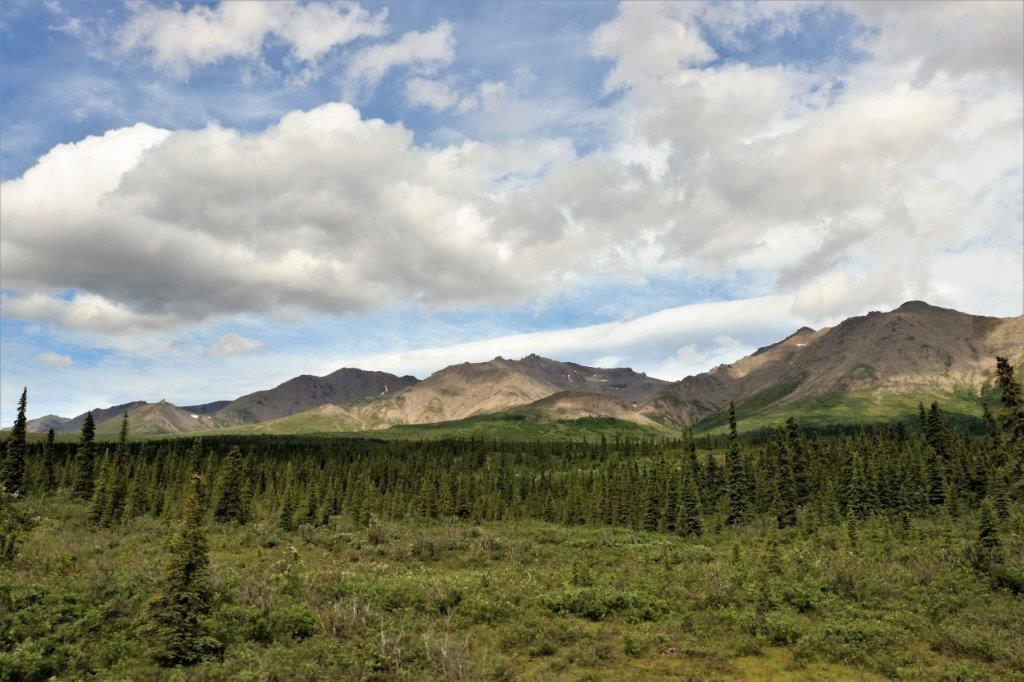
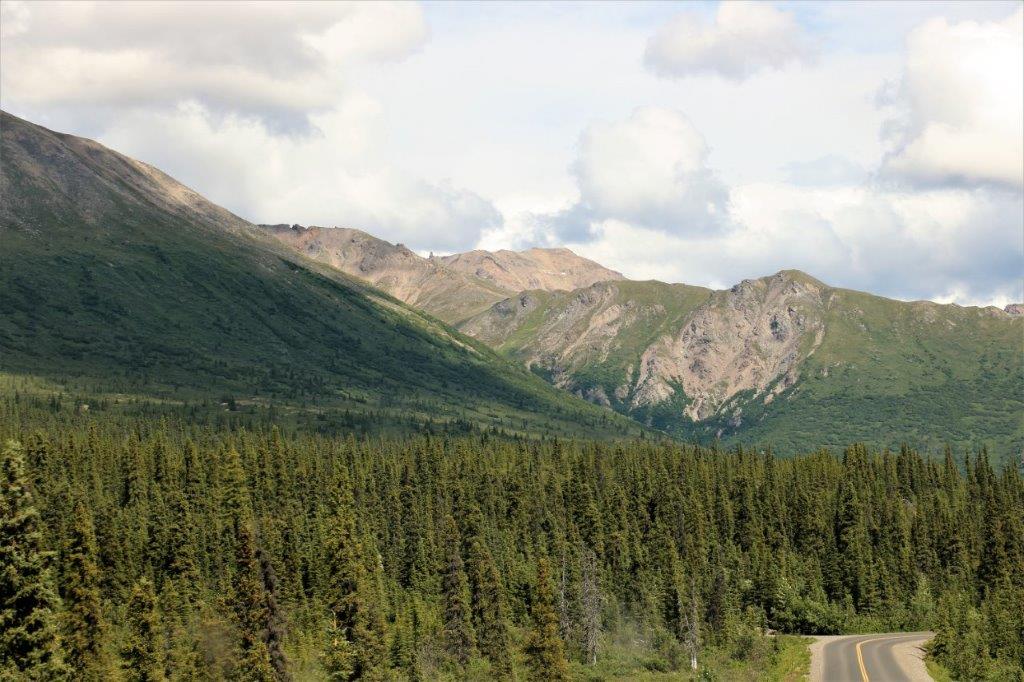
Once you were a fair distance from Fairbanks you entered the Alaska Range and so today ended up very much like the day we drove to Inuvik; gorgeous mountain after gorgeous mountain.                                        Dragonfly Creek Overlook The National Park Service effectively limits the number of private vehicles in Denali.  You can only drive the first 15 miles (24 km) of the road.  The road is 92 miles (148 km) to the end and but you must take one of the many park shuttles to access any trails, and take a mandatory Ranger course before you do any overnight hikes.  (The shuttle costs  return for $80.75 per adult to get to mile 30 and takes about 4.5 hours.  It takes up to 12 hours return to go all the way to mile 92 for $194.00 per adult.)  There is only one camp ground in the park and it is within the Entrance Loop near the Visitor’s Center.  The majority of people stay at campgrounds or hotels at places that border the park boundary to the north or south.  Healy is 12 miles north of the Denali Entrance and the places was chock-a-block with hotels and cabins and white water rafting and tour companies.

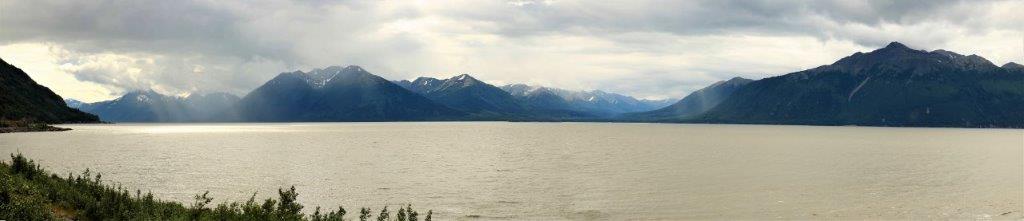
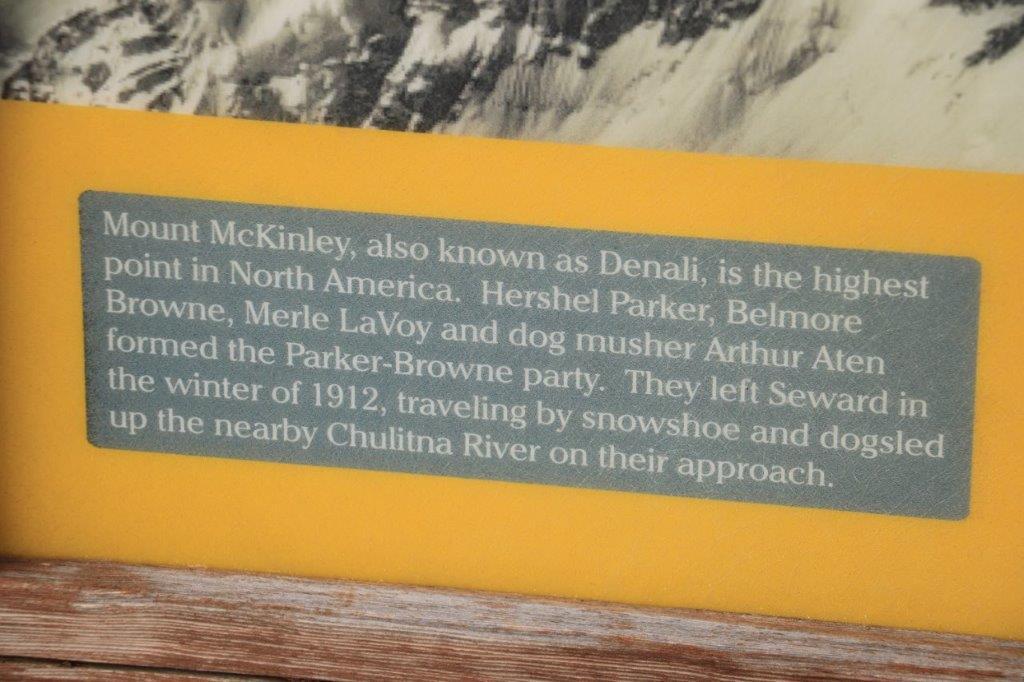
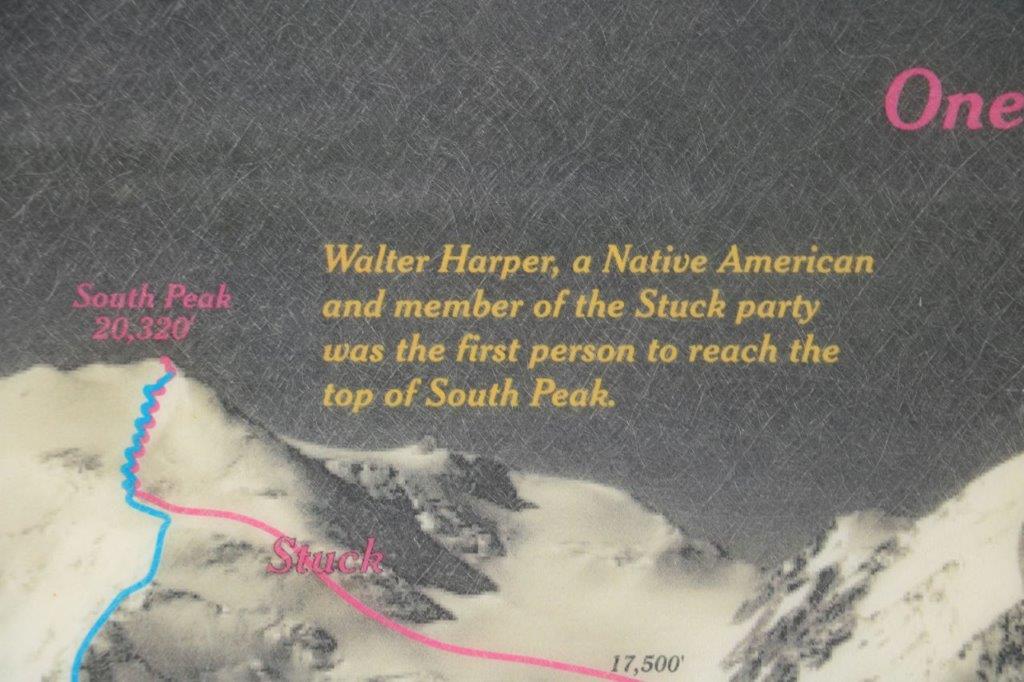
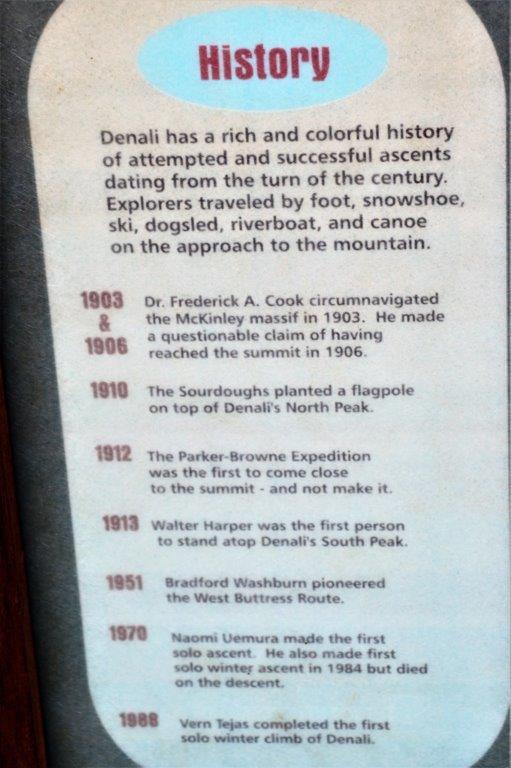
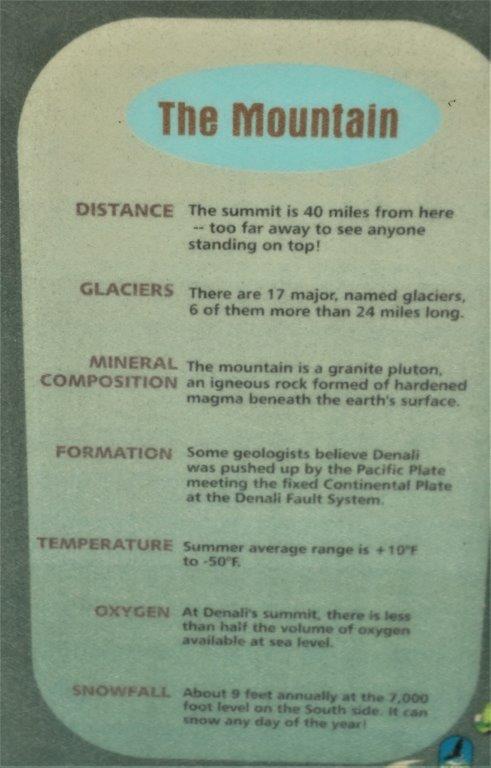
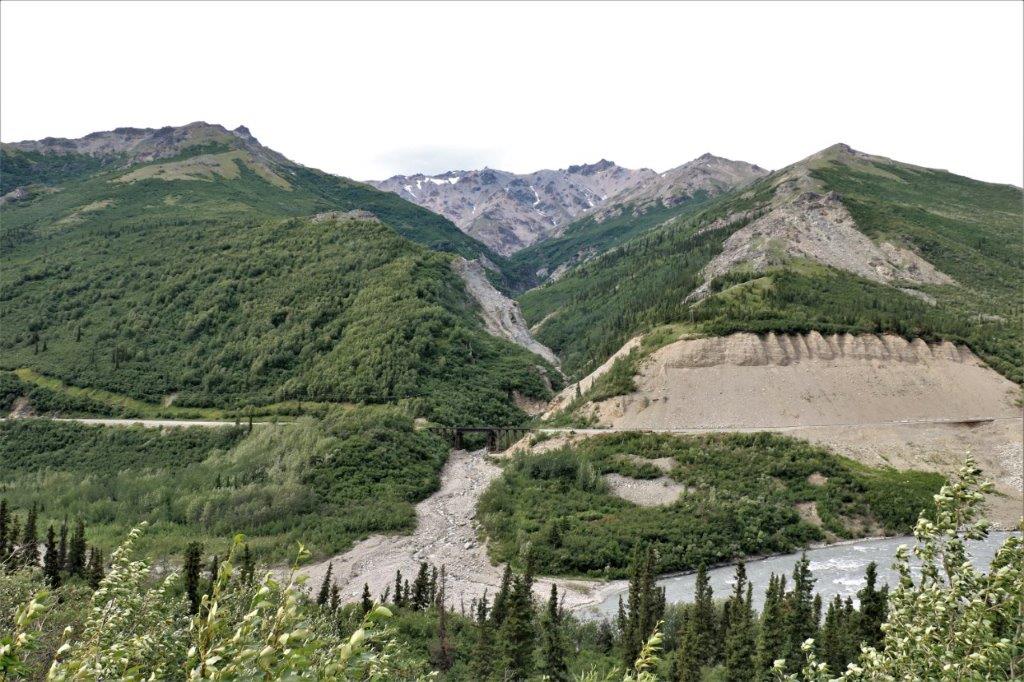
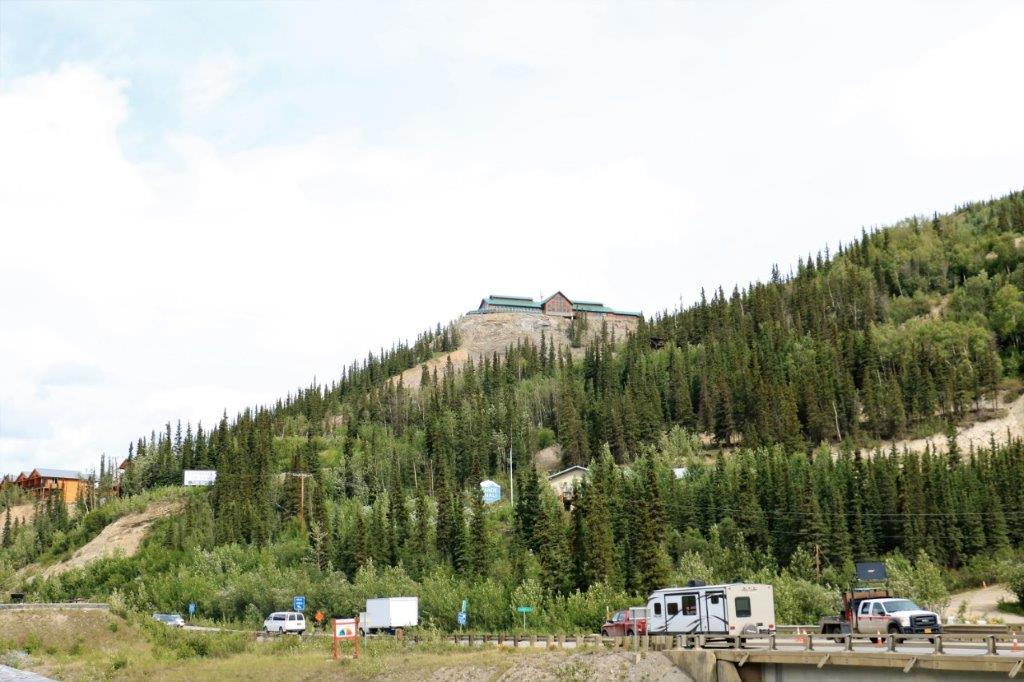
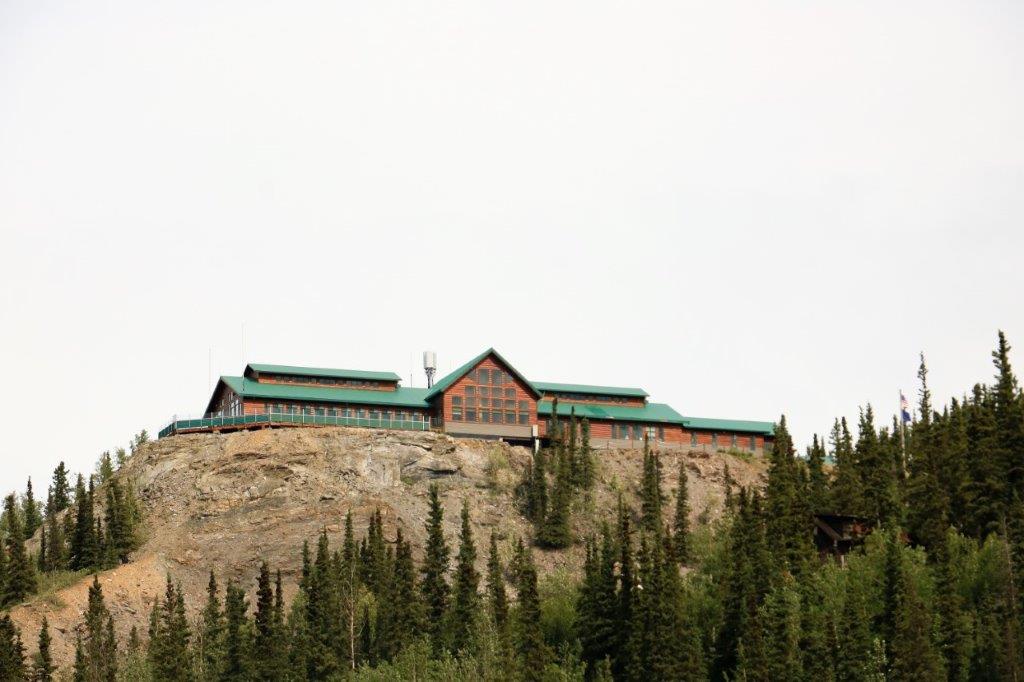
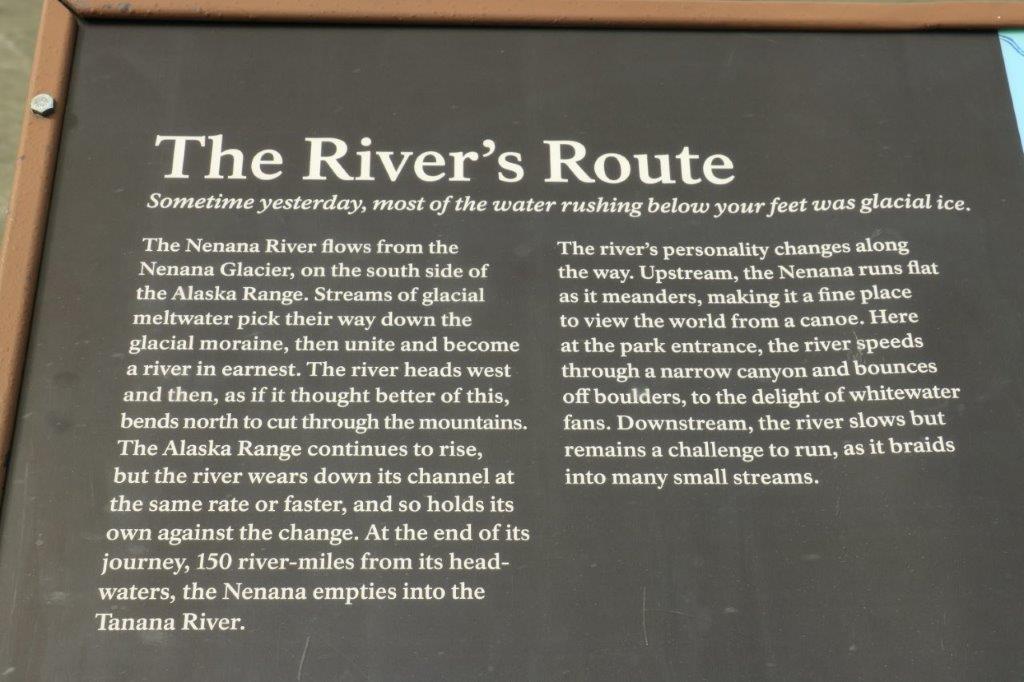
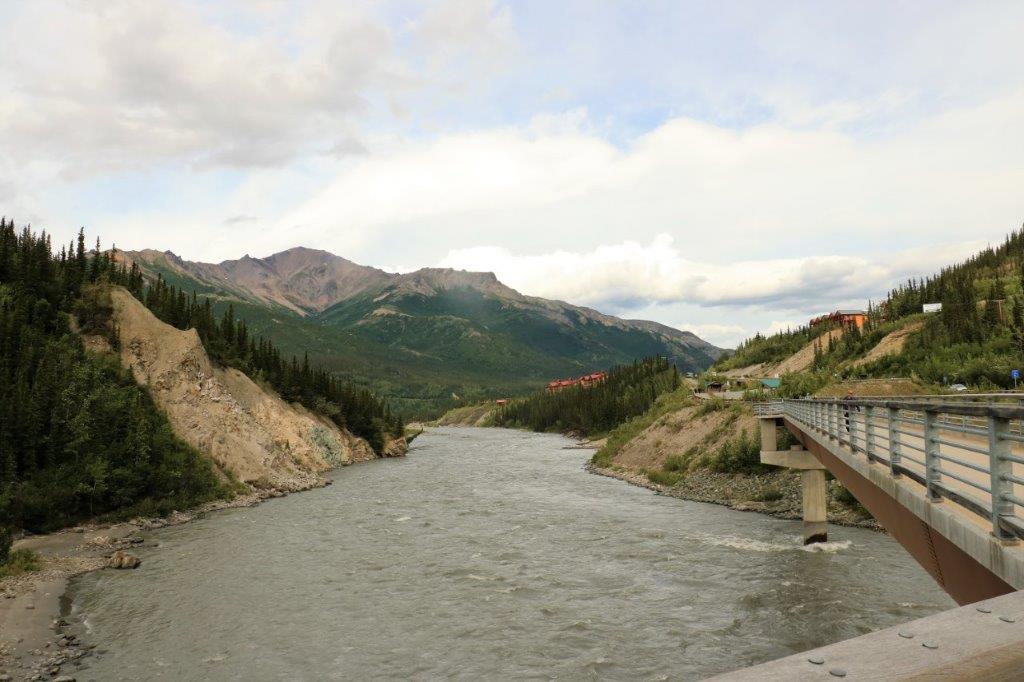
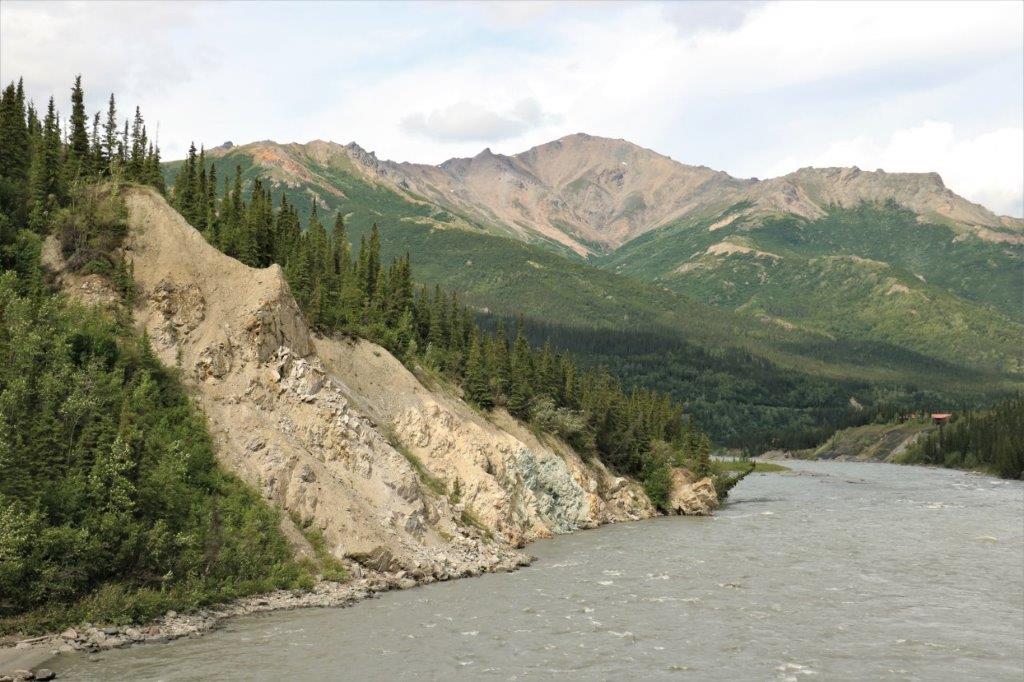
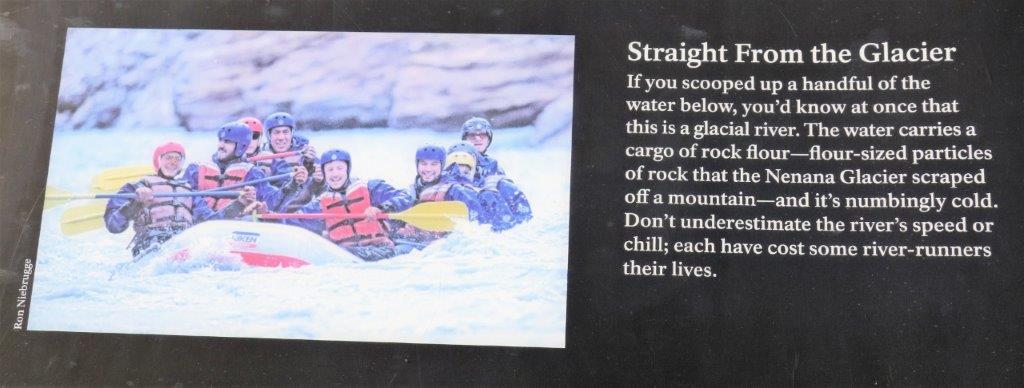
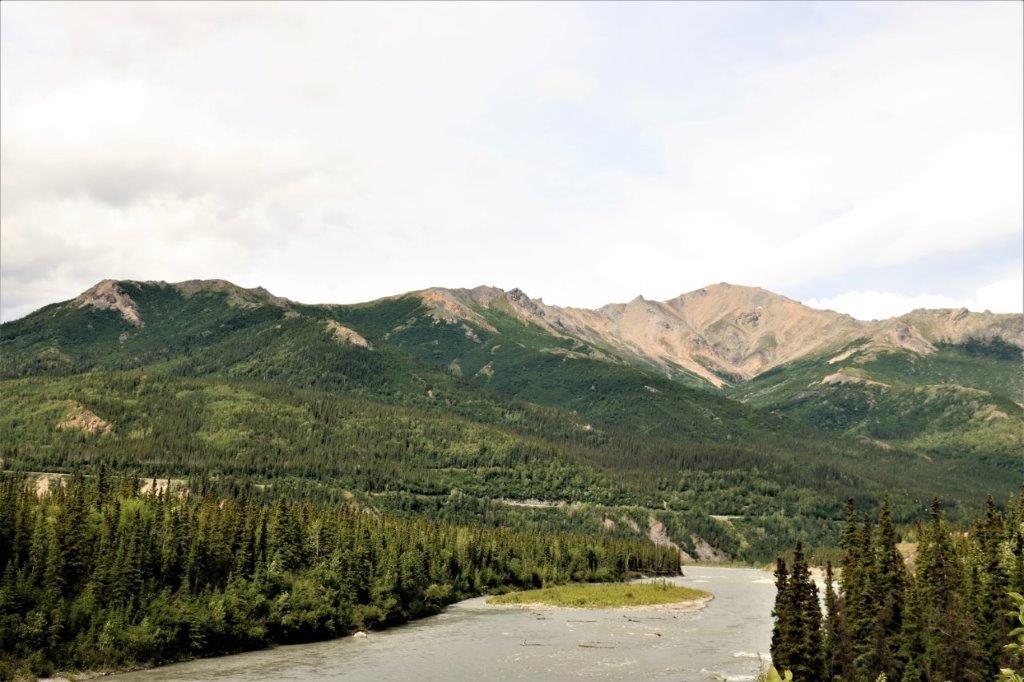
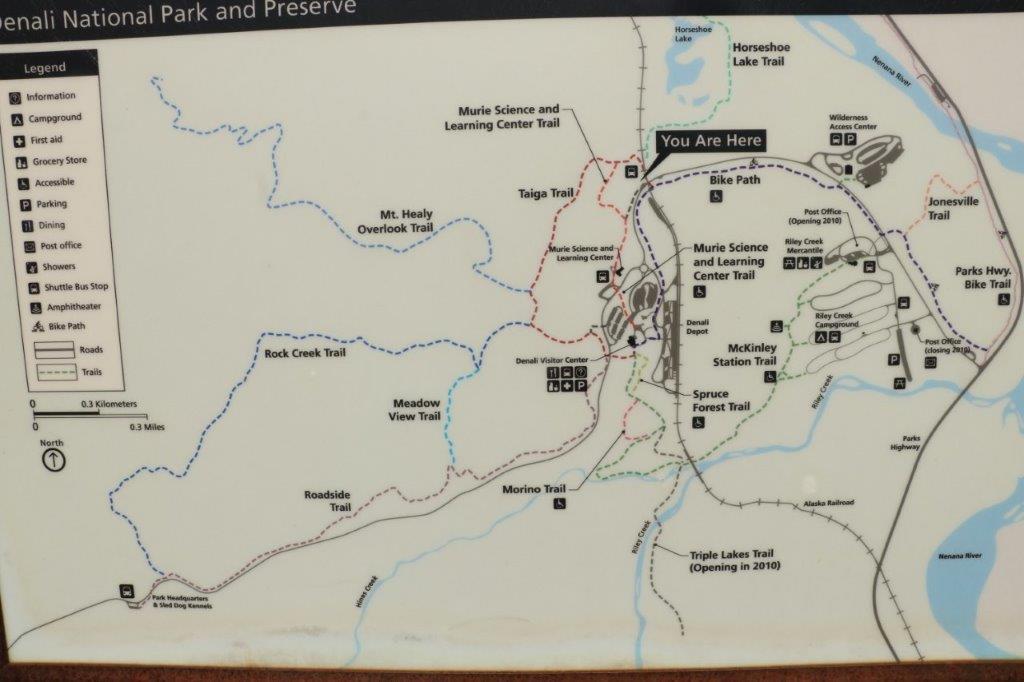
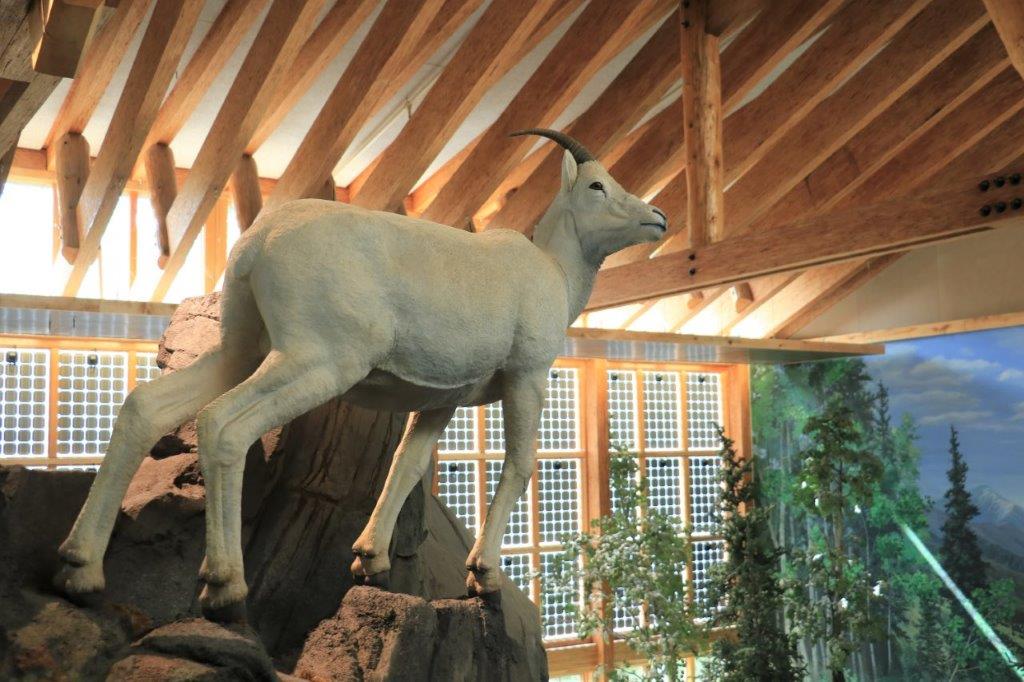
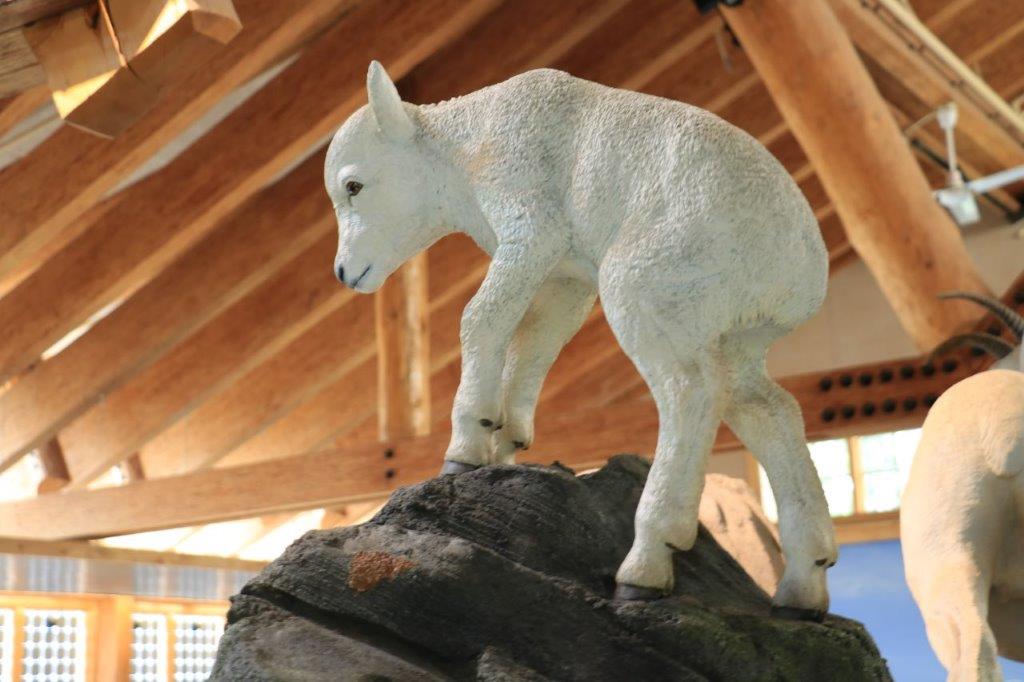
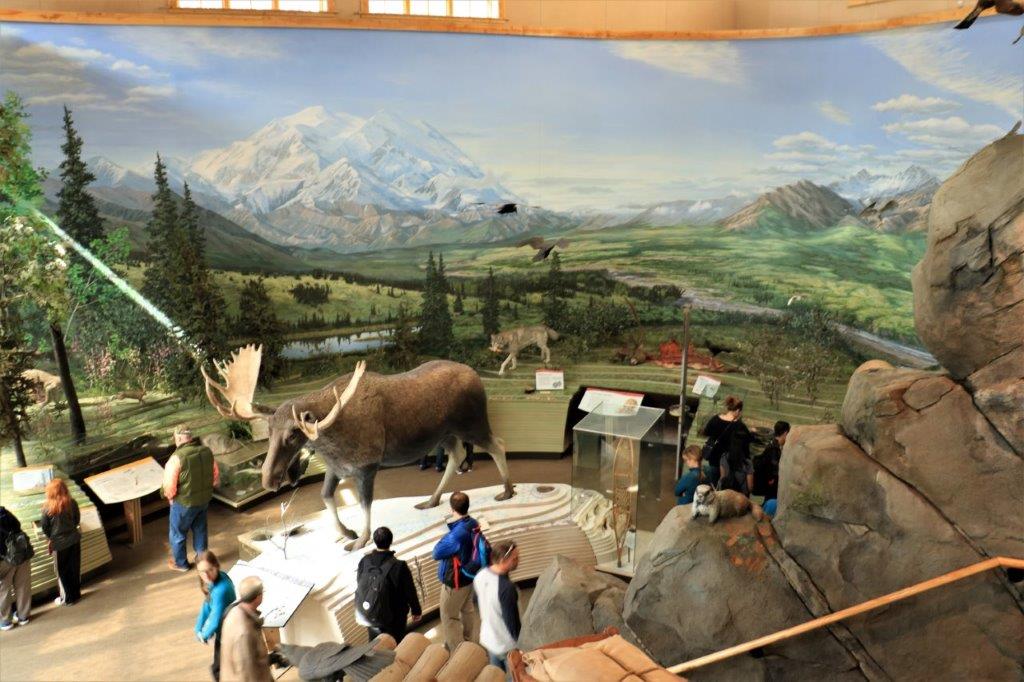
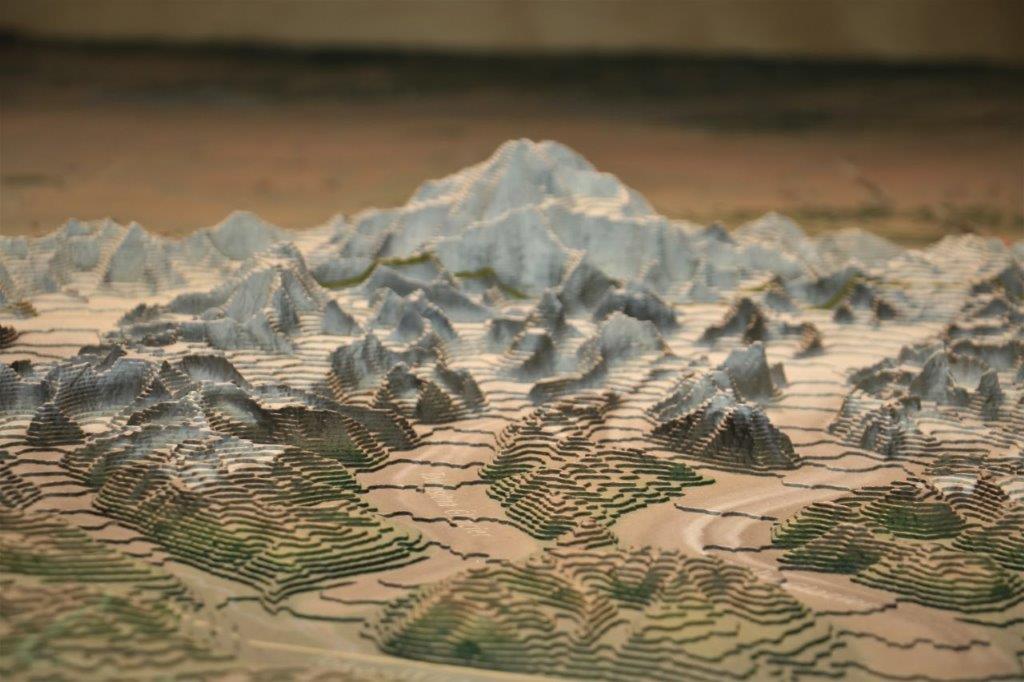
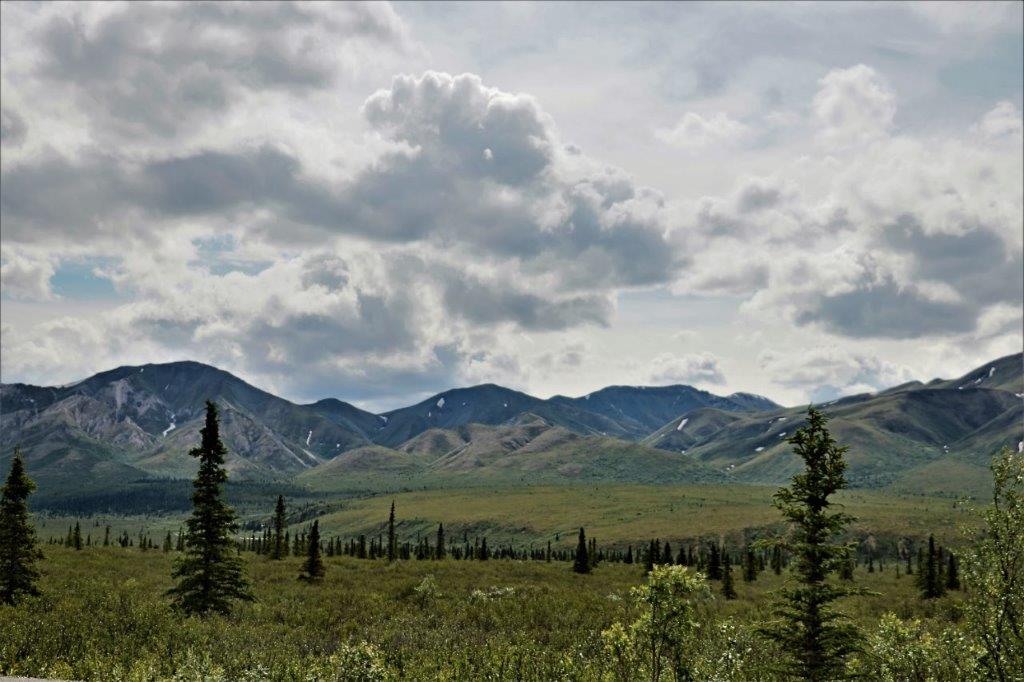
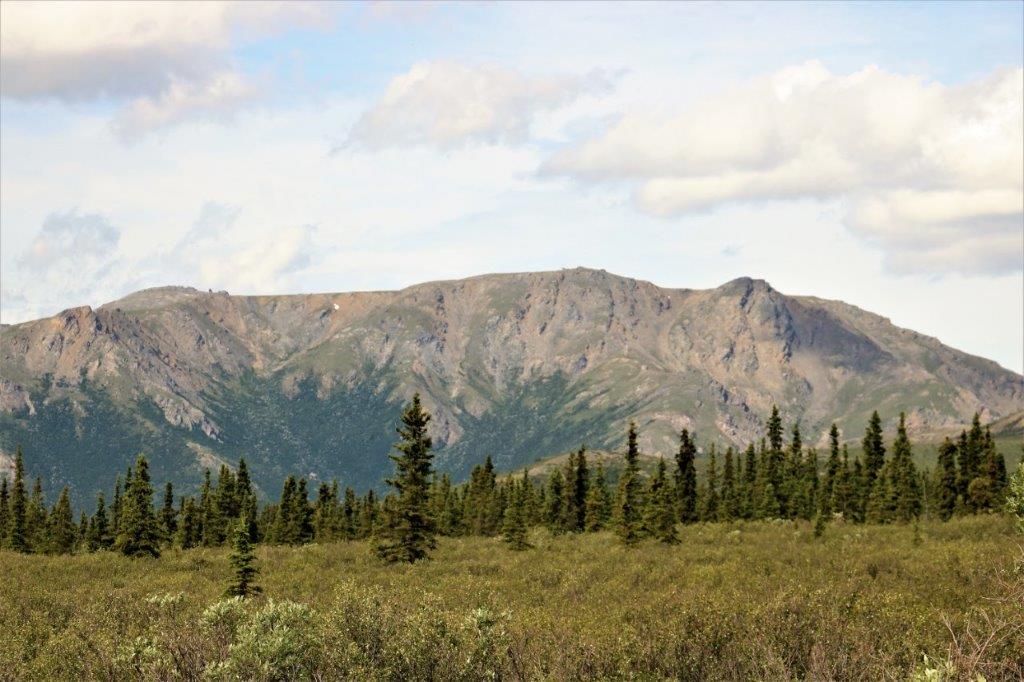
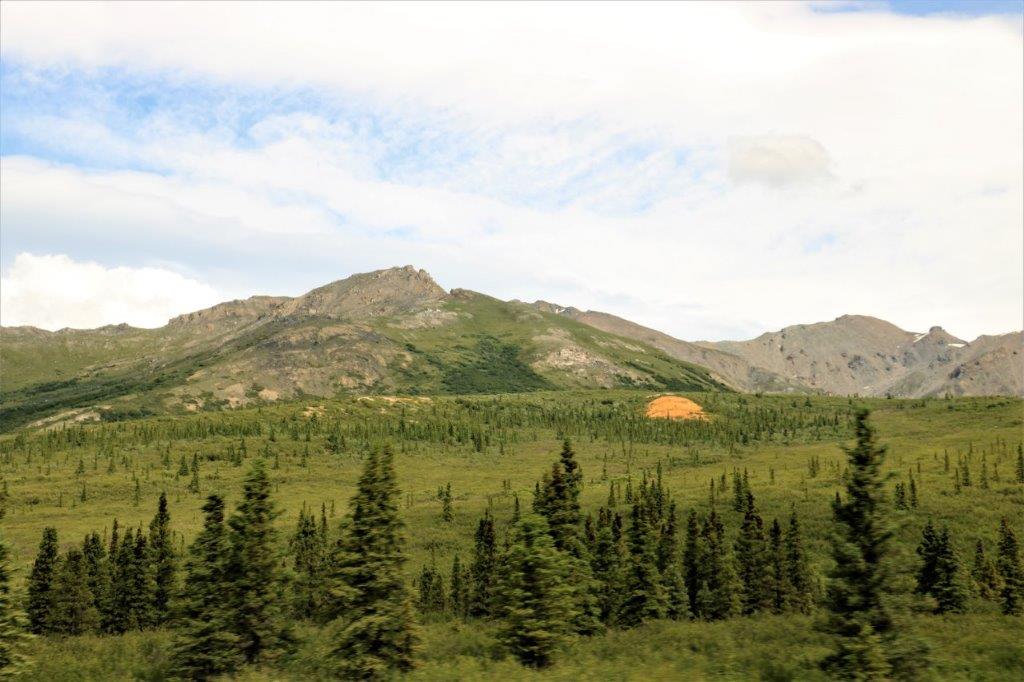
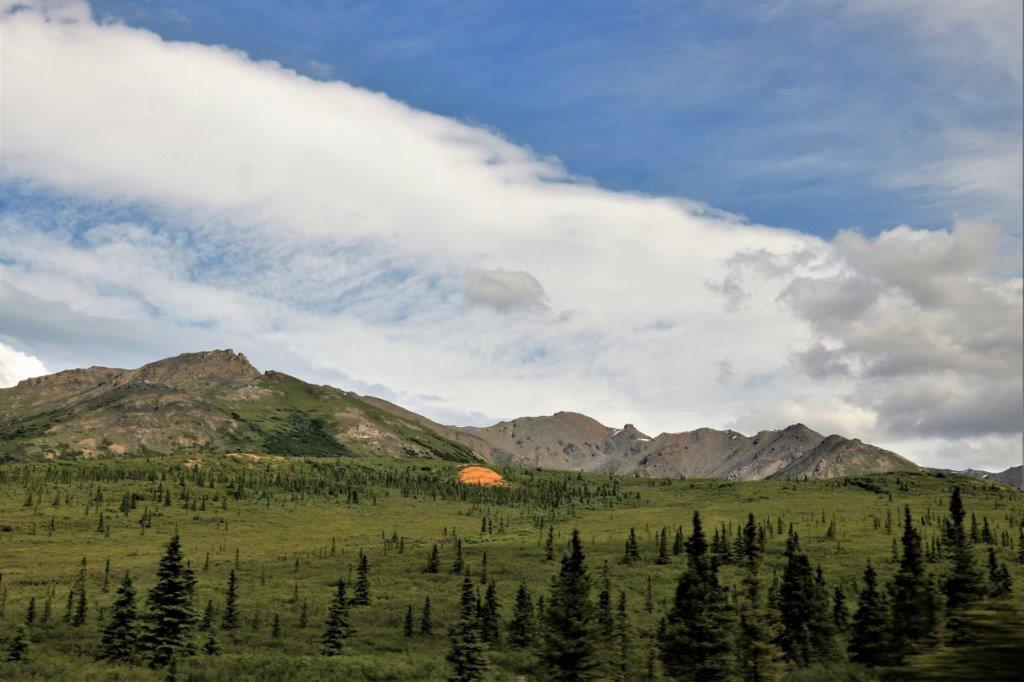
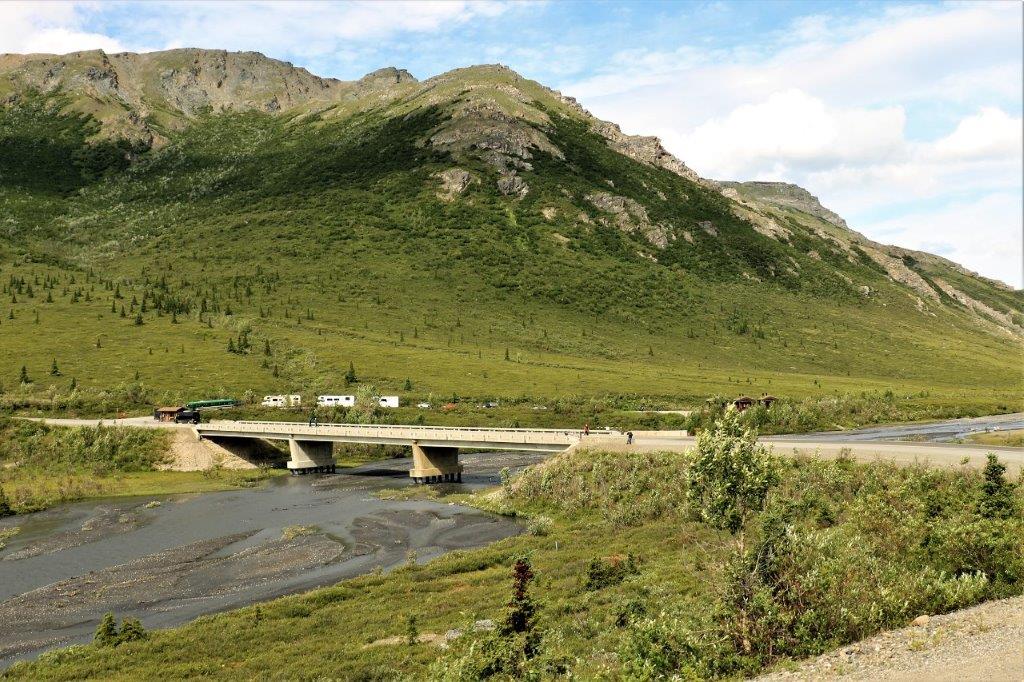
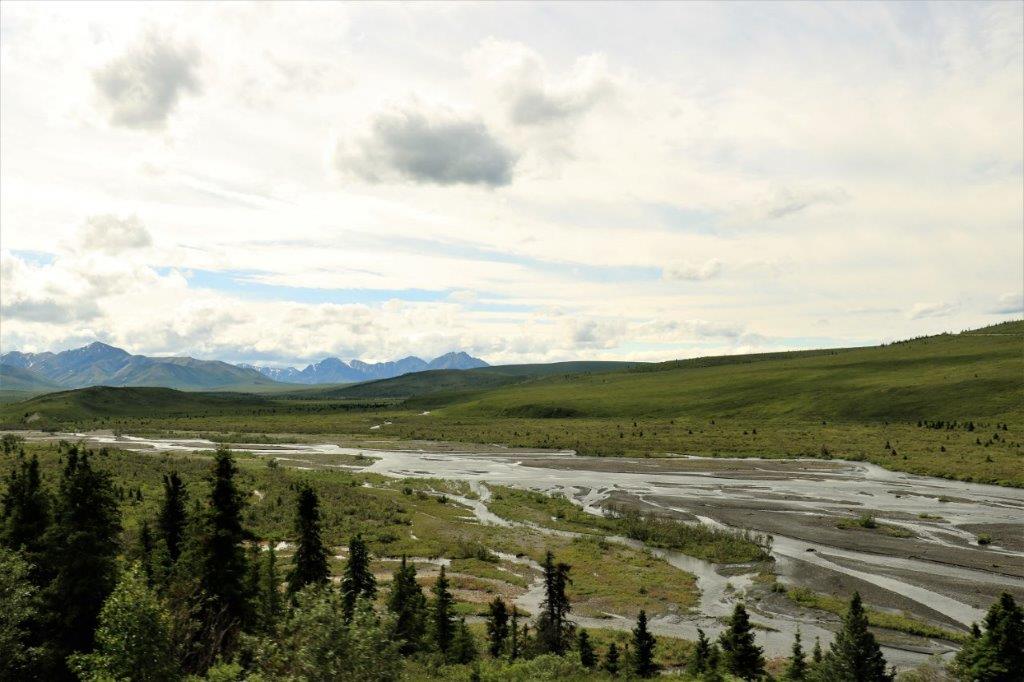
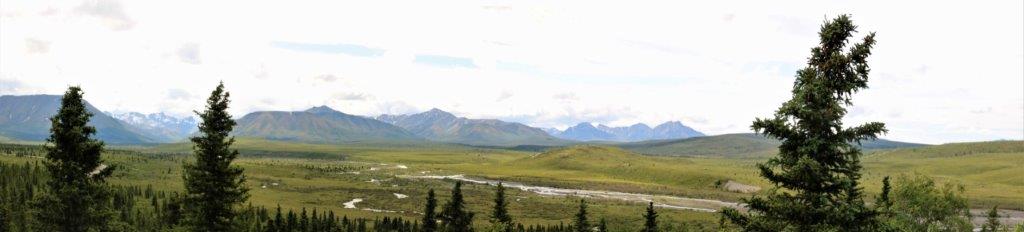
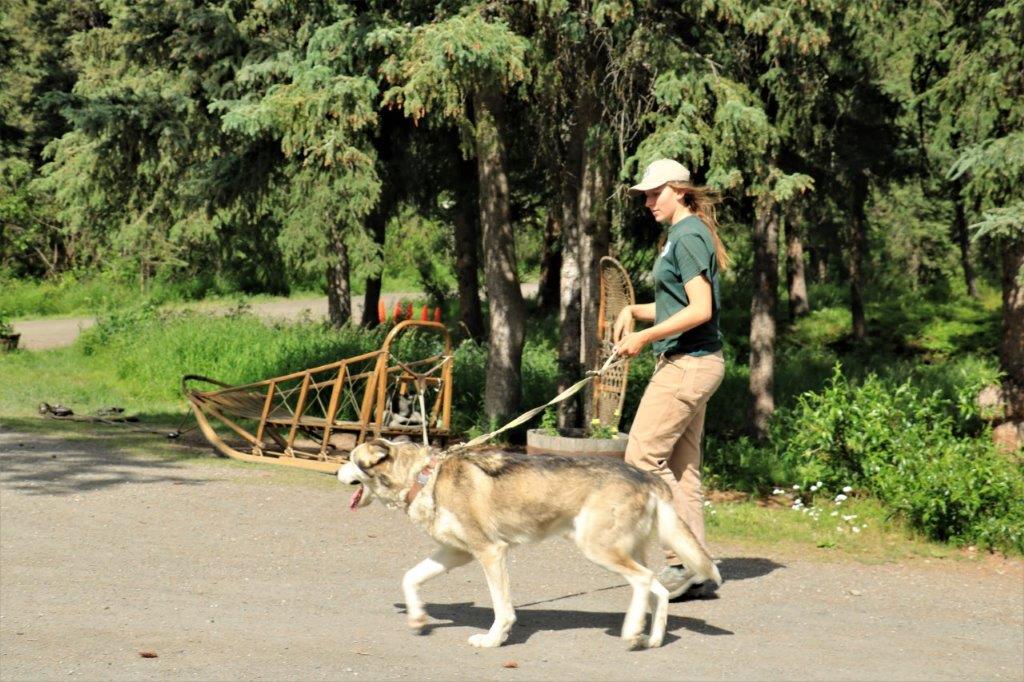
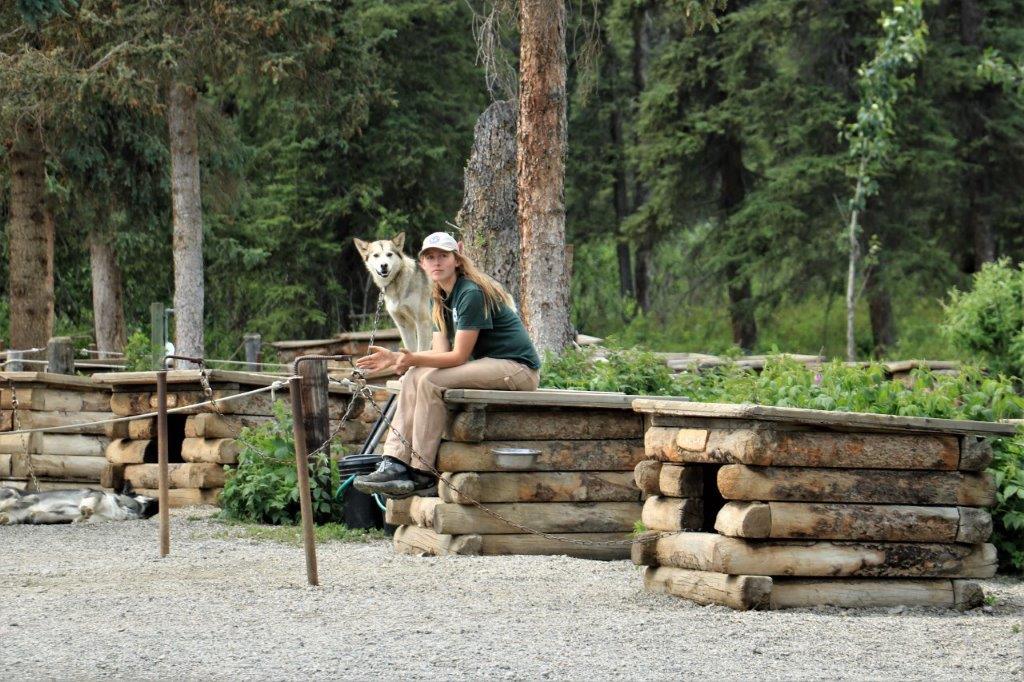
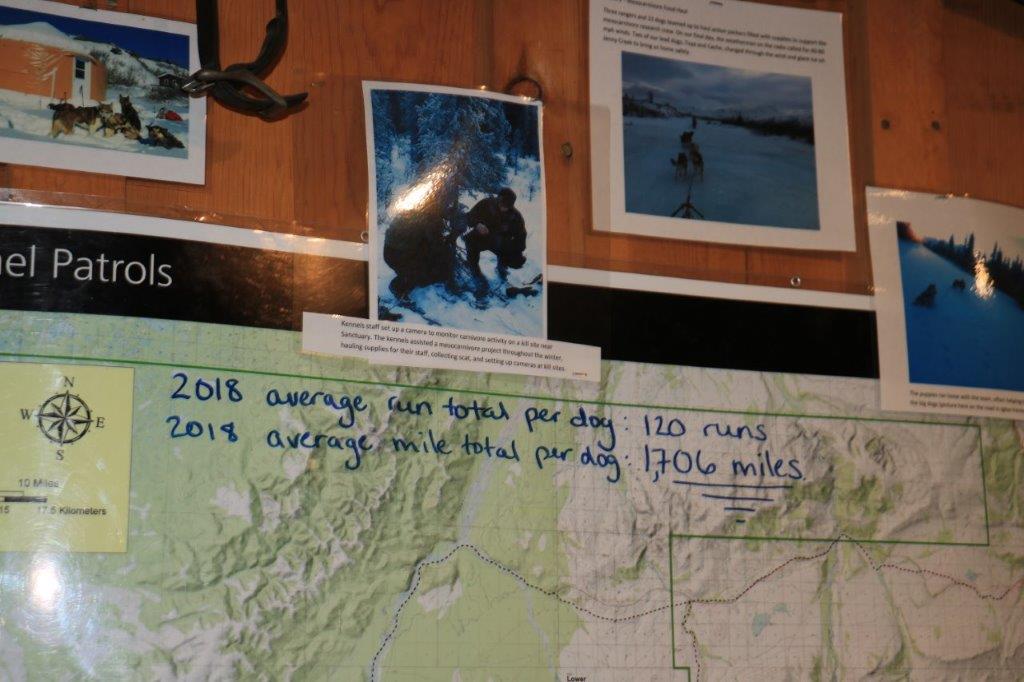
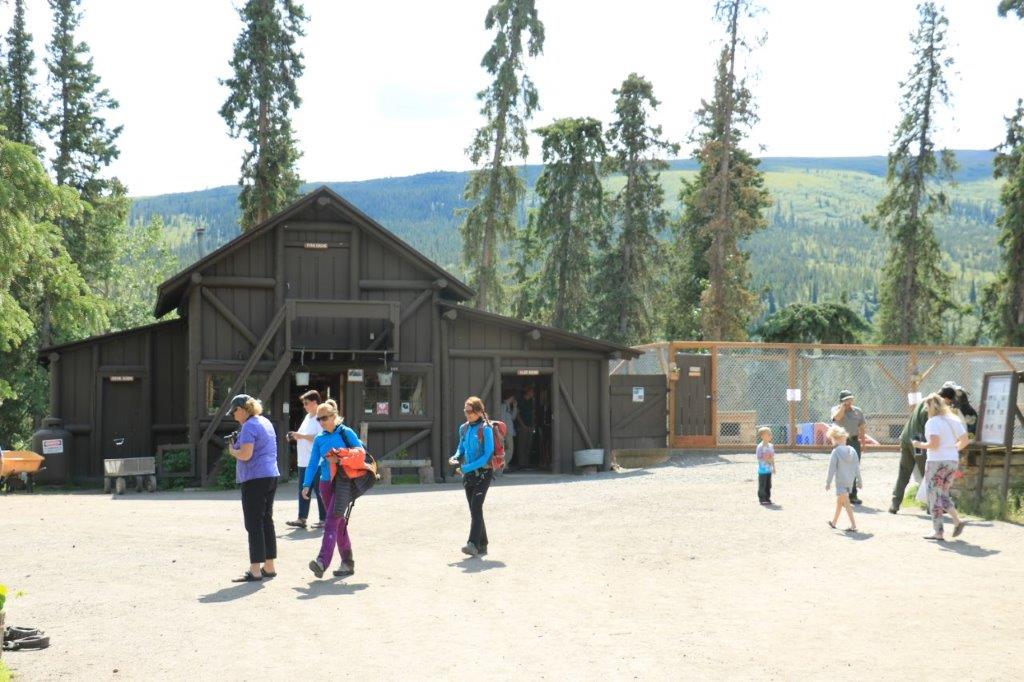
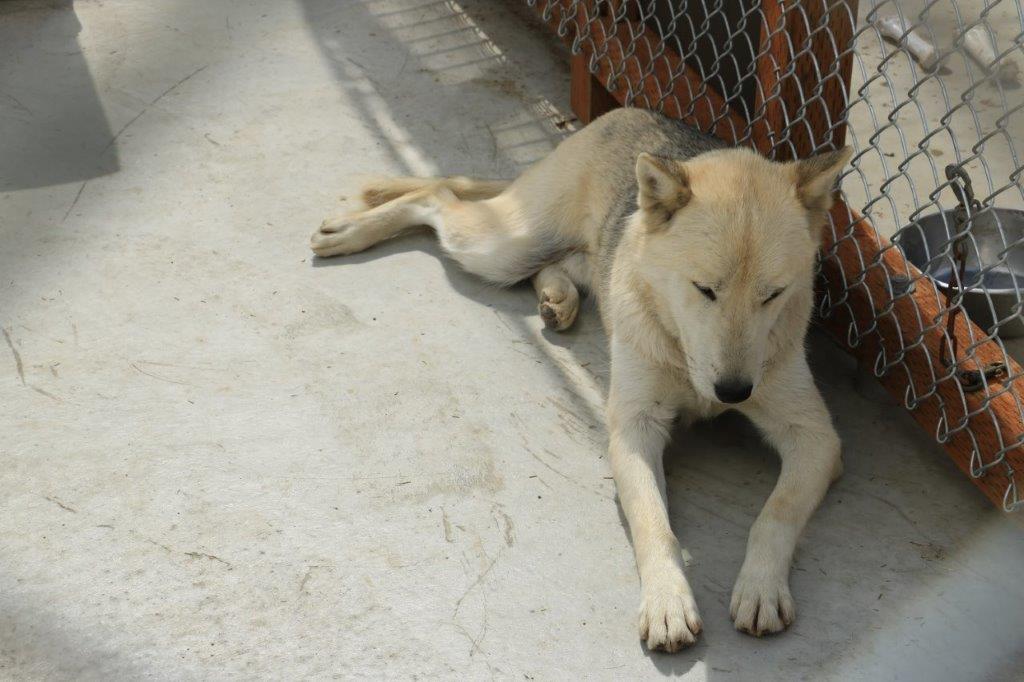
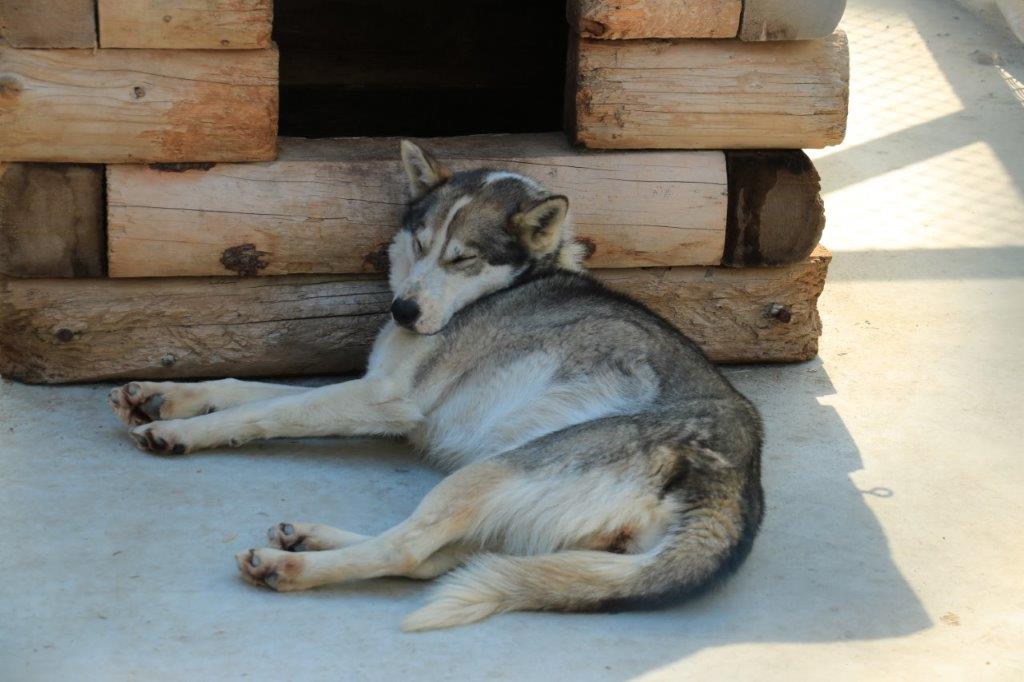
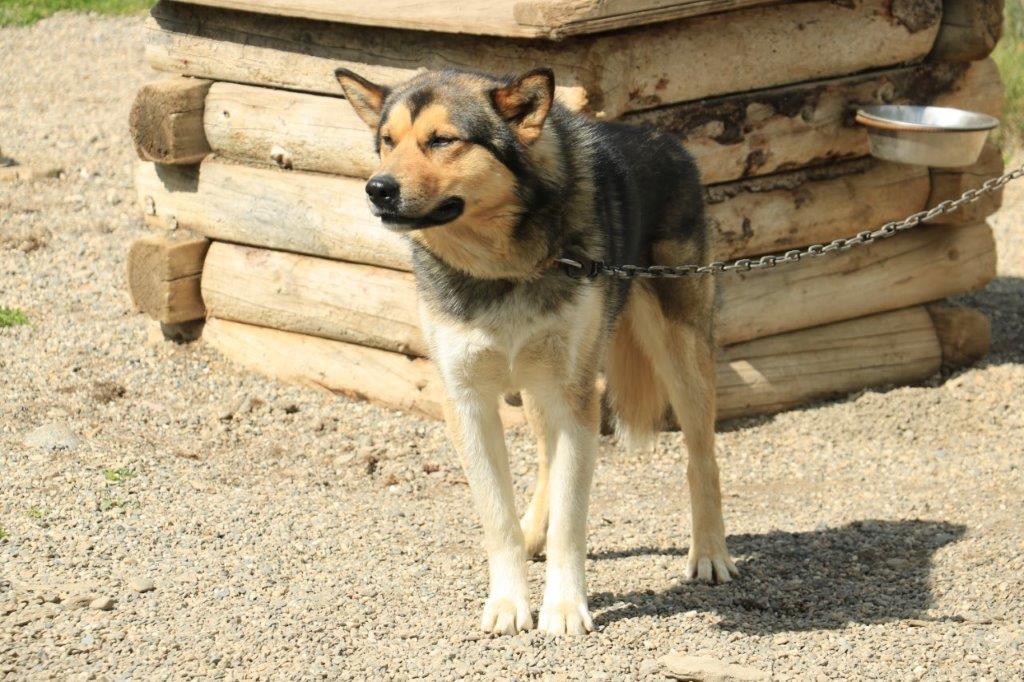
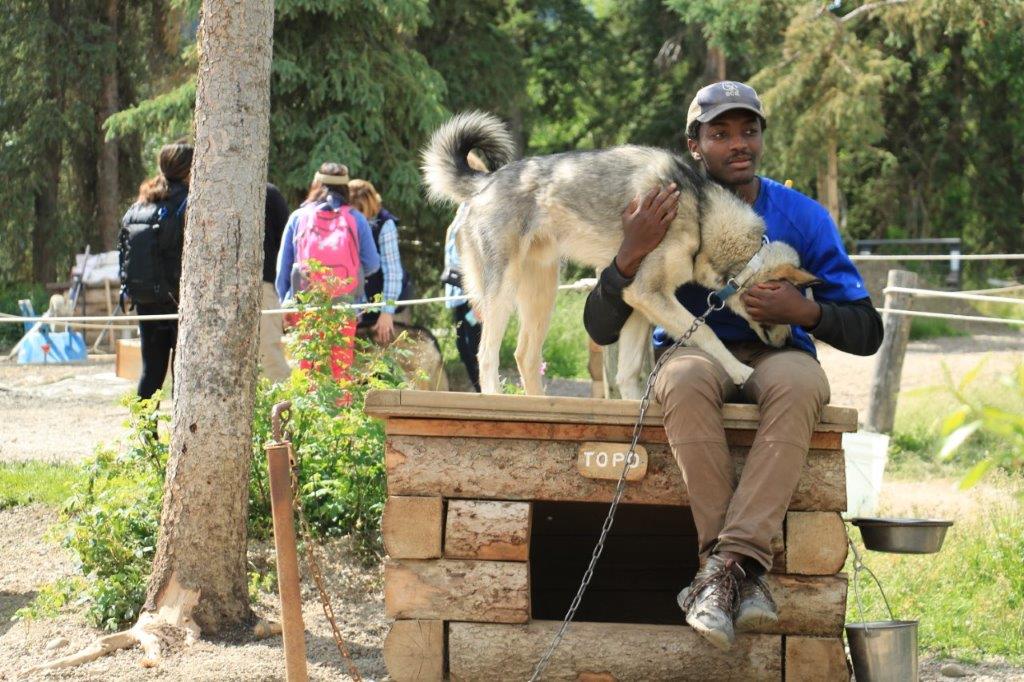
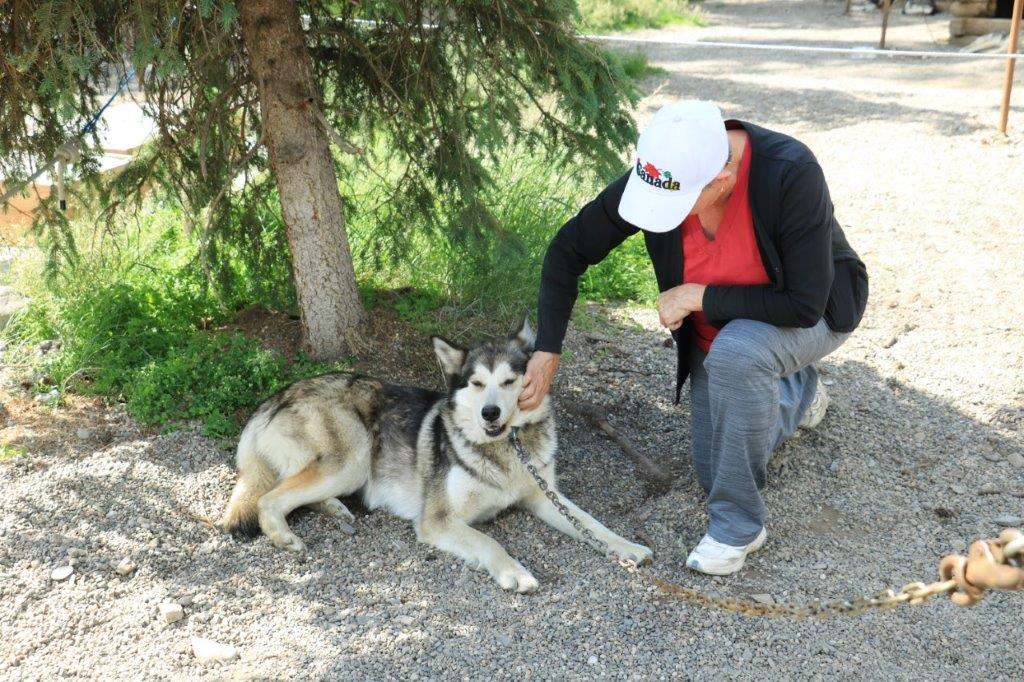
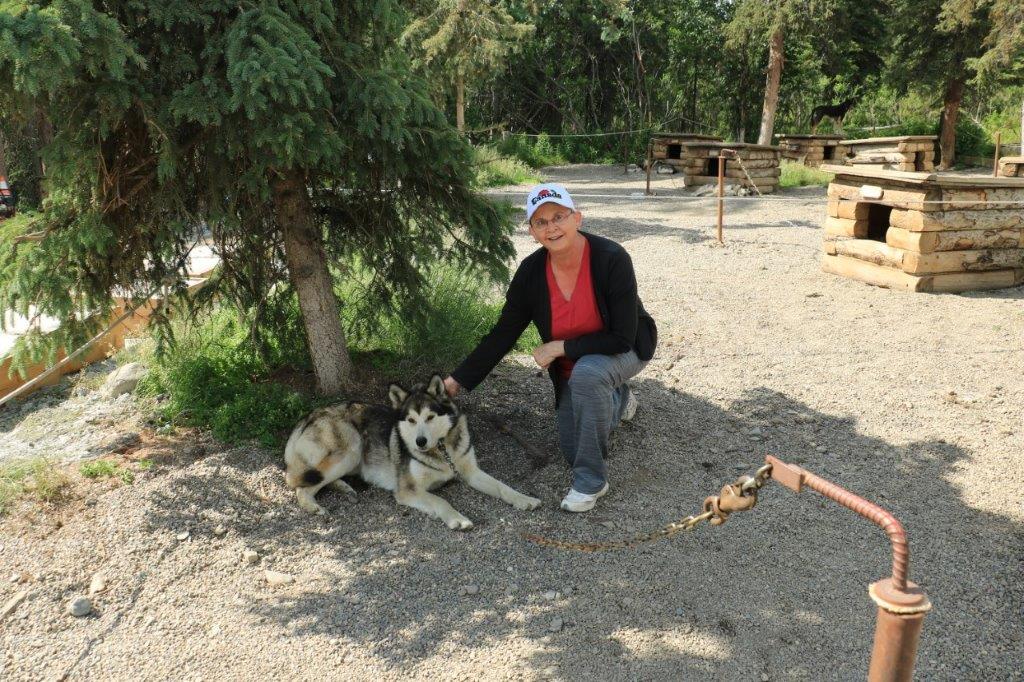
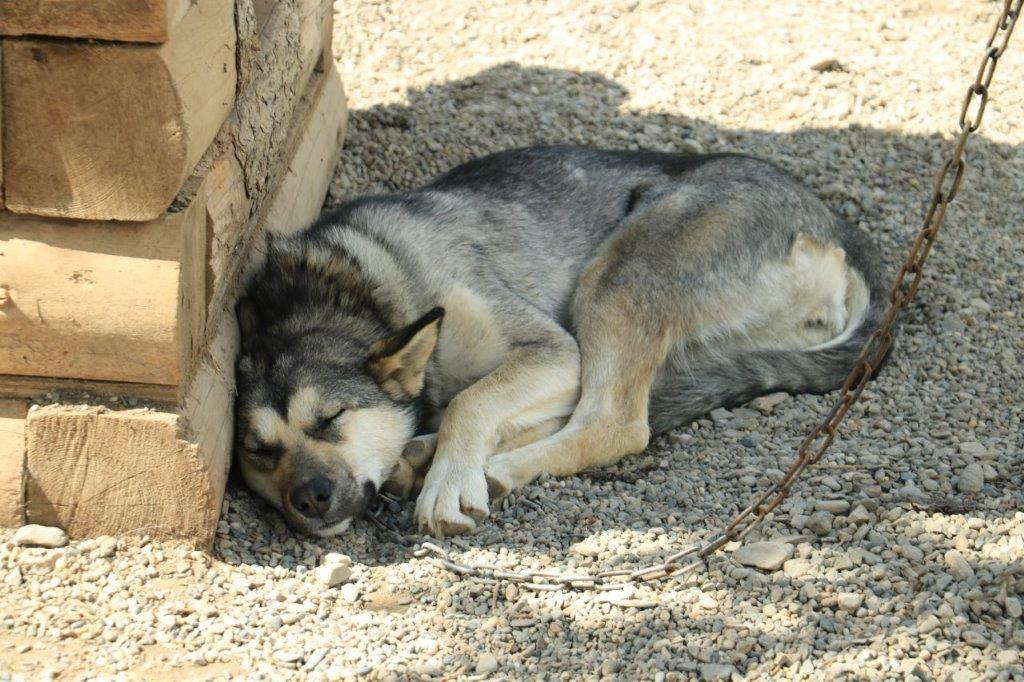
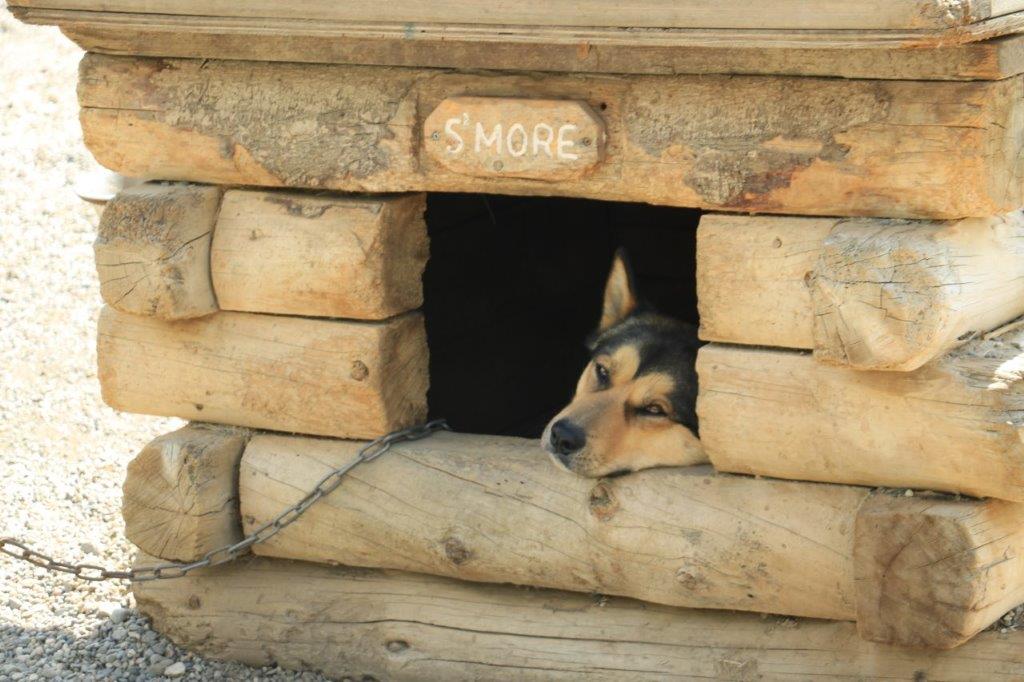
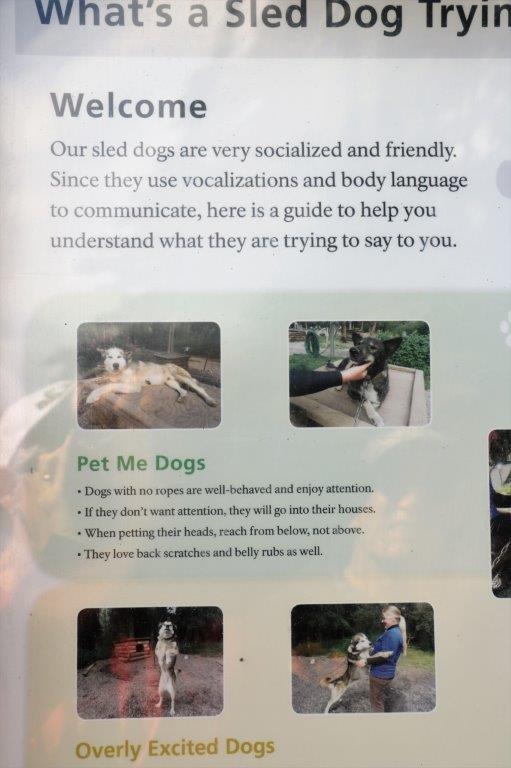
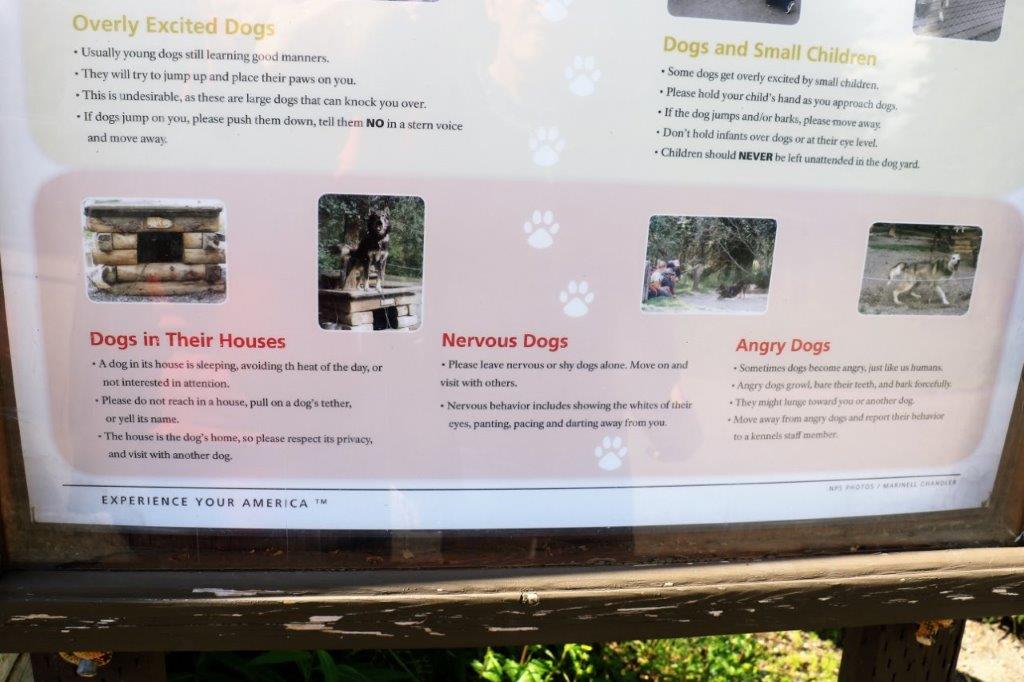
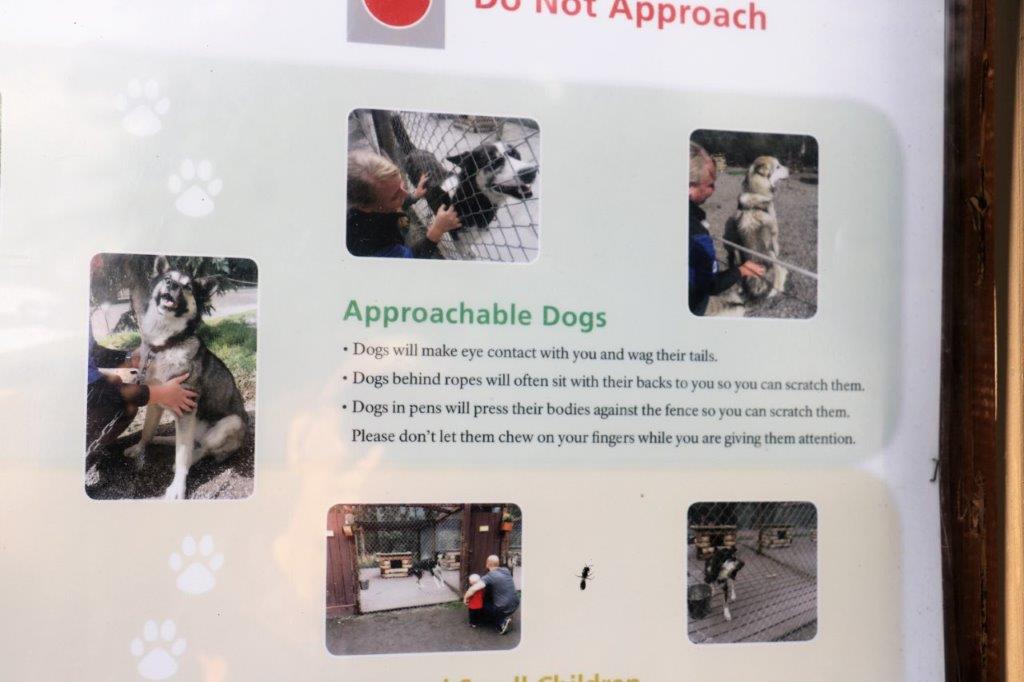
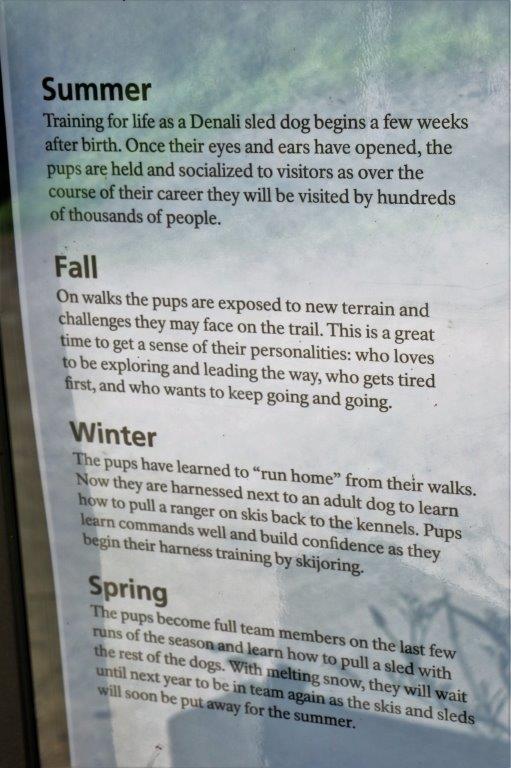
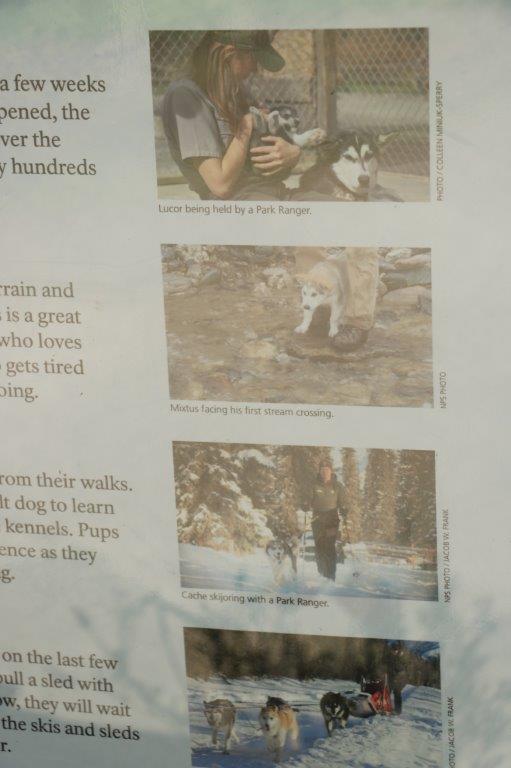
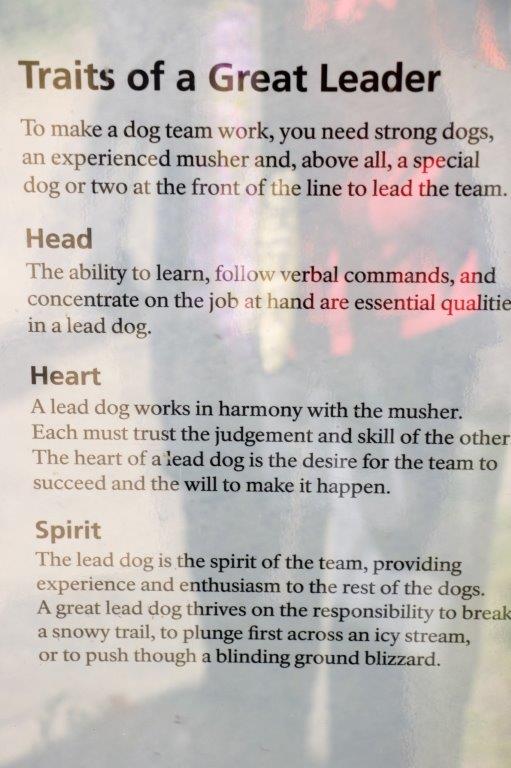
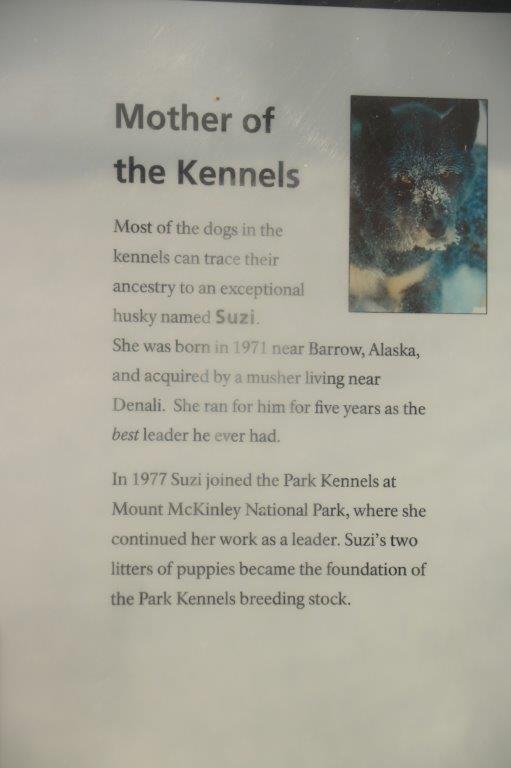
The Nenana River Canyon is at Healy and we stopped to get an earthcache and to view the river.  There is a great bridge that parallels the road that has little jut-outs so you can get good views of the river.  Talk about a view point.  This hotel is perched on top of the bluff. We learned a new word – or words – today: rock flour.  It is the ground up particles of rock from the glacier that flows in the river.  That is why the water is such a muddy grey colour.  It is 194 km (121 miles) from Fairbanks to the entrance to Denali National Park. The Visitor’s Center was very busy, the parking lots were full of cars, and there were people everywhere.  Obviously Denali is a ‘must-see’ on many Bucket Lists.  I am amazed at how many foreign-speaking people were there as well.  Lots of Germans and Dutch. All the animals in the large diorama were sculptures not taxidermy; which I was happy to see. A topographical rendition of Denali and the surrounding mountains.  We had no plans to do a lot of hiking around in the park. We just wanted to try see the mountain and drive the road the allowable distance.  The weather co-operated and we enjoyed a gorgeous drive. The scenery is so vast I stitch several photos together.  They give a better scale of the expansiveness of the region.  The image can be quite narrow though. If you look carefully at the center of this photo, the white mass under the line of clouds is Denali.  This is the most commonly seen view of the mountain – half covered in clouds. Another word I learned today – gossan.  The huge orange rock exposed here is a gossan.  It is created by the oxidation of iron-sulfide minerals within Yukon-Tanana rocks.  It is rust.  Gossans often indicate the upper part of ore deposits such as gold, silver, lead, zinc, and other minerals.  The area had been explored years before the surroundings became the national park, but it was never excavated. This huge rock formation (there are people climbing around on it and at the base) is at the Savage River parking lot – the end of the road.  If you want to explore the park further or take one of the many, many hiking trails you must go from here by shuttle bus. The Savage River is another one of Alaska’s delta-like, meandering rivers with very wide beds and many streams.  During early spring I am sure it is running water edge to edge. We stopped here on our return for lunch.  I checked the meadow with the binoculars but didn’t see any critters.  Denali is a park ‘teeming’ with wildlife, but we saw nary a one.  At mile 3.5 of the road there are the sled dog kennels.  They give a demonstration three times per day and we just caught the end of the 2 pm one. Around the ceiling in the sled shack (which is the oldest building in Delani National Park that is still used for its original purpose), they have the names of all of their former sled dogs.  The dogs work until they are 9 and then they are adopted out.  They breed all their own dogs at the park.                                                    This is Annie.To be continued….

2018 July 15 – Anchorage, AK

I think a month of travel caught up with us today.  After perusing every brochure I had picked up, plus my BCAA tour book on Alaska, there was still nothing jumping out at us that we wanted to see.  Other than Earthquake Park.  Most of the items listed that interest us are scenic things to the east of Anchorage and we will be seeing them on our travels over the next few days.

We had lousy service at breakfast.  There was a group of four waiting to go into the hotel restaurant when we got there and two more couples arrived after us.  All four groups got seated about the same time.  The three couples all had the same server. The four guys got the gal that hustled.  Our server brought us menus, then disappeared for ages and when she re-appeared she took the orders of both of the couples that came in after us.  They both had their food and were eating before she came back to take our orders.

We had dinner in the hotel lounge last night and it was good.  We went again for dinner tonight and once again, we were invisible.  The server brought menus and drinks, said she would be right back, disappeared for awhile and then took orders of people who arrived after us.  We waited about a half hour and she still hadn’t come back so we left and went somewhere else where we had prompt service and good food.  I am generally not too fussed if service is slow if the place is busy; which was not the case tonight – but we were not in a frame of mind after the long wait at breakfast to go through it again in a different eating establishment in the hotel and with a different server.

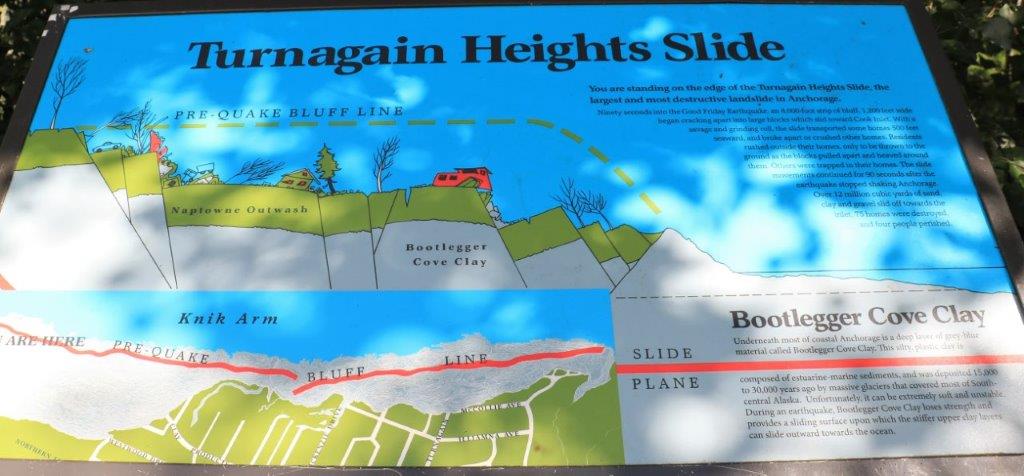
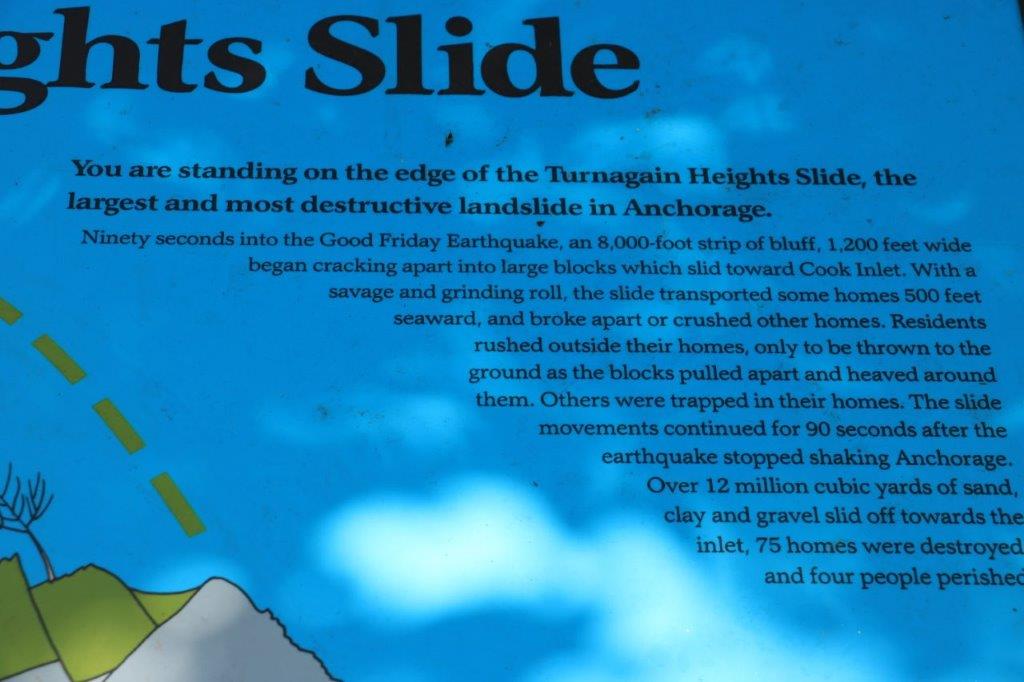
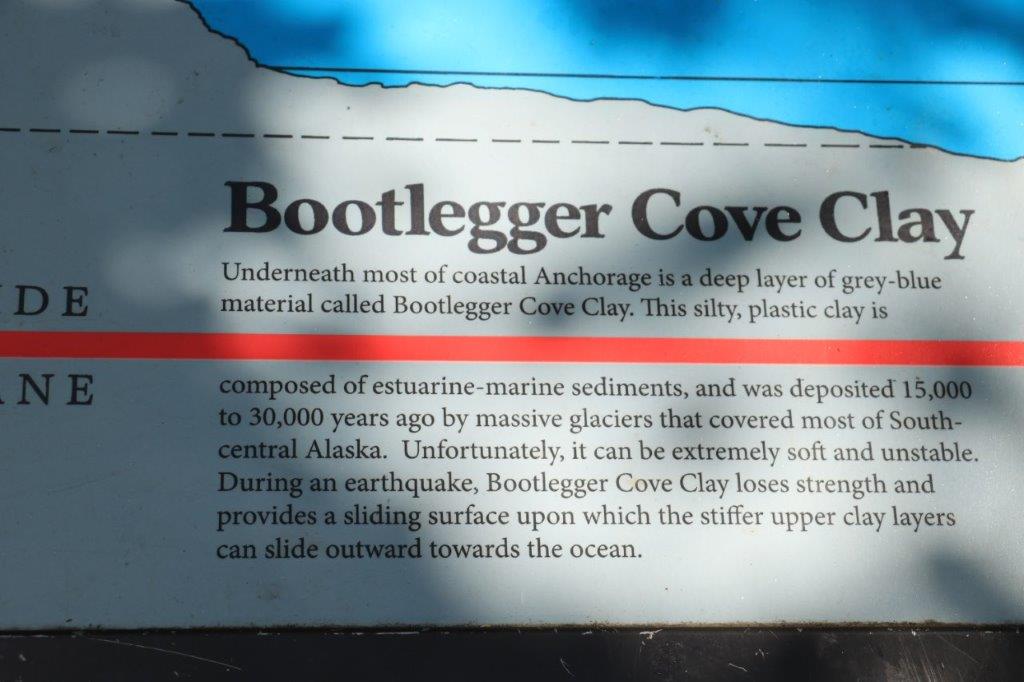
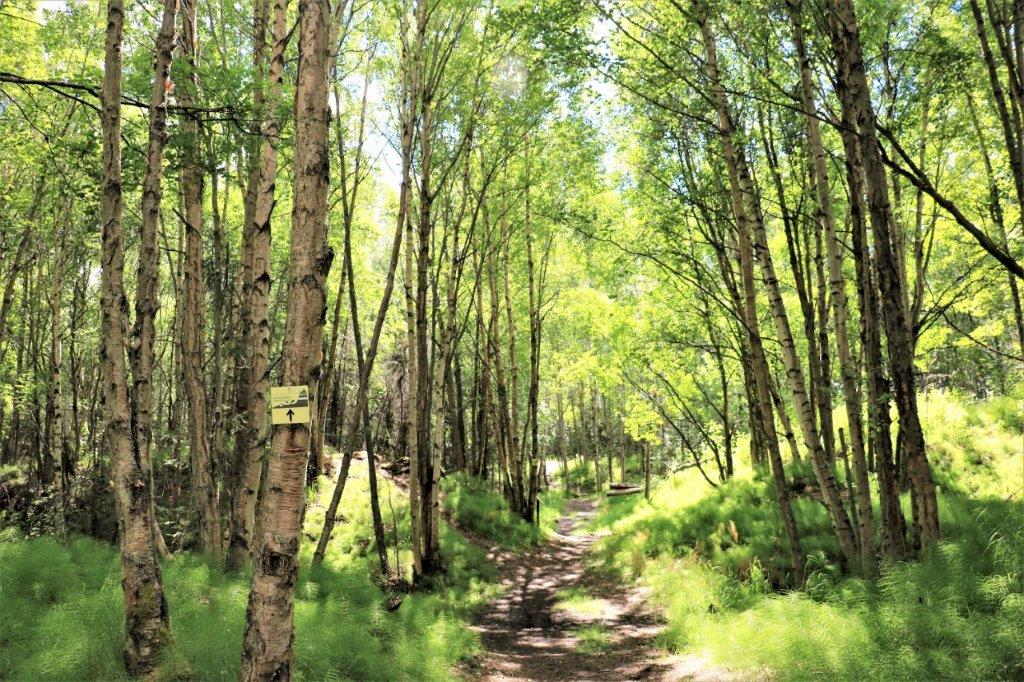
We spent the morning in our room.  I caught up on my blog and John booked our hotel reservations for the next week.  We went out about 1:30 and drove to Earthquake Park. The shadows from the leaves of the trees make this hard to read.  There was supposed to be an interpretive loop trail with information about how the land at the coast had changed since the quake.  We found one sign and then the trail just became one of many mountain bike paths.

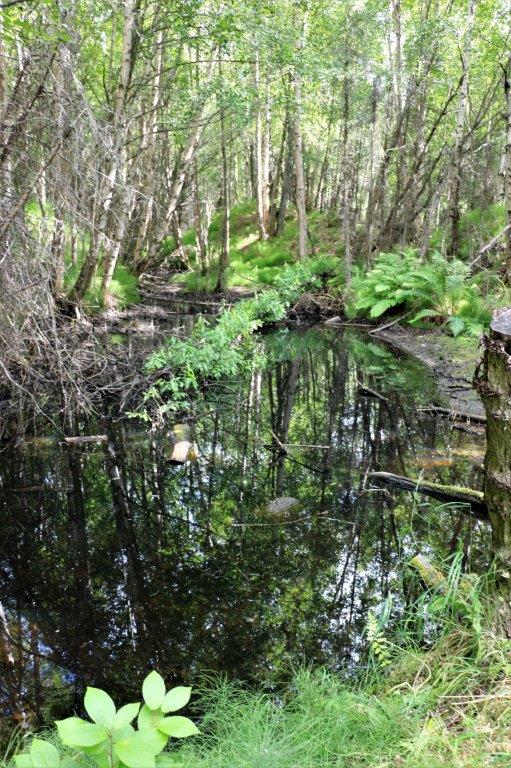
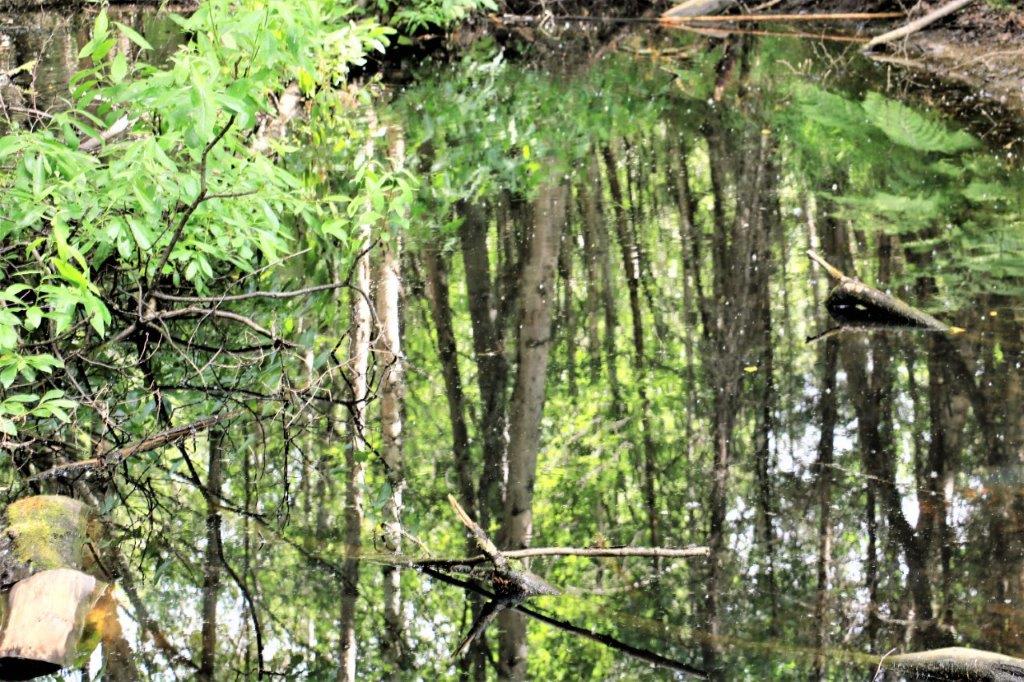
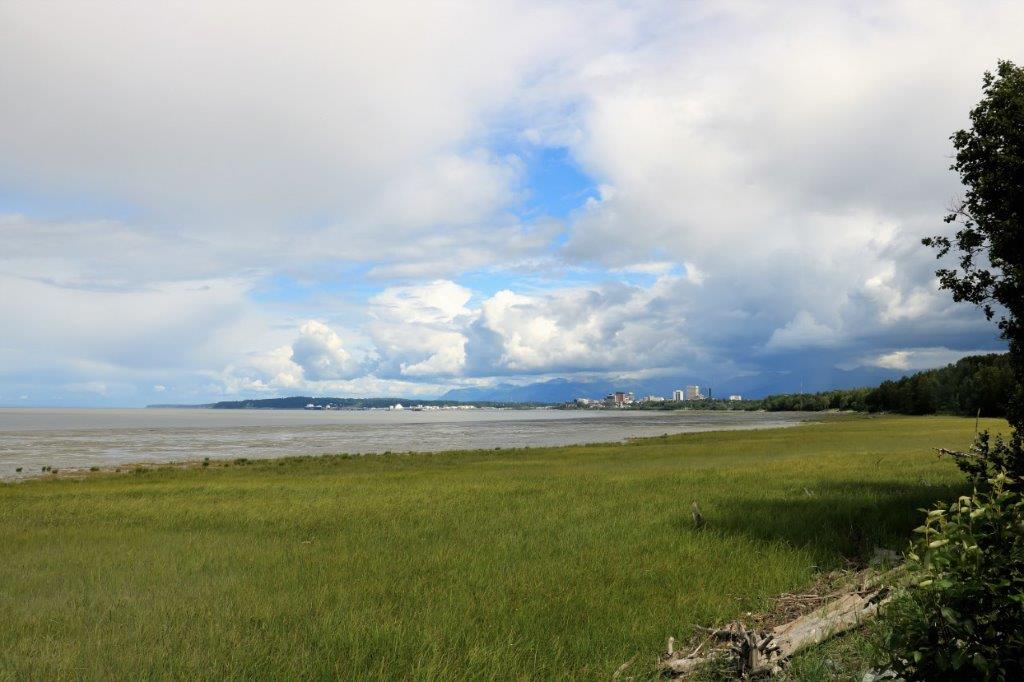
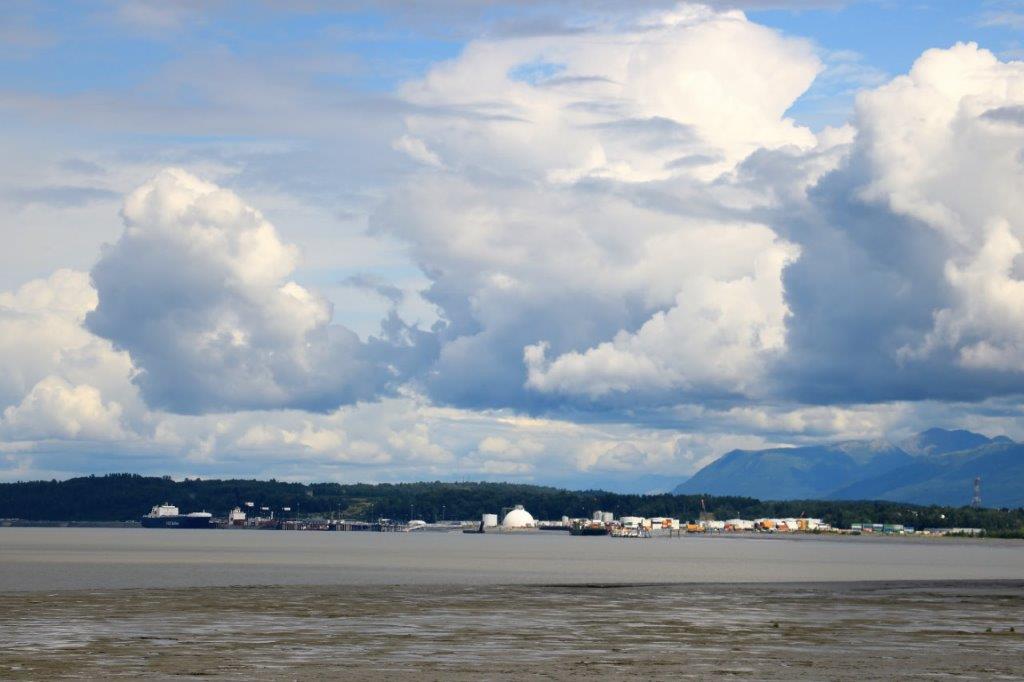
There were little ponds all over in the bush and the water was so still the reflections were mirror-images.We went back to the main paved trail and walked down to the shore.  This cliff is the new shoreline after the 1200′ that was in front of it disappeared in the earthquake.We had tried to find a couple of geocaches that were hidden in the park but had no success. We knew there were a few near the hotel and a huge black cloud was moving in so we decided to drive back and pick up a the nearby caches before the storm broke.

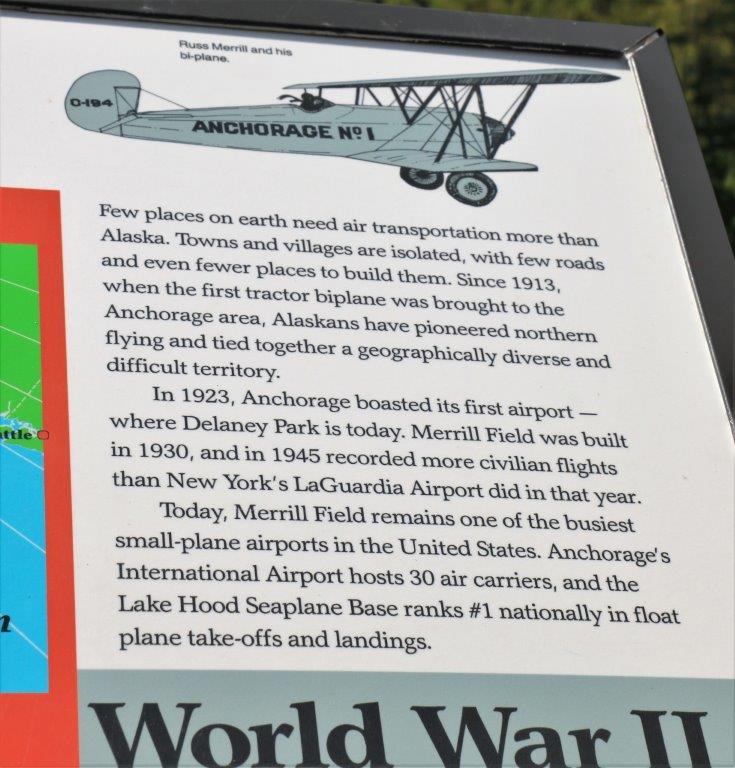
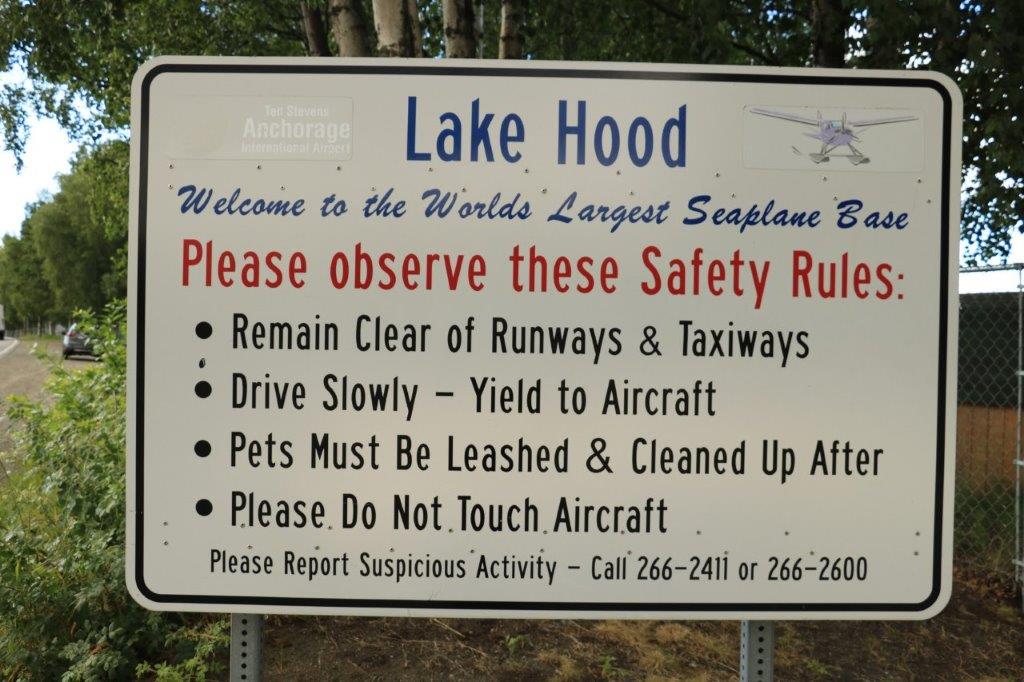
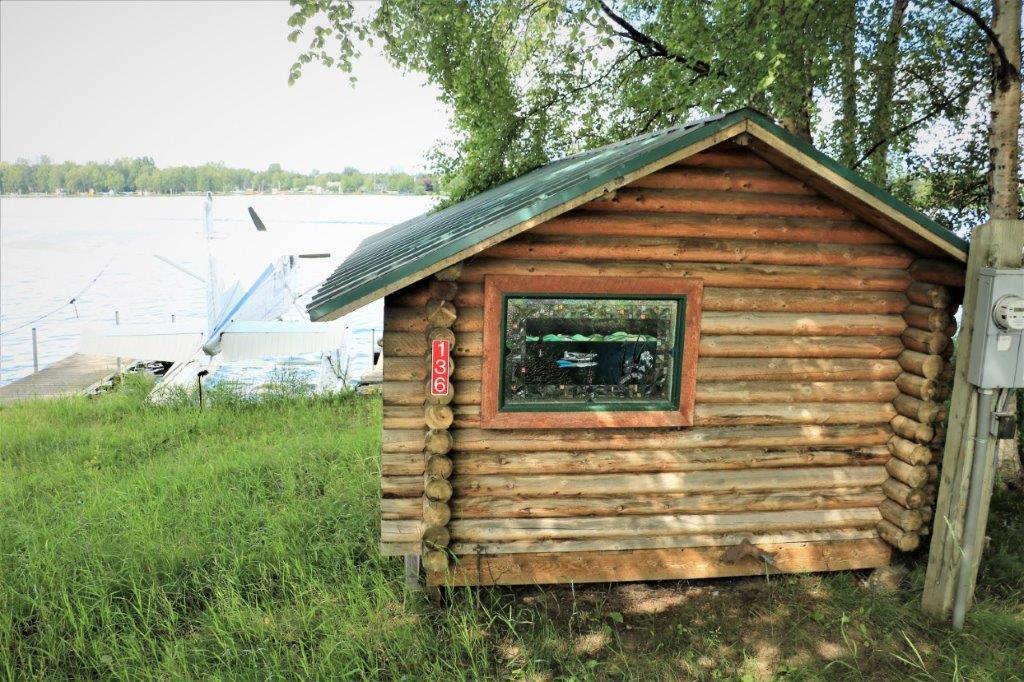
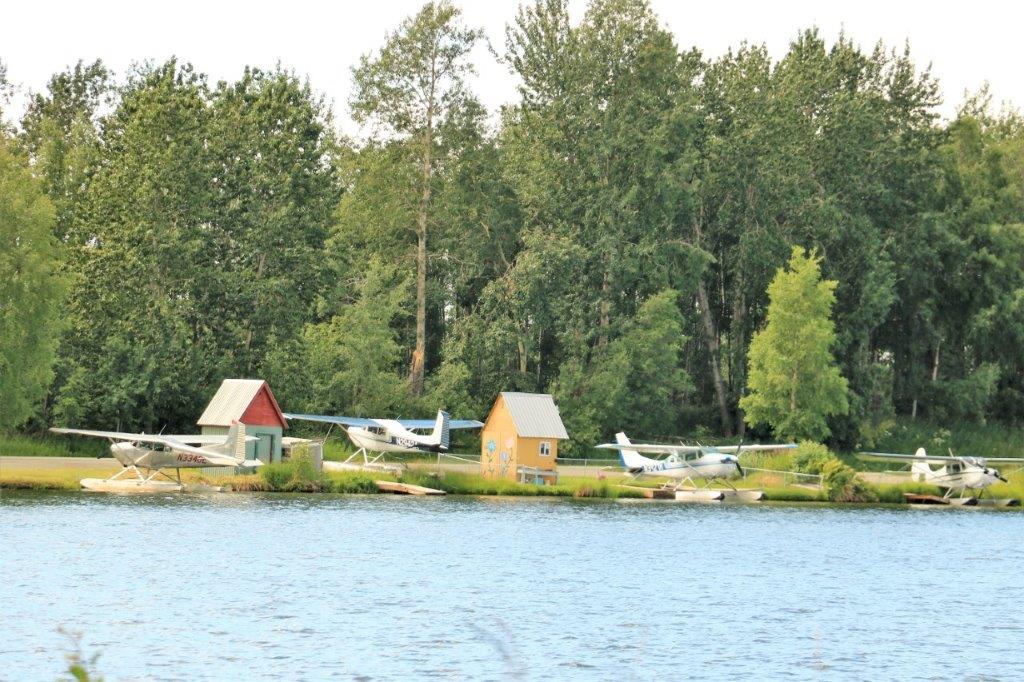
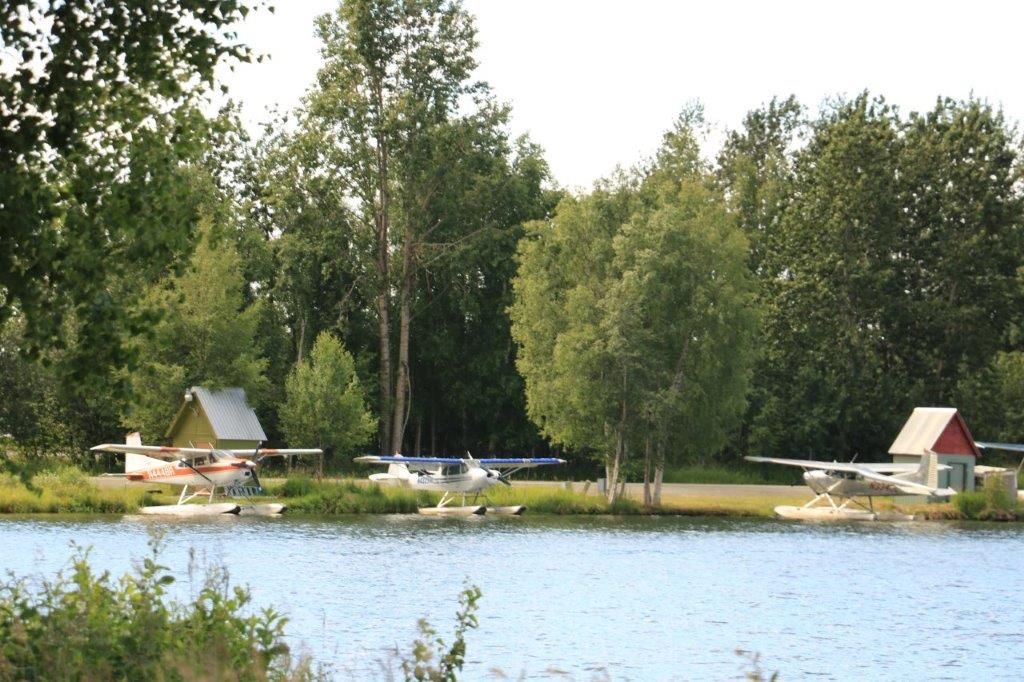
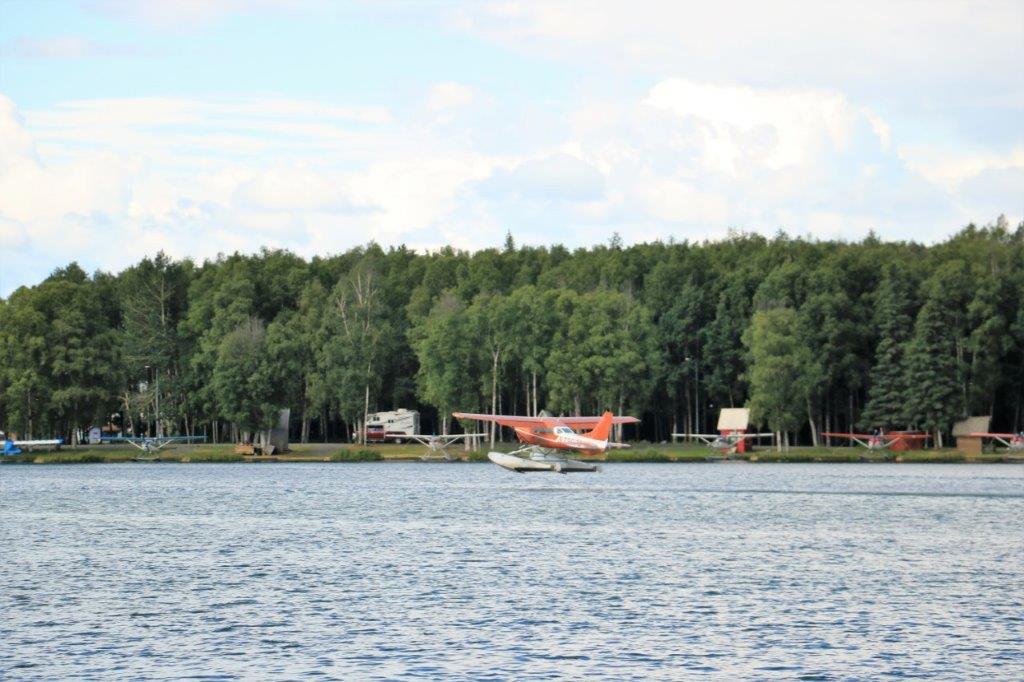
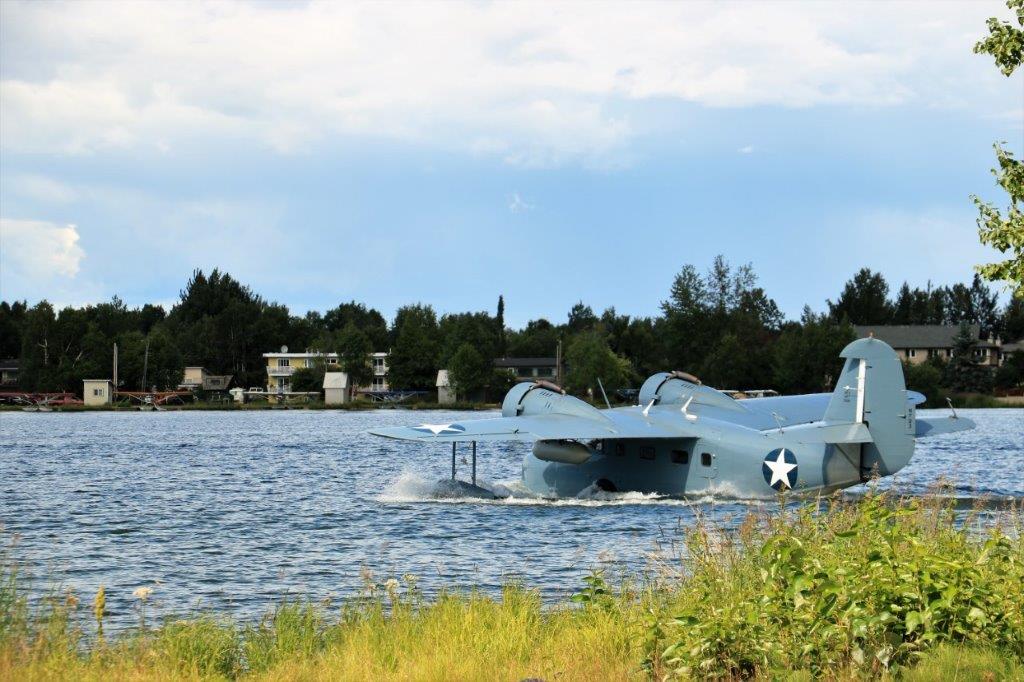
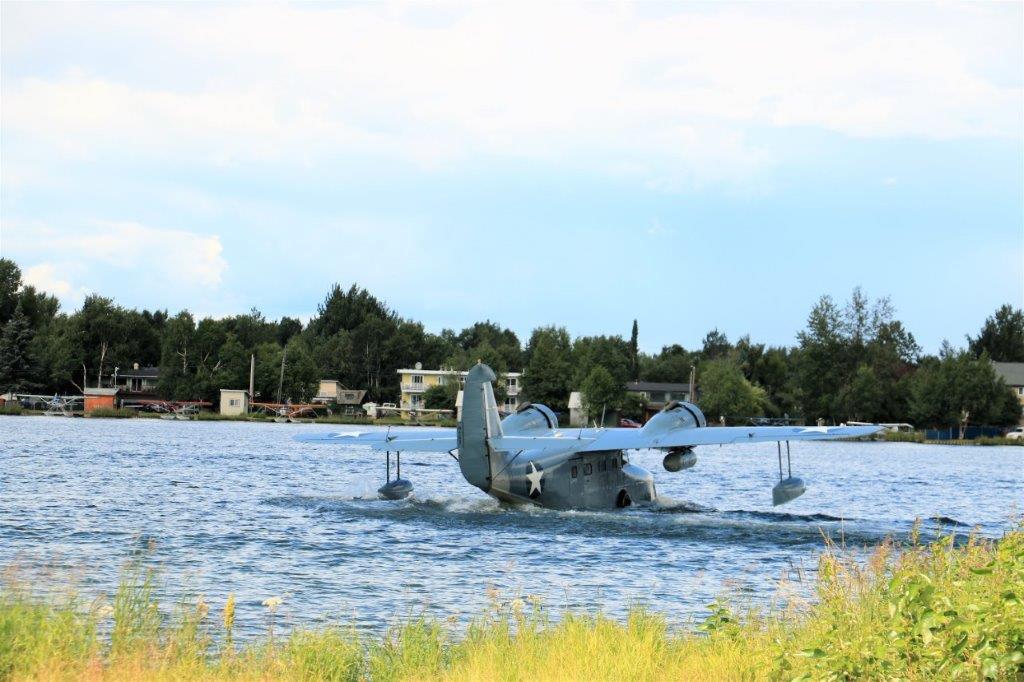
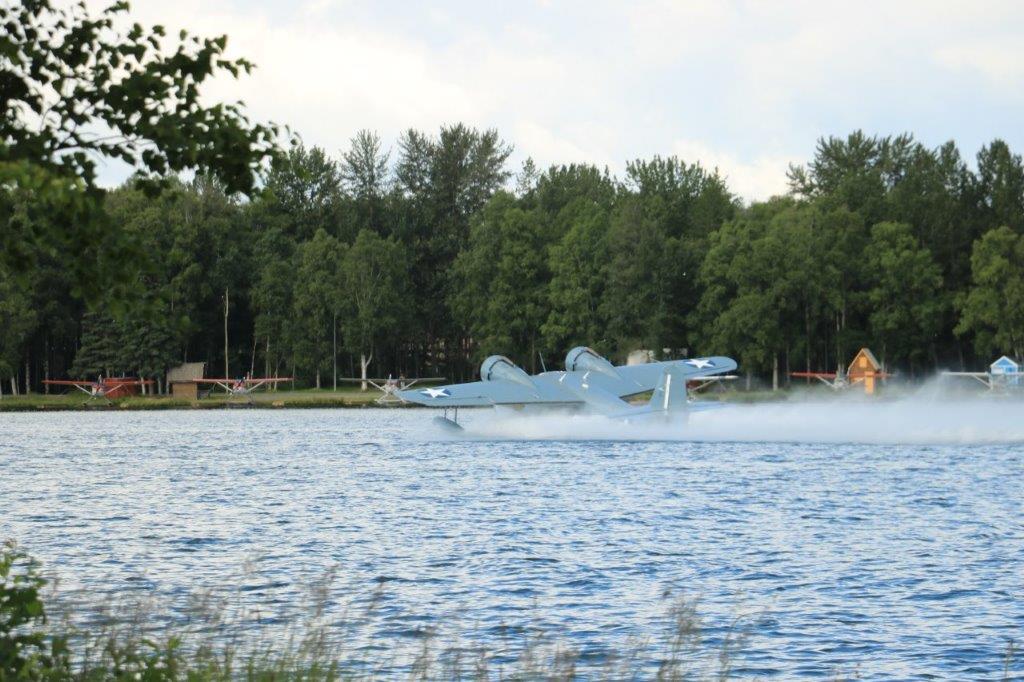
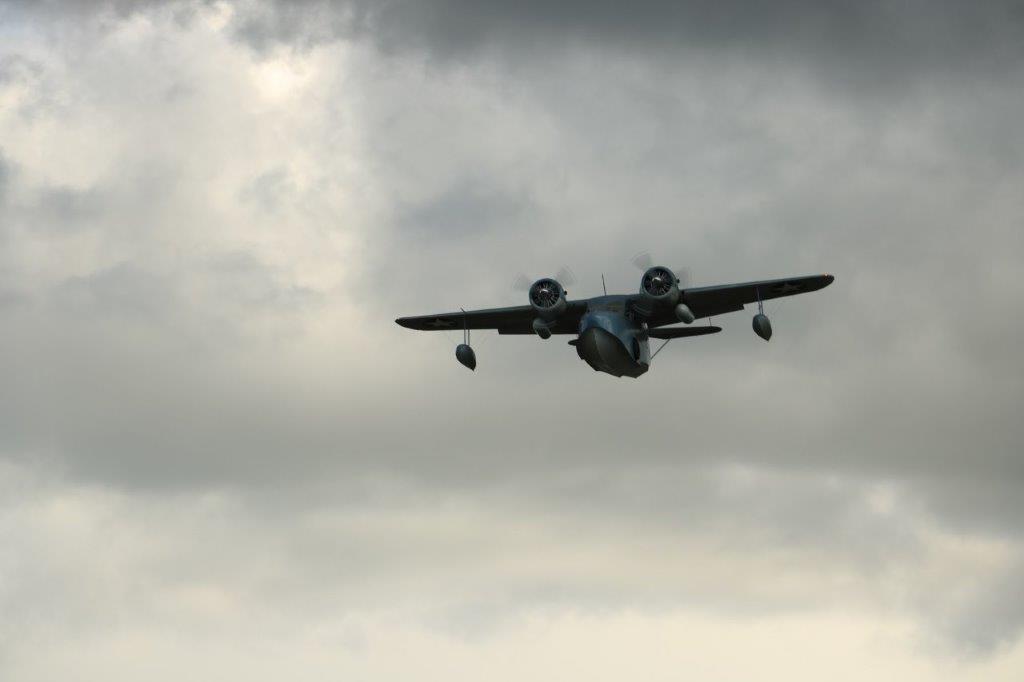
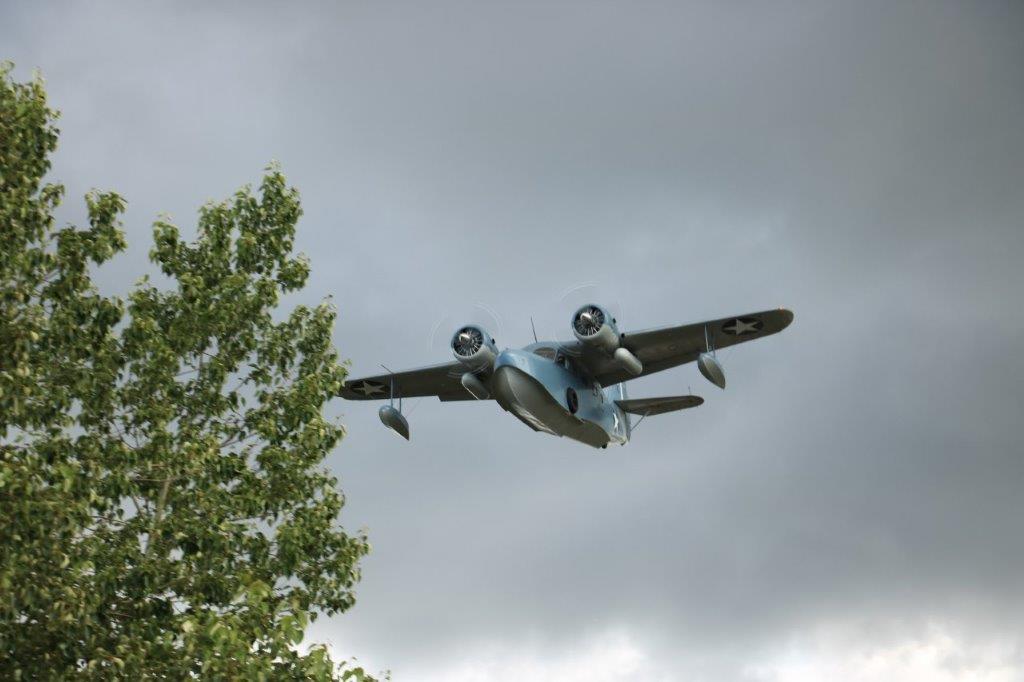
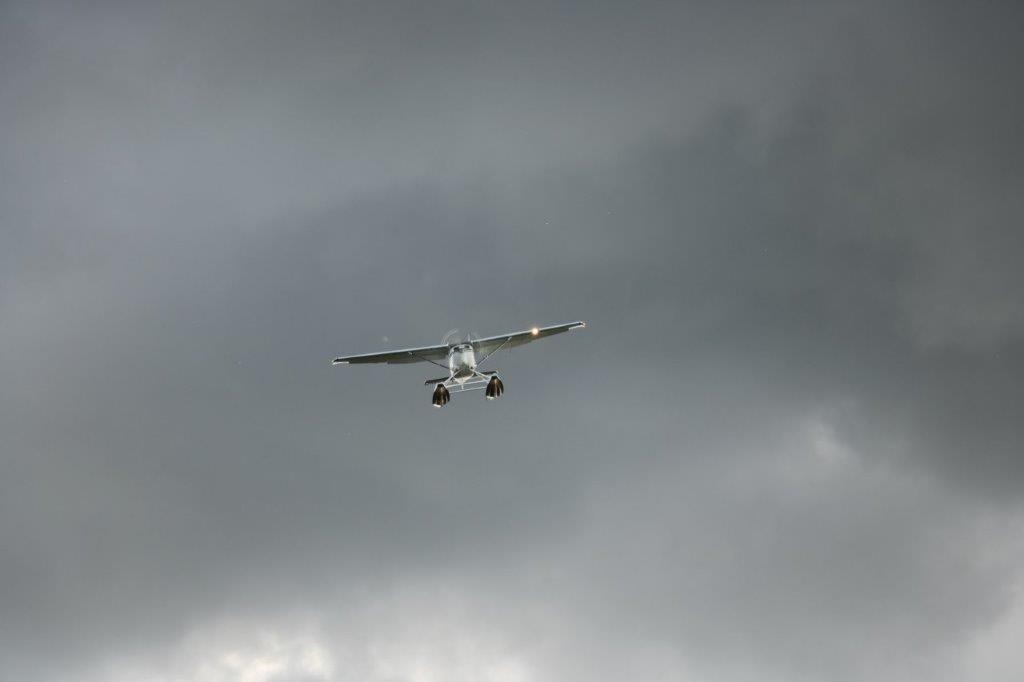
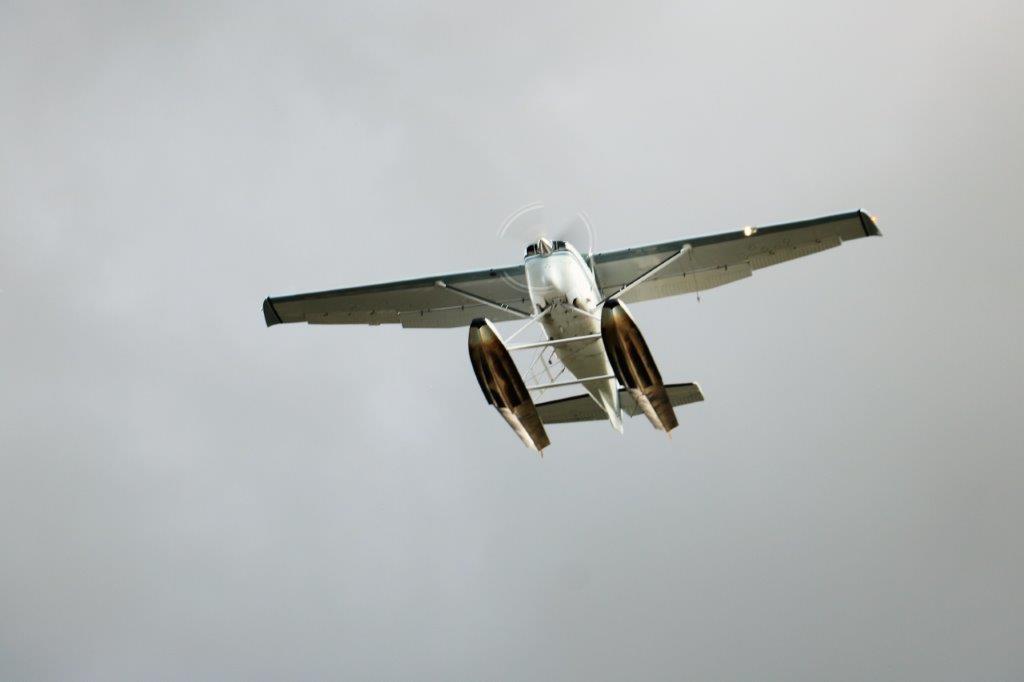
Our hotel is right beside the Lake Hood – Lake Spenard aerodrome. There are float planes tied up at docks all the way around the lake.  Each space has a small shed where the owner keeps tools and stuff.  The planes take off and land all day – one after another.  It was fun to watch them while we were cache hunting. This plane owner had a lovely stained-glass window in his little tool cabin. The big black cloud hung heavy over the neighbourhood but nothing came of it, except to bring a few of the planes back again. We found three caches and then went back to the room and were lazy until we went down for dinner and the subsequent neglect.  But we are all happily fed up now, so all is right with the world.

We leave in the morning for the Kenai Peninsula.  We plan to spend two nights in Kenai – and maybe drive down to Homer from there – and then one night just on the other side of the land spit in Seward.  From Seward we go to Valdez on another of Alaska’s southeast coast peninsulas.
2018 July 12 – Fairbanks, Alaska

As my sister correctly surmised after reading yesterday’s blog, today was a museum day.  Fairbanks has a lot of museums.  They cover just about every topic you can think of.  But, we only went to two, plus the Pioneer Park.  That being said this is a very photo heavy-text light blog.

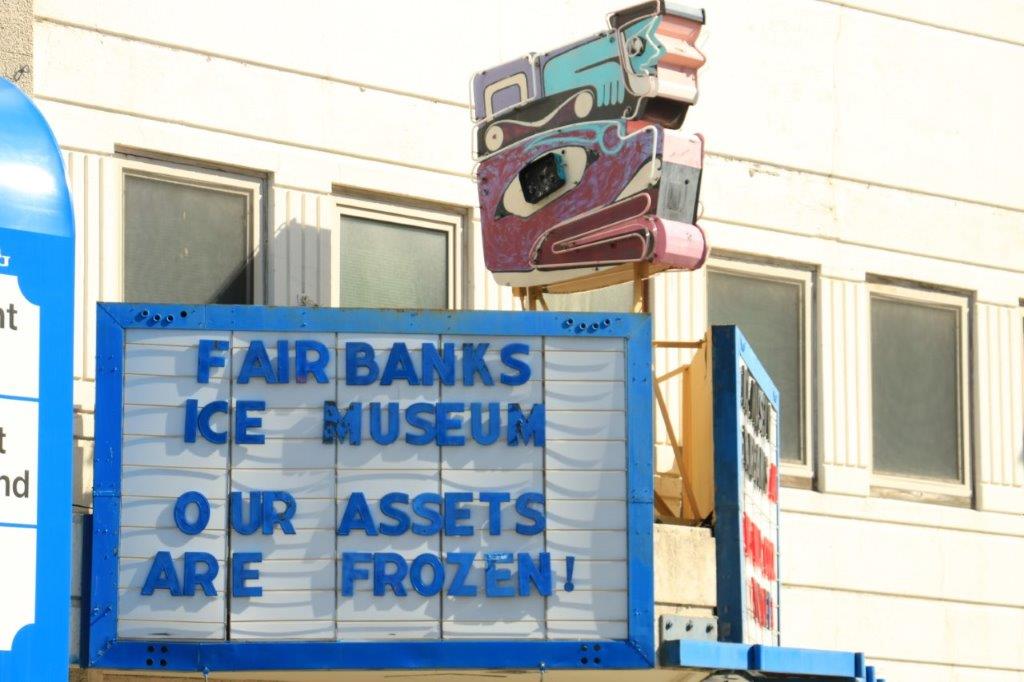
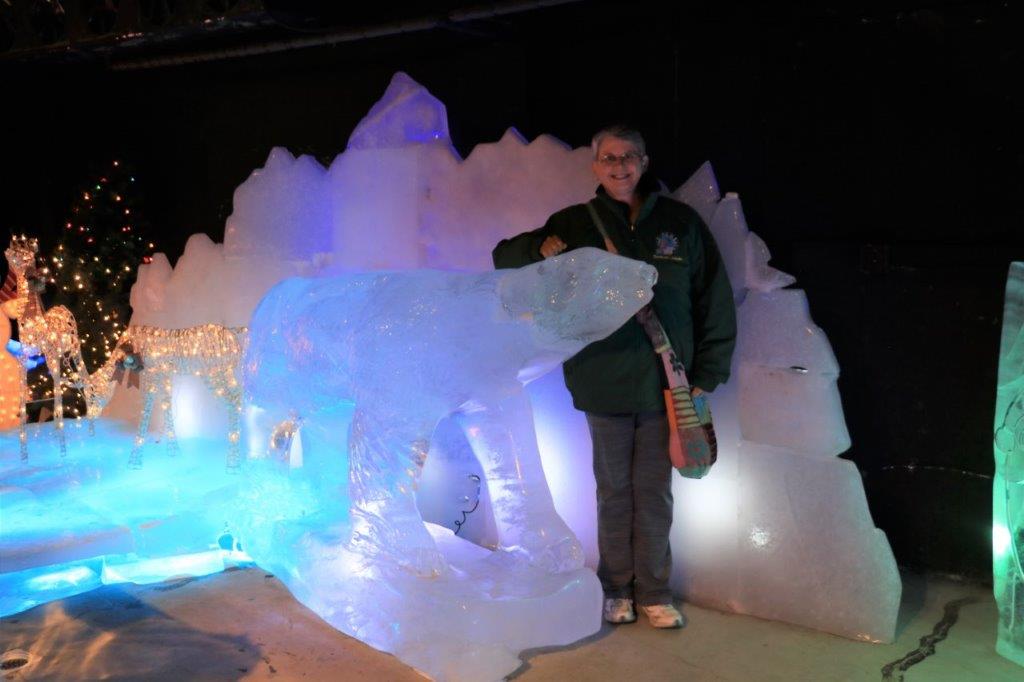
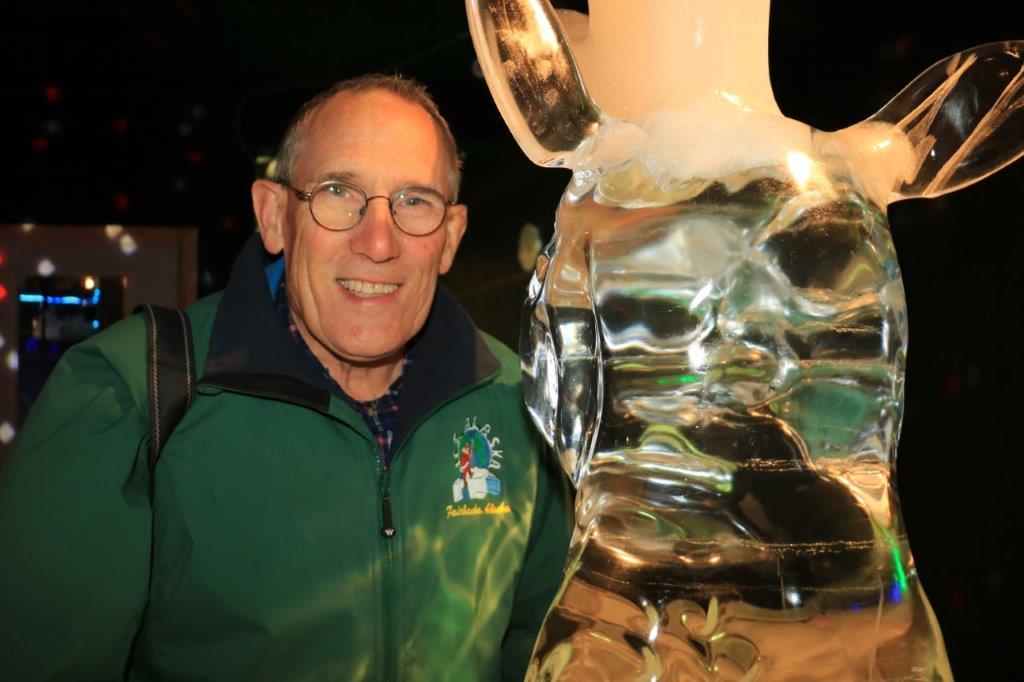
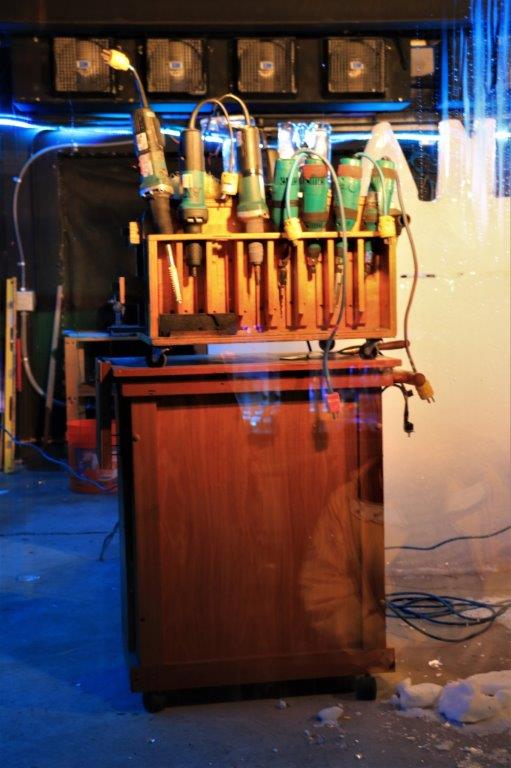
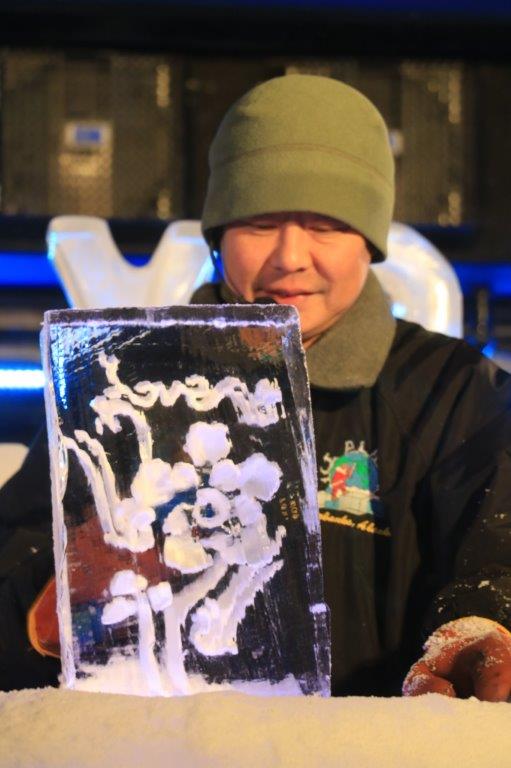
We first went to the Ice Museum in downtown Fairbanks.  A young Asian fellow with fractured English hustled us quickly into a darkened theater where a film showing the Northern Lights was playing.  When it ended he said there was another film about the Fairbanks International Ice Sculpting competion, to be followed by some time in the cooler with some ice sculptures and then an ice carving demonstration.  We could hear him escort other people into the theater during the film and by the time it was over there were about a dozen of us.

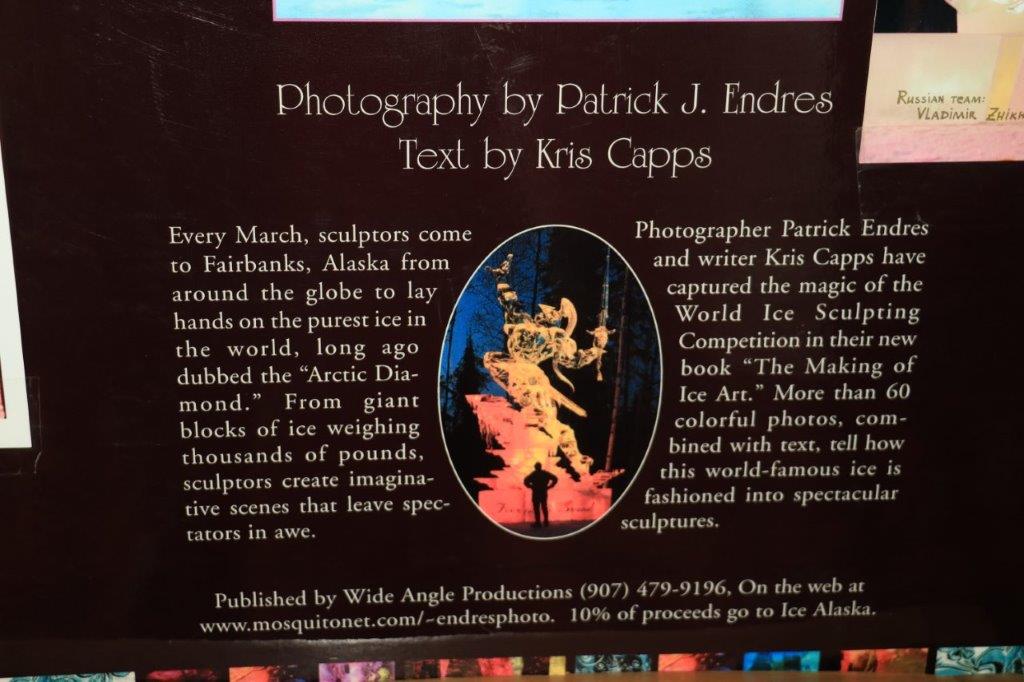
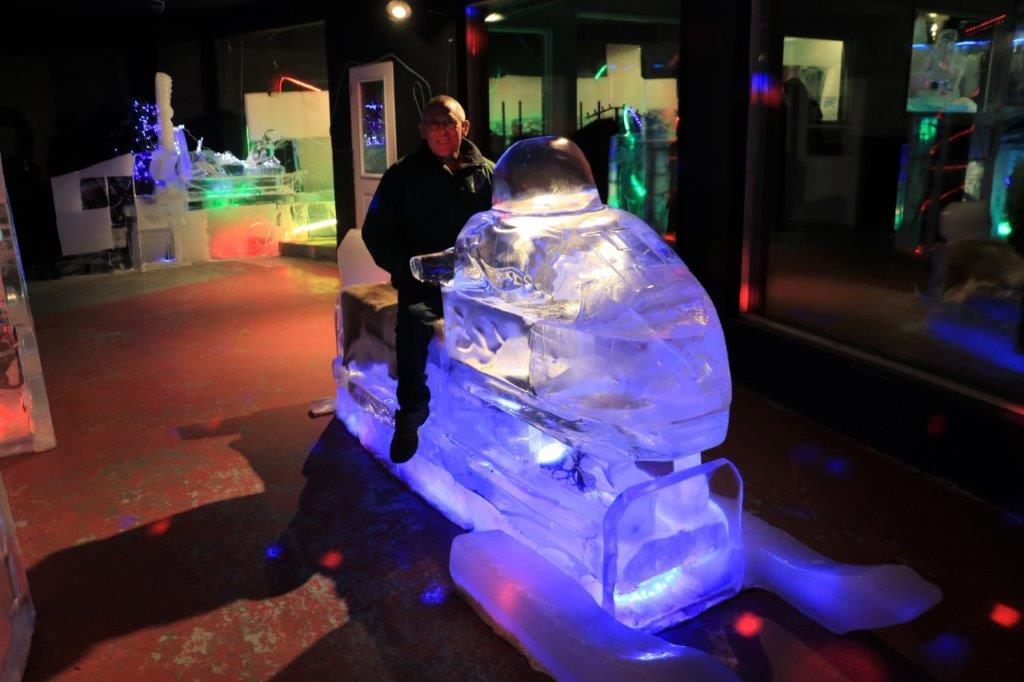
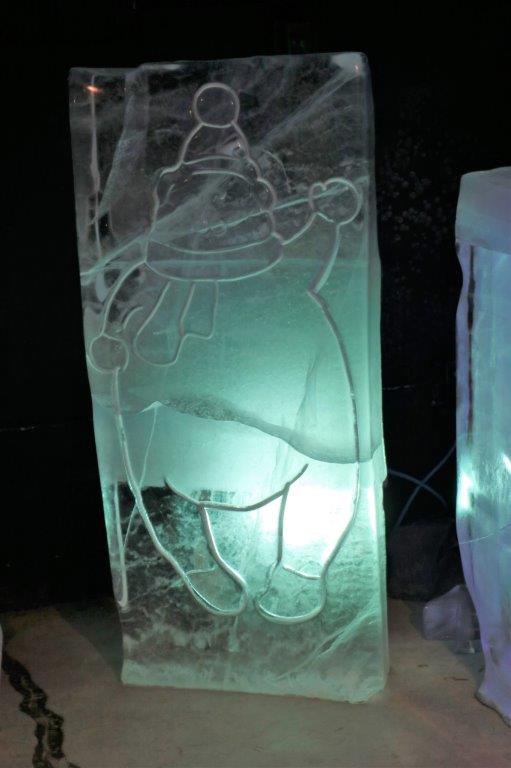
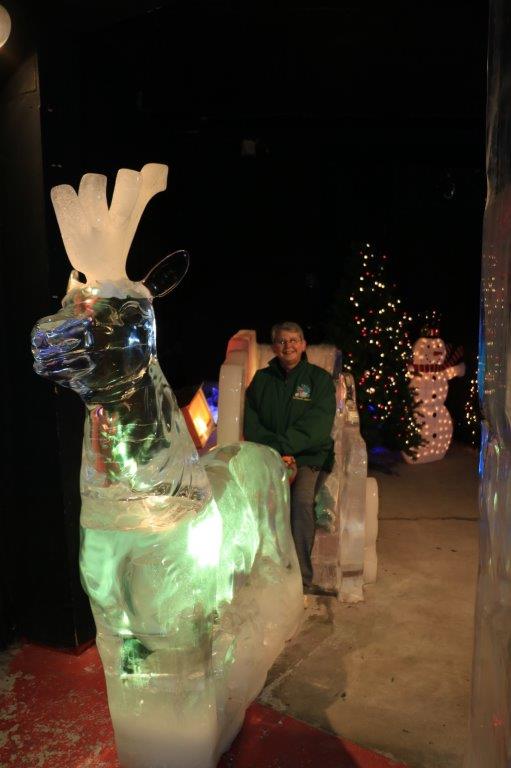
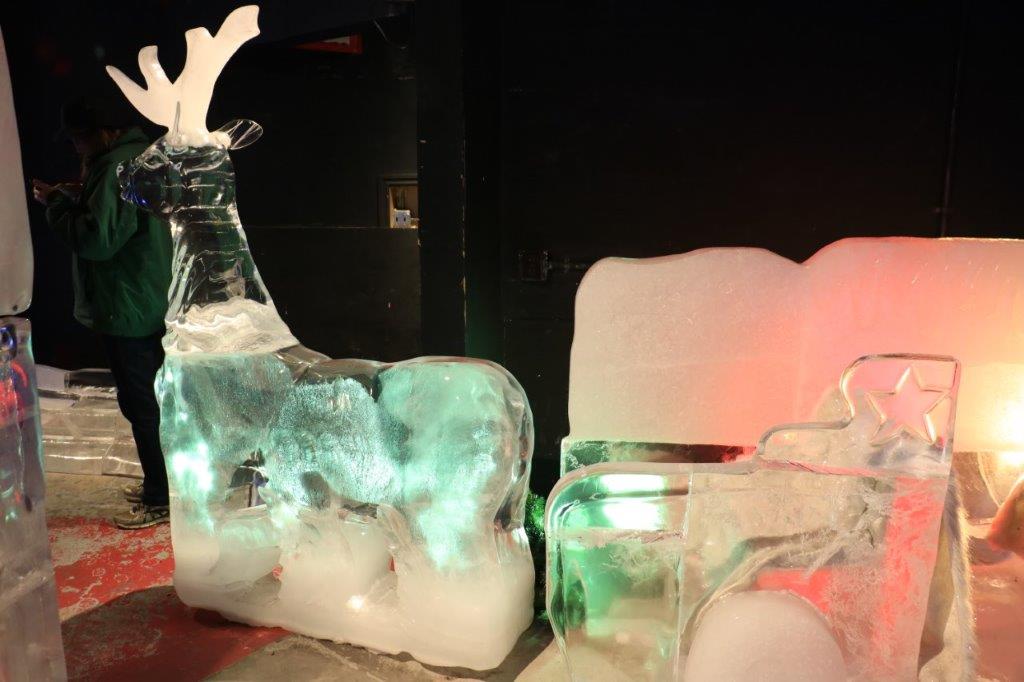
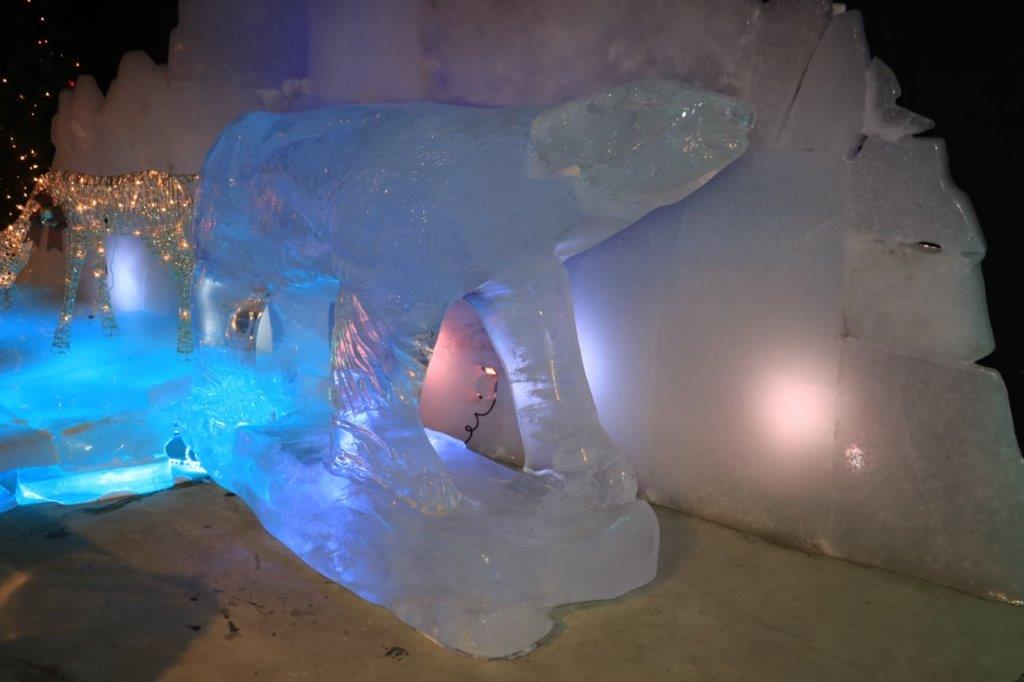
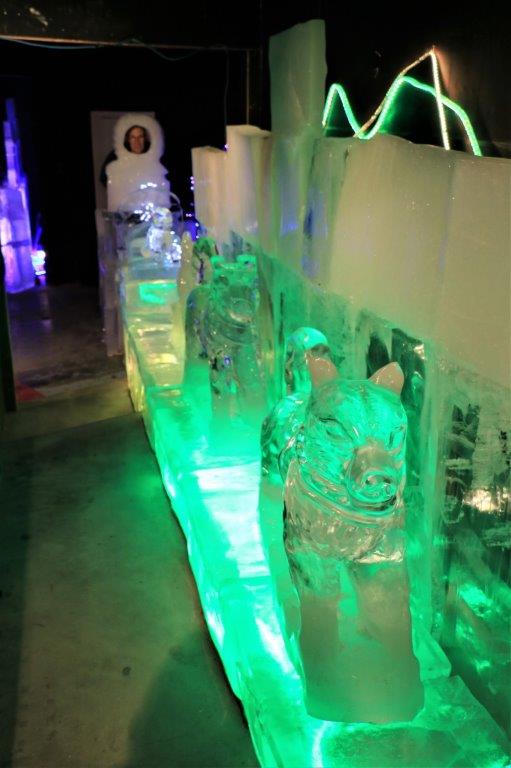
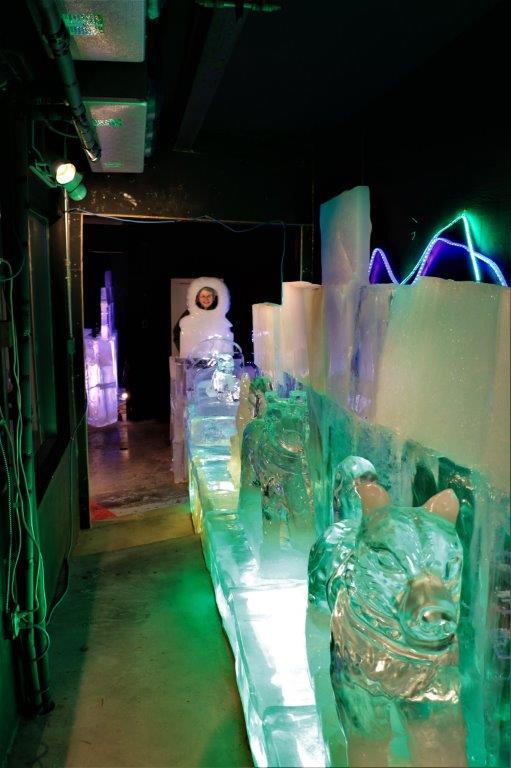
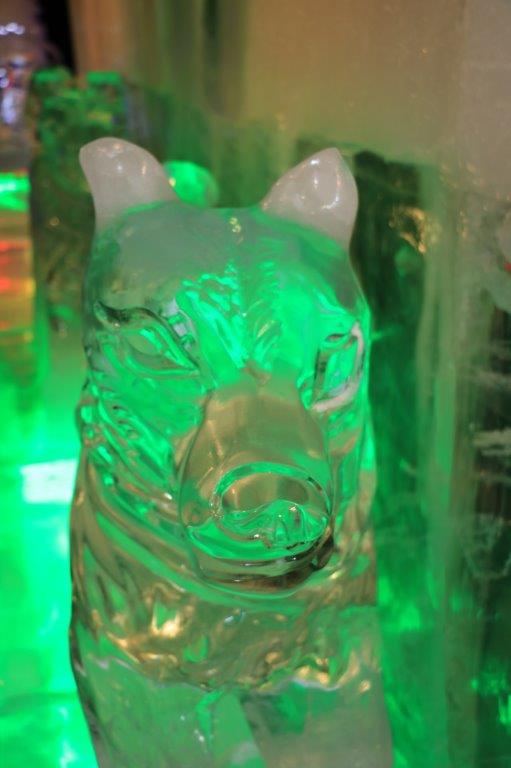
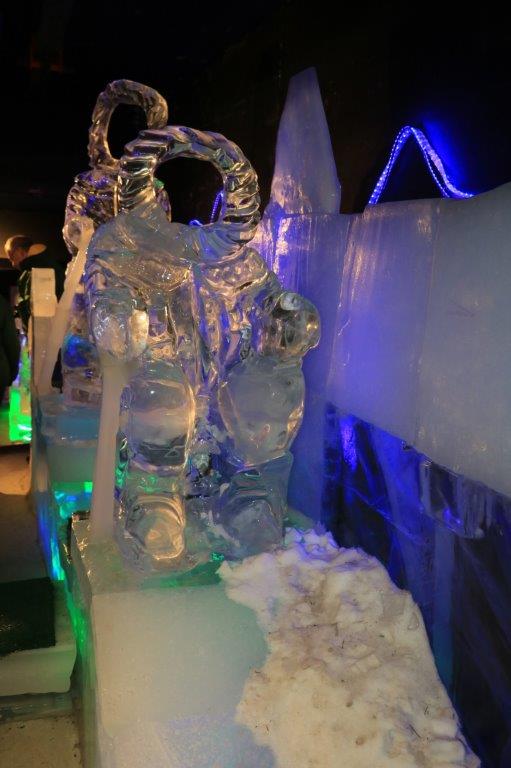
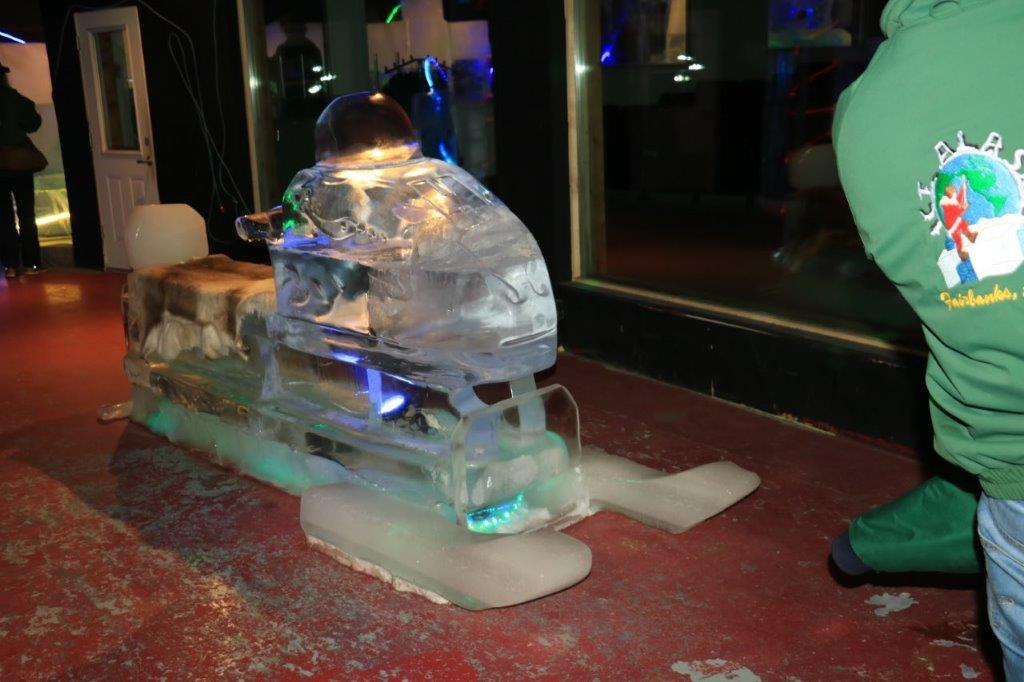
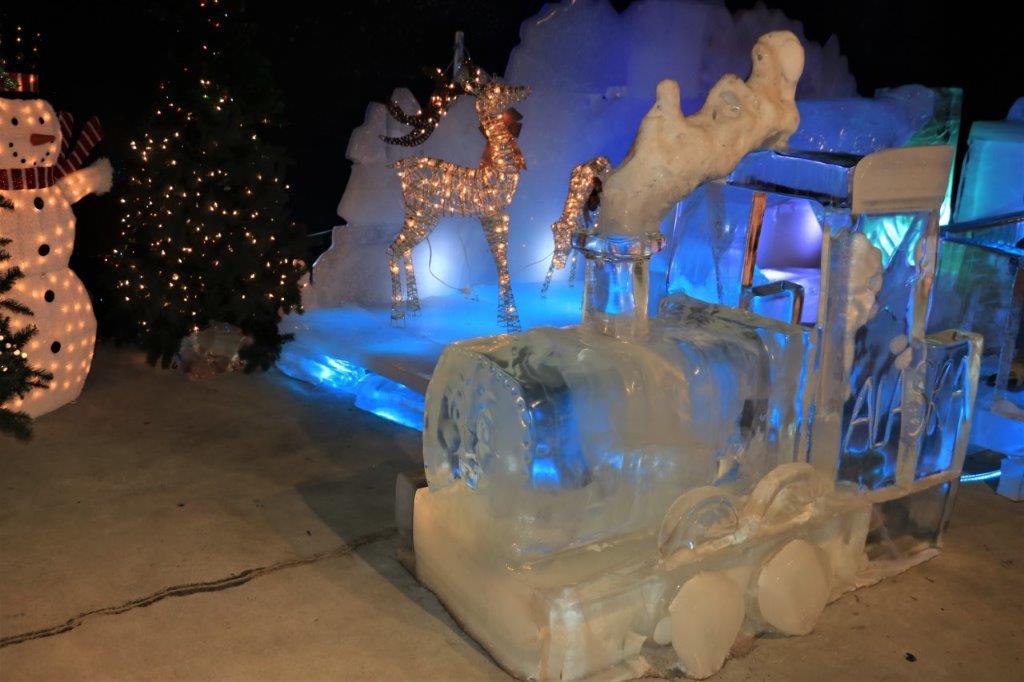
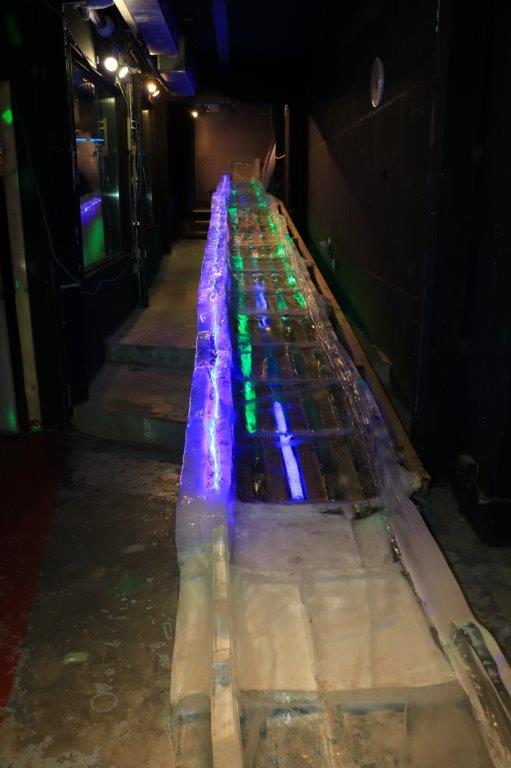
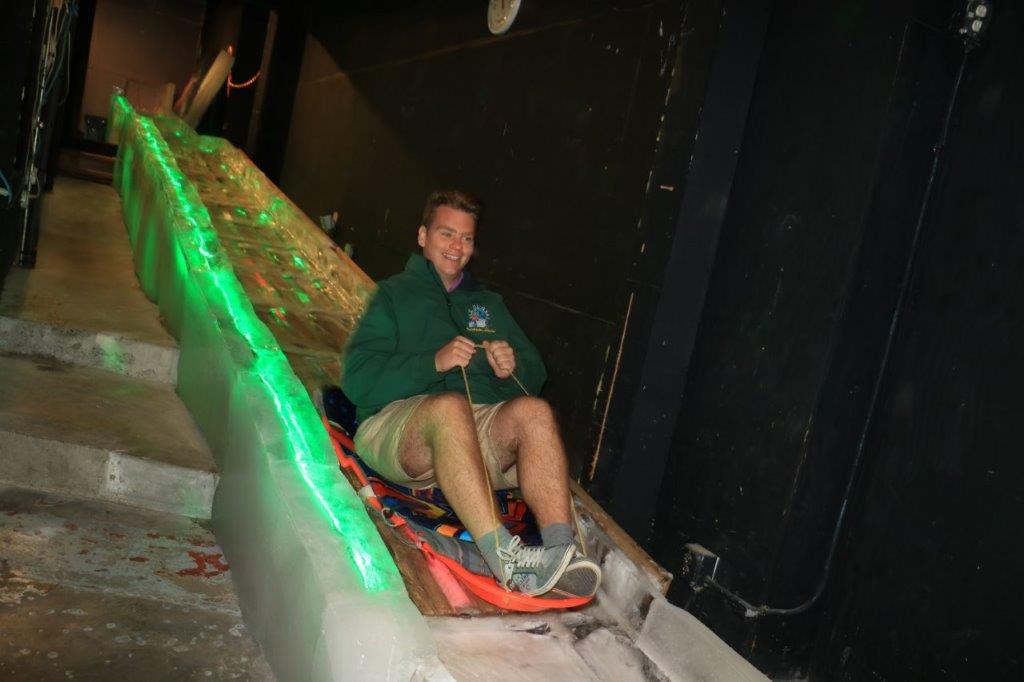
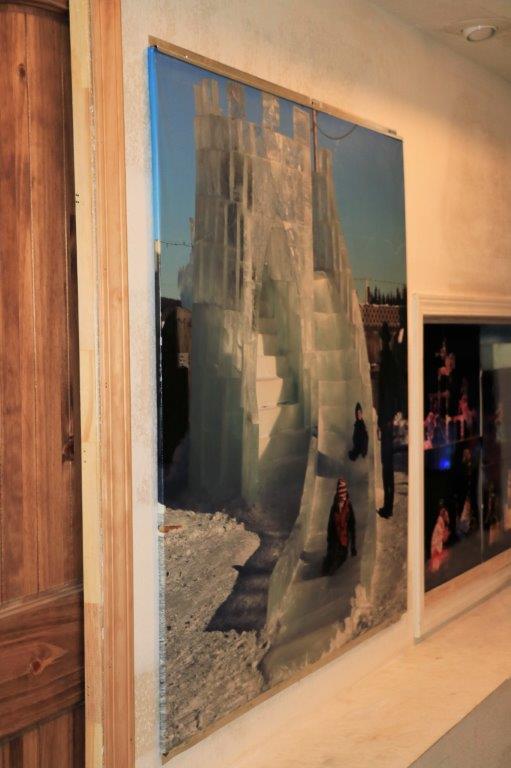
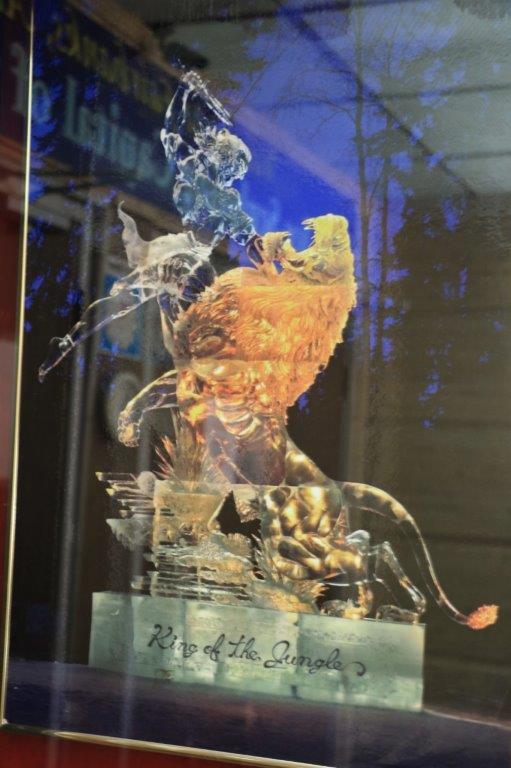
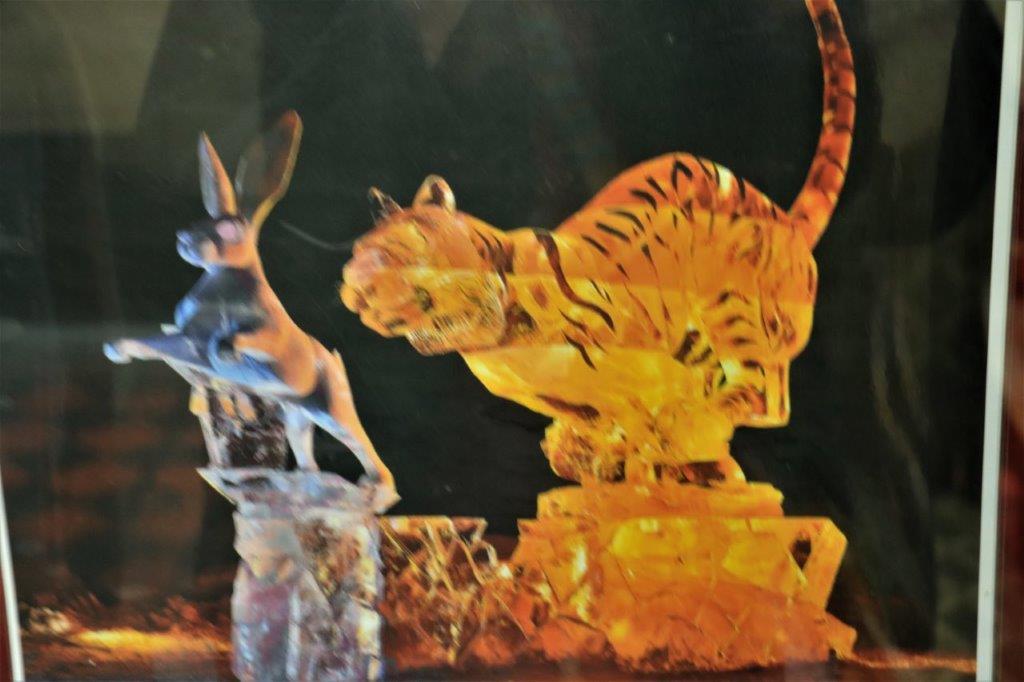
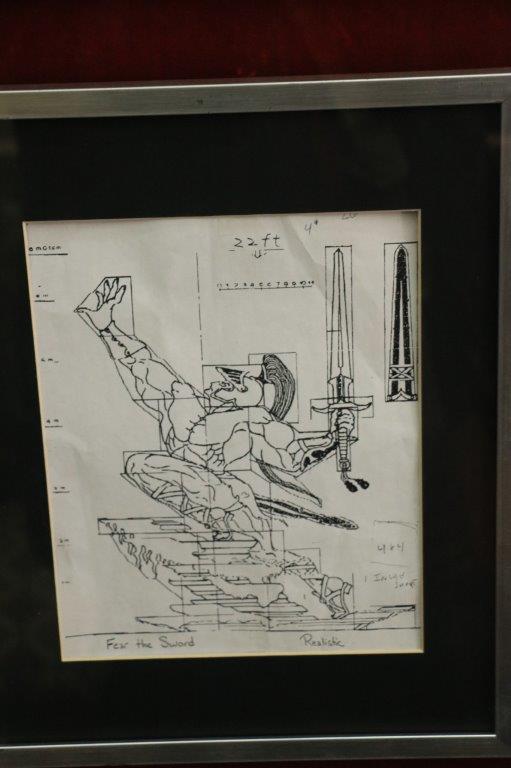
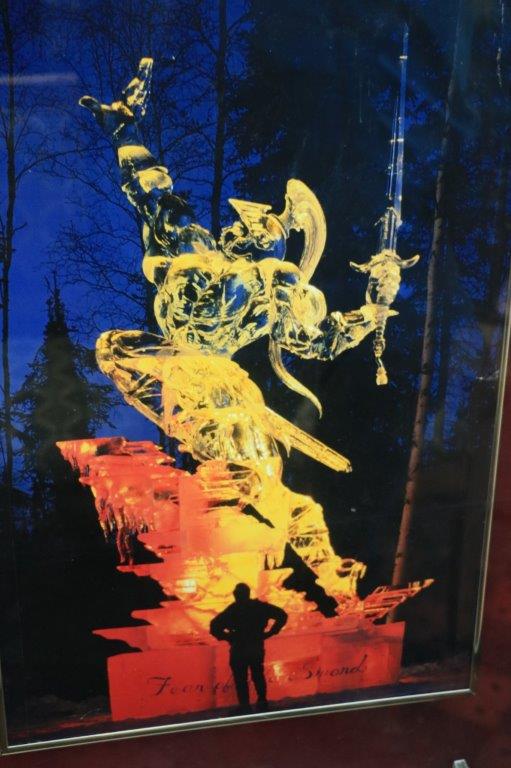
It took 4 ice sculptors 45 days to make all the items in the cooler.  The museum is only open during the summer months and they make new sculptures every year. They were all ‘interactive;’ meaning you were encouraged to stand beside or sit on or put your face through the appropriate spot for photographs.  I thought at first the museum staff was going to take the photos and then charge us for them, but no, we were given warm jackets and allowed to wander among the ice figures at will and enjoy ourselves.  It was fun. The ice is some of the purest in the world and a group of volunteers cut over 1,500 huge chucks of it out of the ponds and lakes for the sculpting competition.  They also send blocks of ice to other countries for special events  It is clear as glass when smoothed.   The sculpture that was used the most was the ice slide.    In the lobby there are photos of some of the ice sculptures from former competitions.  Some of them are huge!

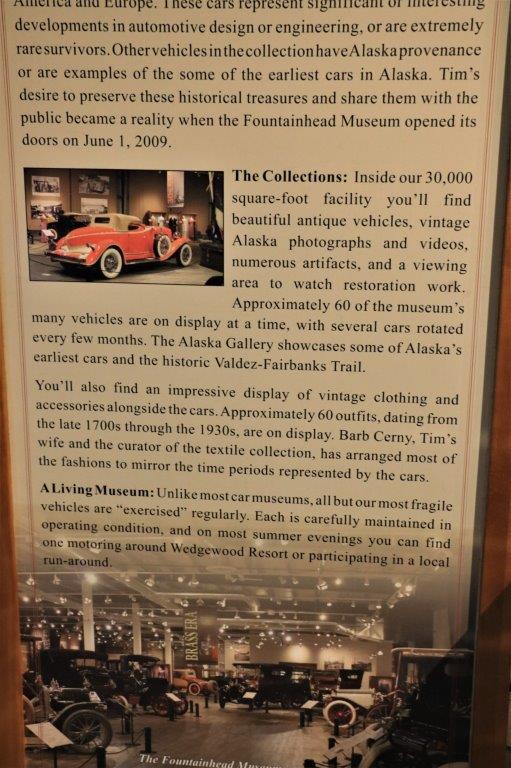
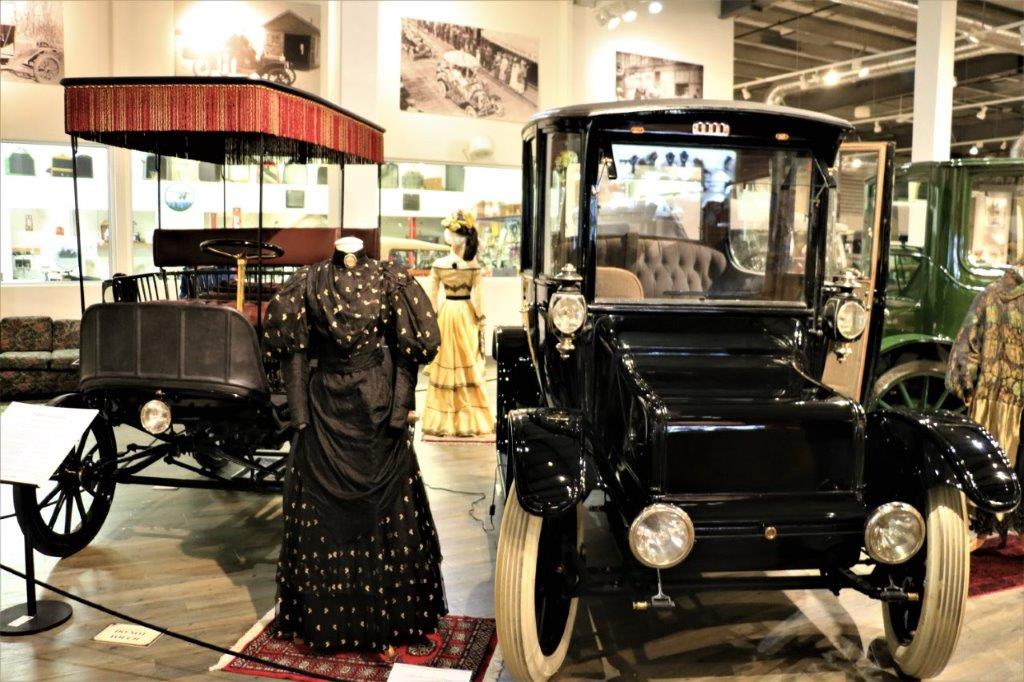
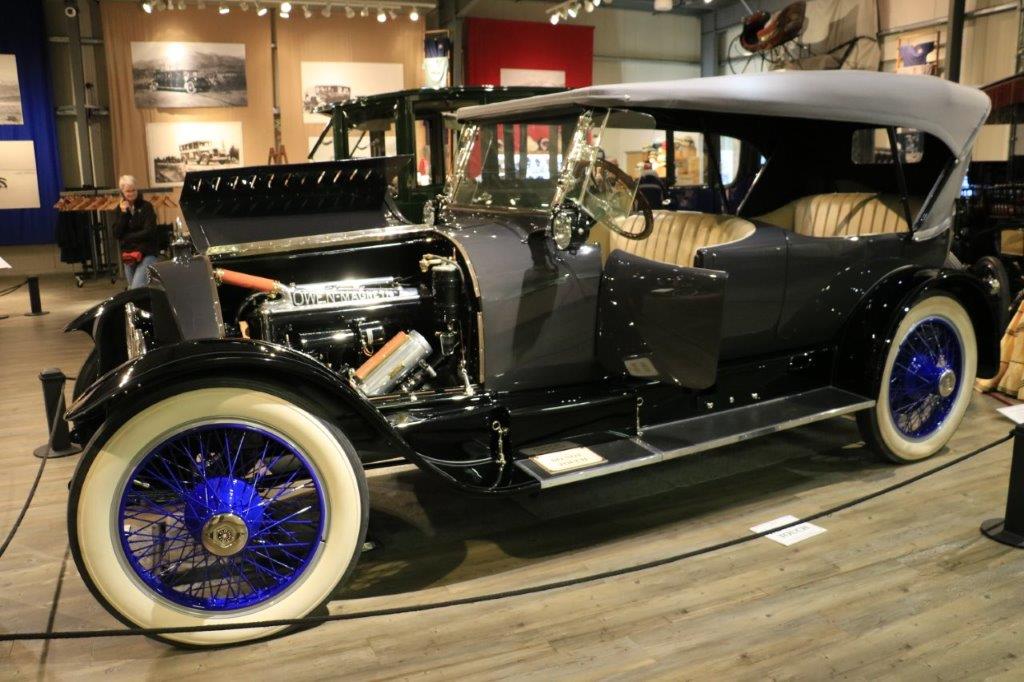
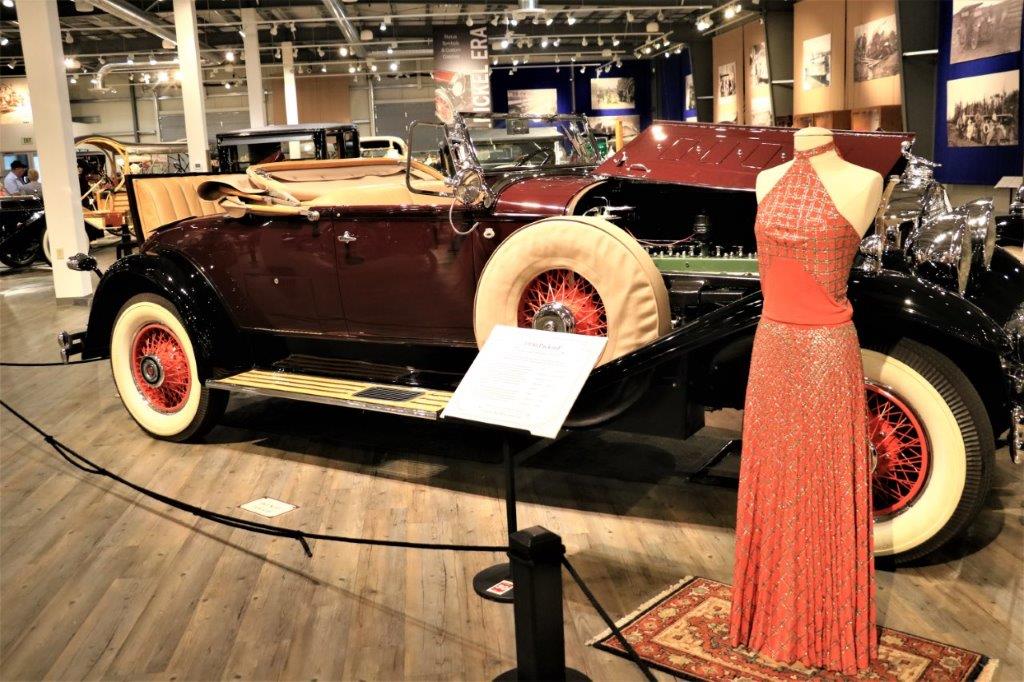
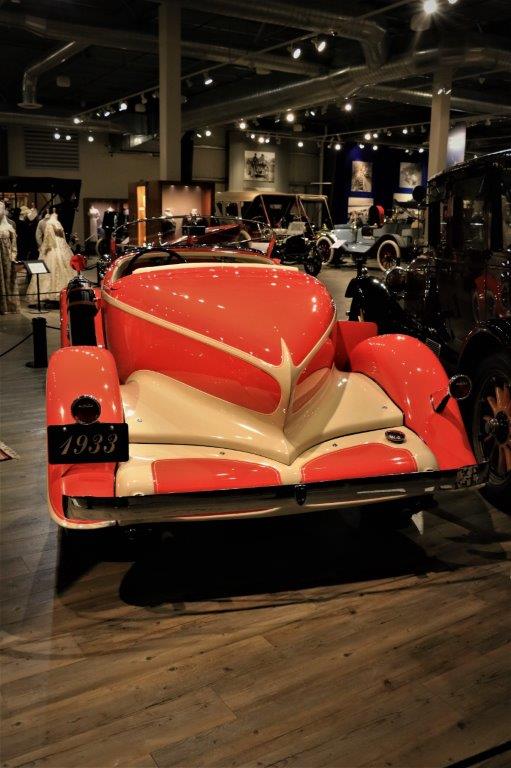
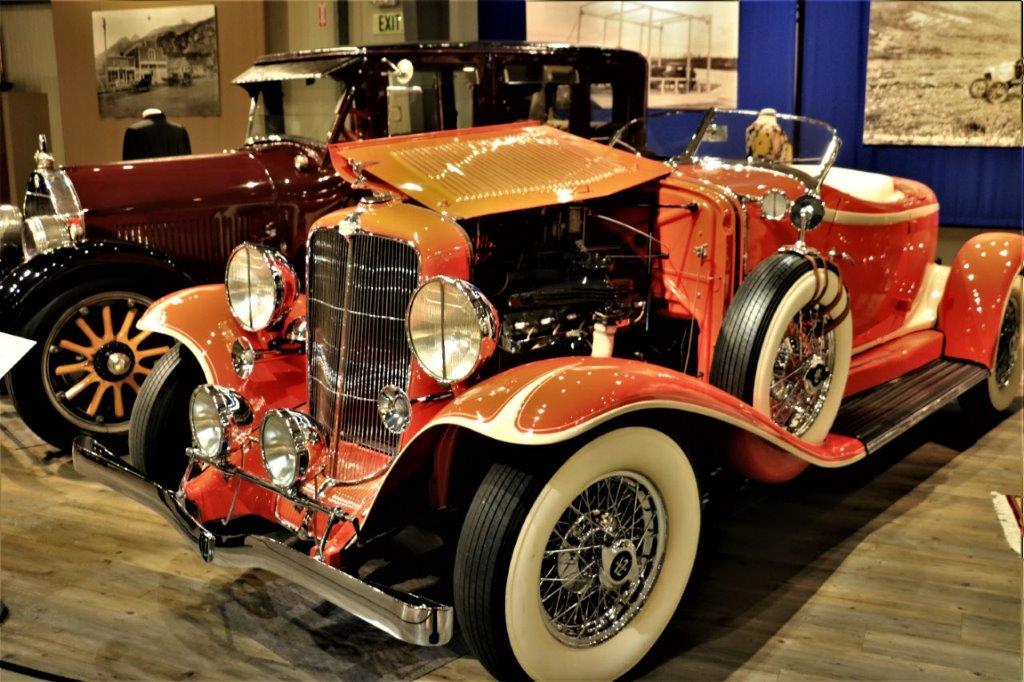
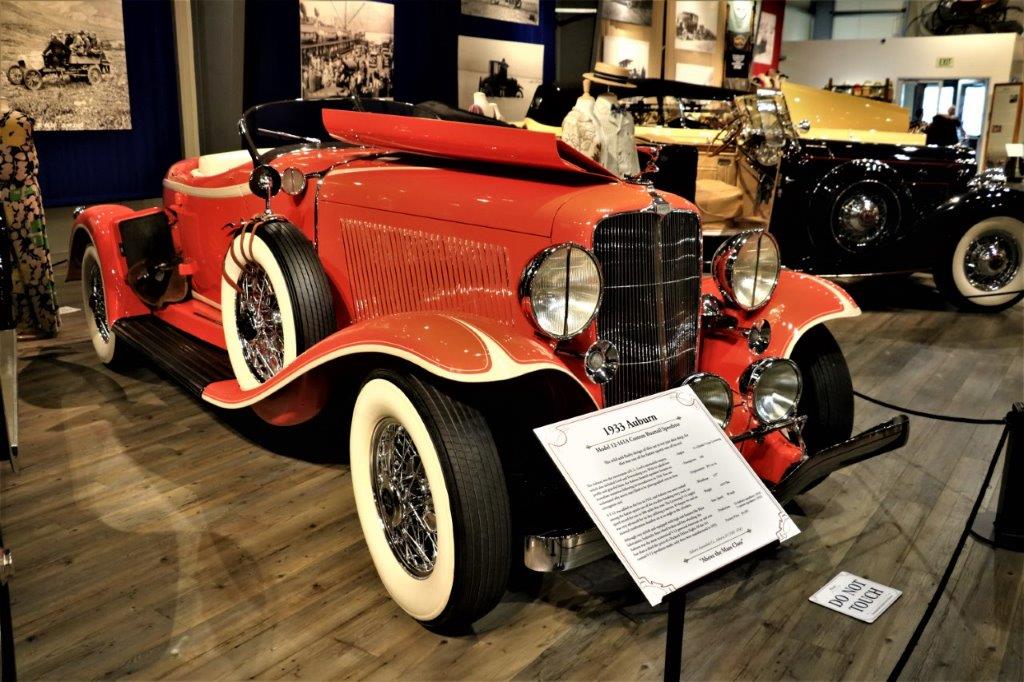
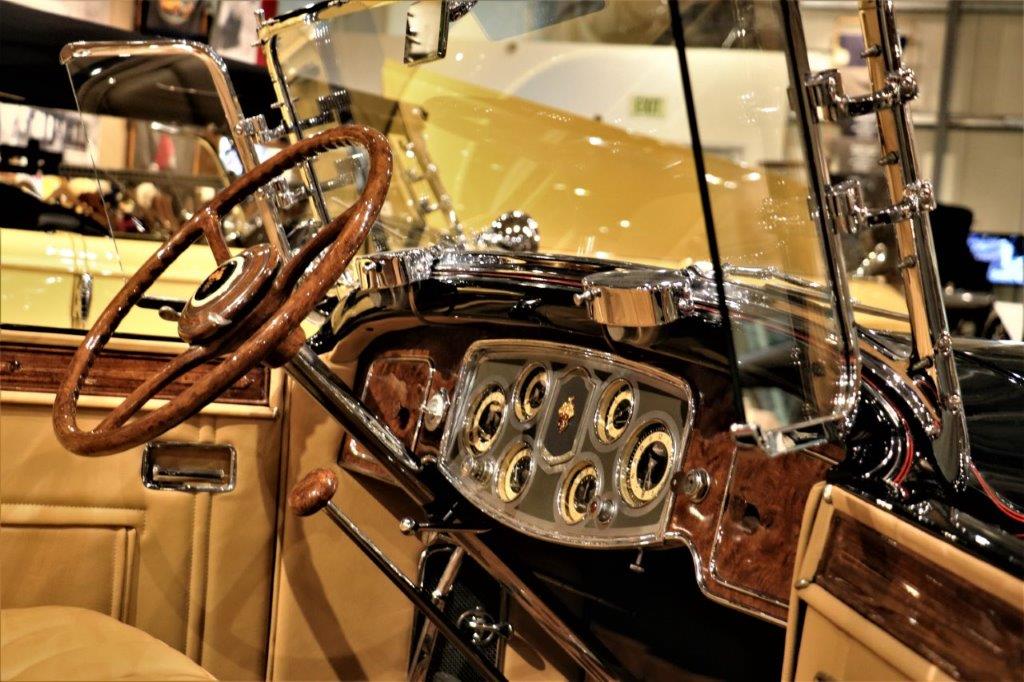
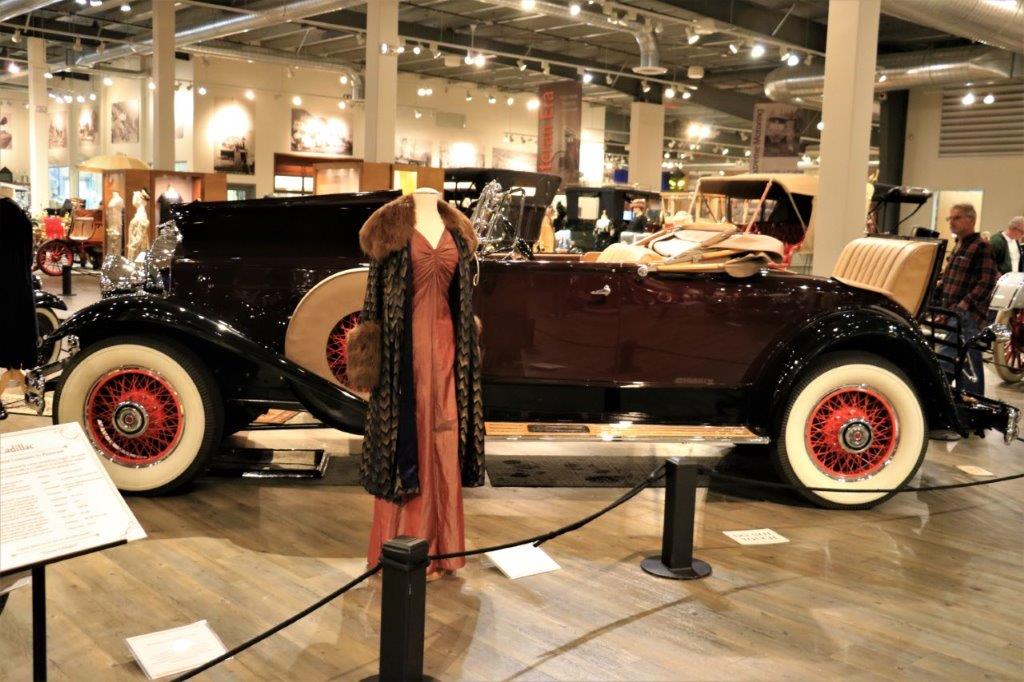
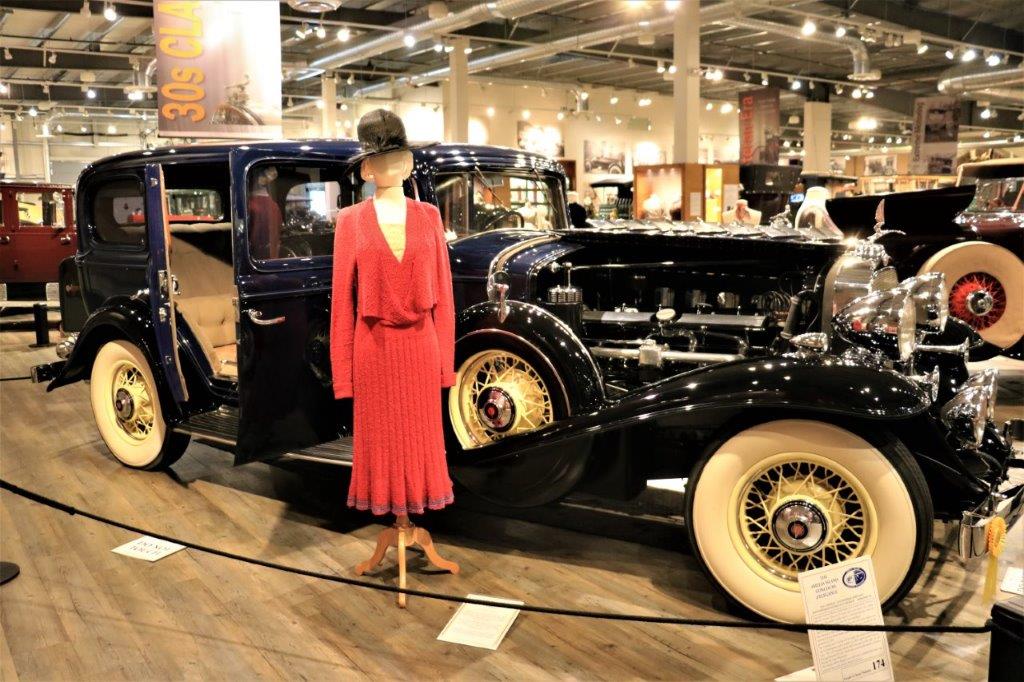
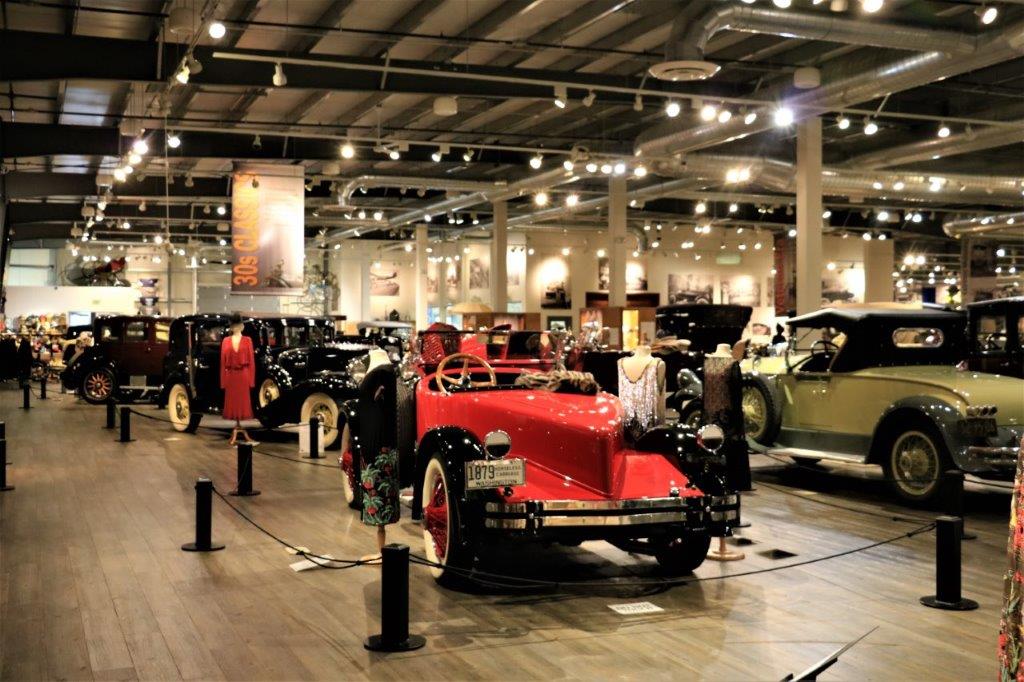
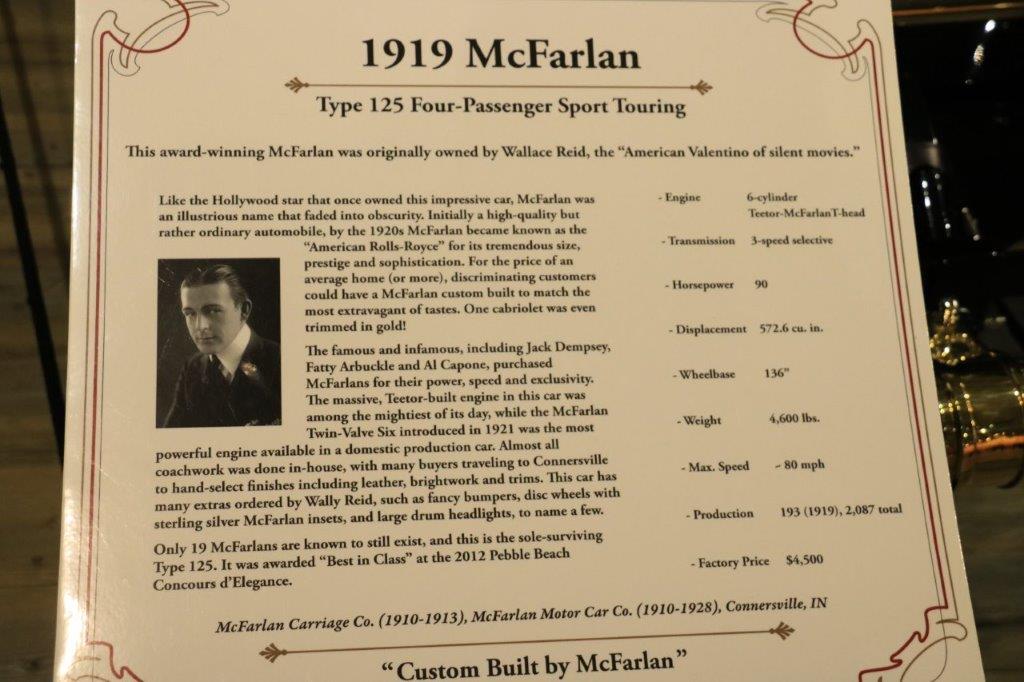
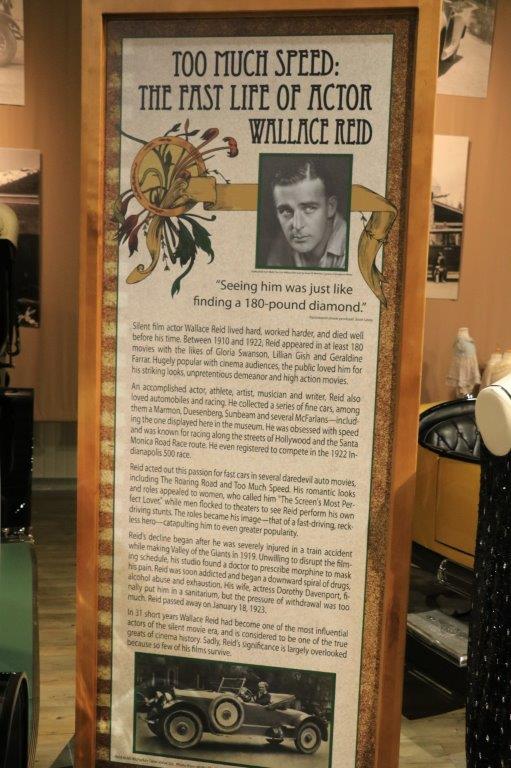
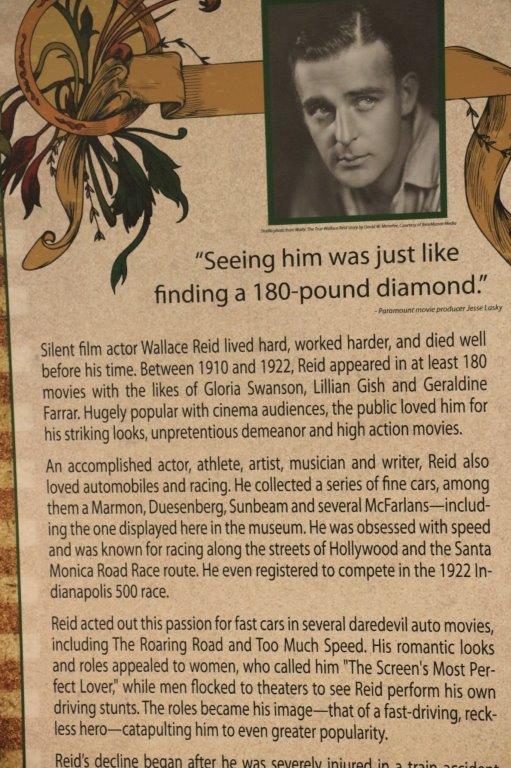
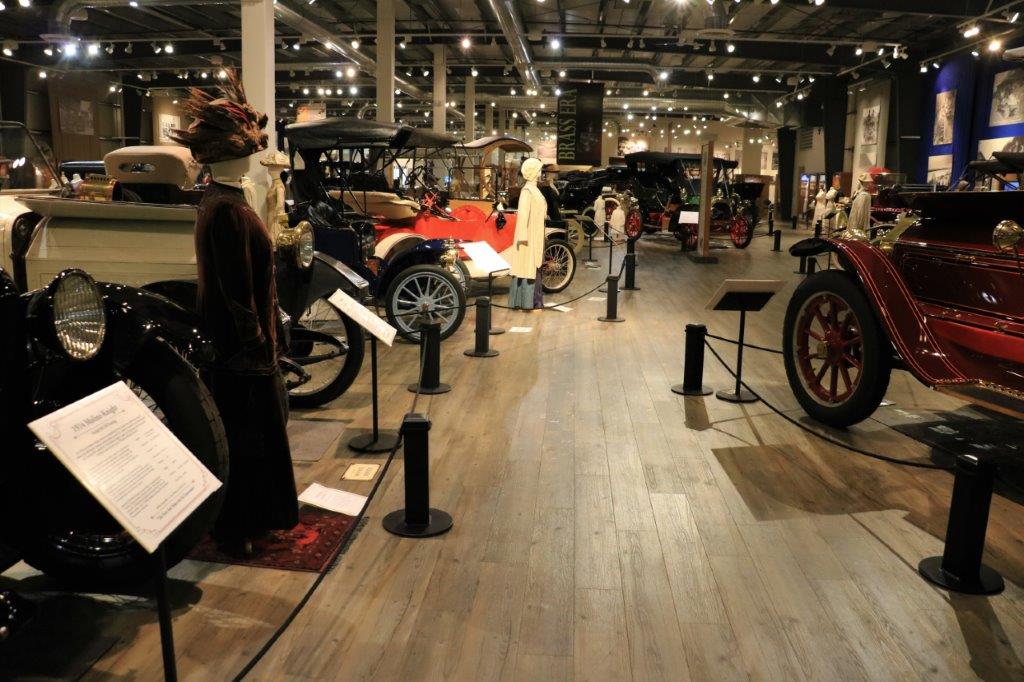
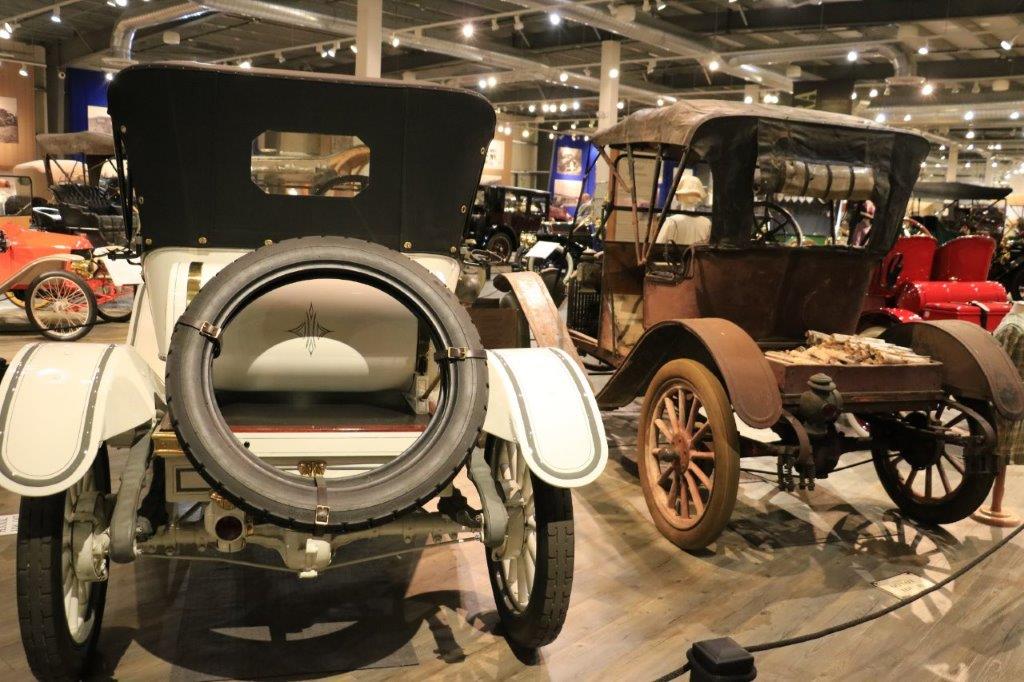
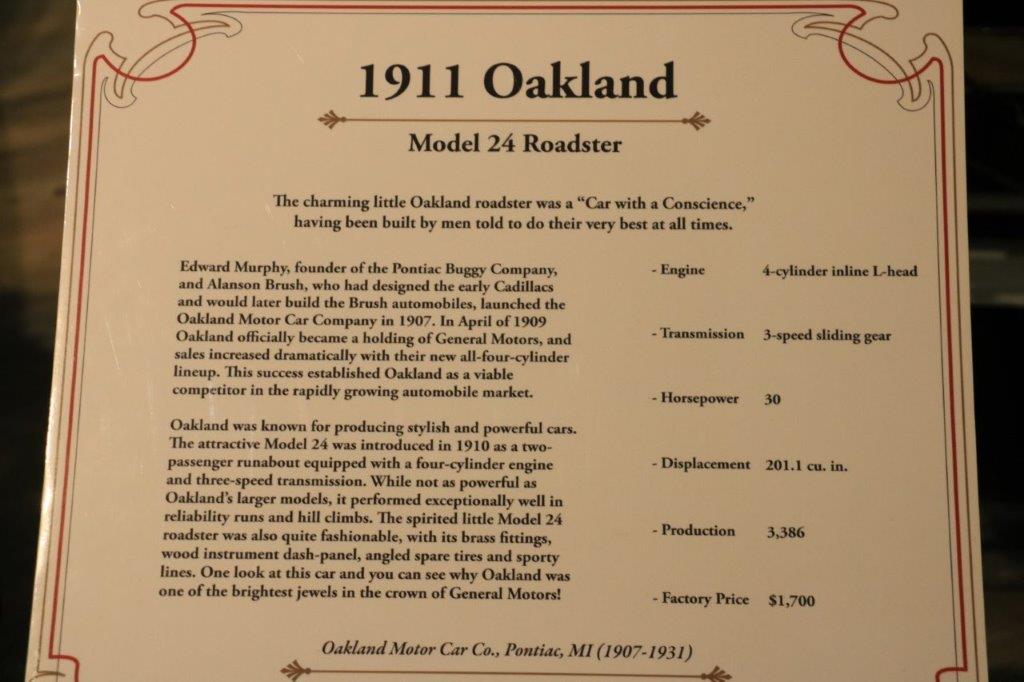
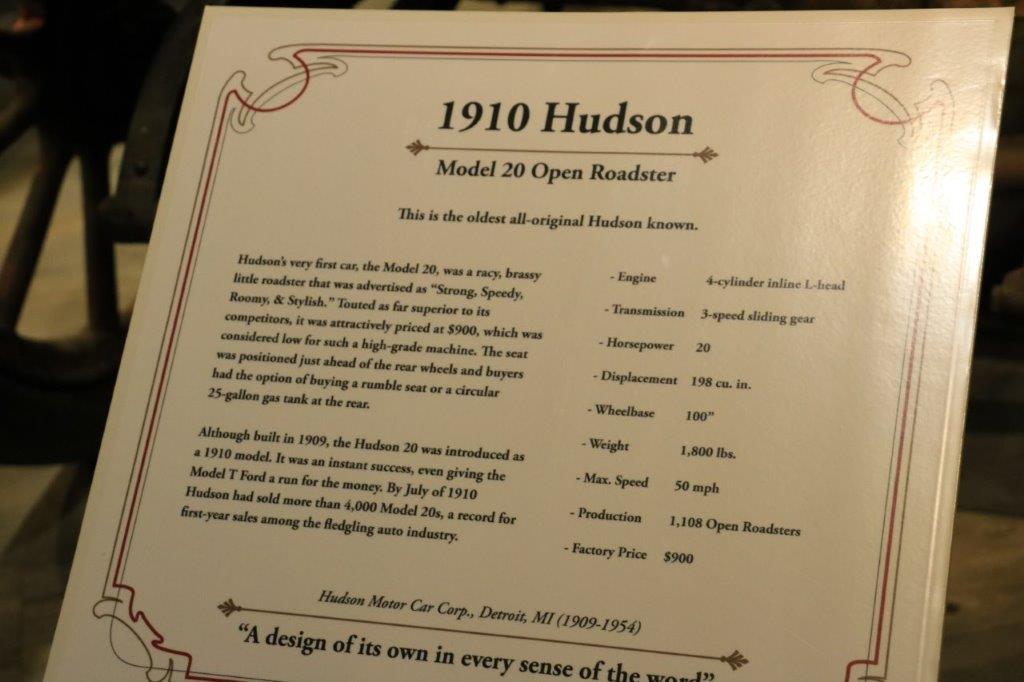
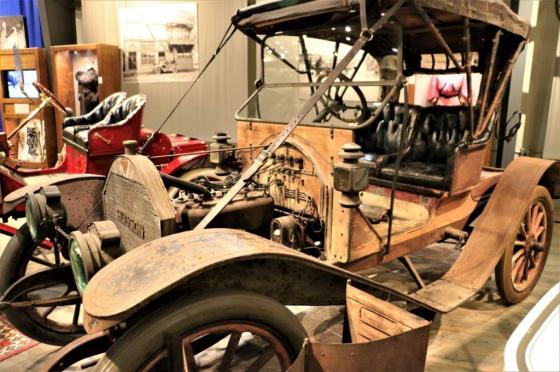
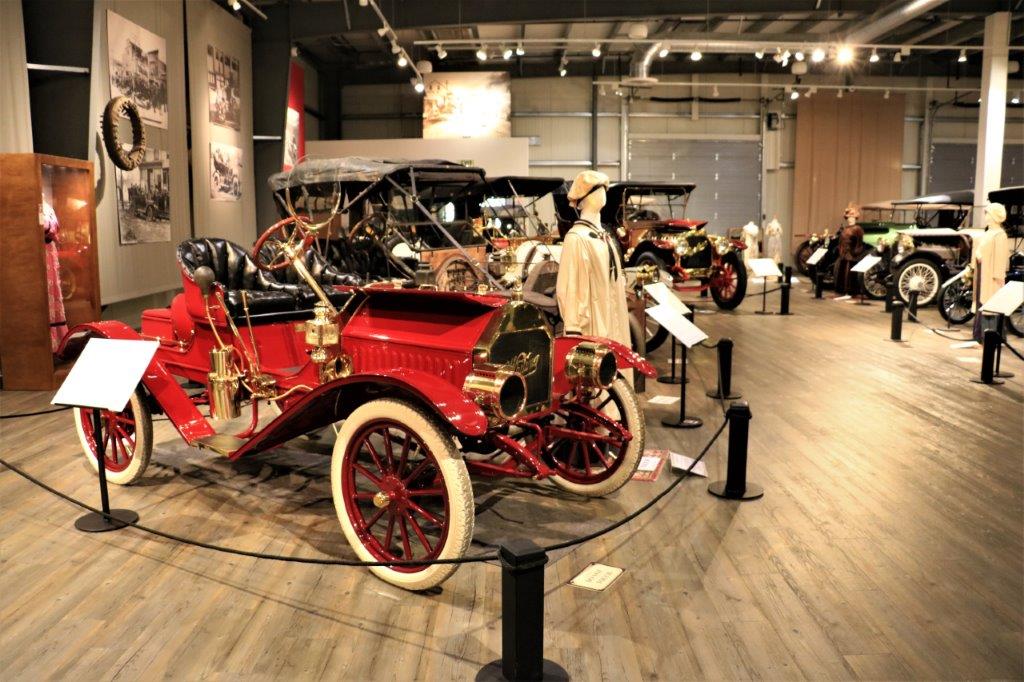
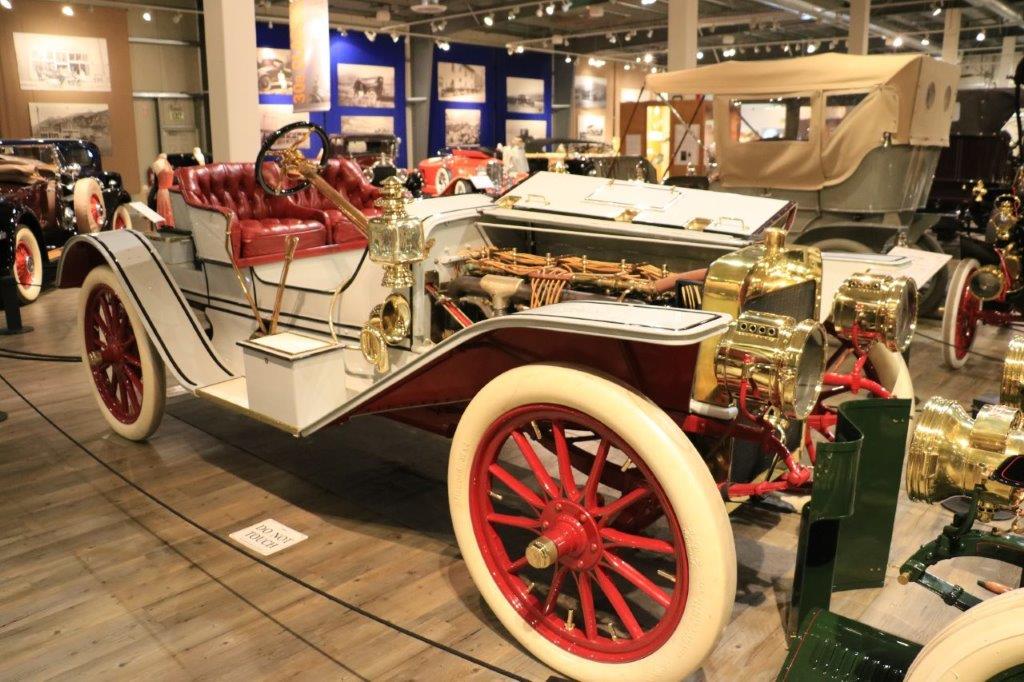
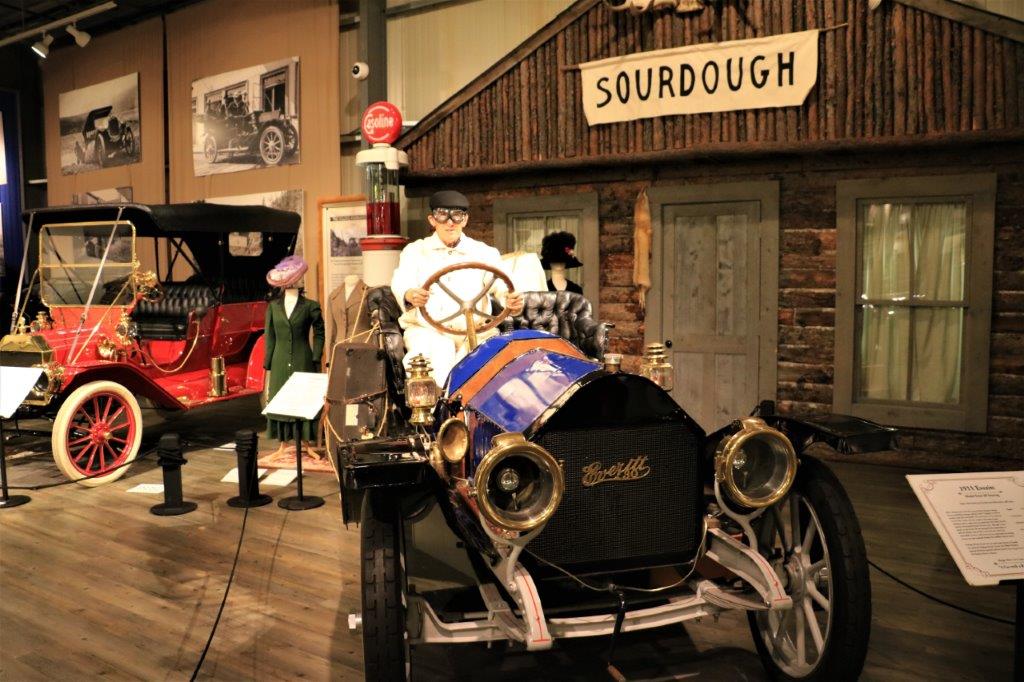
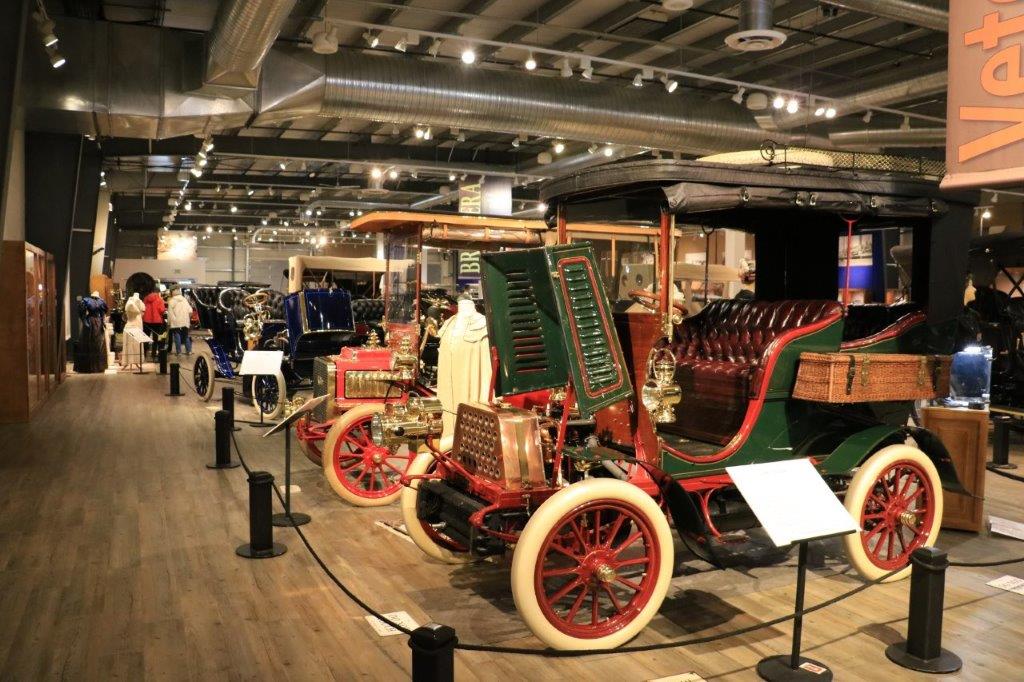
We drove around downtown Fairbanks and then headed out to the Fountainhead Antique Auto Museum. We had been told that we MUST go to the Fountainhead Antique Auto Museum.  It is a private museum built by the collector and features about 60 of his 88 cars at a time.  They rotate them regularly.  Everyone of the vehicles are in running condition and staff or the owners will take them for a spin down the road on occasion.  All the mechanical and nuts and bolts restoration work is done at the shop attached to the museum.  Bodywork and paint is done in either California or Michigan.

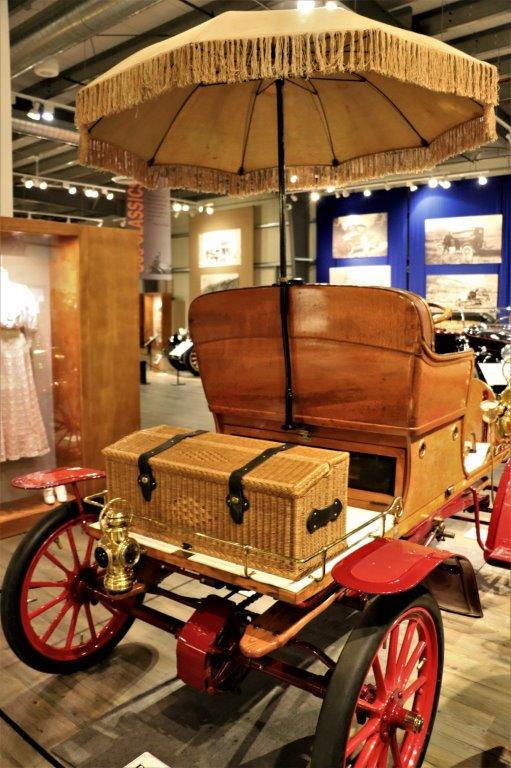
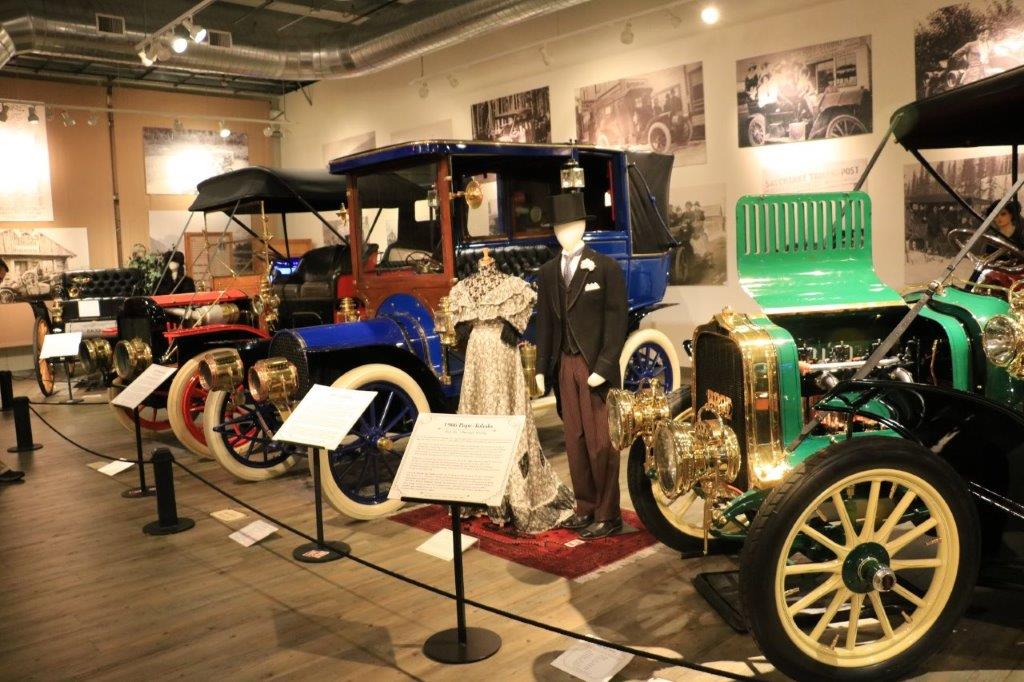
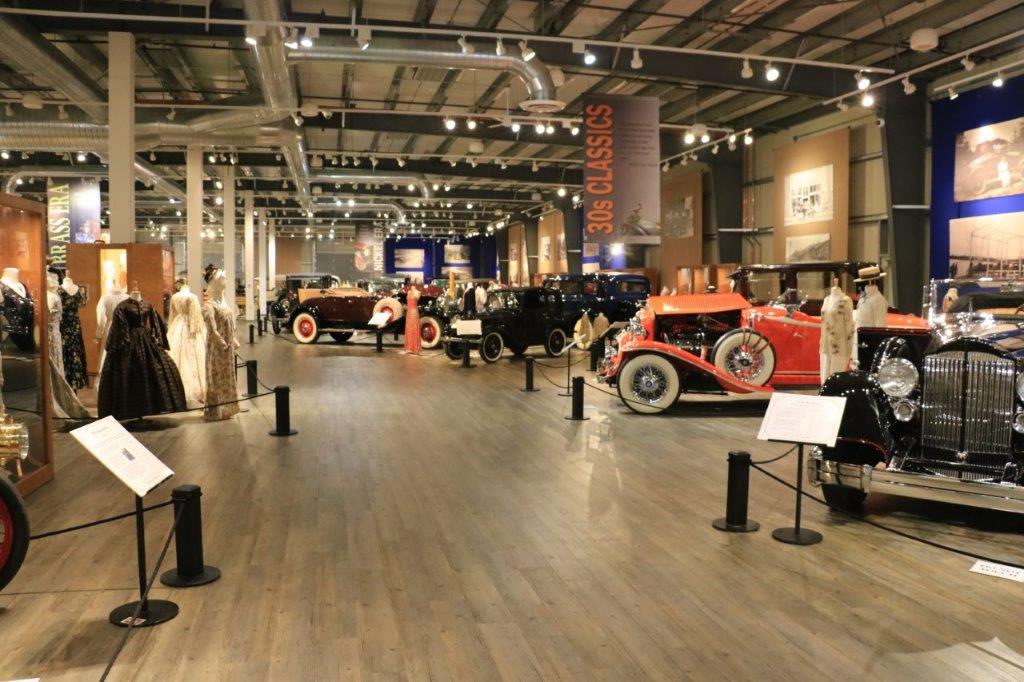
I am not a huge classic car buff, but this was by far the most beautiful collection of beautiful cars I have ever seen.  There were no cars more recent than the 1930s and the collection also included some of the first vehicles ever brought into Alaska.
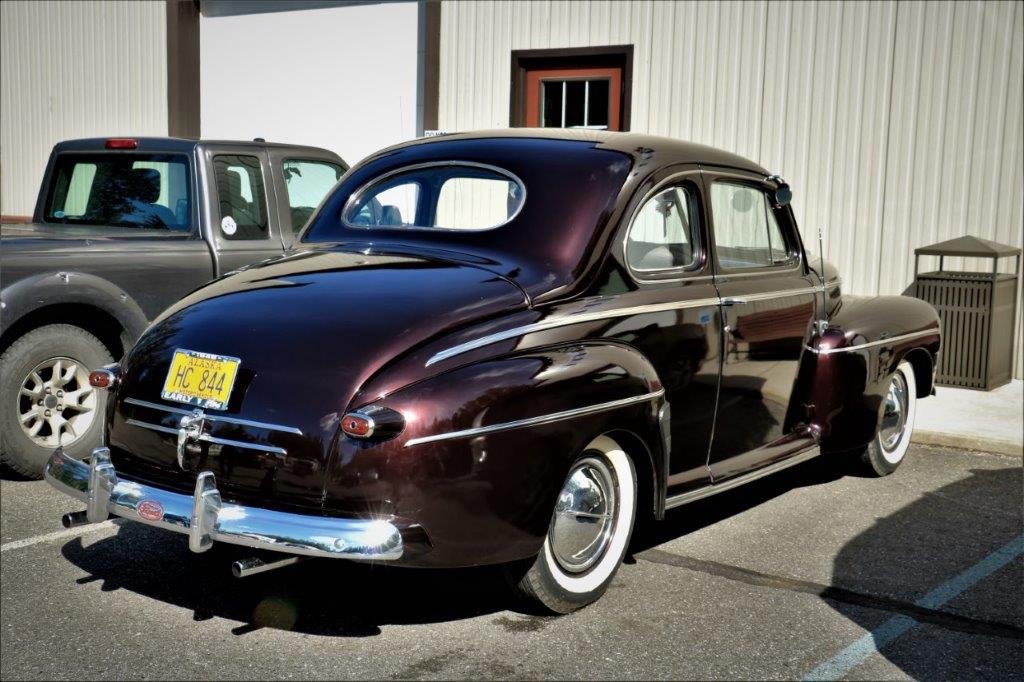
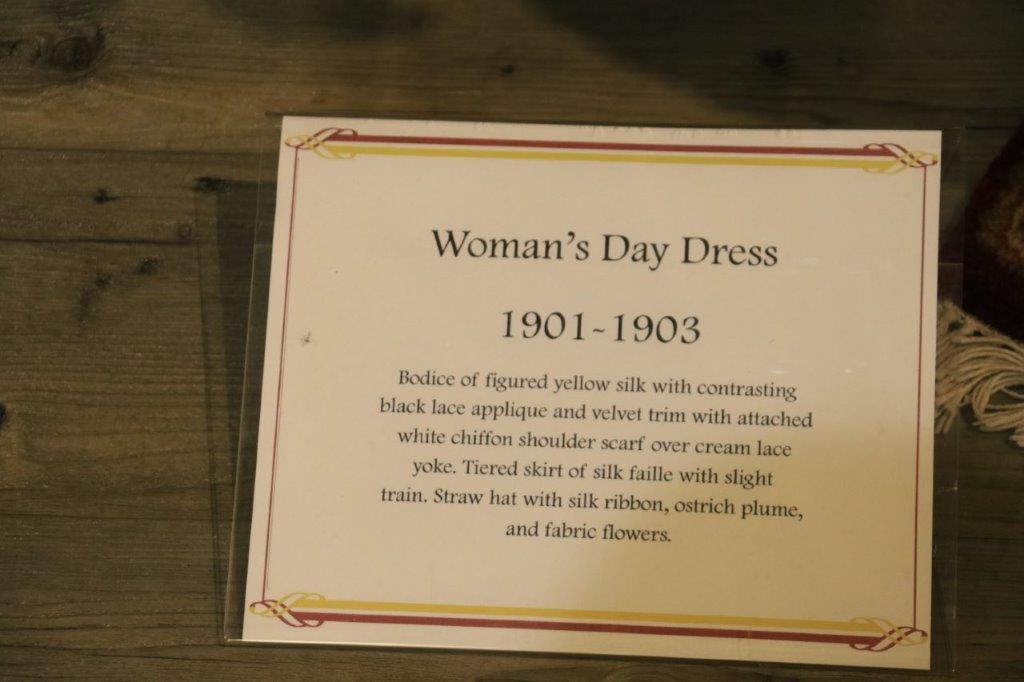
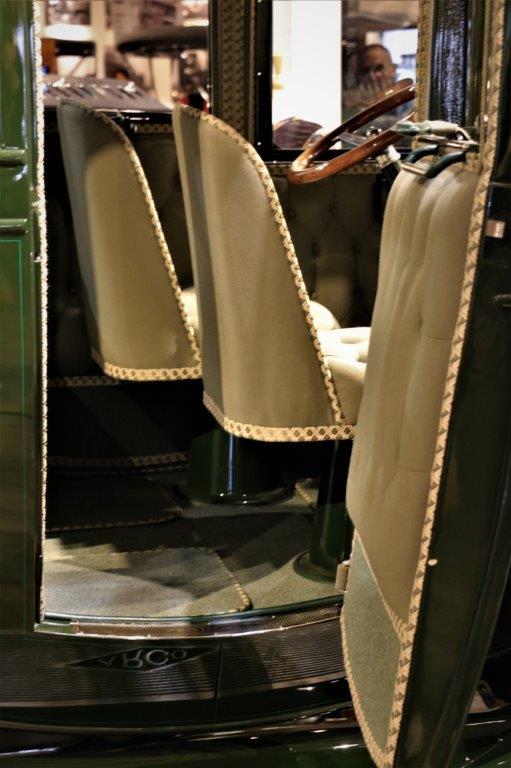
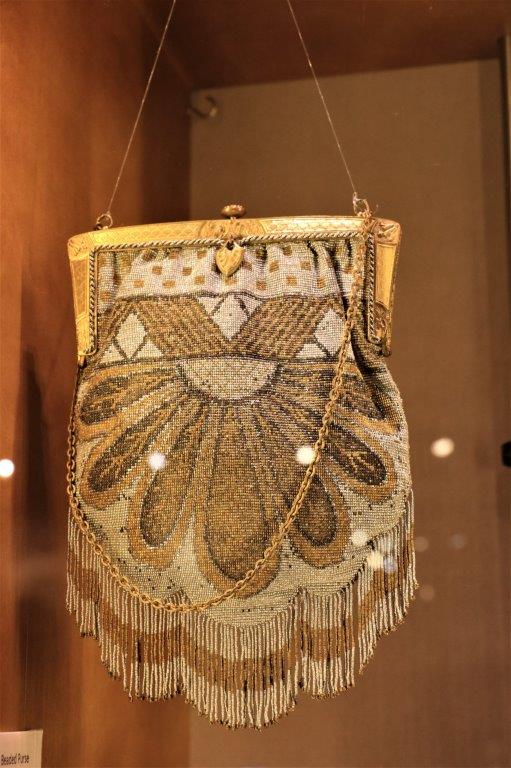
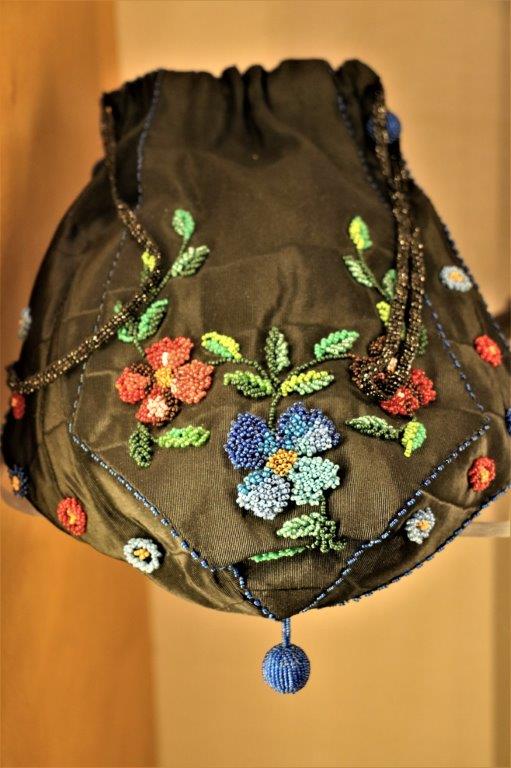
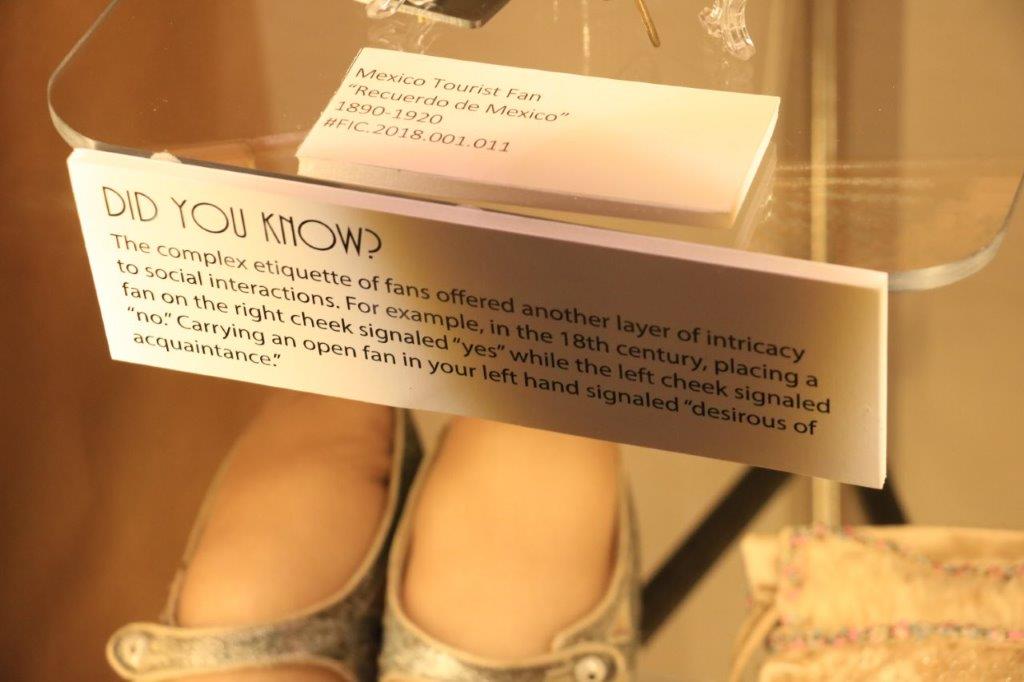
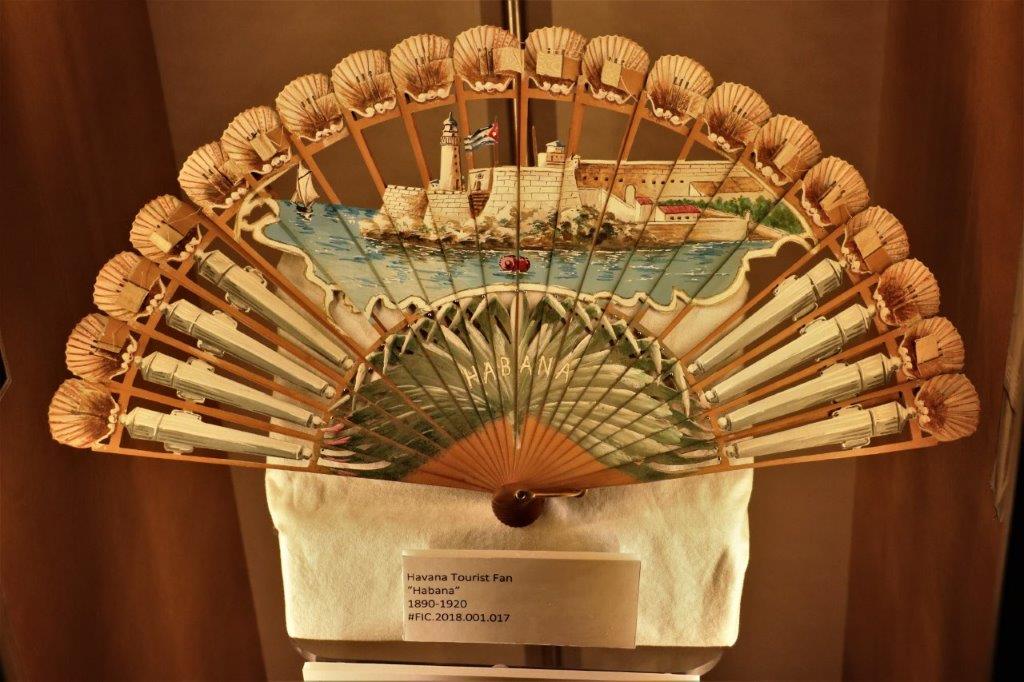
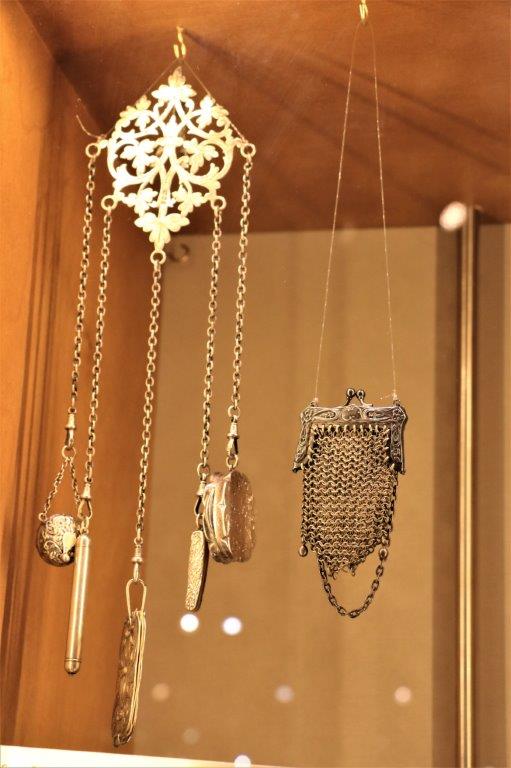
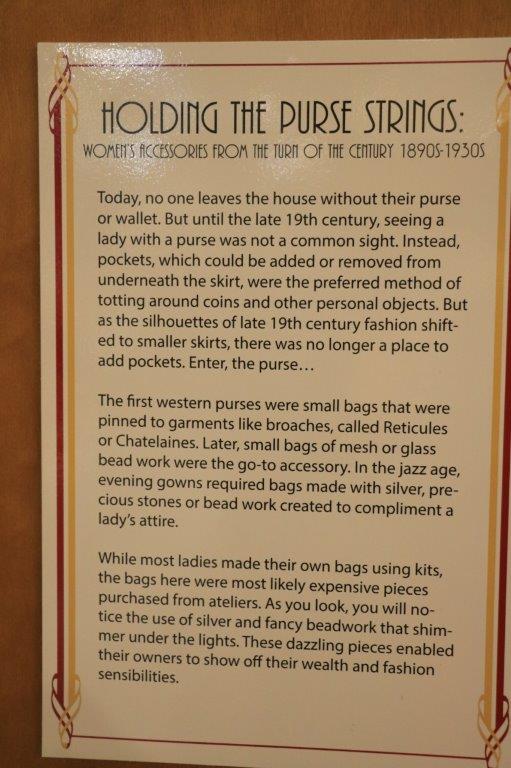
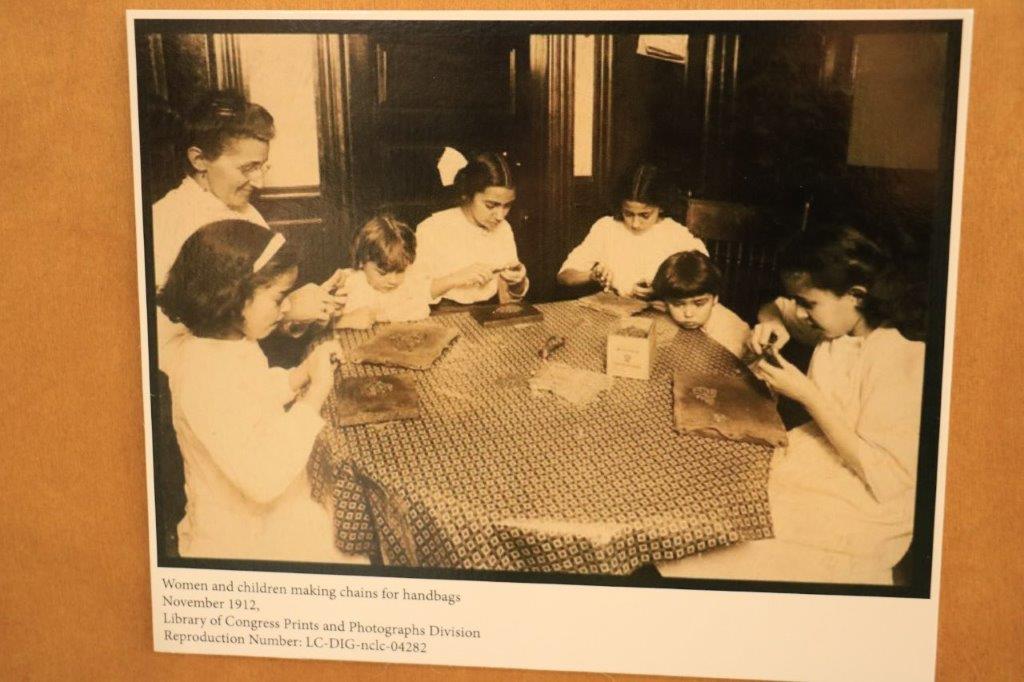
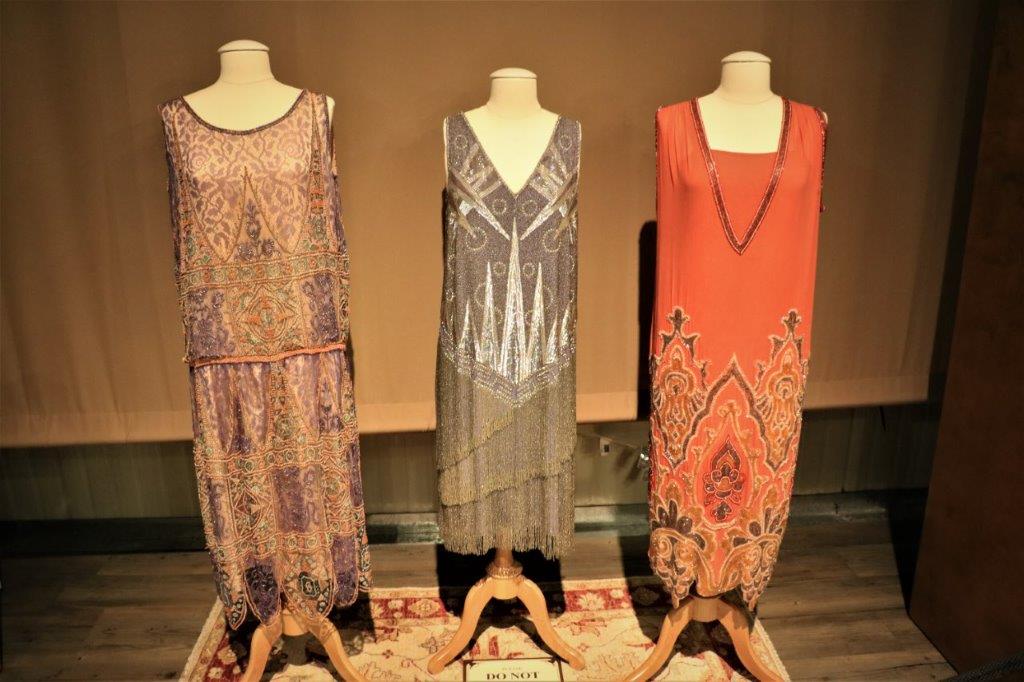
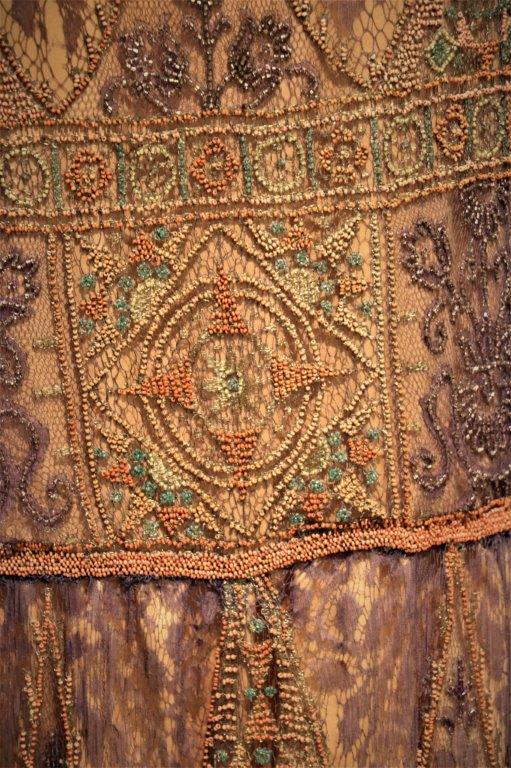
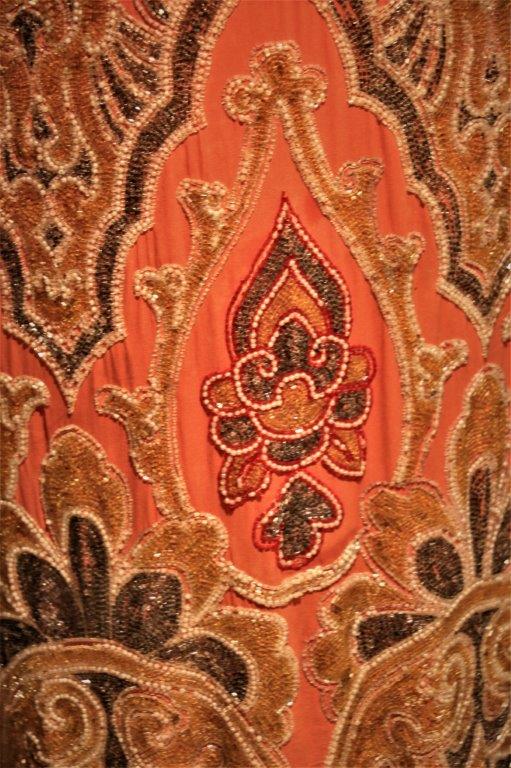
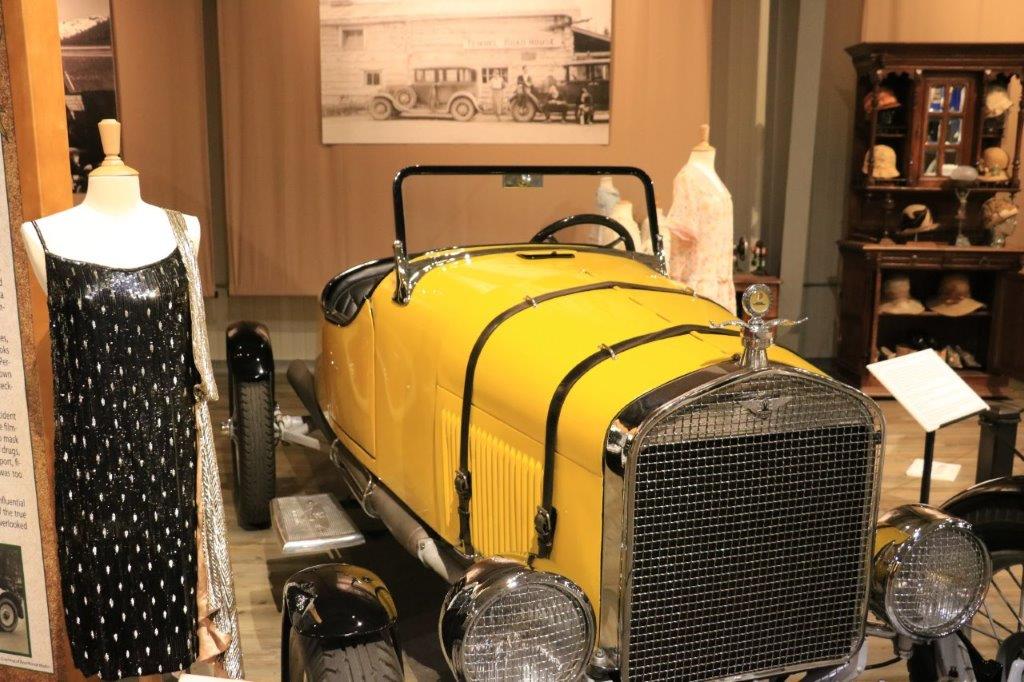
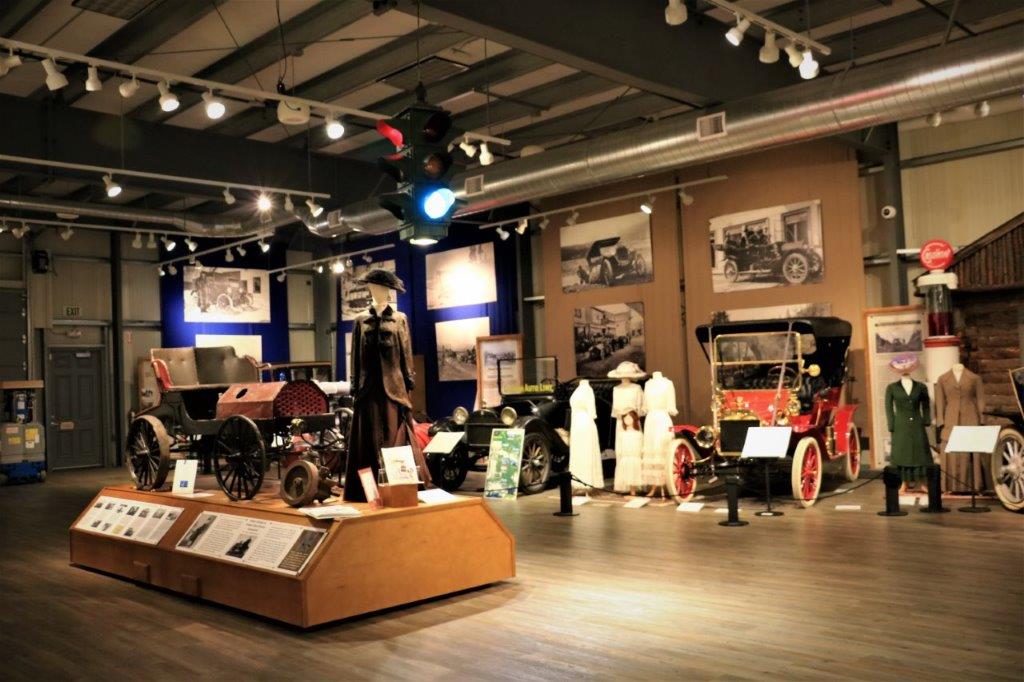
What made the whole place so unique was the companion displays of vintage clothing, shoes, bags and hats that are his wife’s passion.  We spent almost three hours in there and I took 280 photos!  I did a very quick look through and picked out some of my favourite cars or clothes and, more wide shots of the whole floor than all the individual cars.  Car and clothes pics coming right up…. This gorgeous dark plum car is not part of the collection.  It is too new.  It belonged either to someone working there or someone visiting.
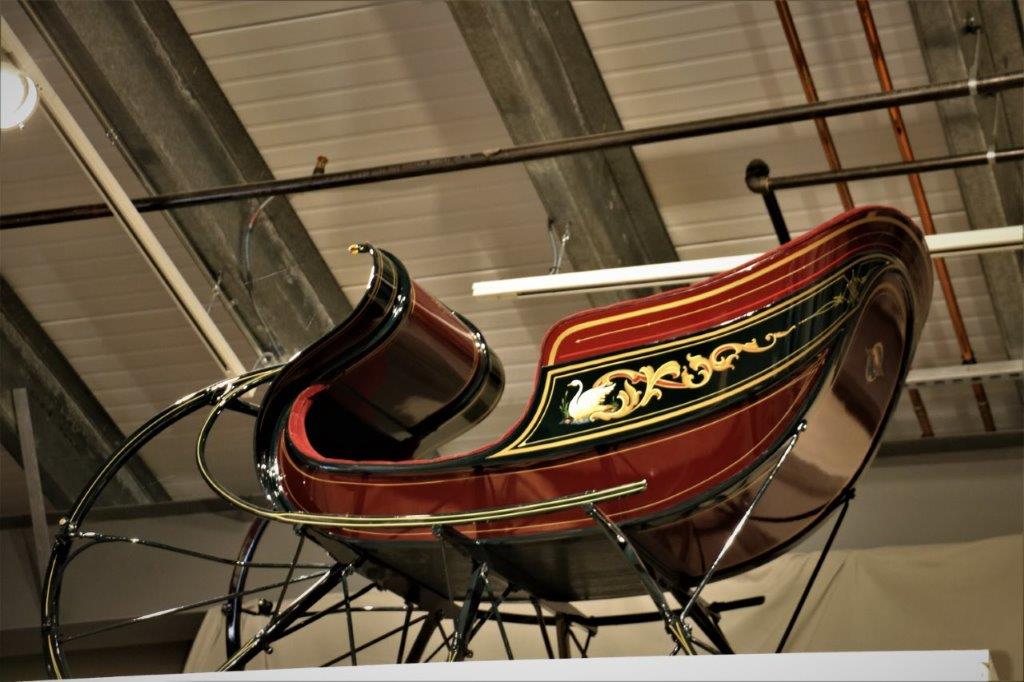
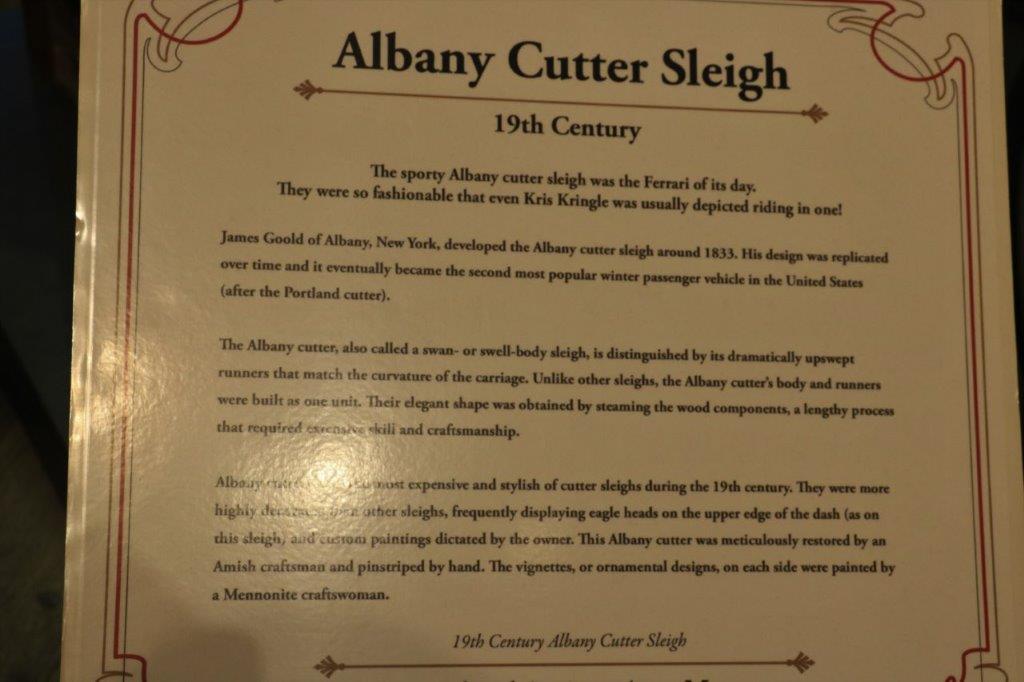
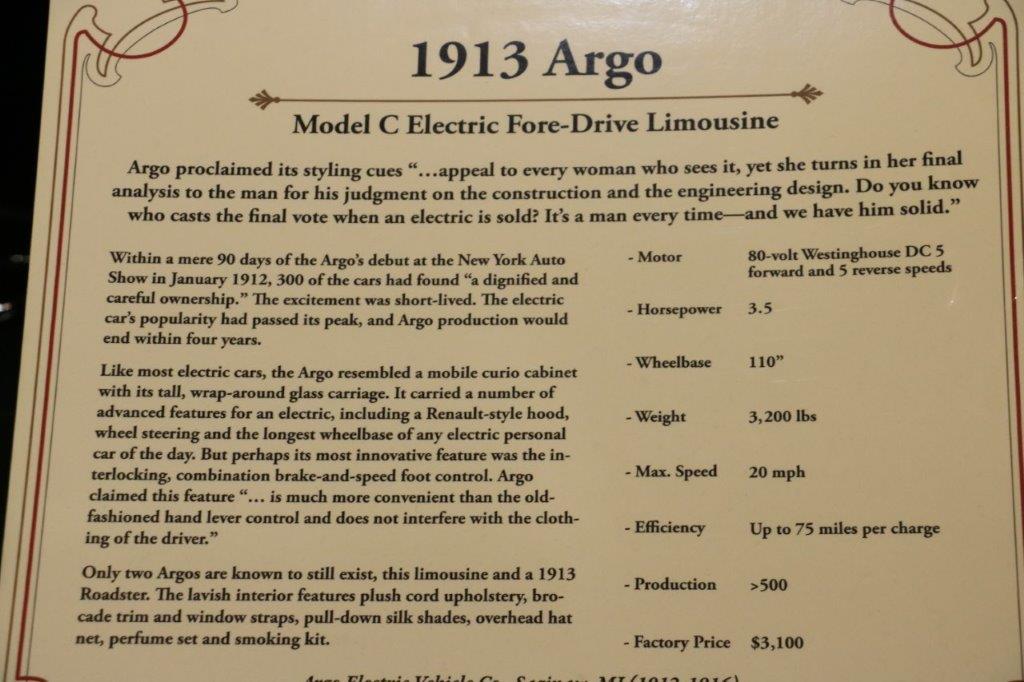
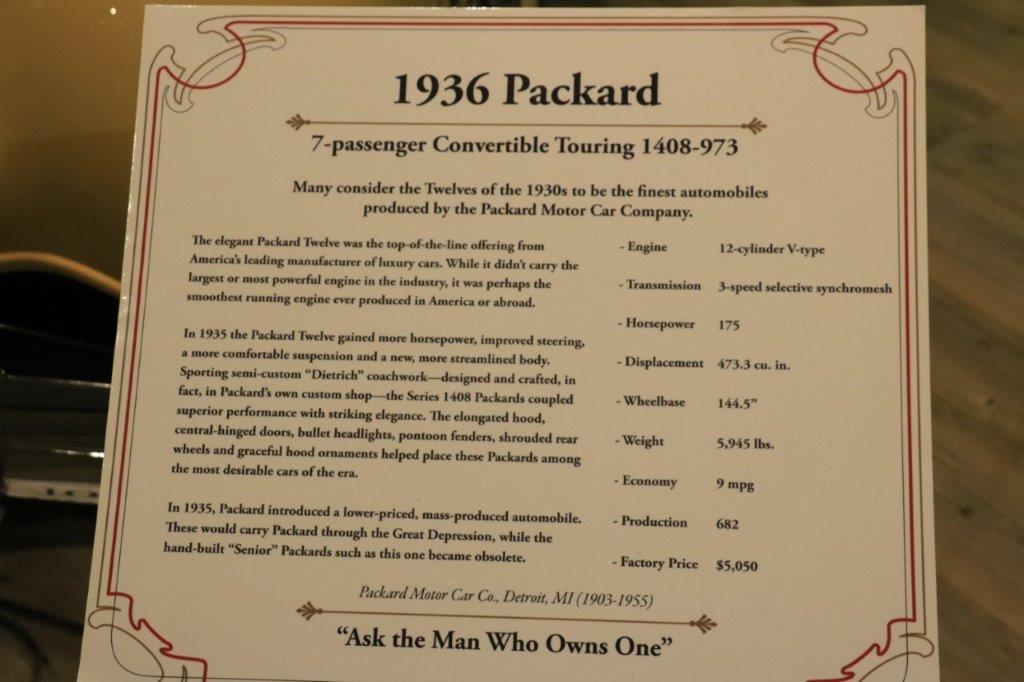
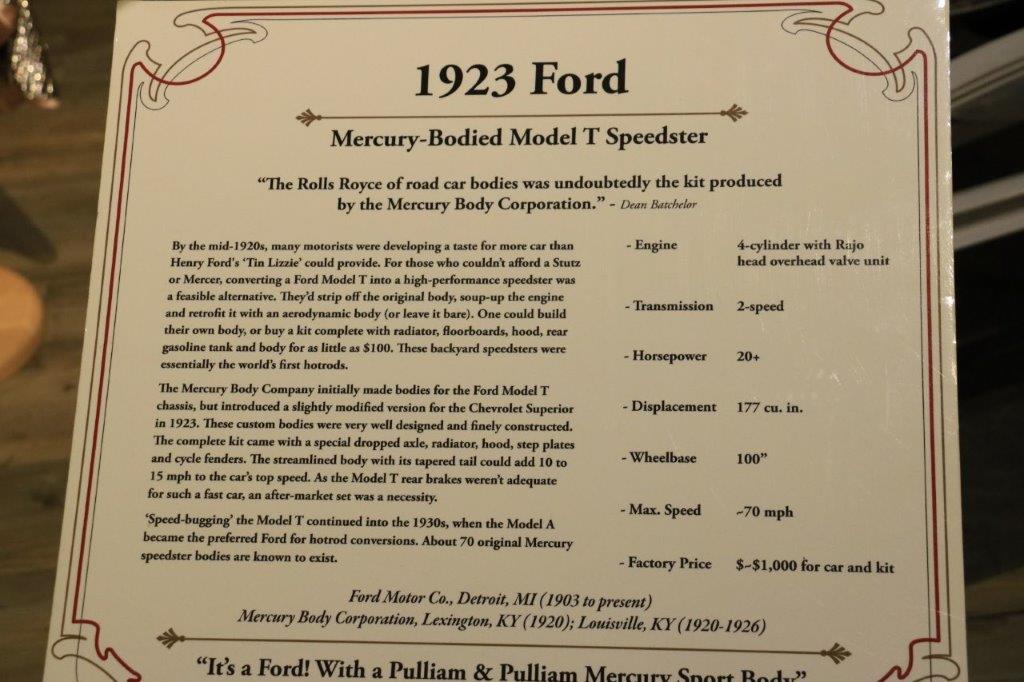
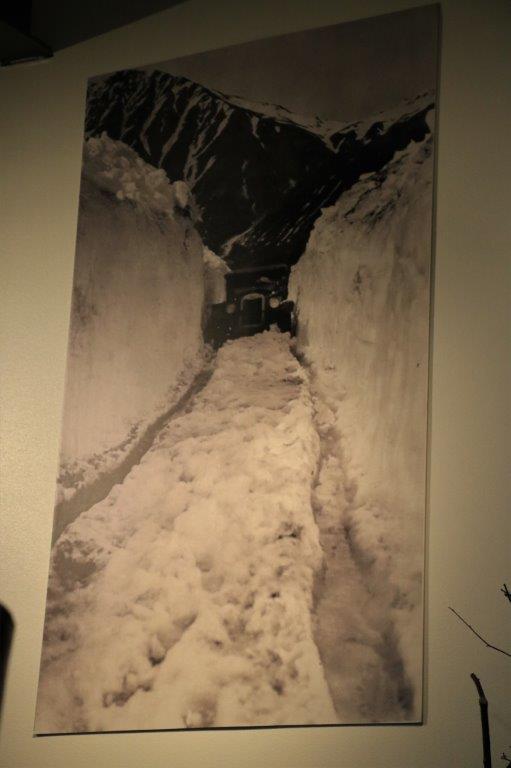
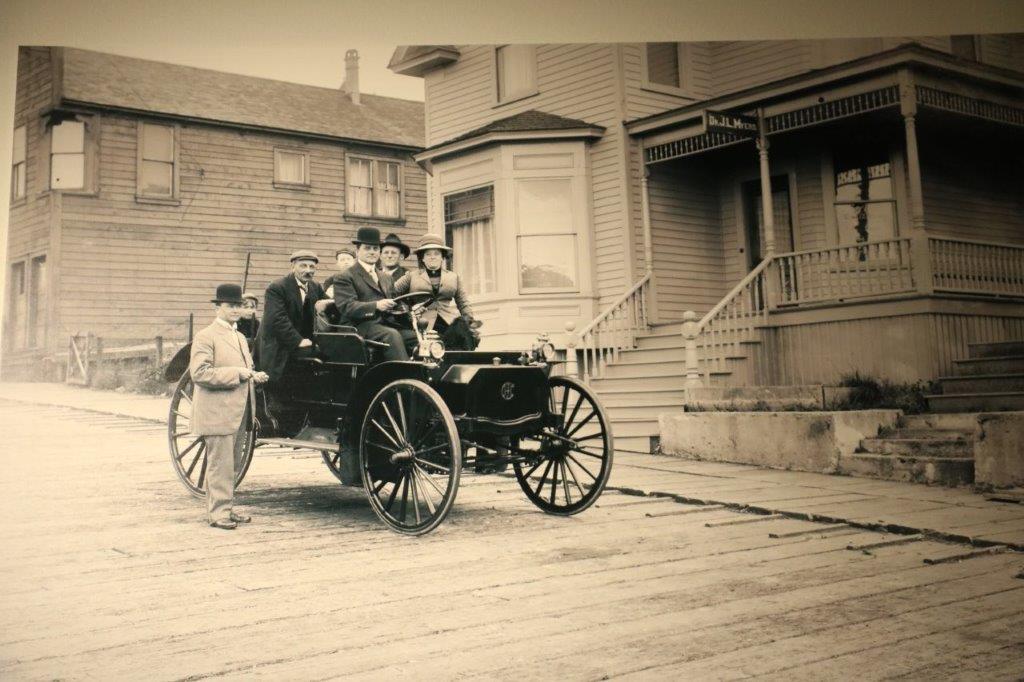
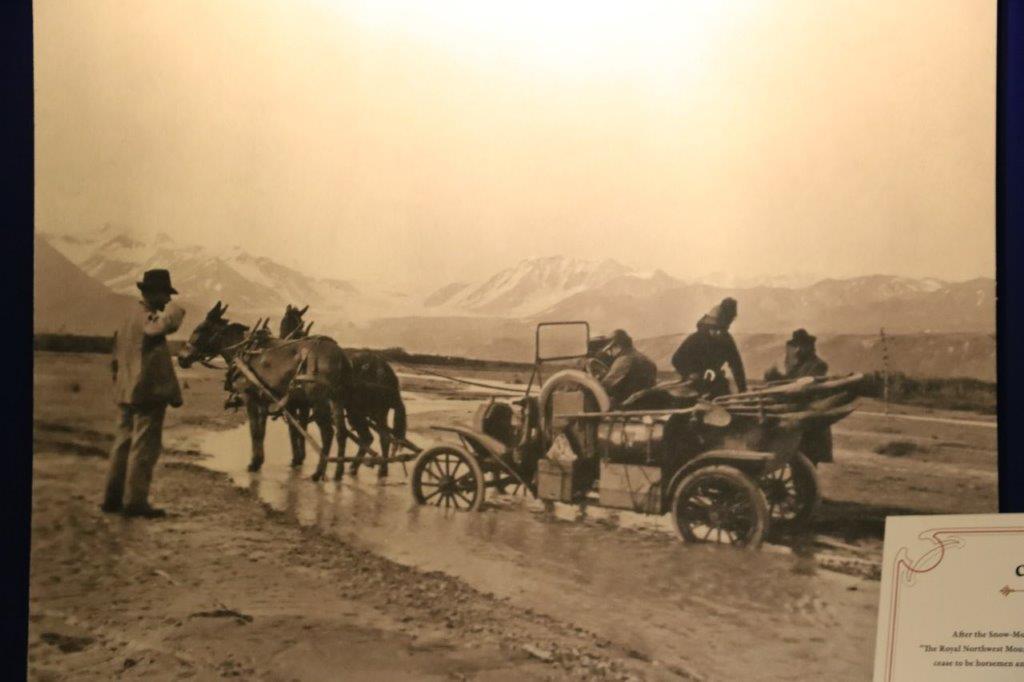
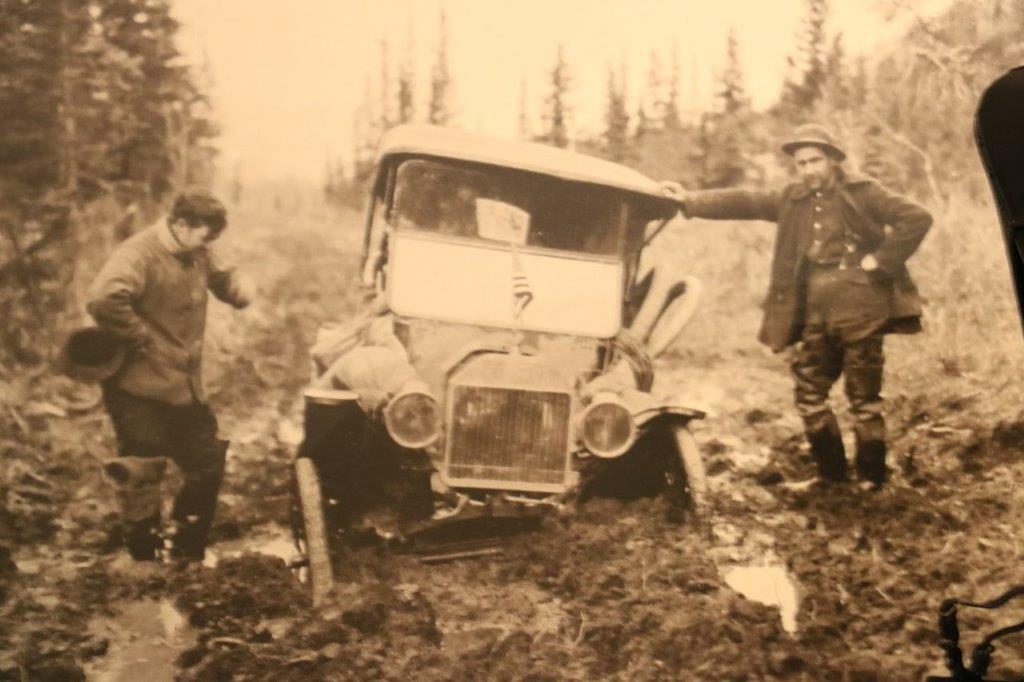
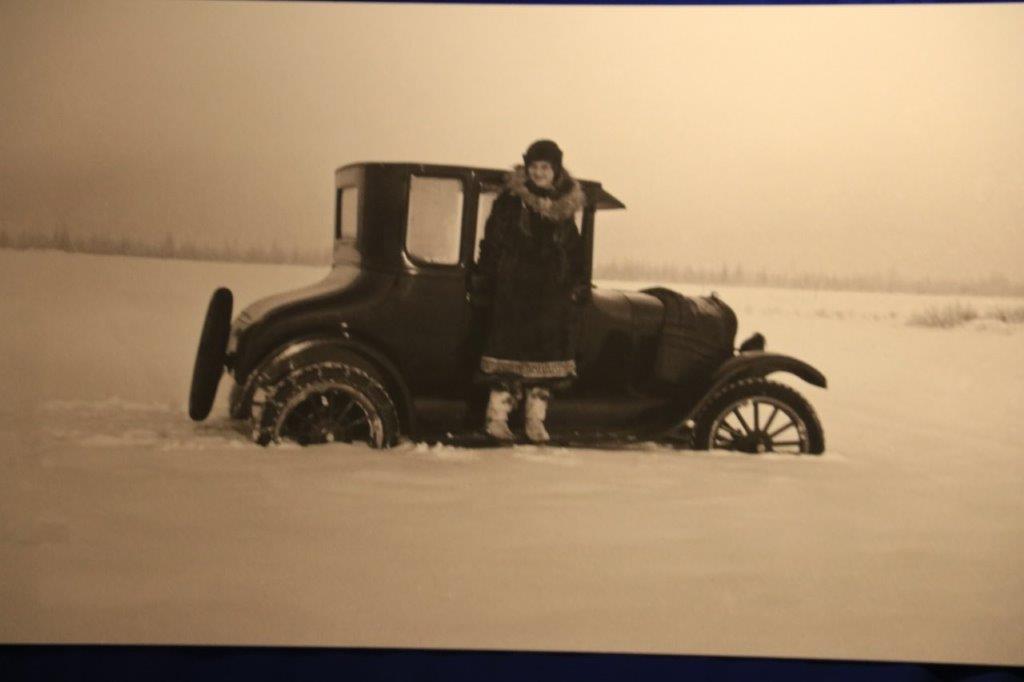
You can’t see it really well, but the insides of the doors and the edges of the seats are trimmed in a matching green and white patterned fabric. Many of the cars have very unique stories or are one of a kind, and several are the only surviving one of the particular make and model and year.There was a closet of riding coats, hats (both ladies and mens) and goggles that you could put on and have your photo taken in this car. There were vintage films about early cars and early car journeys and the troubles encountered by automobiles in Alaska.  And around the perimeter on the walls were huge photos of the early days of the automobile.
I know that is a lot of photos of cars and usually you would never catch me taking that many pictures of cars.  But, I loved this museum.  All of the vehicles were so beautifully restored and clean and all the vintage clothes just added to the look of the cars.  It was a great place to spend some time.  And, despite all the photos of cars you need to be thankful that I only post so few.  Really.

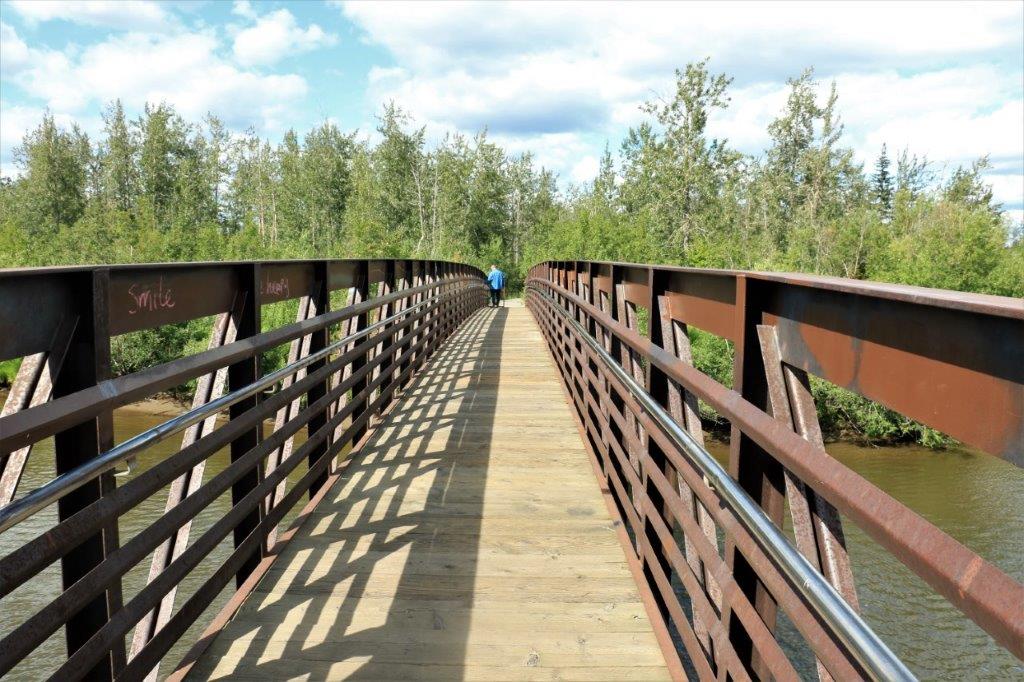
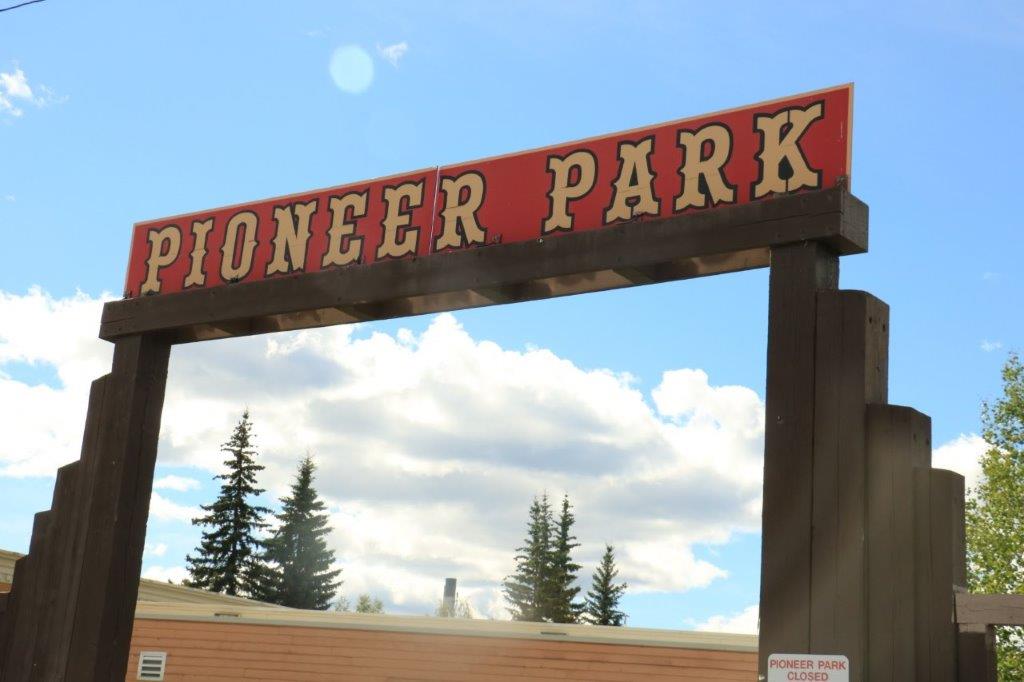
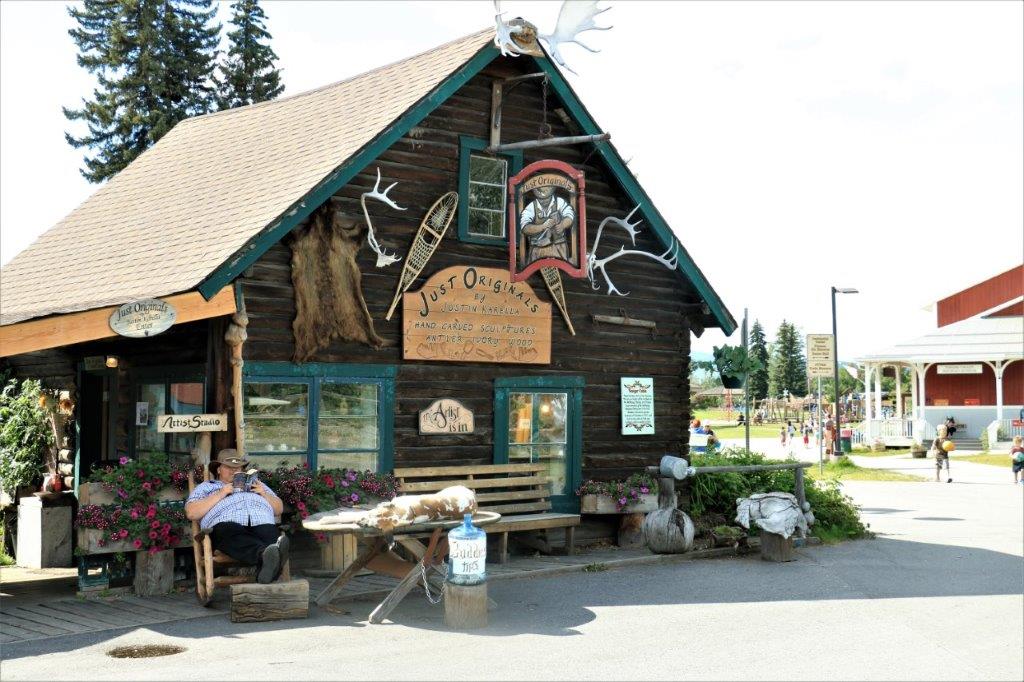
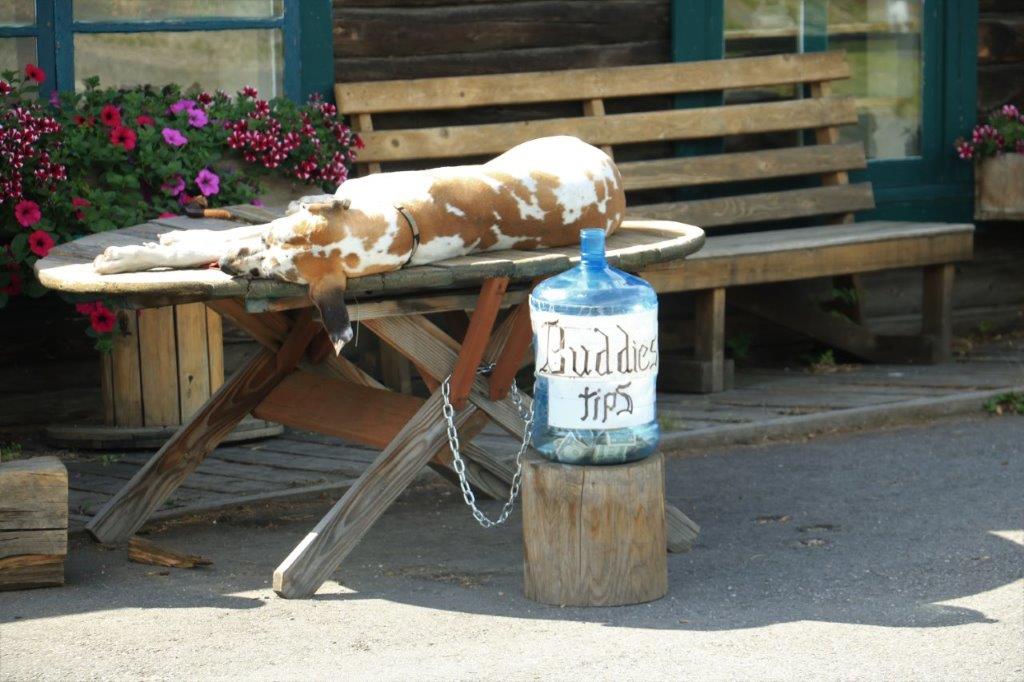
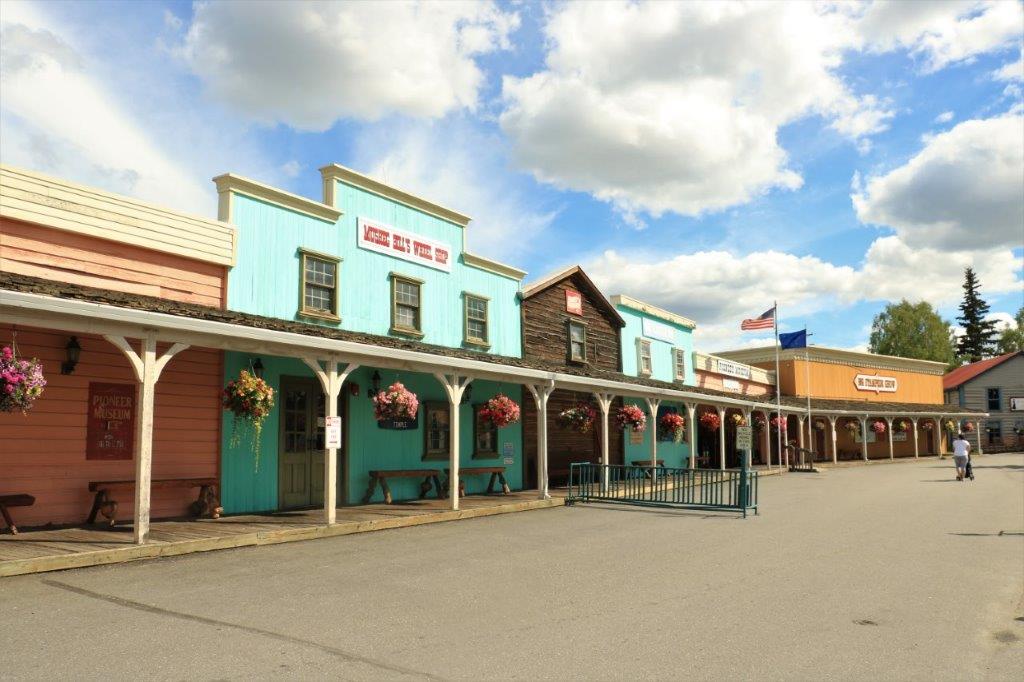
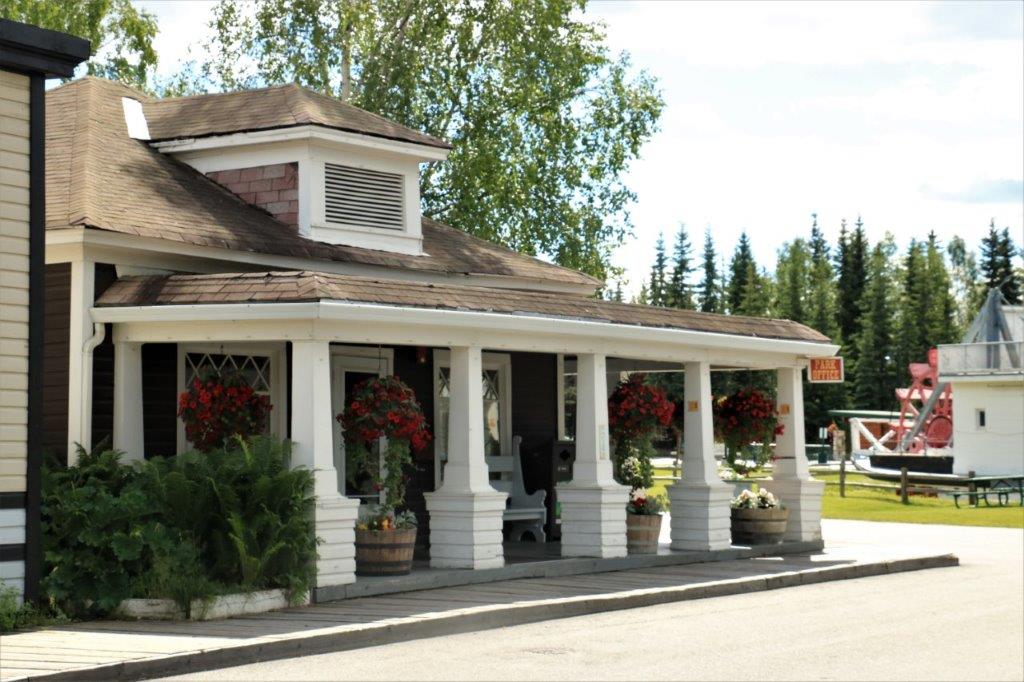
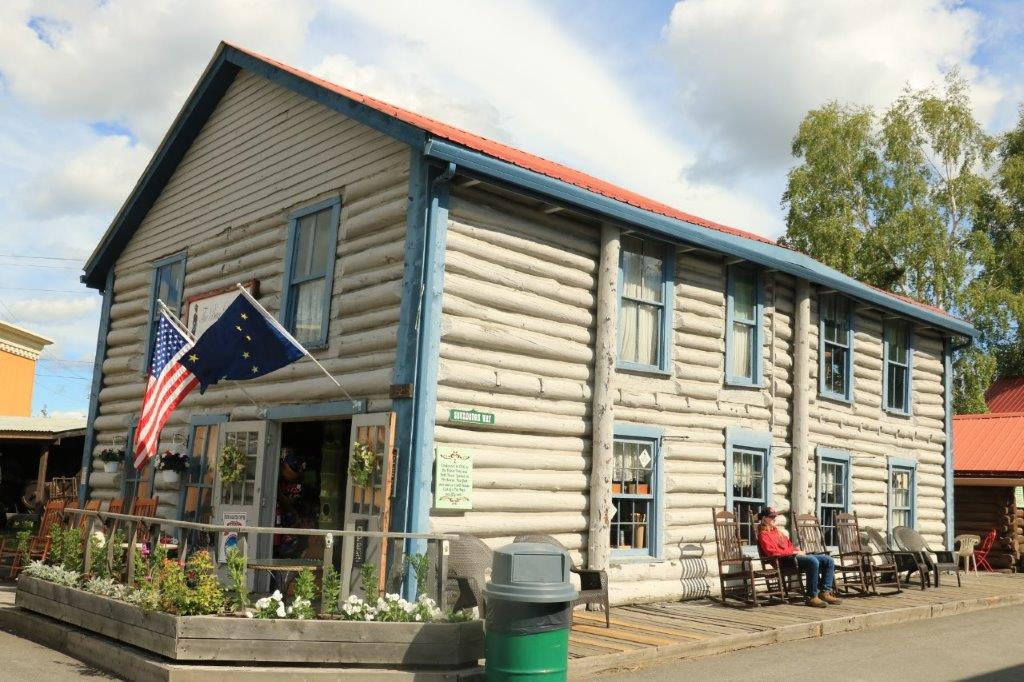
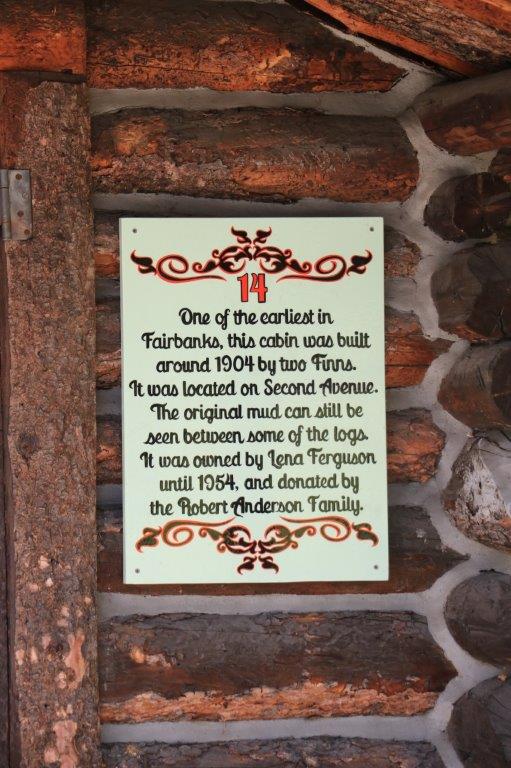
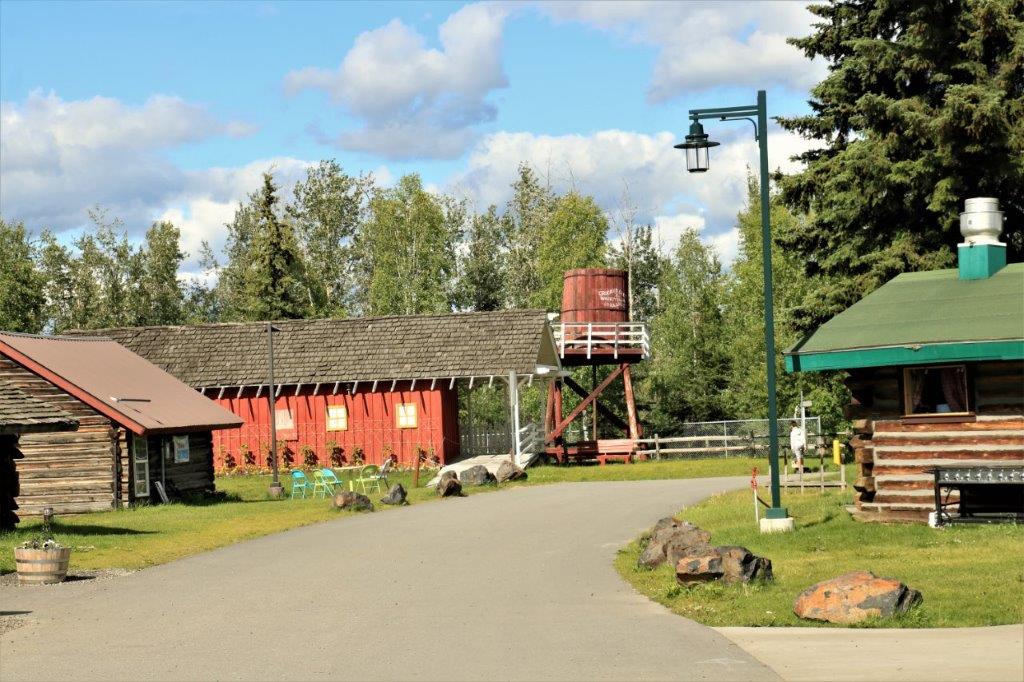
After we had some lunch we took the path through the woods and across the footbridge to the Pioneer Park.  This is a 44-acre complex that has old cabins and buildings from the early days of Fairbanks and area that have been saved and moved here.  There is also a huge art gallery, an antique airplane museum, rides for kids and large open grounds for picnices and fun.  Most of the cabins are little shops. This is Buddie.  His owner has a shop in the little cabin but when no one is inside they sit outside.  Buddie is a two year-old Fawnequin Great Dane.  Danes come in solid colors of black or fawn and there is a black and white patterned coat that is called a Harlequin.  Buddie is a fawn and white mix and yet his skin under the fawn brown spots is black.  His genetics got mixed up.  No one that his owner has spoken to has ever seen one, including vets.  Buddie was having a nice snooze and took no mind of people stopping by. And, finally, the day is done.  We walked back to the hotel and rested our weary feet for awhile before going out for a late dinner.  Tomorrow we leave Fairbanks and drive south to Denali National Park.  We are spending the night at a little town called Talkeetna.  It would be absolutely glorious if tomorrow was as nice a day as today.  There might be a chance to see most of Denali if that is the case.  Denali is the new official name for Mt. McKinley, the tallest peak in North America.  The name was officiall changed last year.  Denali means ‘high one’ and it is rarely fully visible.  Maybe tomorrow will be one of those days.


2018 July 11 – Tok to Fairbanks, Alaska

We left our cozy little cabin (Well, sort of cozy.  When I turned on the shower the handle came off in my hand.  It was broken and just put in place.  So, no shower) at 9:15 this morning, under sunny skies, that soon turned overcast once again.  Obviously the fire hazard rating in this part of Alaska is low right now with all the cool weather and rain.  The drive fromTok to Fairbanks takes about 3 1/2 hours.  We arrived at 4 pm which gives us a traveling time of almost 7 hours.  We never claim to be speedy on road trips.We could see much of the Alaska Range as we drove out of Tok. It felt like driving into the Canadian Rockies – with much smaller trees.  There was a geocache hidden at a rest stop and this was about the last view of the mountains that we got.  All of the rivers we crossed were very muddy.  This is the Robertson River.

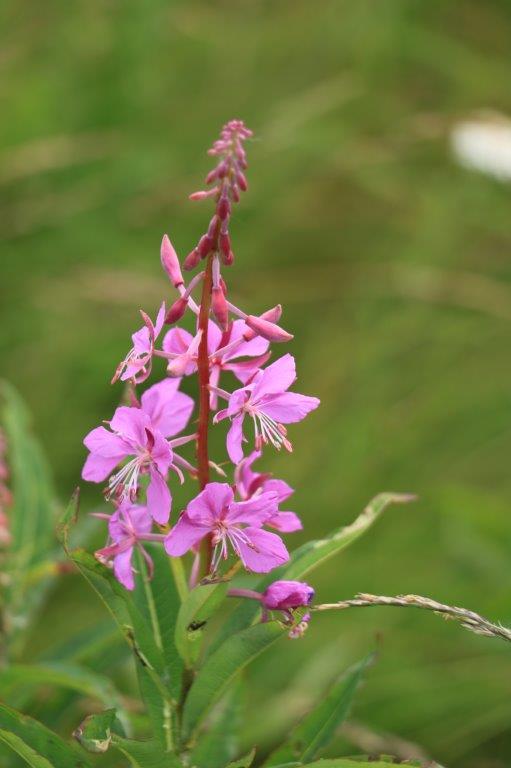
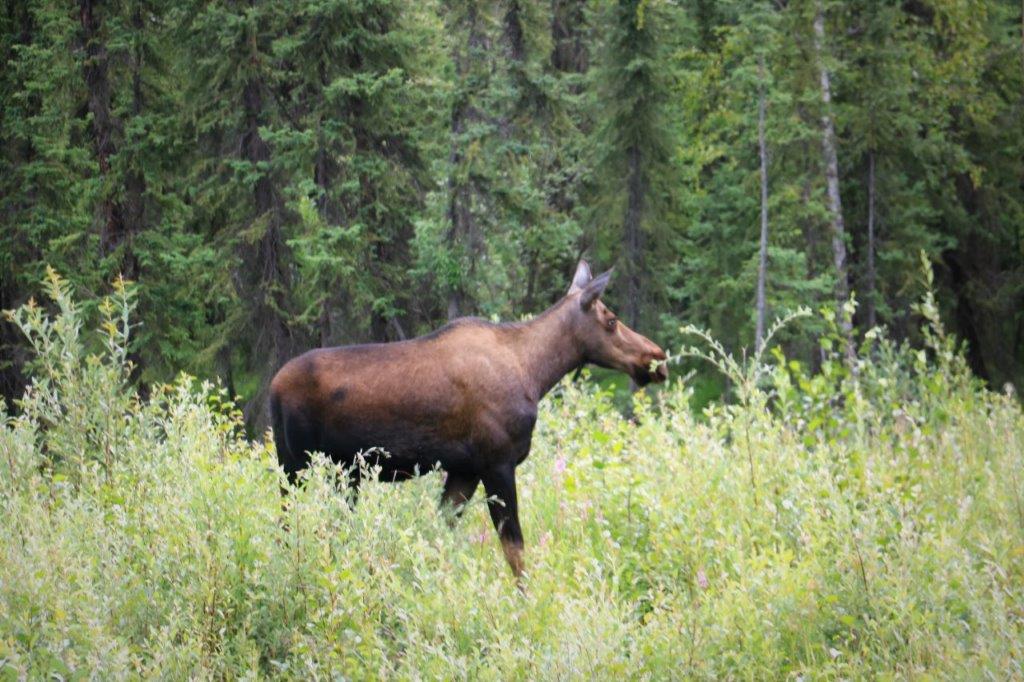
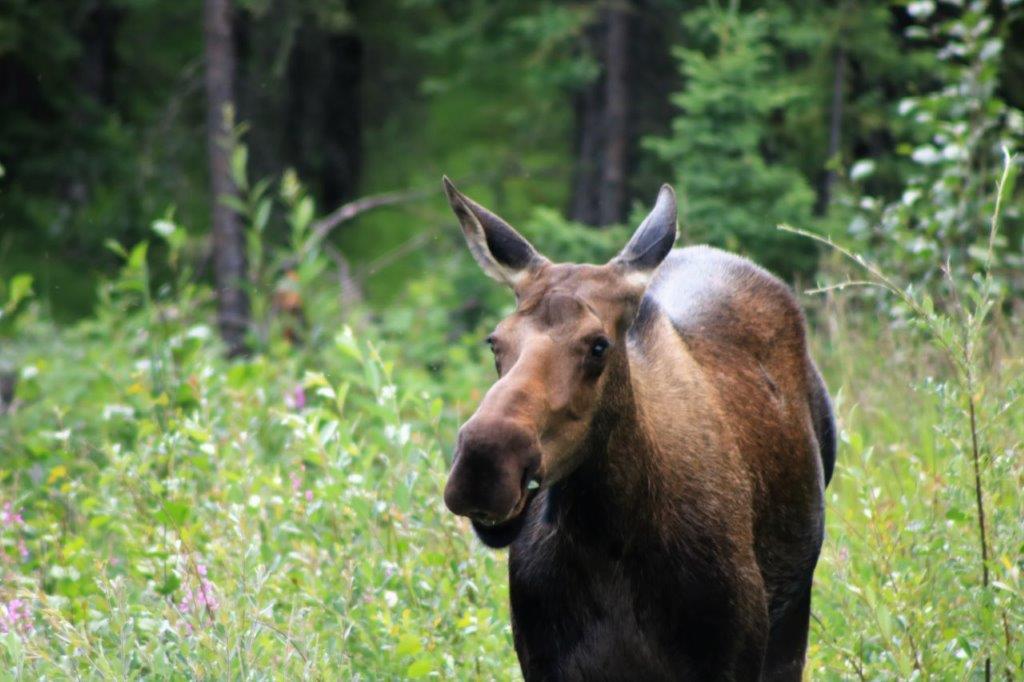
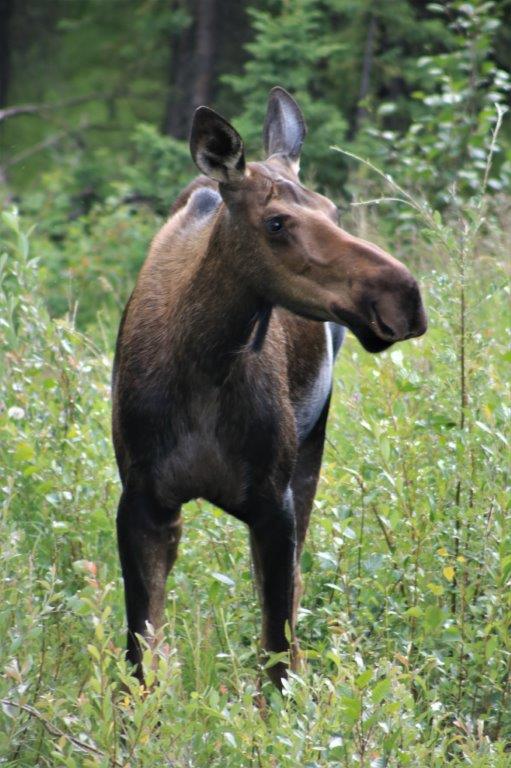
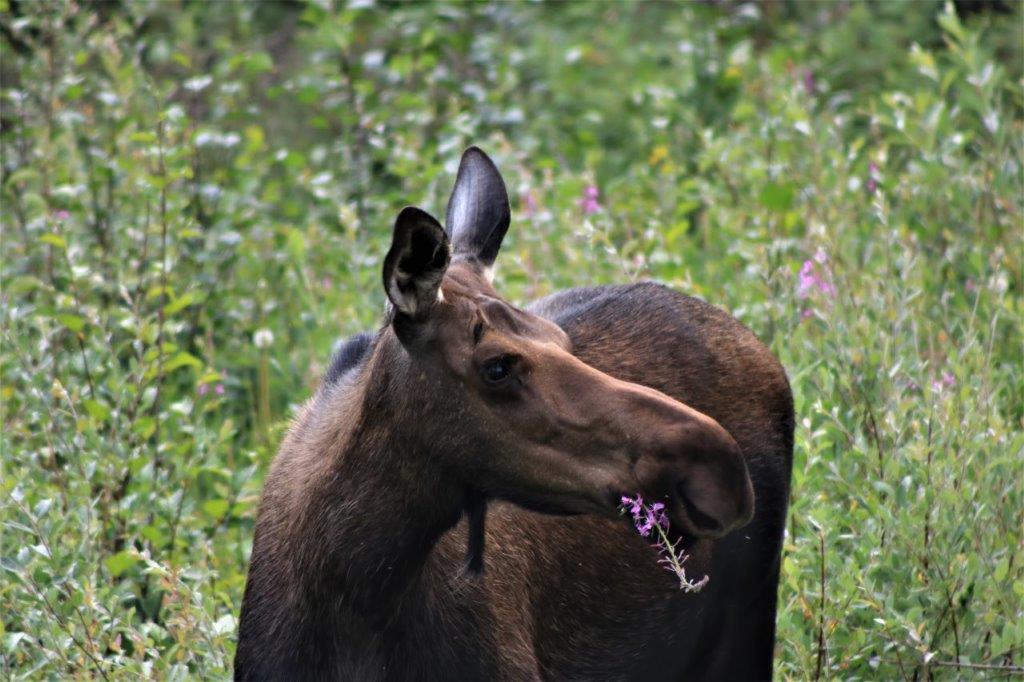
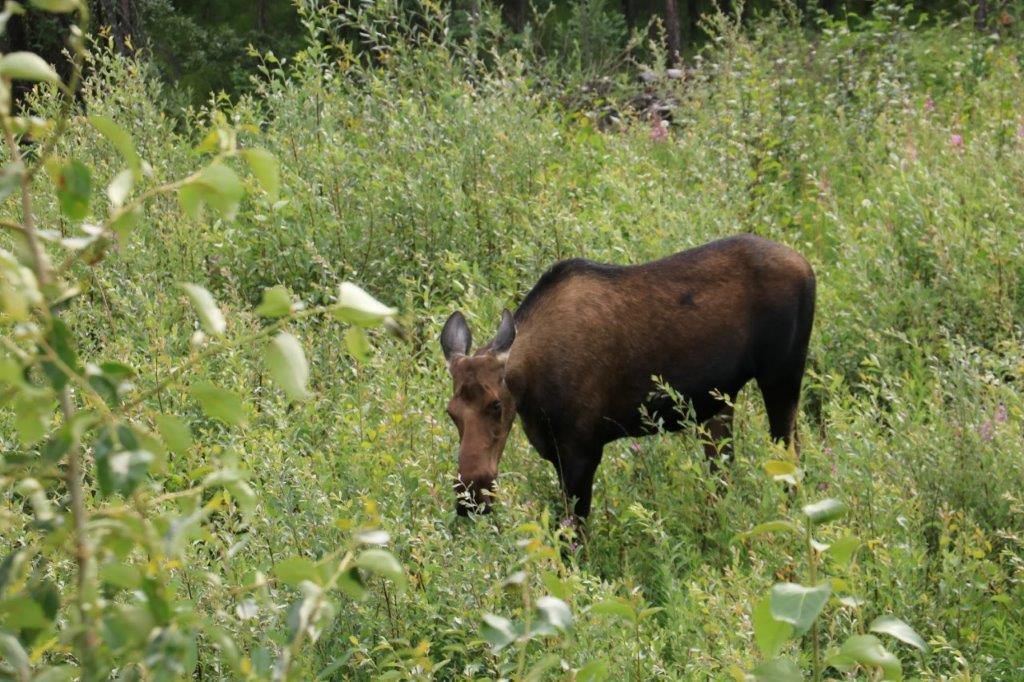
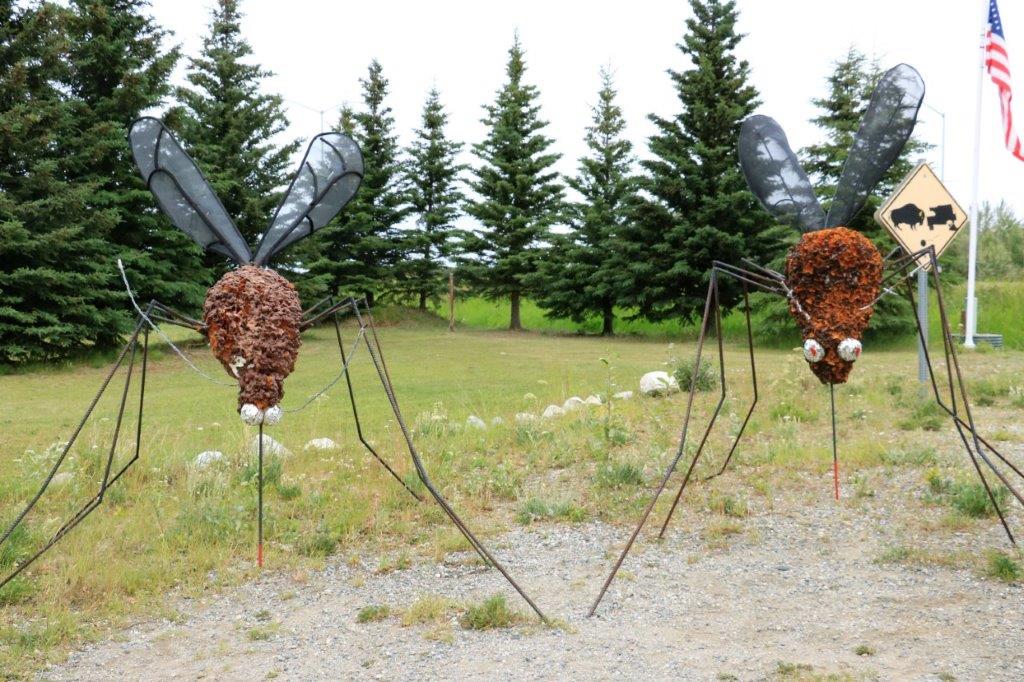
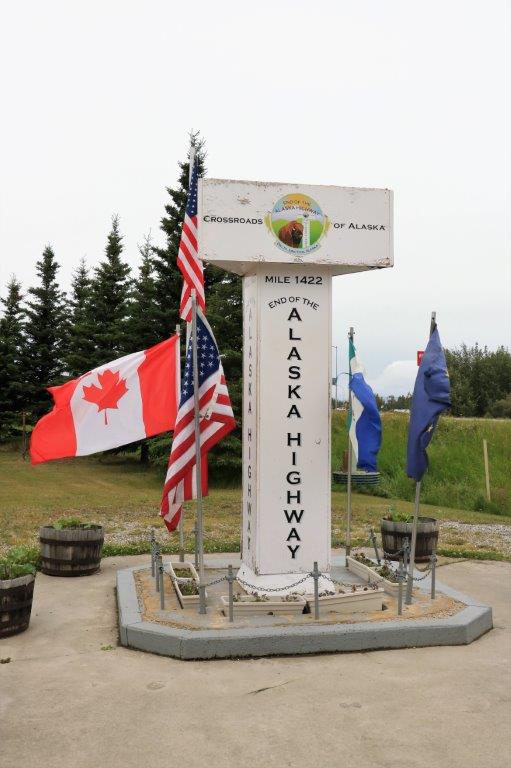
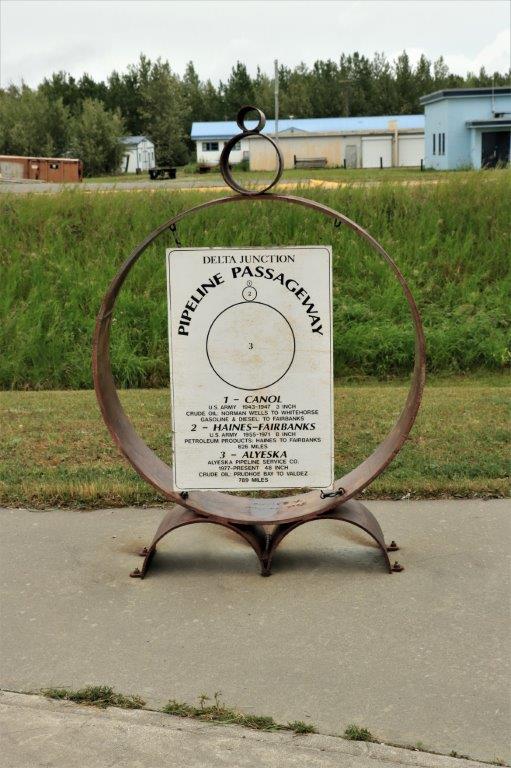
We were blessed with a good sighting of another moose today. She was just off the highway having a very satisfying breakfast of fireweed and bushes.   She was very sleek and healthy.  John couldn’t get over how her hide looked like a well-groomed horse. Geocache hiders are a perverse lot we have discovered.  There may be tons of bushes and rocks and trees within 1 or two meters (3-10 feet) of the road but the cache will be hidden 50-80 meters (160-260 feet) into the forest.  This is bear country.  Why they would have you wandering around deep in the bush is beyond me.  We only looked for caches that were quite near the road.Delta Junction is the official end of the Alcan (Alaska Highway).  We stopped for a rest, to see the exhibits and to find a geocache.The mosquito is ‘unofficially’ Alaska’s State ‘Bird.’  So far we have not found them to be nearly as voracious and abundant as northern BC, and the Northwest Territories and the Yukon.  But we are just beginning our sojourn in Alaska.

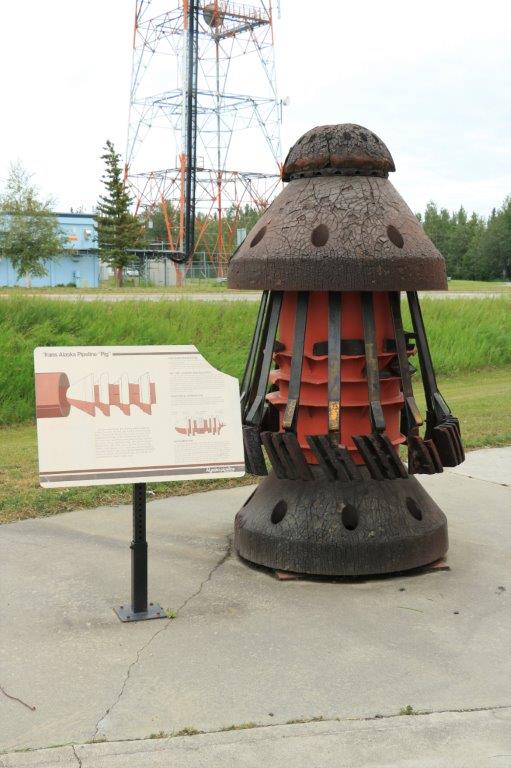
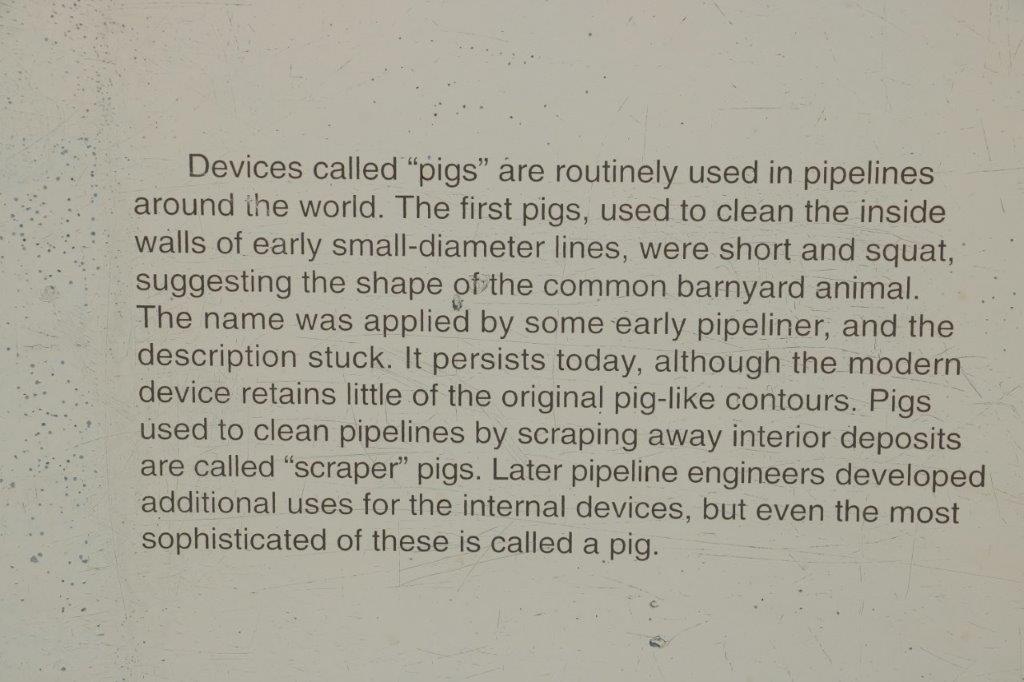
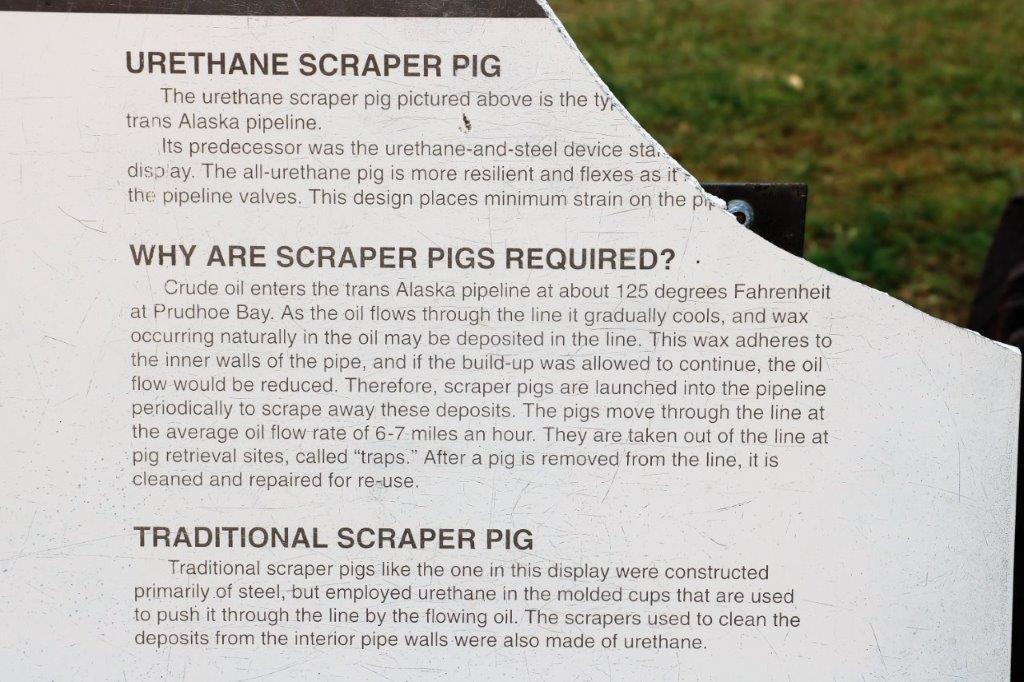
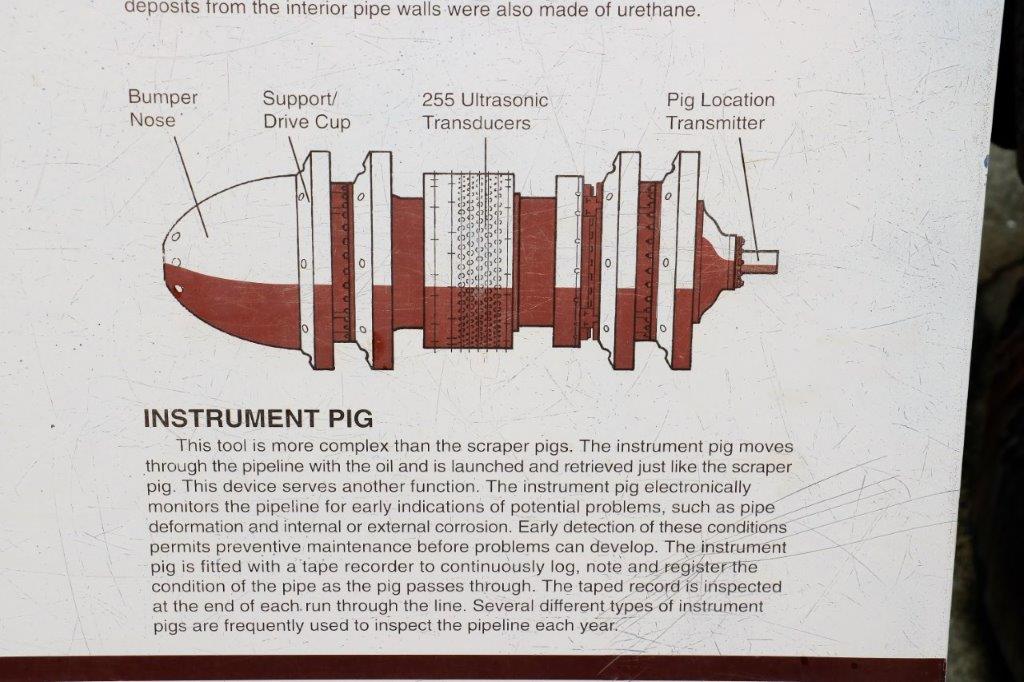
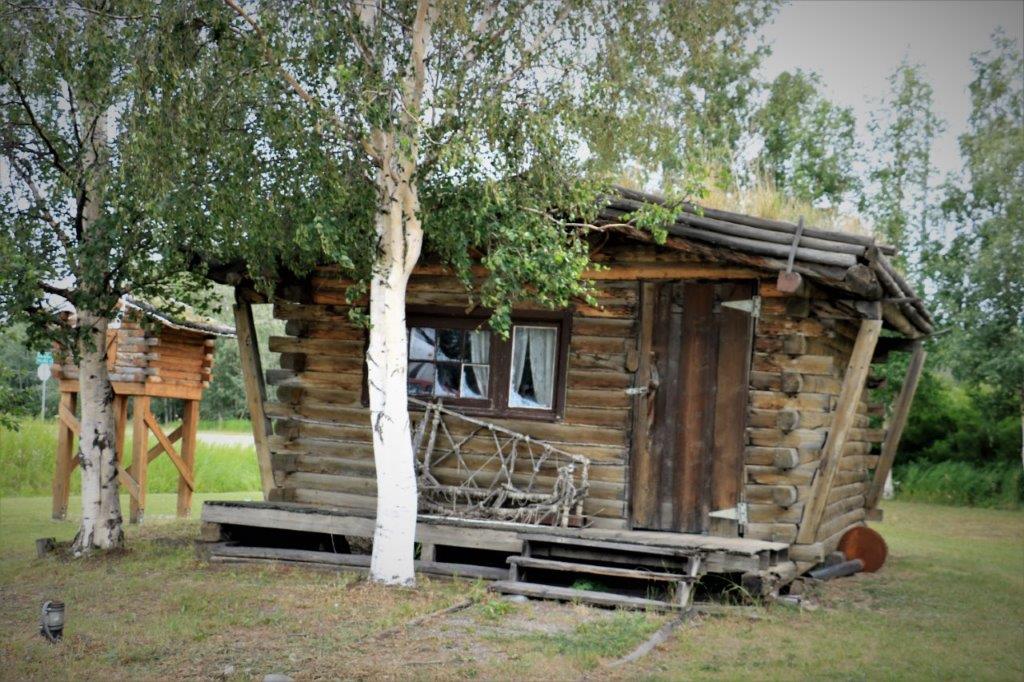
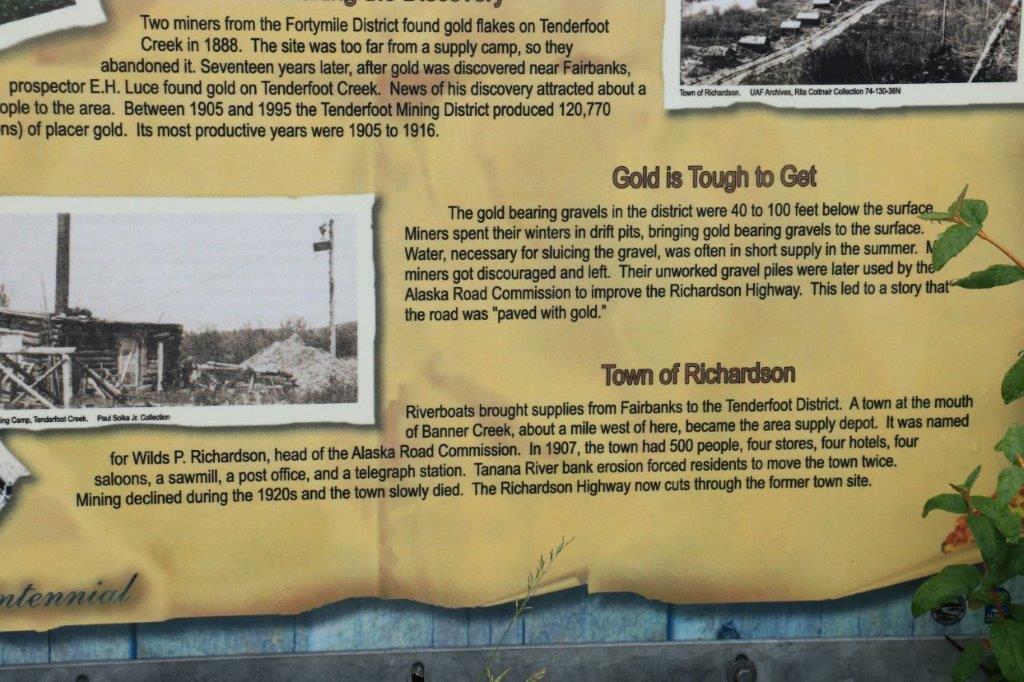
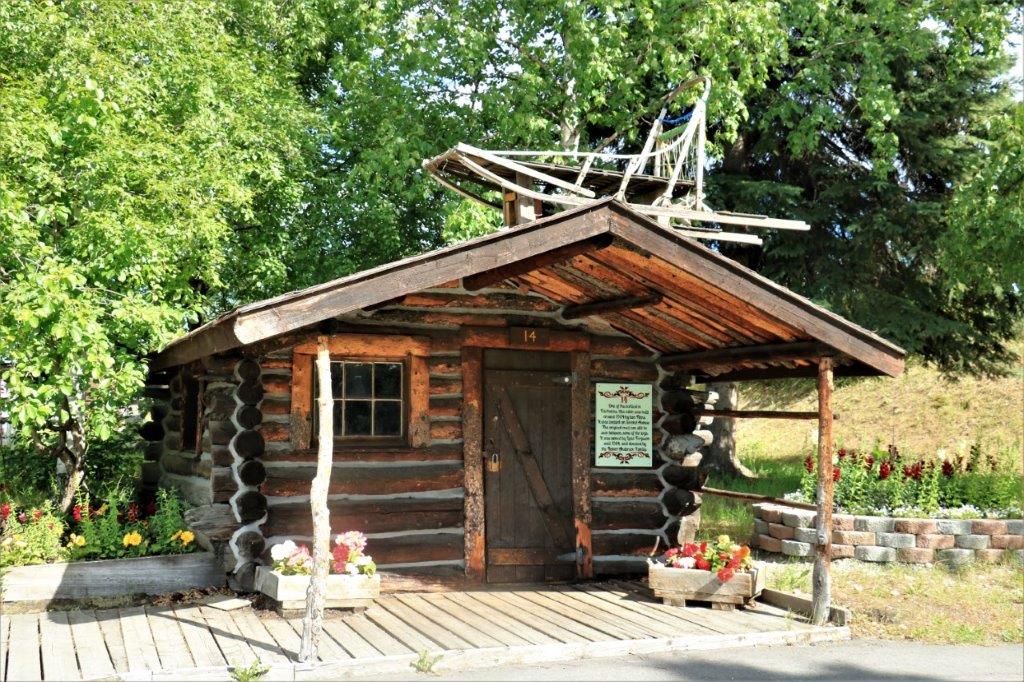
As we left Delta Junction we drove a long distance past the above-ground pipes of the Trans-Alaska Pipeline.  None of my photos turned out though as by then it was raining.There was no information about this funky little log cabin on the Visitor’s Center grounds.

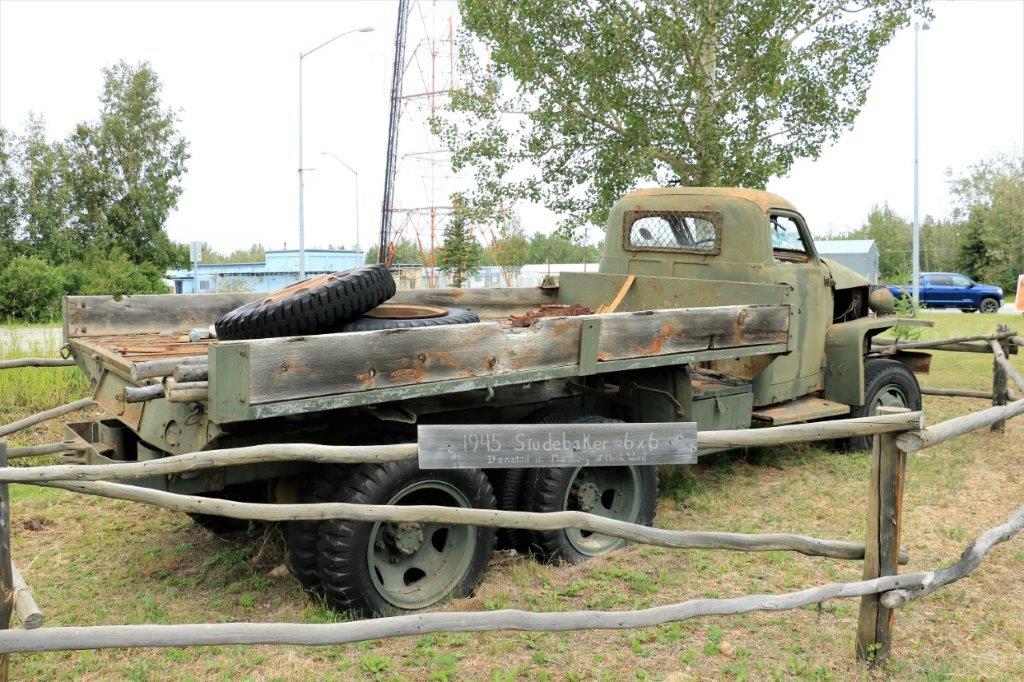
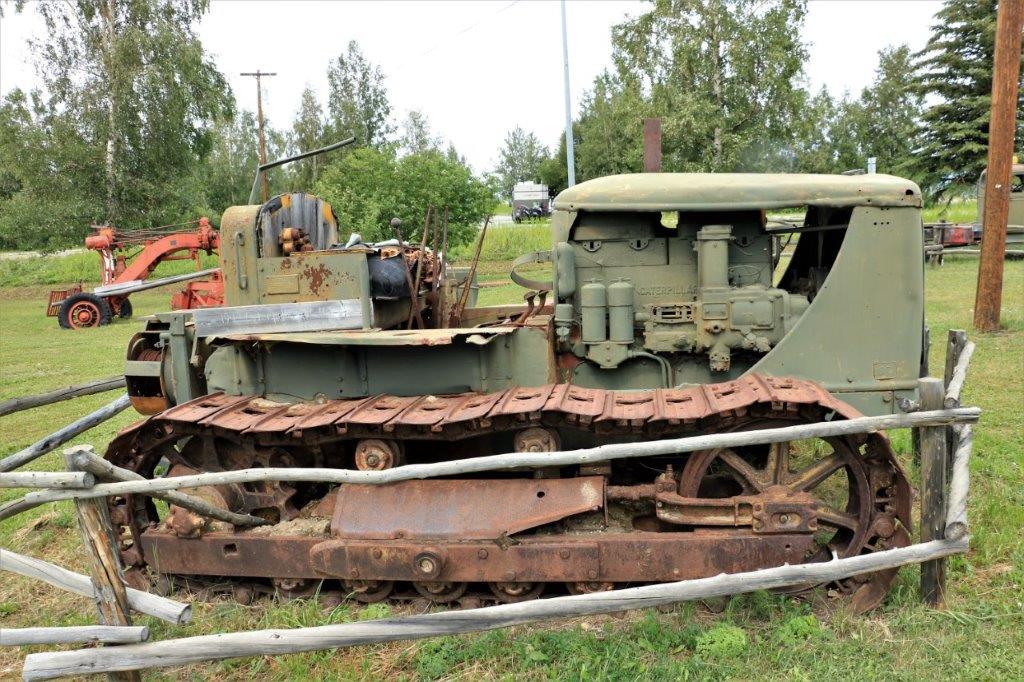
The geocache was across the street where there were a few pieces of old equipment from the 1940s that were used to build the Alaska Highway.                                      1945 Studebaker 6 x 6

          The geocache was hidden in the back of this old roller.

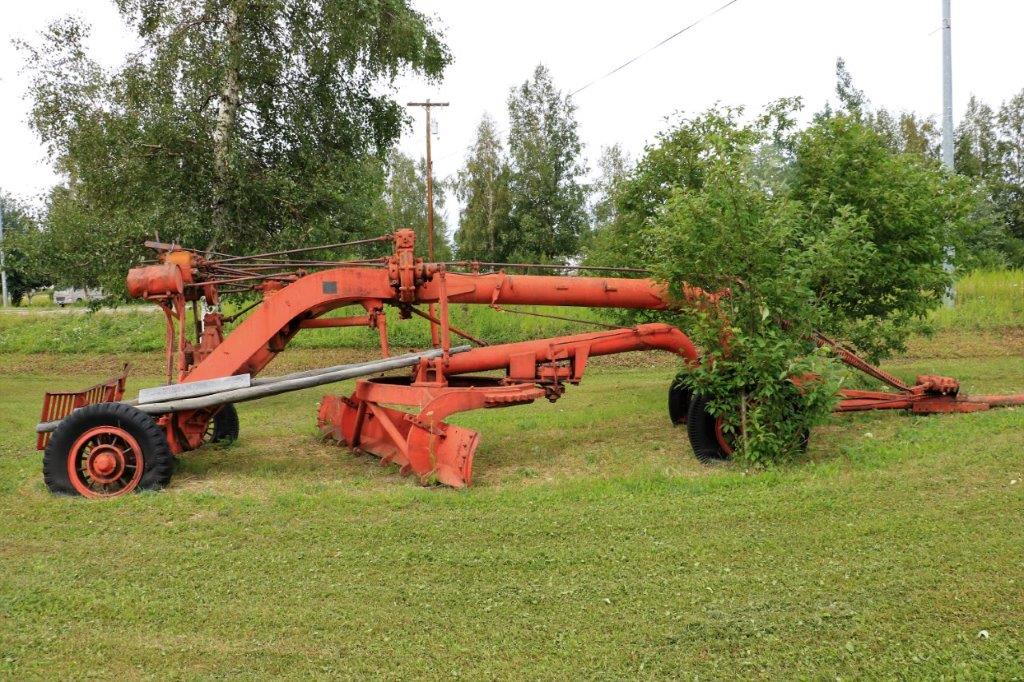
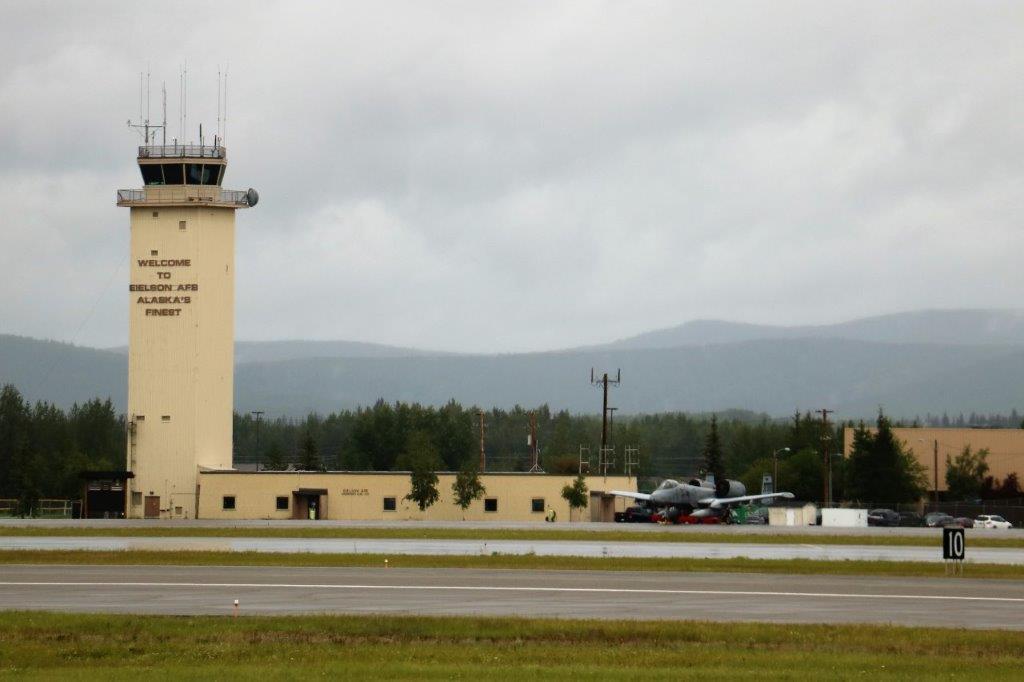
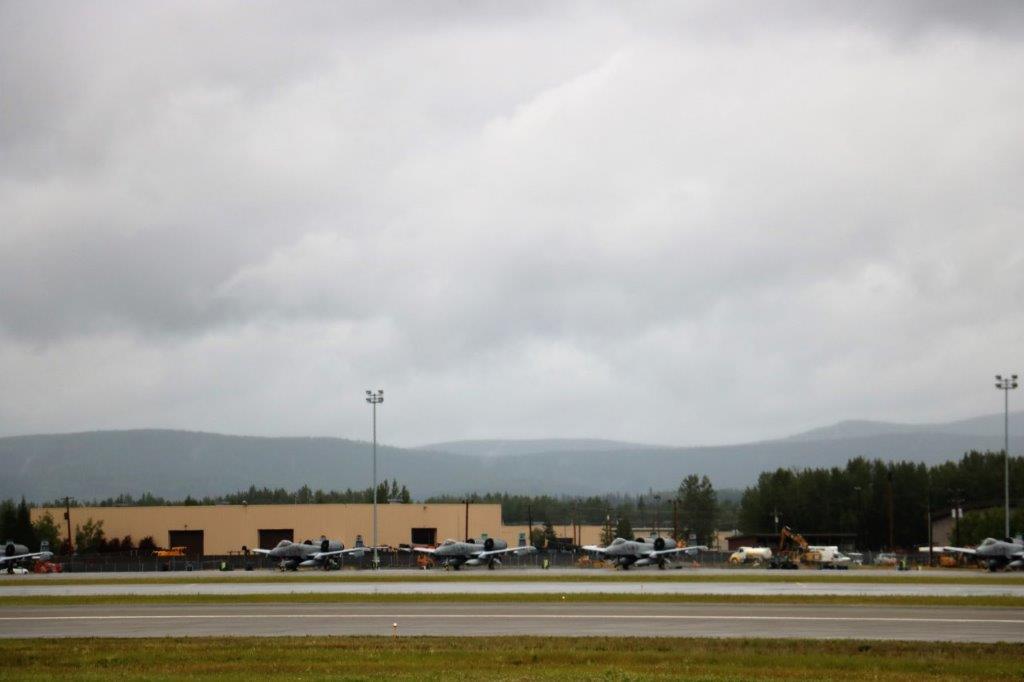
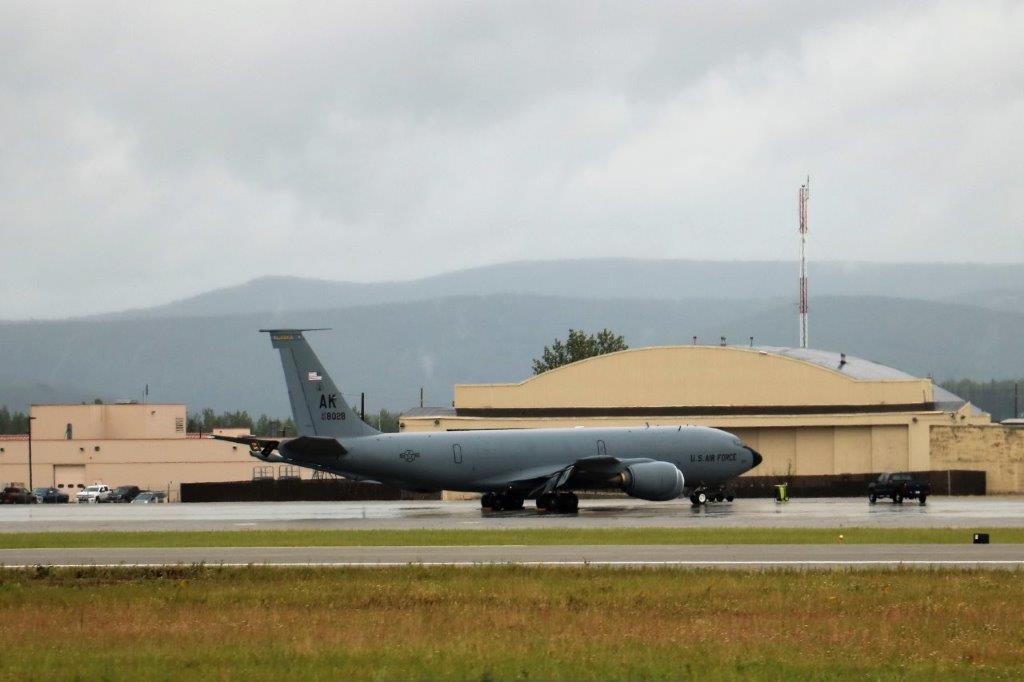
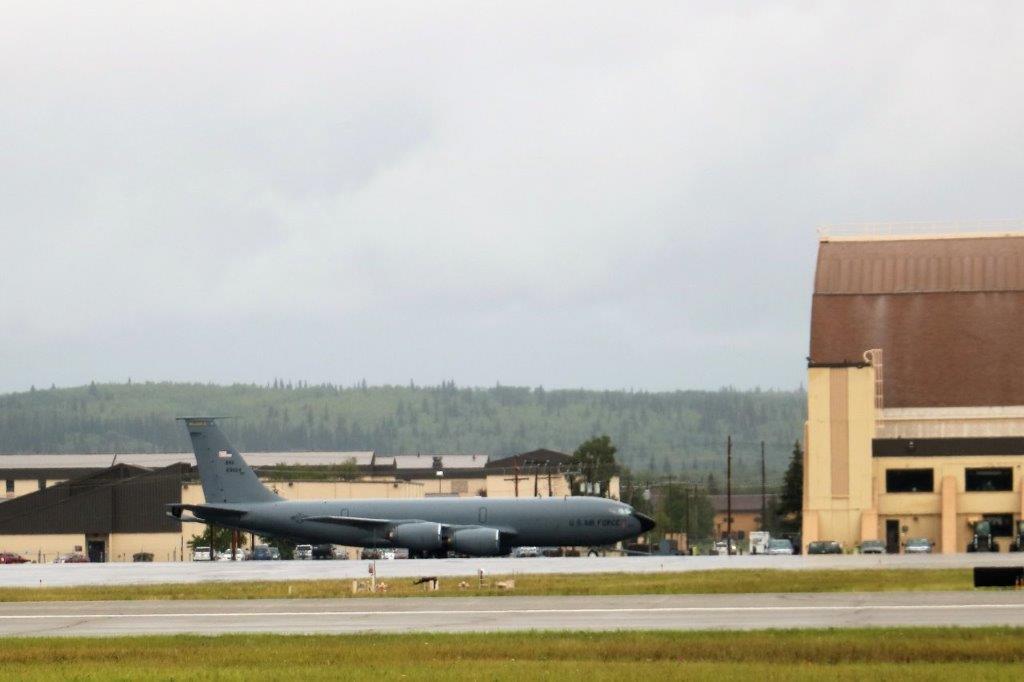
              A 1942 Caterpillar                          and aTurnapull earth scraper.  The Tanana River. We crossed it several times and drove alongside it for miles. There is a large military prescence in the area of Fairbanks.  And we passed the Eielson Air Force Base about 40 km (25 miles) from the city.  It was a huge complex.

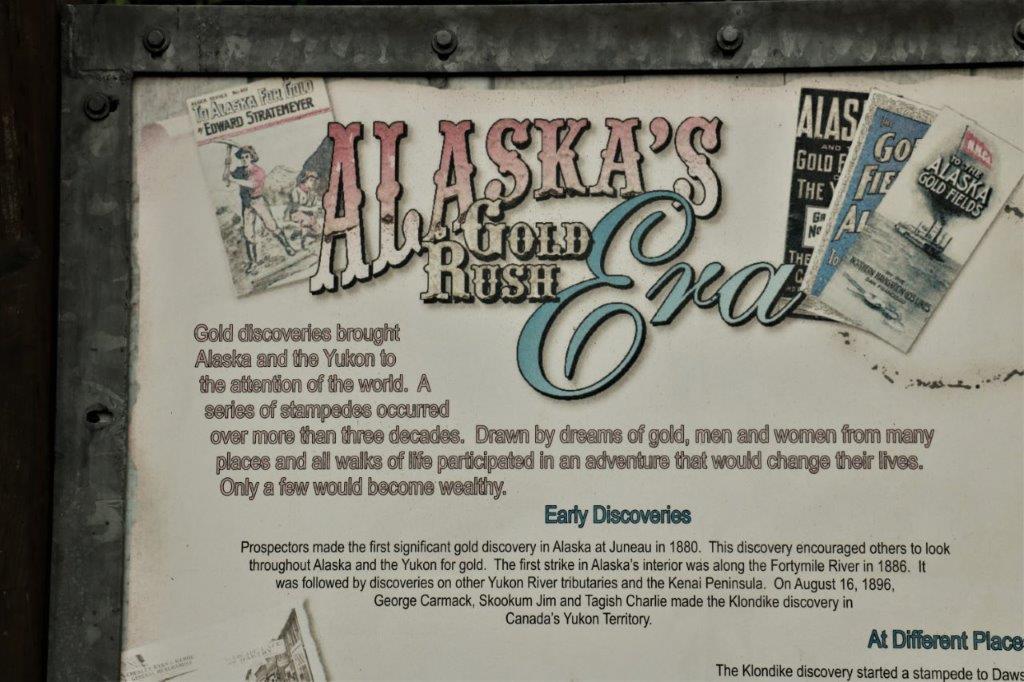
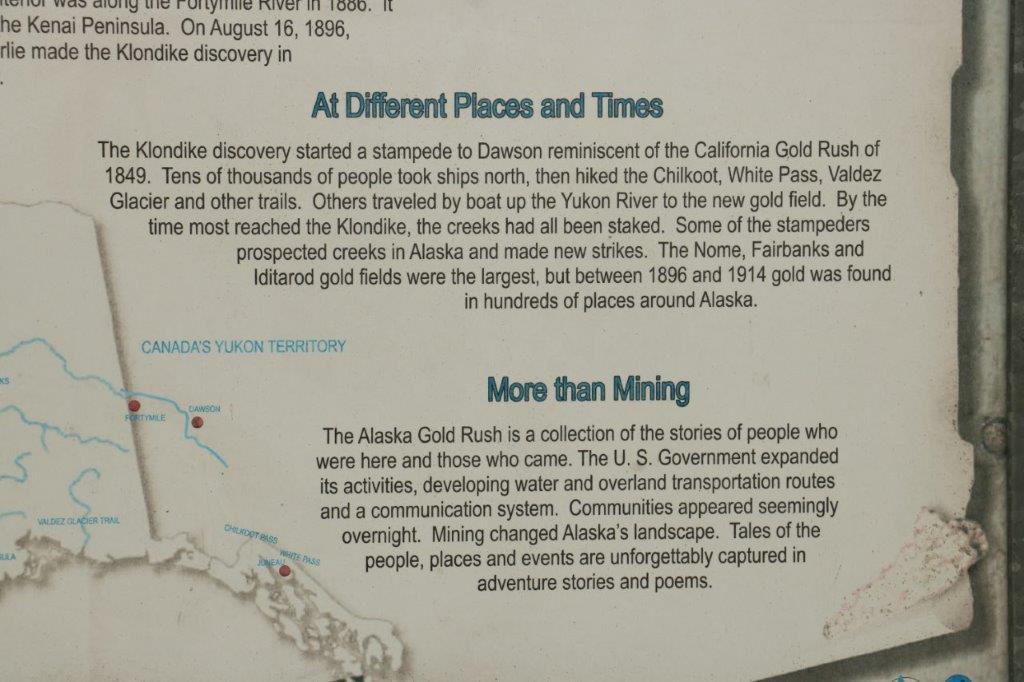
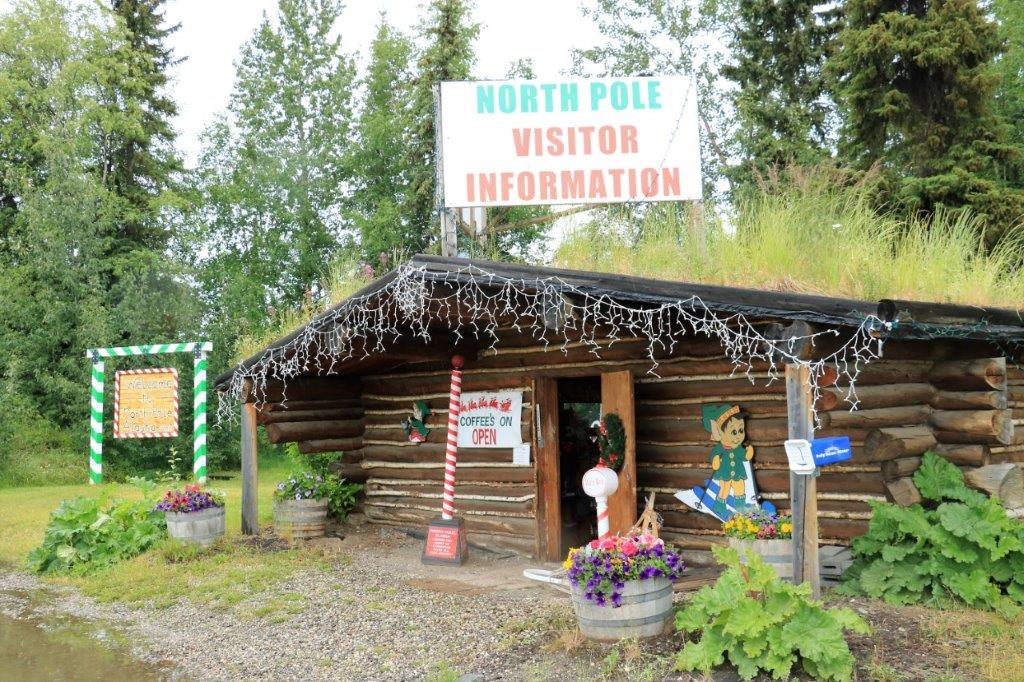
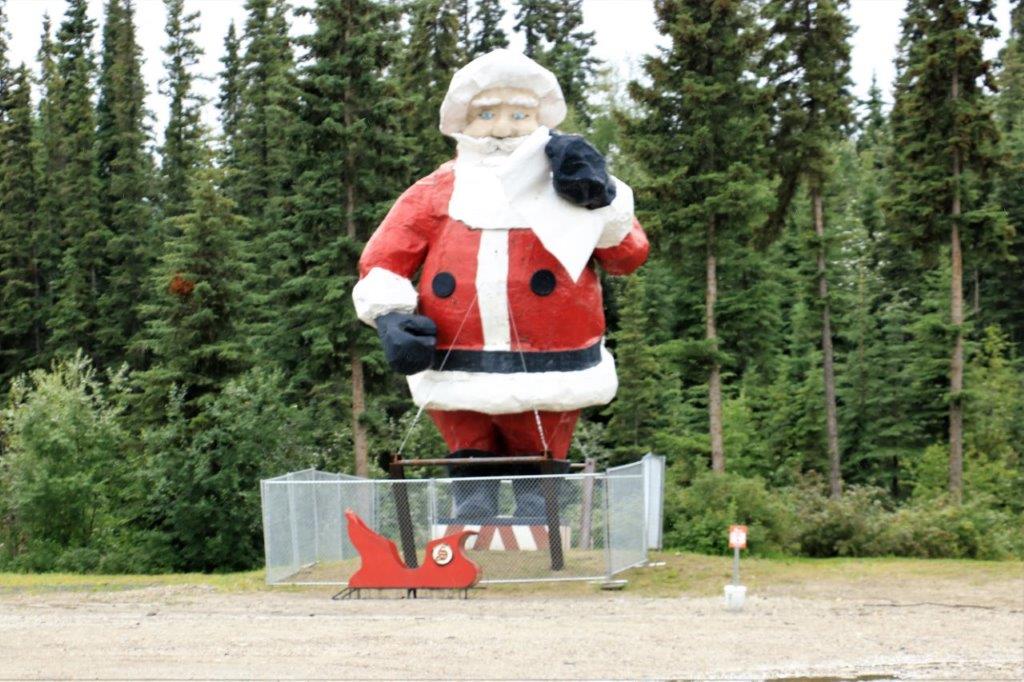
The spot I had to stop along our trip today was North Pole, Alaska.  In 1949 Con and Nellie Miller and their two children came to Alaska to start a new life.  He became a fur trader and merchant and at Christmas time, he played Santa Claus for the village children – the first St. Nick they had ever seen.  In 1952 they  built a trading post and when a young boy recognized Con he said, “Hi Santa, are you building a new house?”  The light came on, the trading post got a name, and a town grew. Current population is about 2,200.

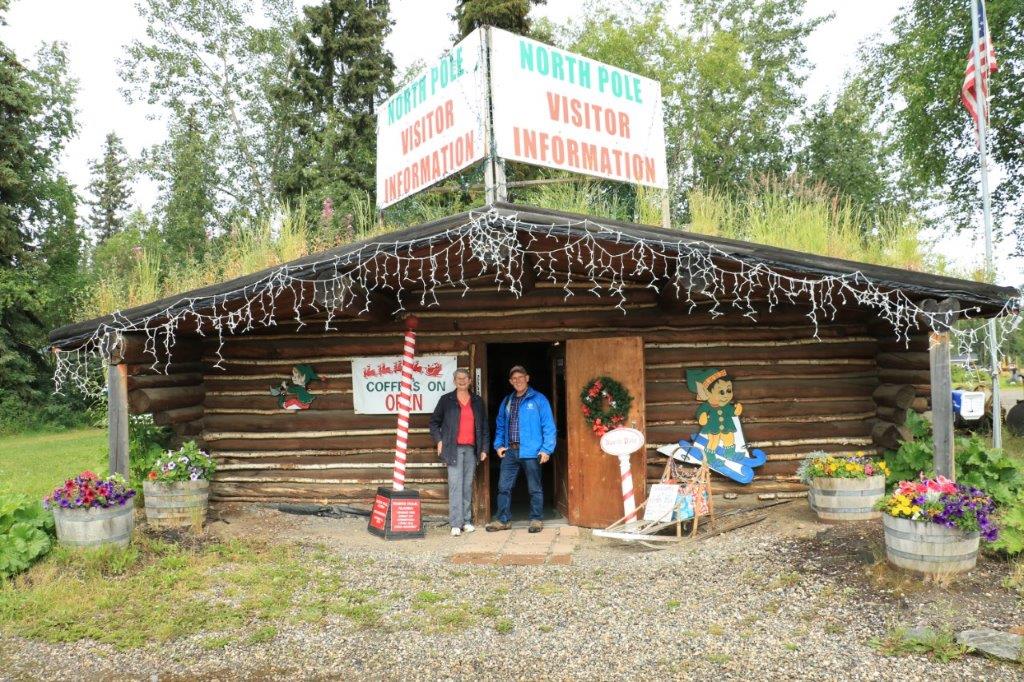
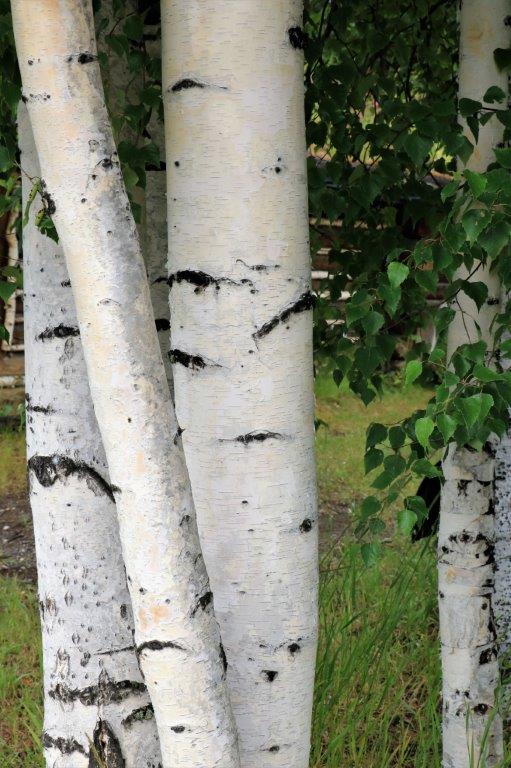
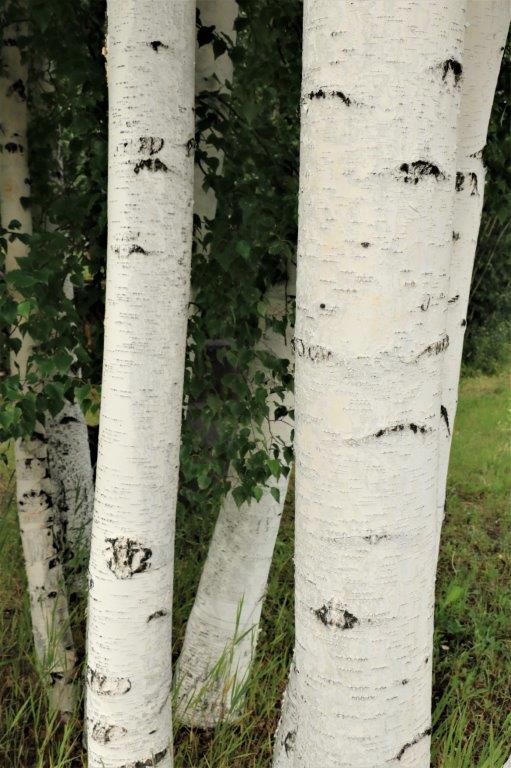
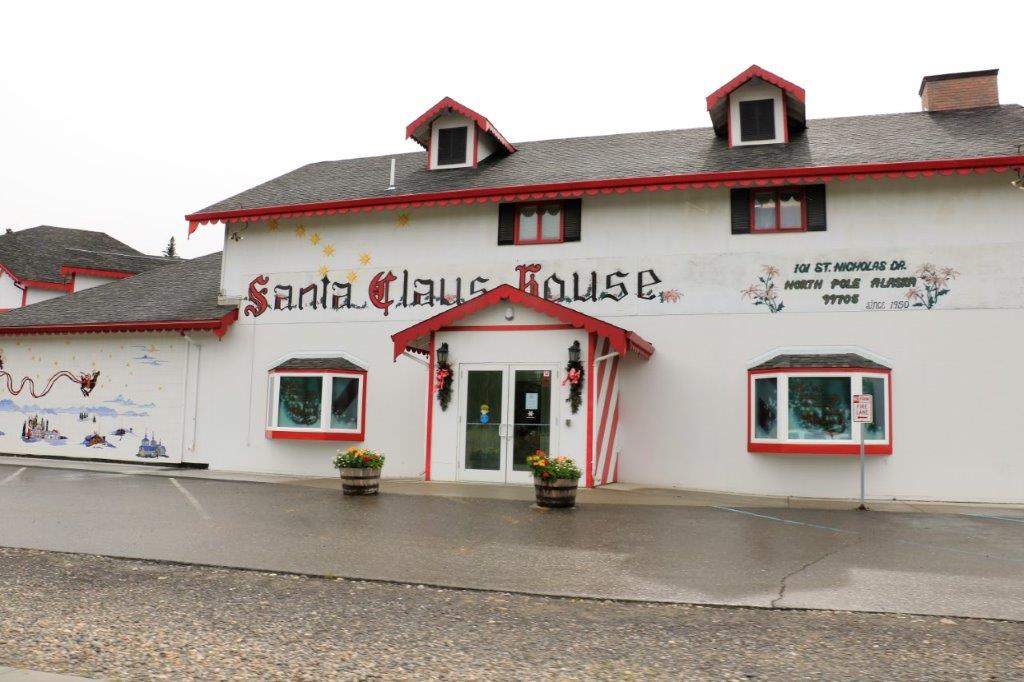
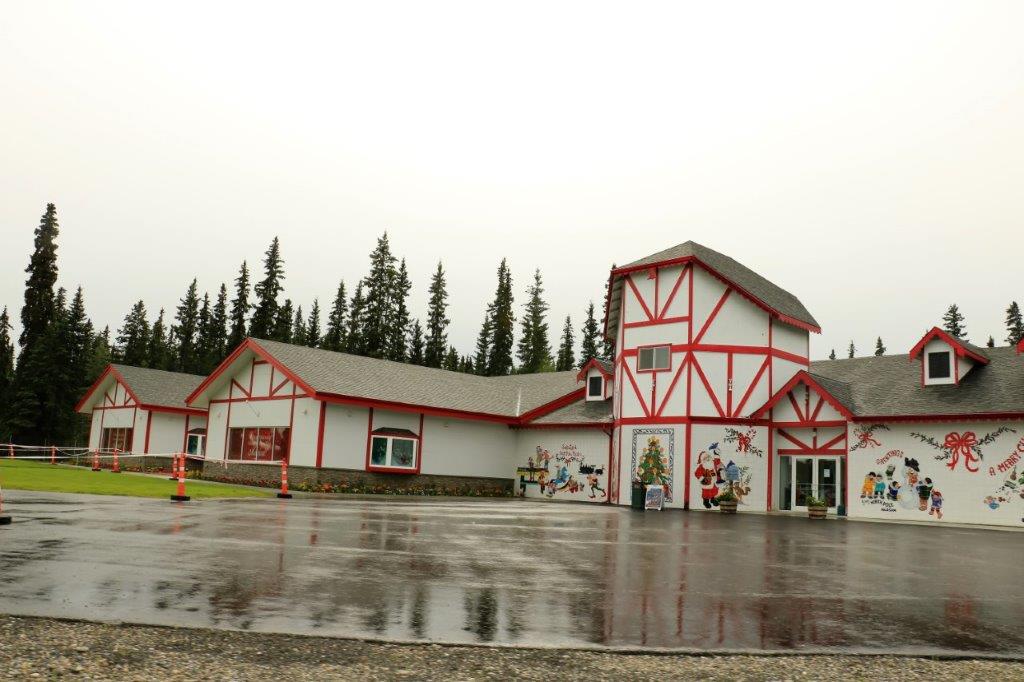
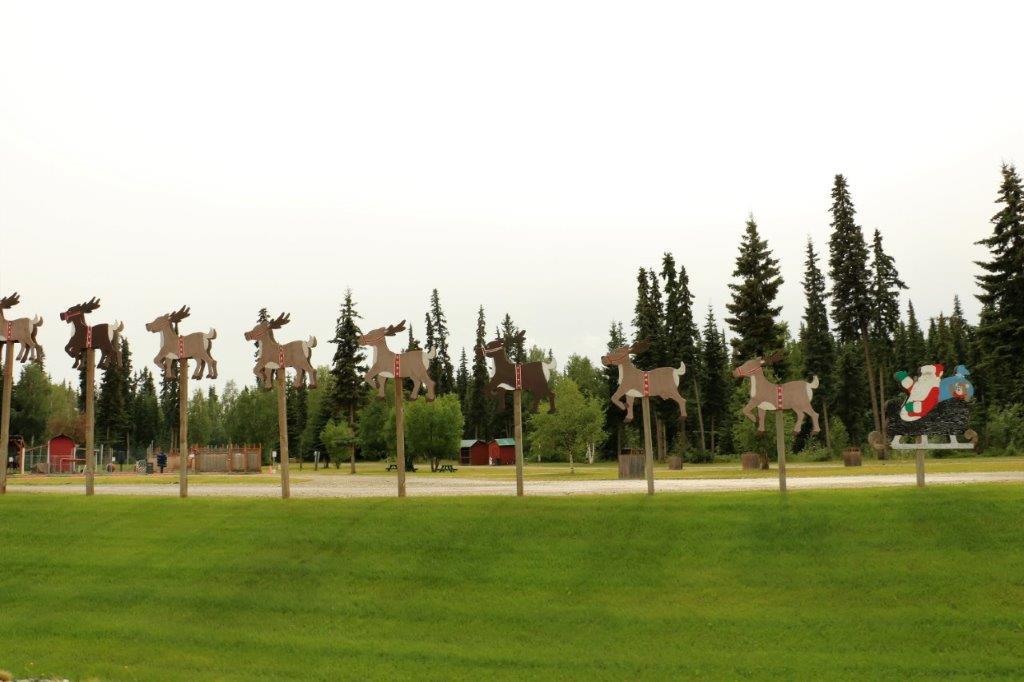
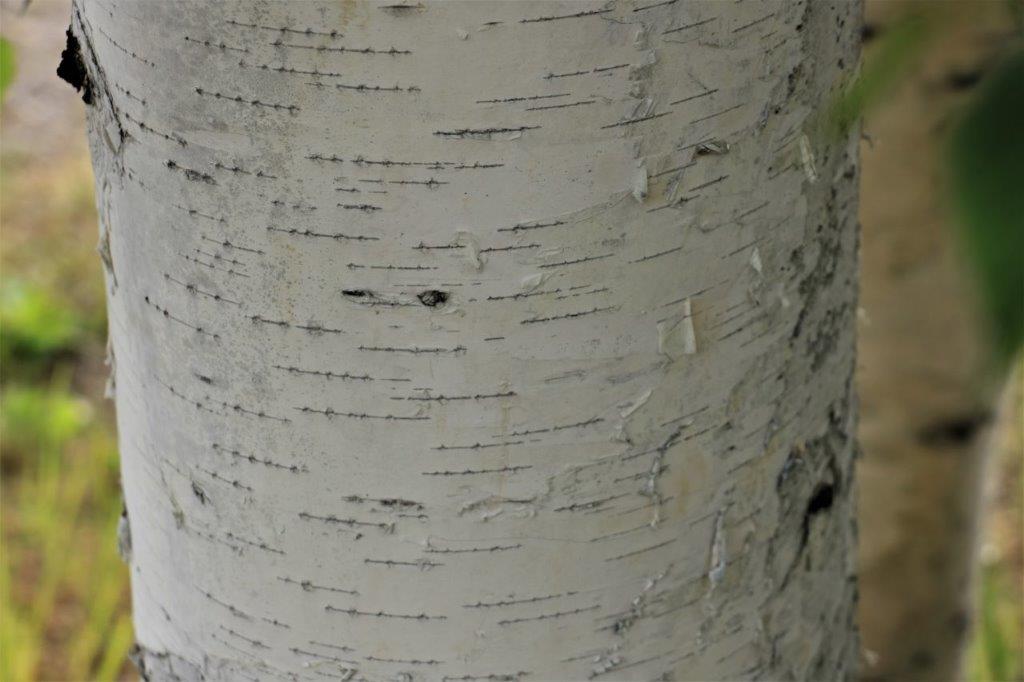
There was a geocache at the North Pole Visitor’s Center and we took forever to find it.  The young gal in the center did not know where it was and had been asked on several occasions about the location.  We were just about to give up when I spotted it.  We told the lady where it was as well.  She took our photo for us at the “North Pole.” There was a cluster of birch trees beside the Visitor’s Center near where we were searching for the cache and I couldn’t stop myself from photographing the gorgeous bark – so white, and the black lines so defined.  God is an awesome designer.We didn’t go into Santa’s House.  I resisted because I have plenty of decorations. We did drive by though.Every year the post office receives hundreds of thousands of letters to Santa Claus or cards people want to have the north pole postal stamp on.  They have a huge business sending letters from Santa all over the world. And we stopped at the Antler College to take some photos of the reindeer.You can purchase a 30-minute tour to spend time with the reindeer.  How cool is that?

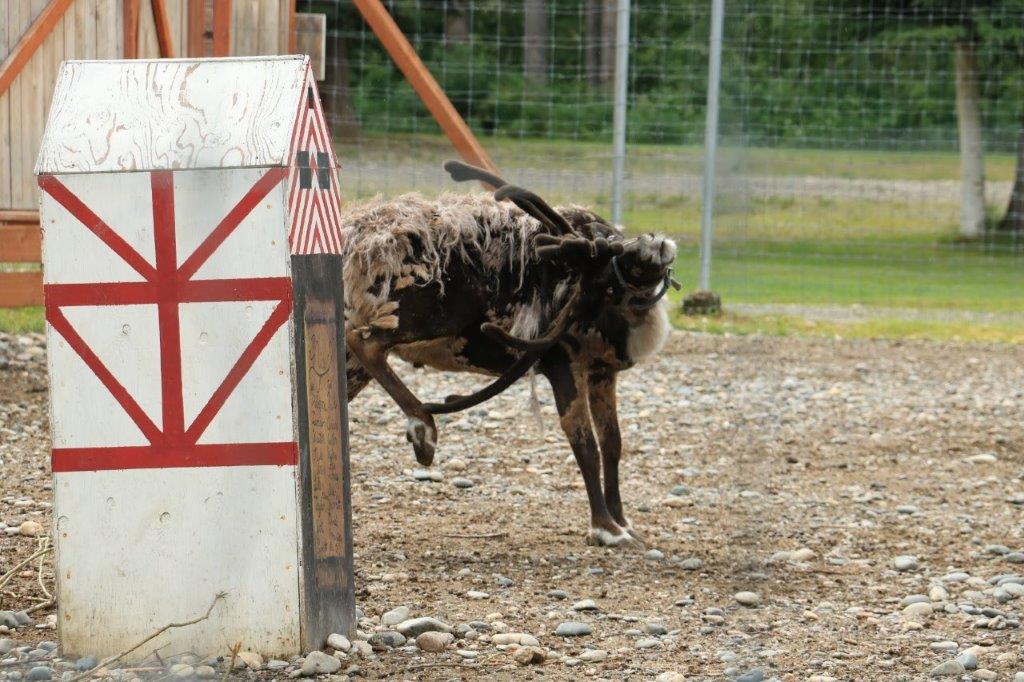
This fellow was not with the other neat and tidy reindeer. He, obviously, hasn’t finished shedding yet.  He was also having a dickens of a time trying to reach an itchy spot on his foot with his antlers.  It was only about 20 minutes drive from North Pole to Fairbanks.  Then we spent another half hour trying to find our hotel.  It is not on the main highway and, in fact, sits all by itself on a loop road in the middle of the bush, across the river, and behind the Pioneer Park.  I have never seen a Best Western hotel in such an out-of-the-way place.  The upside is there is no traffic noise at night.

Tomorrow it is off to explore Fairbanks.  They have here, among other things: an antique auto museum, a railroad museum, a mining museum, a community museum, a Museum of the North, a pioneer air museum, a children’s museum, a Pioneer Heritage Park, and an ice museum.  Should be fun…..

2018 July 10 – Dawson City, YT to Tok, AK

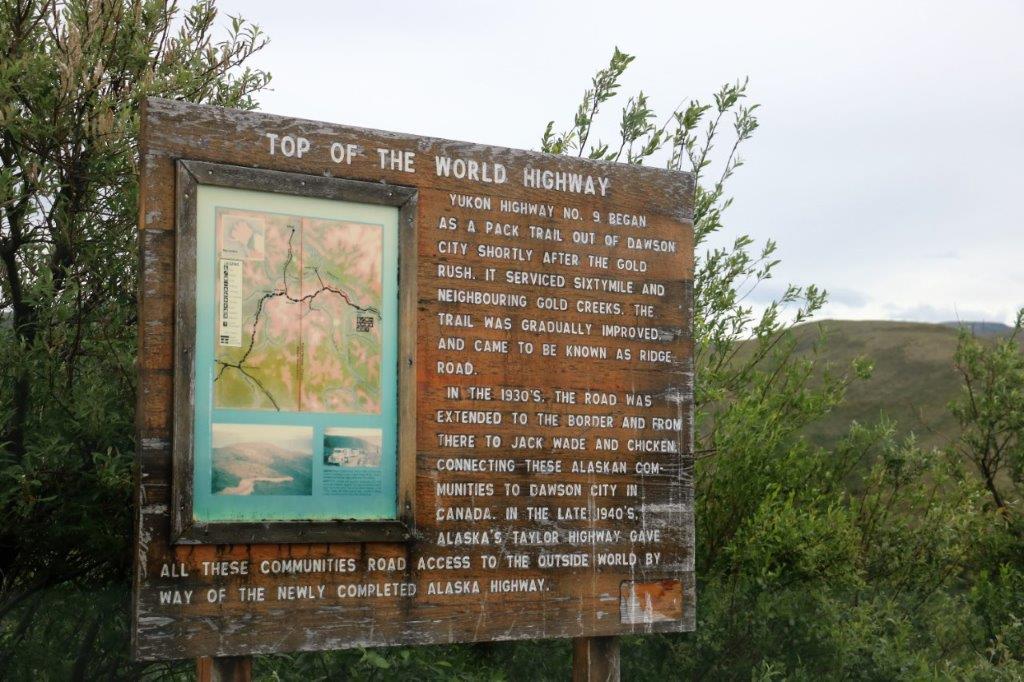
After spending two more nights in Dawson City we were on the road again this morning.  Our journey today would take us on the Top of the World Highway into Alaska.

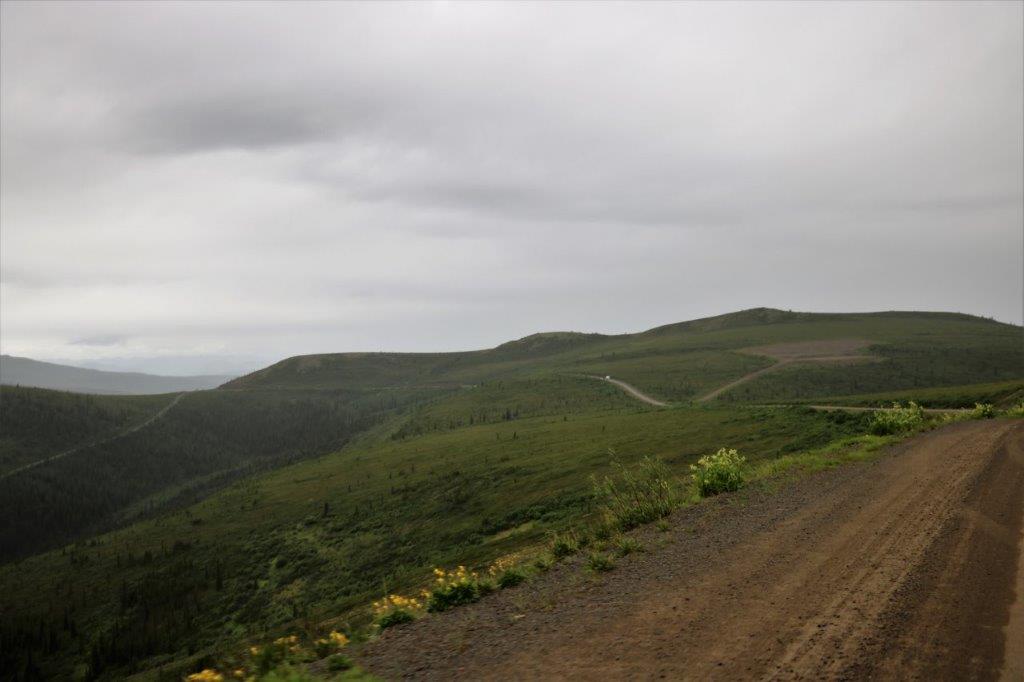
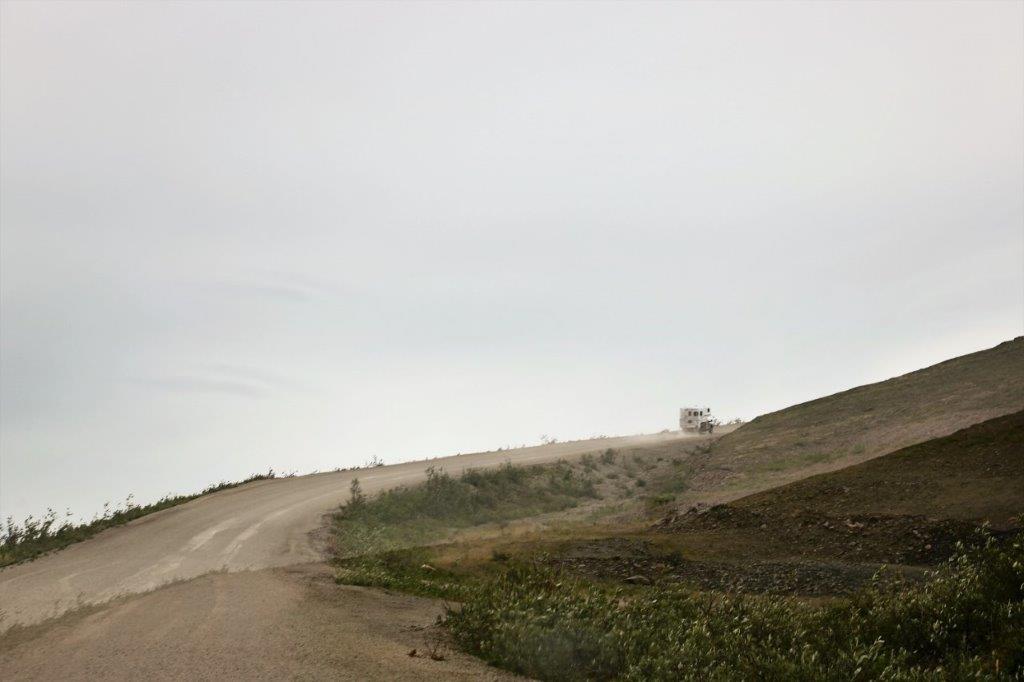
We crossed the Yukon River on one of the free ferries and drove up the mountain on the other side.  Our route will literally take us along the top of the ridge of a mountain range before descending down the other side.  The road was originally a pack-train trail and was eventually widen into a two lane road – partly gravel, partly paved.  Many people still call it the Ridge Road.

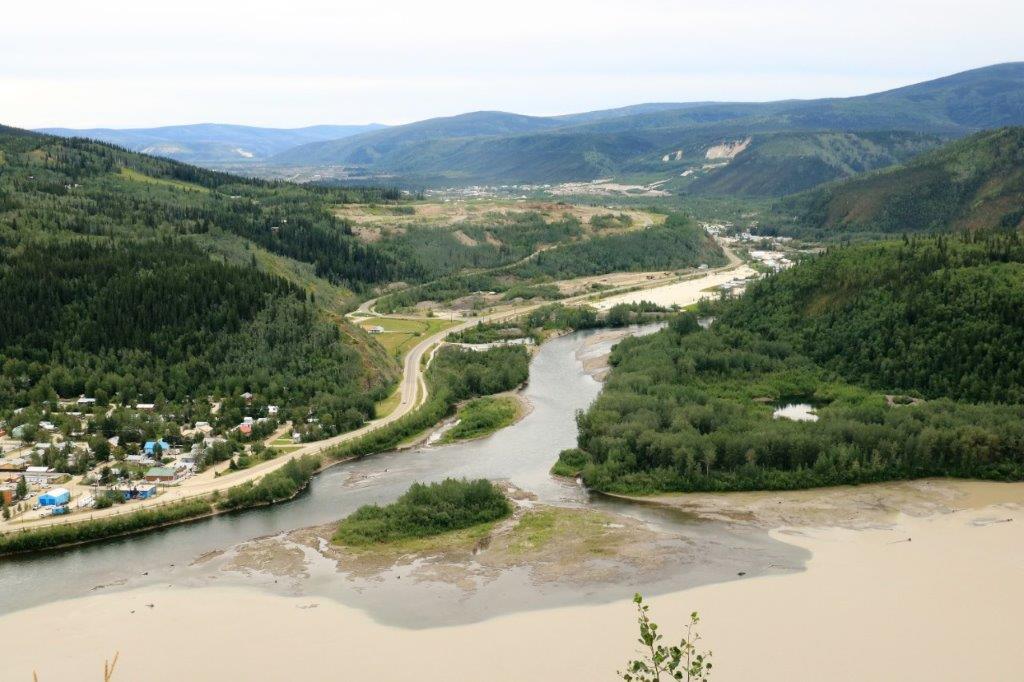
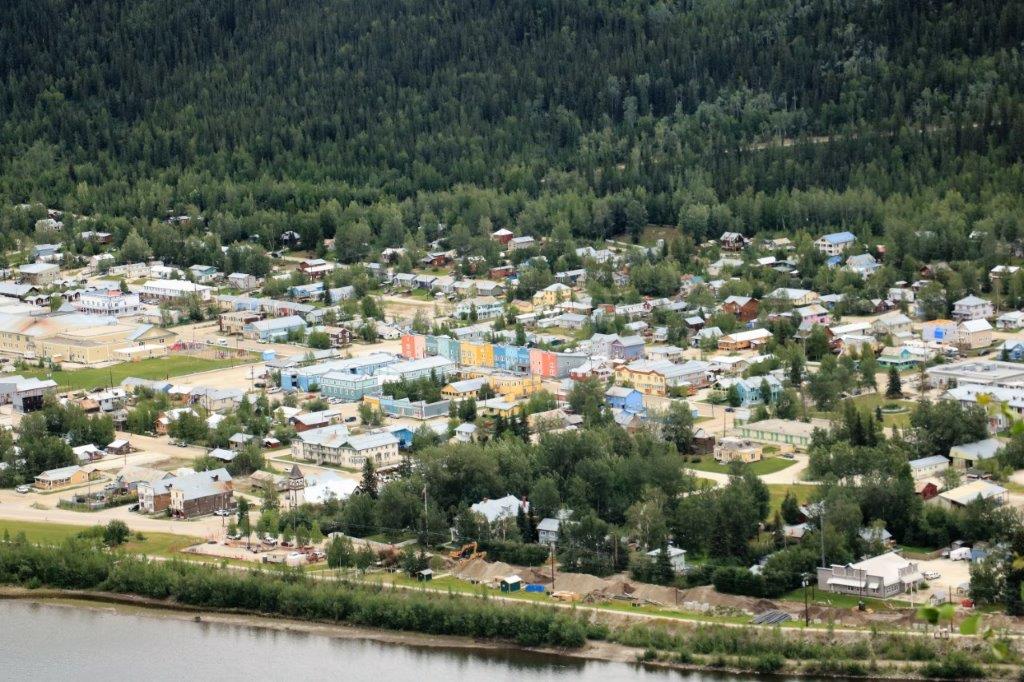
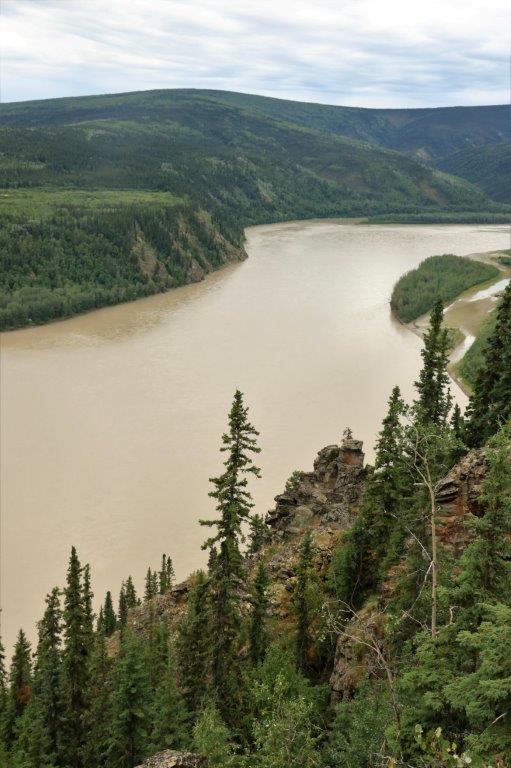
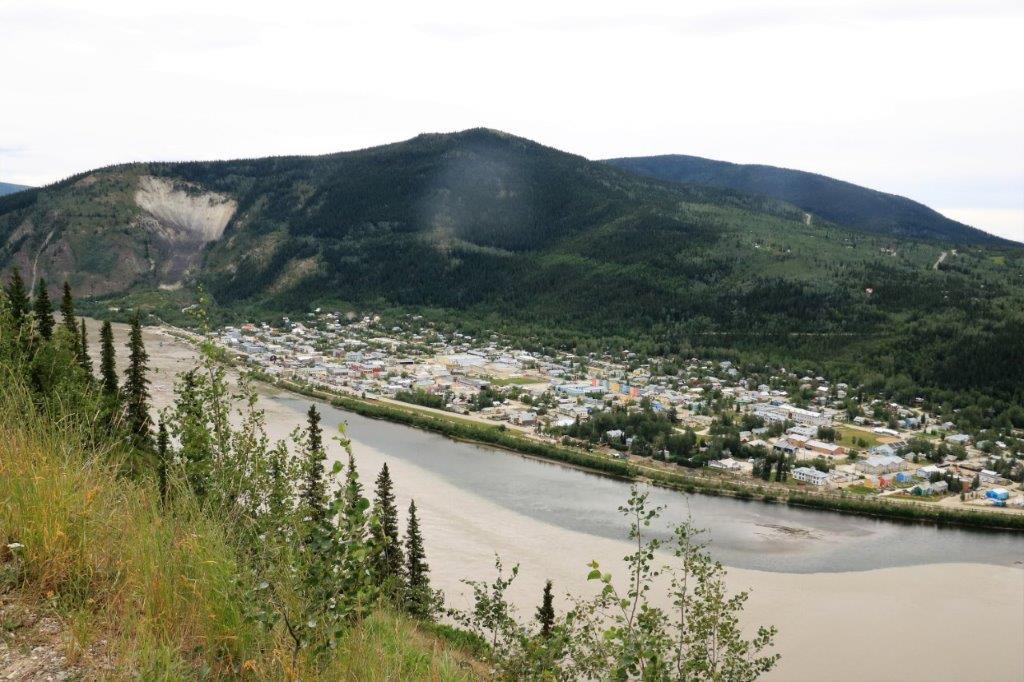
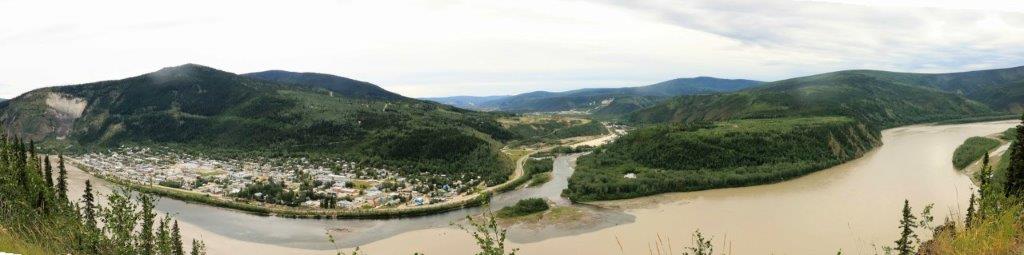
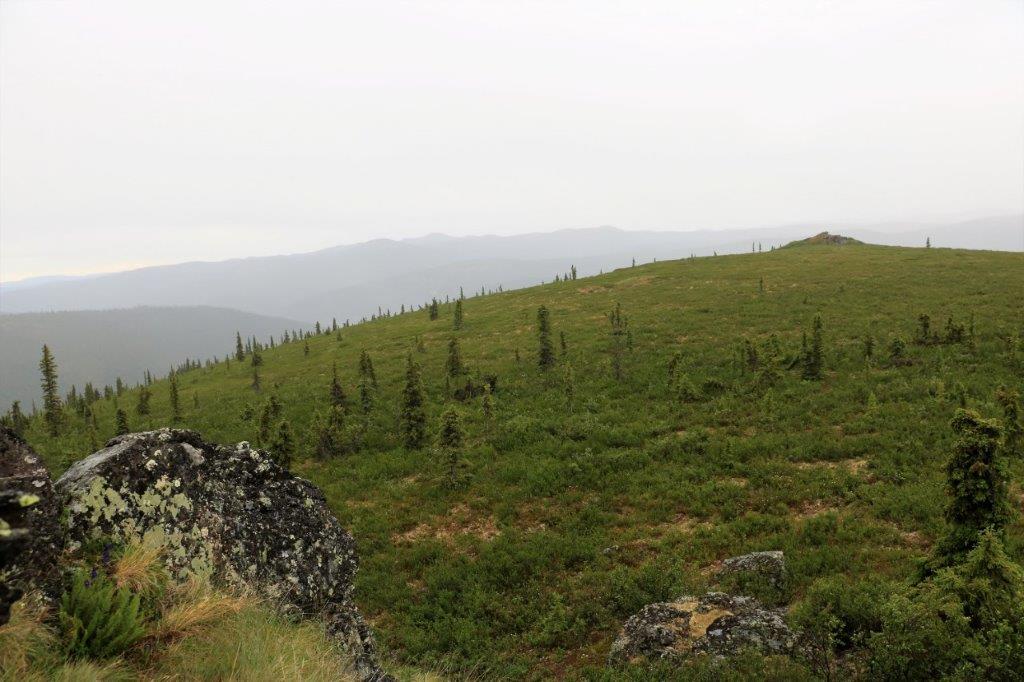
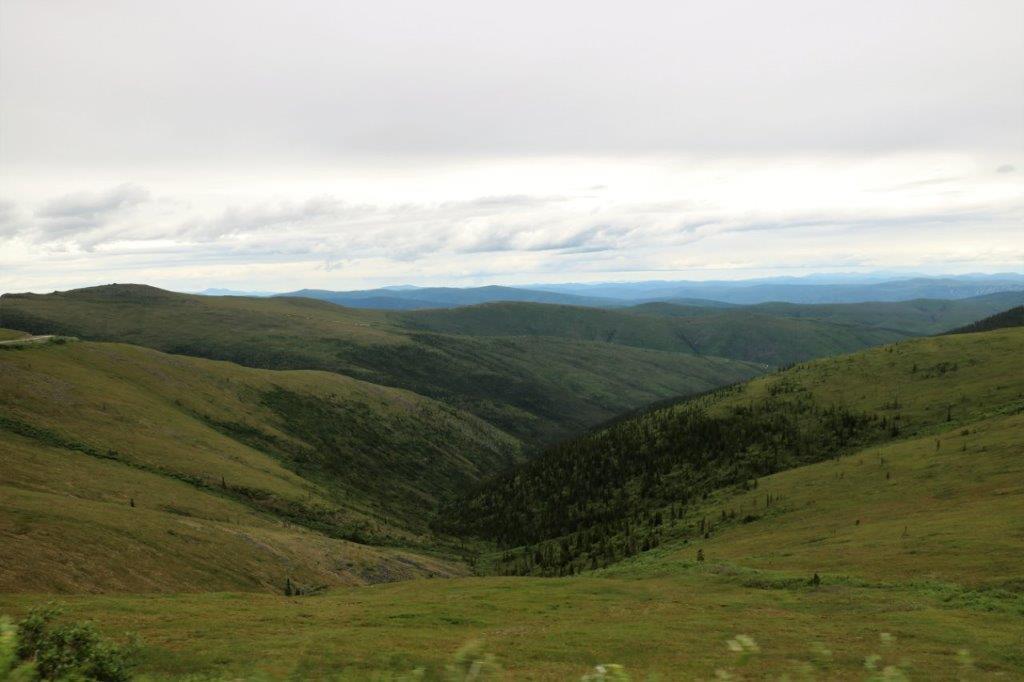
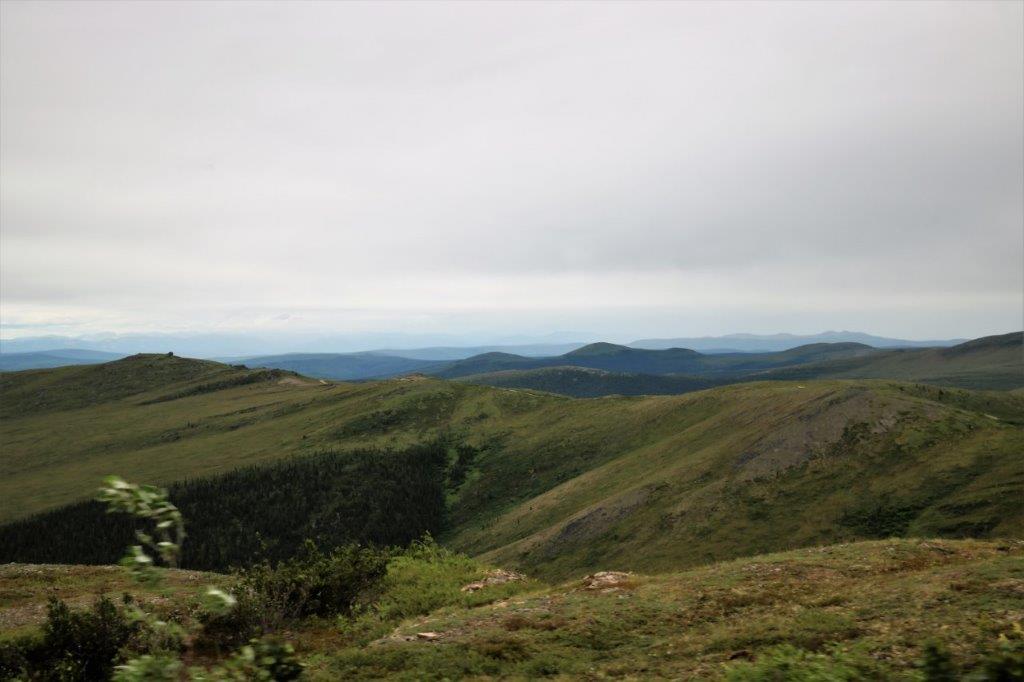
Part-way up the hill after we crossed the ferry there is a viewpoint that looks back toward Dawson City and the Klondike River’s confluence with the Yukon.  Despite the cloudy skies it was a wonderful view.                 Dawson City and looking up river on the Yukon. Looking down river.  Note the two colours of water where the Klondike and Yukon have not yet melded. There is a similar false building ‘Welcome to Dawson City’ sign at the east entrance to the city.  The one at this side of town looks pretty run-down.  However, there was a geocache hidden here so we stopped to find it. What we also discovered was the lower building housed information maps and signs about the city.  We found this out when we went around the back in search of the geocache. The back of the building is open and the interior walls have maps and information on them.  We would never have thought to go around the back of this structure except for the hunt for a geocache.  It does make a unique welcome sign, but I think it looses its purpose as very few people would stop beside it and walk around to the back.   Most of our drive through the mountains was under cloudy skies.  There are fantastic views of the Alaska Range from up on the ridge road, but most of the distant peaks were hidden by clouds.  It was still the wide open country we have become accustomed to up north.There was also a geocache hidden in this rock formation.  On a clear day there is a 360 degree view of the mountains.  It would have been fabulous.  But, we did find the cache, so all is well.

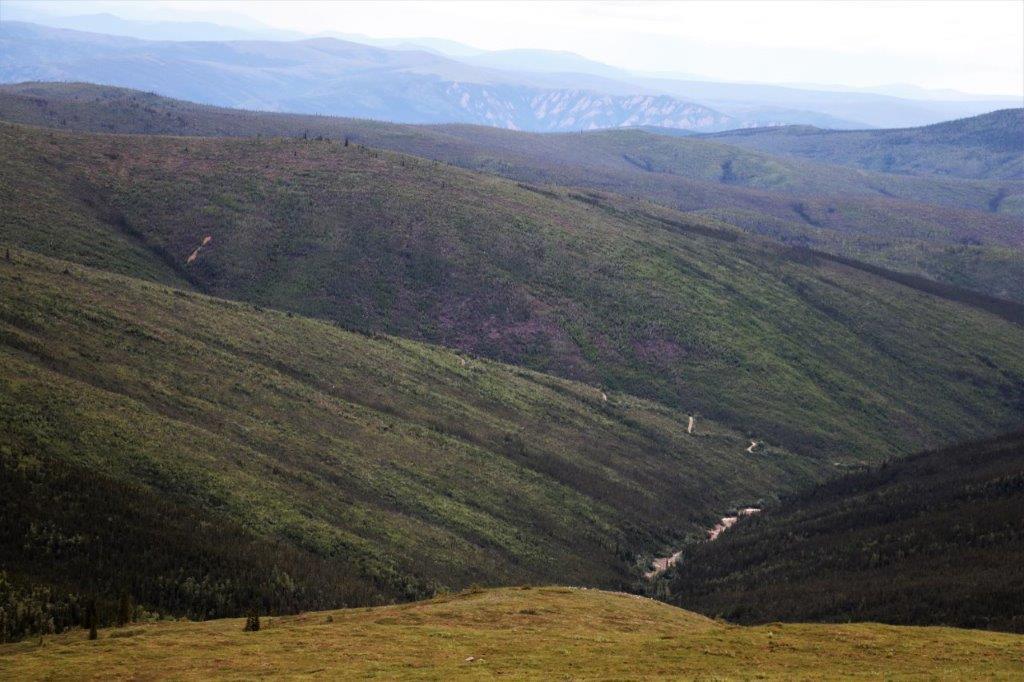
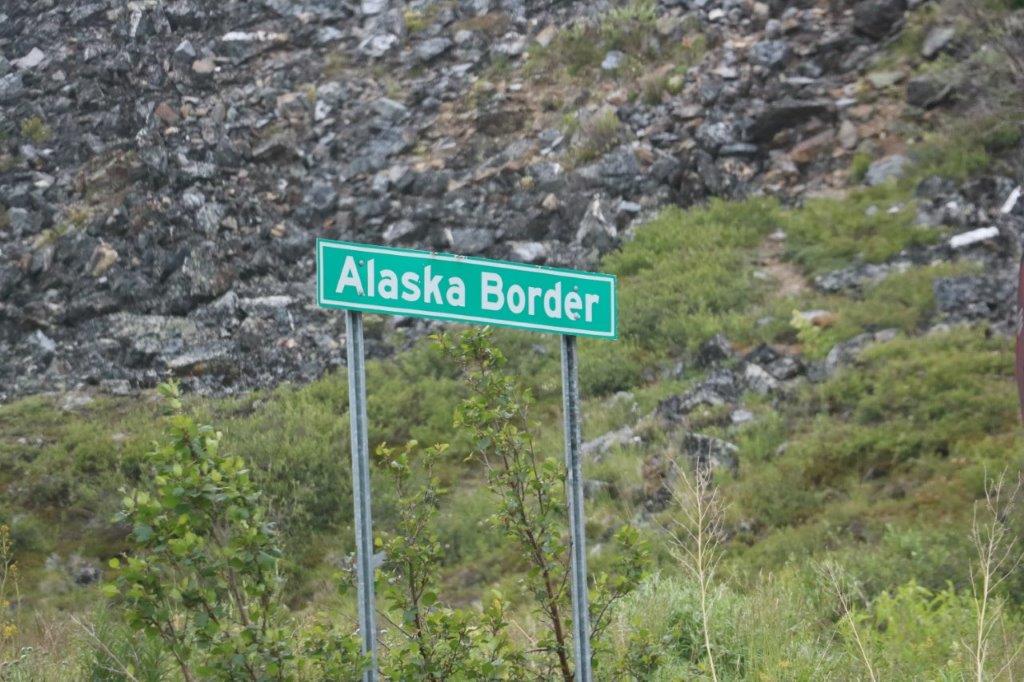
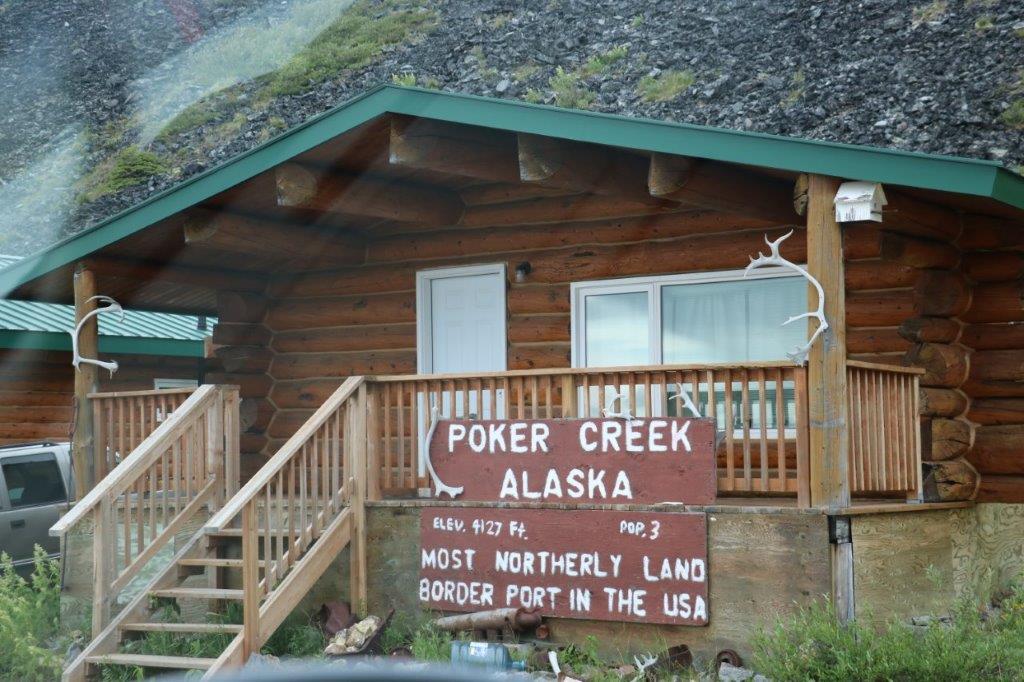
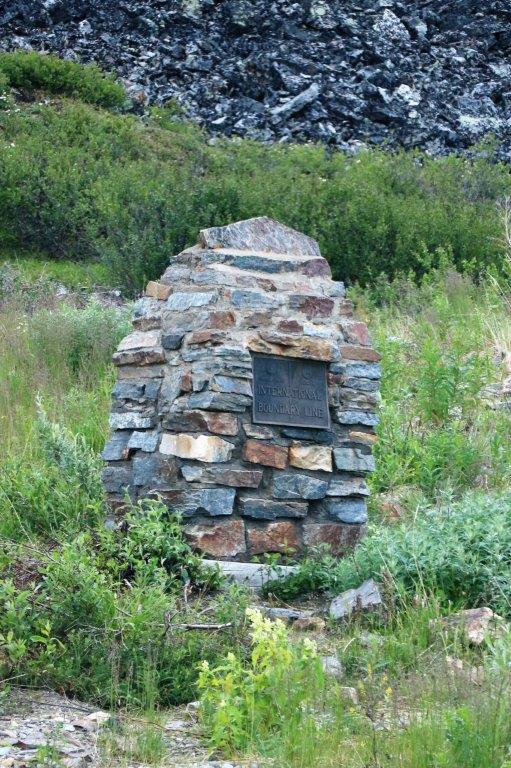
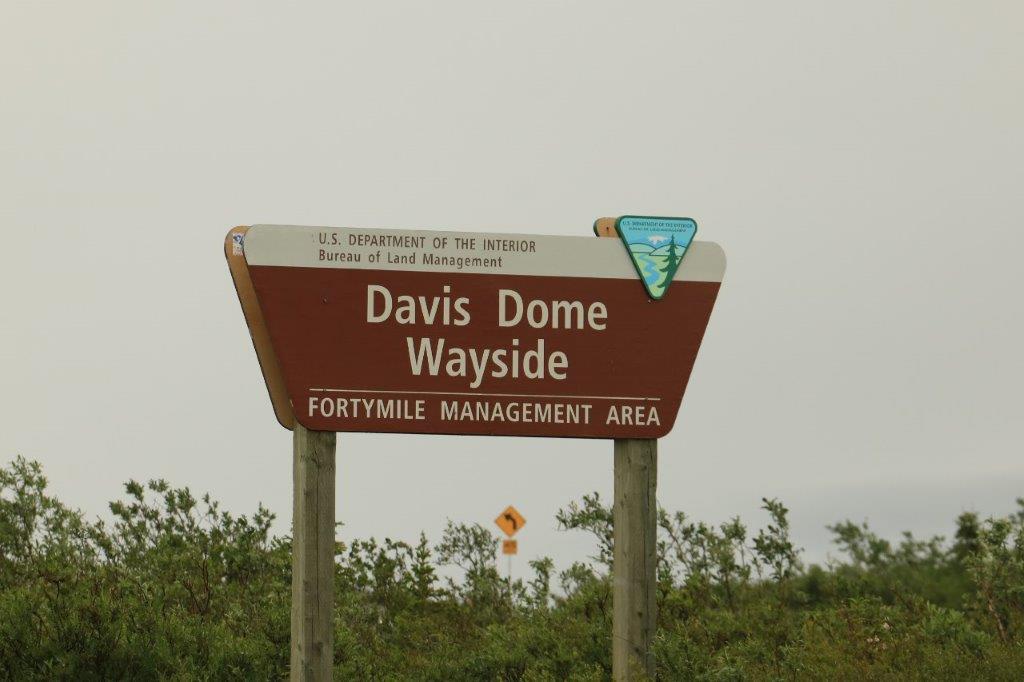
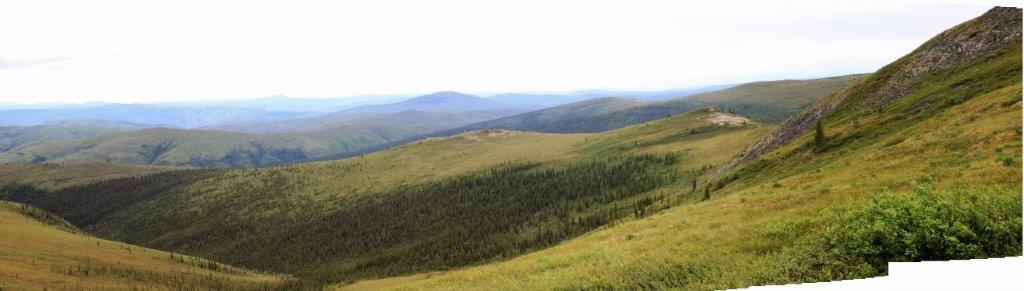
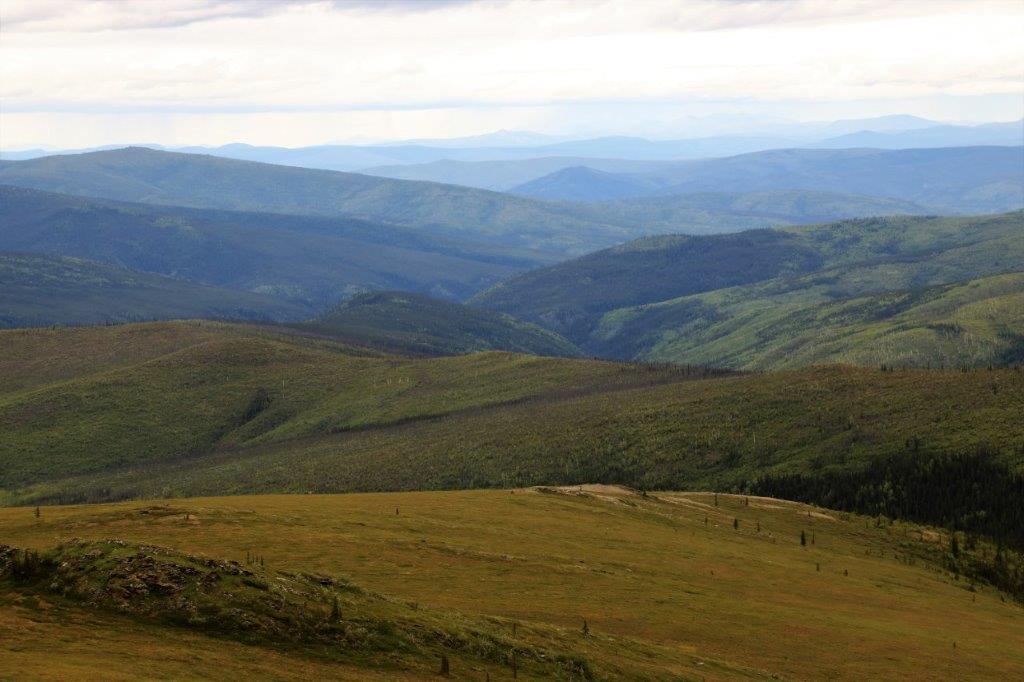
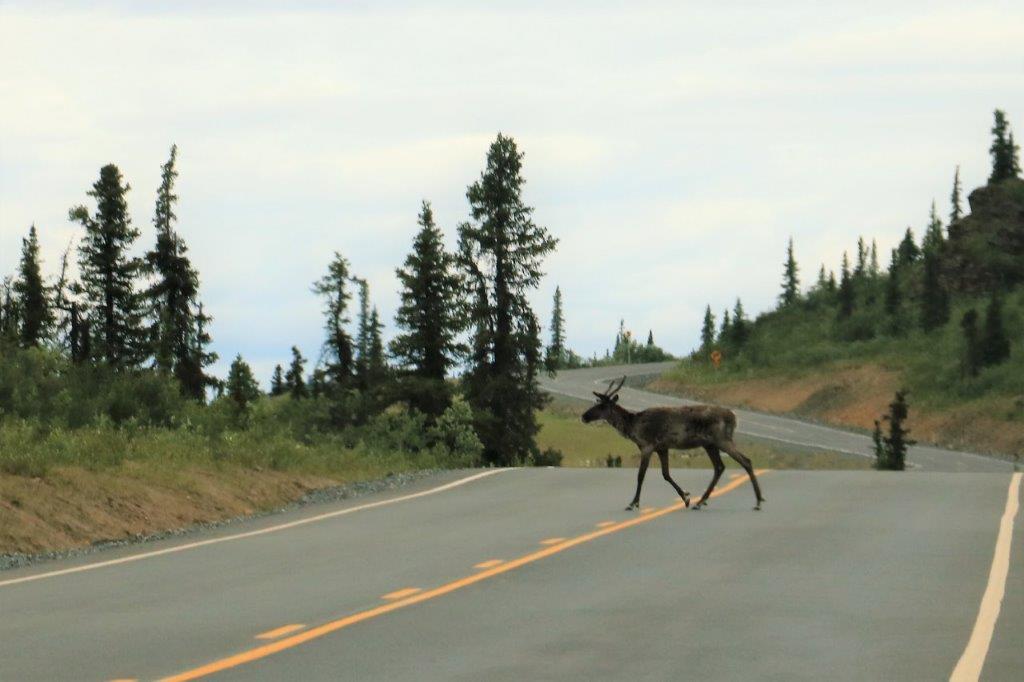
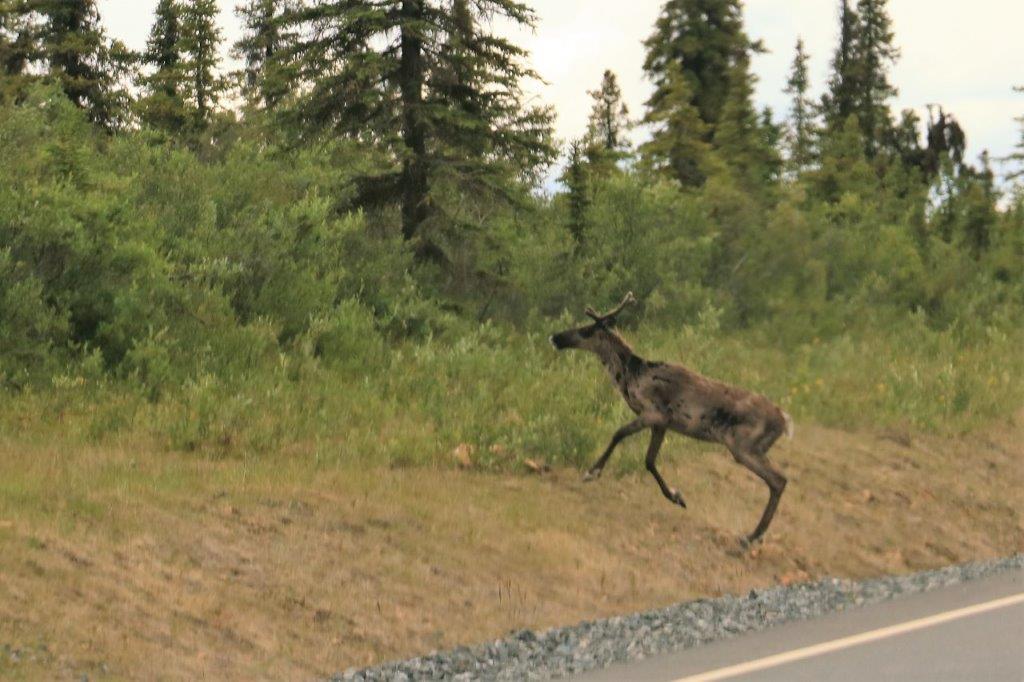
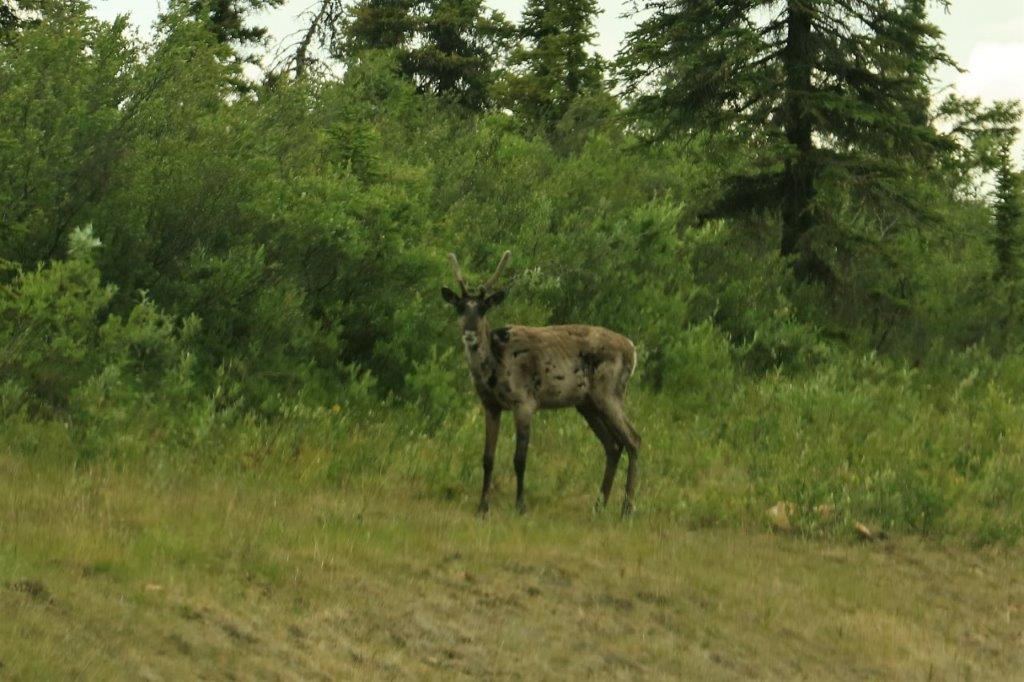
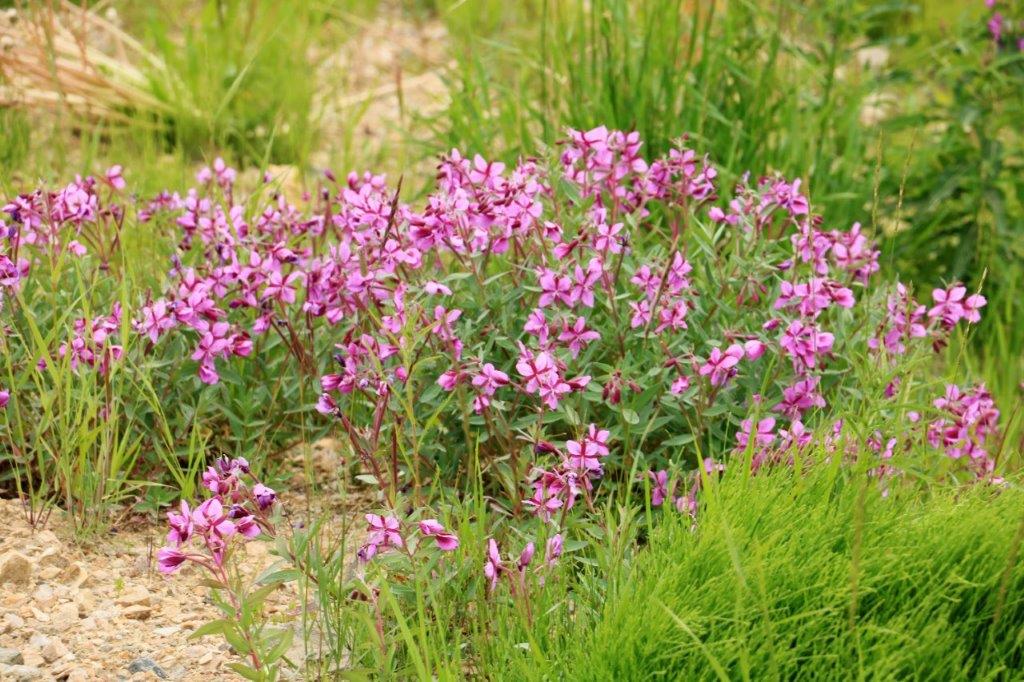
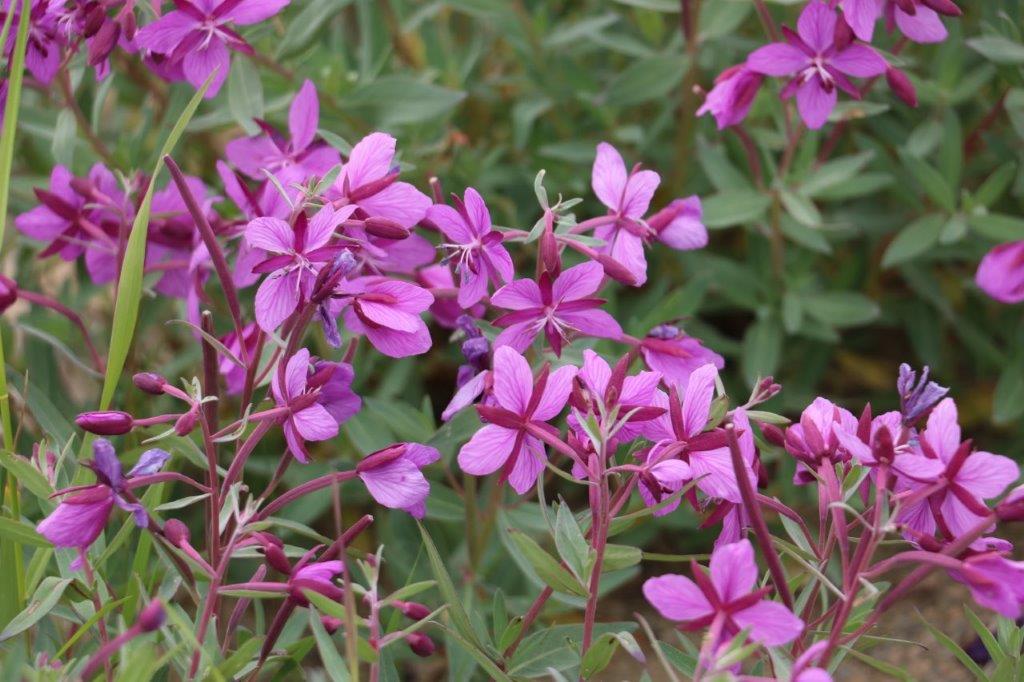
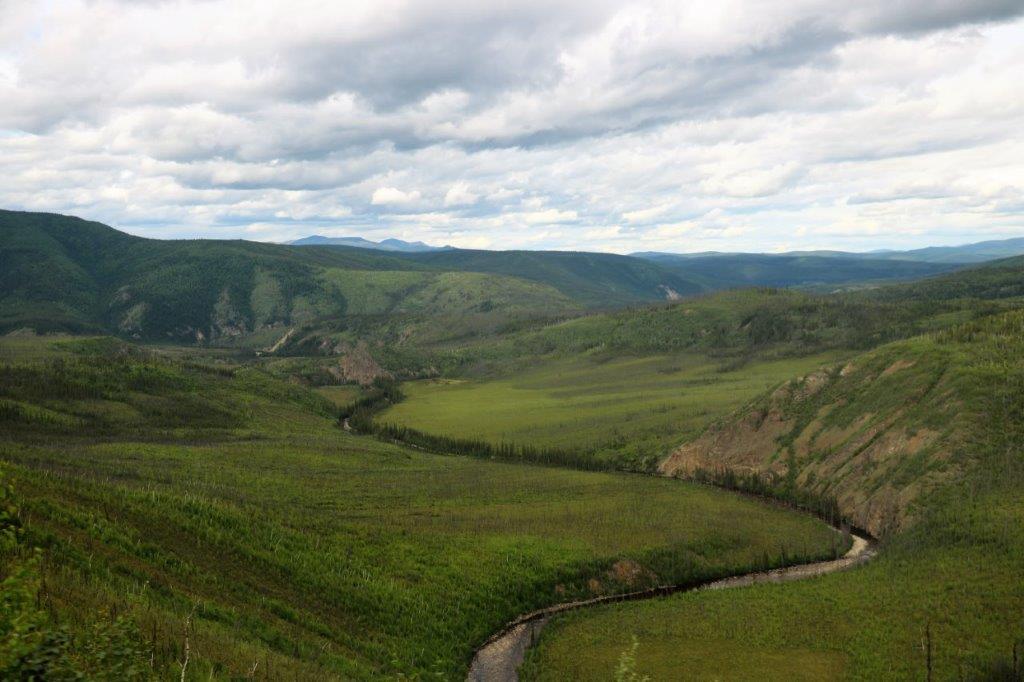
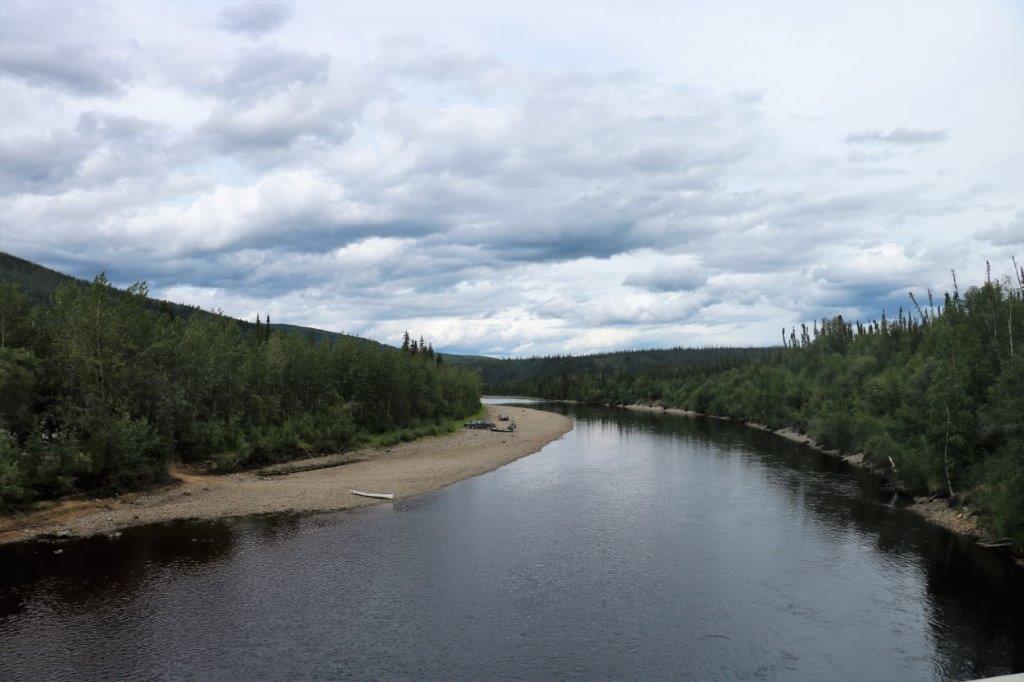
                         This large rock outcropping is called Castle Rock. The road just heads out into the wilderness for miles and miles.                   I wonder where that switchback road goes?We had periods of rain during the day which was okay with John as it washed a bunch of the Dempster Highway mud out of the wheel wells.The Yukon/Alaska border is in the middle of no where. There is not a  town of any kind for many miles in either direction.  The American officer told us they usually stay up here a month at a time.These two stitched images, if placed edge to edge, would show you the expansive view at the Davis Dome Wayside.Not far down the road from the viewpoint we spotted this young caribou crossing the road.  It was very curious about what we were and stayed for a few minutes as John drove very slowly toward it.  It finally did decide, while we were still quite far away, that it didn’t like us, and took off into the bush. While John was signing the log for our first geocache find in Alaska, I found these lovely flowers.                                        The South Fork River.

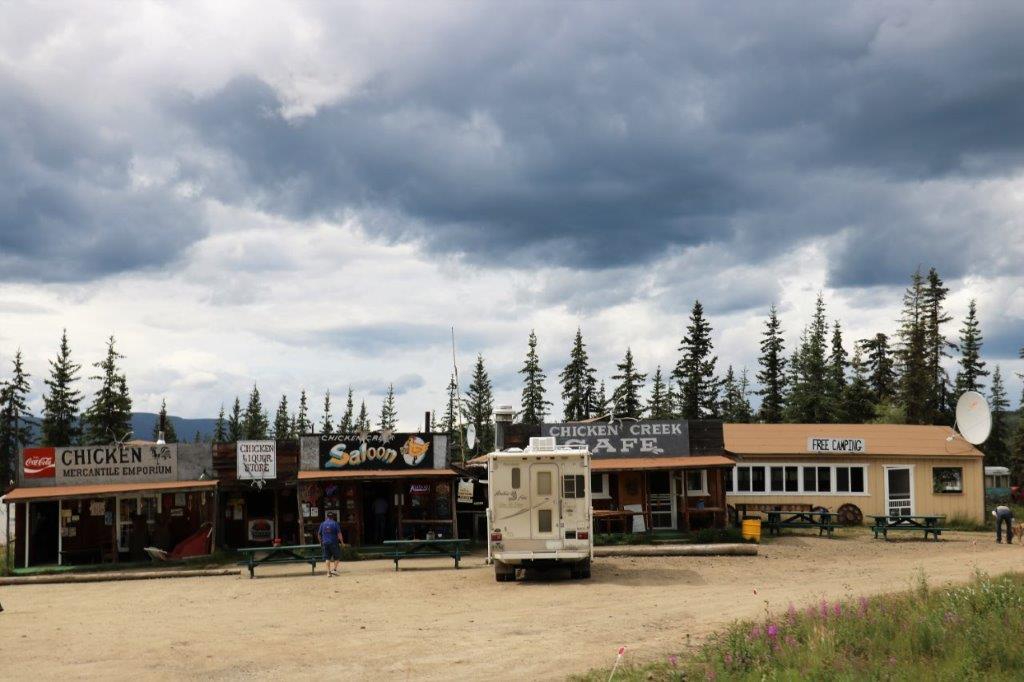
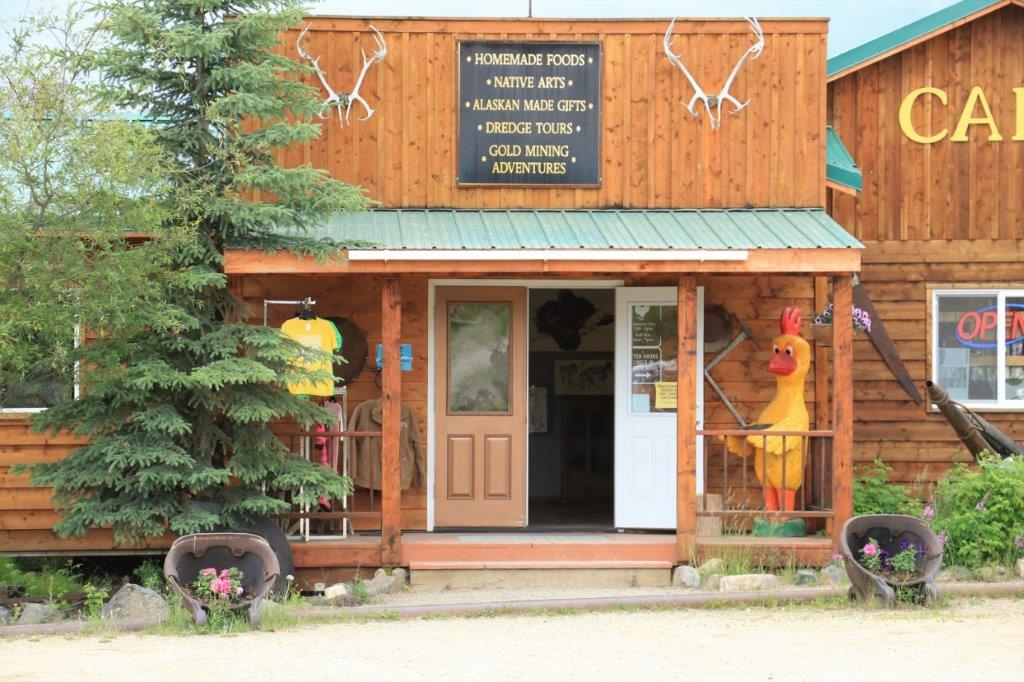
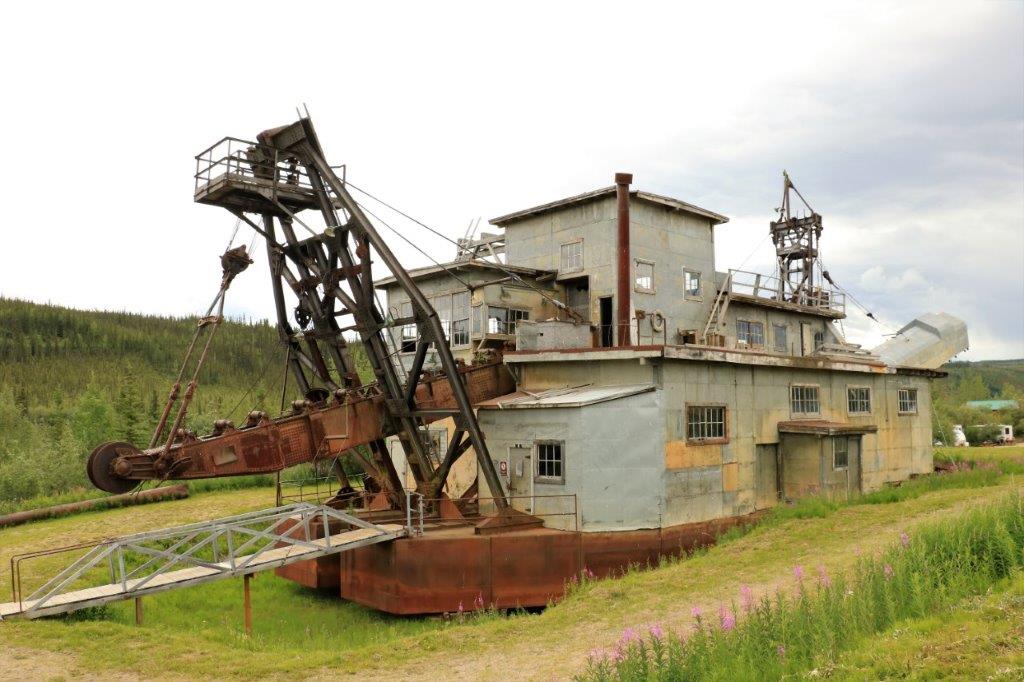
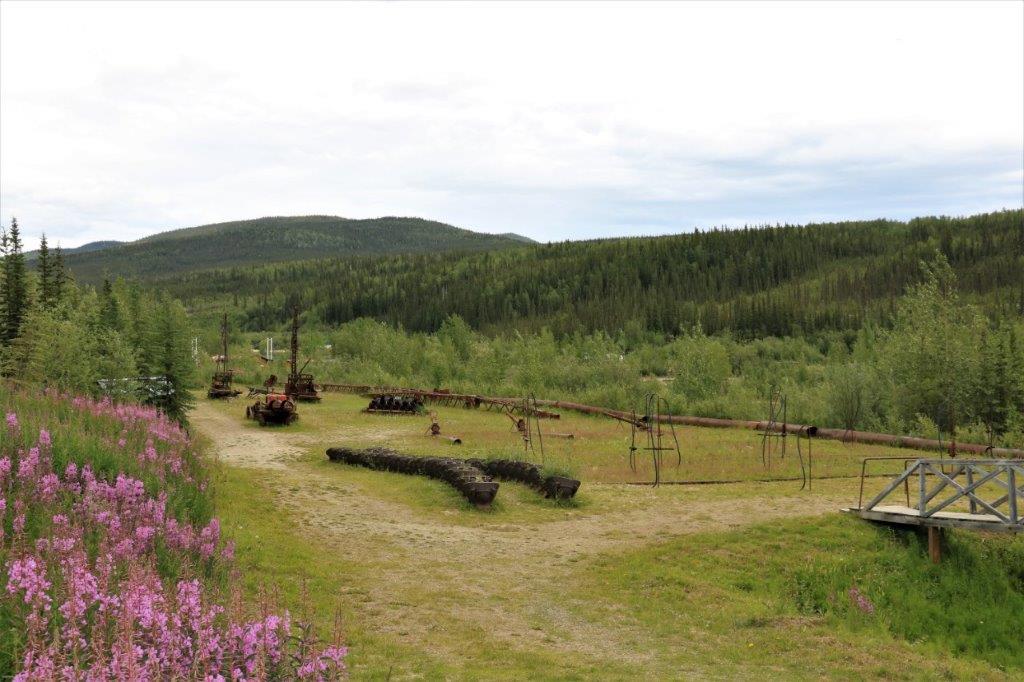
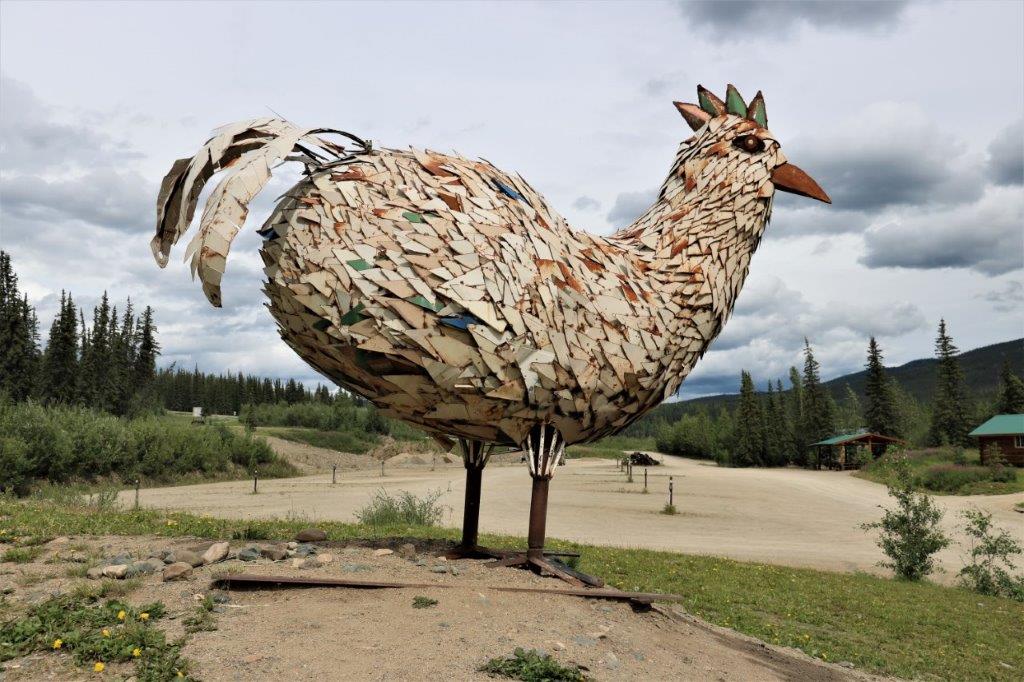
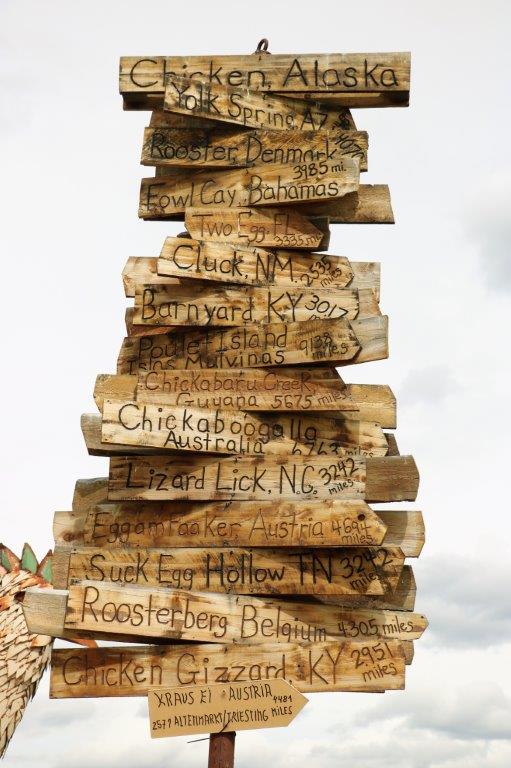
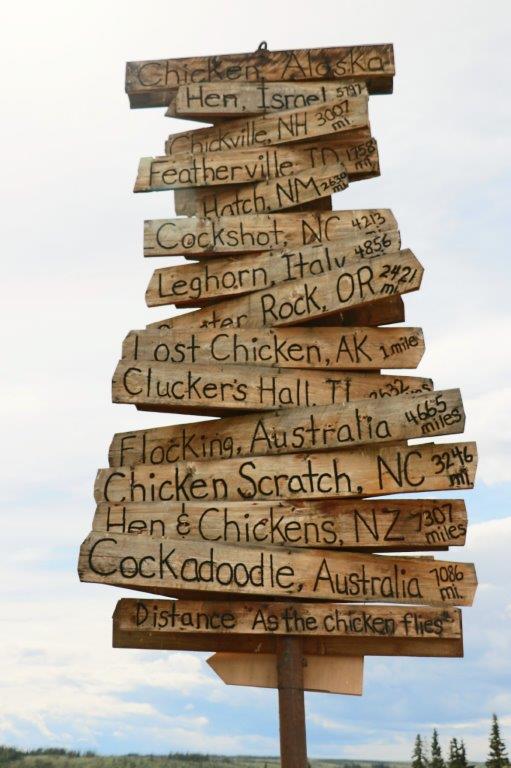
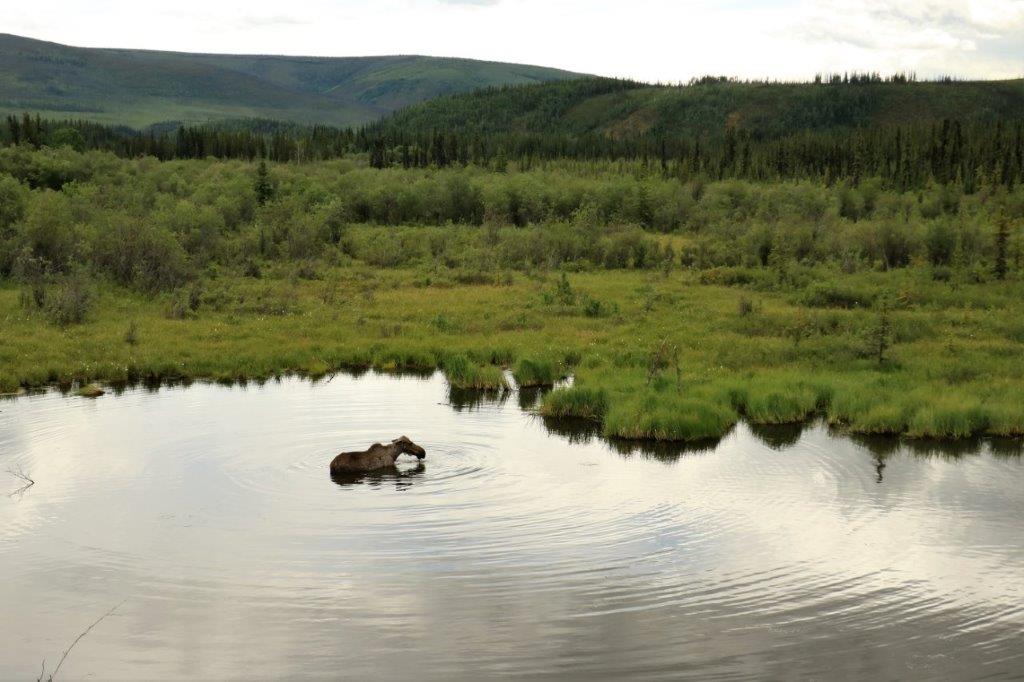
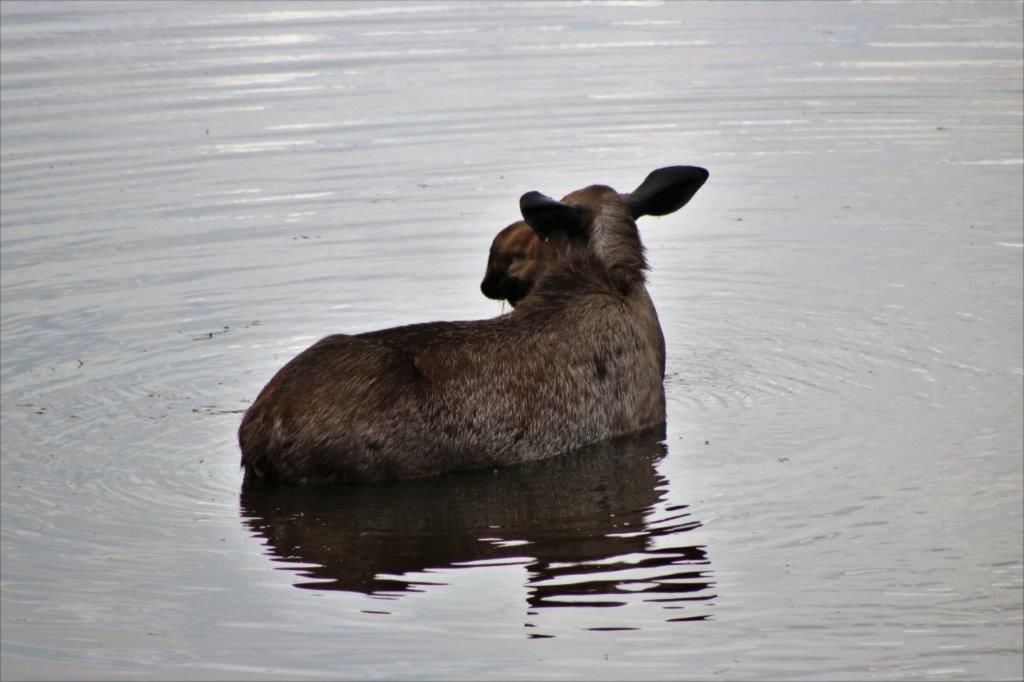
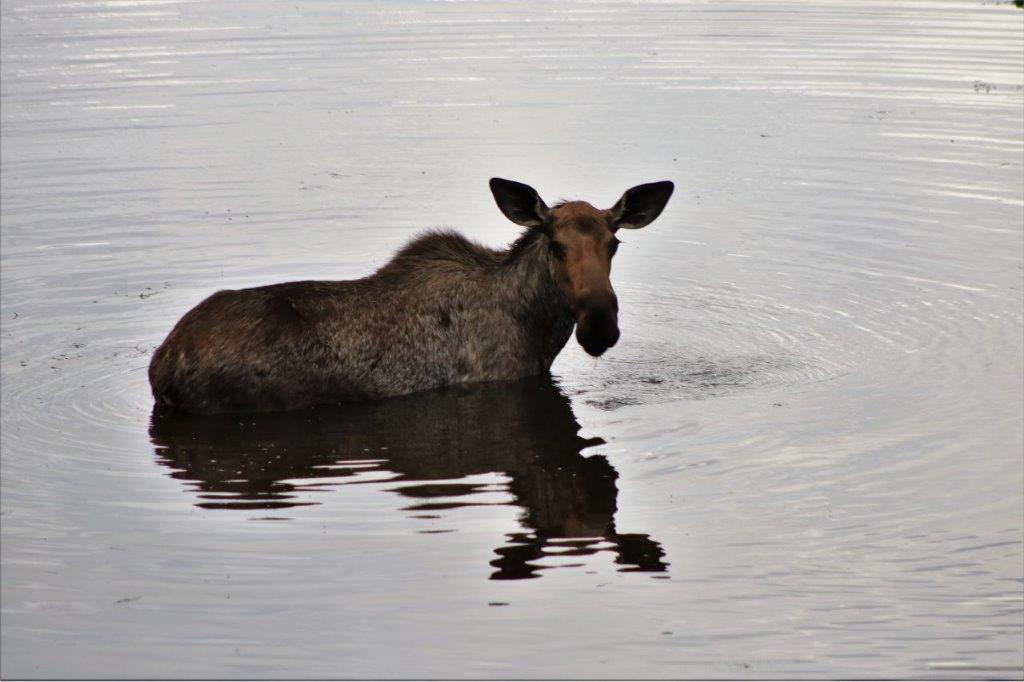
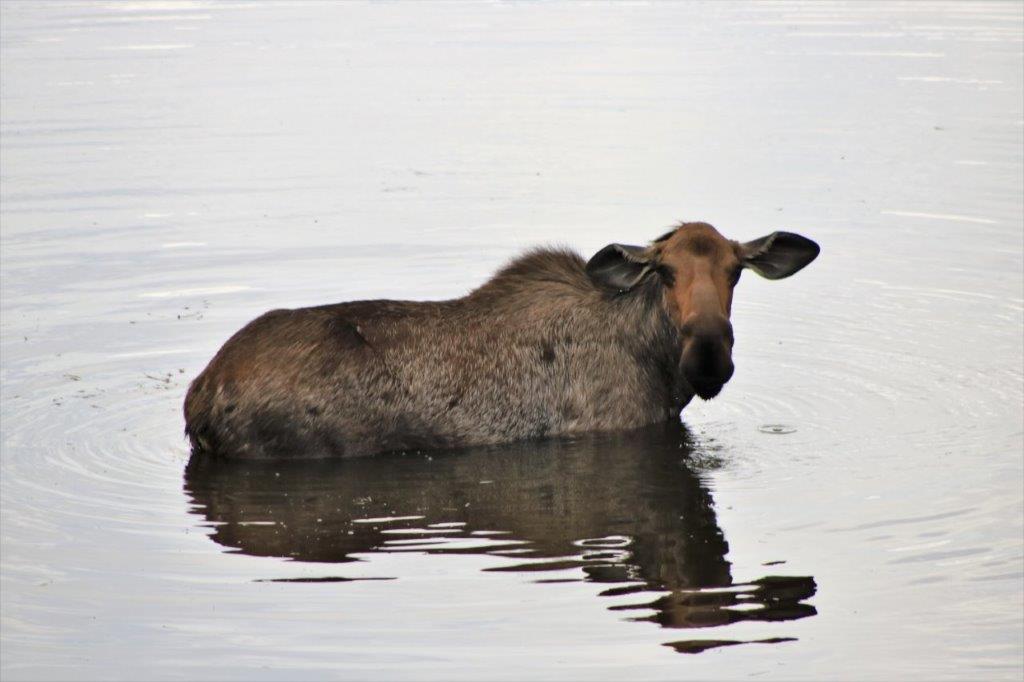
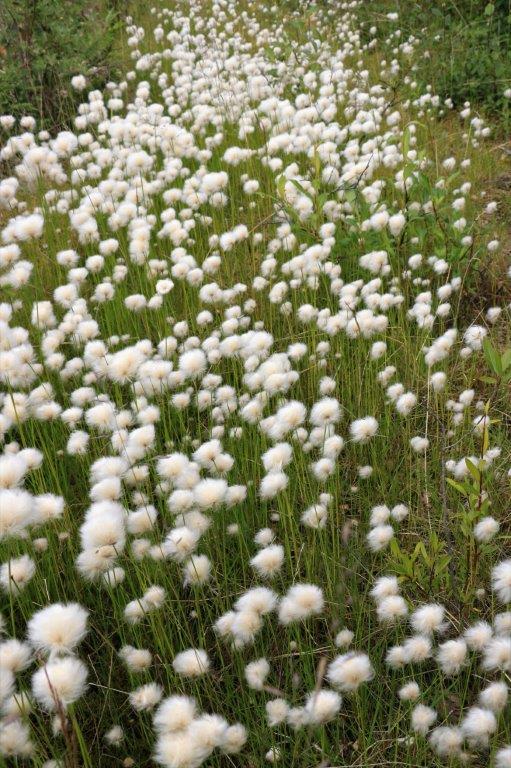
Alaska is an hour behind the Yukon in its own time zone.  We arrived at Chicken, Alaska at 2 pm Alaska time and stopped to have some lunch – and find a geocache – and take some photos of the big chicken.  The town of Chicken is so called because the founding fathers could not agree on how to spell Ptarmigan, which is the Alaska State bird and the name they had chosen for the new town.  Since they could not agree on what was the correct spelling they settled on Chicken because Ptarmigans are a wild chicken-like bird that is eaten regularly.  Chicken was/is a gold mining town and they have two old dredges.  There are several buildings there but the official population is 7. Chicken hosts a very popular annual chicken fest, but I have no idea what that would entail. I am going to assume music. I loved all the international place names that relate to chickens that they have on the sign.  The only one I don’t understand is Lizard Lick, NC. A few kilometers out of Chicken John spotted this cow moose having lunch in the pond.  She kept her head under the water eating the grass for about 3 minutes before coming up for air.  We were downwind of her so she couldn’t smell us and she was completely unconcerned by the truck up on the road. We watched her for several minutes before driving off.                        Mosquito Creek – up river and down.      Look, a square cloud.                  And more of John’s cotton flowers.

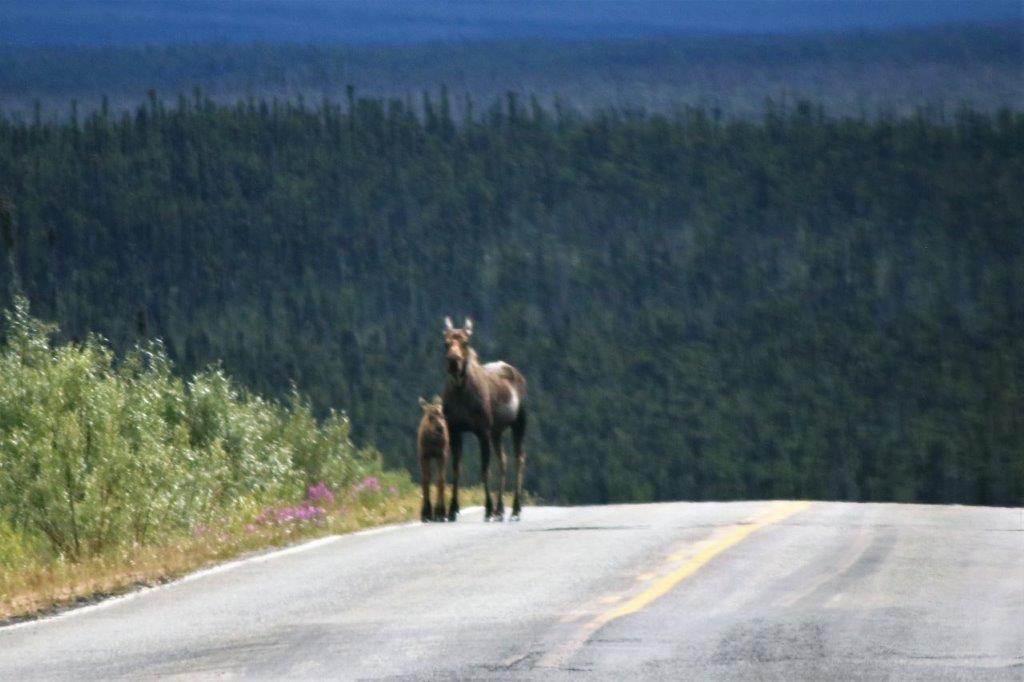
As we drove along a straight stretch, John said, “What is that at the end of the straight? Is it a bicycle?  No, it is two bike riders.  No, it is another moose and her calf!”  When the moved off into the bush we saw that she had a big wide red collar around her neck so she is being tracked by somebody.

Surprisingly enough there are sand dunes in Alaska. Quite a few of them actually.  And there is a very remote National Park in northwest Alaska that is called the Kolob Sanddunes. There was an Earth cache  about the sanddunes at this spot so we stopped to check out the colour and texture and size of the sand grains in order to answer the questions required to log the find.  The sand looked to be a light gray-brown but if you pick up a handful of it there are lots of black grains too.  And it is the consistency of ground pepper.  Very, very fine.  I love all the things we learn as we travel around.We arrived in Tok (pronounced Toke) at 5 pm and checked into the little cabin that John had reserved for the night.  Tok is a busy place as it sits at the junction of Alaska Highways 2 and 1.  Highway 2 is the Alcan (Alaska Highway) that comes from Whitehorse and that the Top of the World Highway also feeds into at Tetlin Junction.  Highway 2 goes to Fairbanks.  Highway 1 is the road that comes from Anchorage so Tok is right at a major meeting of the two routes to Alaska’s two largest cities.  It was a busy place.

We will drive to Fairbanks tomorrow and are staying for two nights.  It is about a 3 1/2 hours drive from Tok to Fairbanks.  Of course, it will take us longer than that with photo stops and geocache stops.

2018 July 9 – Dawson City, Yukon

We spent our final day in Dawson checking out the museums and finding the final three geocaches in the area.  The only one we were unable to find was out on the goldfields and no one had found it for awhile.  Other than that we found every cache in and around town.

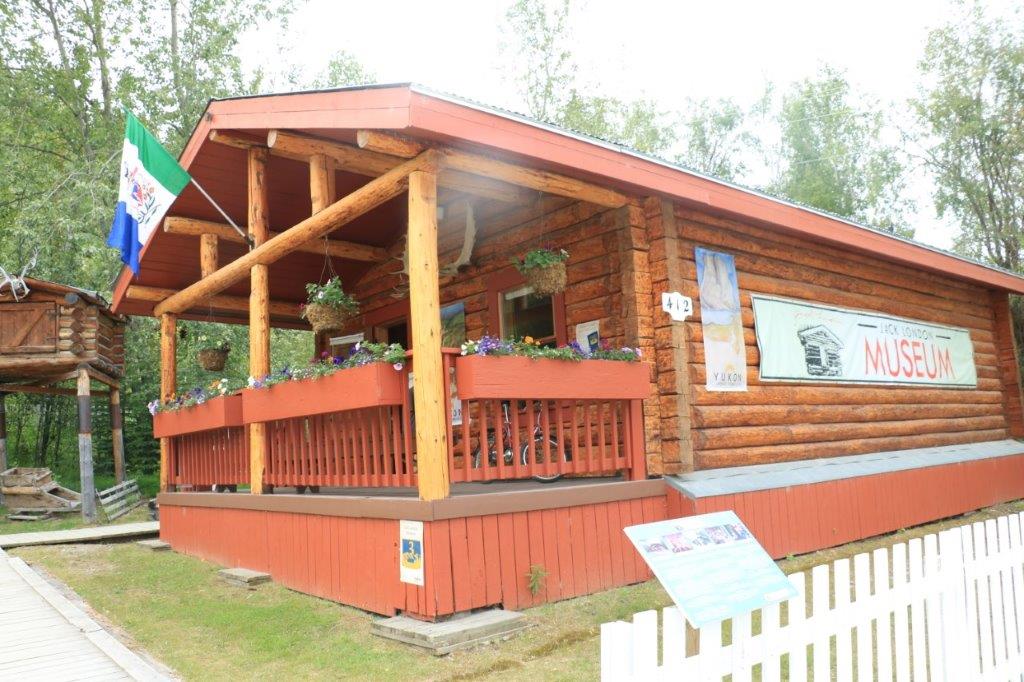
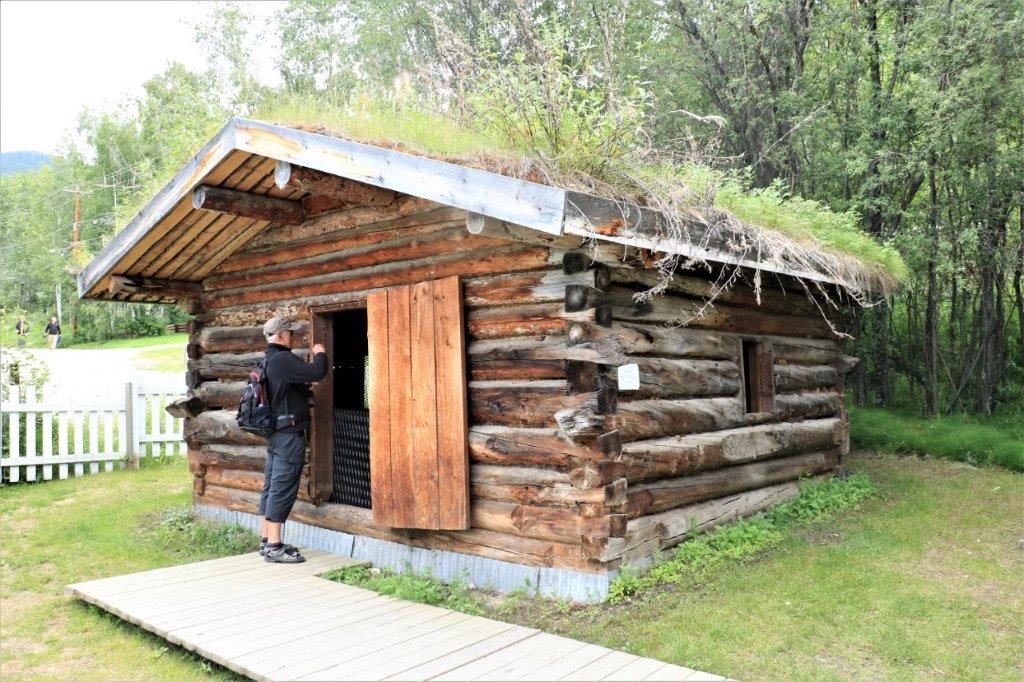
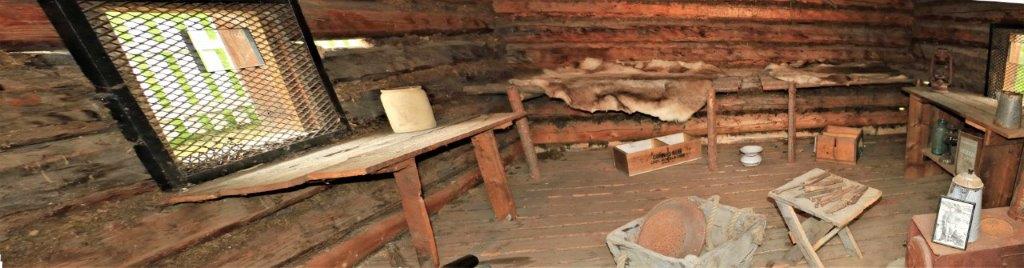
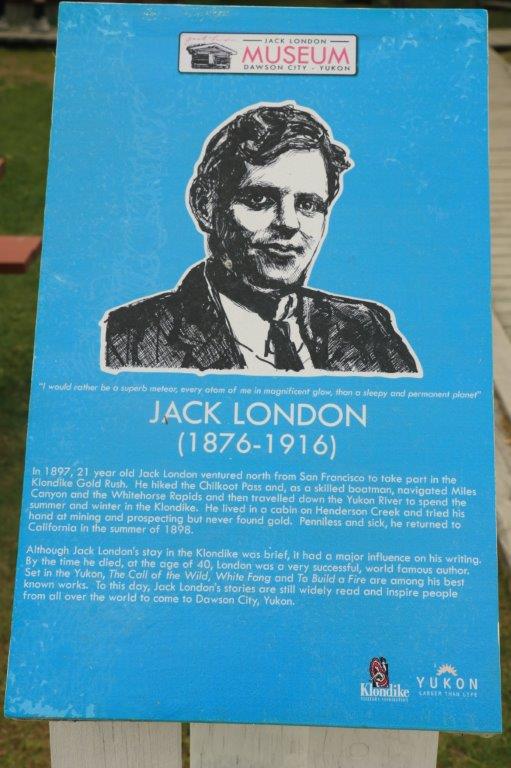
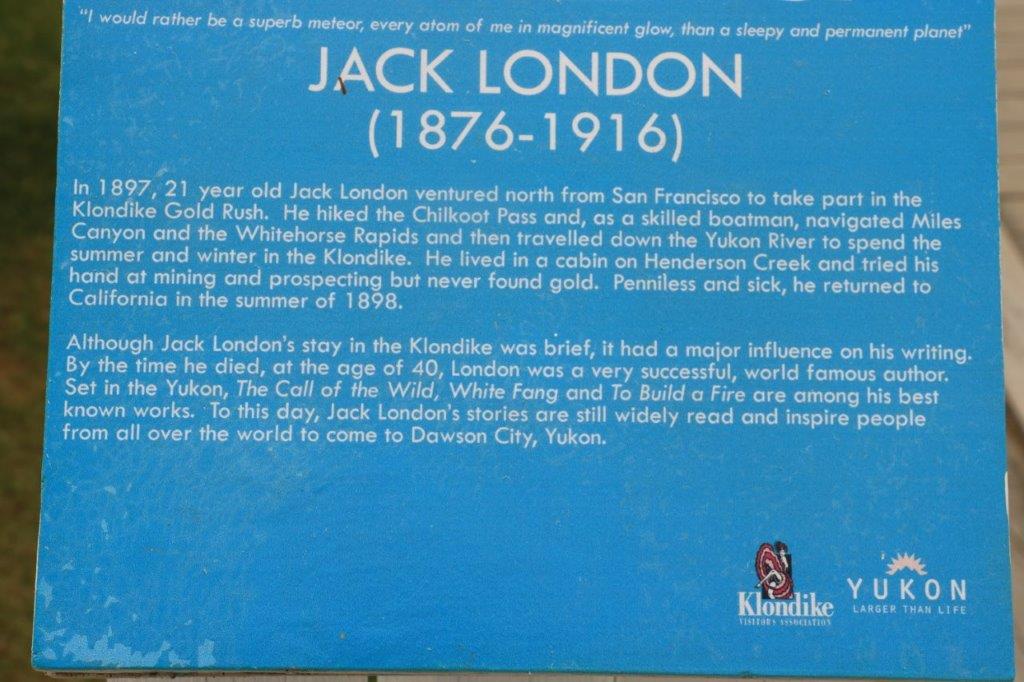
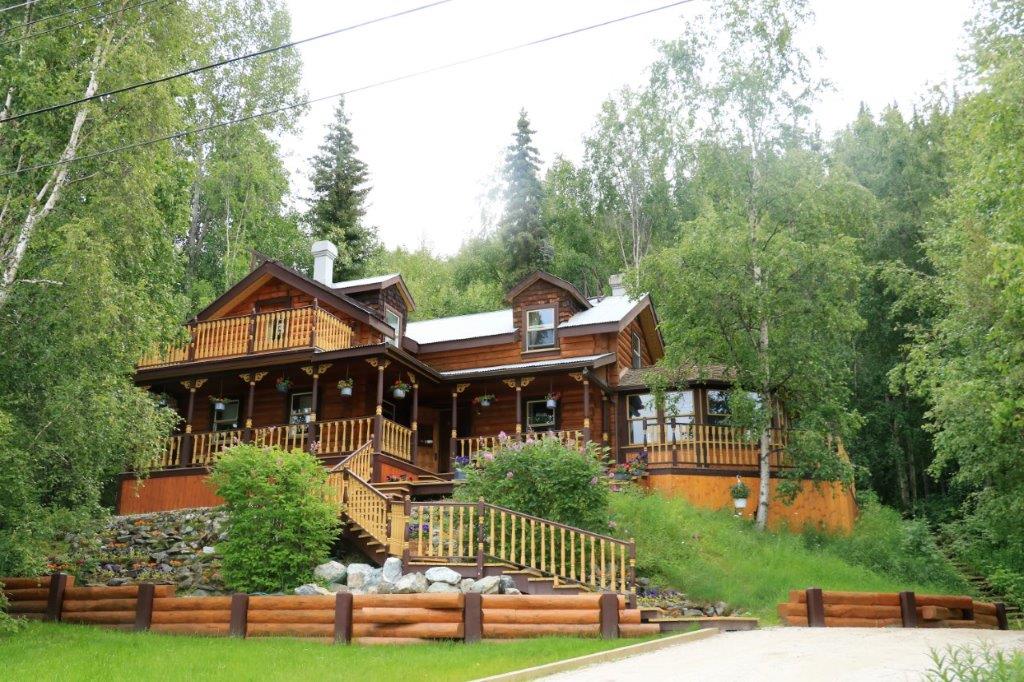
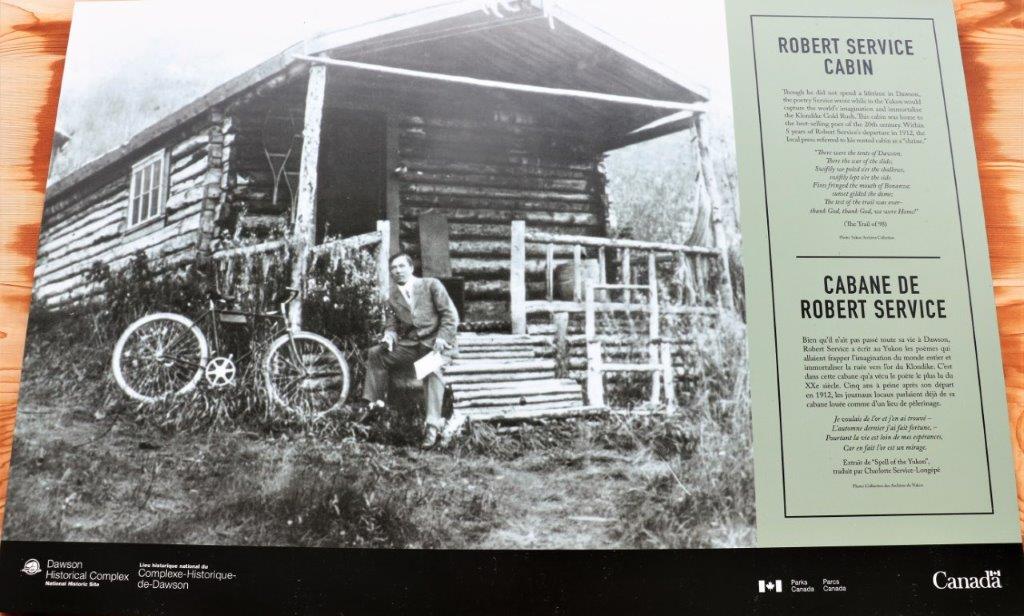
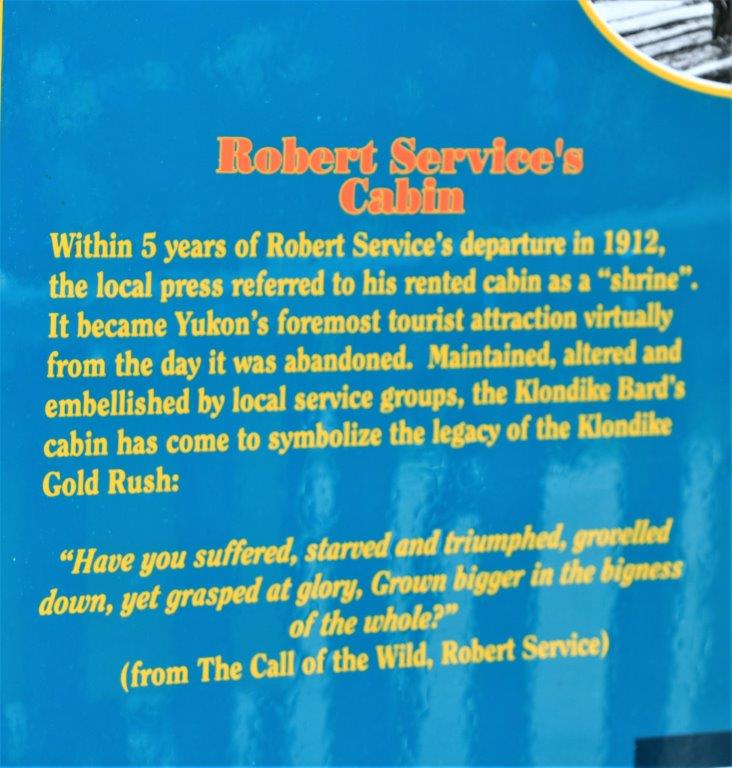
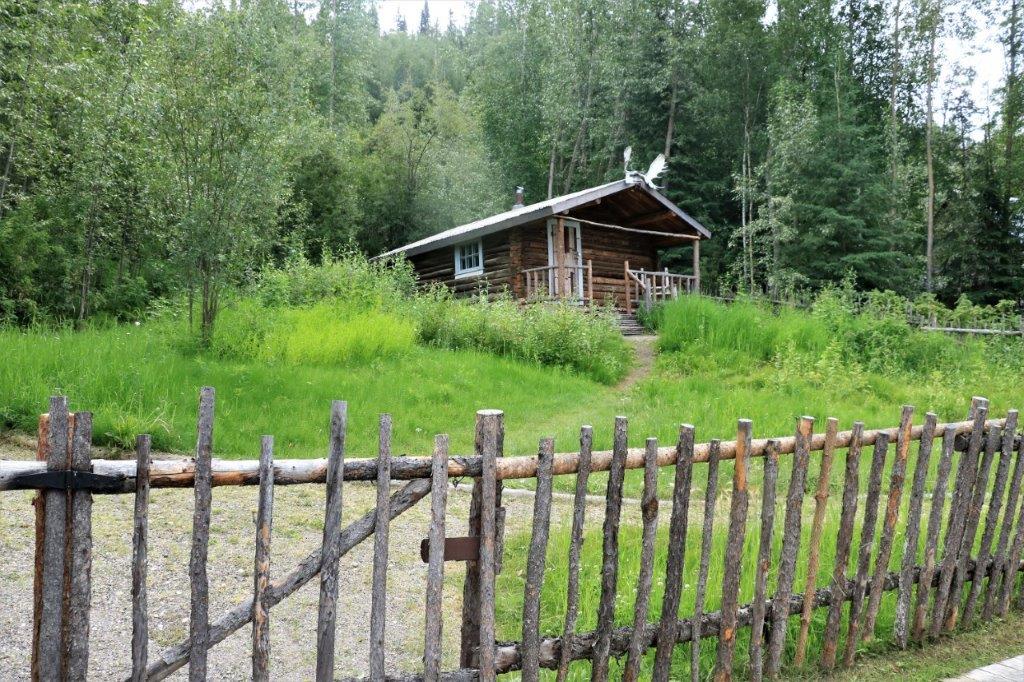
After breakfast John drove to the NAPA shop and dropped off our two flat tires to get fixed. When he got back we drove to the Jack London museum, which turned out to be his cabin and a small building that had photographs on the walls.  Cost was $5 per person.  We decided we did not need to go inside so we took a couple of pictures of the cabin. We passed this really nice log house on the short drive between the Jack London museum and the Robert Service cabin.Just a short distance away was the Robert Service cabin.  This, I knew was just a cabin; no museum or artifacts or anything so it too was a short stop.

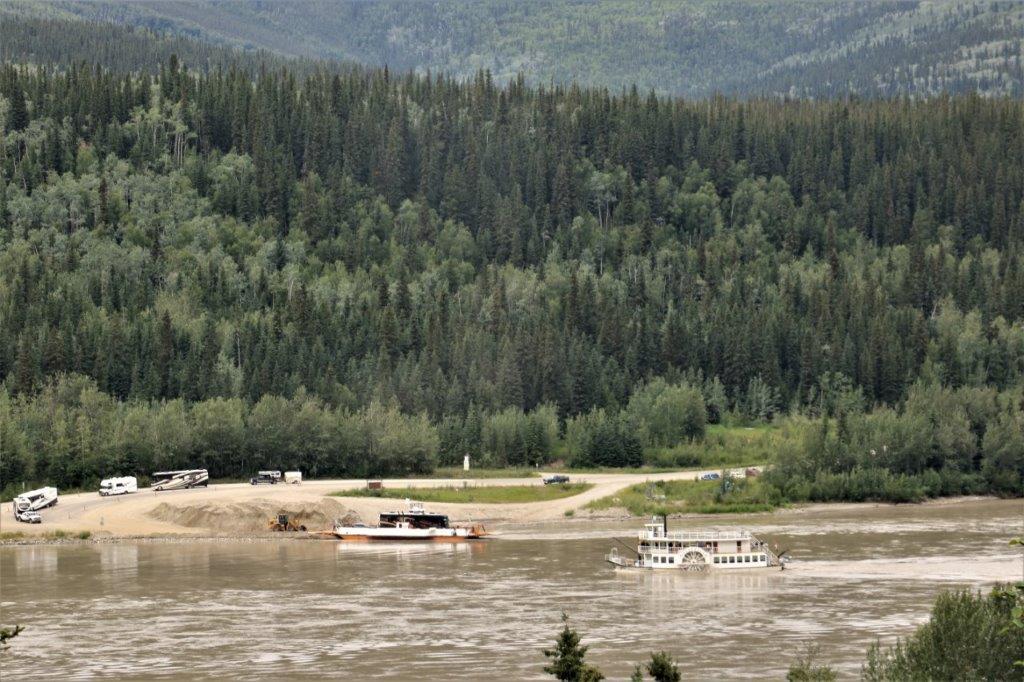
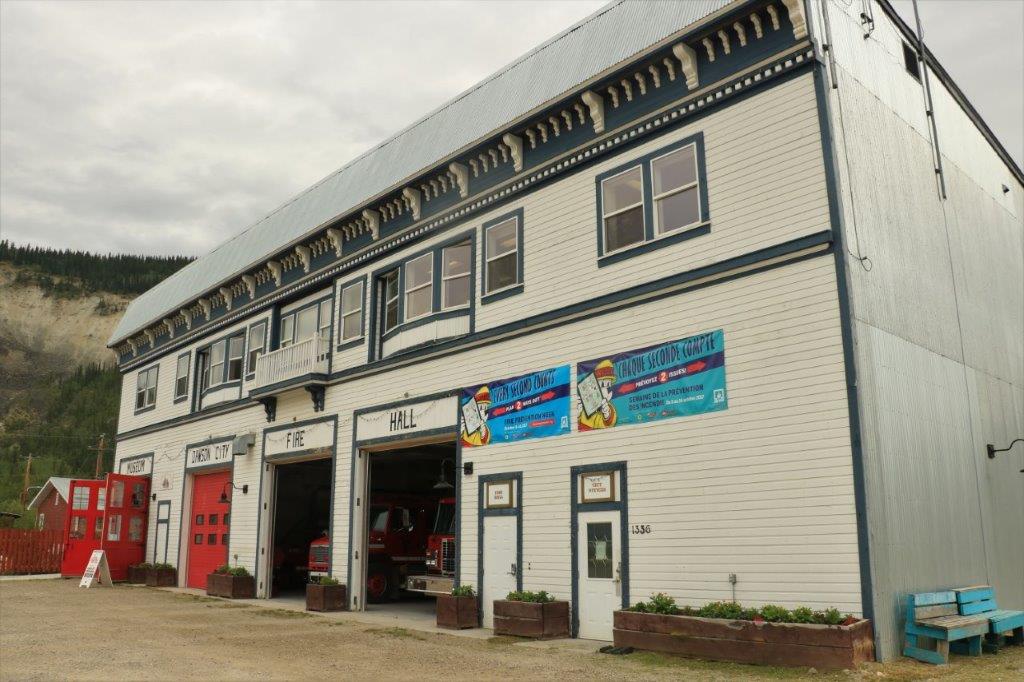
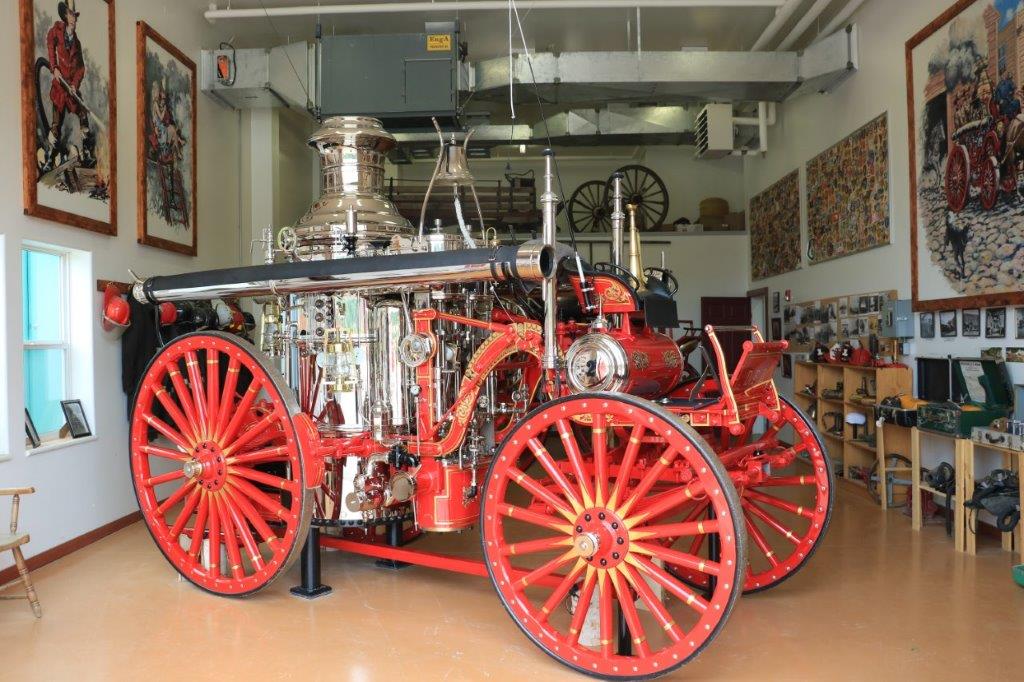
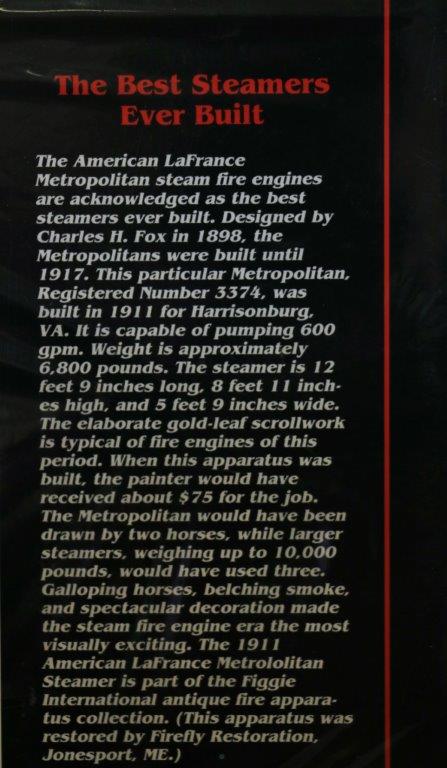
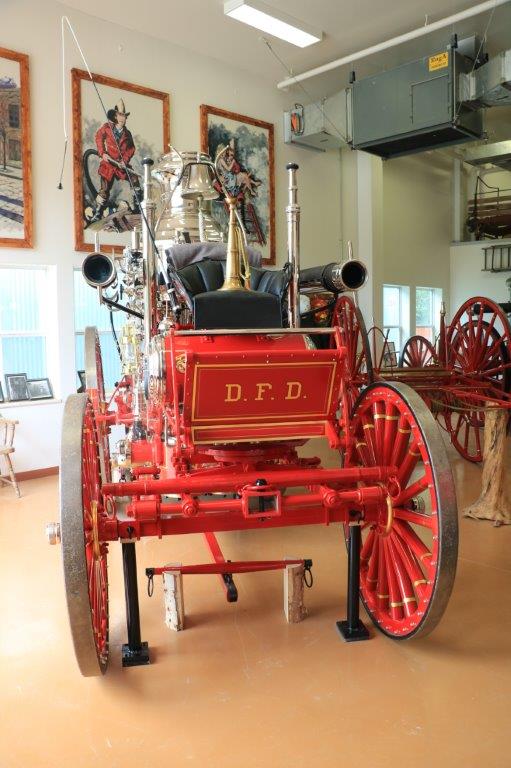
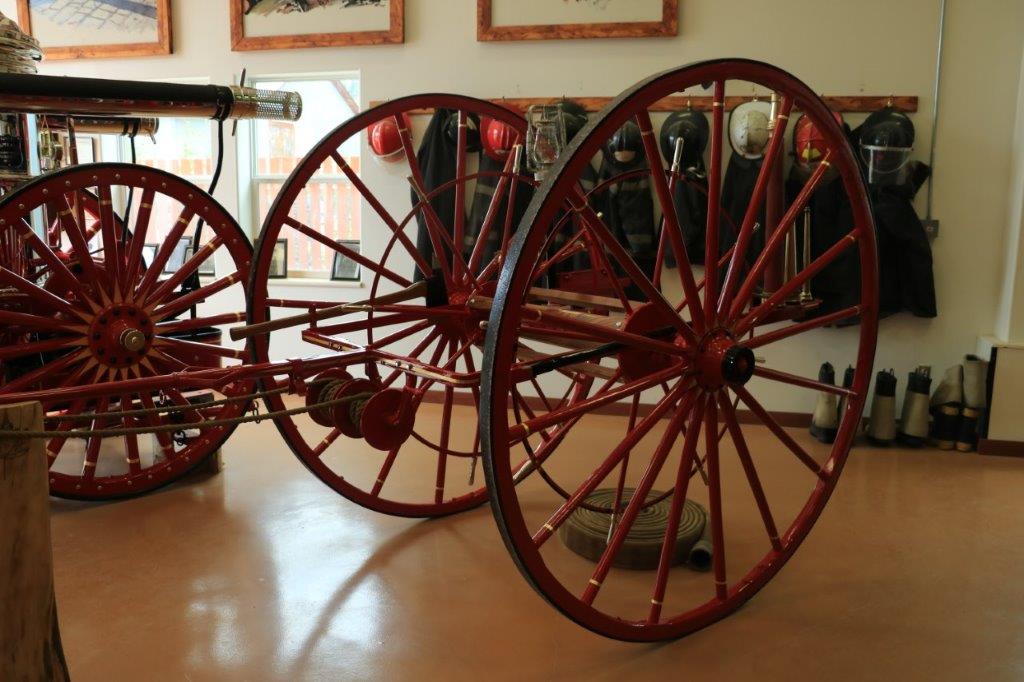
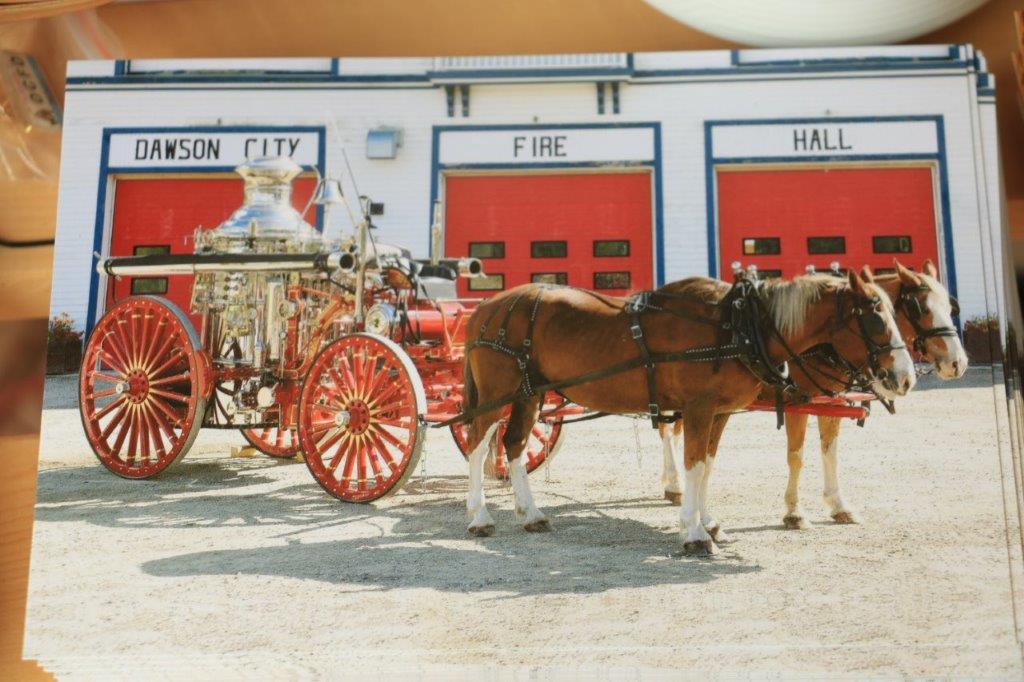
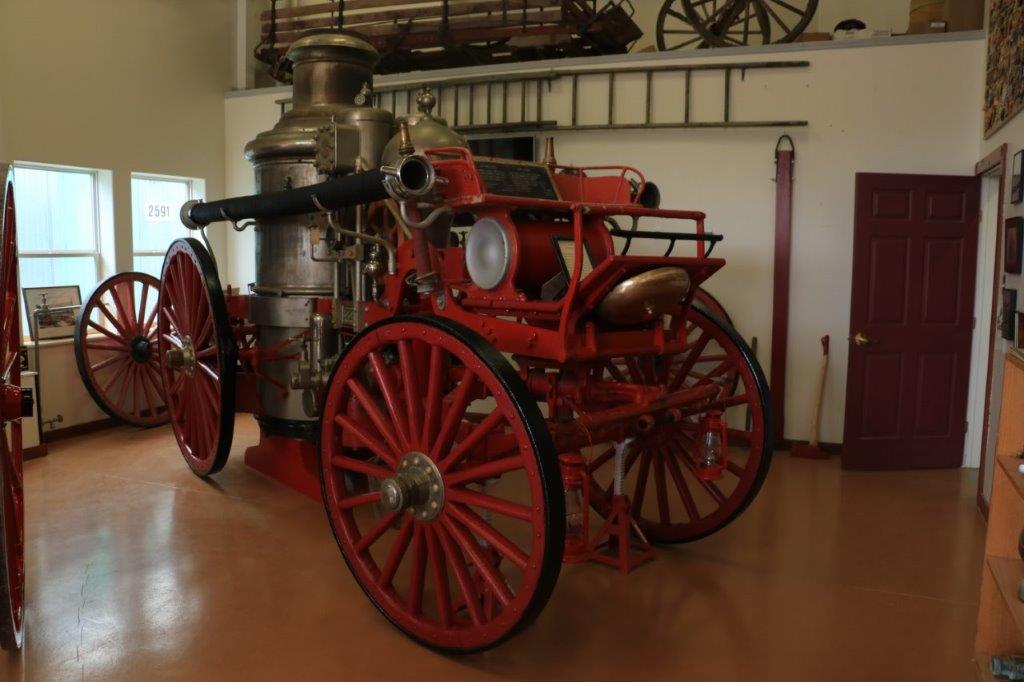
We were near the access to the trail that had the geocaches on it that we needed to find so we took the time to find them. The last one was located at a nice viewpoint overlooking the Yukon River.This is the free ferry that crosses the river for the Top of the World Highway which we will take tomorrow.  There must be a campground nearby as all these motorhomes look much too clean to have driven a gravel road.  The ferry was only able to take the first motorhome with its car.  All the rest had to wait for its return and I suspect most of the rest were taken over one at a time as well. Our next museum was the Dawson City Fire Department museum.  They had the most exquisite old steam engine!  We thought the one from Victoria that was brought up to Salmon Arm for the Salmon Arm Fire Department’s 100th anniversary a few years ago was nice.  This one was much better. The steamer had just recently been returned after its restoration.  The cost was paid entirely by the fire department and its members.  It was restored in Maine and took 18 months, and cost $250,000!  The nickel-plate alone was $50,000.  They discovered that there was gold leaf designs under several layers of paint so all of that was restored as well. John almost dropped when he saw it!The hose reel that was pulled behind the steamer was restored at the same time.
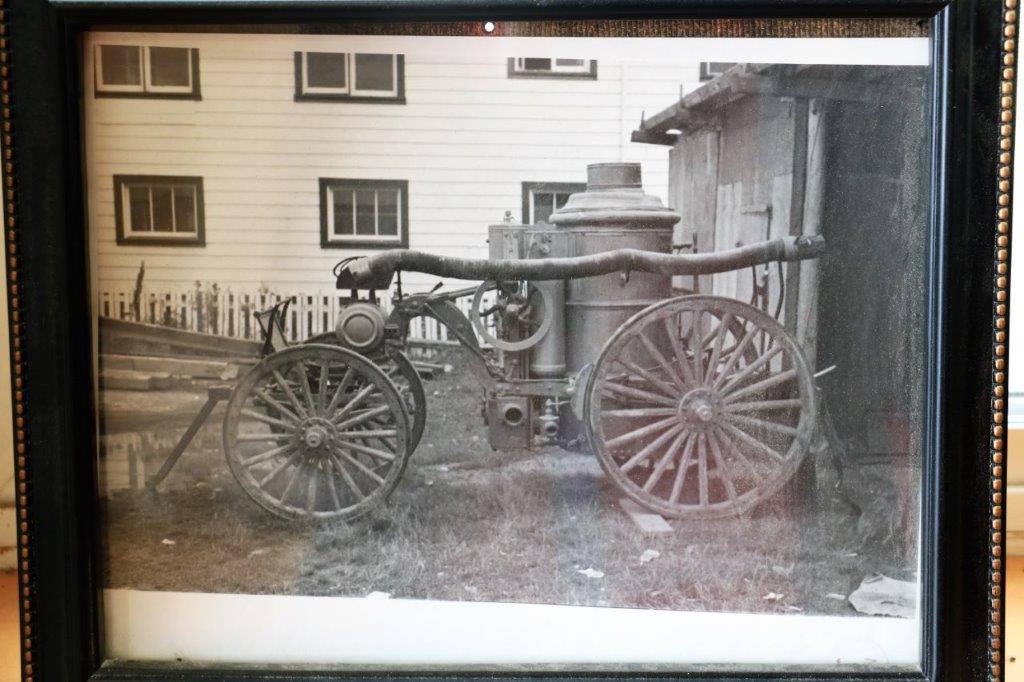
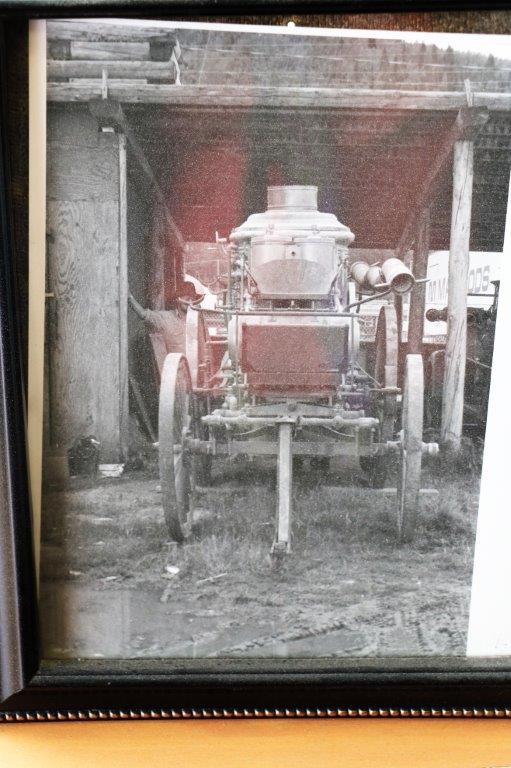
The fire department brought in two horses (cost $3,000) to pull the steamer in the local parade.  It is now up on jacks that keep the wheels just off the ground.  They intend for it to stay like from now on.                         This is the steamer before restoration.

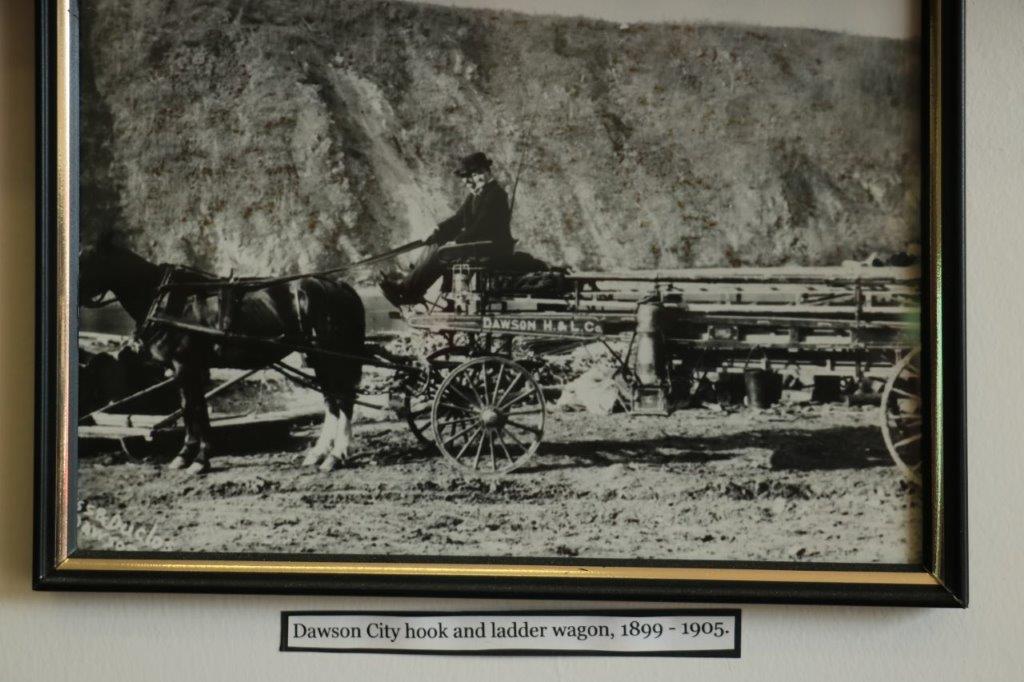
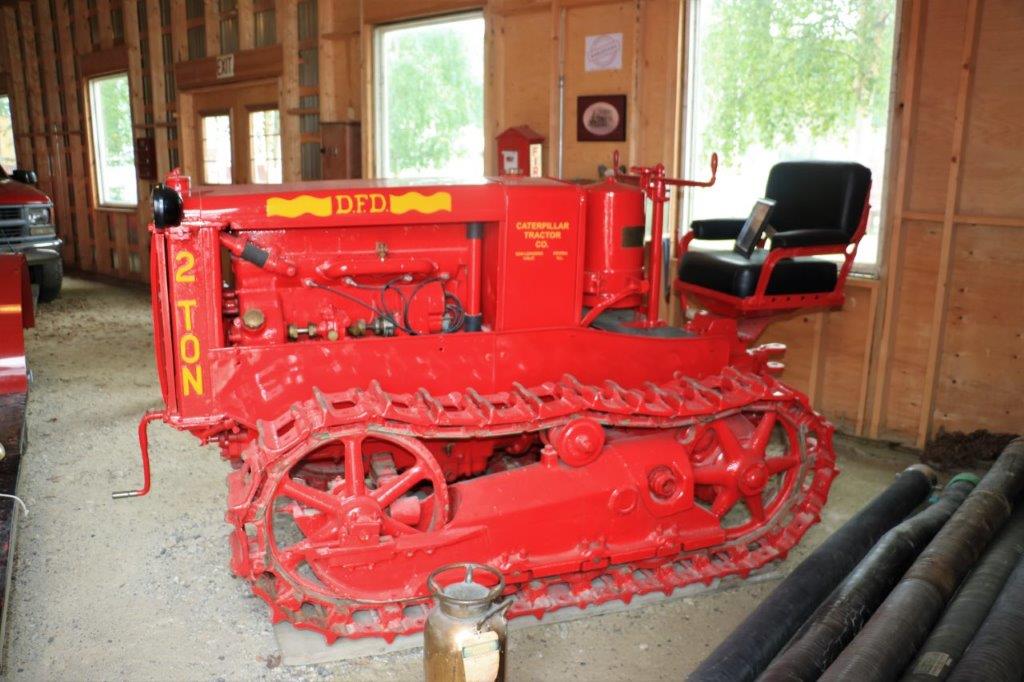
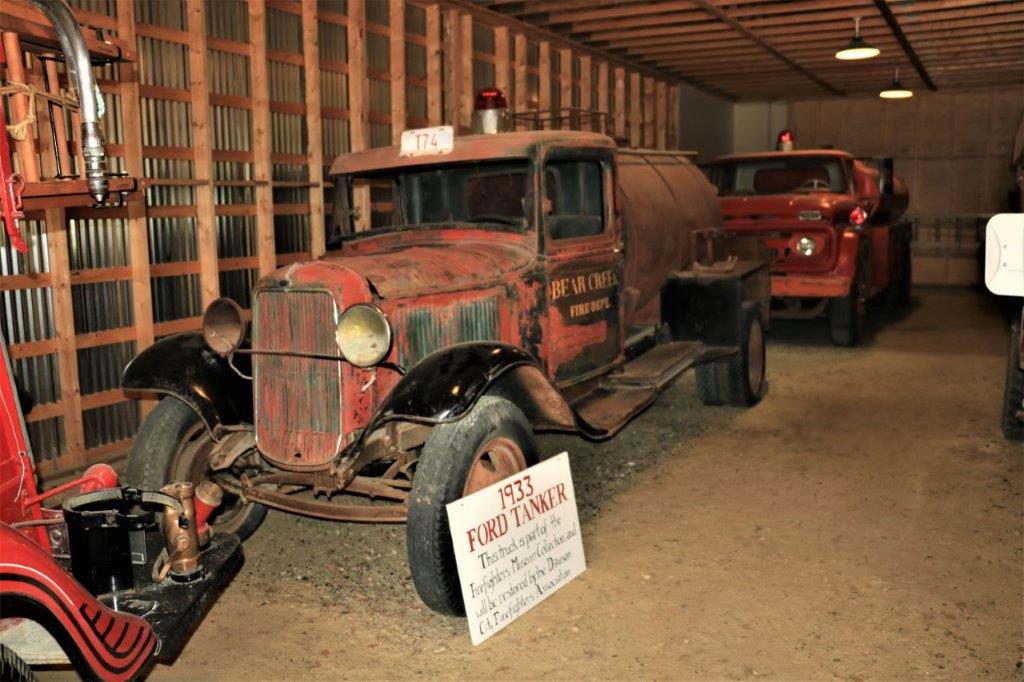
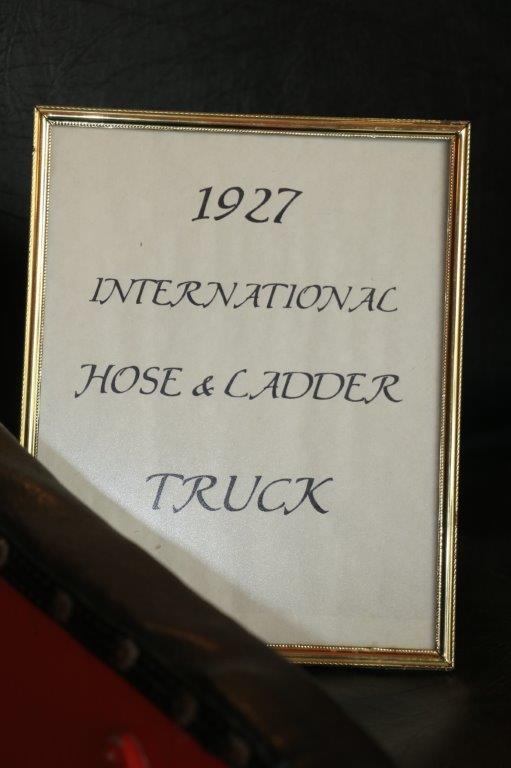
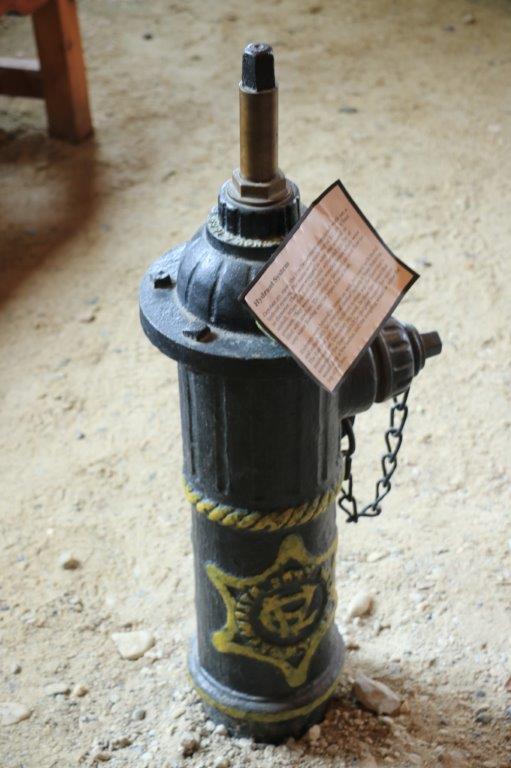
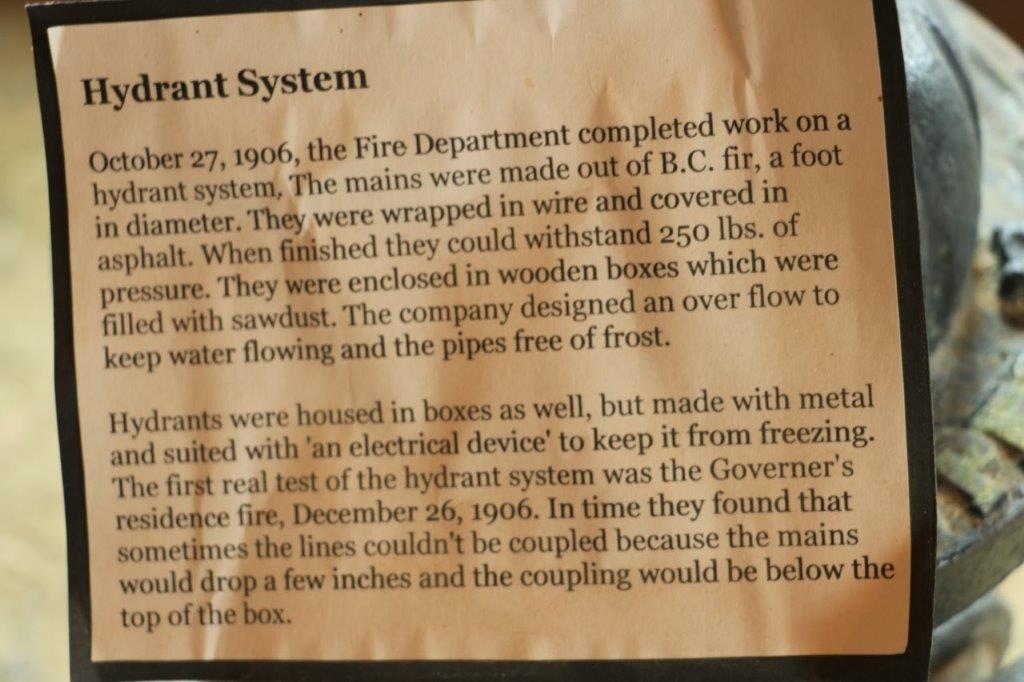
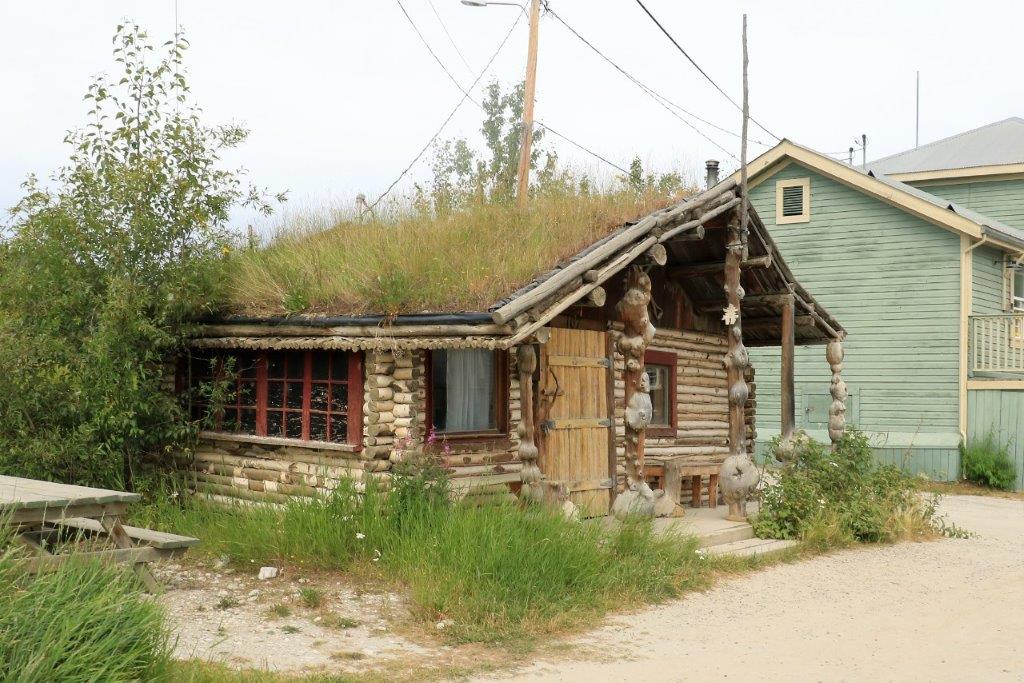
Amazingly, since they are so rare, the Dawson City Fire Department has two steamers.  The second one will be cleaned up a bit and then kept as is. This is the fire chief covered in ice after fighting a fire in the winter of 1912.In another building they had all the fire trucks that had been used in Dawson.  Like the Deputy Chief told us, “It is a one way trip for a fire truck up here.  We are too far away from anywhere else to send them, so everyone that comes here, stays here.”             This little cabin is right downtown on Front Street.

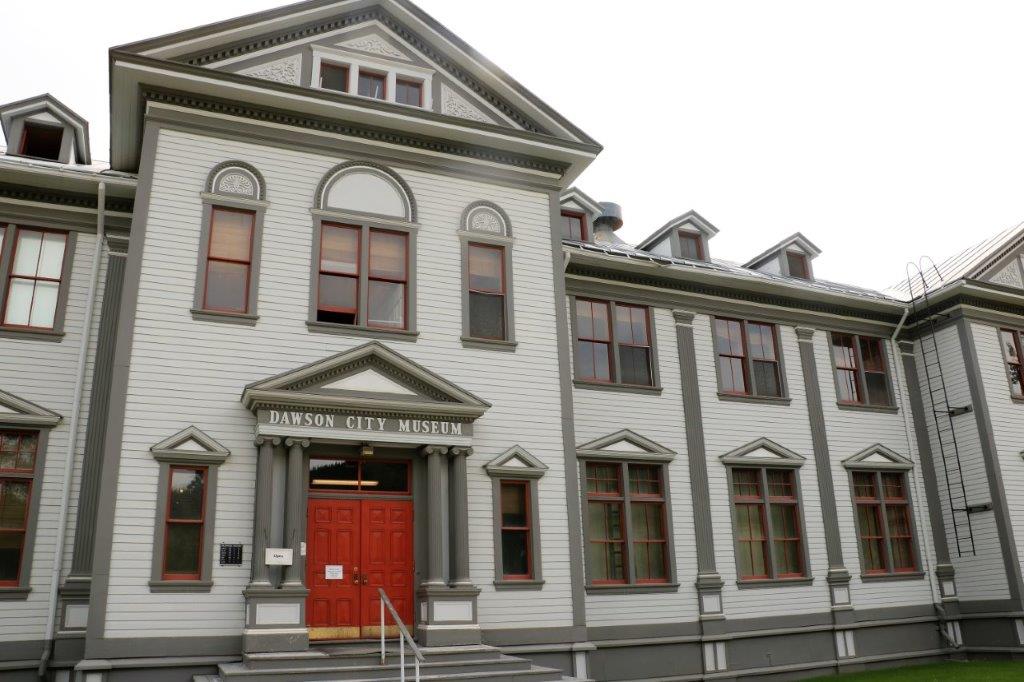
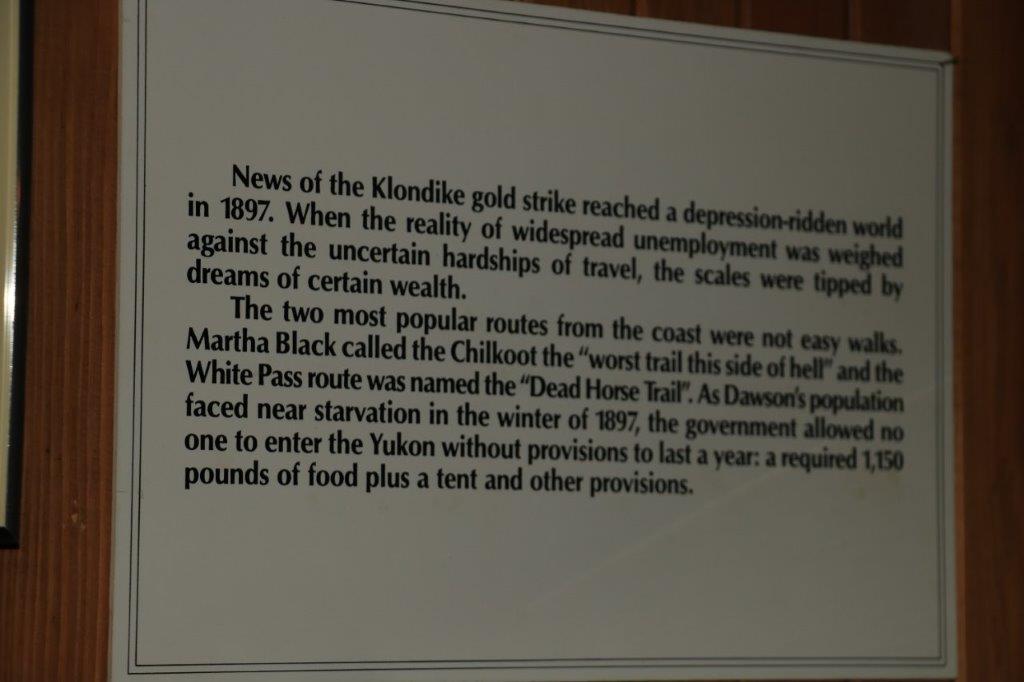
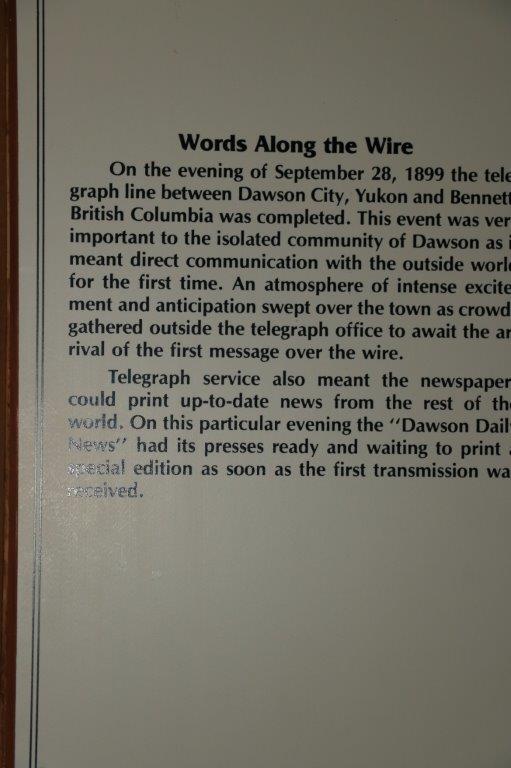
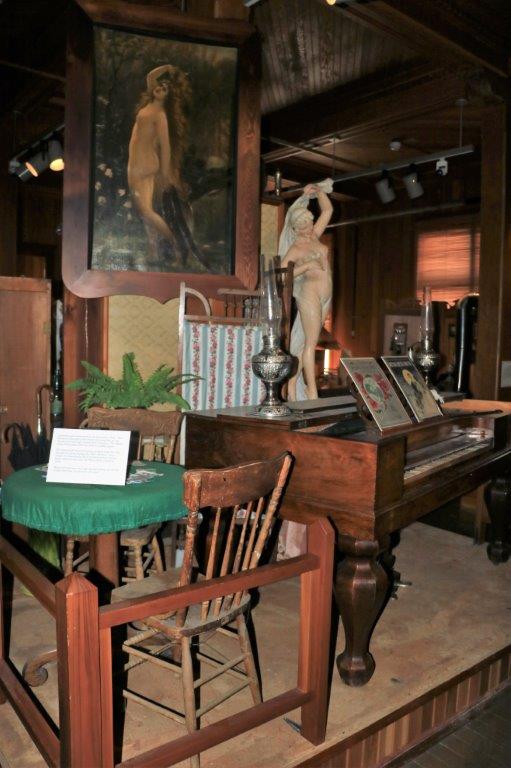
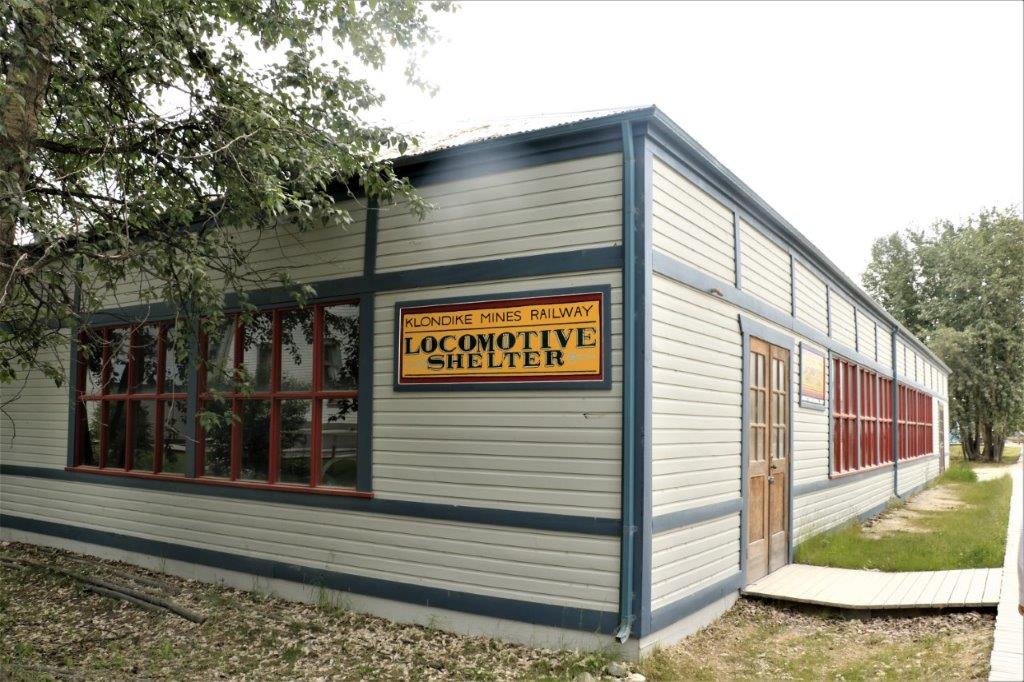
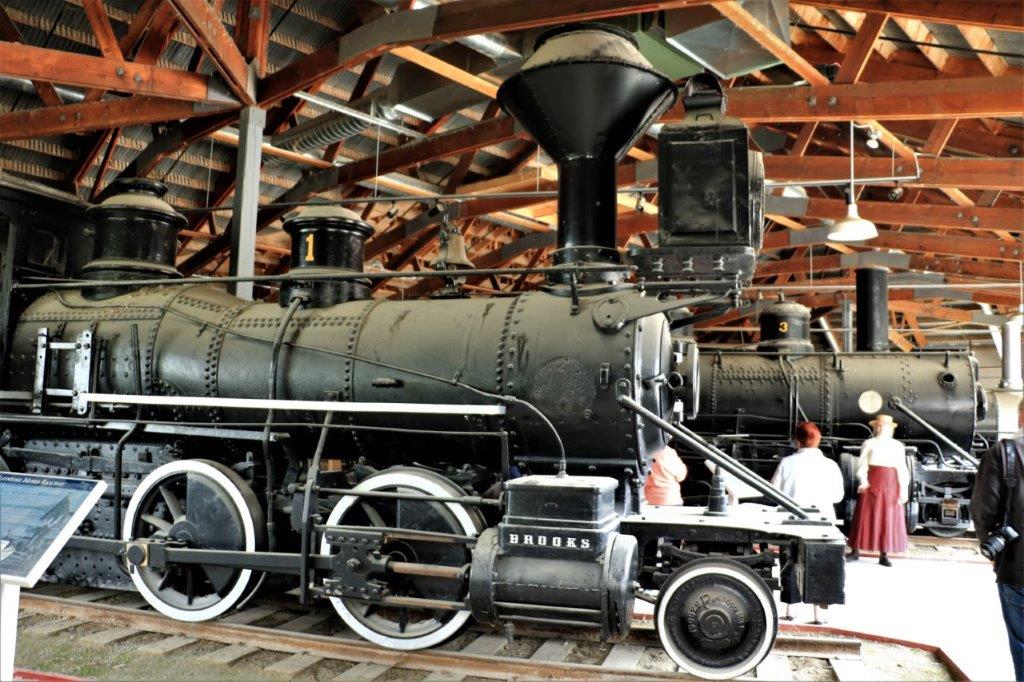
Our final museum today was the Dawson City museum.  It is housed in a huge building, but the rooms with displays are not that big. They also have a theater that plays some historical films, but we didn’t take the time to watch one. We were about halfway through looking at the exhibits and a woman came and said she would be doing a tour of the railway shelter in 15 minutes, so we wandered into the lobby at the appropriate time to attend.

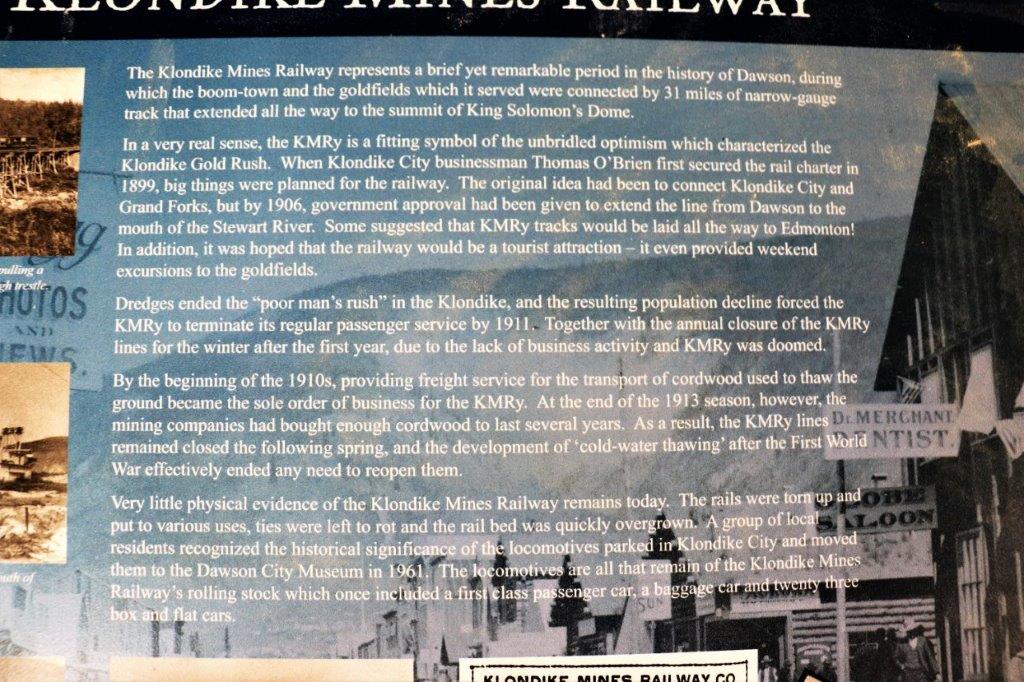
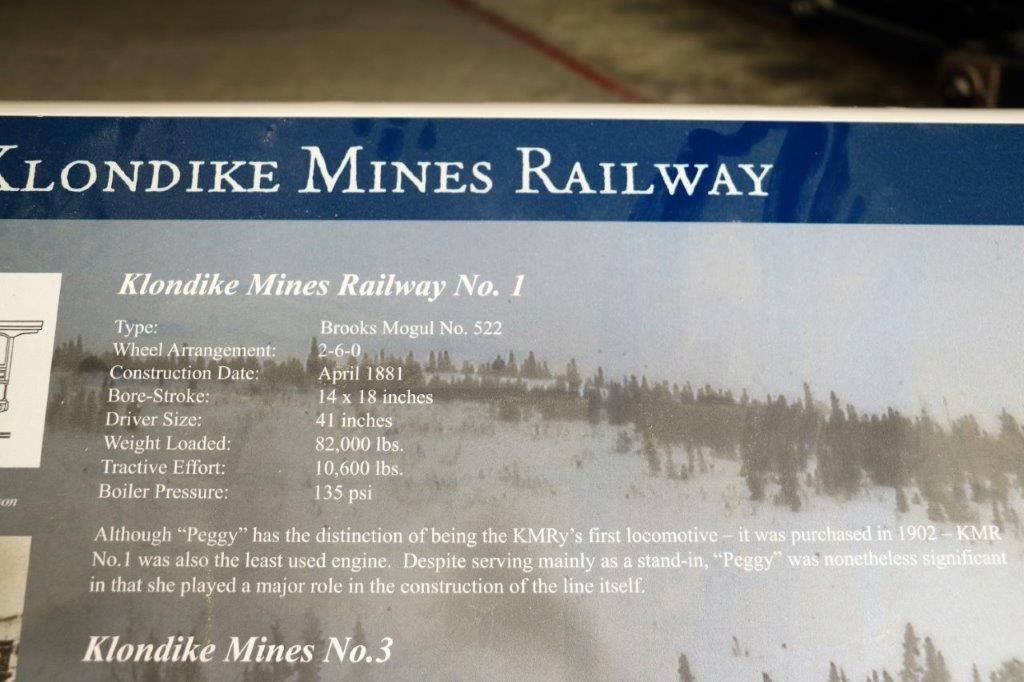
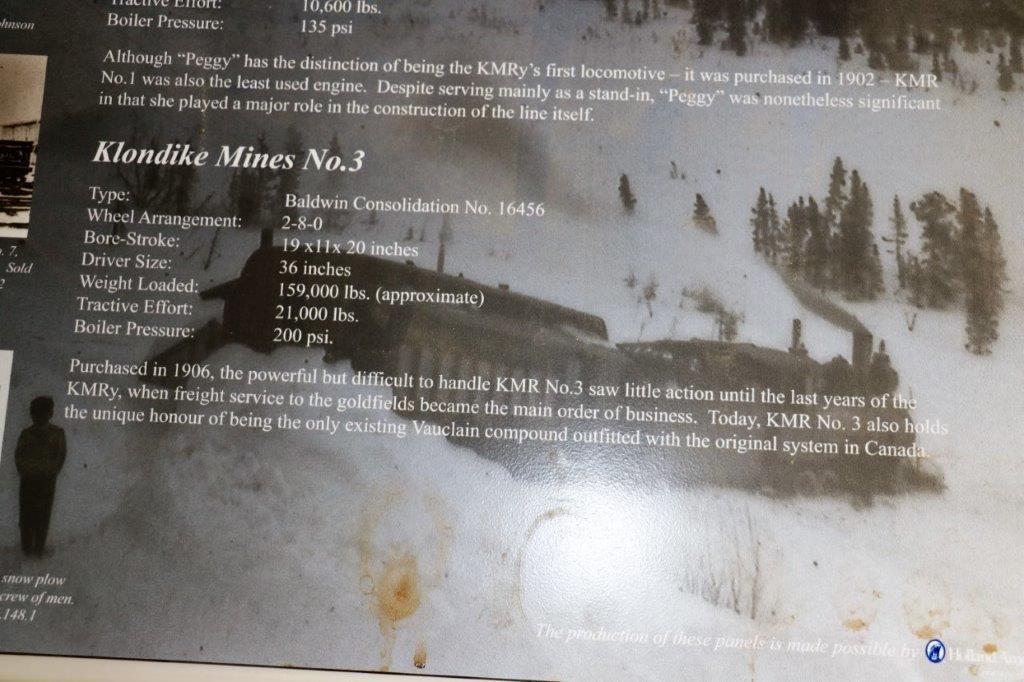
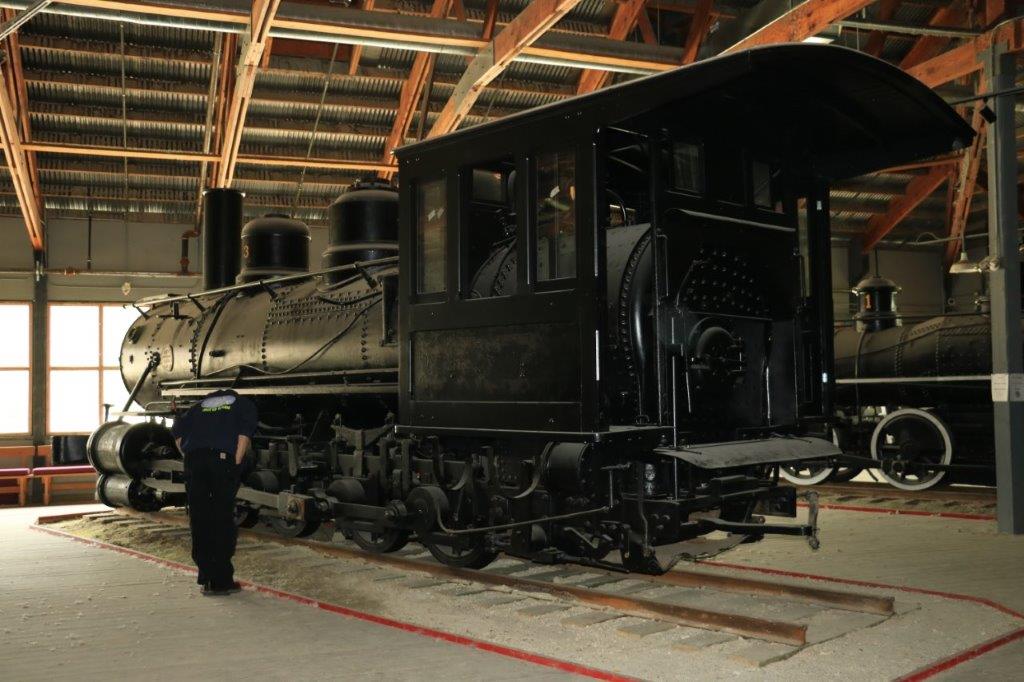
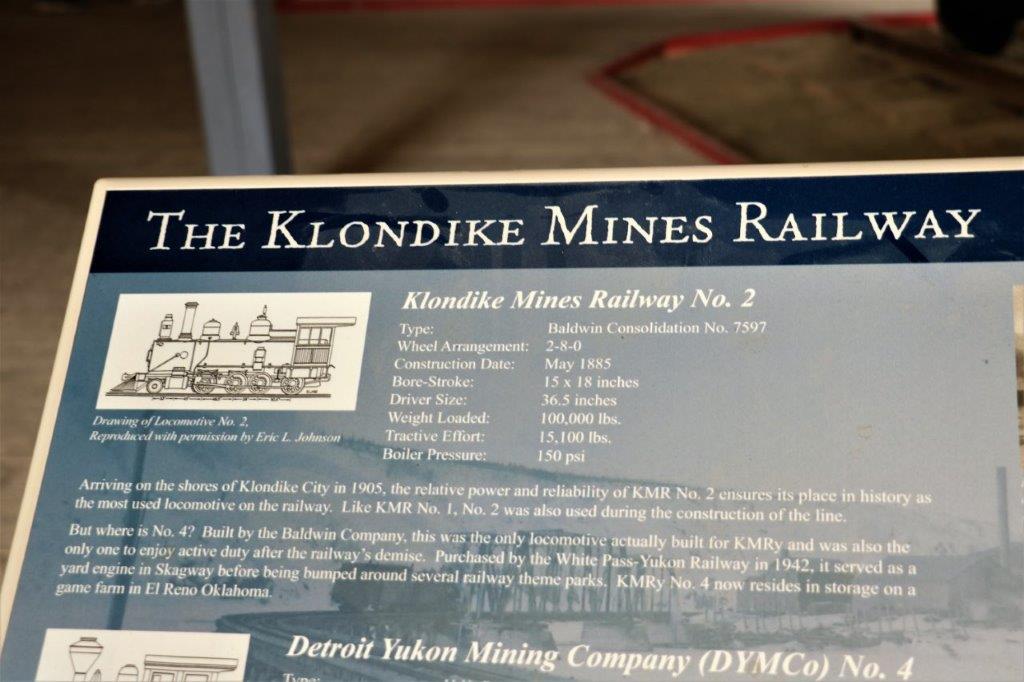
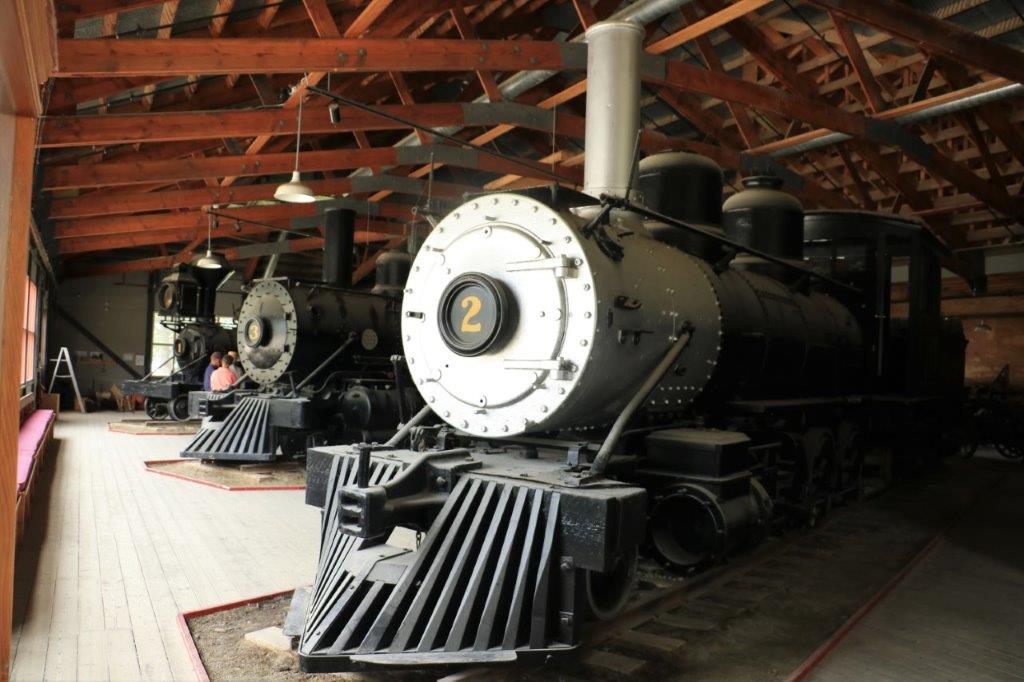
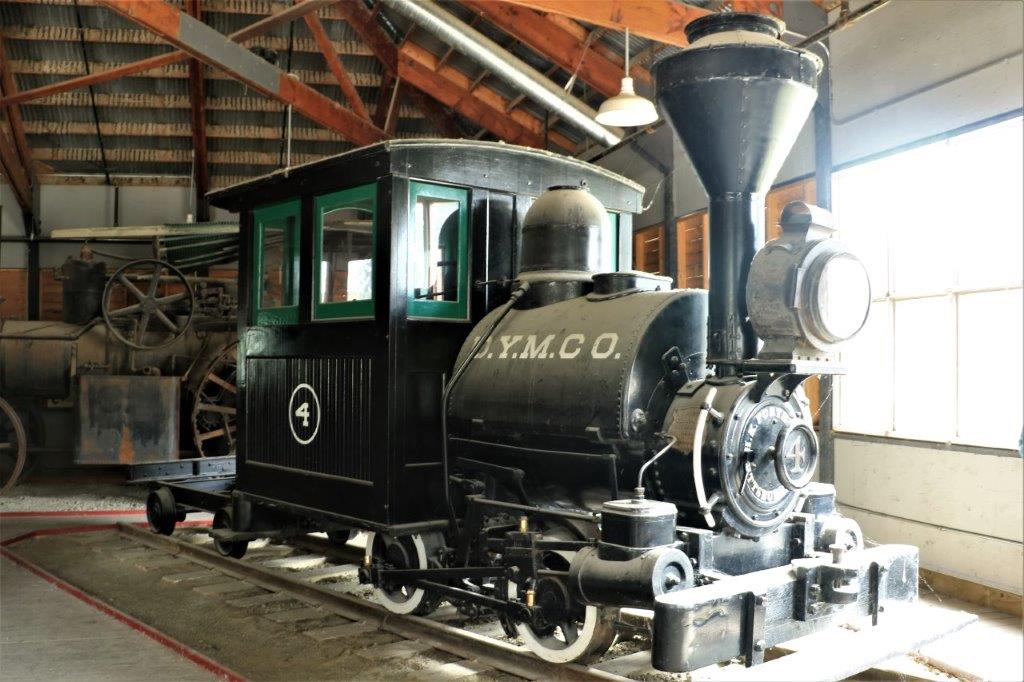
It was a very interesting to hear the story of the Klondike Railway which only last 8 years went a total of 31 miles and lost money. After the short tour of the railway shelter we went back to the main museum and finished the two exhibit rooms.  It was now 3:30 and John left me to finish in the museum while he drove back out to pick up the tires.  He took the time to put the fixed original tire back on the truck and put the spare back where it belonged, and the second spare in the pickup box.  Then he found a car wash and hosed off the majority of the mud so we have a white truck again.  Not as clean as it usually is when John washes it, but we are going on gravel roads again tomorrow so he didn’t get too fussy.  He just wanted most of that calcium loaded mud off the vehicle.

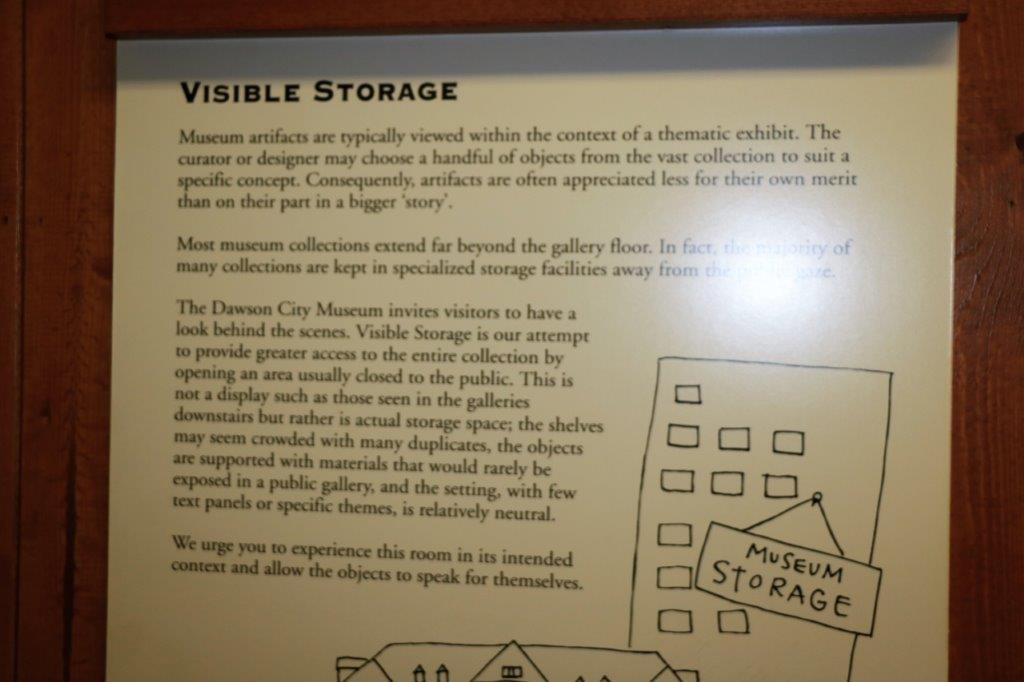
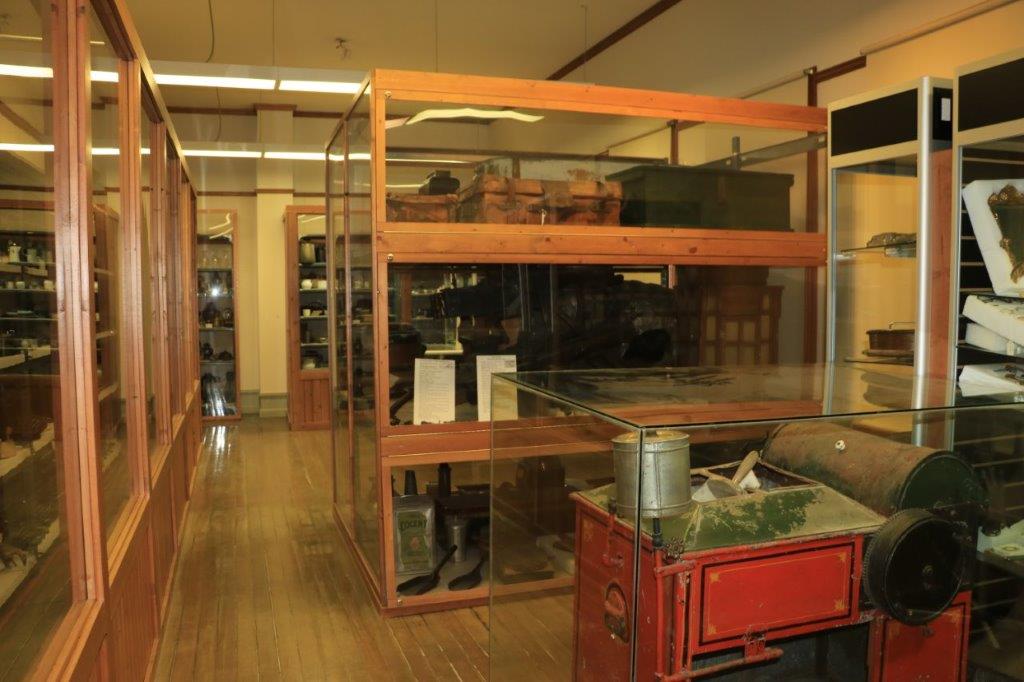
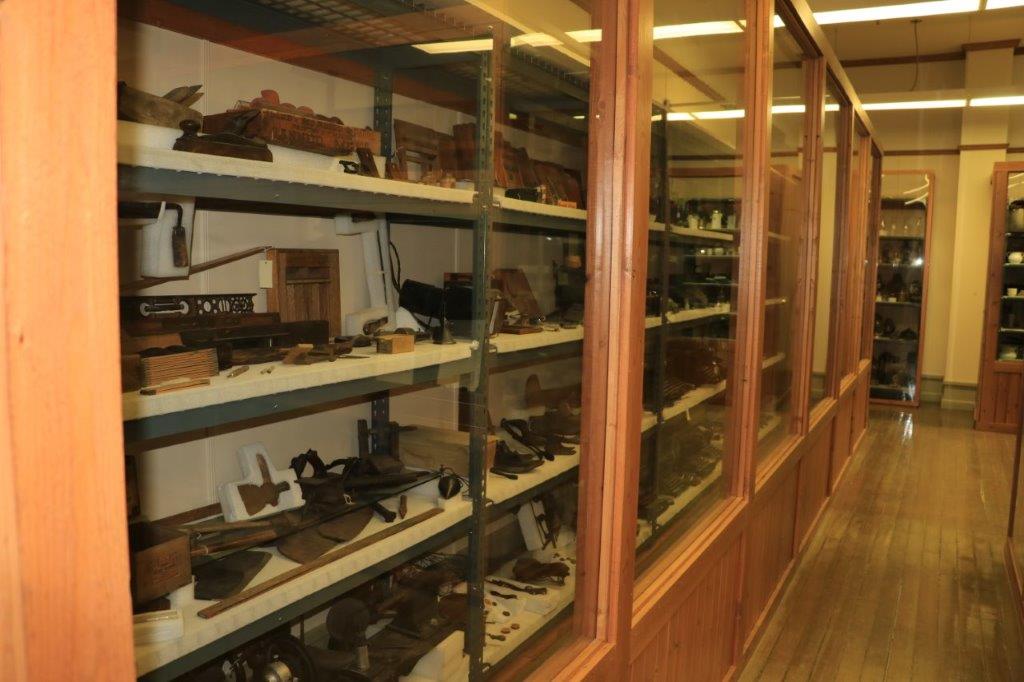
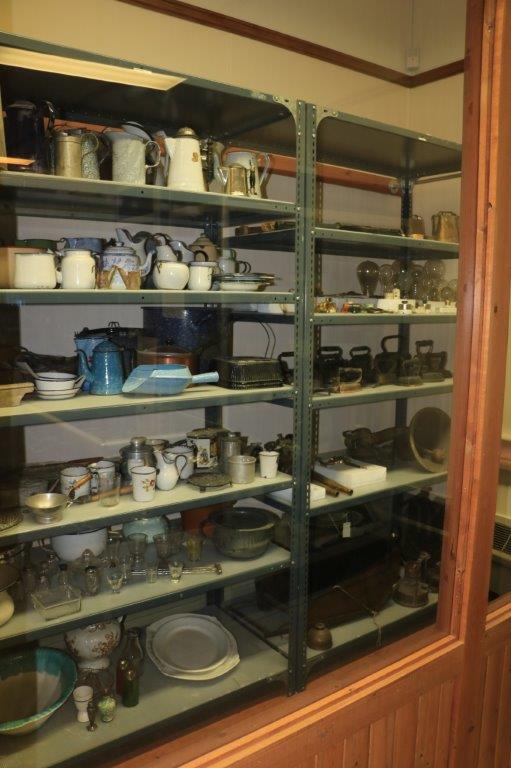
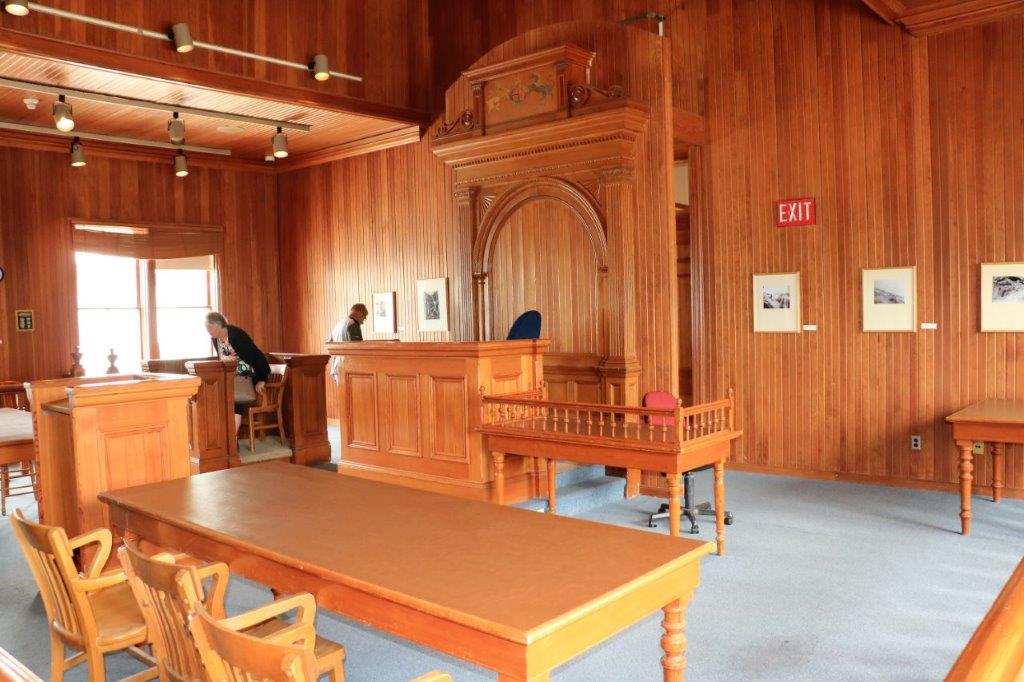
I went upstairs to see the ‘visible storage’ and the old courthouse. The Dawson City museum is only two blocks from our hotel so I walked back and put my photos on the computer and selected the ones for my blog.  I was just finishing when John returned.  By then it was time for dinner and blog writing in the hotel lobby; which is the only place there is wi-fi.

Tomorrow we leave for our Alaska portion of the journey.