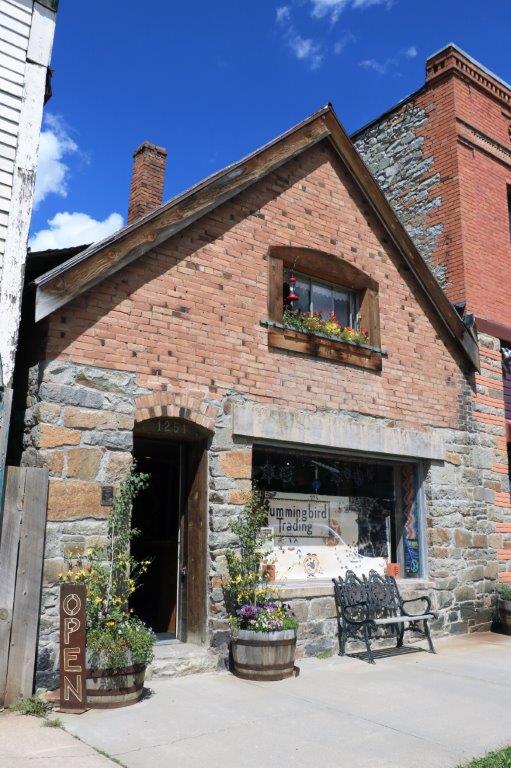
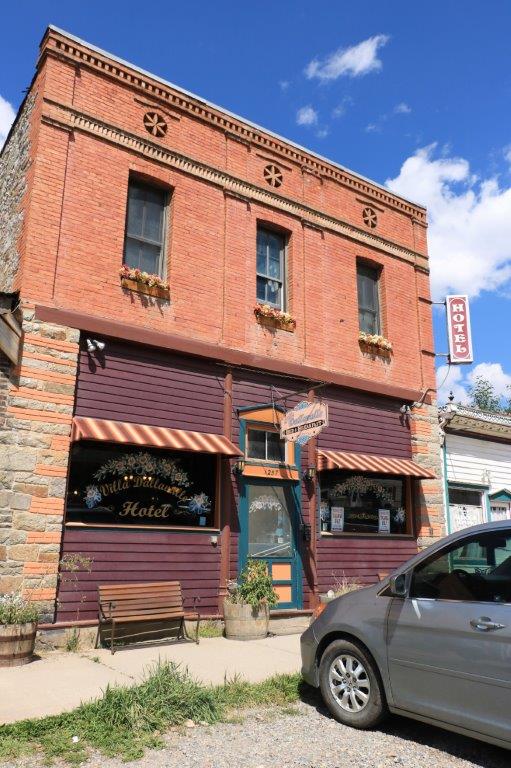
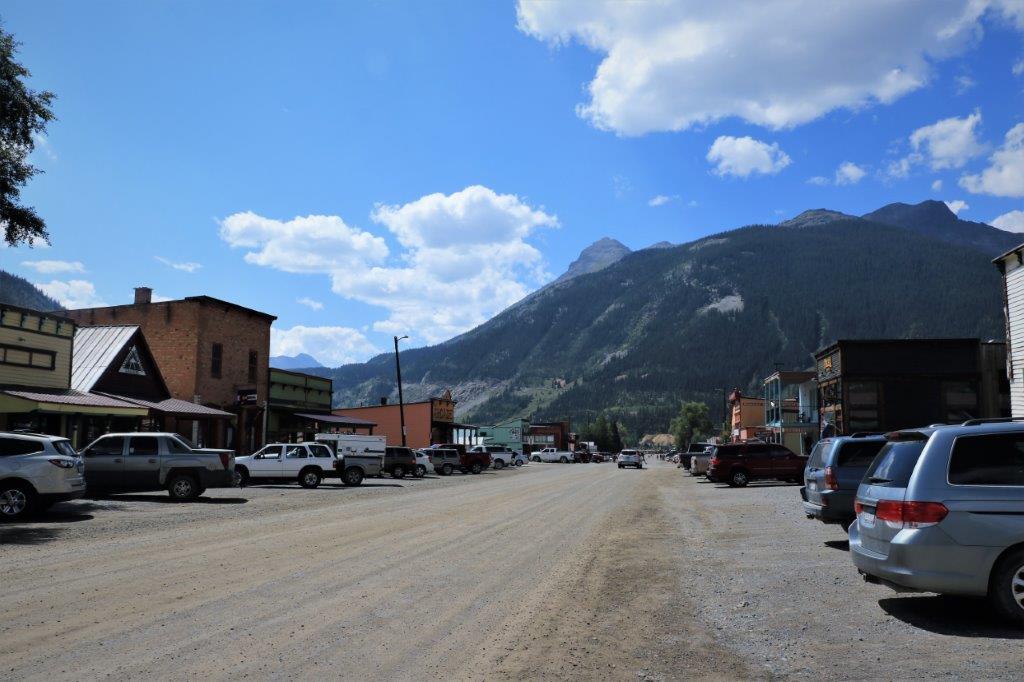
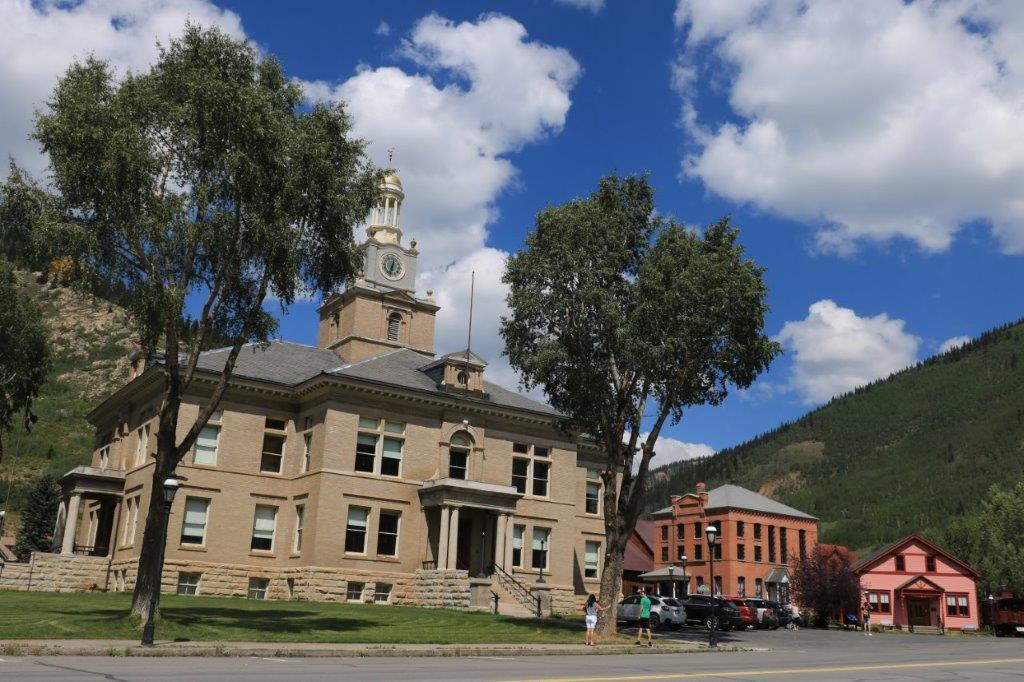
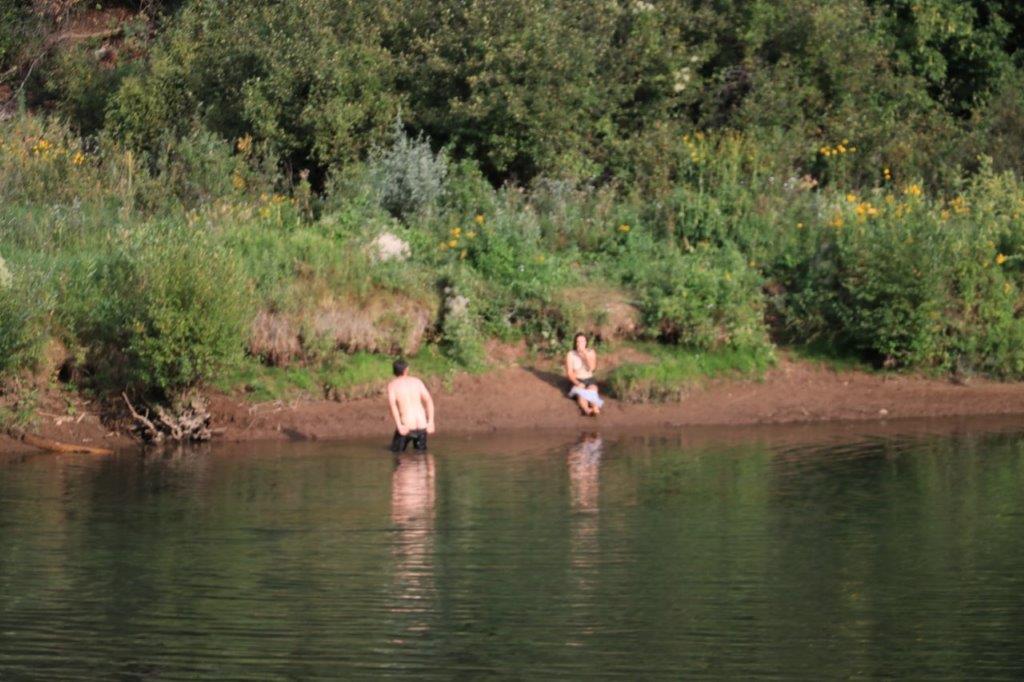
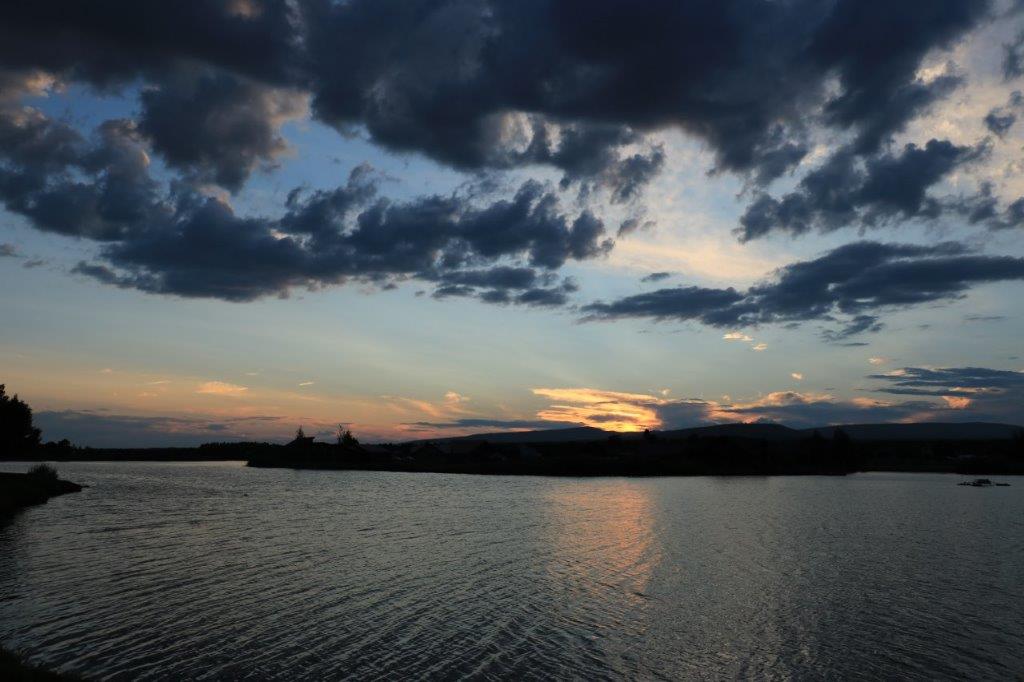
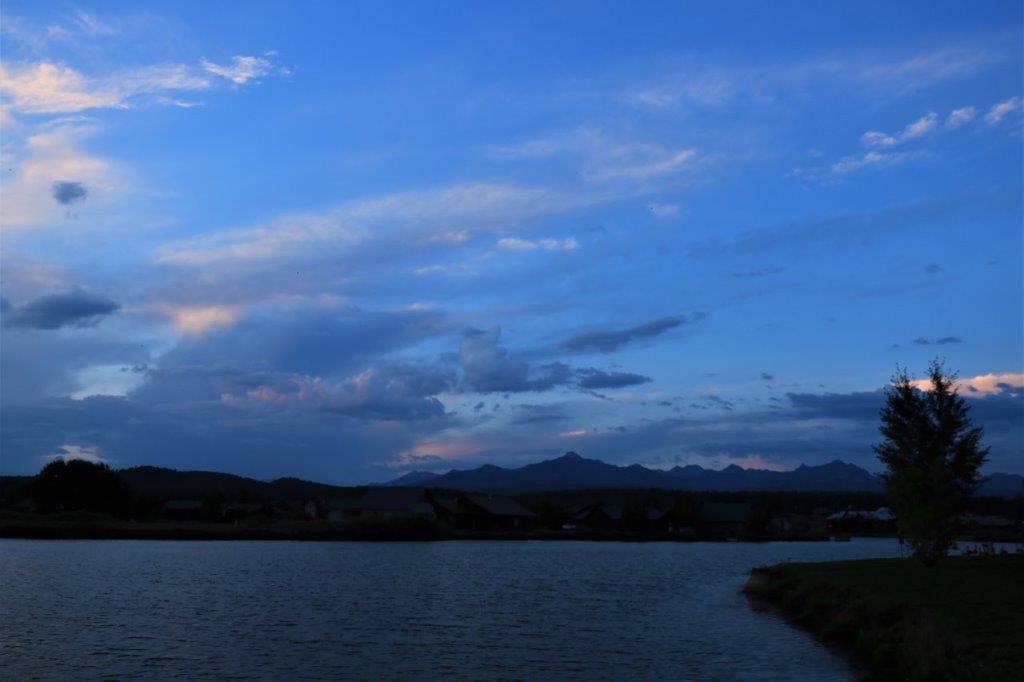
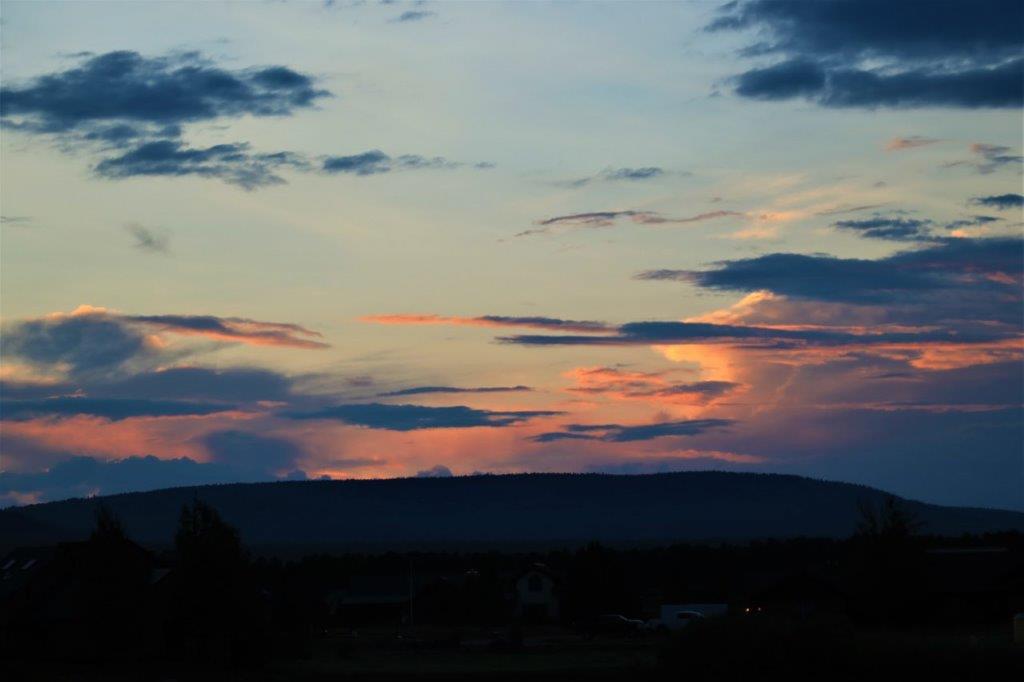
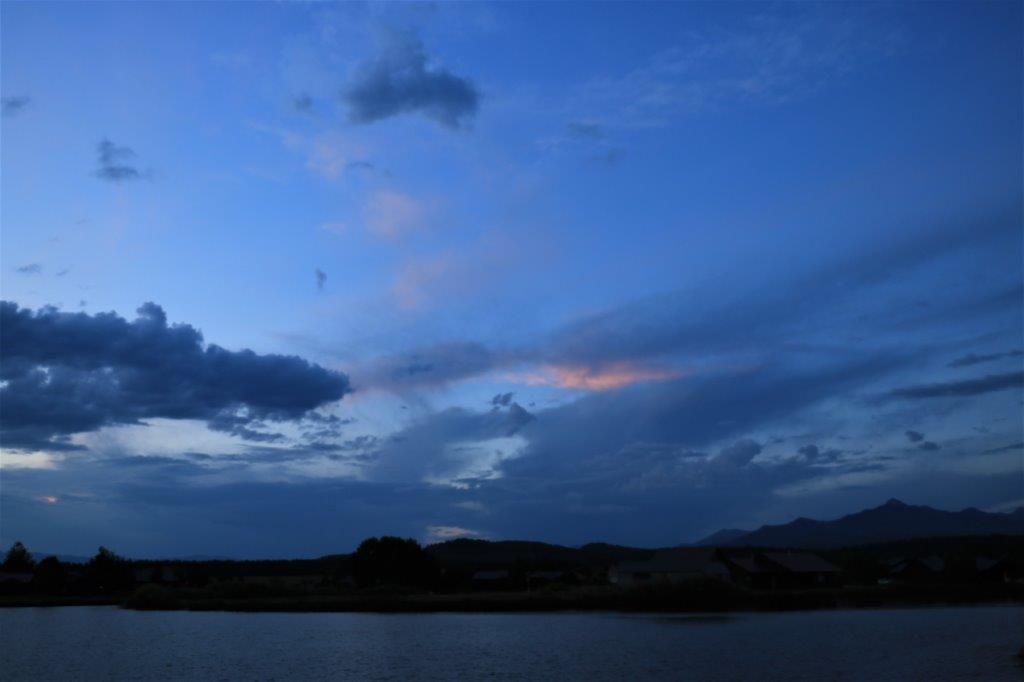
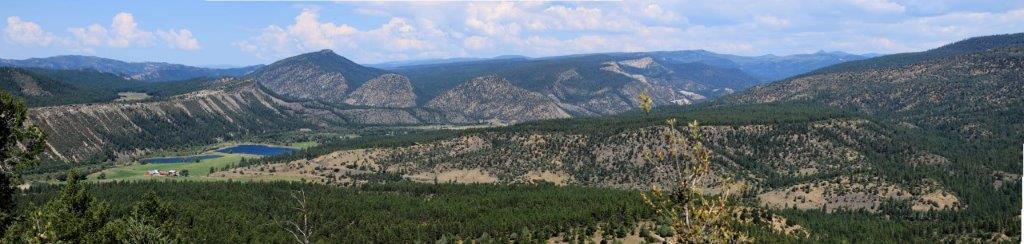
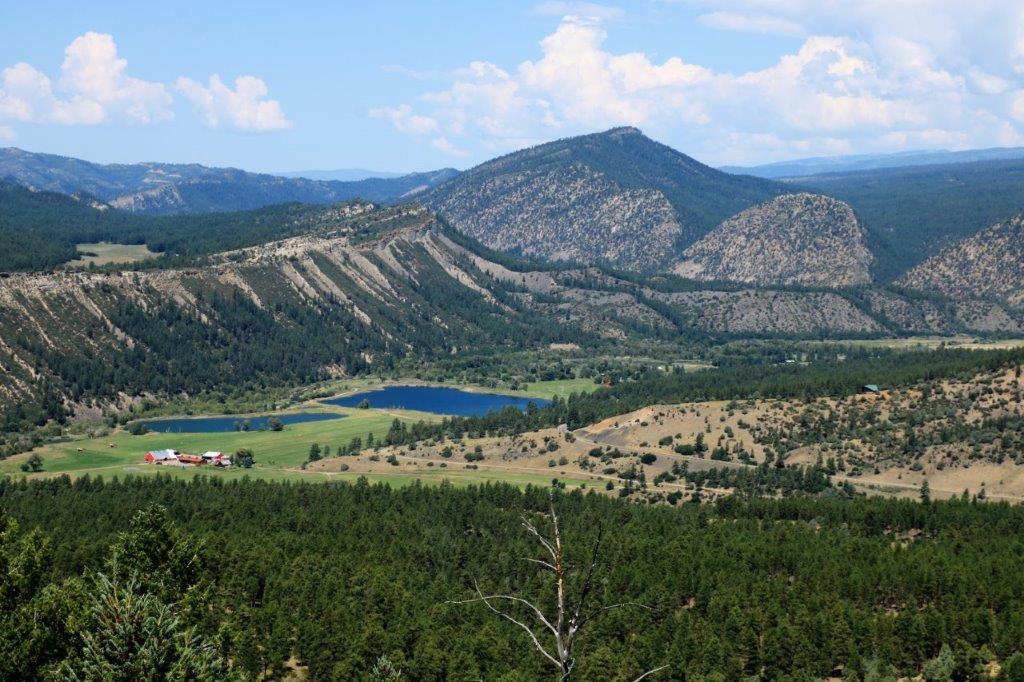
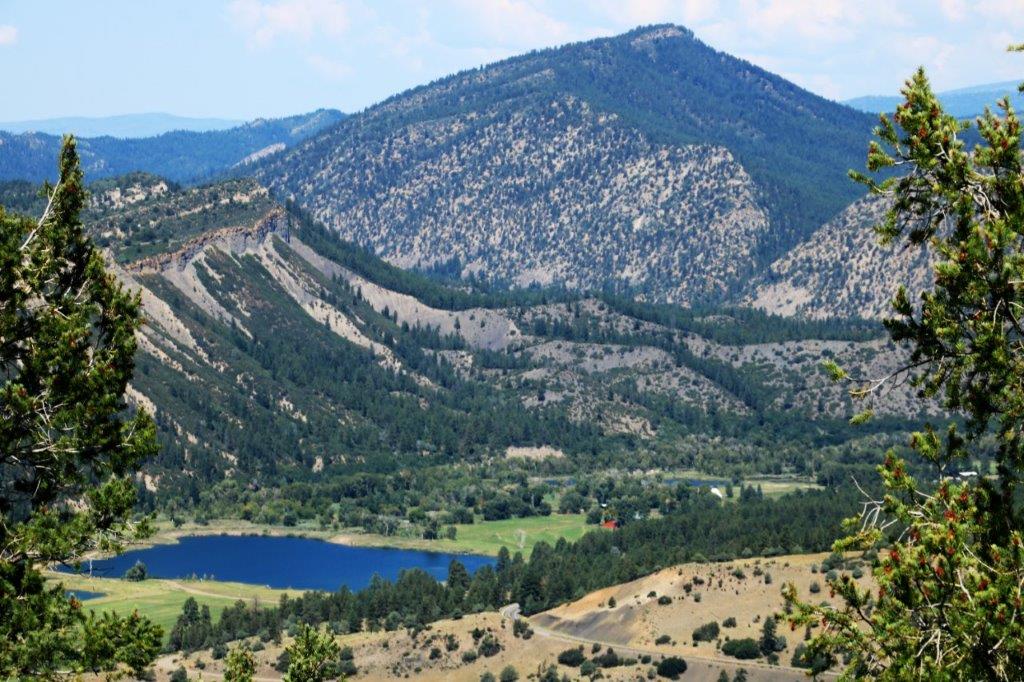
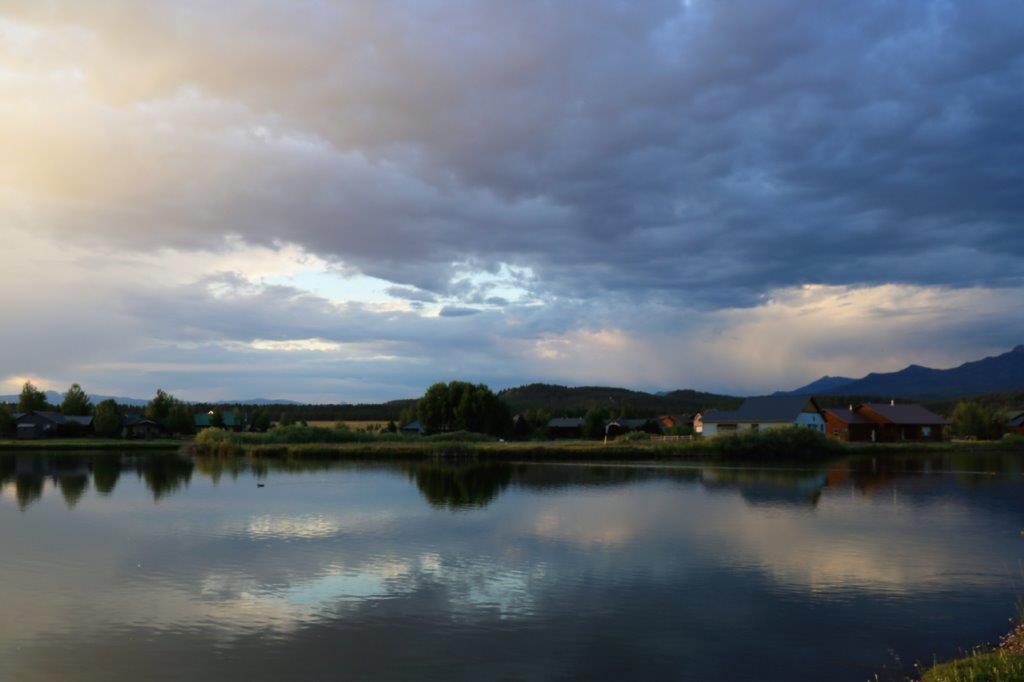
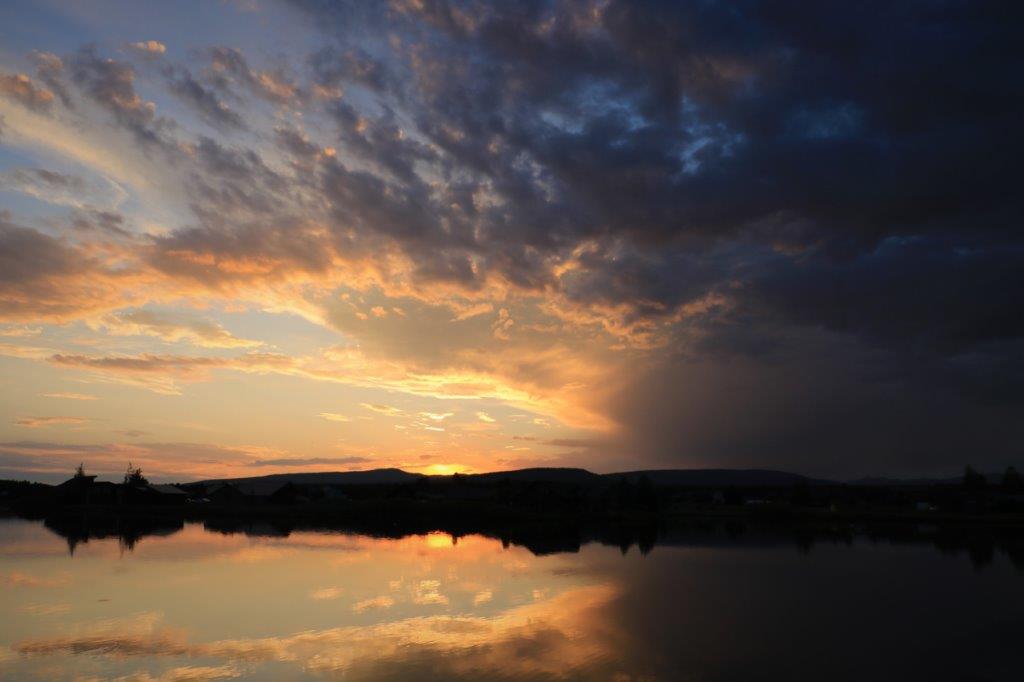
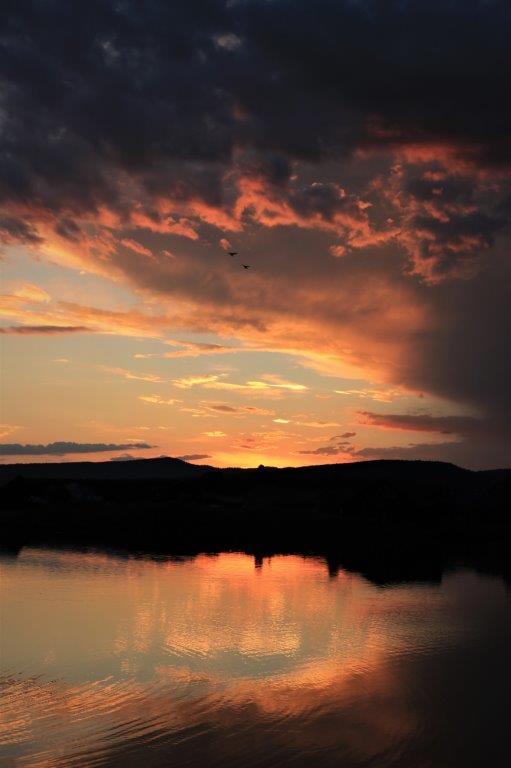
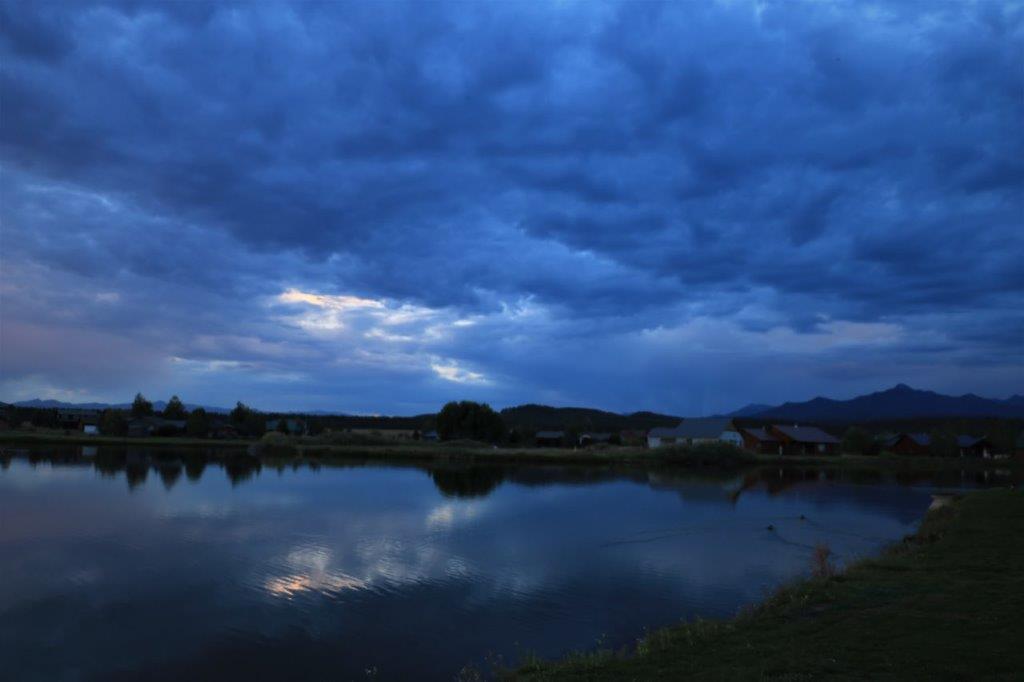
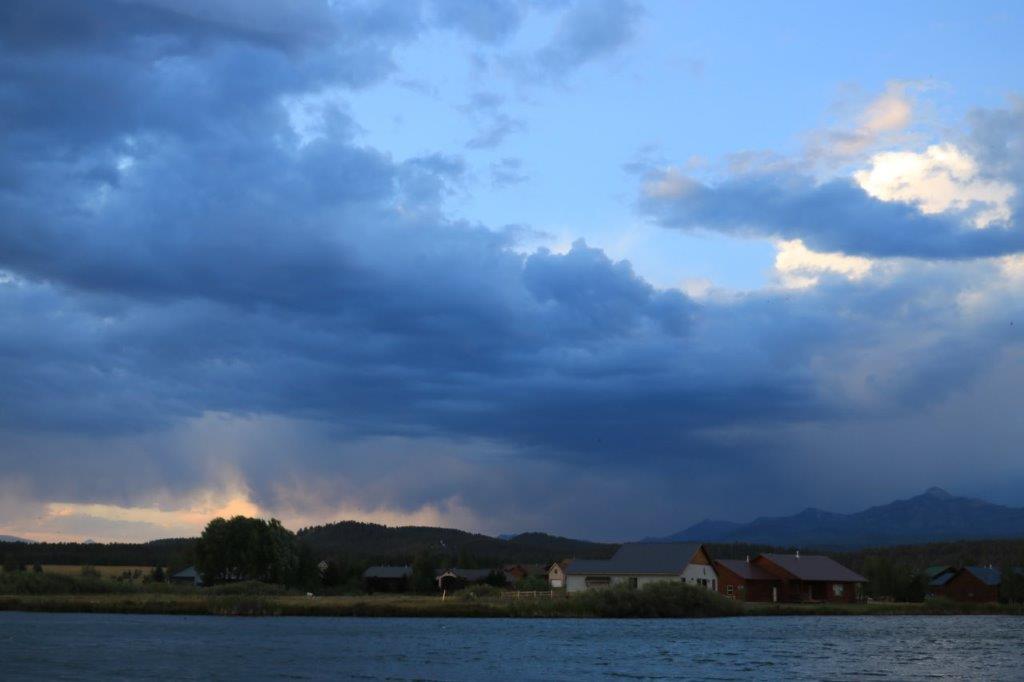
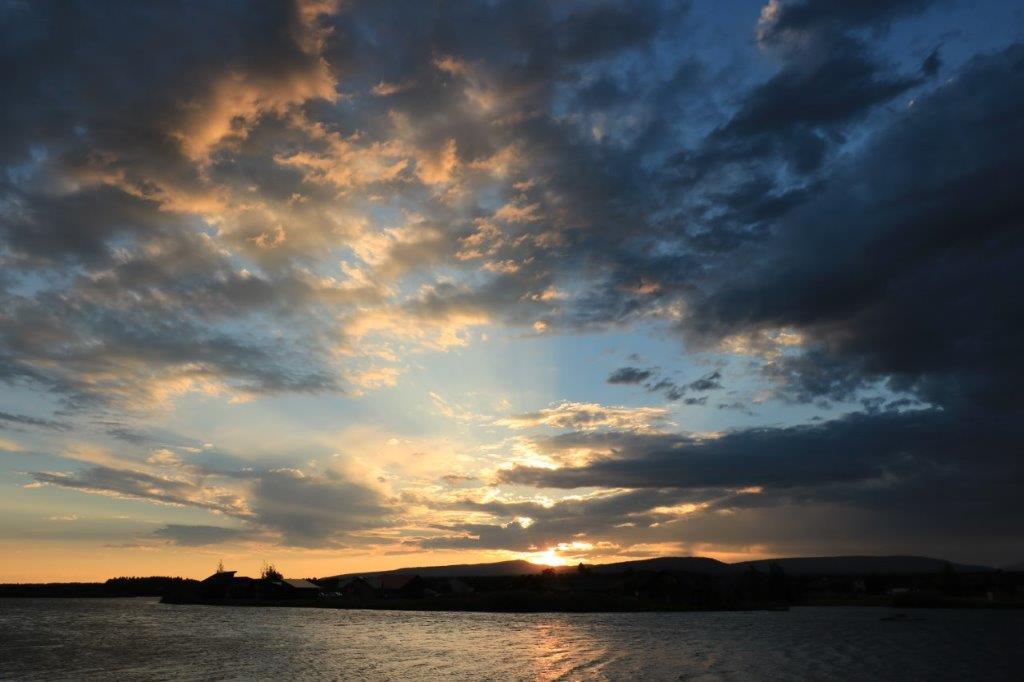
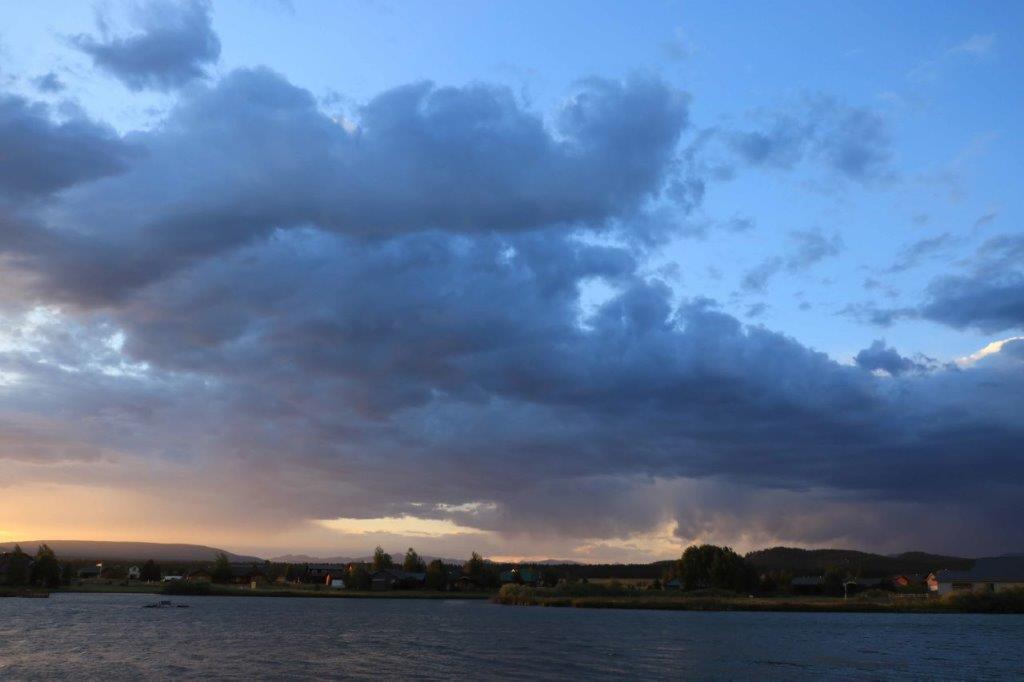
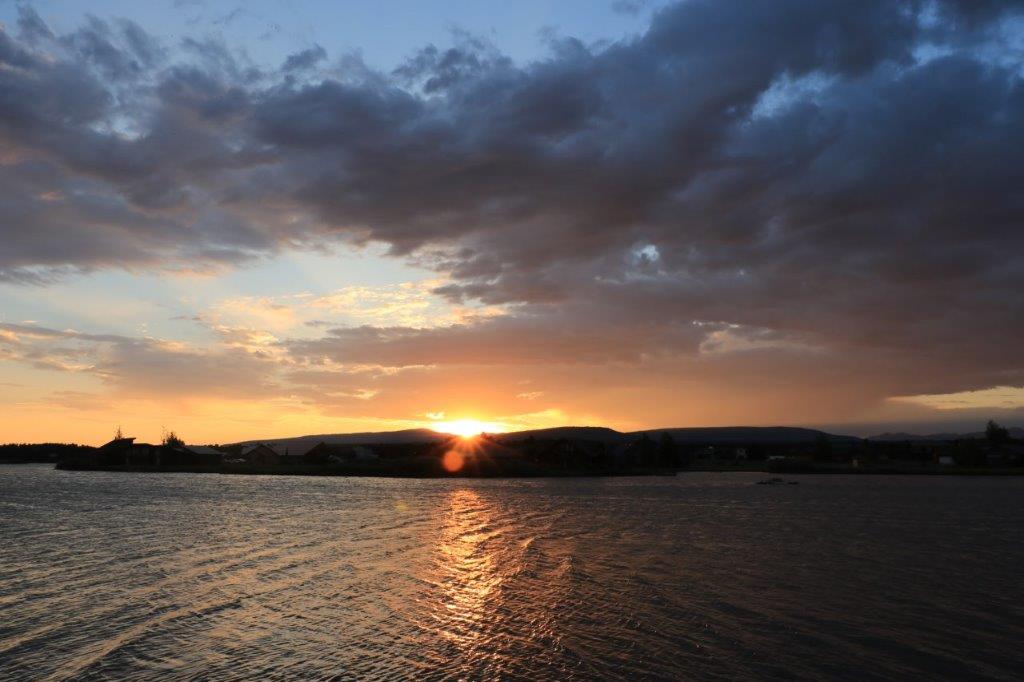
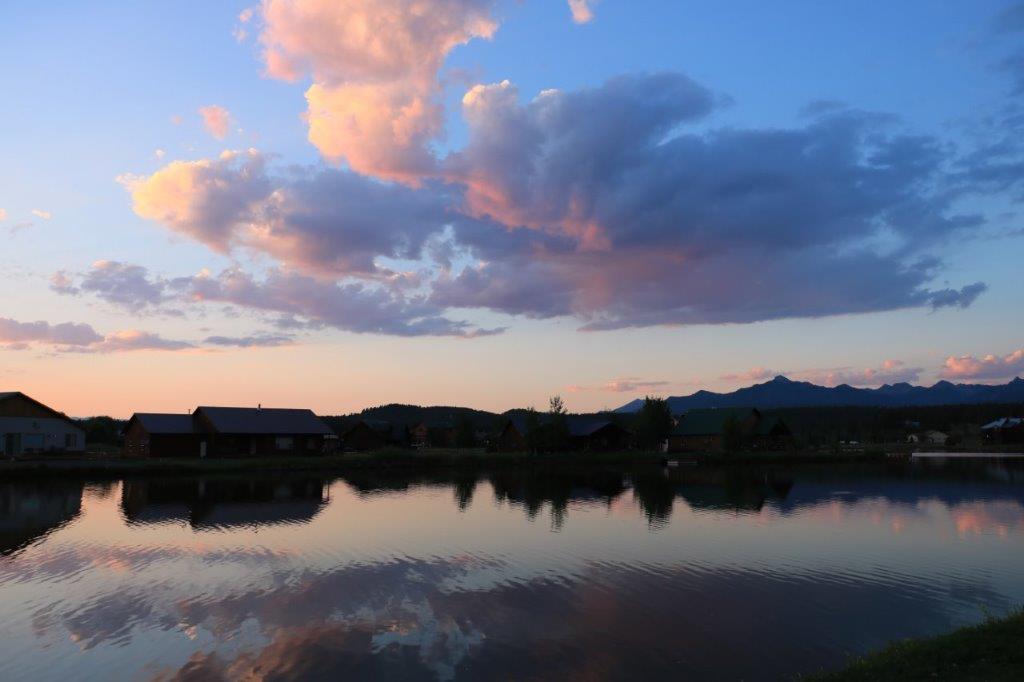
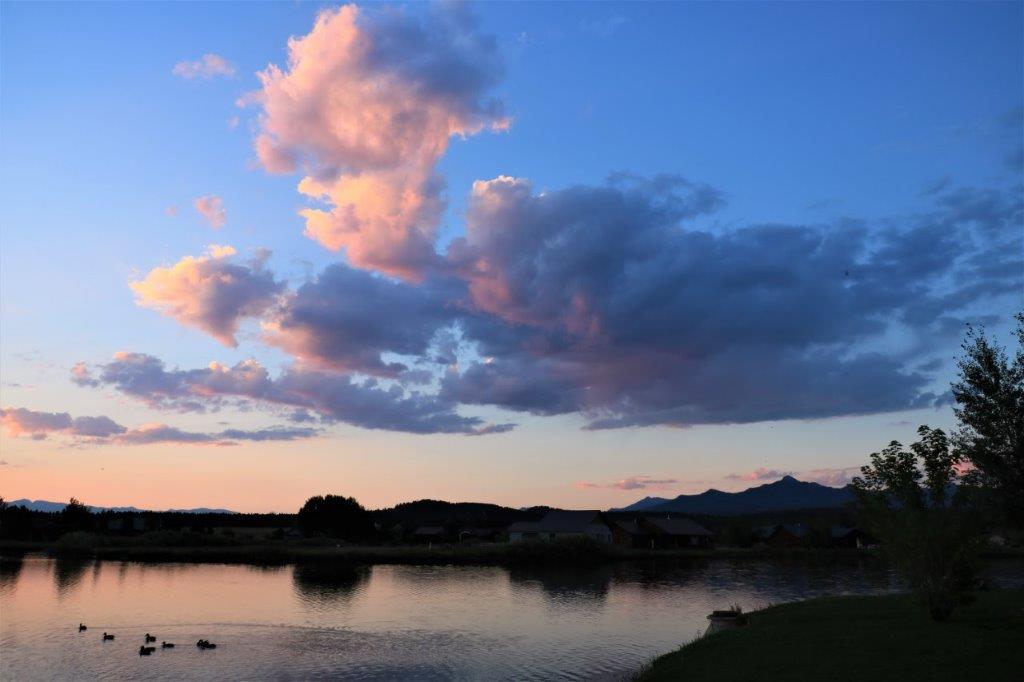
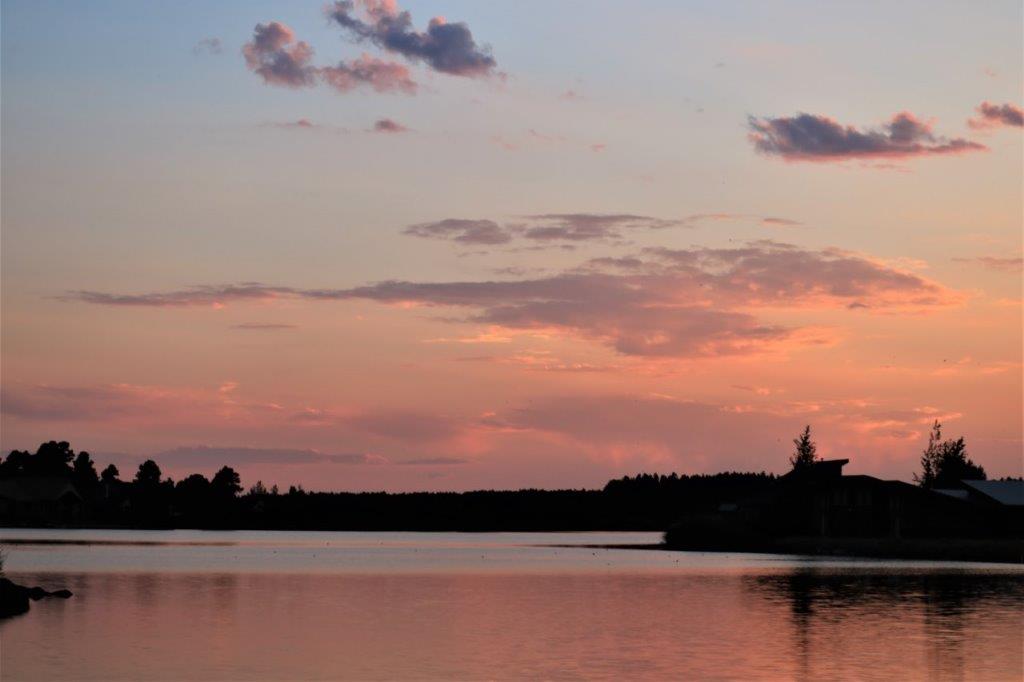
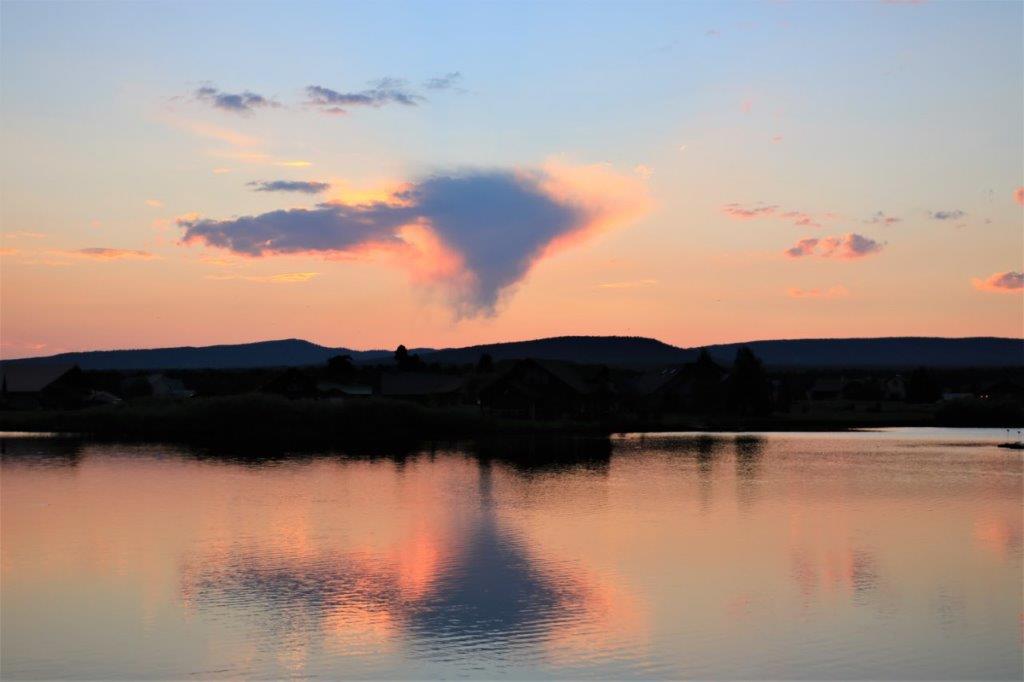
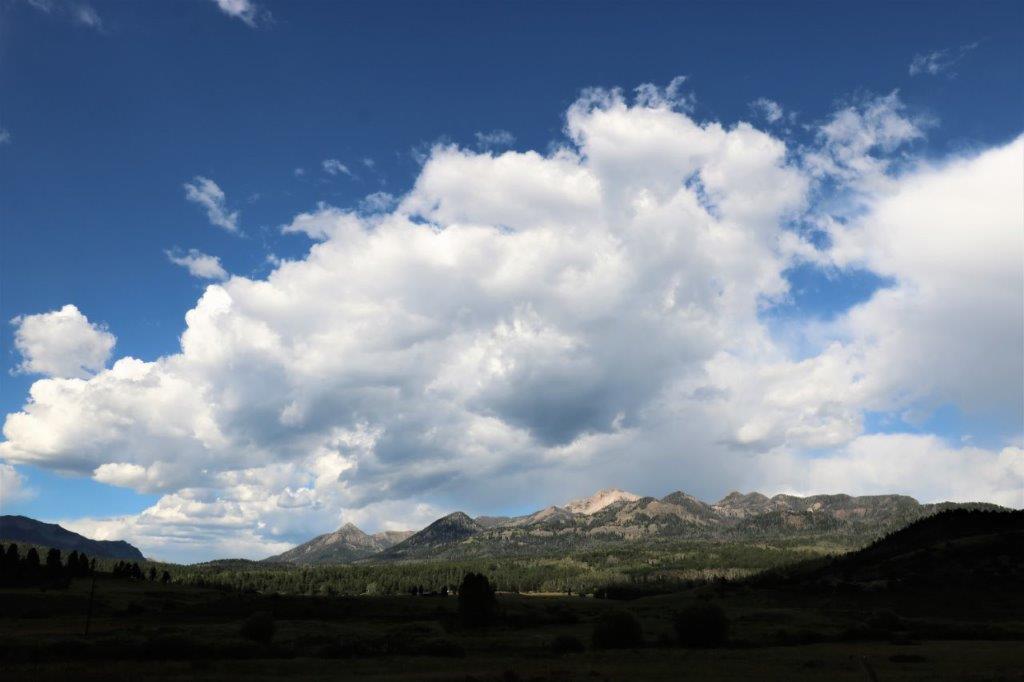
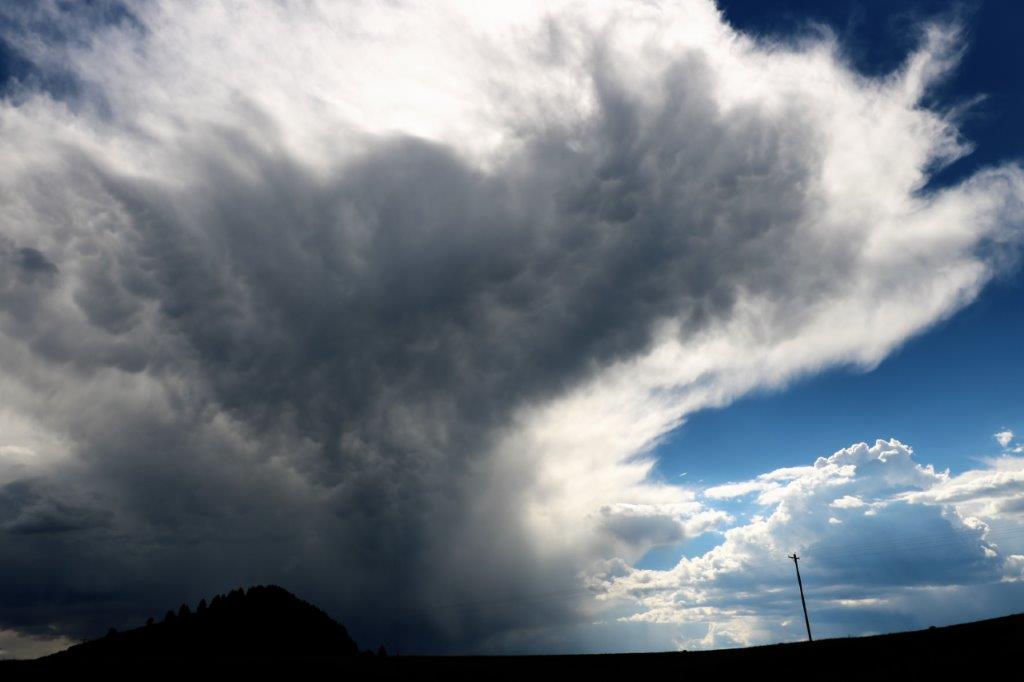
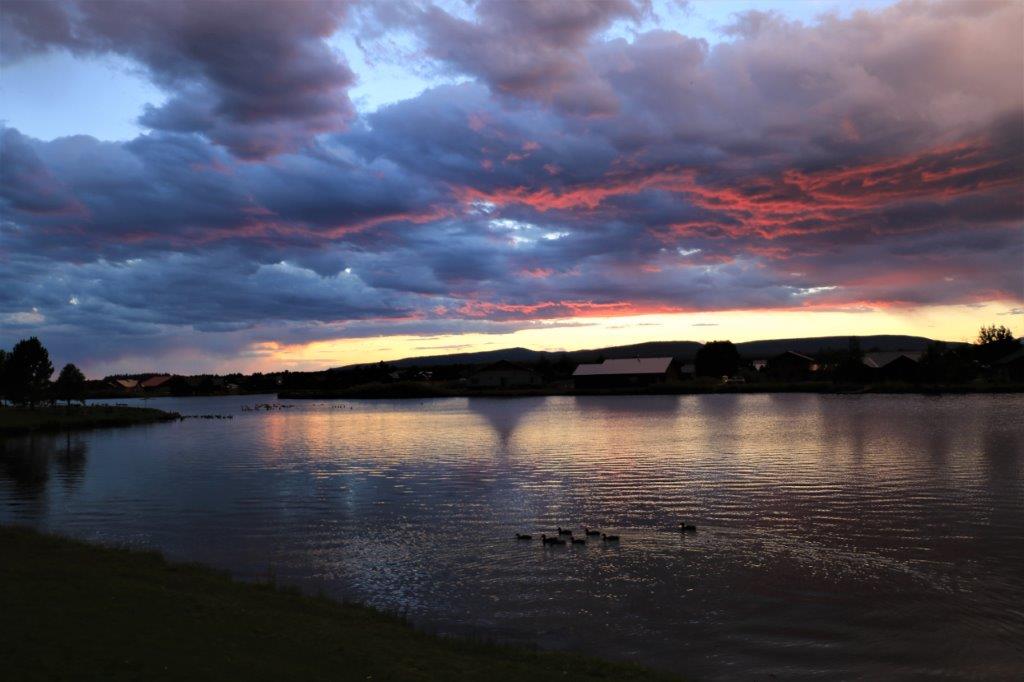
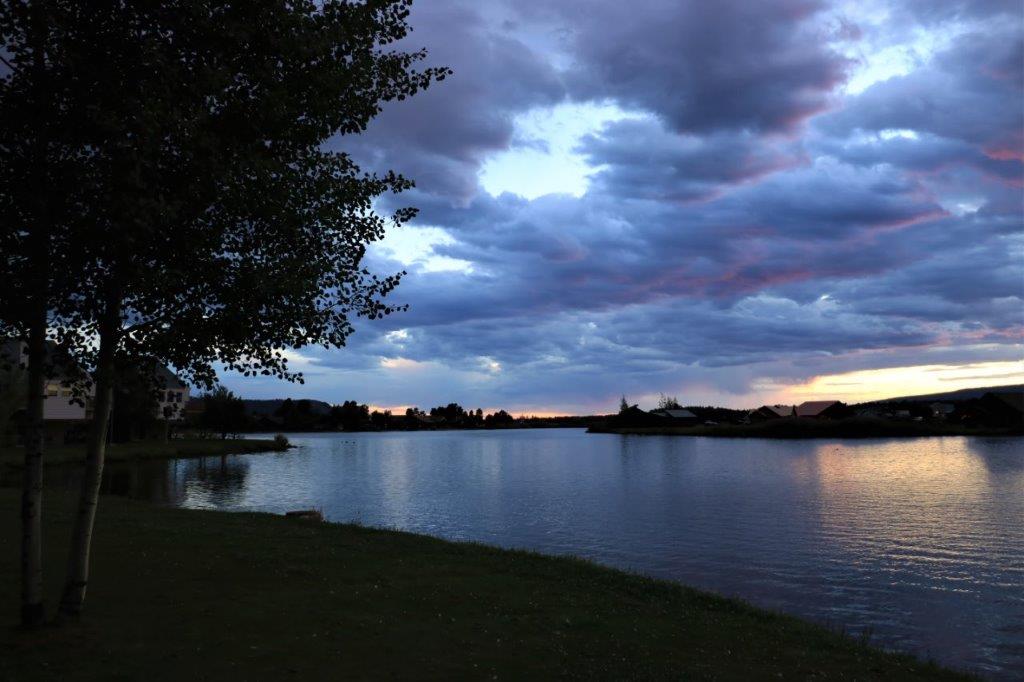
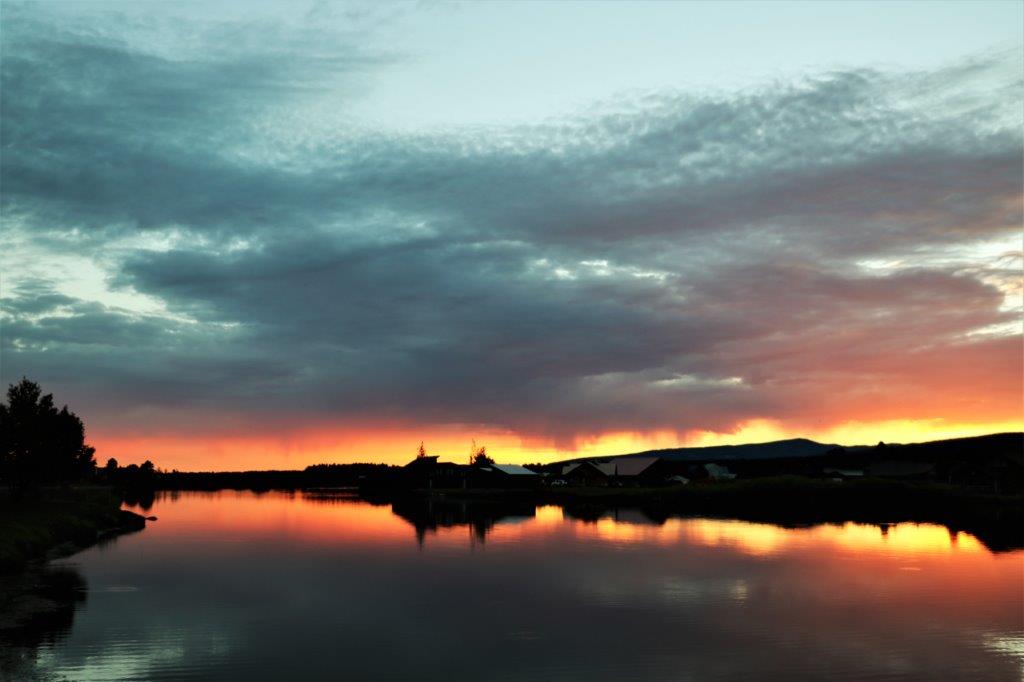
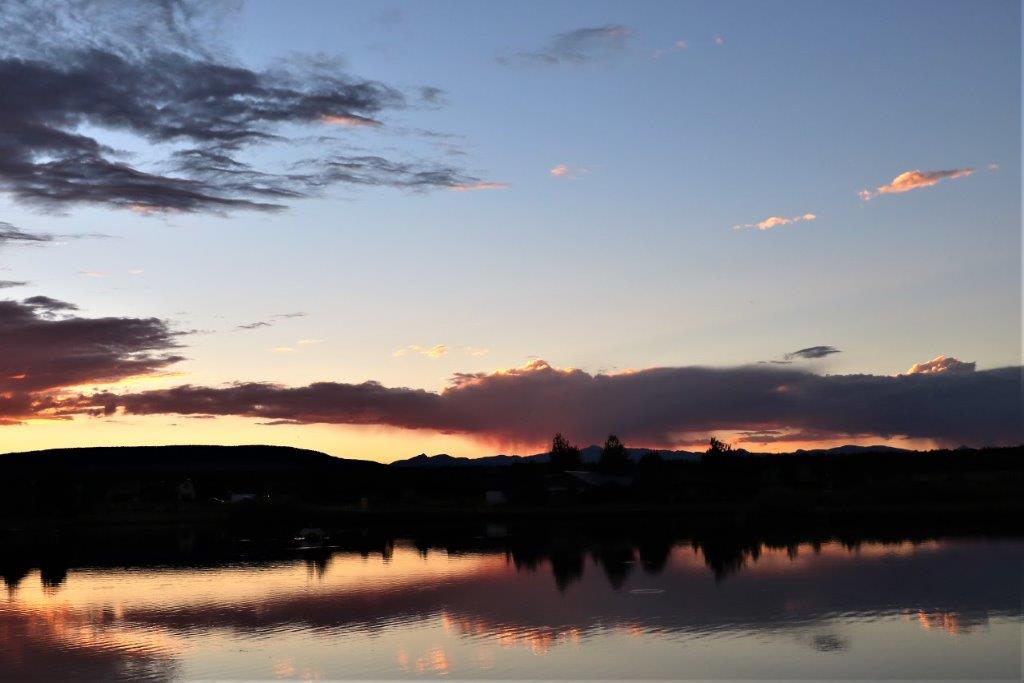
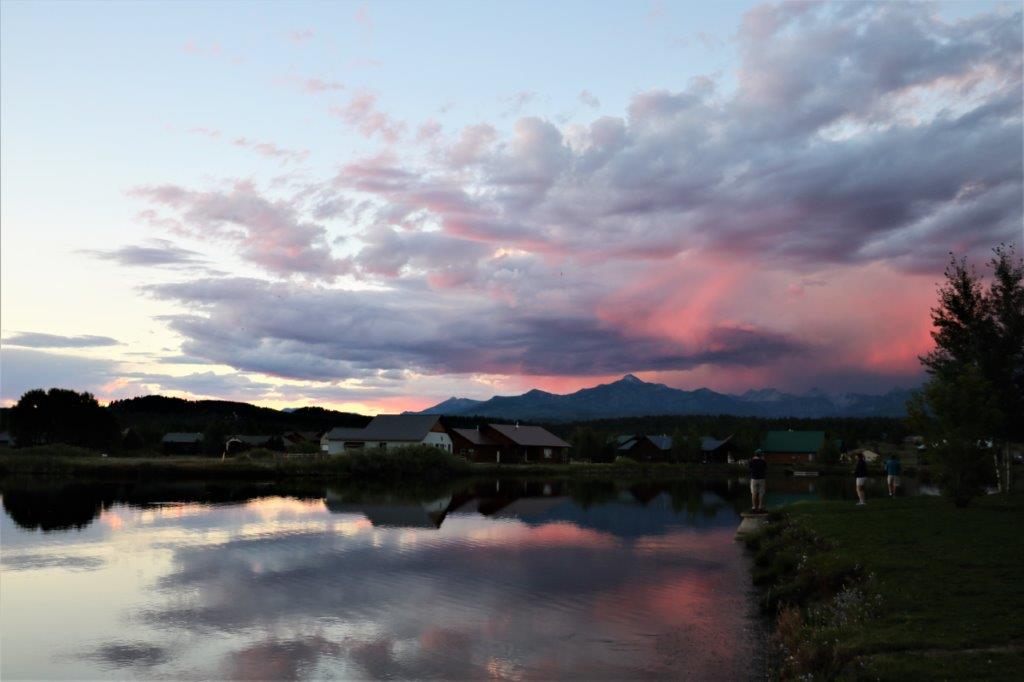
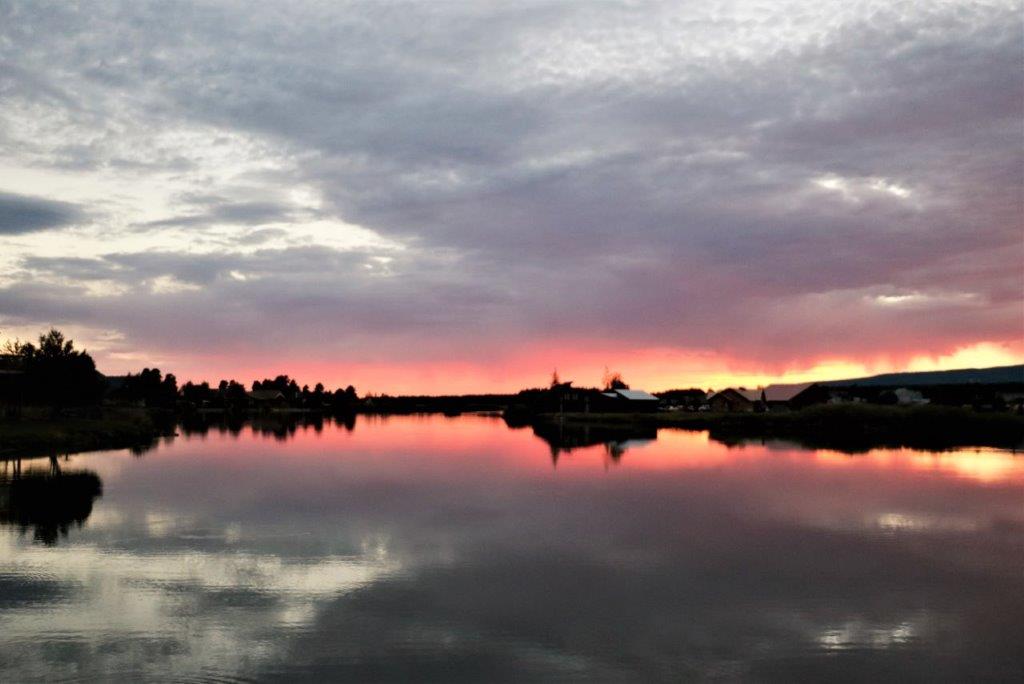
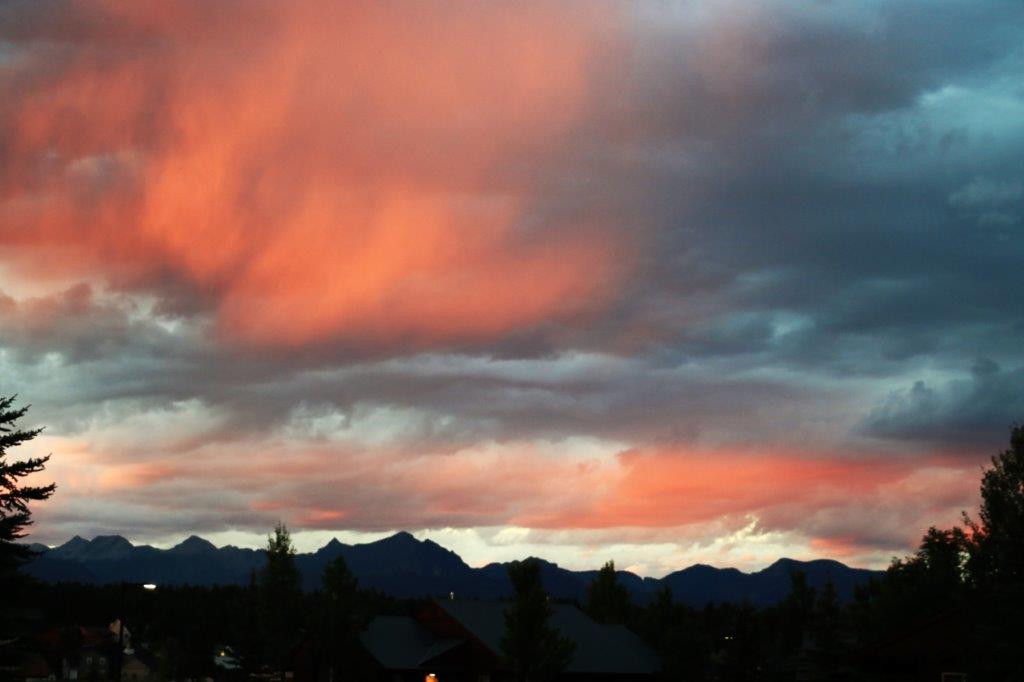
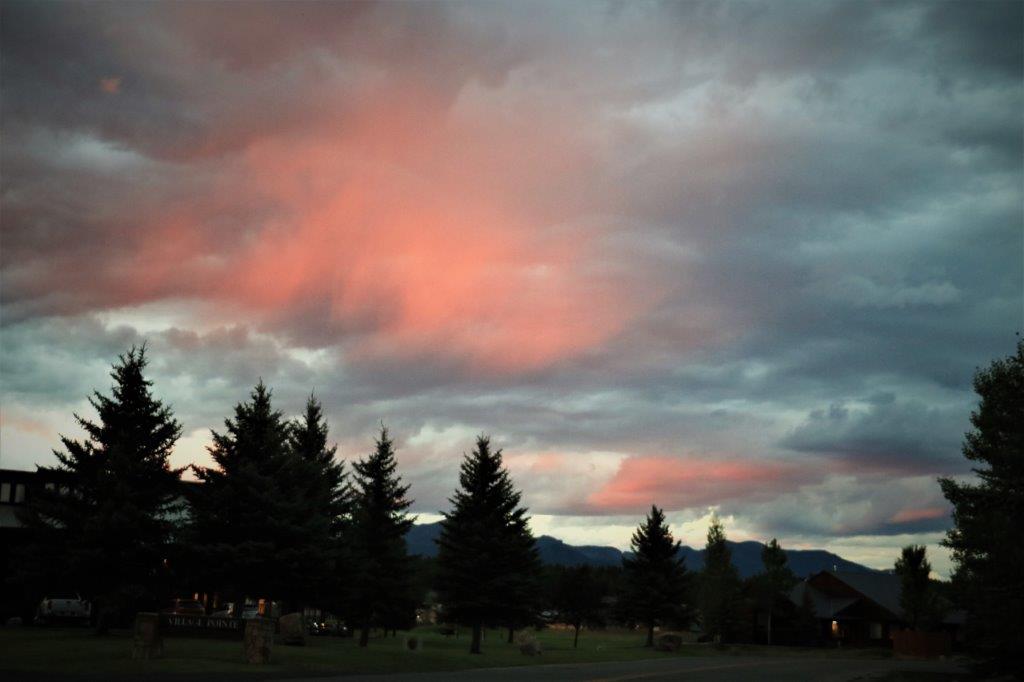
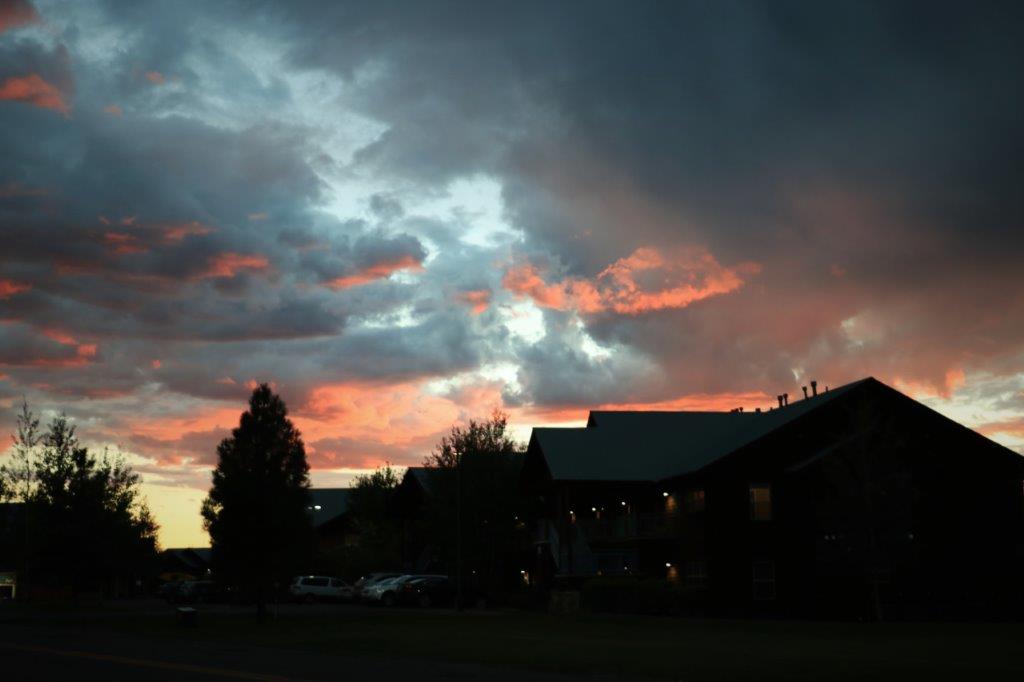
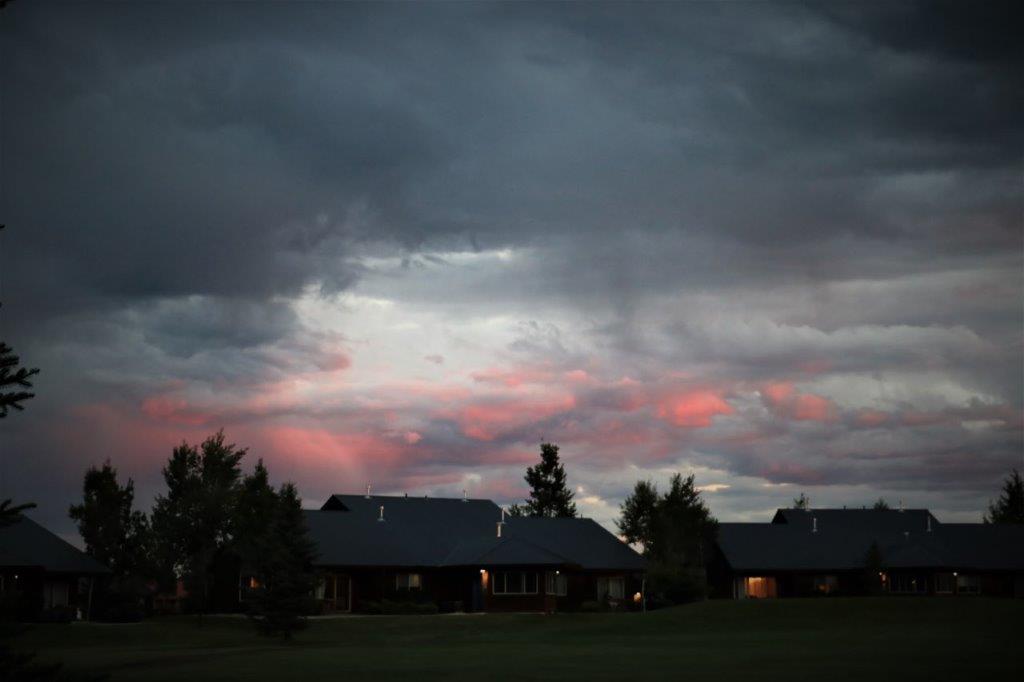
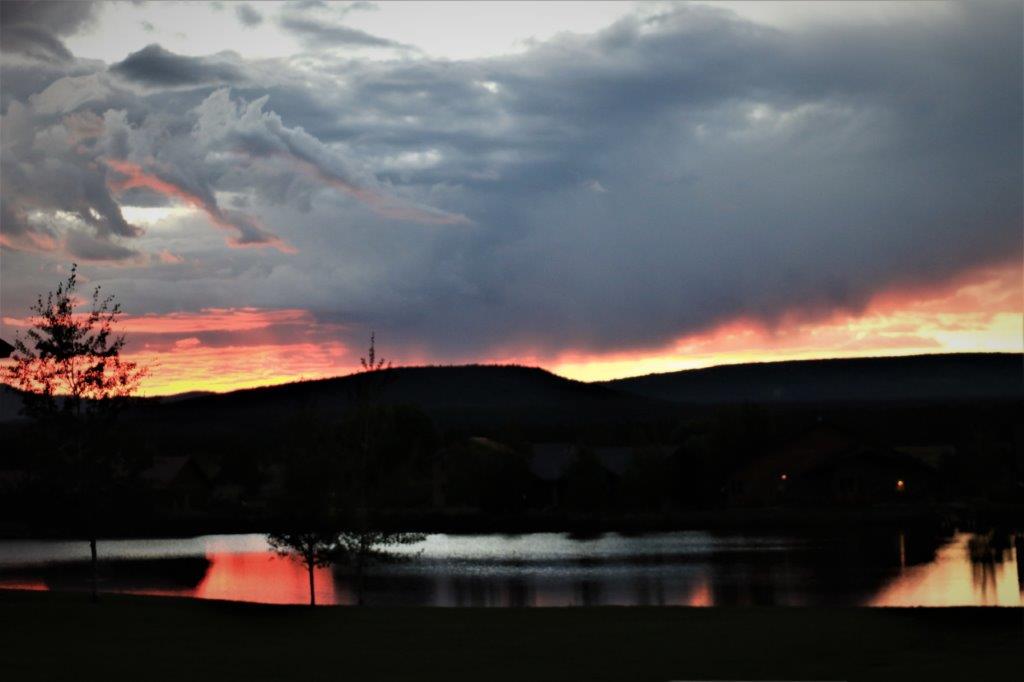
2017 Sept 3 – Durango, CO to Montrose, CO

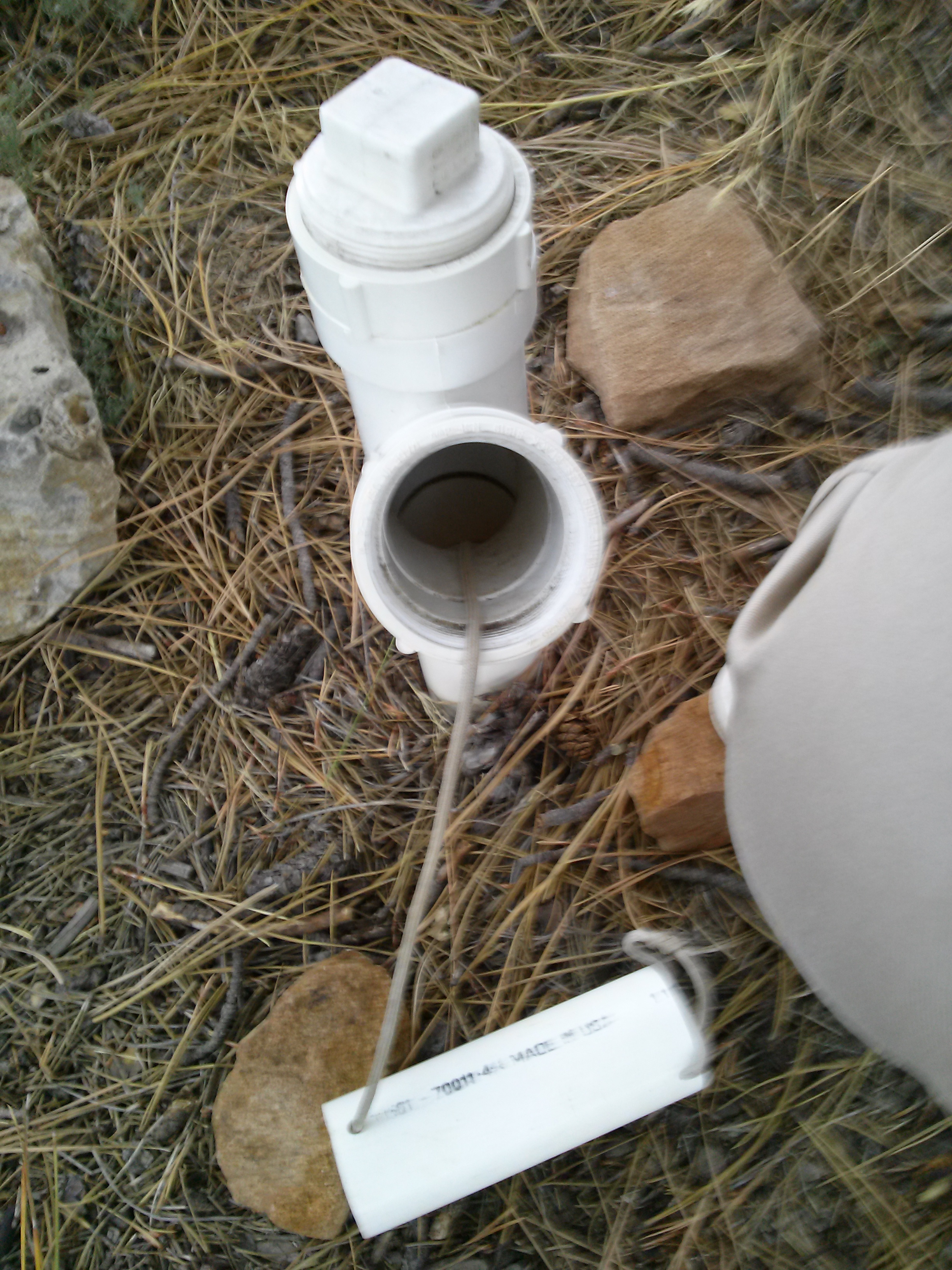
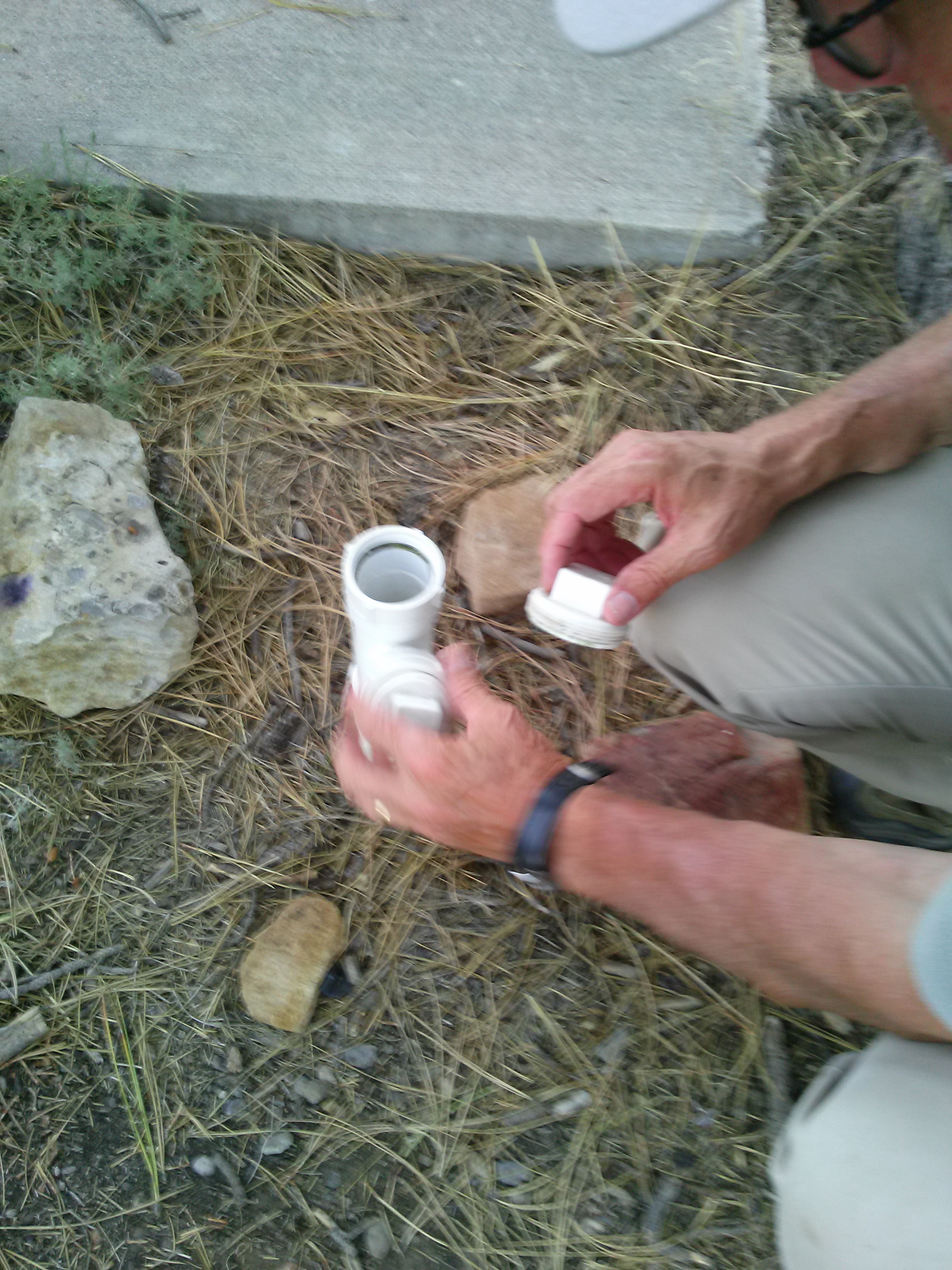
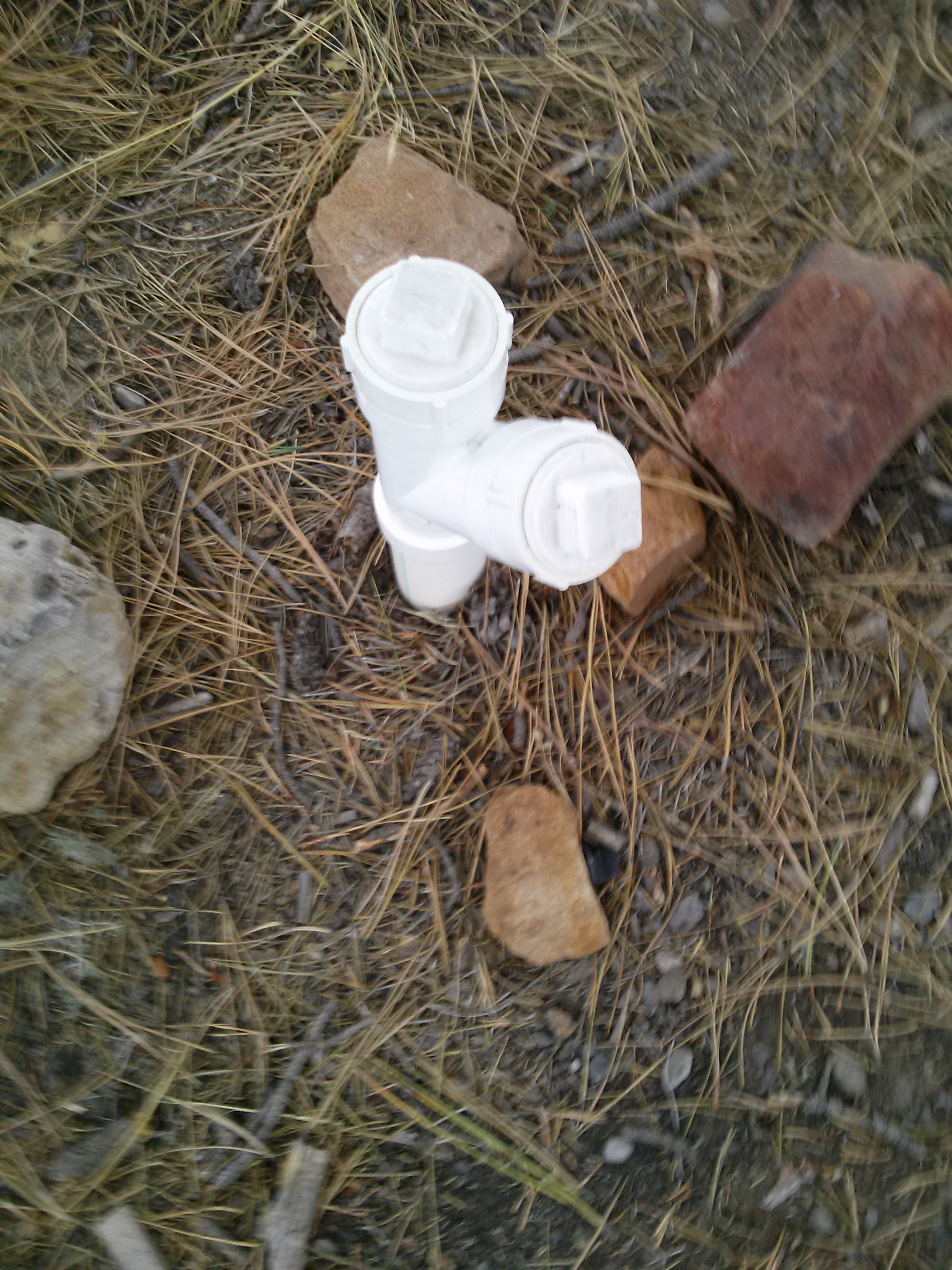
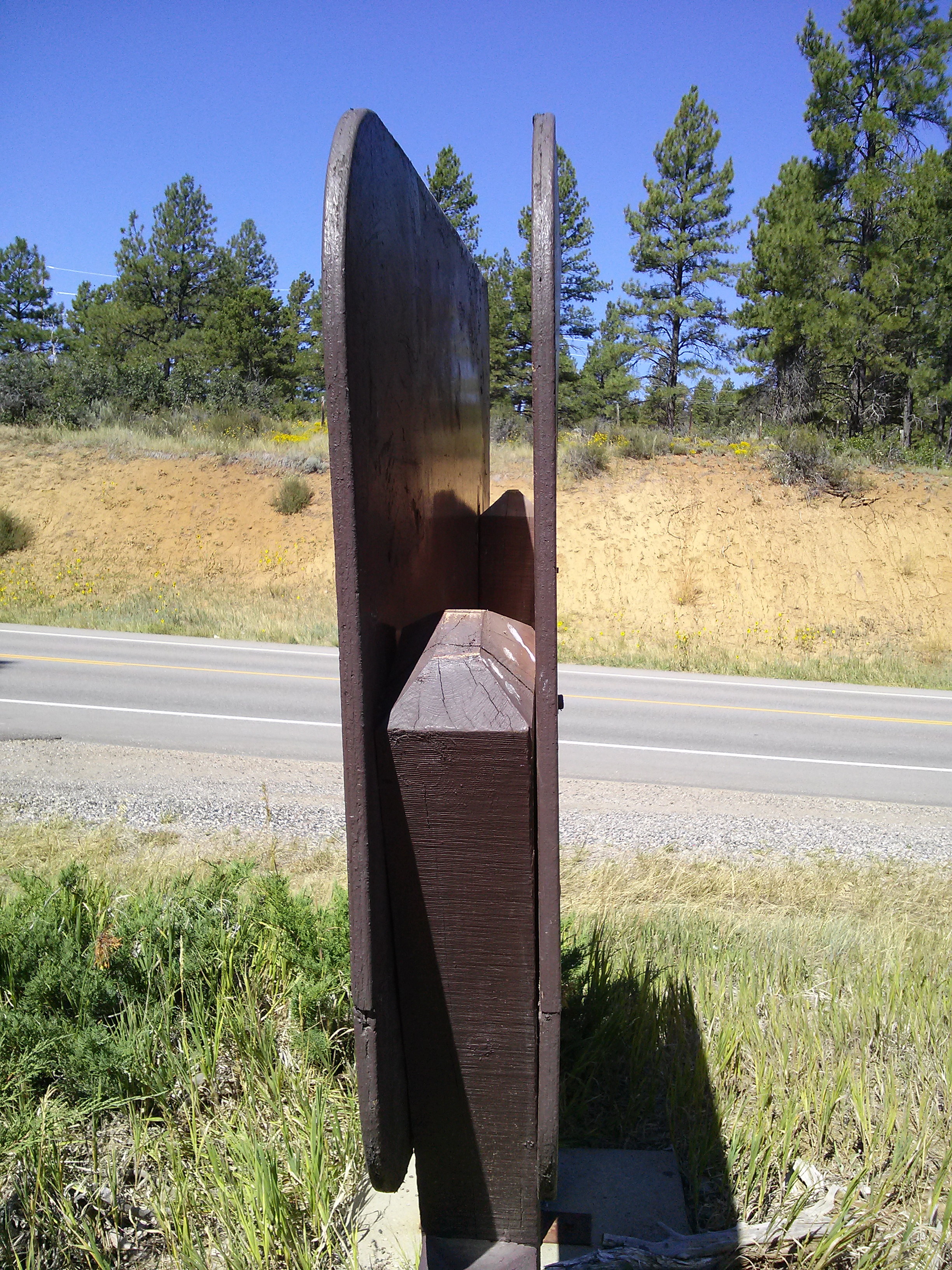
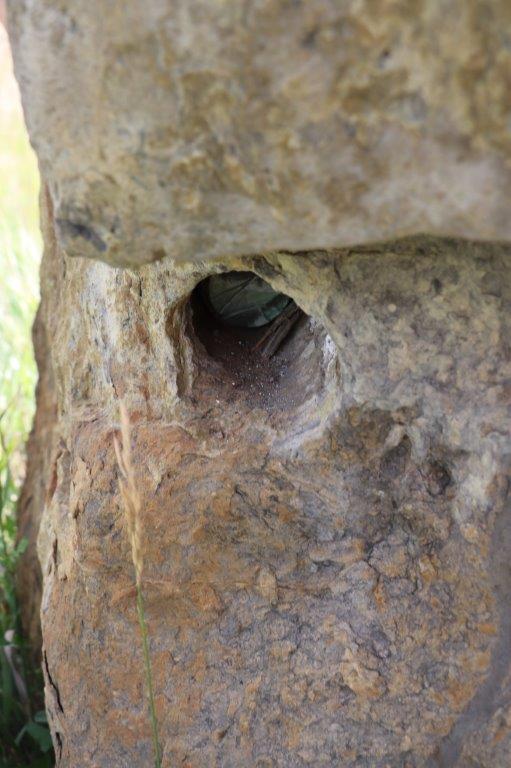
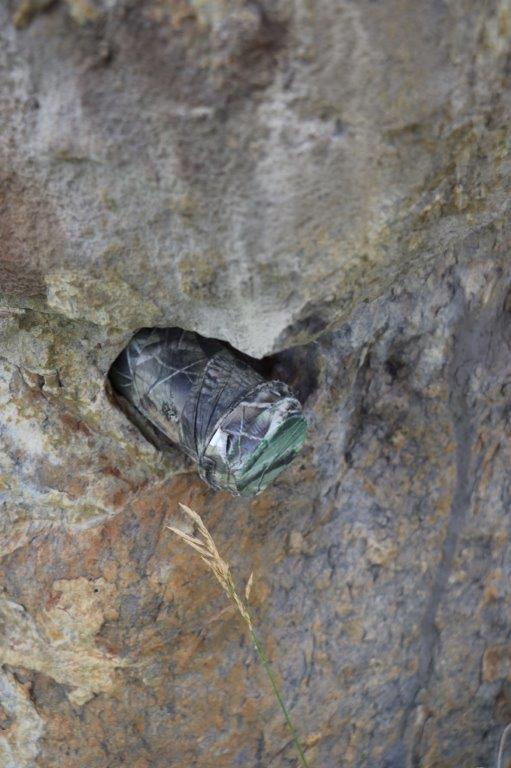
I have intended to showcase two very clever geocaches that we have found but the photos were on my phone and I kept forgetting to put them on my computer. Tonight I remembered so here they are:

This cache was hidden in these pipes behind the trash container at a Chinese restaurant in Pagosa Springs.
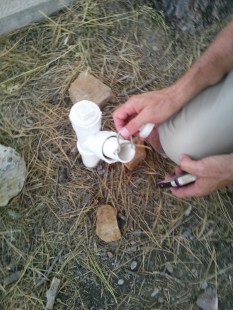
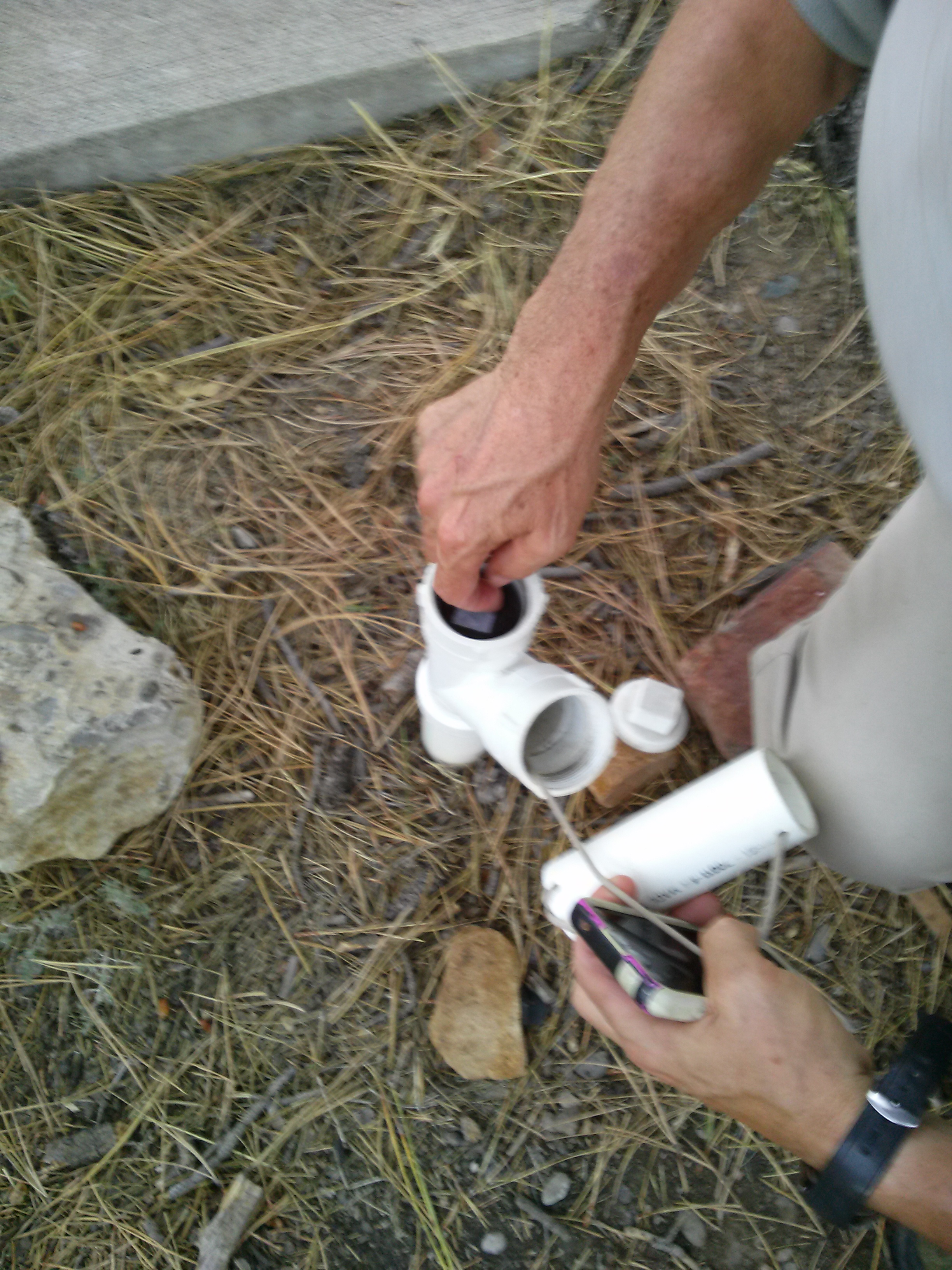
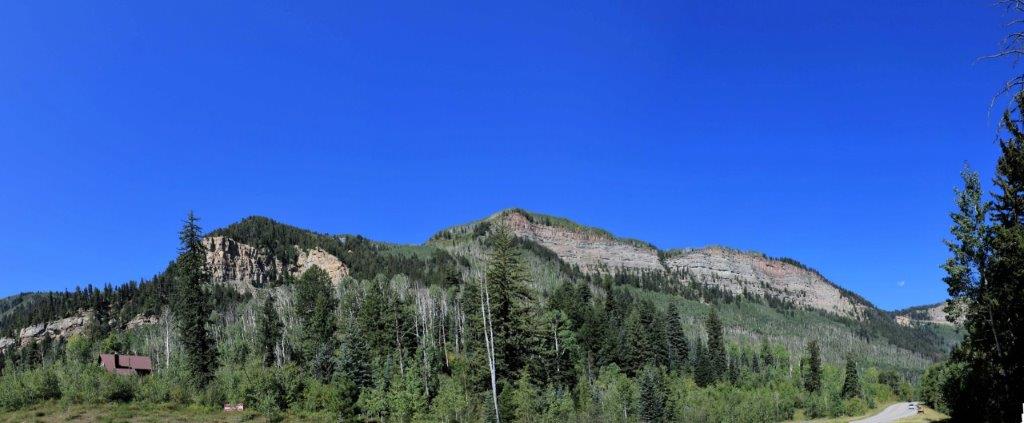
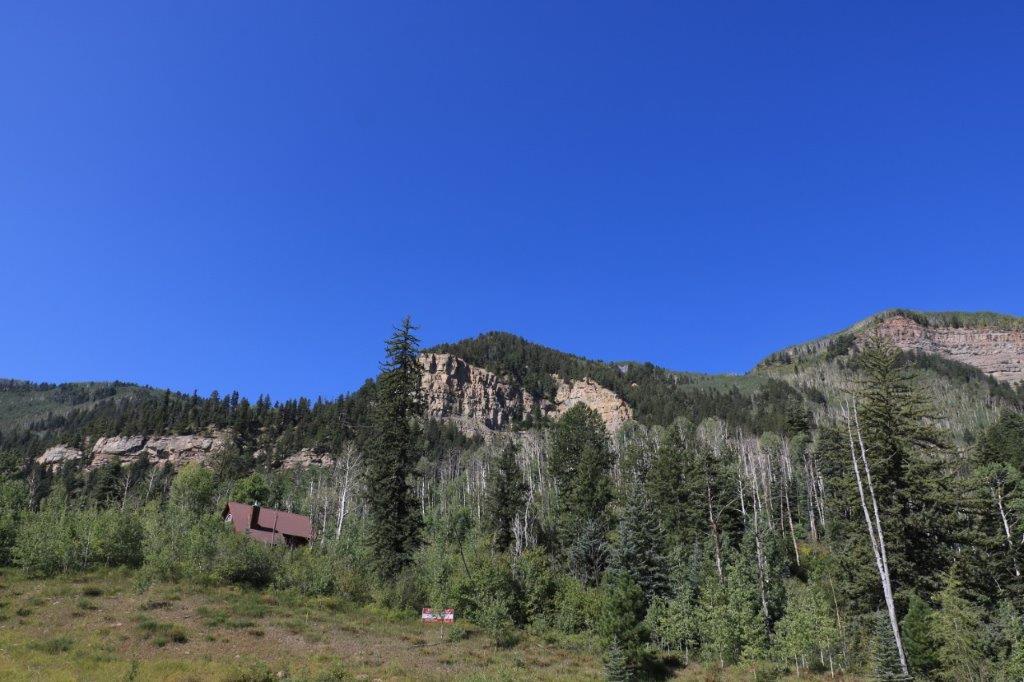
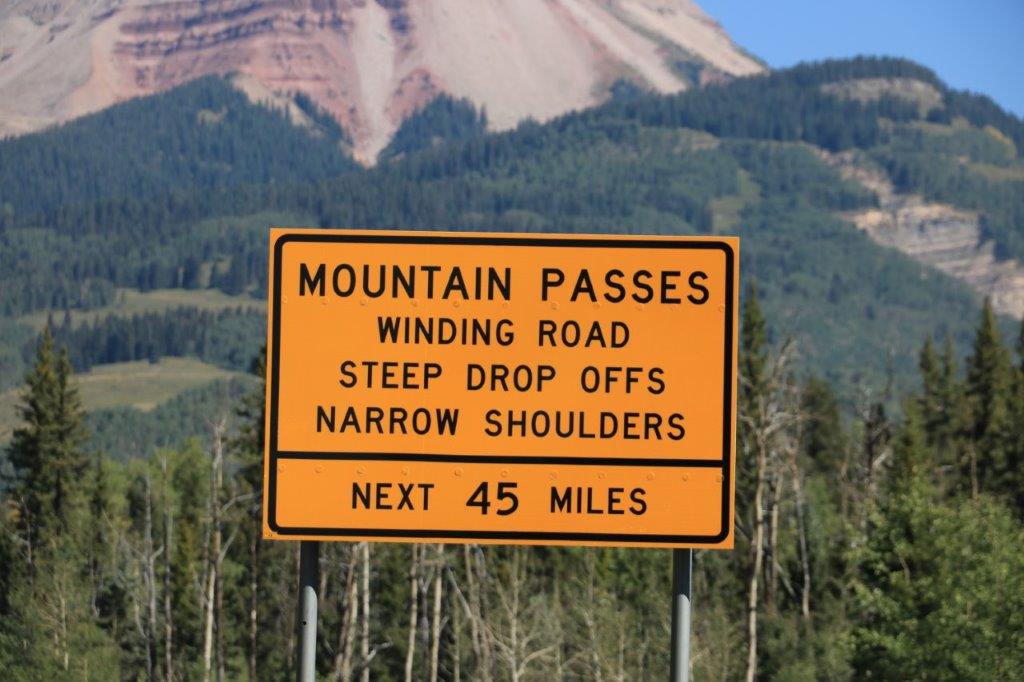
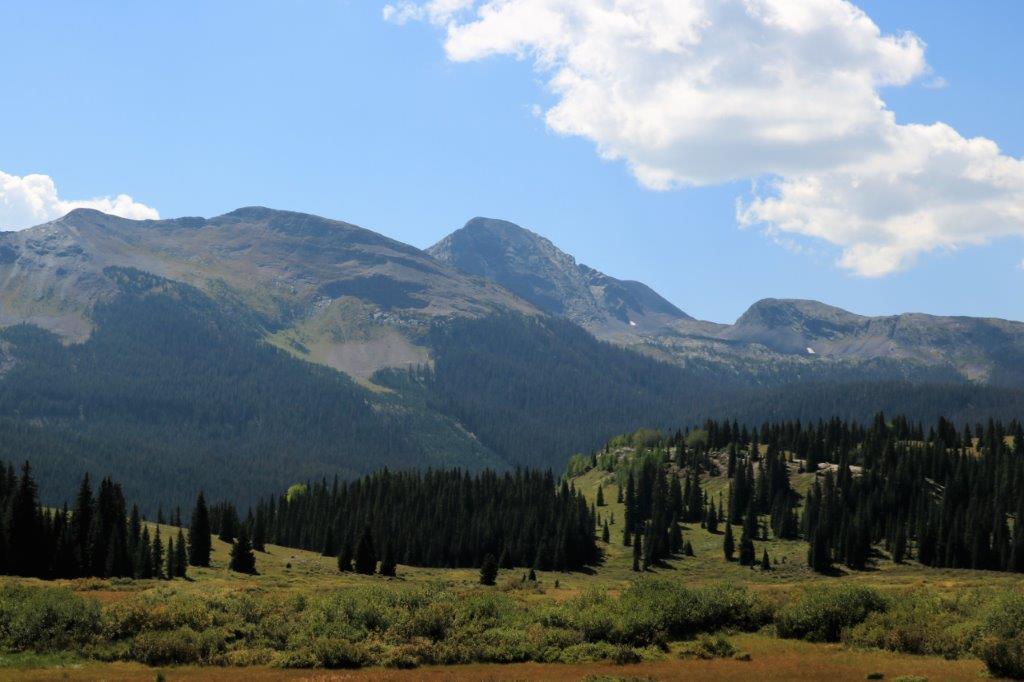
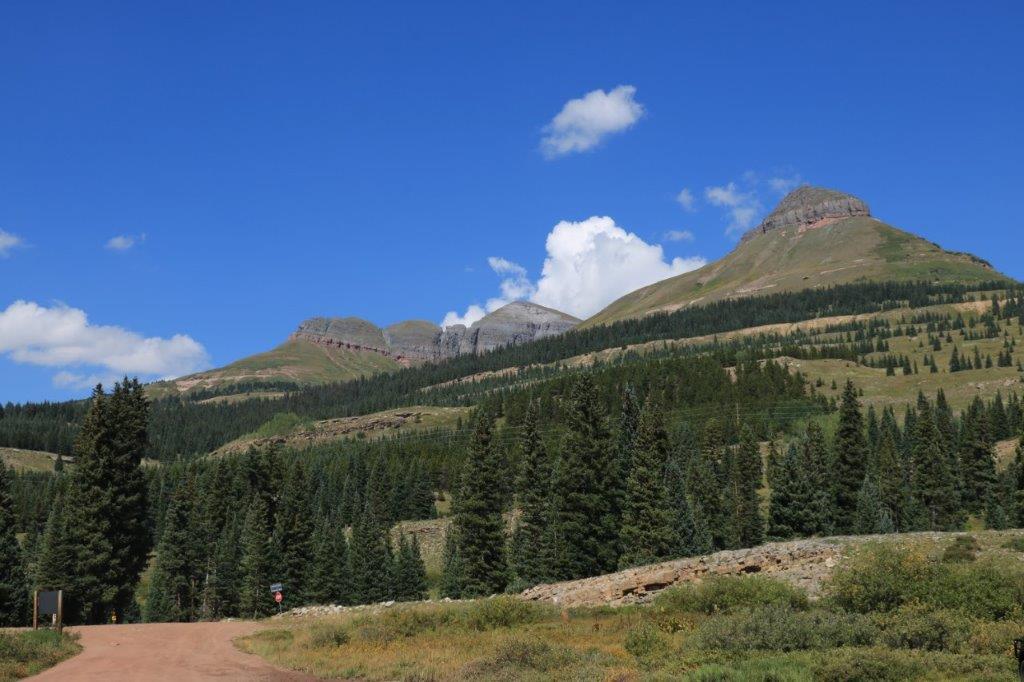
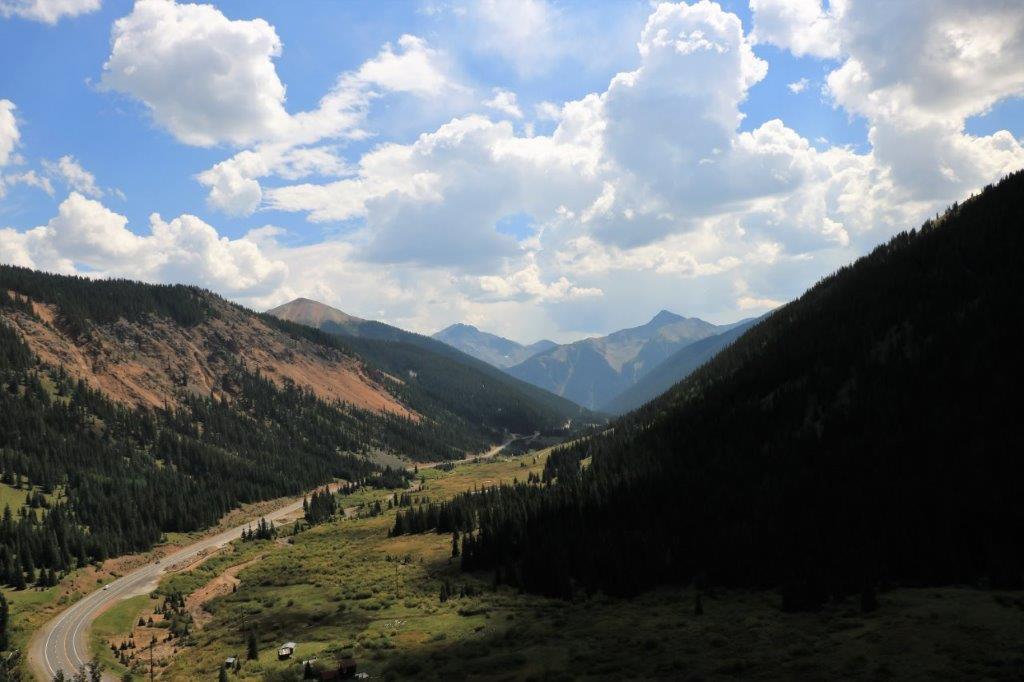
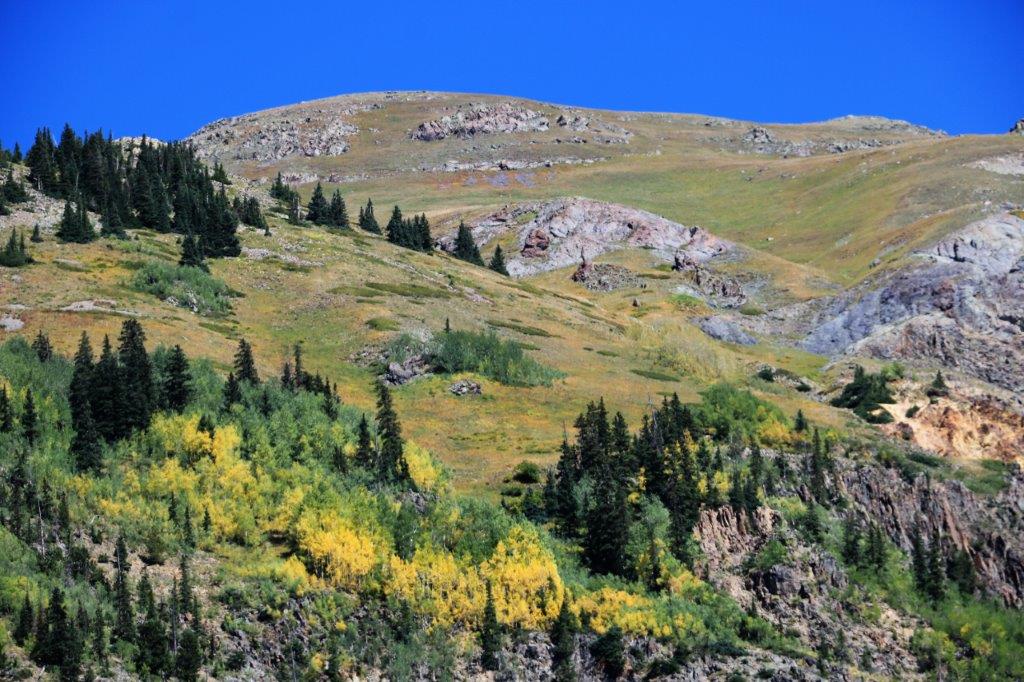
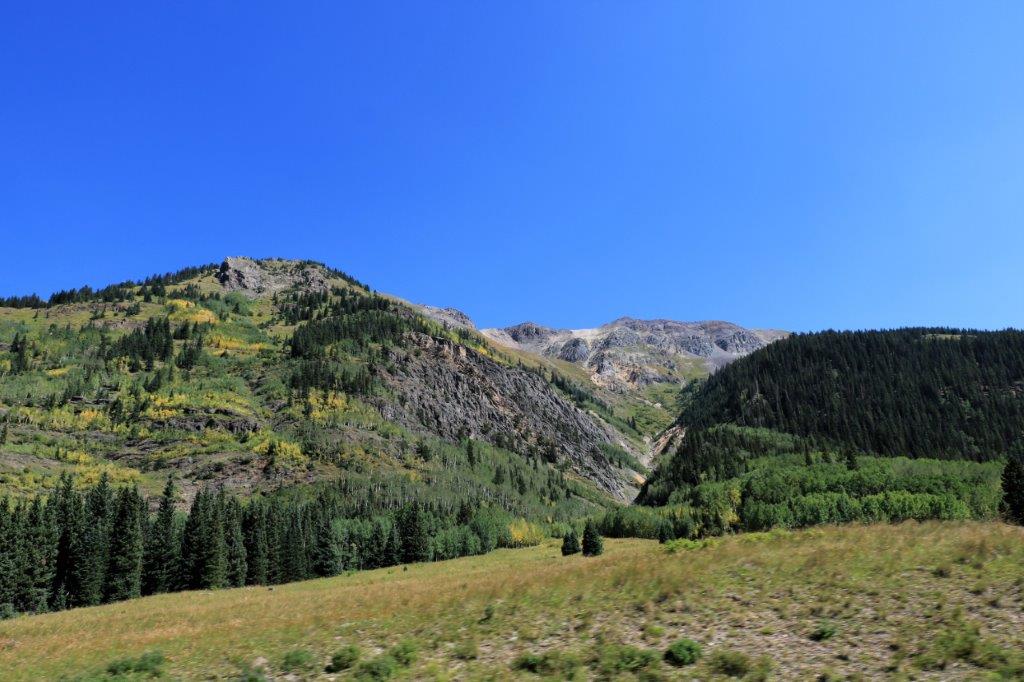
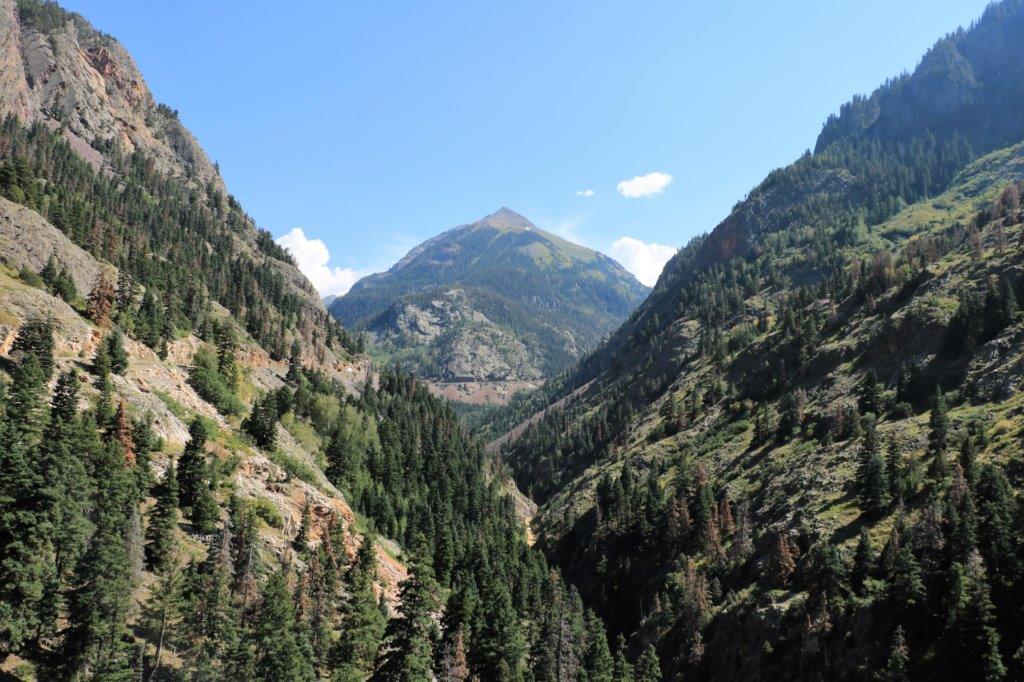
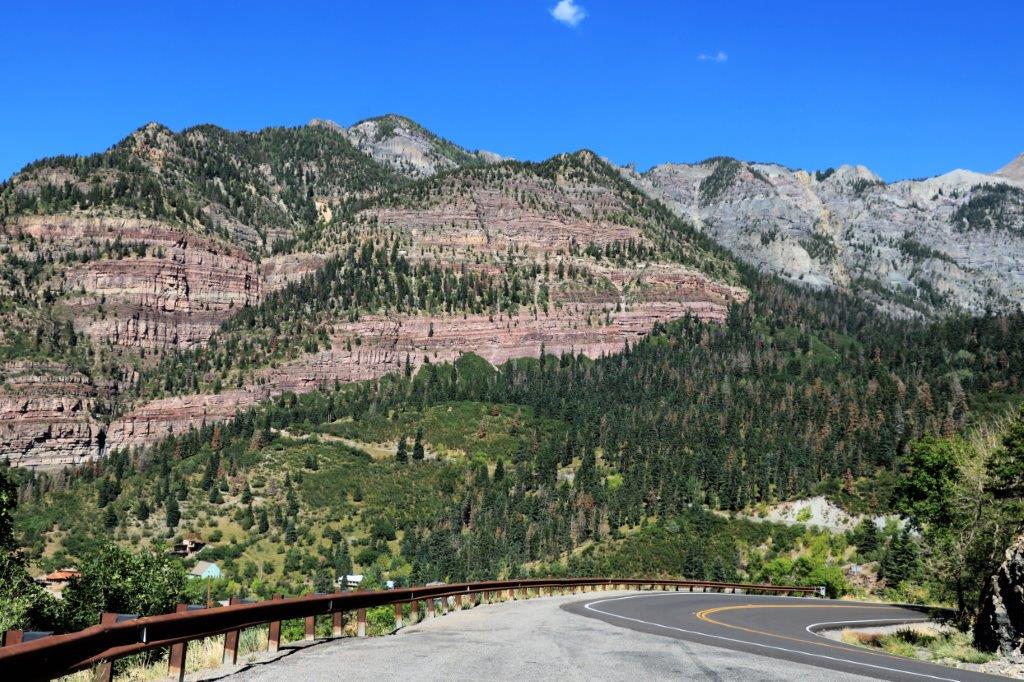
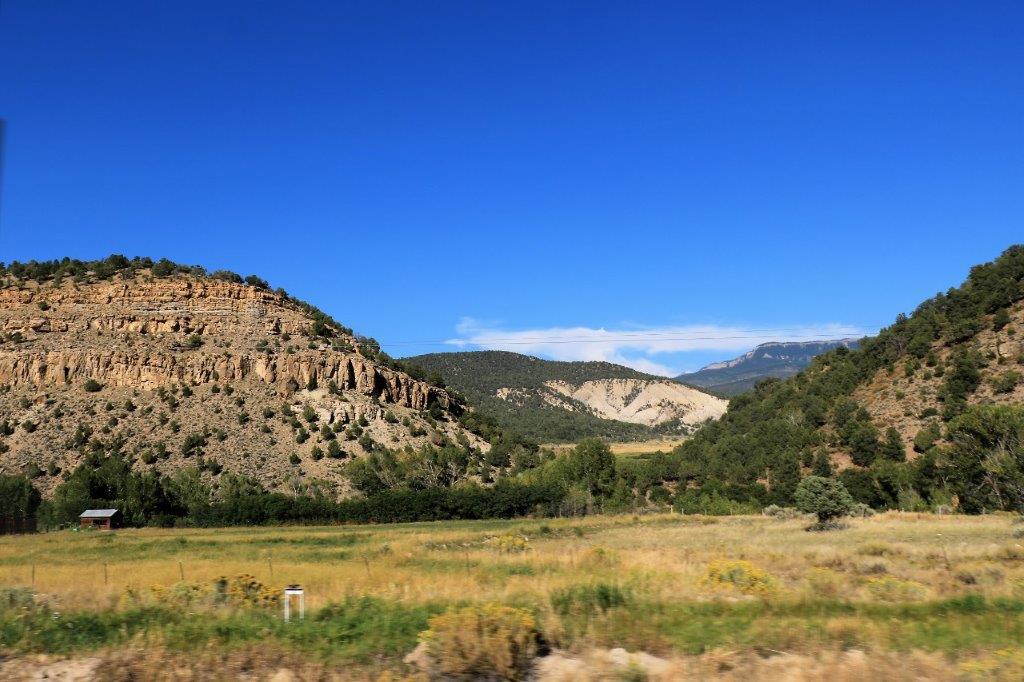
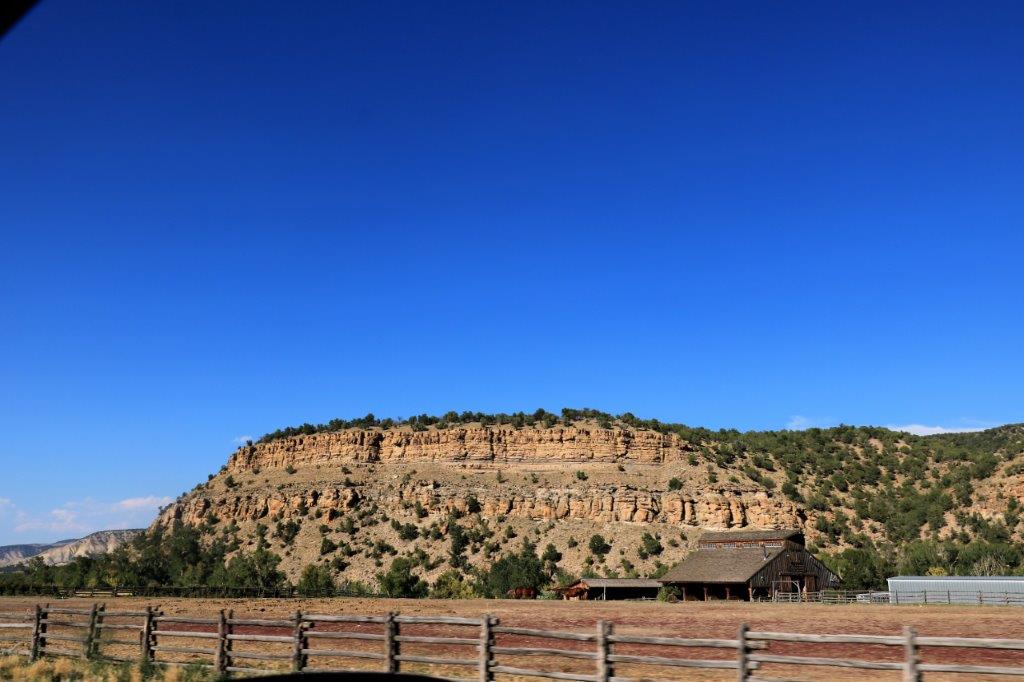
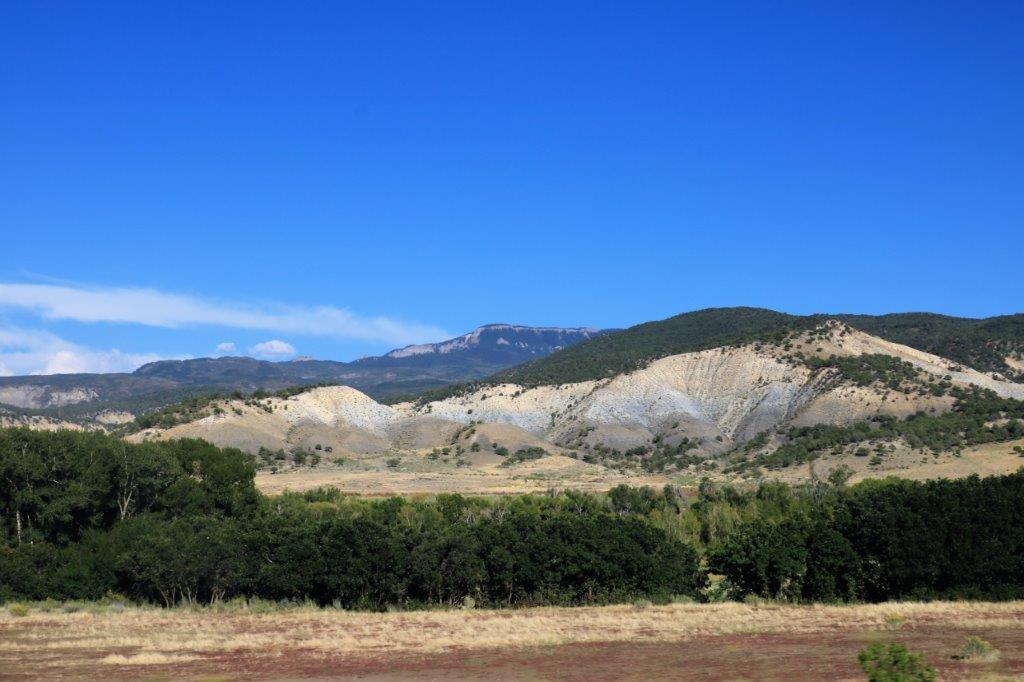
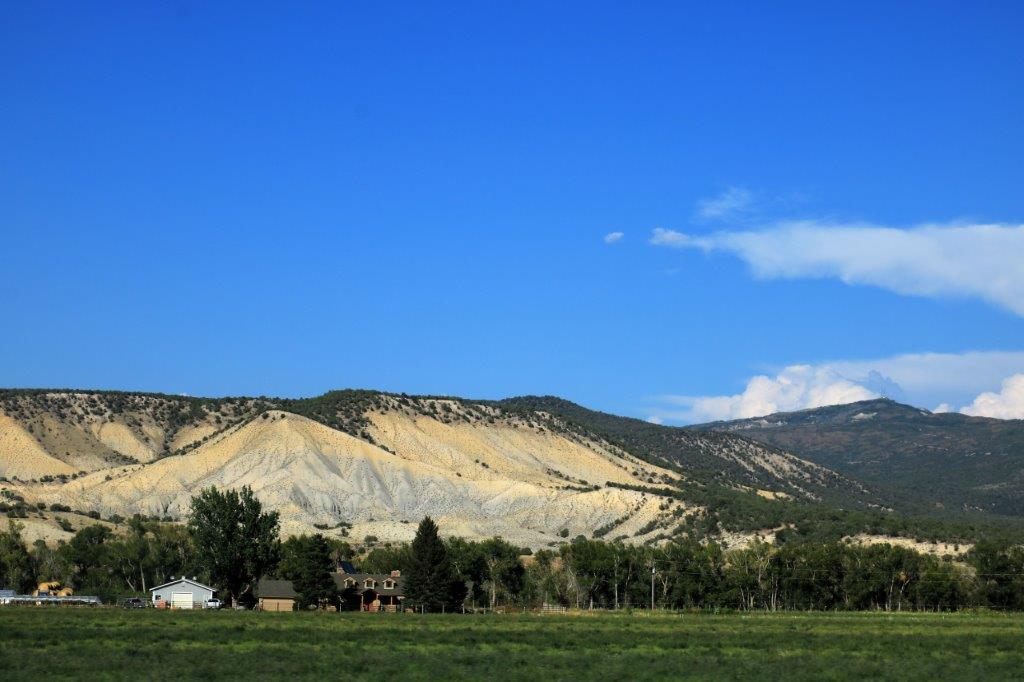
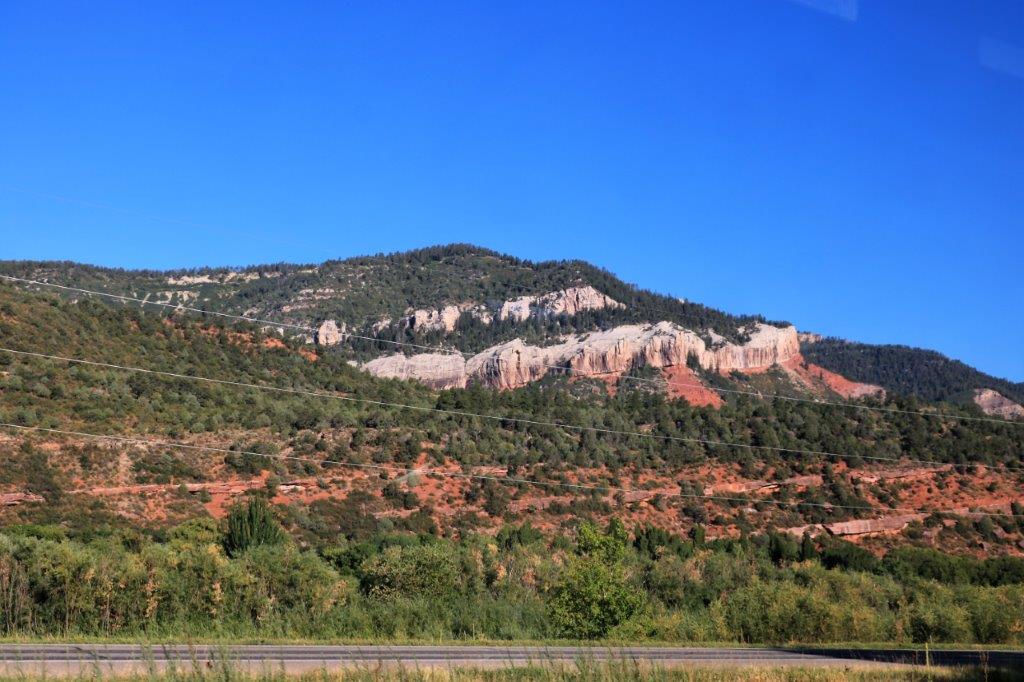
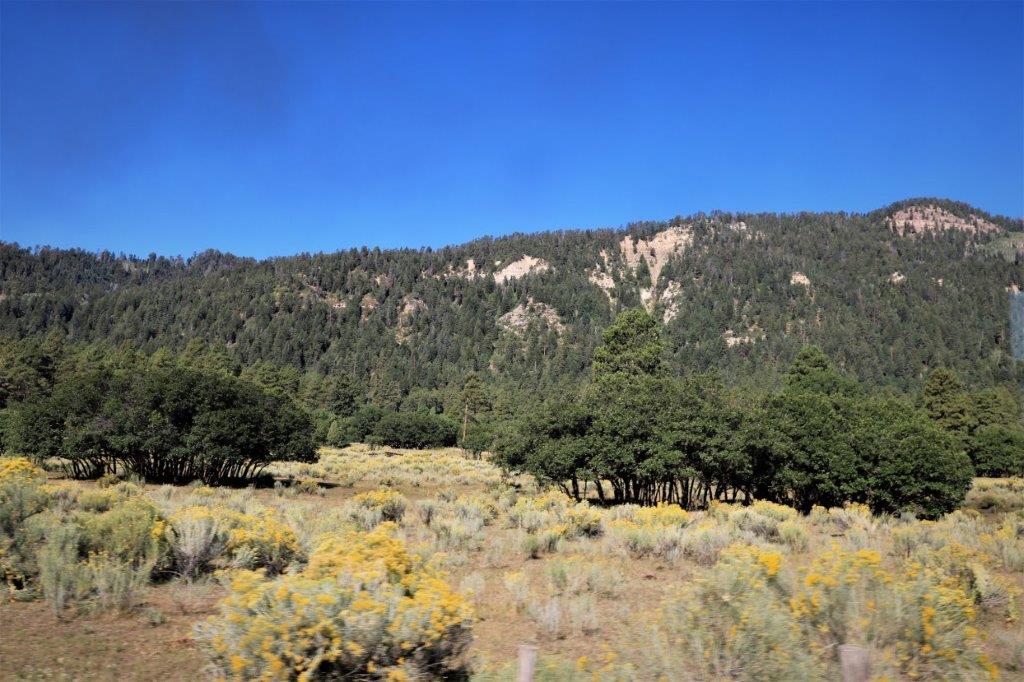
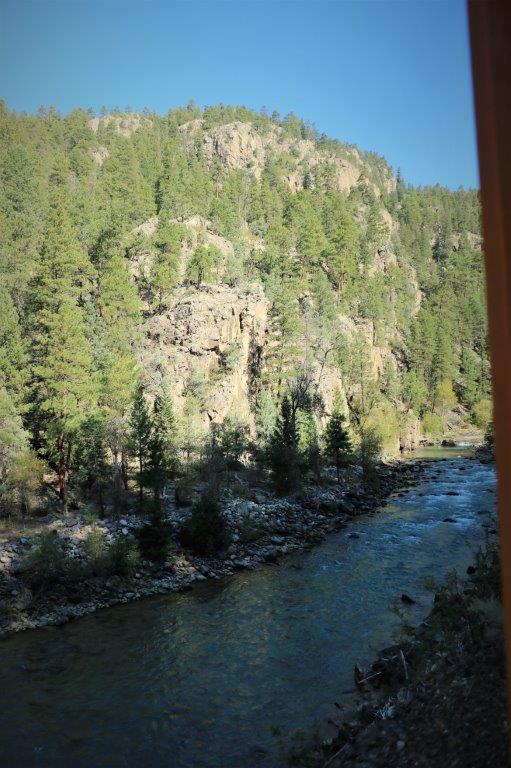
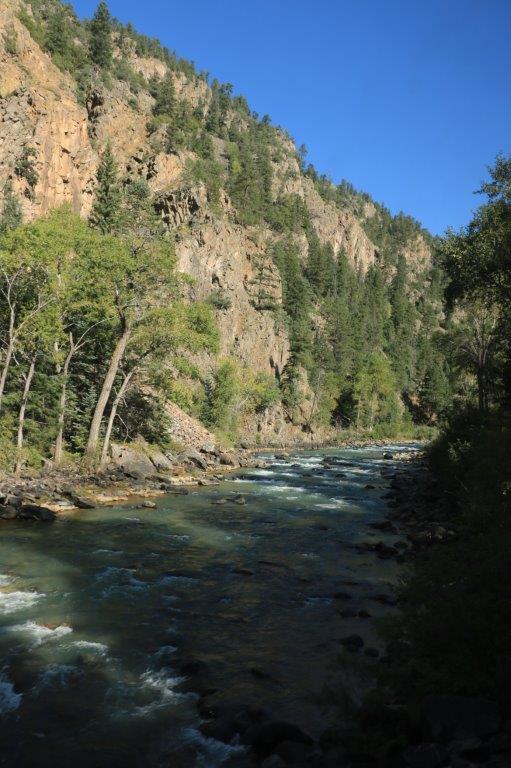
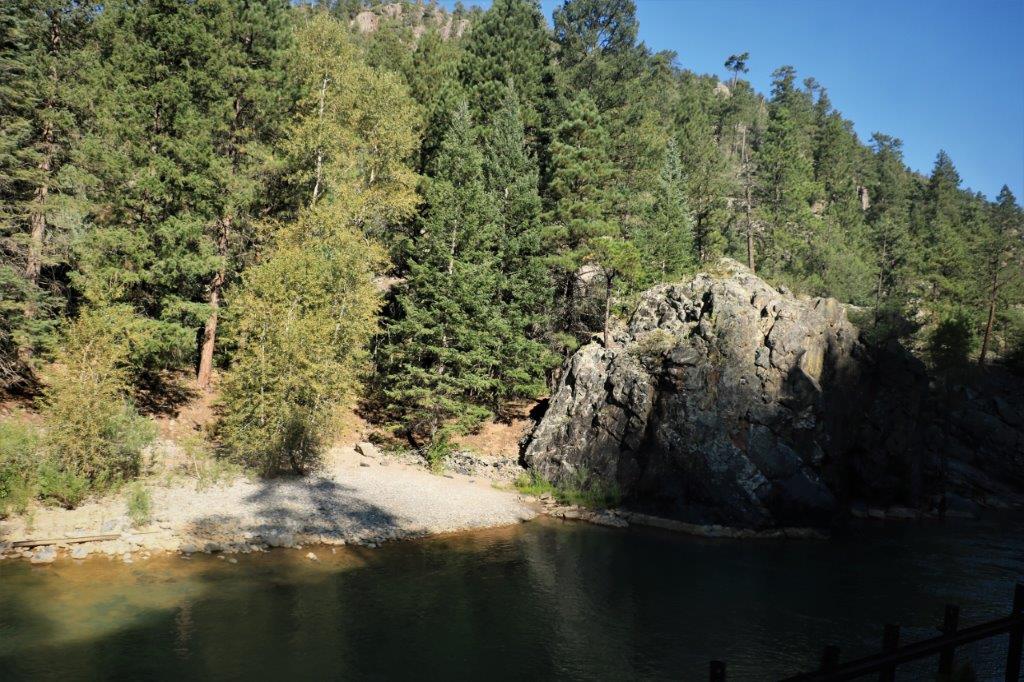
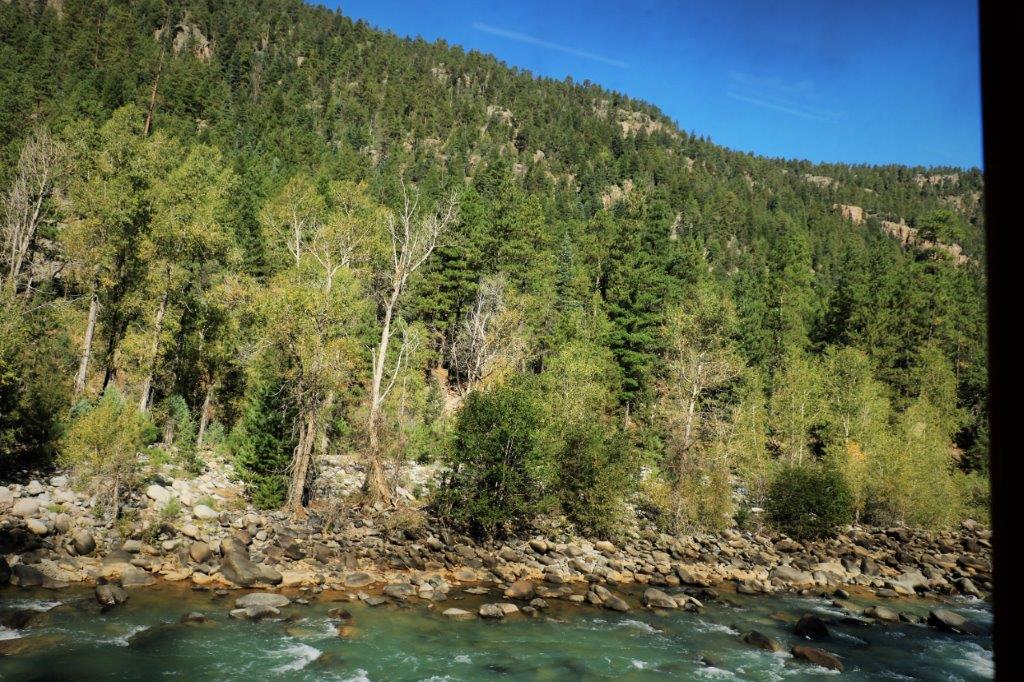
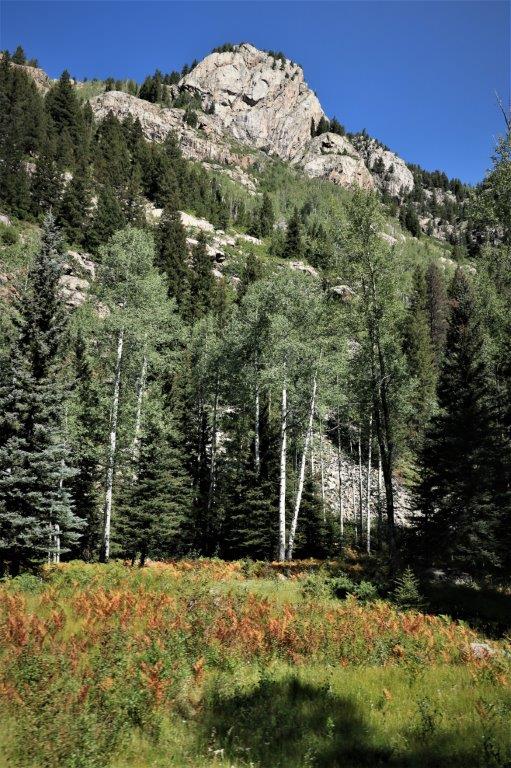
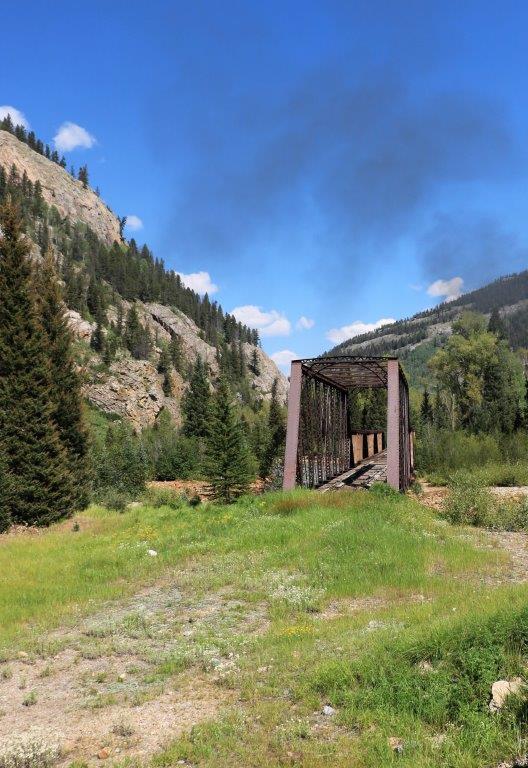
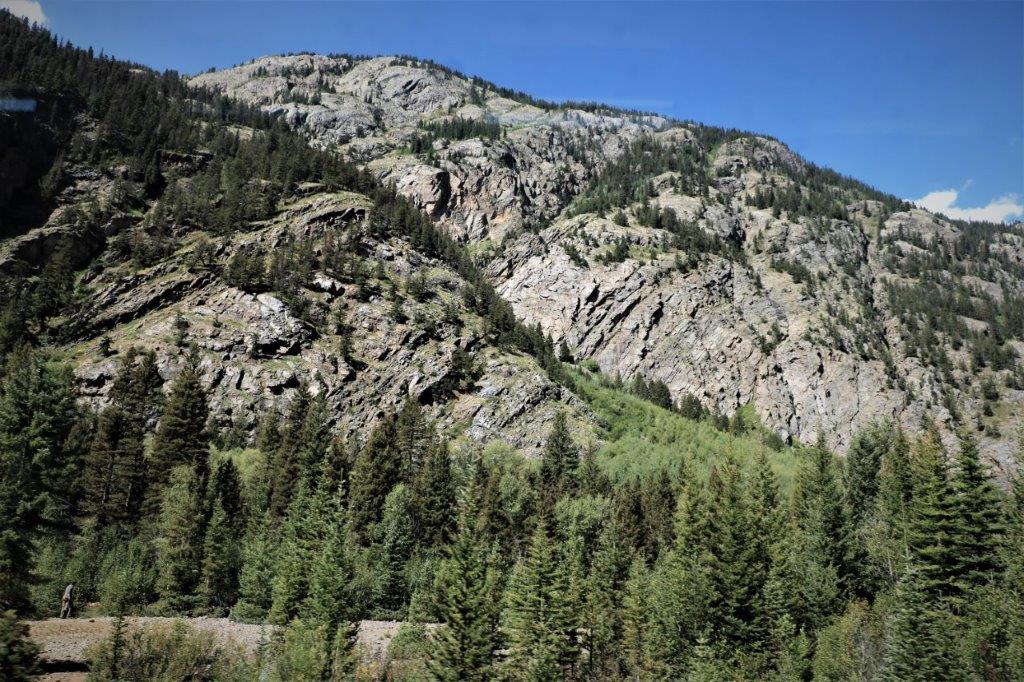
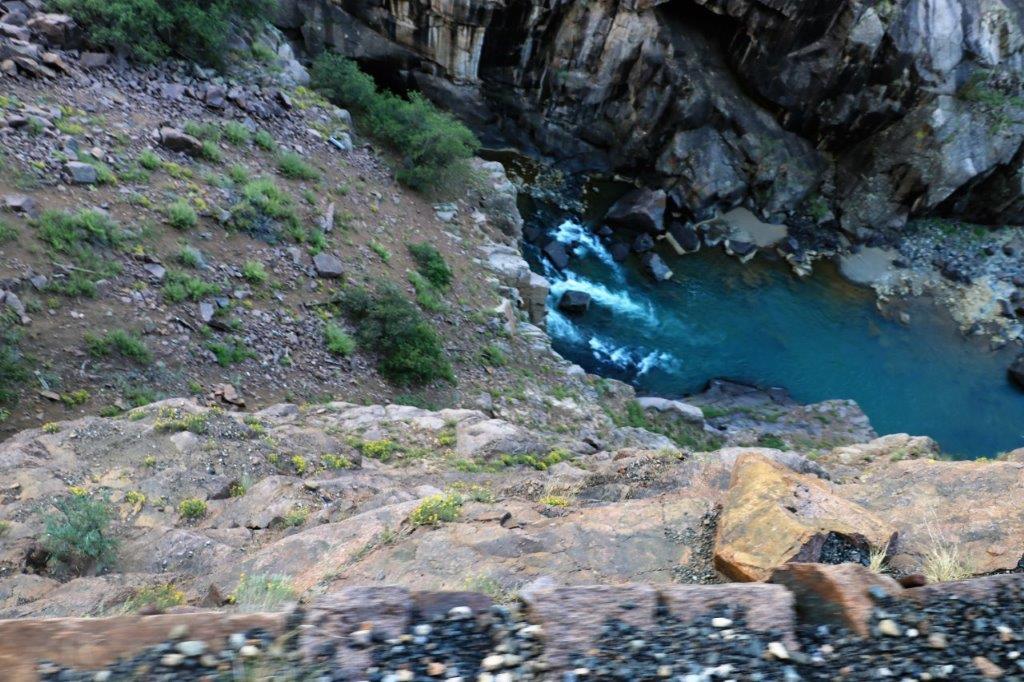
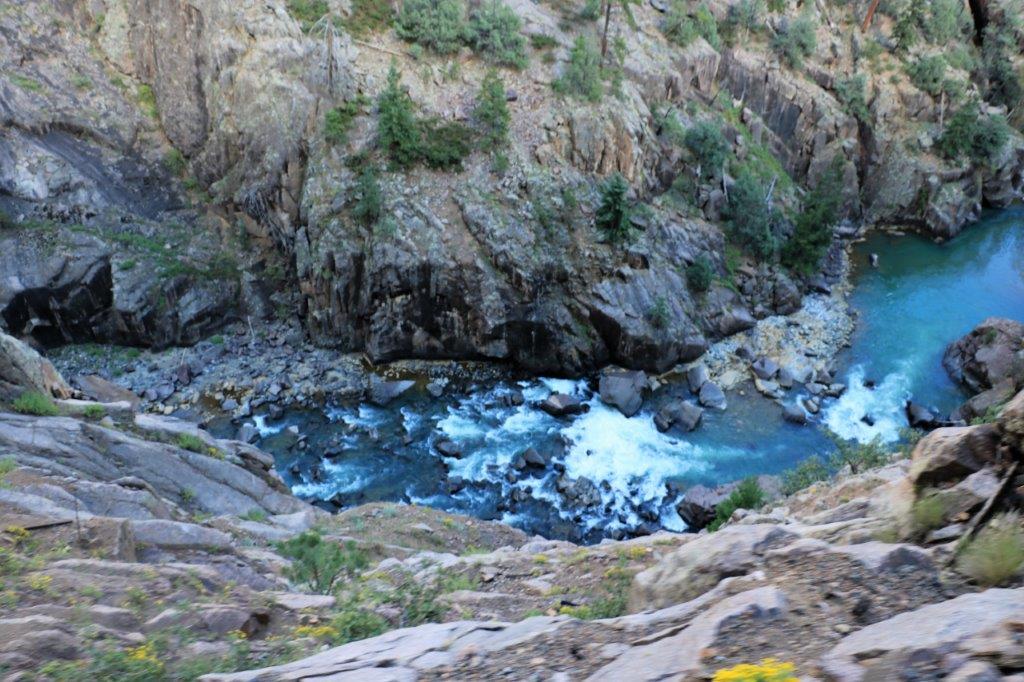
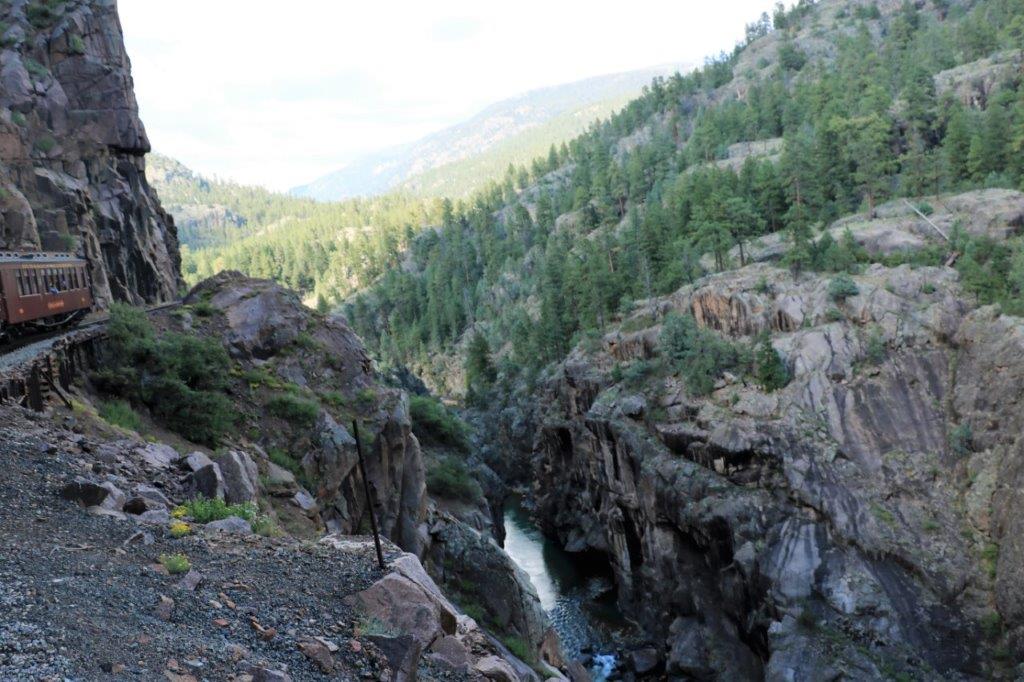
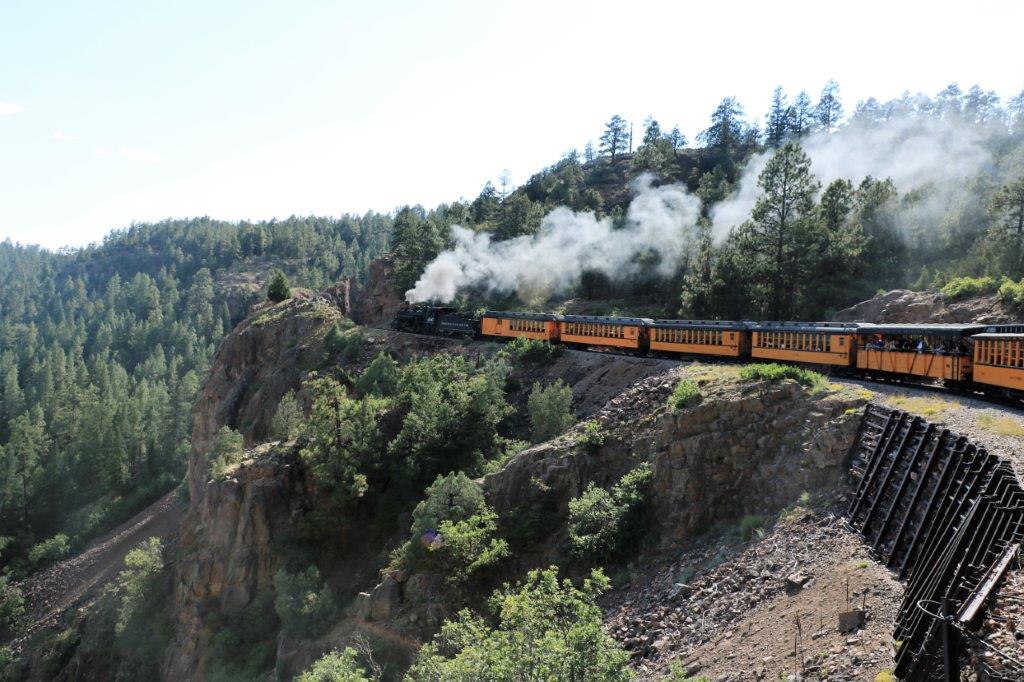
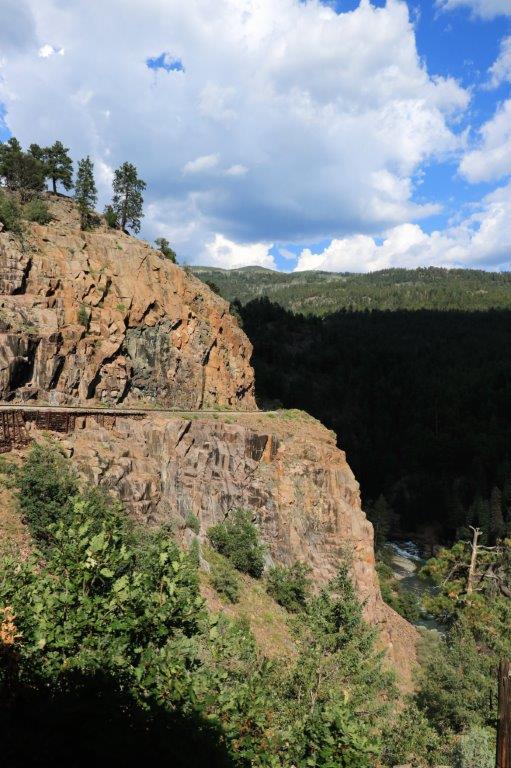
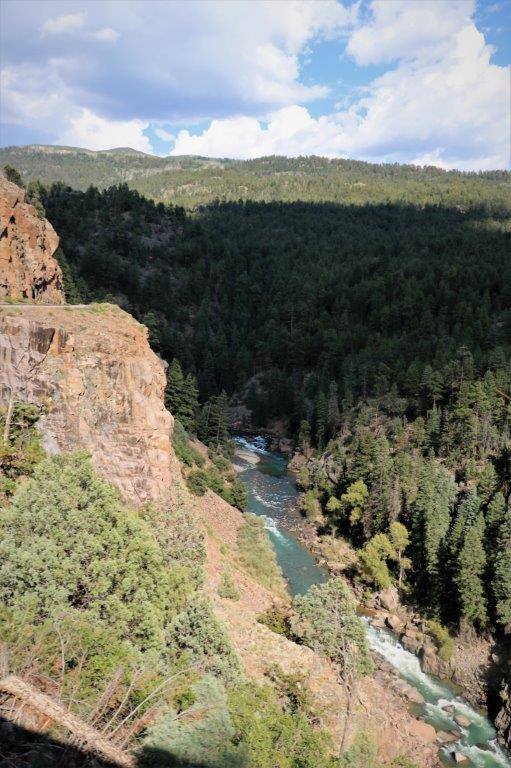
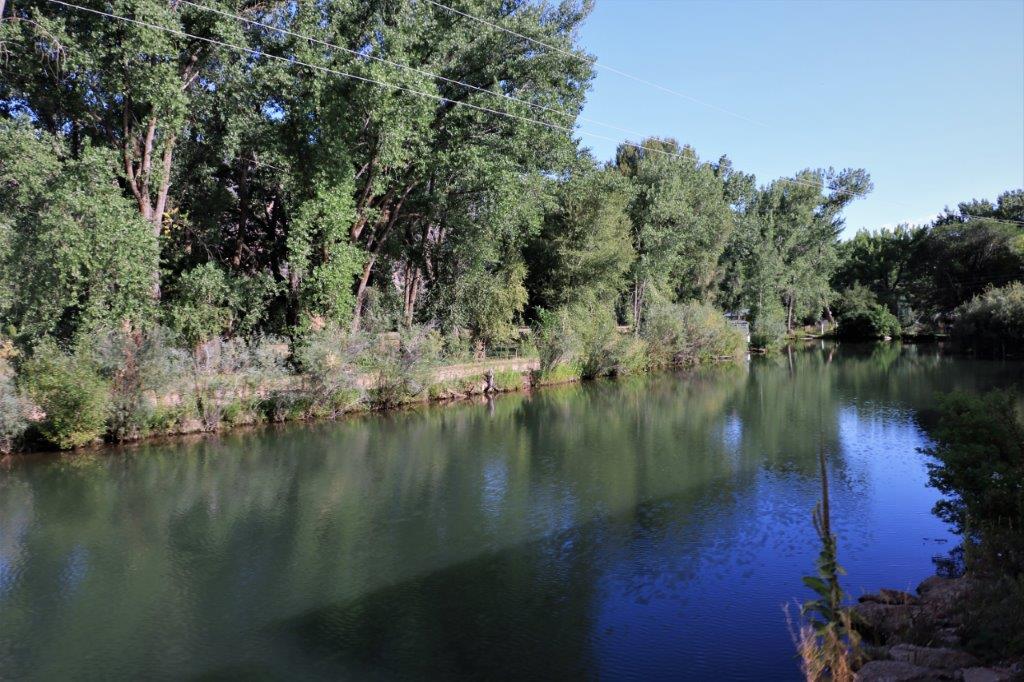
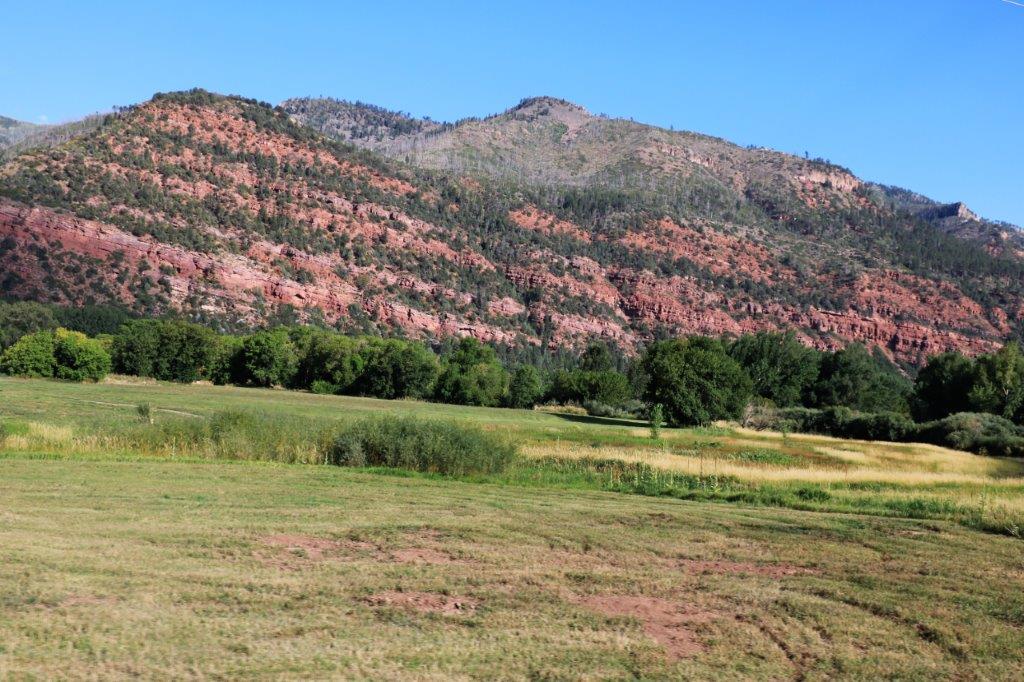
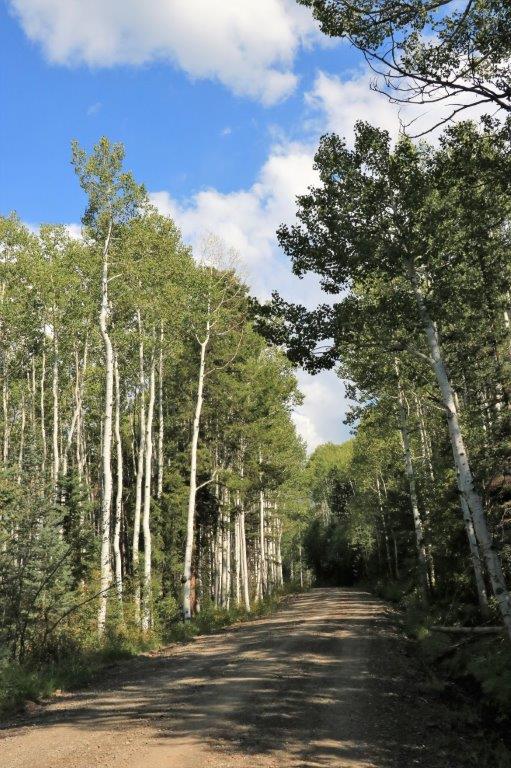
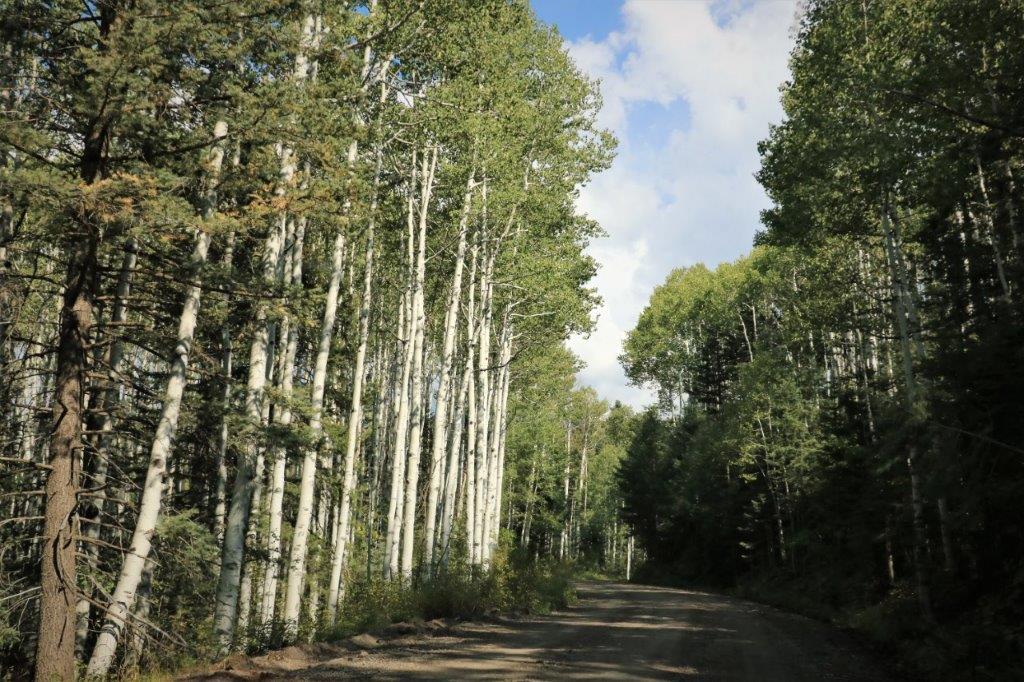
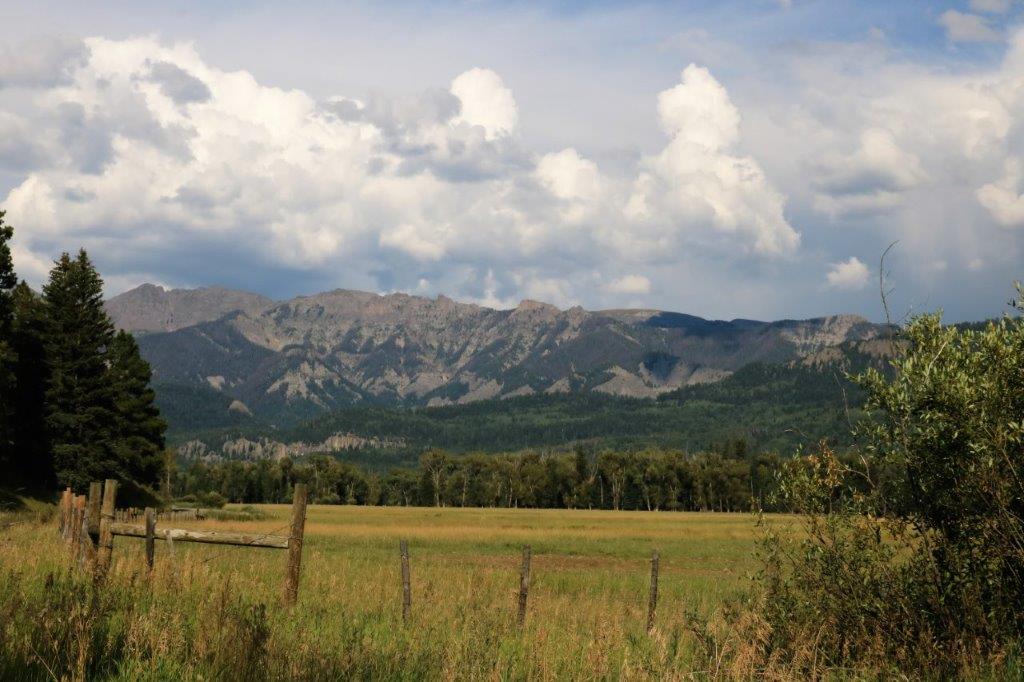
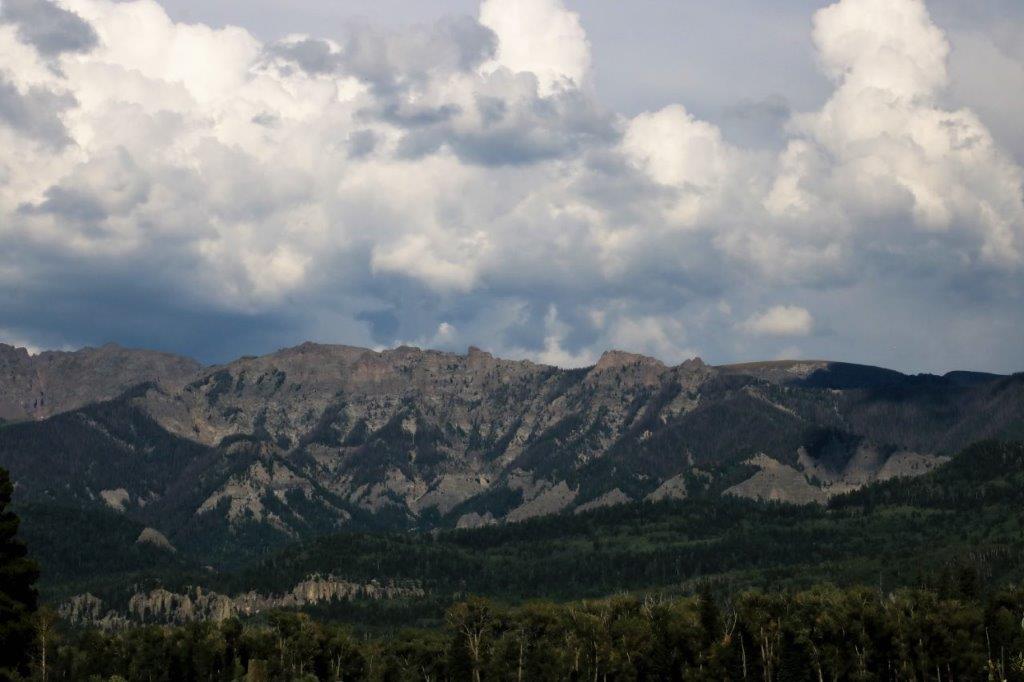
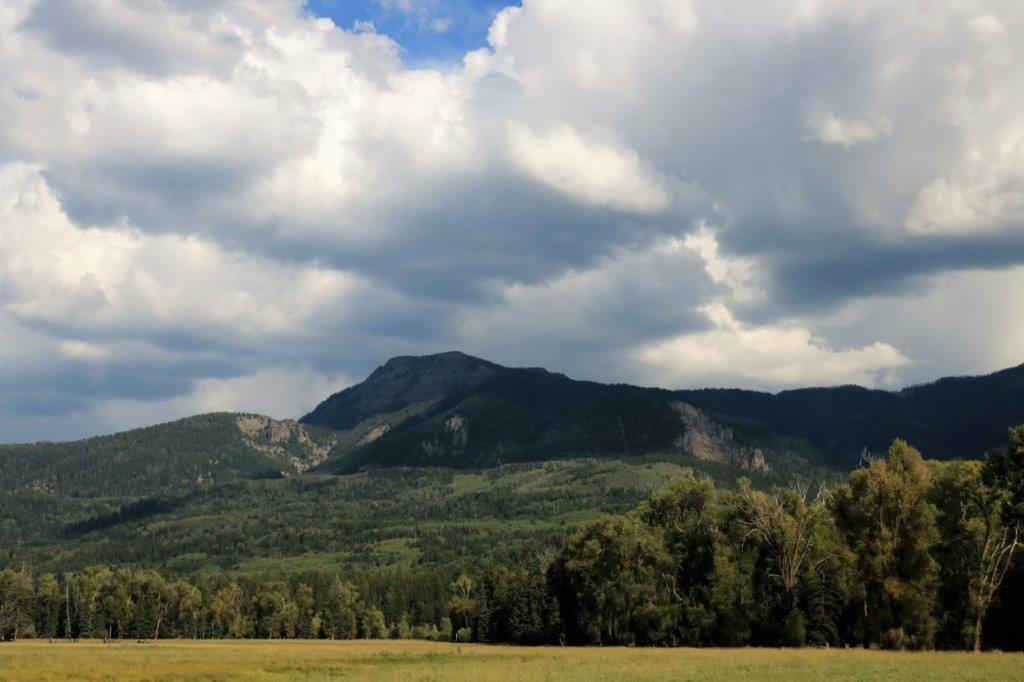
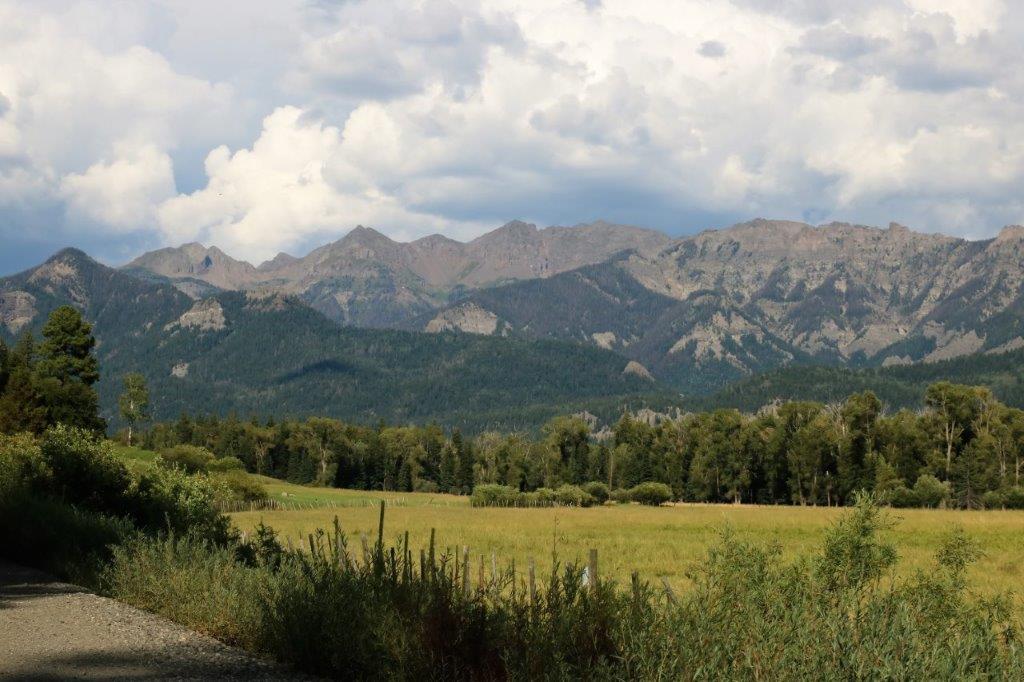
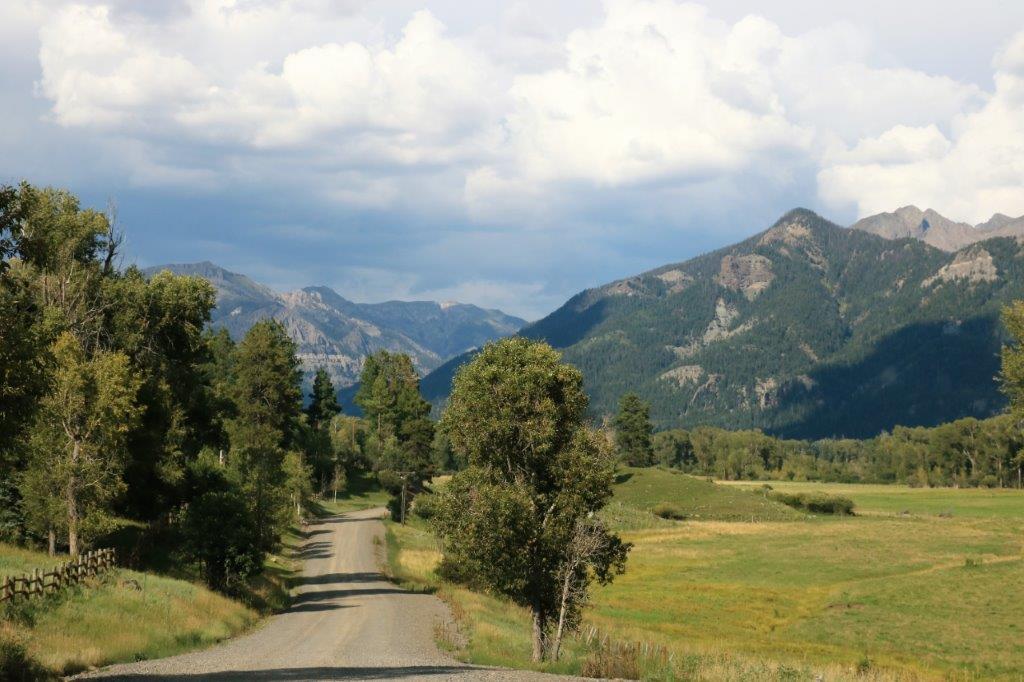
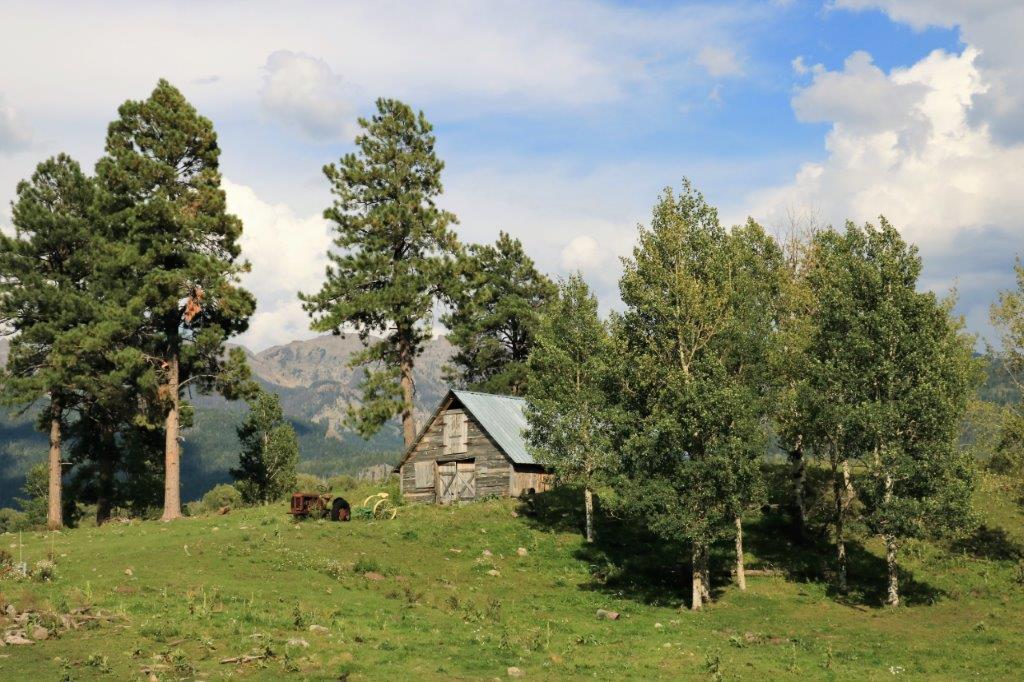
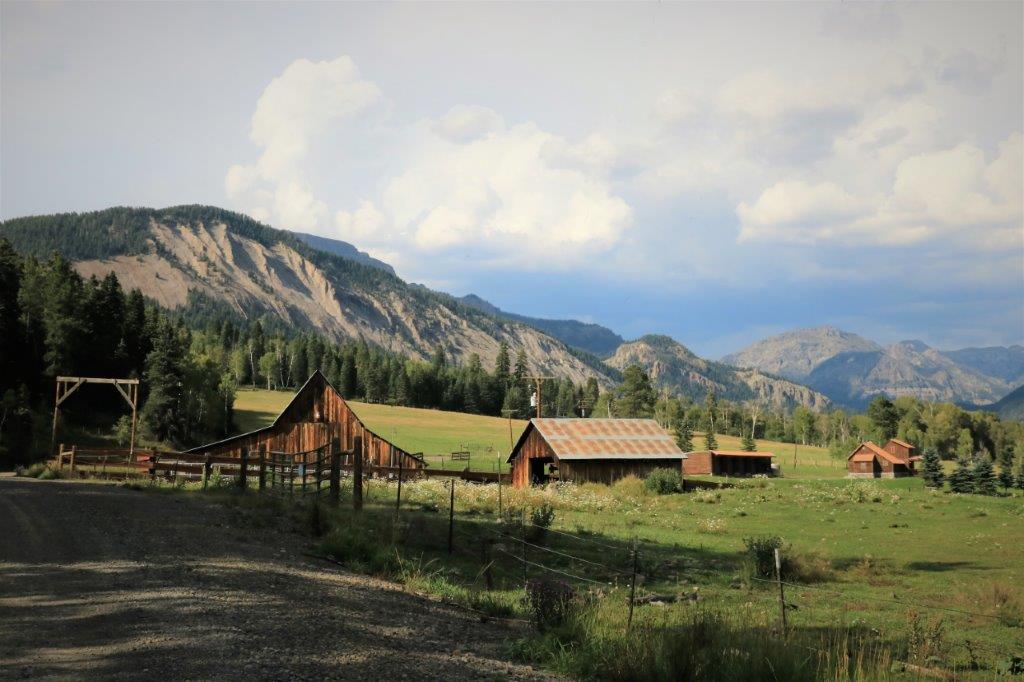
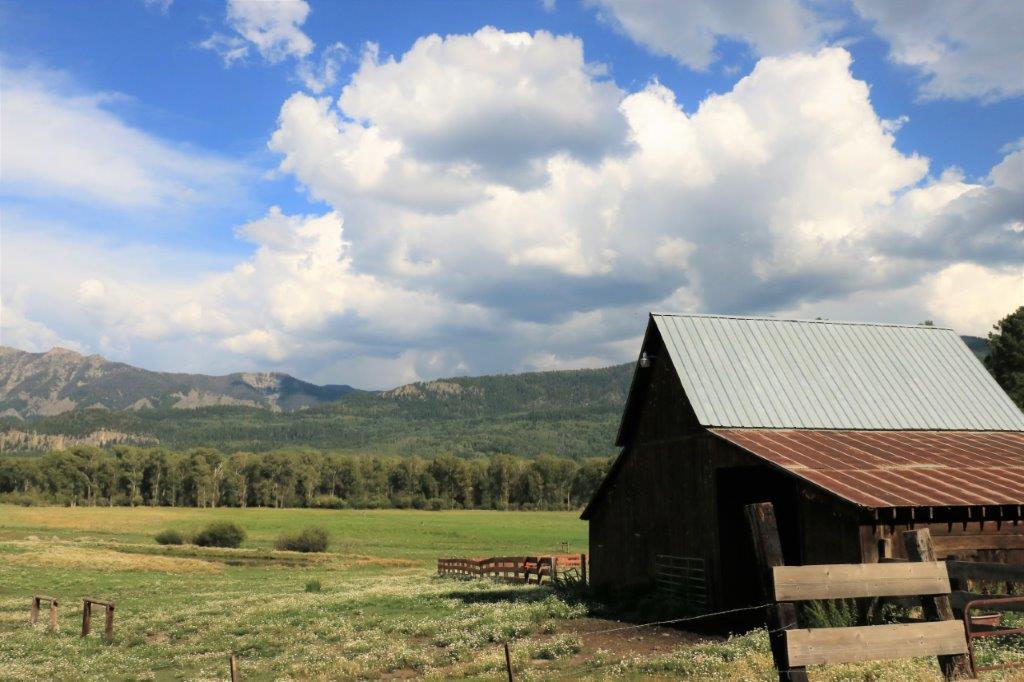
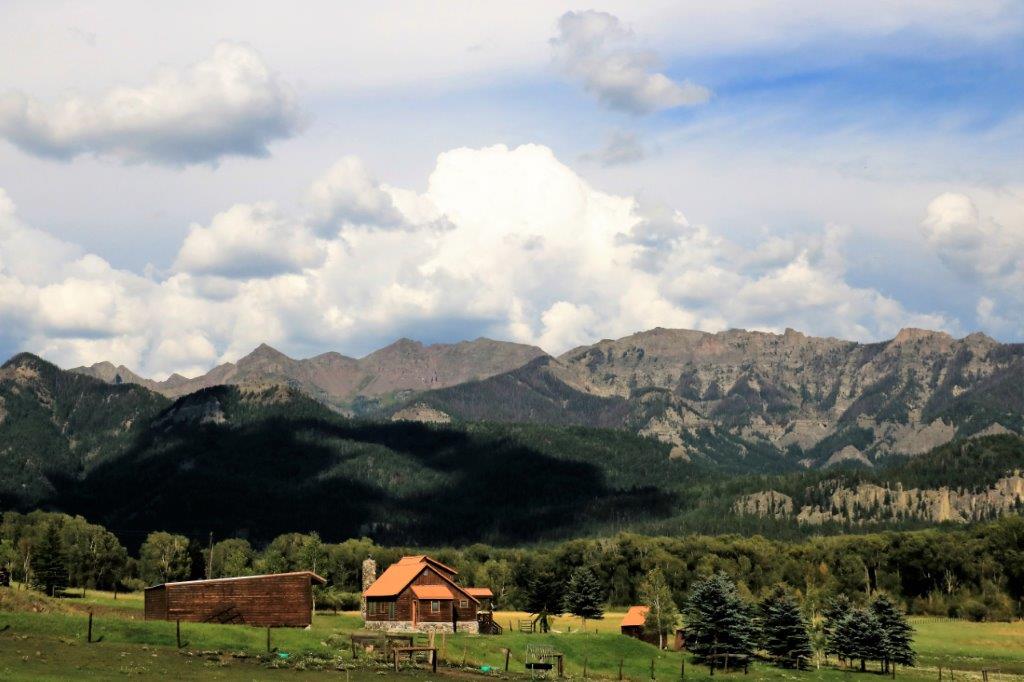
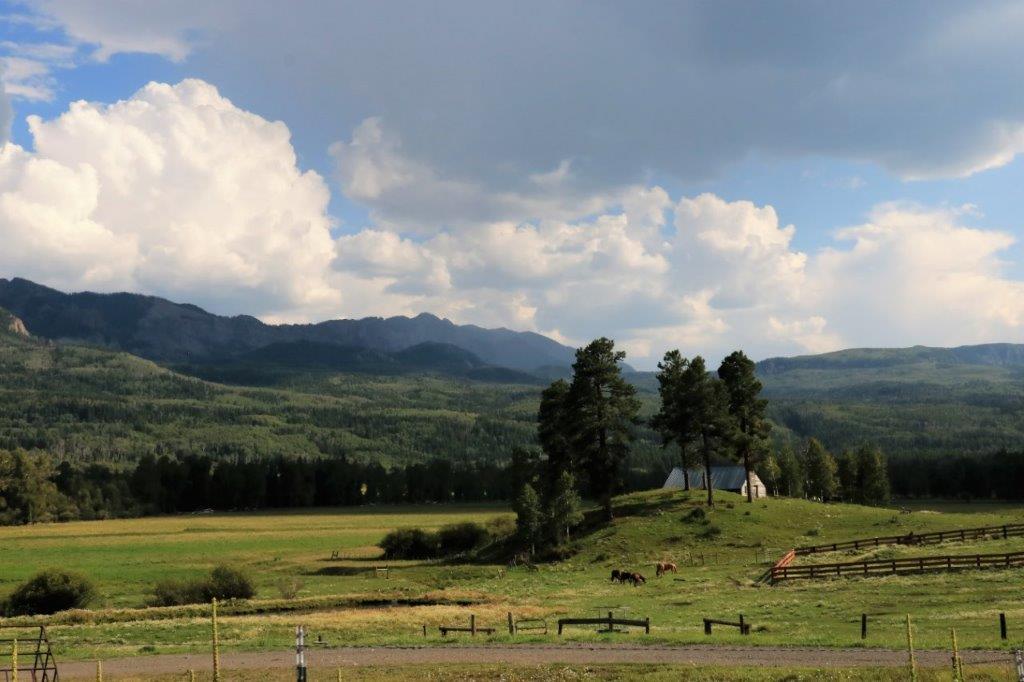
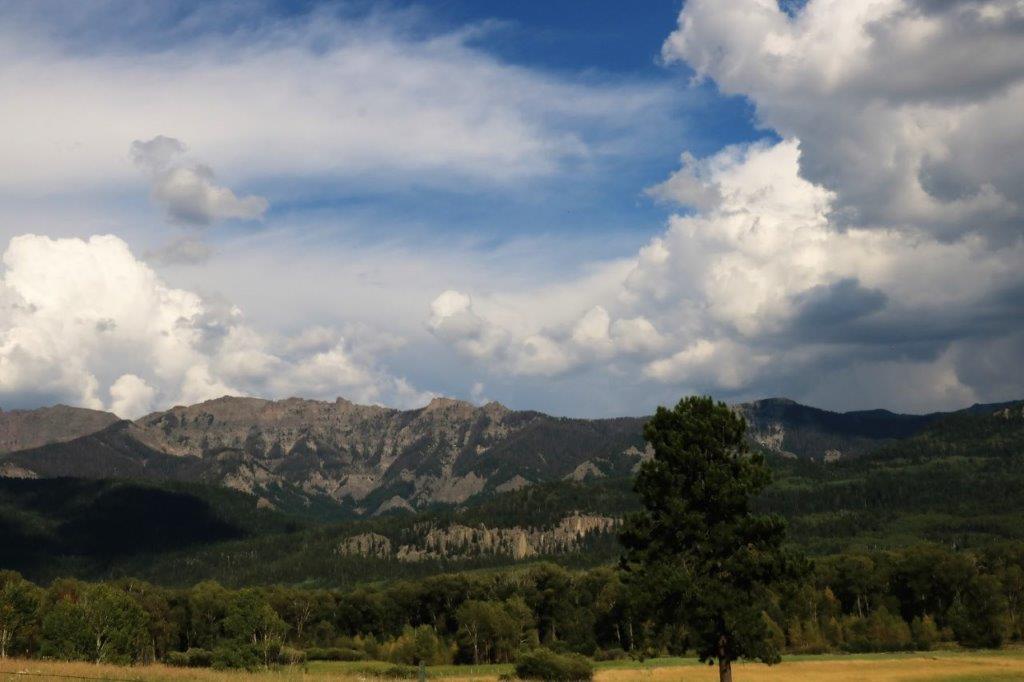
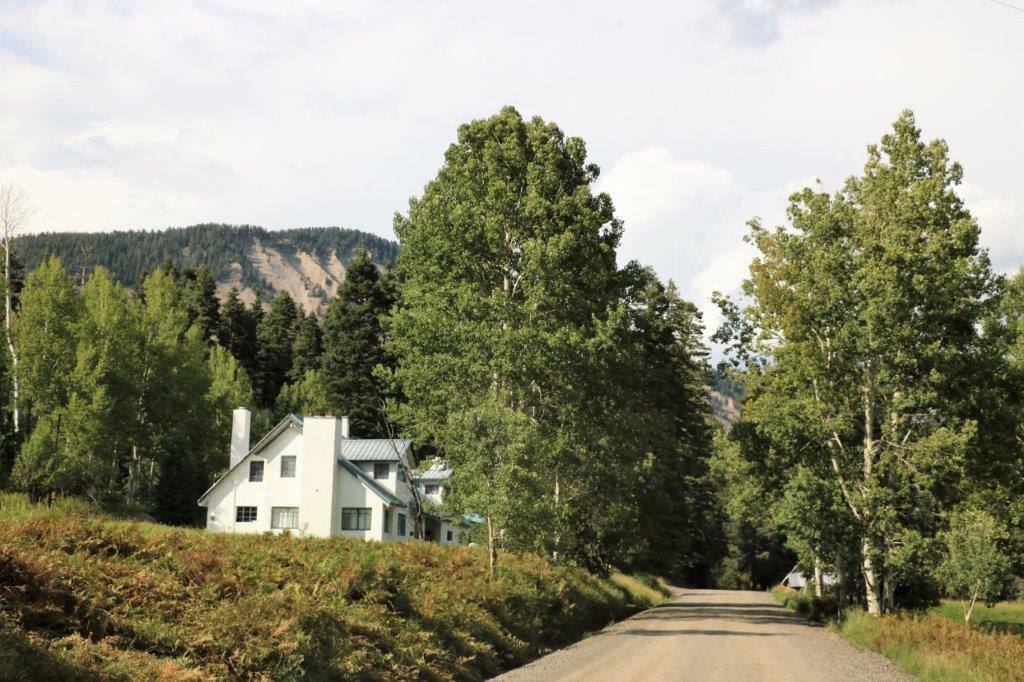
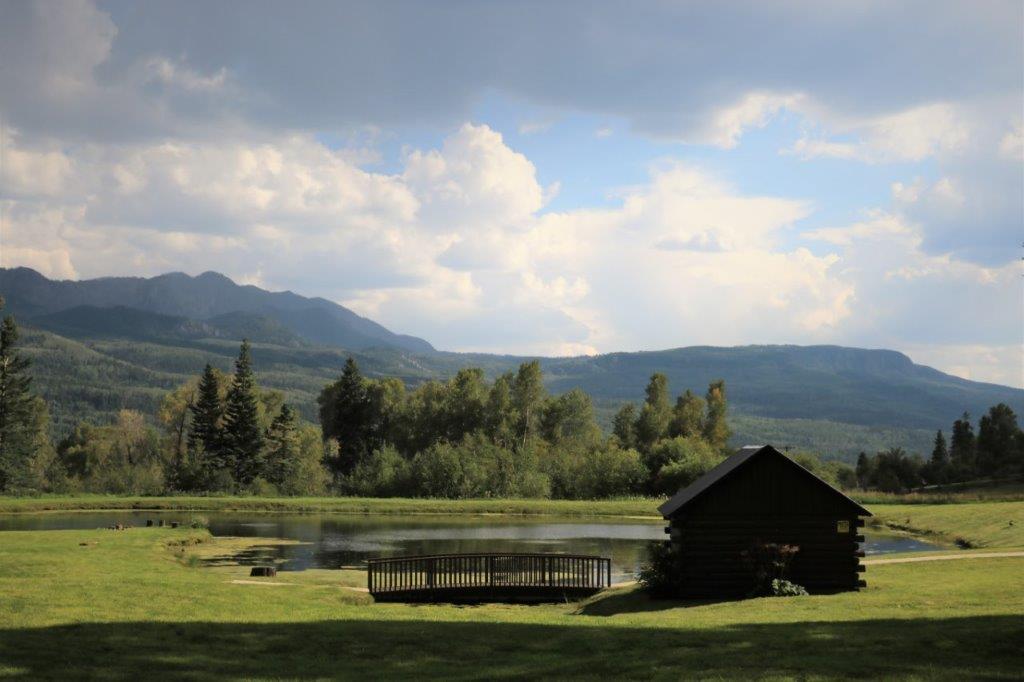
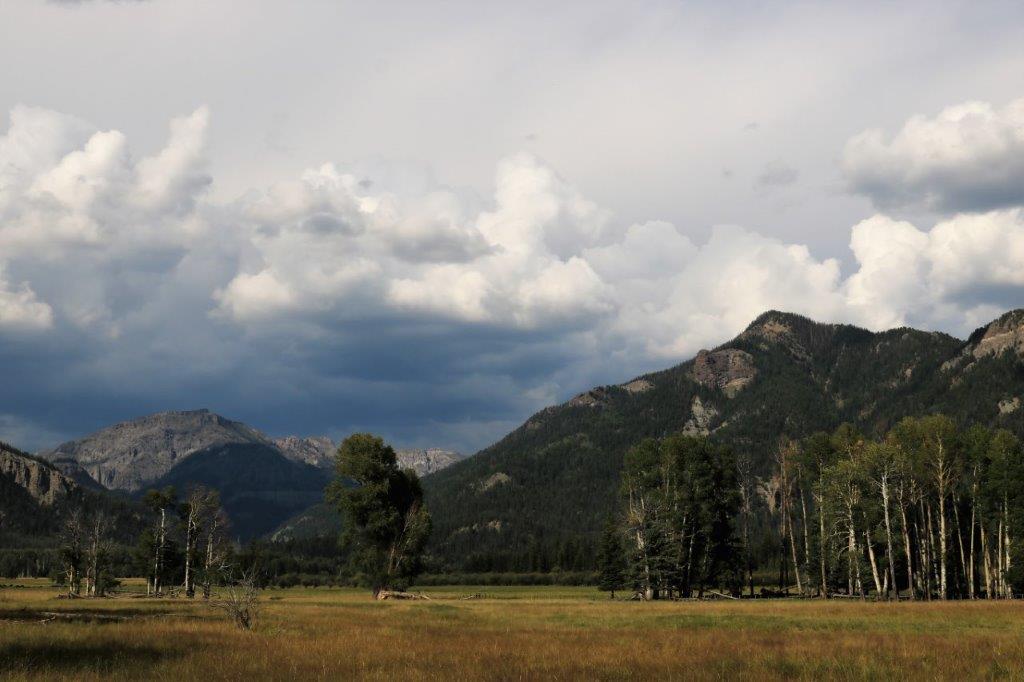
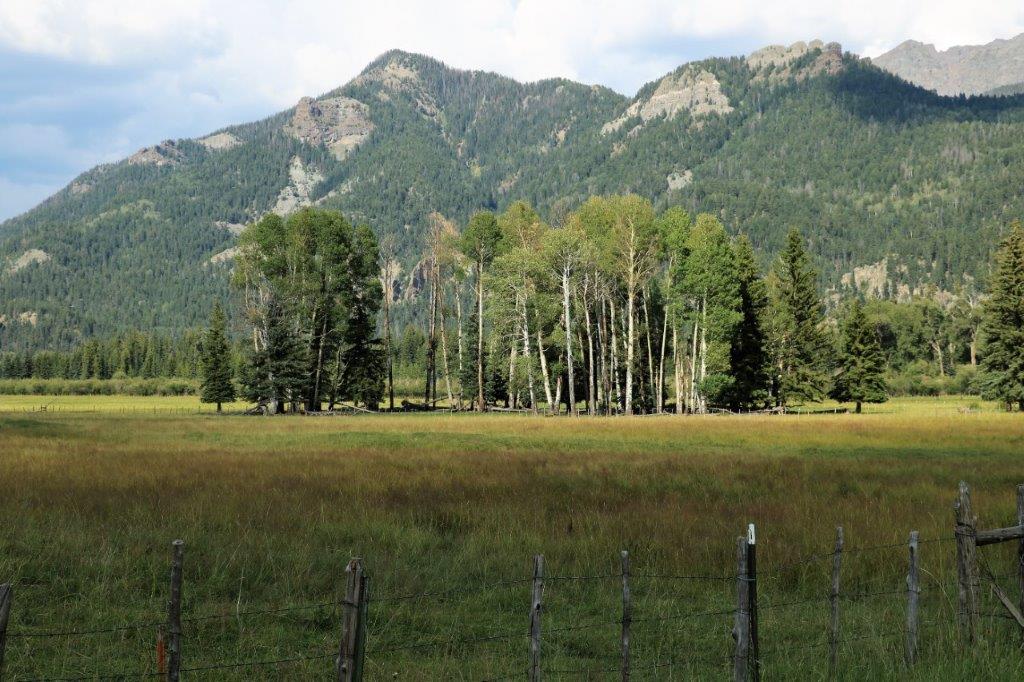
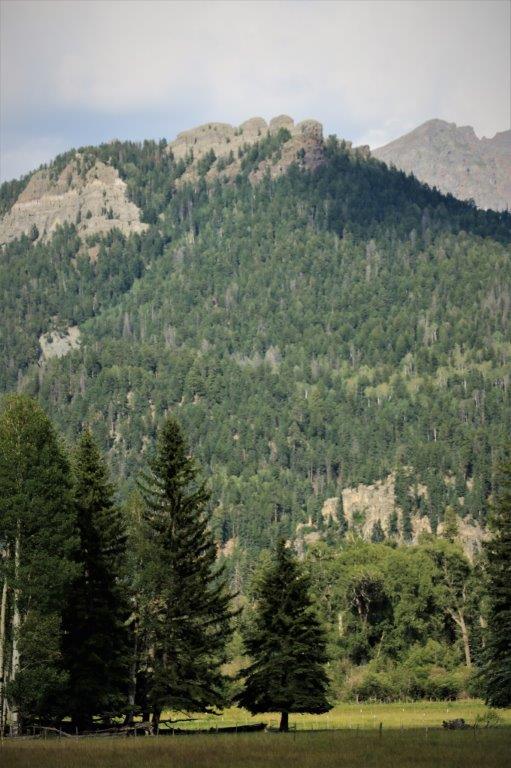
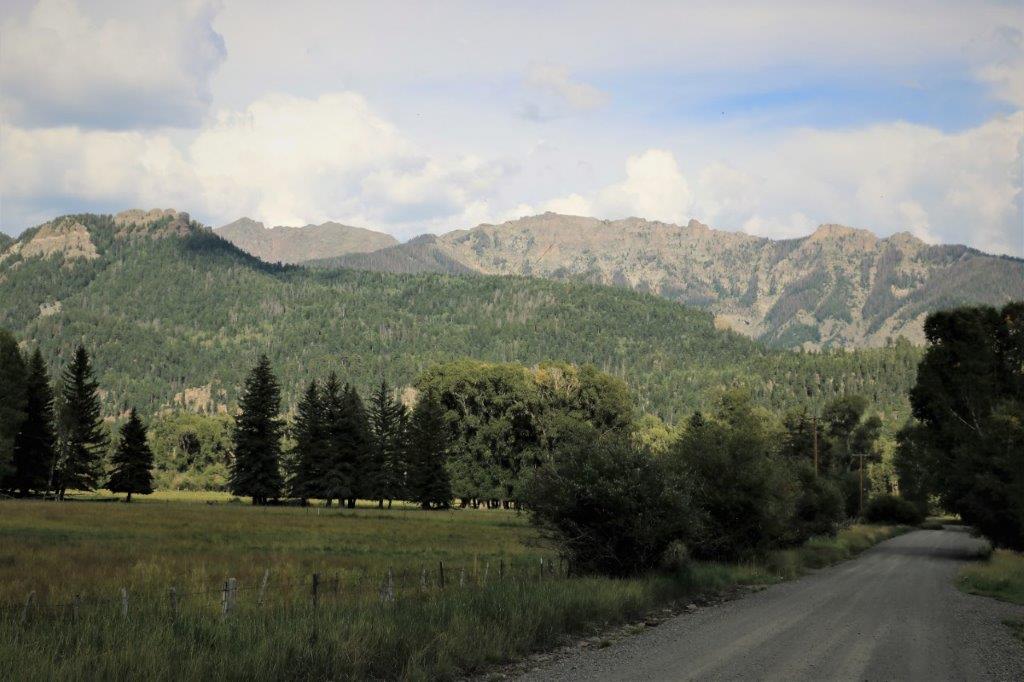
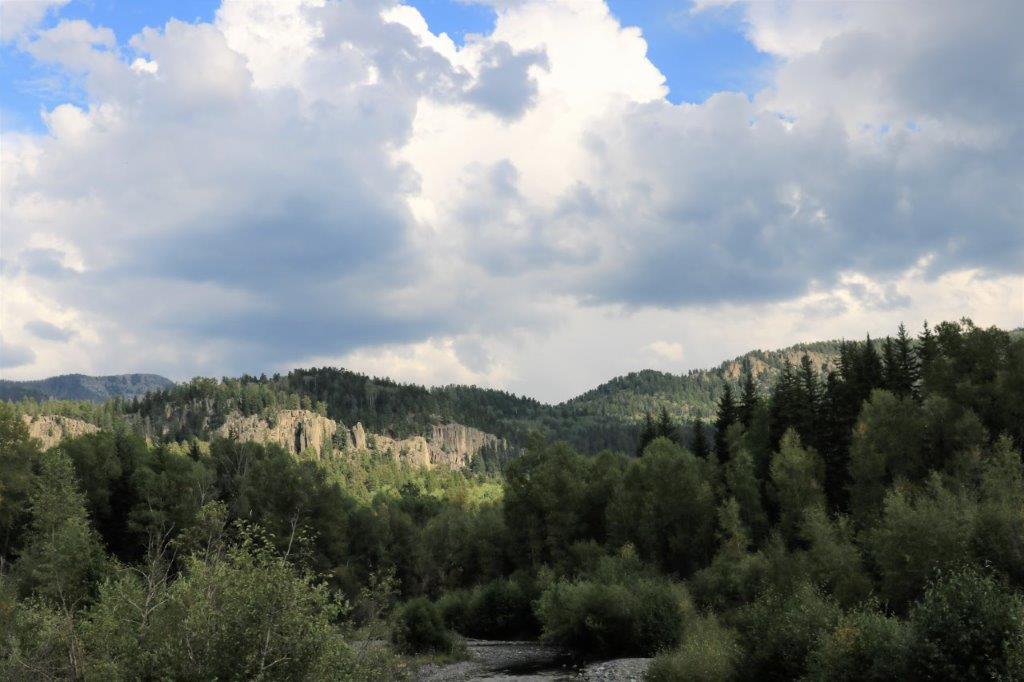
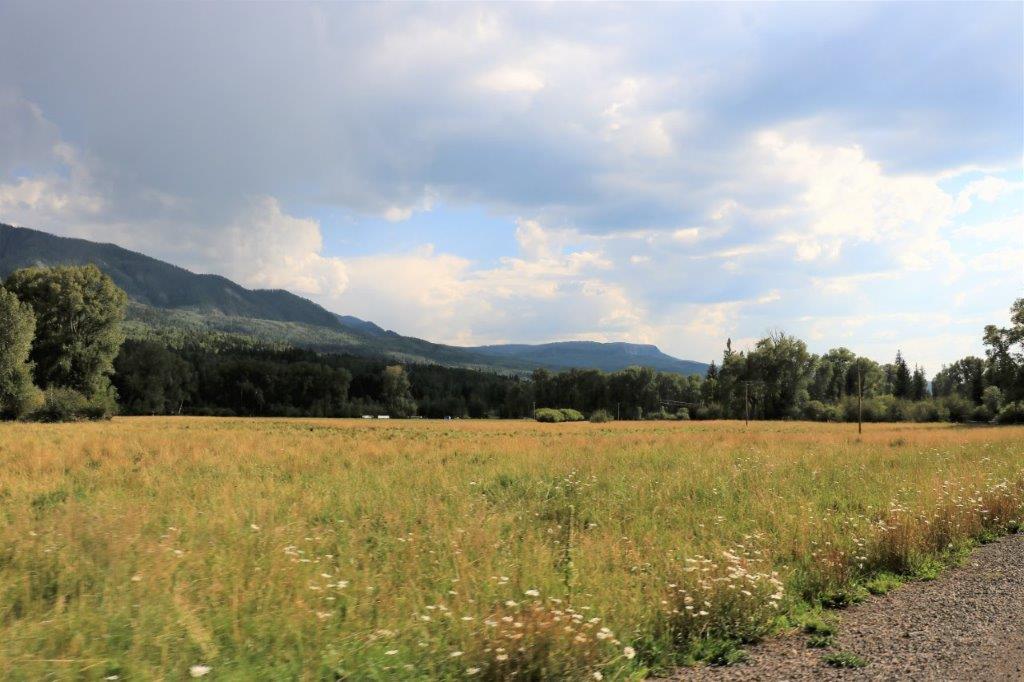
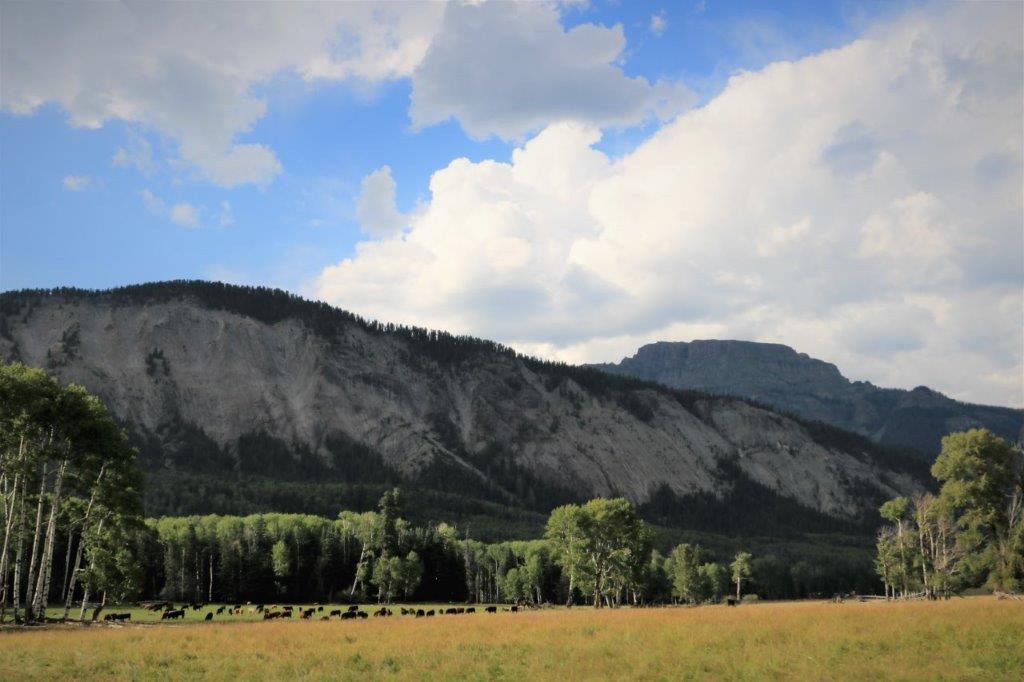
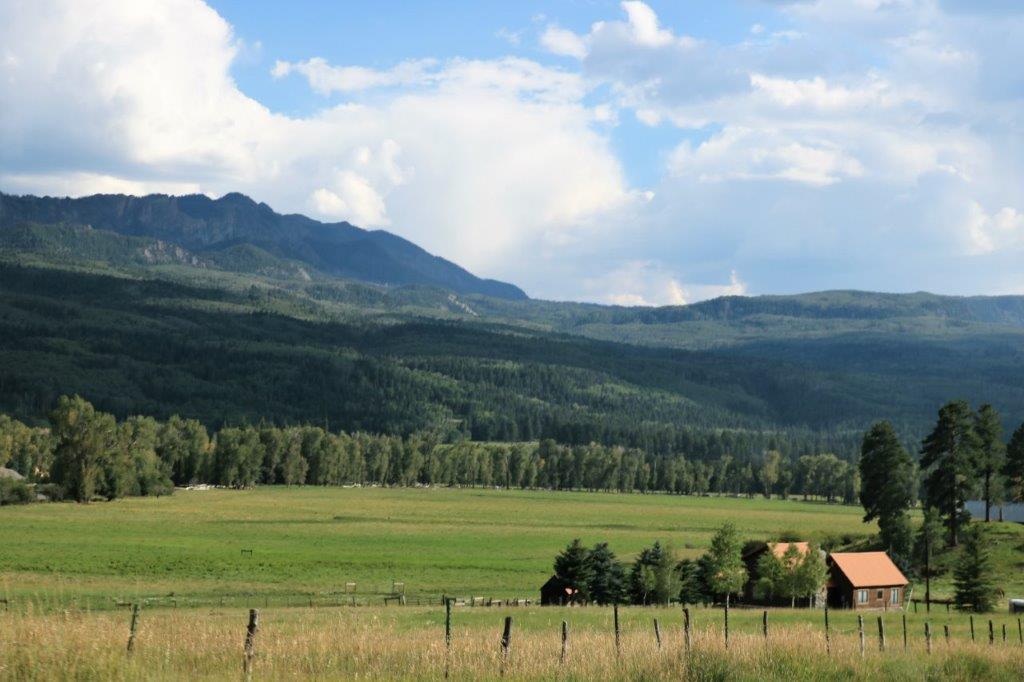
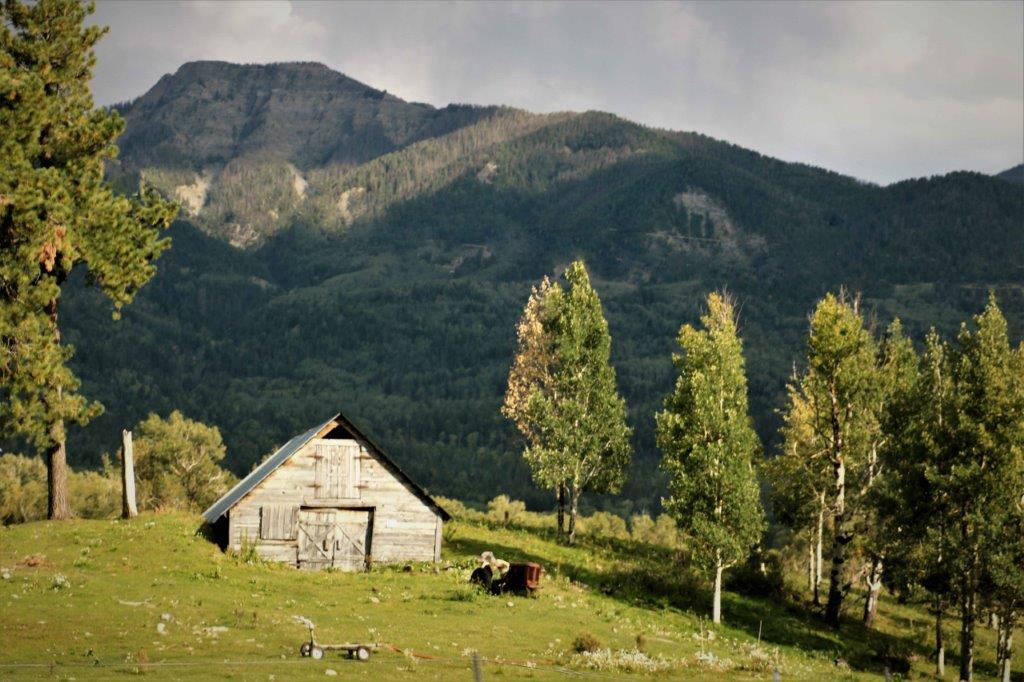
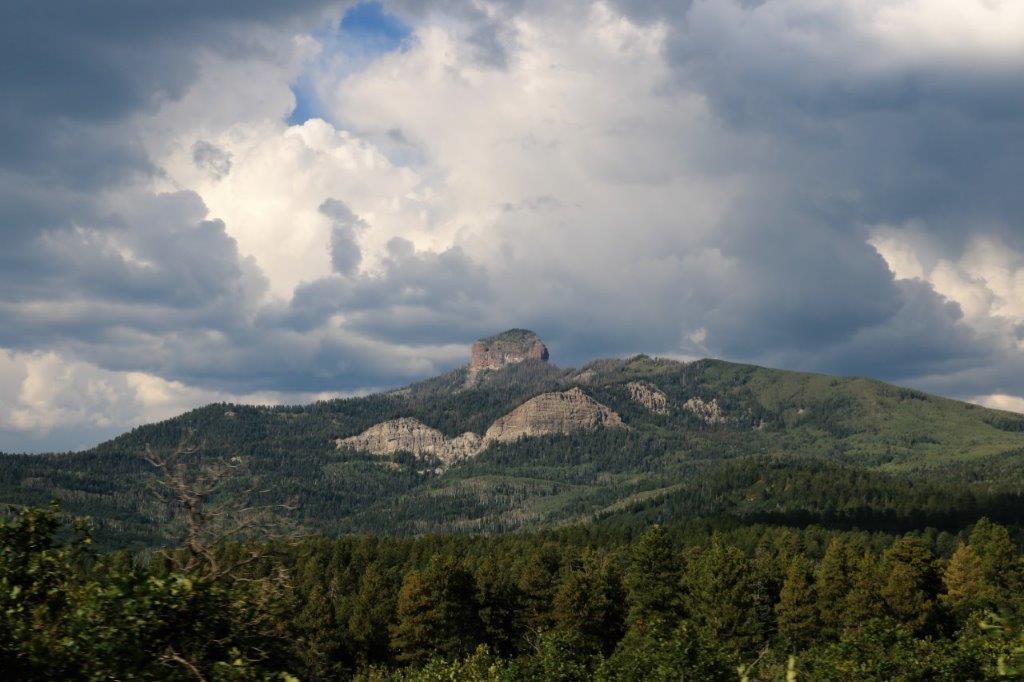
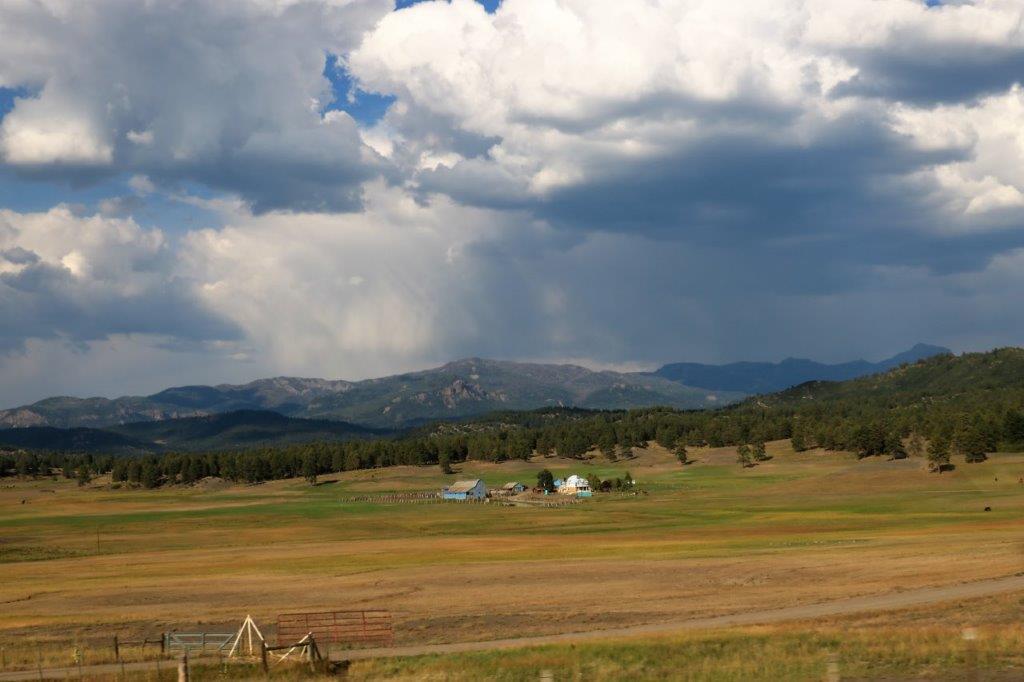
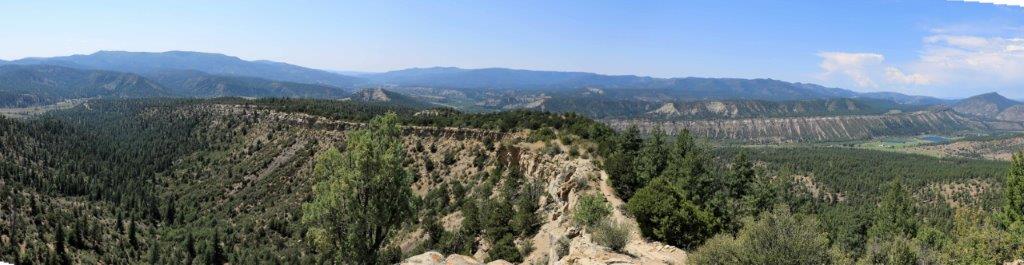
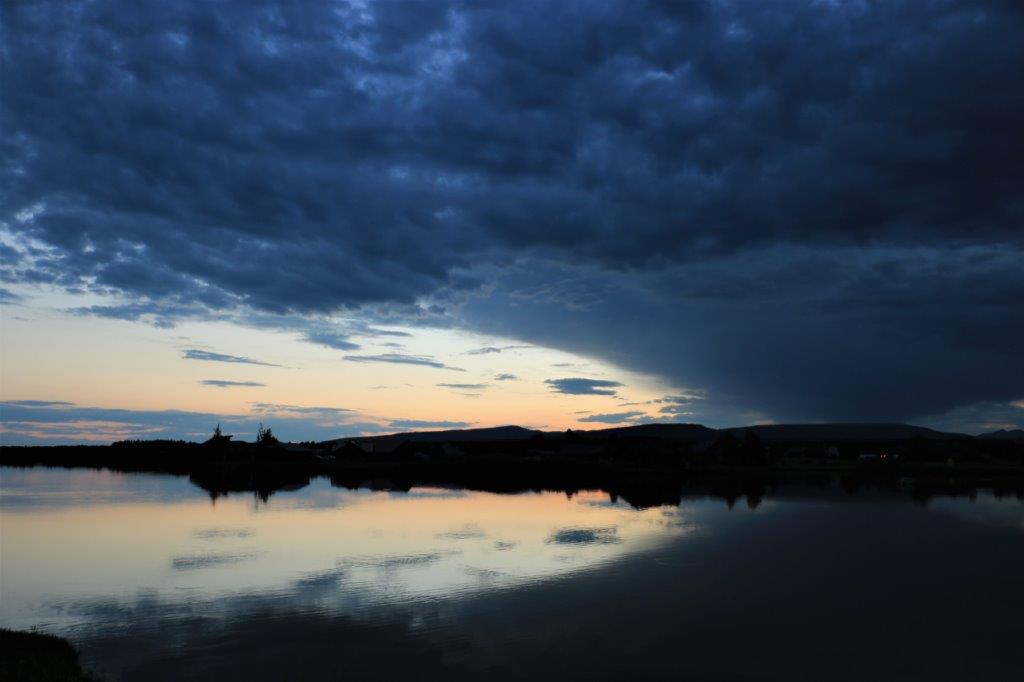
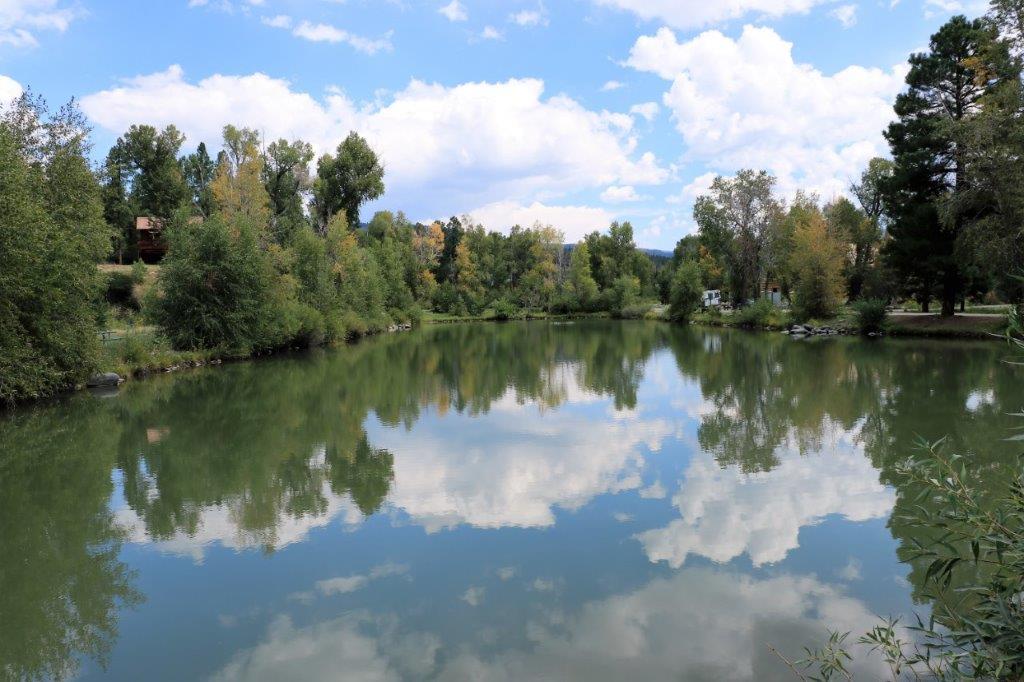
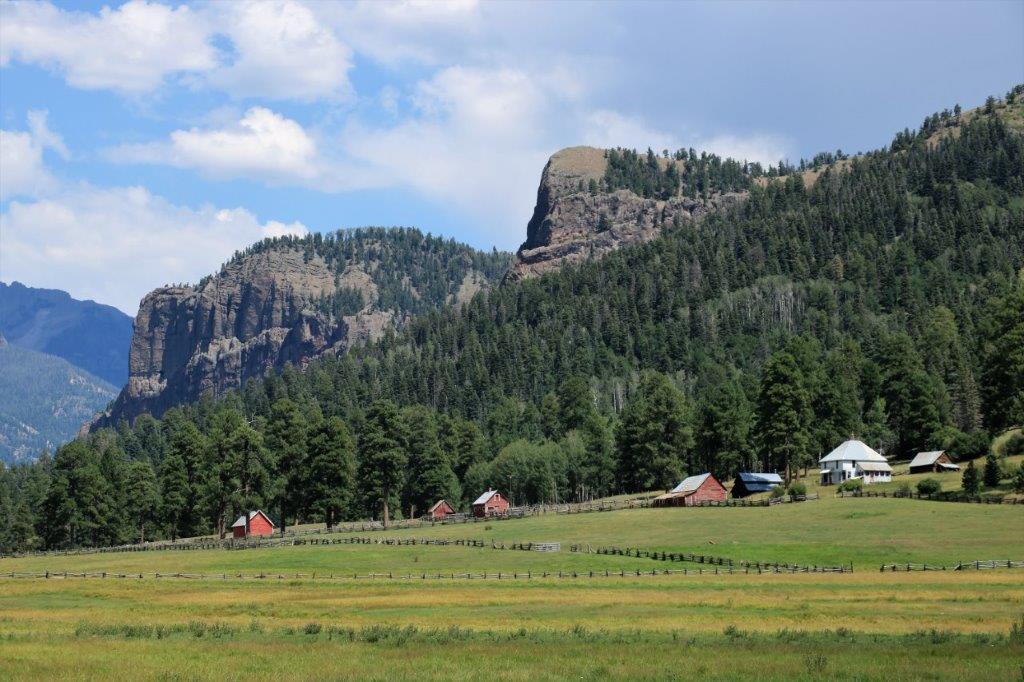
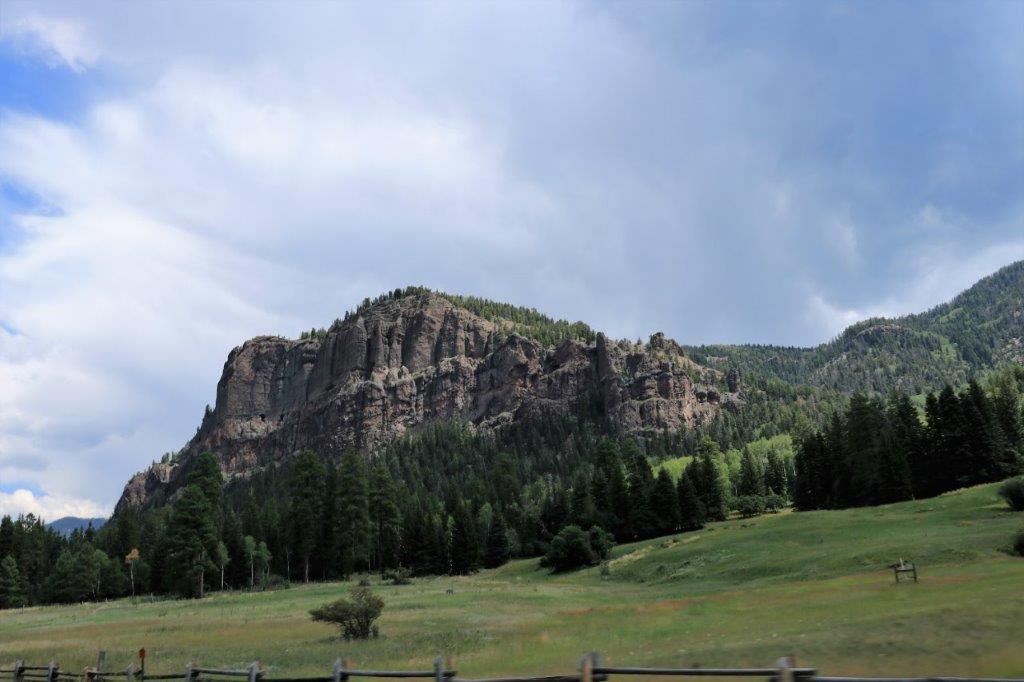
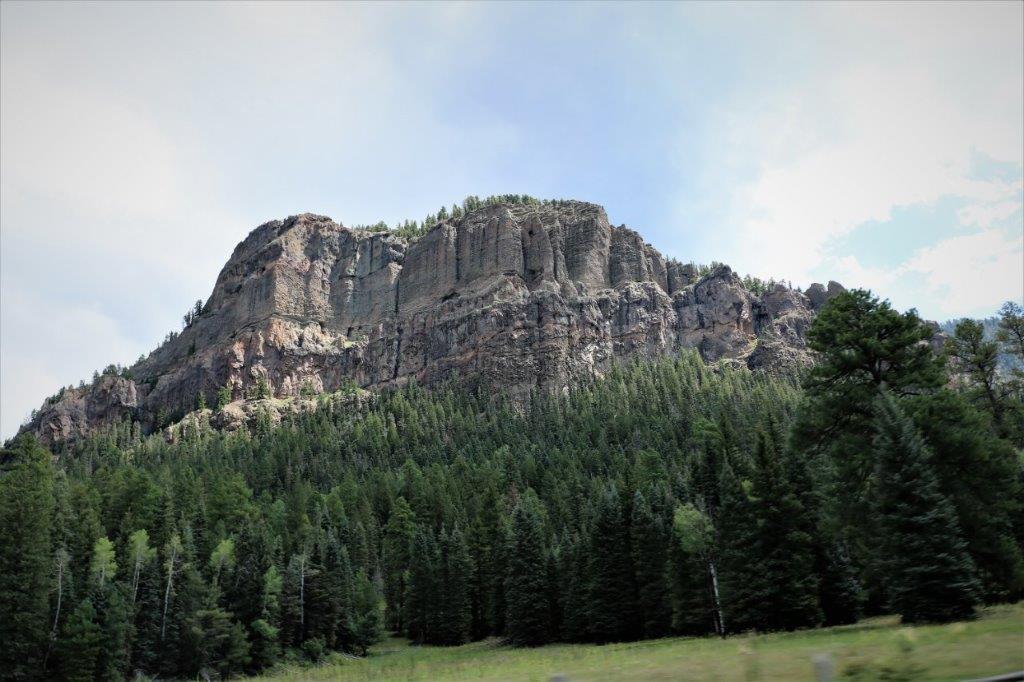
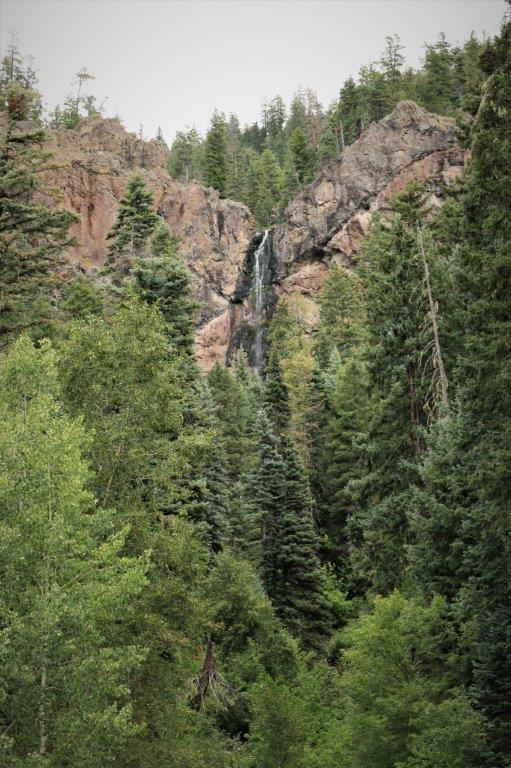
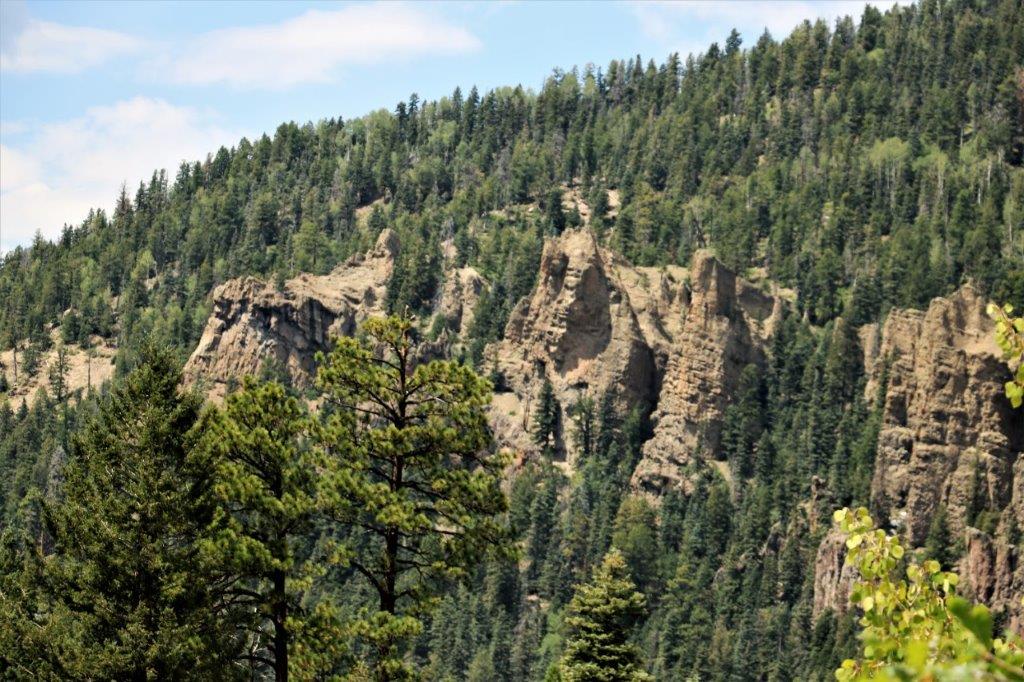
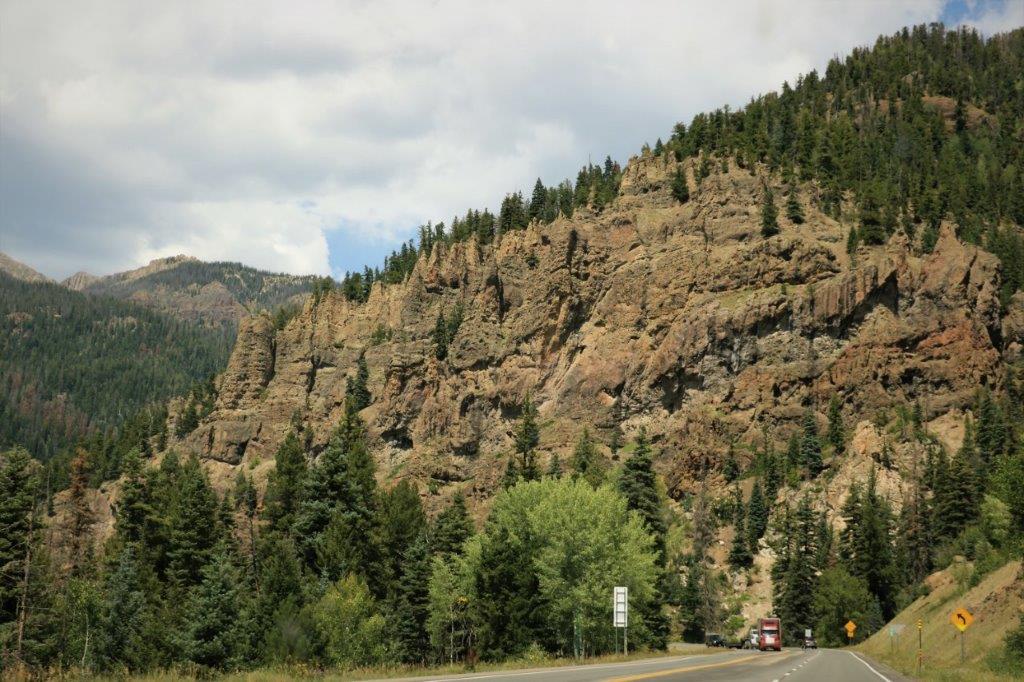
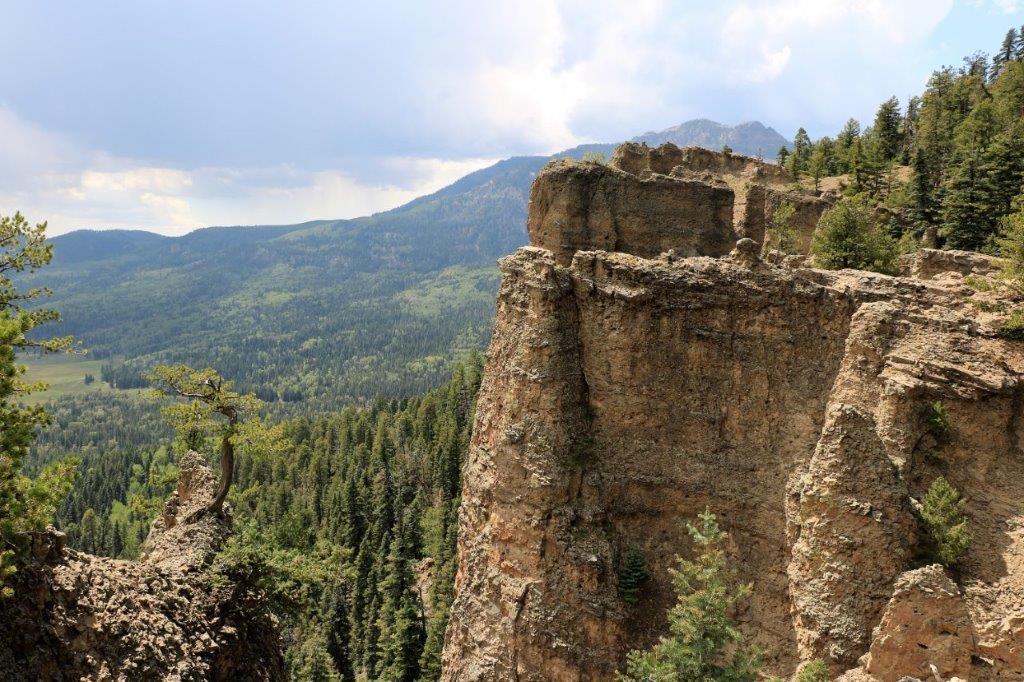
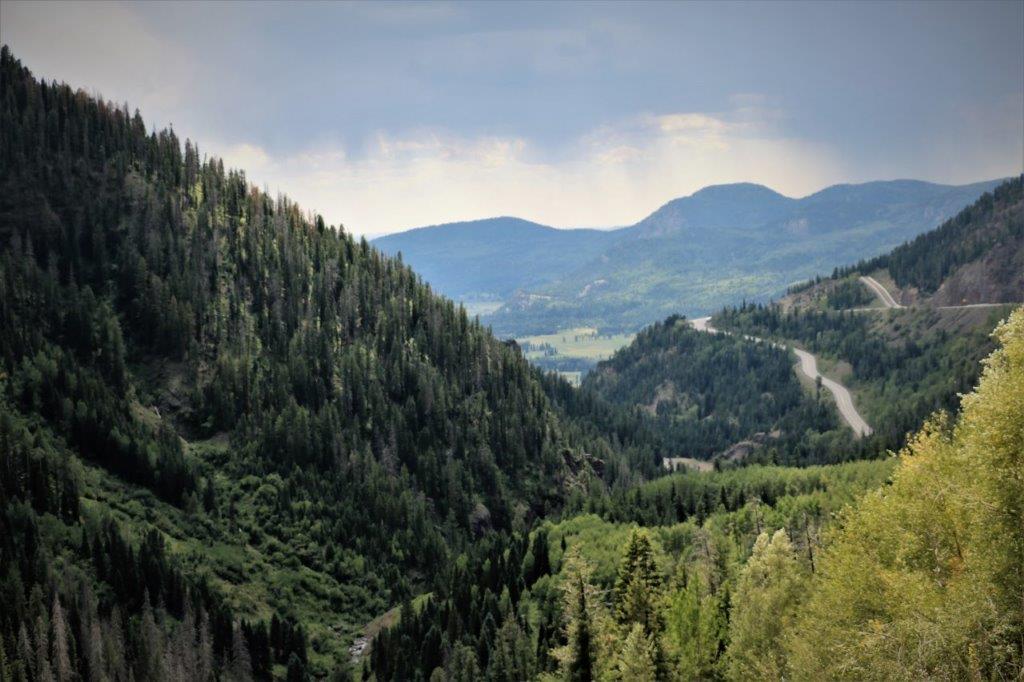
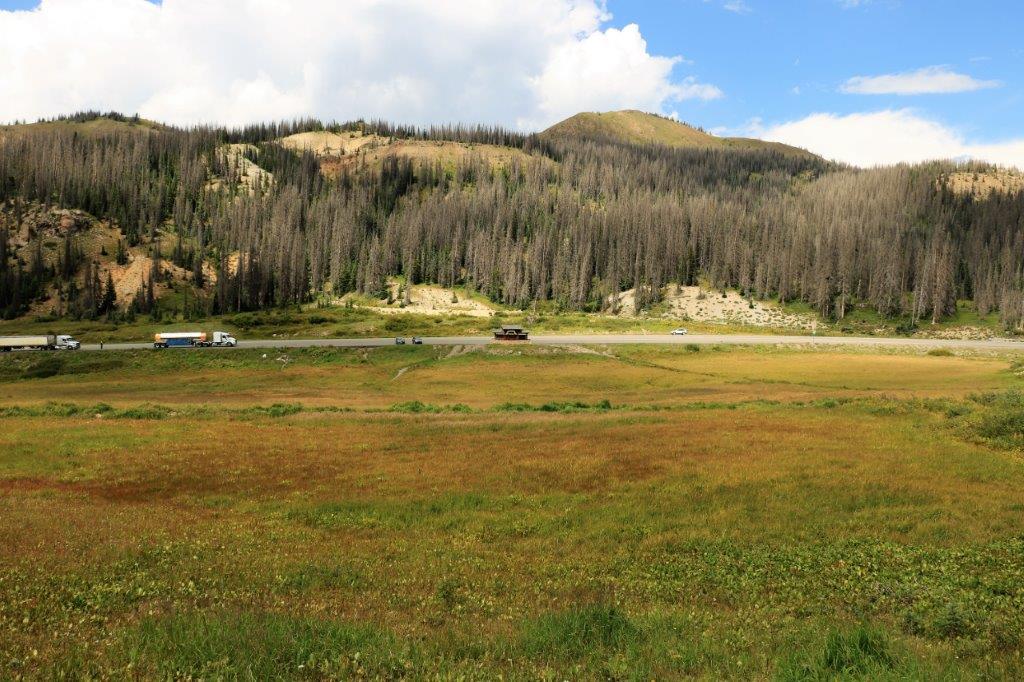
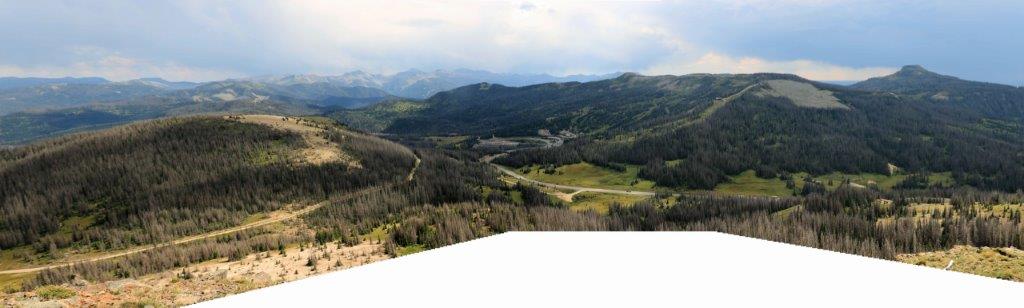
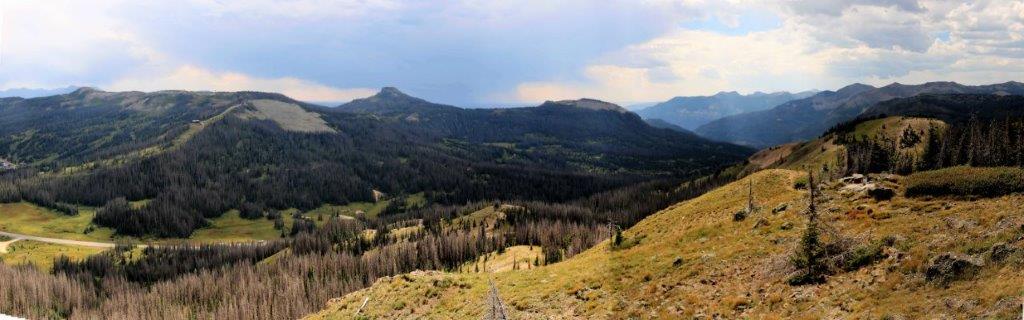
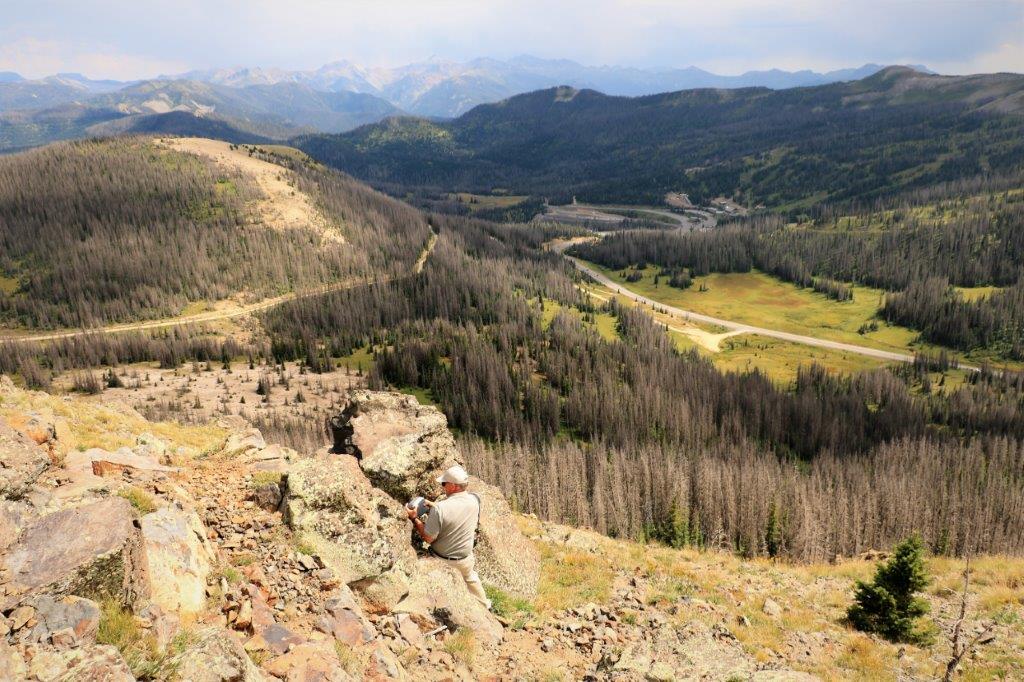
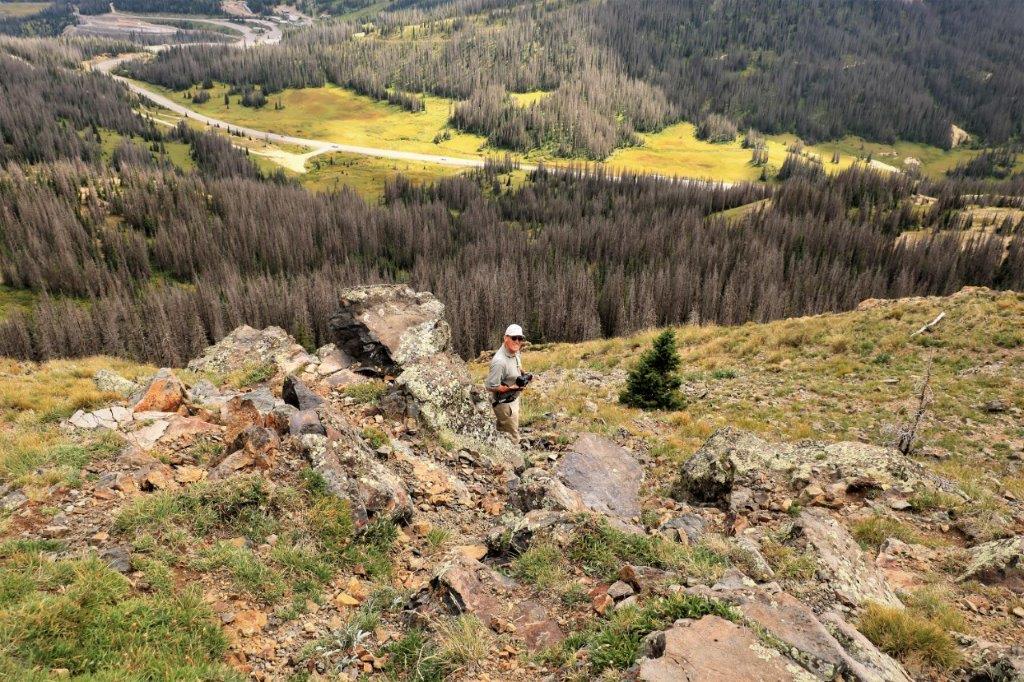
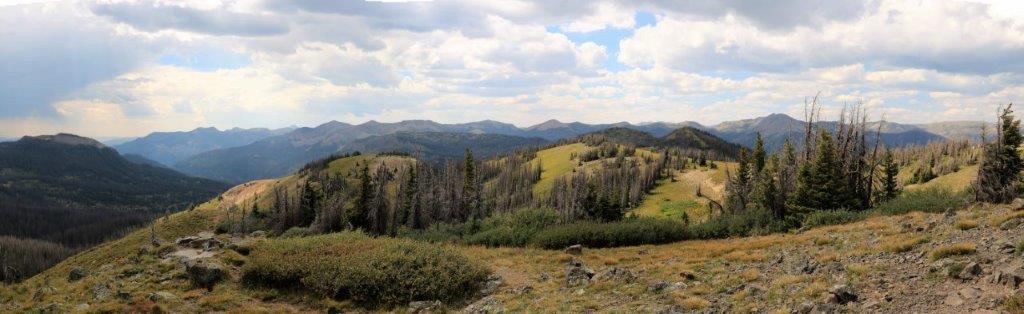
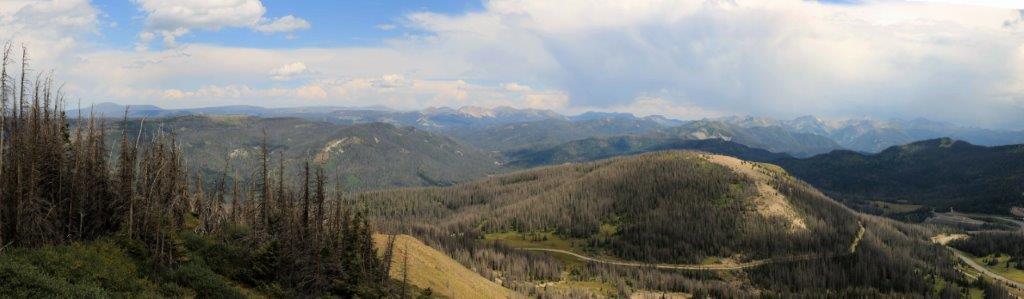
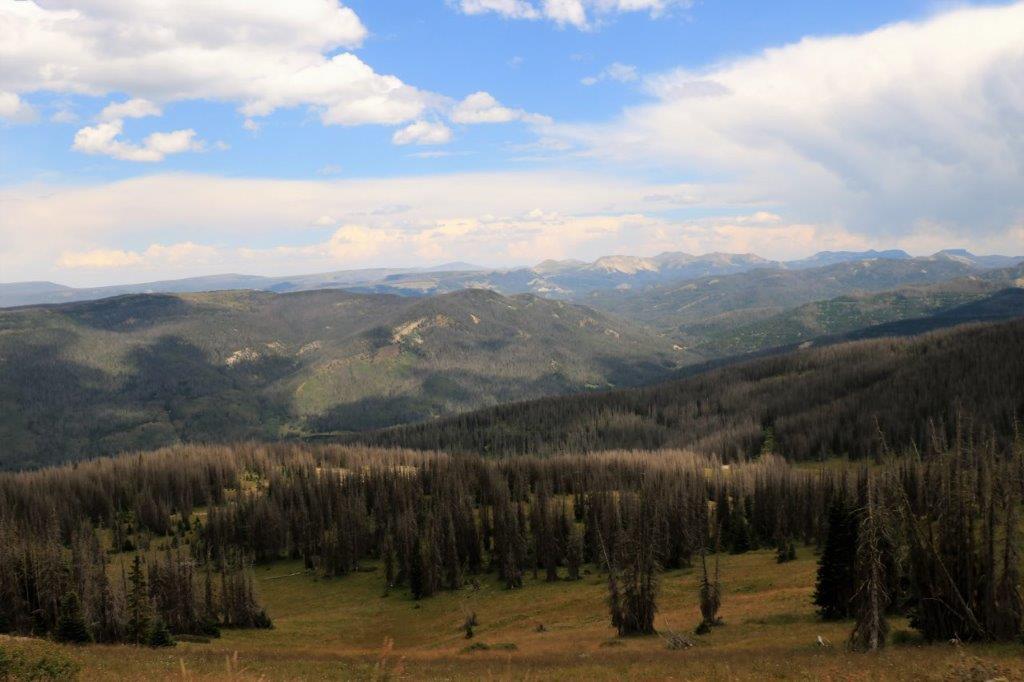
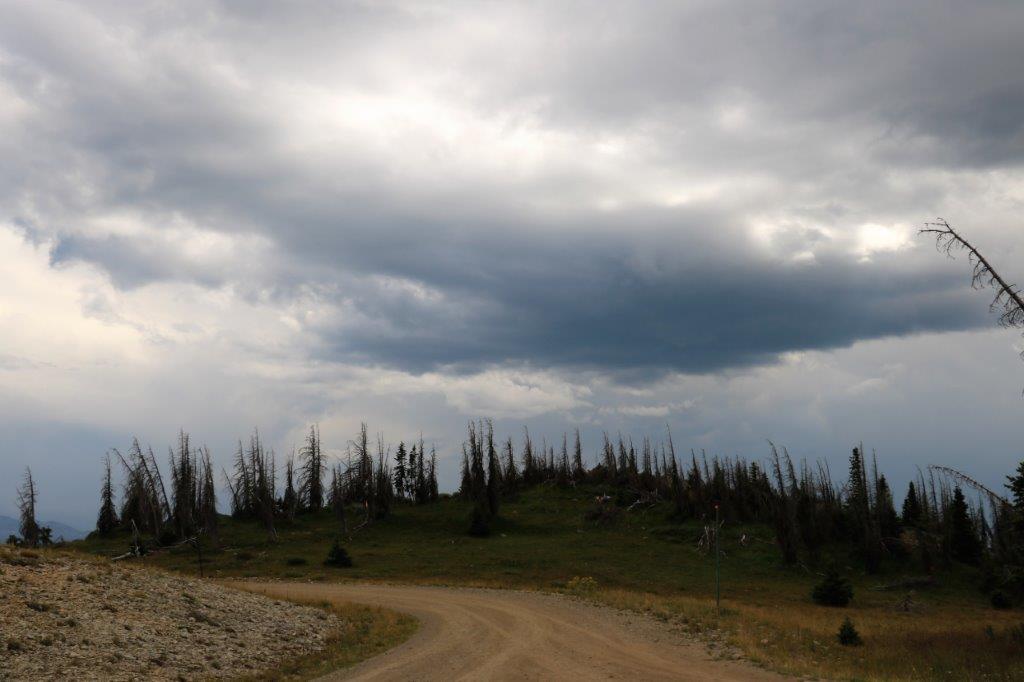
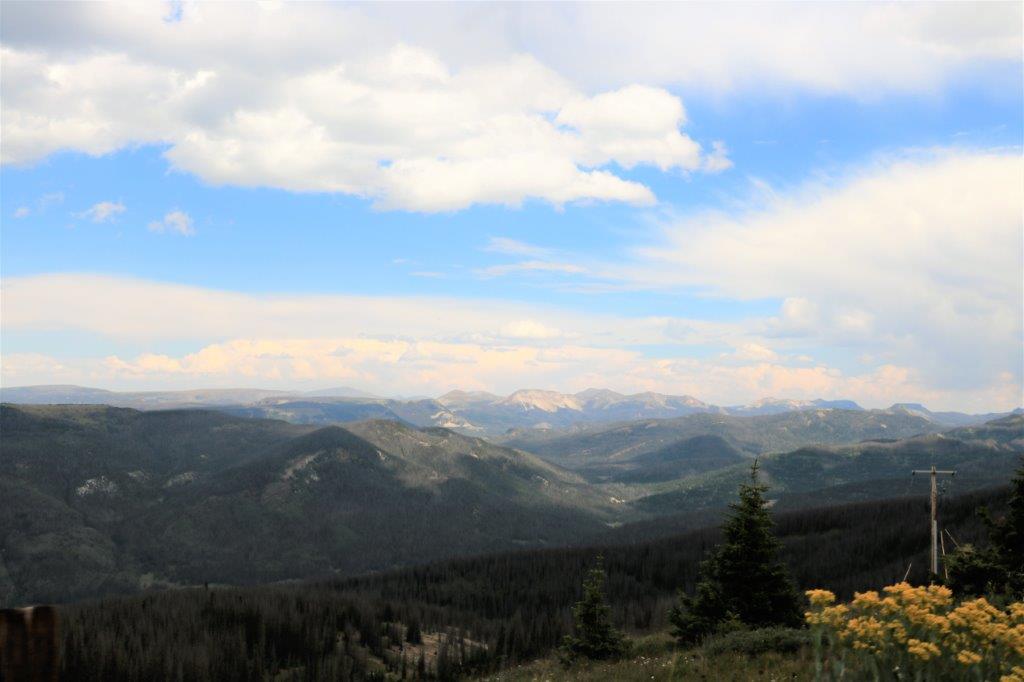
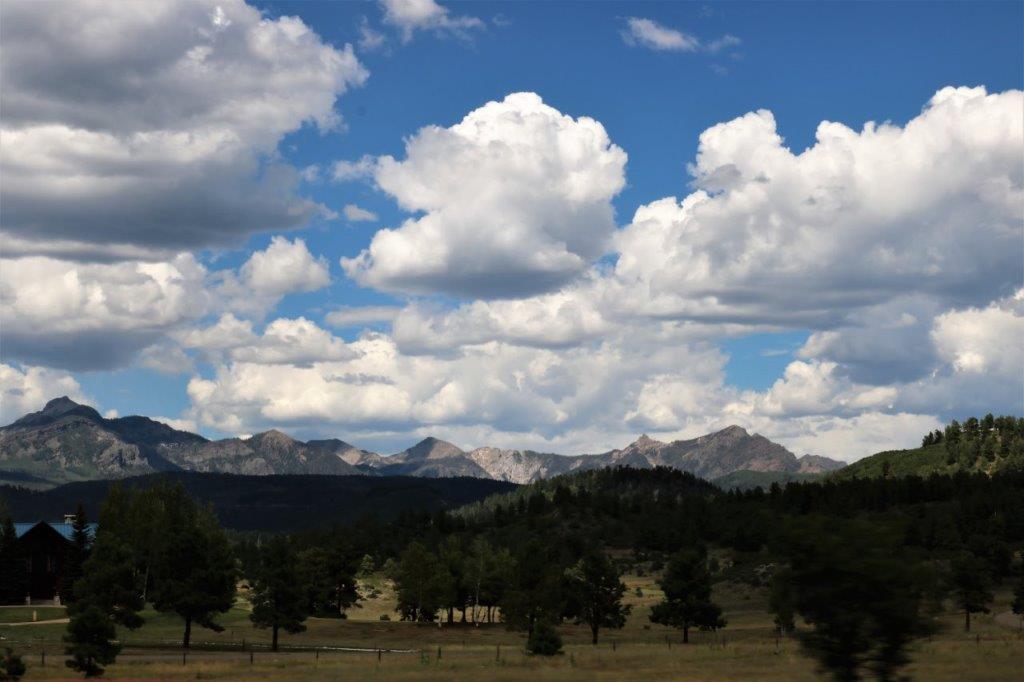
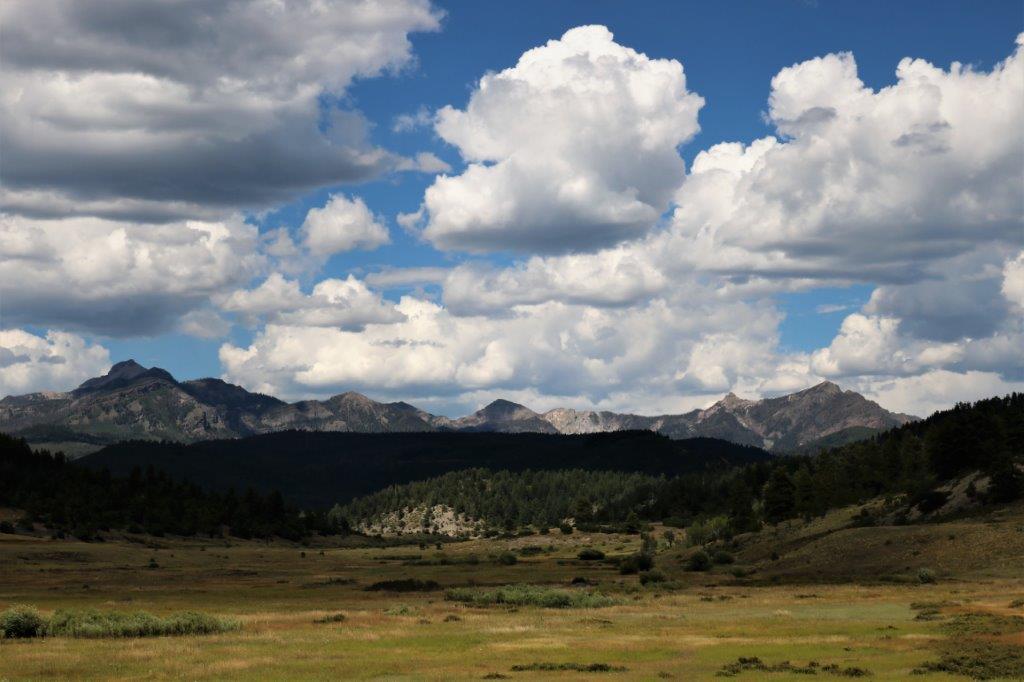
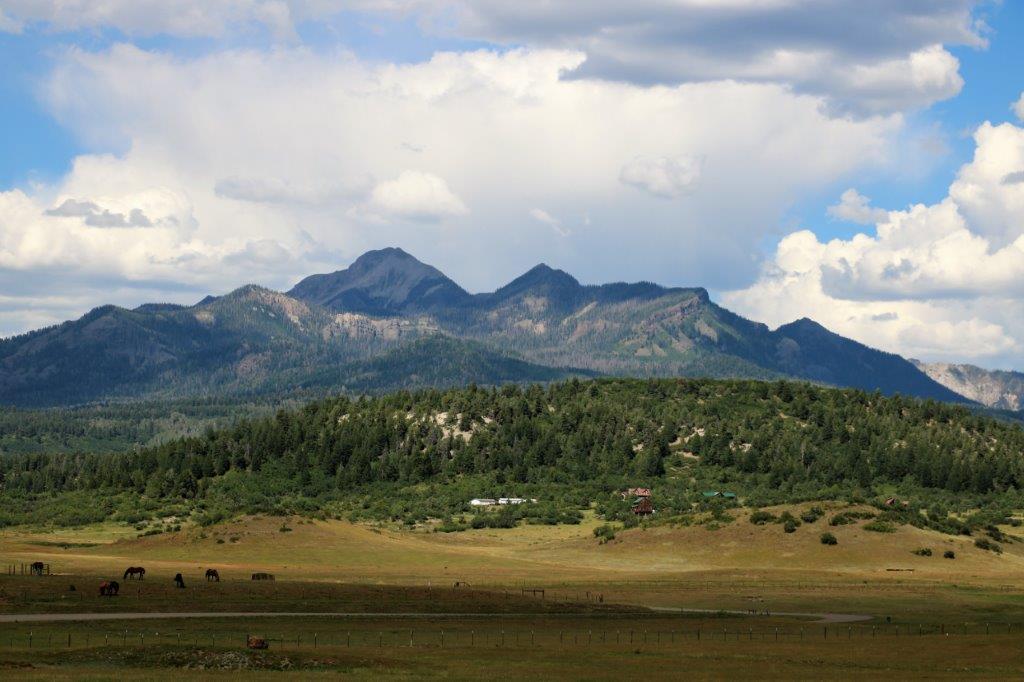
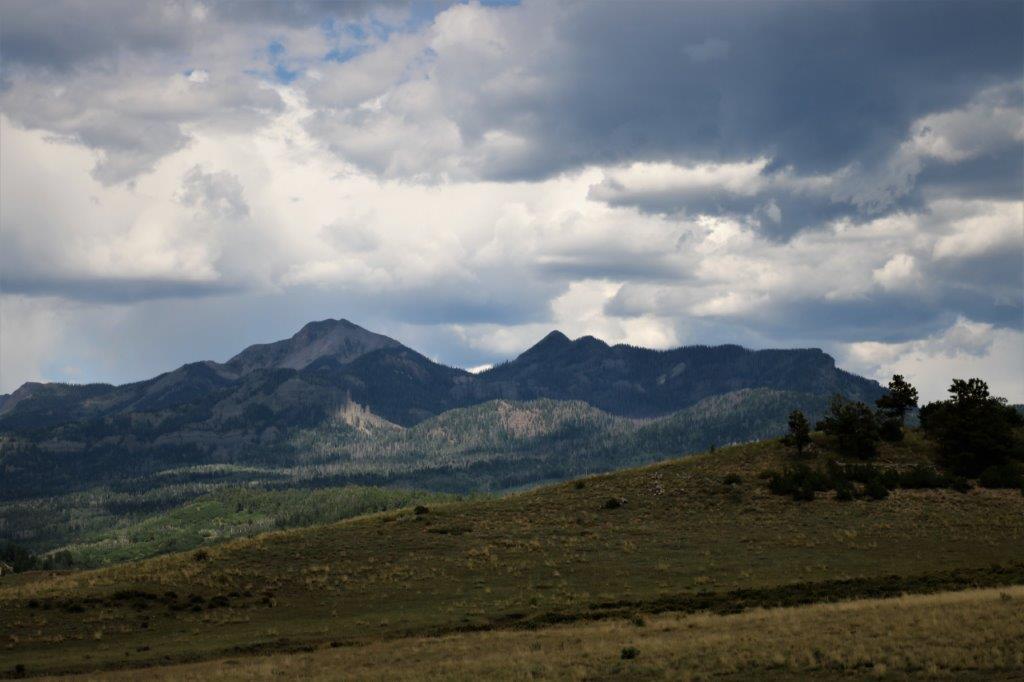
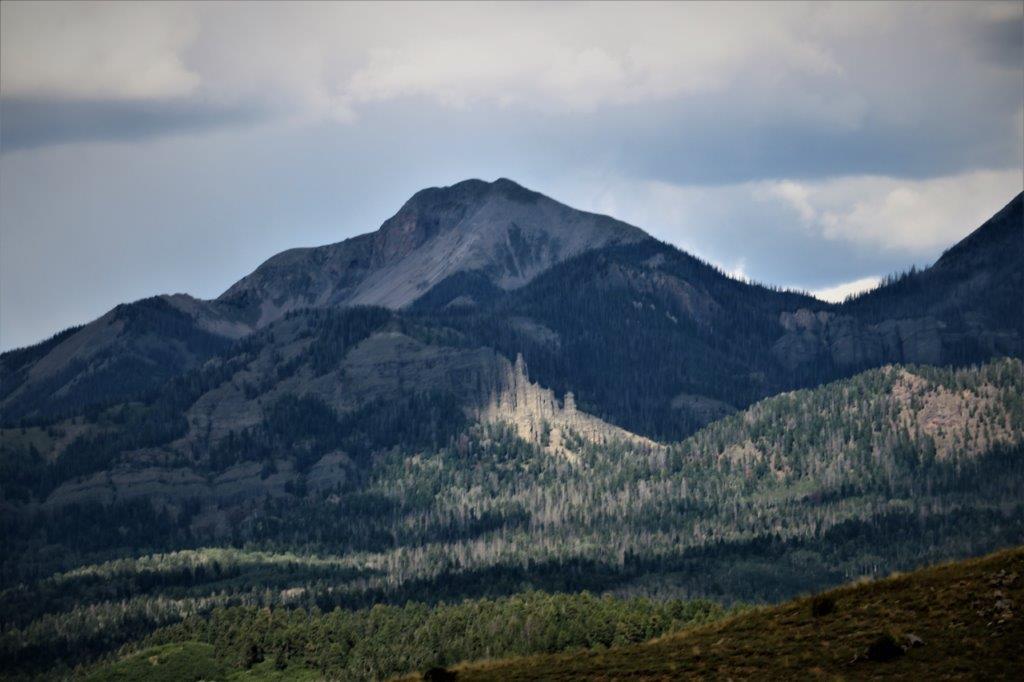
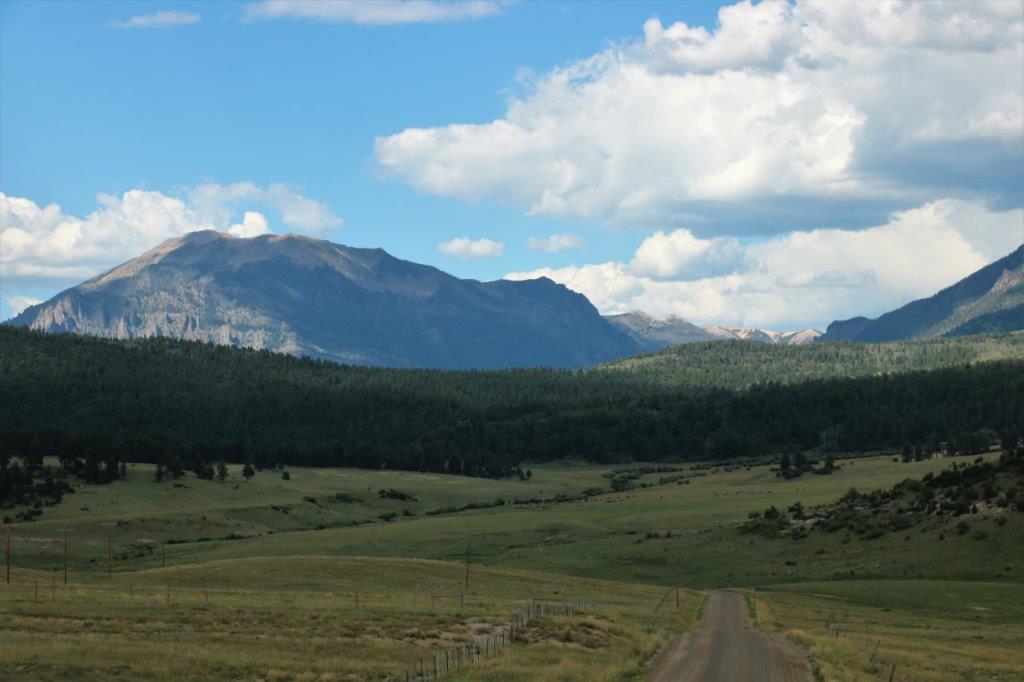
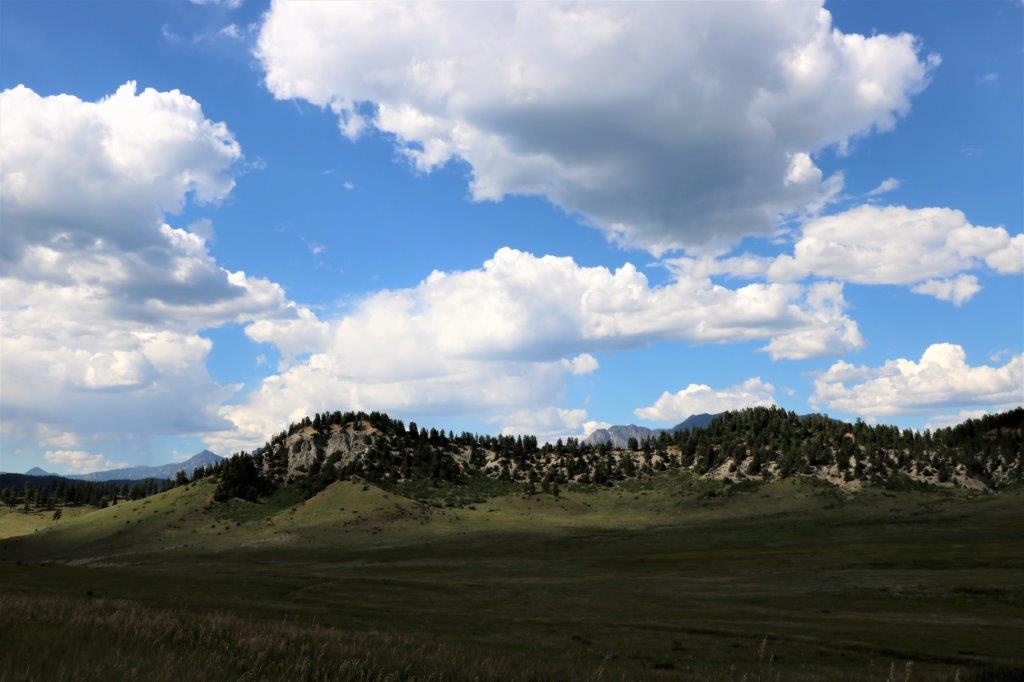
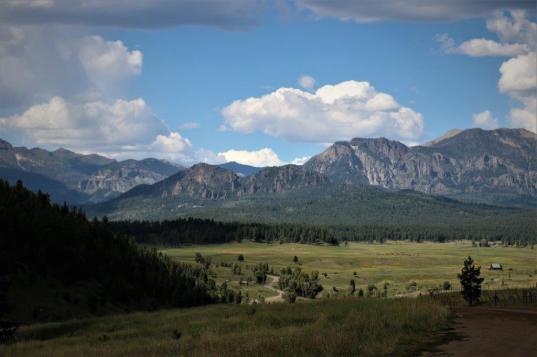
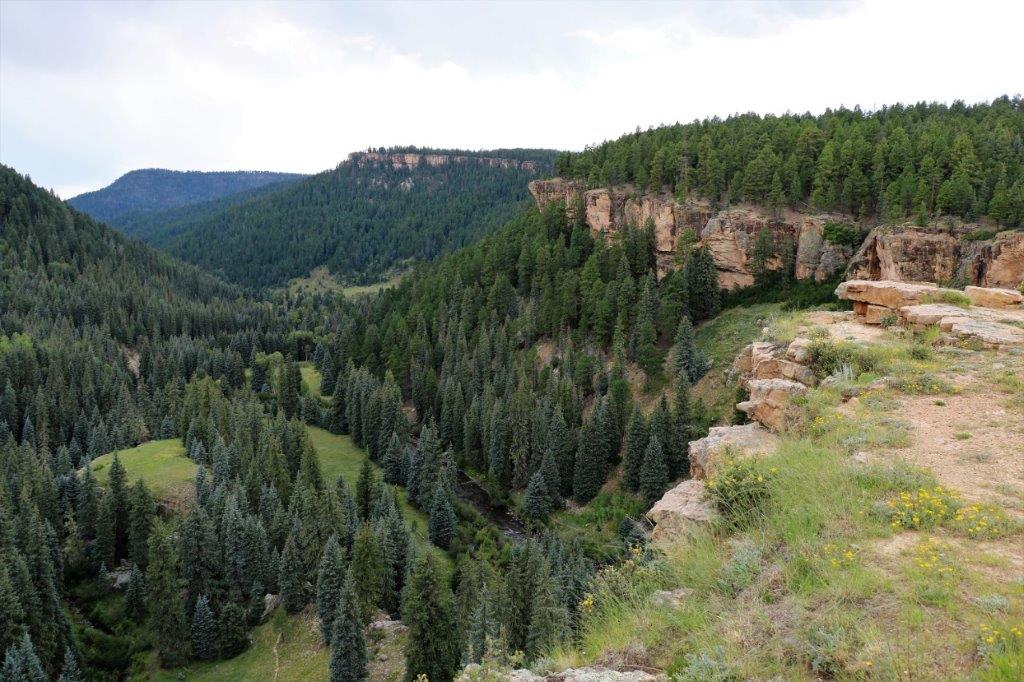
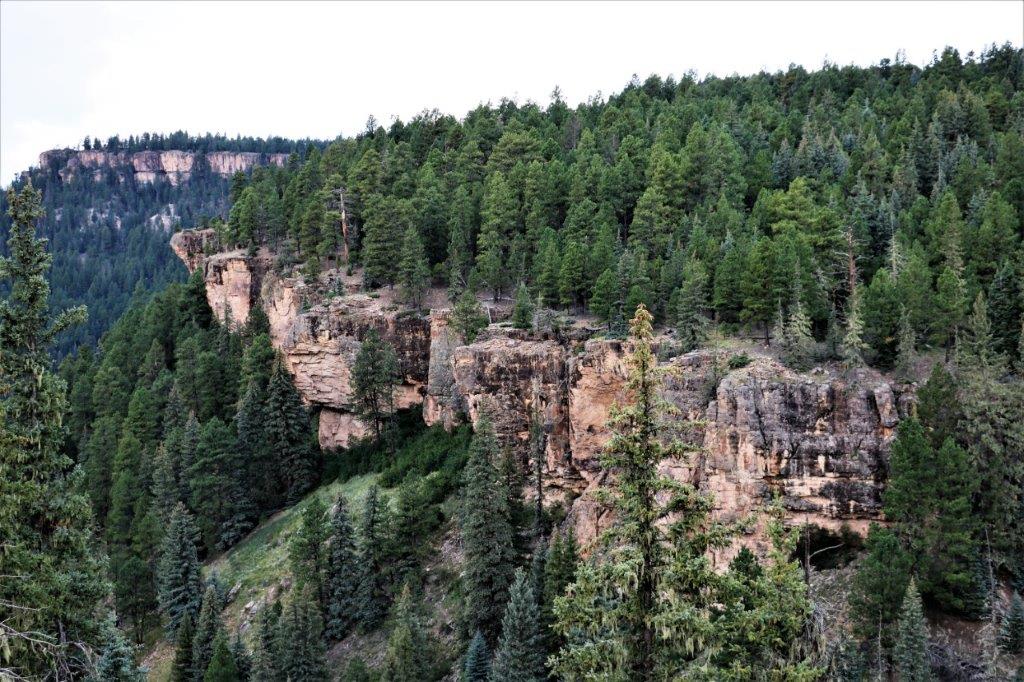
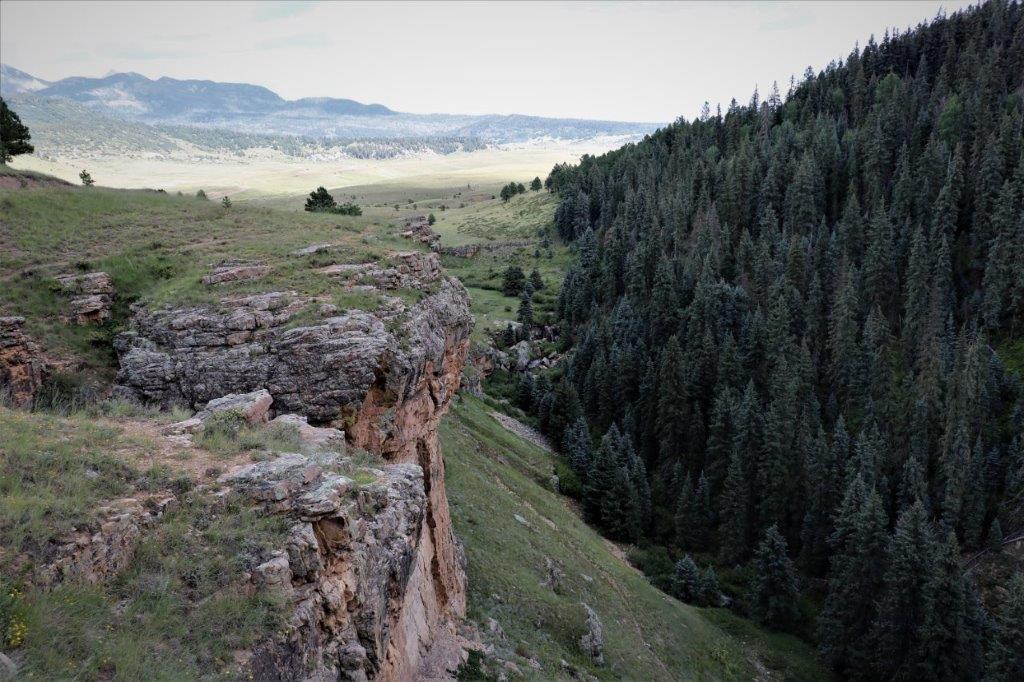
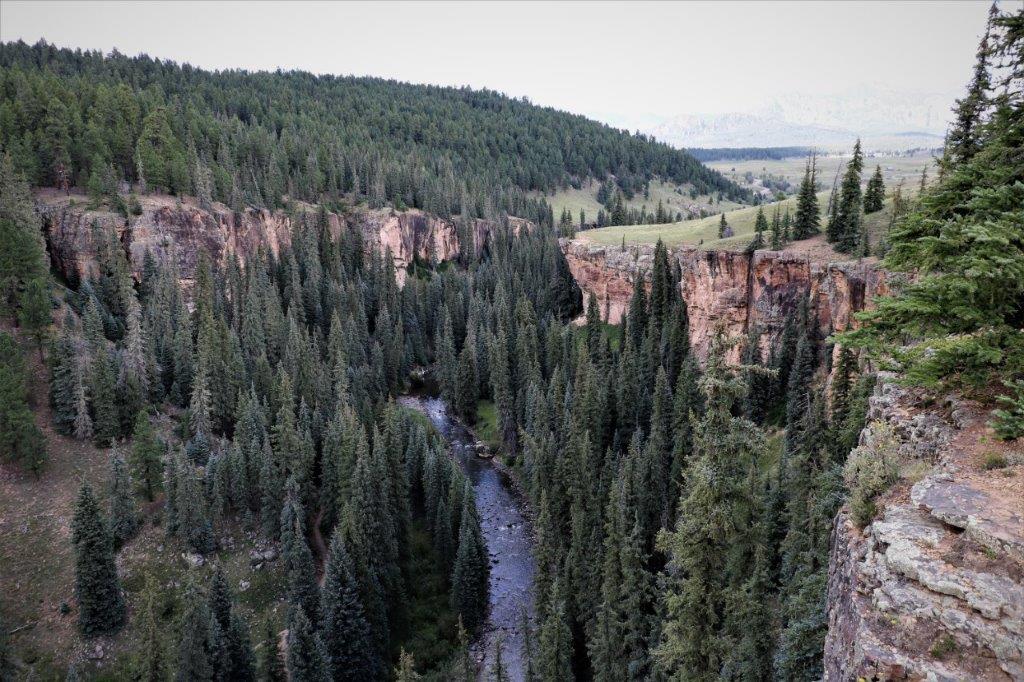
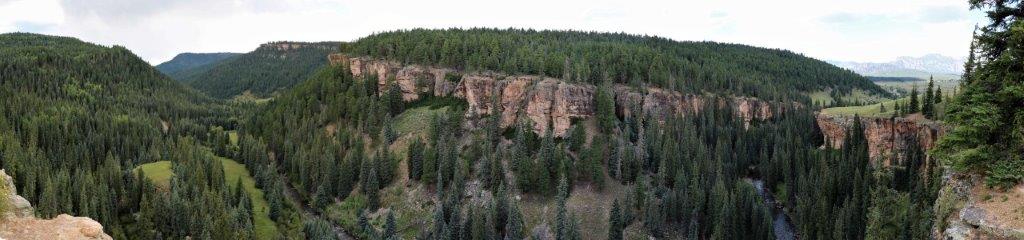
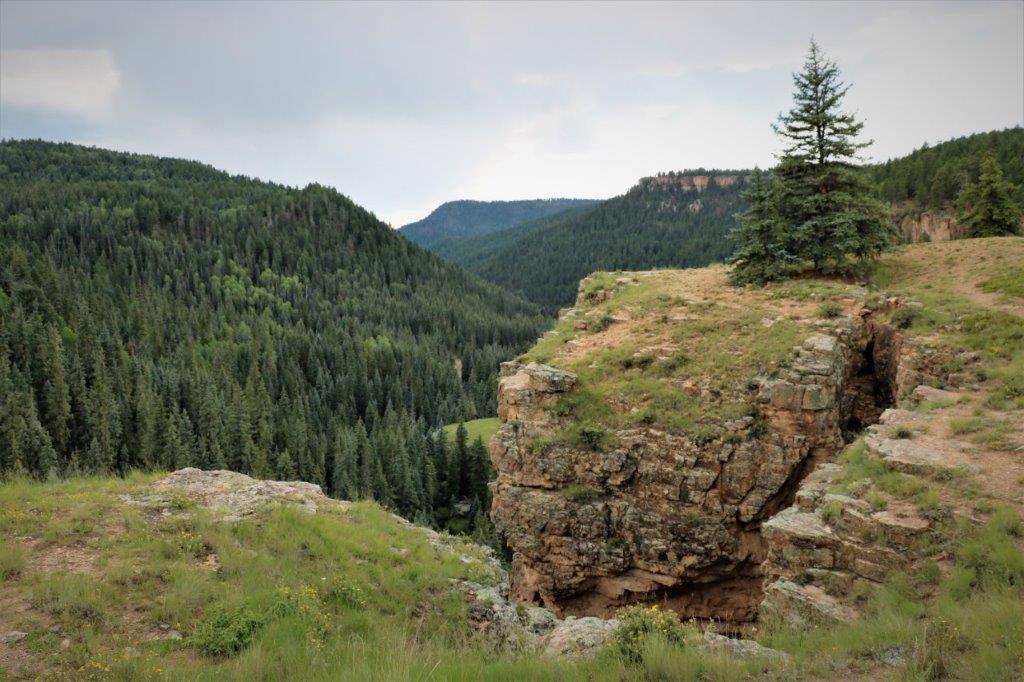
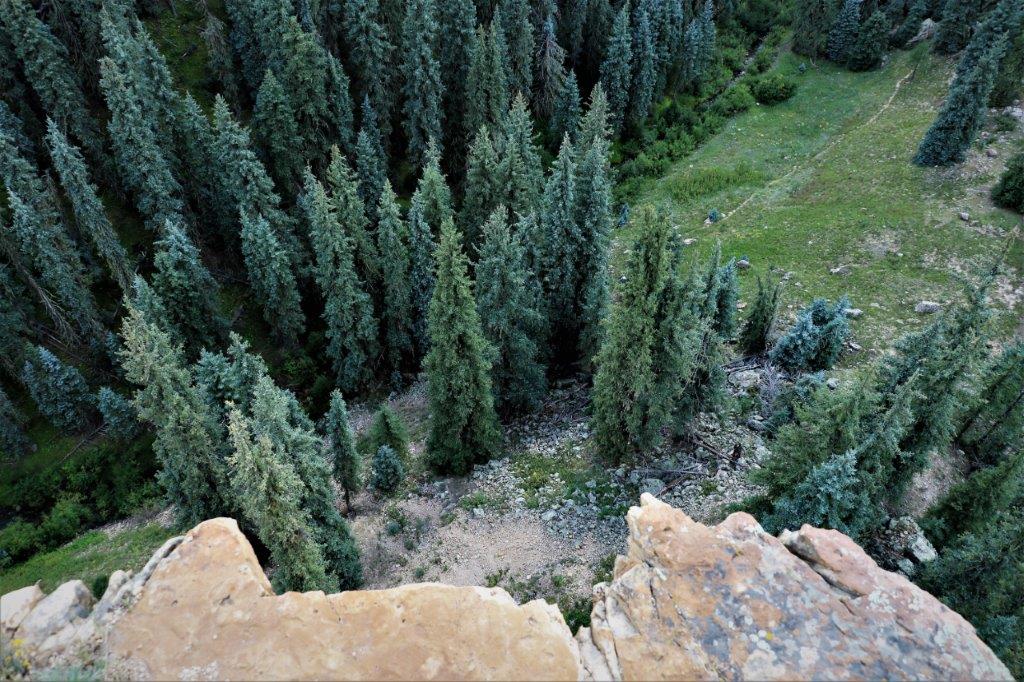
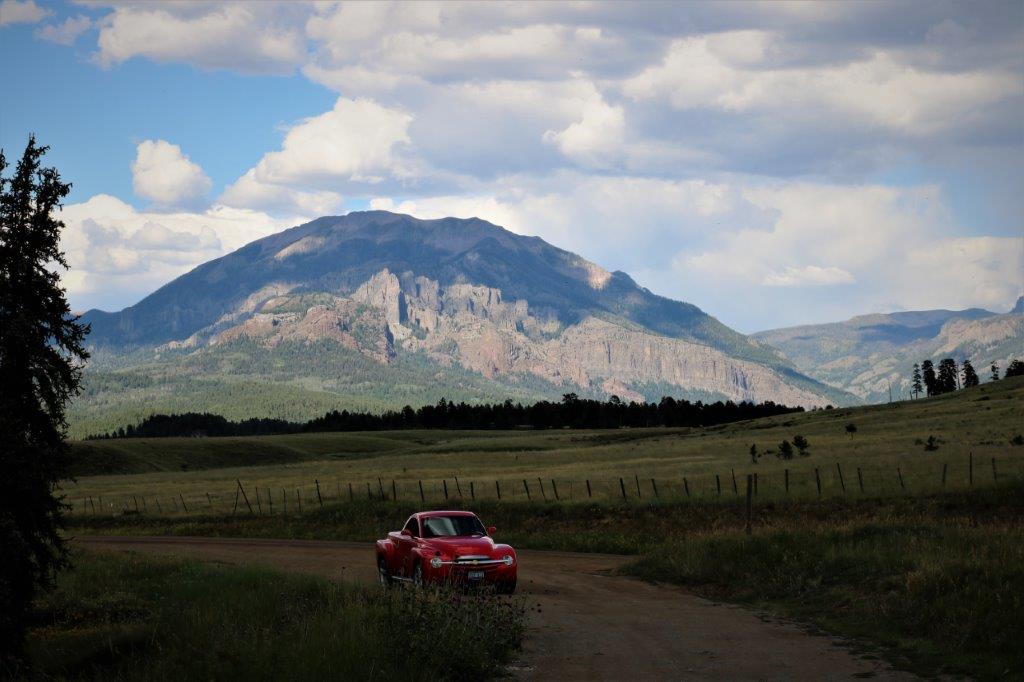
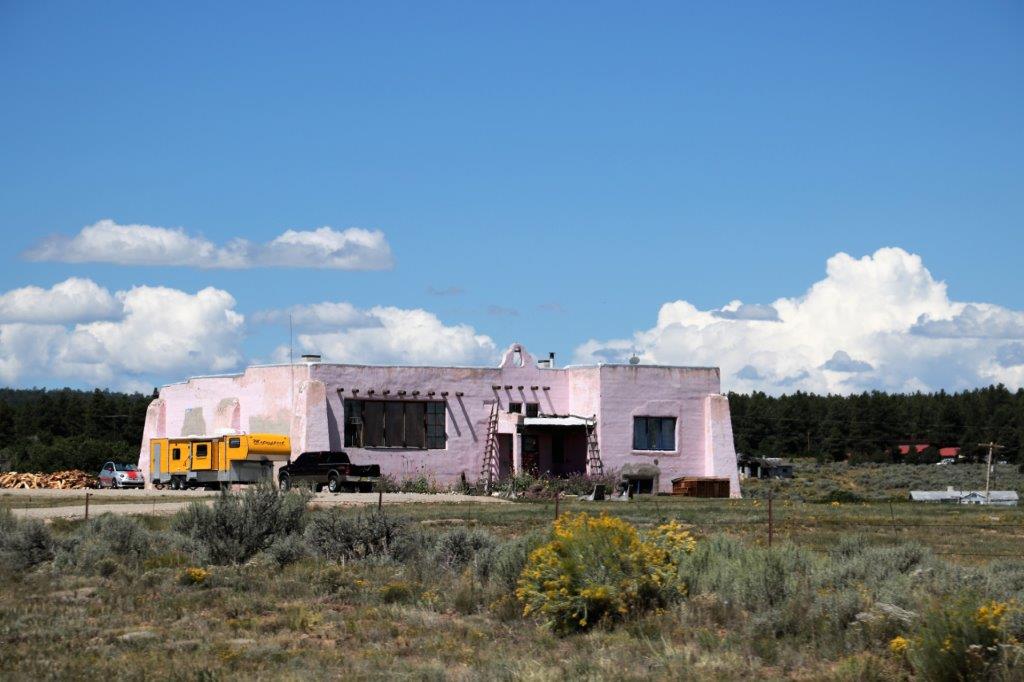
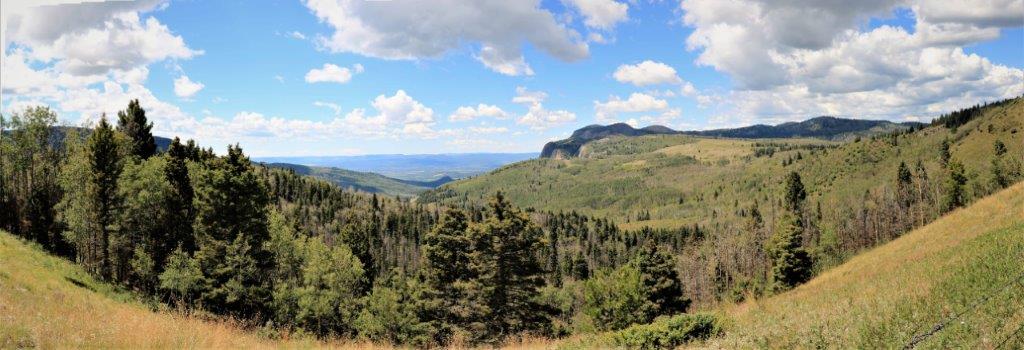
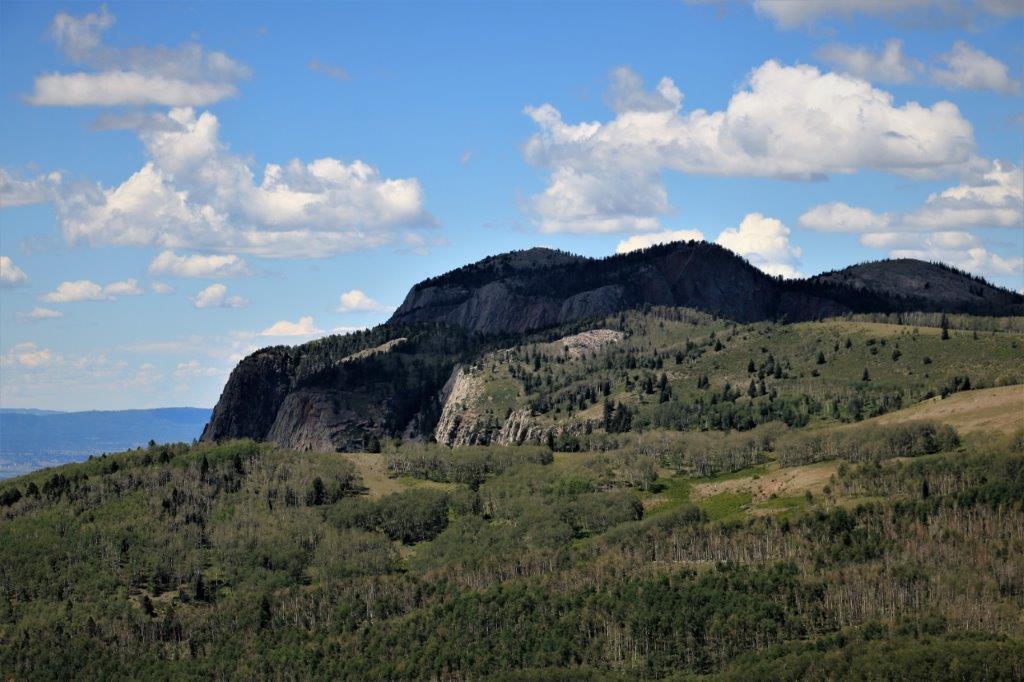
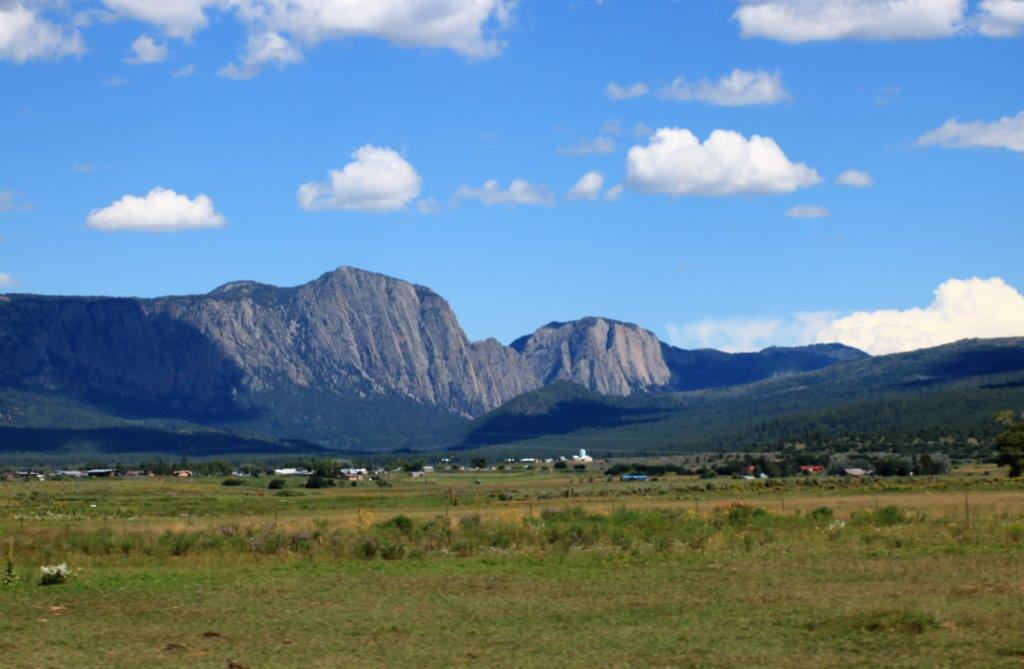
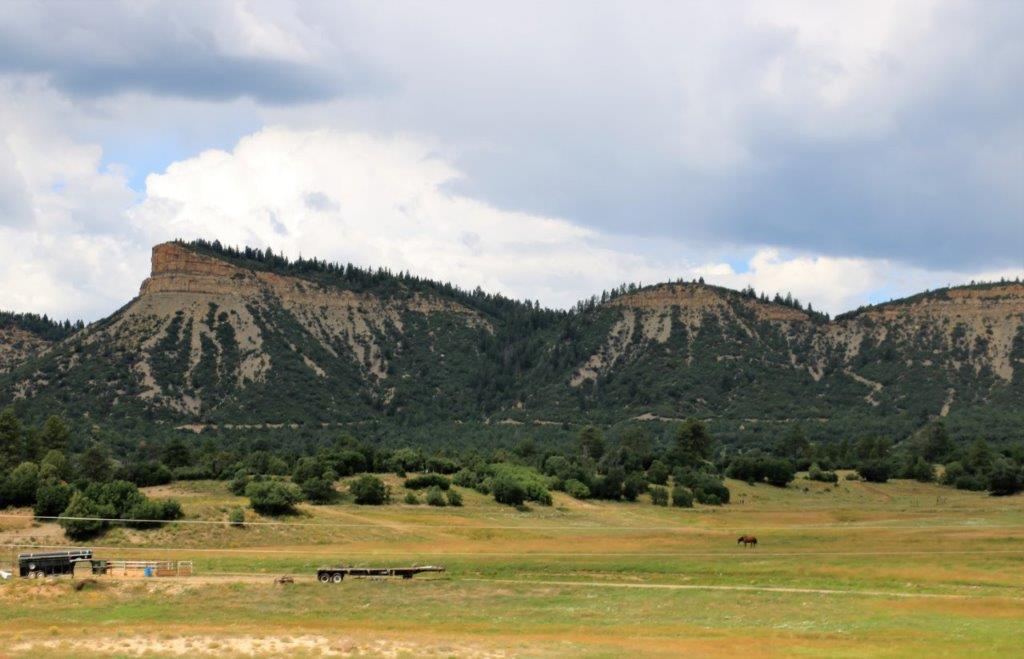
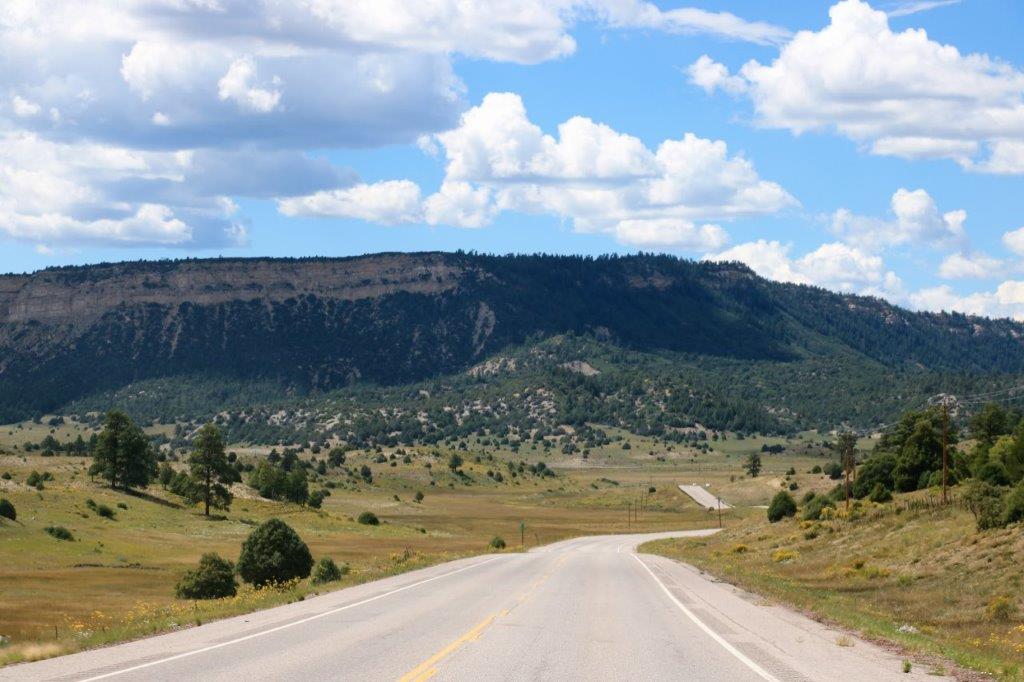
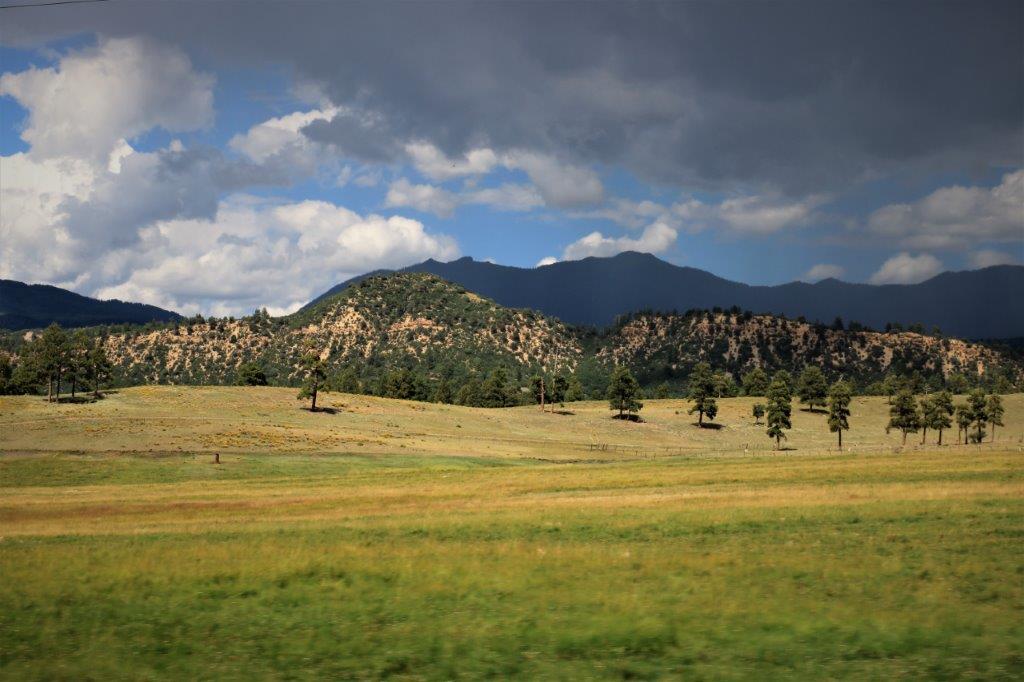
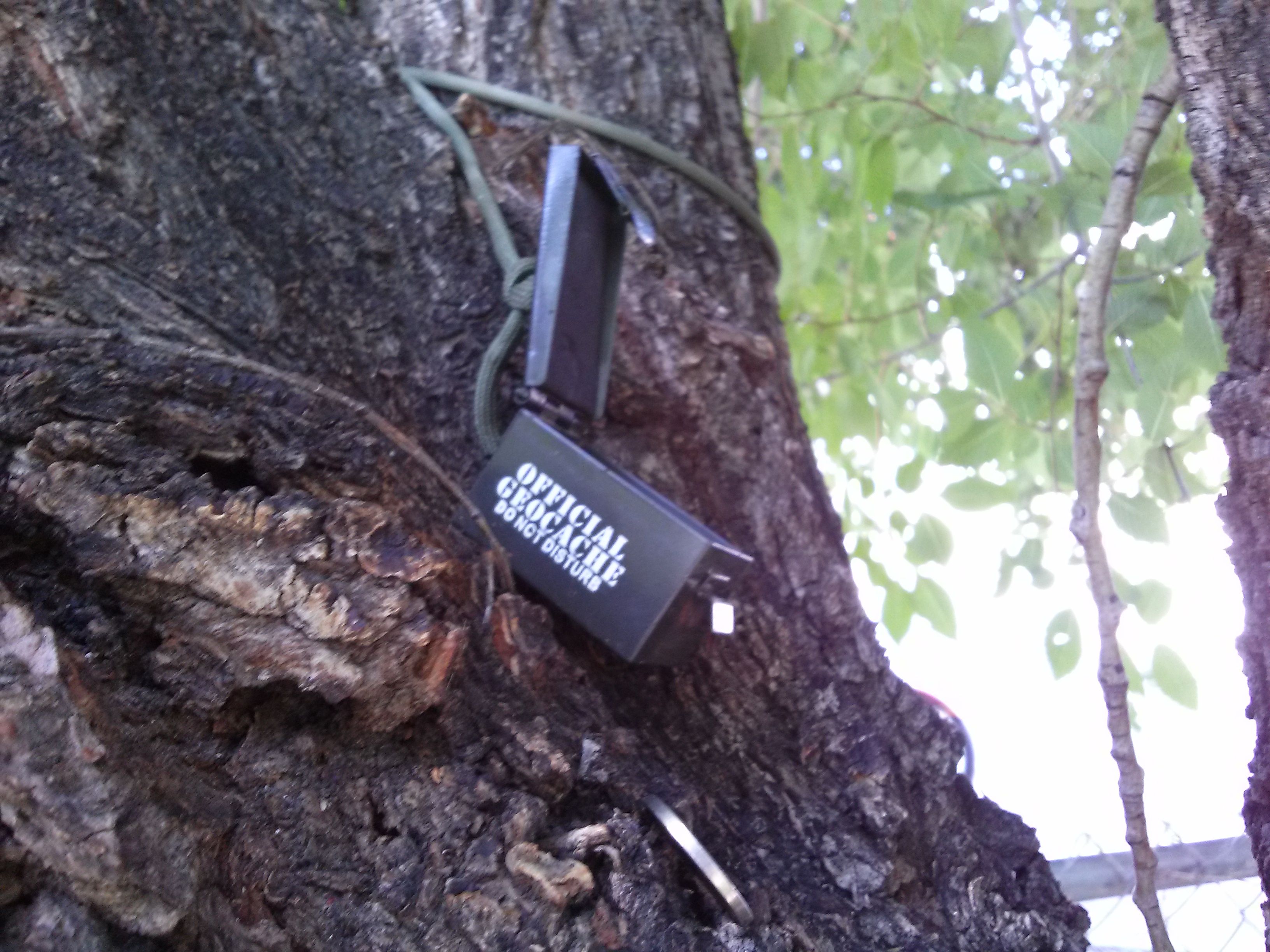
And this one was found as we were leaving Pagoso Springs to drive to Durango.   Such clever, clever people.  Oh, and I loved this tiny ammo can that was hanging in plain sight on a tree in the parking lot of a gas station.  Now for the bad news – depending on your point of view.  We had one of the most scenically beautiful days I have ever experienced. During all of our travels around the world – and especially around Canada and the USA – we have seen some glorious vistas.  Today driving through the mountain passes of the San Juans from Durango to Montrose (a distance of just over 107 miles) we were constantly in awe at the beauty and grandeur we saw around every corner.  Consequently I took more photos today than I did yesterday.  And since I primarily write this blog for my own enjoyment and armchair travels for my sister I can put as many of them in my blog as I choose.  (I did try to be a bit discriminating honest).
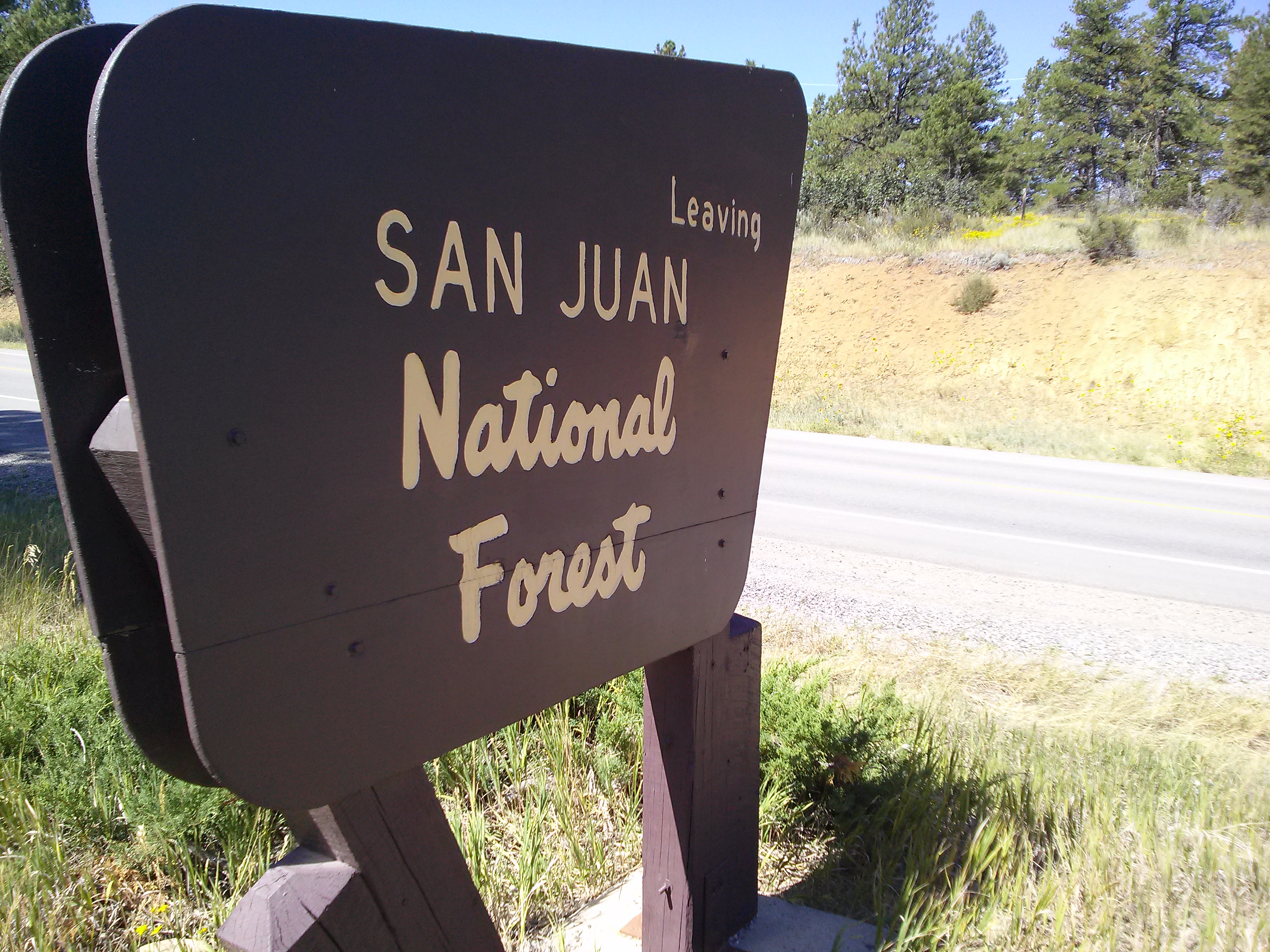
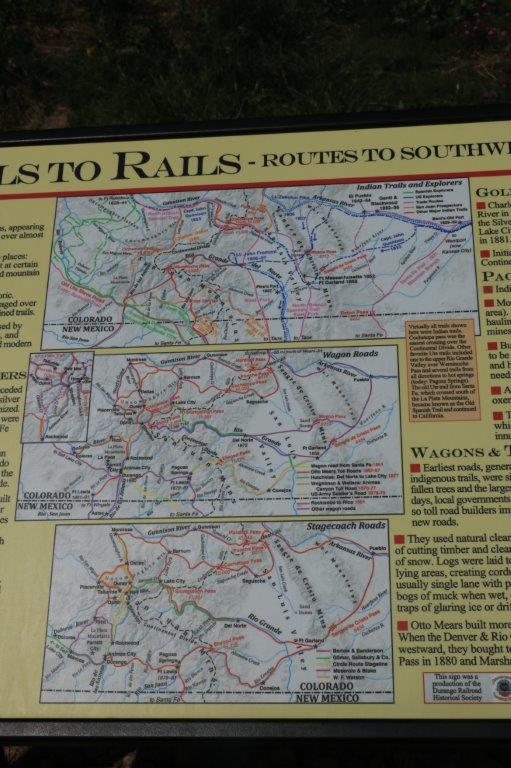
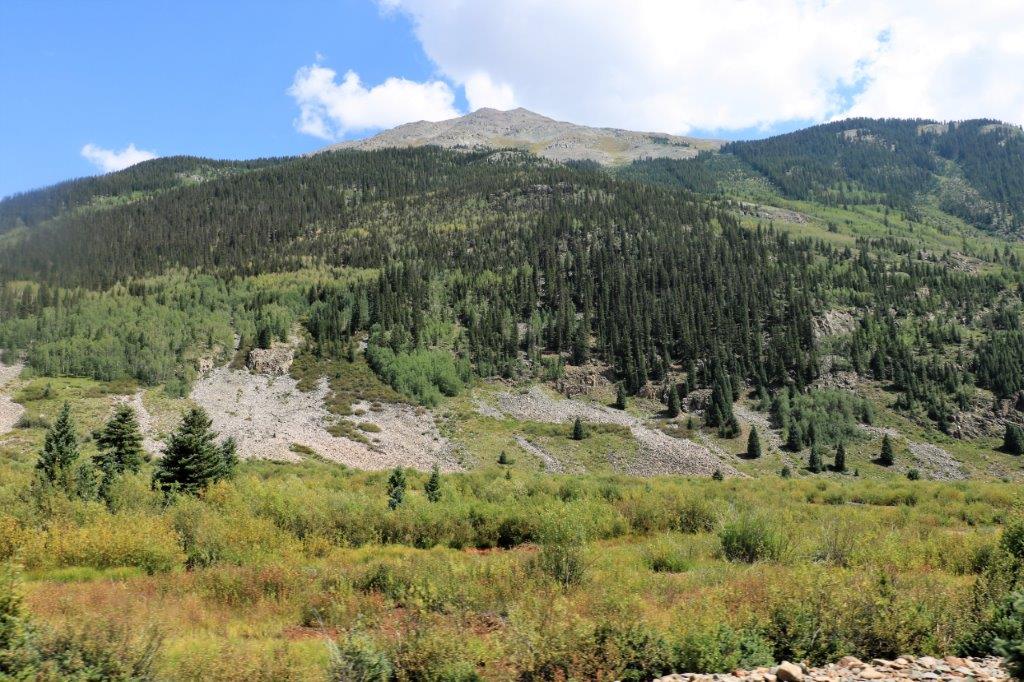
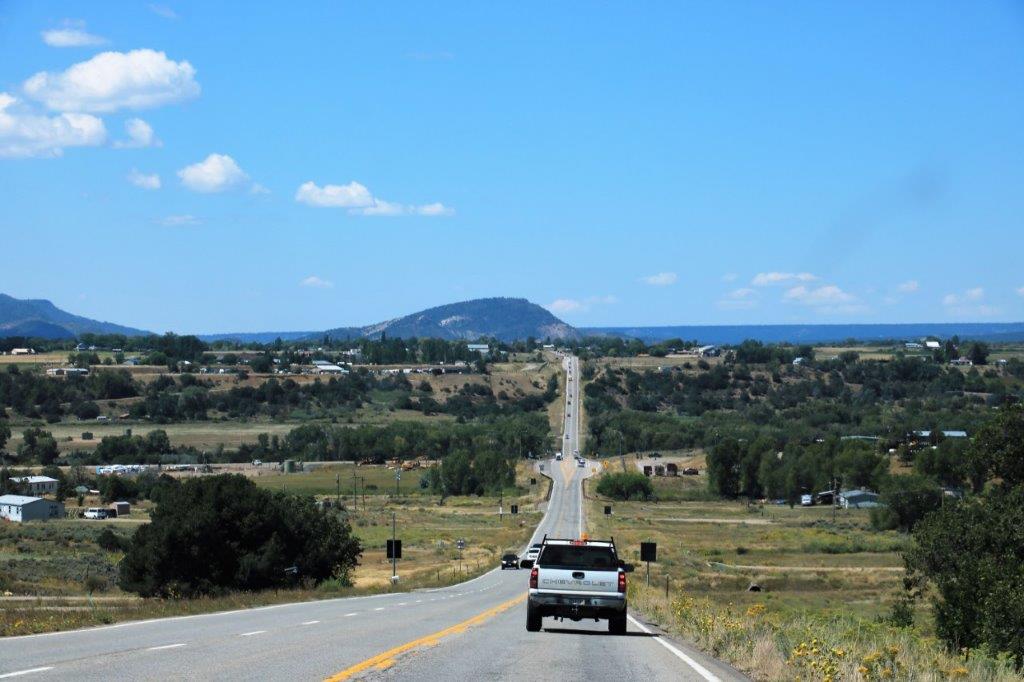
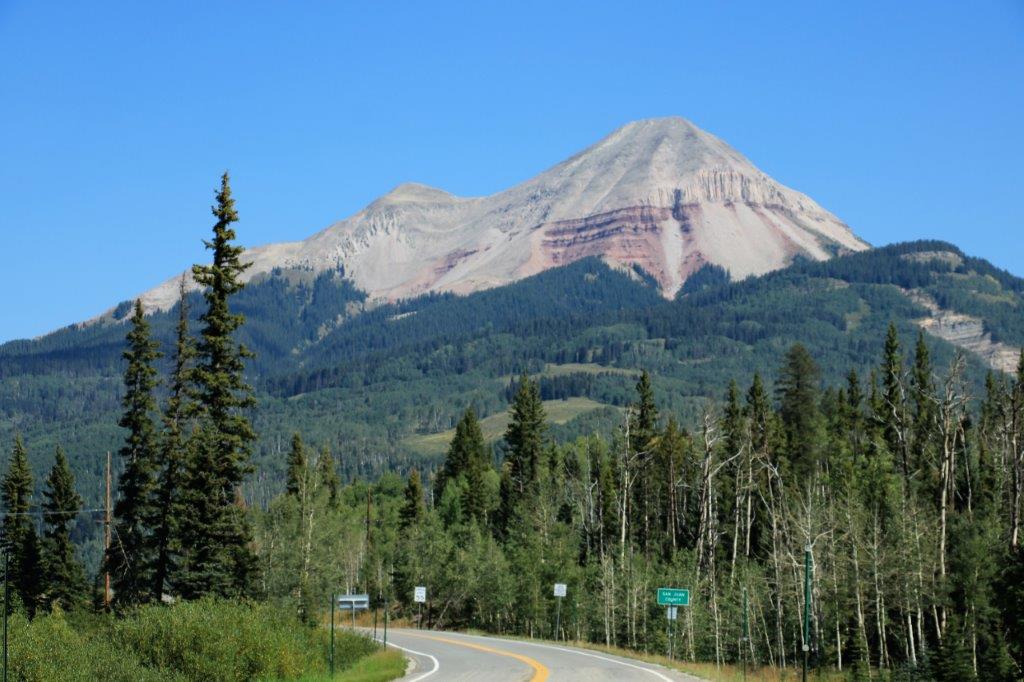
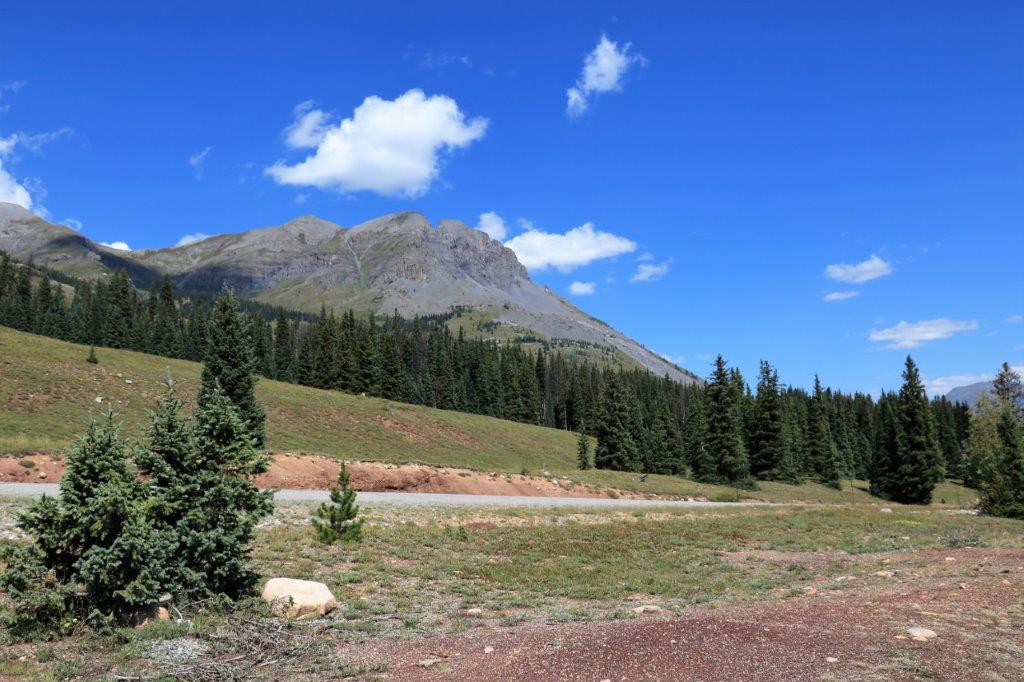
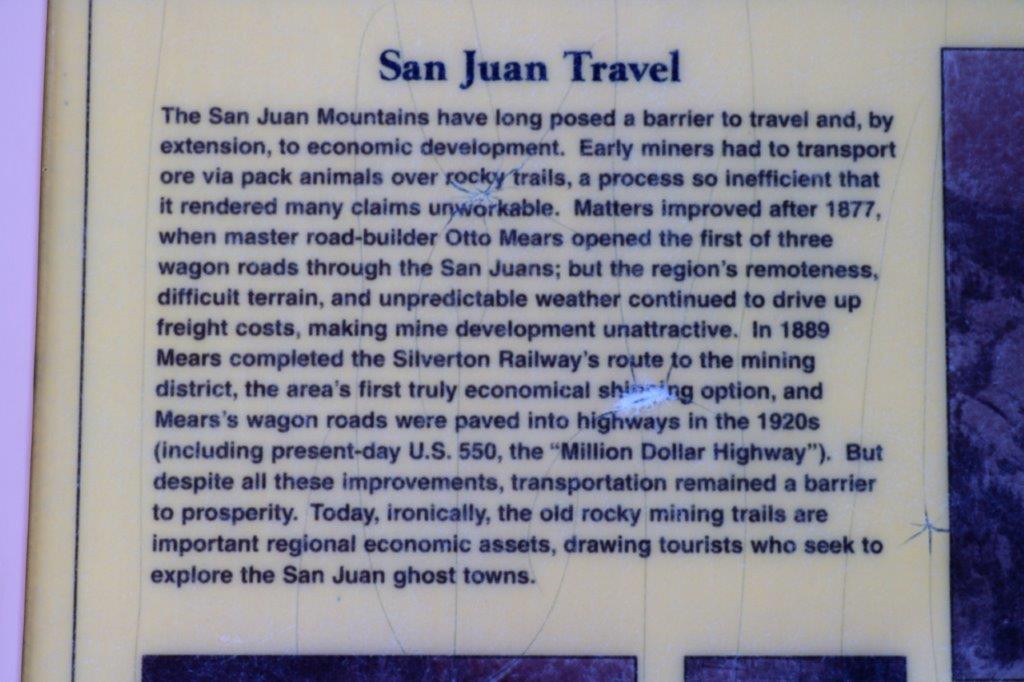
Highway 550 north takes you up through Silverton where we went on the steam train yesterday but the scenery is completely different and instead of being low following the course of the Animas River you go over the mountain on the other side of the river.

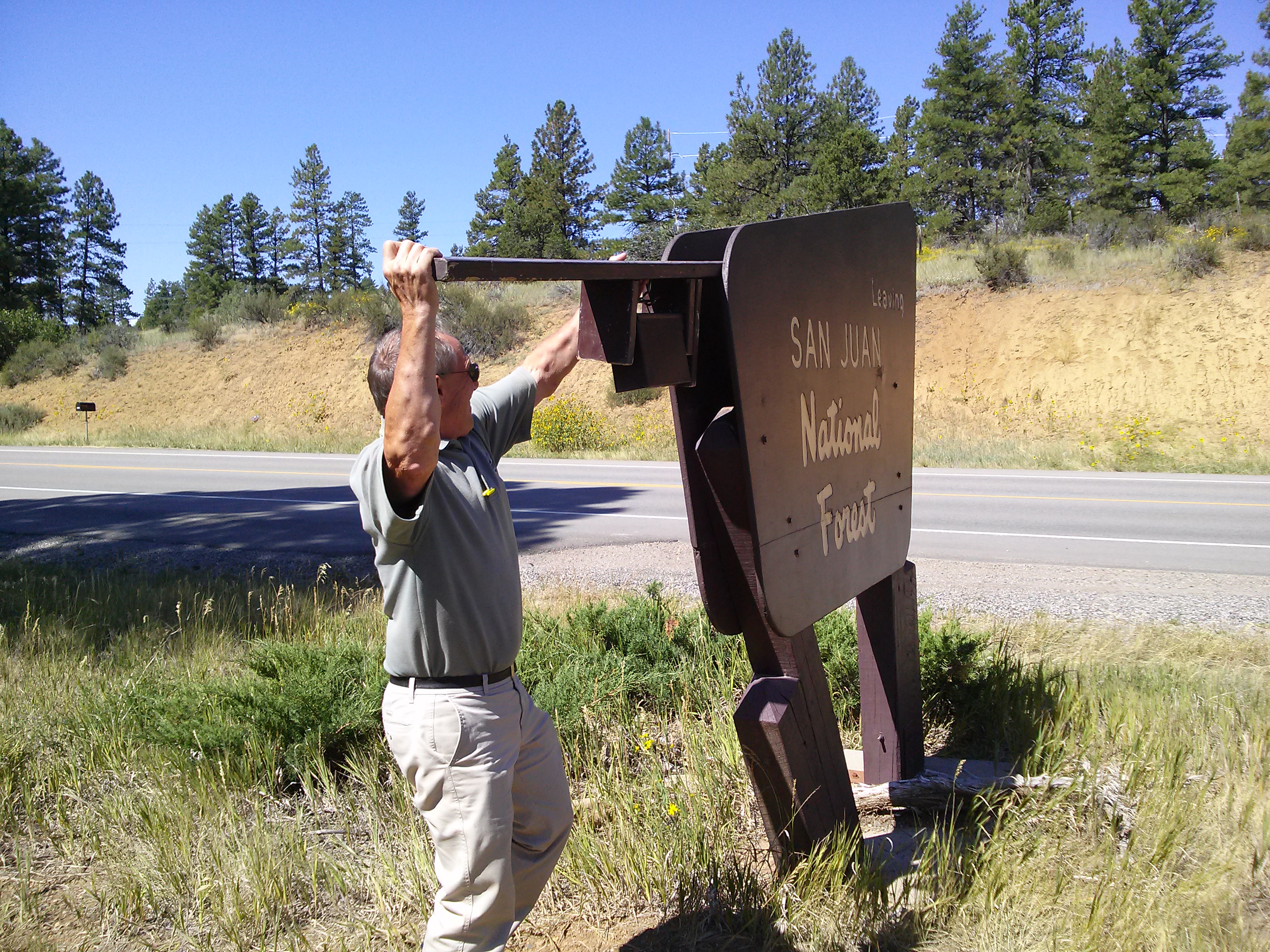
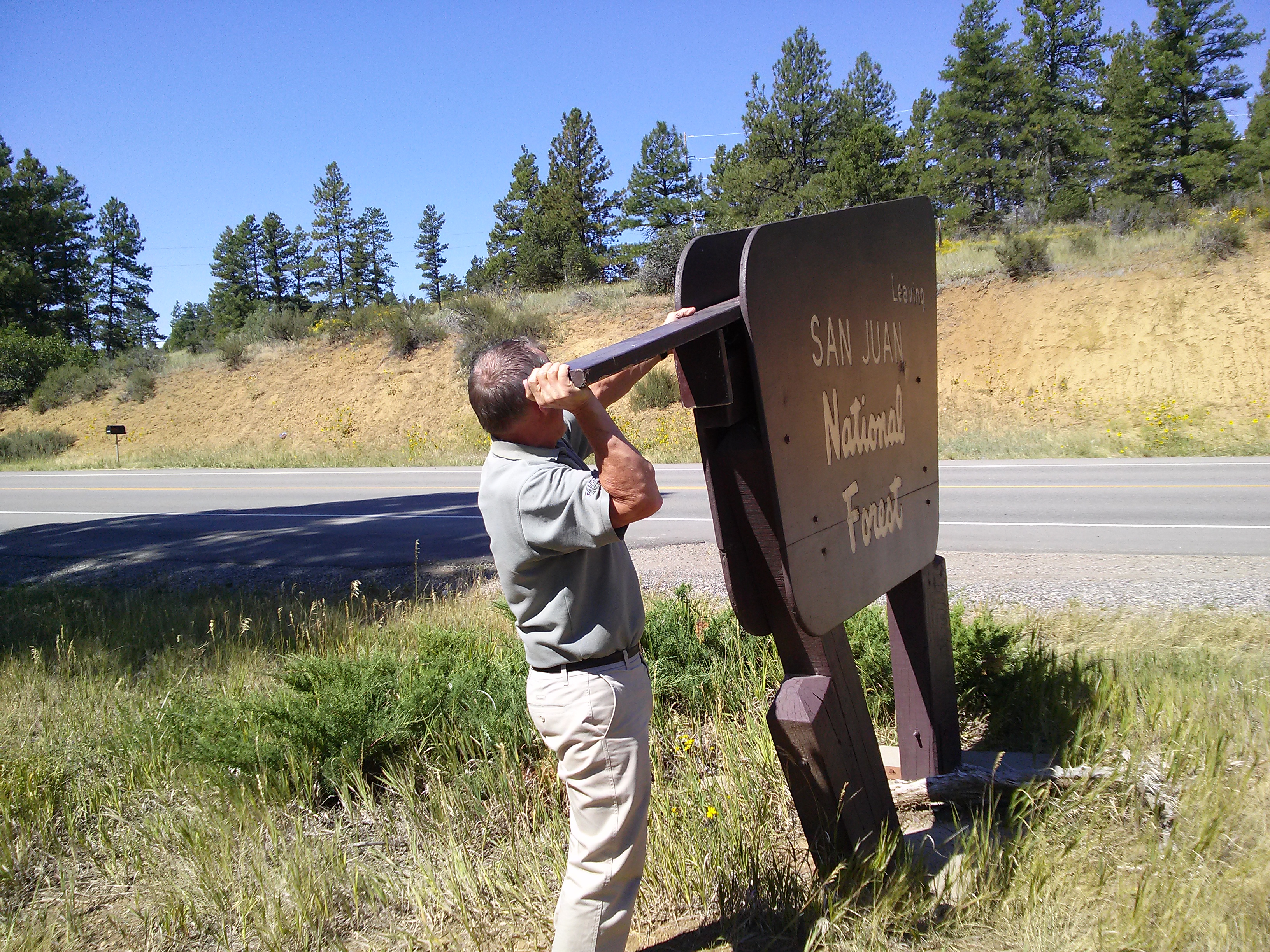
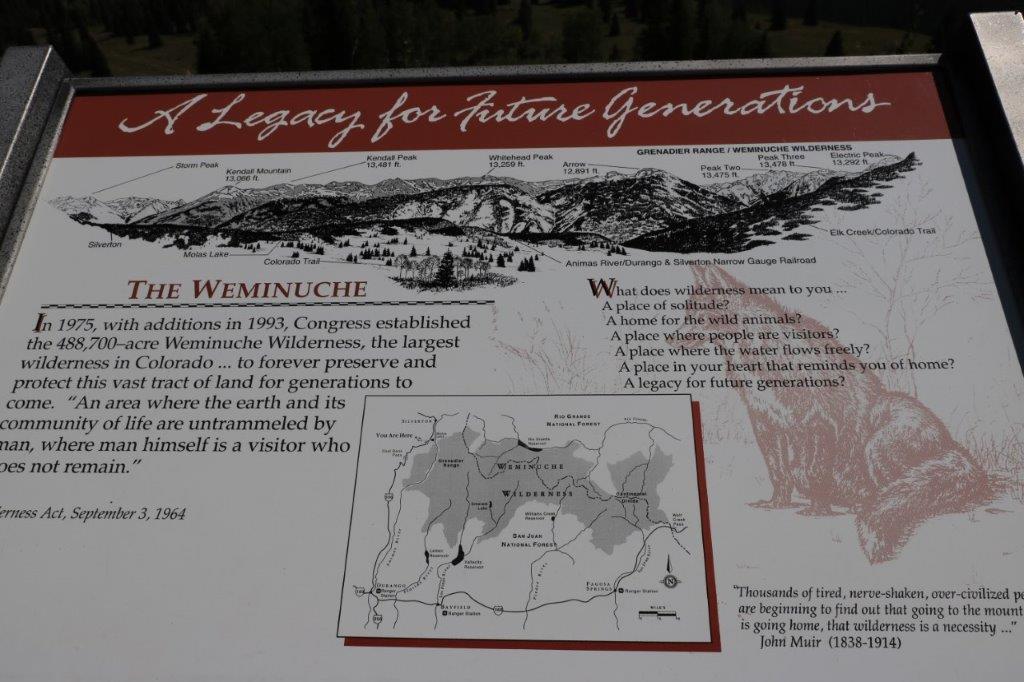
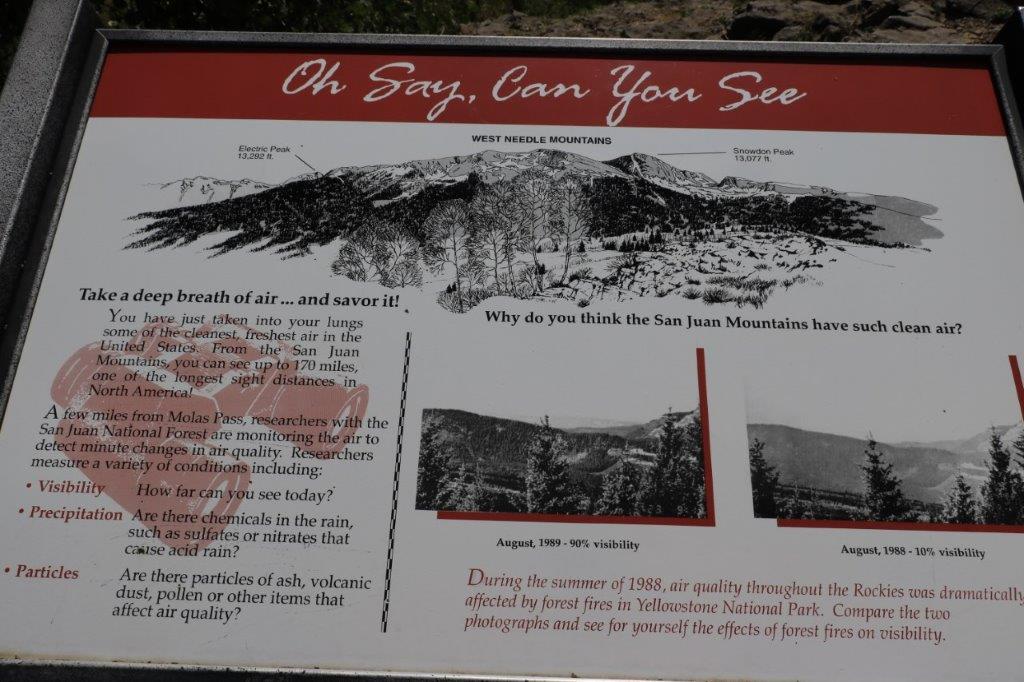
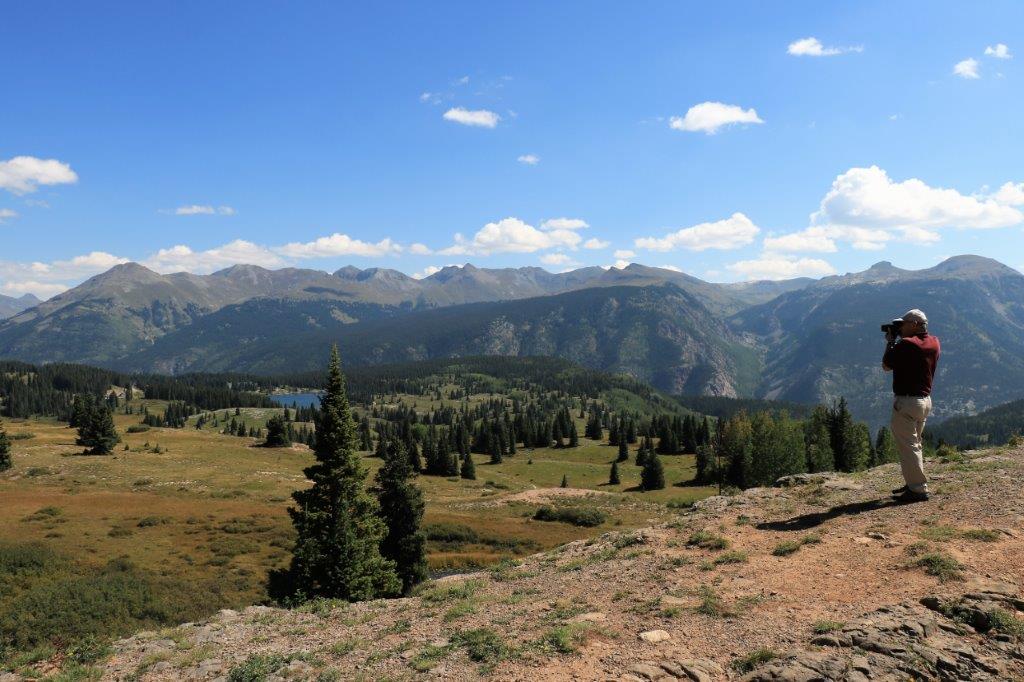
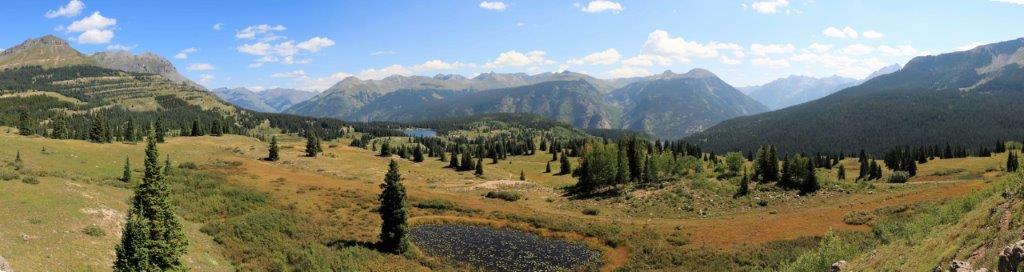
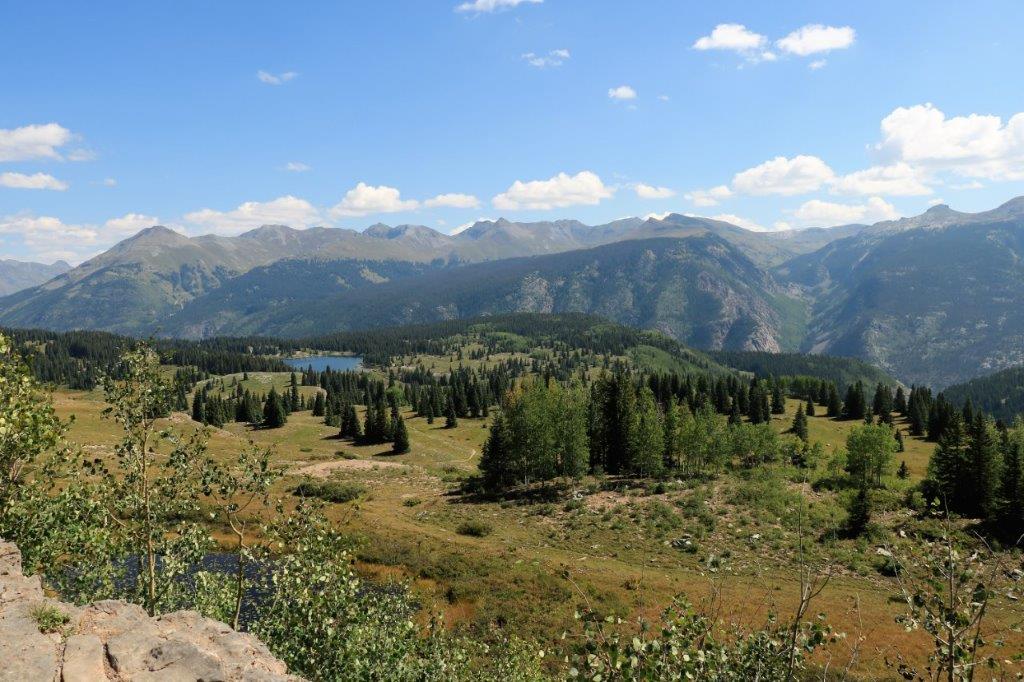
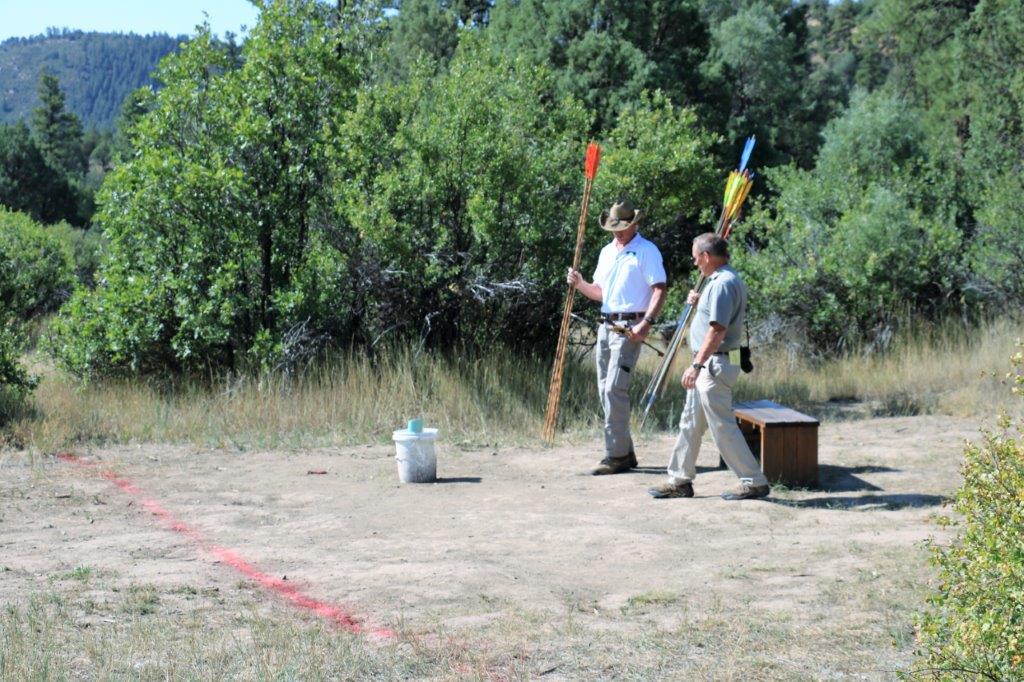
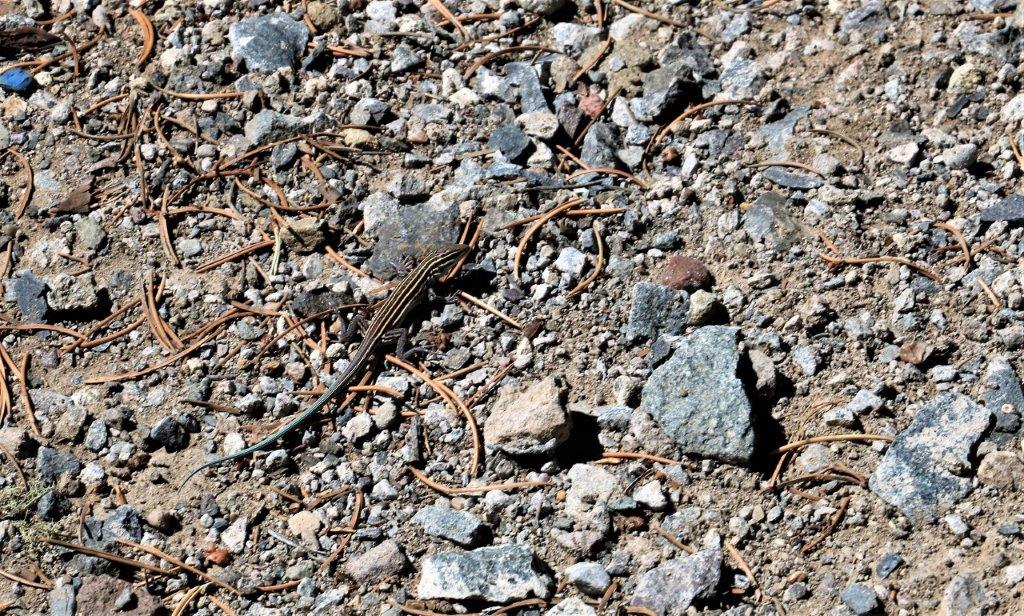
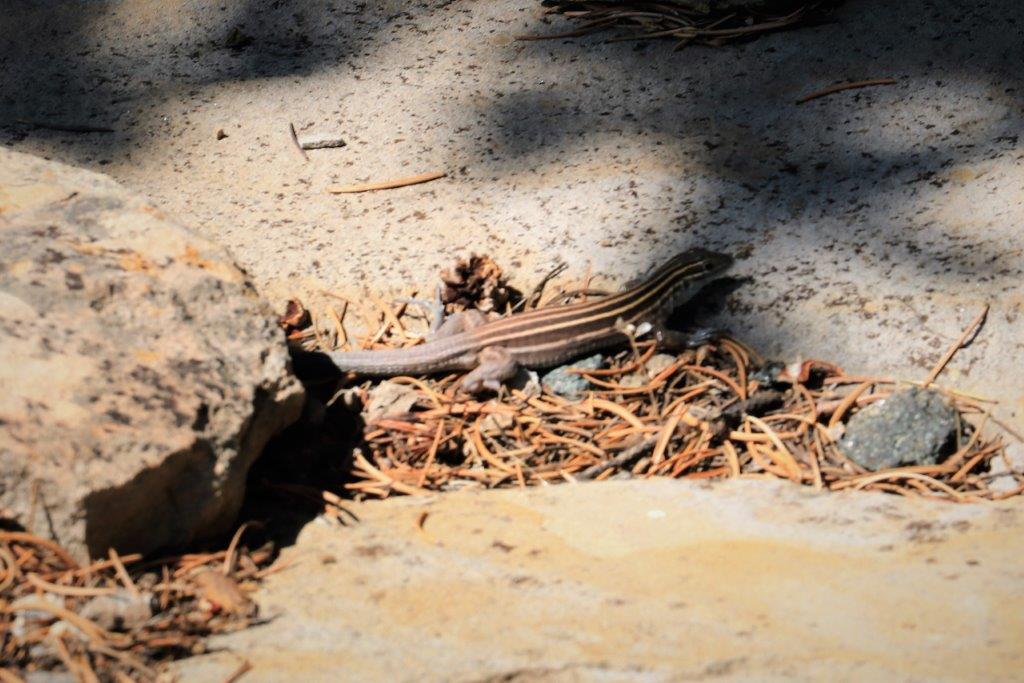
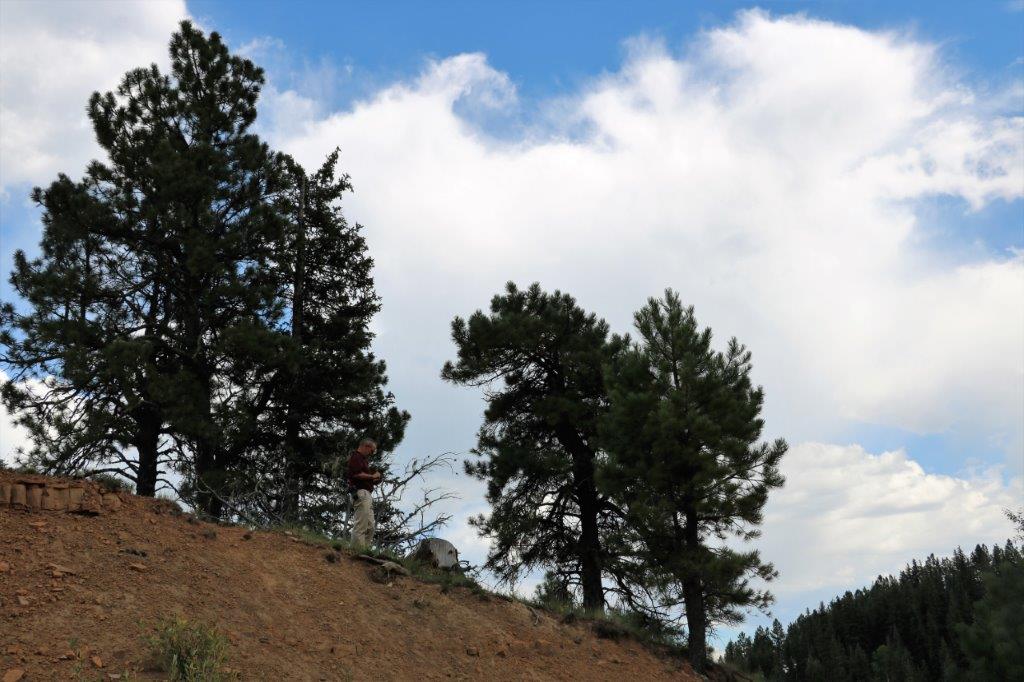
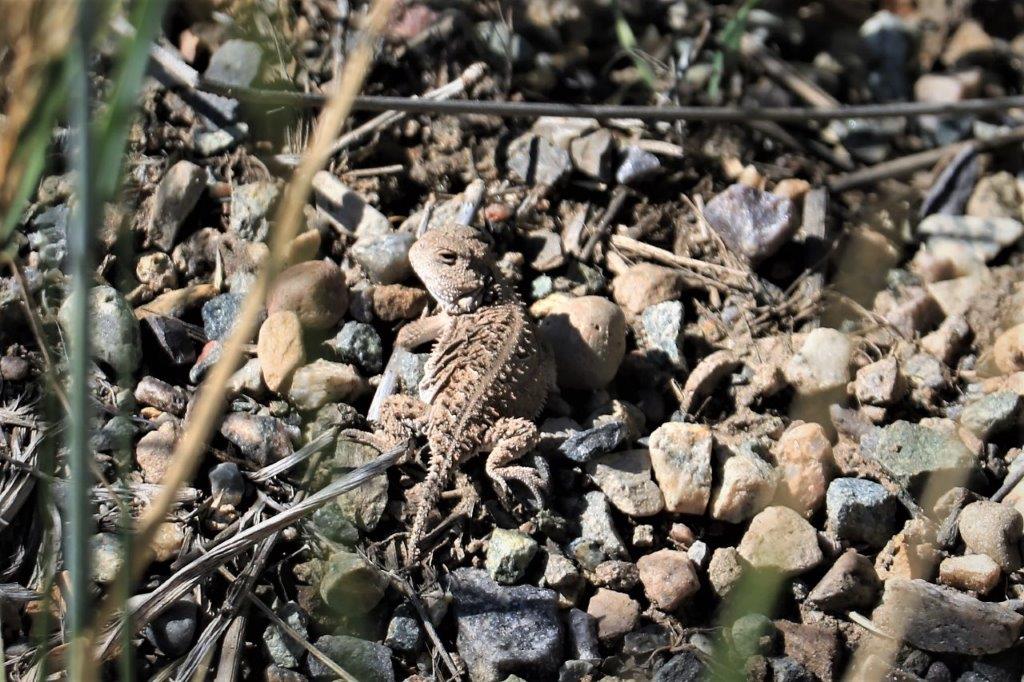
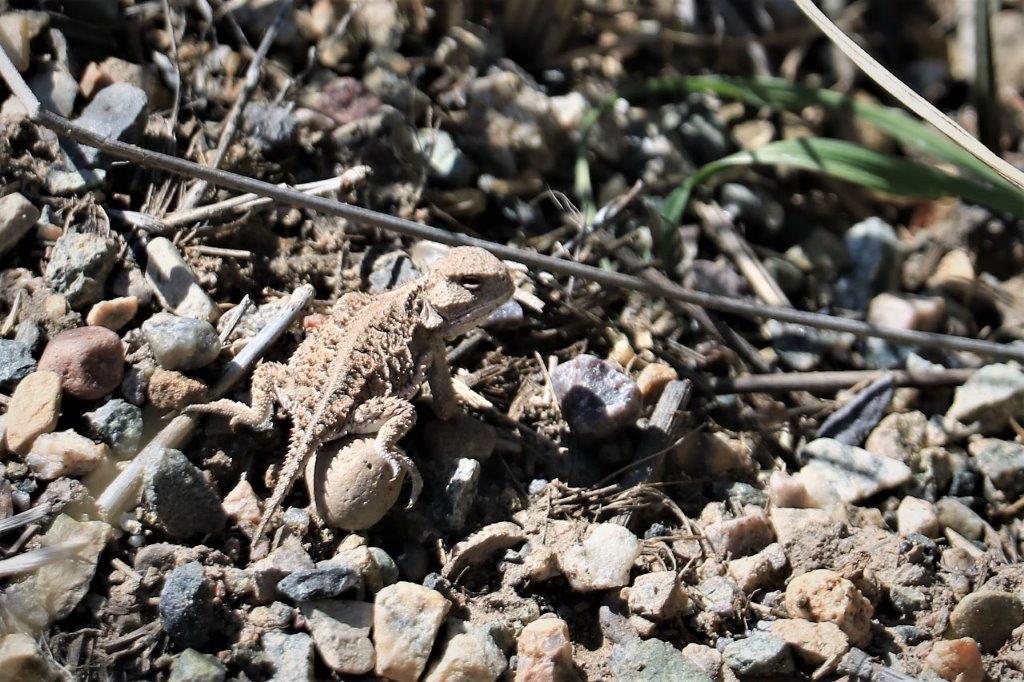
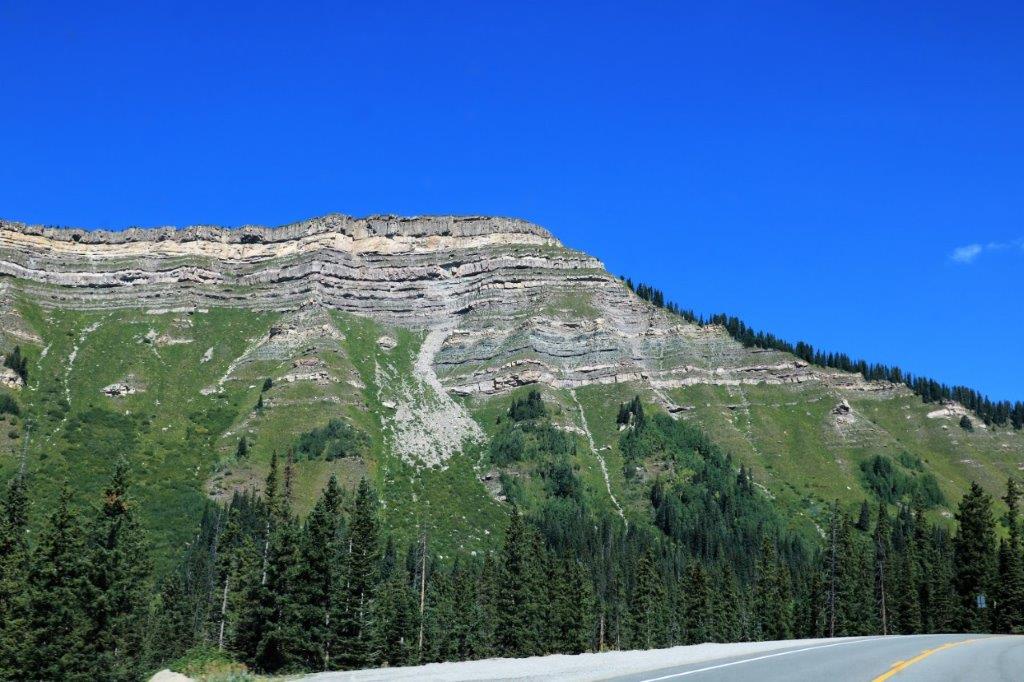
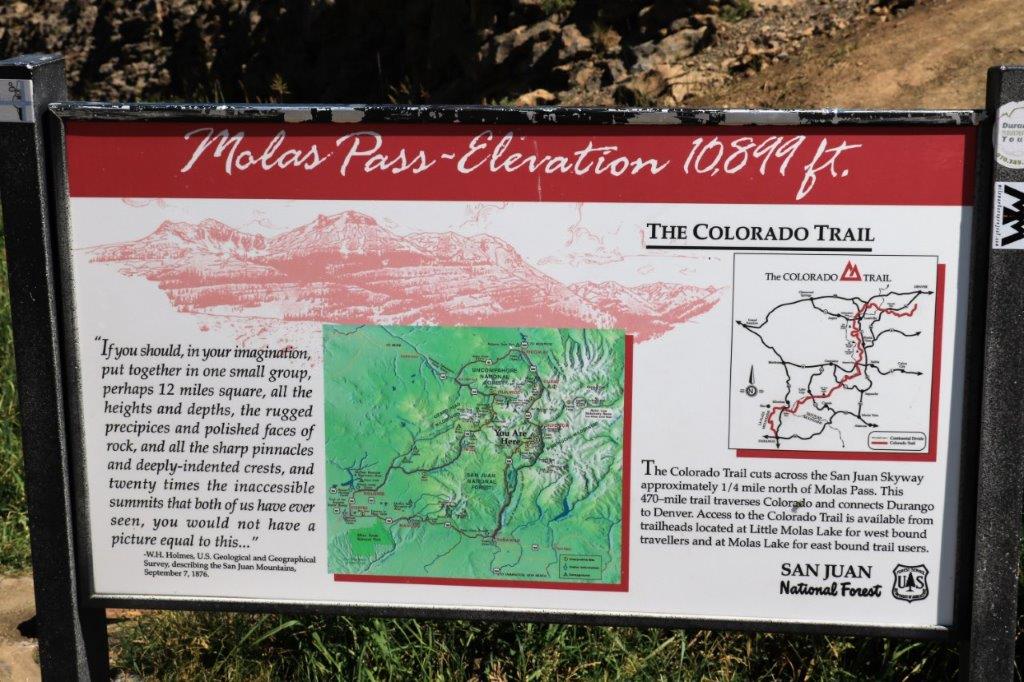
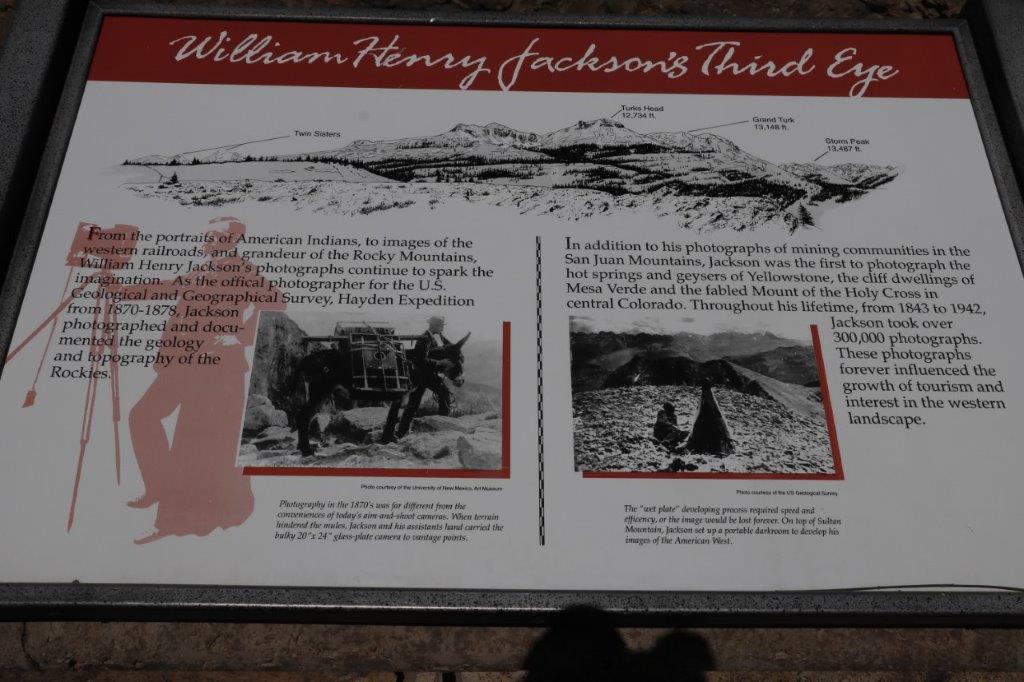
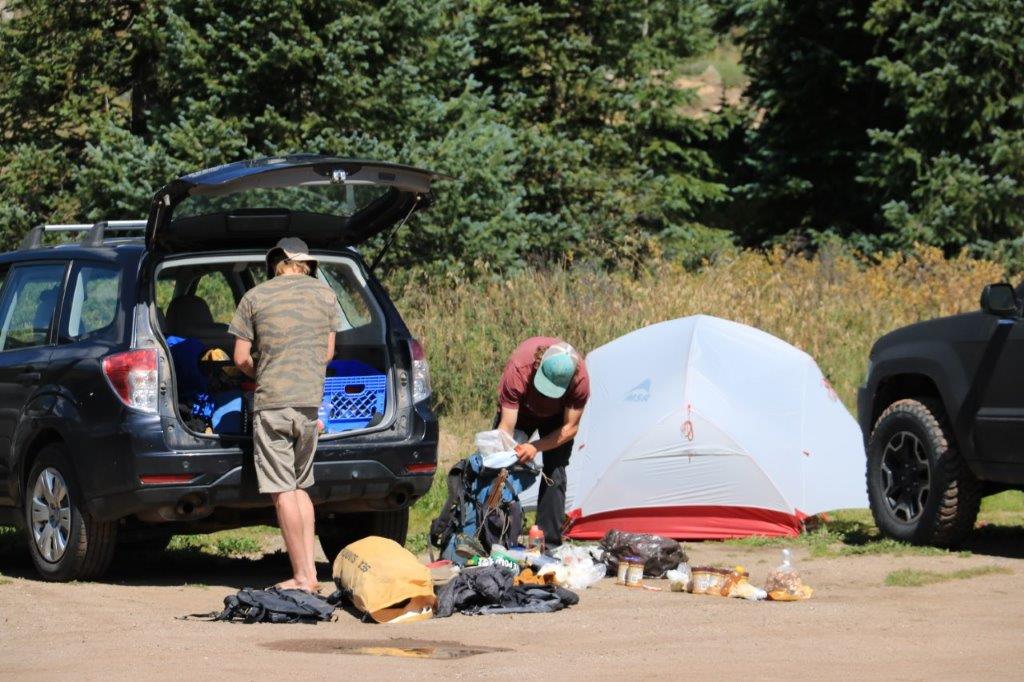
We stopped just out of Durango to find a geocache and I almost stepped on this little lizard.  He was tiny, only about an inch and a half long. The steam train traveled 45 miles up to Silverton, the same distance as the highway even though the routes are so different. The train took 3 1/2 hours.  We left Durango at 10 and arrived in Silverton at 12:30 – about an hour after the train arrived.  We drove through the Coal Bank Pass.  The pass is difficult to keep open in winter due to the 300+ inches of snow they get each year. We stopped at many of the pull outs and look outs and spent some time at the Molas Pass summit finding a cache hidden in a tree. There were a few caches on the side road to Molas Lake and we found the first one but the rest of the road had too many rocks and potholes to take Poppy.  I don’t know if these two chaps were getting ready to leave for an extended hike or had just returned from one but they had lots of gear and containers they were sorting. A few miles out of Silverton we caught up with a long line of traffic that turned out to the result of a construction zone.  It took about a half hour to get to the area that was being widened and there was no one working on the Sunday but the automatic stop lights were controlling the traffic. There were very few vehicles coming through from the other side and a very long line going our way.
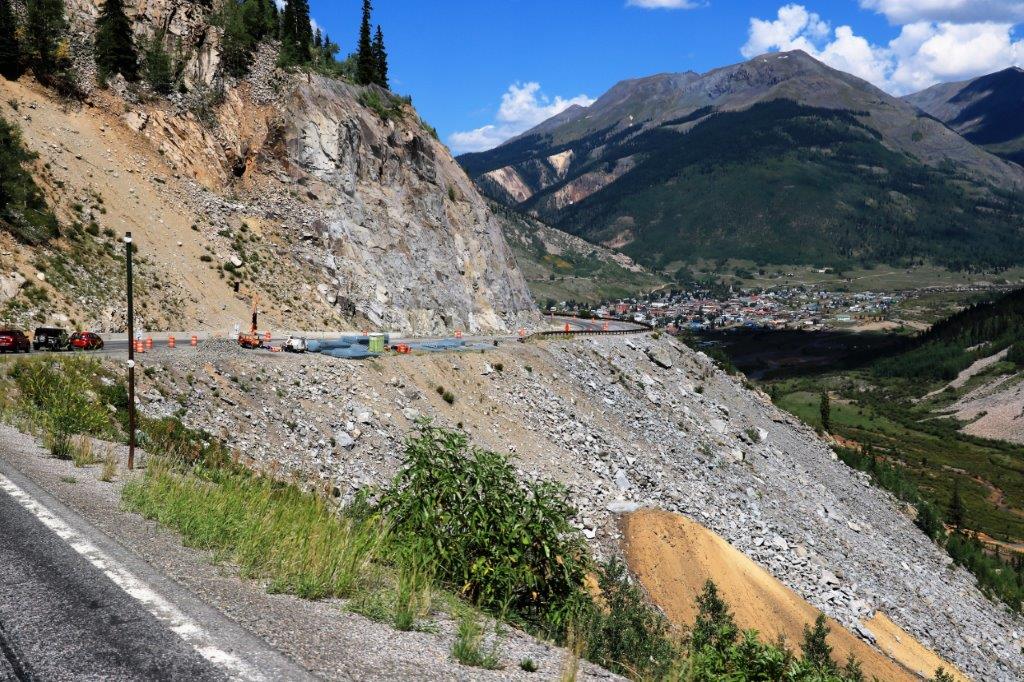
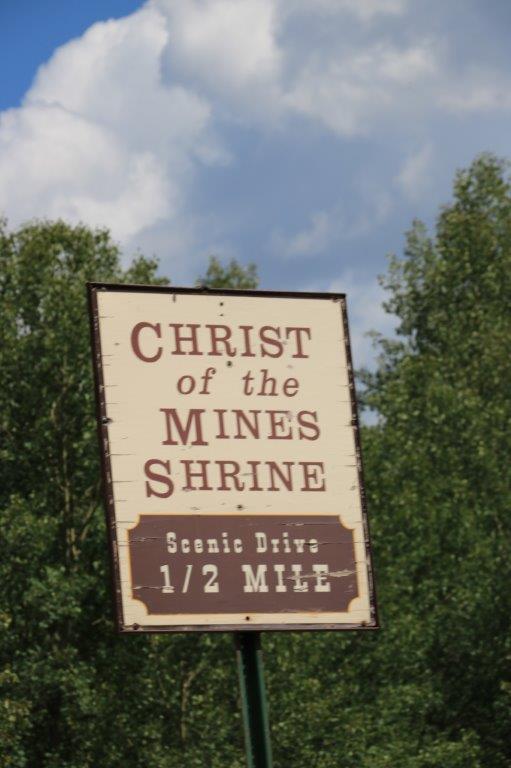
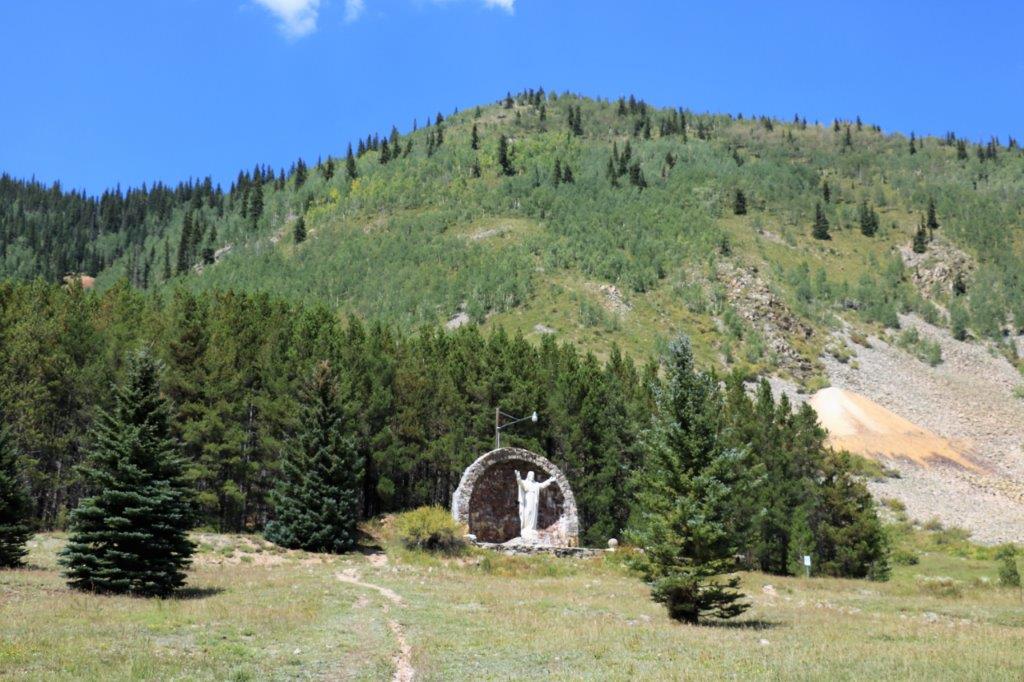
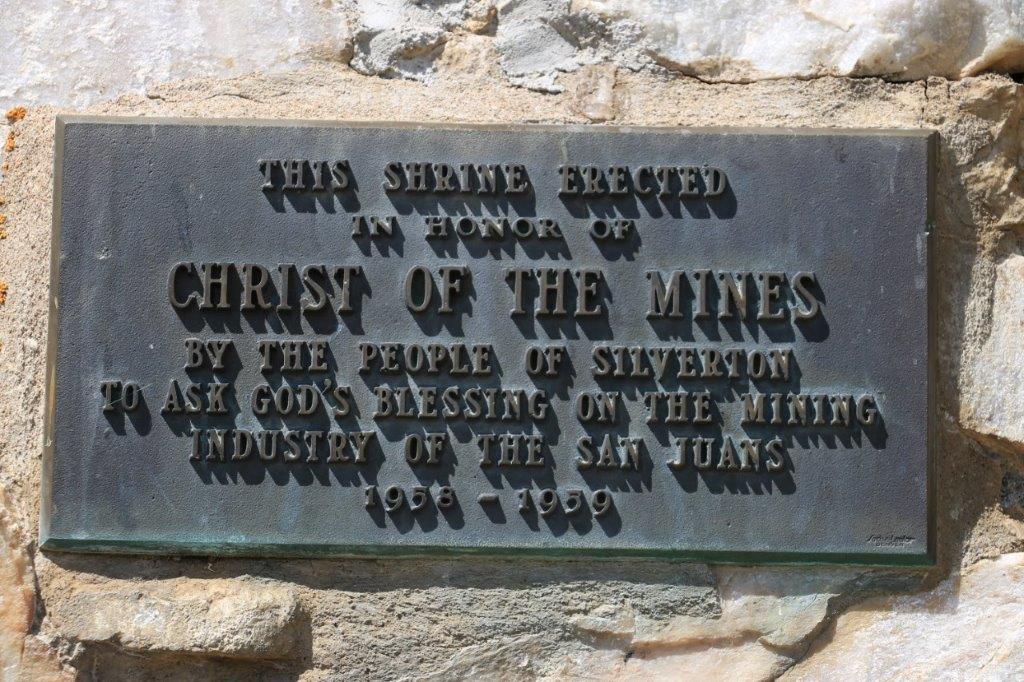
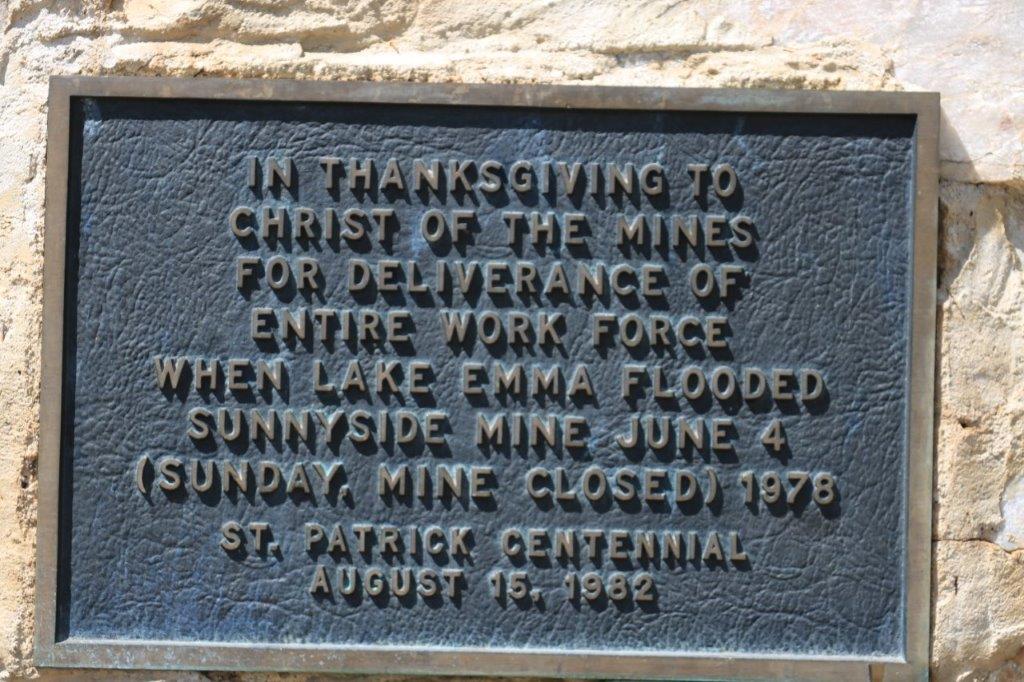
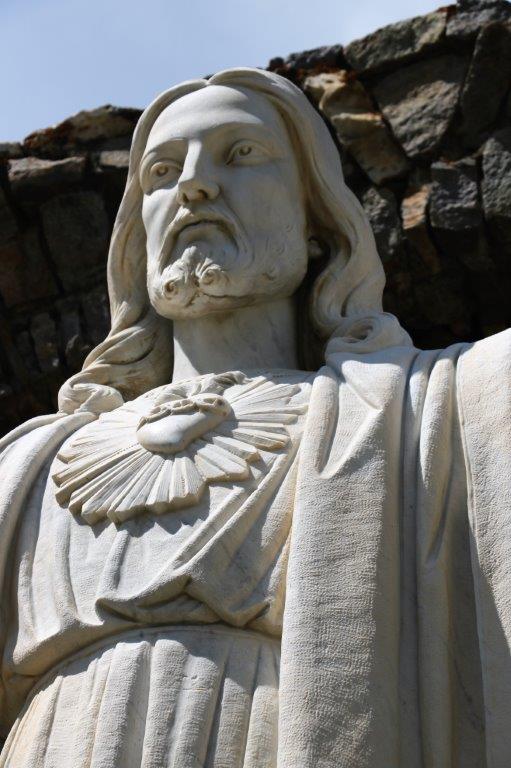
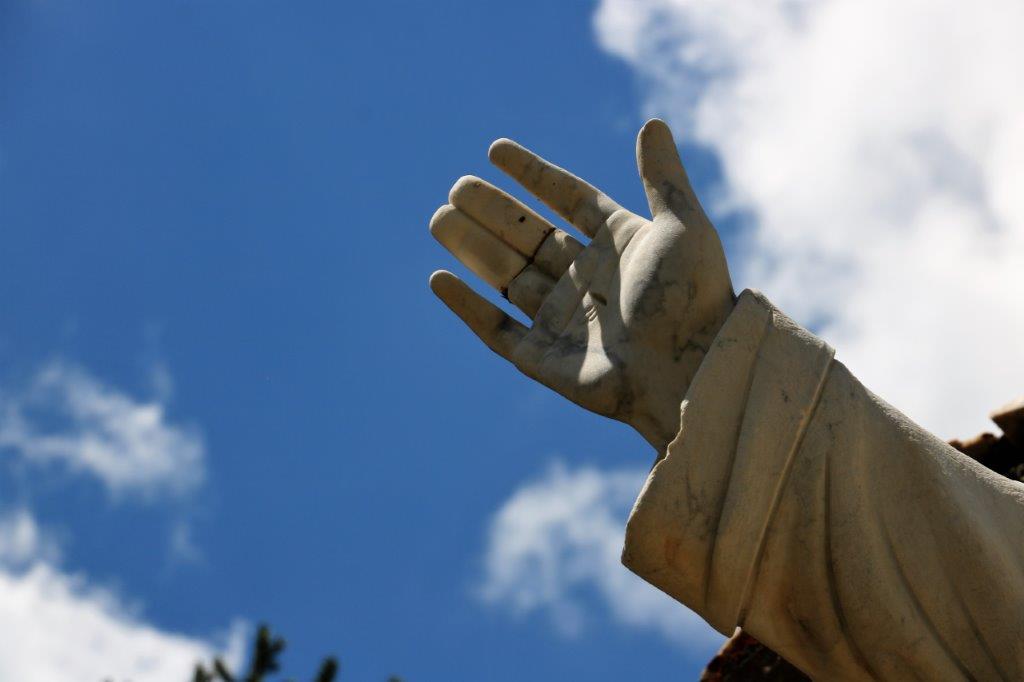
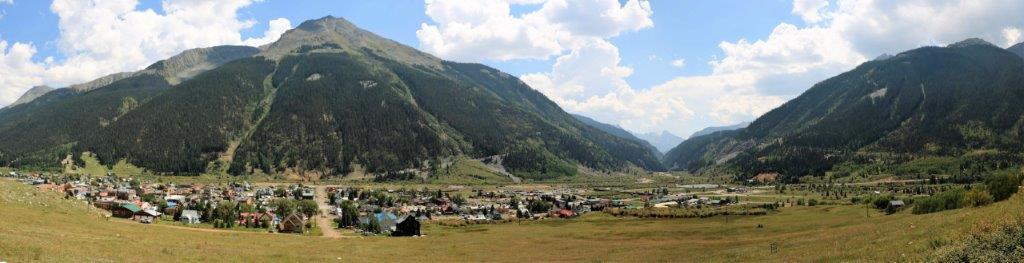
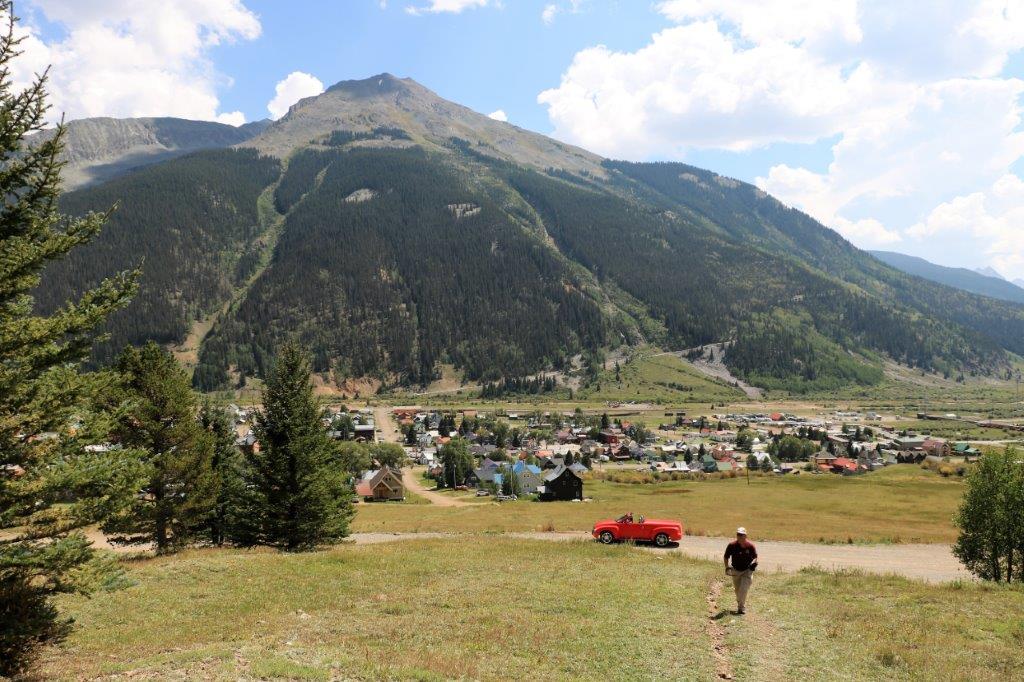
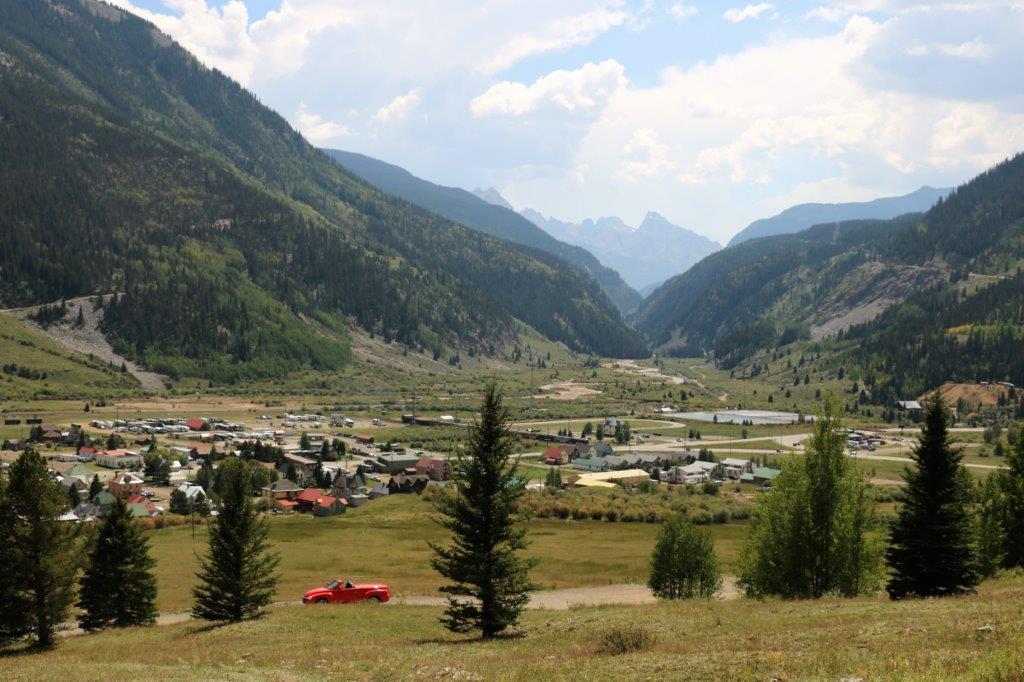
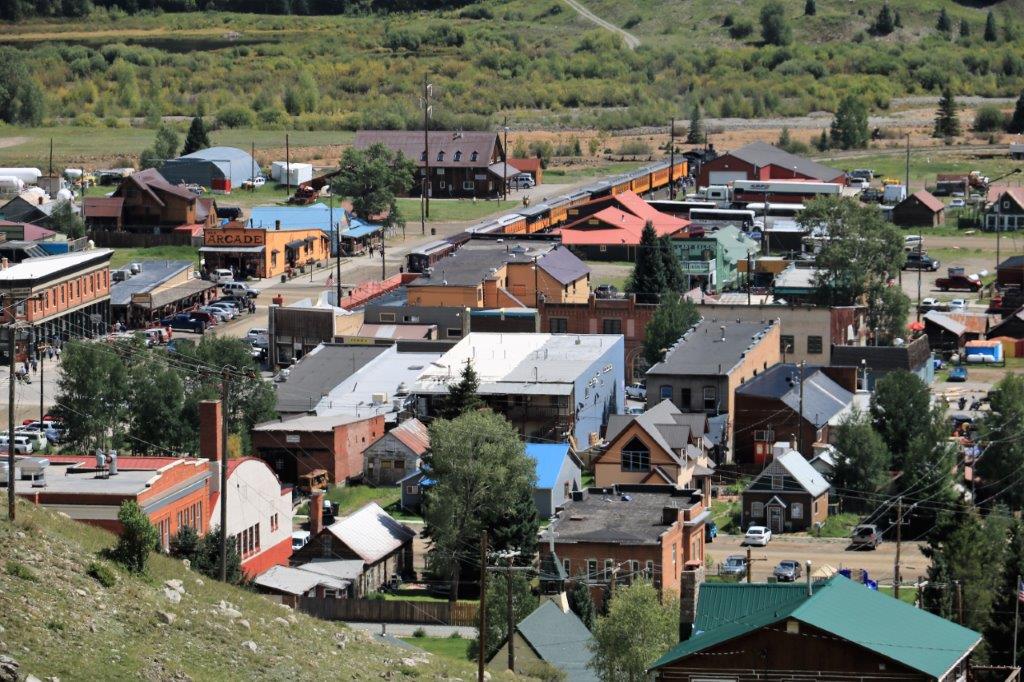
It was a nice view of Silverton to come in from the high mountain side. We didn’t take the turn into town since we had been there yesterday but we did take the turn off on the other side of town to go half a mile up a gravel road to see the Miner’s Shrine that had been erected on the hill overlooking Silverton. We had been told that the Italian miners had a piece of Carrera marble sent from Italy to be used for the statue of Christ for safety of the miners. There was a nice view of Silverton from the shrine.  Silverton, due to its high elevation only gets about 30 frost-free days per year. Environmental Protection Agents did not listen to the advice of local miners – to drill a small test hole – before using some heavy equipment to do testing on water build-up in the 100 miles of tunnels of the Sunnyside mine.  The result was that nearby Lake Emma drained into the tunnels.  Thankfully it was a Sunday and no one was working so there were no injuries or deaths.
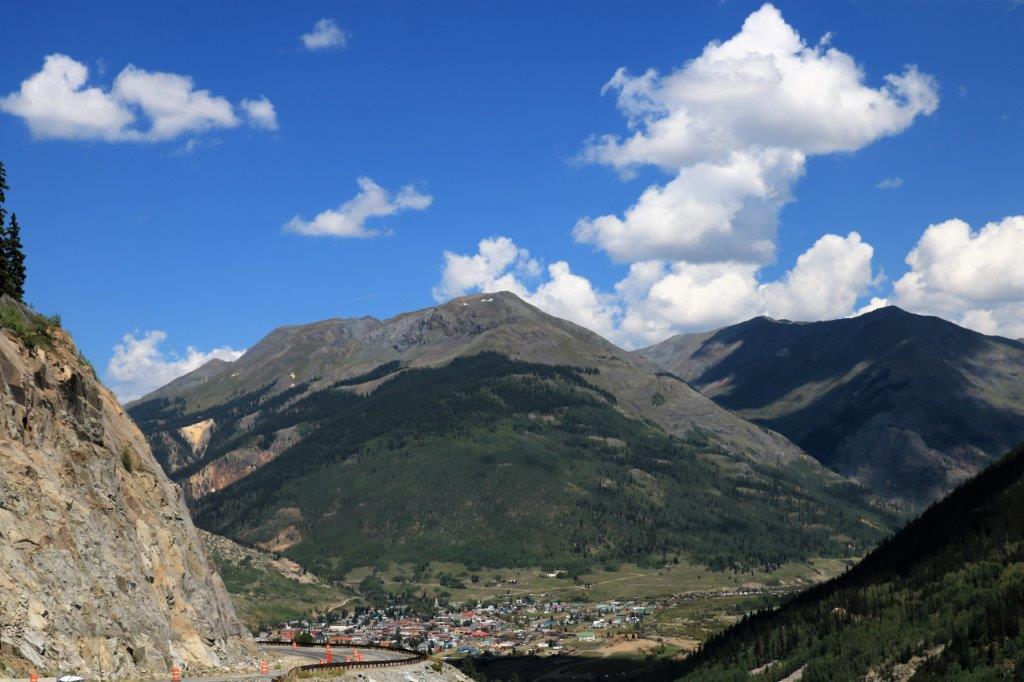
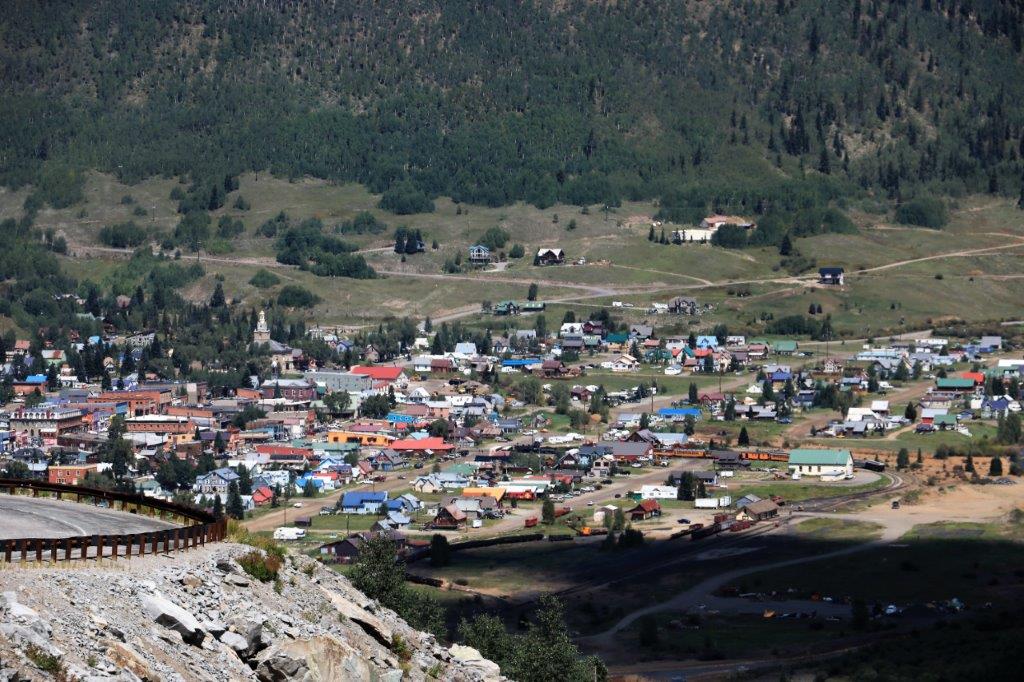
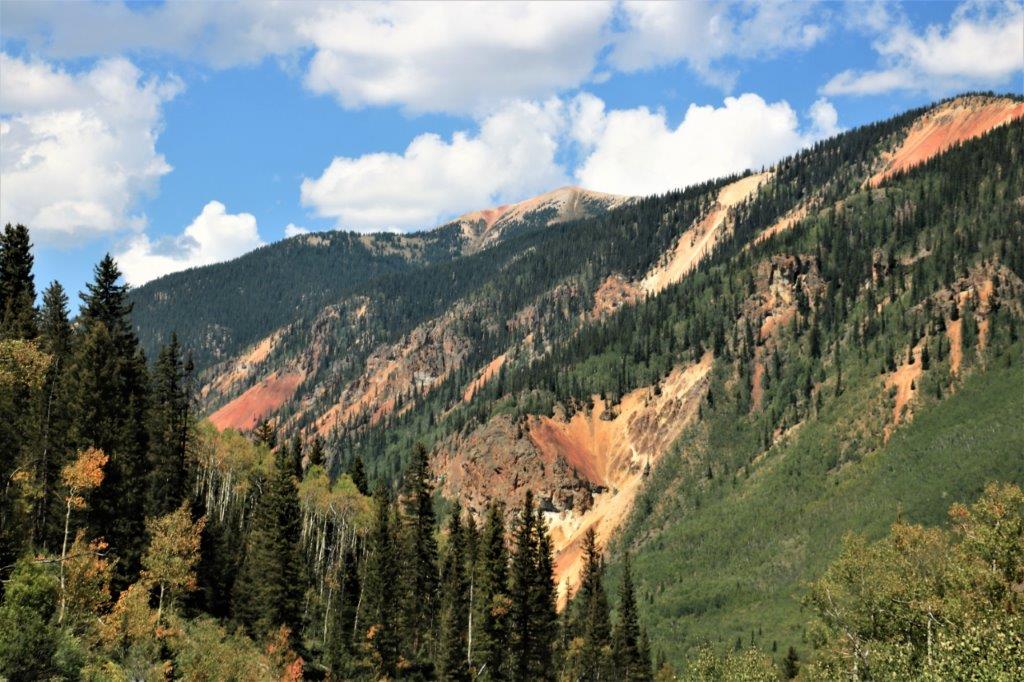
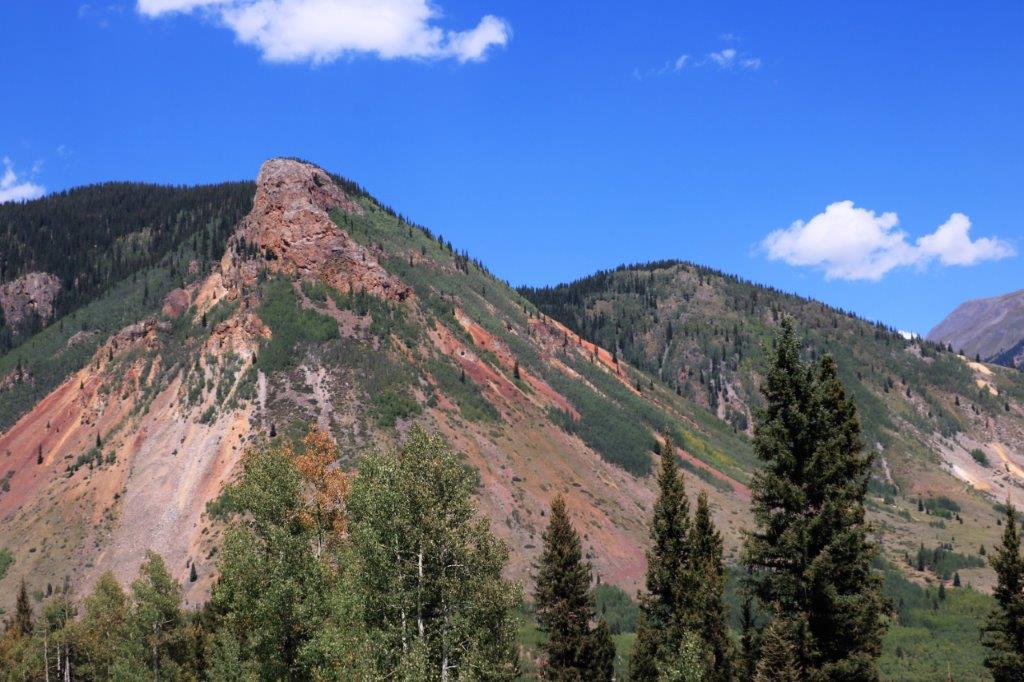
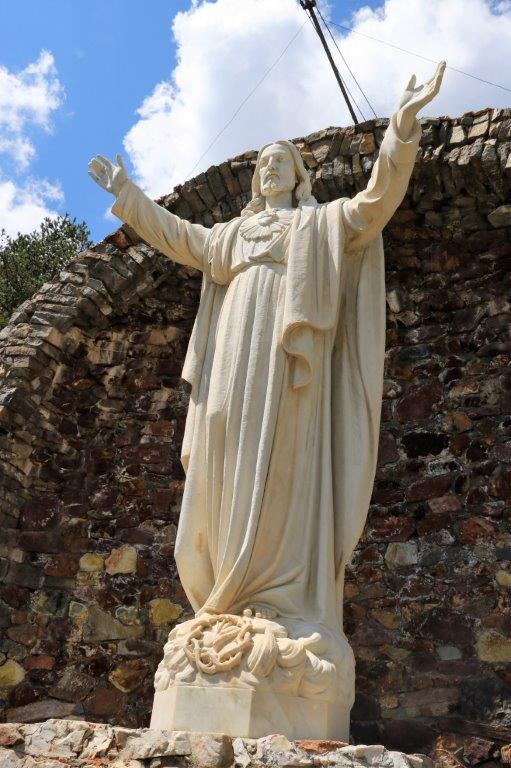
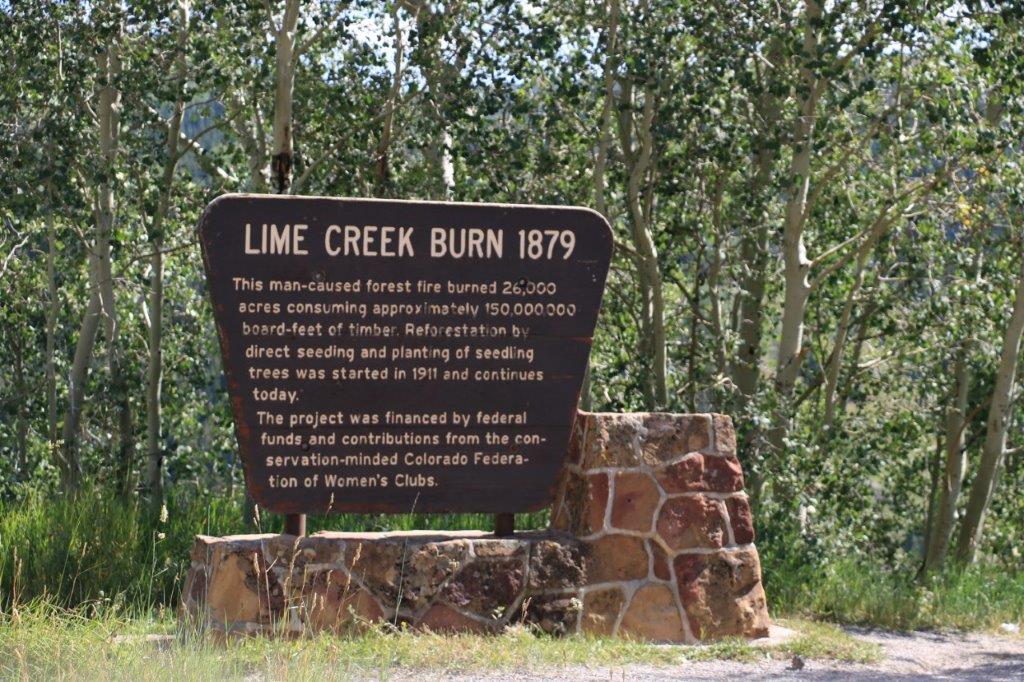
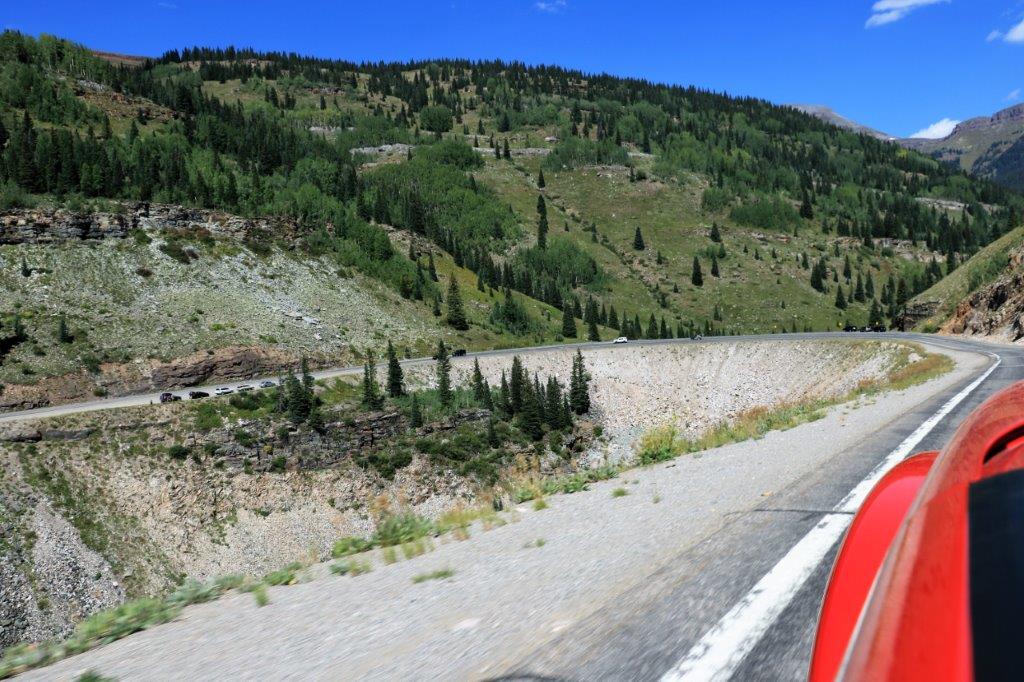
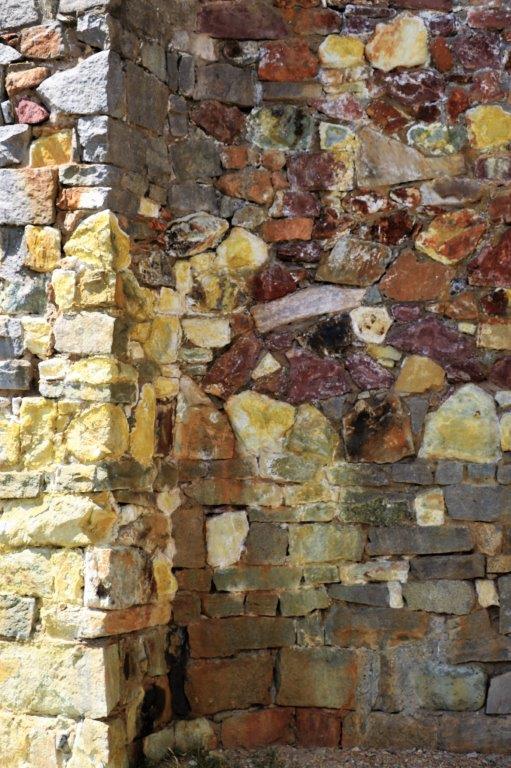
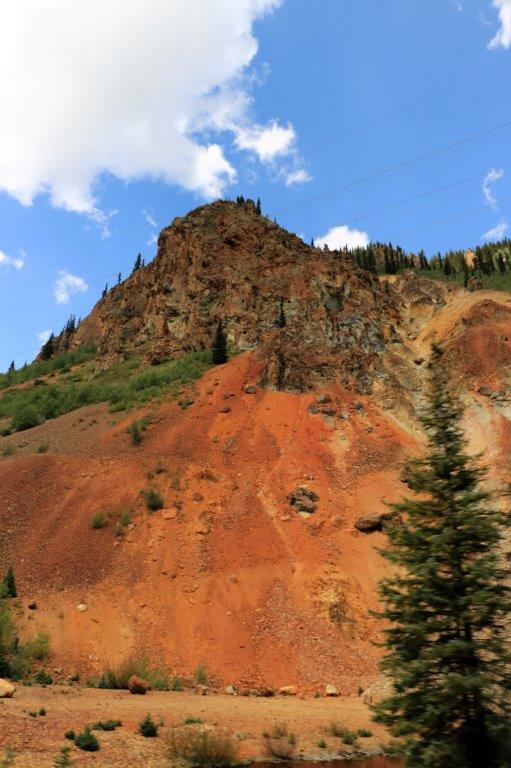
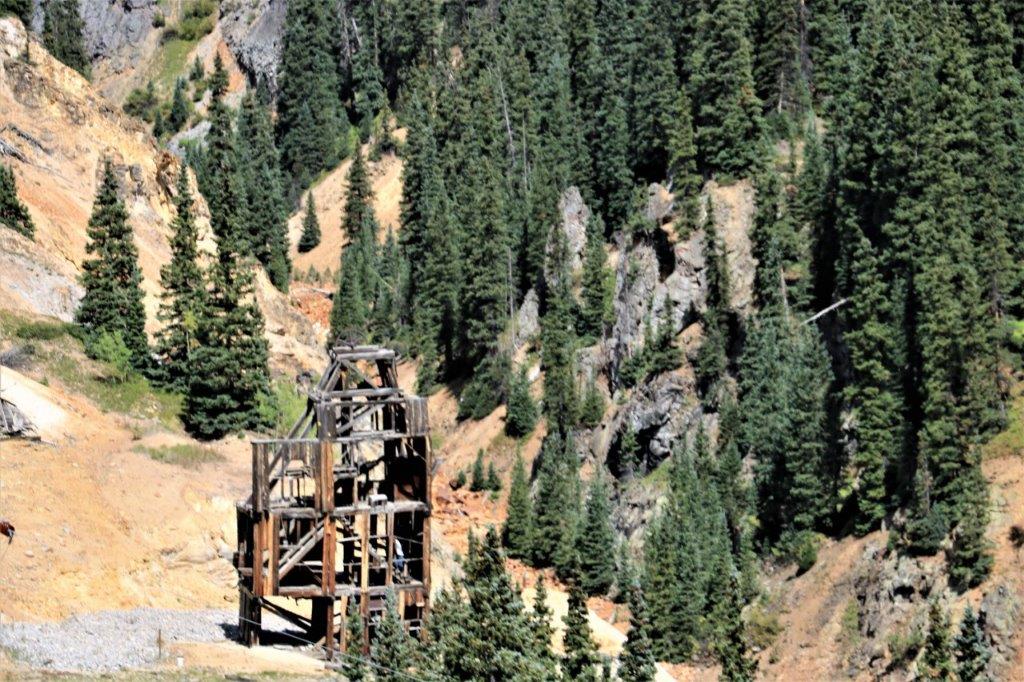
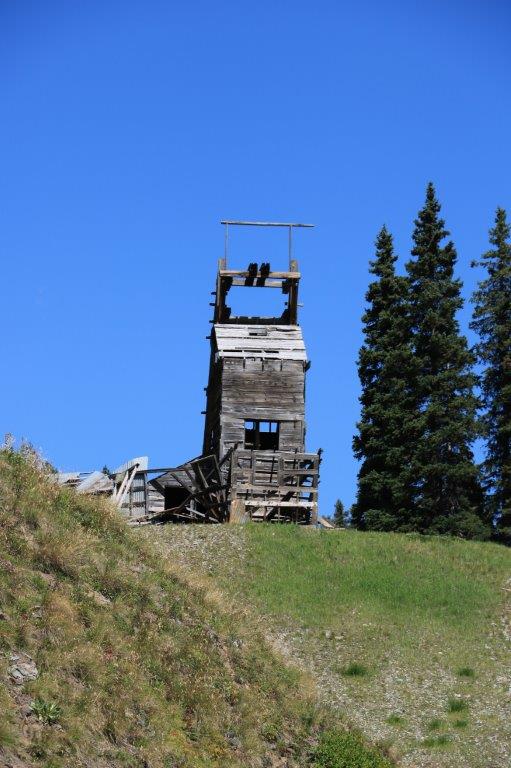
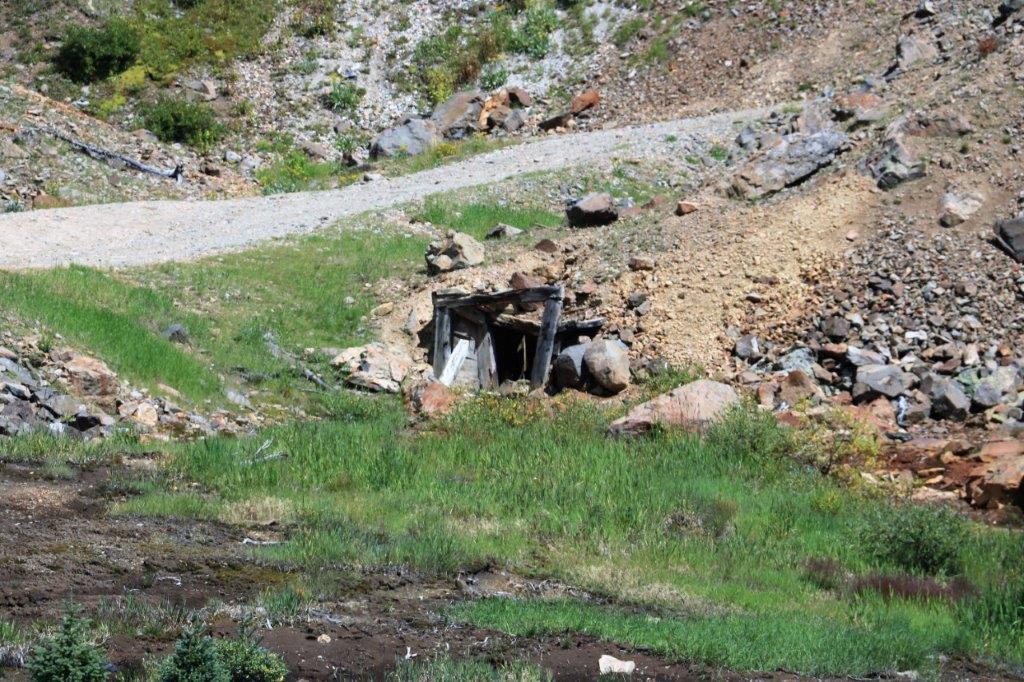
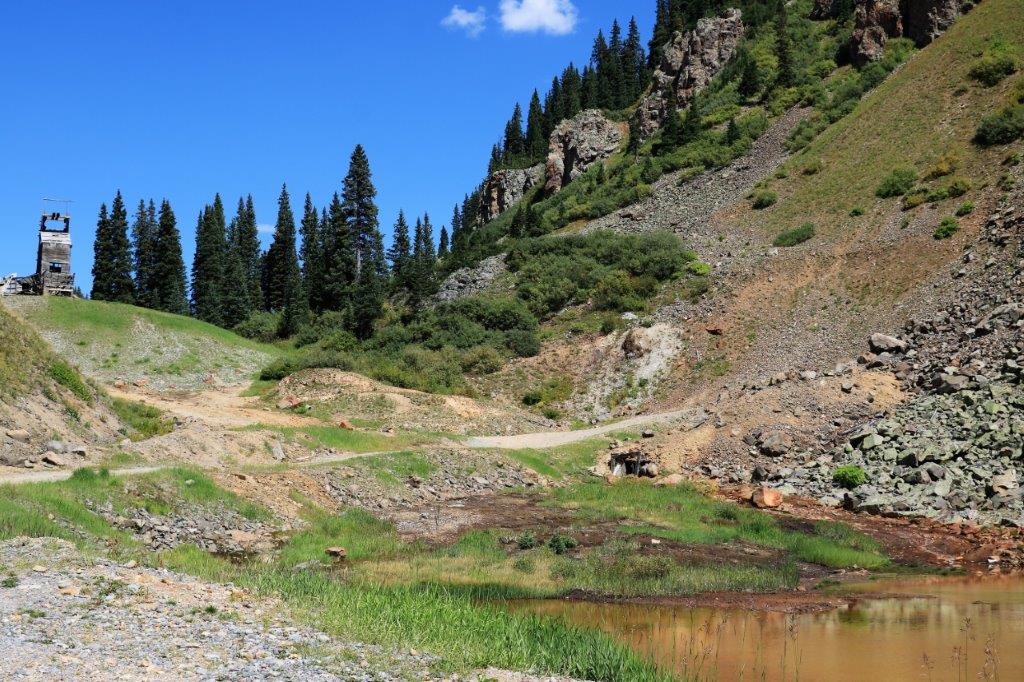
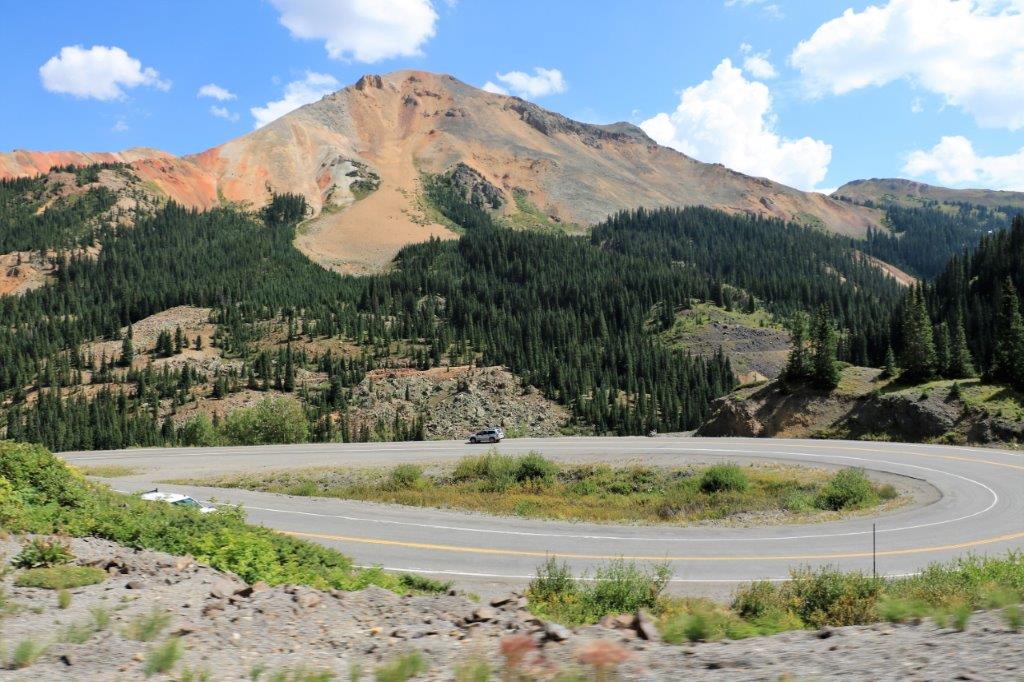
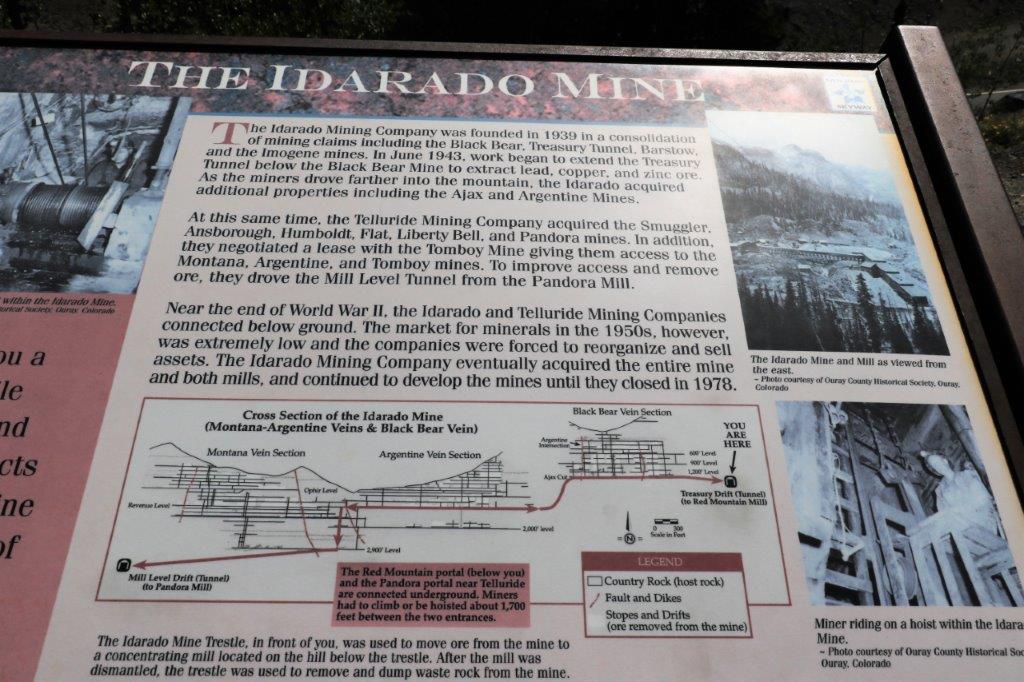
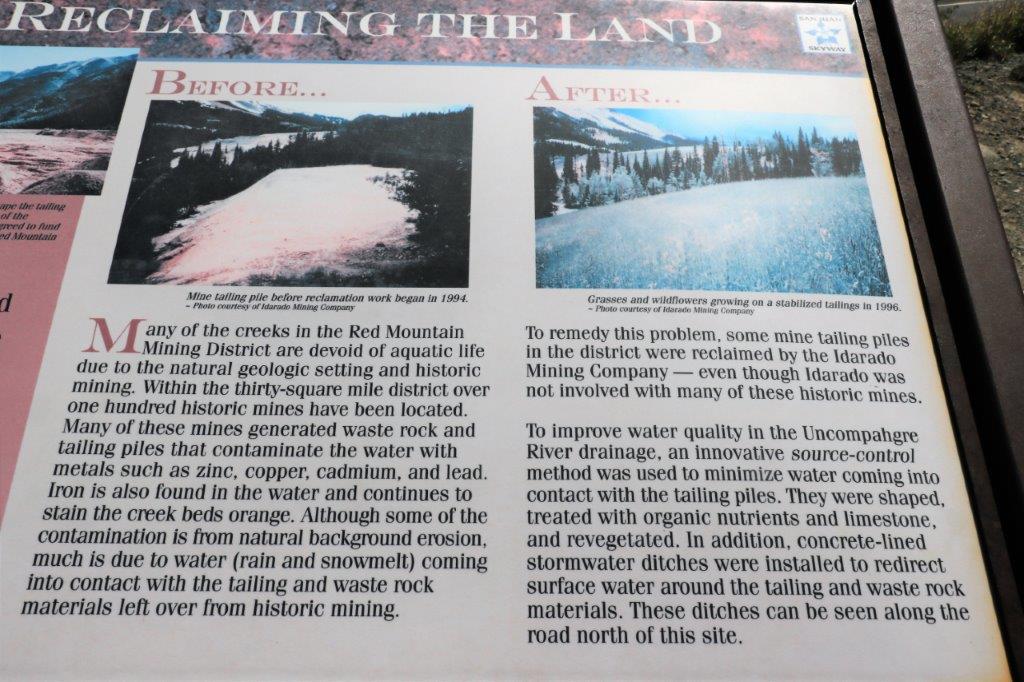
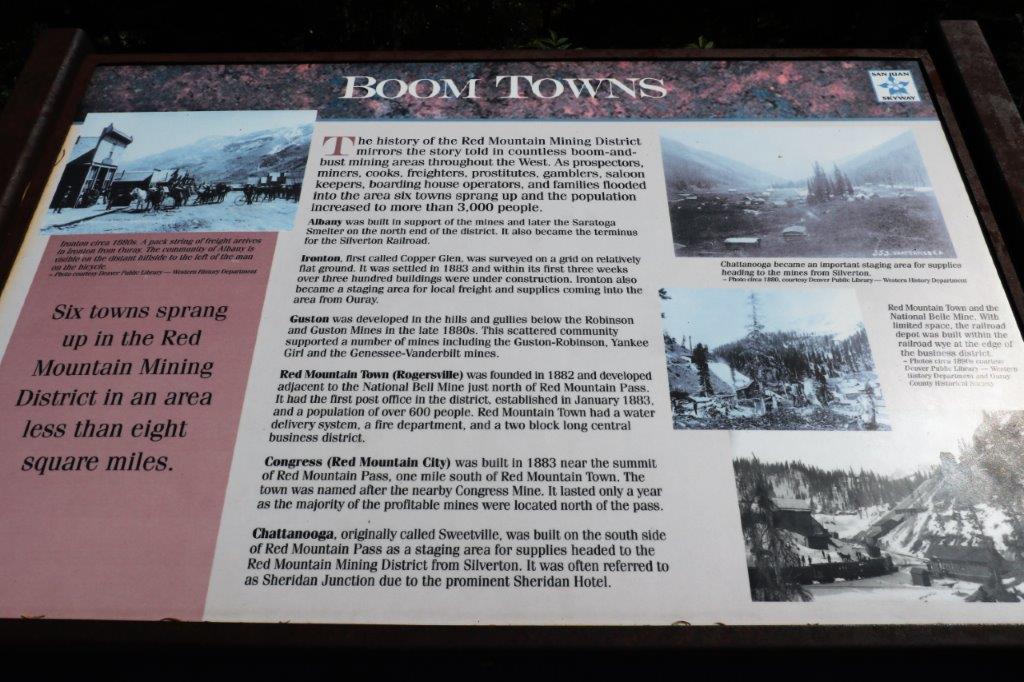
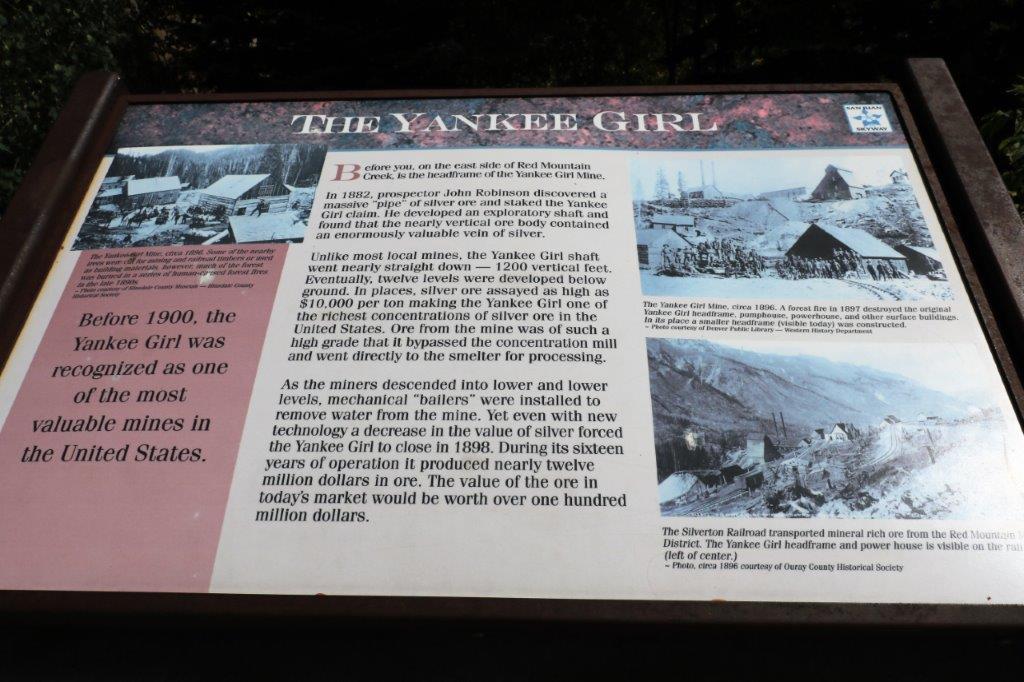
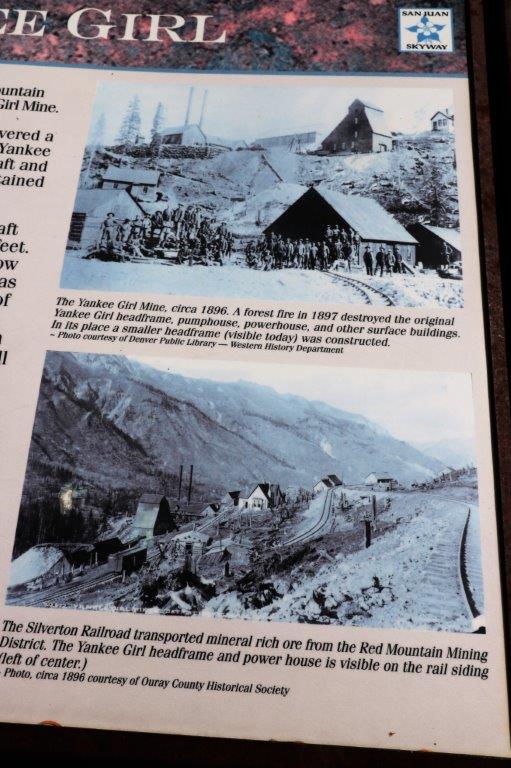
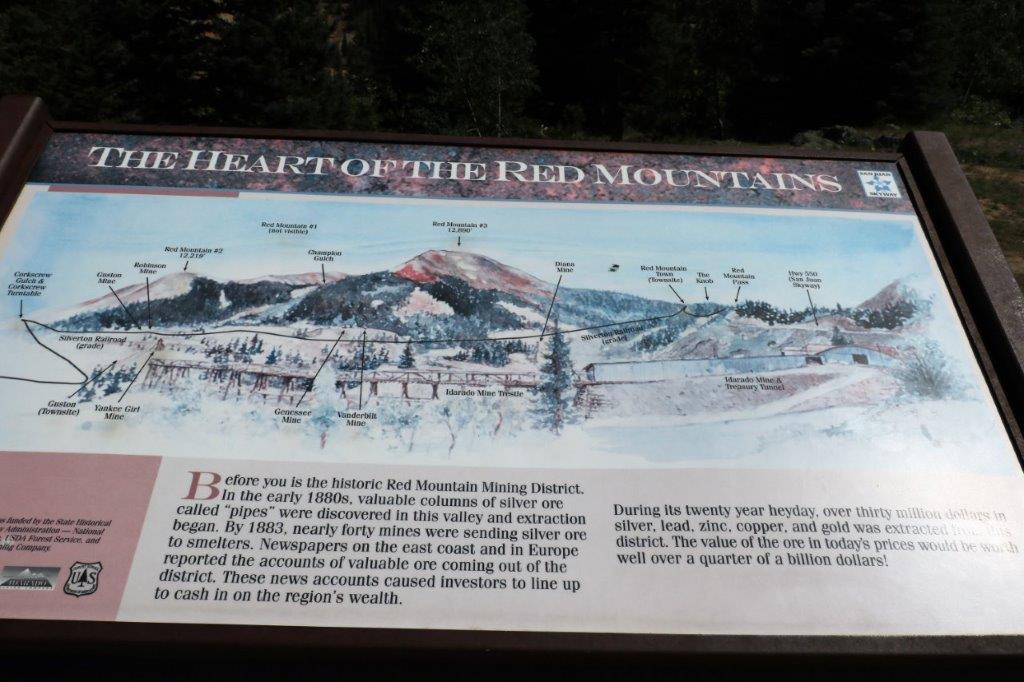
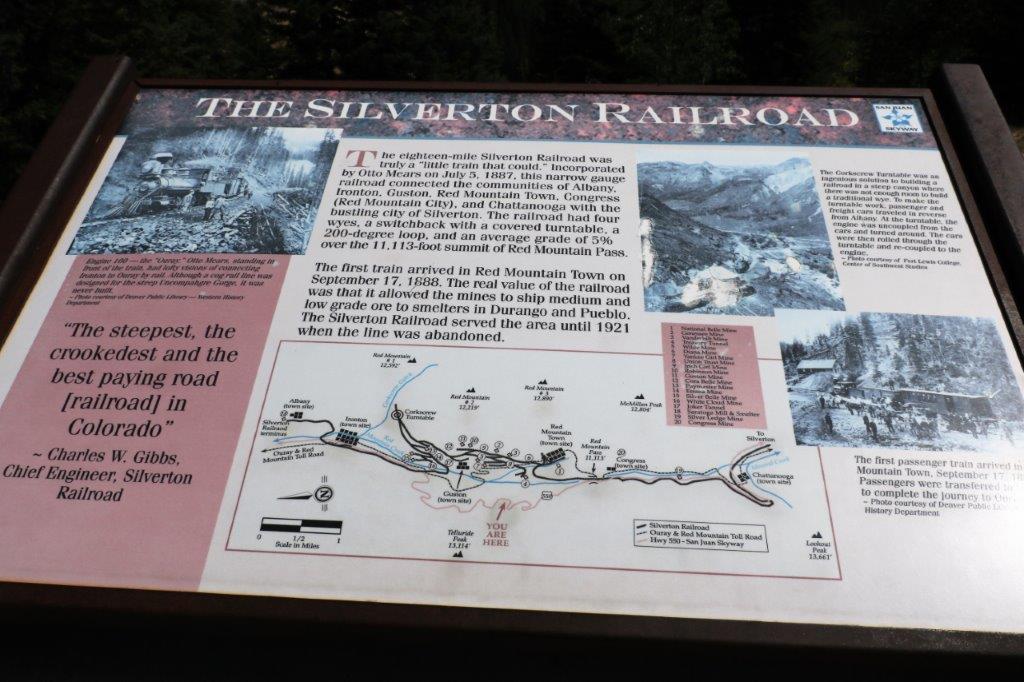
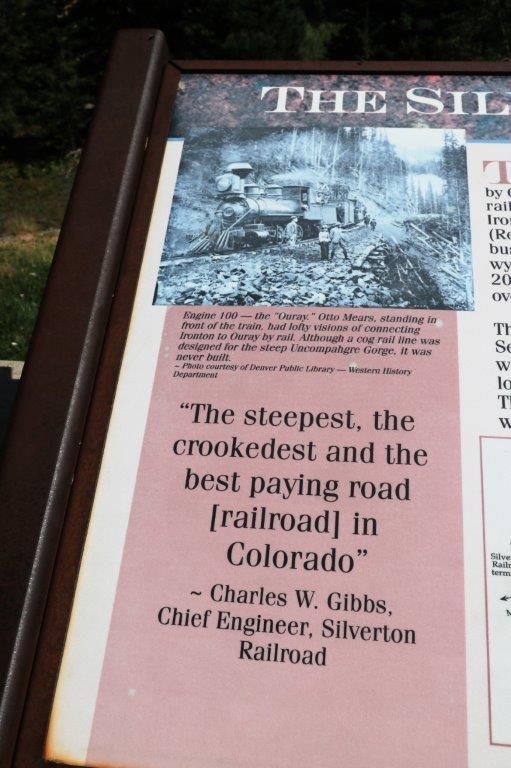
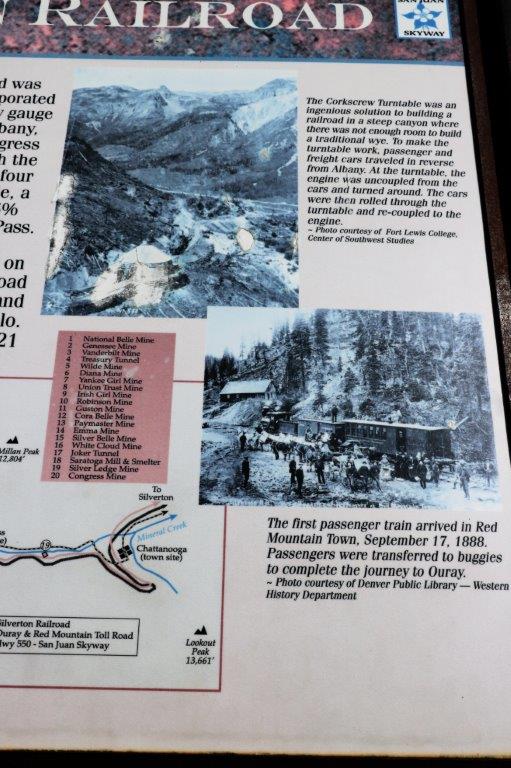
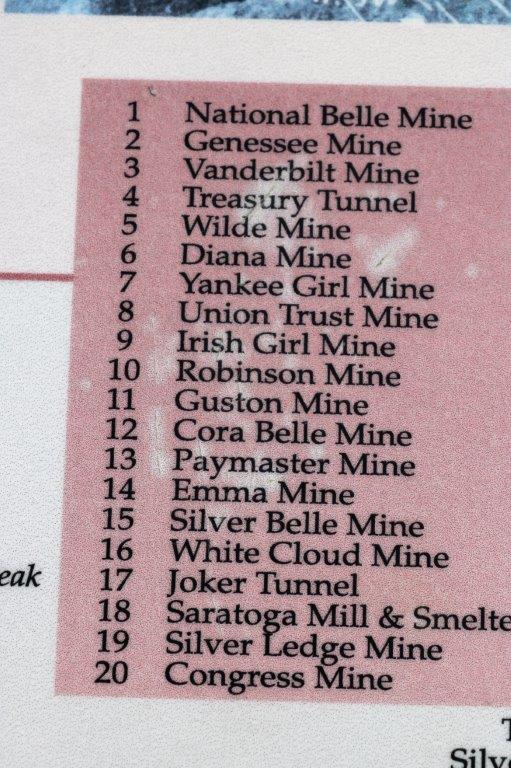
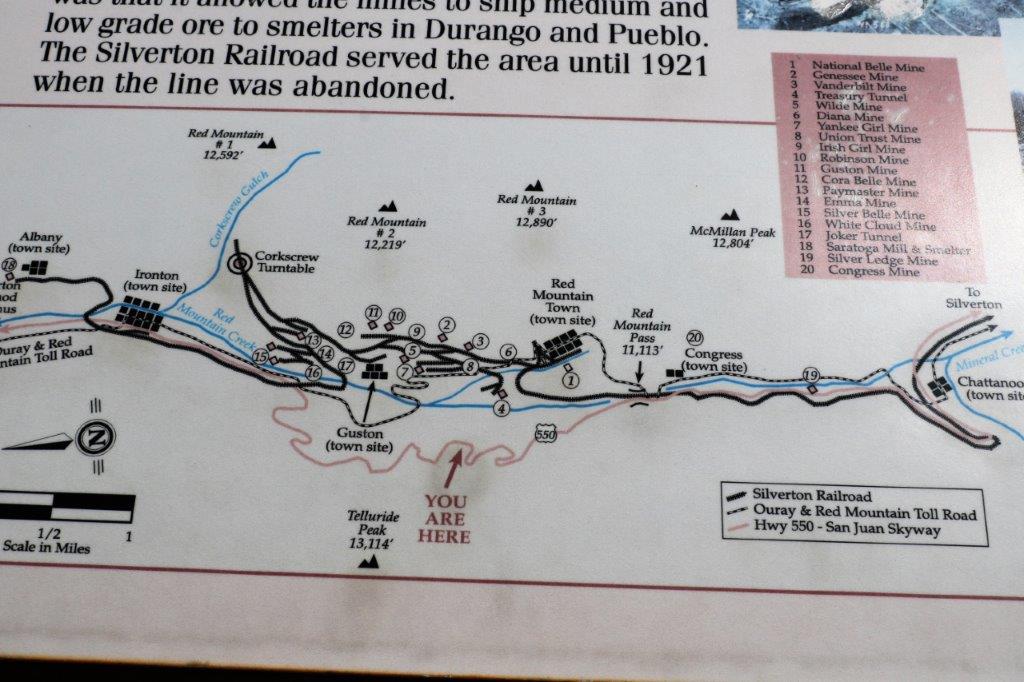
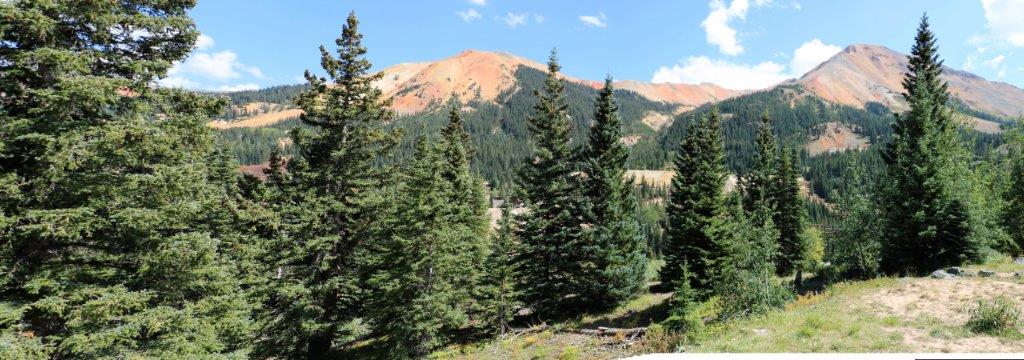
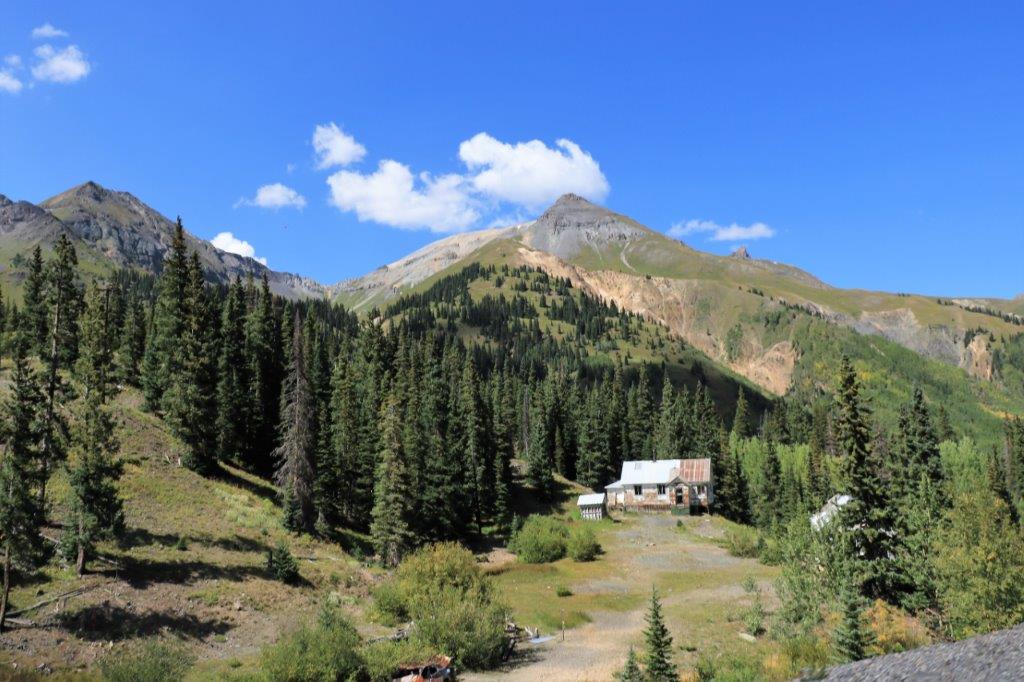
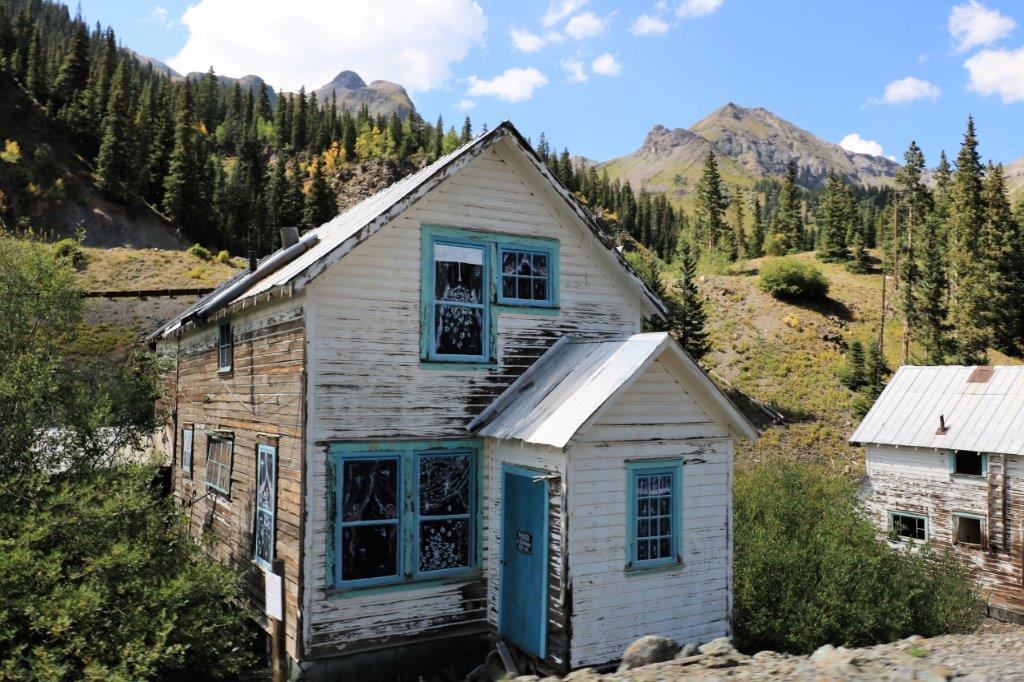
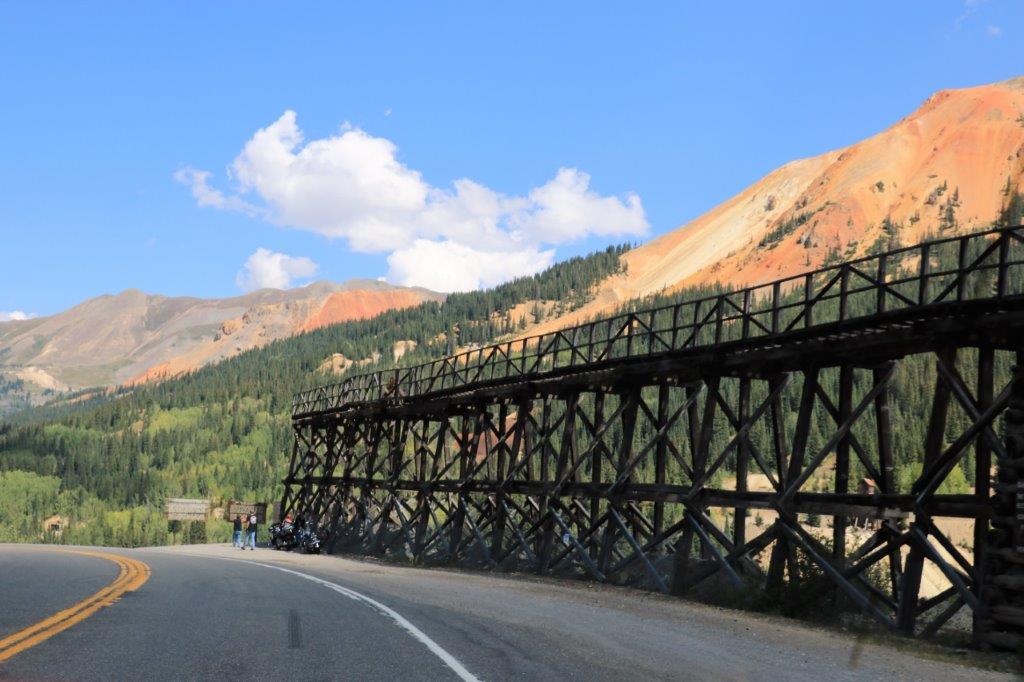
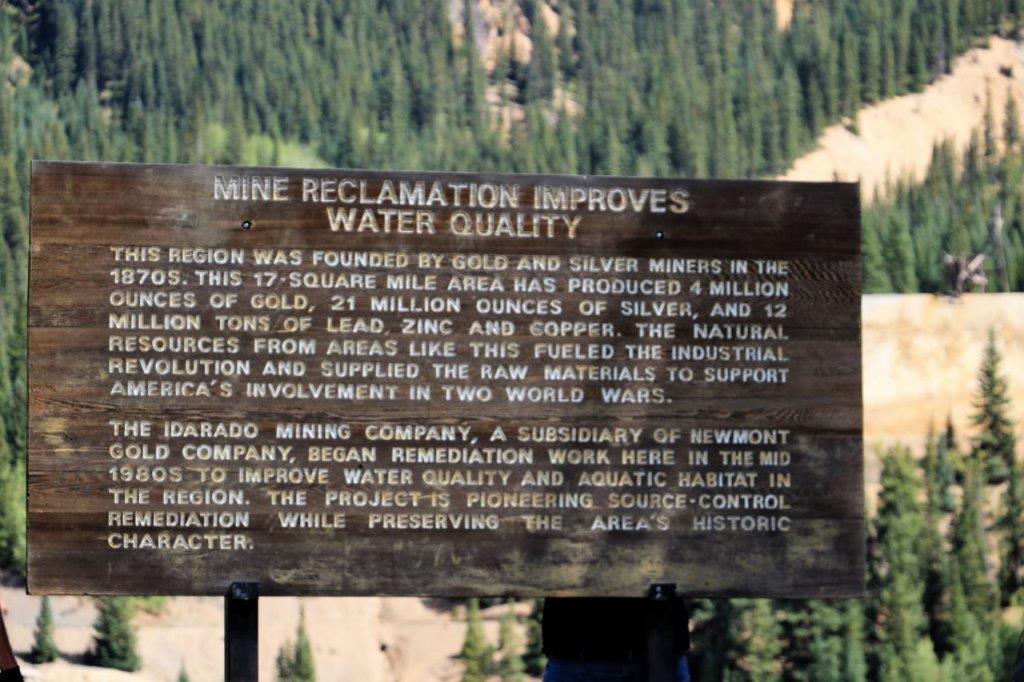
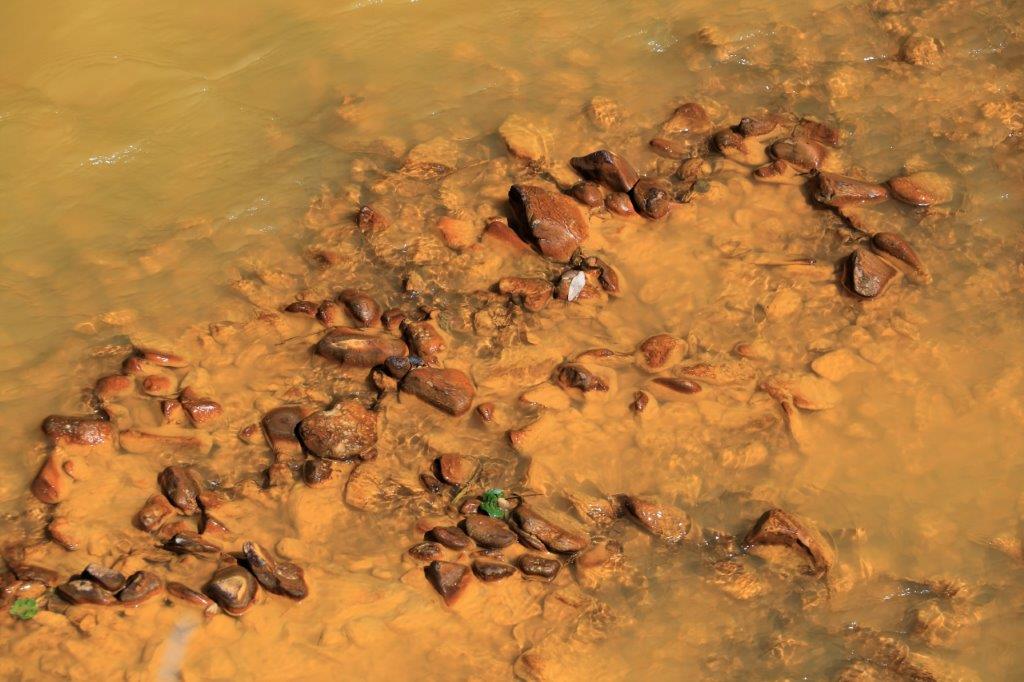
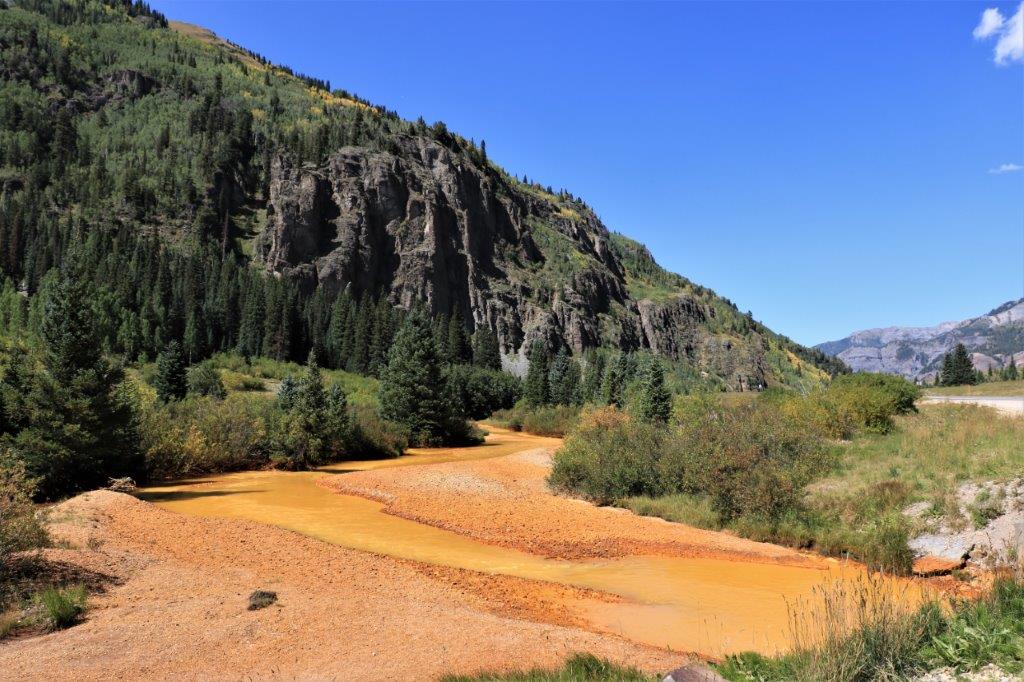
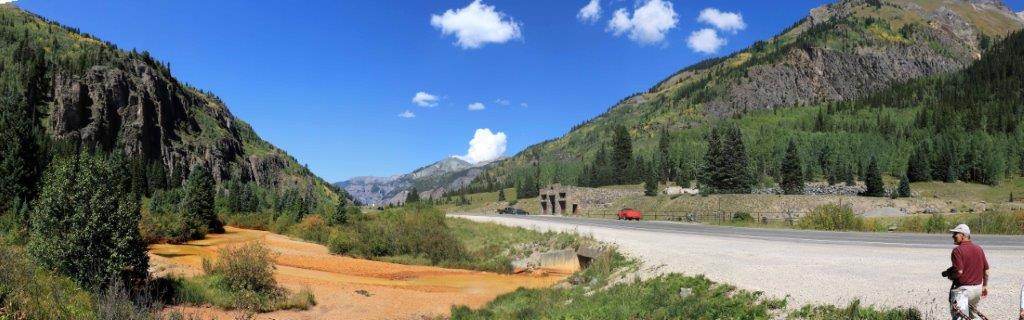
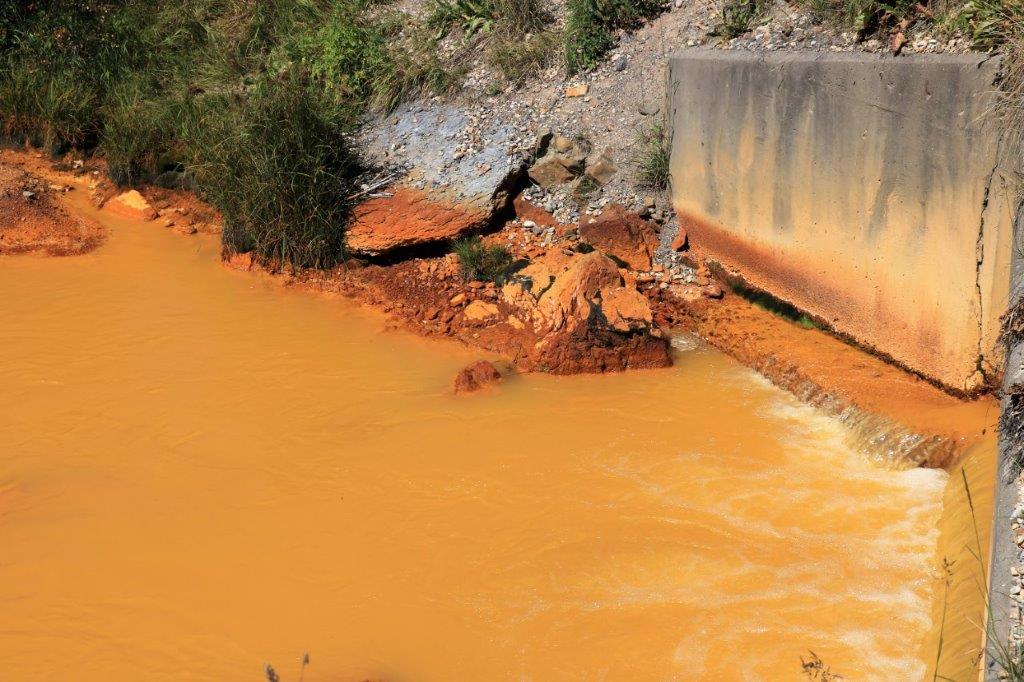
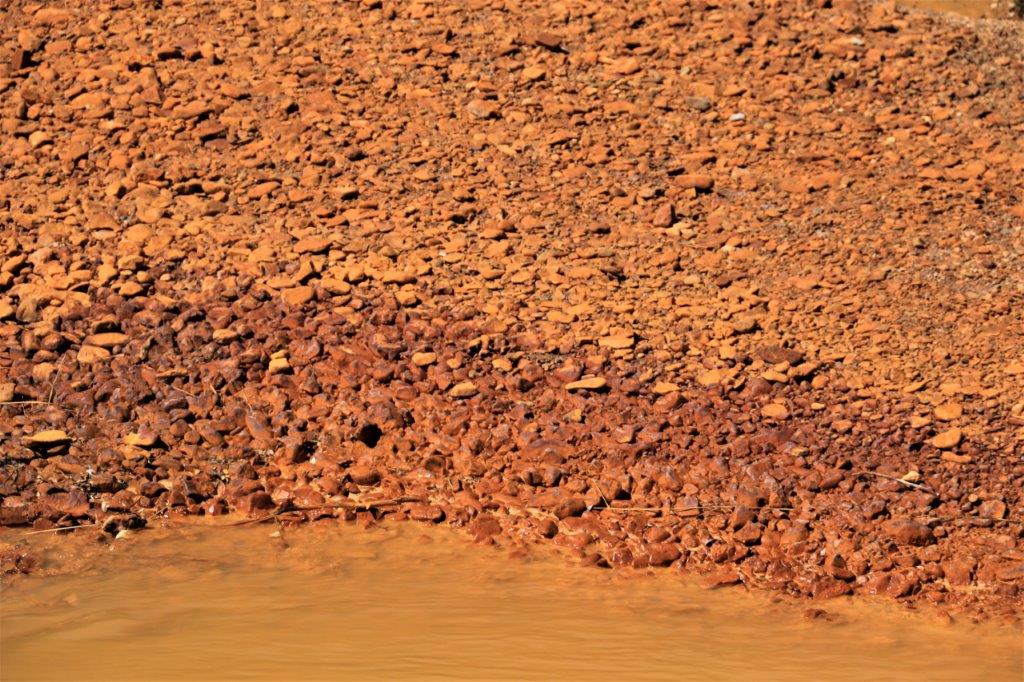
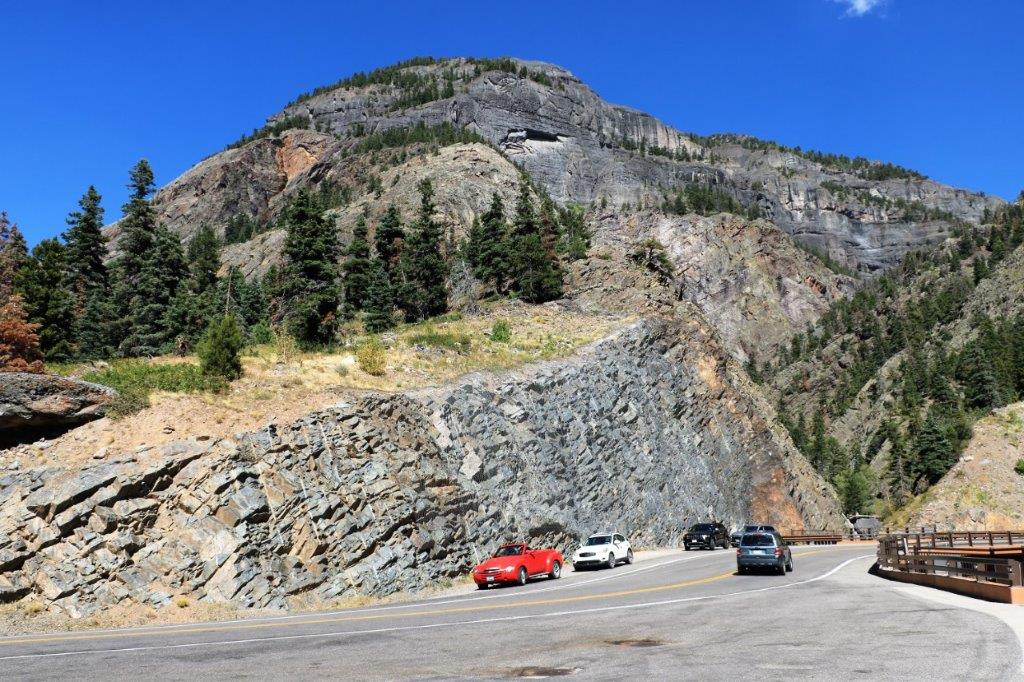
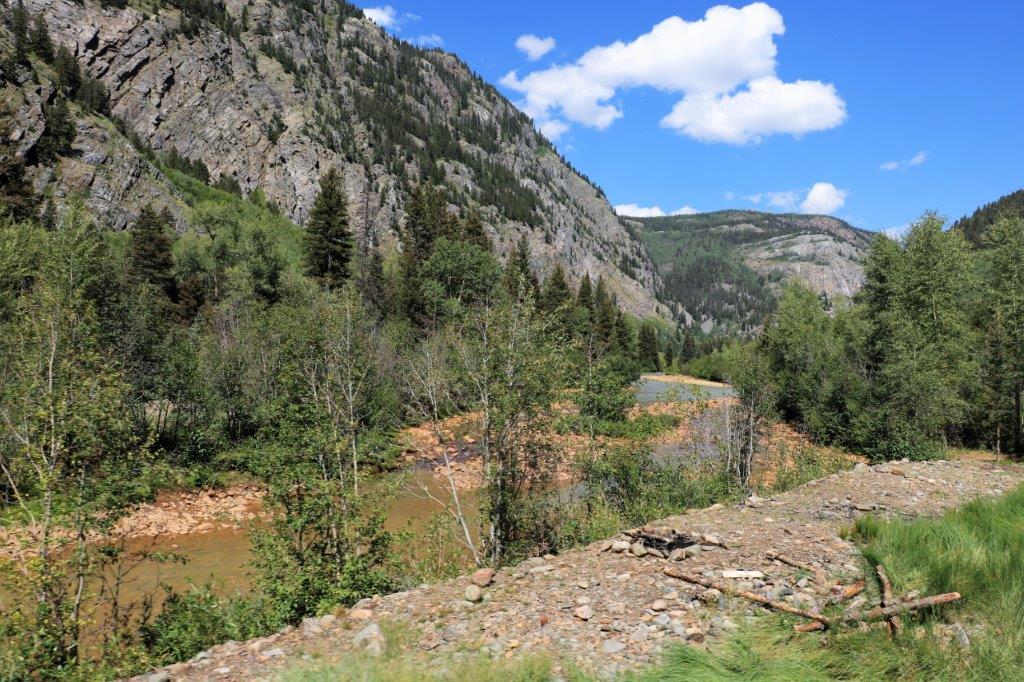
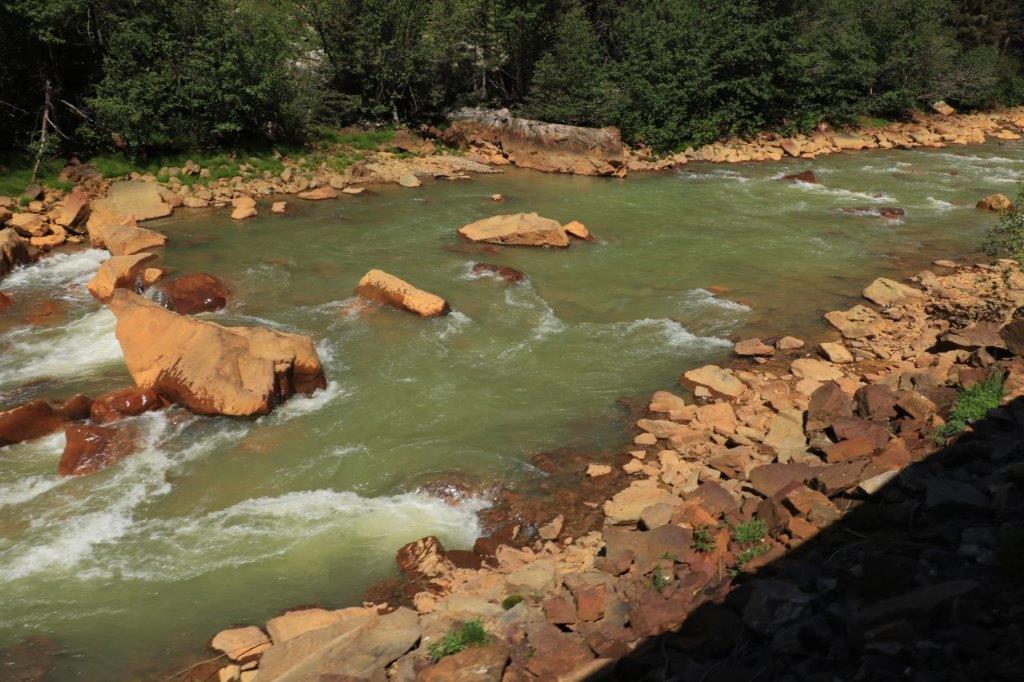
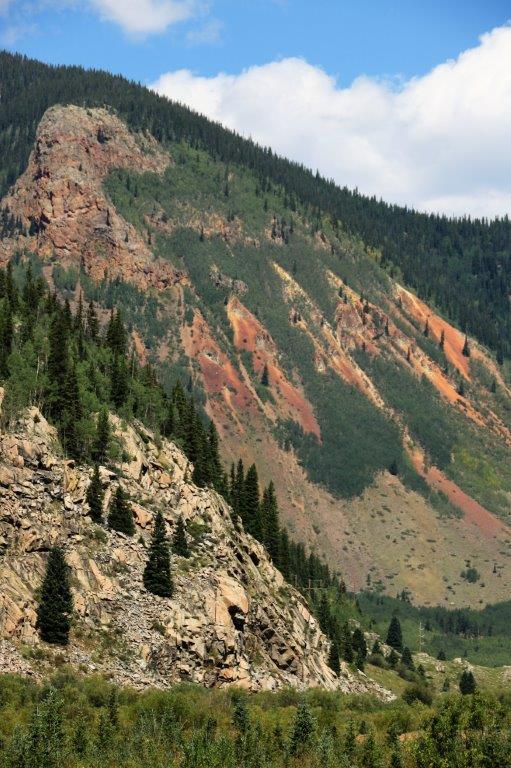
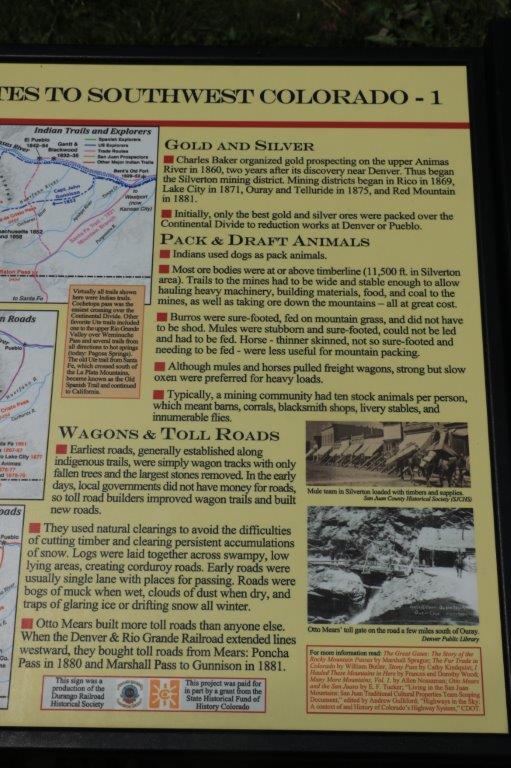
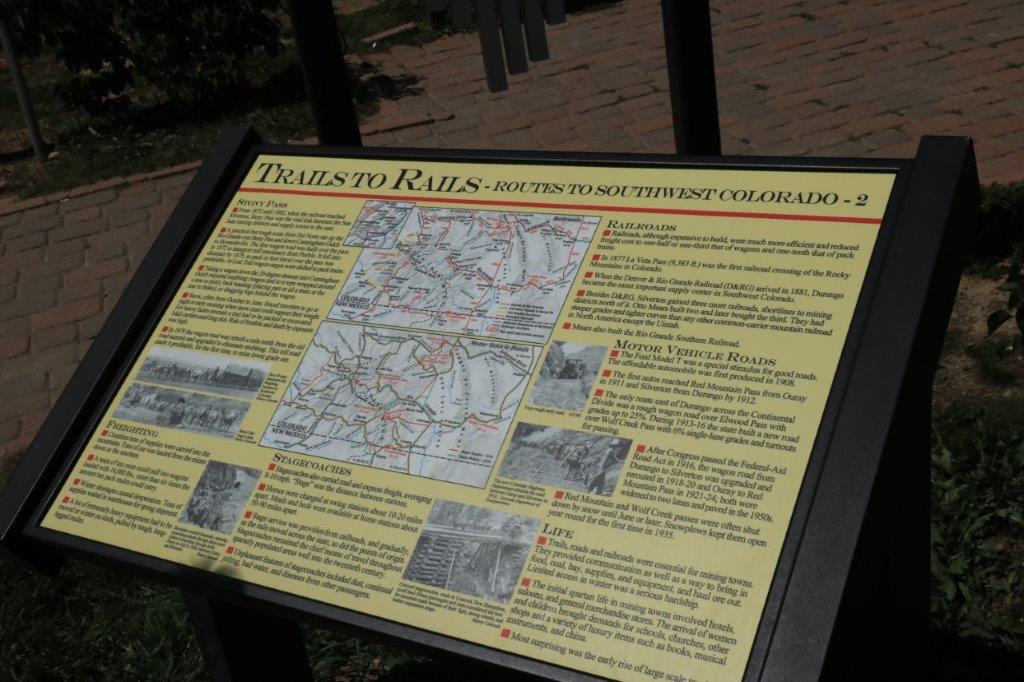
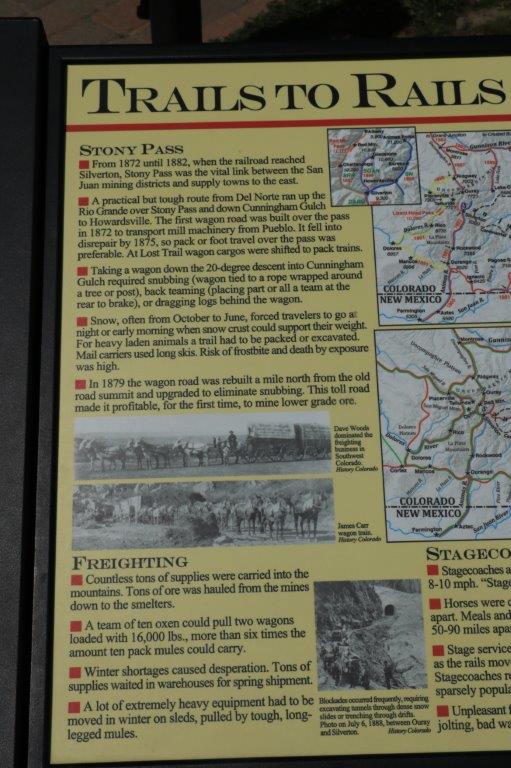
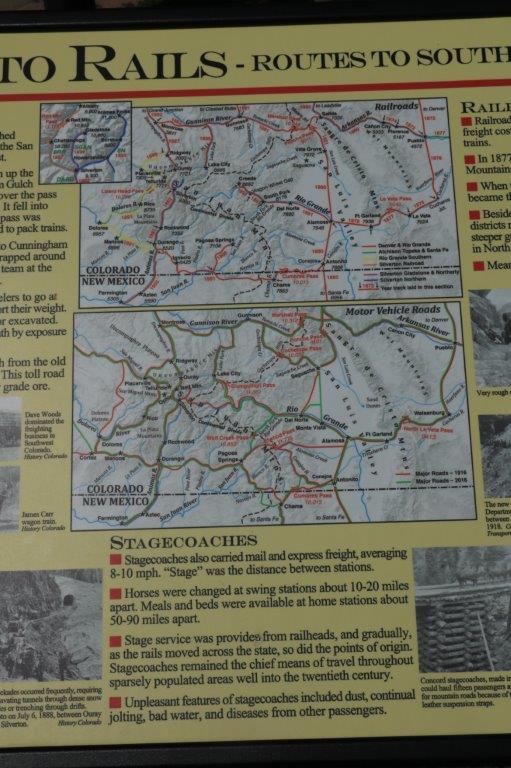
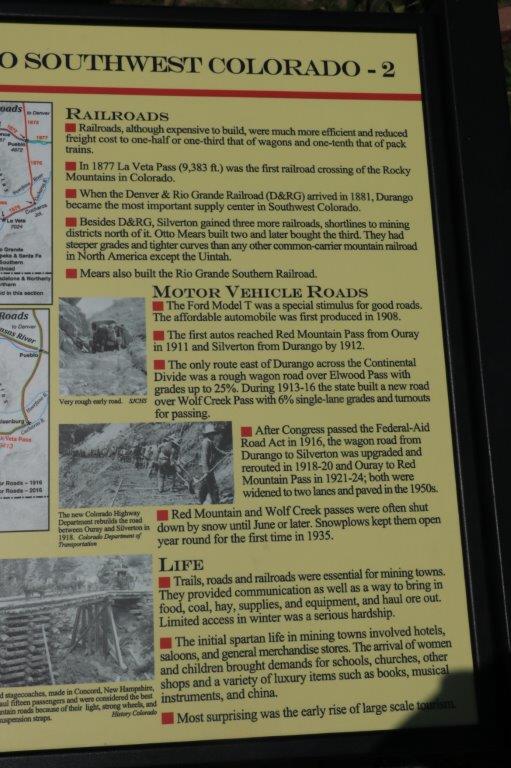
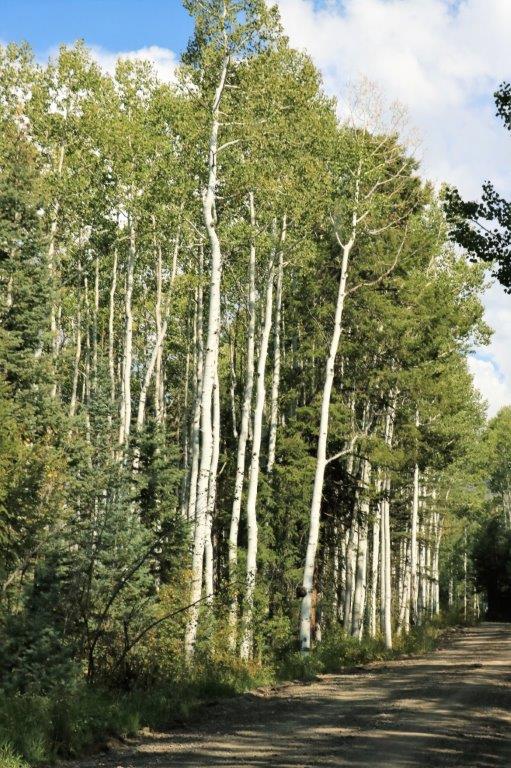
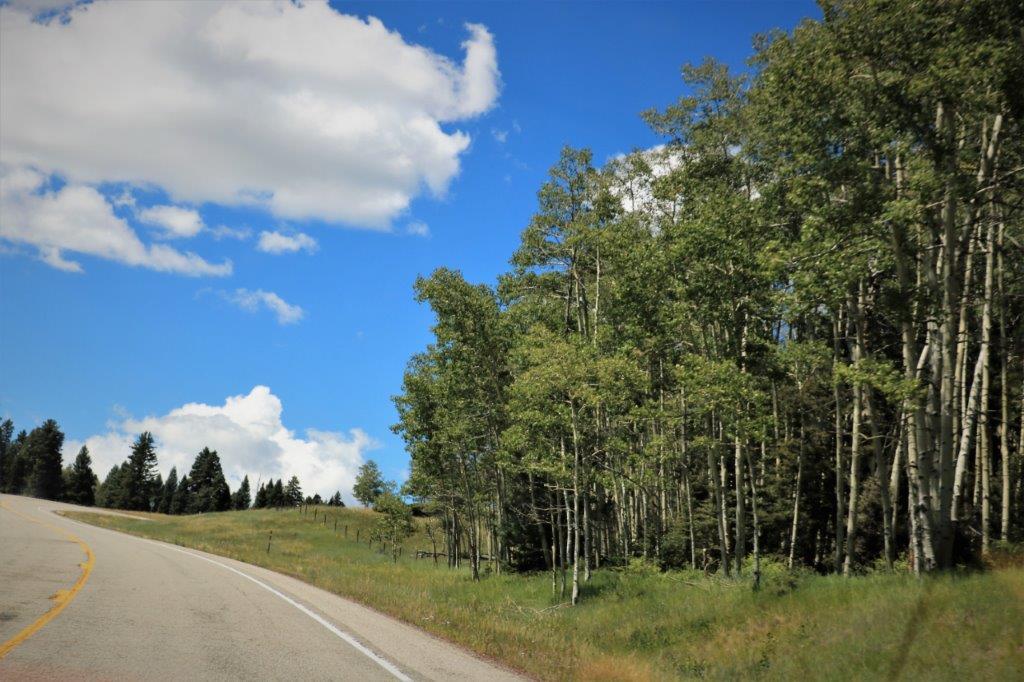
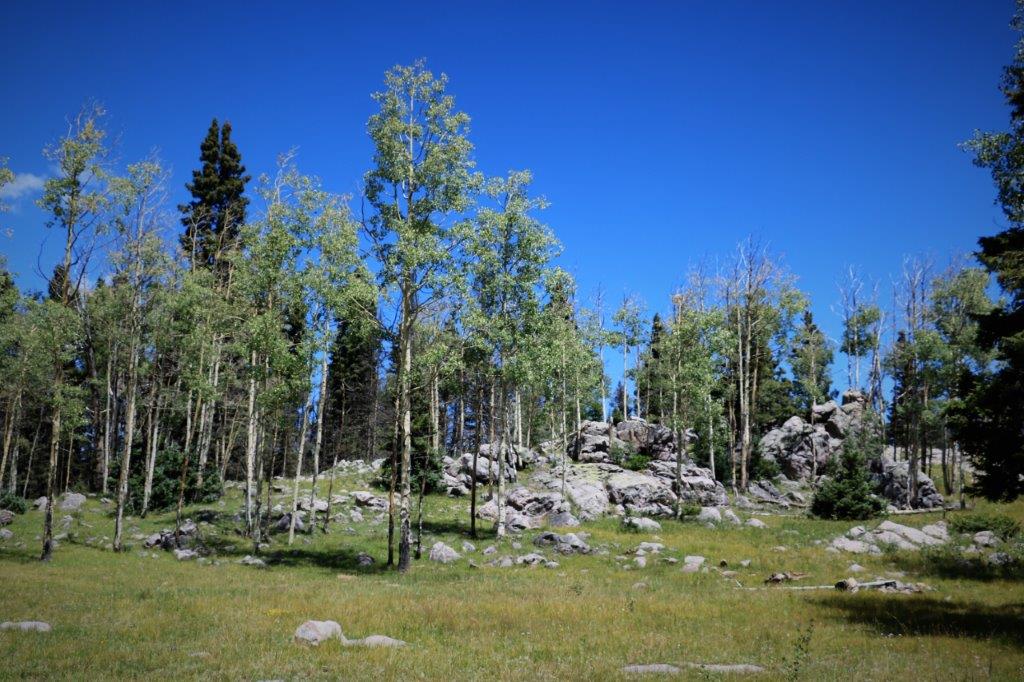
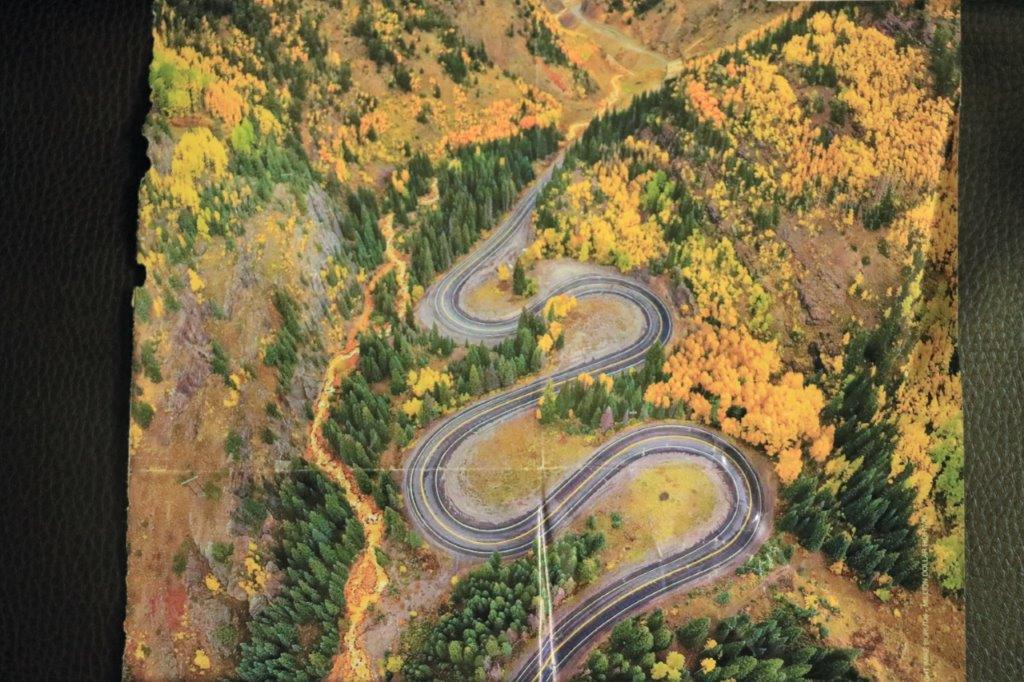
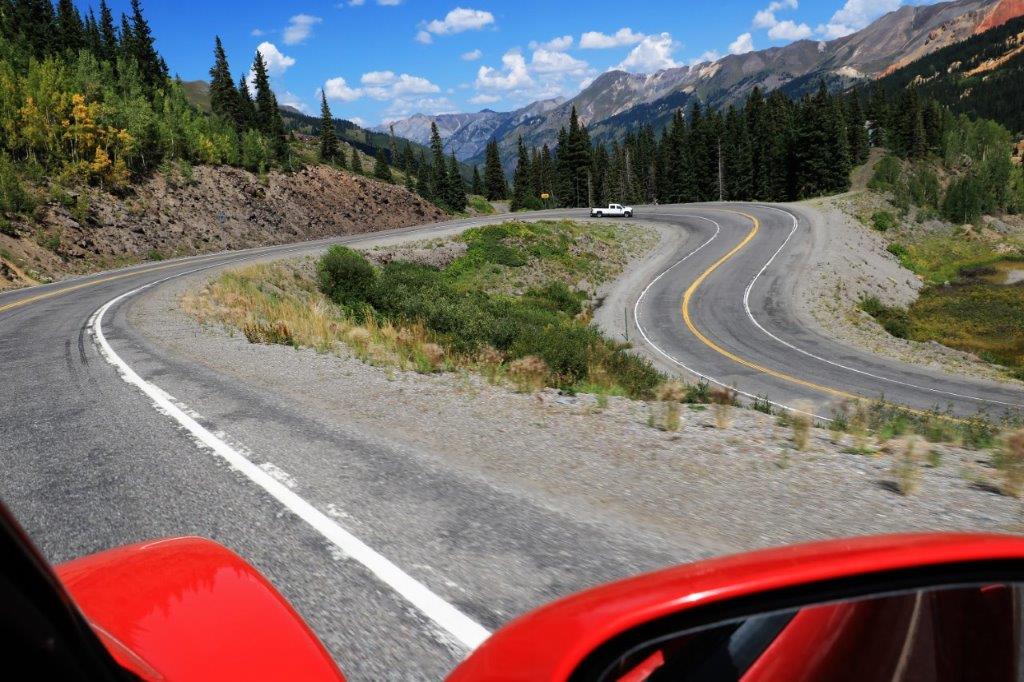
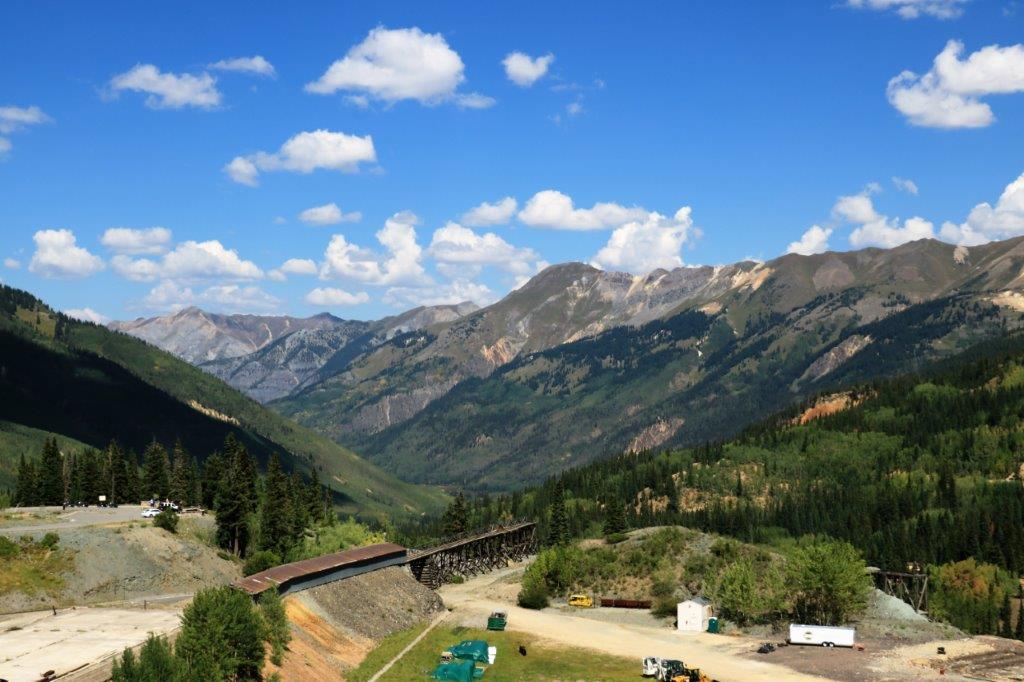
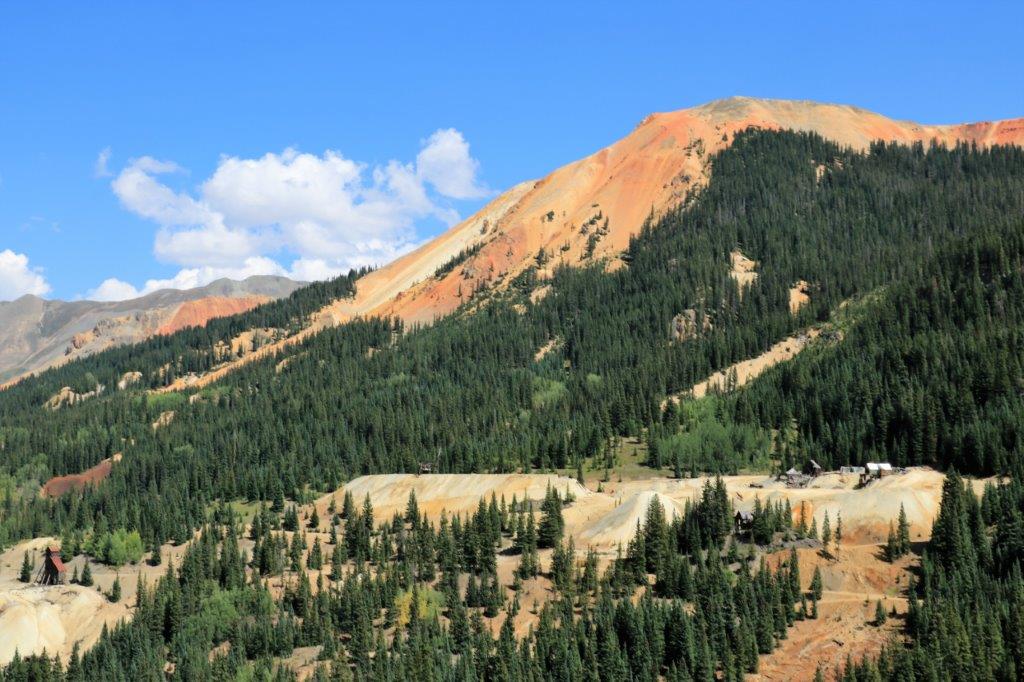
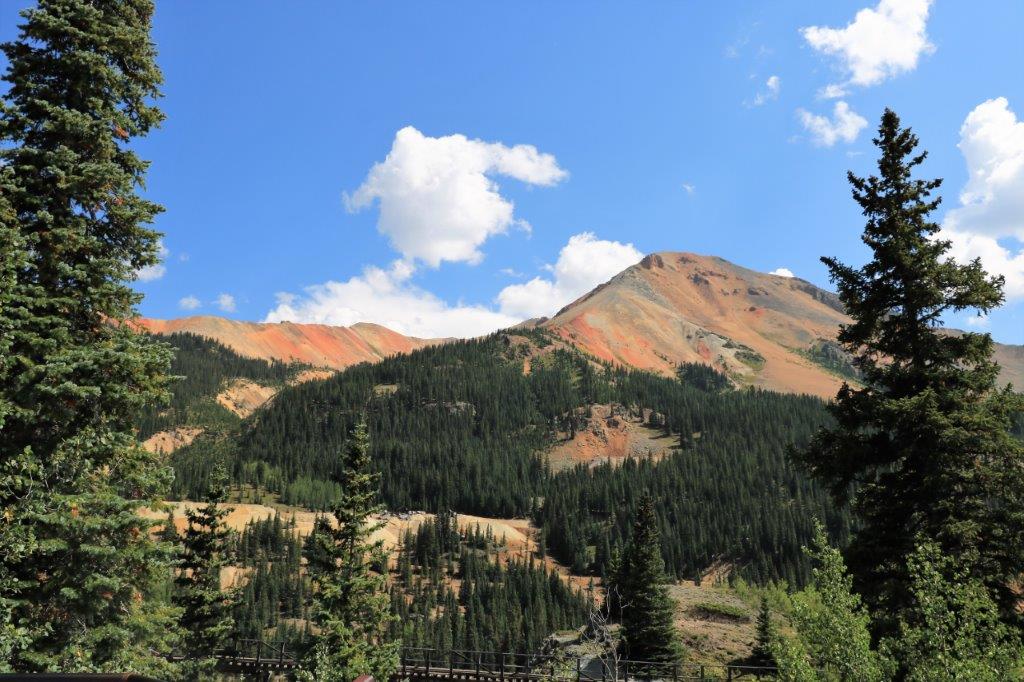
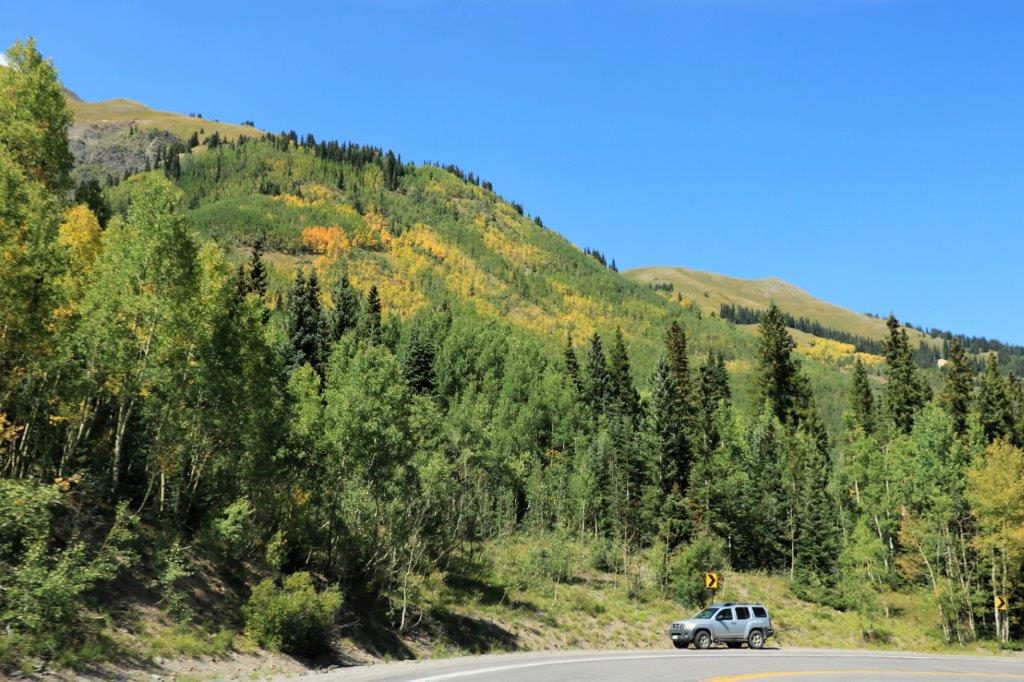
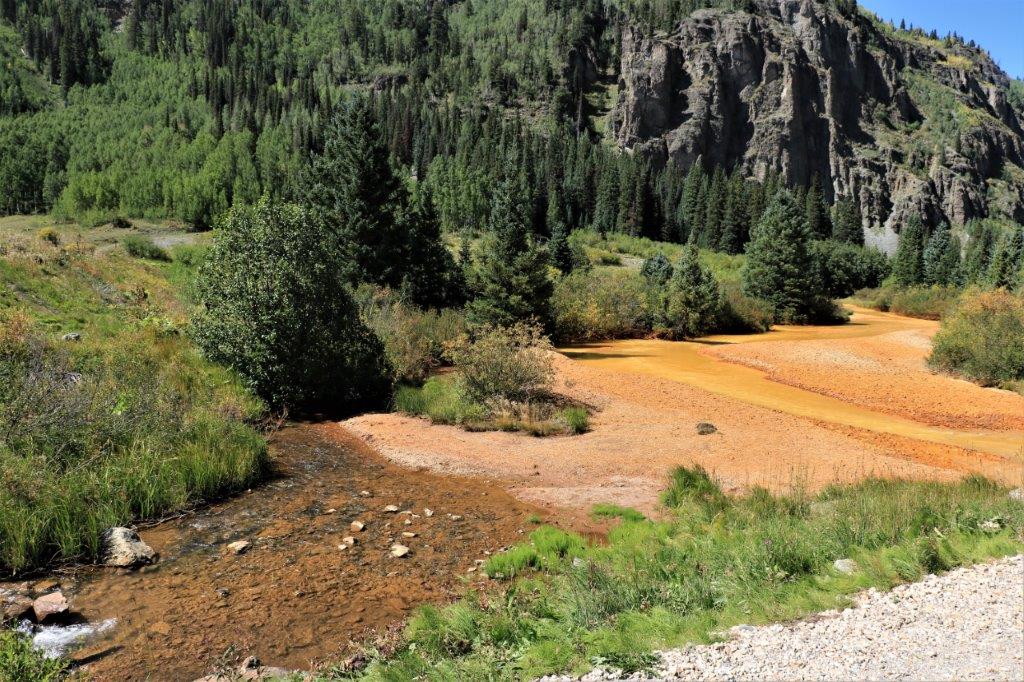
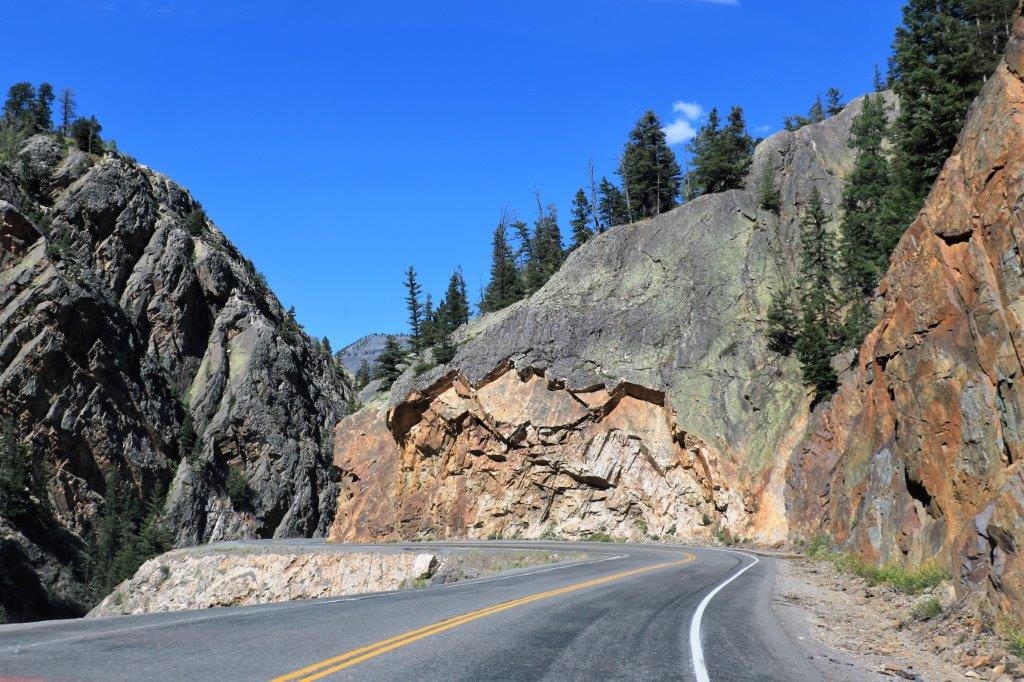
The rocks making up the wall at the shrine clearly show the results of all the minerals in the rocks. Between Silverton and Ouray (pronounced U-ray) we saw many of the old mines and mine buildings. The road between Silverton and Ouray is called the Million Dollar Highway due to the high mineral content of the gravel used in grading the road (and also the high cost of its construction). This passage of road is a series of S-curves.  John, of course, had fun. There was a photo of this stretch of road in one of the tourist booklets.  It was taken in the fall when all the aspen were in their fall glory but it shows what the road looked like. Not long after we negotiated all the curves we came to the Red Mountain Mines area.  There was an information pull-out so we went to read all the placards.There are three Red Mountains. The furthest northward (on the left) one is Red Mountain #2, the one that you can see the least of at the back is #1 and the one on the right is #3. The Aspen trees are beginning to change colour and every once in awhile there would be some lovely pockets of bright yellow.  Something we learned on our train ride yesterday was that, until recently, Aspen groves were considered the largest living organisim on earth.  There is one grove that covers 1 1/2 acres (recently a type of fungus that grows from a single ‘root’ was discovered in Oregon and it covers over 4 acres).  An Aspen grove is not comprised of individual trees, rather it is one tree that sends out many underground shoots to create new trees. This is why Apsens are one of the first trees to re-grow after a forest fire.  They have so many underground root shoots that even if the large center trees are destroyed new ones will soon start to grow.  Our narrator on the train called them Family Trees with the Grandparents in the center, parents a bit further out and the children, the youngest, smallest trees at the outer edge. We had been getting small looks at a golden yellow creek that ws running beside the road.  Finally there was a spot to pull over where the creek was near the road.  This is why you do not drink the creek or river water in SW Colorado; it is full of all kinds of minerals and chemicals from mine tailings.
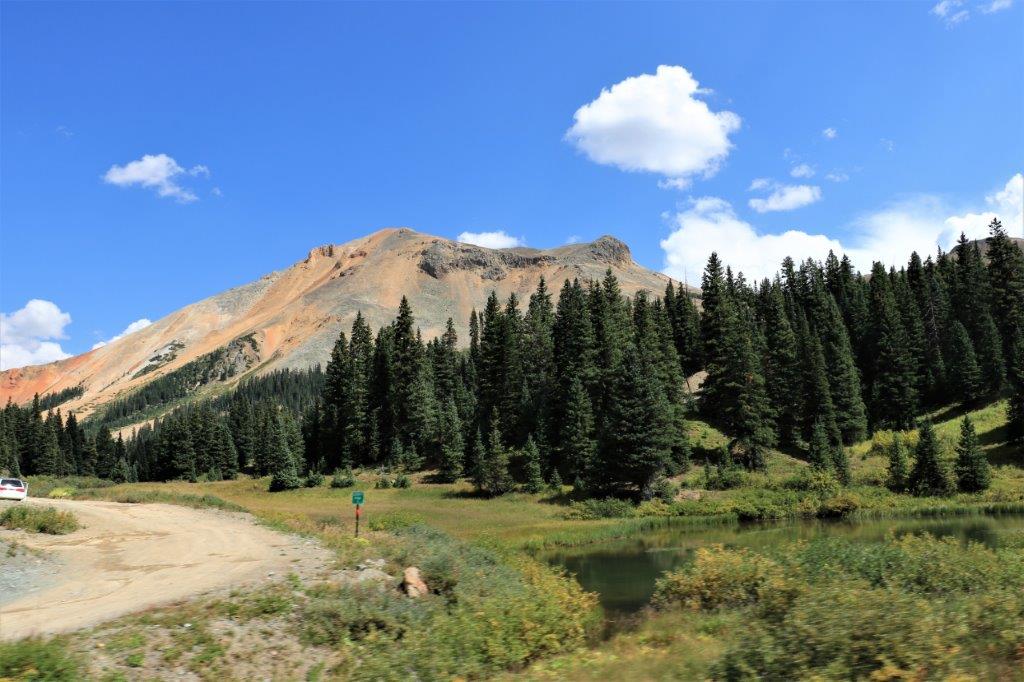
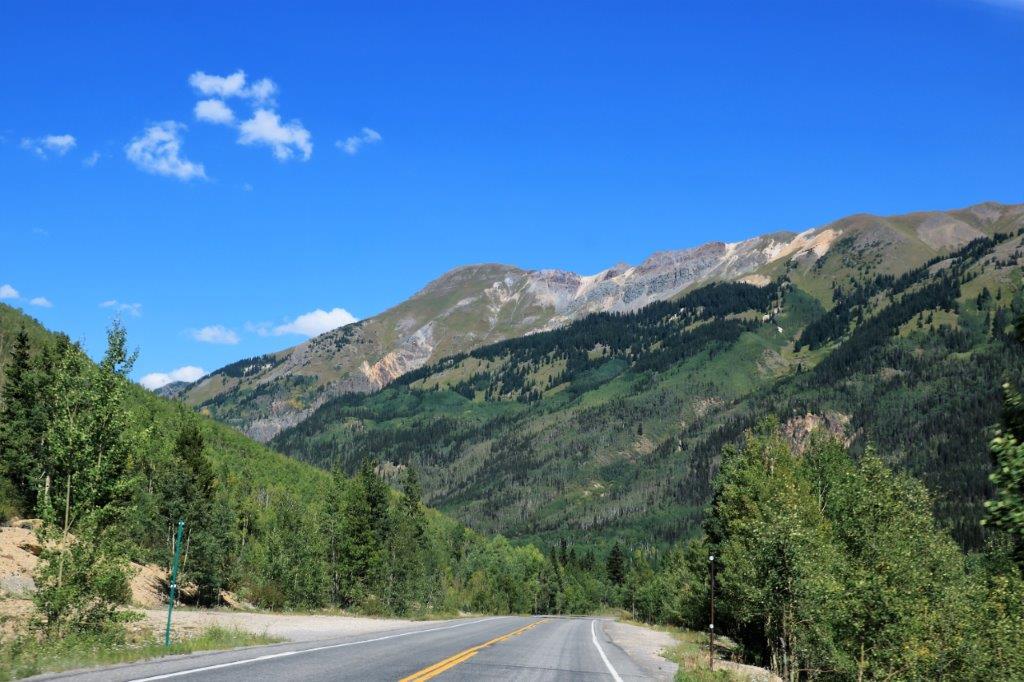
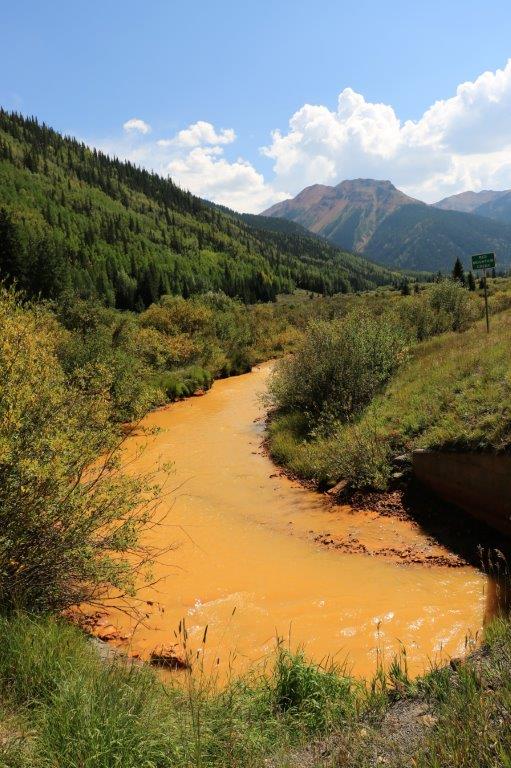
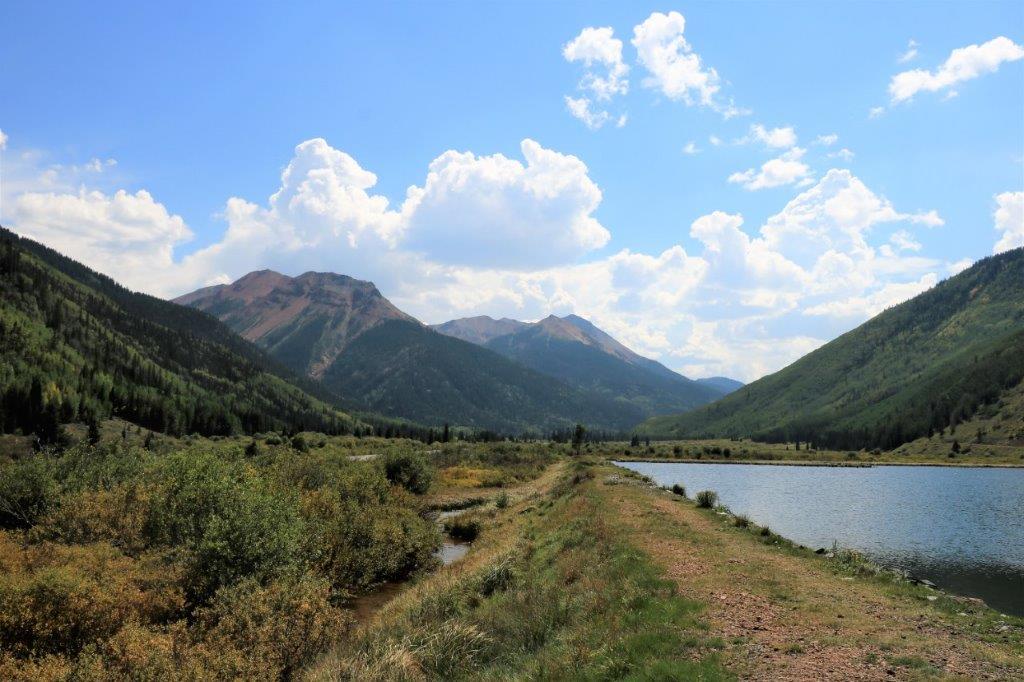
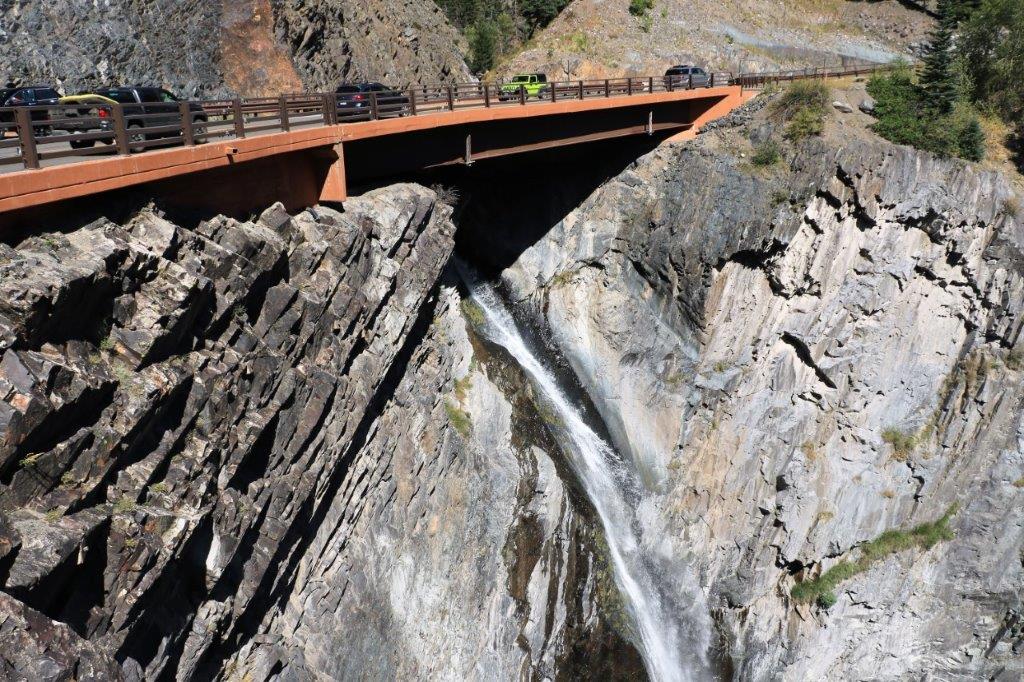
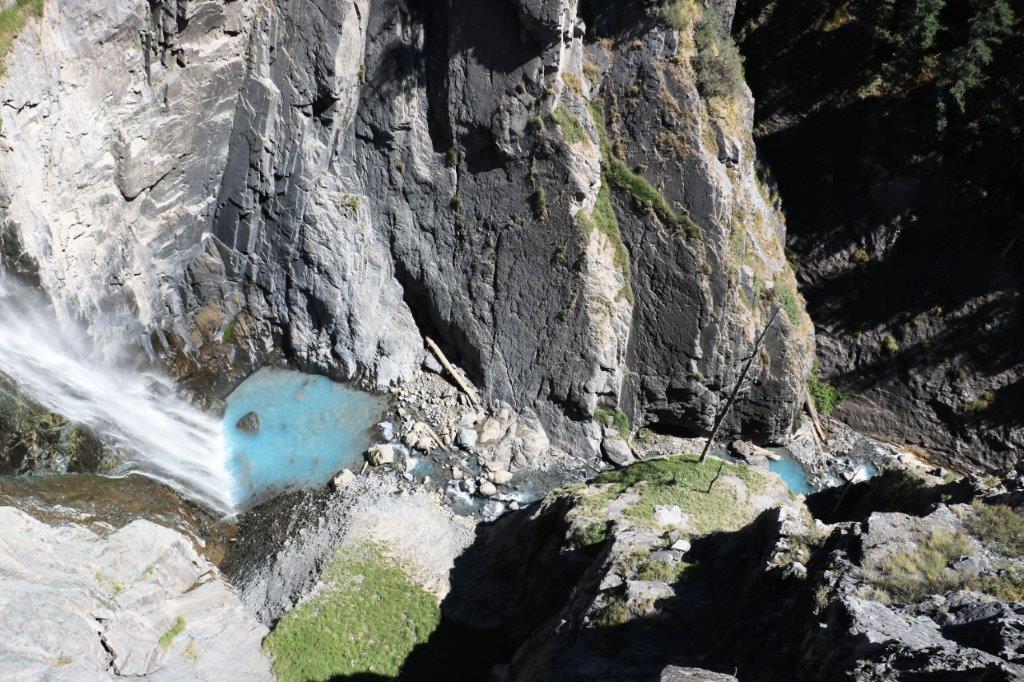
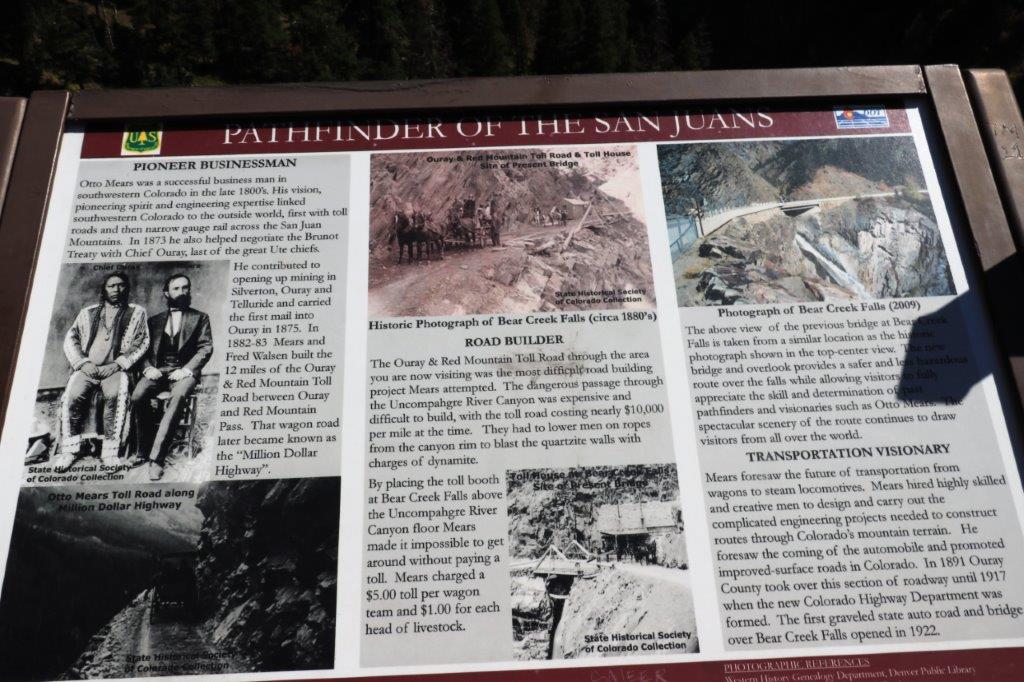
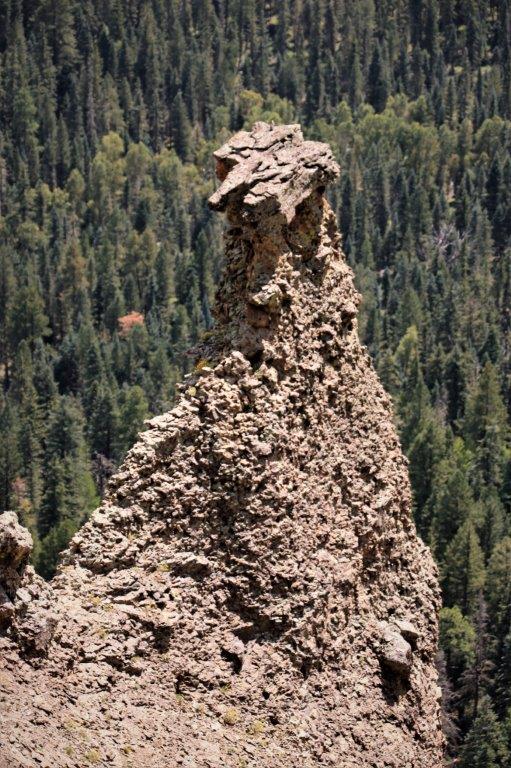
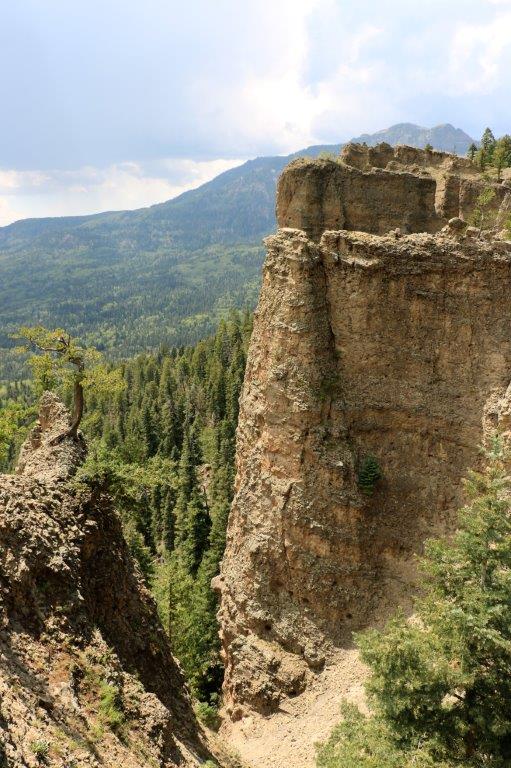
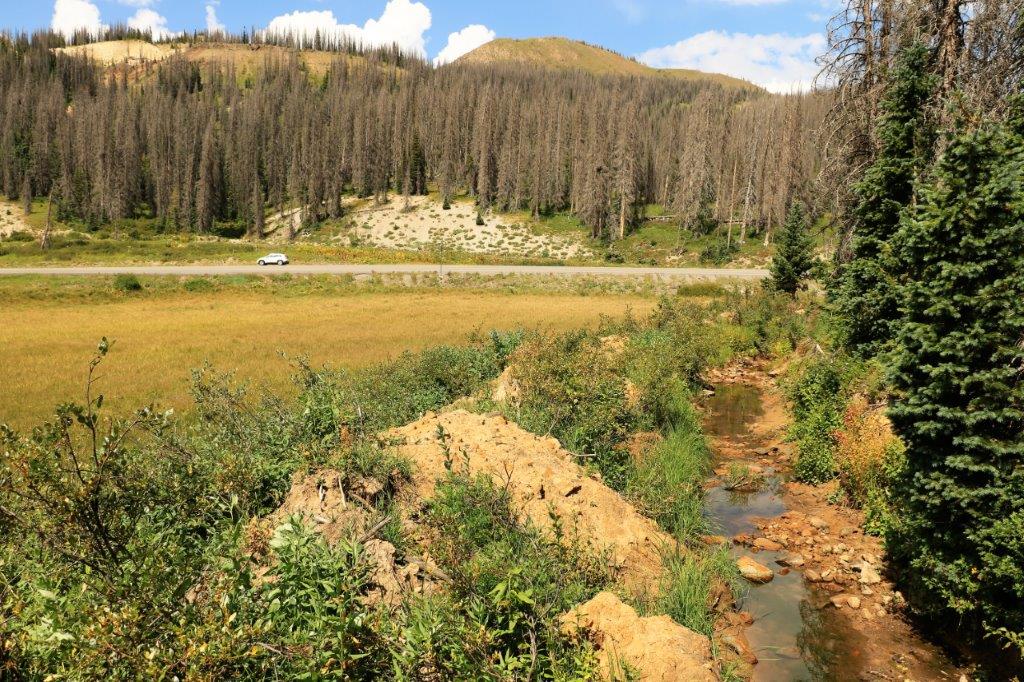
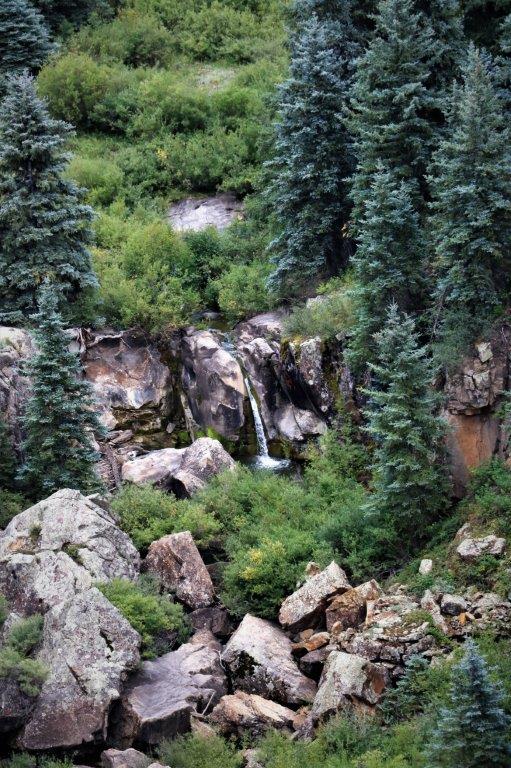
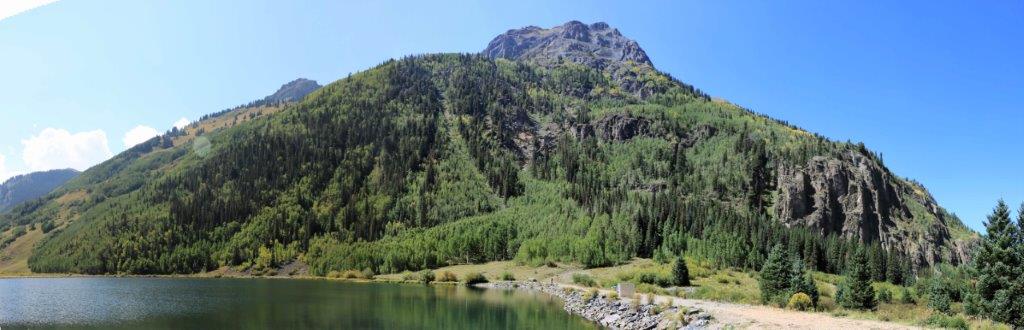
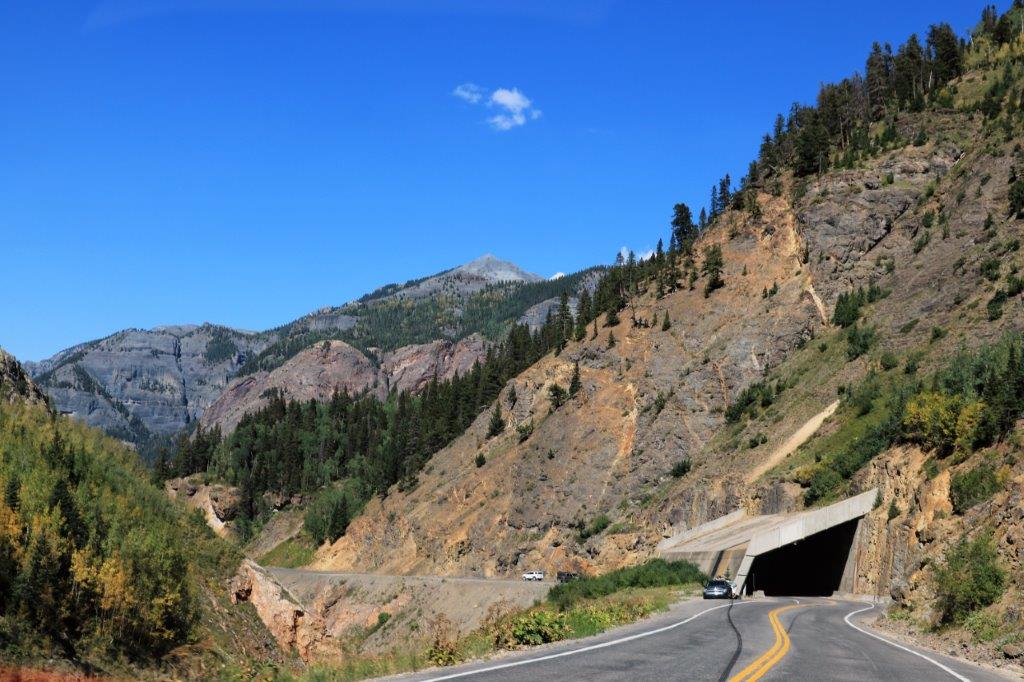
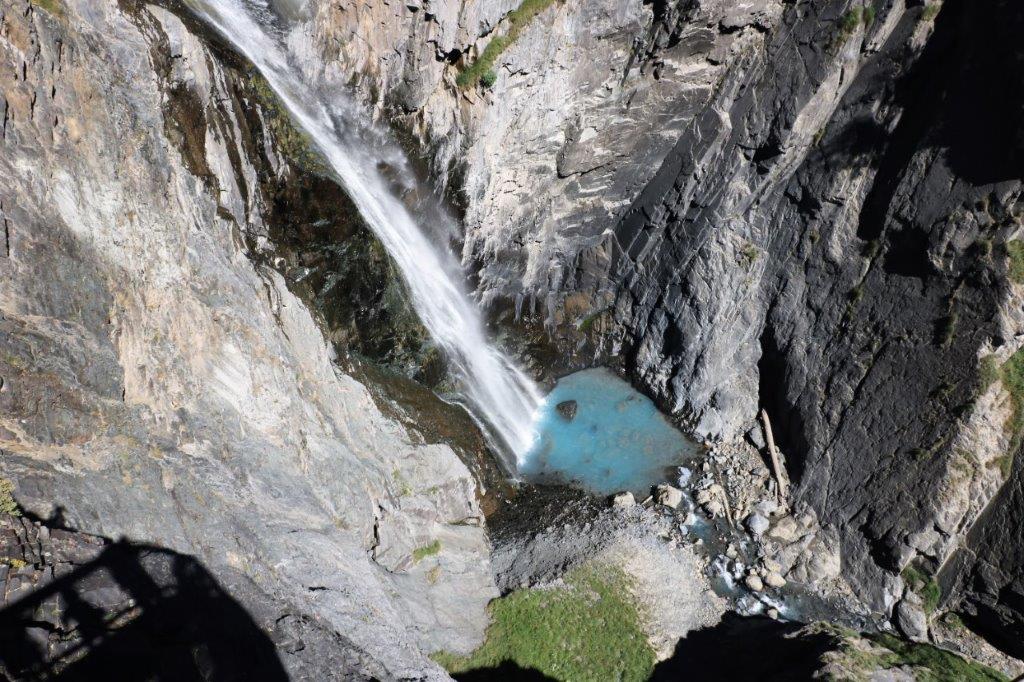
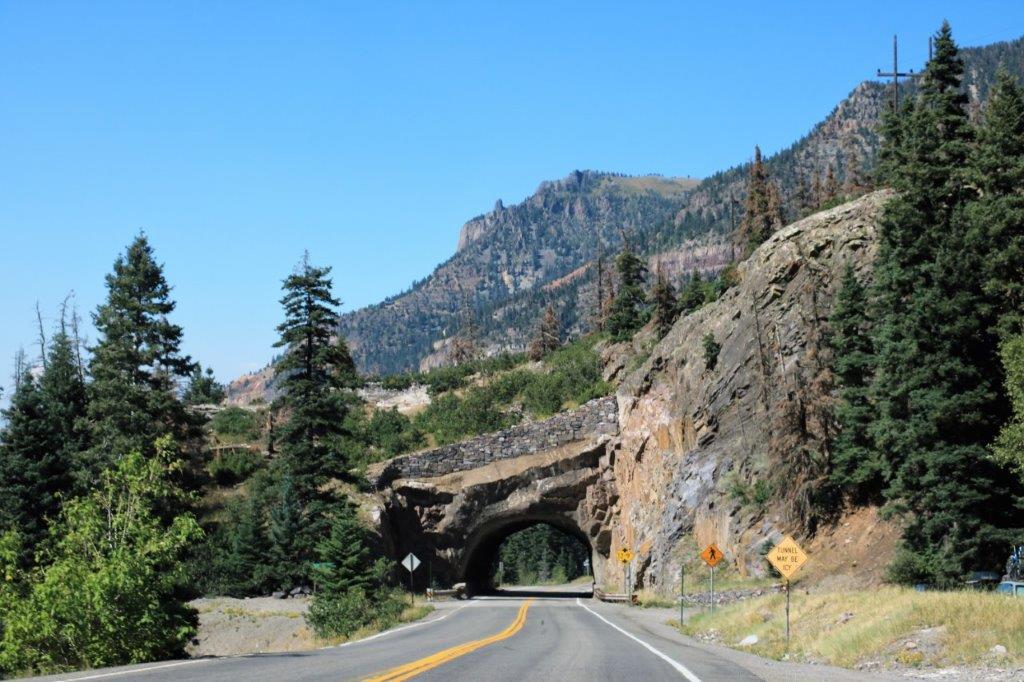
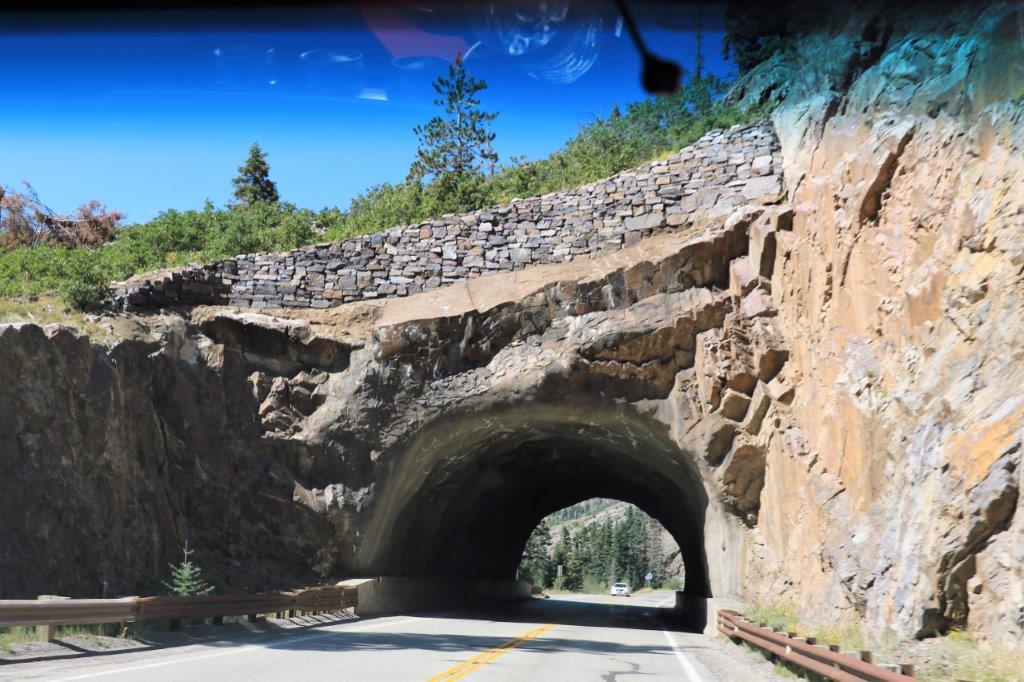
Beside the yellow Bear Creek on this side of the road was a clear stream flowing into it from the little lake just up a bank and a few yards away. (I wouldn’t drink it either) We continued through the mountains and into the Bear Creek Pass, which was cut out of solid rock at a cost of about $10,000 per mile in the late 1880’s. Bear Creek Falls dropped several hundred feet straight down a rock wall.   If you look closely you can see the cut of the road across the middle of the mountain in the background and on the left side about middle distance. This is the only tunnel and there was only the one show shed as well.  The plows must really work long hours in the winter to keep the road open.
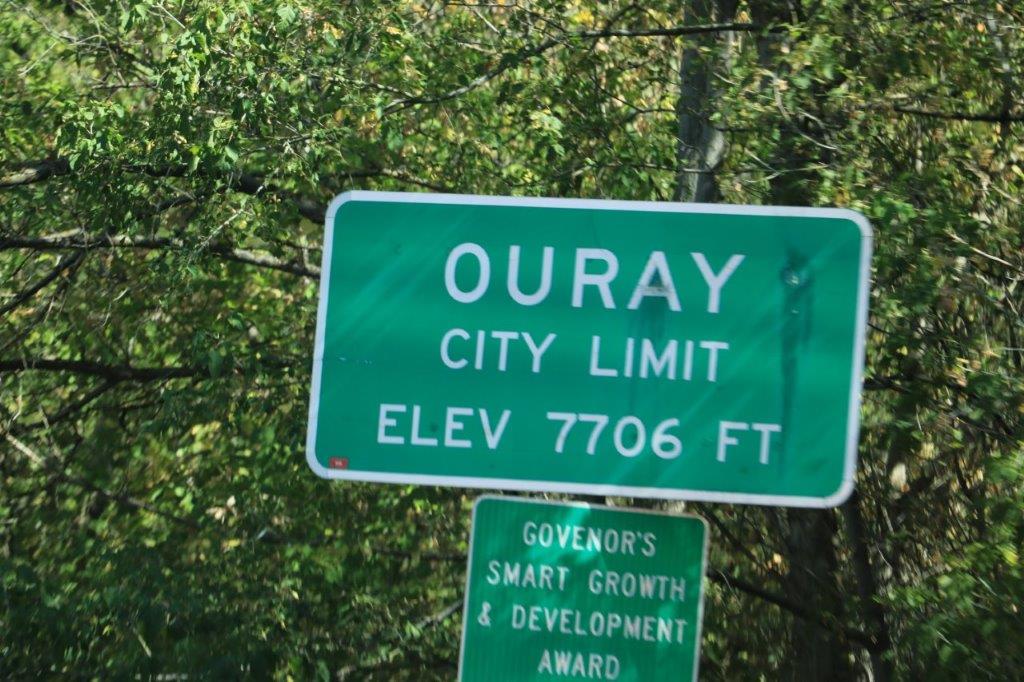
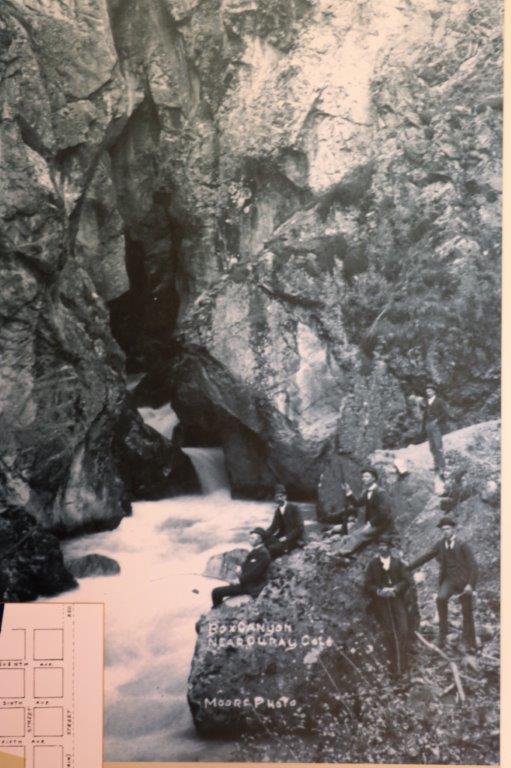
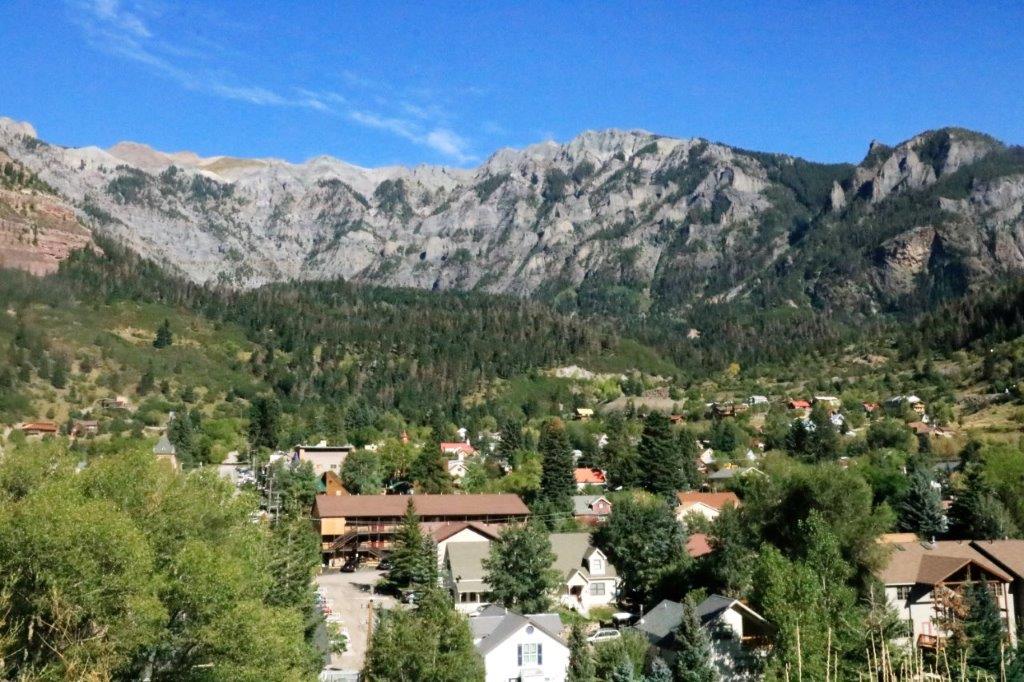
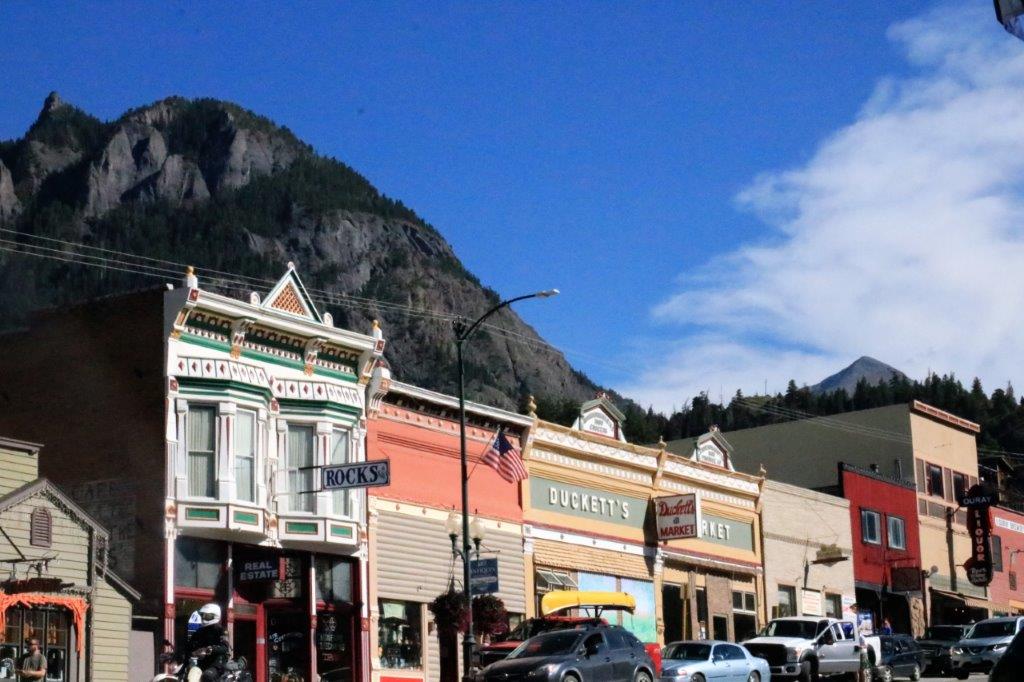
At the overlook just before we dropped down into Ouray we met three local fellows that had just come home from the Four Corners Motorcycle Rally in Durango. They officially greeted us to Ouray.  We had a really nice chat with them.  I asked if they had a welcome goodie bag and they said no, but I could have a beer.  I said if I liked beer I would be happy to have one. The rocks are now a purplish hue.  Ouray is noted as a Victorian town.  Many of the buildings of that era are still in use and have been beautifully restored.  Ouray is also home to a box canyon on one edge of town and a hot spring on the other.
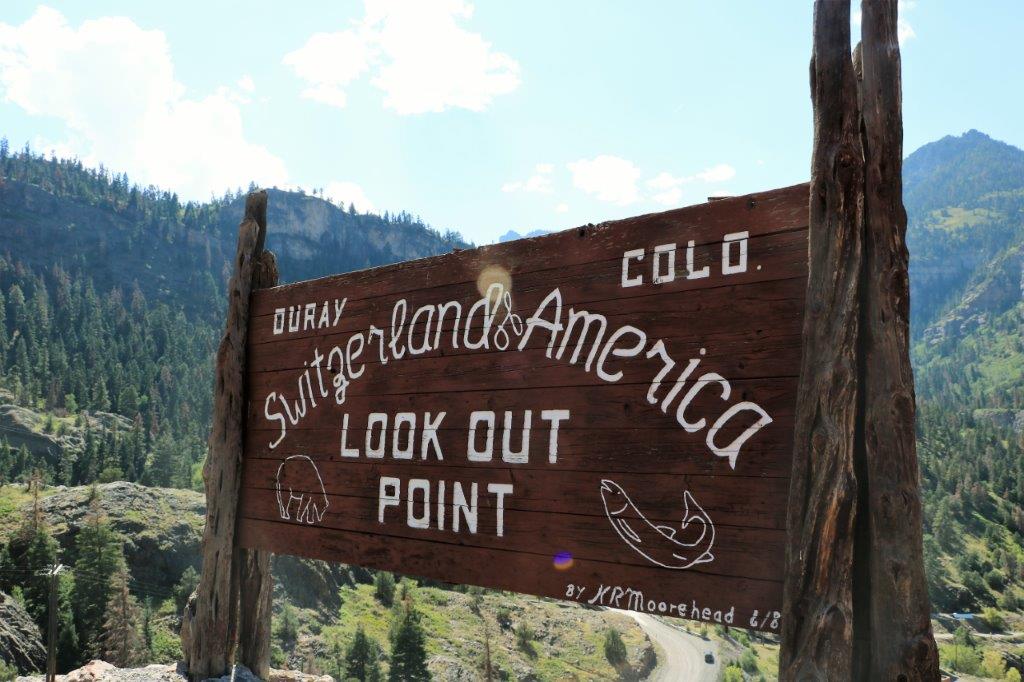
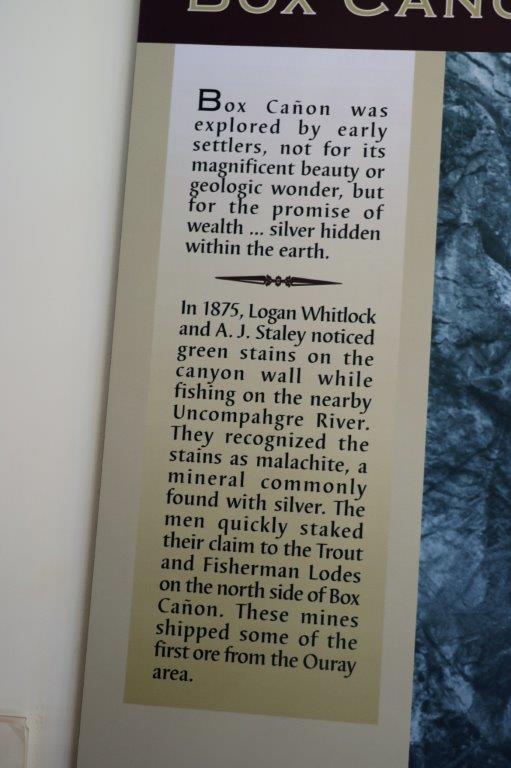
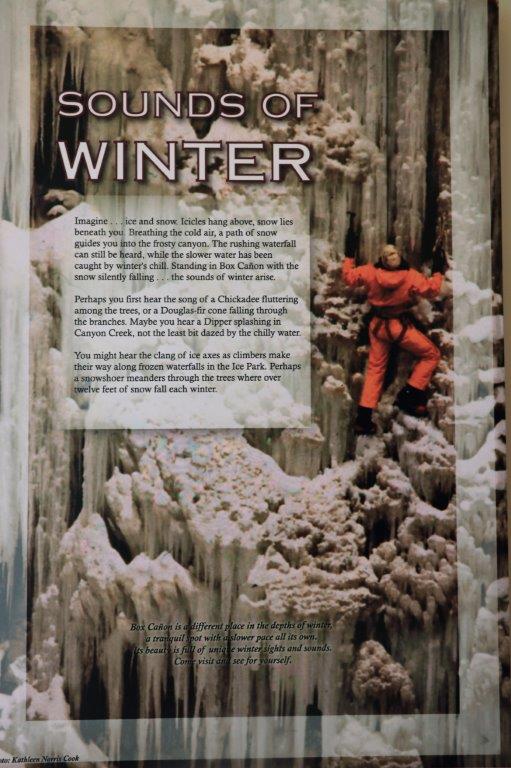
Ice climbers come from all over the world to climb the ice on the canyon walls in winter.

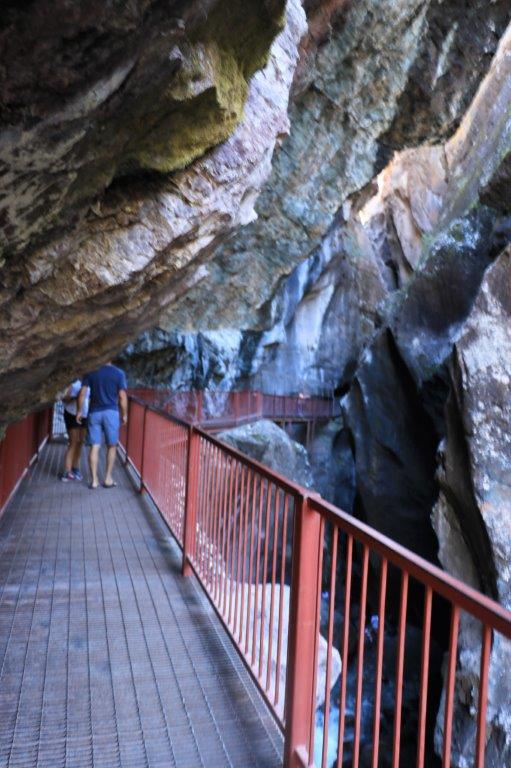
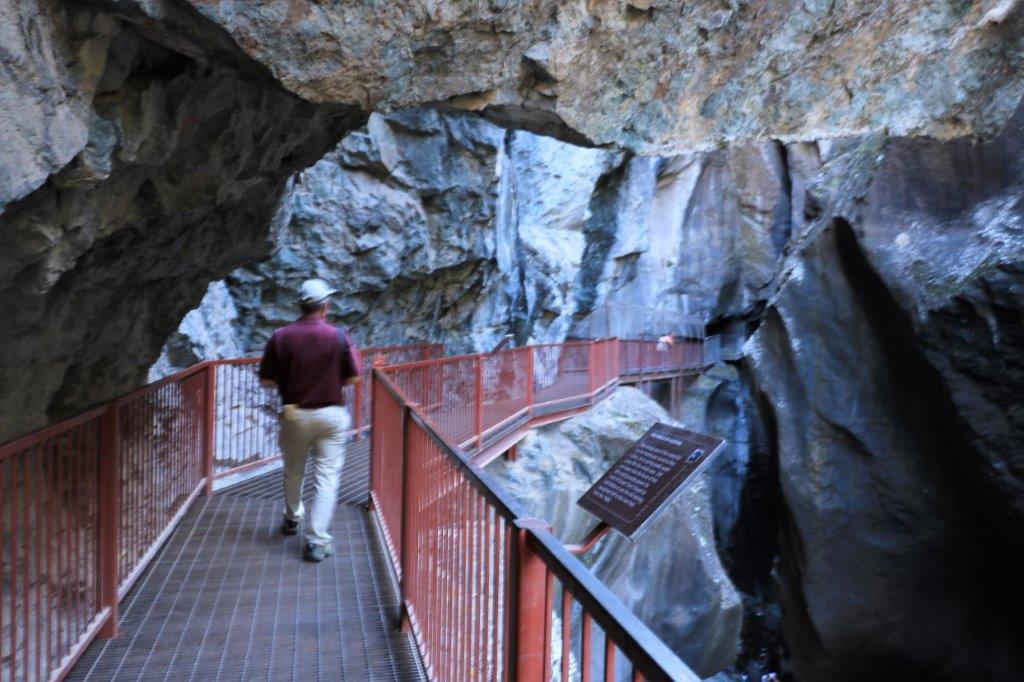
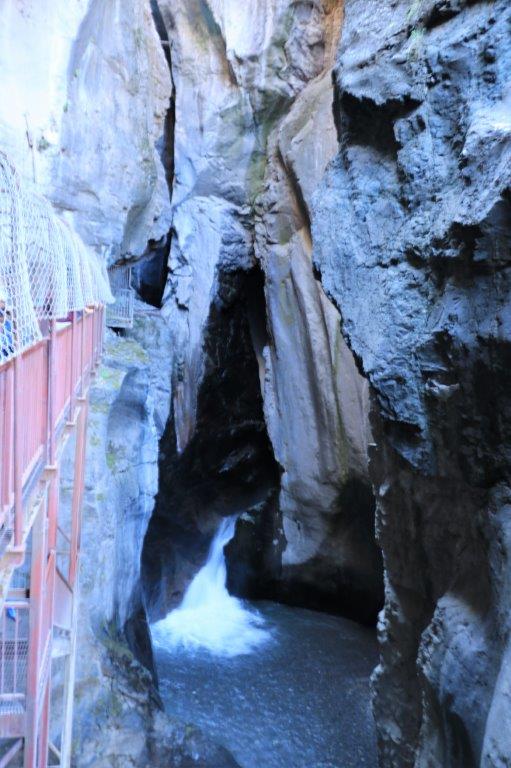
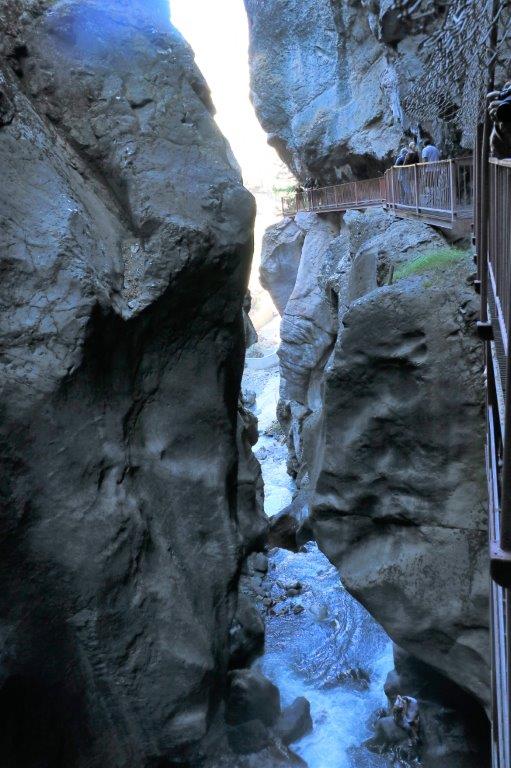
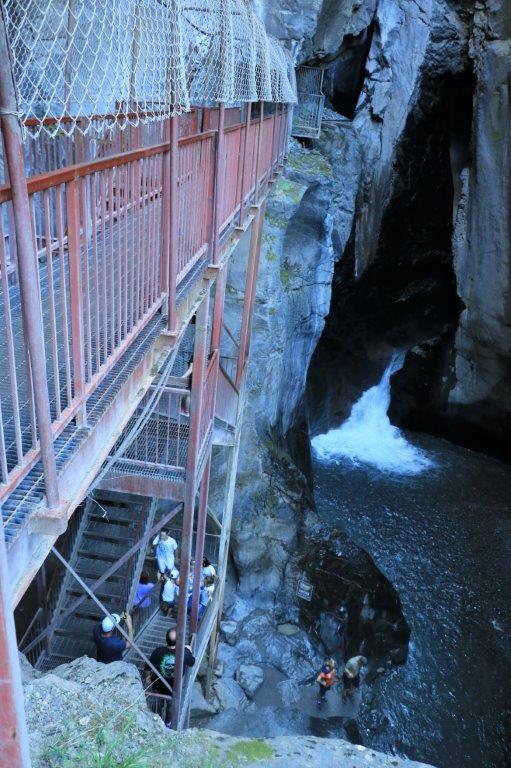
The box canyon is accessed by a raised walkway attached to the sheer cliff sides.  Don’t forget to duck the low rocks.

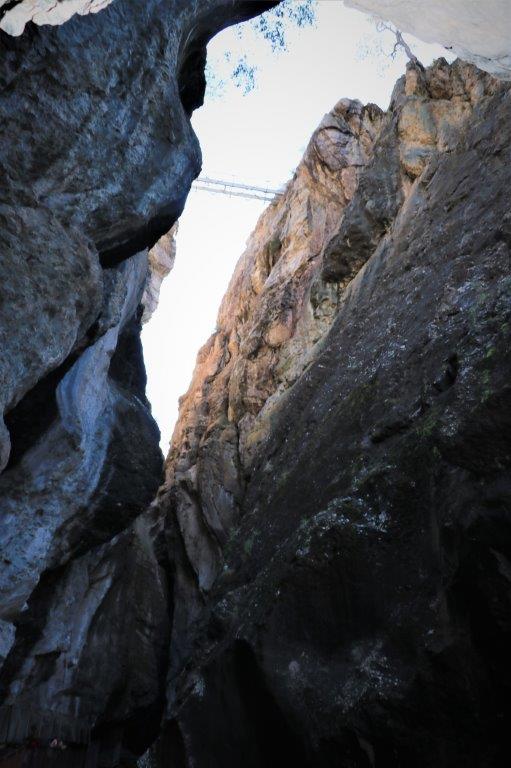
 Look at the bridge across the top of the chasm.  Normally I would have climbed the 200+ stairs to get up there but my thighs cramp up in the middle of the night if I do a lot of stairs.  The pain is excruciating so I now avoid lots of stair climbing.

 You cannot see the waterfall.  You can certainly hear it crashing into the bottom of the canyon but the water flows down through a hole in the rock. I tried to make a vertical stitch image that would give you an idea but the rocks are so dark and the space is so tight you can’t really understand what the photo is all about.  The other one is a close-up of the only bit of water you can see where it comes out the bottom.  Really an amazing place.
 The photo on the right is the gap between the rock walls looking back down the canyon.

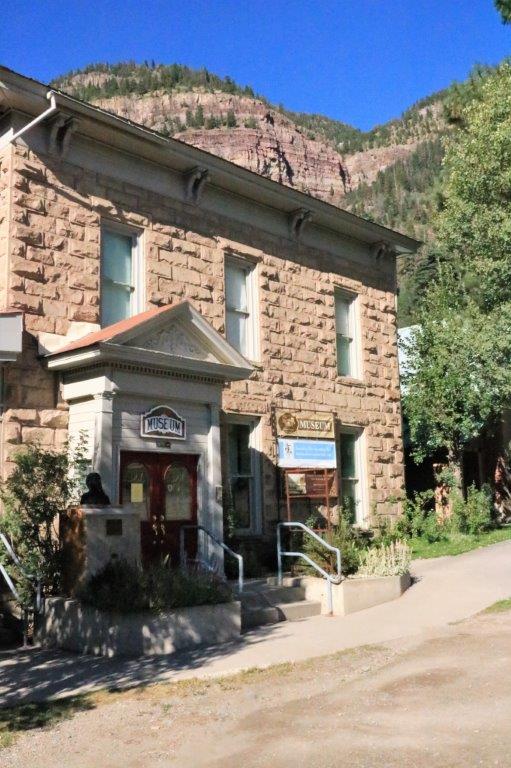
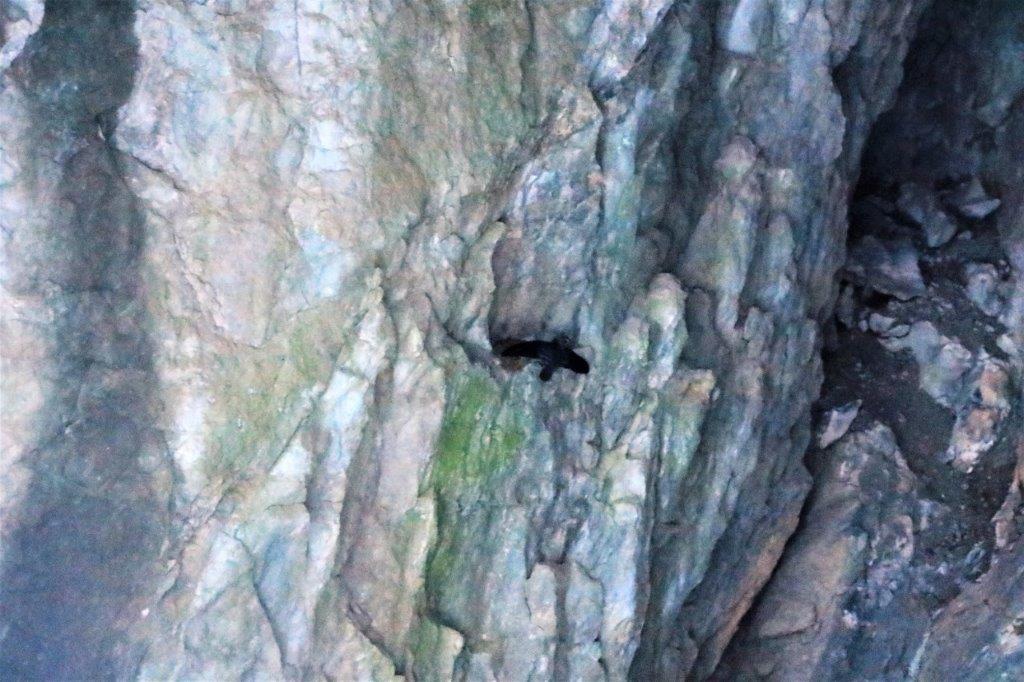
Ouray box canyon is a nesting site for the rare Black Swift.  They fly thousands of miles to come back to these cliffs to nest.  Most of them were gone but we could make out one flapping its wings beside a nest clinging to the far cliff wall.  Unfortunately, since the rocks are almost black and it was ina crevass on the far side I couldn’t get a clear shot even with a very high ISO.  I only put this photo in because it was there and so was I. We drove downtown and looked at the buildings before checking out the hours the museum will be open so we can come back tomorrow to go through the 28 rooms of exhibits. (I’ll bet you will be anxious to see that blog…)
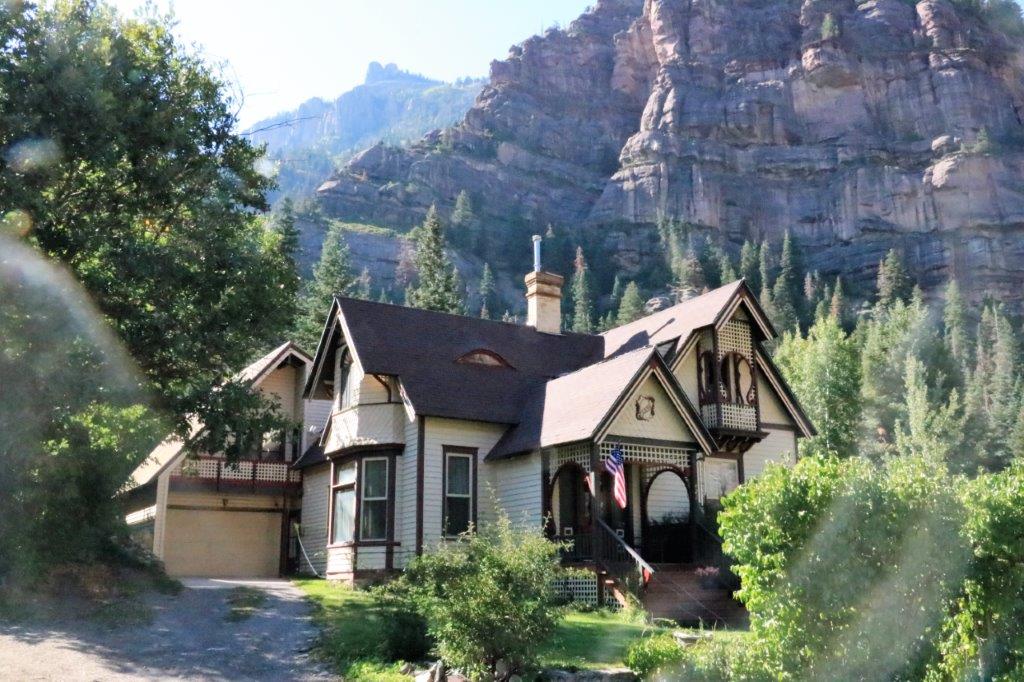
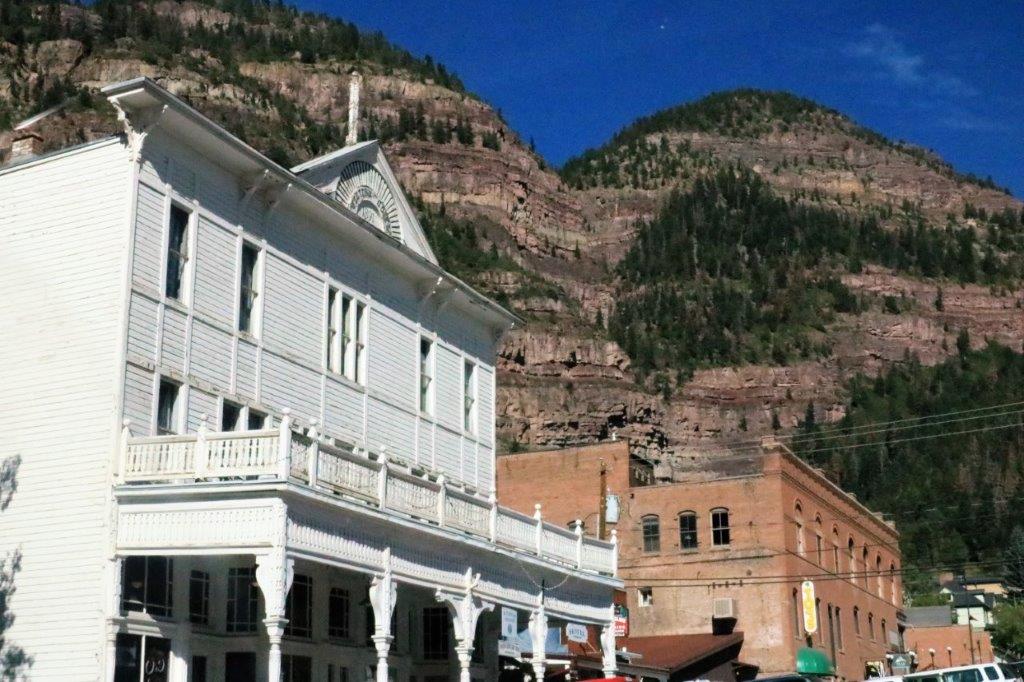
 We would liked to have spent the night in Ouray but hotels here, and in Ridgway a bit further up the road, were between $600 and $400 per night.  We are spending two nights in Montrose, 30 miles up the road at $136 per night. I don’t want to buy the room, I just want to sleep in it.
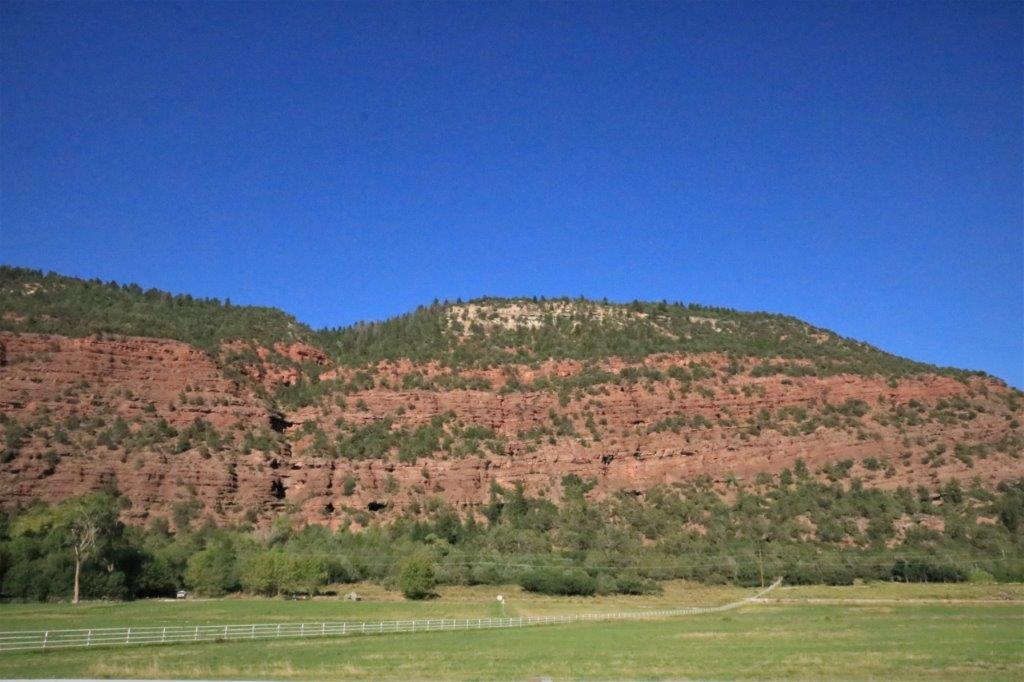
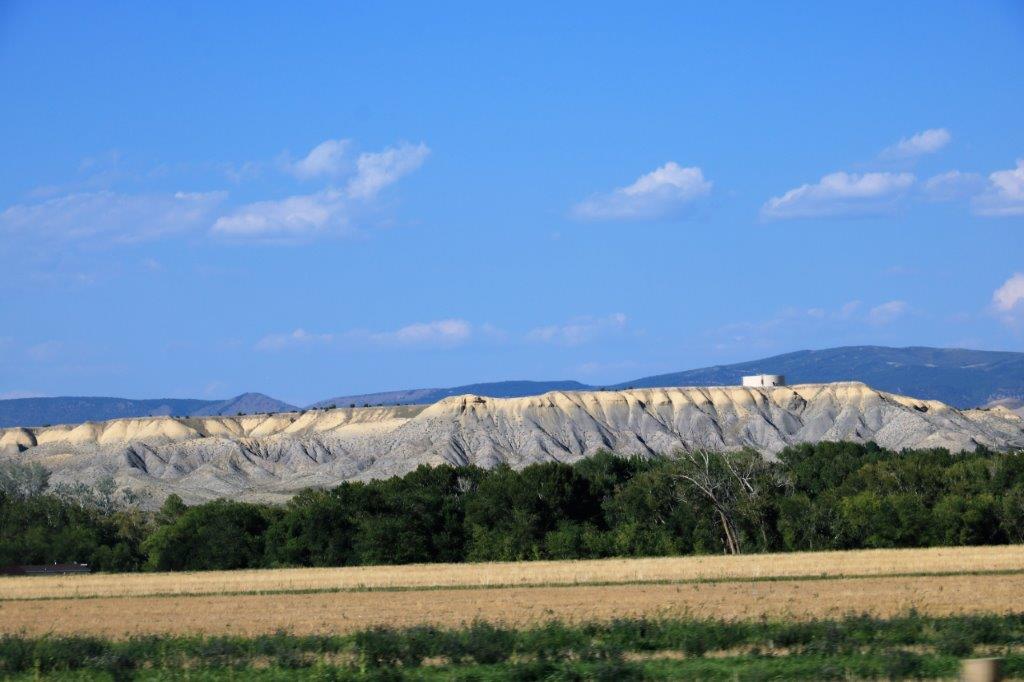
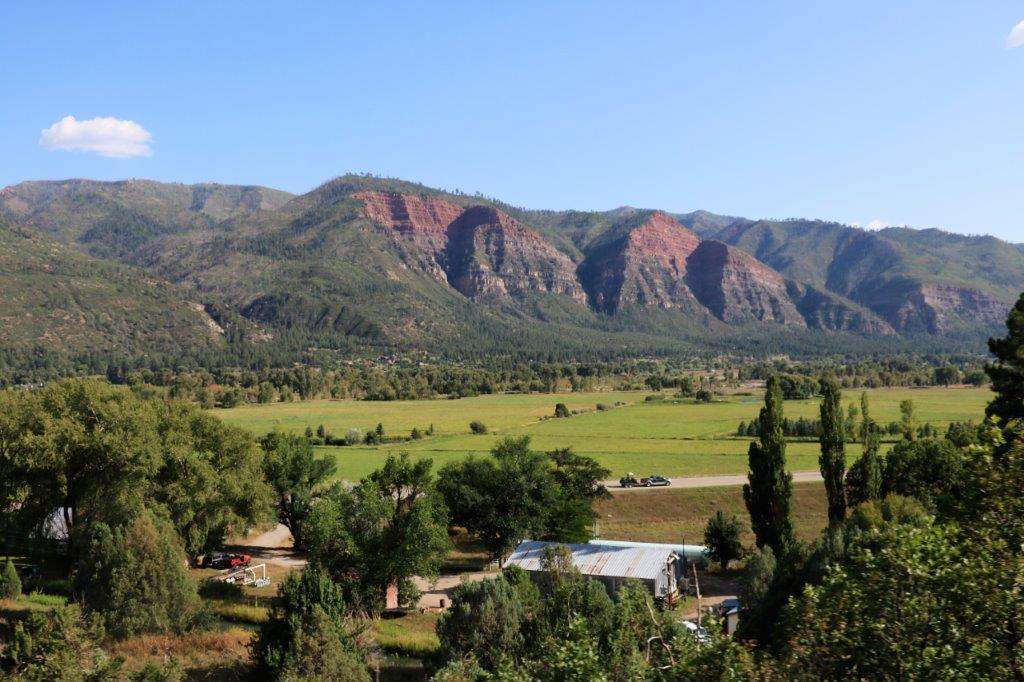
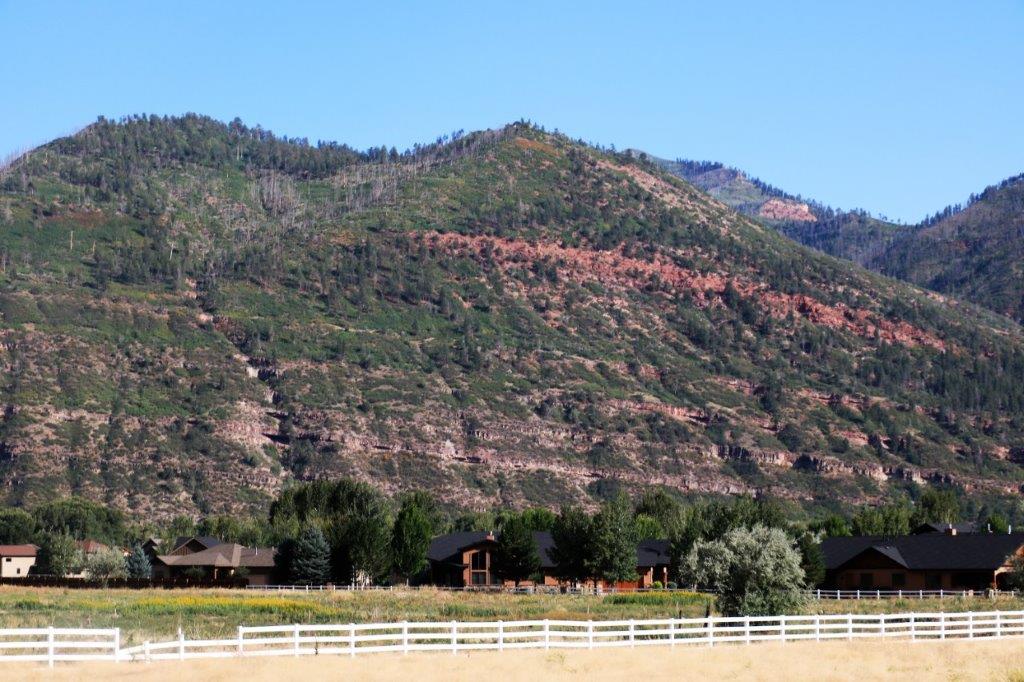
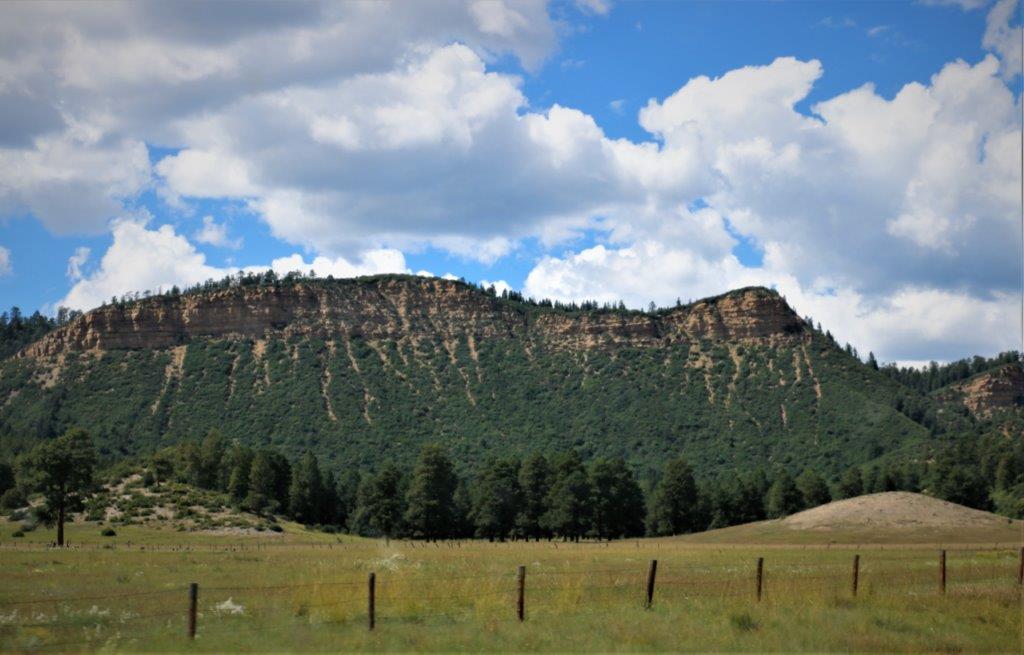
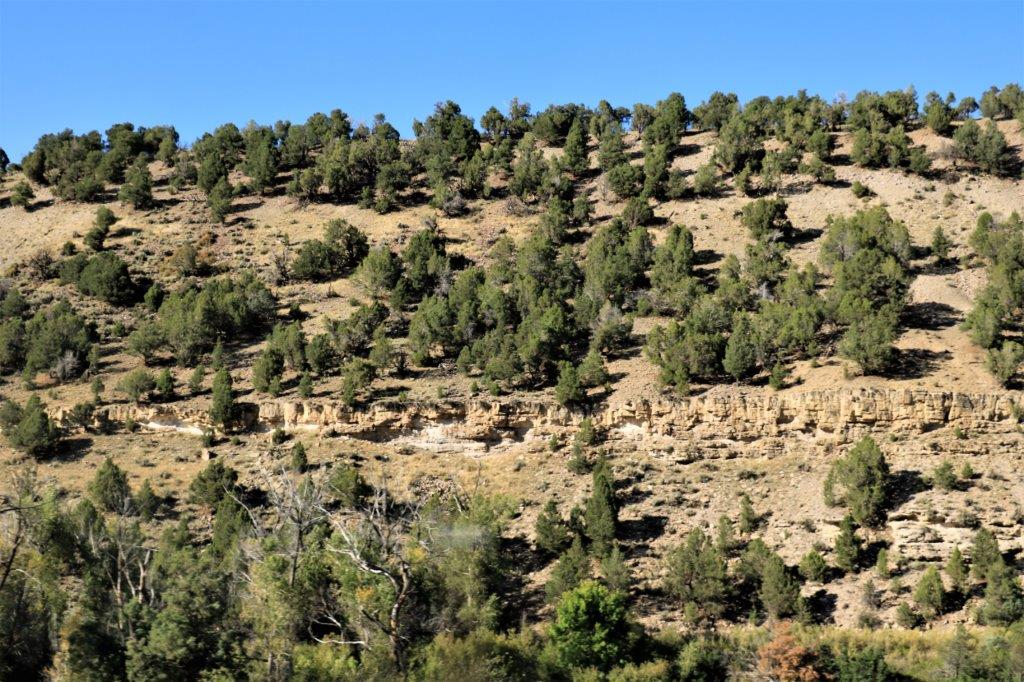
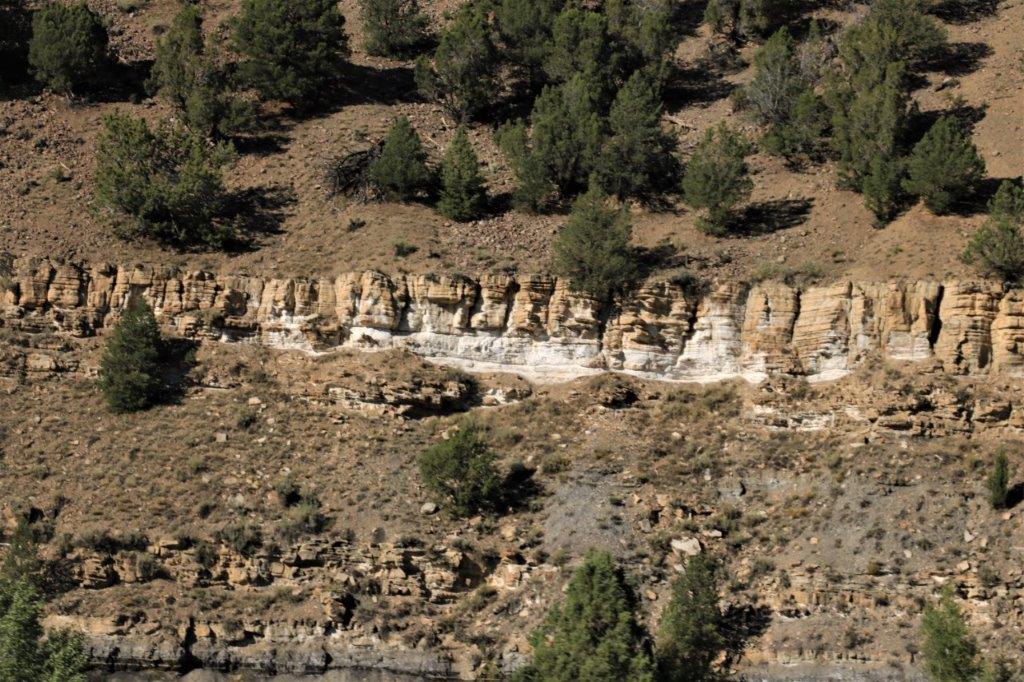
As we left Ouray and journeyed north to Montrose the rocky cliffs disappeared and were replaced by bluffs and valley bottom farm land.
What an amazing day! The weather was perfect, the scenery was spectacular, dinner was really good and I finally finished my blog.  It is after midnight and after by bed time.  More adventures to come tomorrow.  I love to travel!
2017 Sept 2 – Durango, CO (Steam Train to Silverton)

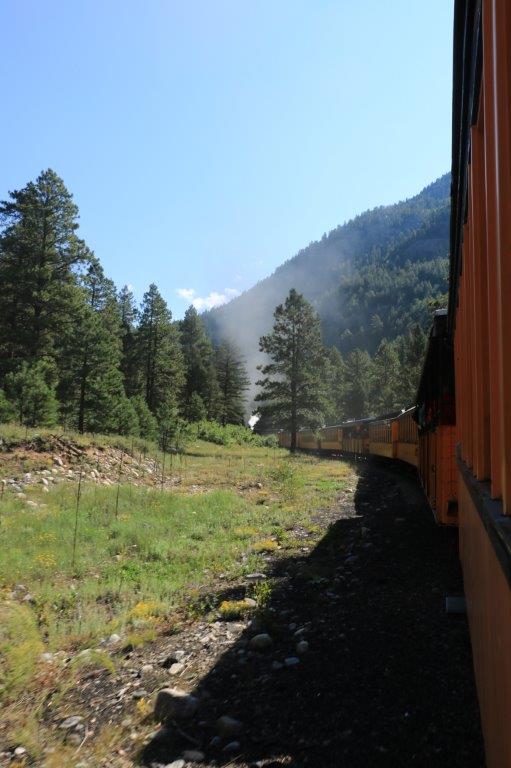
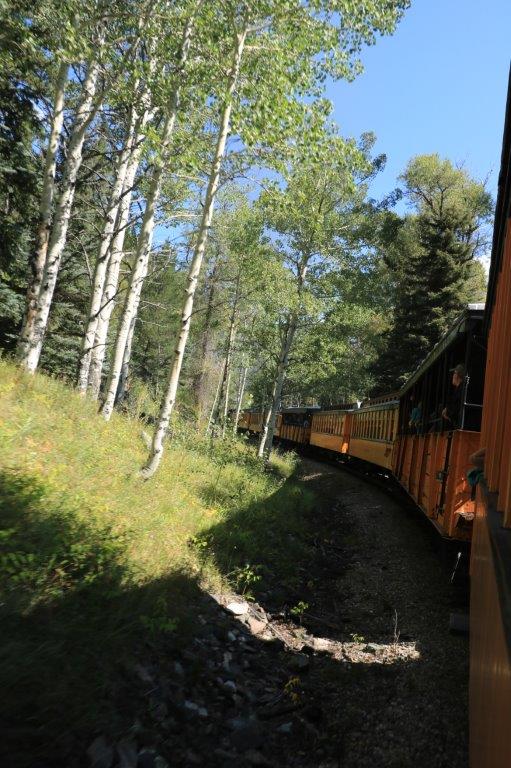
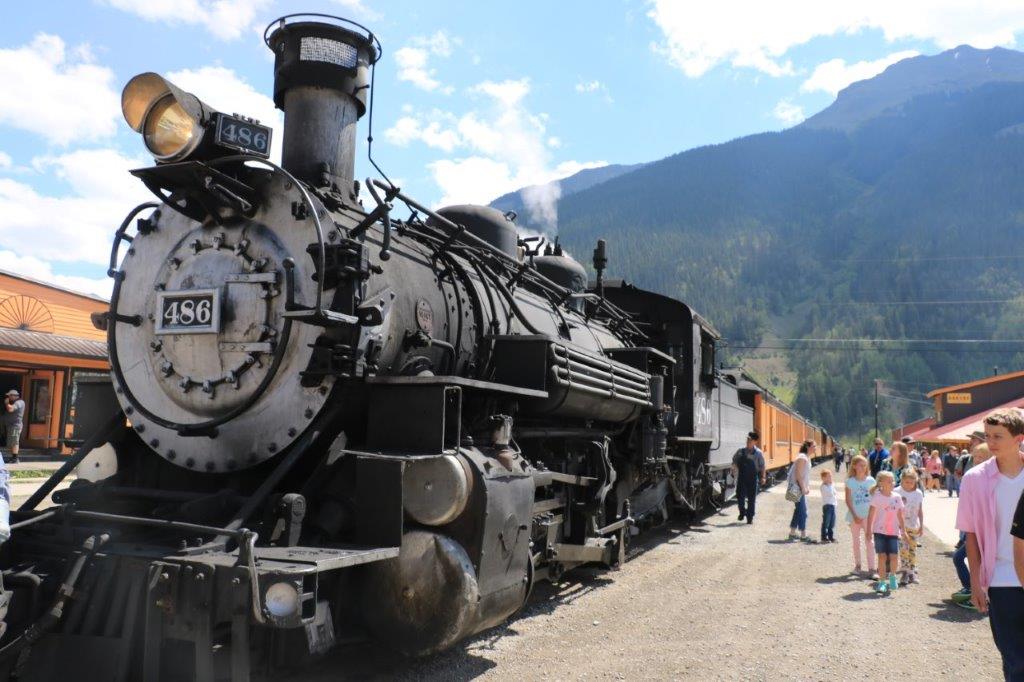
We were up at 6:30 and at the train station at 7:30 to get on board for our trip to Silverton.  Silverton is only 45 miles away up through mountain passes (we climbed almost 3,000′) but the narrow-gauge rail climbs at about 5-10 mph so the journey takes 3 1/2 hours.

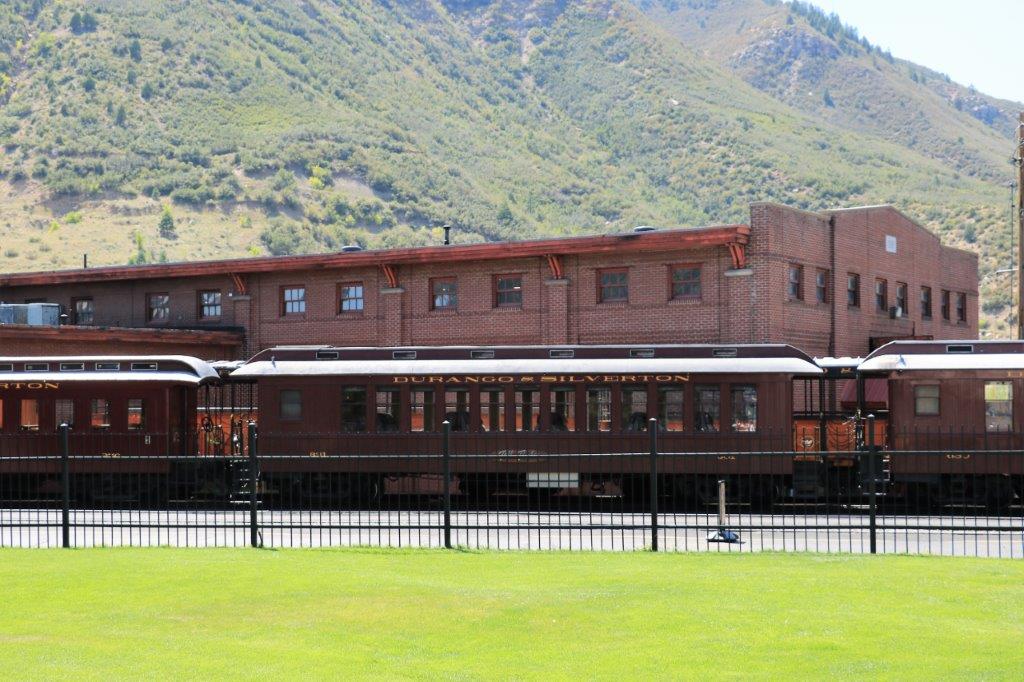
The Durango-Silverton steam railway line has been continuously running for 136 years.

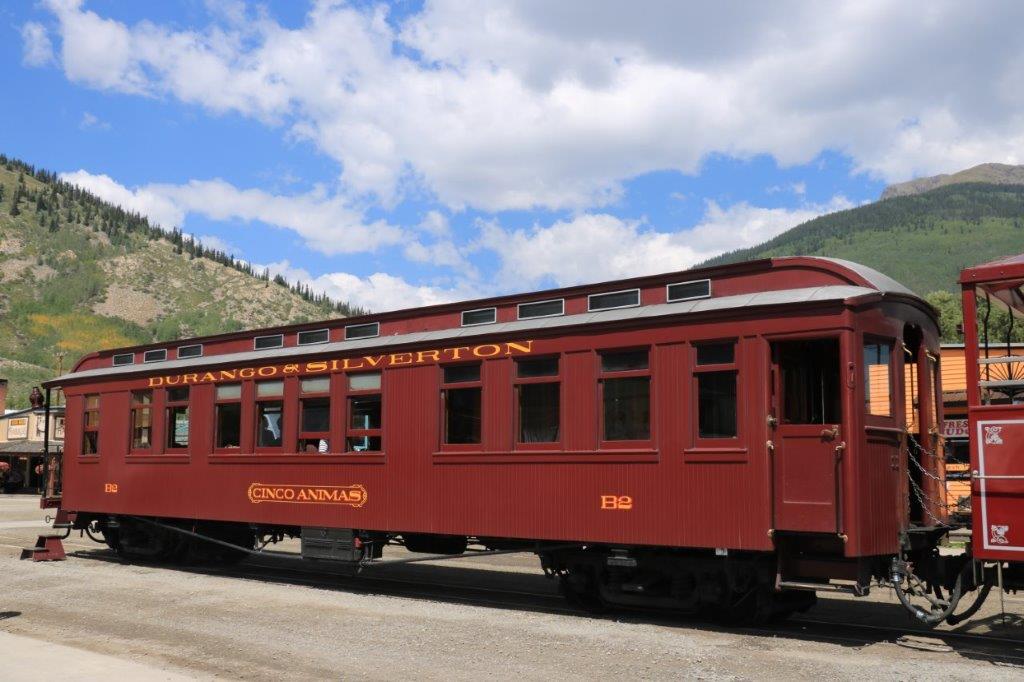
We had a narrator car, which means we had early-era Durango ‘citizens’ telling us the history of the Durango-Hermosa-Rockwood-Cascade-Needleton-Silverton mines and towns. We got information on the plants, animals, geology and all kinds of things.  “Mr. Thomas Grayden,” a successful local businessman spoke on the way to Silverton and “Mrs. Caroline Romney,” a 40-year old widow who started Durango’s daily newspaper spoke on the way back.

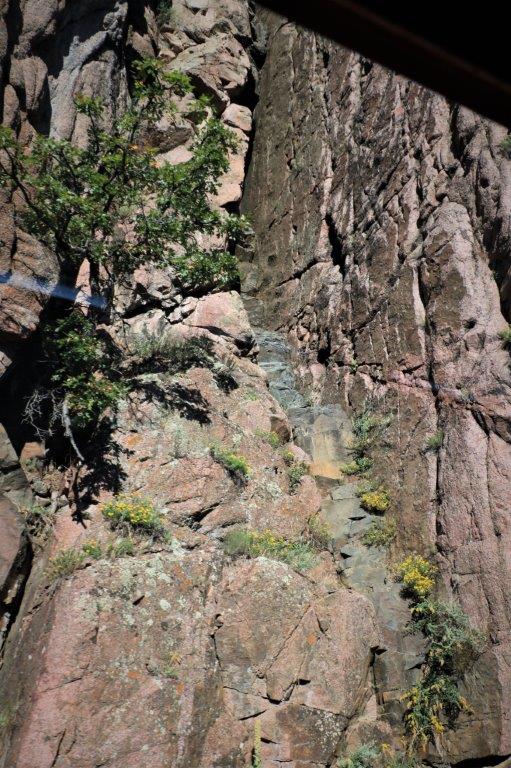
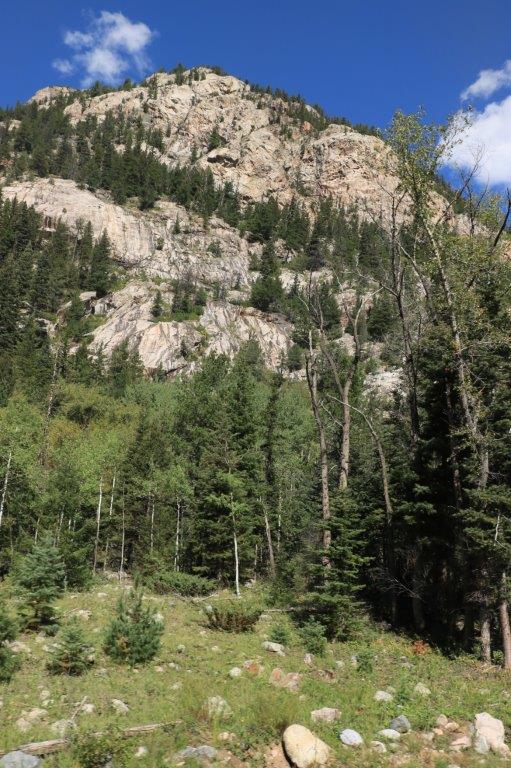
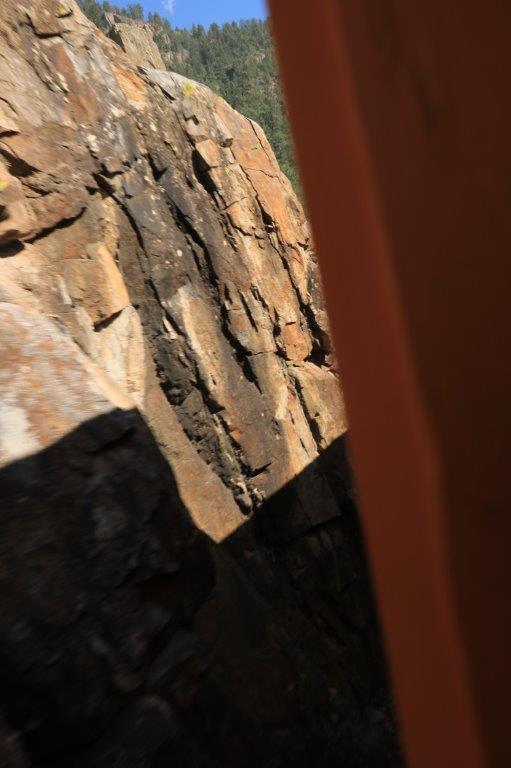
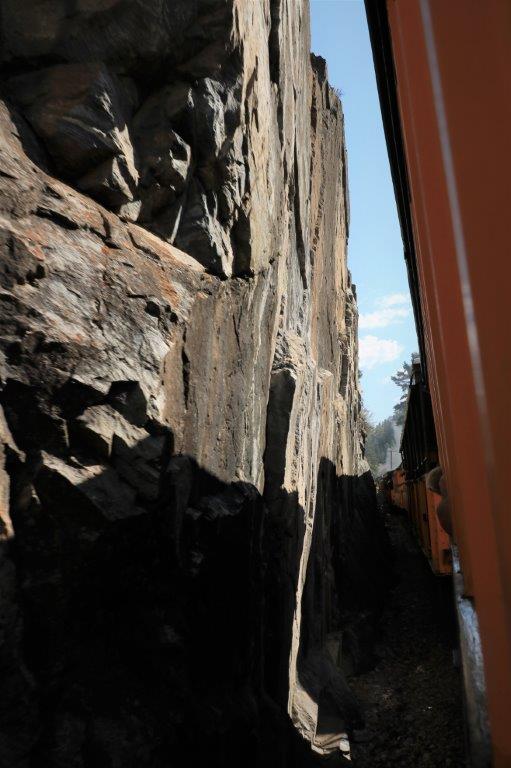
I took 370 photos today.  Mostly of rock wallks, the train, the Animas River, the town of Silverton, and the surrounding mountains.  I brutally thinned the ranks but still have quite a few photos to put in my blog.   Part of the line was literally blown out of the red granite walls to make a ledge for the track.  Men would be dangled over the edge of the cliff to pound holes for dynamite in the face of the cliff and then blasters would load them and ‘fire in the hole,’ to bring down the rock.  They just kept cutting the rock face back from the canyon wall until they had a big enough ledge for the railway.  And not an inch to spare!
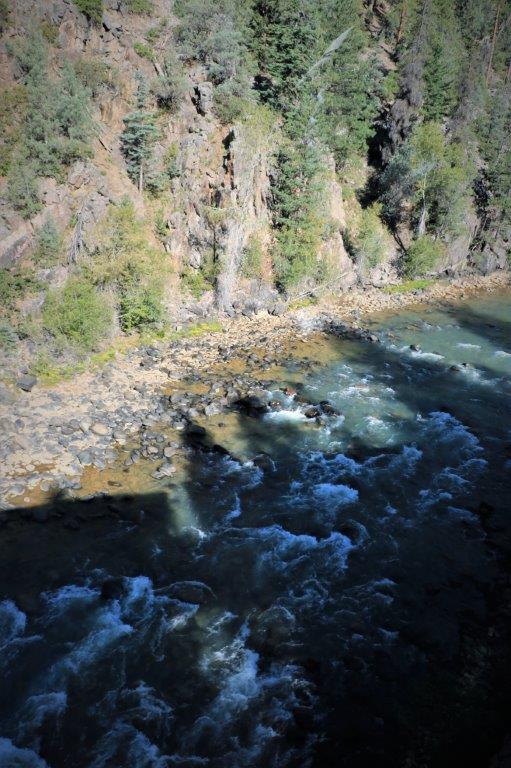
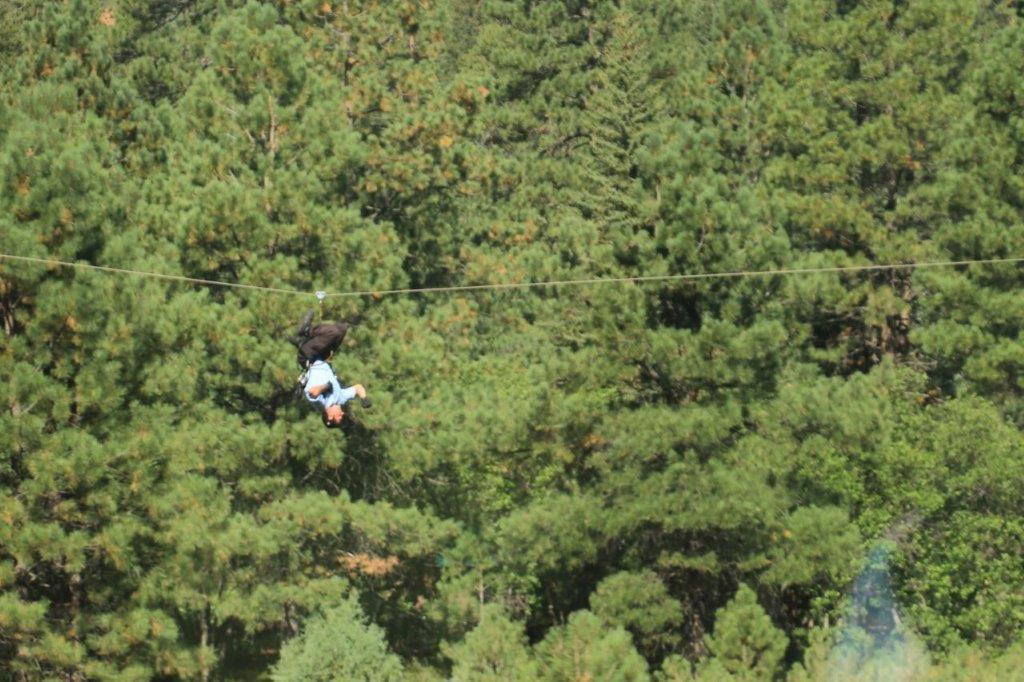
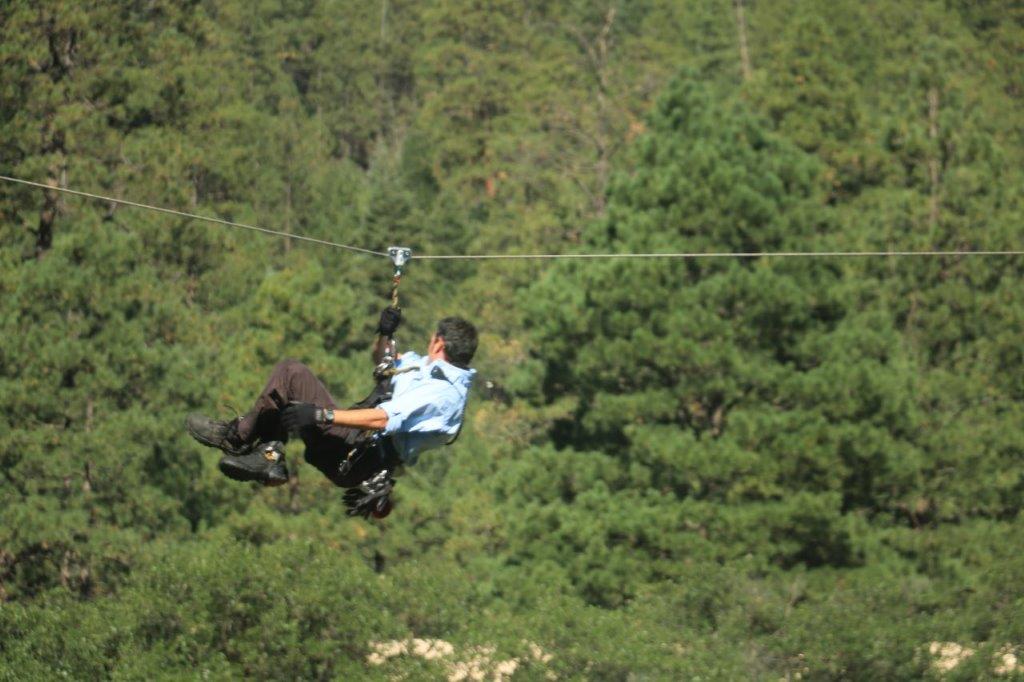
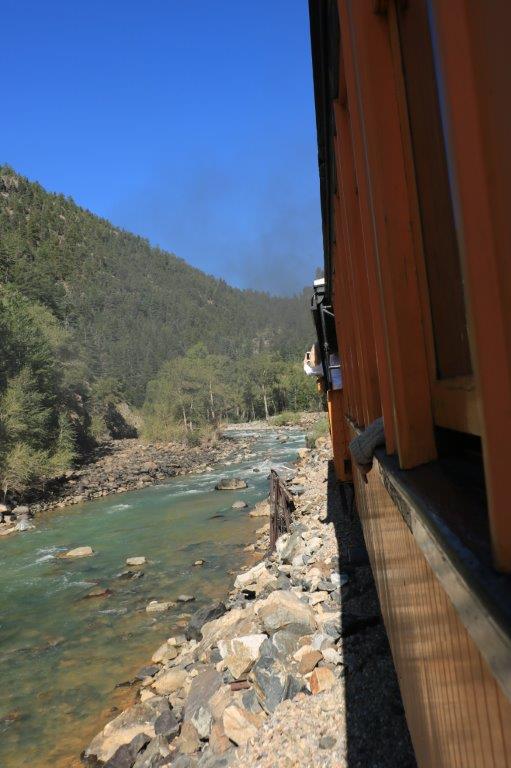
We passed the Soarin’ Tree Top zip-line.  It is the longest, largest zip-line course in the world.  They have 27 tree top lines.  The only way to access the adventure is to take the steam train from Durango, get off to do your zip-lining and then get picked up when the train makes it’s return run.  There are no roads into the place. One of the staff put on a quick show for us as we went by. There are also hikers, hunters, and fisherman that gain access to various parts of the San Juan Forest via the train.  The train route has several flagstop locations where you can make prior arrangements to be dropped off or picked up. To build the railway line the engineers followed the Animas River as much as possible since the river had already cut a path through the mountain.  It would require less track and less property to purchase, however the path is steep and narrow with 32 bridges back and forth across the river over the 45 miles.

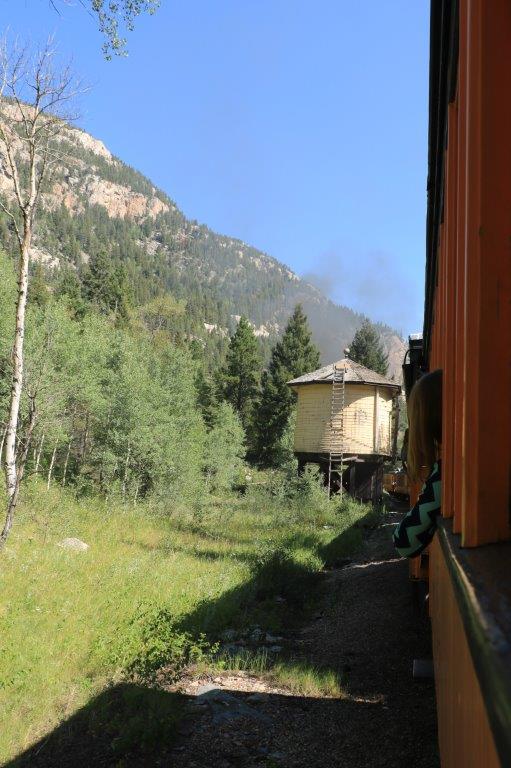
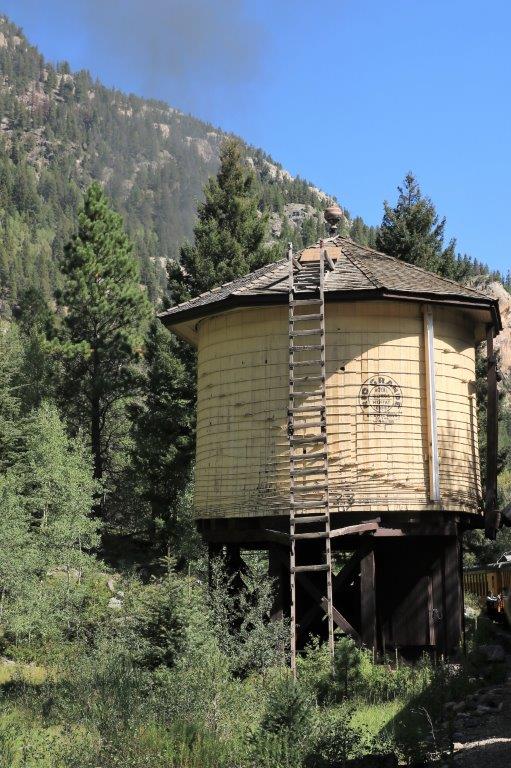
We stopped twice to take on water (this is an unused old water tower) on the way up and once on the way down.

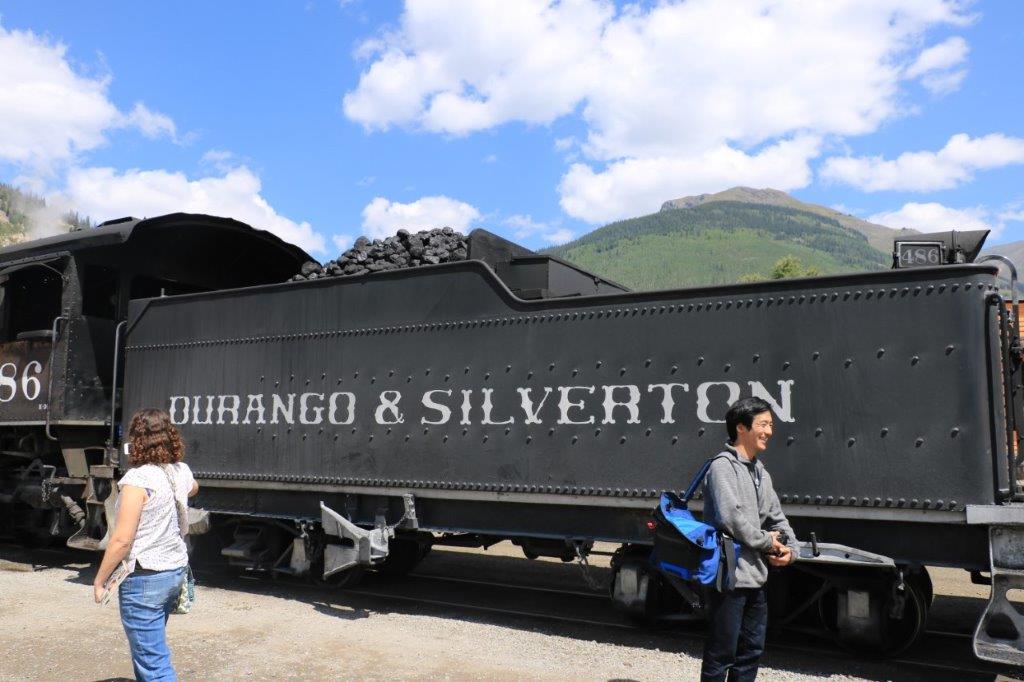
There is only one short ‘downhill’ section on the climb to Silverton so the engine works the entire way.  An average trip burns between 5-7 tons of coal.  The coal car is loaded with 9 tons of coal before it leaves Durango – and the fireman still shovels it into the boiler by hand.

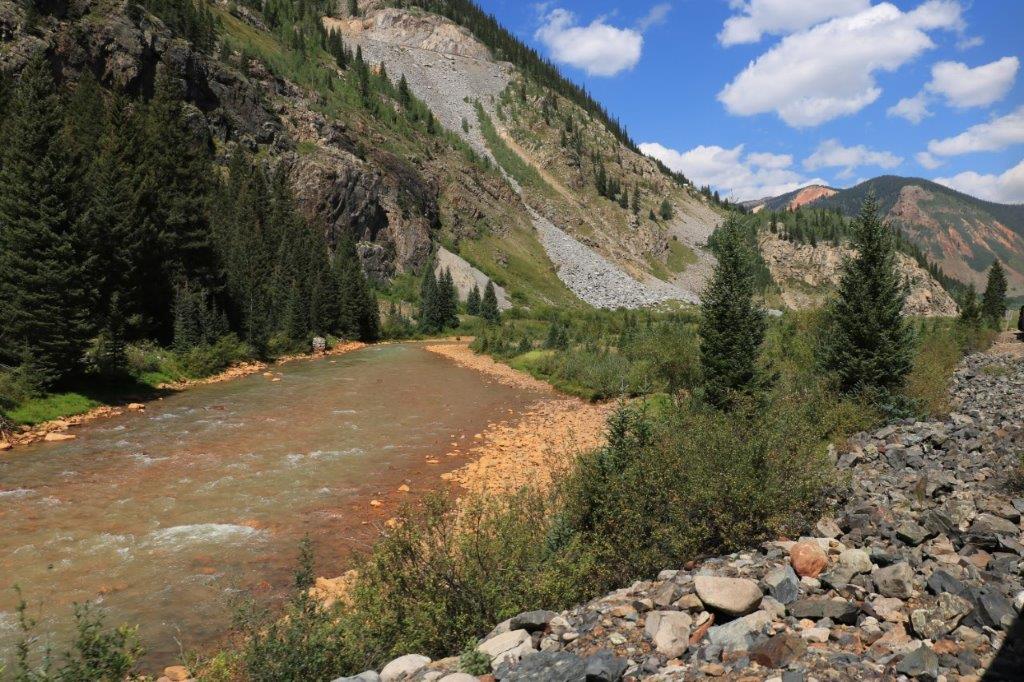
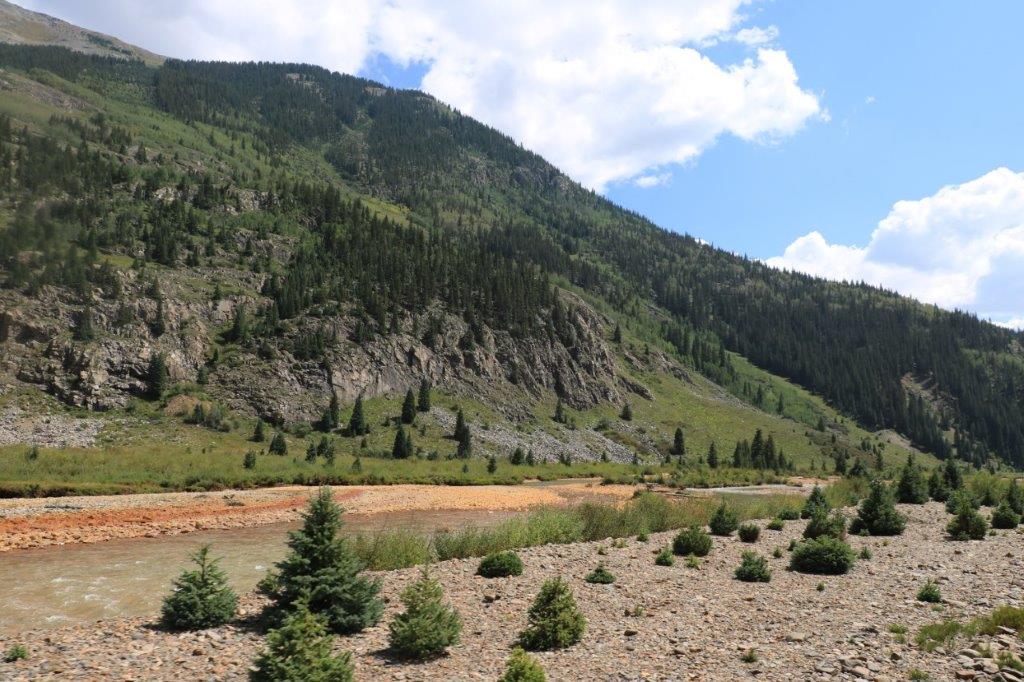
Because the route is through the high mountain there have been many instances of avanlances covering the tracks.  Sometimes they would just cut through the packed snow and make an ice tunnel until spring melt.  It was easy to see the avalance routes along the way. As we approached Silverton we could see the result of all the minerals in the water that have leached from the mines or mining process.  None of the water of the Animas and most of its tributaries and feeders is safe to drink.  It contains too many chemicals and bi-products of the mines.

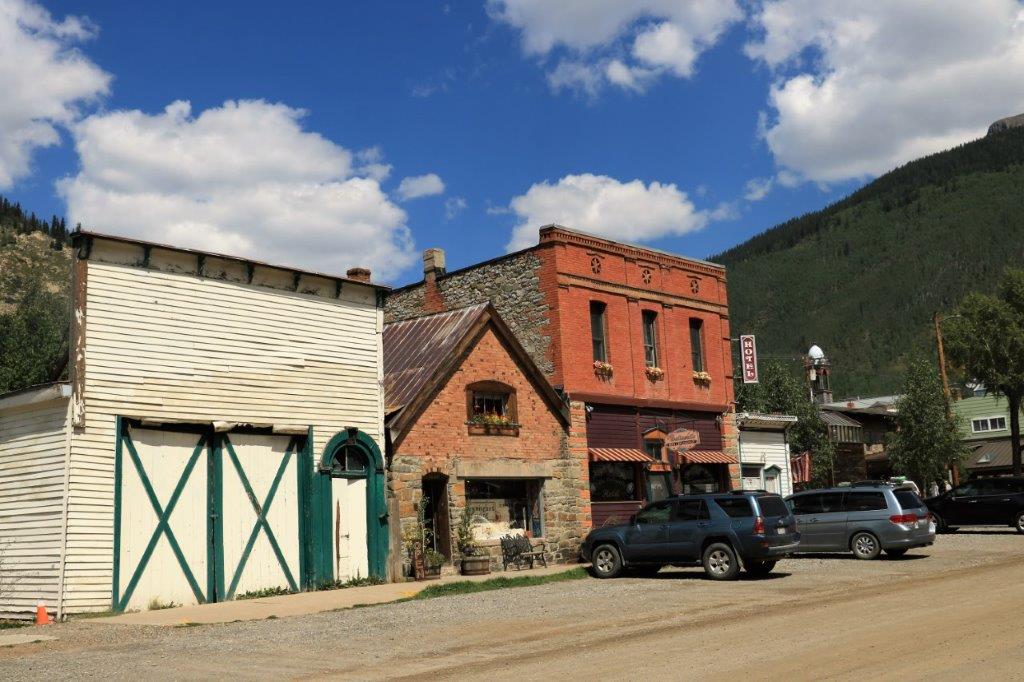
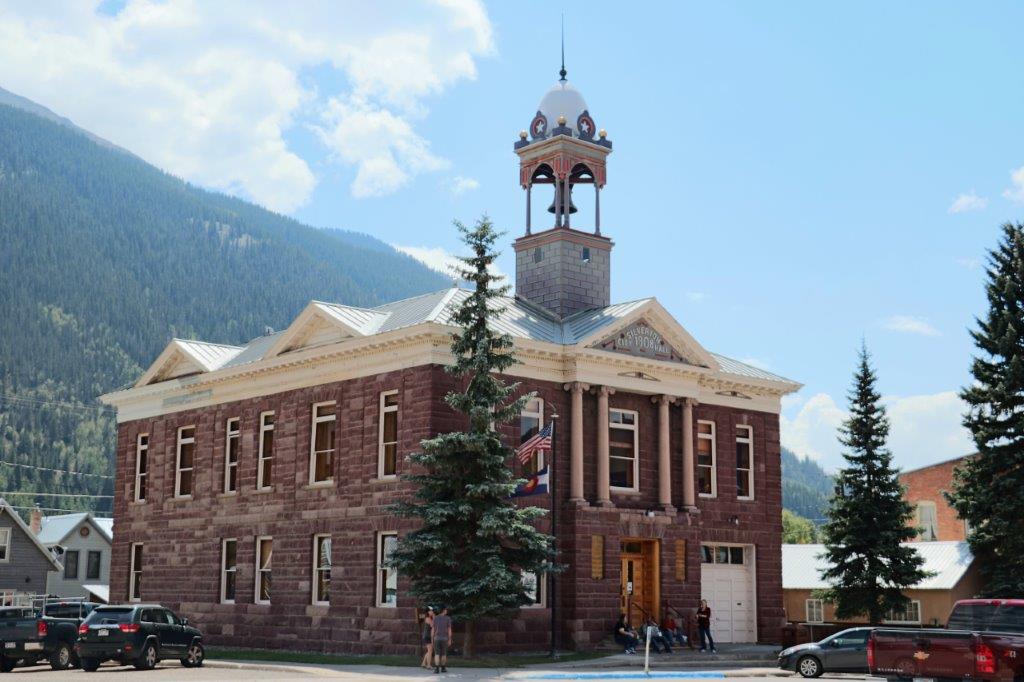
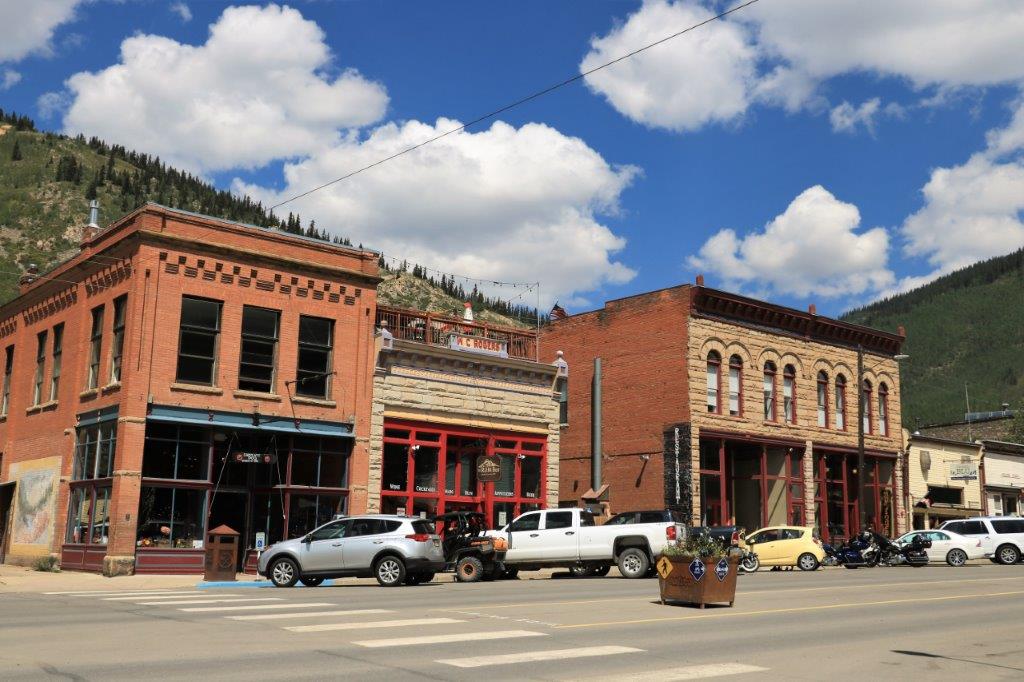
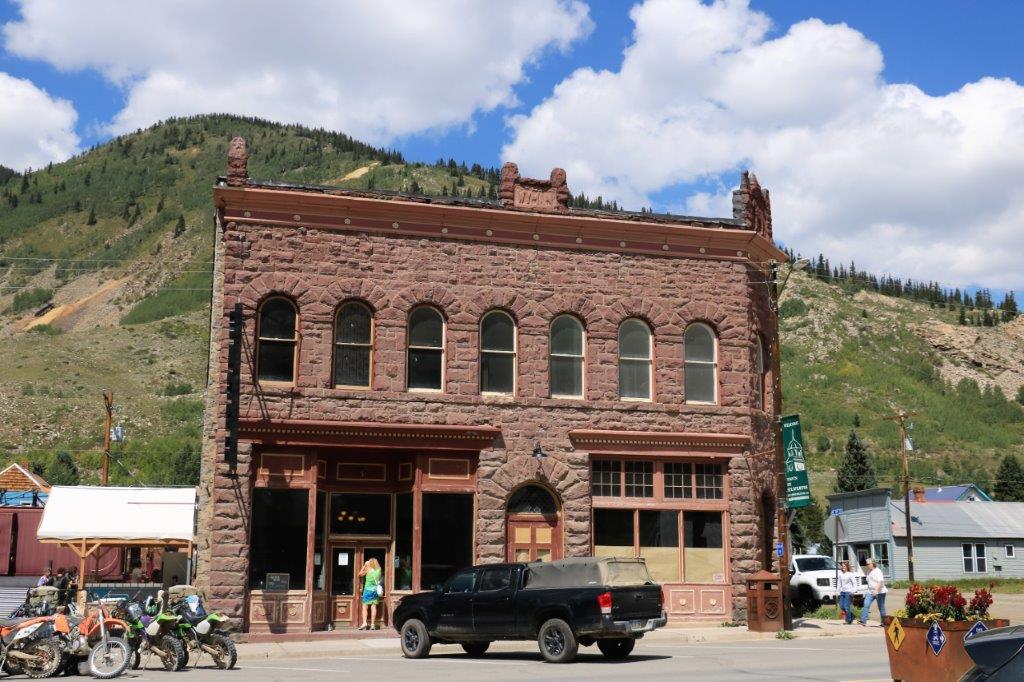
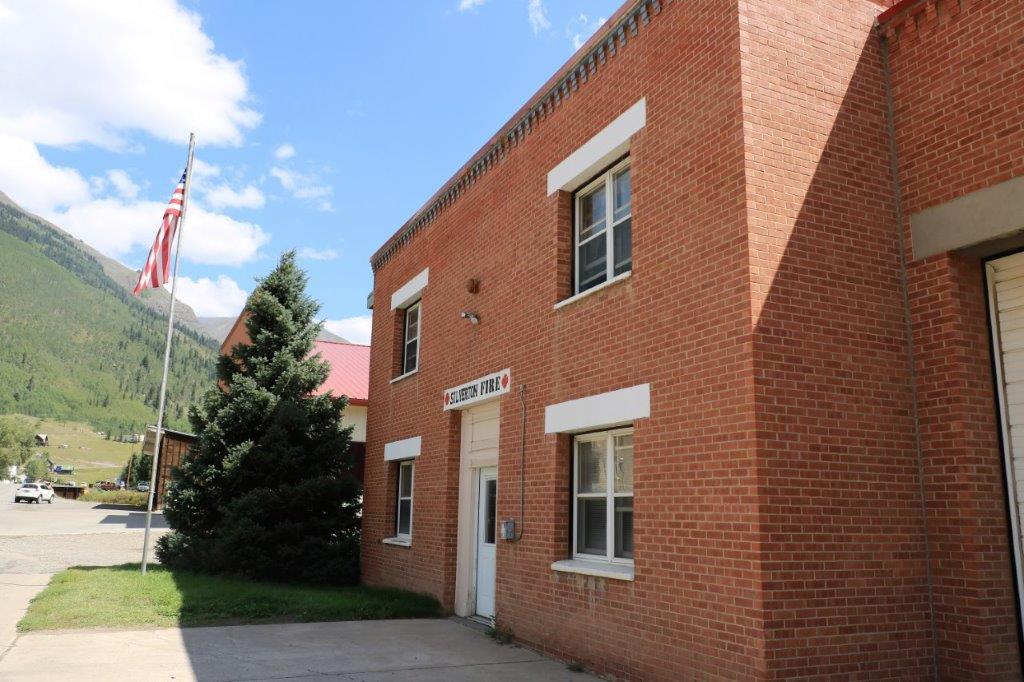
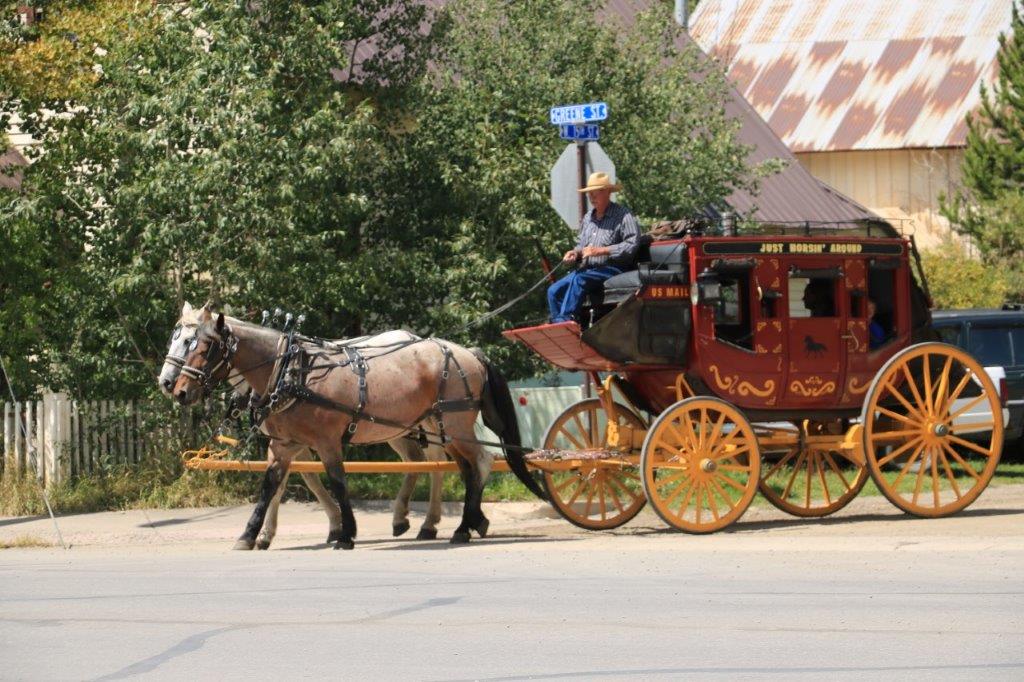
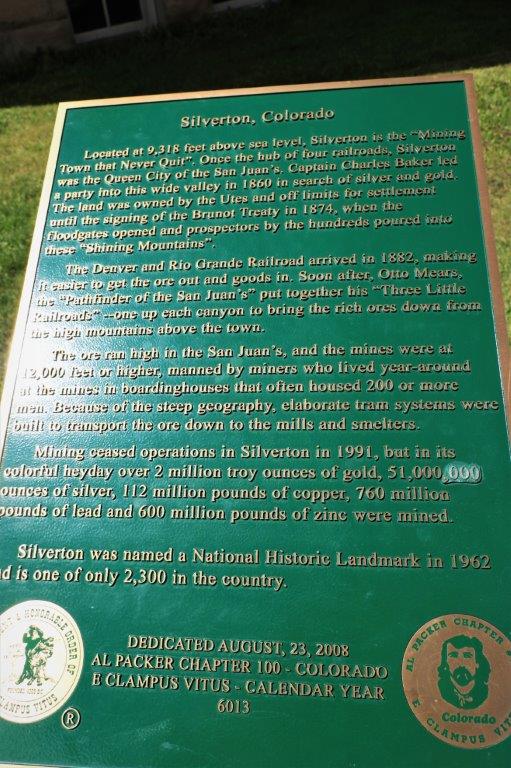
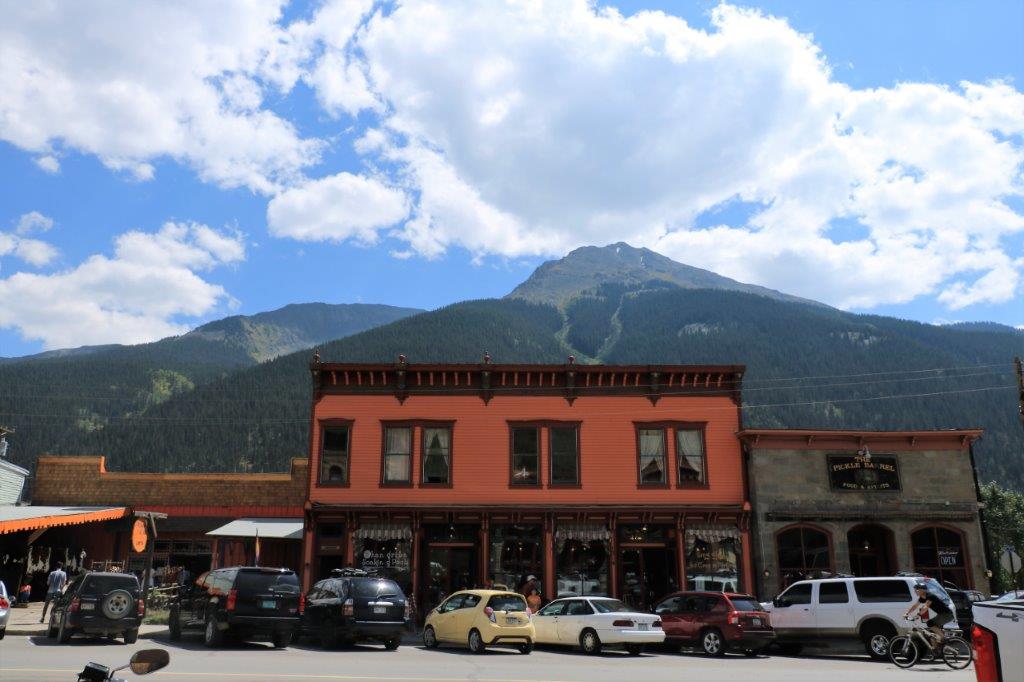
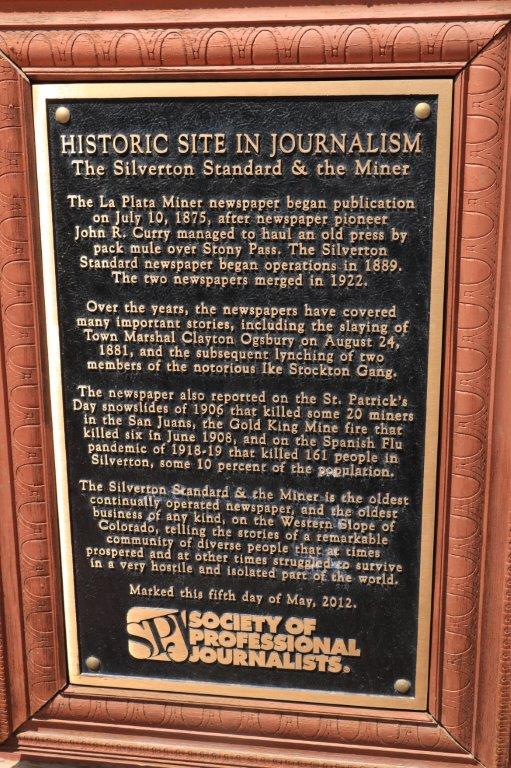
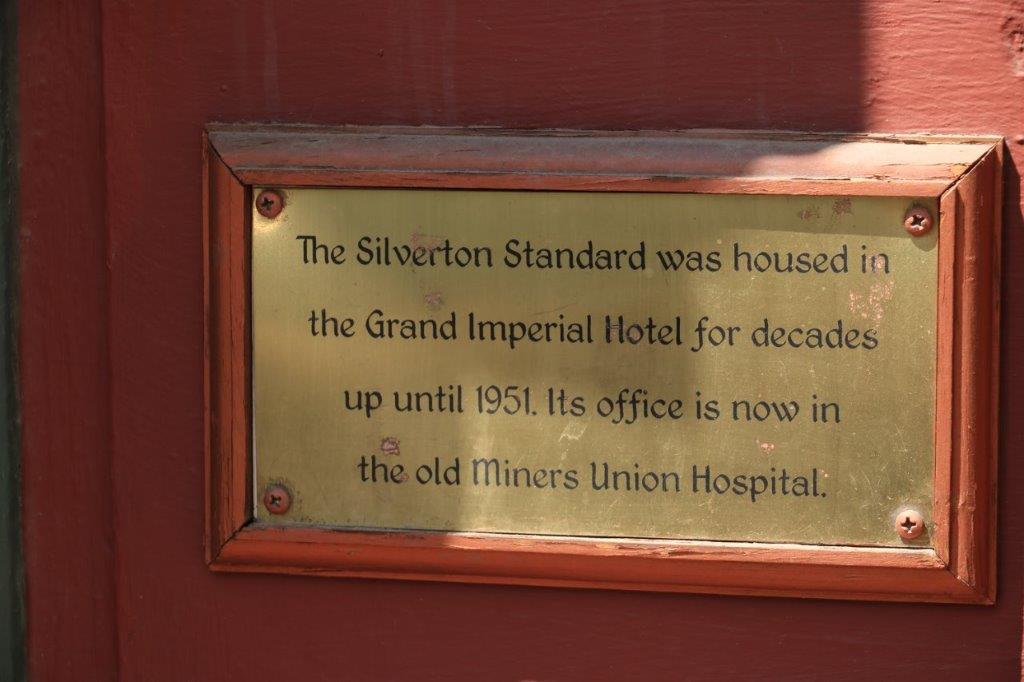
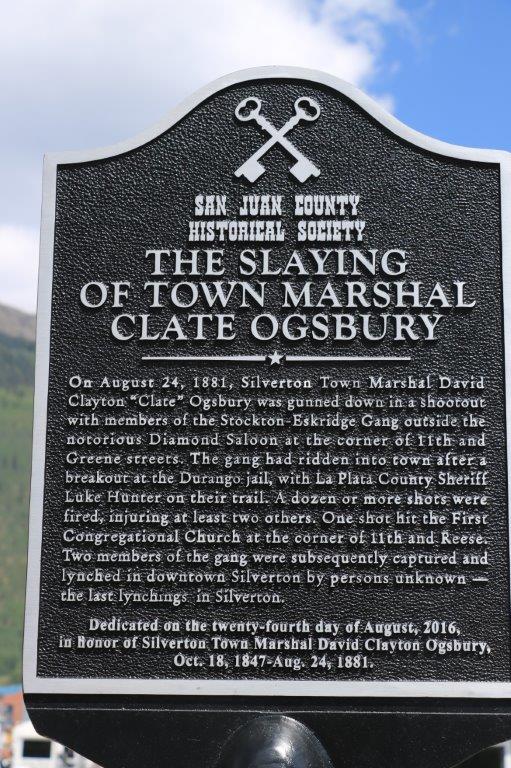
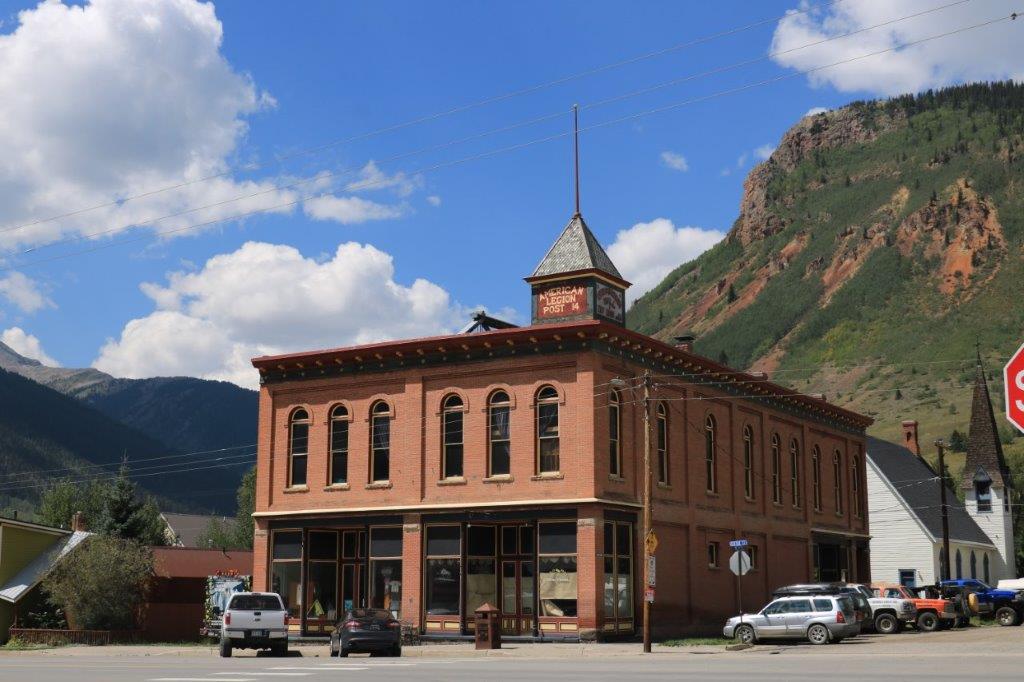
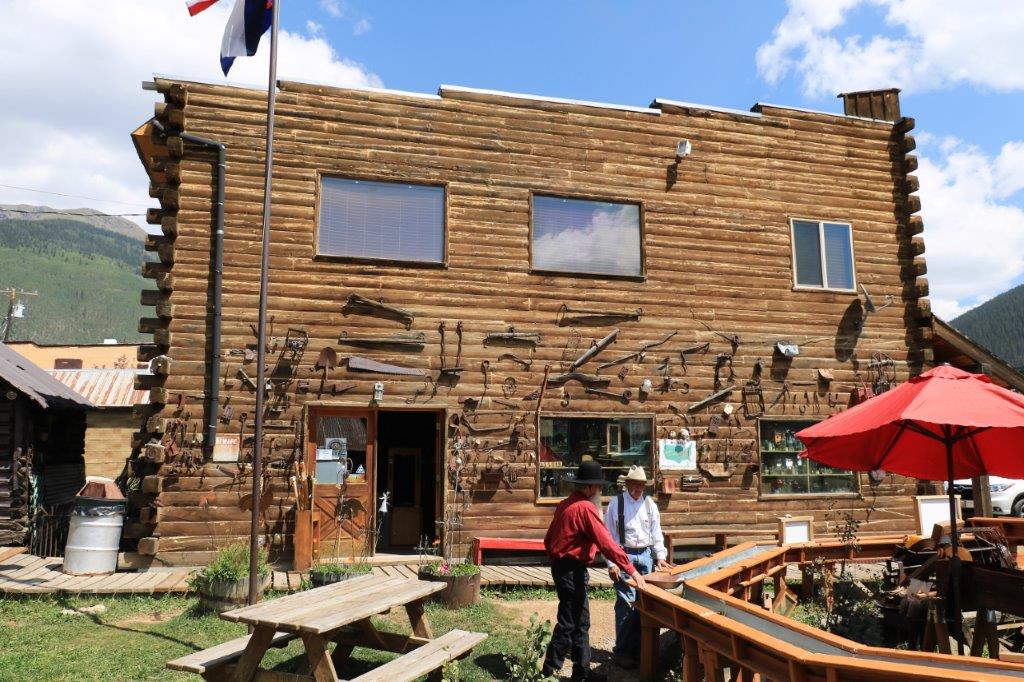
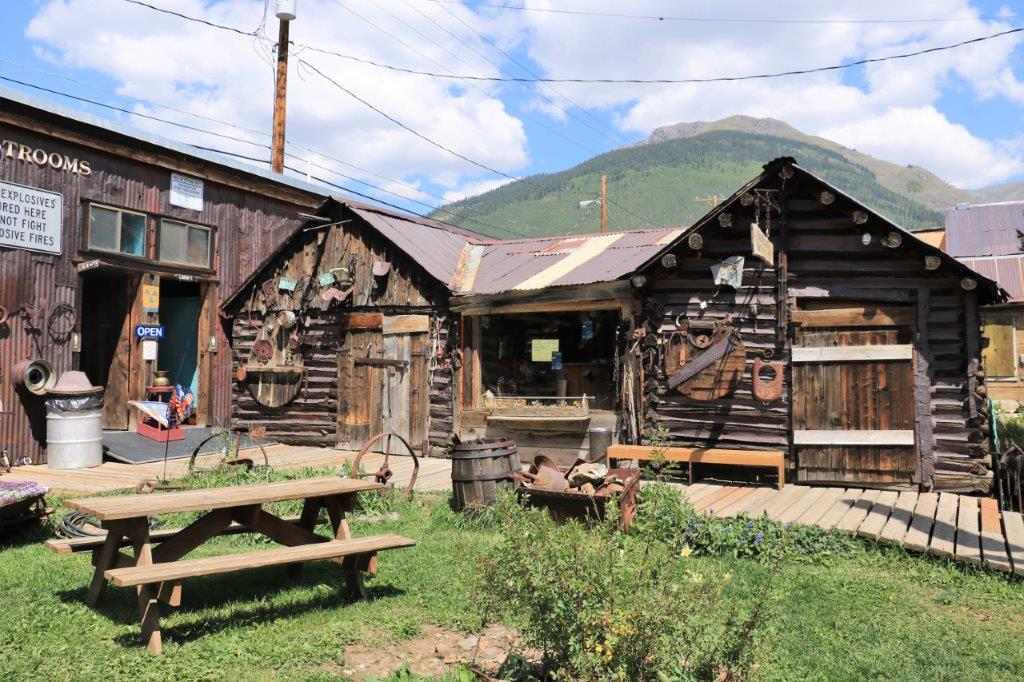
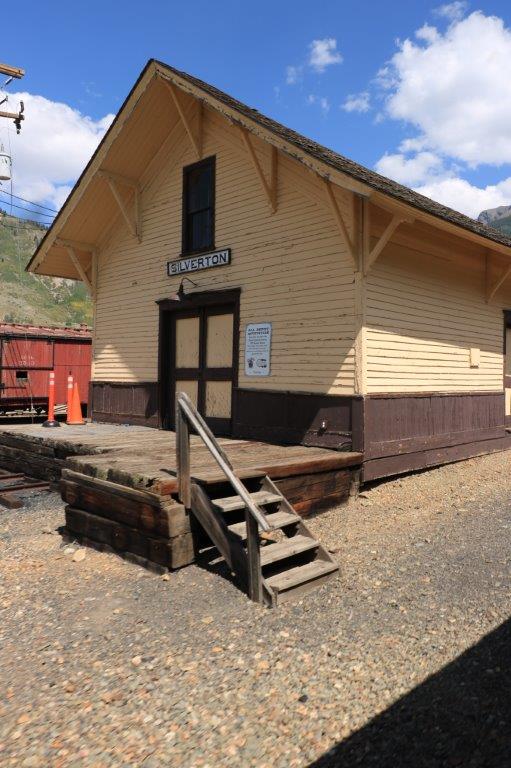
Once we arrived in Silverton we had about 2 hours to wander around, find some lunch if we wanted, or in our case, find a geocache.  The town is 100% tourist oriented today.  None of the mines are in operation.  Full time residents are about 400 and during the summer season the population rises to 1000. The City Hall and the Court House were built during the town’s heyday years and are elaborate buildings. I loved the sign on the wall in front of the fire department doors. John’s fire hall at home needs some of these to get people to stop parking in the fire department lot while their kids play soccer next door.                 $7.00 for a 10 minute stagecoach ride around town.

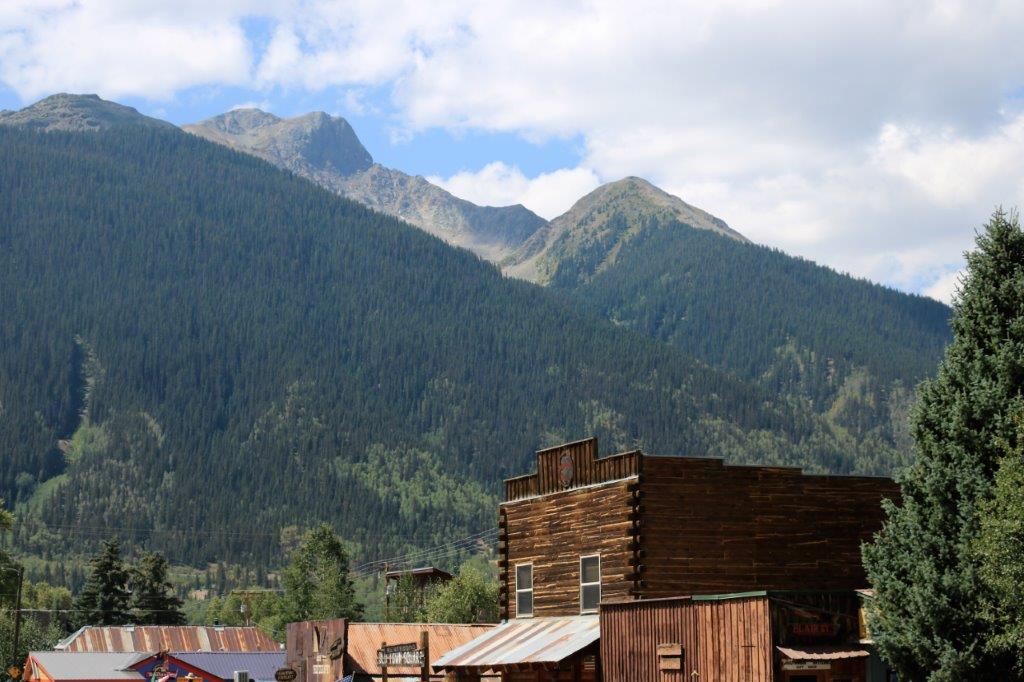
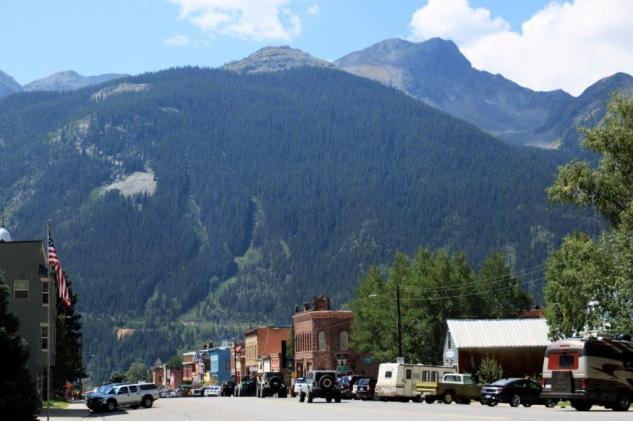
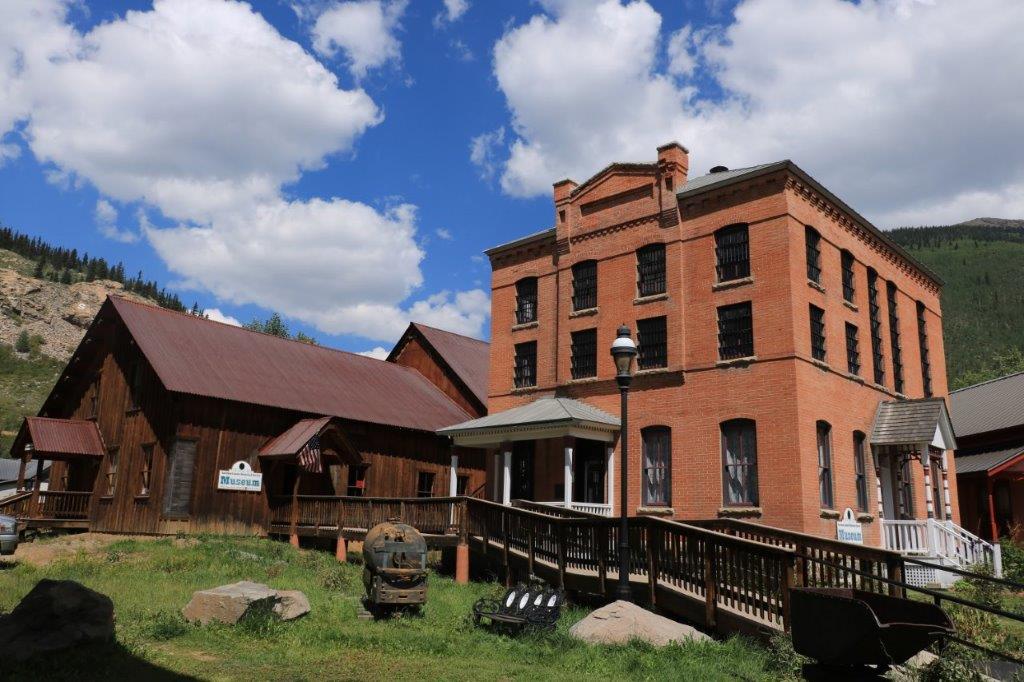
The surrounding mountains certainly dwarf the town. The museum and archive buildings.  Unfortunately we did not have time to tour the museum.
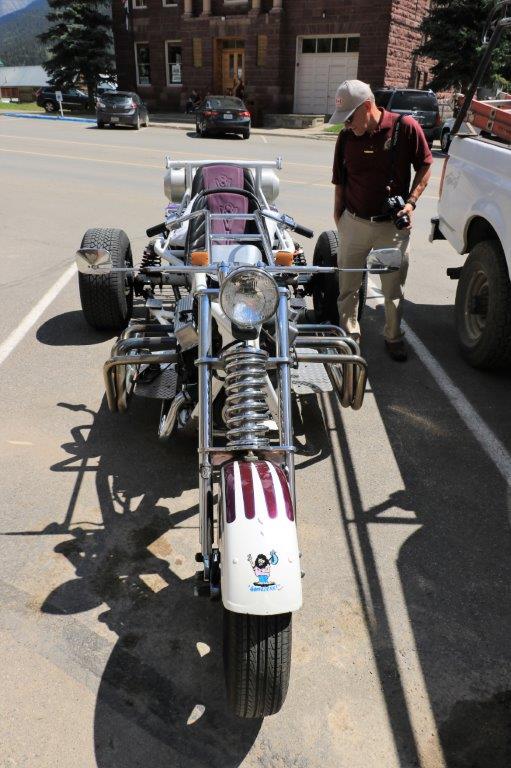
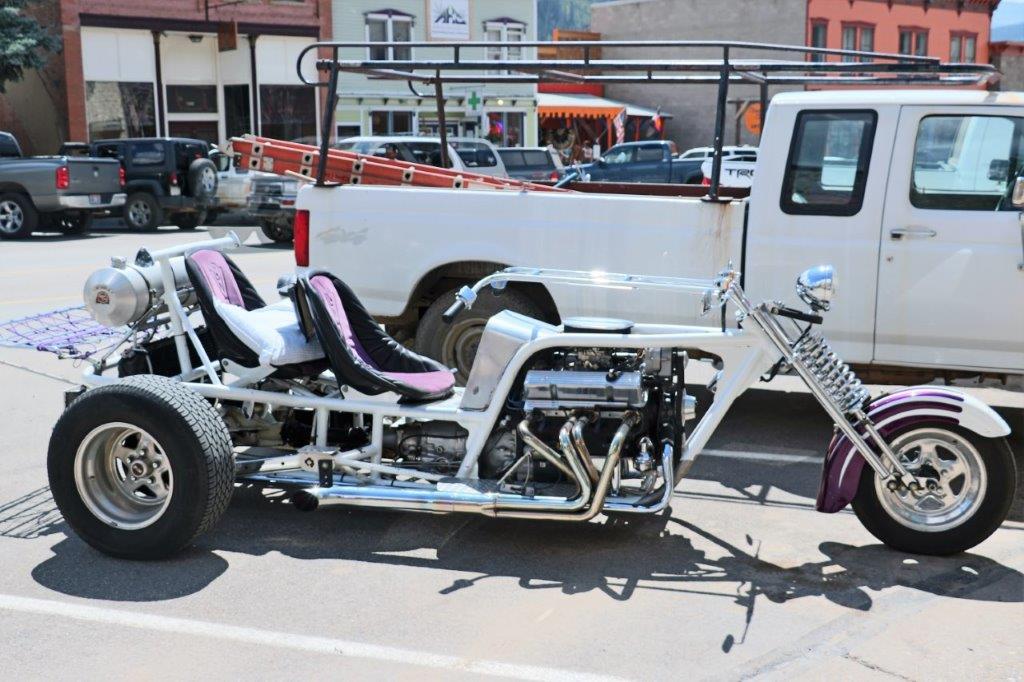
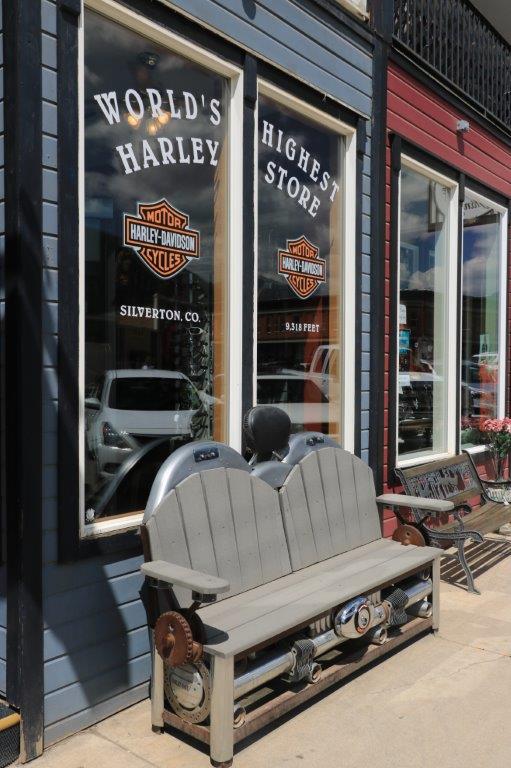
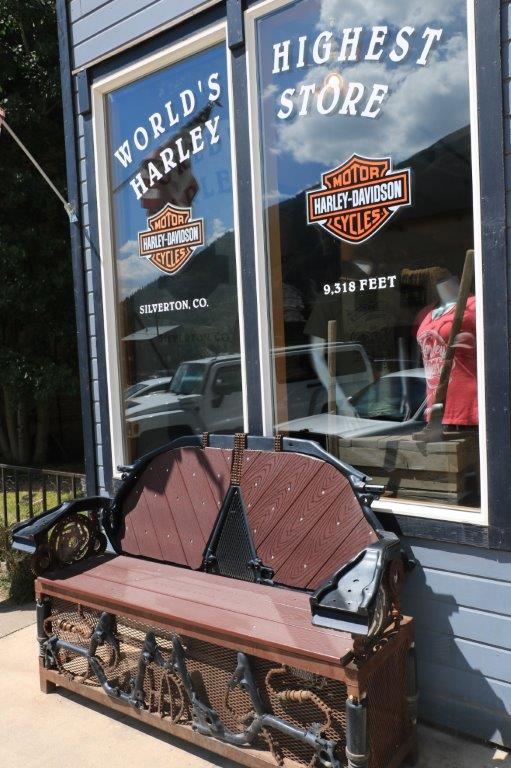
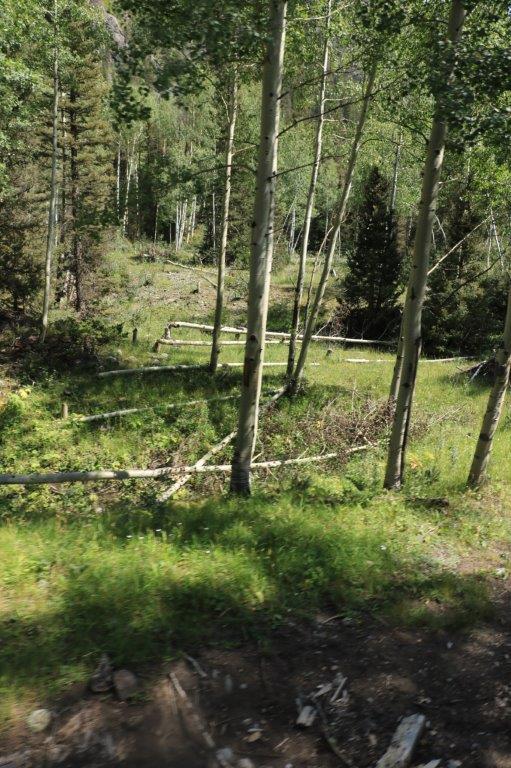
 One of the fancy trikes from the Four Corner’s Motorcyle Rally going on in Durango this weekend took the highway up to Silverton. Silverton boasts the highest Harley Davidson Shop at 9,318.’  They had some pretty funky benches out front as well. John is signing the log of the only geocache we found today. We looked for a couple of others but had no luck. It was back on the train for the return journey.  You can take the train one way and the bus back if you wish or ride the train both ways.  There is assigned seats in the cars so whatever you miss on the train ride up you see on the trip back down.  If you take the bus back to Durango you see an entirely different perspective of the pass as the highway goes over rather than through and is on the opposite side of the pass from the rail way.  You cannot see the highway from the rails and you cannot see the rails from the highway. The beavers have been industriously cutting down Aspen trees along the route.  This worries some of the local folks as this is considered by some to be a harbinger of a major flood event.   Don’t stick your arm – or anything else – out the window.Taking on water.
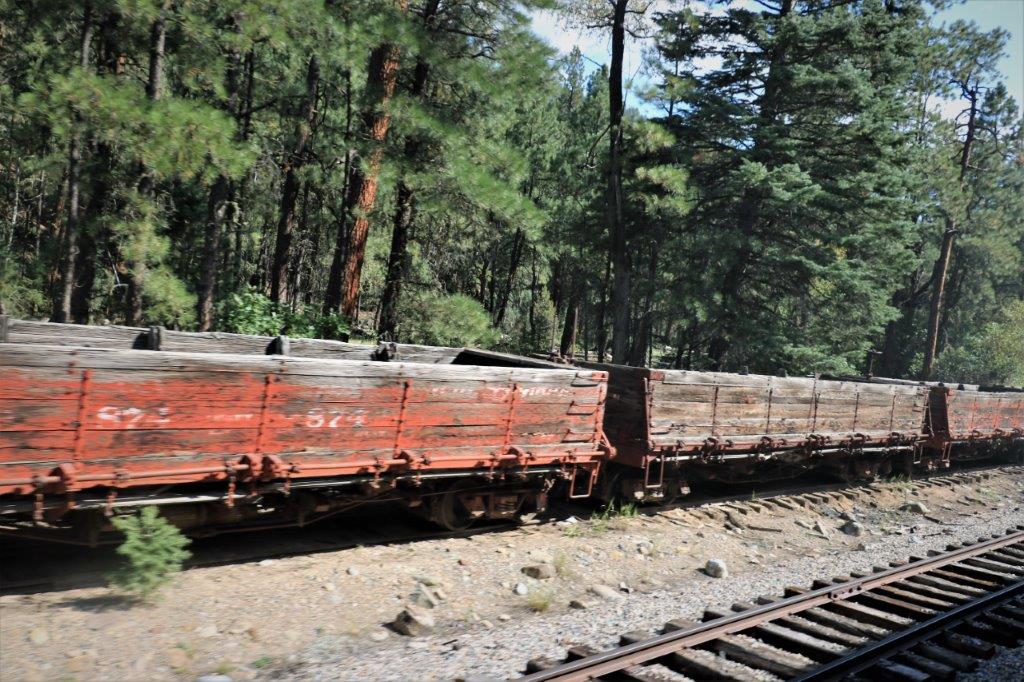
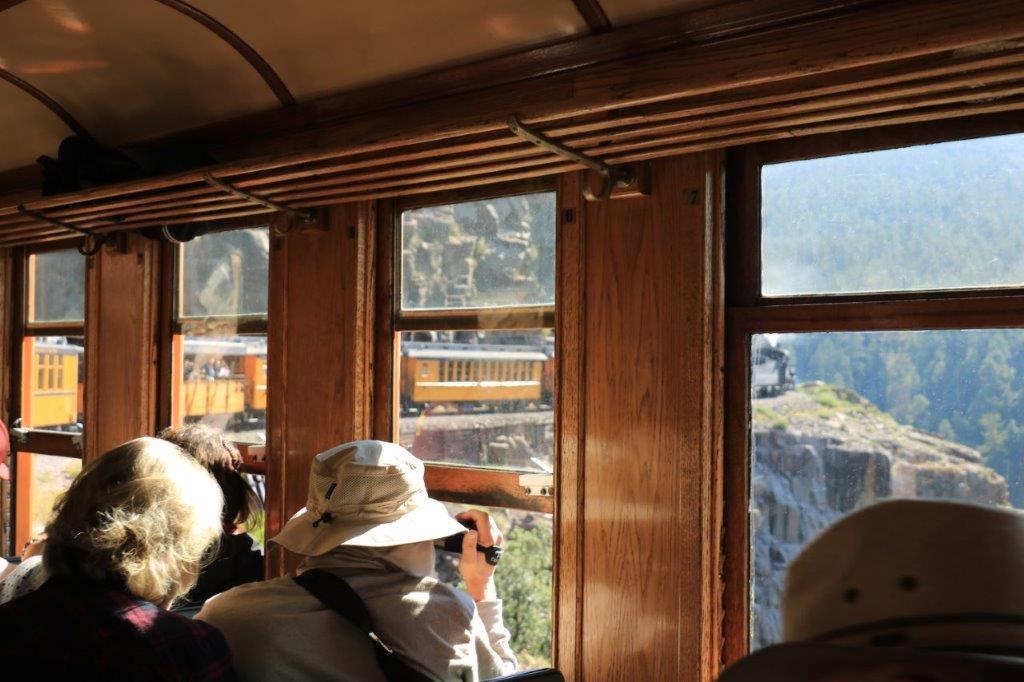
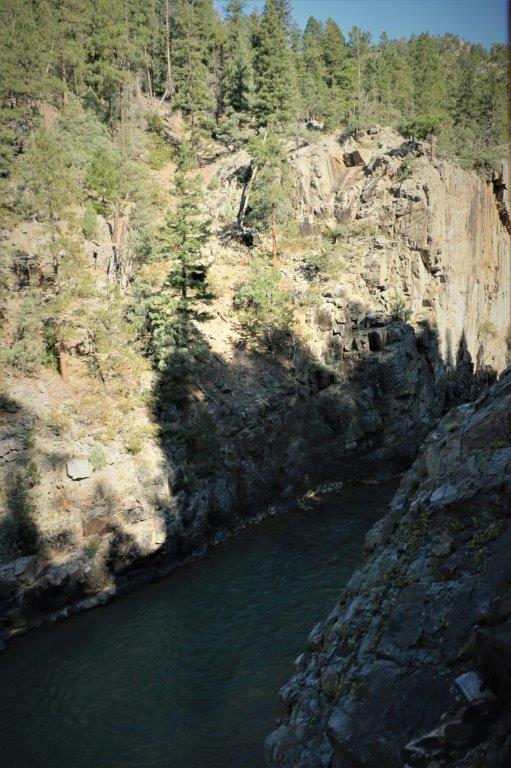
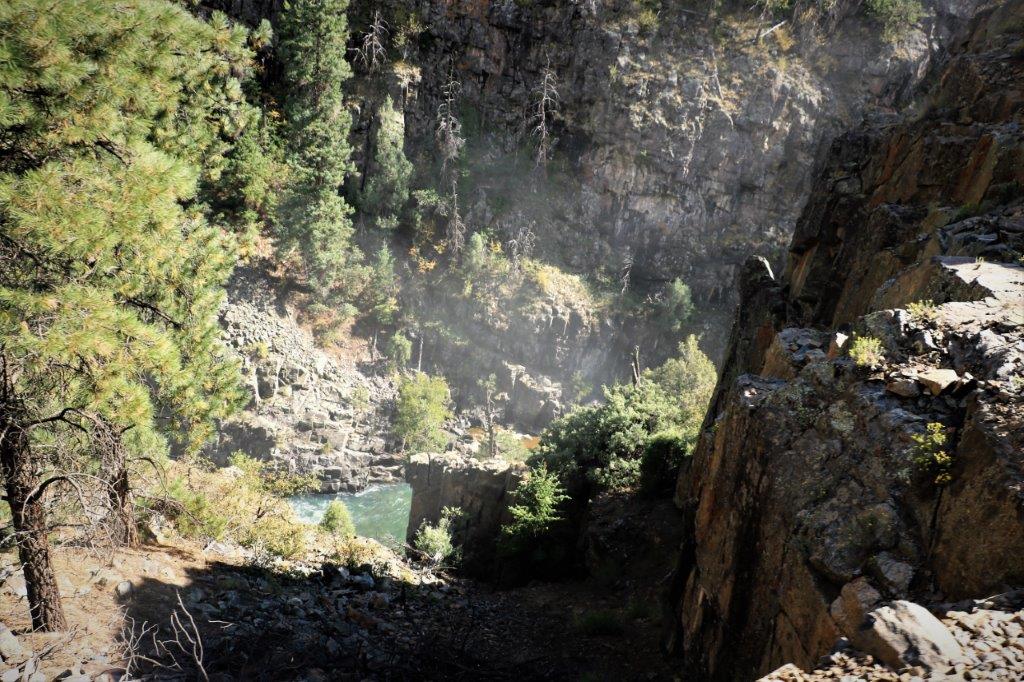
Being on the opposite side of the car coming back we were able to see how deep the drop and how narrow is the rail line. You can see the ledge they created for the tracks on this cliff face.

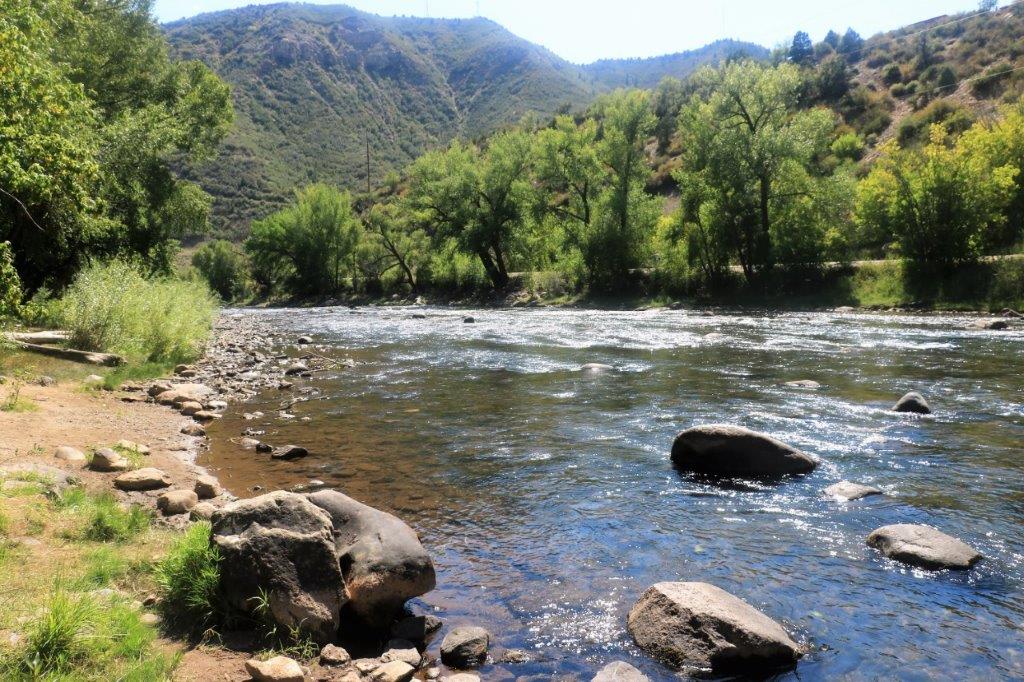
As we neared Durango we got a good look at the lovely red limestone cliffs. The Animas River is nice and calm at the lower end of the pass. People love to wave at the train.  At road crossings, on Durango streets, in other other communites, the hikers in the forest, and campers in the RV parks; even people who’s houses are beside the line and have several trains go by every day wave when the train goes past.  However the funniest greeting – we had been previously warned by our coach narrator – was the line of bums as we passed “Moon Beach.”  I guess this, too, is a local tradition when the train goes by. We were late returning to Durango and got off the train a few minutes before 6.  It had been a long day sitting on a thinly padded bench seat on a rocking, jostling train ride.  We enjoyed it immensely but I do admit my legs were stiff and my butt was sore.  We walked back to our hotel to get rid of our packs, uploaded photos to the computers and walked back to the restaurant for dinner.

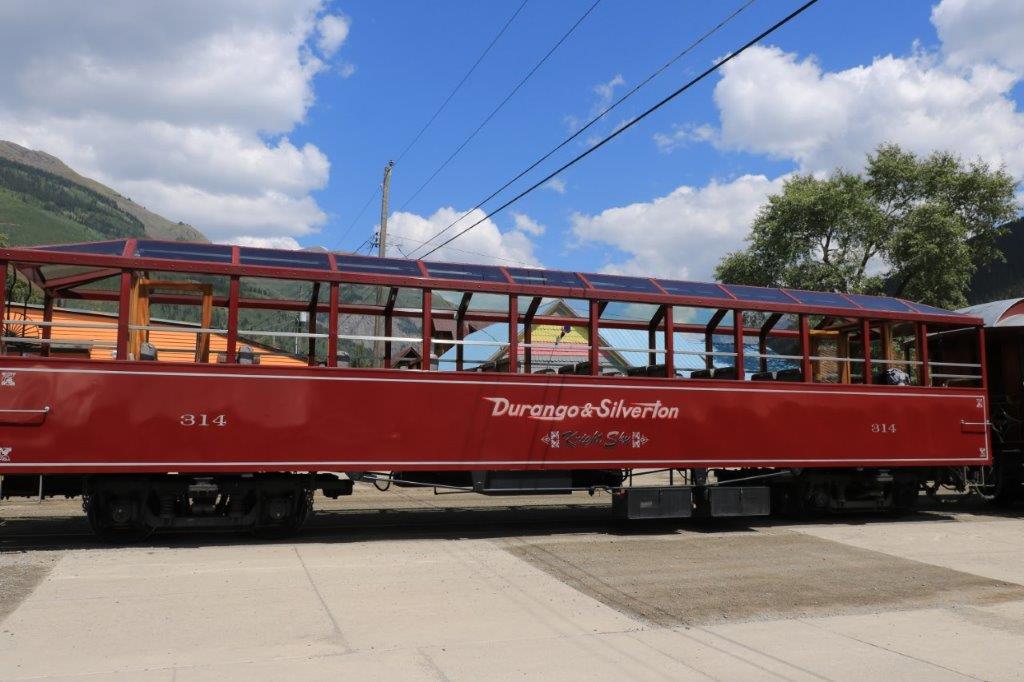
We had  a beautiful day traveling through time in an authentic 1882 passenger car pulled by a coal powered steam engine.  What fun.  Tomorrow we head up to Montrose where we will stay two nights so we can check out some more of the area and communities.


2017 Sept 1 Pagosa Springs, CO to Durango, CO

We had to check out of the Wyndam Resort at 10 am and it is 53 miles to Durango.  We managed to lengthen the drive by finding several geocaches along the way.

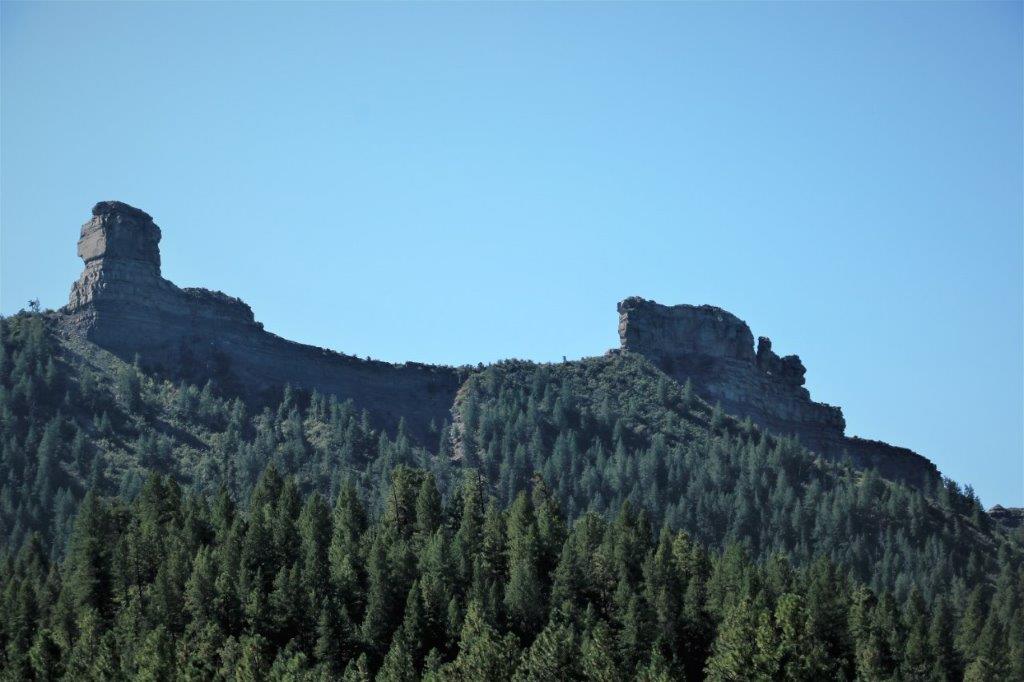
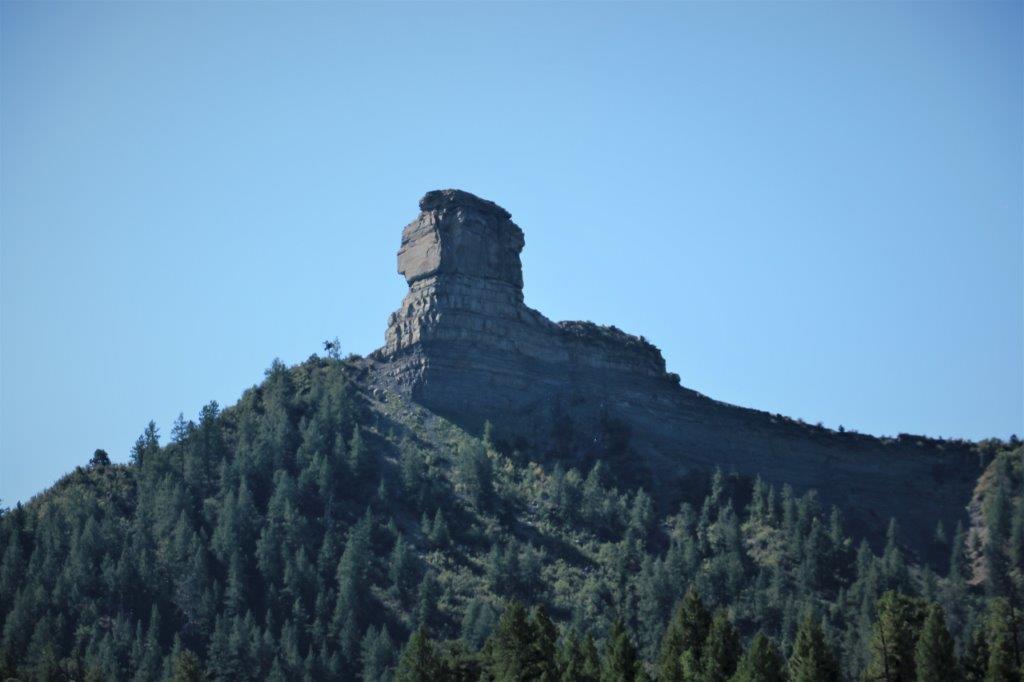
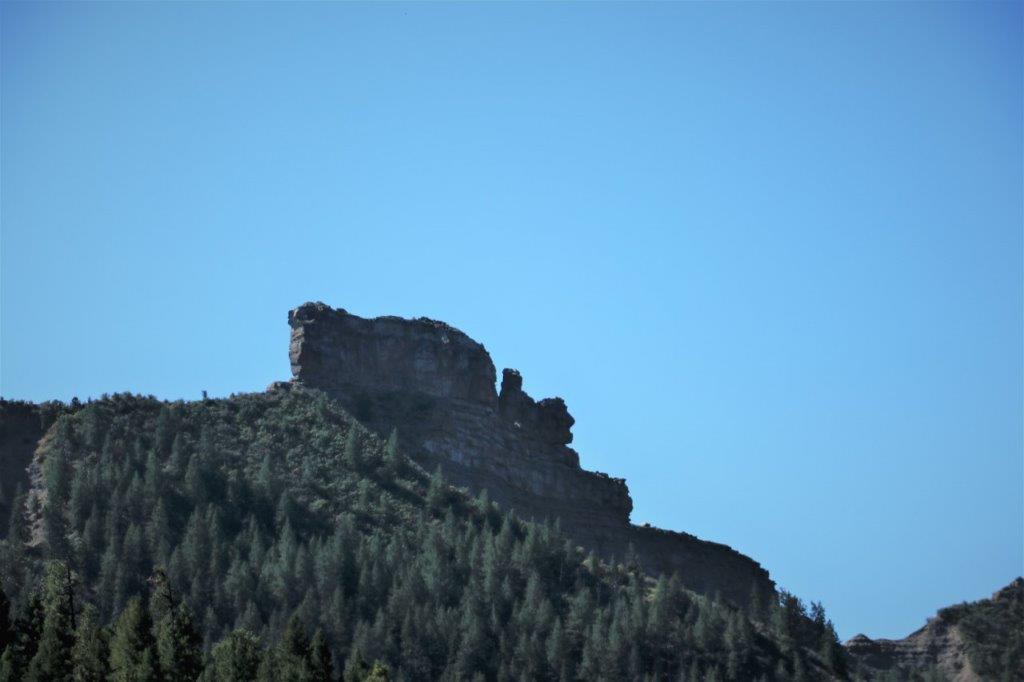
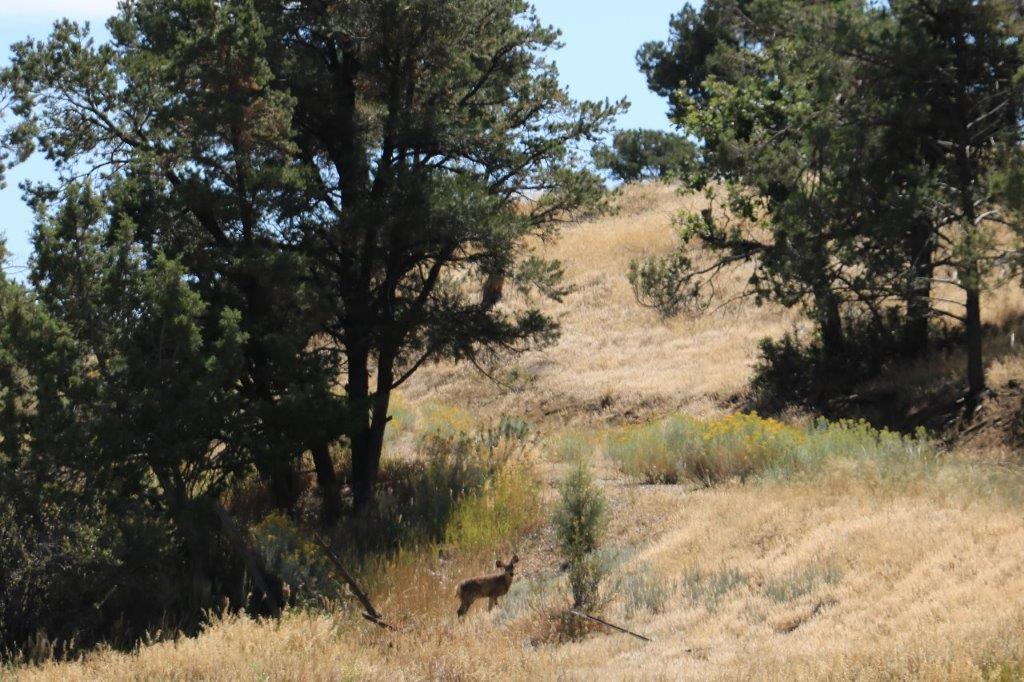
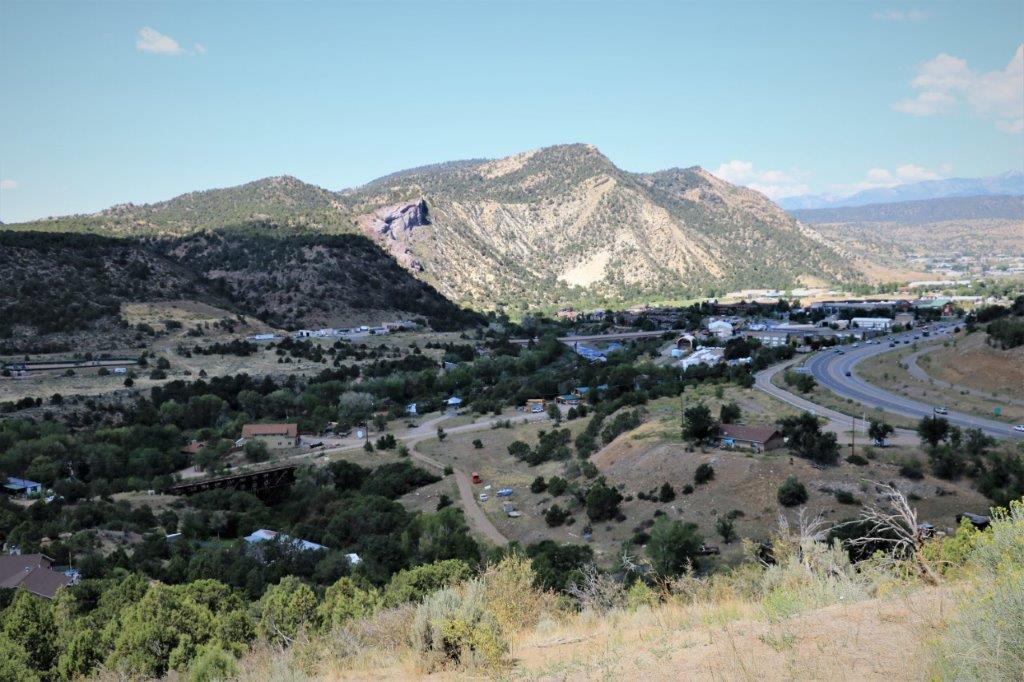
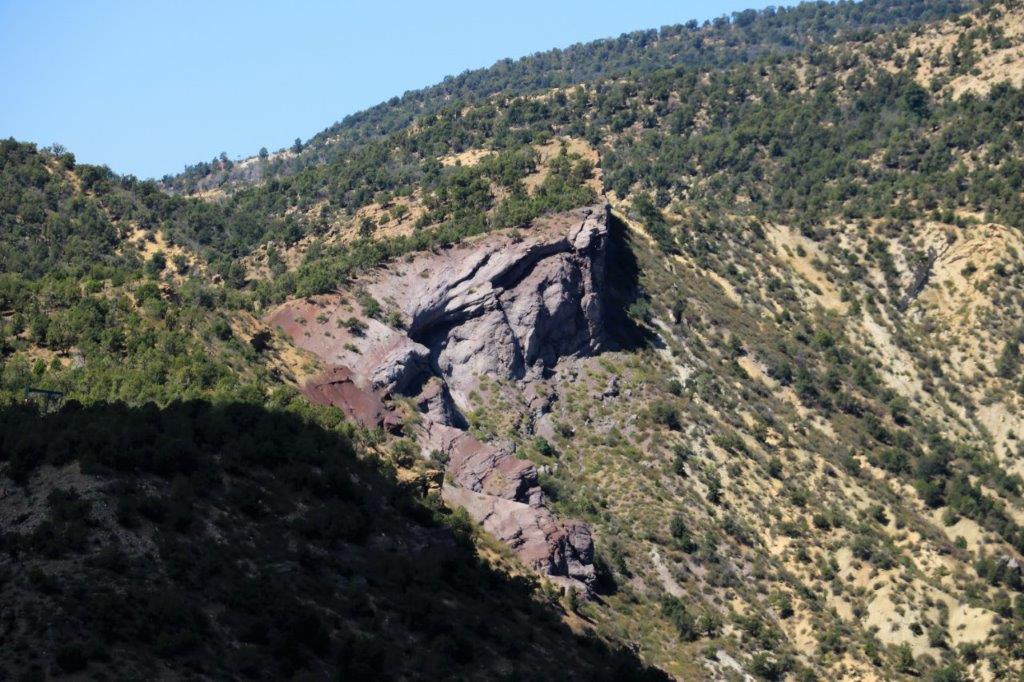
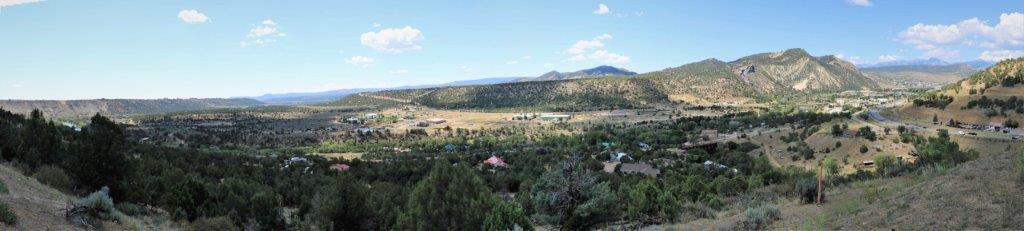
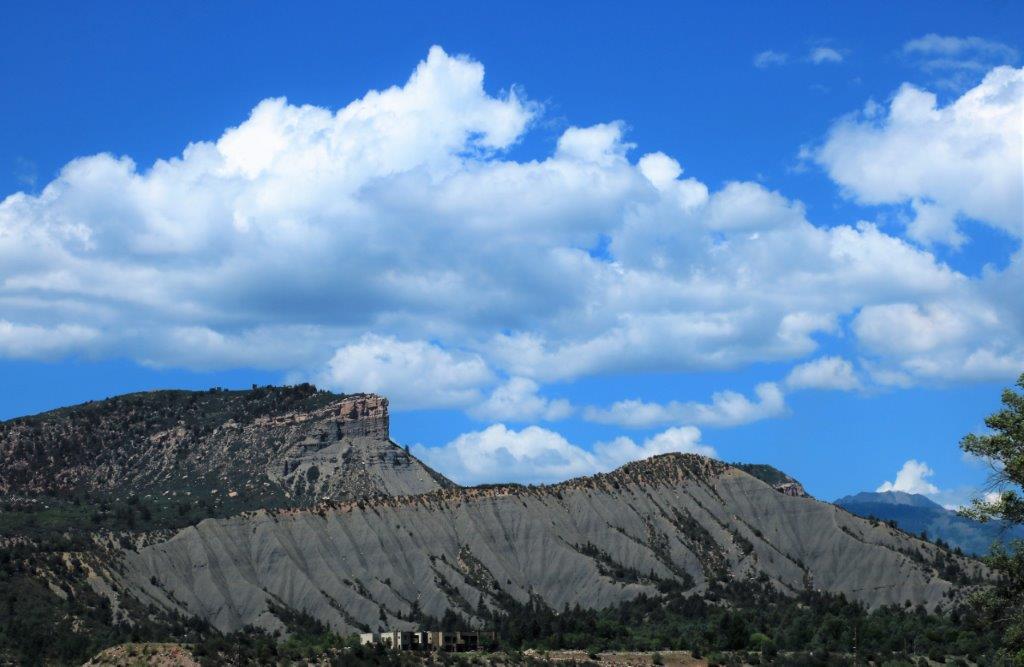
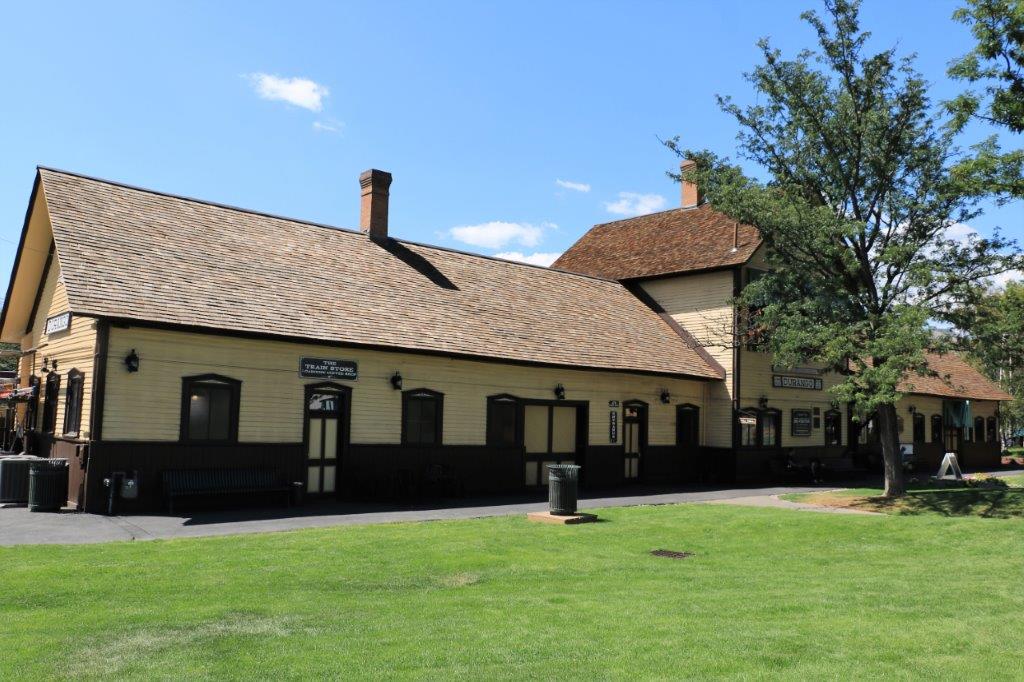
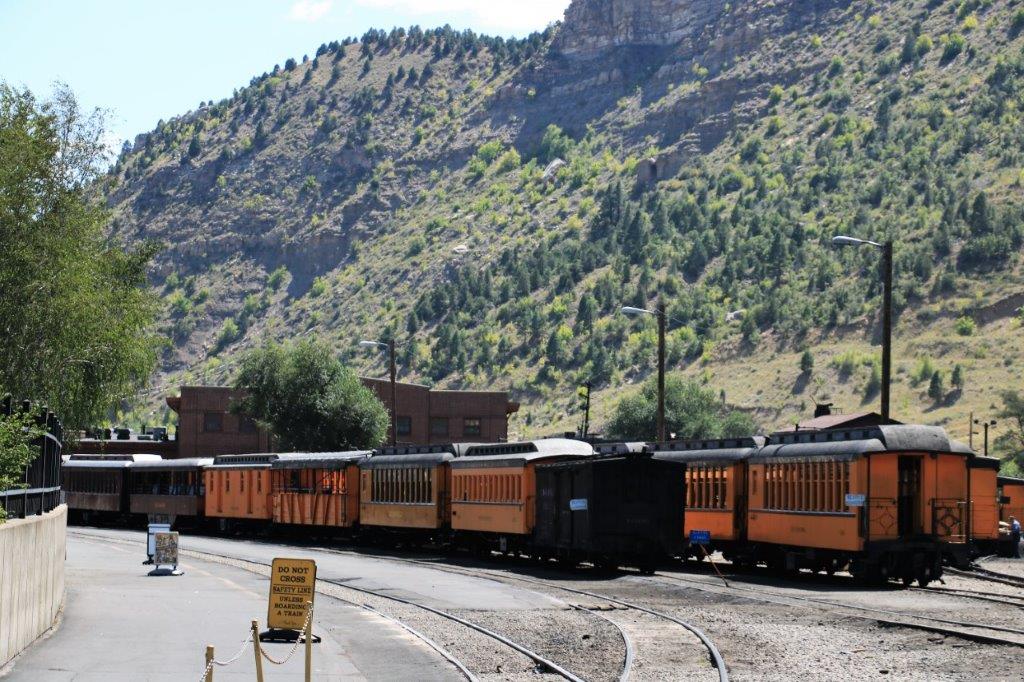
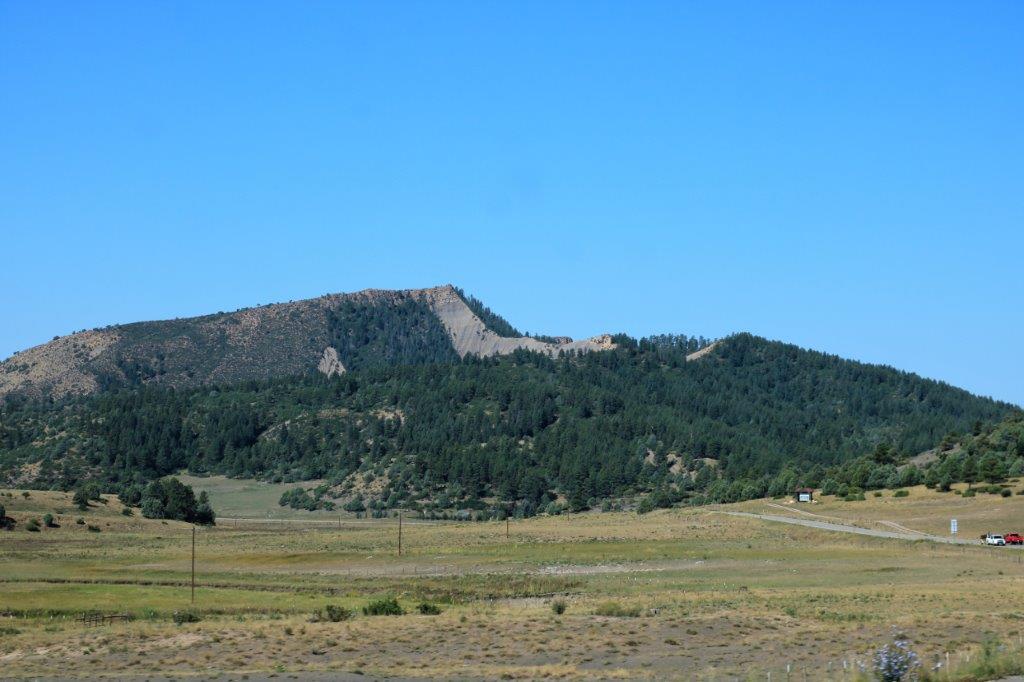
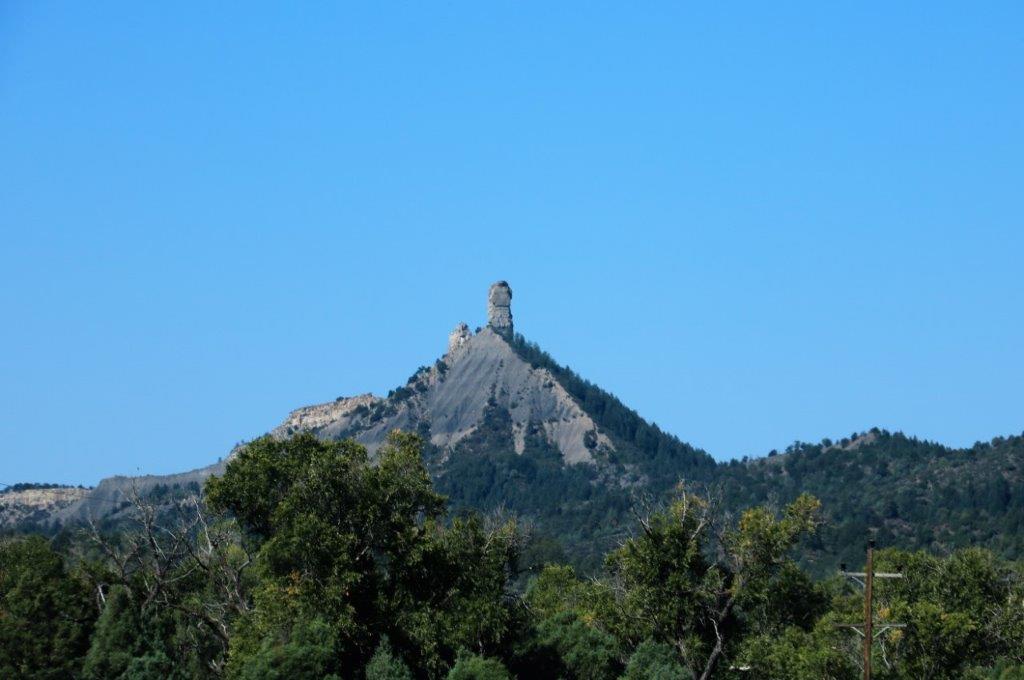
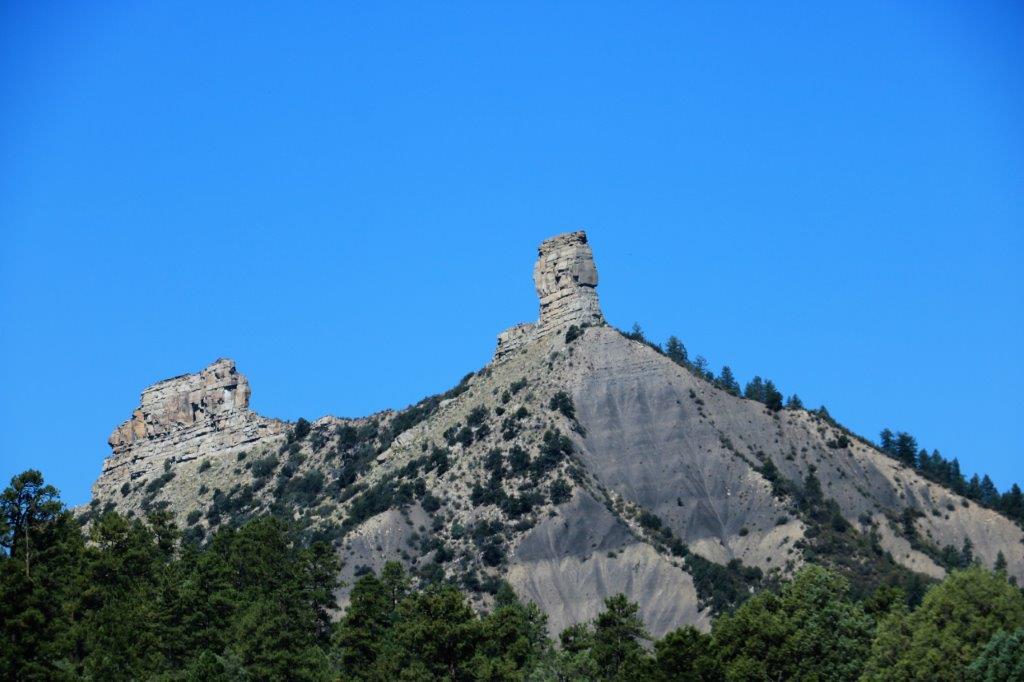
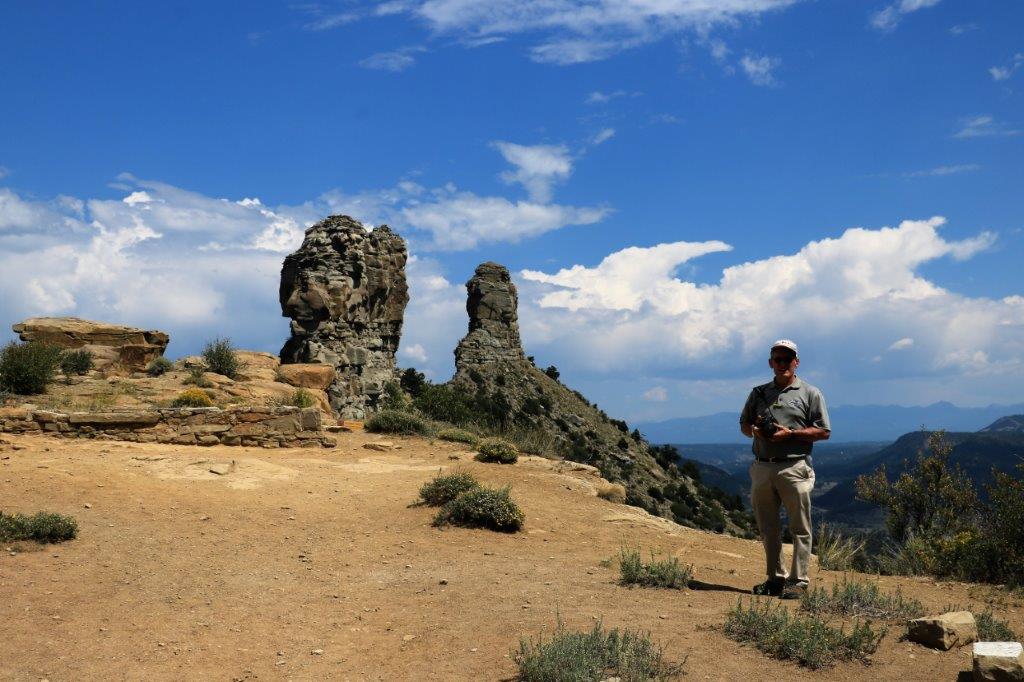
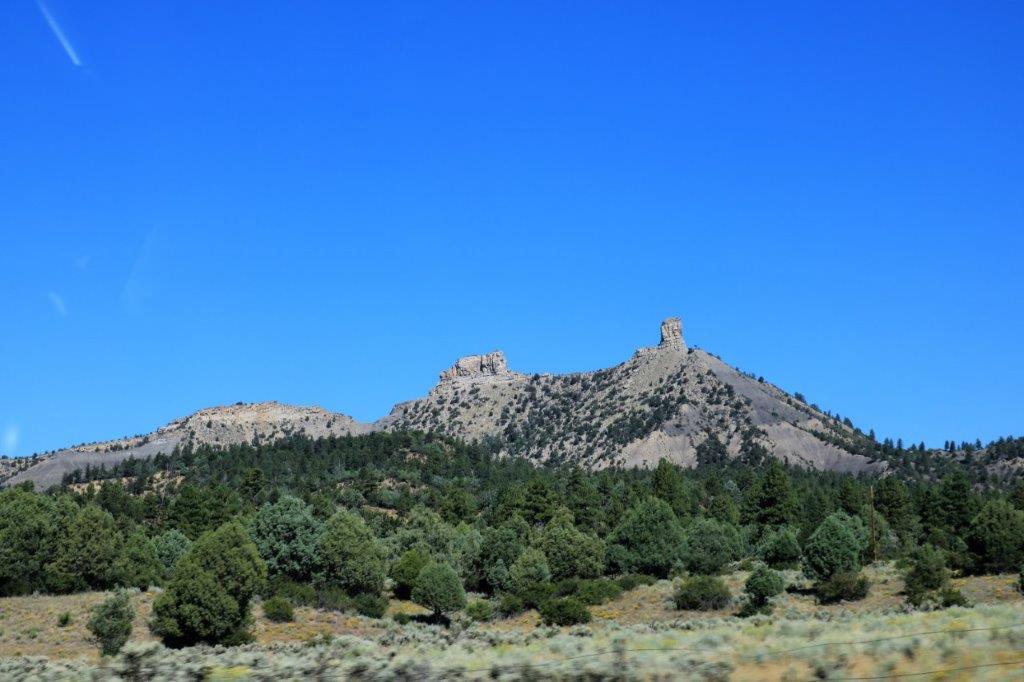
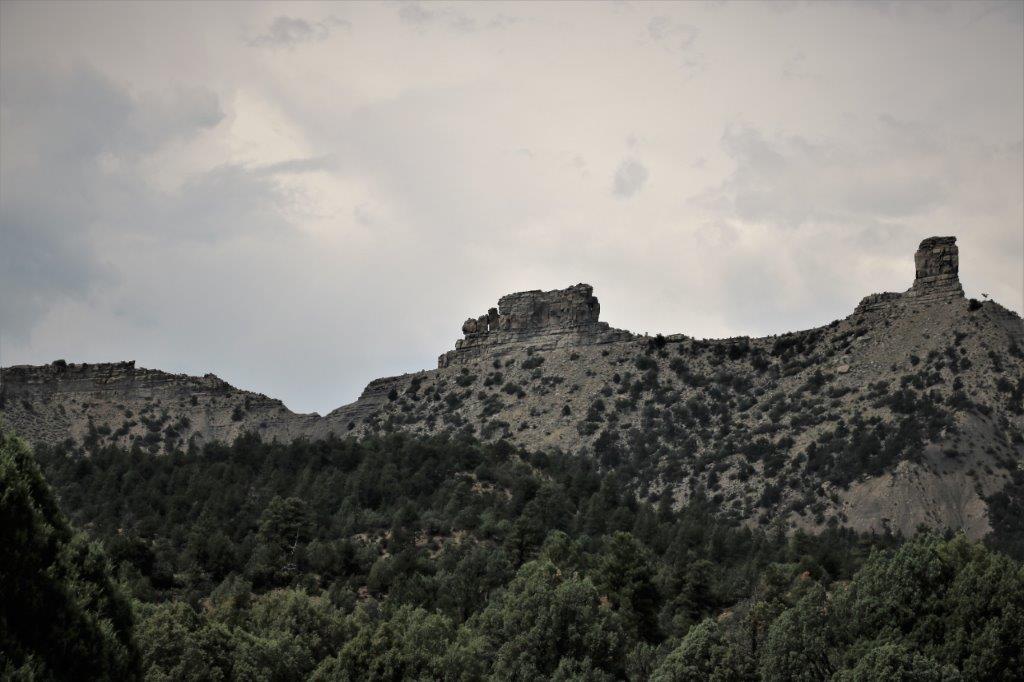
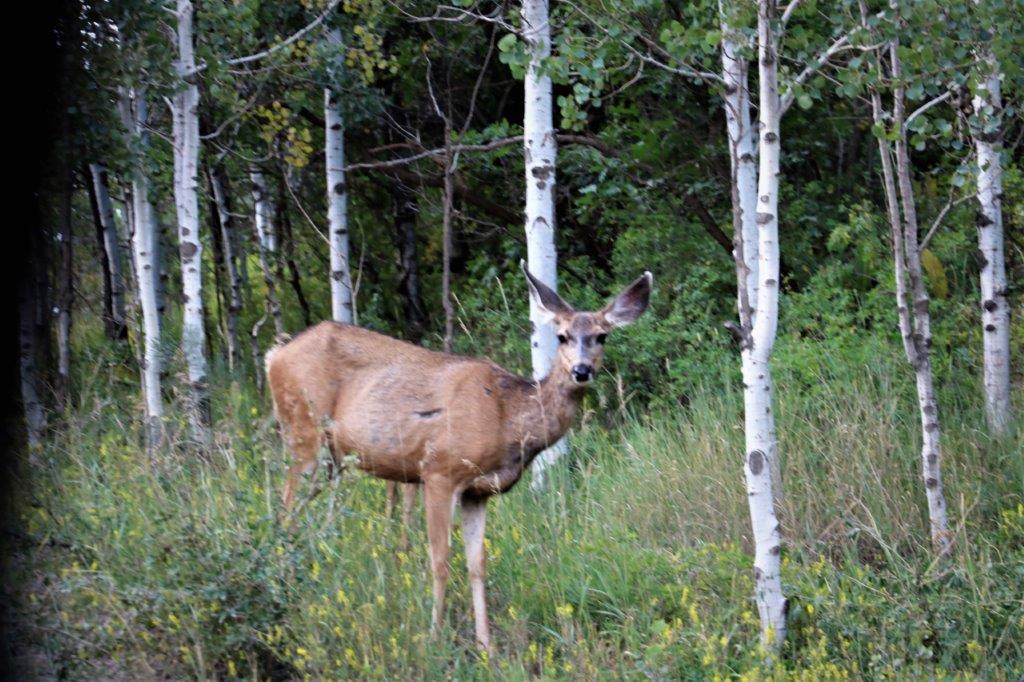
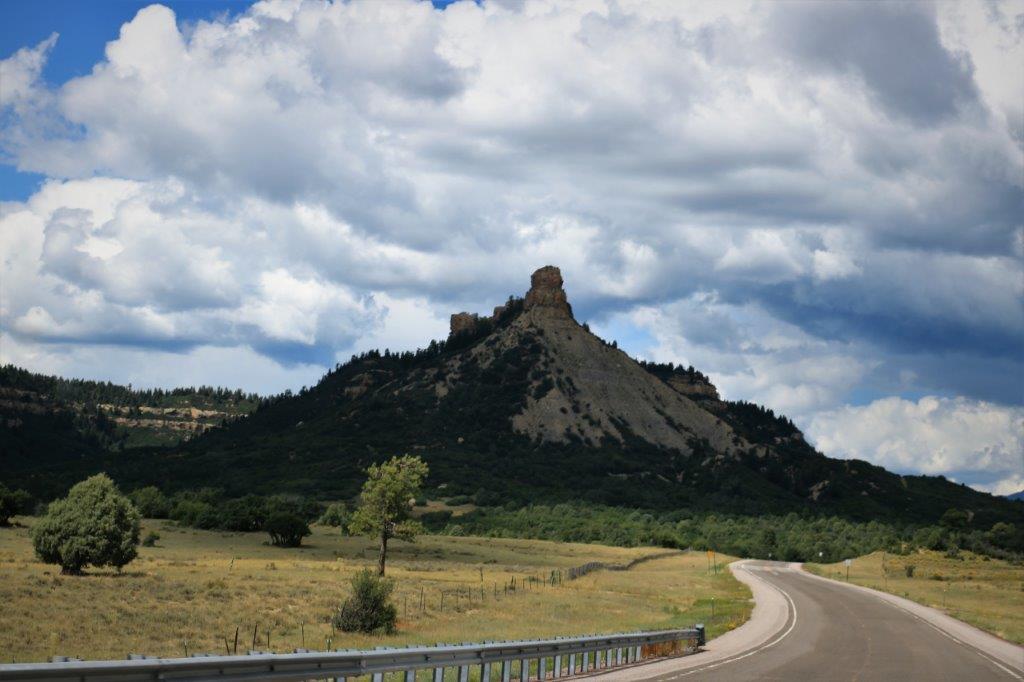
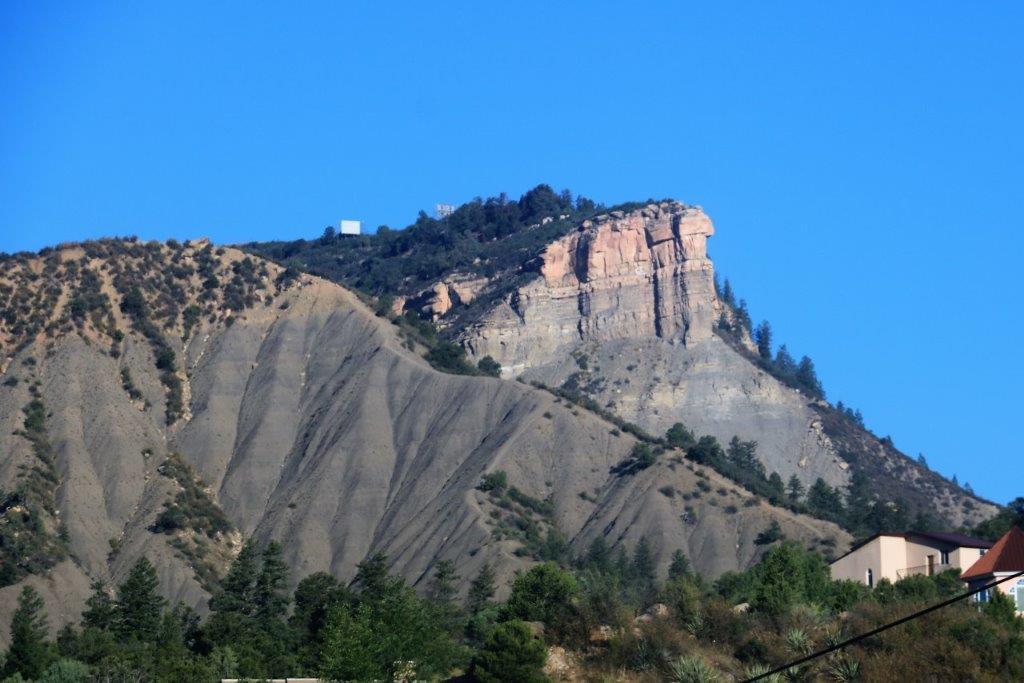
We had a different perspective of Chimney Rock and Companion Rock as we drove past on the north side. I always like old barns.While John went over to look for a cache across the road I stopped to take a photo of this young doe.Coming into Durango from the east you get a really good view of the big purple rock formation on the hill. We actually turned off before entering Durango and went a short distance down highway 550 south.  At a pullout on the hill there was a geocache and a great view. We stopped in Durango last February on our round-about way home from Escondido, CA.  I wanted to take the narrow-guage railway journey to Silverton but it was too early in the season.  Fortunately we can do it this time. The train station is a busy place.

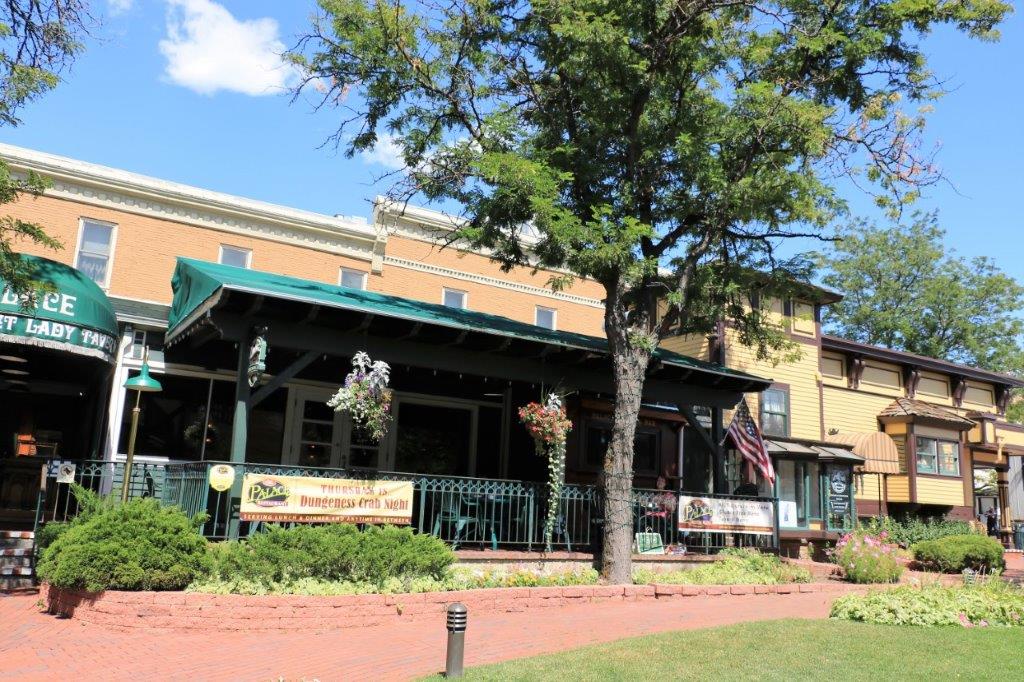
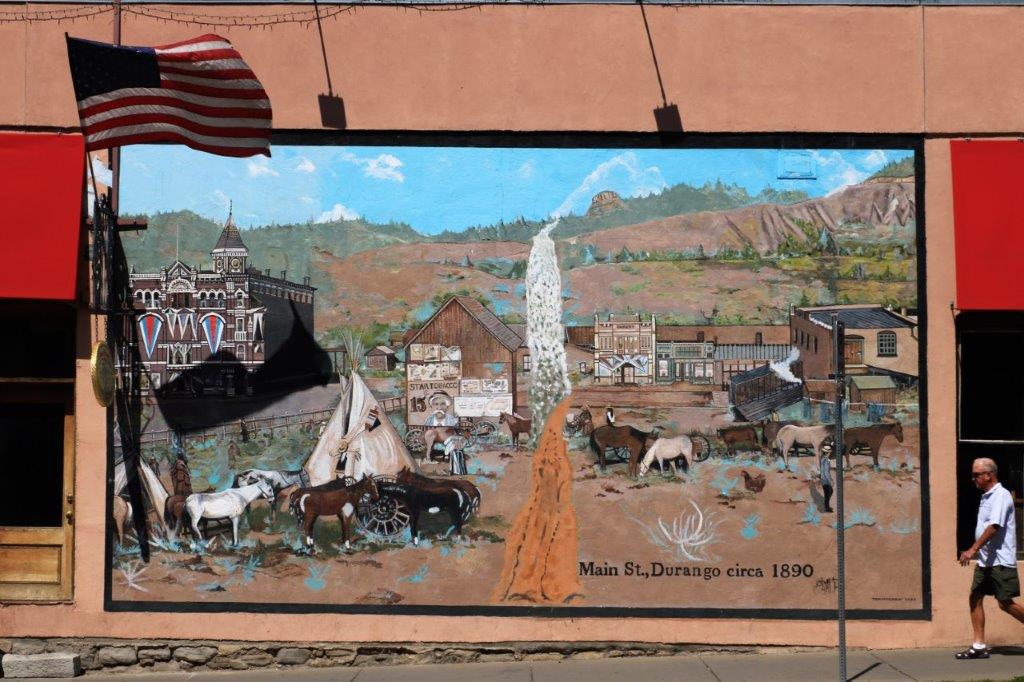
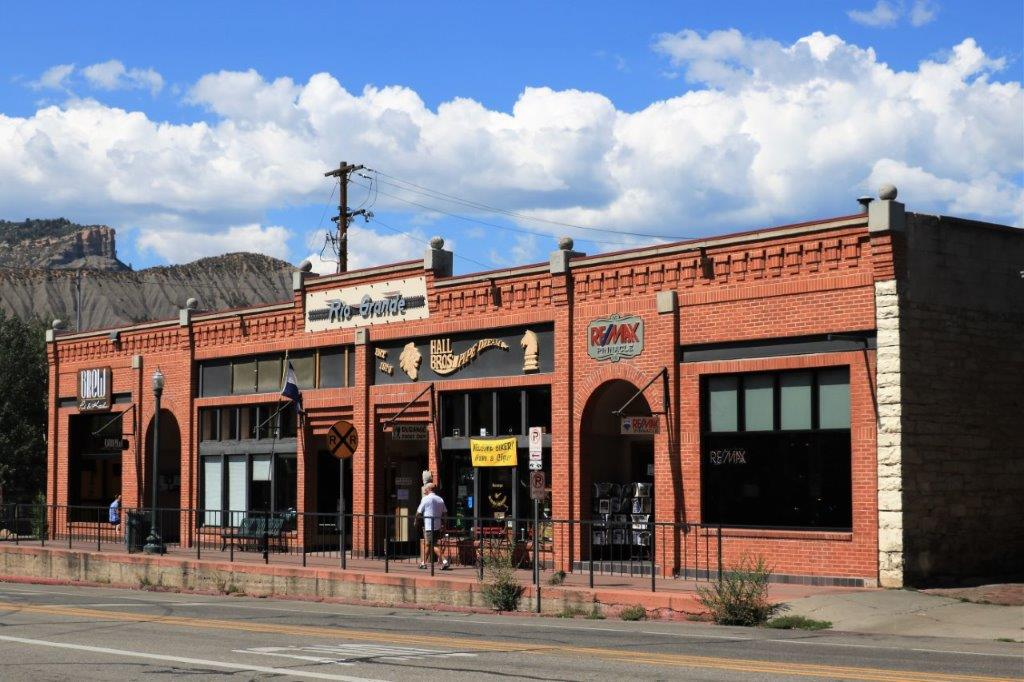
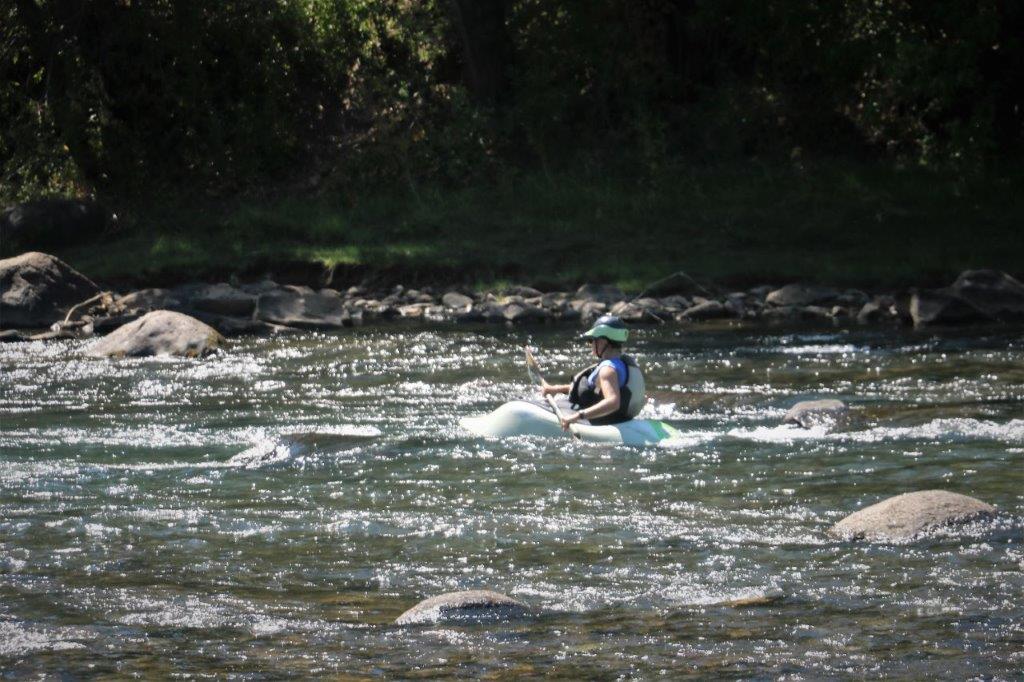
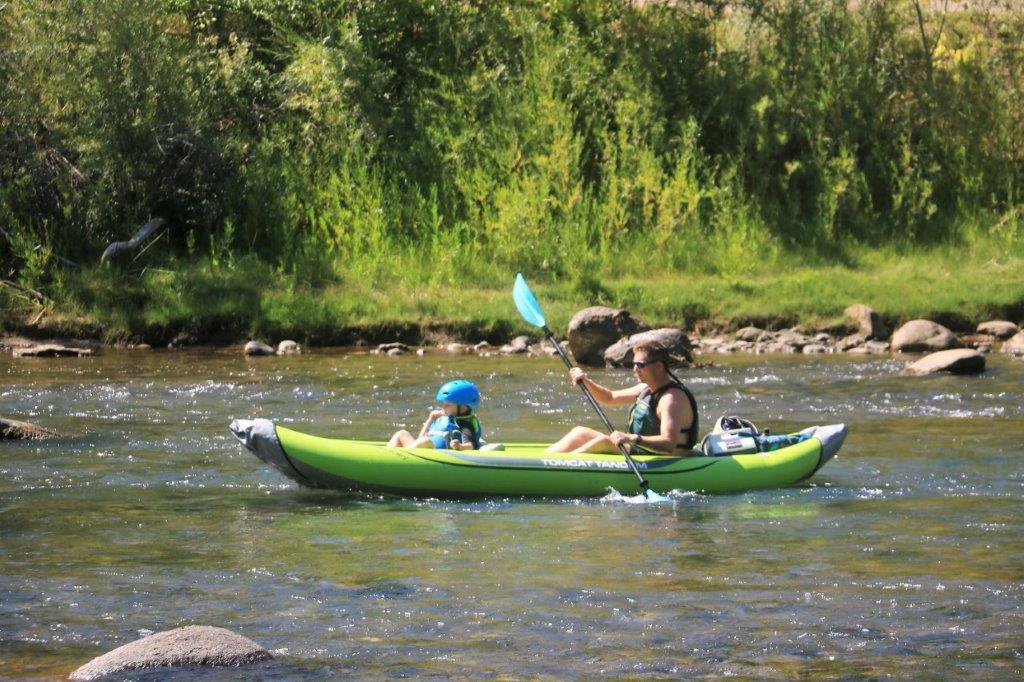
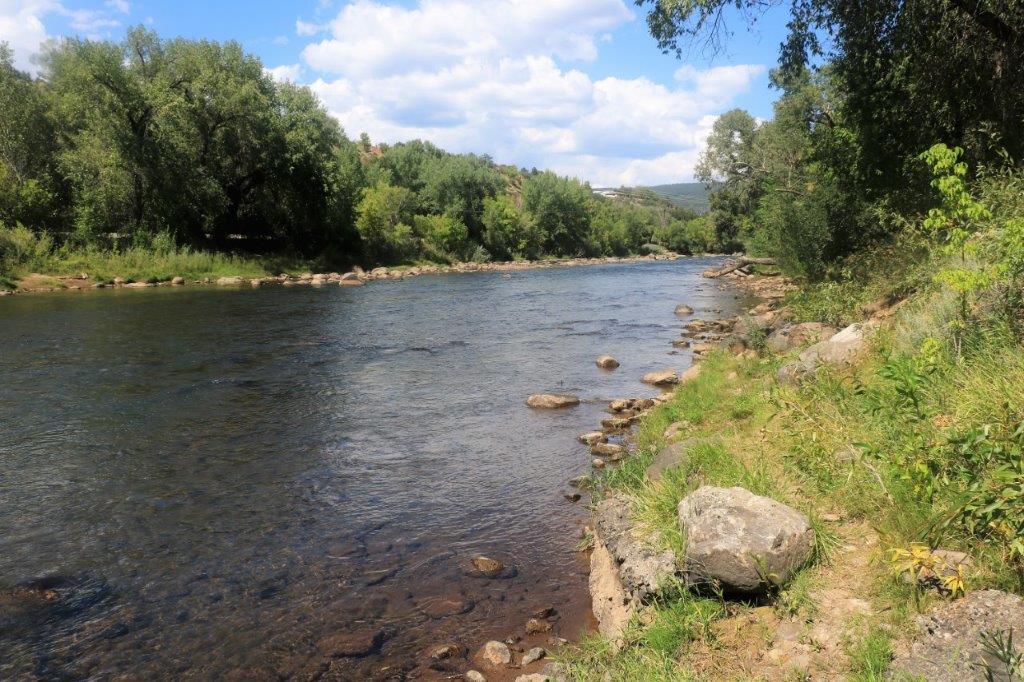
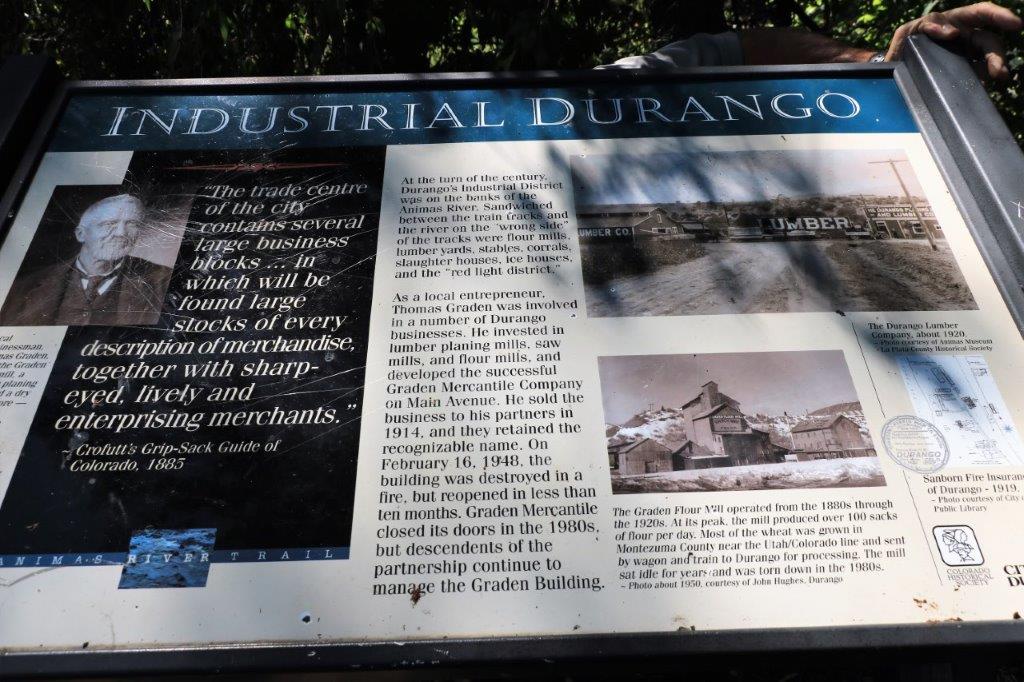
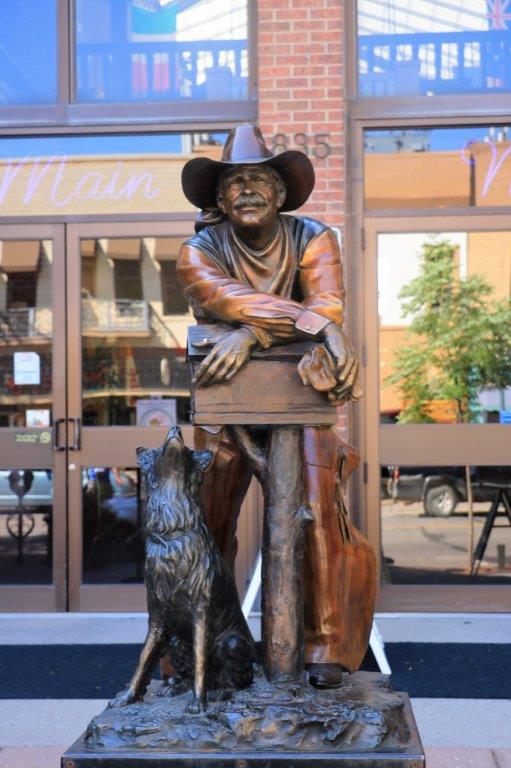
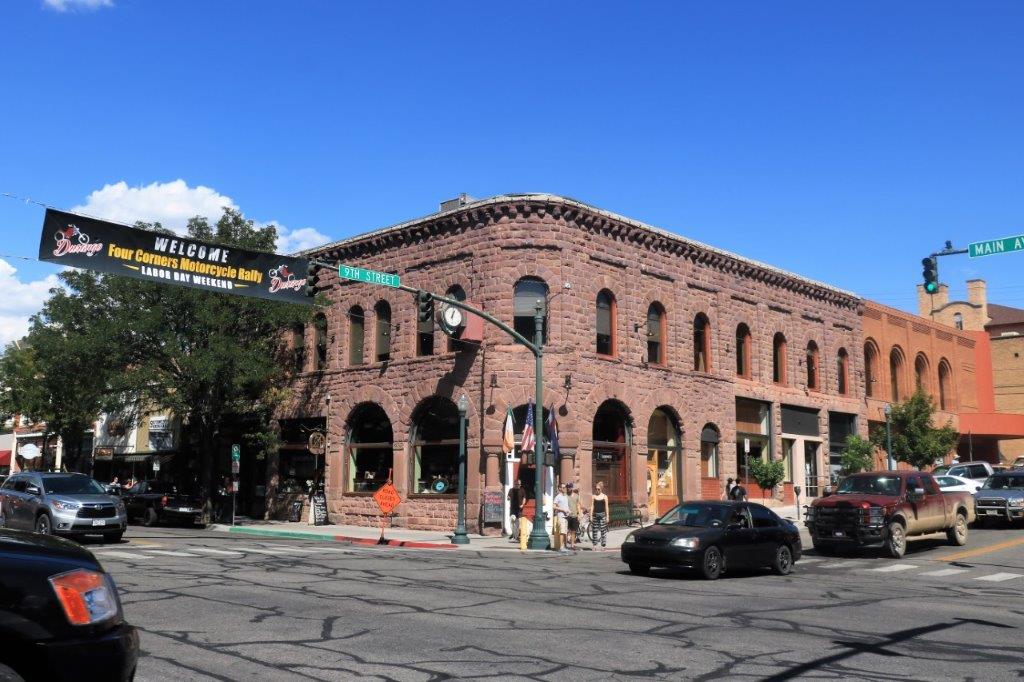
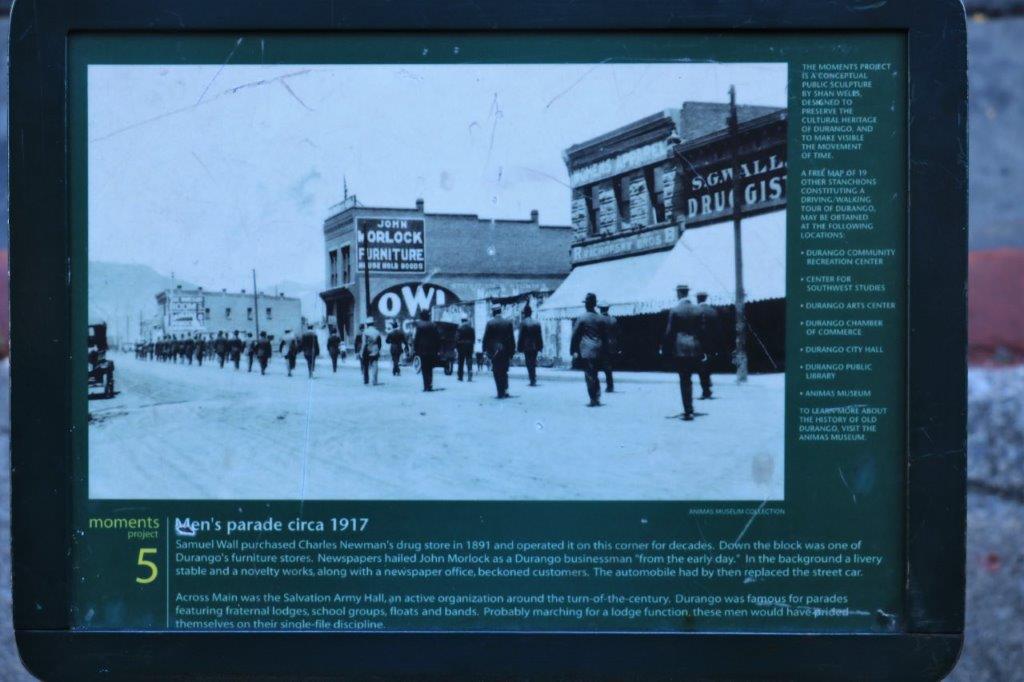
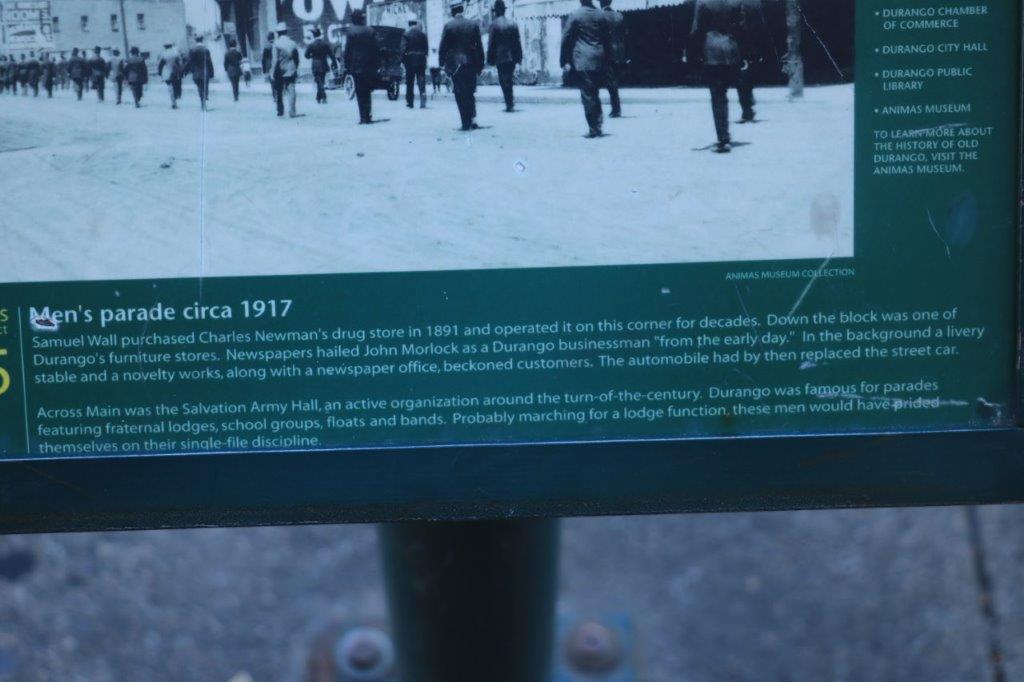
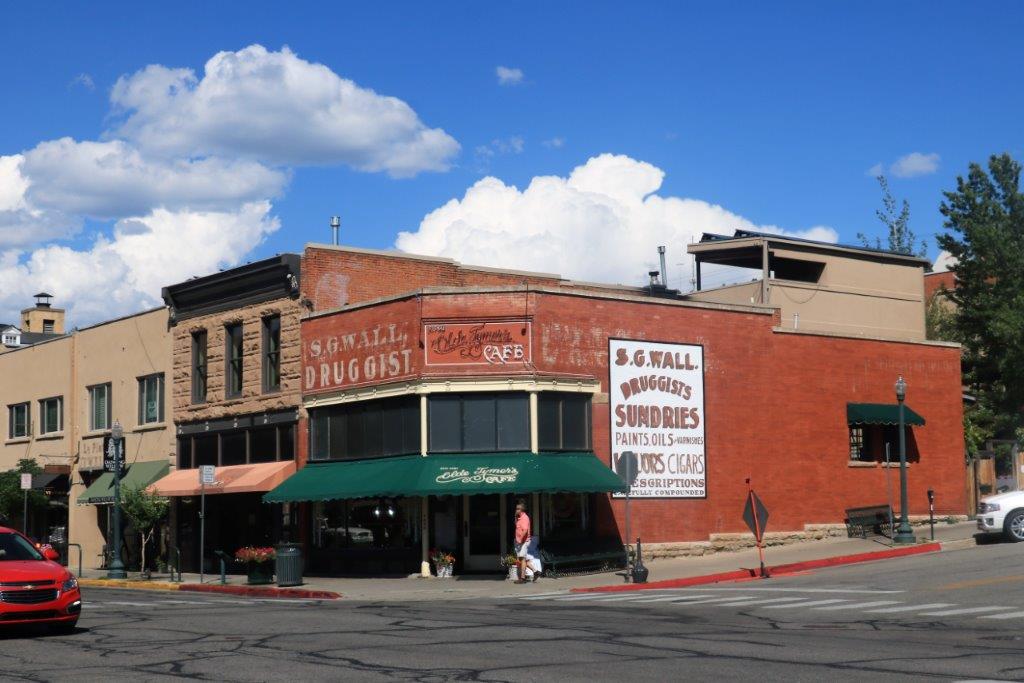
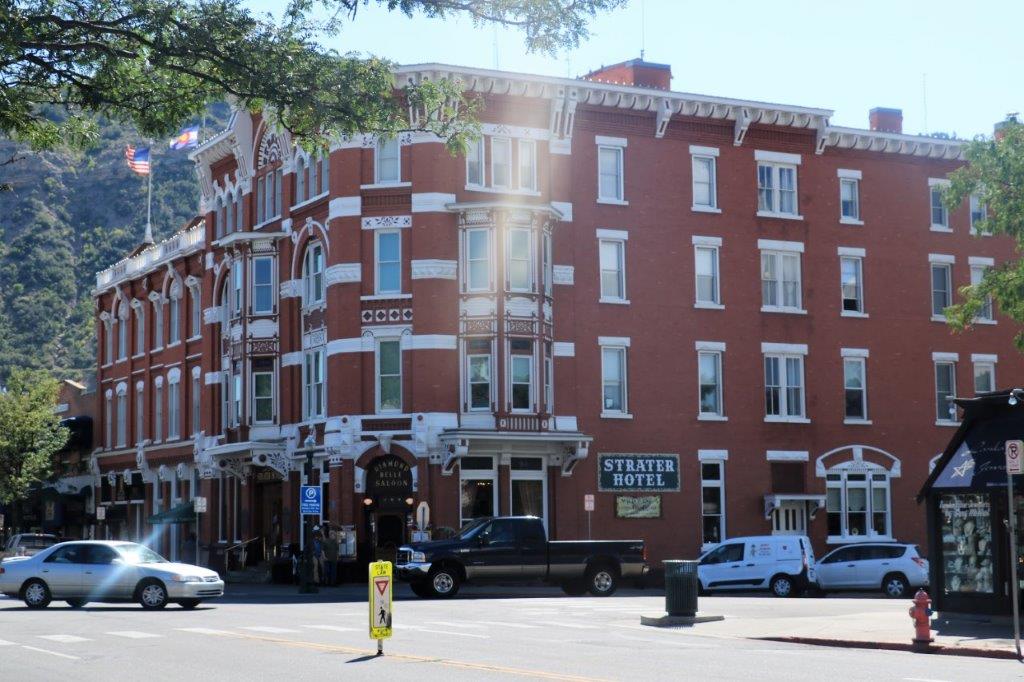
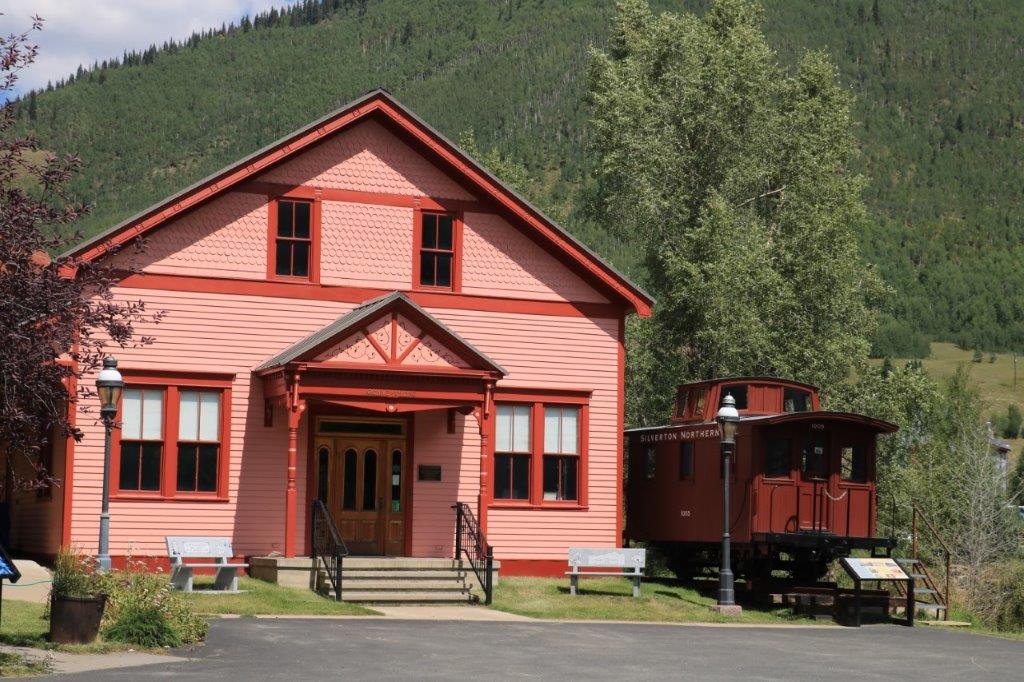
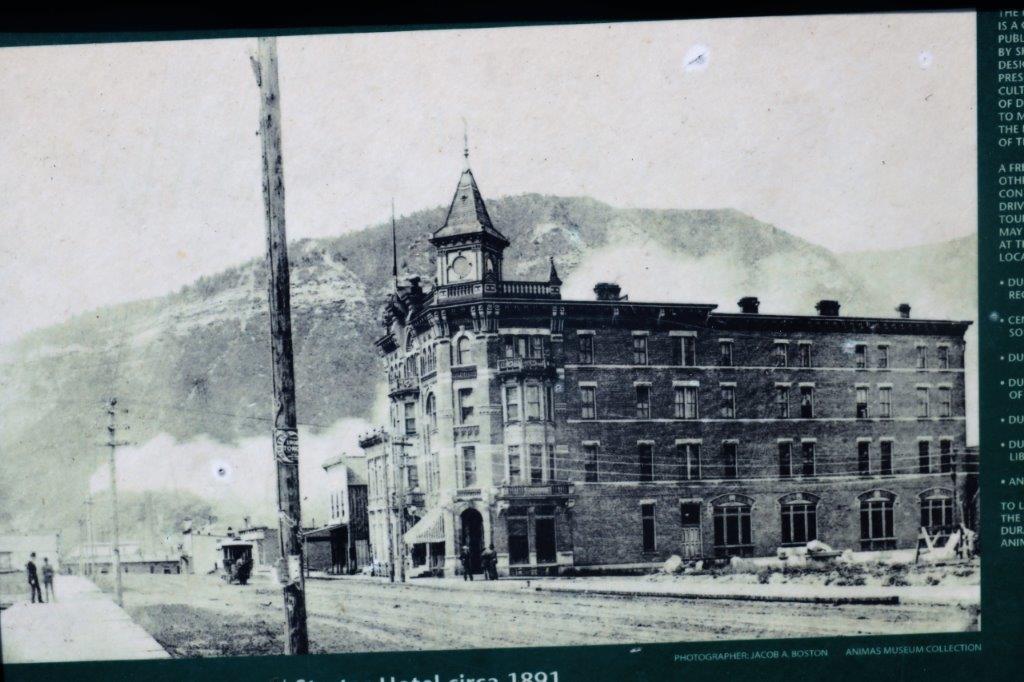
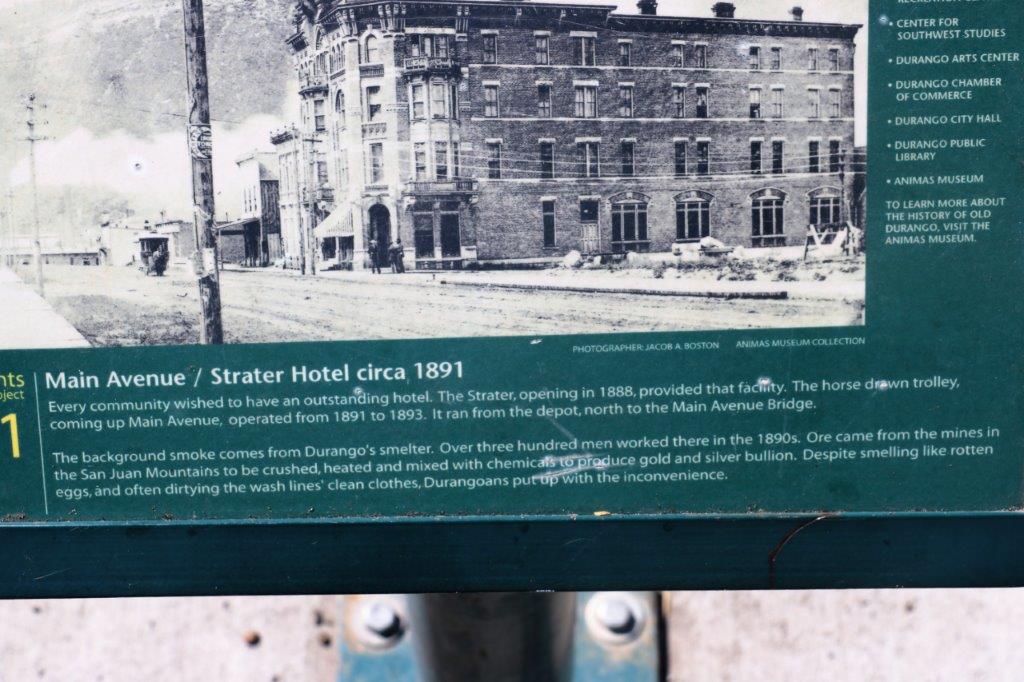
As is the restaurant  where we made reservations for dinner.  We ate here last year and it was so good we came back again.We wandered up Main Street for a couple of blocks then turned down College St so we could get to the Animas River Walk. There was a geocache calling our names that we needed to find. Loved this tiny little one person kayak. After we found the cache we walked quite a few blocks up Main Street and took photos of the old buildings and historical signs. The Four Corners Motorcycle Rally is in town this weekend so there are Harleys, BMWs, Ducati’s, and tricked out trikes all over the place. On our walk we purchased tickets to tonight’s performance of a song/poem show about the emergence of The West.  It should be fun.

We have to get to bed right after the show because we have to be up and breakfasted and at the train station by 7:30 tomorrow morning.  We will be on the train all day; arriving back from Silverton at 5:15.  I suspect tomorrow’s blog will have plenty of scenery pictures.

2017 Aug 31 Pagosa Springs, CO (Blanco Basin)

On our last day in Pagosa Springs we visited the small local musuem and went on what was billed as “one of the most spectaular scenic drives in Colorada.”

We stopped to look for a couple of caches on our way to the museum – with no success.

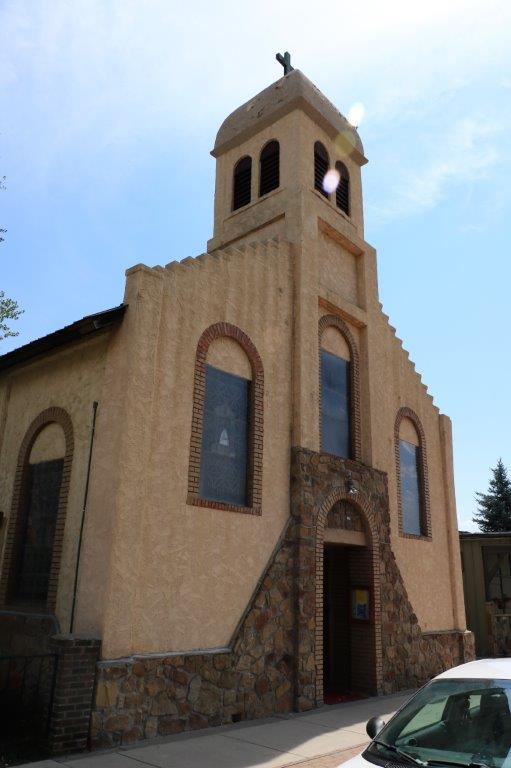
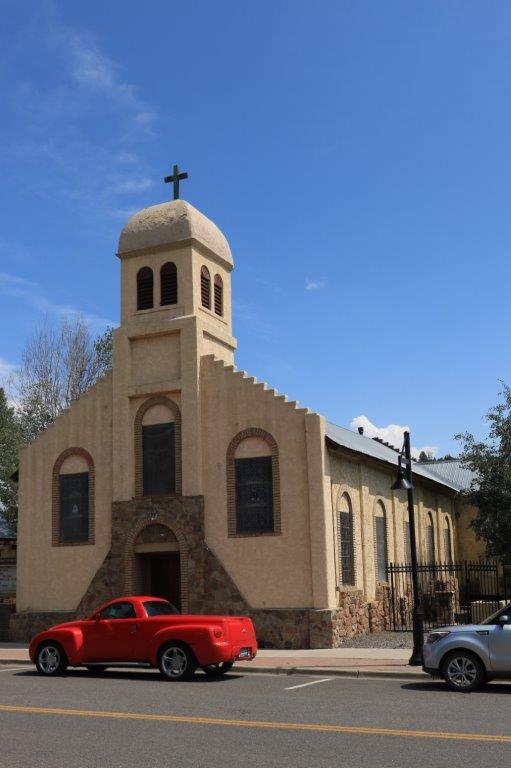
There was one hidden just up the street from this nice church, but we didn’t find it. Poppy looks good sitting there.  Of course, the distance hides all the dust and dirt.  She will need a good cleaning when we get home.

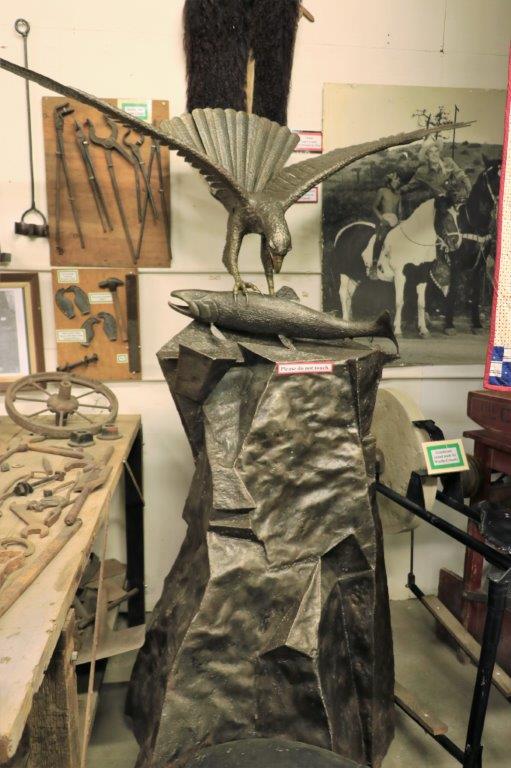
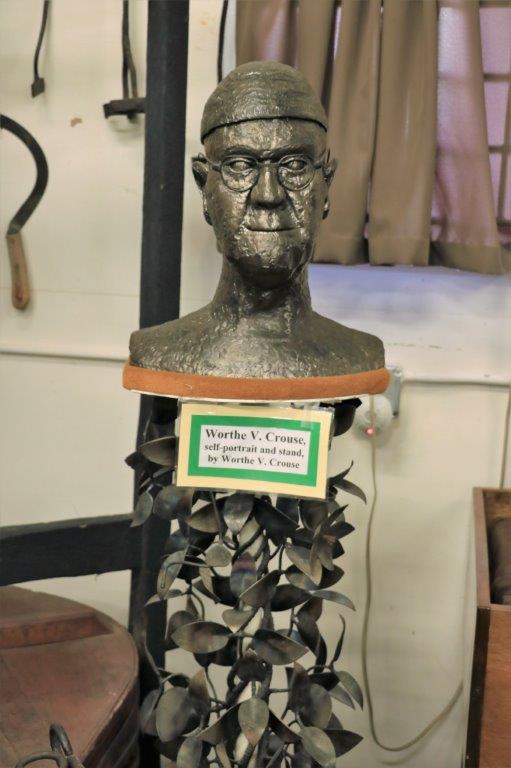
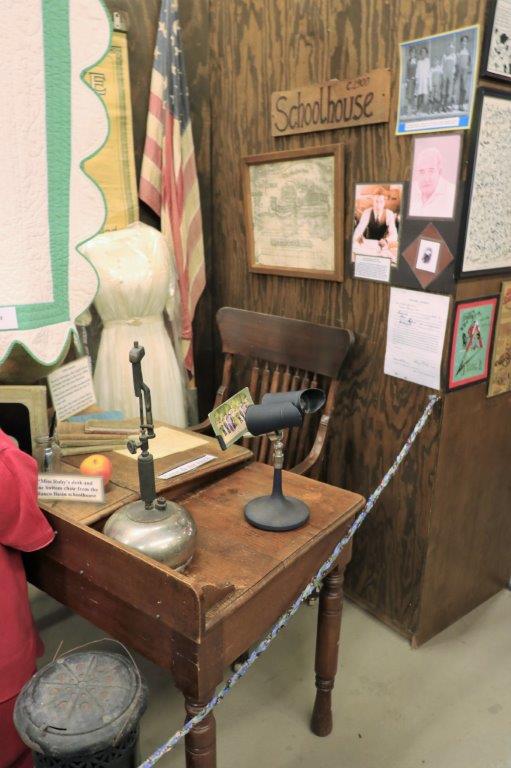
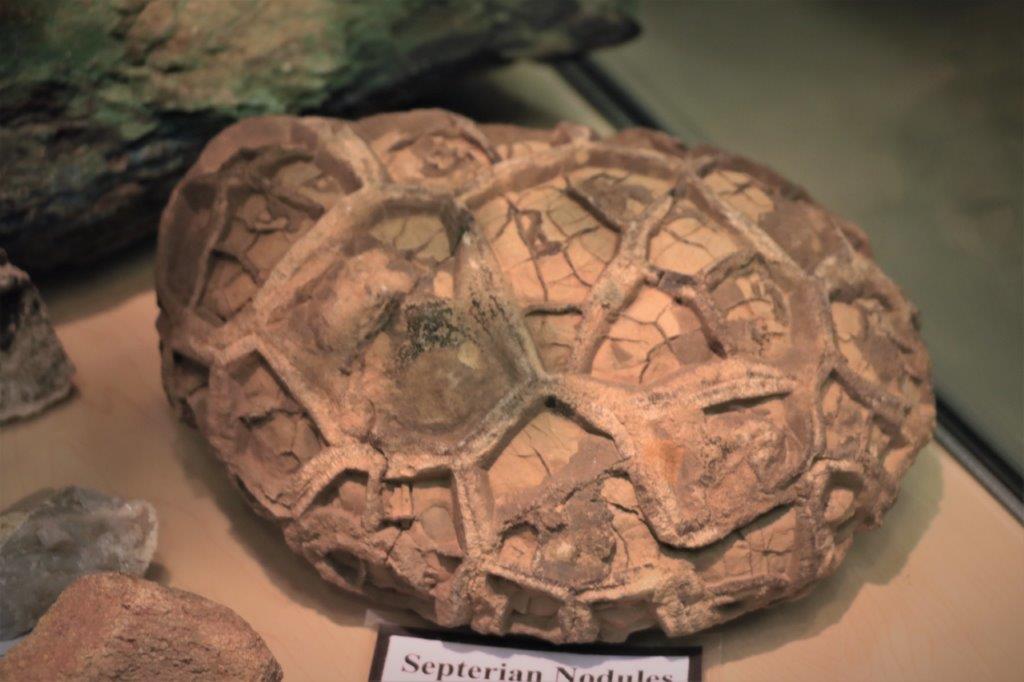
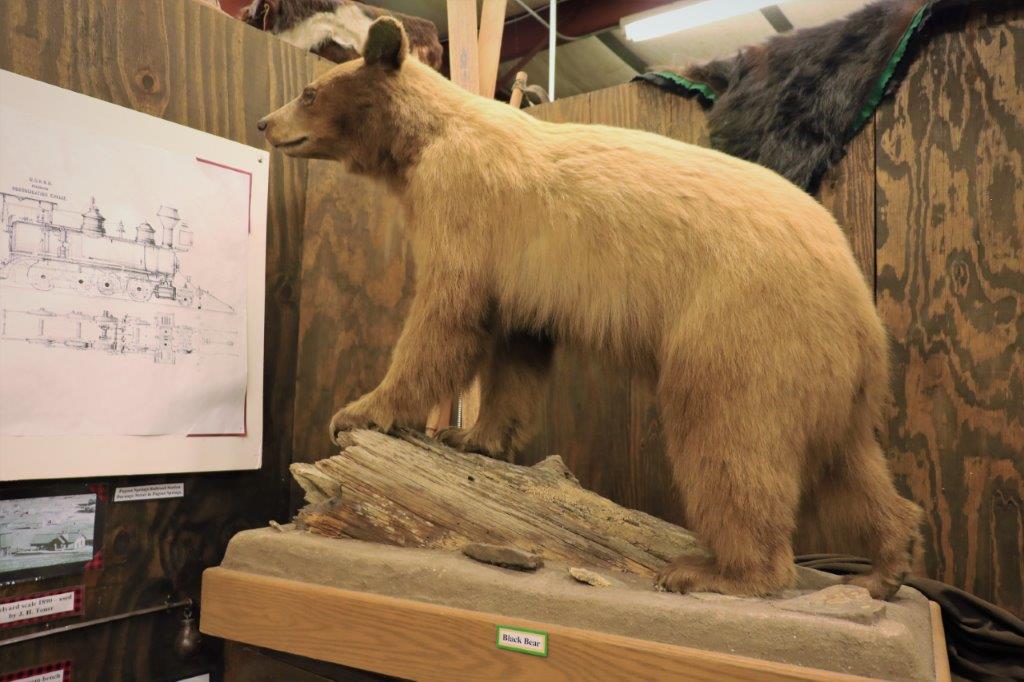
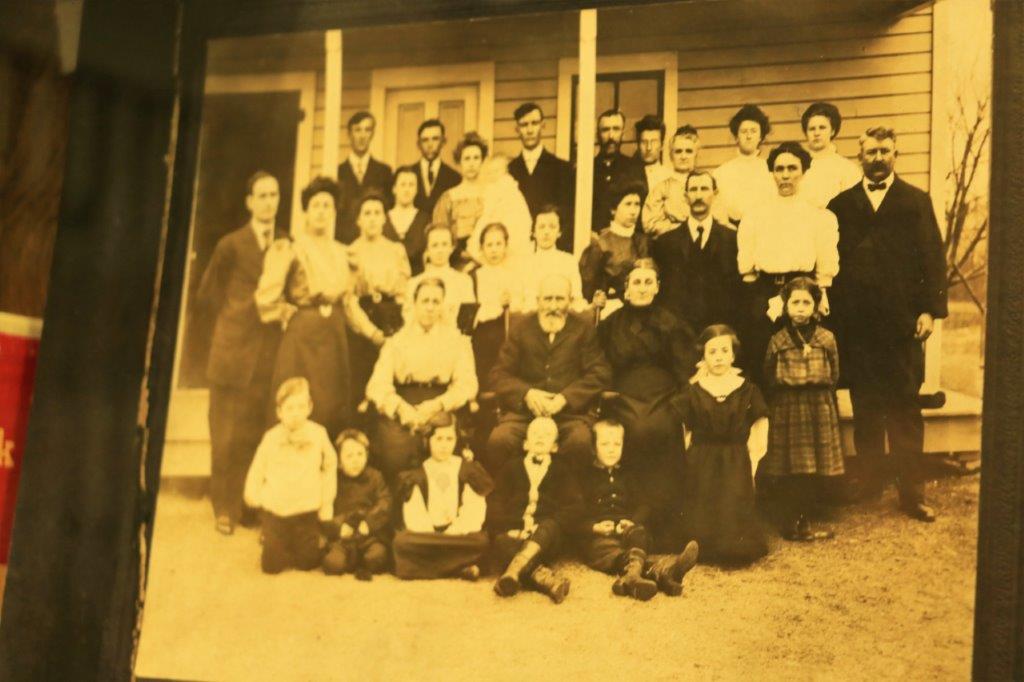
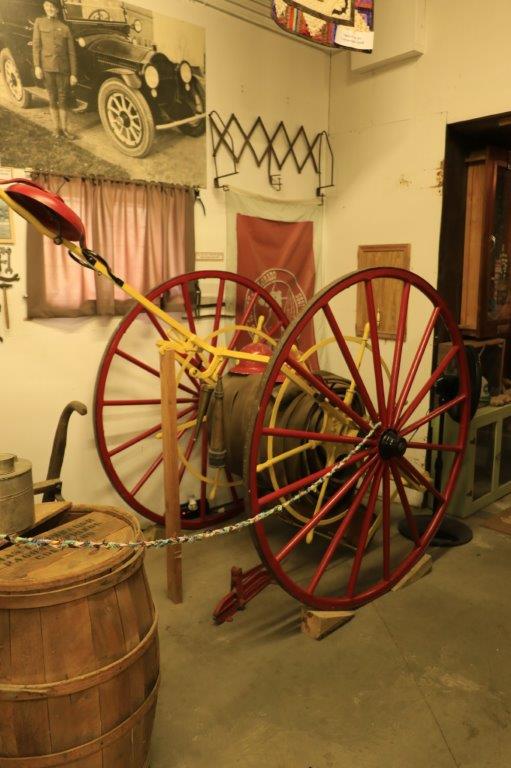
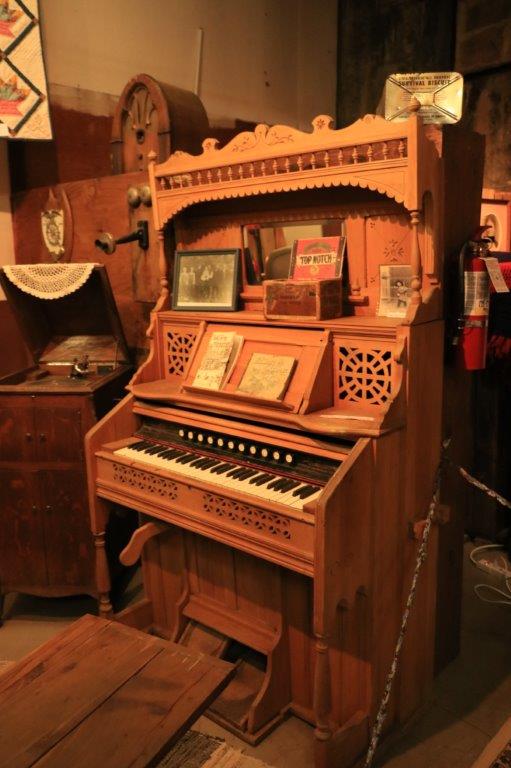
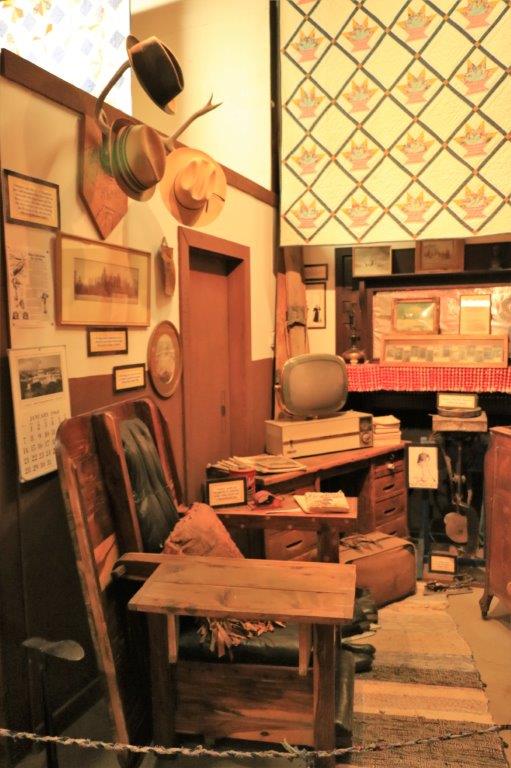
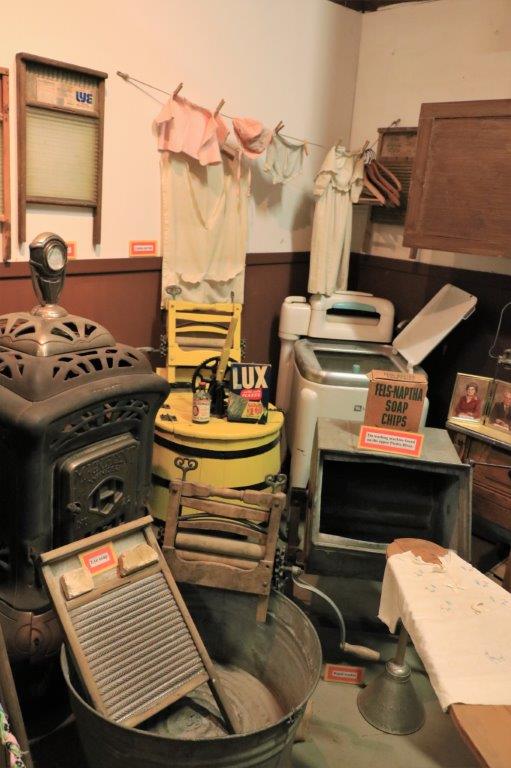
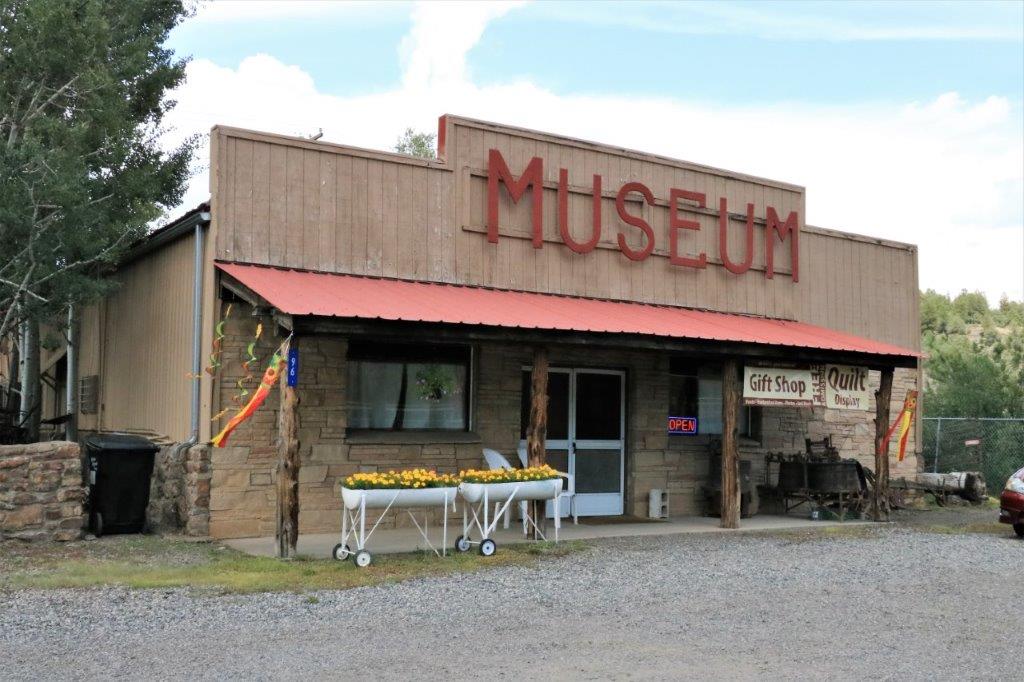
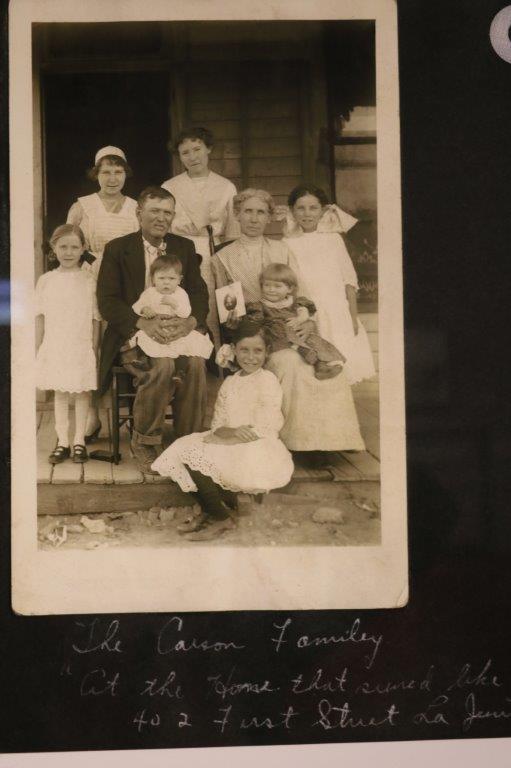
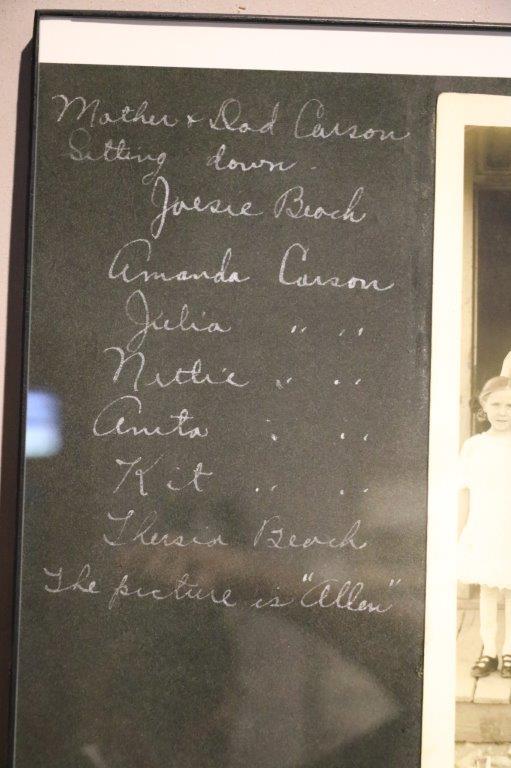
The museum was hosting a quilt show and all through the building were gorgeous quilts hanging above the displays.  The volunteer at the front desk gave us a binder that had photos and descriptions of all the quilts.  It added a nice touch to the museum. There were no names posted under this photo but it looks like a multi-generational gathering.

                                                                       Look at this oh-so-modern television. After we finished at the museum we drove south about ten miles along the road we drove up when we arrived.  We turned off onto a relatively good gravel road for the drive to Blanco Basin.

The first half of the drive was pretty but not what I would call spectacular.  It would be stunning in the fall when all the different tree’s leaves change colour. We decided to make a detour and go up to Opal Lake which derives it’s name from milky water created by minerals leaching in.  The marker said 2 miles to the Opal Lake trailhead, which was a one mile hike (in and out or each way, they didn’t say).  We drove three miles up a not-so-good gravel road and finally came to a fork with an arrow pointing to the right and a sign saying Opal Lake Trailhead 1 mile.  Obviously someone used a GPS direct signal (straight line) to calculate the distance not actually drive the road.  Since the road conditions were degrading we decided to not see Opal Lake and turned around.

We had not been hugely enamored of the scenic drive to this point and were tempted to just head back to town, but curiousity won out and we turned right to continue our drive.  The road comes to a dead end so we knew we wouldn’t be wandering aimlessly and getting lost.

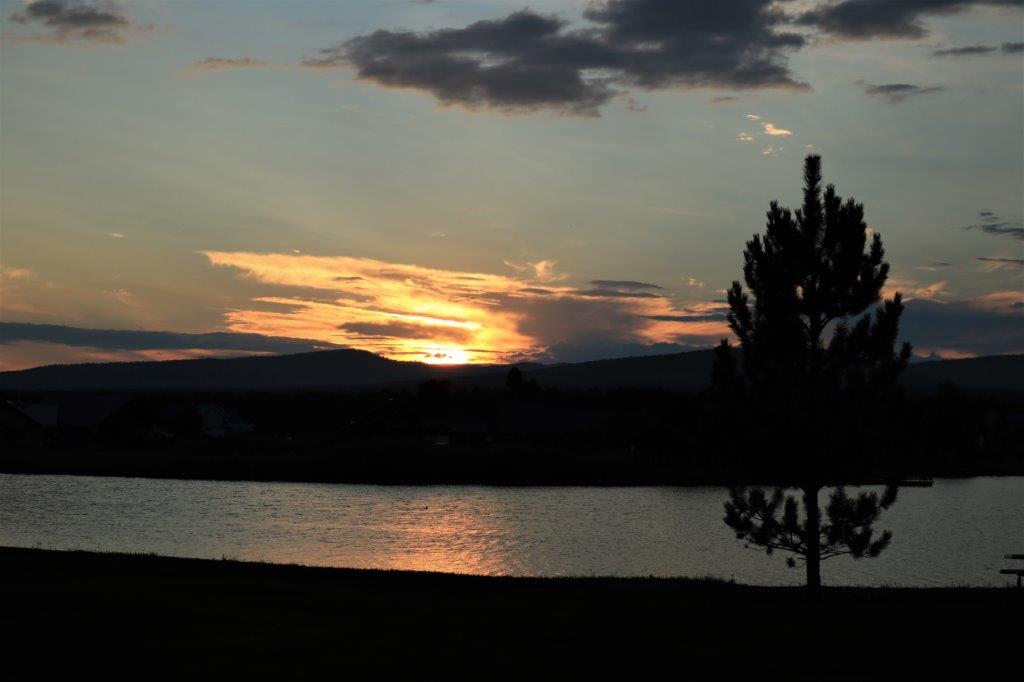
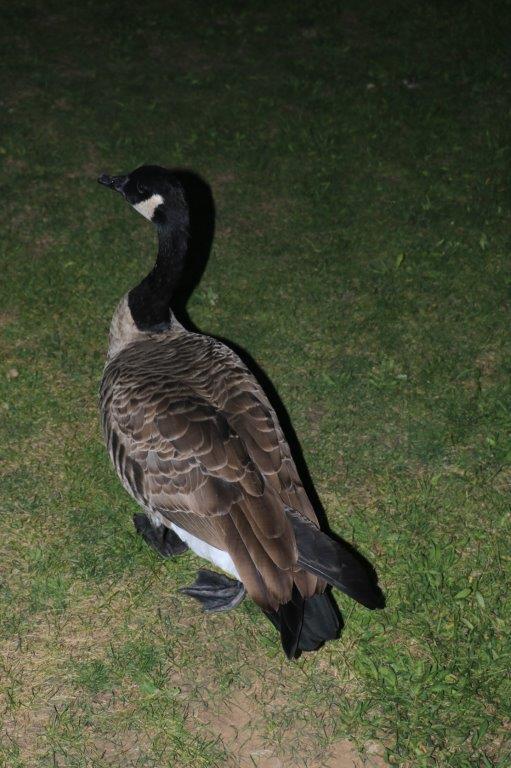
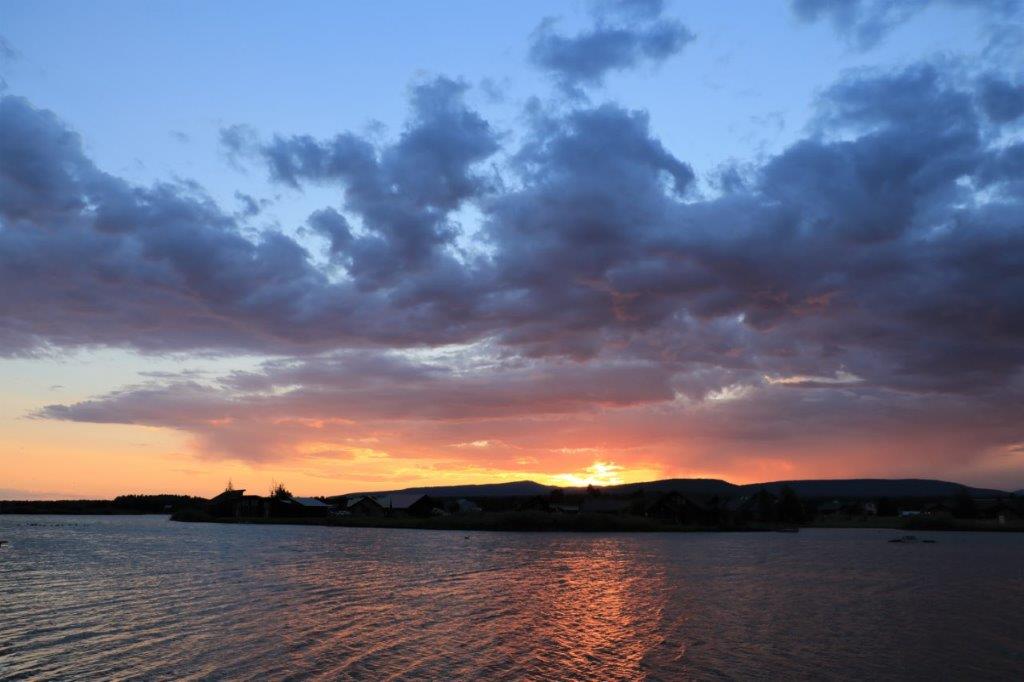
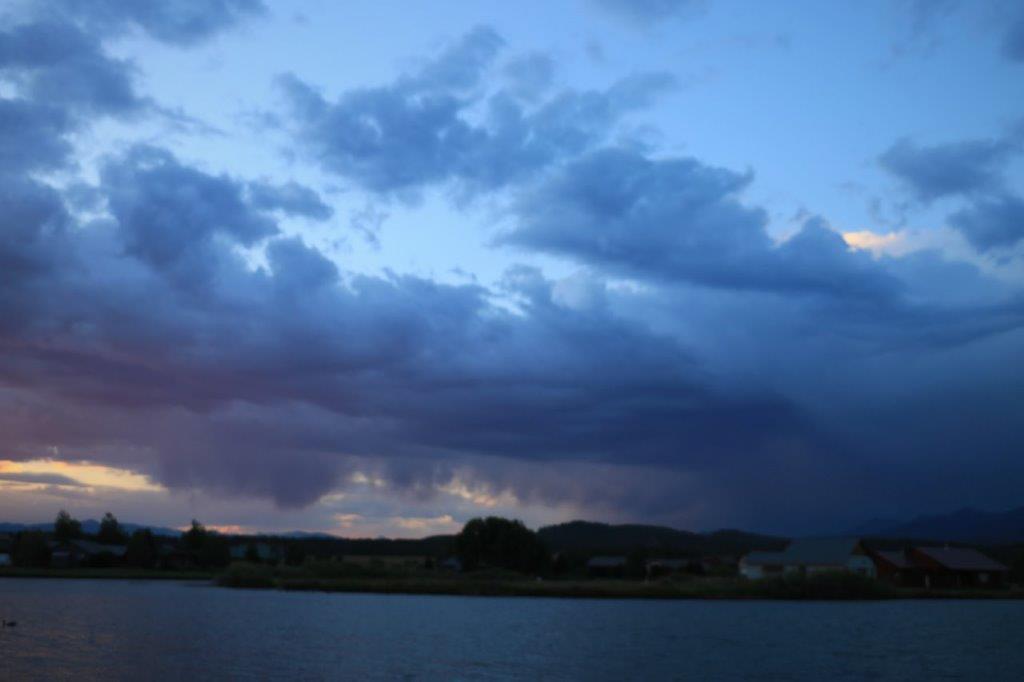
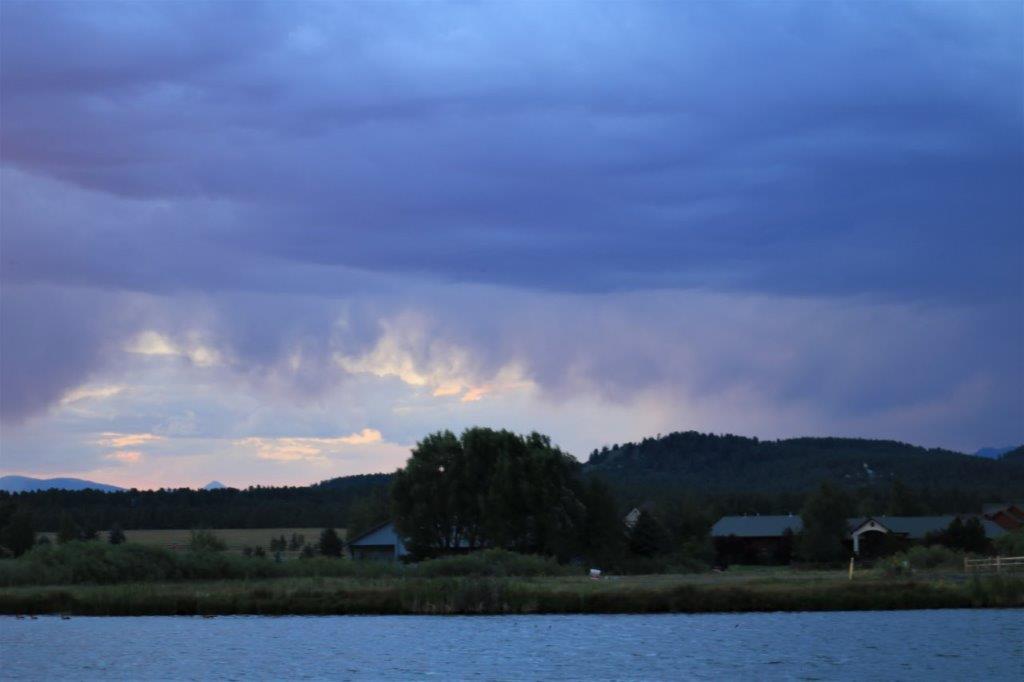
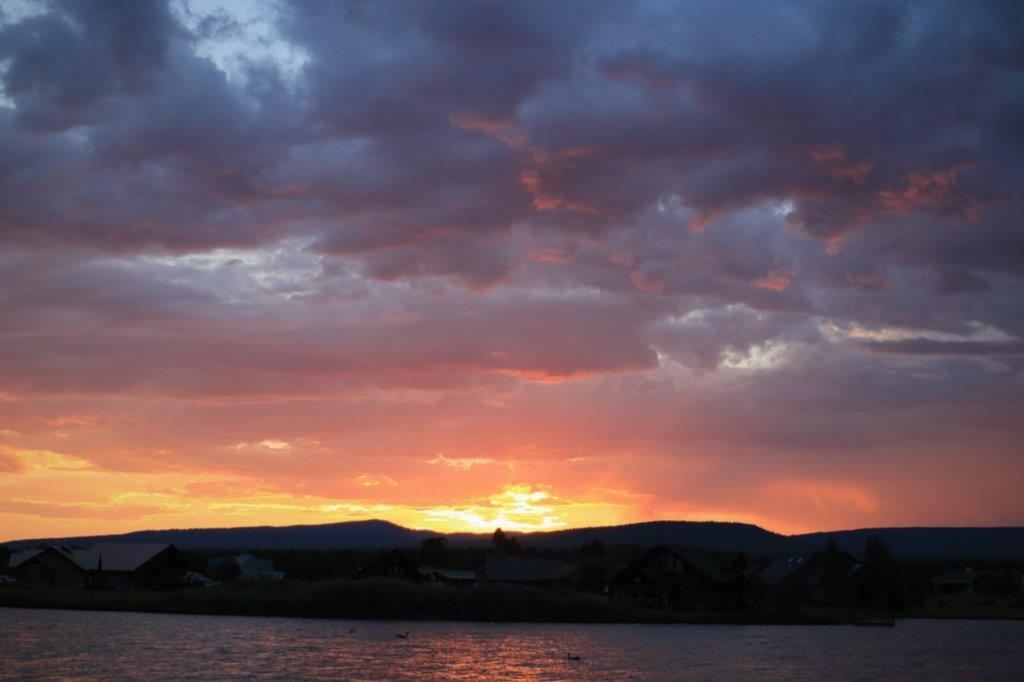
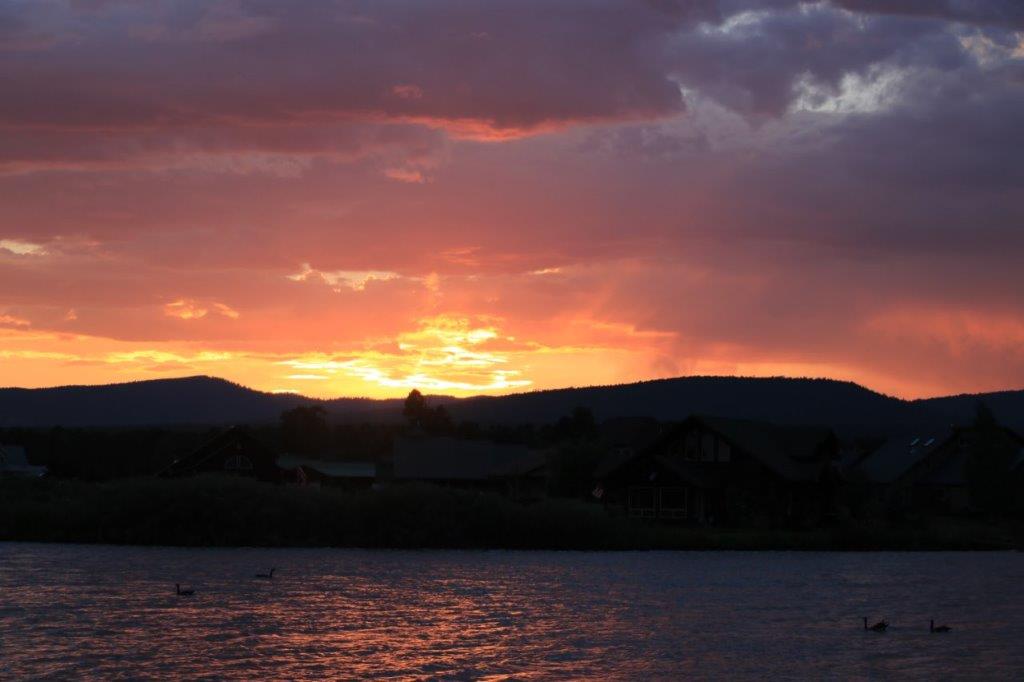
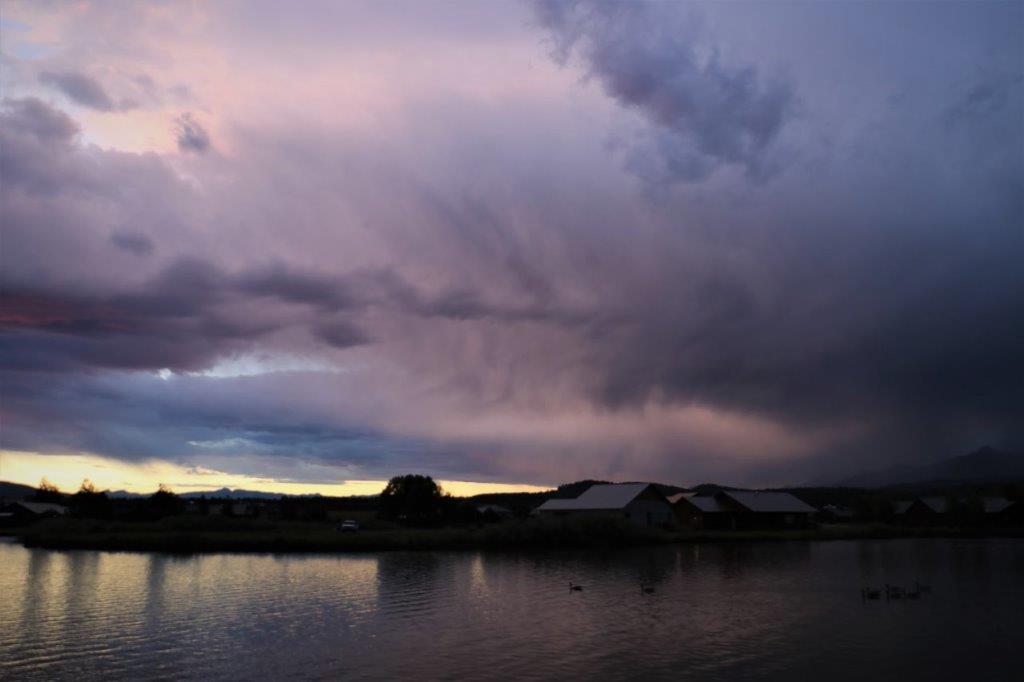
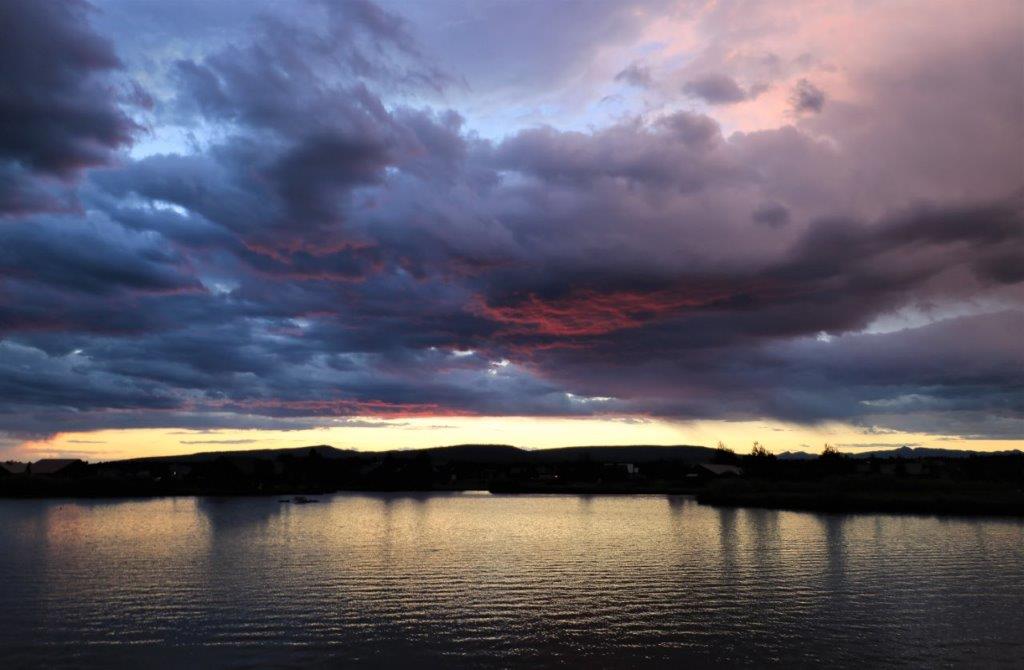
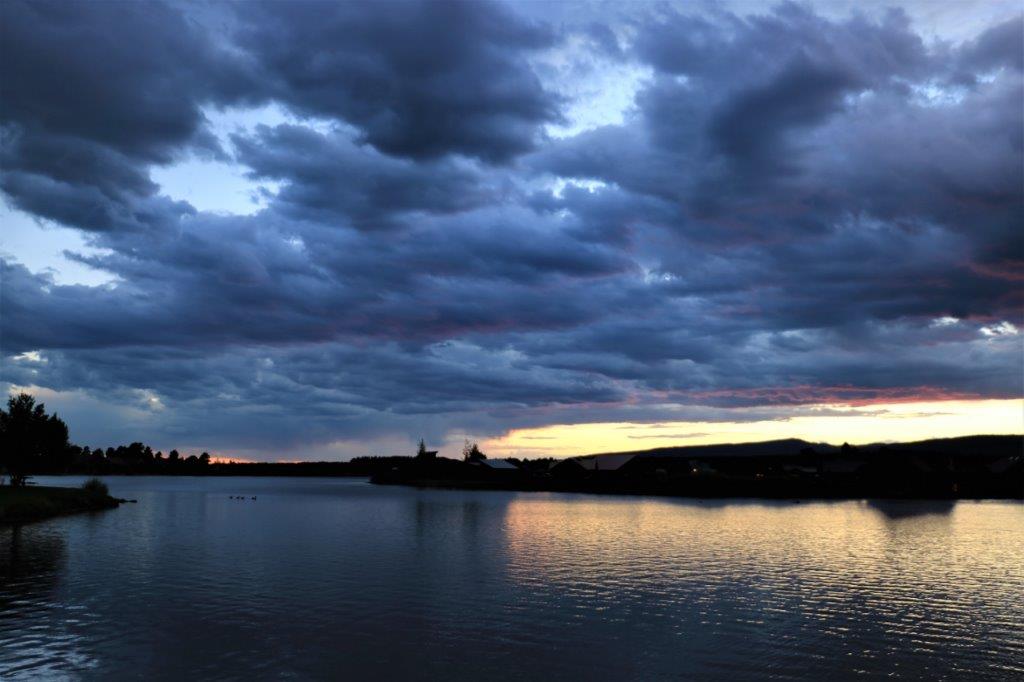
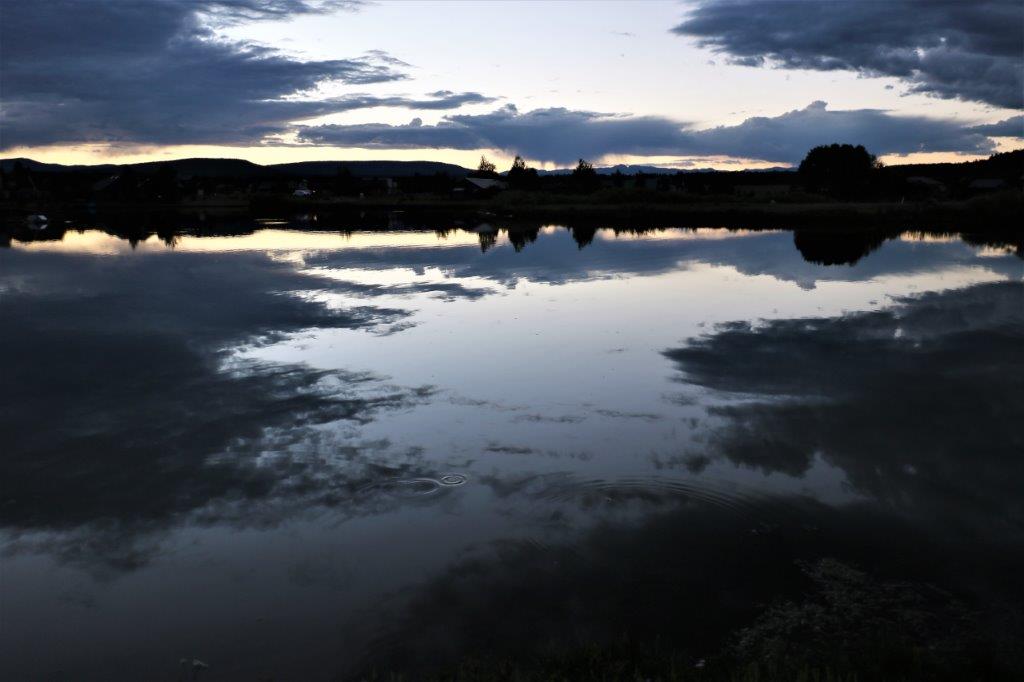
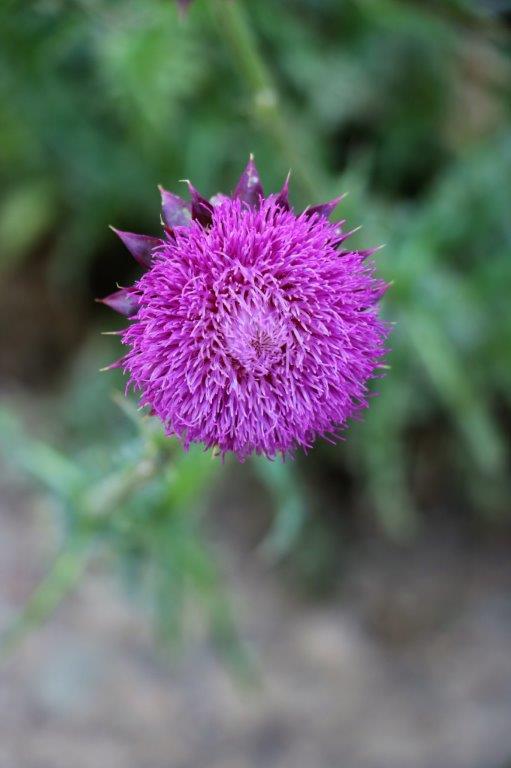
Not too far much farther down the road the trees opened up to a nice valley with expansive views of the mountains that form Continental Divide. We also passed a dozen or so homes and ranches.  It would be about an hour drive to get to town from here.  I have become to citified over the years.  There is no appeal for me to live that far from a grocery store.  Thankfully for our dinner tables there are many people who do like being ‘away from it all.’ We came to the end of the road and turned back.  Once we arrived at the resort we did the usual photos, blog (until the wi-fi died – again), dinner, dishes, and sunset watch. The sunset wasn’t very flashy; but, as always, still lovely.  Valerie, one of my new sunset-watch friends, said the sun was sad we were all leaving the next day and just wanted to go down and get it over with.  This Canada Goose was not paying attention when the rest of its flock wandered off and it kept walking over to Valerie and me as if it was asking us to give it directions.  It was quite bold, coming within a couple of feet of my feet.

We are heading only a short distance (about 50 miles) west to Durango today.  We will, of course, find some geocaches along the way and poke around into canyons or waterfalls or parks if any are near.  Saturday we are taking the narrow-guage railway trip from Durango to Silverton and back.  I wanted to do this trip when we came through here last winter on our way home from California but the railway wasn’t running yet.  I am looking forward to doing it now.

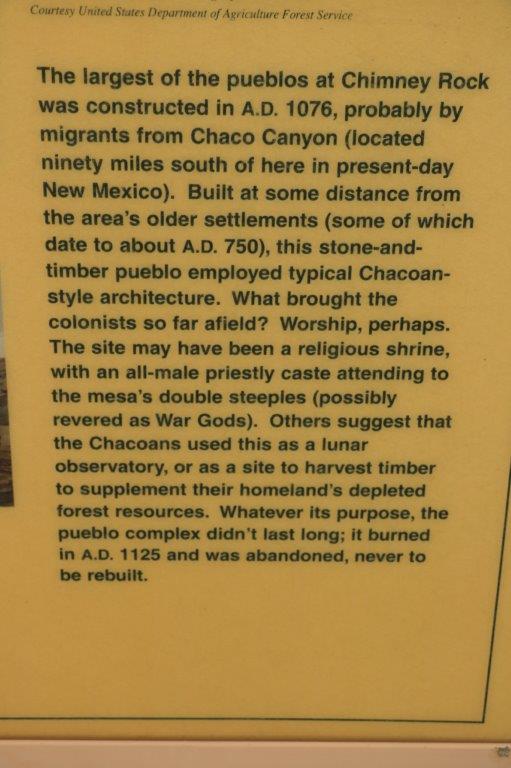
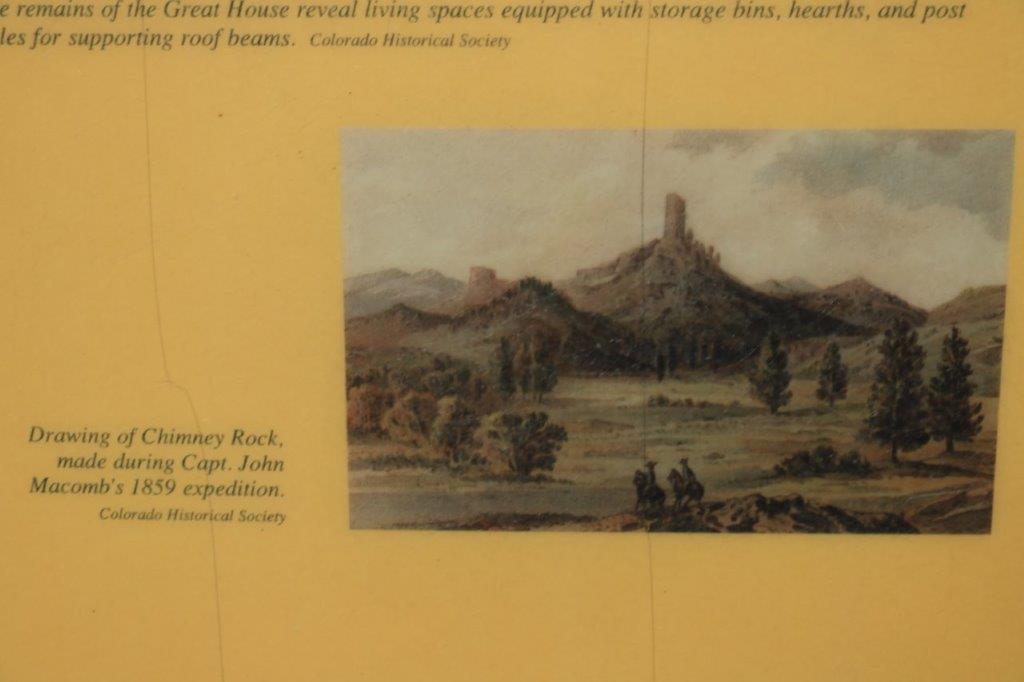
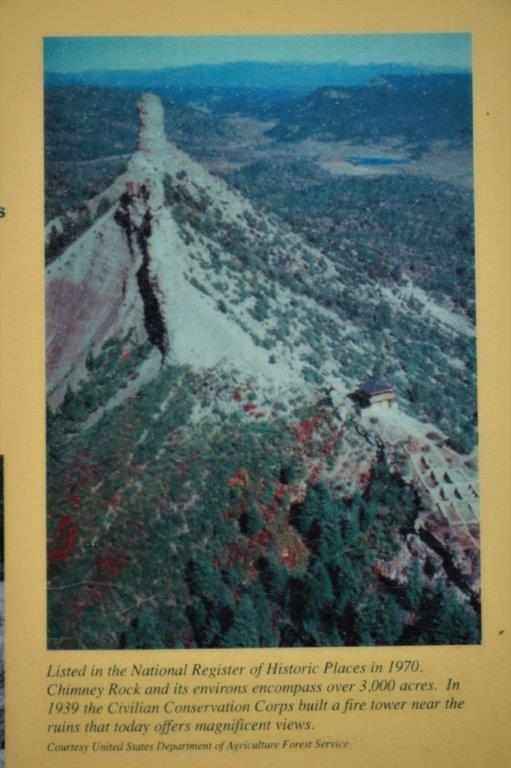
2017 Aug 30 – Pagosa Springs,CO (Chimney Rock)

Yesterday was a stitch day.  Today is a placard day, and, well, a stitch day too.  WARNING: long blog.

We left the condo at 10 to 10 to give us plenty of time to drive to Chimney Rock National Monument in time for the 11 am tour.  There are no park fees to enter the monument and wander around; but neither of the ancient ruins are visible from the road and access to the Great Kiva and the Pueblo House are by paid tour only.  Tours leave at 10, 11 and 1 each day and are guided by a US Forest Service Ranger.

Chimney Rock became a National Monument in 2012 by Presidential decree of former president Barrack Obama.  The area is very significant to the Pueblo and Hopi people; who still hold rituals and events to this day.

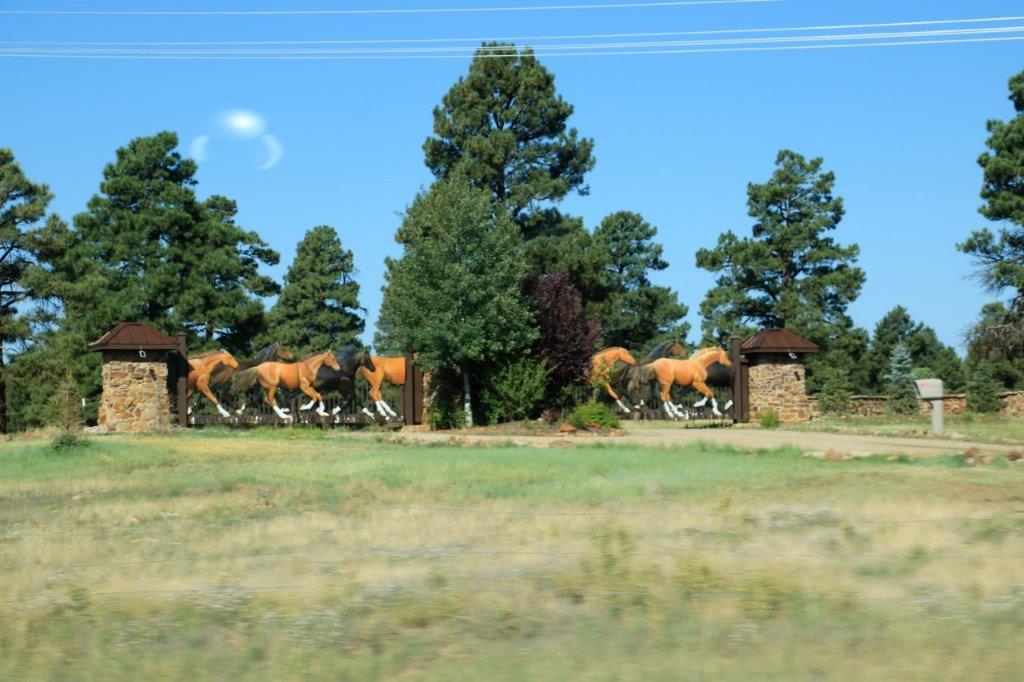
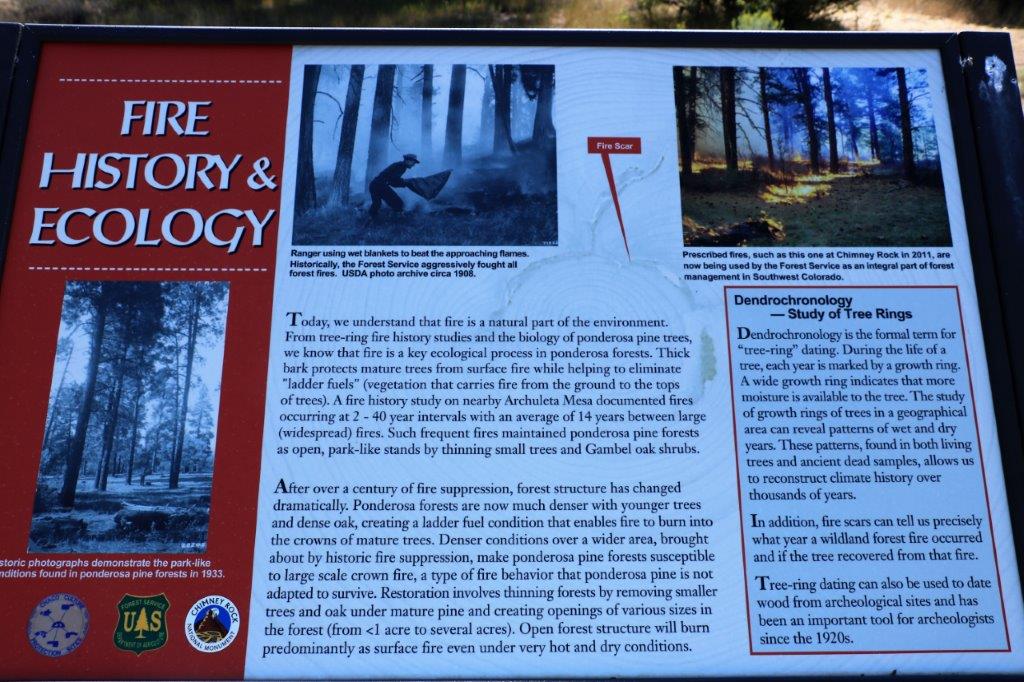
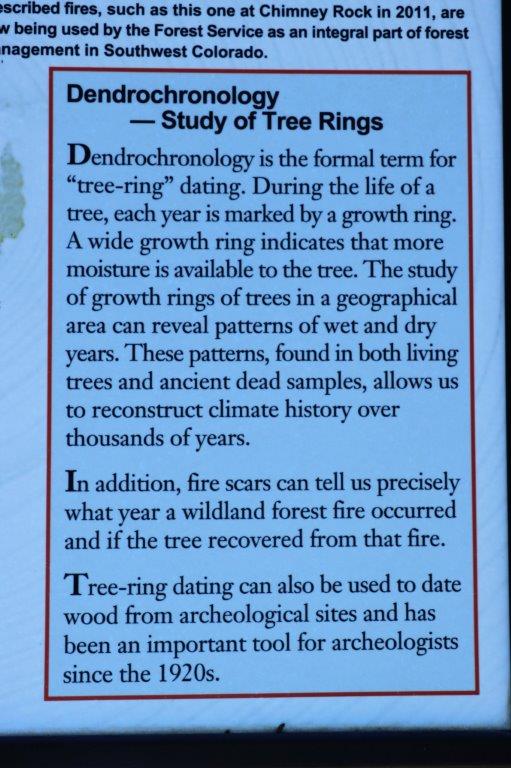
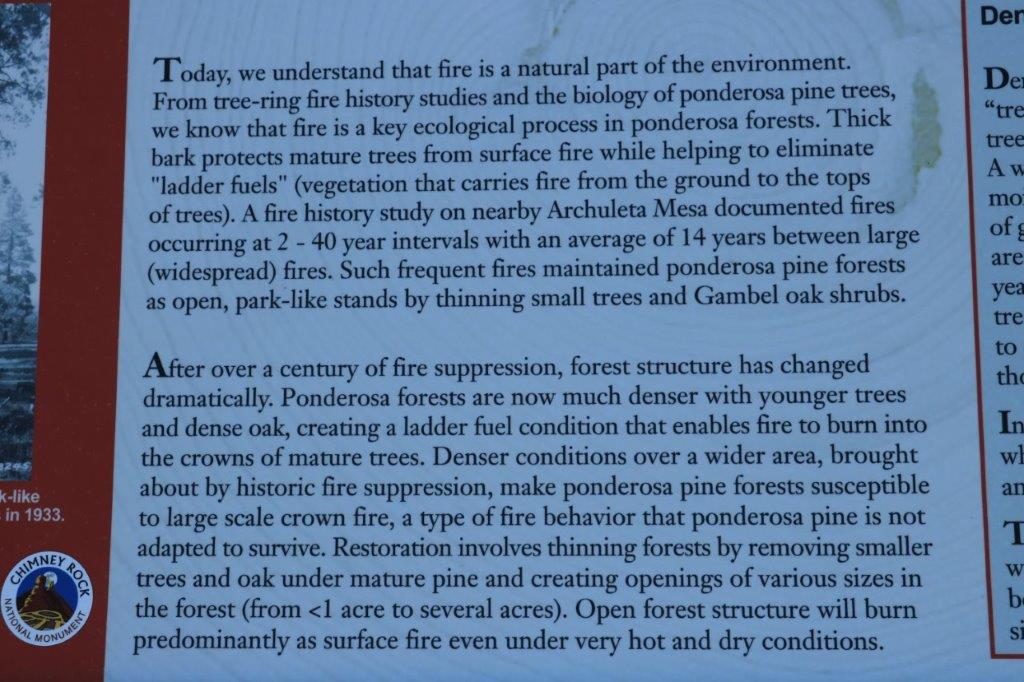
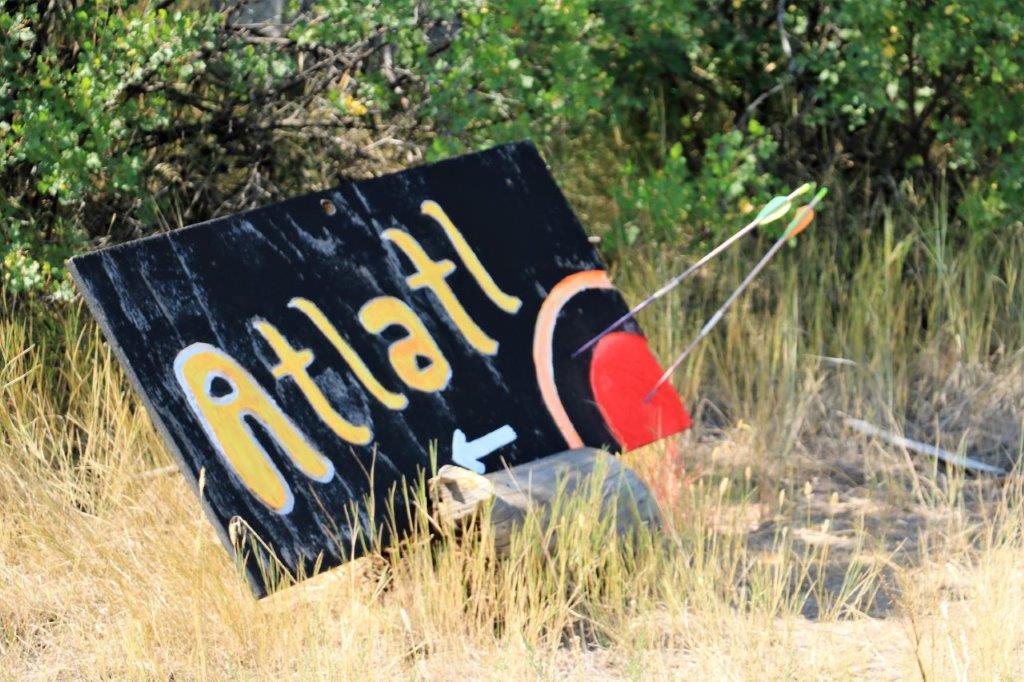
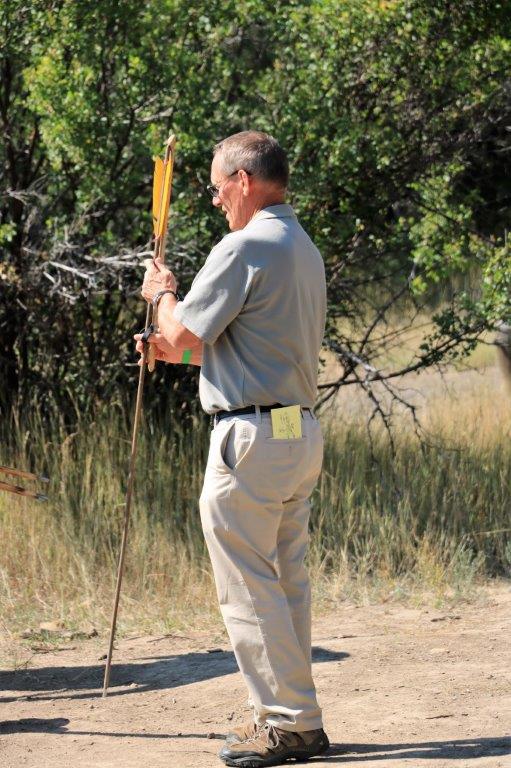
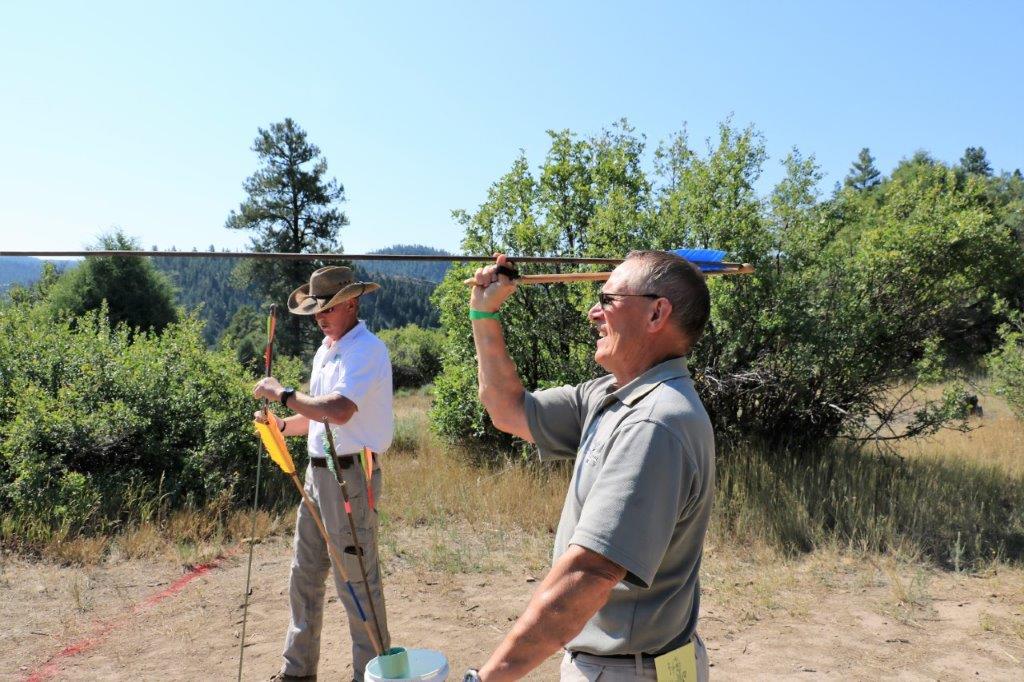
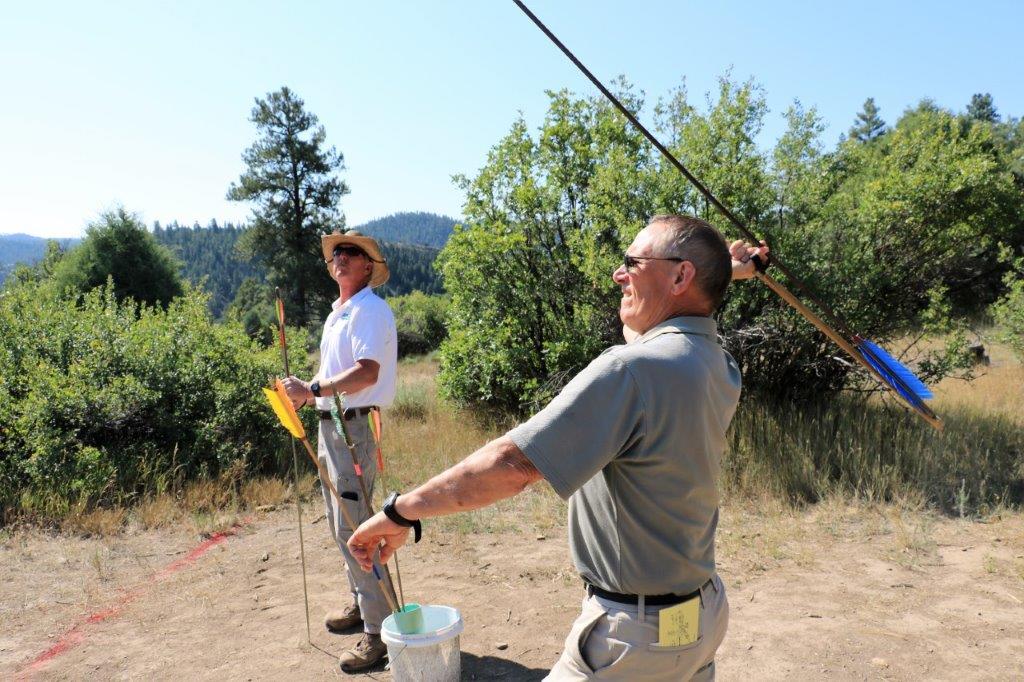
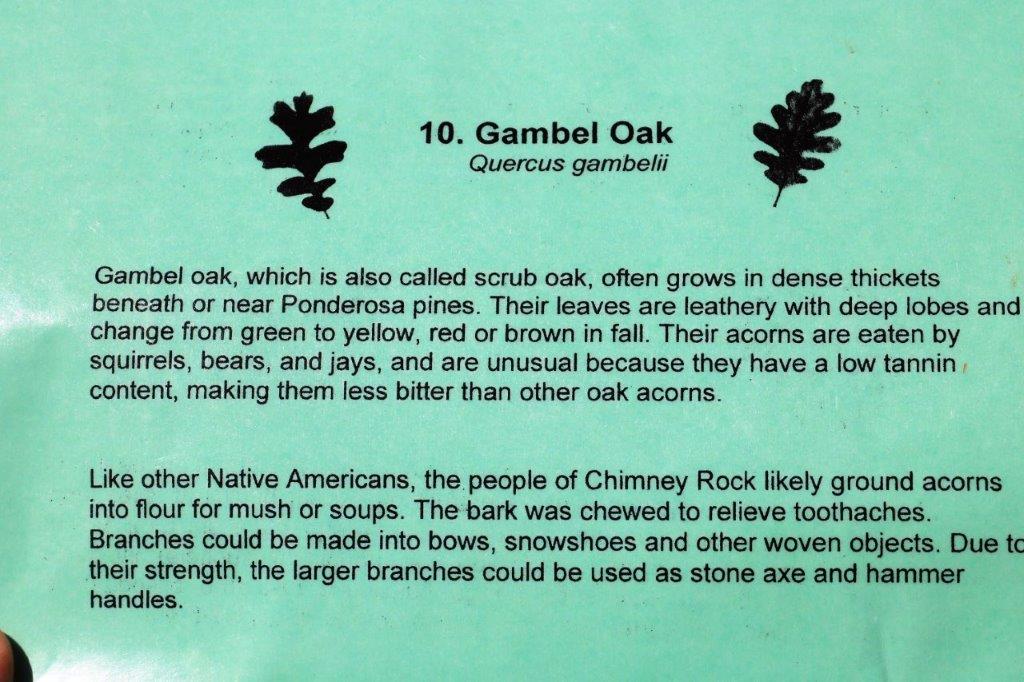
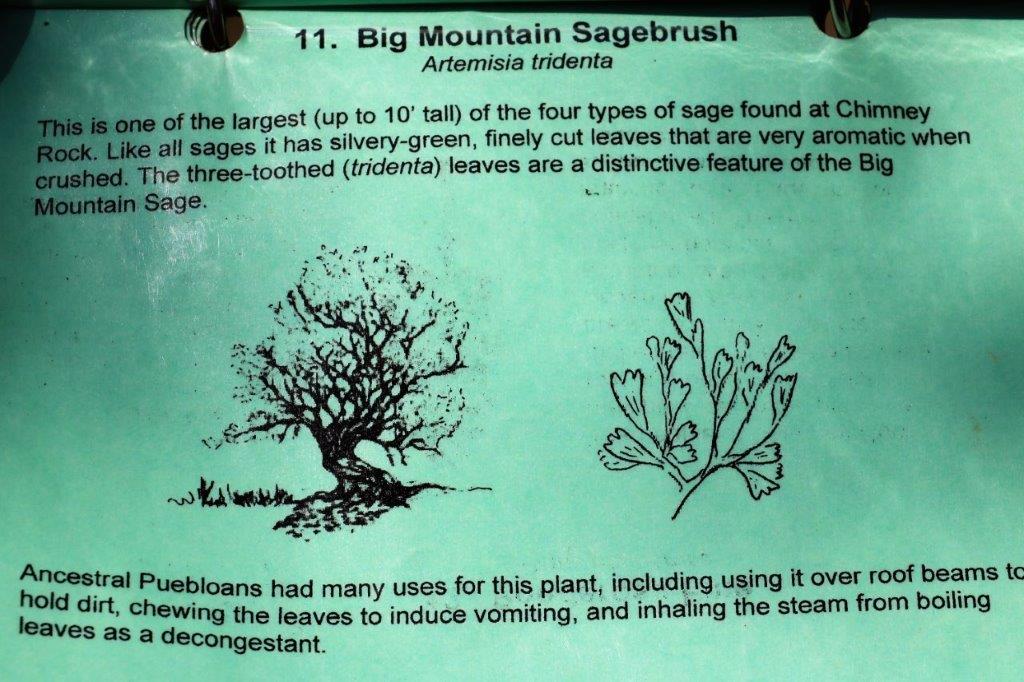
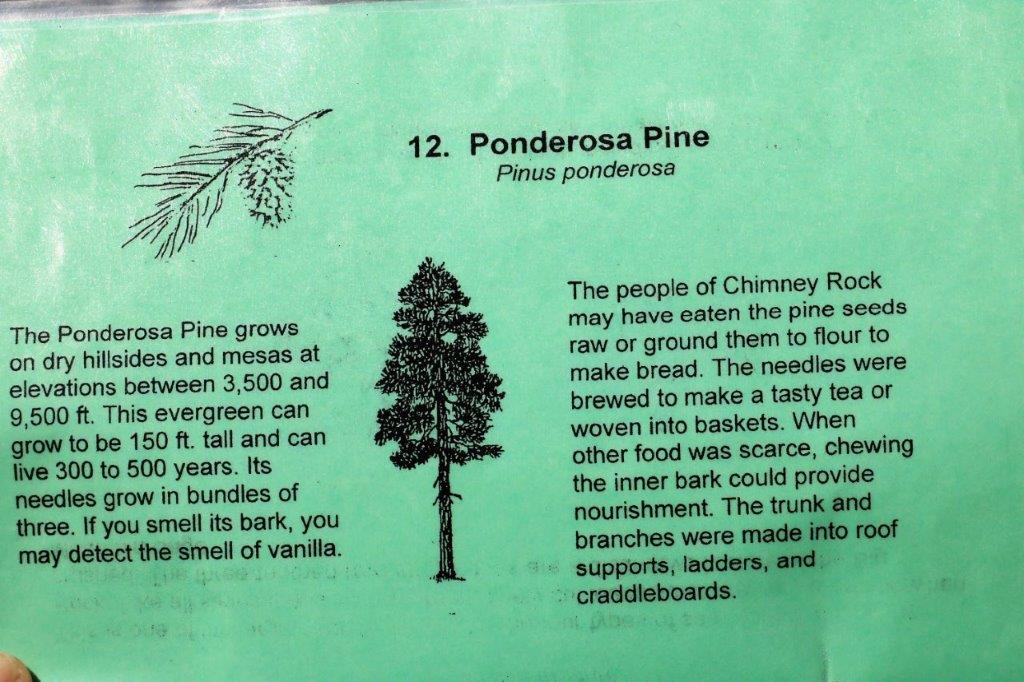
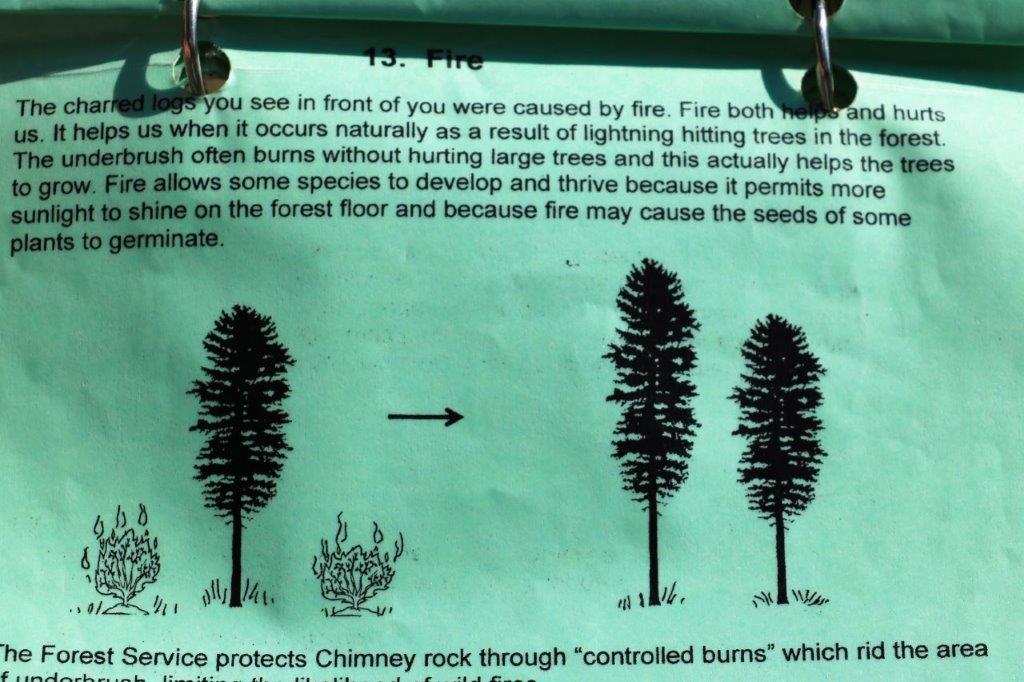
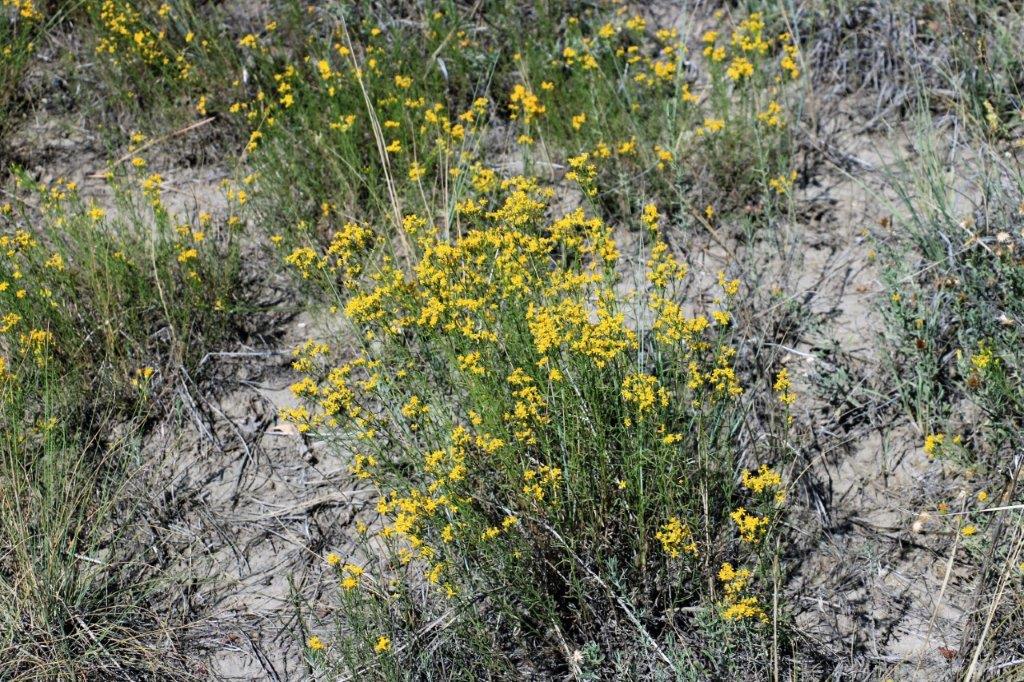
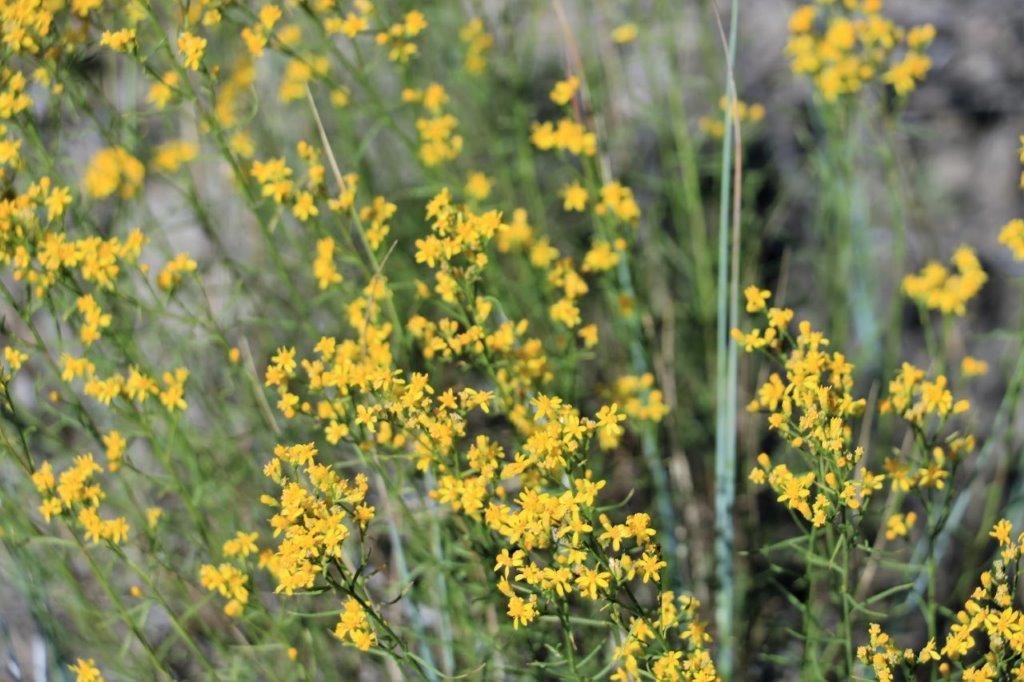
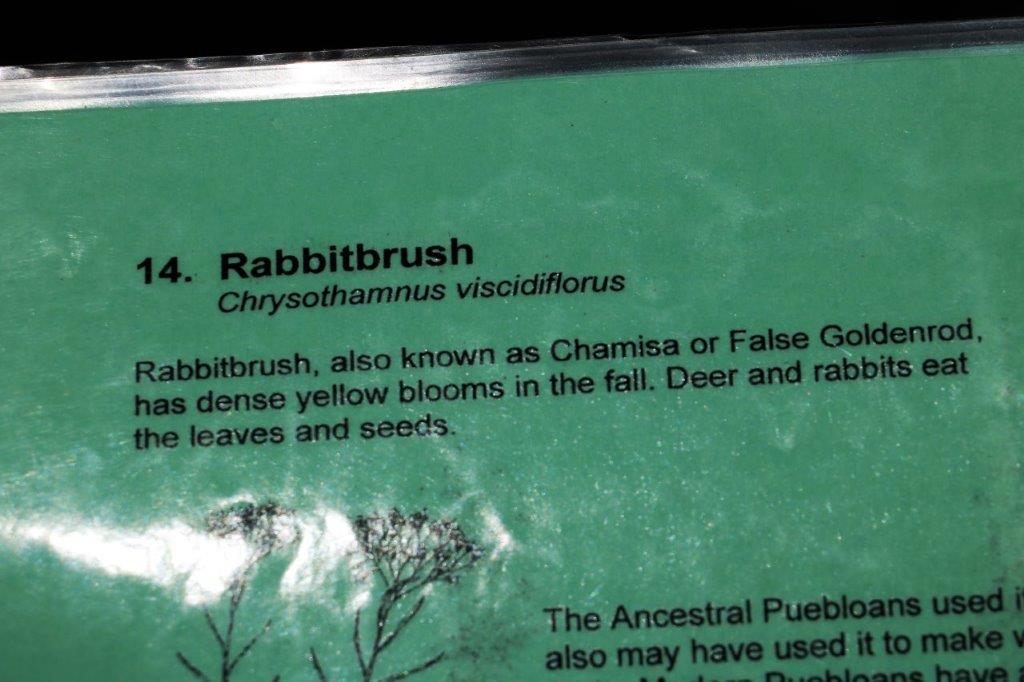
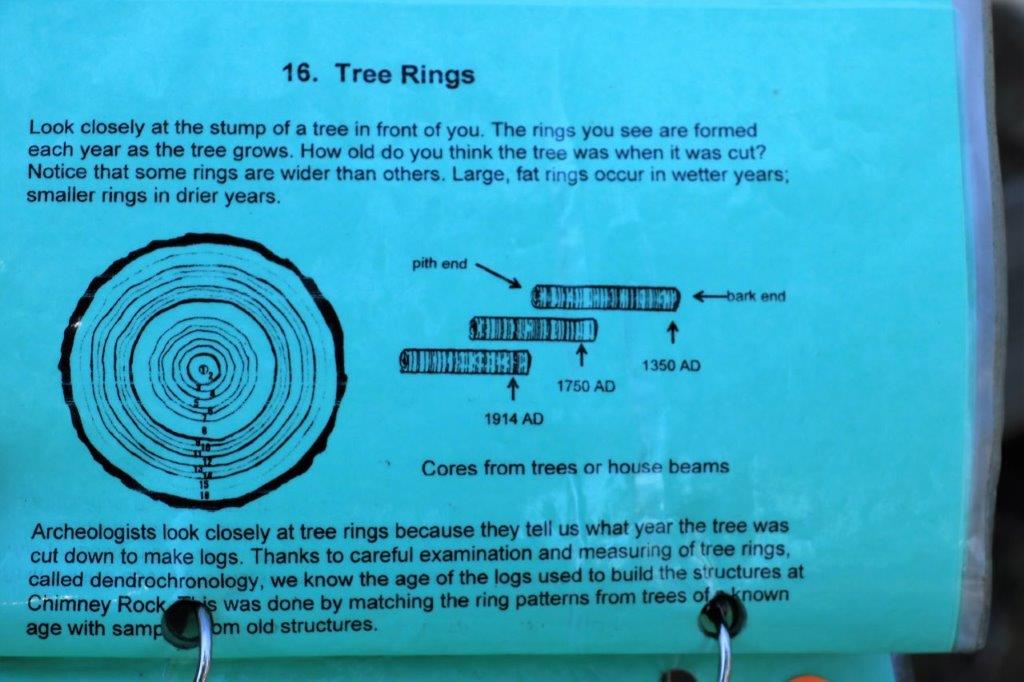
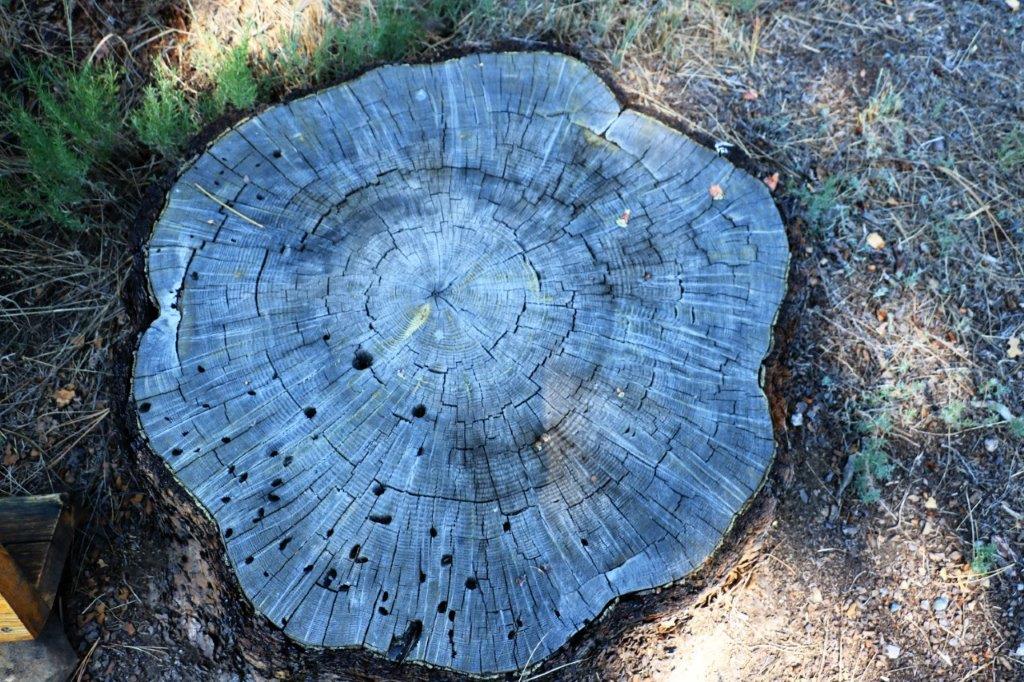
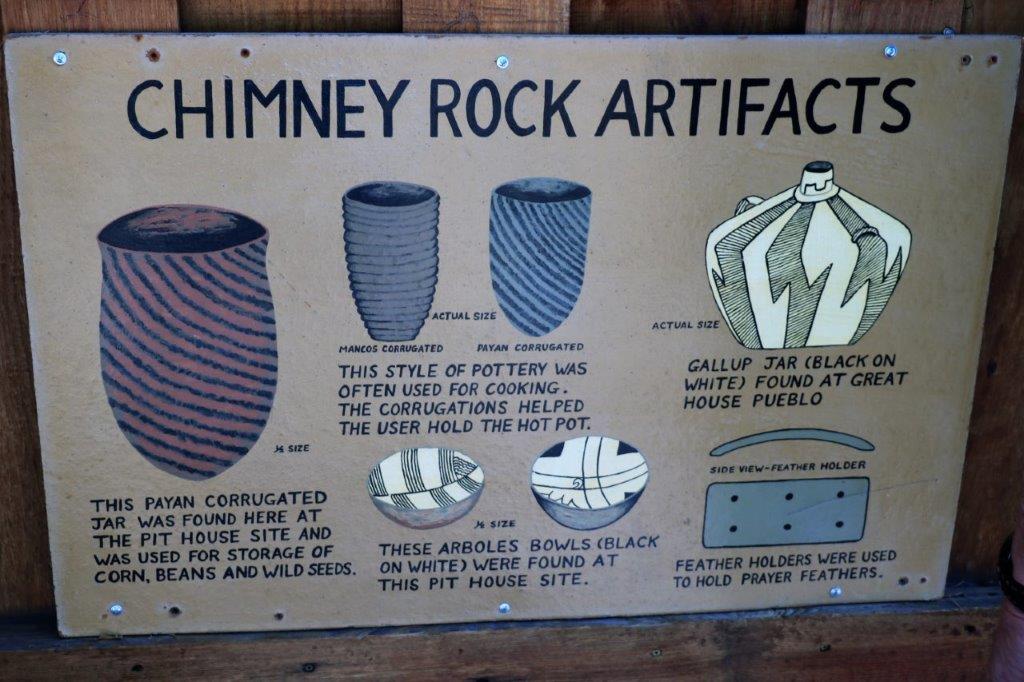
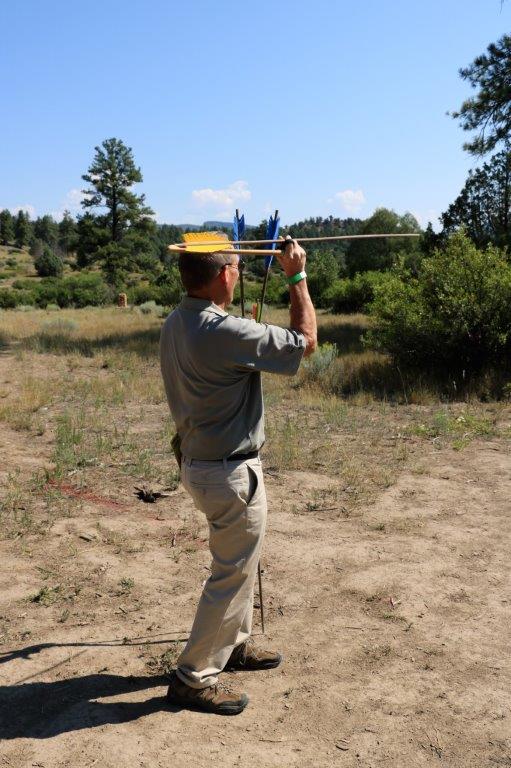
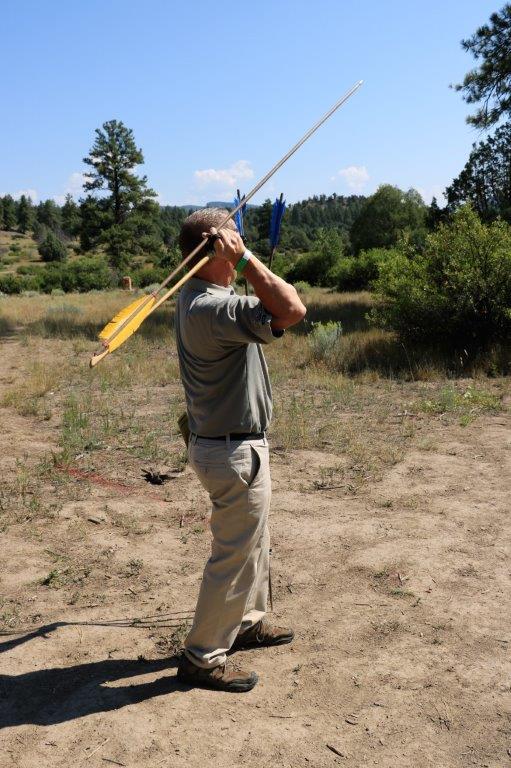
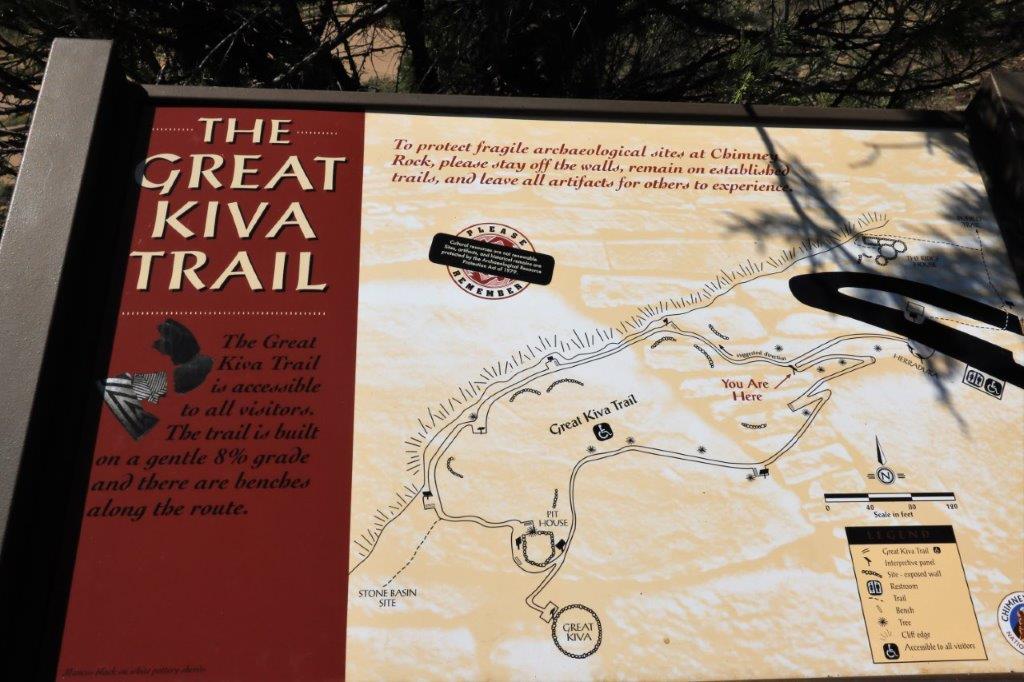
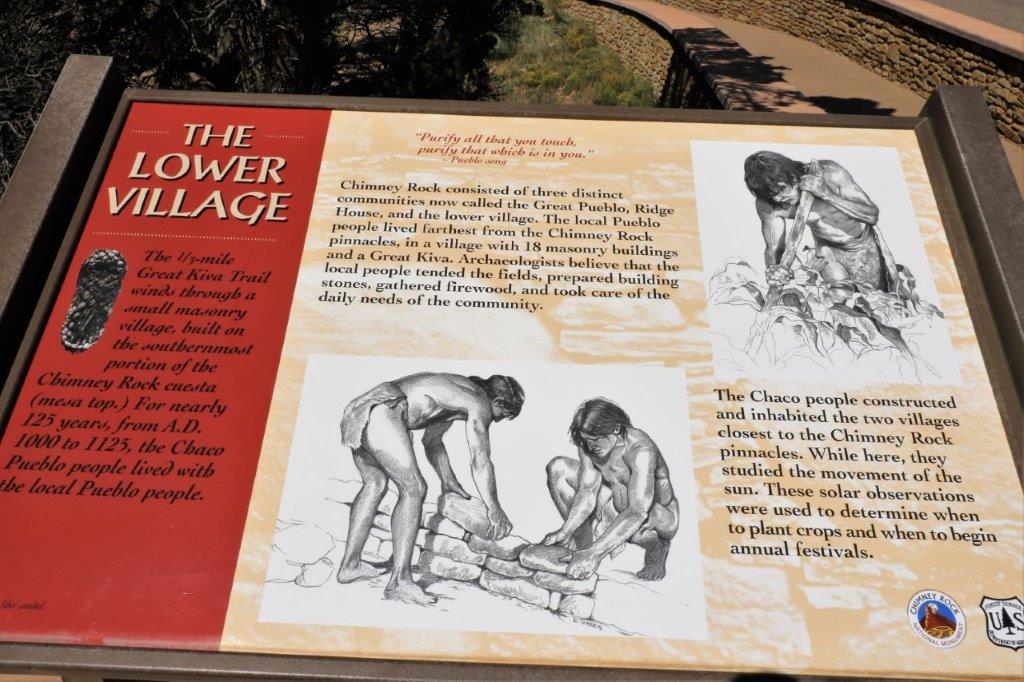
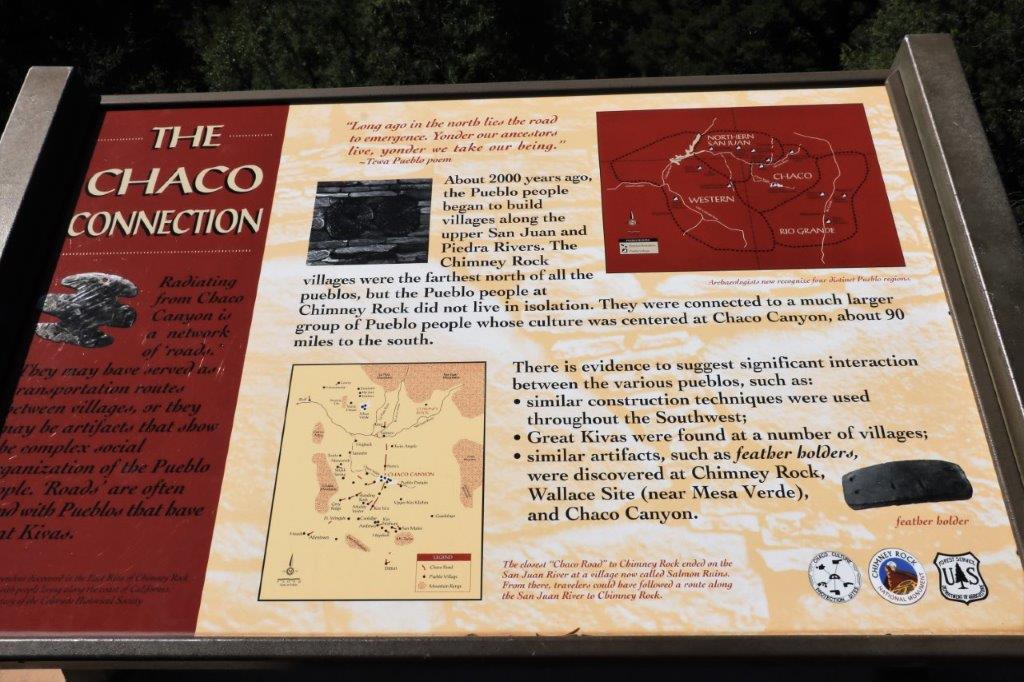
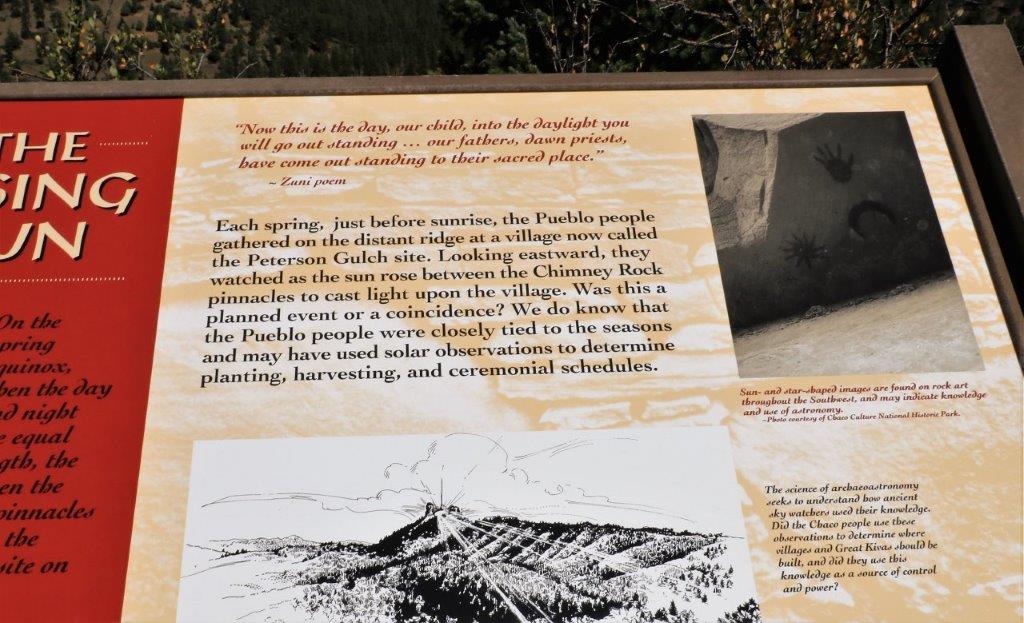
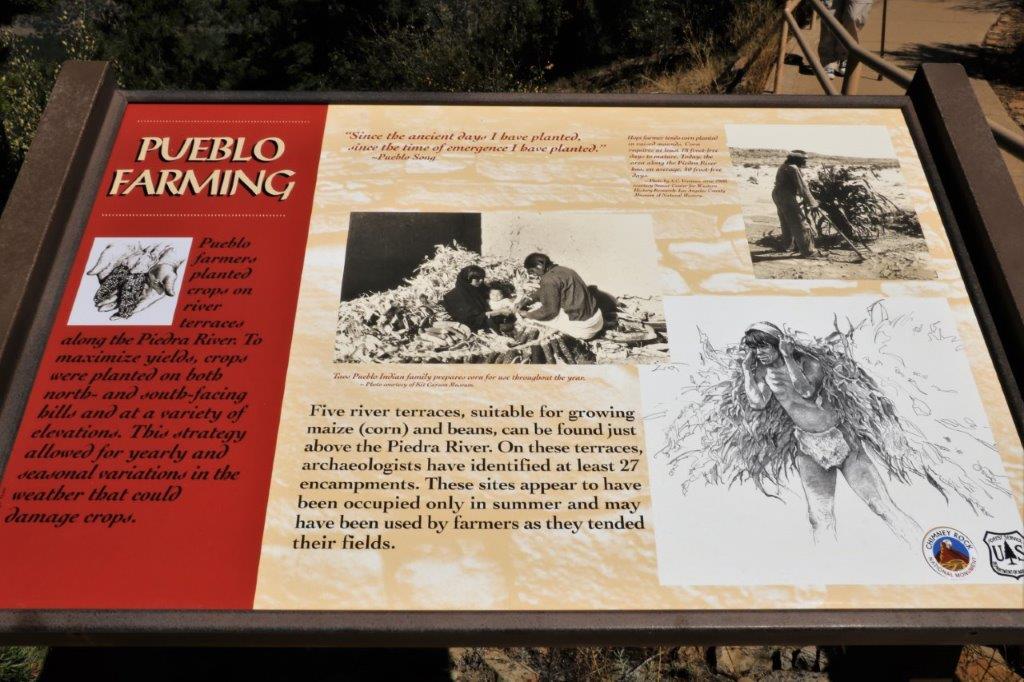
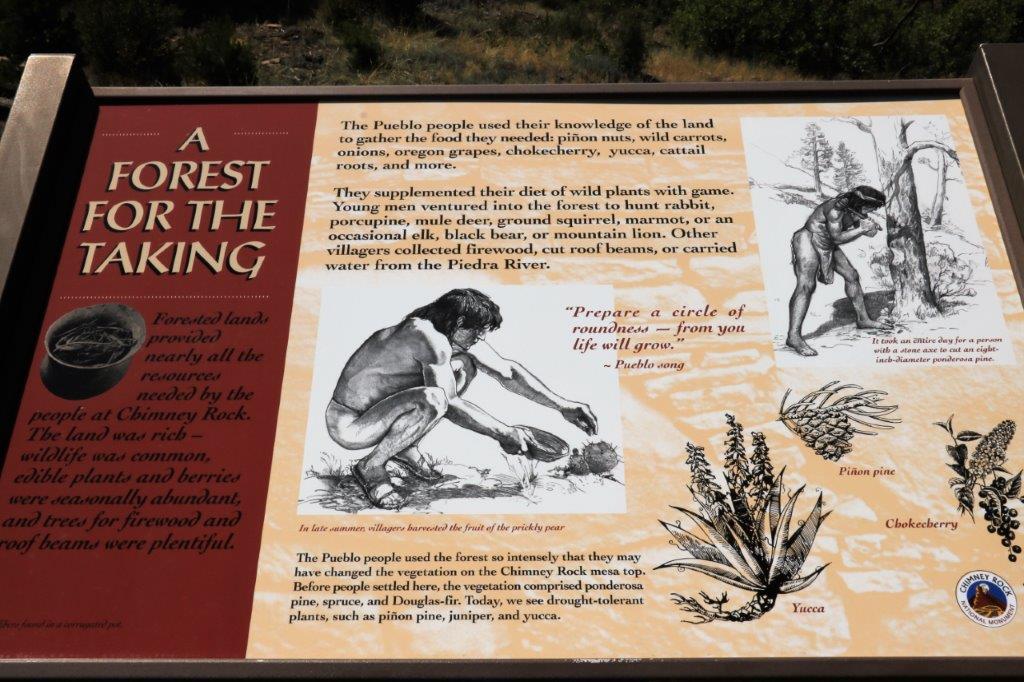
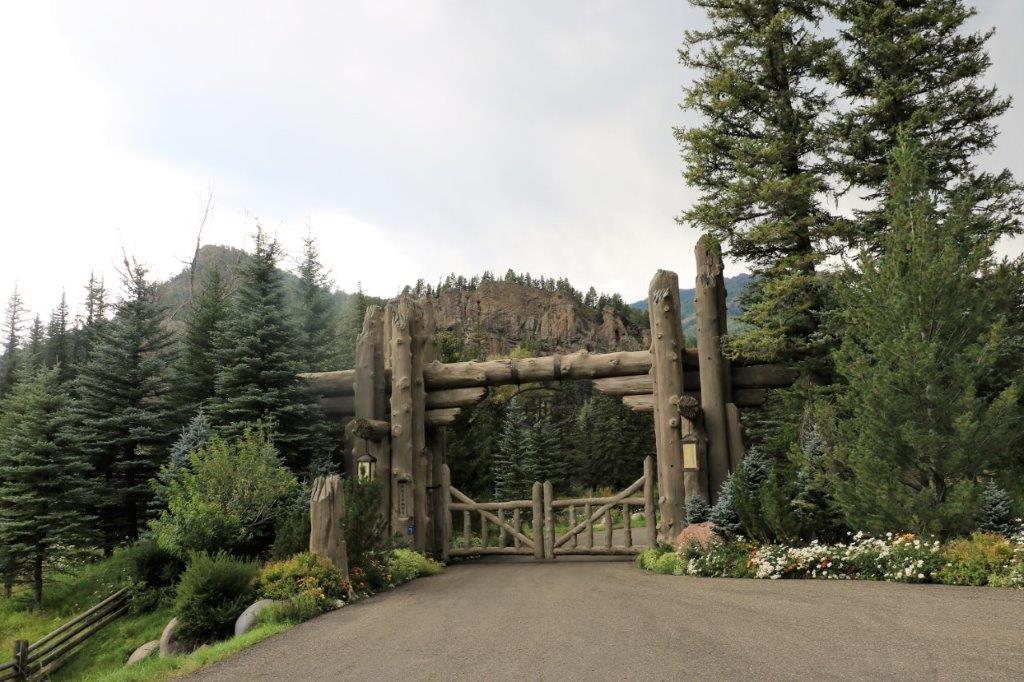
On the drive to Chimney Rock we passed another really nice ranch gate. While we waited for our tour to start Stuart, one of the Park Rangers, showed John how to use an Atlatl, an ancient throwing device that greatly accelerated the speed and power of a thrown spear.  When the Spanish arrived in the area the Indians could pierce their armour with a spear using an atlatl. While John practiced his spear throwing I wandered the quarter-mile nature trail.  I took photos of several of the pages of information (and, as you will soon see, photos of most of the information boards on our tour. That way I don’t have to remember all this interesting stuff and you don’t have to sort through tons of text as I write all that I do remember.  You can just skip the image and move on if you don’t want to read it.  Win, win.)

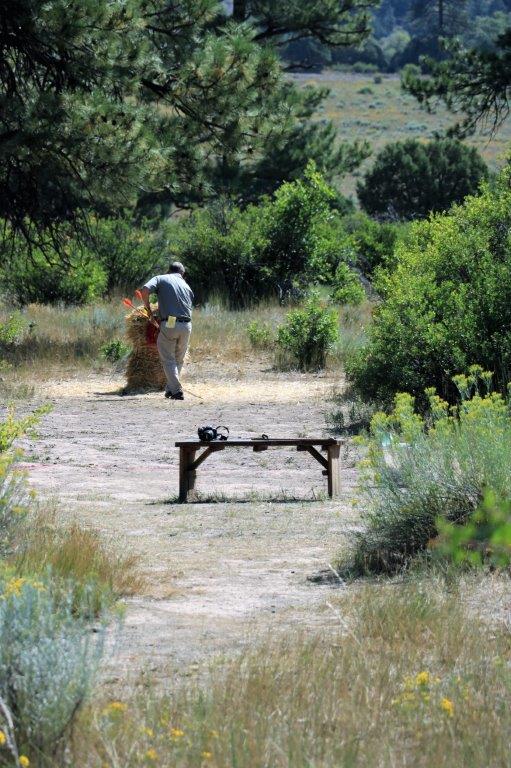
John and Stuart were still spear throwing when I was done, but John hit the straw target on his last throw.  Stuart was impressed and said he was one of the very few to do so in five years. Most of the people in our group took the shuttle to the ruins.  You can also drive your own vehicle up but you must show your wrist band to indicate you are on a tour or you will be sent back down. It is three miles up a washboard gravel road.  We left Poppy at the bottom and took the shuttle.

Chimney Rock has this restricted access to the high elevation Ancient Pueblo to protect the site and to control where people wander and thereby keep them safe on the narrow, rugged, high trail.

The first part of our tour was a one-half mile paved pathway to the Great Kiva .  A person can do a self-guided audio tour of this area if they choose. Our guide was Bill Wylie and he was excellent. We had several people very intrested and quite well-read on these ancient cultures so there was plenty of discussion.  Bill was very good at asking questions to get us thinking about how these people lived.

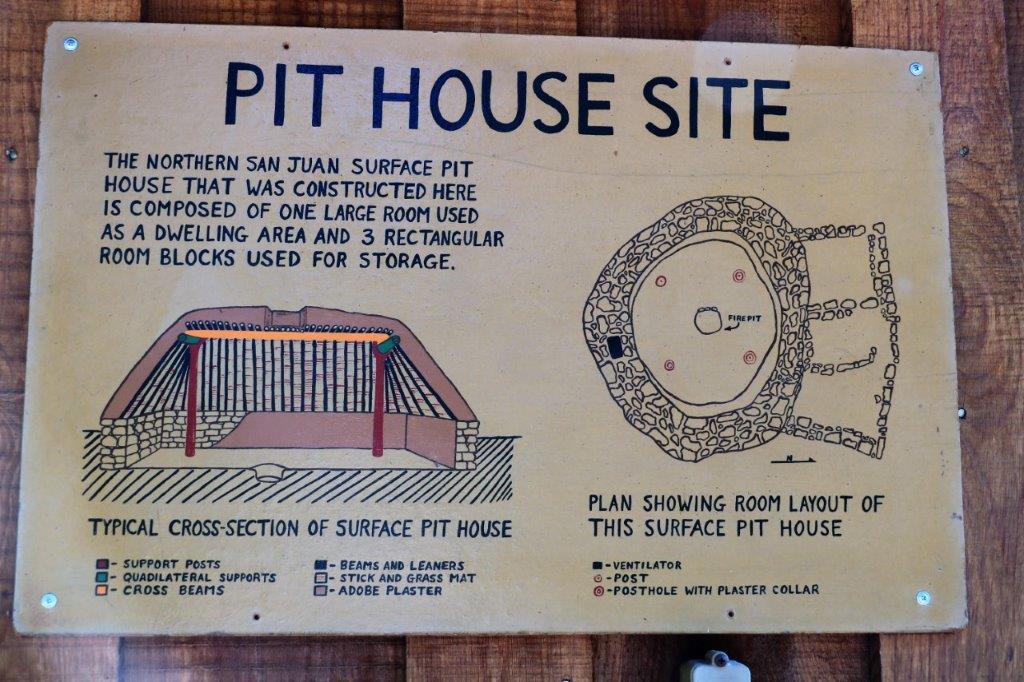
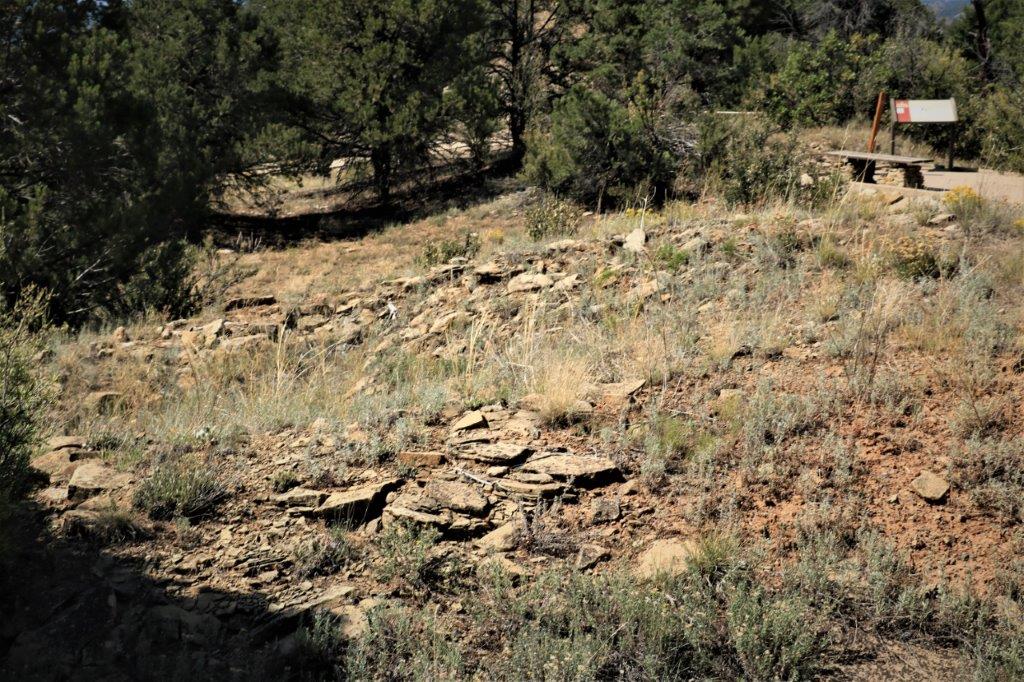
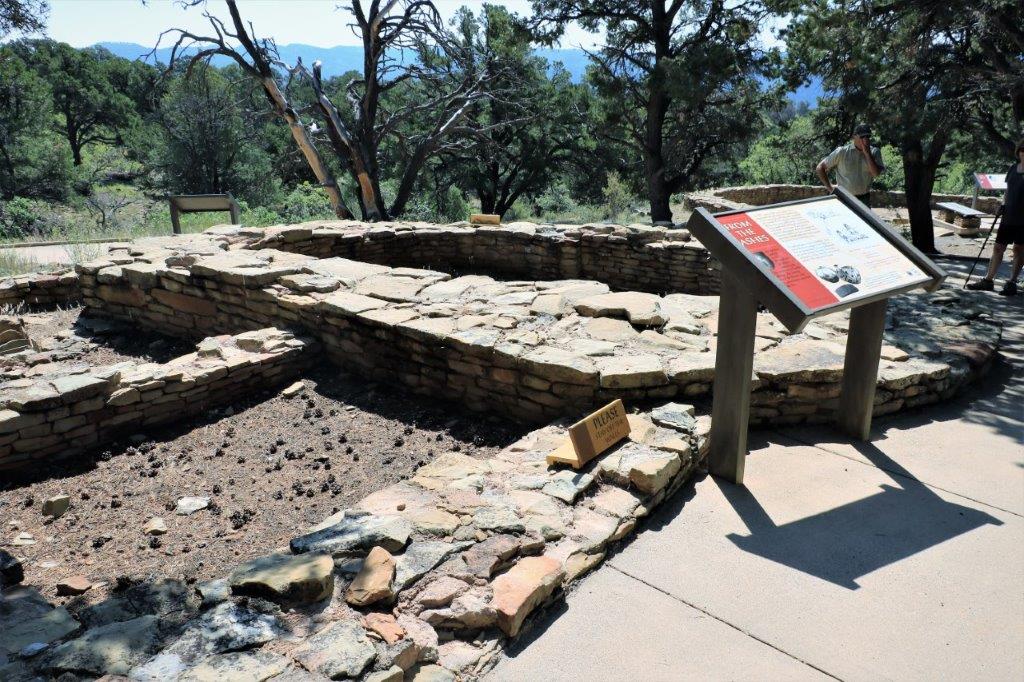
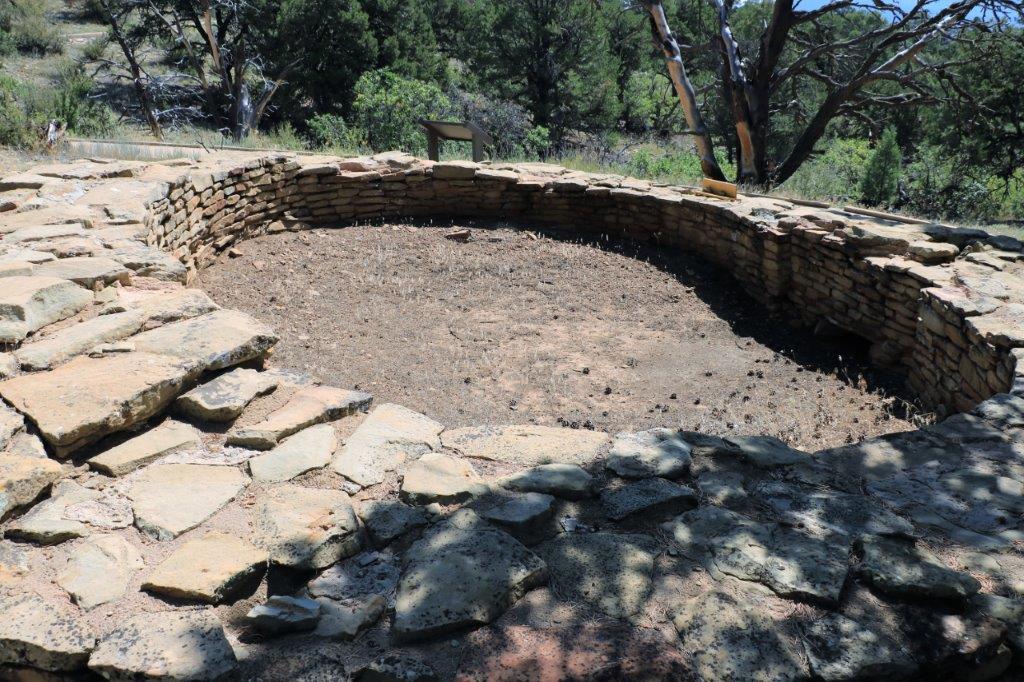
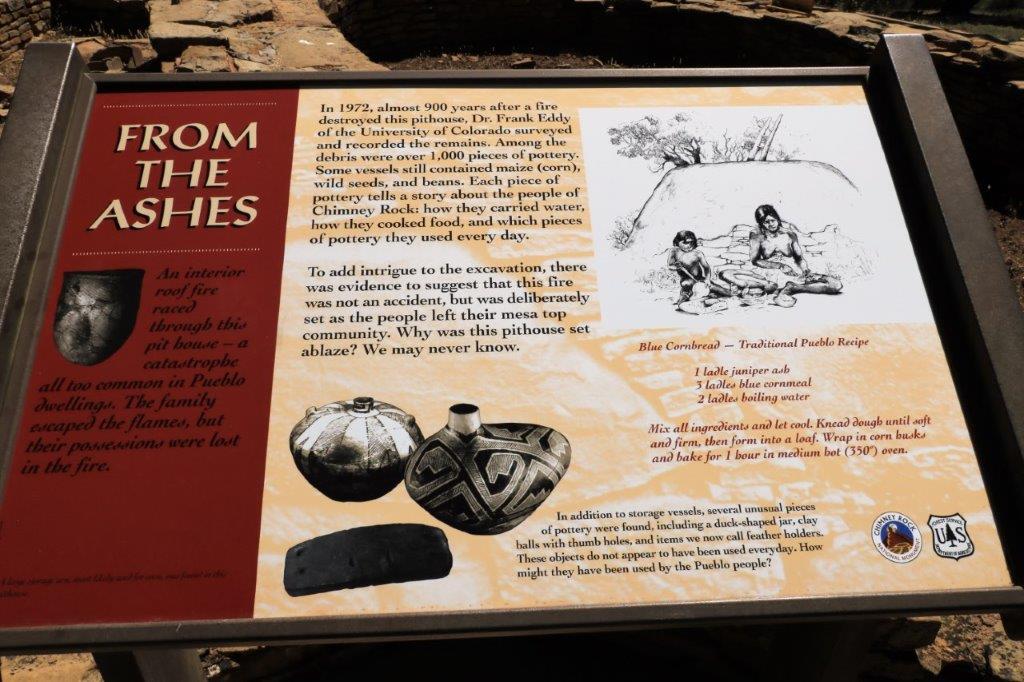
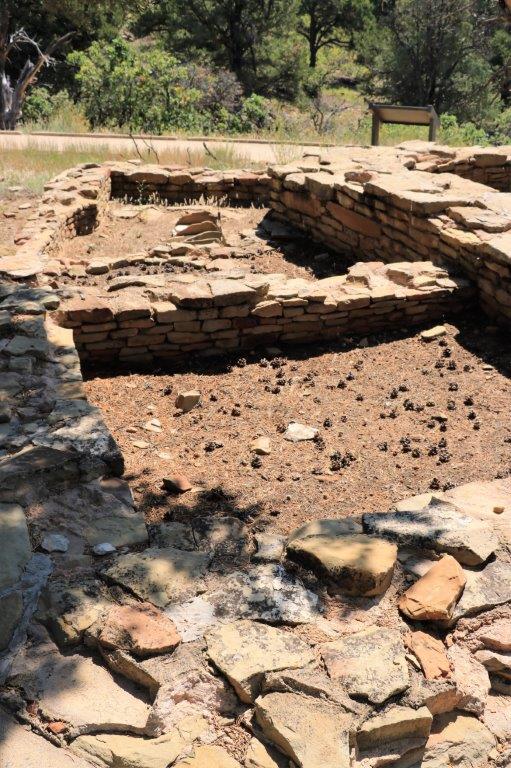
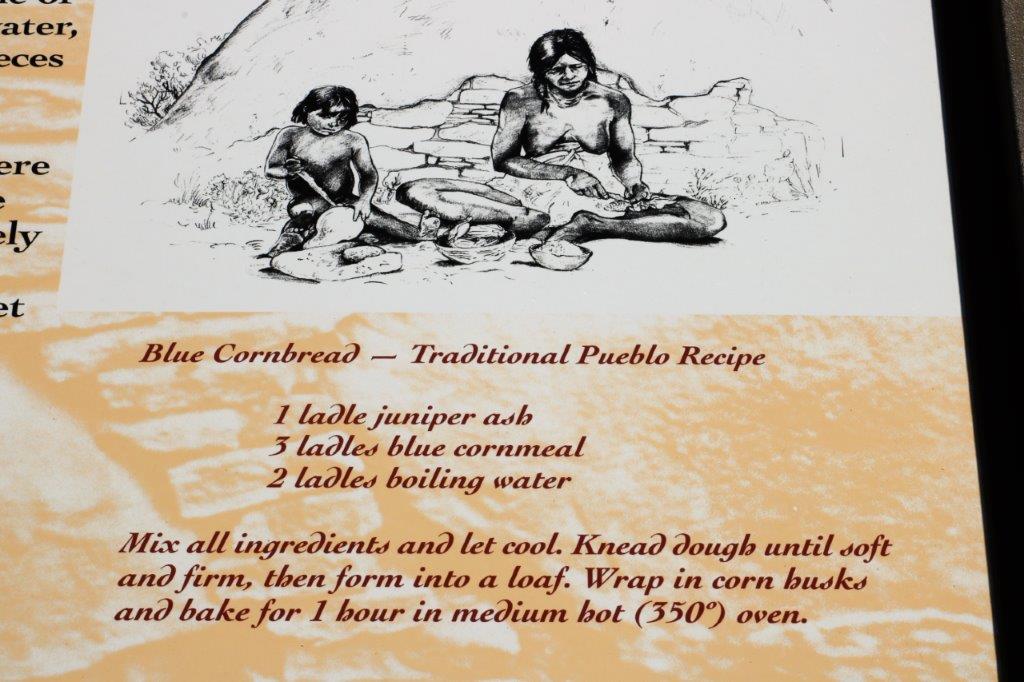
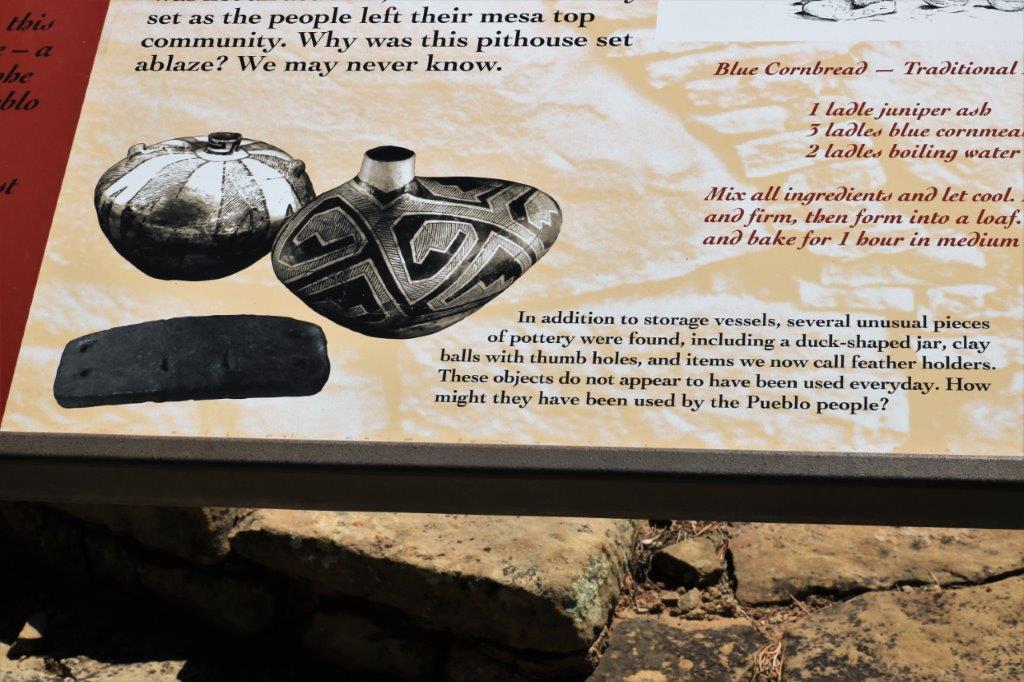
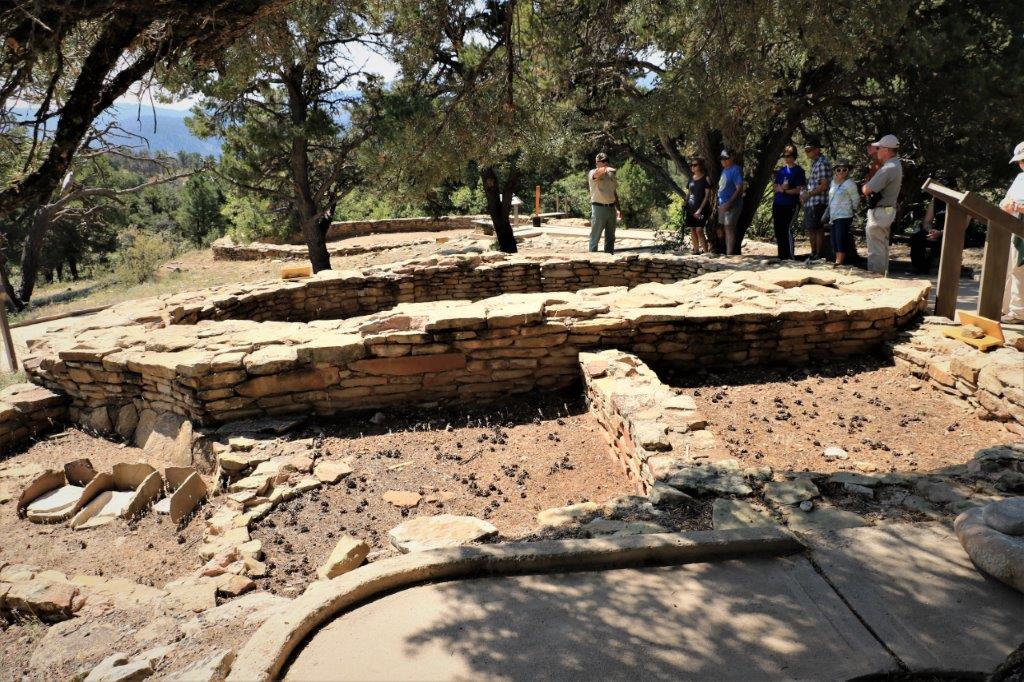
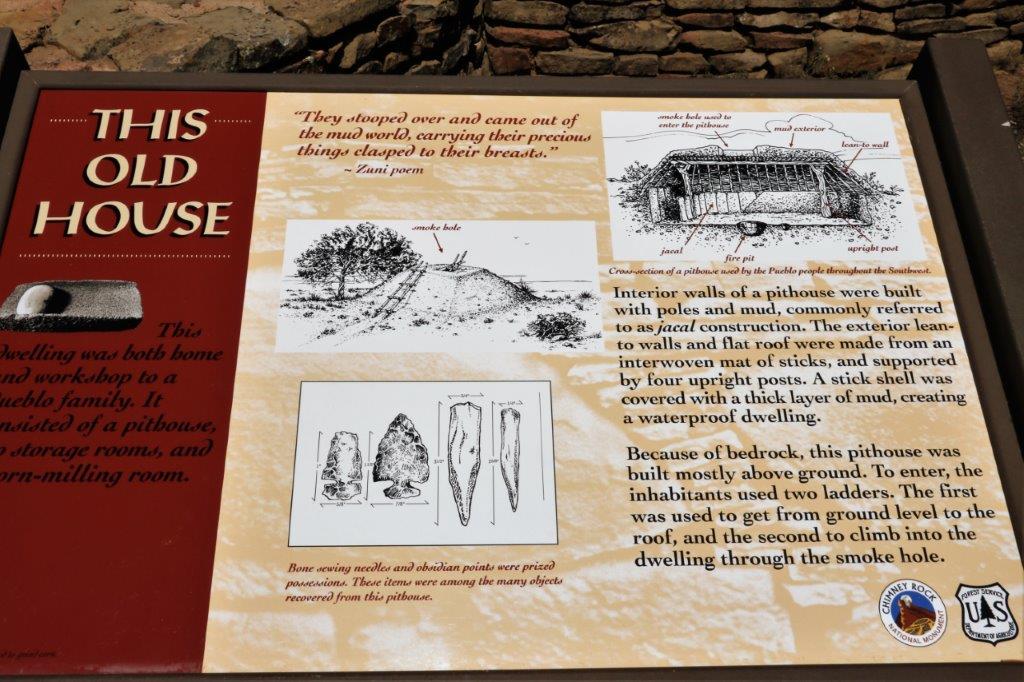
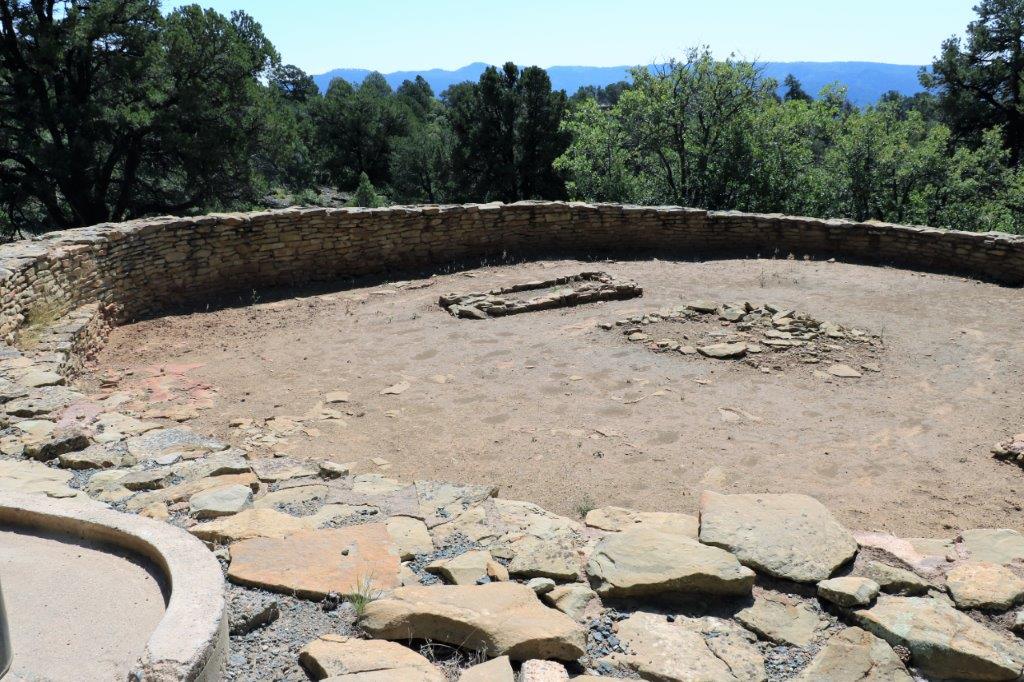
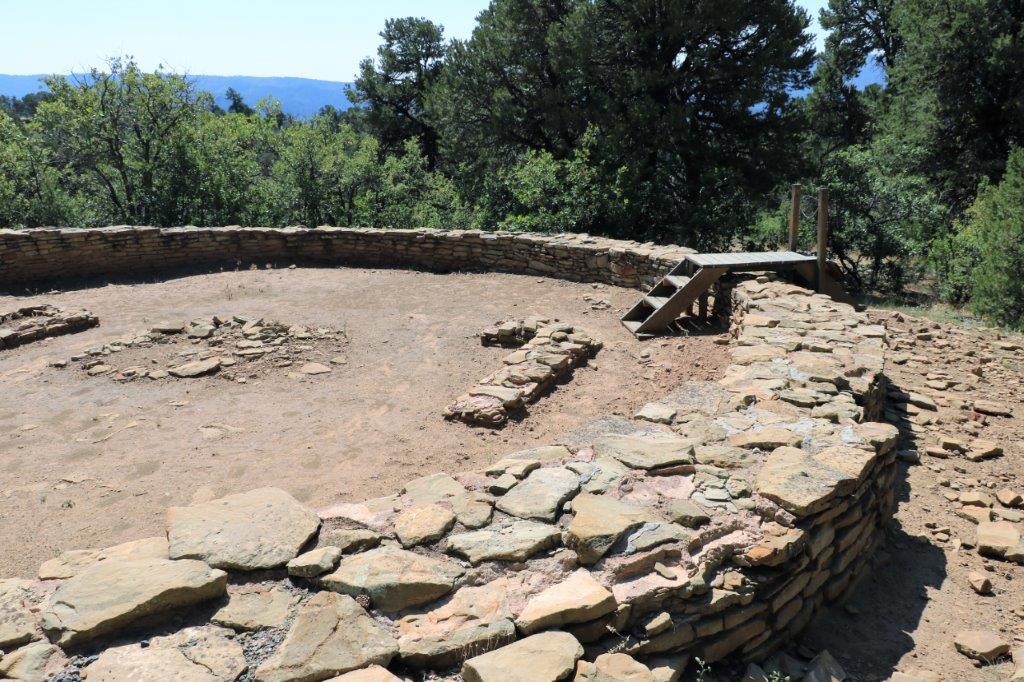
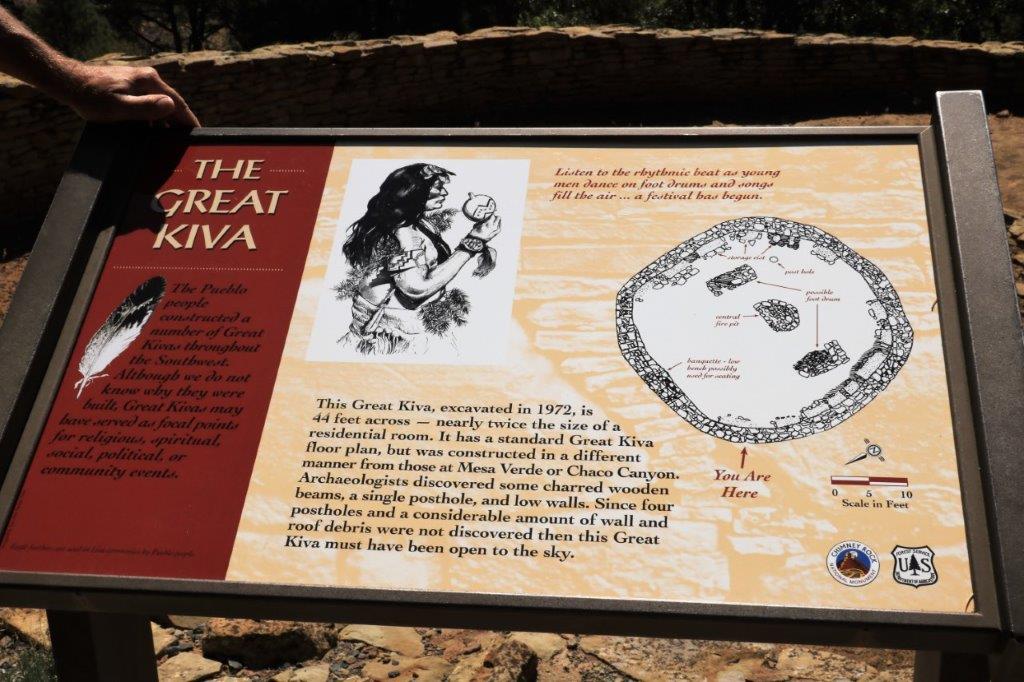
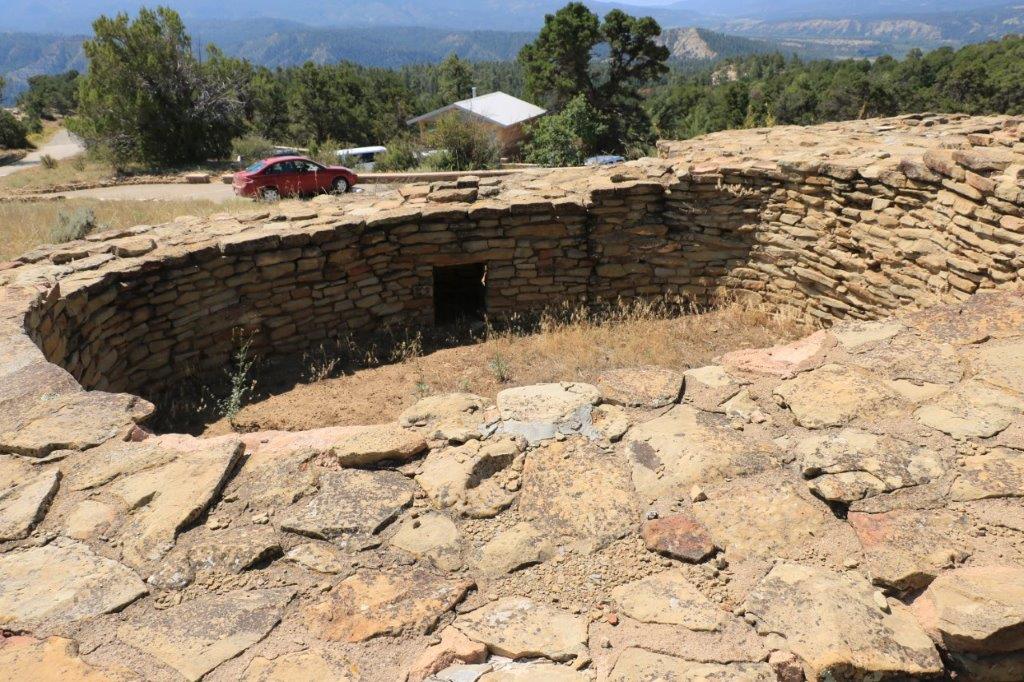
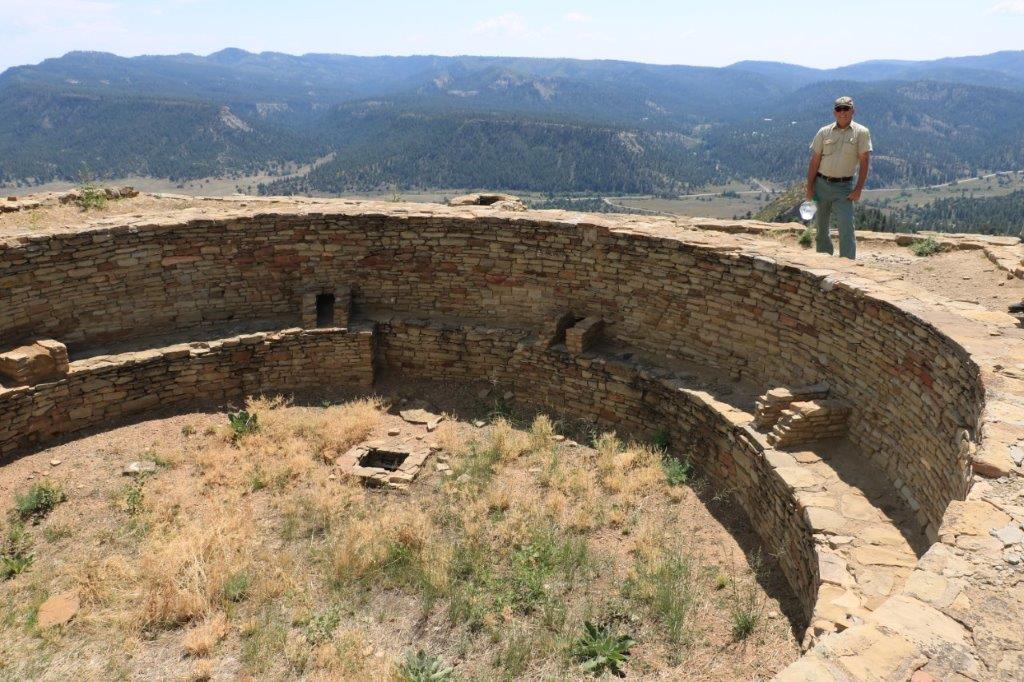
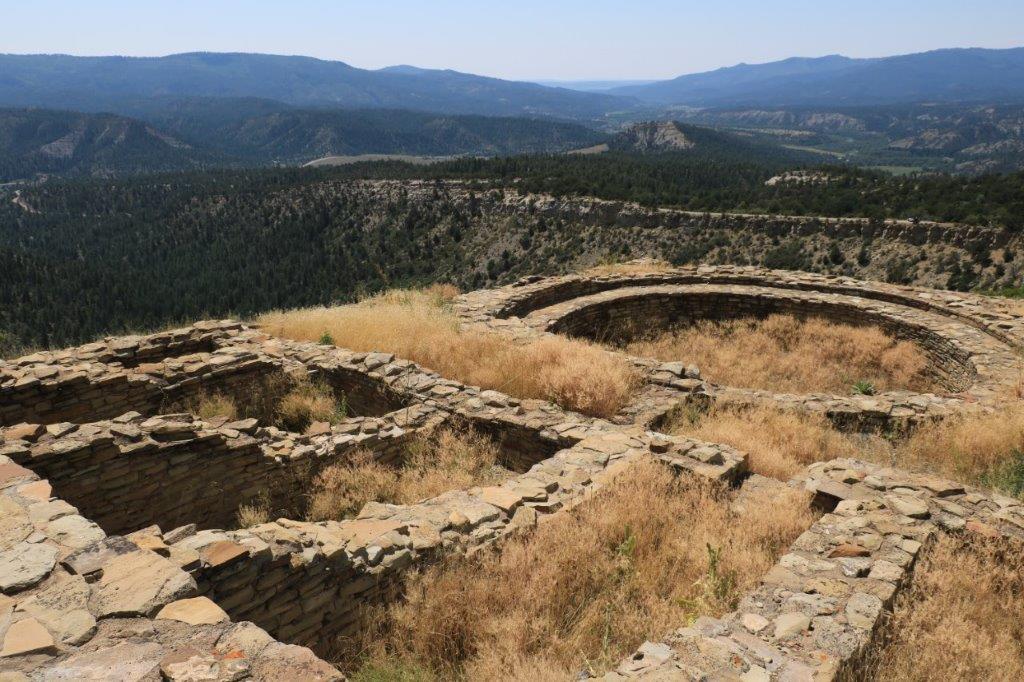
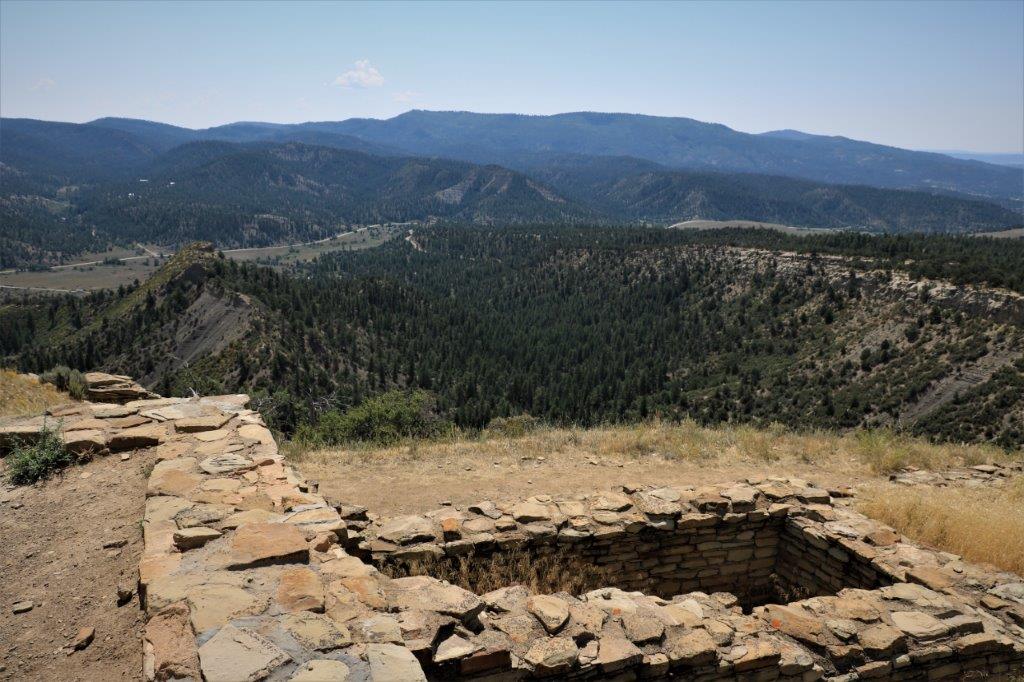
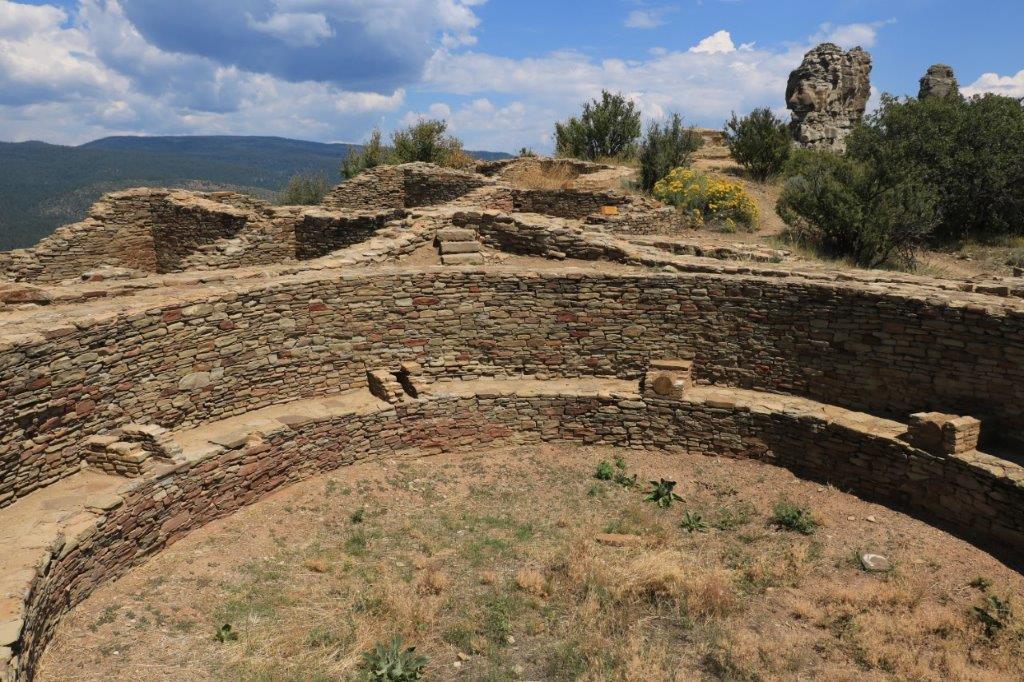
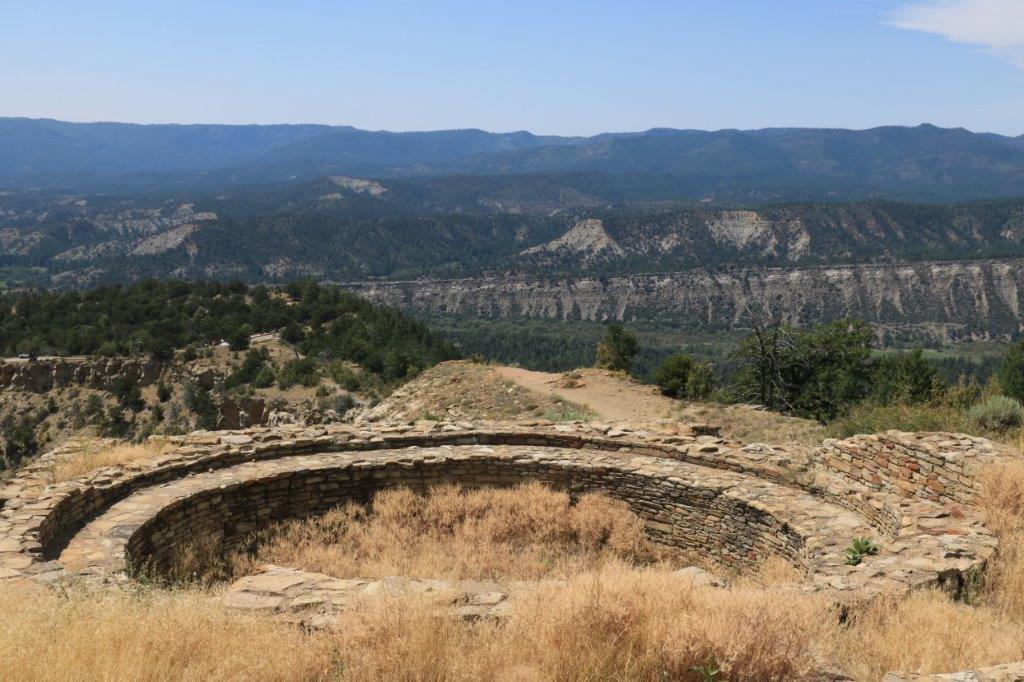
We passed remains of several pit houses, barely distinguishable from a pile of rocks, but underground the stacked wall stones are still intact.The view up here was awesome! This re-constructed pit house had three rooms attached, one was for cooking, one was for preparing tools, and the last was used to grind corn and pinion nuts into flour for cooking. Just in case you wish to make some authentic cornbread here is the recipe. We saw several of these little blue-tail lizards.The Kiva is a spirtual and community center.  There are many of them in the Four Corners area and all have the same design, although some are much larger than others.  Archaeologists have yet to understand the significance of the two rectangular areas in the middle. This Kiva was abandoned not long after it was used.  There has been no fire in the central fire pit. The Kiva is still used today for ceremonies and is not open to the public.This is a second, larger, deeper pit house construction.  Higher walls and also added rooms.After we completed the Kiva trail Bill led us up the hill for the mile-long hike to the Pueblo House which is located at the very top of a cliff that sits next to the two rock formations – although you can’t get from one to another unless you can fly.

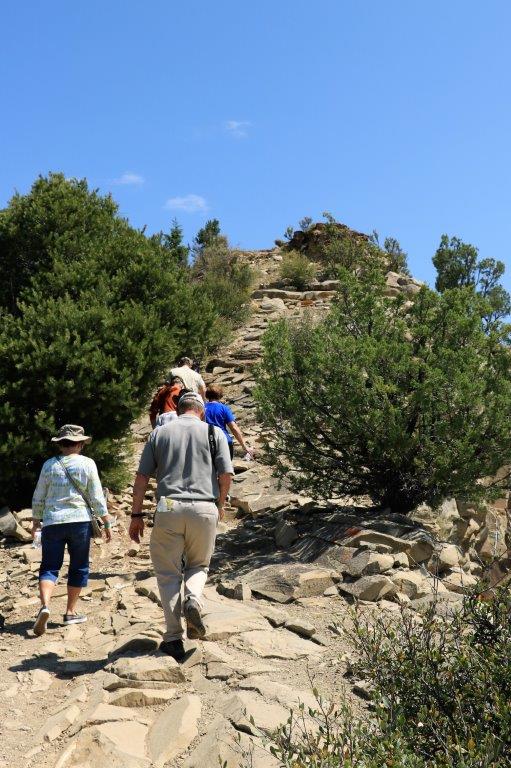
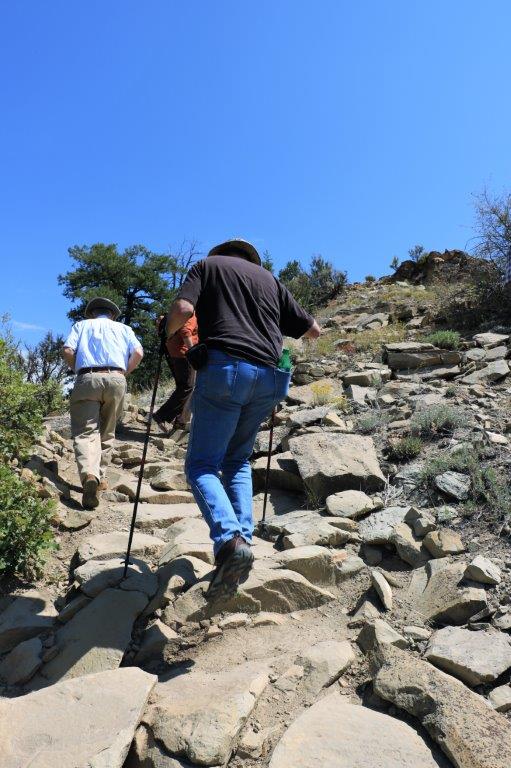
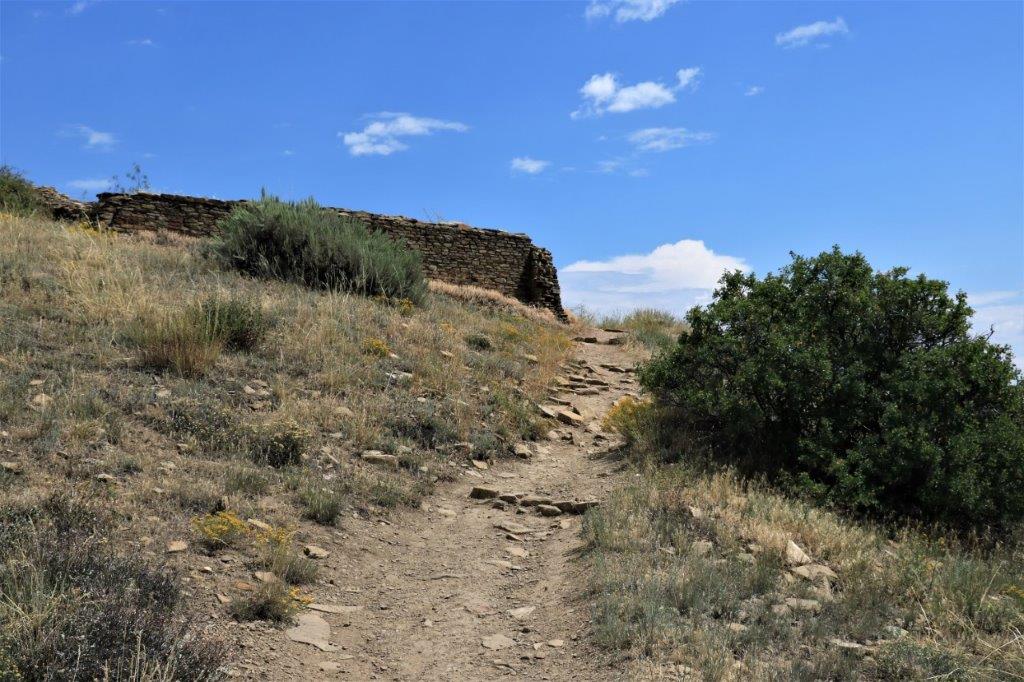
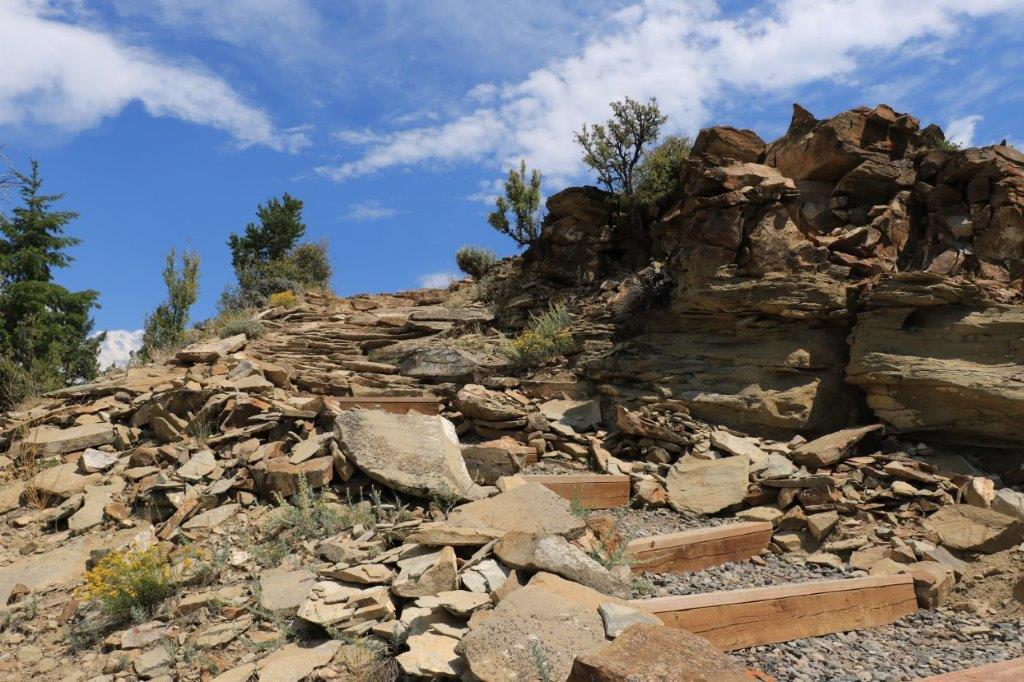
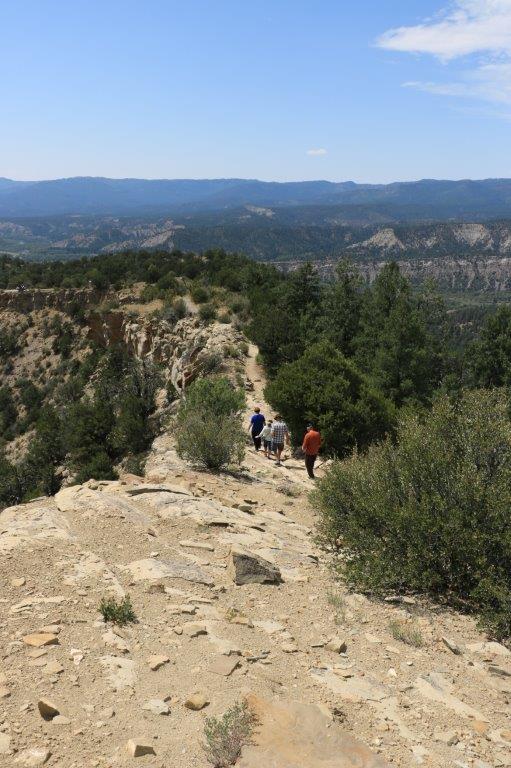
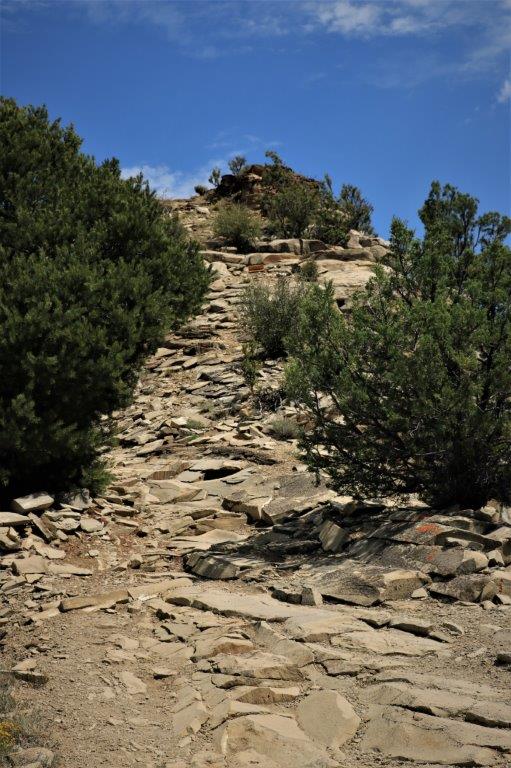
It didn’t take long for the nice gravel path to turn into a clamber of rock ‘steps.’  The path has a steep elevation gain of 200′ so anyone afraid of heights, or gets dizzy or has heart problems is discouraged from taking the tour. The ridge we navigated was only about 15′ wide.

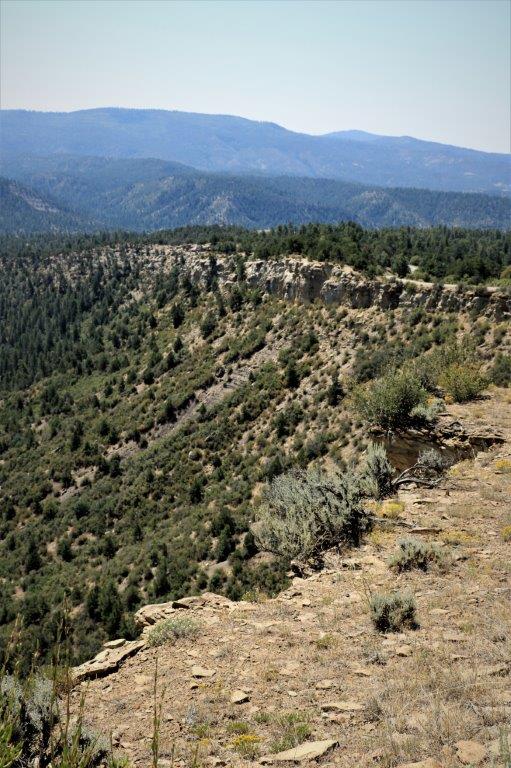
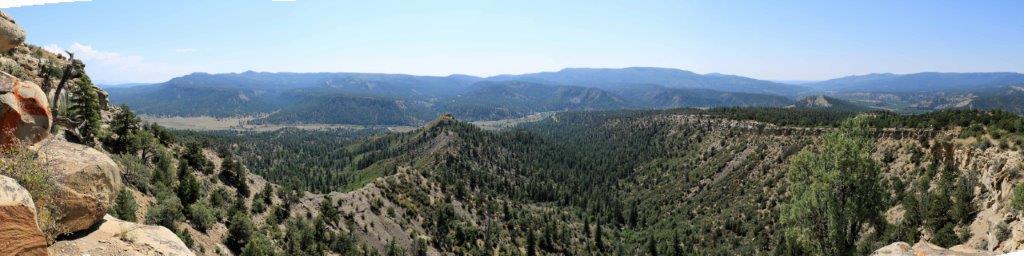
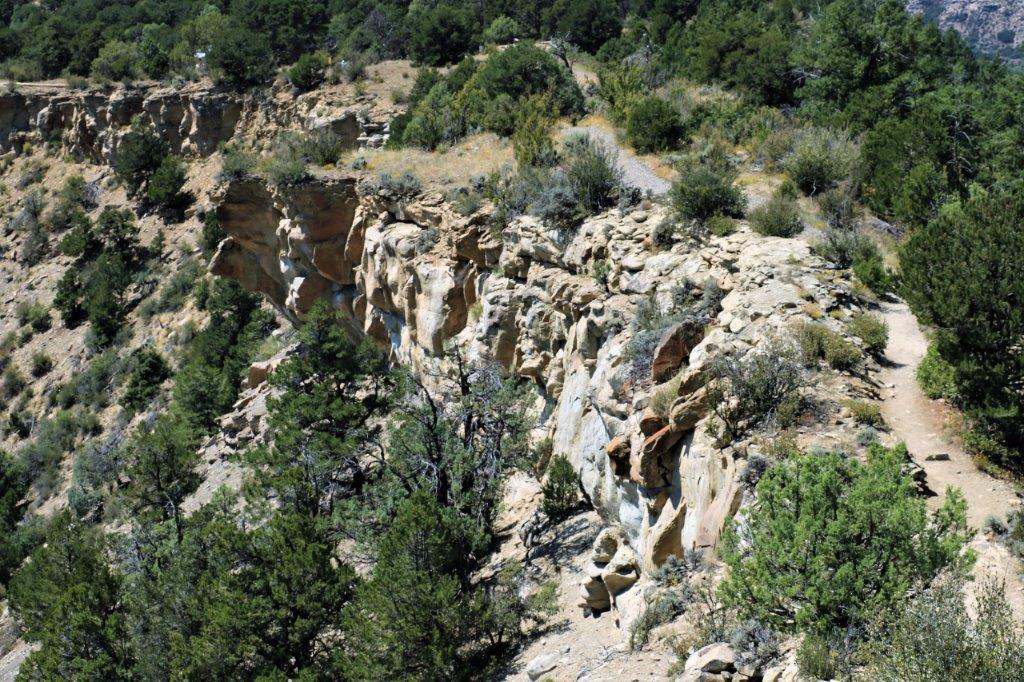
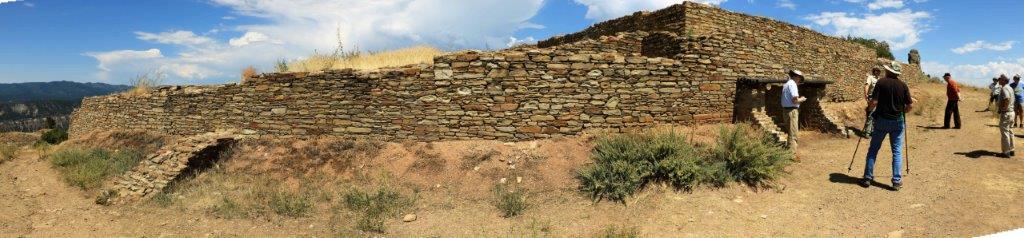
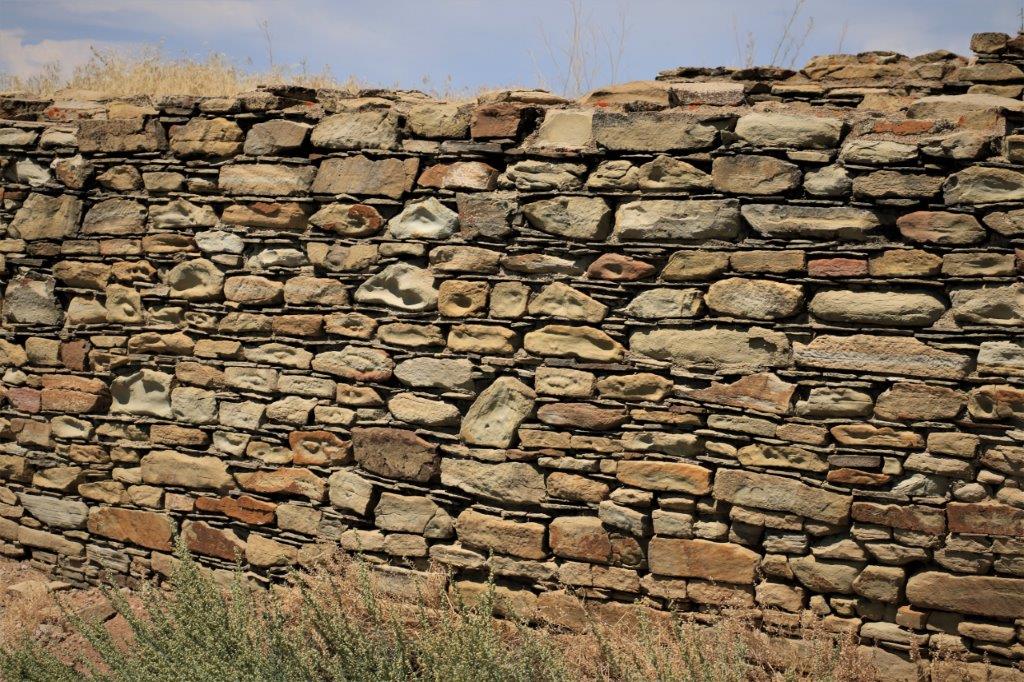
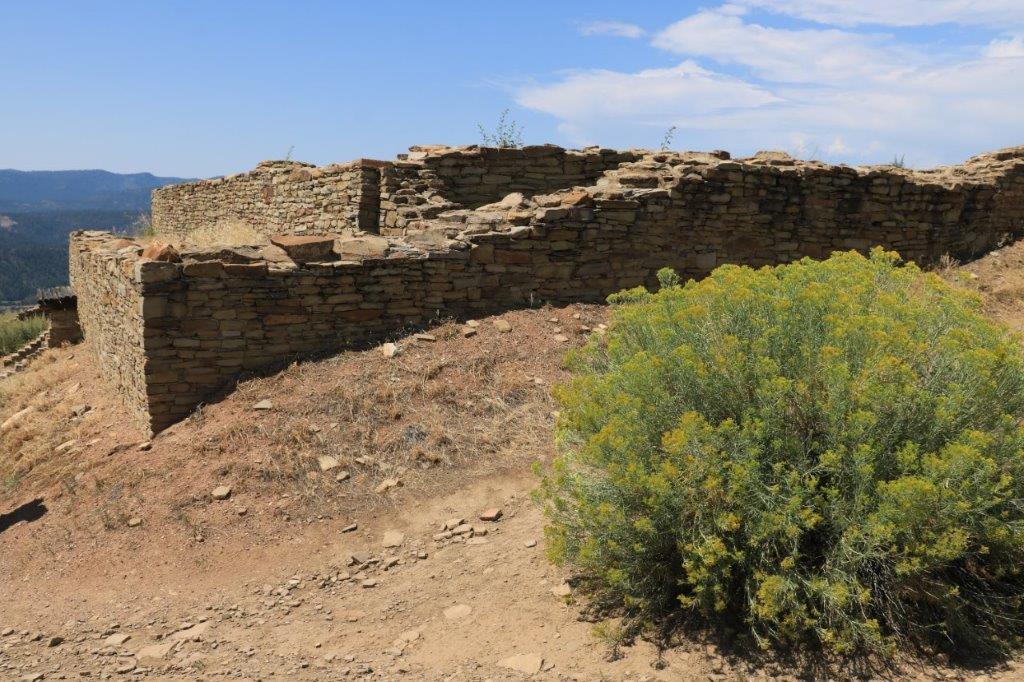
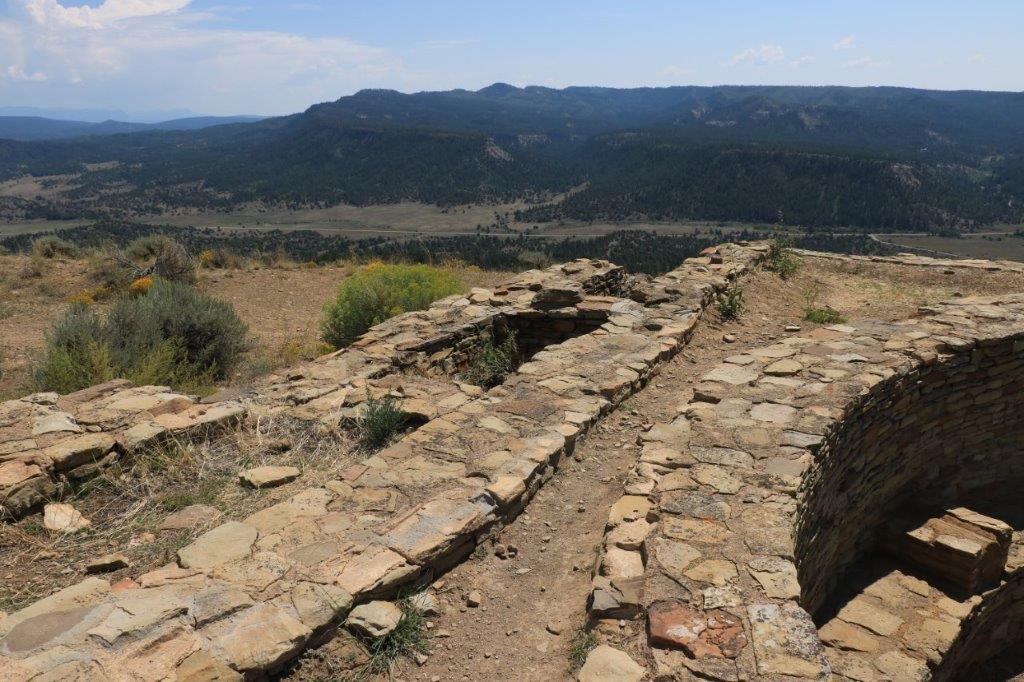
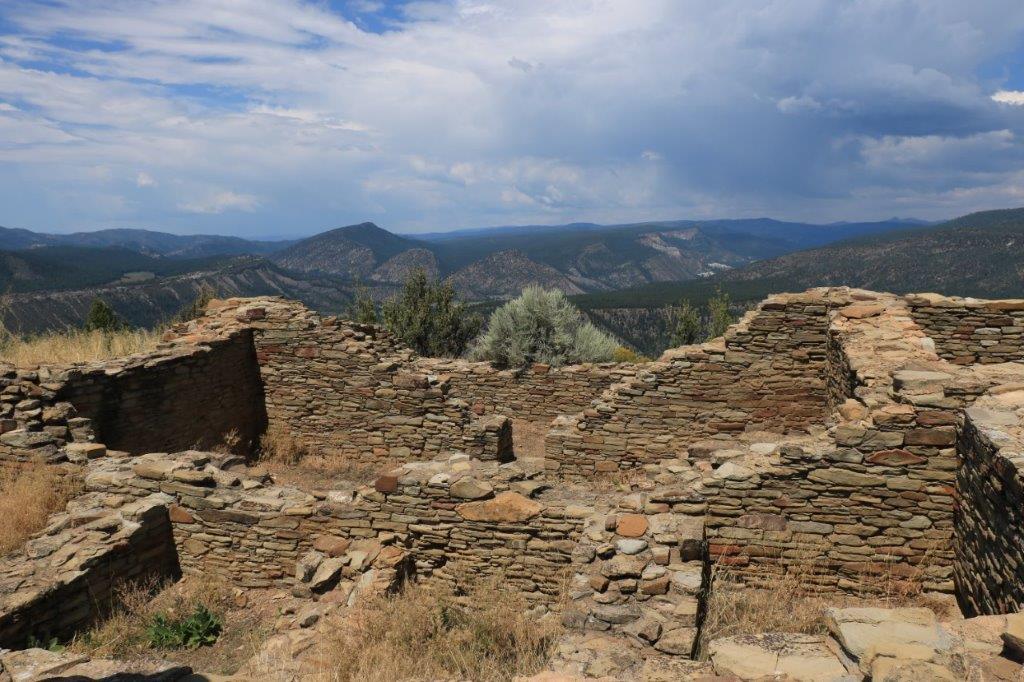
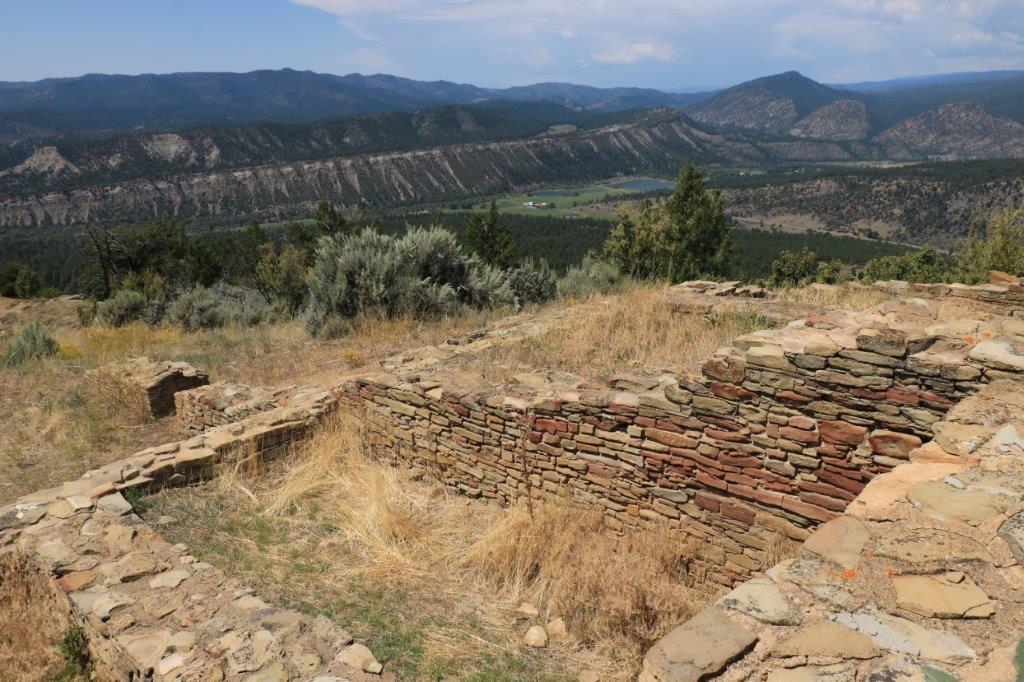
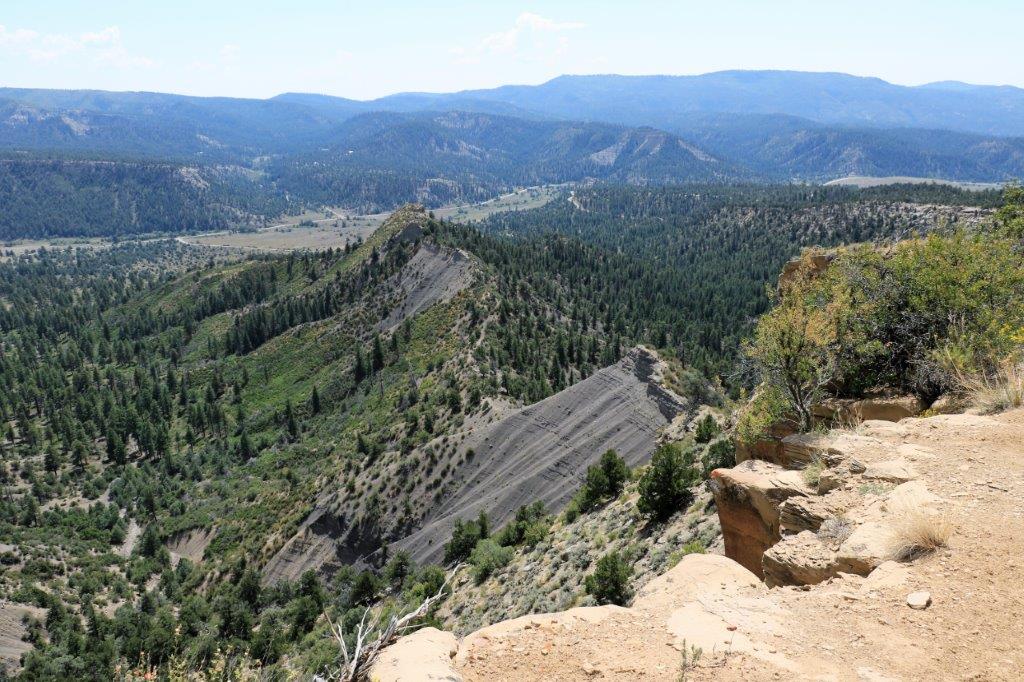
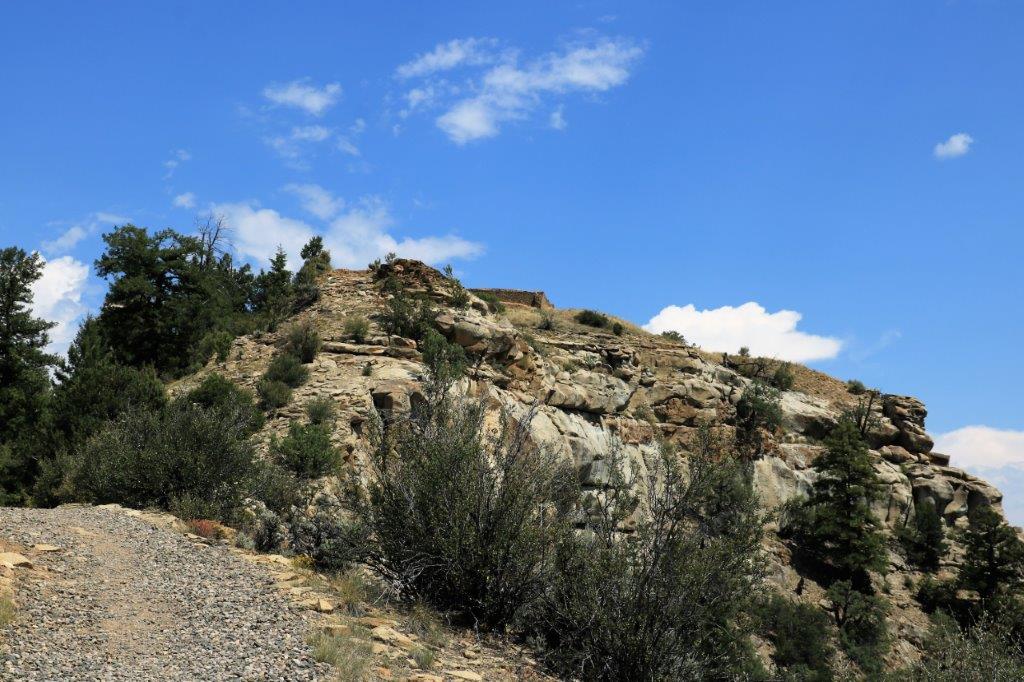
See our path along the right side.  I would think a person would not need to be told to not venture close to the edge.  Both sides of the cliff spine we were walking across were sheer drops of several hundred feet.  But, I guess stupid is not something that can be cured.This is the Peterson Ridge across the valley.  Must be named for a relative. There are unexcavated ruins over there and in the valley.  It is estimated about 200 villages were in this areas.The Pueblo House was very large compared to the Pit Houses down below.  It was rectangular instead of round and had 35 rooms.  The construction and design are the same as the Chaco Canyon ruins 90 miles away. The pit houses below and the pueblo house up top were constructed by two different peoples (Chaco and Pueblo) who lived on the mesa at the same time and deserted the mesa also about the same time for reasons unknown. It is speculated that the pueblo people in the lower mesa were conscripted to build the large Chaco house.The construction of the Pueblo House is much more detailed and meticulous than the pit houses and archaeologist believe it was once plastered and painted white which would have made it visible on a clear day 90 miles away in Chaco Canyon; which is a like civilization to the Pueblo House.
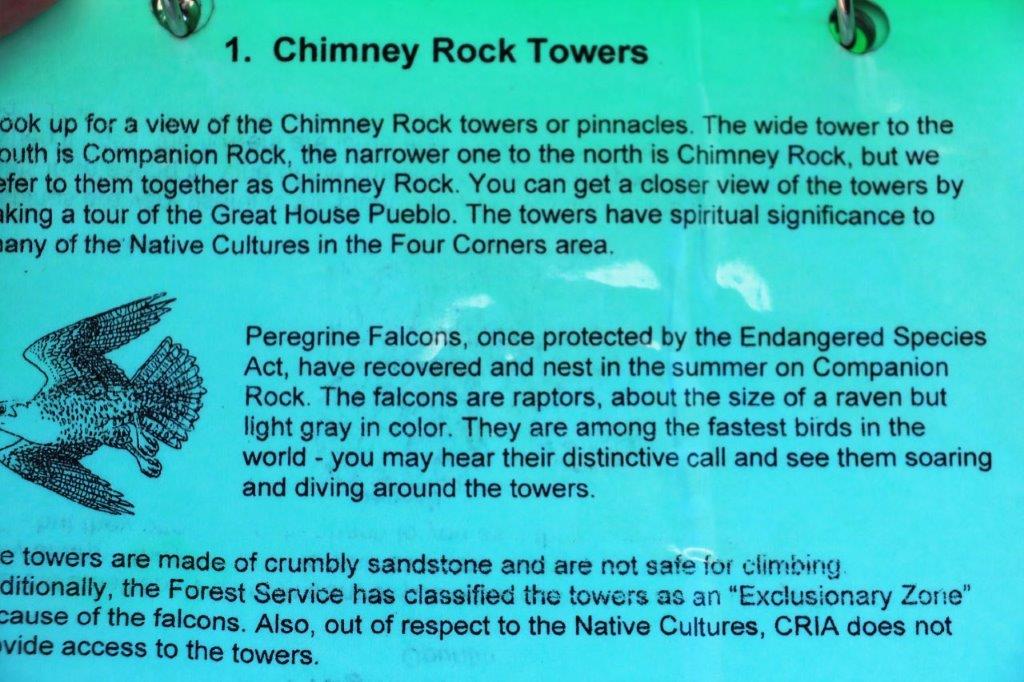
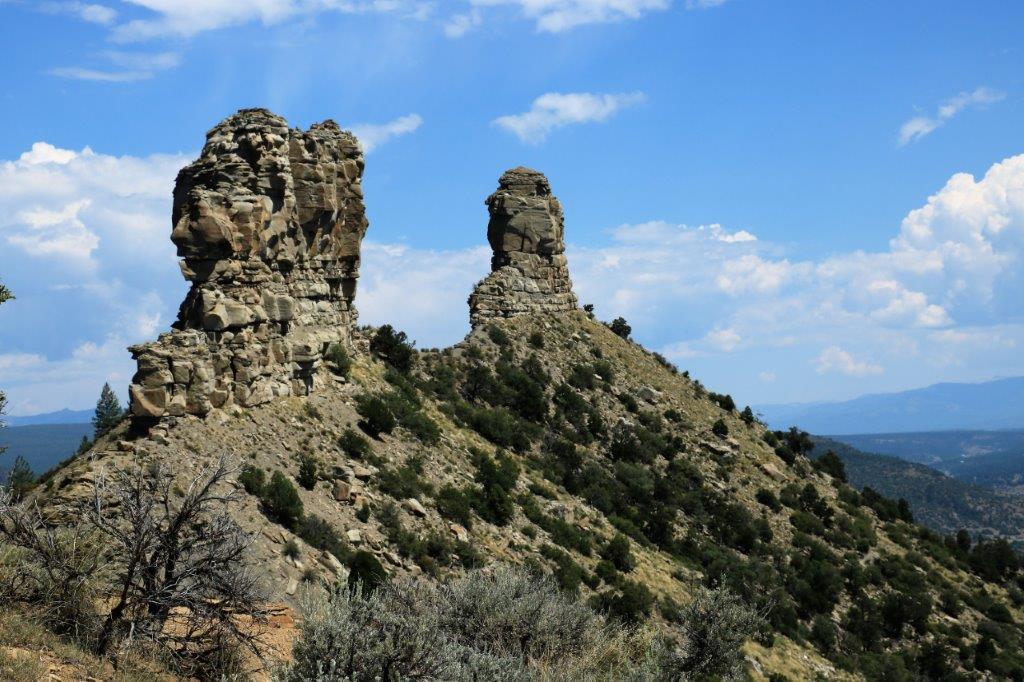
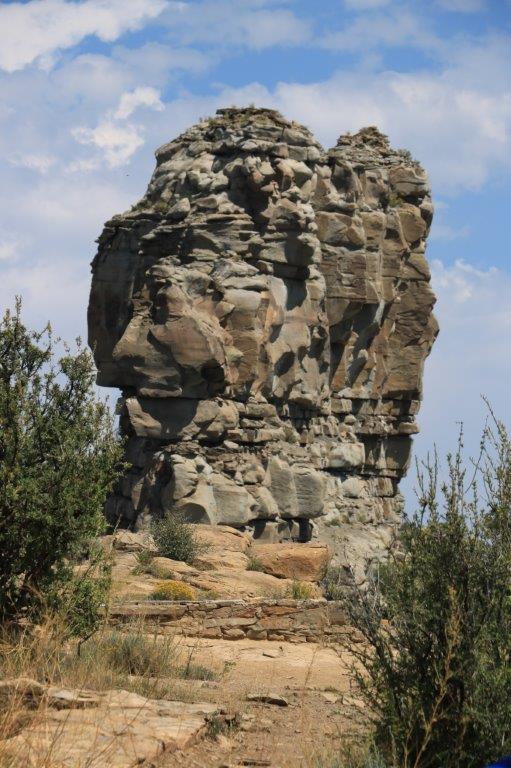
Chimney Rock and Companion Rock are sacred to the local native people.  No one can access them.  Even though they look close together and close to the cliff top we were on, Companion Rock (the larger one) is about a 1/4 mile away (and there is no land between as the spine of the cliff we were on ends just past the Pueblo House) and Chimney Rock is probably another 1/4 mile away from Companion Rock.  The rocks are very soft and unstable so they have never been climbed either. Going back down the narrow, rock-step trail. After we got back to the lower visitor’s center we went over to one of the picnic tables and had lunch.

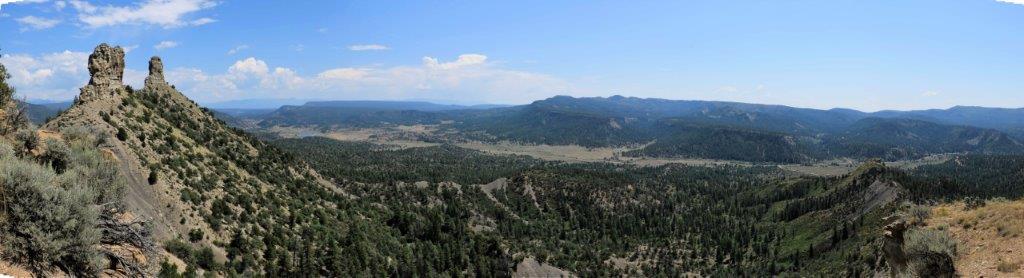
On the drive back to the main road we stopped to take a photo that shows Chimney Rock (right), Companion Rock (middle) and the mesa spine we walked along to the Pueblo House (left). There were a few geocaches to pick up on our way back to Pagosa Springs.   Back at the resort, we rested our weary feet before dinner and the evening walk to the lake for sunset watch. Chock up another great day of sights and learning.

2017 Aug 29 – Pagosa Springs, CO (Wolf Creek Pass)

Today was a stitch day.

Rain was predicted but we decided to head out over the Wolf Pass anyway.  It turned out to be a good decision because all the thunder and rain happened in Pagosa Springs and we didn’t get any in the higher elevations.

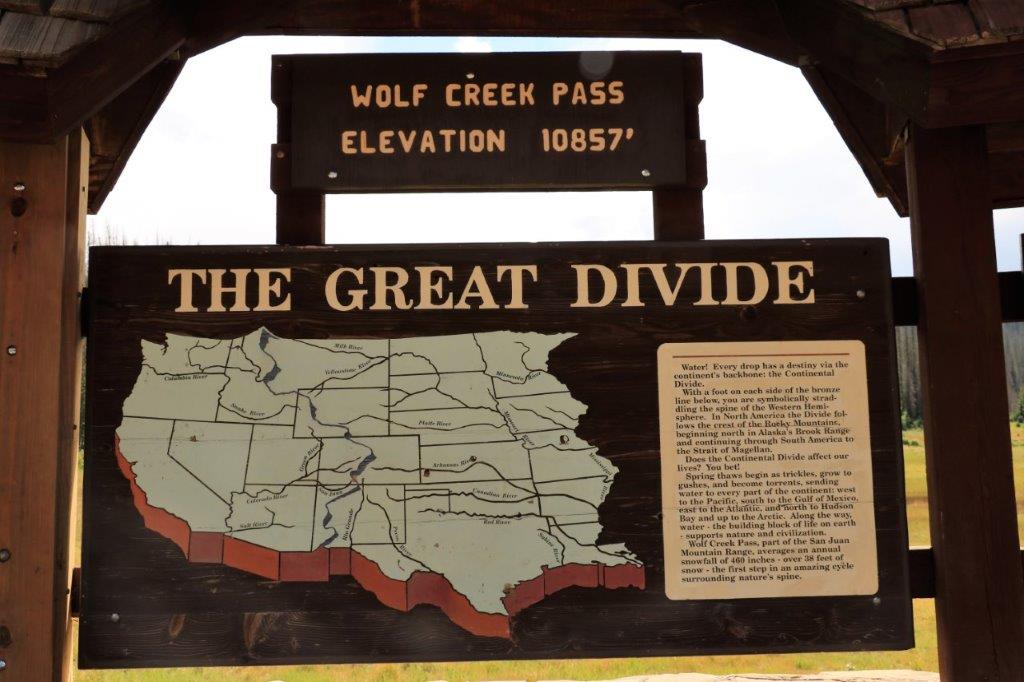
I learned today that if we ever take our round-South America cruise I will be fine going to Machu Picchu in Peru.  The elevation of the archaeological site is 7,972′ feet above sea level and the city you fly into, Cusco, is at 11,150′.  The summit of Wolf Creek Pass is 10,857′ and the Lobo Overlook is 3 miles up a gravel road just past the pass summit at an elevation of 11,760′.  I could breathe and move around with no problem; along the way to the pass I even hiked 1/2 mile uphill to a waterfall.  Of course, I’m sure it helps that we have been staying in Pagosa Springs for five days now and I have climatized to the 7,100’+ elevation.

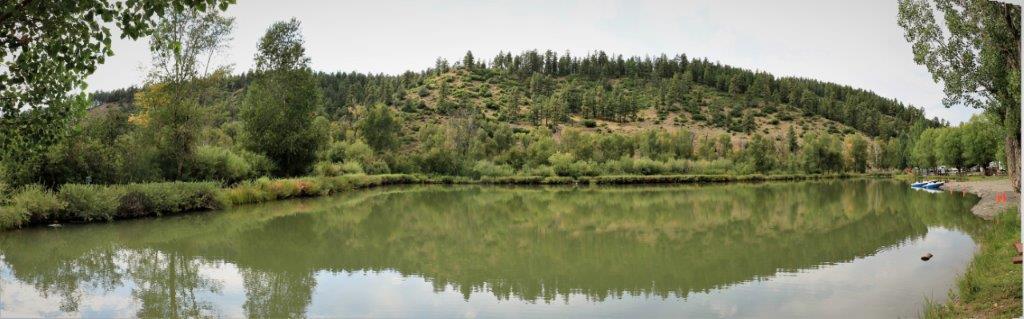
On our way up to the pass we took a side road down to the San Juan River Village and found a geocache beside this pretty little lake.  It was lovely scenery on the drive to the village. First stitch.

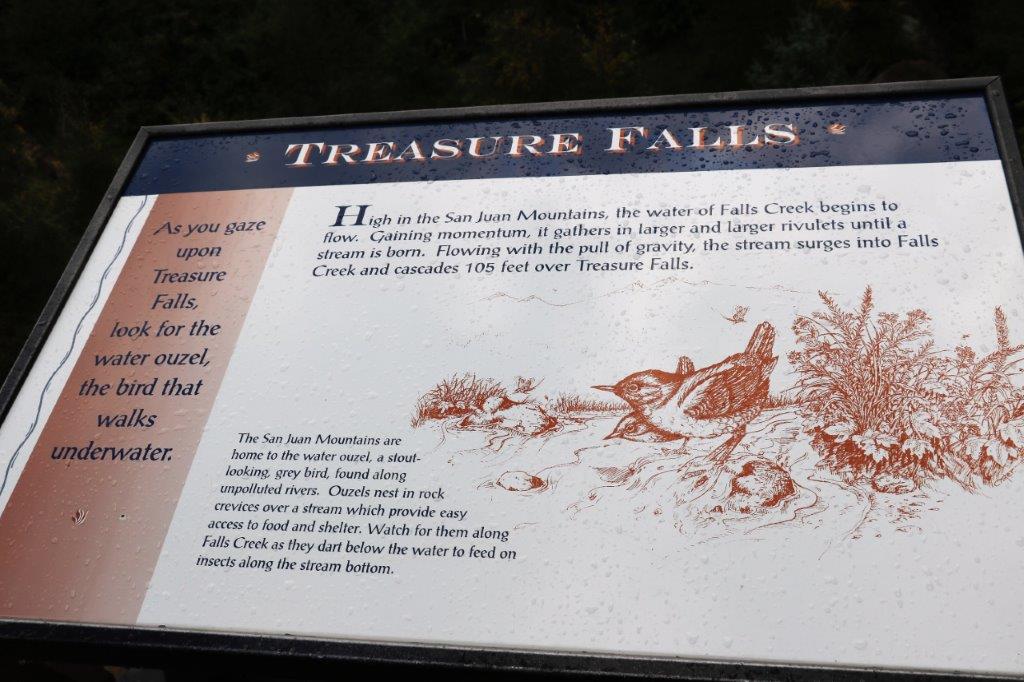
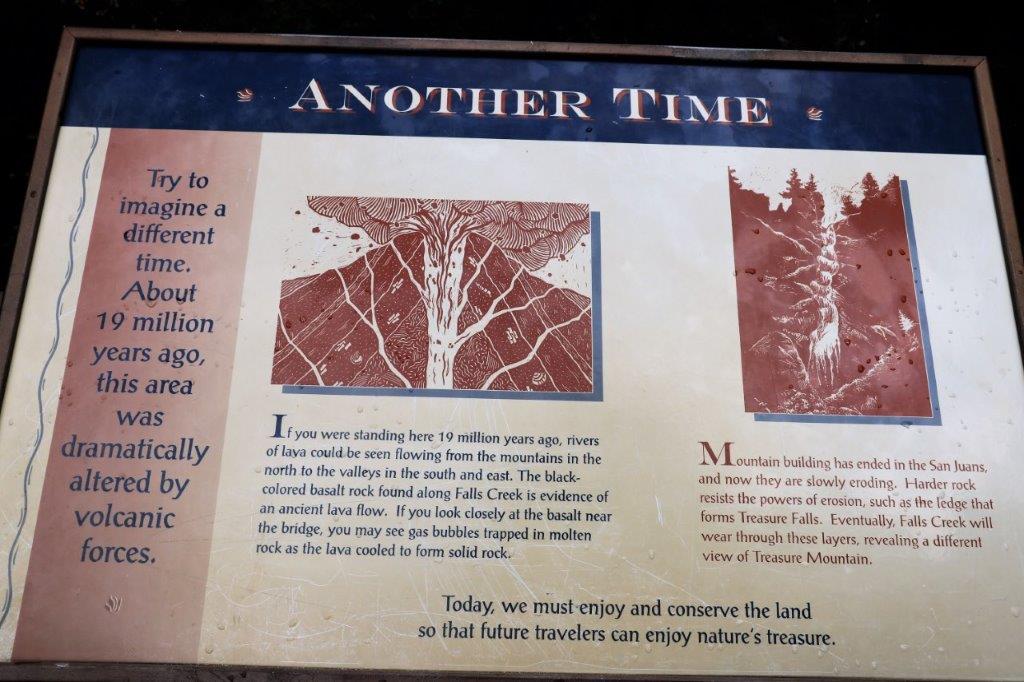
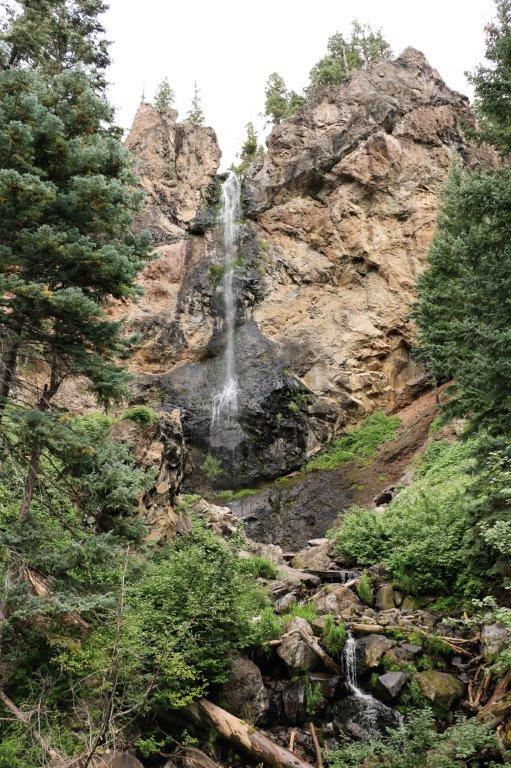
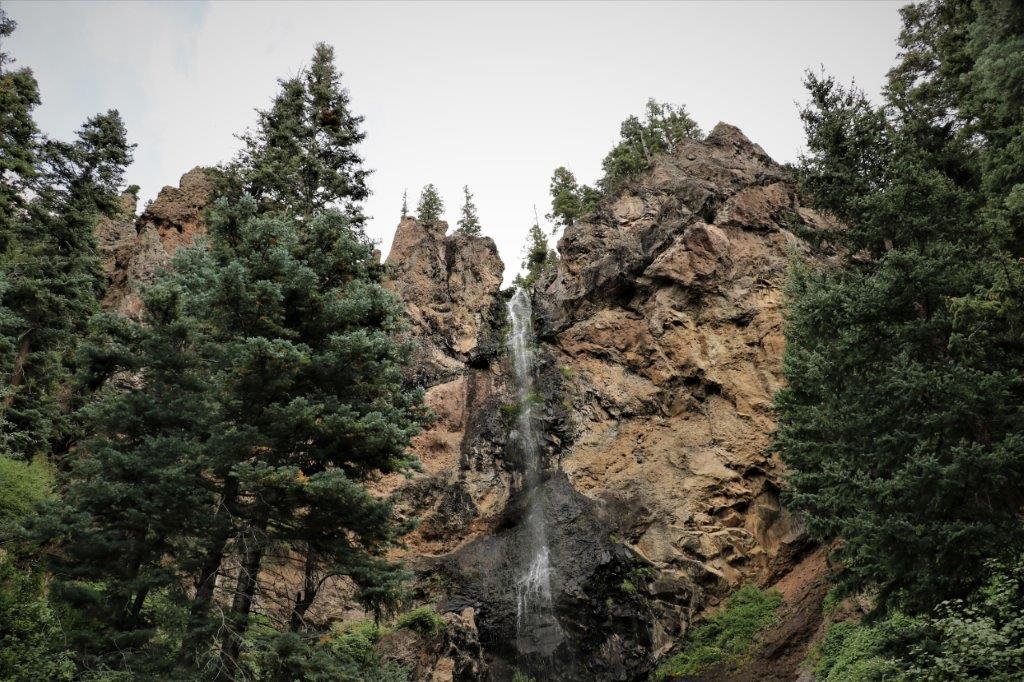
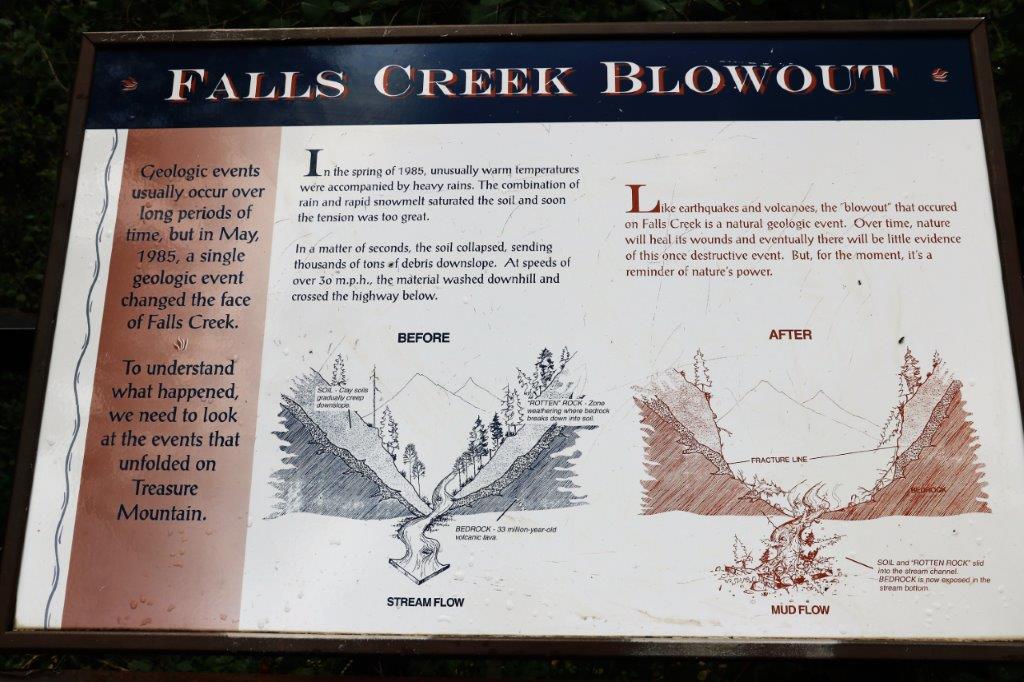
We also stopped at Treasure Falls which you can see from the roadside but we walked up the trail as far as the base of the waterfall.

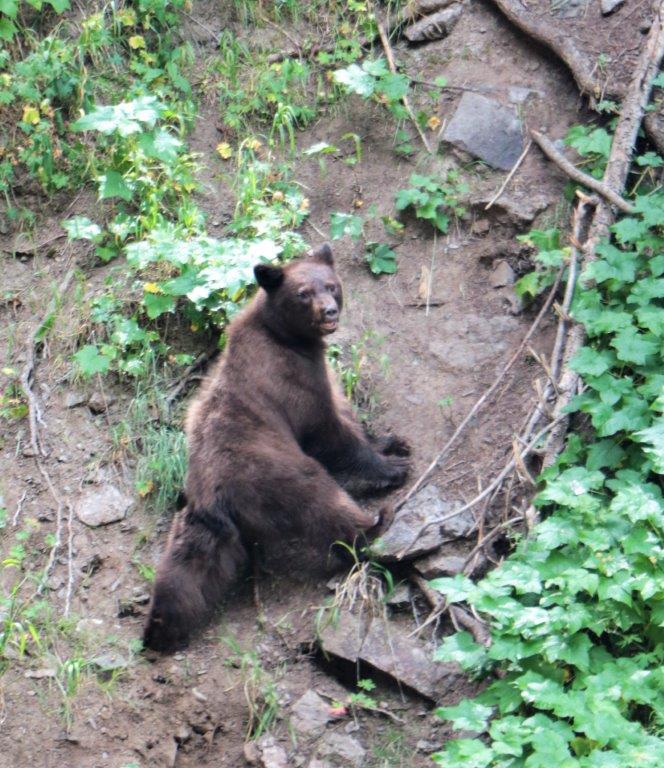
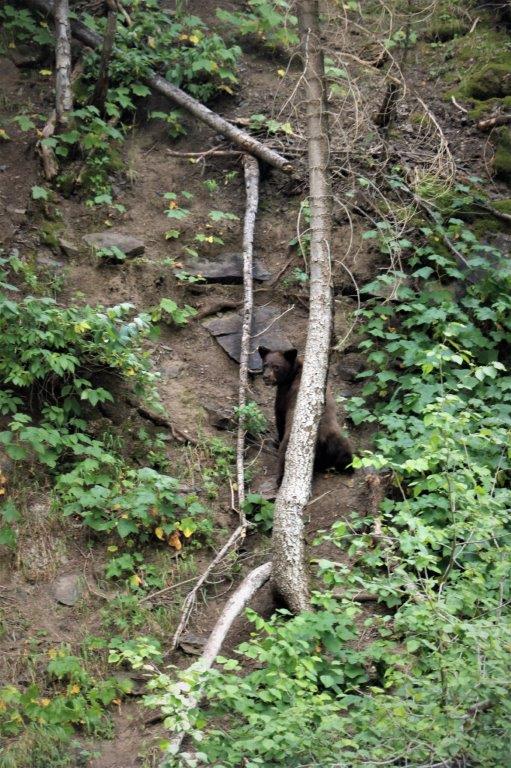
We had a visitor come down the trail on the other side of the creek.  John spoke a bit too loud telling me the bear was there so he went back up the hill without getting his drink of water.  I had my camera on the wrong setting so these two are John’s photos.  


My camera started working again in time to get him just before the disappeared up the trail.


The view from the Wolf Creek Pass Overlook was very nice.  They had a very high, very thick fence around the edge, but my camera lens fit through the slats okay.  Second stitch.

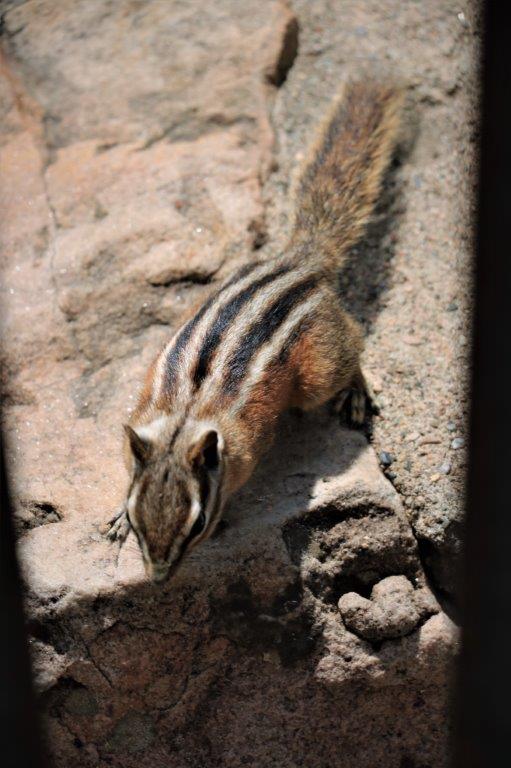
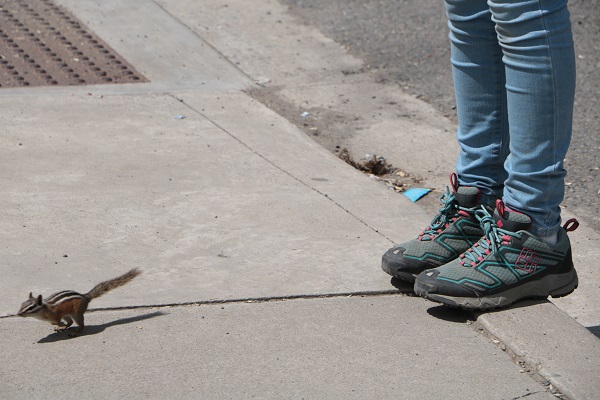
There were two little chipmunks running around. They came quite close to people so I am sure they have been fed before.John got this nice shot of the chipmunk running away from a girl.

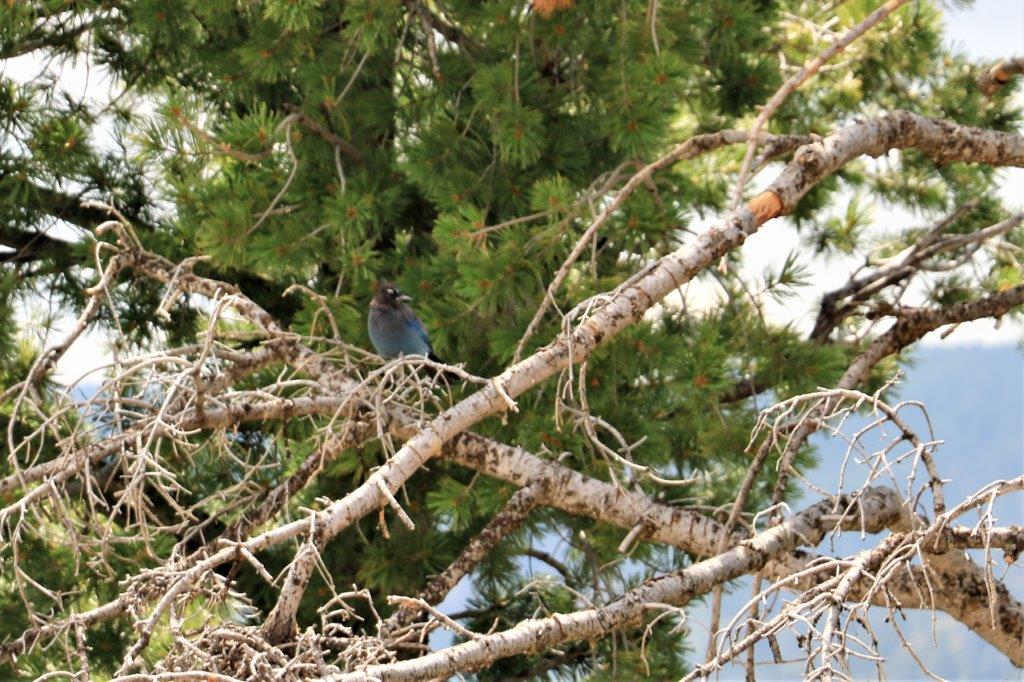
With the lovely expansive view of the mountains and valley I think many people miss the big formations off to the side of the overlook. They have big Blue Jays in Colorado.

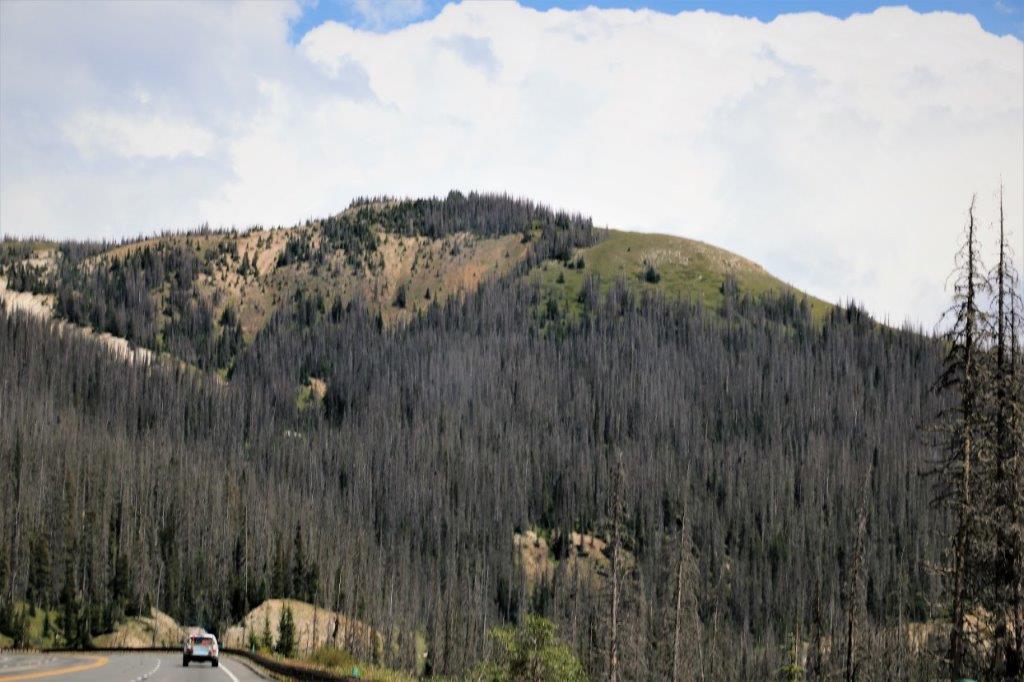
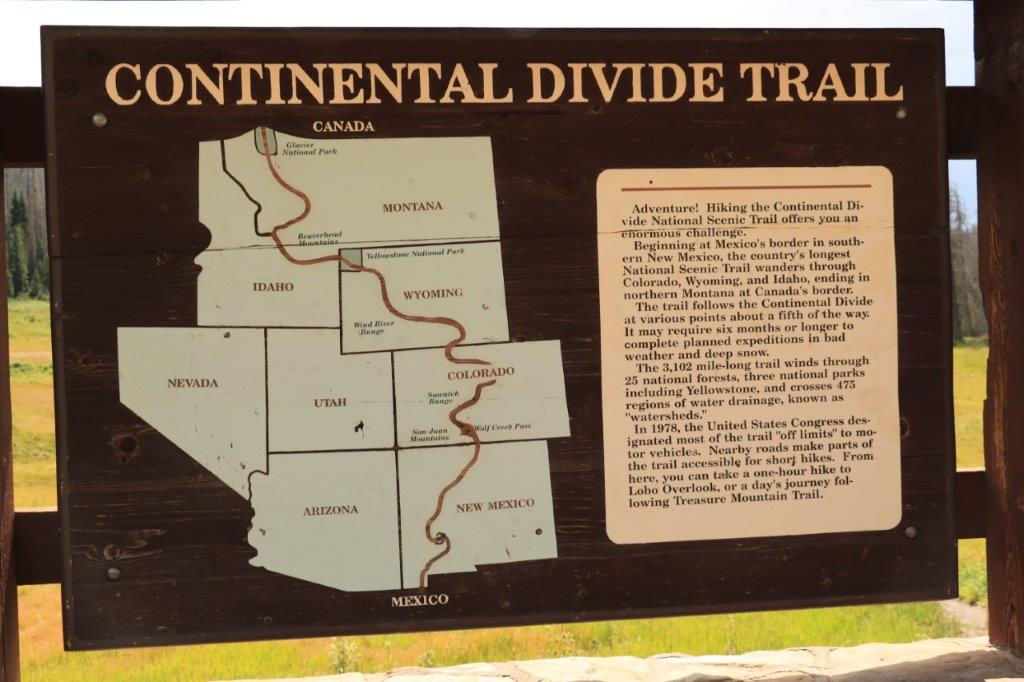
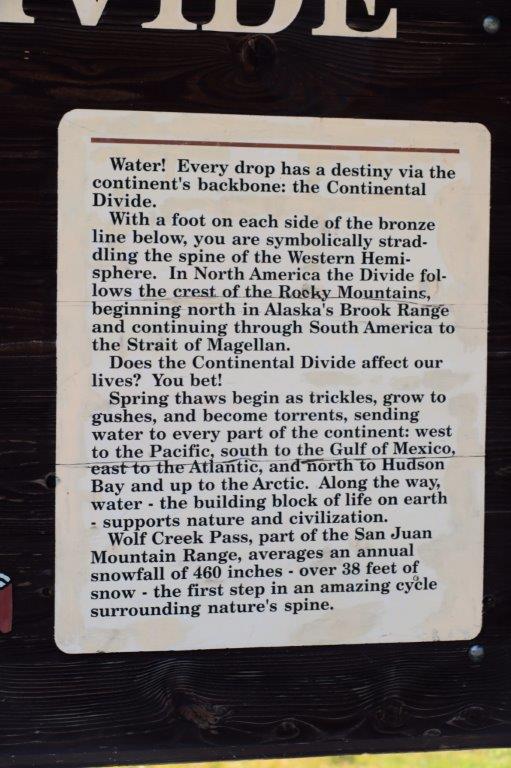
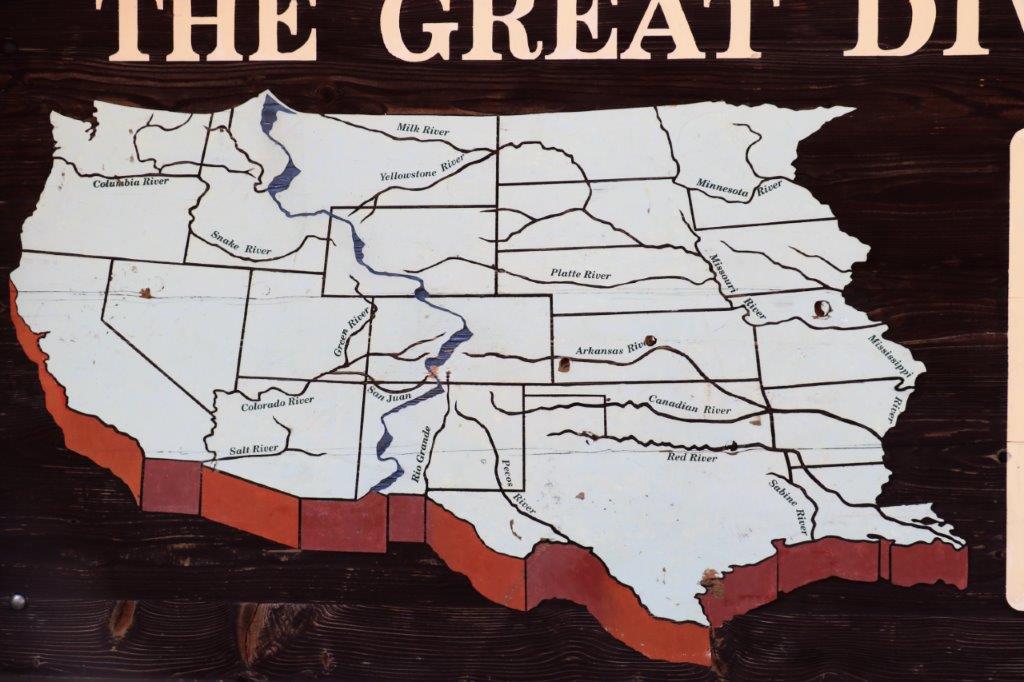
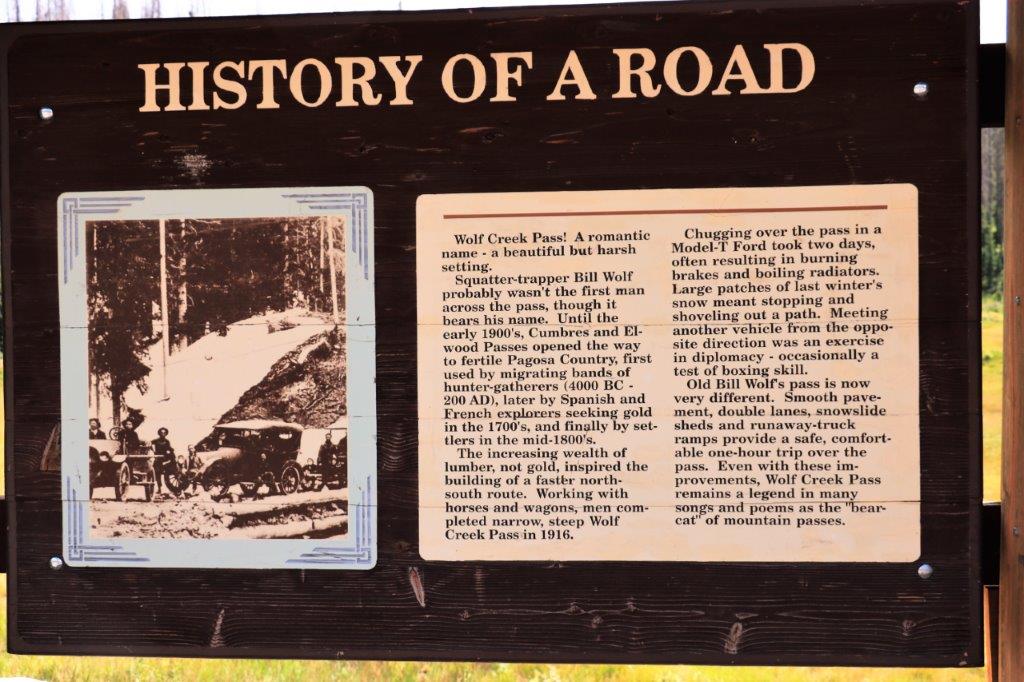
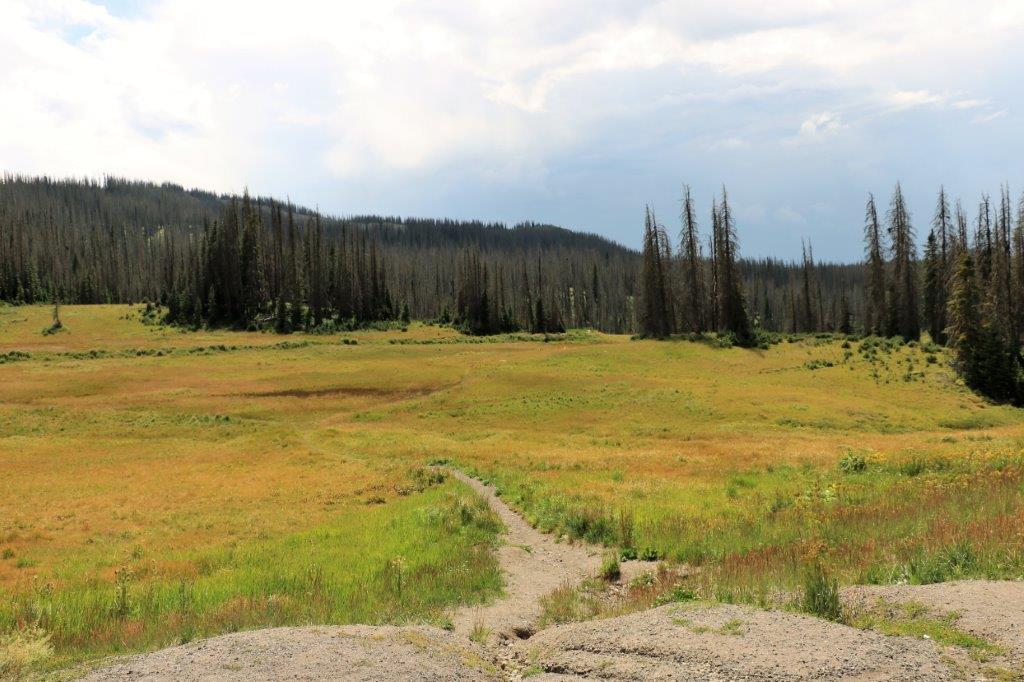
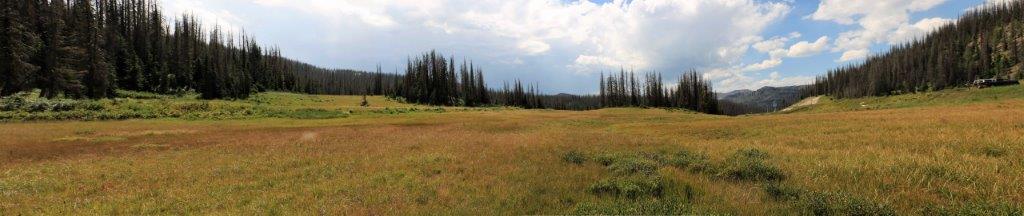
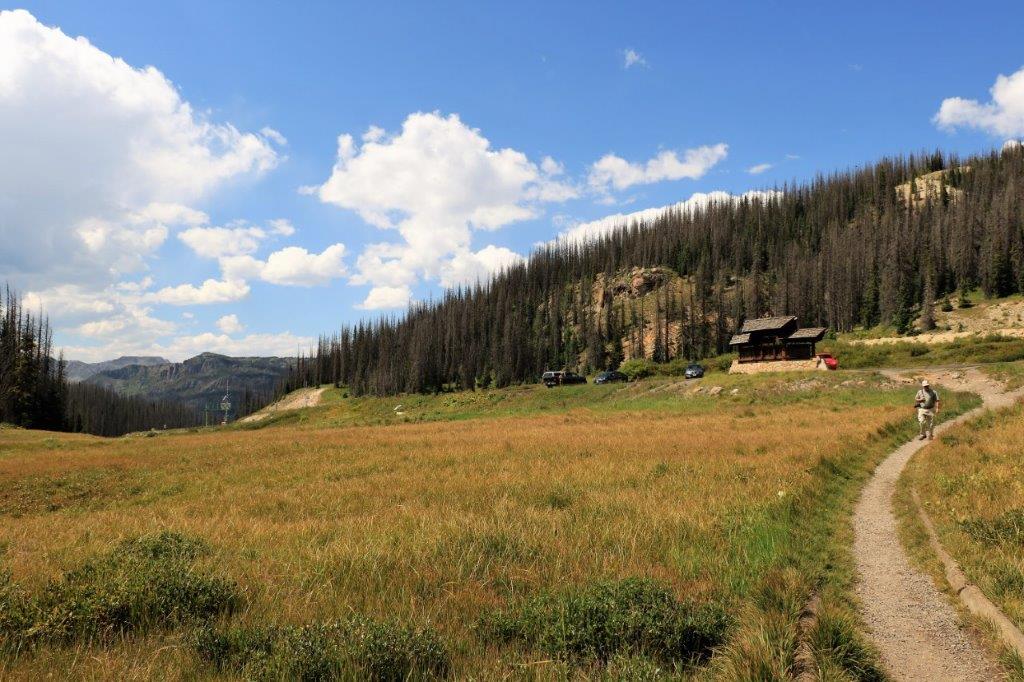
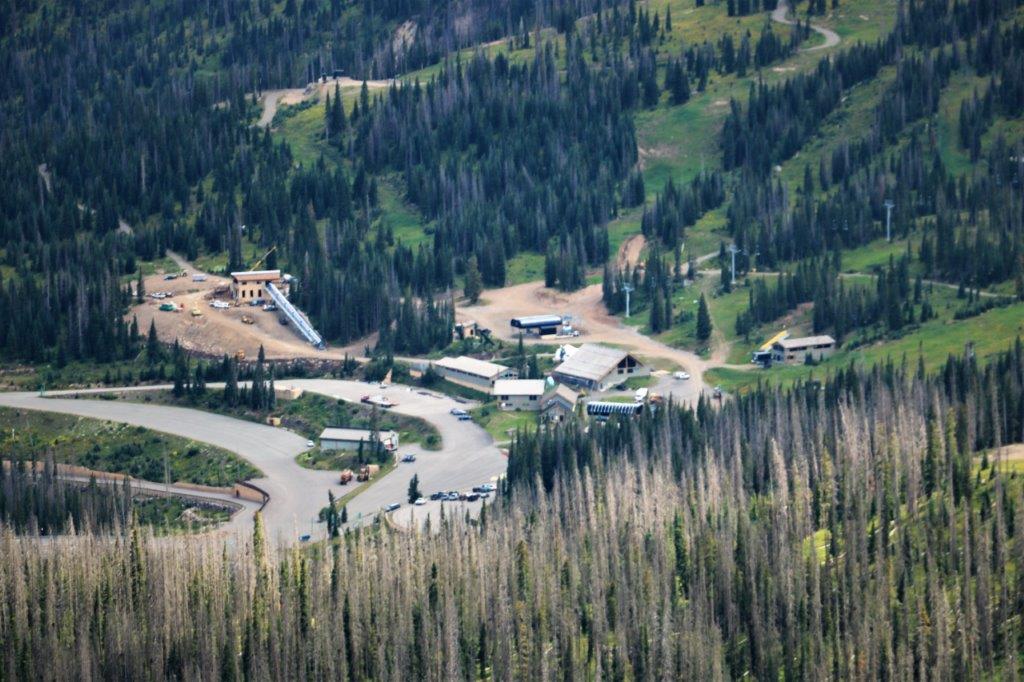
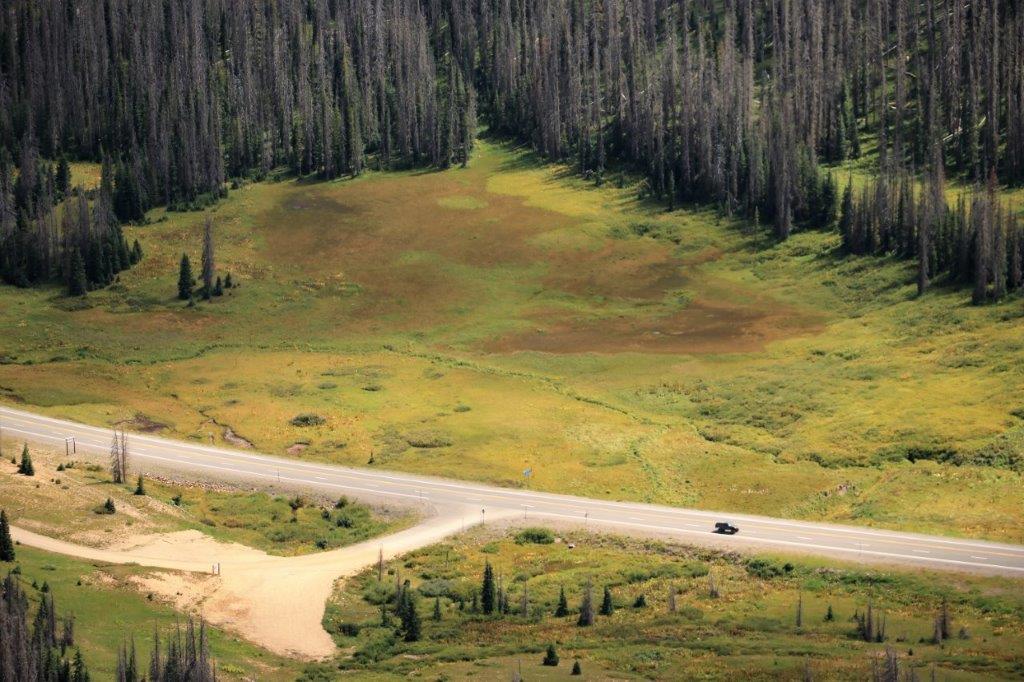
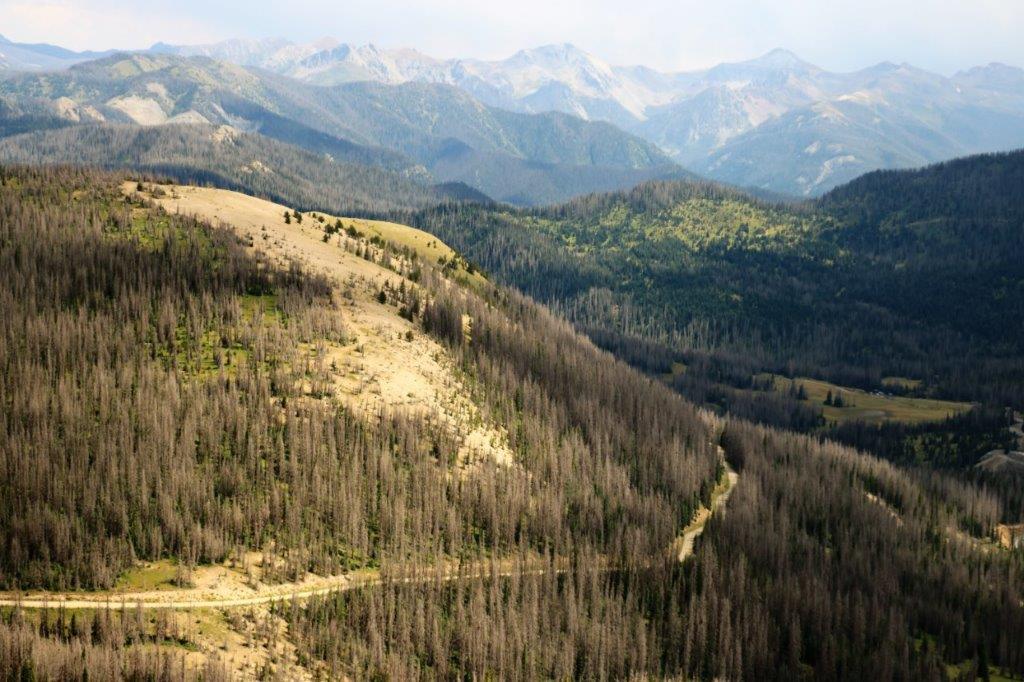
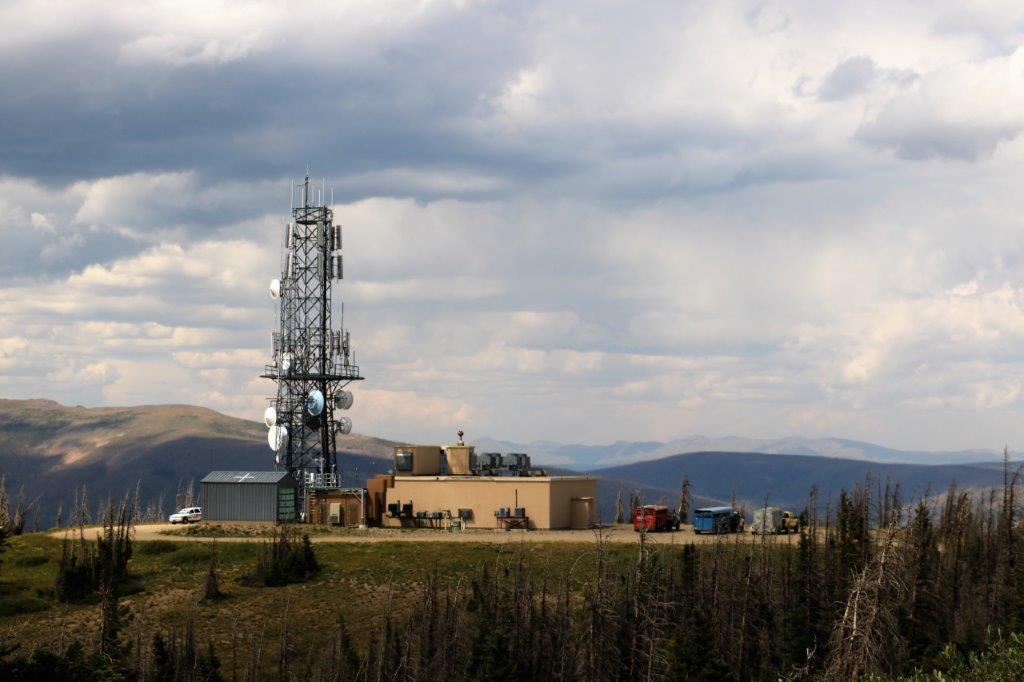
The road we have travelled.The mountainsides all around are covered with dead spruce tress.  I think the Spruce Bud Worm had done a serious amount of damage around here.The summit of Wolf Creek Pass and the Continental Divide. There was a cache hidden on the other side of this meadow at the summit, and down the length of it at the back.  We hiked about a kilometer getting to the cache and back to the truck. Third stitch. These pretty flowers were blooming along the path to the cache location.  There were quite a few wildflowers blooming.  We even saw Indian Paintbrush which at home is long finished.  But summer comes late and doesn’t last long up here.  I read somewhere that they can get 30 feet of snow on the pass. A little drive past the summit and three miles up a gravel road you get to Lobo Overlook.  The microwave and radio towers are located up here.  Also two geocaches, one of which was appropriately called “Sitting on top of the world.” Fourth and fifth stitches. John had to clamber down the bank on the other side of the railing to find the cache hidden in the rocks. Obviously there would be a ski hill up here – Wolf Creek Ski Resort. Sixth stitch. Seventh stitch. Eighth stitch. We turned around after we found the cache at the ski resort and headed back down the mountain.  The road is so steep that the speed limit for big trucks is 25 mph and there are plenty of run-off lanes in case they get into trouble.  Before the nice highway was completed, back in the early days of travel by car, it used to take two days to traverse the pass.  Now you can go from Pagosa Springs to South Fork in an hour.

We loved this ranch gate.

When we were coming up we passed two geocache sites that we picked up on the way down.  One was at a former restaurant site and the other was at Riverview RV Park.  We were greeted with a big Smiley face not too far from where the cache was hidden. The little lake at the park was very pretty.   Ninth stitch.

We arrived back at the condo at quarter to five and spent the time before dinner sorting photos and booking tickets for the Durango to Silverton narrow-gauge railway trip we plan to take on Saturday.

After dinner and dishes it was off to the lakeside to watch the sunset. Tenth stitch Eleventh and final stitch.

And now you know why I called it a stitch day.  So much of what we saw were such expansive, grand views I needed to stitch three or four photos together to try to show how beautiful it all was.

‘Twas a grand and glorious day to be sure.

2017 Aug 28 – Pagosa Springs, CO (Hot Springs)

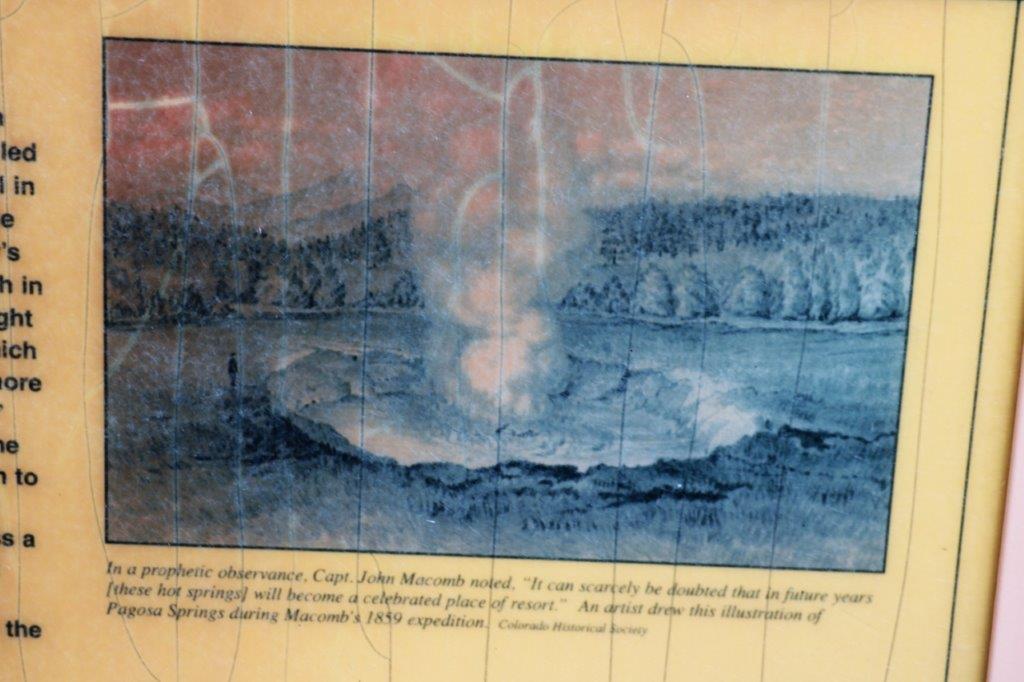
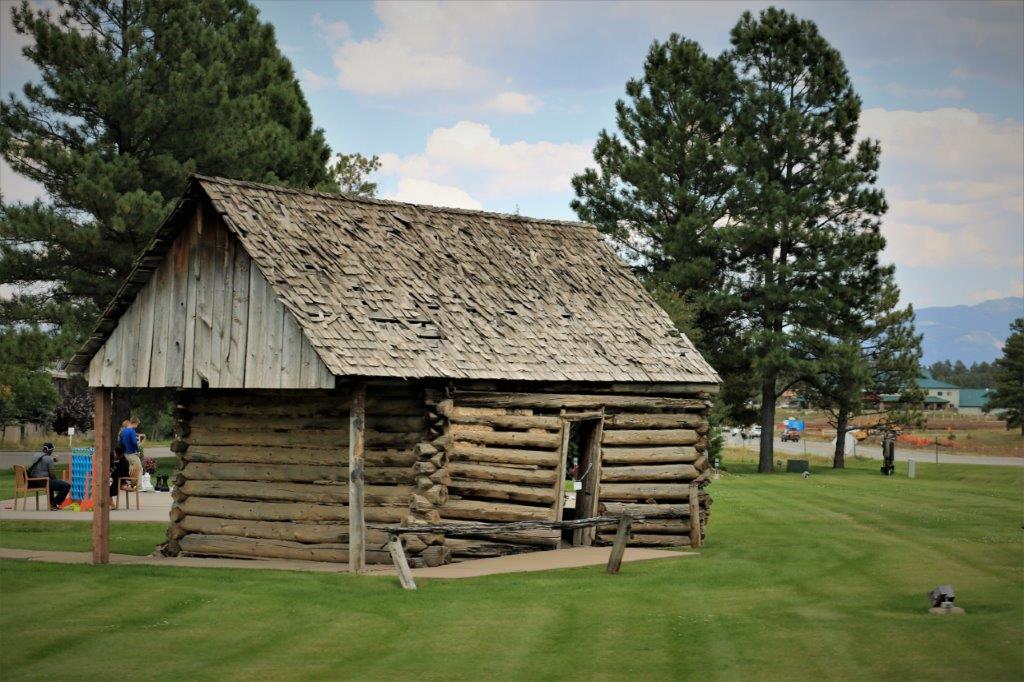
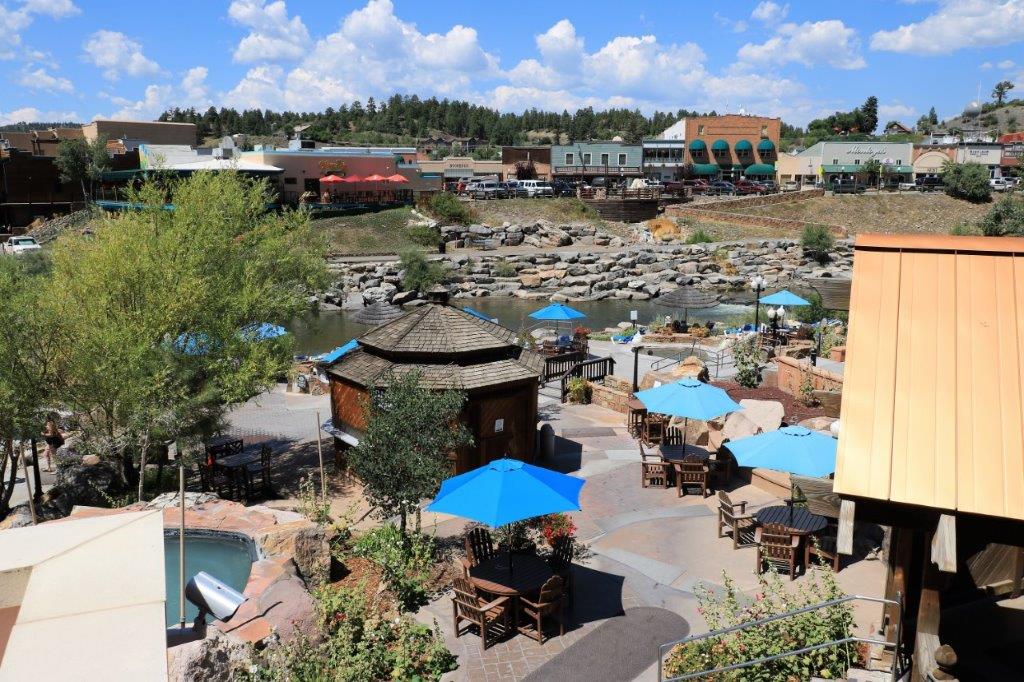
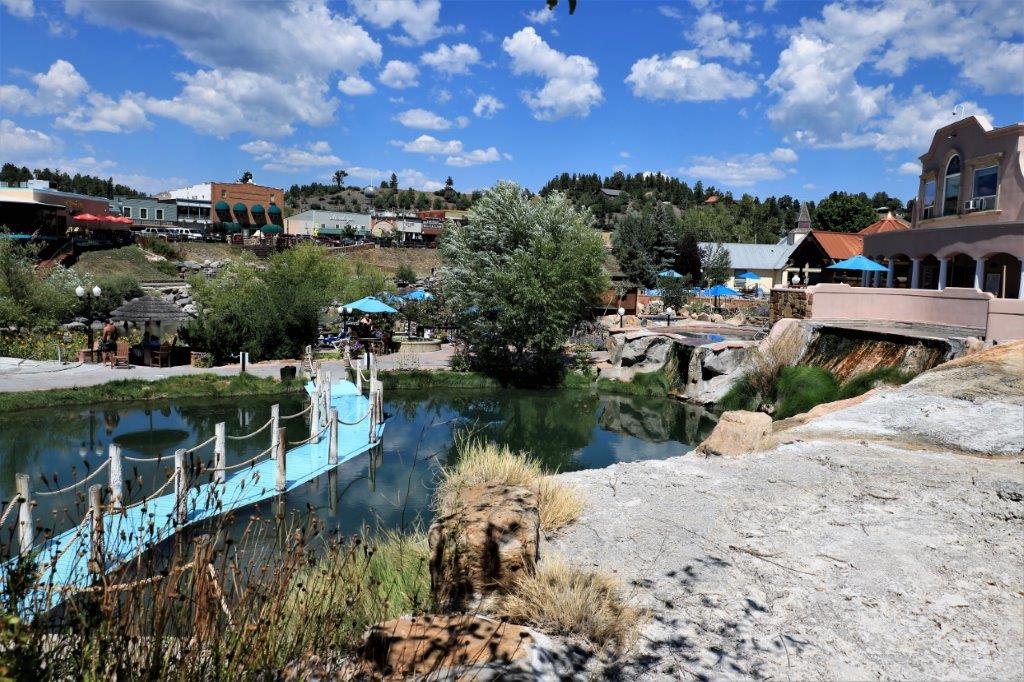
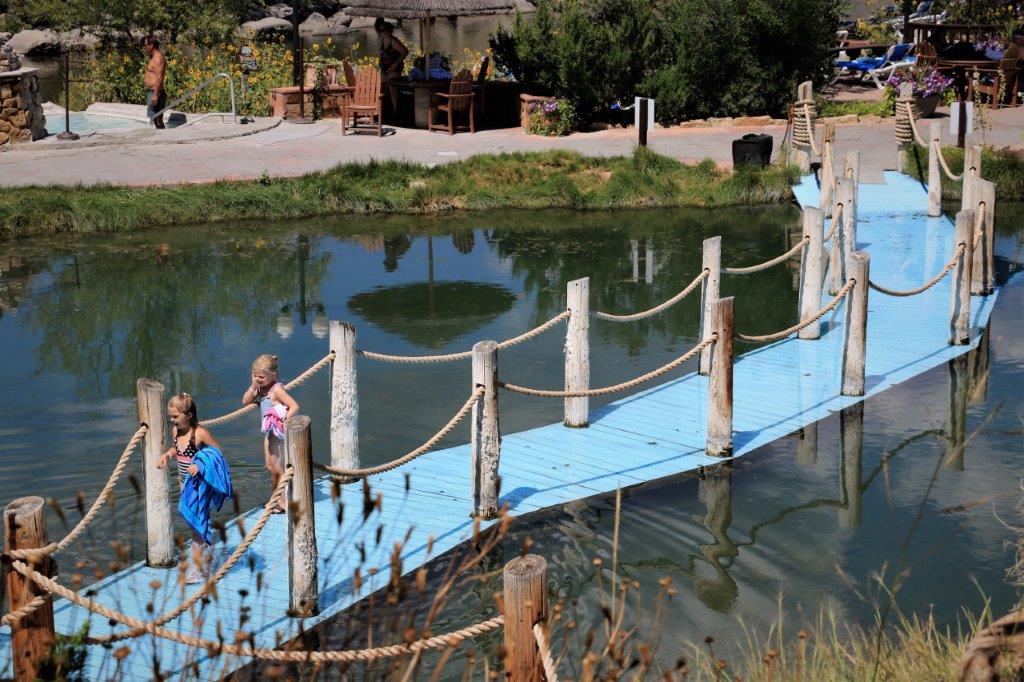
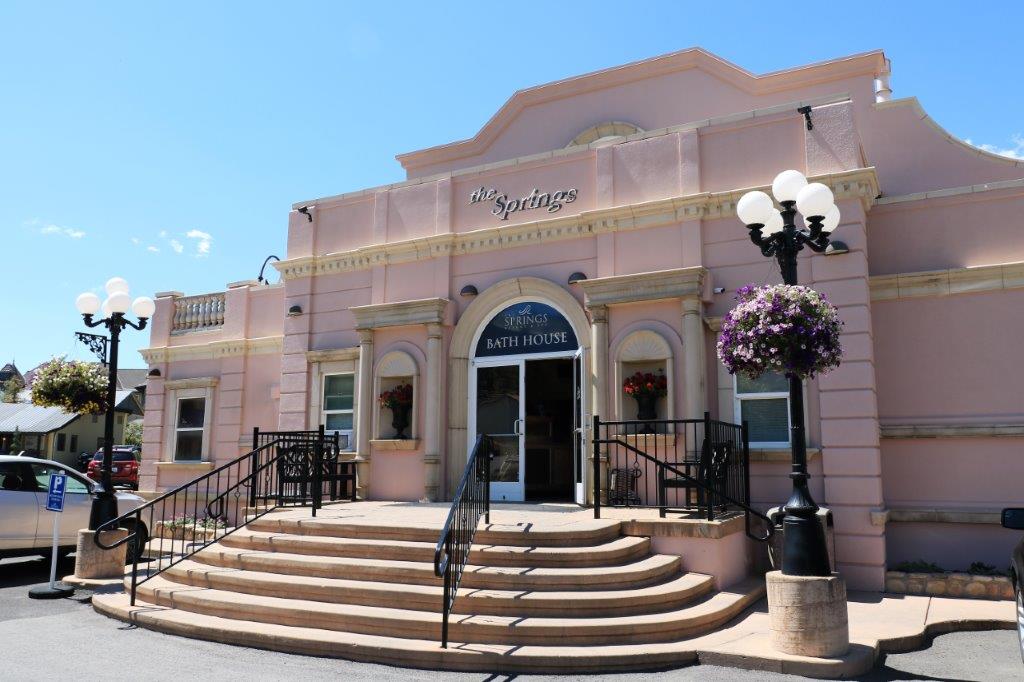
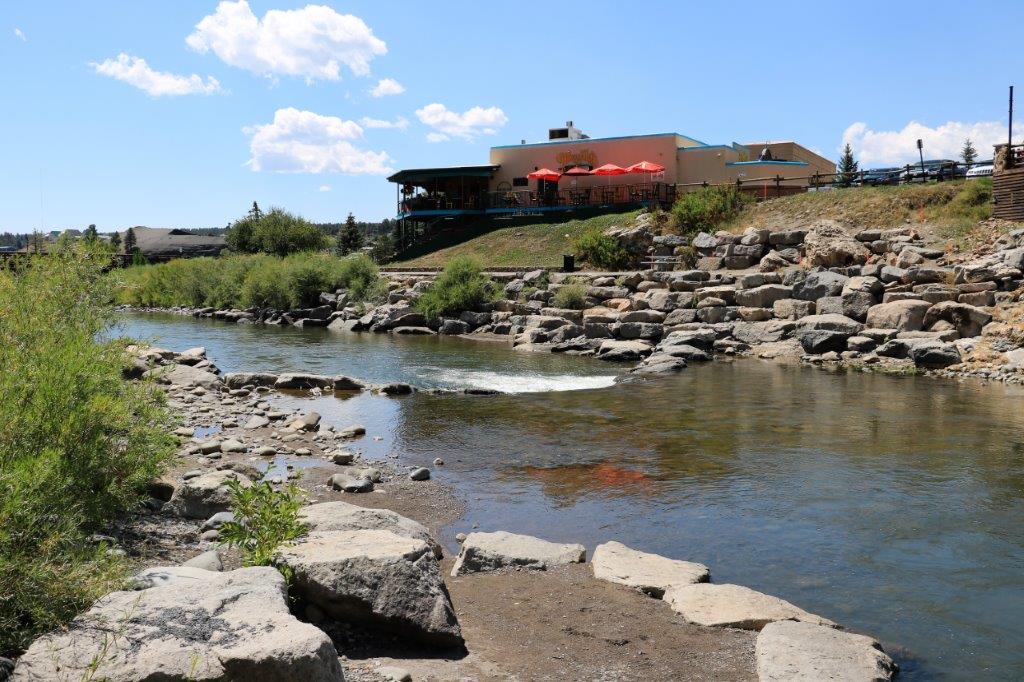
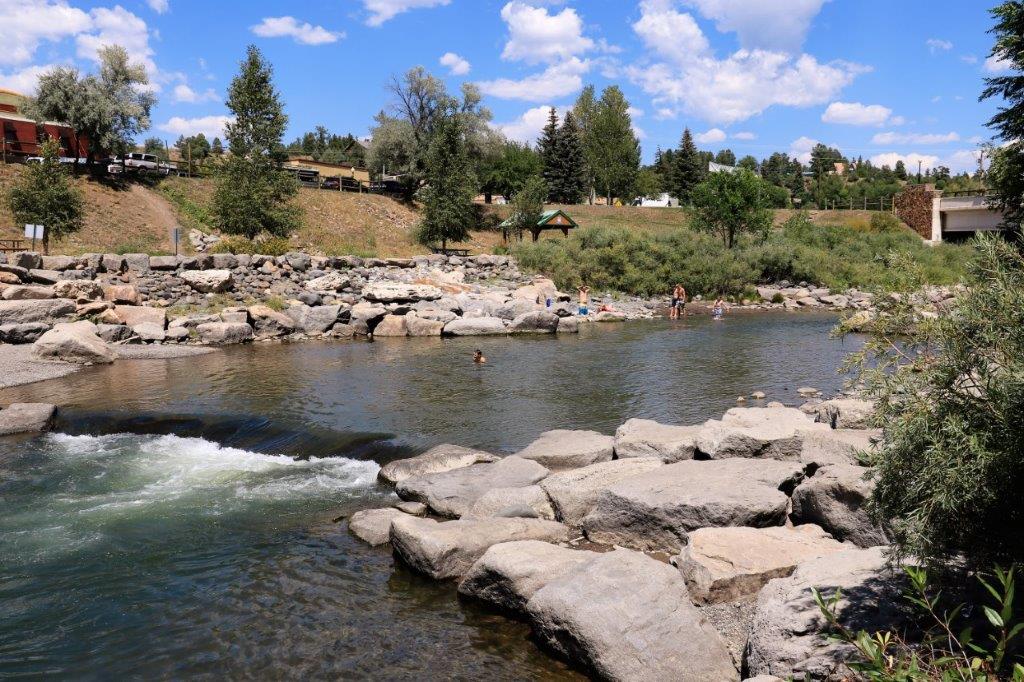
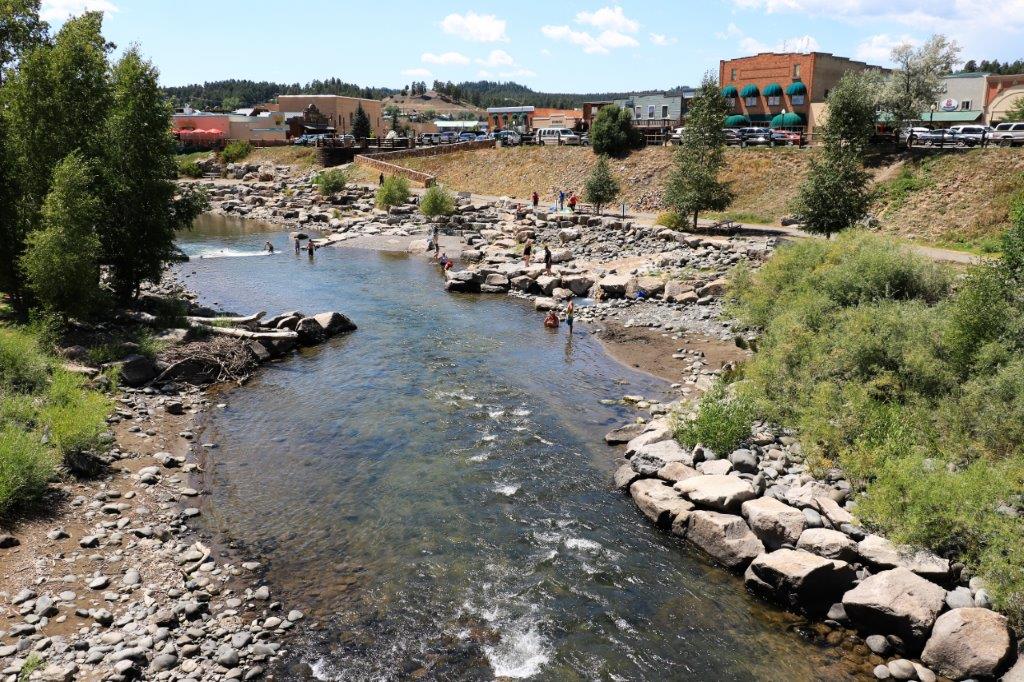
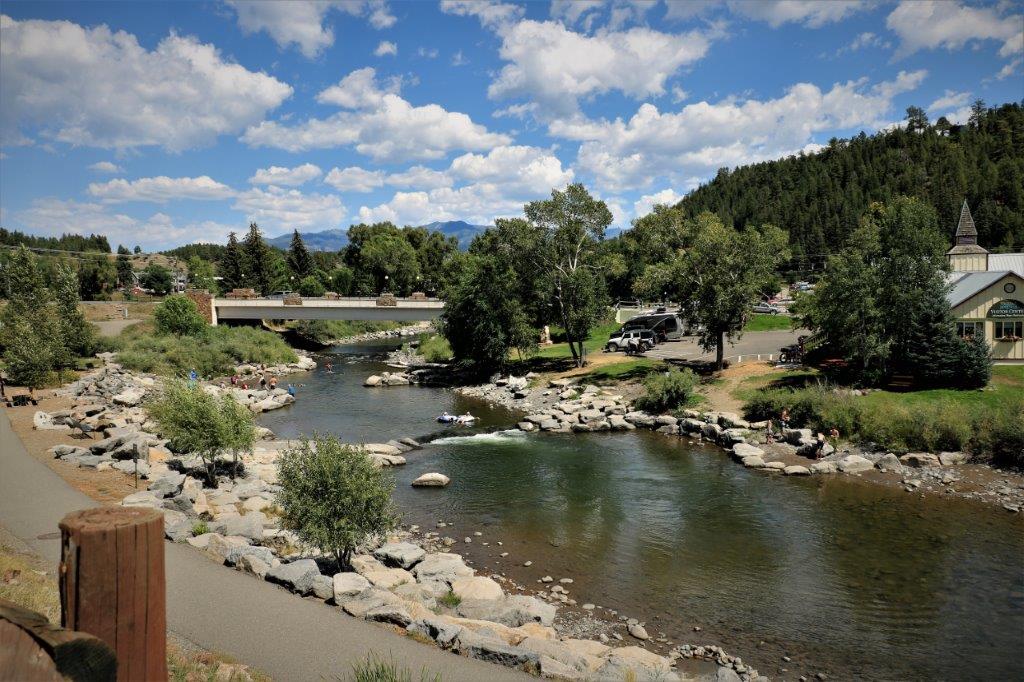
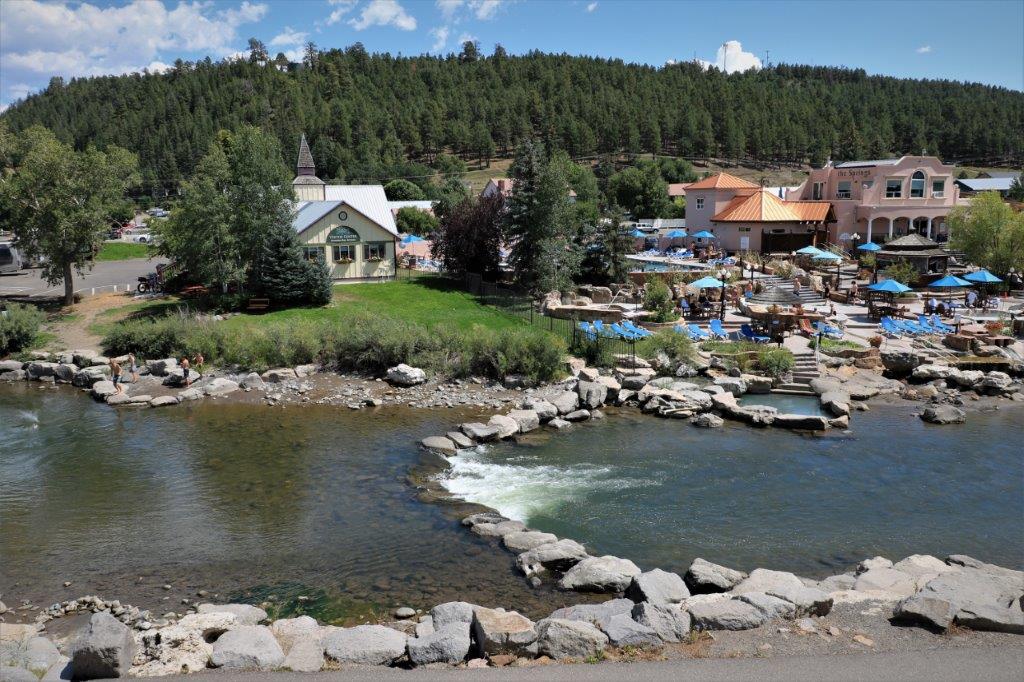
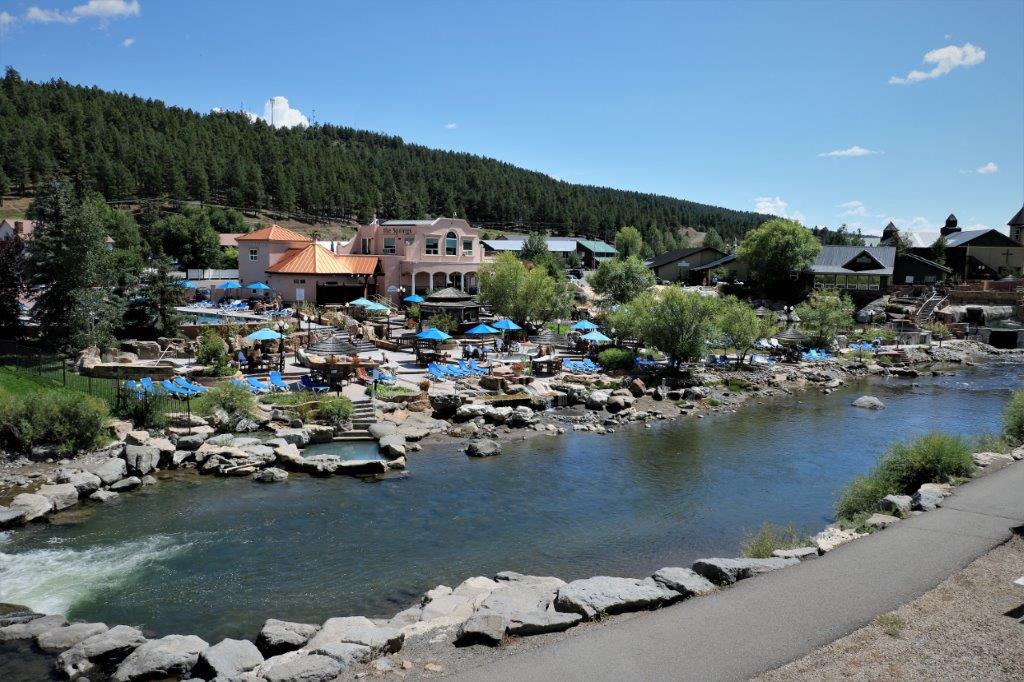
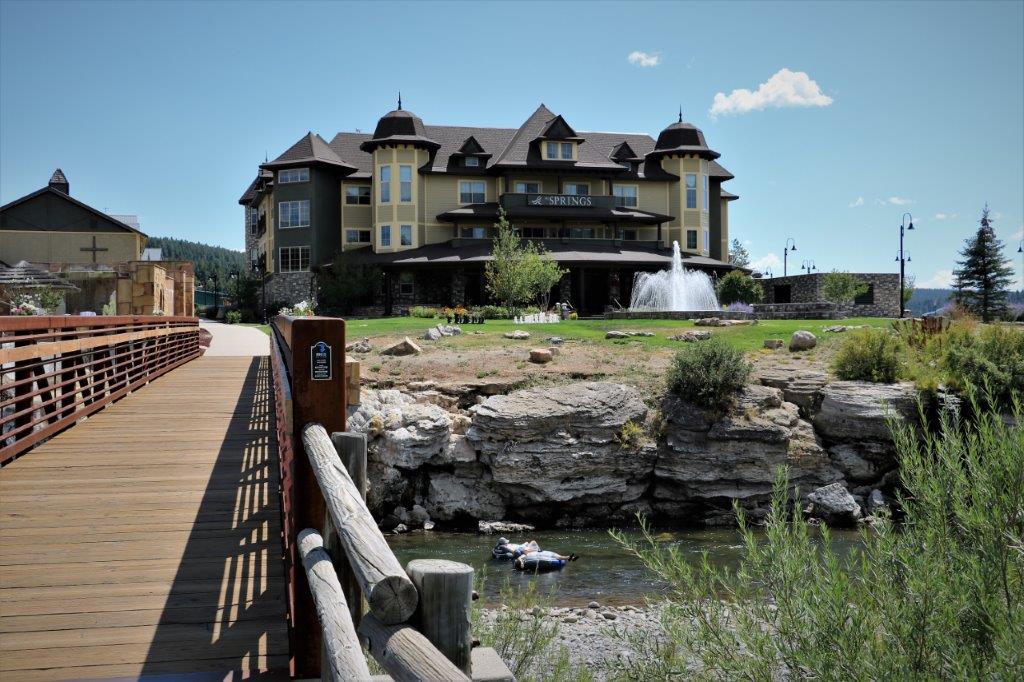
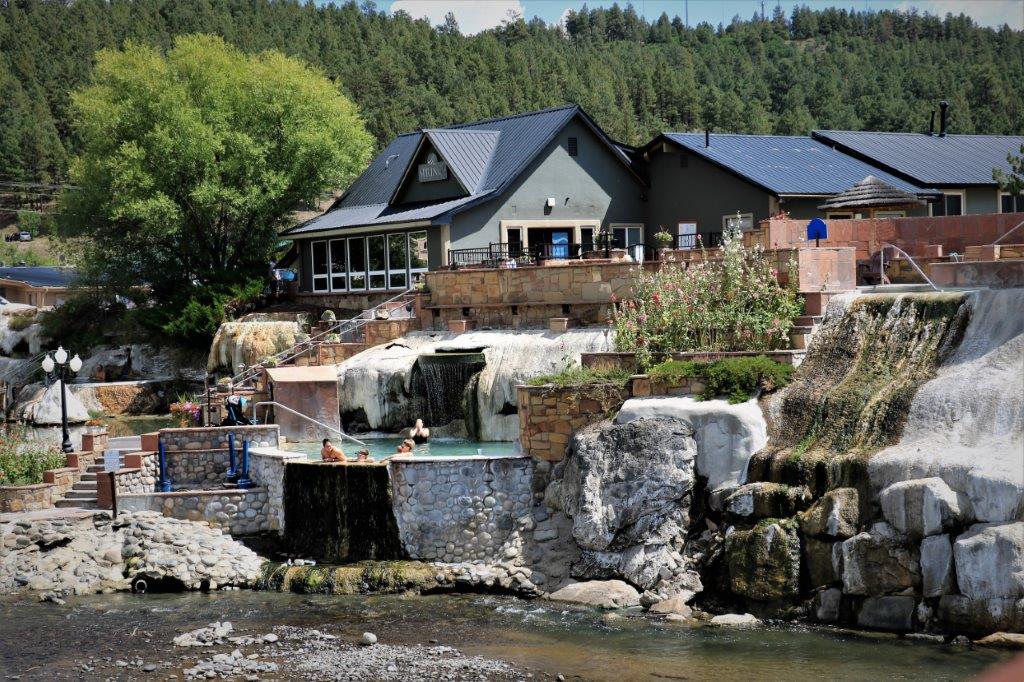
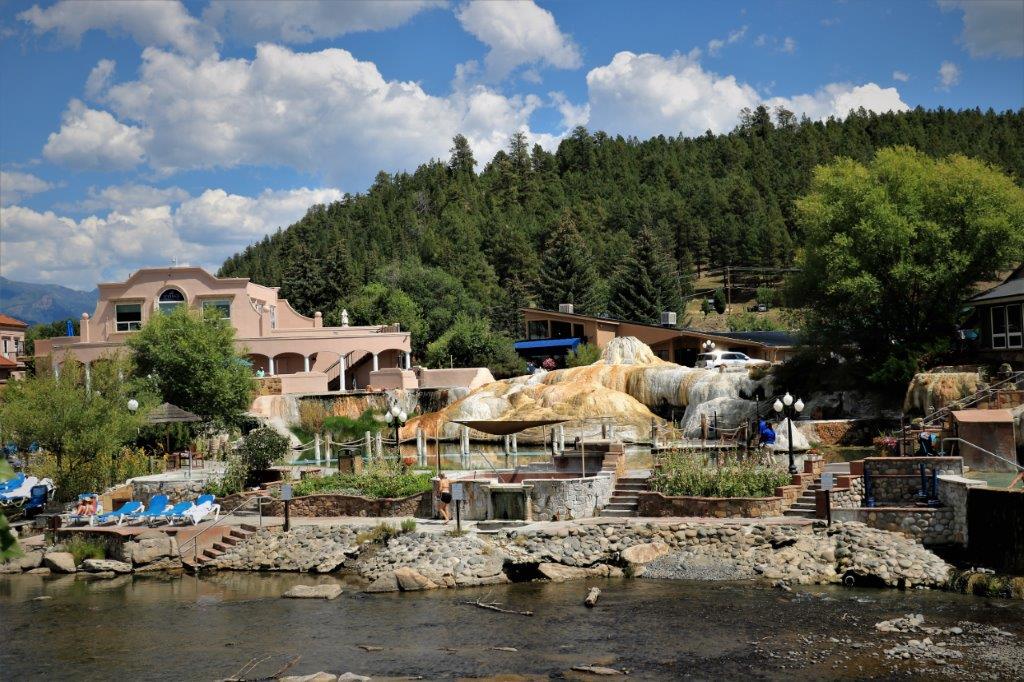
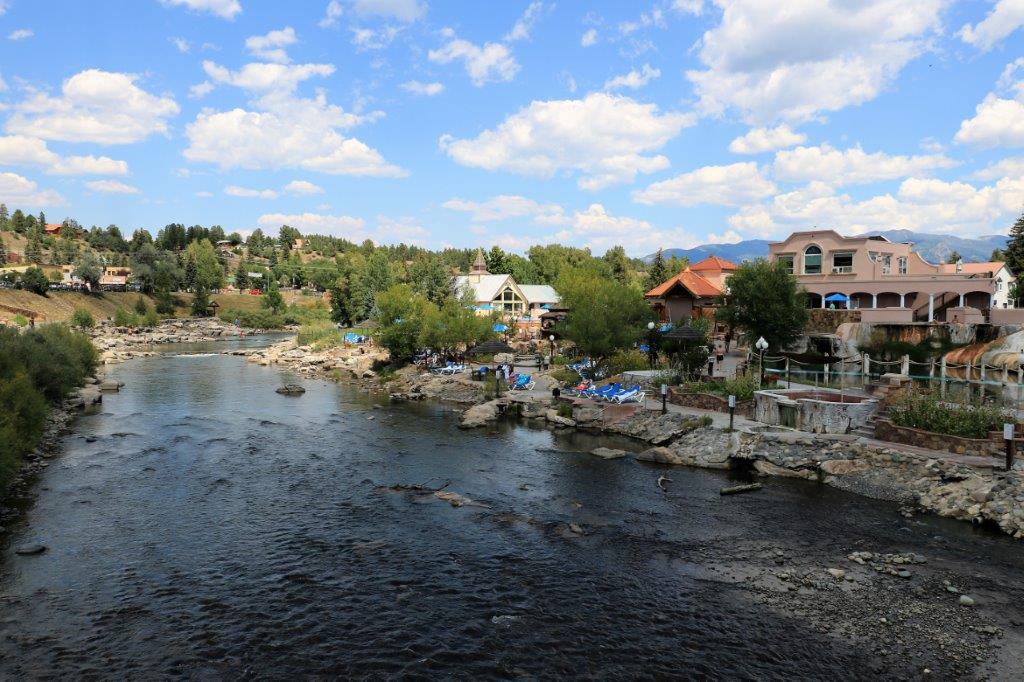
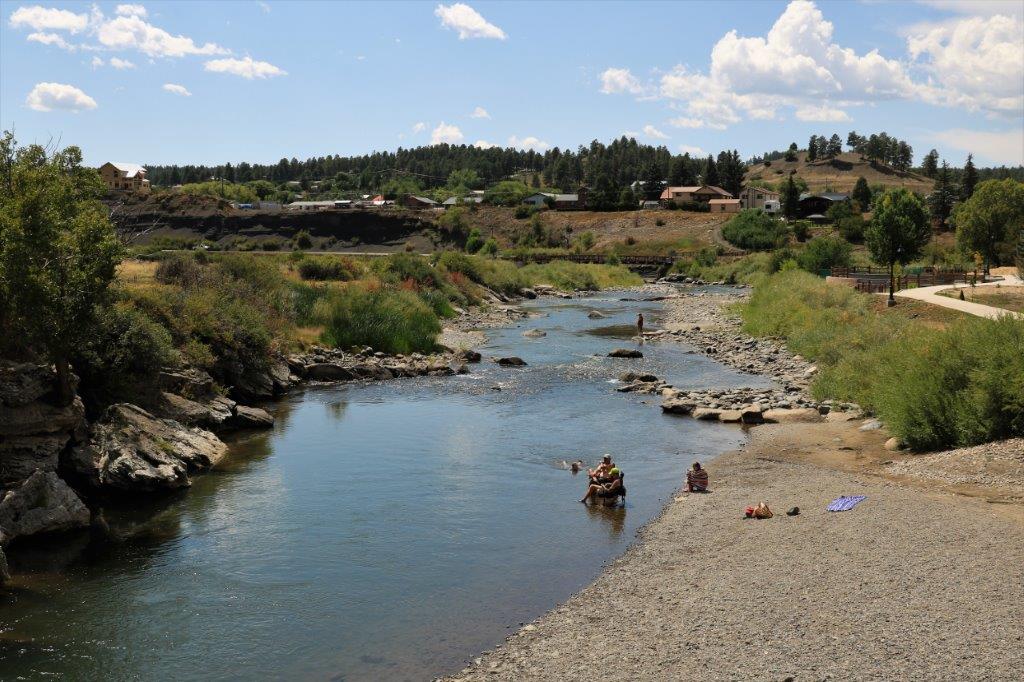
We had a relatively easy day today.  We decided to drive into town (the resort complex is a few miles north of town) and see the hot springs.  We pass this cute little log cabin at the resort entrance everytime we go in and out.We parked in a lot by the river and wander across the street to The Springs Spa and Bathhouse.  There are several resorts on the banks of the river and all of them access the hot springs located behind The Springs Hotel.  Each spot has several different pools that people can soak in. The river water is somewhat warm as well and it is very shallow.  Sitting in, floating down, and generally having a good time in the river is a popular pastime. A few years ago the city and the county spent a lot of money to enhance the esthetic of the San Juan River.  This project improved the look of the area where the river runs through town and the kayaking and canoeing experience futher afield.

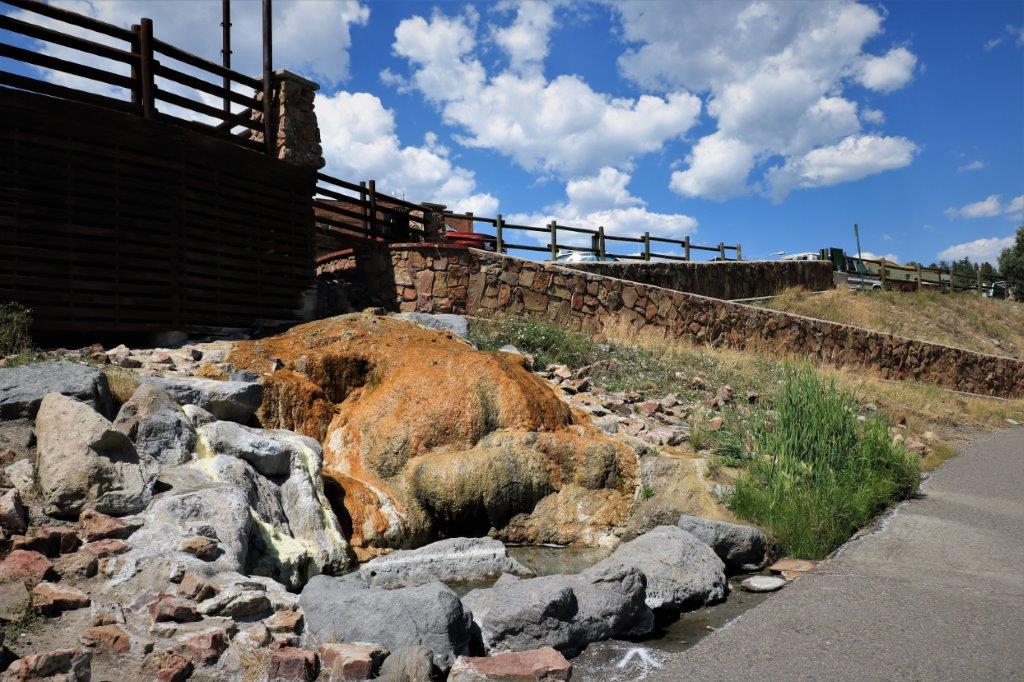
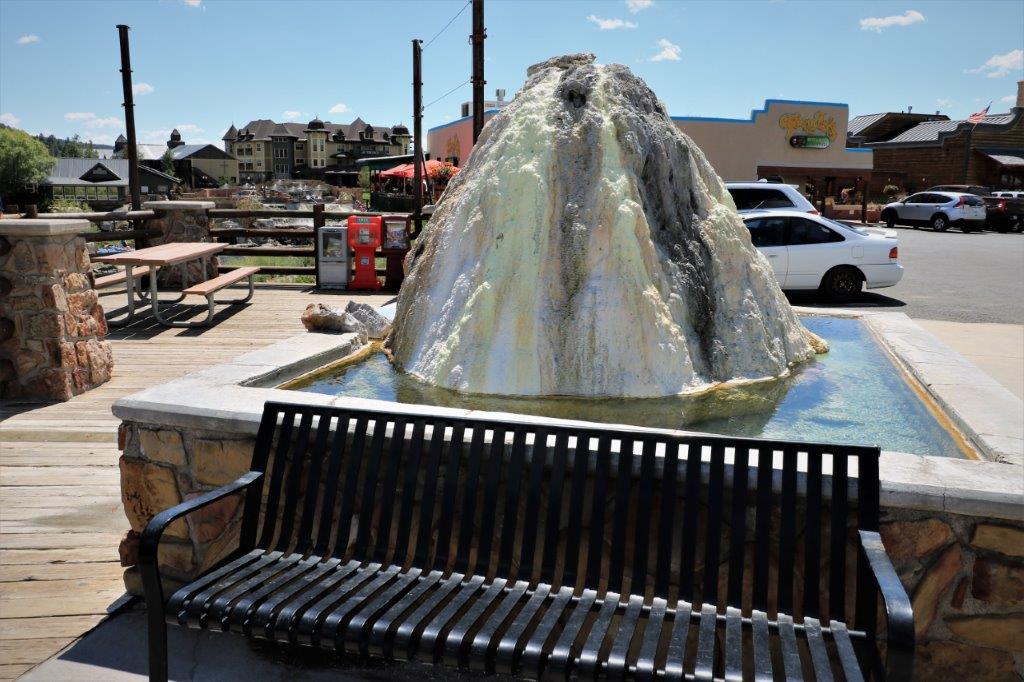
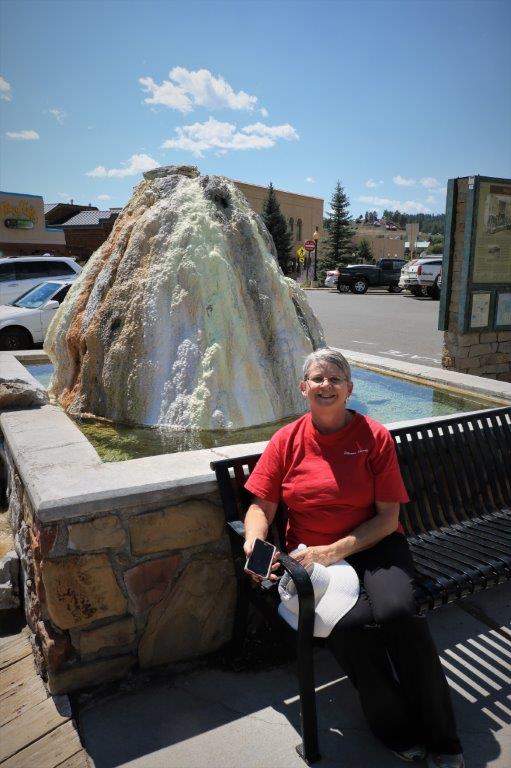
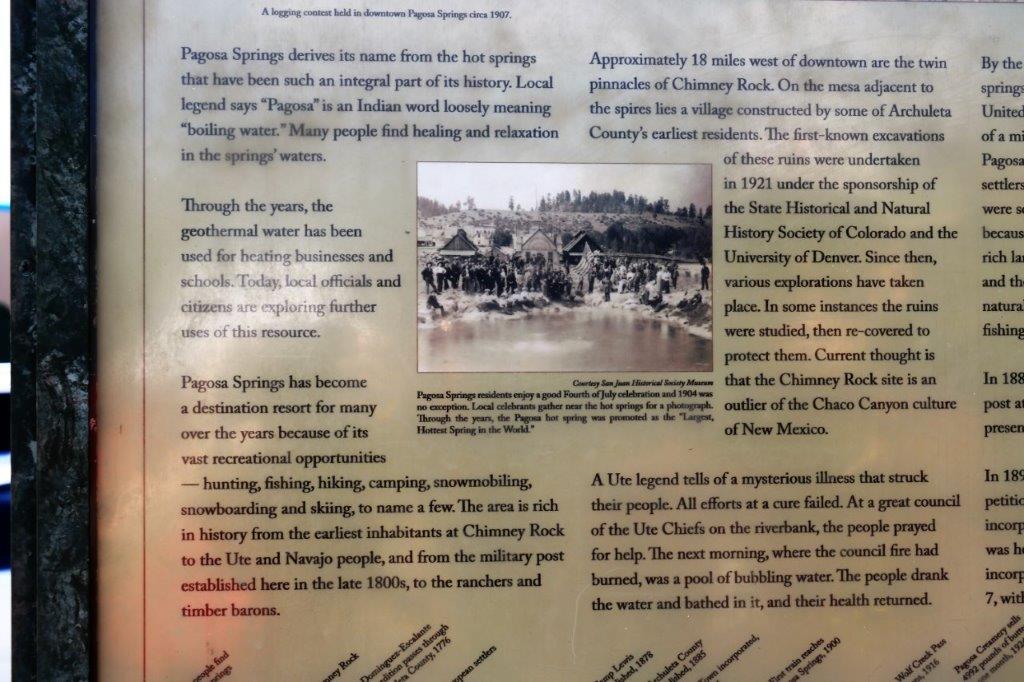
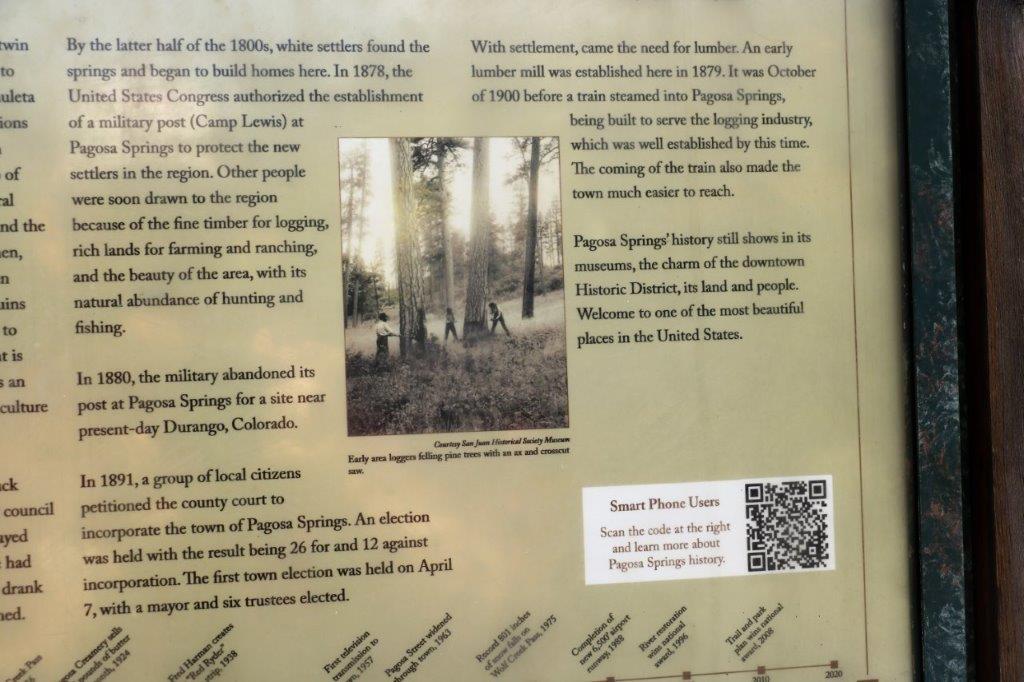
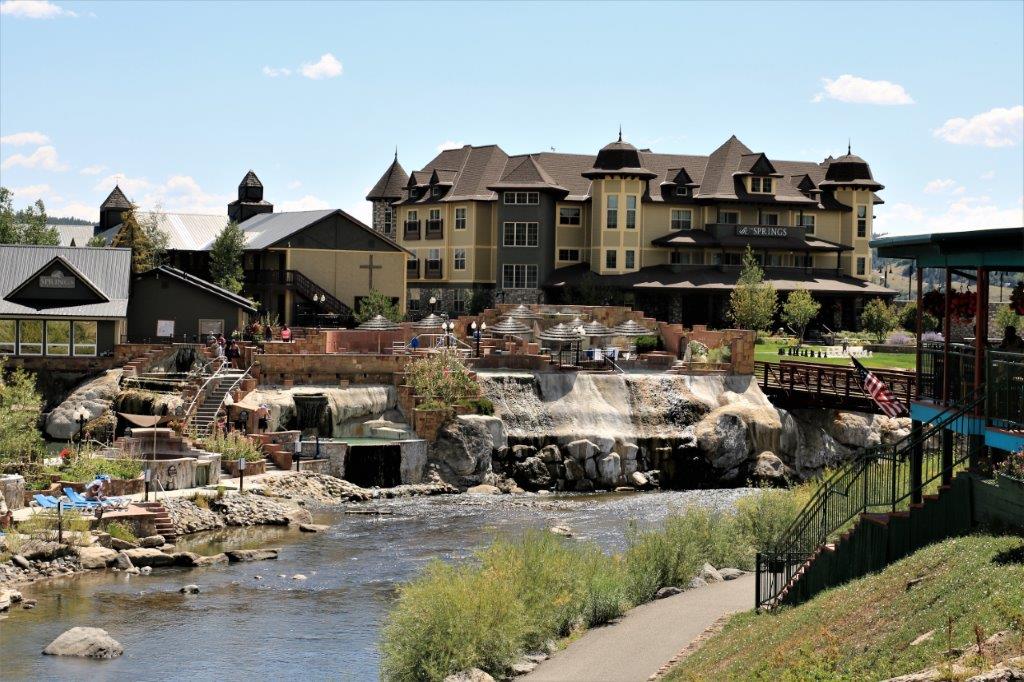
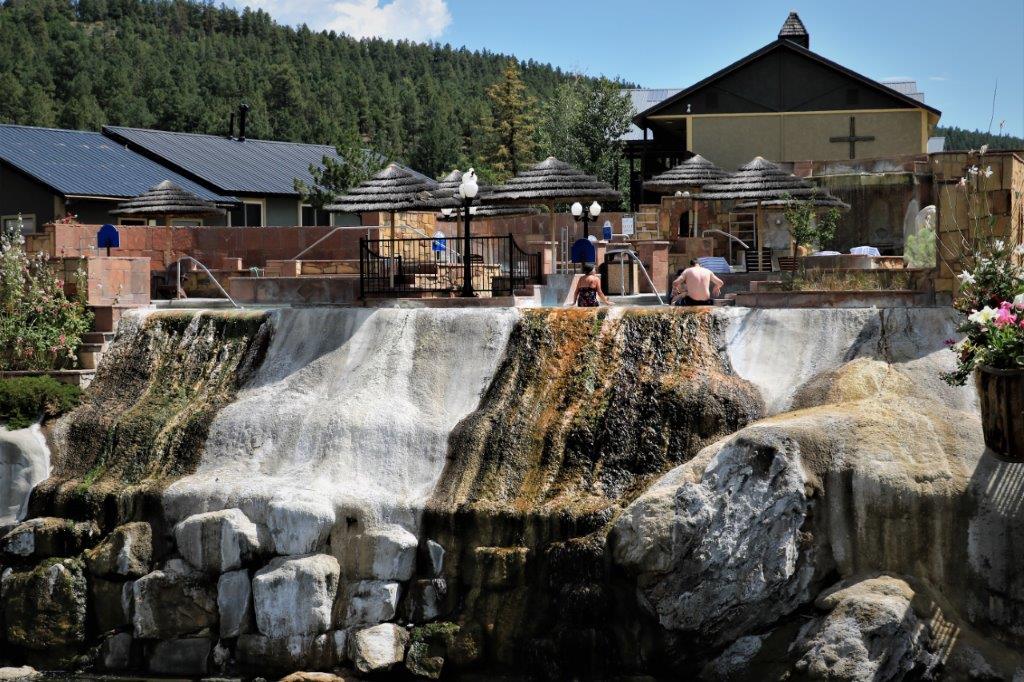
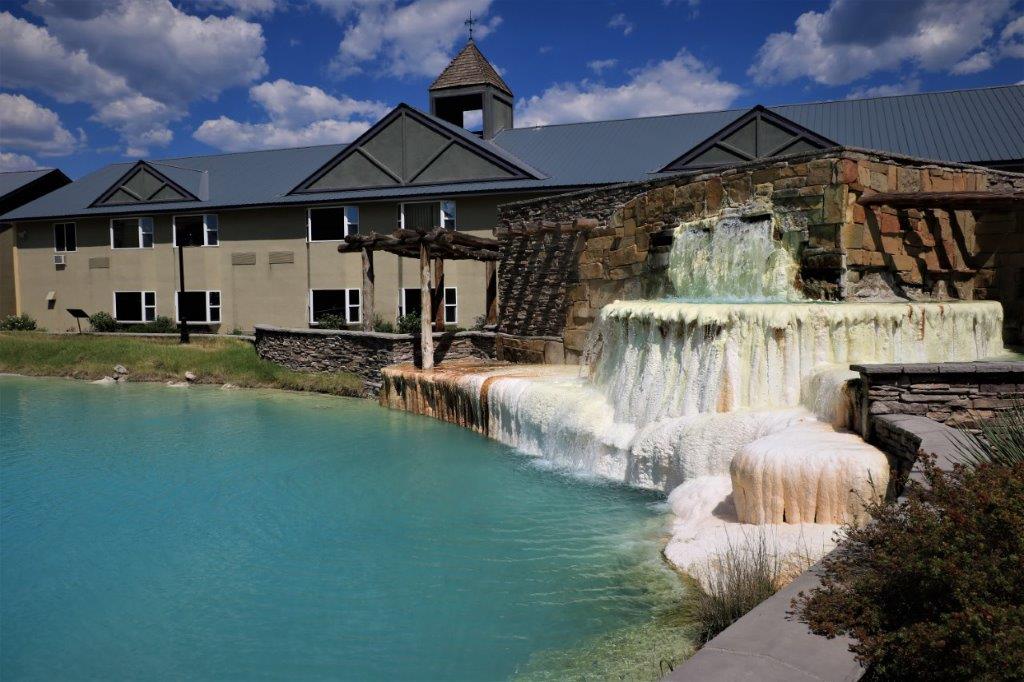
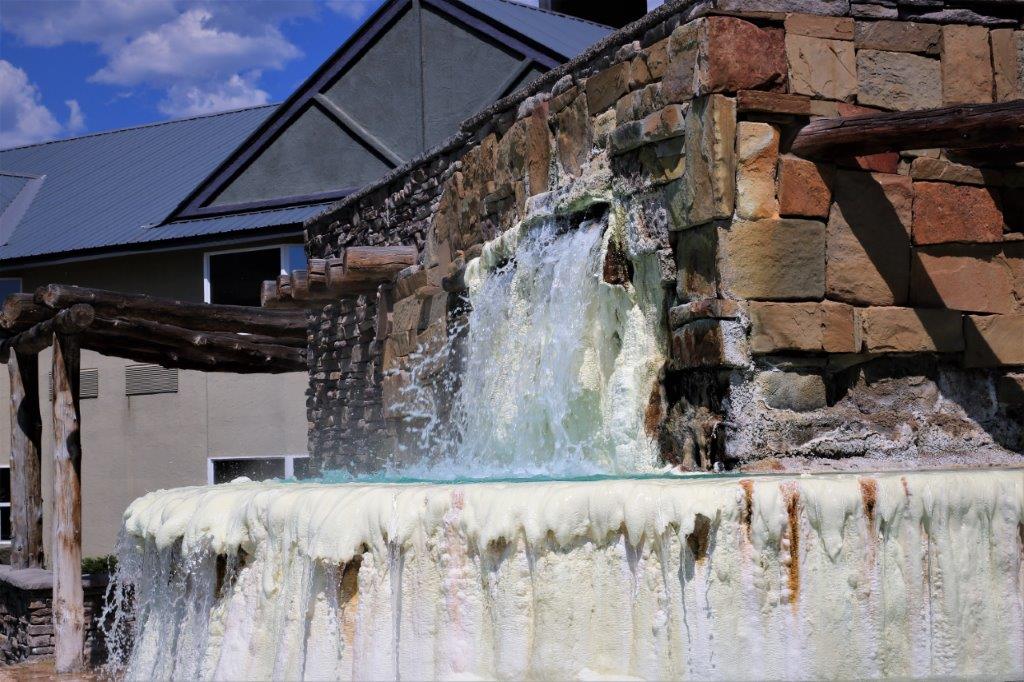
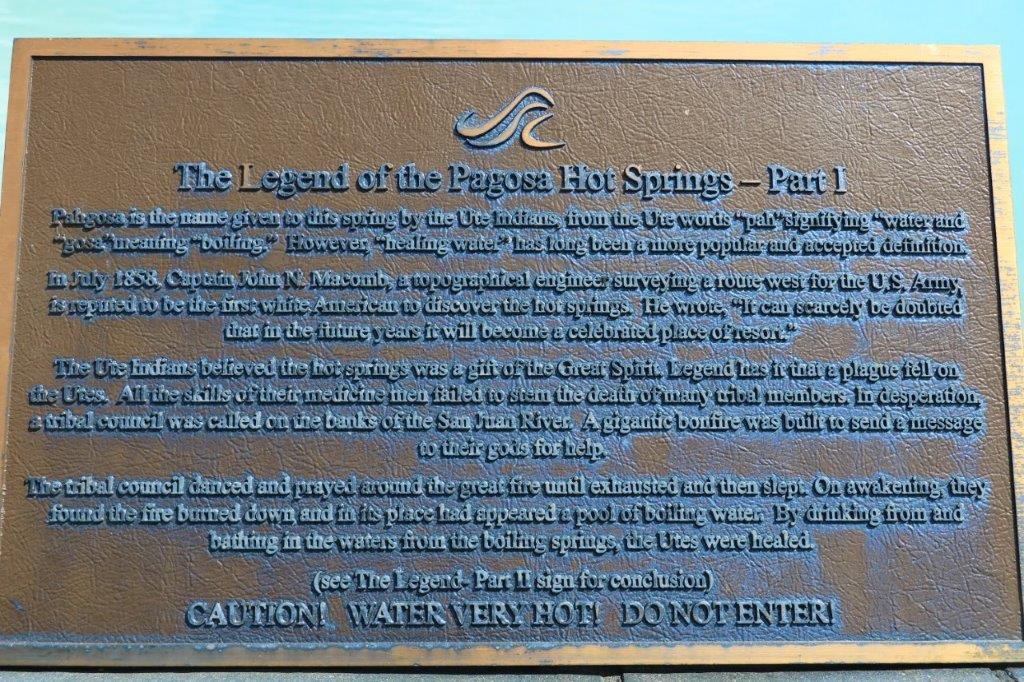
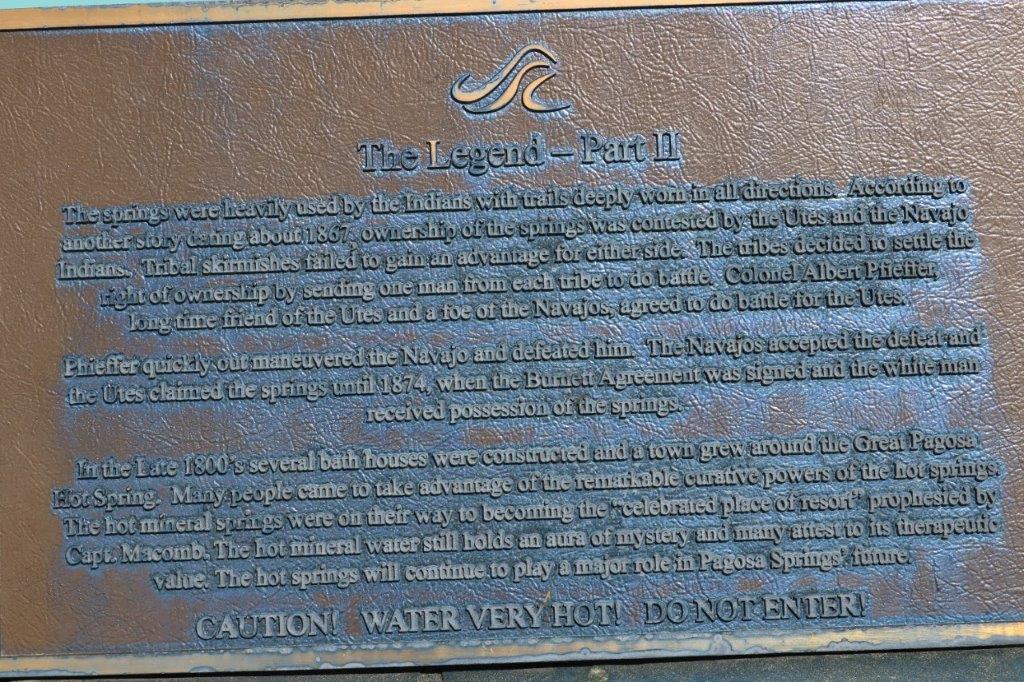
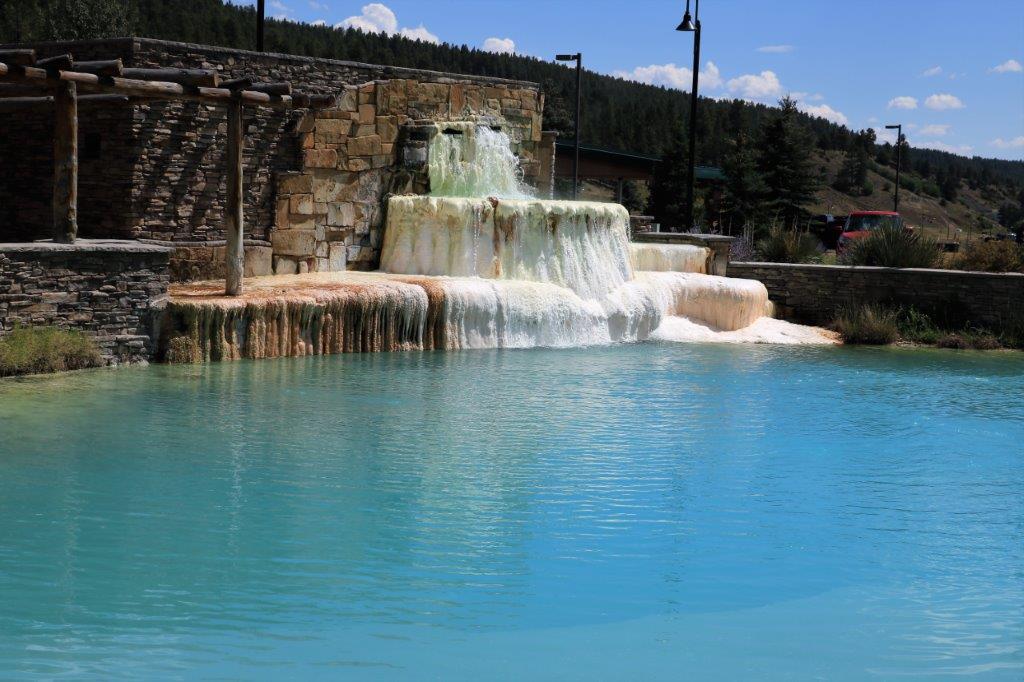
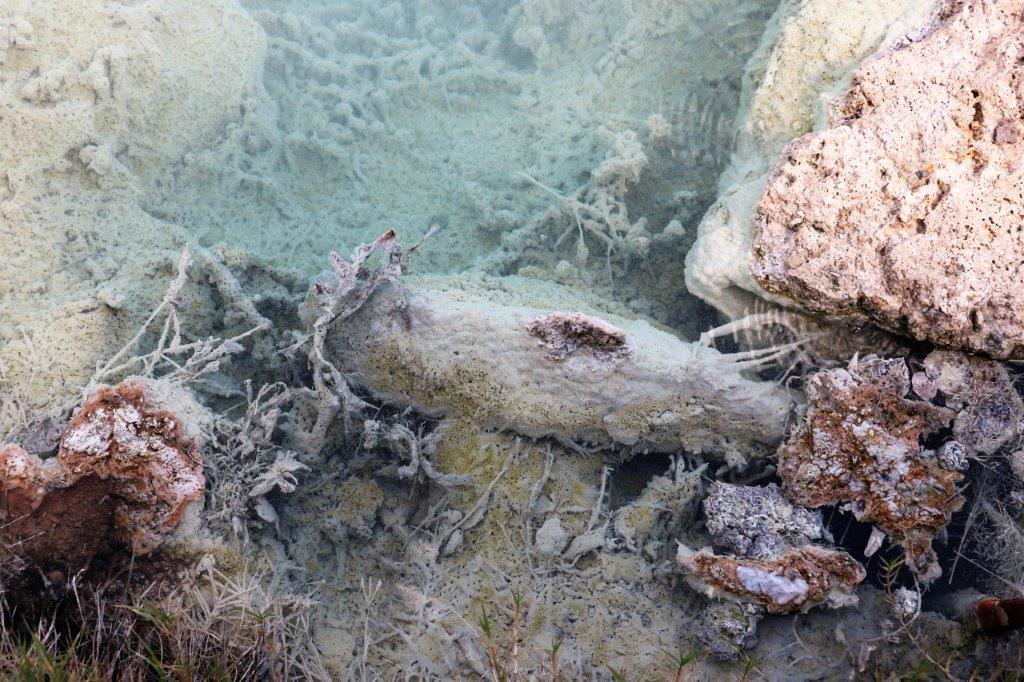
Along the River Walk and by the resort spas there are formations – almost like a water feature in a garden – created from tufa (similar to the travertine in Yellowstone).  Tufa is hydrogen sulphide and dissolved silica that gets left behind by the flowing water. On the opposite side of the river from the spas, up beside the road above the River Walk there is a viewing platform where you can watch the spa pools and the river players.  Another one of the tufa formations is there plus information boards about Pagosa Springs and this was the sight of an Earthcache.  So, I had to get John to take my photo so I could send it to the cache owner to prove I was there. We walked along the River Walk to the end just past the big hotel you see at the back of photo above. There was supposed to be a geocache hidden behind a sign at the little amphitheater but it was MIA so we backtracked and crossed the bridge to go past The Springs Hotel.
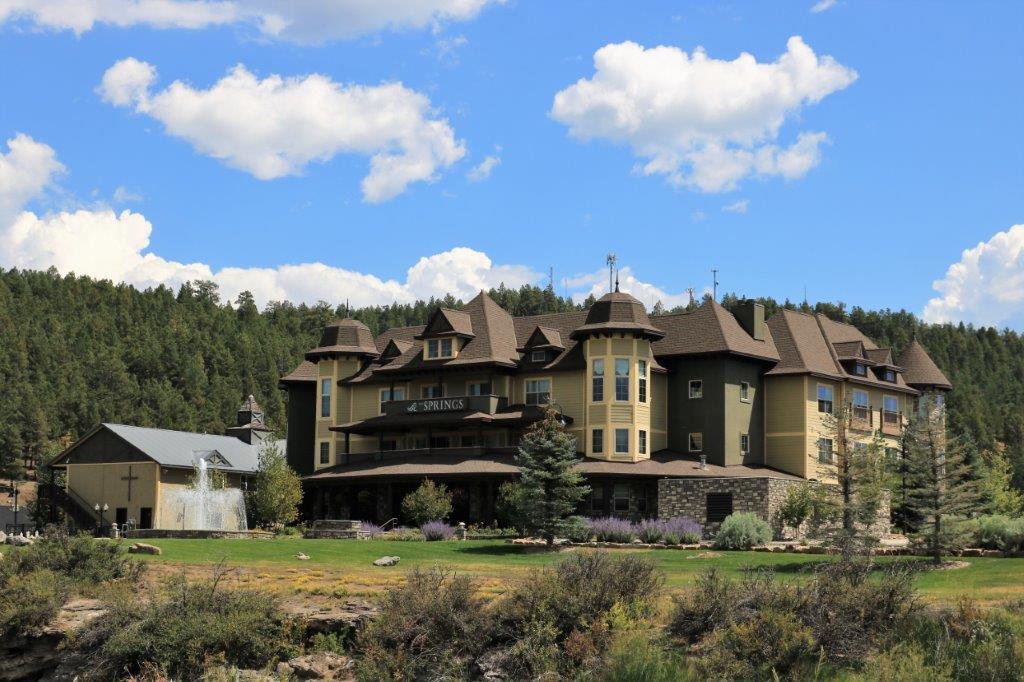
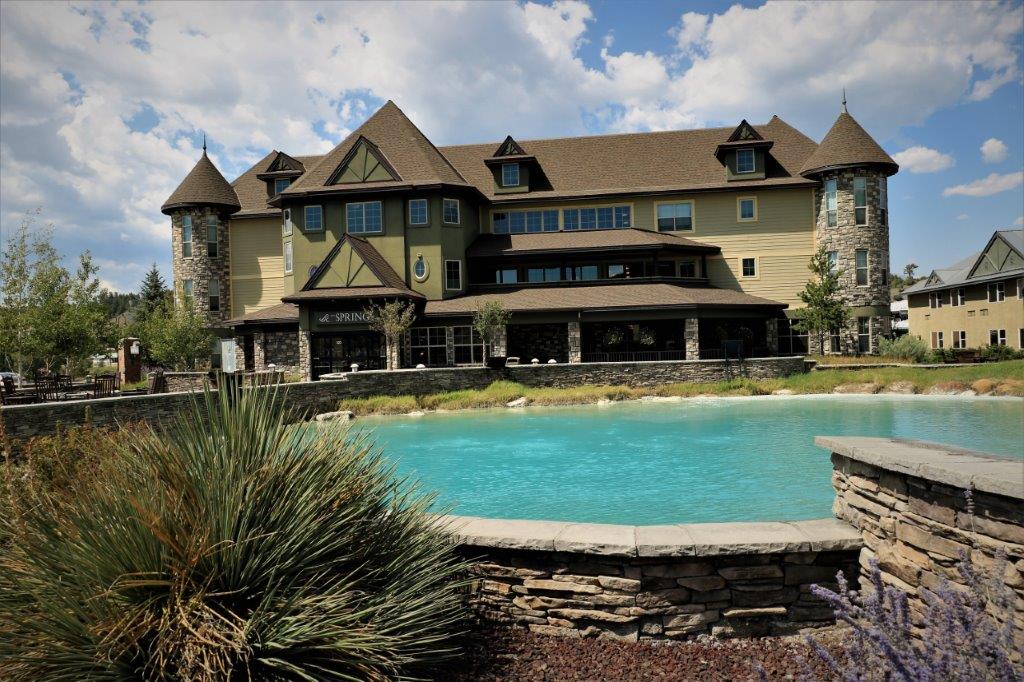
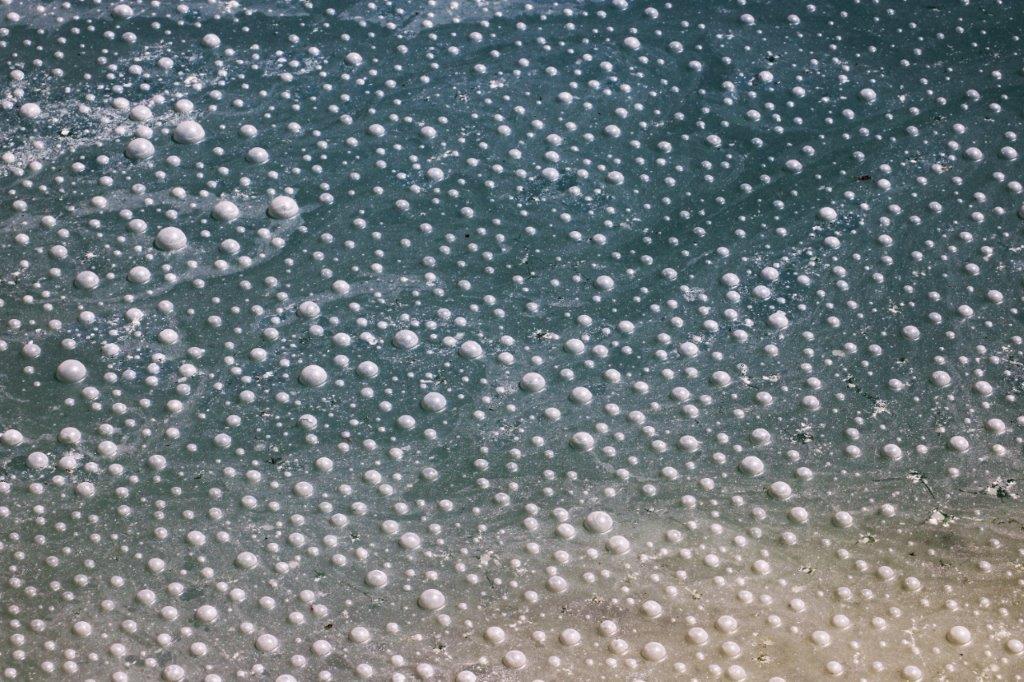
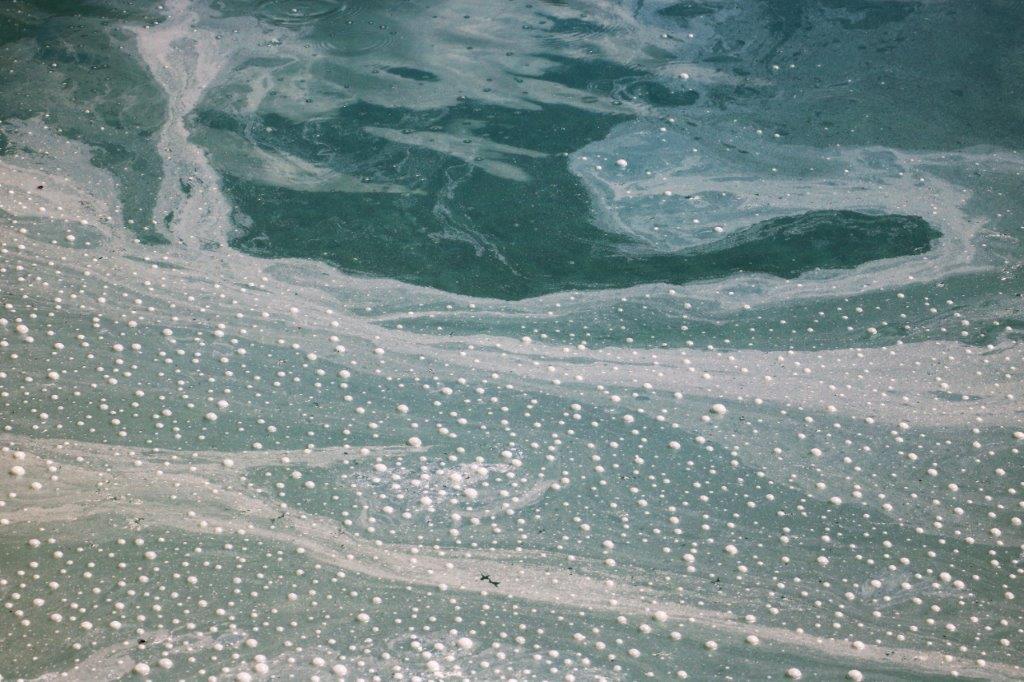
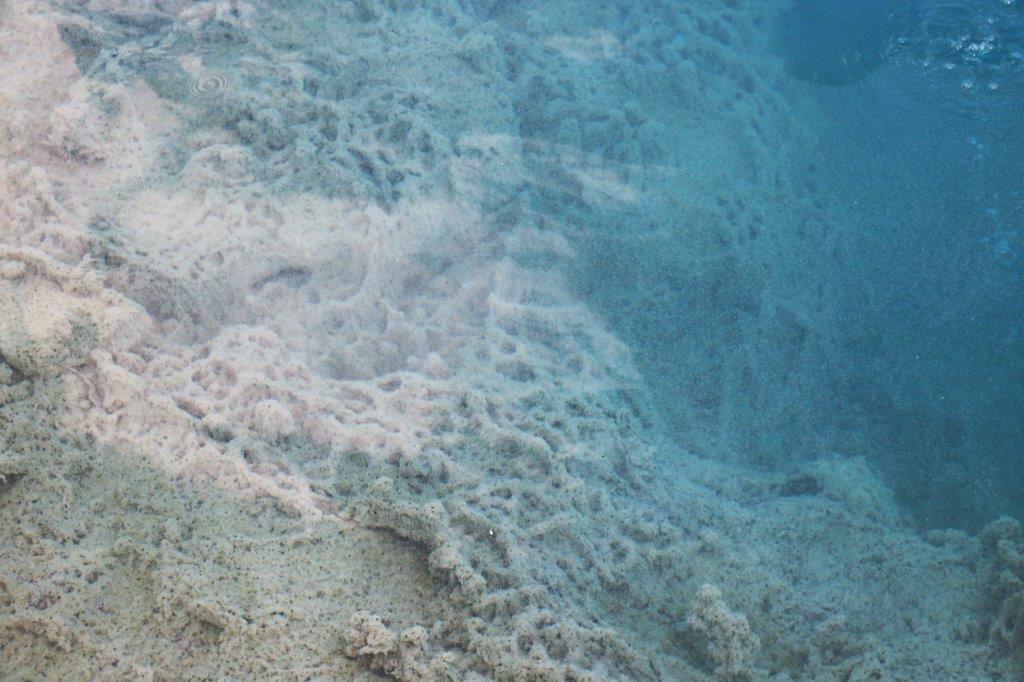
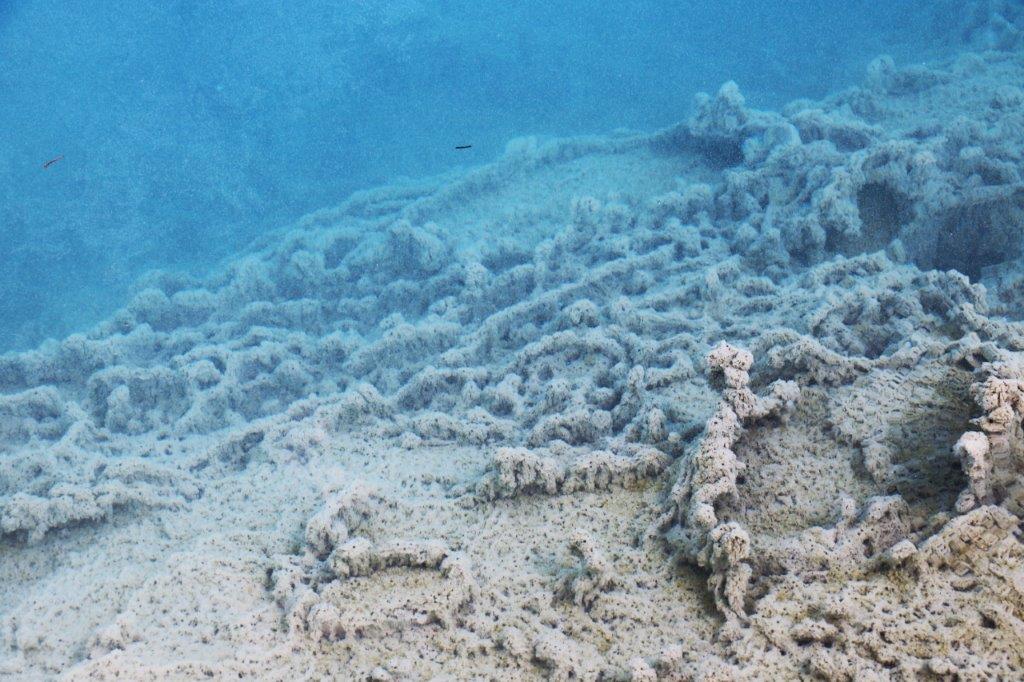
Looking one way up the river from the bridge and the other way down stream. At the back of The Springs Hotel you can see the Mother Spring – the deepest hot spring pool in the world; as measured by The Guiness Book of World Records. The pool is about 30′ across and what you can see is only about 15′ deep.  But in the center there is a small gap through which the hot water surfaces and Guiness measured it at 1002′ deep.  This pool you cannot bathe in.  It is VERY hot water. On the far side of the pool from the water feature the edge is covered with little unpopped bubbles and streaks of the minerals in the water. And the water is so clear you can easily see the formations on the side of the pool. We returned to the truck and made our way back to the resort for a late lunch and lazy afternoon.

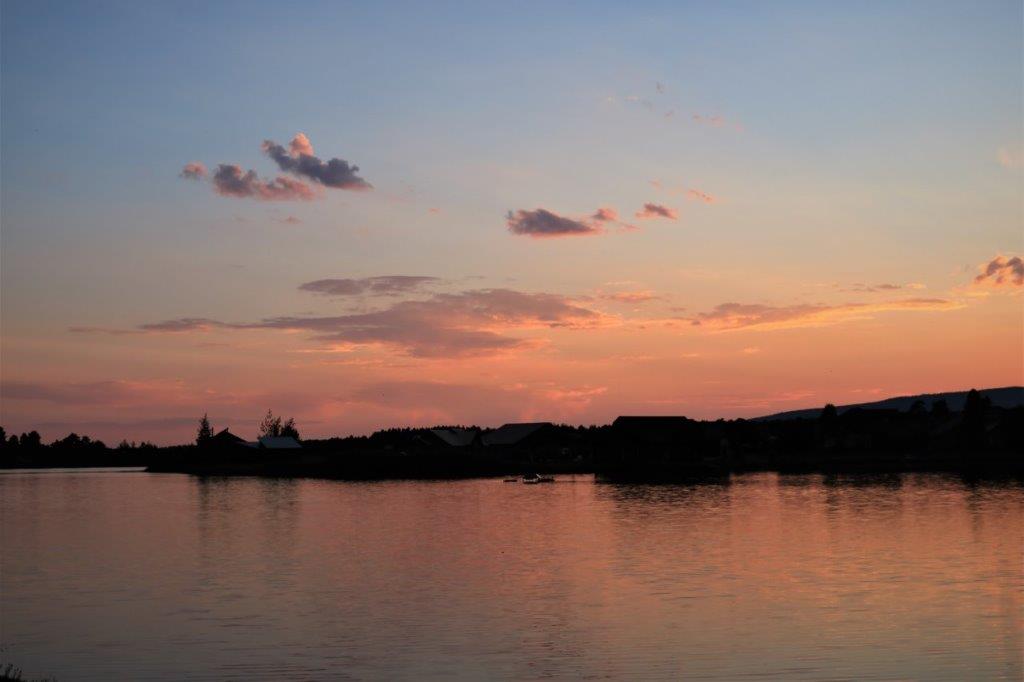
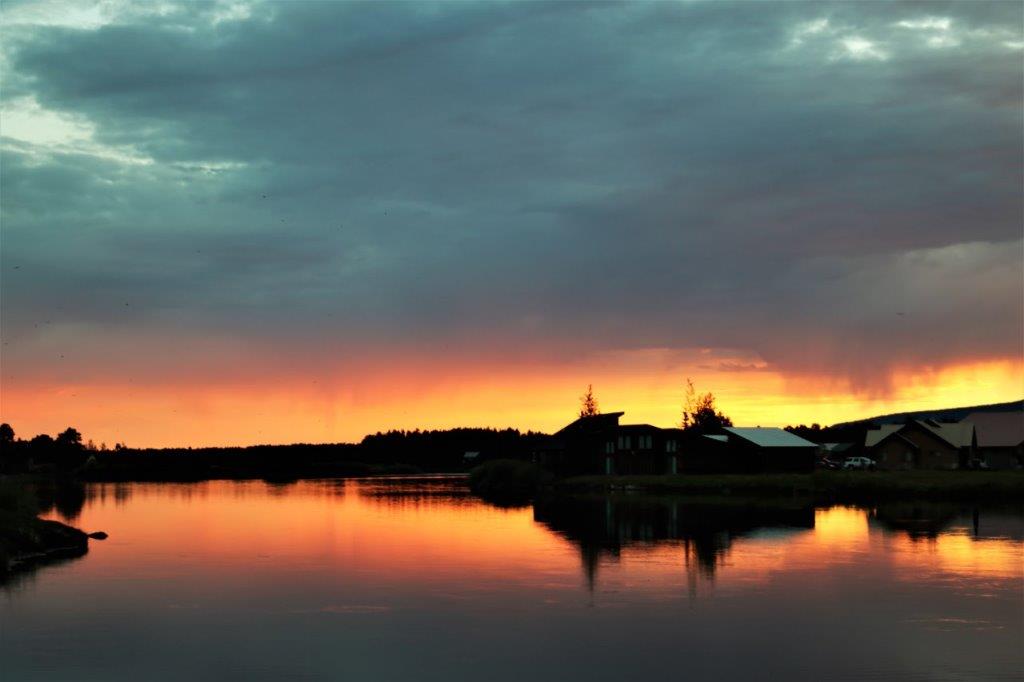
The feature film at the lakeside (sunset) was more a short subject tonight.  There had been short rain showers several times over the dinner hour and not a lot of clouds in the sky by the time the sunset to give the nice colours; but still it was a pretty good show.


2017 Aug 27 – Pagosa Springs, CO (Piedra Road & Chasm)

We had decided to have a geocache day, but in our usual lazy fashion we didn’t leave the condo until noon; just in time for the rain to start.  However, being intrepid cache hounds, we carried on.

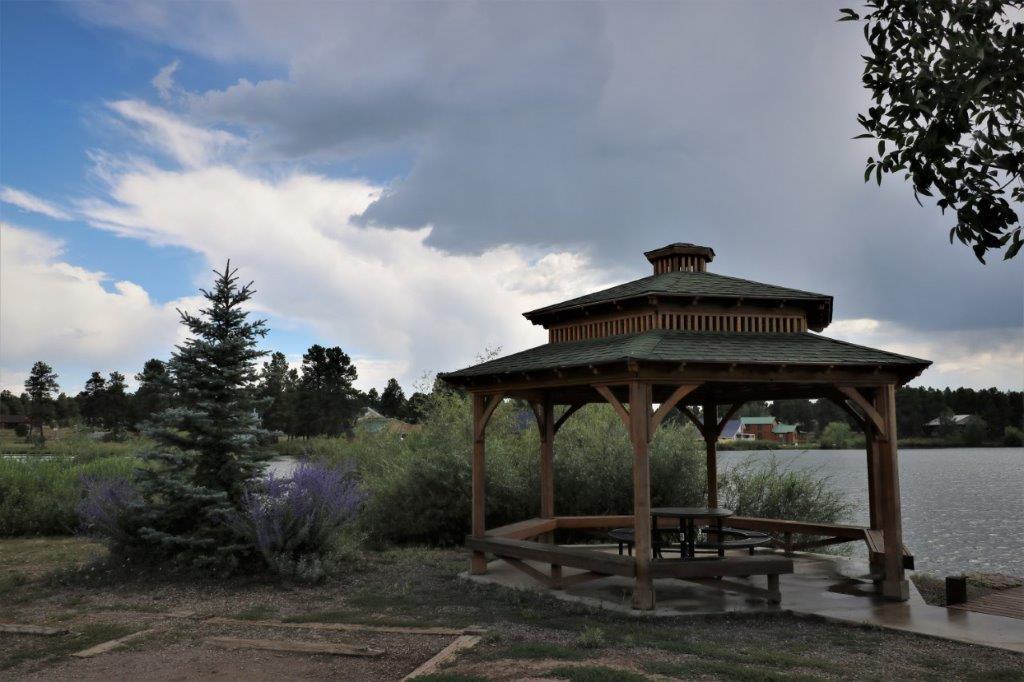
There is a 31-cache series called Nuthatch on several roads around Pagosa Springs and a string of 5 or 6 of them were on Piedra Road that goes by Pagosa Lake and Hatcher Reservoir, and on quite some distance further to Williams Reservoir.  We thought that would be a good place to start and managed to find the first one.  We spent almost a half hour looking for each of two others, and decided that the series was going to be too much work for too little gain.  Instead we passed by the Nuthatch caches and drove further up the road to find three others.We stopped at a nice gazebo beside Pagosa Lake and had lunch.  The lavendar is in bloom all over the place in this area.

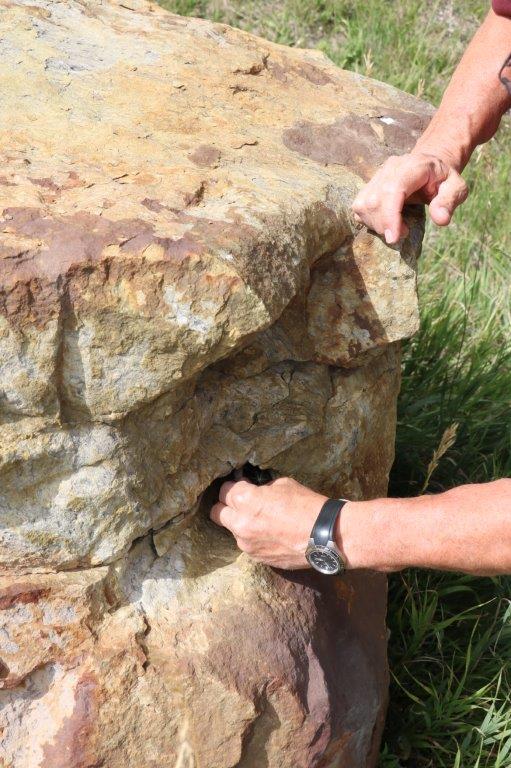
The scenery was magnificent.  I have said this before but I will repeat myself:  There are so many places we would never have seen but for our new hobby of geocaching.  There is absolutely no reason I can think of, in the course of a pre-caching vacation, that would have taken us 10 km up that gravel road.  And yet the challenge of finding a hidden container with piece of paper we can sign took us out of town where we were blessed to see some beautiful countryside. One of the caches we found today was very cleverly hidden in a bore hole in a boulder beside the road. John needed to find a long stick to push it through to the other side so we could get it out and sign the log.  People are so clever!

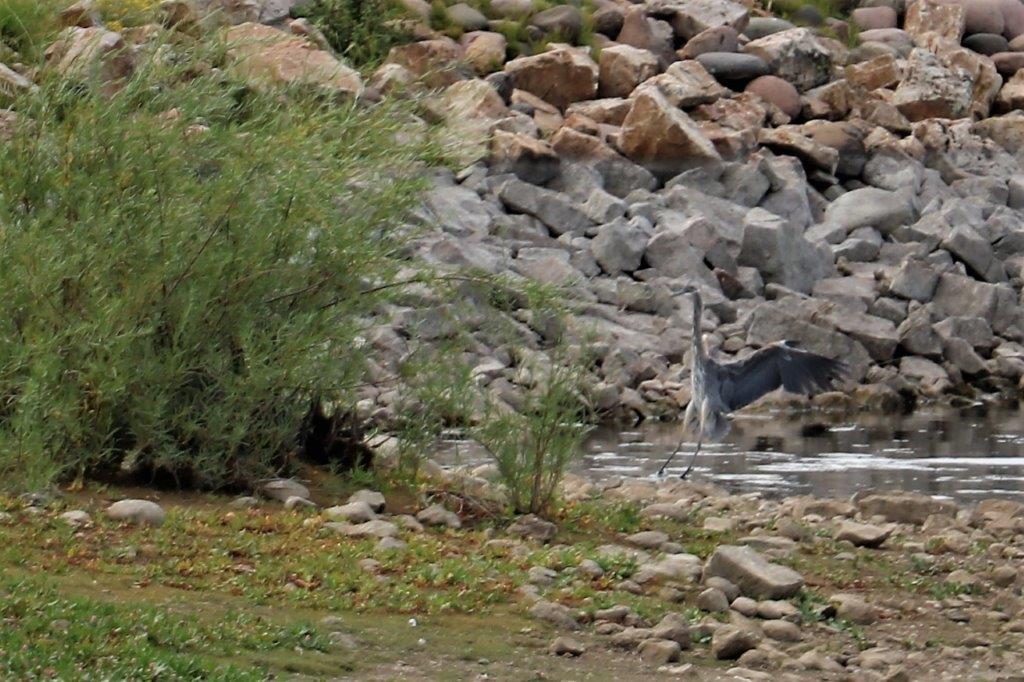
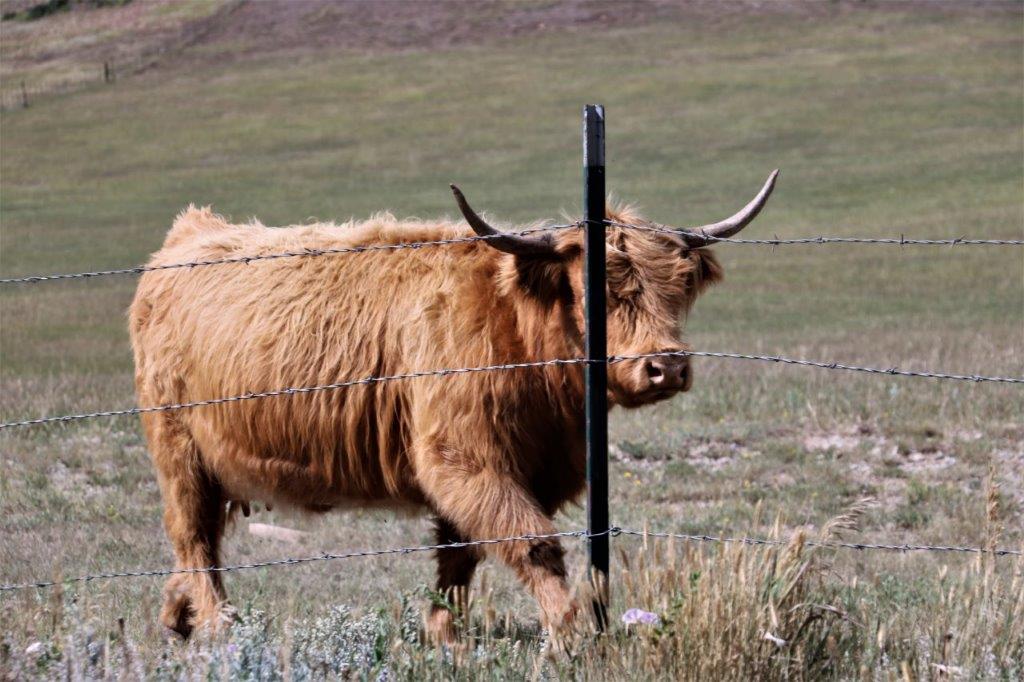
At Lake Hatcher we saw a heron landing beside the water.  Once he was standing still it was almost impossible to pick him out from the surroundings. We rounded a corner and there was a doe and her fawn eating the grass right beside the road.  She dashed off as John slowly passed her and her fawn went lickety-split up the hillside after her. There was a cache attached by a magnet to the back of this sign and through the gate off to the side was an earth house.  It didn’t look like it was lived in and had an unfinished, derelict air. These look distincly like Scottish Highland cattle. We were too far away for a good shot of the rock formations on this mountain but they looked pretty cool. Several times we had to pull over and take photos of the scenery. All of a sudden, as we came around a bend in the road we could see a chasm.
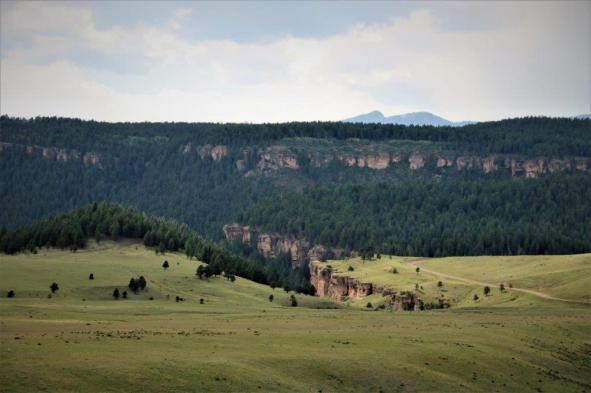
As it turned out, one of the geocaches we had come to find was up on a hillock at the crest of the cliff.  It as a short walk to the top of the bluff and we spent quite awhile wandering around and looking at the cliffs, river, and distant fields. The view was spectacular in all directions.

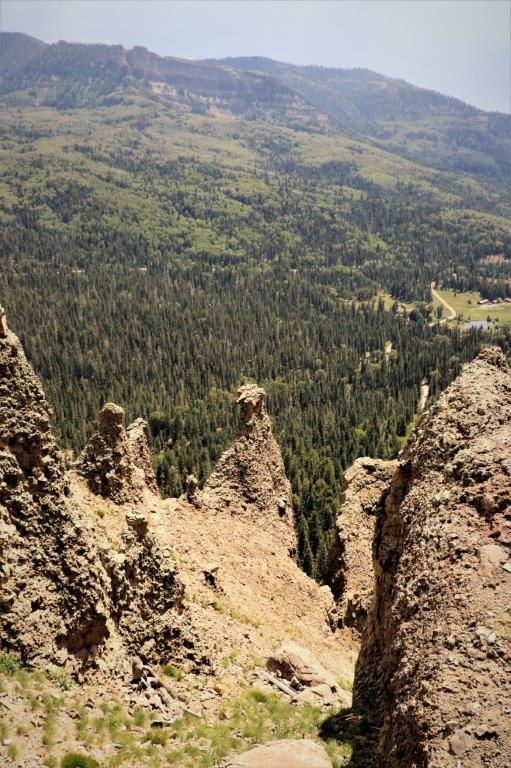
And, of course, me being me, I wanted to see what it looked like straight down.  Being older and a little wiser than I was in my youth, I did not go to the edge and look over (which is what I like to do) since the top was overhanging the sides.  Instead I changed my camera from viewfinder to LCD  display and held the camera out over the edge to get the pictures. There was even a small waterfall.

After we took all our photos we headed back to Pagosa Springs to make dinner and be ready for the night’s ‘movie’ – aka the sunset.  The sky was full of billowing large clouds. Just as the sun began to set it started raining again.  Since the best colours come after the sun has set we stayed inside in the hopes it would quit; and it did.  Due to the heavy clouds the colours were not nearly as vibrant as the night before but it was still beautiful. On my way back to the condo I caught a glimpse of movement out of the corner of my eye and spotted this skunk directly in front of me.  He had already spotted me and turned and raised his tail, but I quickly crossed to the other side of the road and in front of the parked cars and the skunk decided I wasn’t a threat and crawled into its house in the culvert.  Sure glad he moved or I would never have seen him until it was too late.  I shudder to think of the amount of tomato juice and baths I would have needed.
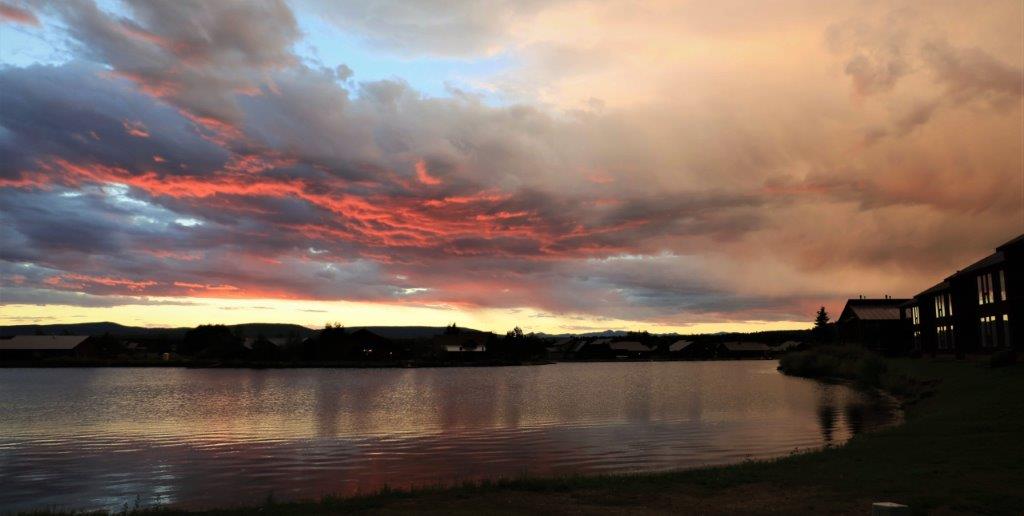
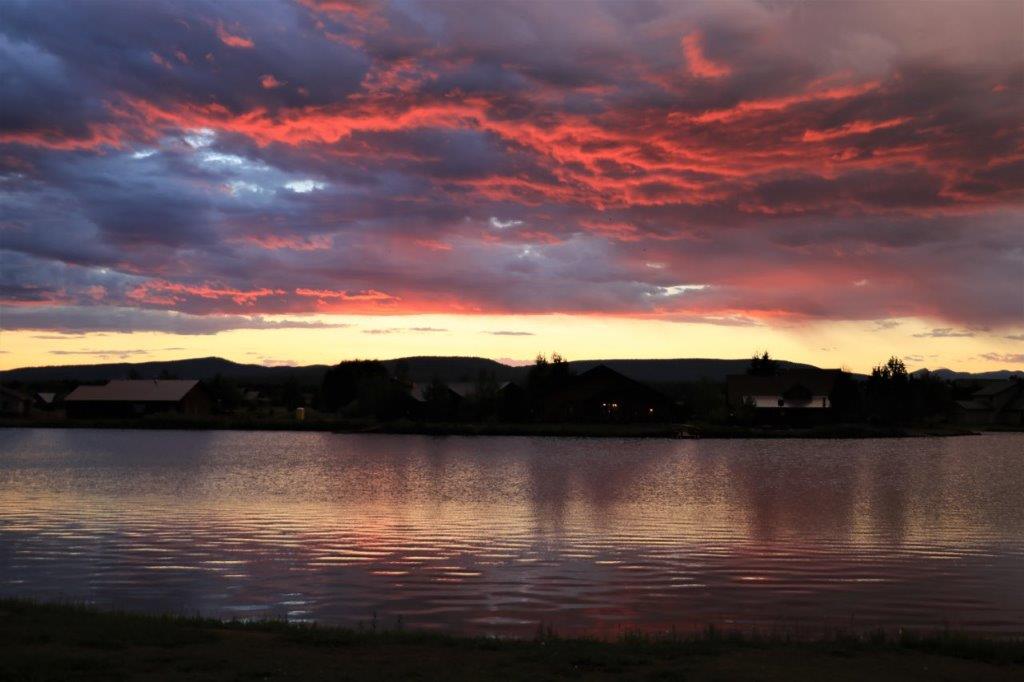
 

2017 Aug 26 – Pagosa Springs, CO (Wyndam Resort)

Since we have been on the road for a week and putting lots of miles on my Poppy truck we took it easy our first day at the condo in Pagosa Springs, Colorado.

It is quite a high elevation here (7,126′ compared to the 1,362′ we are at home) so we both were affected a bit by the altitude.  Just tiredness and a low-grade headache.  Nothing serious. But we were tired anyway from all the long driving days so we only took two walks – both to find a geocache hidden here on the resort.

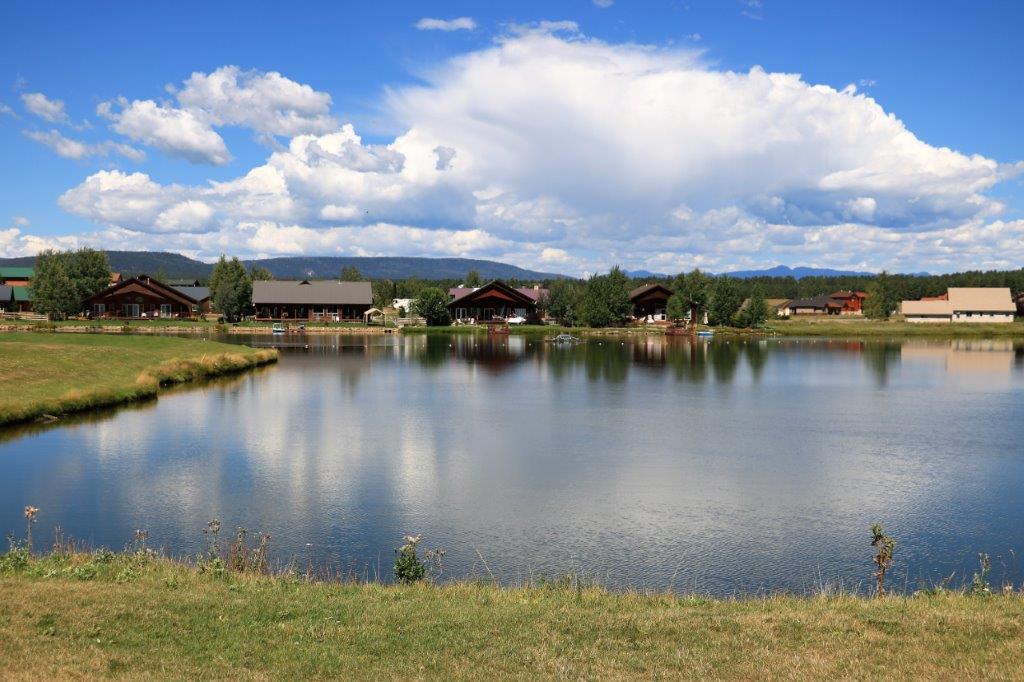
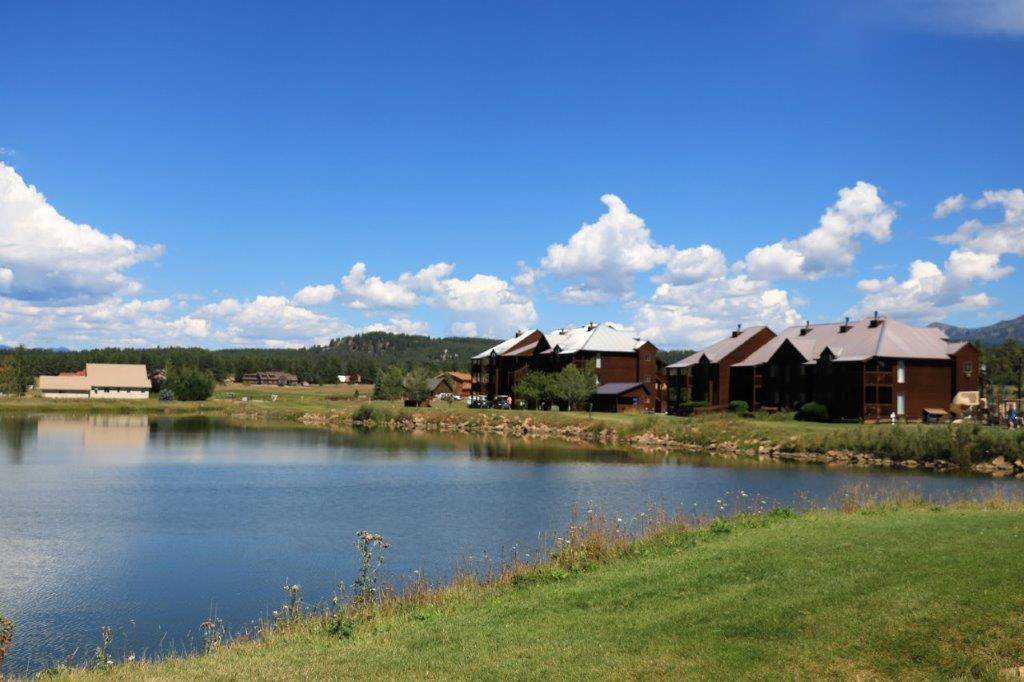
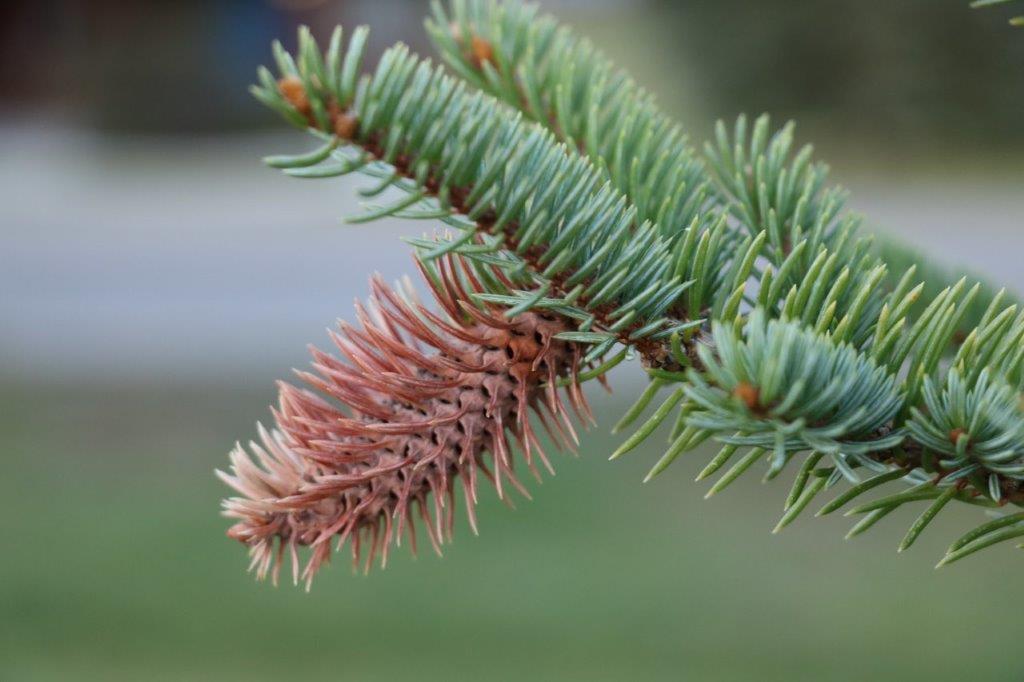
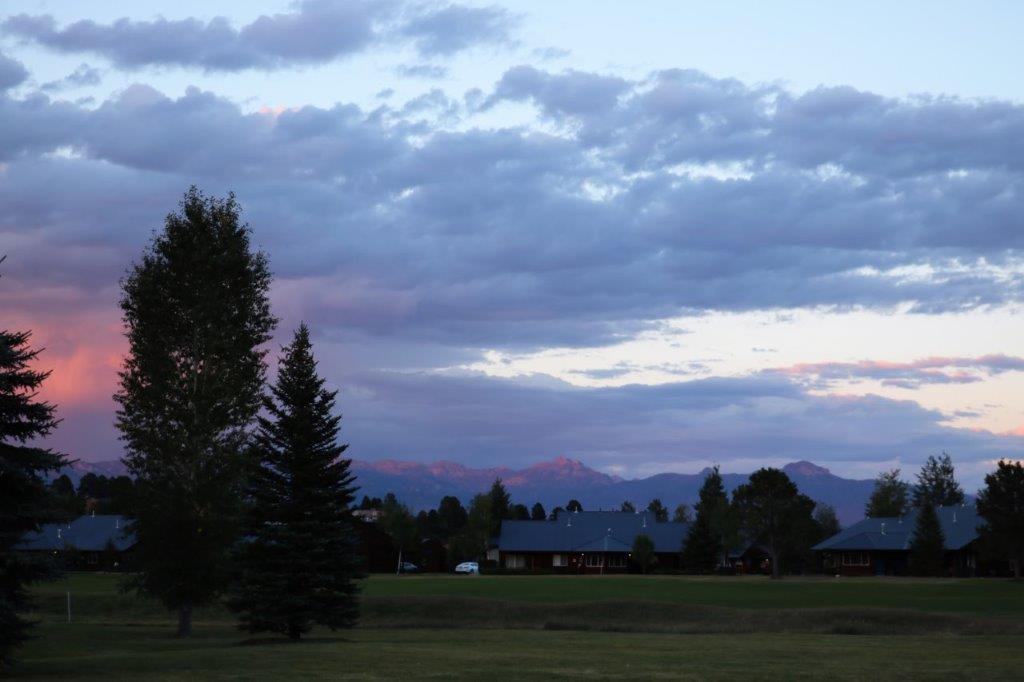
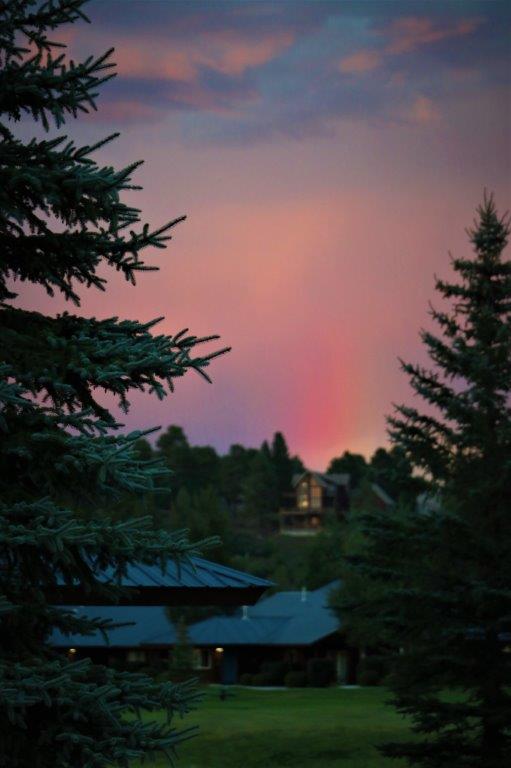
We went one way in the afternoon: And the opposite way in the evening.  The cache was hidden in a very small vial near the trunk of a bushy young Blue Spruce tree.  Very prickly.  It was just growing it’s cones.  Which were also very prickly.It was about 7:30 Mountain time and the sun was setting.   This almost looks like a sunset rainbow.  The bright pink slash was very pretty.

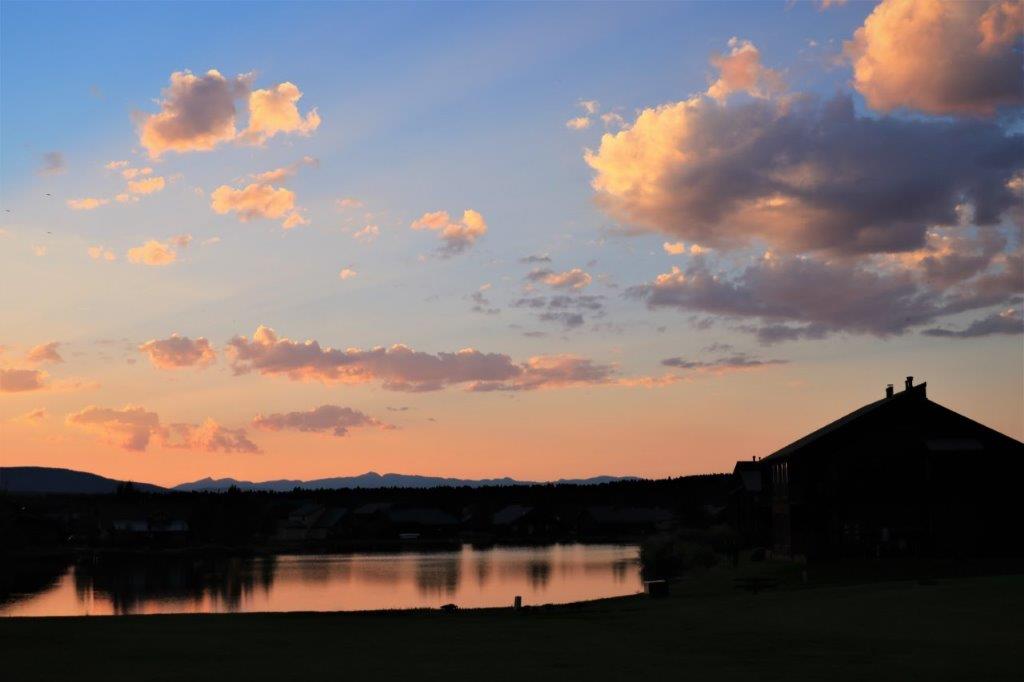
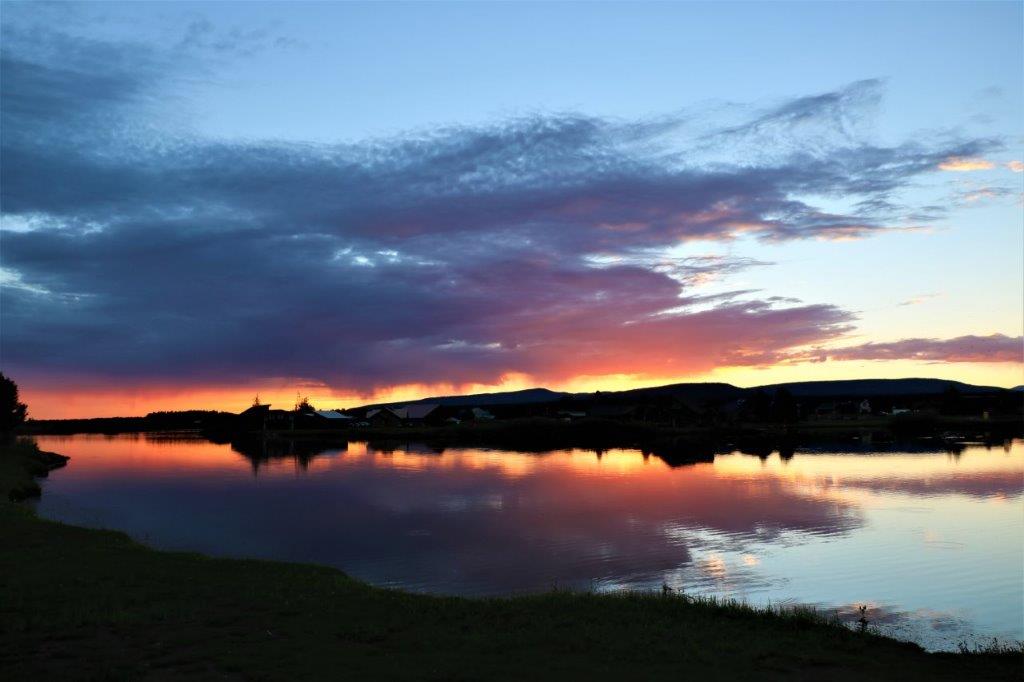
After we found the cache and signed the log we walked over to the other side of the lake from where we walked this afternoon and photographed the sunset.  It was glorious.  We have decided that will most assuredly be a regular evening outing while we are here.   So, no exciting doings today.  We will see if we see some interesting things tomorrow as we have decided to have a geocaching day.  We will explore the hot springs and some of the other area points-of-interest later in the week.

2017 Aug 25 – Taos, NM to Pagosa Springs, CO

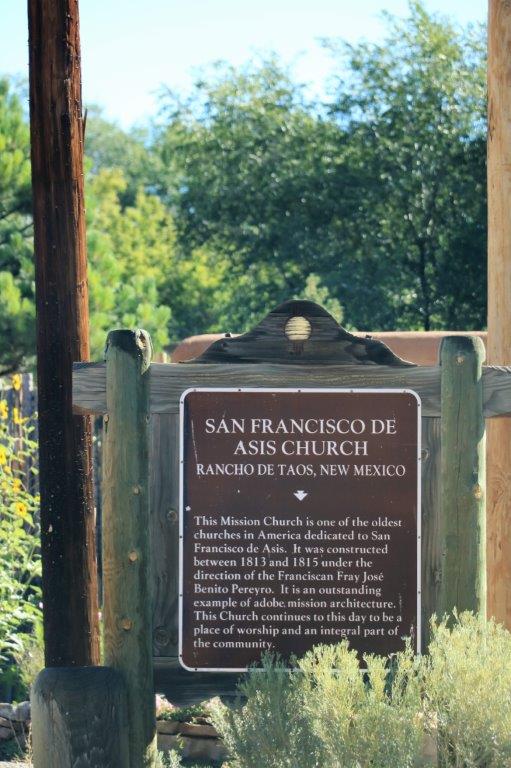
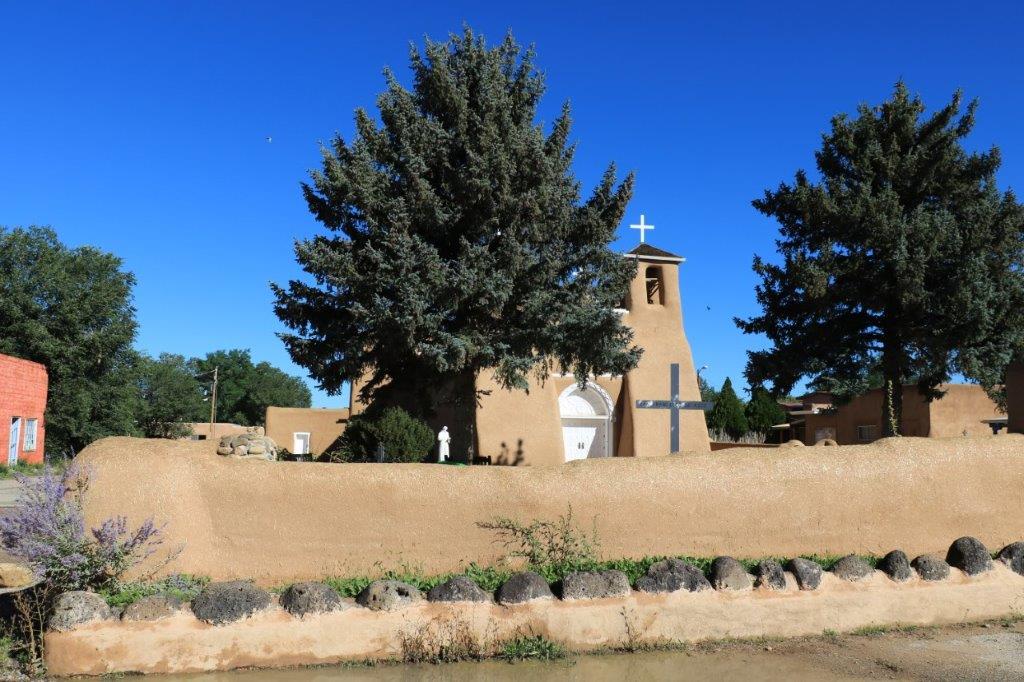
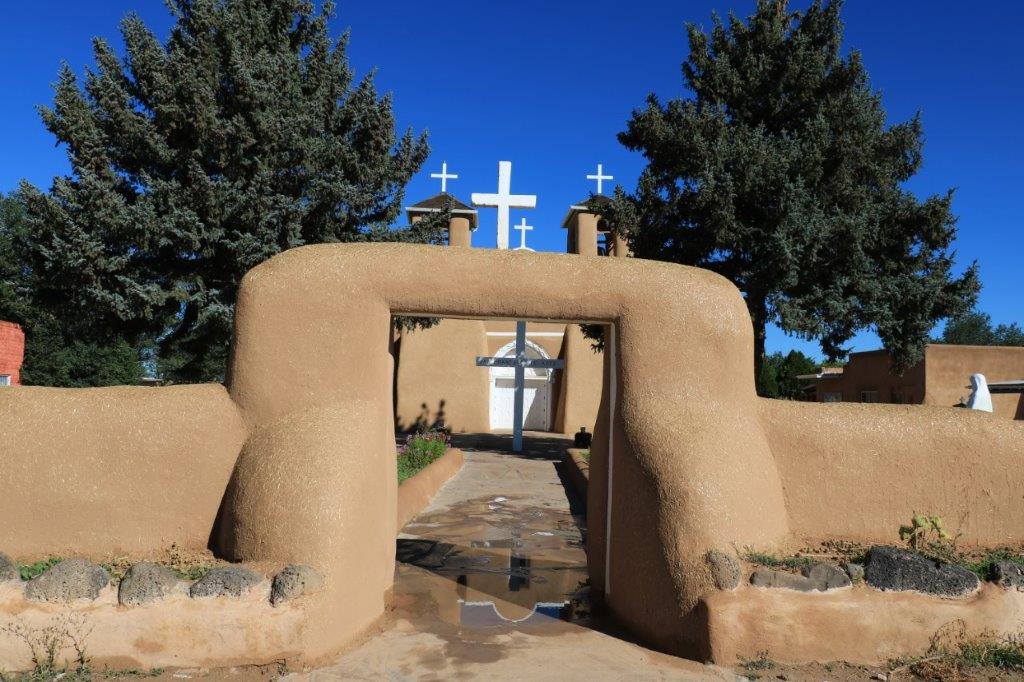
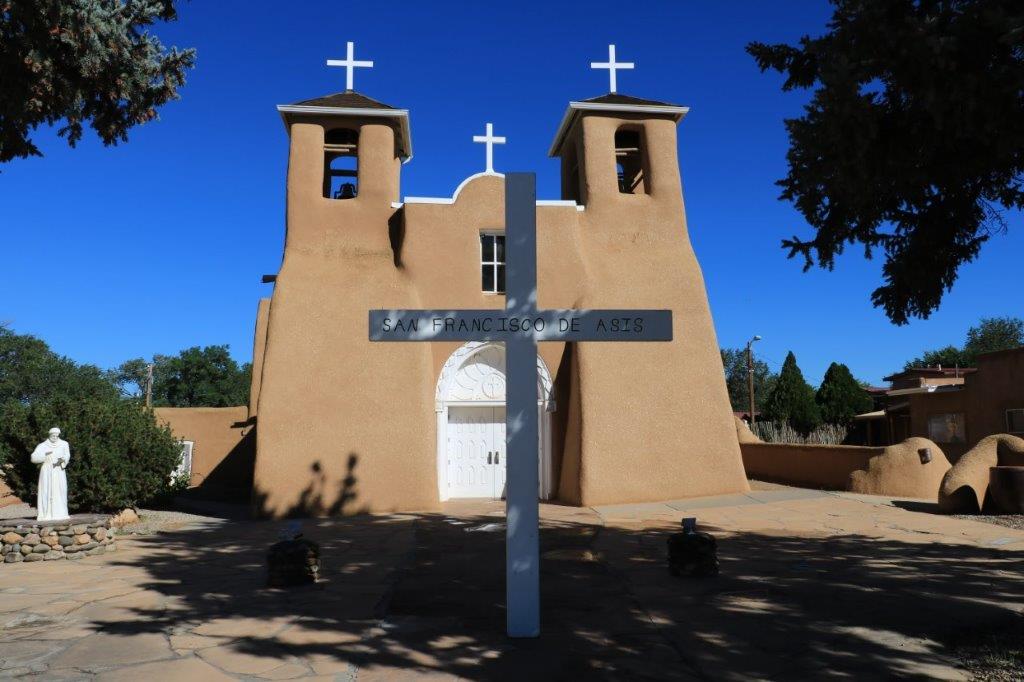
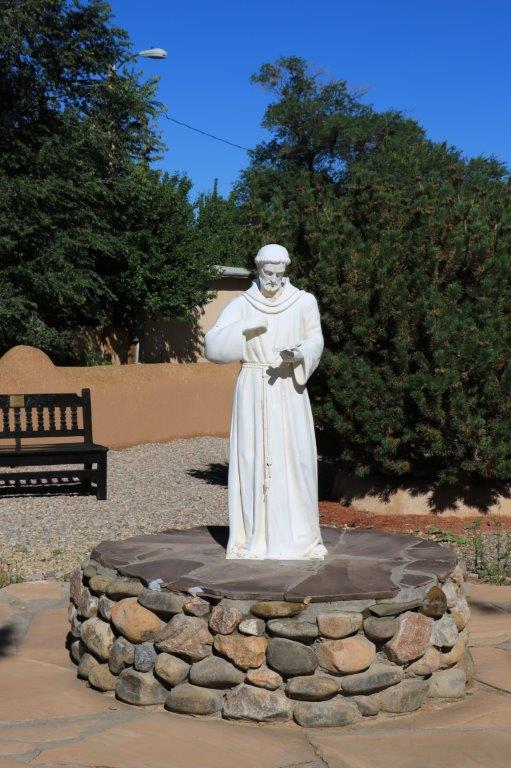
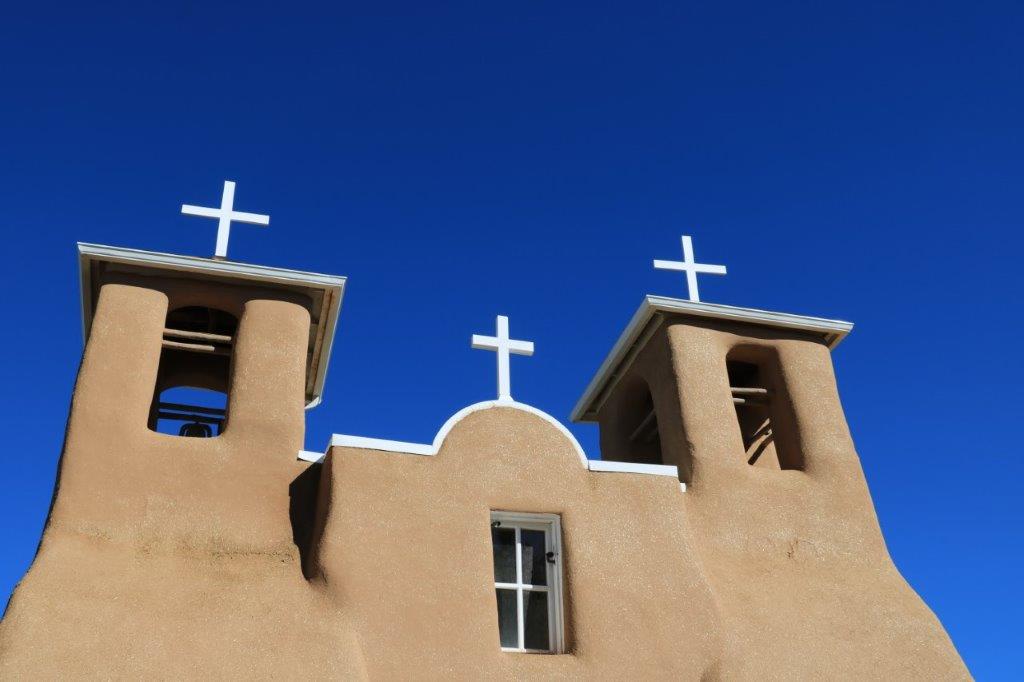
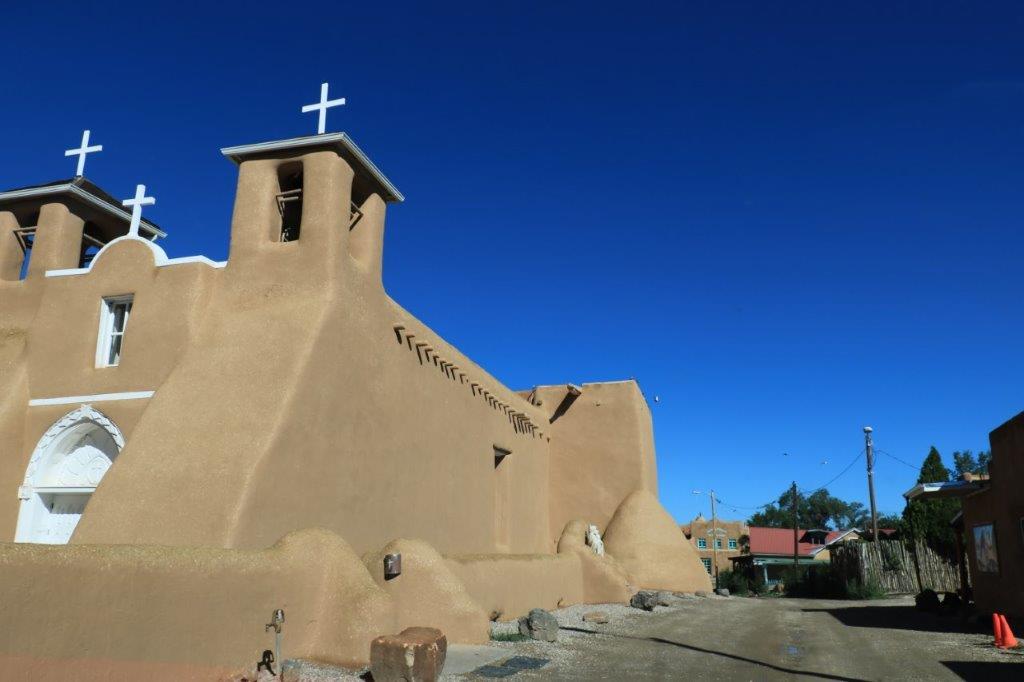
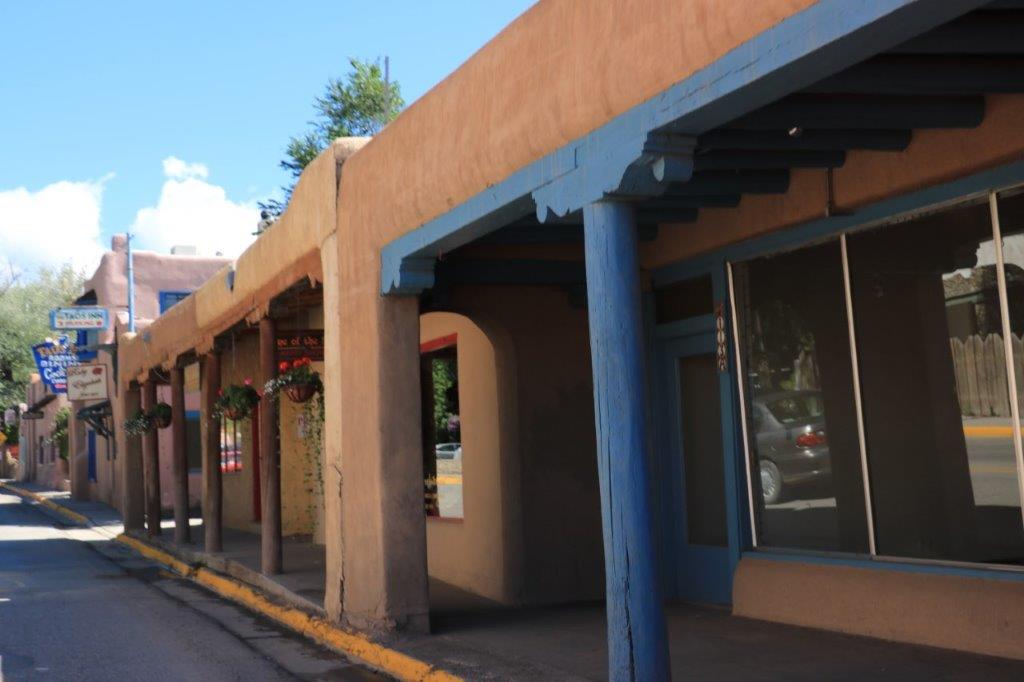
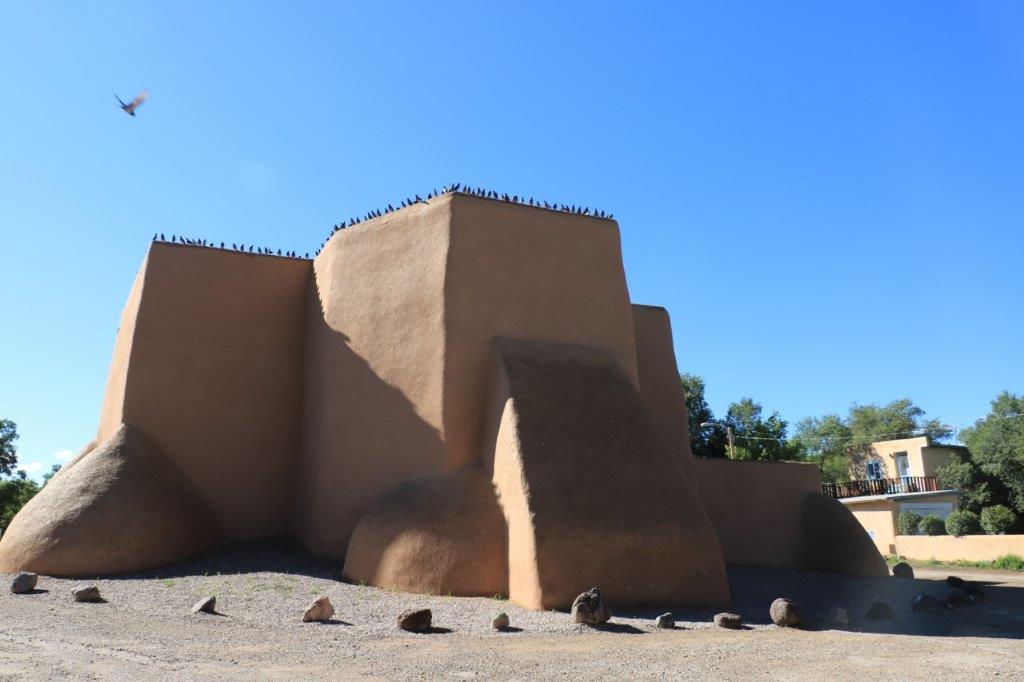
The drive continues; but before we left Taos we drove a bit further out of town to see San Francisco de Asis Church.  The church is one of the most photographed churches in the United States.  It was built between 1813 and 1815 and is still an active congregation today.  The parishoners and community re-coat the mud/straw adobe exterior every year to keep it well preserved.  Unfortunately the church was closed so we could not see inside but we took some pics of the exterior.  From the air the church makes the shape of a cross.

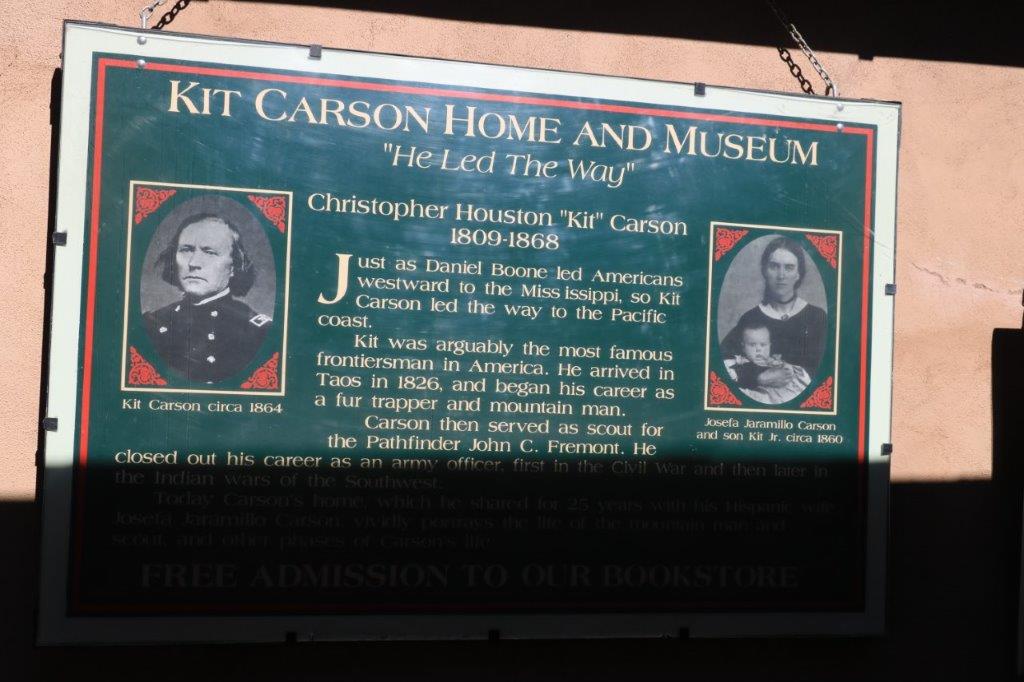
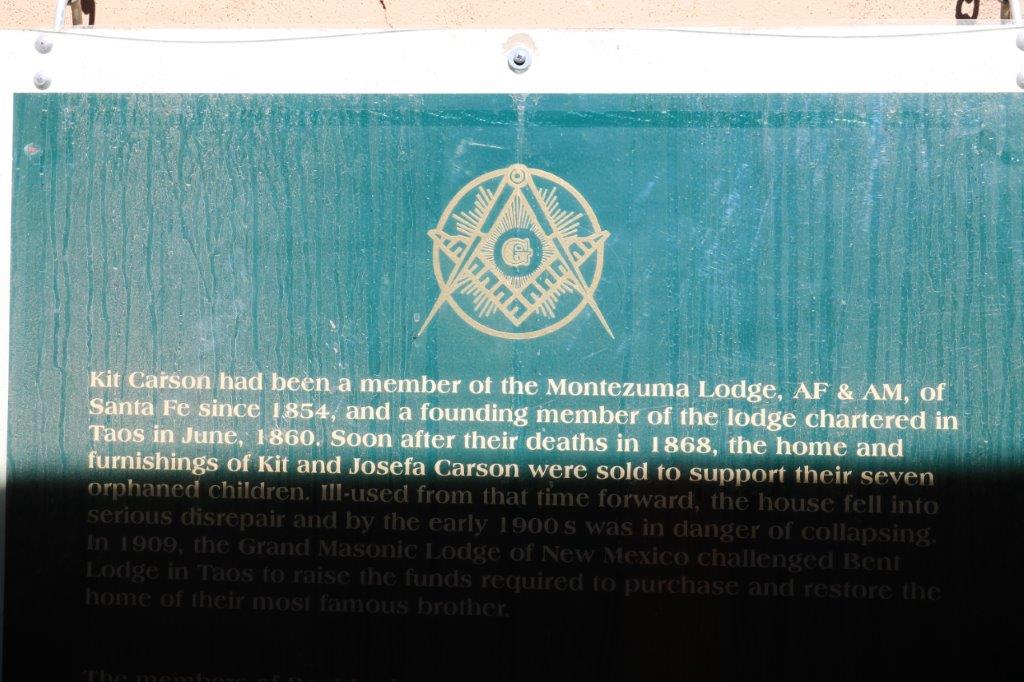
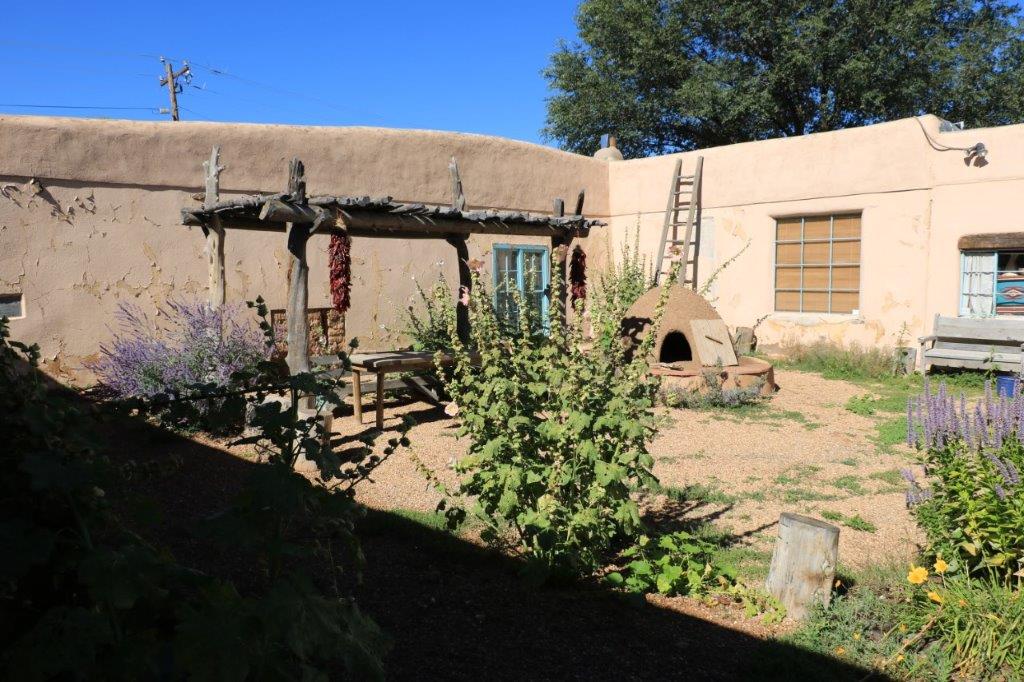
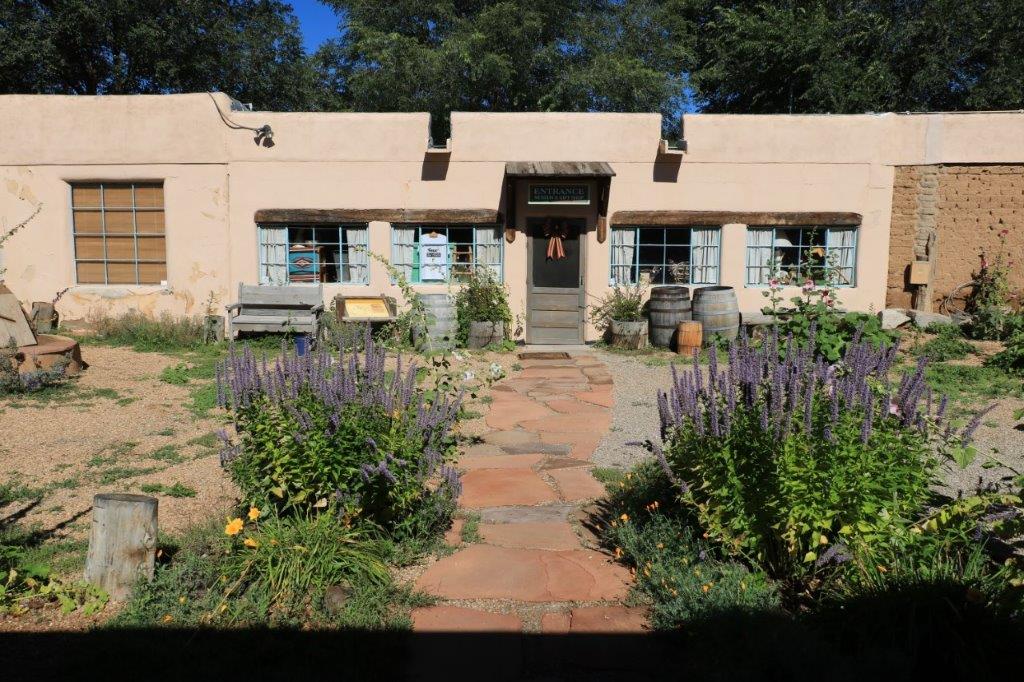
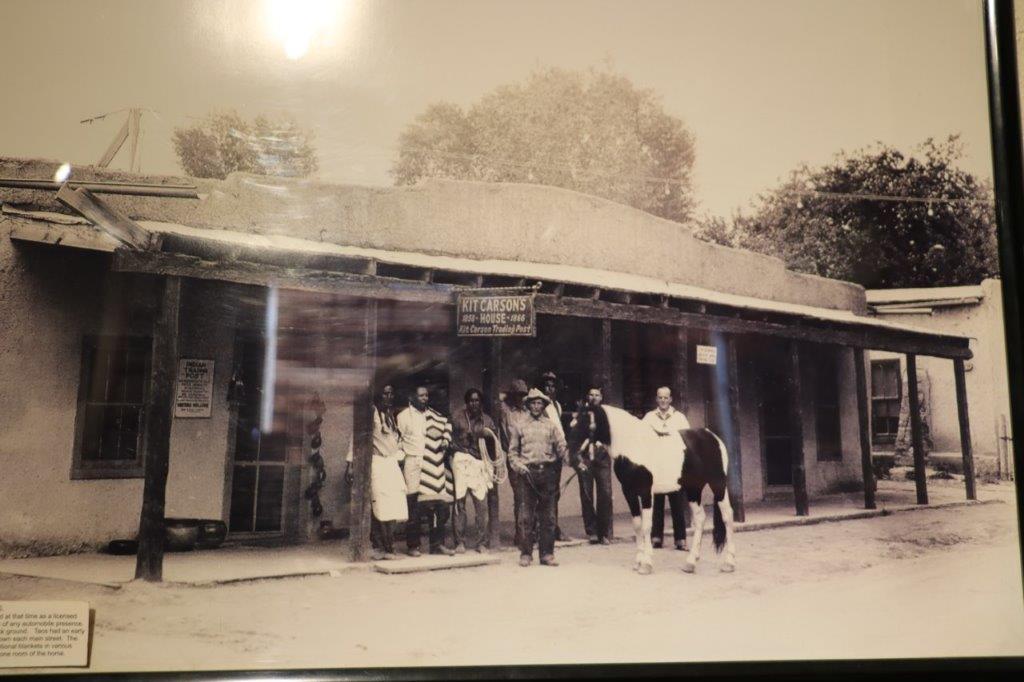
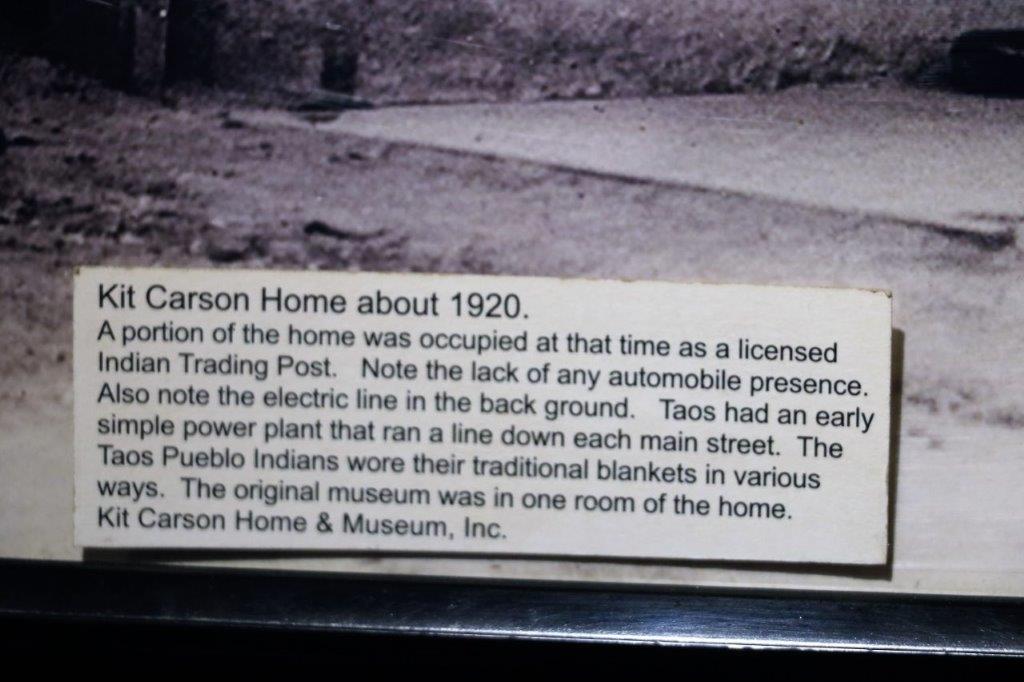
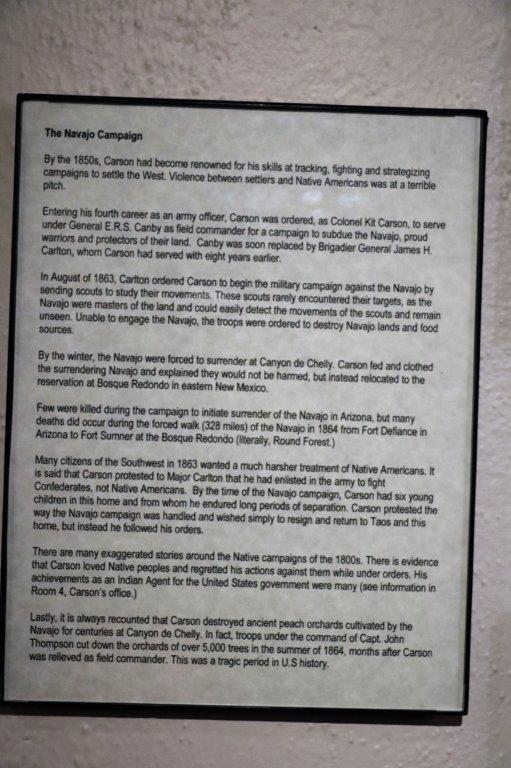
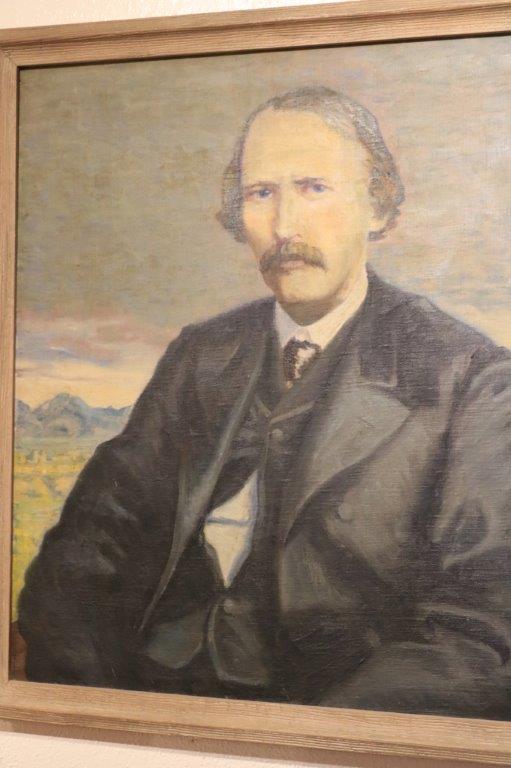
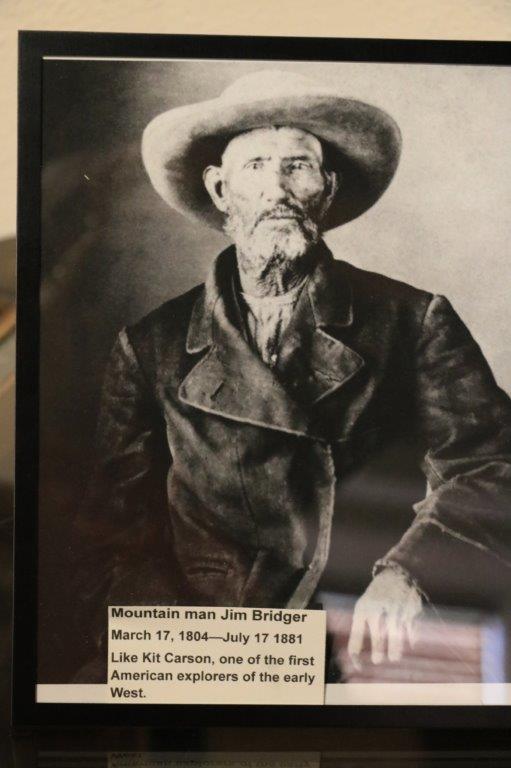
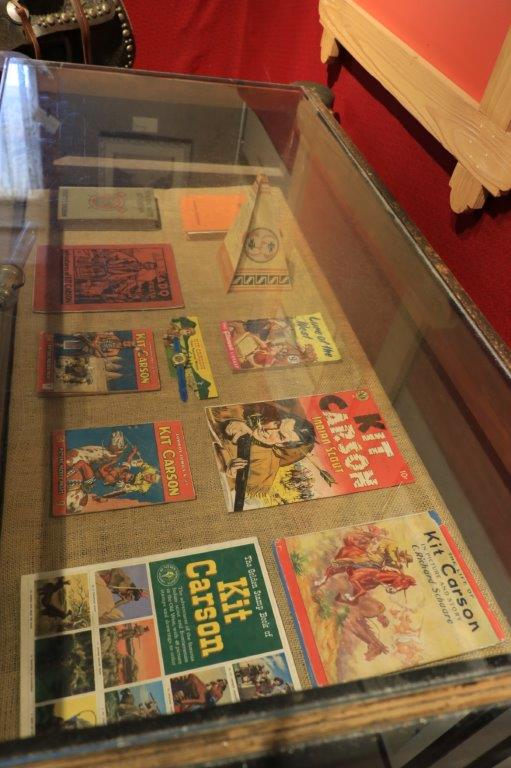
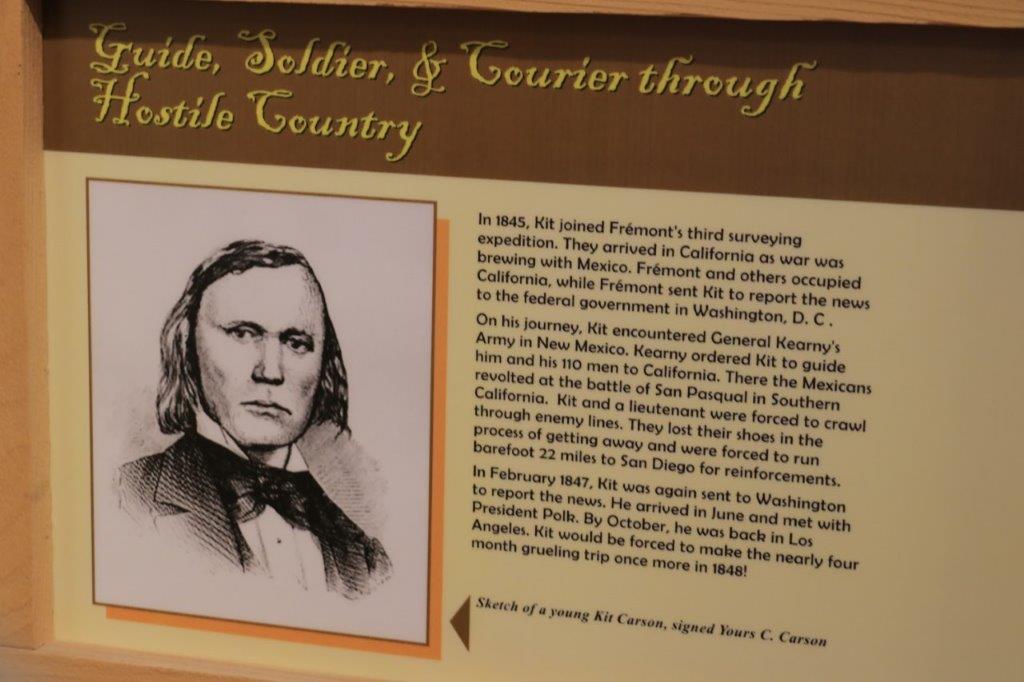
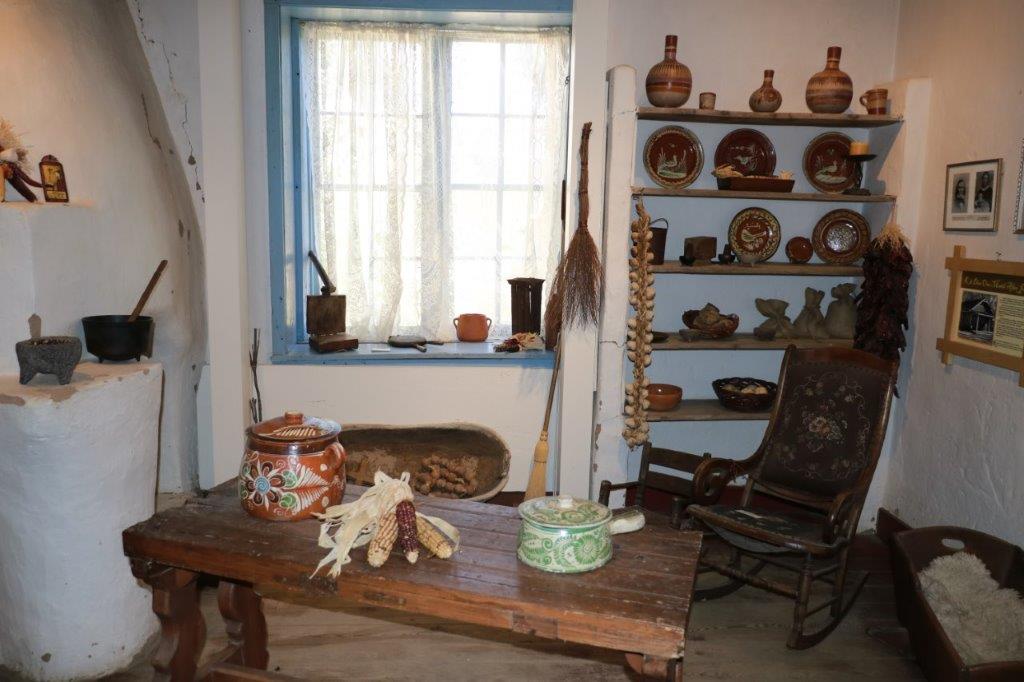
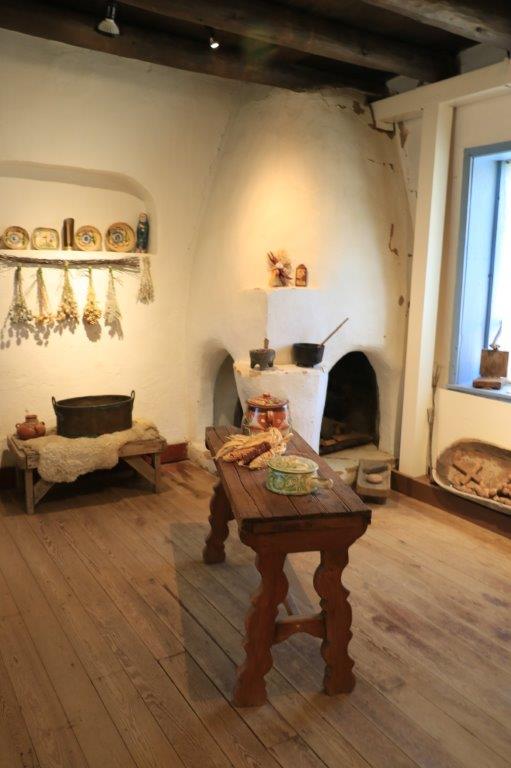
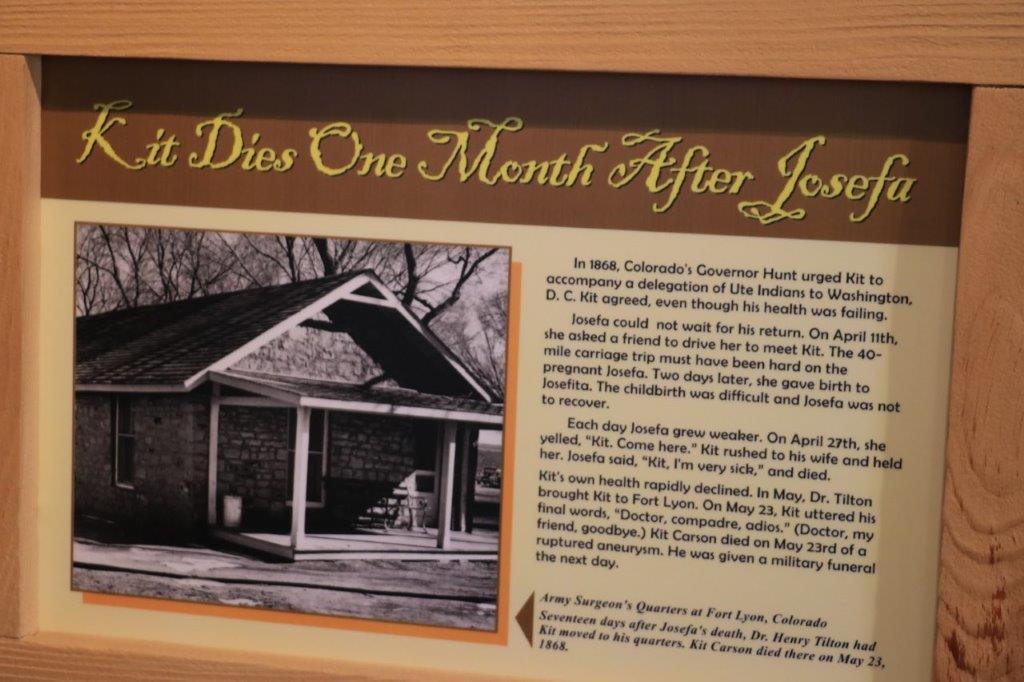
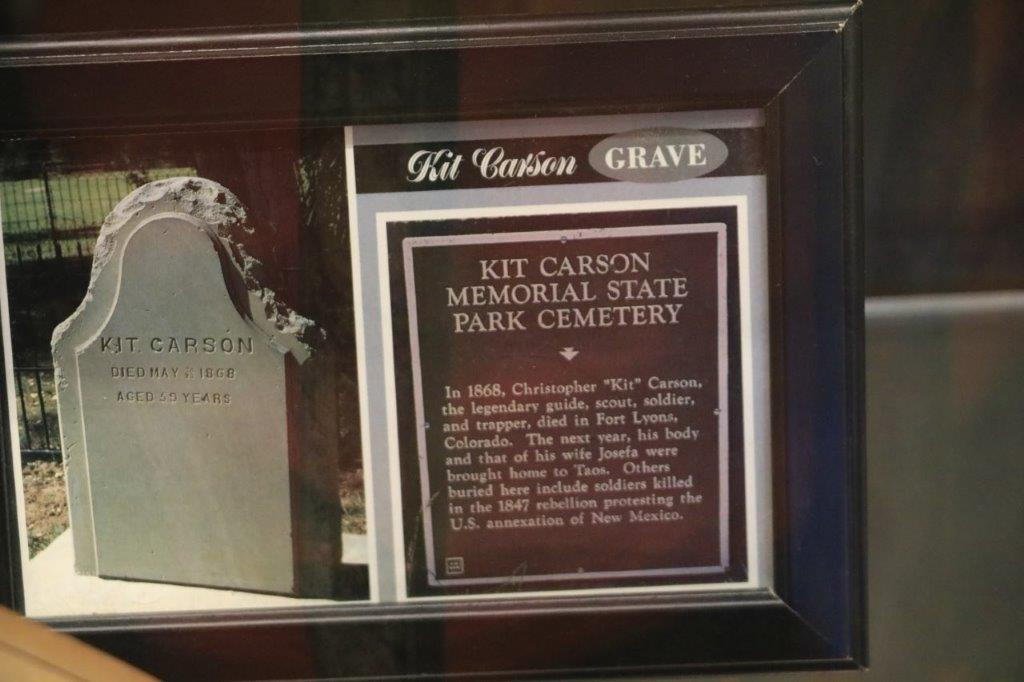
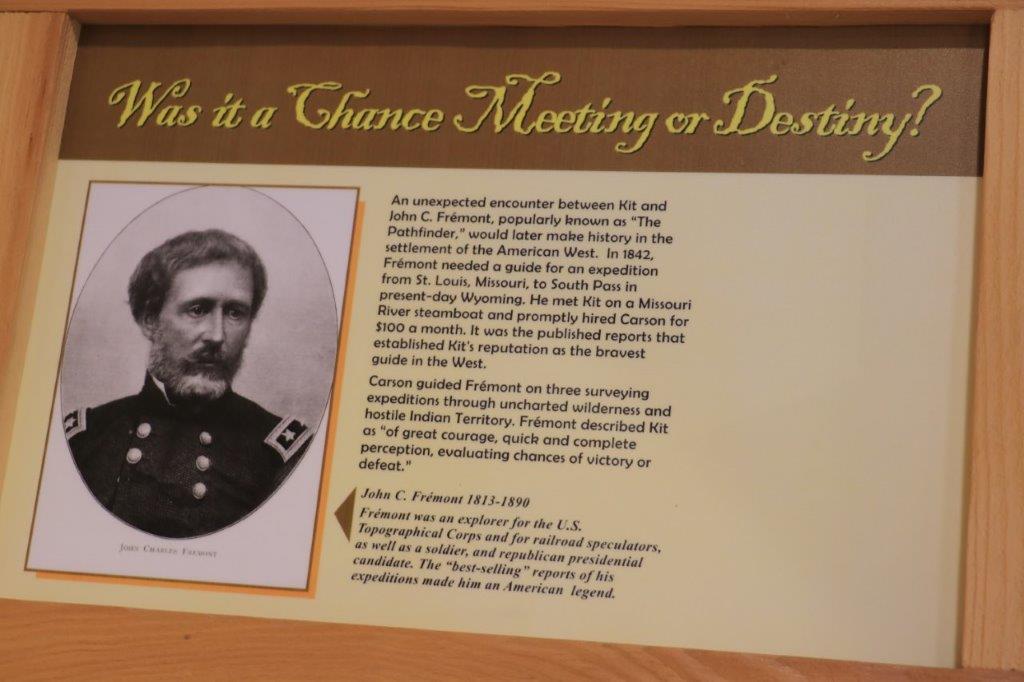
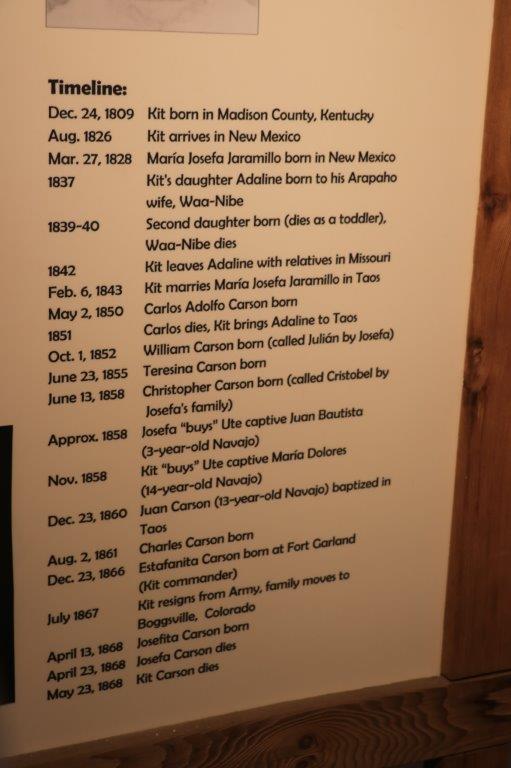
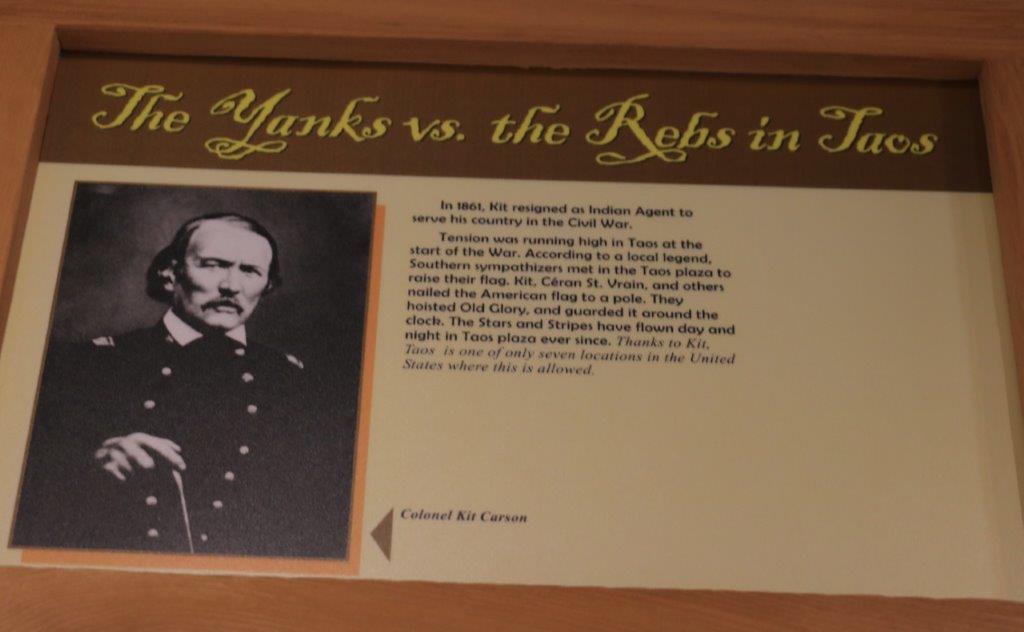
Our next stop in town was Kit Carson’s Home and Museum.  Being baby boomers we grew up with cowboy movies and cowboy tv shows and cowboy stories.  The exploints of fur trapper/scout/soldier Kit Carson were very familiar to me.

As they said on the video we watched, “The legend of a hero always makes them seem larger-than-life men and women; not just in courage and adventures but in stature and strength.”  It was interesting to learn that Kit Carson was a slight man (not even 5’5″ tall) with stooped shoulders, a large chest and bowed legs. We had a nice visit with the lady at the museum gift shop.  She was kind enough to let me plug in the battery charger for my camera while we toured the museum.  I had taken one photo of the church and the battery died.  John kindly let me use his camera battery and said if he wanted to take some photos he would use his phone.

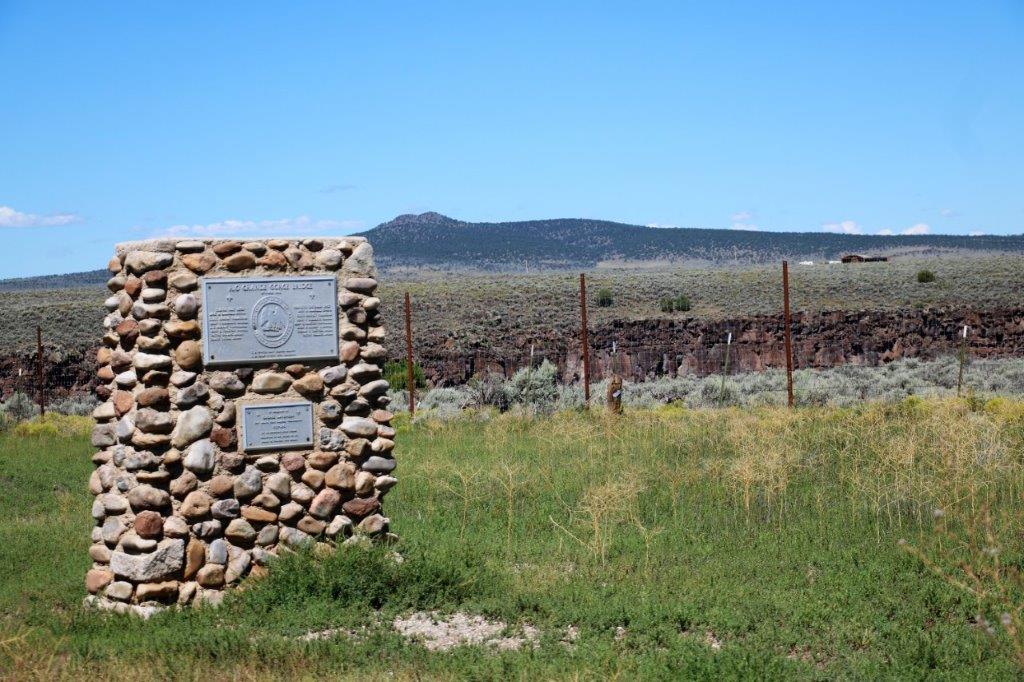
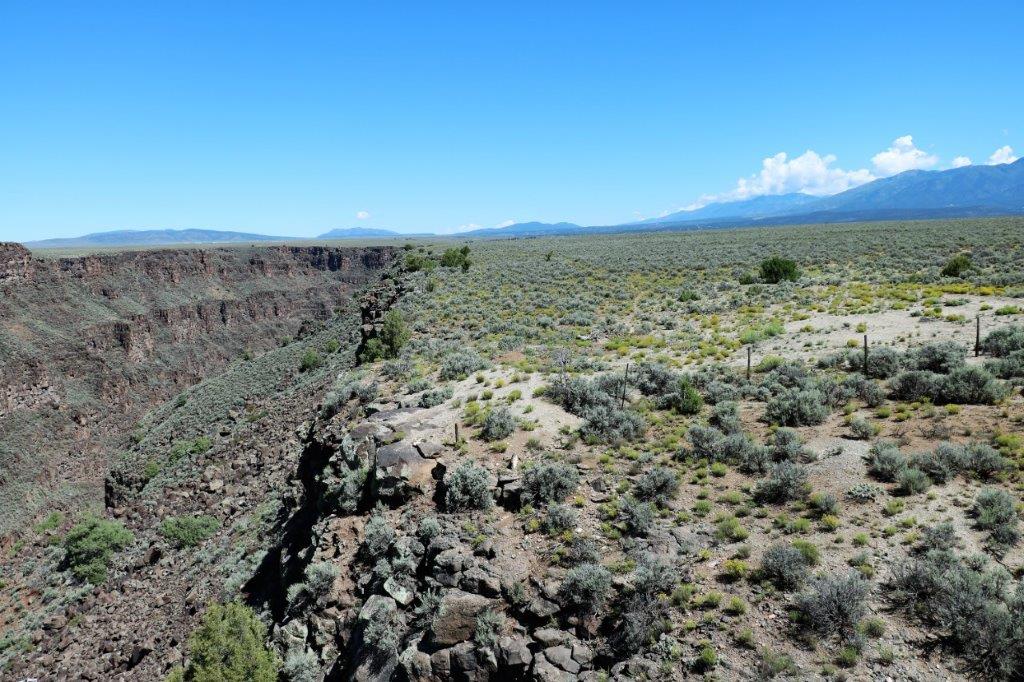
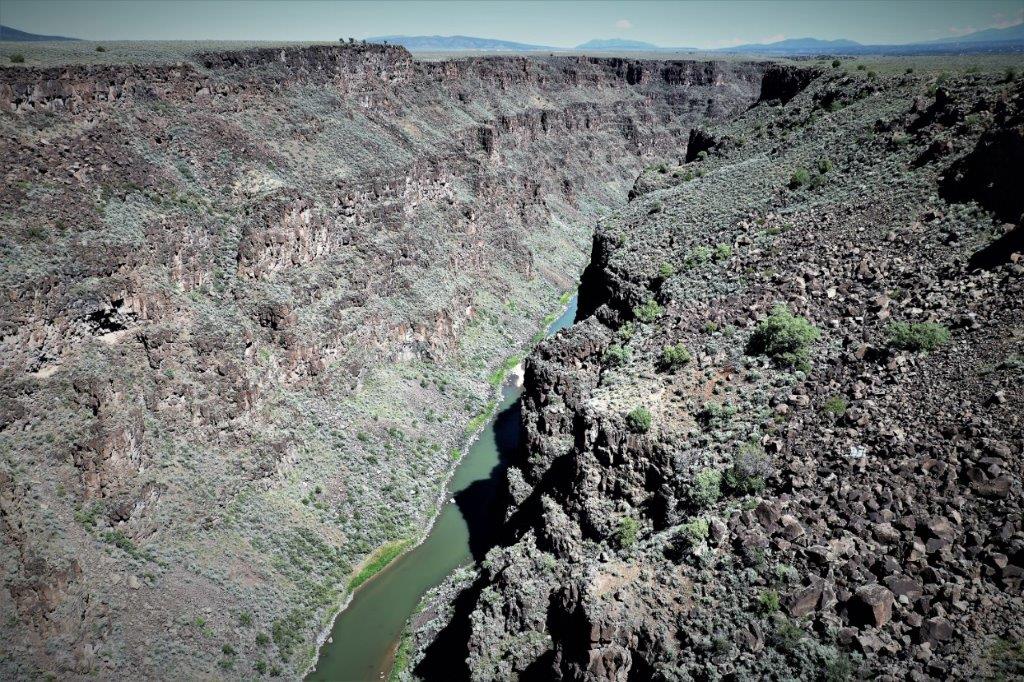
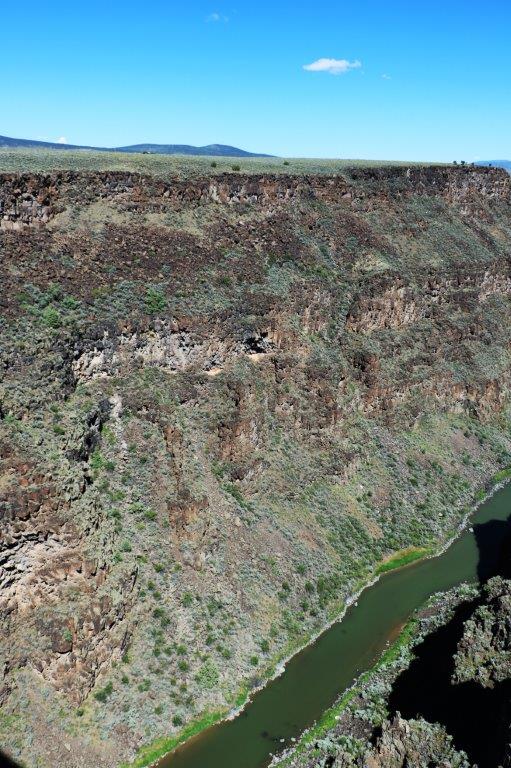
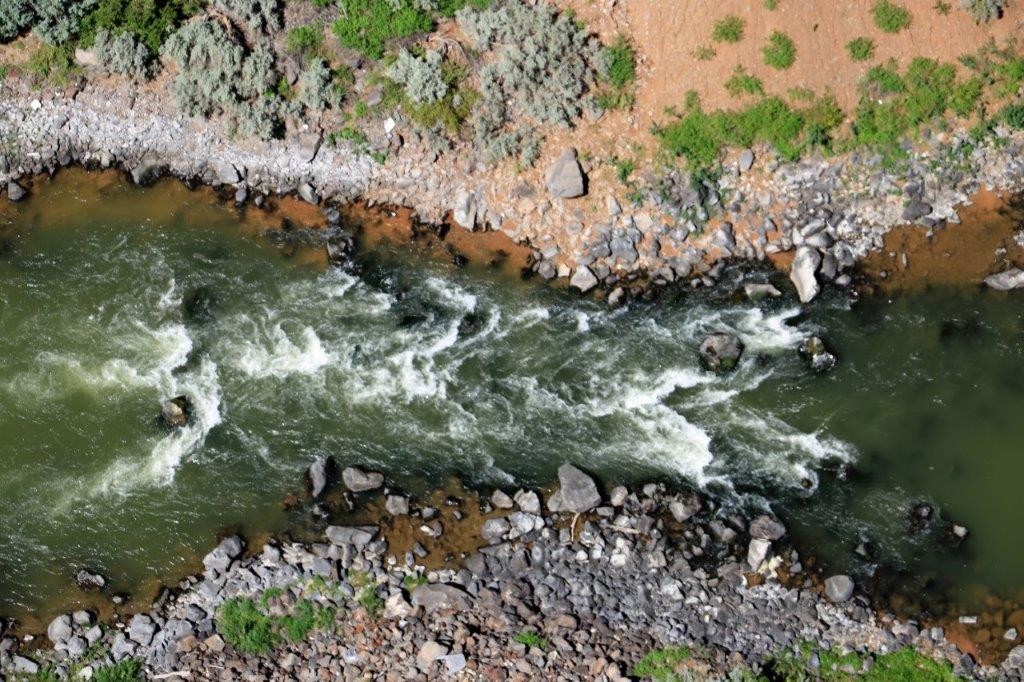
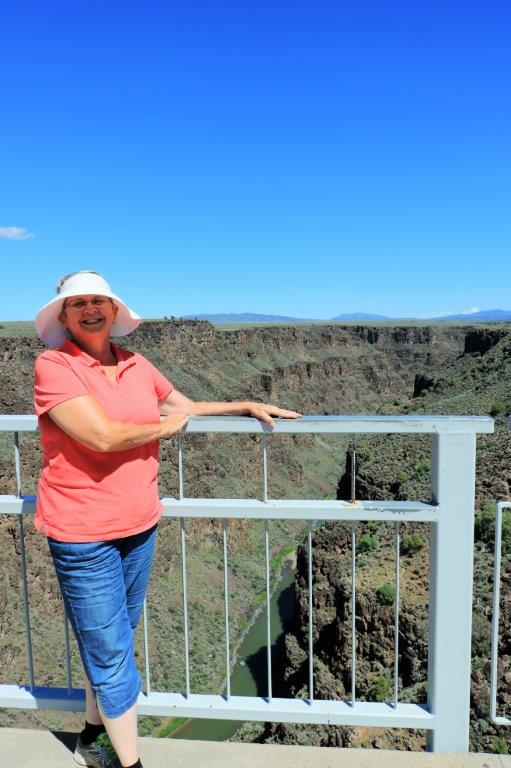
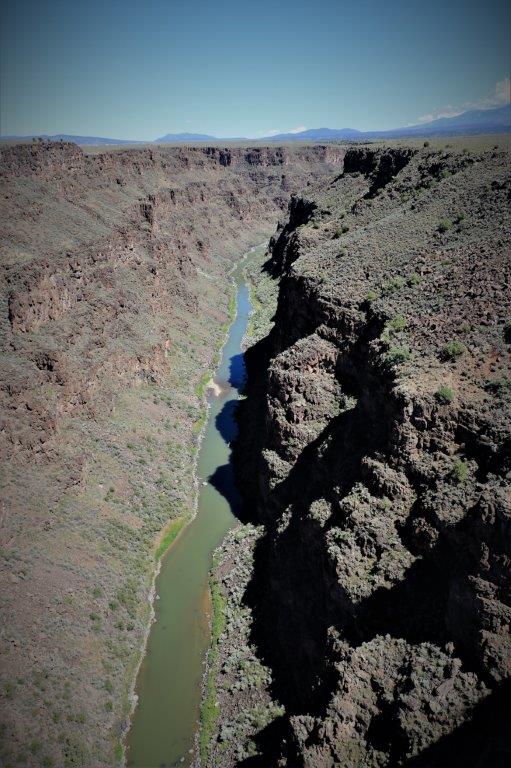
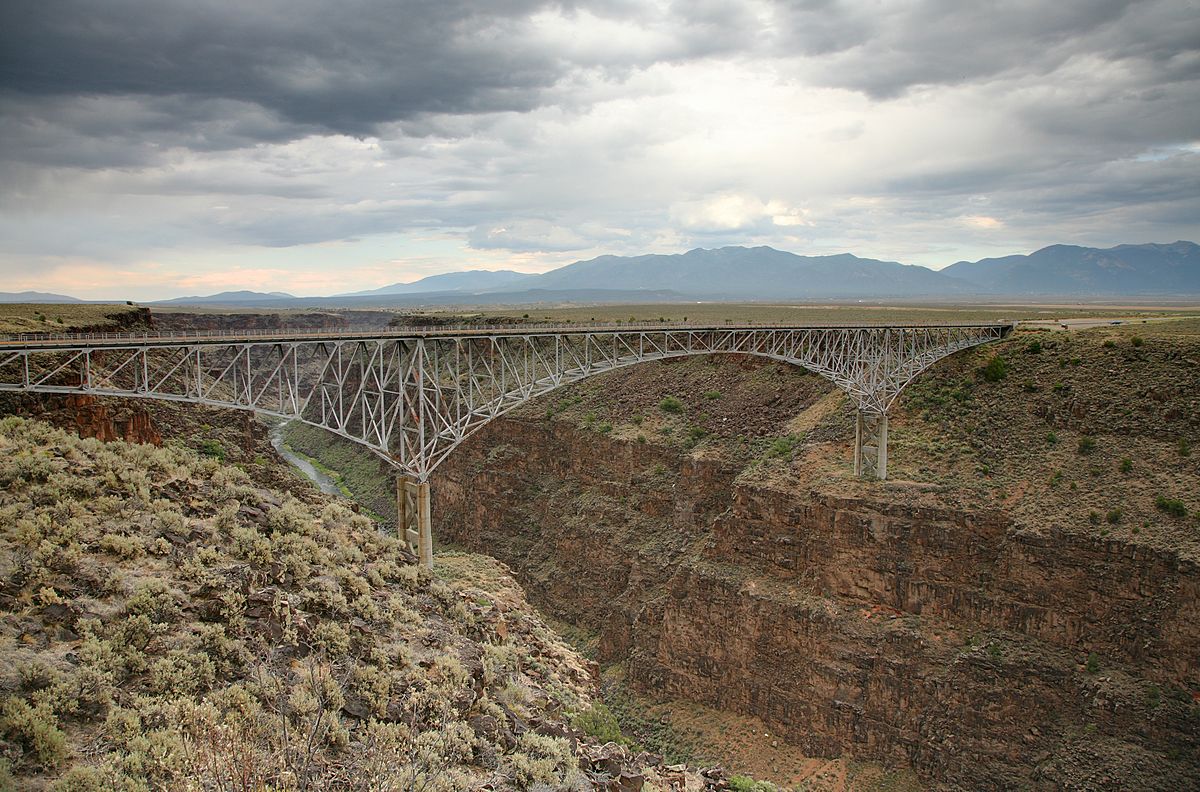
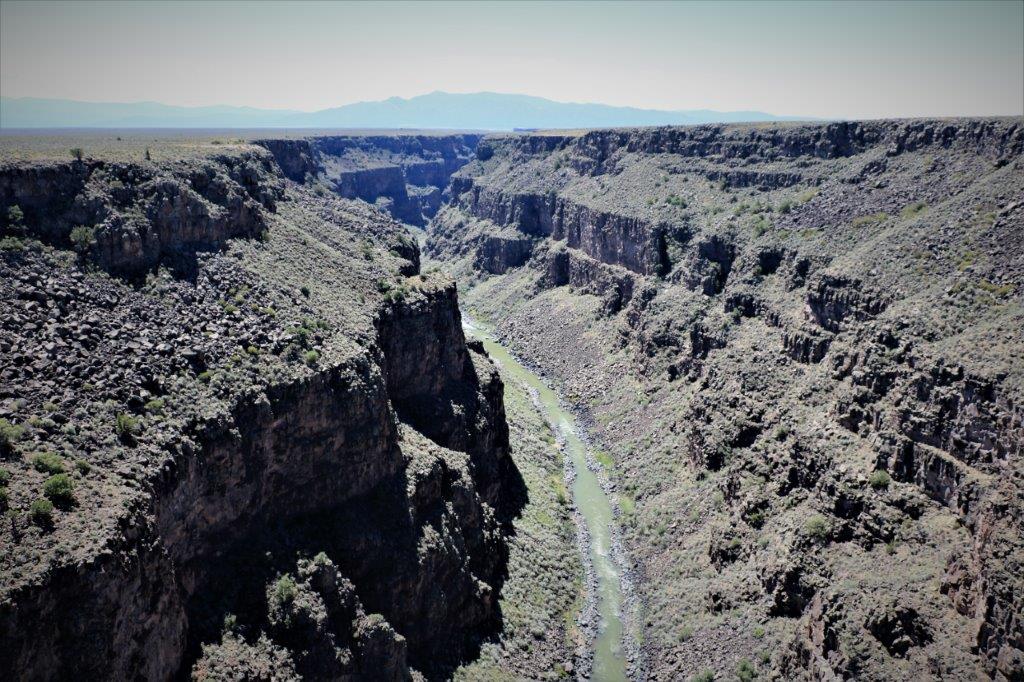
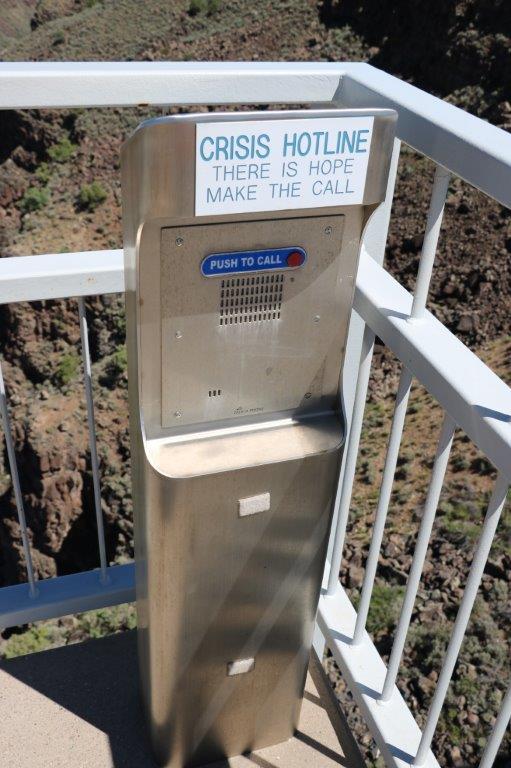
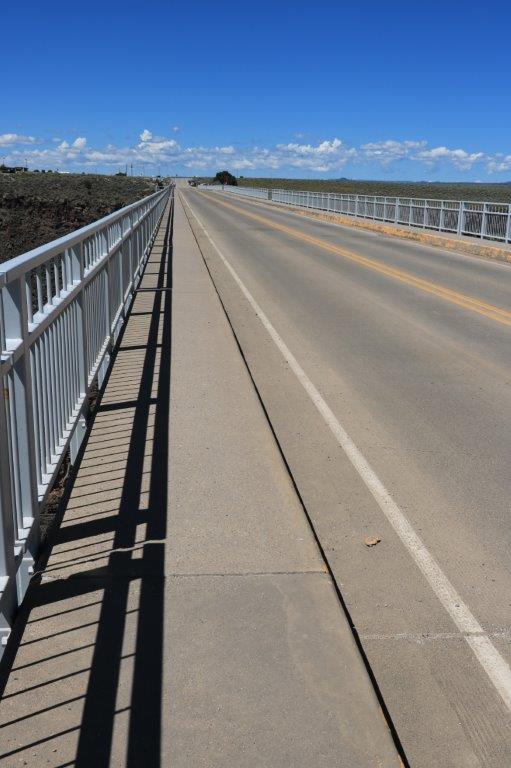
Pagosa Springs is a very popular tourist location and a vibrant artist community.   There are galleries of all kinds up and down every street.  The scenery and local architecture and people would certainly provide plenty on inspiration. Not too far northwest of Taos is the Rio Grande Gorge Bridge.  The Rio Grande river has cut a channel through the volcanic balsalt to a depth of 1000′.  The main supports for the bridge are anchored on the chasm walls almost half way down the gorge making the bridge 565′ (172m) high.  There is still almost 500′ of gorge to the river at the bottom. The bridge is 1500′ long and has viewing platforms extending out on both sides. Every time a vehicle, especially a large truck, goes by you can feel the flexing of the bridge.  I found this photo online to show you the entire bridge.  Amazing engineering.The view from the other side of the bridge.  You can still see the cuts of the gorge off into the distance.Unfortunately the bridge has been the site of several suicides and there are Crisis Hot Line boxes located at each viewing platform and at each entrance to the bridge.

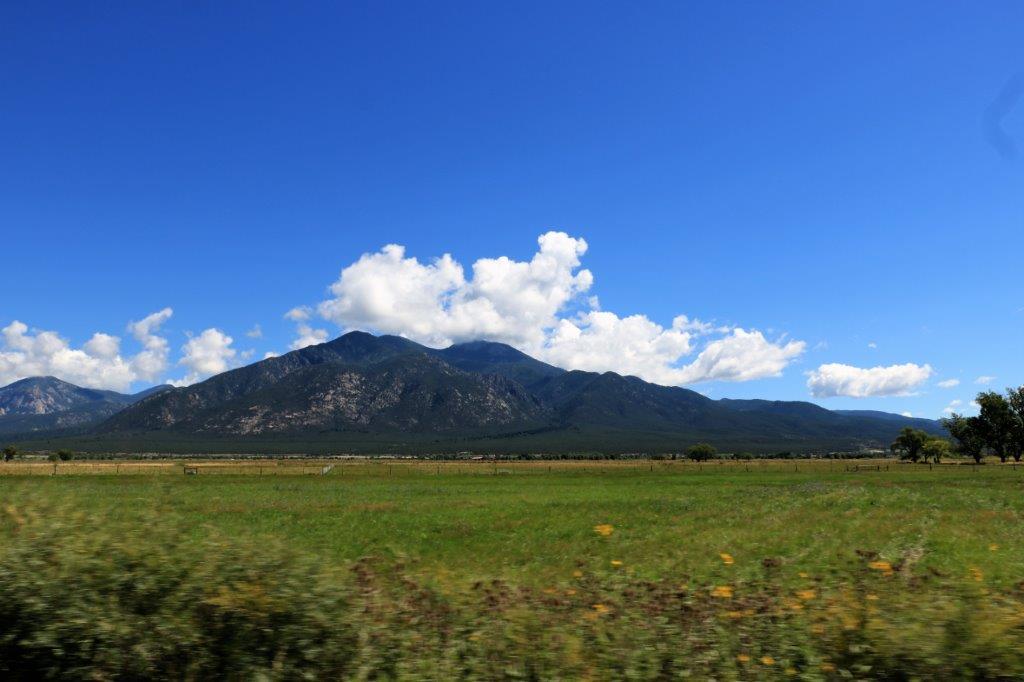
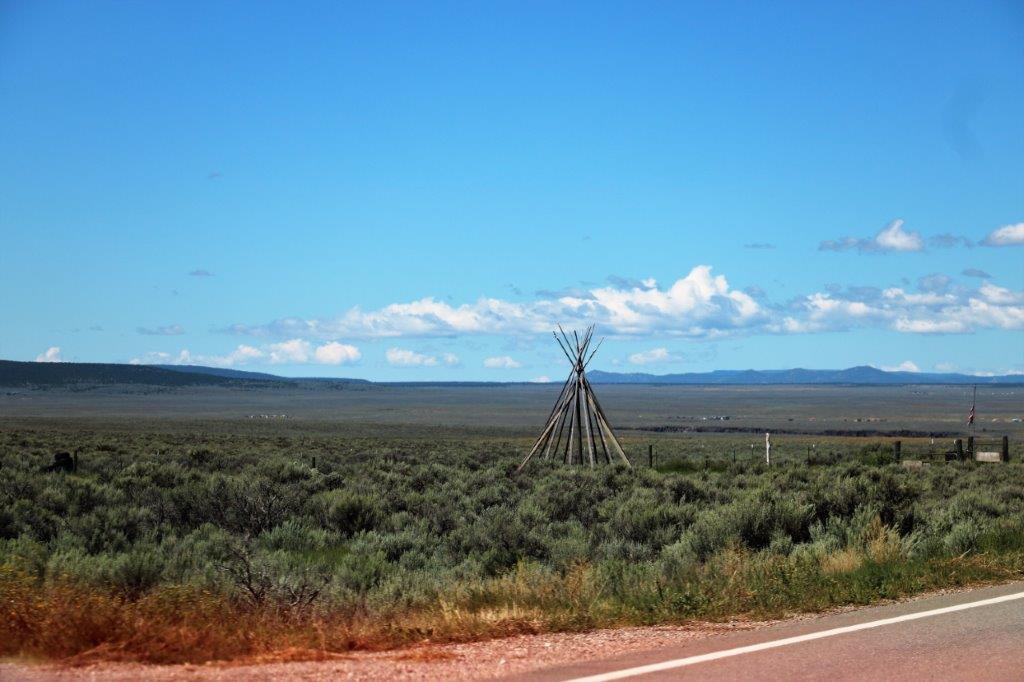
Once we left the bridge it was just a driving day through beautiful countryside and mountain passes.  We only picked up a couple of goecaches but stopped often to take photos.

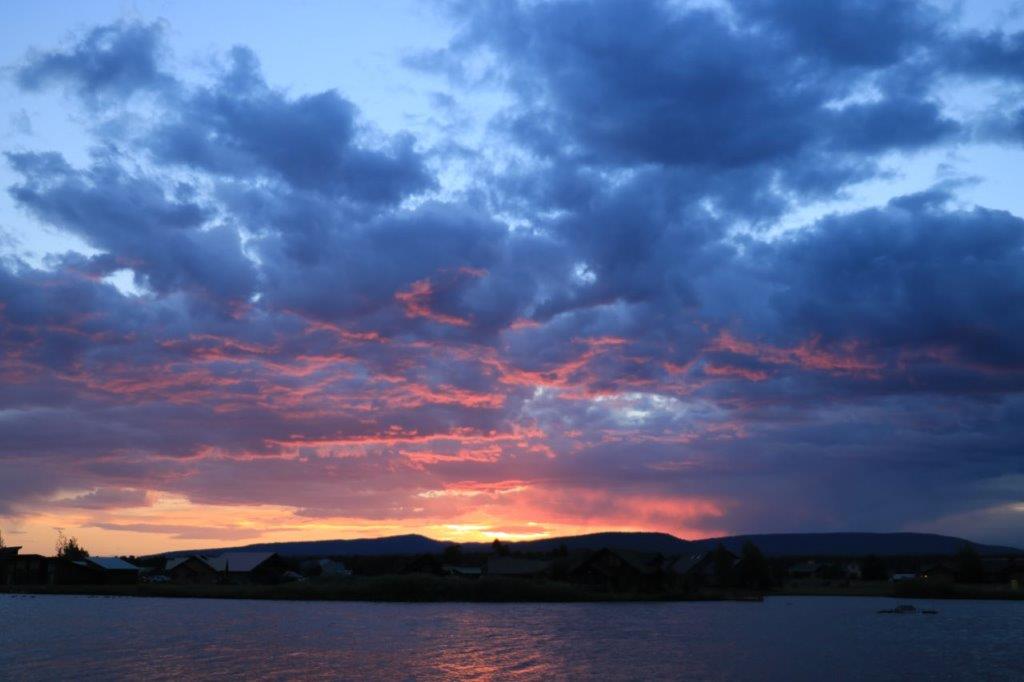
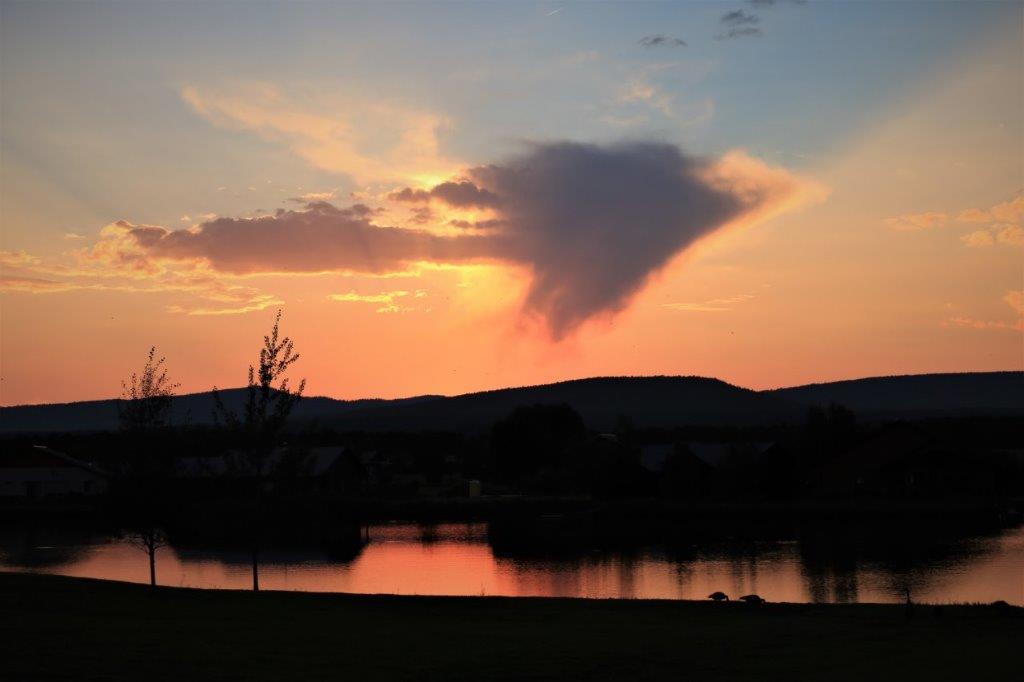
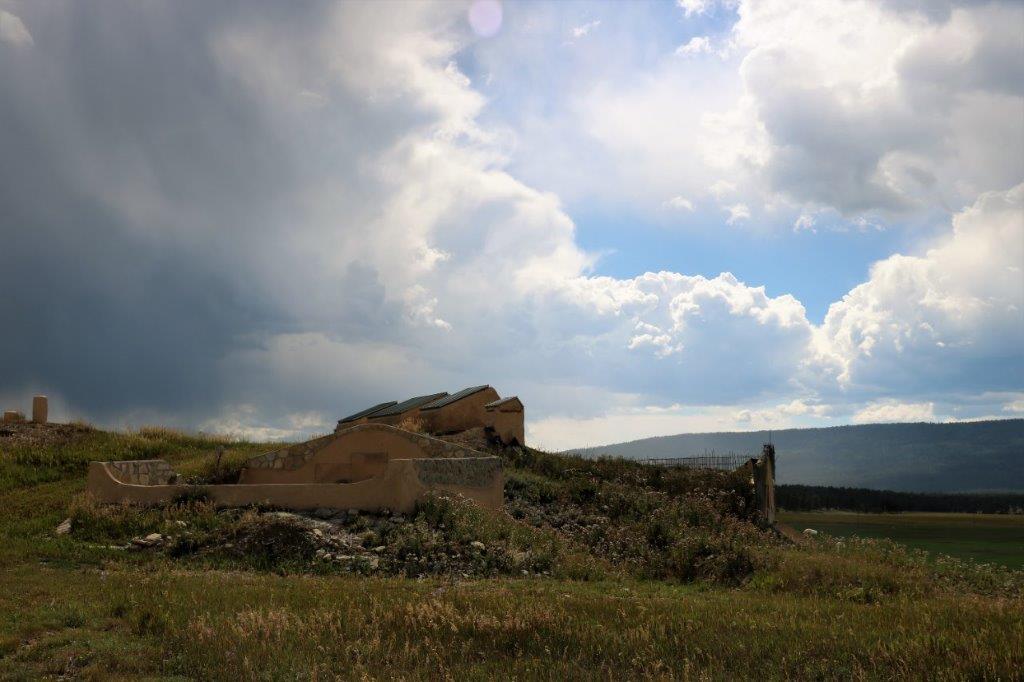
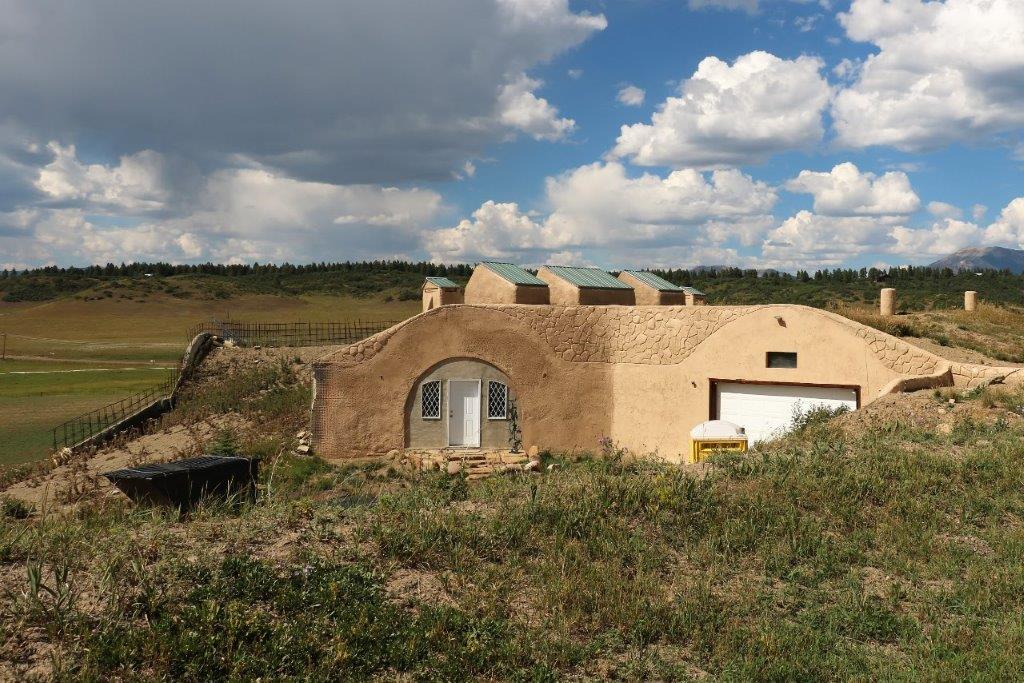
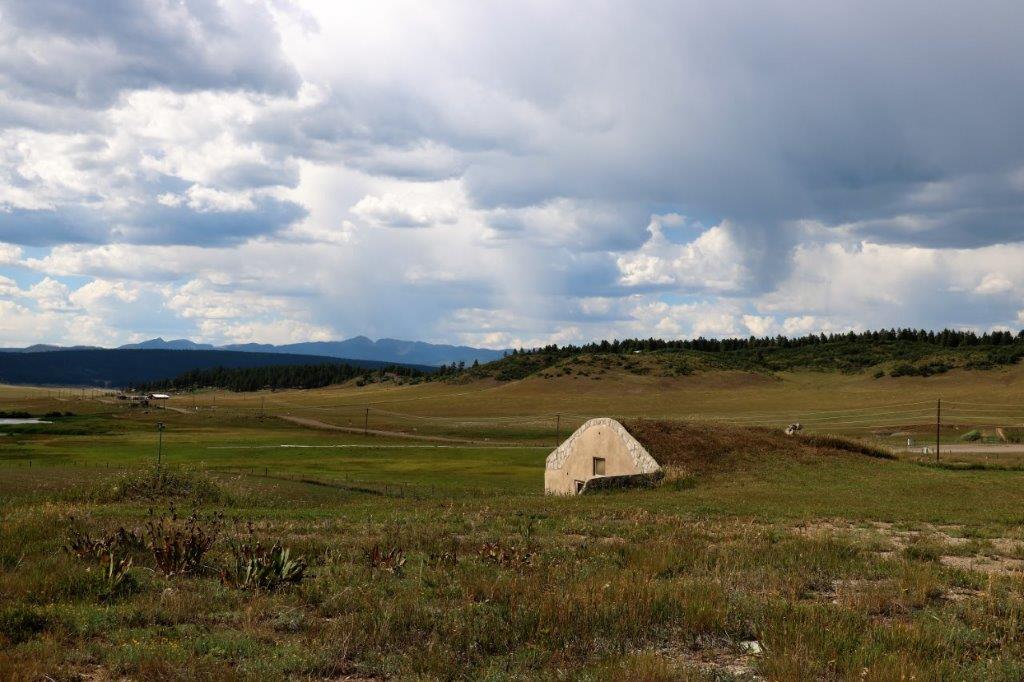
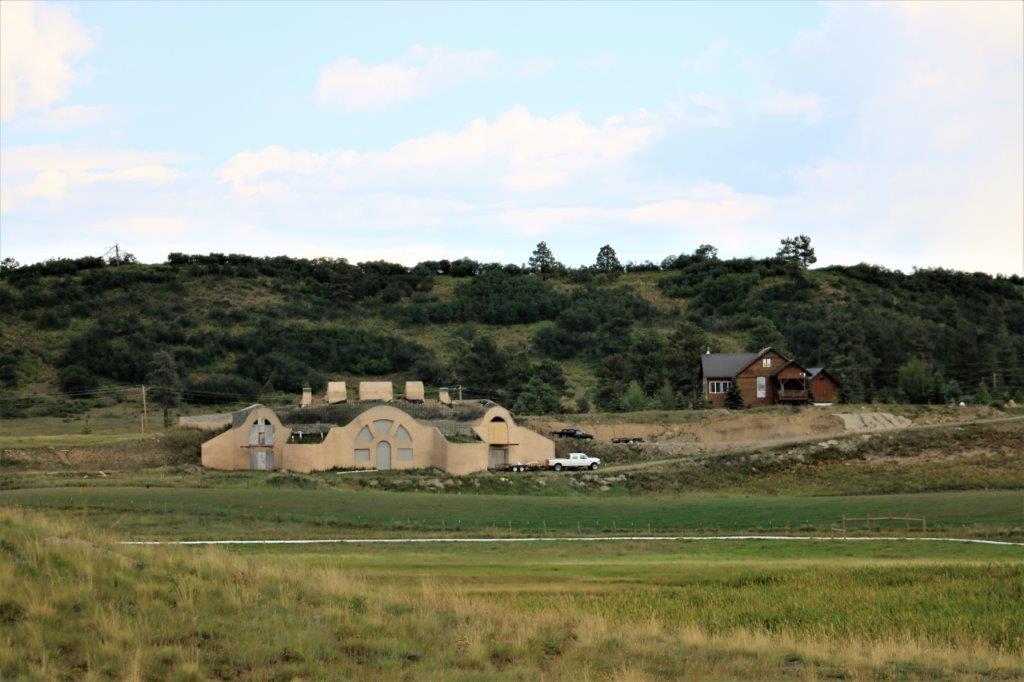
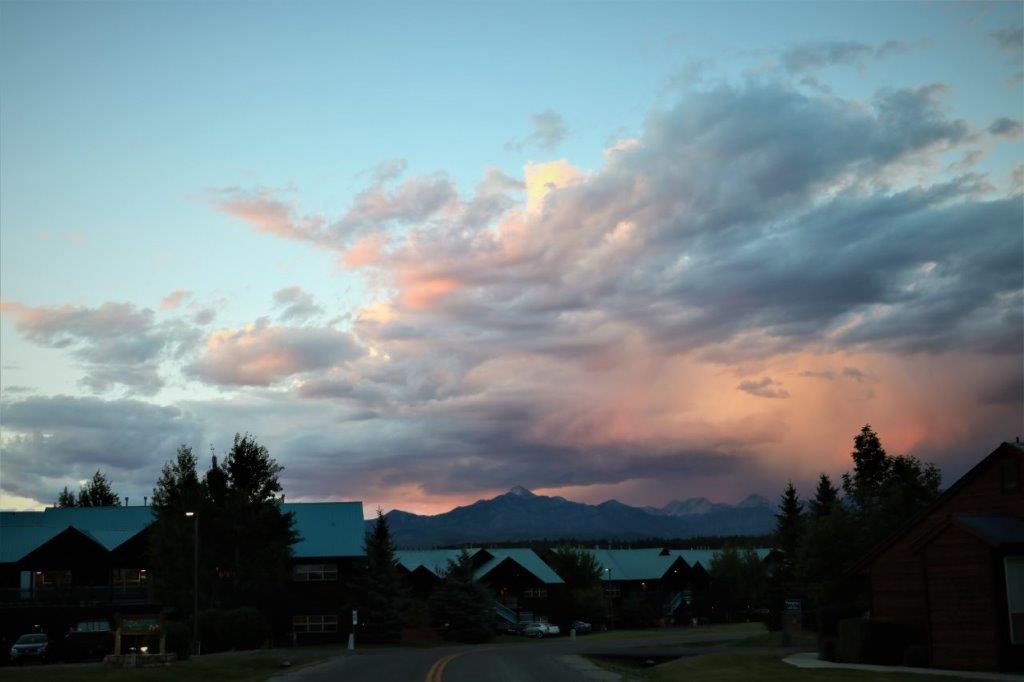
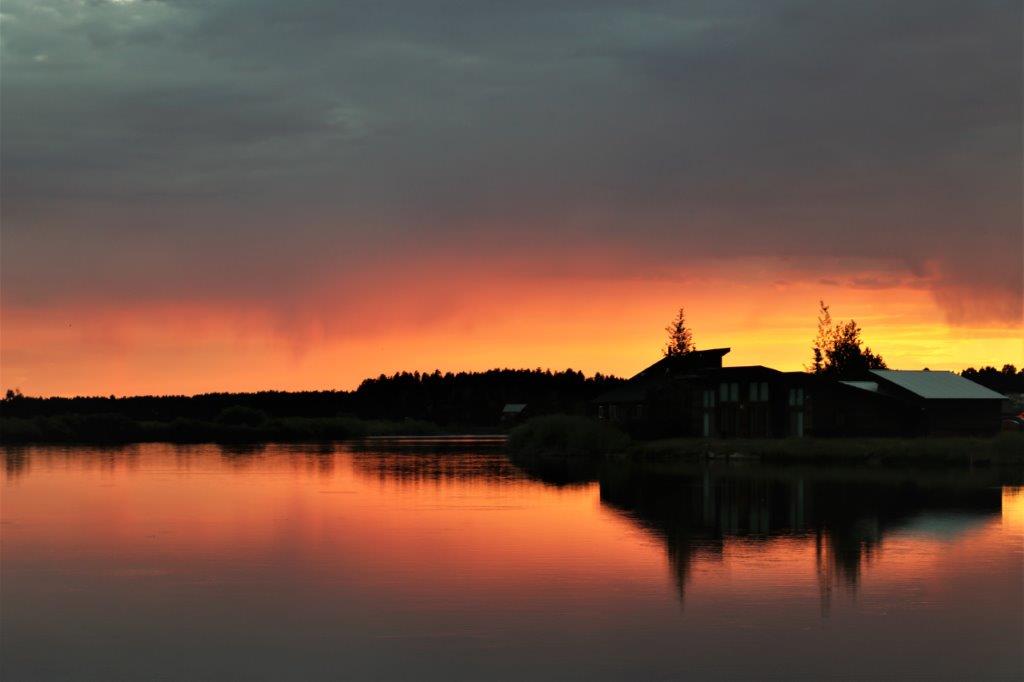
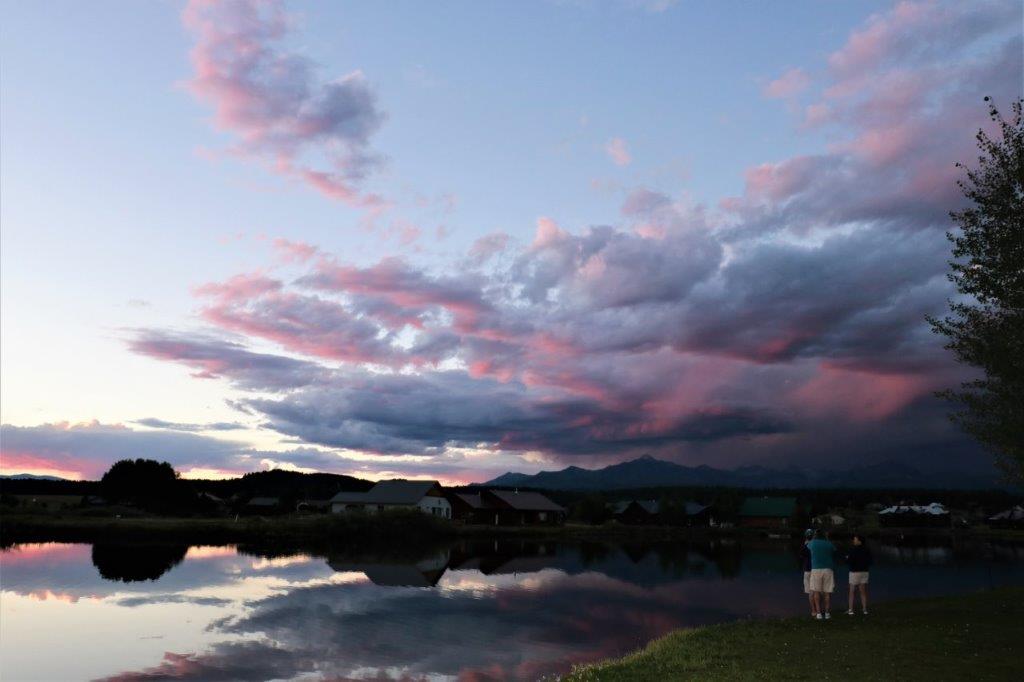
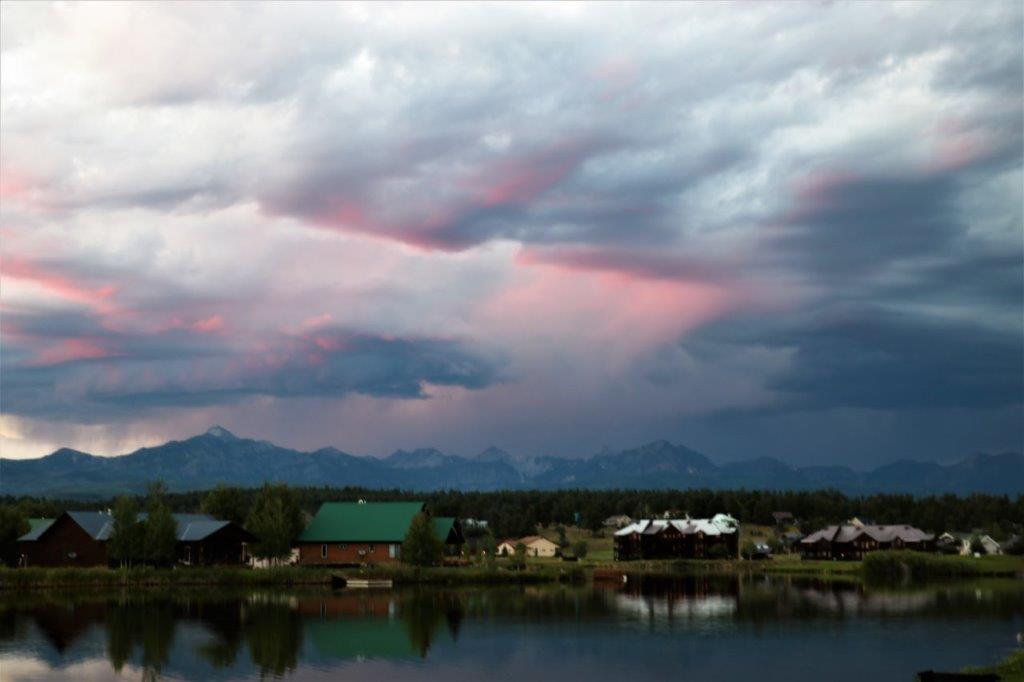
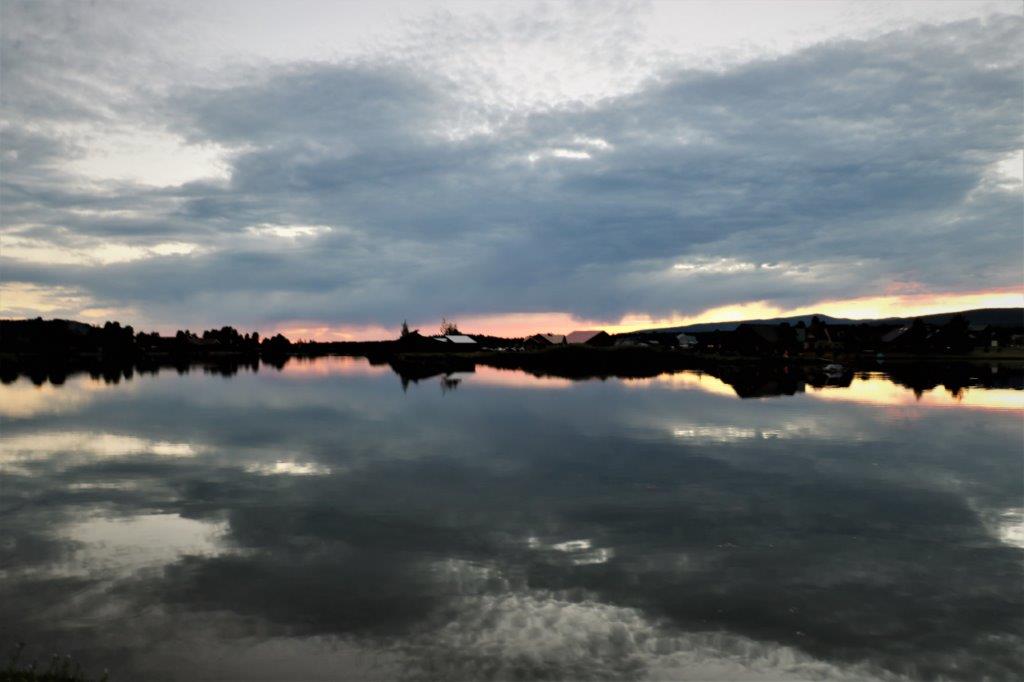
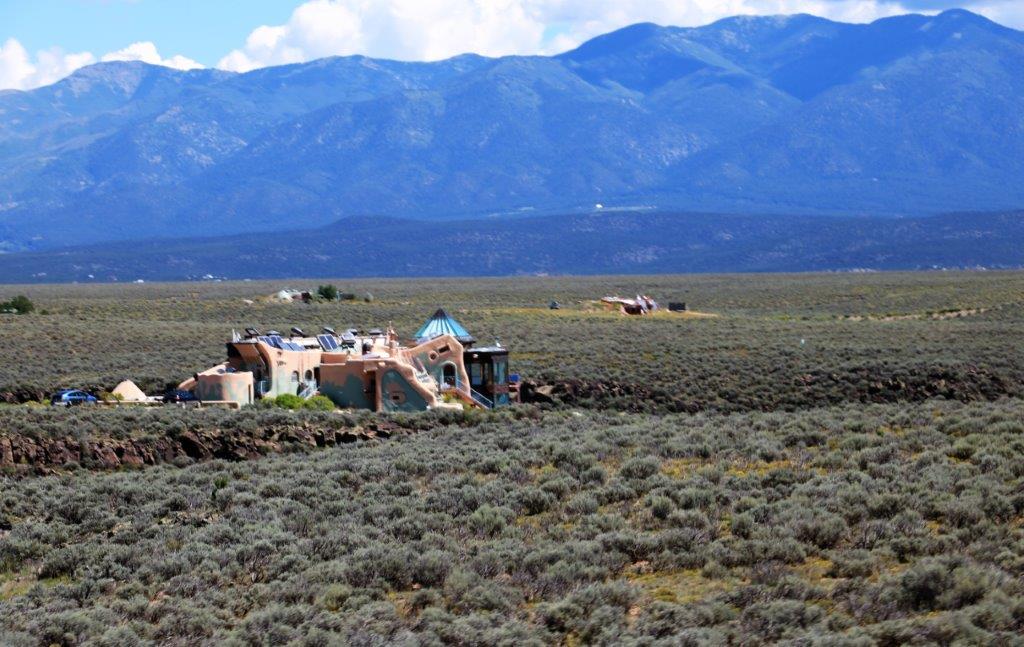
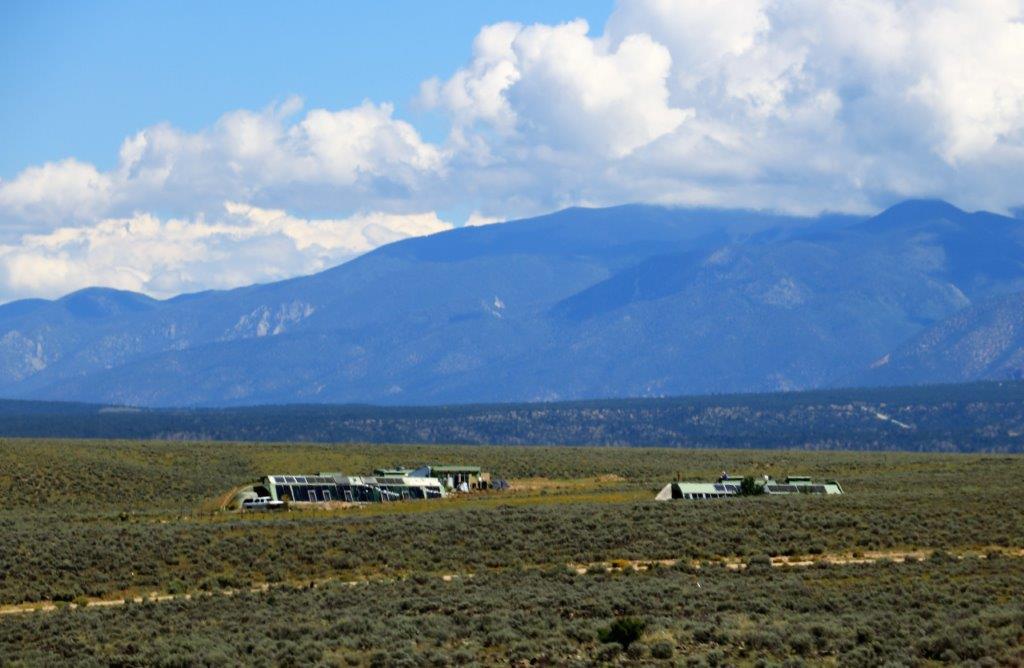
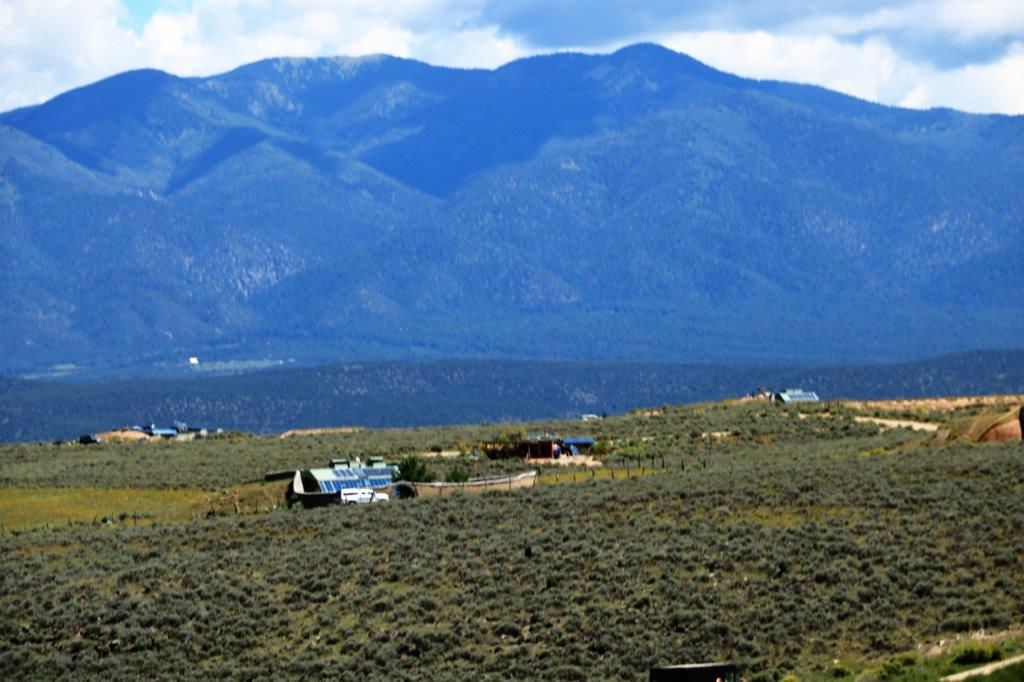
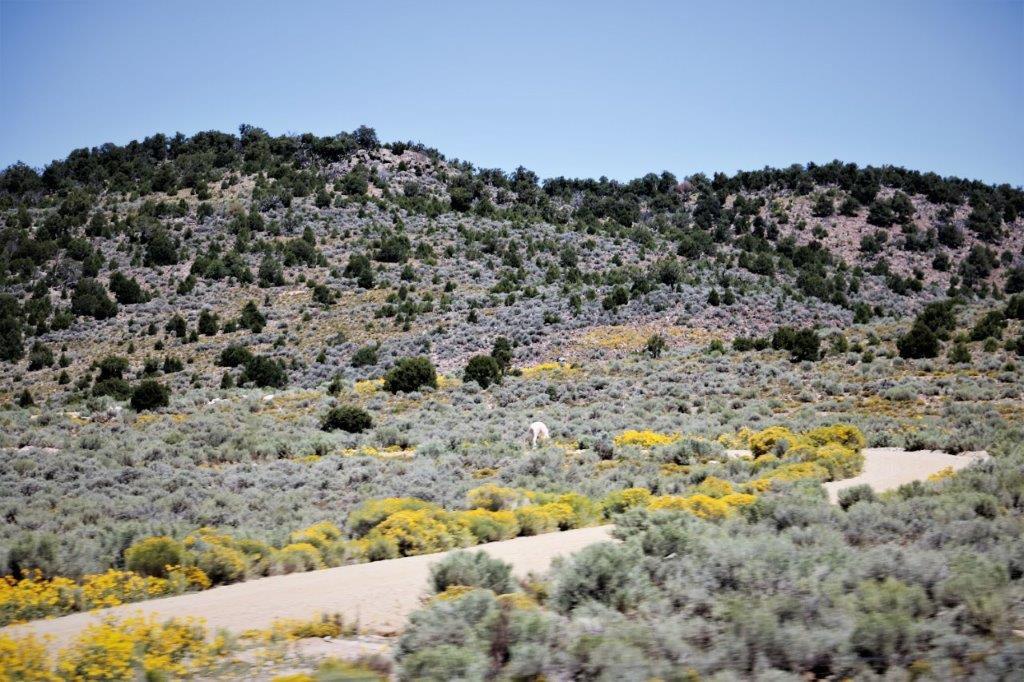
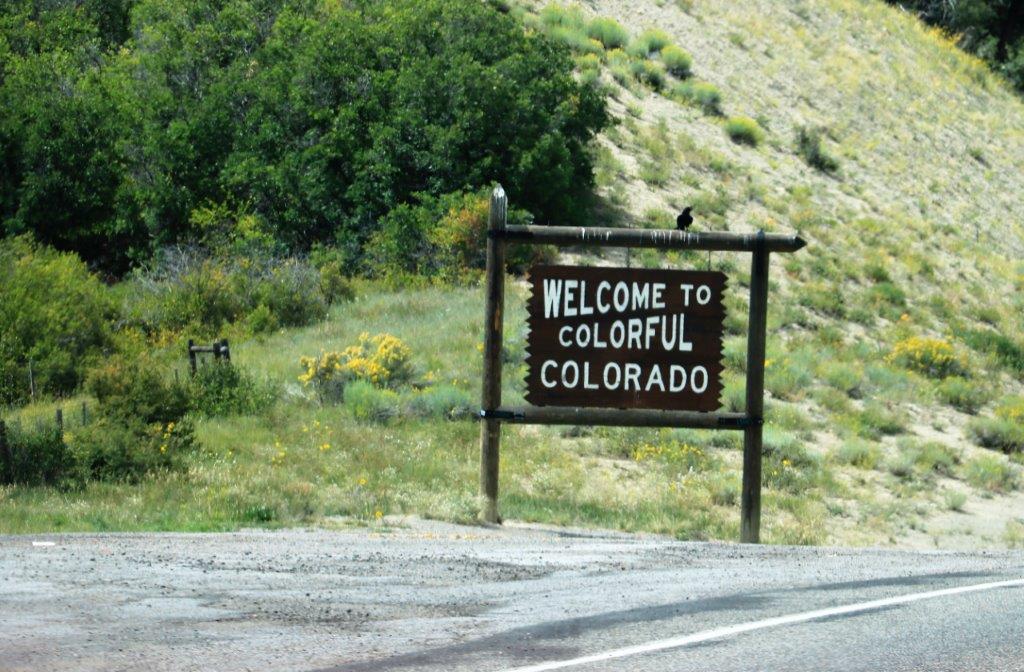
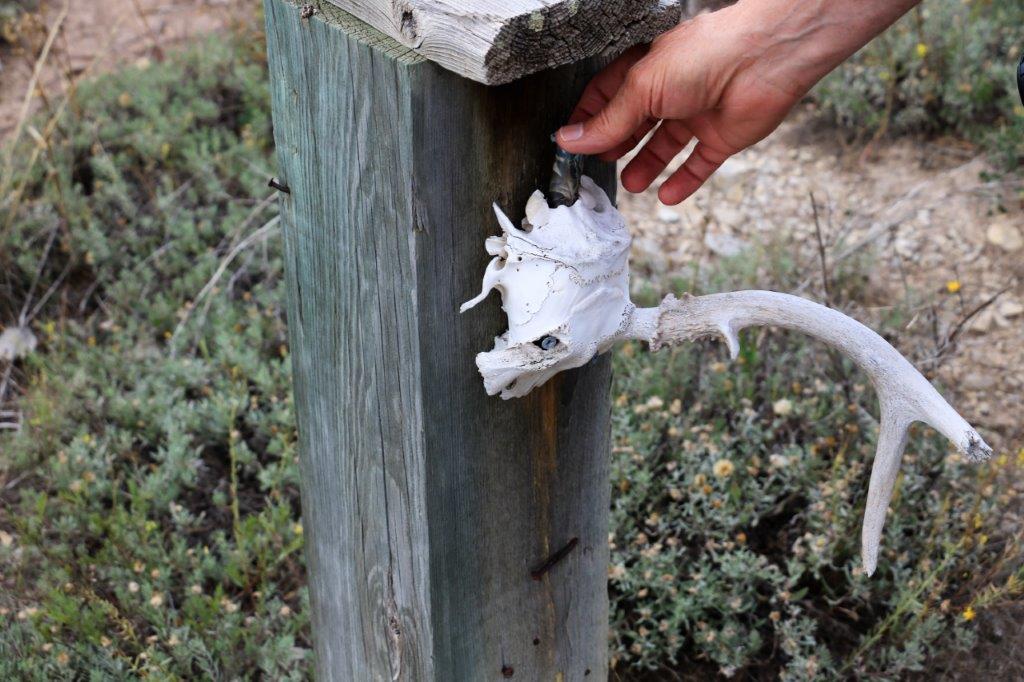
We passed the Earthship Biotecture about 10 miles out of Taos. This radically sustainable community was begun in the 1970s.  There were many strangely shaped buildings tucked into the earth over a large area.  Earthships are entirely eco-friendly, built with natural and up-cycled materials (like earthpacked tires), thermal/solar heating and cooling, self-contained sewage facilities and some amount of internal food production, and they harvest and store their own water.  The homes are considered off-the-grid and can be rented nightly or for longer stays.  There are several Earthship communities in the world.  Pretty funky looking structures. We spent much of the day driving through the Carson National Forest which extends northward into Colorado where it is the San Juan National Forest.We stopped to find a geocache at a large pull-out near the Continental Divide and I spotted this mushroom pushing its way into the light. The scenery was pretty spectacular.  And the road was winding and twisting and climbing and descending.  John had a great time. We crossed the border into Colorado at 4 o’clock and found a geocache called “Shed Head Delight” that was right on the border tucked into this animal skull attached to a post. The resort is very nice; lots of units, lots of facilities, the requisite golf course and many other things we will ignore.  We couldn’t ignore the sunset though.  The colours were so pretty and extended on to the clouds in all directions.  A 360 degree show and a very pretty welcome to our week in Pagosa Springs. Laziness, walks, reading and geocaching will follow.

Sidebar:  During the course of the day we spoke to three different people in three different locations all of whom had been to Vancouver and/or inland BC and the Island.  The man at Rio Grande Gorge said, “There must be something special and unique about a country that posts a sign that says ‘Kindly please close the door.”  He thought being asked kindly to do something like close a door was pretty cool and has never forgotten it.  Words and mannters do matter.