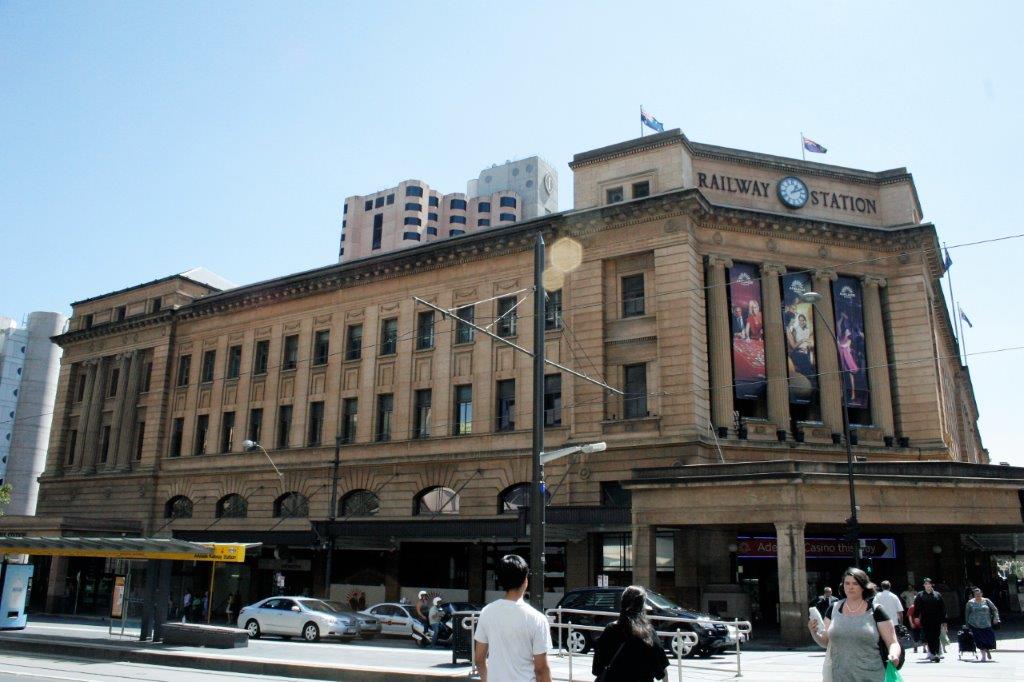
Category Archives: Hanna Travels

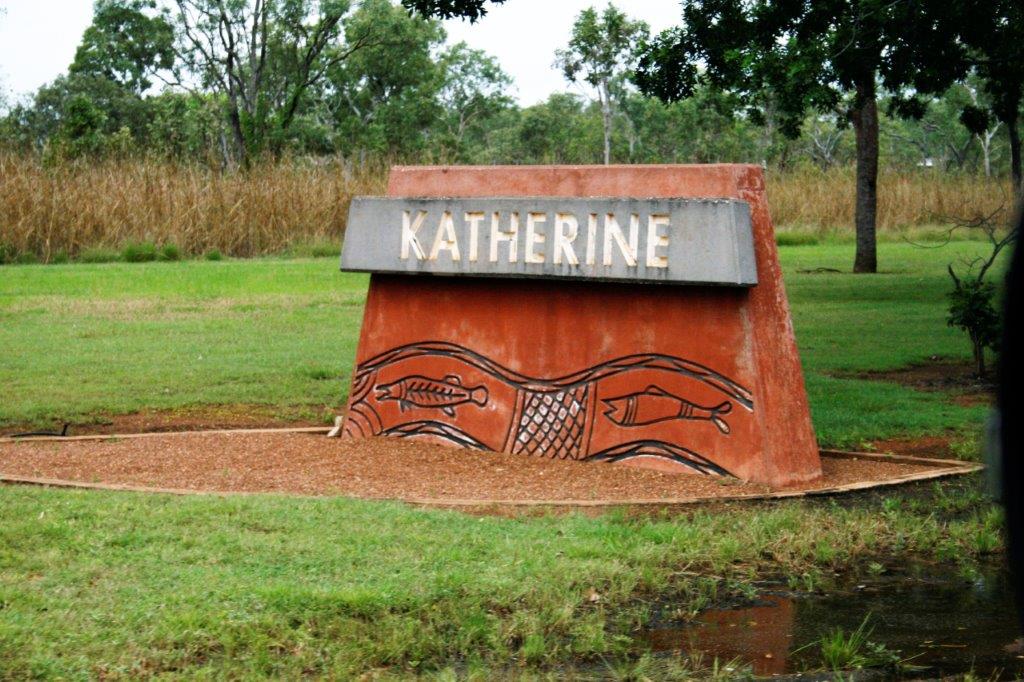
2011 March 29 – Day 83 – Jabiru to Katherine, Australia

It is a frequent problem at the Crocodile hotel in Kakadu National Park that people leave their hotel room doors open because the humidity makes everyone so warm.  This causes the air conditioning units to get condensation on them, which causes them to over heat, which sets off the fire alarms.  We know this because at 4:14 am and 6:20 am we were woken by the sirens!  Thanks people.

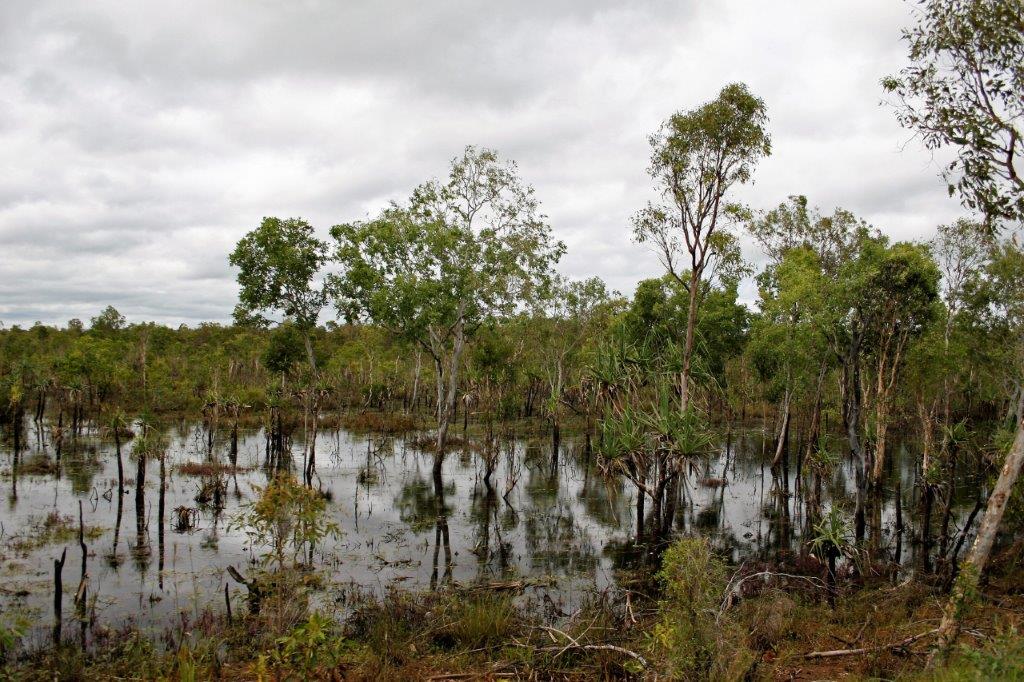
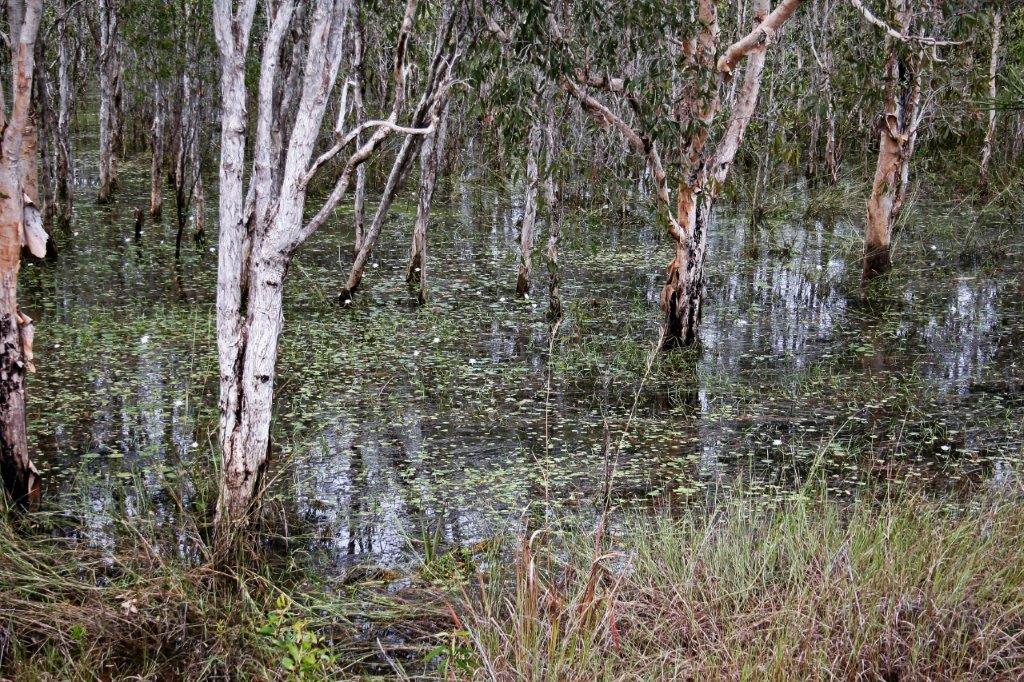
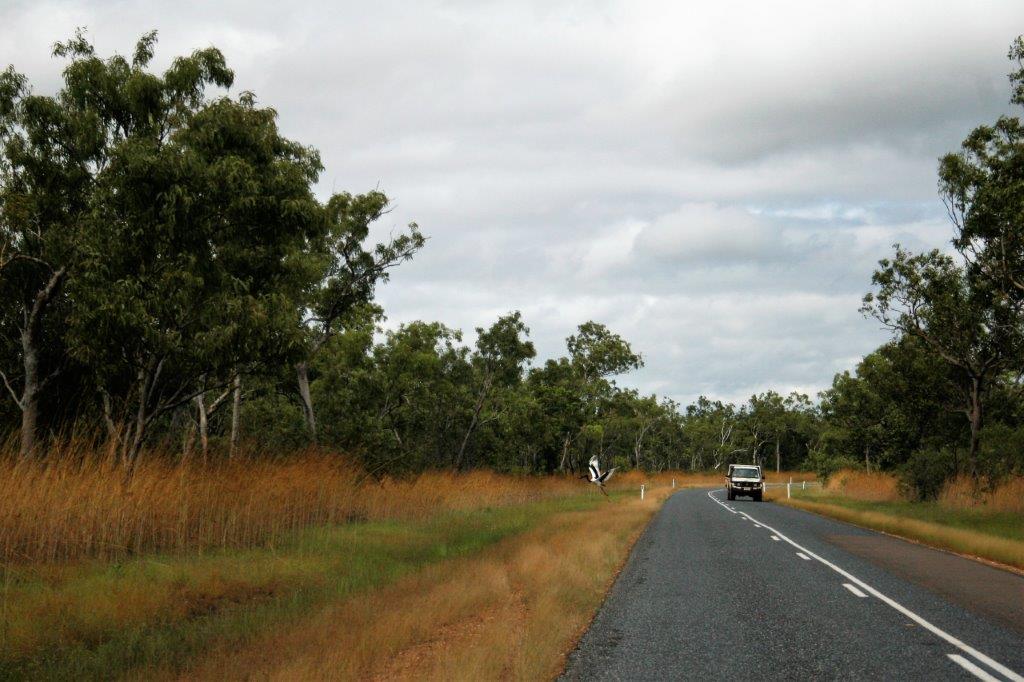
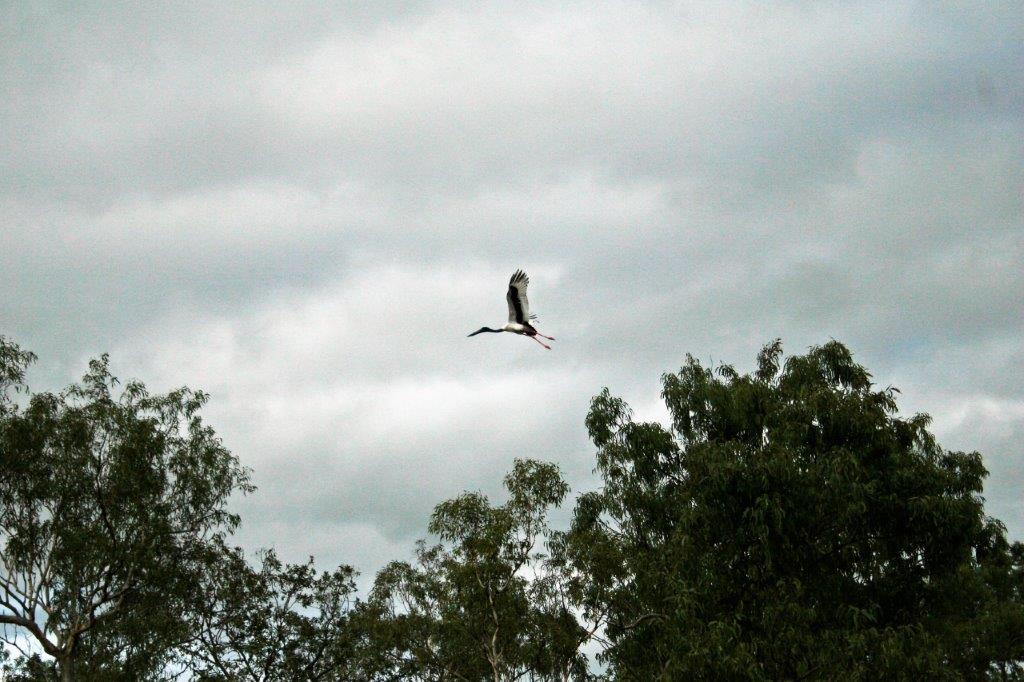
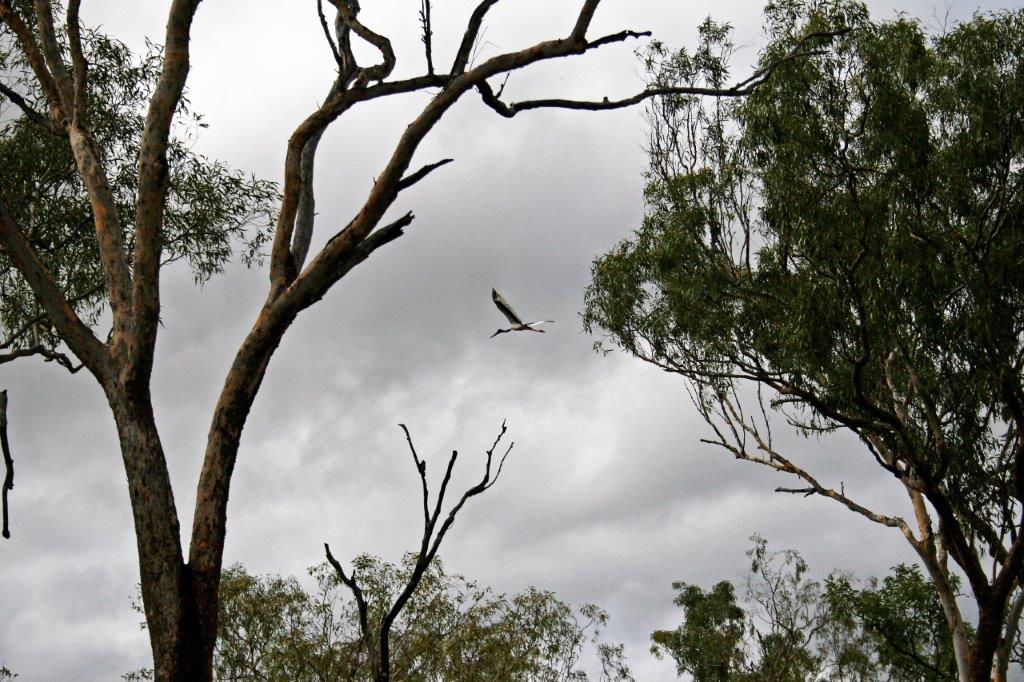
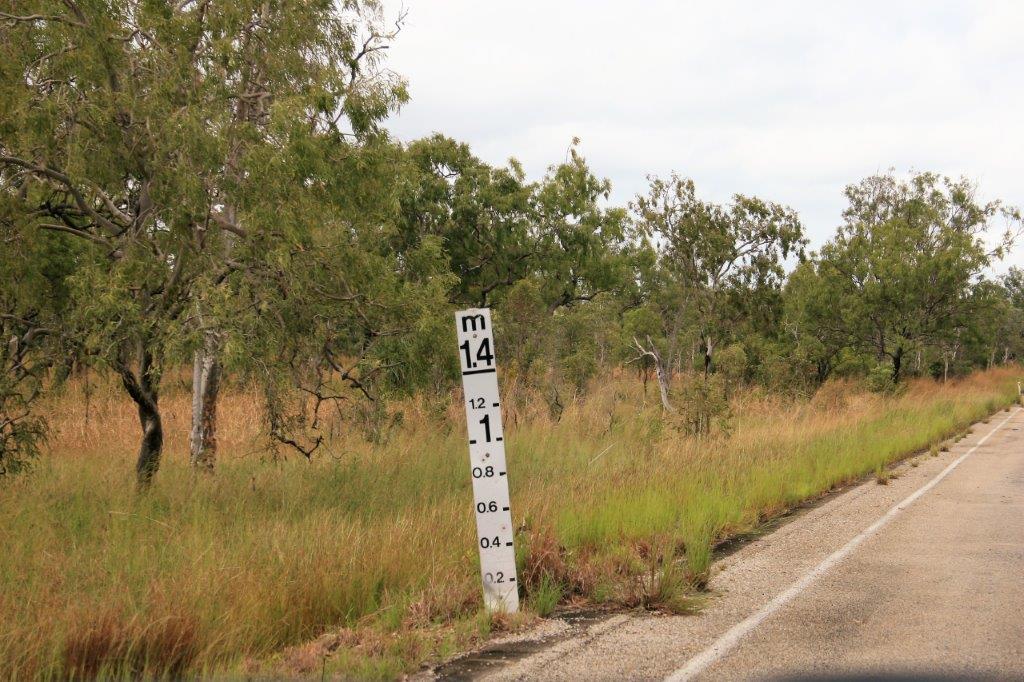
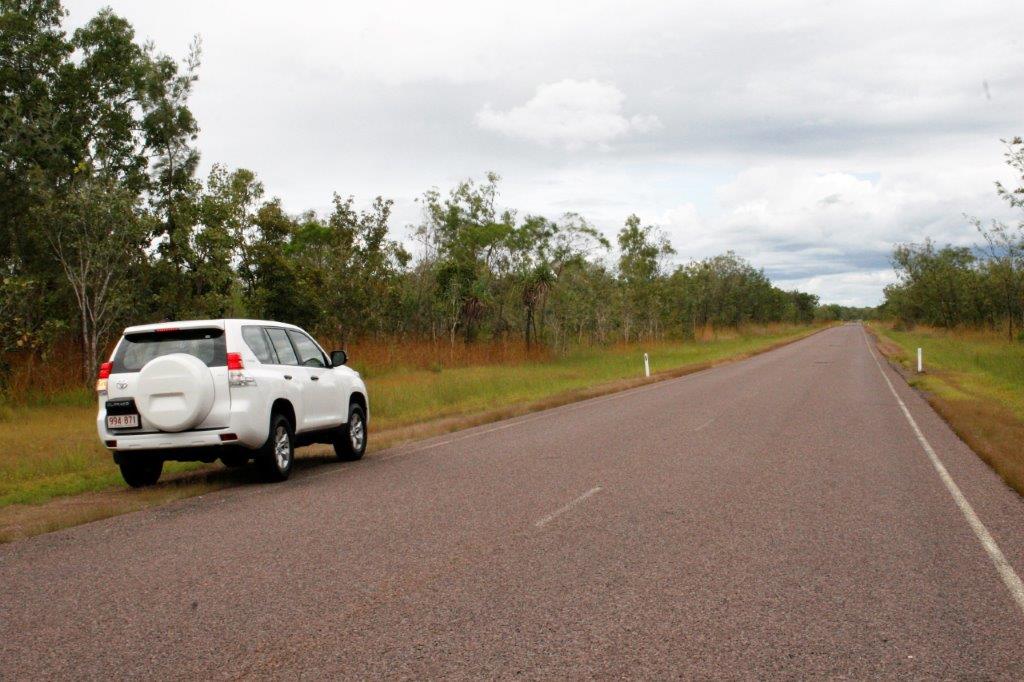
Thus we were packed up and on the road by 9:00.  All the flooding has created extra concern about crocodile attacks.  Most of the flooded rivers and small lakes or ponds are roped off quite a distance from the actual shore.  “Salties,” salt-water crocodiles, who live in both fresh and salt water, can make their way much further inland and at every bridge, flooded roadside, and plunge pool there were signs forbidding swimming and warning people to stay well away from the water’s edge.  Salties can leap out of the water at about 40 kmph and grab prey or people.  They grow up to 6 meters long (that’s about 20′) and are fearless predators.  The Top End records at least one croc related death every year.  Just a day or so earlier a 14-year old boy had gone missing near the water and it is suspected he was taken by a croc.  Australia does not mess about with wimpy animals, insects, or plants.I don’t know if you can see it well enough, but there is a Jabiru Stork walking across the road in front of the oncoming vehicle.          Then it takes wing.  They are big, with a long wingspan. The line across the top of the post indicates how high the water may come during a flash flood.

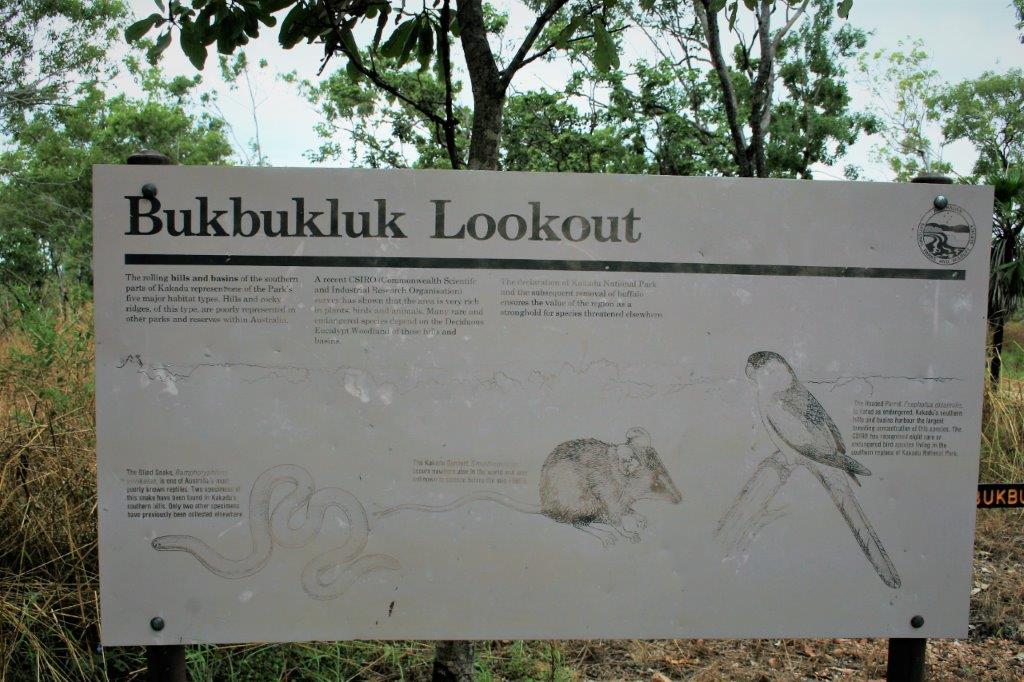
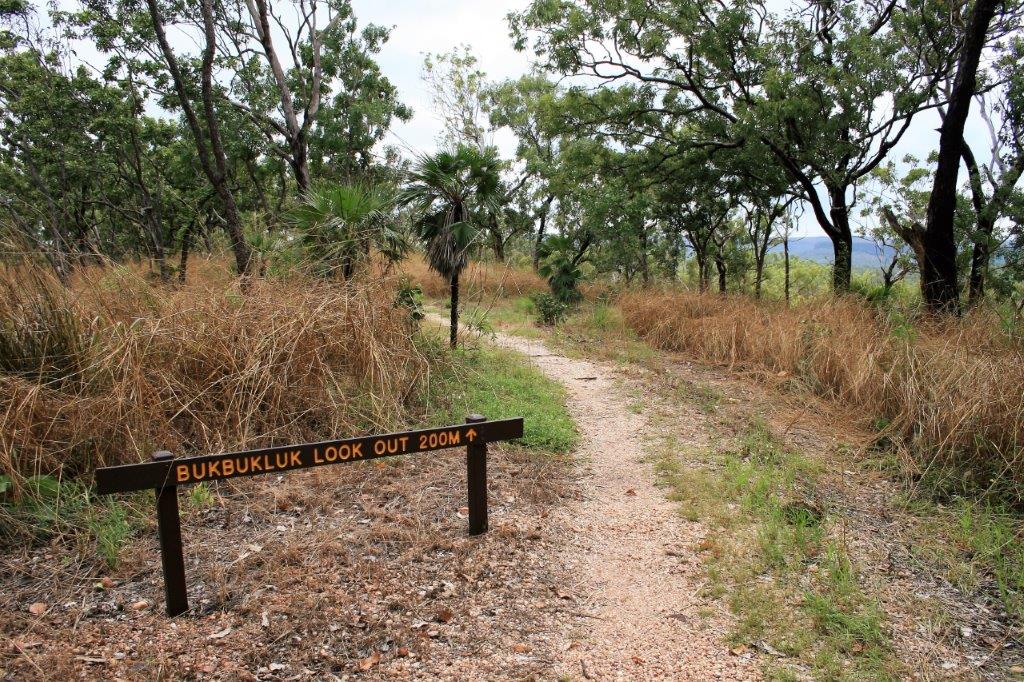
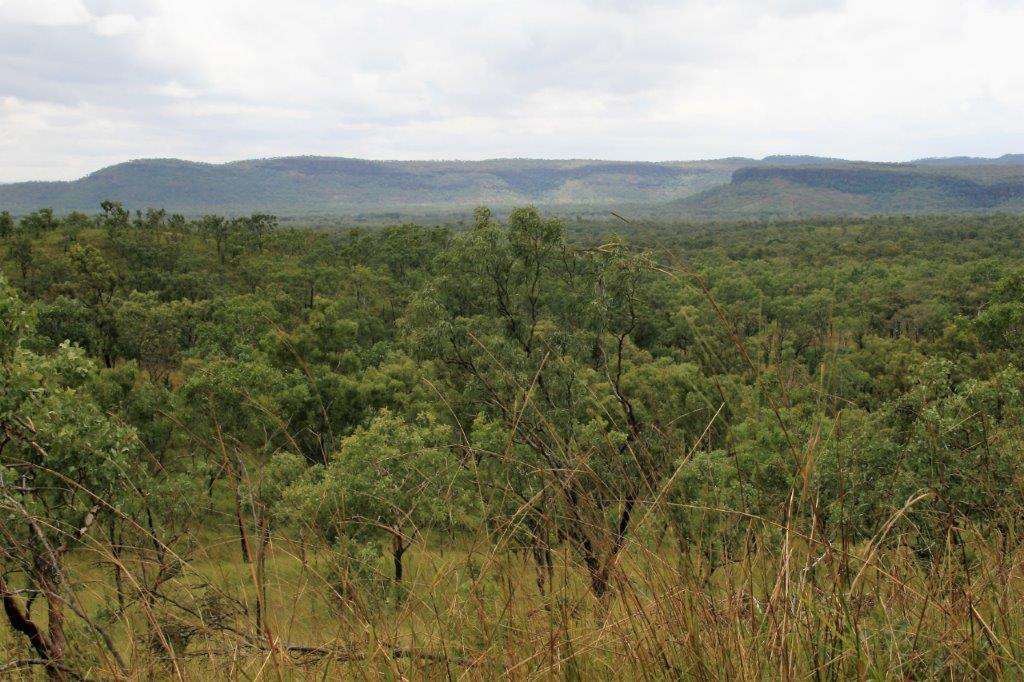
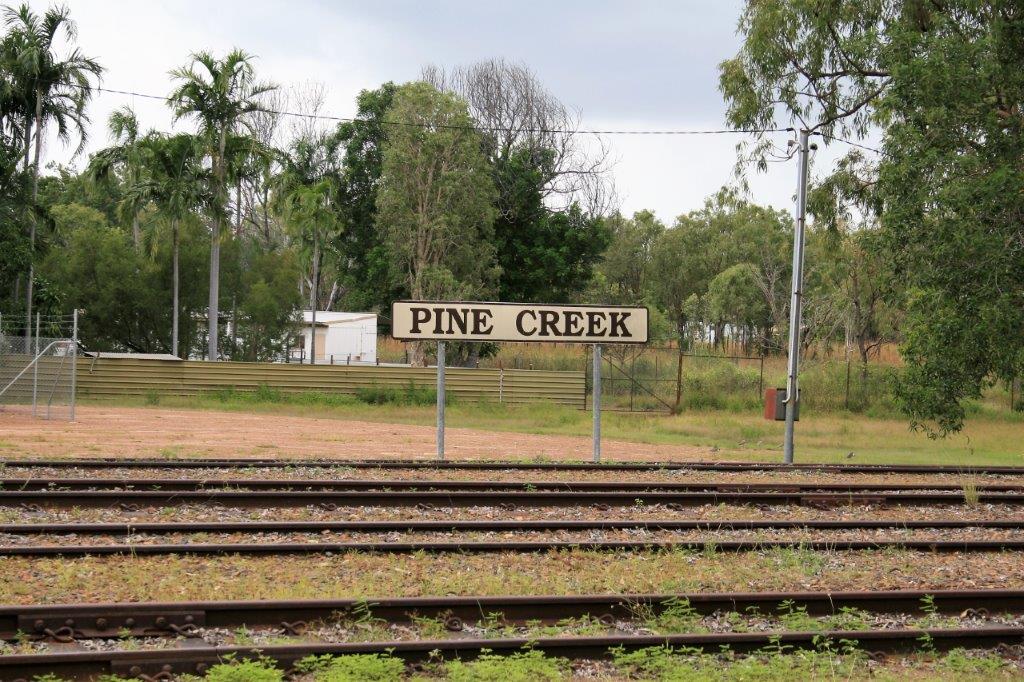
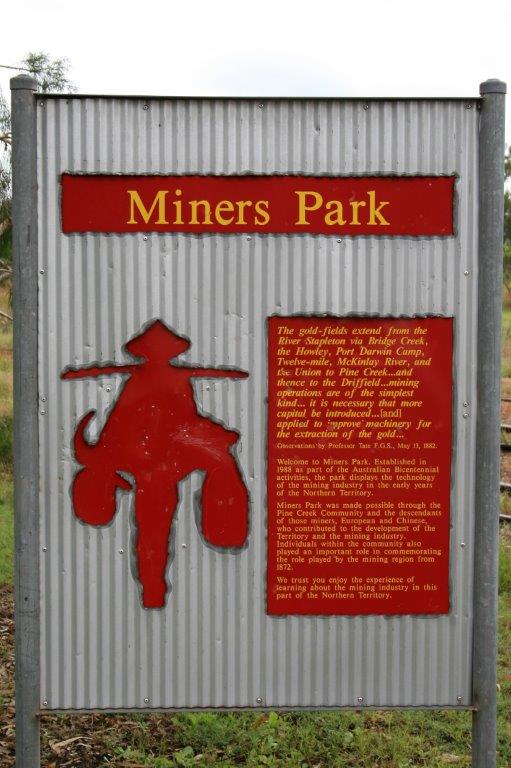
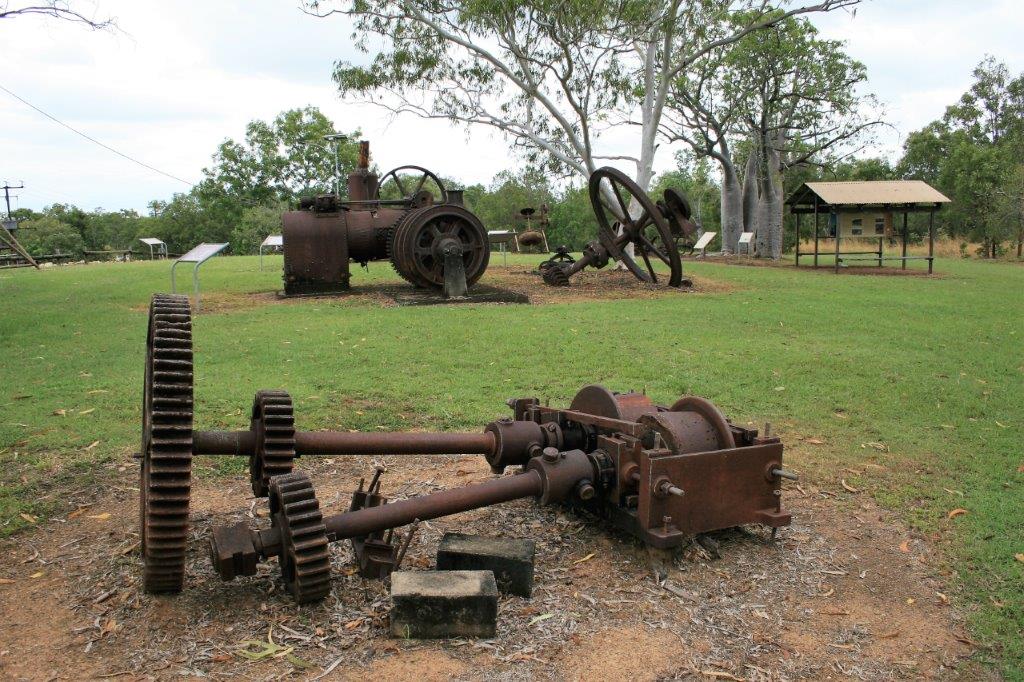
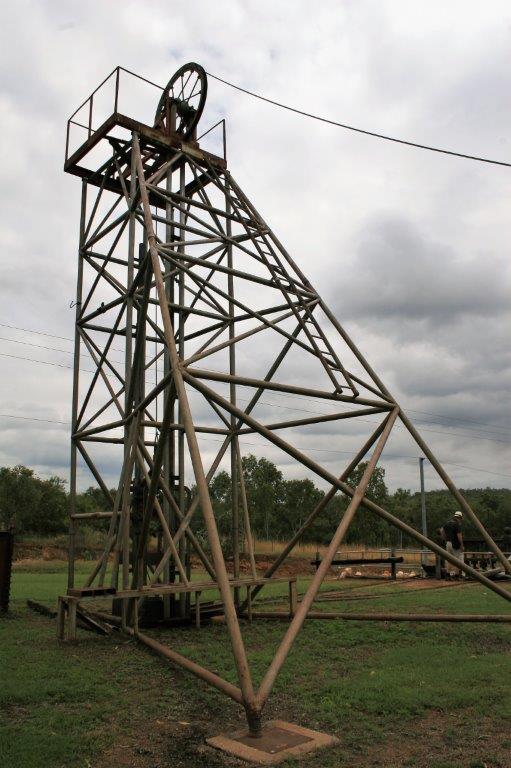
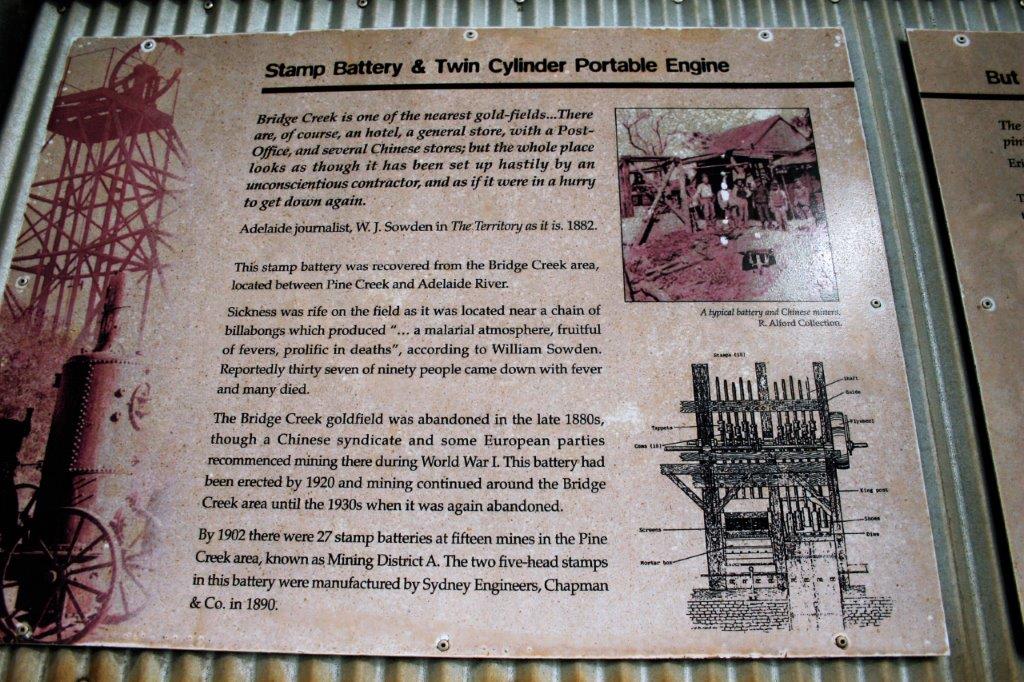
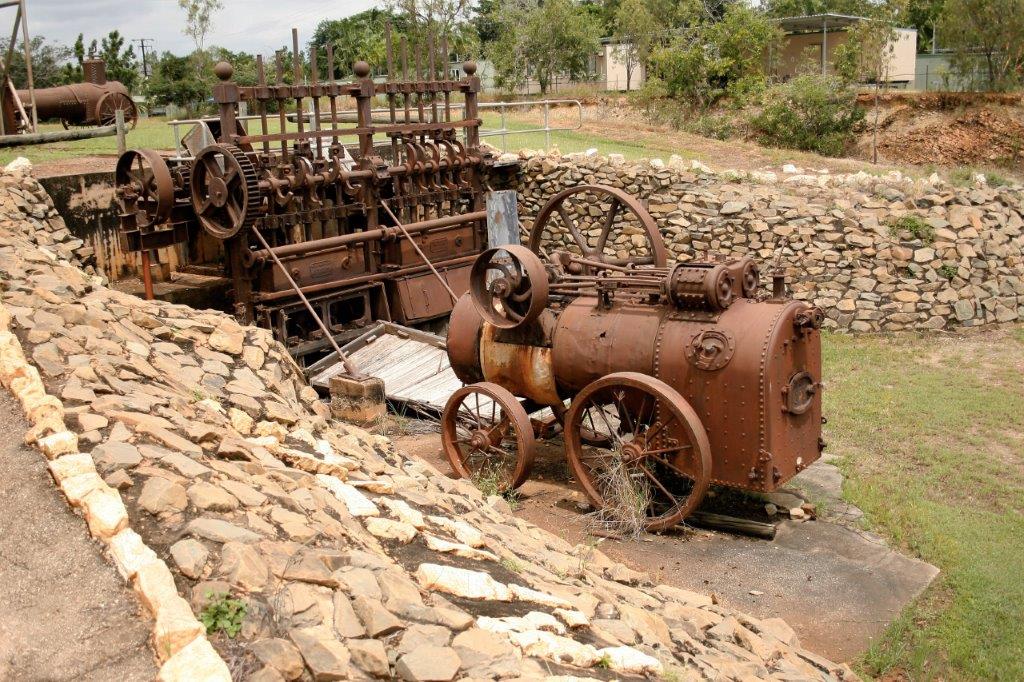
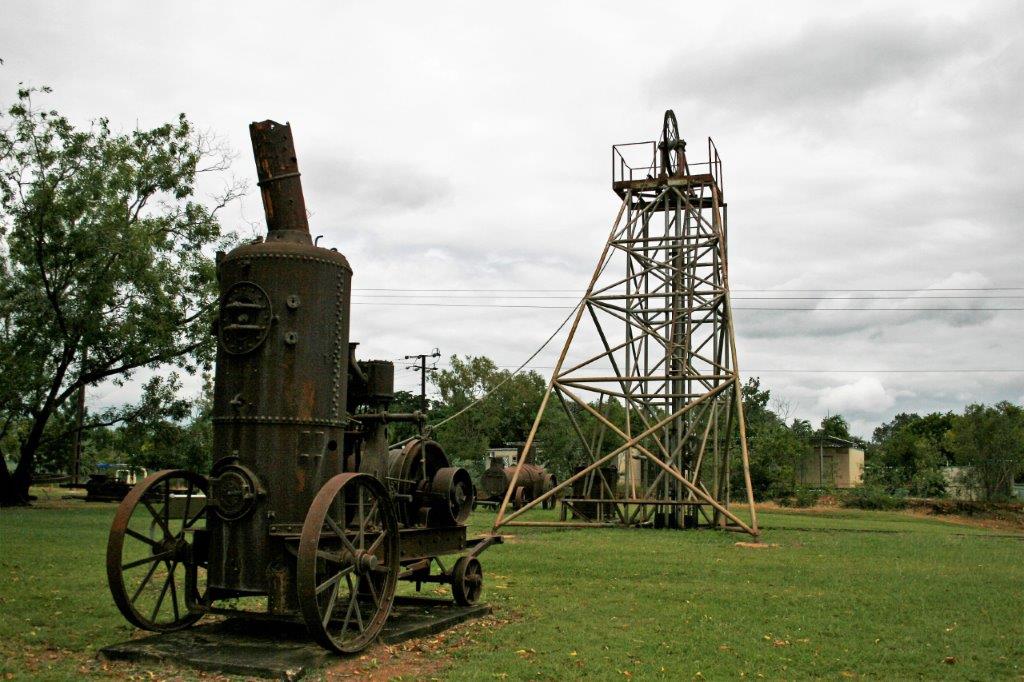
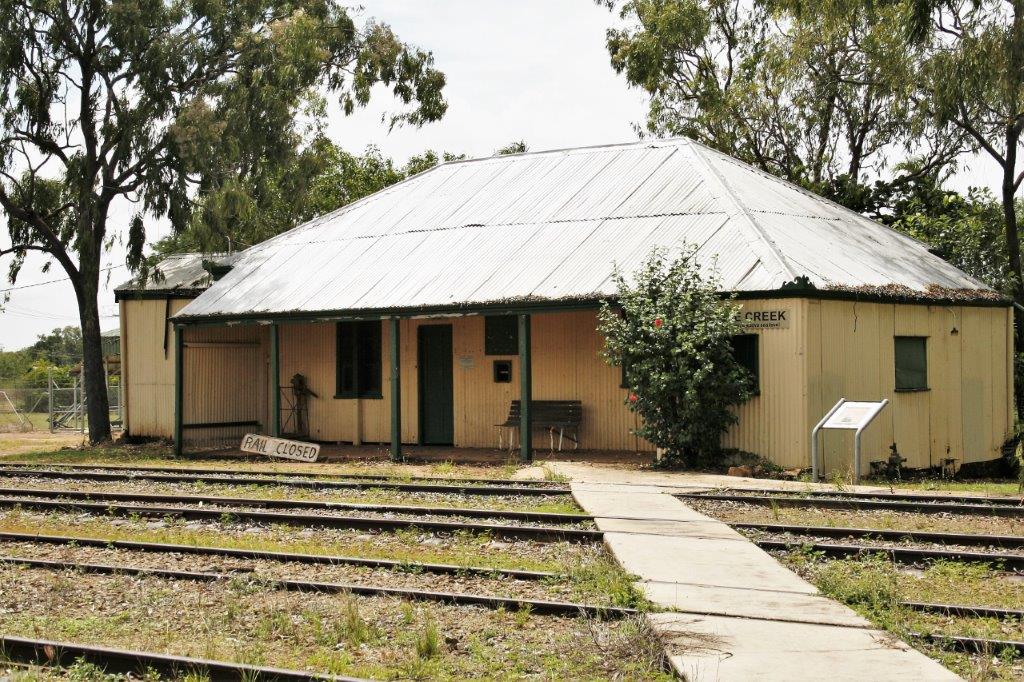
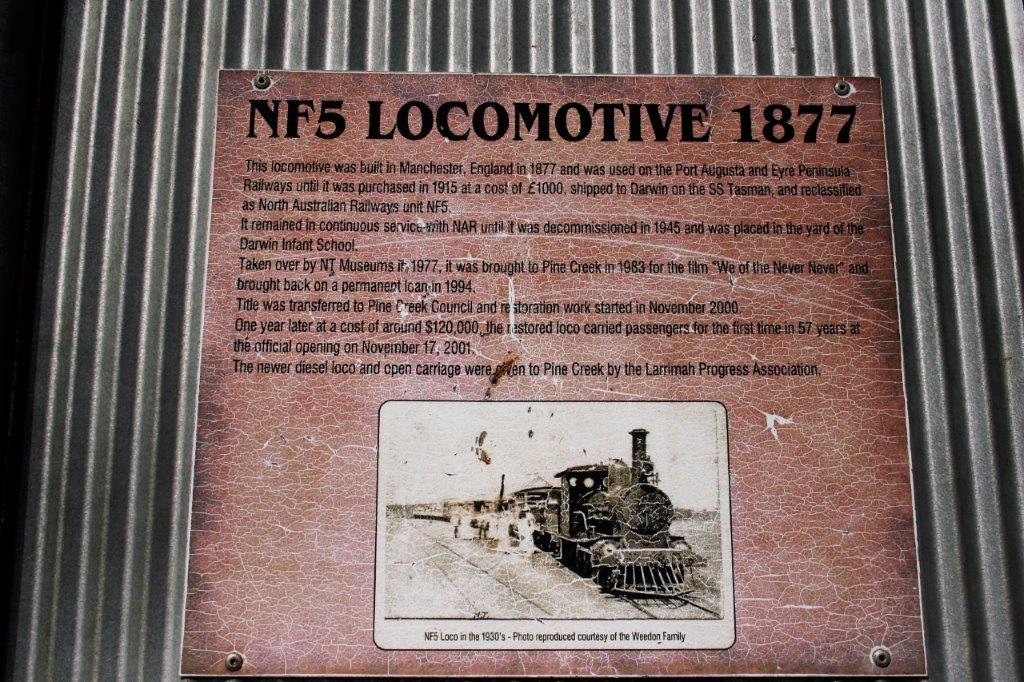
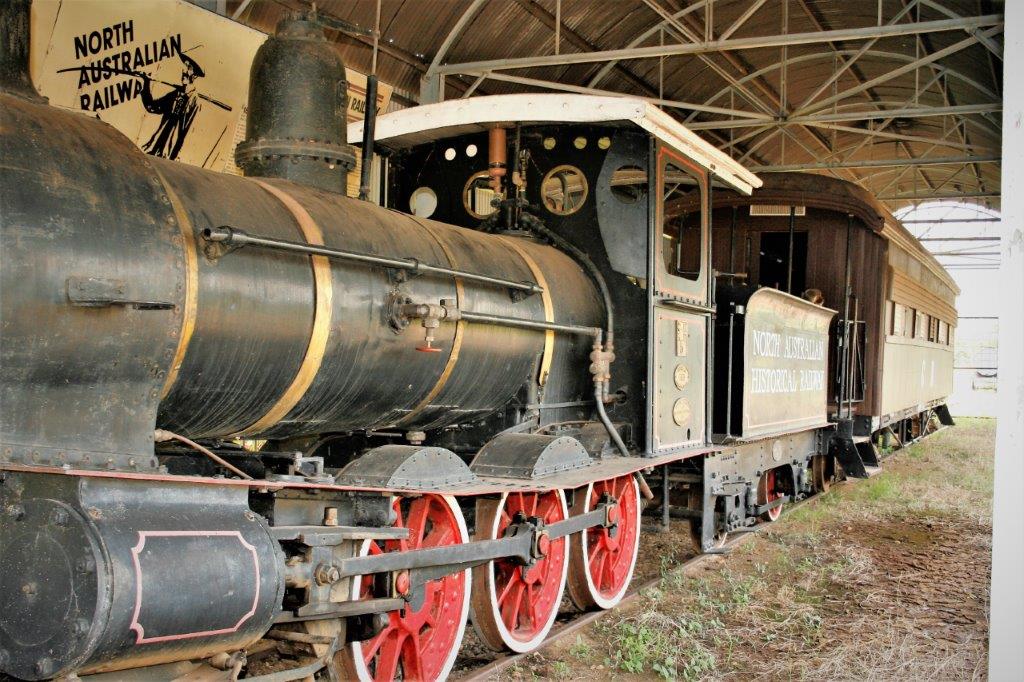
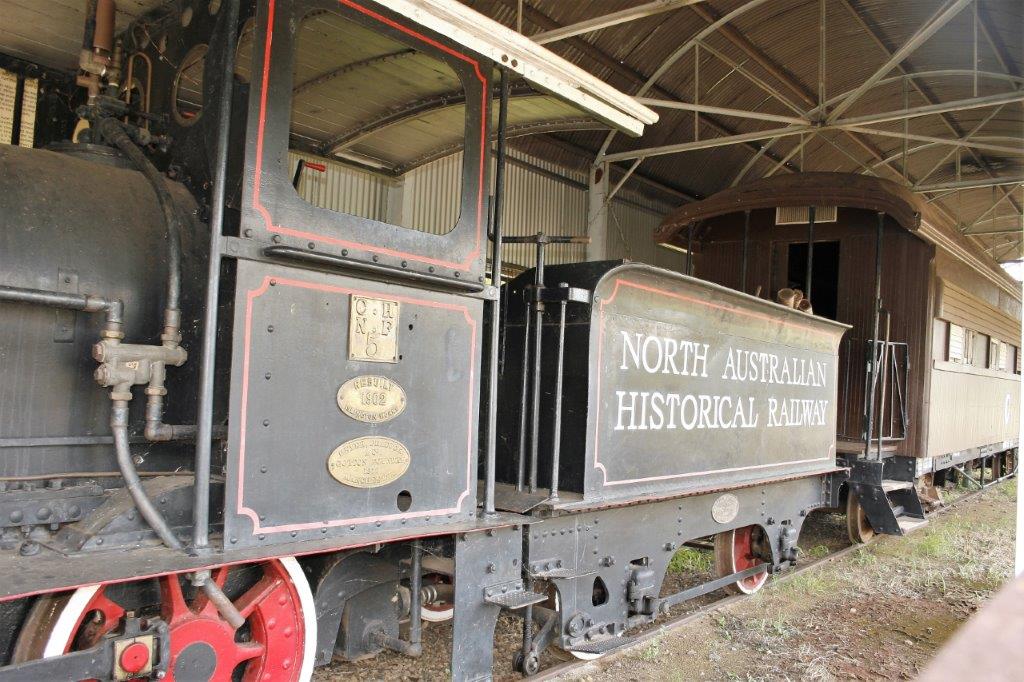
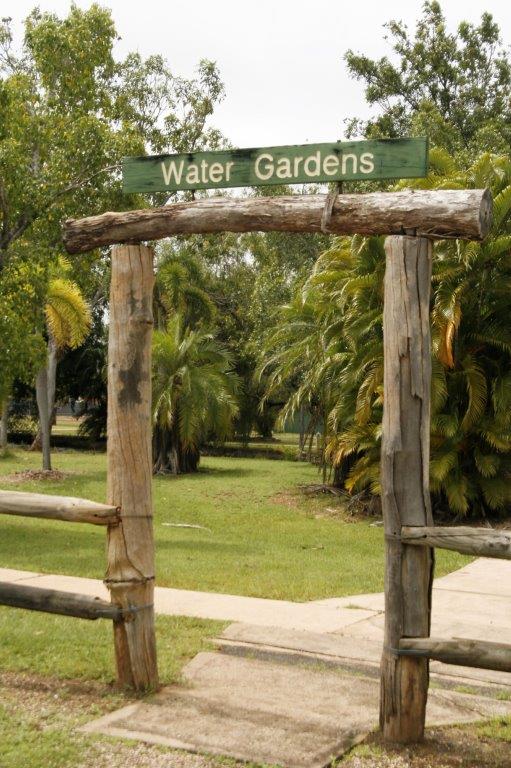
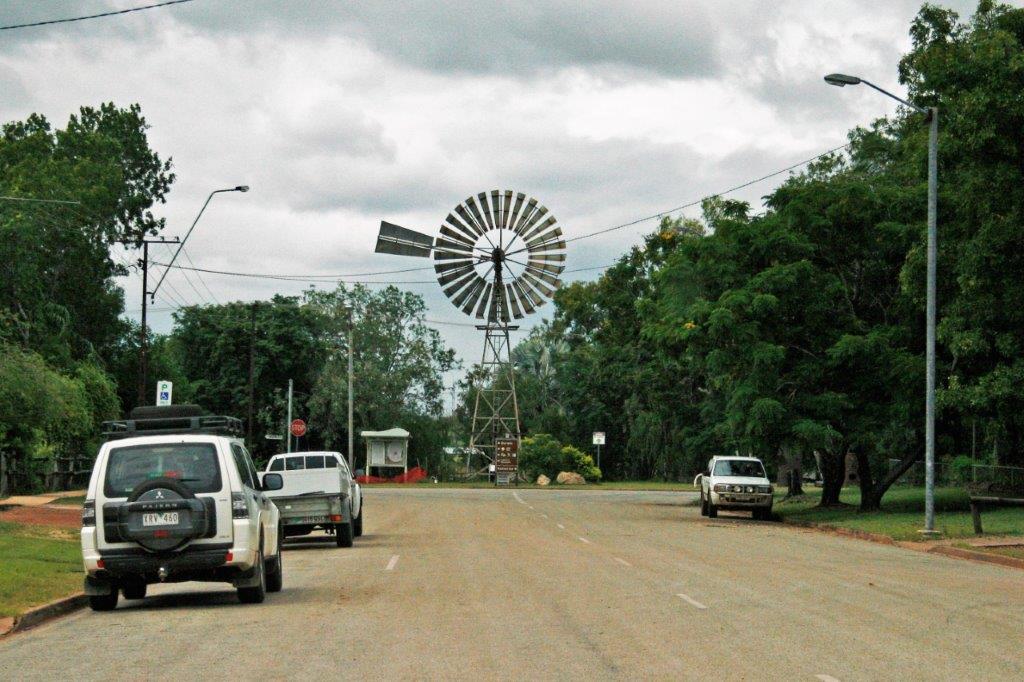
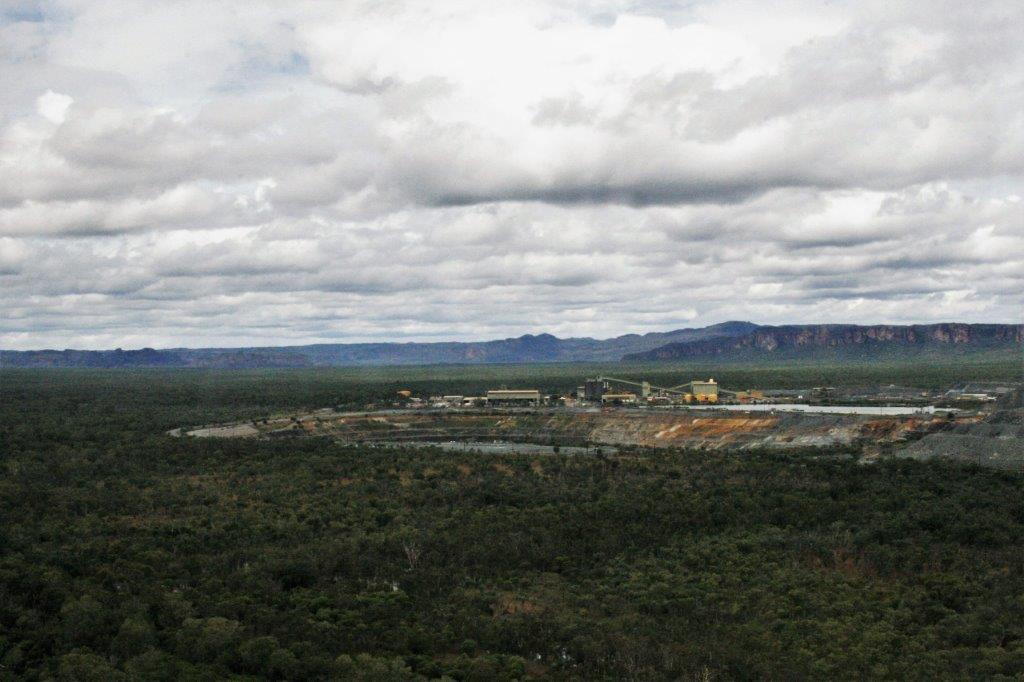
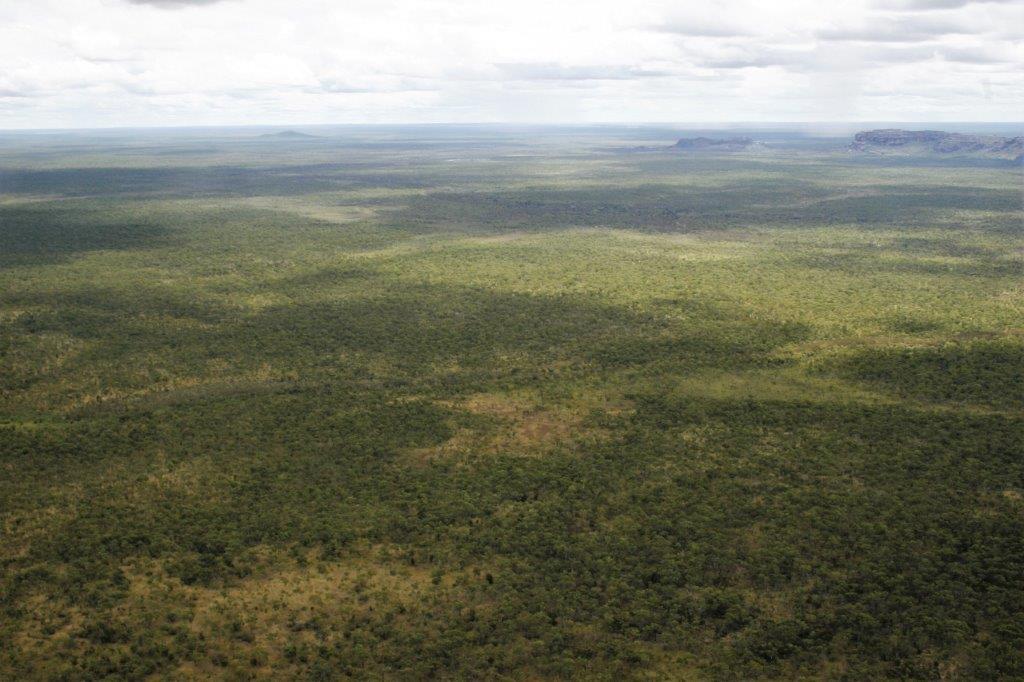
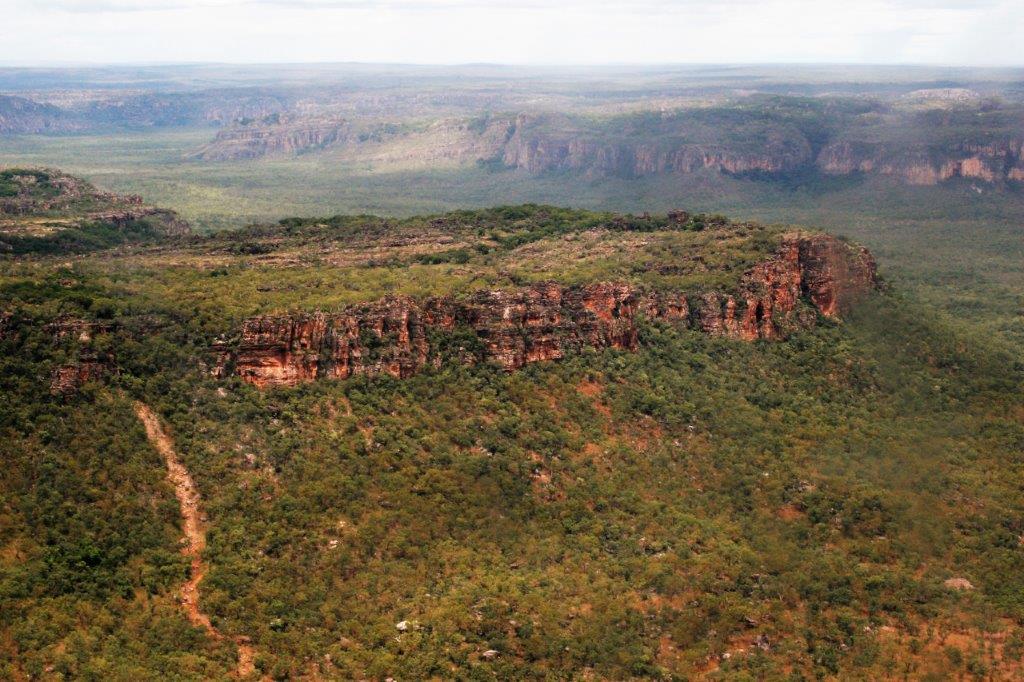
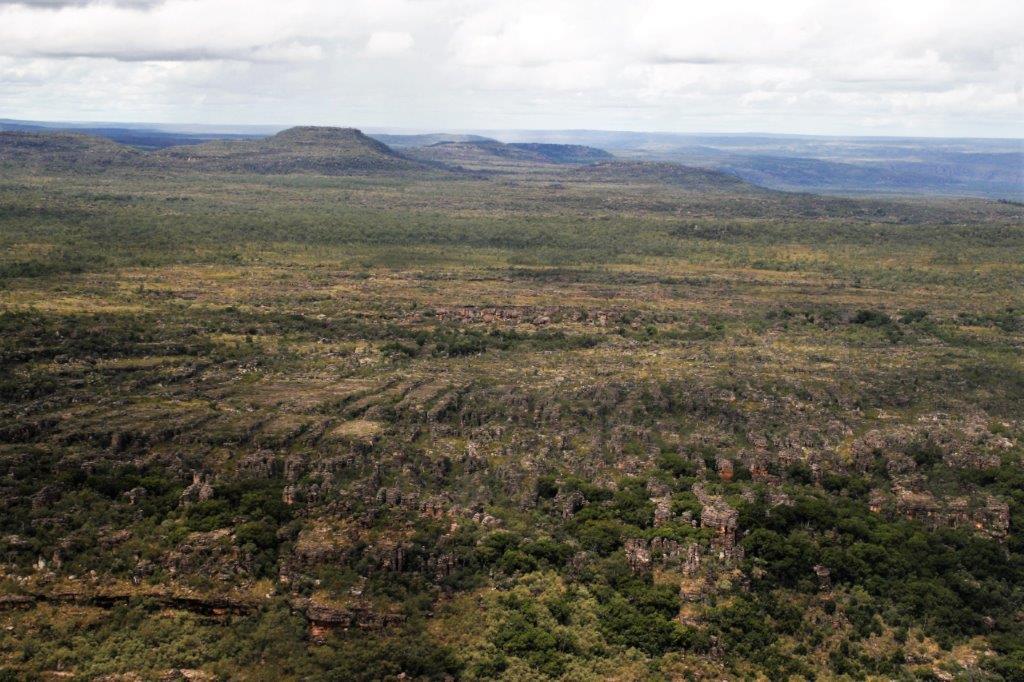
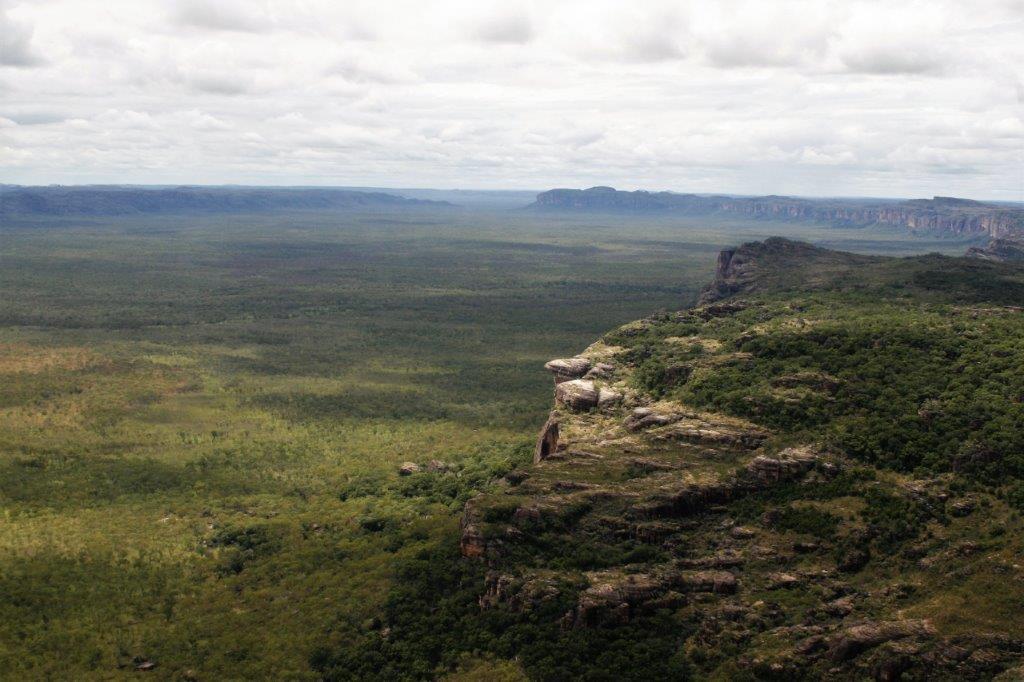
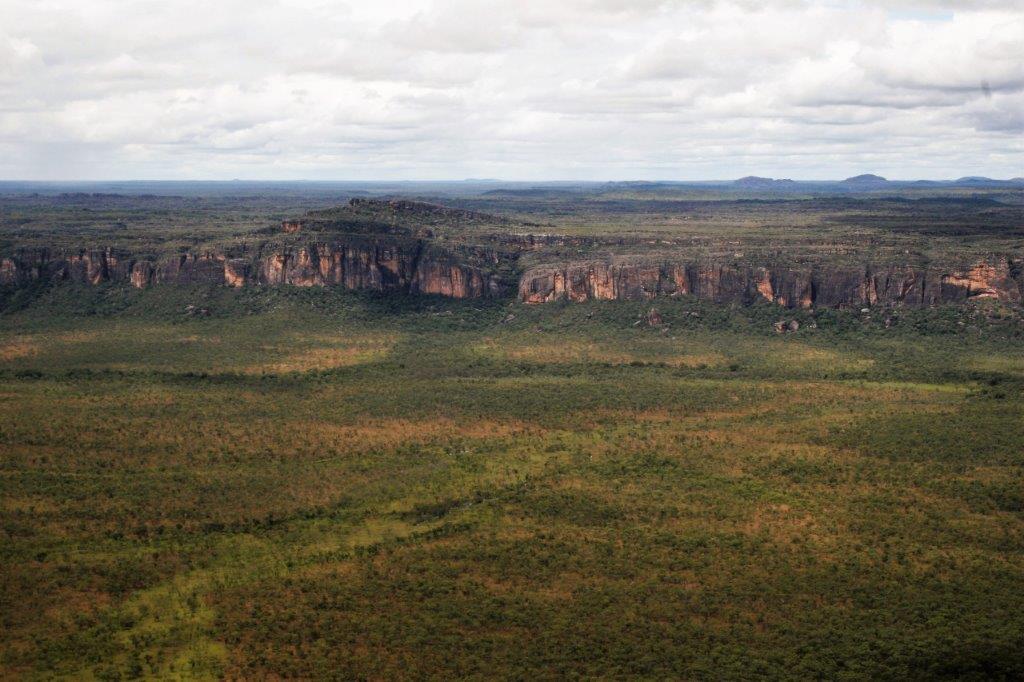
We stopped a couple of hours later at a lookout over the forest with a view toward the escarpment. At Stuart highway we turned north to Pine Creek for a wander in the Miner’s Park that displayed old mining equipment. Downtown Pine Creek has a water garden which is a water-filled mining site.  There wasn’t really a garden, per se, just a lot of trees and grass.  Perhaps we didn’t explore far enough because we didn’t see a water lily pond either.

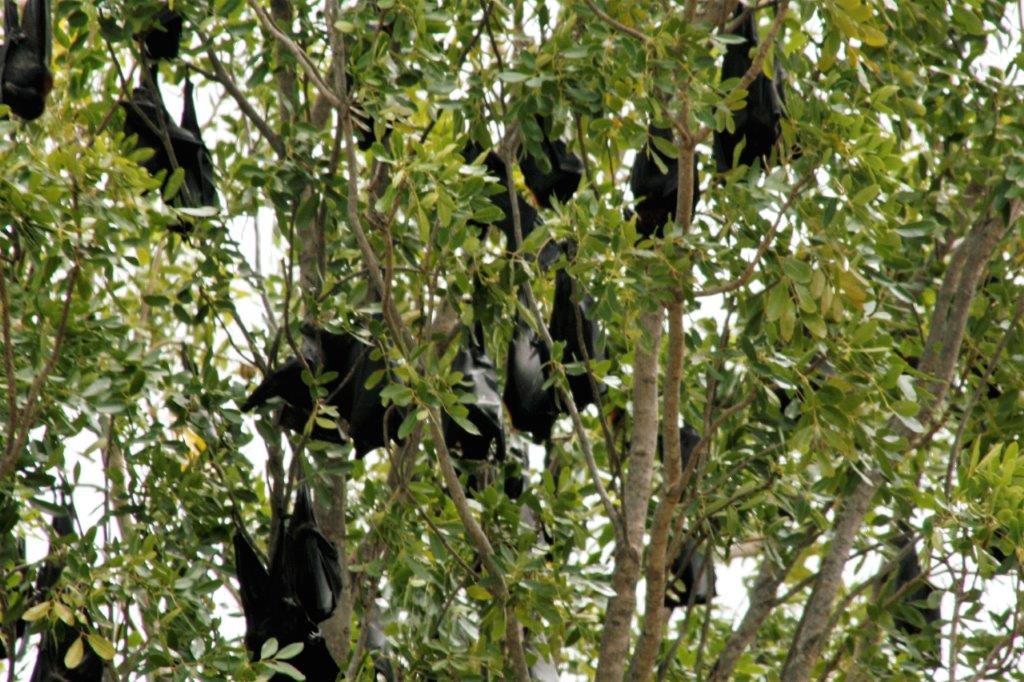
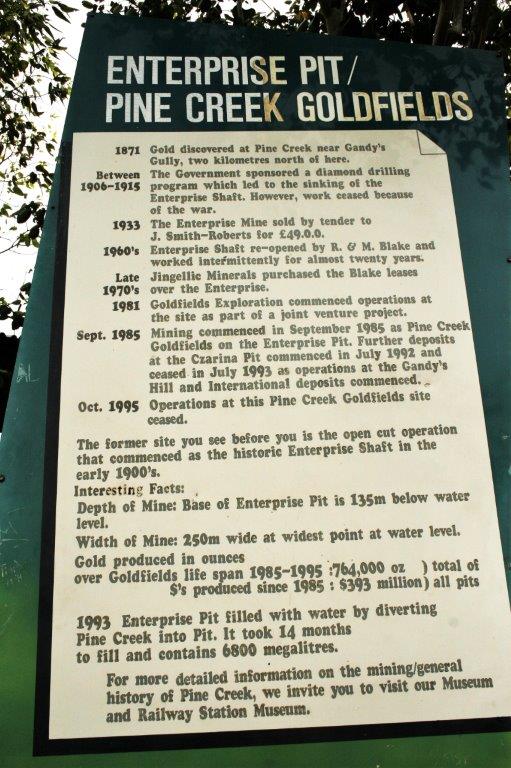
There were dozens of huge fruit bats sleeping in the trees.We also drove up to the lookout over Enterprise Pit, an old open-pit gold mine now filled 135 meters deep with water.  The green-blue colour was very nice, although the true colour does not show in the photograph.

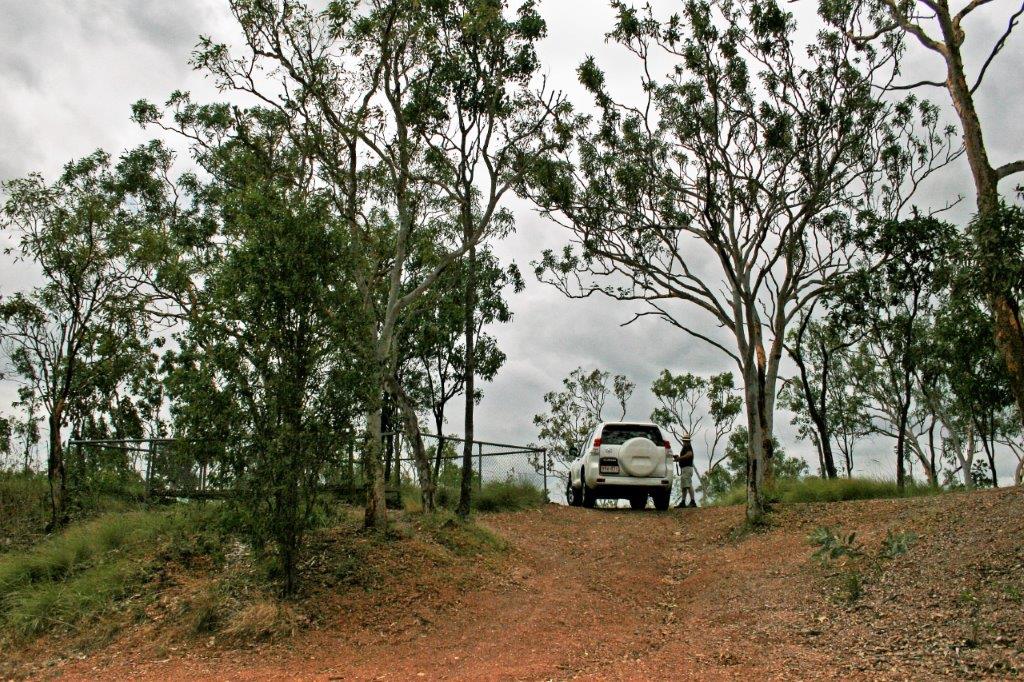
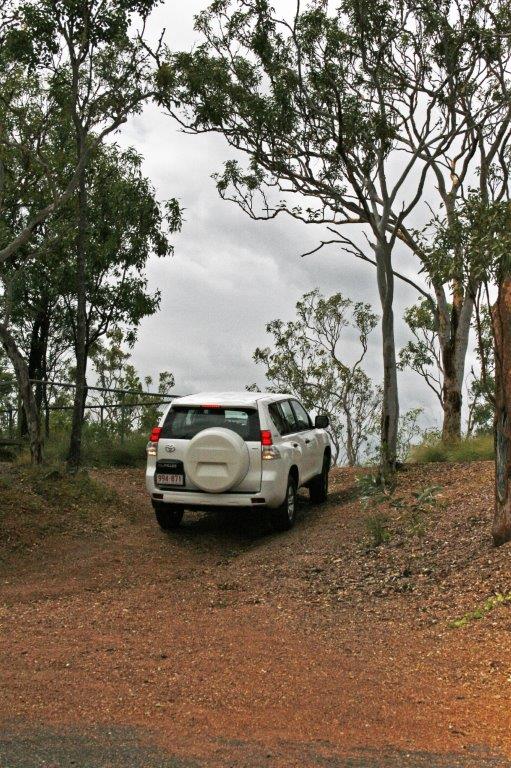
John had been looking forward to some off-road driving in Kakadu but with all the roads closed we were only on paved roads.  At the Enterprise Pit lookout he put the Prada in 4WD and drove up this little embankmet.  Just because he could!

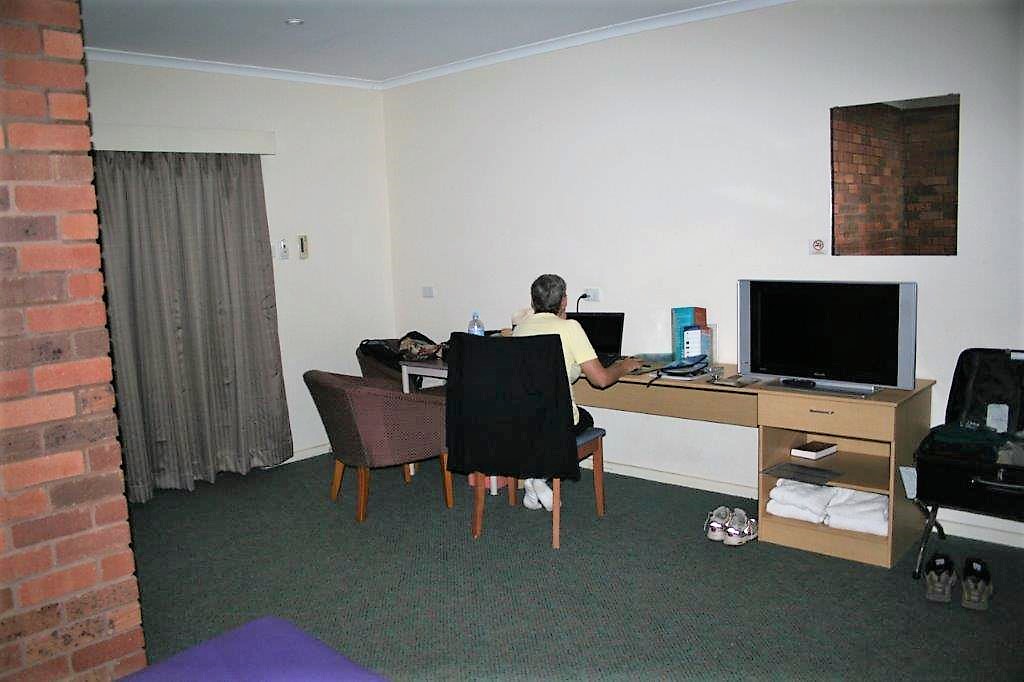
There are very long road-trains in Australia.  This truck only had three trailers in tow.  We saw some with four.We arrived in Katherine at three o’clock, checked into our hotel and then drove a kilometer into town for some food supplies and a visit to the information center for the local lowdown.  Then it was back to our room to do some work on the computer.  Internet was not free in AUS hotels when we were there.  I don’t know how things are now since six years have passed since this trip.  We paid $6.00 for 1/2 hour on-line at our hotel in Katherine.  That qualifies as an ‘ouch.’

2011 March 28 – Day 82 – Jabiru (Kakadu National Park), Australia

The camping trip had taken its toll and we slept like logs our first night in Jabiru.  We had our $28 per person buffet breakfast and rested at the hotel until time to go to the airport. The one-hour flight over Kakadu Park was scheduled to leave at noon.  It was a small seven seat plane.  The pilot had a trainee in the other front seat and there was a couple from Adelaide as well as John and I.

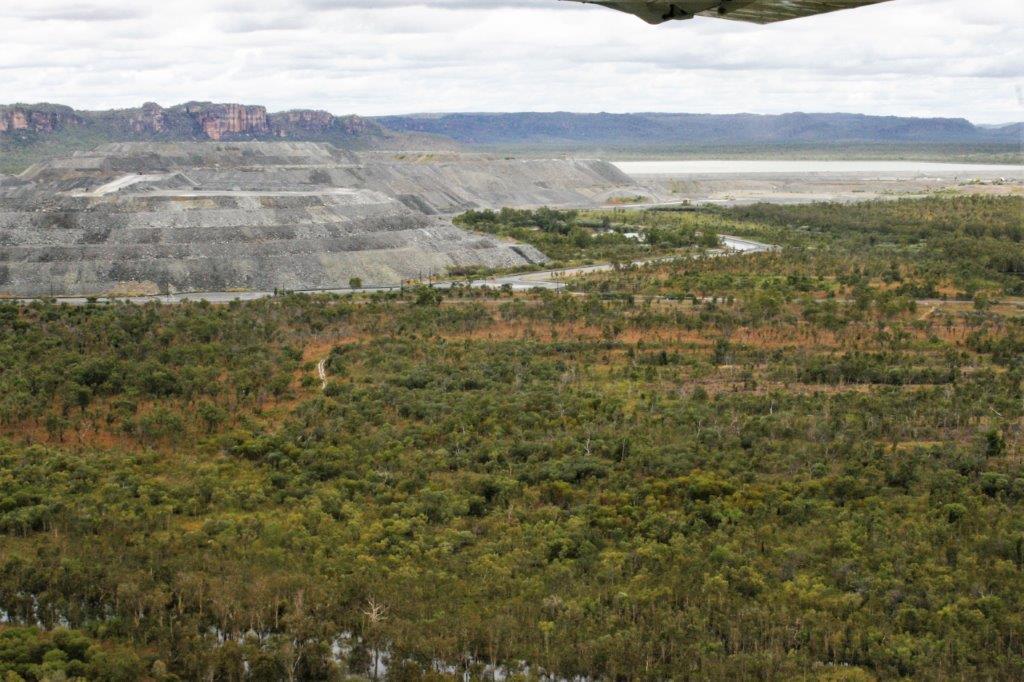
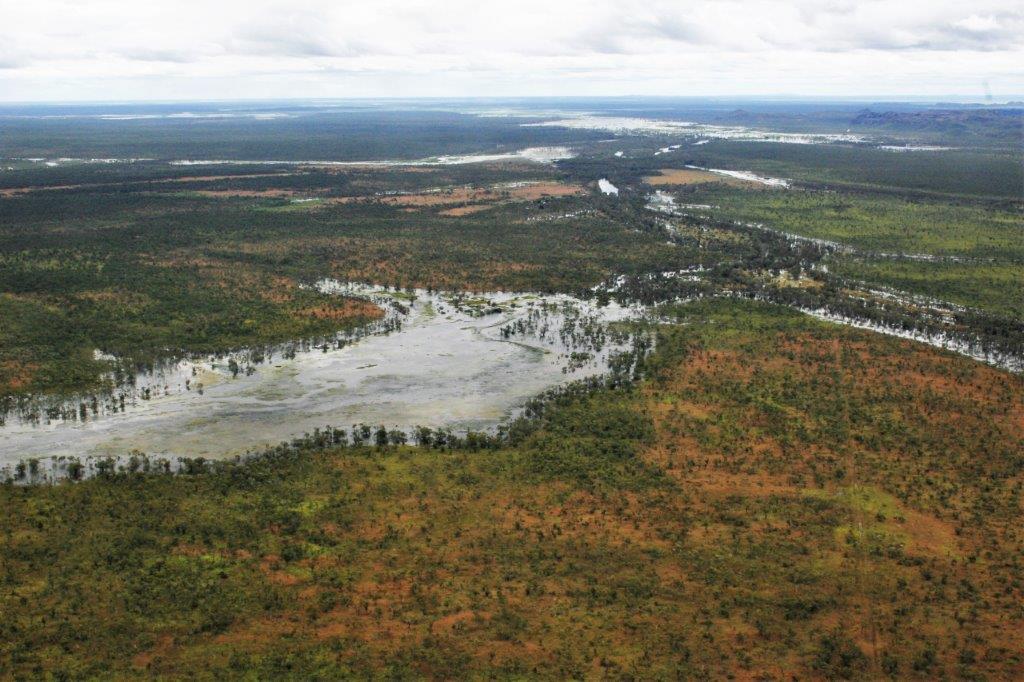
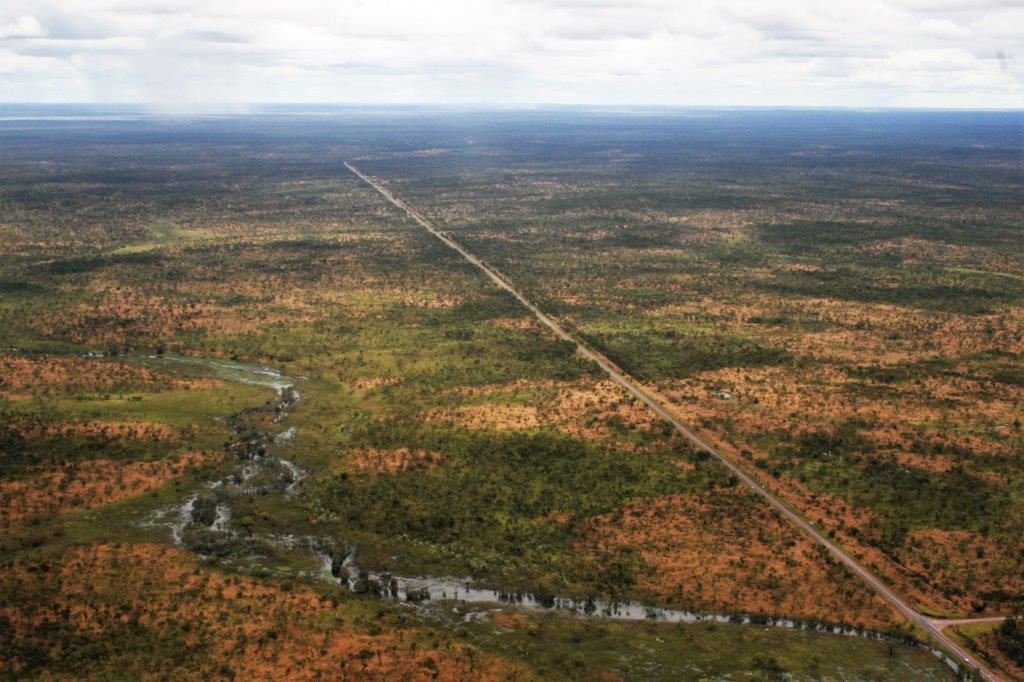
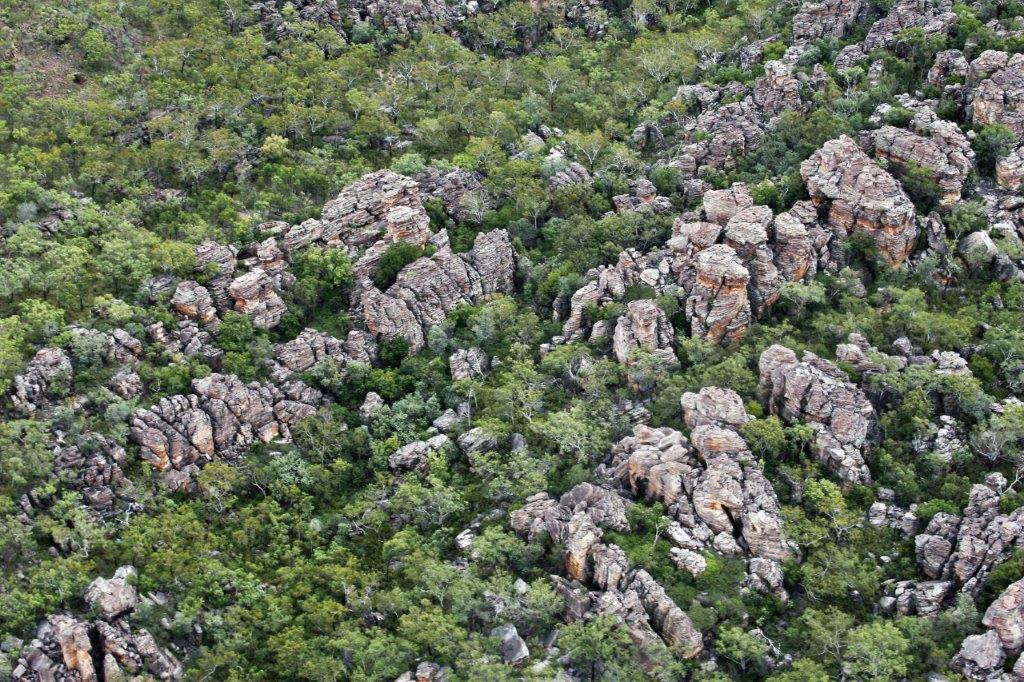
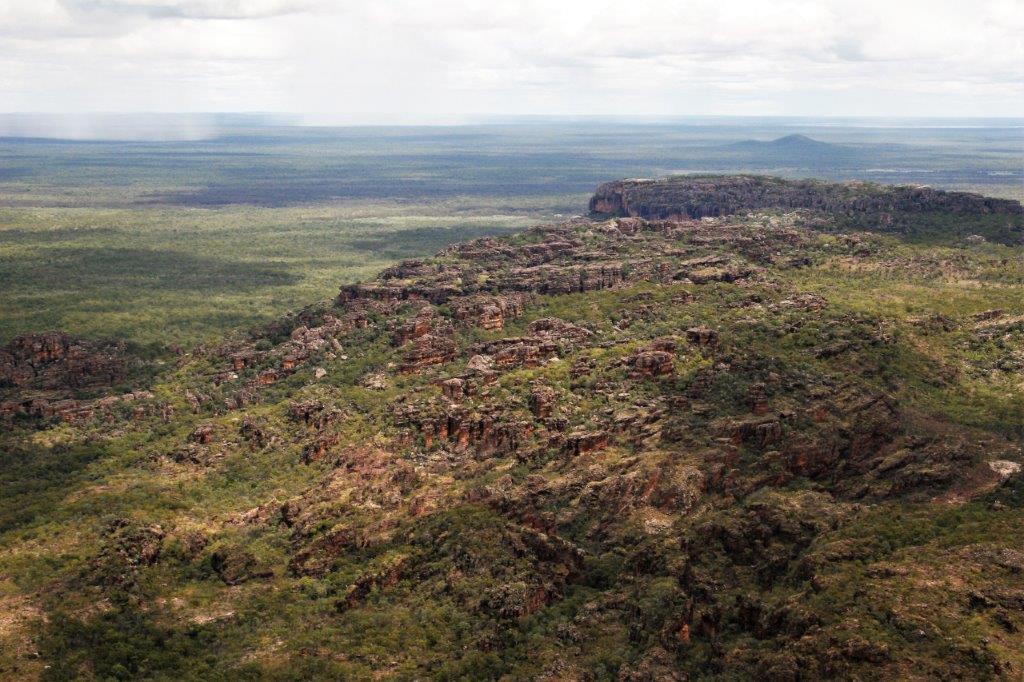
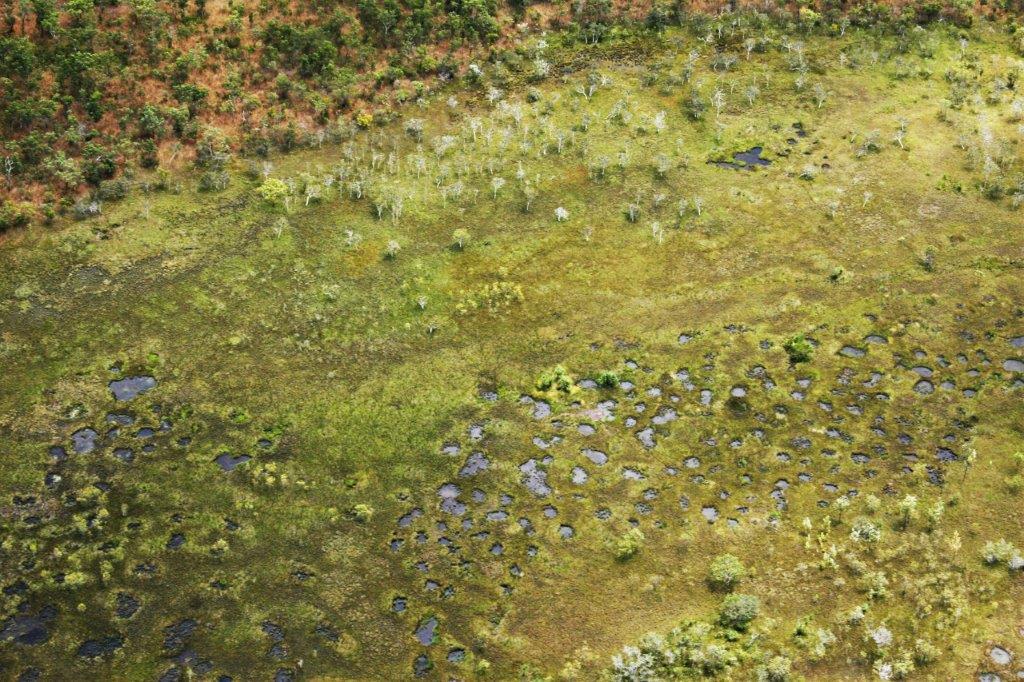
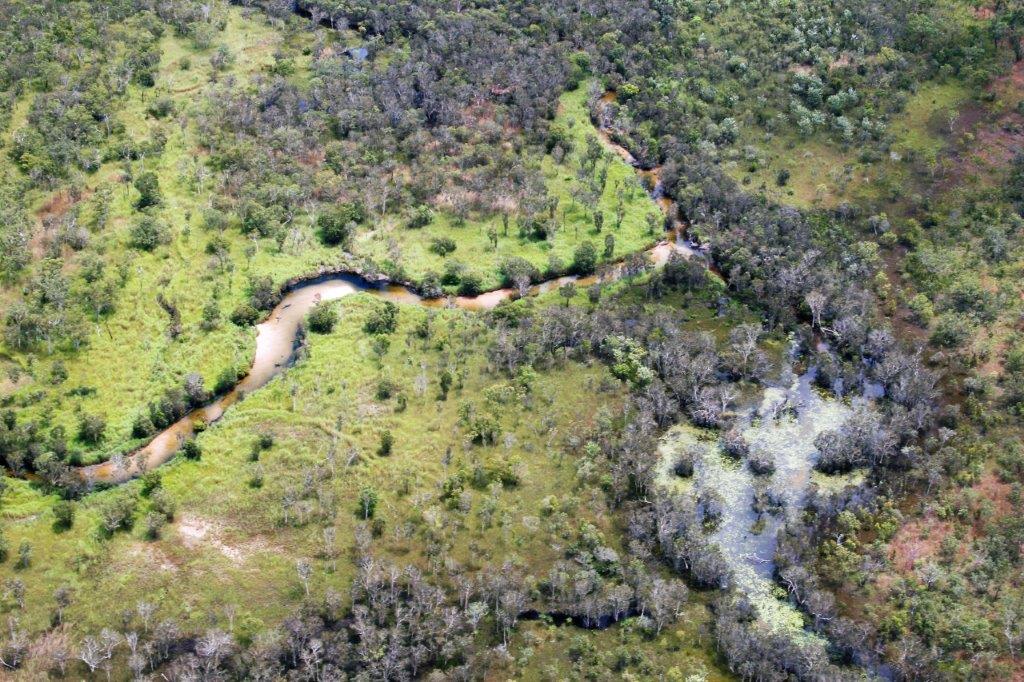
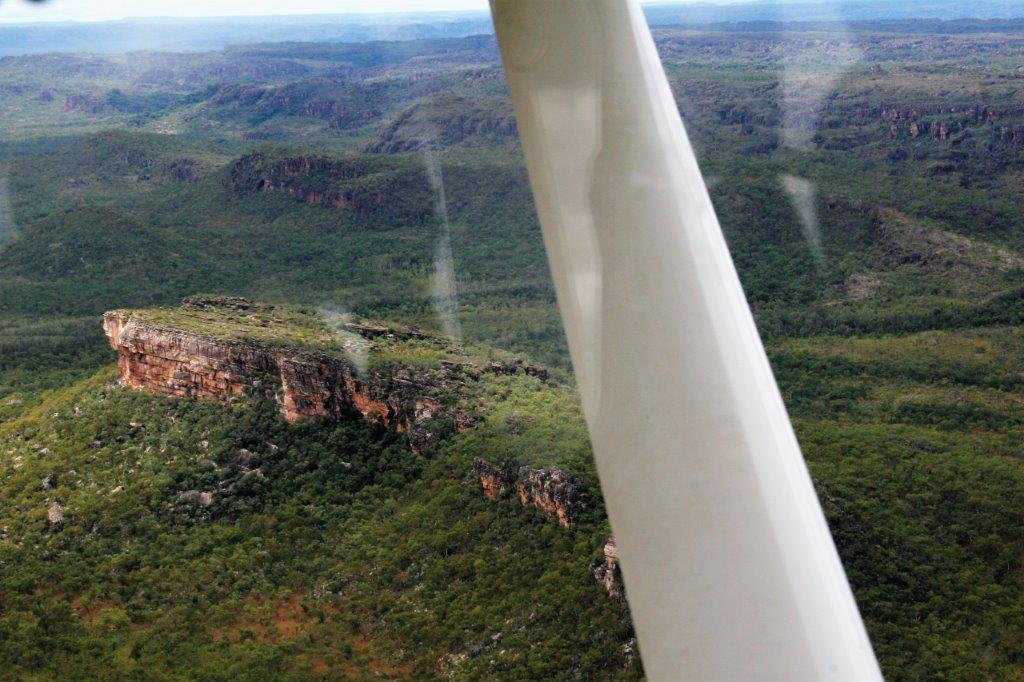
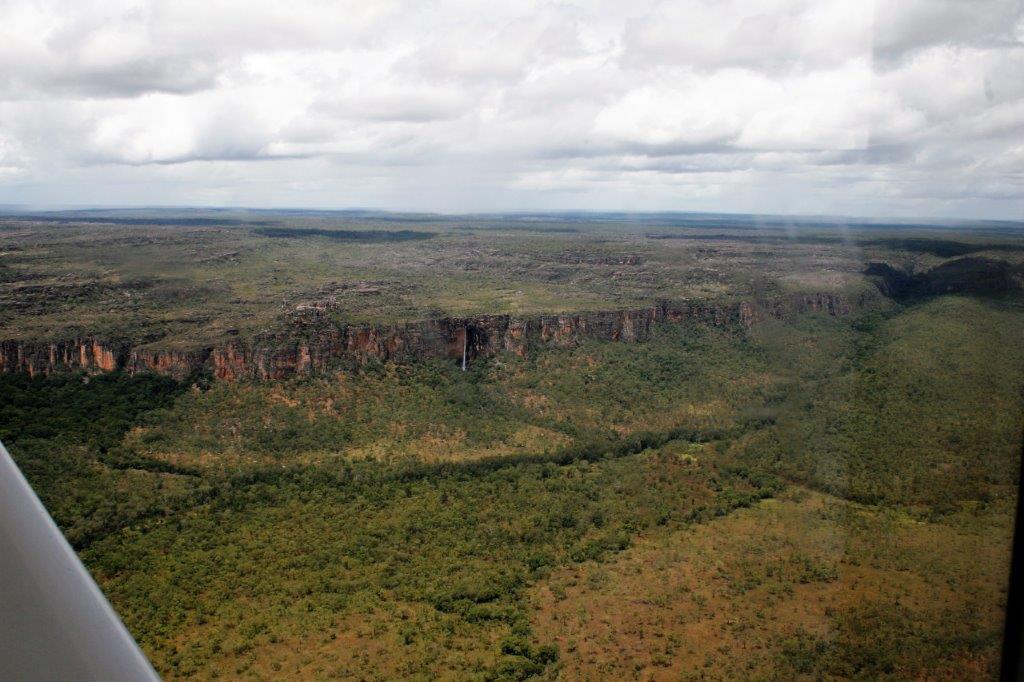
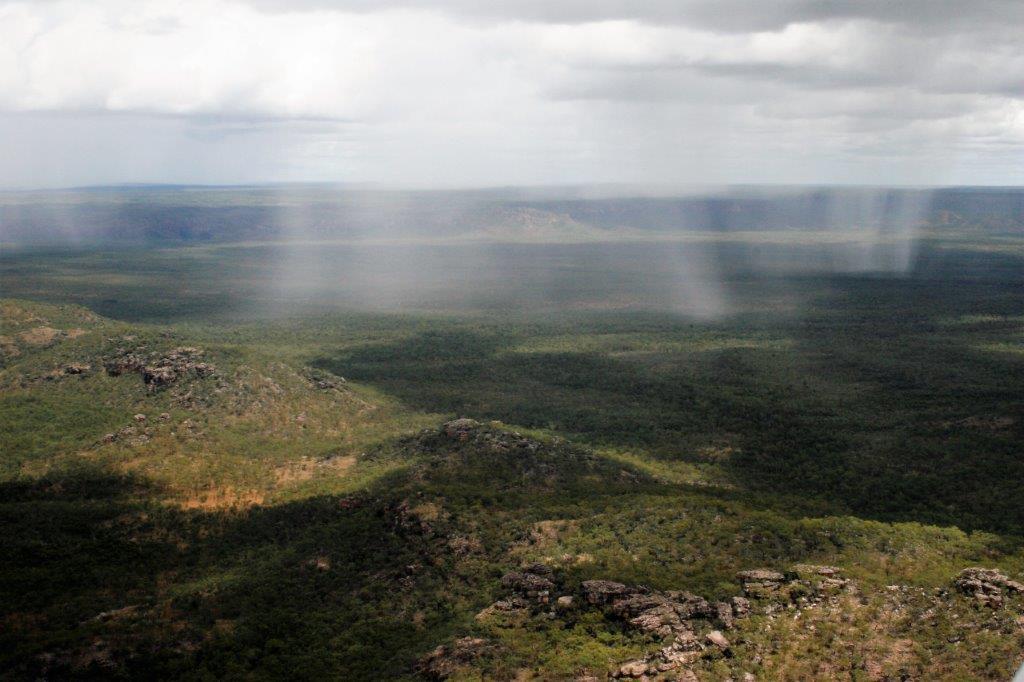
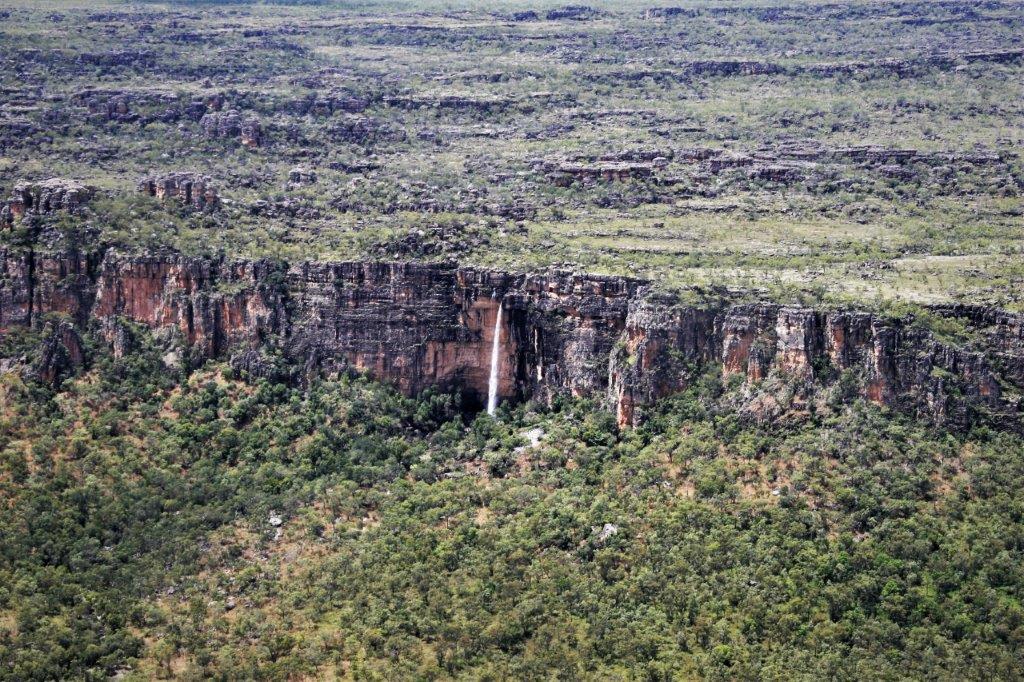
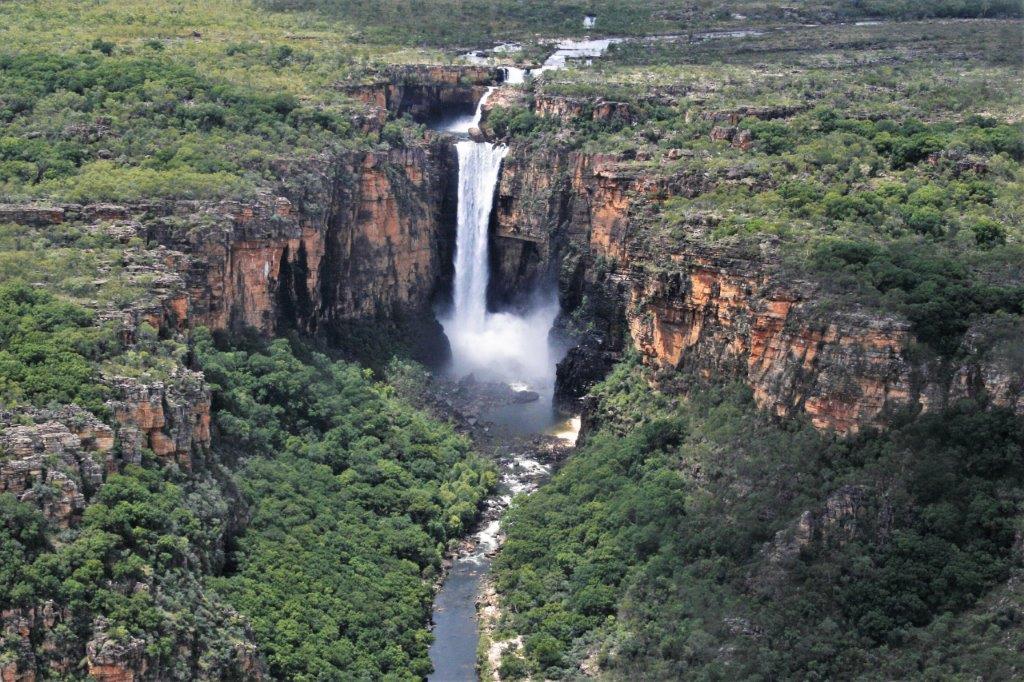
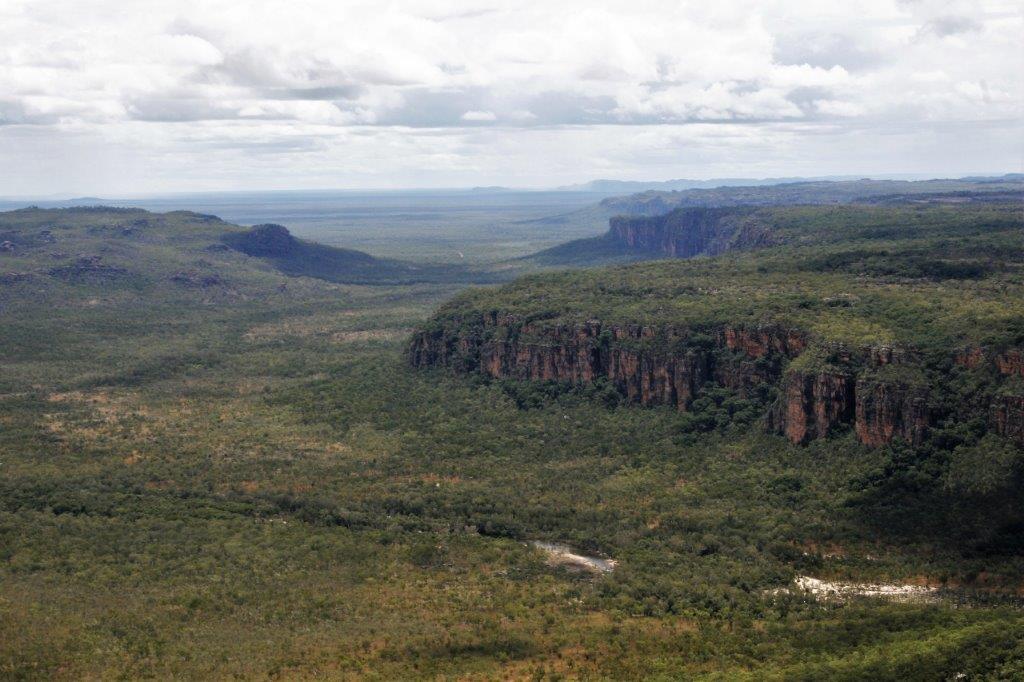
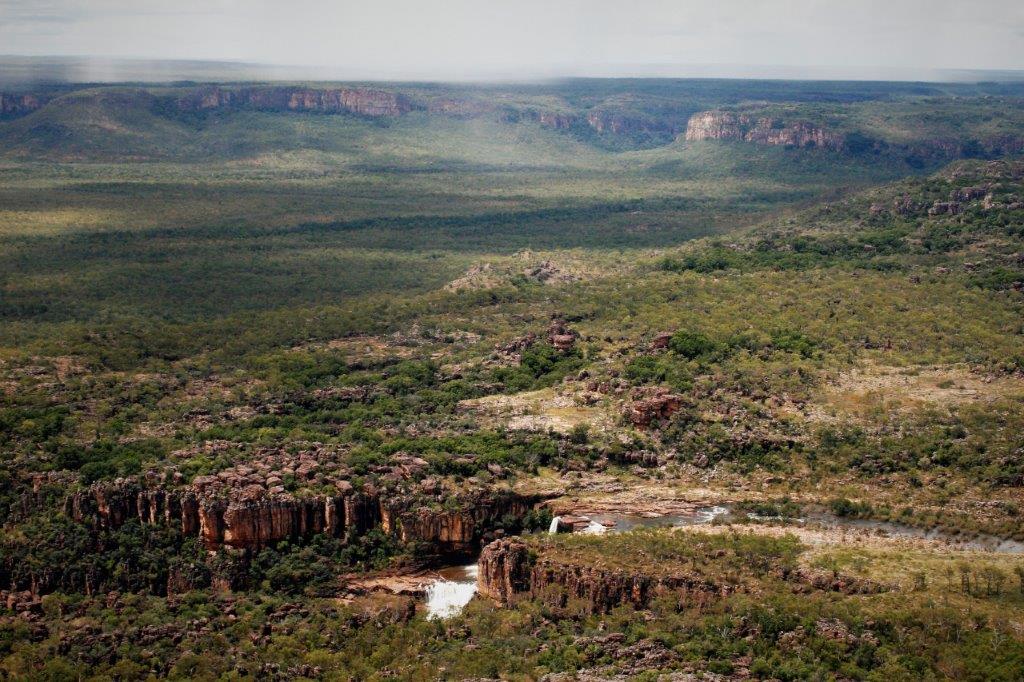
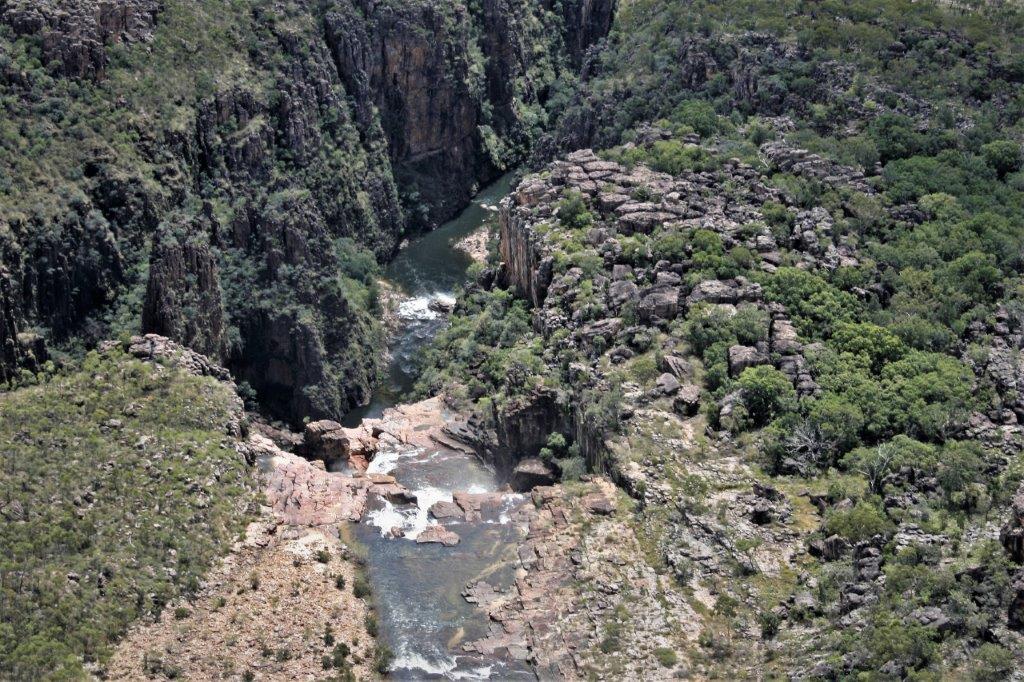
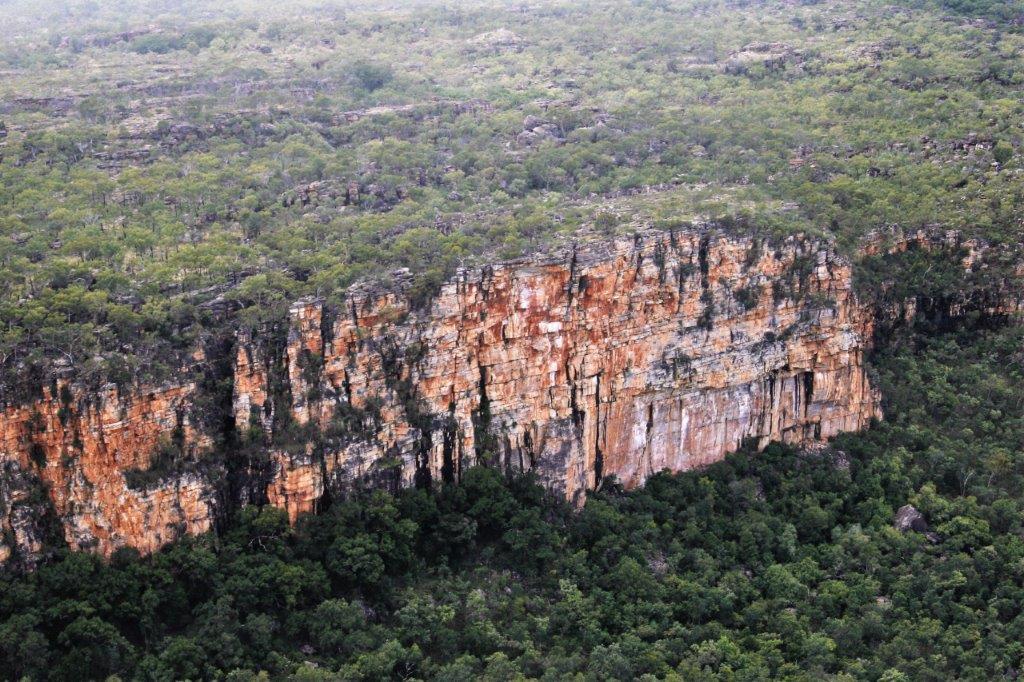
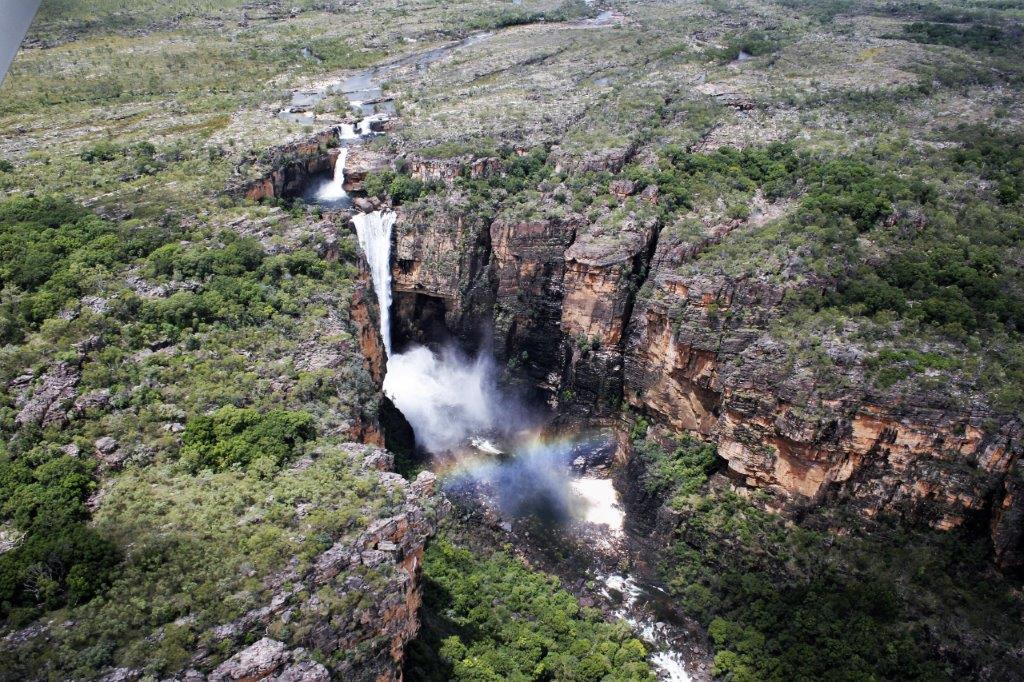
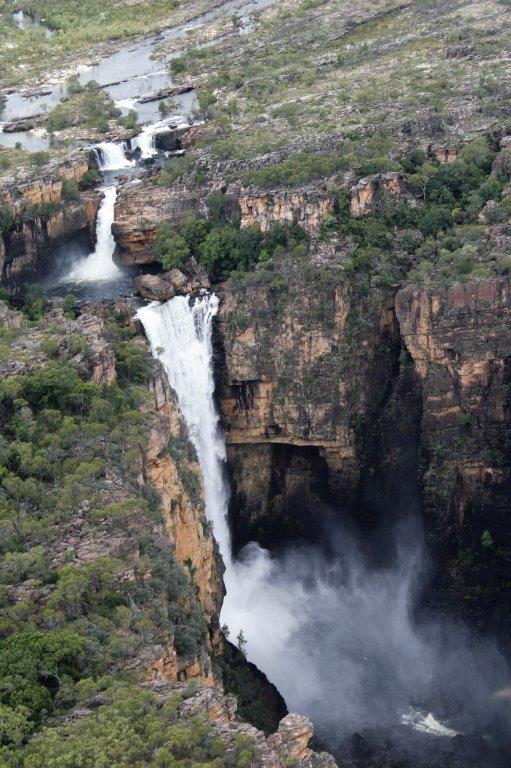
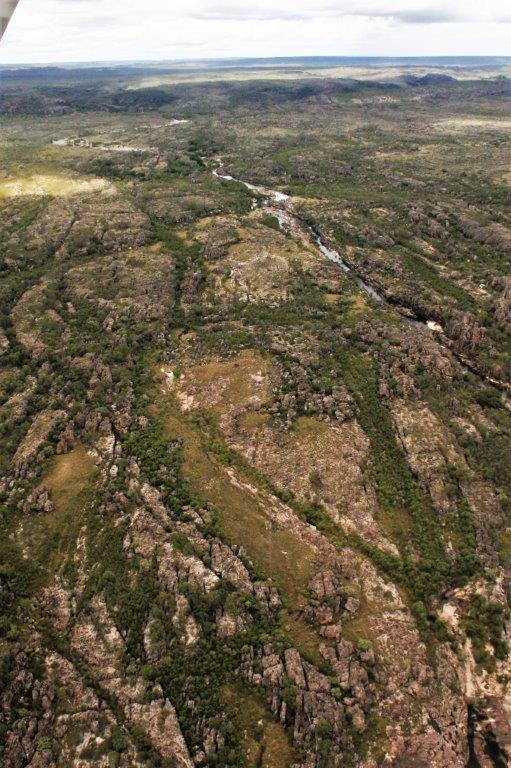
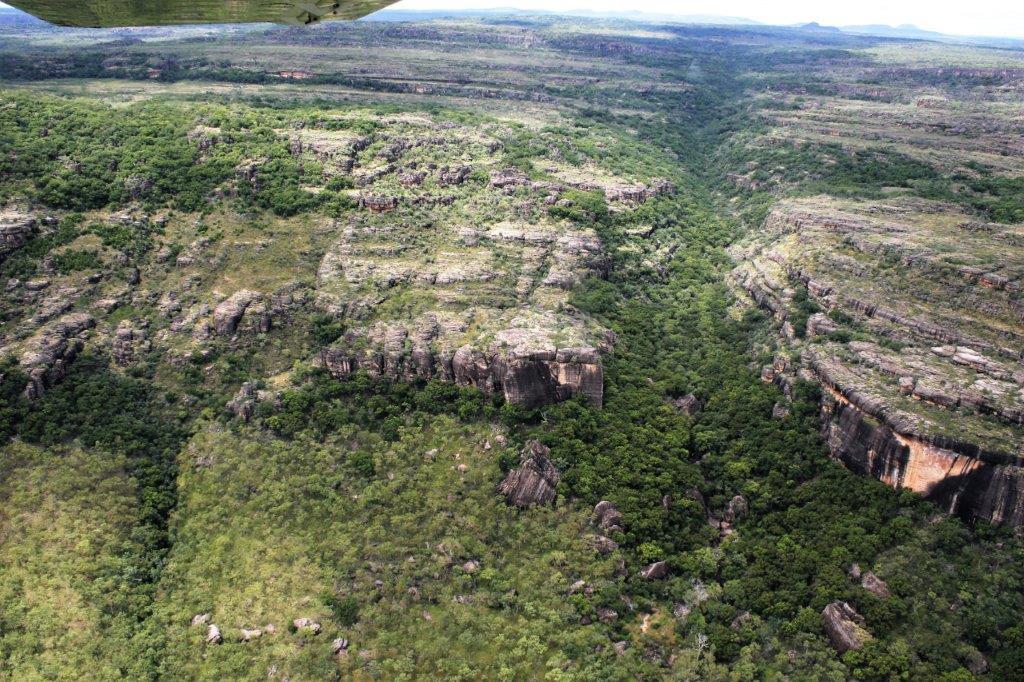
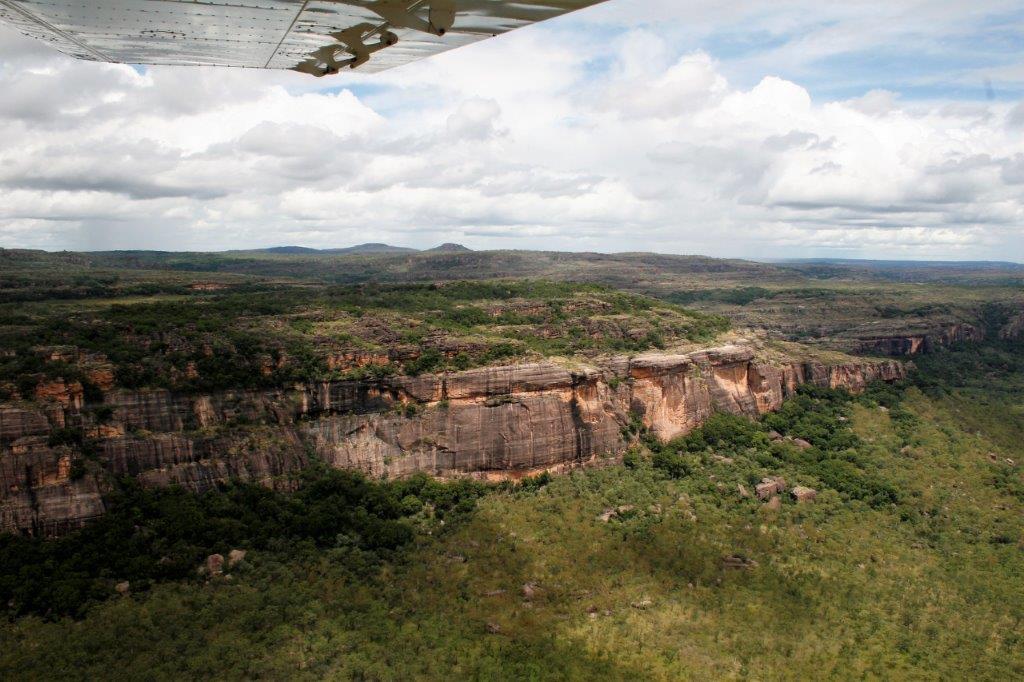
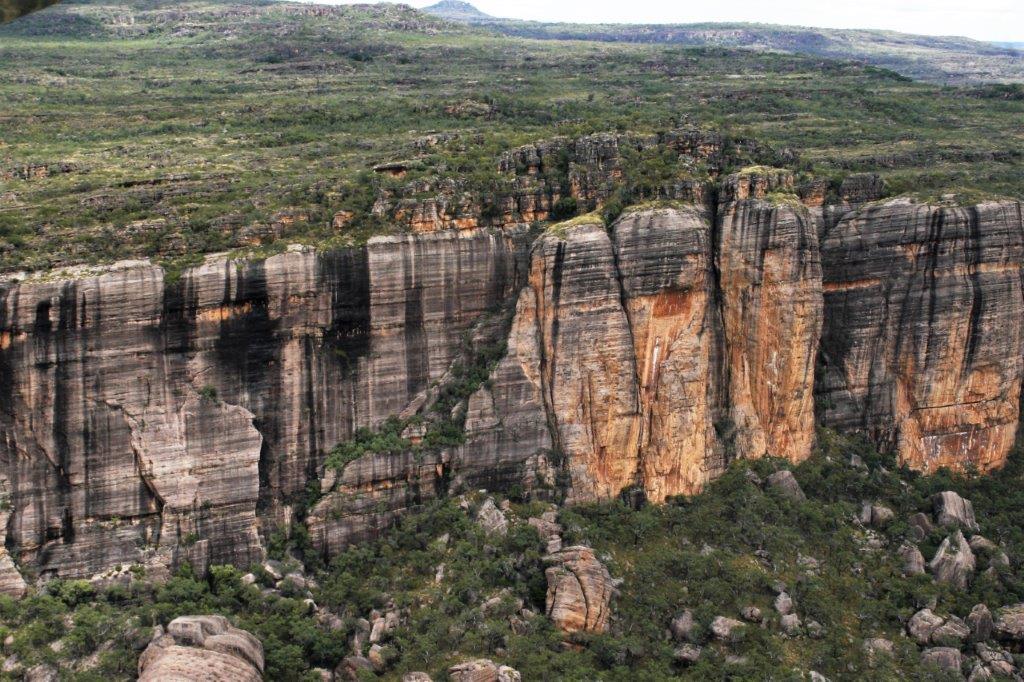
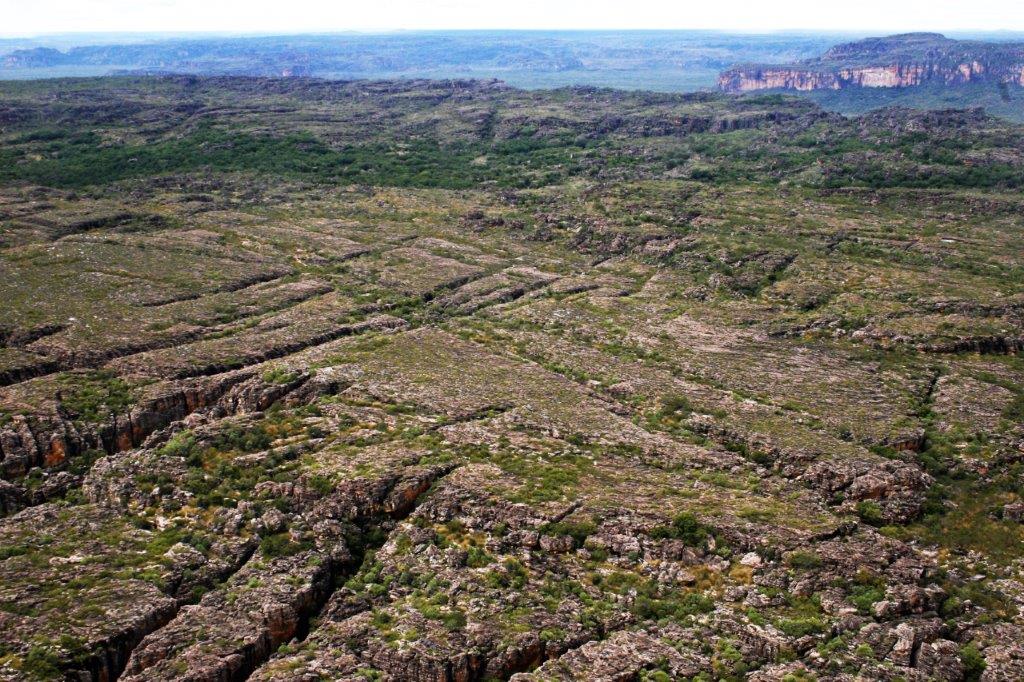
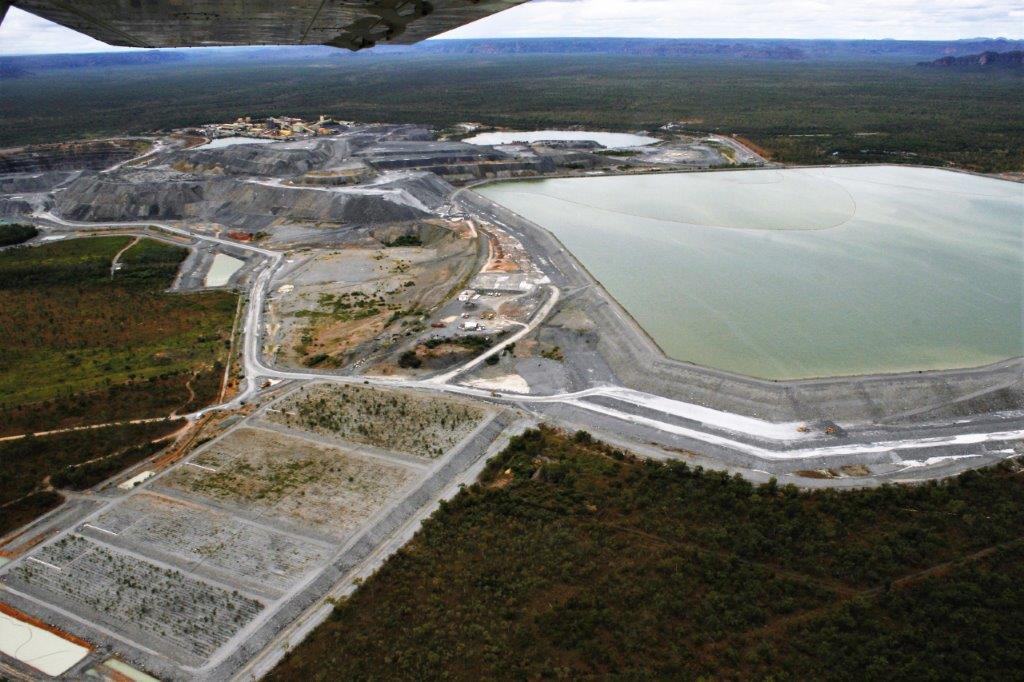
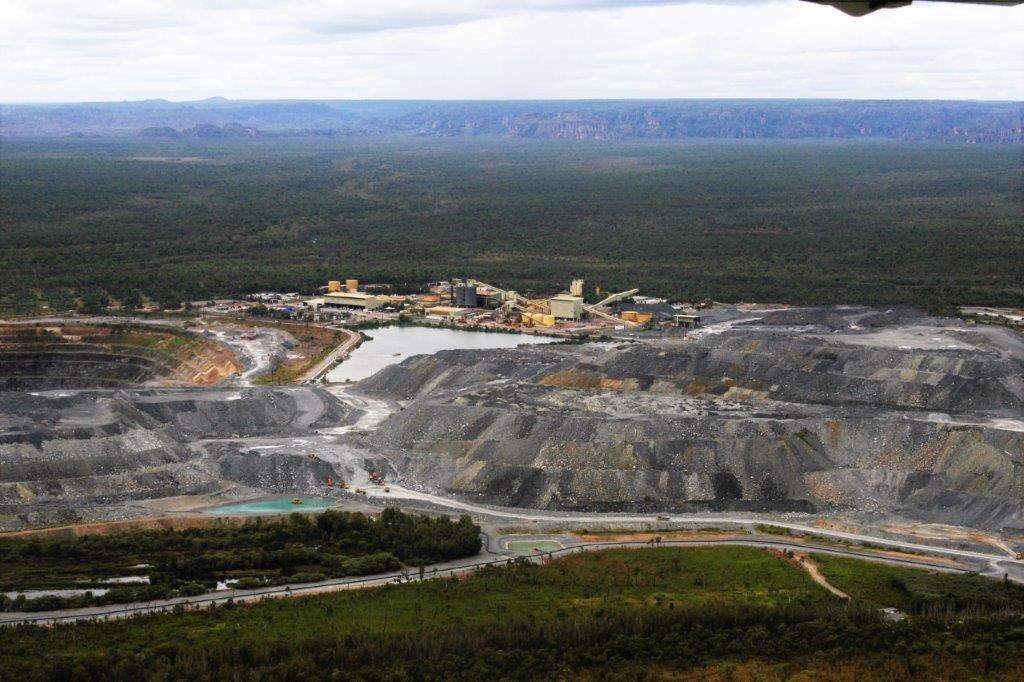
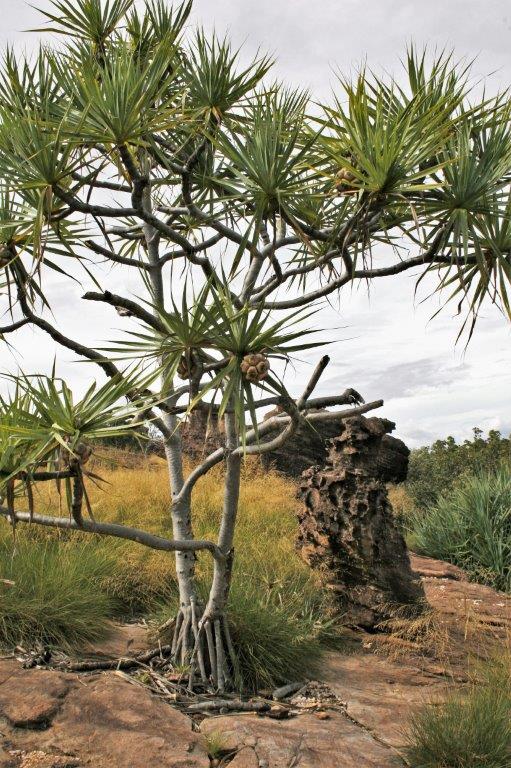
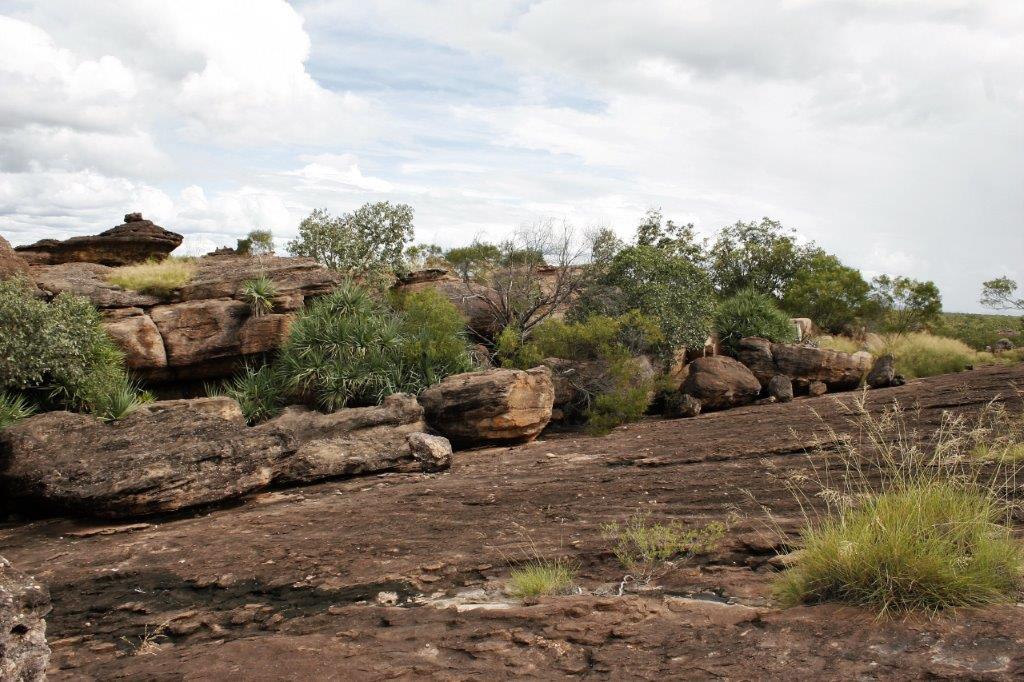
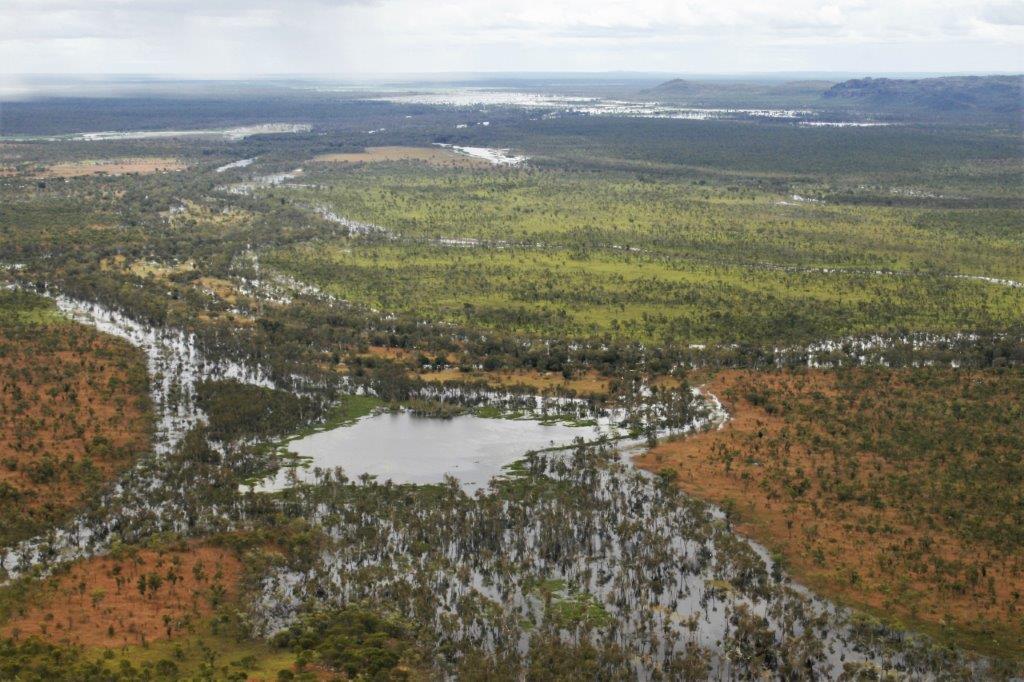
Not far from the airport is the Ranger Uranium Mine, one of the world’s most productive unranium mines.  It is completely surrounded by Kakadu National Park.  We passed the mine on the way out, and again on the way back.Nick, our pilot, flew out to the escarpment and along the way we got a good look at the vast size of Kakadu, which is 200 km from north to south and 100 km from east to west – about half the size of Switzerland, as well as a bird’s-eye view of all the overflowing rivers and water pools.Dense foliage and huge rock formations are all over the place.We flew over Jim Jim Falls (in a normal year we could have driven out to Jim Jim).  We got a bit of a look at the semi-flooded road from the plane and really understood why the roads were closed. The escarpment is many kilometers long and extremely high.  All the waterfalls, of which there were many due to all the rain, drop straight down the rock face for hundreds of feet.  Nick was great.  He would fly past each of the waterfalls twice  in each direction so everyone could get a good look and photos.                                   More rain falling in the park.                                                    Jim Jim Falls The next big waterfall was Twin Falls.                                    Flying over the crest of the falls.

And then we saw Double Falls.

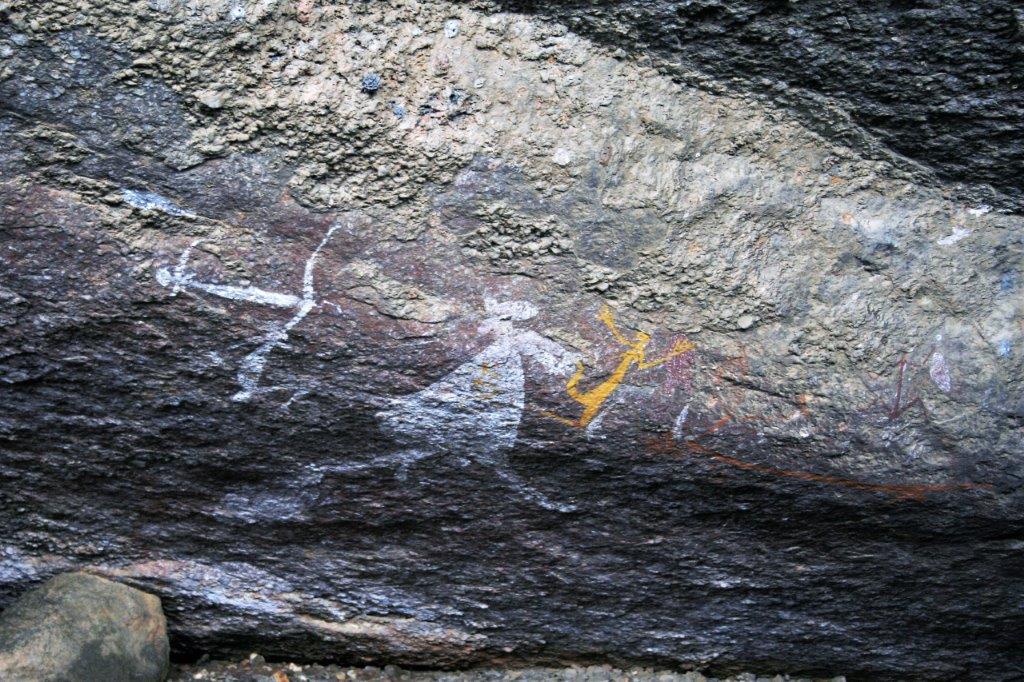
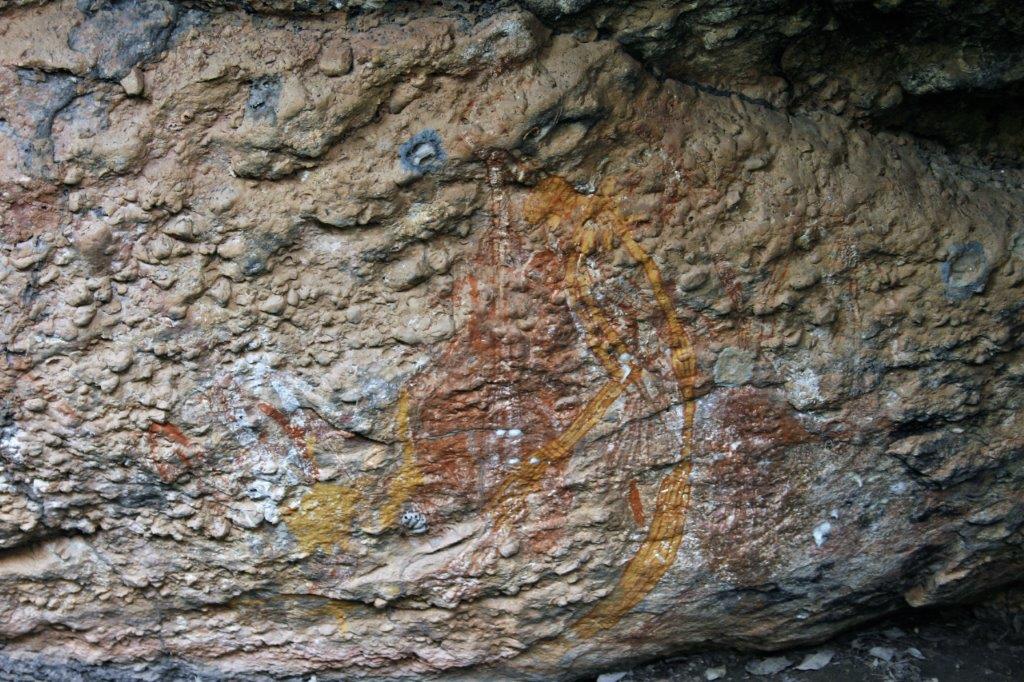
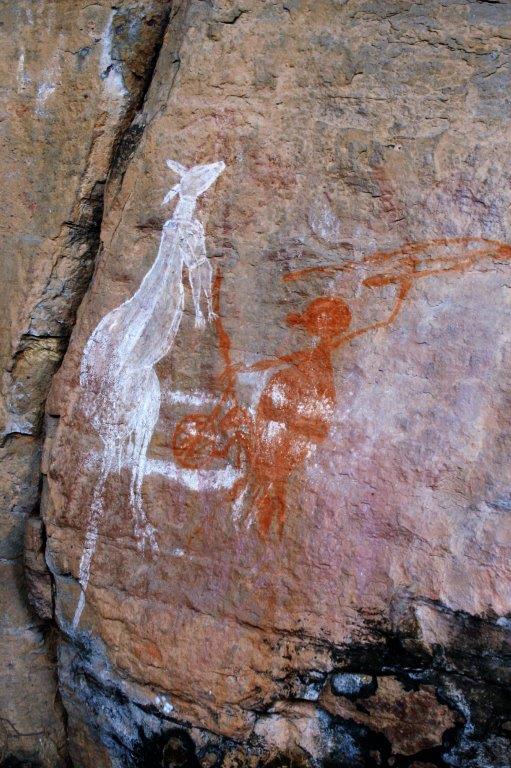
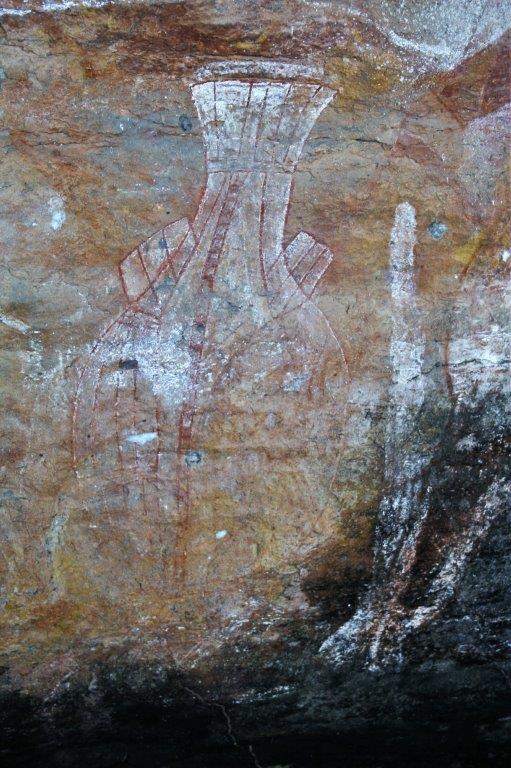
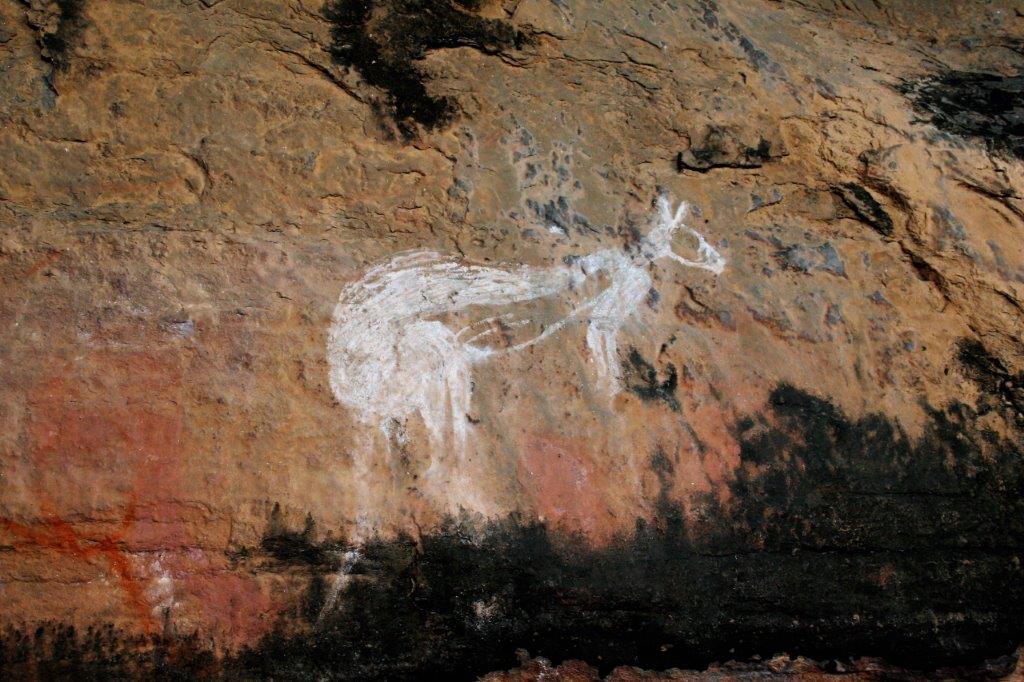
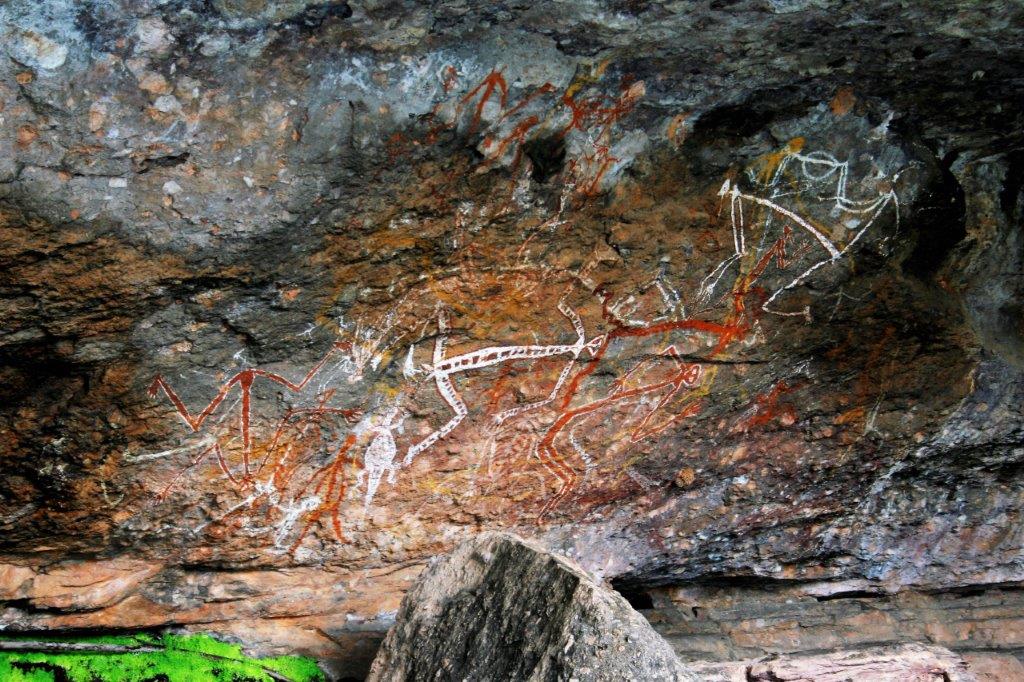
We continued over the interior of the park, much of which is inaccessible to vehicles,  4WD or otherwise. Kakadu has a 40,000-year continuous history with the aboriginal people.  There are over 5,000 recorded art sites and the entire park is a UNESCO World Heritage Site for its natural and cultural significance.

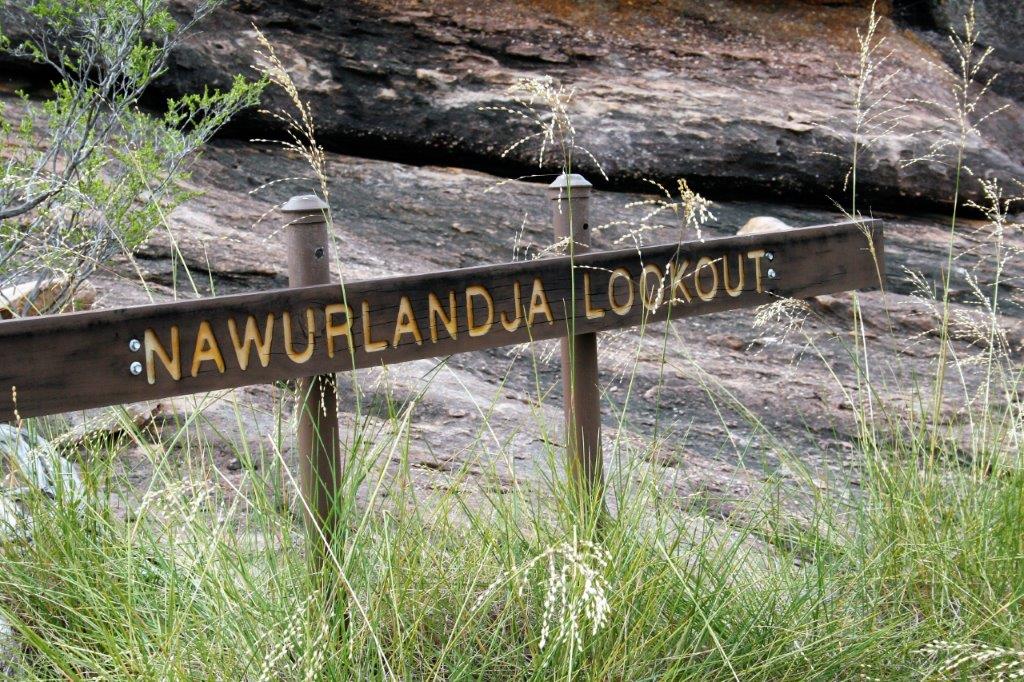
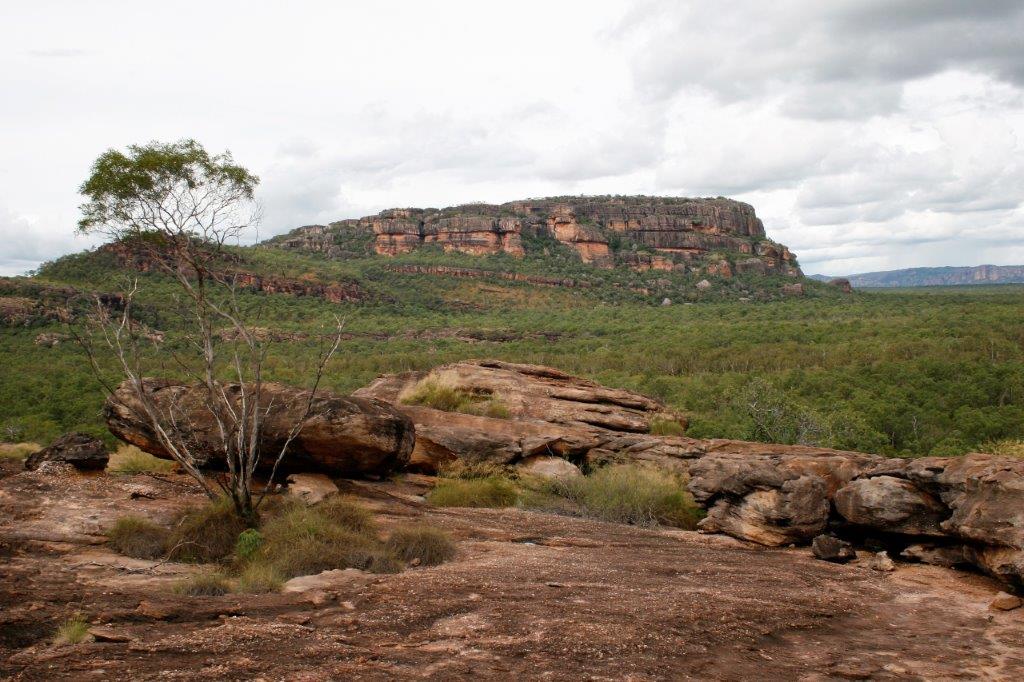
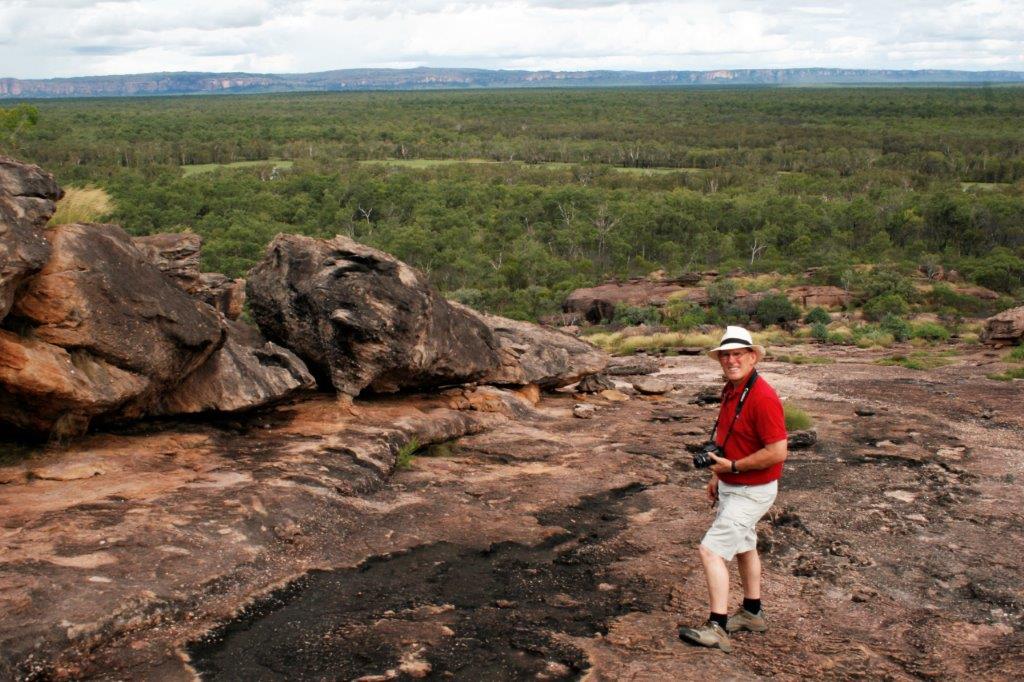
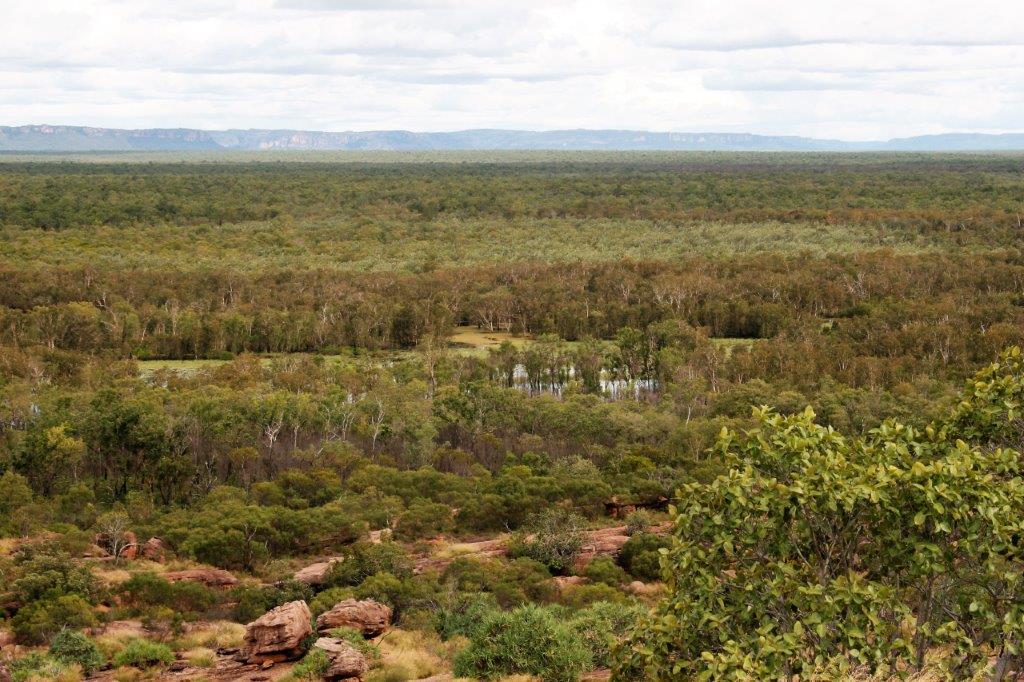
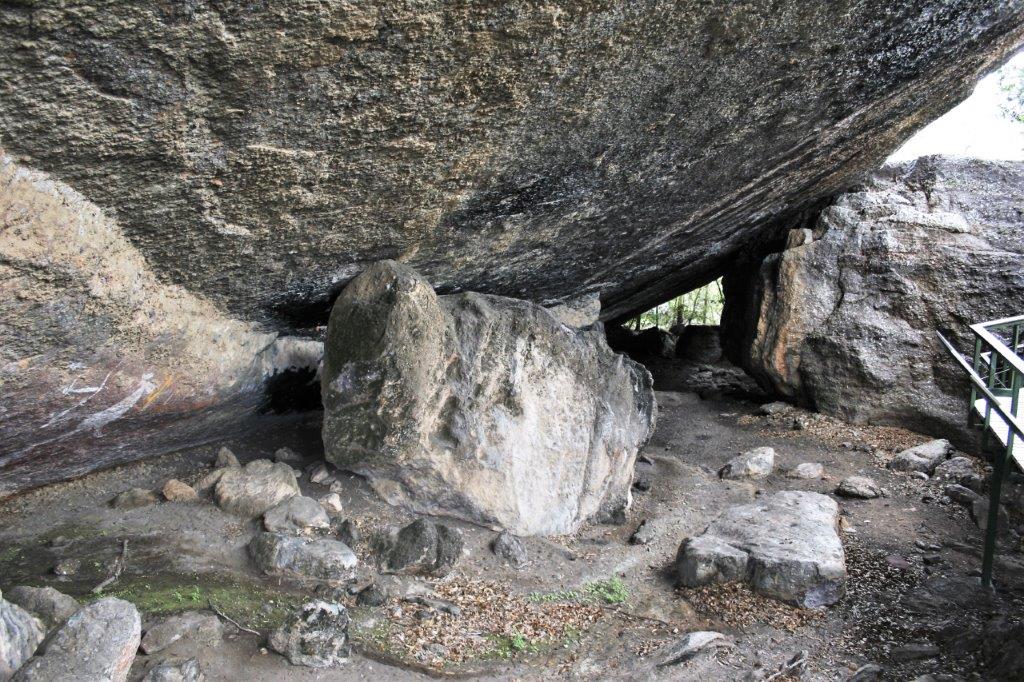
Then it was past the Ranger Mine again and back to the airport. Back on the ground, we had some lunch and then drove to the only two places that were open to traffic that were on our list of places to see.  First was a steep climb to the Nawurlandja (Now-oo-larn-ja) Lookout at the top of an escarpment.

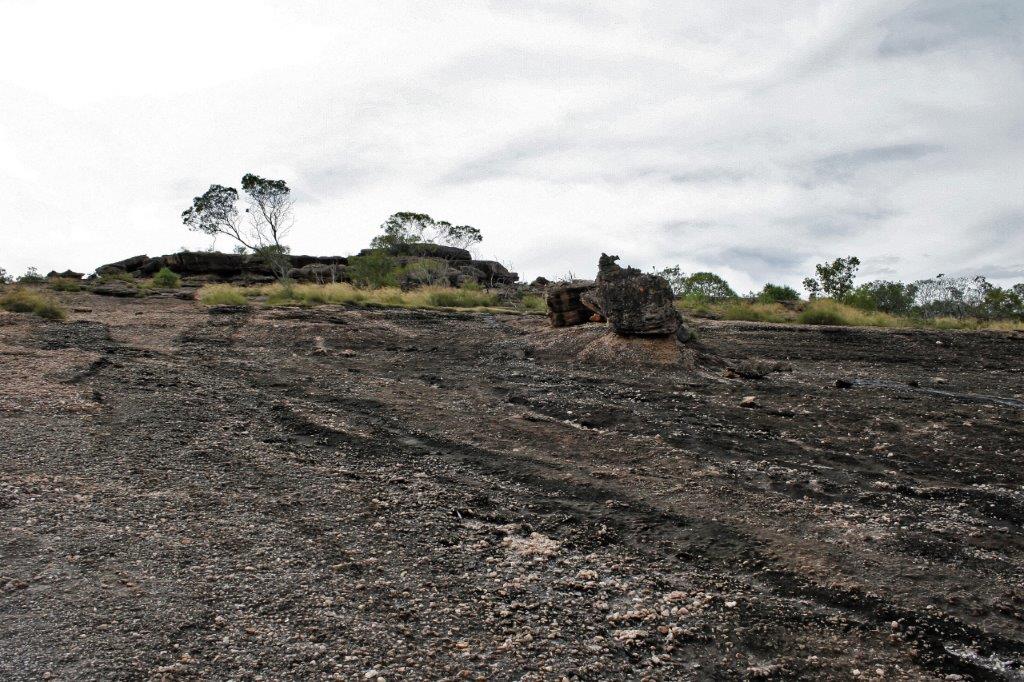
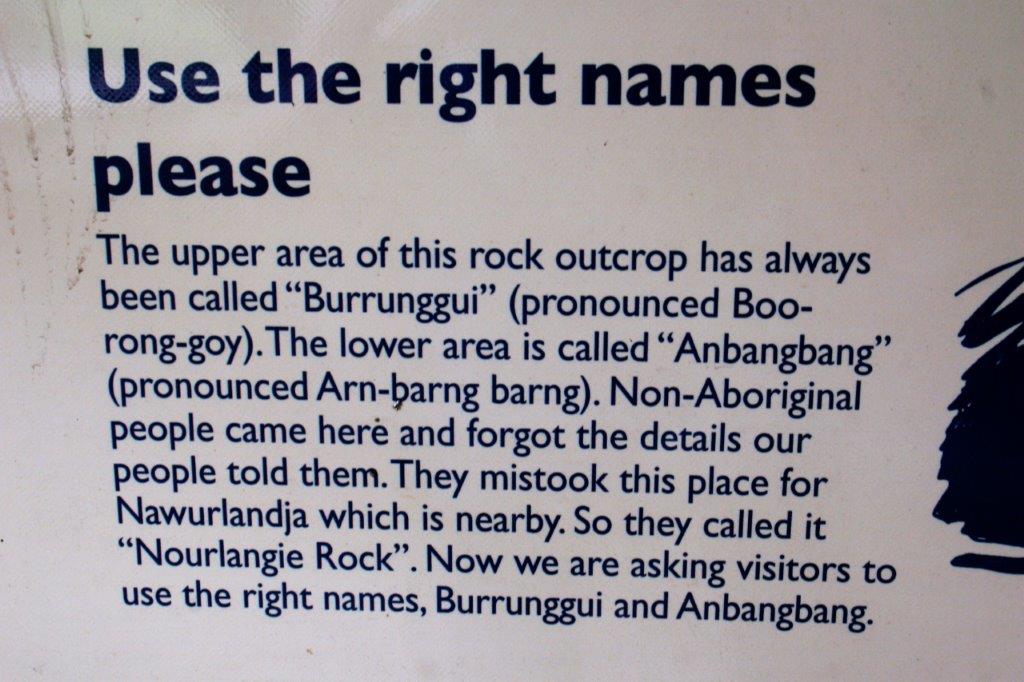
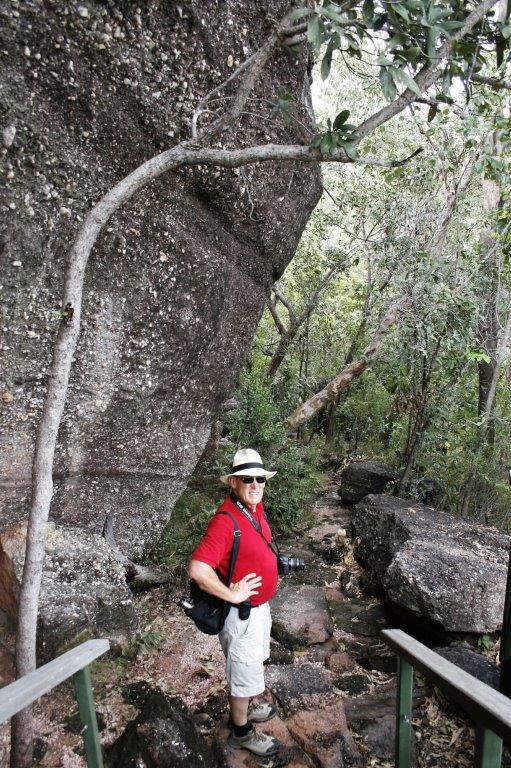
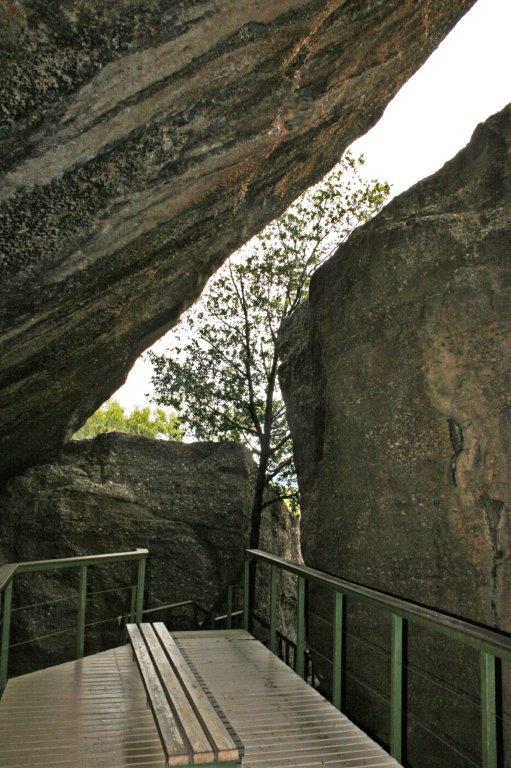
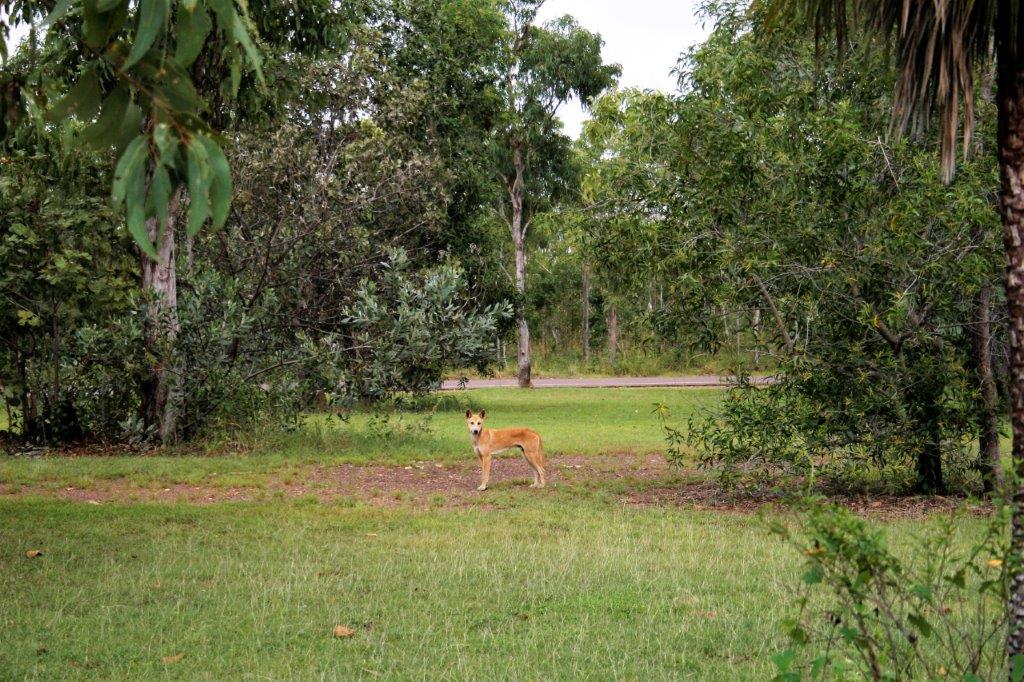
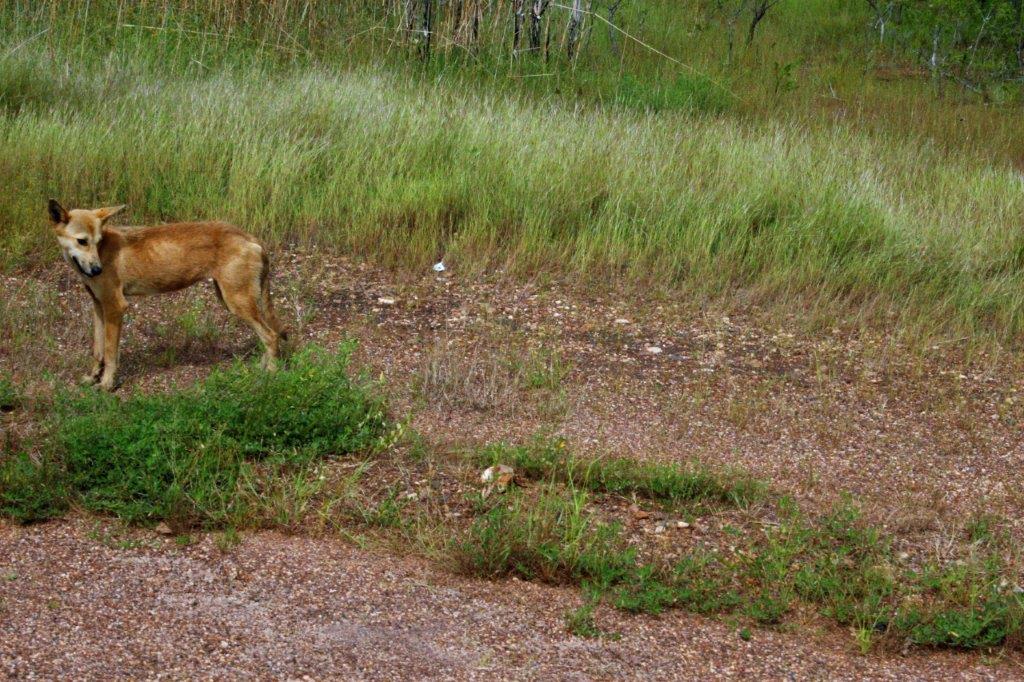
A short distance further down the road was Nourlangie, a rock art site, where we received a lesson in place names. When we drove back into the hotel parking lot a dingo was watching from the edge of the grass.

2011 March 26 & 27 – Days 80 & 81 – Alice Springs to Darwin to Jabiru, Australia

After the very early mornings on our Red Center camping trip we were happy to be able to sleep in until 8 am.  We ate some breakfast in our room then caught the shuttle to the airport for our 11:20 flight to Darwin.  It was a two hour flight and we arrived in cloudy, steamy conditions.  The Top End, as the Darwin area is called,  was still in the wet season.  The rain should have been slackening off as it was near the end of the wet, but 2011 was an exceptionally wet wet season.  The area had already received 2735 mm (over 107 inches) of rain that season with no end in sight.   By the end of the wet season the Darwin area had received 2918.4 mm (114.75″) of rain over 147 rain days, the third highest rainfall ever recorded.  Records were broken all over the state, especially during February when they received over 100 mm (almost 4″) beyond the previous all-time record.  Several communities had to record underestimates of rain because their rain gauges filled to overflowing.

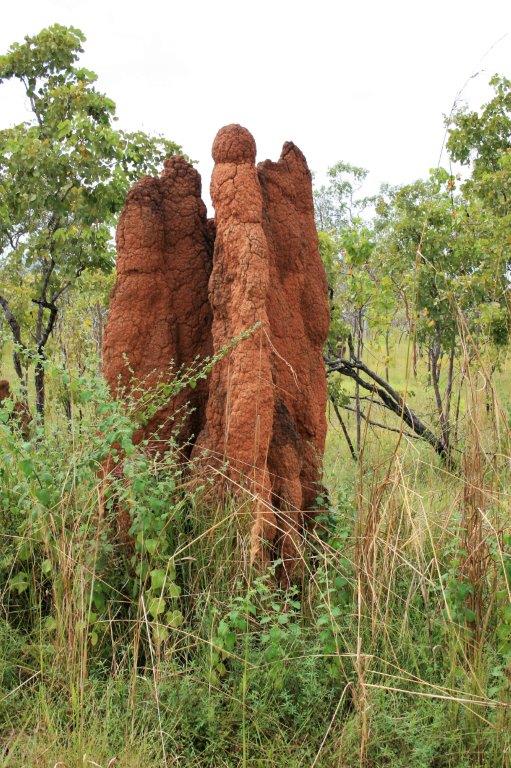
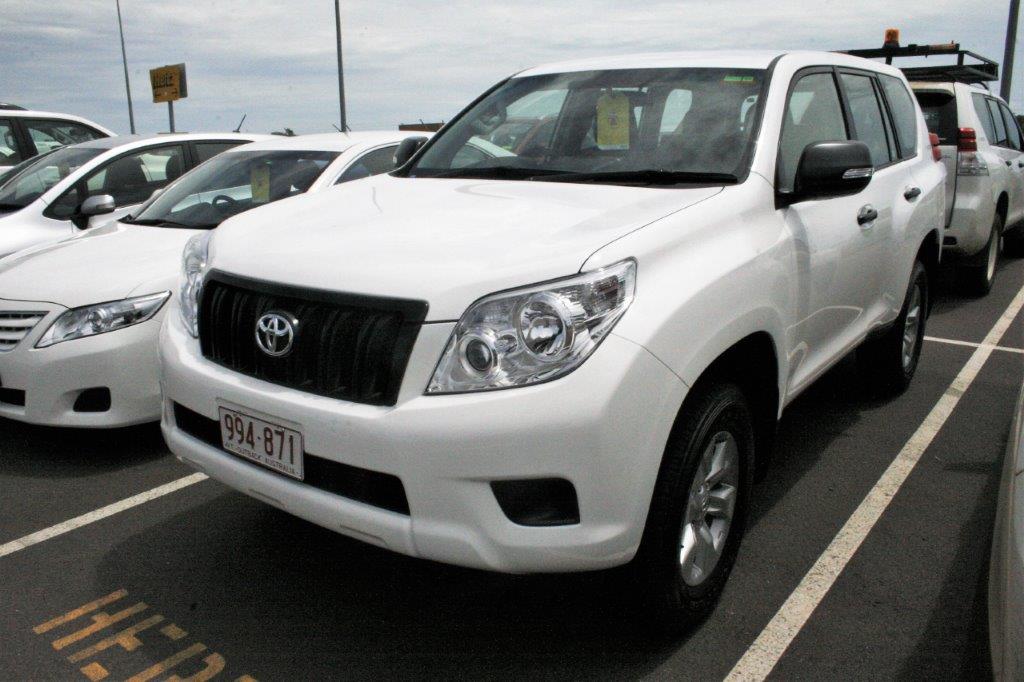
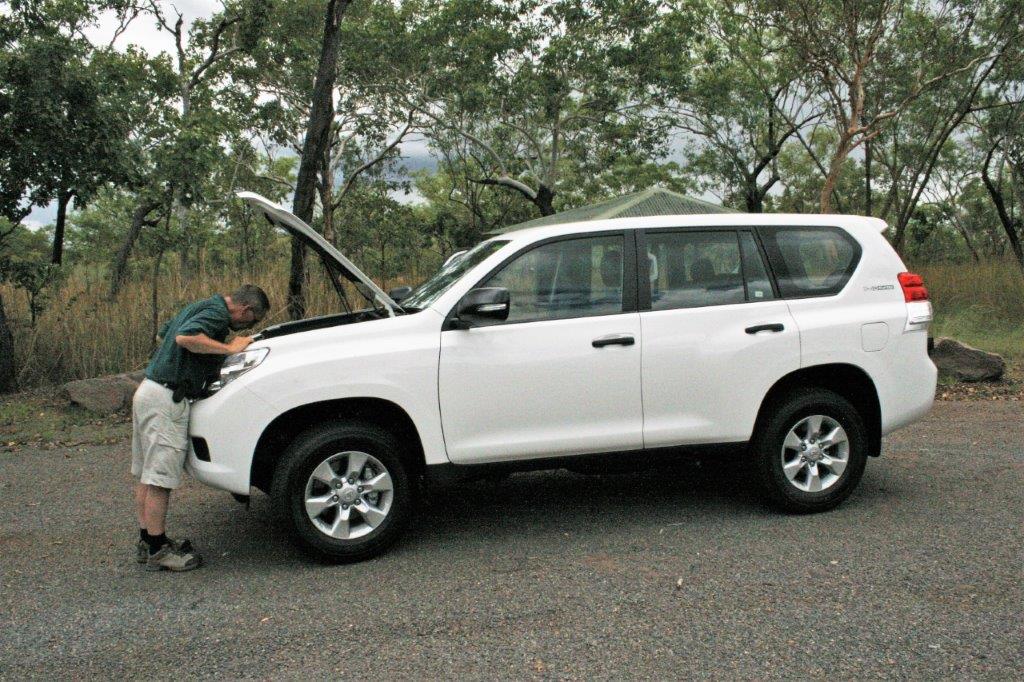
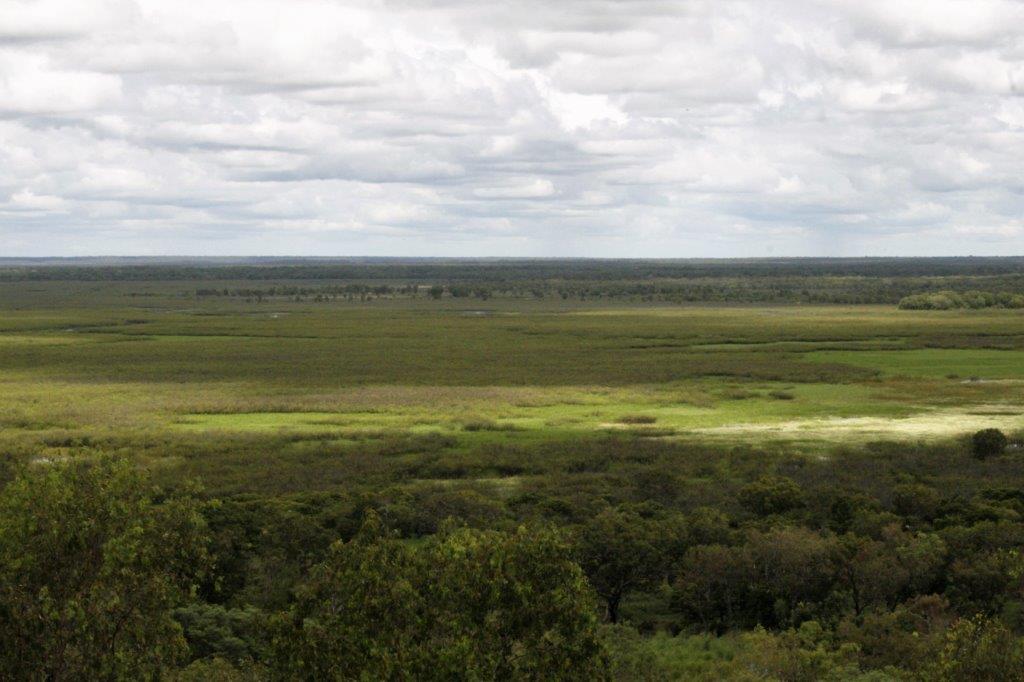
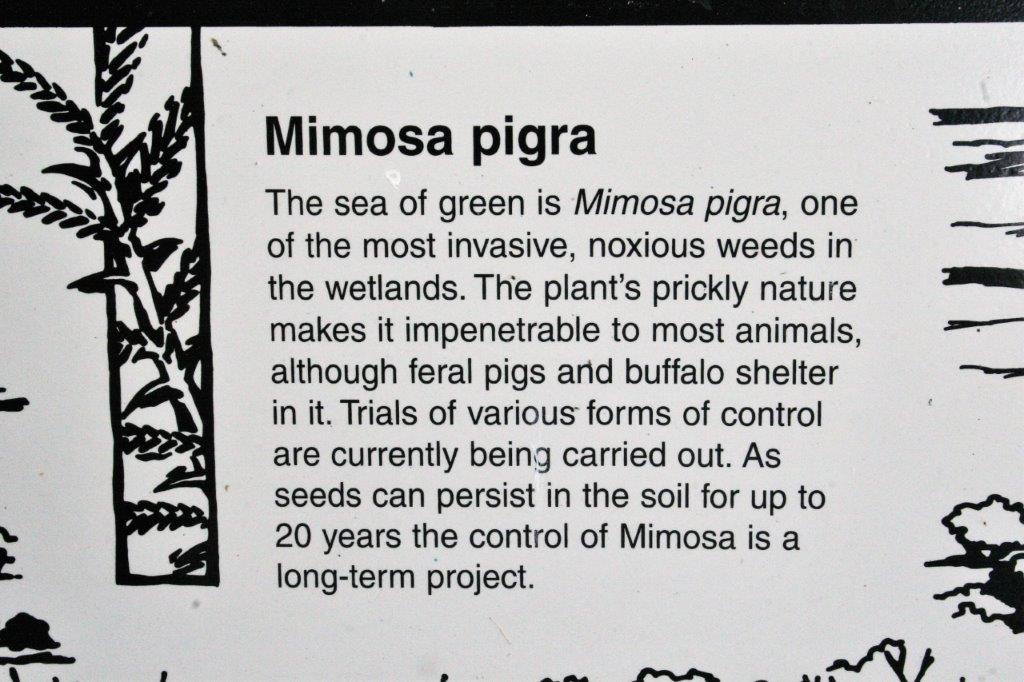
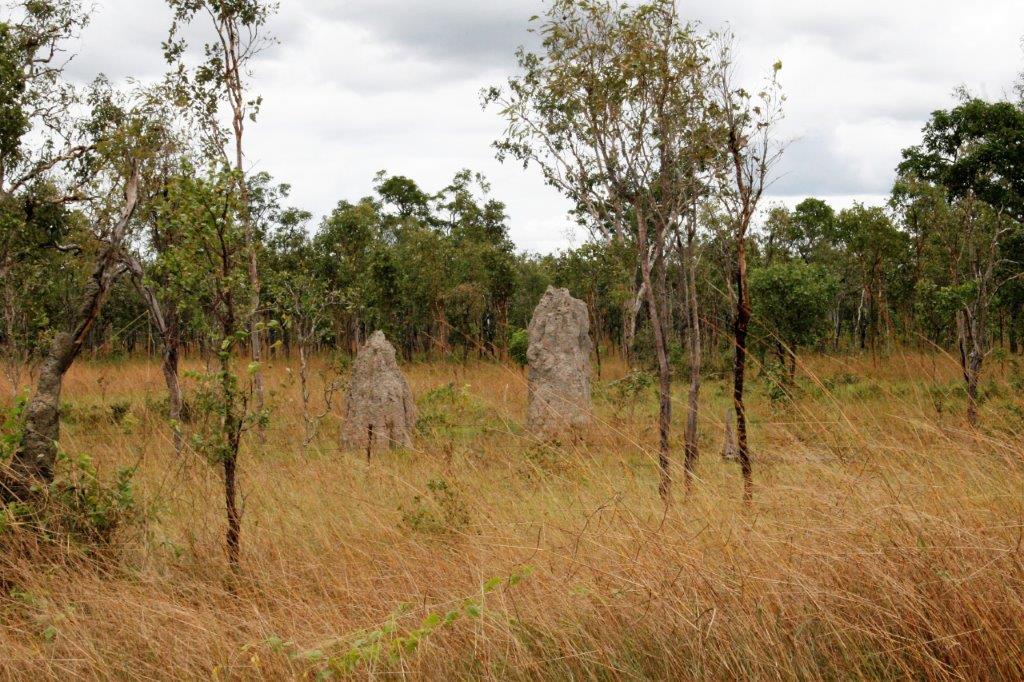
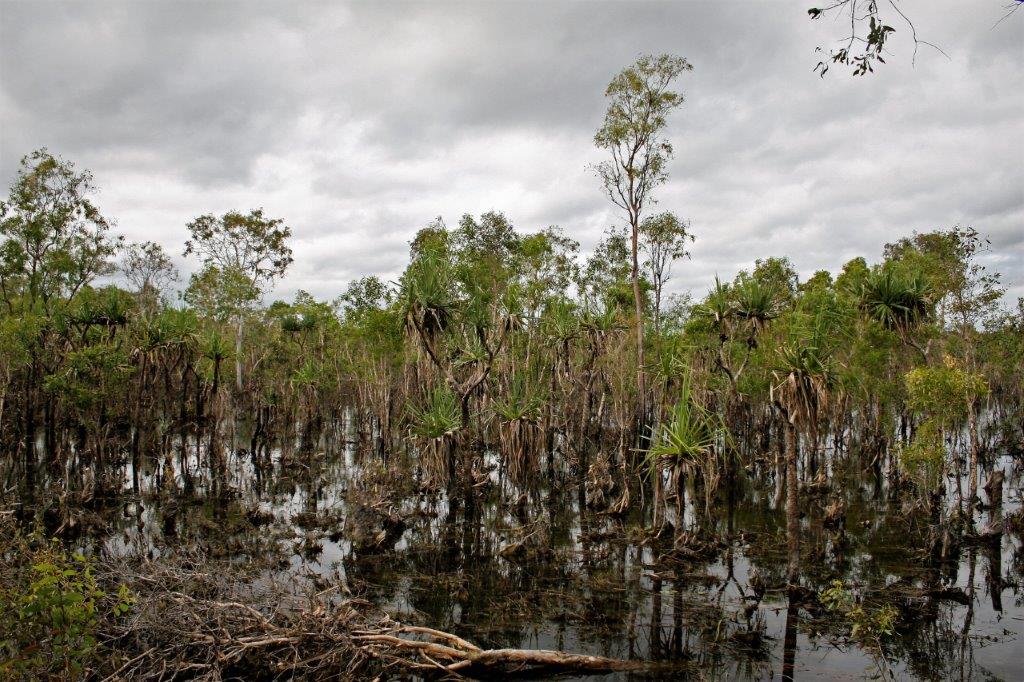
Our 4 WD rental car was a brand new Toyota Prada with under 70 kilometers on the odometer.  The hotel was quickly found, breakfast groceries purchased, dinner restaurant located and laundry done.  That, and photo sorting, was the activity for the day.The next day we drove 260 km (161.5 miles) to Jabiru in Kakadu National Park.  Kakadu is a huge park in the Top End.  It encompasses wet lands, plateaus, forests and very impressive rock escarpments.  On the way to Jabiru we stopped at a wetlands overlook.  The Adelaide River is home to numerous species of waterfowl.  It wasn’t breeding season so there were not nearly as many birds as there can be but we still did see some in ponds. We had specifically rented a 4 wheel-drive vehicle so we could navigate the rough unpaved roads in Kakadu that went to the places we wanted to go.  However with the excessive rainfall most of the roads we had planned to travel were closed to traffic due to flooding.  We found out at the Wetland Interpretive Center that only 2 of the 9 places we wanted to go were open, and they were both on the paved main road.  All of the dirt roads were flooded and still closed.                                                        Termite mounds.

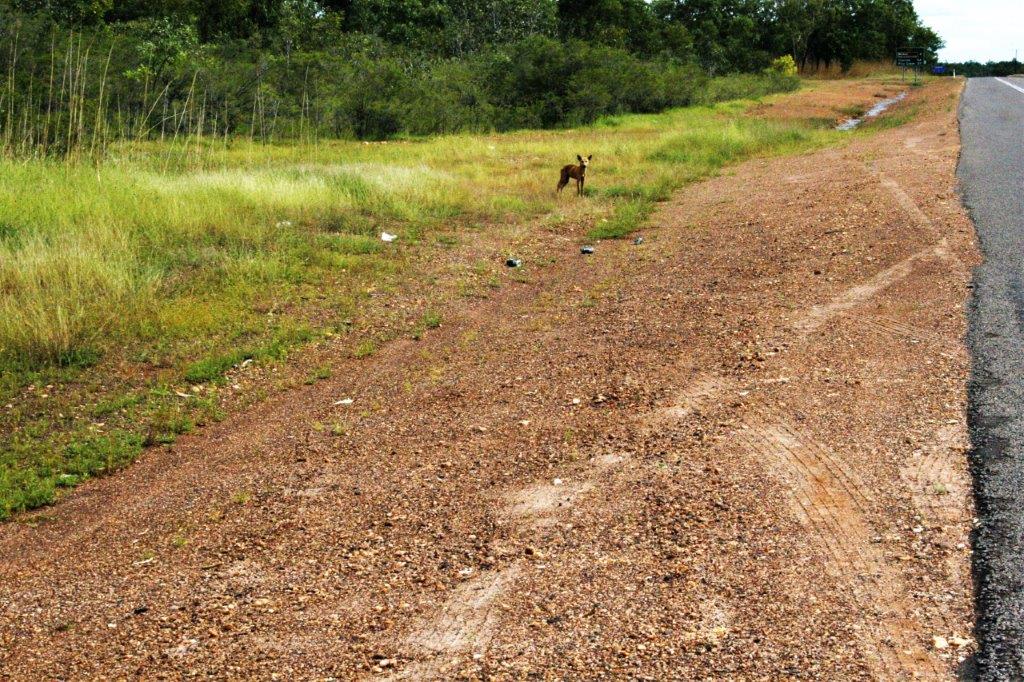
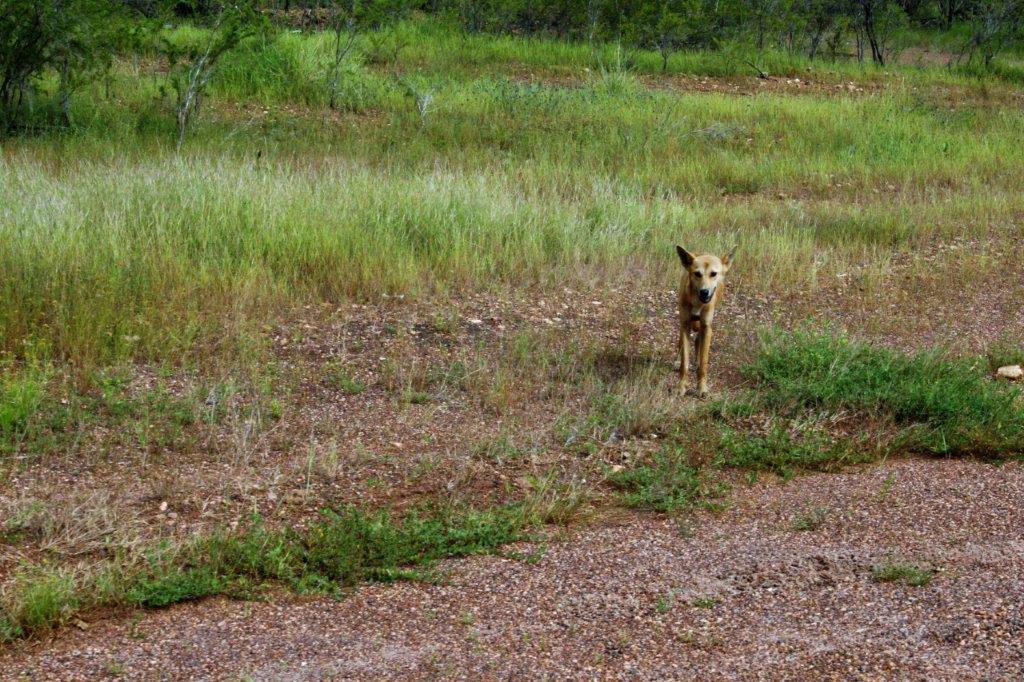
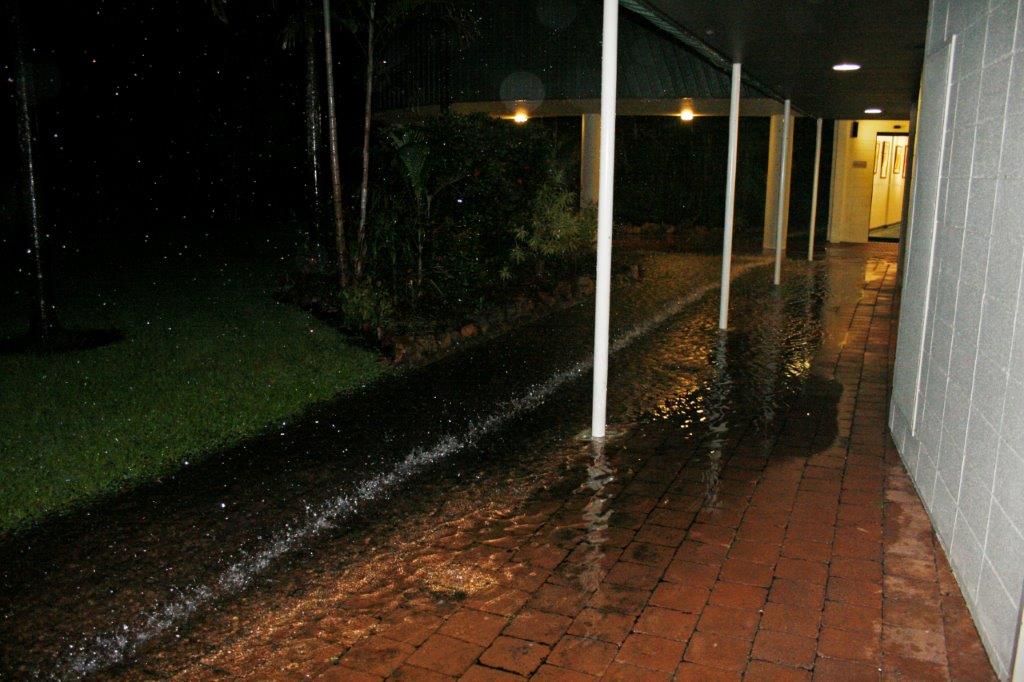
A dingo, Australia’s wild dog.We stayed at the Crocodile Hotel in Jabiru (looking down from above, the $16 million building is shaped like a crocodile – the world’s largest) and as we were getting ready for bed that night it began to rain.  I have never experienced rain like that before. There were no drops.  Water came down in a sheet; it was like looking through a window.  I don’t know how much rain fell but it lasted over an hour. (The day before they had received 29mm – almost an inch and a half – of rain in 24 hours.) It was amazing!  I was very glad we were inside when it started.  Wet would not even begin to describe your condition if you had been caught outside. Since we would be unable to drive to see the main sights, when we arrived in Jabiru we booked a one-hour airplane flight for the next day that would cover much of the park and take us over the two main waterfalls that were inaccessible by road.


2011 March 25 – Day 79 – Wallace Rockhole to Alice Springs, Australia

We were able to sleep in somewhat since breakfast wasn’t until 7 am.  And, praise the Lord, when I got out of bed my knees no longer hurt! (They have never acted up again in the 6 years since this trip either.  I have no idea what caused them to be so painful for those five months from Nov. 2010 to Mar. 2011 but I am very grateful whatever it was resolved itself.)

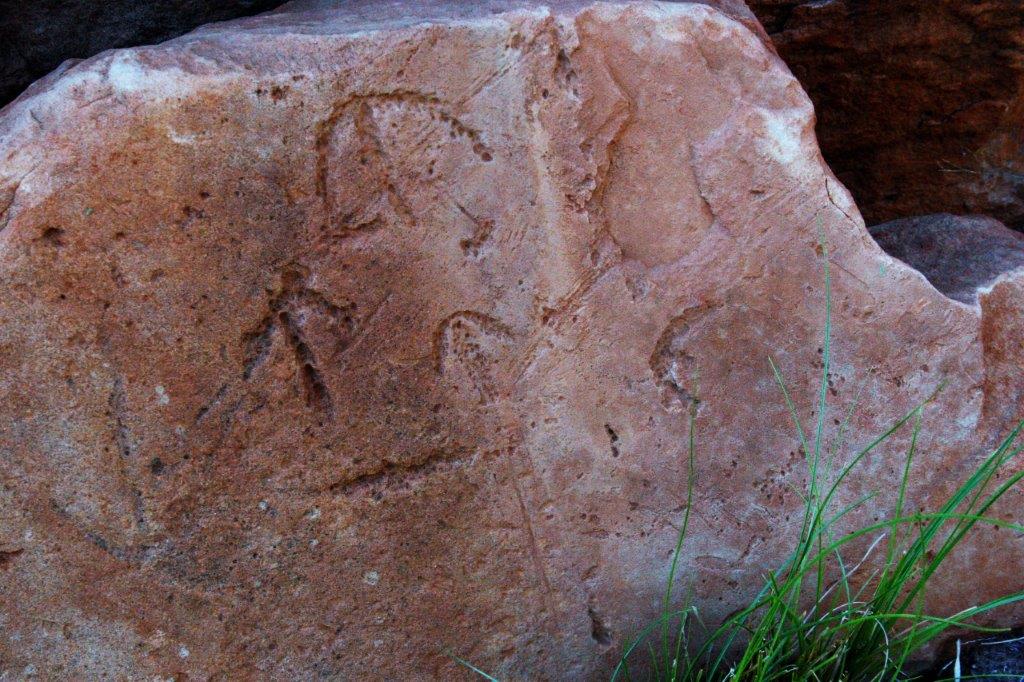
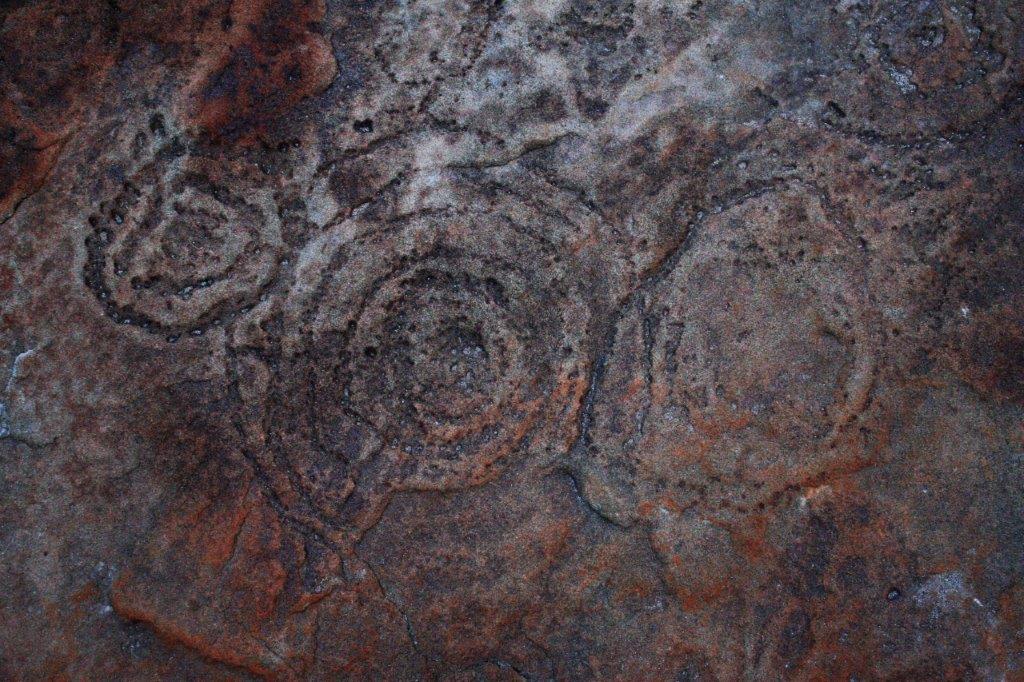
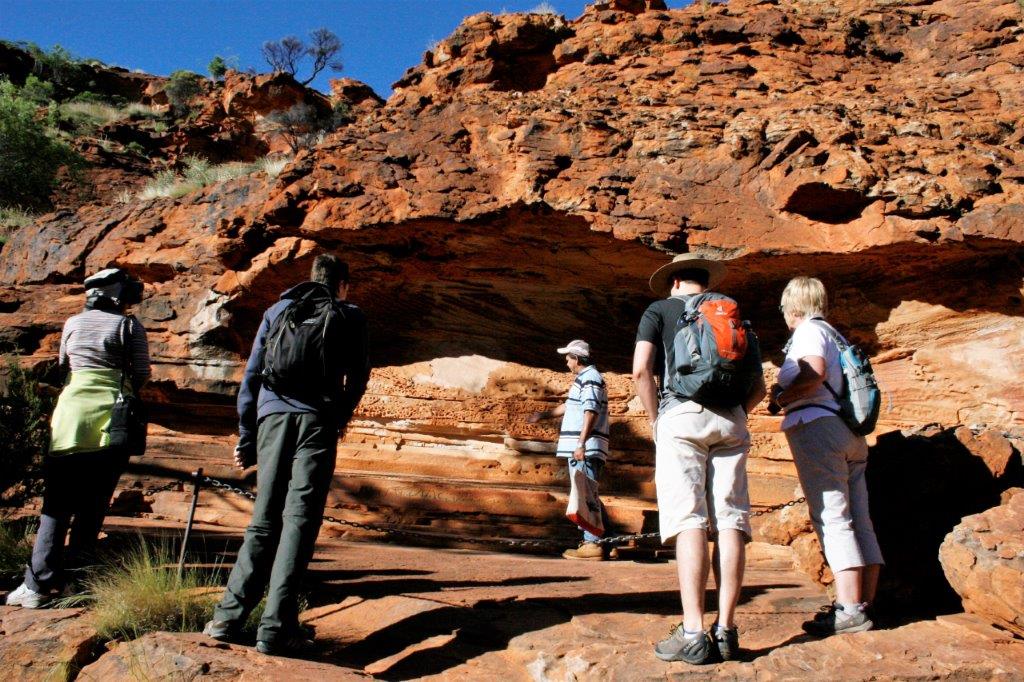
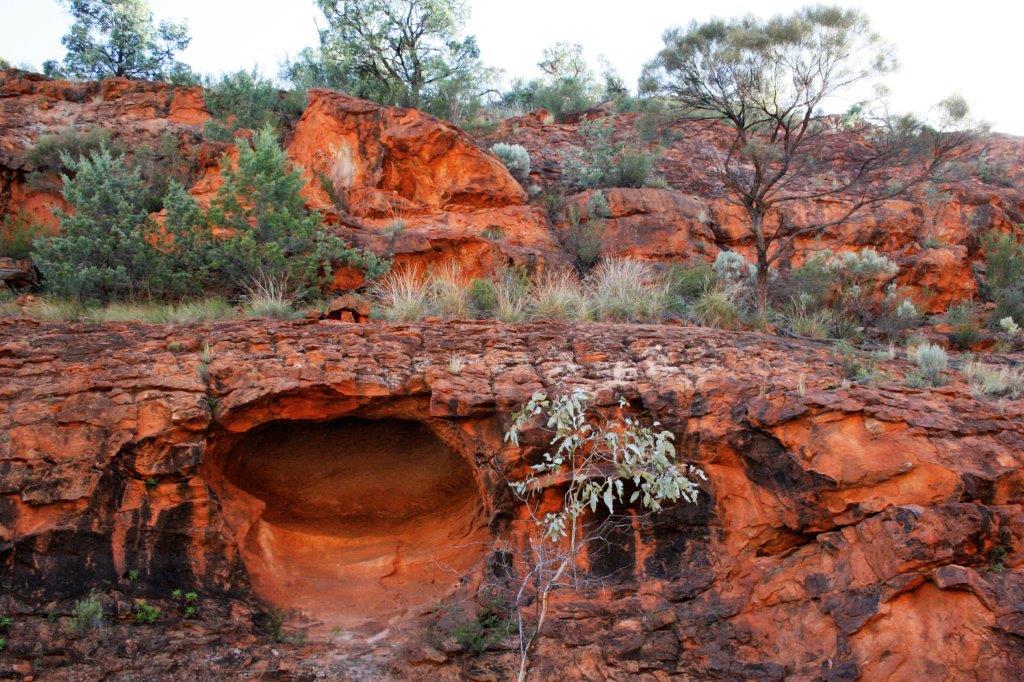
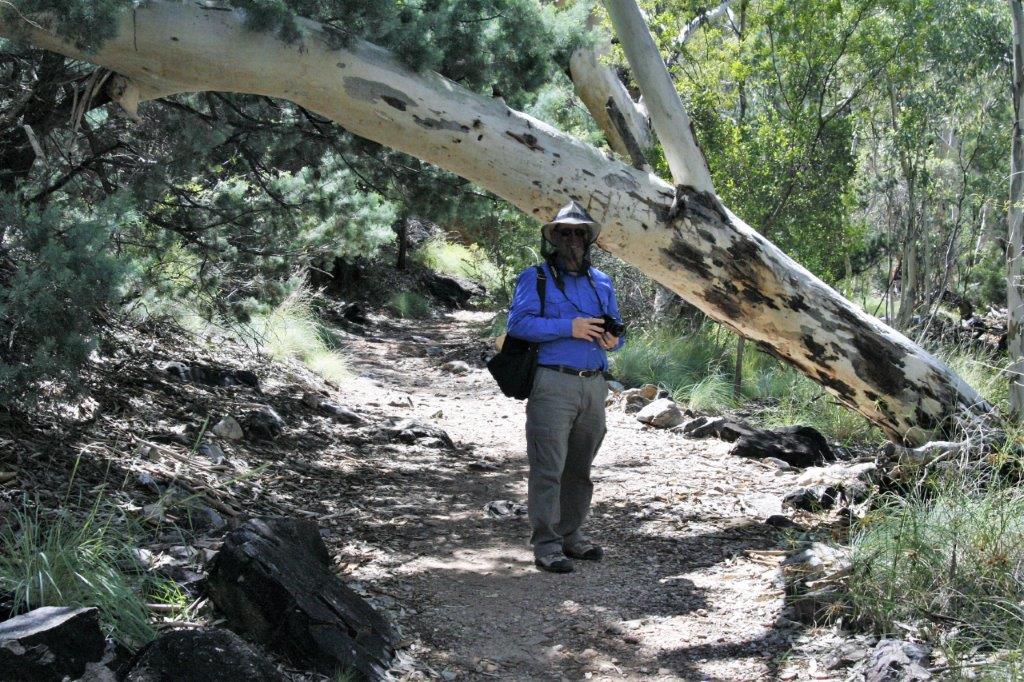
After we had eaten Gavin drove the bus over to the cultural center and we picked up Barney who was our aboriginal guide for an interpretive walk.  About a mile down the road Barney led us on a short bush walk (once again we were clambering over rocks and through a creek and up steep banks).  Barney explained the various plants used by his people for food, and paint, and medicines, and pointed out grinding stones and symbols carved in stone that were route information for the nomadic people . The circle symbols denoted water in the area and the markings indicated where it was to be found.

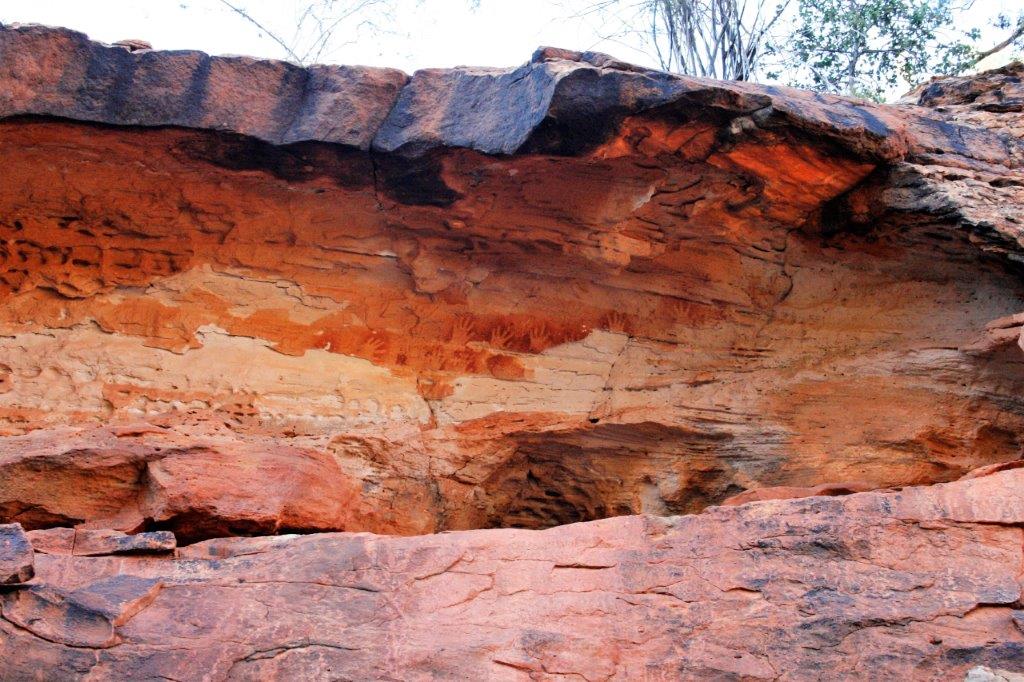
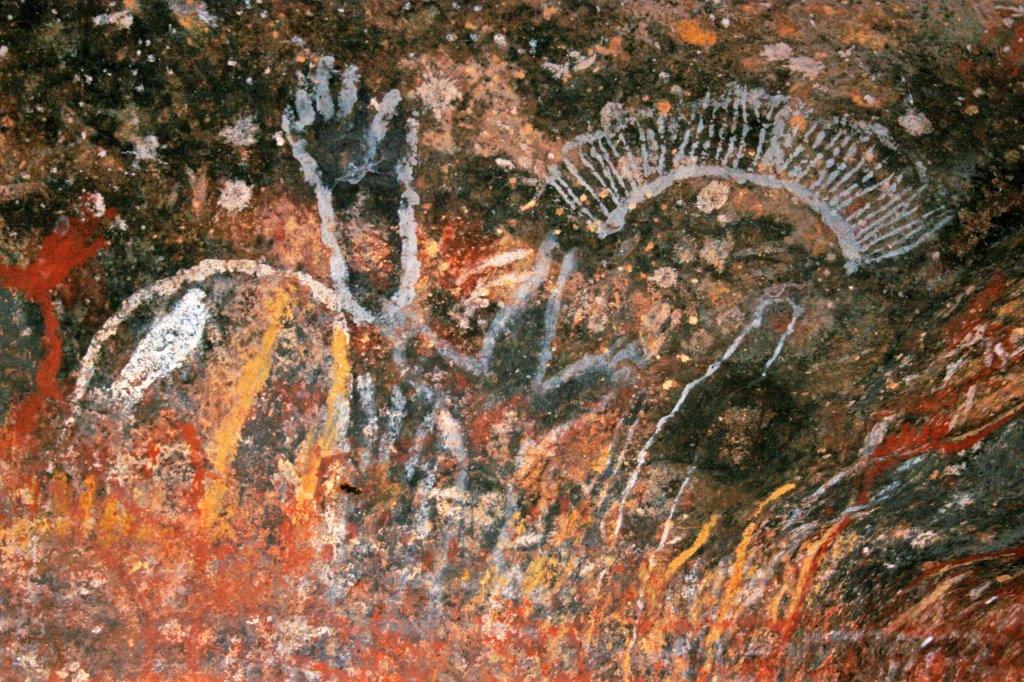
We stopped at a rock painting site where they would tell creation and dreaming stories, adding layers of paint over the years of storytelling .  Painting and storytelling are deeply spiritual aspects of the aborgine culture. We returned to the cultural center where we looked at the artwork and artifacts and then were given a bookmark to dot paint, which was fun.  The people were very kind and helpful, the kids were adorable, and the dogs were friendly so, all in all, it was nice start to our last day.

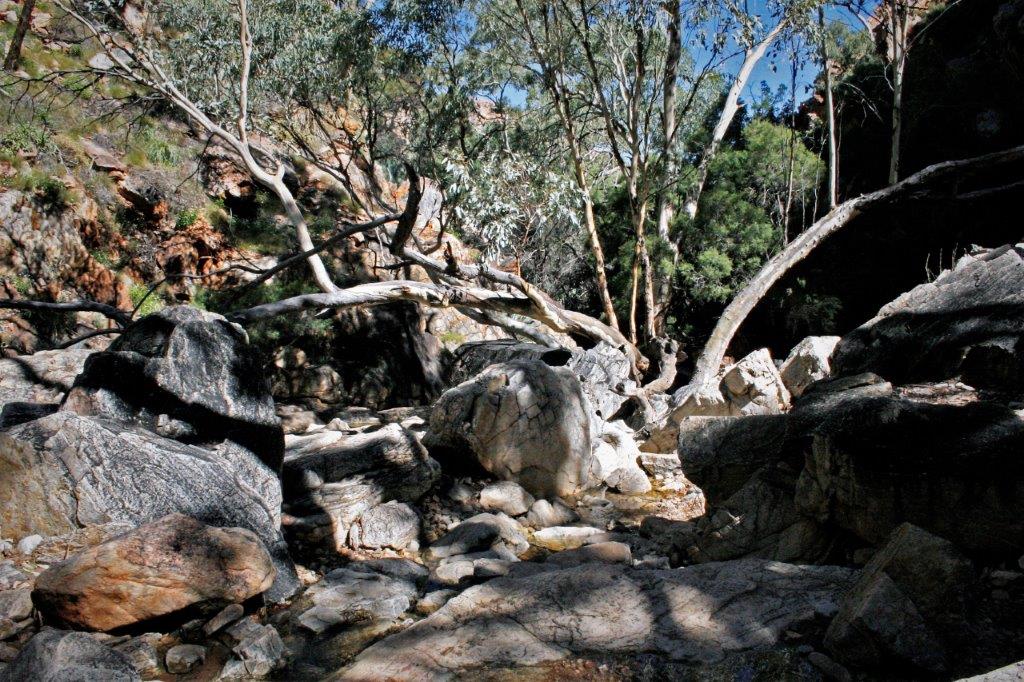
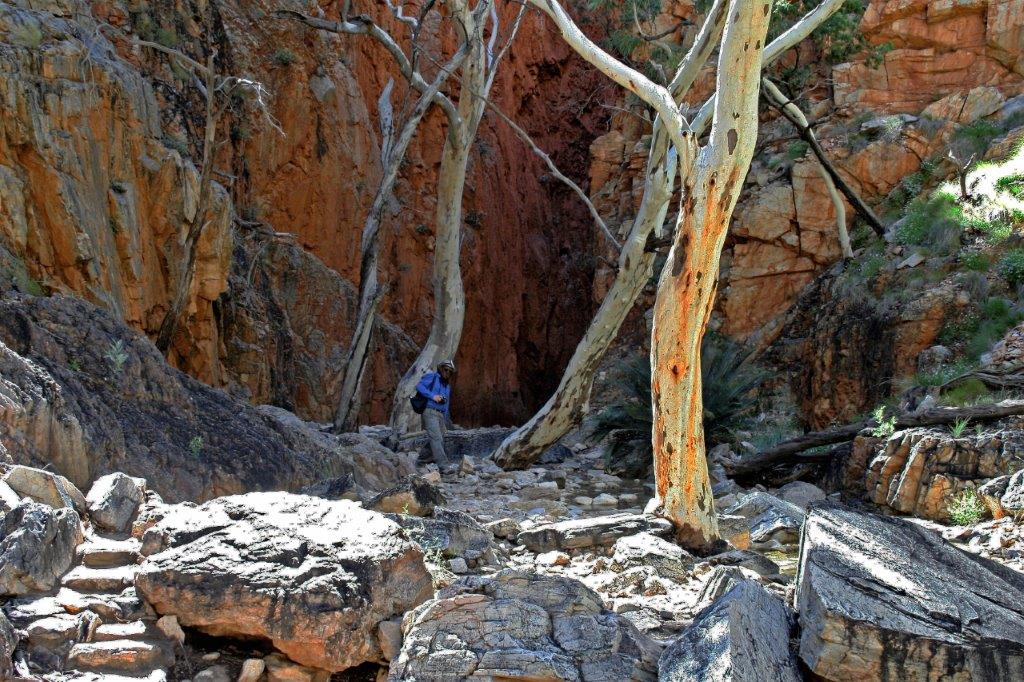
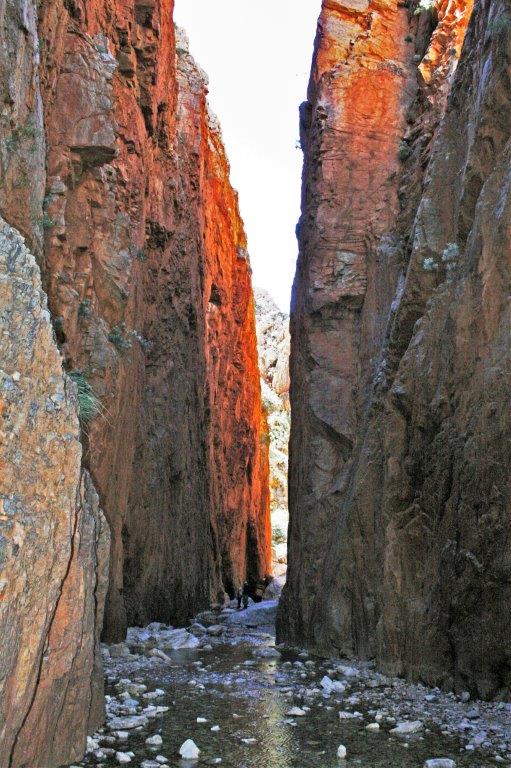
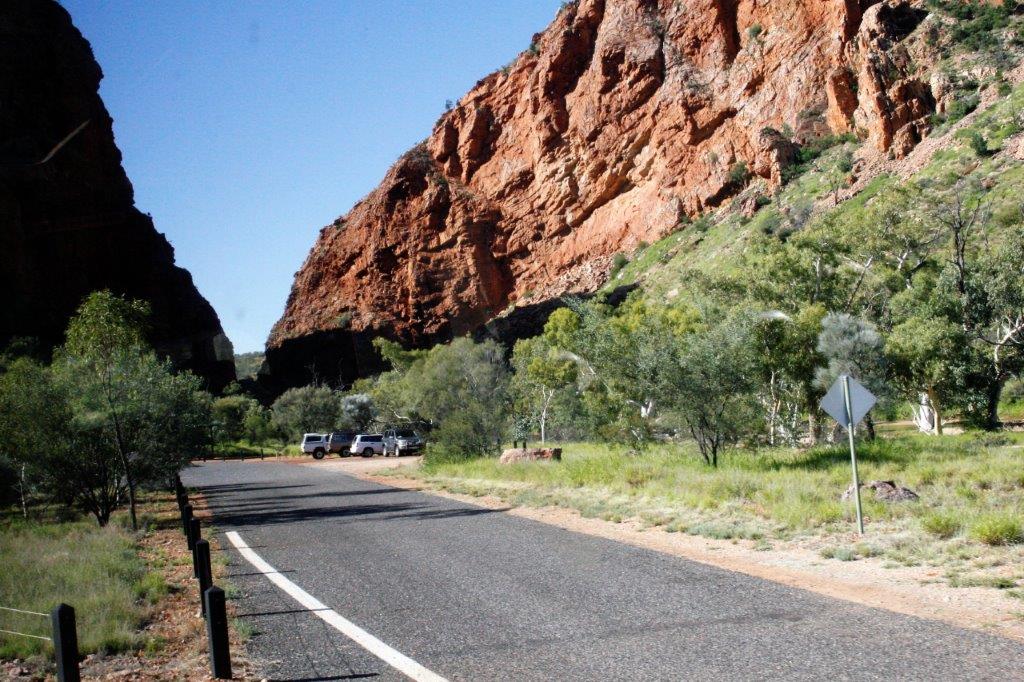
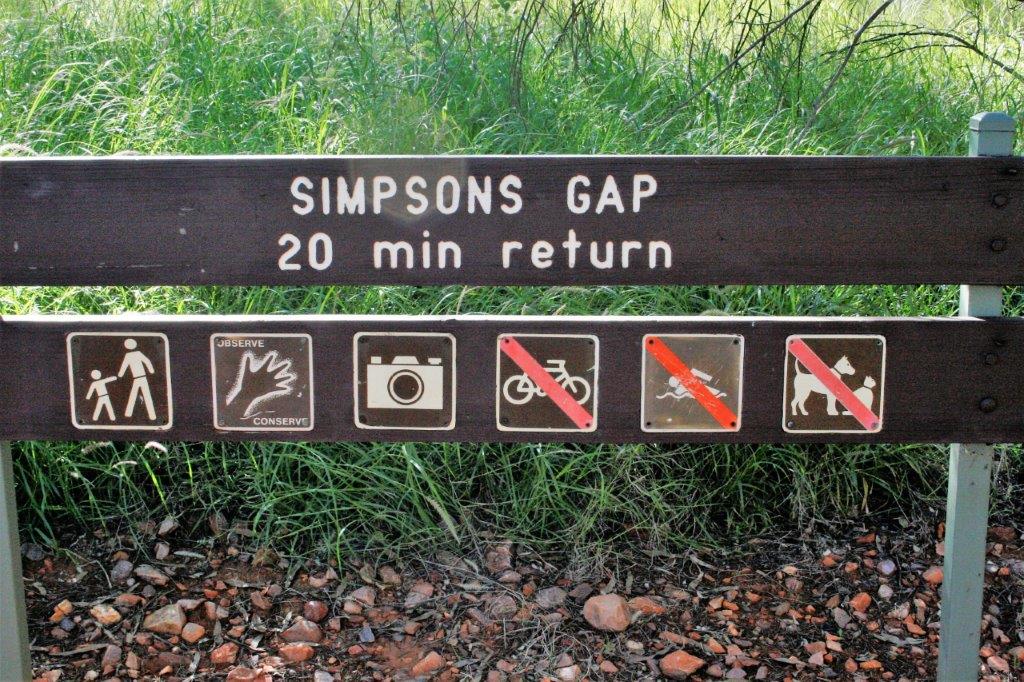
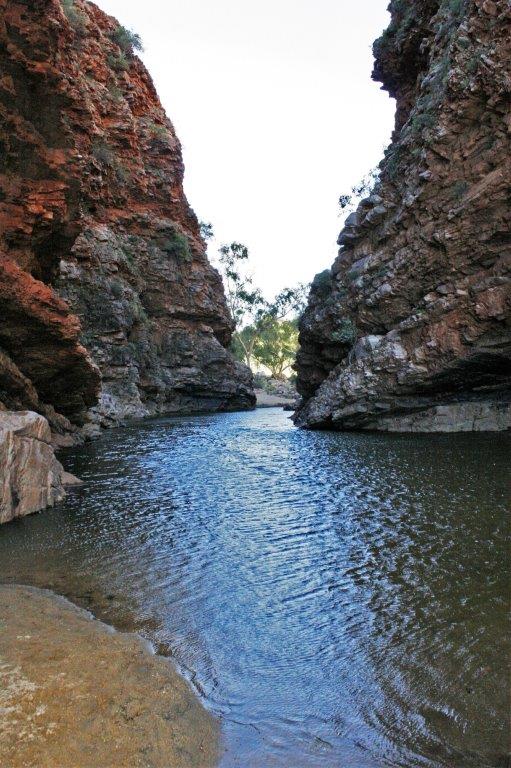
When we finished our art projects we went back to the campsite for lunch and then packed everything up for the drive back to Alice Springs. On the way back to Alice we hiked in to see Standley’s Chasm.  It had been closed for a week due to high water and had just been re-opened.  This time there was no trail at all and no little arrows pointing where to go either.  We literally just kept walking and climbing forward hoping we were going the right way.  We criss-crossed the creek numerous times and then suddenly, right in front of us, were two vertical cliffs several hundred feet high with a very narrow passageway between them.                                 The fly nets were necessary again.  The last stop we made was at Simpson’s Gap which was also a narrow gap between two massive rock walls with a lovely pool at the base. At 5:30 we arrived at Alice Springs, giving us just enough time for a fast walk into town for some groceries for dinner and the next day’s breakfast.  A long, hot soak in the bathtub eased some very sore and weary muscles before bed.  I had survived a camping trip!

The next morning at 11 am we got on a plane to Darwin at the Top End.

2011 March 24 – Day 78 – Kings Creek Cattle Station (Kata-Tjuta) to Wallace Rockhole (Kings Canyon), Australia

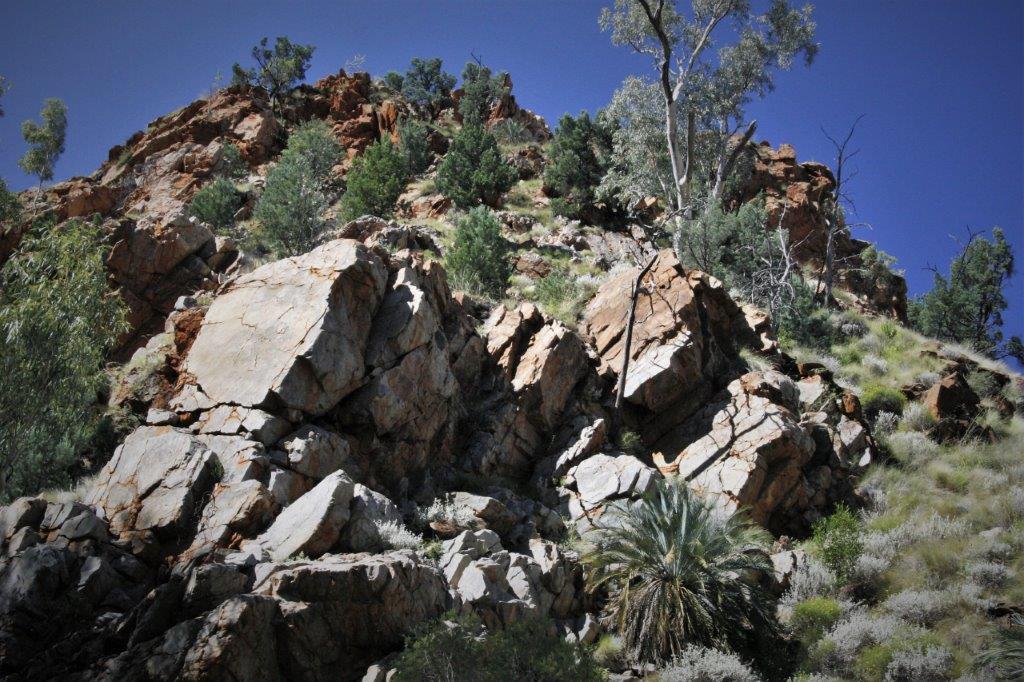
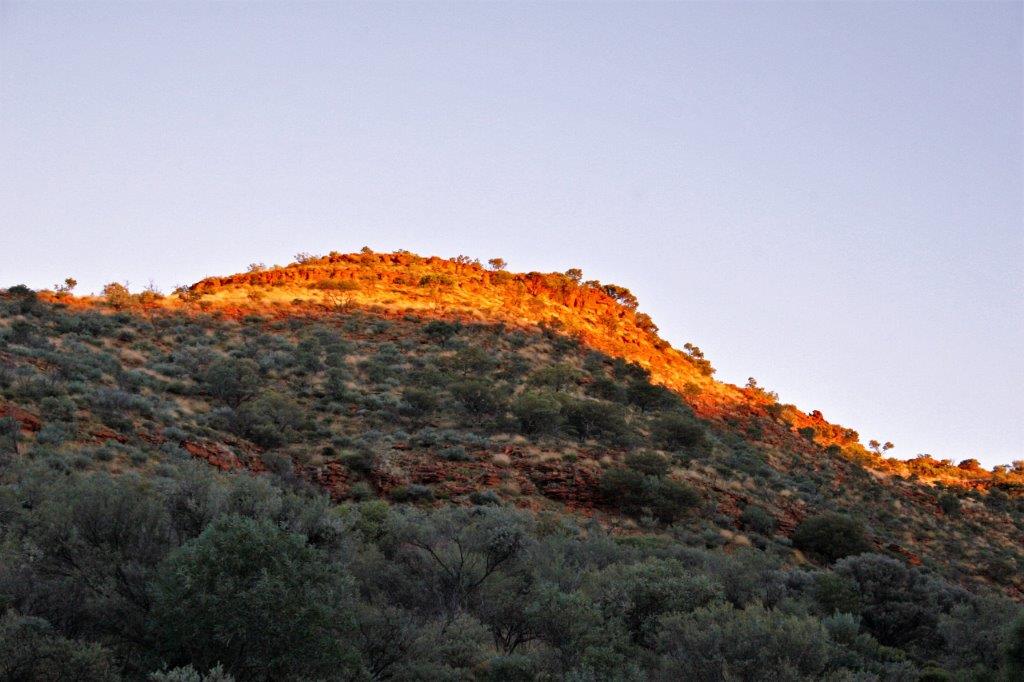
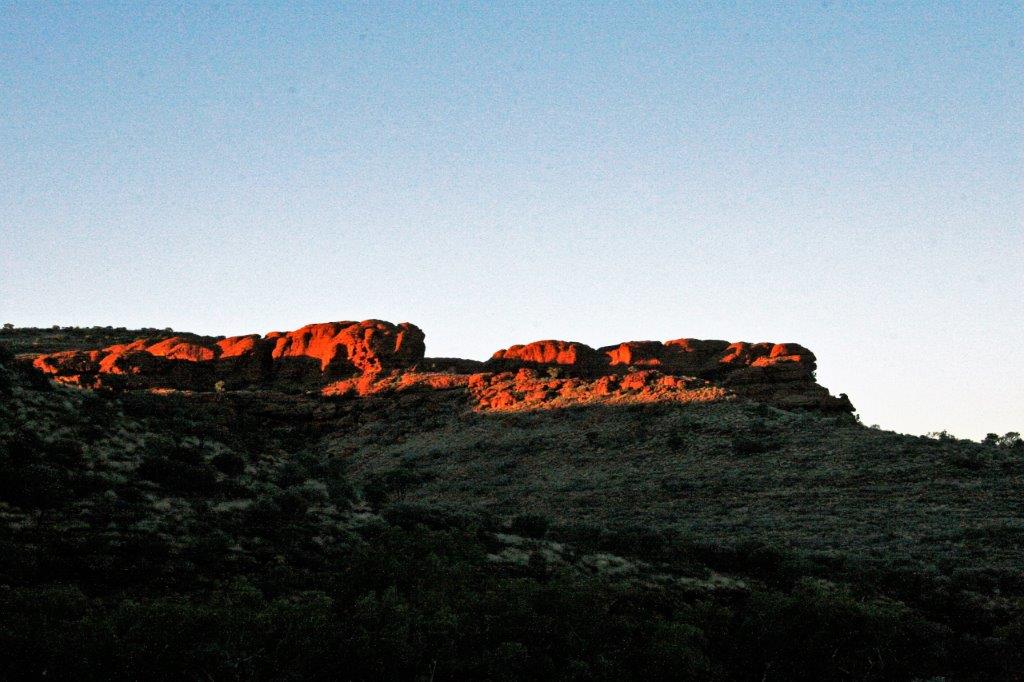
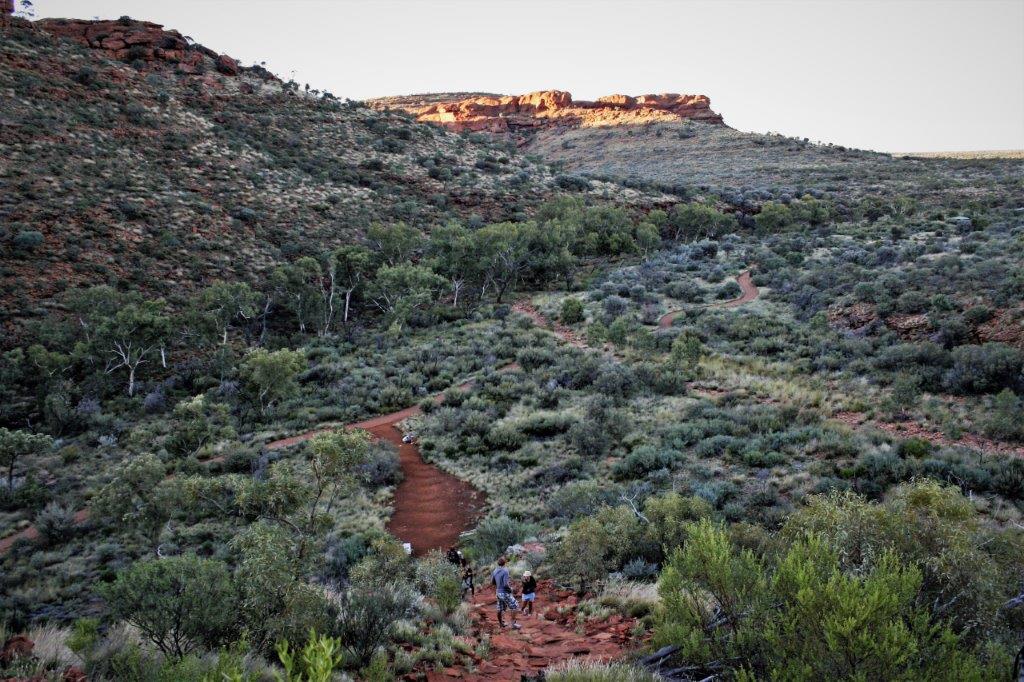
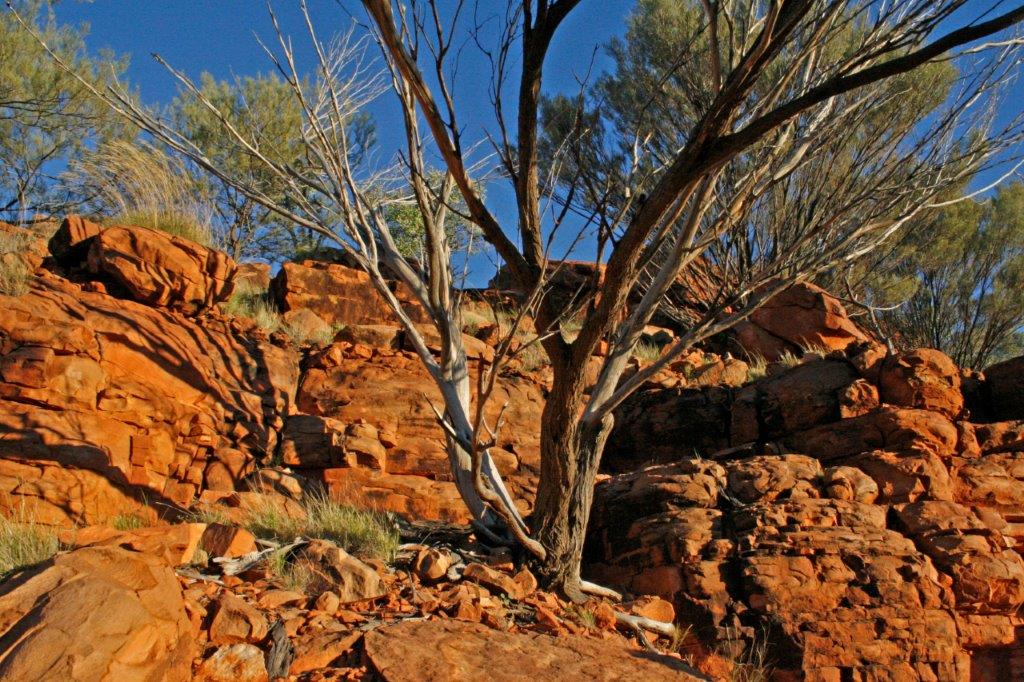
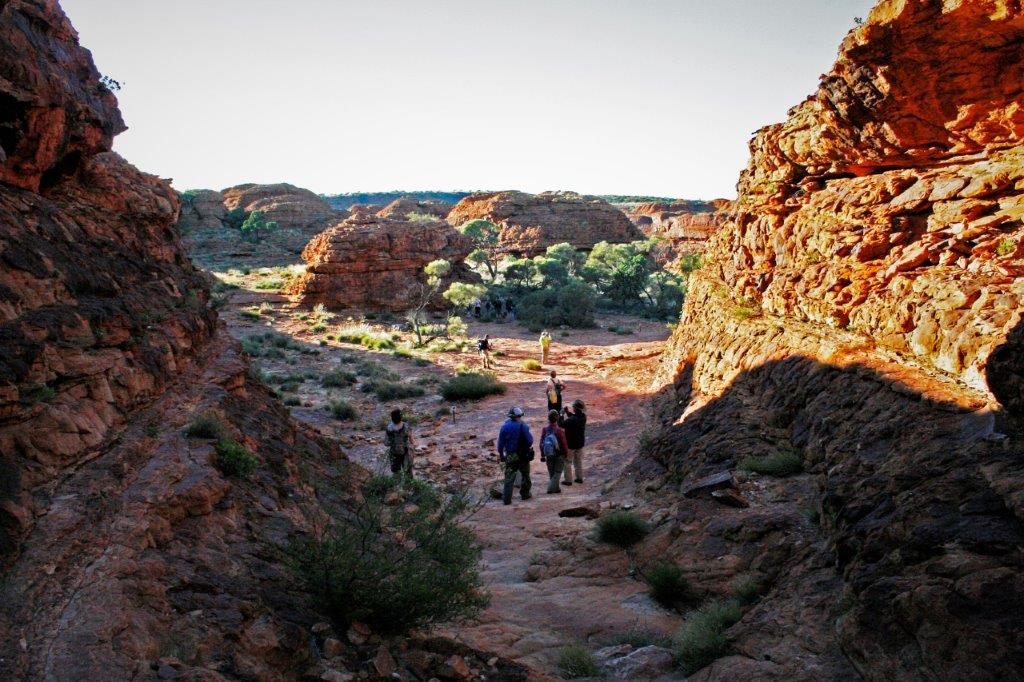
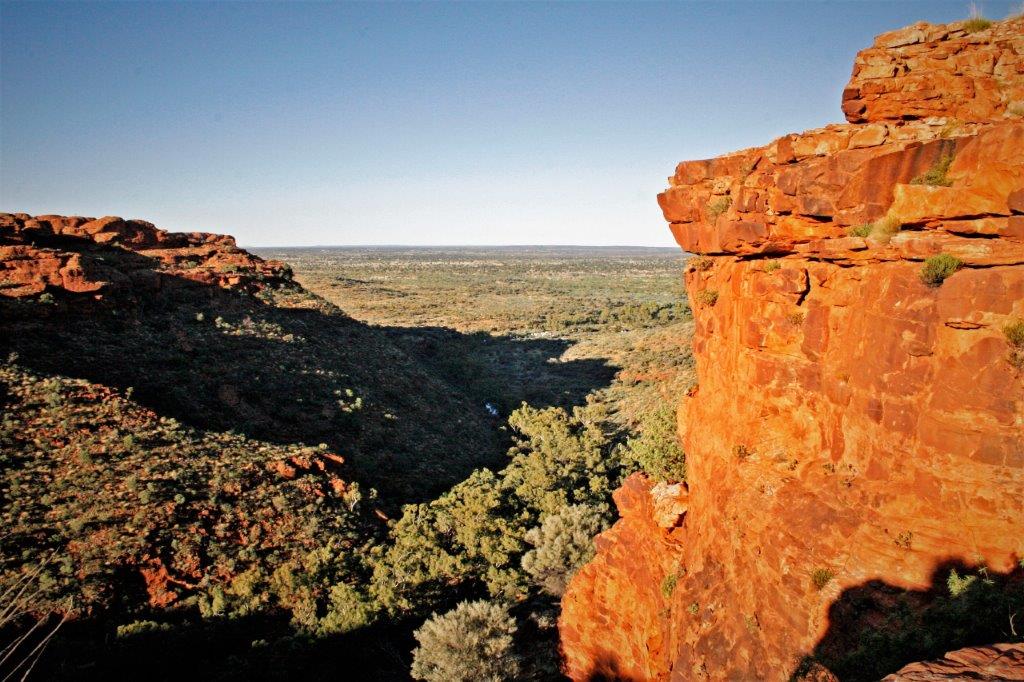
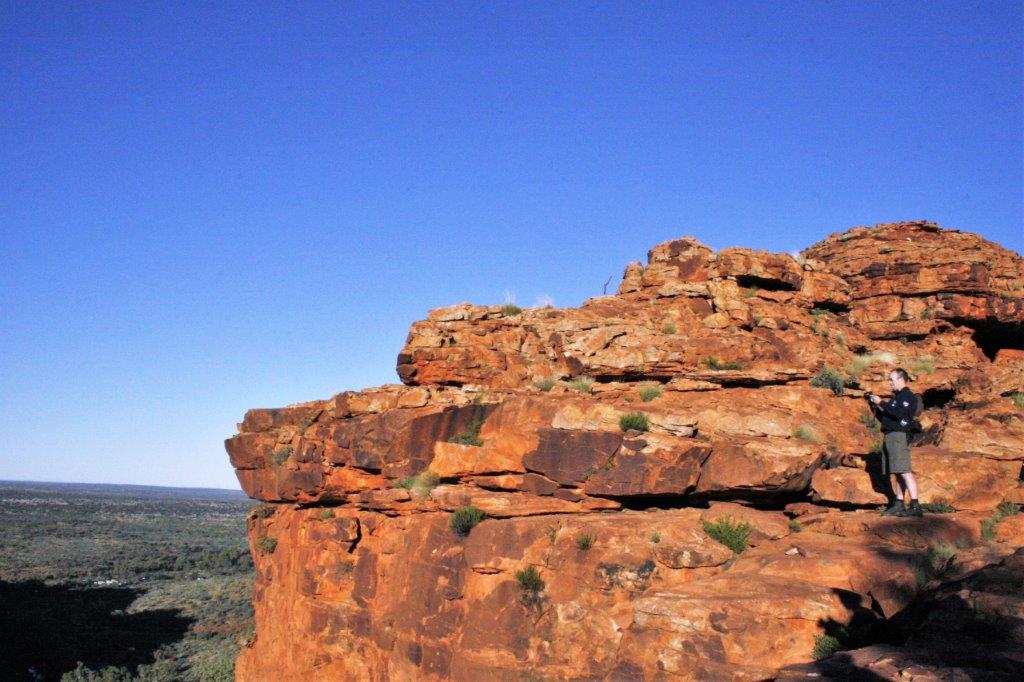
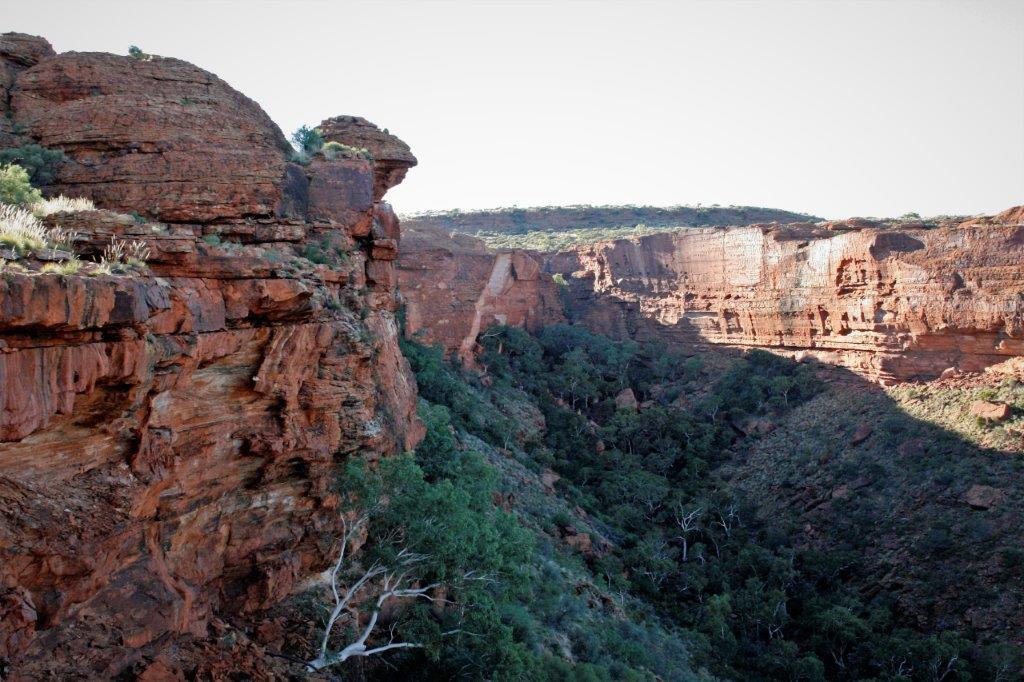
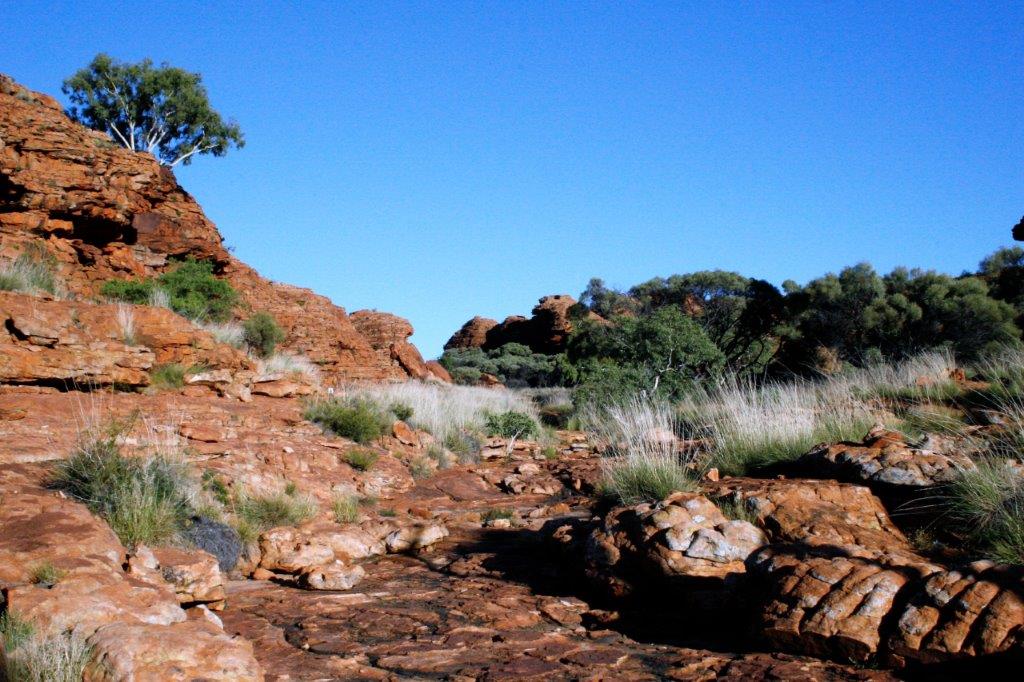
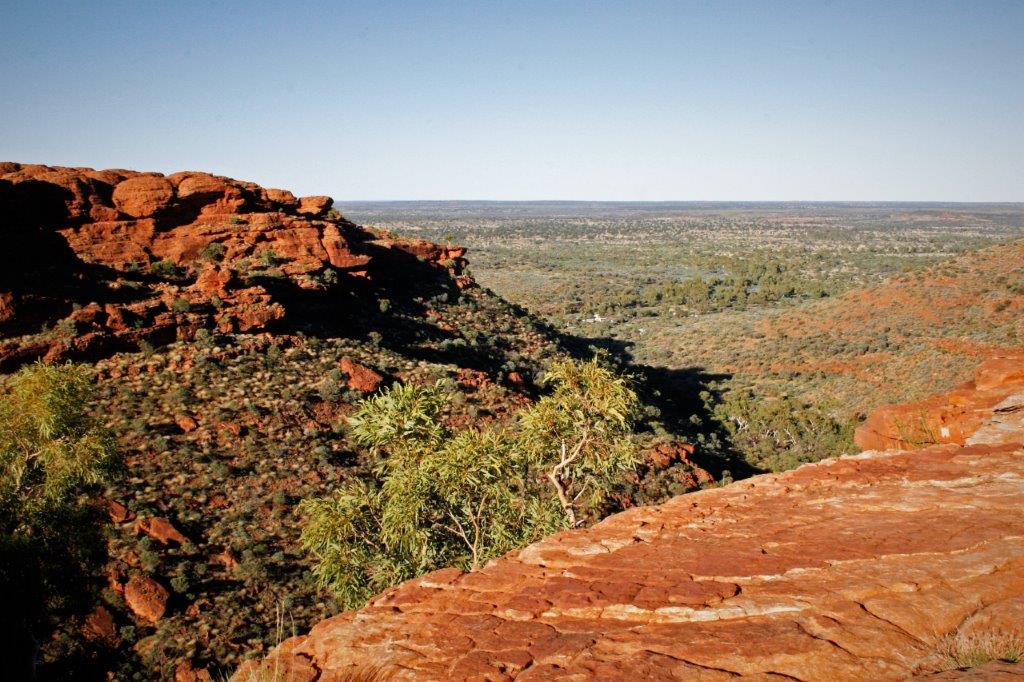
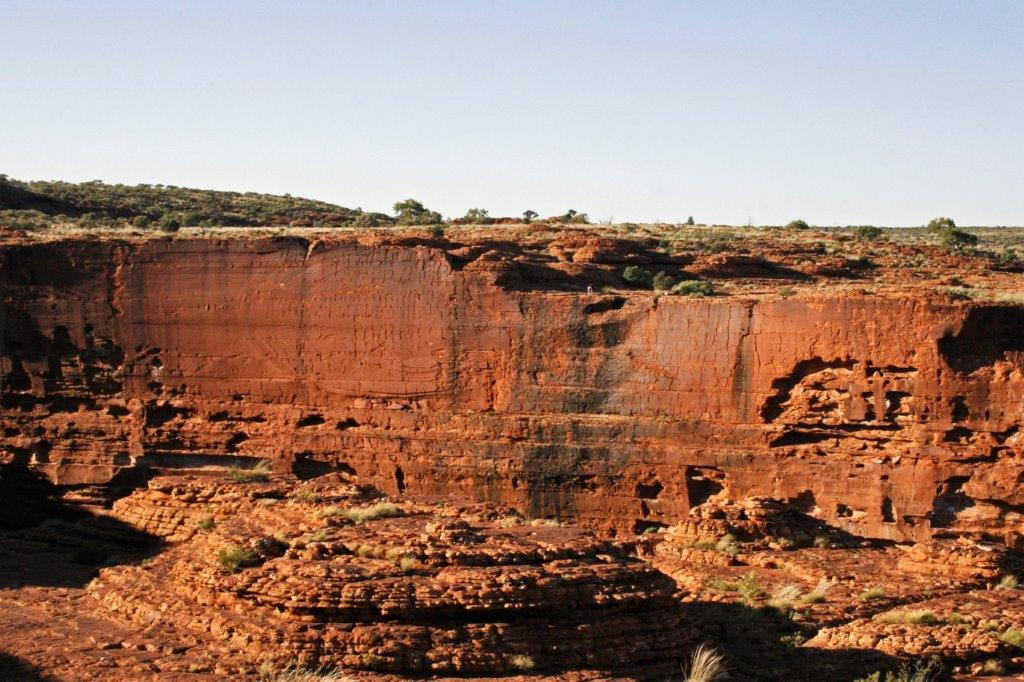
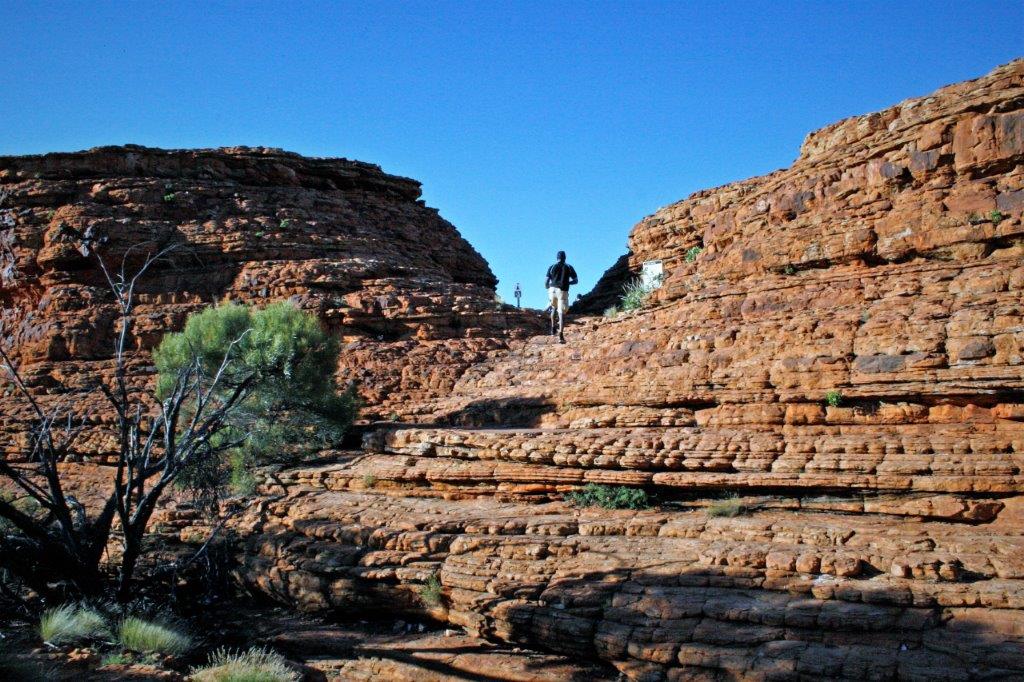
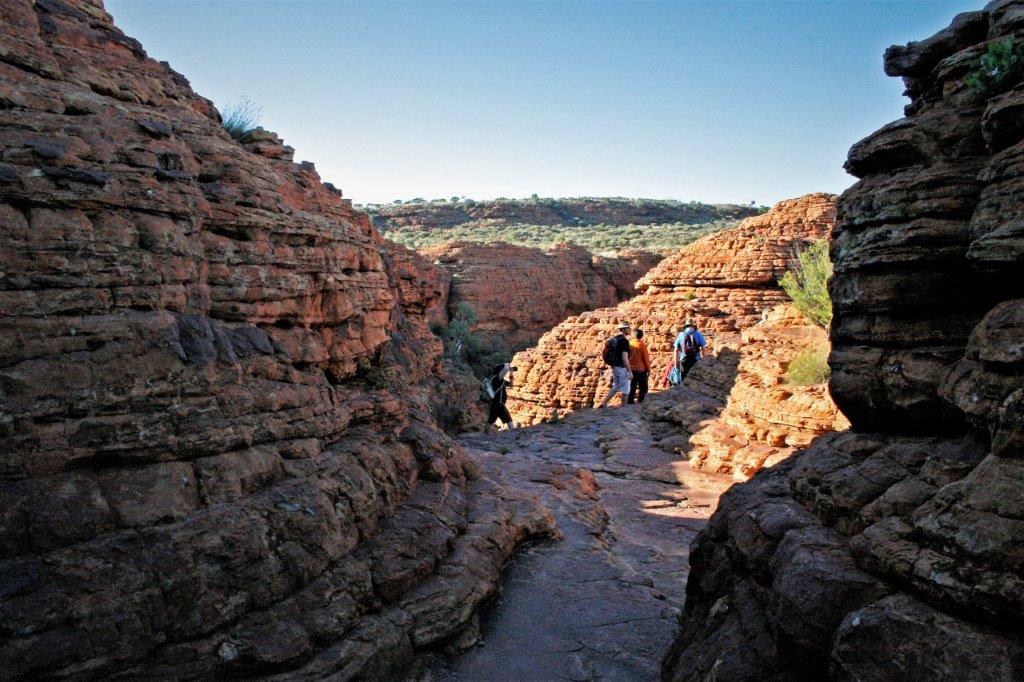
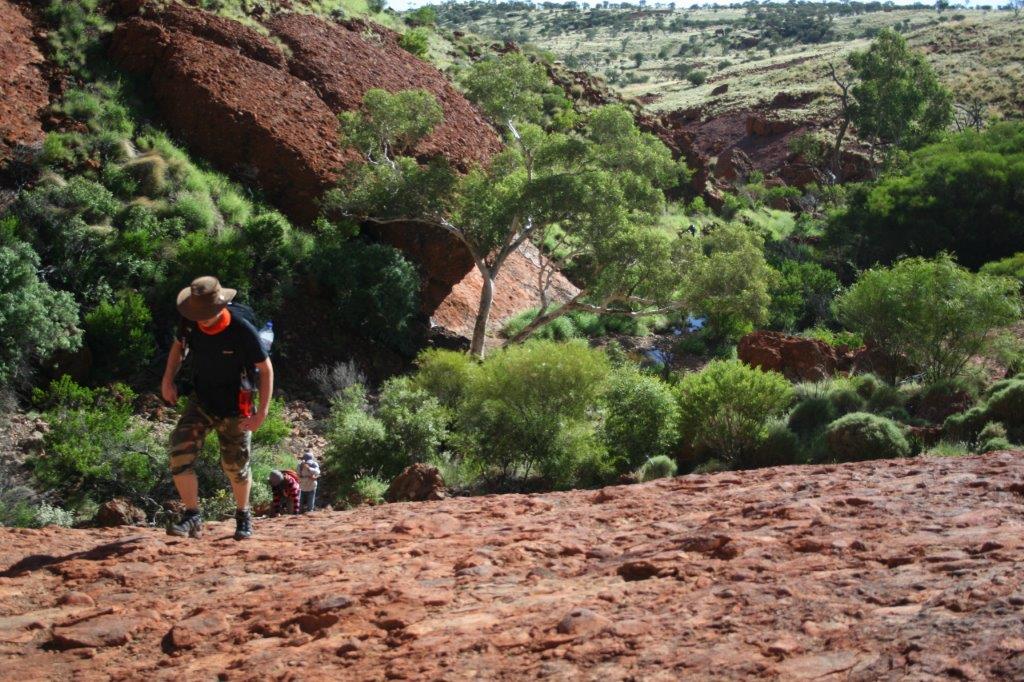
Breakfast was served at 5 am which meant we crawled out of our tent at 4:30!  We were on the road at six after watching another sunrise. It took just over an hour to get to Watarrka National Park, home of Kings Canyon.  The rim trail is 7 km and takes 3 1/2 to 4 hours.  After the hike at Kata-Tjuta the day before my knee was really sore but I didn’t want to just do a one hour walk along the valley floor.  I wanted to see the views from the rim.  The English couple decided to walk the valley and the rest of the group headed up the 600+ uneven rock ‘steps to the 1000’ high castle rim.  The stairway is called ‘suicide hill’ because it is very common for someone to have a heart attack during the climb.  Good to know…Gavin and I had agreed that I would follow the group as best I could and catch up at the photo stops.  If I got too far behind I just would have no stopping time and would have to keep going.  Groups hiking the canyon rim are spaced a certain amount of time apart so you must keep moving in order to not hold up the group behind you. The ‘path’ was even less defined than at Kata-Tjuta.  There was only a few small blue triangles hammered in to the rock to indicate the way.   My knee was very painful all day with all the ups, and especially downs and by the time we took the back stairs down I was exhausted.

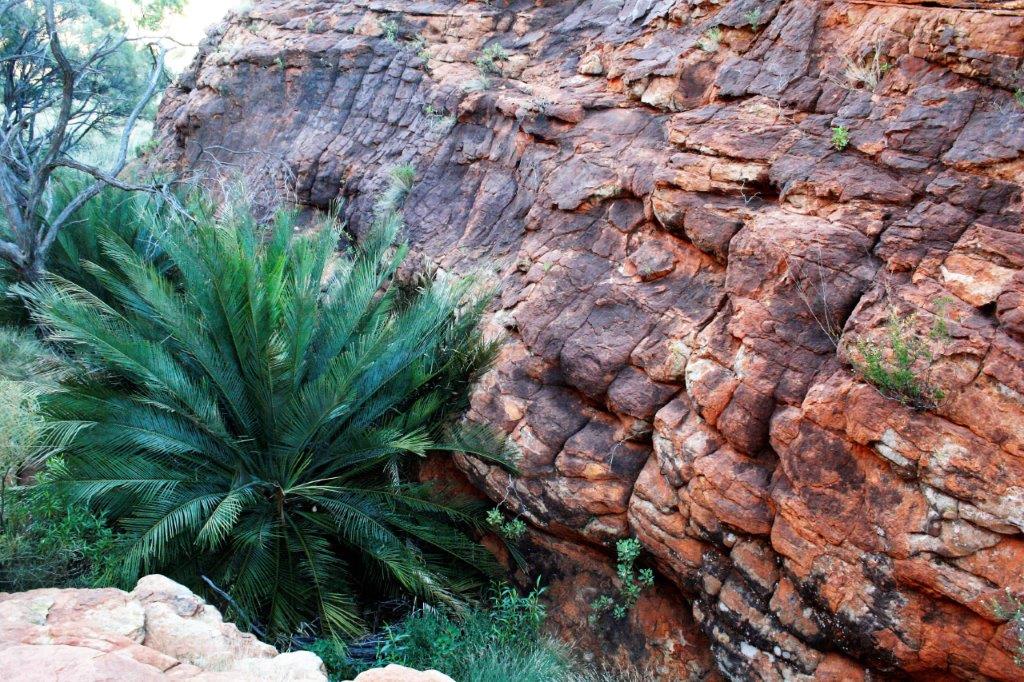
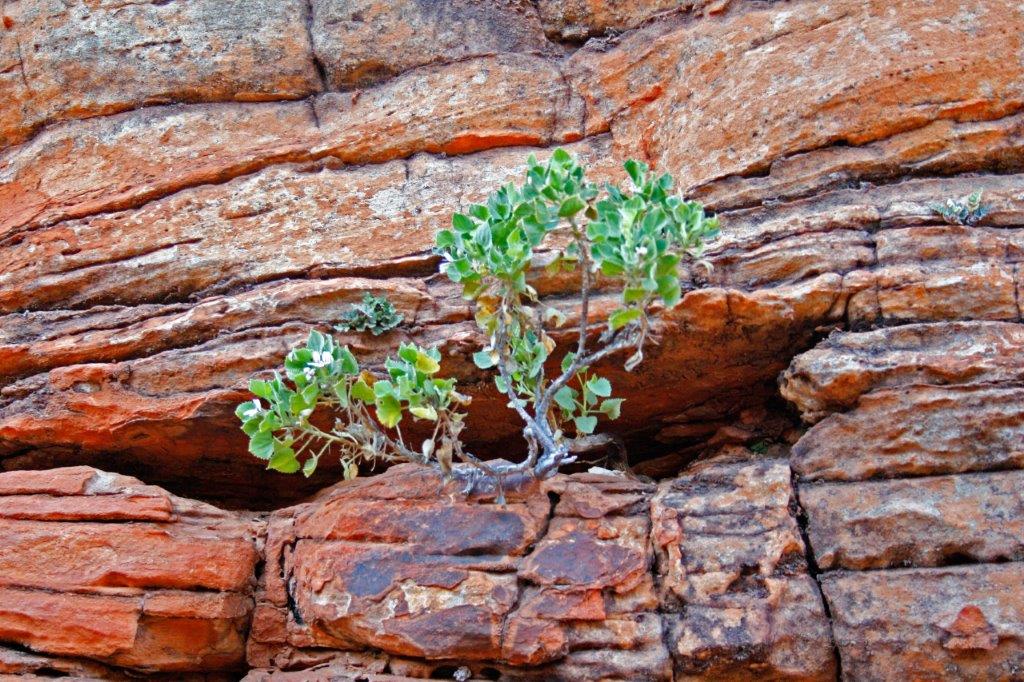
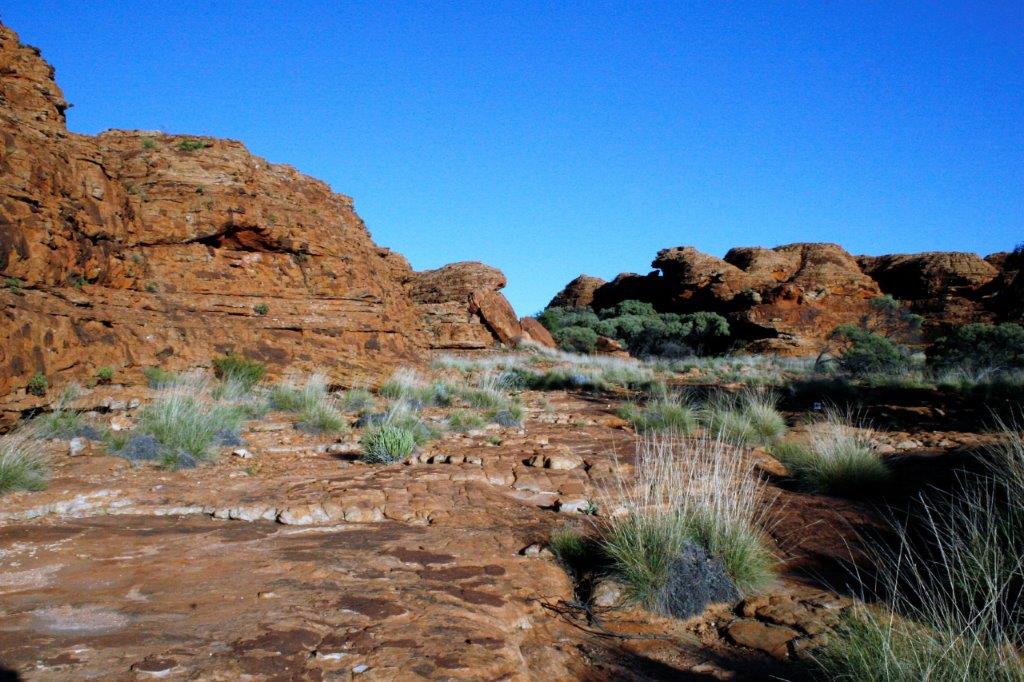
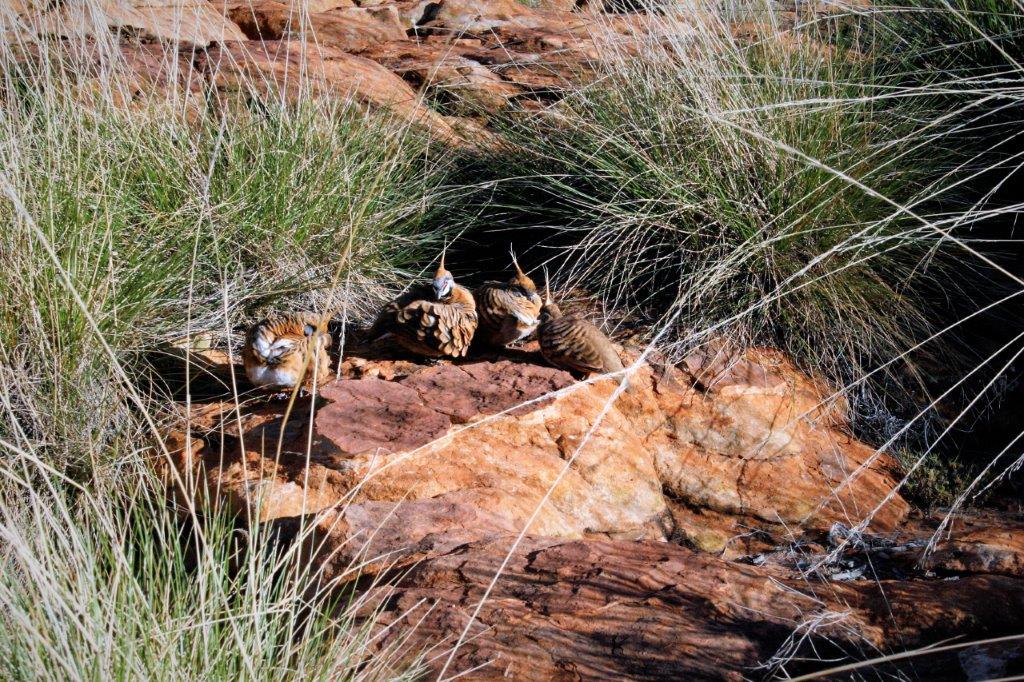
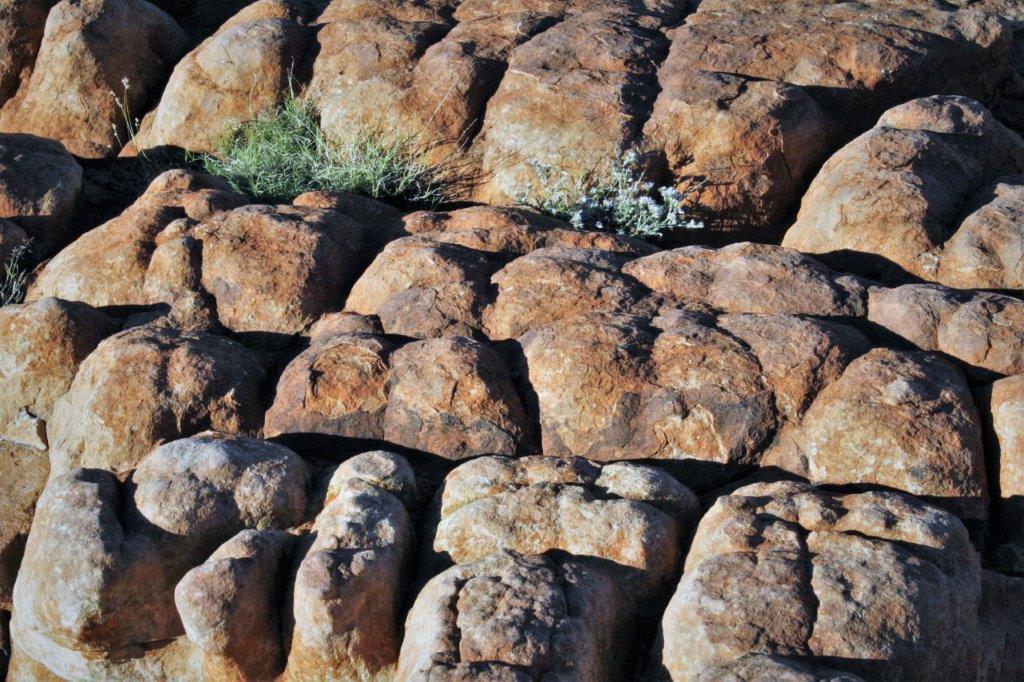
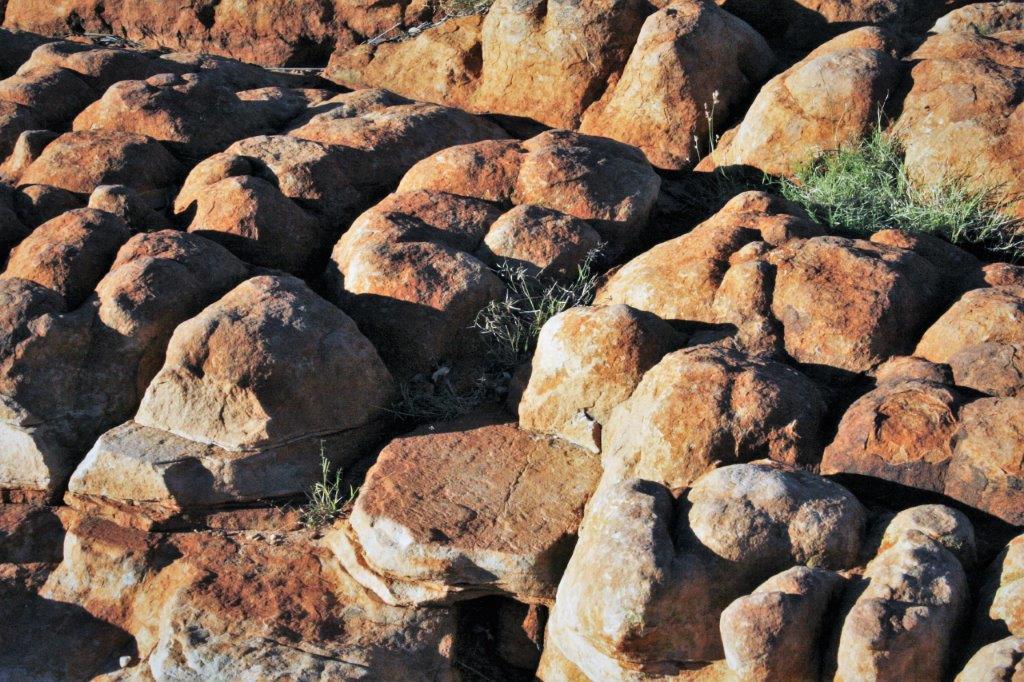
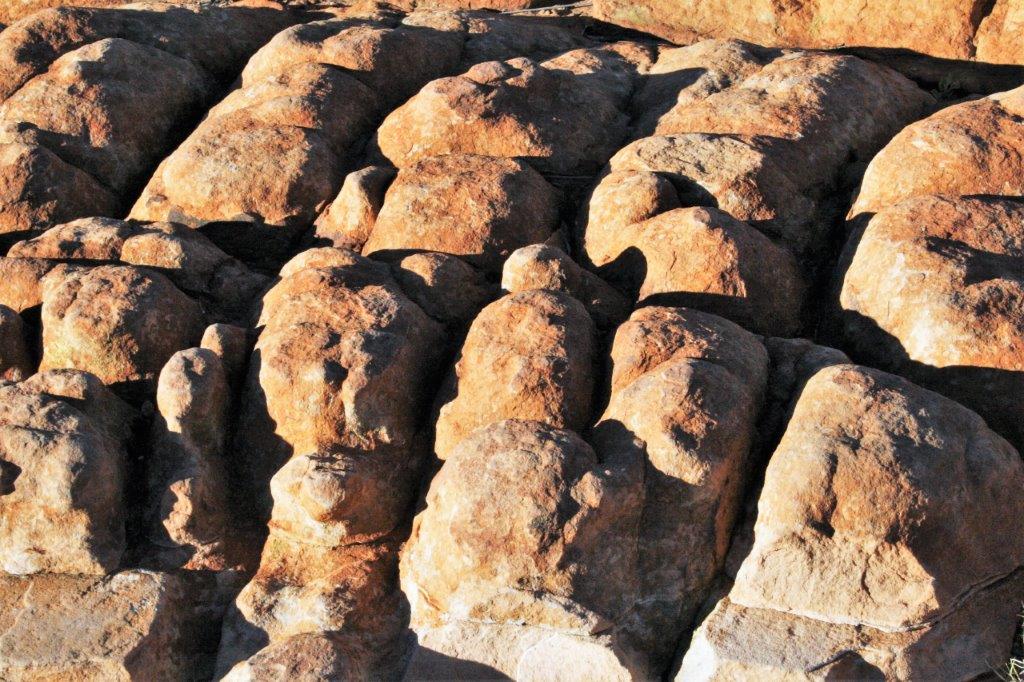
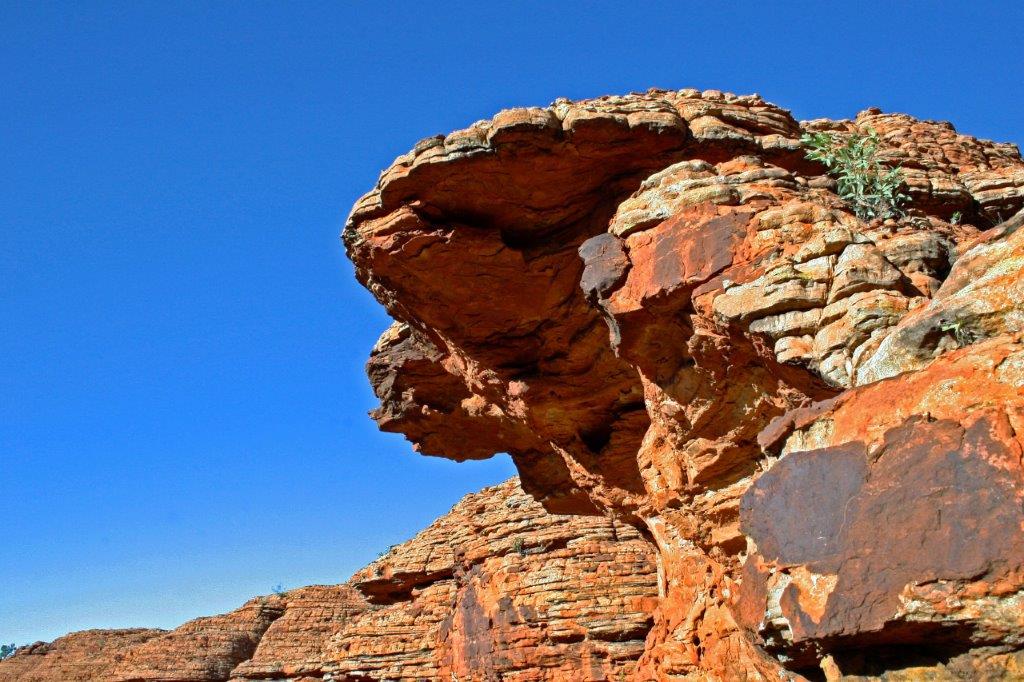
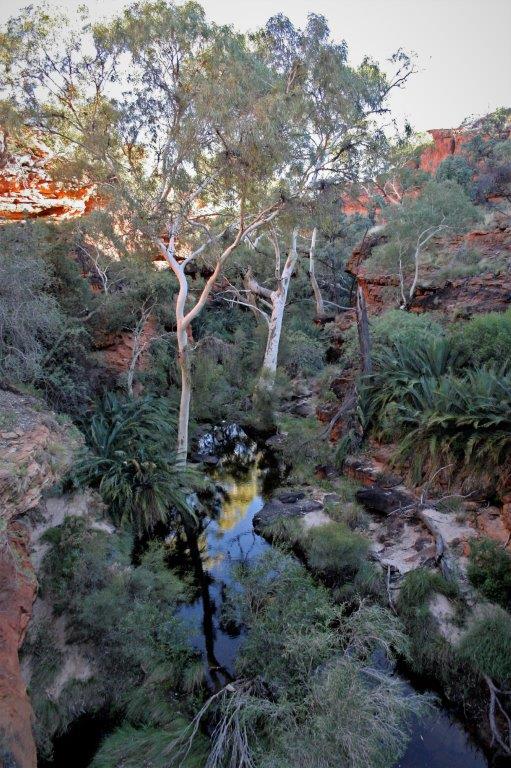
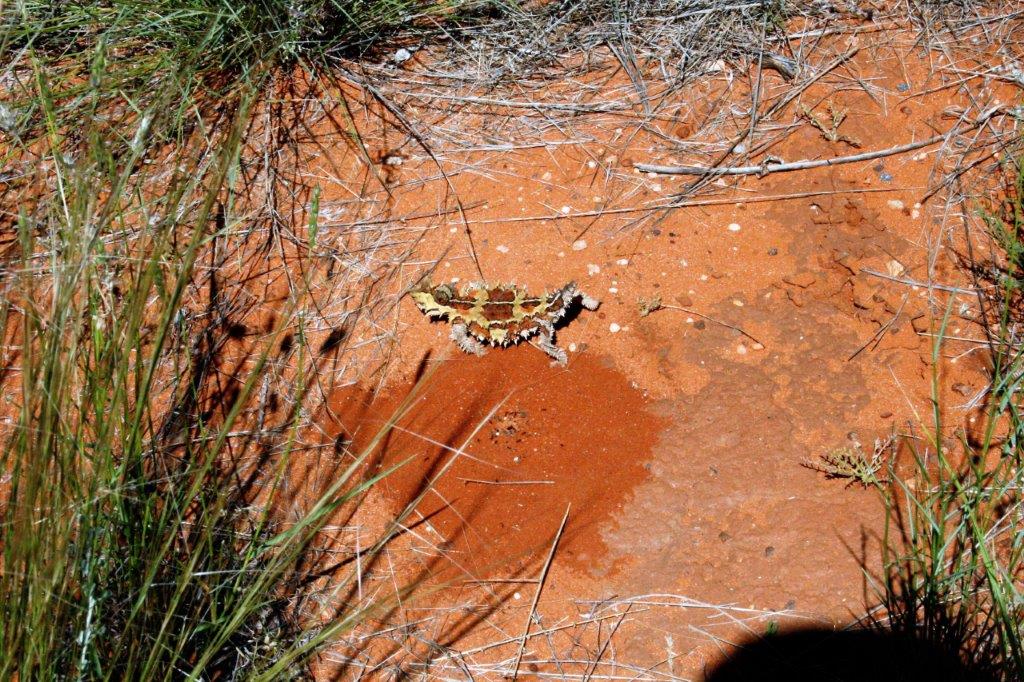
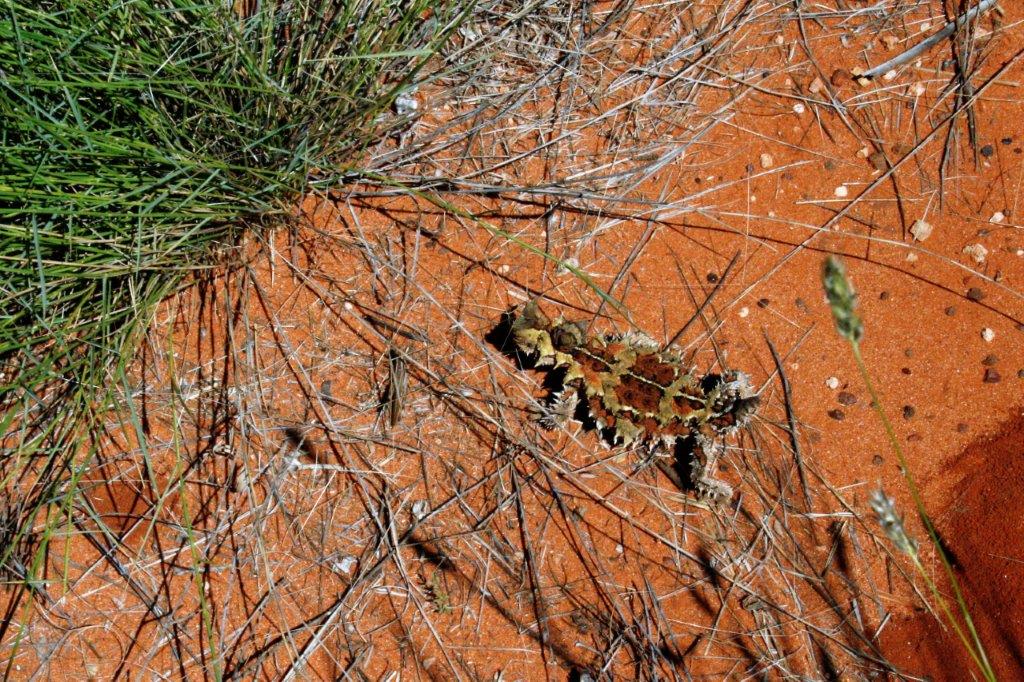
The long distant view was wonderful and the constantly changing rock shapes as we hiked along provided an endless photo op. The rocks in one section of the rim trail looked like pans of dinner buns.  I only saw them in that one spot but the whole cliff top area was made up of the bumpy ‘buns.’  We hiked down the wall of the canyon, across the bottom and back up the other side via a boardwalk and many, many stairs. It is very hard to tell what is the front and what is the back of this little horned lizard.  If they get caught by a predator their tail will come off leaving them free to scamper away and then they will re-grow a new tail.

John’s relative’s told us the Australian word for stubborn, determined people.  They are called ‘stroppie.’  I was stoppie that day for sure.  But I am so very glad I struggled through and managed the entire hike.  I would have been very upset to not have gone.

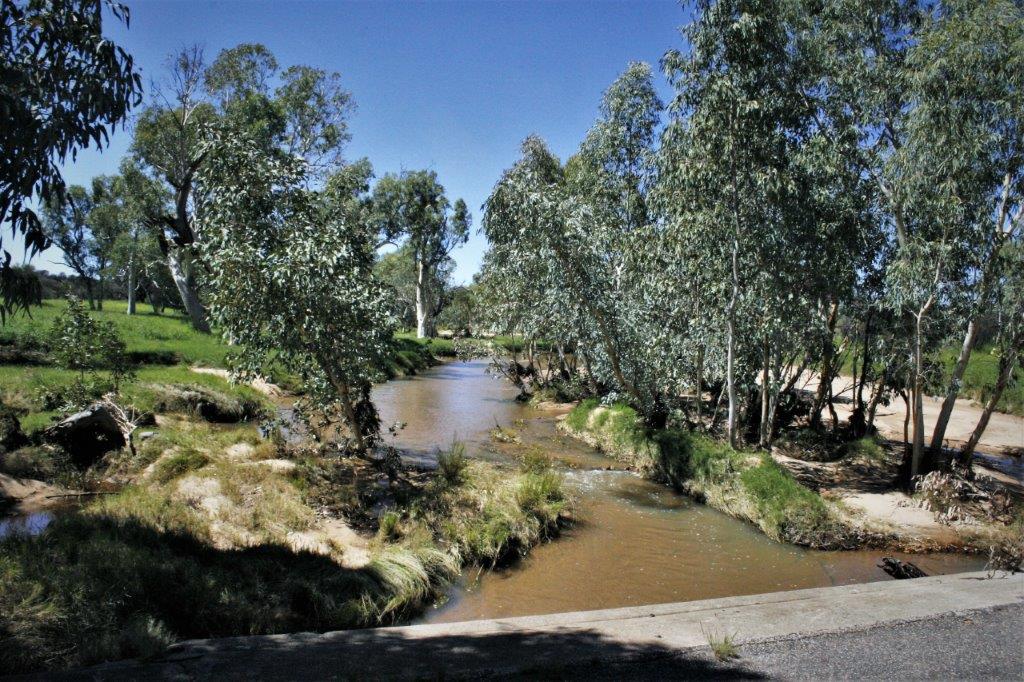
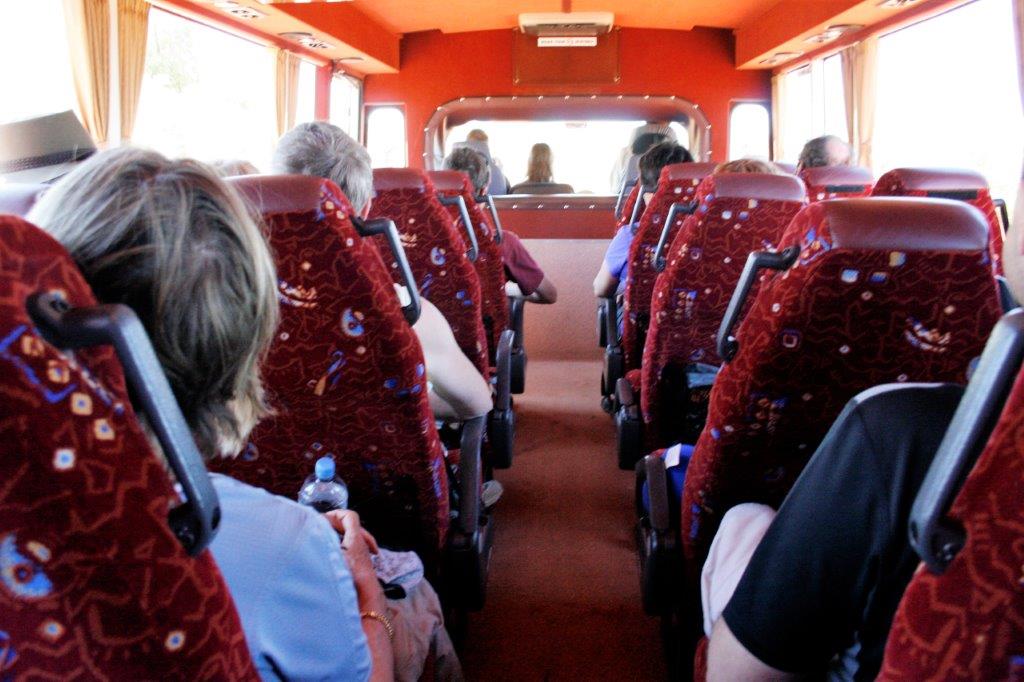
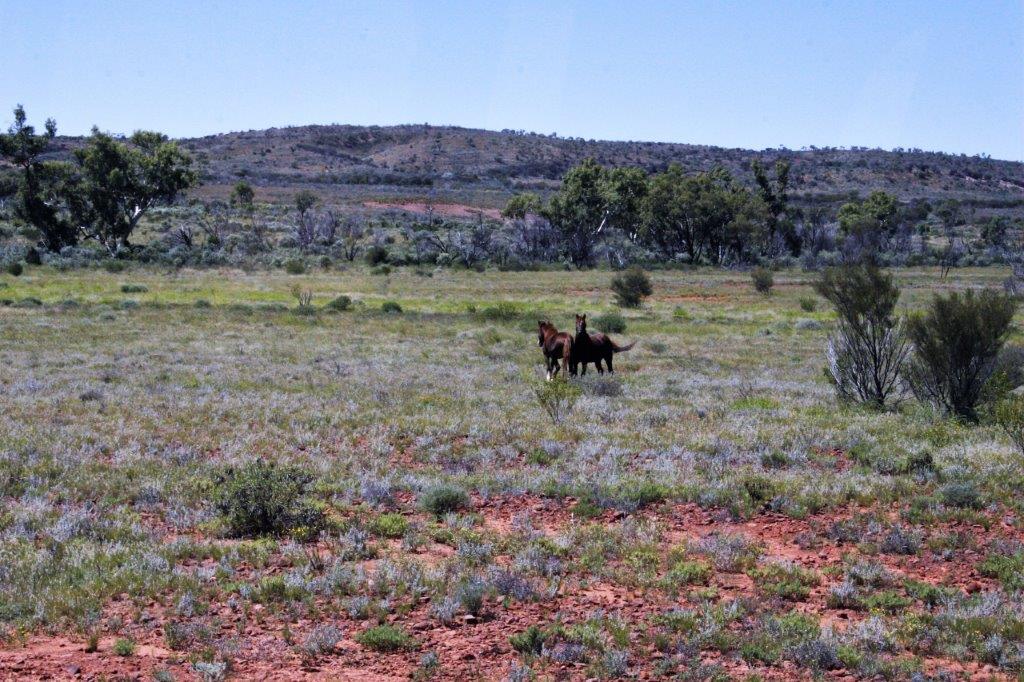
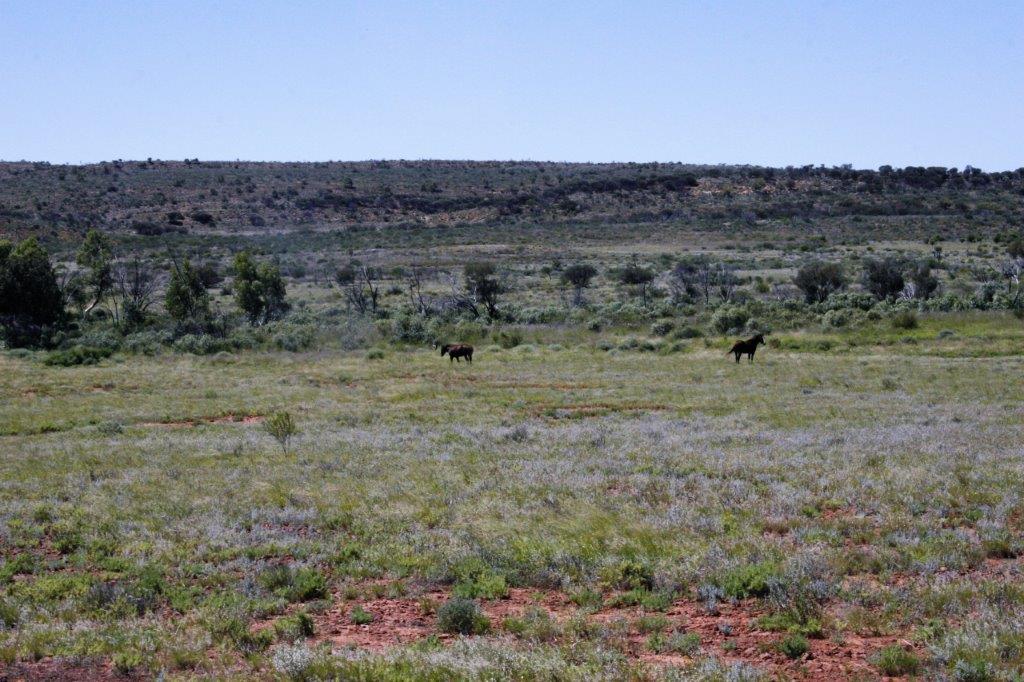
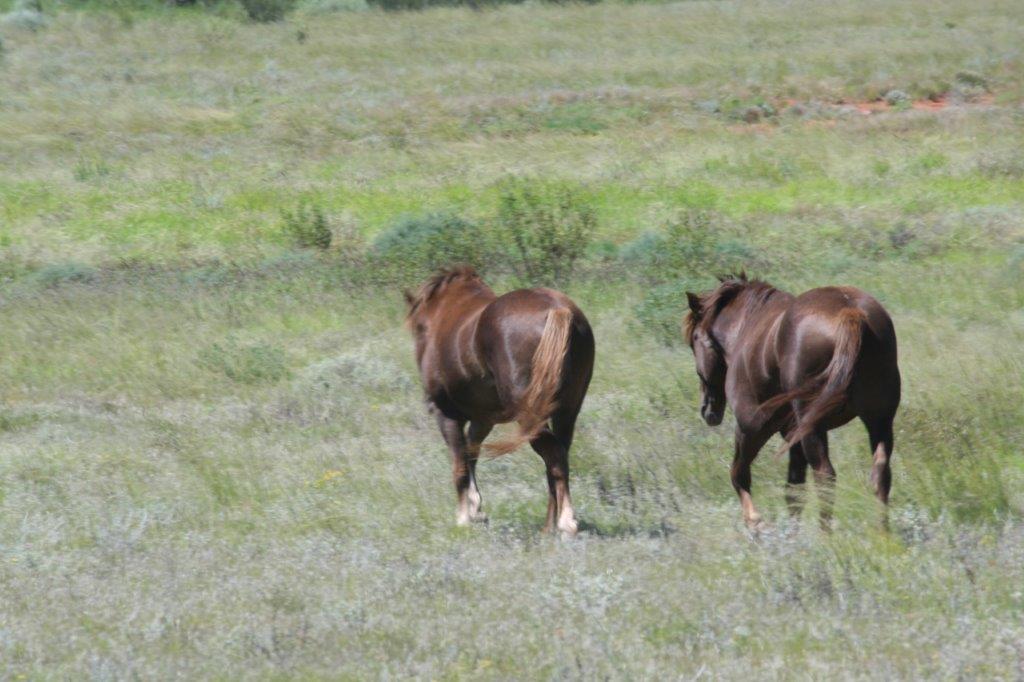
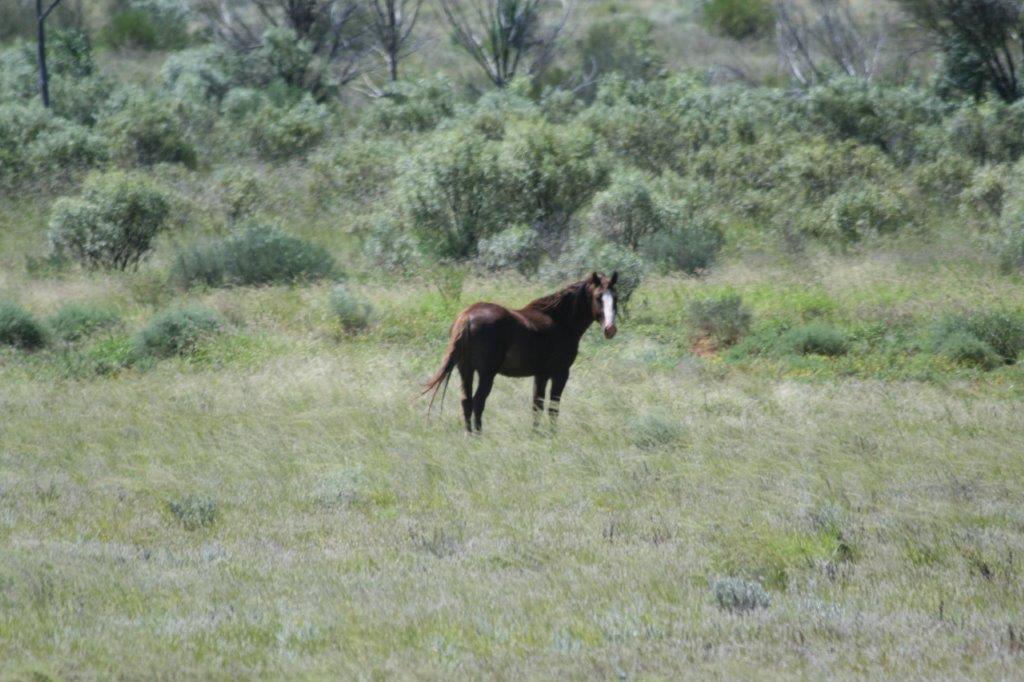
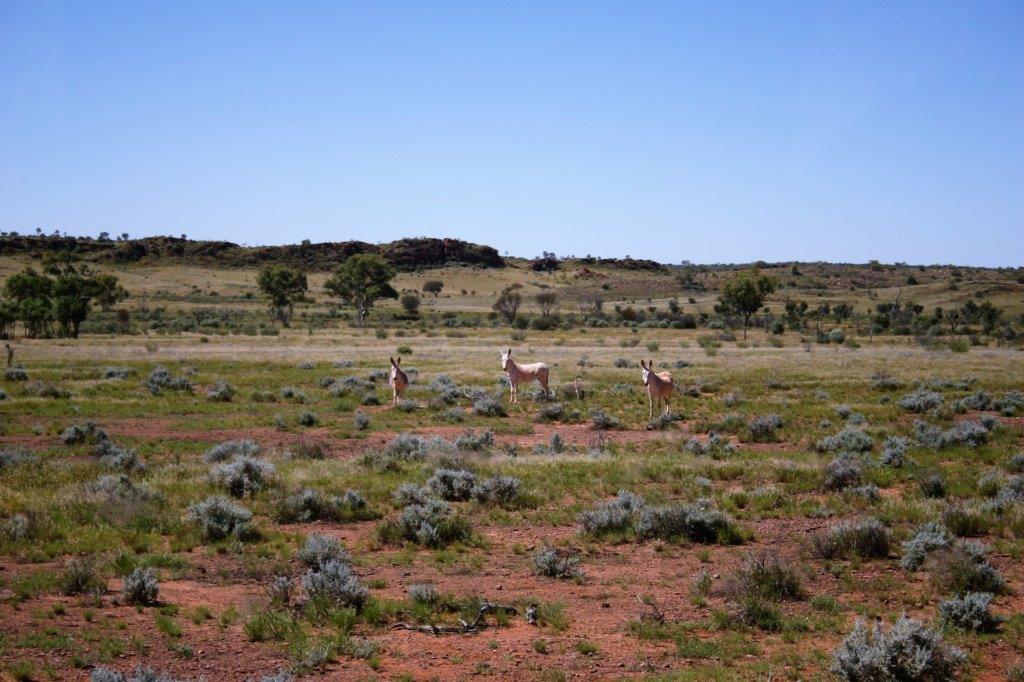
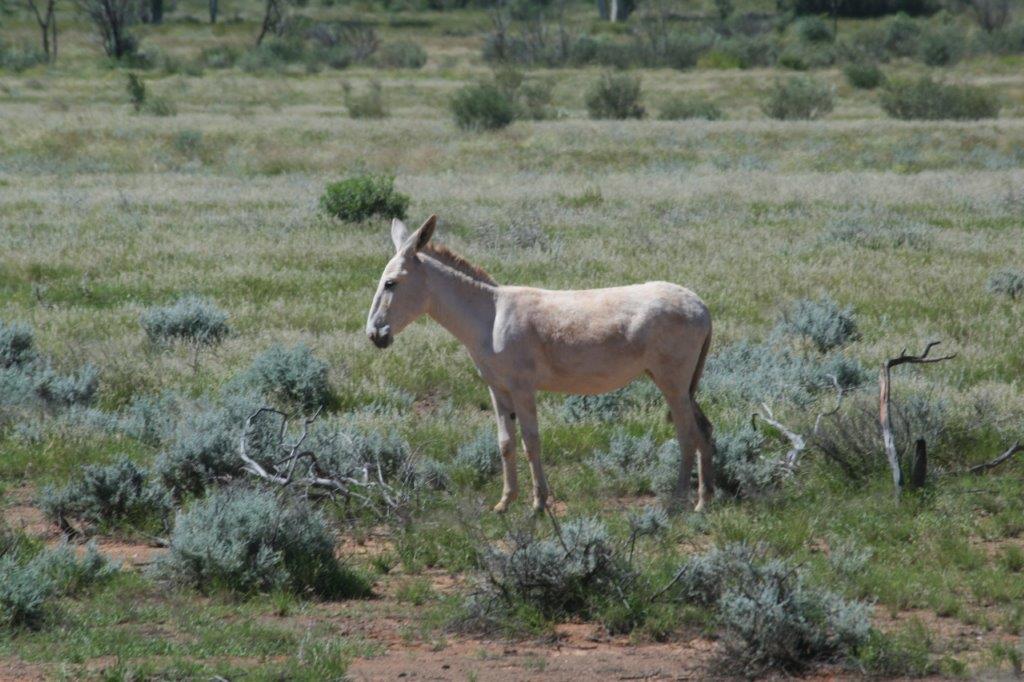
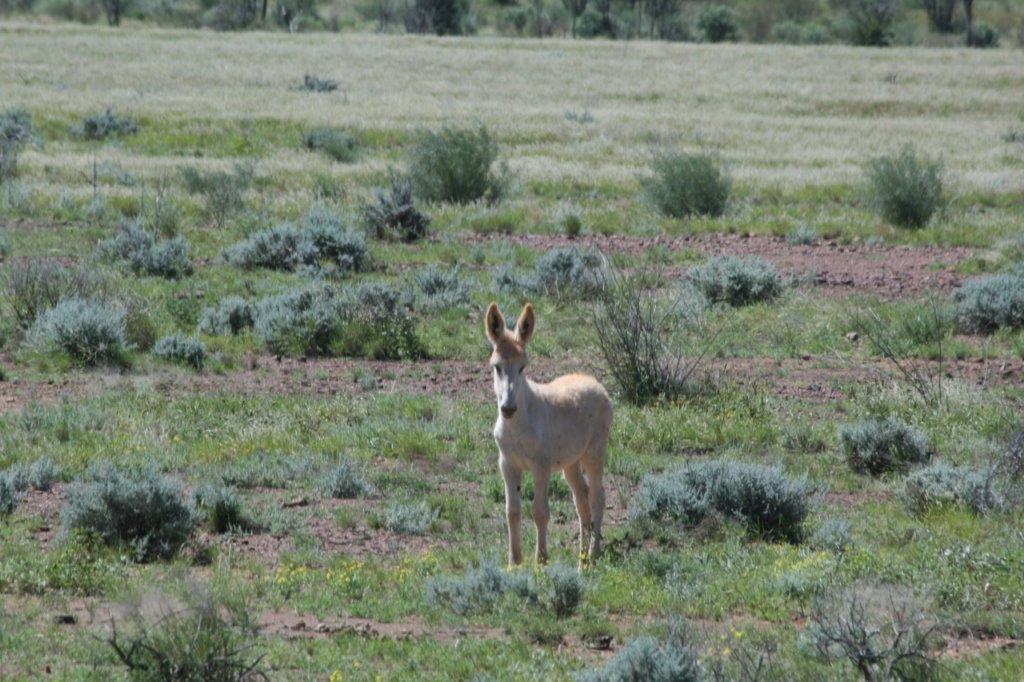
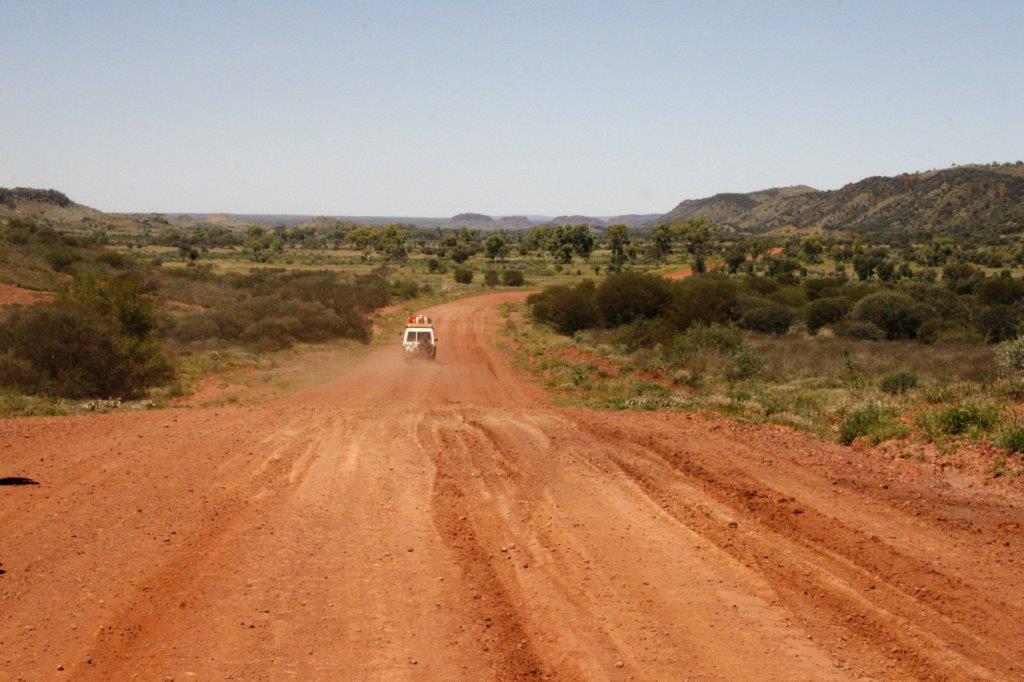
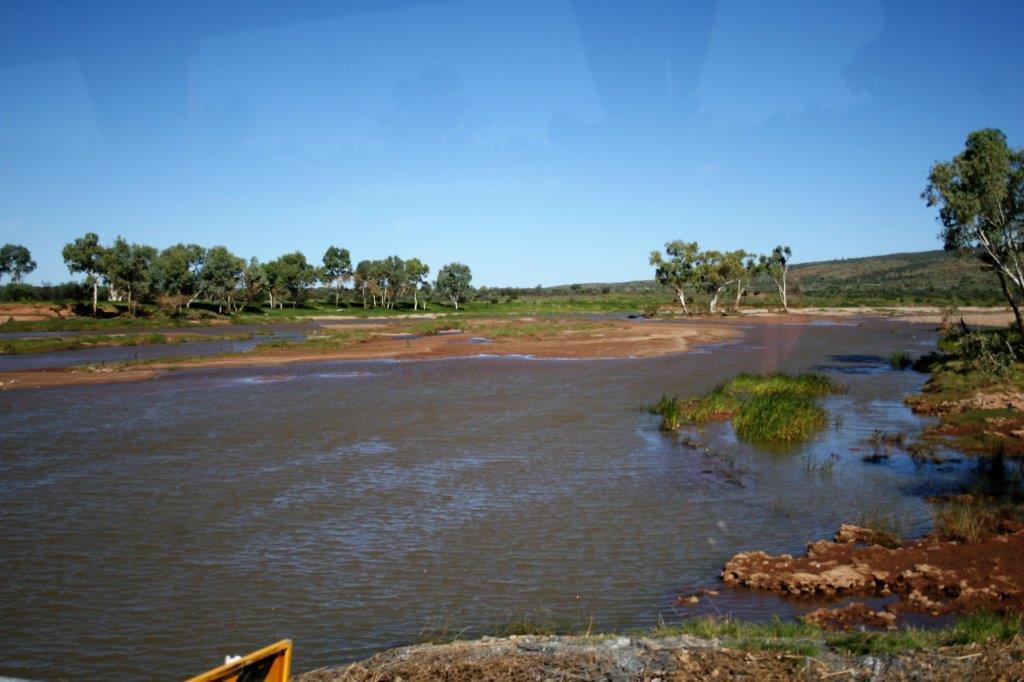
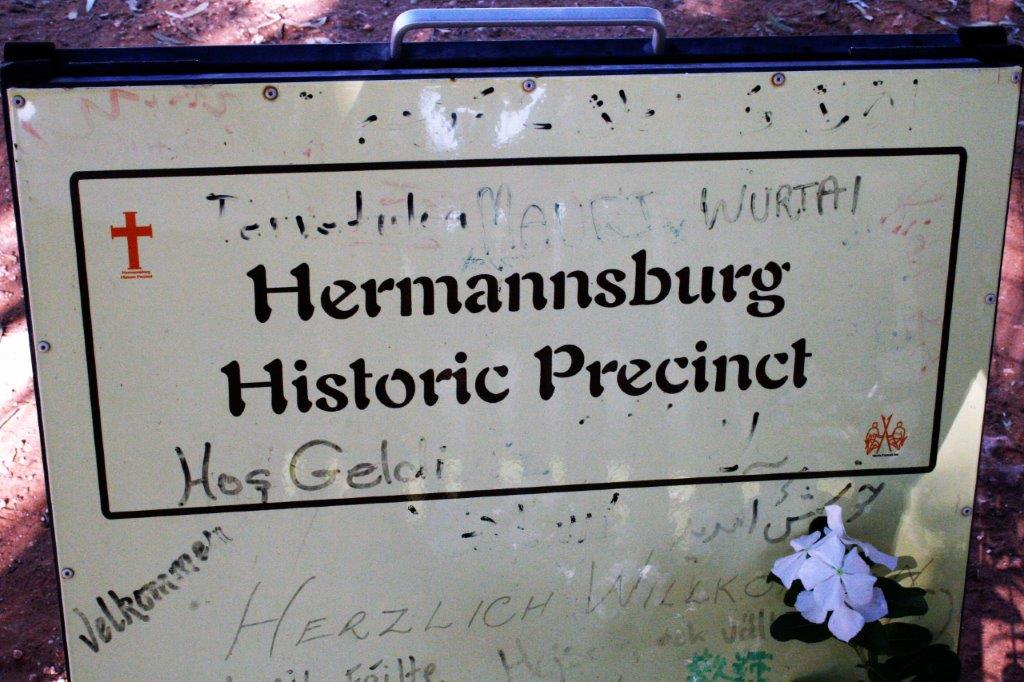
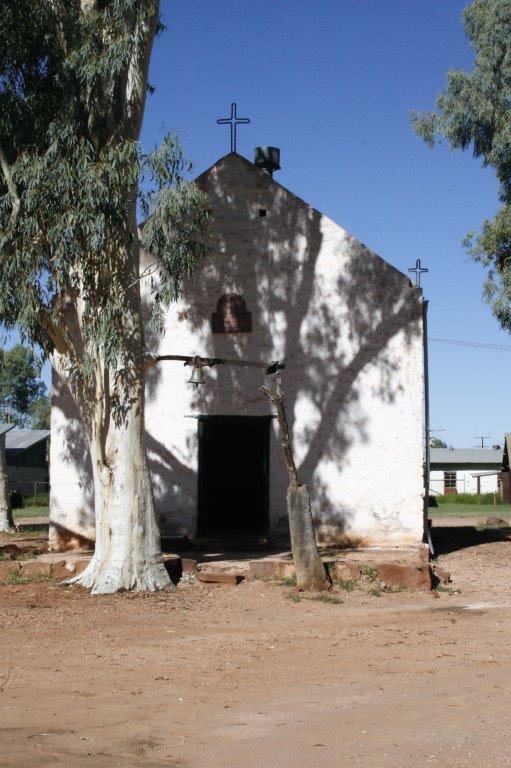
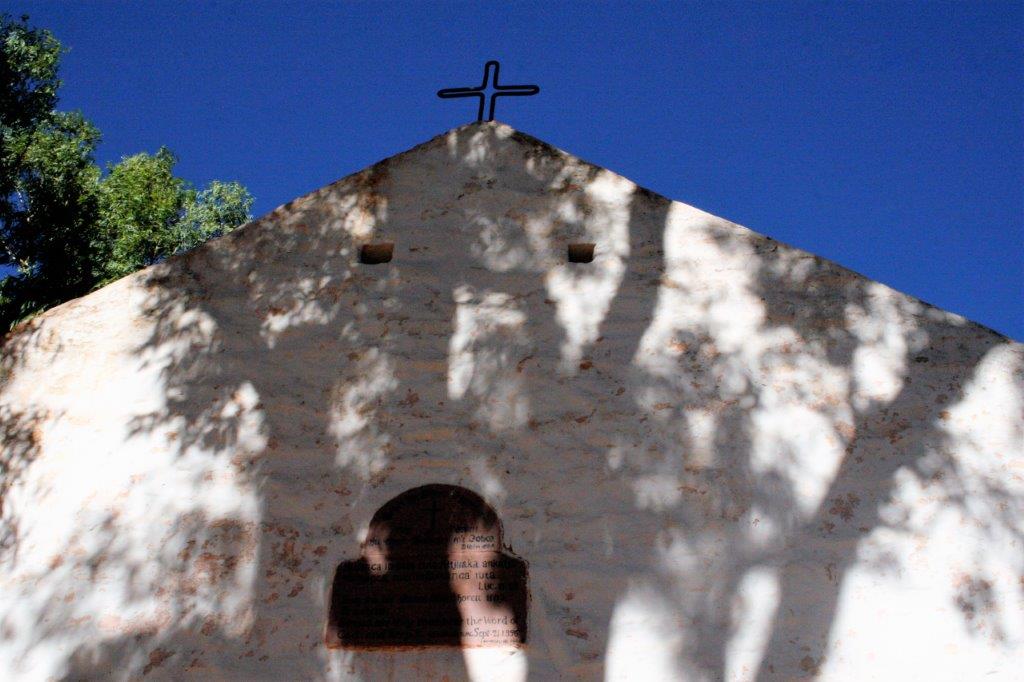
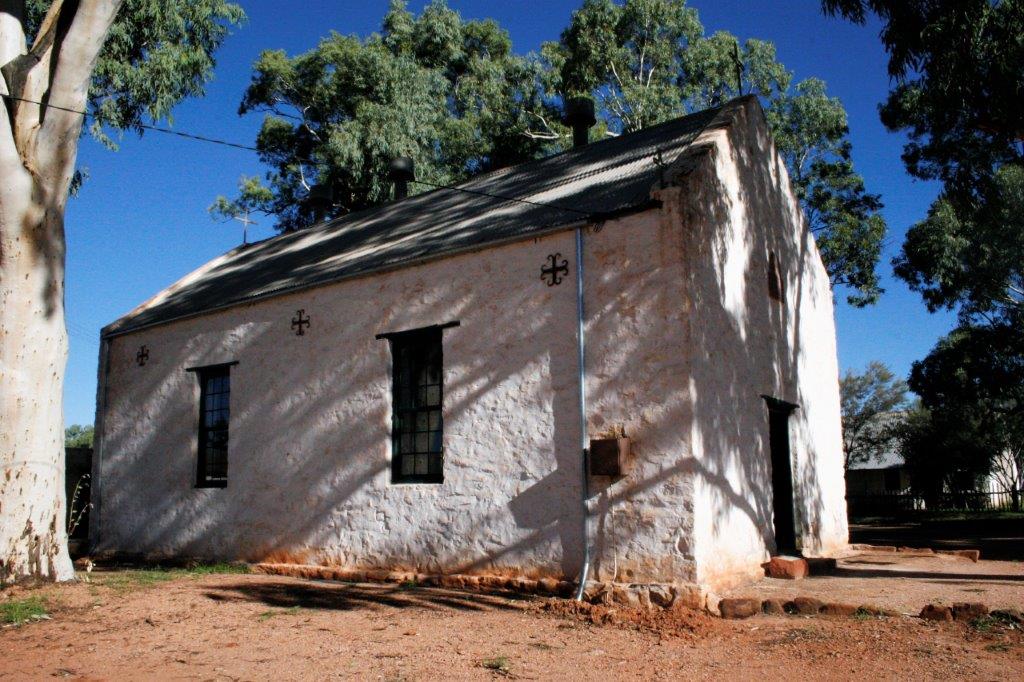
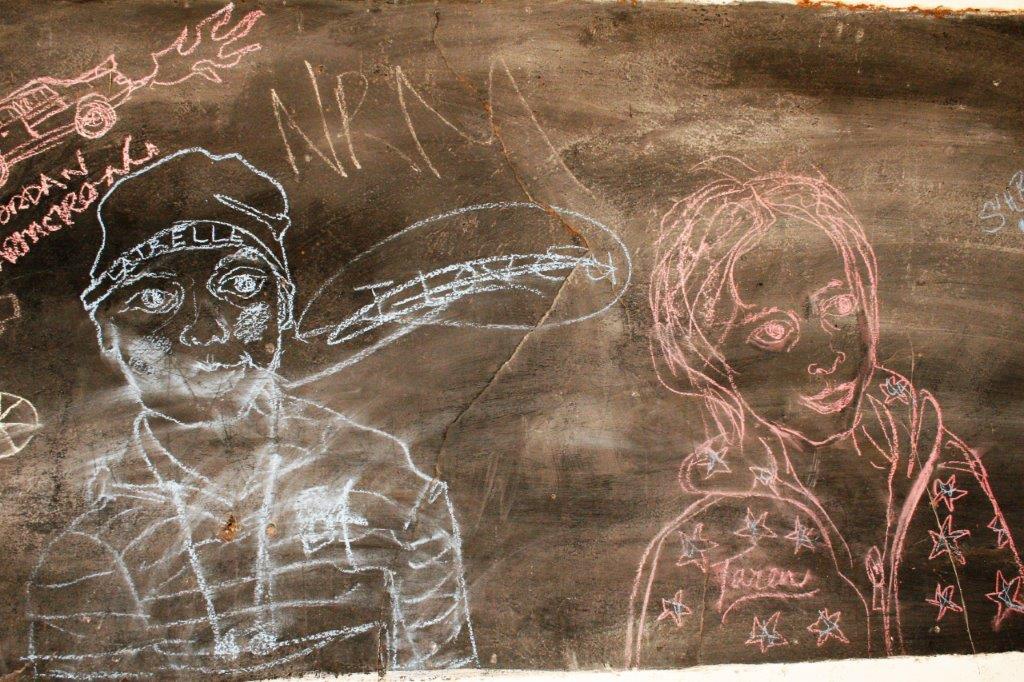
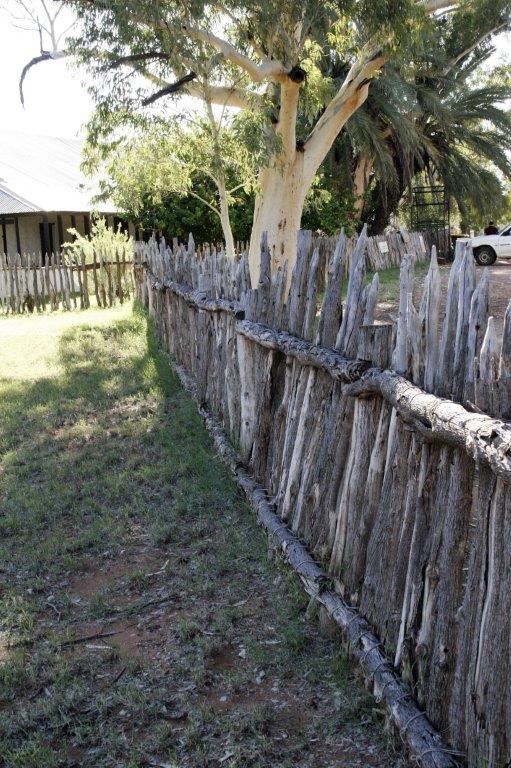
It was almost 11 by the time we were back in the bus and Gavin drove to one of his favourite spots where we ate the bag lunches we had prepared that morning. There are lots of brumbies (wild horses) and wild donkeys and mules wandering in the outback and we were fortunate enough to see some horses and mules.  We saw a wild camel as well, but I didn’t get a photo of it.   From Kings Canyon to Hermannsburg you drive the Mereenie Loop and we traveled 200 km on a deeply rutted gravel road.  Some of the bumps were so big we would bounce 6″ off our seats. We were driving along at a fair clip when a loaded jeep came up behind us and began honking.  The couple in the jeep were good friends of Gavin’s and were on their way to Darwin which is many miles away with nothing in between.  They had extra tires, spare parts, water, food, and gas; everything they may need in case of accident or a delay.  Gavin and Crusty (I would love to have heard the story behind that nickname) and his wife had a fifteen minute chat and then they pulled in front of our bus and off they went, soon to disappear. More evidence of the wet year Australia had in 2011 was the number of rivers we crossed where normally there would have been a dry riverbed.Hermannsburg is one of the most famous aboriginal missions in Australia.  It was built by German Lutherans in the 1880’s.  They came to Australia to escape persecution for their Protestant beliefs.  When they arrived in the Outback they learned the language of the aboriginal tribe in the area and incorporated many of their Dreamtime stories into the bible stories.  The missionaries treated the people with dignity and respect and many came to faith and went to school at the mission.  To this day the Lutheran church is the largest Protestant denomination in Northern Territory. Some artistic person left this drawing on the blackboard in the school.

We were able to spend a bit of time wandering the mission complex and enjoyed some authentic German apple strudel before climbing back in the bus to complete our journey to Wallace Rockhole and our campsite for the night.Subtlety is not the Australian norm.  It is very much a ‘tell it like it is’ country.  Even newspaper reports call a spade a spade and refer to mischeif makers or criminals in very blunt, even crude, terms. Our final campsite.  The next day we headed back to Alice Springs.

2011 March 23 – Day 77 – Yulara (Uluru) to Kings Creek Cattle Station, Australia

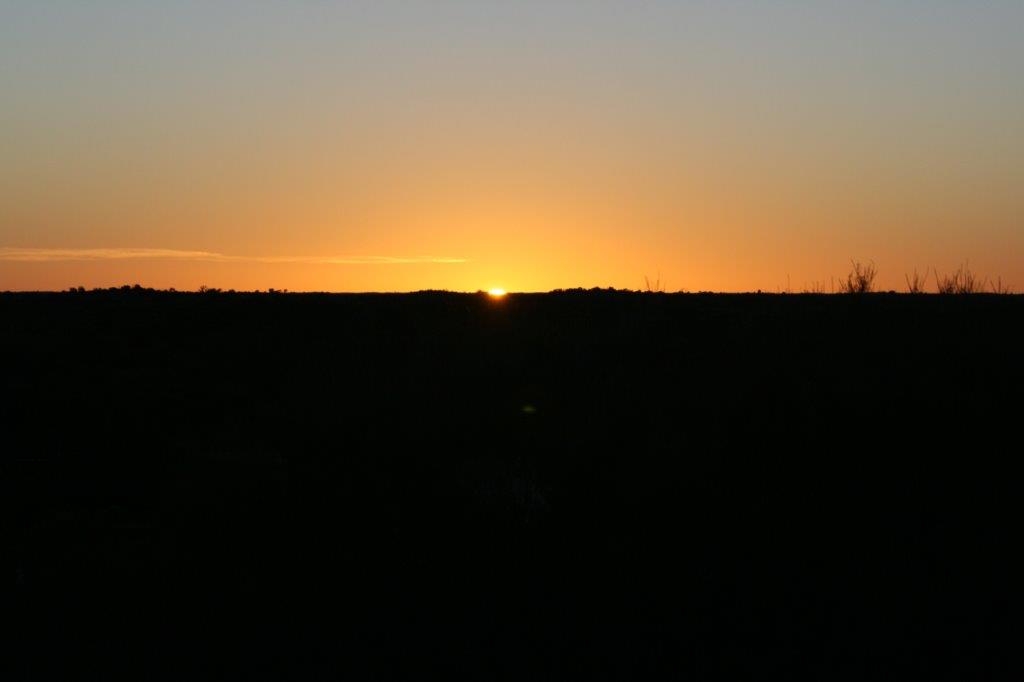
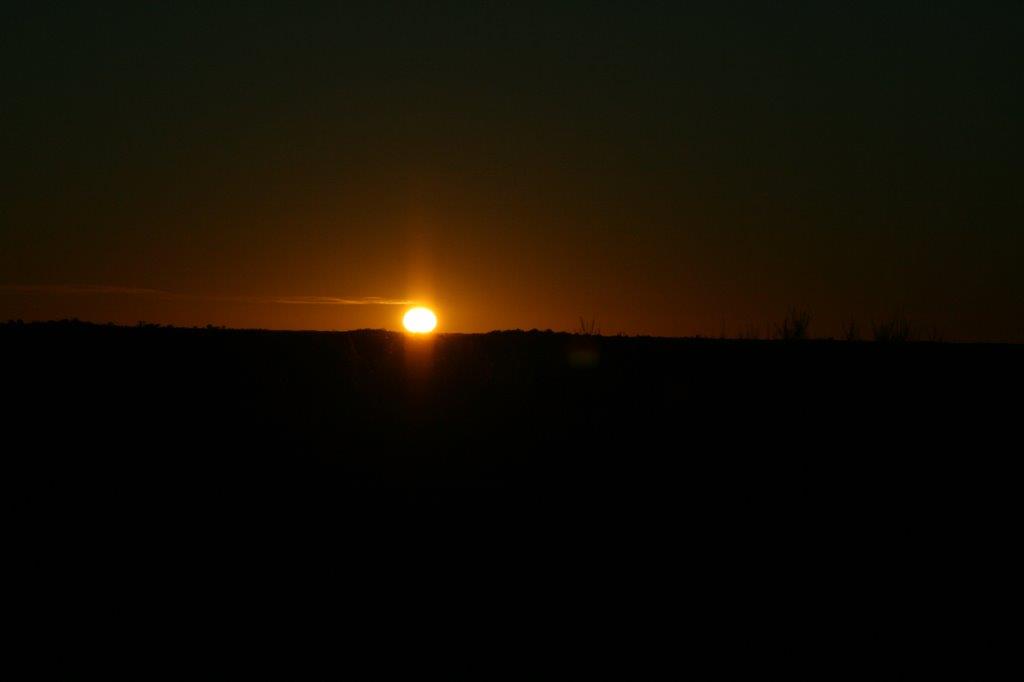
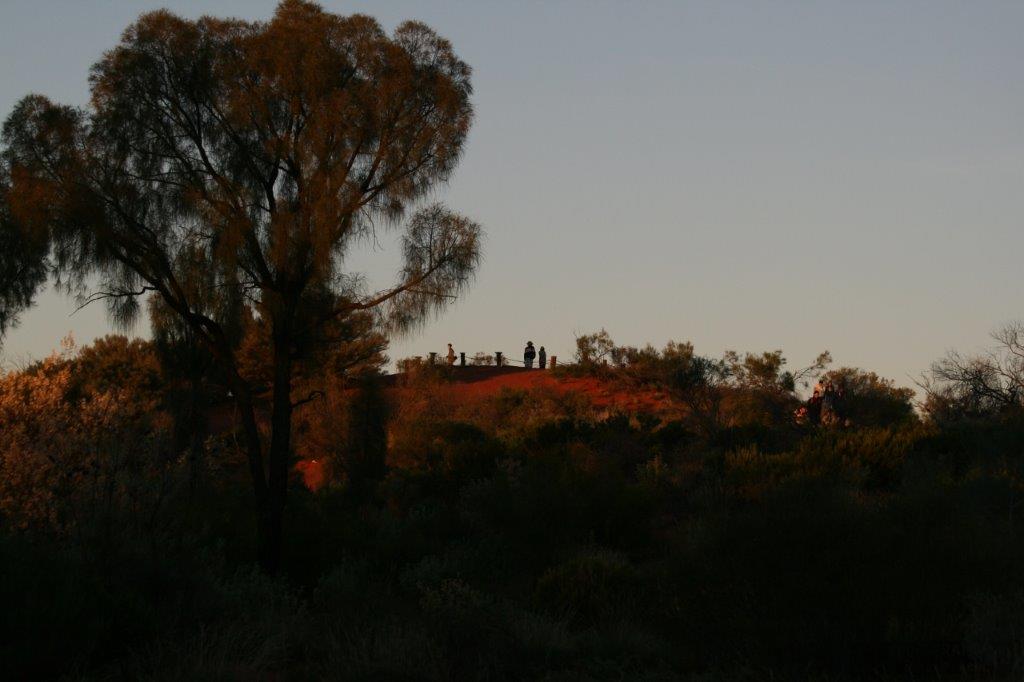
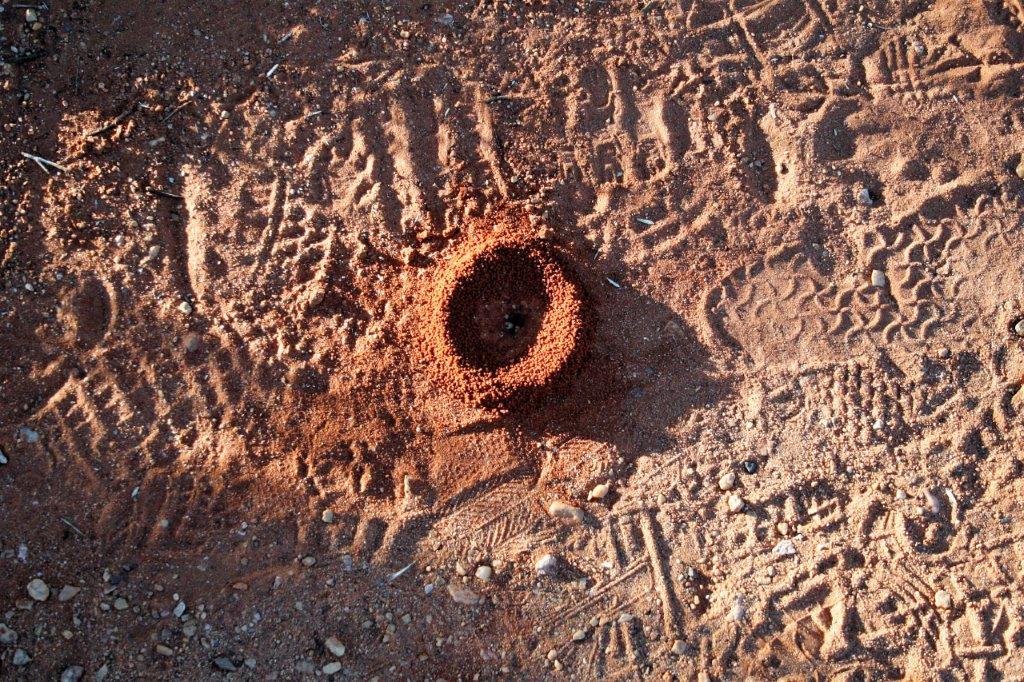
Our five am wake-up call was delayed a half hour because Gavin had noticed that the low-beam on one of the bus headlights wasn’t working and he wanted it fixed.  We were supposed to watch the sunrise at Kata-Tjuta (the Olgas) but the delayed start meant we would be driving in the bus while the sun came up so Gavin told us to climb the hill beside our camp and watch the sunrise from there.  Some type of ant makes these perfectly round raised-side entrances to their nest.

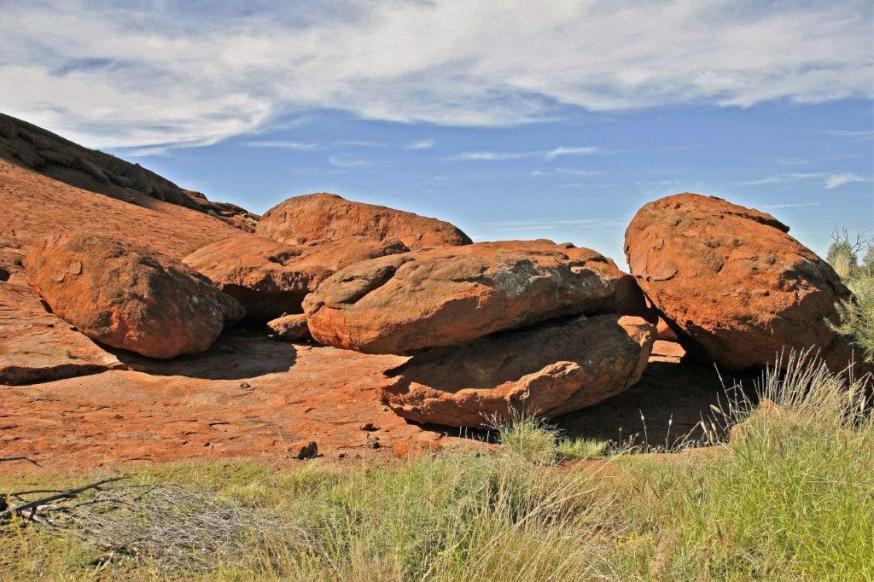
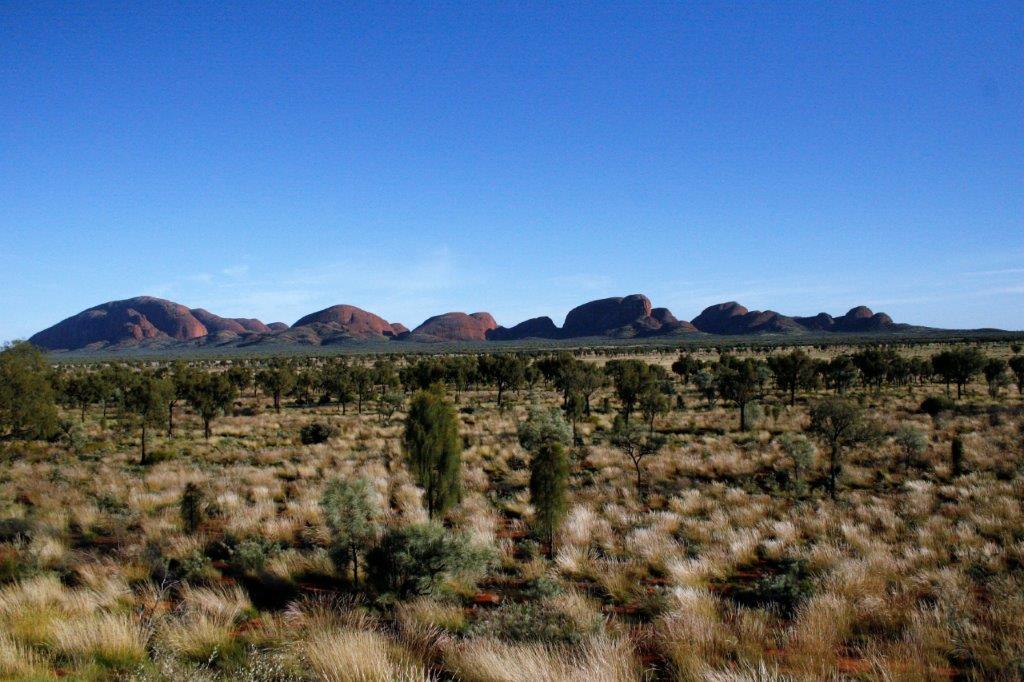
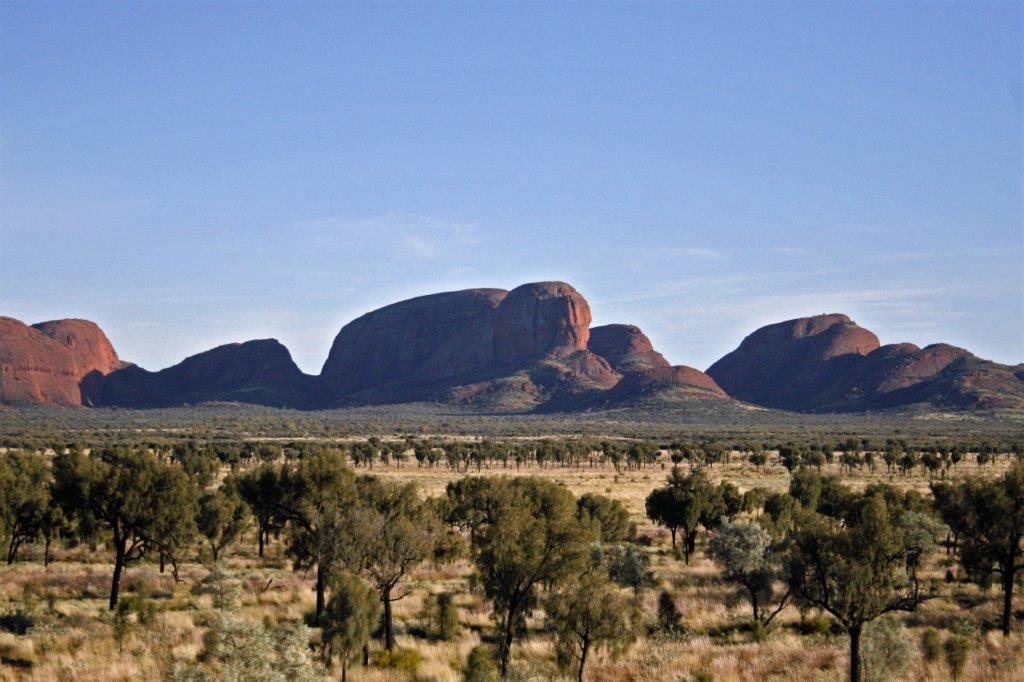
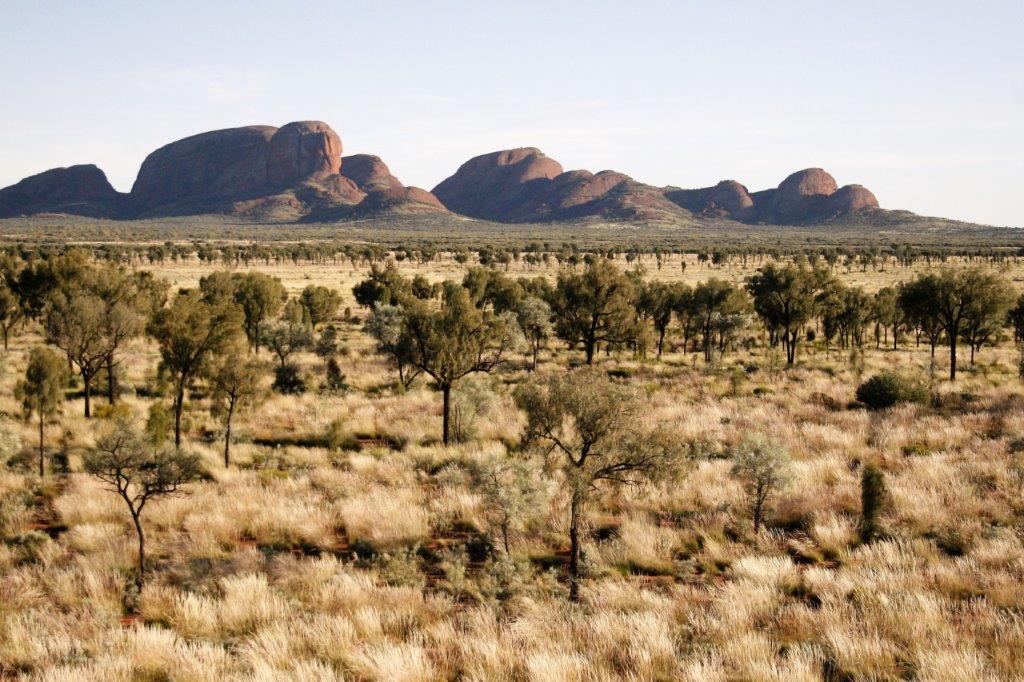
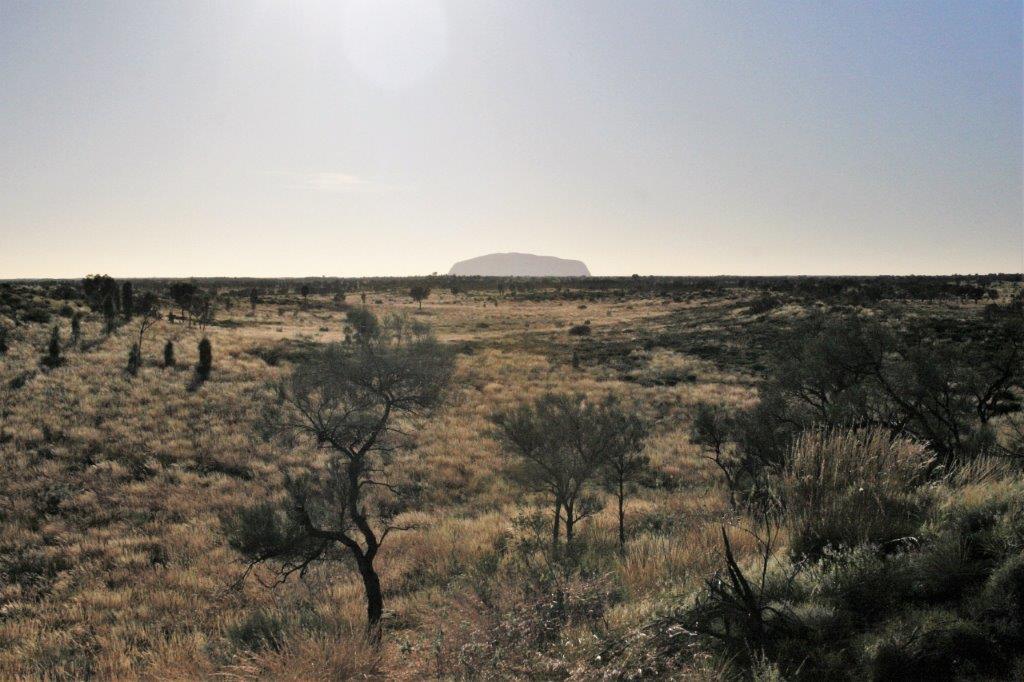
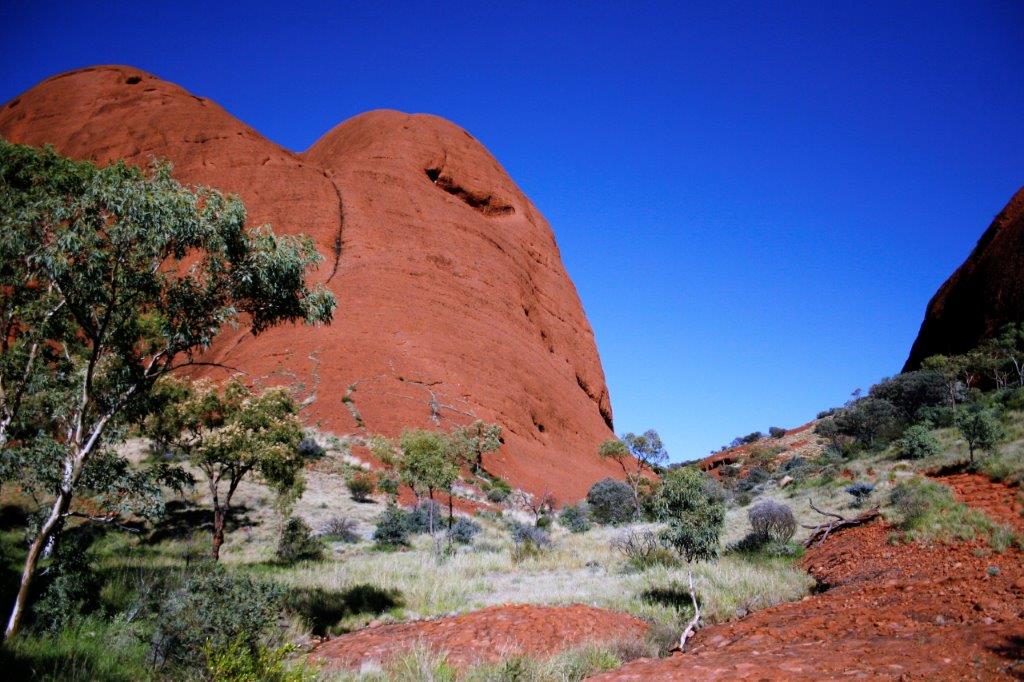
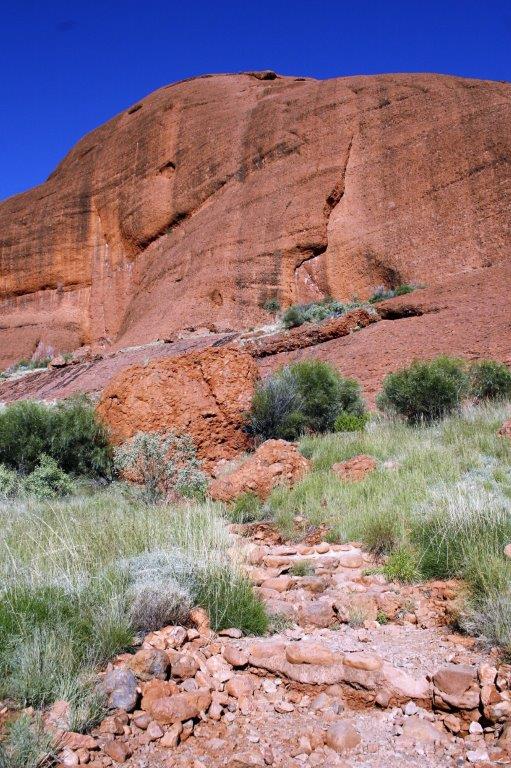
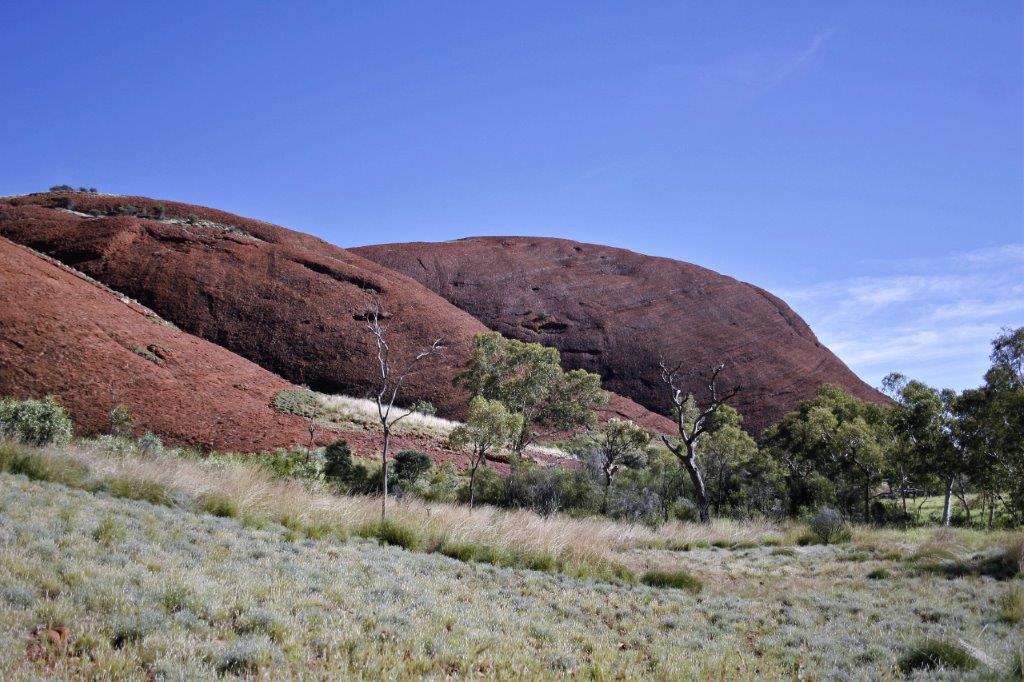
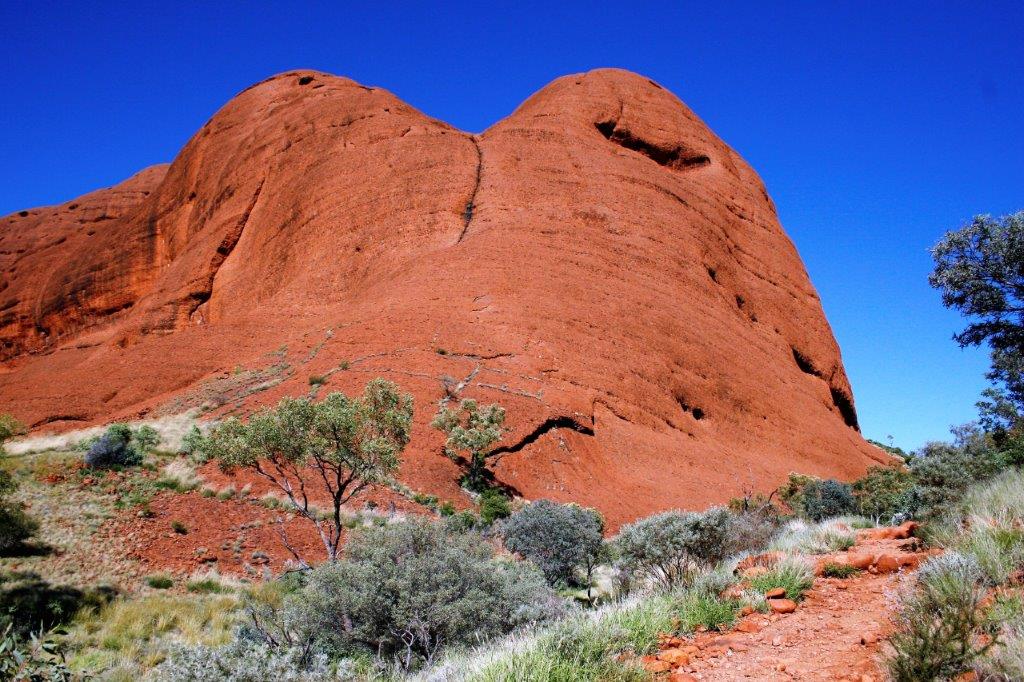
After we watched the sunrise we struck camp, loaded the bus and drove a little over an hour to the 36 sacred domes of Kata-Tjuta. This rock sure looks like a turtle to me.                                                       Uluru in the distance.

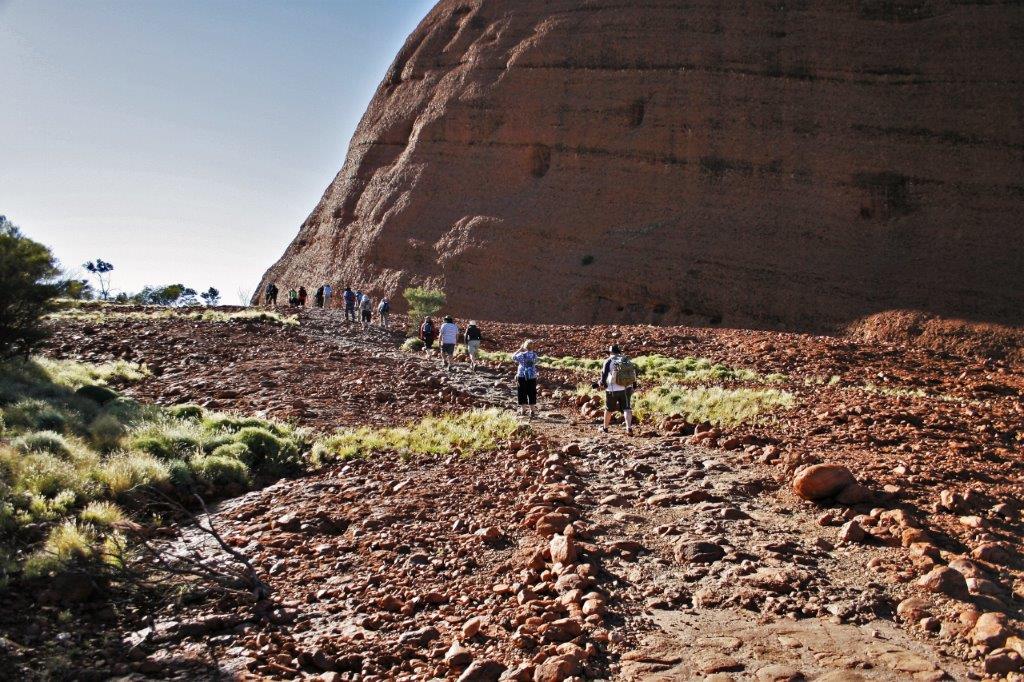
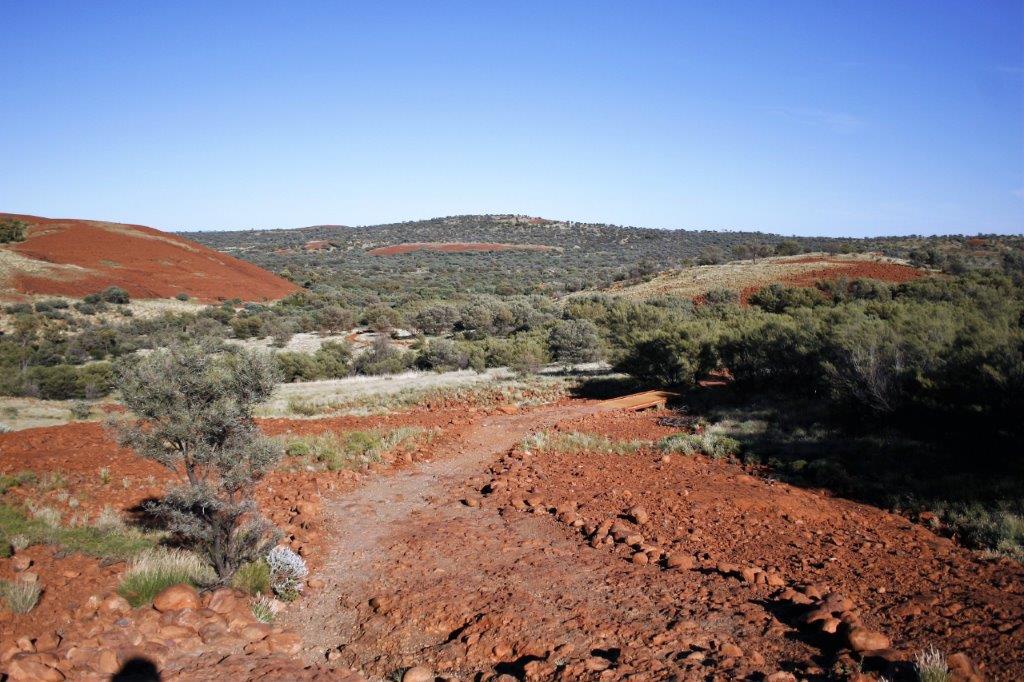
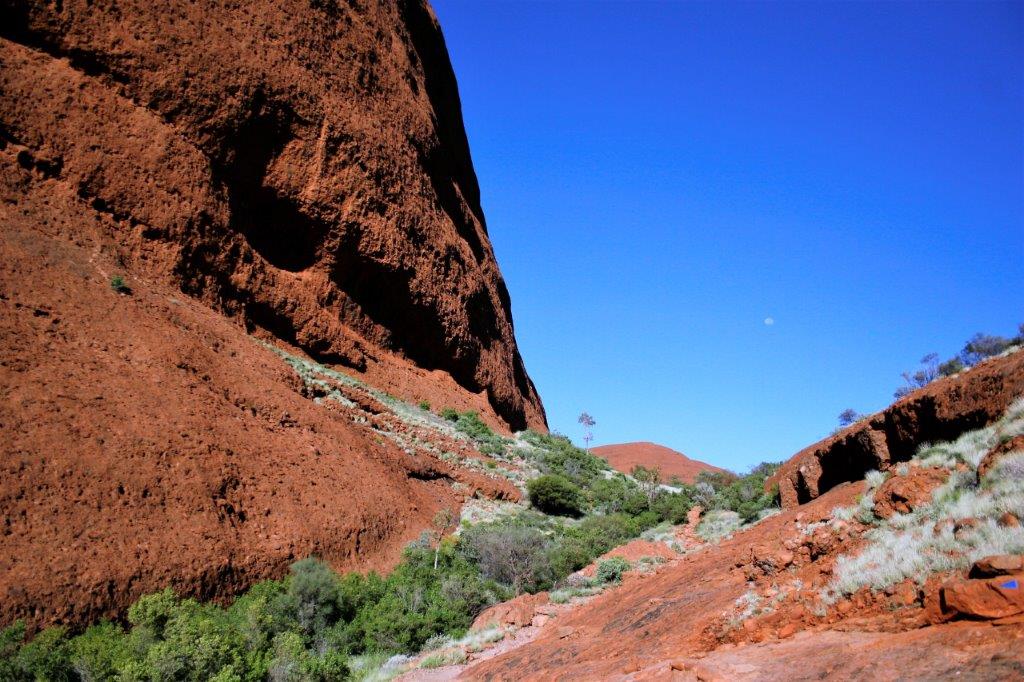
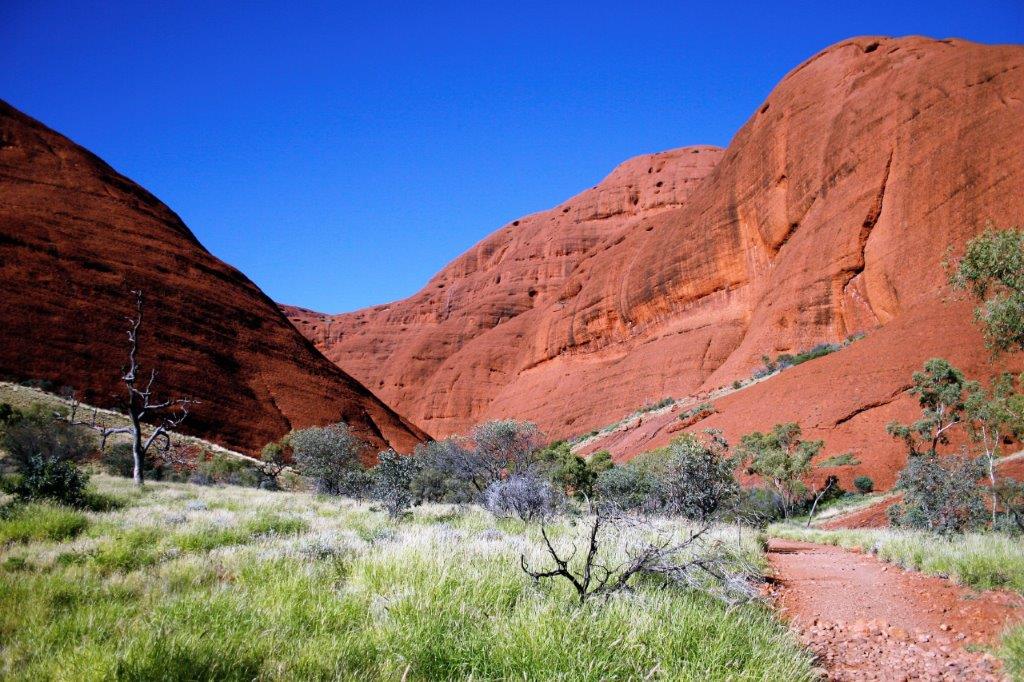
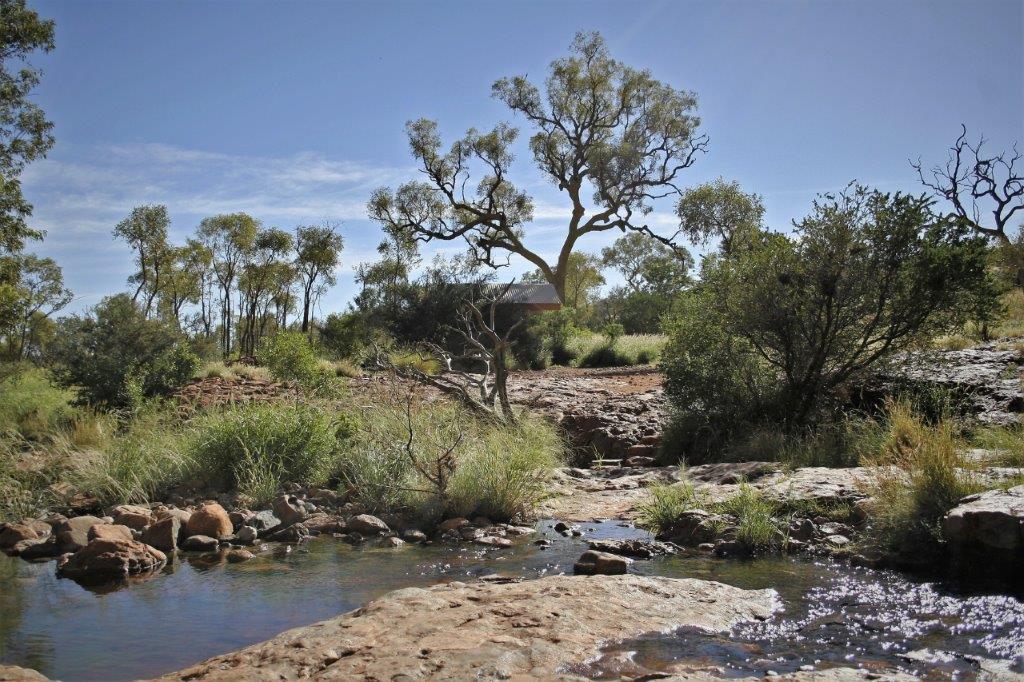
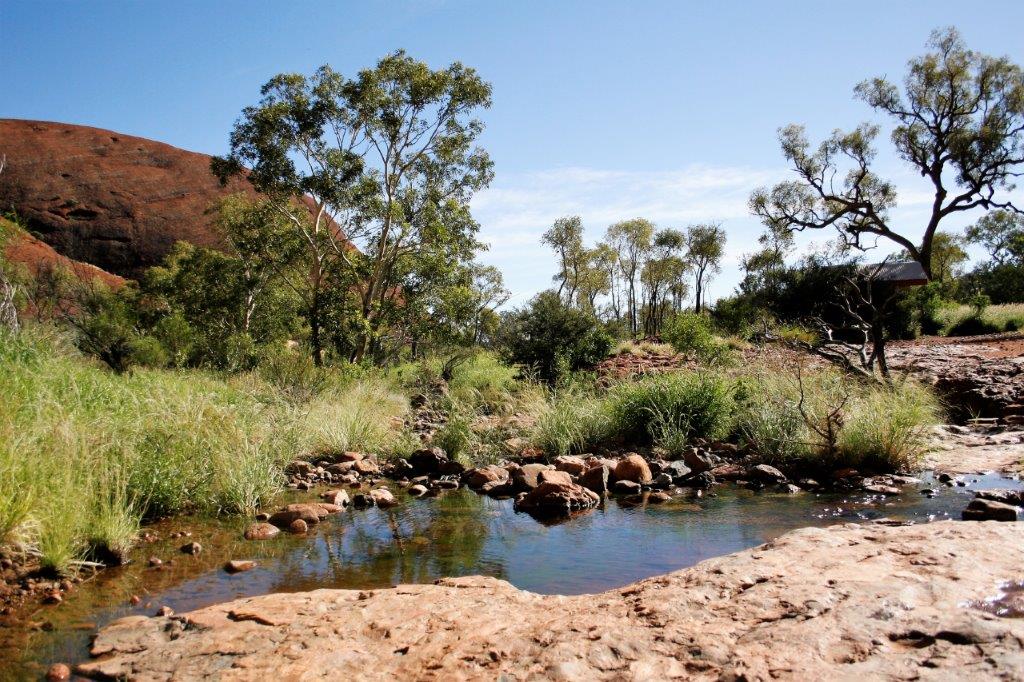
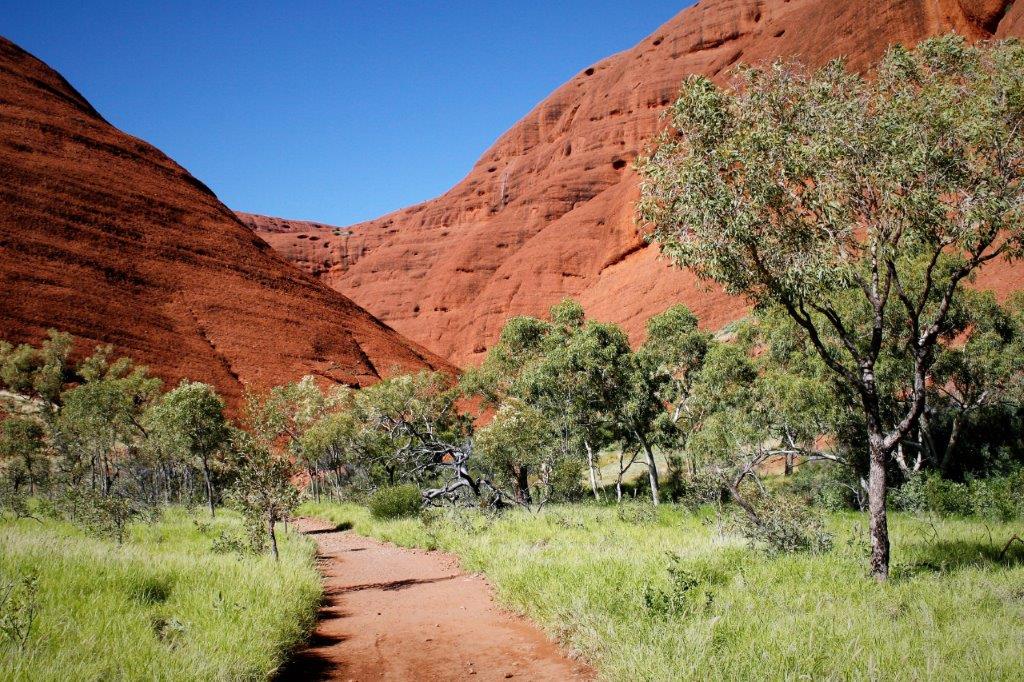
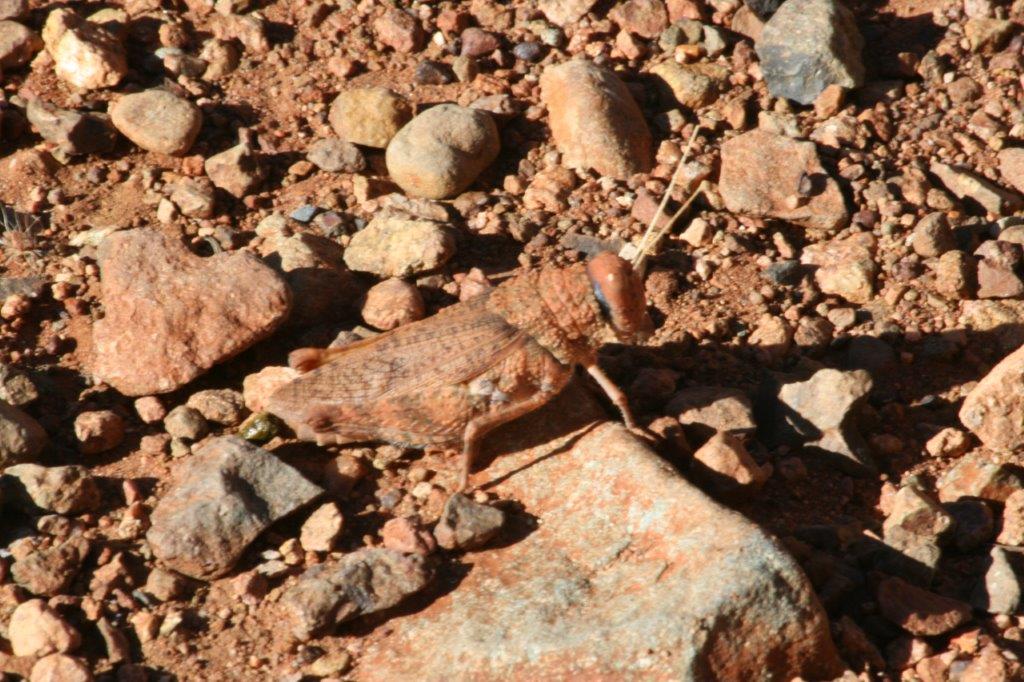
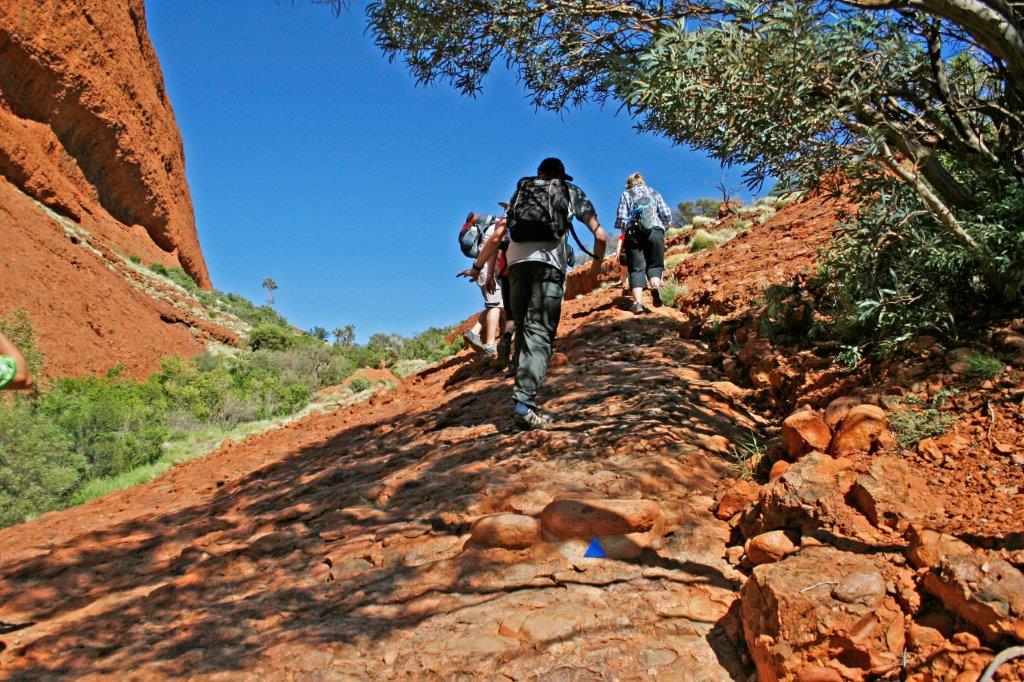
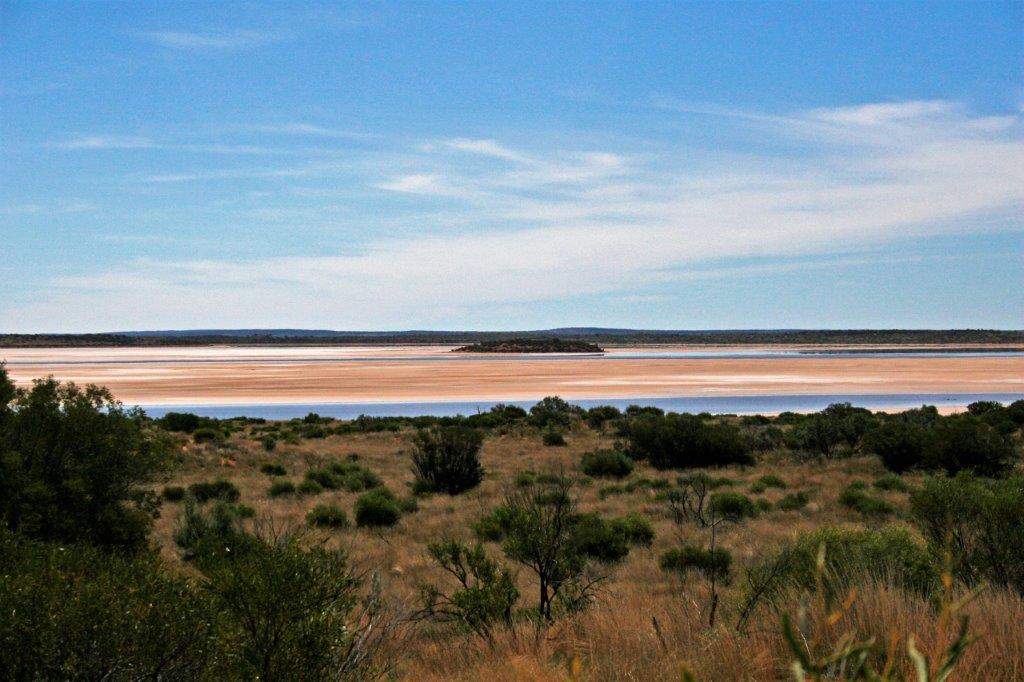
The previous November my knees had begun to bother me and they were really painful if I did any stairs, or climbing and clamboring, and truth-be-told, just plain walking.  I had never had trouble with my knees before and nothing seemed to make them better.  However, I have Swedish and Scottish blood in my veins and I would not let a little pain stop me from seeing the very place I have longed to go since childhood.  After the long walk around Uluru the day before, my knees really did not like the rugged track in Kata-Tjuta so I told Gavin to take the rest of the group on ahead and I would make my way at a slower pace.  The last kilometer of the 3 1/2 hour hike was a steep uphill climb to a lookout.  I decided to not slow down the group and stayed behind to rest my knees, take some photos, cool off in the shade of the trees, and then begin to make my way back to the bus so as to not hold up the group on the way back.  They caught up with me about half-way back so it worked out well. Once again, there is lots of green grass where normally it is red dirt.  And water, where, by now in the season, the pools would be dry. As I said the aboriginal people had selected Kata-Tjuta as the more sacred place than Uluru so out of respect for their culture there was no climbing allowed.  You could hike through the middle but not climb any of the rock domes.  Like Uluru (Ayers Rock), Kata-Tjuta (the Olgas) is an Australian National Park and the whole area is protected.  The local aboriginal people have access to the site for their ceremonial gatherings and the park will be closed to outsiders on those days.                                          This is a VERY large bug!  Much of the route is not so much a path as a wear pattern on the rocks with the occasional arrow pointing the way. See the little blue directional arrrow tacked on the rock (above)?After our hike we headed for Kings Creek Cattle Station 300 km (186 miles) away and our campsite for the night.  We had two stops along the way.  The first was to see a large salt lake and the second was to gather some dry wood for the fire.  Gavin was making ‘bush tucker’ for dinner.

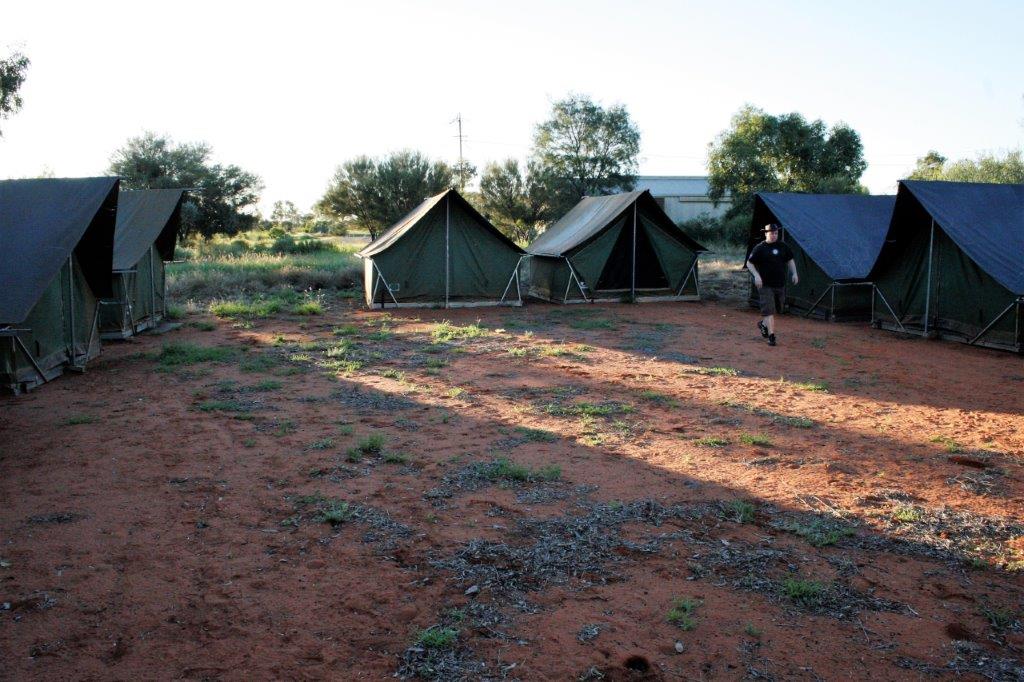
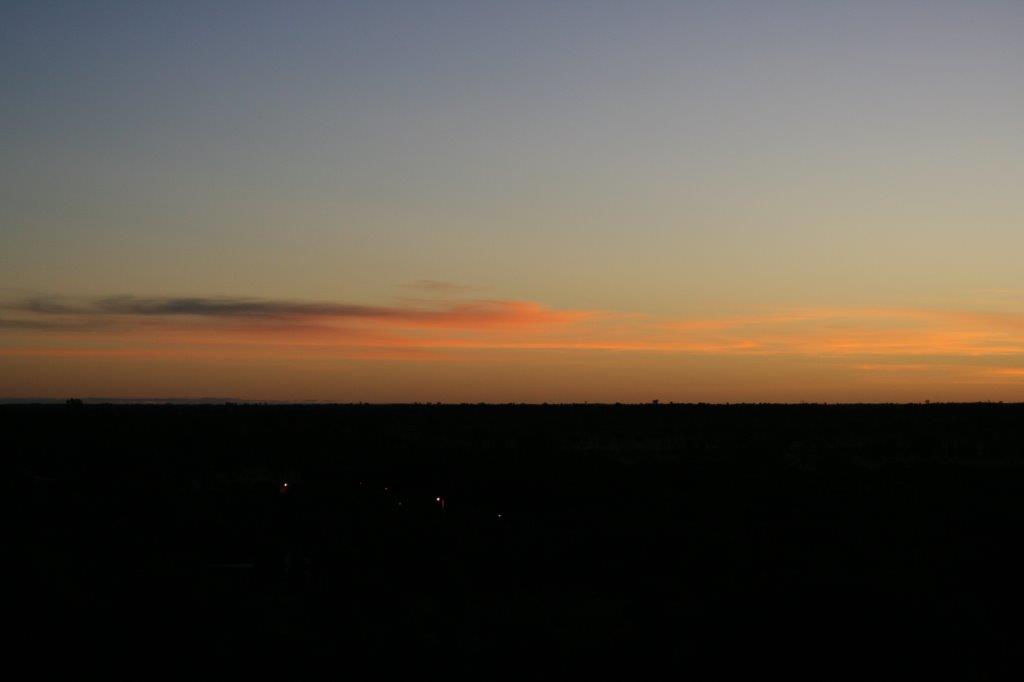
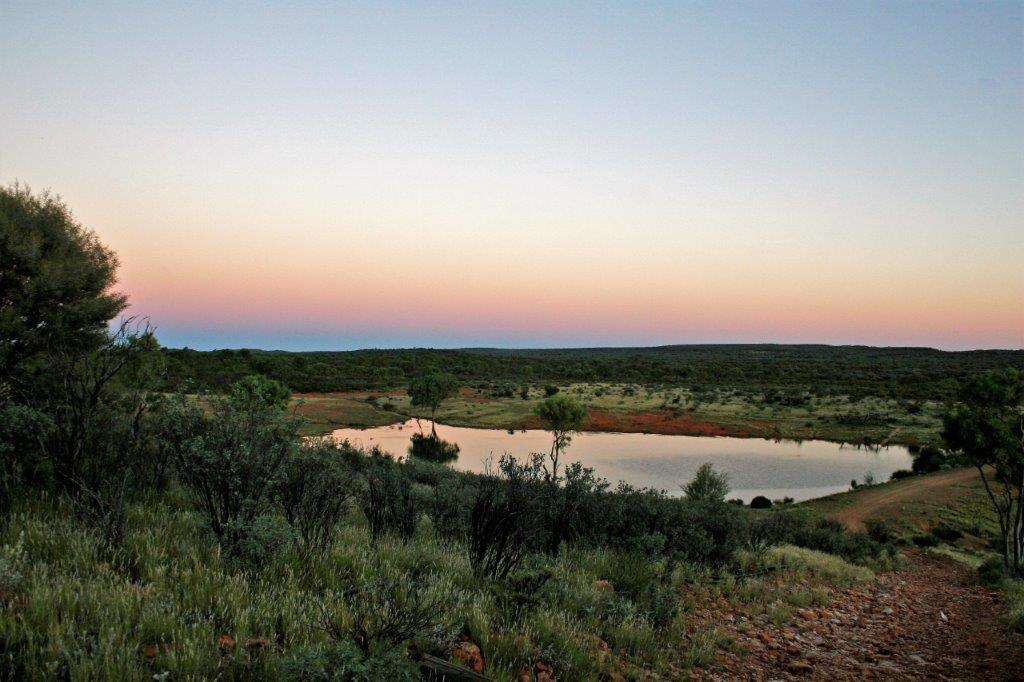
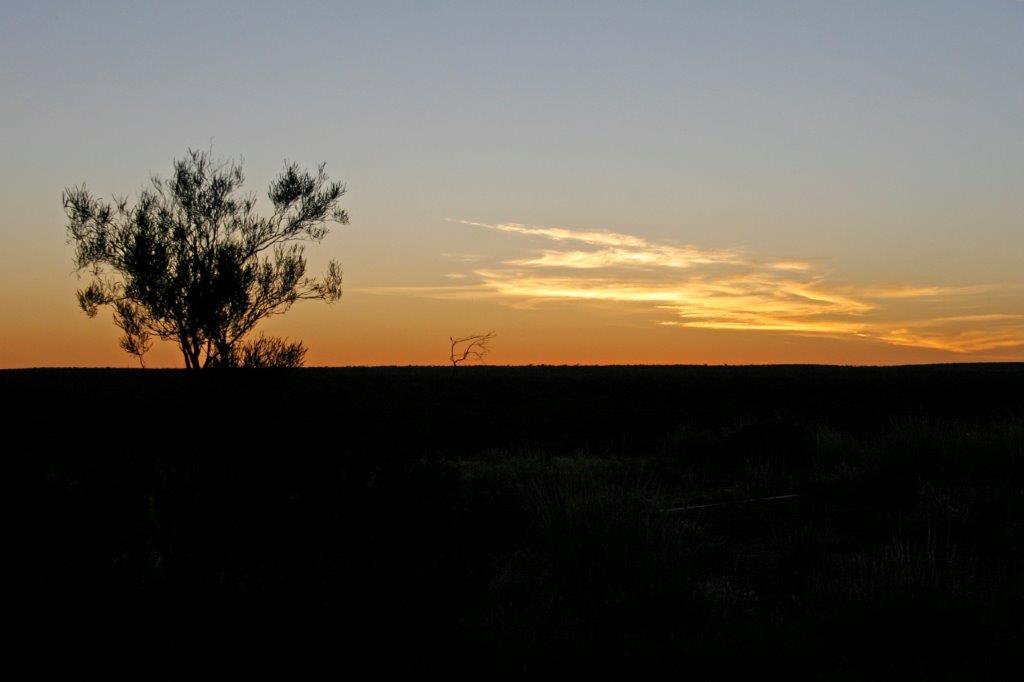
At camp we selected our tent, got our sleeping bags ready, helped prepare the vegetables and meat Gavin wanted peeled and chopped, and set the tables before having a shower.  While Gavin tended dinner we  all hiked up the hill to watch the sunset, with a beer (for those who like beer – not me though) and some snacks.

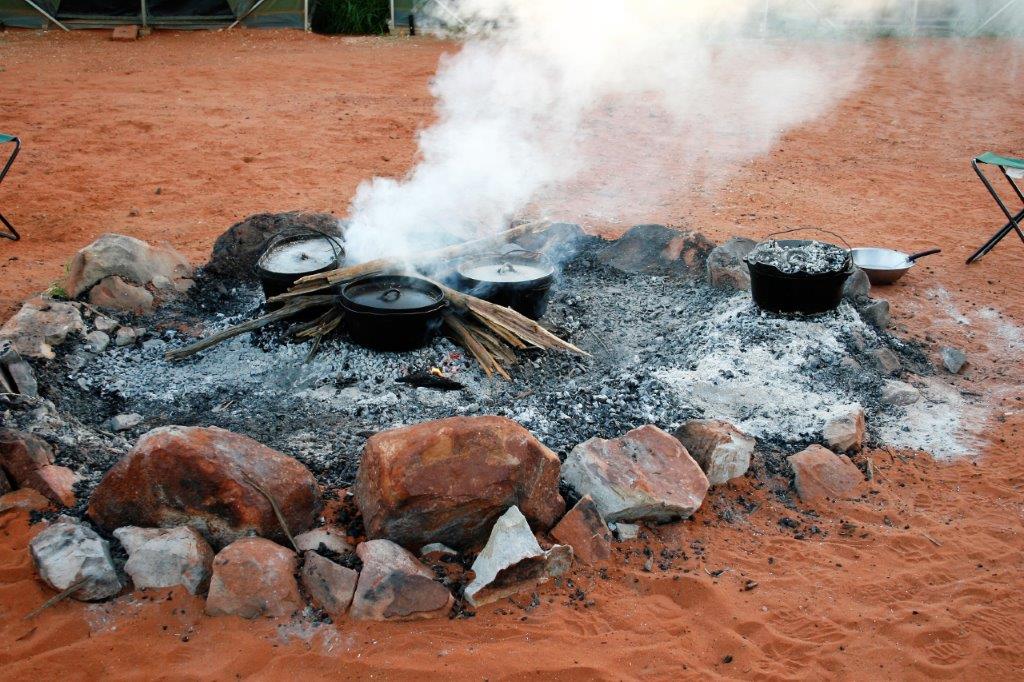
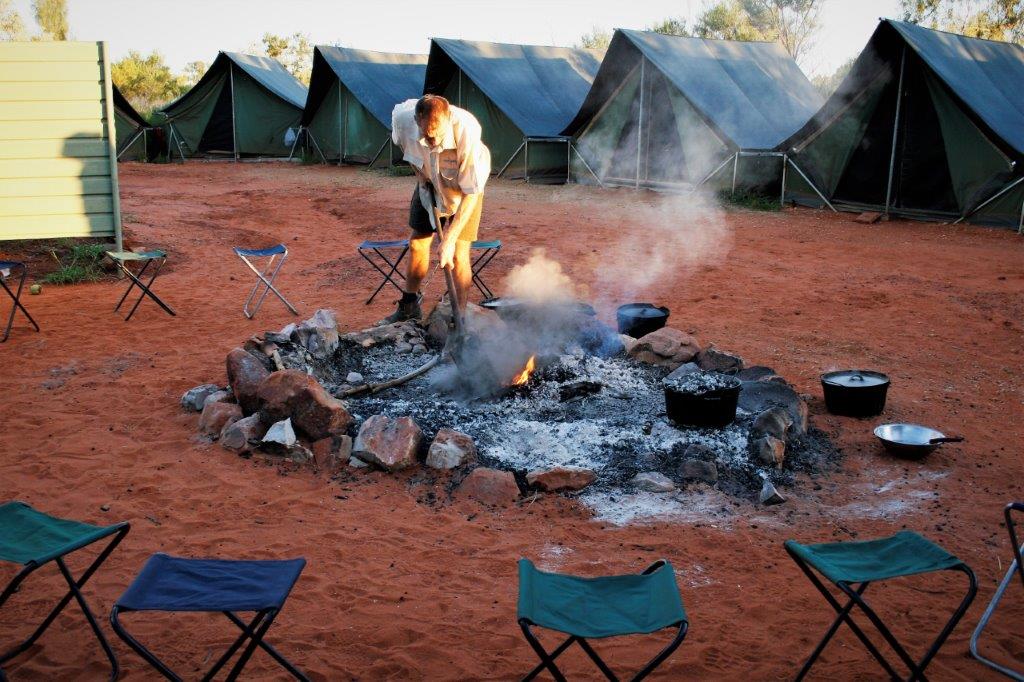
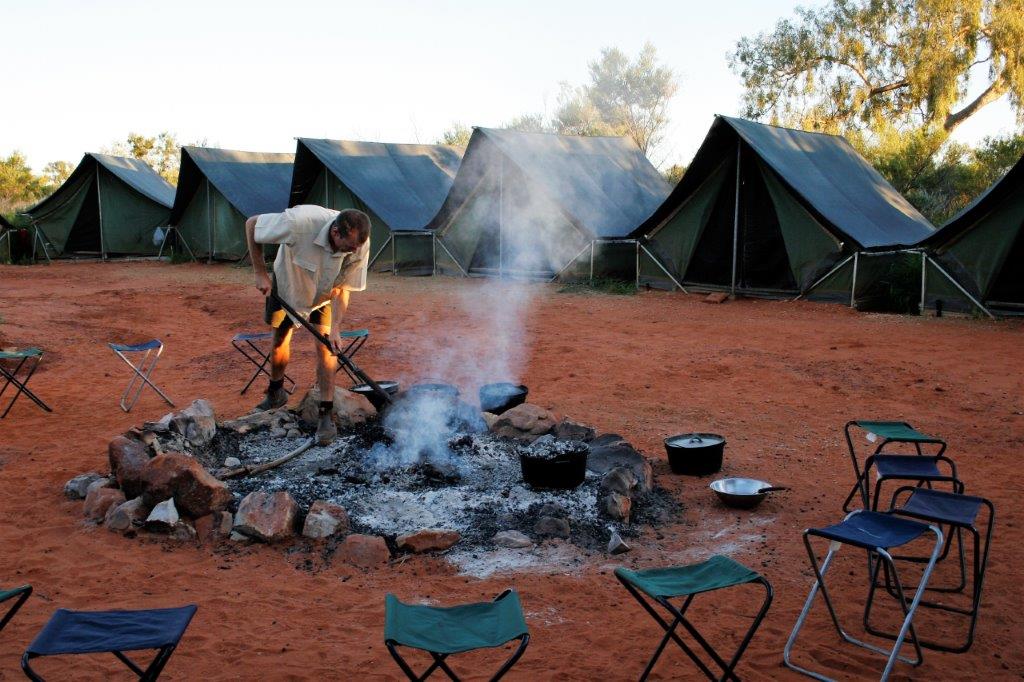
The four large cast-iron pots are put directly into the fire pit, each with different ingredients and spices – two chicken dishes and two vegetable dishes.  Gavin would stir things now and again and keep the coals hot.  He had the young fellow in the group help him make the ‘damper;’ a mix of flour, raisins, dates and water, which was also cooked in a pot on the fire. After dinner it was dishes and off to bed at 9:30.  An even earlier start was scheduled for the next day (4:30 am) for our 7 km hike around the rim of Kings Canyon.


2011 March 21 & 22 – Days 75 & 76 – Adelaide to Alice Springs to Yulara (Uluru), Australia

Alice Springs is a further 700 km into the heart of Australia from Coober Pedy, but as I said in my last blog there are no flights in that direction. From Alice to Coober Pedy, yes; vice versa no.  Thus we flew back to Adelaide, spent the night and then had a two hour flight to Alice Springs.  We checked into our hotel and then took a walk into town.  It took us about 20 minutes and we needed to cross a flooded bridge across a gully that is usually dry dirt.  As far as we could see all around was tall, waving, green grass.  Not the Red Center I wanted to see, but the temperature was warm and it wasn’t raining during our walk, so all was well.We bought a small duffle bag so John had something easier than a suitcase to put his clothes in for our camping trip, then, back at the hotel we re-packed our clothes into the smaller bags and arranged to leave the rest of our luggage at the hotel until our return.

Now, those of you readers that know me, know that I hate camping.  The only holidays we could afford when the children were young was camping trips on the shore of our local lake.  Invariably we would pack up all our stuff, heft it down the bank to the water’s edge, set up the tent and unpack the gear, and the rain would begin.  Then everyone was wet, cold and bored and I still had to cook and entertain kids as best I could.  I do not have a fondness for camping.  Even a fifth-wheel trailer or motorhome does not appeal to me.  I do not consider it fun to cook, clean, and make beds in a small, confined space.  Hotels work fine.

I say, now that we are retired, that I camp by dropping from a five-star hotel to four and ‘rough it’ by dropping to three.  Why then, you may ask, would we book a four-day, three-night camping trip in the Australian Outback?  …Because it was the best tour we could find that included all the ‘must see’ Red Center landmarks.  The company is called Intrepid Connections, which, I admit, gave me pause as I am not intrepid when it comes to camping, but the brochures and the write-up on the itinerary looked good so I decided to risk it.  Besides, each night was to be spent in a ‘permanent’ camp so we would not be unpacking and setting up tents, etc. each night.  I felt sure I could survive for a few days.  And, I did, just barely.

We were told to be back at the hotel before dark as Alice Springs is considered the stabbing capital of Australia.  There are a lot of alcohol problems among the aborigines, and many of the other people as well, and knives are the most common means of settling disputes.  We had no issues thank goodness.

Gavin, our guide and driver for the trip was picking us up at 6:20 am so it was an early night.  While we were in town we picked up some food we could eat in our room for breakfast, to save time and also to not get hit with the outrageously expensive restaurant food.  For dinner the night before a pork chop with three slices of apple cost $32.50 AUS.  You could add garlic bread for $8, and potatoes for another $8, and vegetables for a further $8, and a salad for $8 more.  Every meal on the menu averaged $32 and came with no sides.  The hotel breakfast buffet waS $24-$27.   I could not eat enough to justify spending that much for breakfast.  Restaurant meals in Australia are very expensive.

Part of the reason for the high cost is the country’s minimum wage of $16-$18 per hour.  There is generally no tipping in Australia.  Wages for service personnel are set high enough that people can afford to live without tips.  Which is just fine with me when the meal size and options reflect the cost.  So far on our journey in Australia that had been the case.  Alice Springs was not the norm, but it is a very remote place so everything is shipped in, not cheaply, I would bet, and all tourists are captive to whatever is charged as there are very few places you can go.

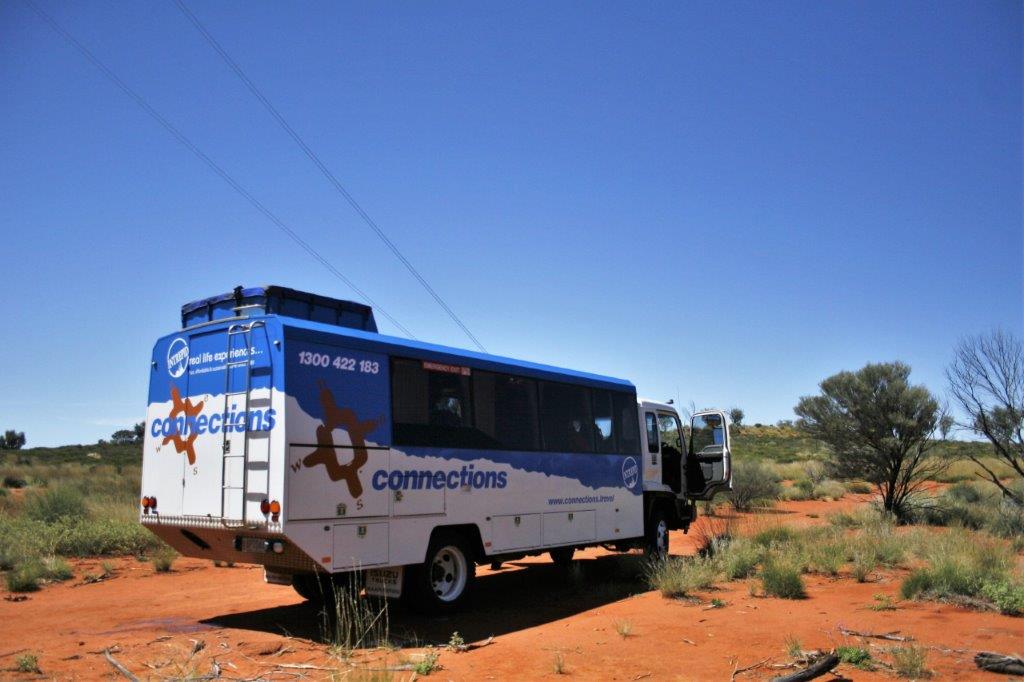
The next morning Gavin picked us up in a 4WD 22-seat bus.  There were 17 people, including us on the tour.  One gal was only doing two-days and one night, 7 other people were doing three-days and two-nights and the remaining 9 were on the four-day, three-night tour.  We were the only people in the group that lived in North America.  The other travelers were Australian, German-Swiss, British, Dutch, and a British woman with her Tasmanian husband who live in France.  There was another Canadian in the group; a young man who lives and works in London, and was with his British girlfriend.

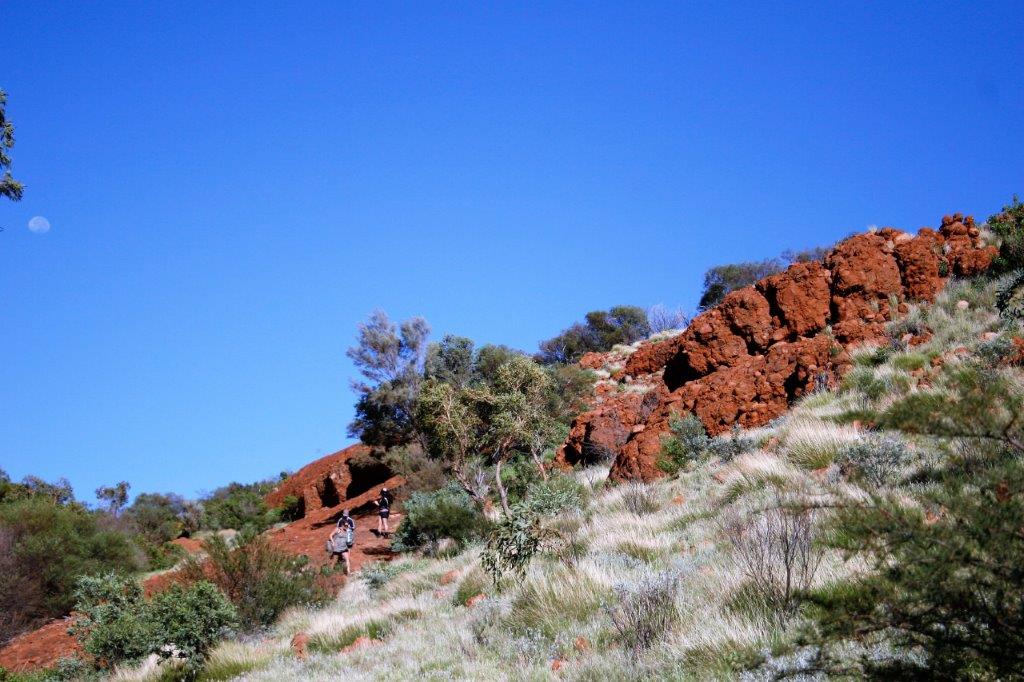
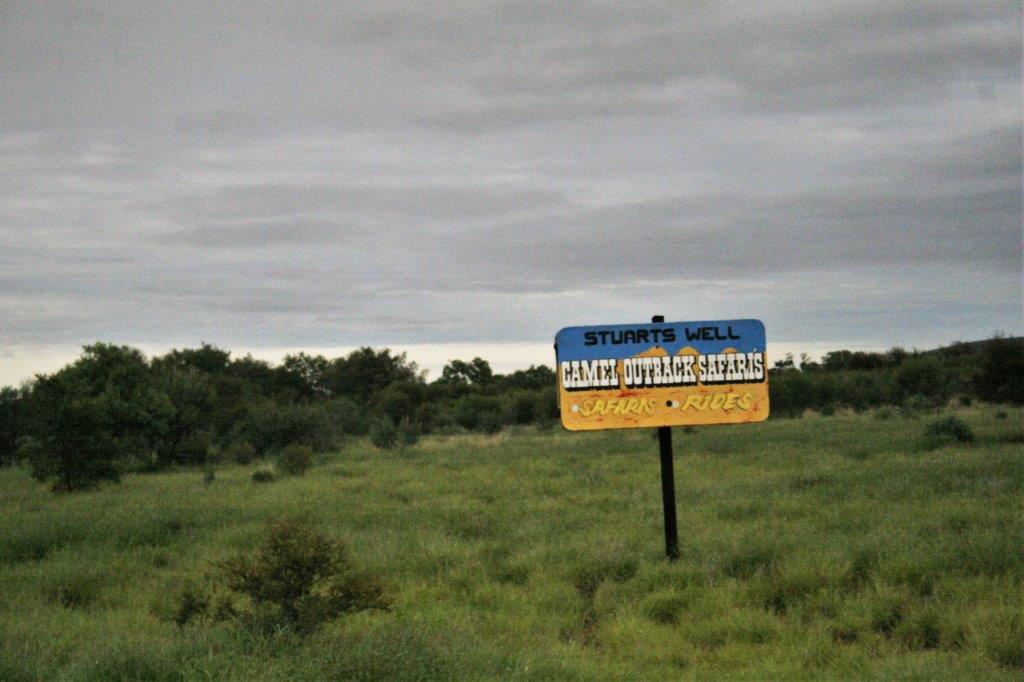
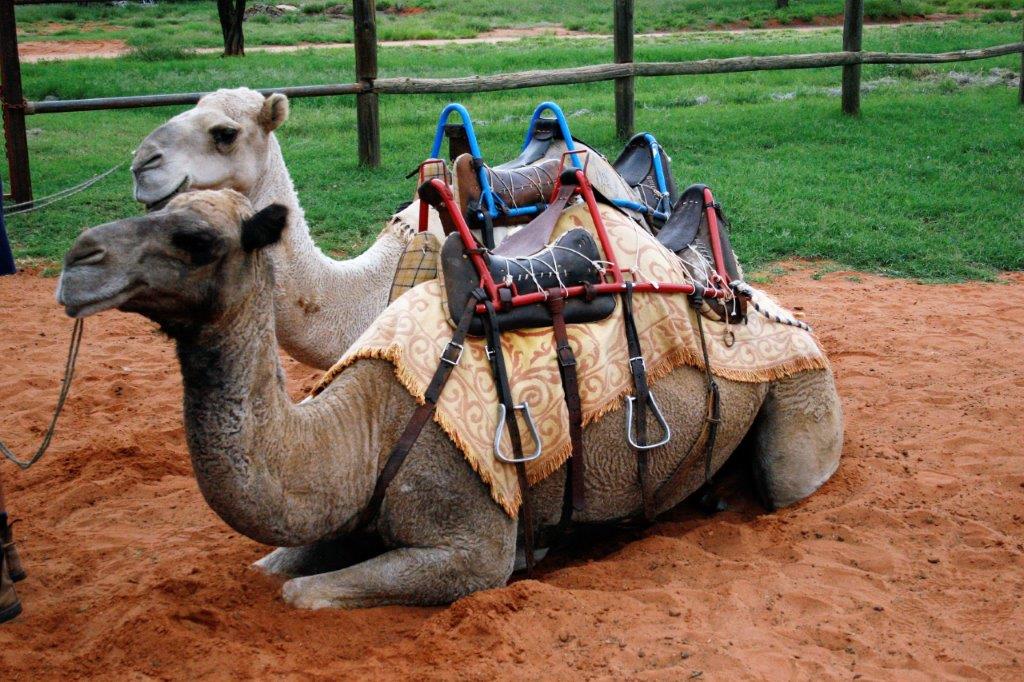
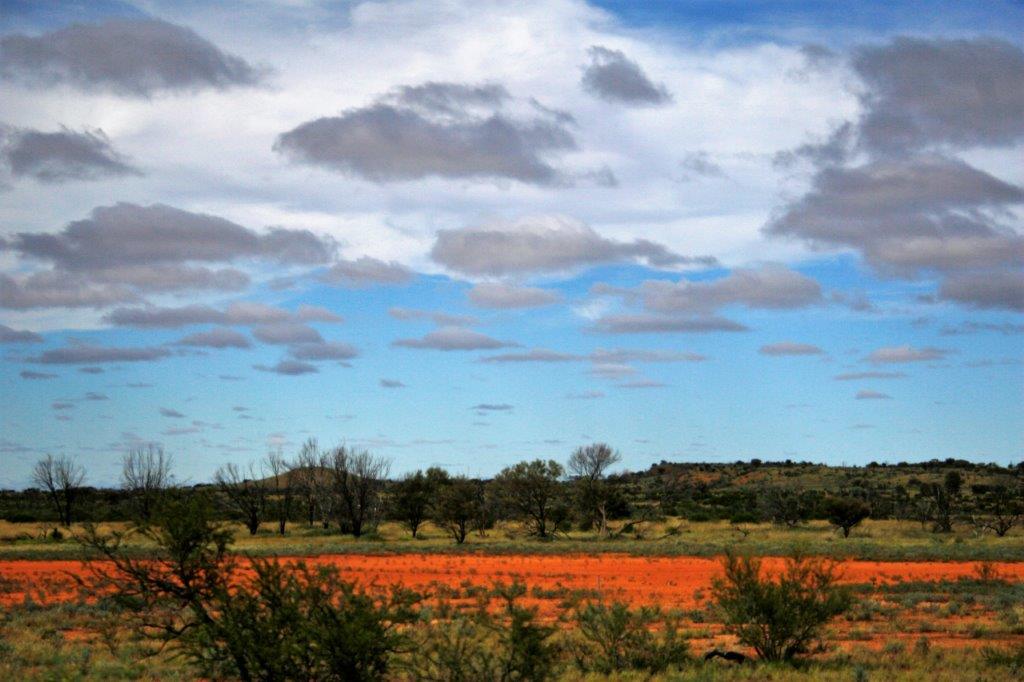
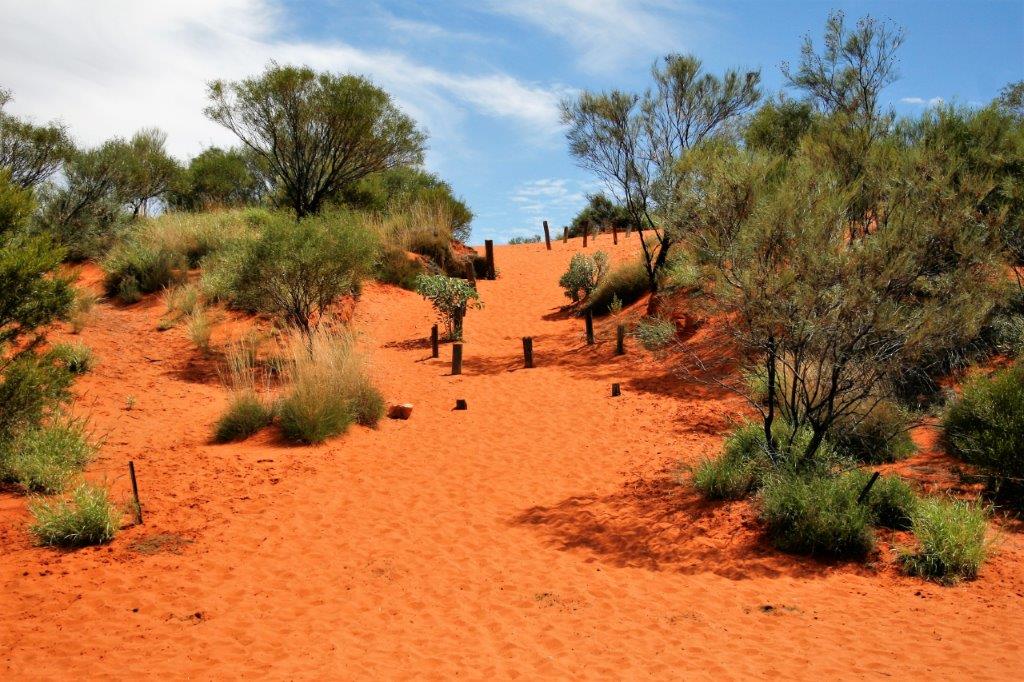
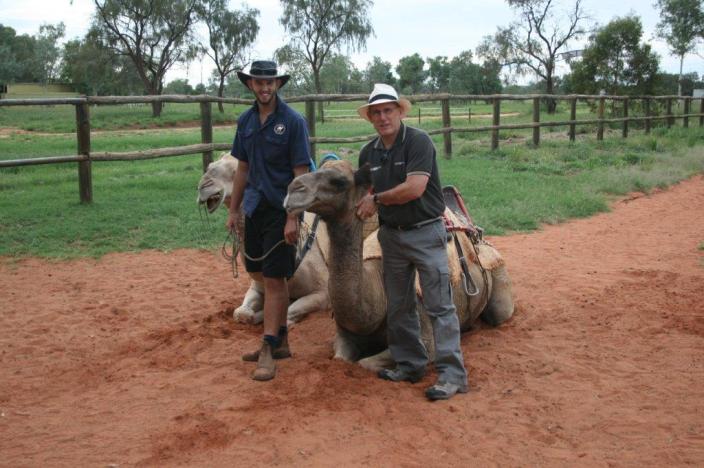
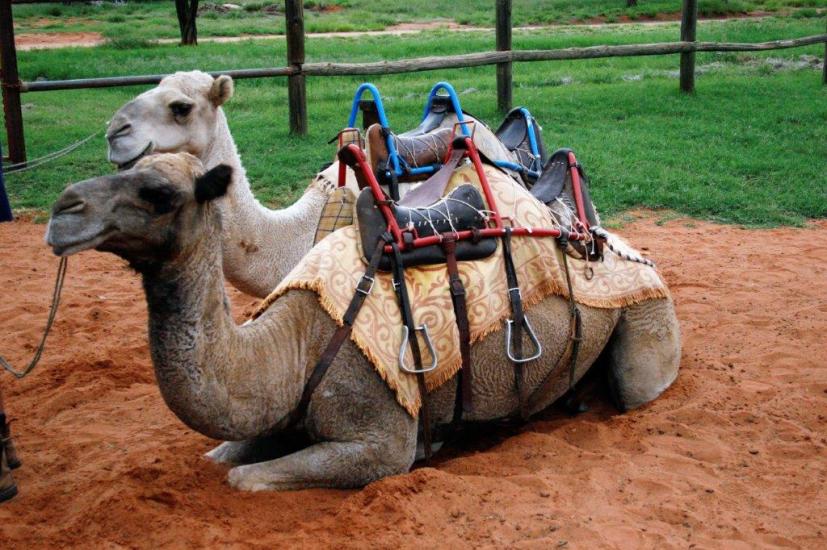
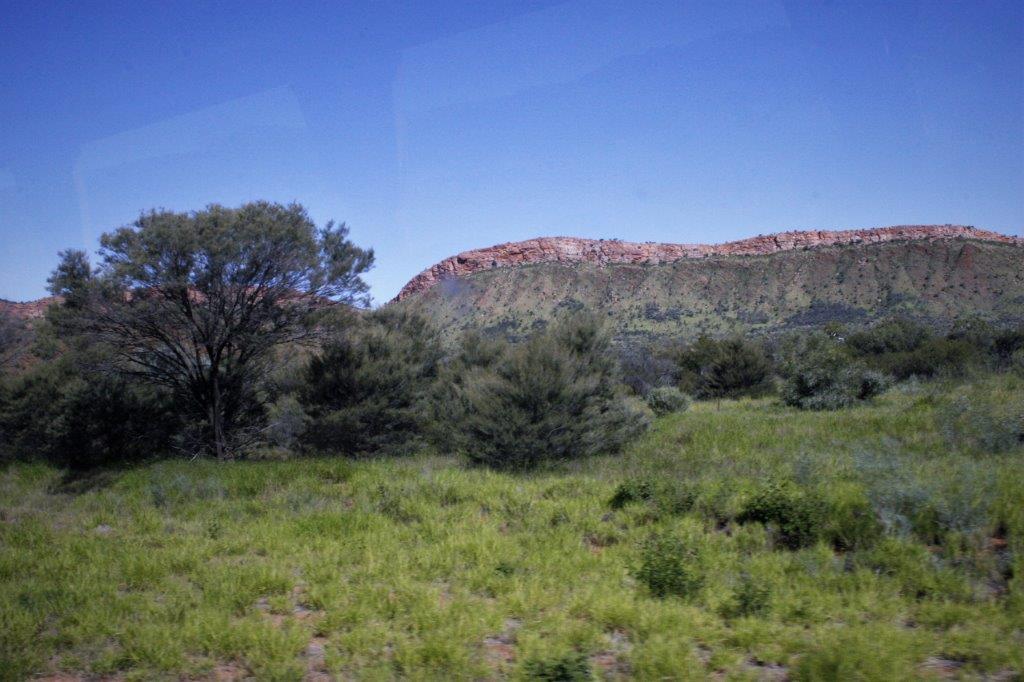
The first day we drove – well Gavin drove – 400 km from Alice Springs to Uluru (formerly called Ayers Rock).  We stopped about every hour for an interesting view, or a toilet stop at a cafe or gas station.  And we stopped at Stuart’s Camel Farm and had a short ride around the paddock on a camel.  And, trust me, eight minutes on a camel is plenty. John with Mona, the camel I rode.  He rode the other one, Goldie. We also stopped to see Mt. Conner (which is just a large mesa rising up from the desert.Mt. Connor in the distance.  Lots of tall green grass where there normally is red dirt.
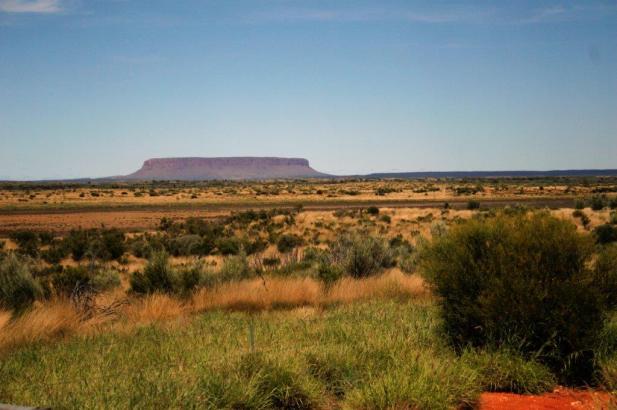
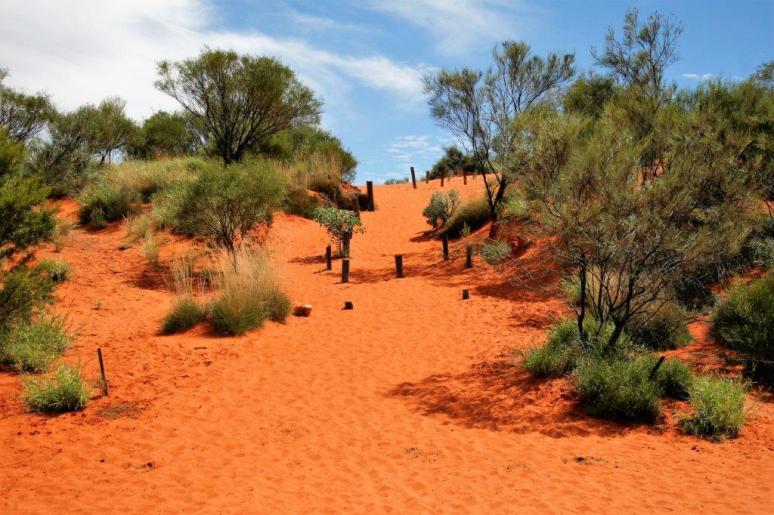
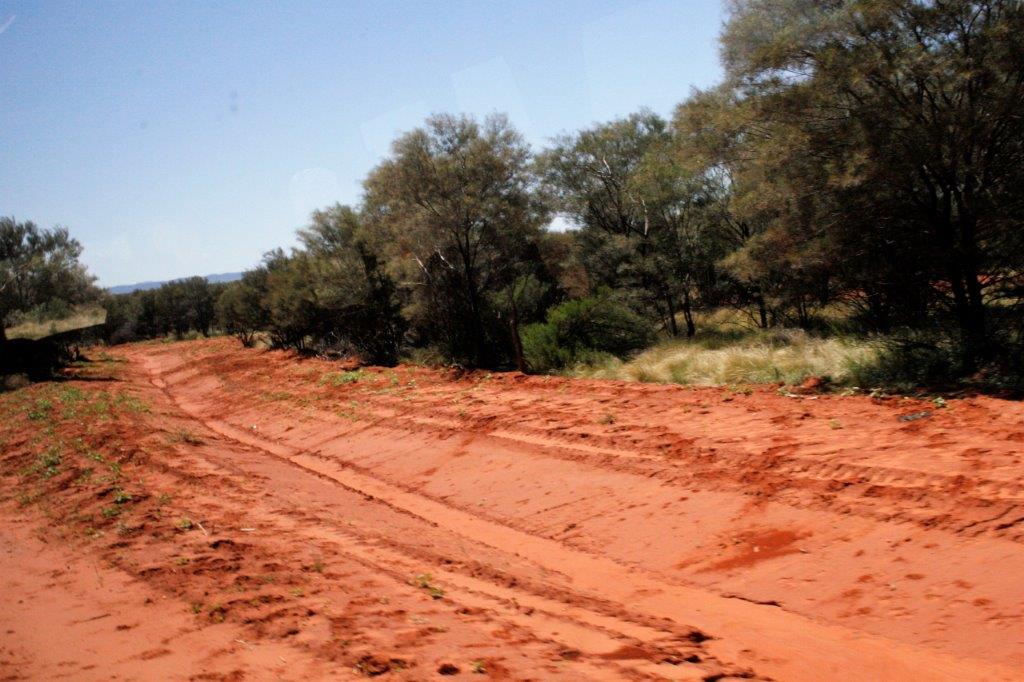
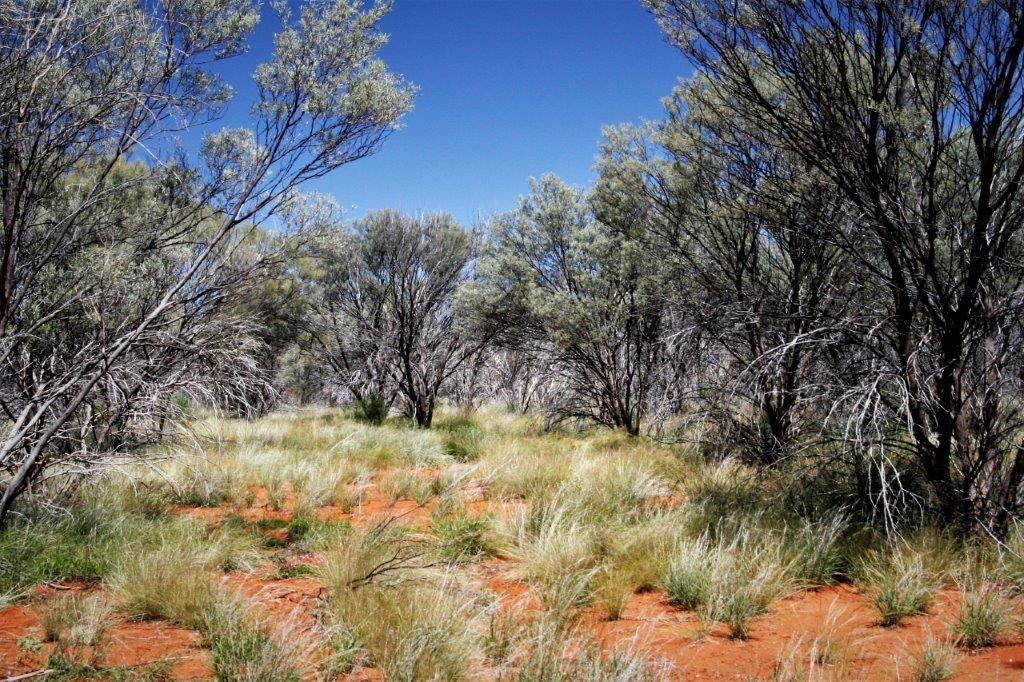
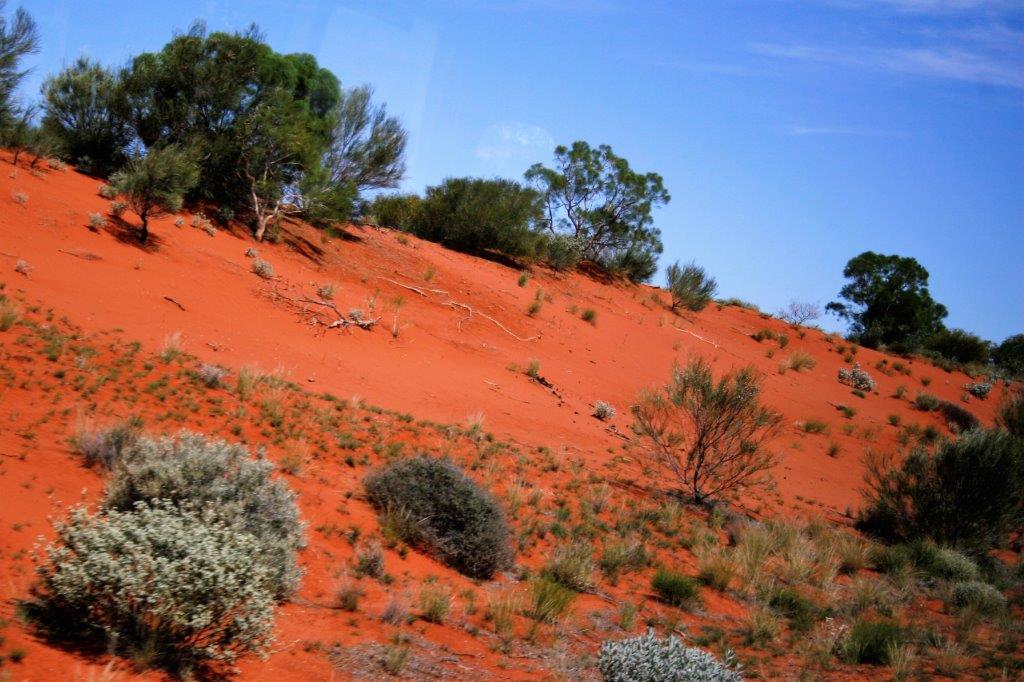
                     The grass didn’t cover all the red dirt.

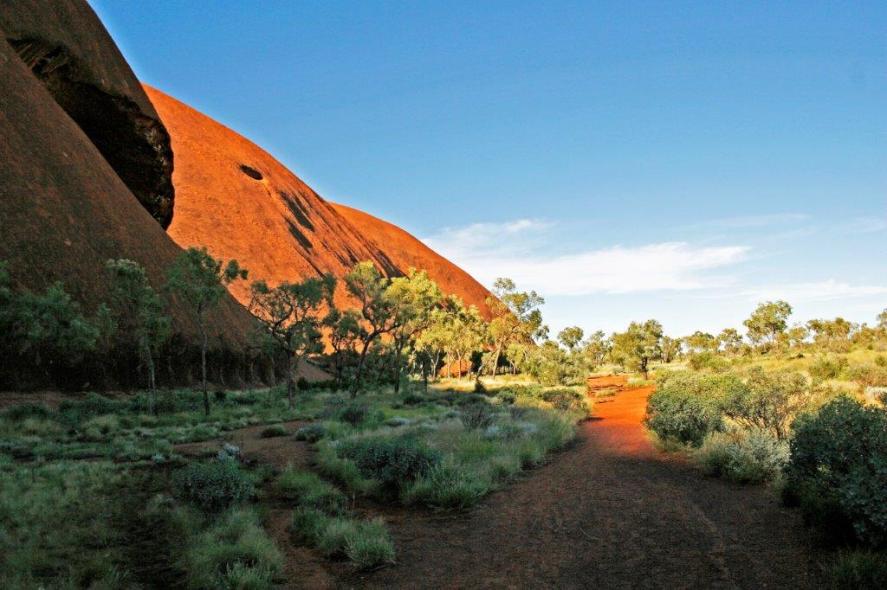
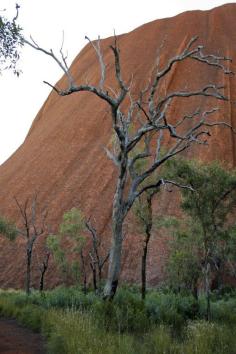
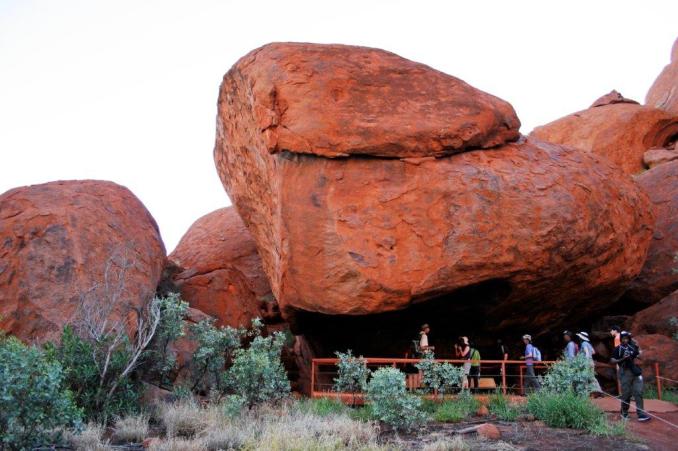
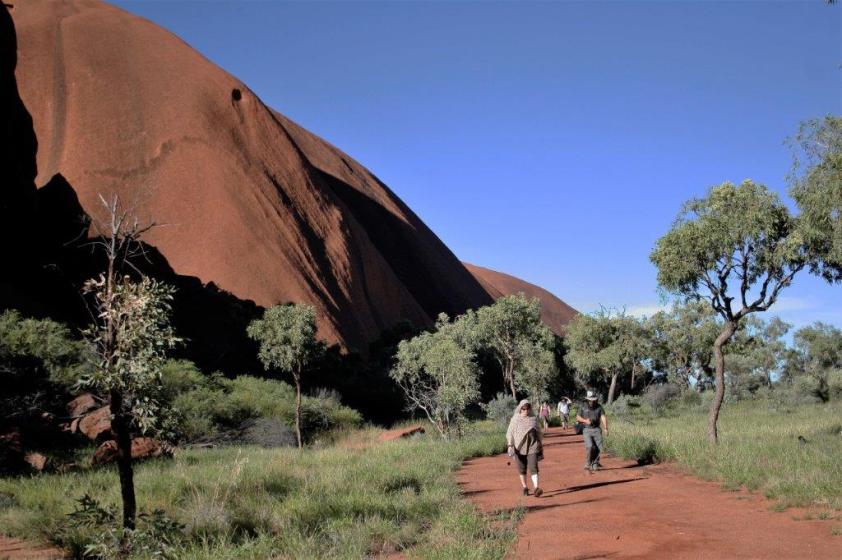
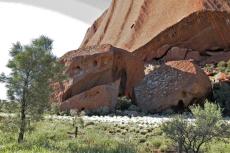
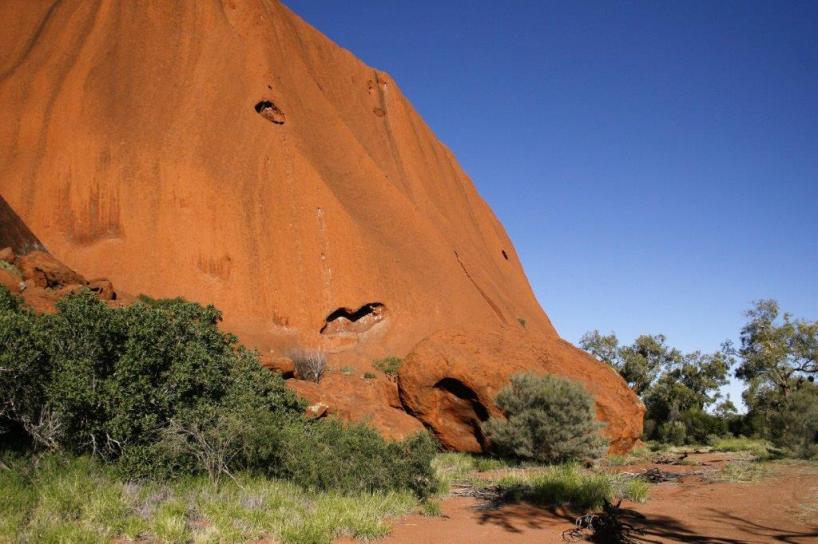
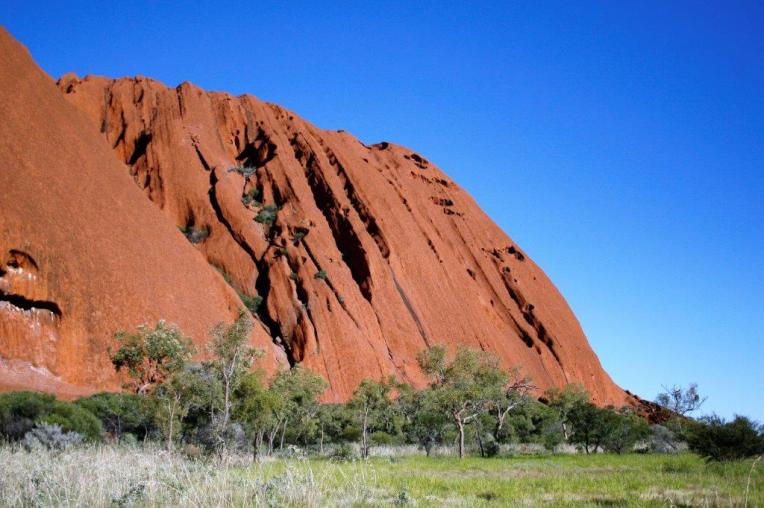
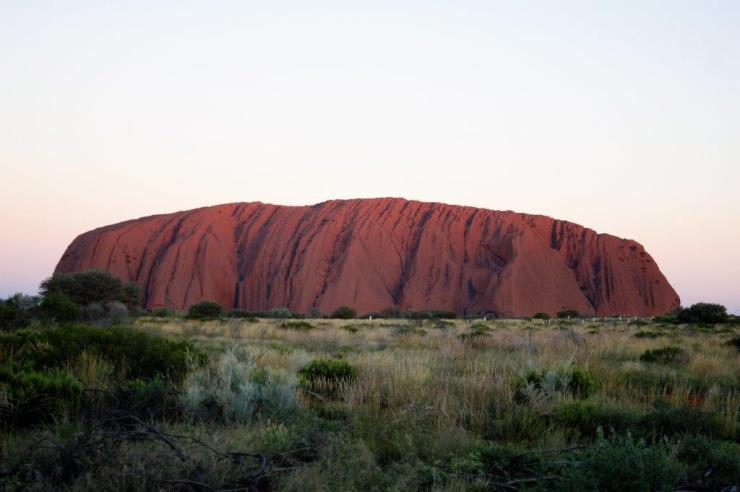
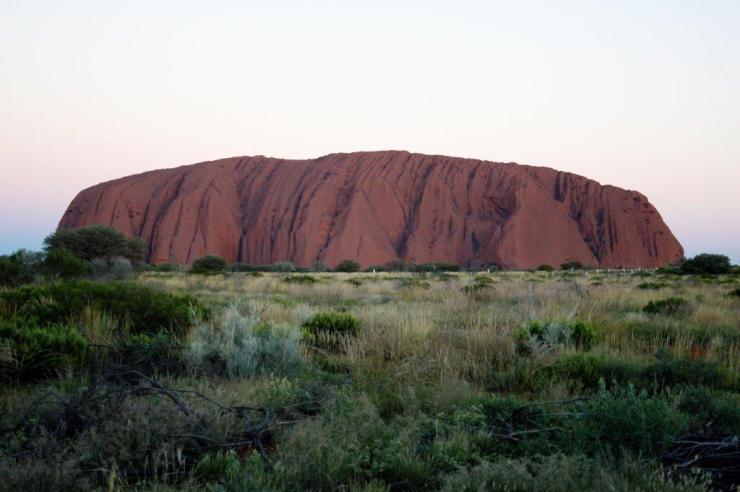
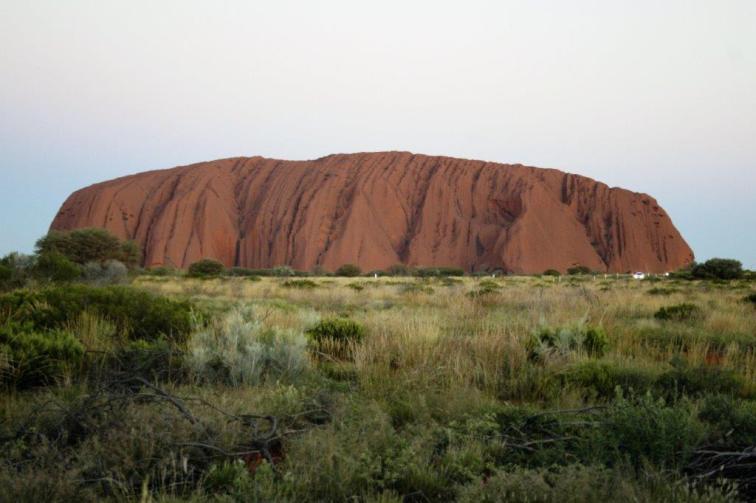
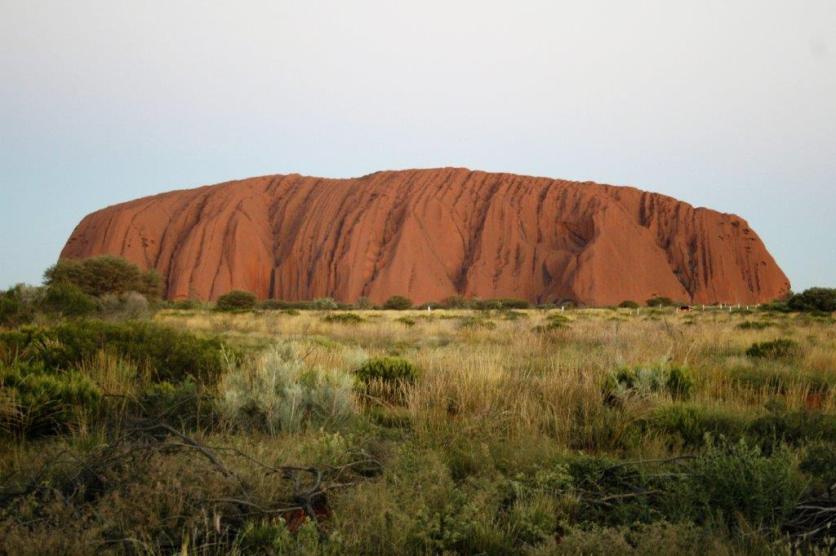
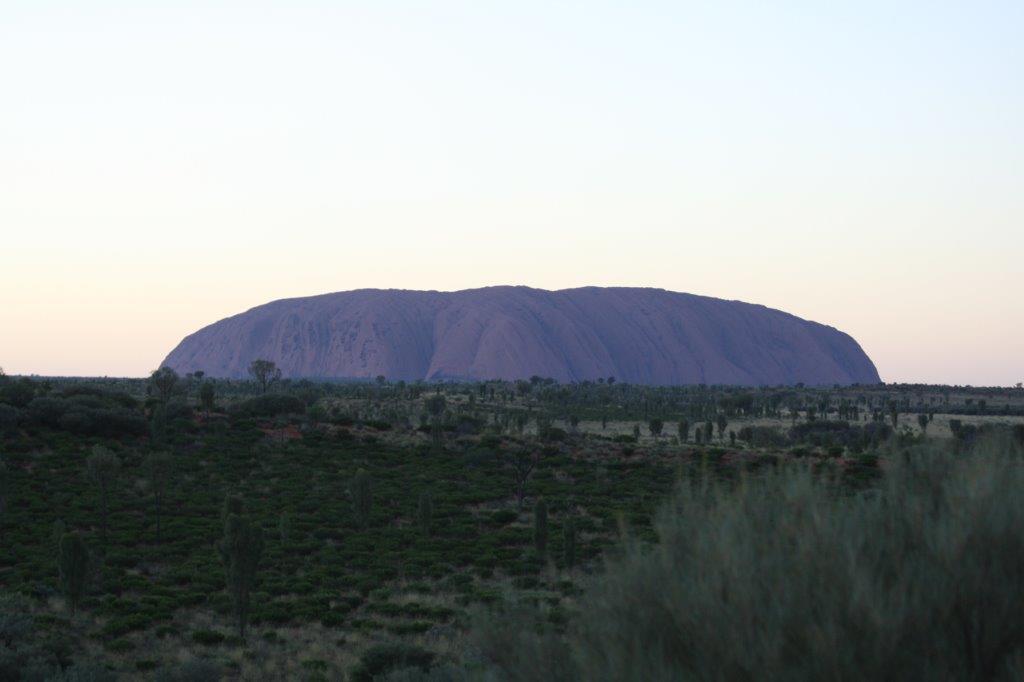
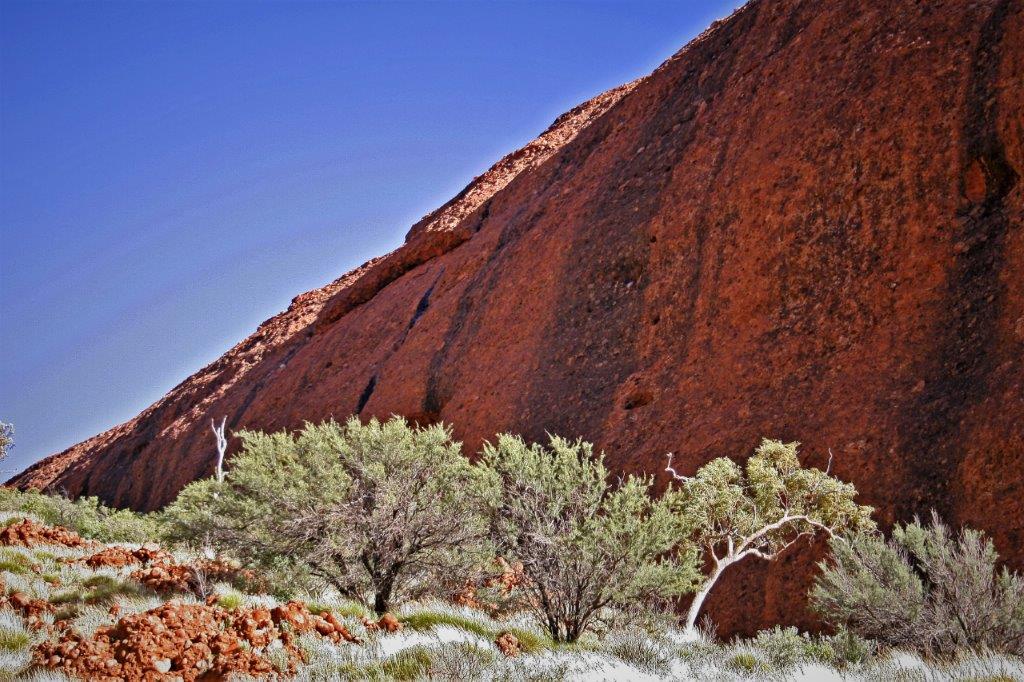
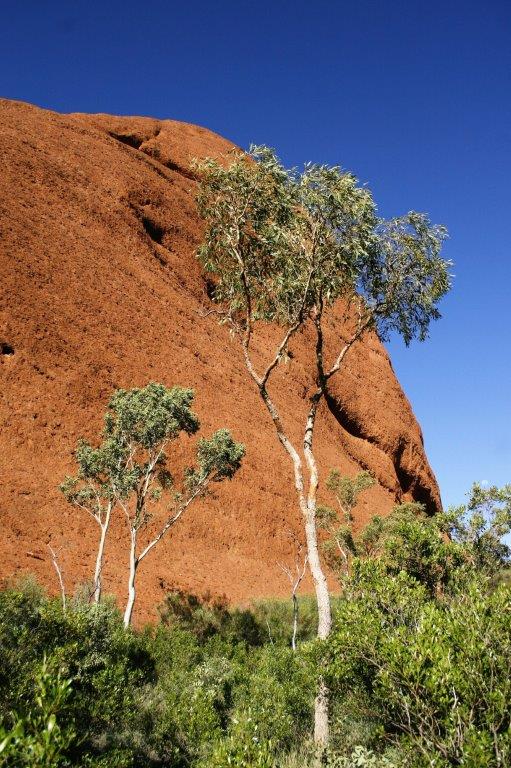
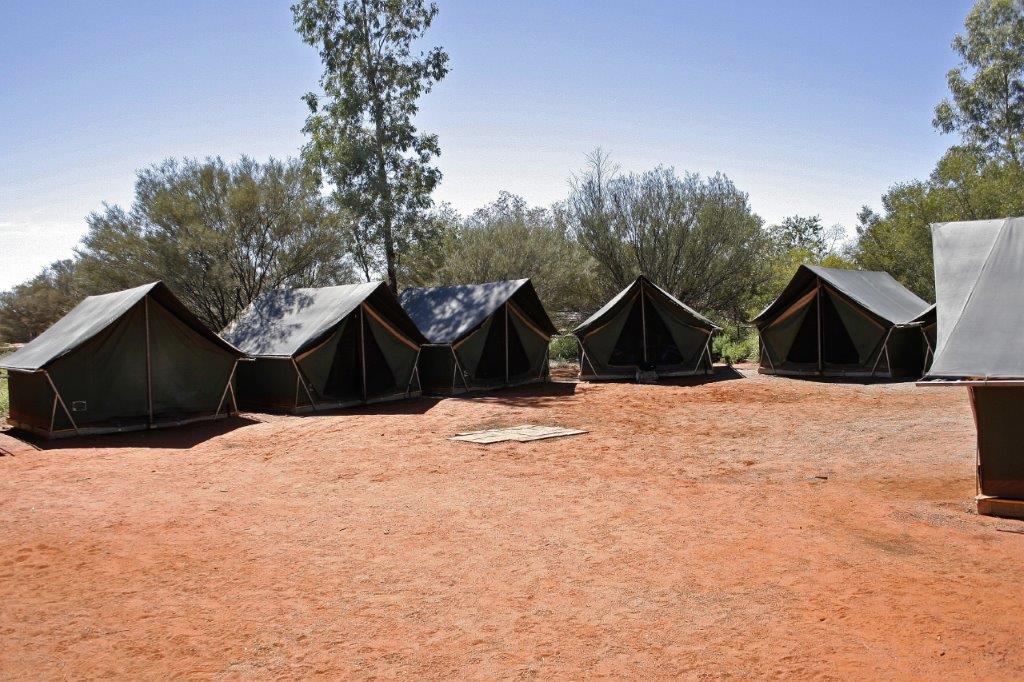
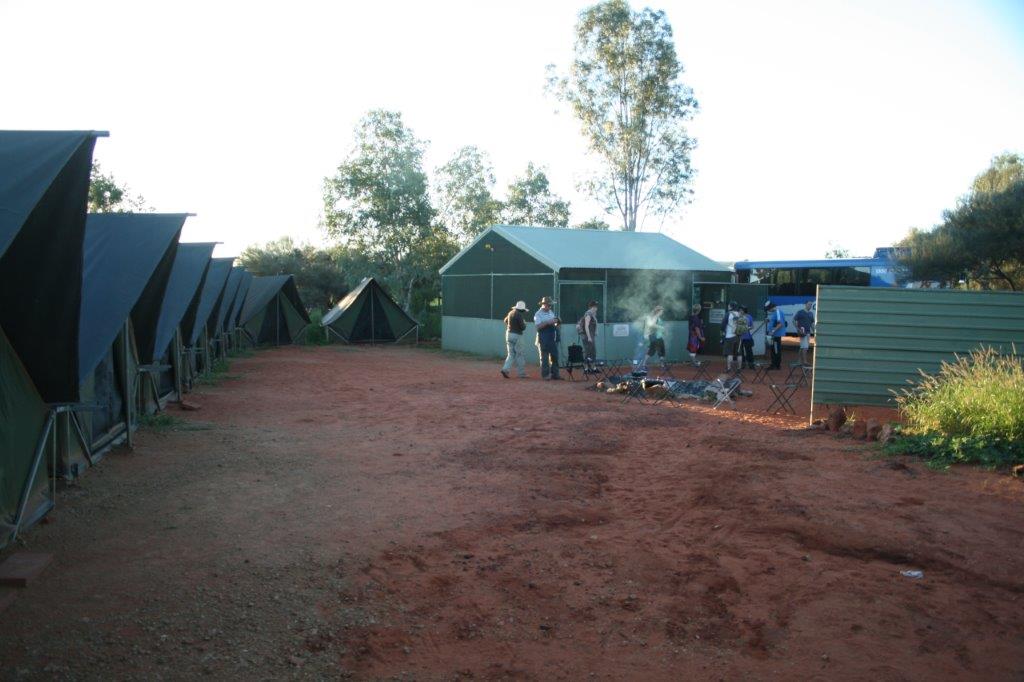
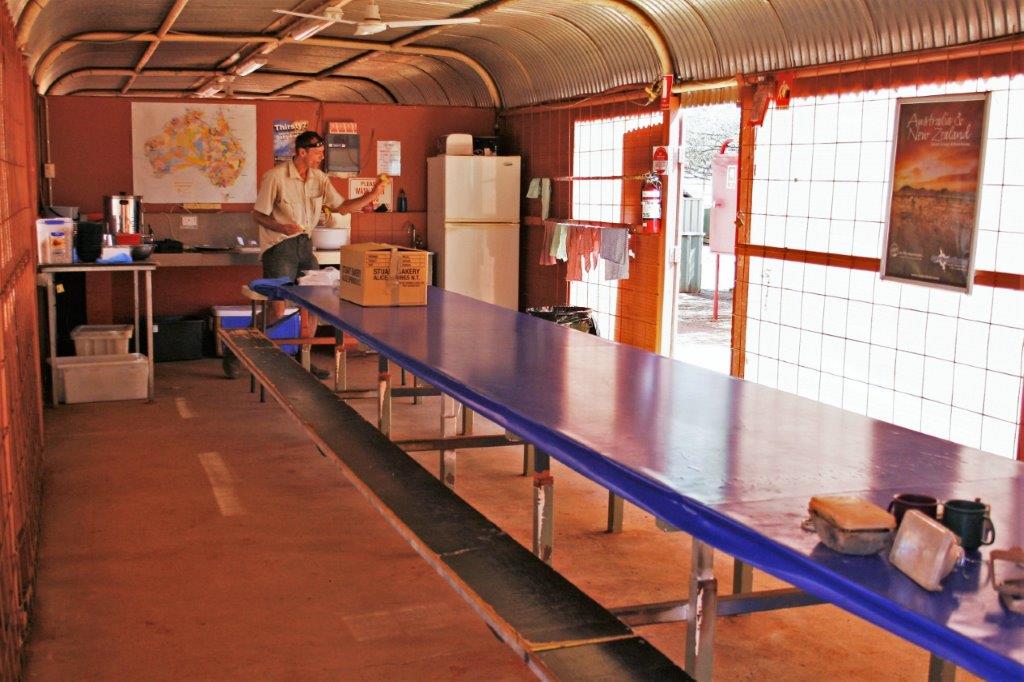
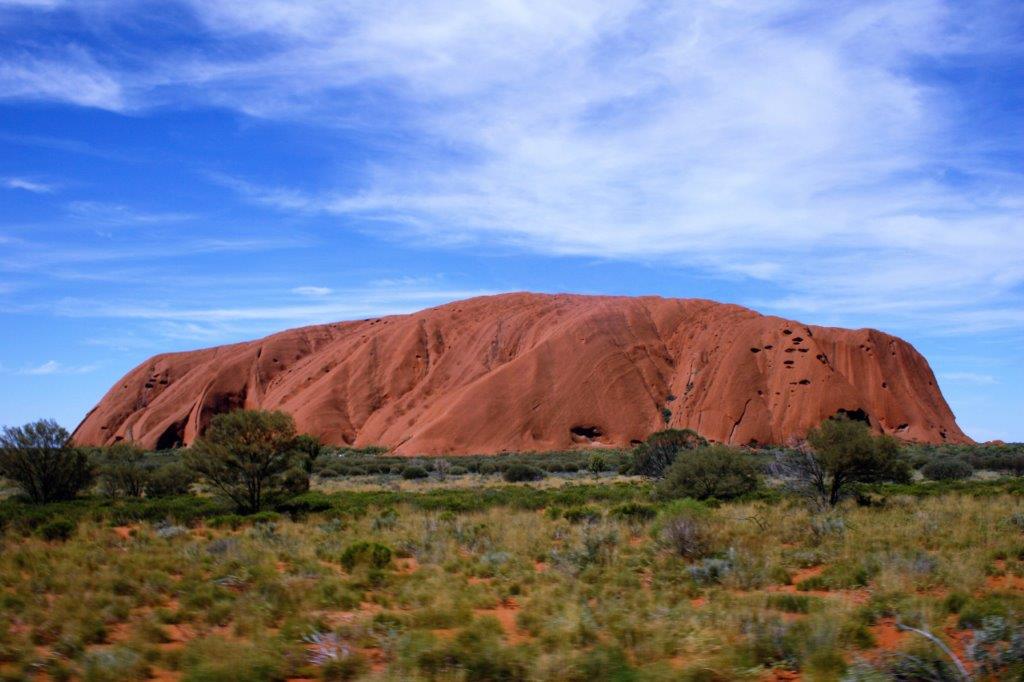
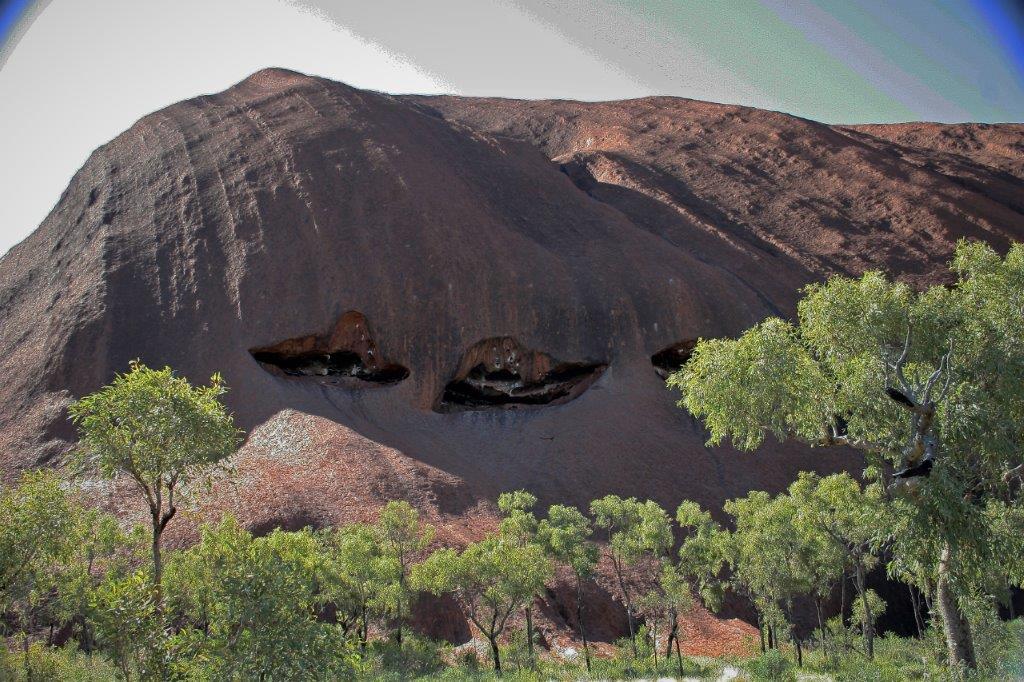
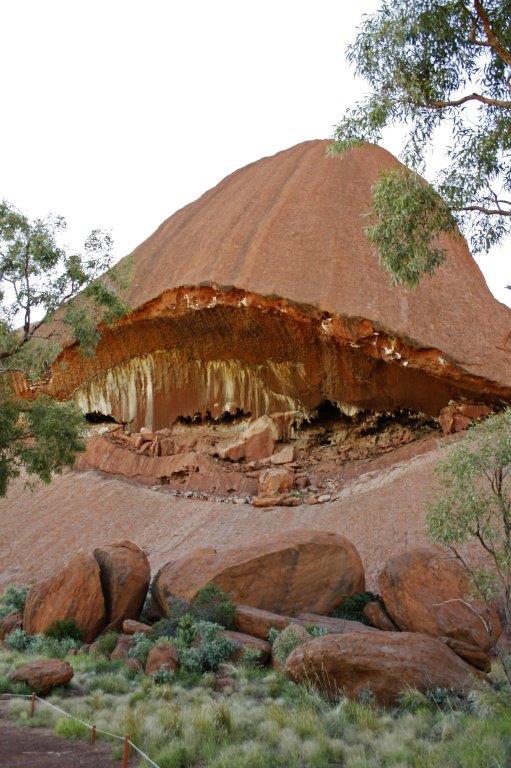
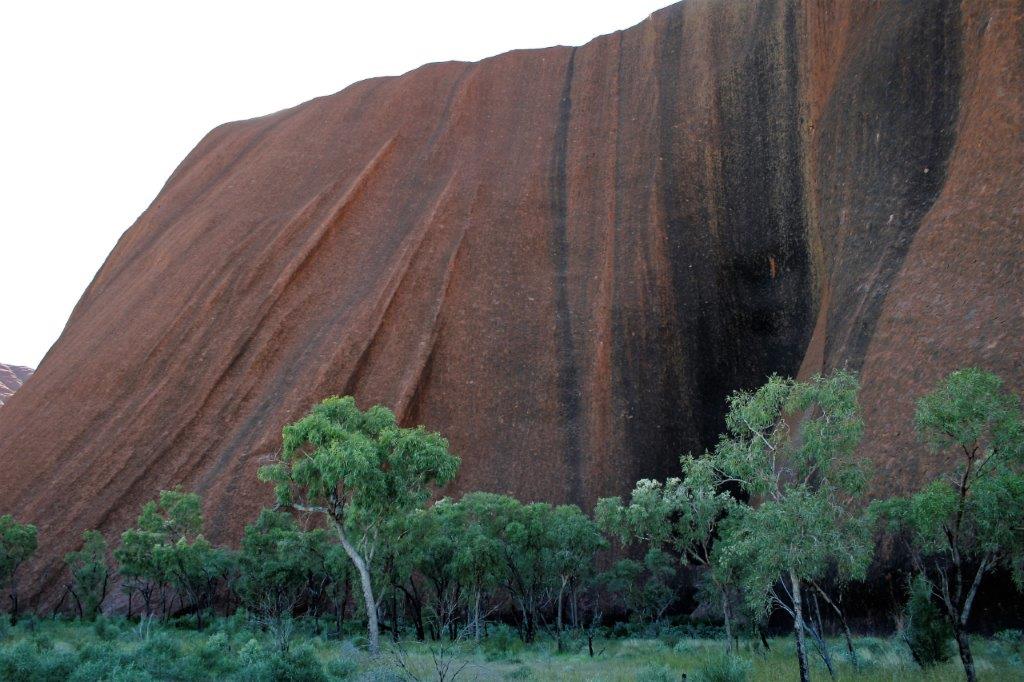
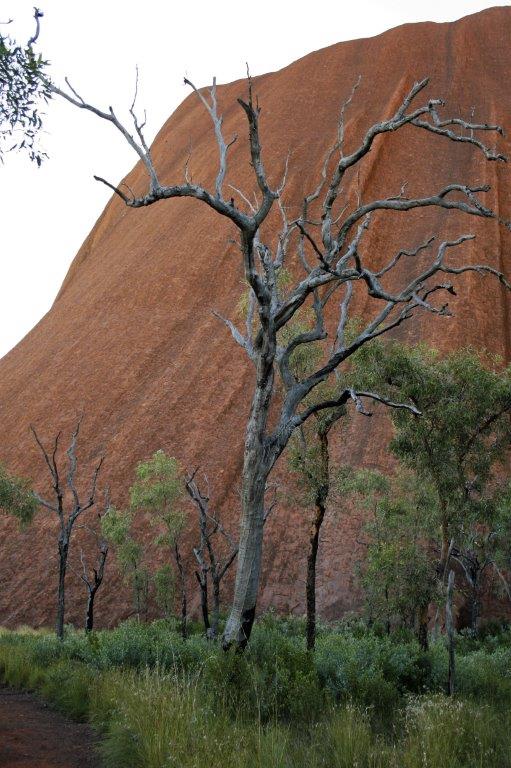
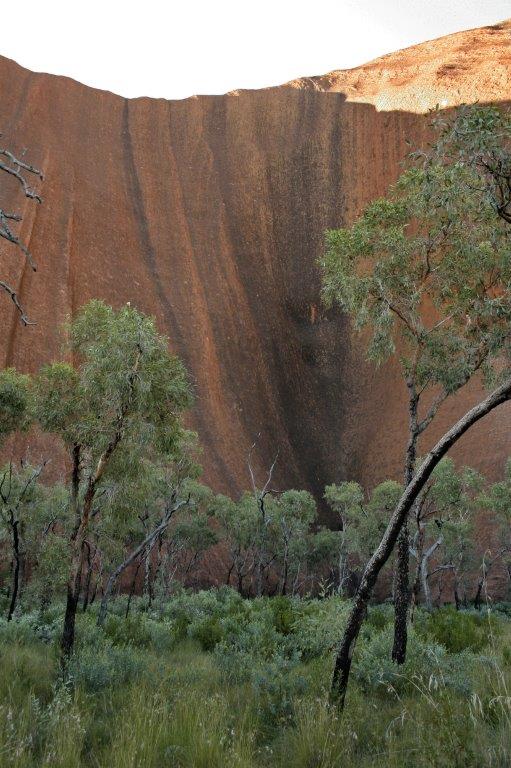
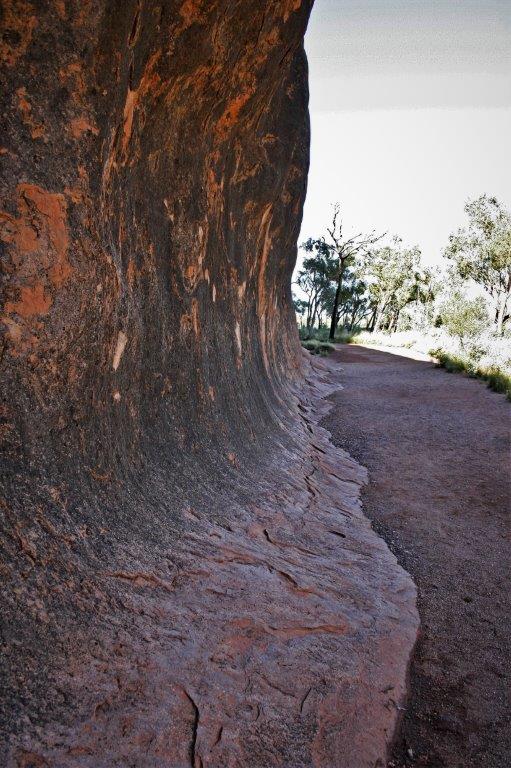
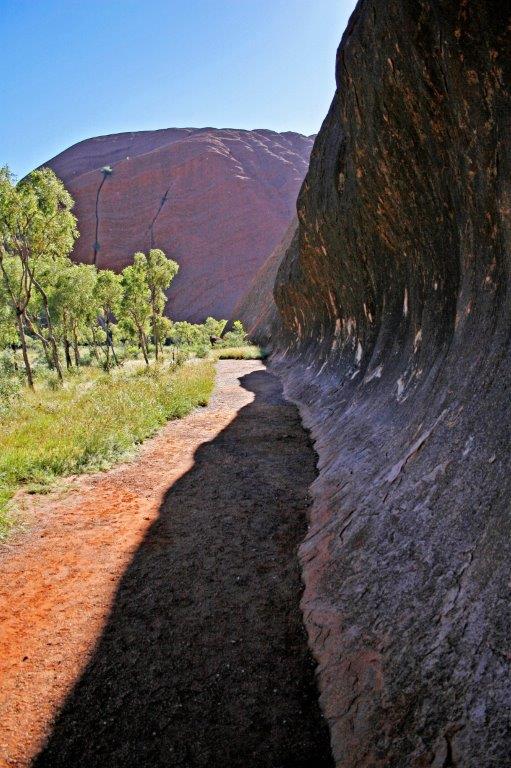
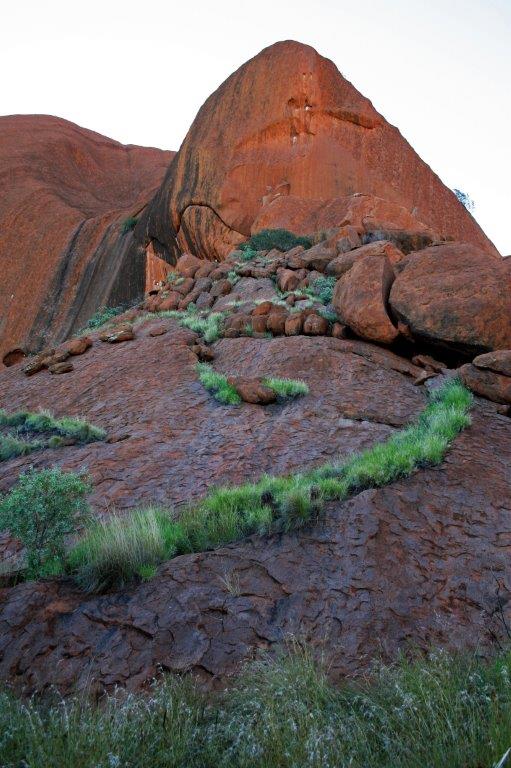
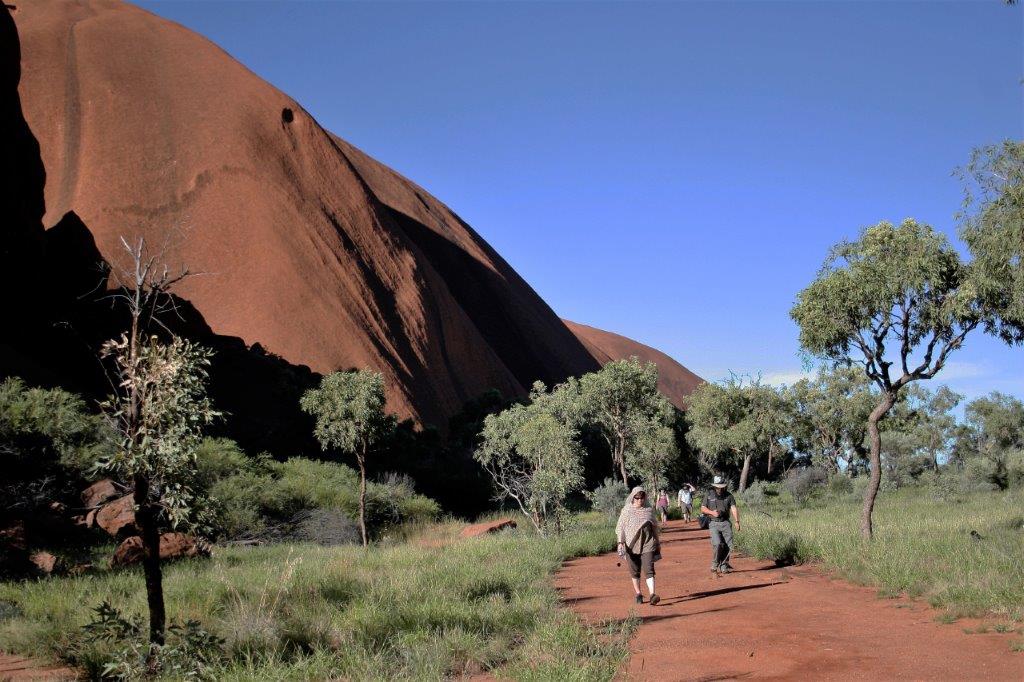
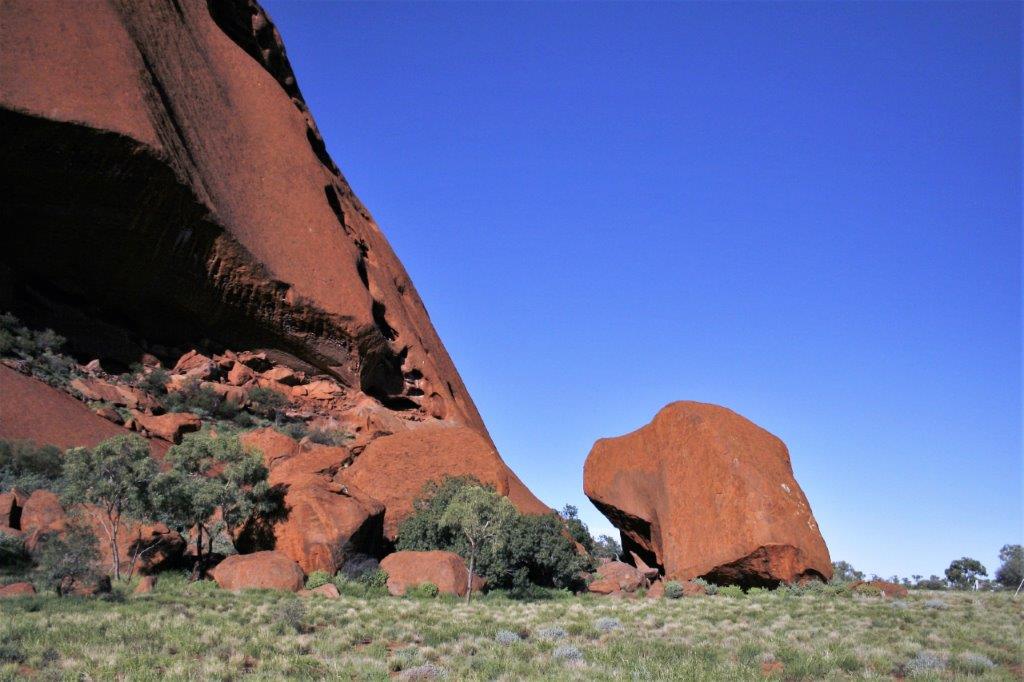
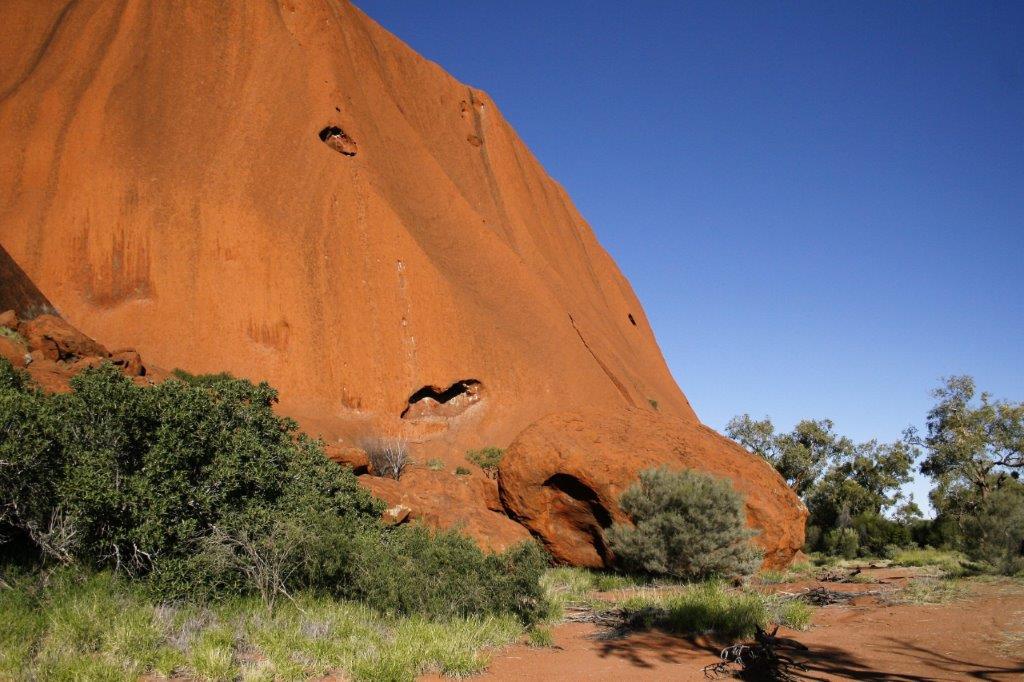
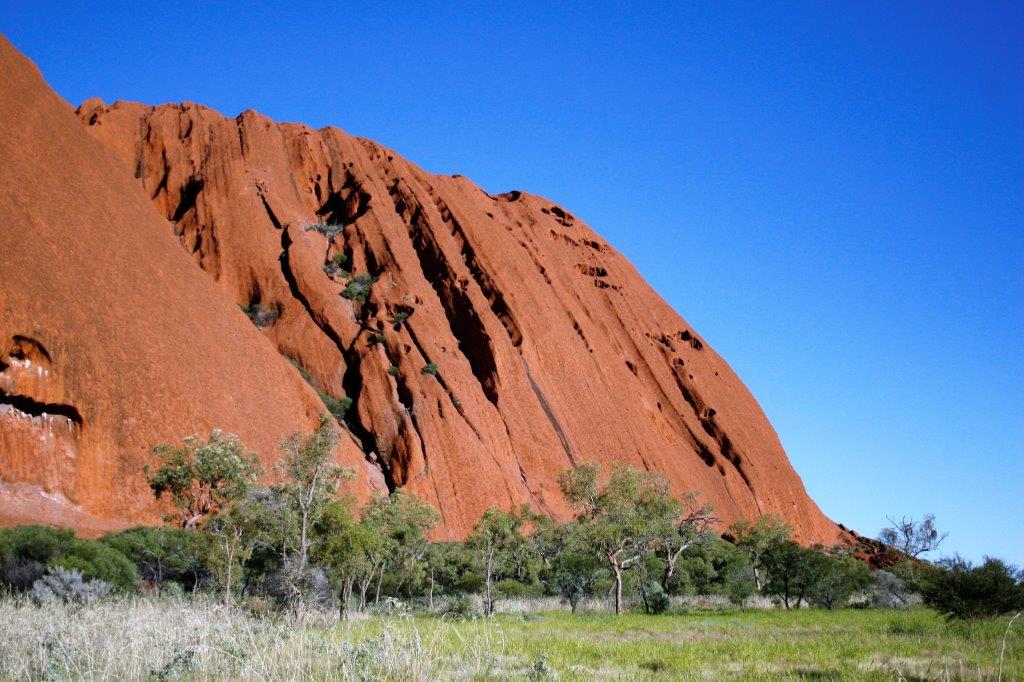
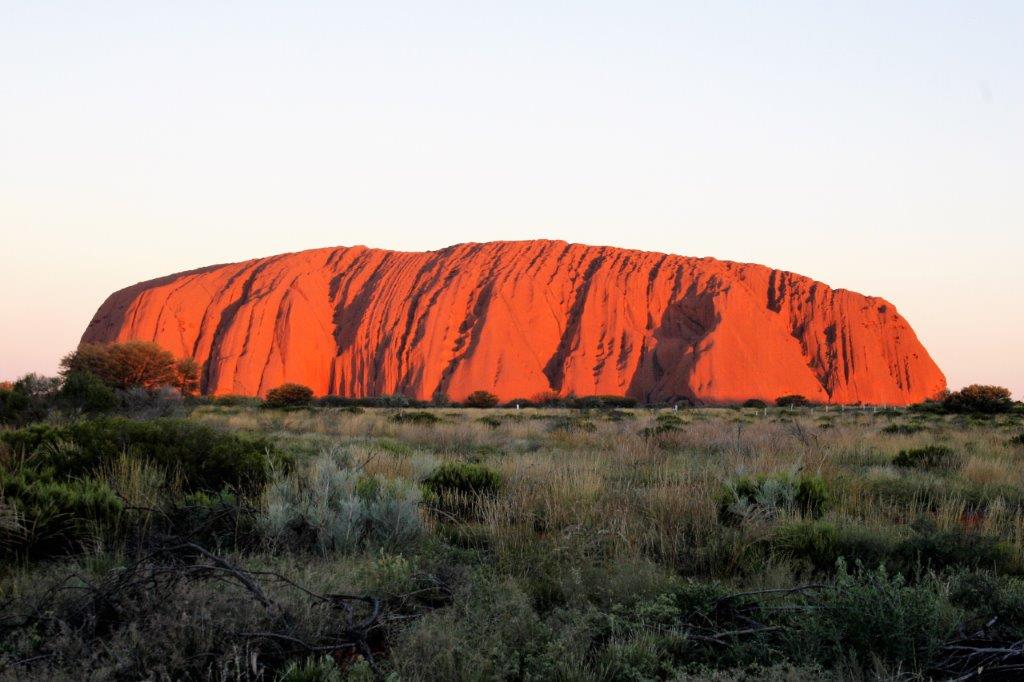
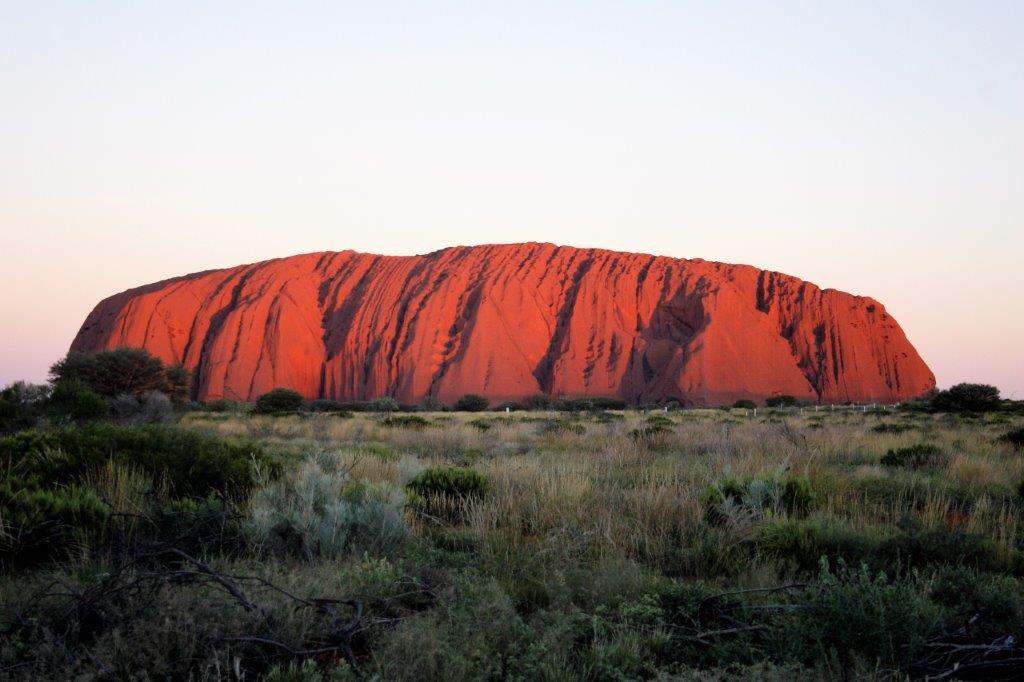
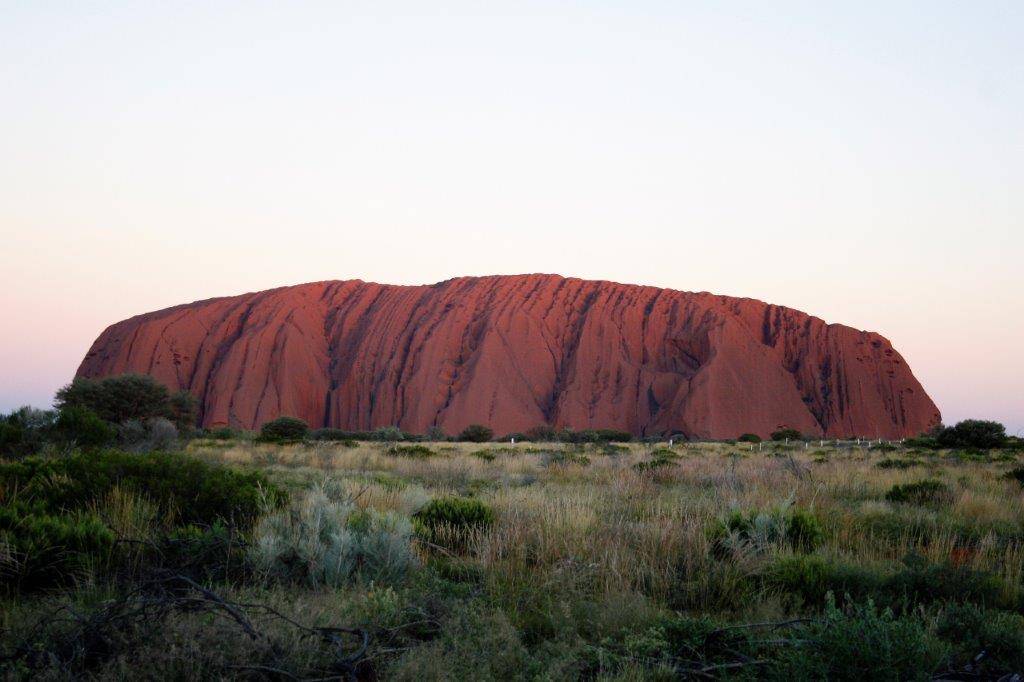
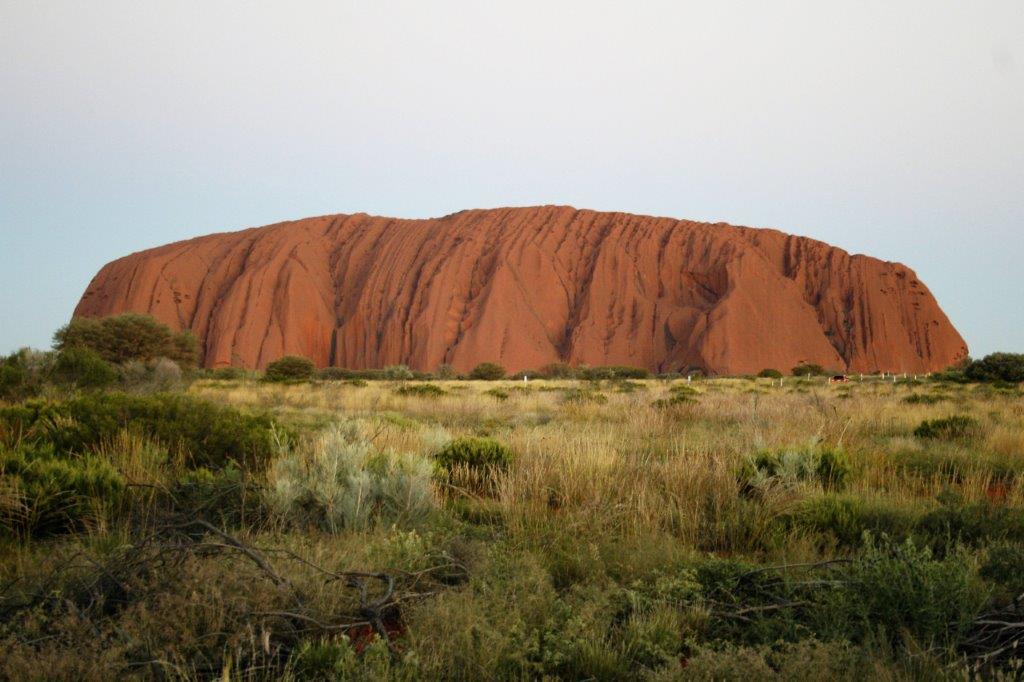
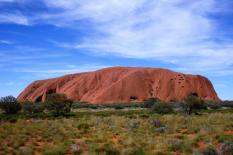
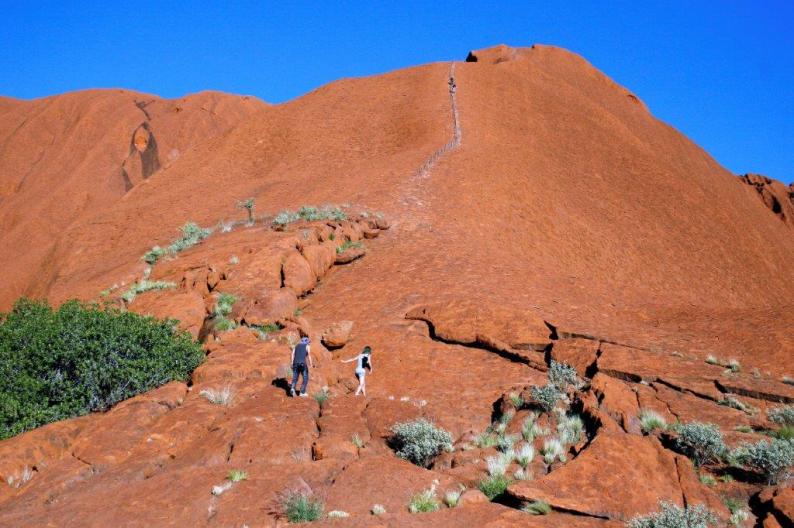
We arrived at our campsite at Yalara (a small resort area with access to Uluru) at 3:30.  Everyone helped unpack the bus before choosing their tents and getting their things organized as it would be dark when we went to bed and still dark when we go up at 5 am the next morning.  After the camp was set up we all got back on the bus and Gavin drove to Uluru.We walked all the way around the base of the rock.  It was very hot and humid but there was a nice flat path to walk on.  It took about 3 1/2 hours with information and photo stops. Uluru is sacred to the aboriginal people and there are many signs saying no climbing and no photographing.  Gavin told us that during some of the recent land claim negotiations the government said that they would enforce no climbing by tourists on either Uluru or the Olgas (Kata-Tjuta), which is even more sacred than Uluru – but not both.  The people had to choose.  They chose Kata-Tjuta so even though there are signs saying you can’t take photos or climb up Uluru they are pretty much ignored by all and are not enforced.  We were very glad to have our netting face covers as the black flies were everywhere and would go into your nose, mouth, and eyes; anywhere there was moisture.
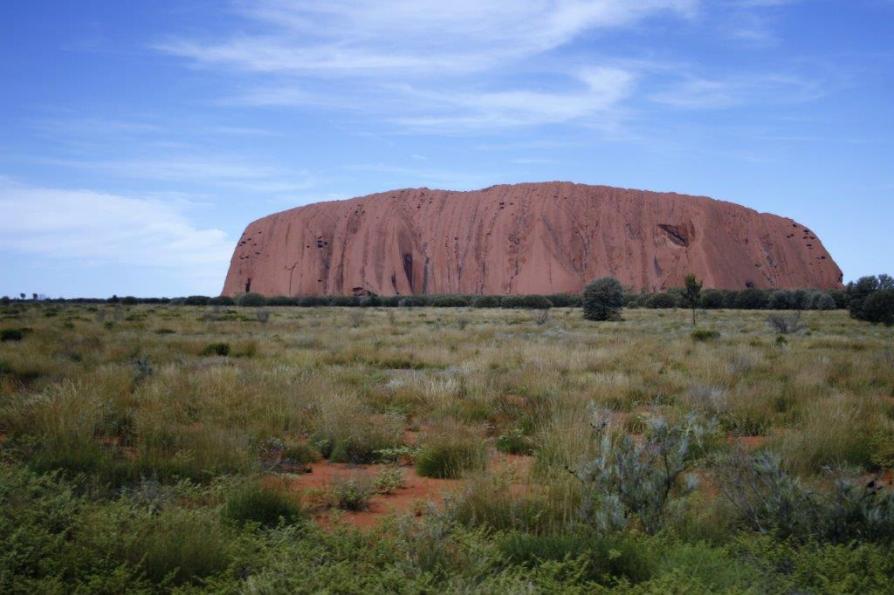
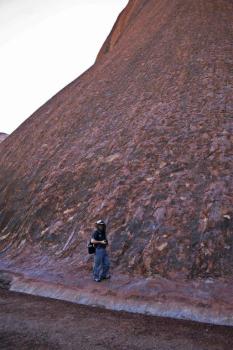
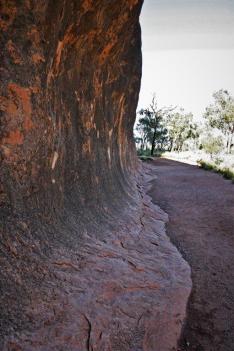
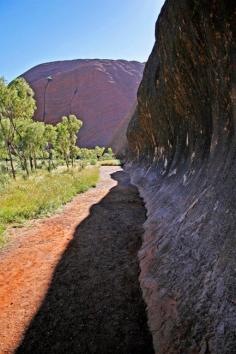
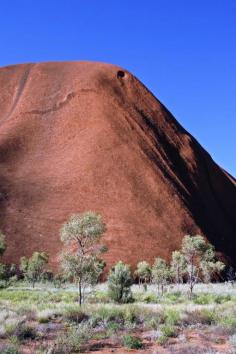
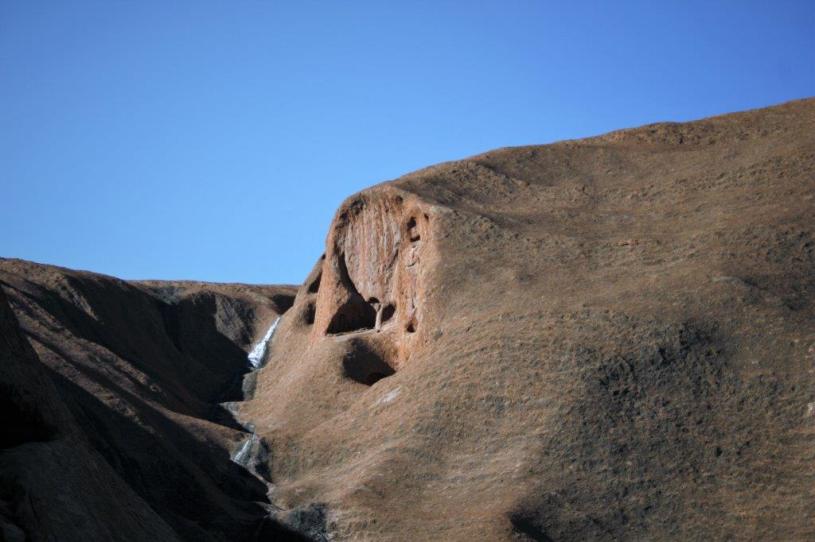
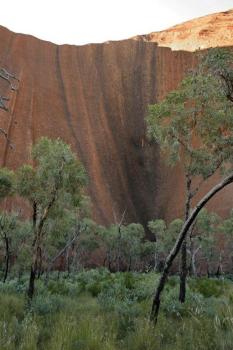
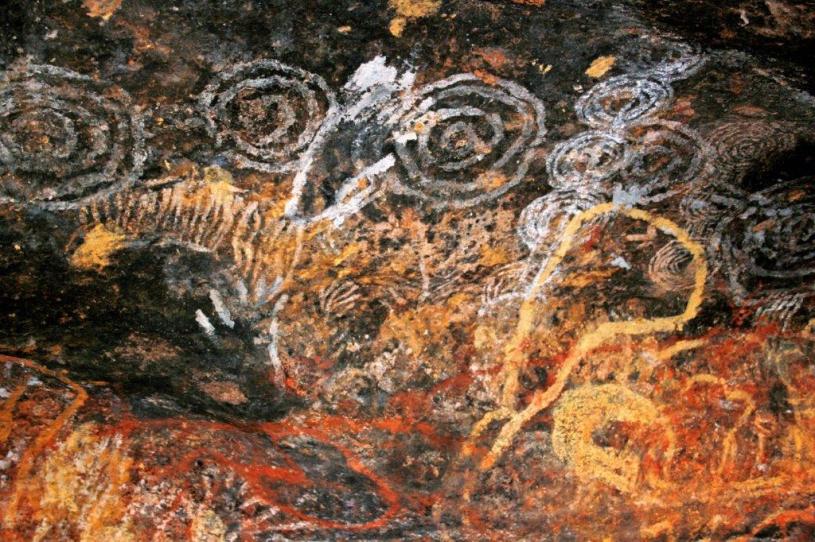
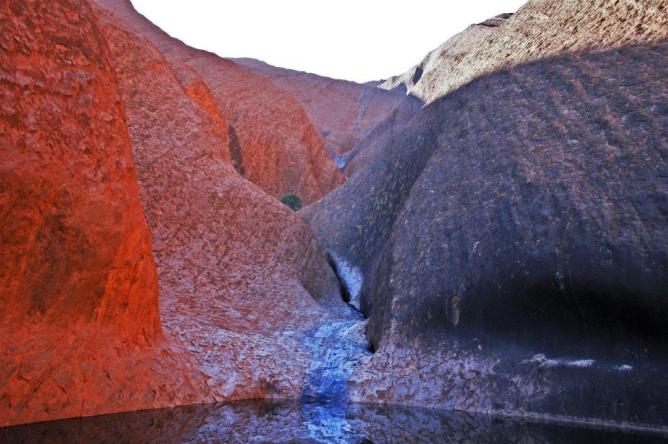
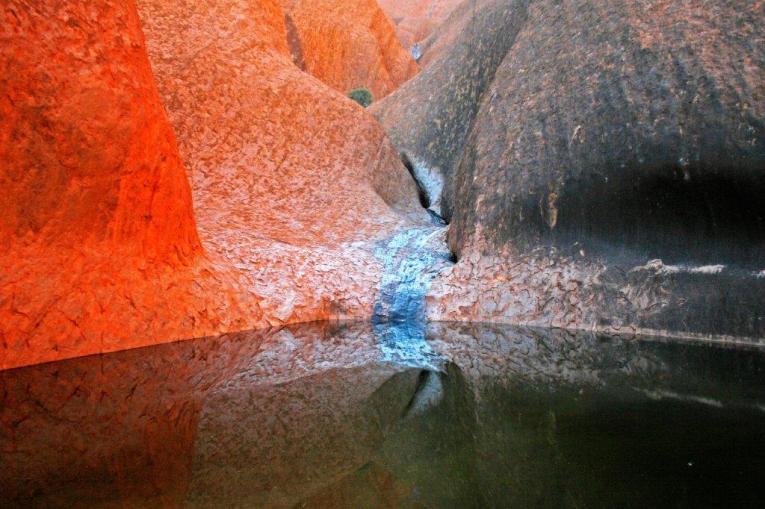
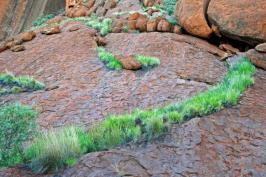
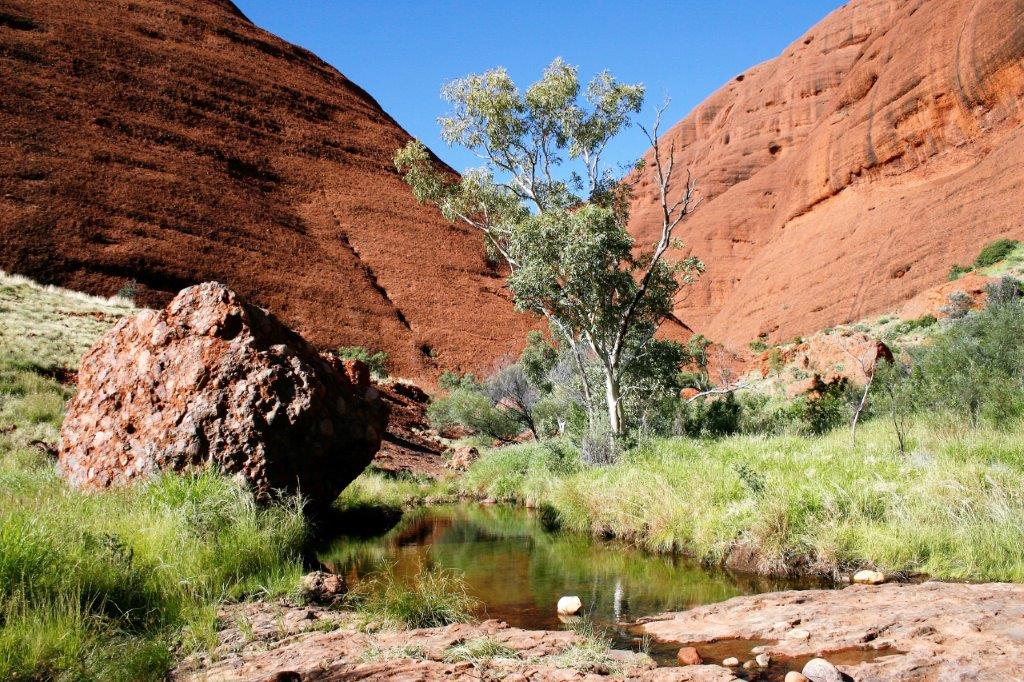
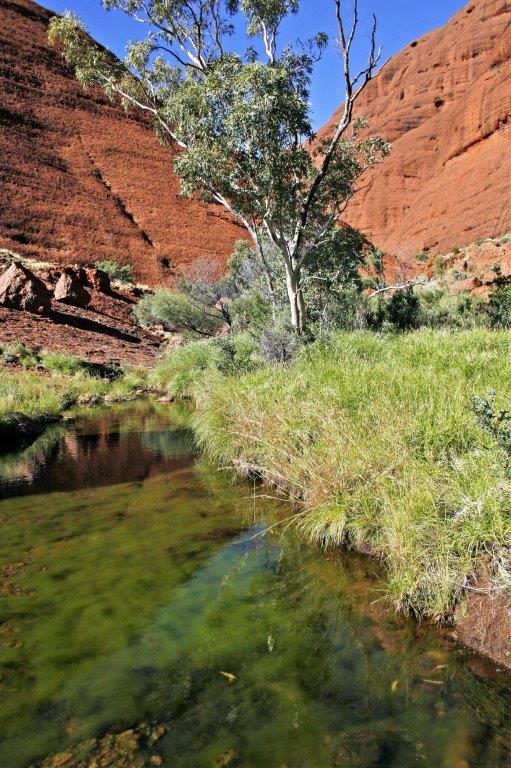
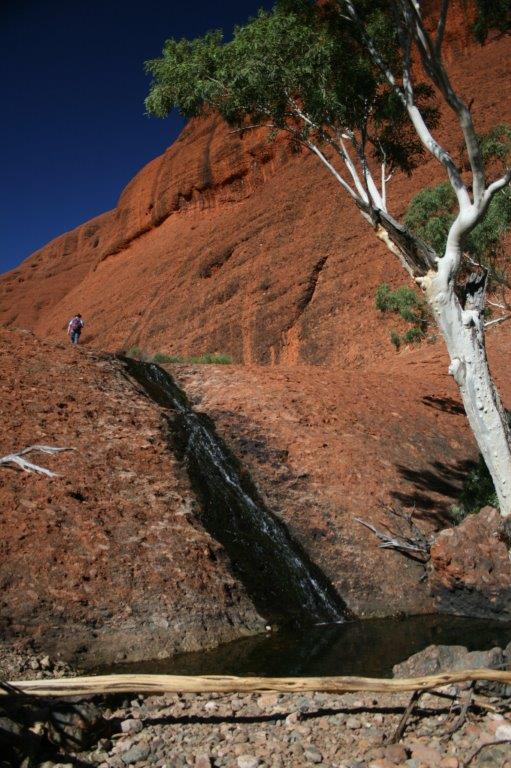
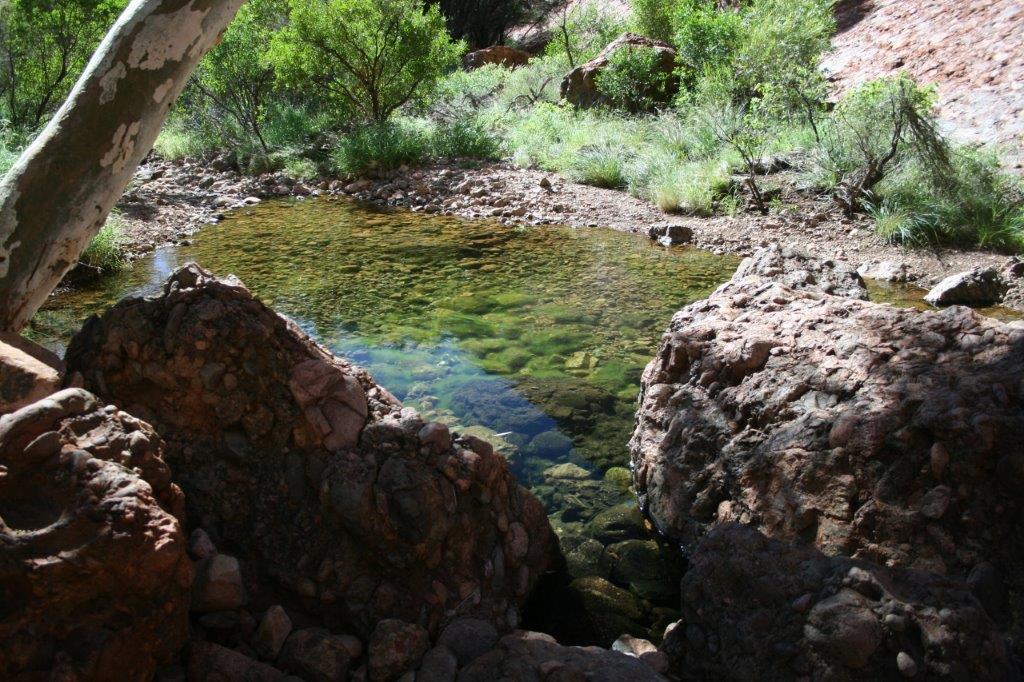
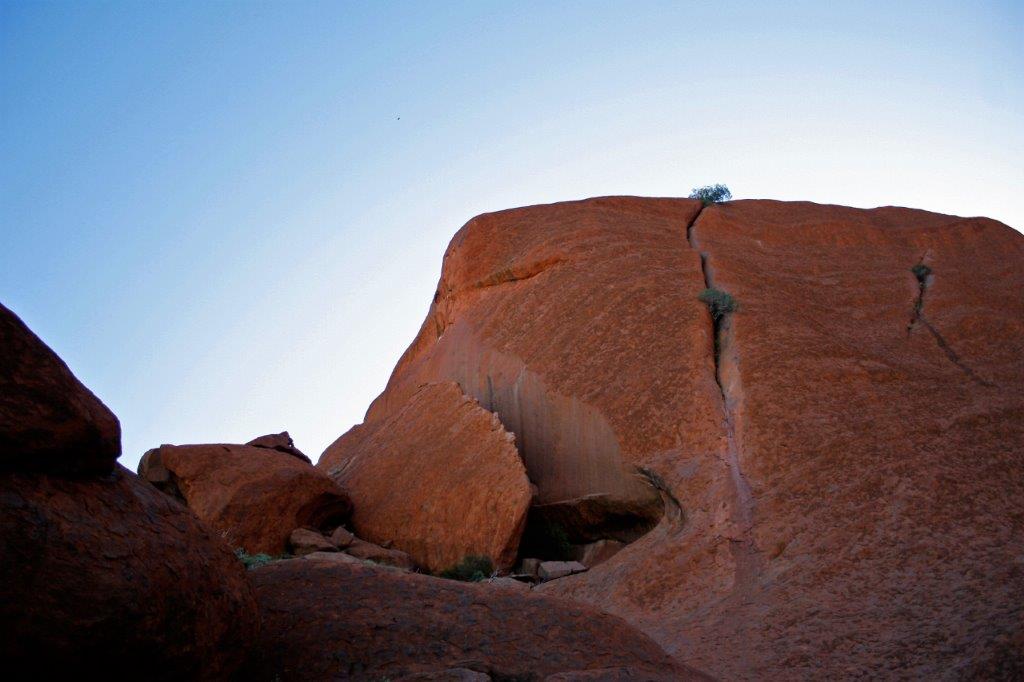
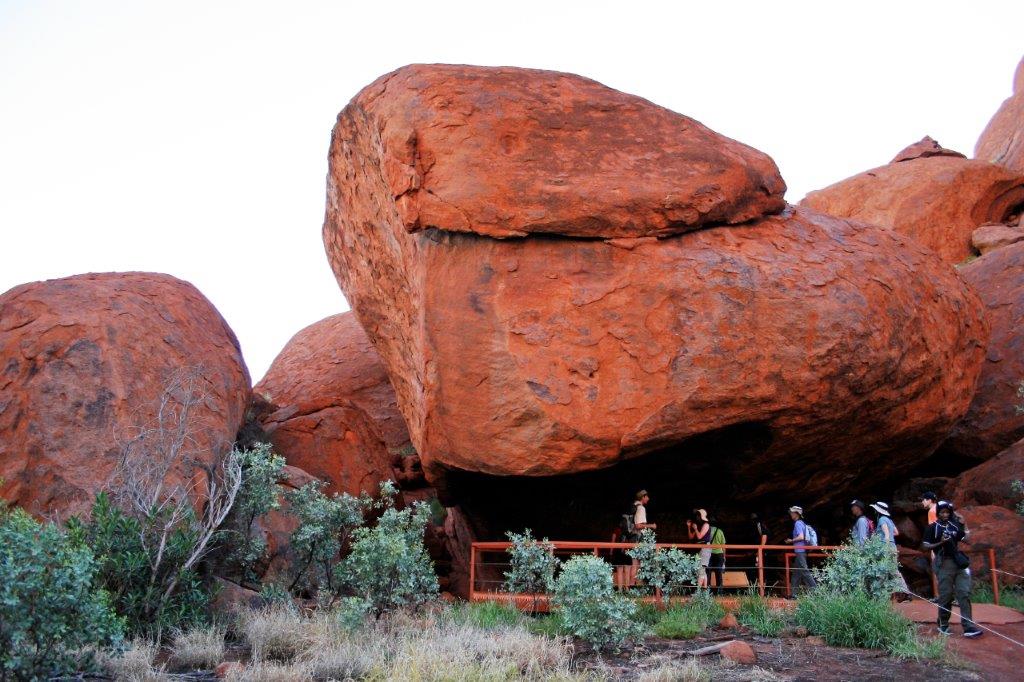
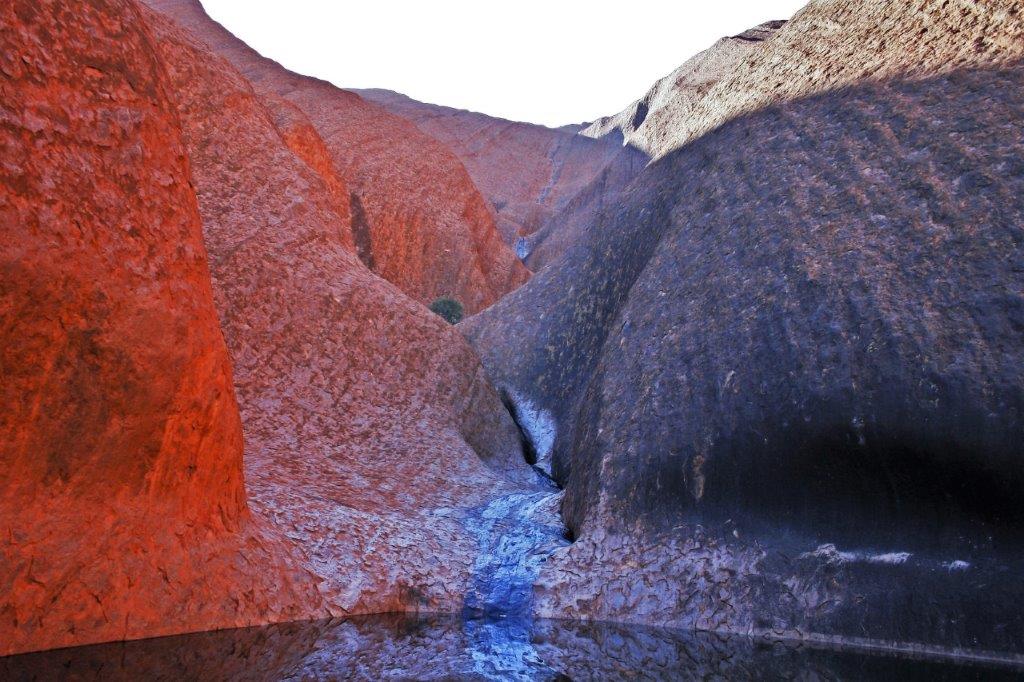
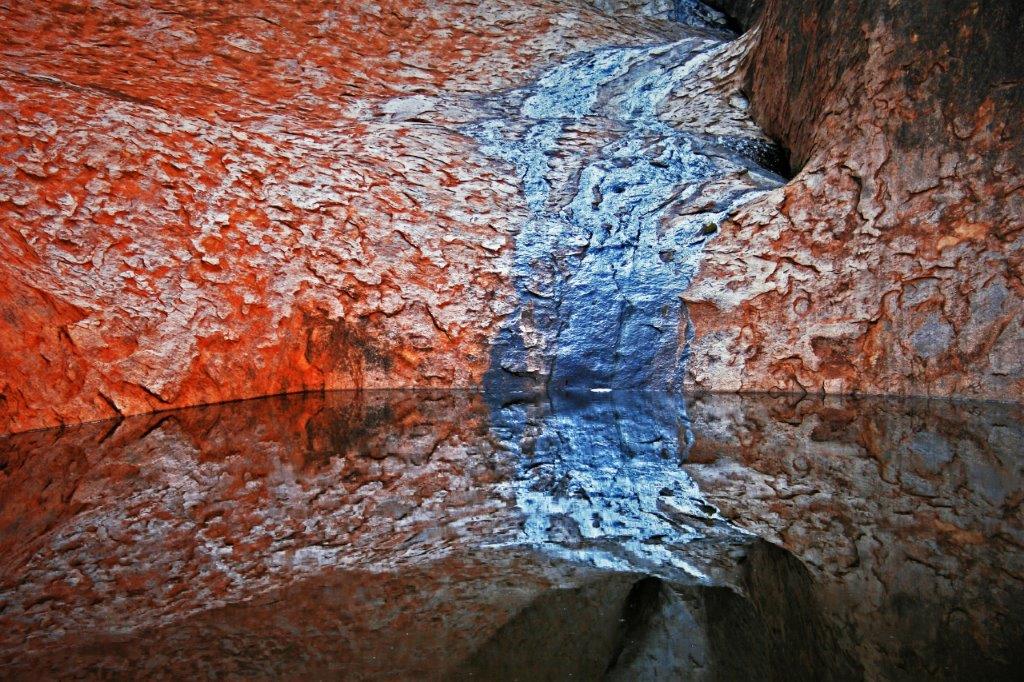
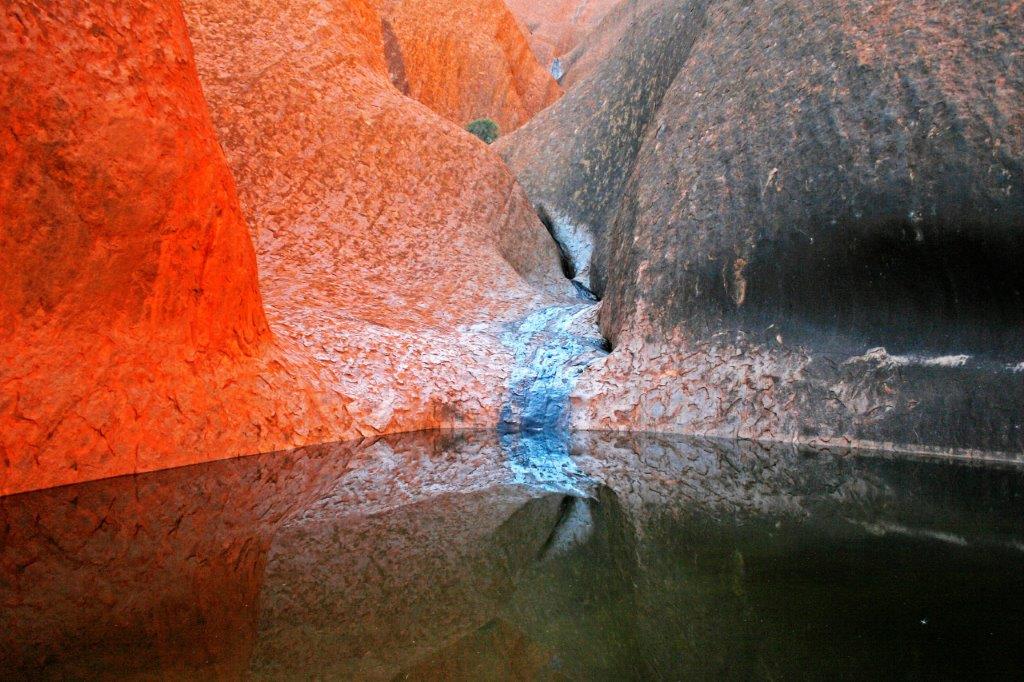
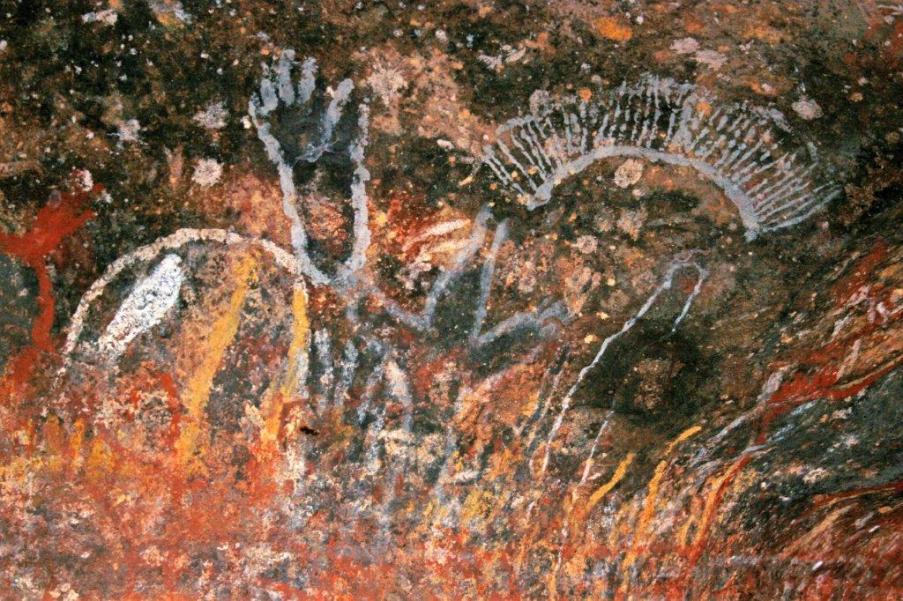
This is the one of the dream-time story telling sites.  As the stories are told over and over the story-tellers will often draw over the previous pictures so there are mulit-layers of artwork.  This pool stays year-round.  There are other places where water flows off the rock and into pools but they will all dry up over the summer. This pool is in a shady cove with trees and keeps water year-round.  It is a very important watering place for the aborigine people because in the midst of a severely dry year they could count on water being available.  The silver color is left on the rock by minerals picked up by the water as it flows down the rock.  With so much rain that year the grass even grew in the cracks.
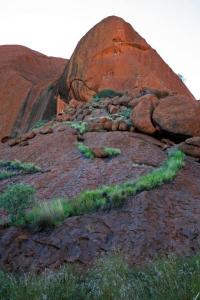
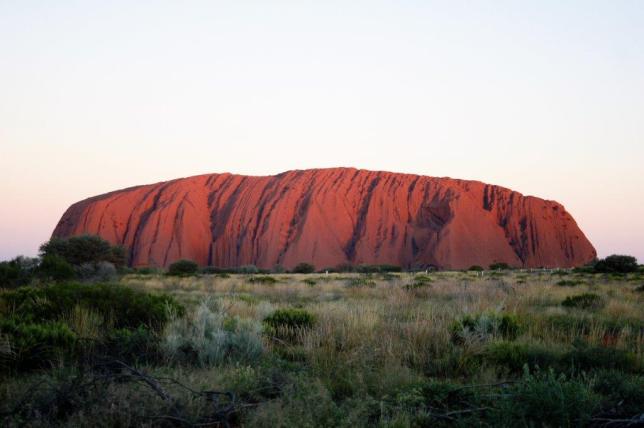
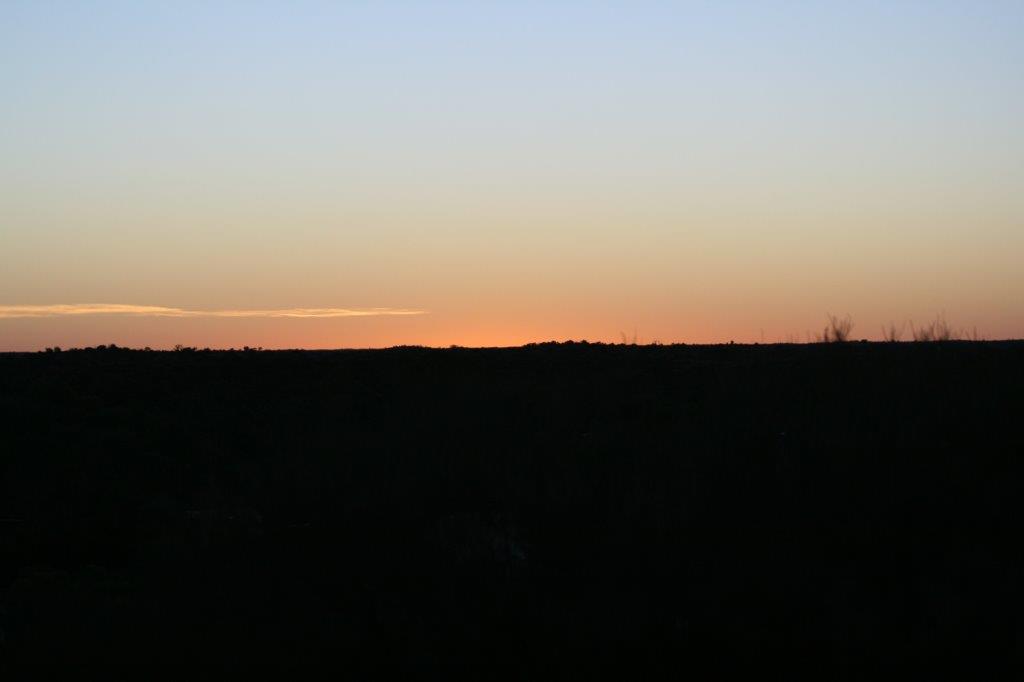
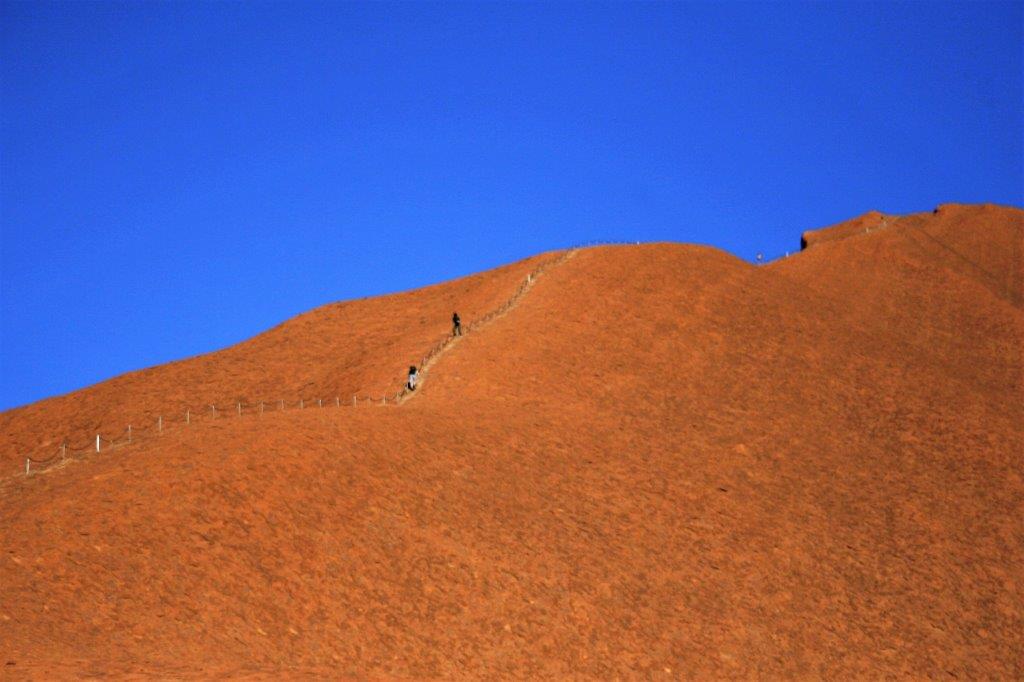
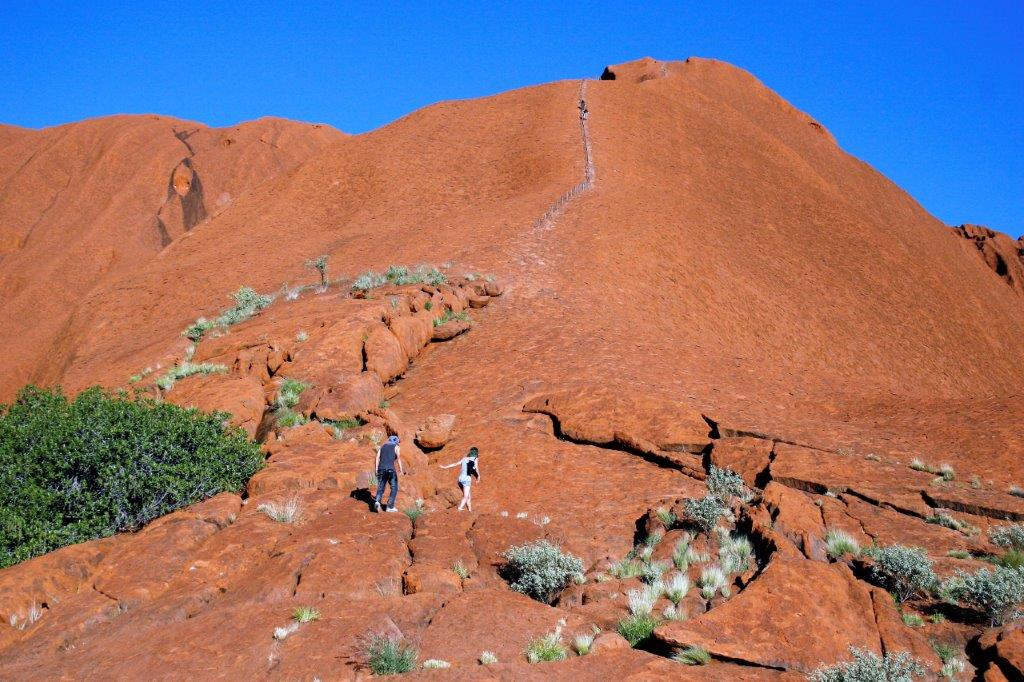
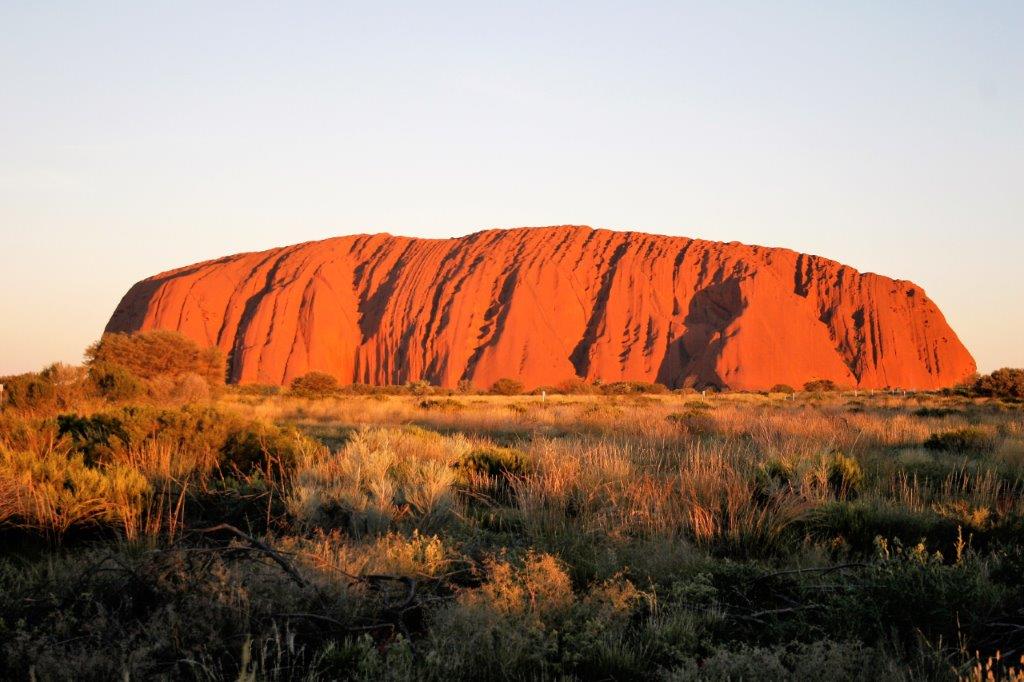
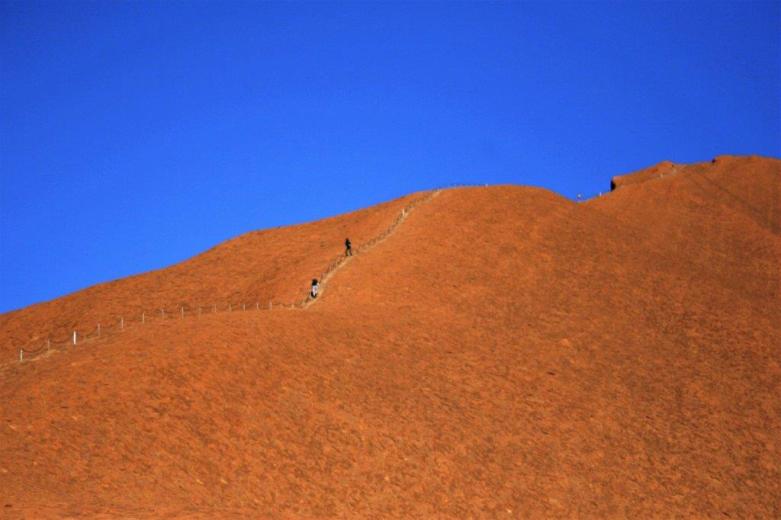
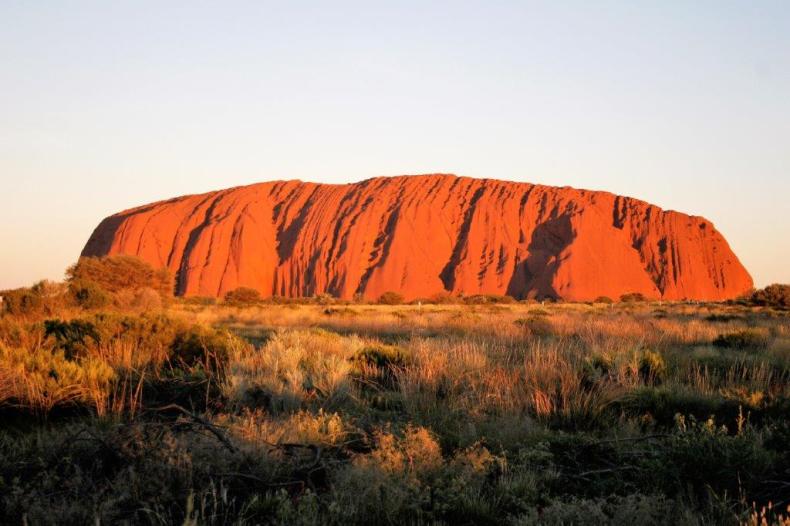
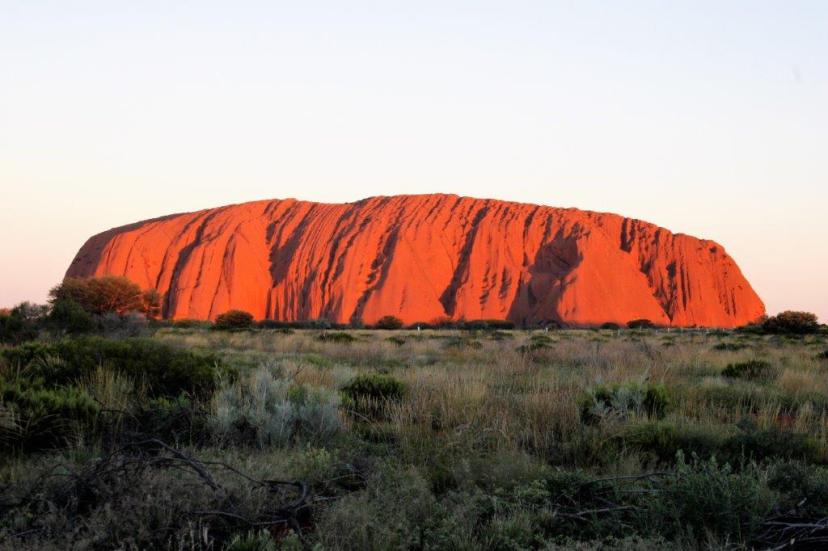
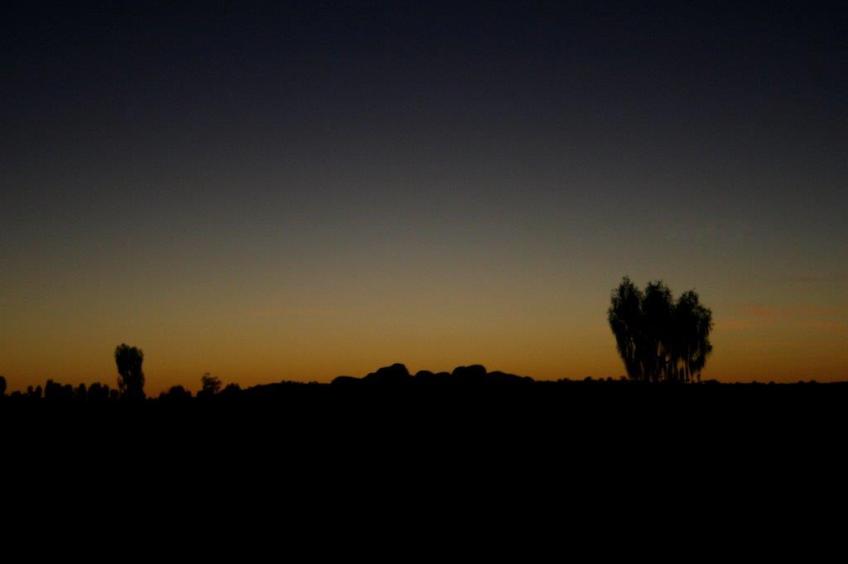
Some of the people on our tour really wanted to climb the rock.  There was not enough time to go to the top and Gavin, who knows a great deal about the aboriginal people and their ways, has a great respect for them and discourages people from climbing the sacred site.  However, he told the folks how much time they had before he would be on the bus and pointed out approximately how far they should be able to climb and return. Gavin drove us to a viewing area some distance from Uluru and we settled down on camp chairs, sipped our champagne and nibbled on snacks while we watched the sunset.  Uluru continually changes colour as the sun goes down. Back at the campsite we had a quick shower (yes, there were bathroom facilities at all the campgrounds), then helped prepare dinner and clean up dishes.  By then it was after 9 pm and we crawled (almost literally) into our sleeping bags for the night.  Check another, “Someday I want to…” item off the list.
2011 March 19 & 20 – Days 73 & 74 – Coober Pedy, Australia

The ‘Down and Dirty’ tour started at 7:45 am so we had to get up early in order to have time for breakfast.  Gunter was our guide again and the only other people on tour were a reticent couple from Virginia; they hardly spoke all morning.
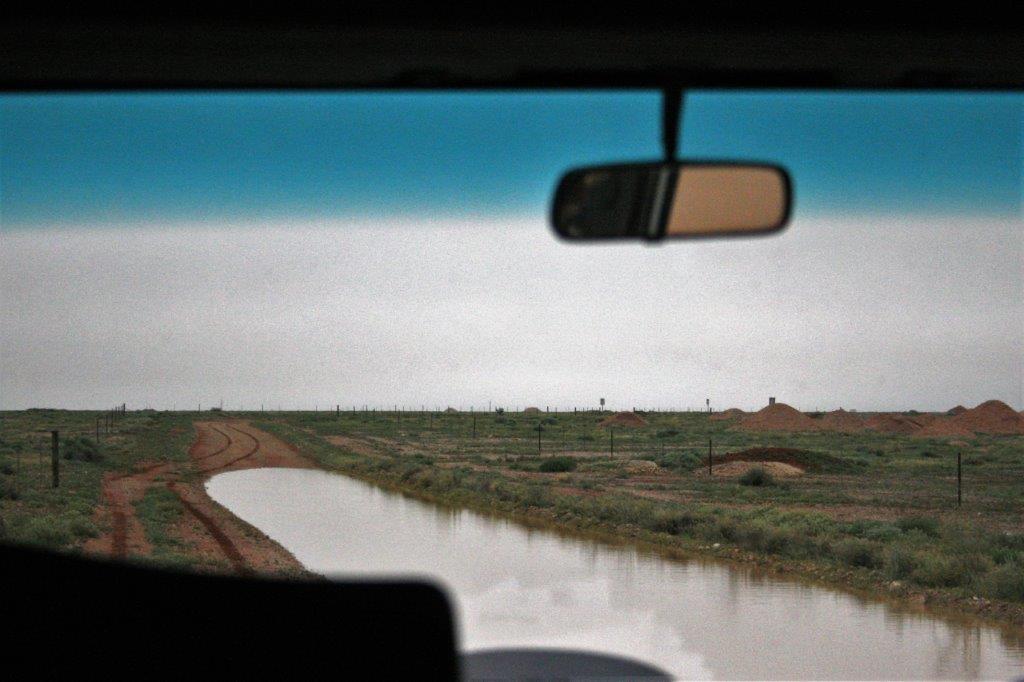
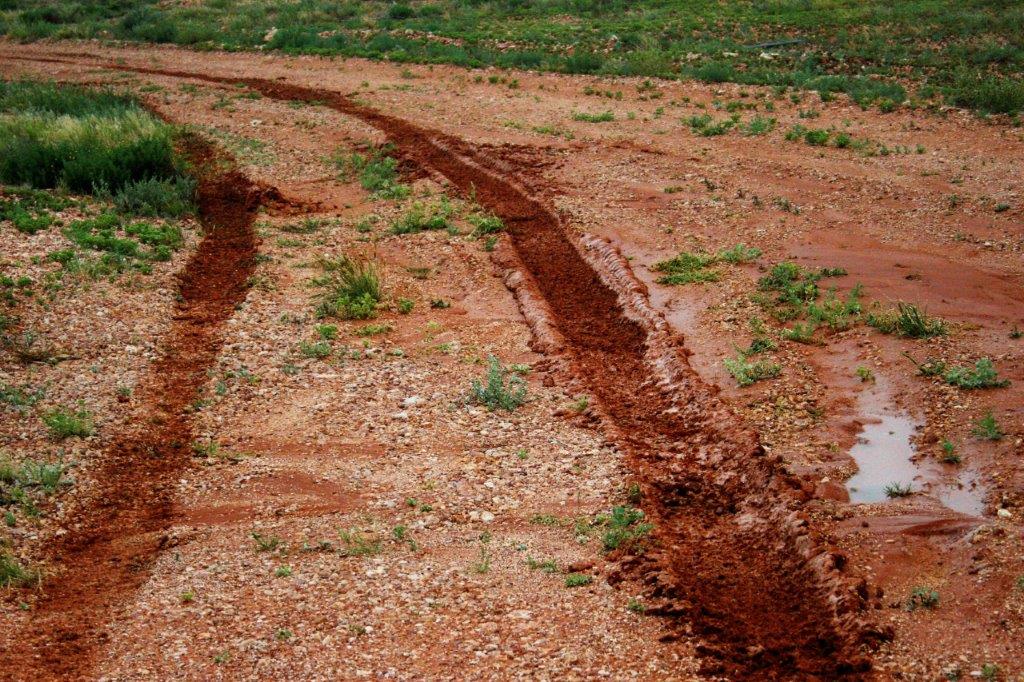
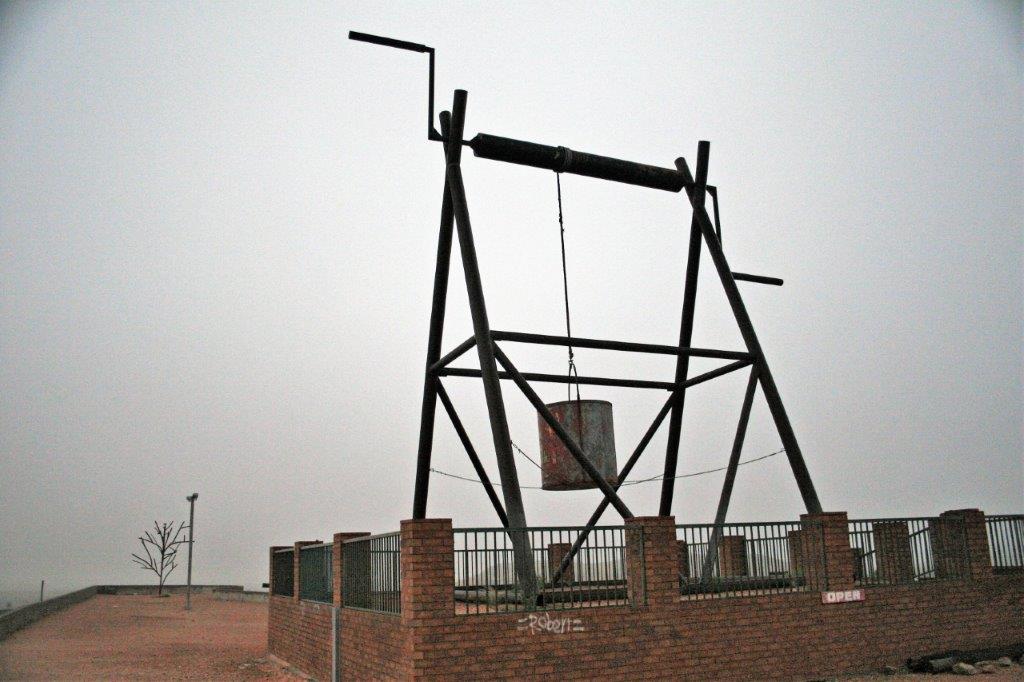
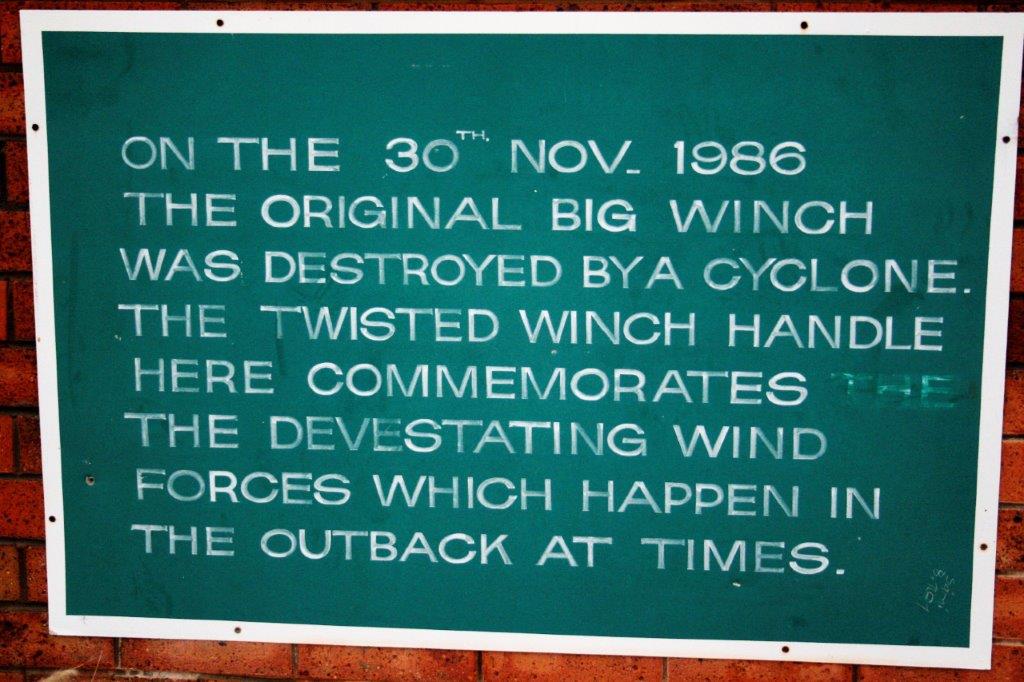
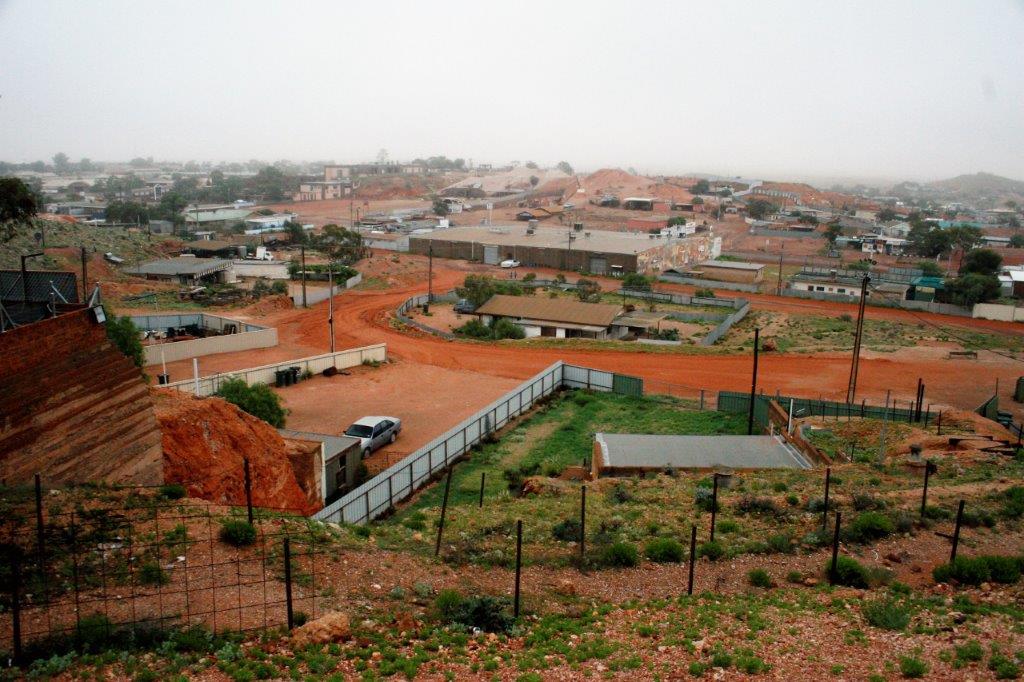
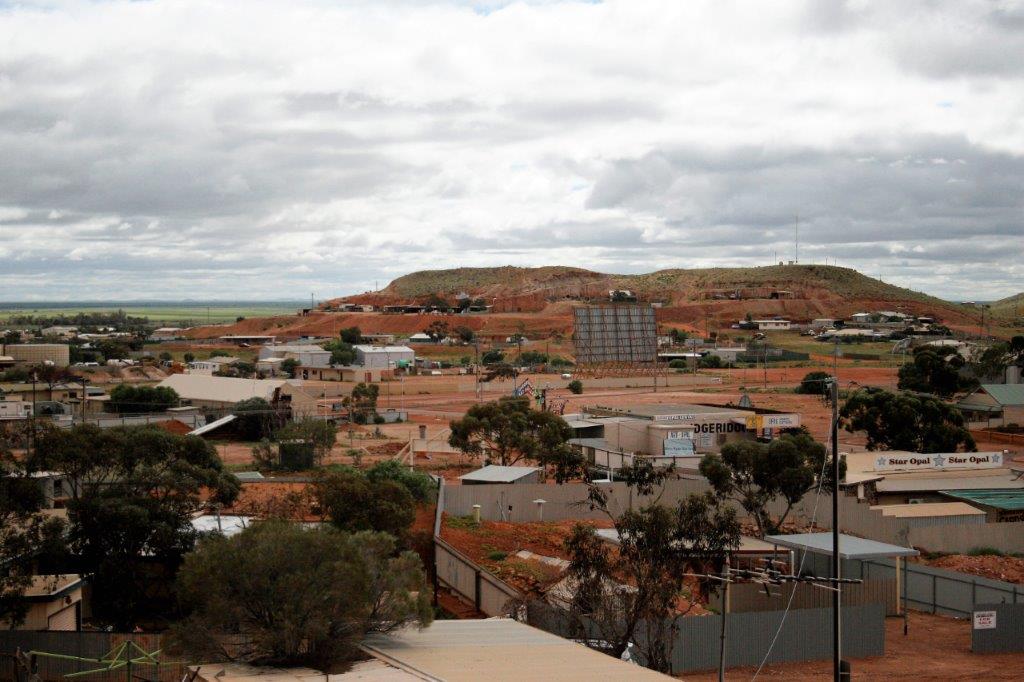
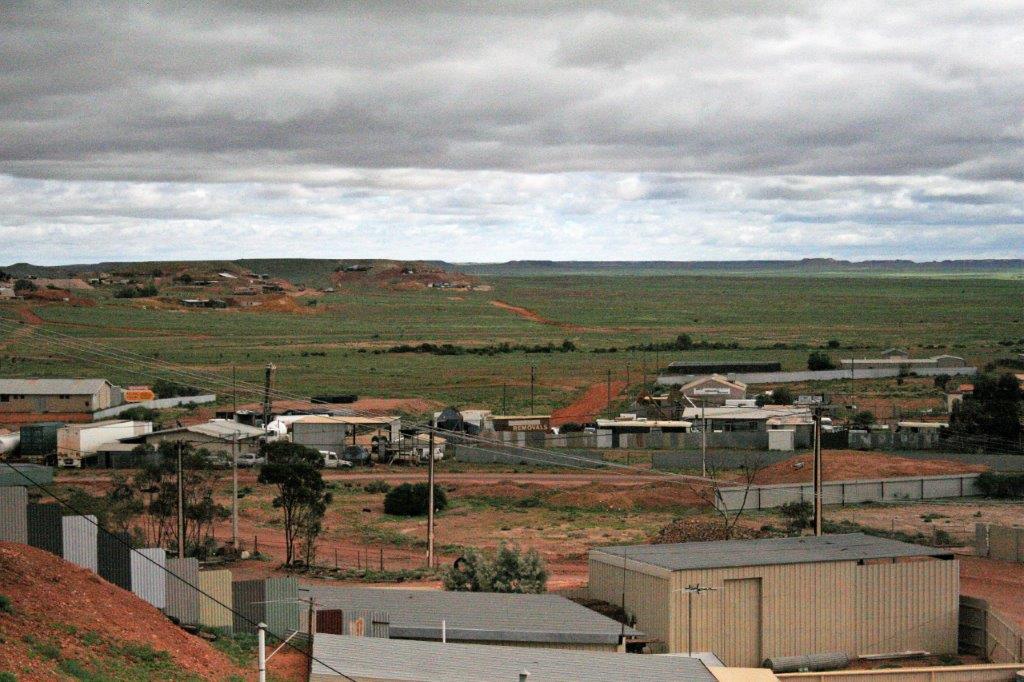
It had rained an inch overnight so Gunter had some gooey mud puddles to navigate; something he was not used to driving through.  I think he had fun using the 4WD for mud instead of ruts and dirt divots.The fog lifted enough that we could get a bit of an overview of the town from the top of the hill where ‘The Big Winch’ sits.  The population of Coober Pedy is about 3,500 people, of which 60% are of European descent.  The other 40% is made up of about 45 different nationalities so there is a lot of diversity in a small place. 
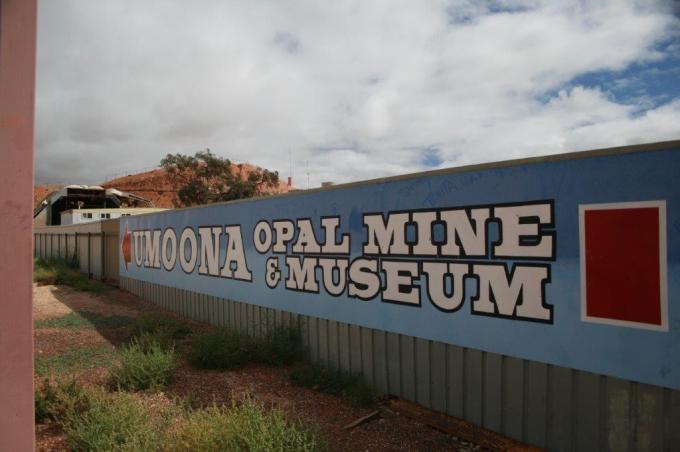
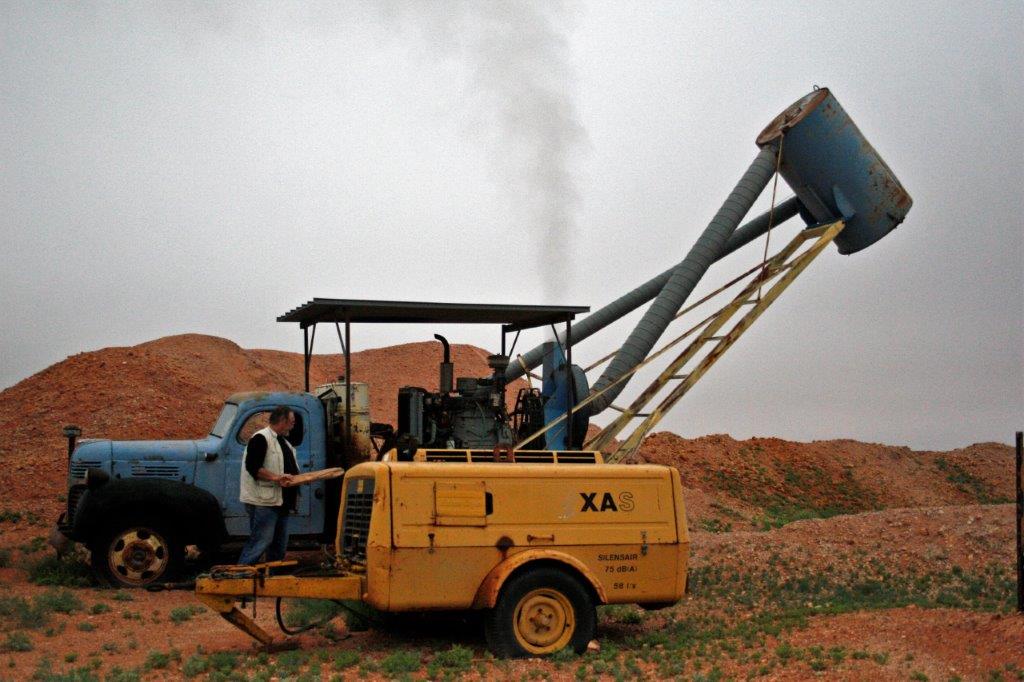
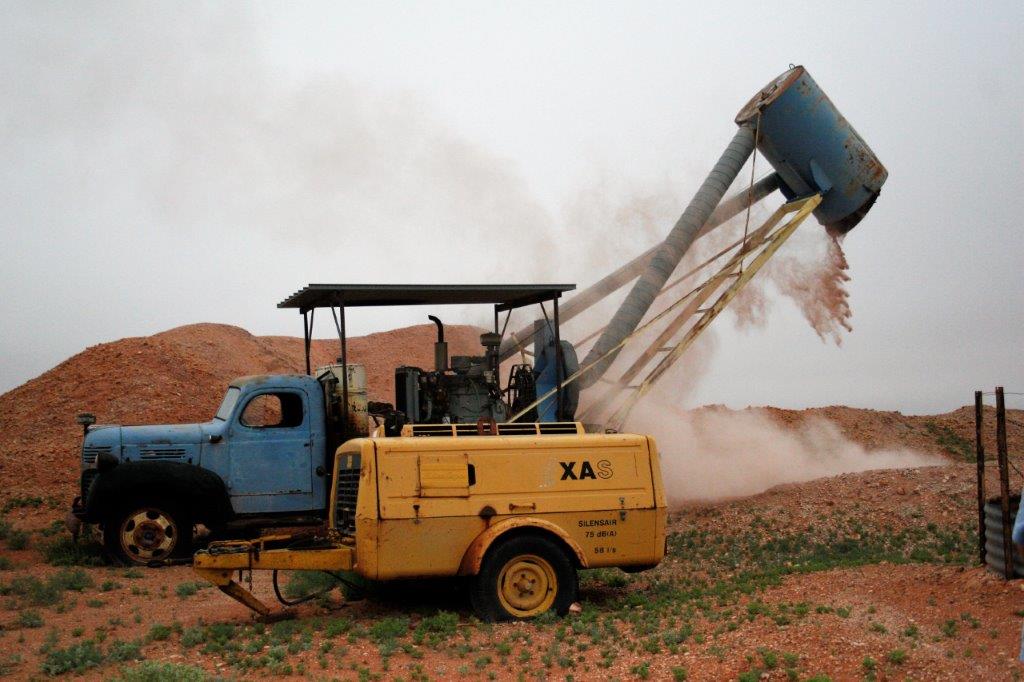
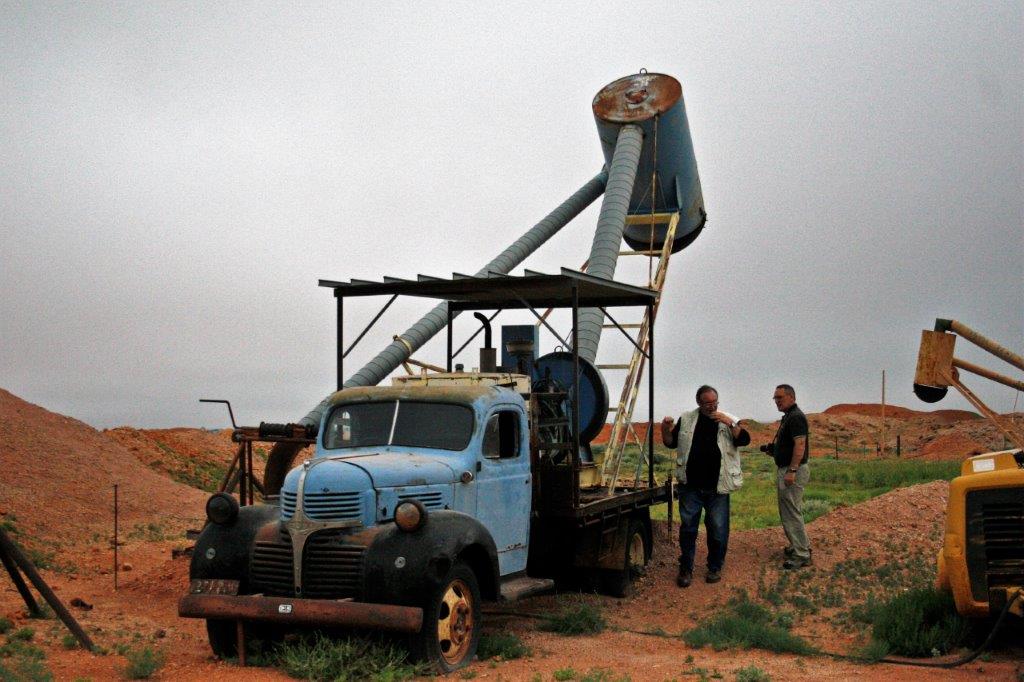
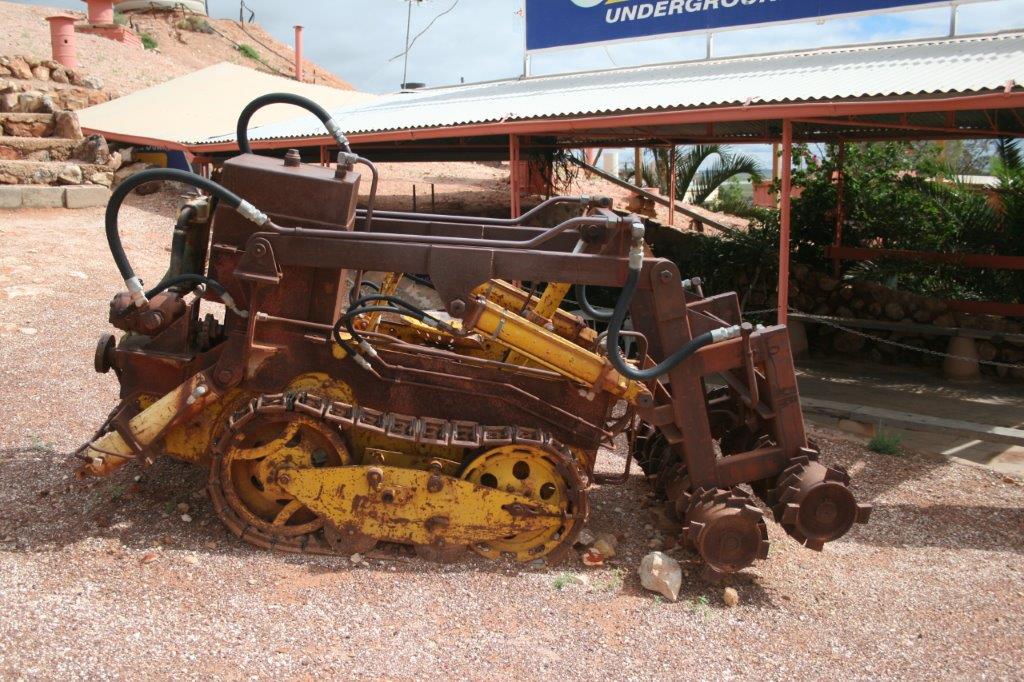
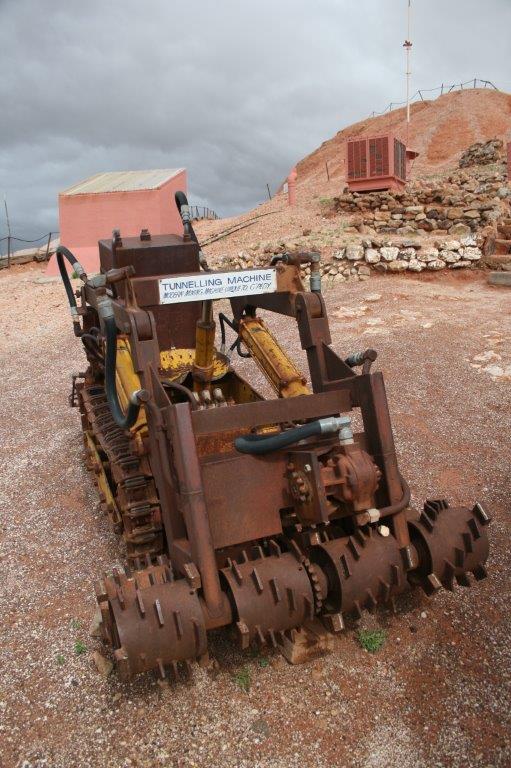
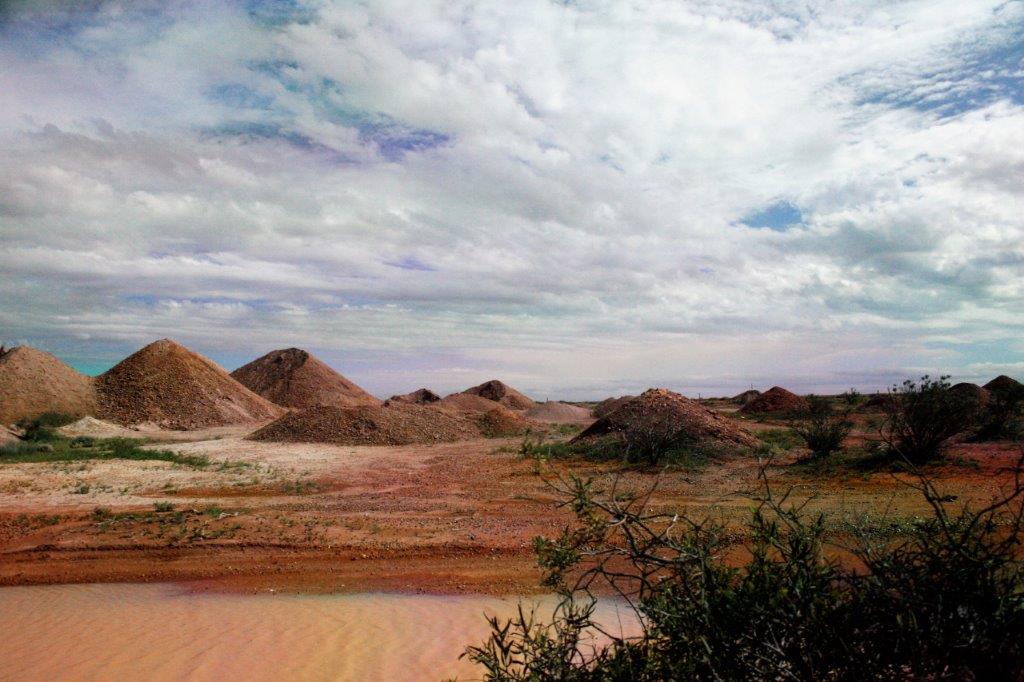
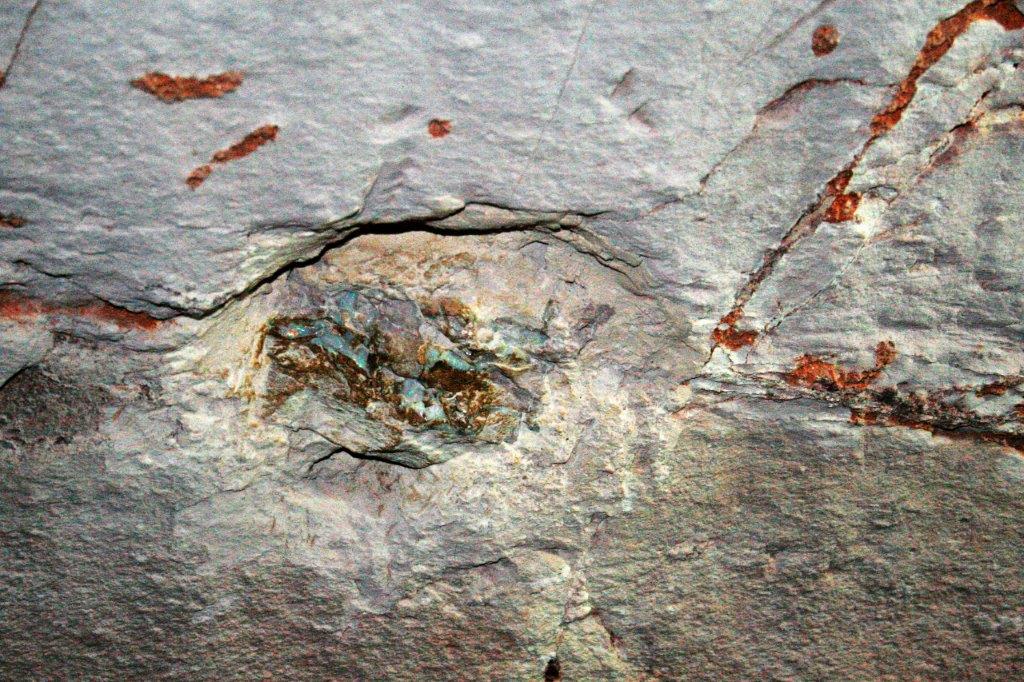
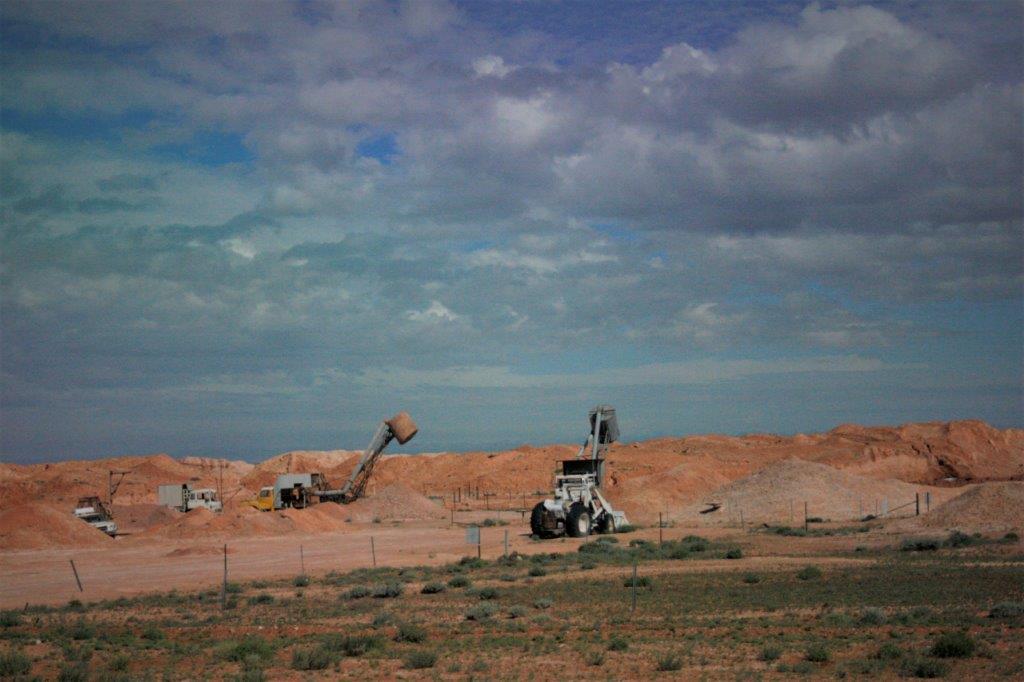
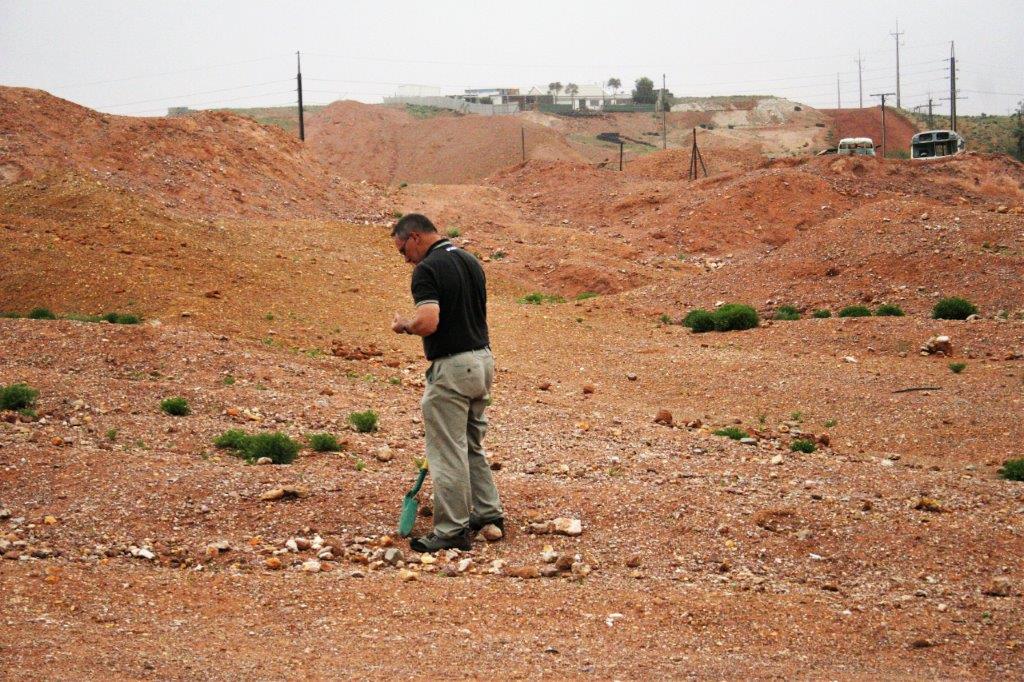
At the Opal Museum we watched a short (20 minute) film on Australian Opals and Coober Pedy.  Gunter then drove us to a mine site orignally worked in 1921 and later re-worked in the early 1980s by a group that thought using a bulldozer to move the earth and find the opal layers would be effective.  They soon discovered that it was not and abandoned the mine leaving behind huge piles of dirt, rocks, and opals.  We spent about an hour ‘noodling’ for opals.  Any we found, we could keep.  John actually found a piece that was big enough and of good enough quality to polish into a marketable stone. One of Gunter’s old mines was now part of the Opal Museum and he took us into the shafts.  Opal miners in Australia invented a motorized vacuum hose to suck out all the dirt and rocks chipped away while removing the opals.  John shoveled a few spadesful of dirt into the big hose and outside the mine Gunter started up the motor and blew the line.  It is a very effective way to move rubble and clean out the mine shafts.

Lunch was a very good chicken burger at John and Yako’s Pizza Place and while we were eating it began to rain again.  After lunch we went back to the hotel and looked at all their ‘Underground’ displays before going to our room and having a nap; which I rarely can do.  Dinner was a porterhouse steak at Tom and  Mary’s Greek Restaurant.  It was a good day; but a wet and foggy day in the desert of Coober Pedy.

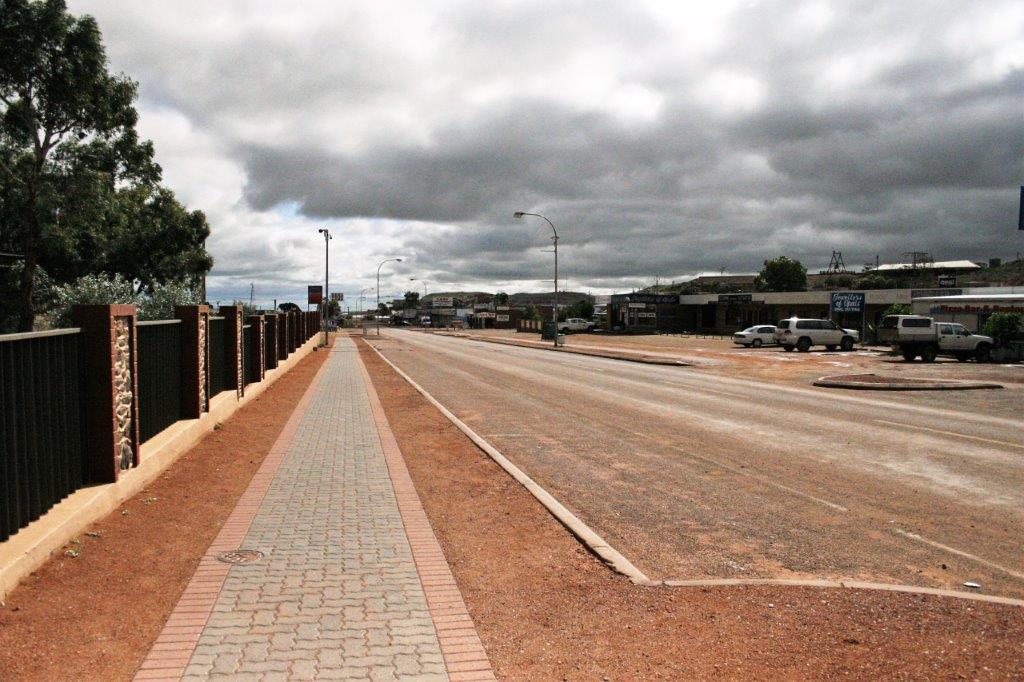
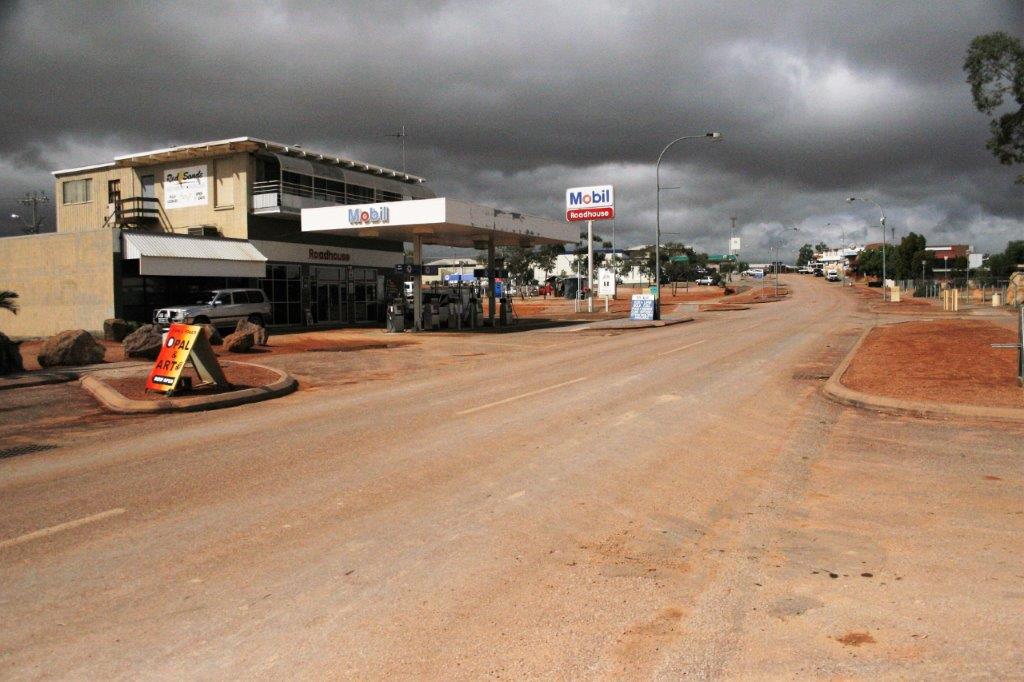
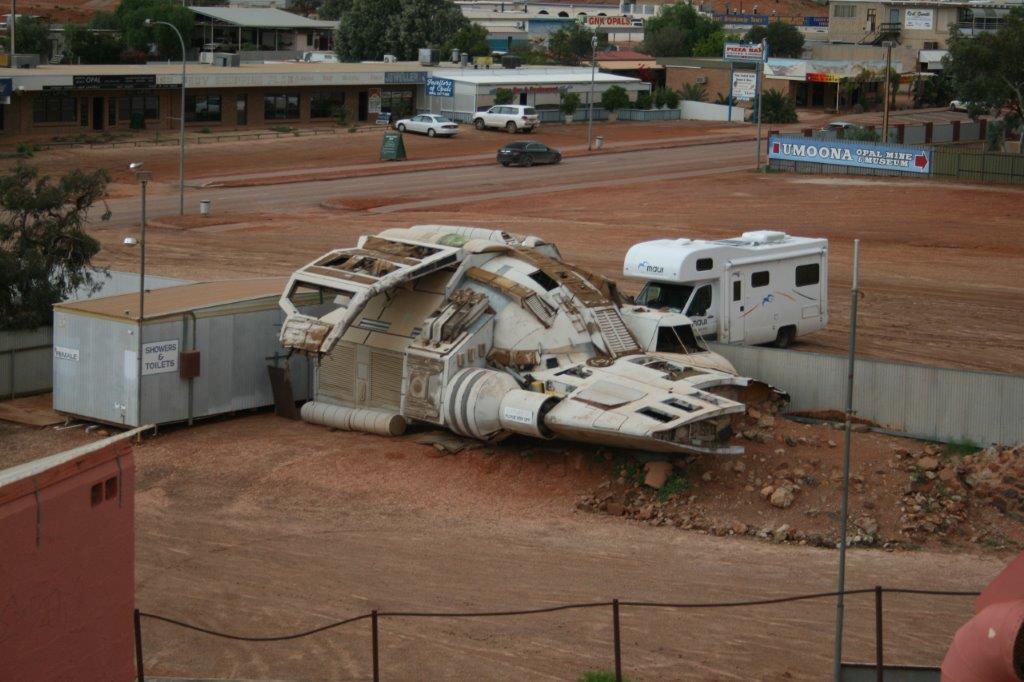
We had to check out of the hotel at 11 am the next day.  The shuttle was to pick us up at 1:30 for our 2:30 flight to Adelaide, which gave us some free time so we left our luggage at the reception desk and went for a walk.  There is not a lot to Coober Pedy.  It has three restaurants, two supermarkets, a gas station, a drive-in theater, the hotel, the churches, and not too much else; and because it was Sunday the streets, never very busy anyway, were virtually deserted. The red desert was green due to all the rain.  The area around Coober Pedy has been used in several ‘alien world’ films.

Our plane was an hour late arriving, and a bit late leaving so it was 5 o’clock by the time we landed in Adelaide – in the pouring rain.  At last we had a hotel that had free internet so I was able to download many of my photos to the photo-sharing site I was using to show folks at home what we were up to (this trip was three years before I began to write my travel blog).

We collected our luggage from storage and re-packed our bags for our four-day camping tour in the Outback. Bedtime was not late as we had an 8:30am shuttle to take us back to the airport for our flight to Alice Springs.  For some strange, unknown reason a person can fly from Darwin on the north coast, to Alice Springs, to Coober Pedy, to Adelaide in the south, but there is no route to go from Adelaide to Coober Pedy, to Alice Springs, to Darwin.  This meant we had to fly from Adelaide to Coober Pedy and back to Adelaide before we could fly to Alice Springs – and then up to Darwin after we finished our camping trip.


2011 March 17 & 18 – Days 71 & 72 – Coober Pedy, Australia

The underground houses and opal mines of central Australia have always had a fascination for me.  How could a place be lived in that was so hot you had to live underground?  And how does one mine opals anyway?

Before we left Canada for our trip to Australia we had booked a three-day-four night excursion to Coober Pedy, the main opal town in central Australia.  We turned in our rental car and took a quick one-hour flight from Adelaide to Coober Pedy in the northern part of the state of South Australia.  You can drive to Coober Pedy.  There is a road that goes north right through the middle of Australia from Adelaide up to Darwin but there are almost no towns, nor services, nor water.  Coober Pedy is only a nine hour drive north, just under 850 km (526 miles) but unless you are really well outfitted with gear and supplies, flying is best.

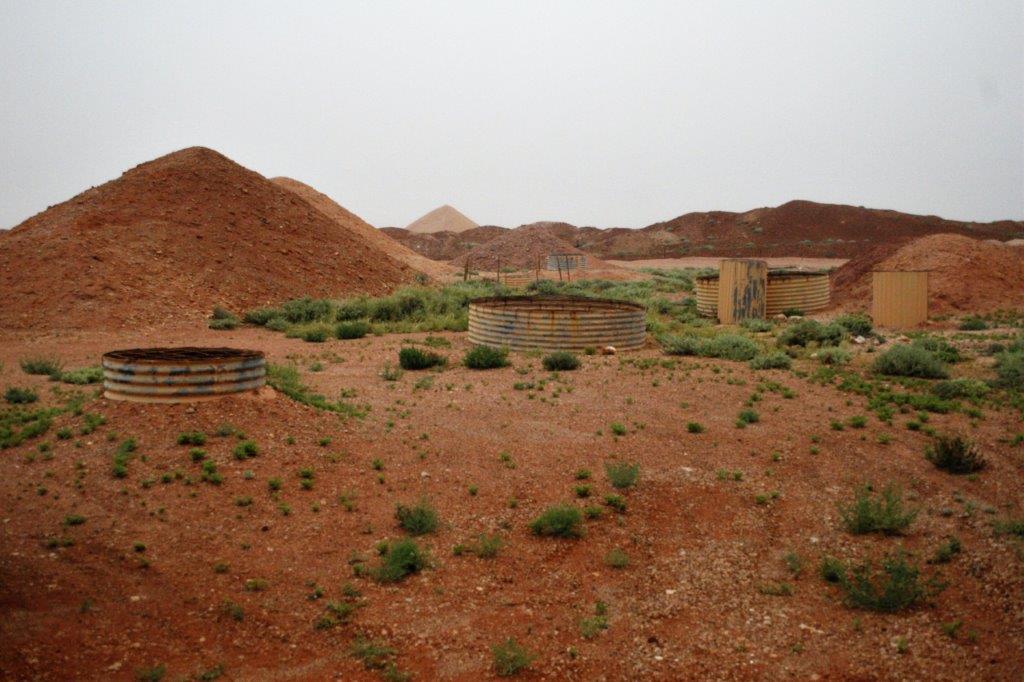
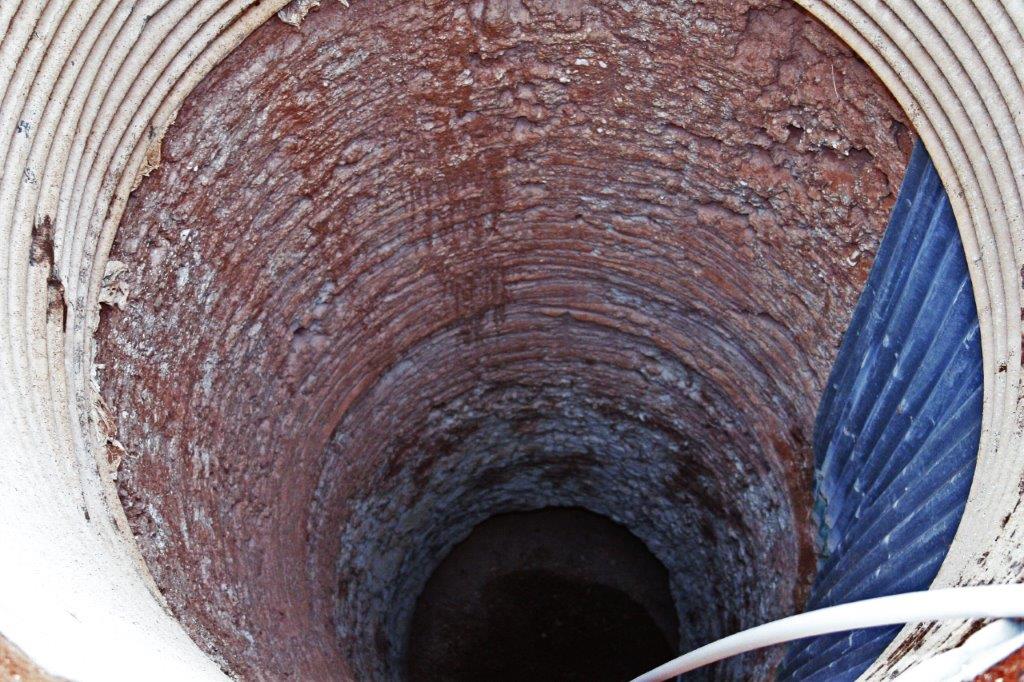
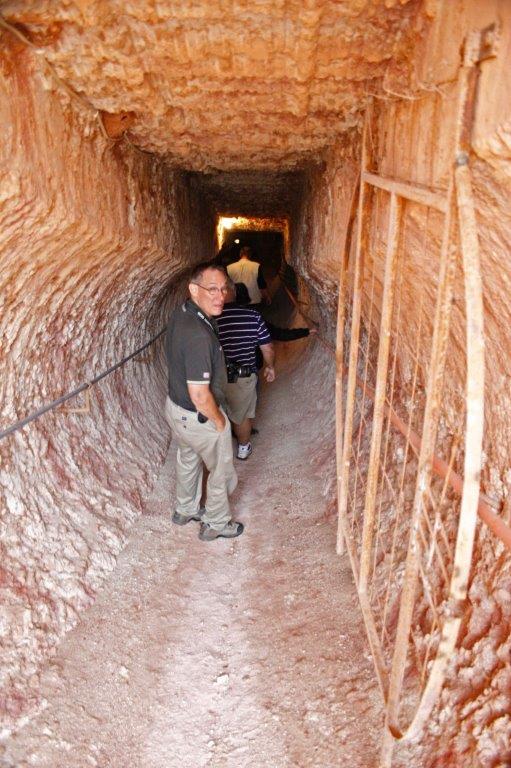
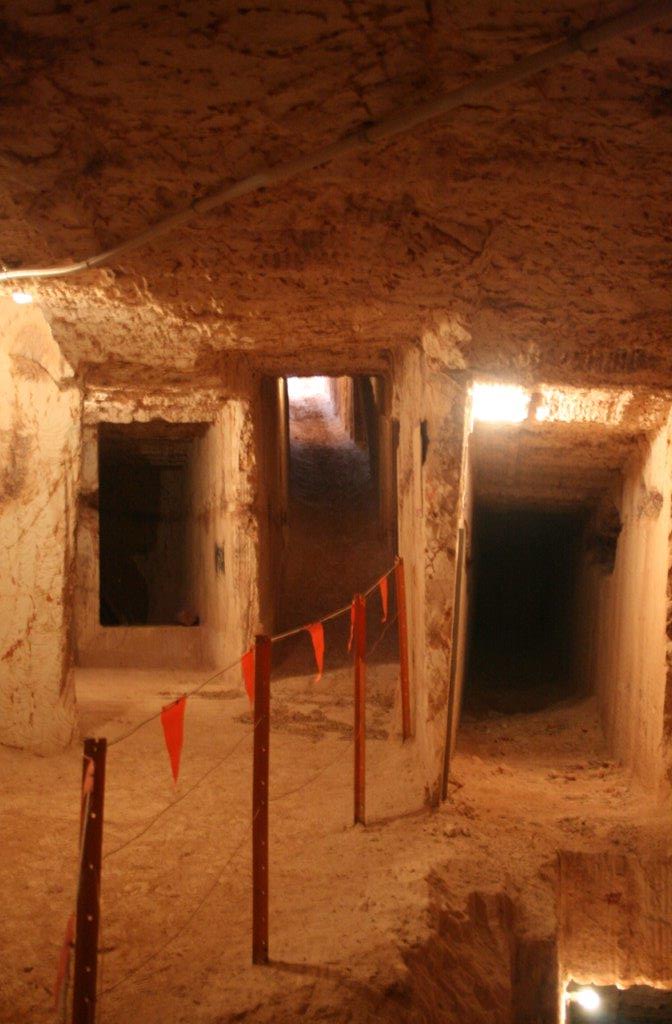
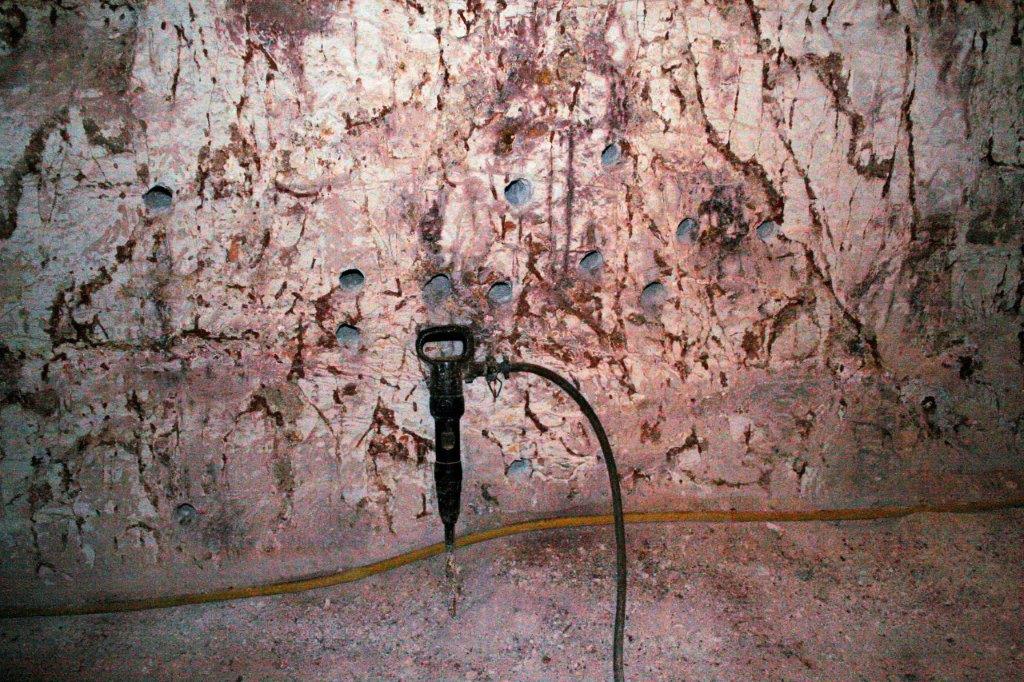
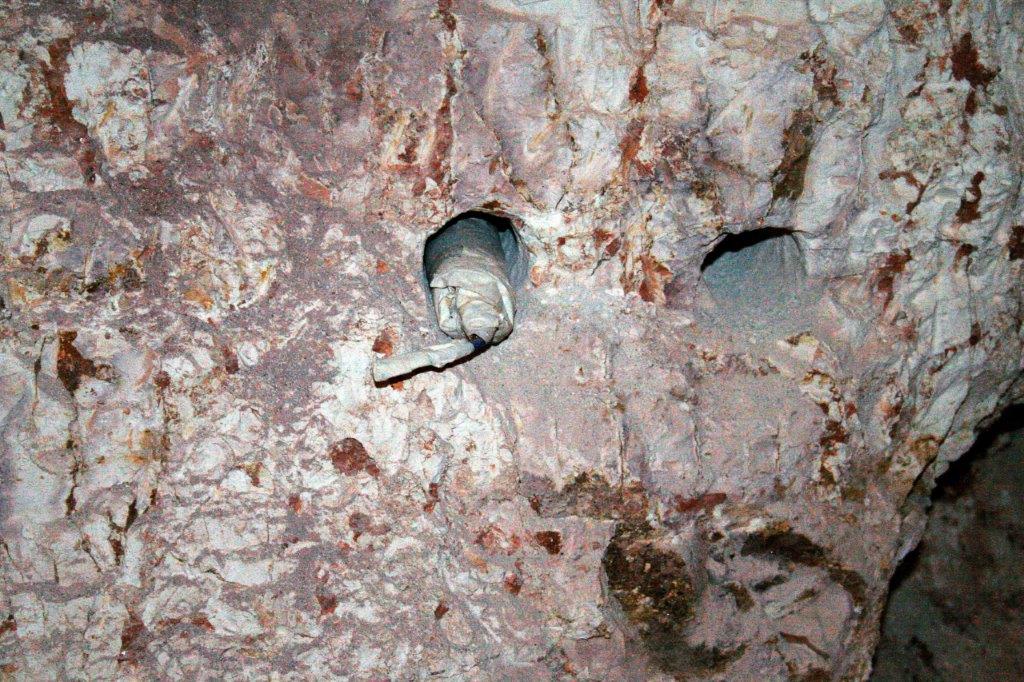
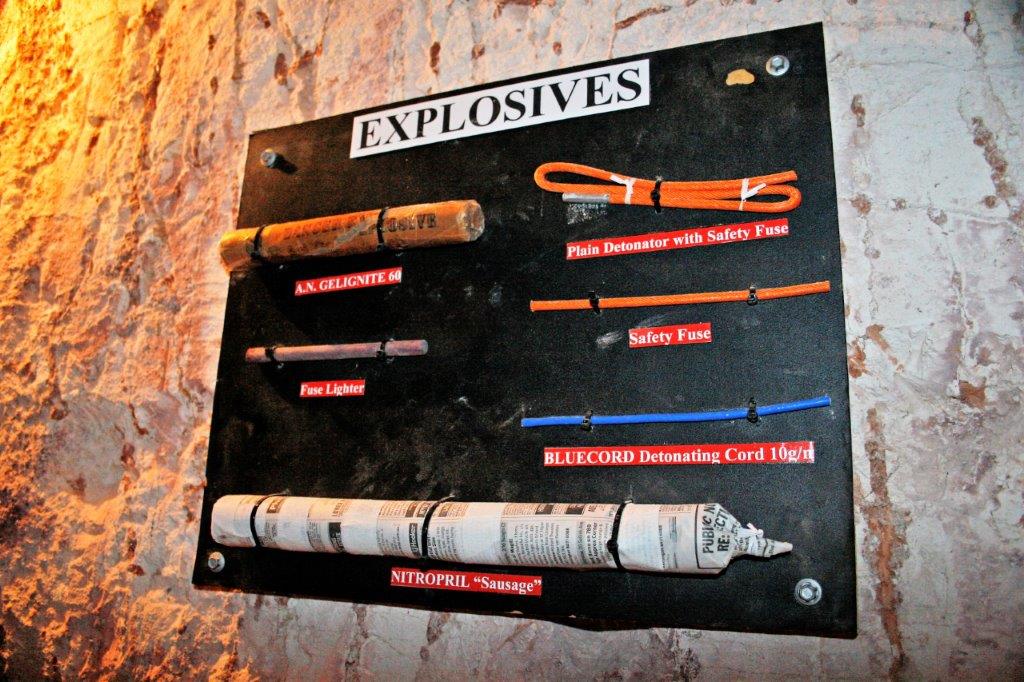
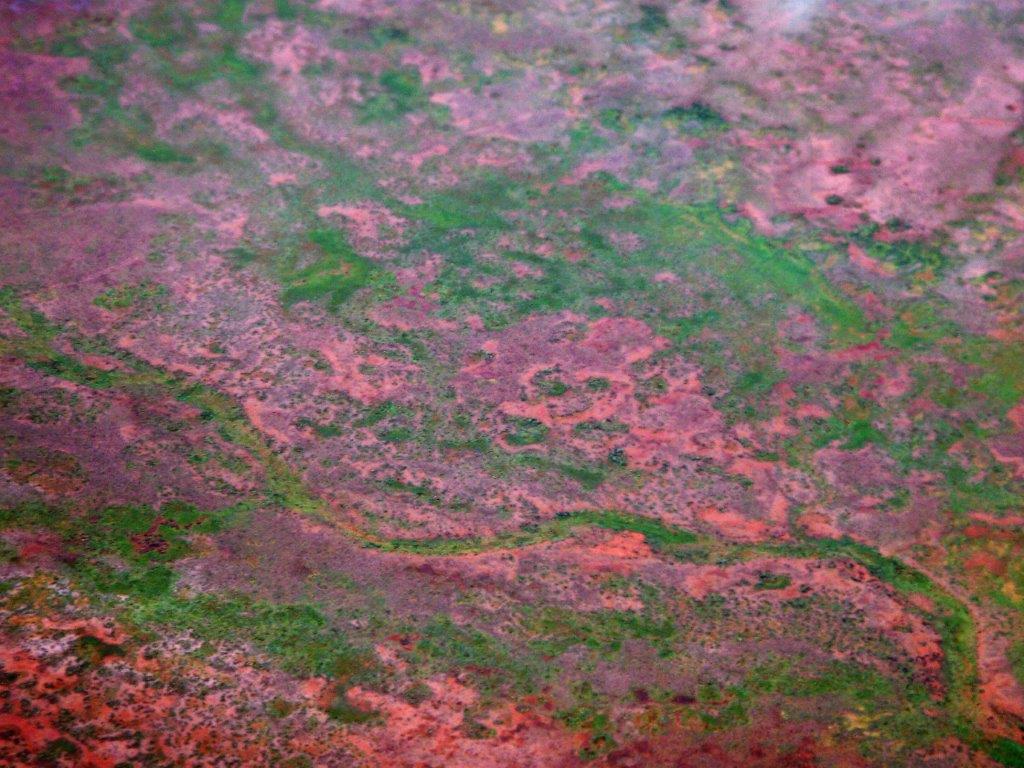
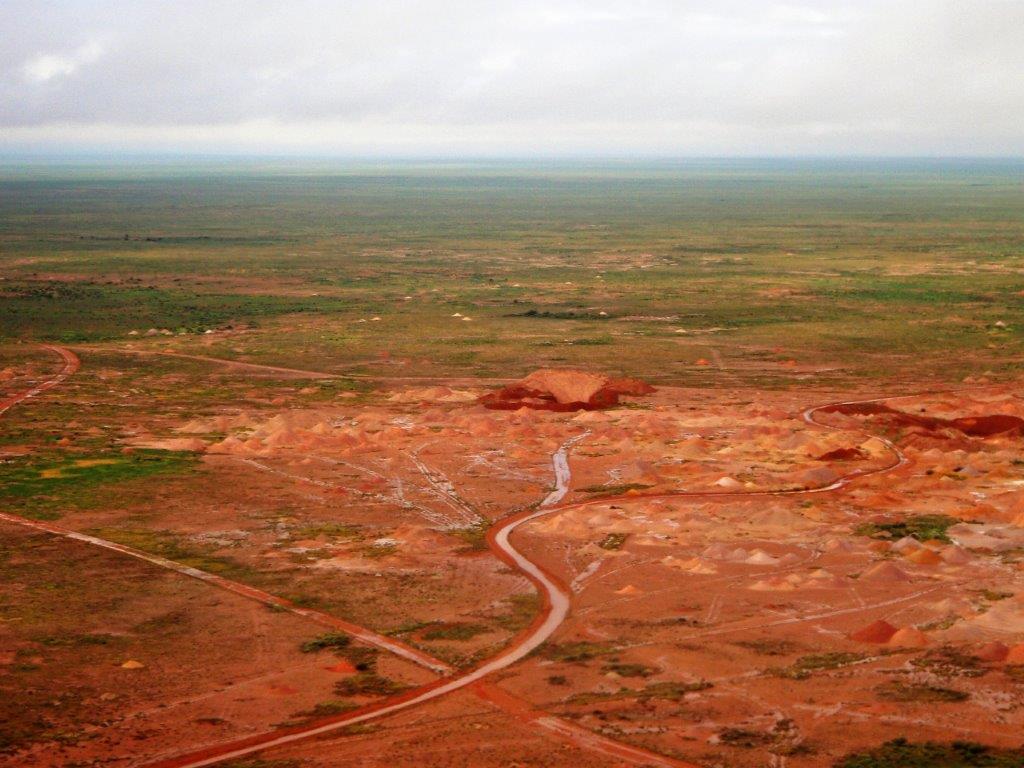
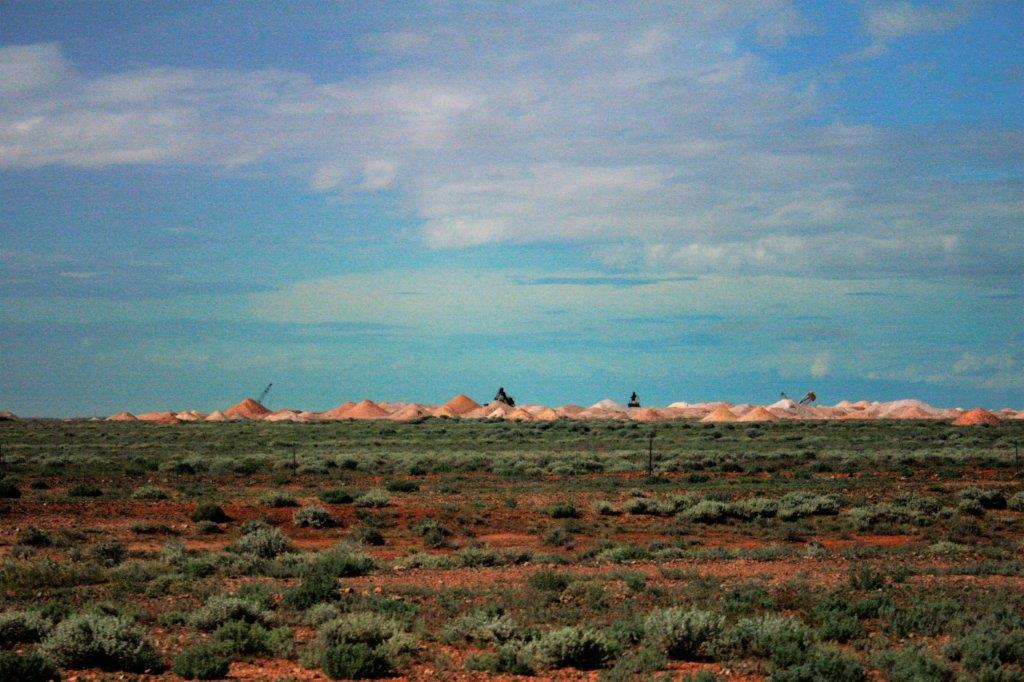
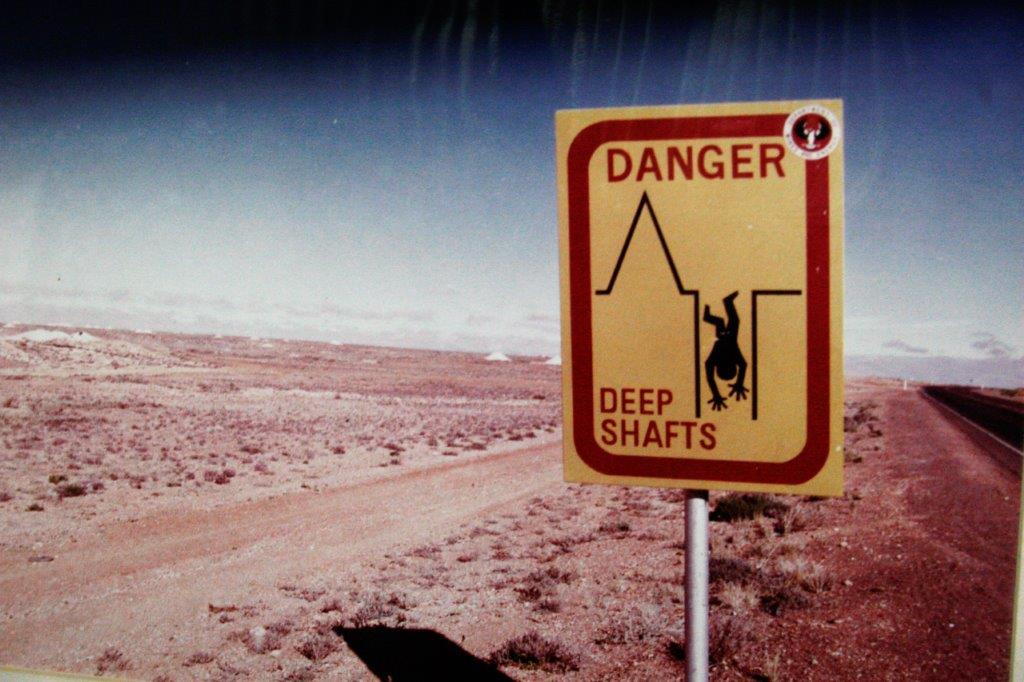
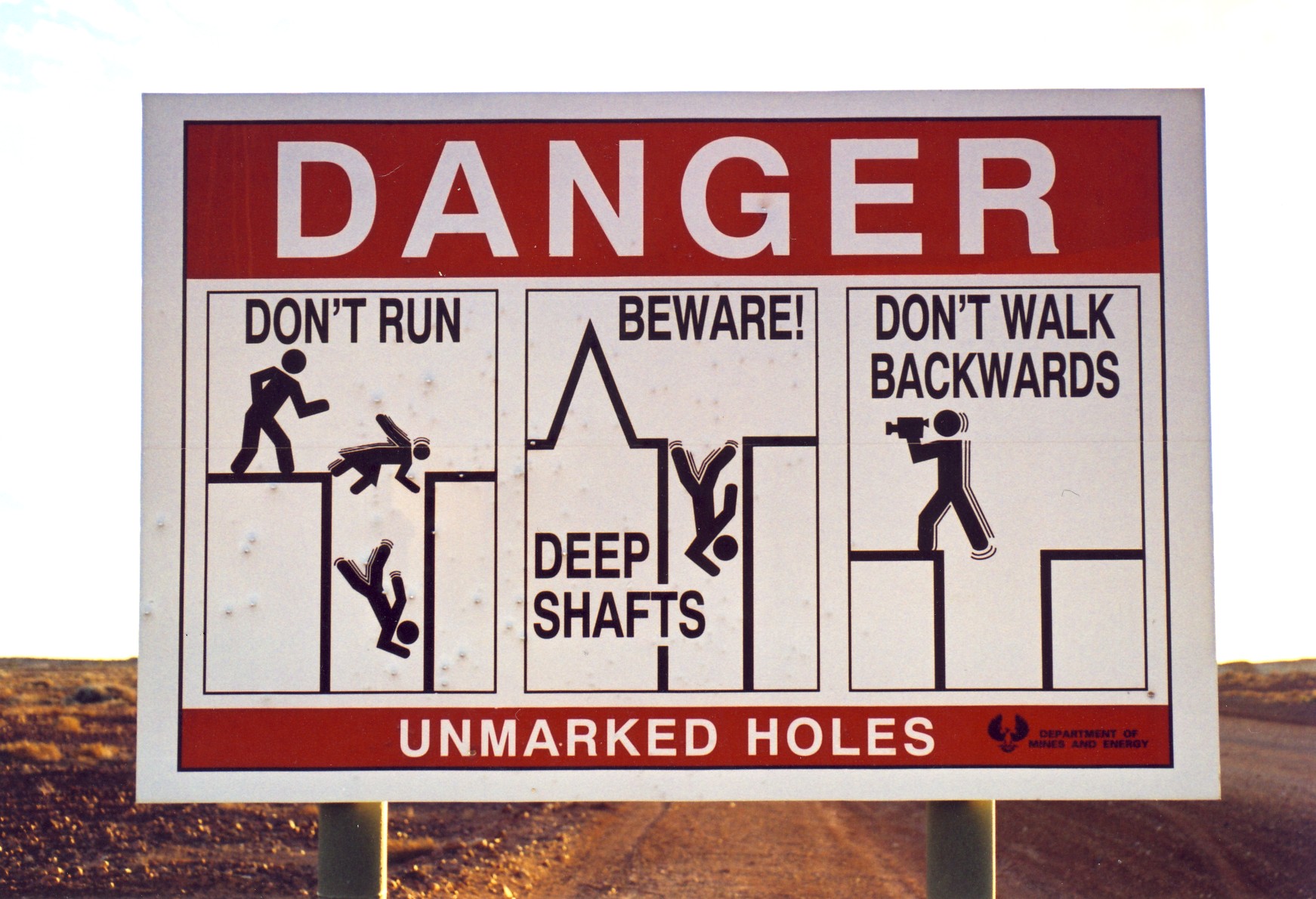
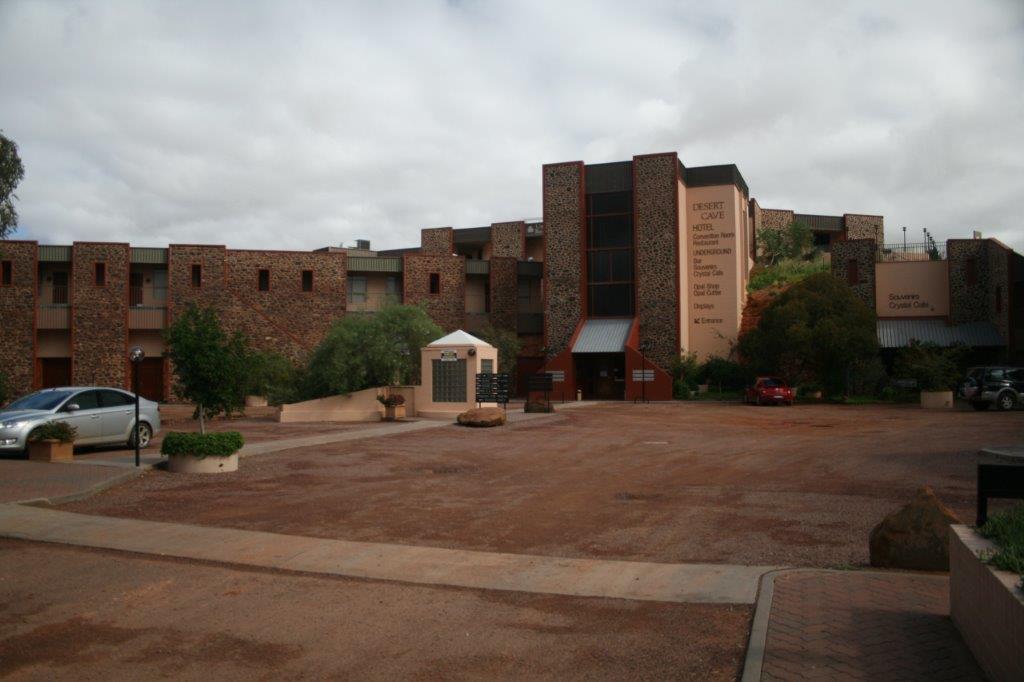
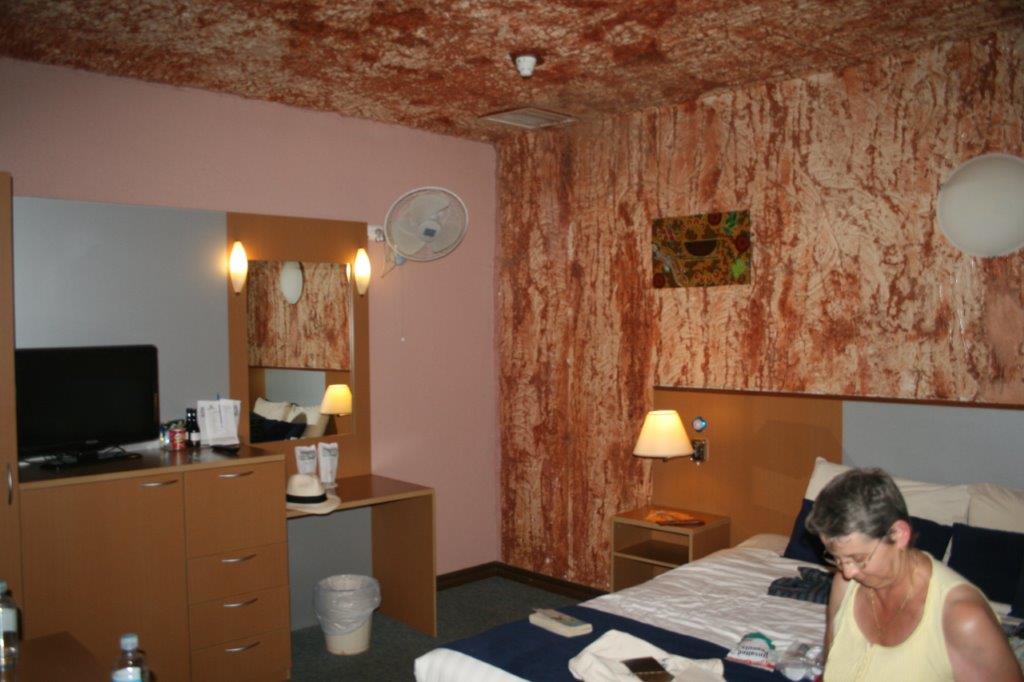
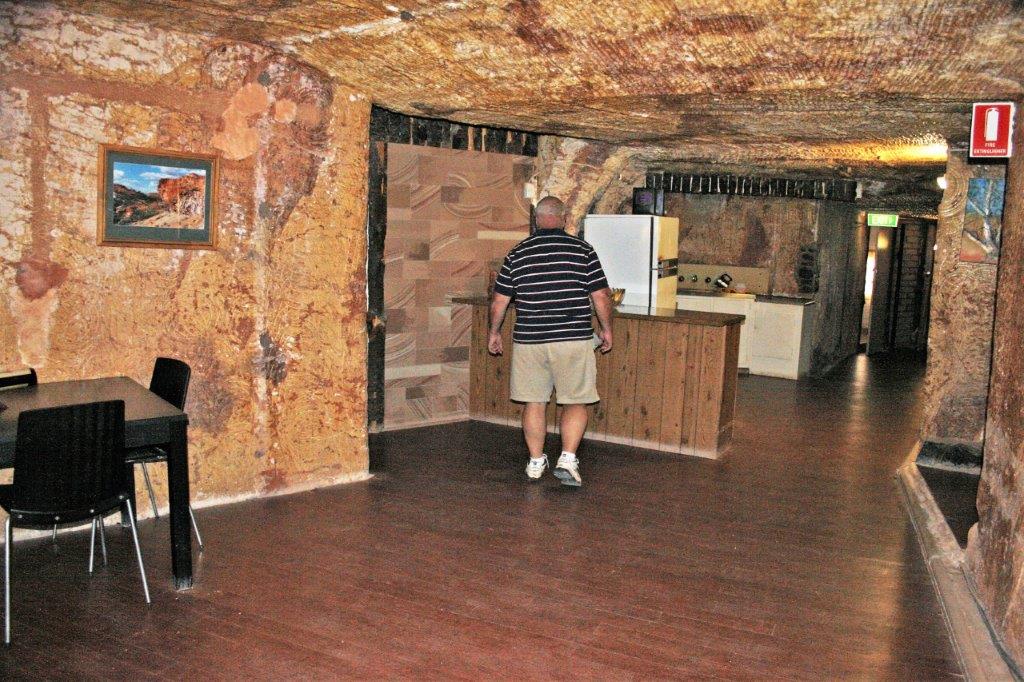
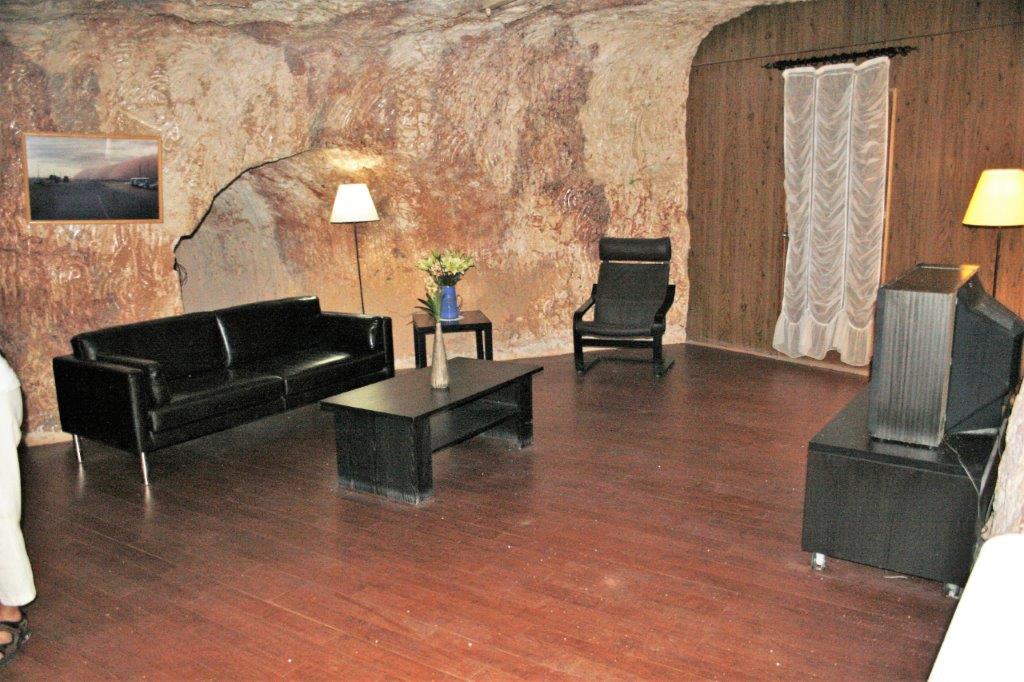
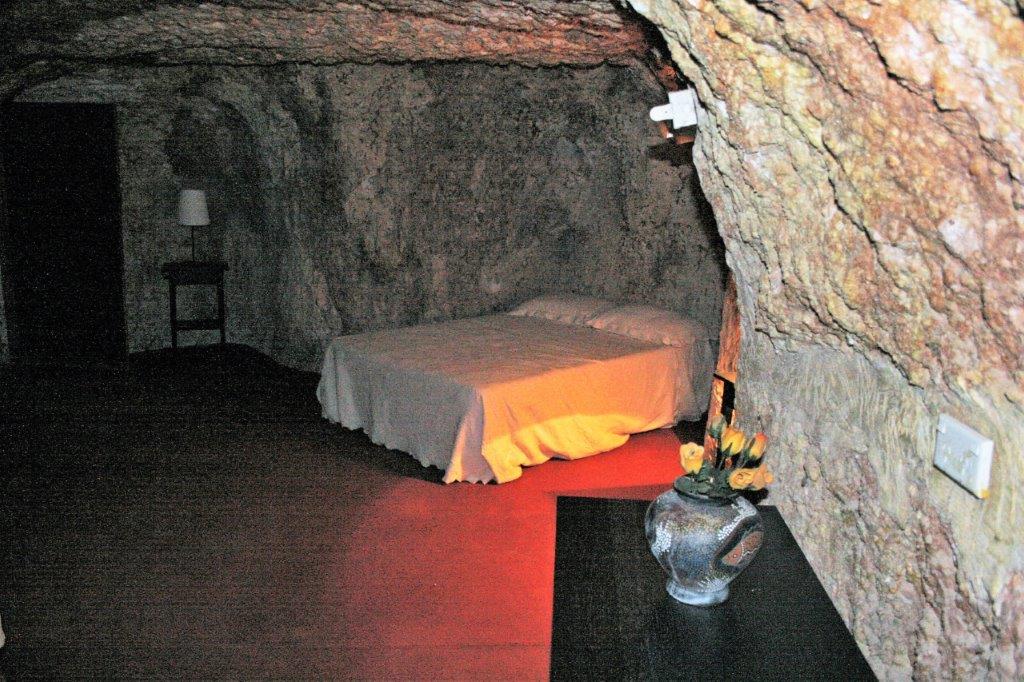
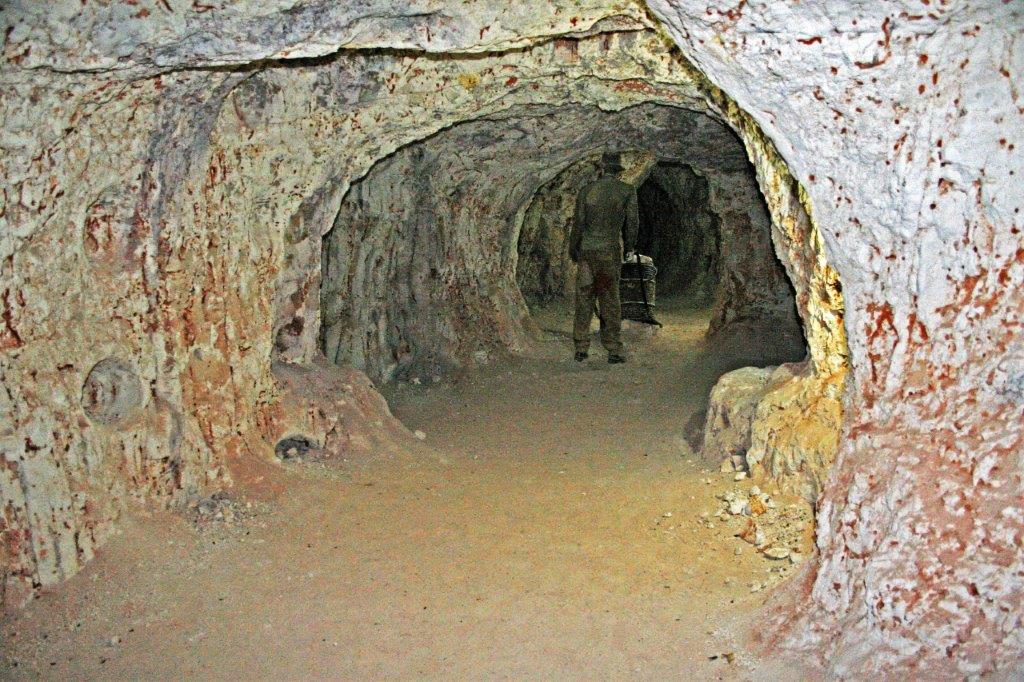
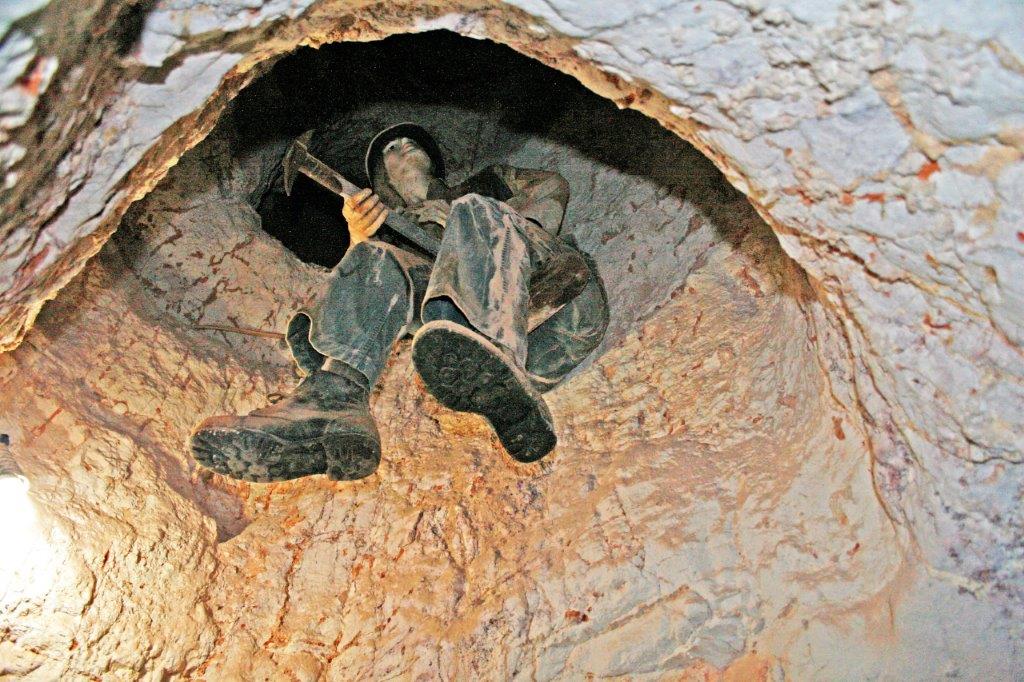
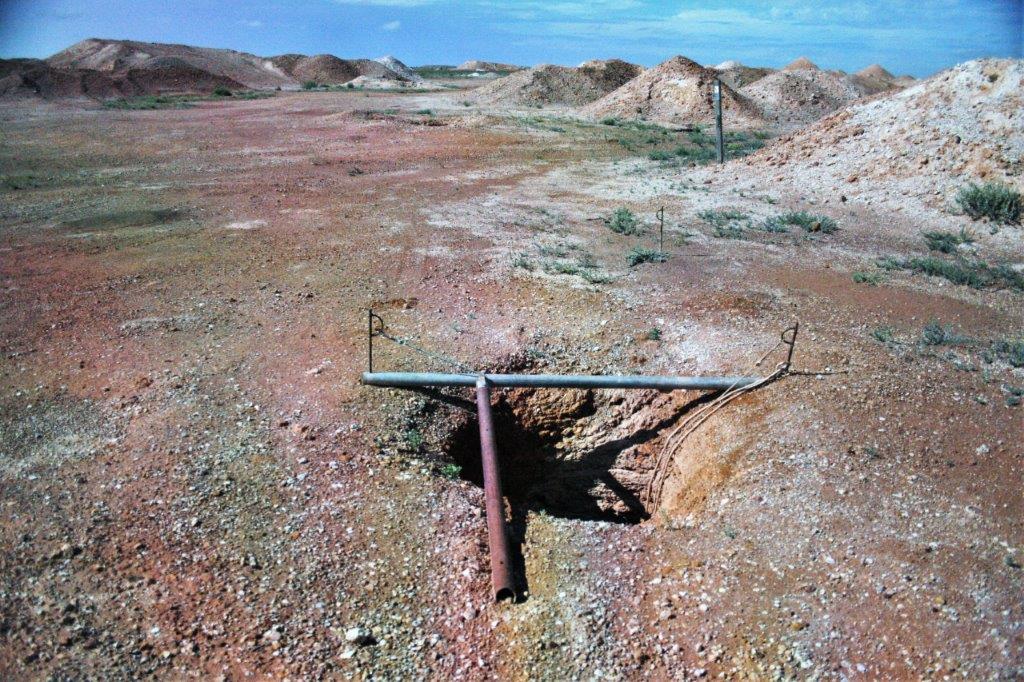
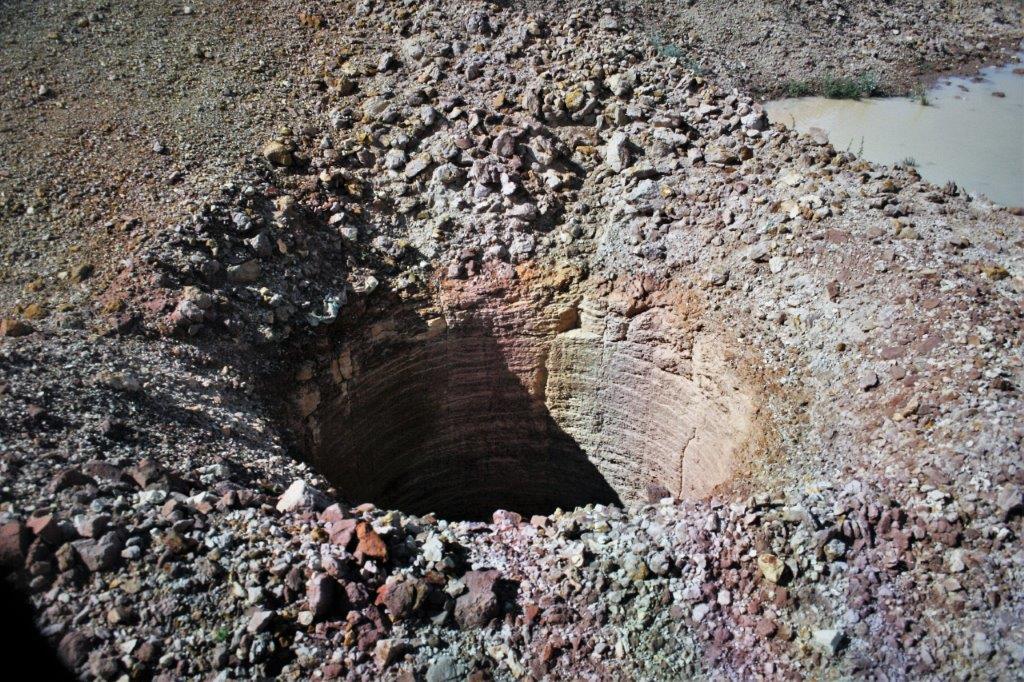
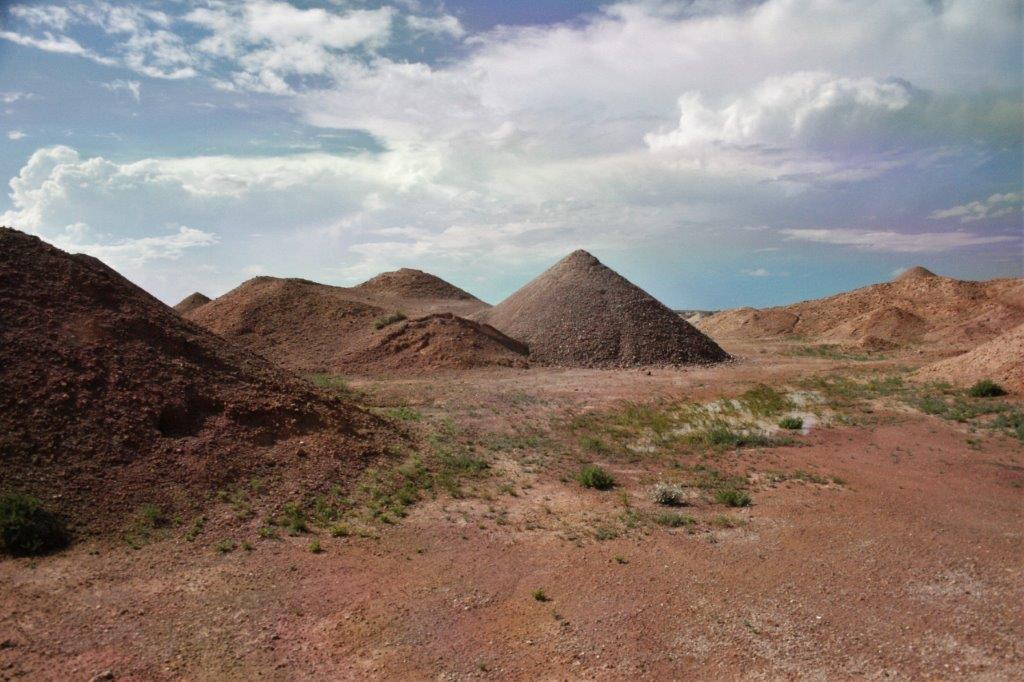
The red desert of the middle of Australia is something I have wanted to see since I was a child.  Unfortunately for me, after 10 years of drought, Australia had a very rainy year.  There was flooded areas the size of France in the north east and enough rain came down in Coober Pedy to turn my red desert green and have such slick mud puddles that the driver who picked us up at the airport had to put the jeep in 4WD to navigate them.  He said we were so fortunate to be there that year when everything was so green as it is never like that. (Locals that have lived there since the 1930’s had never seen so much green grass).  I wanted him to go pull up all the green grass so I could see the miles and  miles of red dirt that I was hoping to see.  But, even though it was not what I really wanted to see it was still hot and still lovely in a different way and I was totally stoked to be in Coober Pedy. As you fly over the area surrounding Coober Pedy all you see for as far as you can see are holes in the ground with piles of dirt beside them.  Hundreds, thousands, of bore holes – many as deep as 100′. We learned later that miners drill a bore hole that is about a meter across – average shoulder width -then a fellow is lowered by rope down the hole sitting on a wood plank.  As he descends he checks for the telltale opal layer in the sandstone.  If he doesn’t find anything they bore deeper;  if he does see an opal line they start to drill horizontally following the layer, blasting out rock and chipping out opals.  The holes are never filled in even when the opals have all been removed because it is necessary for miners to know where any drilling has taken place.  If the holes were filled someone may begin to drill horizontally following an opal layer thinking it was hard sandstone ground above and suddeny everything caves in because it is loose fill.  It is also impossible to put back all the rock and dirt you have taken out since it cannot be compressed as hard as it originally was.  The ratio of mullet (what they call the stuff removed from the bore hole) is 3:1 so you would still have piles of dirt sitting all over anyway.We checked into the Desert Cave Underground Hotel which is cut deep into the side of a sandstone hill.  Our room had direct access to the outside but many other rooms were down long corridors, obviously with no windows, so they would have no idea what the weather was outside unless they got dressed and walked to an exit to look out.  Normally knowing the weather is not an issue as it is always hot and sunny, but in 2011 the weather regularly went from sun to rain to cloud to sun to rain again in an hour. Our Coober Pedy excursion package included two tours.  We did one the first day and one the second. The first tour included a ride around town before going out to the Breakaways (a rock formation) and then a drive out to the Dog Fence (5,500 km of fencing to keep the dingos away from the cattle and sheep).  Unfortunately the access road was flooded so instead our guide Gunter took us to a few extra places around town.
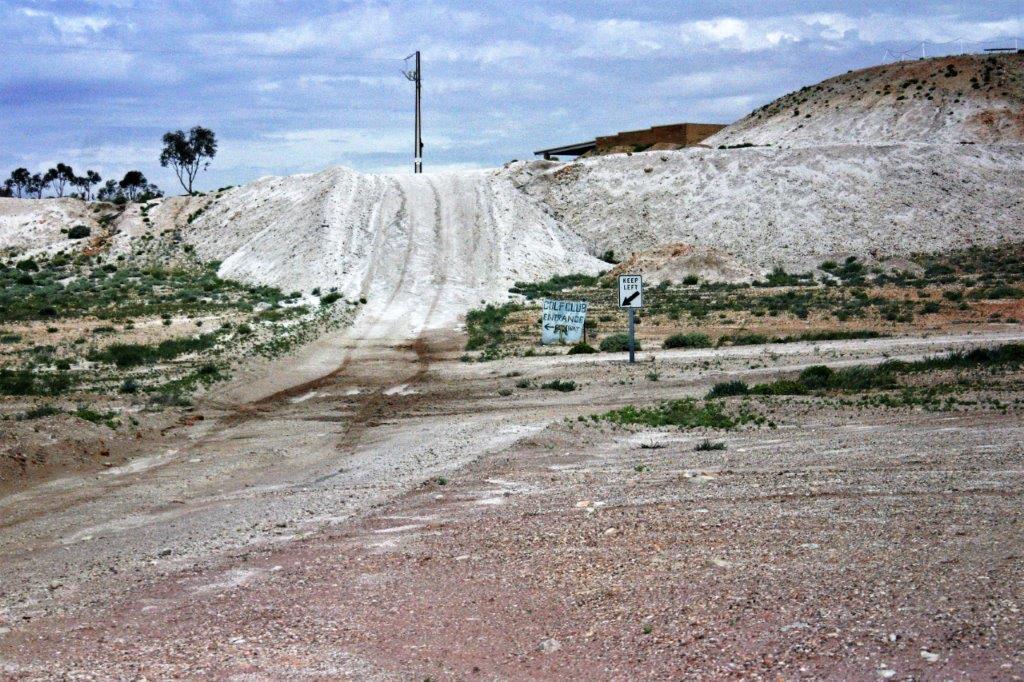
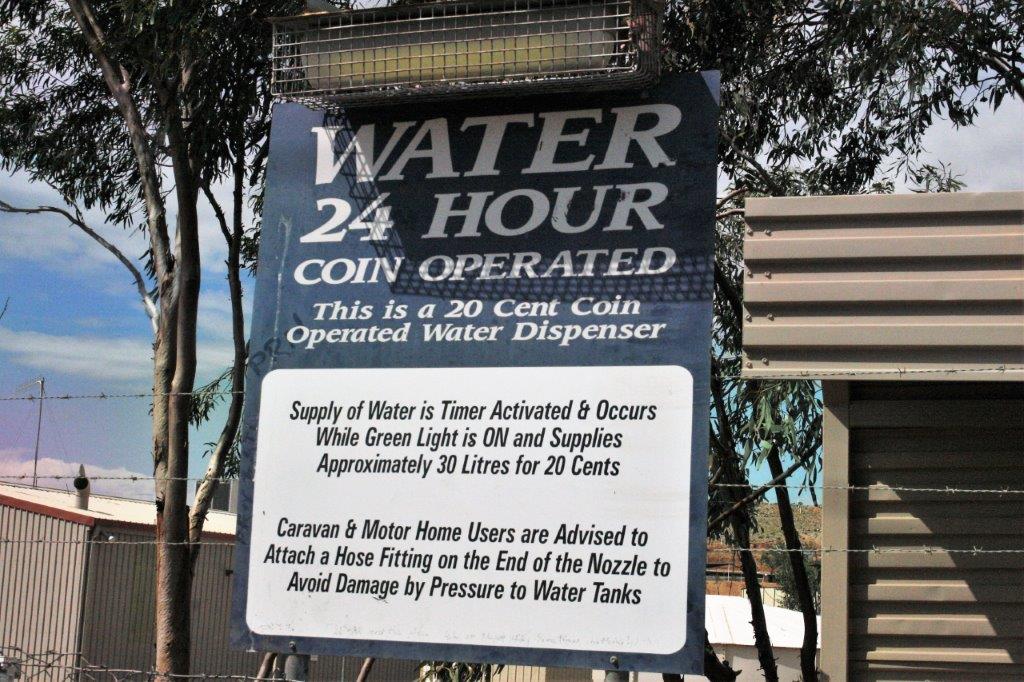
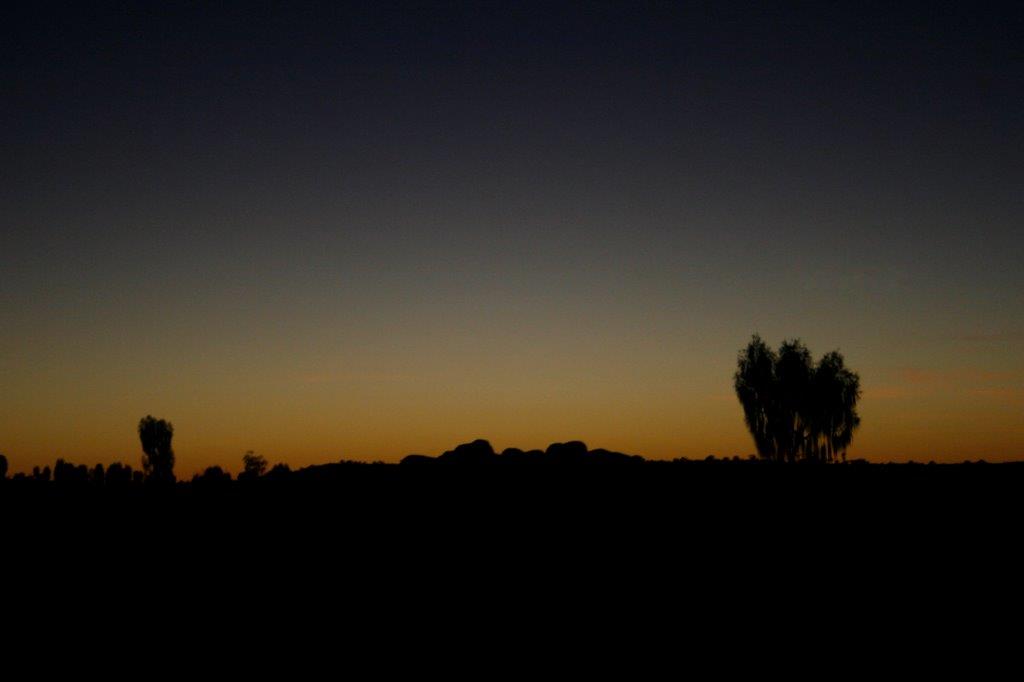
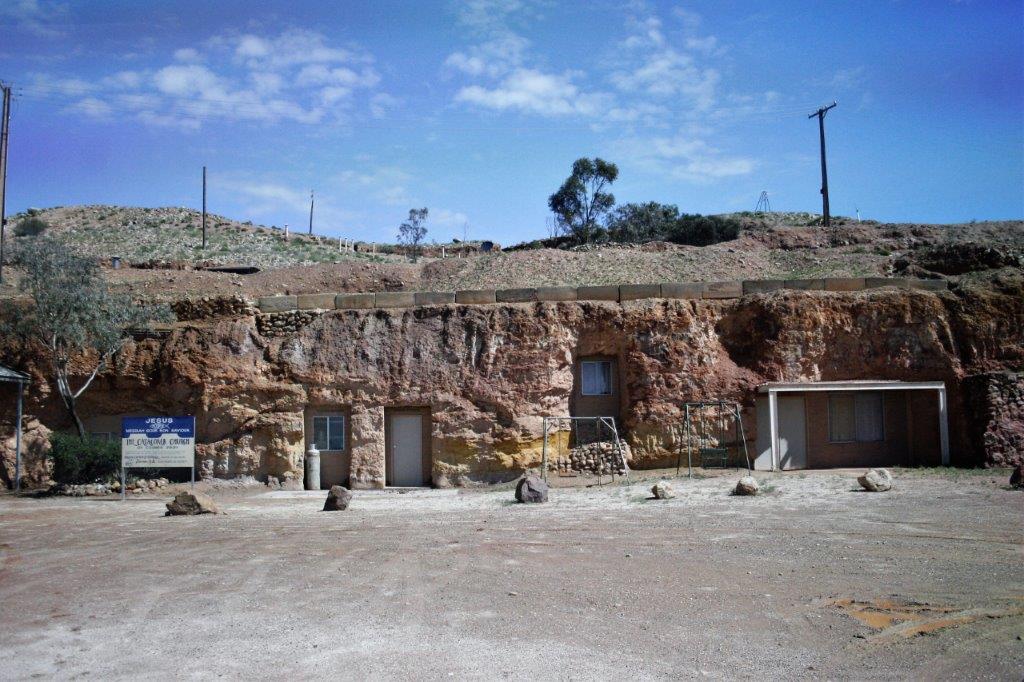
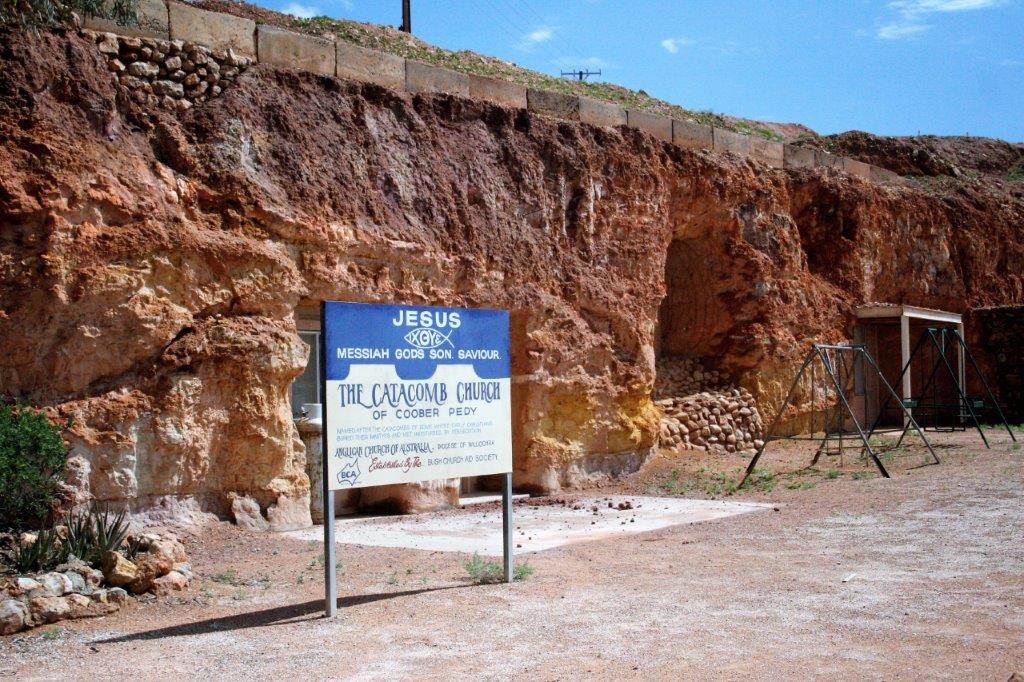
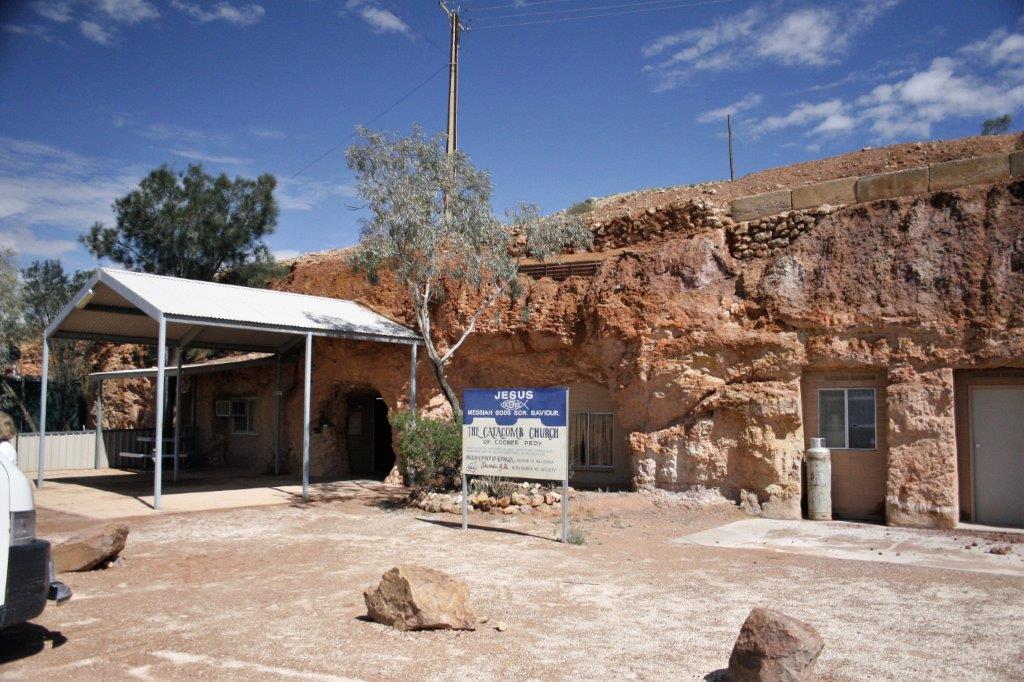
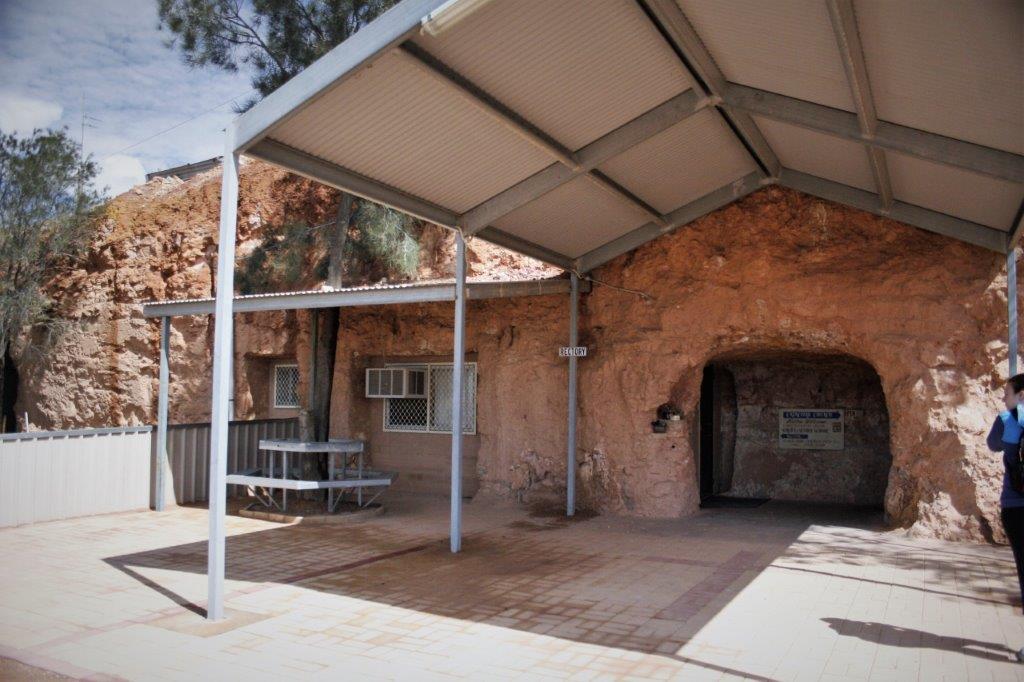
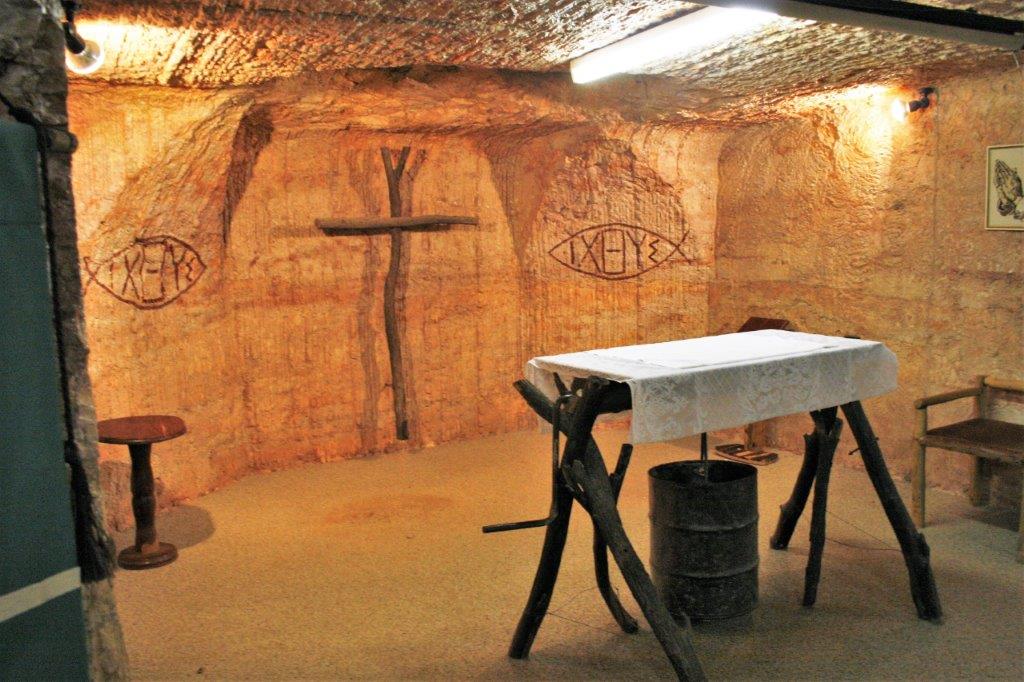
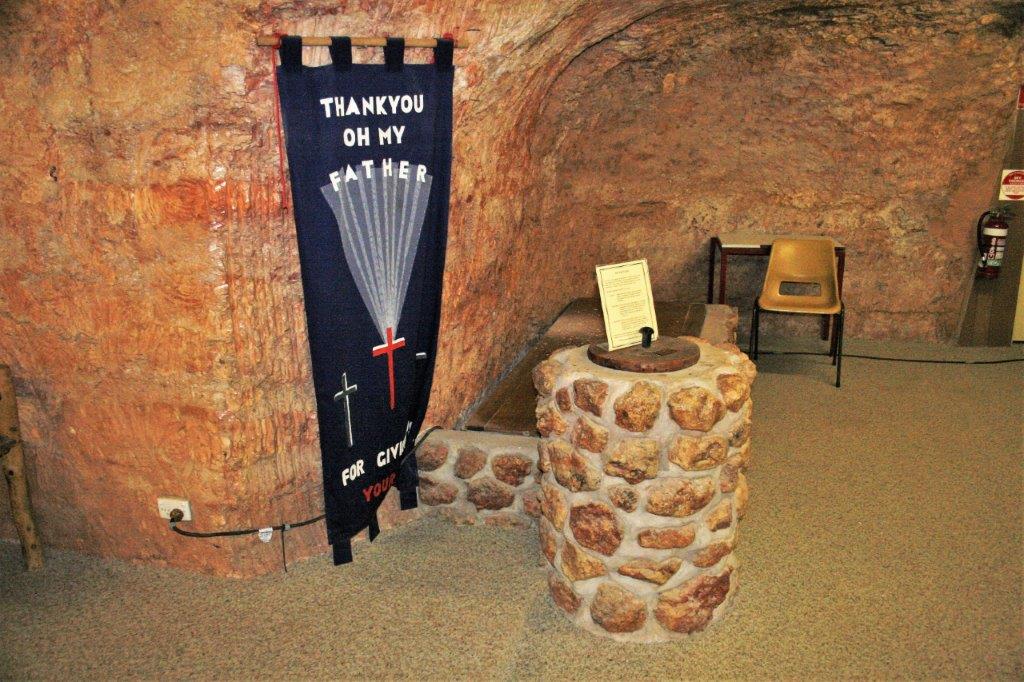
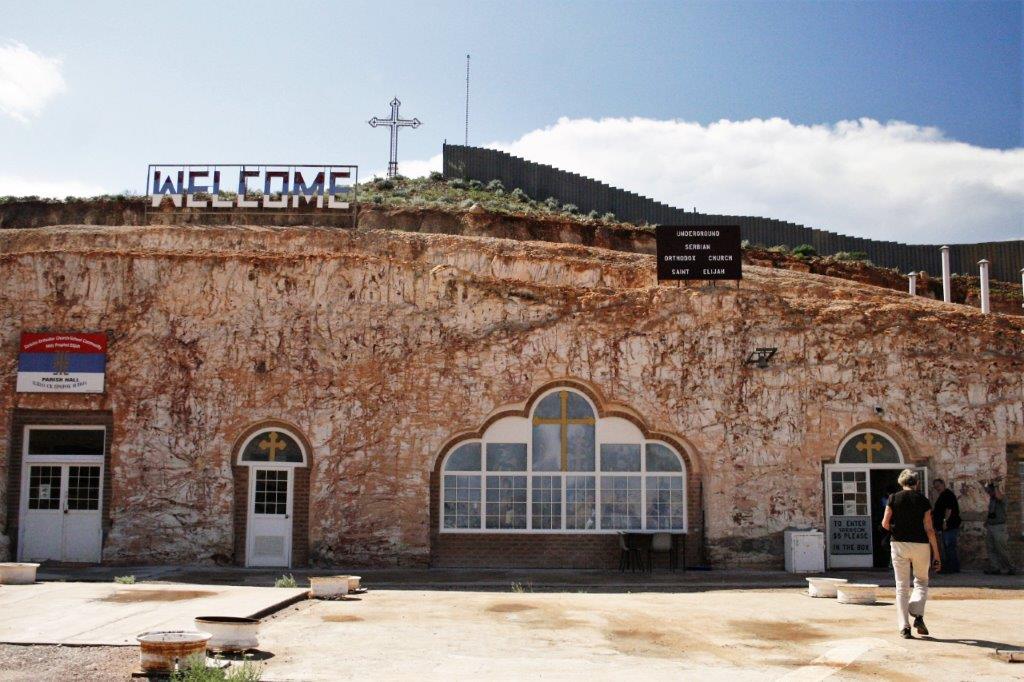
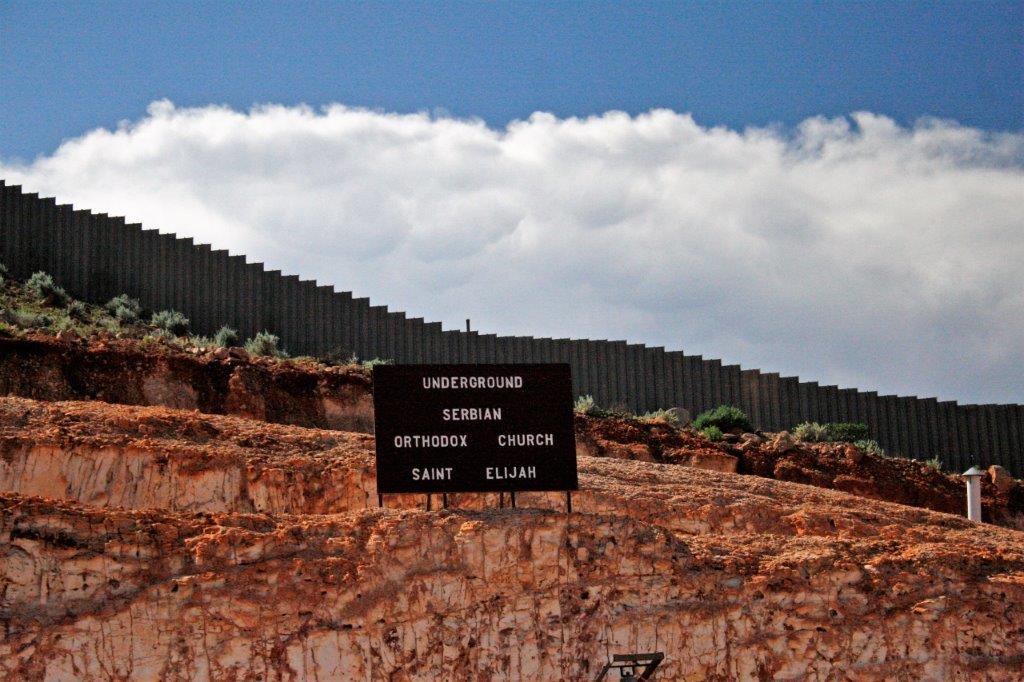
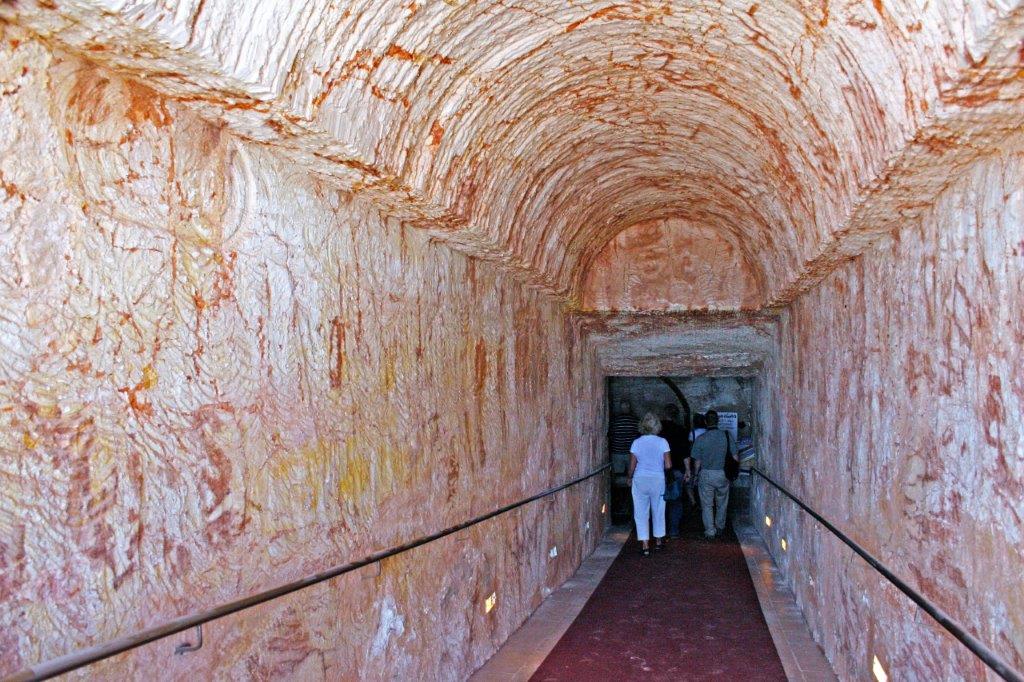
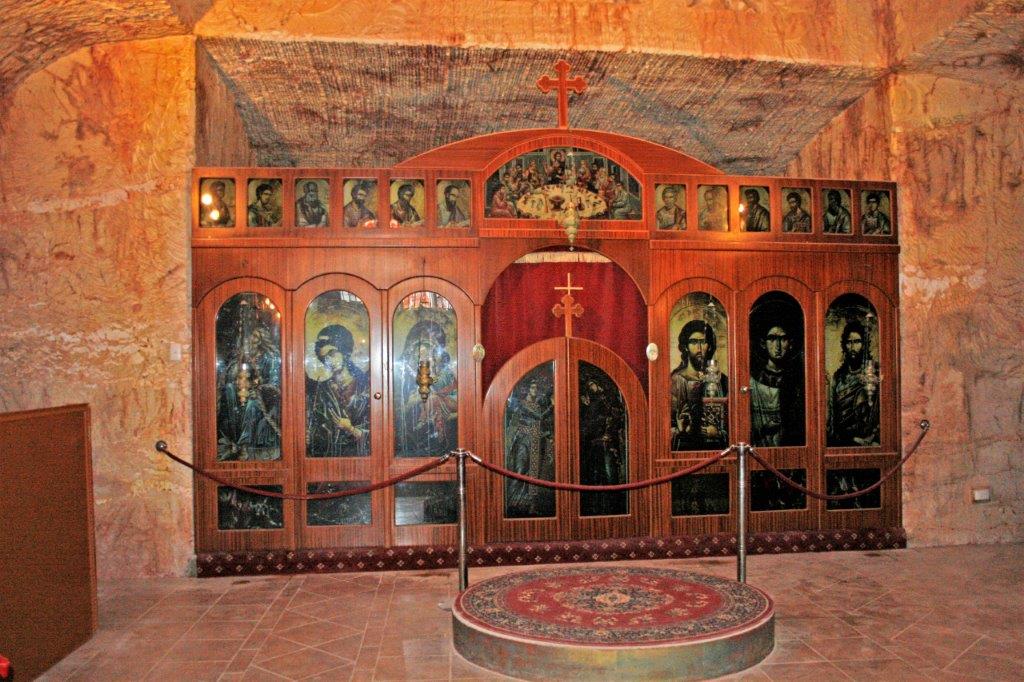
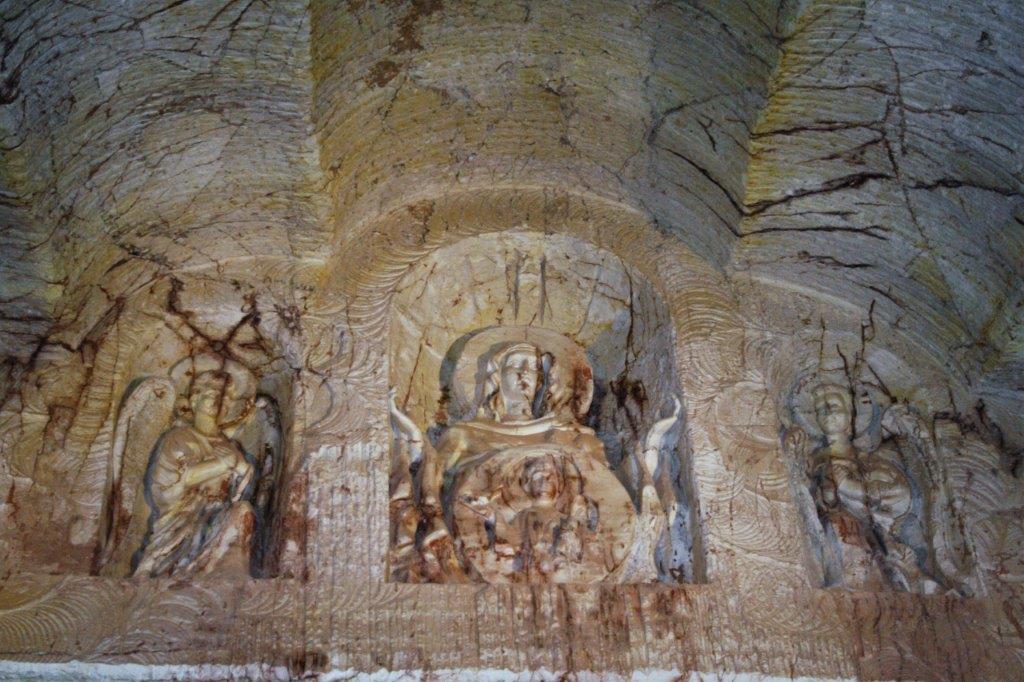
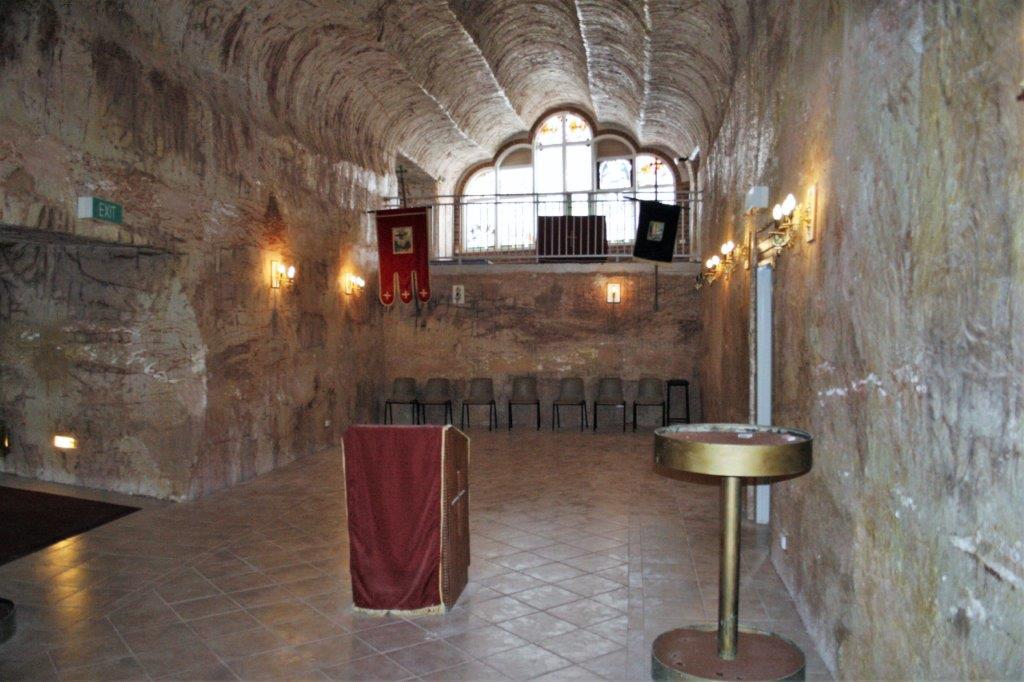
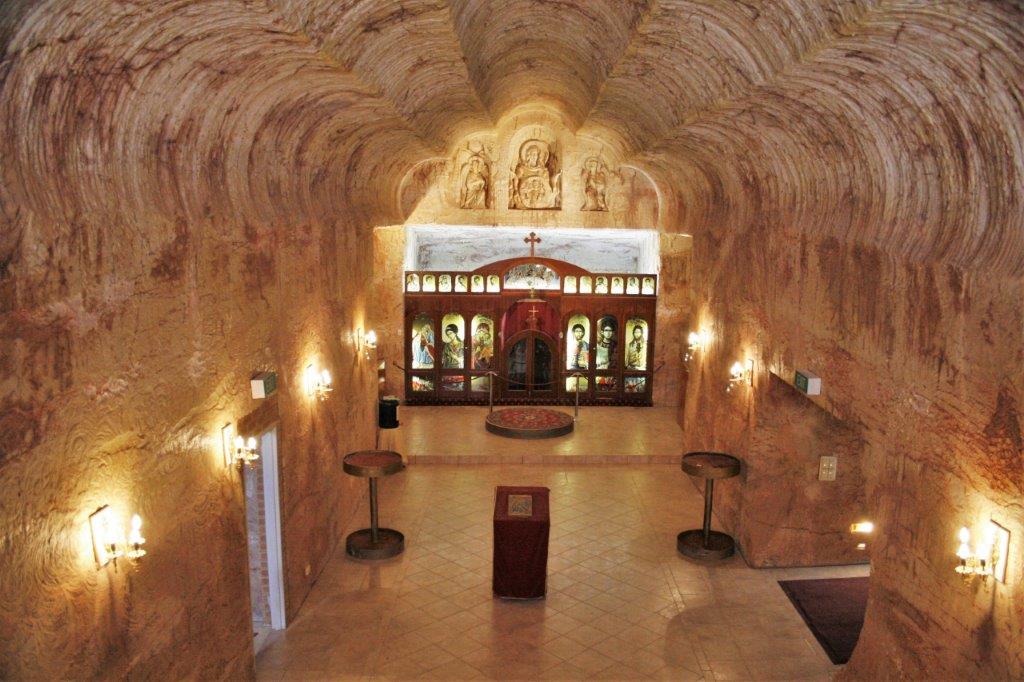
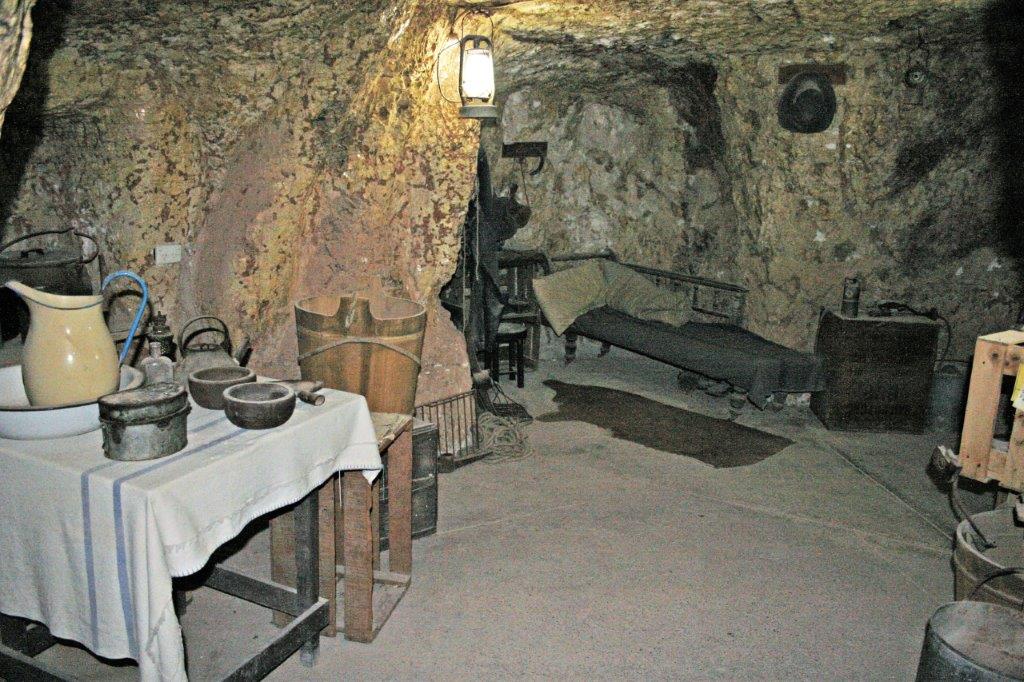
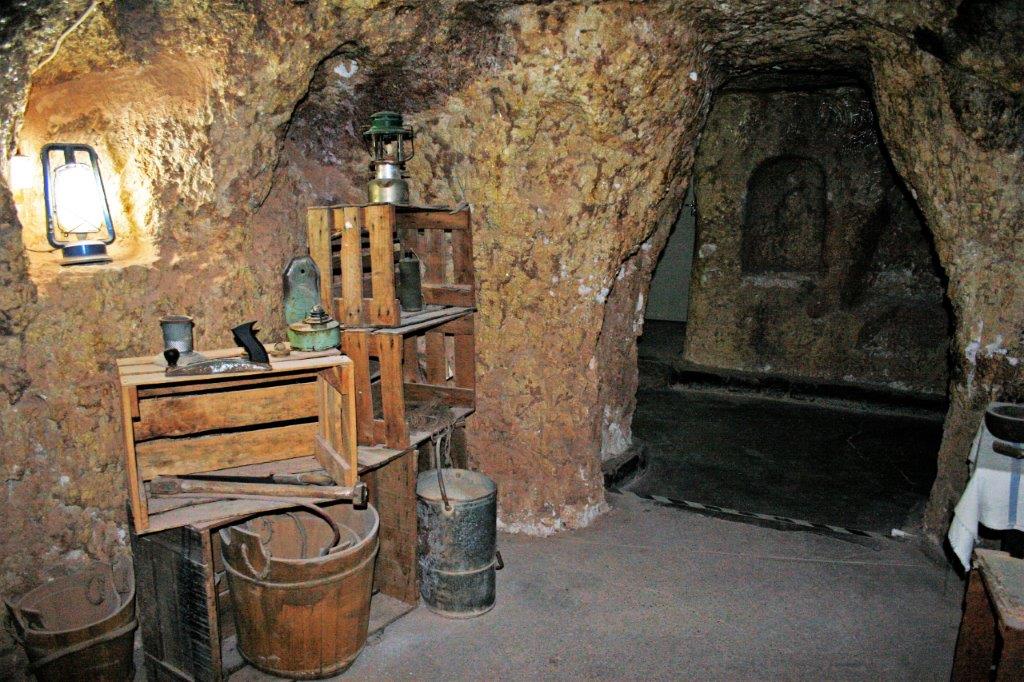
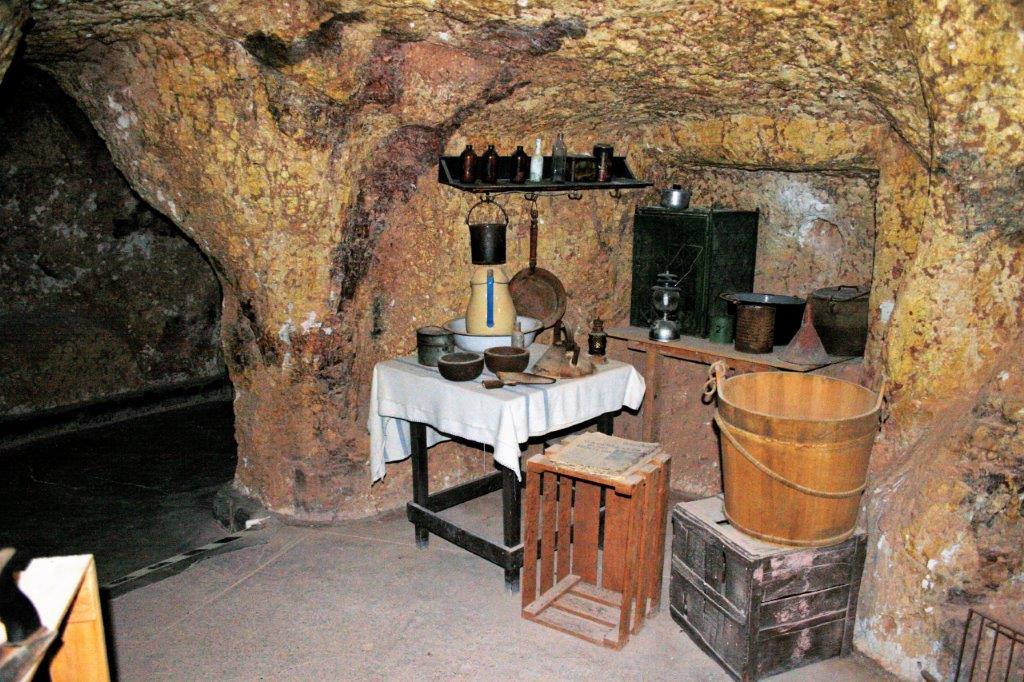
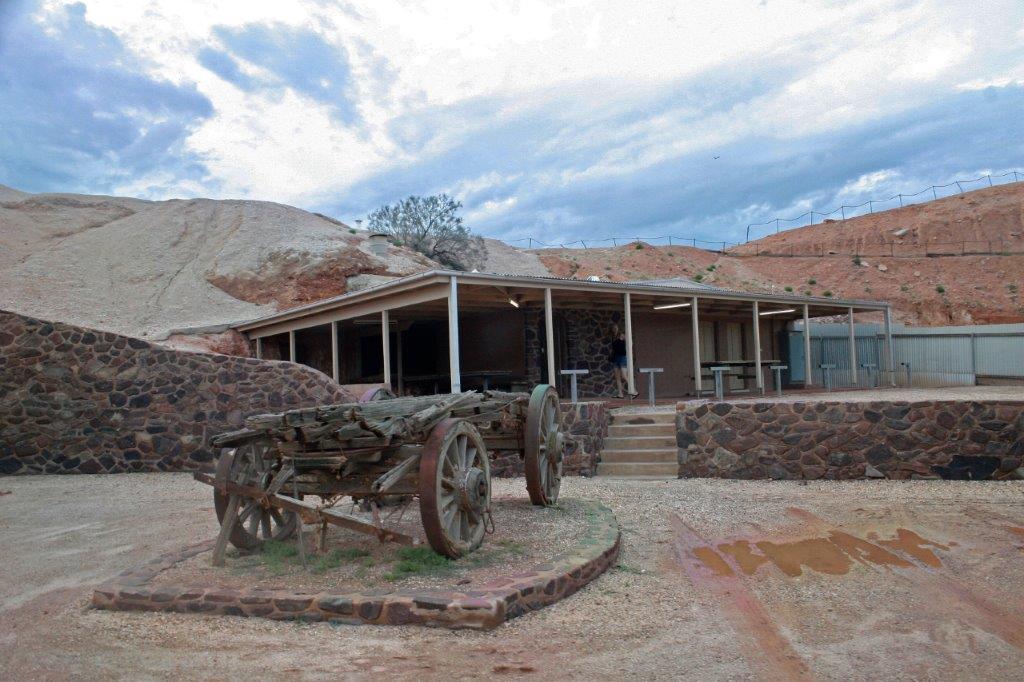
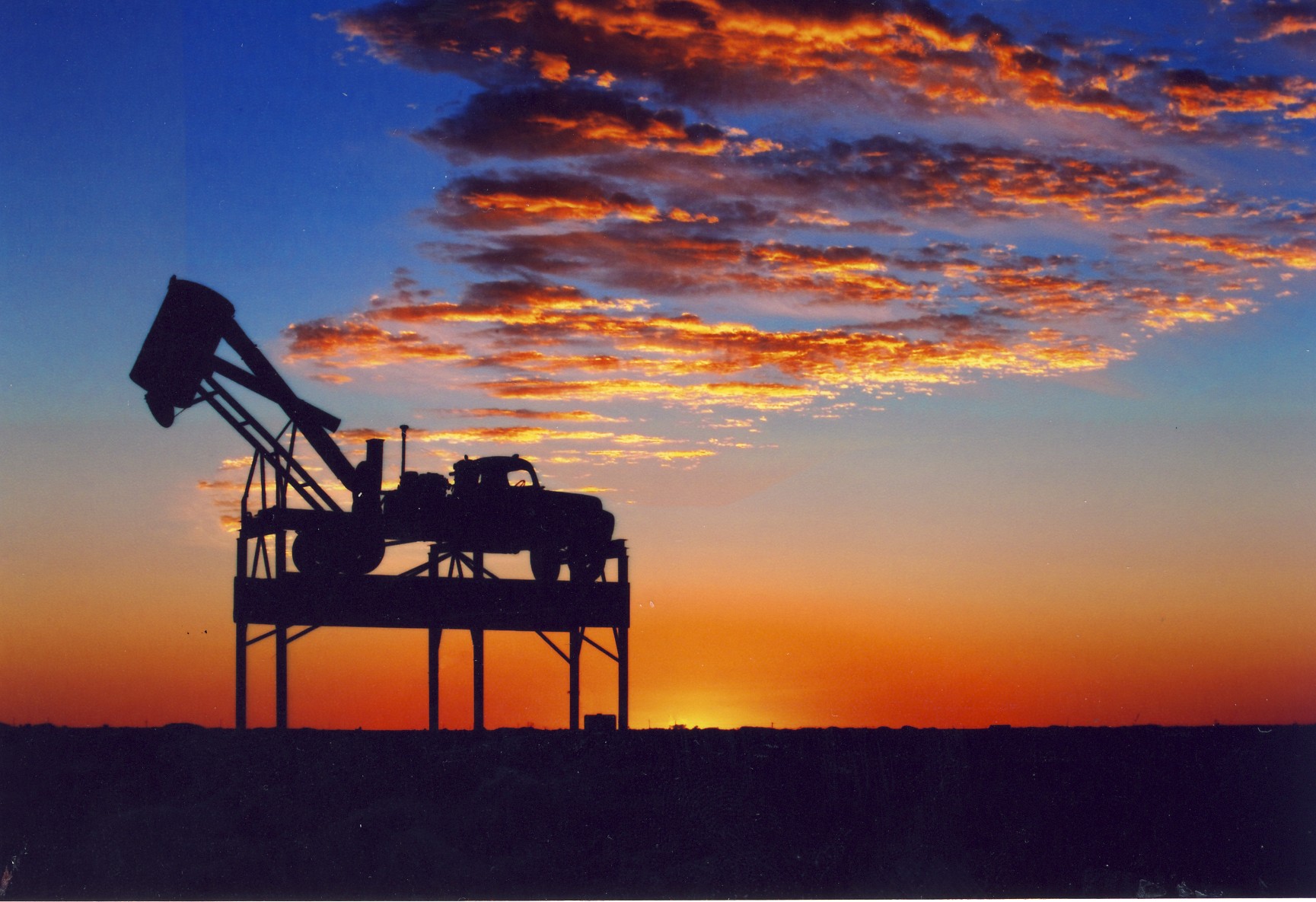
We saw the golf course that has black ashpalt ‘greens’ and no definitive fairways.  A group of golfers from St. Andrew’s, Scotland came to play the course and they deemed it one of the world’s toughest and gave it an official grade.  As a result members of the Coober Pedy Golf Club are entitled to play the famous old St. Andrew’s course if they are visiting Scotland.We toured two underground churches.  The first was the Catacomb Church, an Anglican church. We were driven by the local cemetery and told some stories of the colourful characters buried there.  Like the fellow that ordered a beer keg – full – to be his tombstone so when he was buried his buddies could have drink ‘on’ him.  Or the fellow that was terminally ill who spent all his money plus he borrowed $5,000 from the bank and threw a long, big party for all his buddies.  After he died, his ex-wife came up to Coober Pedy to try get his opal mine for her  inheritance.  She was told it was very nice of her to want to settle his estate and there was a $5,000 debt owed to the bank.  She flew back to Adelaide.The second church was built much deeper into the rock and we descended a lengthy corridor before entering the sanctuary, an impressively large two-story room. Gunter next took us to a display of an early miner’s house, and a 1970’s underground house and an opal mine exhibit.  He was a very entertaining guy with lots of funny stories. He had come to Coober Pedy in the 1960s and never left so he had 50 years of stories to tell. On the way back to the hotel we passed working mines and deserted mines.  And lots and lots and lots of holes in the ground. It was a fascinating place to visit and I had a great time.  We still had one more full day and a morning before our flight back to Adelaide.This is not my photo.  It is a photo of a postcard I bought. We would have seen sunsets like this if 2011 had been a normal year, however all the rain Australia had that year caused a lot of cloud and fog while we visited, so no lovely sunsets.


2011 March 15 & 16 – Days 69 & 70- Adelaide, Australia

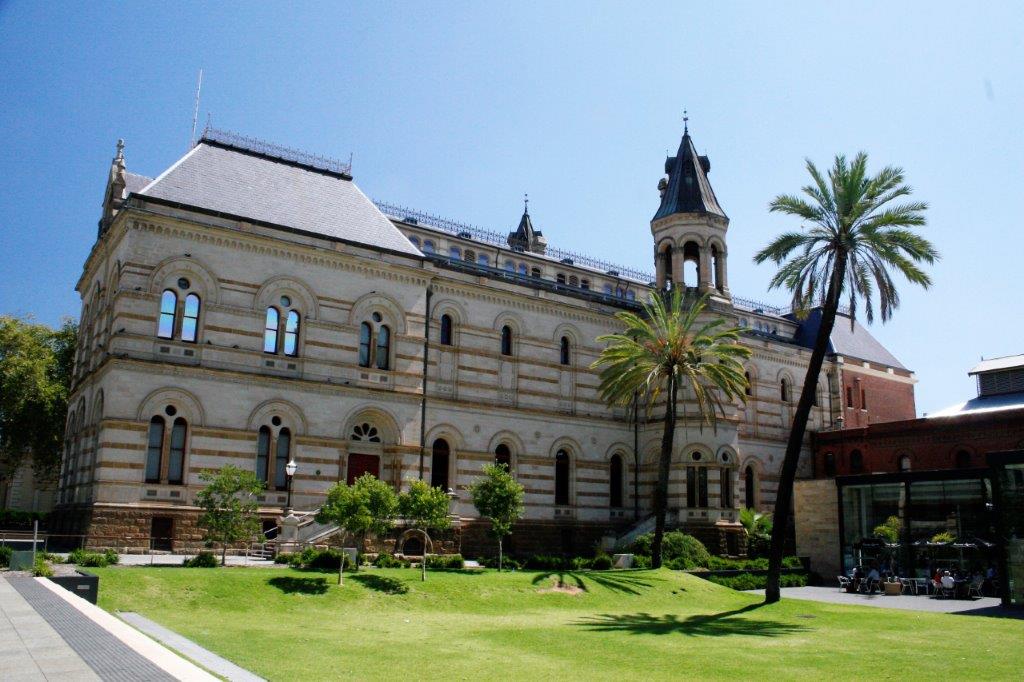
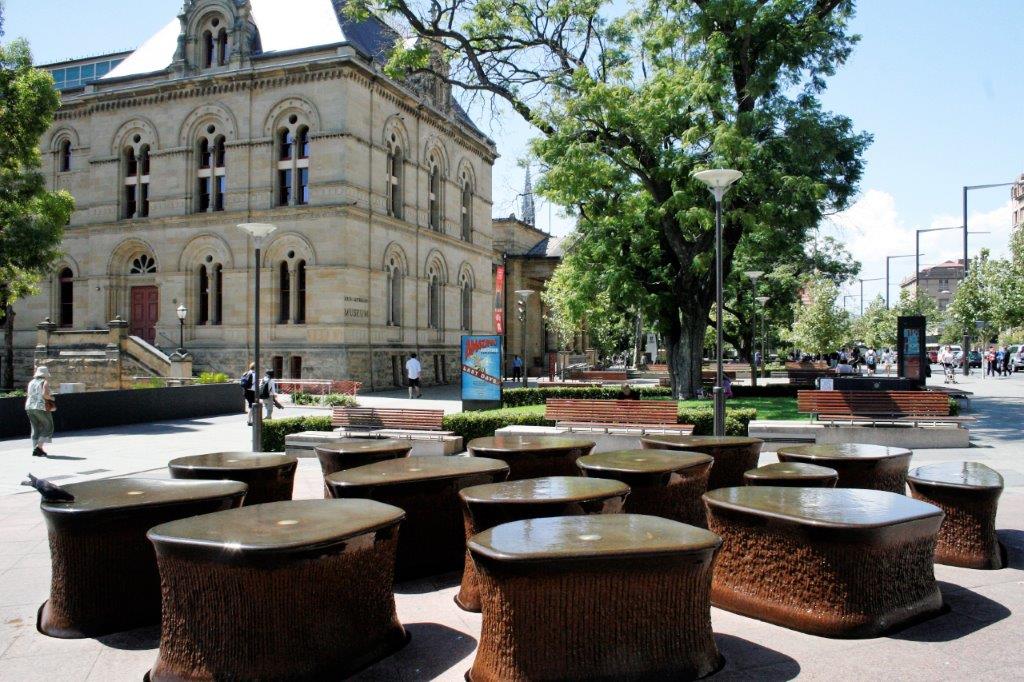
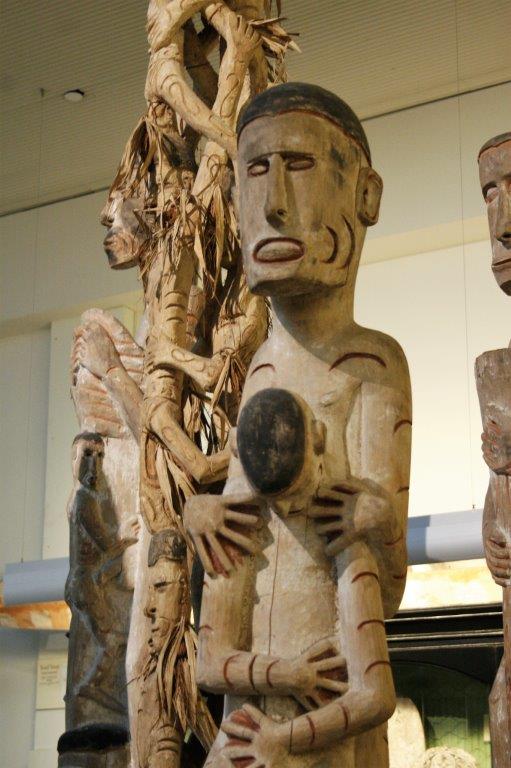
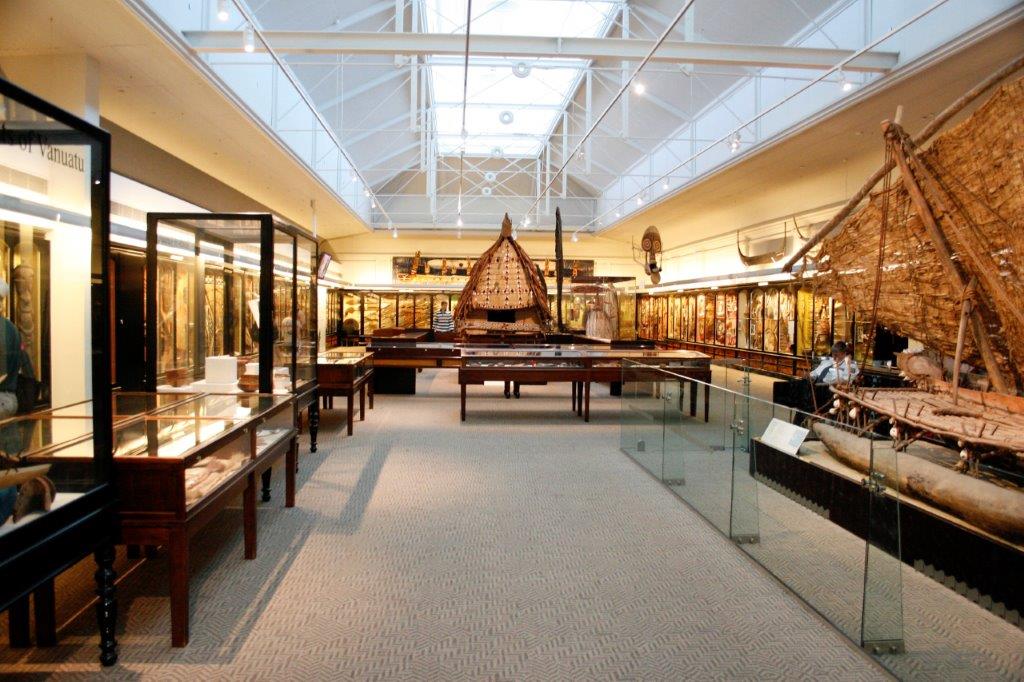
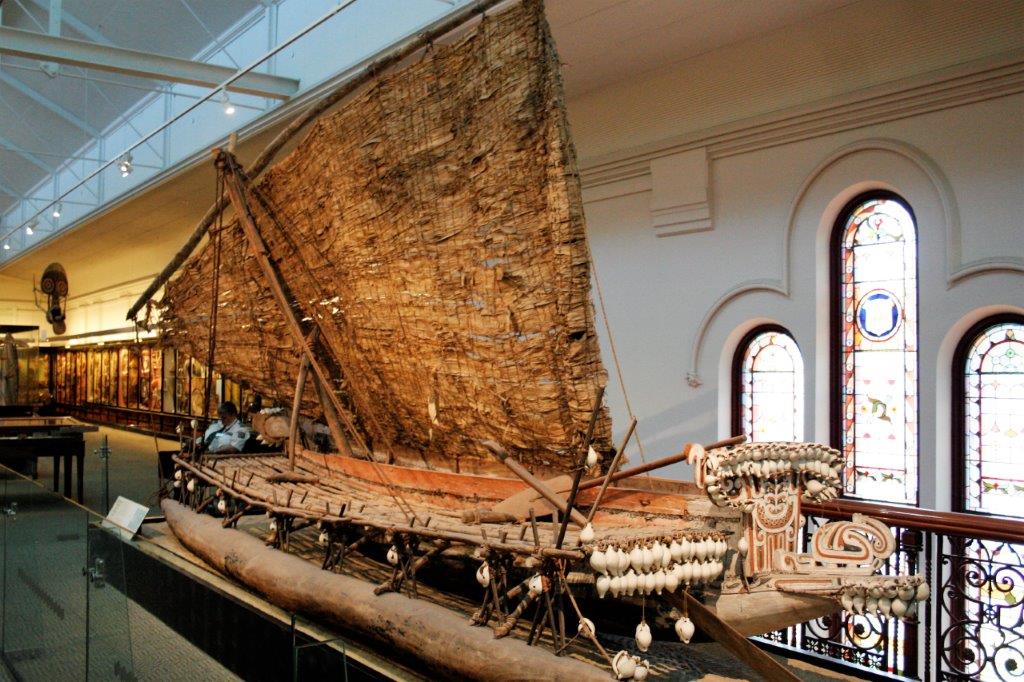
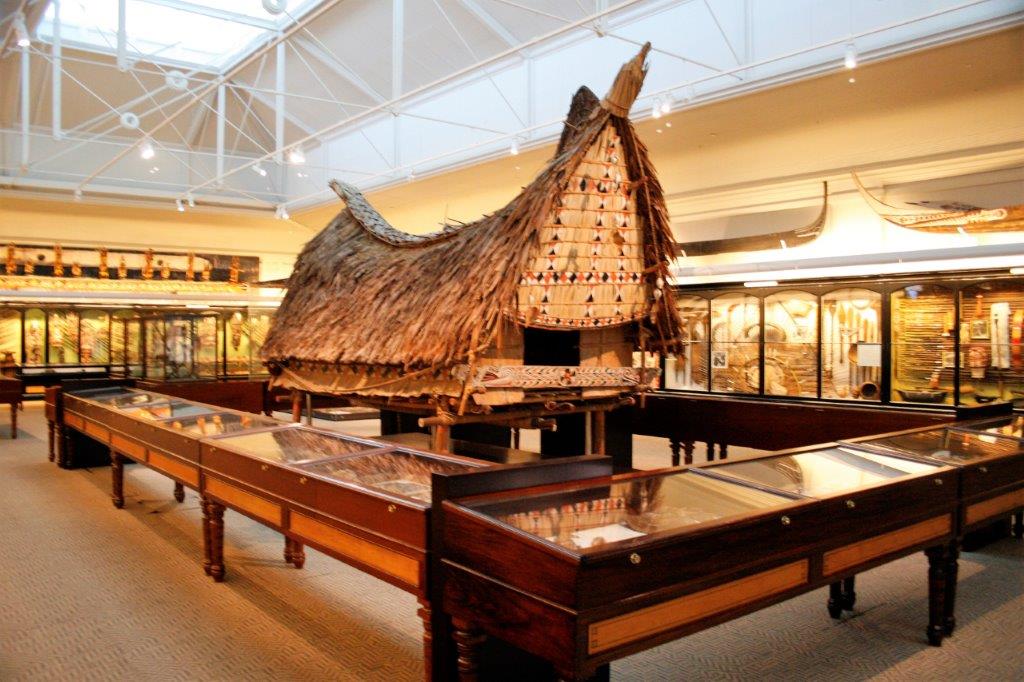
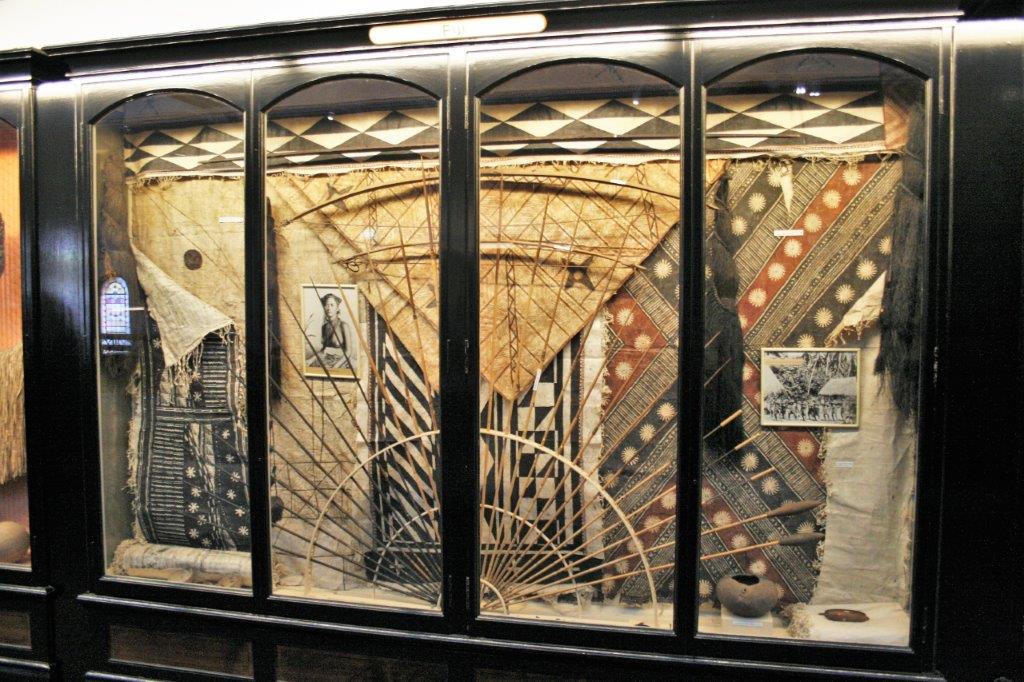
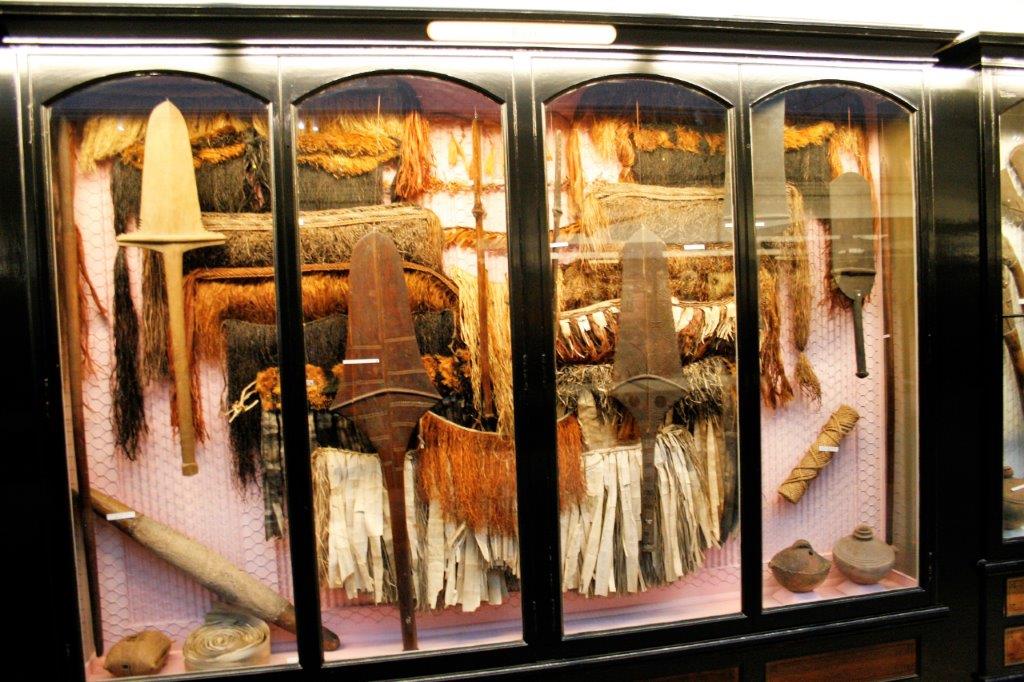
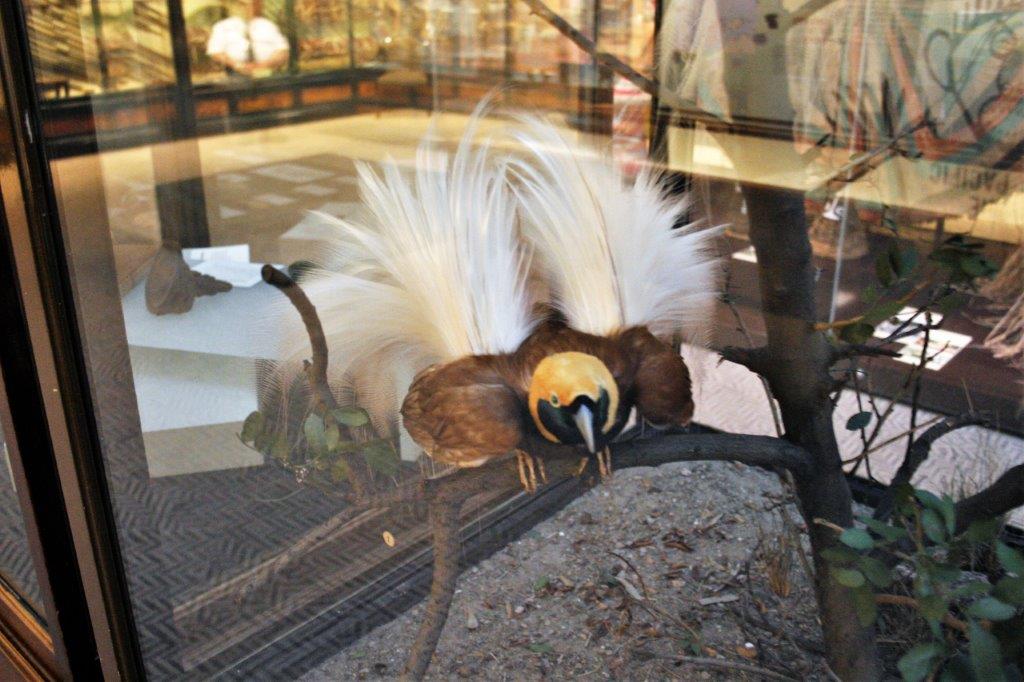
We lazed in our room until almost noon and then walked down to the South Australia Museum.  We didn’t come out again until it closed over four hours later. In 2009 on the World Cruise the ship stopped at Adelaide and part of our shore excursion was a trip to the South Australia Museum.  We were running late by the time we arrived at the Botanic Garden which was the first part of the tour, and the guide there dawdled and yakked about every tree and bush in the place. This put us even further behind so we had a very, very limited time to see the museum and basically ended up doing a walk-through of one gallery.  I was very happy to have another chance to do the exhibits some justice.  Great museum; and even in four hours we did not see it all.  Close, but not quite.

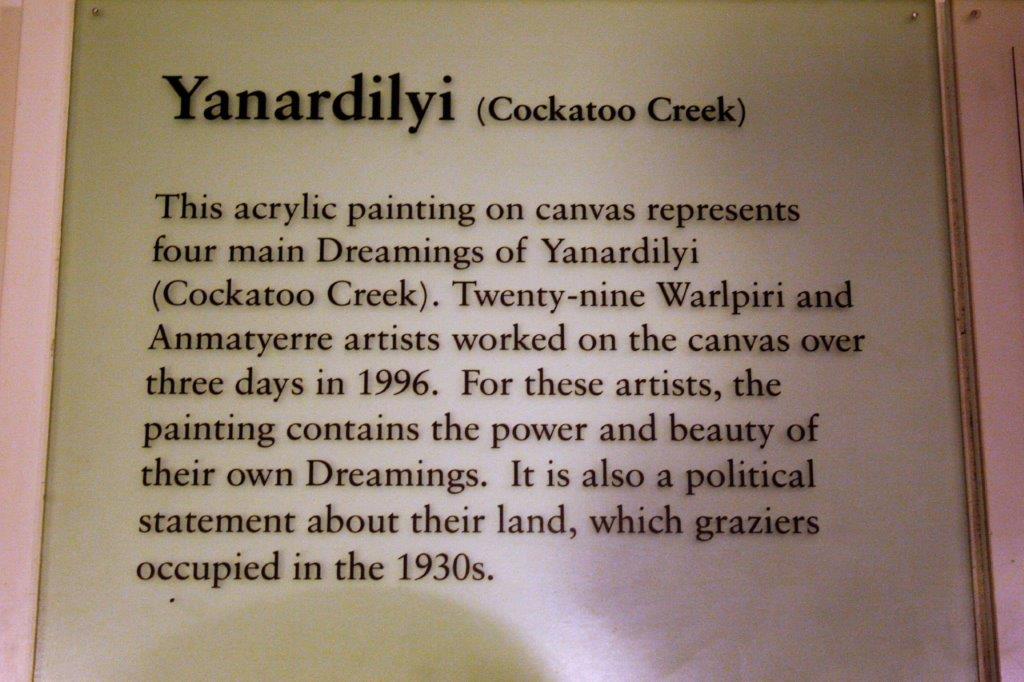
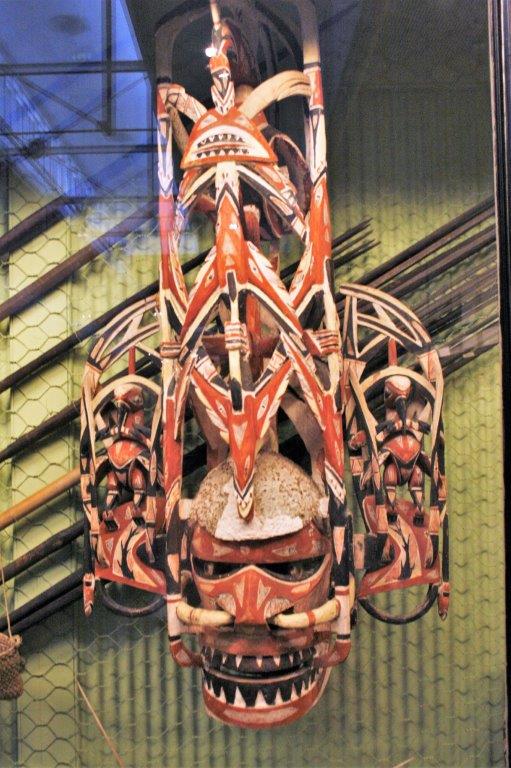
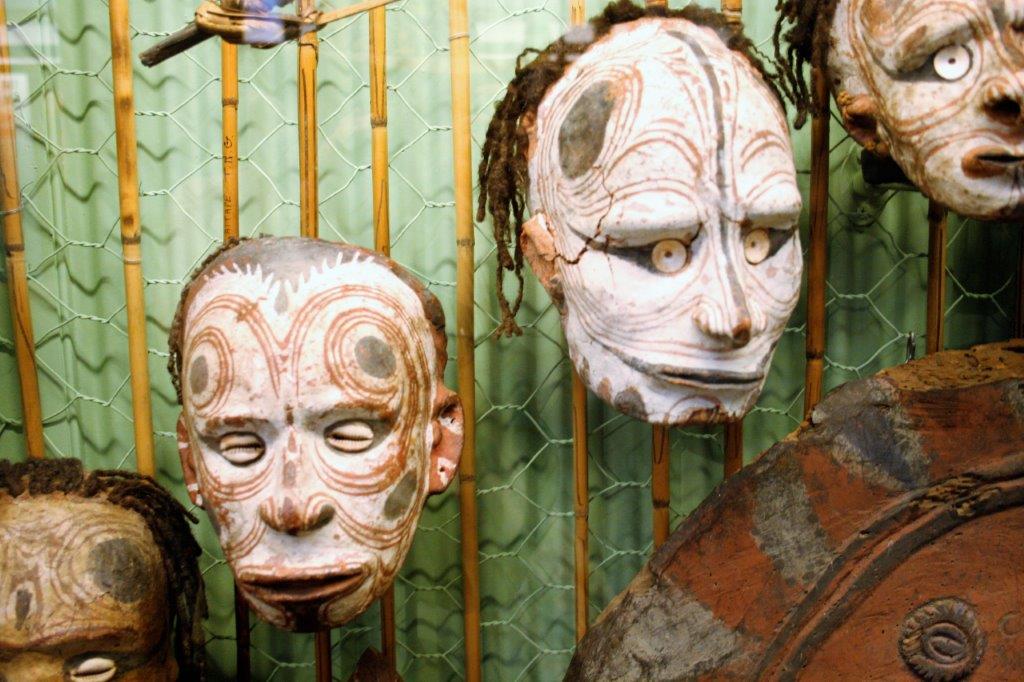
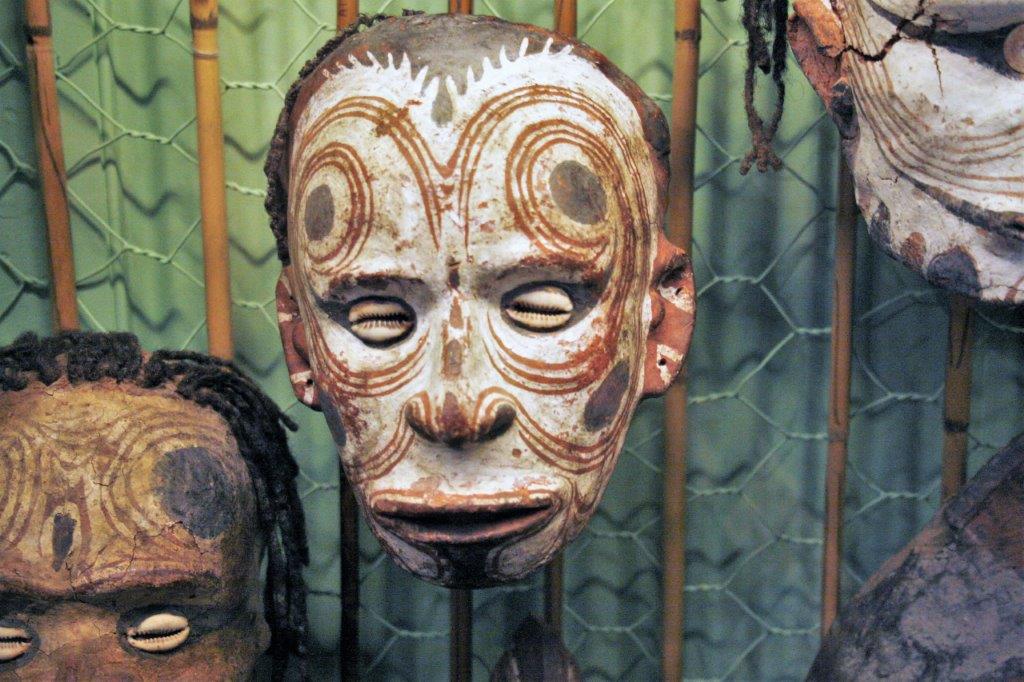
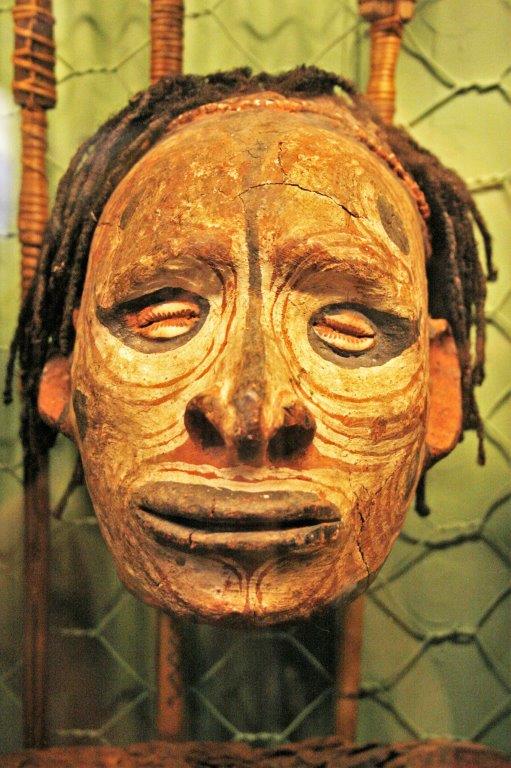
The South Australia museum has the largest collection of aboriginal artifacts in the world, plus a large collection from most of the South Pacific Islands and, surprisingly, a small Egyptian display.

One of the security guards kept seeing us on the different floors and looking at the different exhibits.  He chatted a bit on his rounds and was very pleased to see folks take their time in the museum; so often he said, people just walk past the display cases and don’t really look at what is inside.  That is my problem.  I never seem to have enough time in a museum. There was a Woolworth’s Store on Rundell Street and we found some sweet and sour chicken (which was terrible) and a Ceasar salad for our dinner, then spent the evening backing up photos, checking the Visa statement and paying bills before heading off to bed.

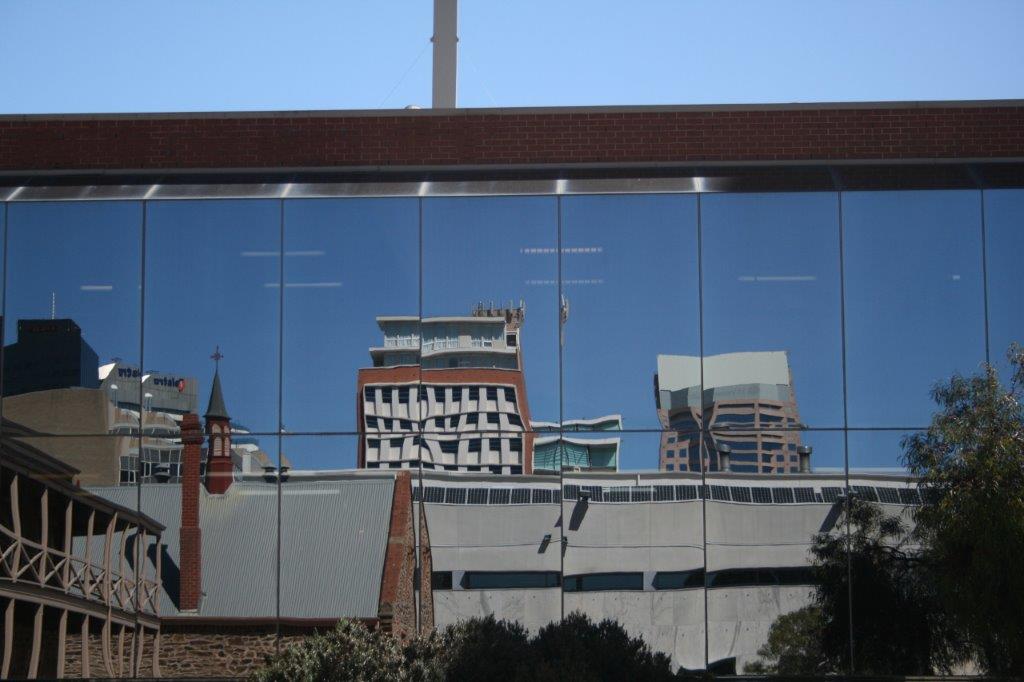
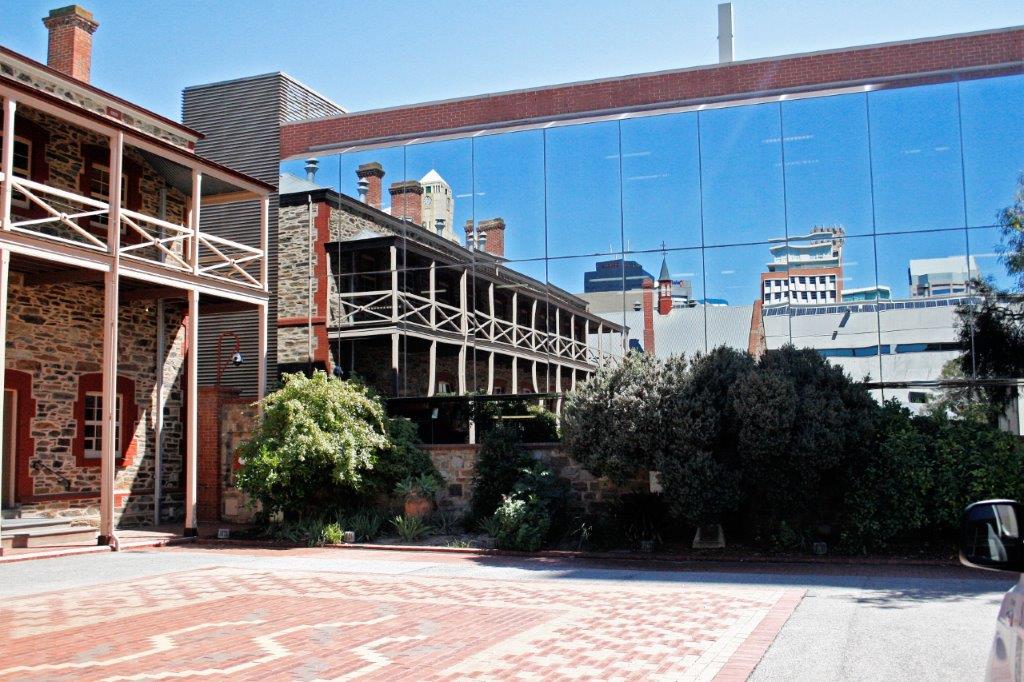
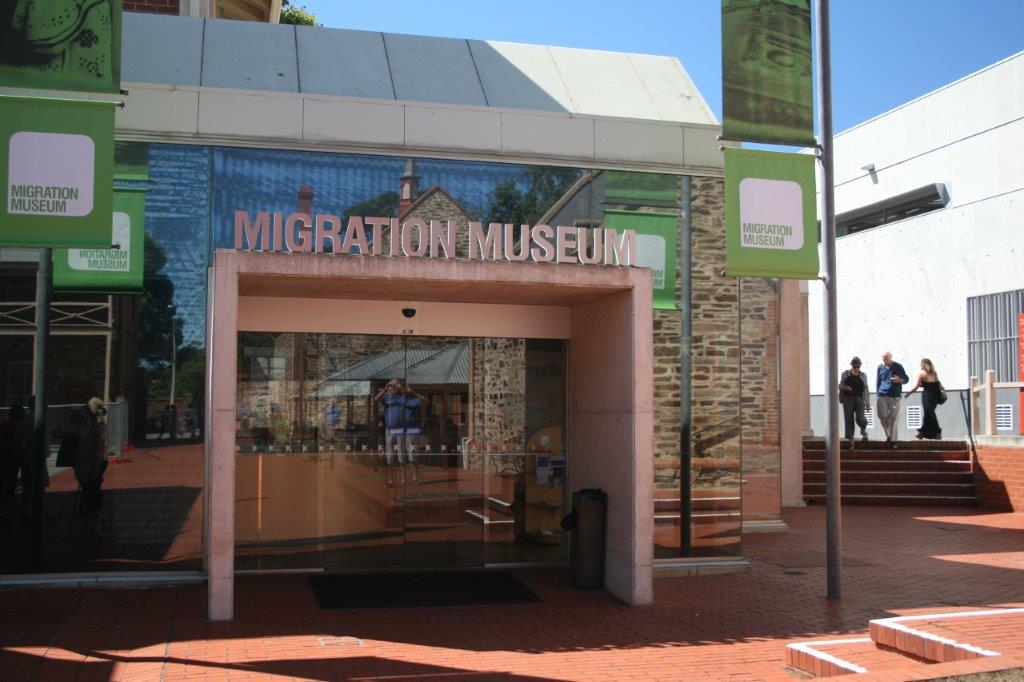
Our second day in Adelaide was a repeat of the first.  We slept in, lingered over breakfast, read our books and finally walked back to the South Australia Museum to tour the Migration and Settlement Museum next door.  The museum tells the stories of the thousands of people who left everything behind to start a new life in South Australia.  The progression of immigration from the colonization era to the present day was on display.  There were no photos allowed in this one so no pics.  Sorry. In the back courtyard there was a nice reflection of the Migration Museum in the windows of the main South Australia Museum. Australia today is a very multi-ethnic country but that was not always the case.  Until the mid-1950s the only people welcome in Australia were white Europeans; primarily British.  The official government policy was inclusive and open but the government created a literacy test of 46 questions that had to be answered by anyone wanting to emigrate.  The trick they used was to have the test printed in lots of different languages, so if you were a person they didn’t want (suffragette, Irish Catholic, Arabian, or even a fluently speaking Chinese doctor) you would be handed the questions in Norwegian or Gaelic or Hebrew or some language the officials were sure you would not know so you would fail the test and could be ‘legitimately’ excluded.  Sneaky, but effective at the time, I guess.

The Ayers House is one of the best examples of colonial Regency architecture in Australia.  It was owned by Sir Henry Ayers, a former Premier of South Australian, and an influencial businessman.  When we finished touring the Migration Museum we had intended to walk over to North Terrace and tour it.  But, by the time we left the museum we had very little time before the Ayers House would close for the day so we made another Woolworth’s stop for some dinner supplies and headed back to our apartment.  That was the extent of the excursions that day.