Category Archives: 2012 Grand Mediterranean and Black Sea Cruise

2012 April 4 – Day 24 – Kusadasi, Turkey (Day 2) (Part 2)

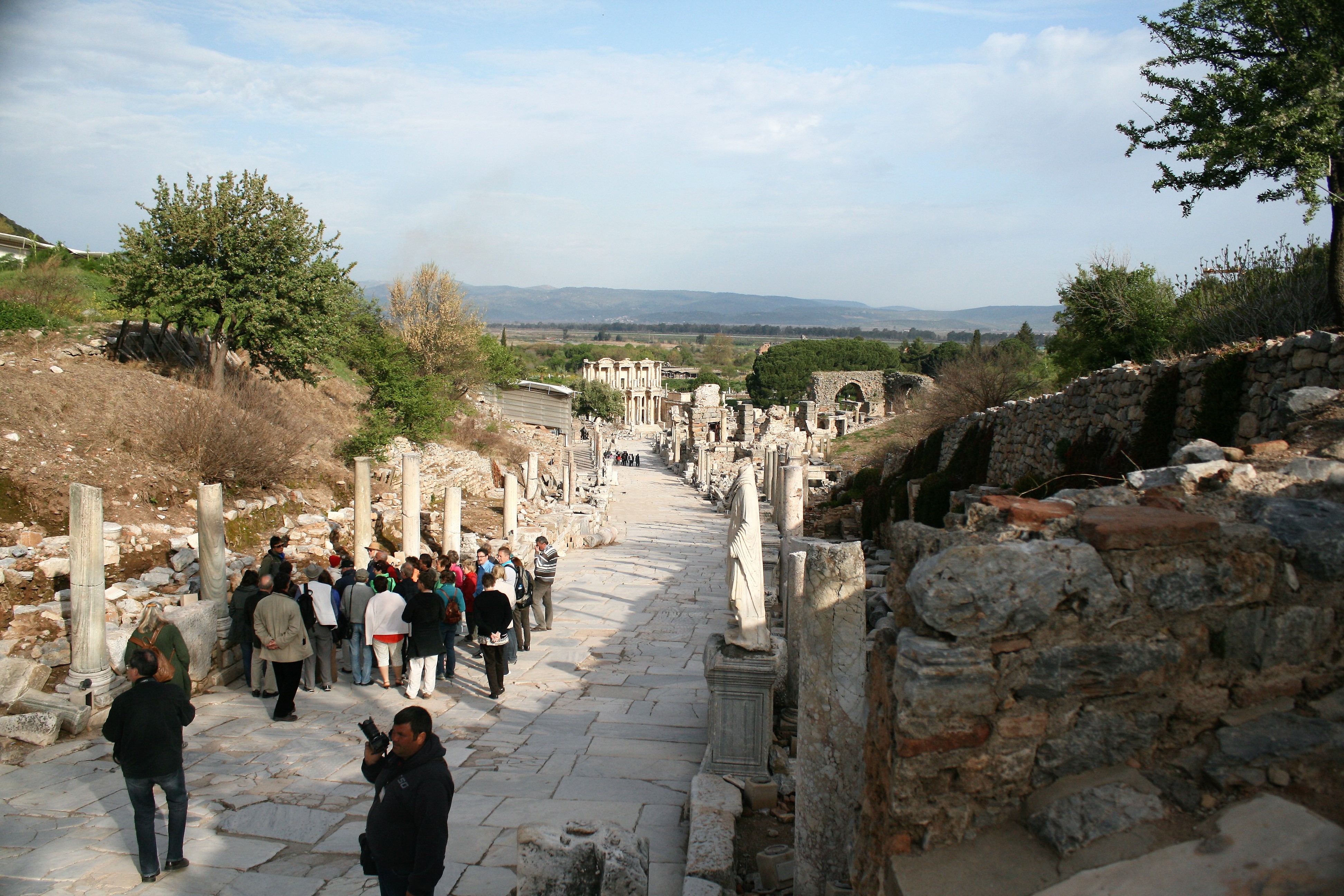
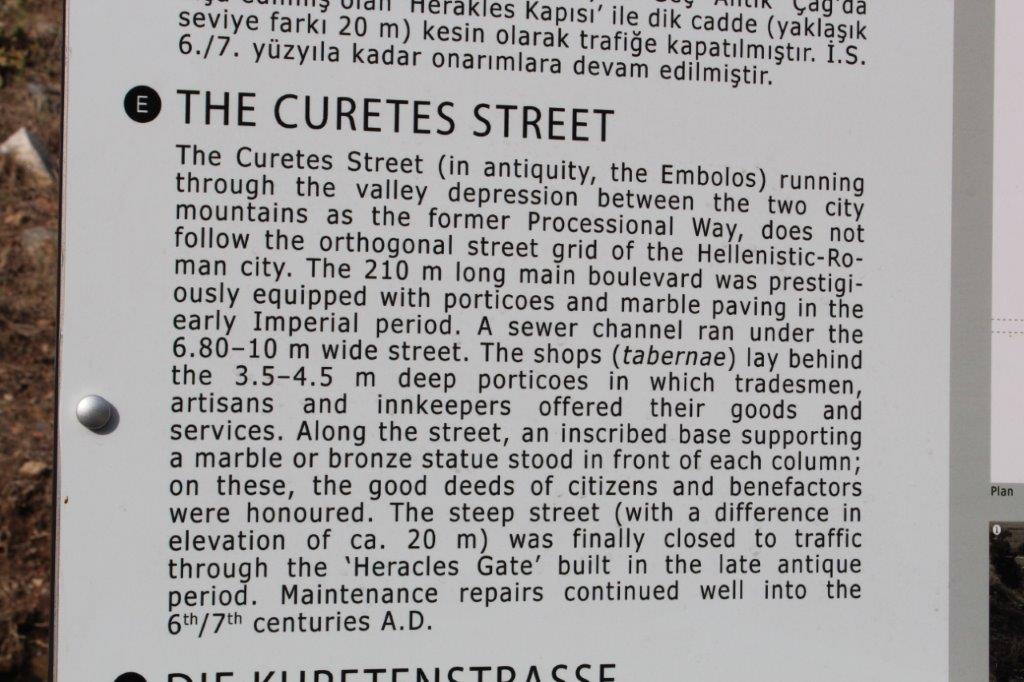
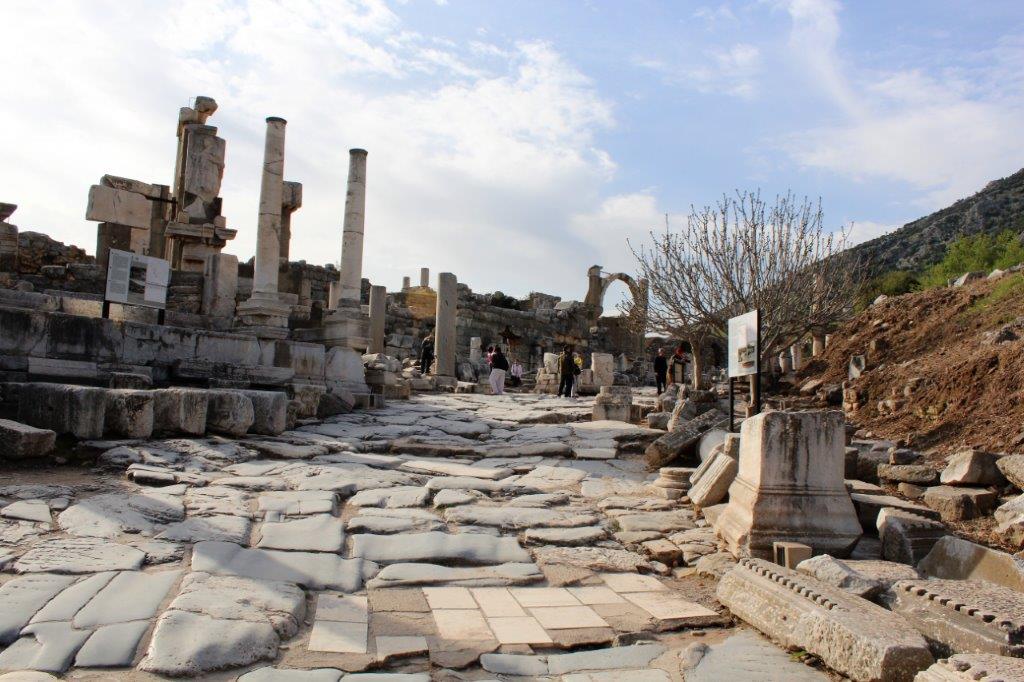
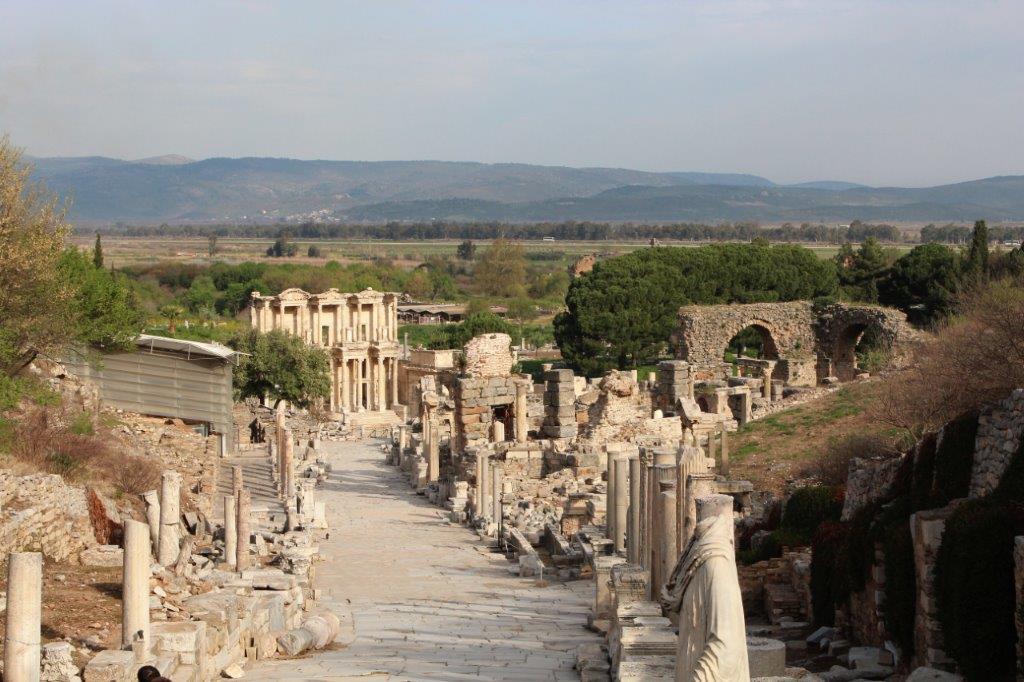
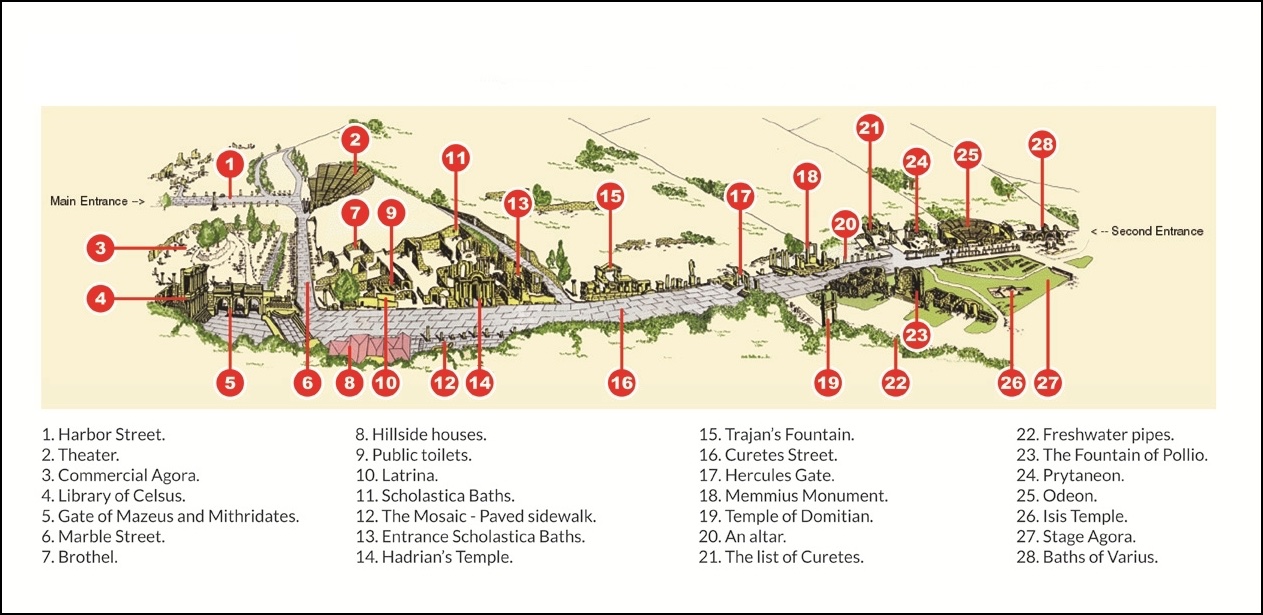
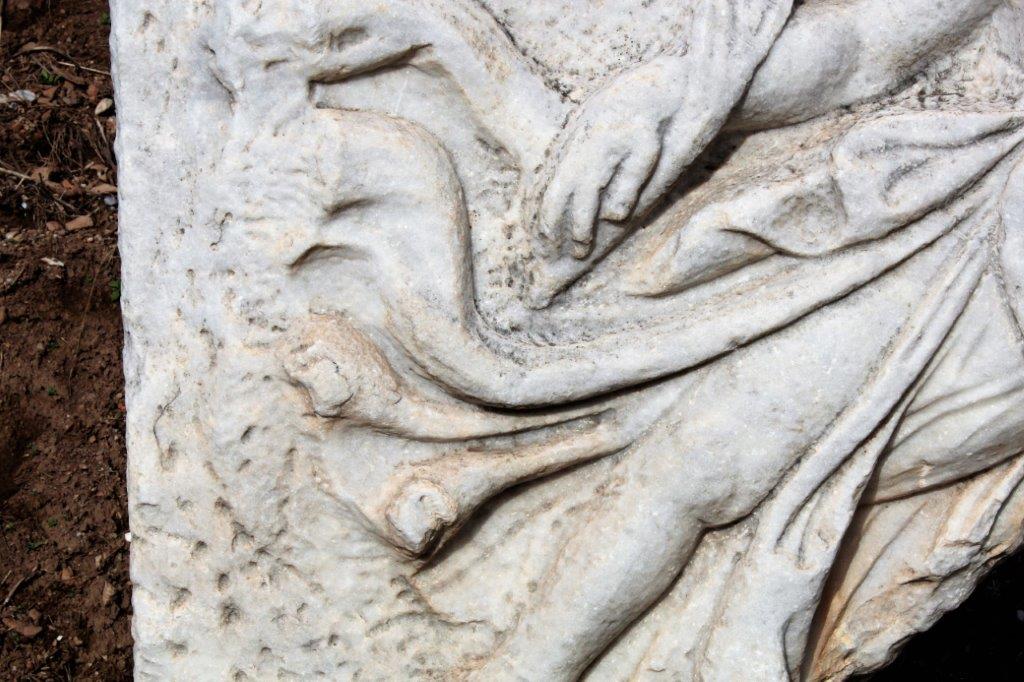
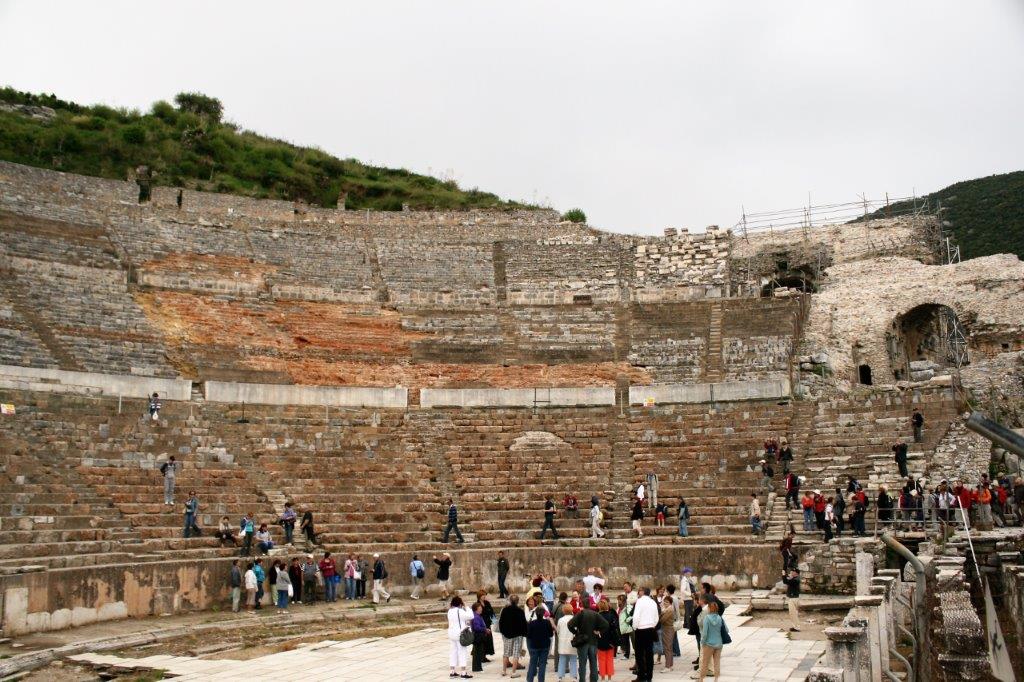
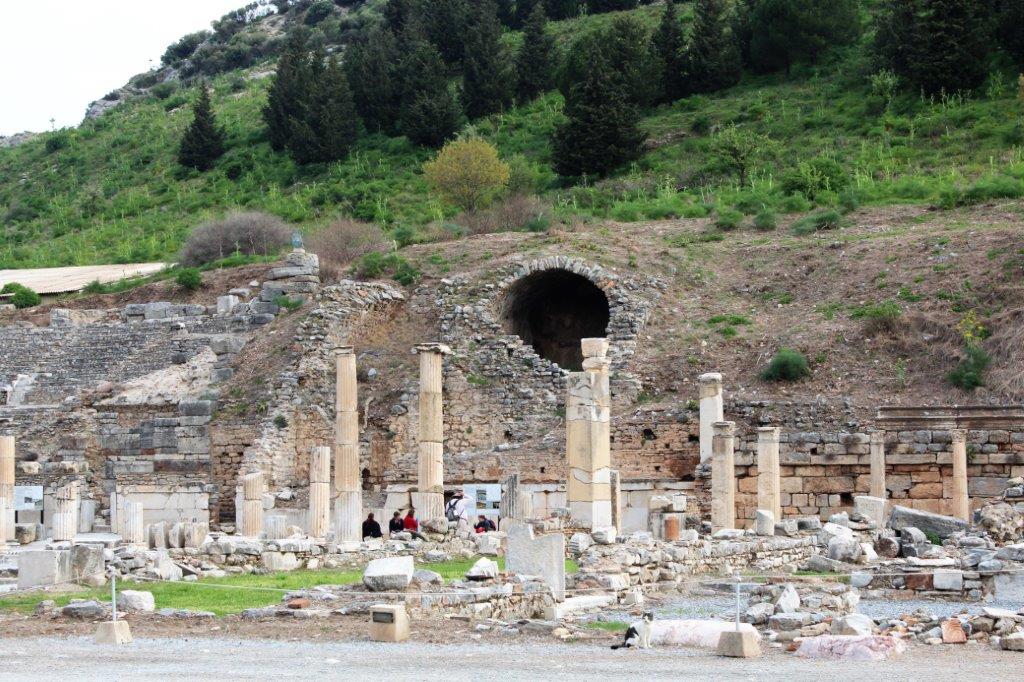
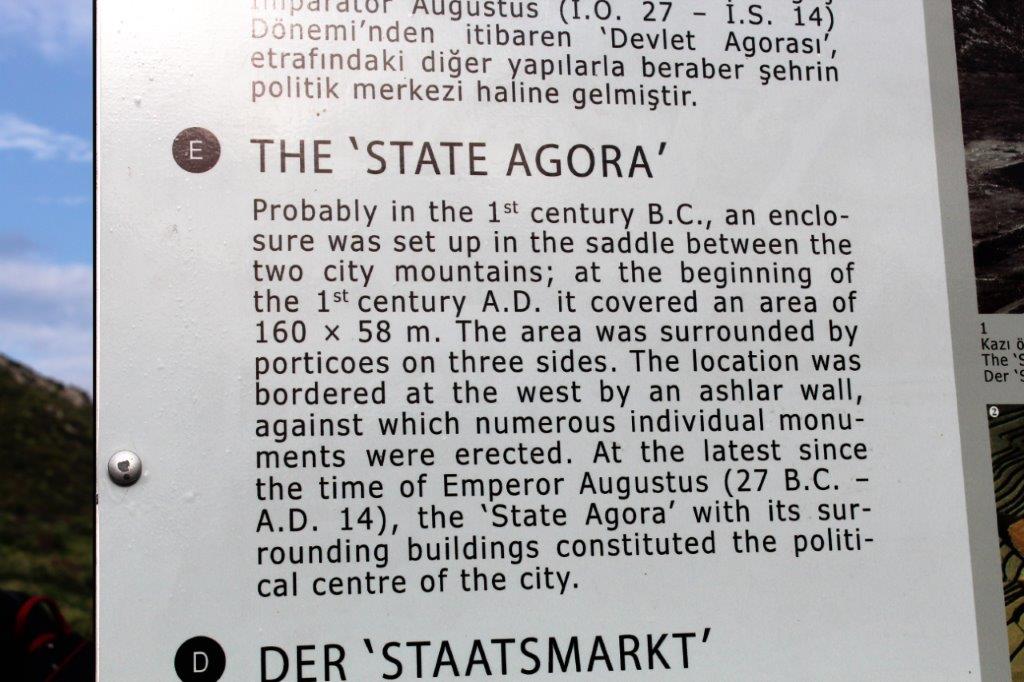
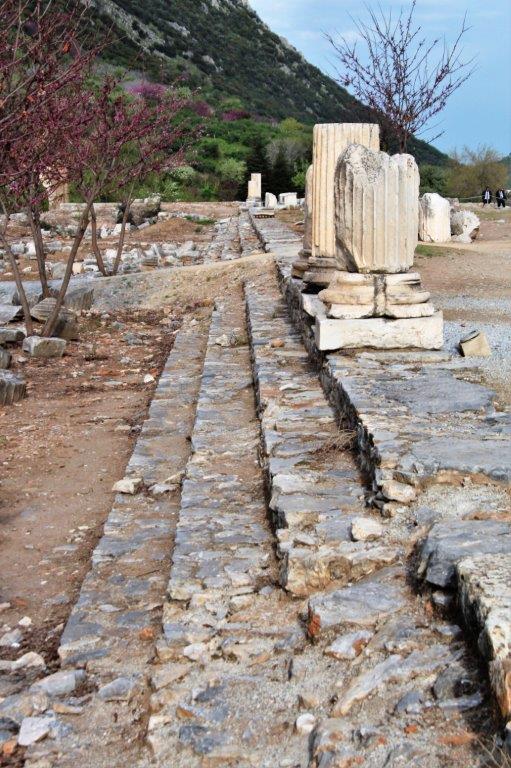
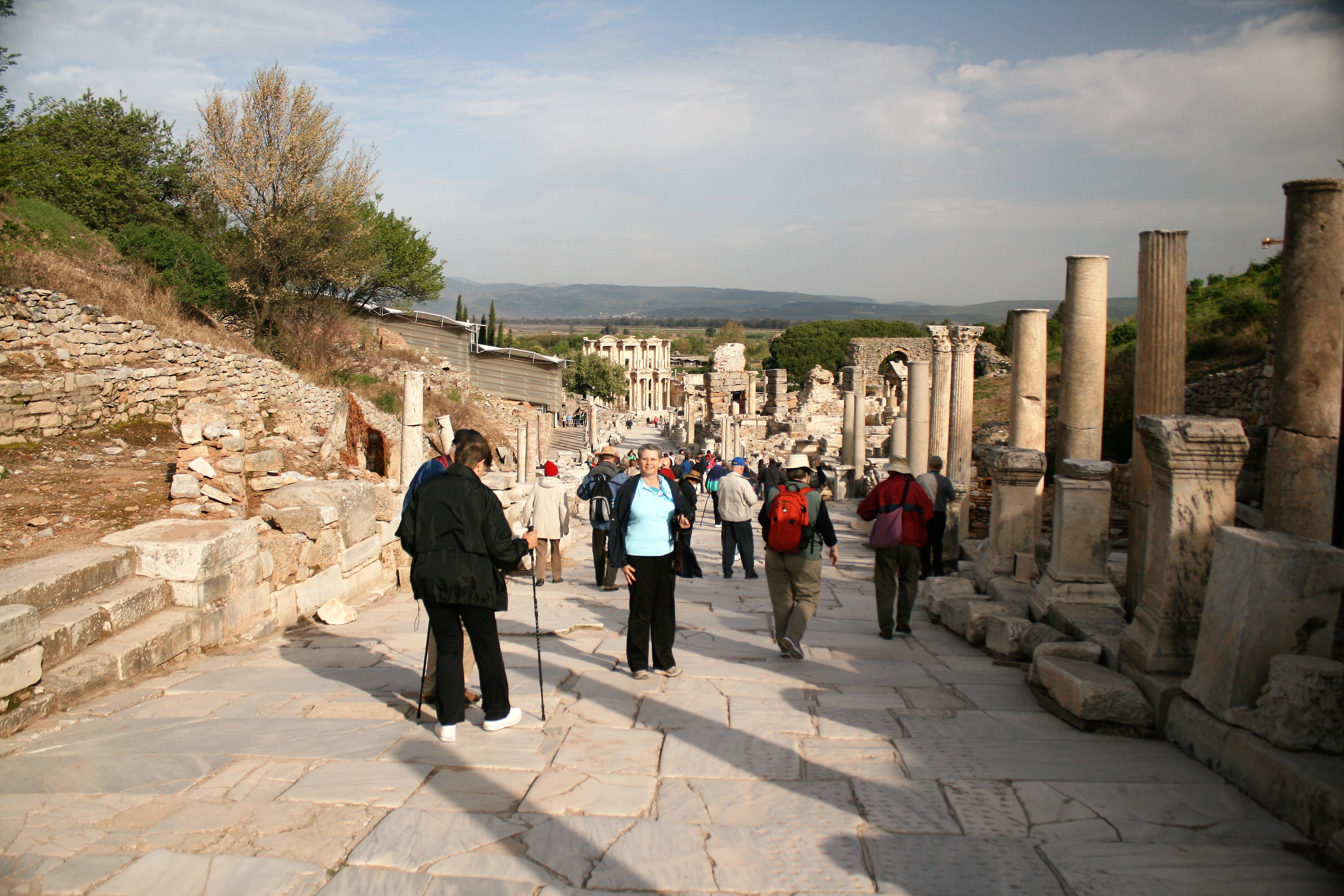
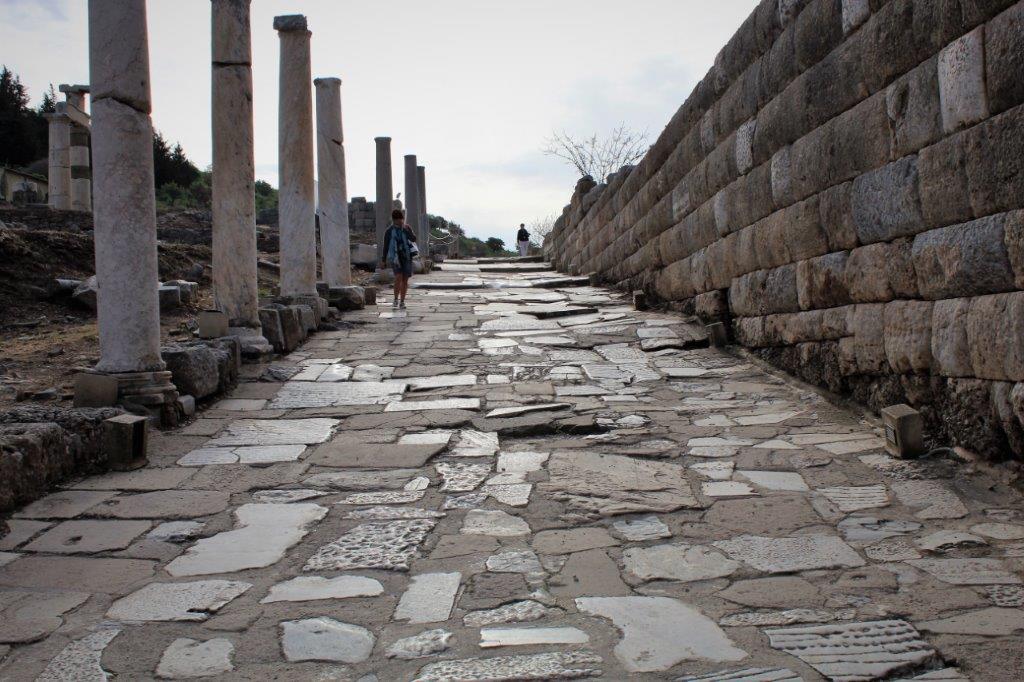
Ephesus was a bustling port city; a trading post and religious center 3,000 years ago.  During our tour of the ancient city, located a half hour drive from the port of Kusadasi, Turkey, we passed the Agora (public center of the city) and walked down Processional Way.  This brought us to Curetes Street, which was a major shopping district.Here are to two maps again to help with locations – if you can enlarge them enough to read the fine print, that is.                                Nike, the Greek goddess of Victory                                        The original “Nike” swish.
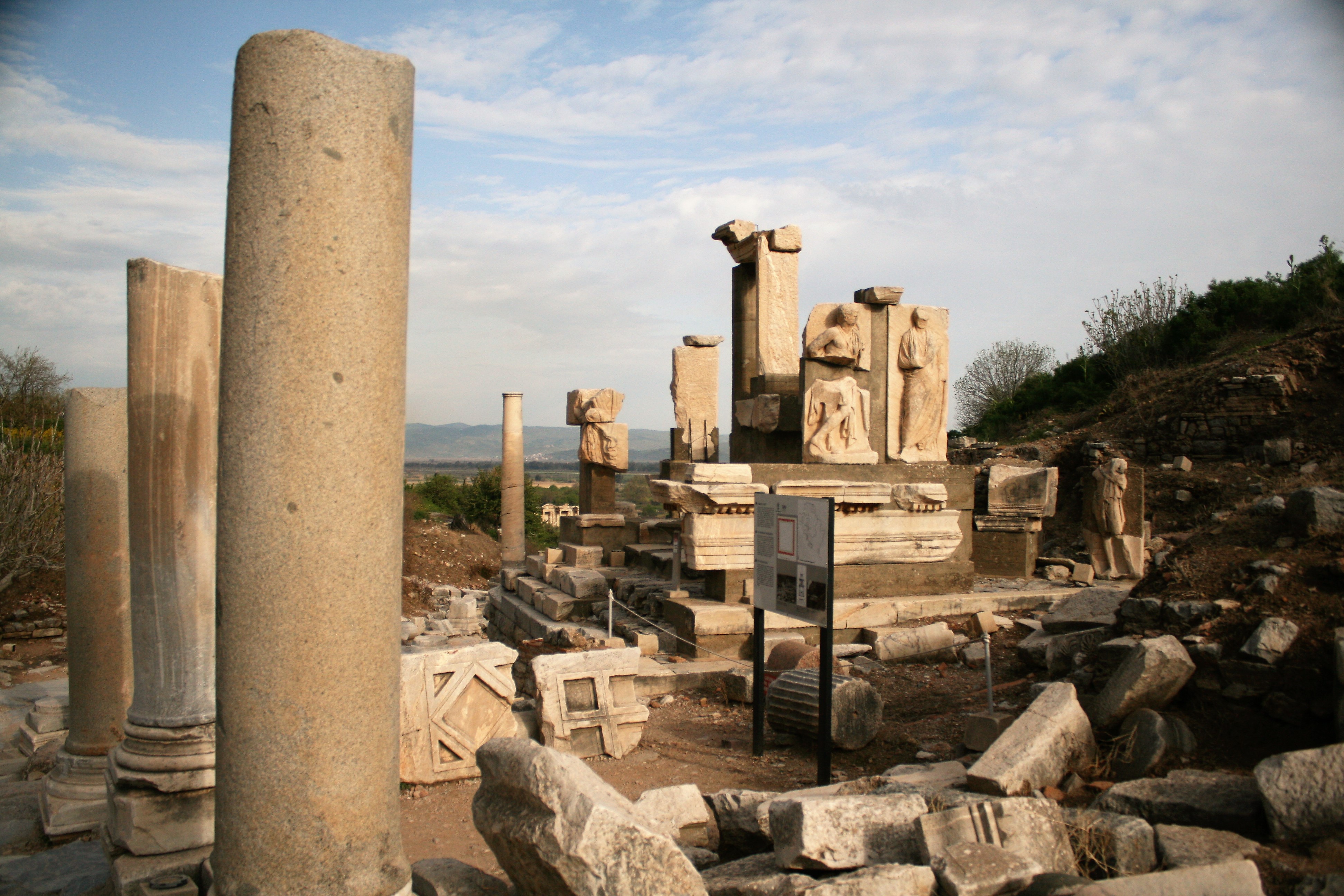
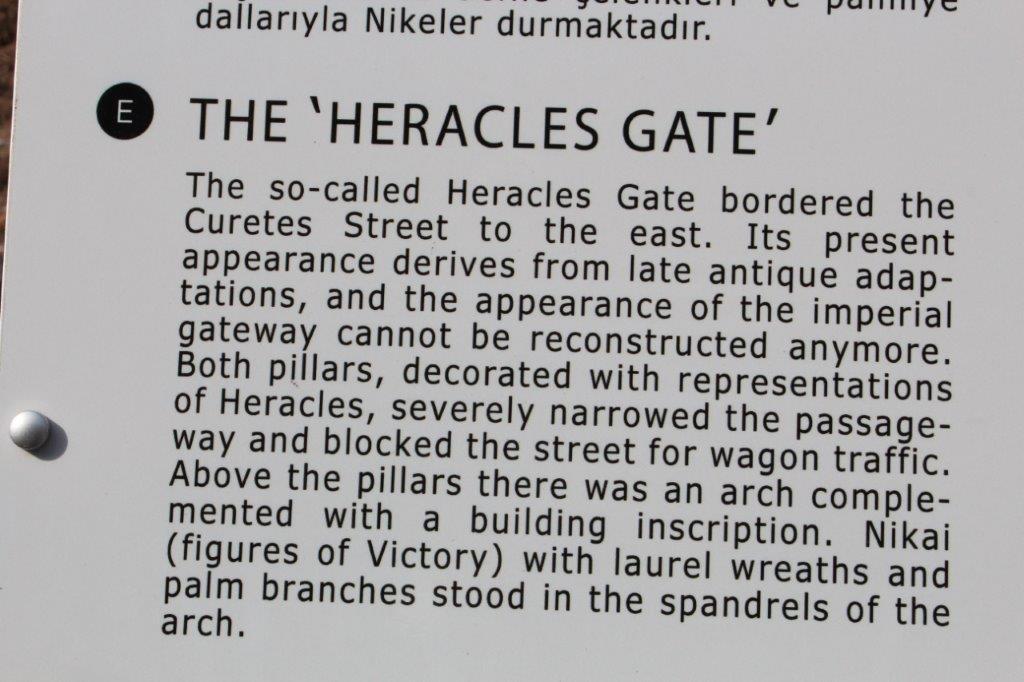
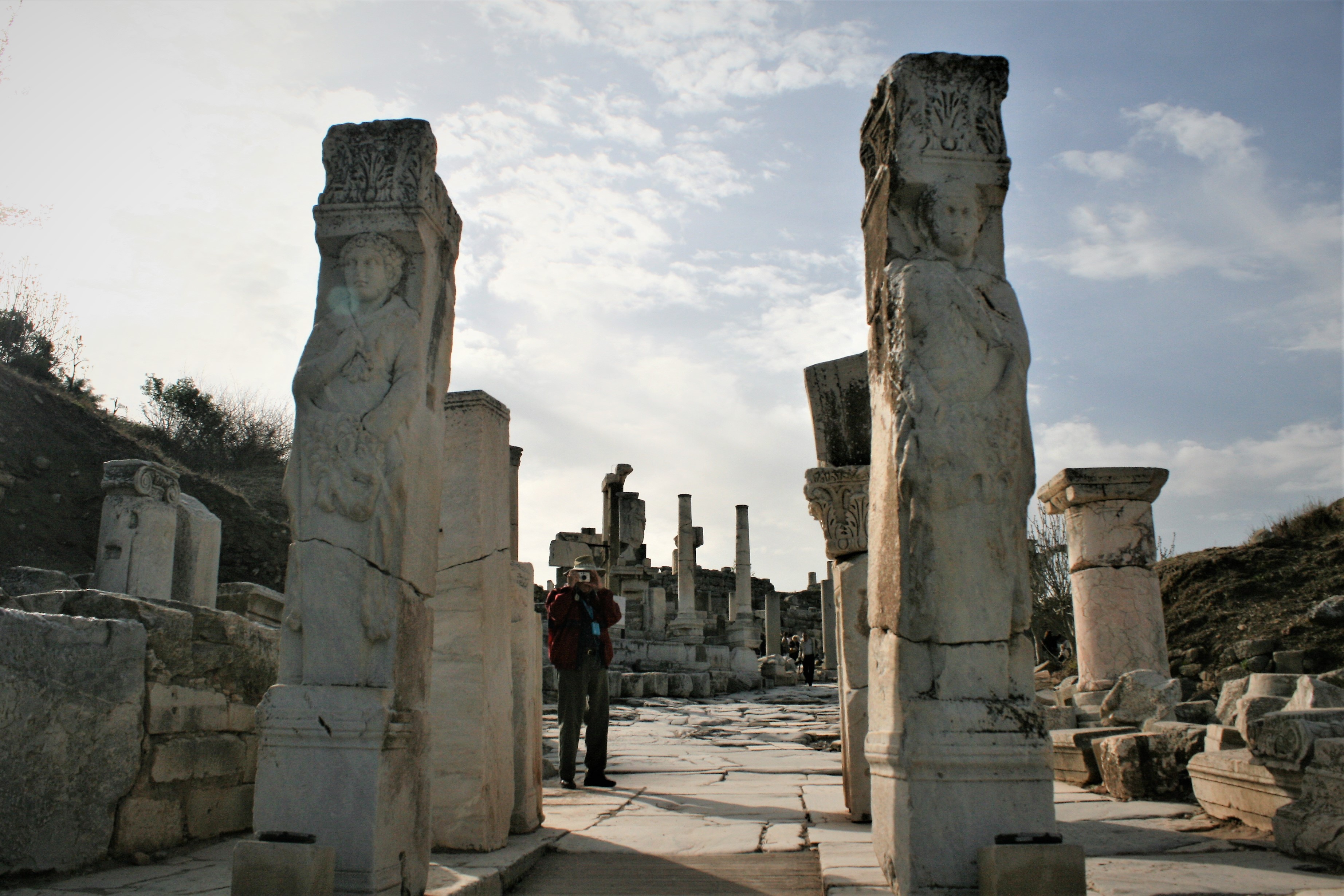
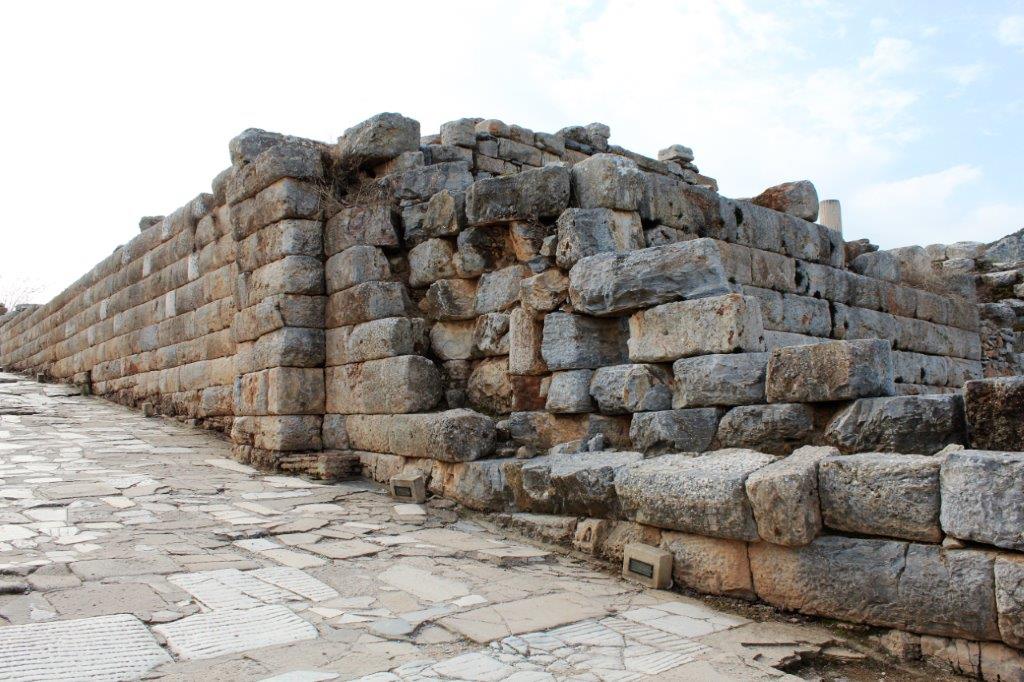
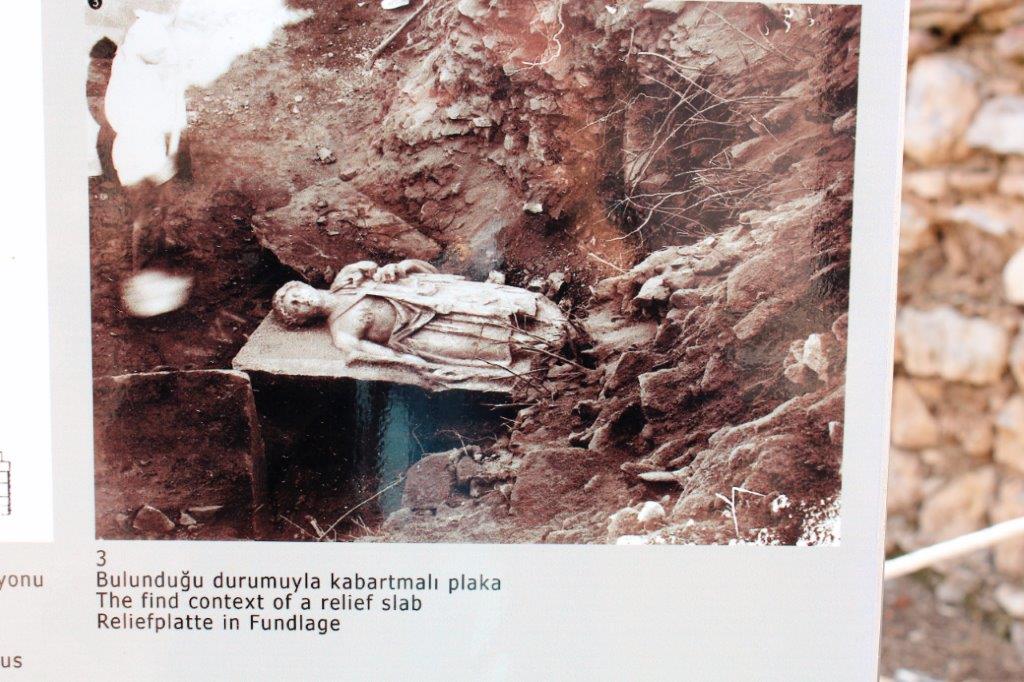
The Heracles (Hercules) Gate located at the end of Curetes Street blocked chariots and created a pedestrian walkway.  It was so named because of the relief of Hercules on it.  The gate was brought to this location in the 4th century AD but the carvings of Hercules dates from the 2nd century AD.  The relief of the flying Nike that is in Dominitian Square is believed to have been part of this gate.
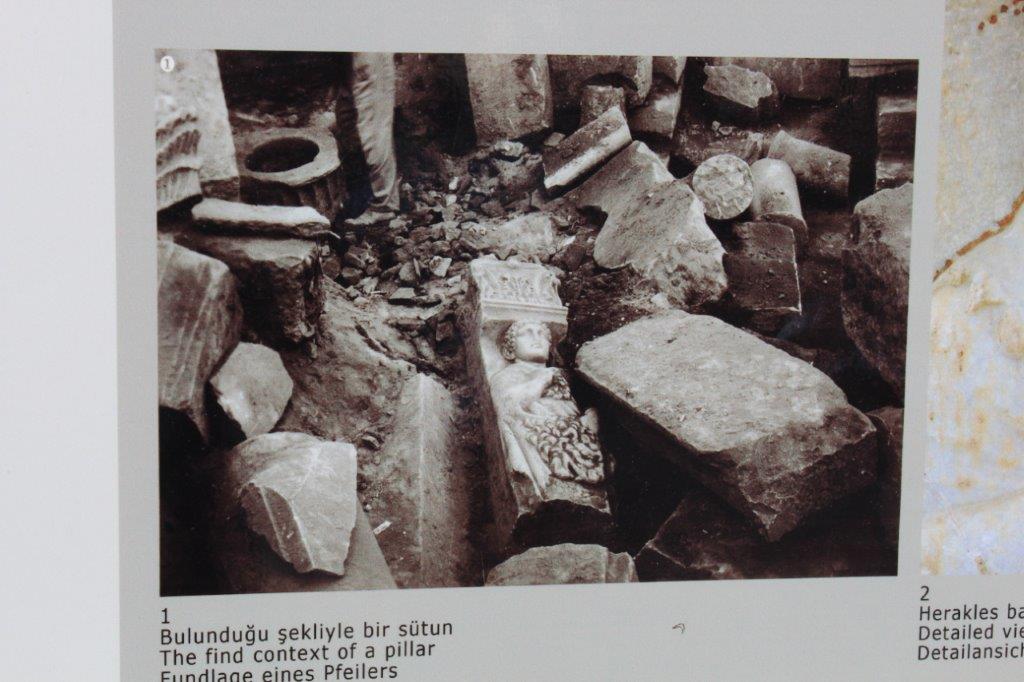
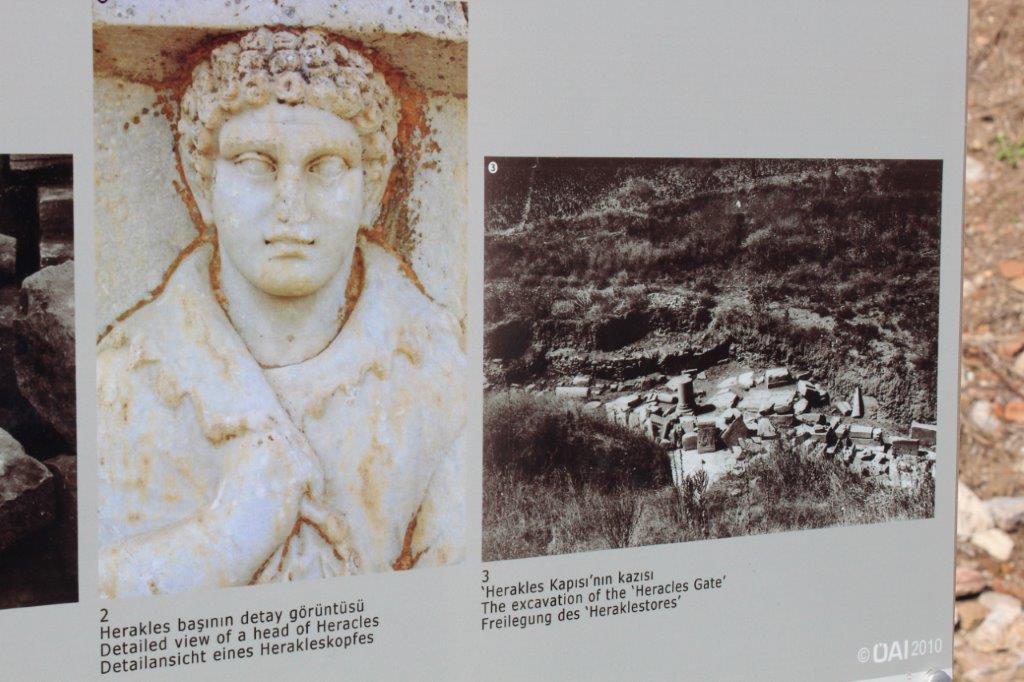
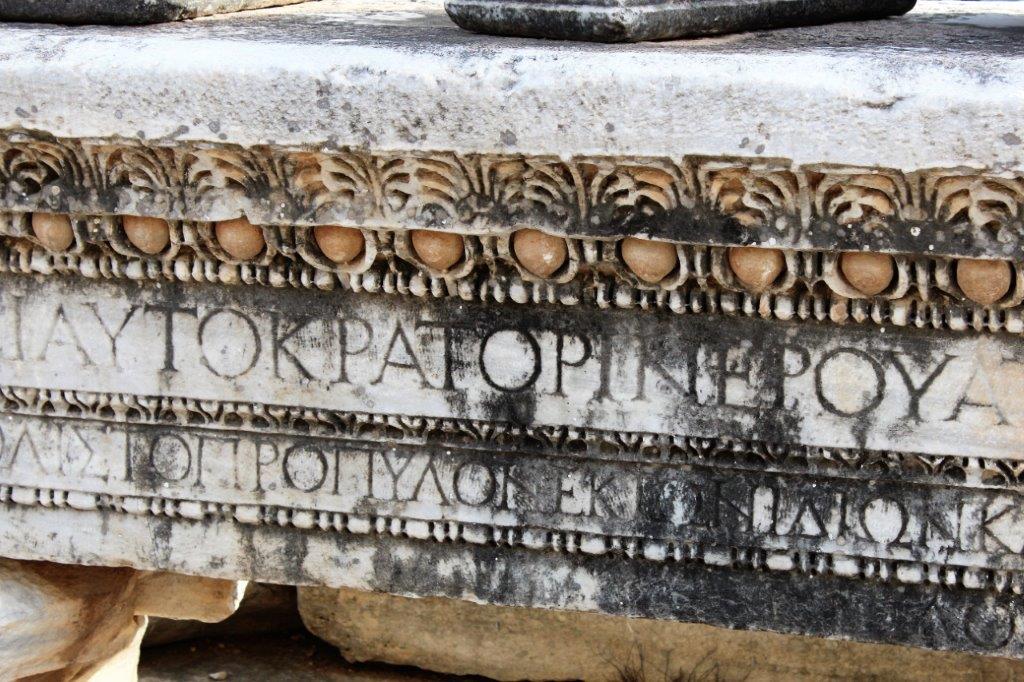
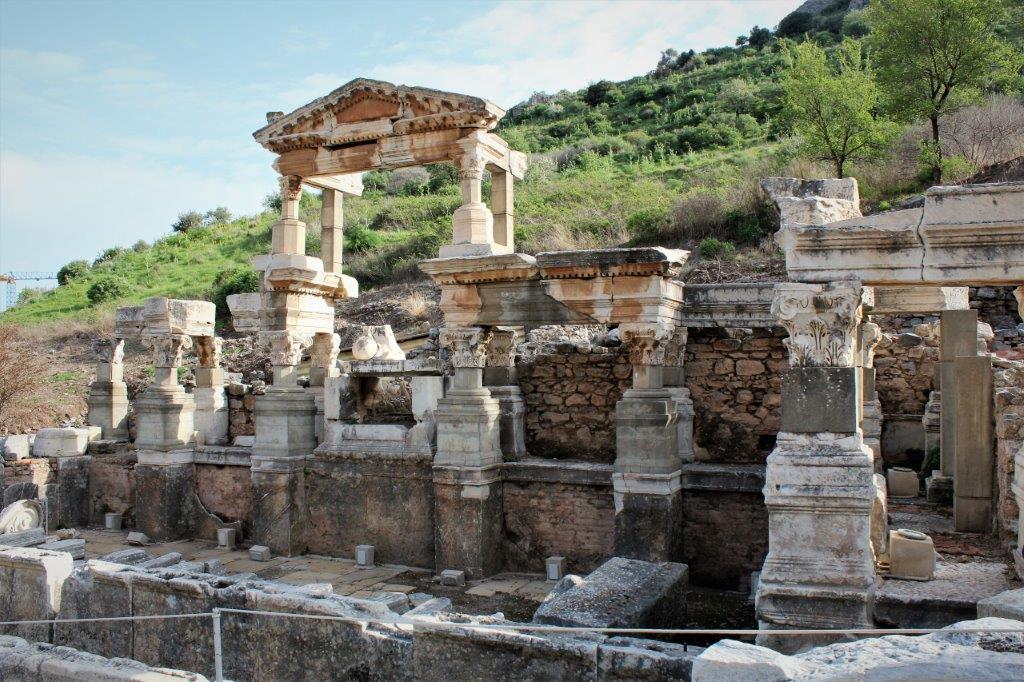
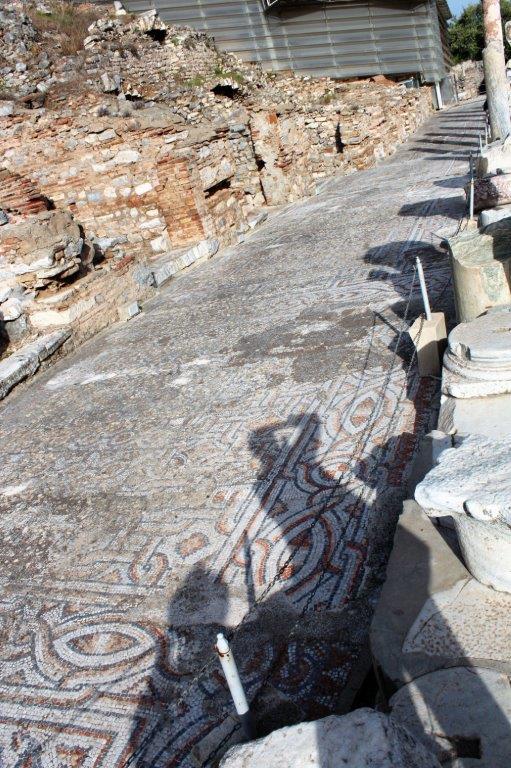
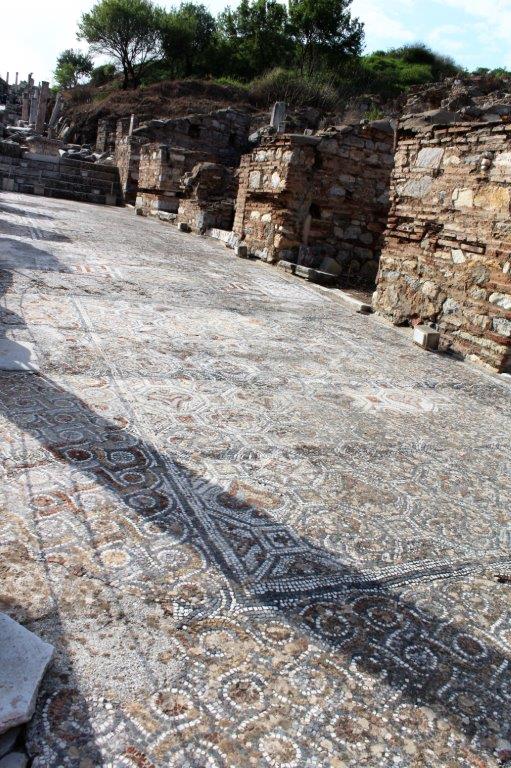
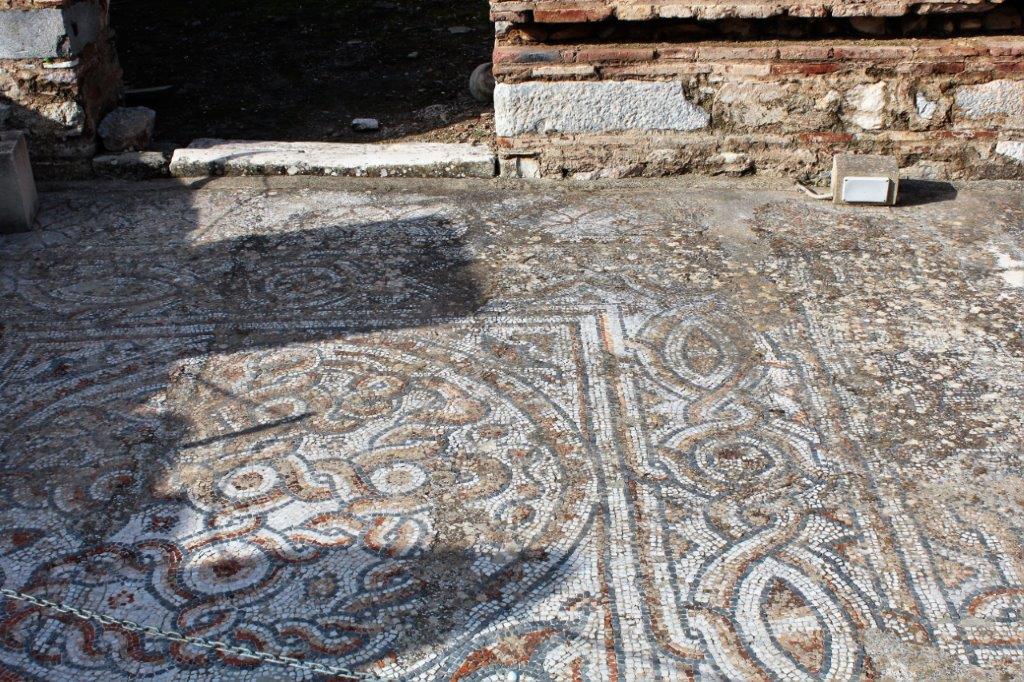
The Fountain of Trajan, one of the finest monuments in Ephesus.  It was built in 104 AD in honour of Emperor Trajan. The fountain pool was 20 X 10 meters and was surrounded by statues.There were many houses on the slope of Curetes Street.  Under the houses were colonnaded galleries with mosaics on the floor in front of the shops.  There was a roof over these ‘sidewalks’ to protect the pedestrians from the sun or rain.
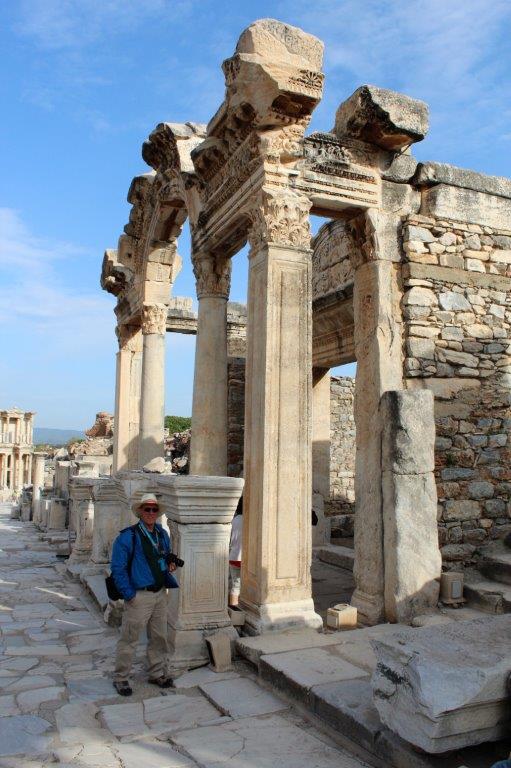
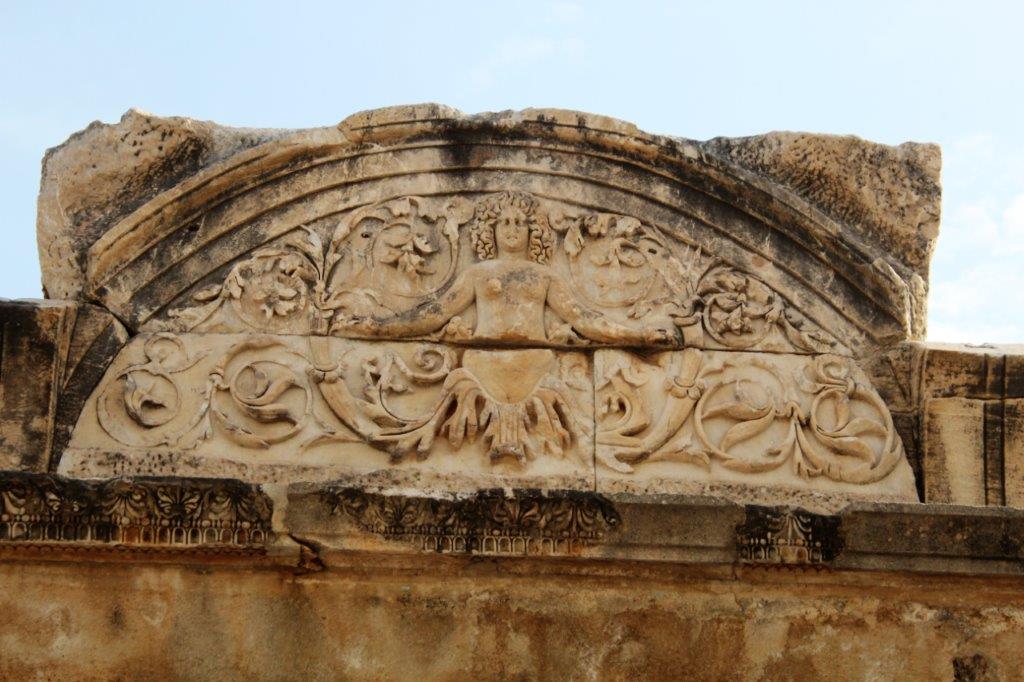
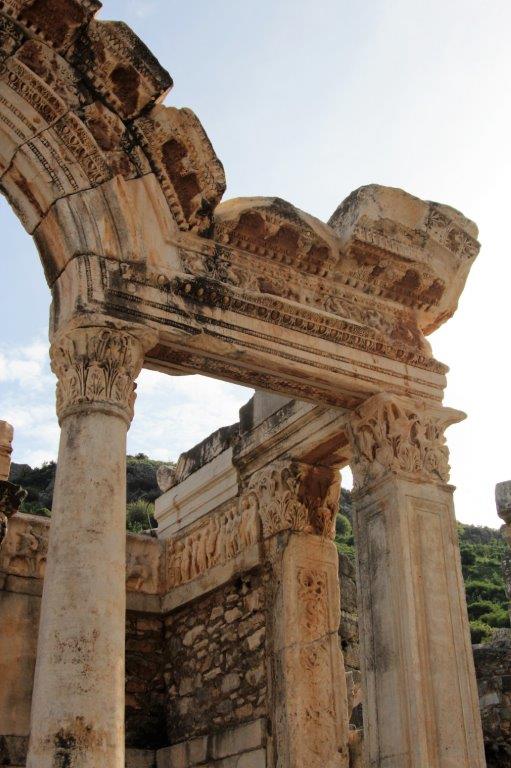
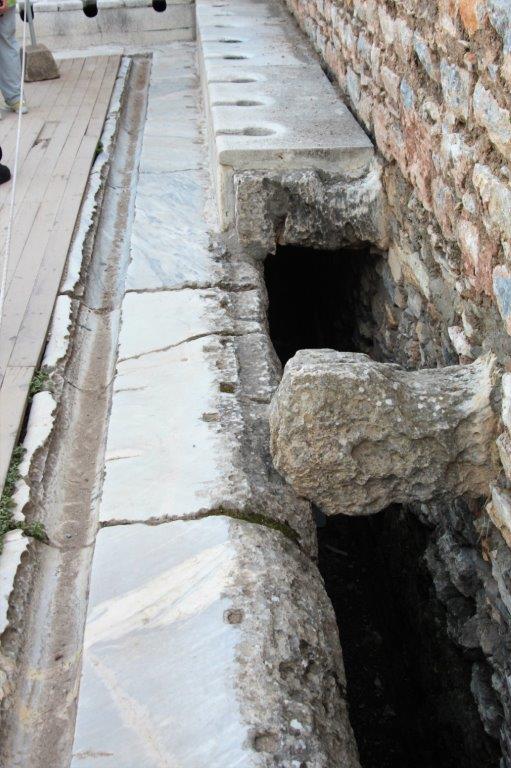
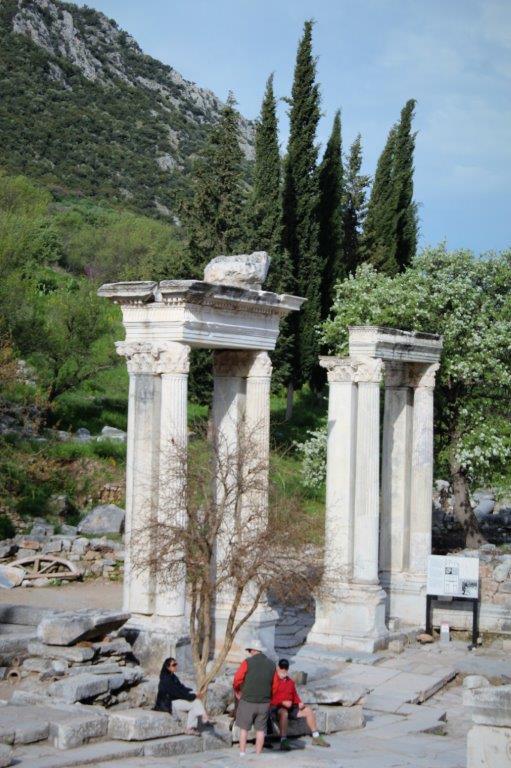
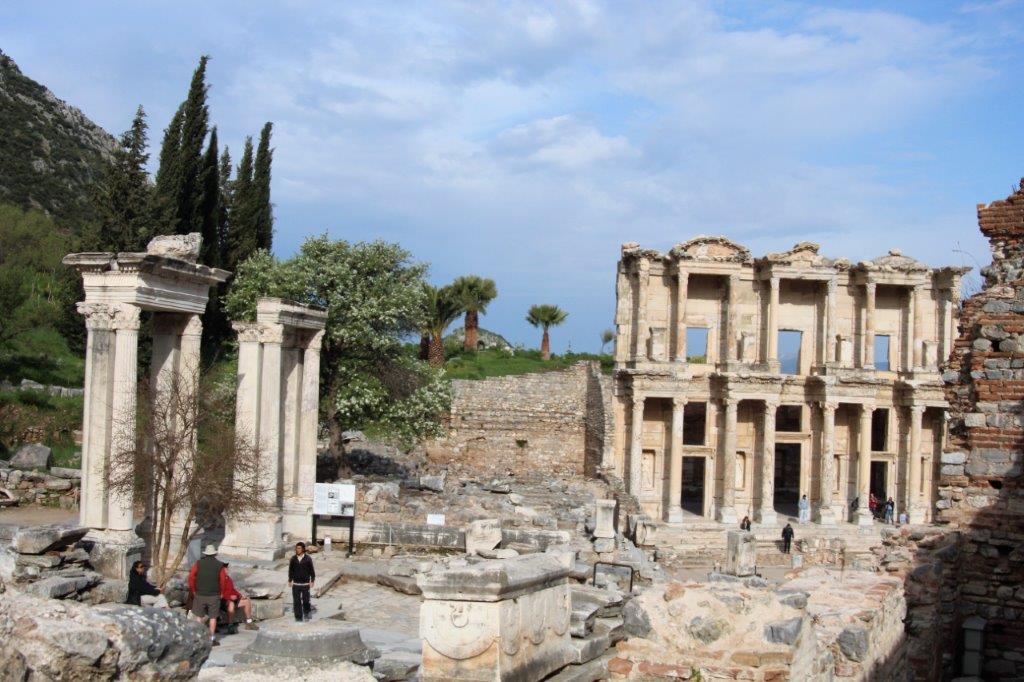
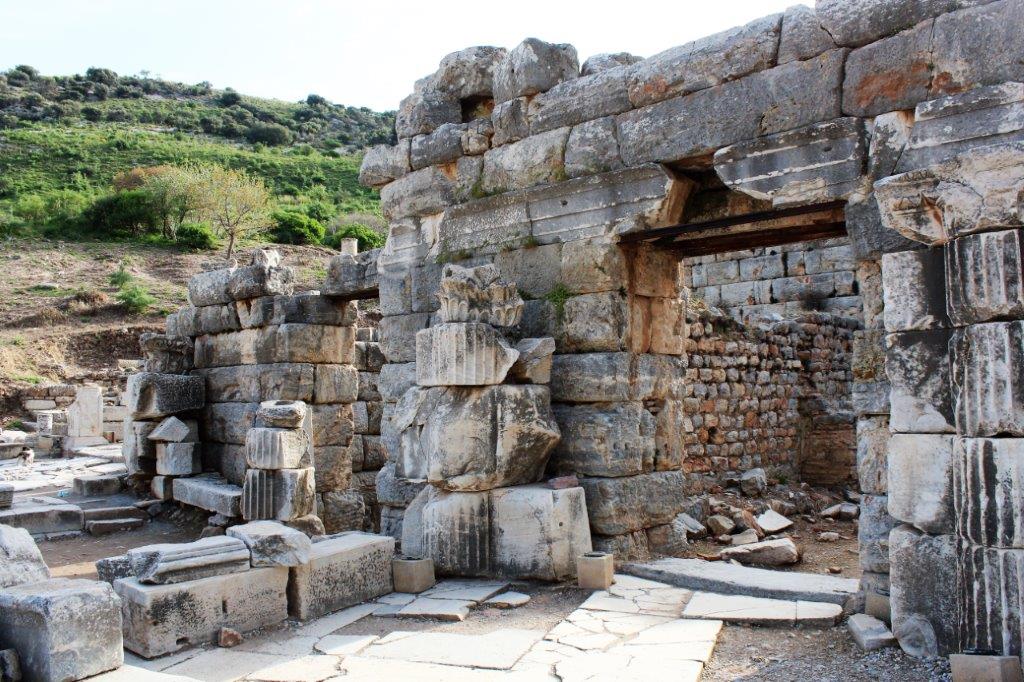
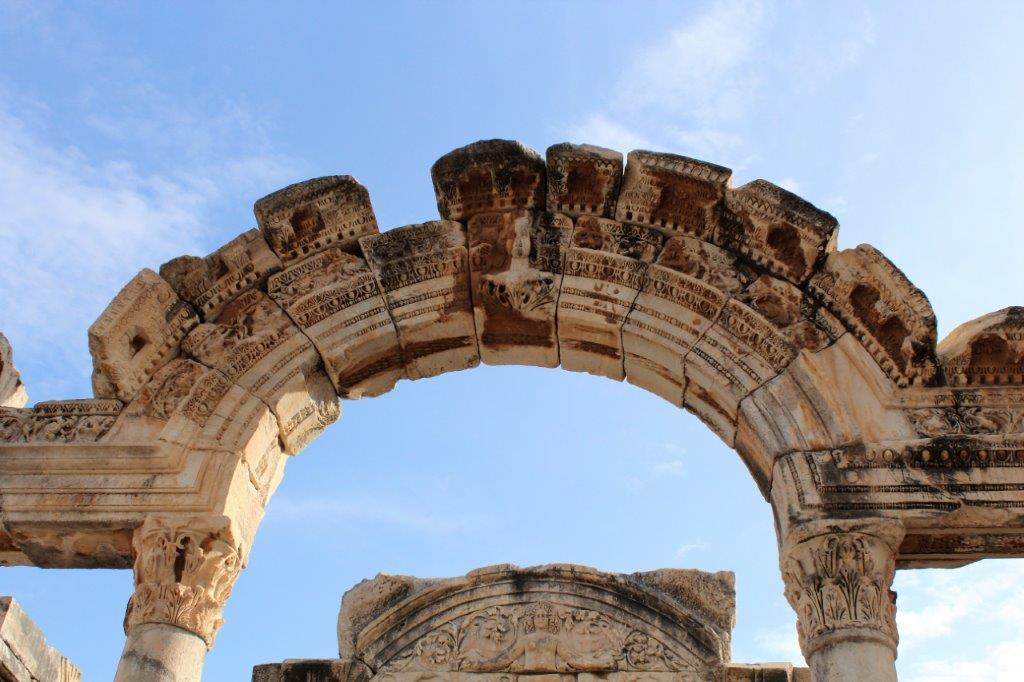
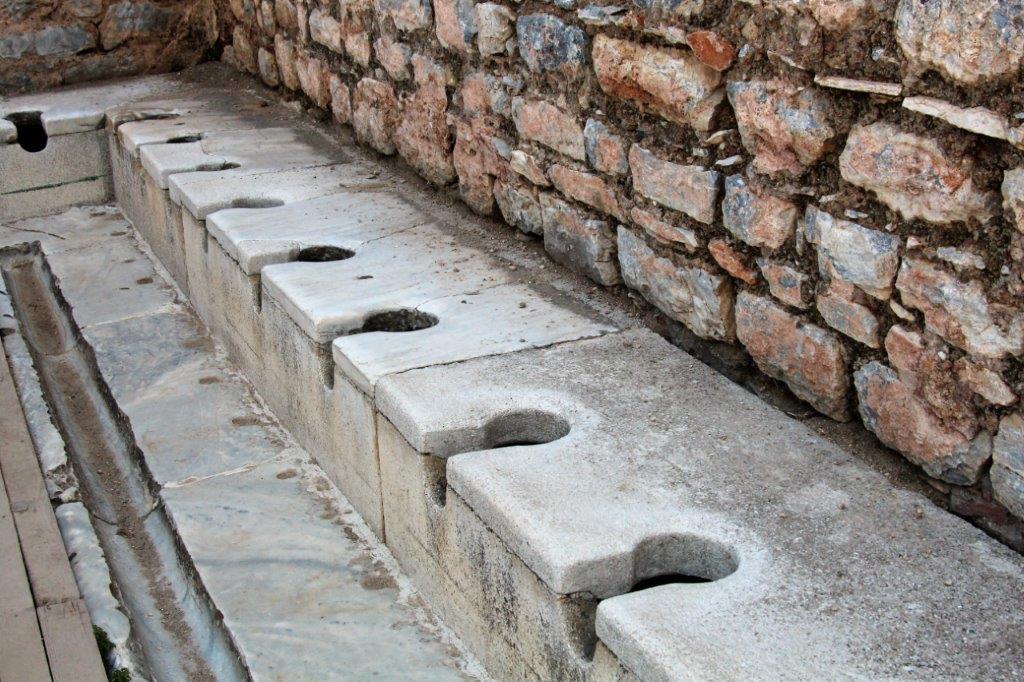
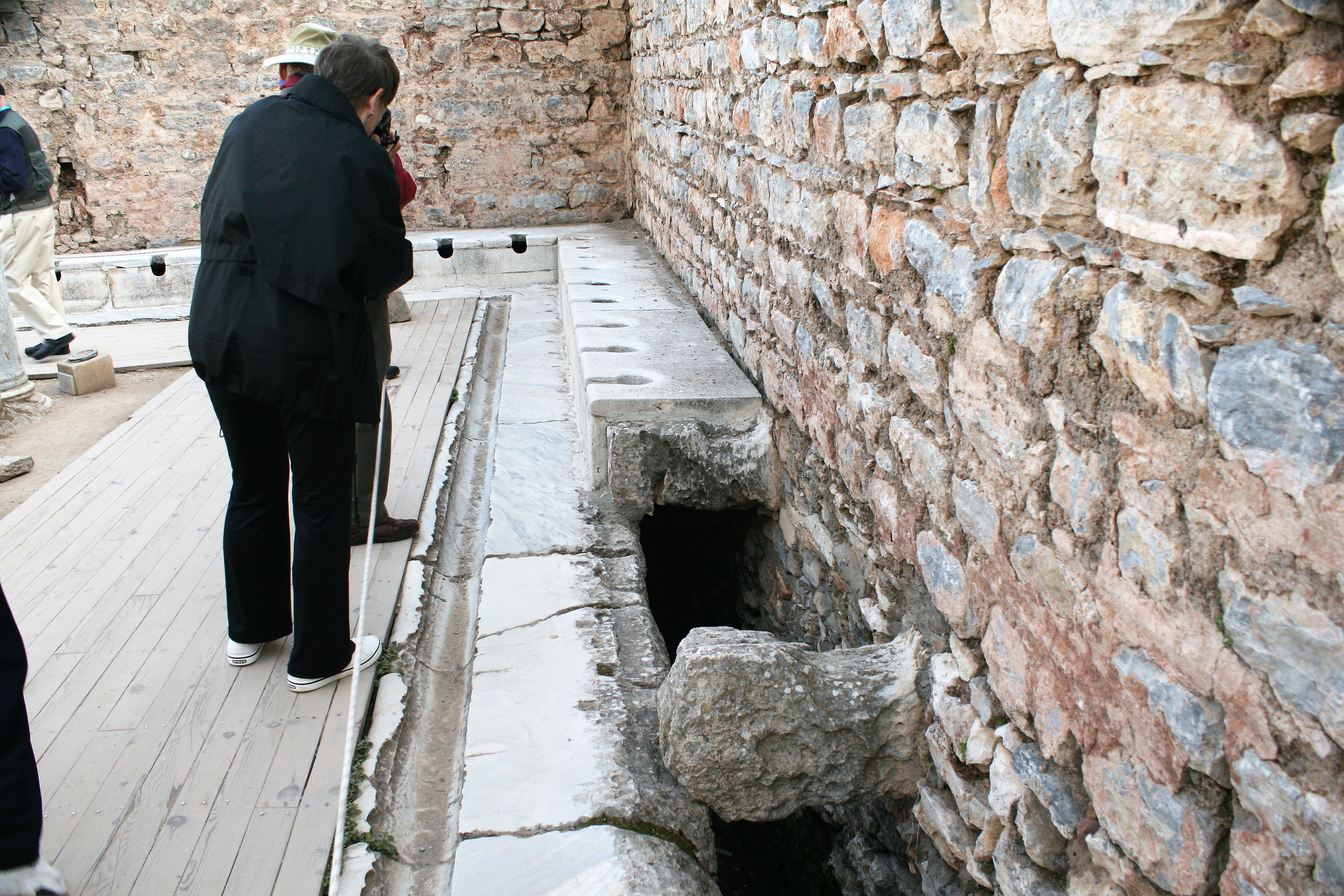
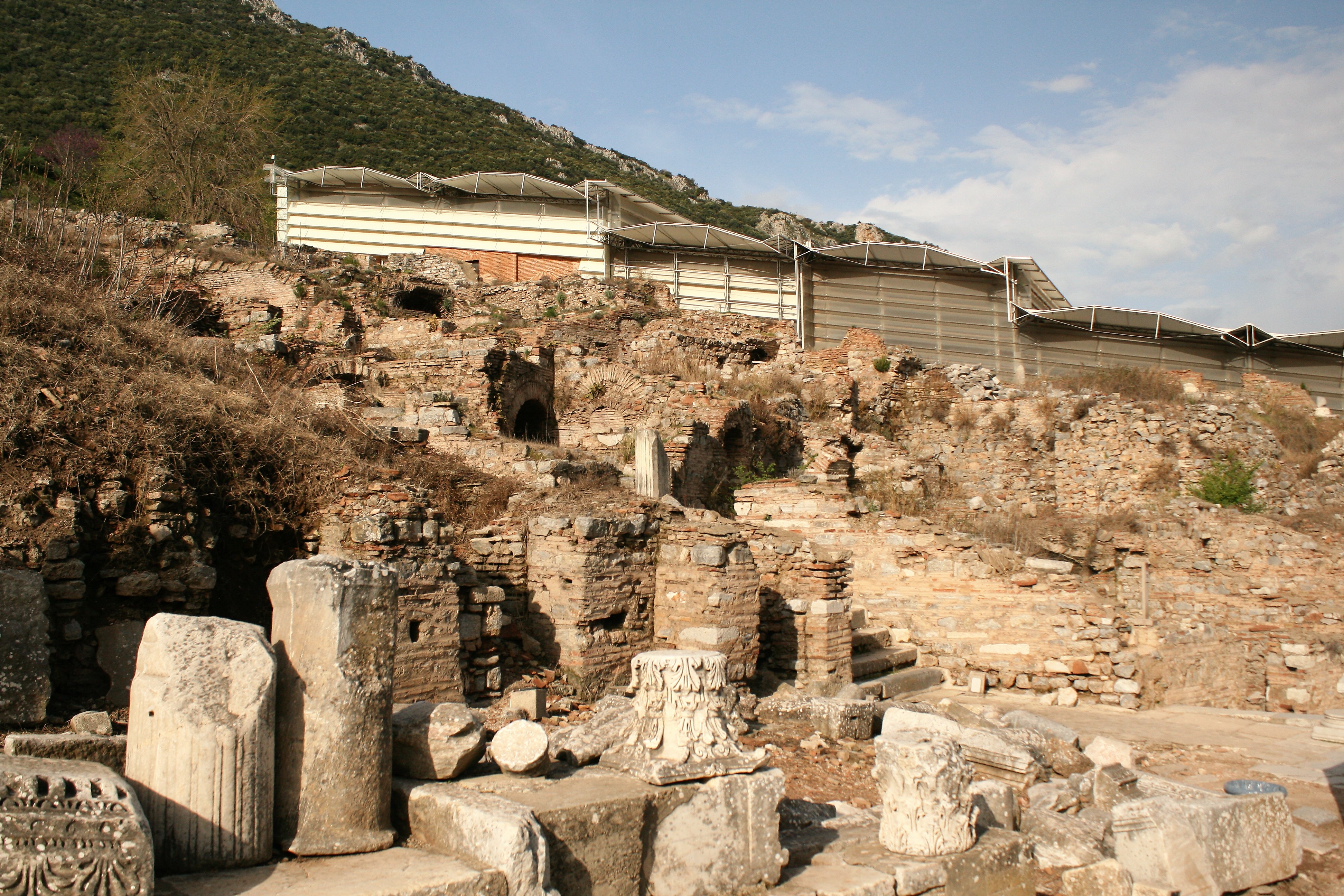
Emperor Hadrian came to visit Ephesus in 128 AD.  P. Quintilius built this, the best preserved and most beautiful structure in the city, in 138 AD and dedicated it to the emperor.Not far down the street from the Temple of Hadrian is the Public Toilets which were part of the Scholastica Bath built in the first century AD.  They were the public toilets of the city and a fee was charged to use them. On the hill across from the Hadrian Temple are the Terrace Houses, also called the “the houses of rich.”  There are six houses on three terraces, which have been covered with roofing resembling Roman houses.  The oldest of the structures dates back to 1 BC and continued in use until 7 AD.  There is a separate ticket fee to visit the Terrace Houses, so many people who visit Ephesus do not see these remarkable treasures.  We did, and I will show you photos in my next blog.
2012 April 4 – Day 24 – Kusadasi, Turkey (Day 2) (Part 1)

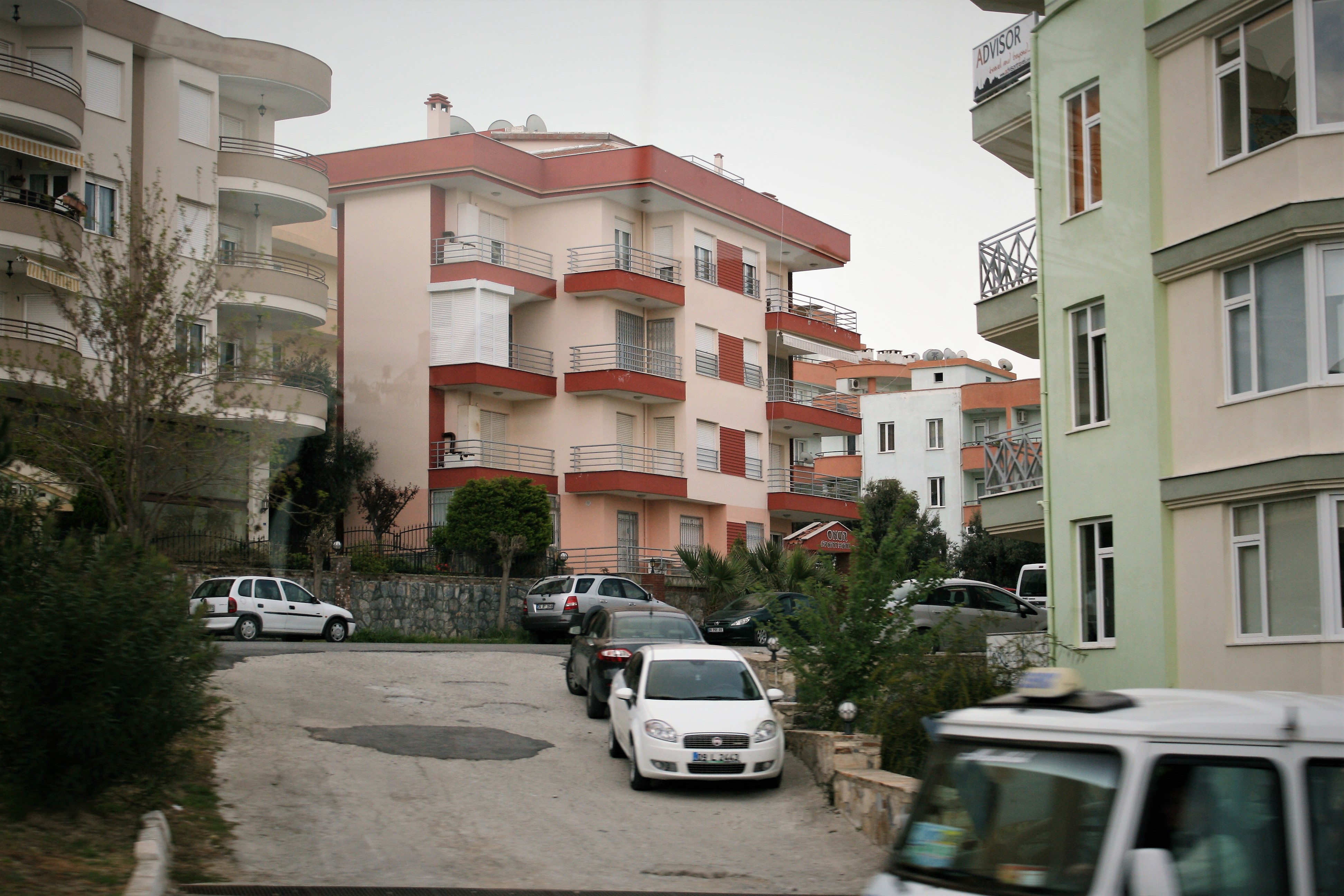
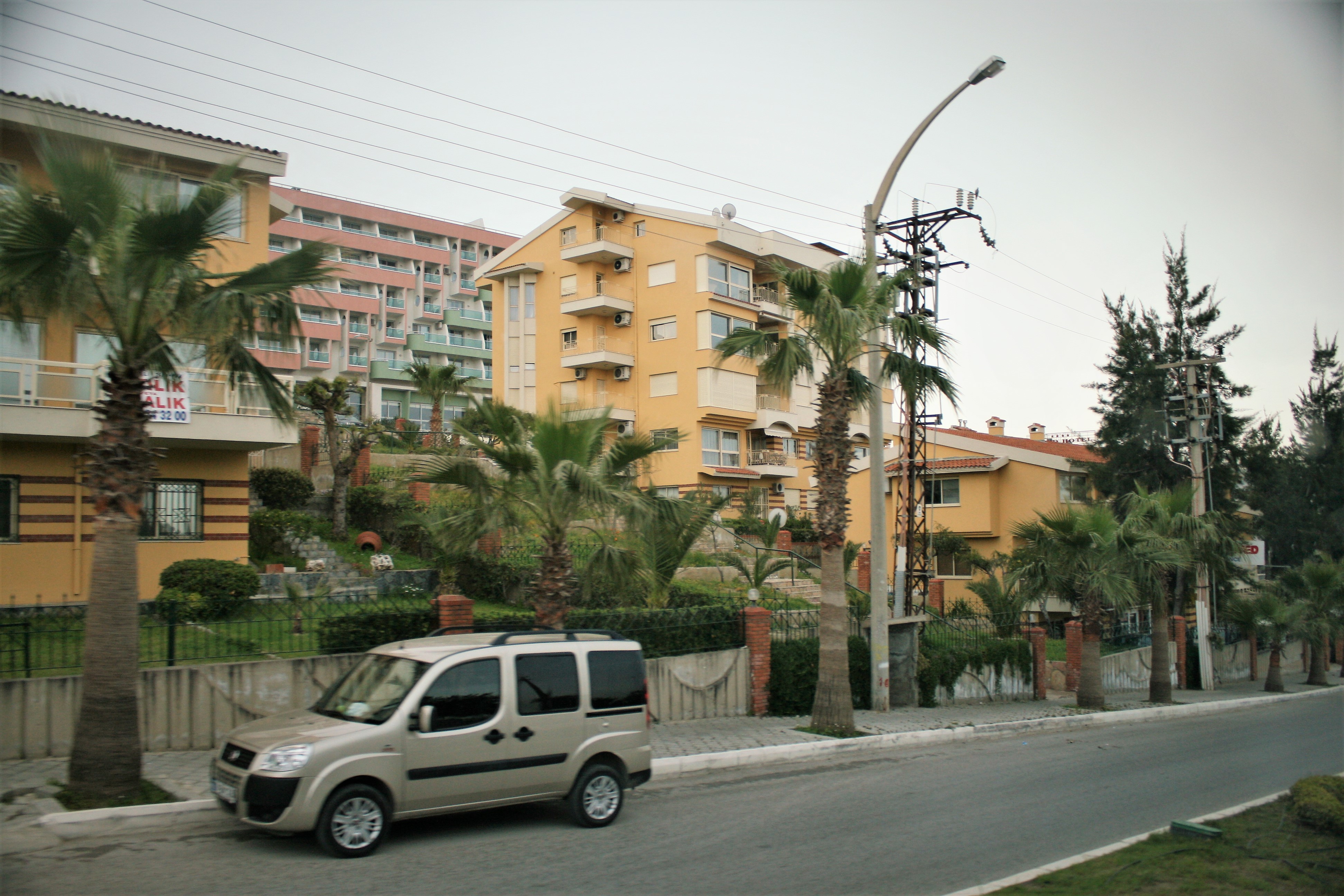
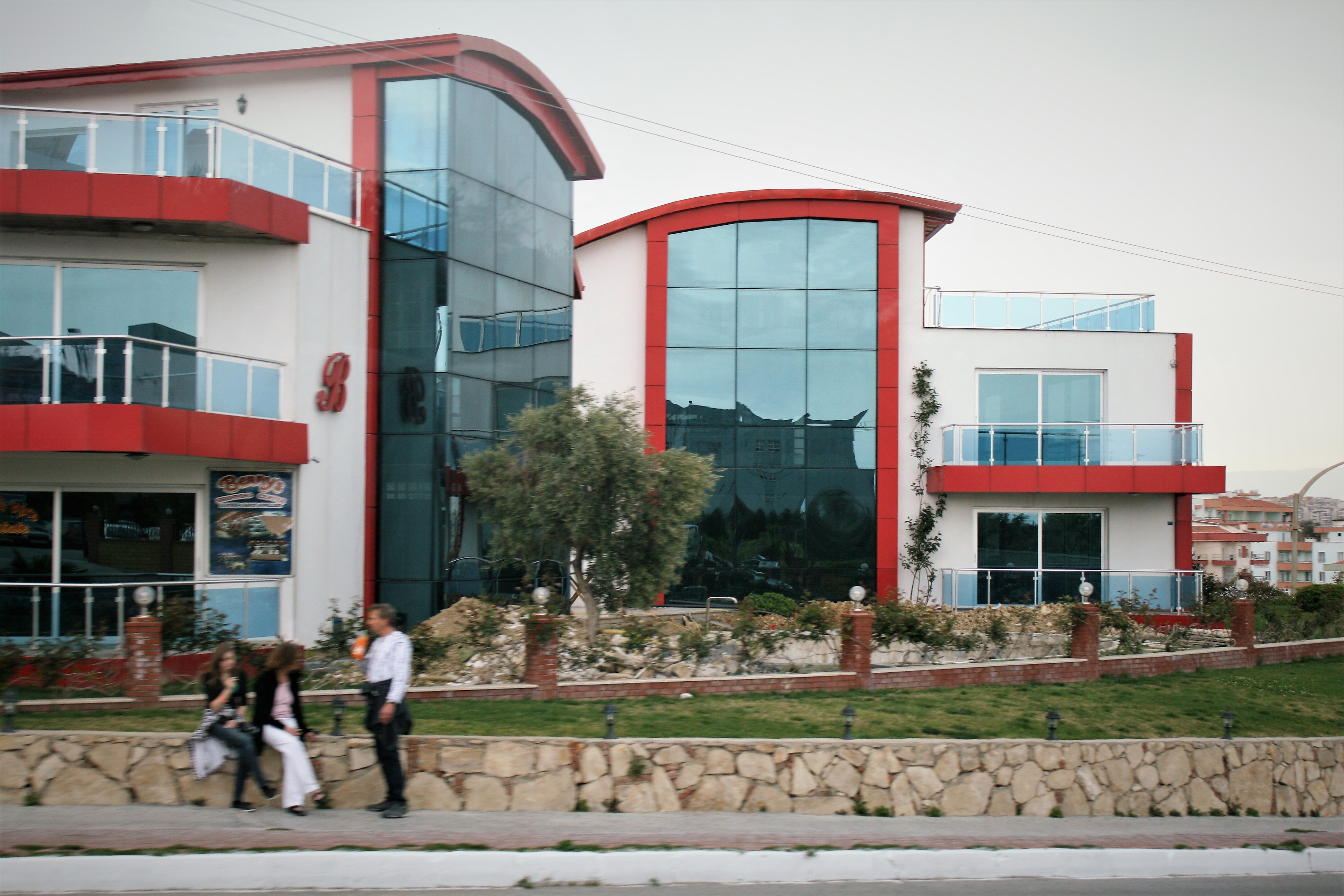
When we climbed on the bus at 8 am for our tour to Ephesus we discovered we had the same guide as the day before.  Ahmet was great and full of interesting ancedote’s and information.  Like the day before we were all given portable electronic headsets so we were able to listen to Ahmet’s commentary as we walked around and didn’t have to form a cluster around him to hear things.  Normally you would not be able to do that at most of the historic spots in Turkey anyway, and certainly not in Ephesus, as the crowds are horrendous in the summer tourist season.  150 45-person buses a day, all day, every day for months.It was a half hour drive from the port north to the ancient city of Ephesus and we traveled through the newer side of Kusdadsi, past several five-star hotels and modern buildings.

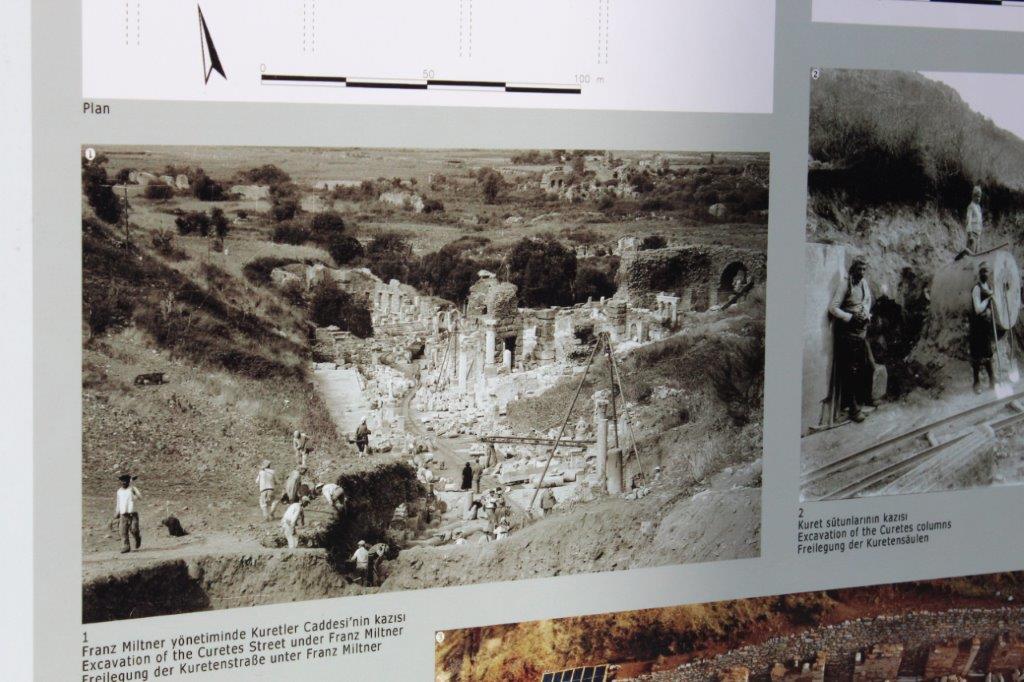
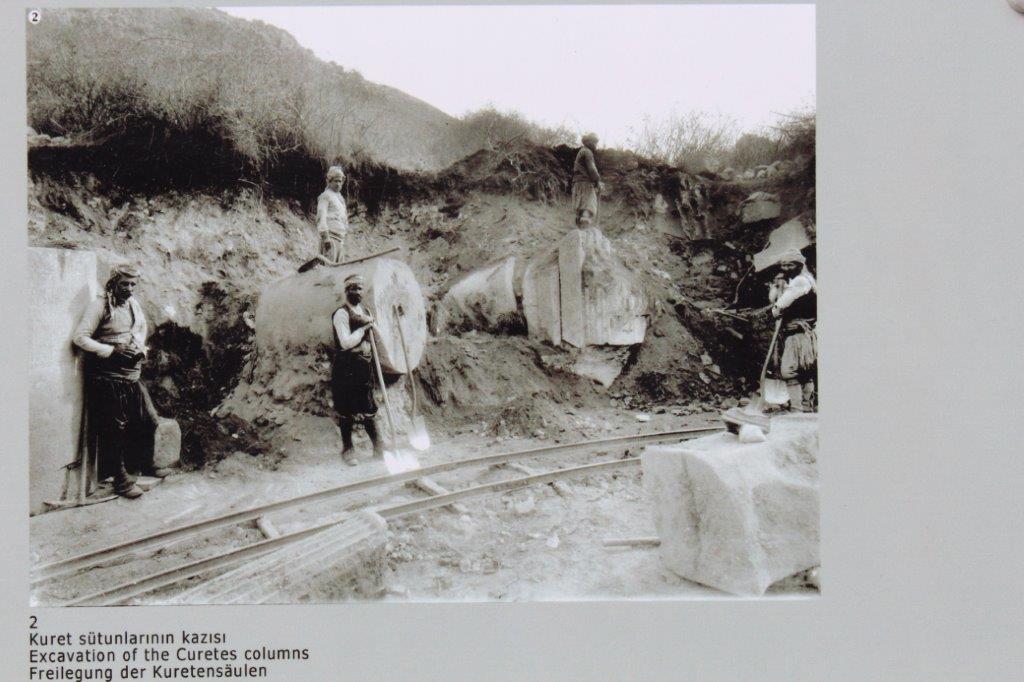
In its time, Ephesus was also a very modern city with an elaborate water and sewer system, marble streets, a library, many fancy shops along a street they call the “Rodeo Drive of the East,” and beautiful mosaic sidewalks.  Even though the work has been ongoing for over 100 years only 15% of the site has been excavated, so there are many more treasures yet to be found.

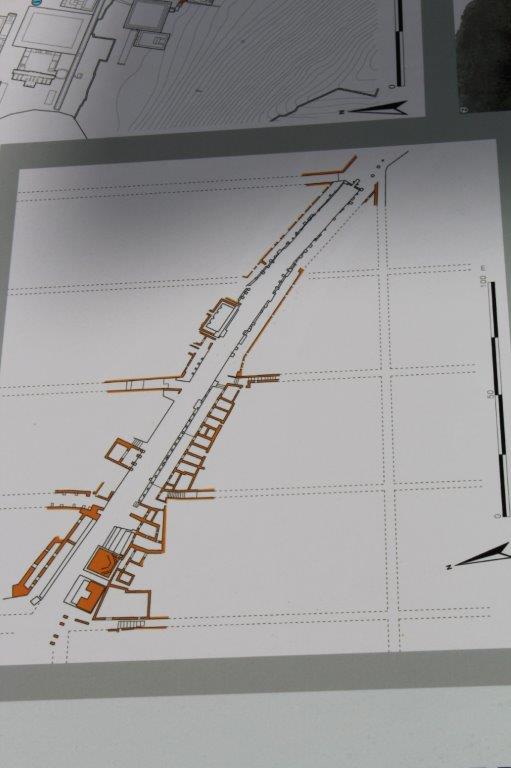
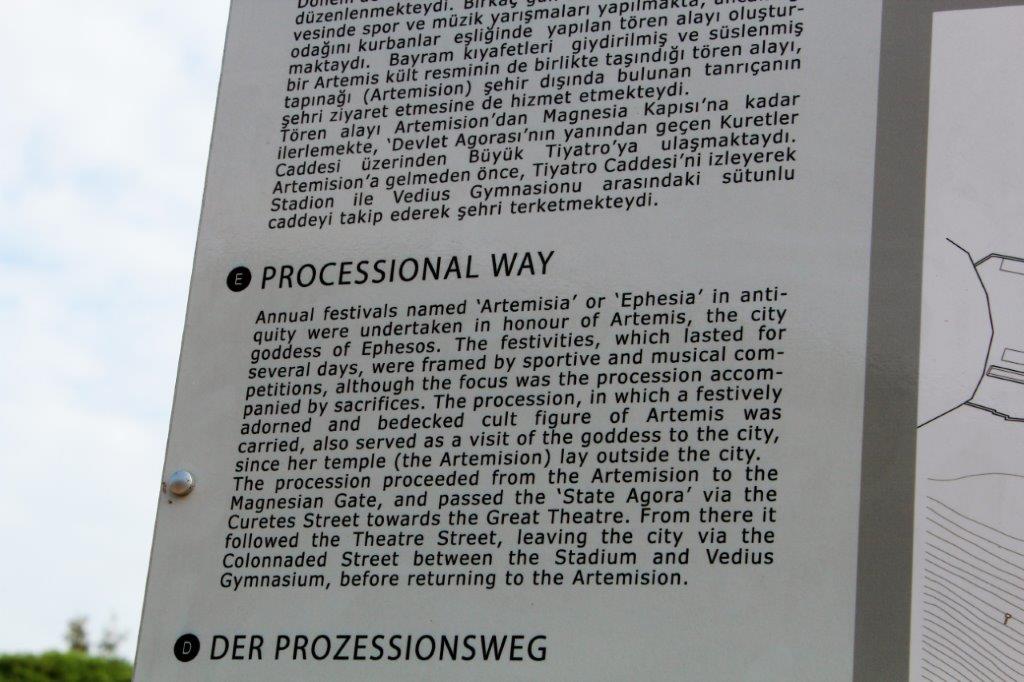
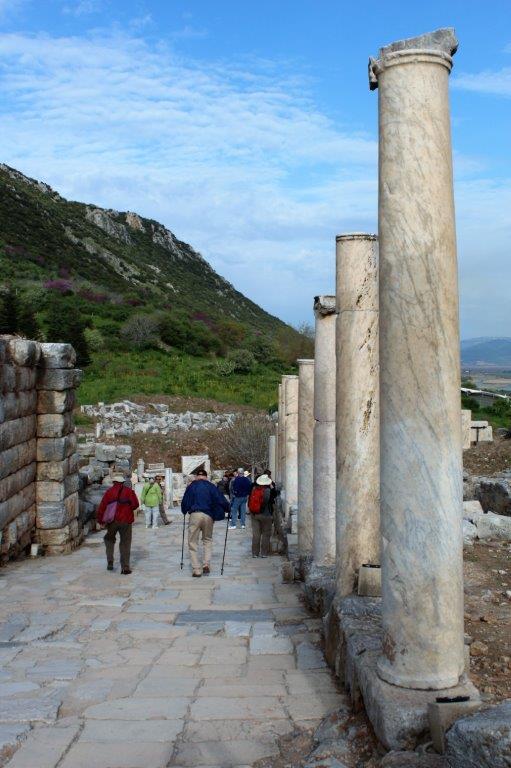
I took 494 photos and only deleted 20 when we got back to the ship!  There was so much to see.   I found these two maps on line.  They may give you a bit of an idea of where we were on the route. We entered at the Second Entrance on the right side of the maps, and walked the full length of the long street before turning up the Processional way to the Grand Theater on the left and departing through the Main Entrance.
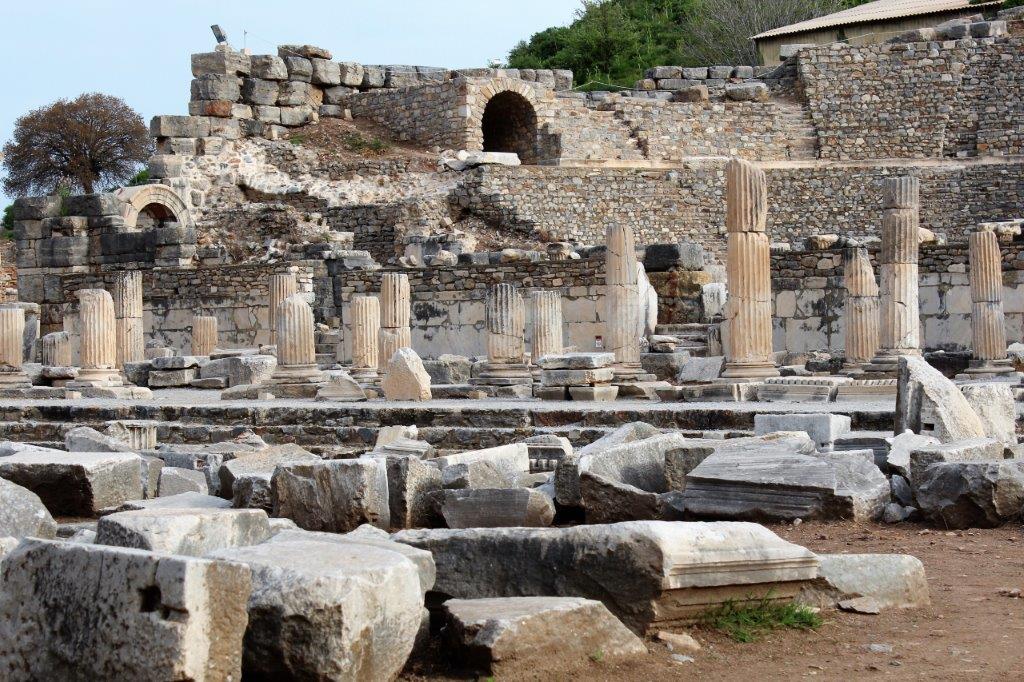
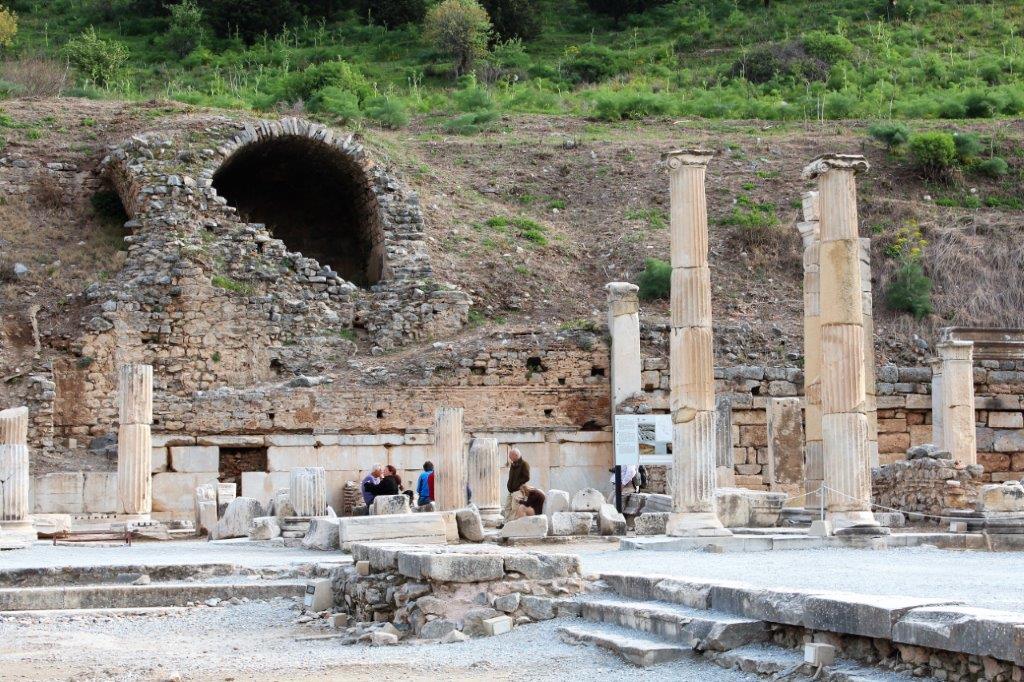
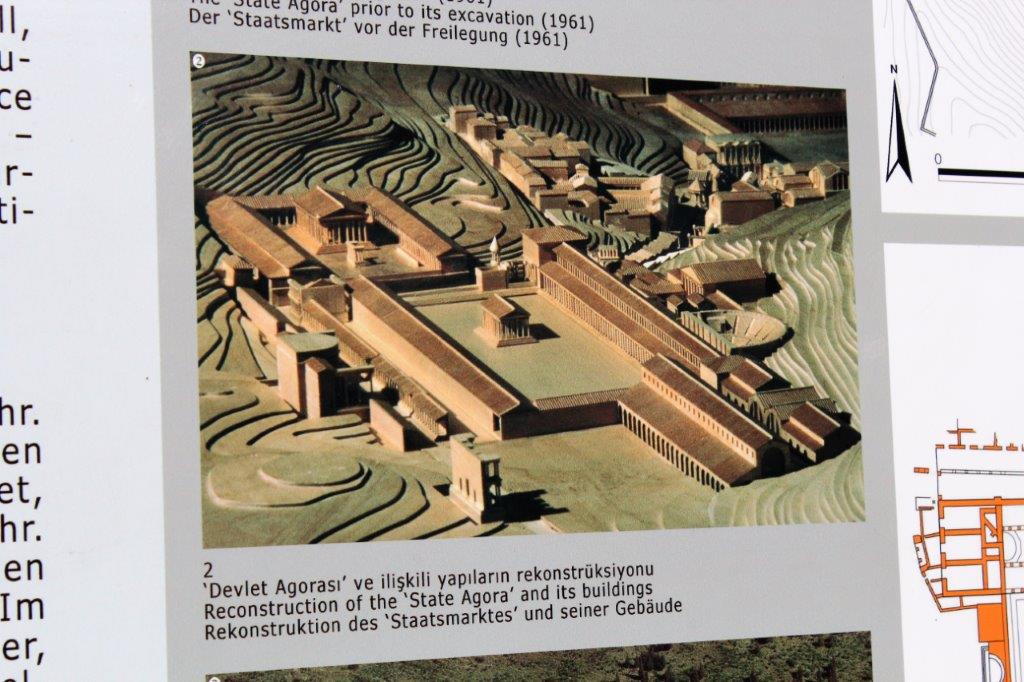
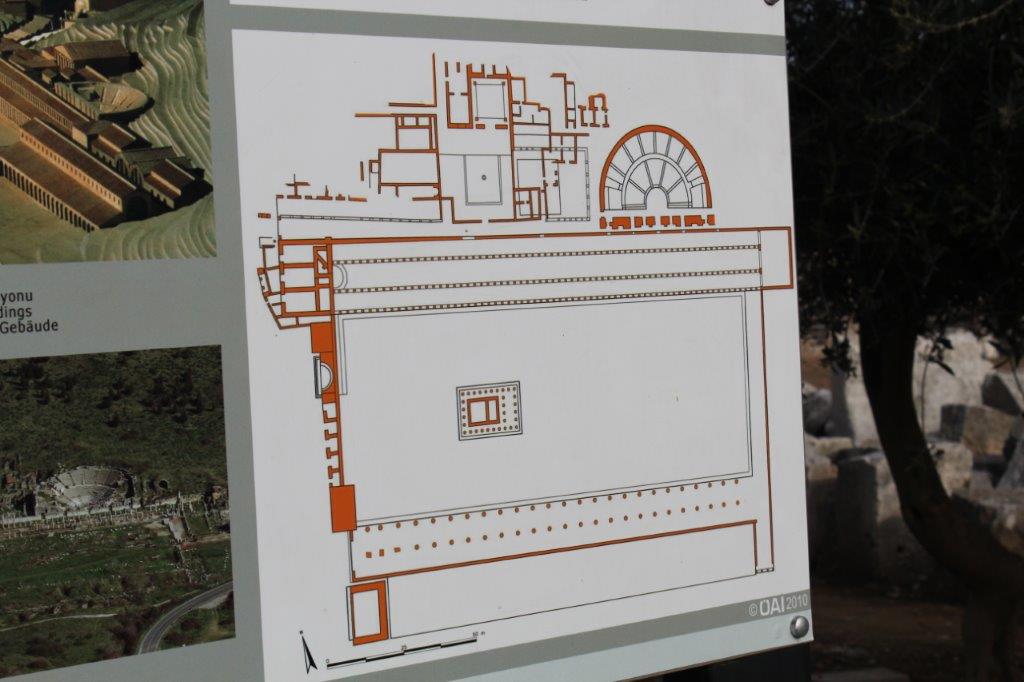
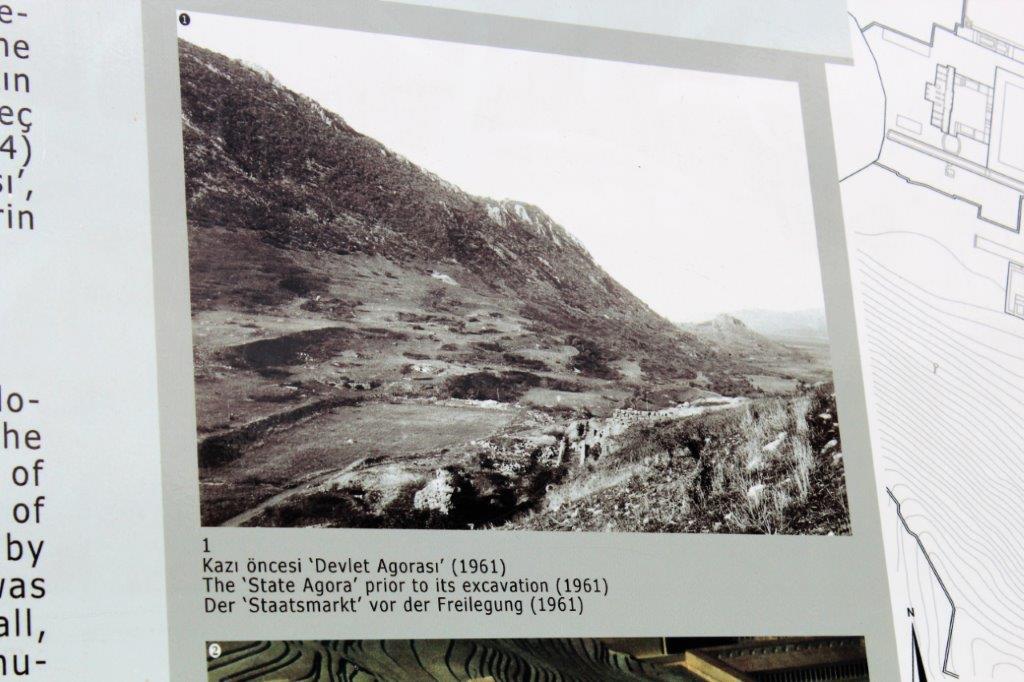
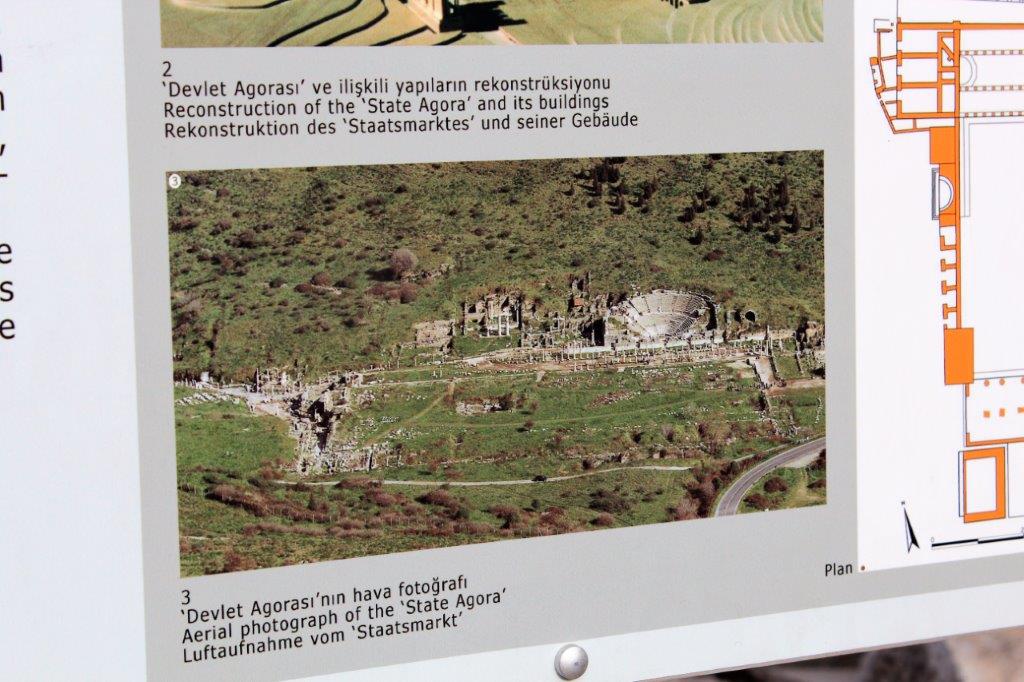
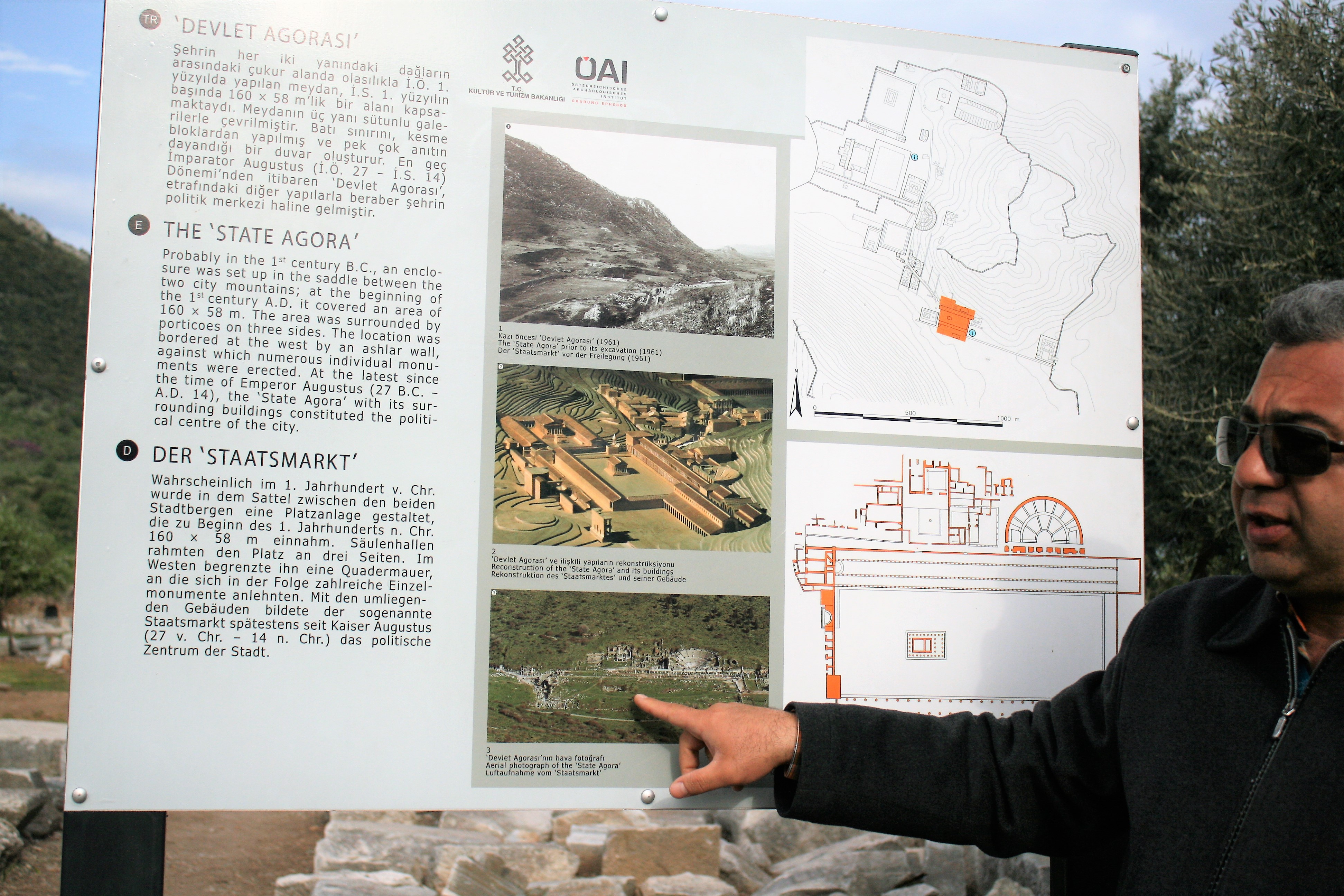
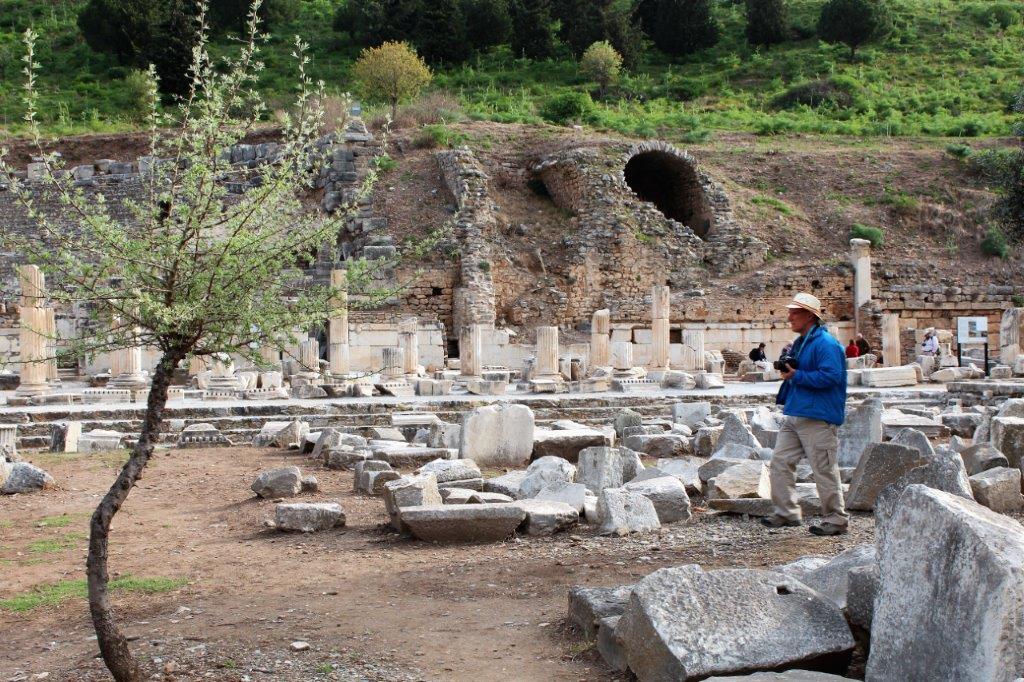
This is the Odeon or Stage Agora – a concert hall that had a stage area and an orchestra section. The Basilica – 160 meters long, that was the stock exchange, commercial business area, and law courts.

The Bath of Varius – built in the 2 century. There were baths of cold water, warm water and hot water. It was in this very place that the Apostle Paul preached the gospel to the people of Ephesus and thus he spread the word of the Lord and a fellowship of believers began to gather in Jesus name.  It was totally awesome to be walking the same streets and standing in the same places as Paul had been over 2000 years ago!

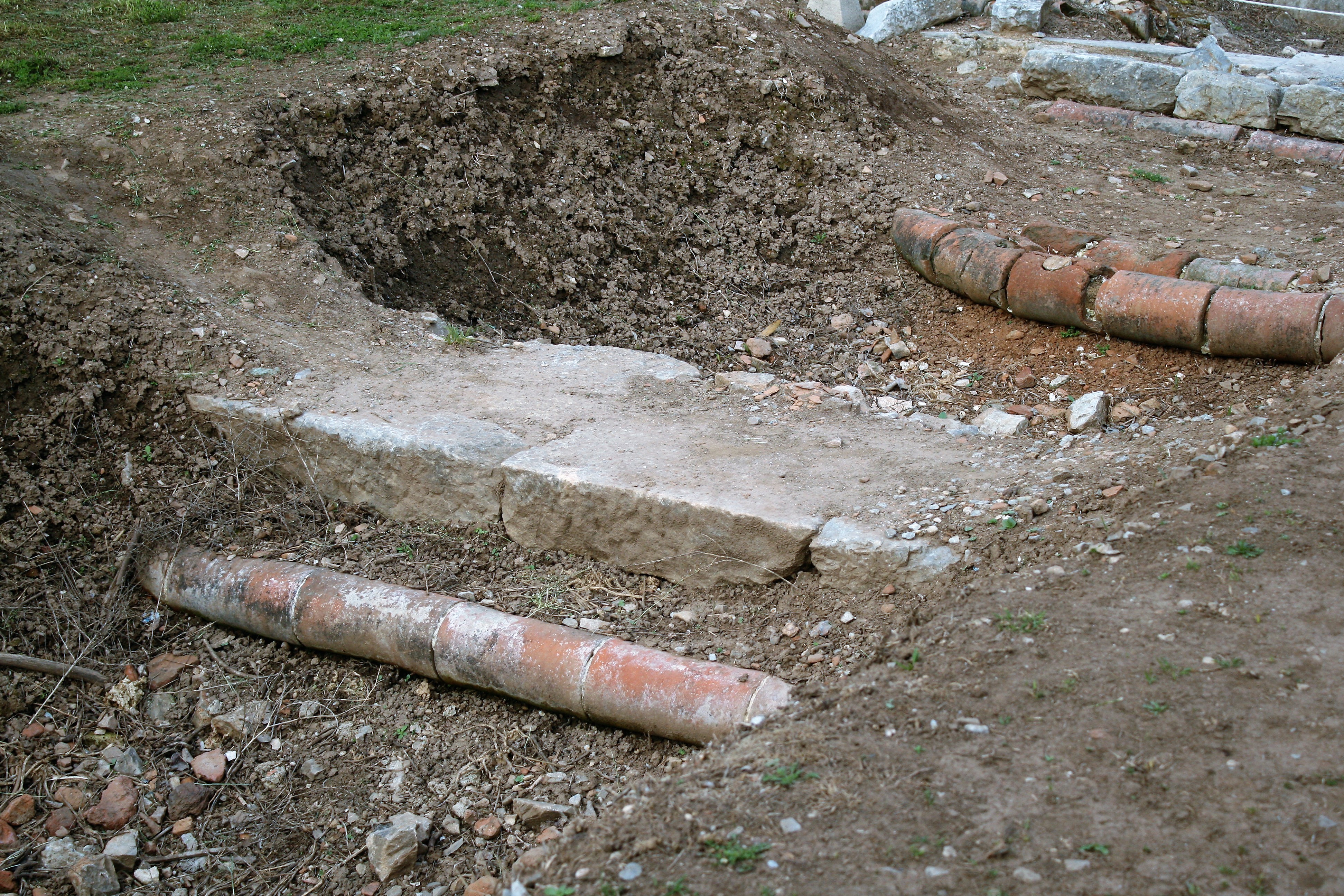
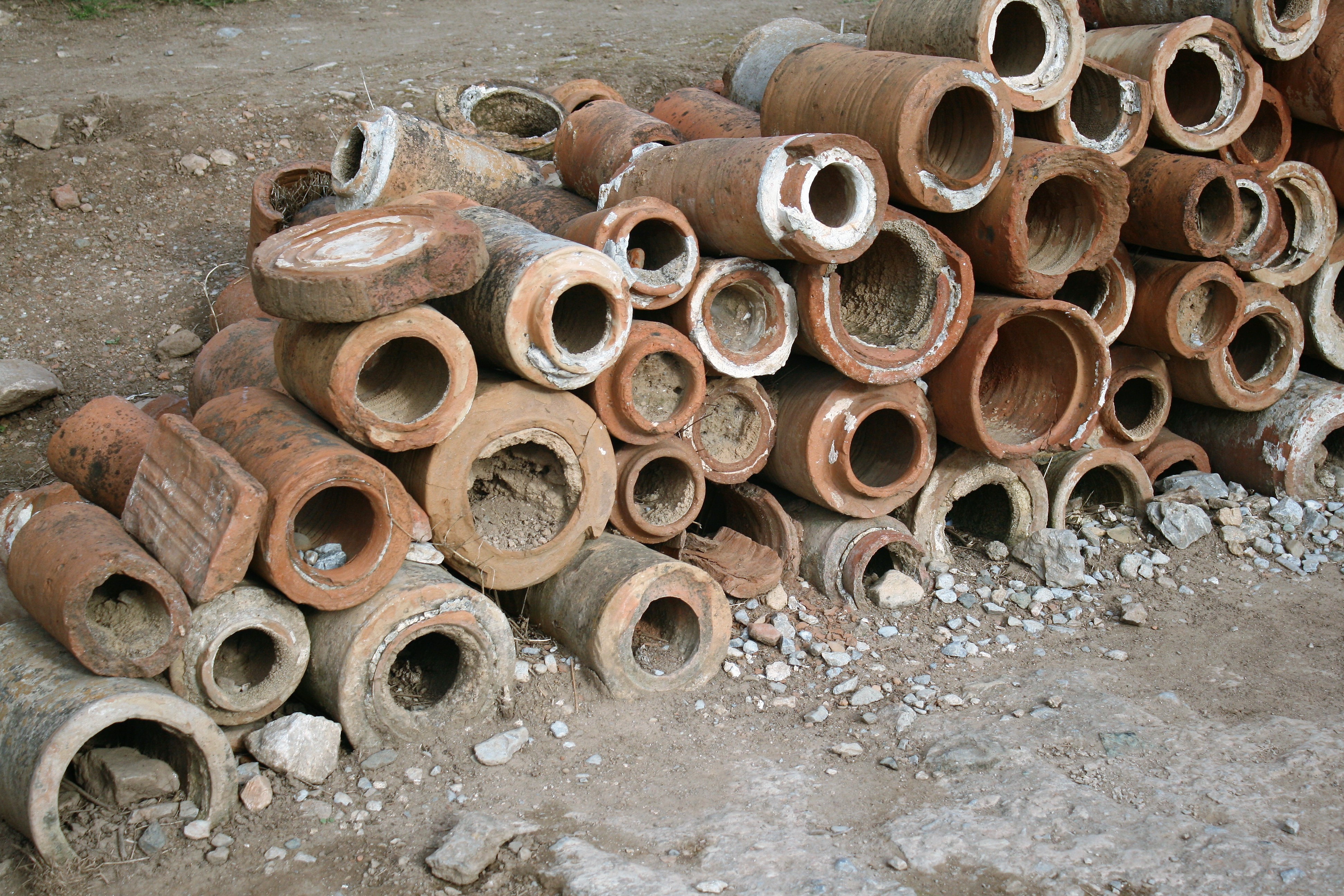
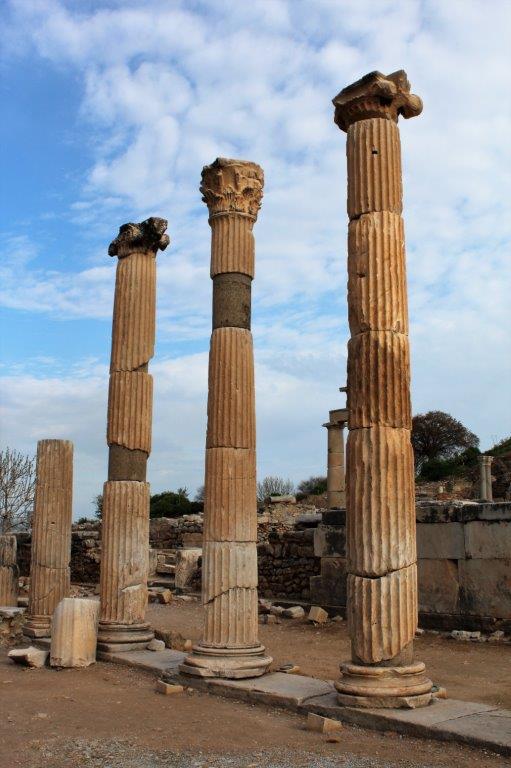
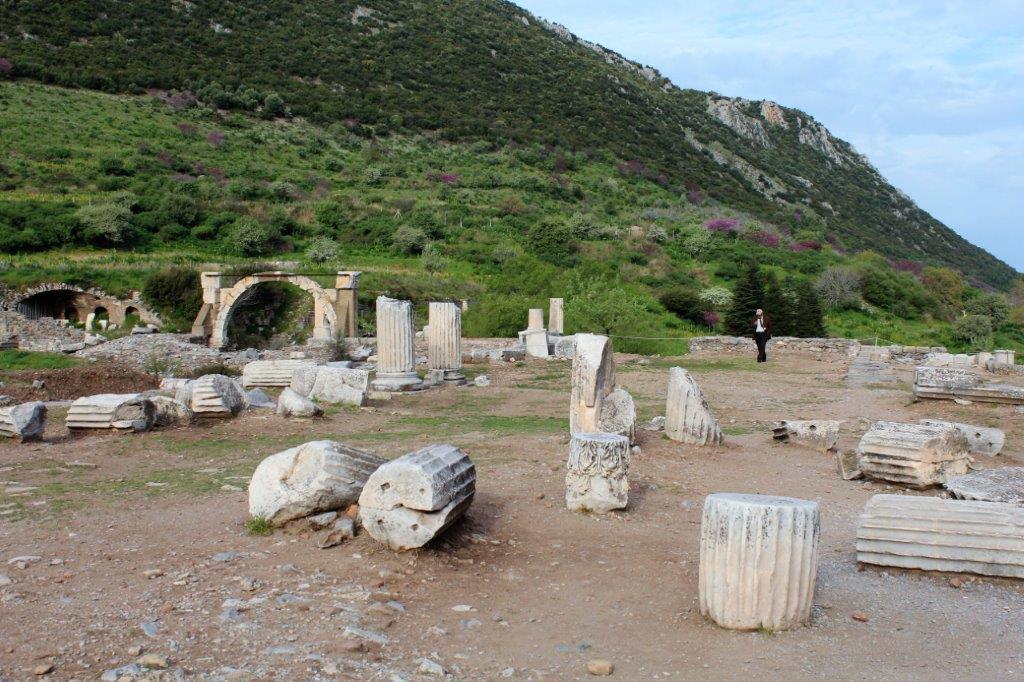
Some of the pipes from the sophisticated water and sewer system. There were pieces of columns and walls all over and many places where work of restoration or research was going on.  We were there in the first week of April so were very fortunate that the seasonal influx of tourists had not begun.  By the end of the day, as we were leaving, the place was getting quite congested though.

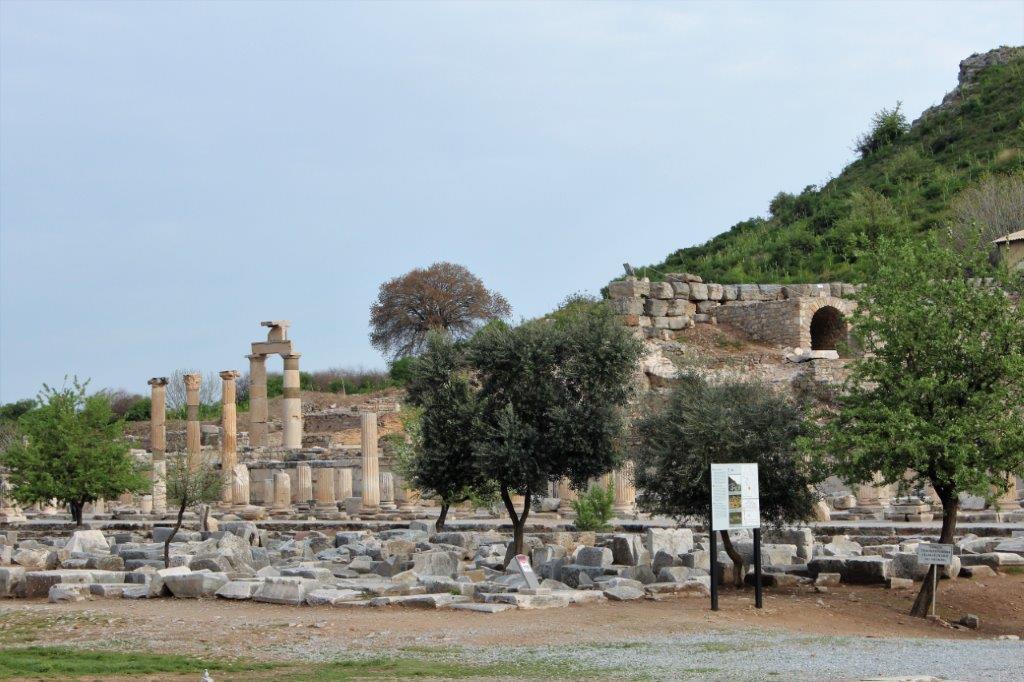
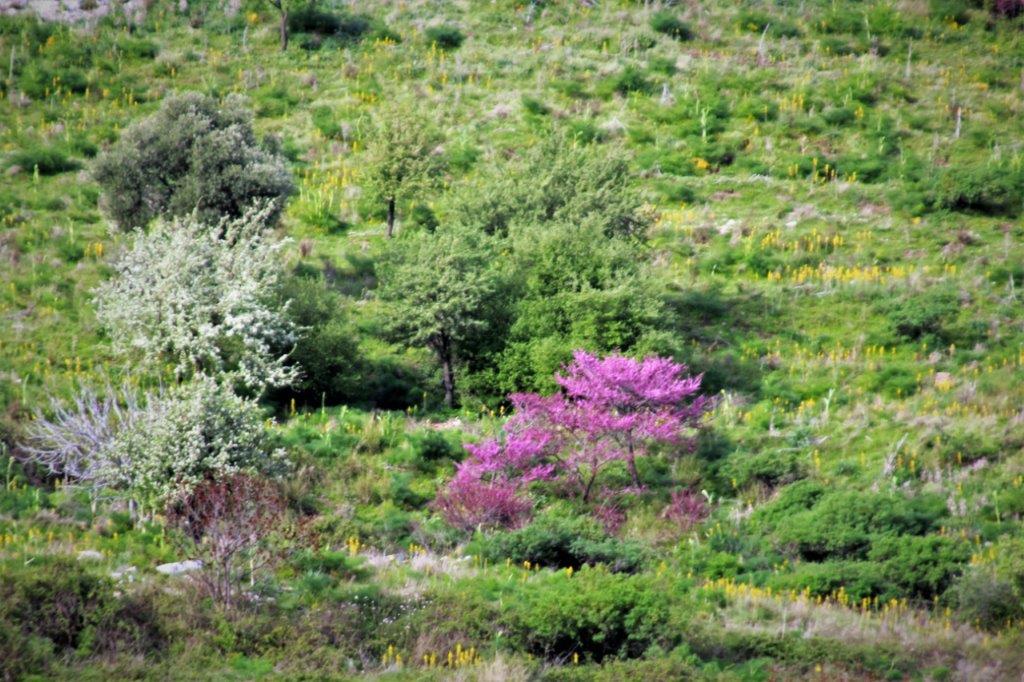
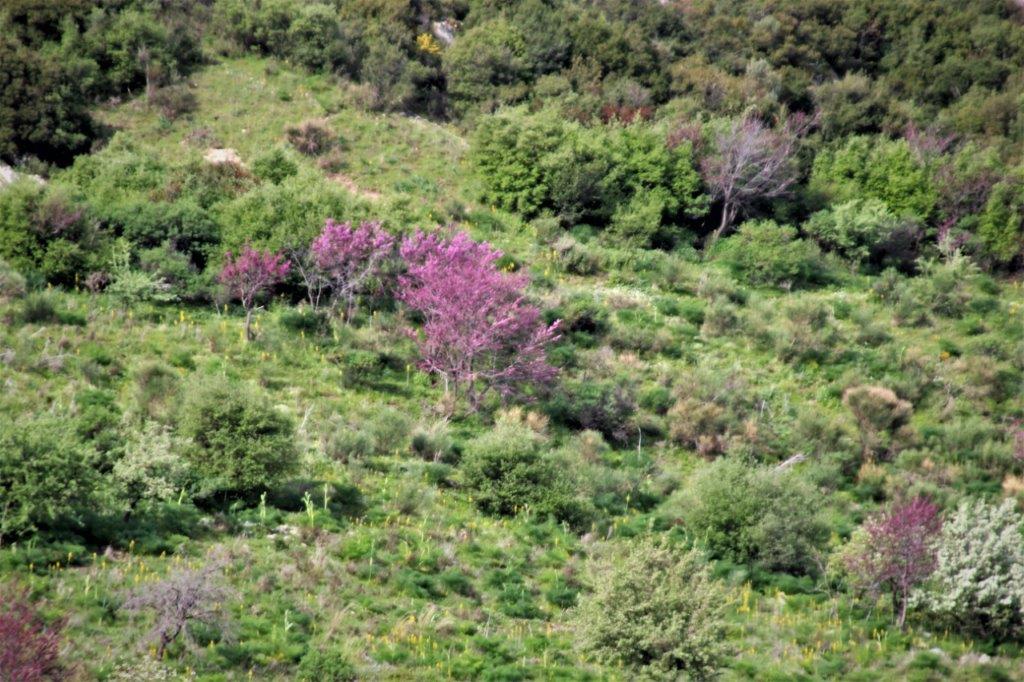
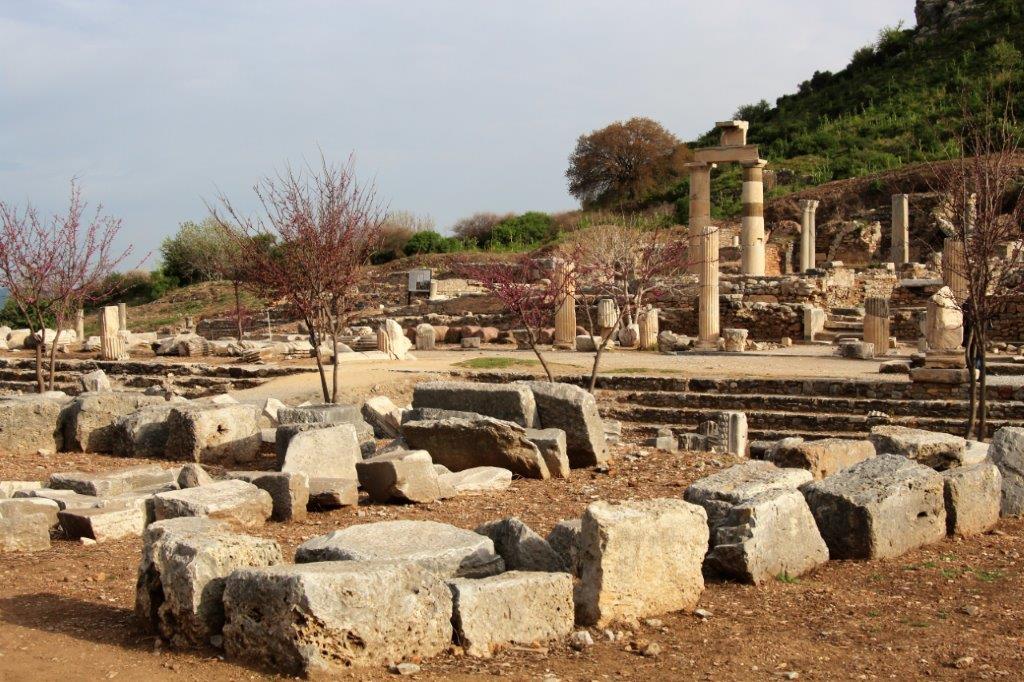
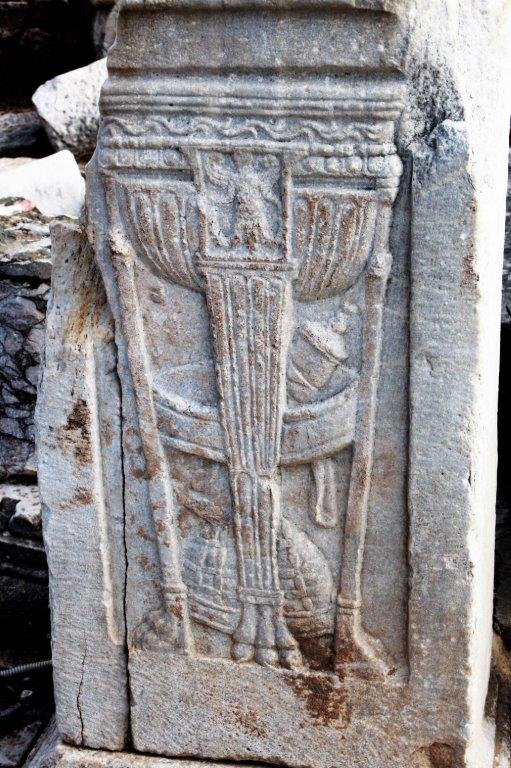
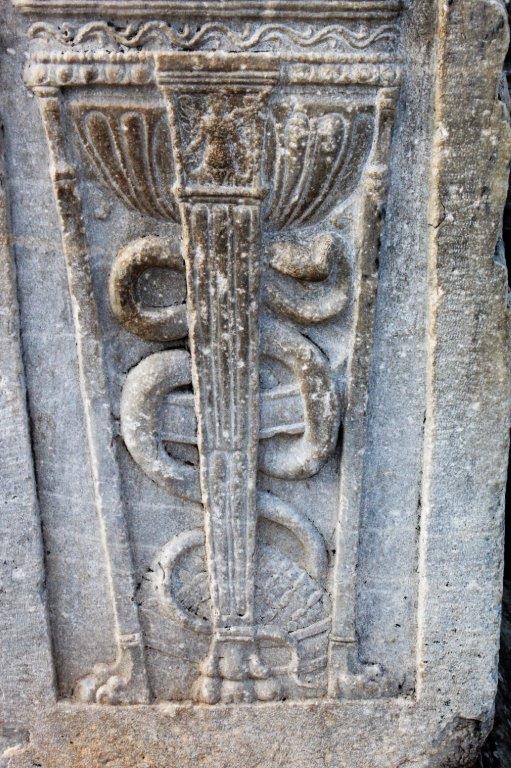
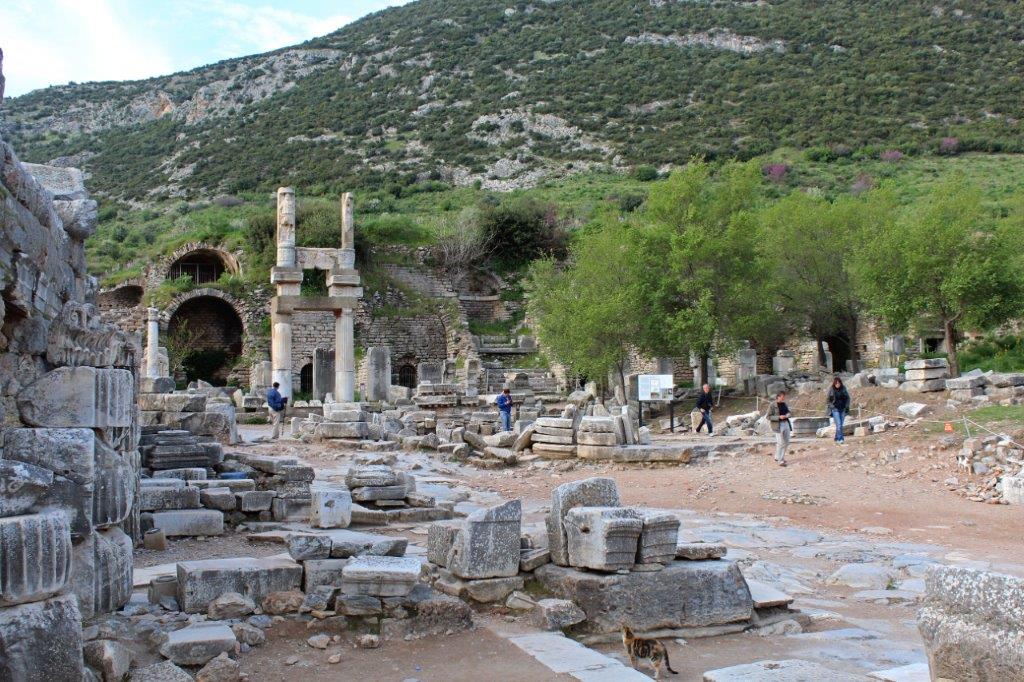
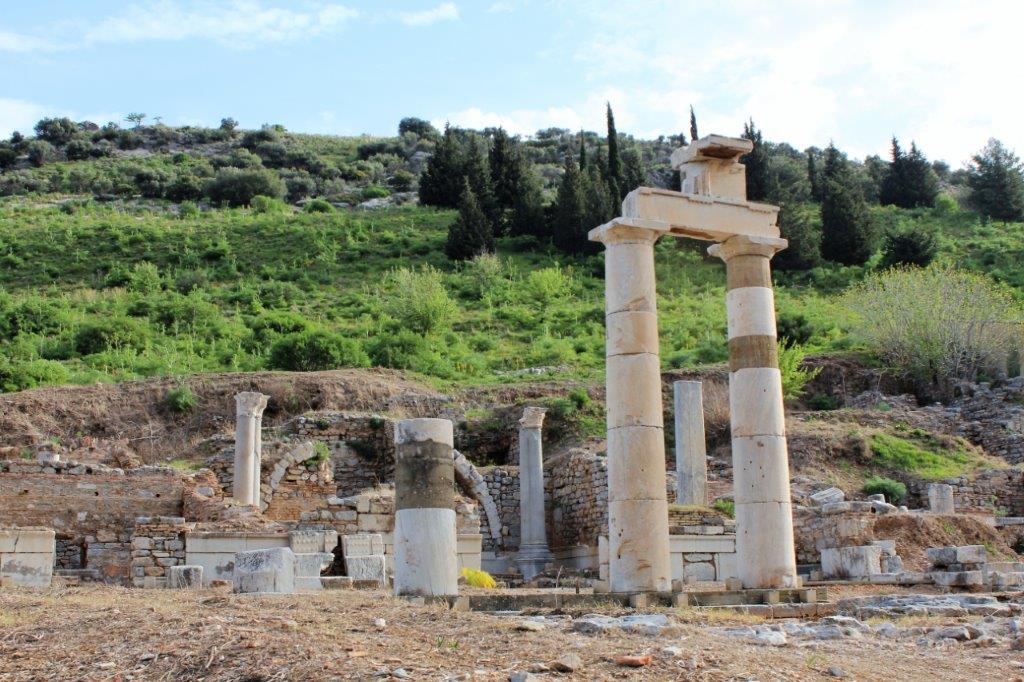
Since it was early spring the trees were lovely shades of green and flowers were blooming.  The surrounding hills were very pretty.This is the Prytaneion where religious services, official receptions, and banquets were held.The early symbols of medicine and pharmacy. Domitian Square containing the first temple built in the name of an emperor (81-96 AD)


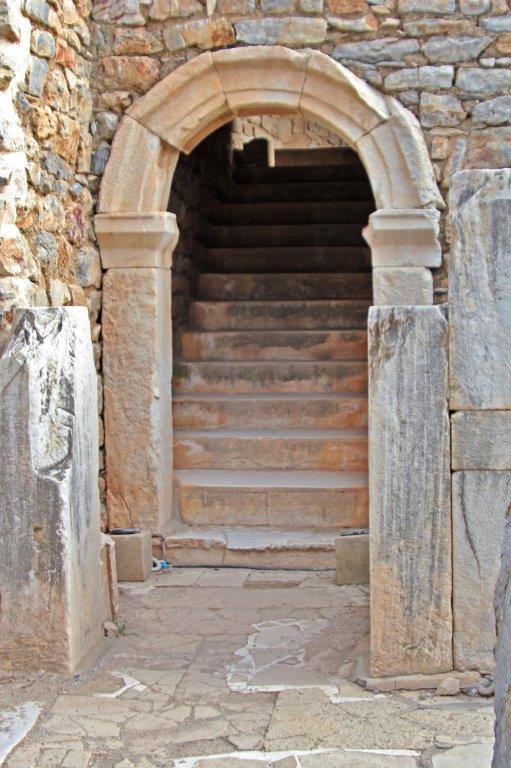
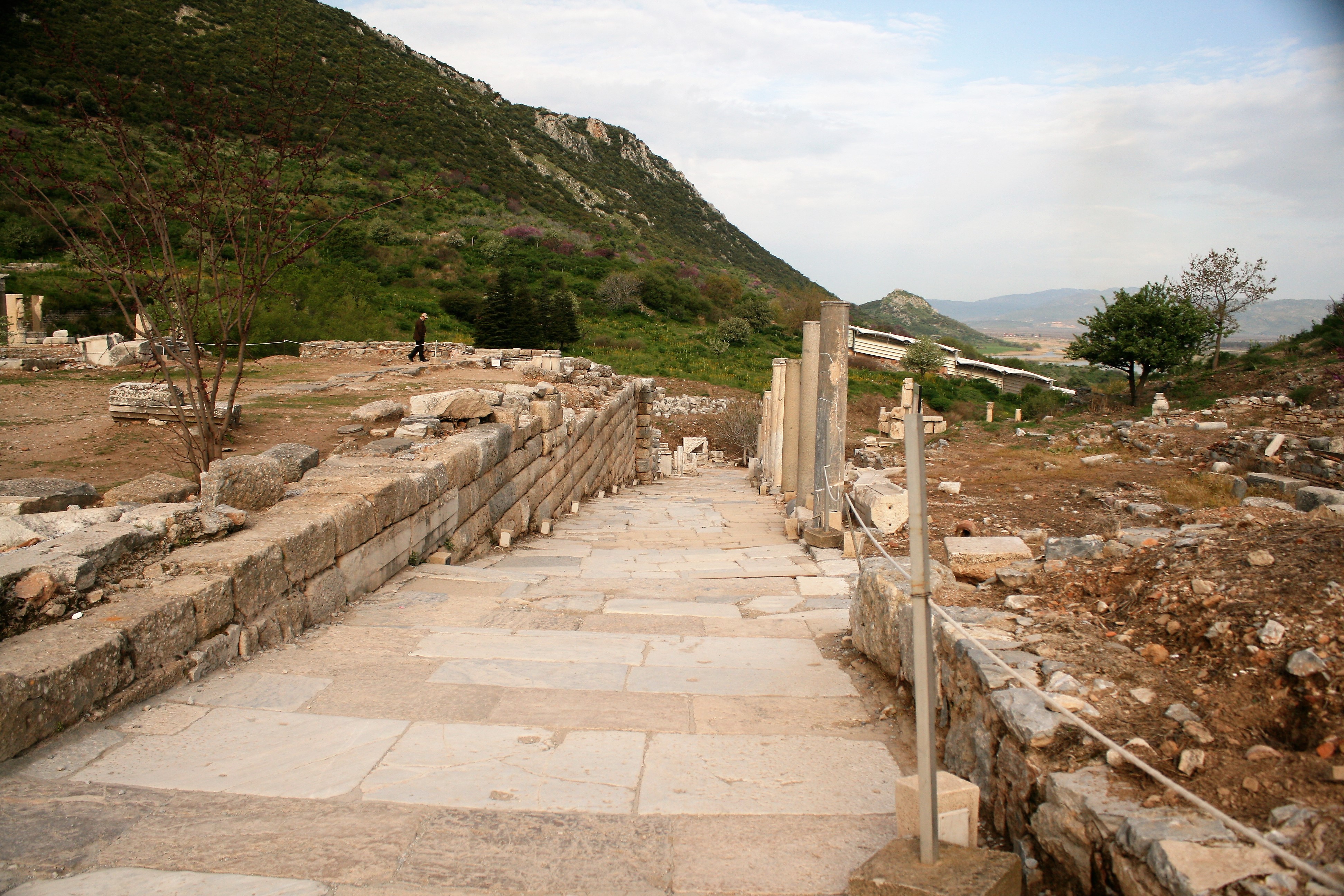
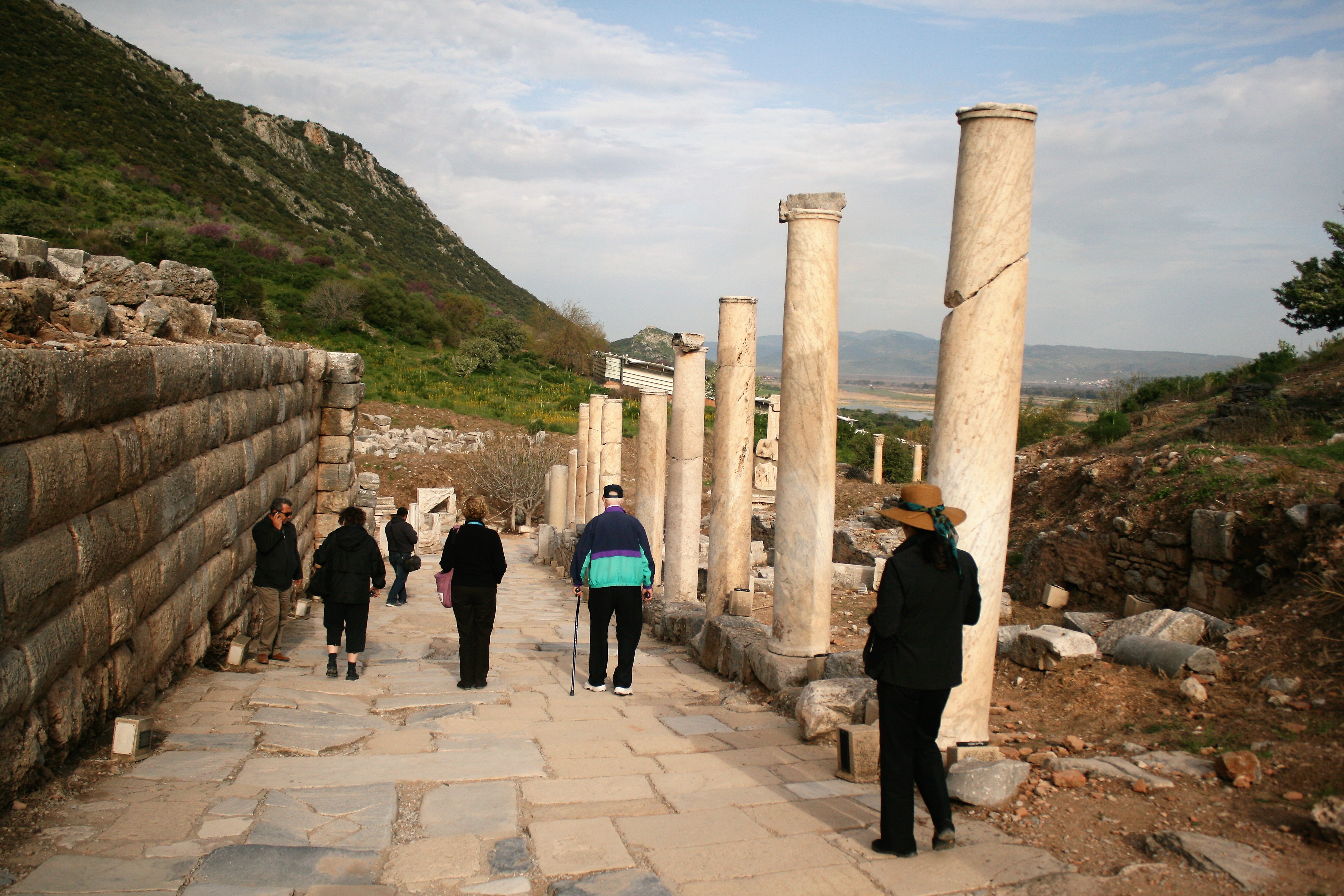
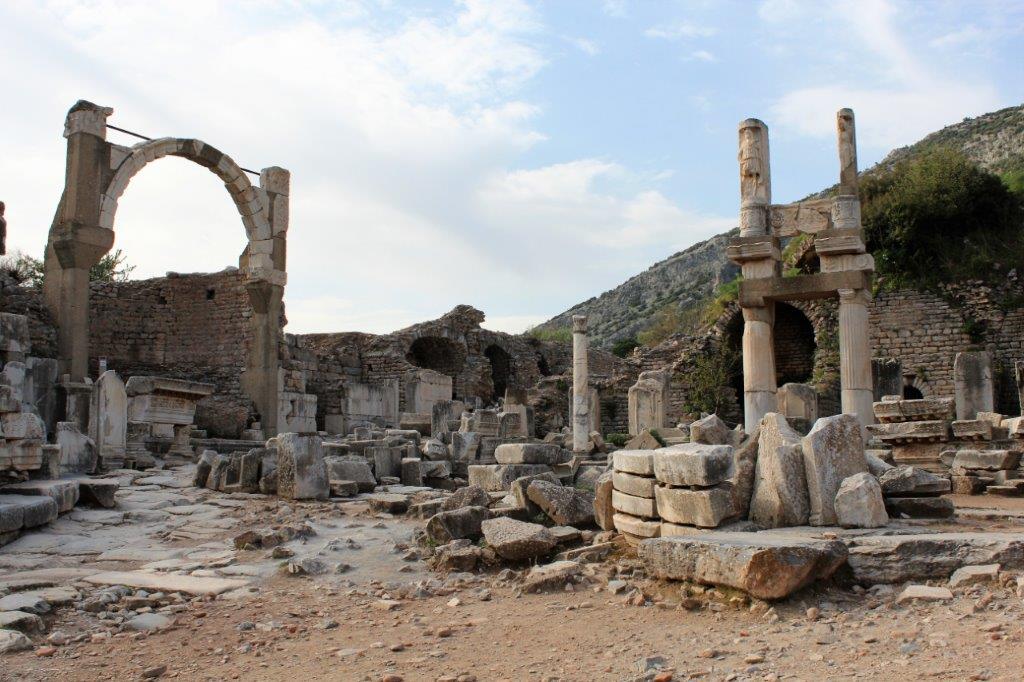
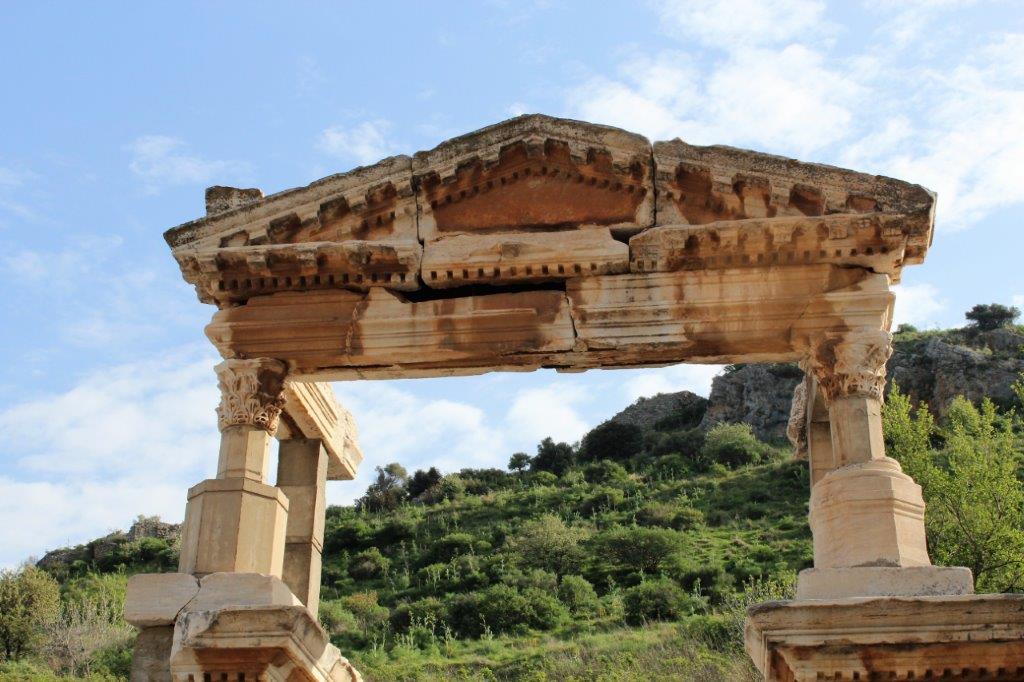
The above arch is part of the Fountain of Pollio built in 97 AD by a rich man (C.S. Pollio) and his family.  The water for the fountains of Ephesus was brought by aquaducts and distributed to the various fountains by clay pipes.At the end of Processional Way we arrived at Curetes Street, a major shopping street that was eventually closed to chariot traffic and became one of the first pedestrian malls.

I will continue the tour in another blog.
2012 April 3 – Day 23 – Kusadasi, Turkey (Day 1) (Part 3)

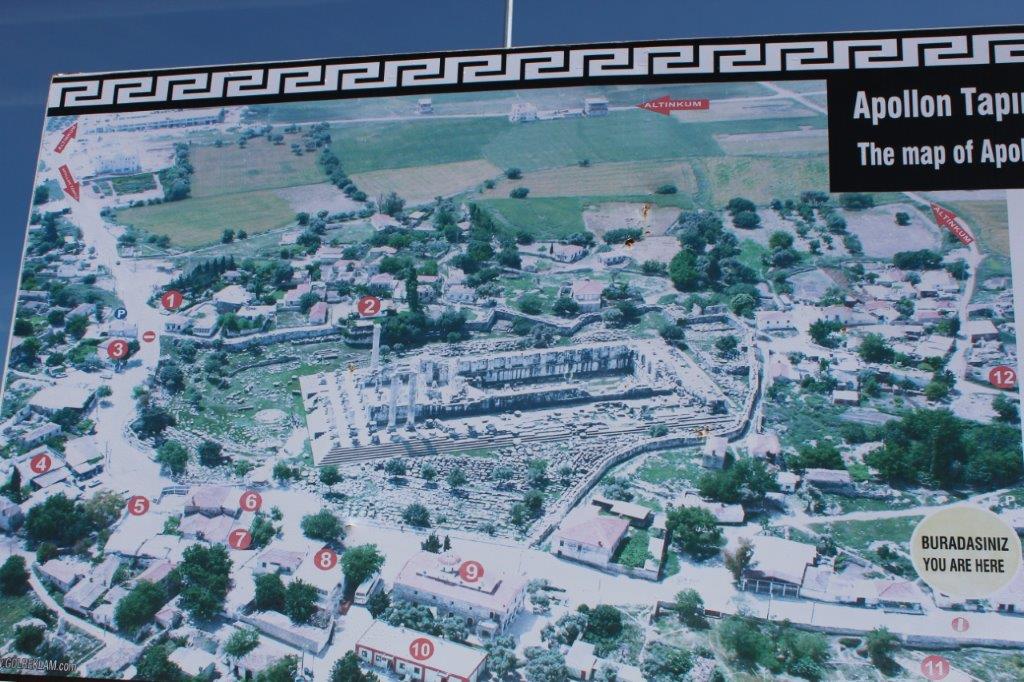
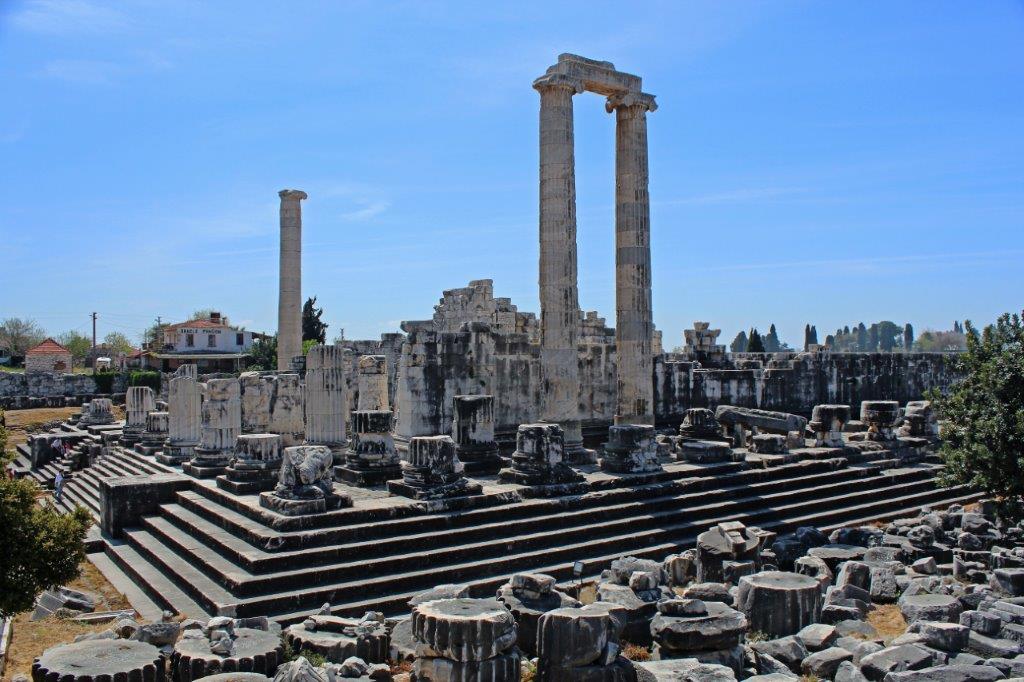
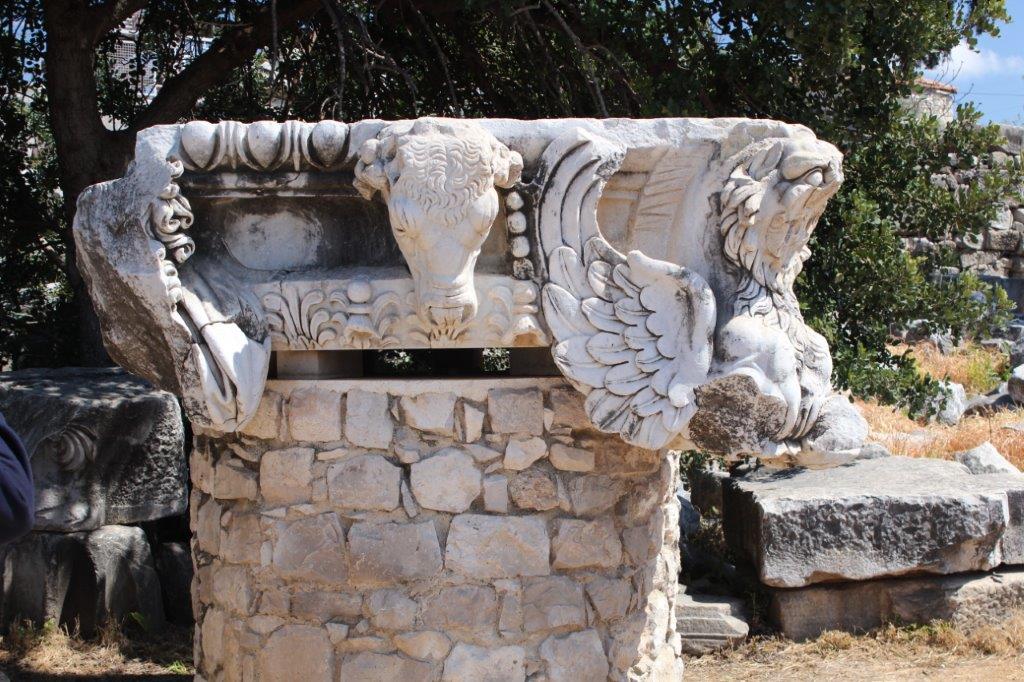
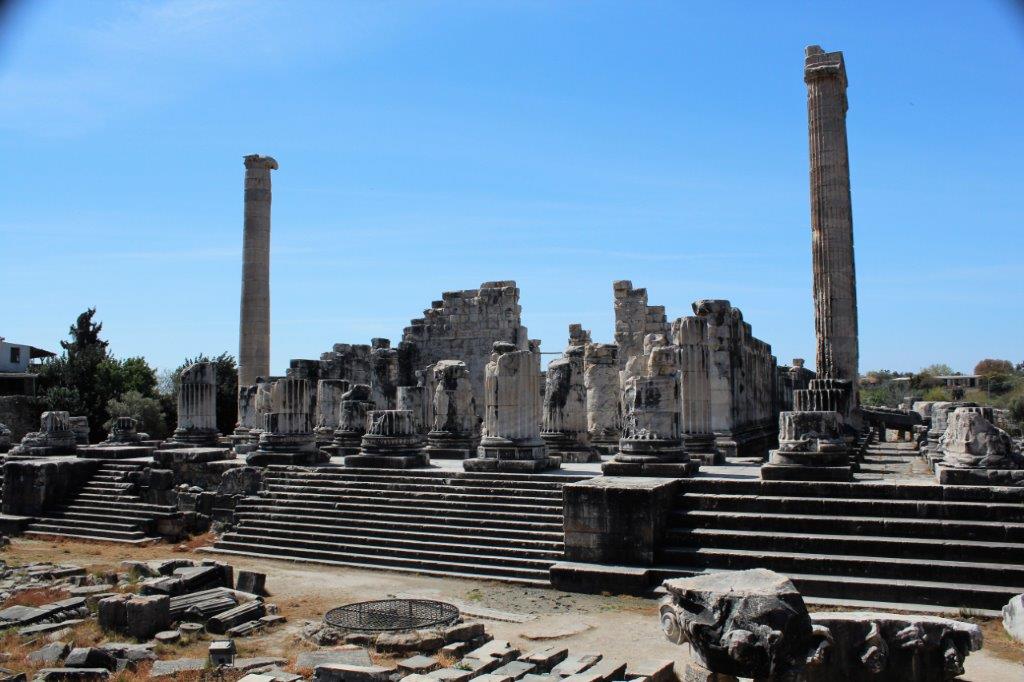
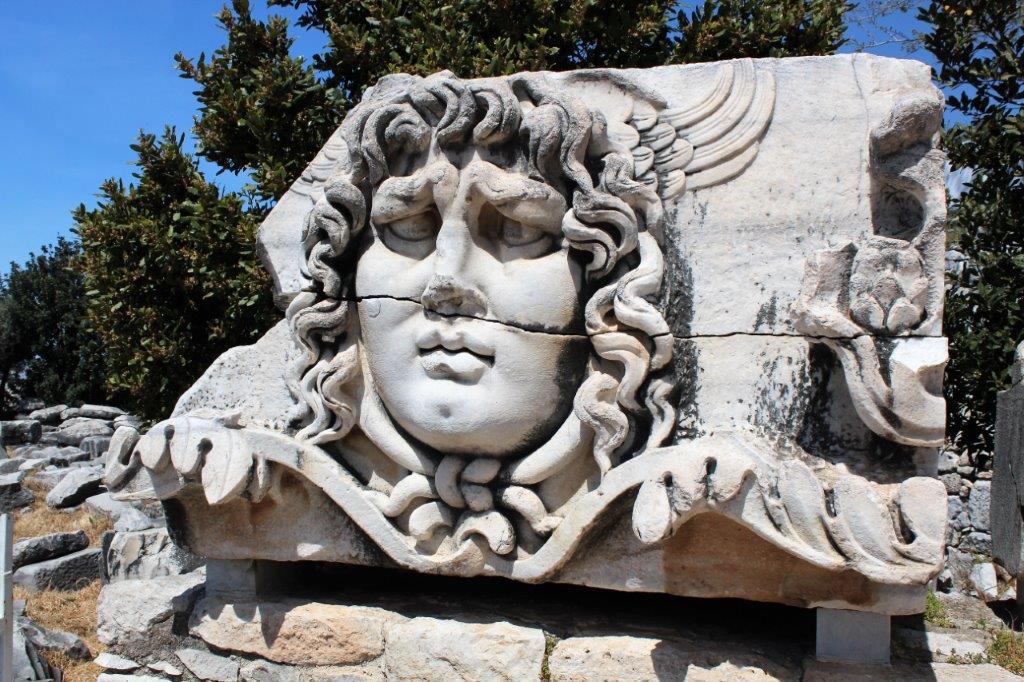
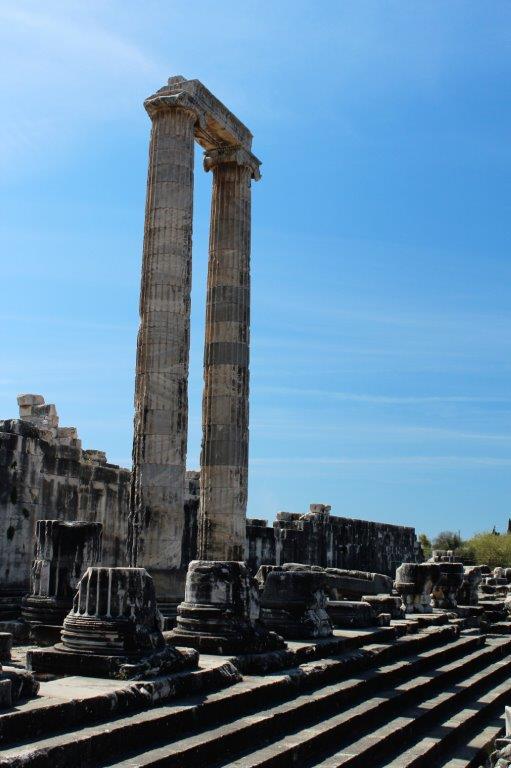
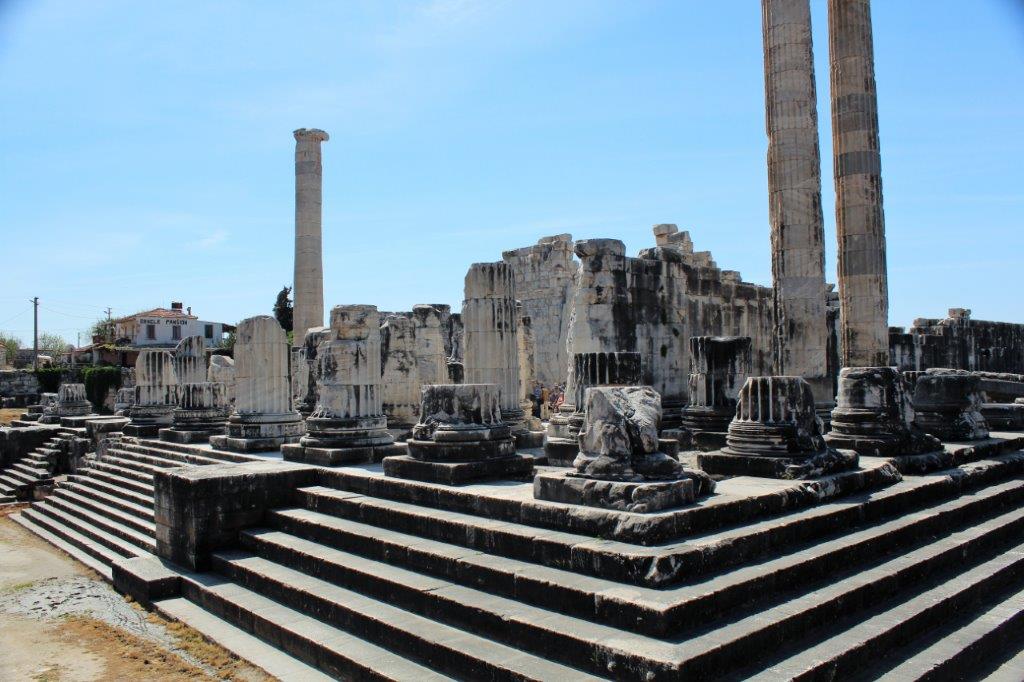
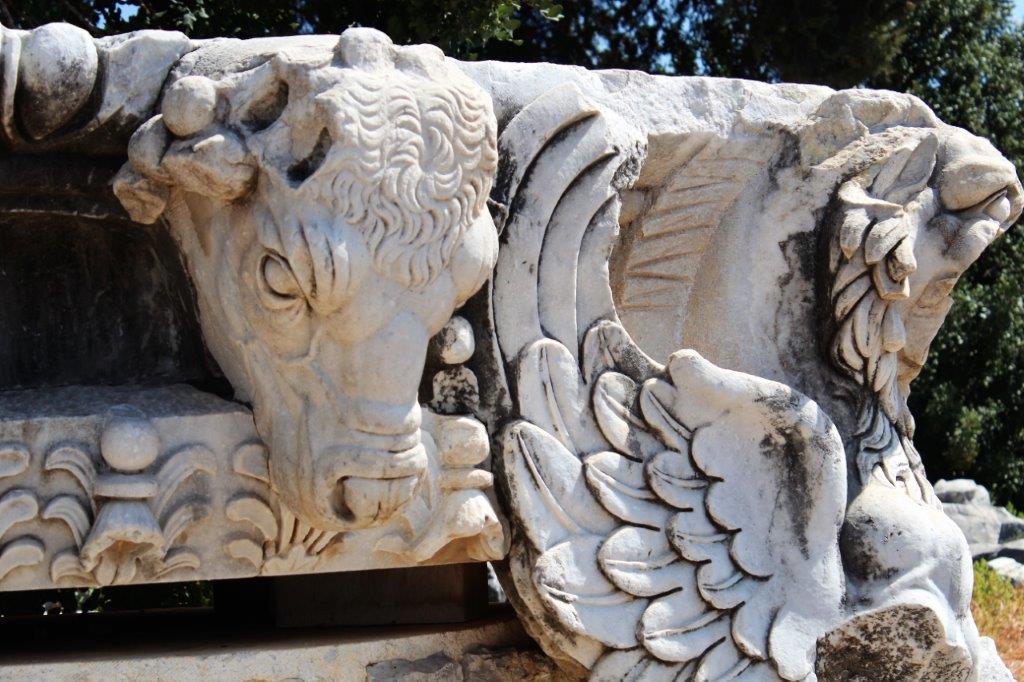
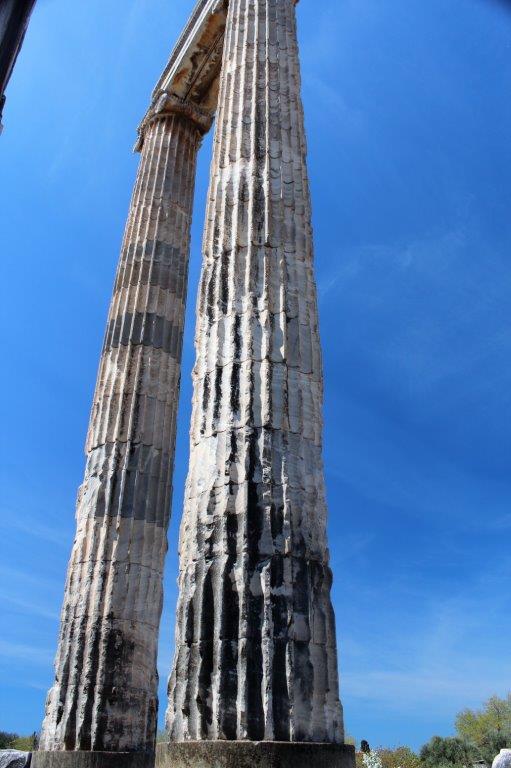
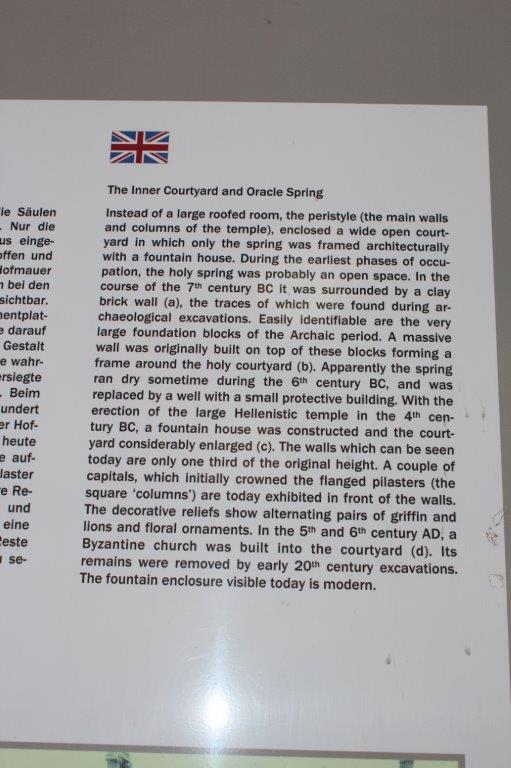
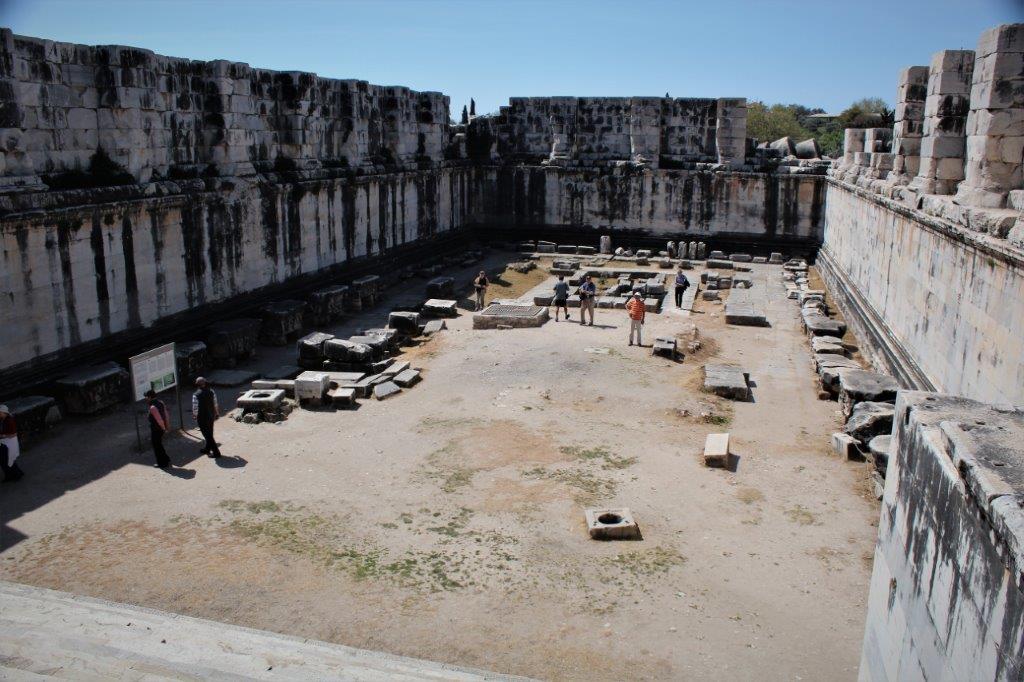
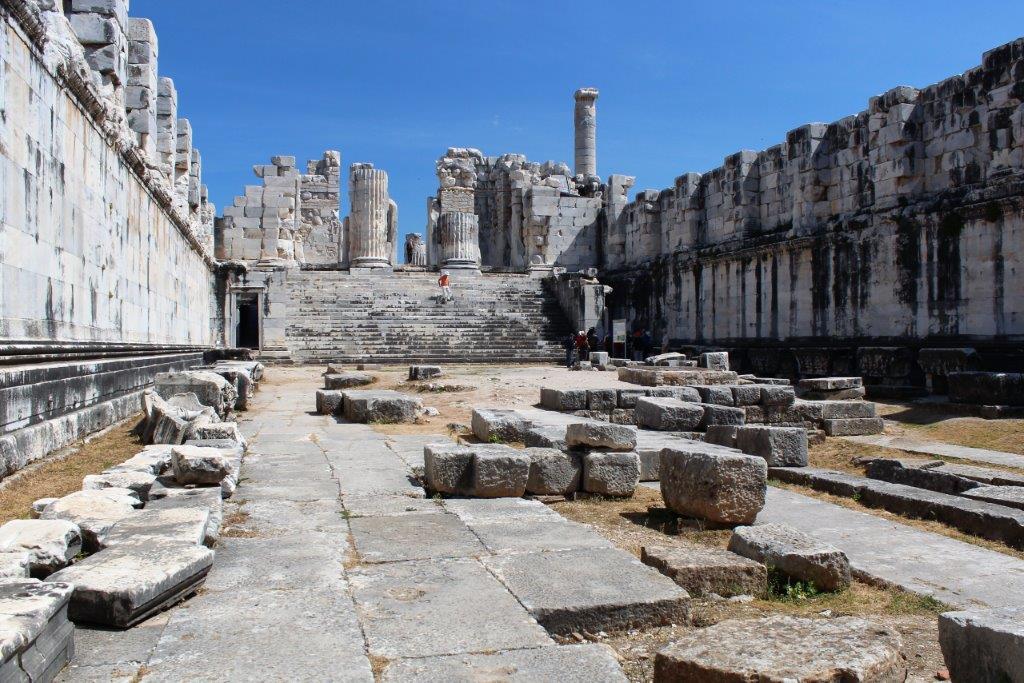
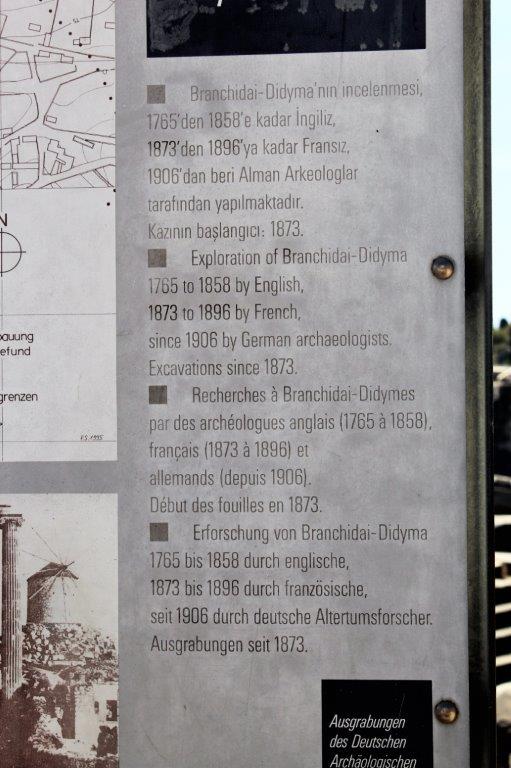
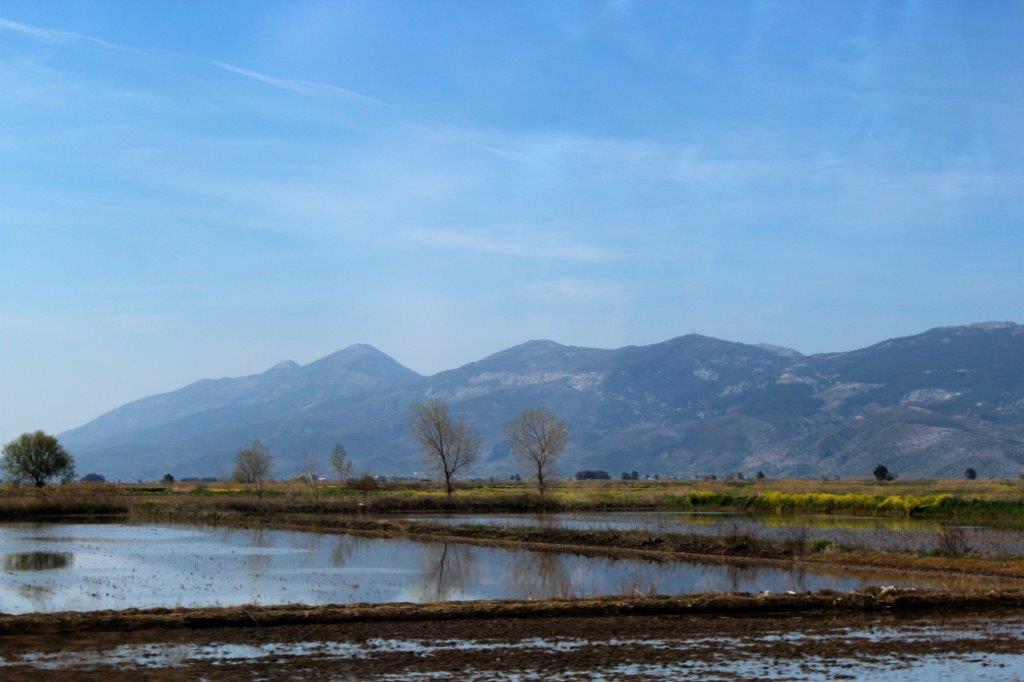
We drove over the flat land that used to be water before it silted in and to our final stop of the tour our first day in Kusadasi, Turkey.   Didyma was once the home to an oracle that rivaled its Delphi counterpart – it probably only fell to second place because Delphi was nearer to Athens.  According to legend, Apollo favoured the region, so a huge temple was built in his honour.

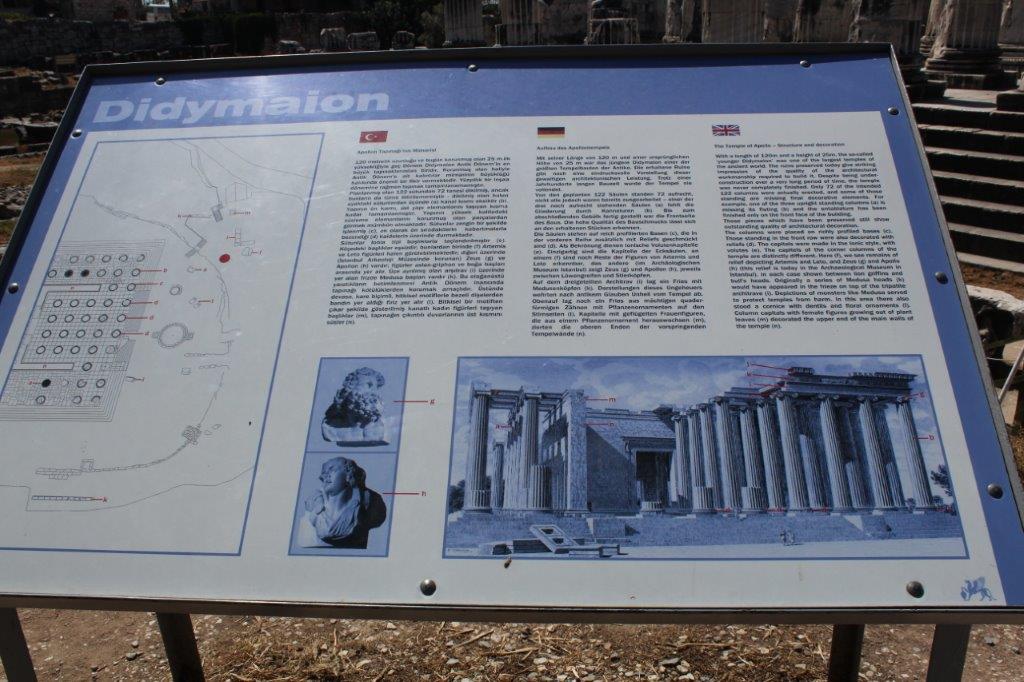
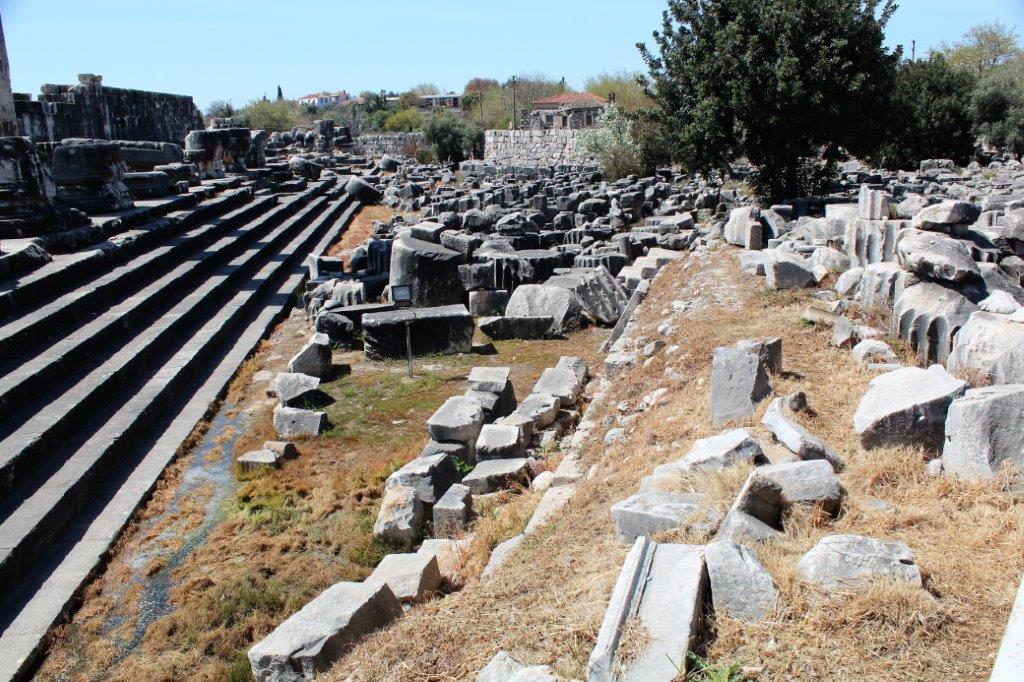
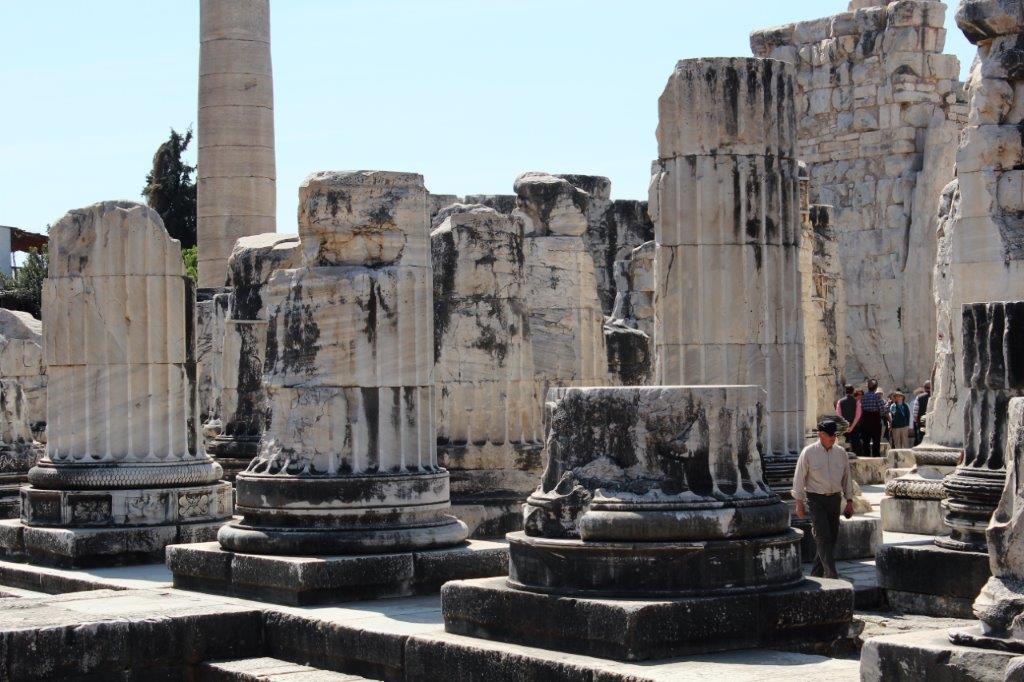
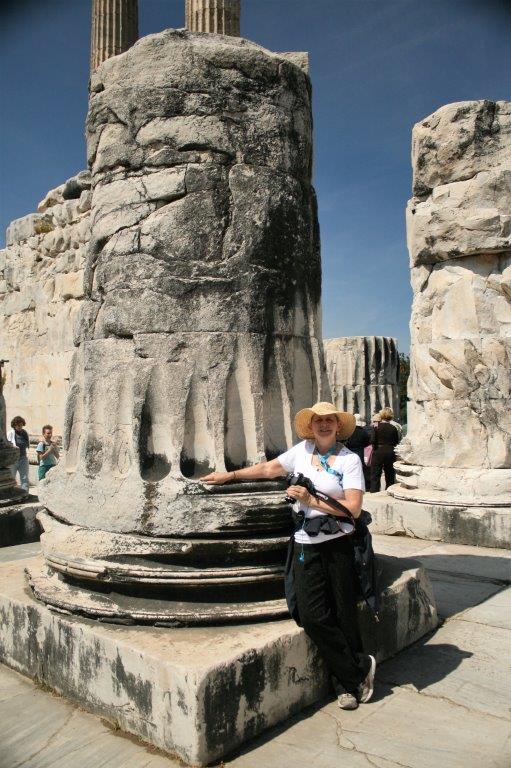
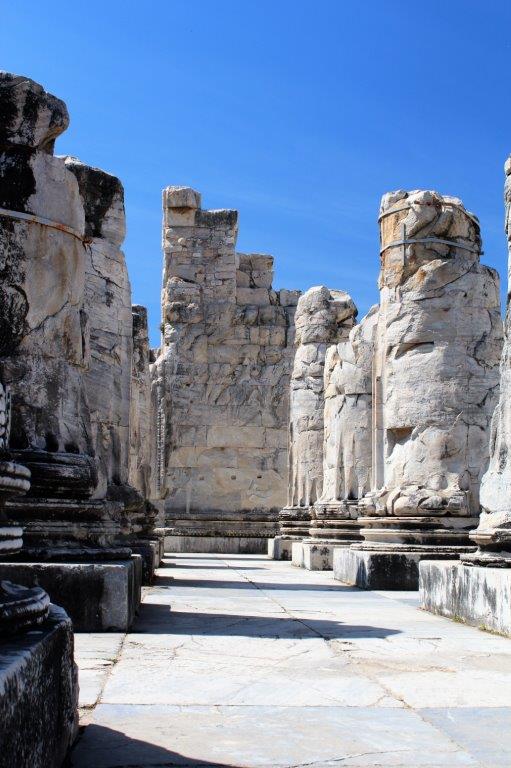
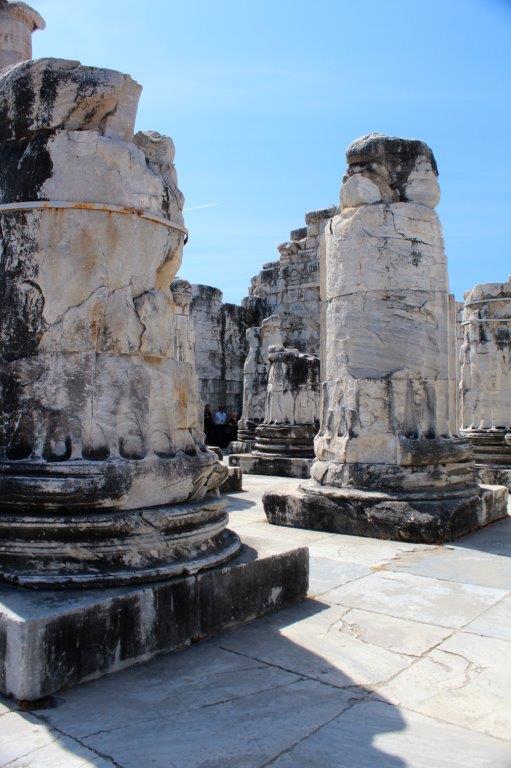
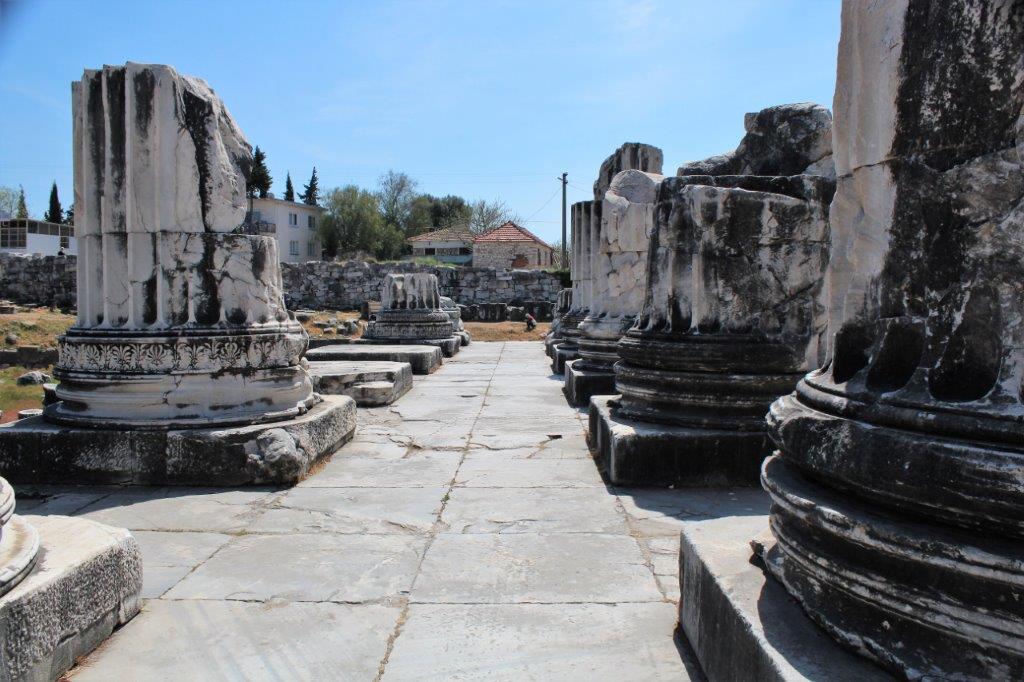
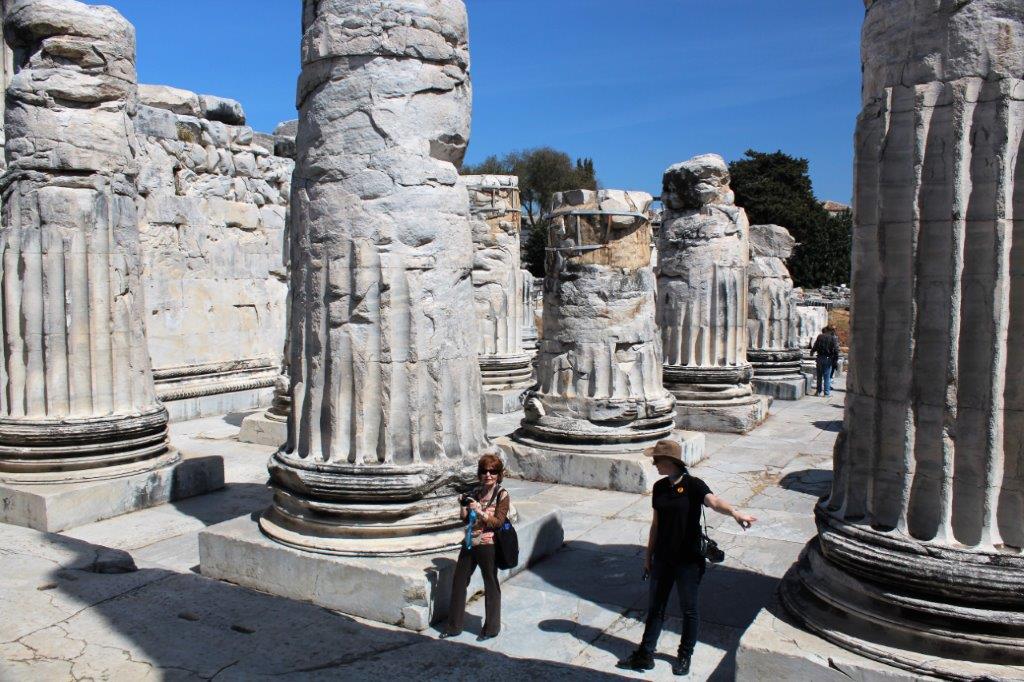
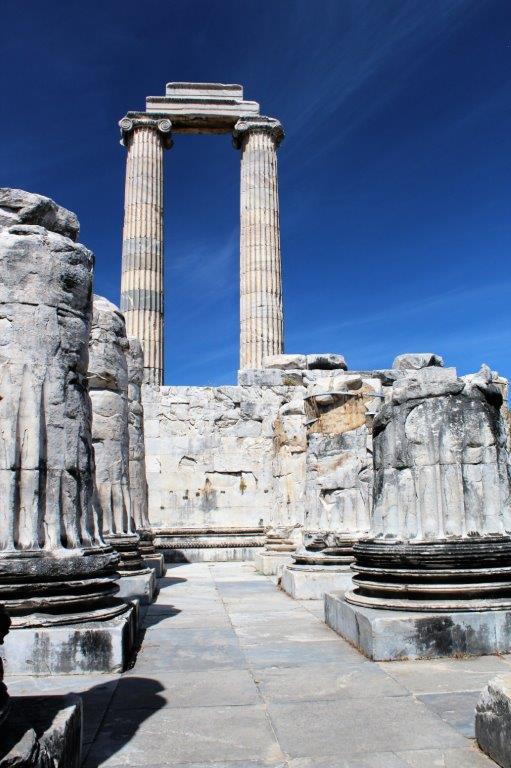
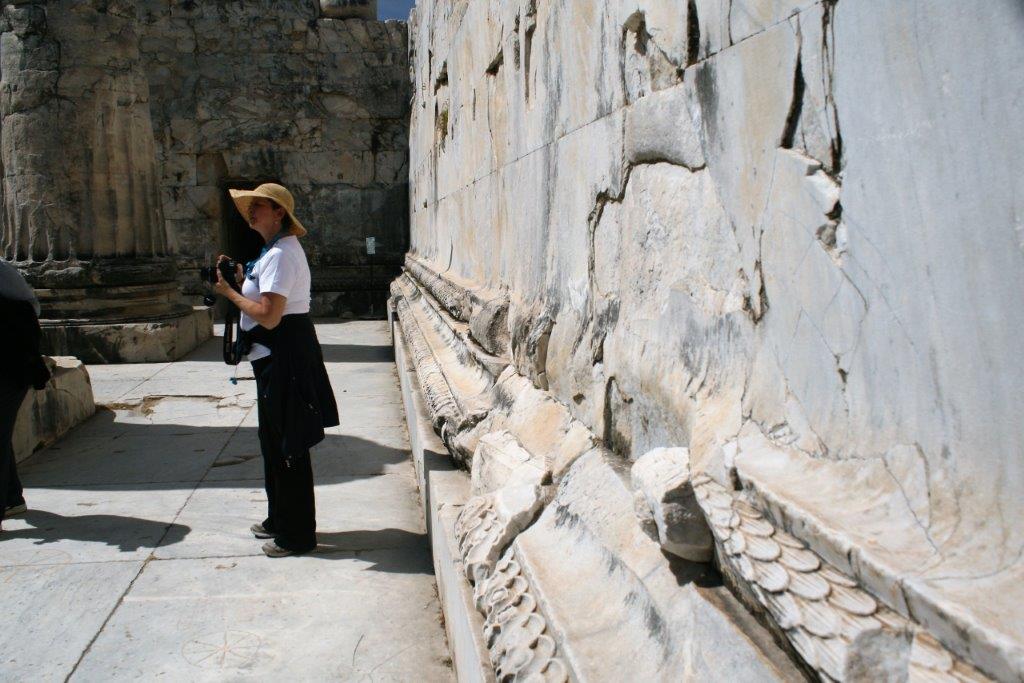
The temple construction dates from 560 BC, and even though the shrine operated for 1,000 years and major construction was undertaken three different times, it was never completed.  The two pillars are 60′ tall and 6′ in diameter.  Much of the broken pieces surrounding the temple are fallen columns. If completed there would have been 124 of them.  Each one would have cost the equivalent of almost $31 million (Cdn).

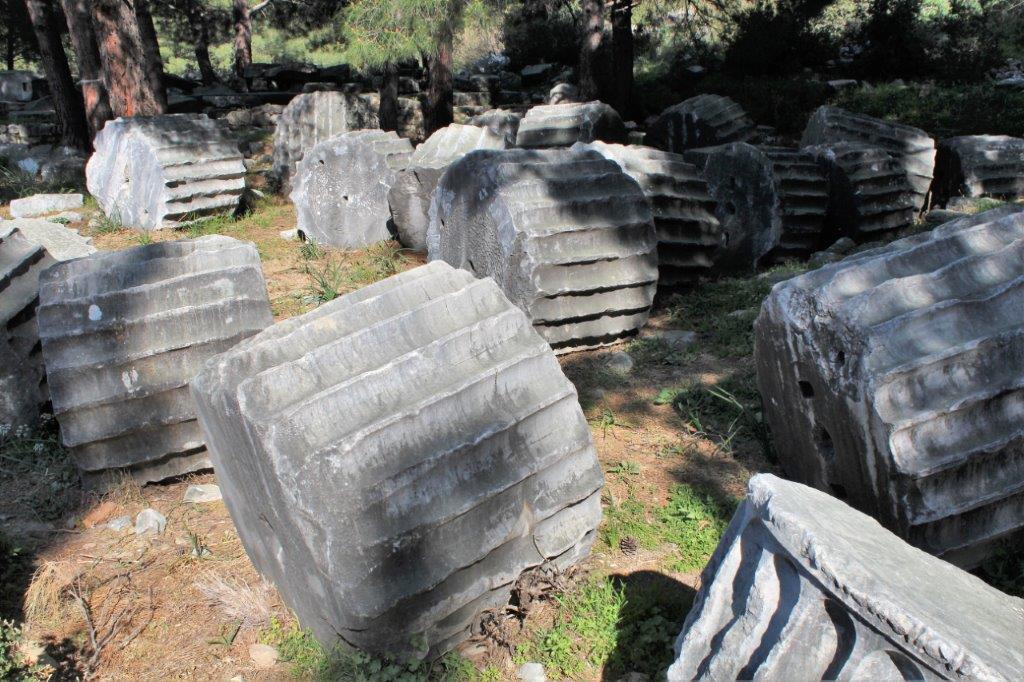
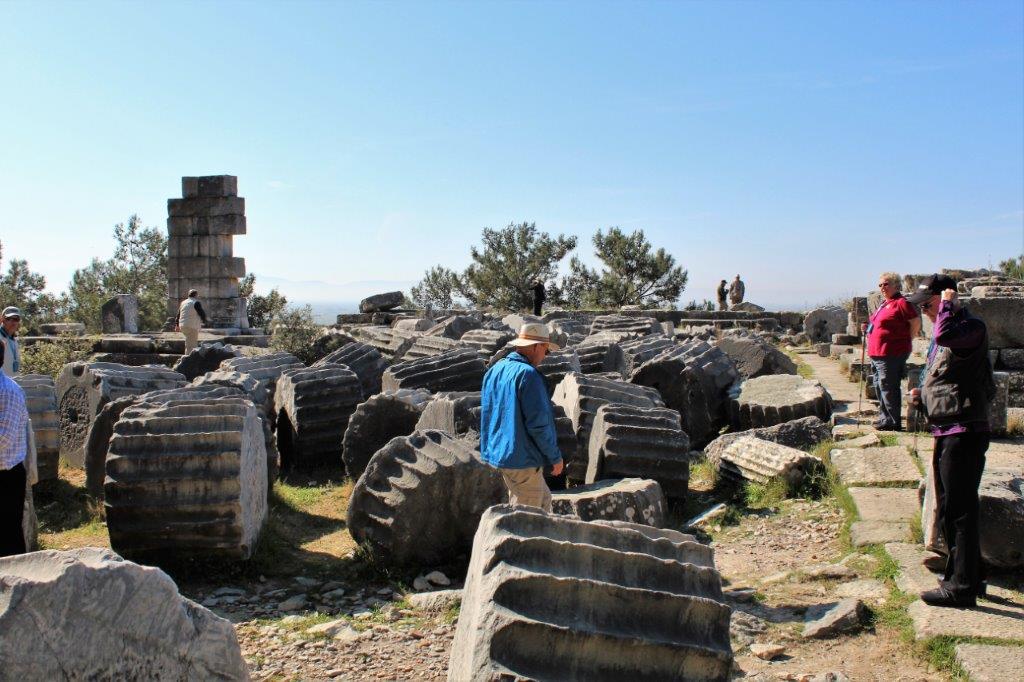
The people give you an idea of the size of the column bases.                                                          The place was massive.

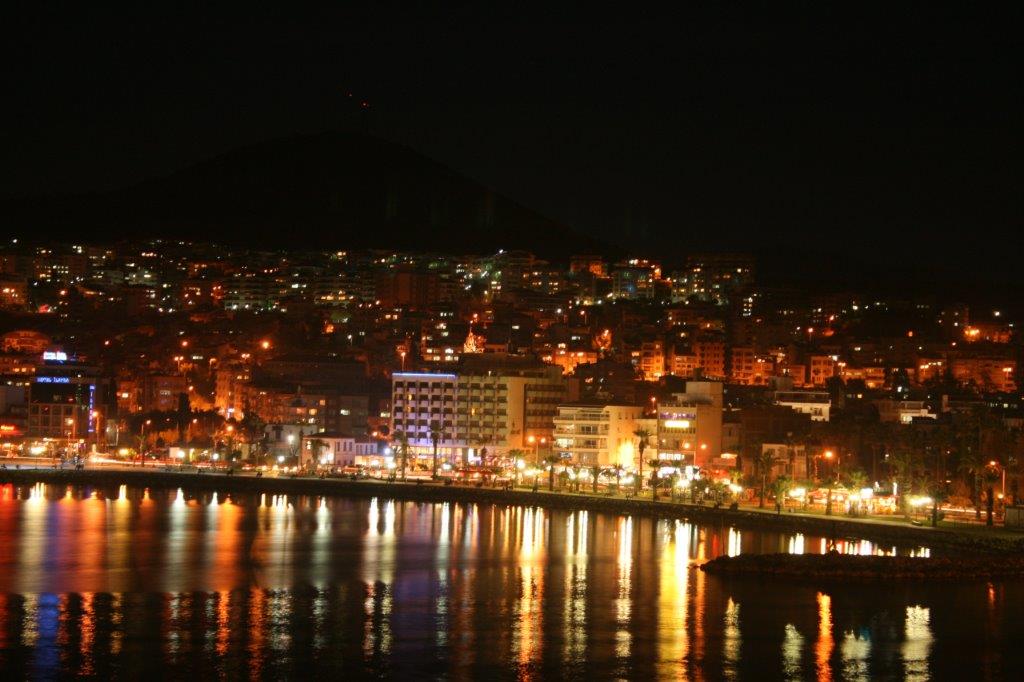
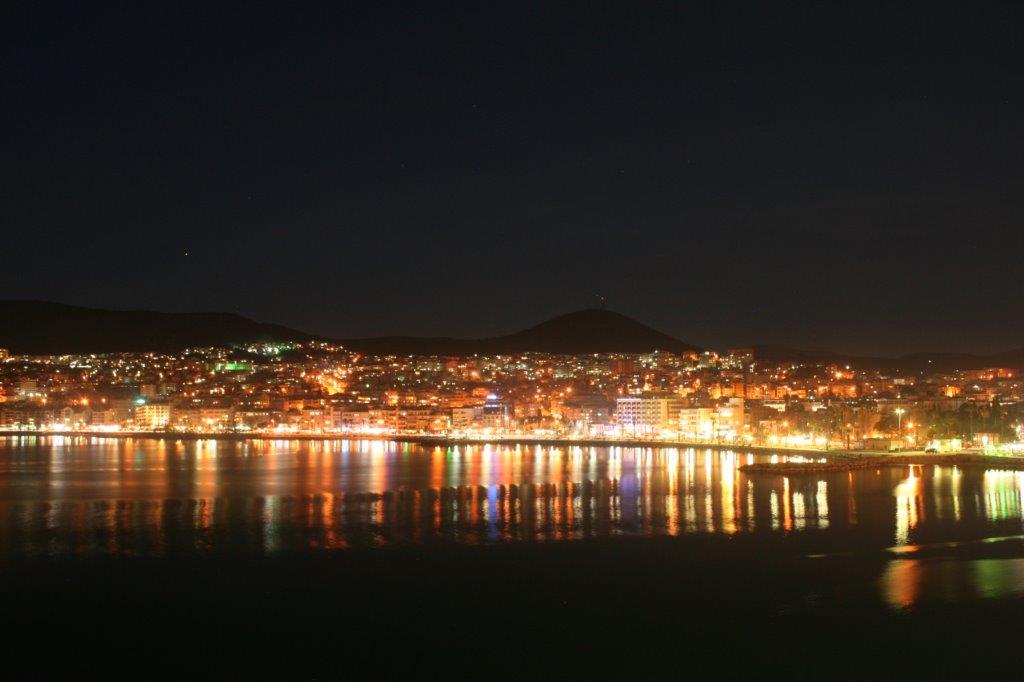
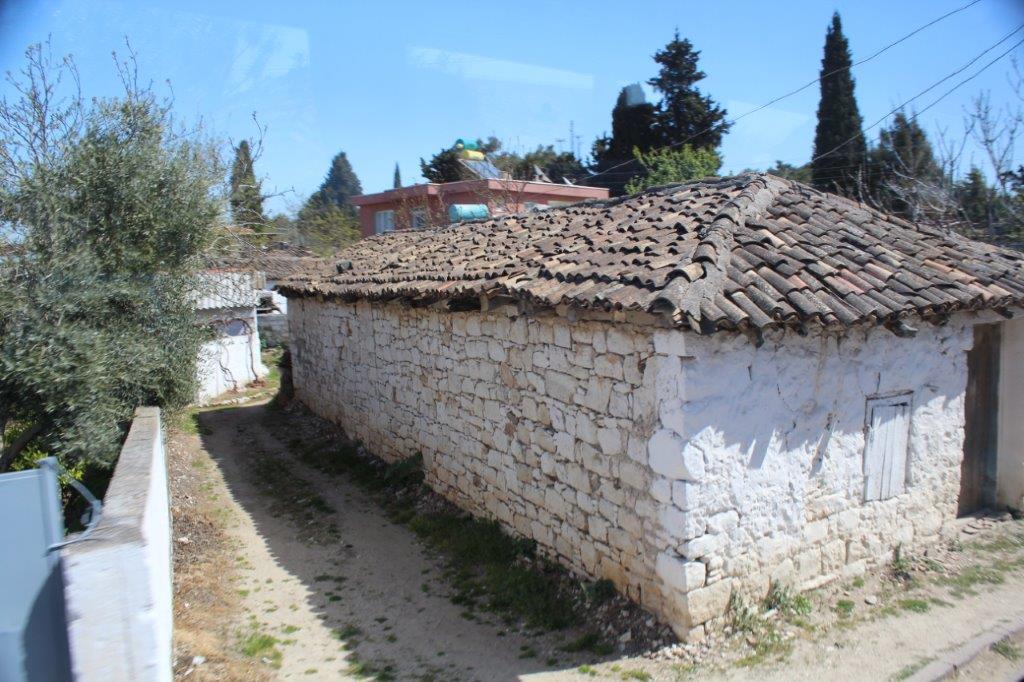
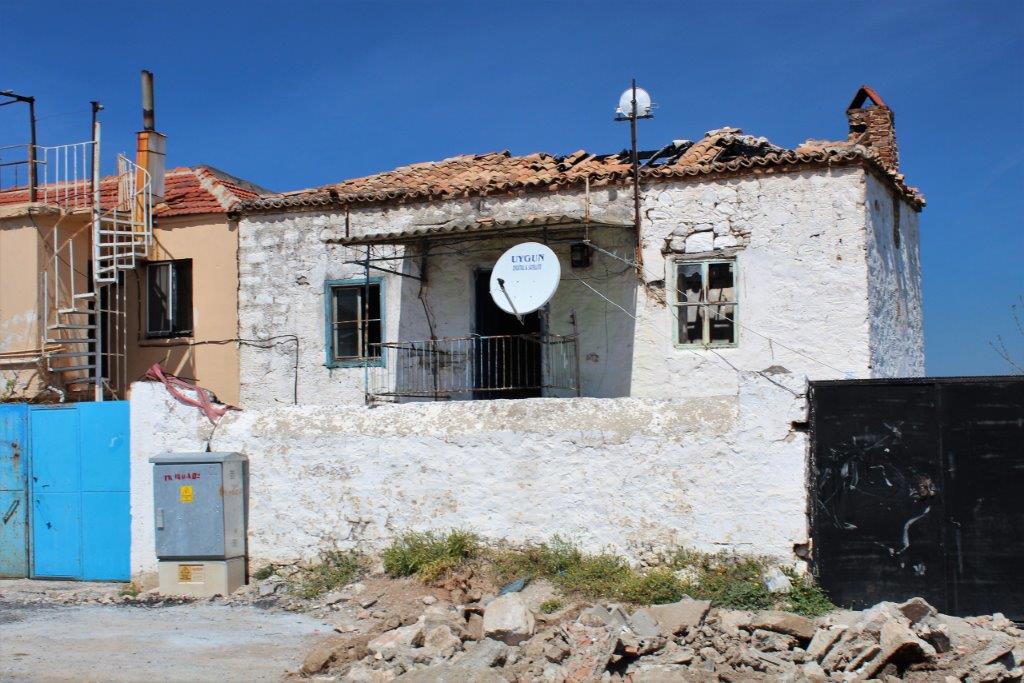
After six and a half hours of walking the path of history we returned to the ship, head stuffed with interesting facts about Turkey and each of the archaeological sites we visited, foot sore, and exhilarated from a great day.   Turkey is one of the few countries in the world that is agriculturally self-sustaining. They grow two, sometimes three, crops per year.  Turkey is a world leader in cotton production and #2 in olives.  They grow 50% of the world’s figs, grapes, and apricots and 80% of the world’s hazelnuts.  They grow EVERYTHING!  Pistachios, walnuts, chickpeas, artichoke, watermelon, celery, peaches, strawberries, cherries, plums, and on and on and on.  It was “Turkish Delight” in the dining room that night.  Turkish Delight is a very popular treat.  It is a gel made of starch and sugar and comes in all kinds of colours and shapes.  Since the ship was docked overnight we got to enjoy the city lights at night as we strolled the deck after dinner.

2012 April 3 – Day 23 – Kusadasi, Turkey (Day 1) (Part 2)

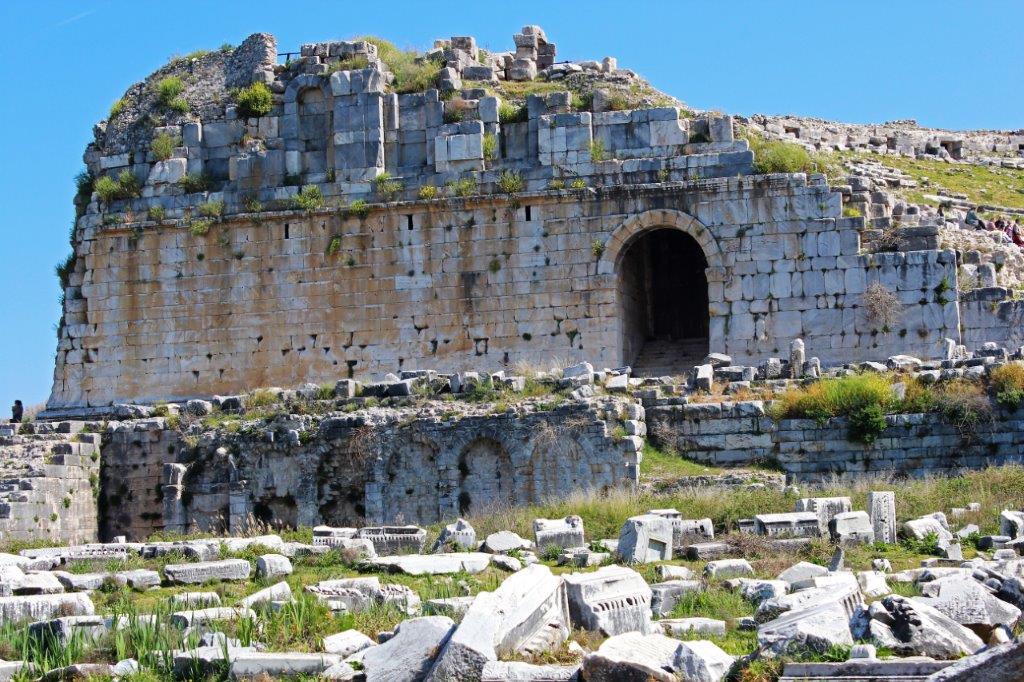
The second stop on our first day tour in Kusadasi, Turkey was the trading center of Miletus; about 20 minutes drive from our first stop at Priene.  It is said that 75 colonies were founded by the merchants of Miletus.  The city was the capital of the Ionian civilization.  It was taken by the Persians in 494 BC and recovered by Alexander the Great.

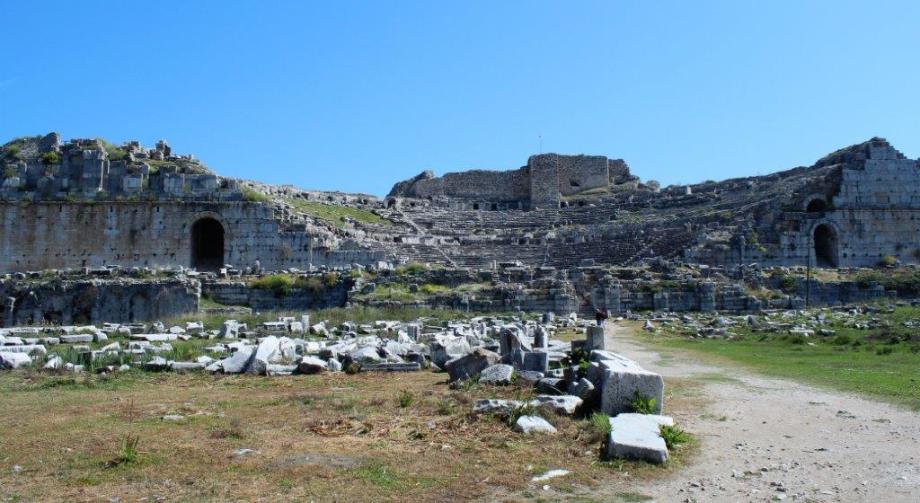
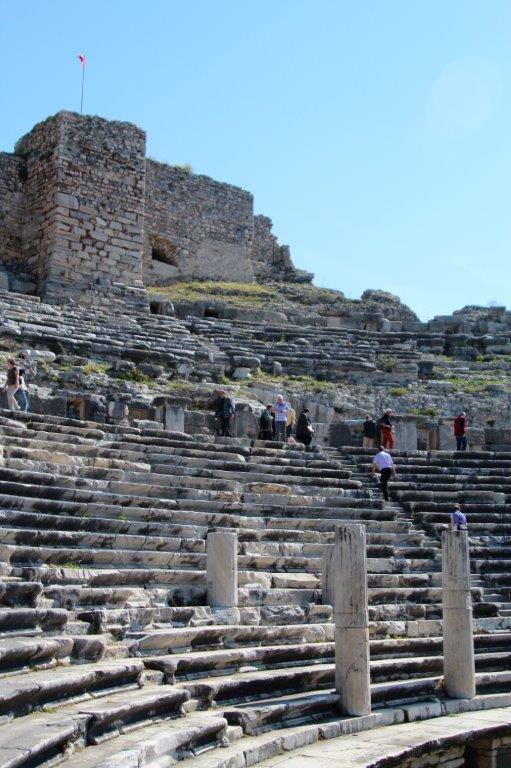
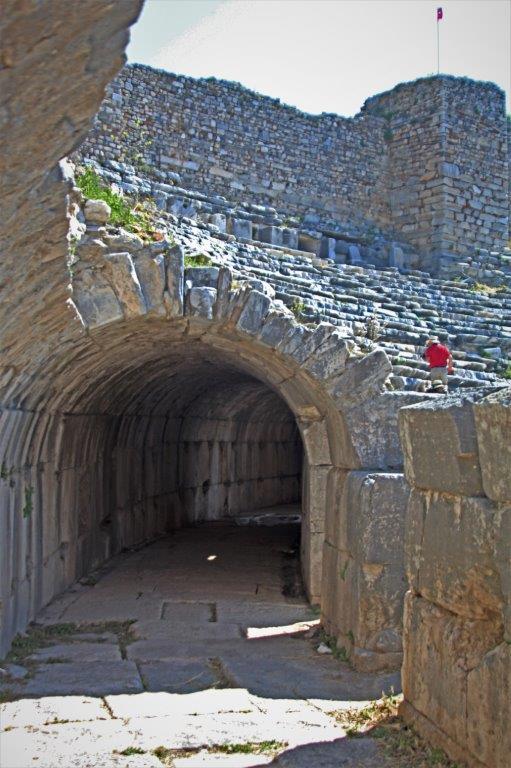
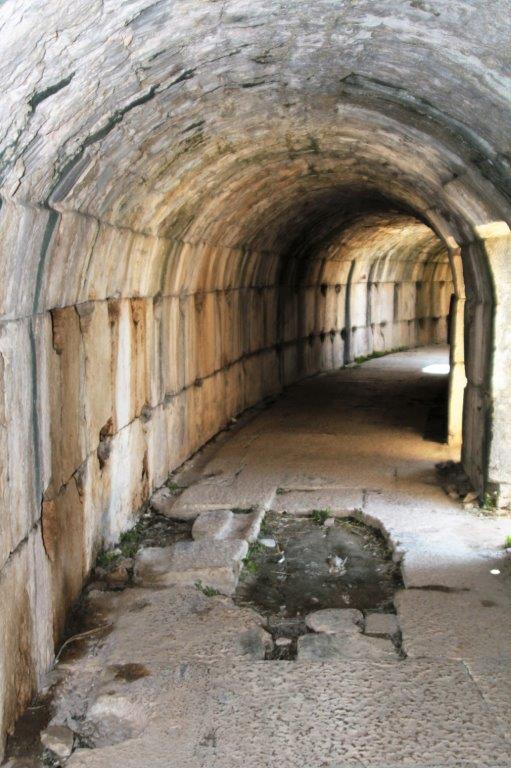
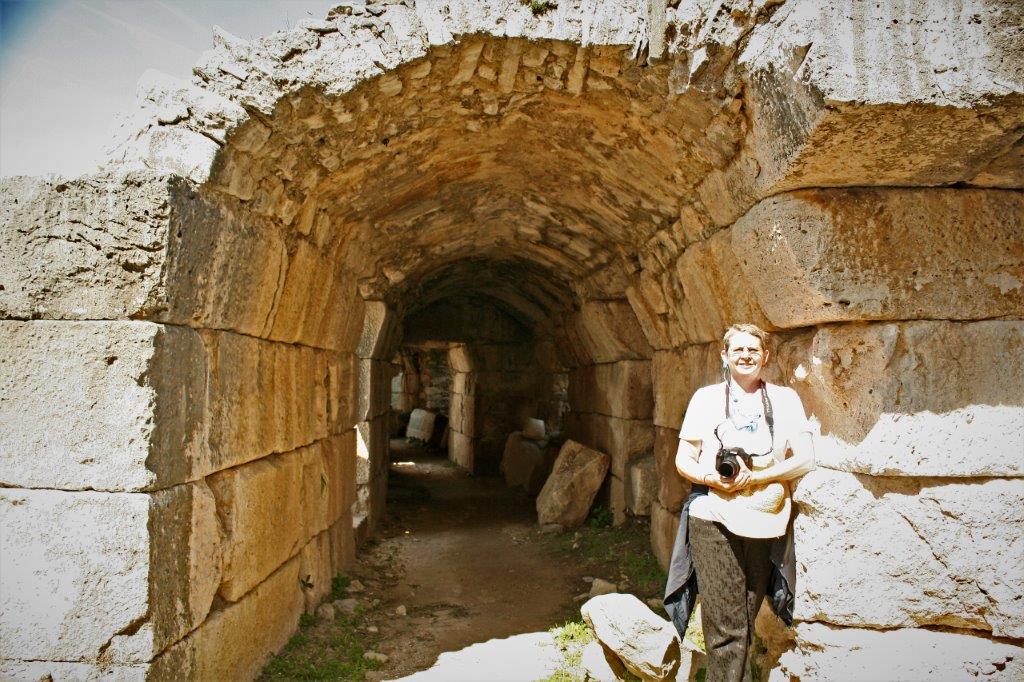
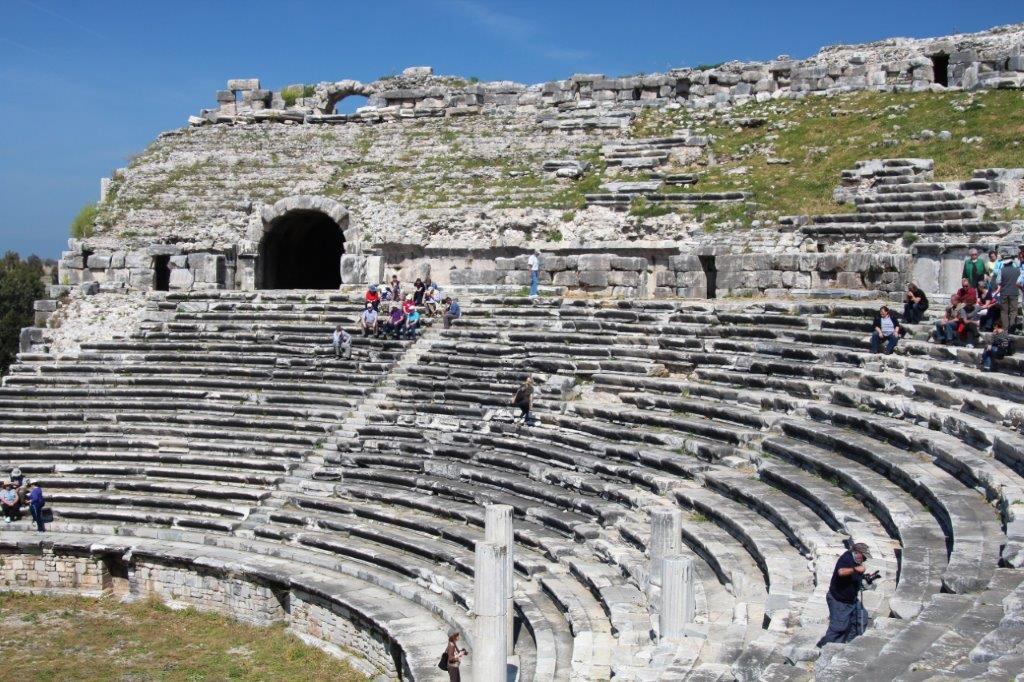
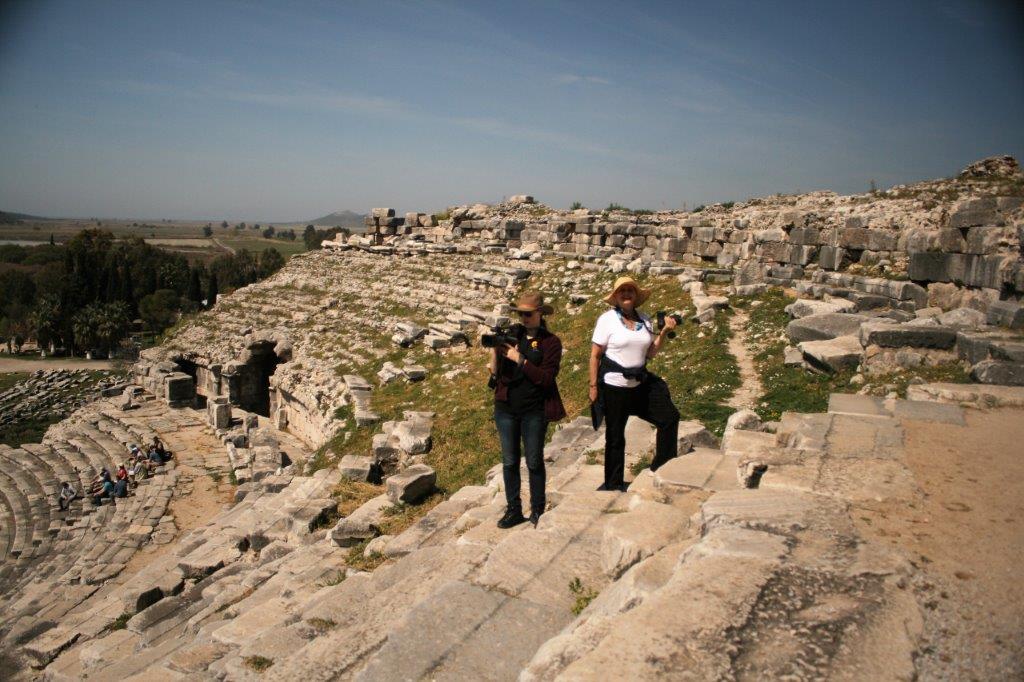
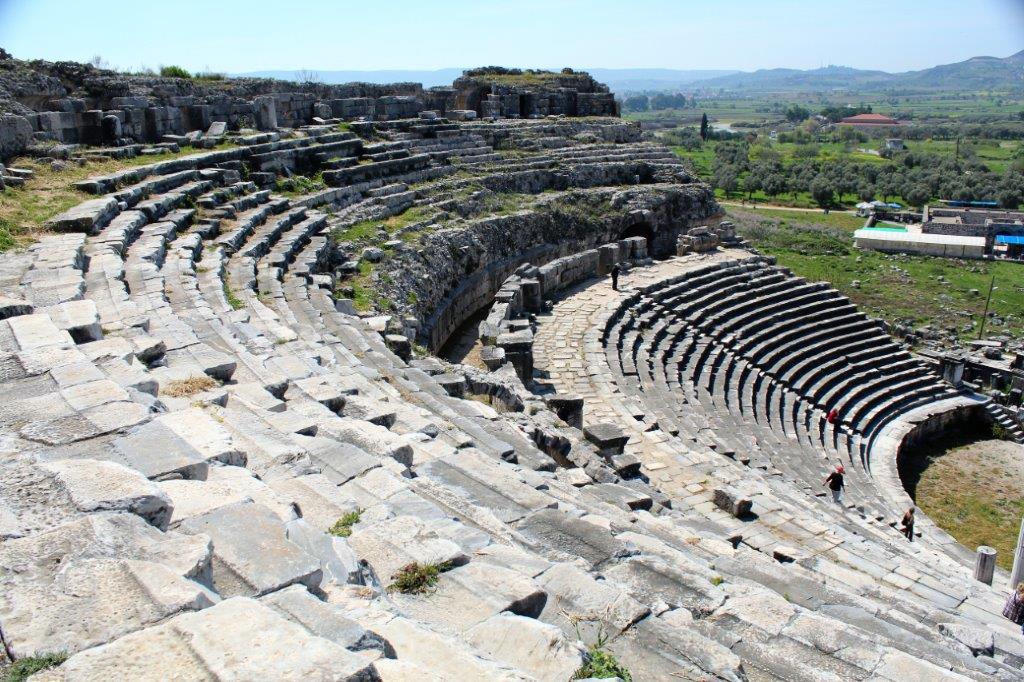
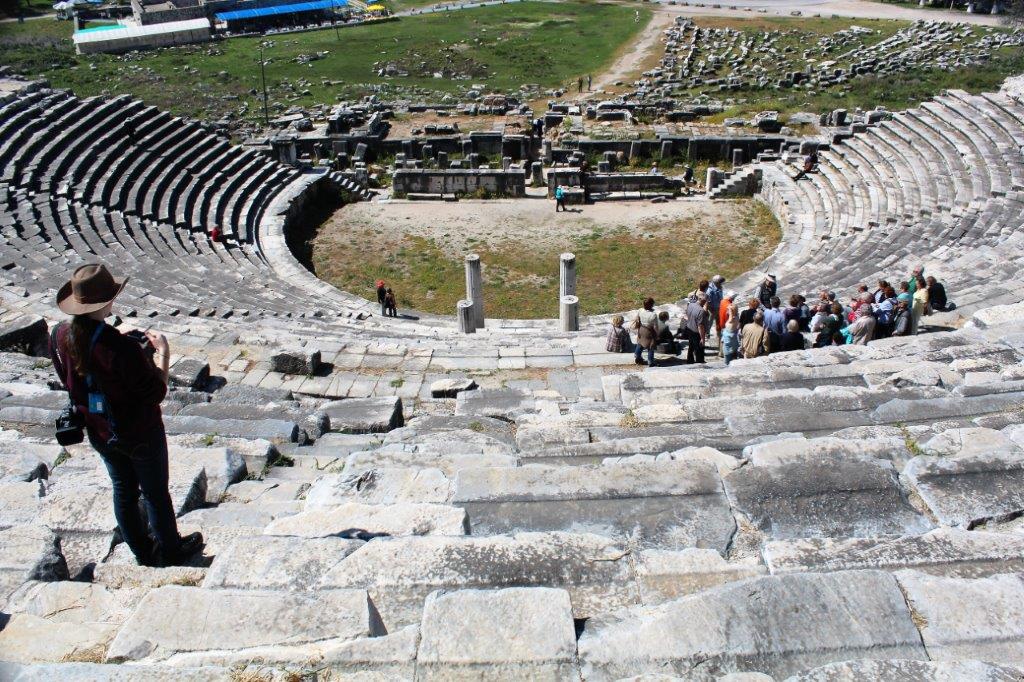
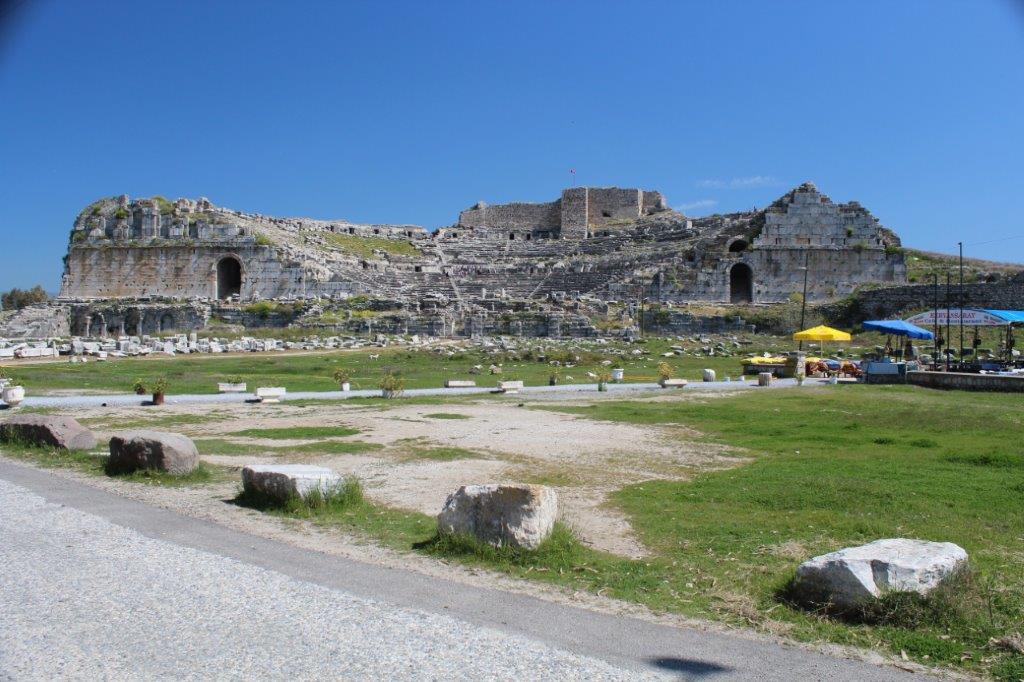
The Cretes who established the city built a huge theater, evidence of their prosperity.  It was later adapted by the Romans as an amphitheater for their contests and games.  It is the largest in Asia Minor and unlike most theaters which were built out of a hollow in a hillside, the Miletus theater was created in an open field.

The Apostle Paul visited the city twice.  It was amazing to be in Malta where Paul was once shipwrecked and now to be in a city where the great apostle walked and preached was really incredible.  The harbour at Miletus that was the source of its trade and prosperity silted shut some time after the 8th- century and the city faded into oblivion.

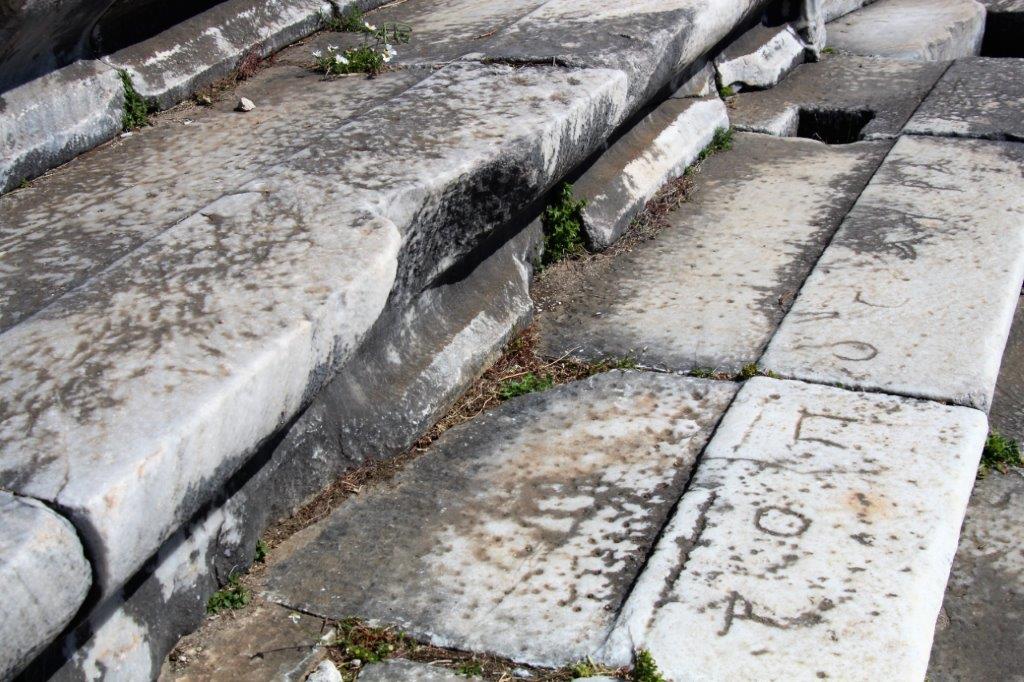
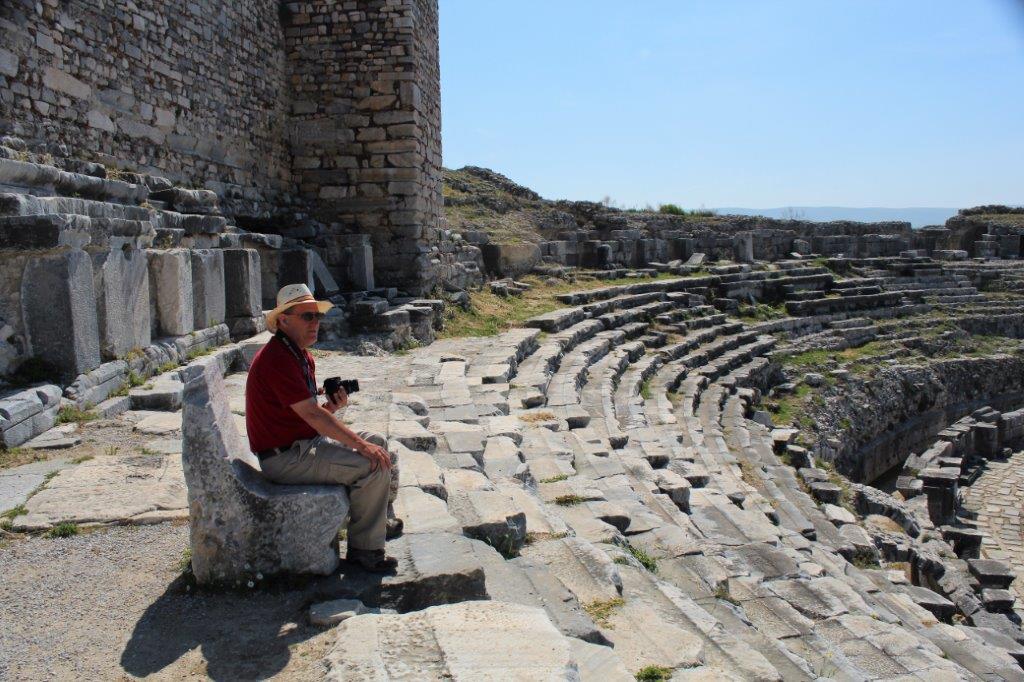
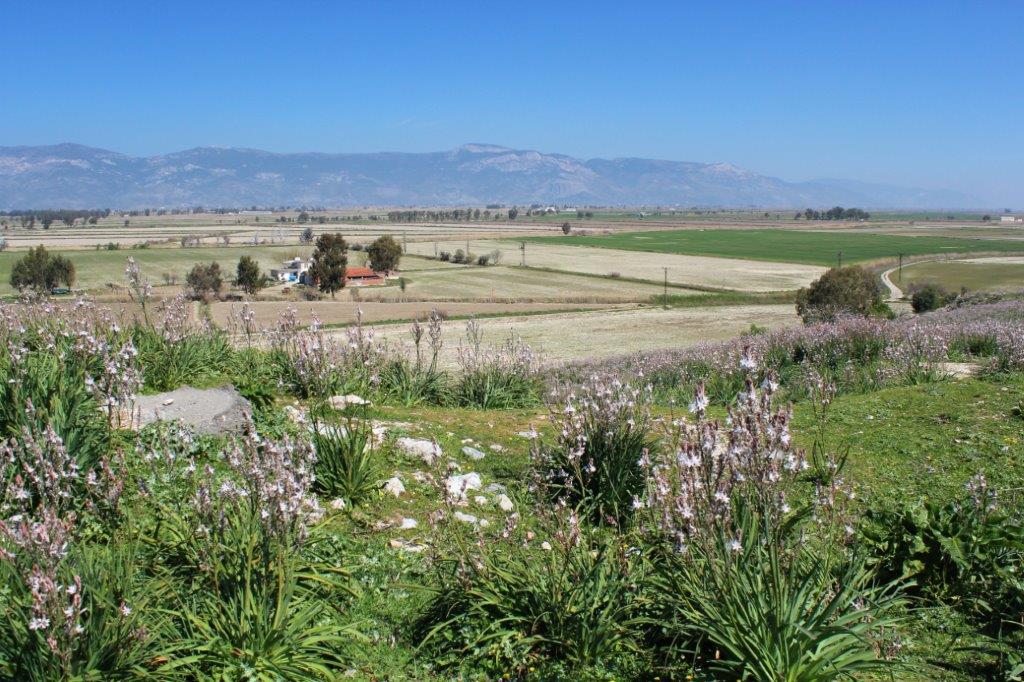
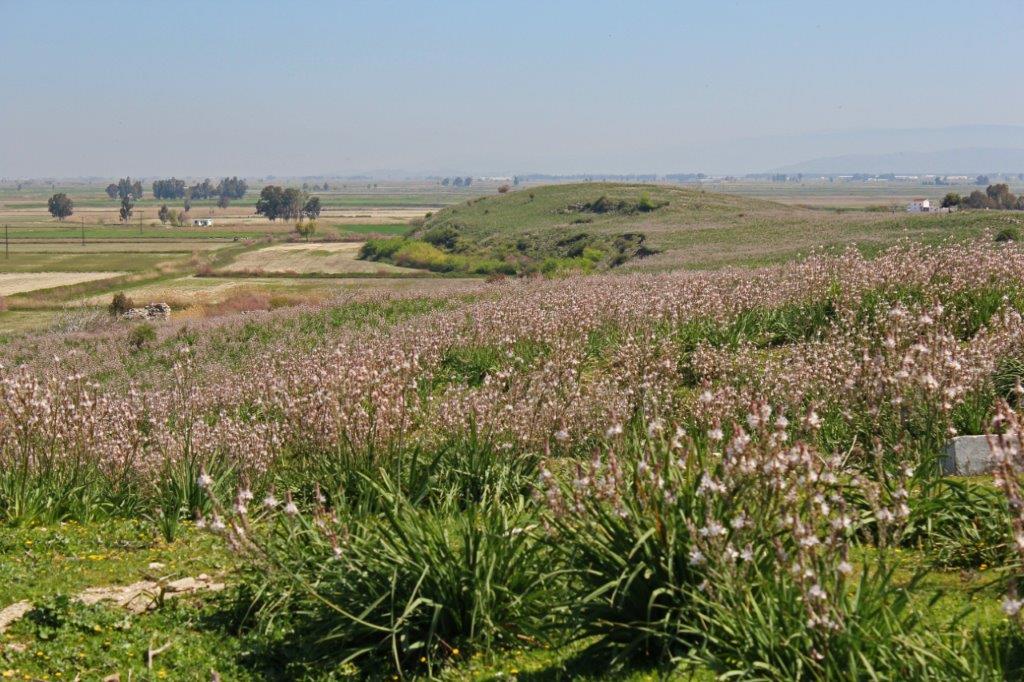
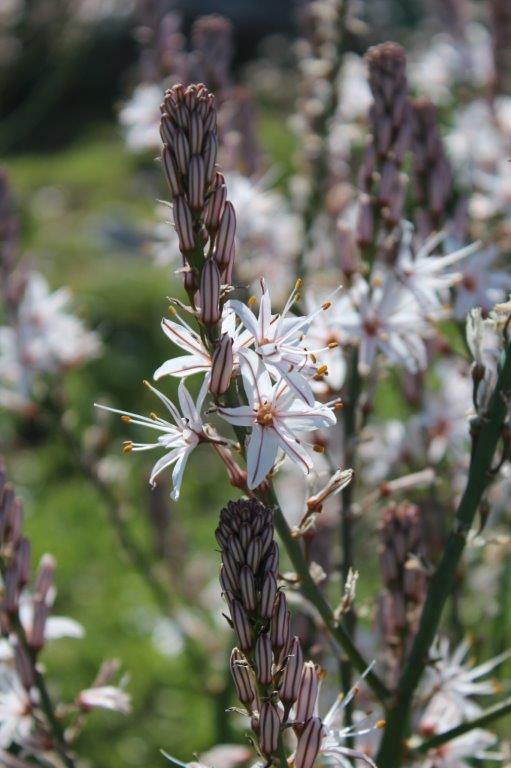
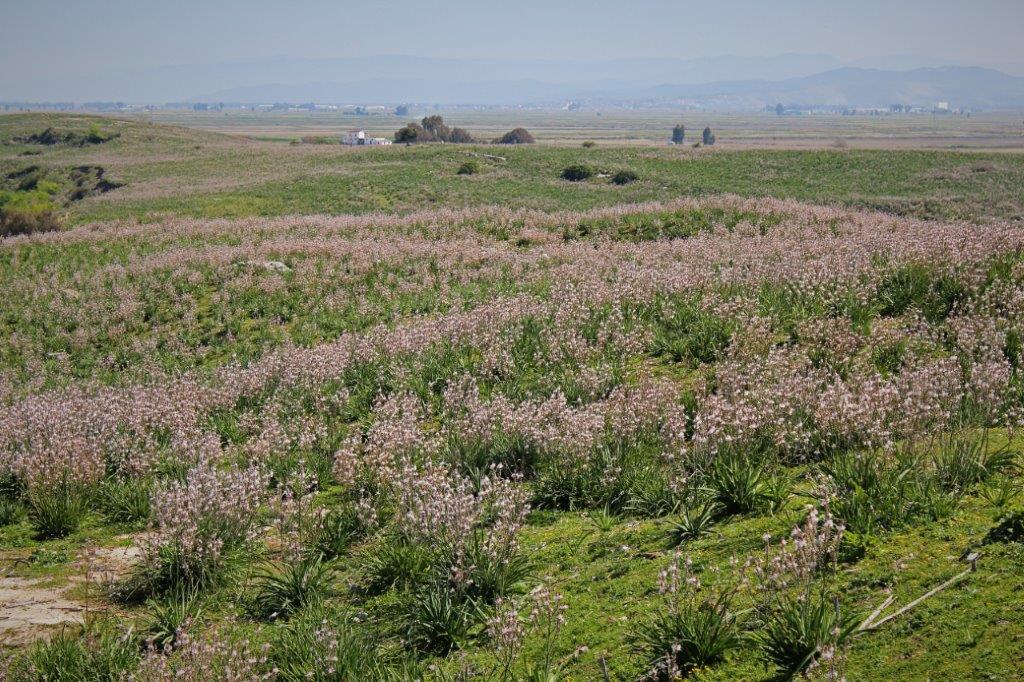
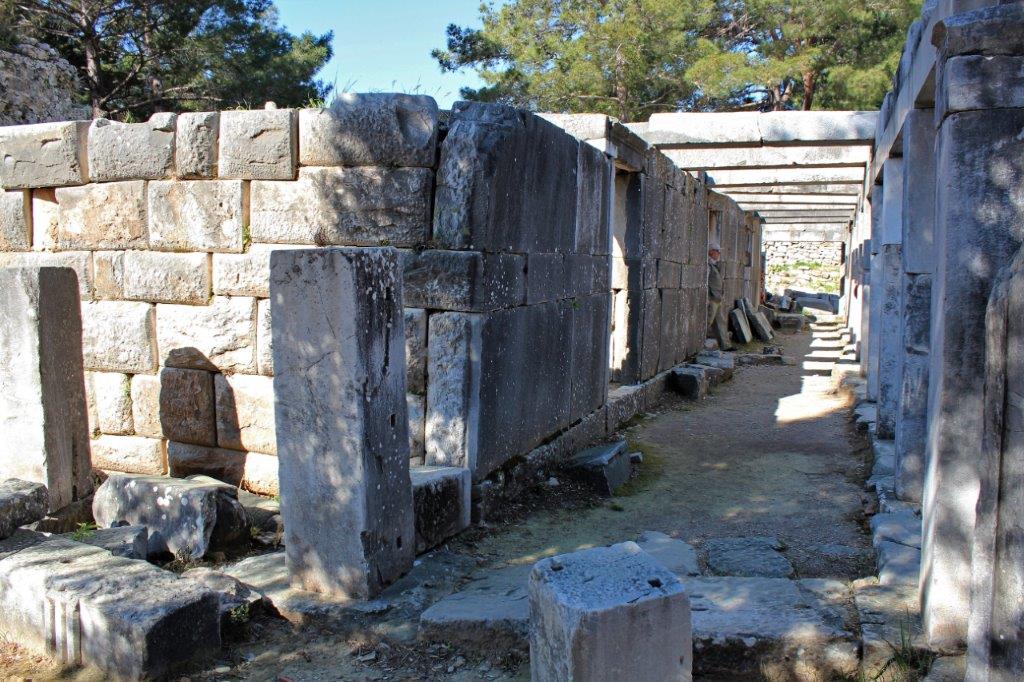
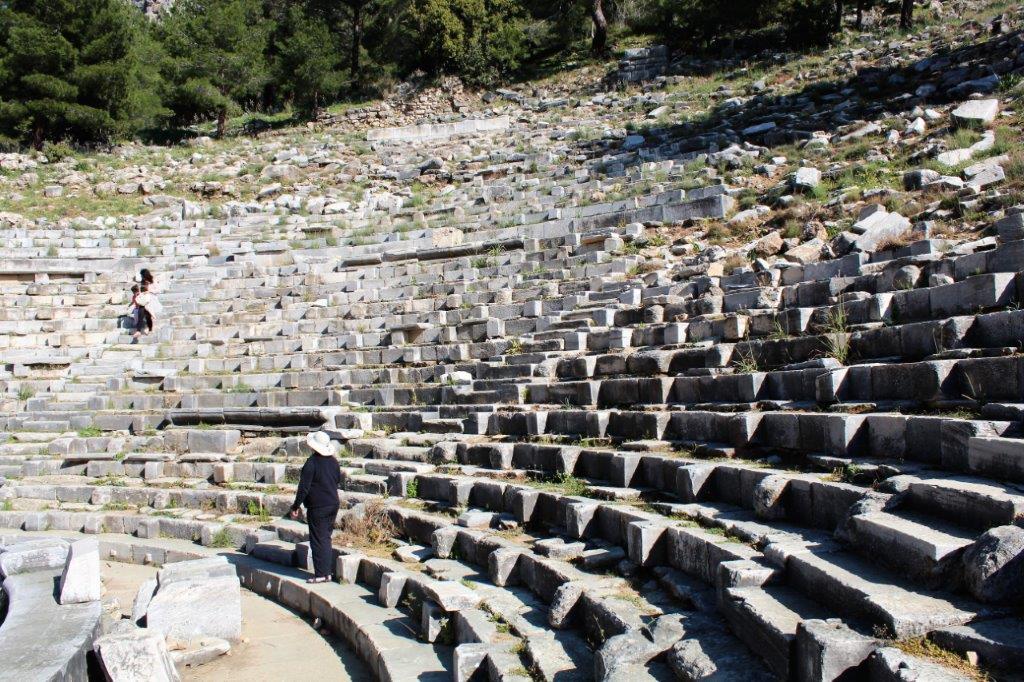
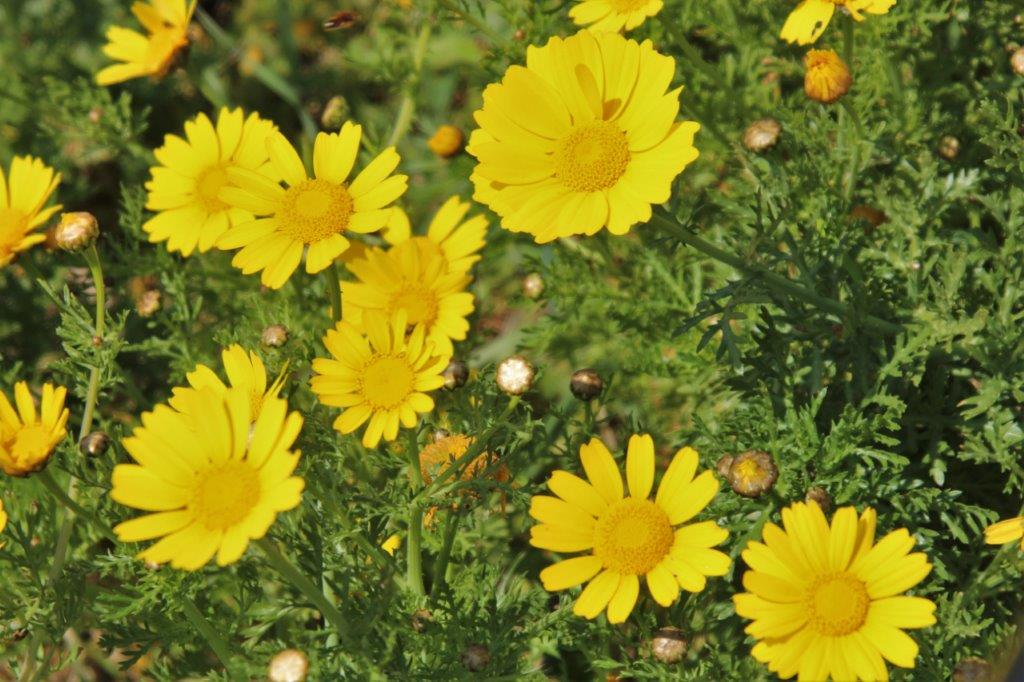
Miletus was rediscovered in the late 1800s.  The city streets were built on a grid system designed by the architect Hippodamos which is a model for many of our modern-day cities.  Less than 5% of Priene and Miletus have been excavated and studied.          Reserved seats.  Just etch your name into the stone.         Now that is some amazing stone cutting and construction.  One of the ship’s photography staff. She was on several tours with us                                    Tiers and tiers and tiers of seats.                    Must be my seat.  My birthday is in November.                      A couple of interesting lizards basking in the sun.               The view out the back from the top row of seats.                        Spring flowers were beginning to bloom. Another bus ride took us to the final stop of the day, the massive Temple of Apollo at Didyma – considered to be one of the great monuments of antiquity.

2012 April 3 – Day 23 – Kusadasi, Turkey (Day 1) (Part 1)

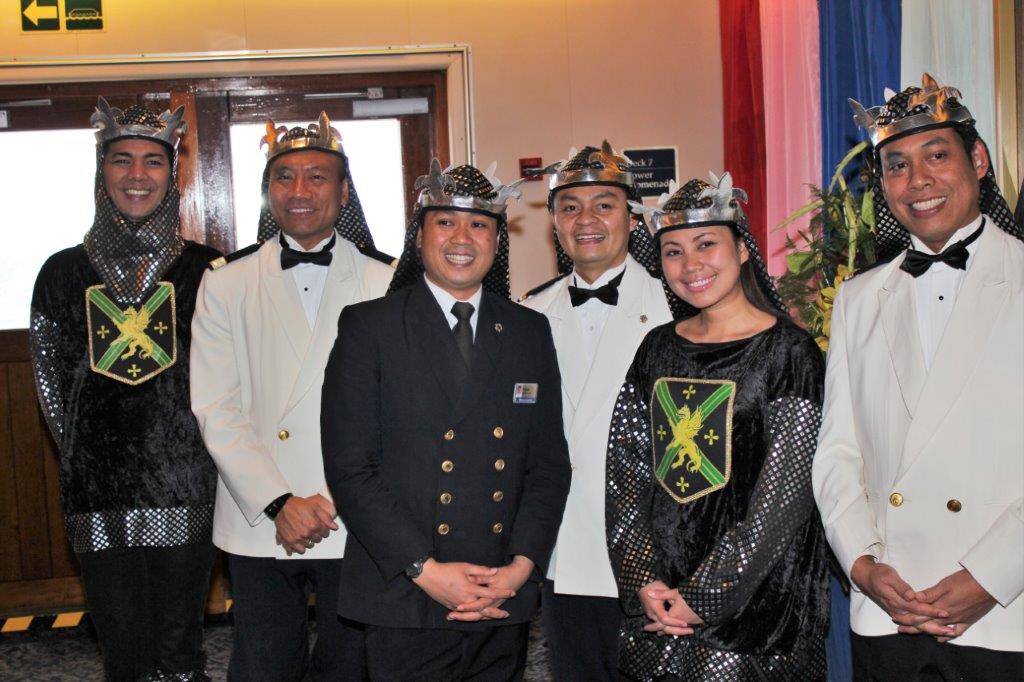
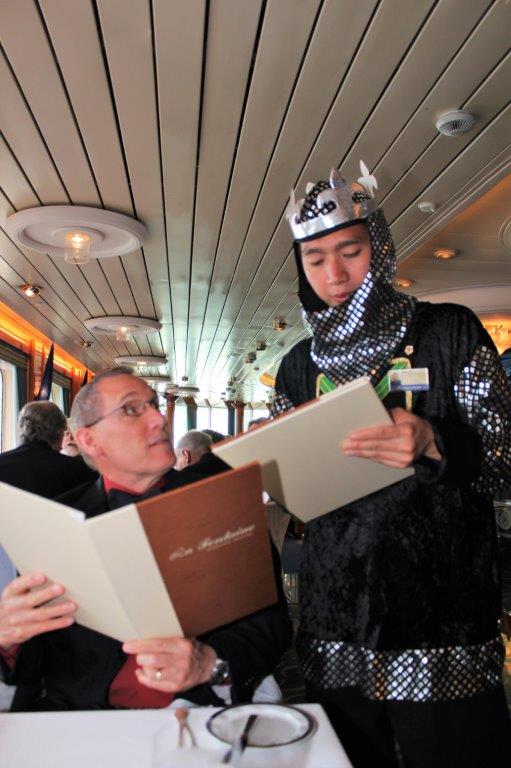
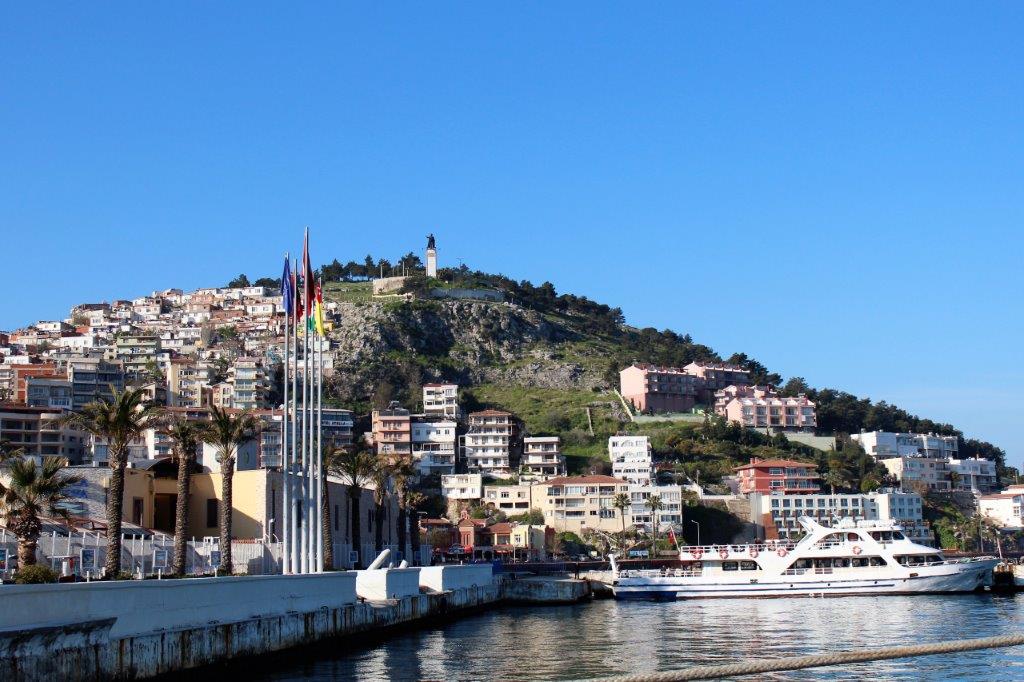
We had a day at sea after we left Malta on April 1.  Since Malta is the home of the Knights of St. John the theme in the dining room that night was, of course, Night of Knights. The next day we docked at Kusadasi (pronounced Kush a dash ee) in Turkey.  Kusadasi is an ancient city that has attracted holiday makers and  sun worshipers for many years.  The winter population is about 70,000 but during the 8 months of summer it rises to 500,000.  Tourism has been the driving force of the economy for a long time.  The area is also a sought-after location for historians since it is located a short 16 km from the ancient city of Ephesus. There are many important archaeological sites in the area (Turkey has over 2,000 ancient city sites.  It is considered the Cradle of Civilization) and they are packed with people all day, every day.  Over 150 bus loads of tourists will visit each of the sites on any given day.
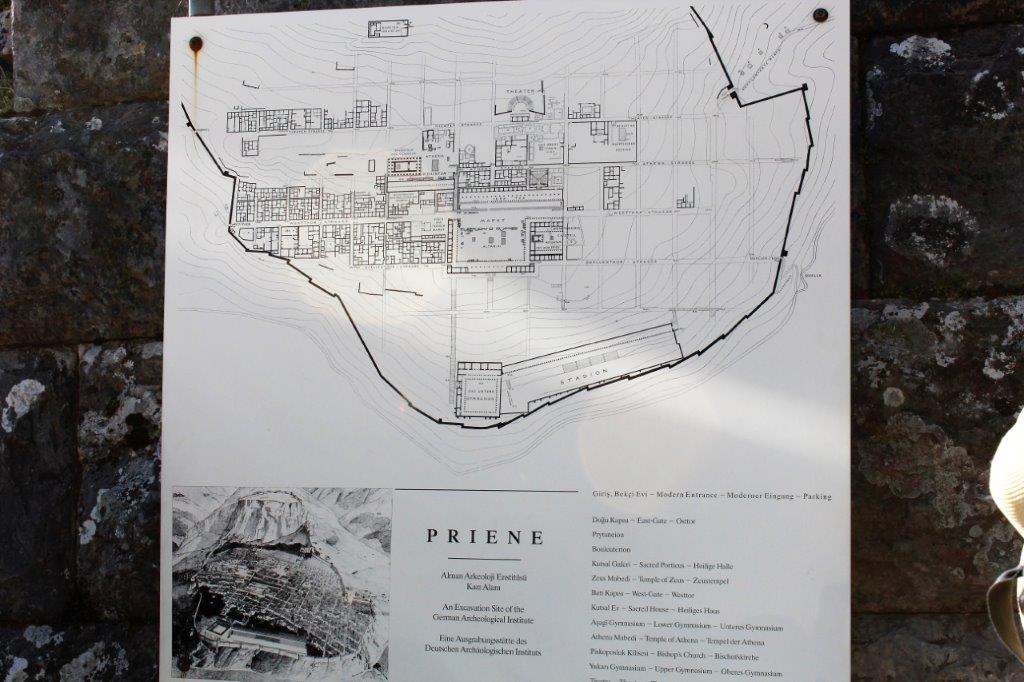
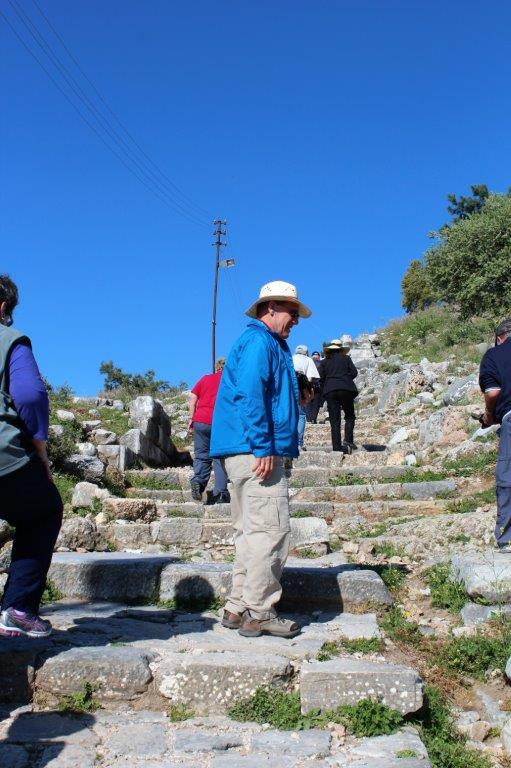
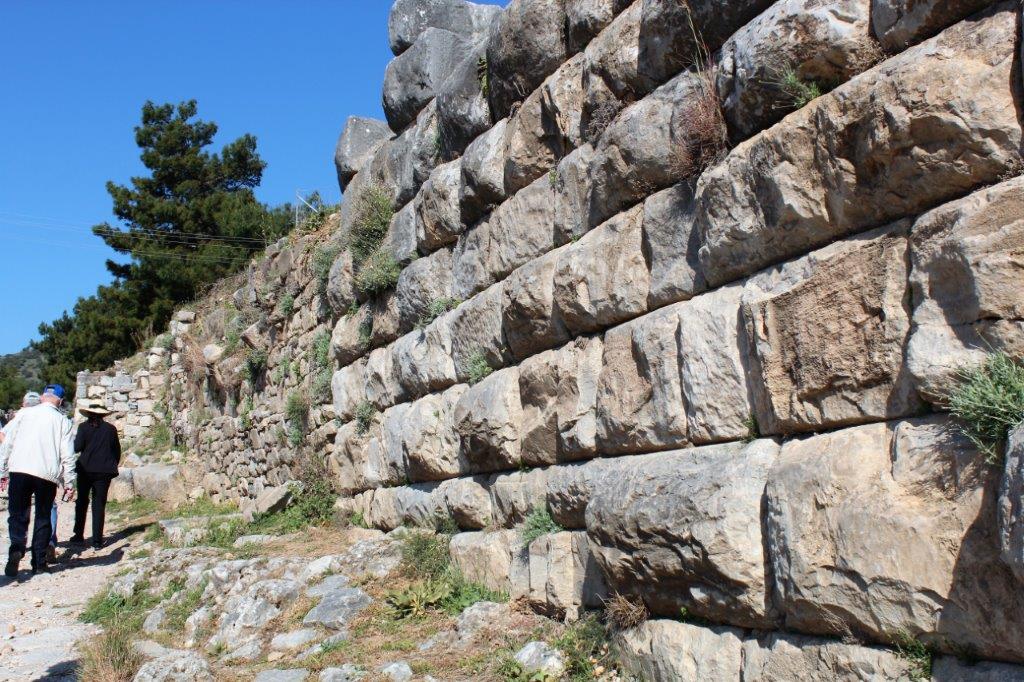
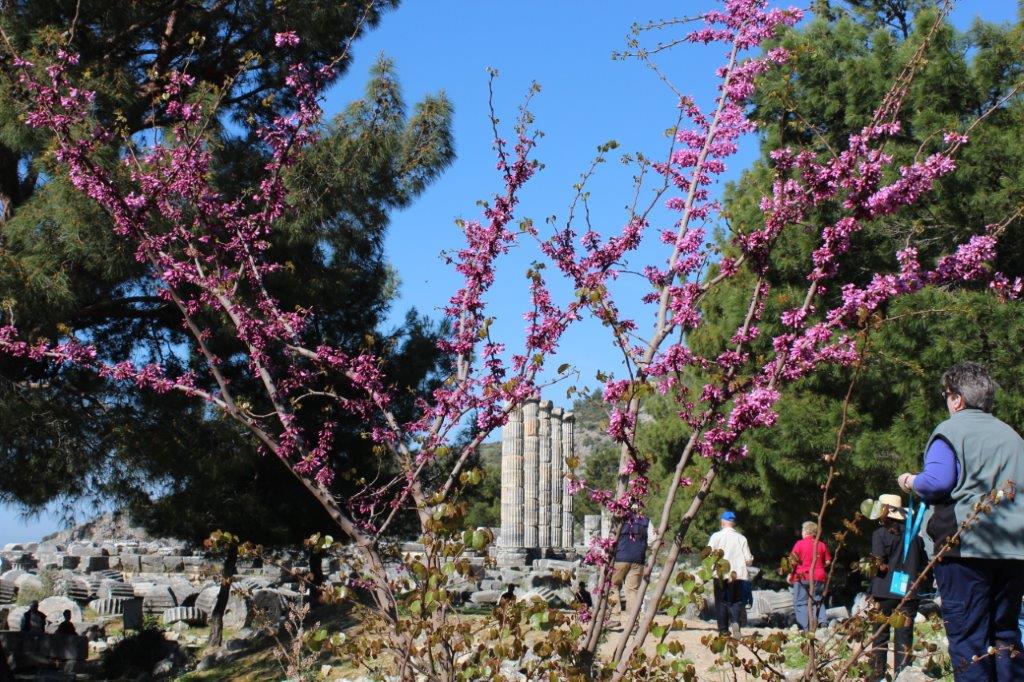
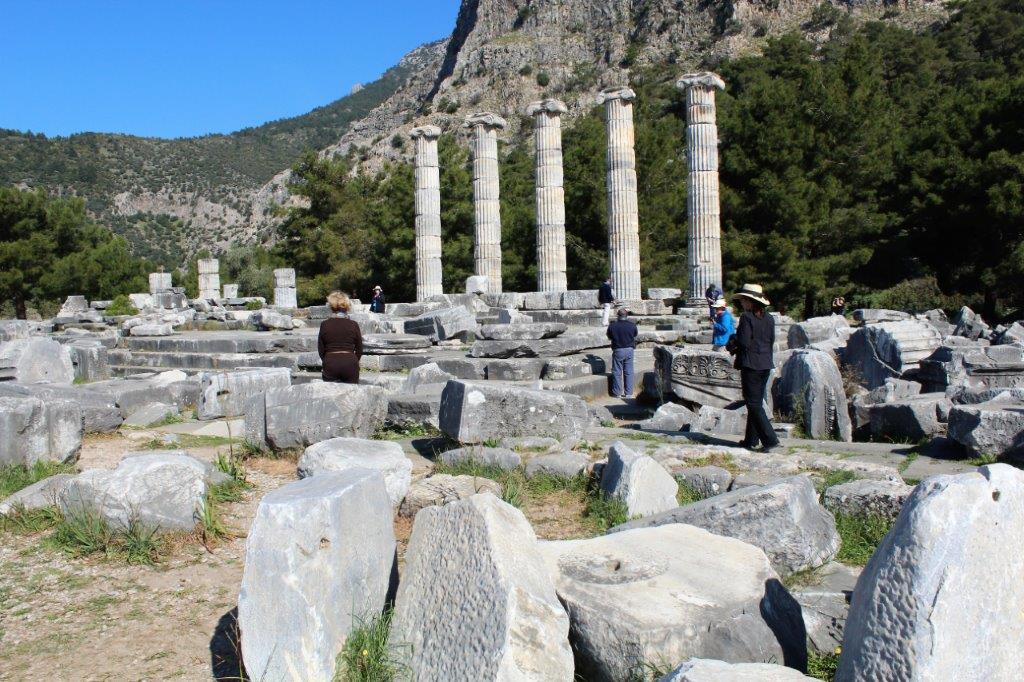
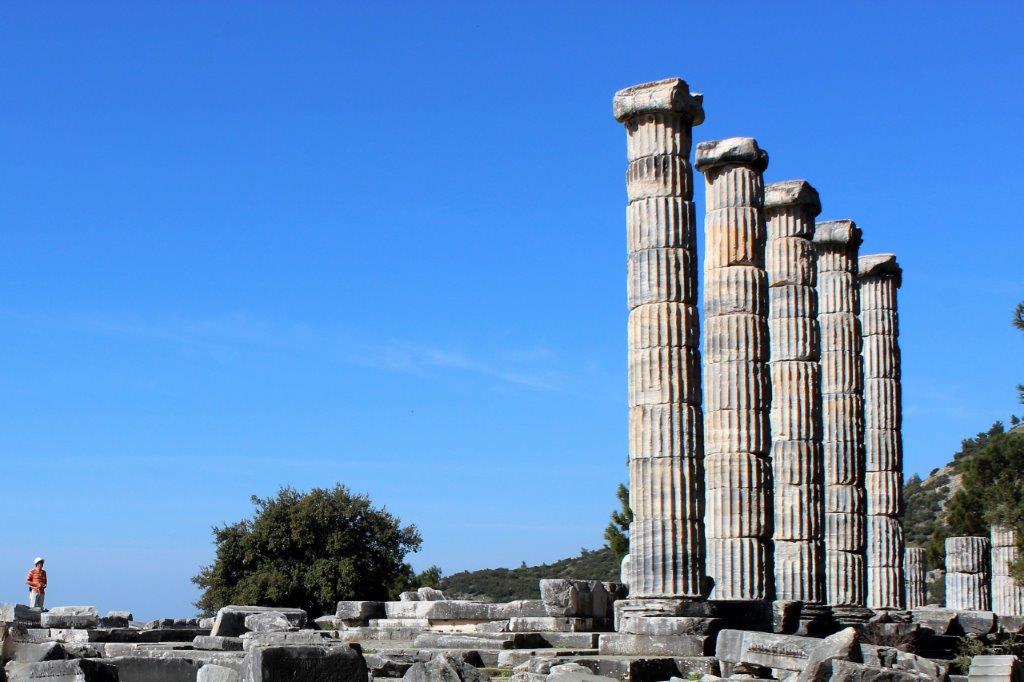
This day we took a tour to the ruins at Priene, Didyma, Miletus.  Priene is best known for its 4th-century Athena Temple bankrolled by Alexander the Great. Priene was built during the Ionic period.  The Hellenic (Greek) construction used local stone. (The later era Romans tended to use marble as a main construction material)

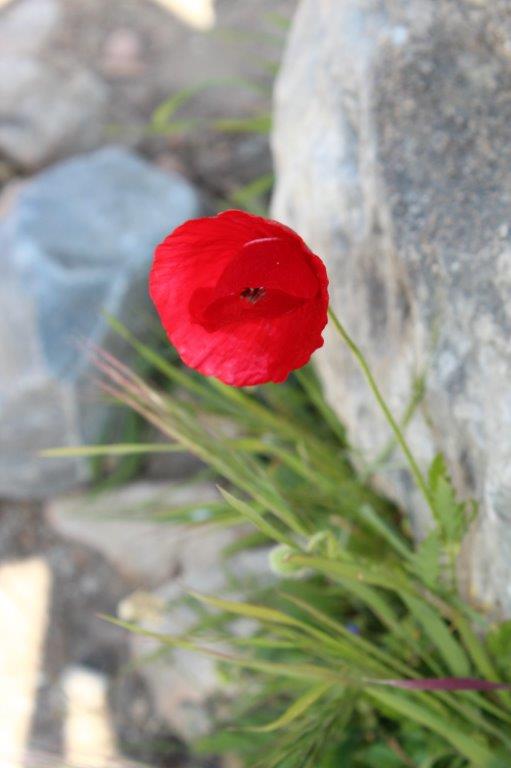
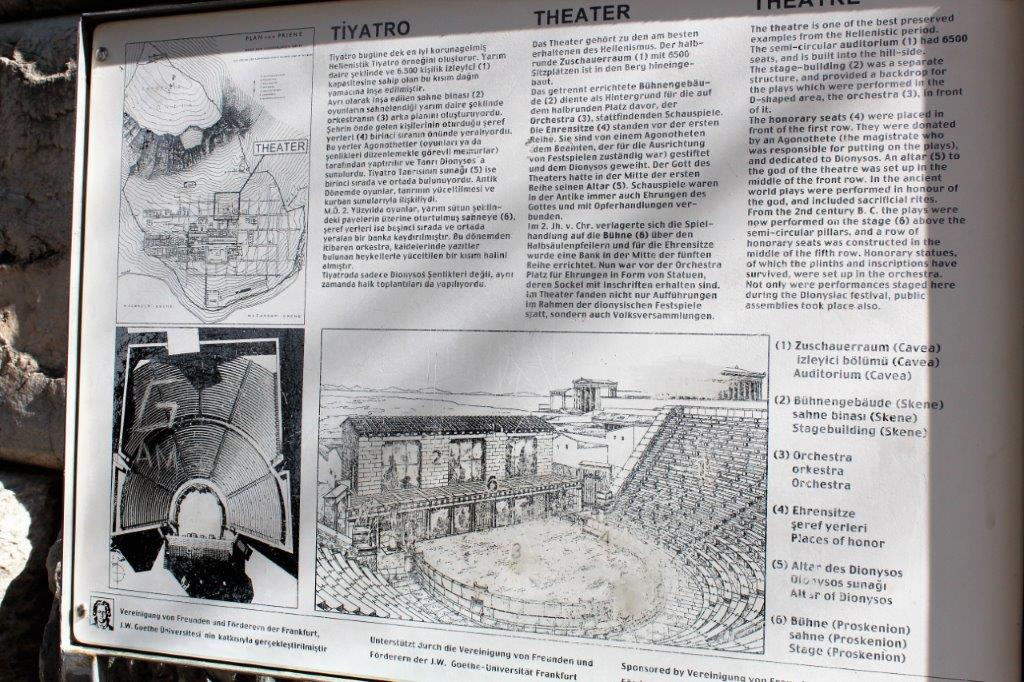
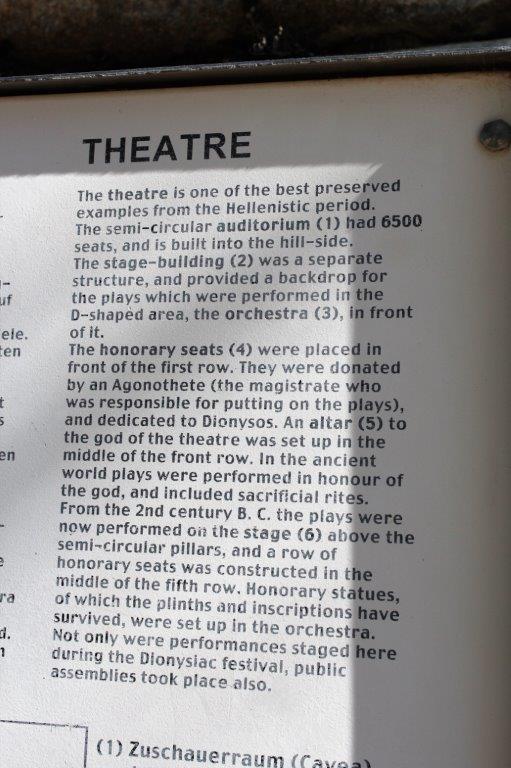
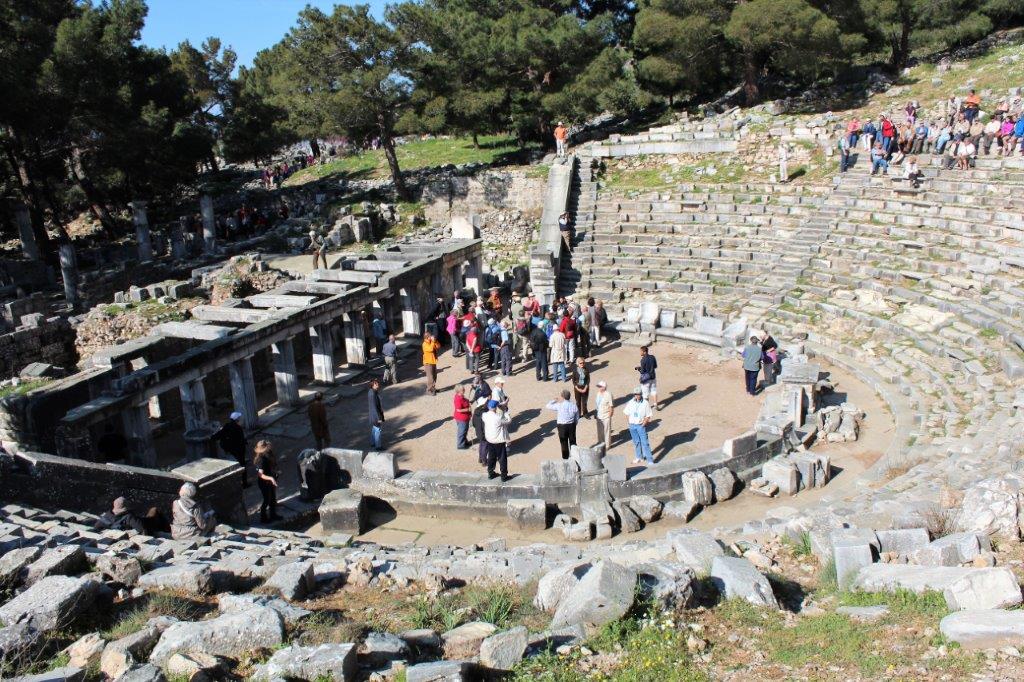
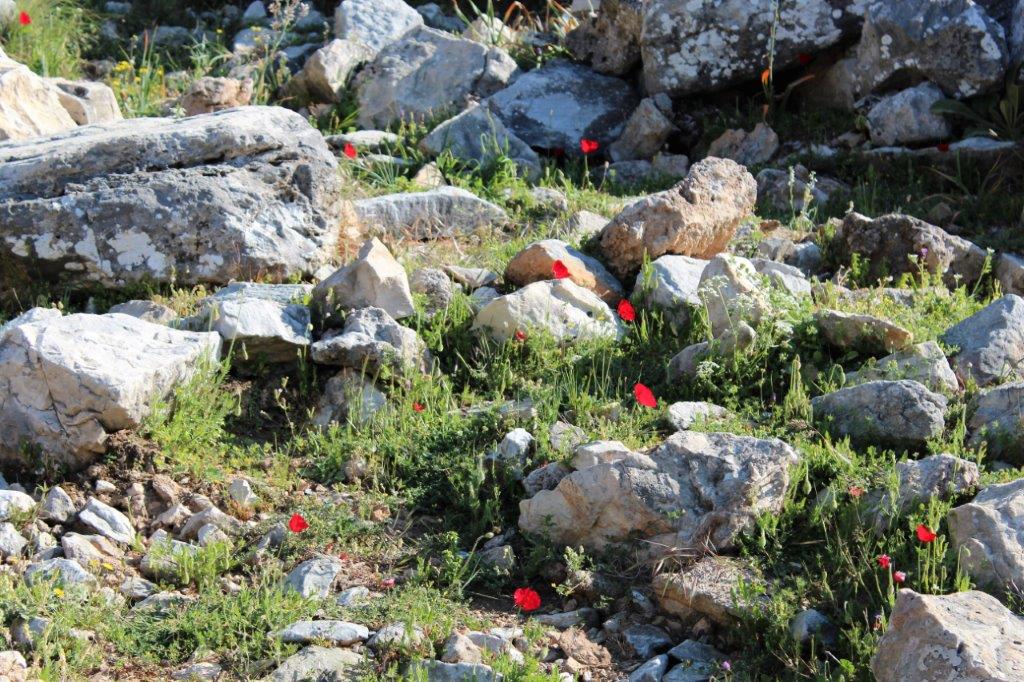
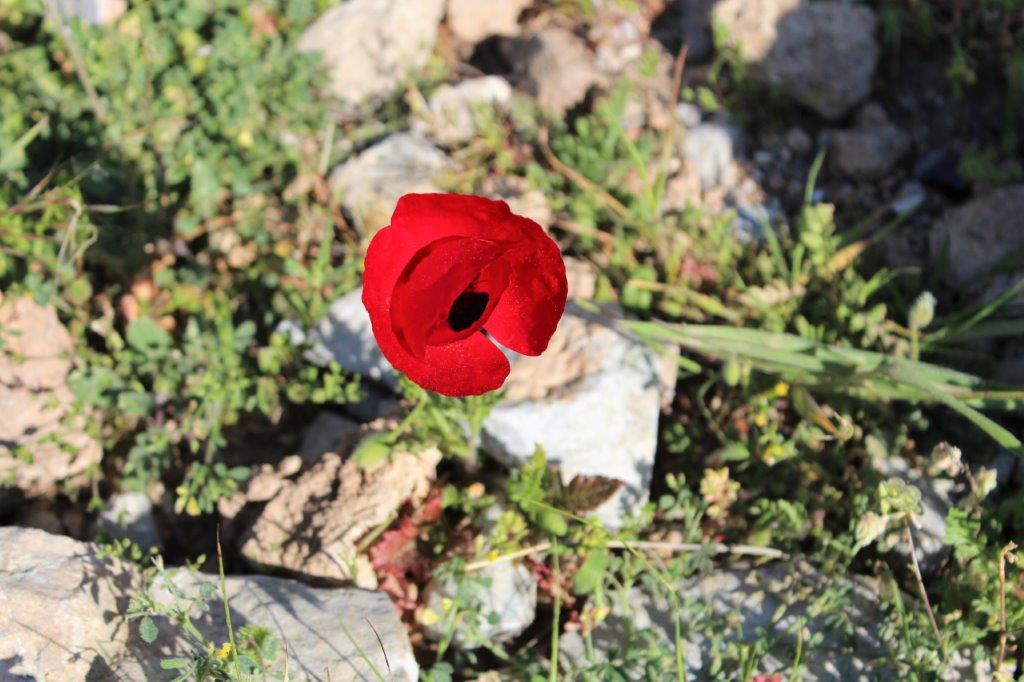
It also has a 5,000 seat amphitheater built in the third century.  It  was the responsibility of one member of each family to go to the theater to hear any important news or public announcements and report it back.  The theater had to seat 1 in 10 persons so the population of Priene was about 50,000.  The poppies were blooming in many of our ports-of-call on this cruise.  It is easy to understand why Col. John McCrae used them in his poem “In Flanders Fields.”

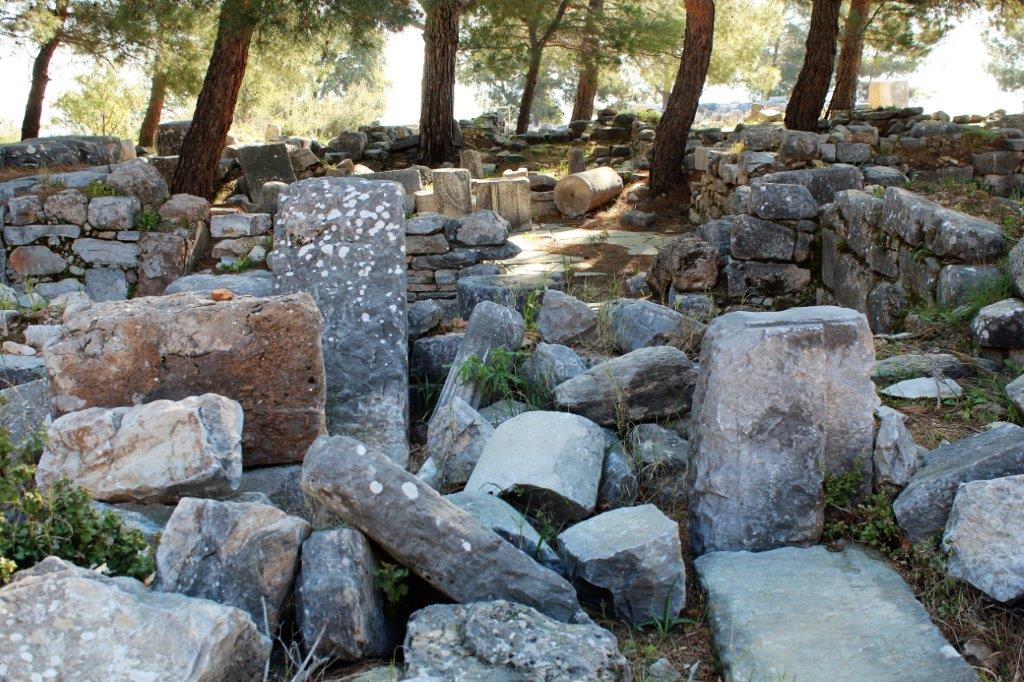
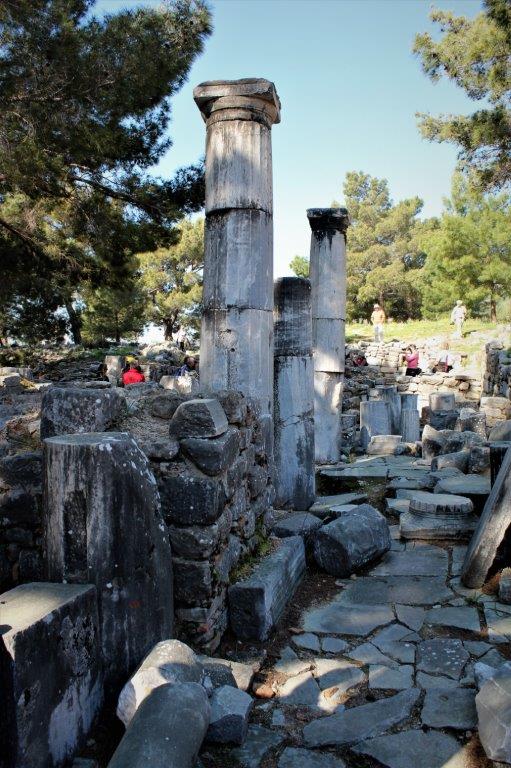
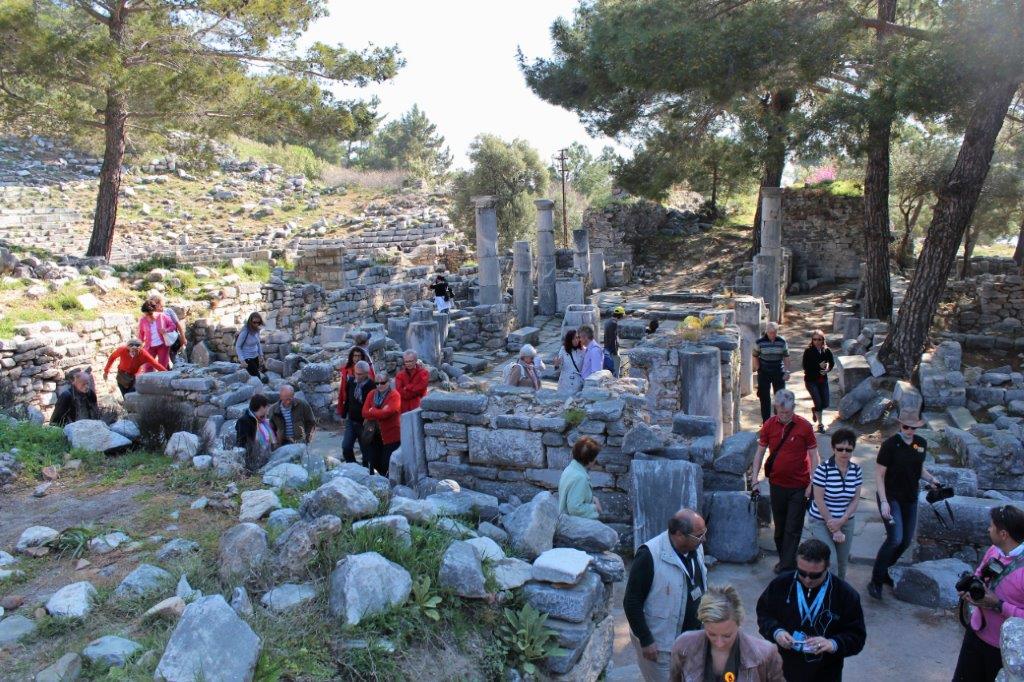
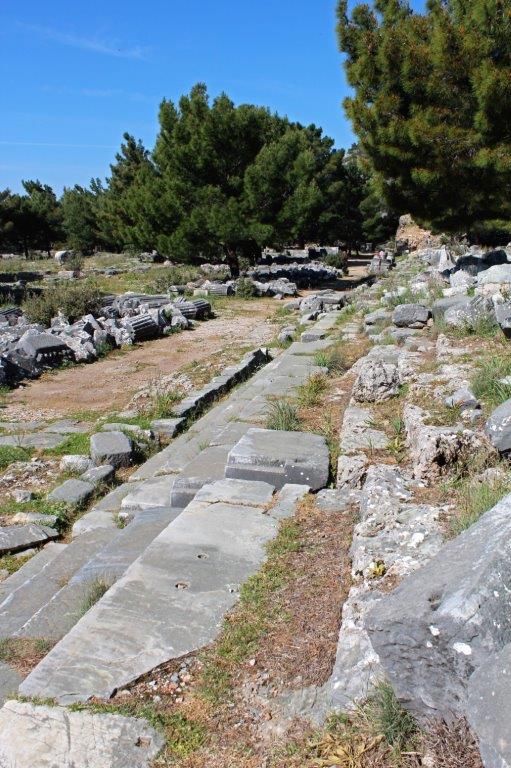
One of the unique things about the Priene site is that it was never rebuilt by the Romans after the Greek city reached its height in the fourth century so what visitors see is an unadulterated typical Ionian City.  It was really awesome for me to be walking amid such ancient ruins.  The stories these fallen columns and stones could tell…

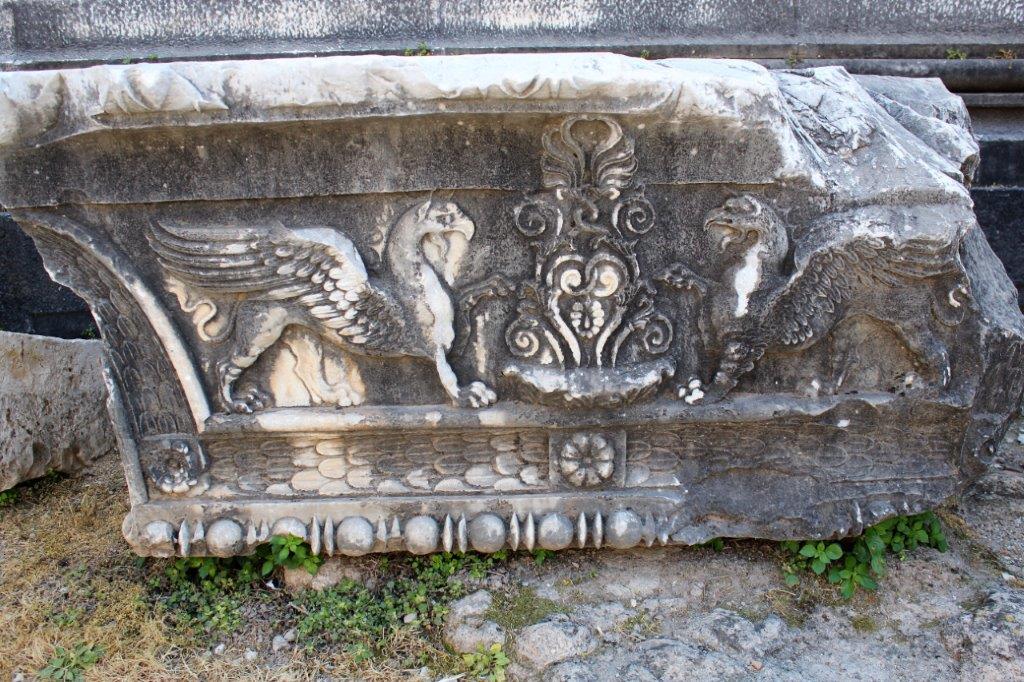
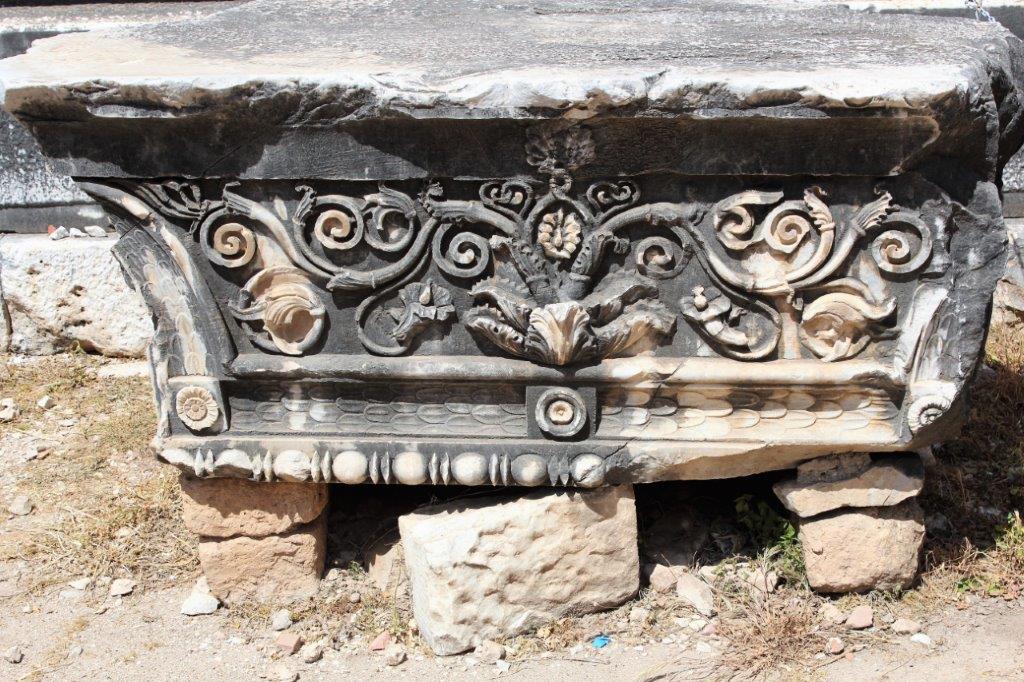
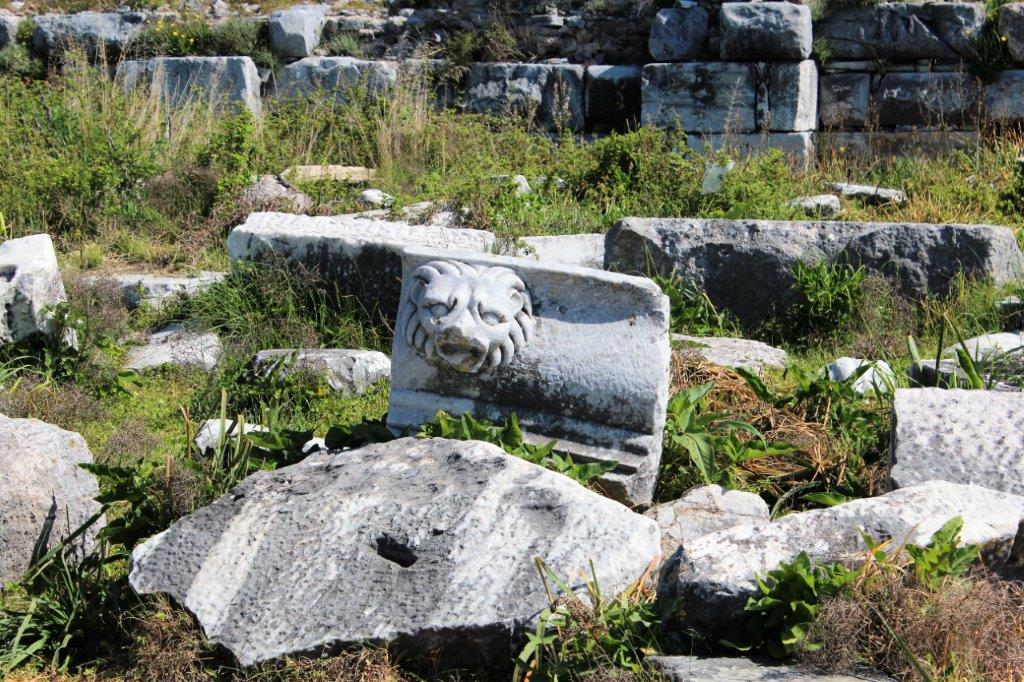
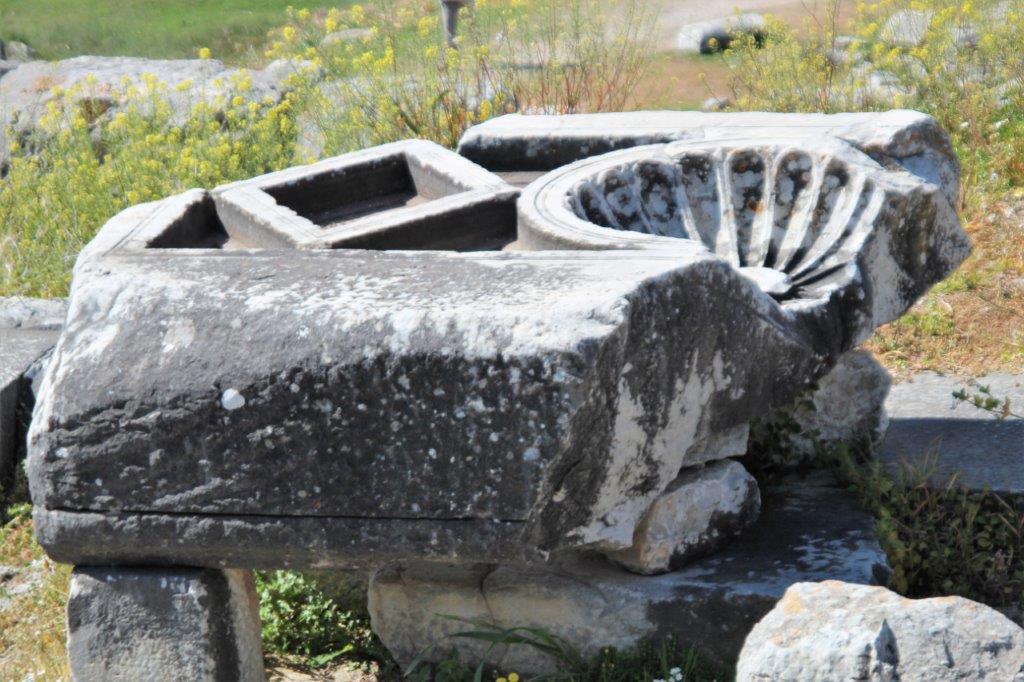
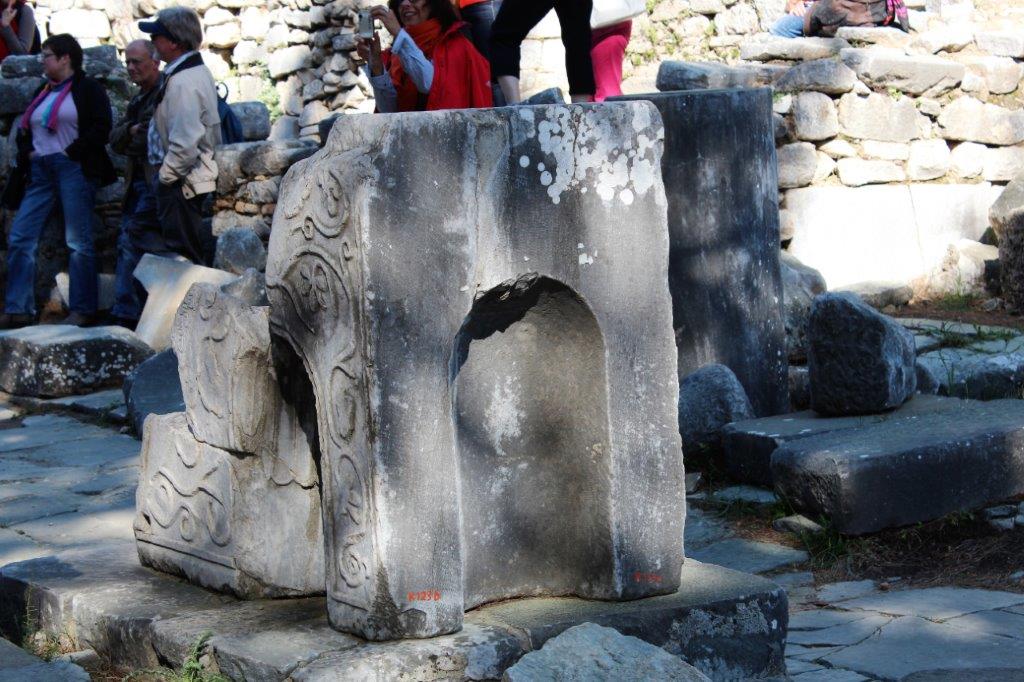
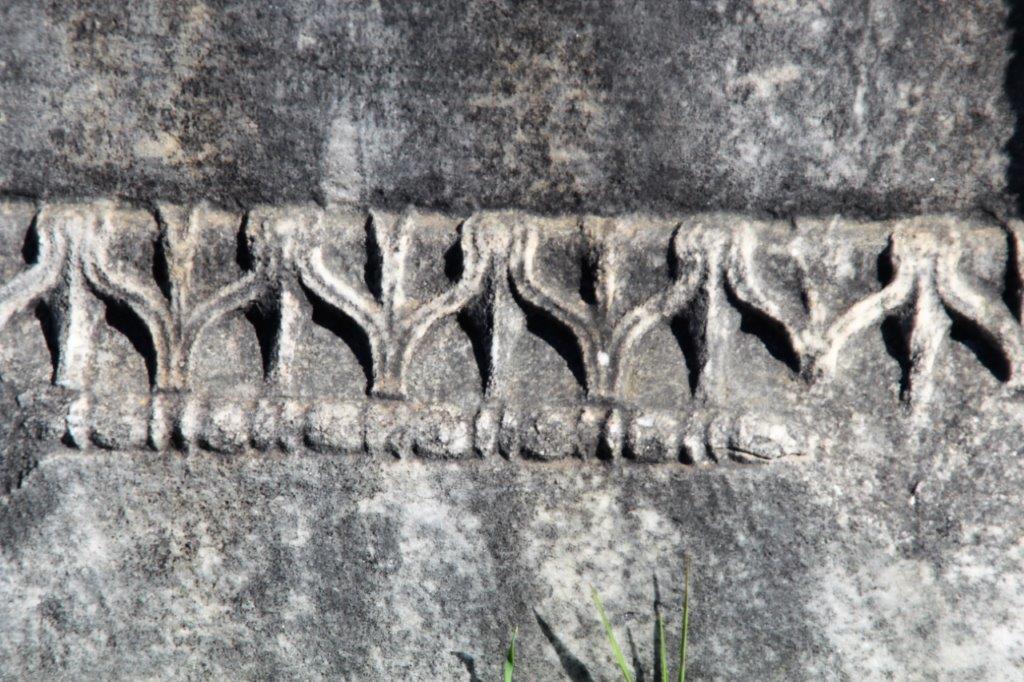
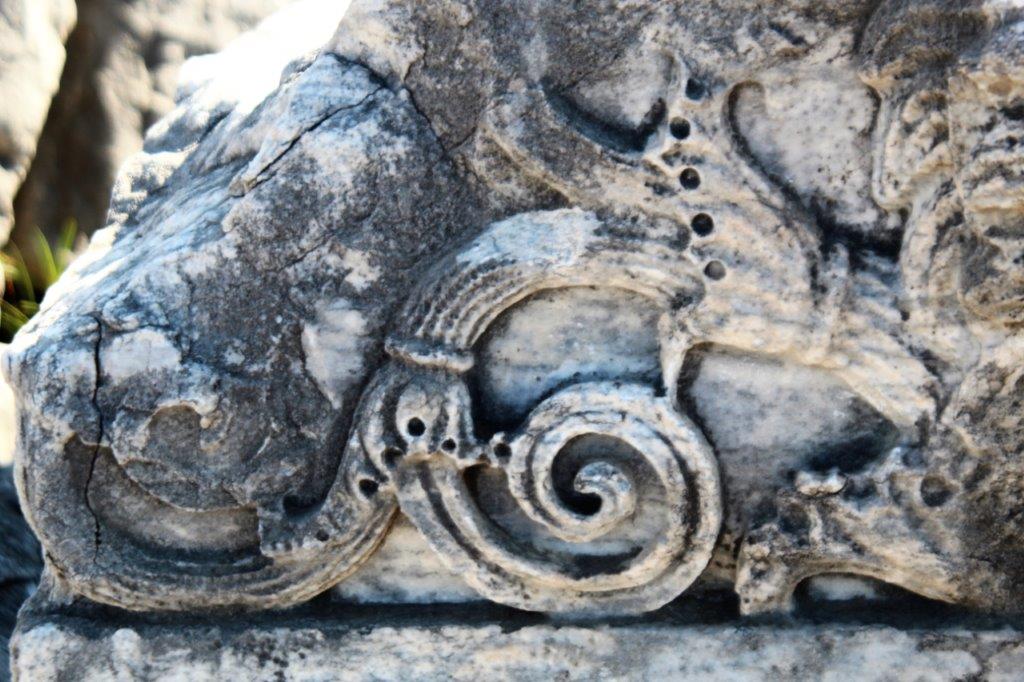
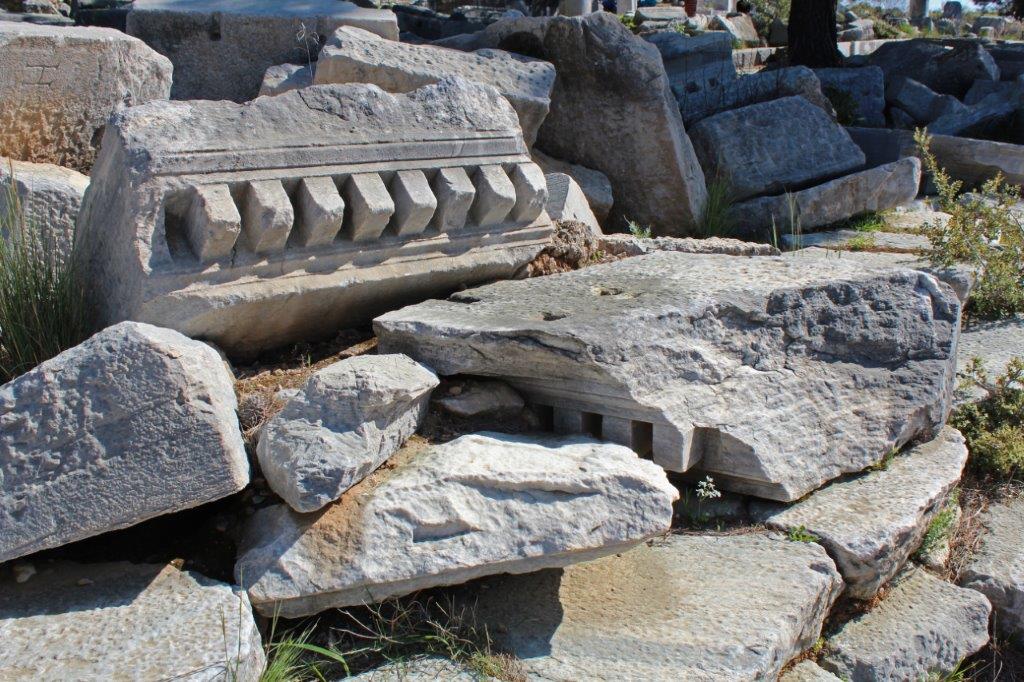
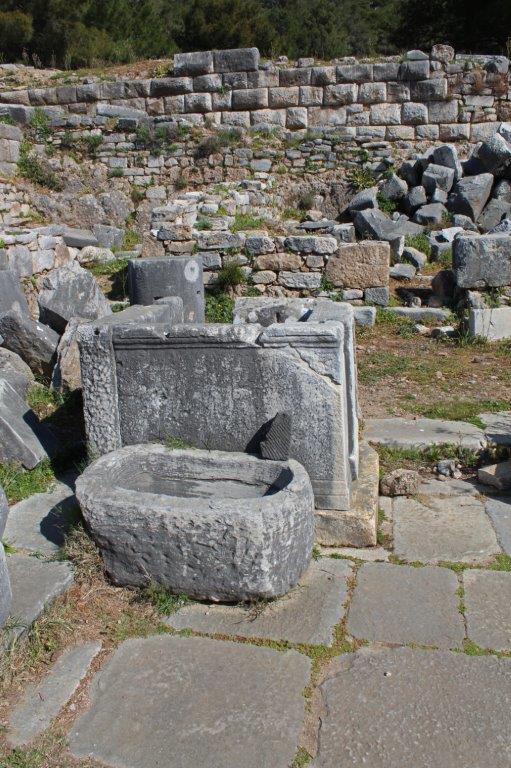
Think of the hours it would have taken a stonemason to create these designs with a hammer and chisel.  Absolutely amazing!  Look how sharp the edges are on these two pieces. A central hub for the sewer system.  And we think we in the 21st century are so smart.

And then it was on the bus for the next stop at Miletus, a trading center created by visitors from Crete.

2012 April 1 – Day 21 – Mgarr, Gozo, Malta (Part 2)

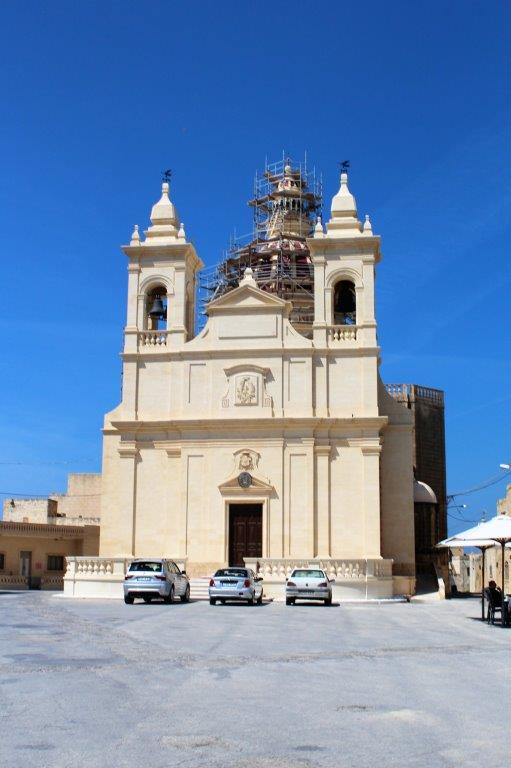
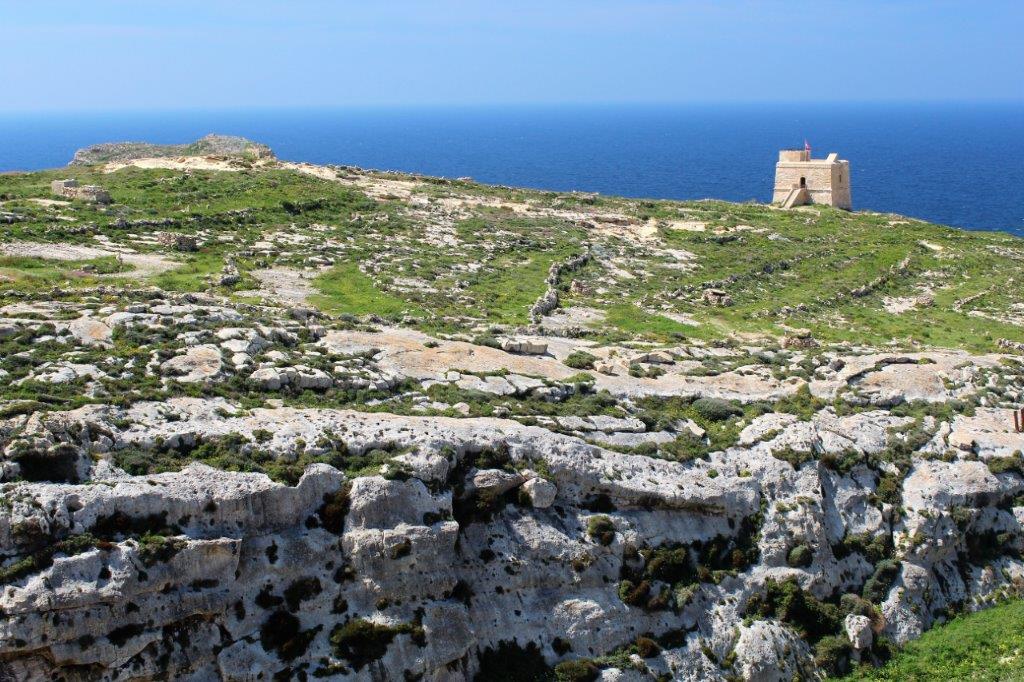
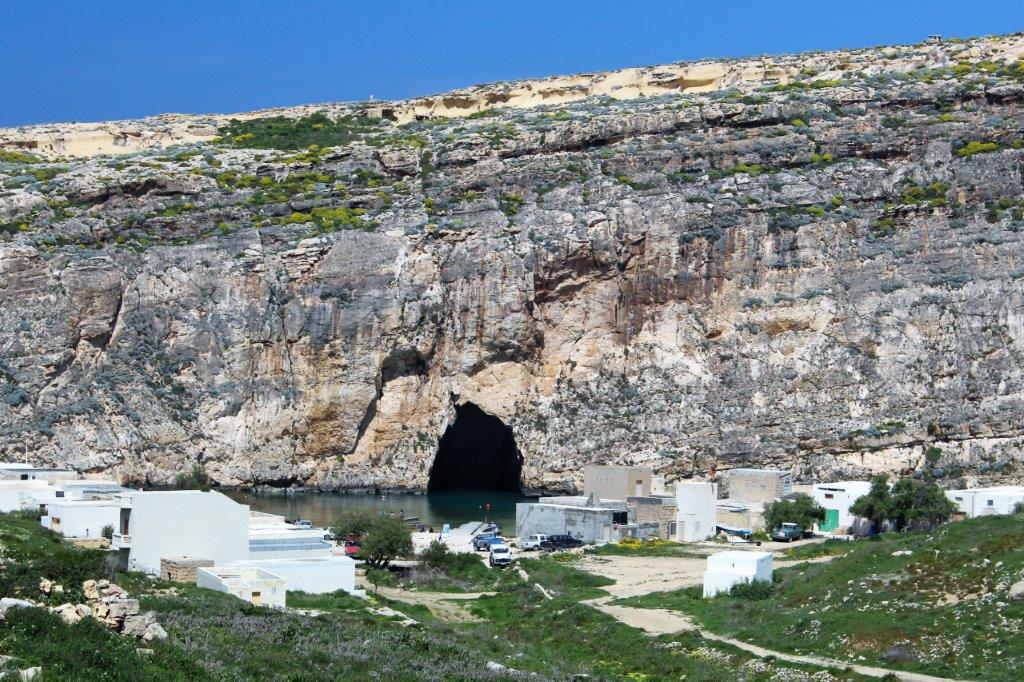
After we left the capital city of Victoria on the island of Gozo in Malta our driver took us to Dwejra Bay and the Inland Sea.  We passed the church of San Lawrenz and could see the Dwejra Watchtower in the distance. (I have absolutely no idea how any of these place names are pronounced.)

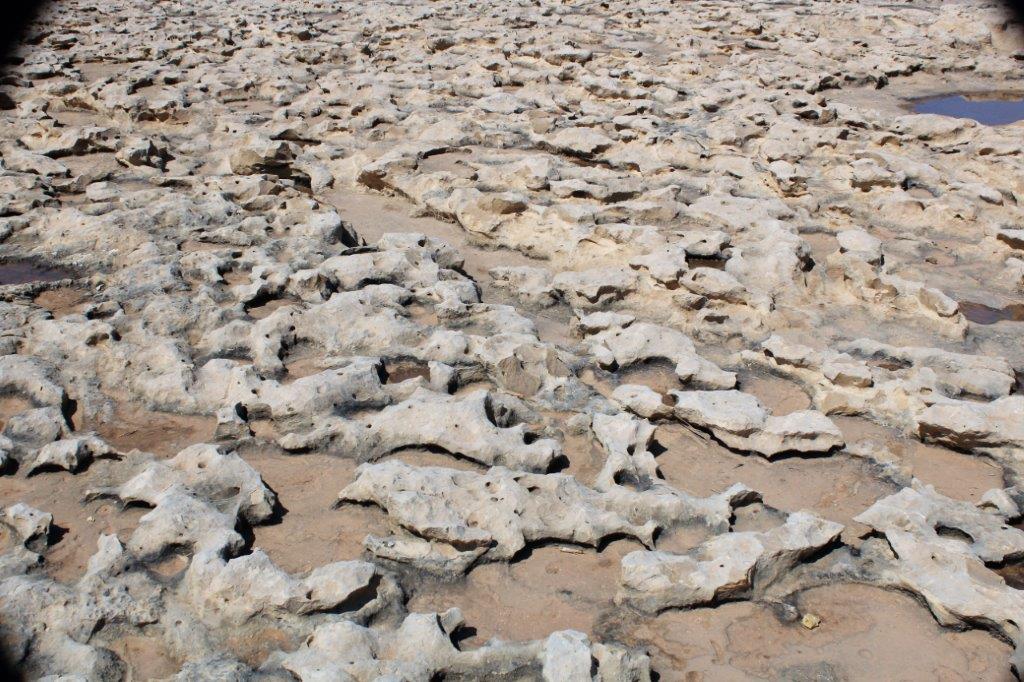
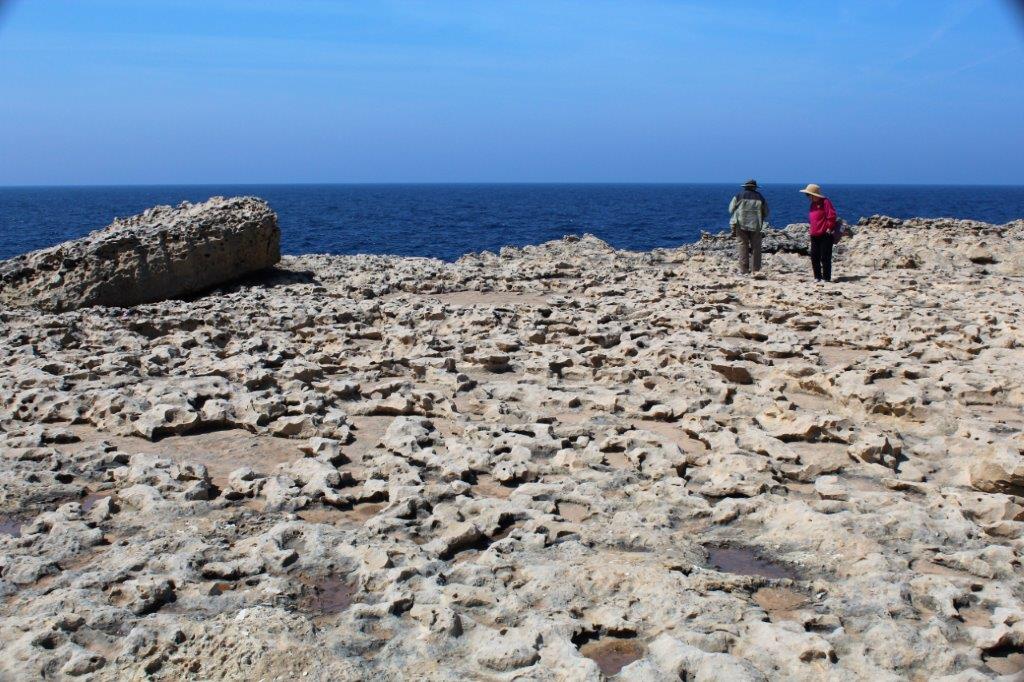
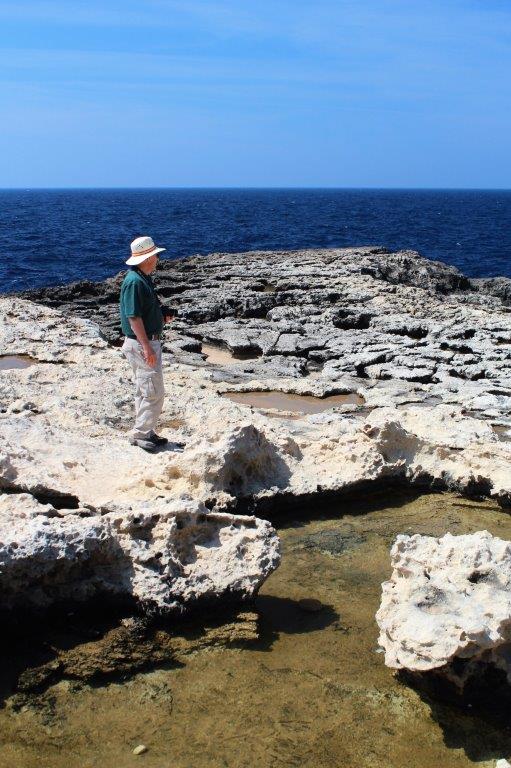
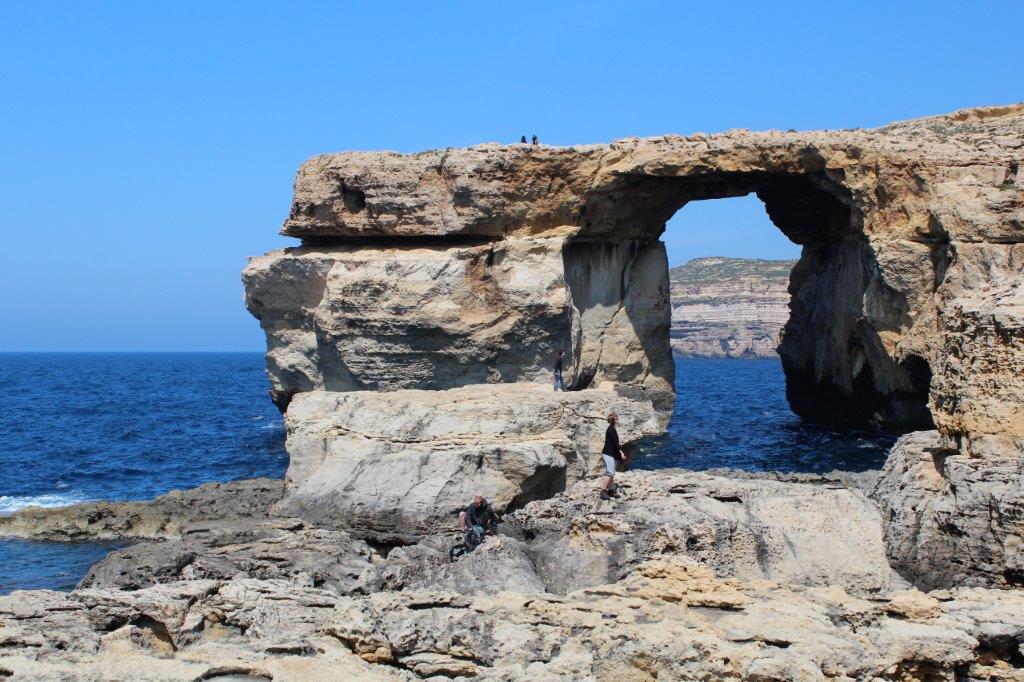
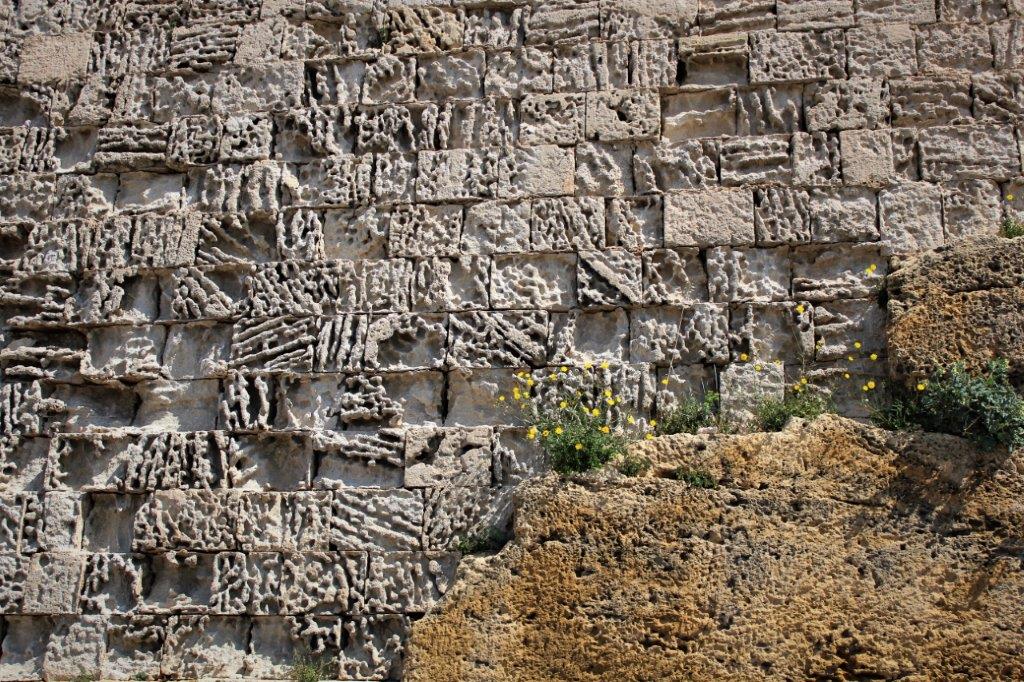
If you are here on a holiday and have time you can rent a rowboat or hire a boat and rower to take you through the cave to the Inland Sea.  Unfortunately our tour time frame did not allow us to go.  The sandstone is all chewed up by the salt and the sea.  It made some very interesting patterns, and a challenge to walk on.                                                  The Azure Window.

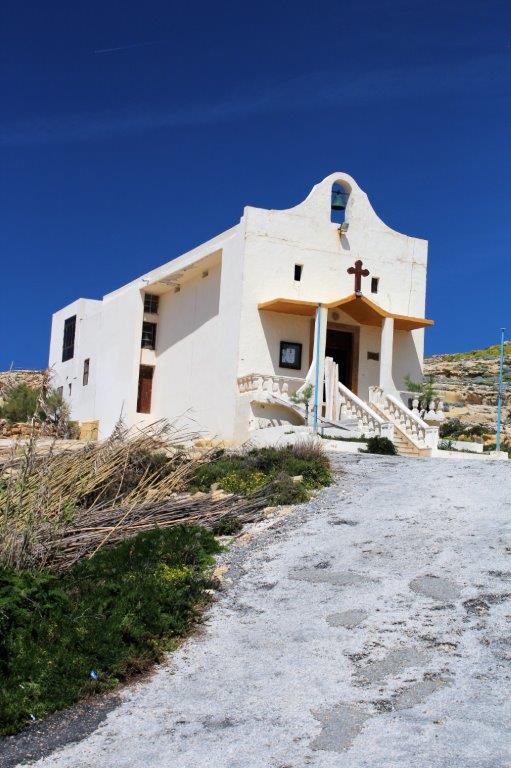
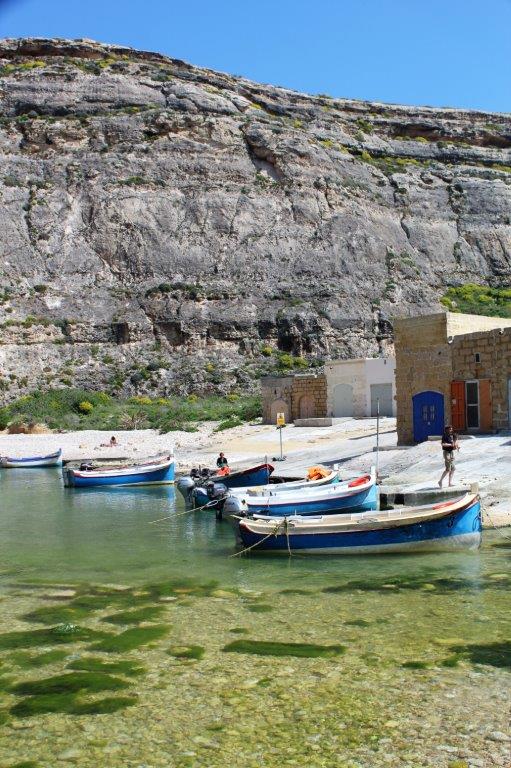
Chapel of St. Anne at Dwejra Bay.                                 Cave entrance to the Inland Sea.

The tour continued across the western side of the island and past Ta’ Pinu Shrine (the full name is The Basilica of the National Shrine of the Blessed Virgin of Ta’ Pinu – Maltese for ‘Of Philip’).  It is amazing how large and elaborate all these churches are for such a small island and a small population.  Of course they were all built a few hundred years ago.

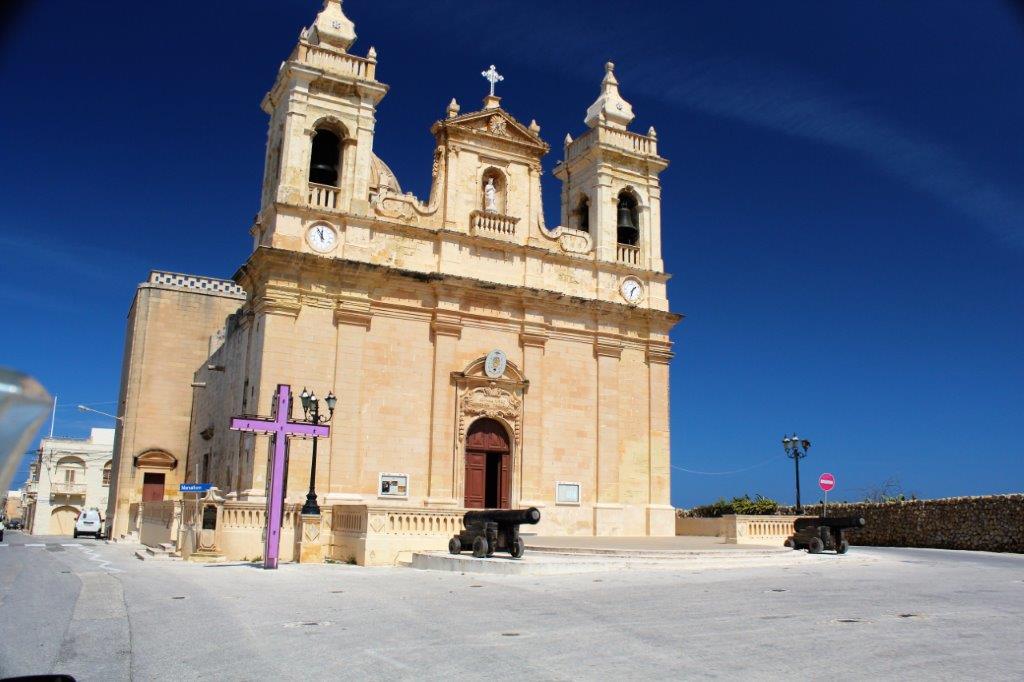
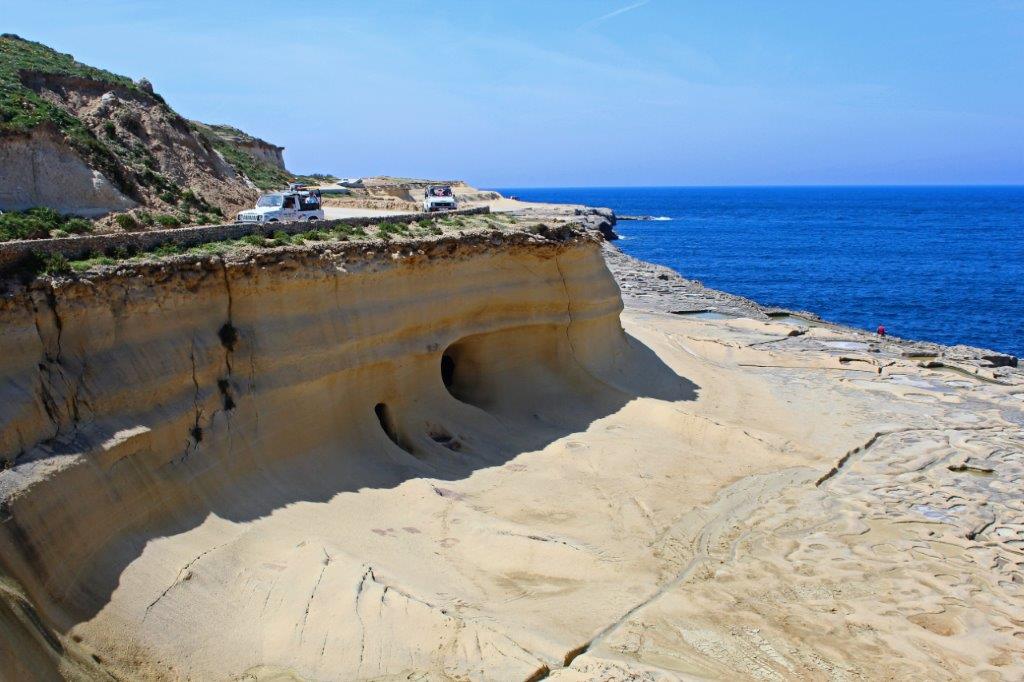
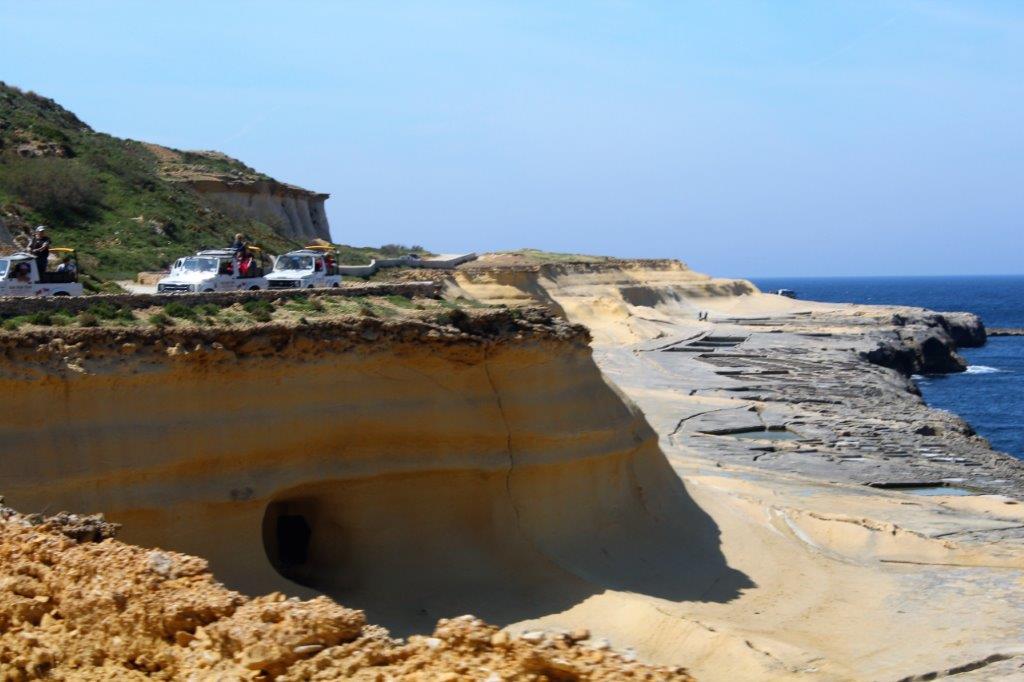
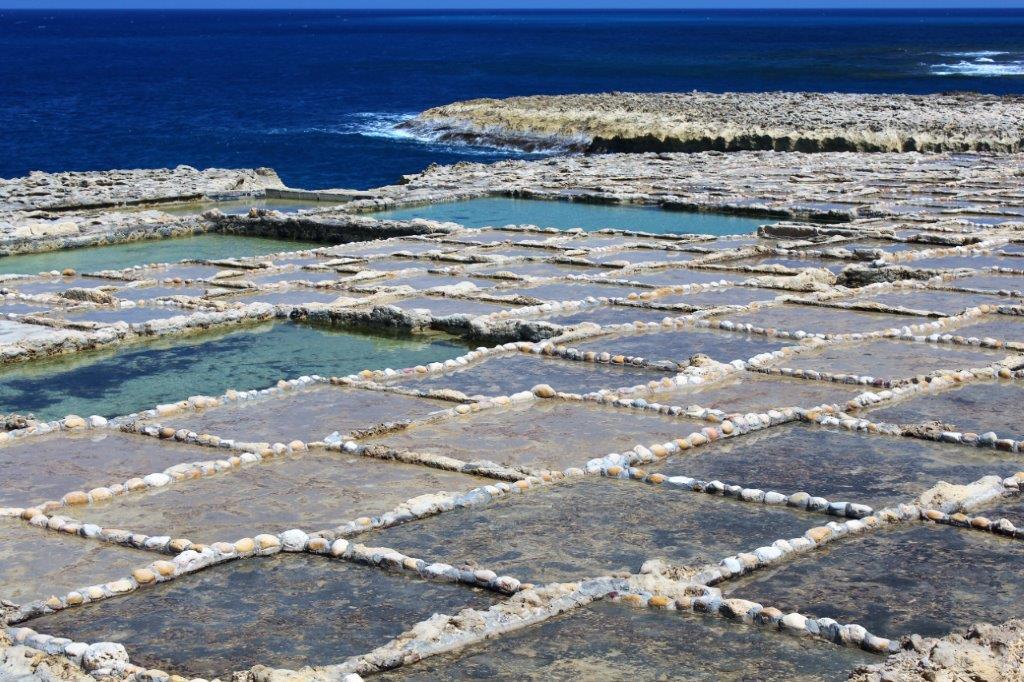
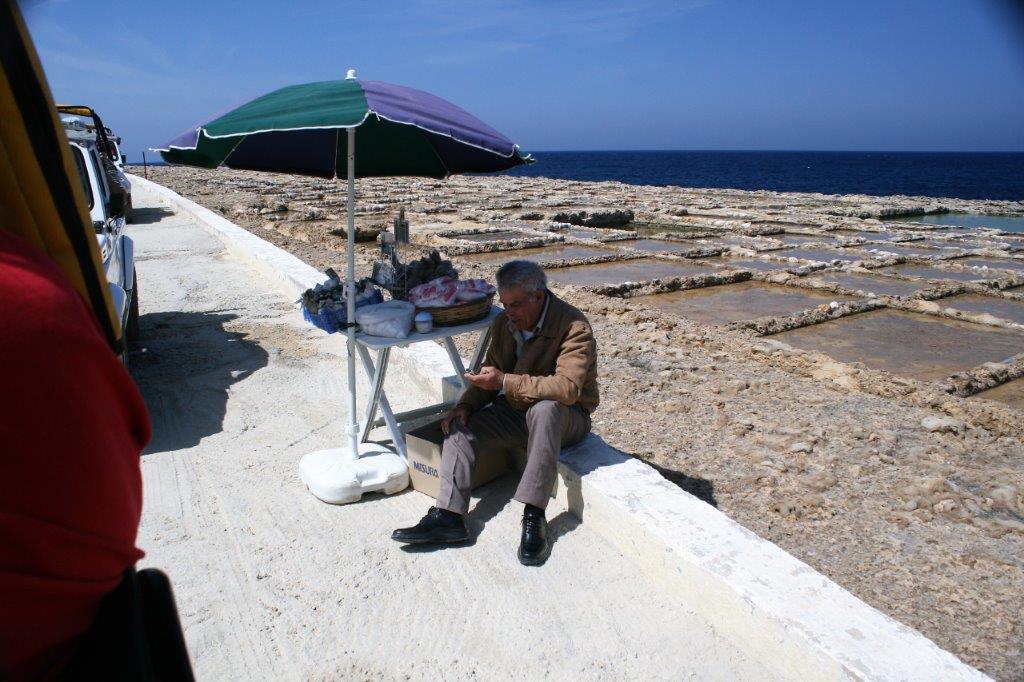
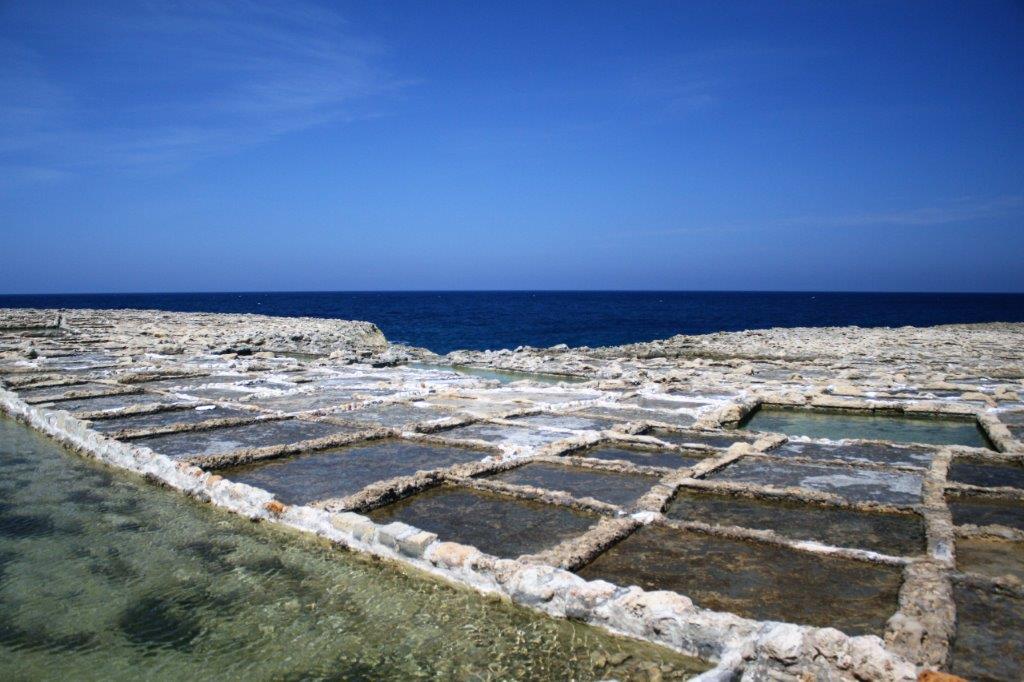
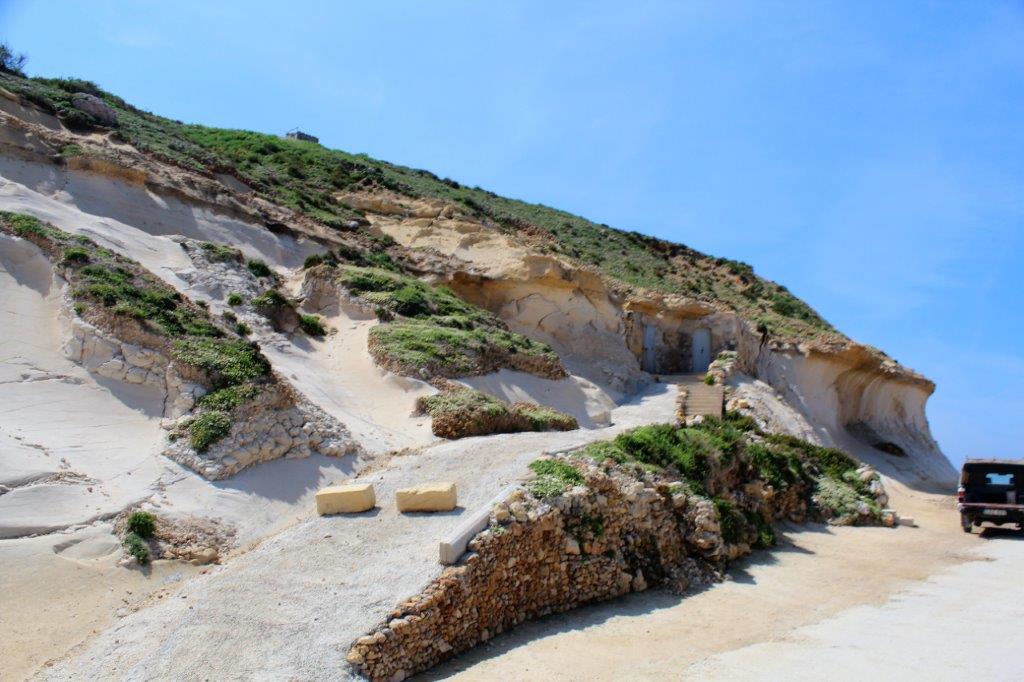
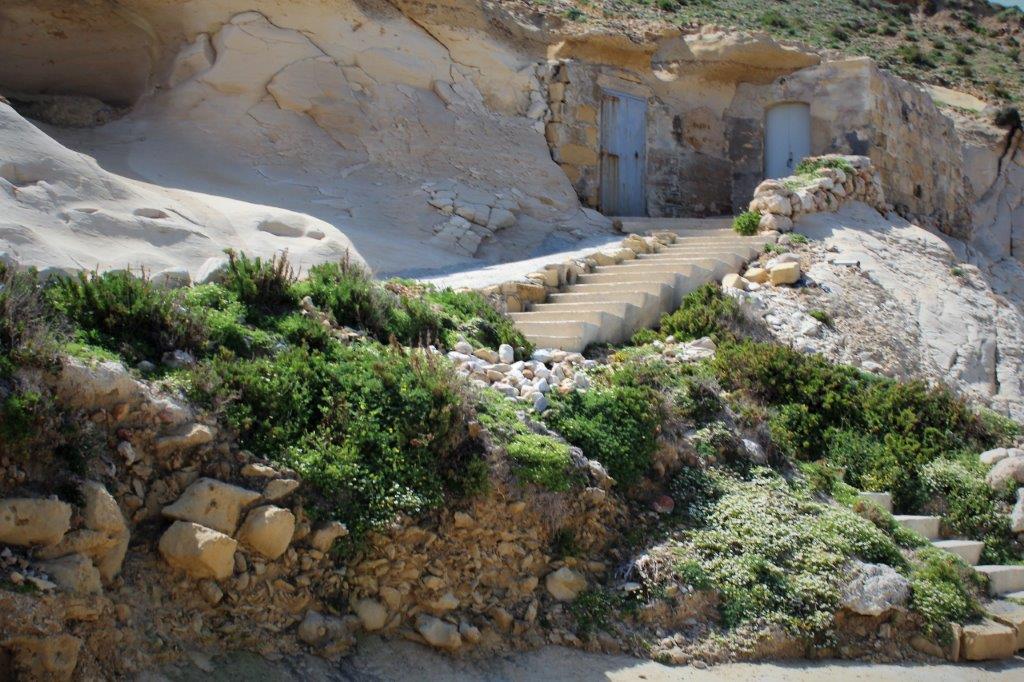
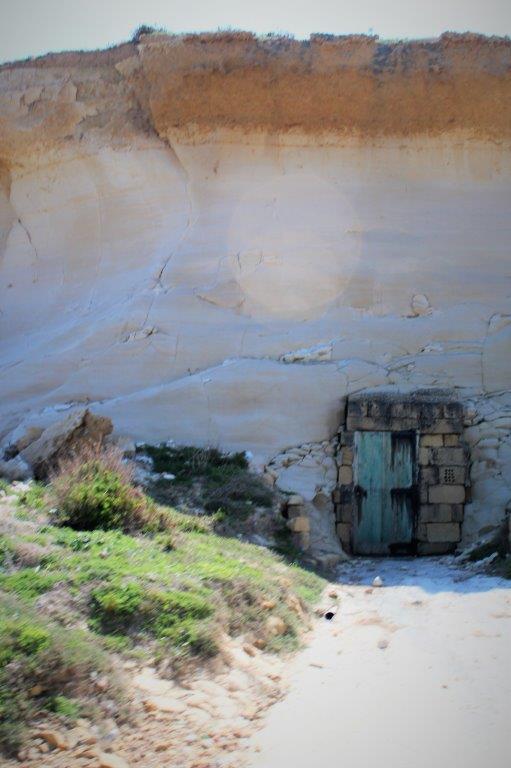
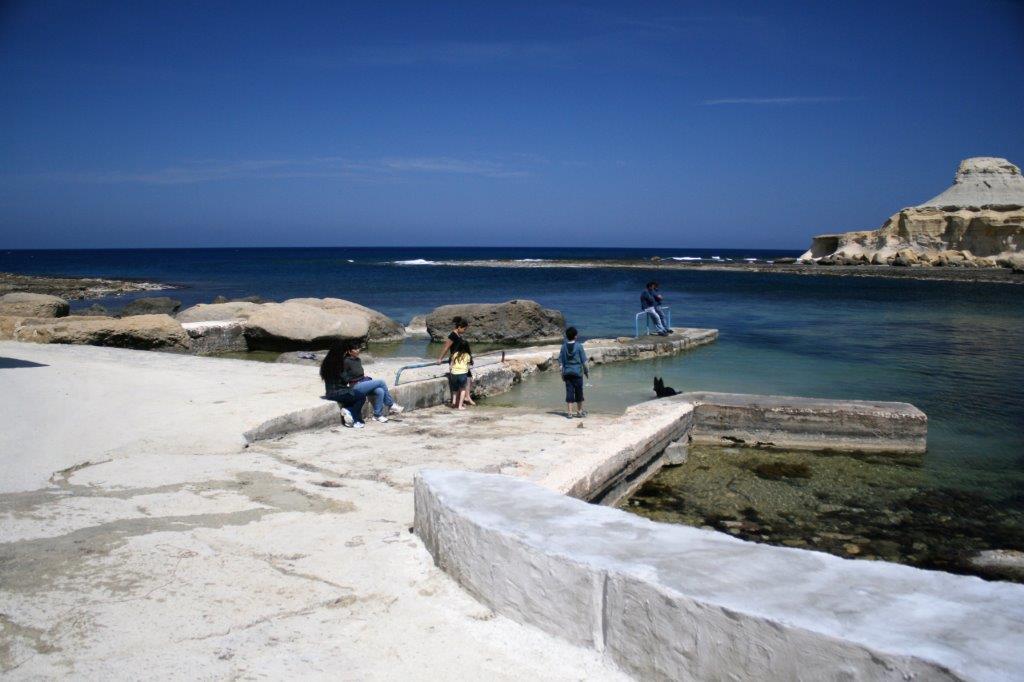
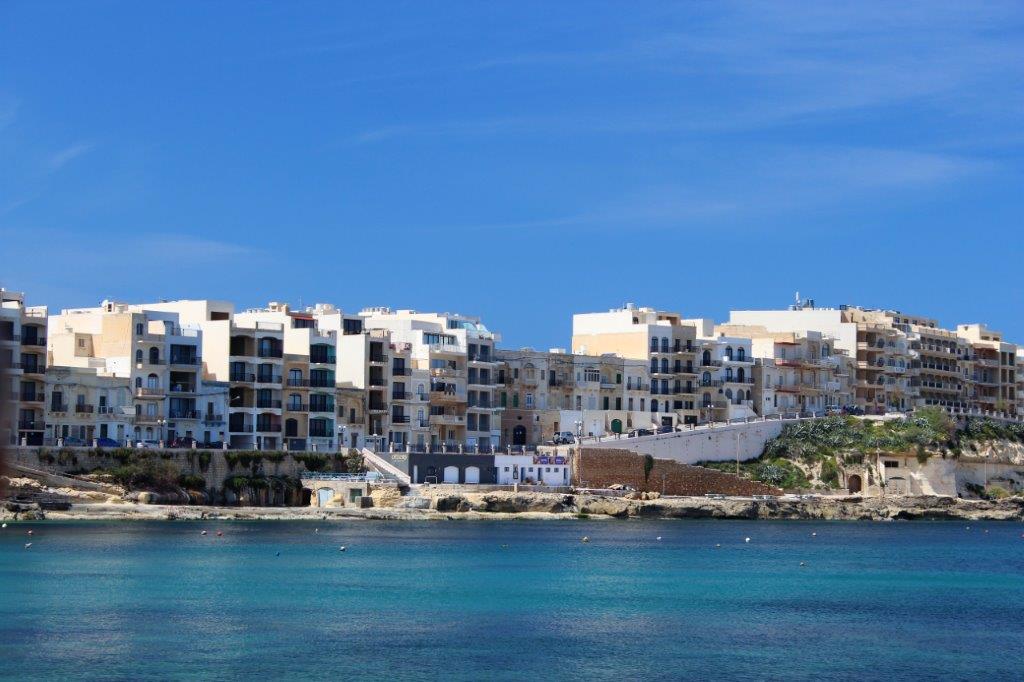
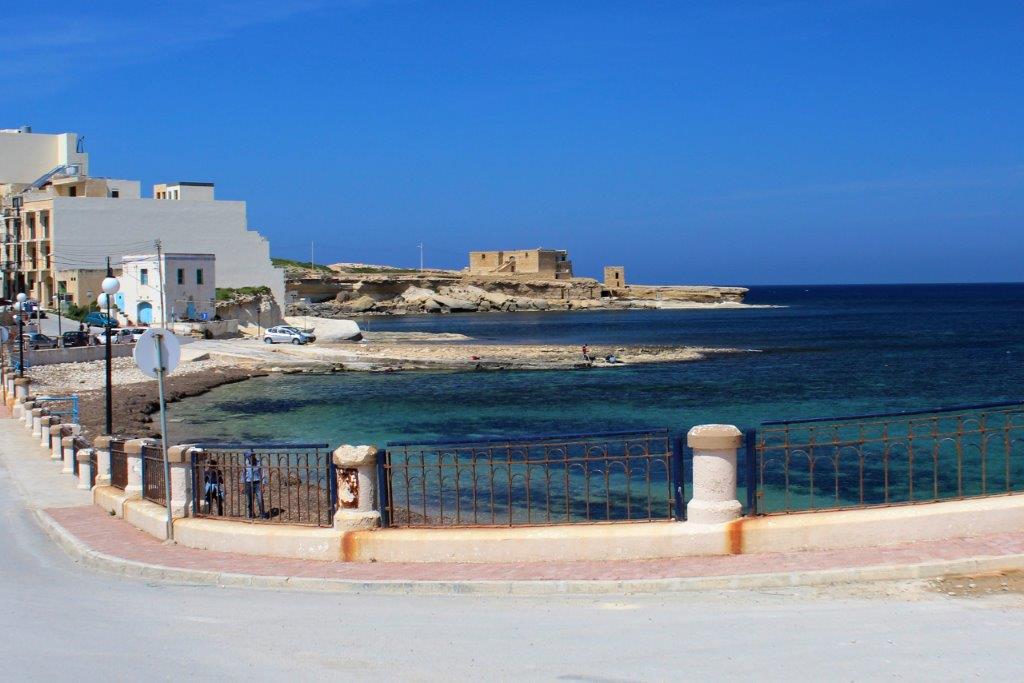
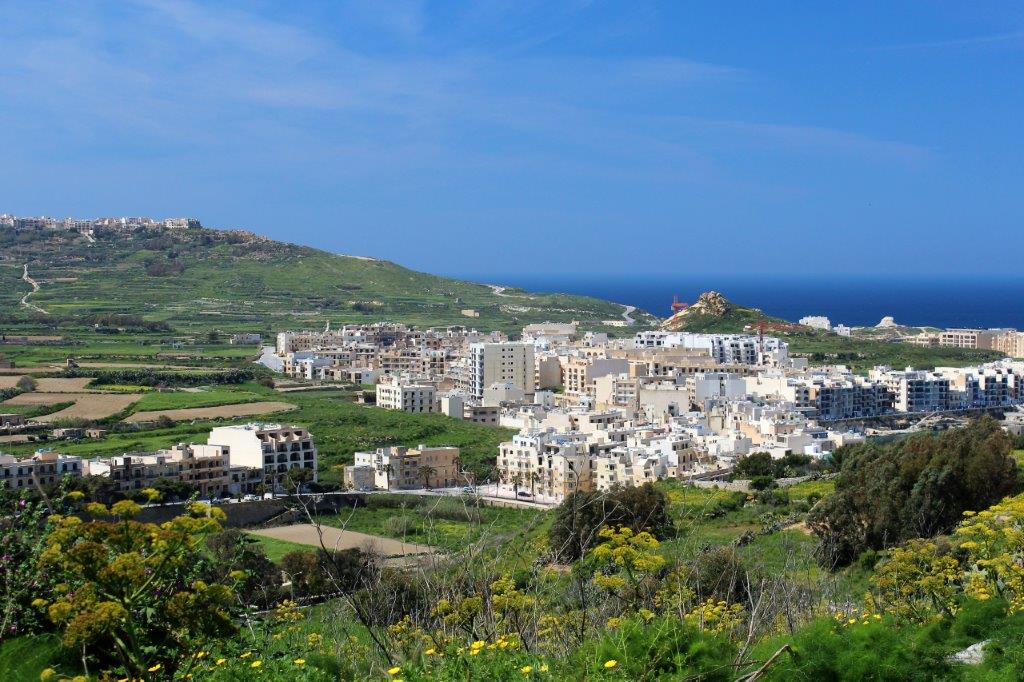
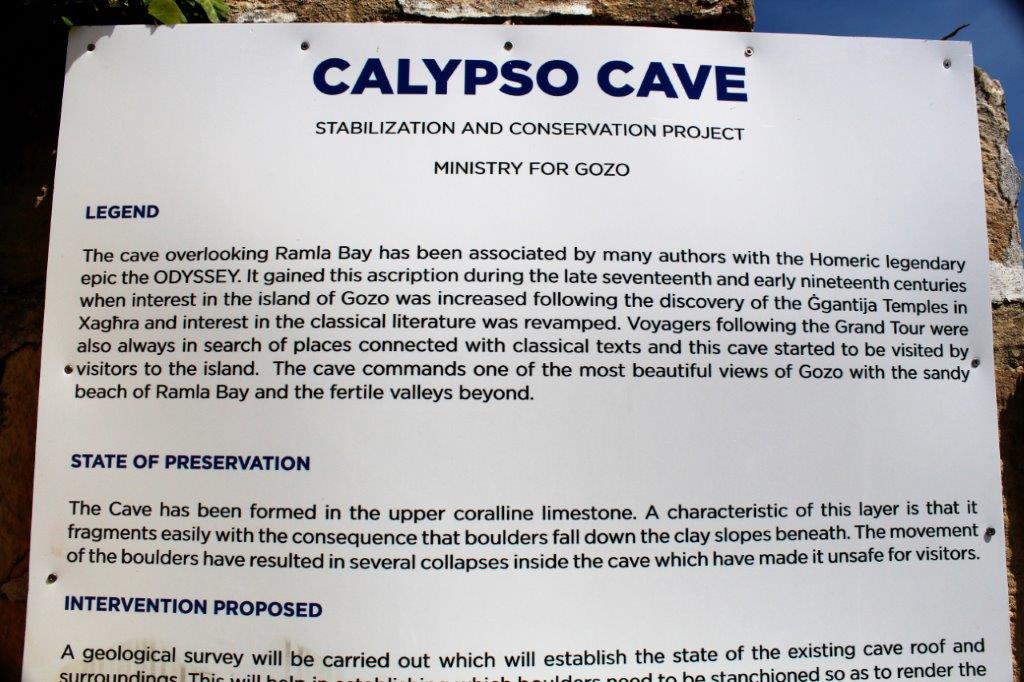
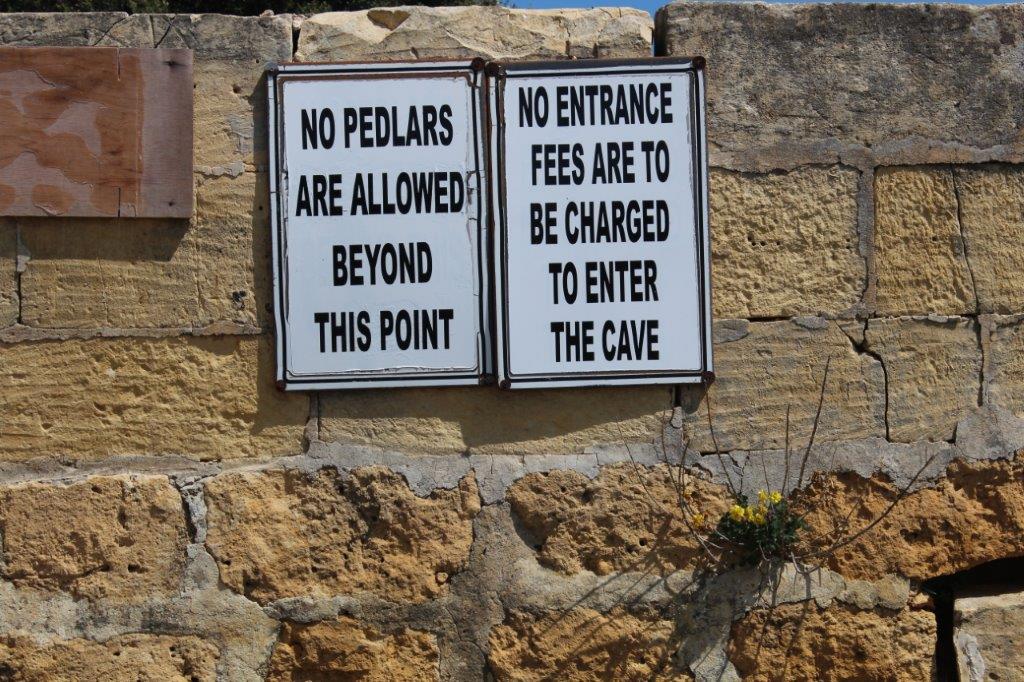
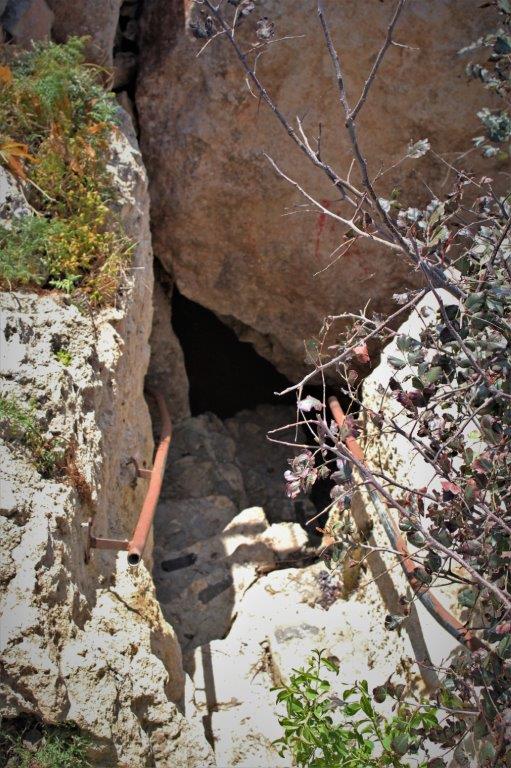
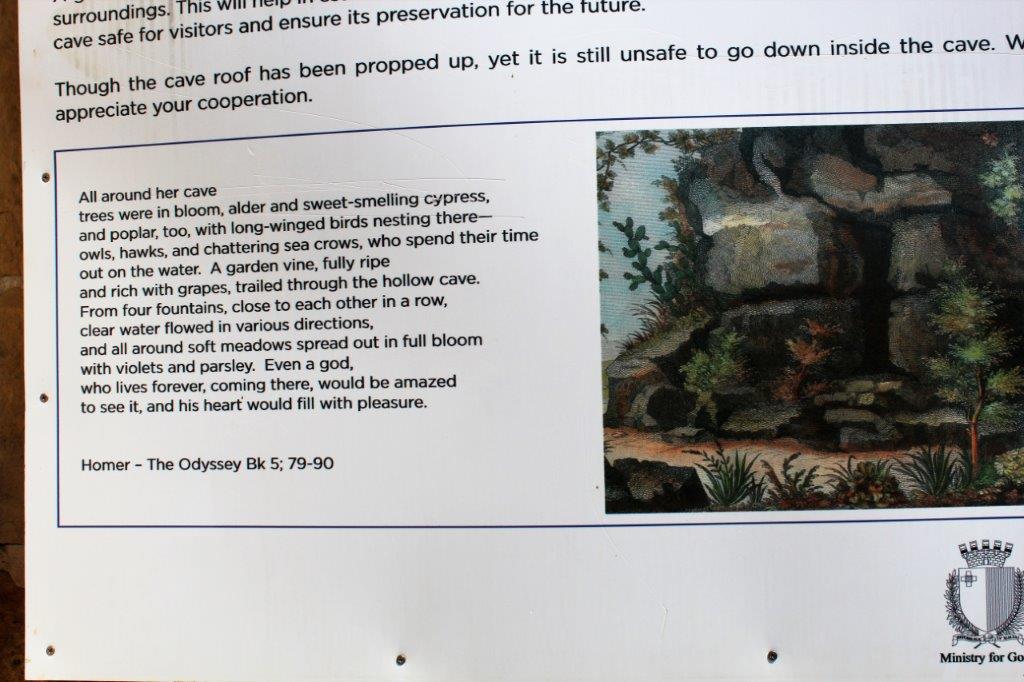
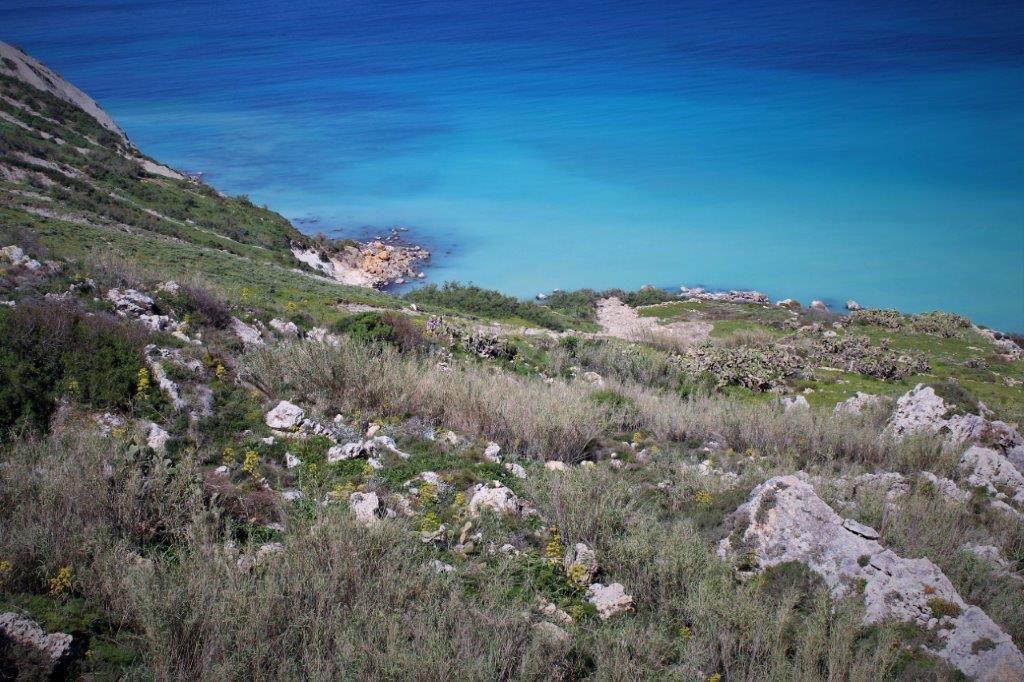
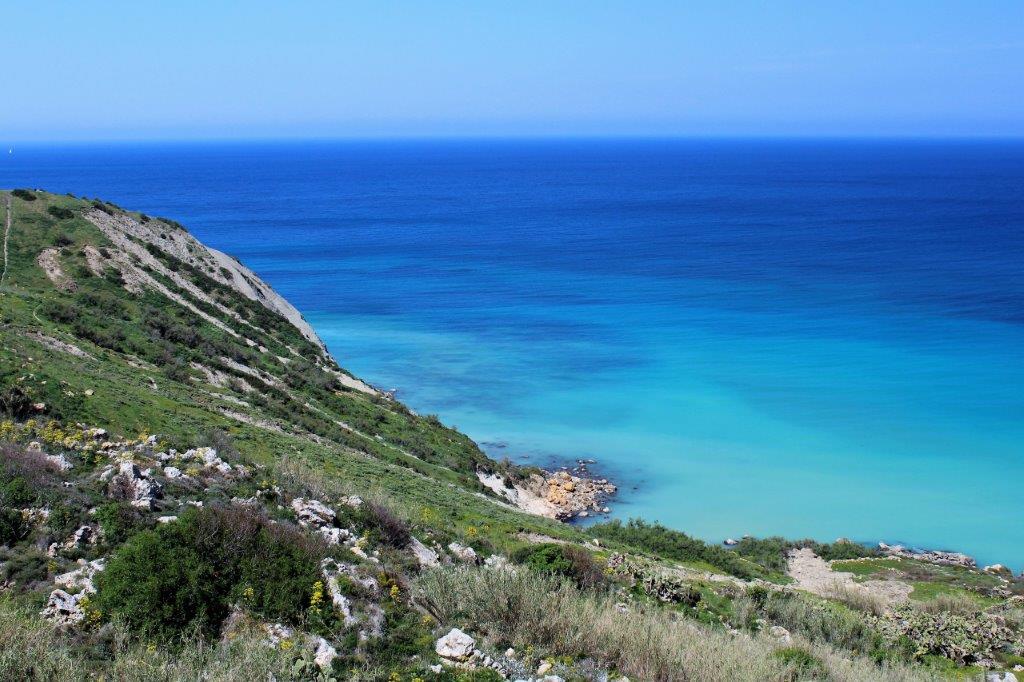
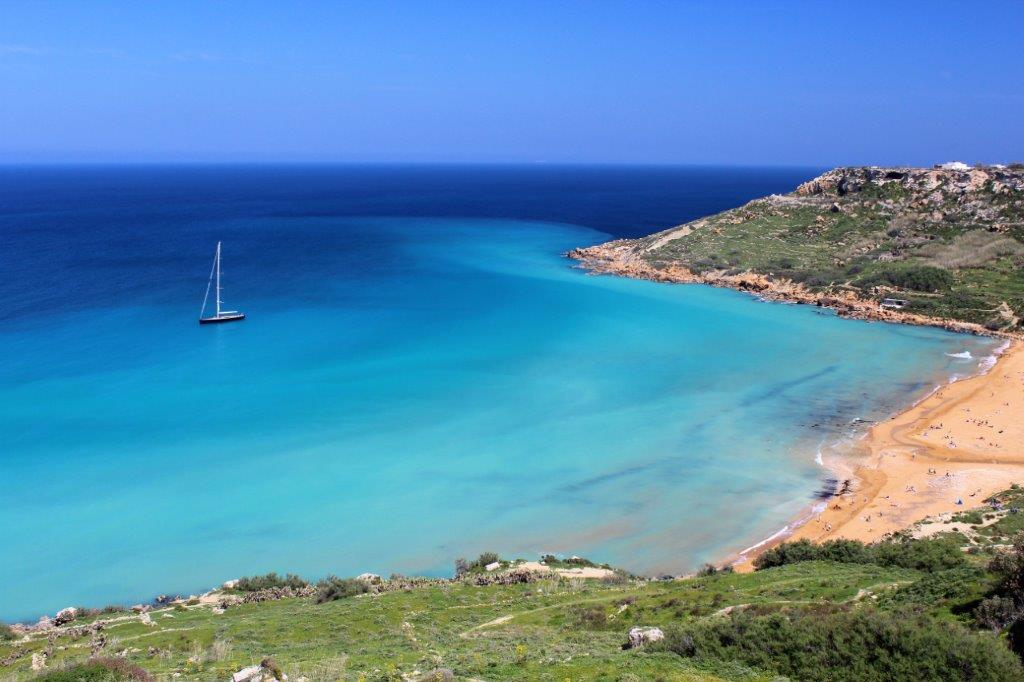
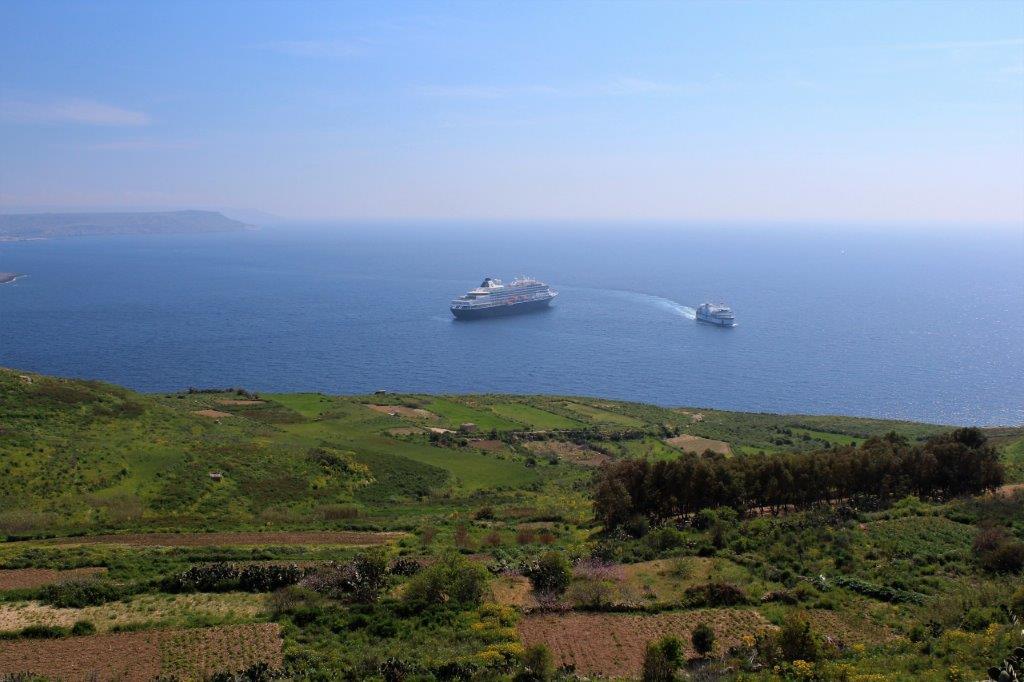
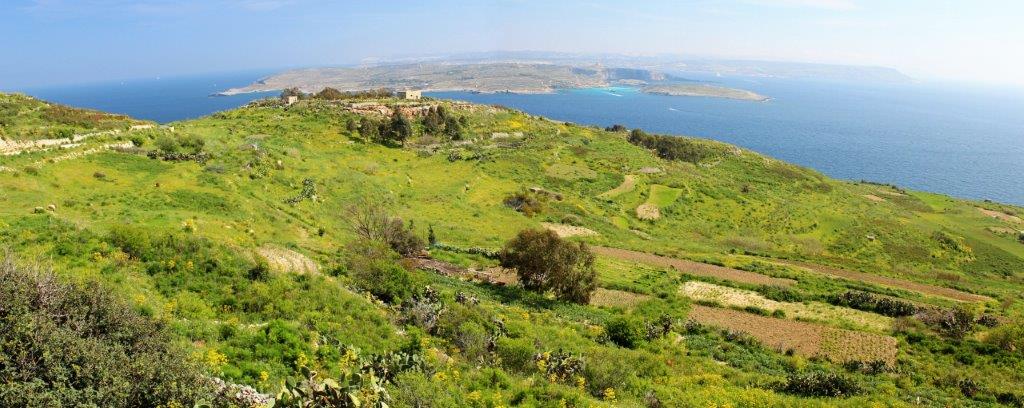
Santa Maria Asunta Parish Church of Zebbug had two cannons out front and a purple cross – something different.On the north side of the island we stopped at Qbajjar (Salt Pans) which are still used today to harvest salt from the sea.                                                  Roadside salt selling.The people that harvest the salt live in homes cut into the hillside across the road from the salt pans. Just a short distance down the road is Xwejni Bay.  I love the beautiful water all around this island.The resort community of Marsalforn is another popular holiday spot. Our ‘almost’ final stop was at Calypso Cave; the place historically accepted as the site for Homer’s epic poem, Odyssey.  The entrance to the cave is very dangerous .  You take a narrow winding staircase into a small hole in the ground.  I don’t think people are encouraged to enter it.  I like caves and stuff but I wouldn’t go down there.  Our last stop was just a few minutes to enjoy the gorgeous view overlooking the absolutely stunning Ramla Bay. From there we cut across the eastern end of the island. Another of the watchtowers can be seen on the cliff edge near the back of the photo above.  This one is Isopu Watch Tower.     The lovely water in the far distance is on Comino Island.  We got back to the port at 3:30, caught a tender back to the ship and had  time for some ice cream before we attended the Palm Sunday Interdenominational Service.  I loved Gozo and Malta.  Two places to add to my “I want to go there again” list.

2012 April 1 – Day 21 – Mgarr, Gozo, Malta (Part 1)

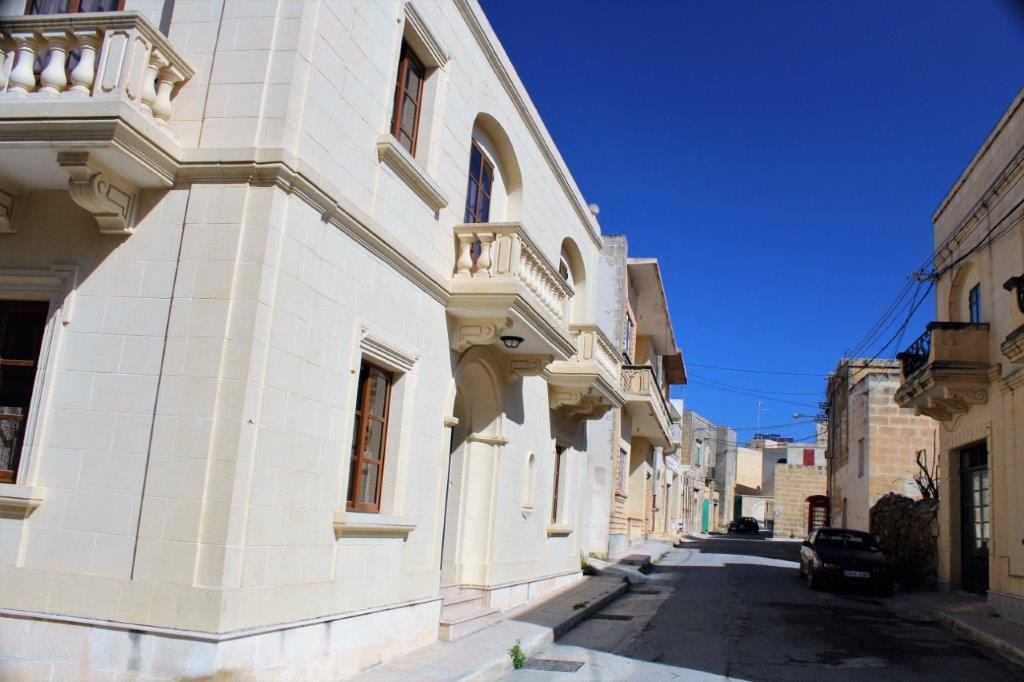
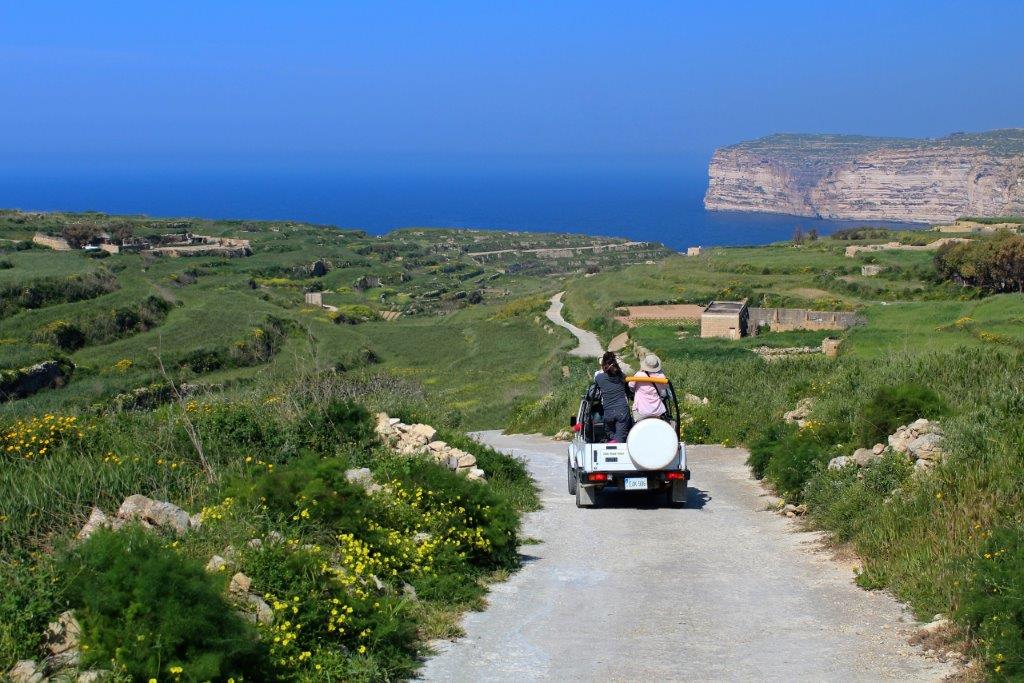
There are actually three islands to Malta; Malta, Camino and Gozo.  We spent April 1 on Gozo and covered the majority of the island during our four and a half hour tour.  Gozo is more than one-third the size of Malta but has one-tenth the population.  The island is 11 km long and 7 km wide.  Within that area there are 17 distinct villages with a population of about 30,000 and over 100 churches. (The island of Camino is tiny, only about 3/4 of a square mile and has a permanent population consisting of four residents.)

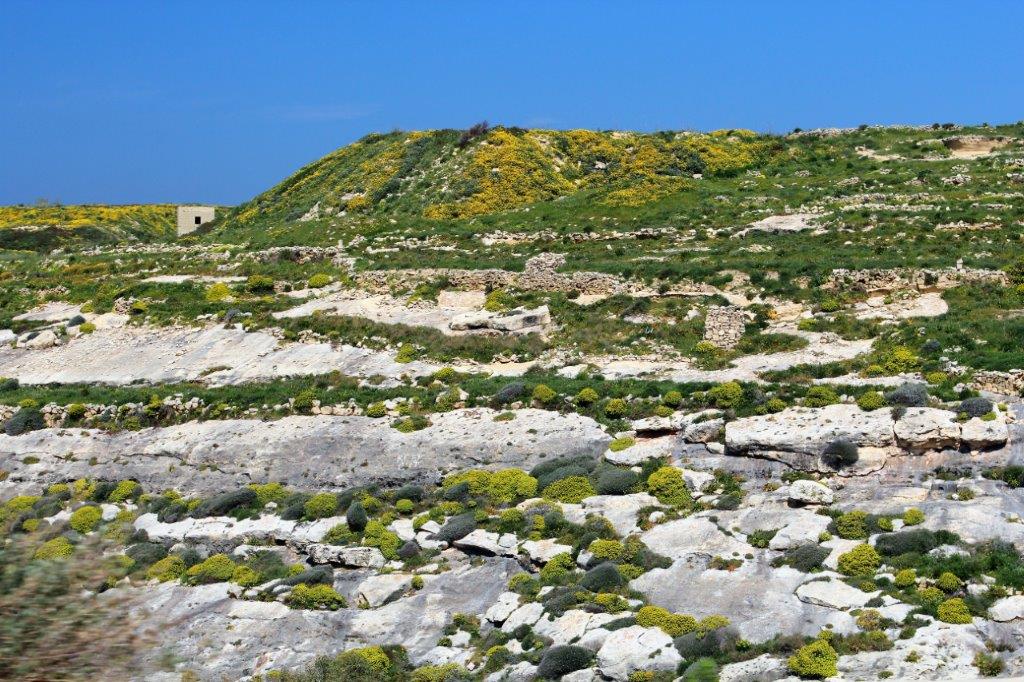
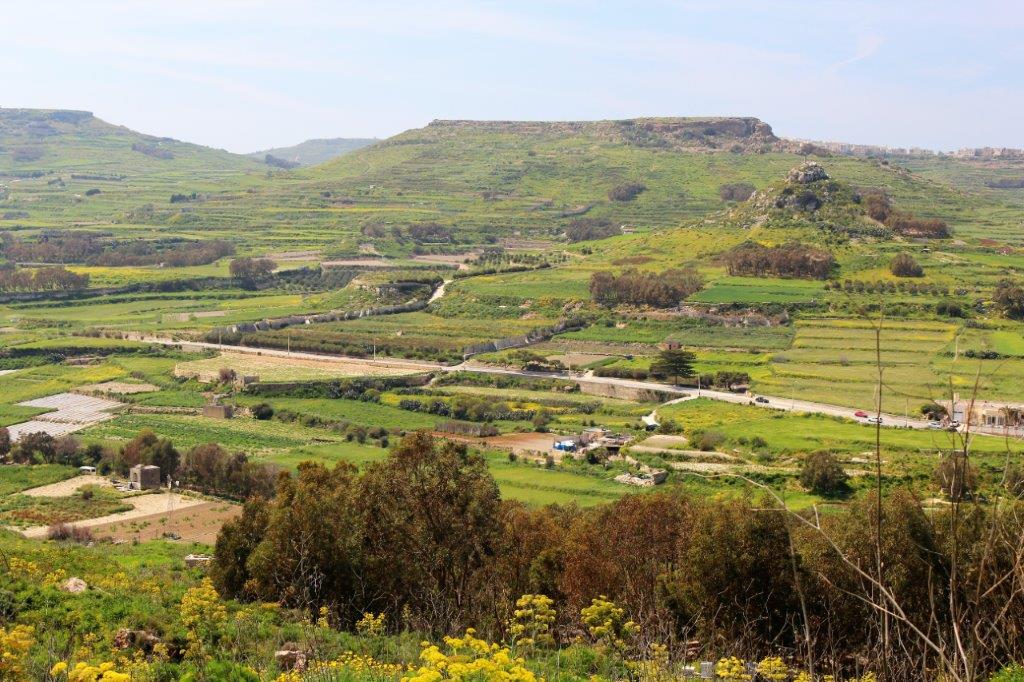
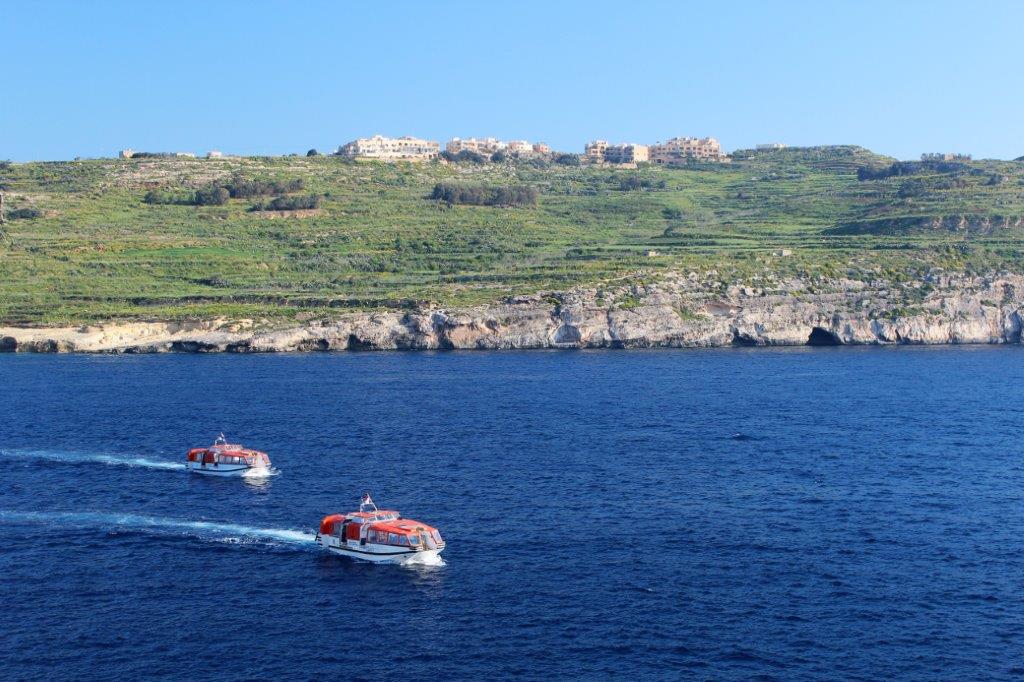
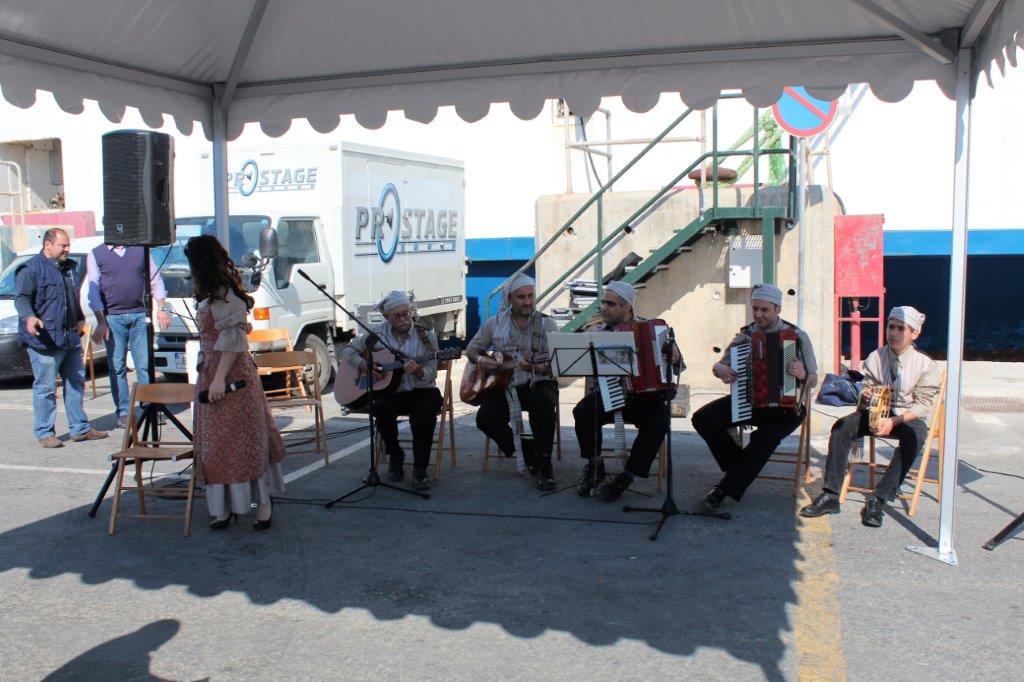
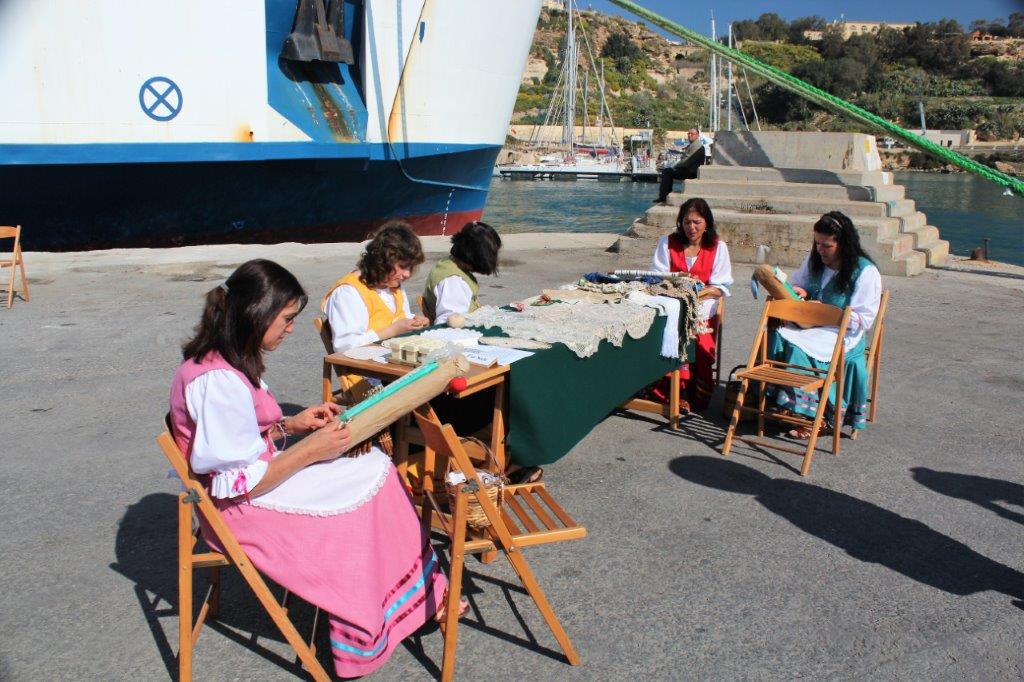
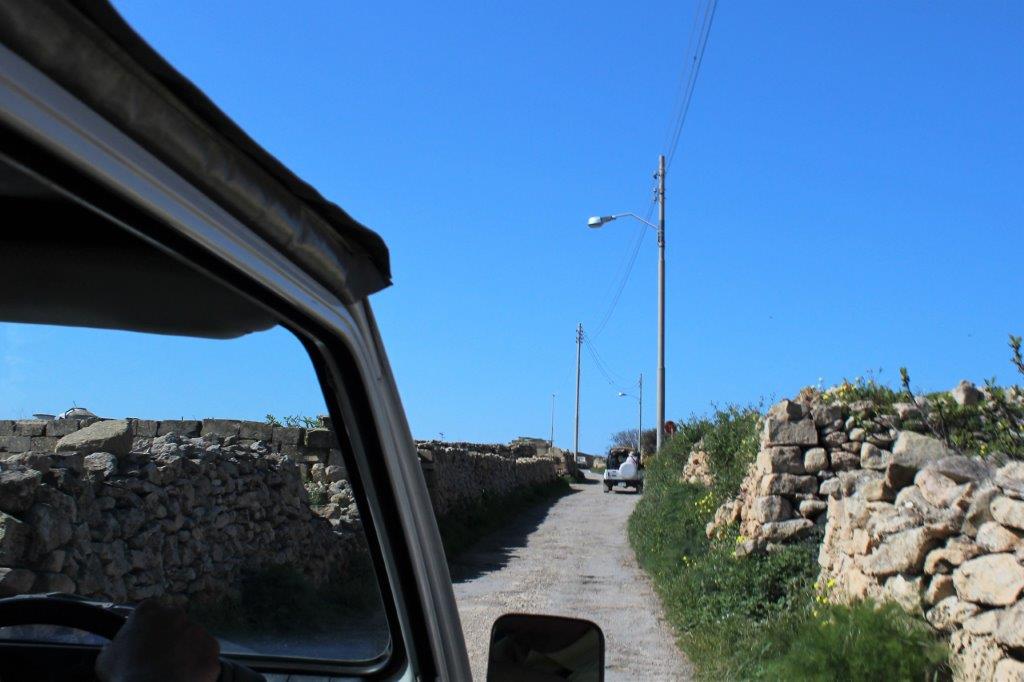
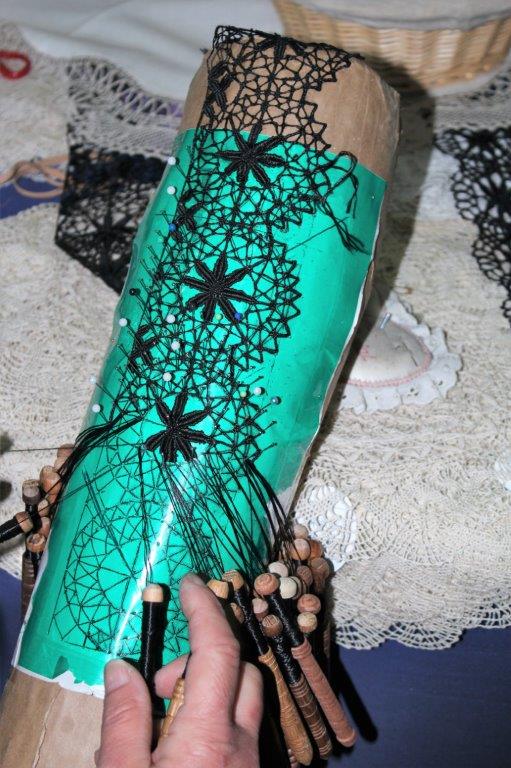
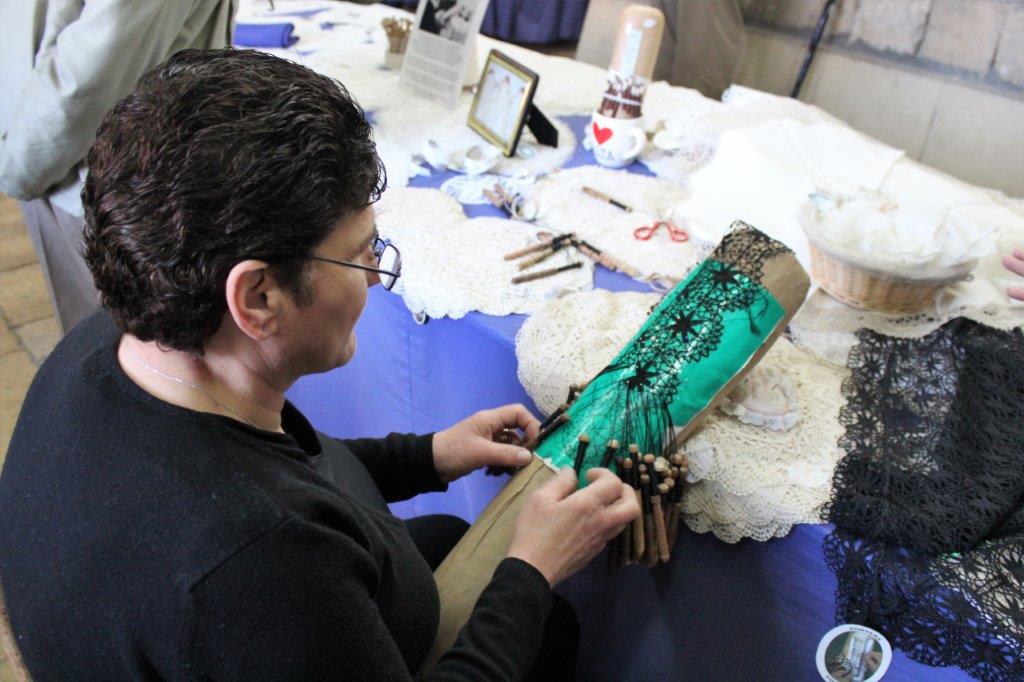
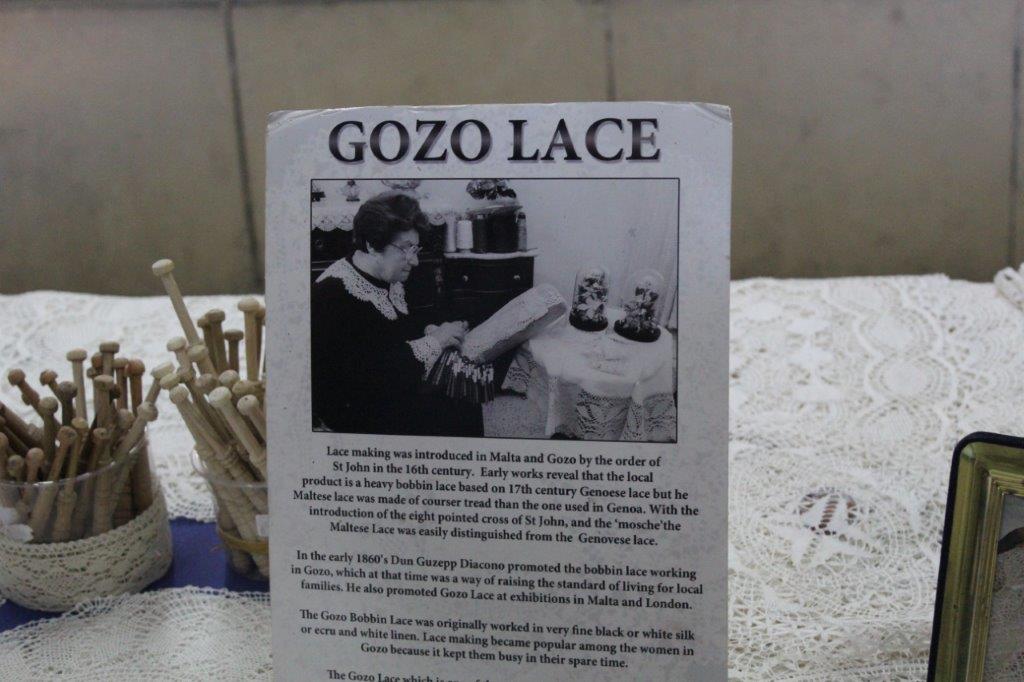
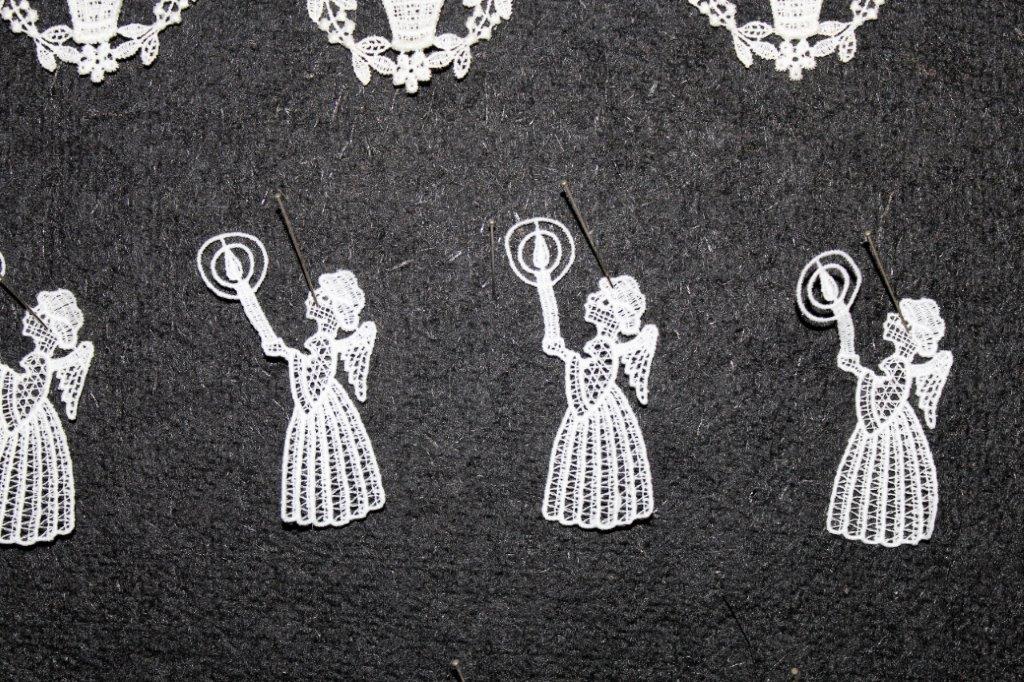
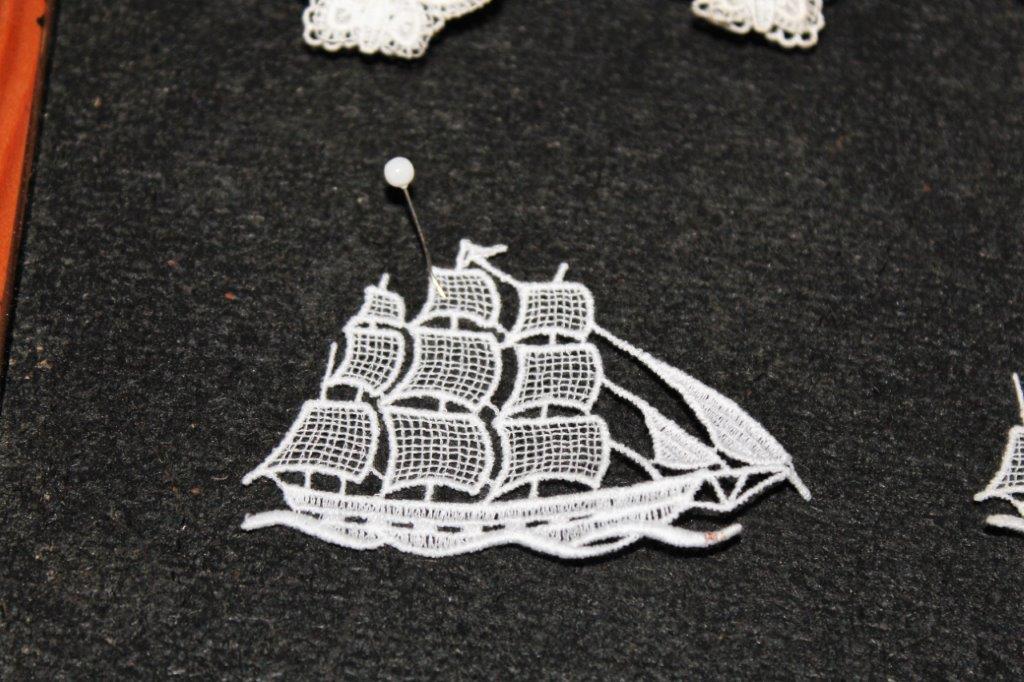
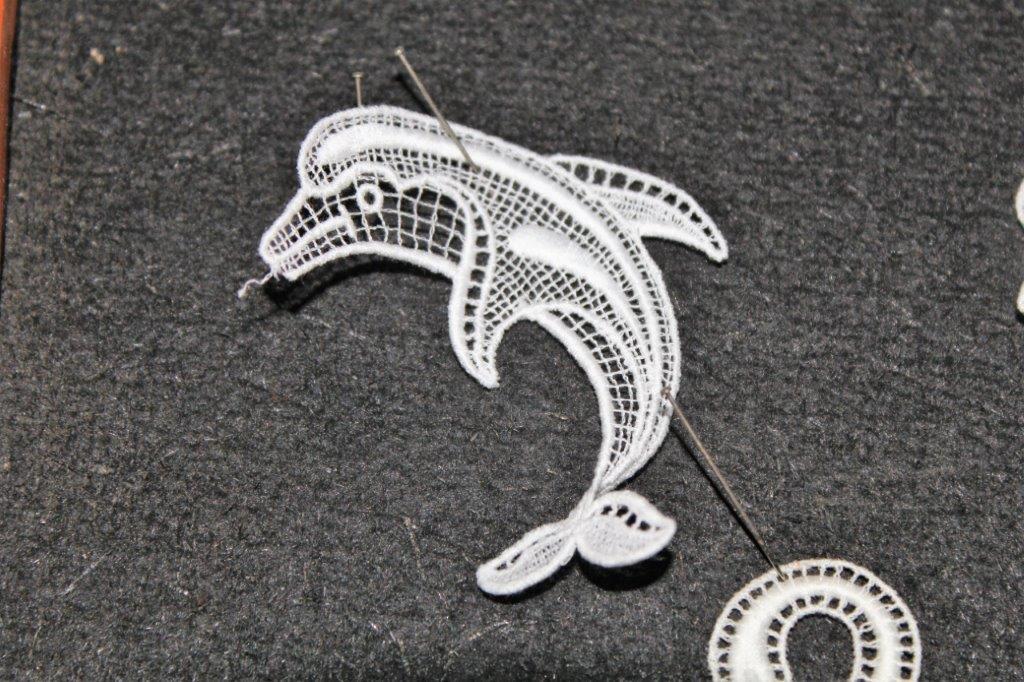
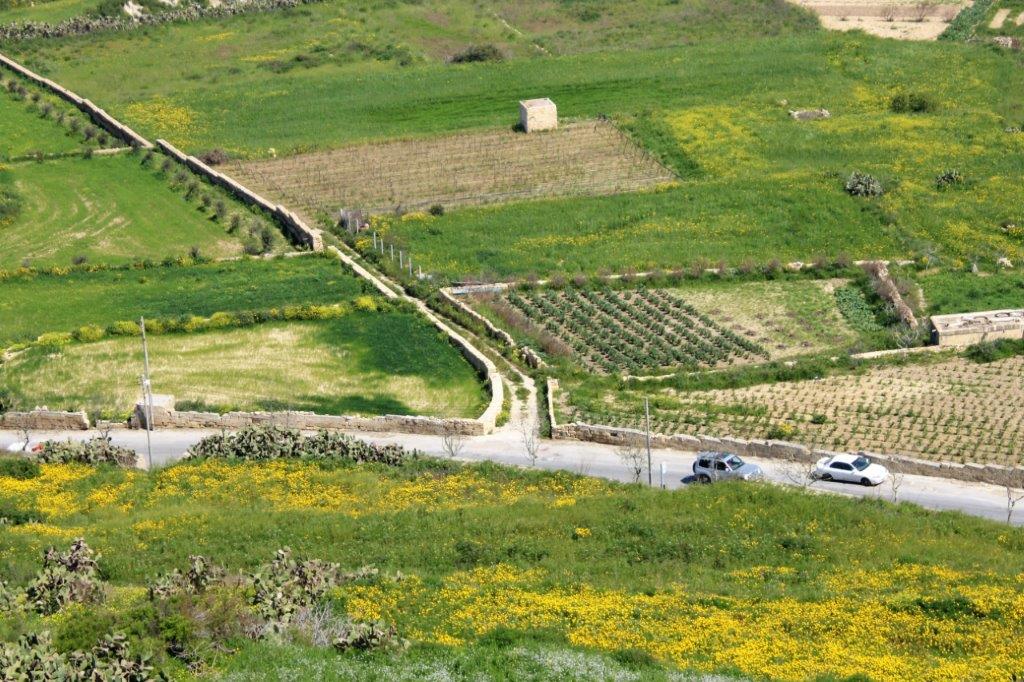
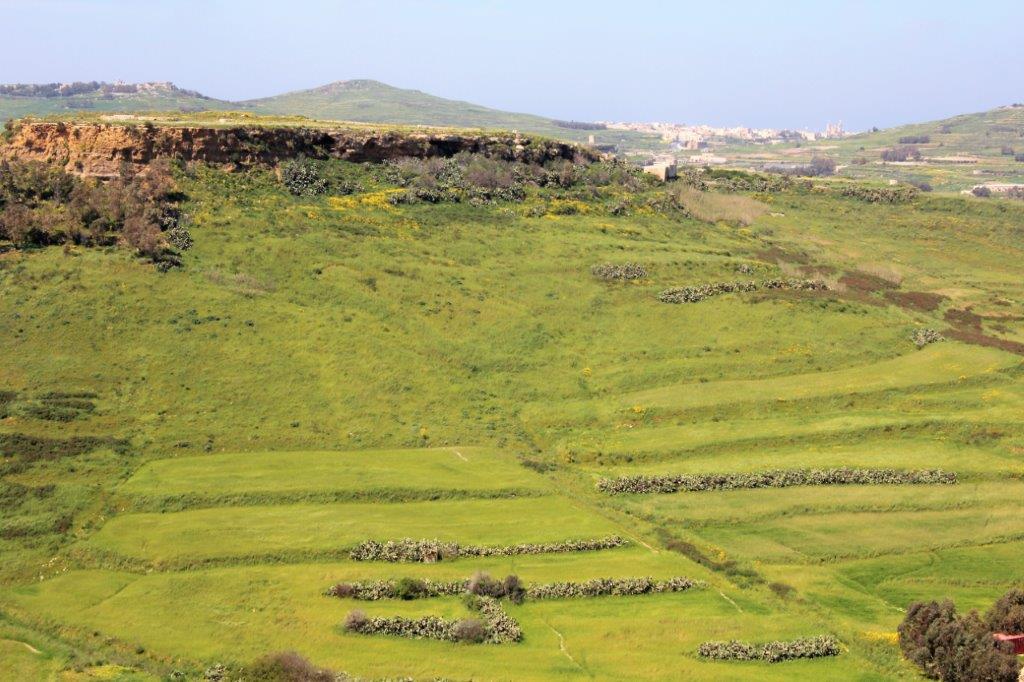
Gozo is more fertile than Malta and very green, with diverse terrain from high sea cliffs, to terraced and valley farms, to beach resorts, and caves and grottos.  The capital city is Victoria which sits in the middle of the island 6 km from the port city of Mgarr where the ship sat at anchor for the day.It was Palm Sunday when we visited so almost all the shops were closed (which bothered us not at all) and most of the people were at Mass.  The passengers were greeted by a group of local musicians and a demonstration in the making of world-famous Gozo bobbin lace by some local ladies. We spent the day in an open 4 X 4 truck with a couple from Edmonton and our driver Godrino (Godwin).  He took us in a clock-wise tour almost all the way around the island, stopping many times to let us get out and see the view and the sights.  We all agreed we could easily spend a month on Gozo.  We had an awesome day!

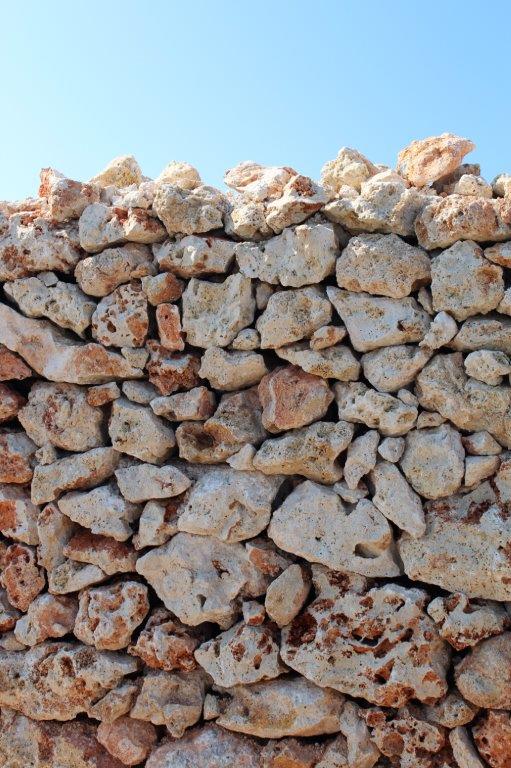
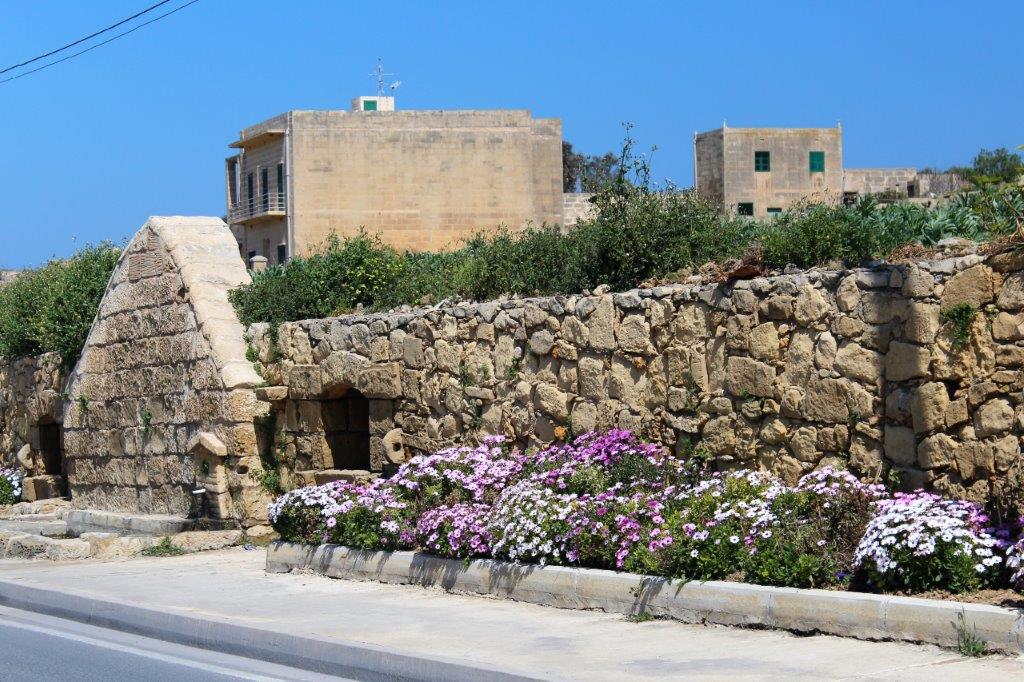
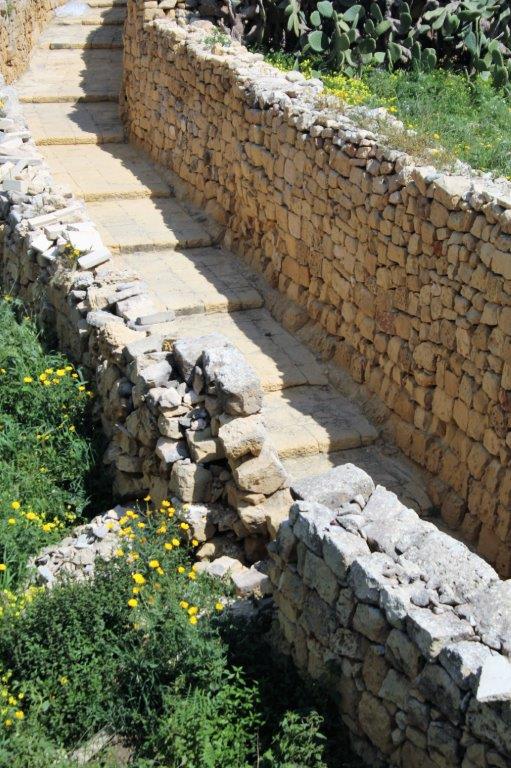
All of the buildings and the fences are made of sandstone quarried on the island.  One of the quarries is so deep it goes down to sea level.

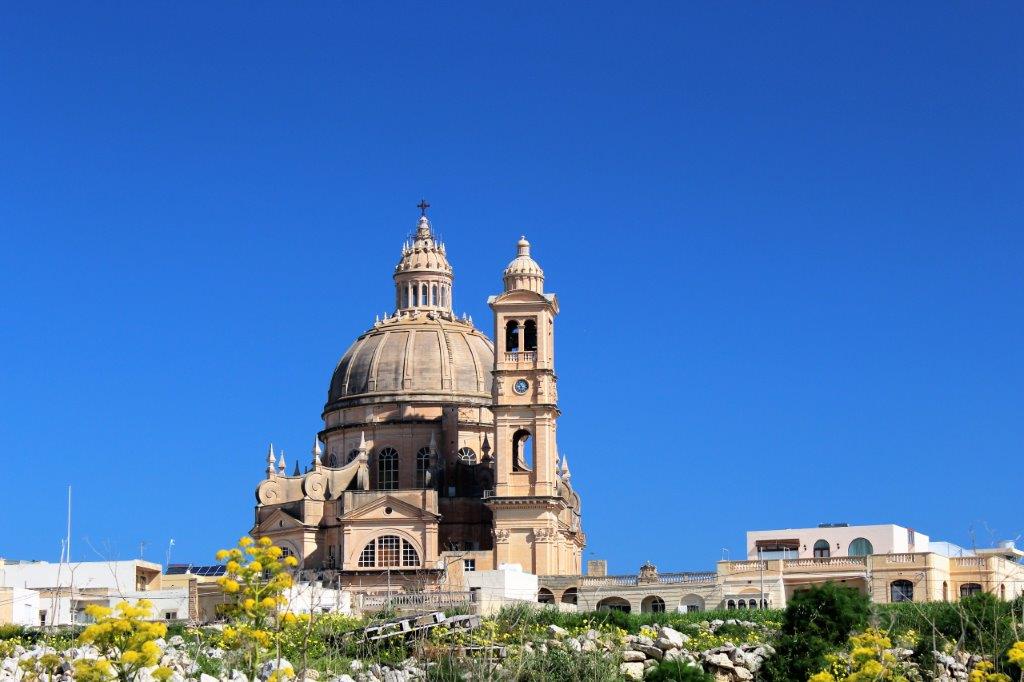
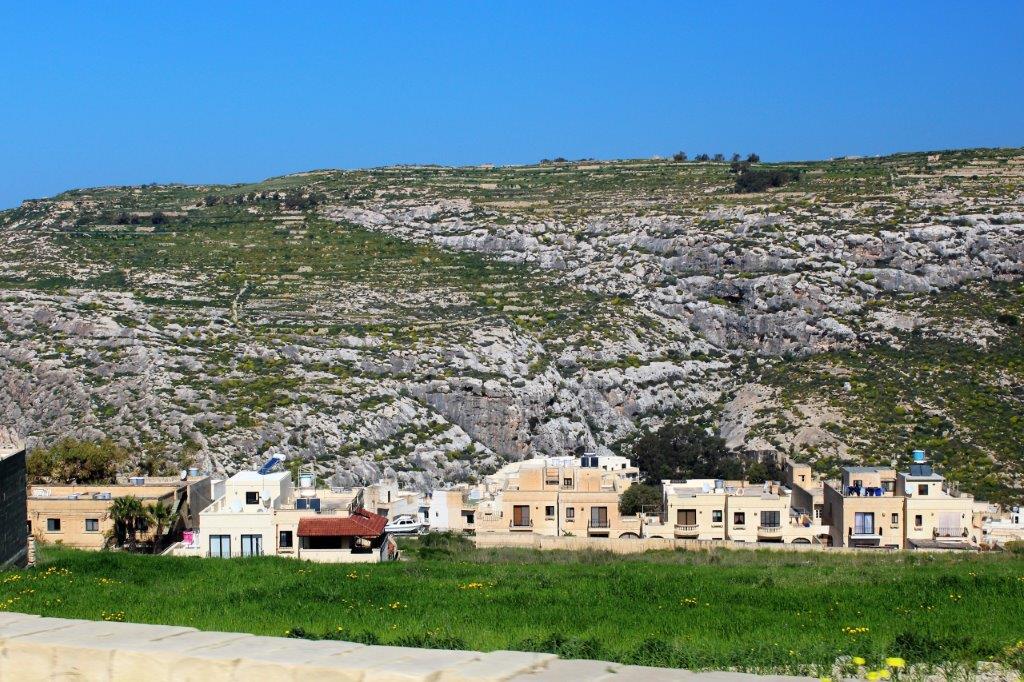
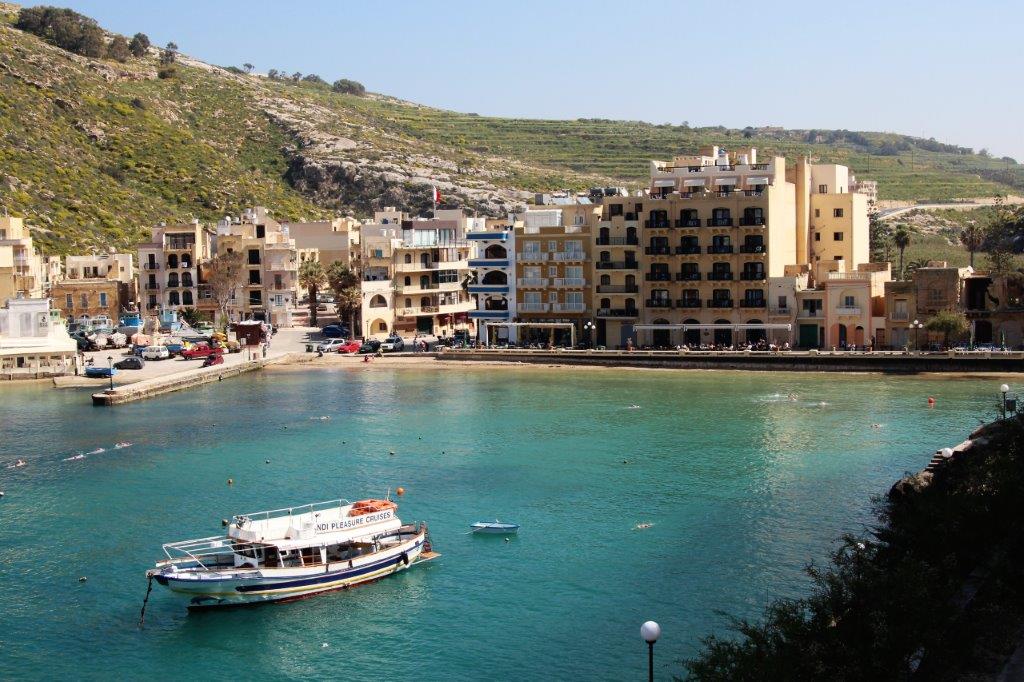
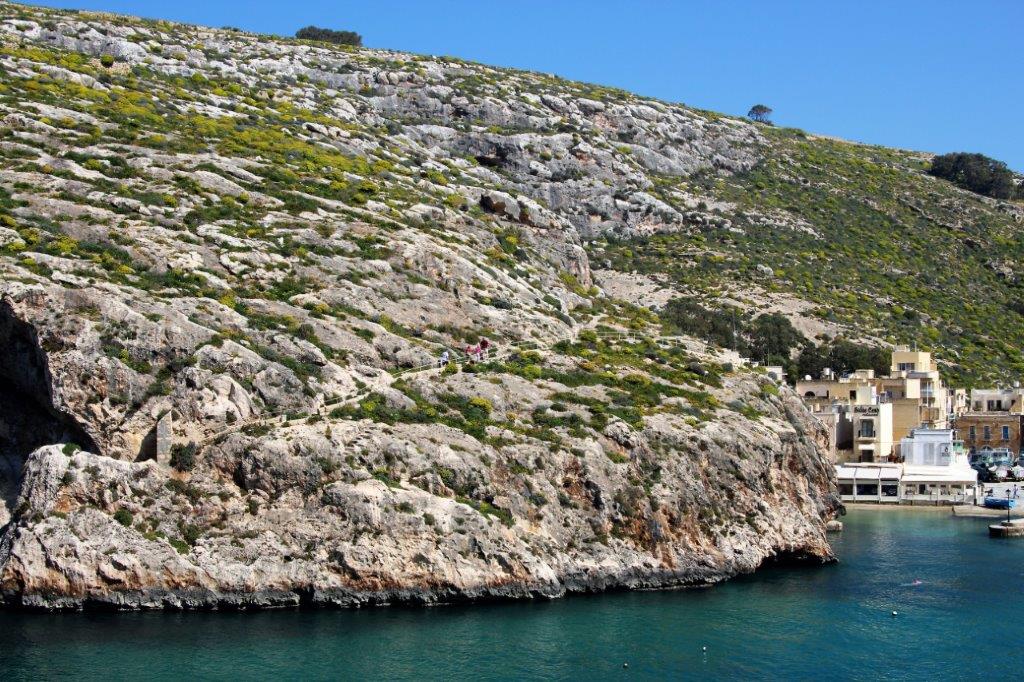
                                      Rotunda Xewkija Church. Xlendi is a resort area and sheltered harbour.  It was a beautiful place; and popular. There are people on the stair-path.  The island is very hilly so it is a good workout to go hiking around.

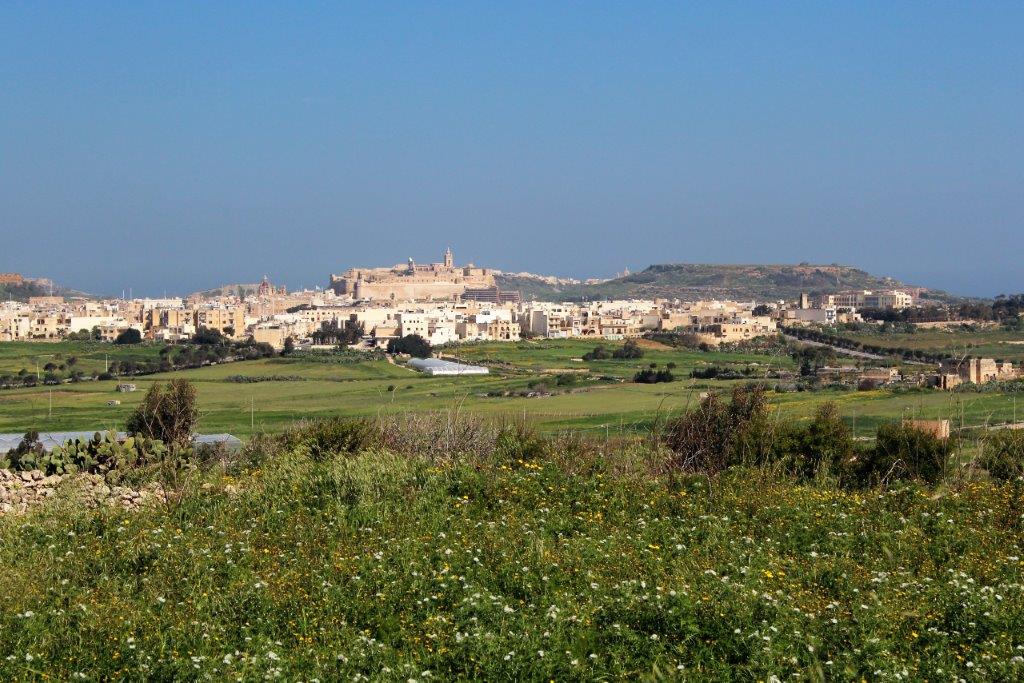
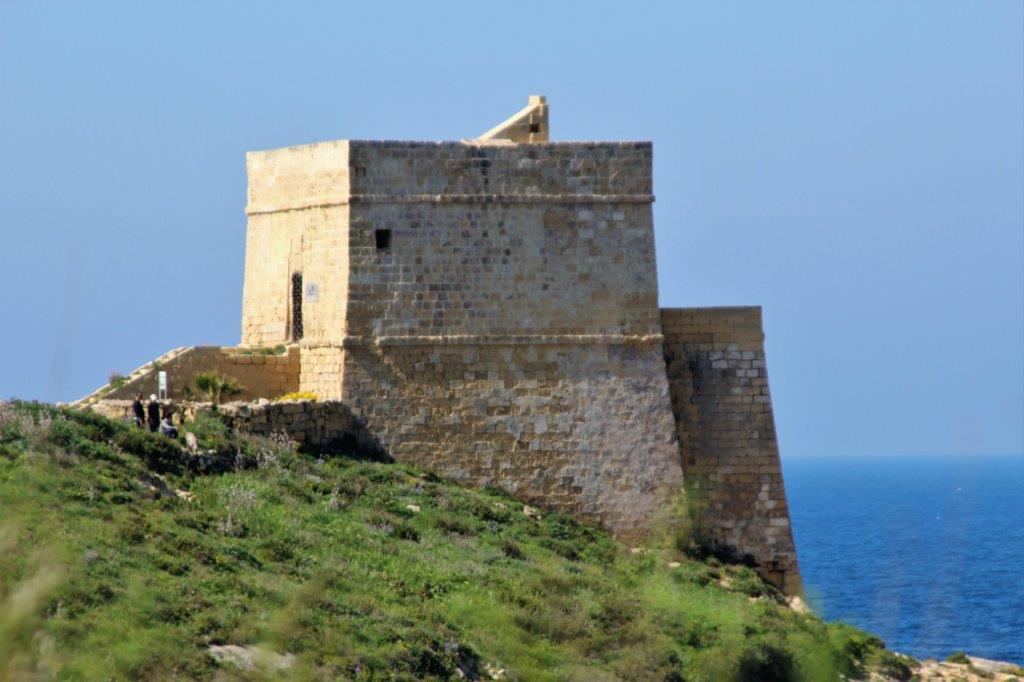
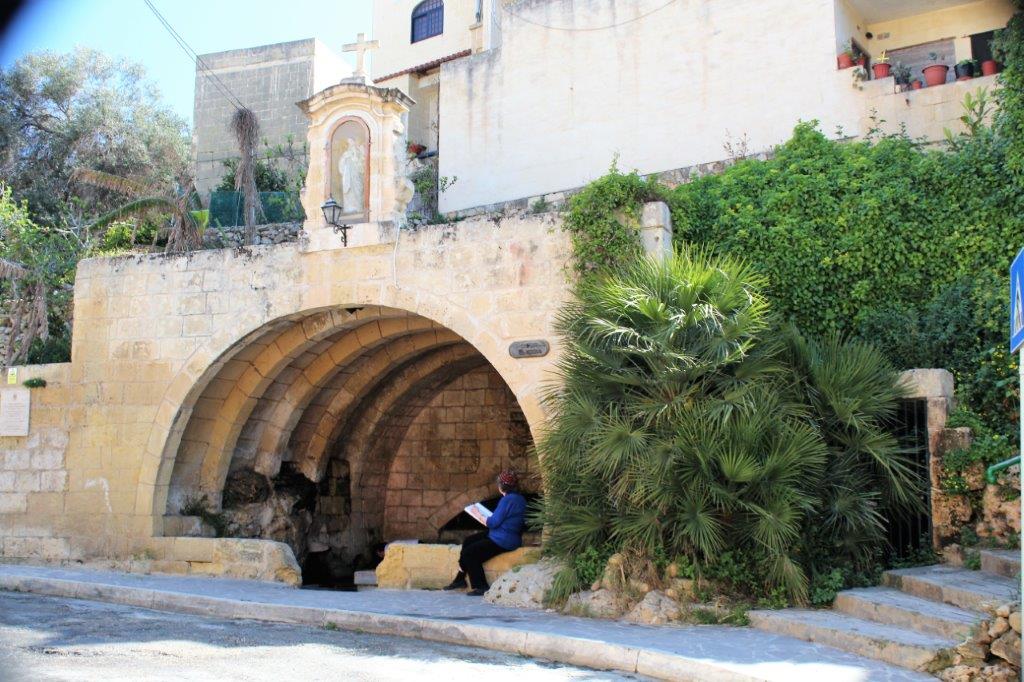
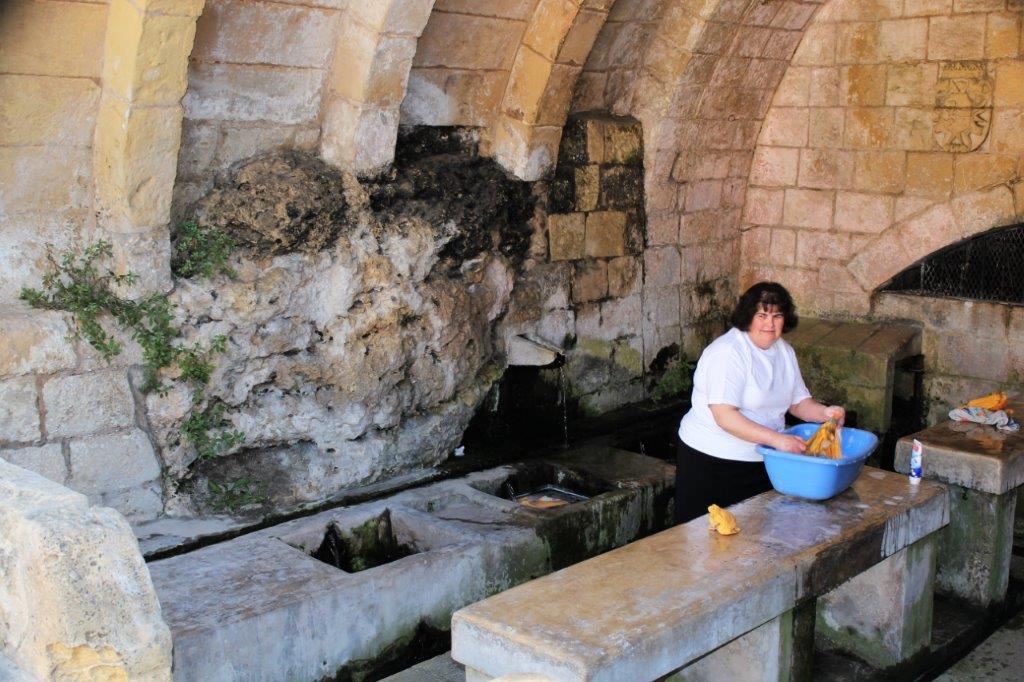
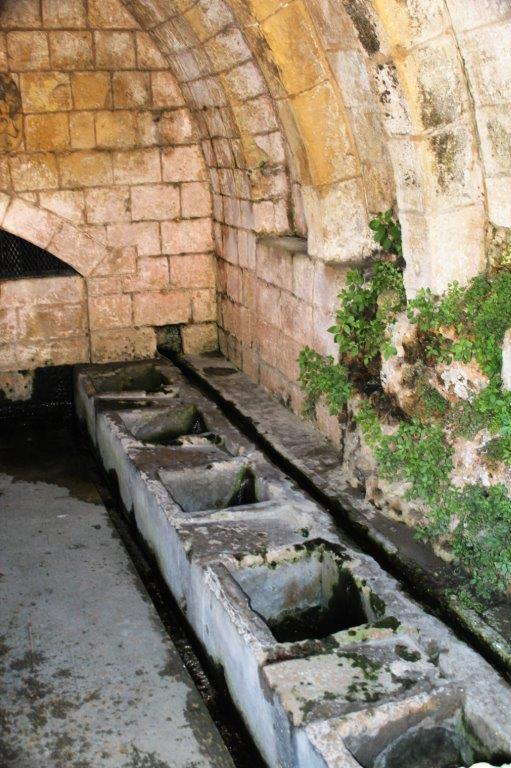
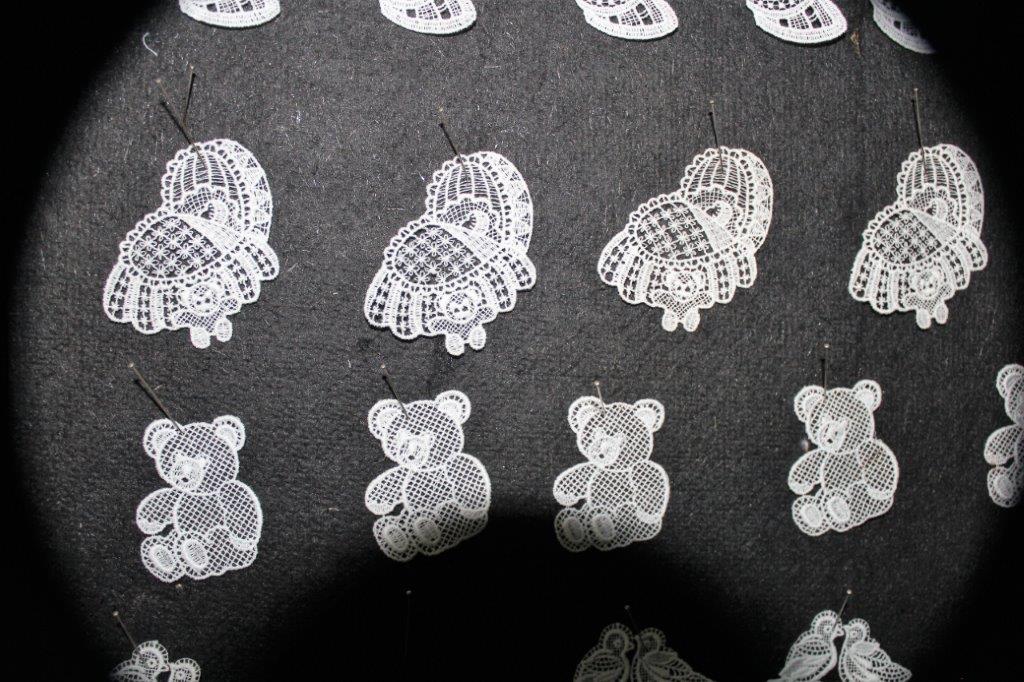
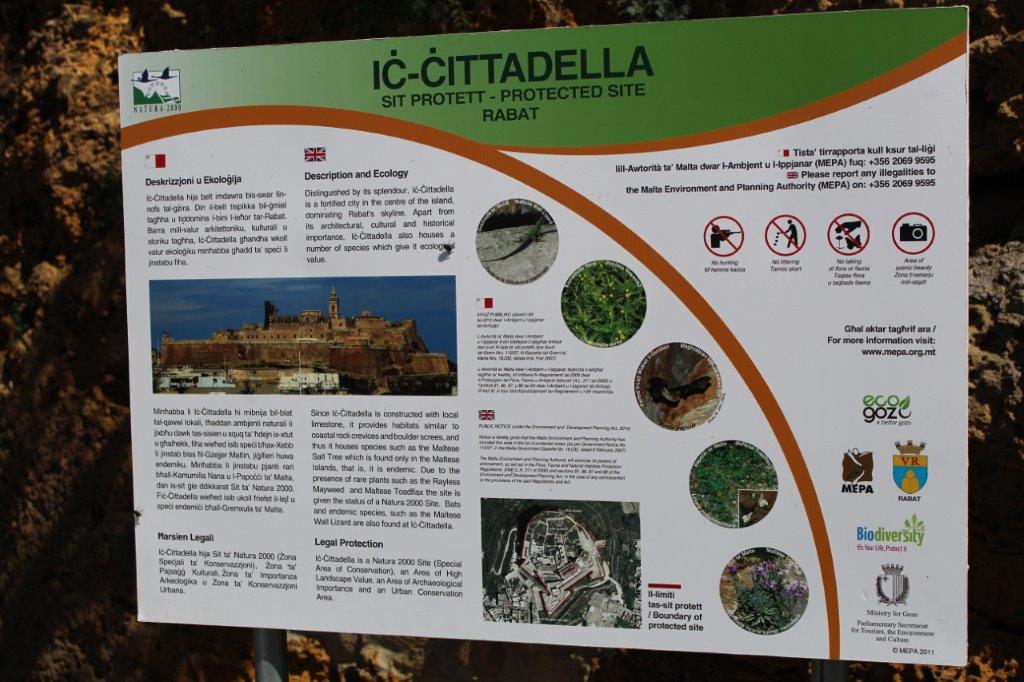
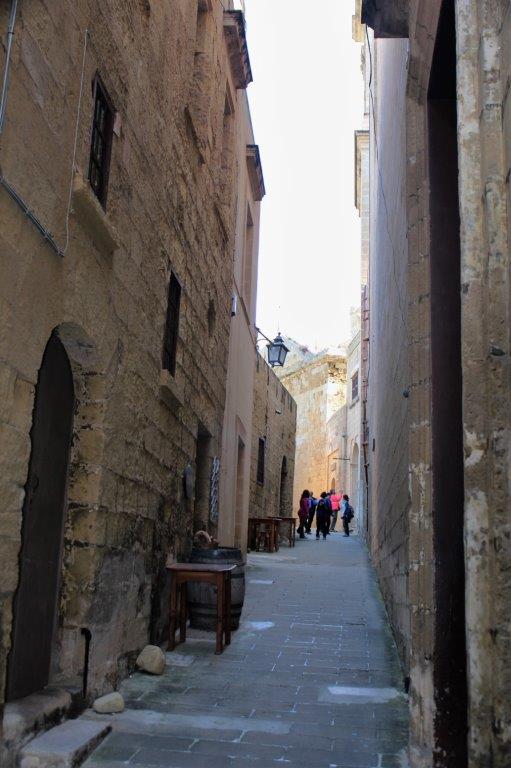
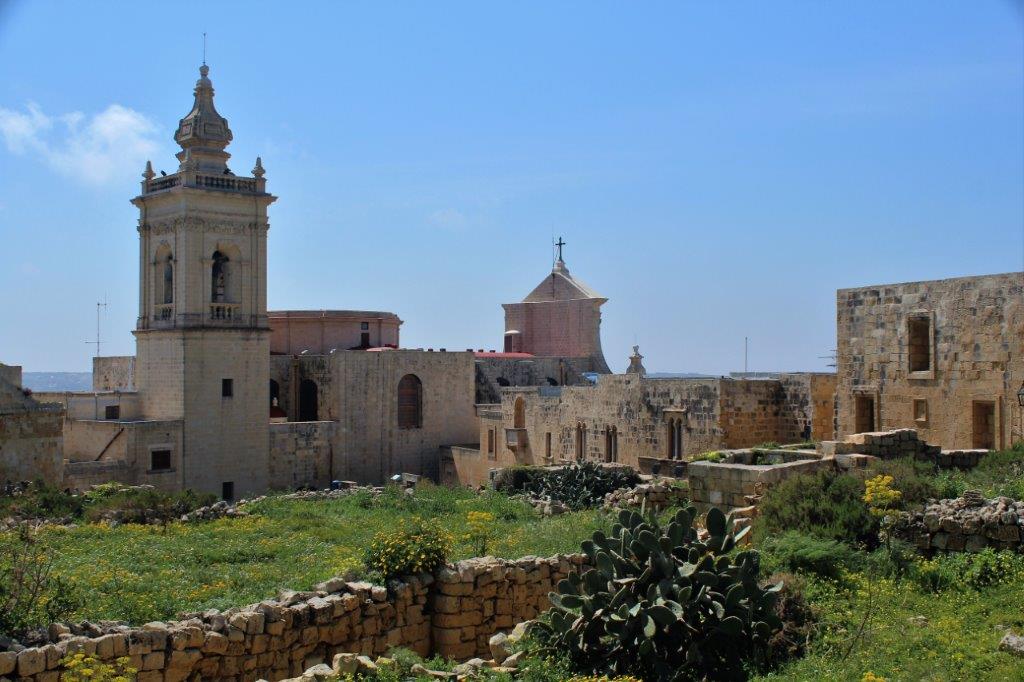
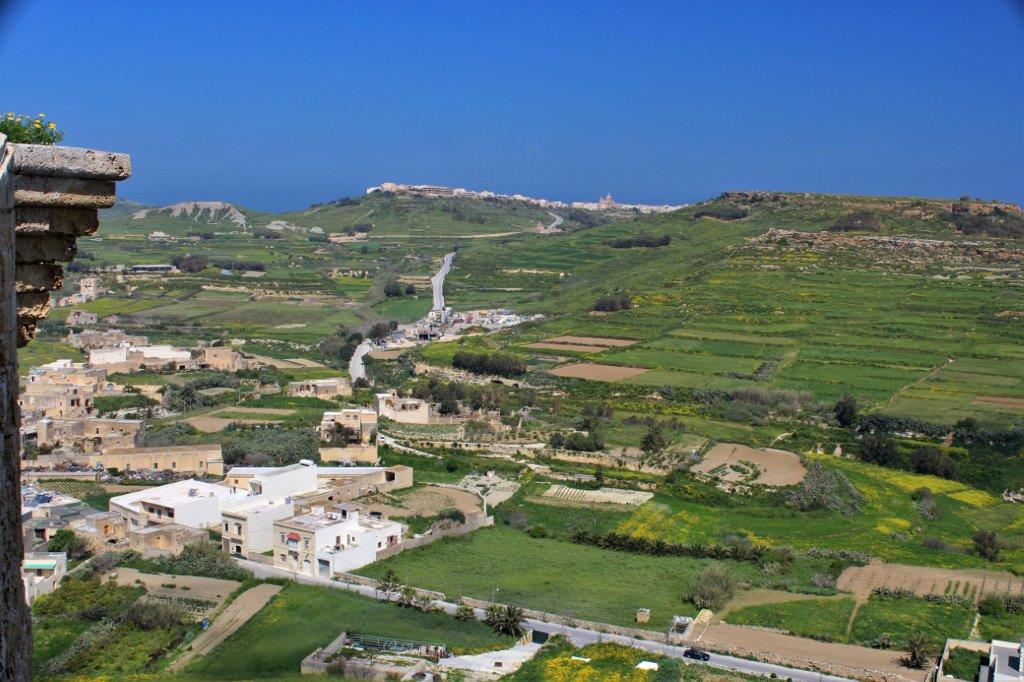
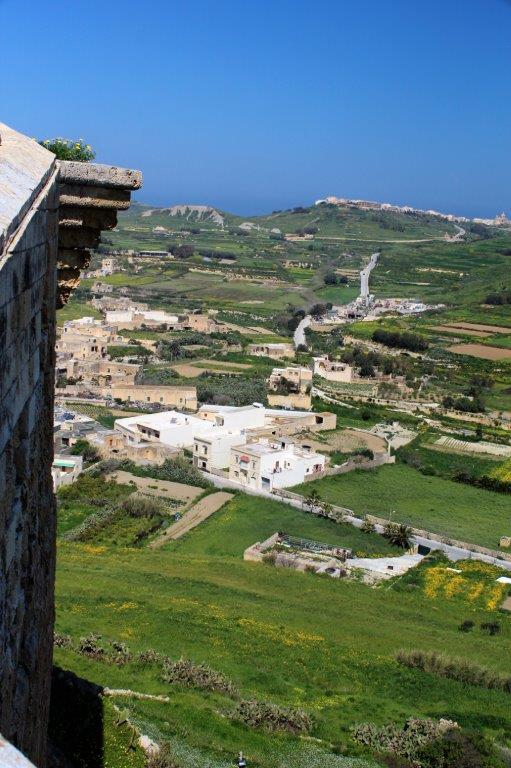
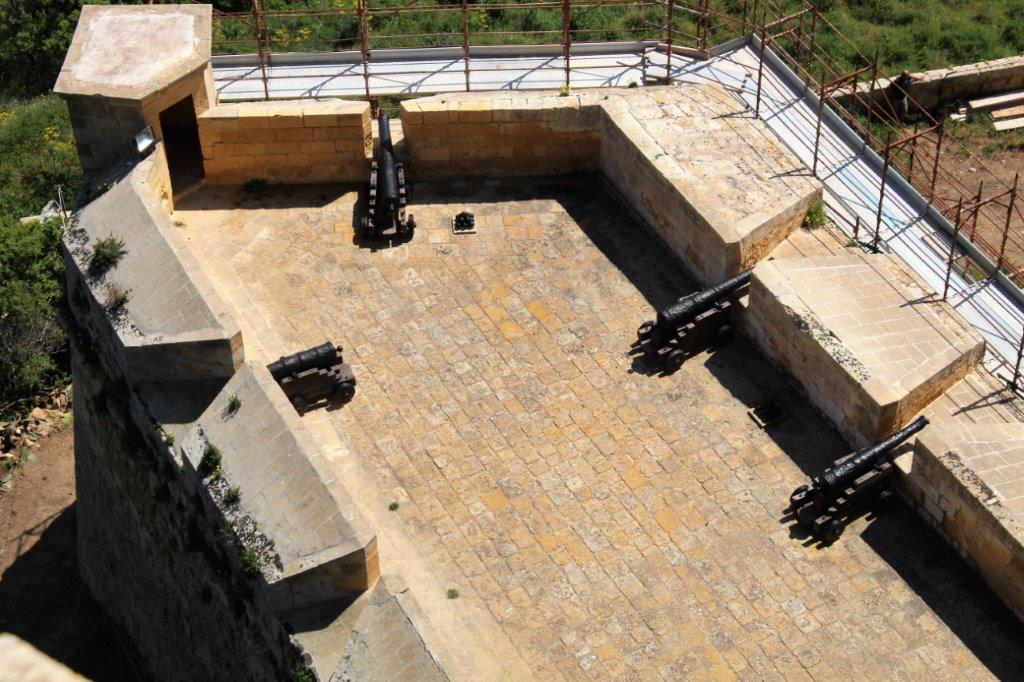
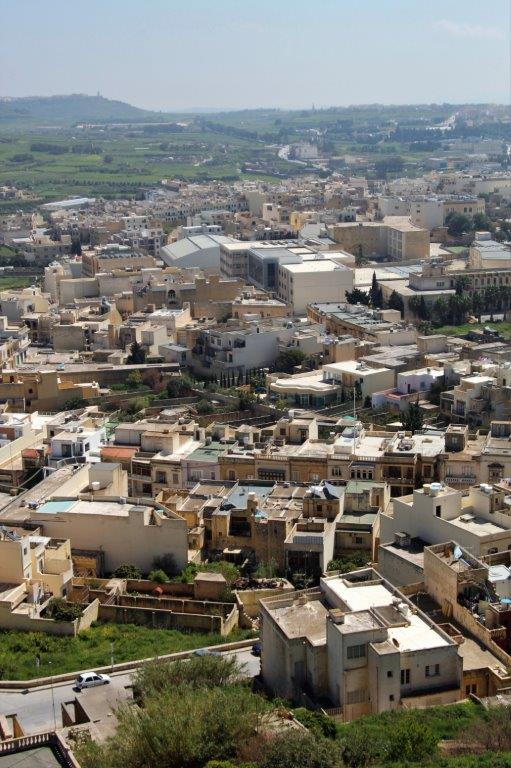
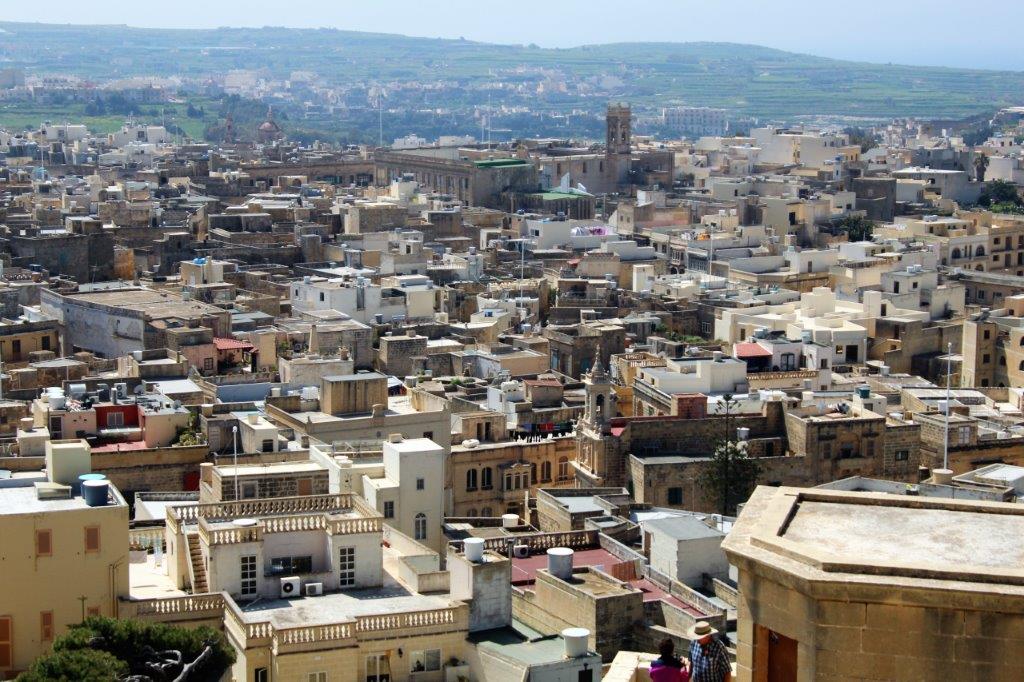
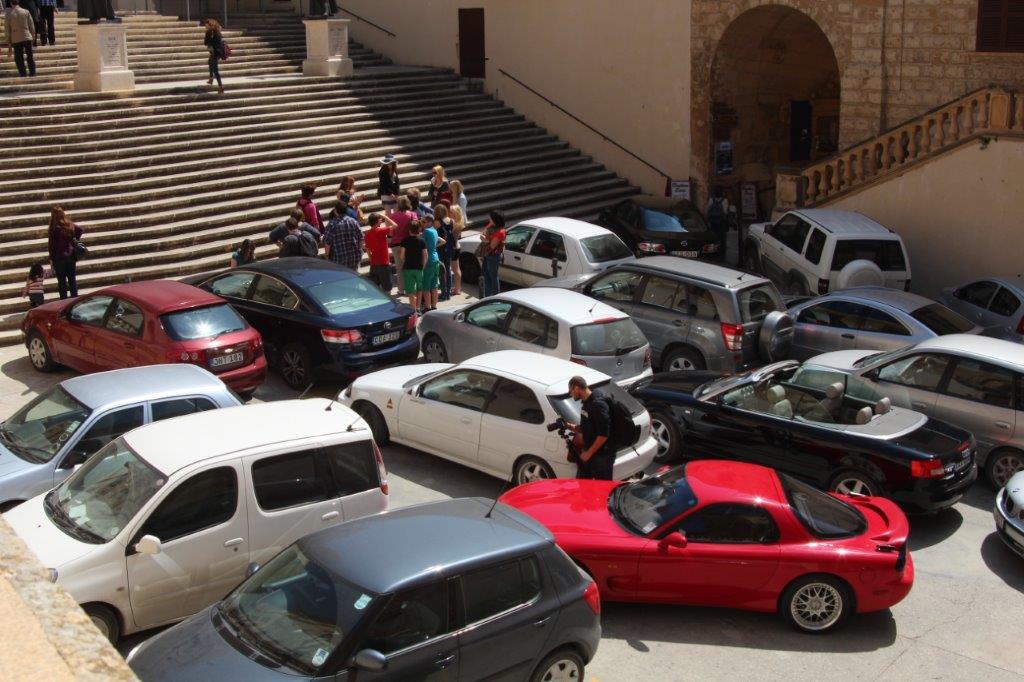
The Dwejra Watch Tower was built in 1652 to keep watch for pirates.  A system of fire and smoke was used to signal other towers.We had a stop at Fontana and saw the traditional laundry facilities where women still come to wash their clothes.  We were also give a demonstration of the fine and complex art of making Gozo bobbin lace. This lady was on the cruise with us and she took no photos. She always had her sketch pad and would draw (beautifully I may add) the memories she wanted to preserve.  A very talented lady.  How they can possibly remember which of the many, many bobbins of thread gets moved when and where to make the pattern is completely beyond me! From the top of the Citadel in Victoria you can see the entire island and the islands of Camino and Malta, each a mile away.  I guess if everyone is going to church for Mass it doesn’t matter how you park.

The other half of the tour can wait for another day and another blog.
2012 March 31 – Day 20 – Valletta, Malta

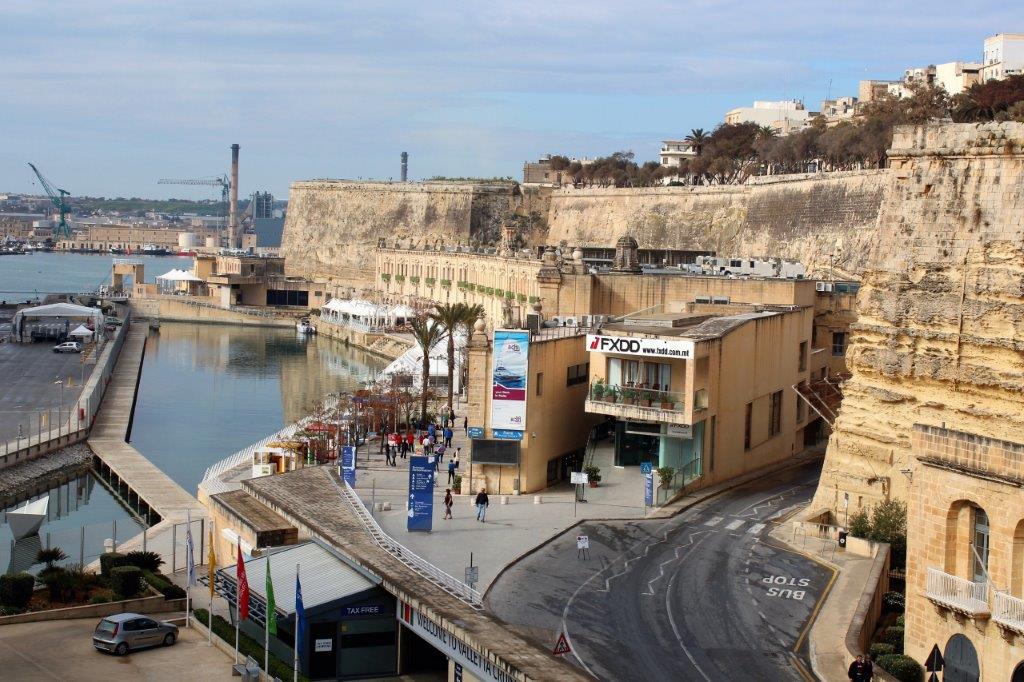
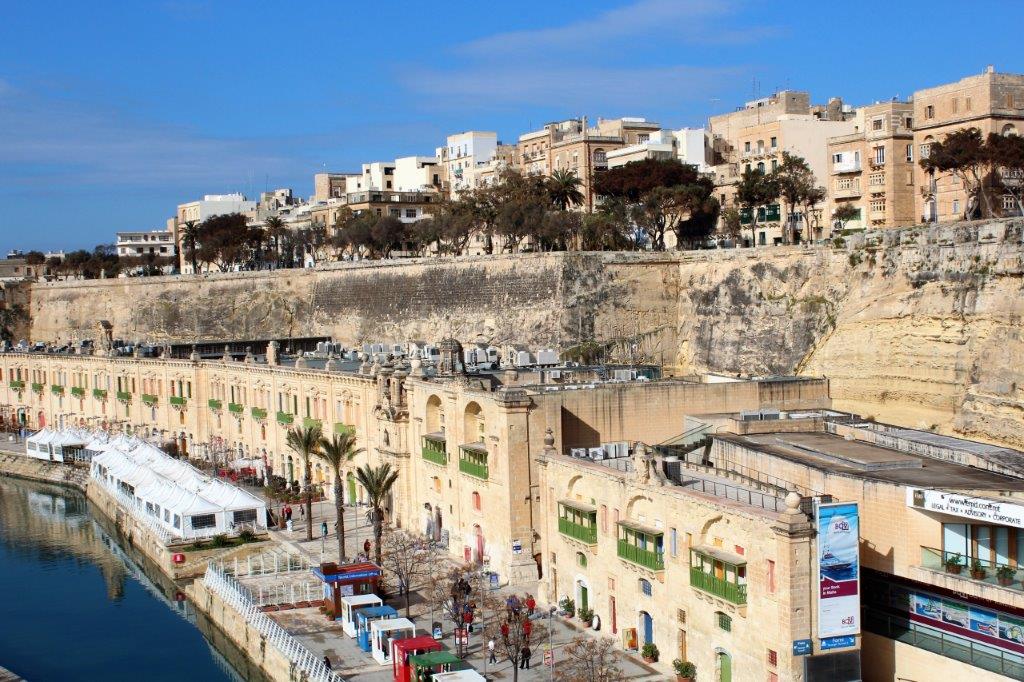
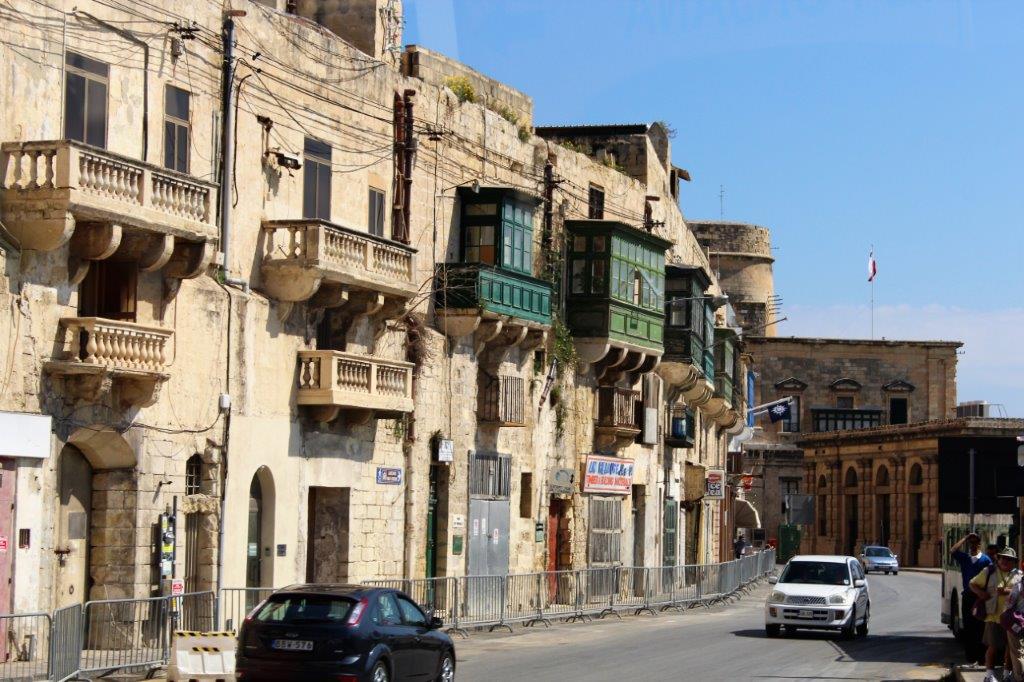
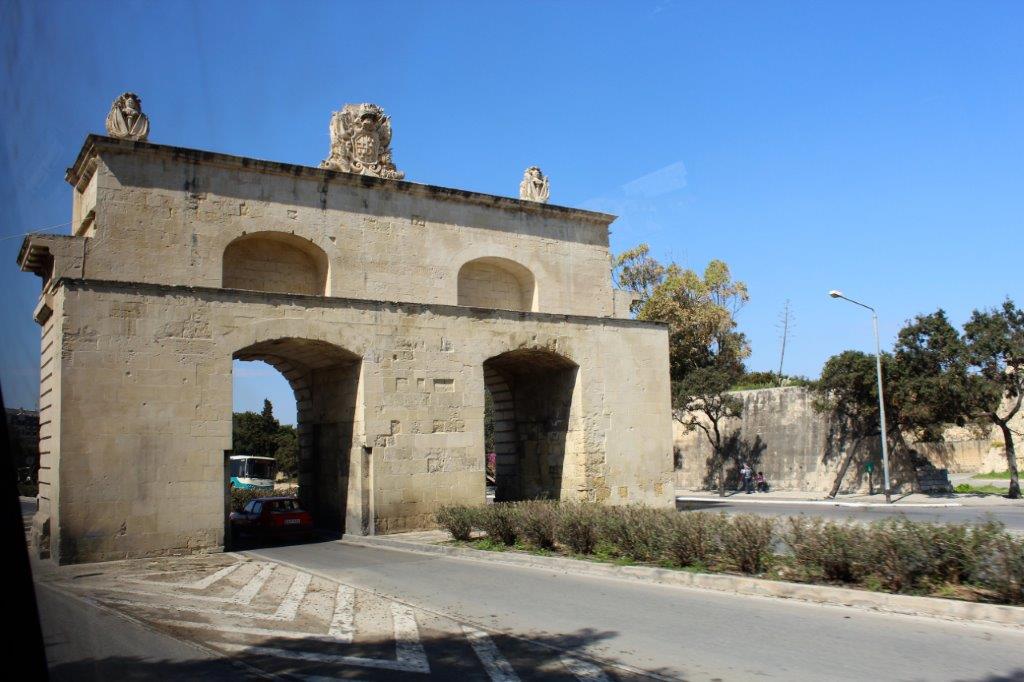
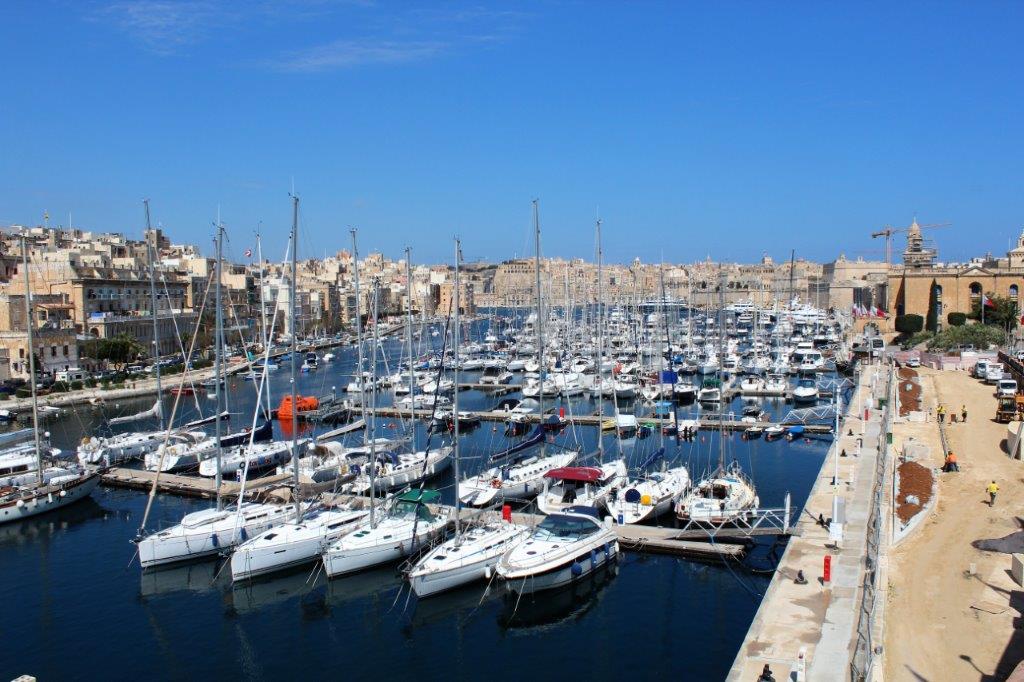
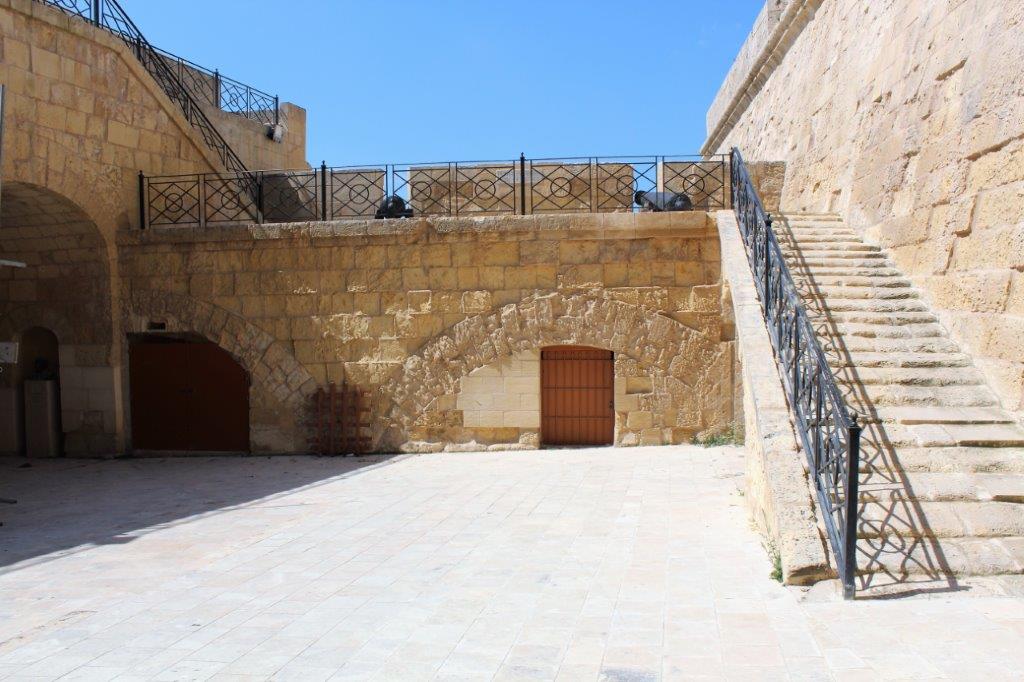
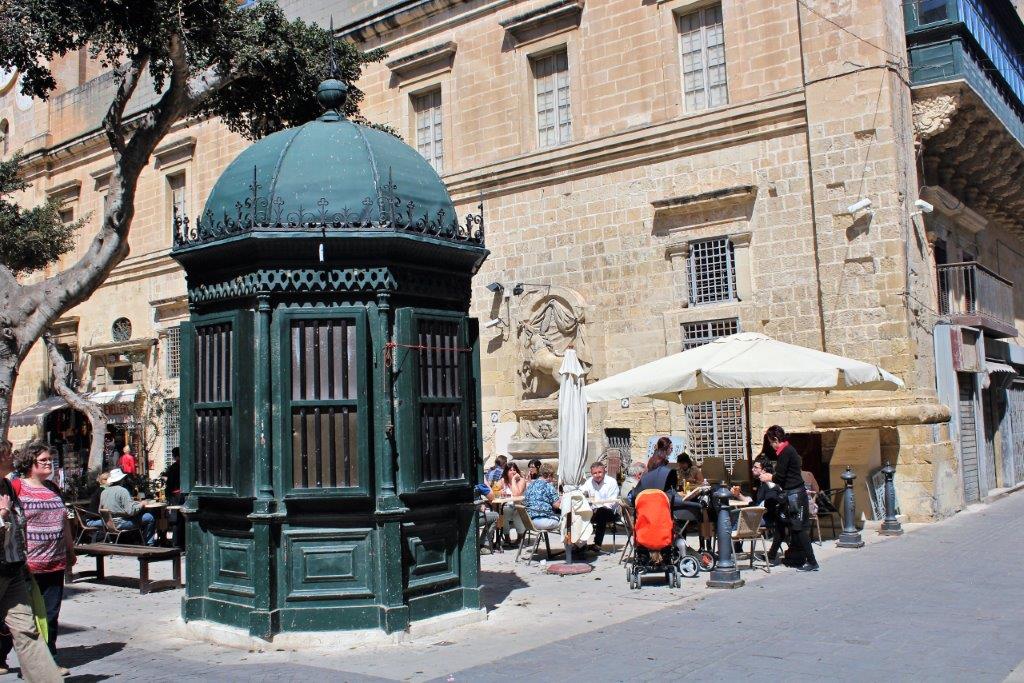
The island of Malta sits 60 km off the coast of Sicily and 140 km from Italy.  The Knights of St. John took possession of the island in 1530 and fortified it, then fortified the fortifications, then fortified it all some more.  With the walls built on walls built on walls, Valletta is a port that has never been conquered in the past 1000 years.

The Knights of St. John still exist today and have representatives in 80 countries.  They also have a permanent “Observer” status at the United Nations.  The Knights ruled Malta for 268 years.

Our guide spoke English well and knew a great deal about the Knights of St. John and the history of Malta.  The weather was great and we had a fabulous day.
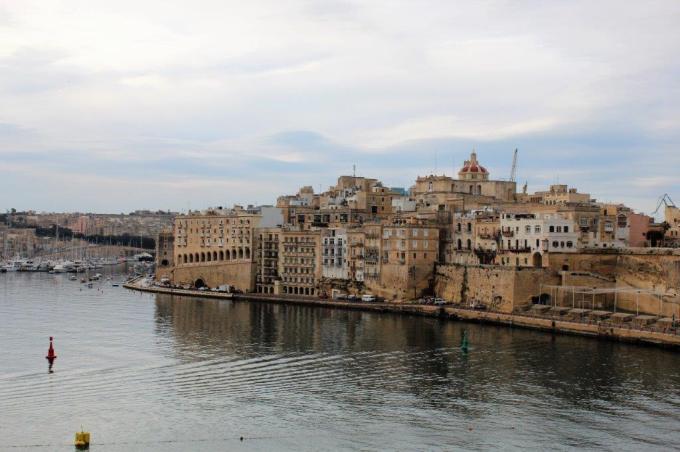
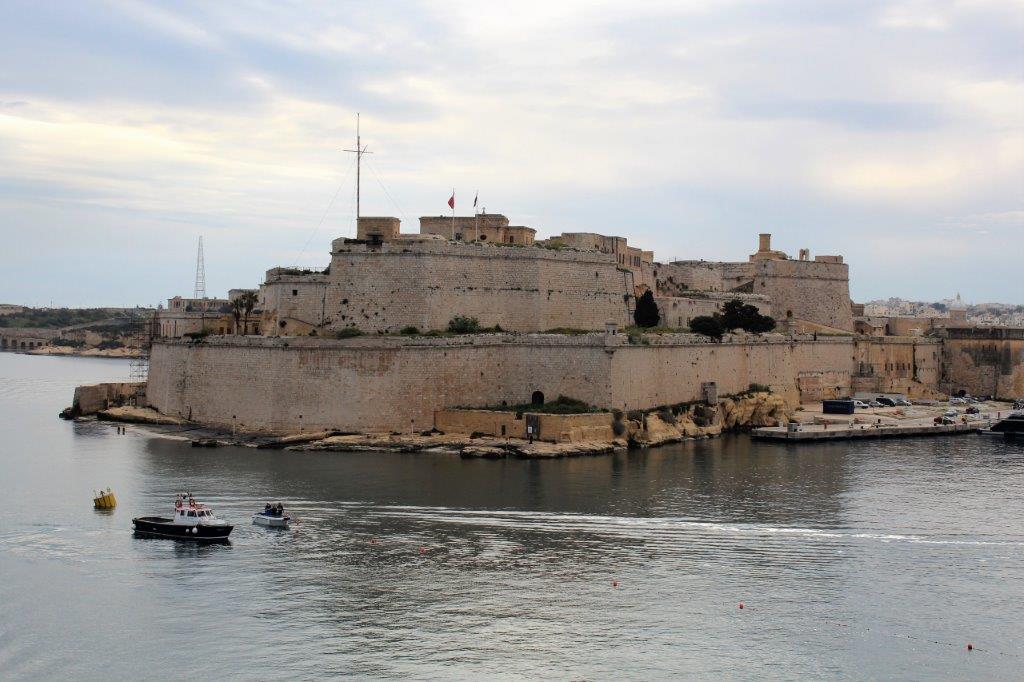
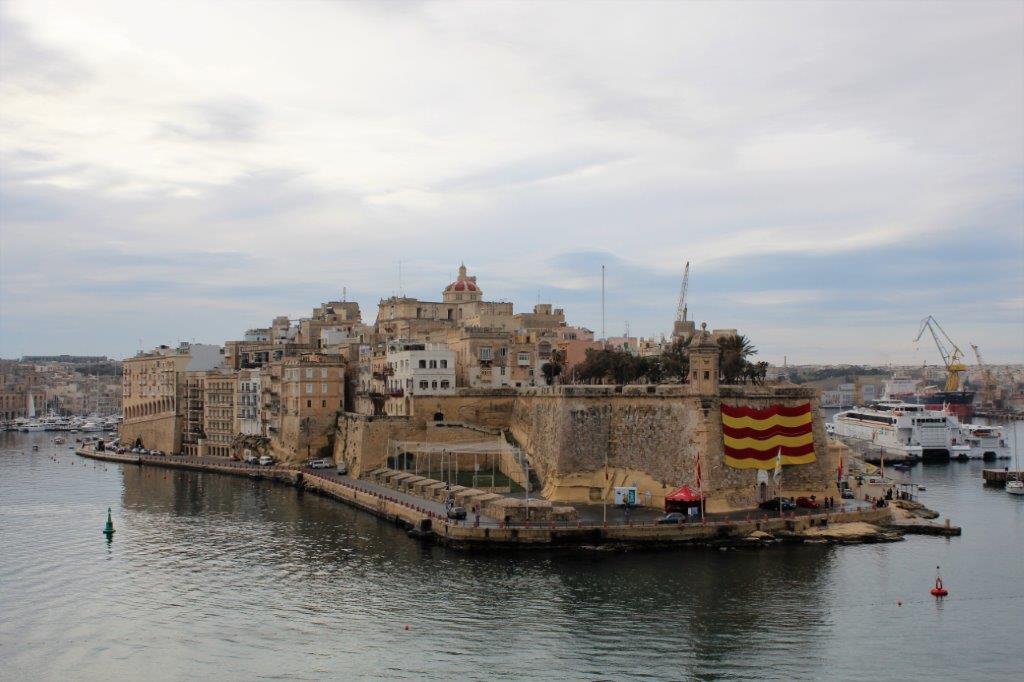
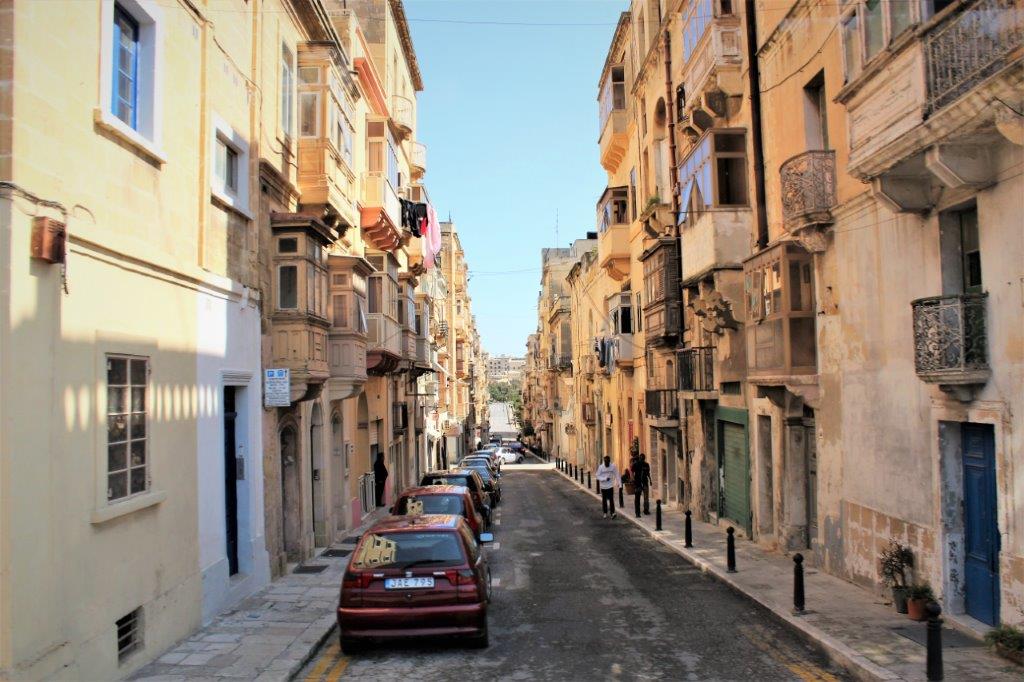
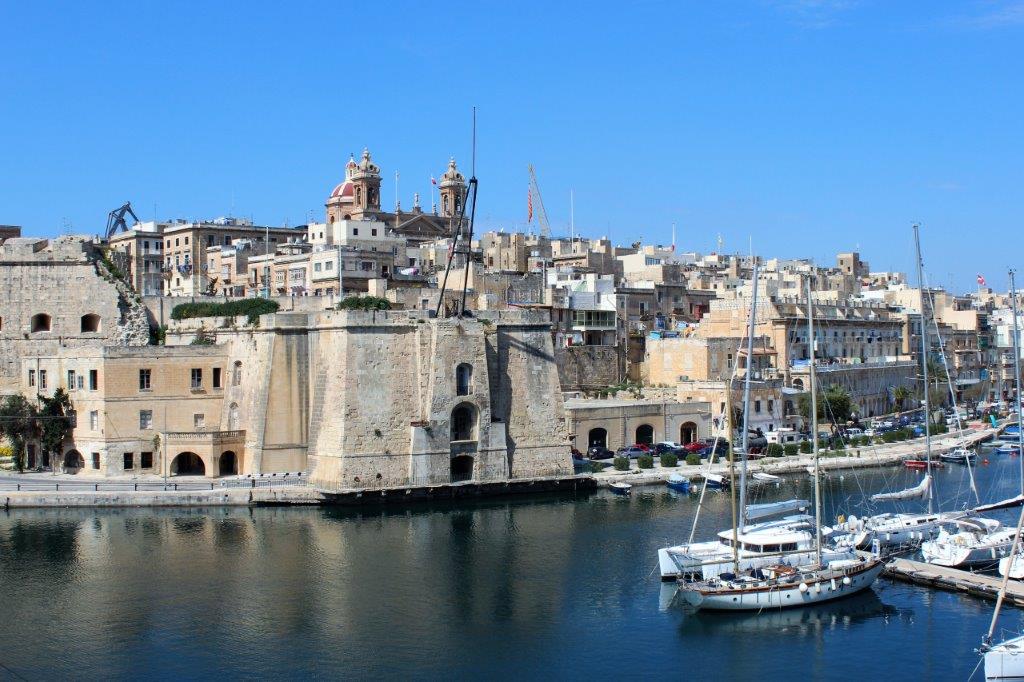
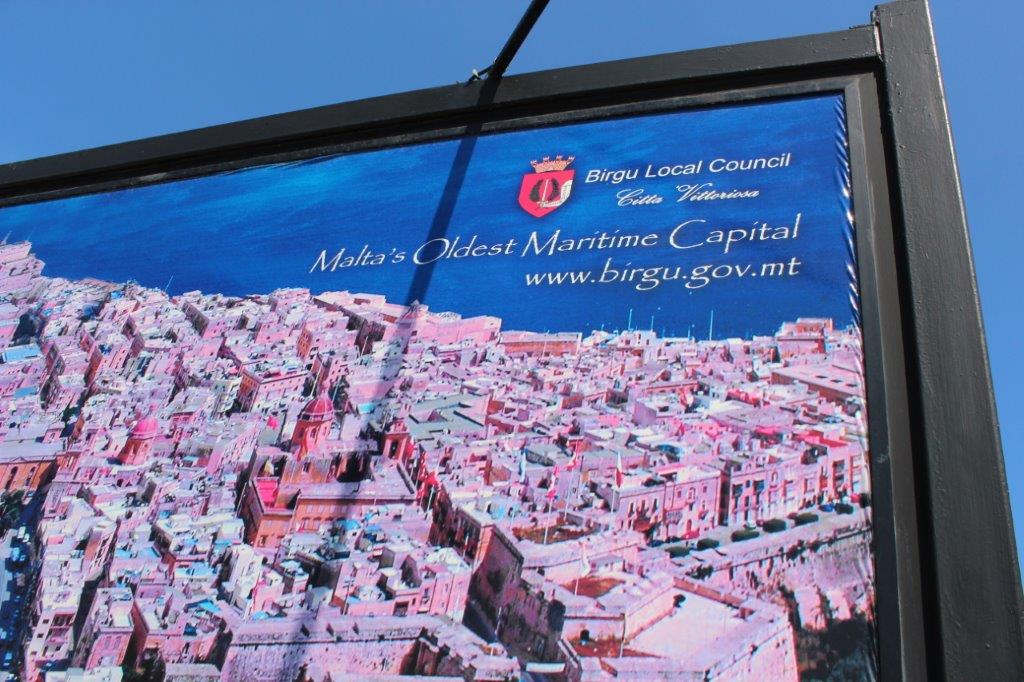
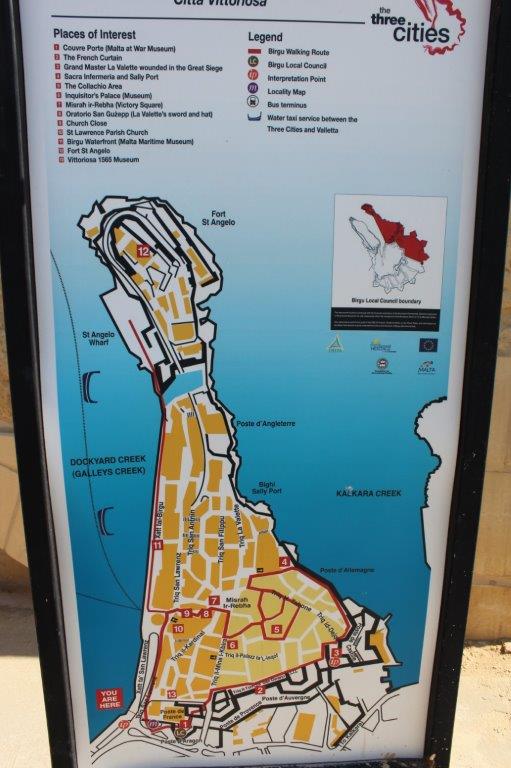
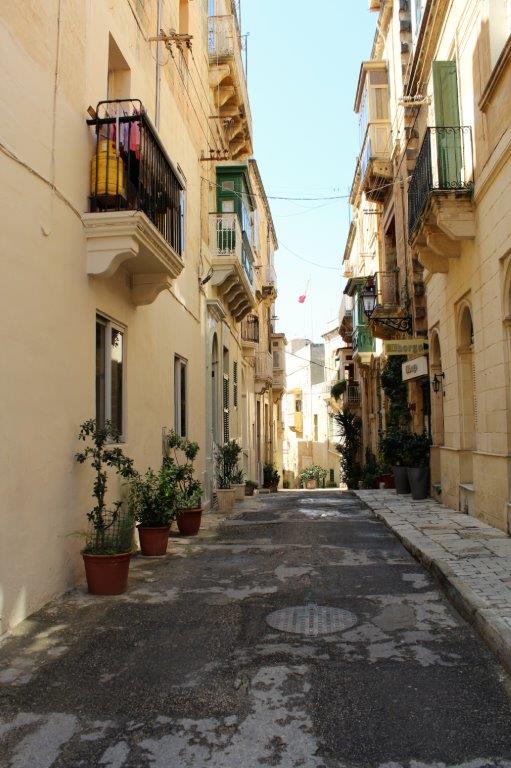
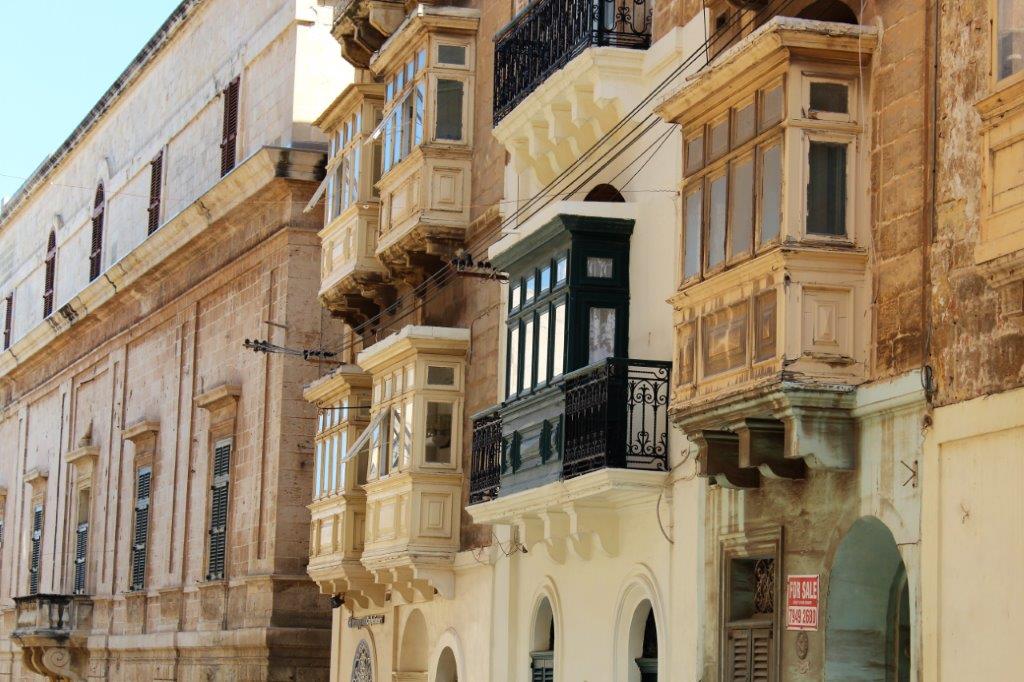
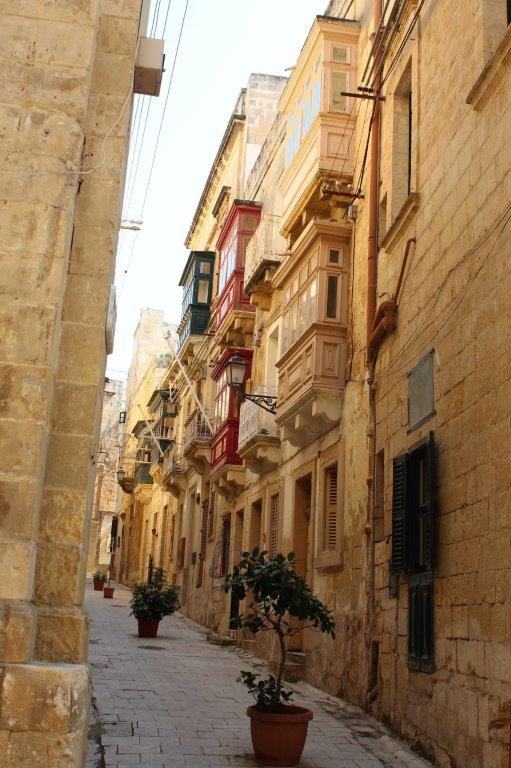
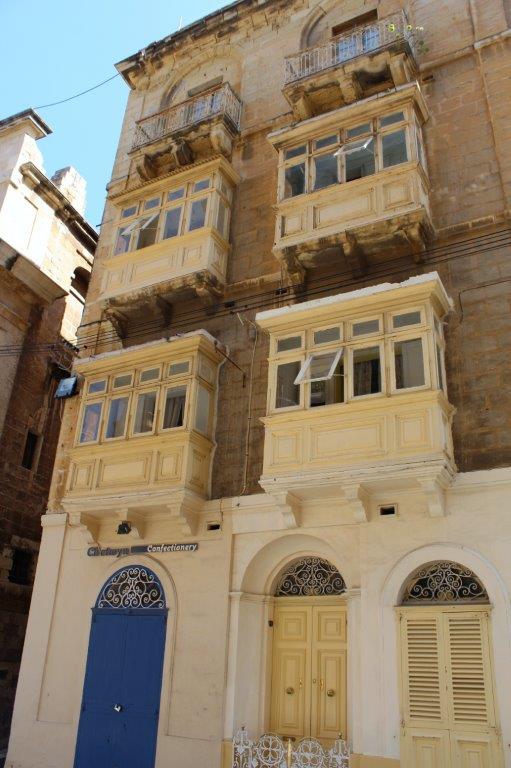
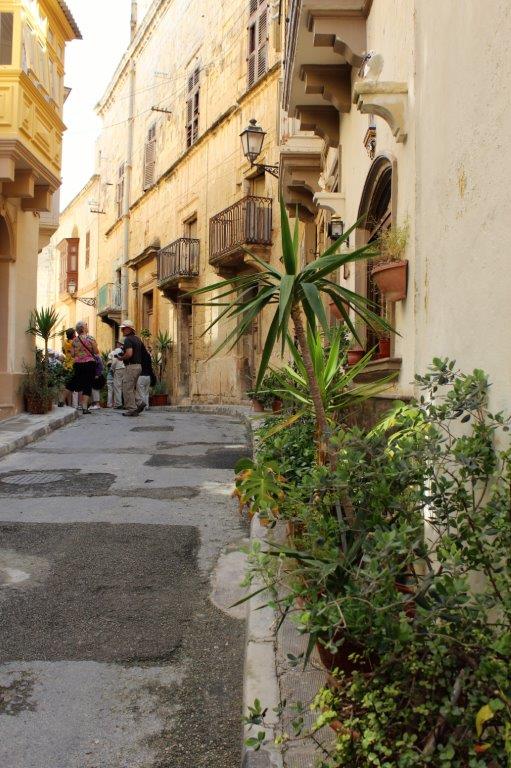
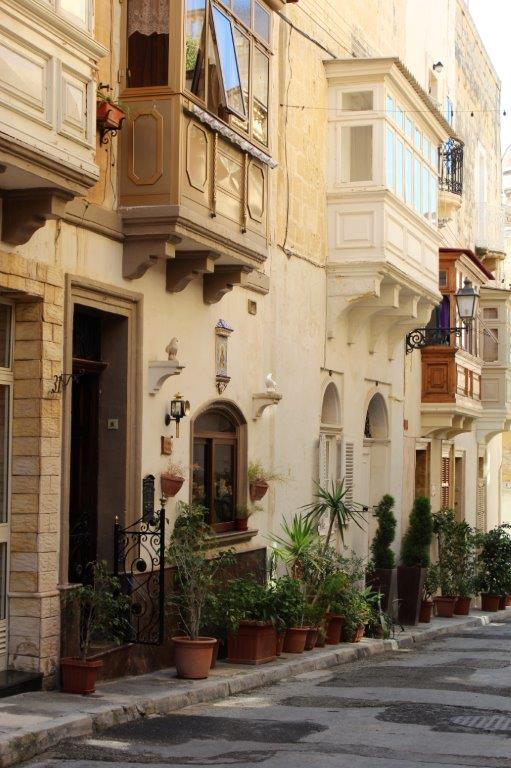
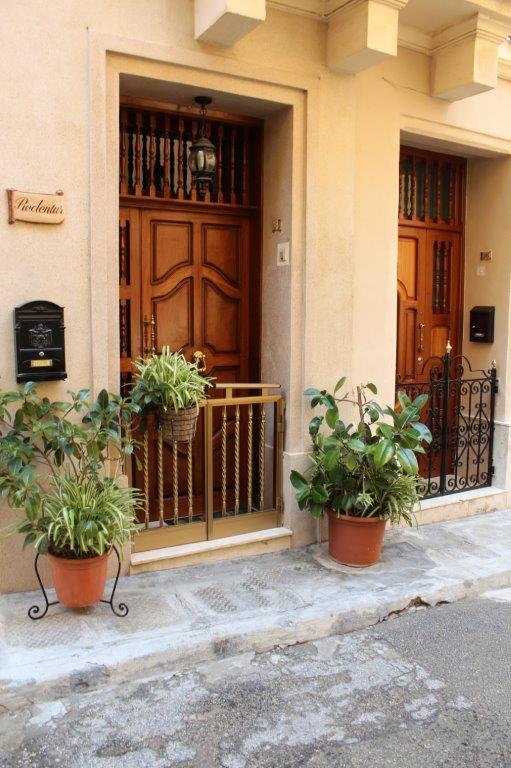
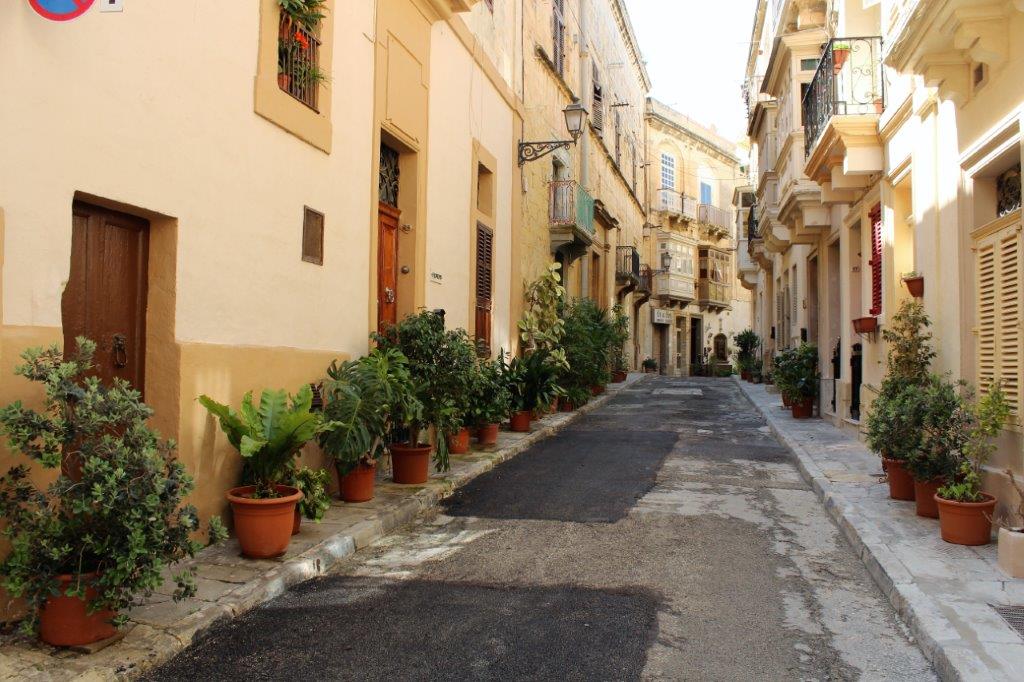
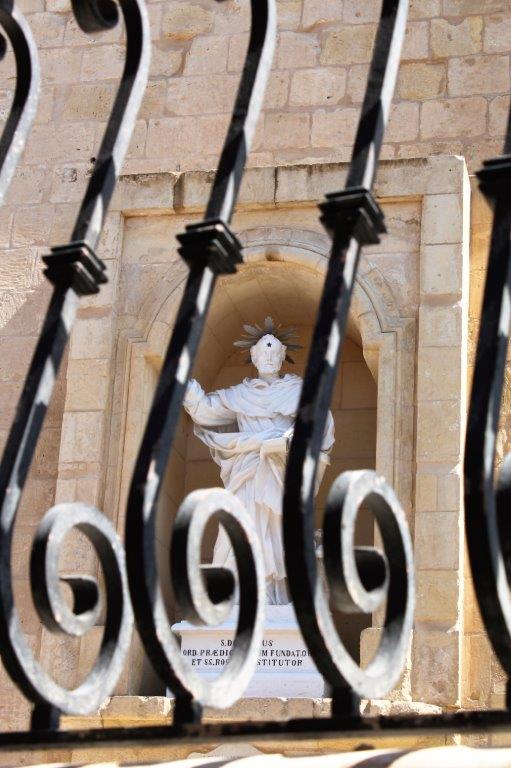
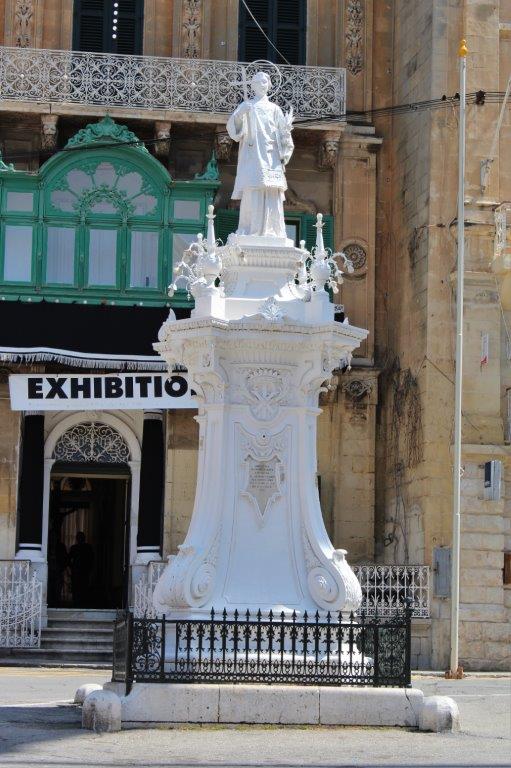
We were driven to Birgu (the old city of Vittoriosa, where the Knights originally settled) across the Grand Harbour from Valletta. Our walking tour took us through the ancient narrow streets to the early Auberges of the Knights, the hospital, the armoury, the Treasury and the palaces used by the administration of the Order.  The Knights of St. John only accepted sons of the nobility from eight European territories – the so-called ‘langues’ – and the Order became extremely  wealthy in property and goods. Due to the extreme shortage of fresh water on the island it was forbidden to plant any greenery.  It wasn’t until many, many years later that the first park was established in the city and people were allowed to have potted or other plants in their homes.  There was plaque posted on one of the buildings of this street from the Birgu Local Council expressing their appreciation for the cleanliness of this City and its embellishments with potted plants.

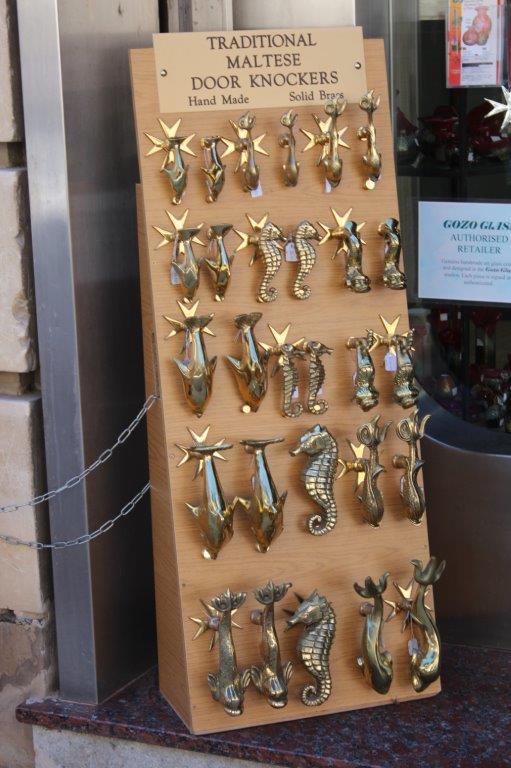
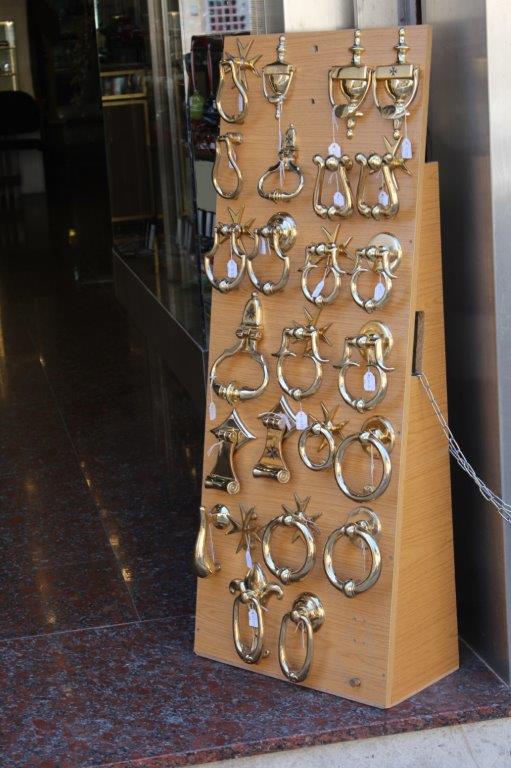
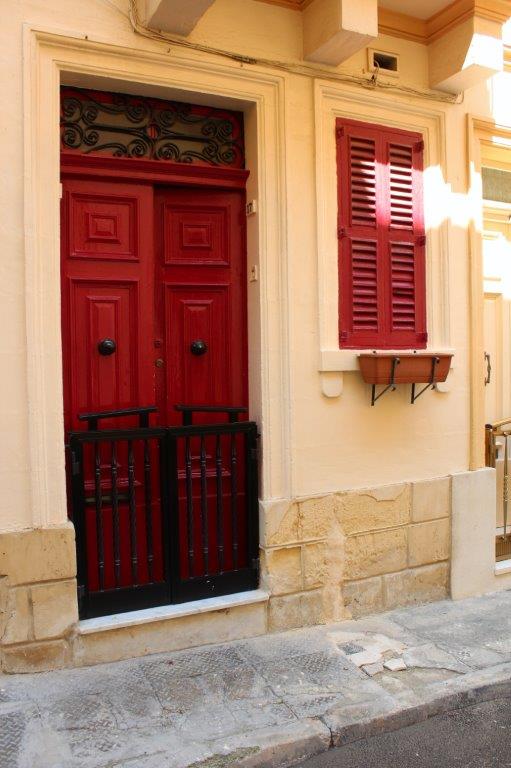
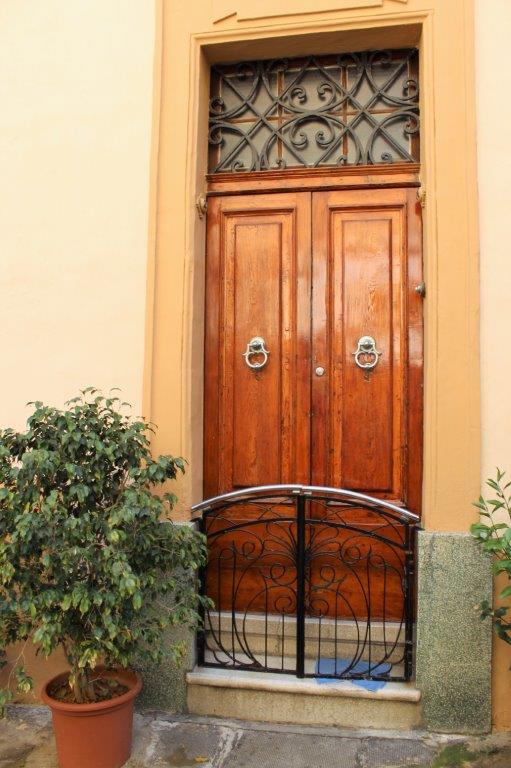
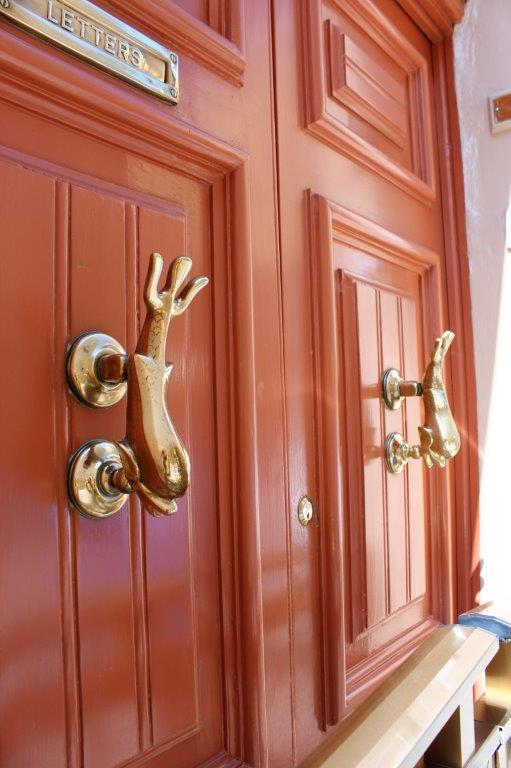
Malta is famous for its unique door knockers.  It was fun to spot the different ones as we walked past.  I took pictures of lots of them too.

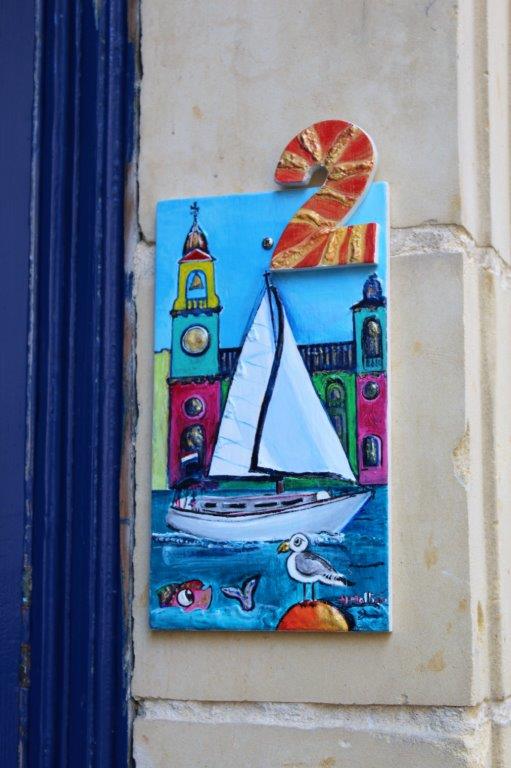
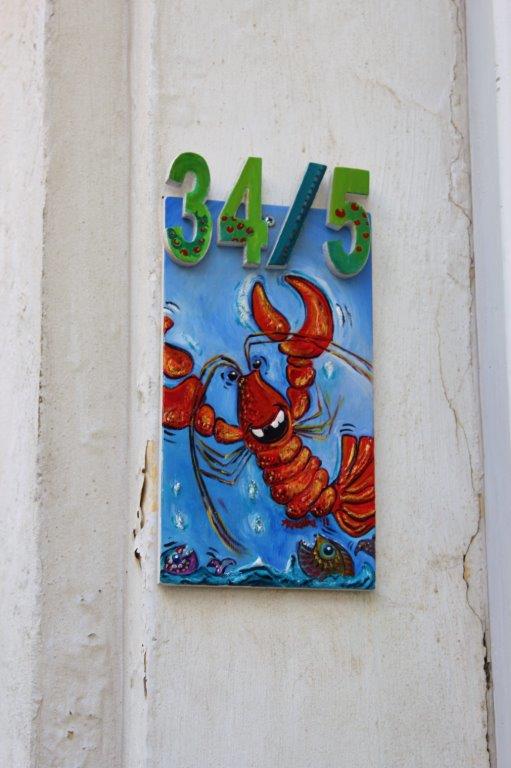
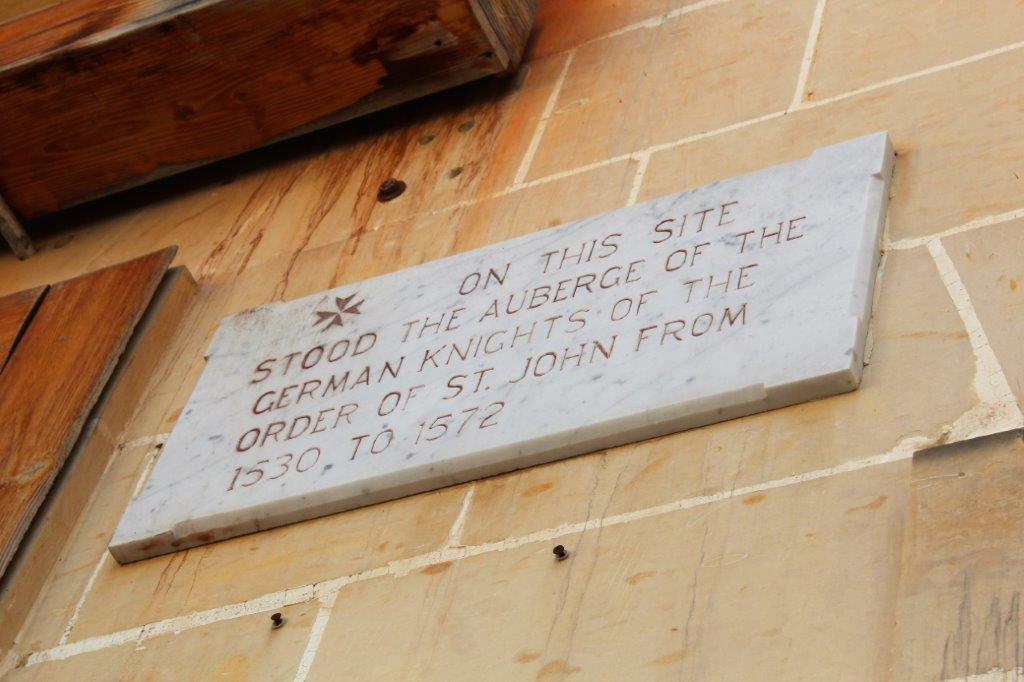
They had some pretty artistic house number signs as well.Our walk took us to or past the site of the seven Auberges of the Knights of St. John.  Only three of the actual buildings remain.  Even though there were eight European territories from which knights were recruited there were only seven auberges because two of the French territories built their auberge together.  An auberge is like a hostel and they were used as living quarters by the knights who hailed from the different districts and also provided accommodation for pilgrims or visitor’s from the home country or territory.

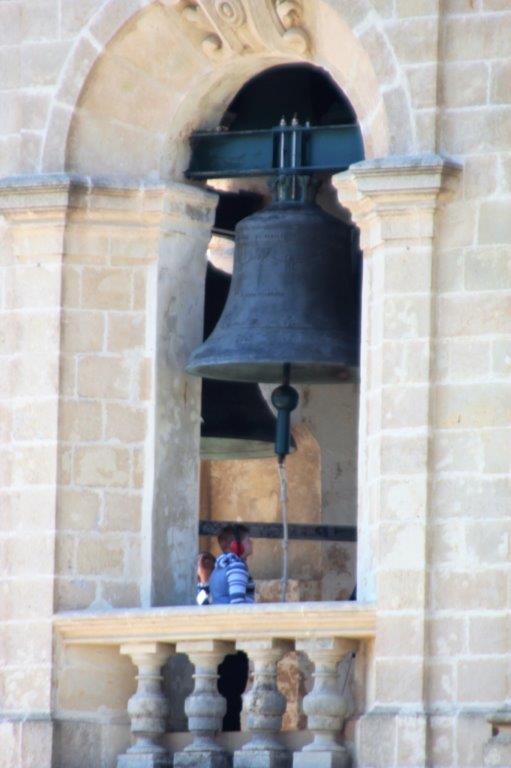
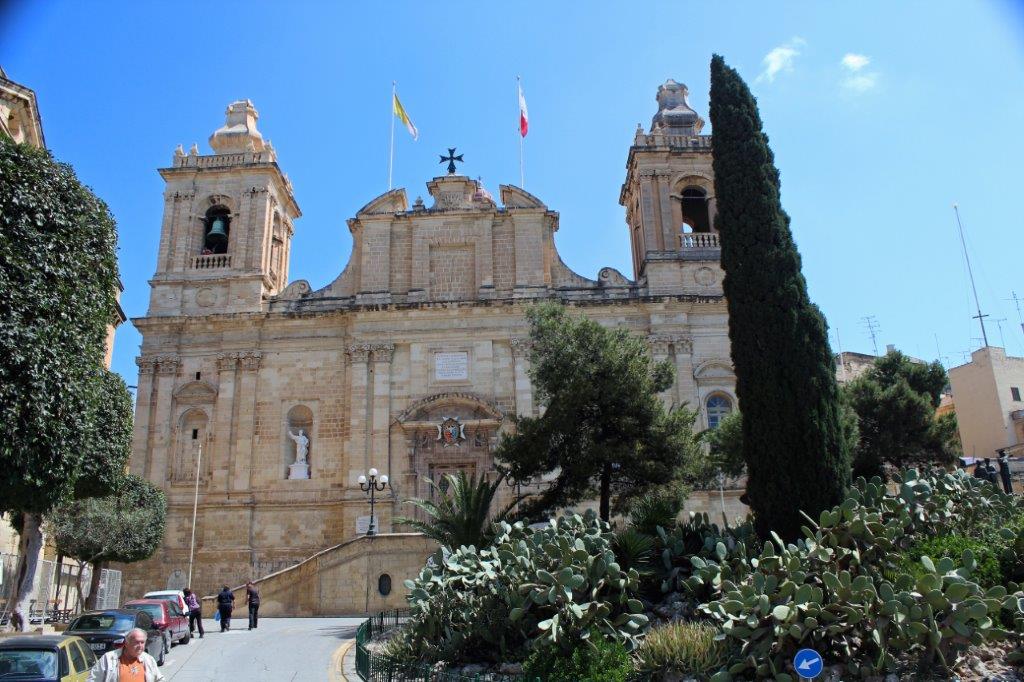
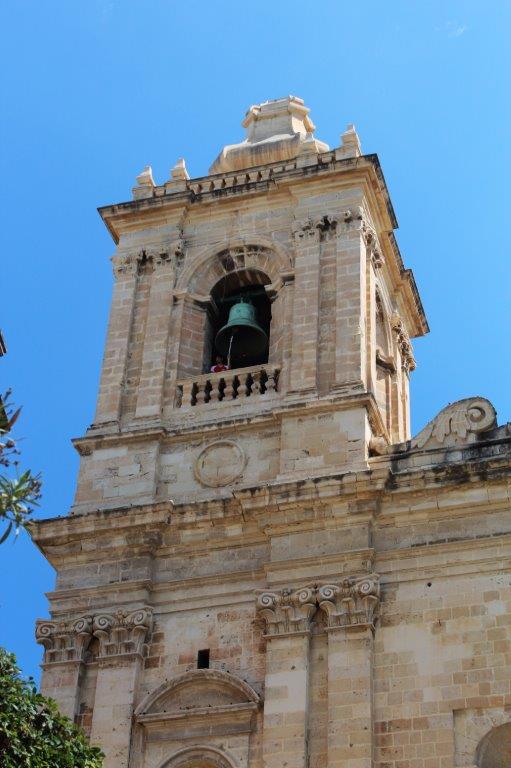
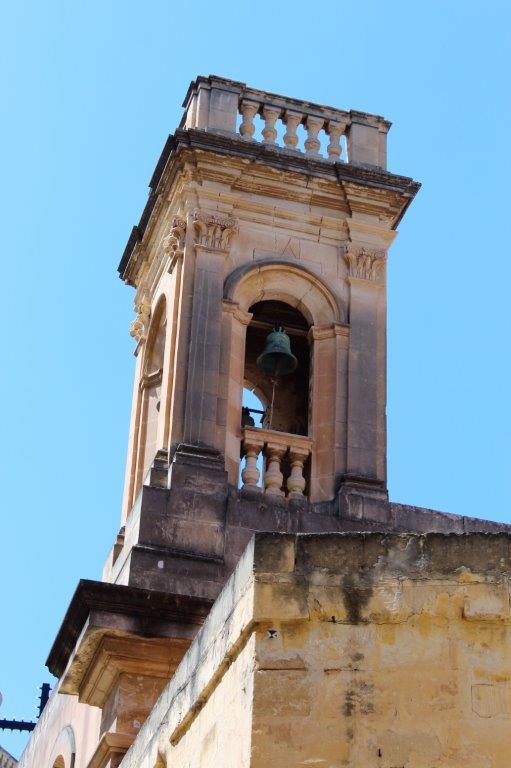
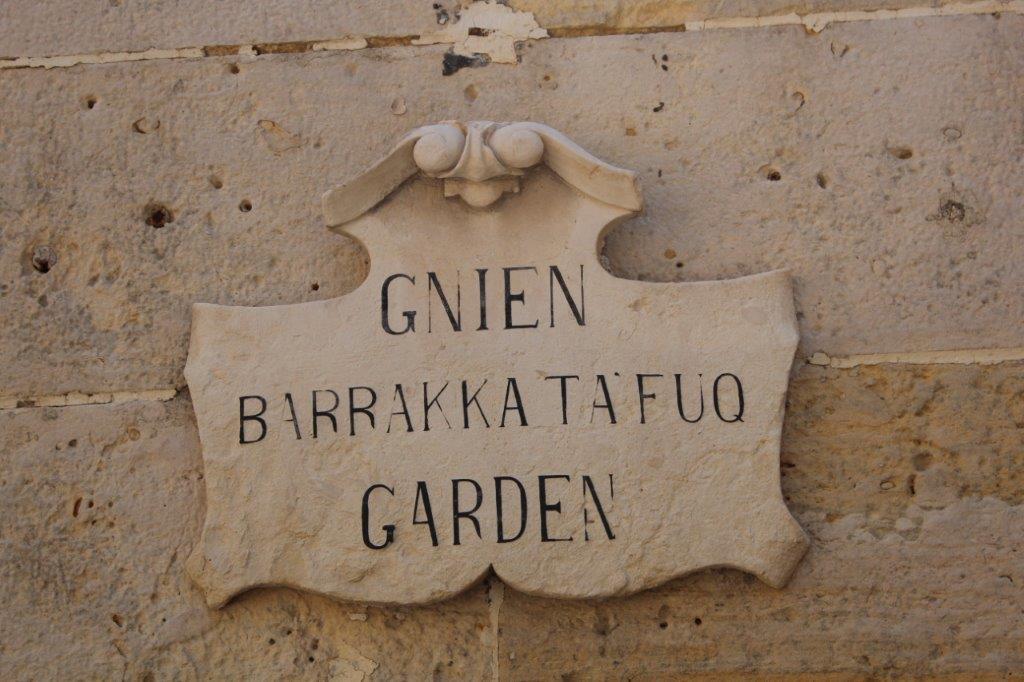
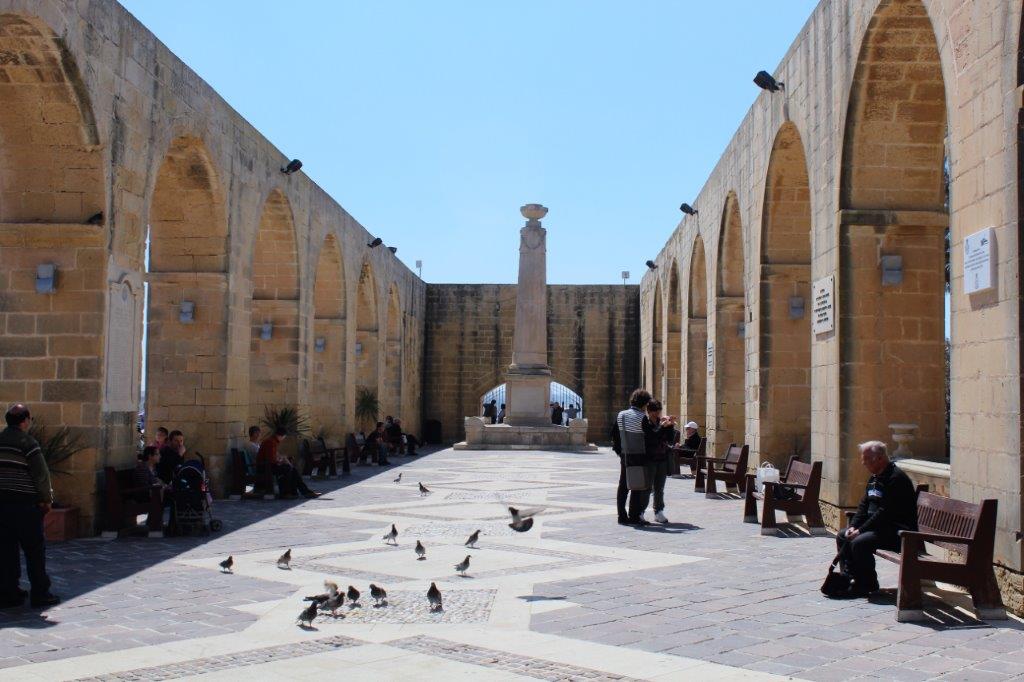
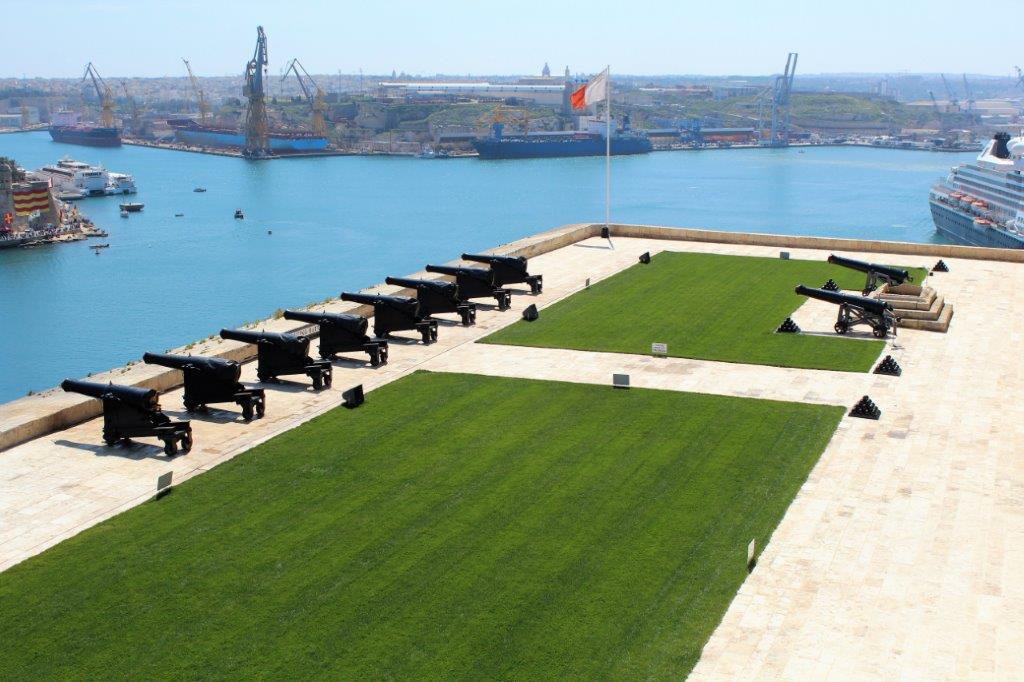
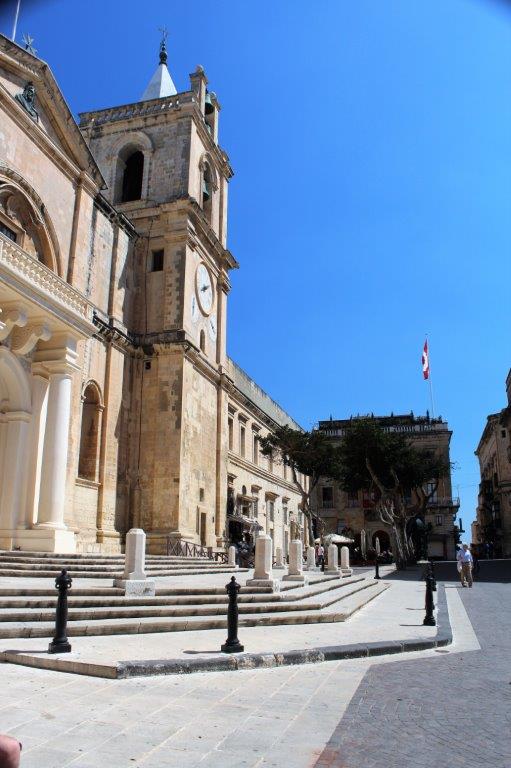
March 31 is Freedom Day in Malta where they celebrate the anniversary of the removal of British troops and the Royal Navy from Malta in 1979.  Every church, of which there are MANY, had  a bell ringer in the tower ringing the bell for over an hour in the afternoon. We were taken to Barrakka Gardens which are located on the highest point of the 16th-century bastion walls built by the Knights. Due to it’s strategic position in the Mediterranean the Island of Malta was a constant battleground during WWII.  After the war King George VI bestowed the George Cross upon the people of the island for their courage and fortitude during so many years of attack and deprivation.

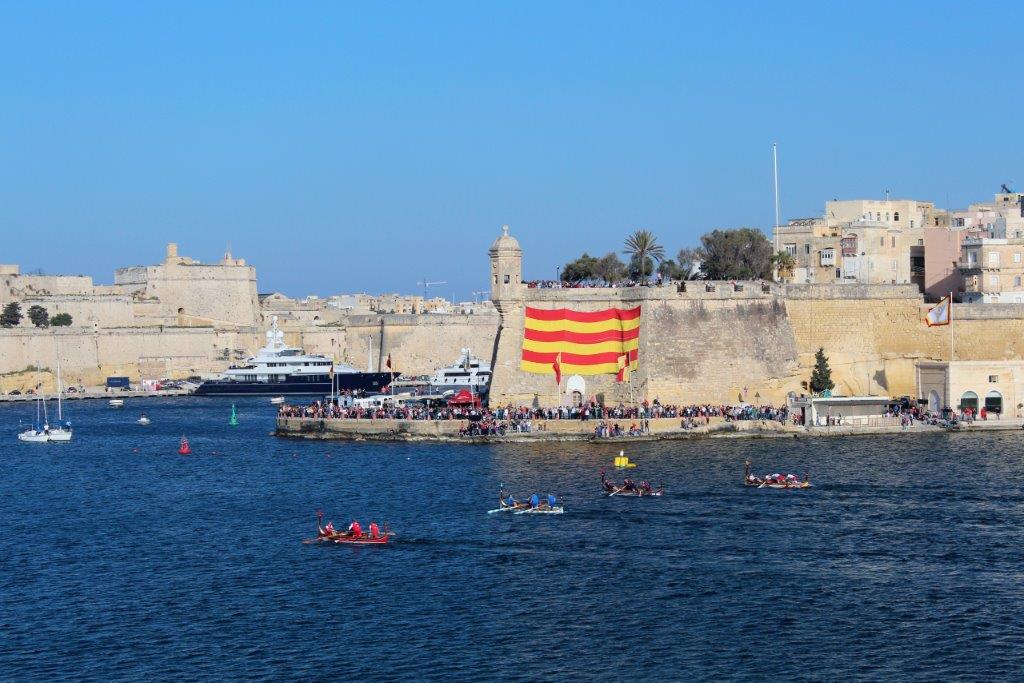
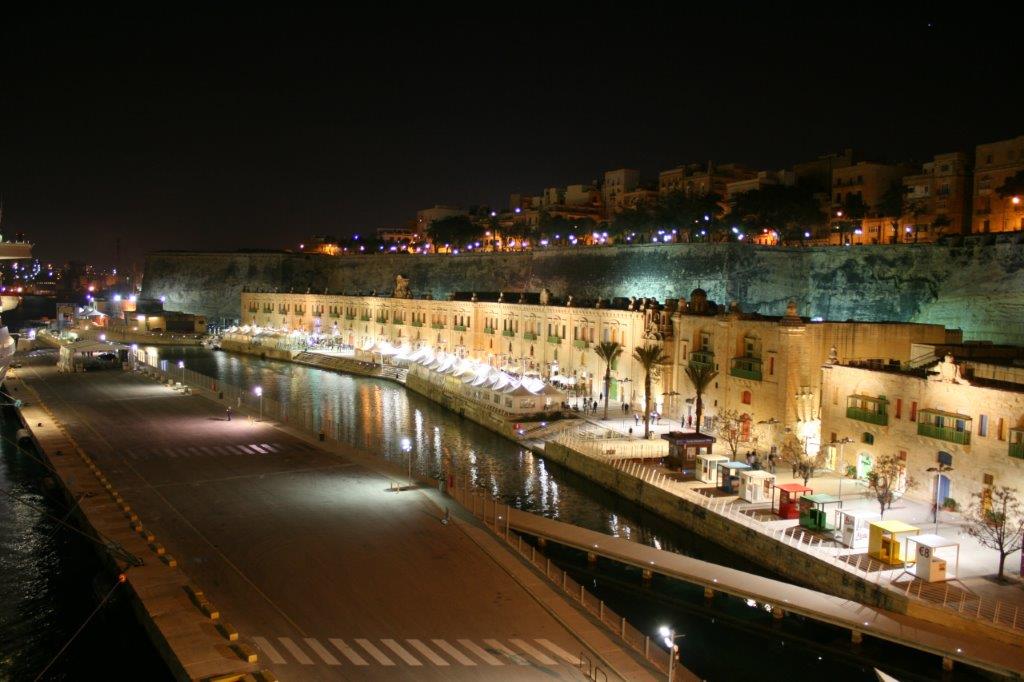
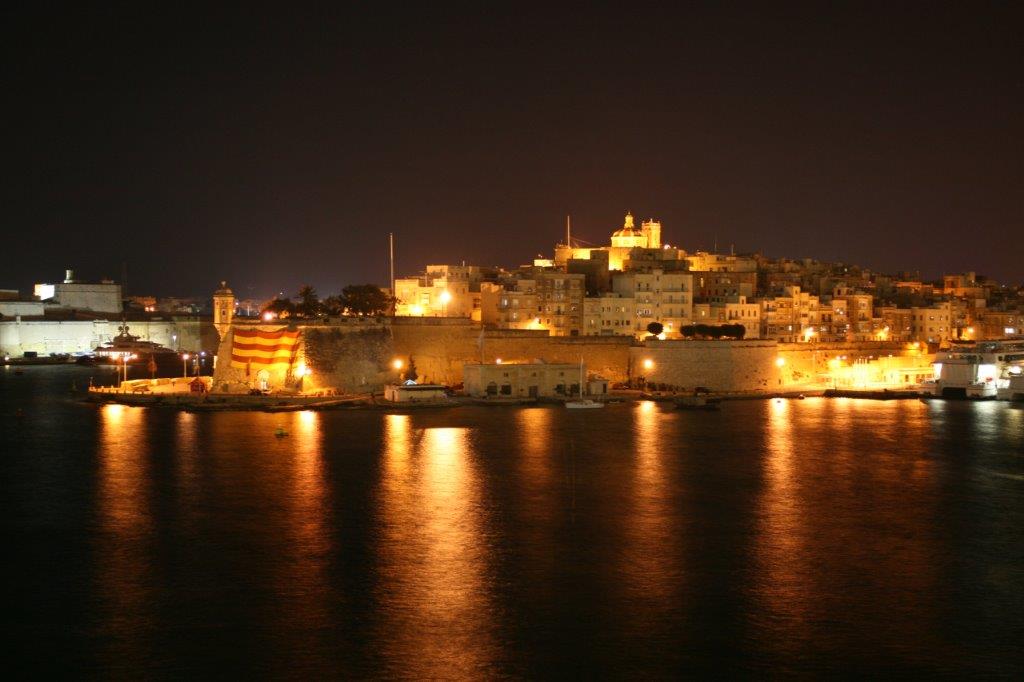
Part of the Freedom Day celebrations is a huge regatta in the Grand Harbour.  Rowing teams from all the cities of Malta compete against one another. The ship did not set sail until 7 am the next morning so from the Promenade Deck we had a nice view of the city lights at night.

2012 March 29 – Day 18 – Sousse, Tunisia (Part 2)

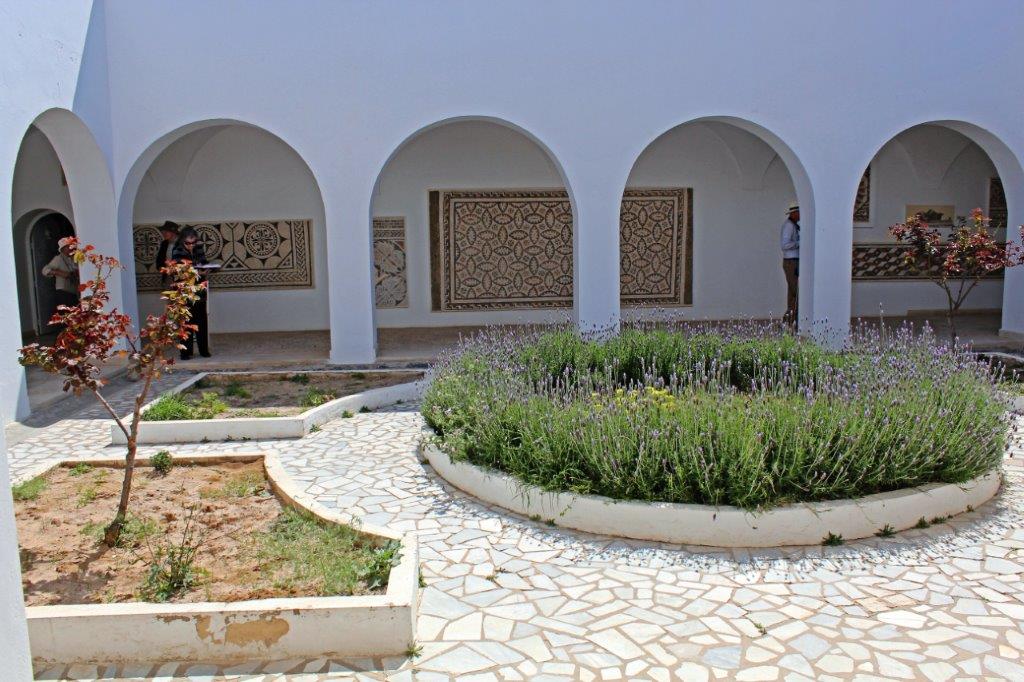
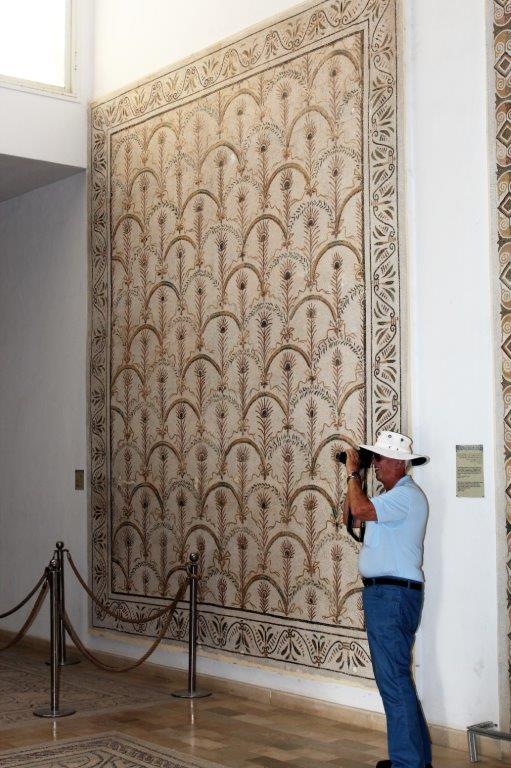
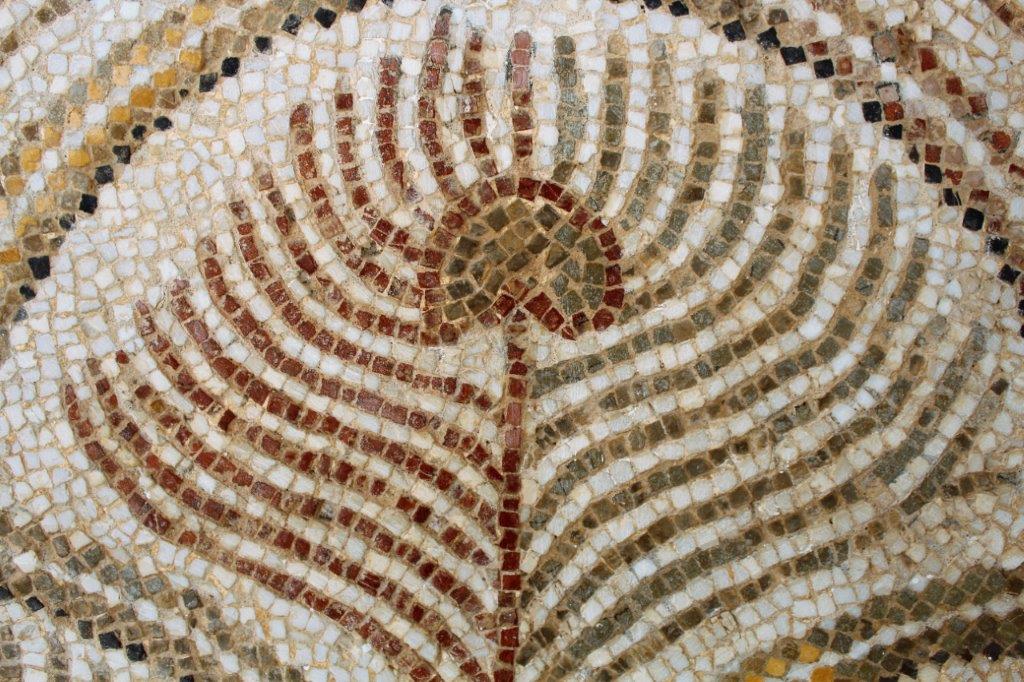
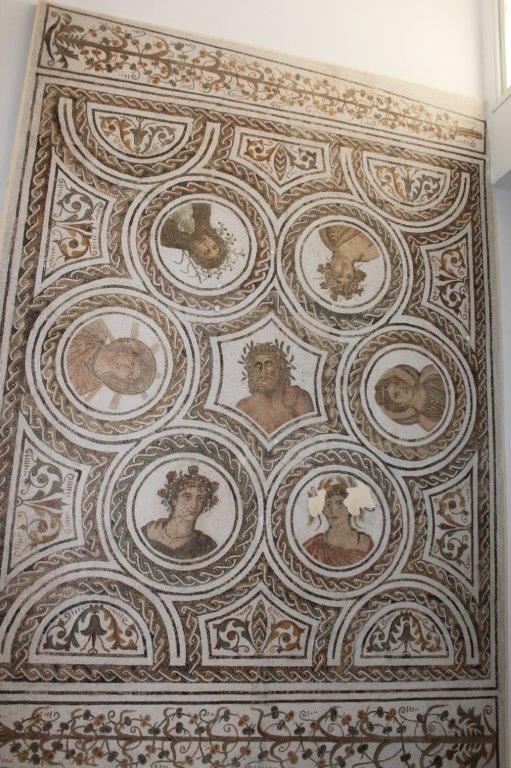
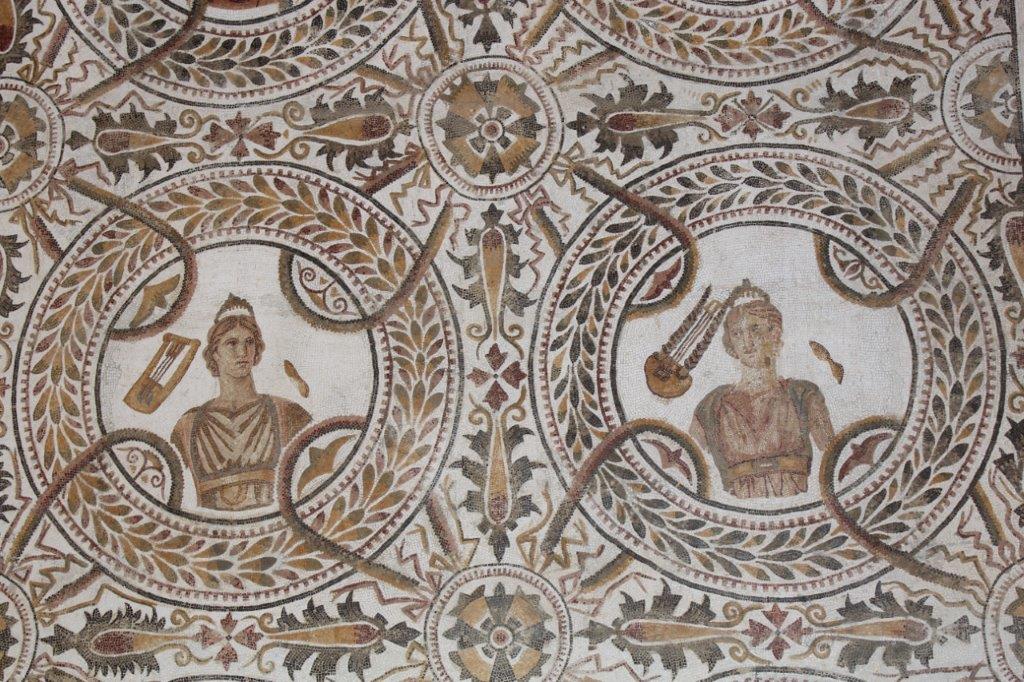
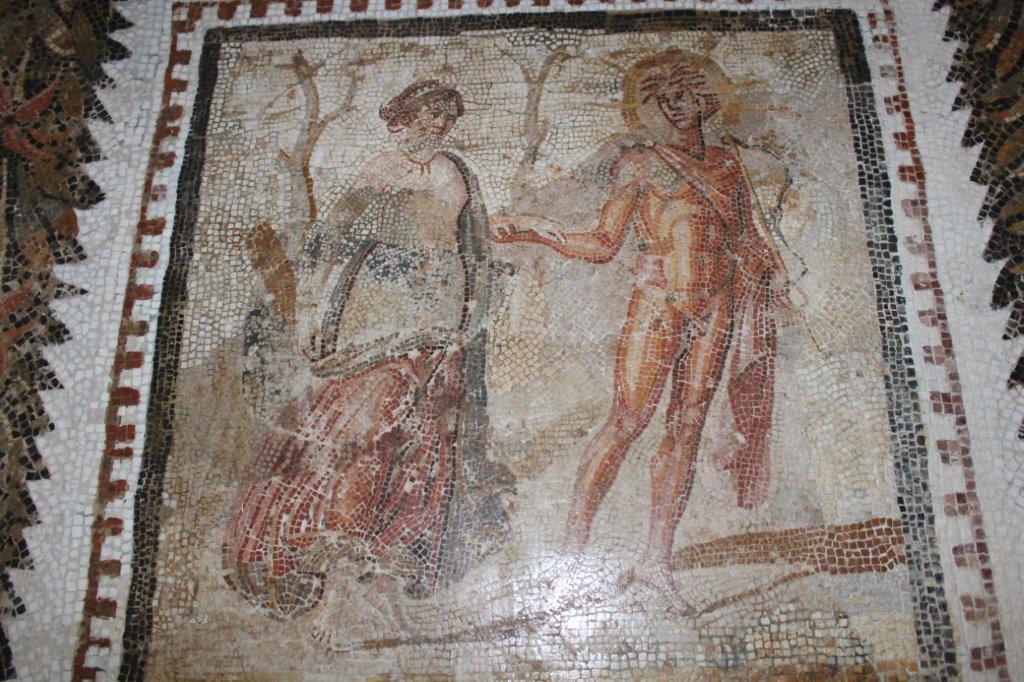
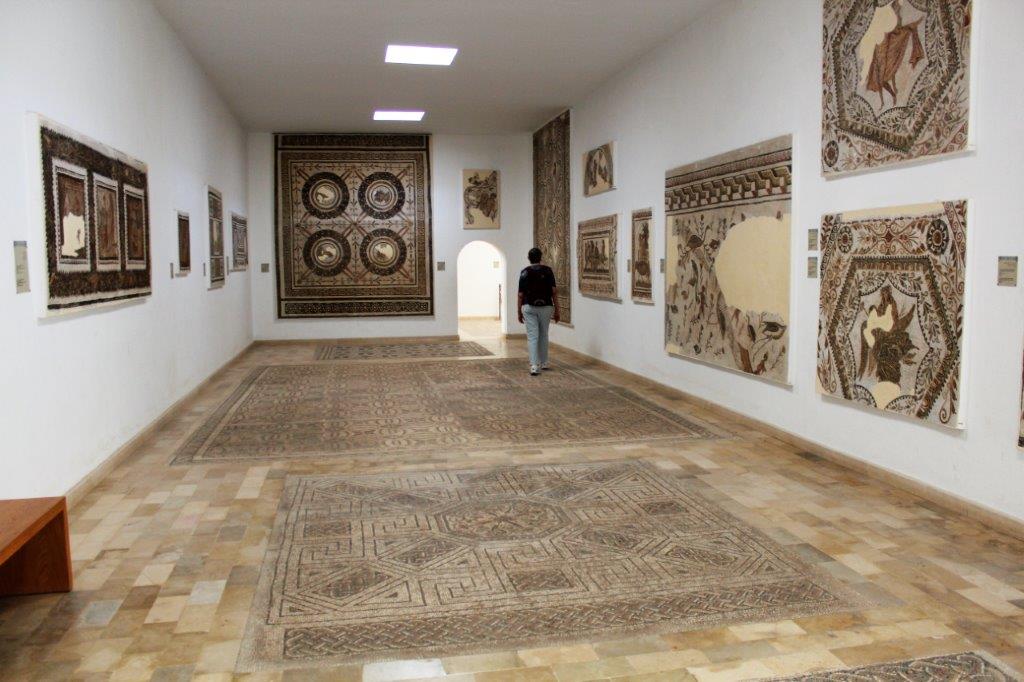
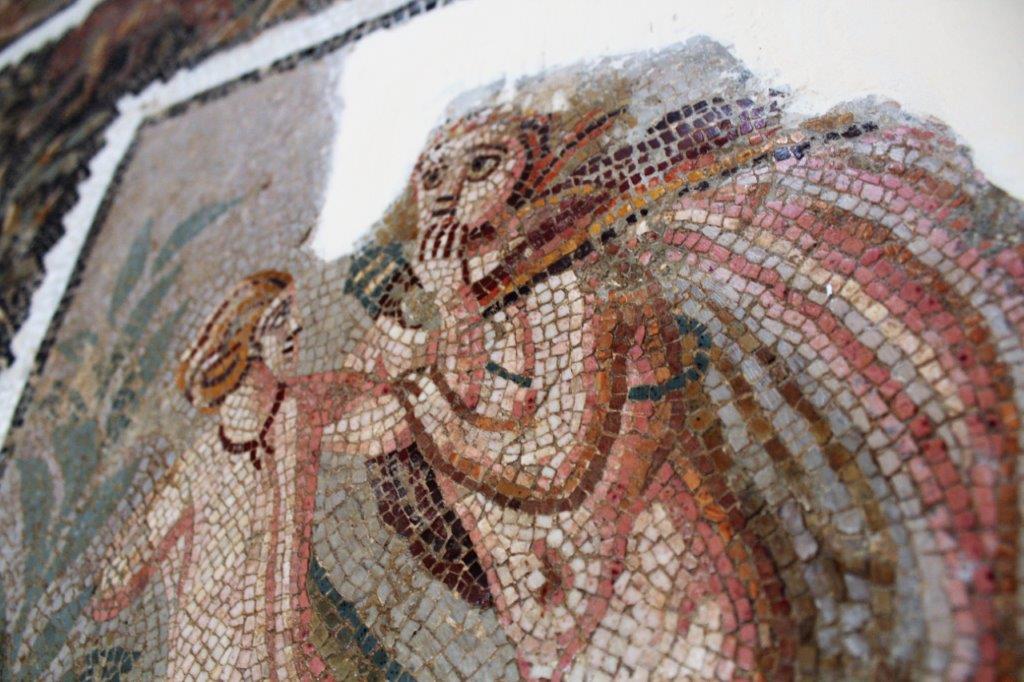
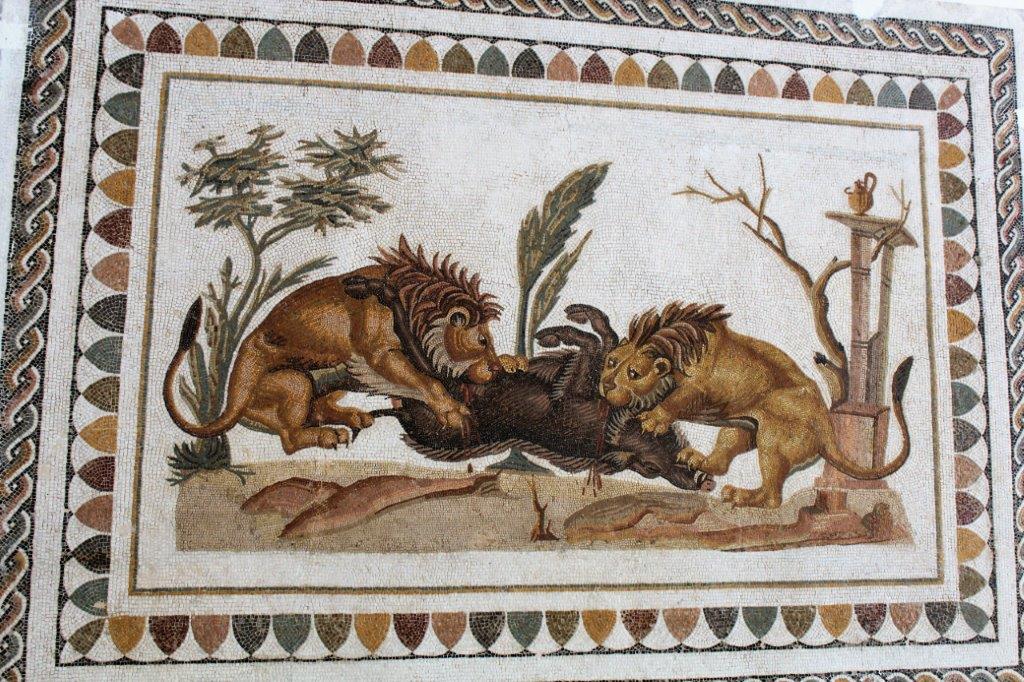
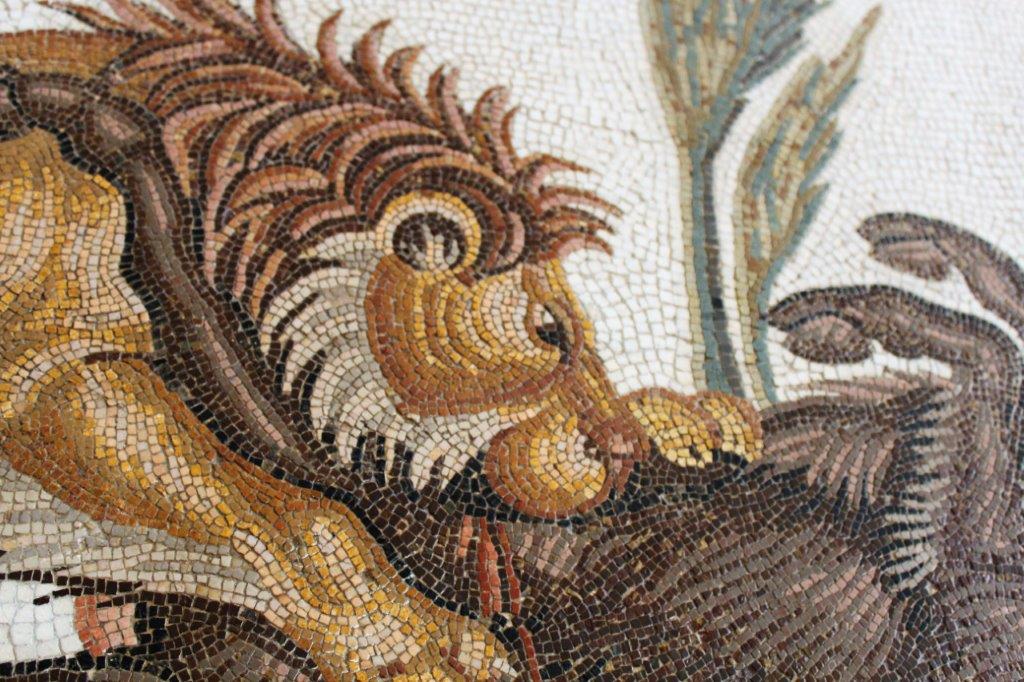
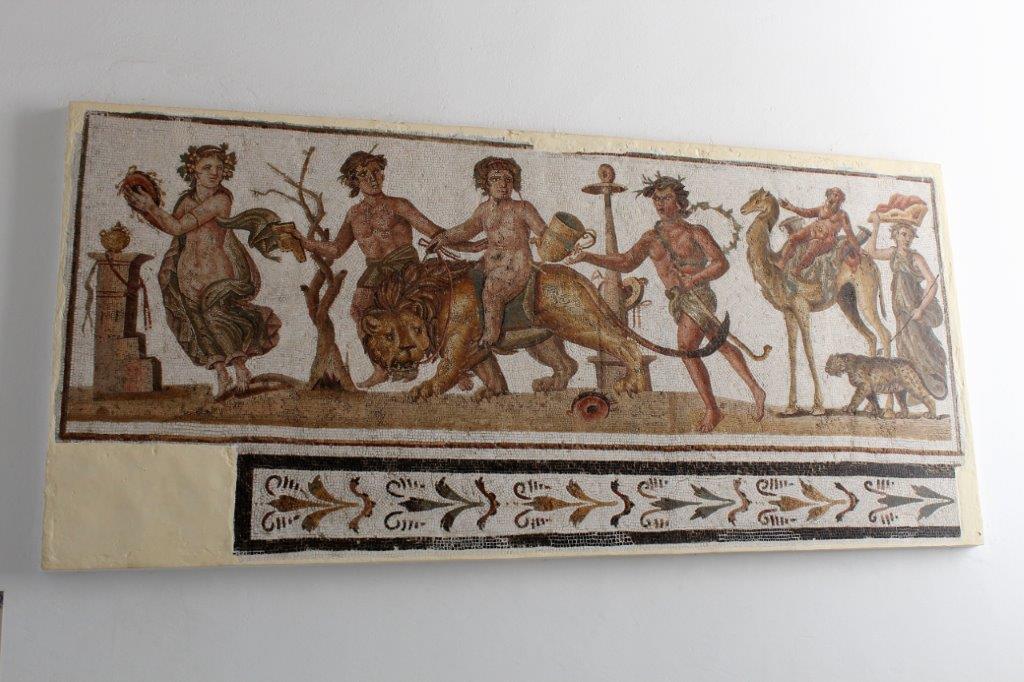
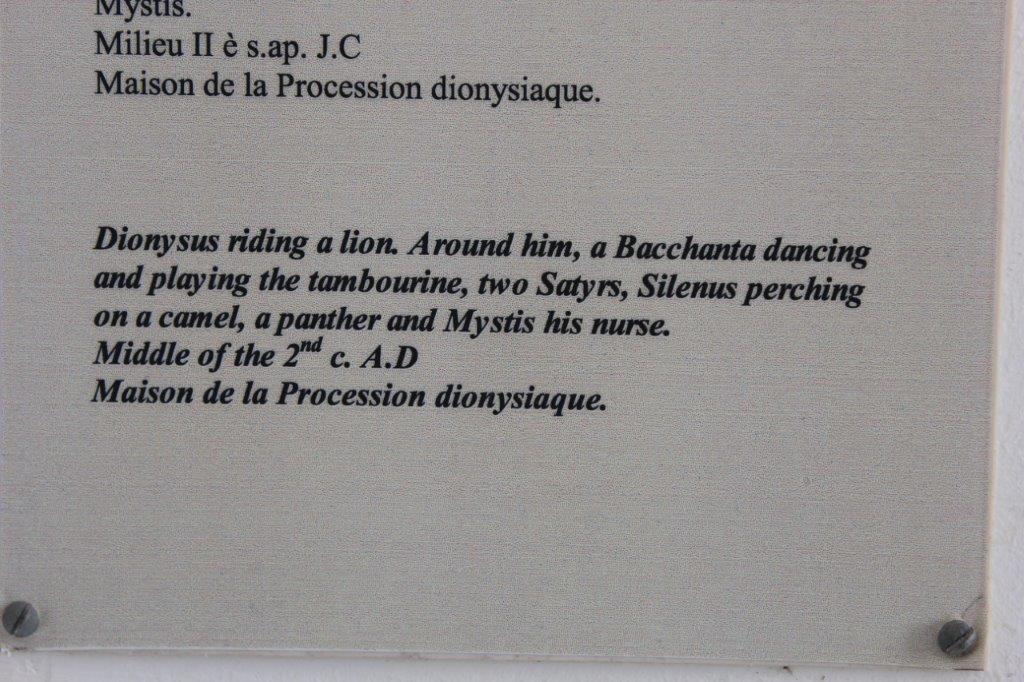
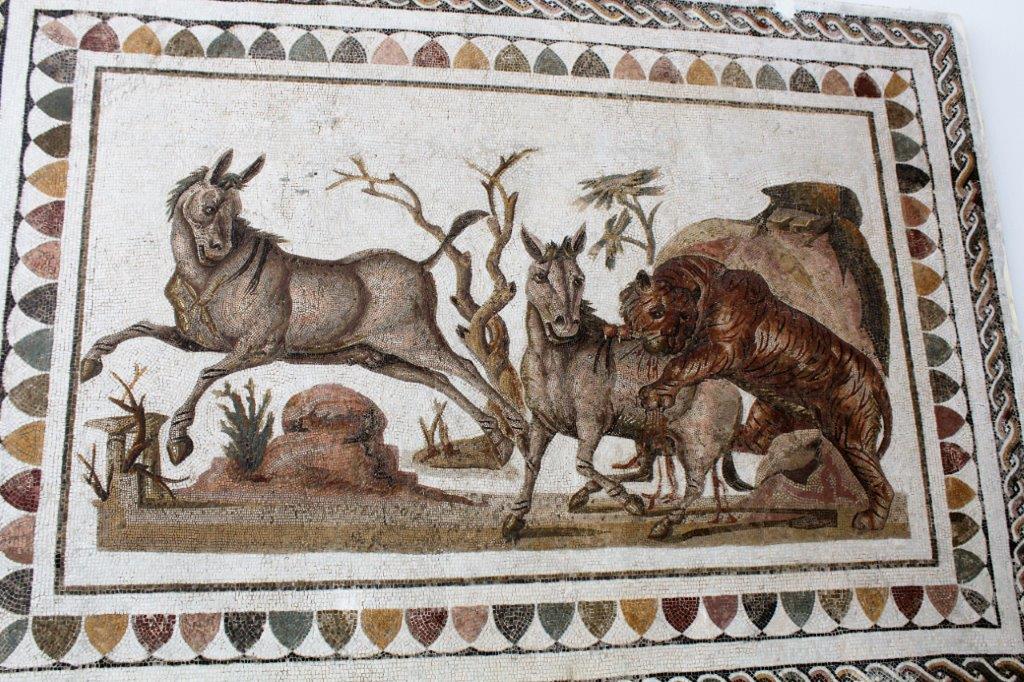
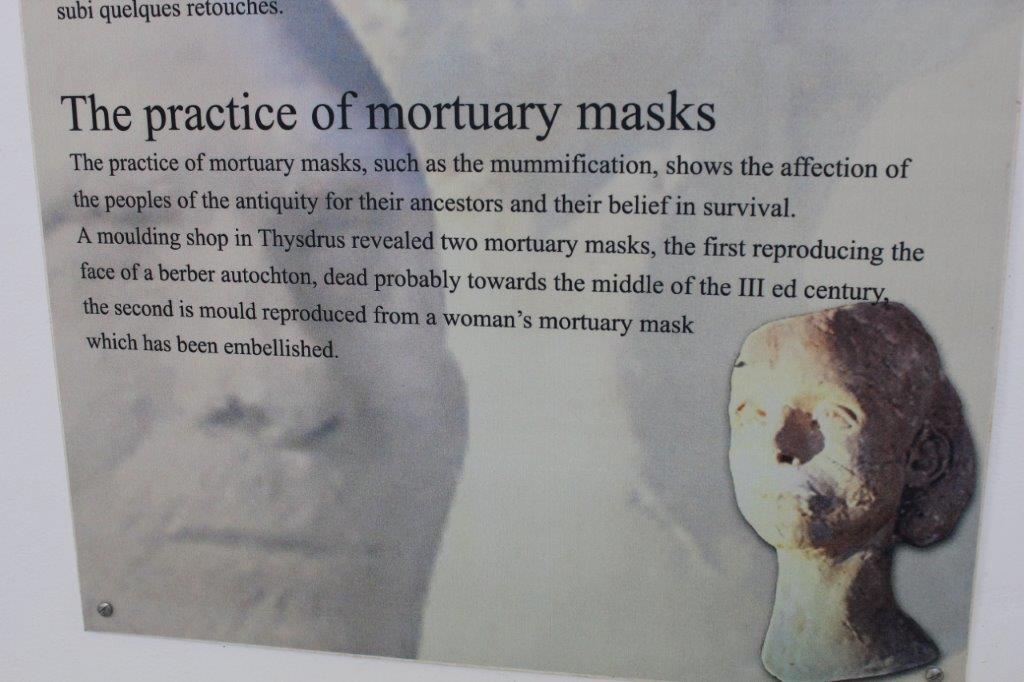
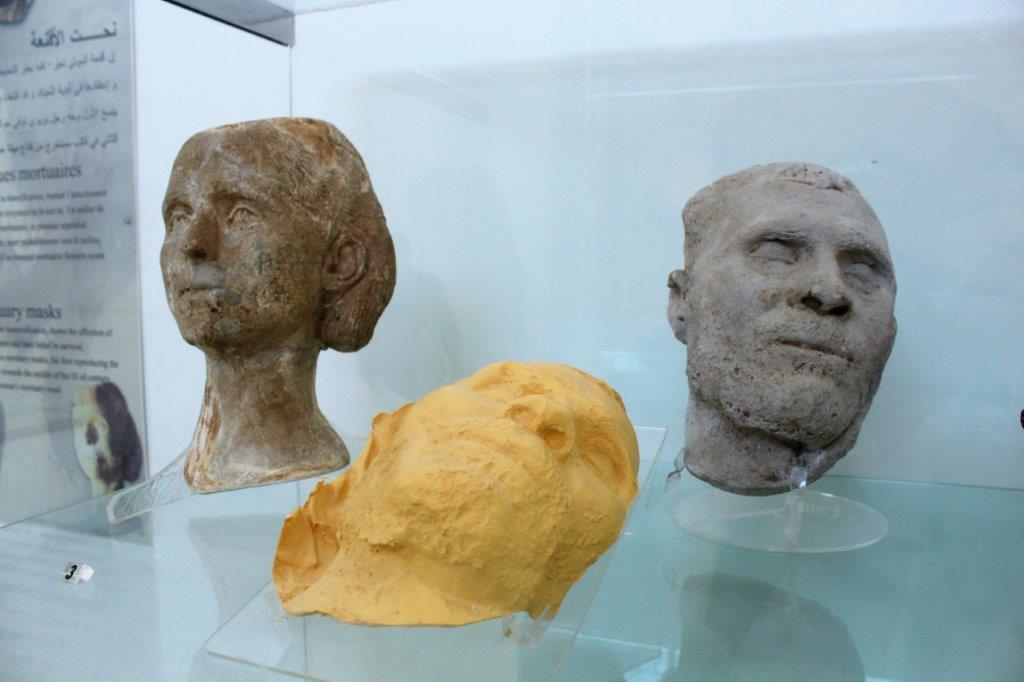
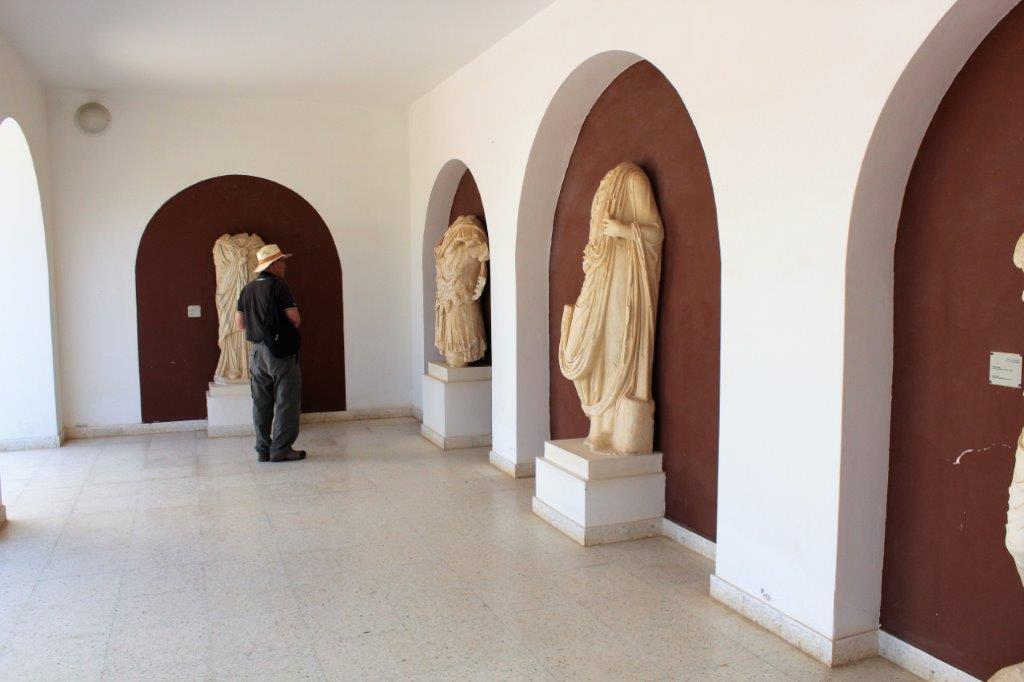
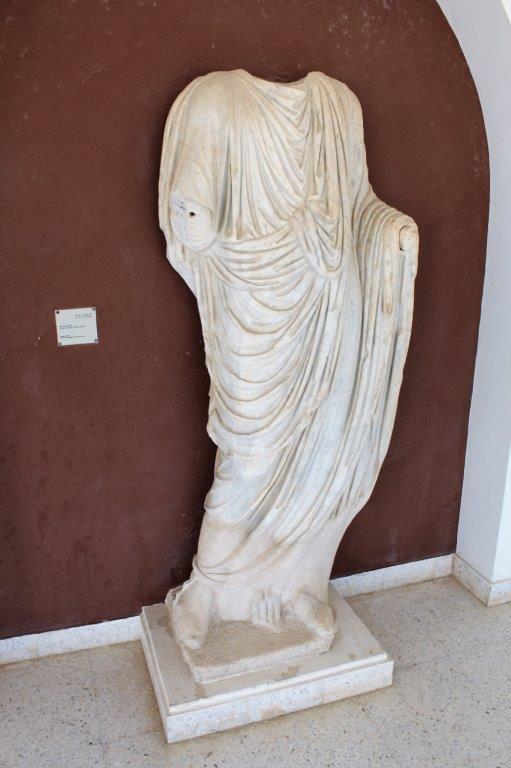
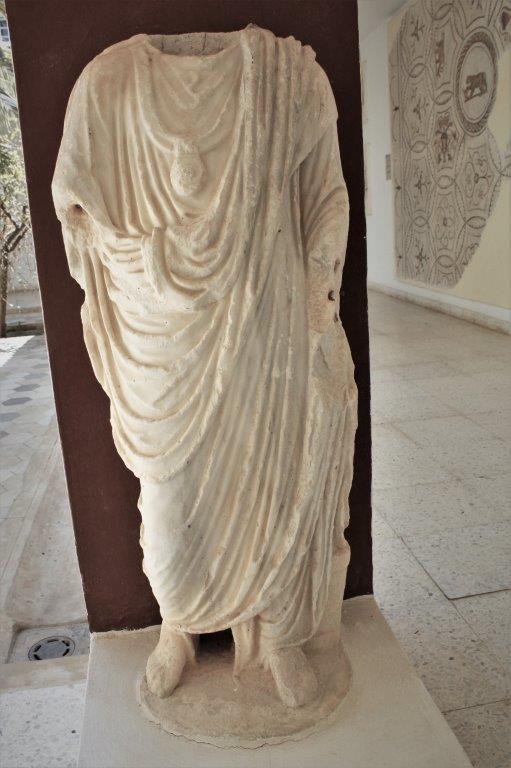
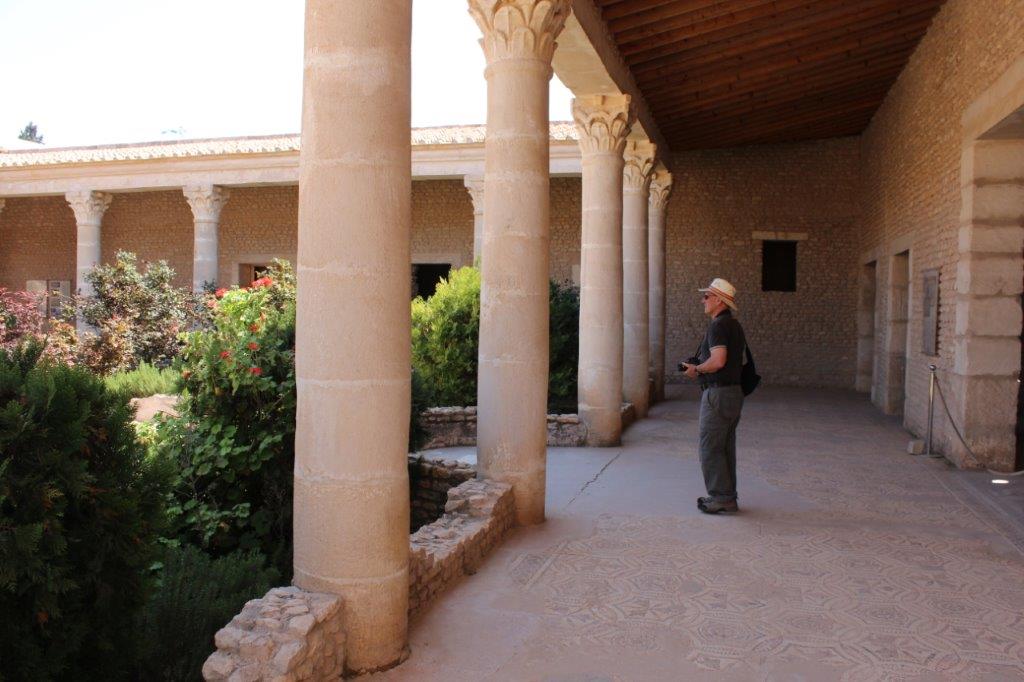
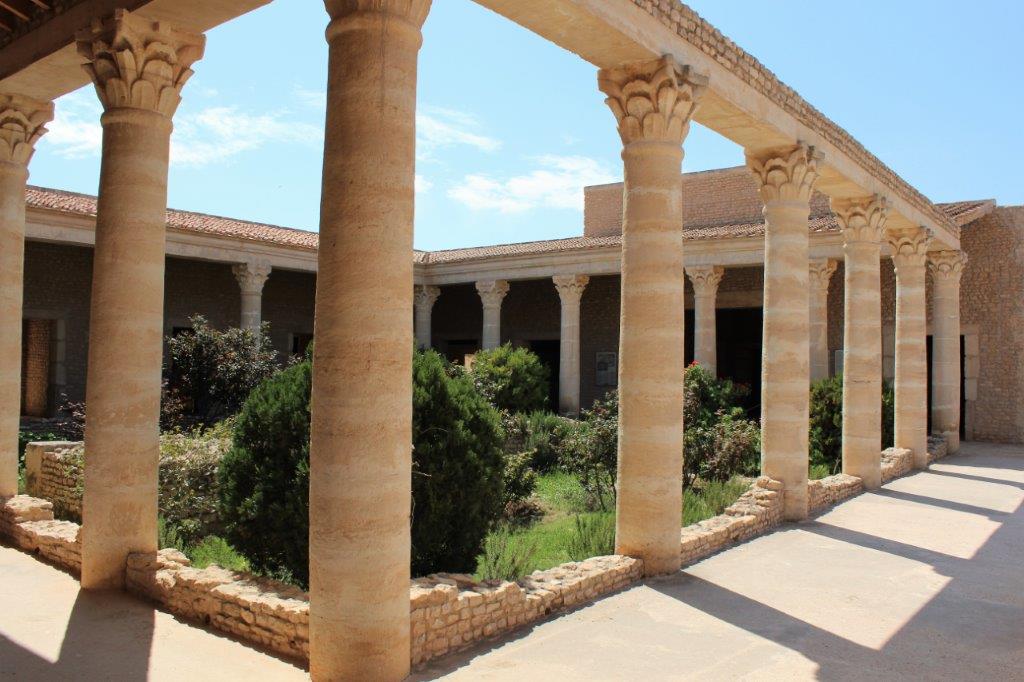
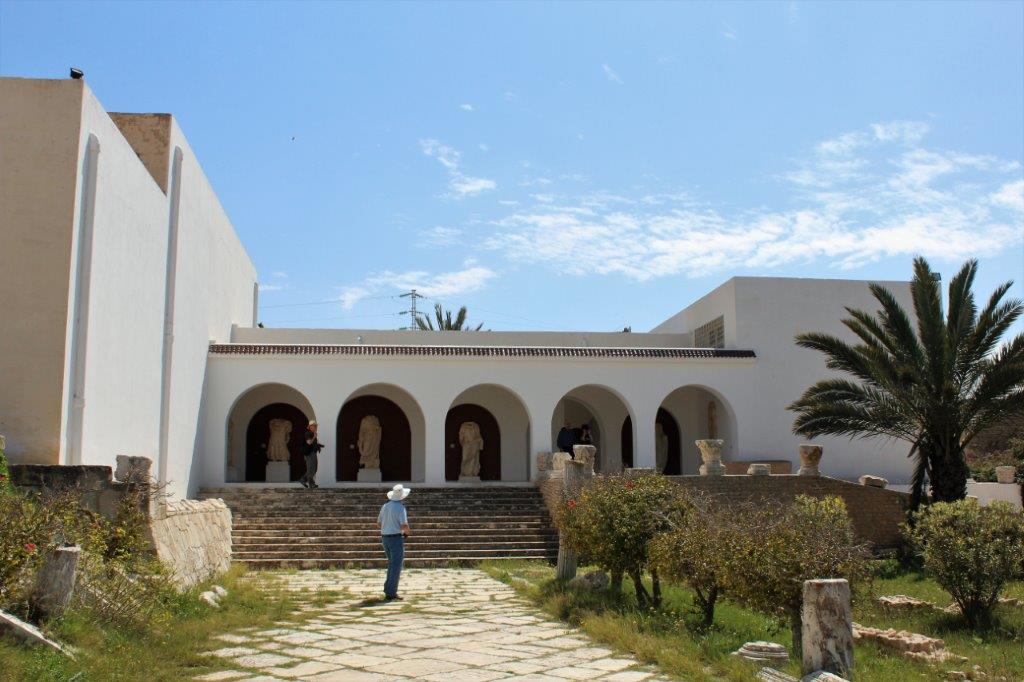
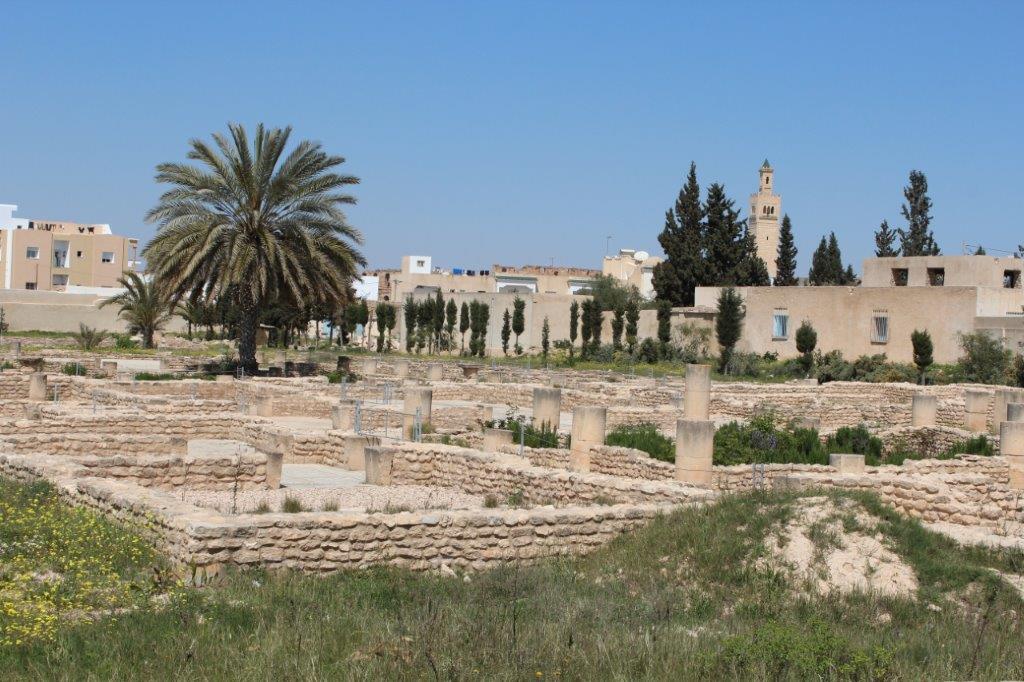
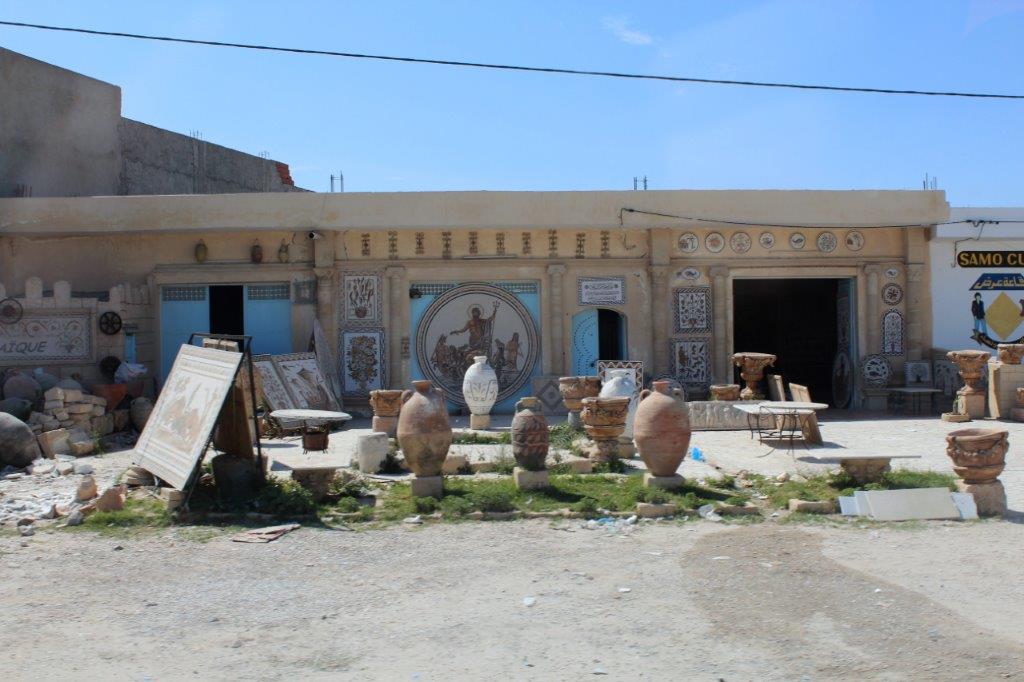
We thoroughly enjoyed touring the huge amphitheater in El Djem, an hour’s drive from Sousse.  Our next stop was the museum to see the Roman mosaics and re-constructed Roman villa. The tiles that make up these gorgeous designs are only about a quarter of an inch square.  That is an awful lot of tiles!  Many of the beautiful mosaics were made in the second or third century BC. In the museum there was also displays of mortuary masks and sculptures.

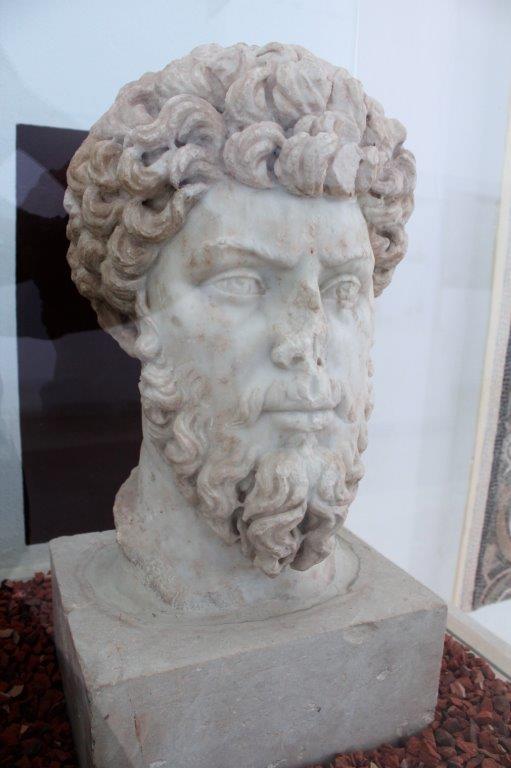
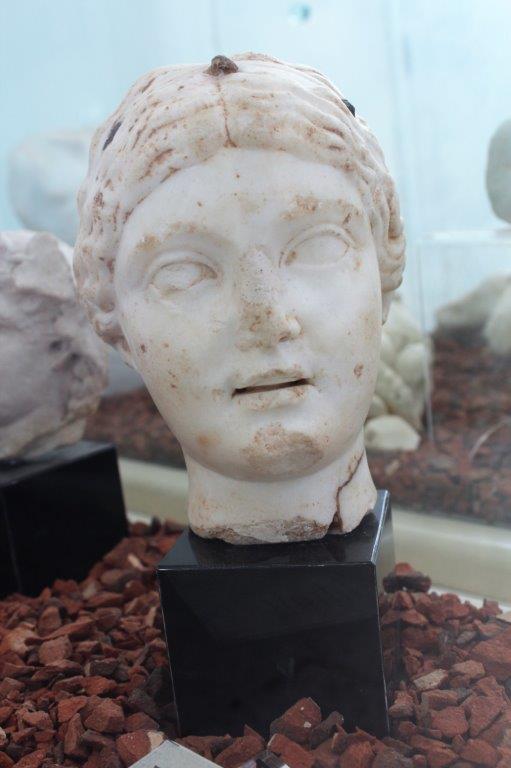
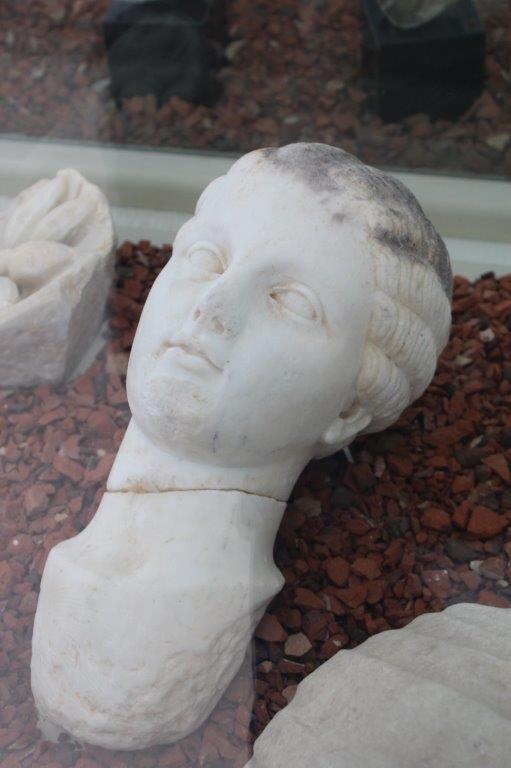
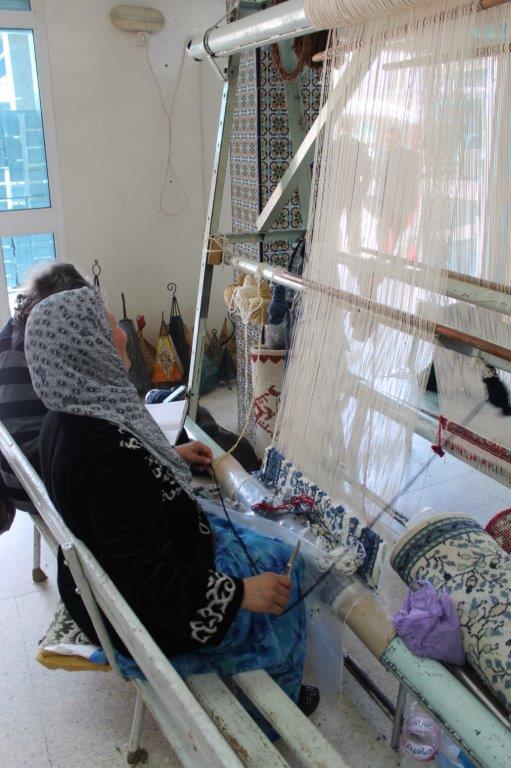
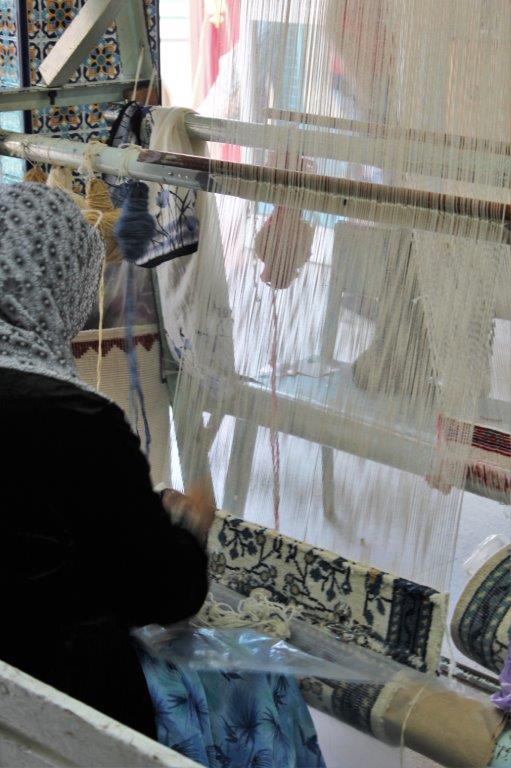
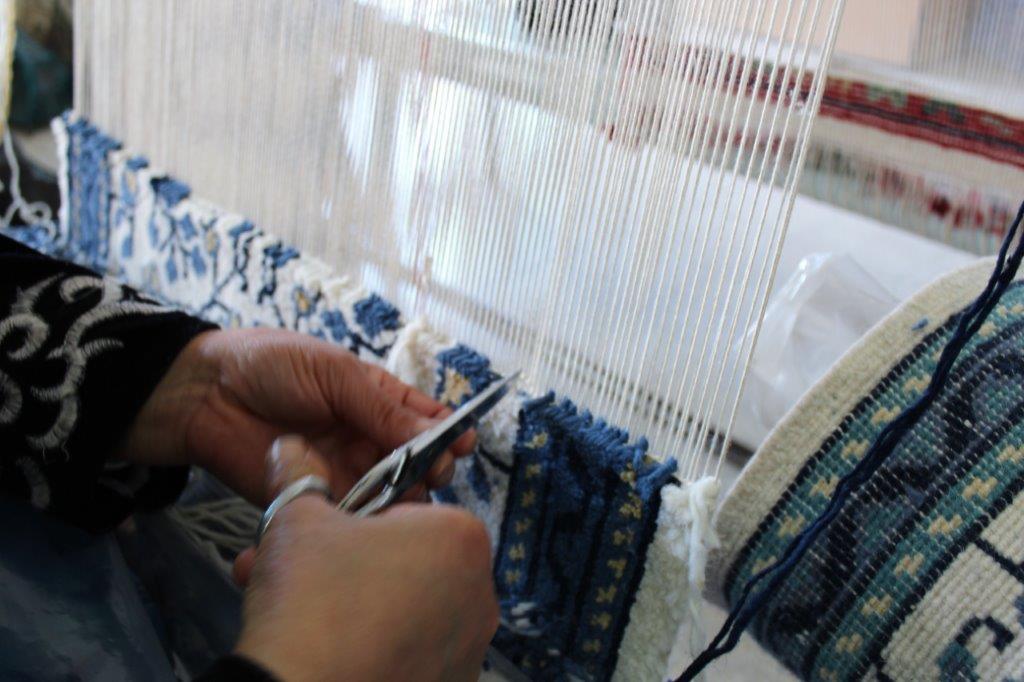
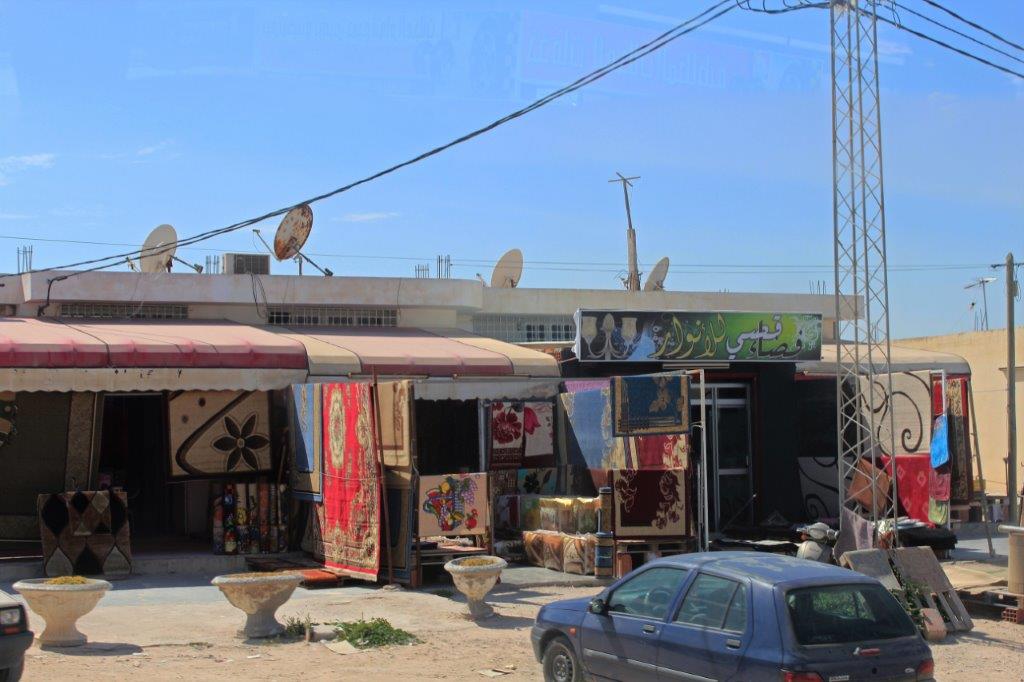
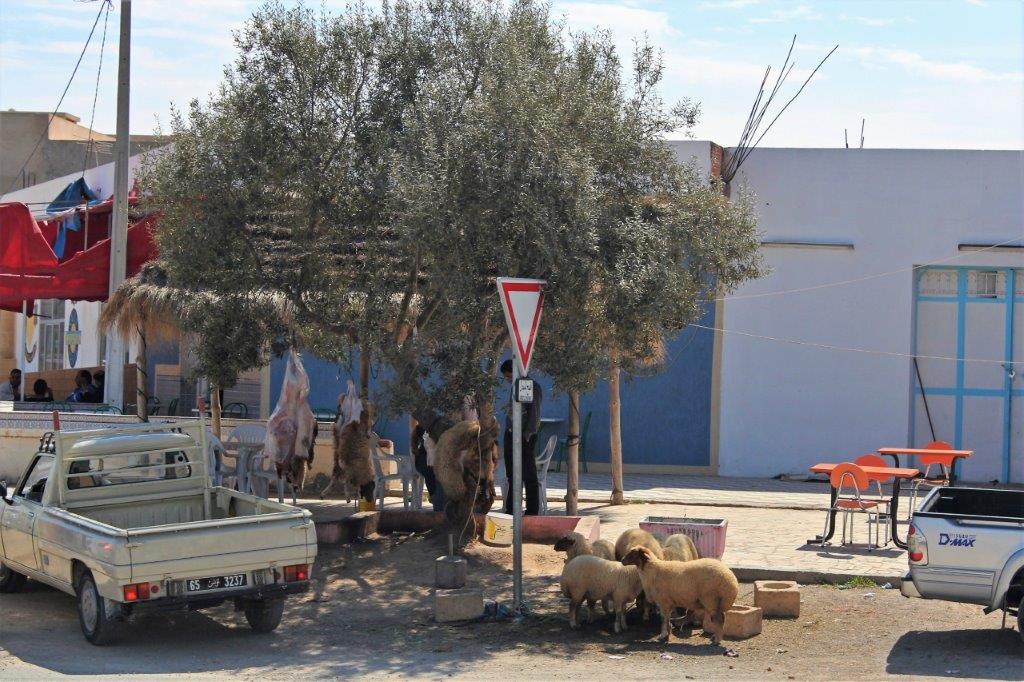
                                                                Lucius Verus 2 c AD Many wealthy or aristocratic Romans would commission statues of themselves or cities would want a statue of a civic leader or local hero.  It was customary for sculptors to have a selection of draped figures in various poses that could have a head (and often hands and arms) added in the likeness of the person.  This was efficient for the purchaser as well as the artist.  If, perhaps, the hero is no longer in favour the head could be removed and replaced with a more popular person. (One of our guides said this was the reason there were so many heads in museums.) The foundation, floors, courtyard and columns of the Roman villa are original and rest has been rebuilt. There was also a large archaeological site at the back of the property. Back on the bus on the way back to Sousse someone asked if we could make a stop for some shopping.   We did not want to go shopping but everyone else on the bus did.  And, surprise, surprise, the guide knew a wonderful place to buy all kinds of things that he assured us were authentic goods.  Many of the trinkets and knick-knacks were Made in China.  The proprietor herded everyone to the basment for a carpet-making demonstration.  The smoke and incense were so thick I scooted right back upstairs again.  There were two ladies knotting rugs on the main floor that we could watch. These rugs were being made in wool but they also make them with silk.  The wool rugs have several thousand knots per square meter.  The silk rugs can have as many as one million knots per square meter (just over three feet square).  We, unfortunately spent almost as much time in the shop as we had been allowed at the amphitheater and museum.  Not a fan of the shopping stops!  We arrived back at the port in time to catch the last tender back to the ship. This fellow was actually slaughtering the sheep right beside the road.   I guess you would be assured of fresh lamb or mutton for dinner. We had a second port-of-call in Tunisia.  The next day was spent further down the coast in Gabes, where we rode camels into the Sahara Desert.
 

2012 March 30 – Day 19 – Gabés, Tunisia (Part 2)

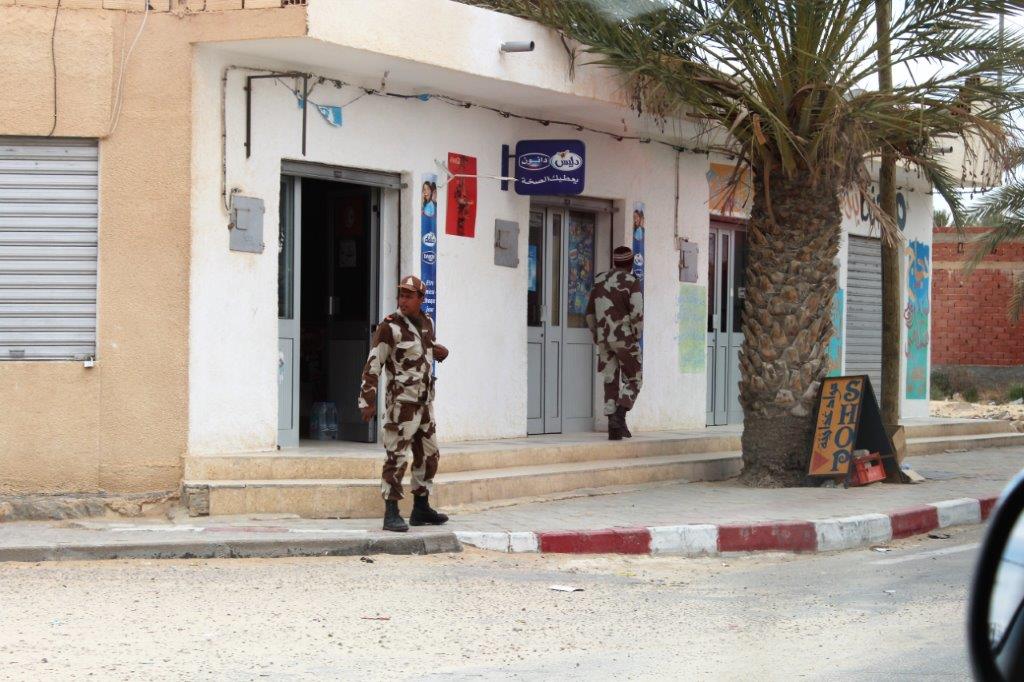
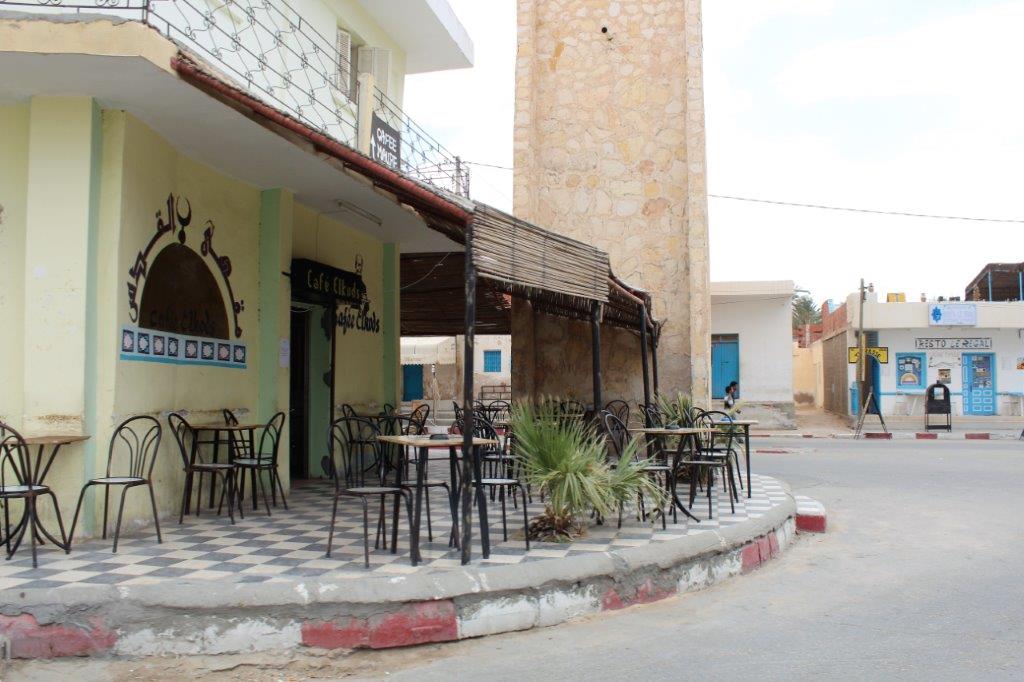
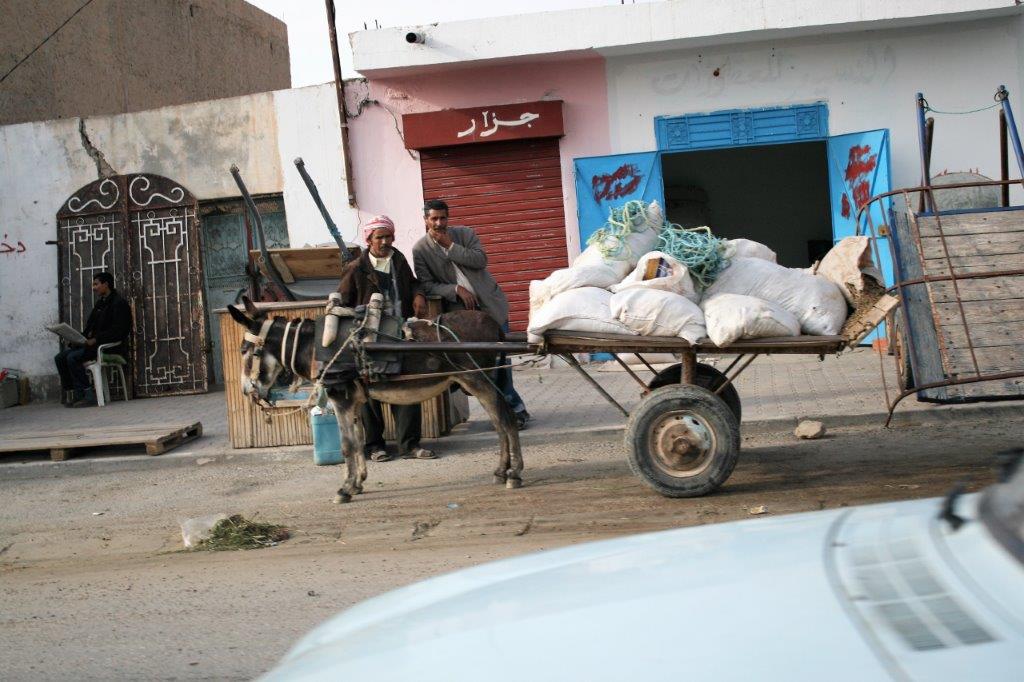
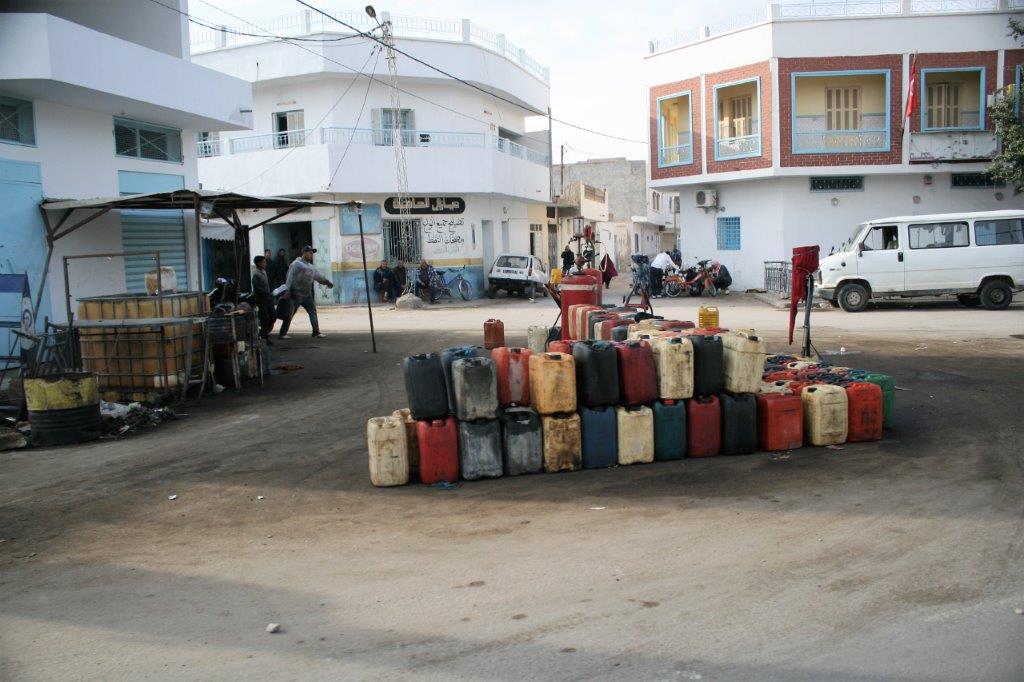
On the second half of our tour out of Gabés, Tunisia, the ride from Dous (called the Saharan Gate) to Kebili didn’t take too long and passed through more rugged desert lands.Tunisia is a democratic country and Tunisian’s are not the same as Arabs.  Also, a Berber is not the same as a Nomad.  Berber’s stay in one place; Nomads travel to find grazing for their flocks. So you can have a Tunisian Berber, or a Tunisian Nomad, and an Arab Berber or an Arab Nomad.

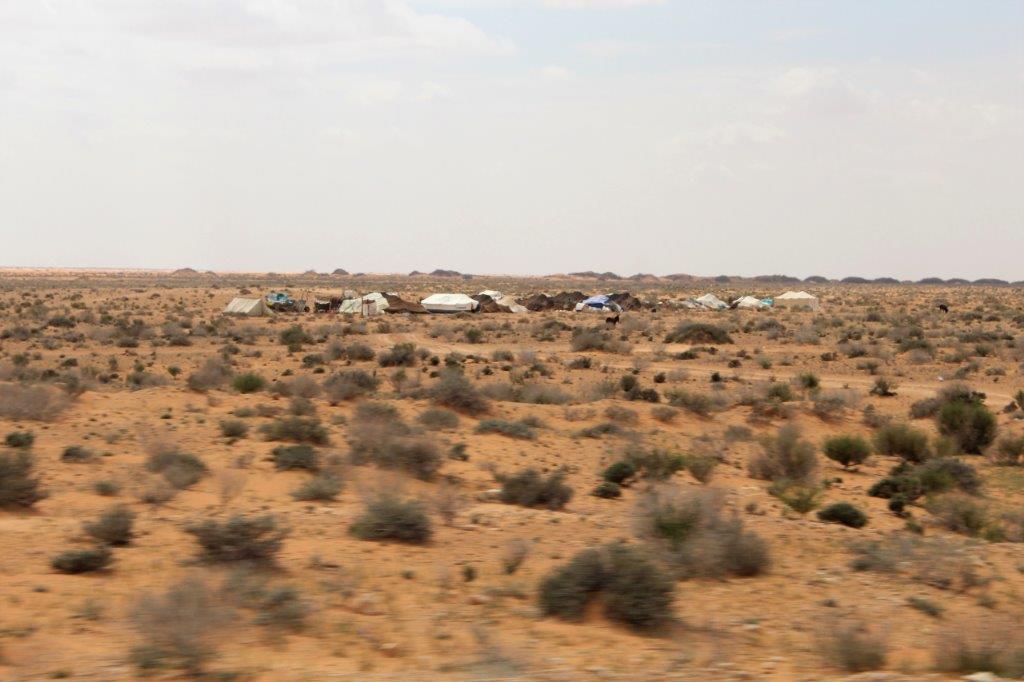
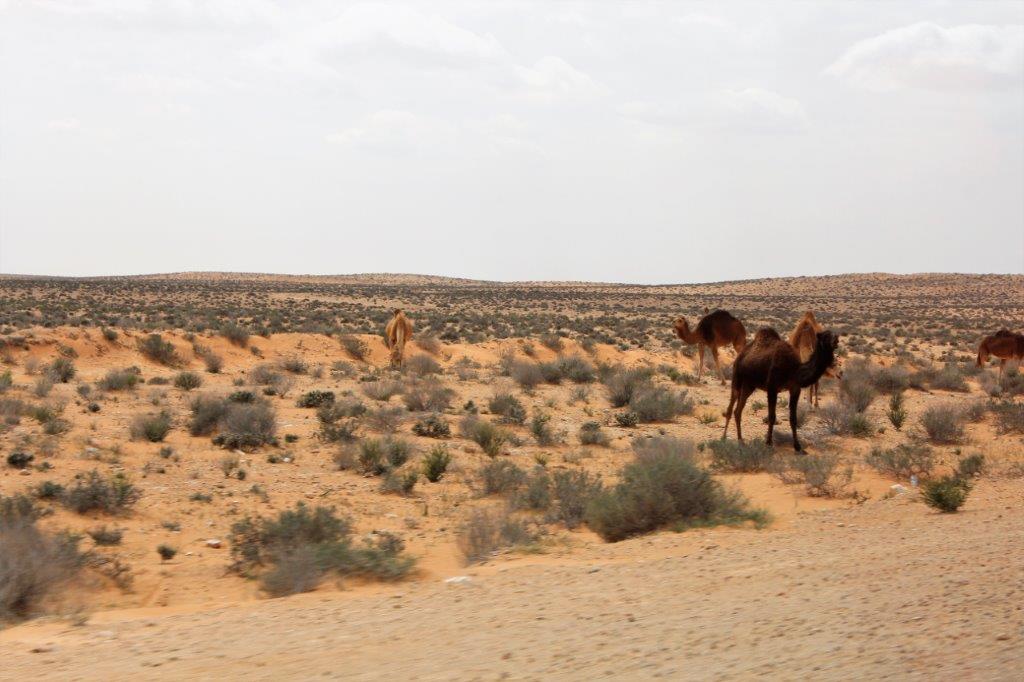
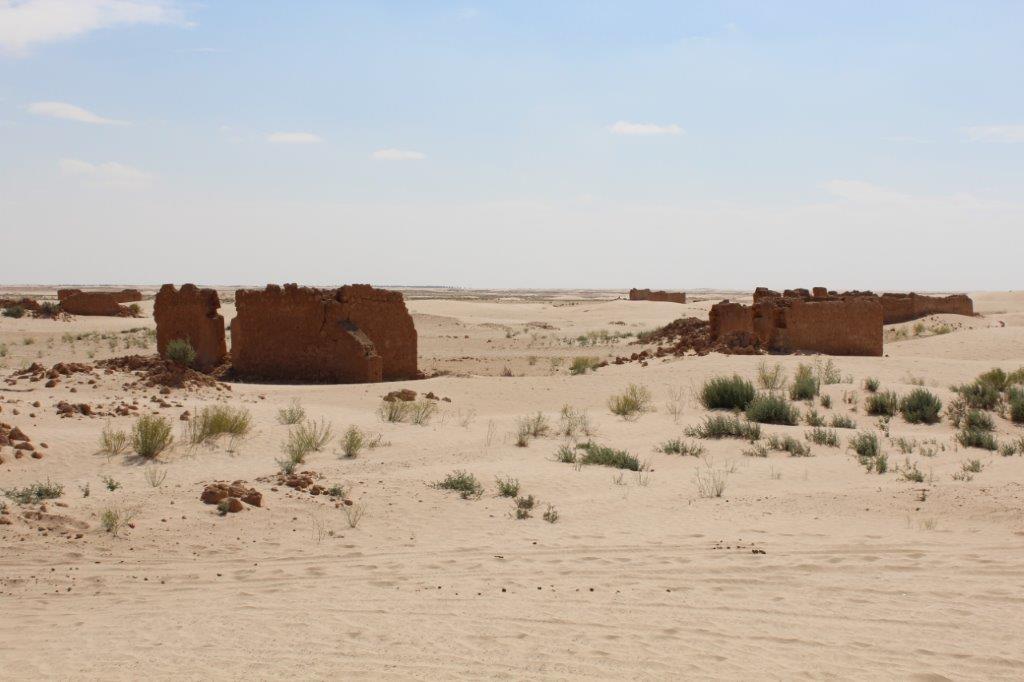
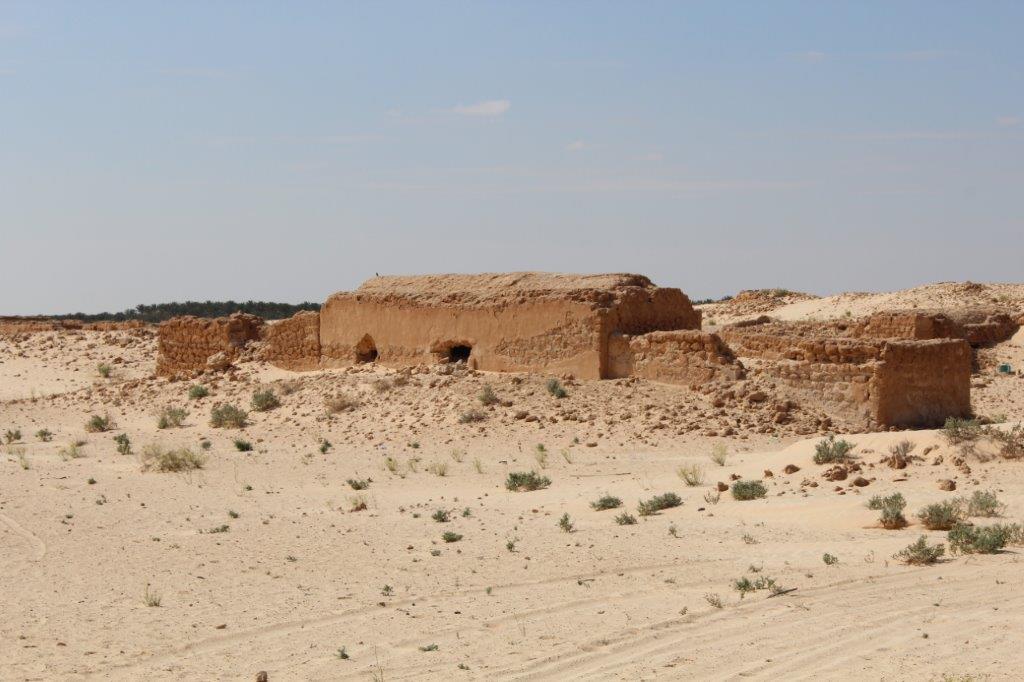
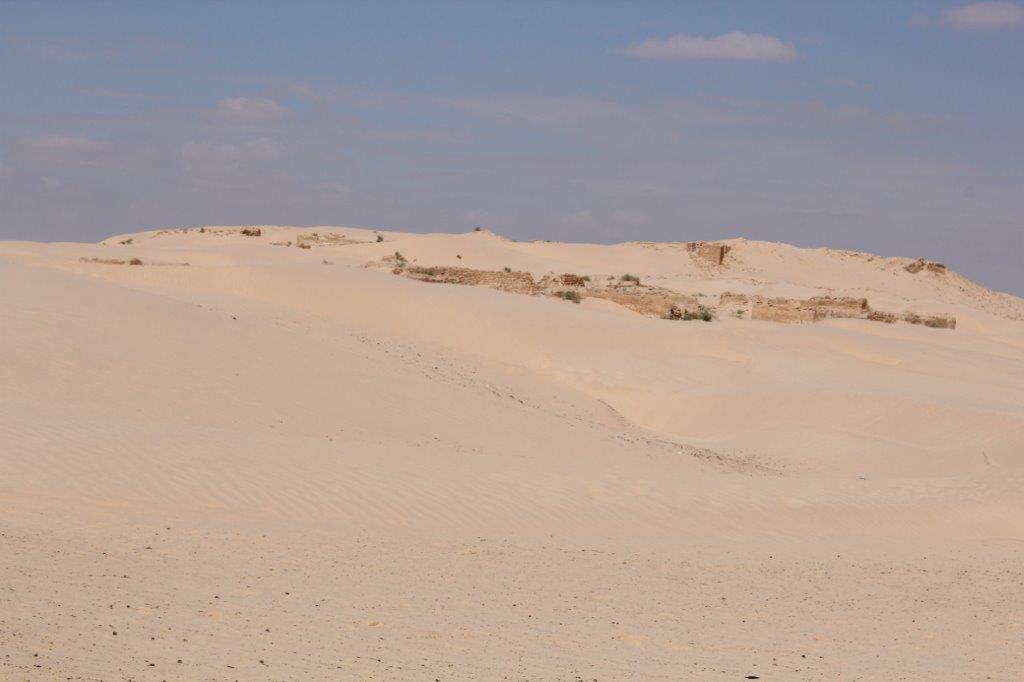
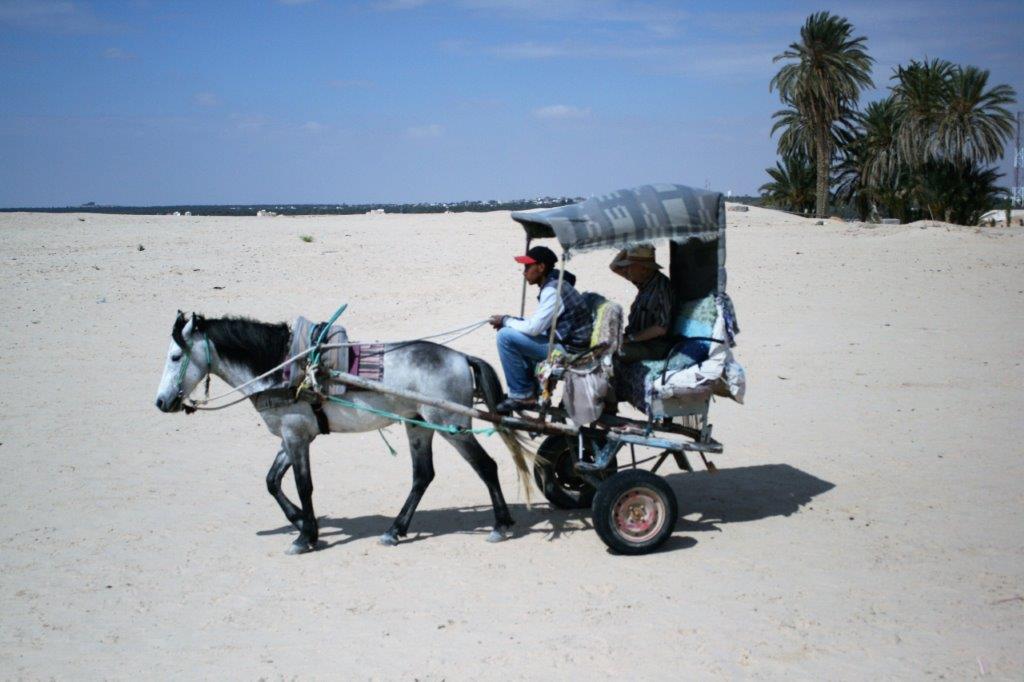
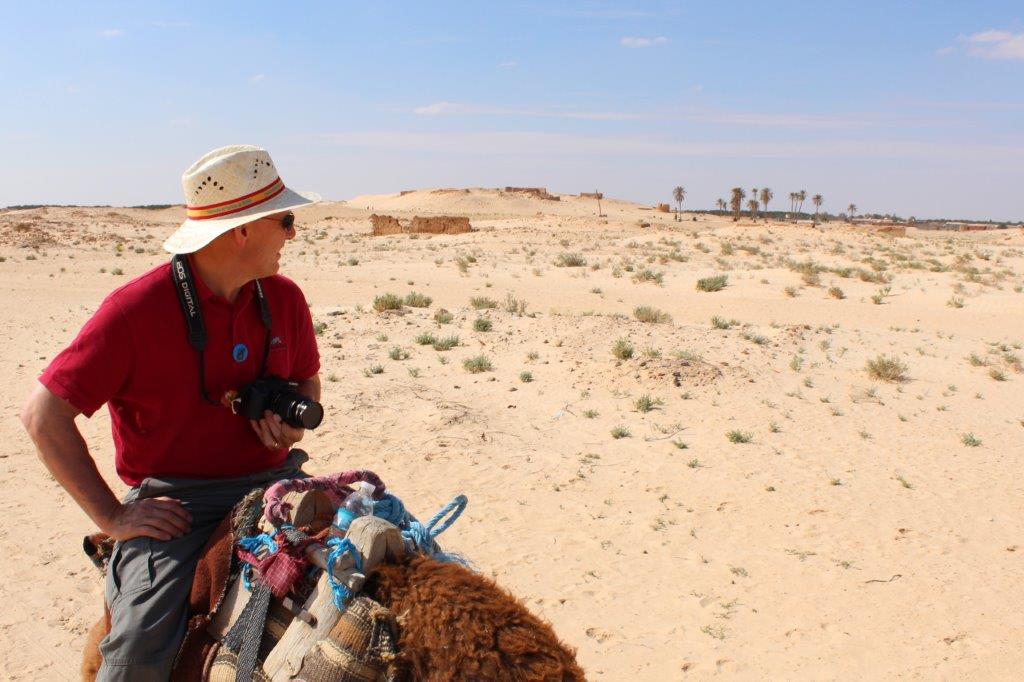
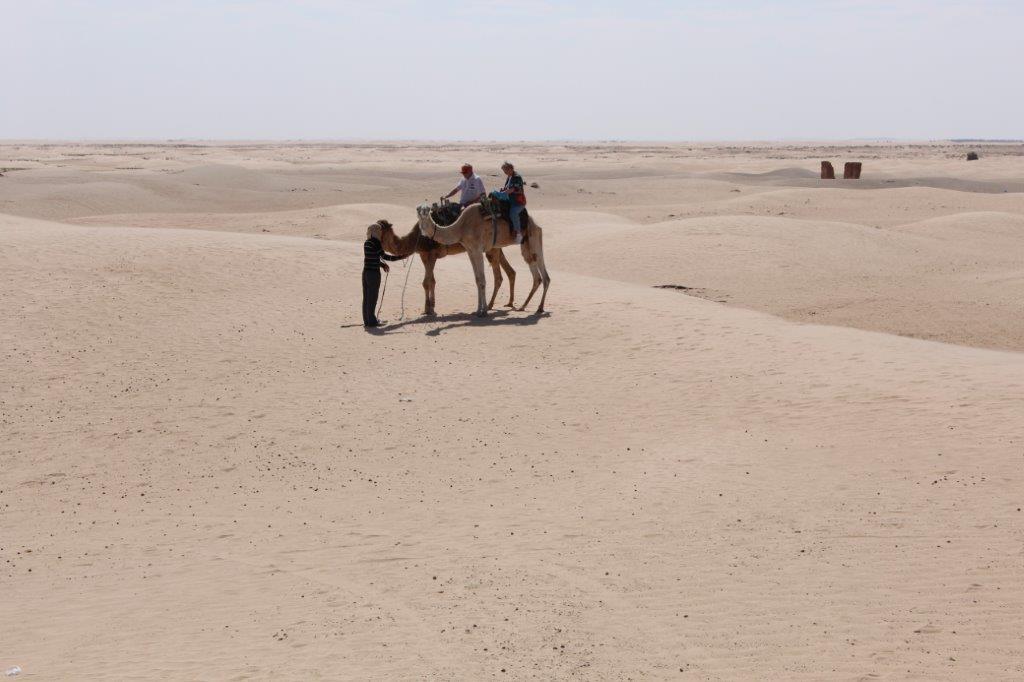
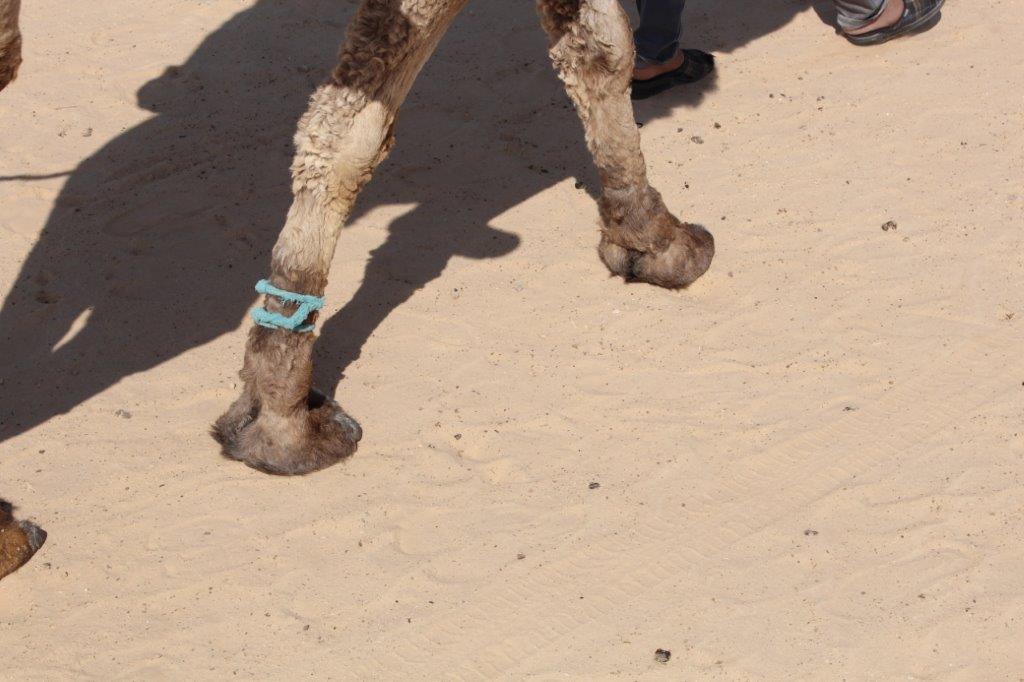
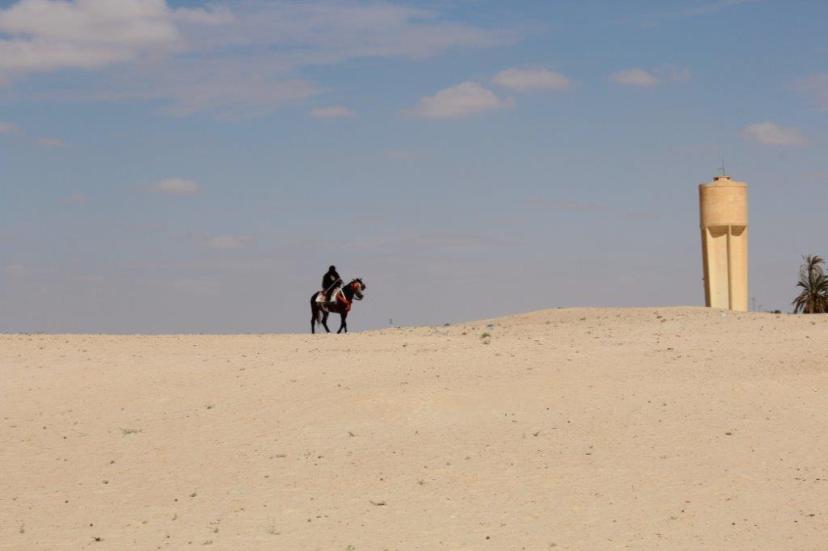
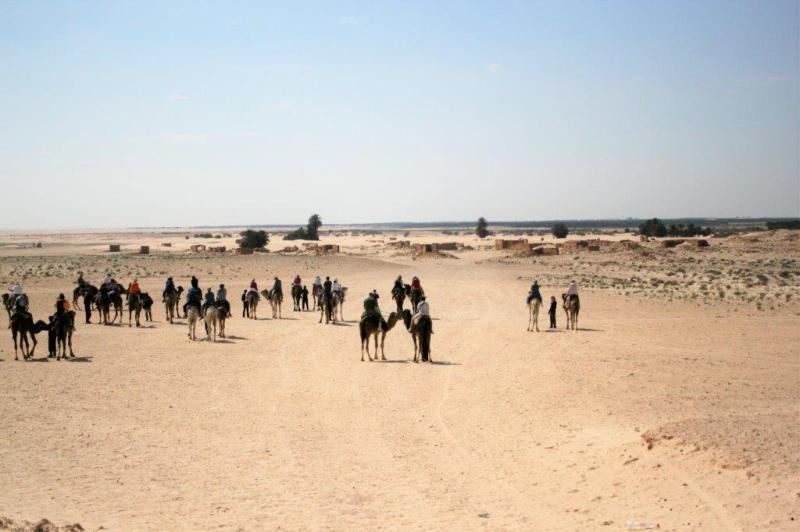
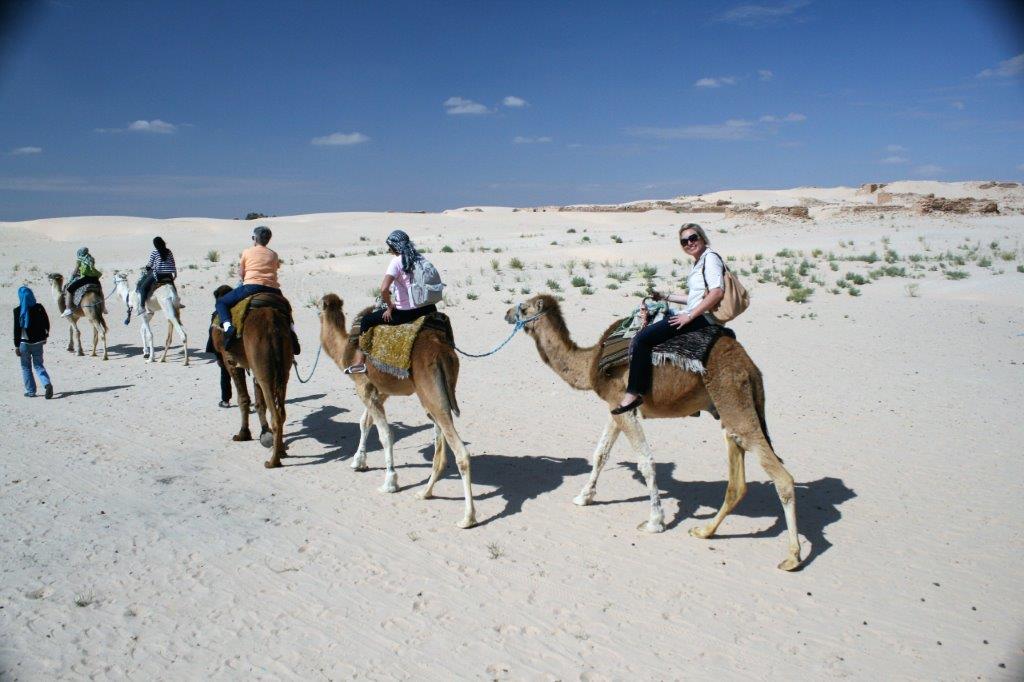
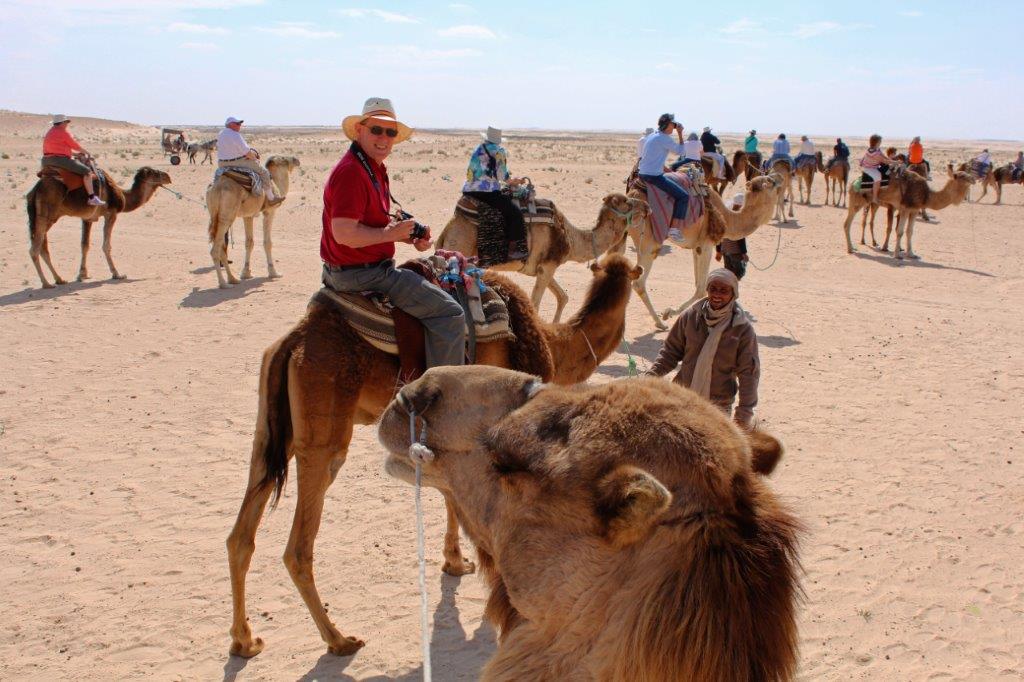
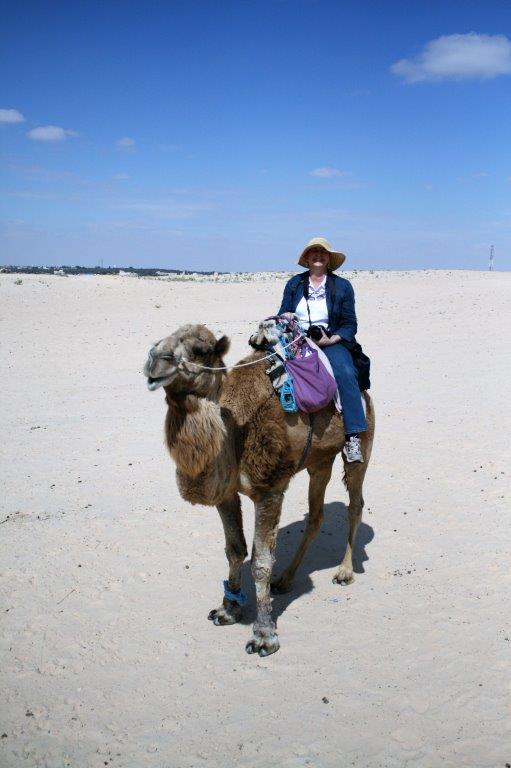
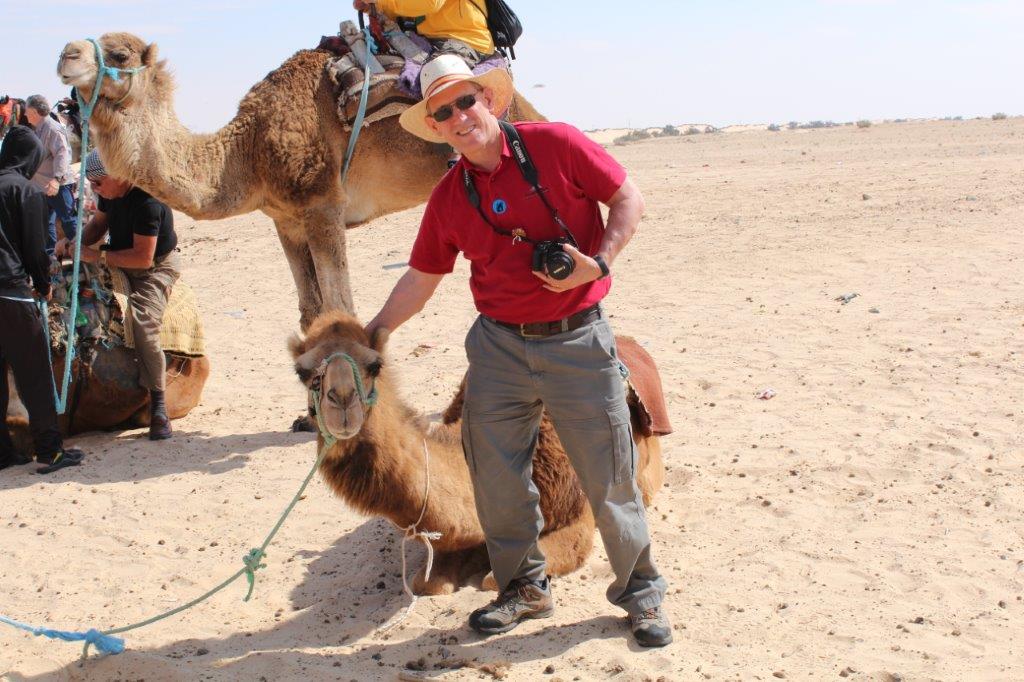
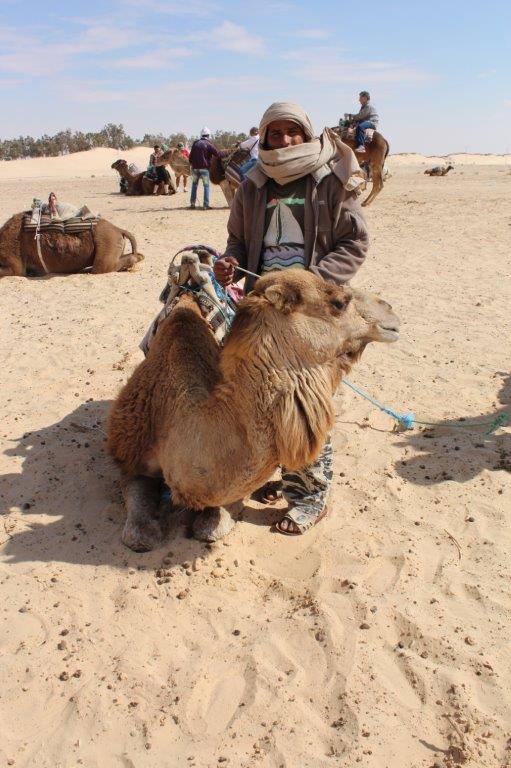
                                         This is a Nomad camp. The oases town of Kebili has the earliest hard evidence of human habitation in Tunisia. The town has the same name as the Governorate (district), which has a total population of over 150,000 and borders Algeria.  The best times to visit are spring and fall since winters are very cold and summers are very hot. When we arrived at the camp at the edge of the Sahara Desert were were given the option to ride in a horse-drawn cart or ride on the back of a dromedary.  There are no camels in Tunisia, we were informed, only dromedaries.  Camels have two humps, dromedaries only have one.  This ride was very different from the short walk around the paddock that we did in Australia the year before.  This time we had a 30-40 minute ride into the sands of the Sahara.          The desert will eventually reclaim anything and everything.My dromedary was the father of John’s five-year old.  Our handler was Ali and he was a really neat, friendly guy.  The ‘saddle’ is right at the back behind the hump so it is feels pretty weird.

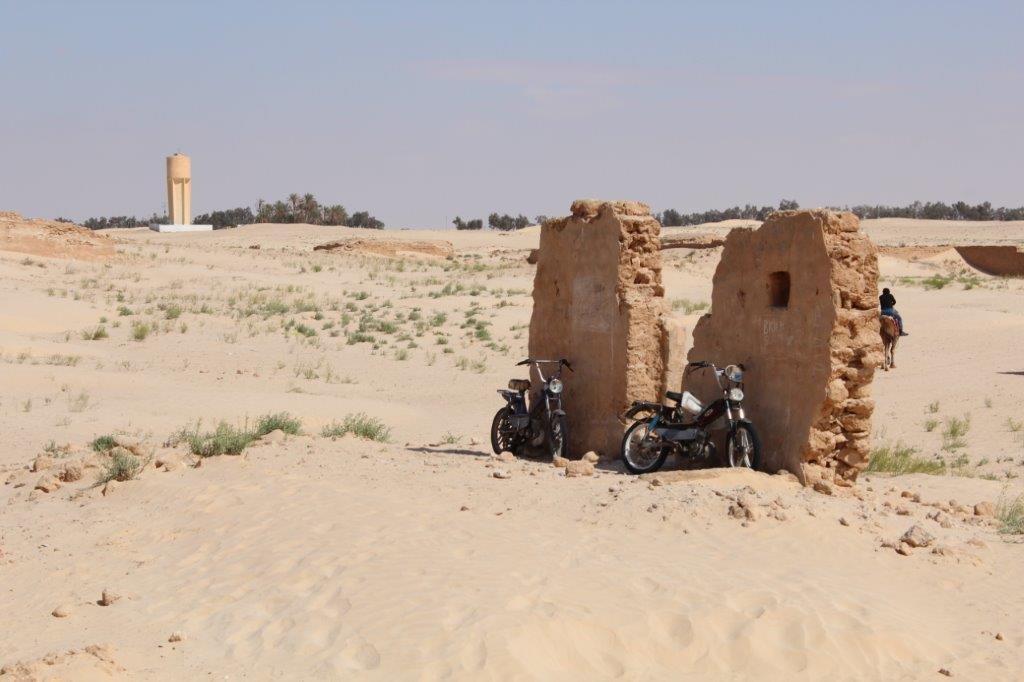
You have to keep the bikes in the shade as much as possible for your ride home after work.

We managed, not very gracefully, to get off the dromedaries, which is no mean feat, as they fold their front legs down to the ground and then drop the back.  It is the reverse to rise: the back legs straighten up and then the front legs follow.  You better be holding on or you will be on the ground.                                                                               The sand is as fine as icing sugar.

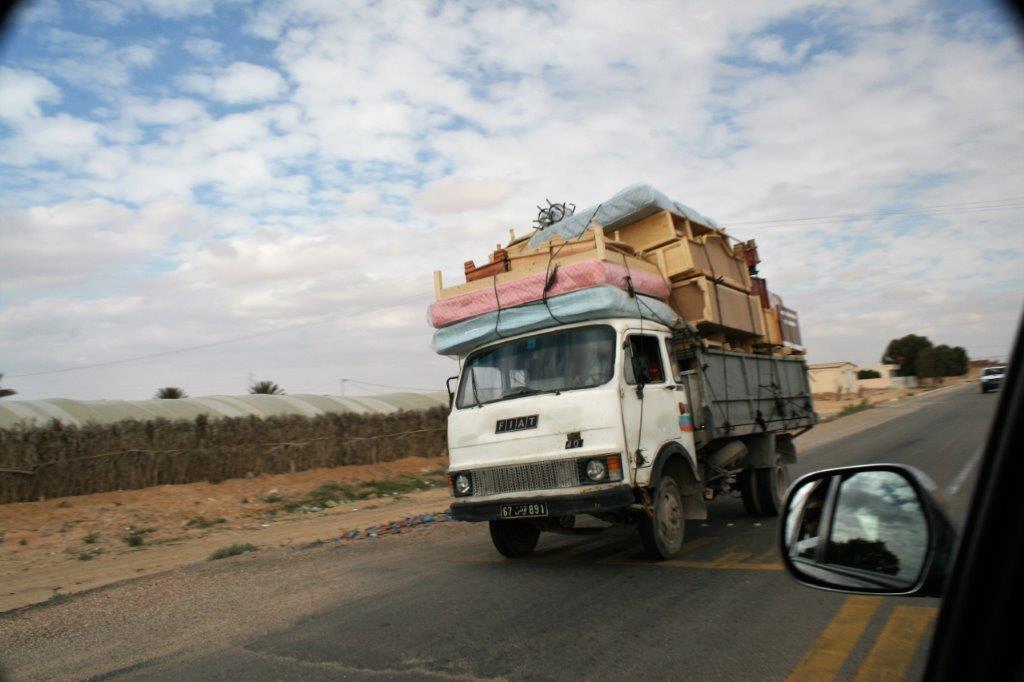
Our desert ride over, it was back in the trucks for the ride back to port; via a different route.  We arrived late. The ship should have sailed 15 minutes earlier.   One of the major benefits of paying the extra money for a ship arranged excursion – the ship will wait for you if you are delayed by something or just running late.
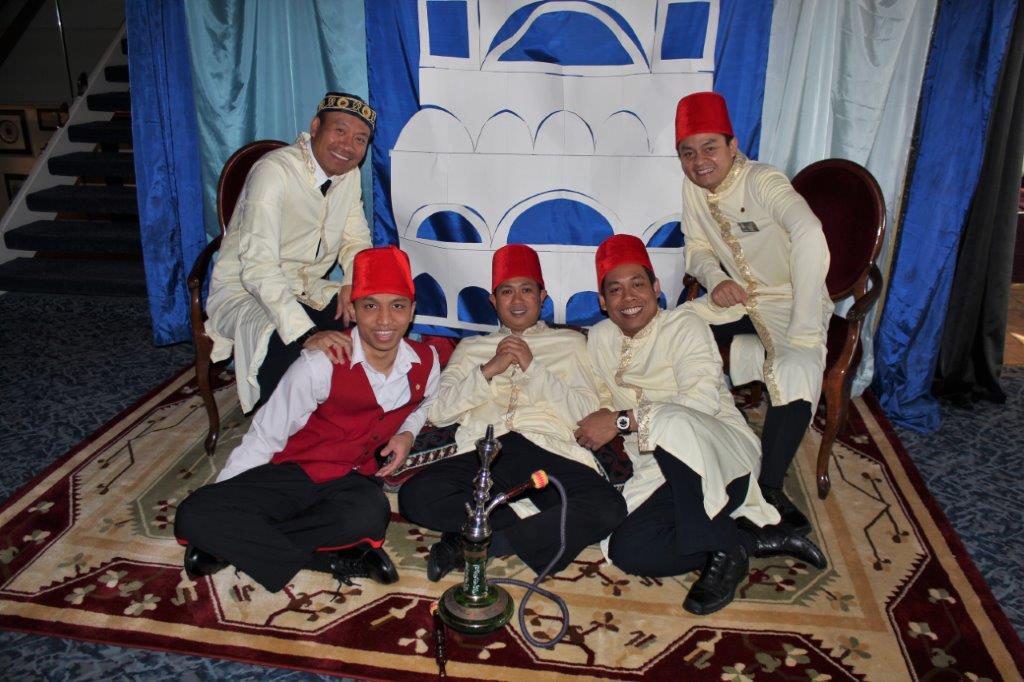
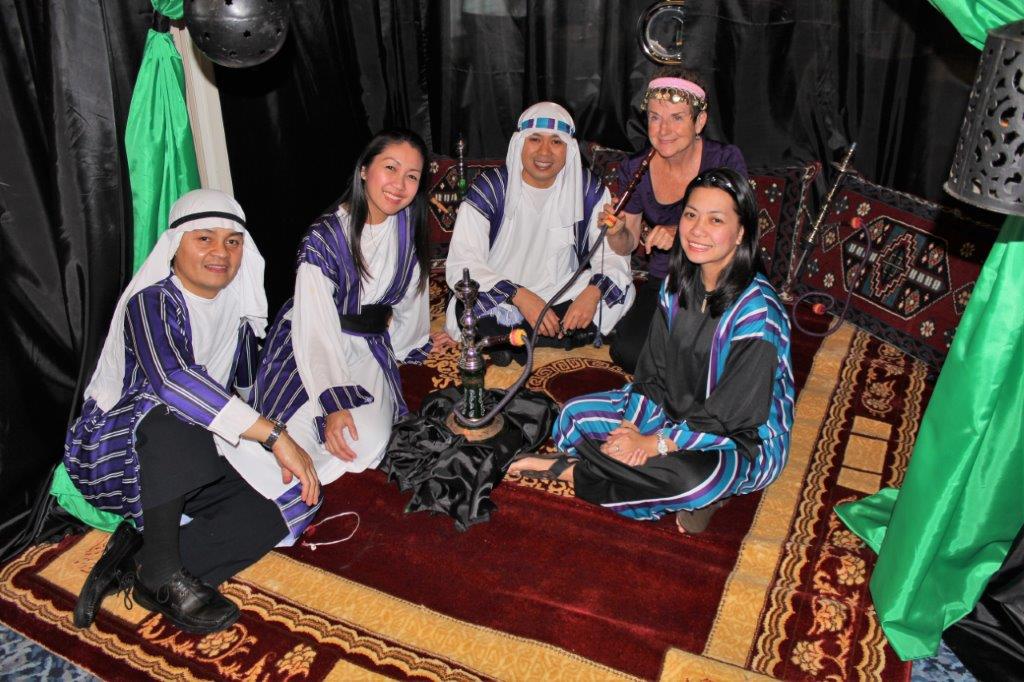
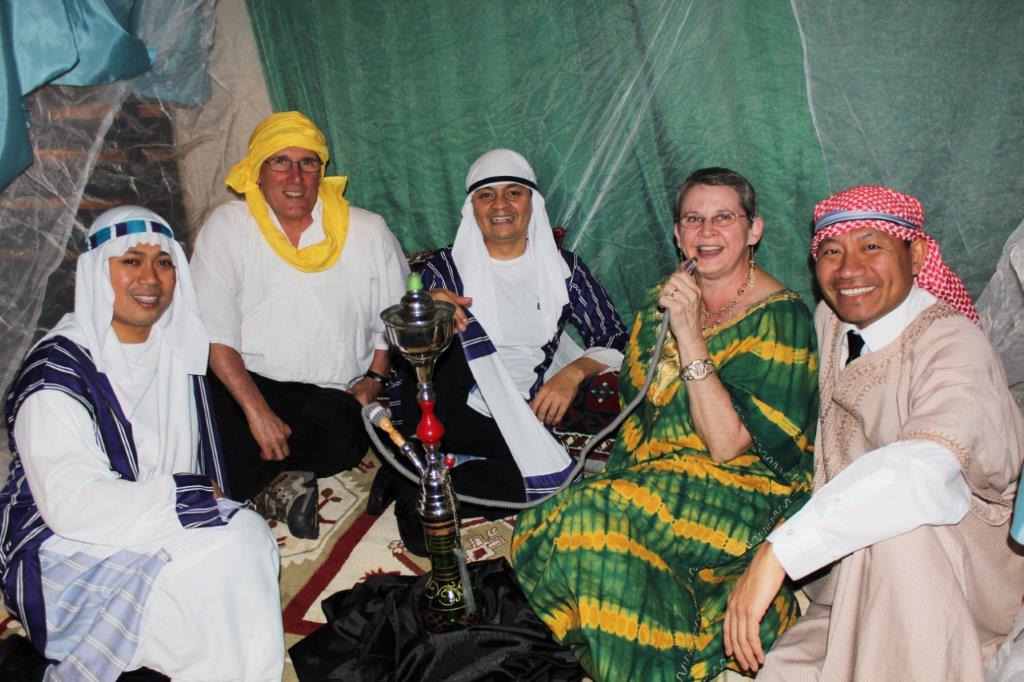
Appropriately, the theme in the dining room that evening was “Arabian Nights.”  I had a dress with me and John had found a nice light, white shirt and yellow turban for the occasion.  On any theme night there is always a display area with dining room managers and front desk staff in costume and happy to have you sit in for a photo.  This was the first cruise we had been on where we actually brought along outfits for the various themed nights.  It was lots of fun. And the staff folks really enjoyed our participation.Next day, next port, the island of Malta which is near Sicily and just across a narrow part of the Mediterranean Sea from Tunisia.