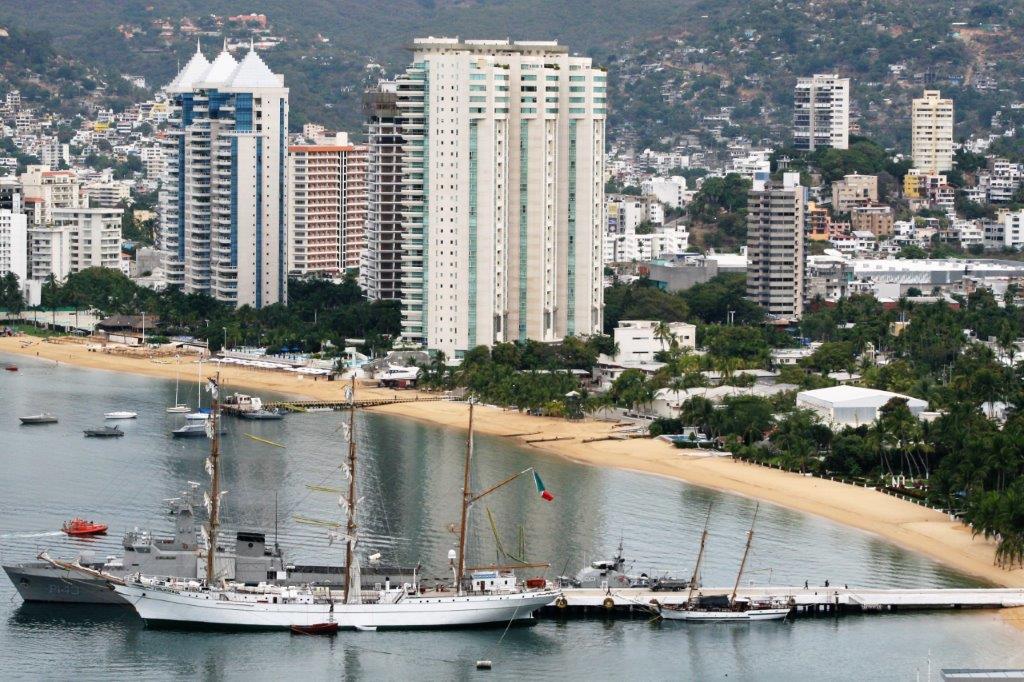
2009 January 15 (World Cruise) – Day 11 – Acapulco, Mexico

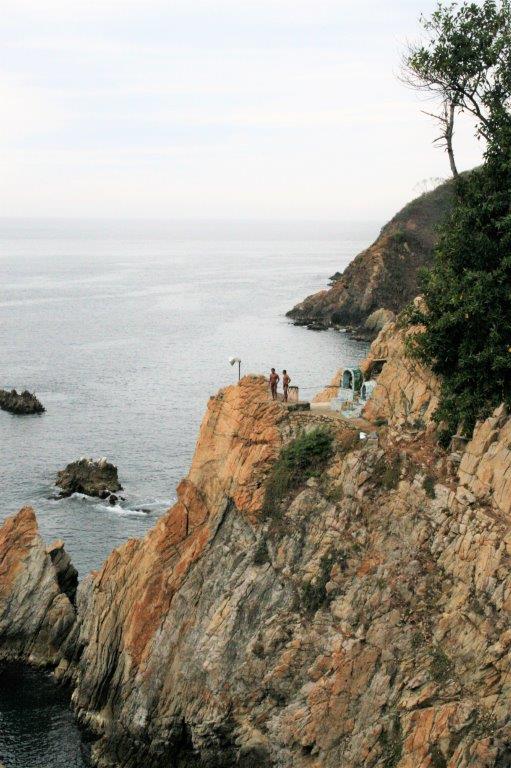
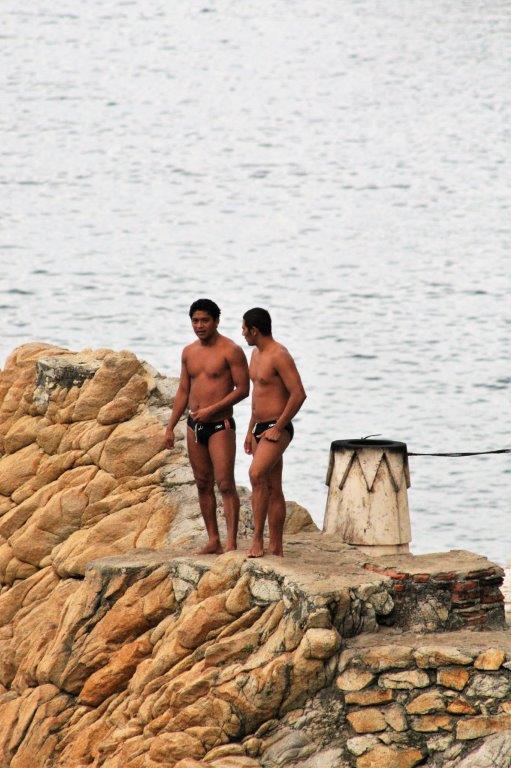
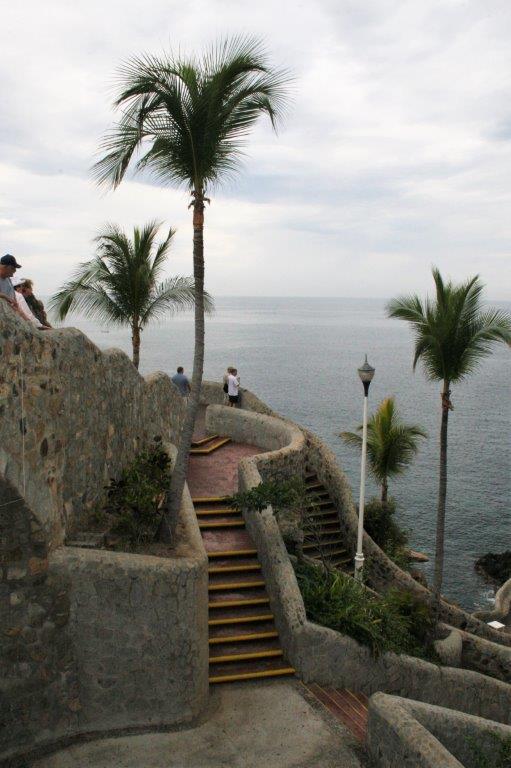
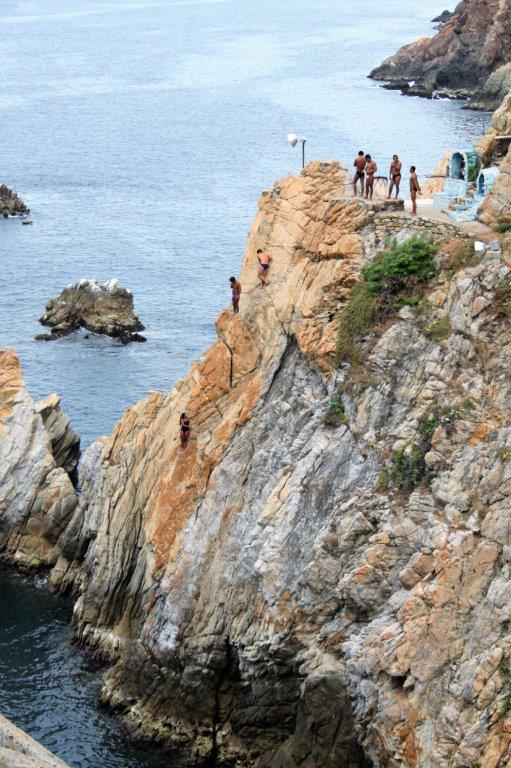
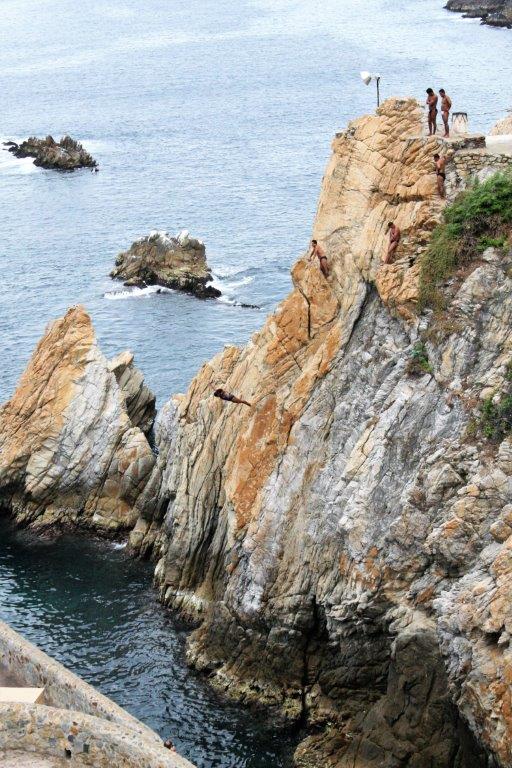
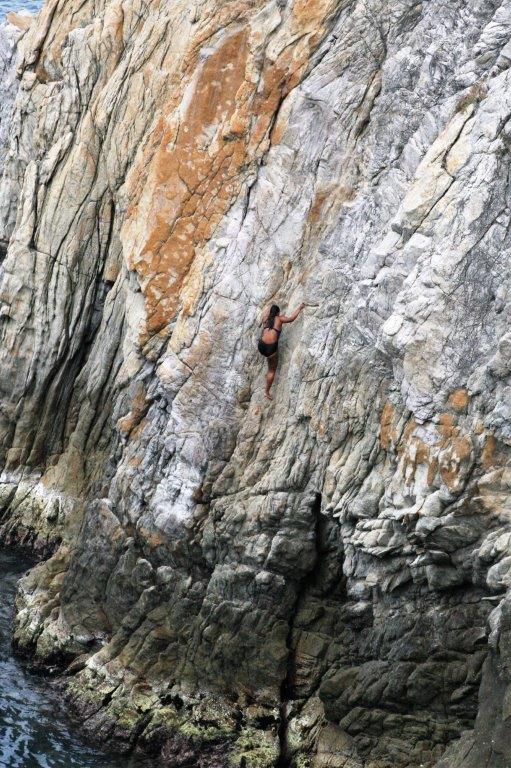
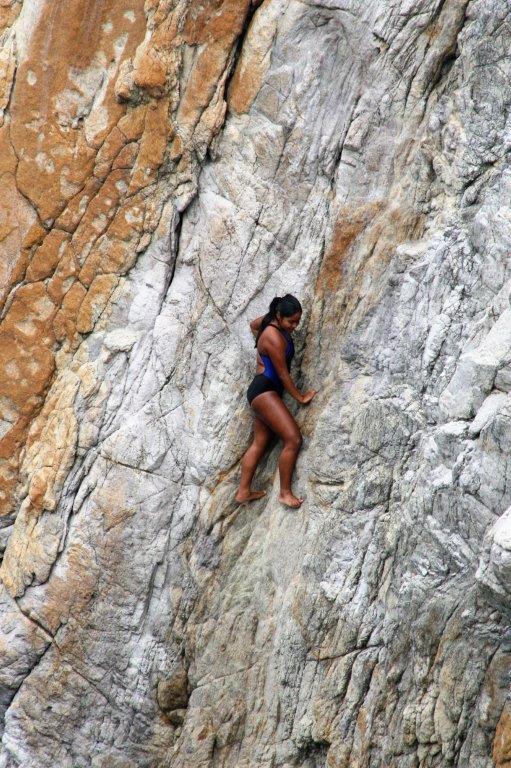
World Cruise – When I was young I remember a TV program that showed the cliff divers of Acapulco, so when we were going over the tour options for the port I wanted to see them.  The divers performed all day for the guests of Holland America.img_3090The view from the hotel terrace across from the jagged cliffs of La Quebrada allows an unimpeded view of the divers.  These brave young people plunge 134 feet into a narrow strip of roiling sea between the cliffs.  There are three levels up the cliff face that they launch off – the less experienced from the lowest level and the ‘pros’ from the top.  Sometimes they dive two at a time from two different levels.

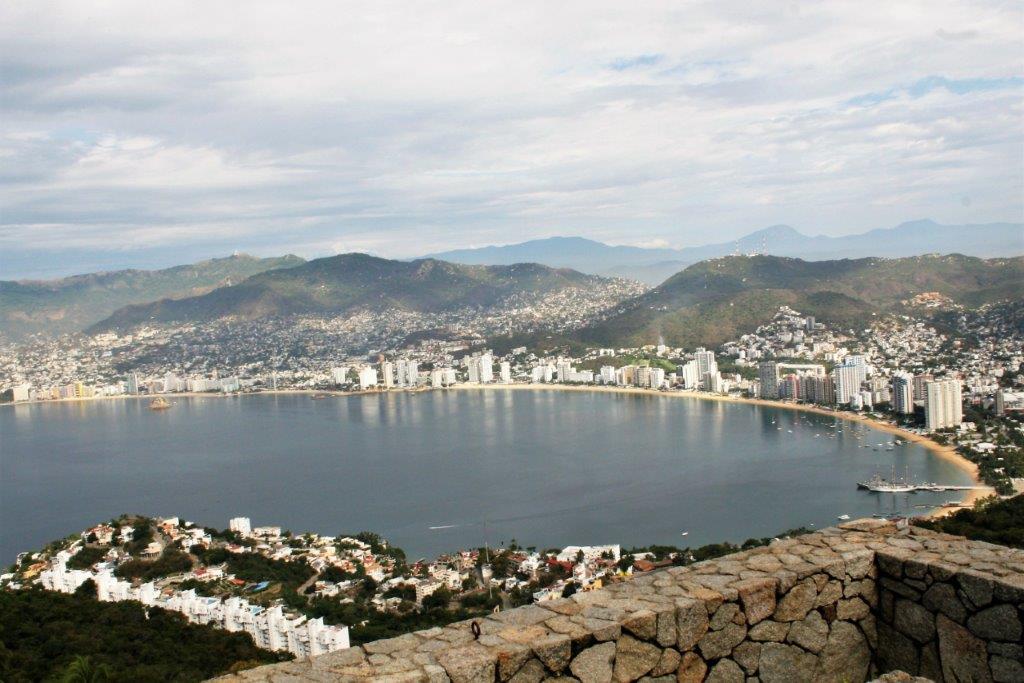
img_3032 img_3033 img_3035 img_3037 img_3041 img_3043 img_3051The most dangerous-looking part, in my mind, was the ascent up the rocks of the cliff wall so they could perform the next dive.img_3039 img_3040The area around Acapulco has been inhabited for over 5,000years and the Spanish discovered the area in 1521.  It was ‘officially’ claimed for Spain  and became a direct dependency of the Spanish Crown in 1532.  Acapulco Bay is almost landlocked and is a safe haven for ships in any weather.  It has been a major trading and shipping center for over 260 years and so was a popular raiding center for pirates.

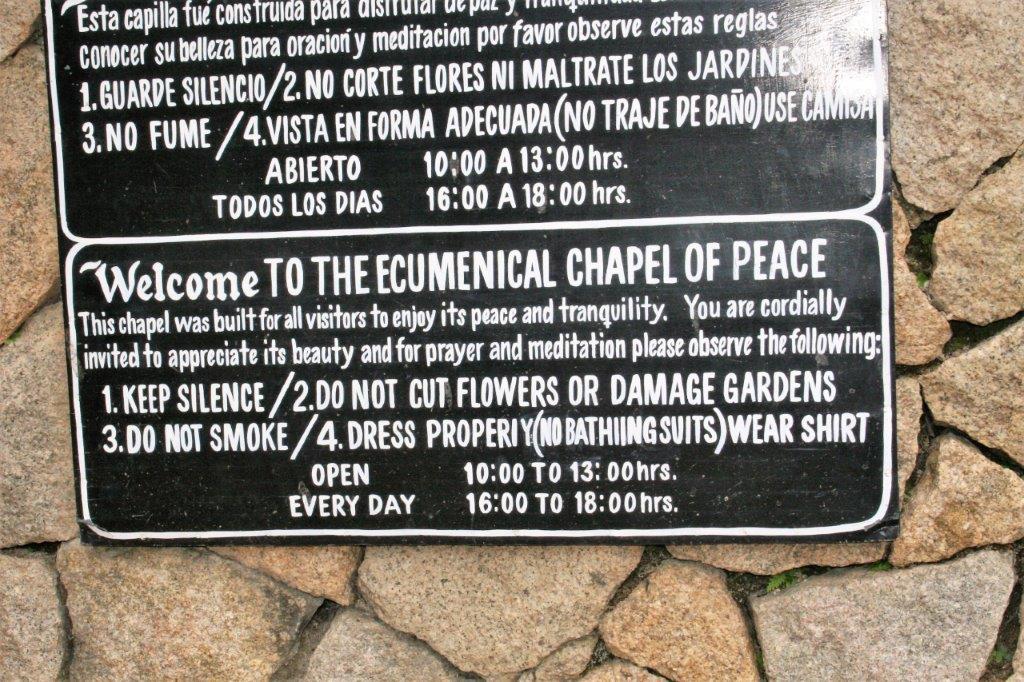
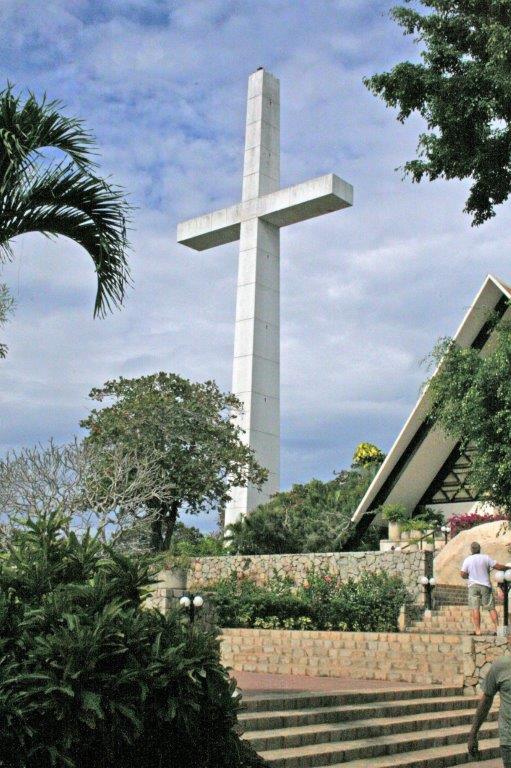
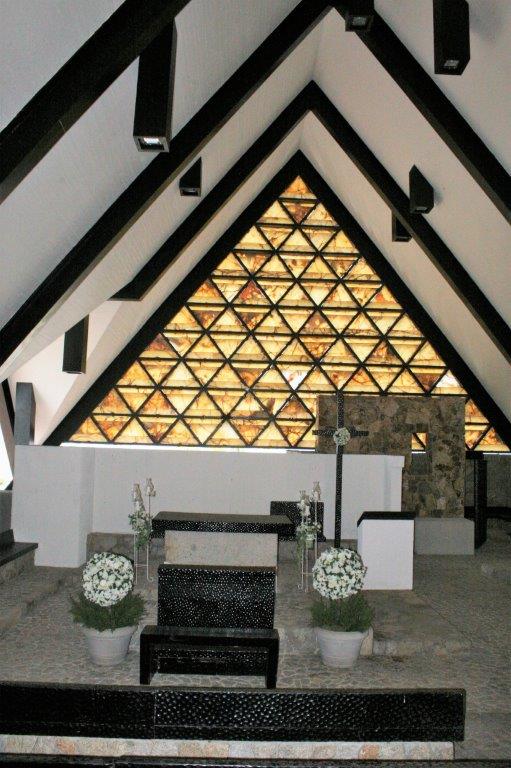
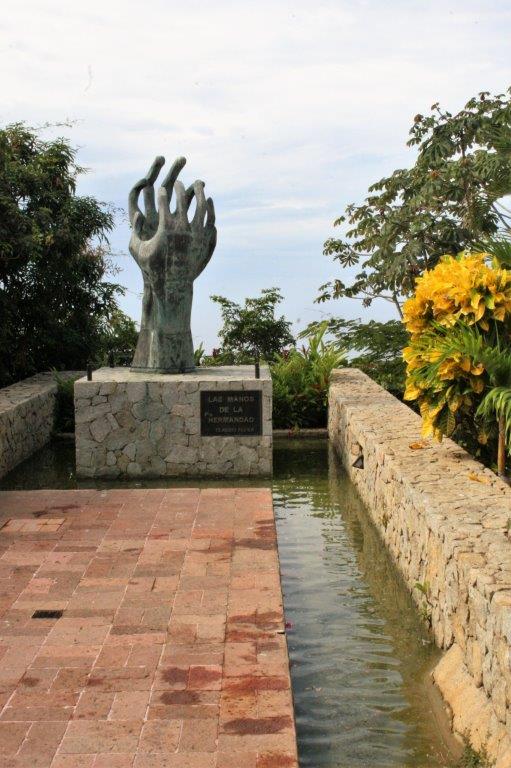
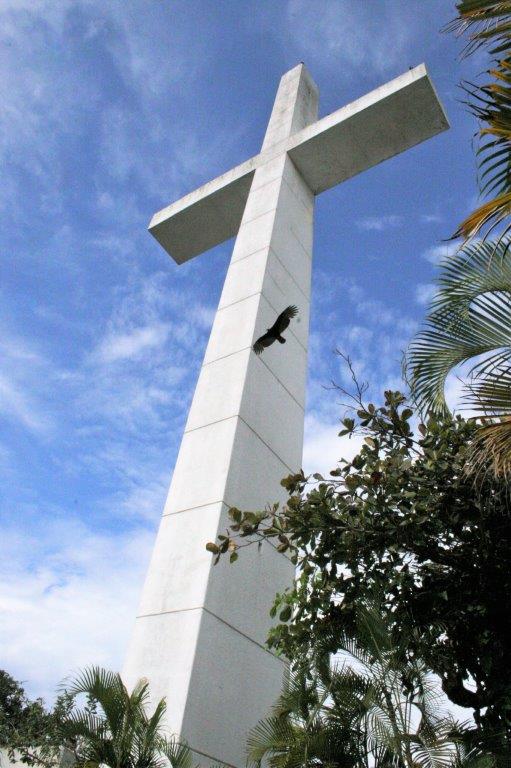
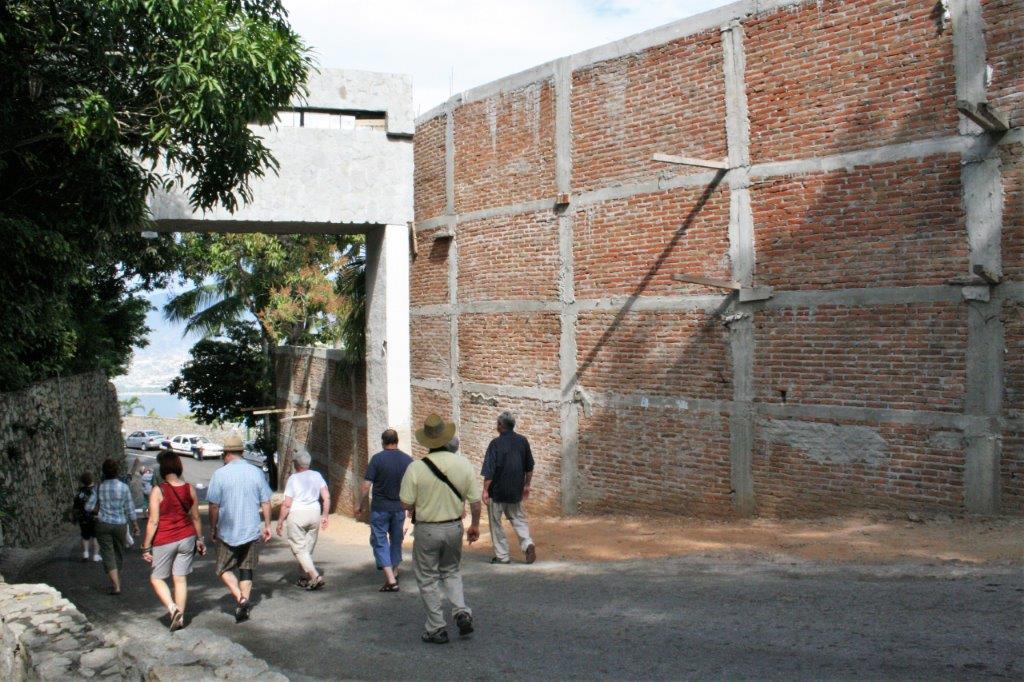
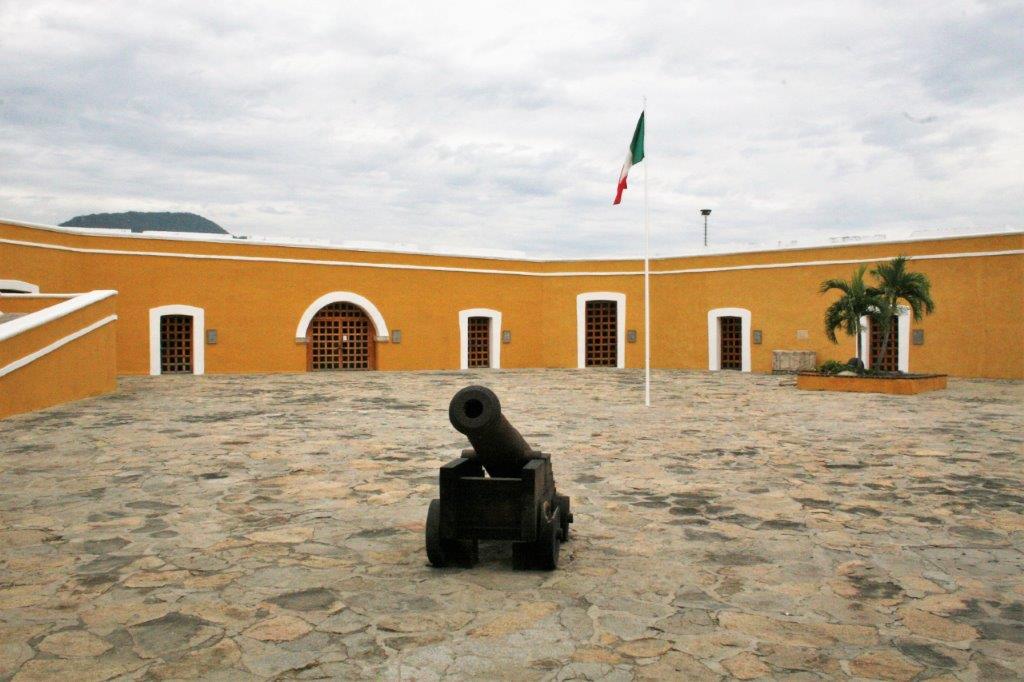
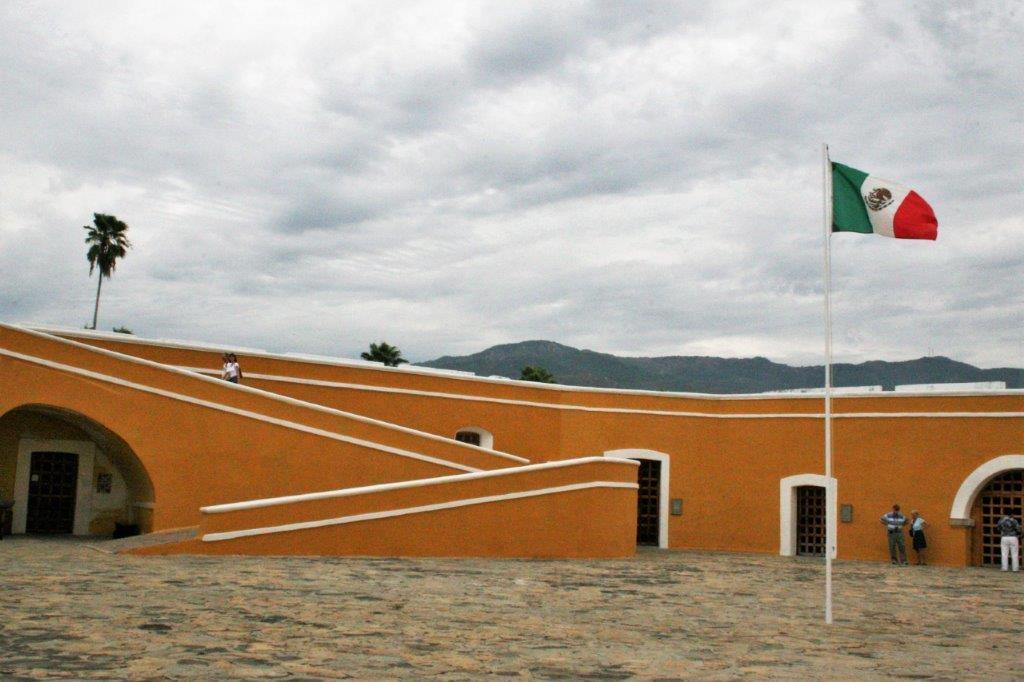
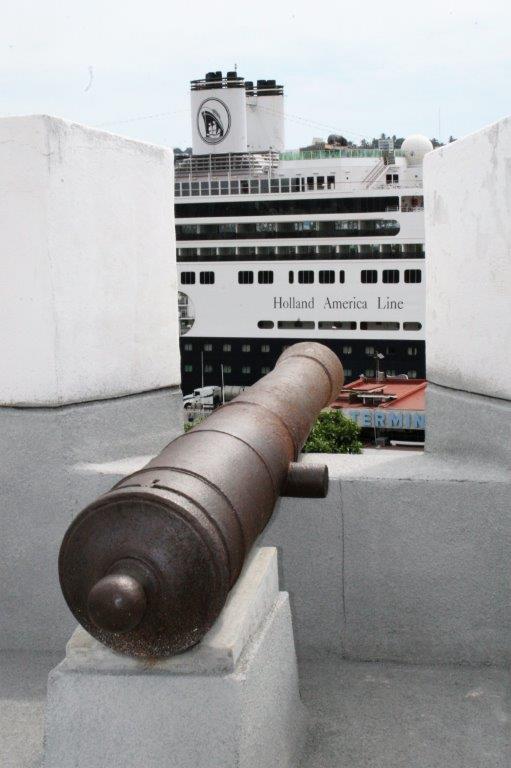
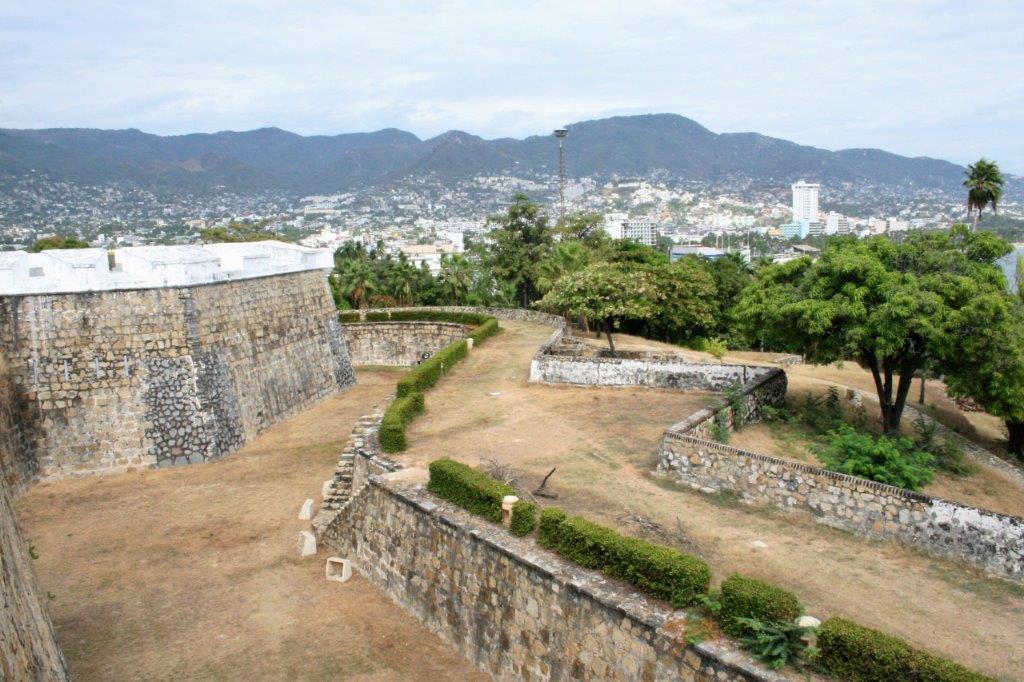
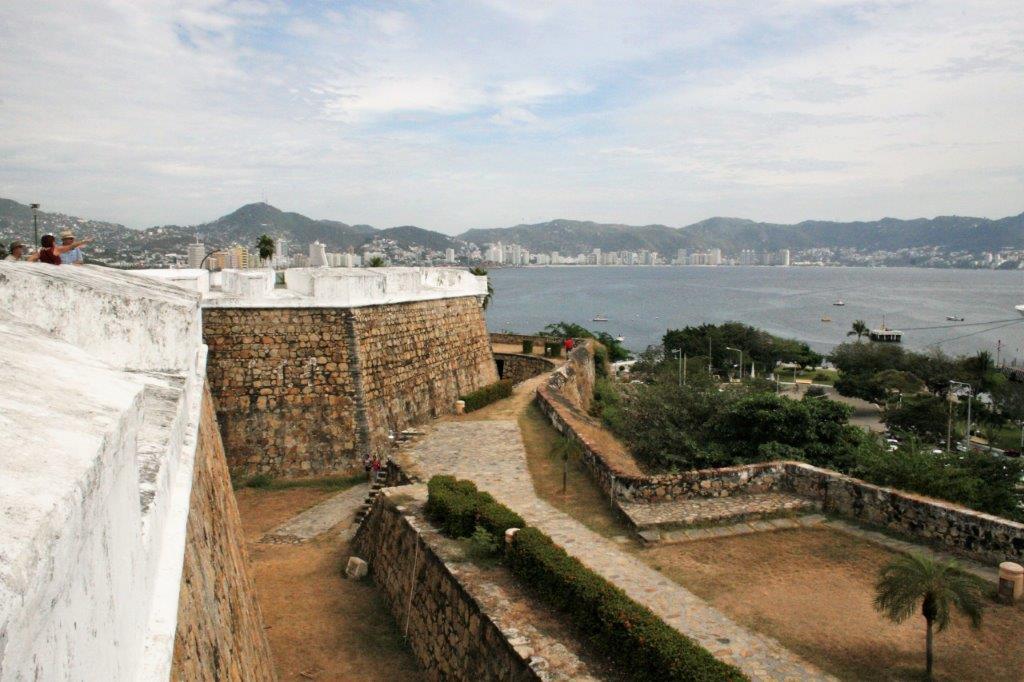
On top of the hill overlooking the beautiful Acapulco Bay is the Ecumenical Chapel of Peace.img_3077 img_3078_edited-1 img_3081 img_3083 img_3094 img_3096 img_3086 img_3088Our next stop was  Fort San Diego, which was originally built in 1617, destroyed by an earthquake in 1776, and rebuilt in 1783. The fort was attacked by Sir Francis Drake in 1579 but he failed to captured the Spanish galleons.img_3103 img_3104 img_3105 img_3109 img_3112 img_3116Our final stop was at an hotel once owned by famous actors Errol Flynn (of Zorro fame), Joe Weismuller (Tarzan) and “The Duke” John Wayne.  They used to come down here often and invite their Hollywood friends to party and soak up some sun.img_3058img_3072 img_3068

2009 January 14 (World Cruise) – Day 10 – Huatulco, Mexico

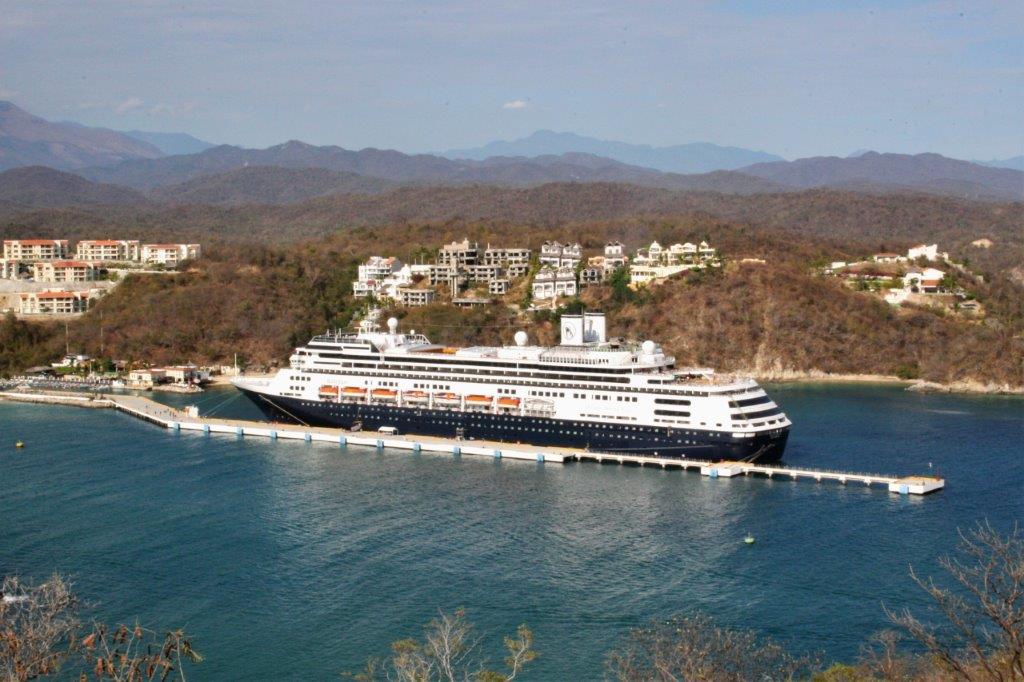
2009 World Cruise – There were gale force winds during the night that the Captain thought may prevent our stop in Huatulco, but, thankfully, the sea calmed in the early morning.  Our suite is on the ninth passenger deck and there are two crew and cargo decks below that.  John told me that the waves were crashing over our balcony railing at 3 am.  I slept right through it all – I find that rocking ships make good cradles.

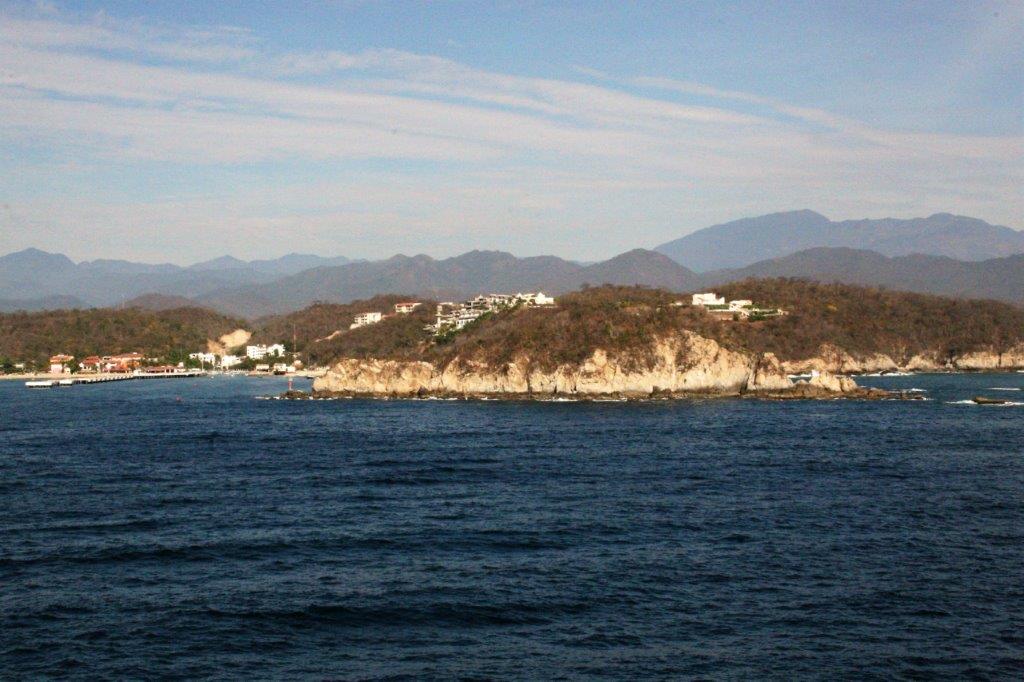
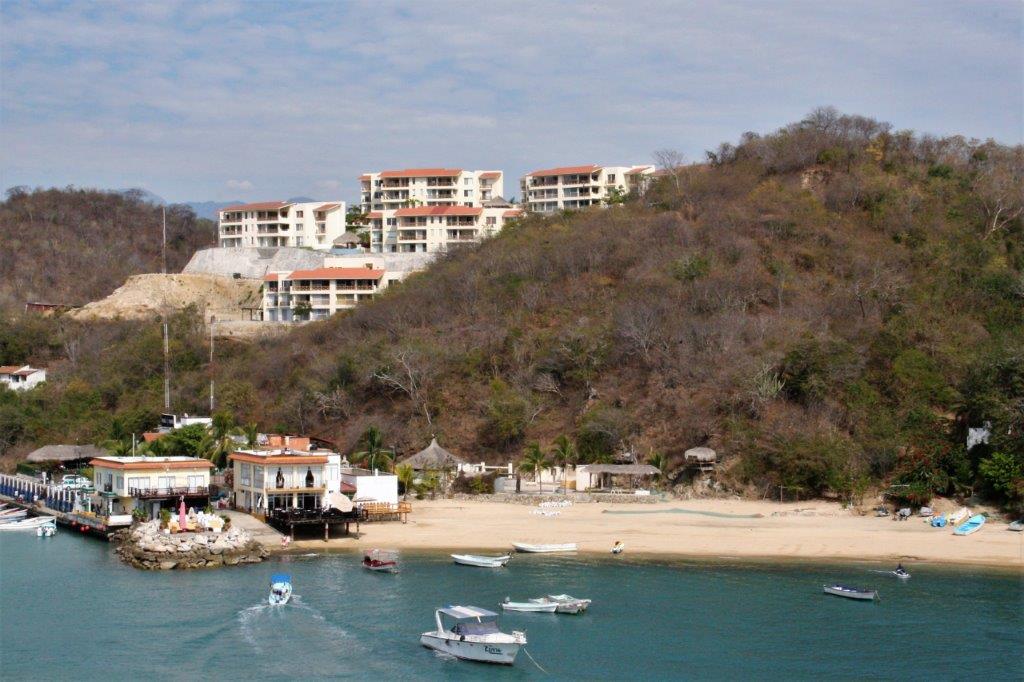
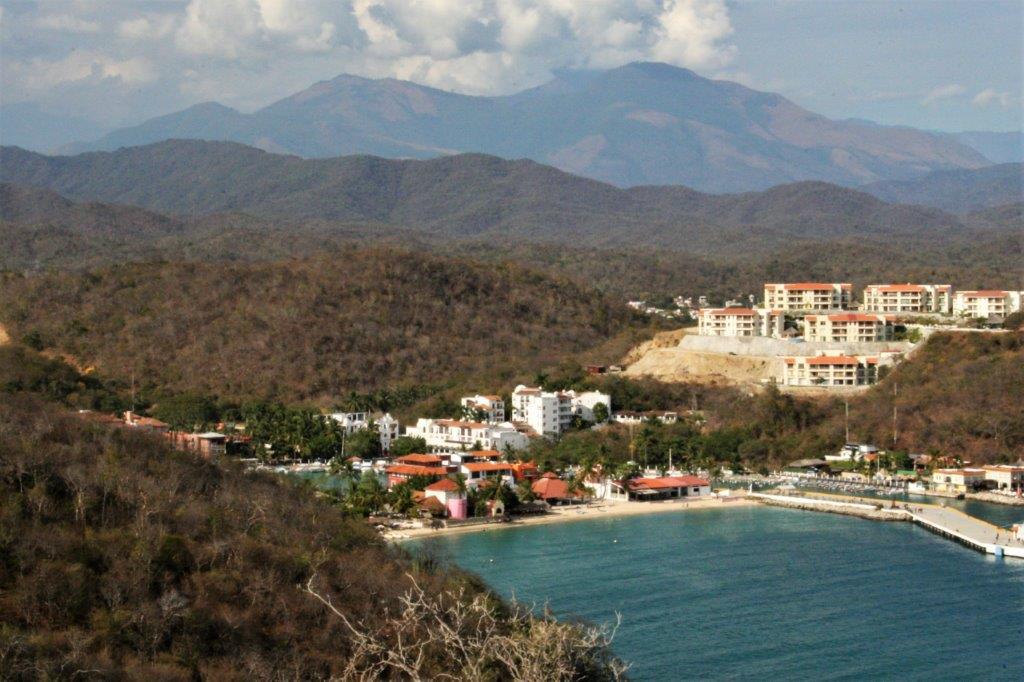
img_2999Huatulco, like Cancun on the Atlantic side, is a created resort area.  In 1984 the government agency dedicated to the development of tourism in Mexico, acquired 21,000 hectares of land along the Pacific coast.  There are 36 white sand beaches in the coves and bays that stretch along the rugged coastline.  Most of the area belongs to the Huatulco National Park where populated areas are connected to ecologically-minded ‘green zones.’   The result is one of the cleanest developments in Mexico.  The Park received the Green Globe certification in 2006, the first in America to do so, and third in the world.

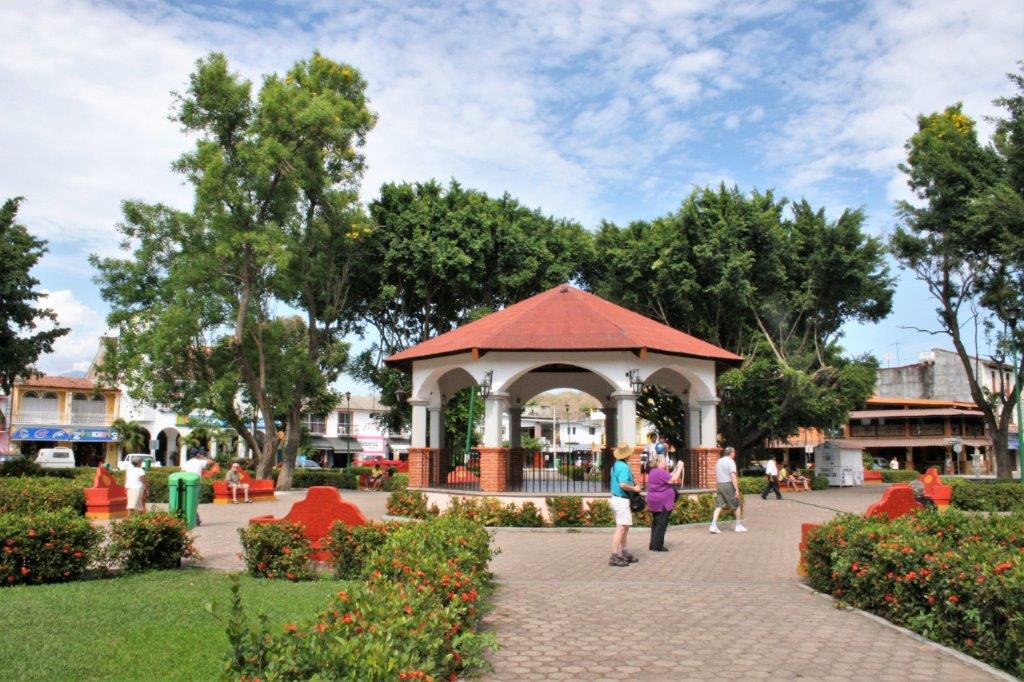
img_2960 img_2964 img_2971There are now over people 16,000 people living and working here to staff the resorts and hotels, shops, and related tourist businesses.  Over the next 15-20 years that number is expected to rise to 300,000.  I am glad we were there before that happened.img_2972 img_2974It was very hot, very dry, but beautiful with the water and the pristine white buildings.

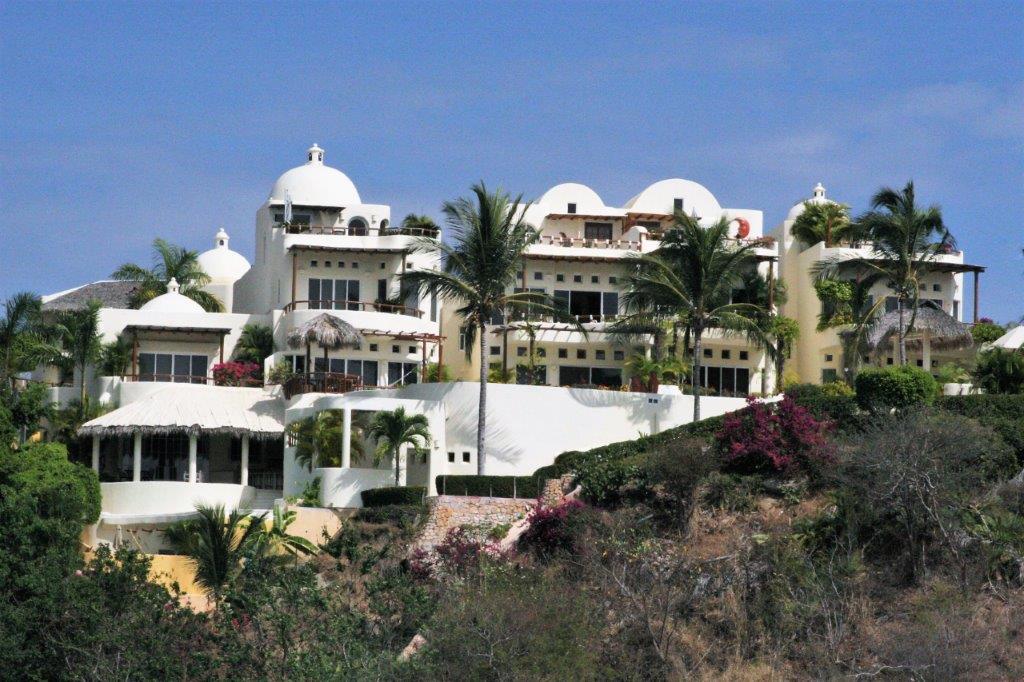
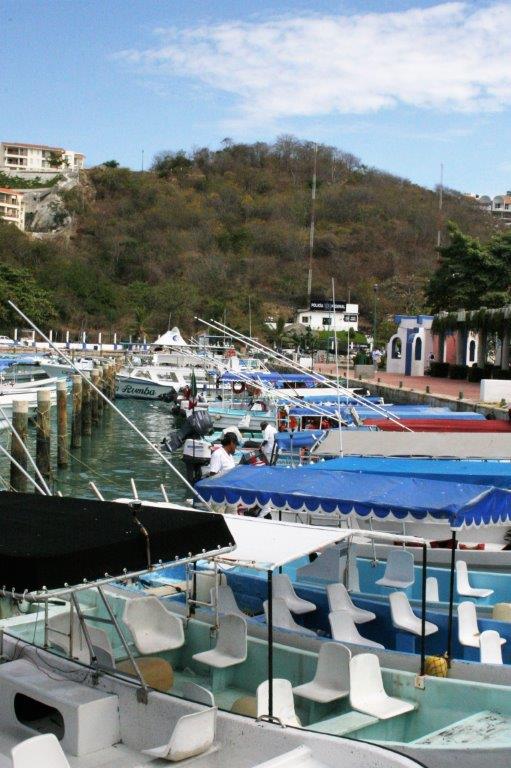
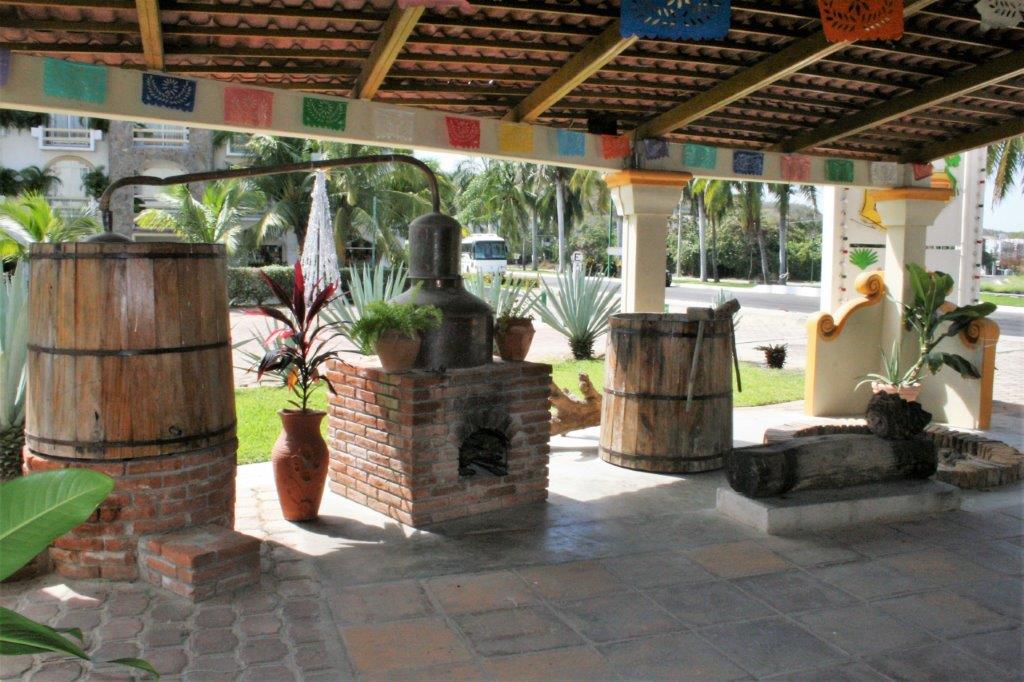
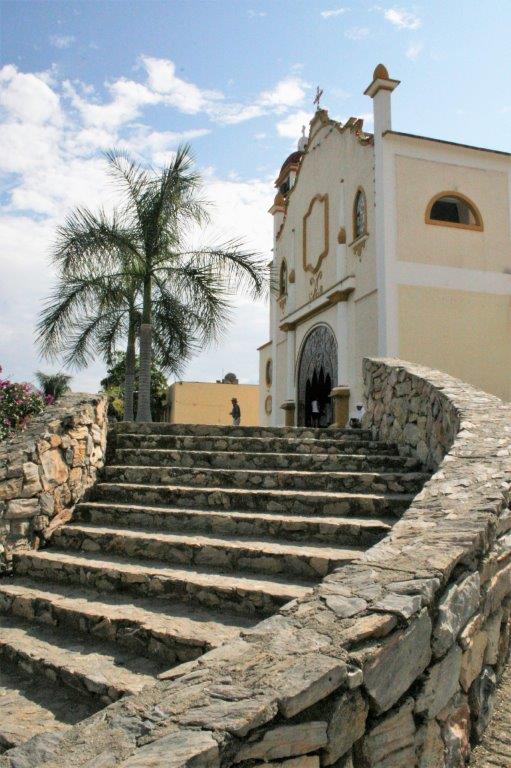
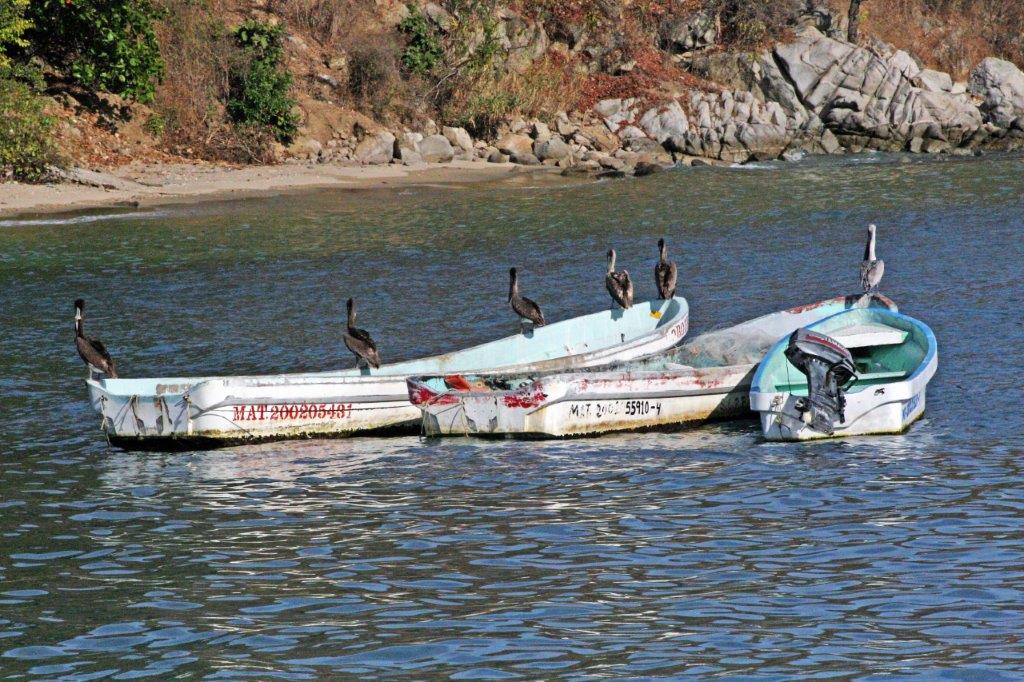
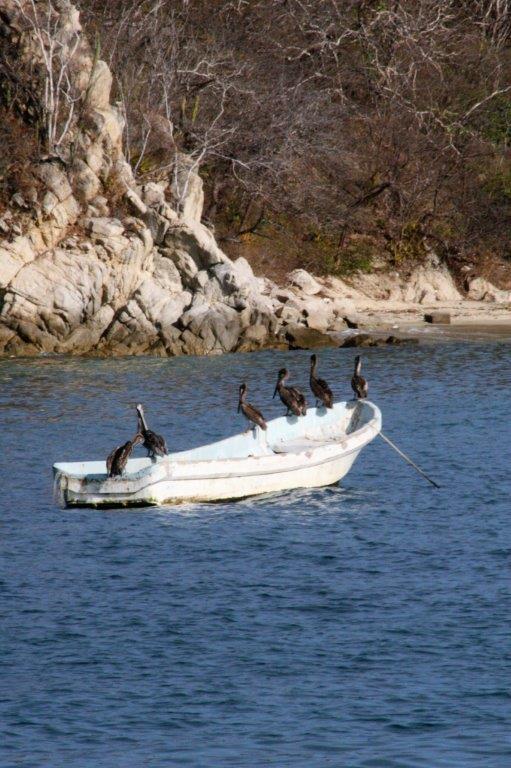
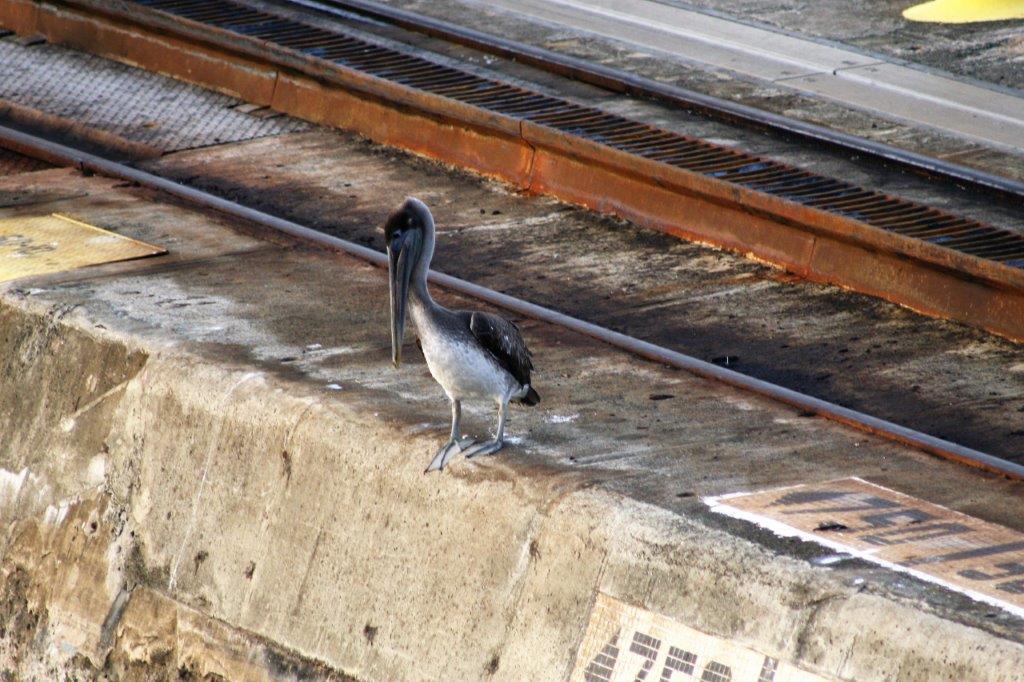
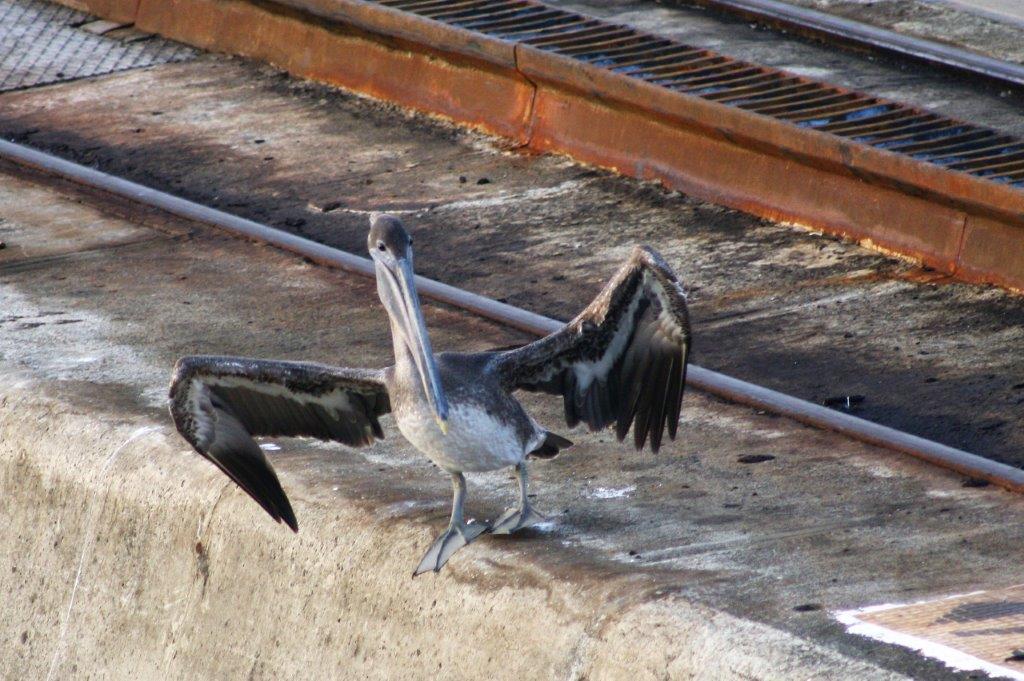
img_2979We were introduced to the tequila-making process.img_2977_edited-1 img_2993                                                                                 The Chapel at La Crucesita.img_2991 img_2997Pelicans, rowboats and the MS Rotterdam in Huatulco Bay.img_3012_edited-1 img_3016 img_3002 img_2999 img_3020We really liked Huatulco and have it on our list of places to visit again someday.


2009 January 13 (World Cruise) – Day 9 – Puerto Quetzal, Guatemala

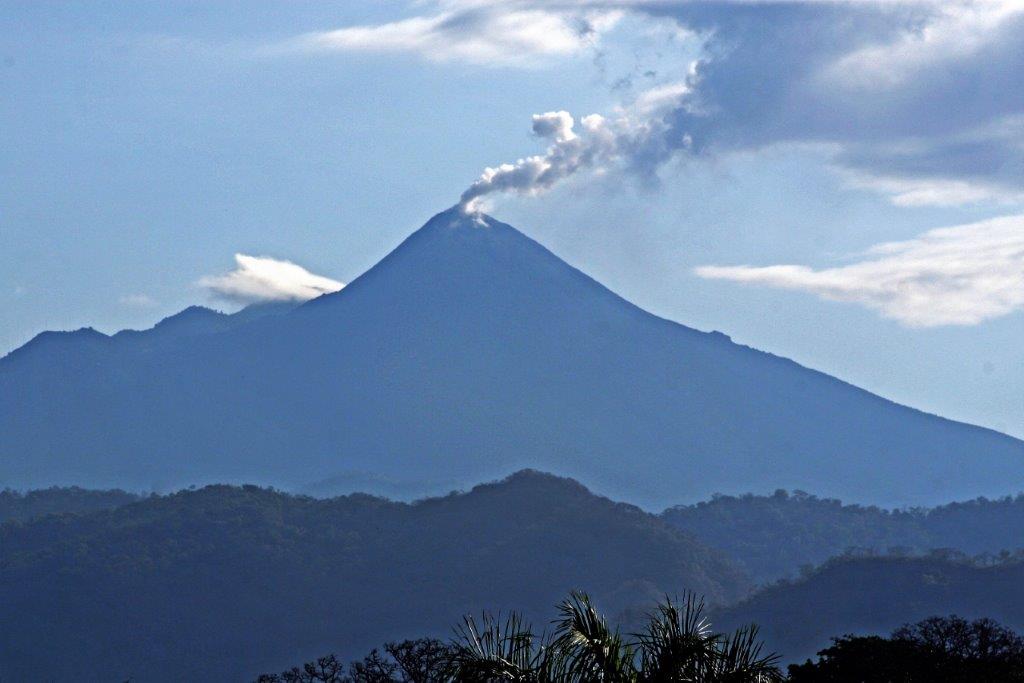
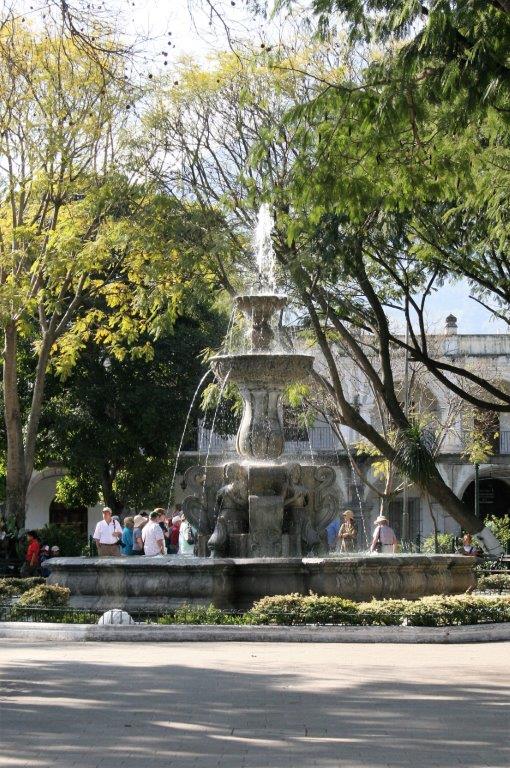
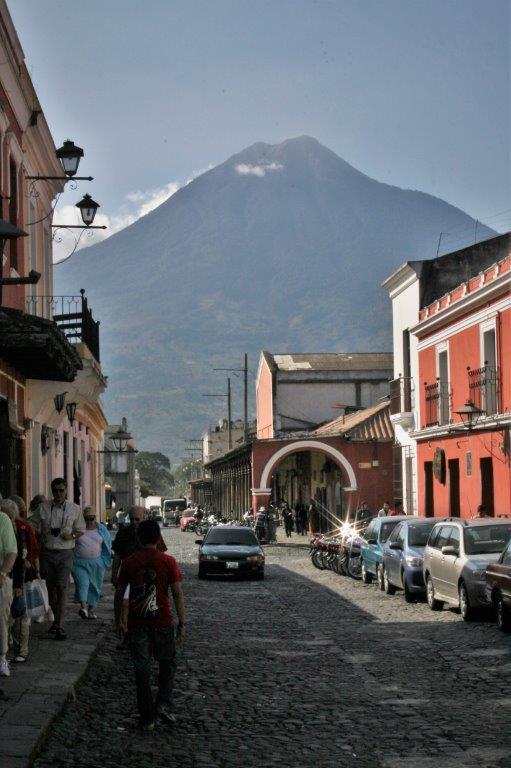
2009 World Cruise – After spending a day at sea we arrived in Puerto Quetzal,  Guatemala.  We had a 90 minute drive to Antiqua, a Colonial town that has beautiful, clear views of three volcanoes. img_2869_edited-1 img_2880The town was very clean, very charming old-Spanish-style.img_2883                                                                   Palace of Noblese

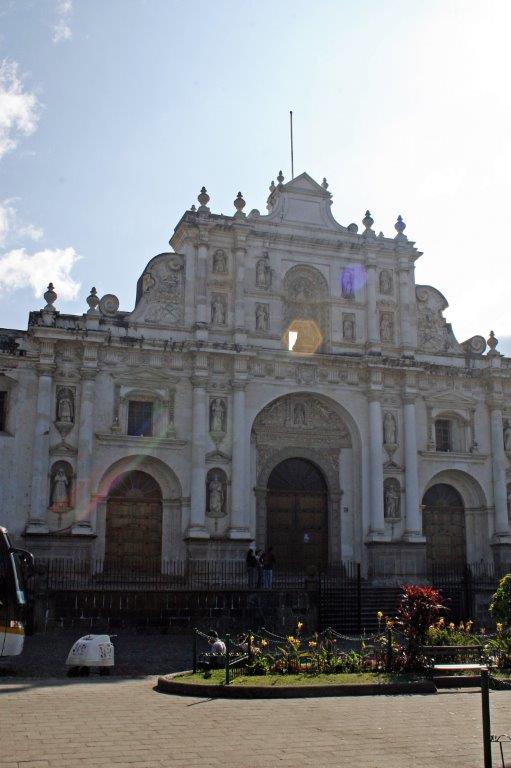
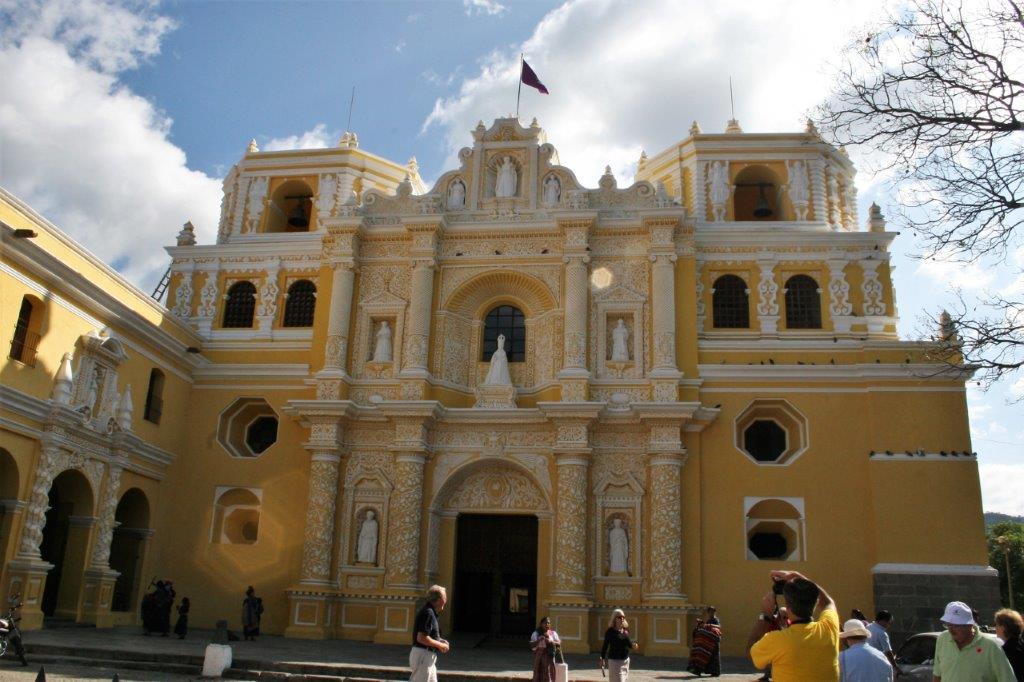
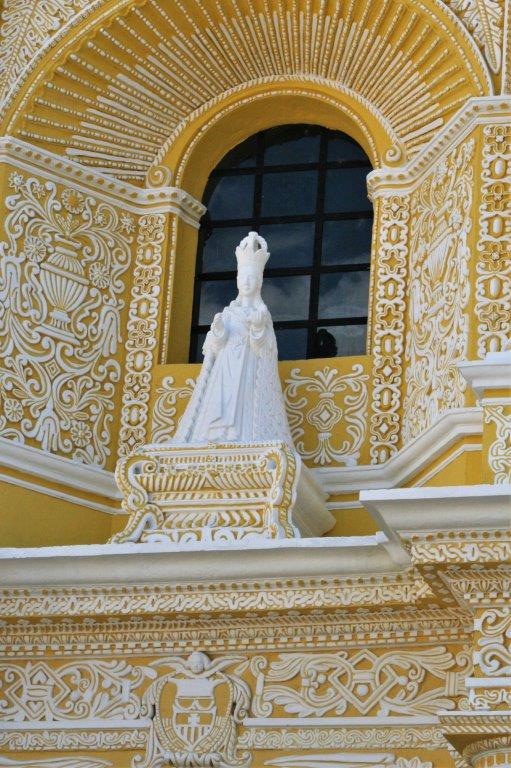
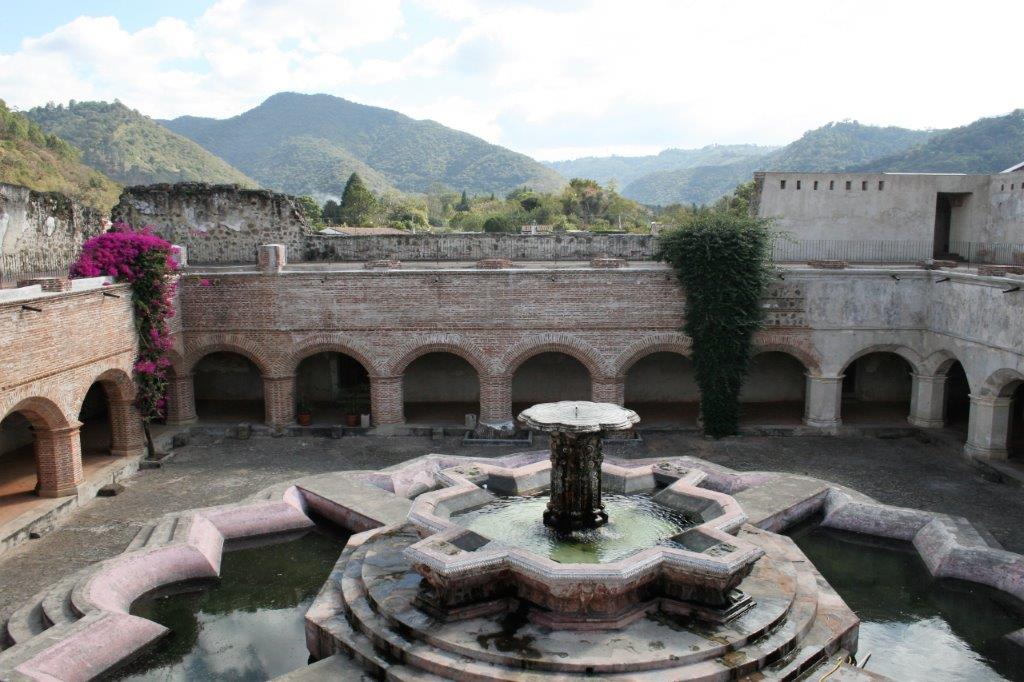
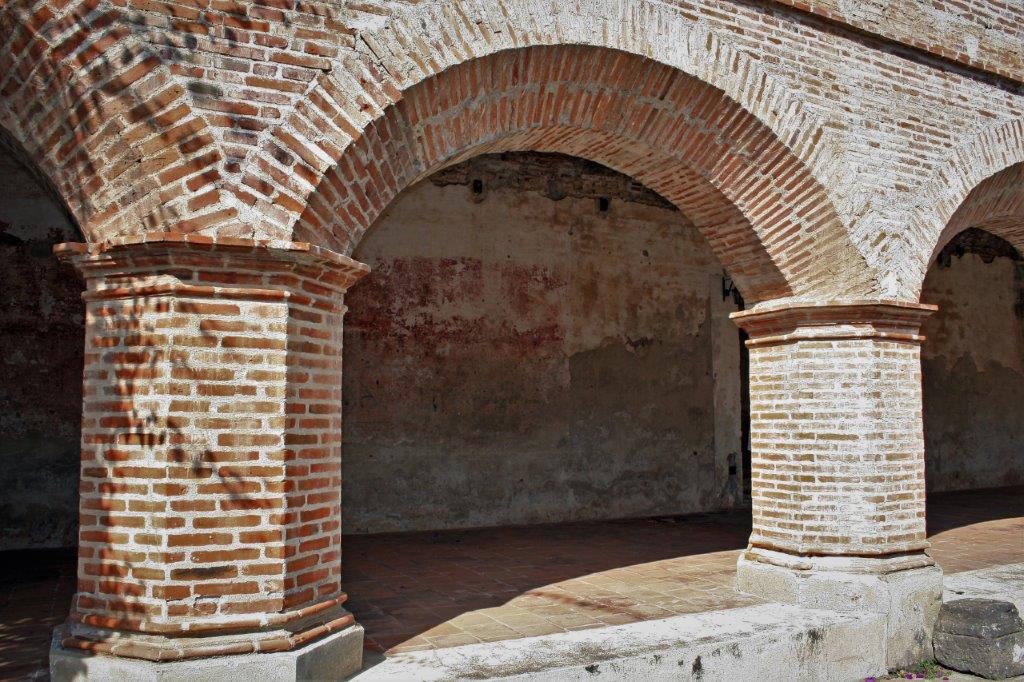
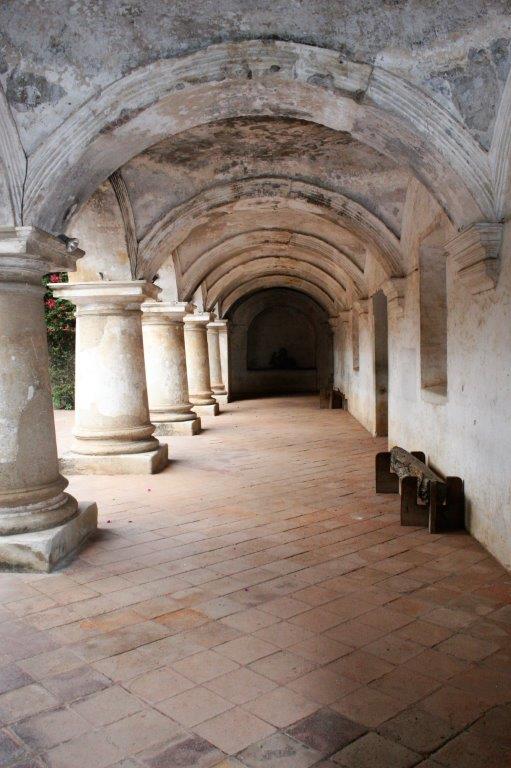
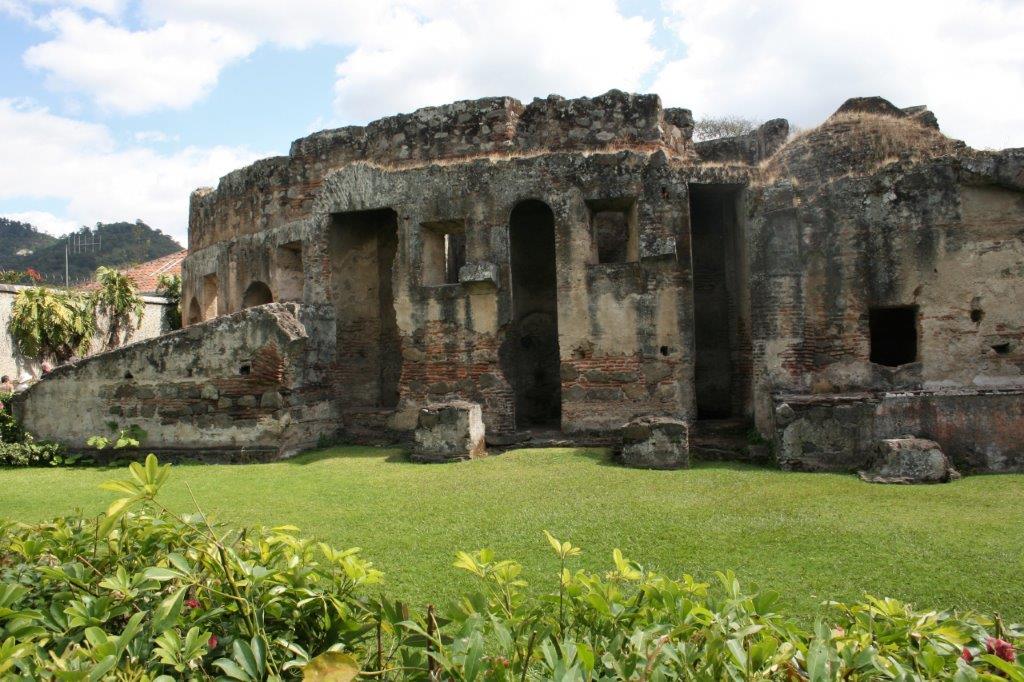
img_2884_edited-1img_2889_edited-1 img_2885_edited-1img_2899img_2892  We toured the beautiful baroque Iglesia de la Merced Church, arguably one of the most beautiful churches I have seen.  Of course, yellow is my favourite colour so it has bit of an edge going for it from the get go. img_2904 img_2906img_2908Lunch was at a five-star hotel that was a well-done blend of modern construction and incorporated ruins.

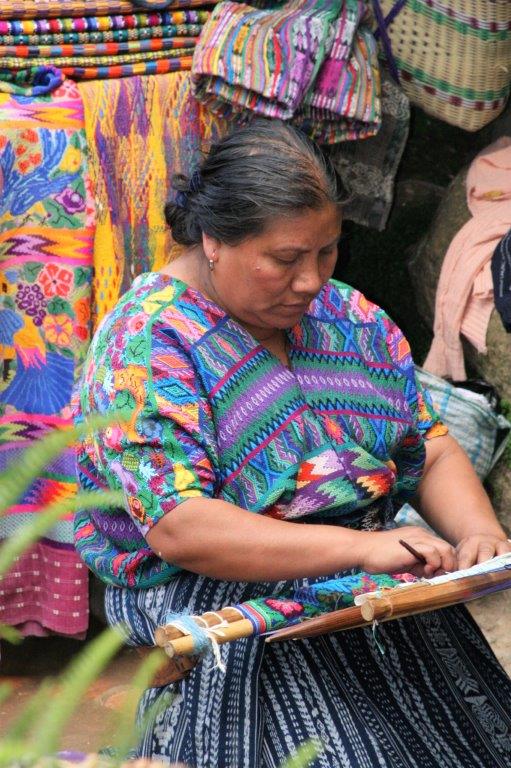
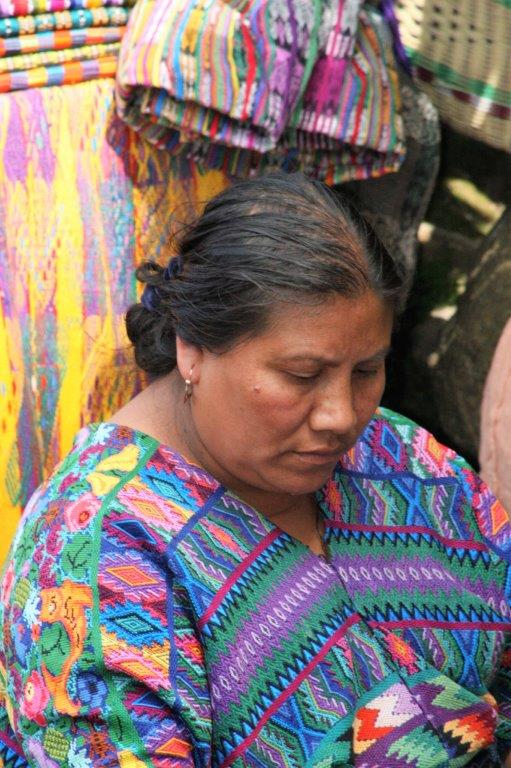
img_2894 img_2912img_2915 img_2917_edited-1 img_2924 img_2926This lady is working a back-strap loom; making one of the very colourful blankets or ponchos that are so popular with the locals and tourists.

img_2942 img_2945 img_2946 img_2936 img_2938 img_2940


2009 January 10 and 11 (World Cruise) – Days 7 & 8- Puerto Caldera, Costa Rica

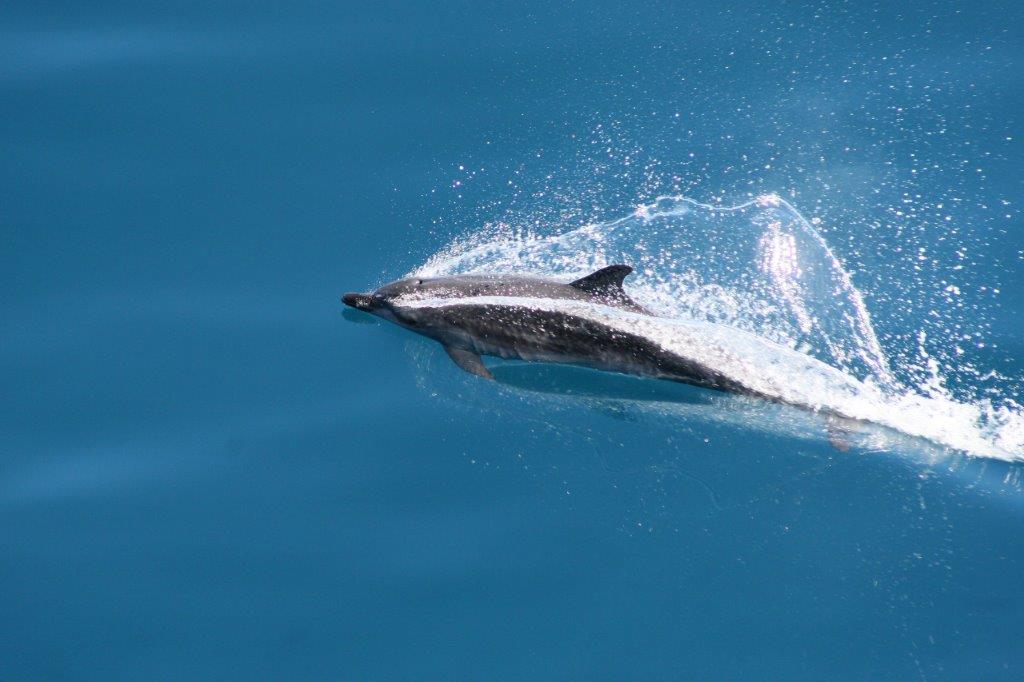
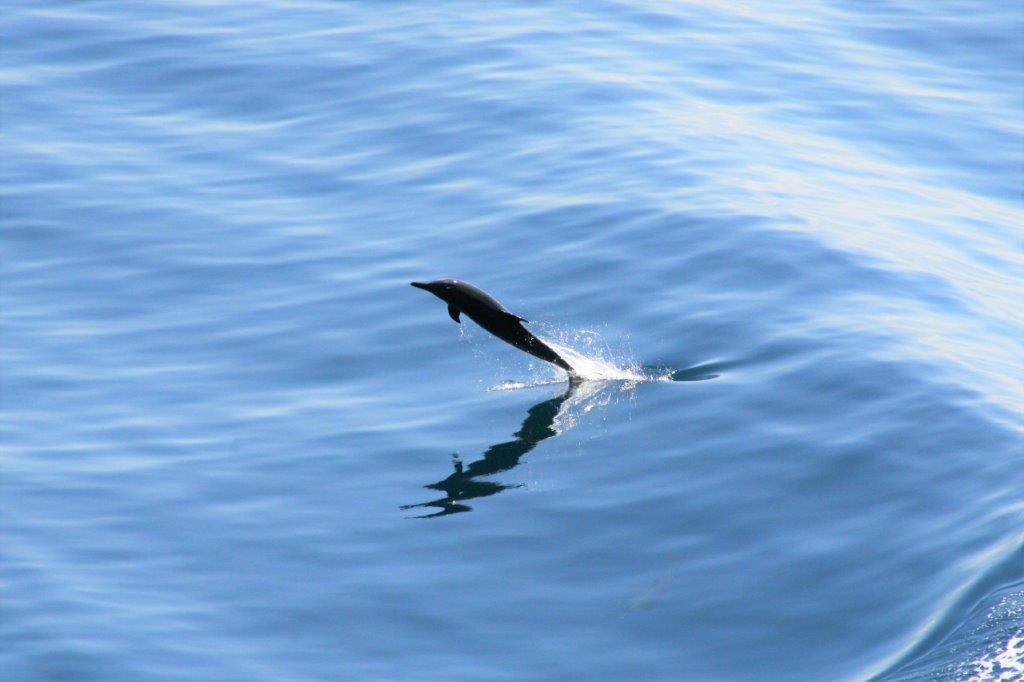
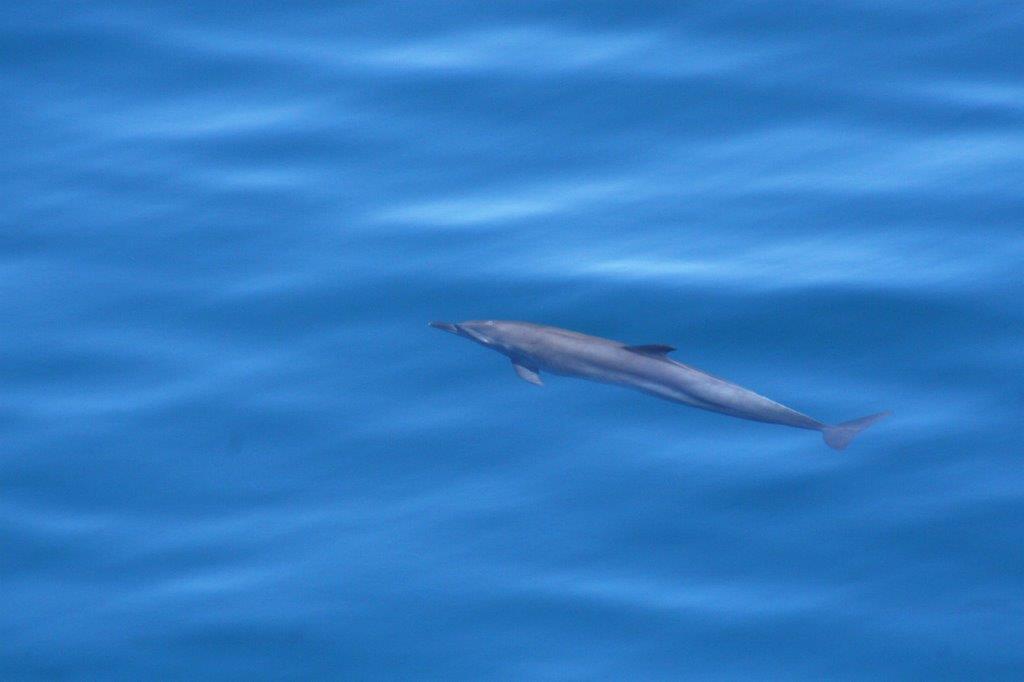
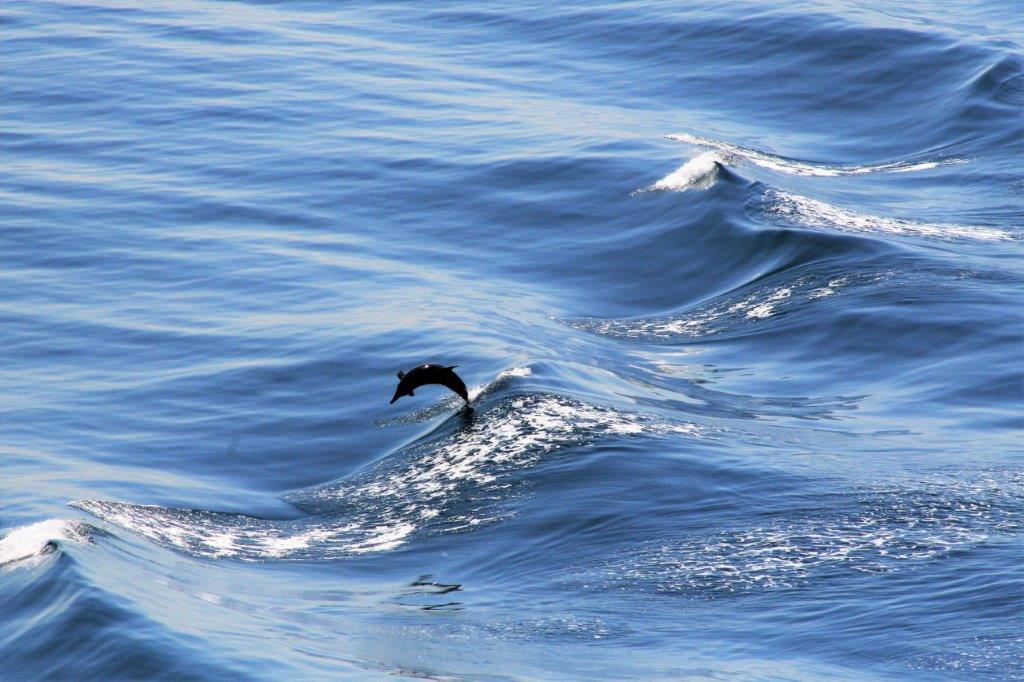
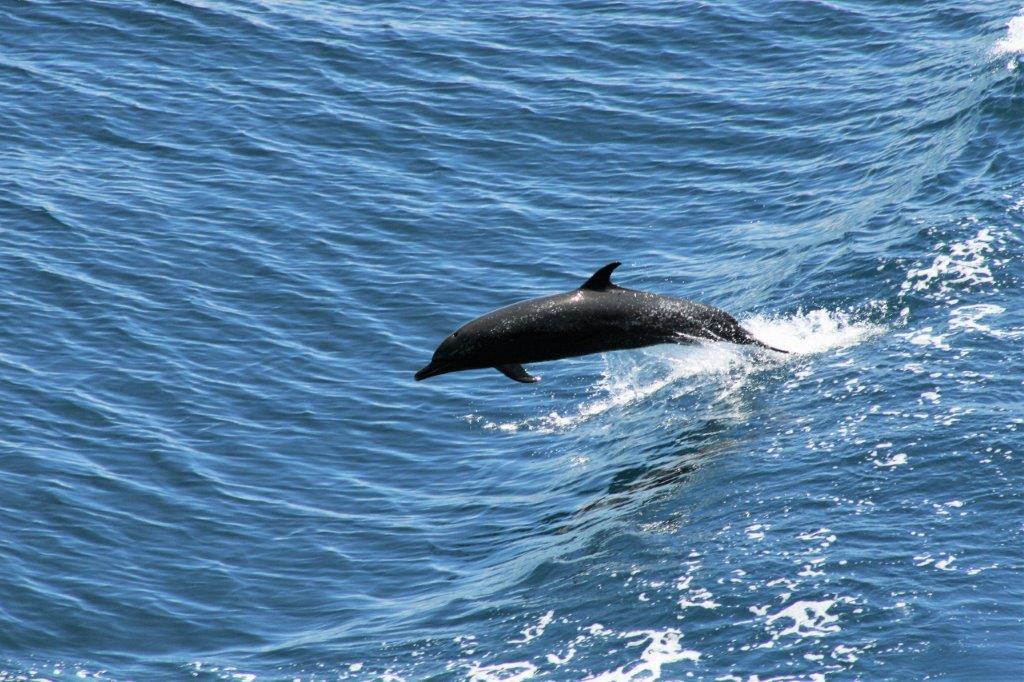
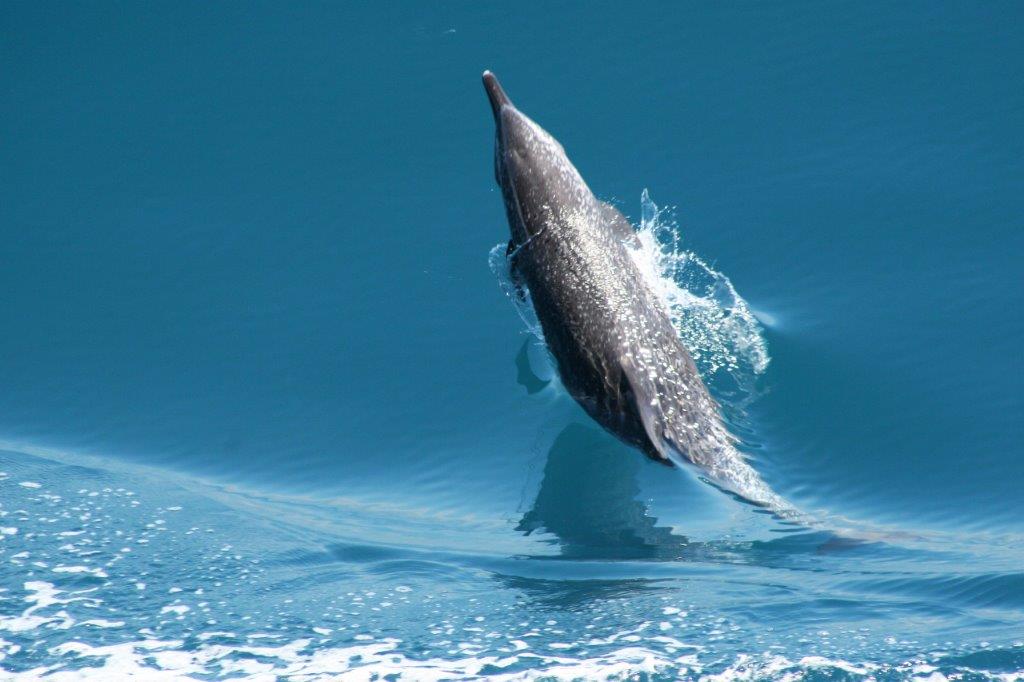
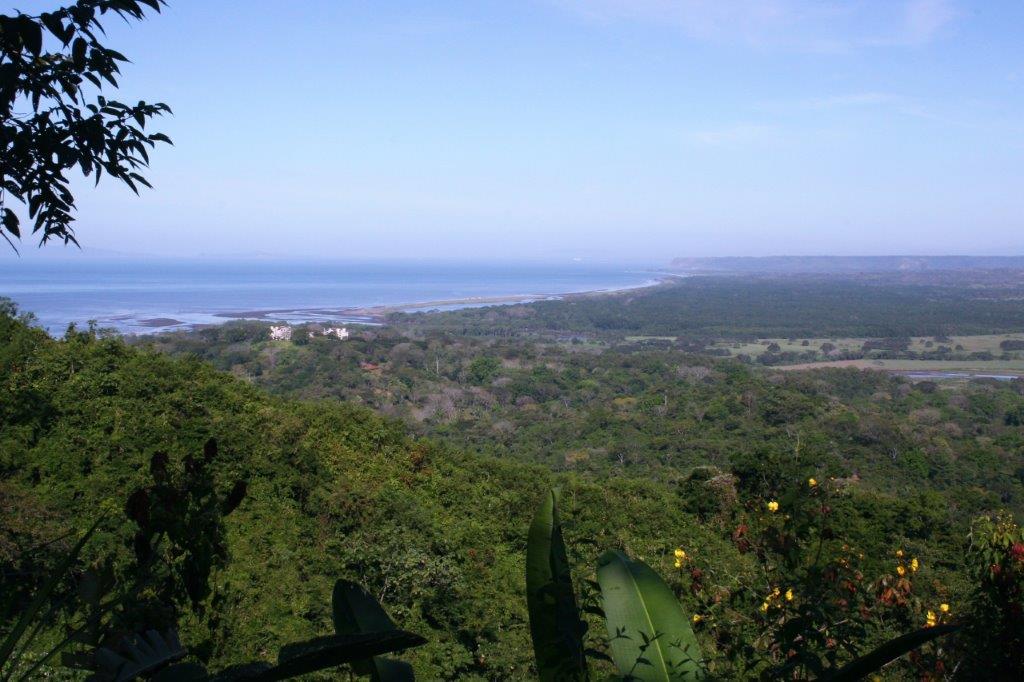
2009 World Cruise – The ship spent Saturday (Jan 10) slowly cruising along the Golfo  Dulce coast of Costa Rica.  This area is rarely seen by tourist as many of the beautiful, pristine beaches are set aside as breeding habitat for three species of turtle: the olive ridley, the Pacific green and the leatherneck.  What we saw most of the day – which we spent on the balcony of our suite – was crystal clear, gorgeous turquoise water and a pod of dolphins that jumped and twisted and dove along and through the ship’s wake.img_2781

img_2771 img_2780 img_2783img_2789 img_2786 We spent the next day in Puerto Caldera, one of the main ports of Costa Rica.  The population of the city and surrounding area is about 100,000 and it  is located about 10 miles (16 km) south of the capital city of Puntarenas.  A newer, larger port was built here when the one in Puntarenas became too old and too small for the volume of shipping coming and going in Costa Rica.

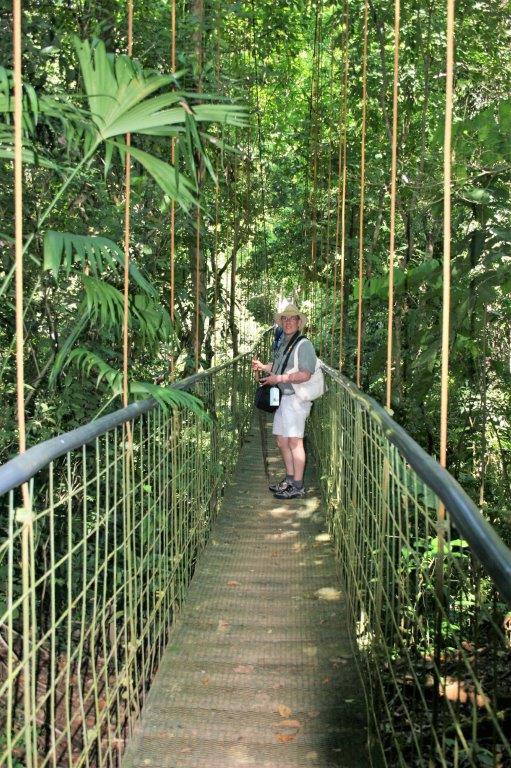
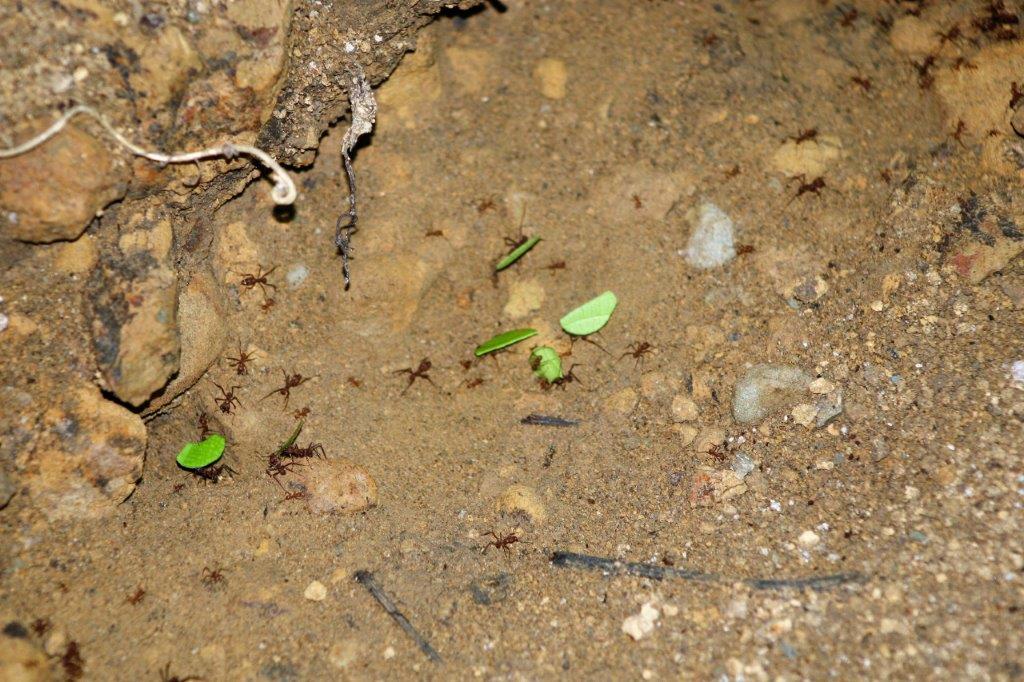
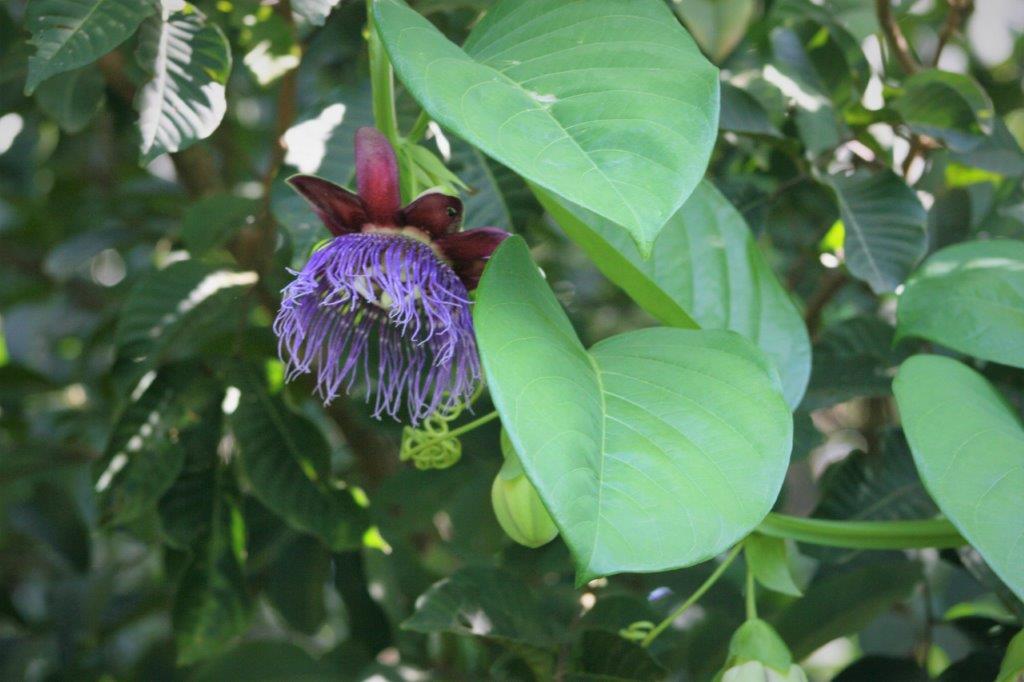
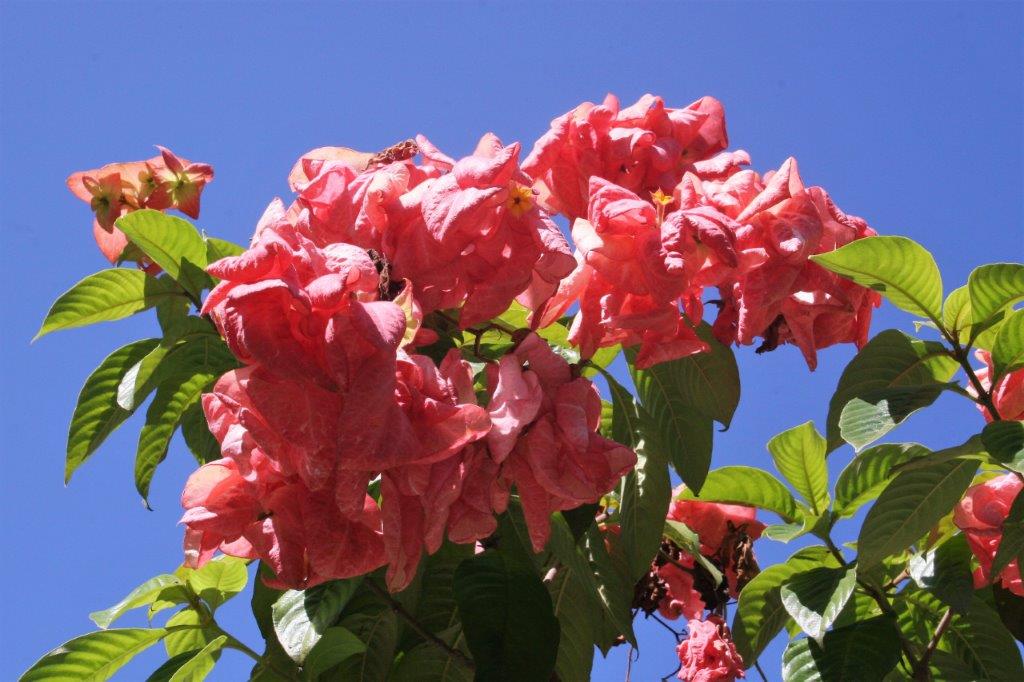
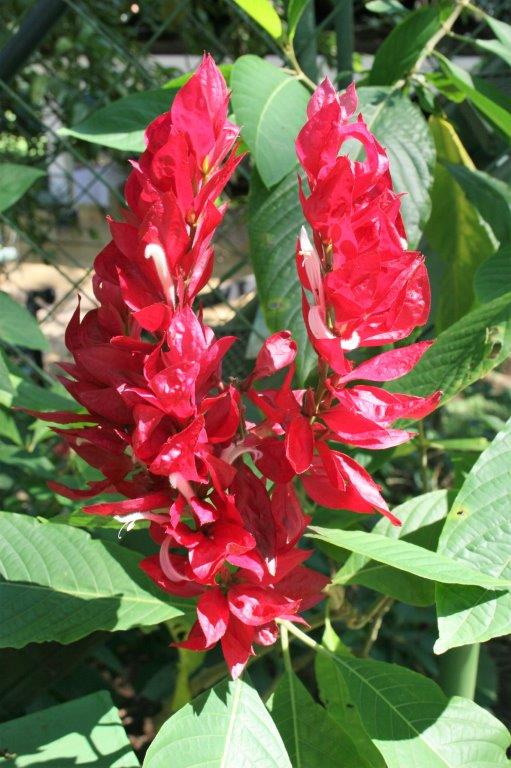
We had a one hour bus ride to the beginning of our tour.  I don’t mind a lengthy bus ride out to a tour since you get to see the countryside and the local people going about their daily lives.  The Skywalk took us up and down in the jungle and high into the leafy treetops of the rain forest.  Costa Rica has a very, very rich diversity of plants, birds and animals.  Unfortunately, we only saw an iguana and a lot of leaf-cutter ants.   img_2806 img_2808 img_2821 img_2820I was fascinated by the leaf-cutter ants that we saw on the pathways and tree trunks.  They actually make roads – smoothing areas or removing debris from the path to facilitate the traffic.  They work in a constant rotation to and from the nest and follow the road lane better than than a lot of human motorists.img_2815Some of the flowers were very pretty.img_2817

Passion Fruit.


img_2829   Coffee.

img_2835  img_2827                     Water Hyacinth                                    Brazilian Red Cloak

After a stop at Hotel Villa Lapas for a snack we were driven back to the ship and arrived at noon.img_2832 img_2842img_2834 img_2838img_2831We usually went to the theater each evening to enjoy the various entertainment – some we enjoyed more than others.  That night the show was late: 10:30 – 11:30, and was presented by the Filipino crew.  They shared their native music, stories and dance. It was very good.

2009 January 9 (World Cruise) – Day 5 – Panama Canal Crossing

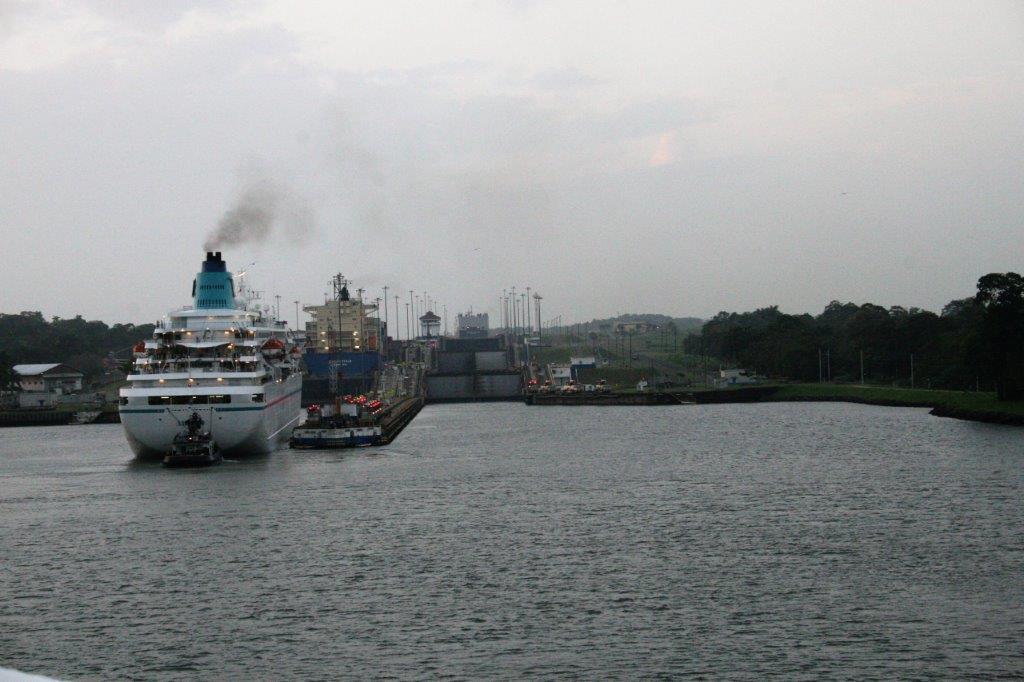
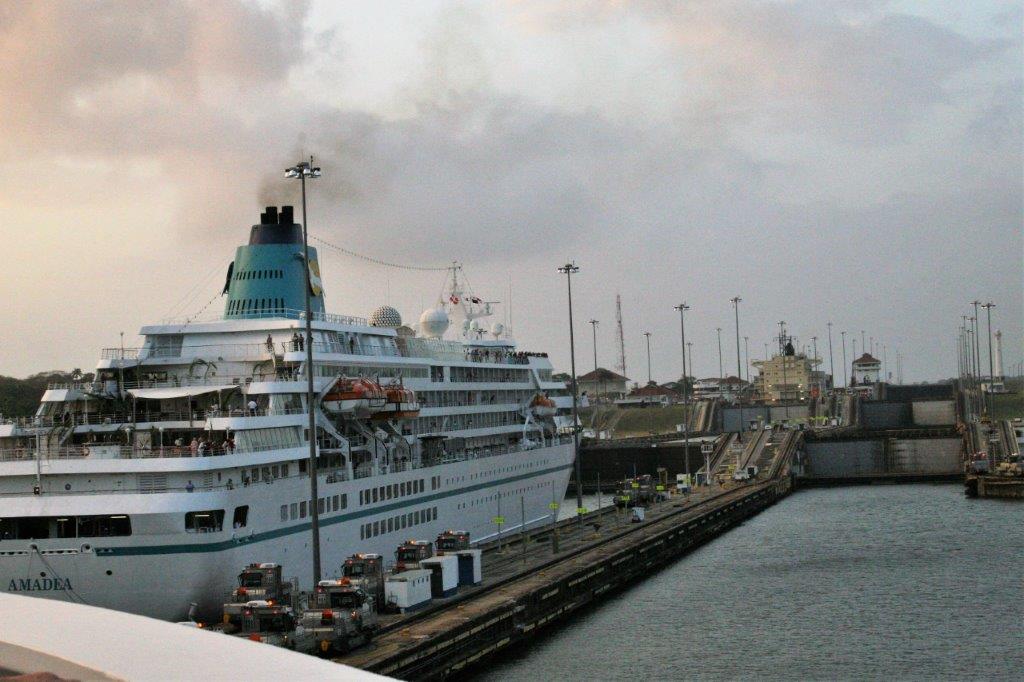
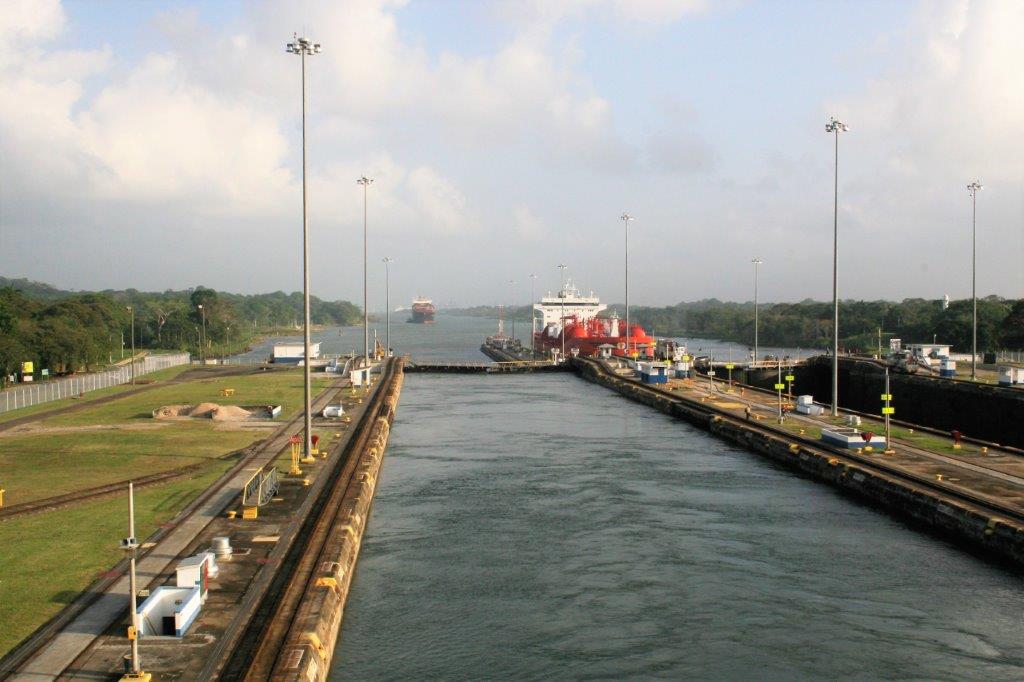
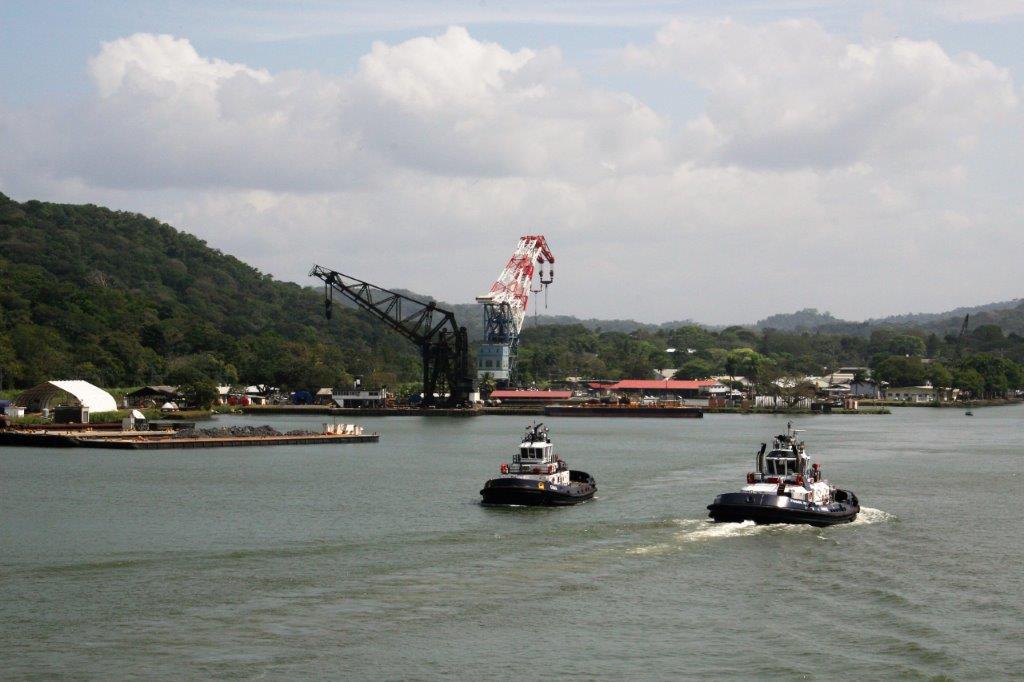
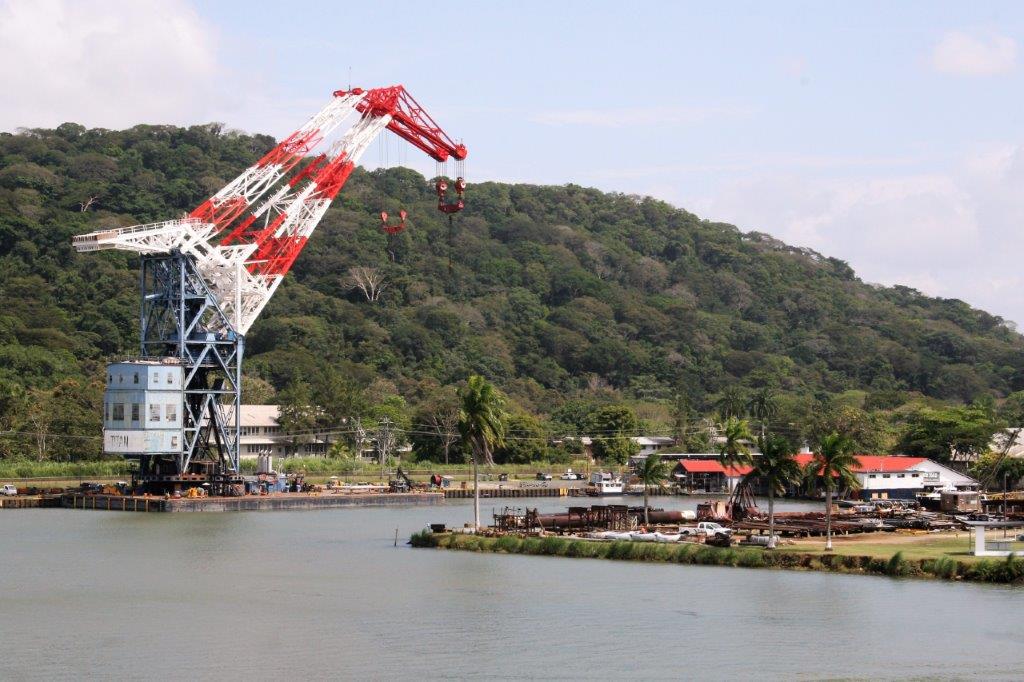
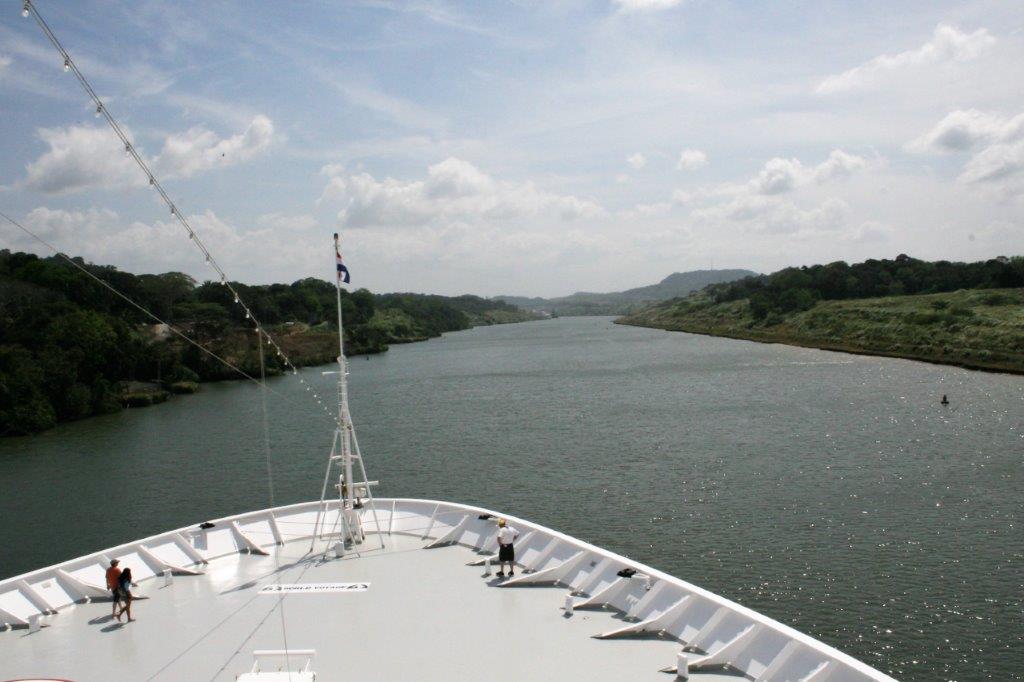
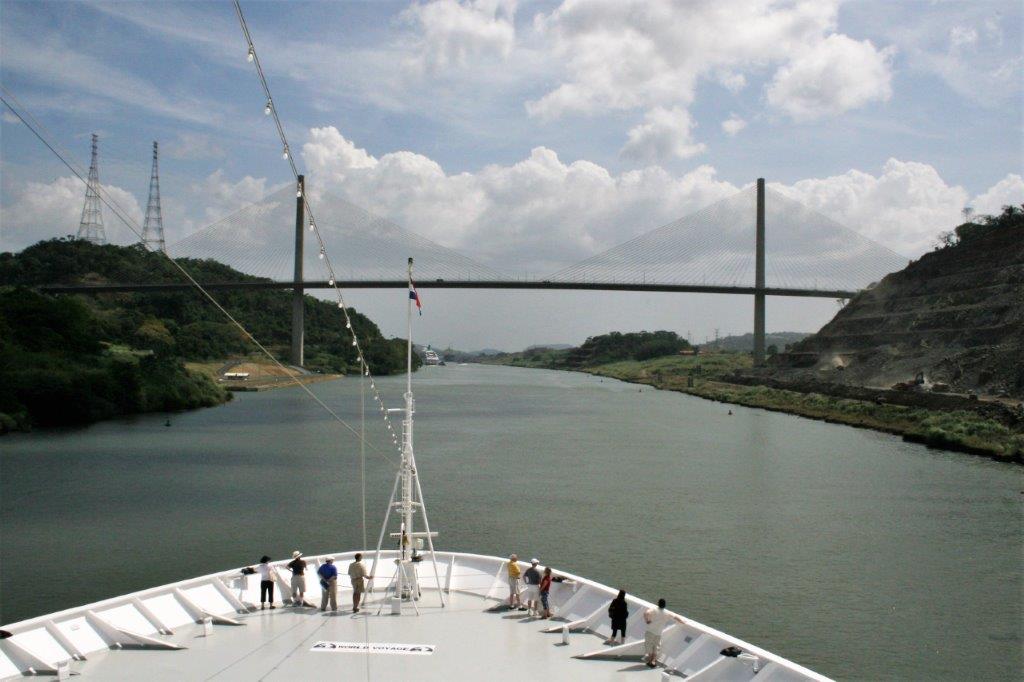
2009 World Cruise – I woke up early; really early – as 4:30 am and got up at 5:15.  I was on the bow before 6 to watch the sail-in to the Panama Canal.  There are two parallel lanes making up the canal so two ships go through at once.  We followed another cruise ship called “Amedea” into the right side set of locks.  John and I spent pretty much the entire day on one or another of the outside decks; mostly on the bow, watching the ship go in and sail out of the locks and the land pass slowly by.img_2628 img_2629The Panama Canal is considered to be the Eighth Wonder of the Modern World and has shortened the trip around the continent of South of America by 7,000 miles (11,265 km).  Amazingly the idea of a canal through the Isthmus of Panama was conceived by King Charles V of Spain in 1523.  He even commissioned a survey of the Canal area, which was completed the following year.  The sheer magnitude of the task though was too daunting for the Spanish and the idea was shelved.  The Gold Rush of 1894 brought the completion of the Panama Railroad across the Isthmus and it wasn’t until Panama’s independence from Colombia in 1903 that the idea of building a canal was seriously undertaken.

A deal was struck with the United States.  The US would guarantee Panama’s independence and, for the measly sum of $10,000,000, Panama granted the USA power and authority within the then ‘Canal Zone.’  America also paid an annuity of $250,000 beginning nine years after the treaty was signed.  This annual fee increased a few times over the years until it reached $1,930,000 in 1955.  On December 31, 1999, Panama assumed full responsibility for the administration, operation, and maintenance of the Panama Canal.

img_2630 img_2644 img_2665 The project was originally started by a French company but they went broke and the States bought them out for $40,000,000.  It took 10 years and 6,000 lives from yellow fever, cholera and accidents before the $387,000,000 Panama Canal was opened.

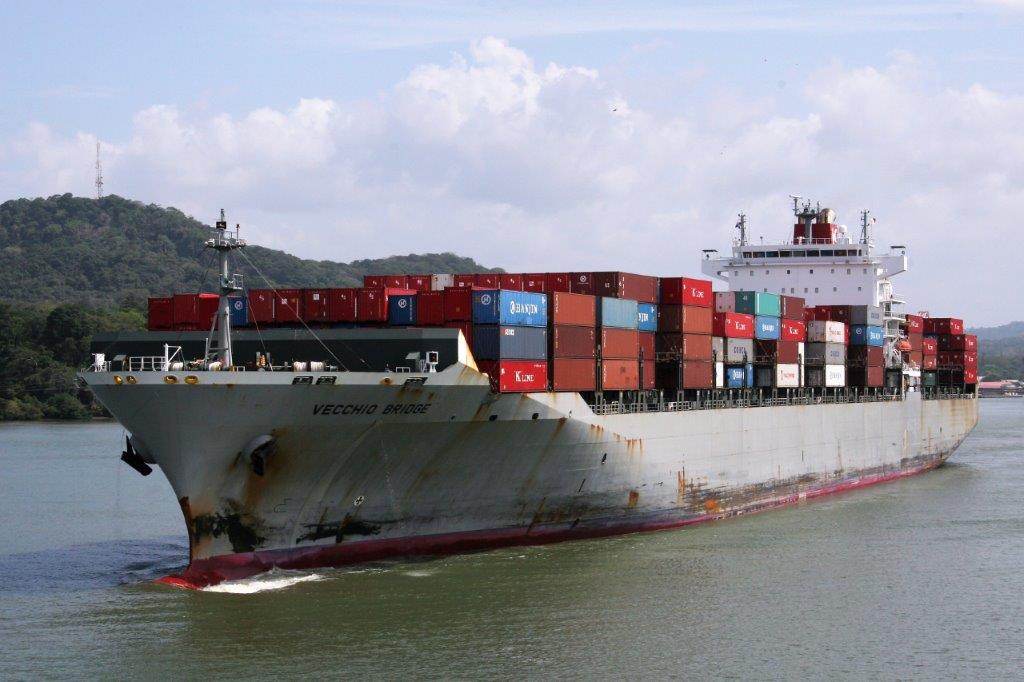
It has remained virtually unchanged since the opening in 1914.  The installation of lights in the 70’s allowed ships to go through the Canal 24/7.  It has only been closed for a few days two times since it opened.  The Canal is a neutral zone so any ship that can pay the passage fee is allowed through. (Average cost for a container ship or cruise ship is $100,000 – $200,000.  The smallest amount ever paid was 36 cents in tolls paid by a fellow, who in 1928 took ten days to swim the Canal.)

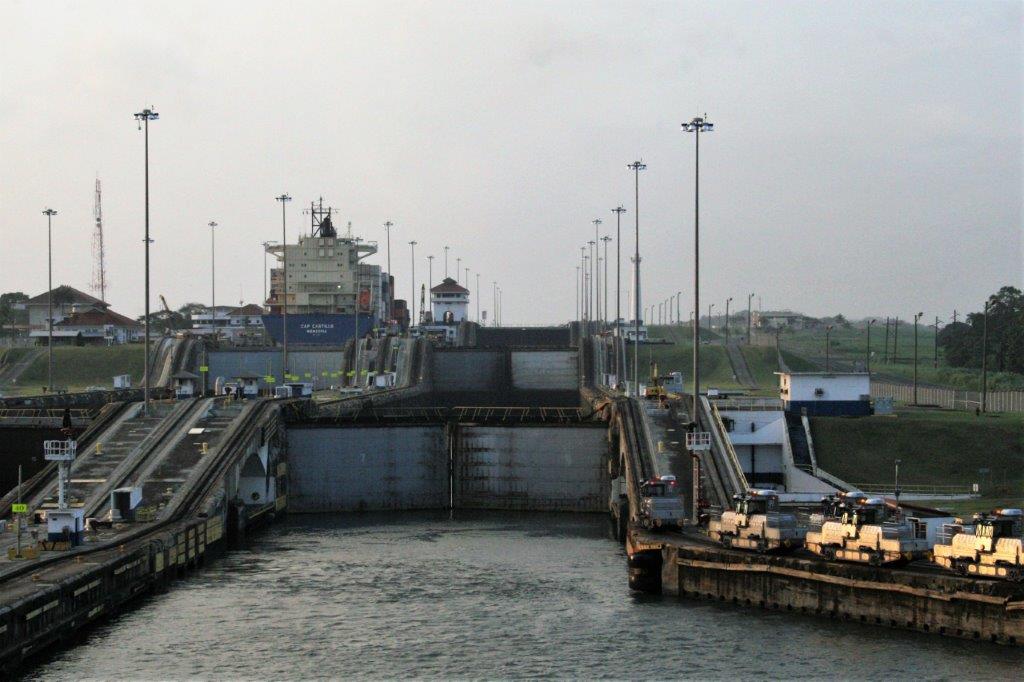
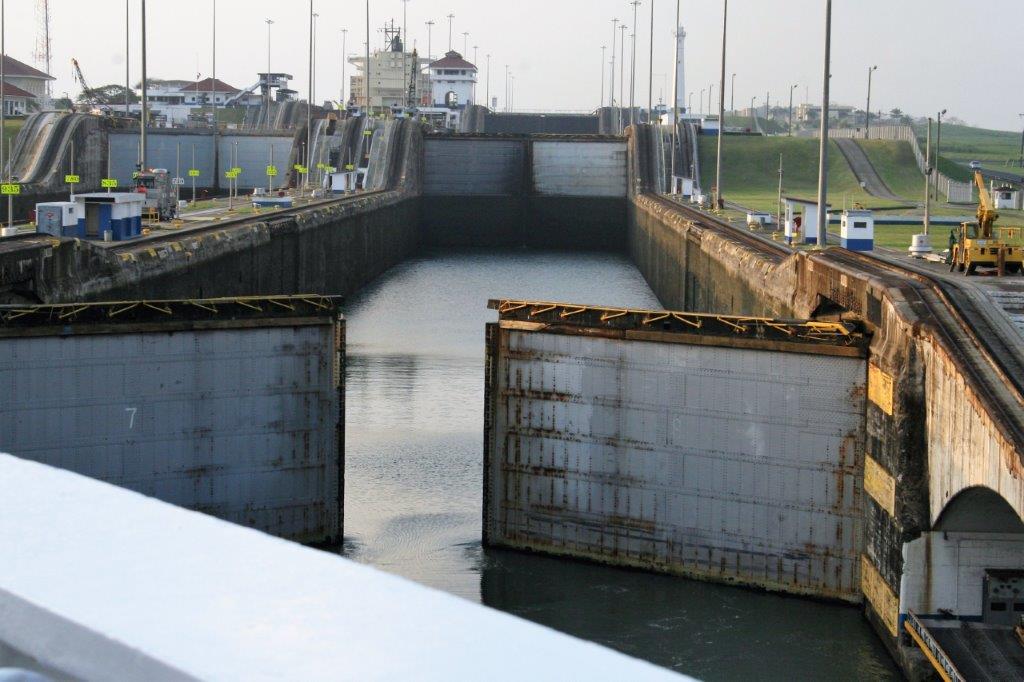
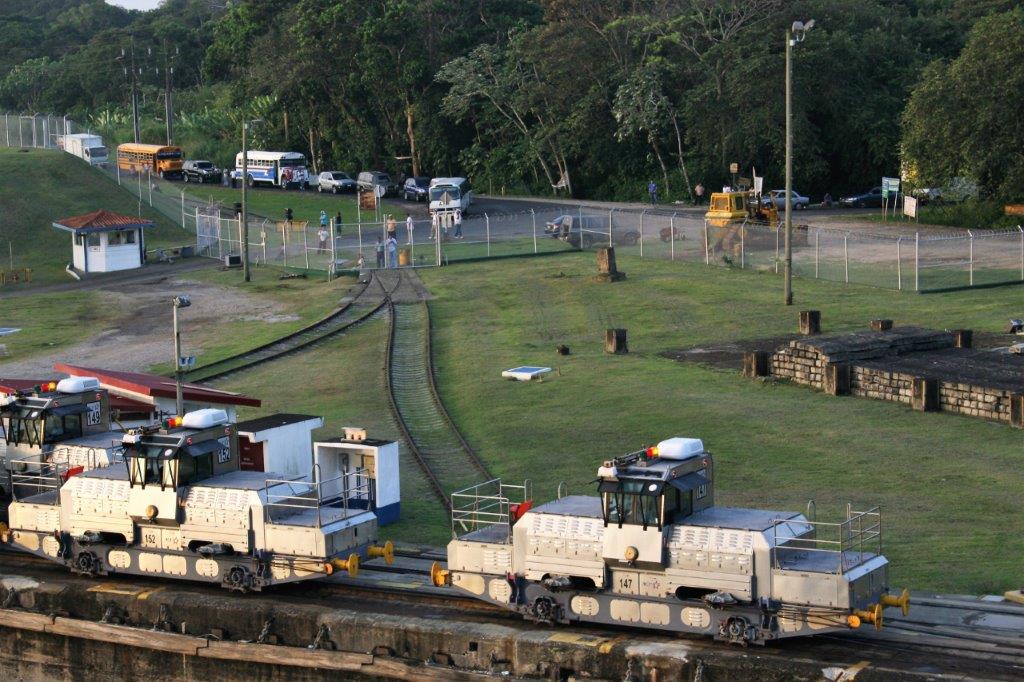
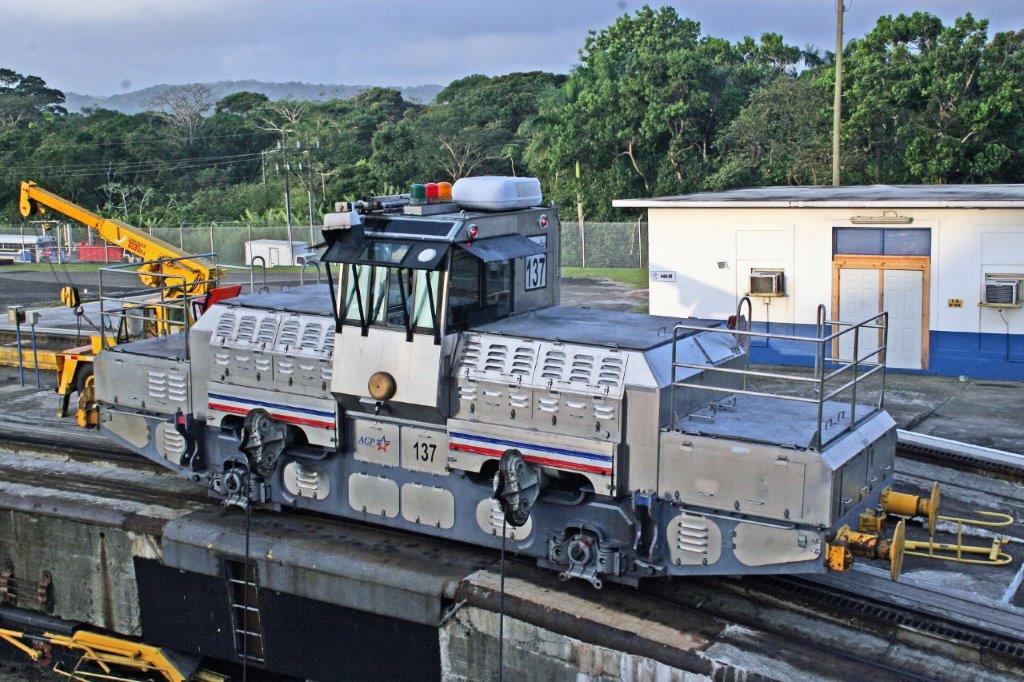
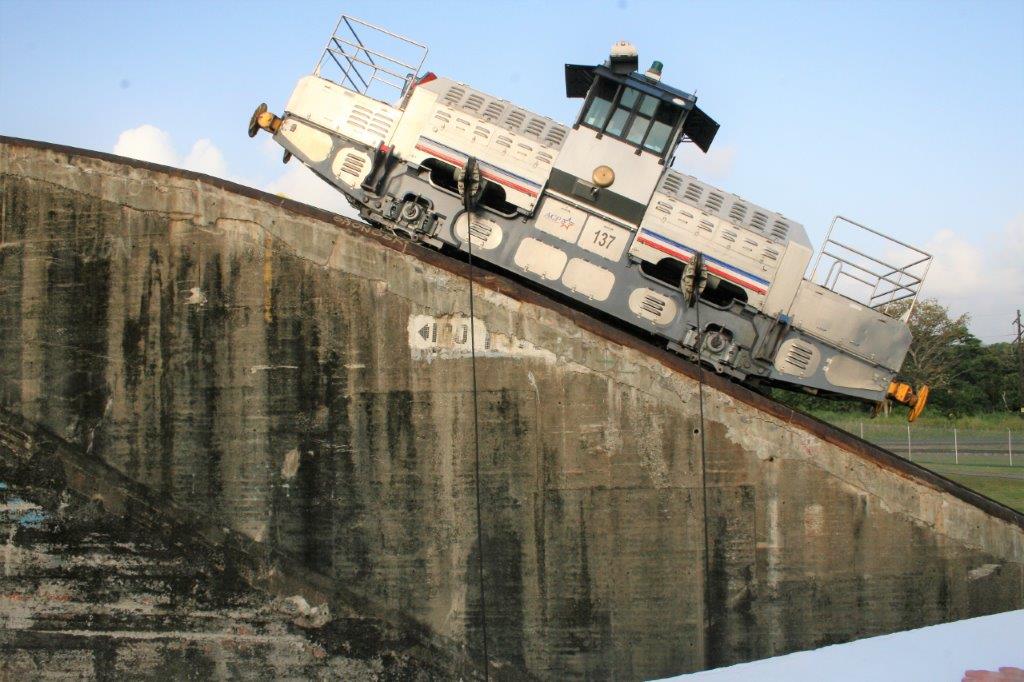
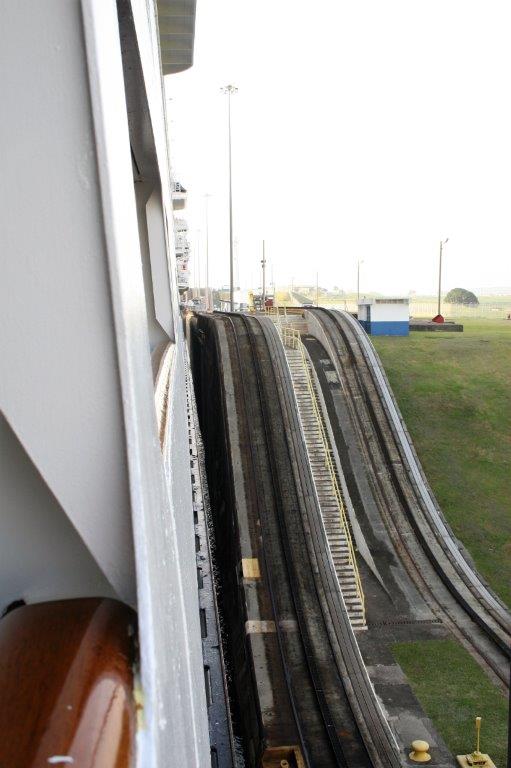
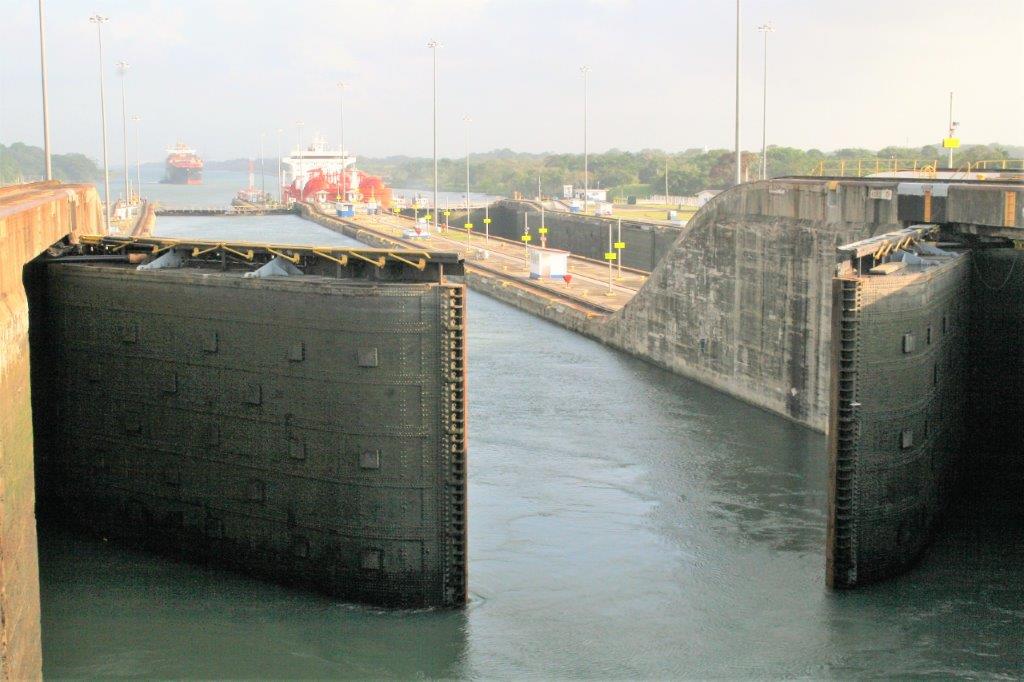
The ships pass through three sets of locks that effectively lift the vessels 26 meters above sea level to the level of Gatun Lake and then lower them back to sea level on the opposite side of the Isthmus.  The ships use their own power to navigate the lake but are assisted by pairs of electric locomotives (called Donkeys) on rails that use cables to keep the ships in position within the locks chambers.  The transit is 48 miles (77 km) long and each crossing flushes approximately 197 million liters of fresh water into the sea.  It is a good thing the area has a very high rate of rainfall.

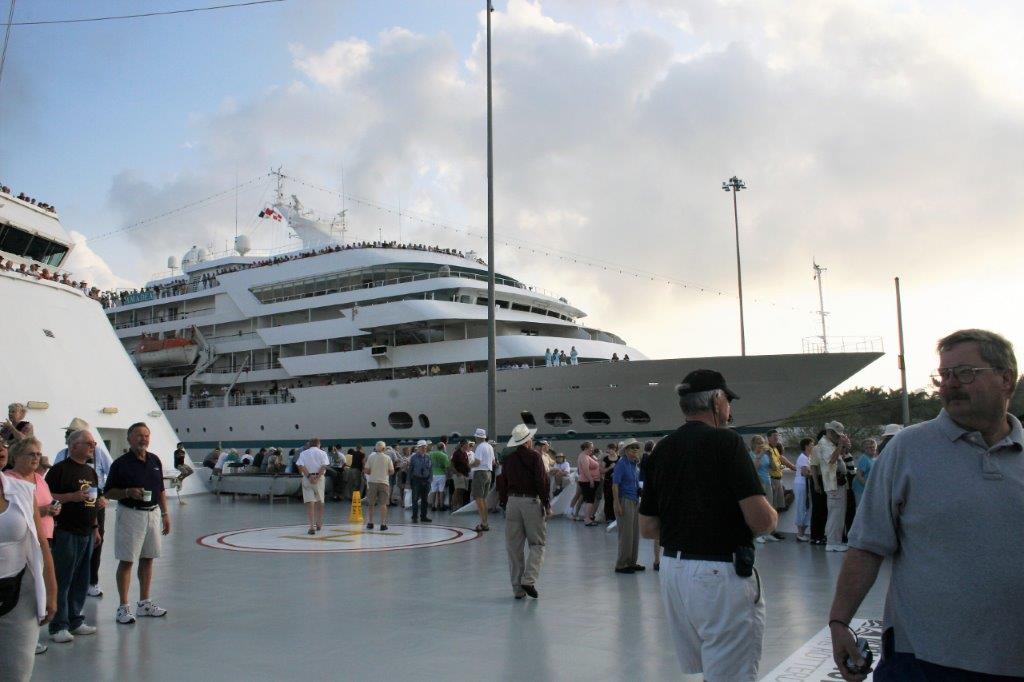
img_2634 img_2653_edited-1 img_2662 img_2655 img_2656_edited-1Our ship, the MS Rotterdam is one of the smaller cruise ships around these days and pretty much the largest that could go through the Canal.  We had very little clearance on each side of the concrete walls.  All the big cruise liners today just stay on one side or the other and do the same cruise over and over.

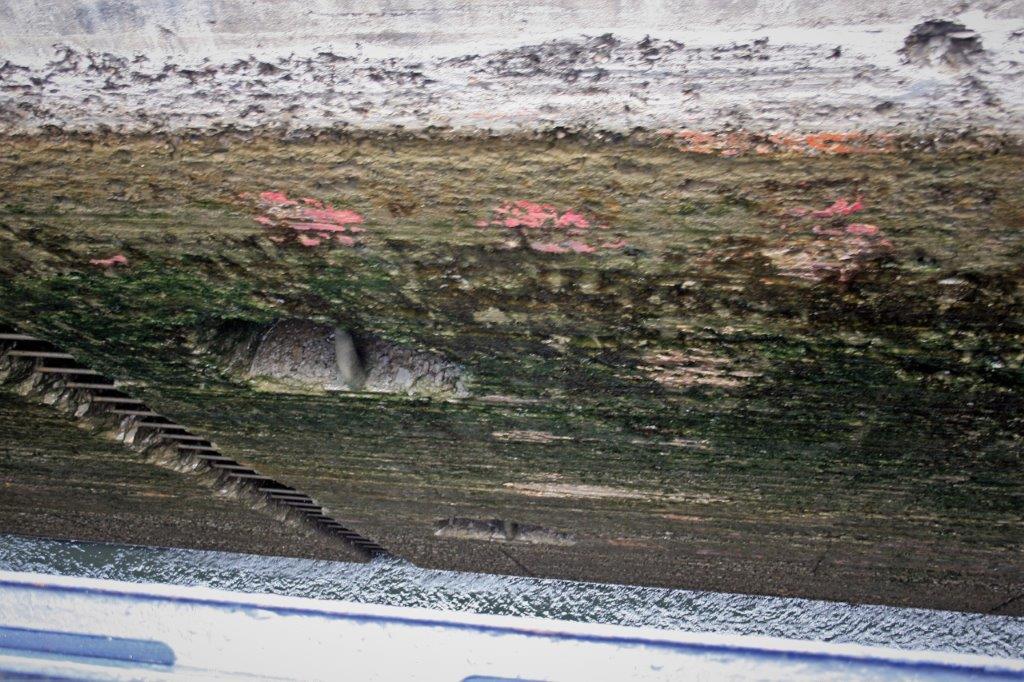
The glimmer at the bottom of this photo is the water in the lock.  You could easily touch the concrete walls if you reached out from one of the cargo doors on the lower deck.

img_2669 img_2735_edited-1img_2671

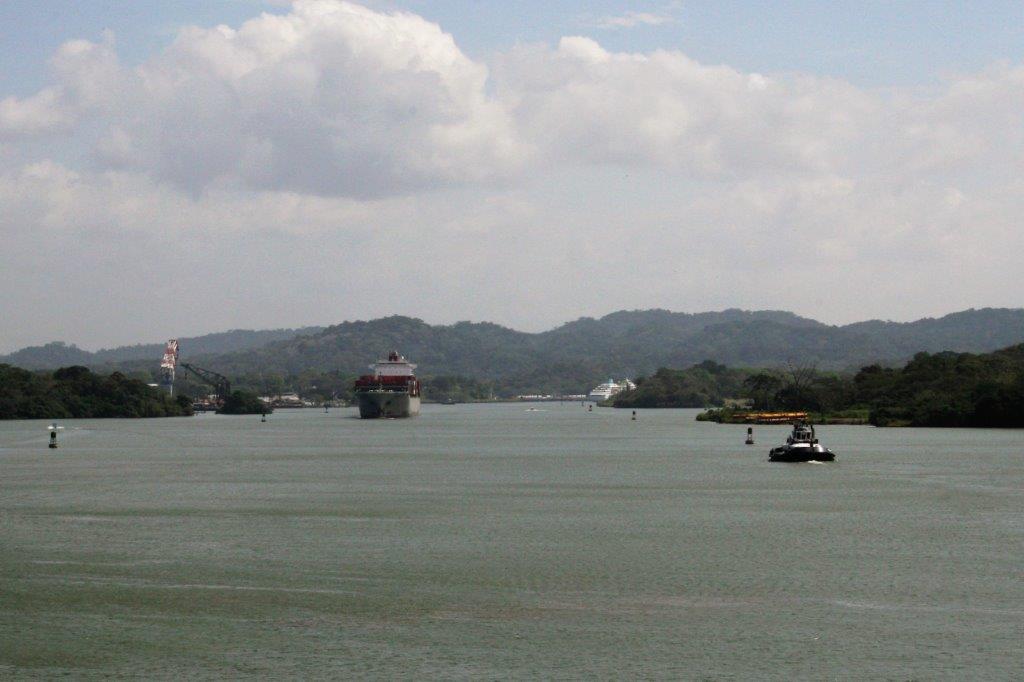
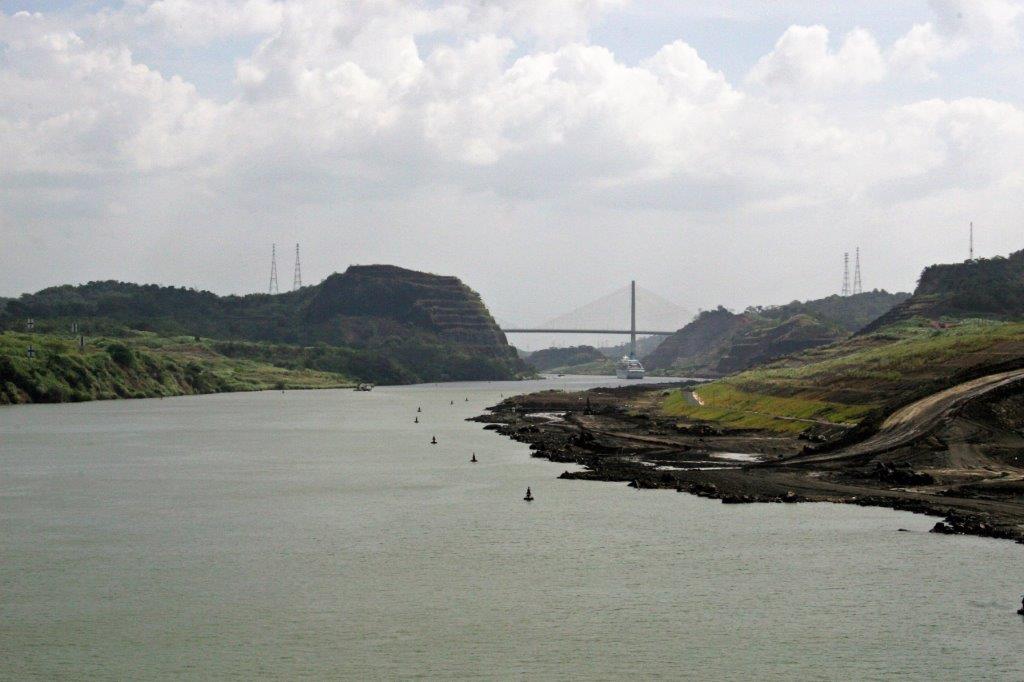
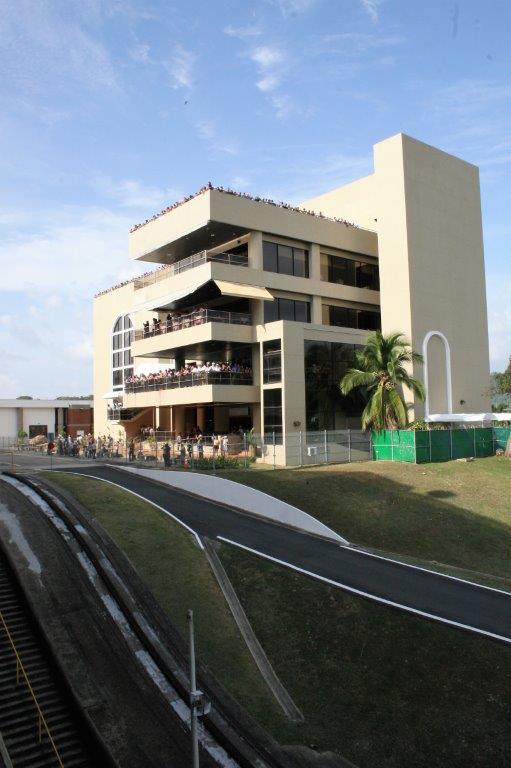
img_2677There is a lot of traffic along the lake shore and within Gatun Lake as you sail from one set of locks to the other.  Everyone moves dead slow so it takes all day to make the crossing. img_2693-1 img_2696-1 img_2707 img_2711 img_2719 img_2744We passed the Panama Railway Bridge and sailed under the beautiful Centennial Bridge before entering the Gatun Locks on the west side of the lake (The locks on the east side, where we entered the Canal, are called the Miraflores Locks).img_2680 img_2721_edited-1 img_2726After we passed through the last lock and past the Visitor’s Center, whose three levels of balconies – and the roof – were packed with people watching the ships; we entered the Pacific Ocean. We made our way to the beautiful Golfo Dulce coast of Costa Rica where we did scenic cruising all the next day.img_2730 img_2753 img_2761


2009 January 8 (World Cruise) – Day 4 – Cartagena, Colombia

2009 World Cruise  – We were up at 6:45 in order to have lots of time before our first tour of the cruise.  Thank heaven for room service breakfasts.

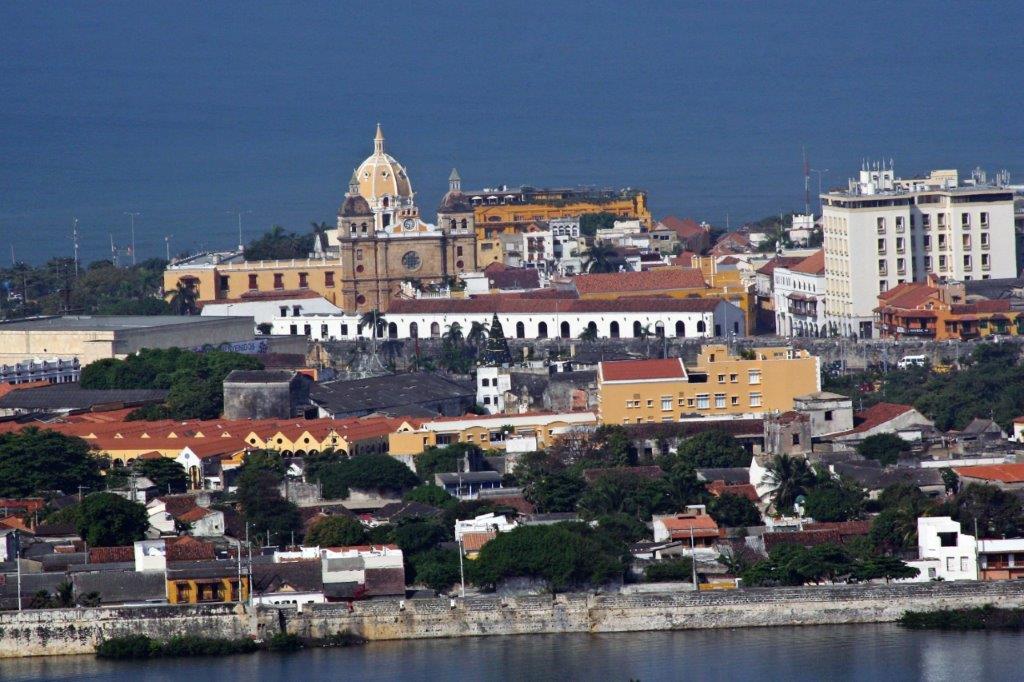
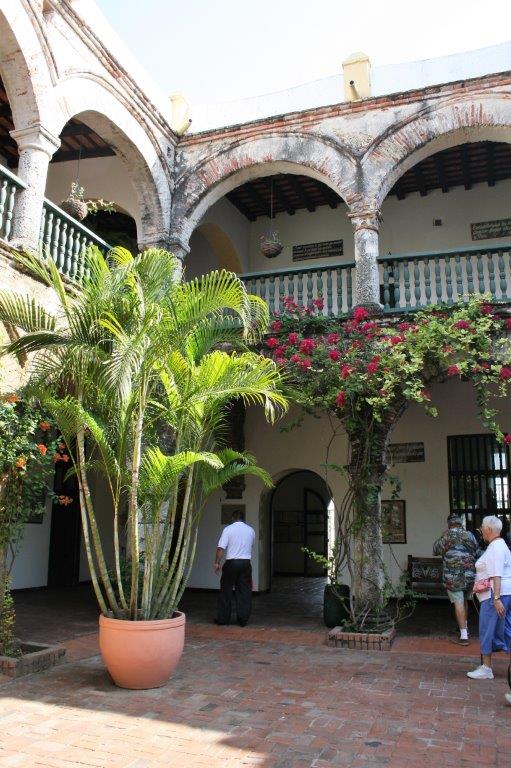
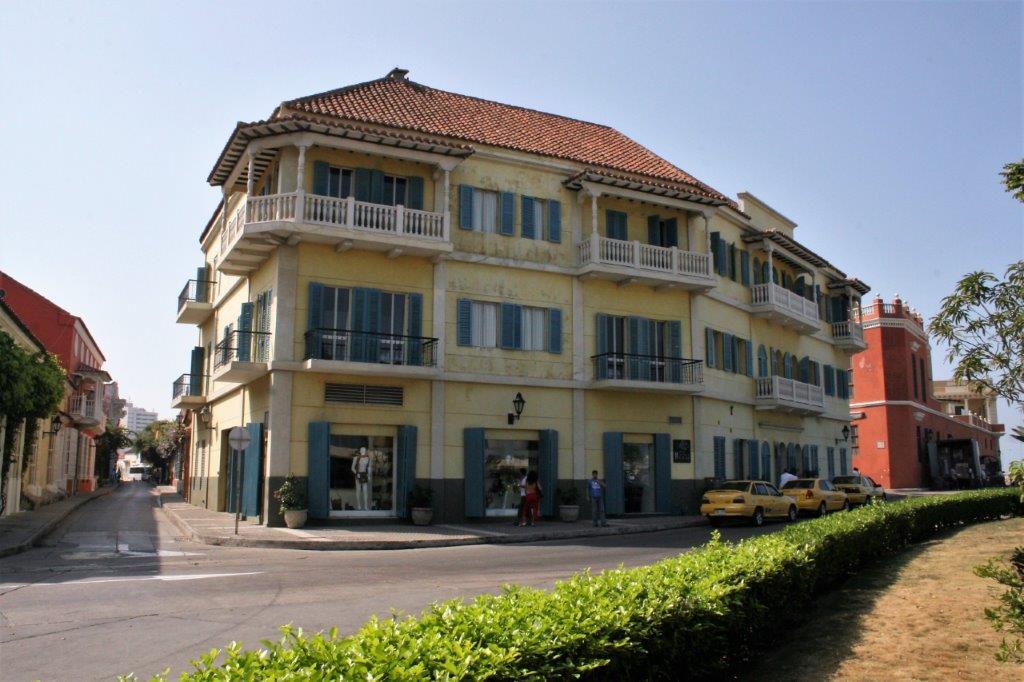
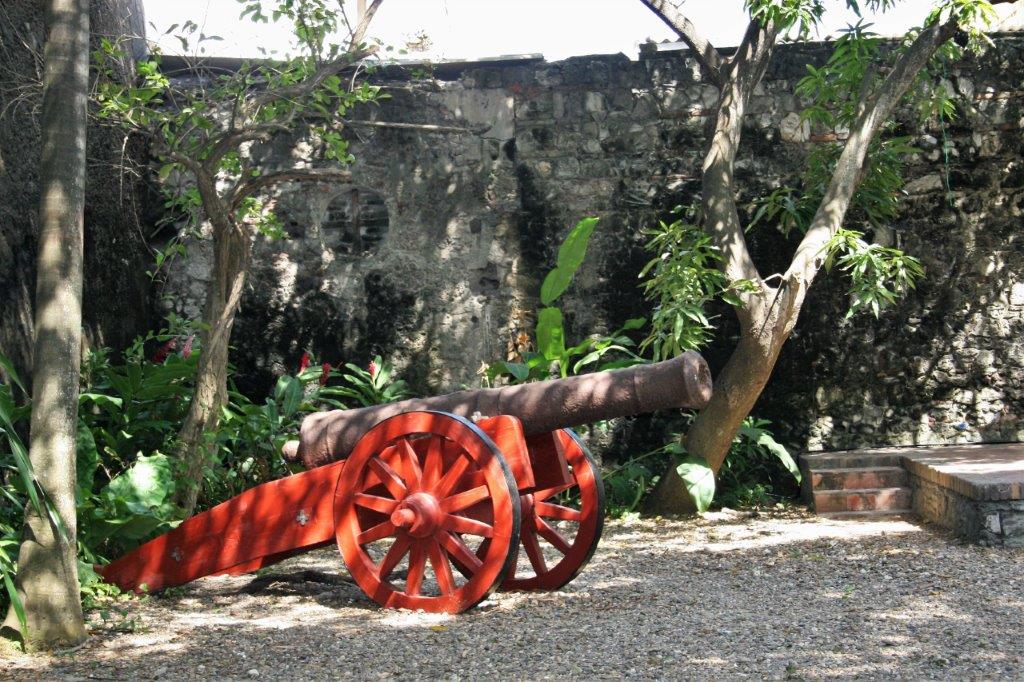
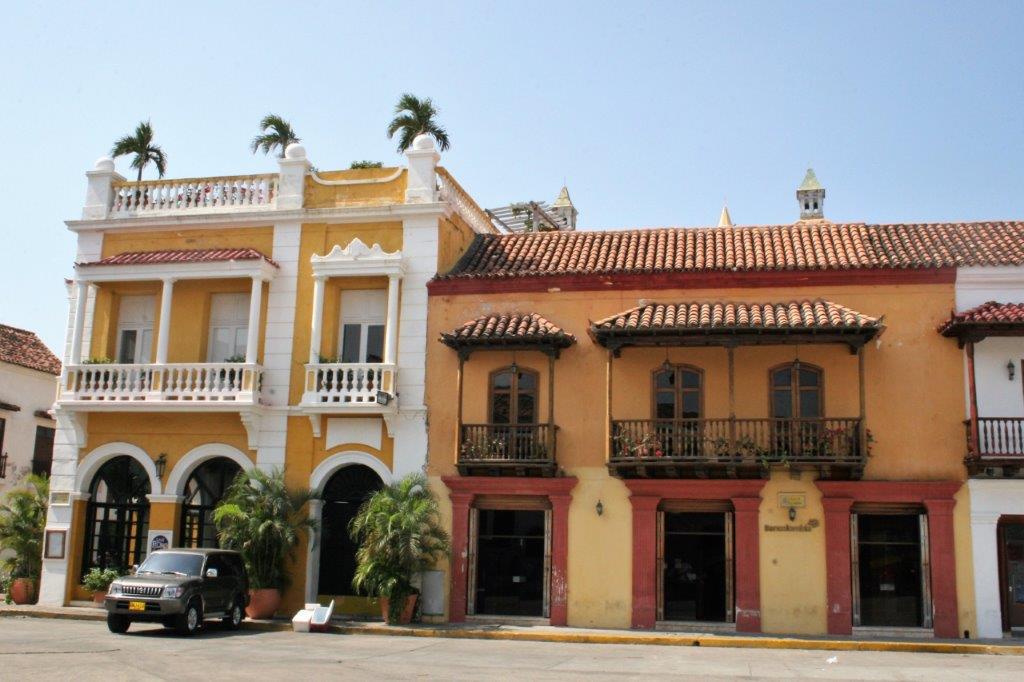
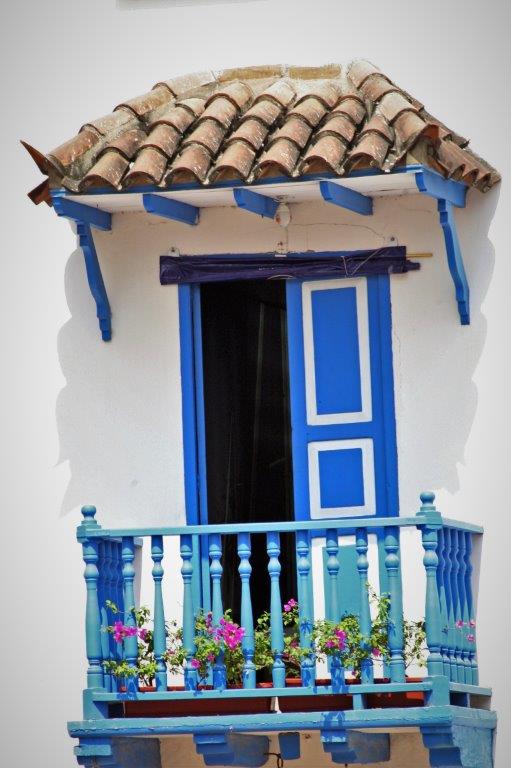
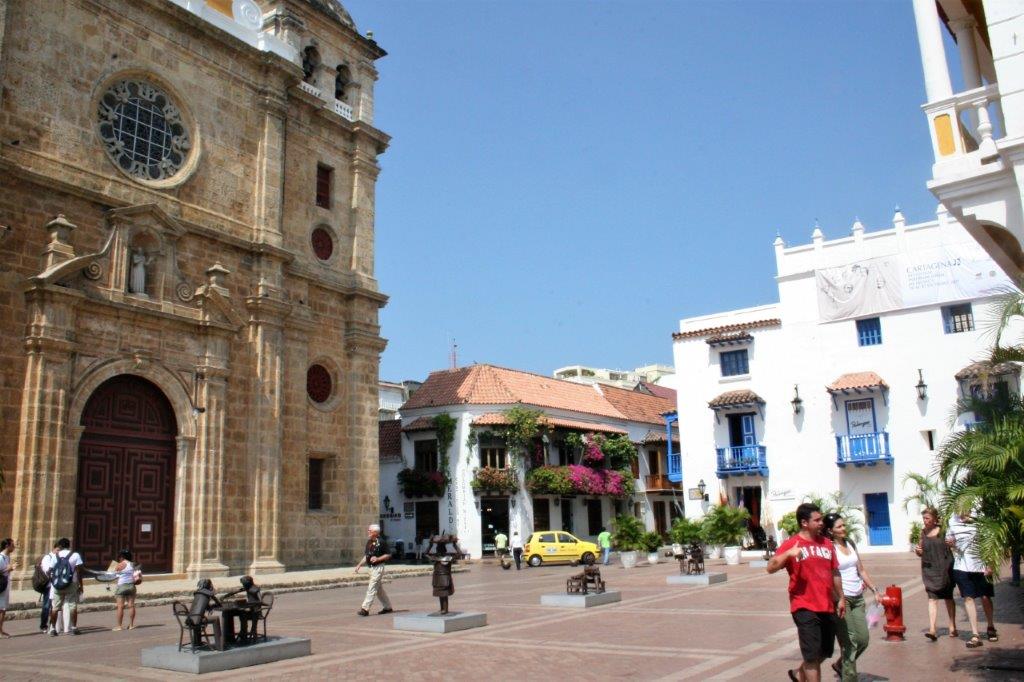
Our home for the next four+ months.img_3123 img_3124Cartagena de Indias was founded in 1533 and became a major port for Spanish ships taking gold and other products from northern  South America.  The city also became a center for the Inquisition and a major slave market.  The province declared its independence from Spain in 1811 and years of civil war followed.  Today the city is Colombia’s fifth largest, mainly due to petroleum fields discovered in the Rio Magdalena Valley in 1917.

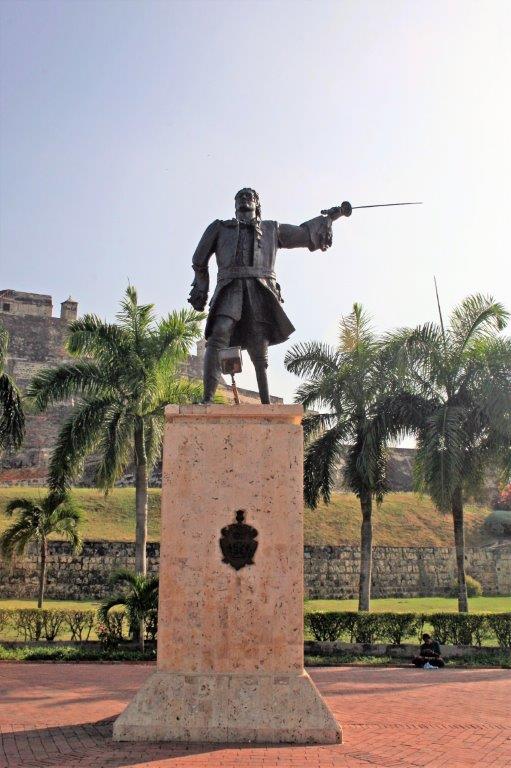
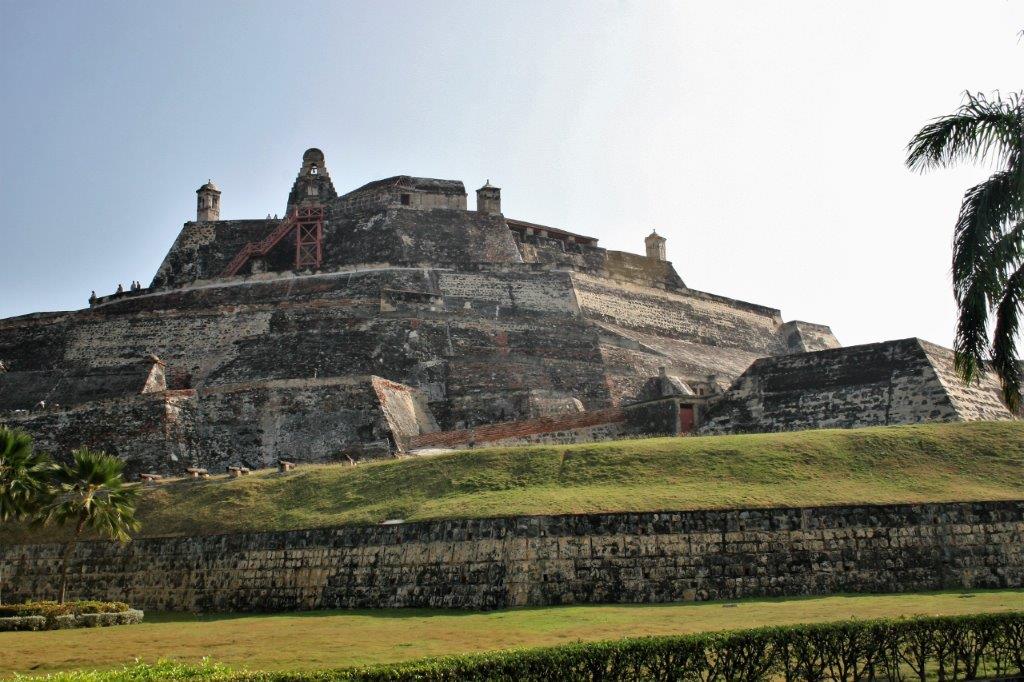
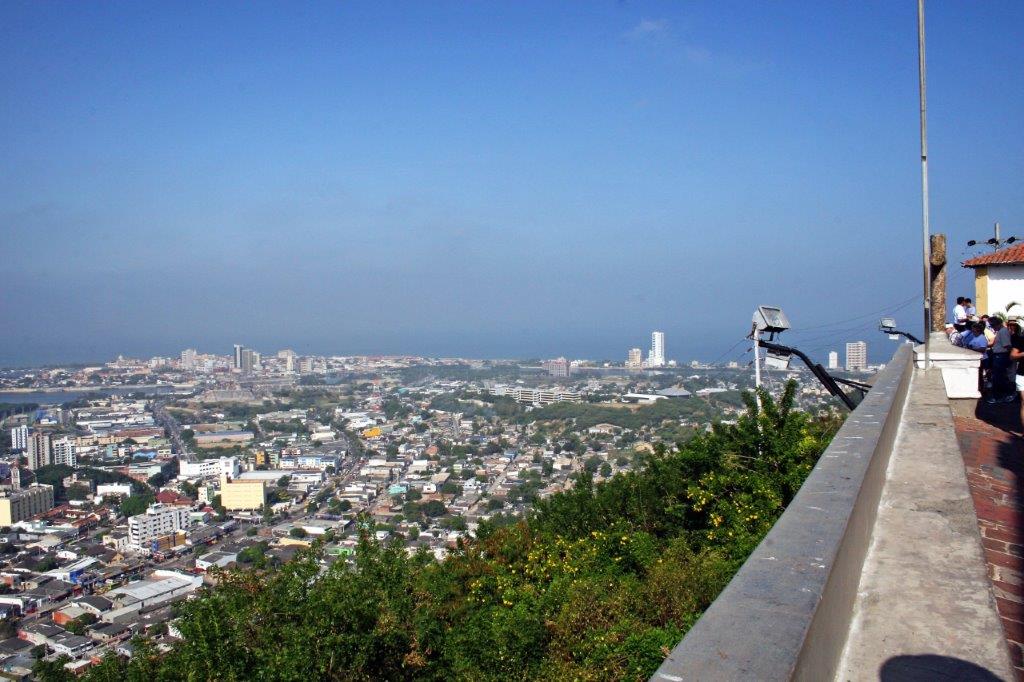
The first stop on our tour was Castillo de San Felipe de Barajas, a massive stone fortress that covers a hill 135 feet above sea level.  it was originally built in the 1600’s and named after Spain’s King Philip IV.  Over the years it was re-fortified and expanded.  In front of the fortress is a statue of Don Blas de Lezo, a Spanish Admiral who defended the fortress and city from an attack by Great Britain in 1741. (If you look closely at the statue you will notice the empty right sleeve – hence the left-handed swordsman – and a wooden left leg.  Don de Lezo lost these limbs in other battles and also lost an eye – brave and persevering fellow, I think.)img_2569_edited-1img_2572 img_2571  The view over the city was magnificent.

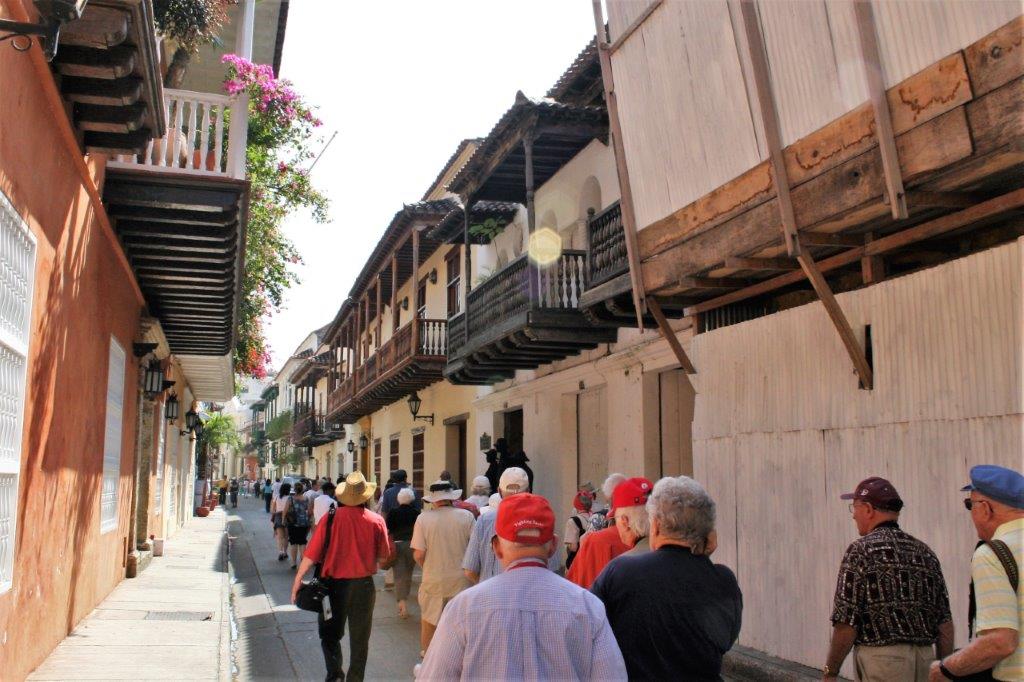
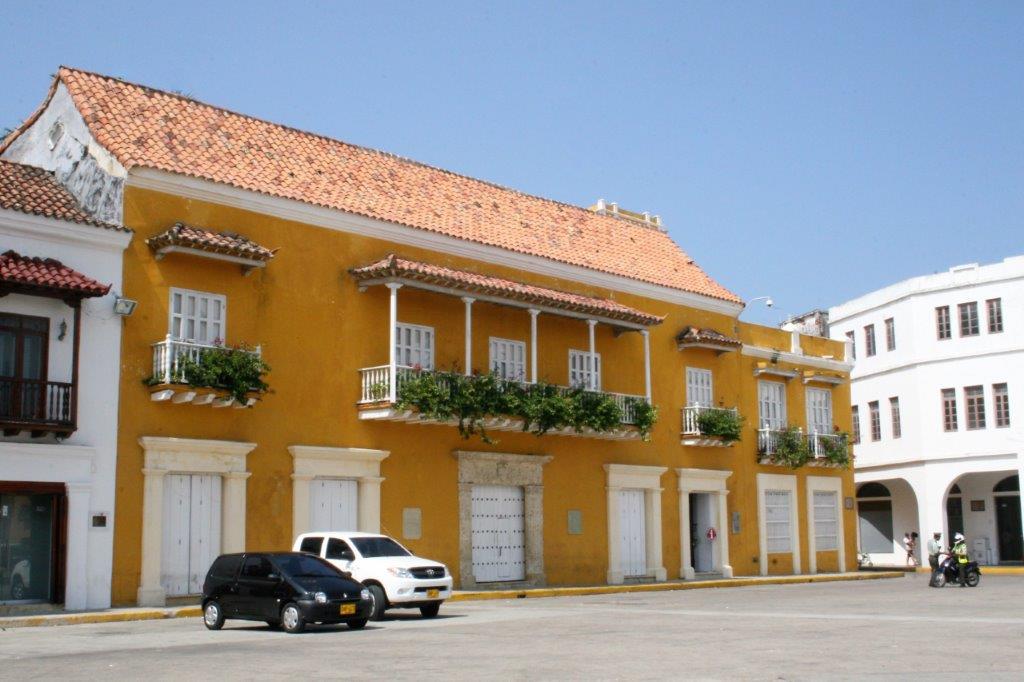
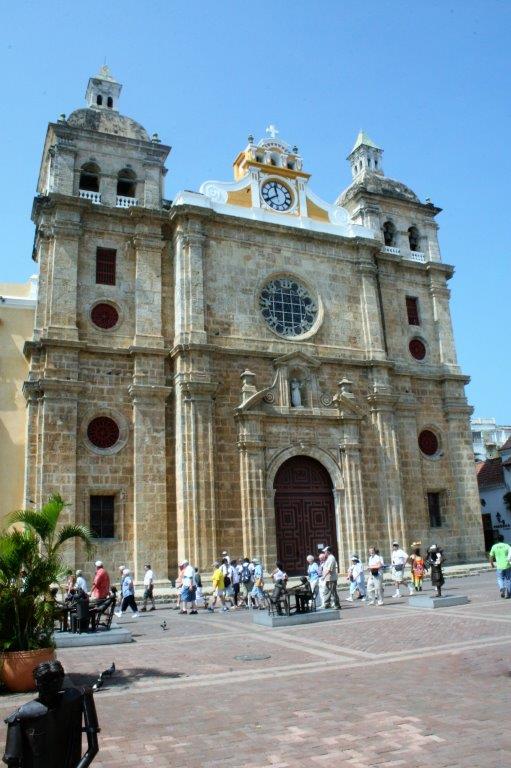
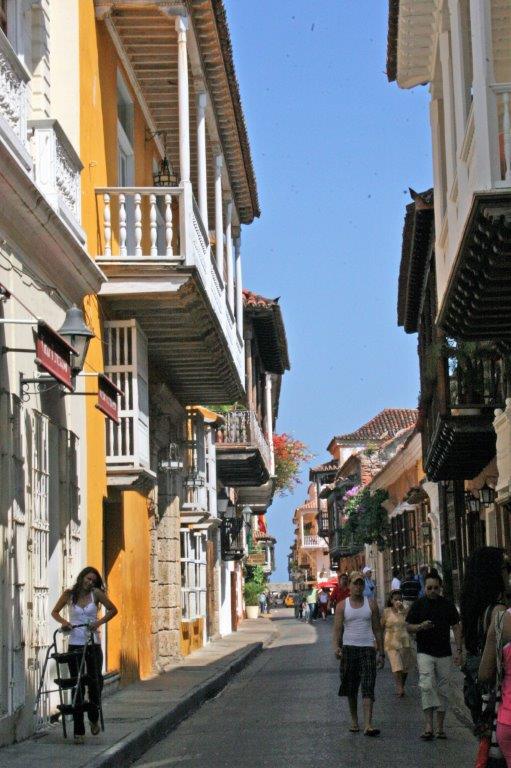
img_2579 img_2580_edited-1 img_2583_edited-1After we toured the fortress we had a walking tour through the narrow streets of the Old Town.

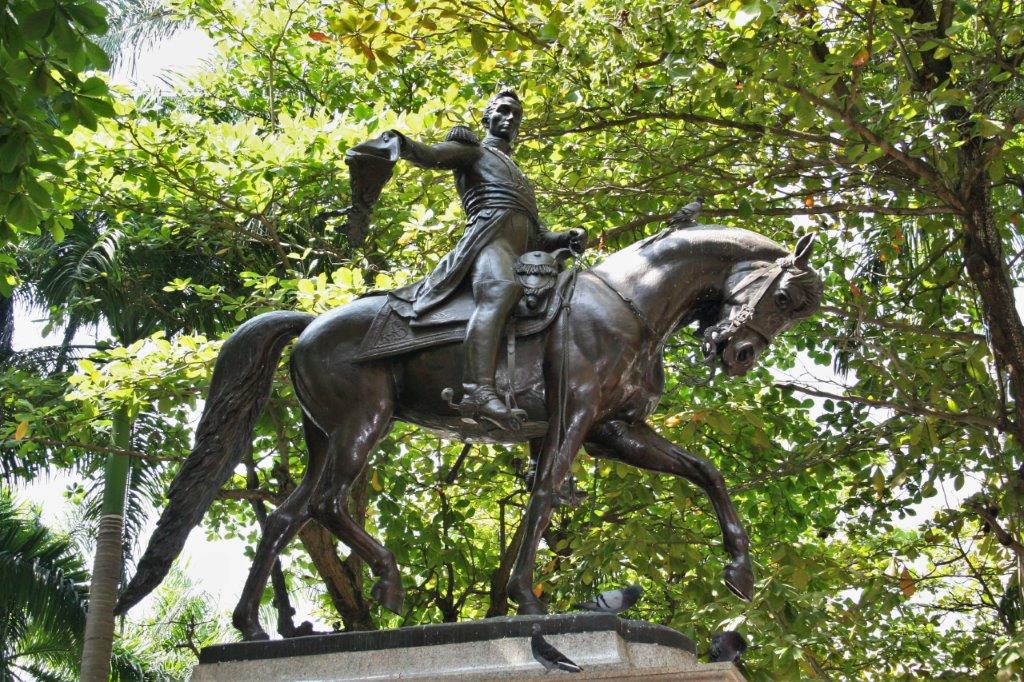
img_2584 img_2590 img_2593 img_2596_edited-1 img_2597In a park there is a statue of national hero Simon Bolivar, who defeated the Spanish and liberated most of South America.  He died Dec 17, 1880 from, it is commonly believed, tuberculosis (known at the time as Galloping Consumption).

(FYI – It is commonly held – although not universally adhered to (as proven by this statue) – that the position of the legs of the horse in an equestrian statue signify the death of the rider.  If the horse is rearing with both front legs off the ground, the rider is said to have died in battle.  If only one front leg is off the ground, the rider was wounded in battle and died of his wounds later.  If all four feet of the horse are on the ground, the rider survived any battles and died later of other causes.  Just so you know.)  img_2605 img_2601 All in all, it was a good first port-of-call and an interesting tour on a nice day.

img_2608 img_2609 img_2611 img_2613_edited-1img_2612

2009 January 3 (World Cruise) – The Adventure Begins

2009 World Cruise – I began writing my travel blog when we drove across Canada in 2014.  But that was not the beginning of our travel adventures.   I had never heard of a blog at that time and had no idea how to share one.  Times have changed; I have learned.

I have decided a fun project would be, whenever I have the time and the notion to write up a blog about our other holidays.  They won’t be done daily.  Perhaps not even weekly.  There will probably be large gaps between posts, but I thought it might be fun to reminisce.  So…. here we go.

John and I retired in the spring of 2007.  We wanted to go somewhere warm for a month or so of the winter in early 2008 so, in the fall of 2007, we went to see a travel agent at BCAA Travel in Vernon.   We were directed to the desk of Lindy Frazao, a very friendly, professional and competent lady.  While Lindy was scrolling through her computer to see what she could offer us she said, in an off-hand comment to herself, “Oh, they are doing another World Cruise.”  My ears immediately perked up.  I had never heard of such a thing.  “A World Cruise,” I said. “Who does that?”

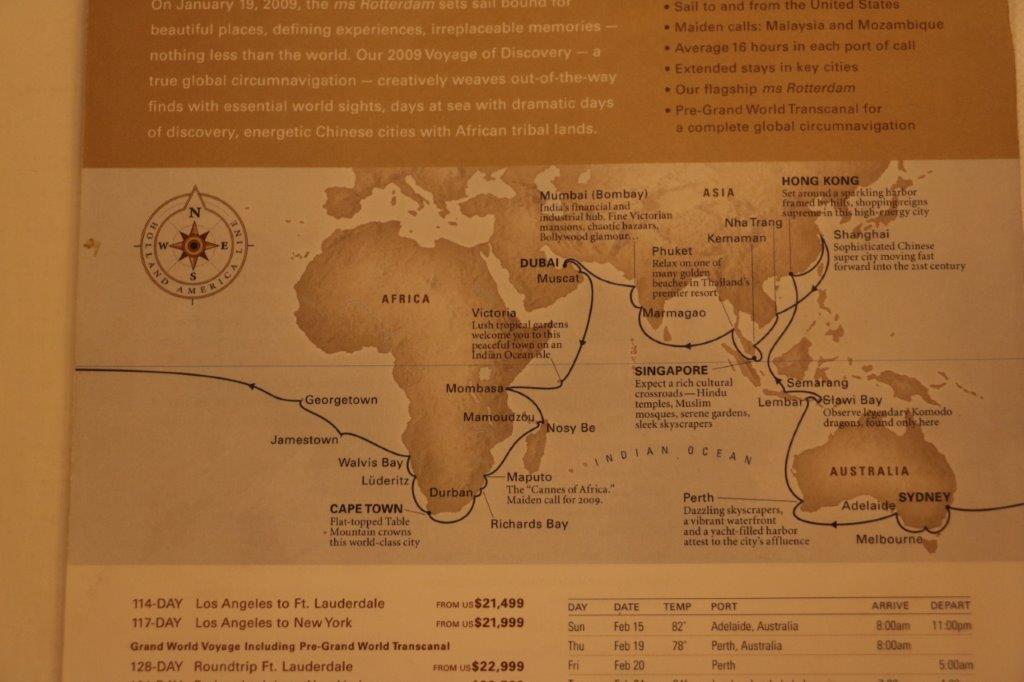
Lindy explained that Holland America Cruise Line does a series of ‘Grand Voyages,’ the longest of which is a cruise around the world lasting 110-115 days.  “Well.”  I said, “If they plan one for 2009 please let us know.”  They did; and she did.  So there we were.

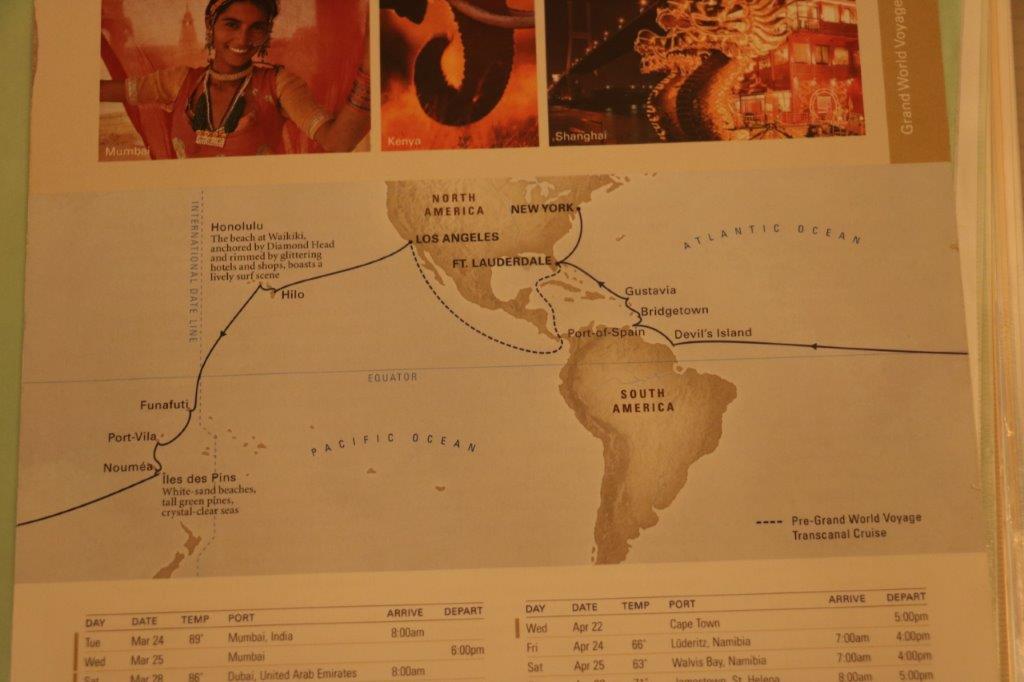
We had never sailed on a Holland America ship (We cruised a few times with my dad who liked Royal Caribbean.  We had also done a cruise with friends on Norwegian) and we had never been on a cruise longer than two weeks.  We booked it anyway.  And – we didn’t just book the 114- day World Cruise, we added on another two weeks at the beginning.  This is entirely due to my obsessive, compulsive issues.  That year the world cruise began in Los Angeles, CA and ended in either Ft. Lauderdale, FL, or three days later, New York, NY.  My brain did not compute a cruise around the world that began on one side of a continent and ended on the other – you would miss a big bit.  Fortunately for me, the MS Rotterdam was doing a regular weekly cruise in the Caribbean and needed to get to LA to begin the round-the-world voyage.  Therefore, there was available a regular 14-day cruise through the Panama Canal from Ft. Lauderdale to Los Angeles.  We booked that too.
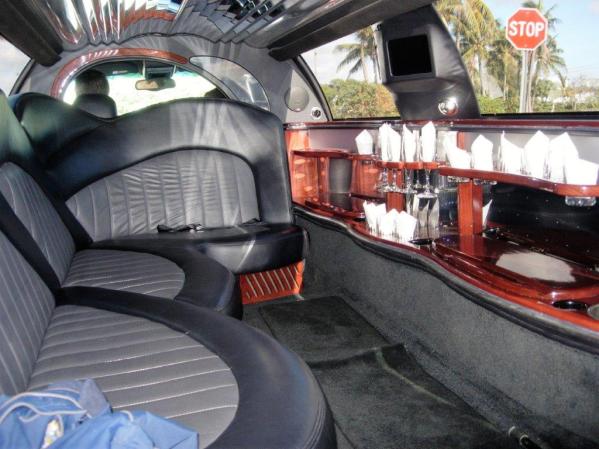
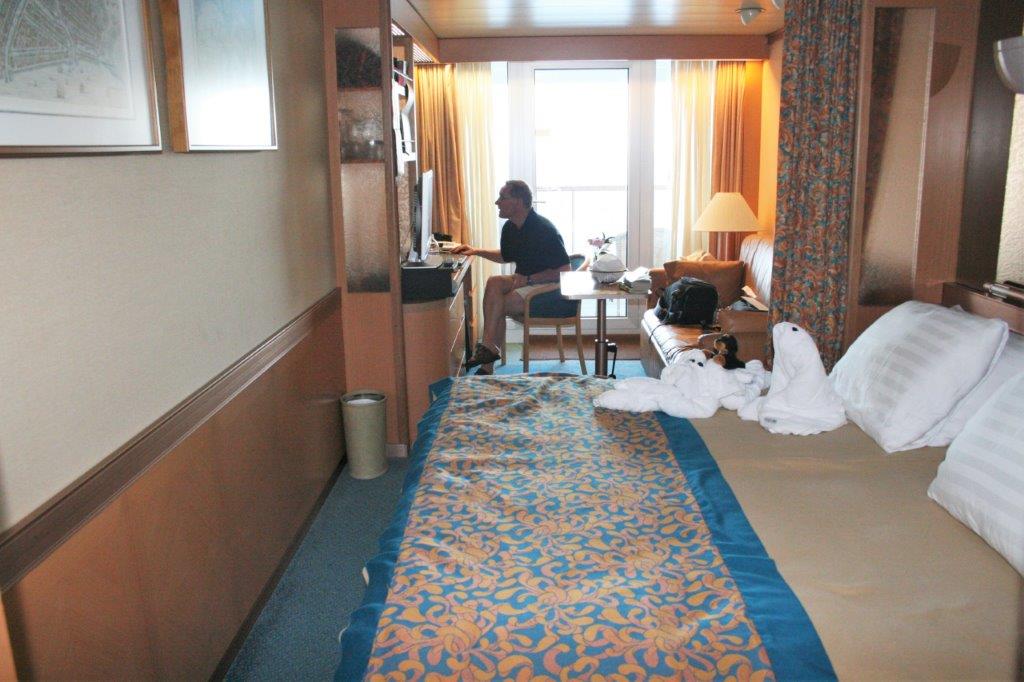
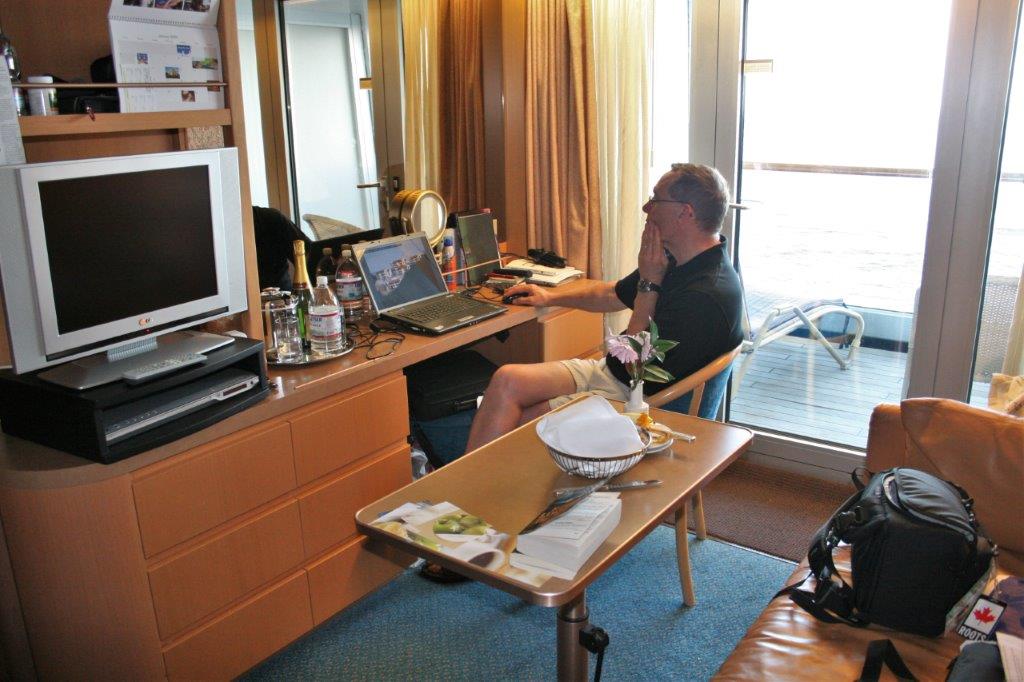
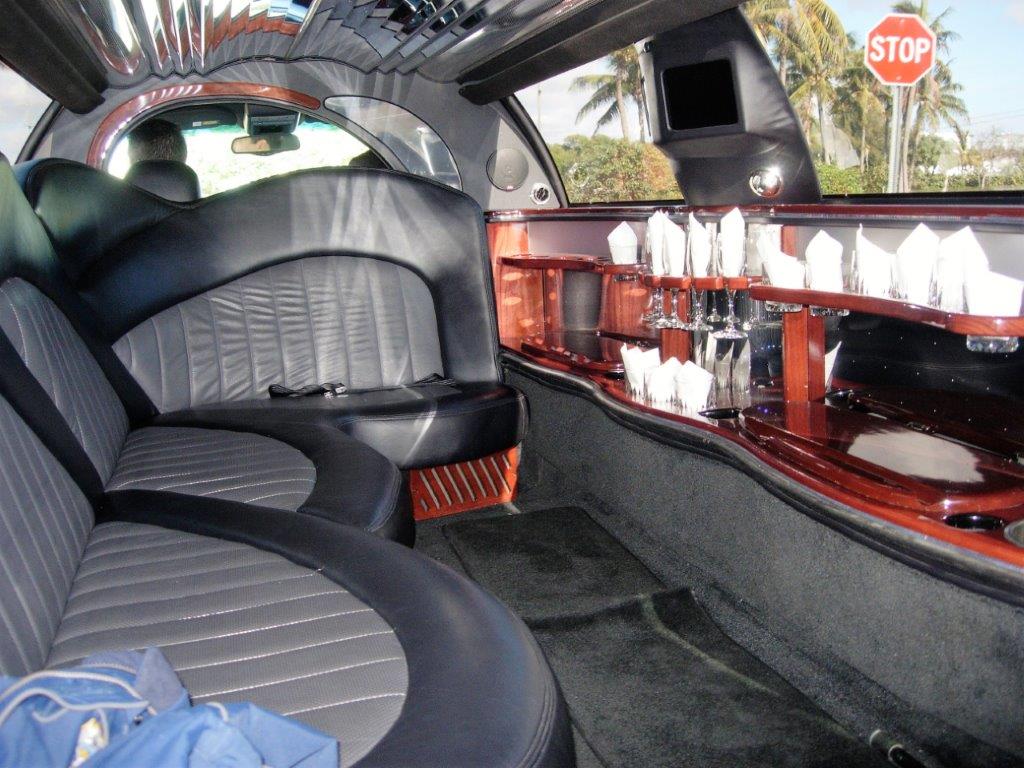
img_6858img_6857 We also decided that if we were going to be on a ship for over four months we wanted some personal space and reserved a balcony suite.  This cabin option came with perks: unlimited luggage picked-up and returned to our door by courier, First Class flights to Ft. Lauderdale and back, and limousine service from the airport to the hotel on arrival in Florida.

The unlimited luggage was a fabulous perk.  How could you pack for over four months into one 50-lb bag?  You couldn’t; which would mean extra fees at the airport.  The goodie did have a down side we discovered.  In order to ensure sufficient time for our bags to  arrive at the Ft. Lauderdale Cruise Terminal the courier would come and pick them up on December 3.  The ship sailed January 5.  I usually pack the night before I leave.  Packing a month early was a killer.  Downside number two:  Since we live in Canada and our un-accompanied luggage was being sent to the USA we needed to itemize and value every item in our bags – in triplicate.  We wanted to have a variety of clothes for each of us in each bag in case one of them went missing so we made piles all over the living-room and wrote out the manifests as we loaded the bags (2 big bags each).  This took all afternoon!  When I complained to my sister Irene, she, very kindly and sympathetically said, “My heart bleeds for you; you will not have to cook, or do the dishes, or make your bed, or clean the house for four months.”  Nice.

We left home on January 3 in order to have an extra day in the event of flight delays. (The flight from Kelowna to Toronto was an hour late leaving and the Toronto to Ft. Lauderdale flight was over three hours late.)  Flying business class is a whole new world.  We had real food!  On real plates!  With real cutlery!  Lots of leg room and 2 flight attendants to take care of 16 passengers.  Oh, if only I could fly that way all the time.

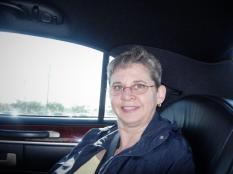
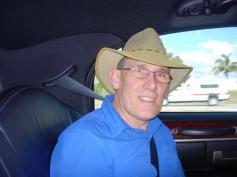
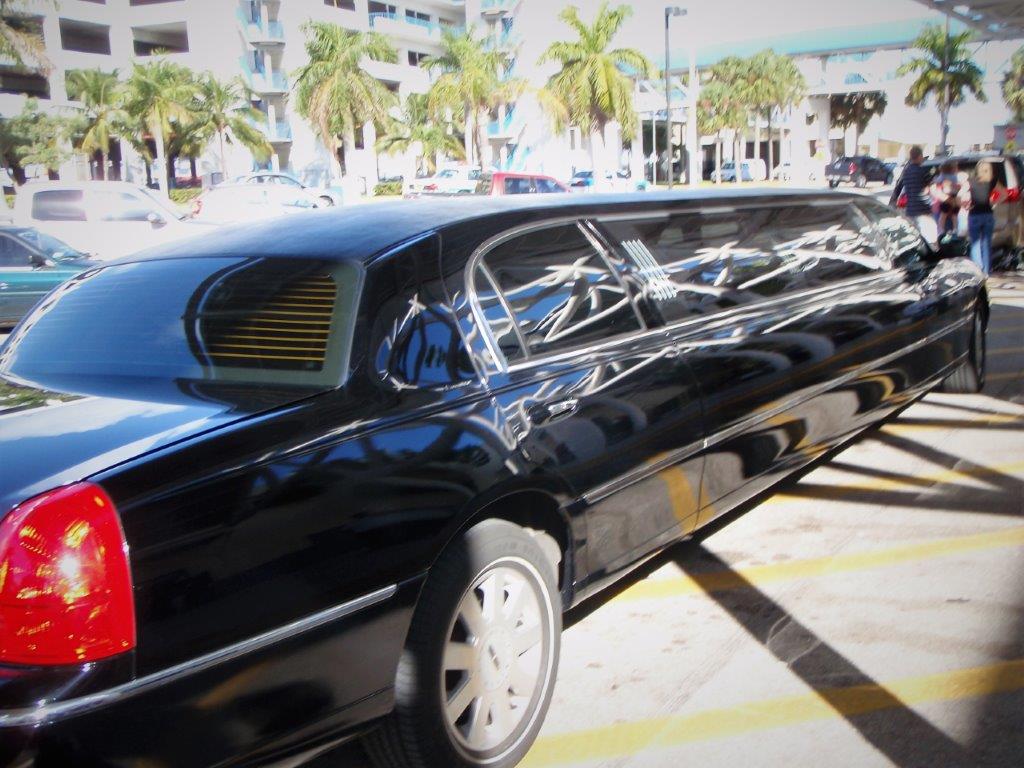
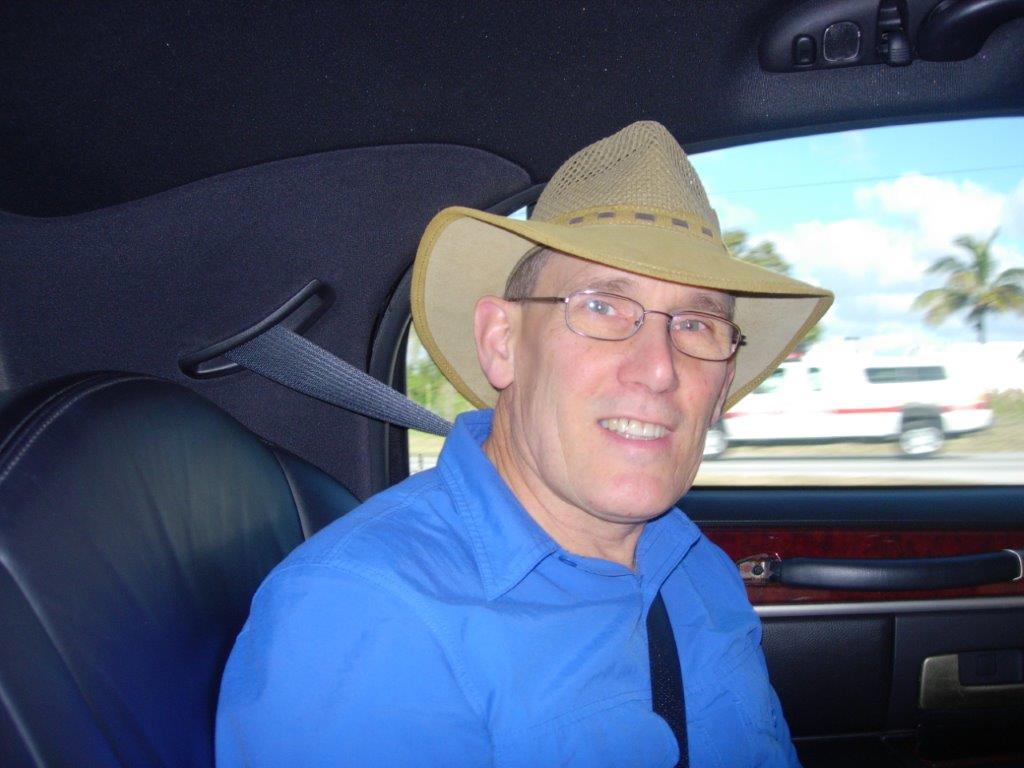
A Holland America representative met us at the airport in Florida and told us where to wait outside for our ride to our hotel.  There was another couple standing beside us who were also going on the cruise and who also had booked a balcony suite.  Down the drive comes this long, black stretch limo.  The driver gets out, asks our name, opens the door and directs us inside.  “These folks are going to the same hotel,” I said.  “Their car will be along shortly,” he said.  Sure enough, driving up the road I could see another stretch limo.  My practical side thought that was a bit silly. There was room for 10 people in each of those cars.  I wouldn’t have been offended if I ‘didn’t get my own limo.”  I do admit that it was a fun experience.
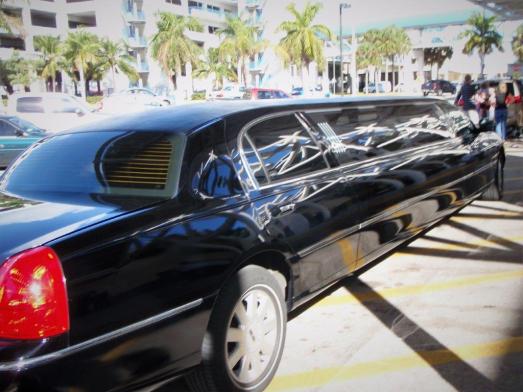
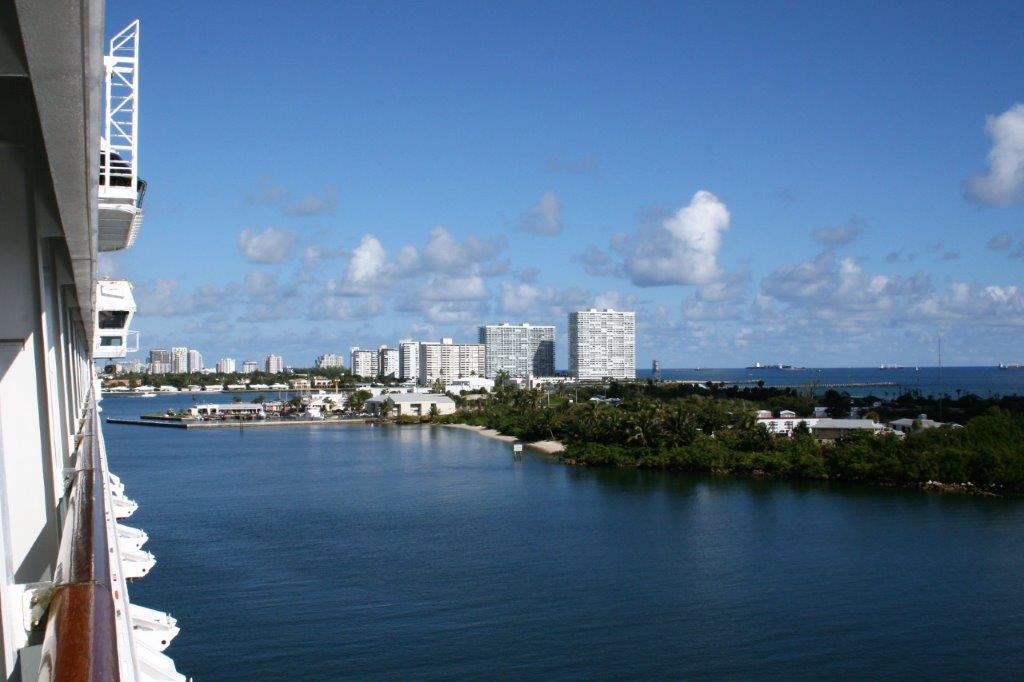
p1050106 dscn3153 dscn3154 dscn3155We spent the night in a lovely hotel and were taken by limo again from the hotel to the cruise terminal at 10 am the next day.  We boarded the ship at noon and set sale at 5. We sailed two days before our first port-of-call: Cartegena, Colombia.
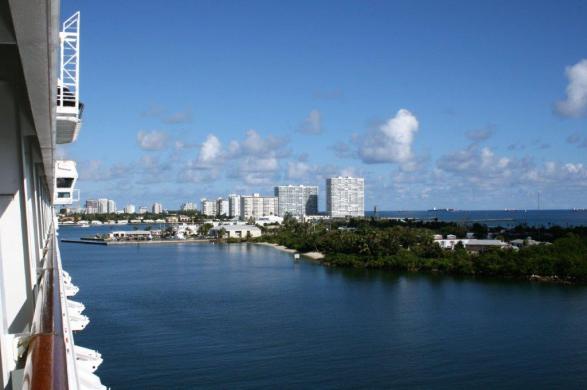
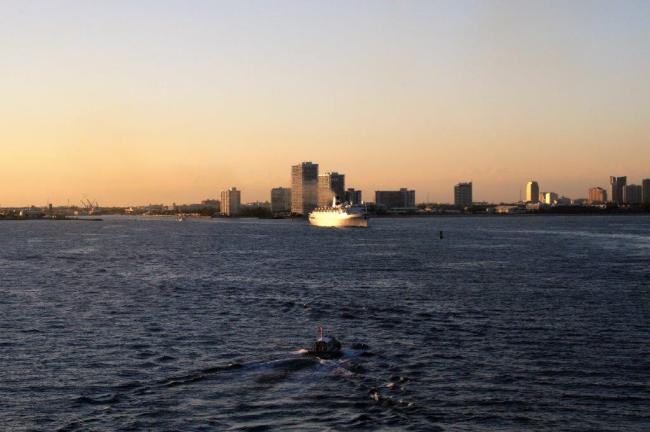
img_2556 img_2564


2017 Feb 21 (CA Stay and West Coast Roads) – Day 50 – Wenatchee, WA to Penticton, BC

Today was just a travel day.  We are on the final stretch home.  Could have made it today if we wanted to drive a few more hours, but we (especially me) are not in a big hurry to get back and why drive a lot longer than you need to if you don’t need to?  That’s our story anyway.

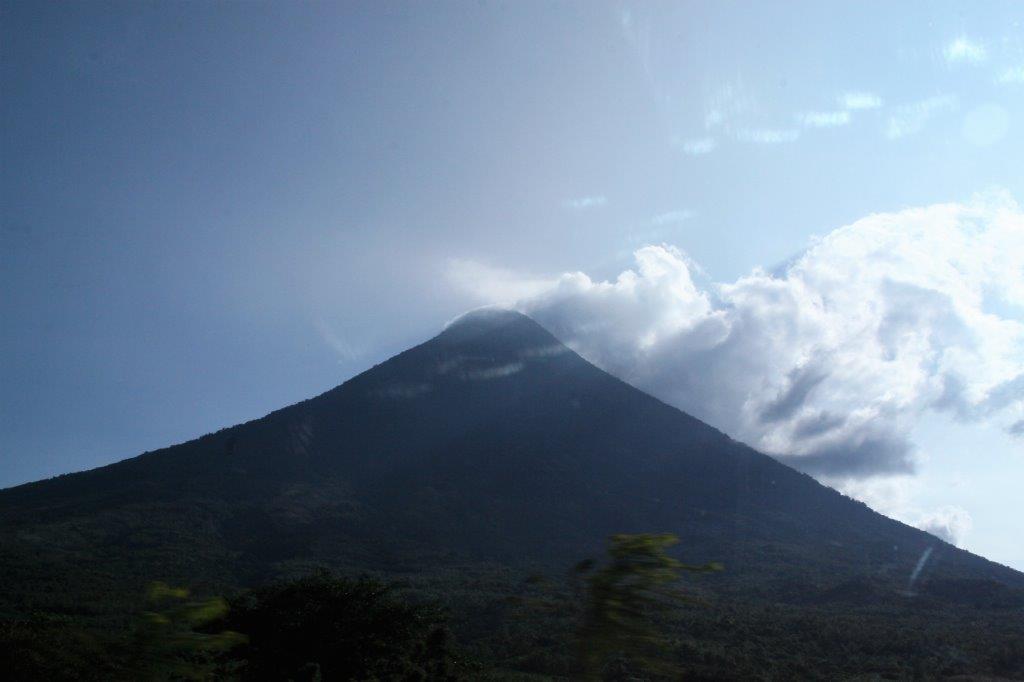
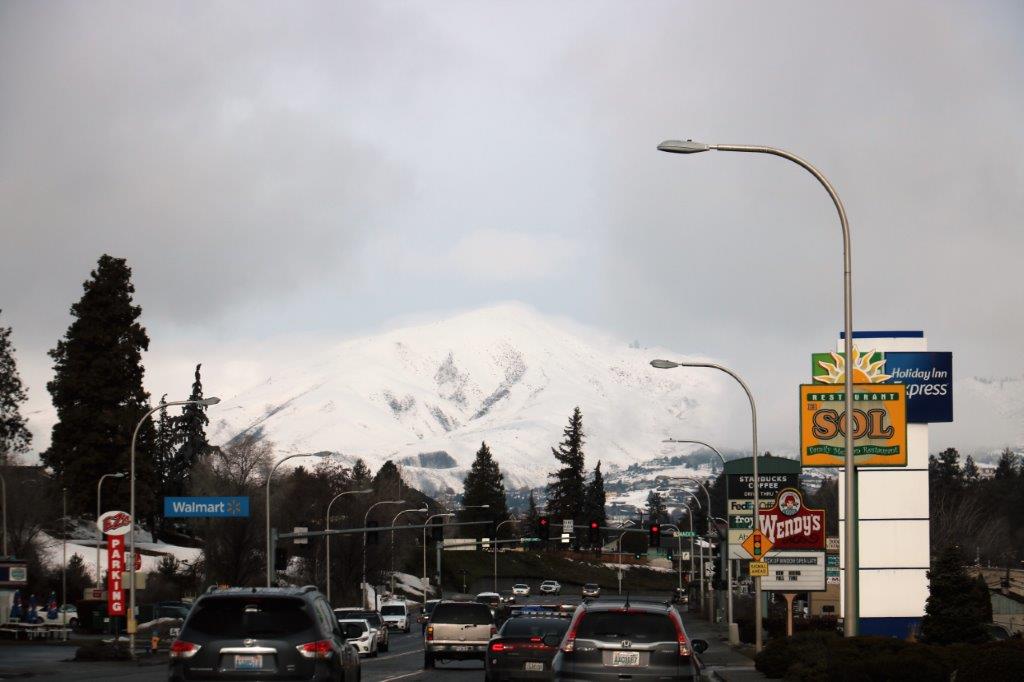
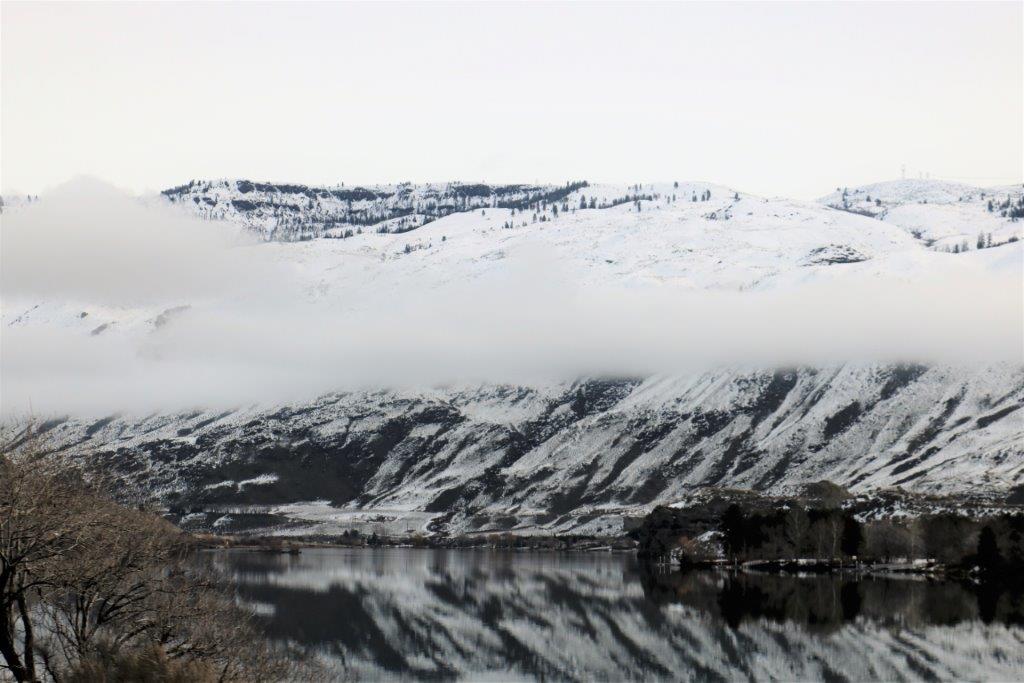
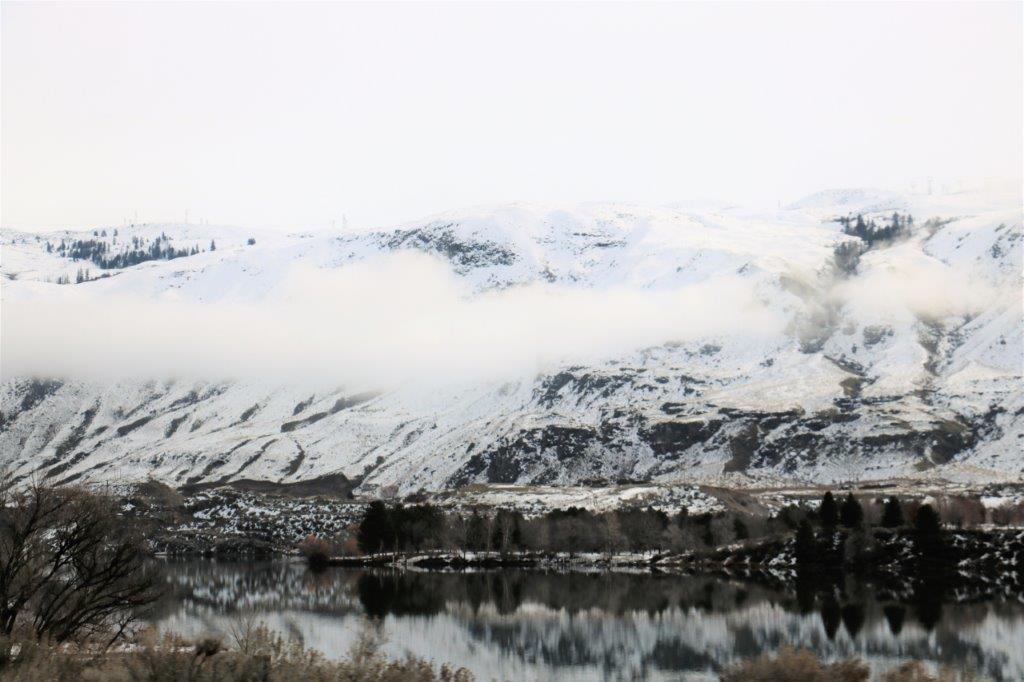
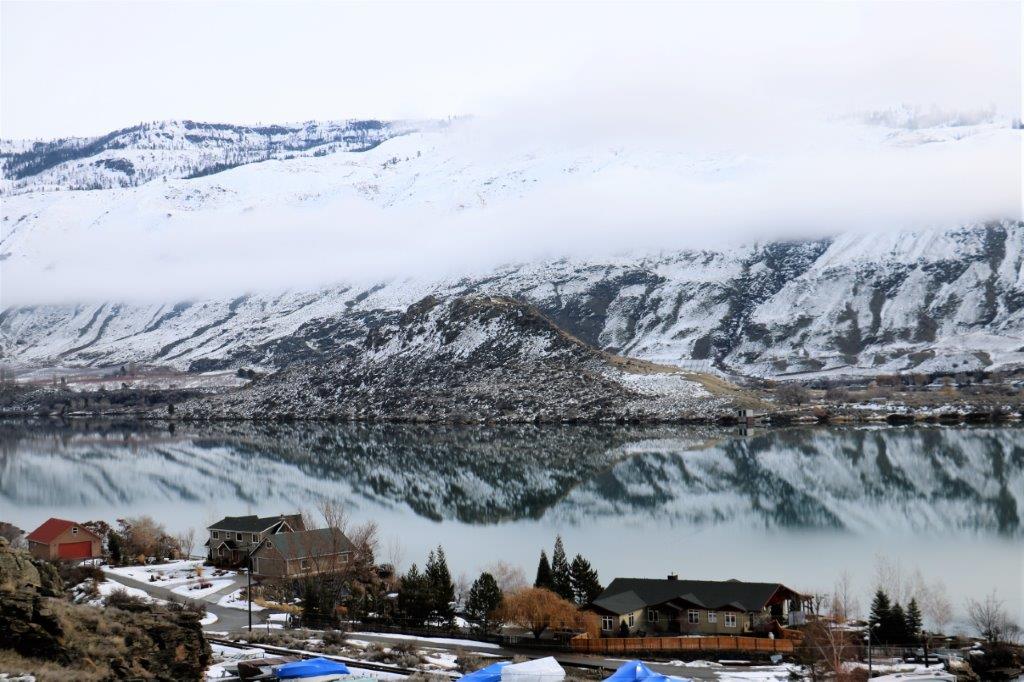
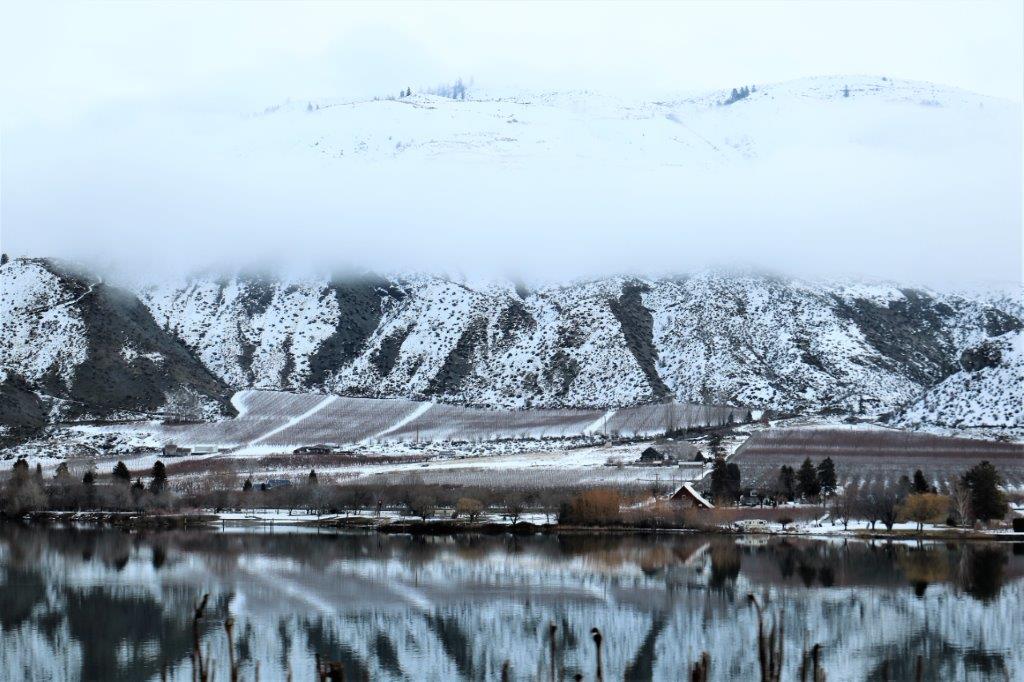
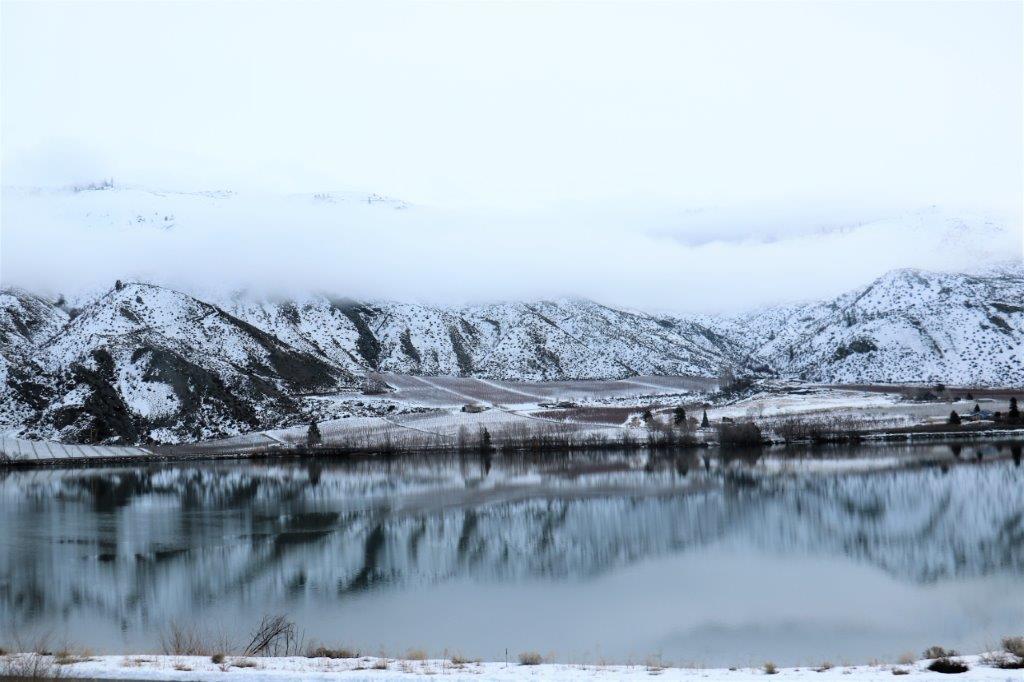
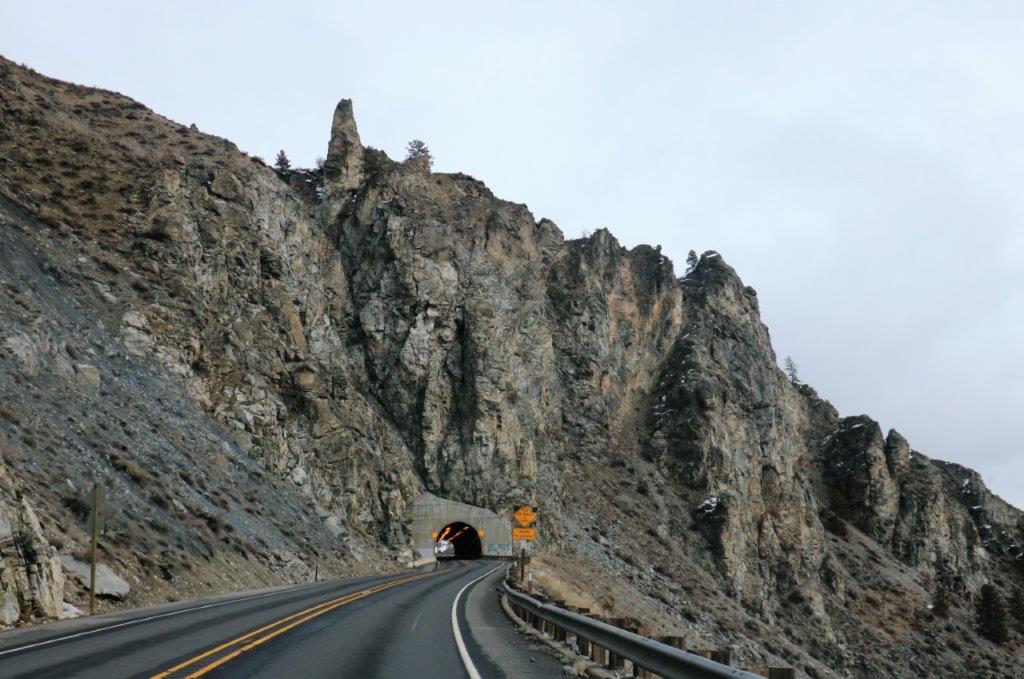
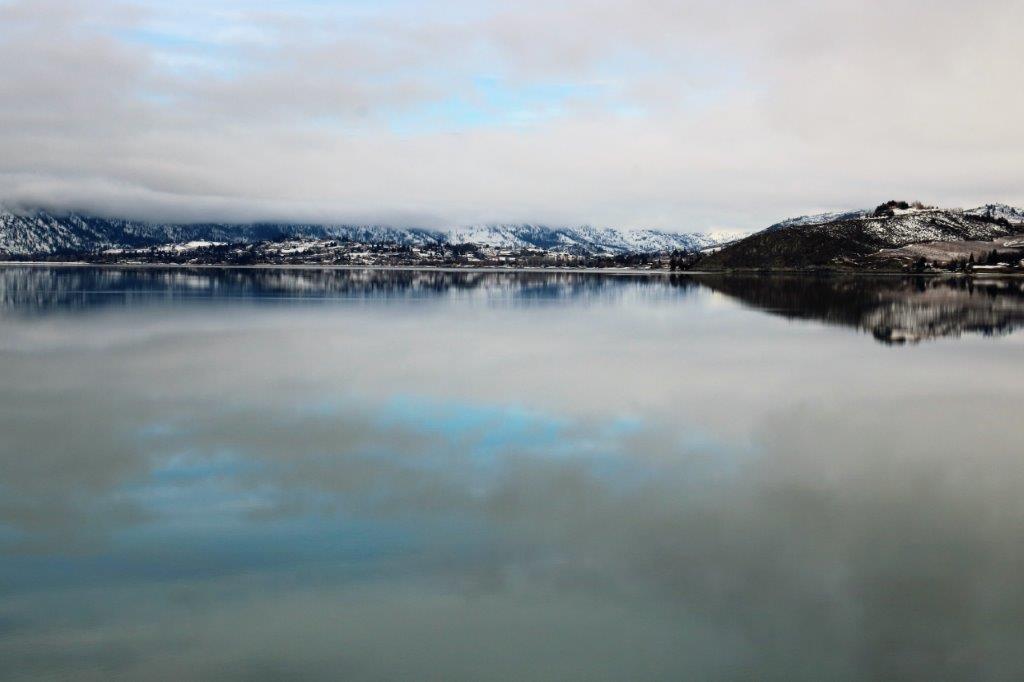
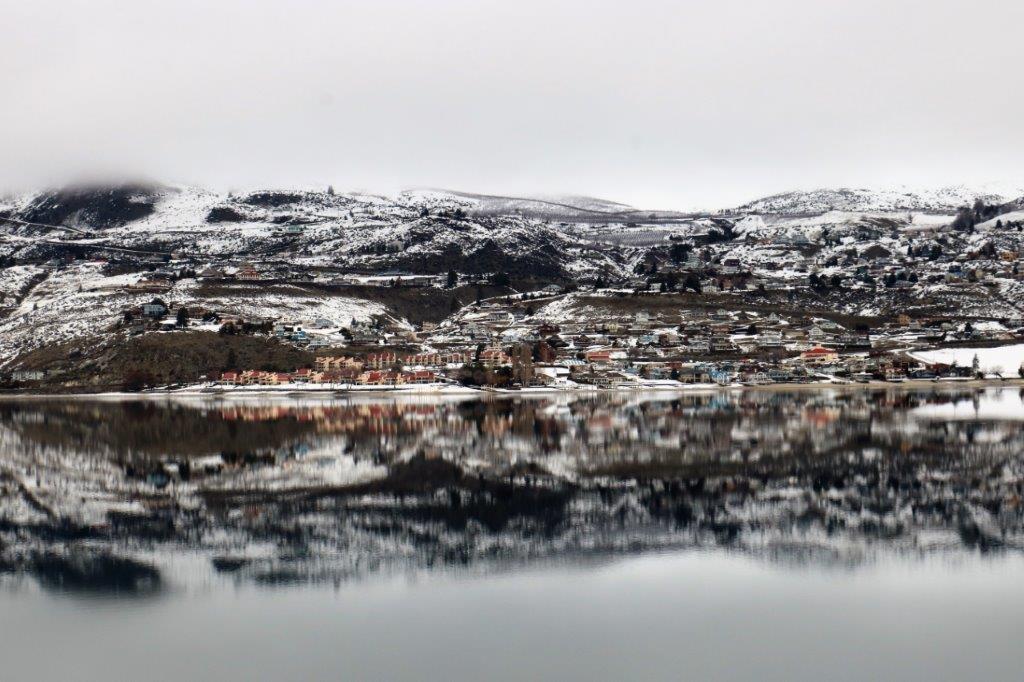
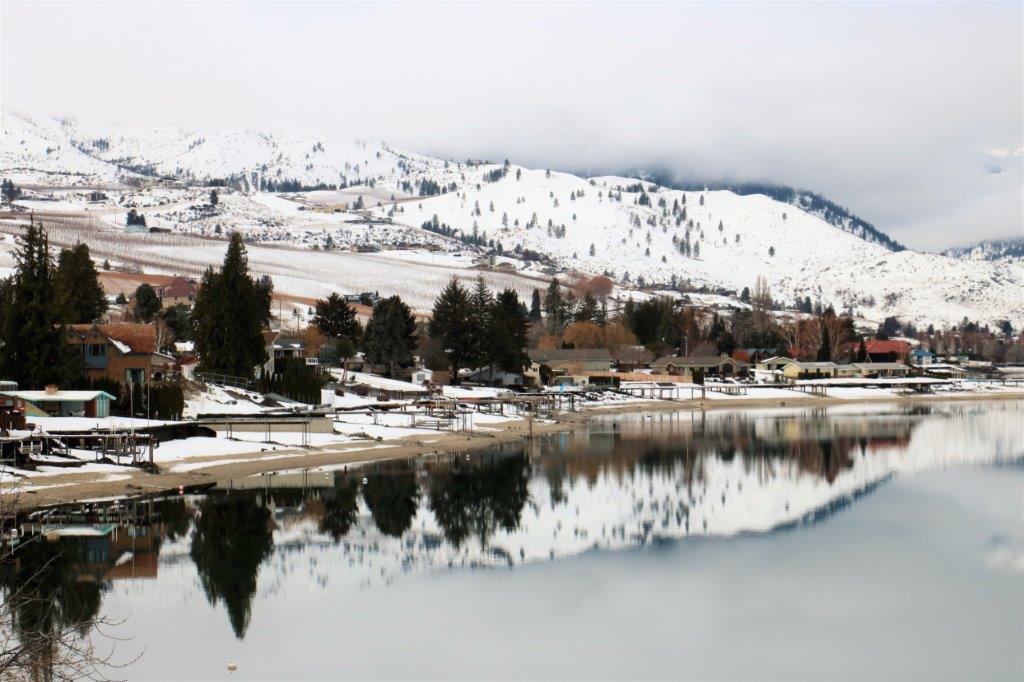
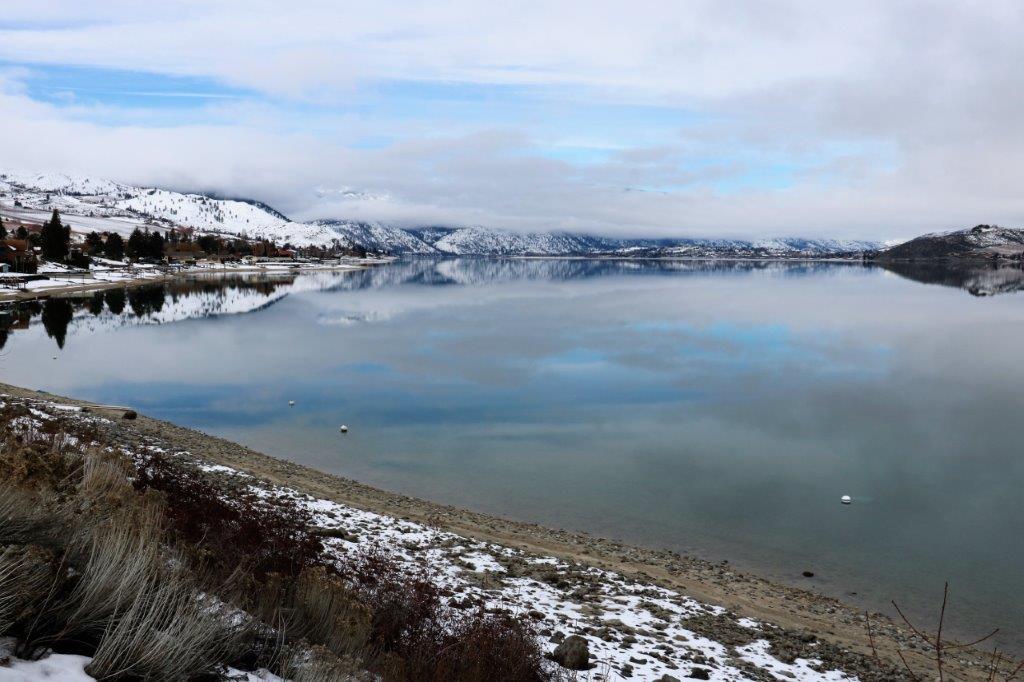
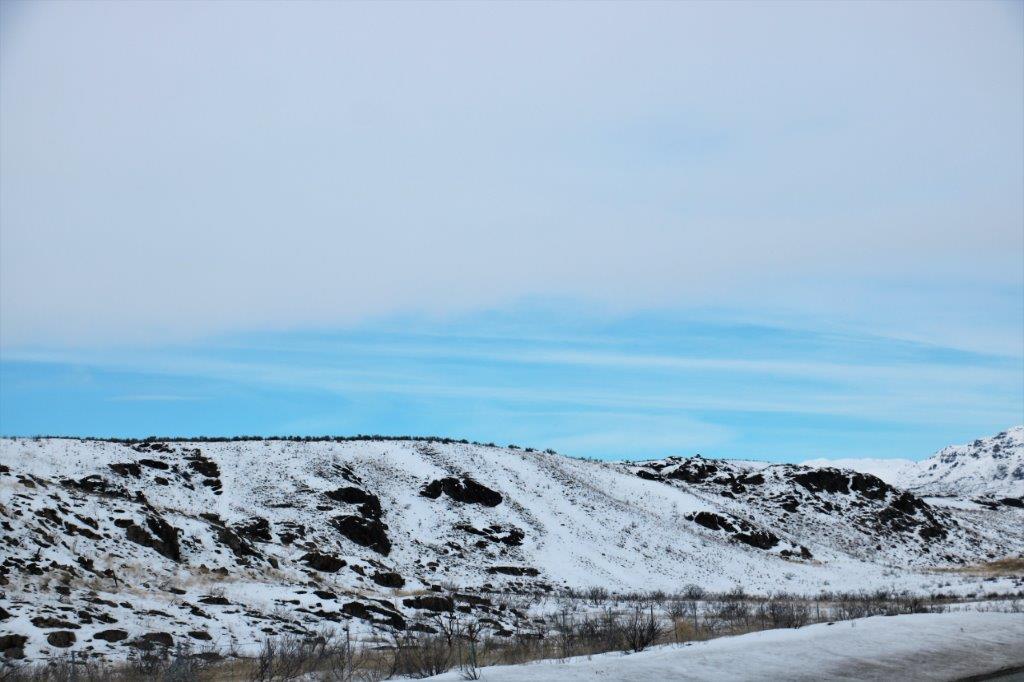
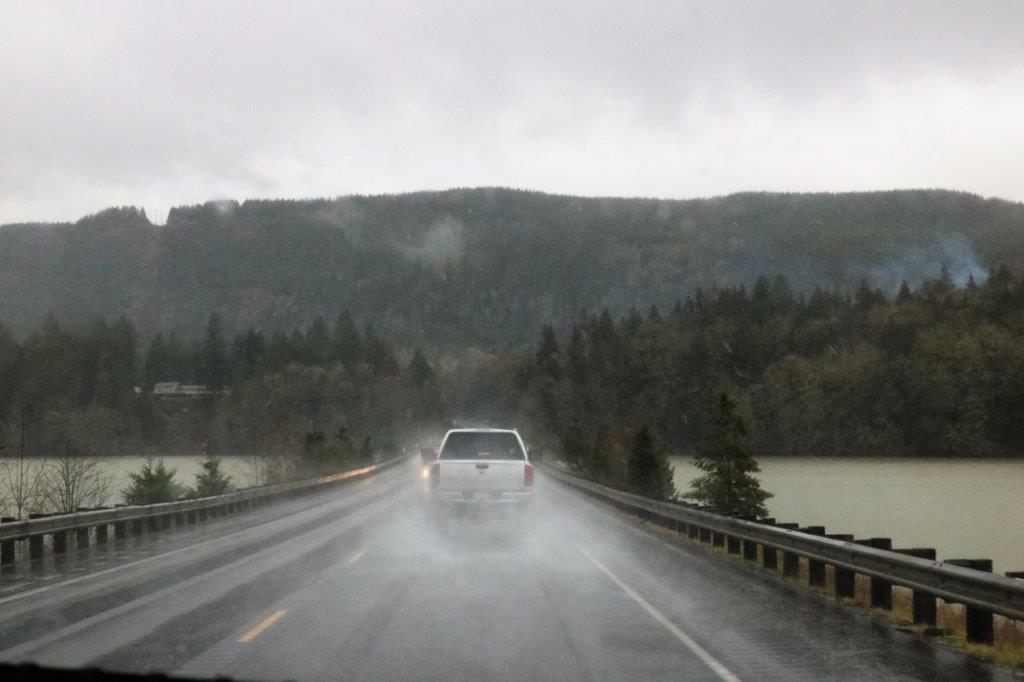
We left Wenatchee at 10:30 and arrived in Penticton around 5.  As we drove out of town the mountain in front of us was shrouded in cloud but the cloud had a wedge in it that made it look like the peak of the mountain.  Pretty nifty, I thought.img_9348The reflections and the cloud stripes on the hillsides were lovely this morning.  We drove along the side of the Columbia River for miles today and I just snapped a photo every now and again as the scenery went by.
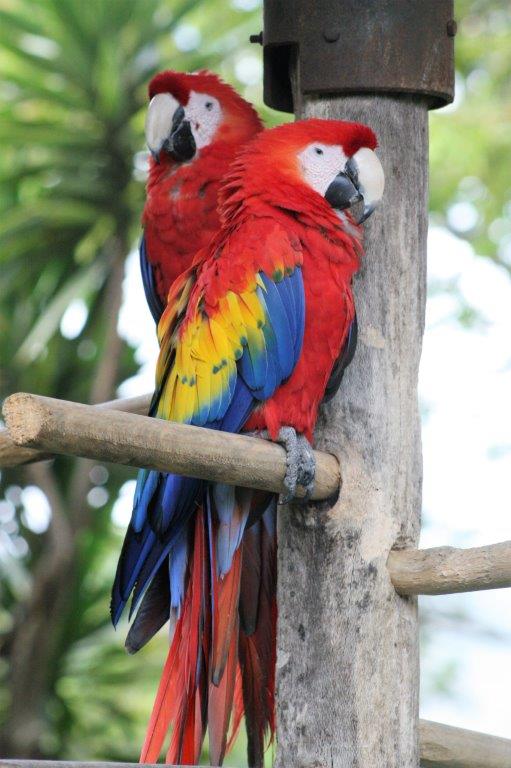
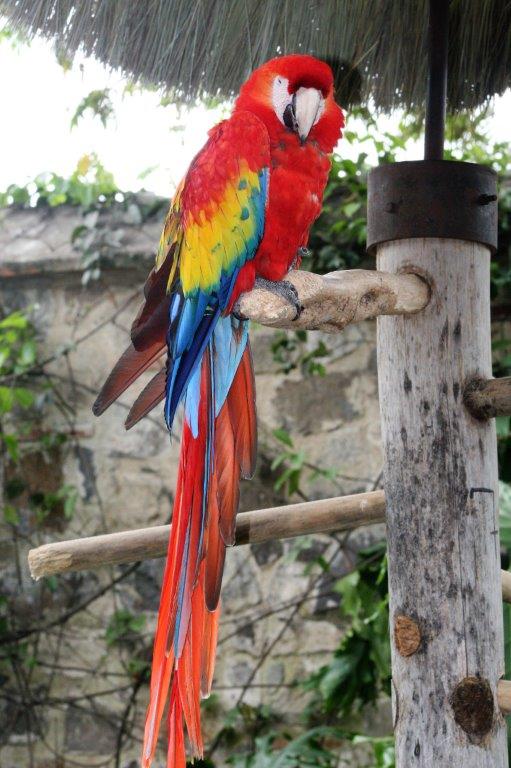
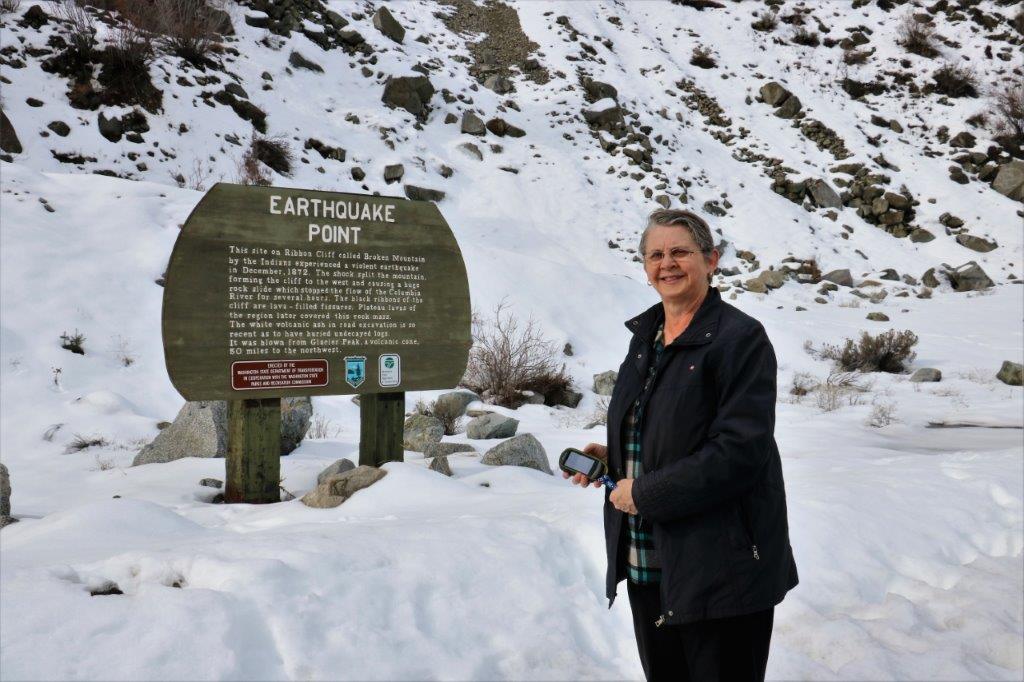
img_9351 img_9354 img_9357 img_9361 img_9365 img_9367We picked up three geocaches and an Earthcache today.  (An Earthcache is a place of geological or geographical significance.  There is no log book in a container to sign.  Instead there is information about the feature or place you are at and to ‘log’ the find you must submit the answers to questions posted by the cache owner.  Often they want a photo of you and/or your GPS at the site. When the cache owner confirms your answers are correct you can log the find).  I like Earthcaches because the information is always so interesting.
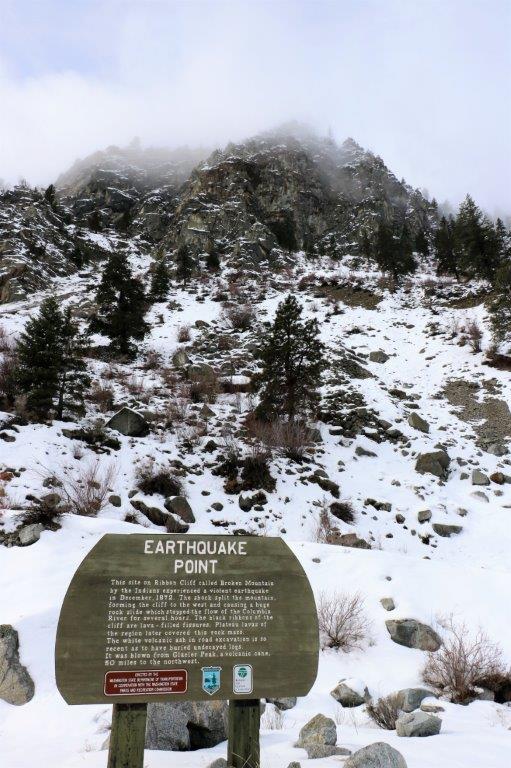
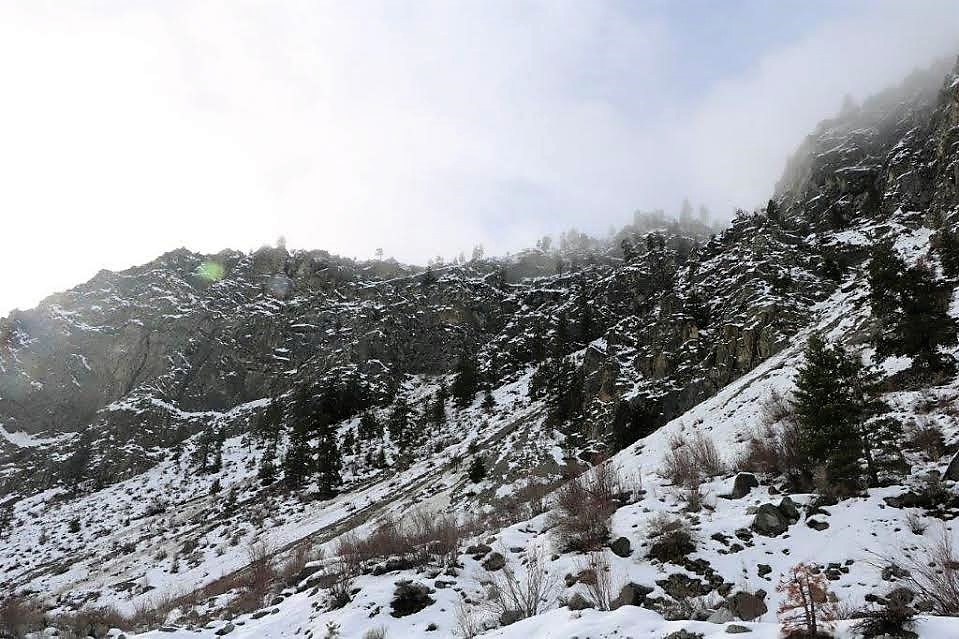
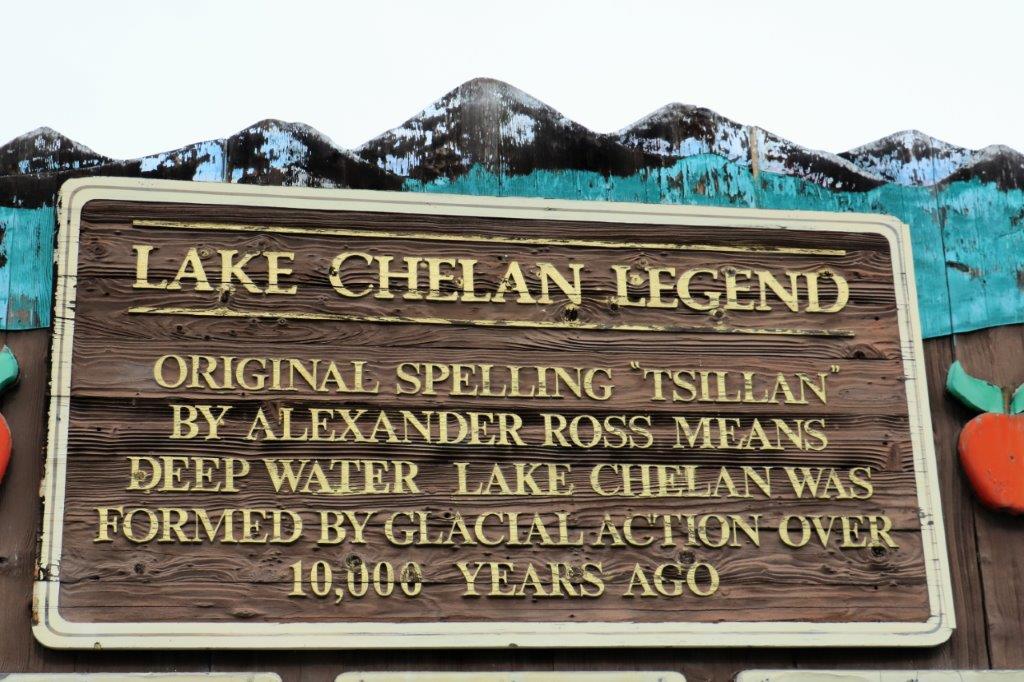
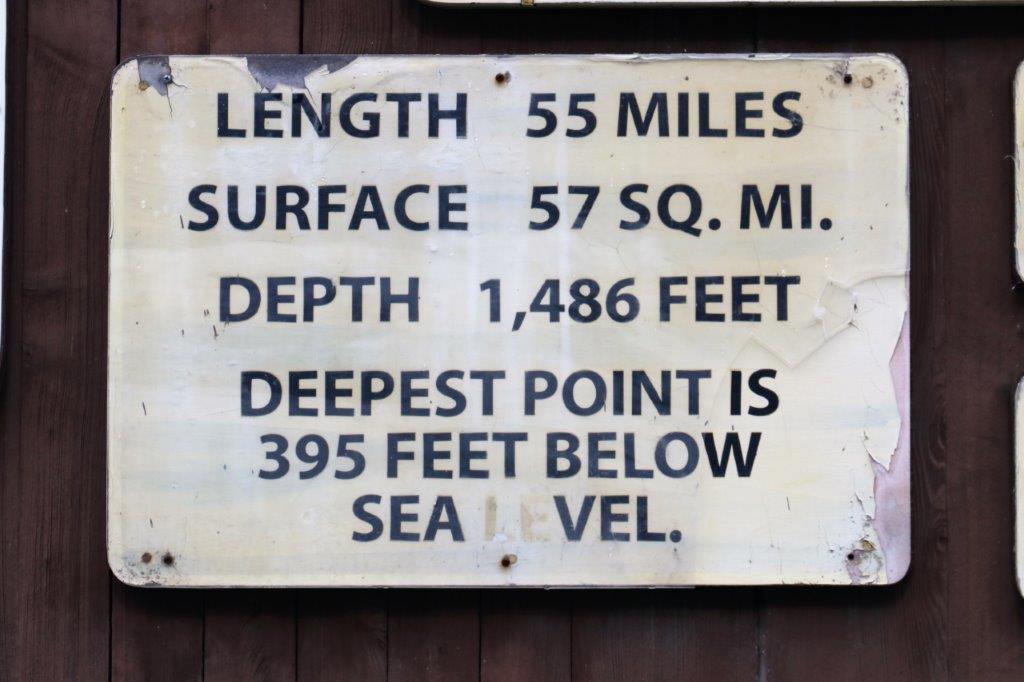
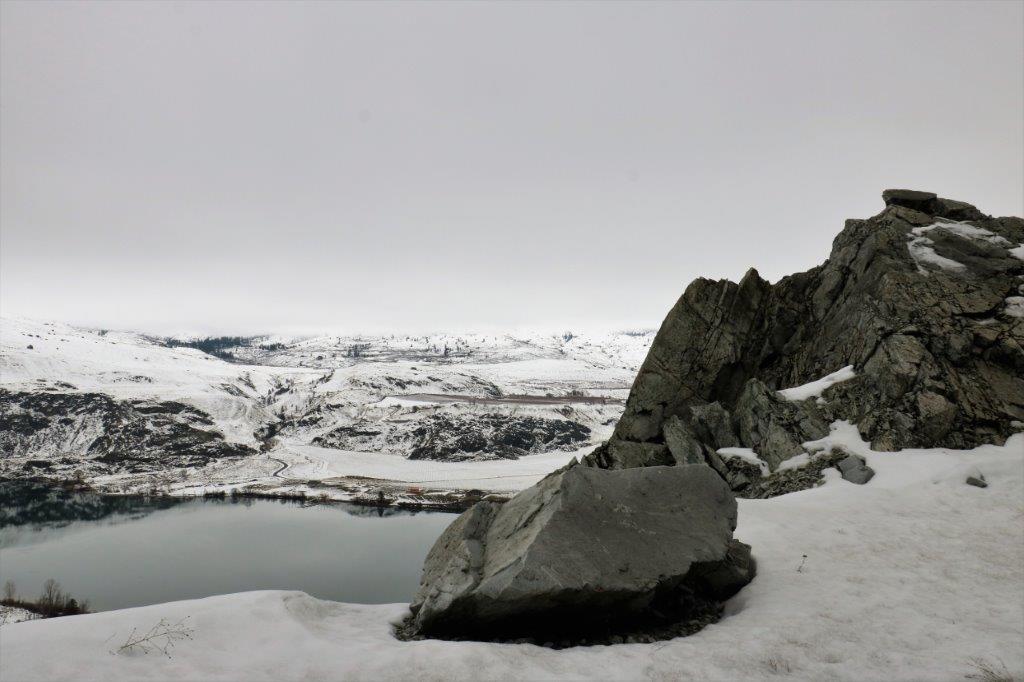
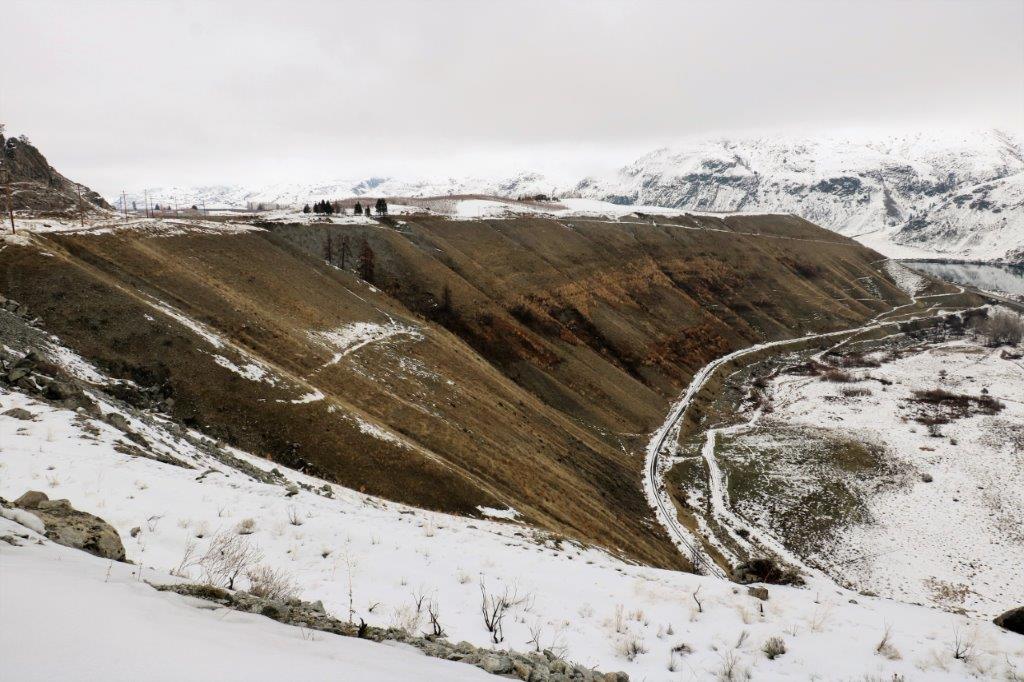
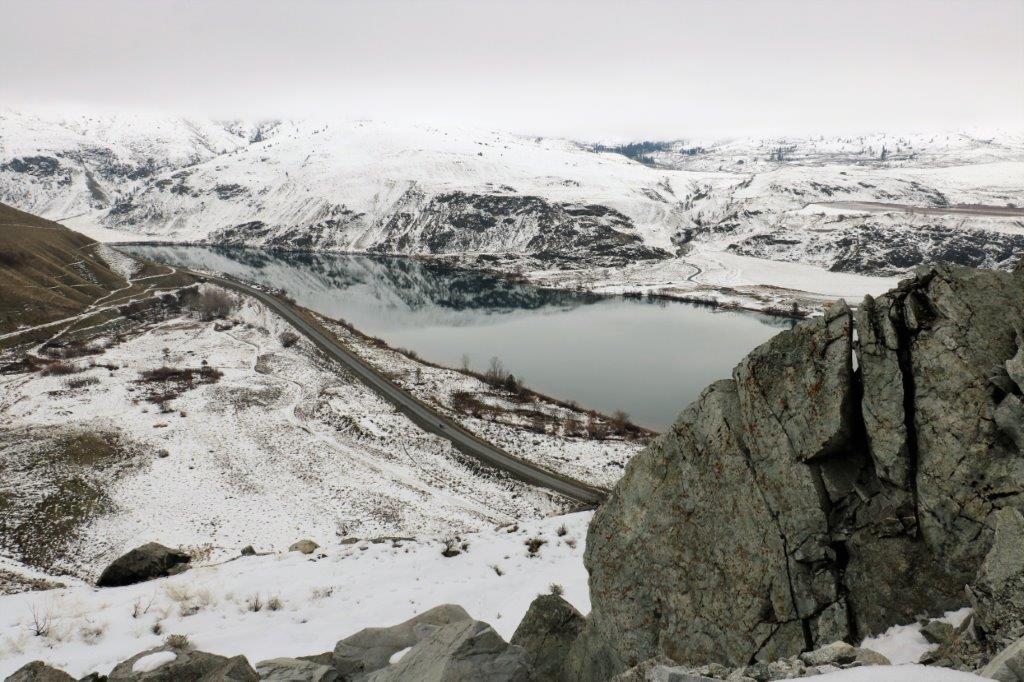
The Earthcache we found was the Ribbon Cliff Landslide and the information was about how the landslide occurred.  There is some debate about whether it was a massive earthquake that happened in 1842 or the collapse of the volcanic ash and mud buildup at the base of the mountain due to undercutting by the Columbia River until it didn’t have enough support and brought the mountainside down.img_9374 img_9372 unnamedimg_9382By the time we reached Chelan there was some lovely blue sky peeking here and there.  Lake Chelan is the third deepest lake in the US after Crater Lake in Oregon and Lake Tahoe in California, and ninth deepest in the world.img_9387 img_9388 img_9390img_9397img_9398 img_9394We pulled over in a lookout because there was a cache hidden there but my phone lost its signal so we couldn’t access the compass direction. I suspect the cache was hidden under all the snow tucked under one of the rocks.img_9401 img_9404img_9402 The most interesting part of our day was the US/Canada border crossing.  We have nine bottles of wine with us – 7 we bought at Hanna Winery in California and two were gifts from friends we visited, plus three bottles of beer that John had not yet consumed. We are only allowed to bring in two bottles each so we knew we would be going inside to pay duty.  All went as we expected.  We told the border control lady what we had on board, she directed us to park and go inside, the fellow inside confirmed our information and asked us to have a seat while we waited for some computer glitch to be resolved.  That is when things got interesting.

There was a 40ish-year old man standing by himself at the end of the waiting room when we sat down.  We had been there about 15 minutes when he walked over the counter and said, “How long is this going to take?  I have done nothing wrong and I just want to go home.  Why are the men not finished yet?  I want them to hurry up so I can just go home.”  Well, this is not a good strategy at border crossings.  He was getting quite argumentative with the two officers at the counter; who, I will say, did remarkably well at maintaining an even tone and demeanor.  As the fellow keeps on arguing with them a third office strolled over to the counter.  They are all armed and the man sees the gun and says, “What, are you going to pull your gun on me now?”  This guy is not smart!  The demands and responses went on for some minutes before another offficer walked in from the back with papers in his hand and told the angry fellow he needed to confirm some of his information and was having trouble getting it.  The man did not take this well and the arguing and demands continued.

After a few more minutes the border control office we had spoken to when we drove up beckoned us over to the counter and said, “I am making an executive decision and we are just going to let you go ahead.  You are not that far over your limits and our computers are still down so you folks just go on and have a nice day.”  Thanks very much belligerent fellow.  We realized it was not benevolence on behalf of Canada Customs, rather they did not want us sitting in the waiting room as possible collateral damage if things went further south with the angry man.  If that fellow thought he was being delayed unnecessarily before I bet he was regretting his outburst by the time he actually got to leave – if he did get to leave and didn’t get arrested instead.

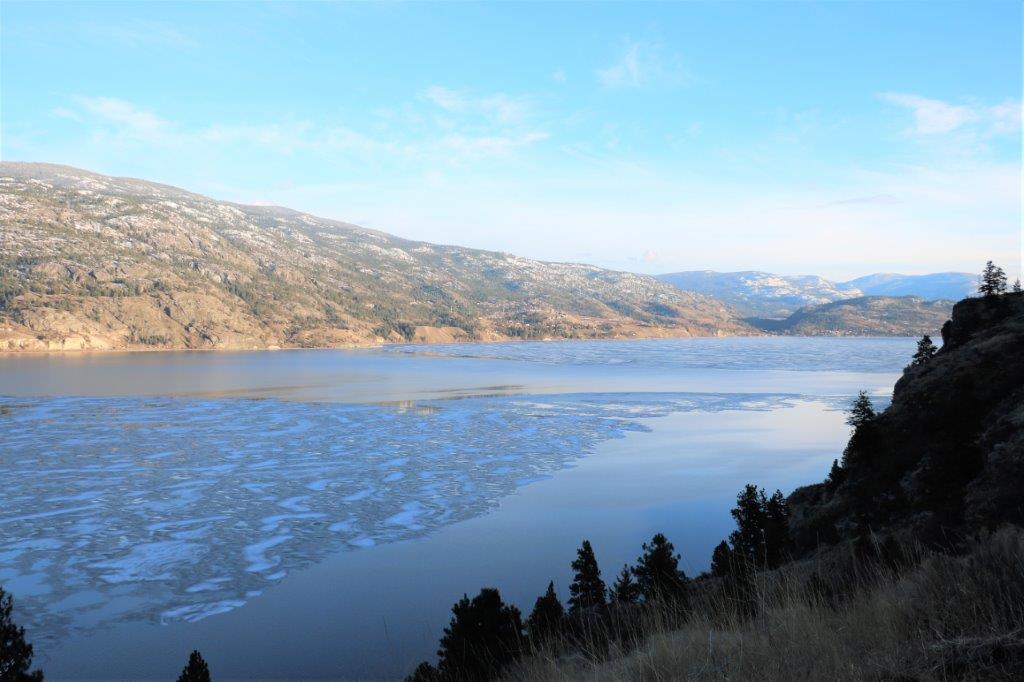
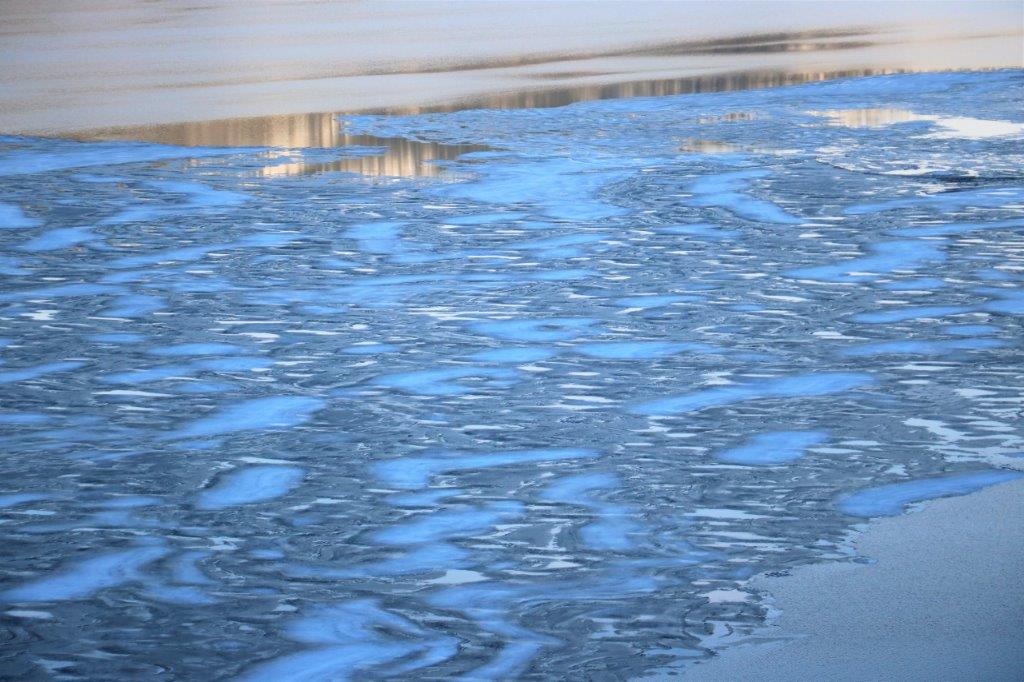
We pulled into a lookout not far south of Penticton to take a couple of pictures of Skaha Lake before checking into the hotel.img_9407 img_9408 img_9410 img_9412     The melting ice on the lake made some interesting patterns.

Well, that’s a wrap folks.  Tomorrow we get home and another travel adventure concludes.  I always get depressed when we have to start the journey home.  I am never ready to get there even though I love my home.  But….we will be on the road again soon.  I hope.  Thanks for coming along.


2017 Feb 20 (CA Stay and West Coast Roads) – Day 49 – Auburn, WA to Wenatchee, WA

I woke up at 7:30 which was okay as I had a bit of extra time to talk with my cousin.  She and Roxy have home-based businesses and they start work at 10 so John and I wanted to be out of their hair before then.  Carol and I shared coffee and some more memories and debates until John got up and showered. We left about 9:30 and drove the short distance to Wenatchee.

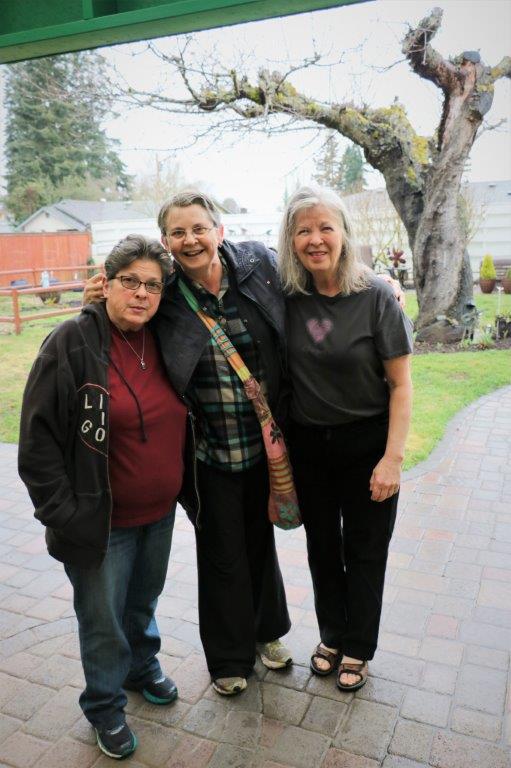
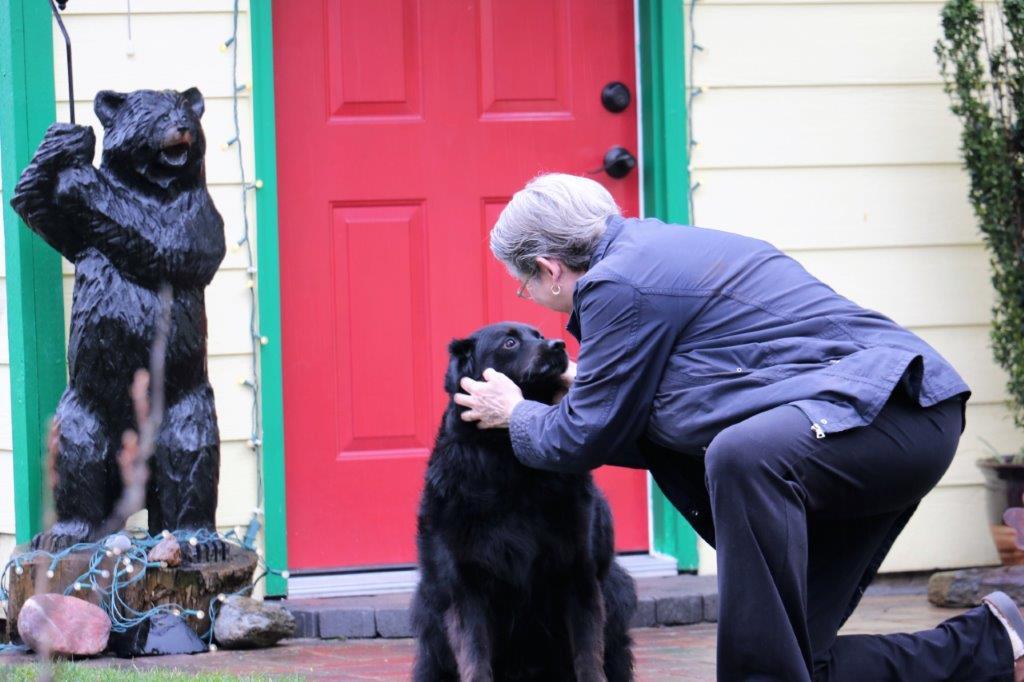
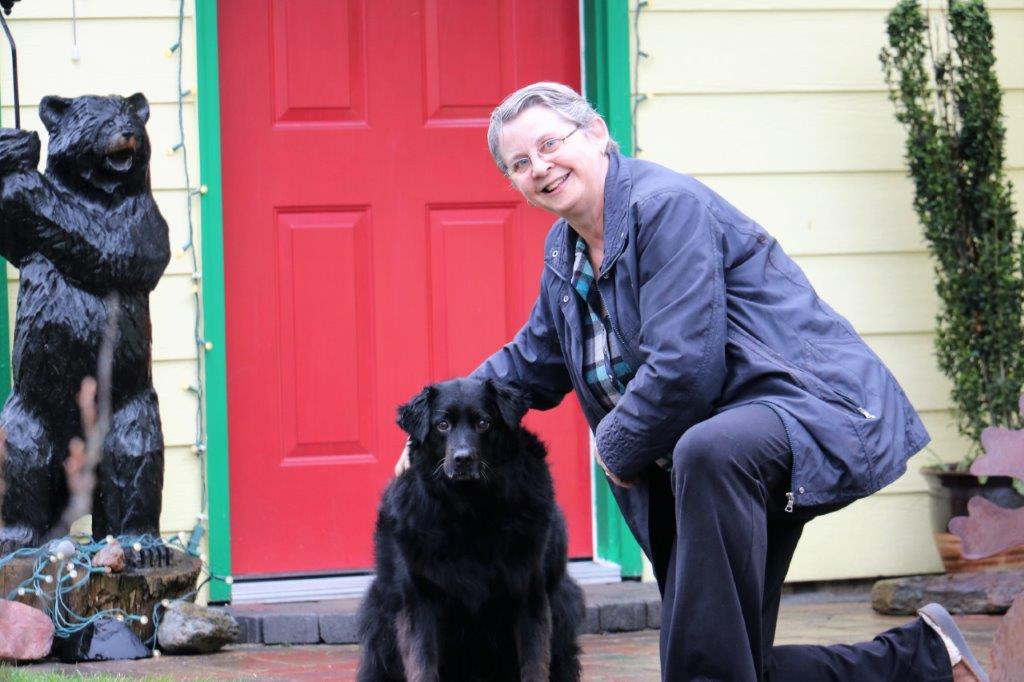
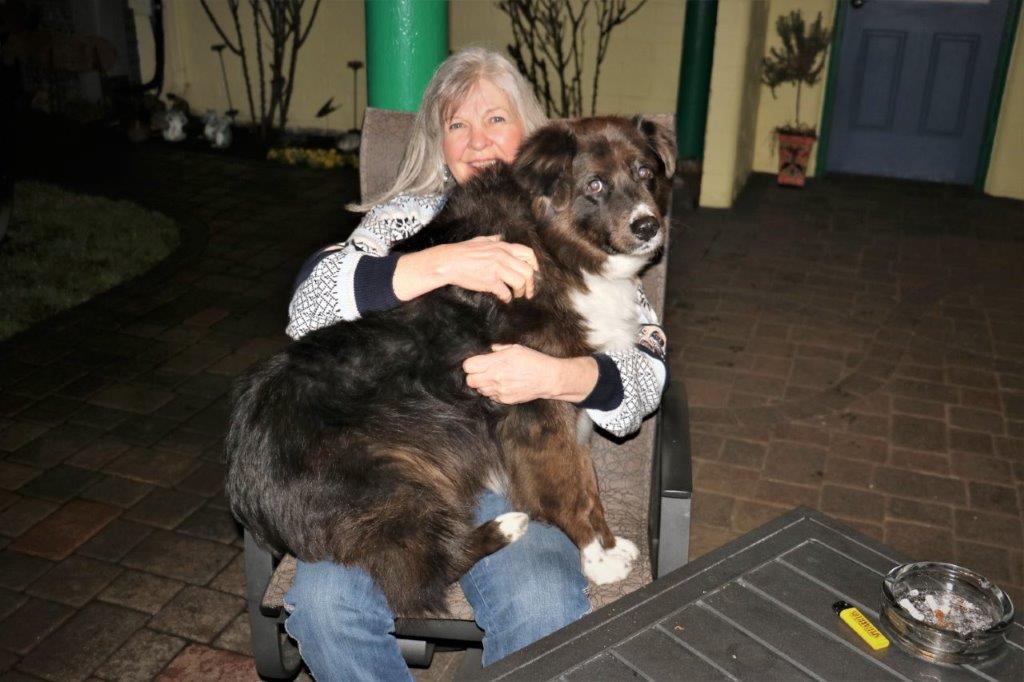
Roxy is like me and dislikes having her photo taken, but she graciously allowed one quick one. (Well, I sort of grabbed her if I am being truthful.  But she didn’t hit me, so I guess it was sort of all right.)

img_9305img_9309Miss Mollie wasn’t too sure she wanted her photo taken this morning either.

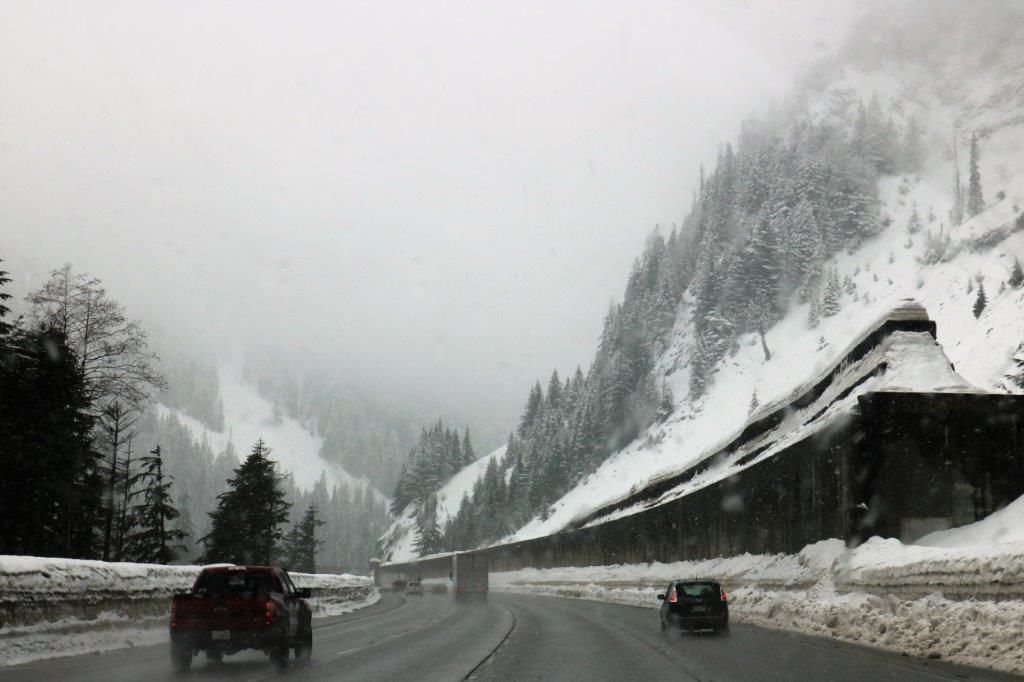
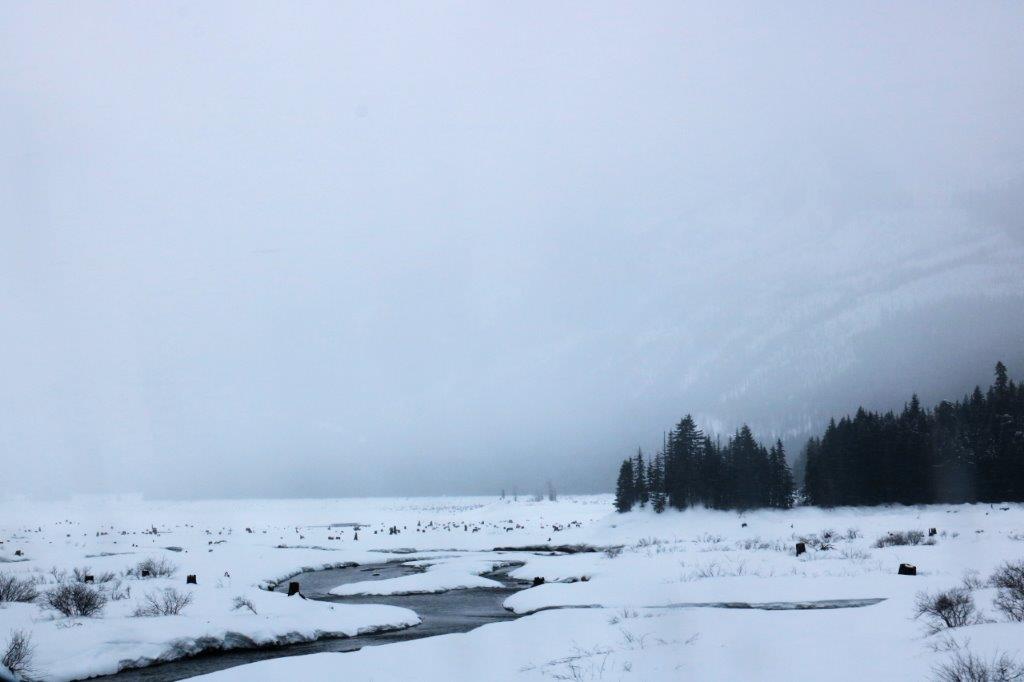
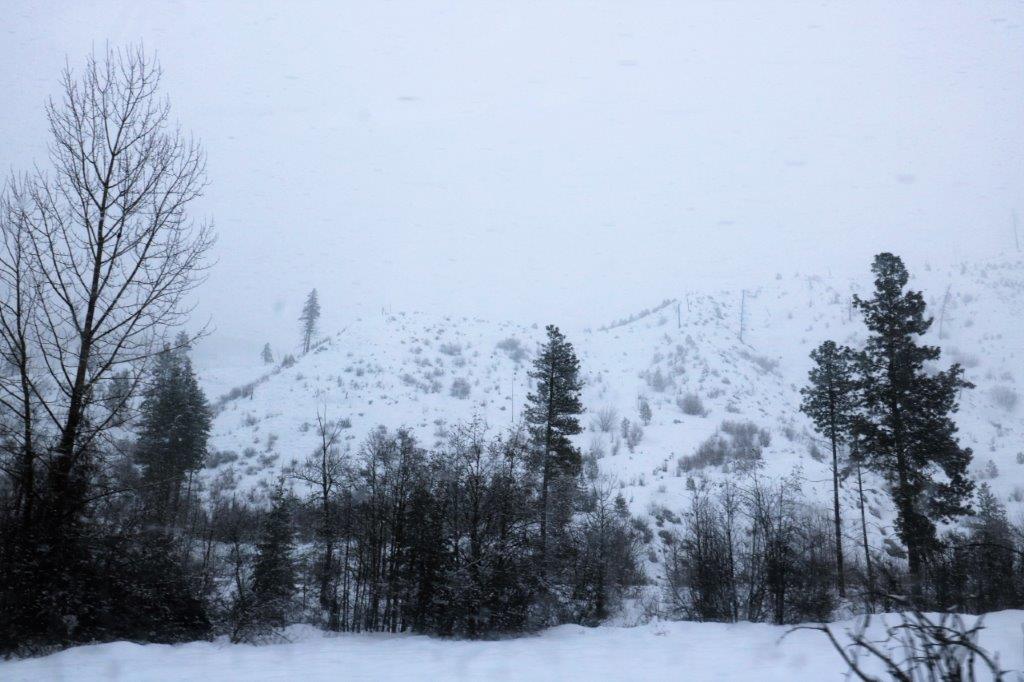
img_9298 img_9301We had to drive through the Snoqualmie and Blewett Passes to get over the Cascades to Wenatchee and were so very happy to be driving in snow.  NOT!

img_9310 img_9312 img_9315                                                  White on white on white.

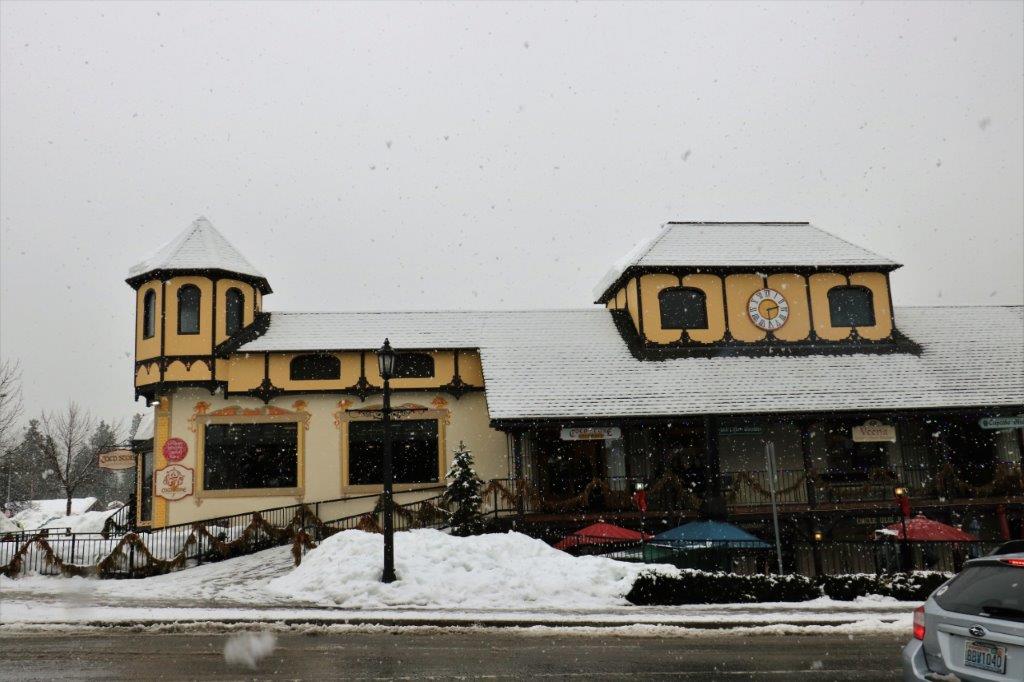
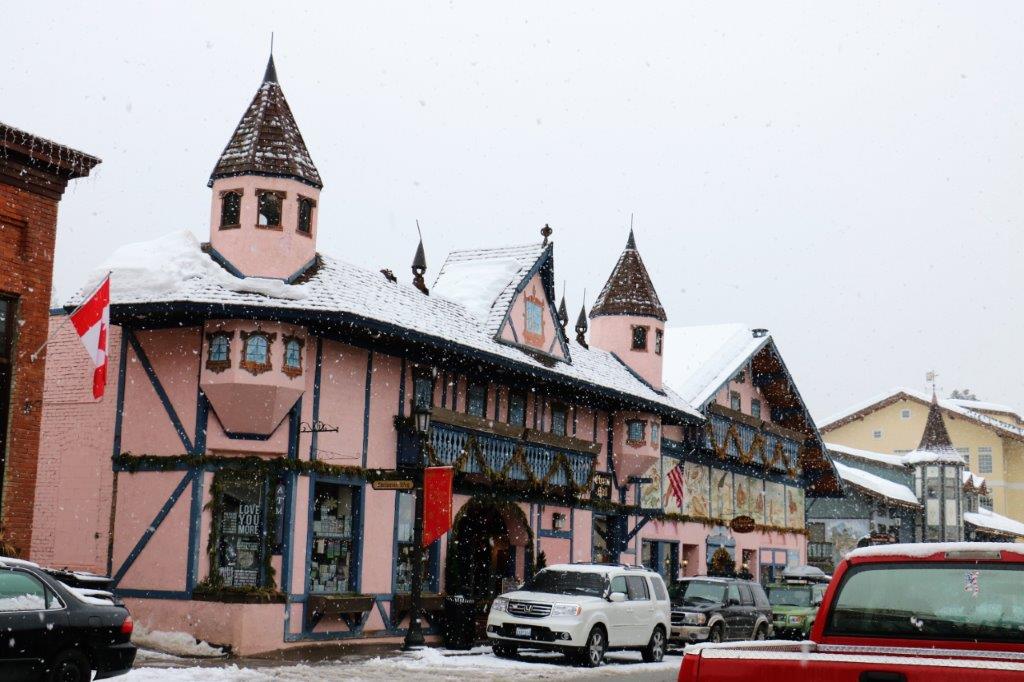
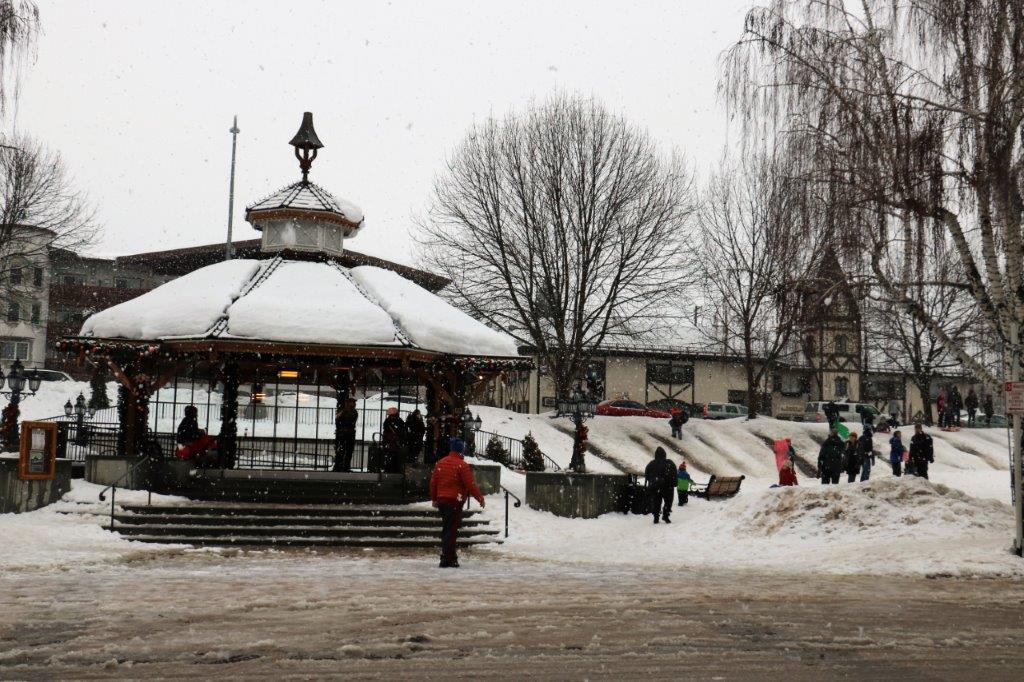
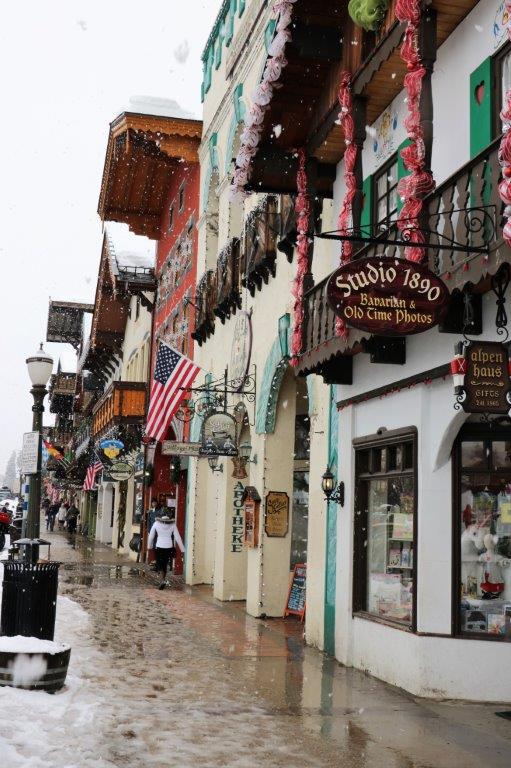
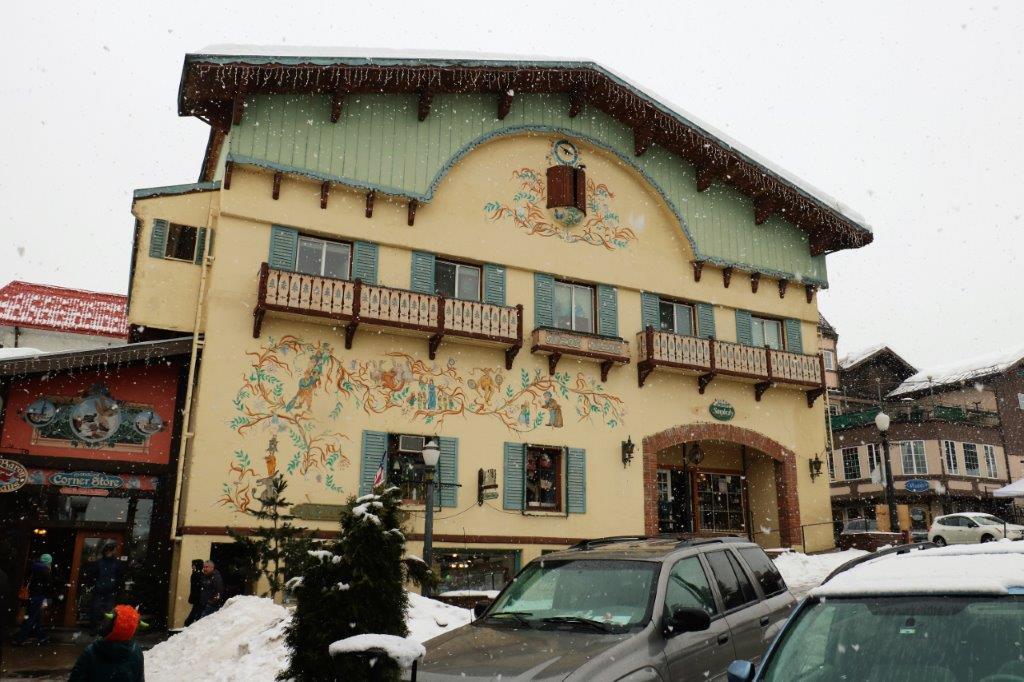
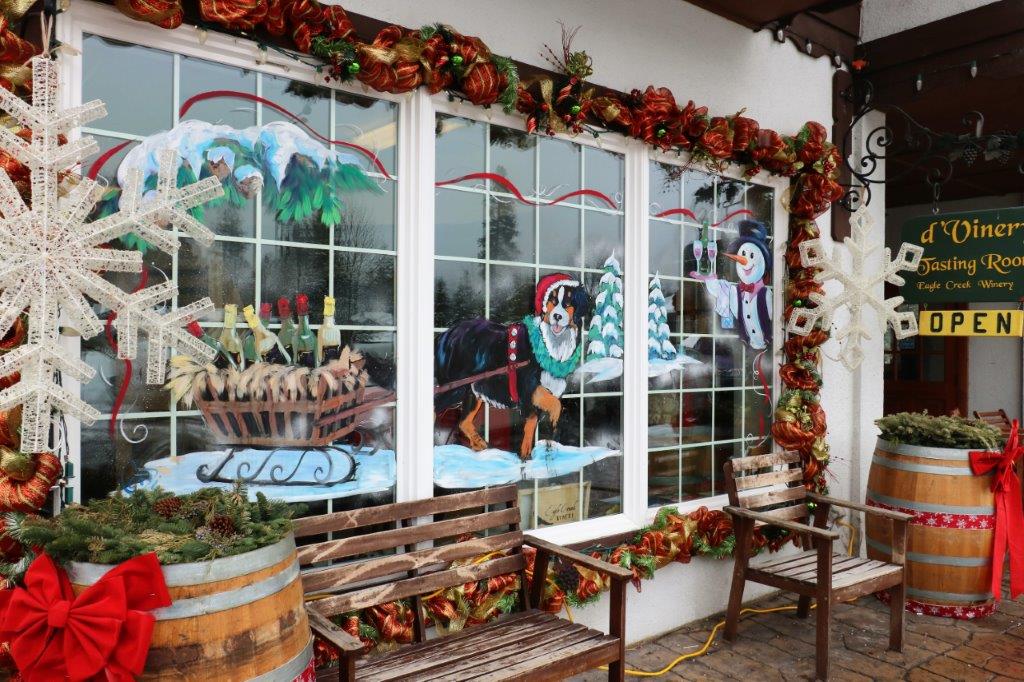
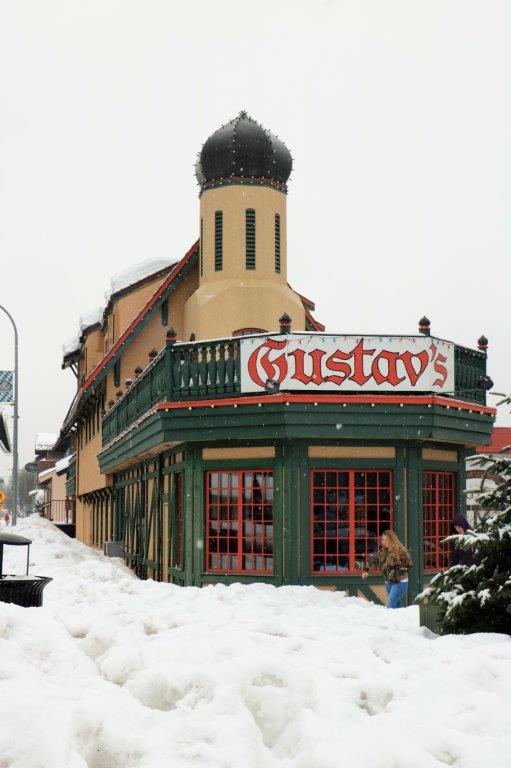
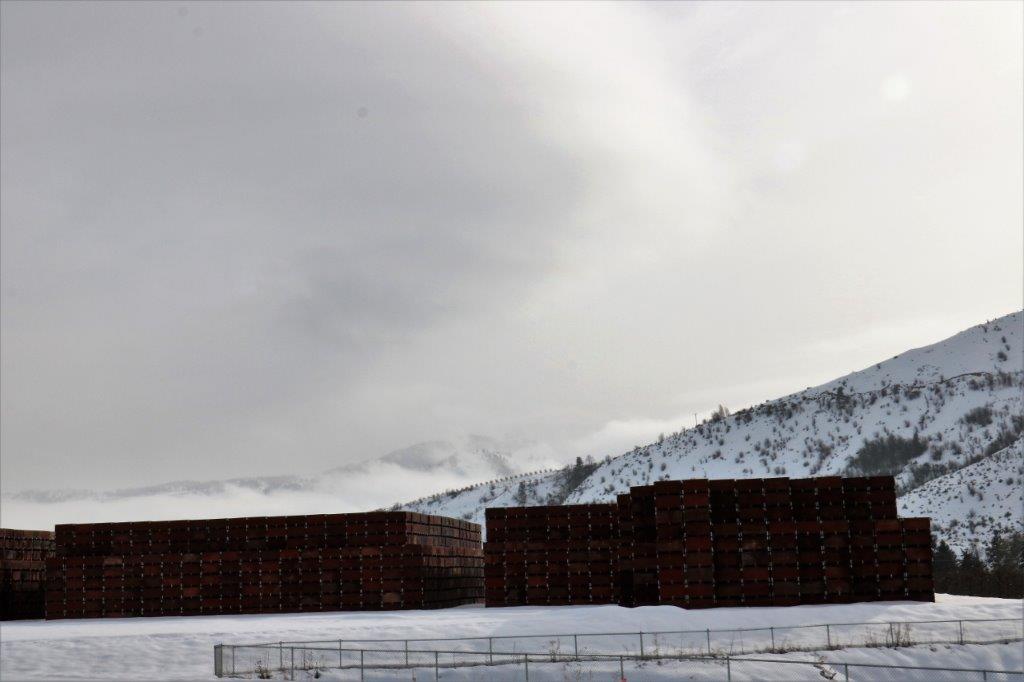
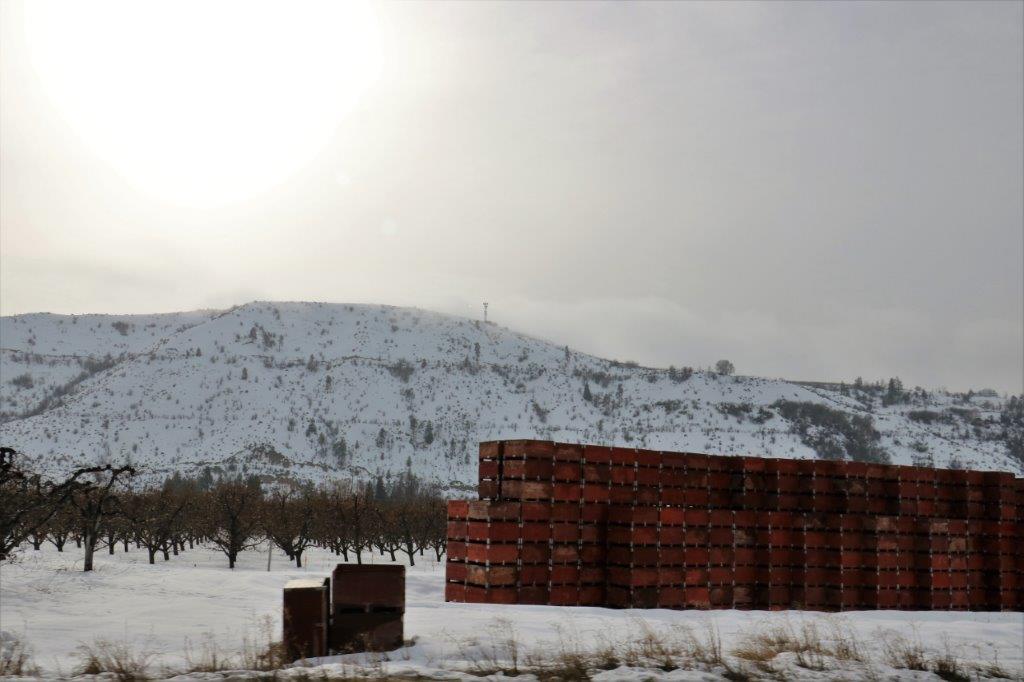
We took Highway 18 to 90 to 970 to 97 north which connects to Highway 2 a few miles east of the Bavarian Village of Leavenworth.  This is also a ski area and since there was lots of snow there were lots of people.  Leavenworth is famous for its Christmas lights.  Many people take bus tours down here to see them in December.img_9316After we had lunch we walked down the main street to check out the buildings and the window displays.  We even went into a store and bought a couple of things, which is highly unusual for us.img_9319 img_9320 img_9321 img_9323 img_9325 img_9326 img_9328 img_9329 img_9330 img_9332The Wenatchee Valley is an apple producing area.  The hillsides all around are covered in trees – apples, pears; and grapes for some local wineries as well.  There must have been thousands of bins stored in this lot.  I took five photos of the stacks of apple bins as we drove past.

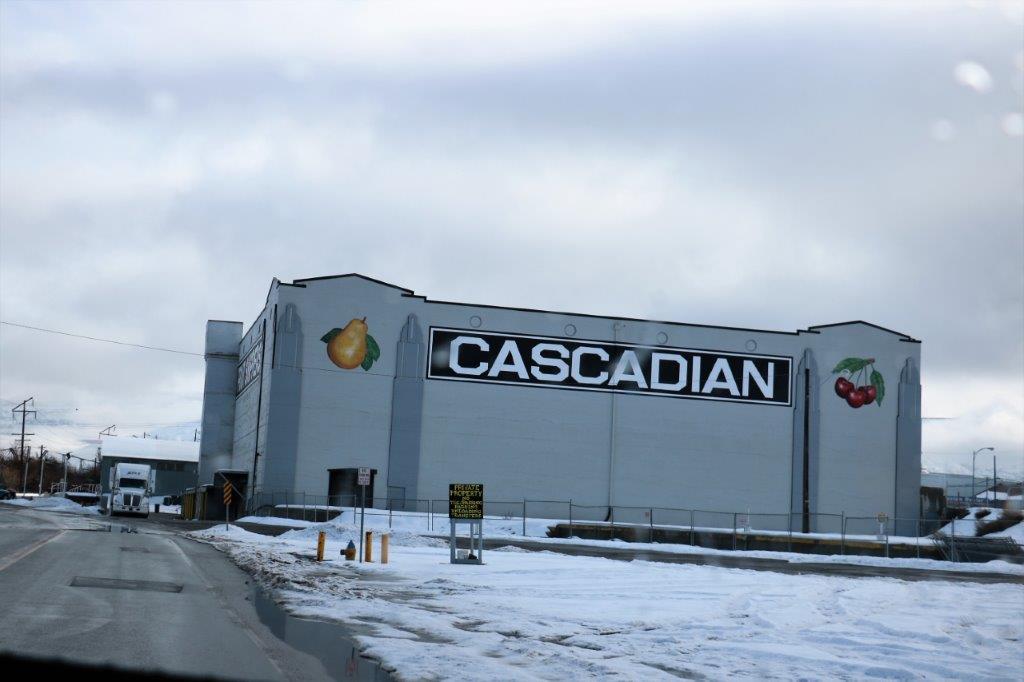
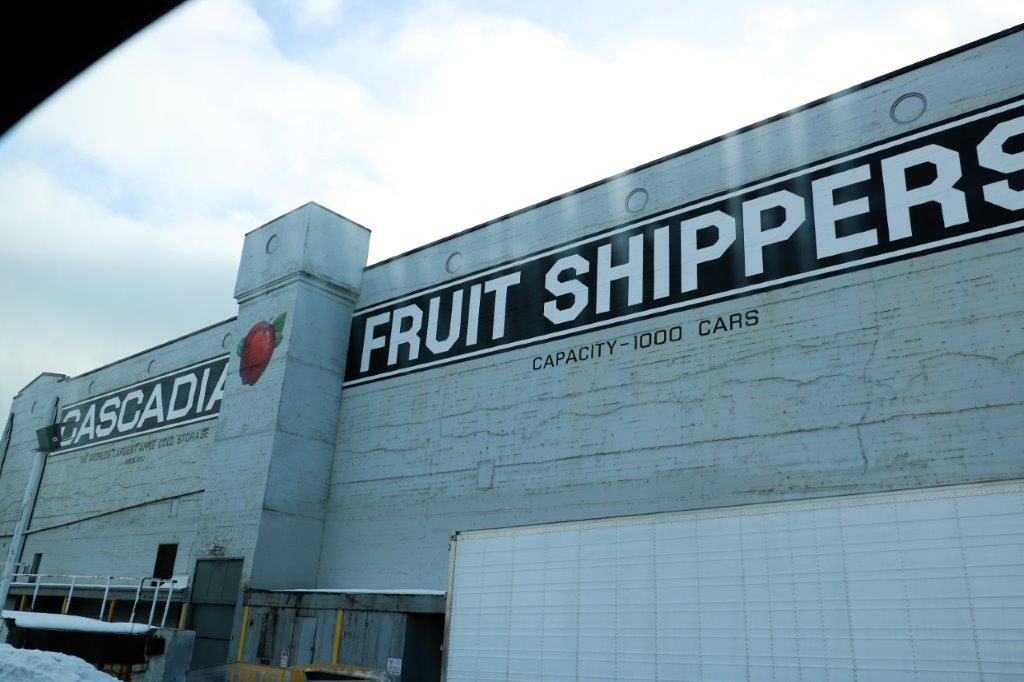
img_9337 img_9341This cold-storage house claims to be the world’s largest and the writing on the wall says it can store the equivalent of 1000 cars (train cars that would be) of apples.  That’s a lot of fruit folks.img_9343 img_9344 img_9346Tomorrow we cross the border back into Canada and our trip will almost be at an end.  Sigh.


2017 Feb 19 (CA Stay and West Coast Roads) – Day 48 – Oregon City, OR to Auburn, WA

We woke up to more rain.  The Pacific Northwest is running true to form.  We were not driving very far today, just to Auburn, WA to visit with my cousin.  We had told her we would arrive about 2ish.  Well….that didn’t work.  We actually pulled into her drive at 4:30.

There were two reasons for this; 1) I found a country road to travel on and get off the freeway.  They are always slower going, but much more interesting.  And 2) We stopped at the Mount St. Helen’s Visitor’s Center.

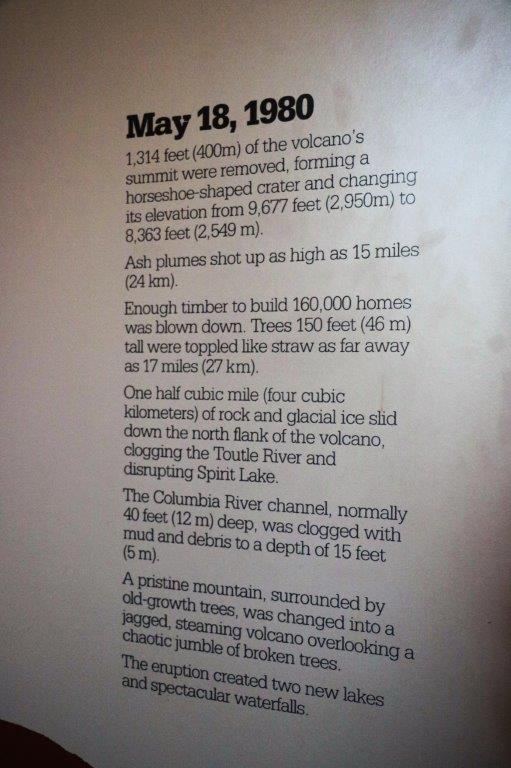
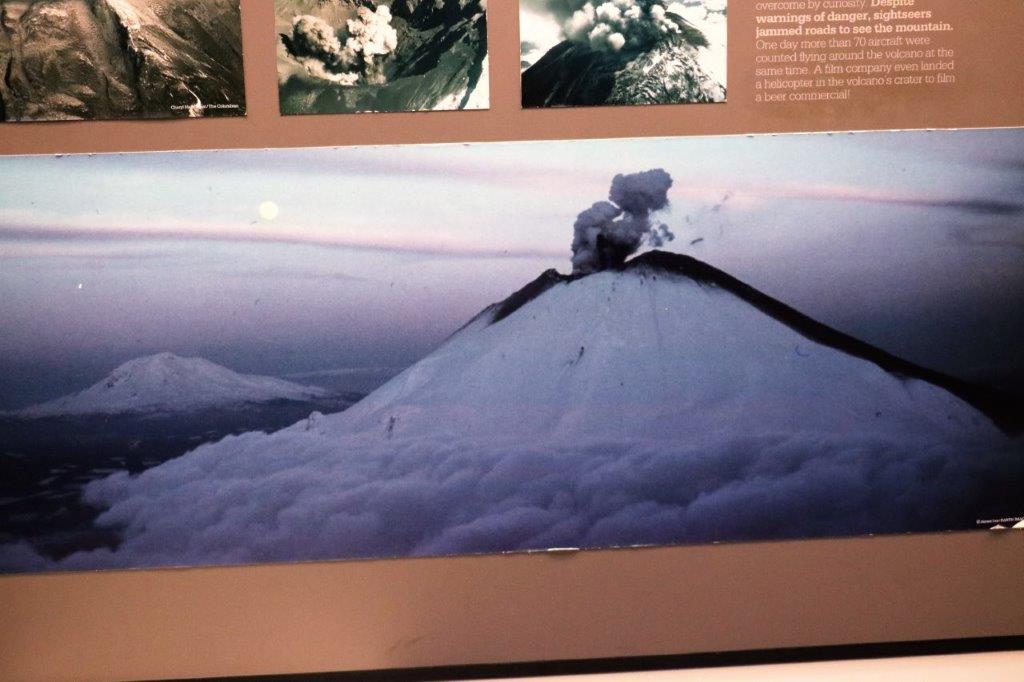
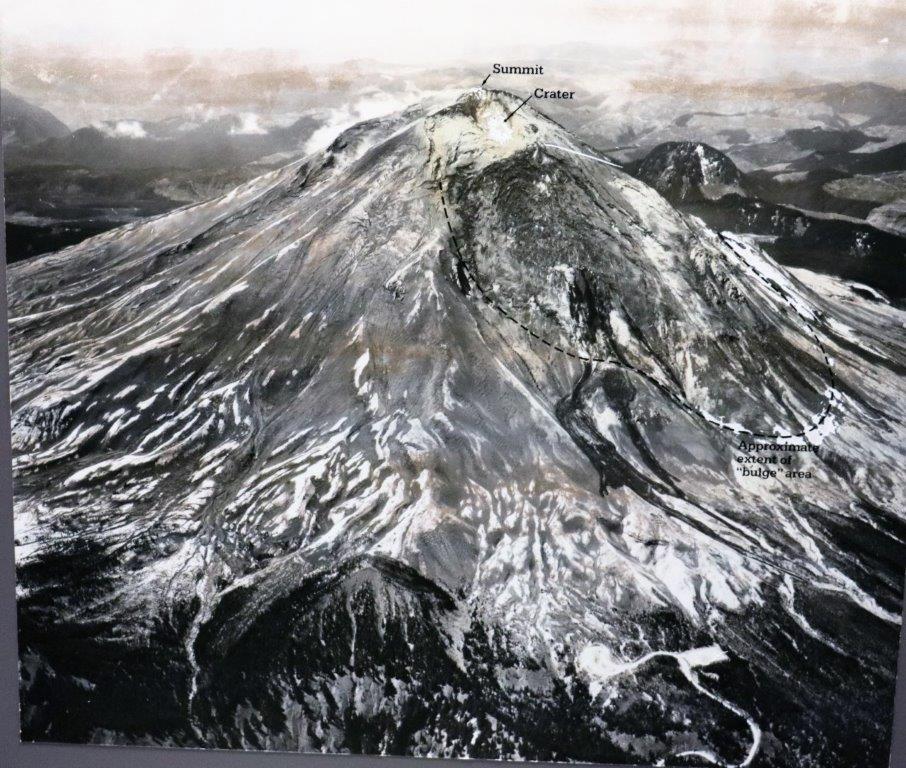
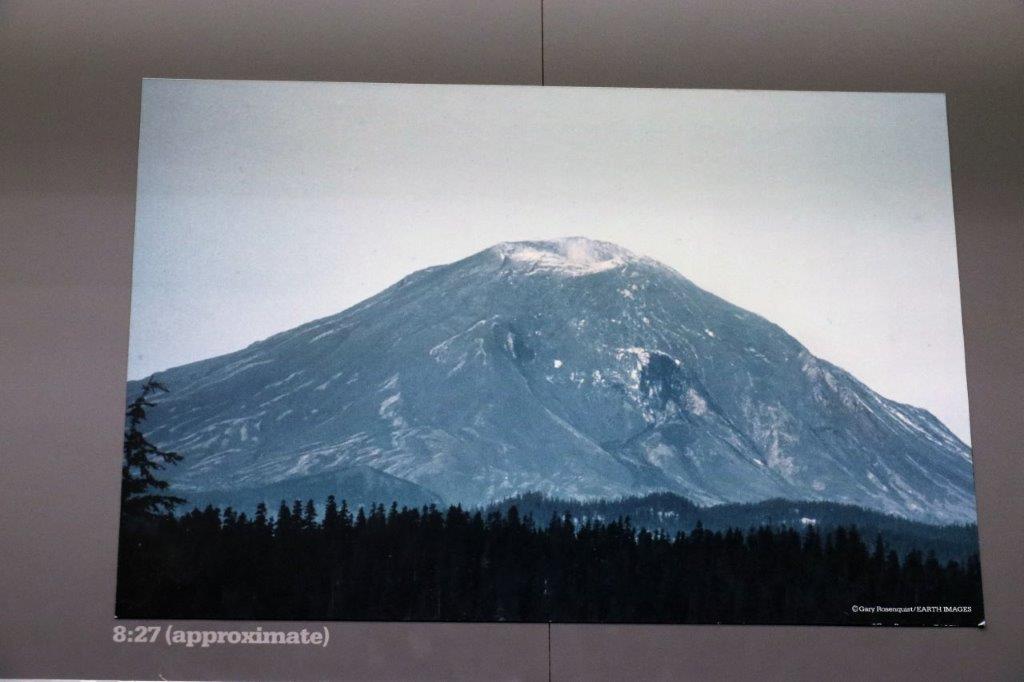
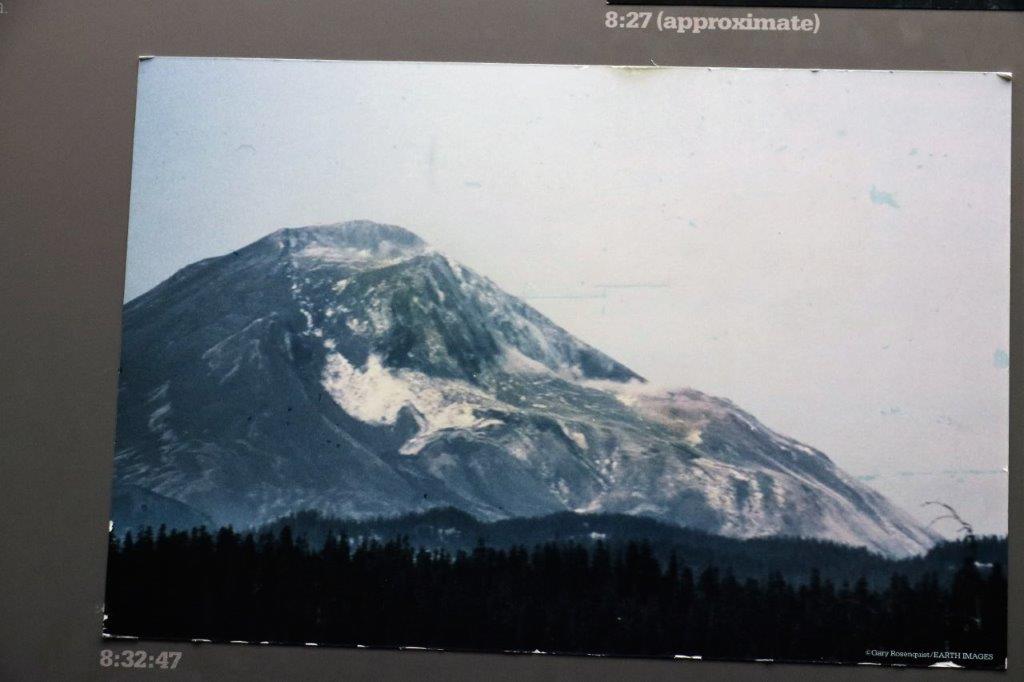
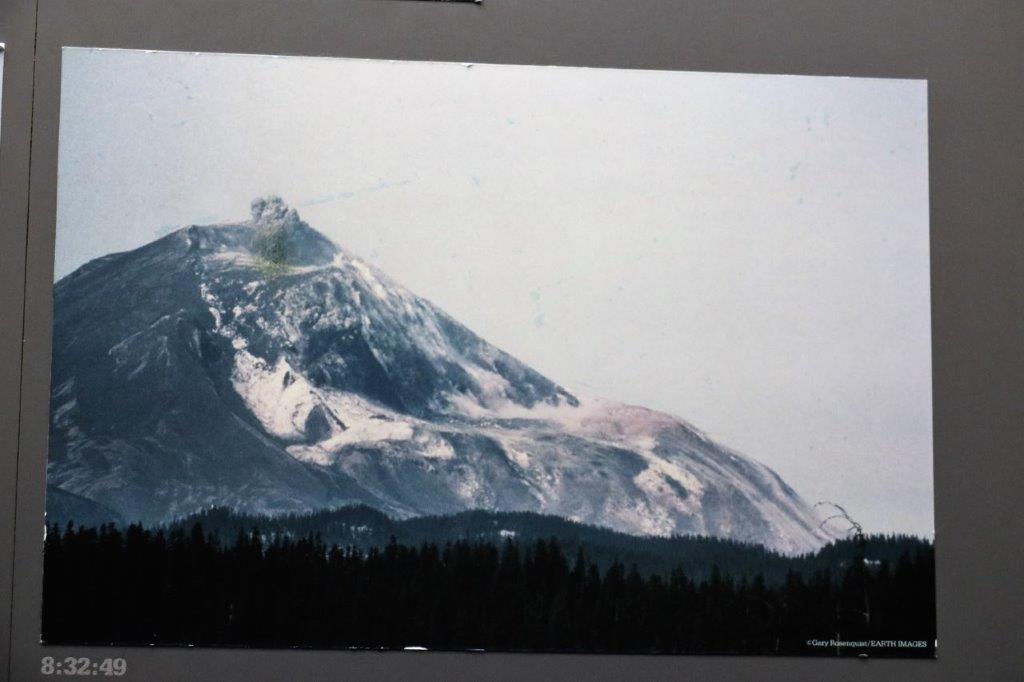
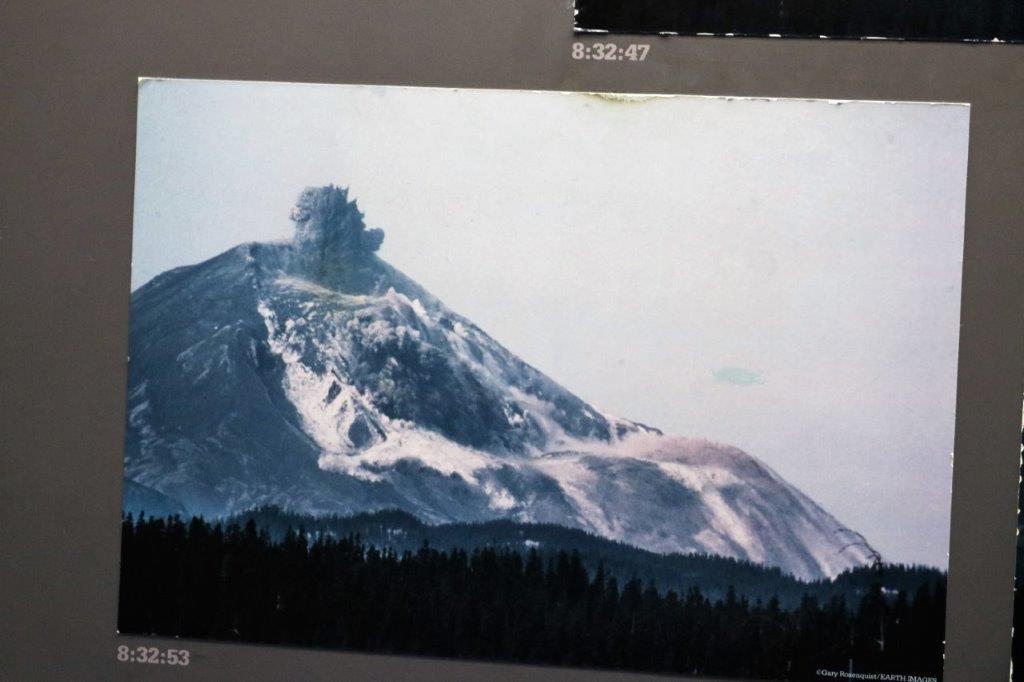
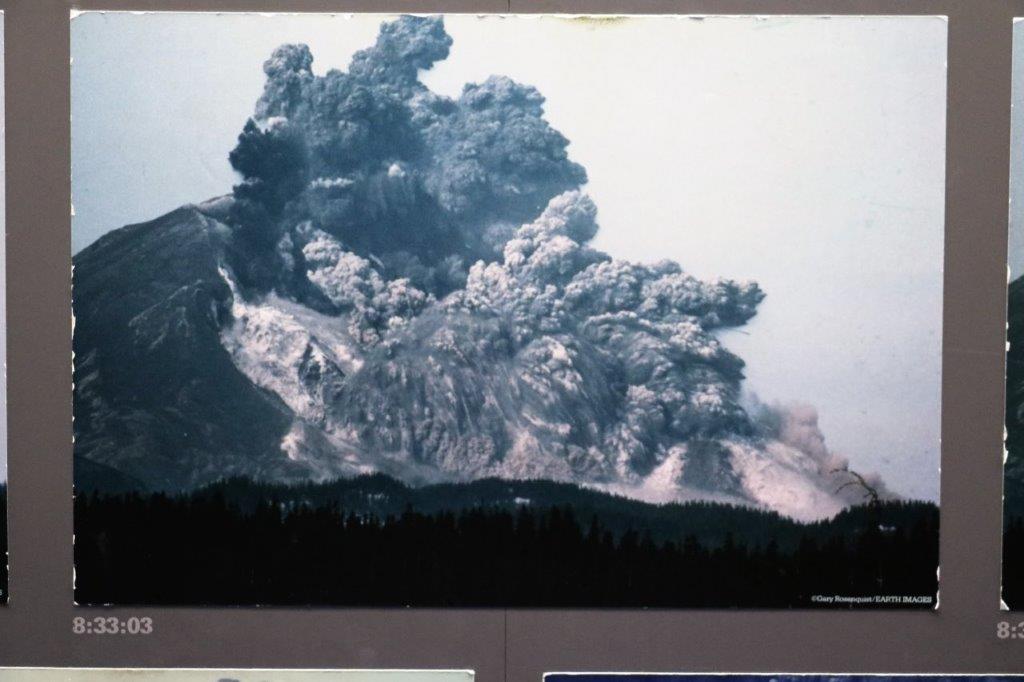
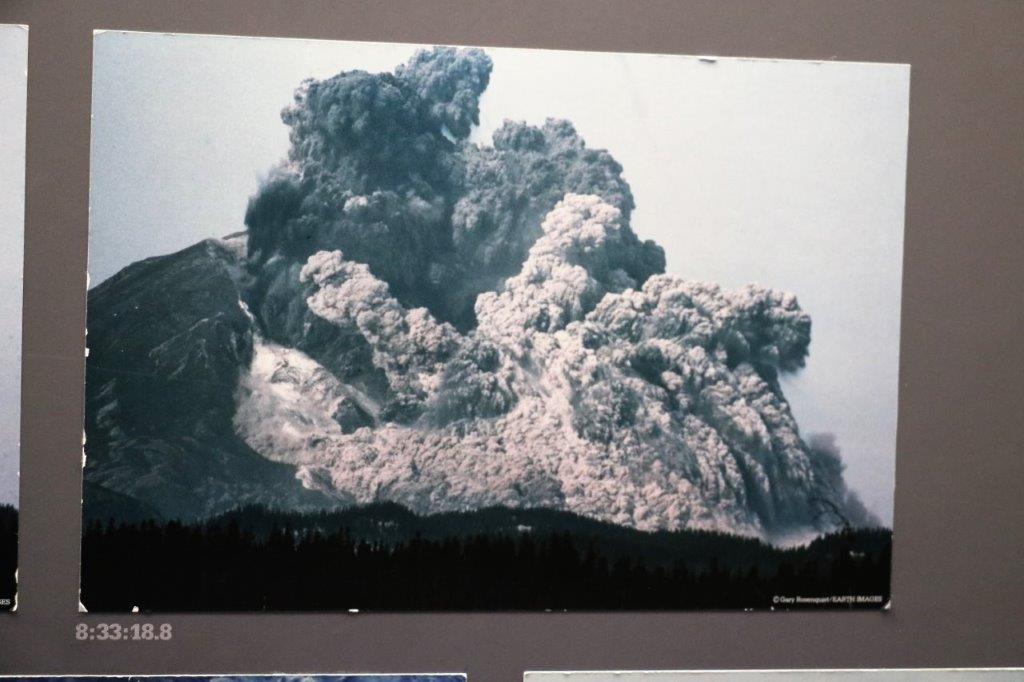
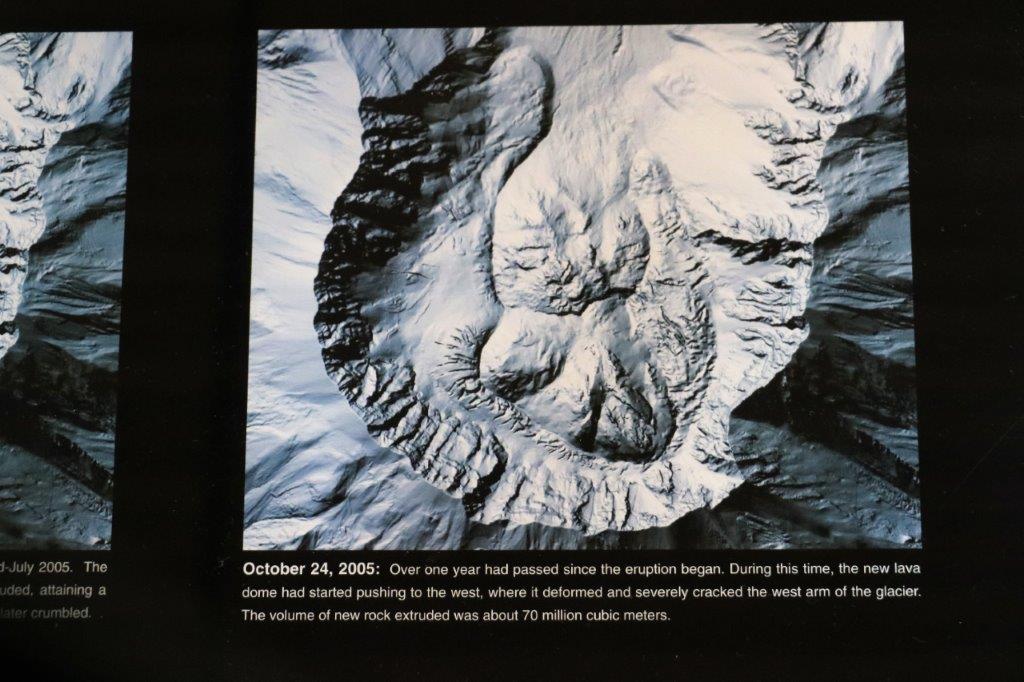
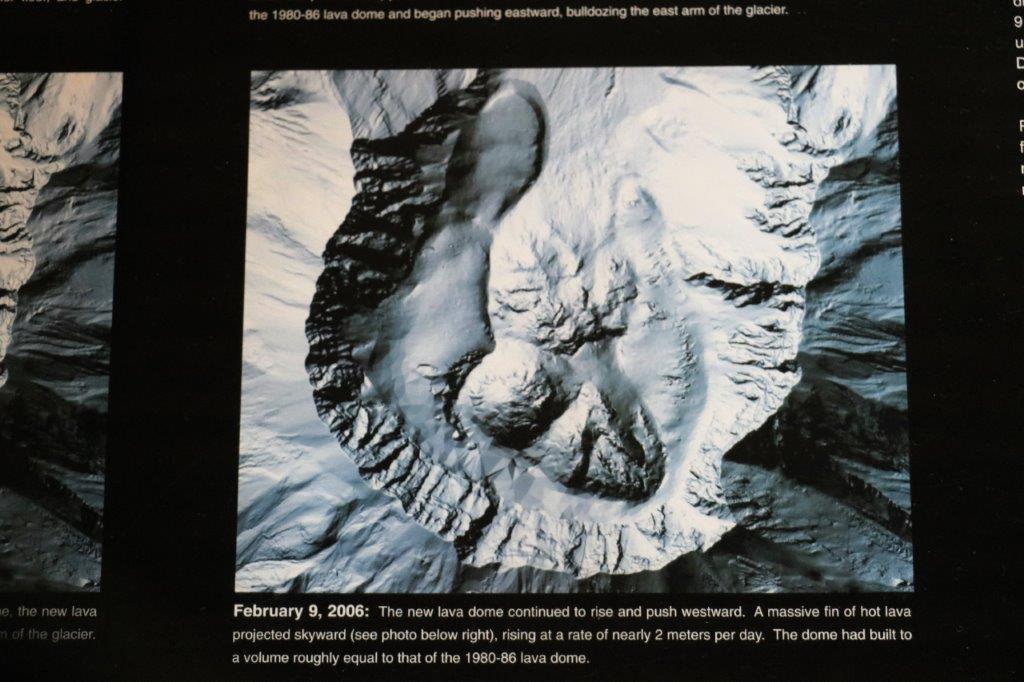
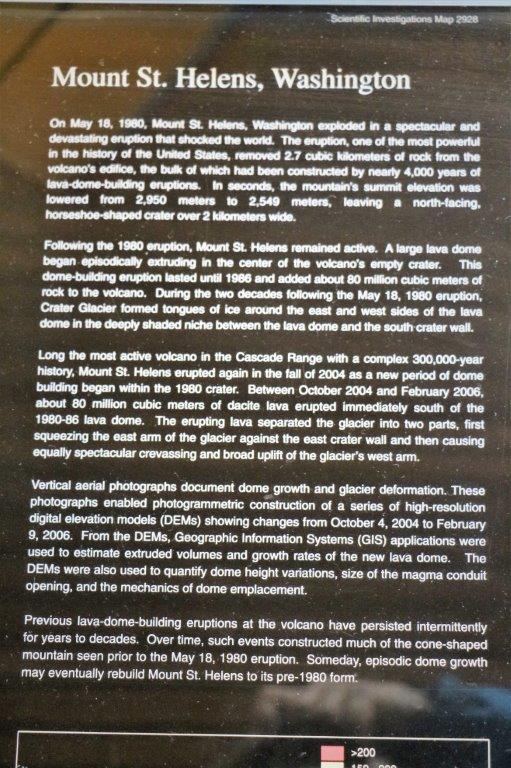
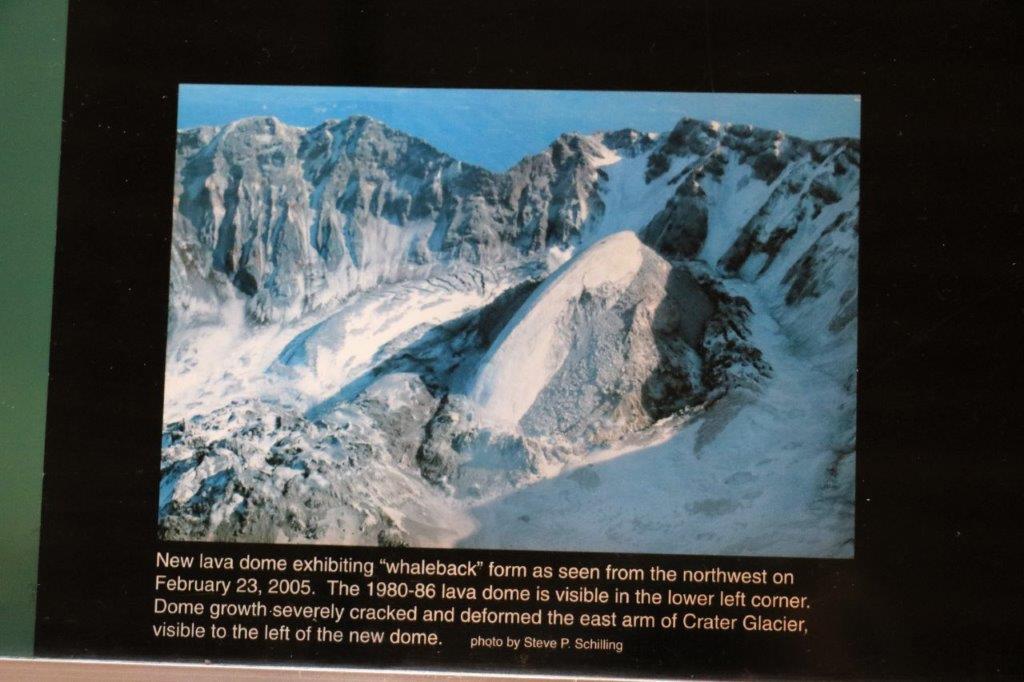
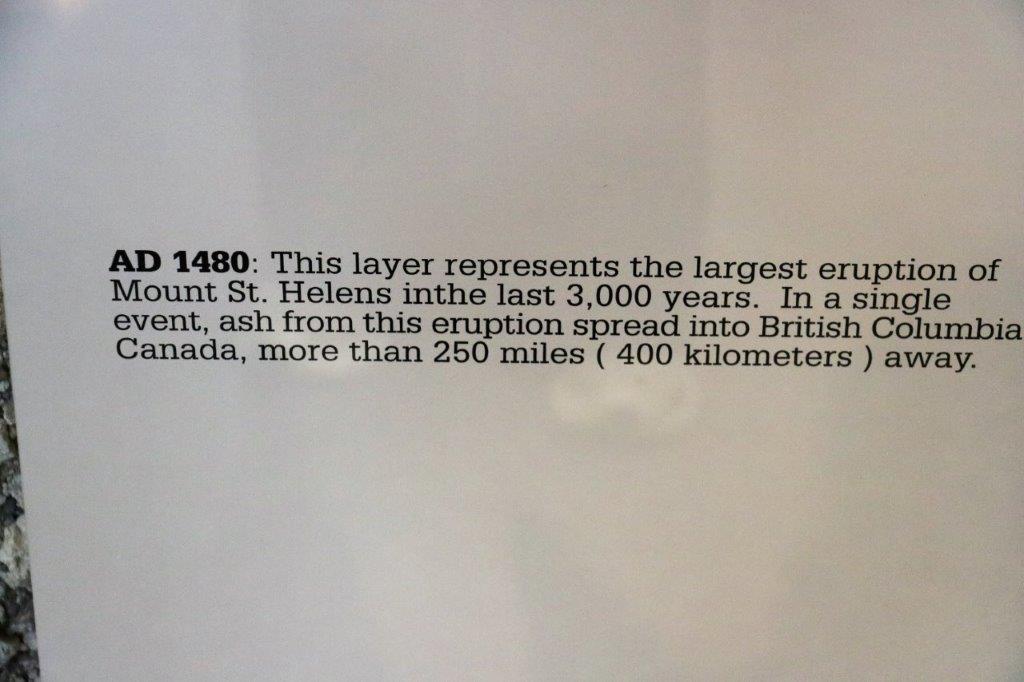
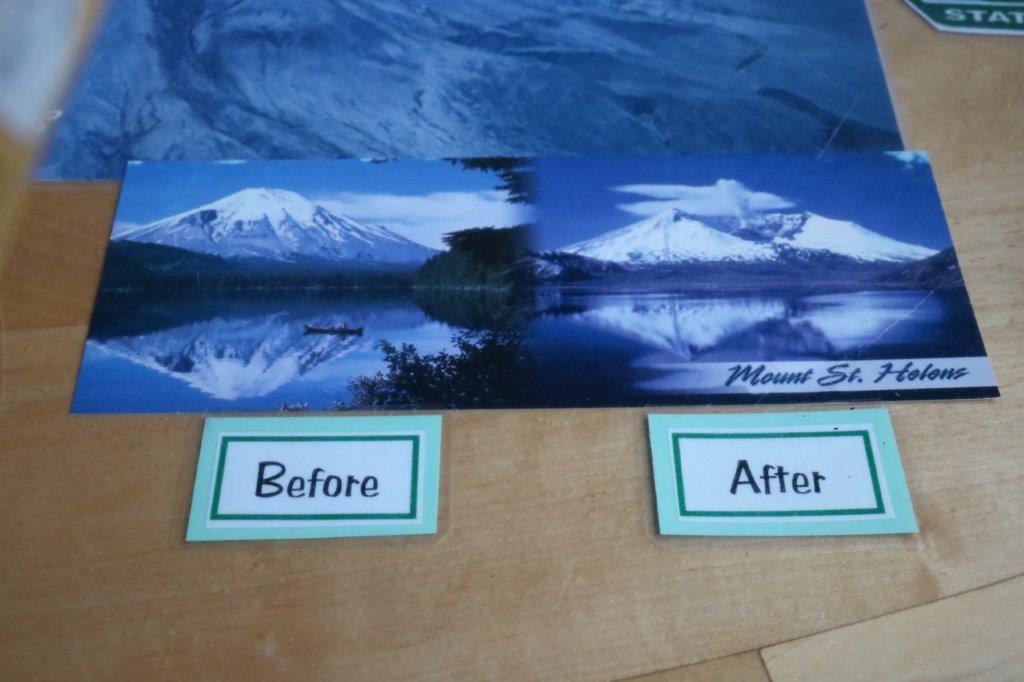
It was very interesting to see all the information about an event we clearly recalled.  The volcano erupted on May 18, 1980 and we had ash from that explosion falling on our cars and yards up in British Columbia.  What I had not remembered was that Mt. St. Helen’s was a lateral eruption.  We always think of volcanoes as blowing the lid straight off and up.  Mount St. Helen’s actually had created a bulge on the side of the mountain and when it blew it blew the entire north face off.

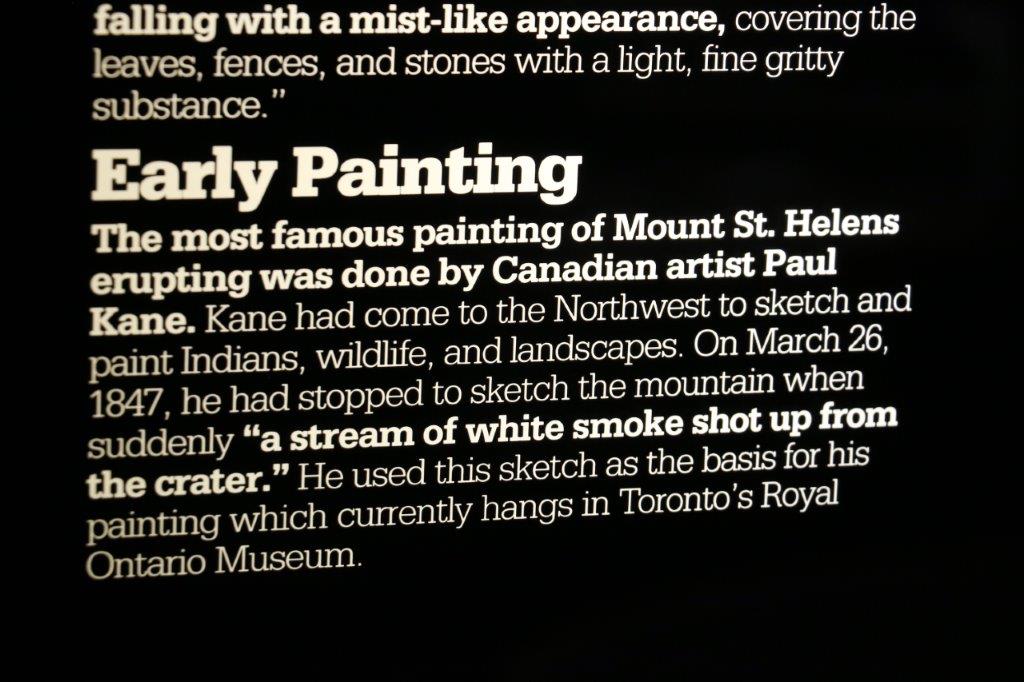
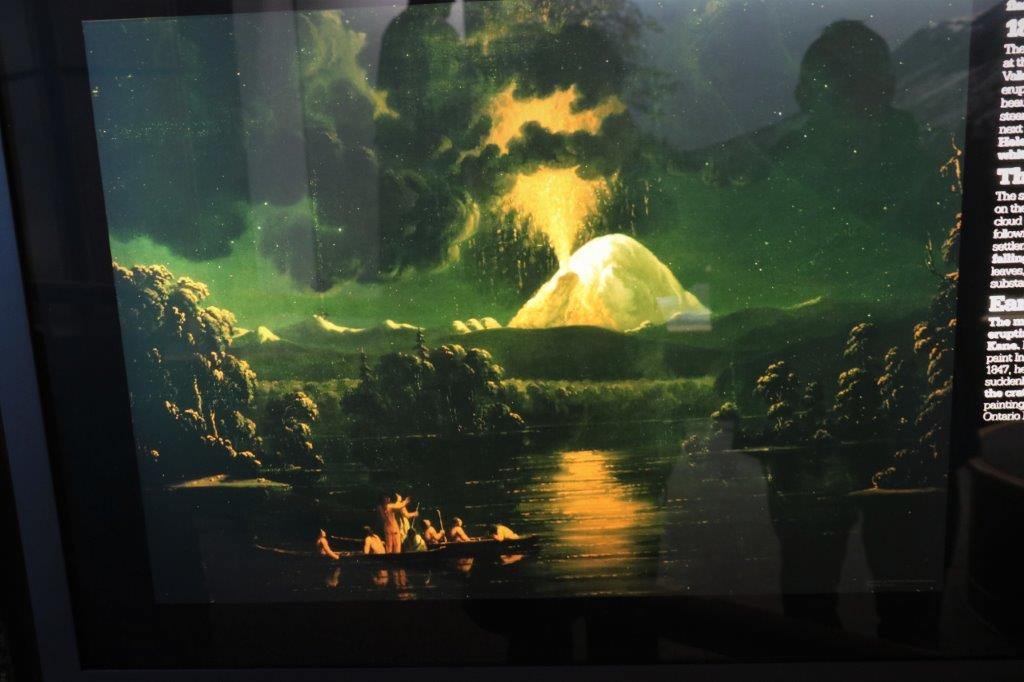
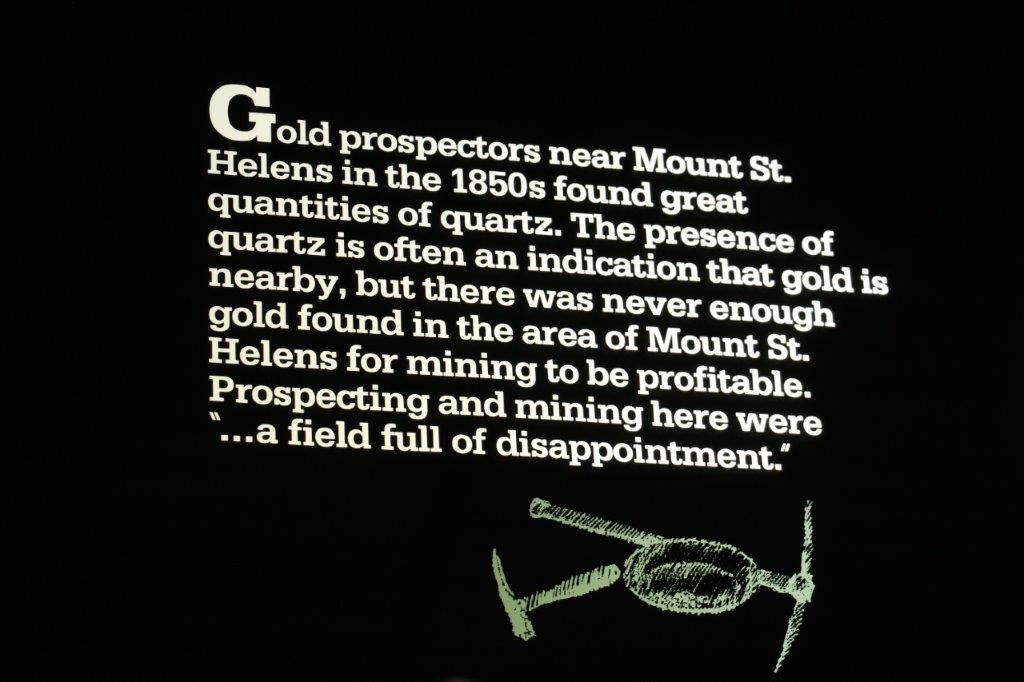
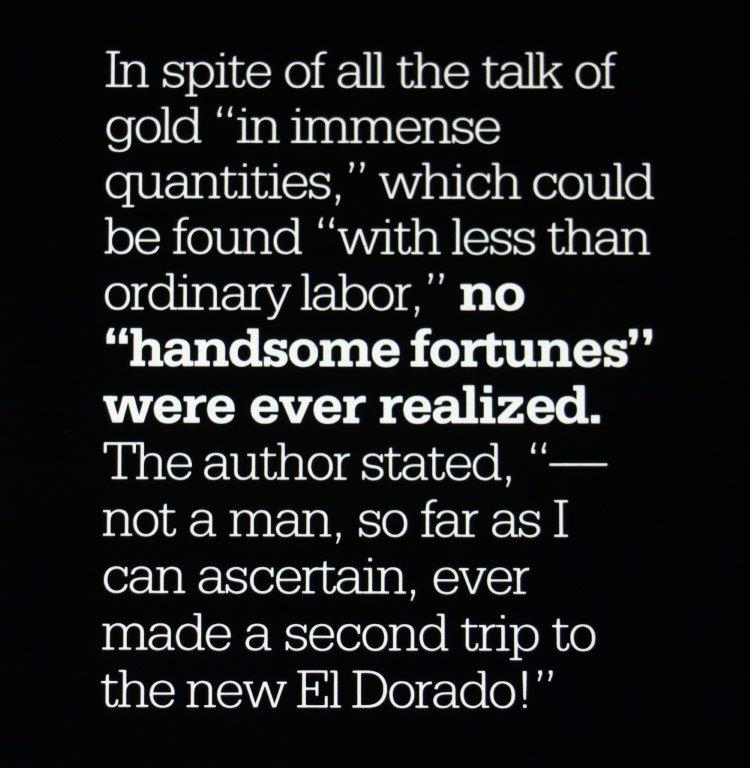
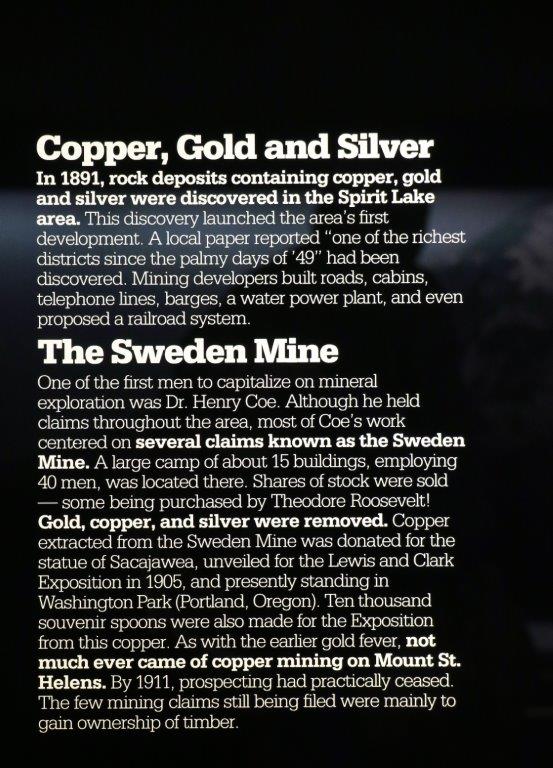
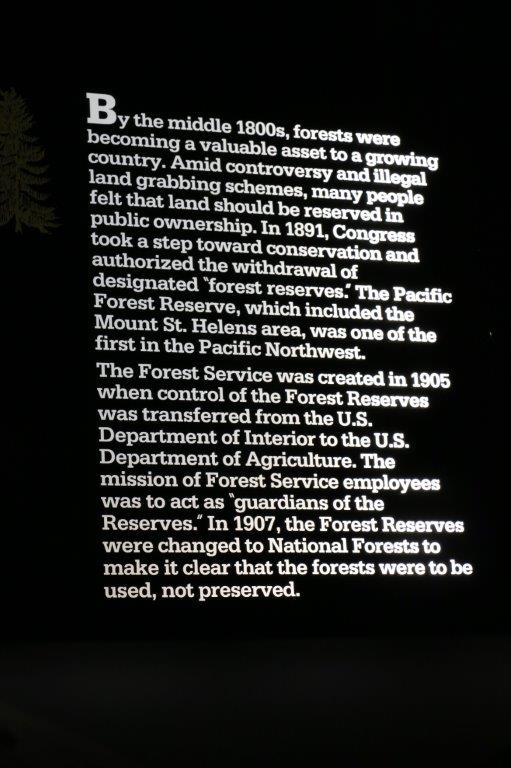
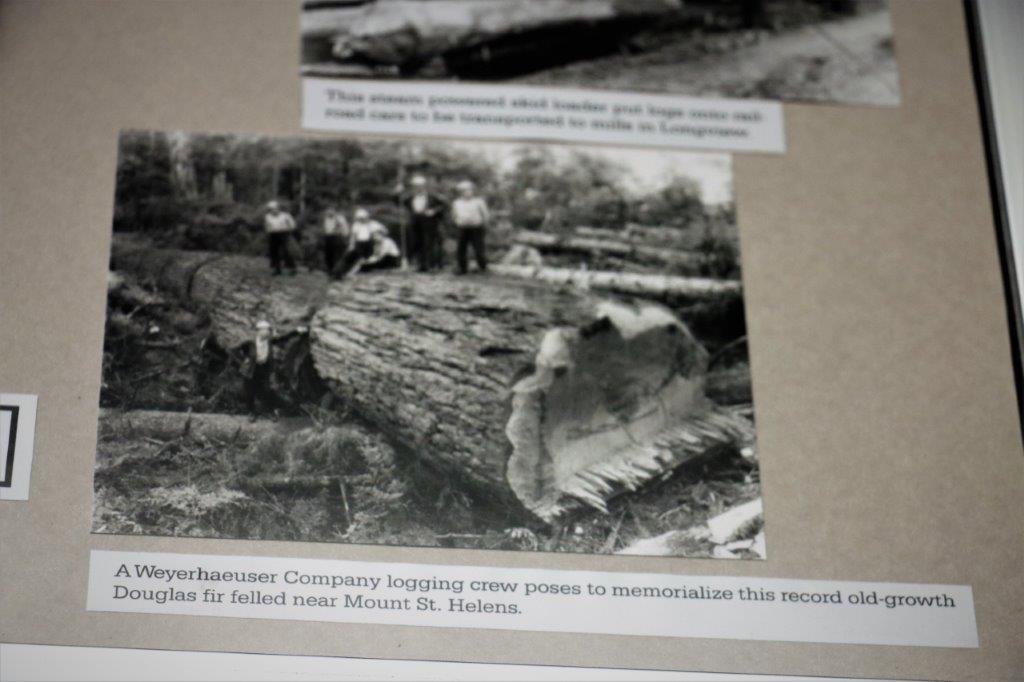
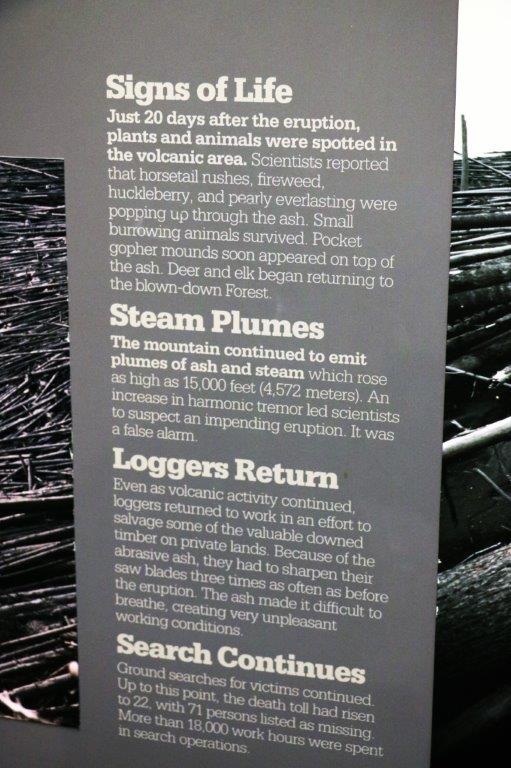
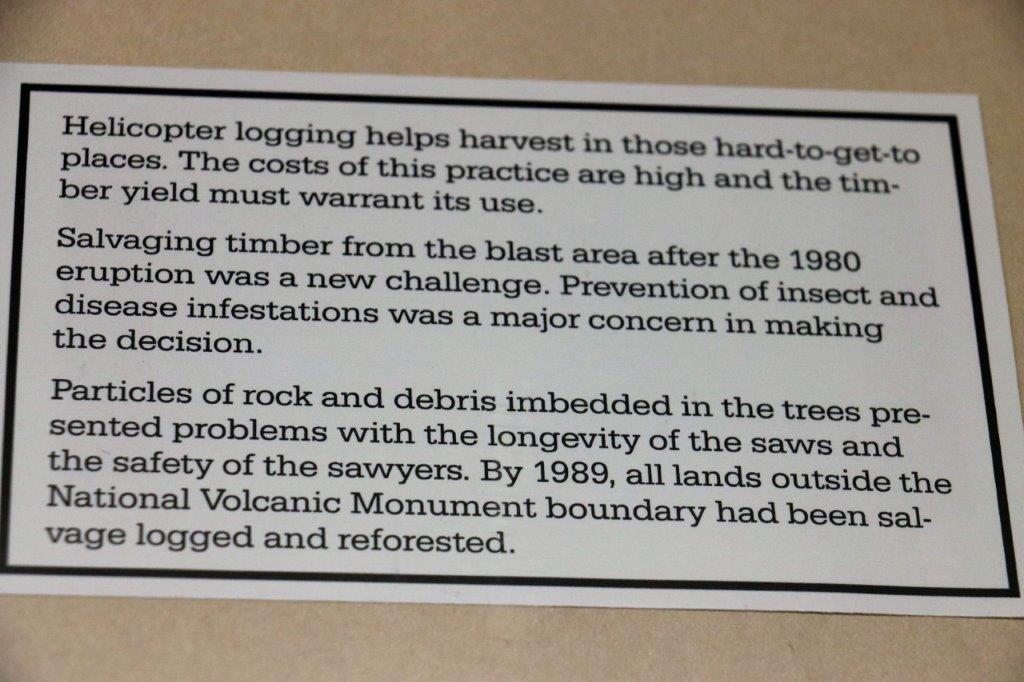
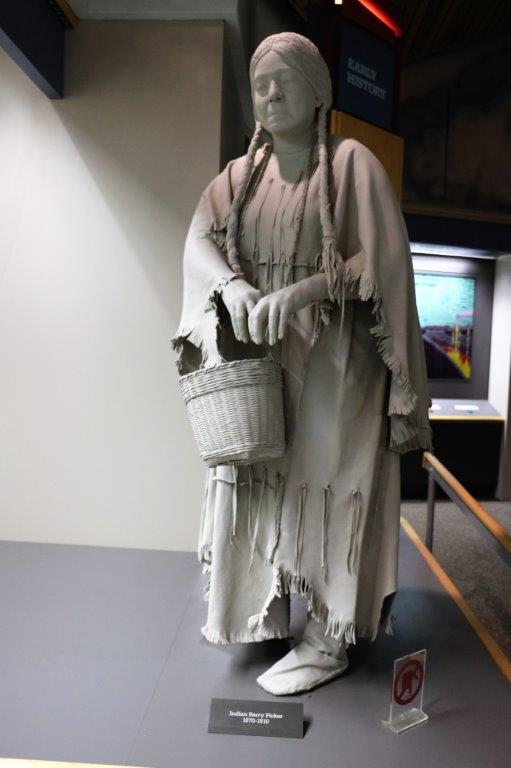
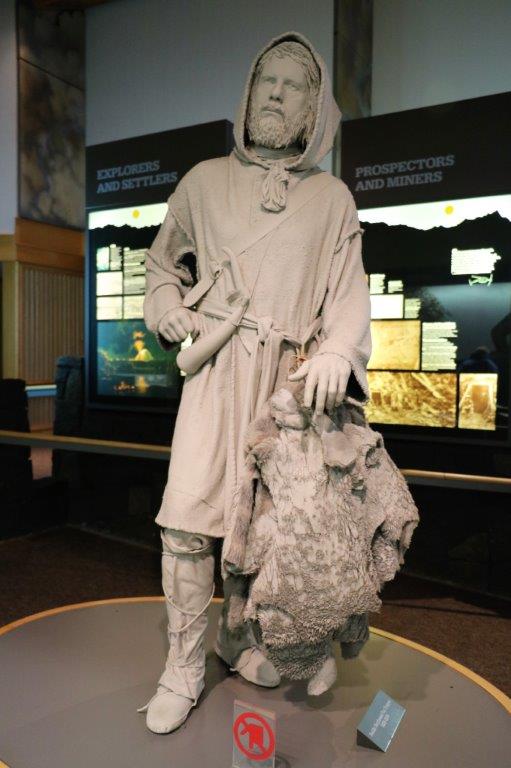
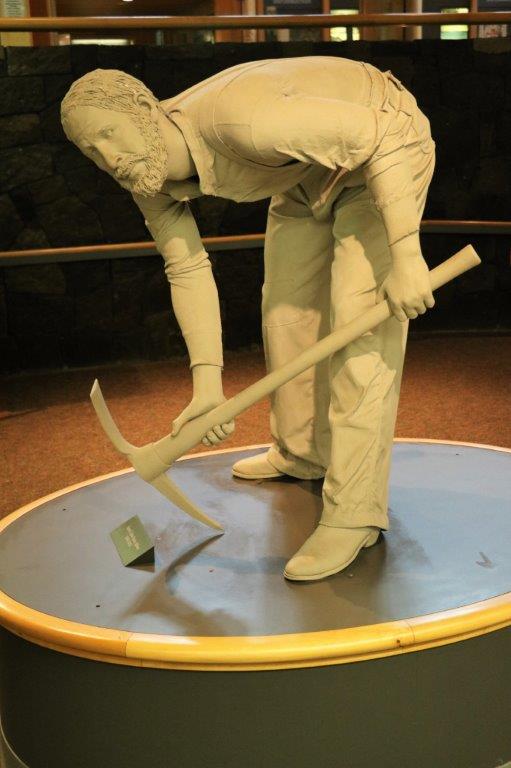
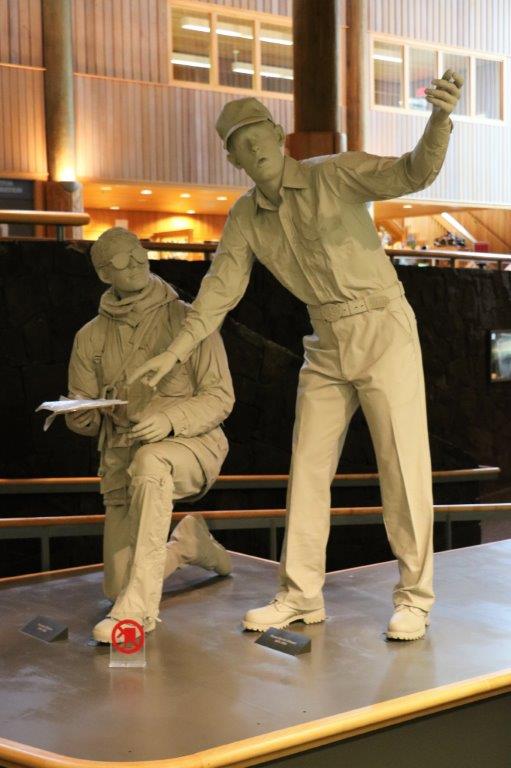
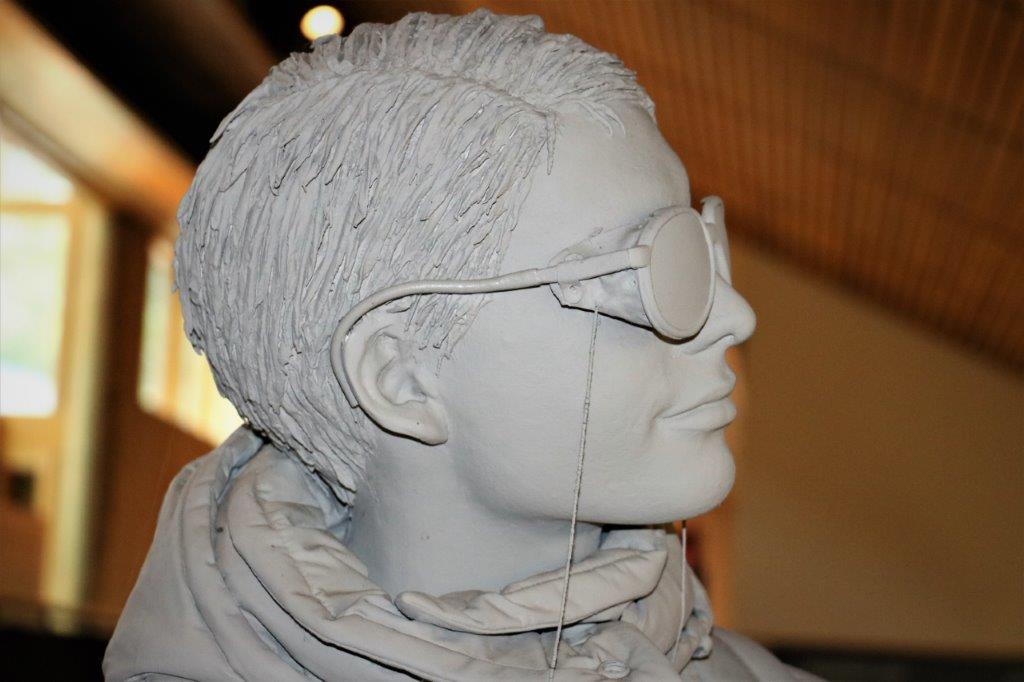
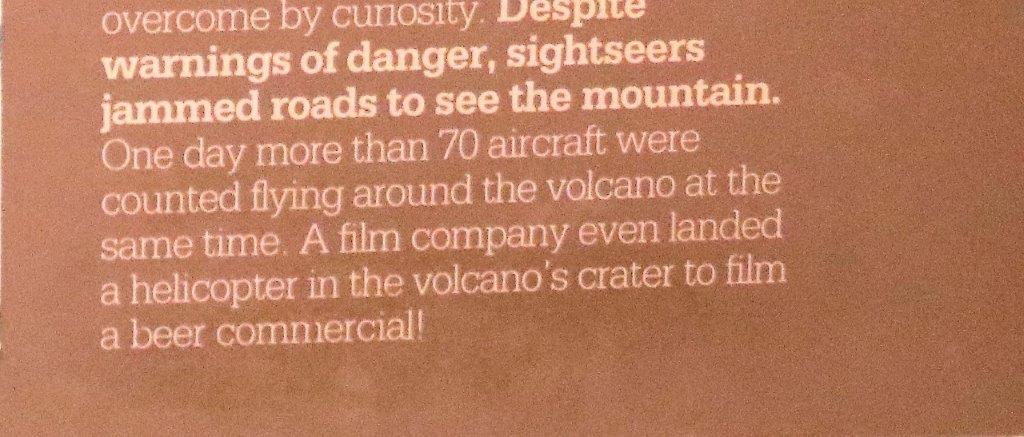
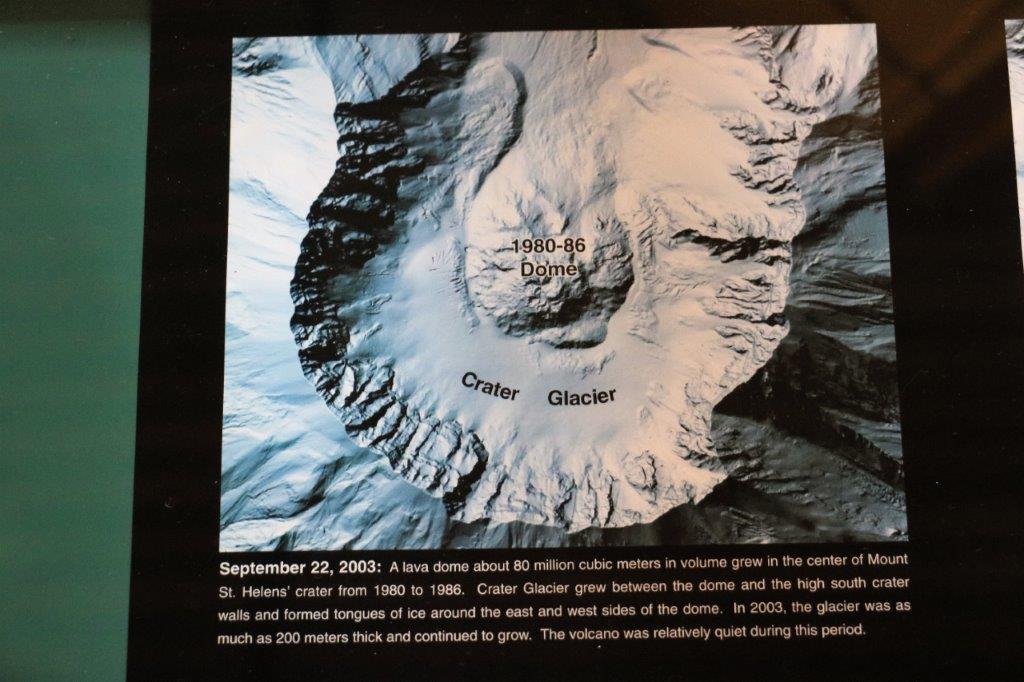
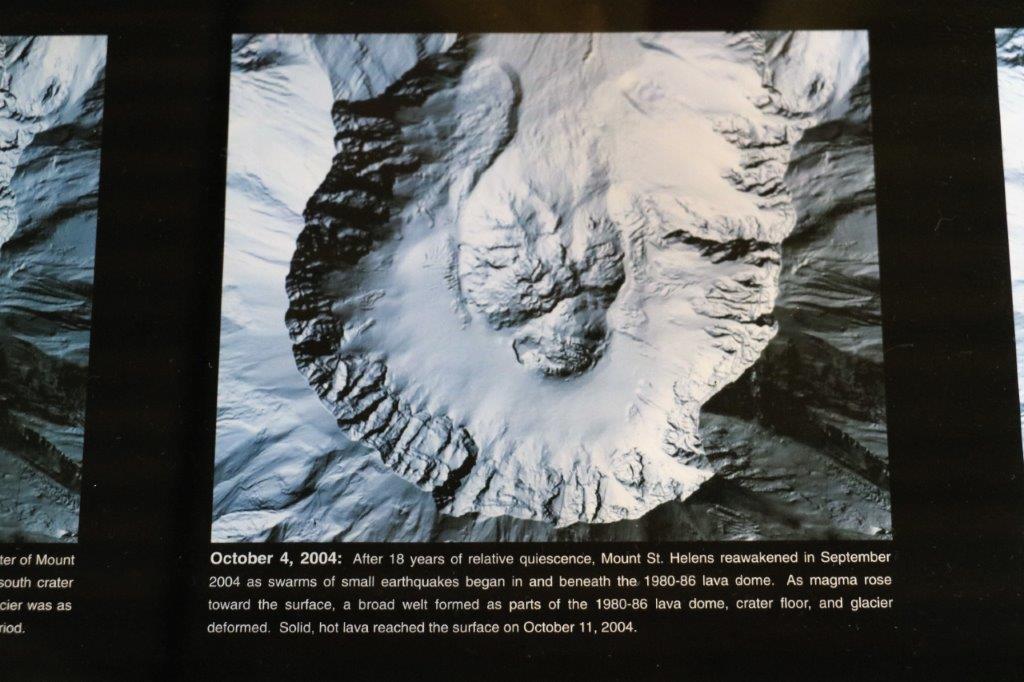
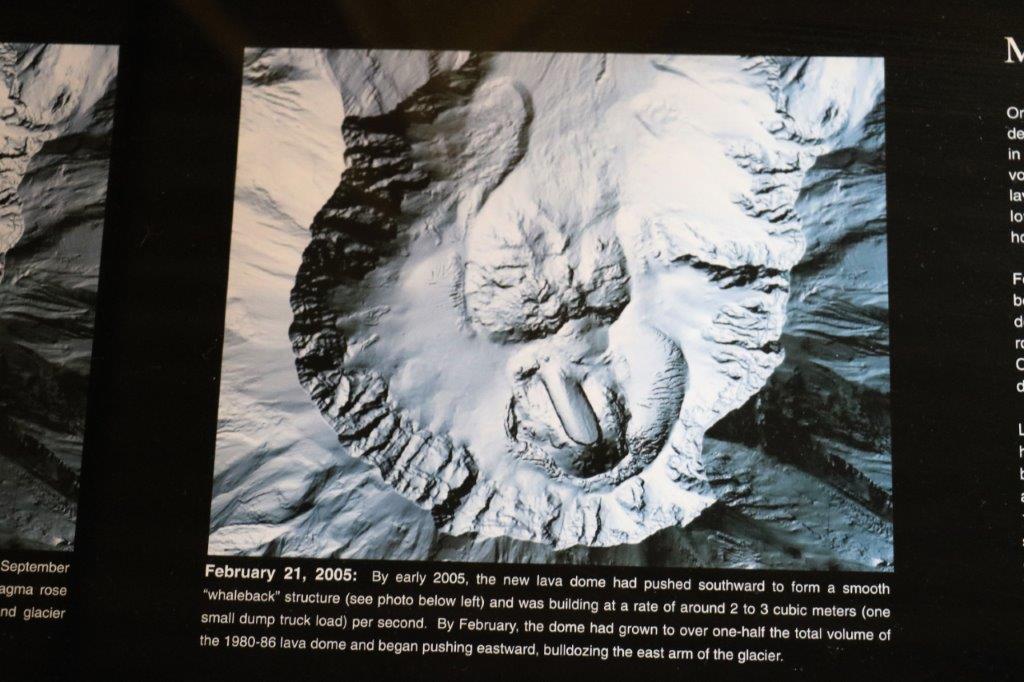
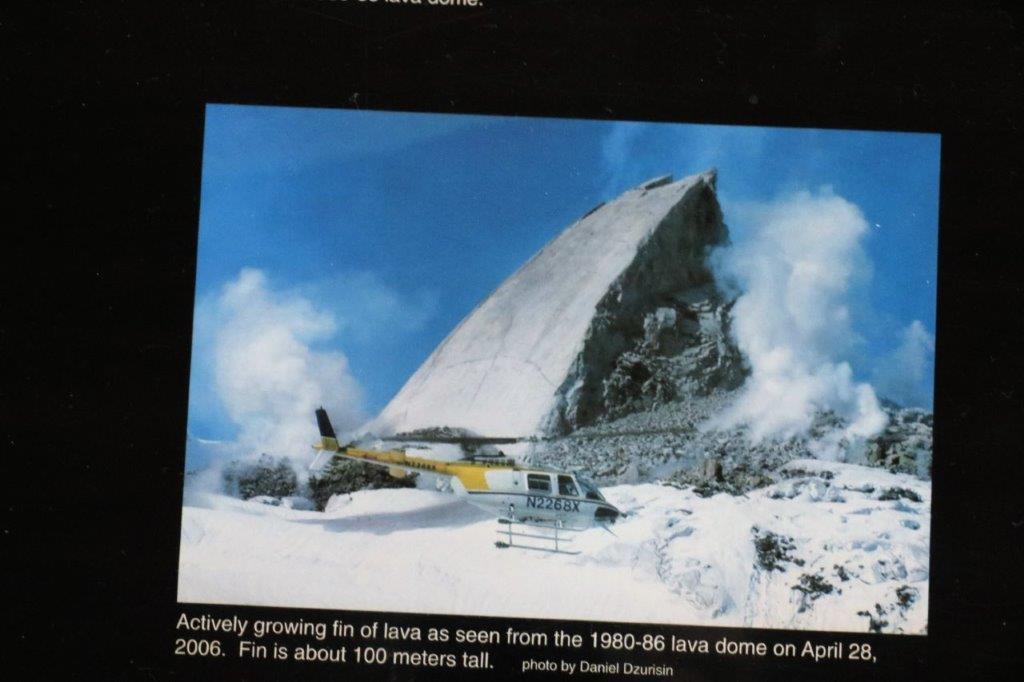
As usual I took photos of many of the pictures and signs that I found most interesting.  They tell the whole story much better than I.img_9199 img_9201 img_9213 img_9214 img_9215 img_9216 img_9217 img_9218 We have seen many photos like this of logging back in the ‘old’ days,  I have a photo of my paternal grandfather and his brother standing beside a huge tree they have felled in 1913 or so. img_9234img_9254img_9255img_9256 This photo is not a black and white image.  It is a color photo but the ash has coated all the logs and dirt with a fine white powder so it looks B&W.  The logger, the sawdust and the butt of a log in the middle right are in colour.img_9236img_9235These were very cool statues.  What I liked the most was the symbolism of the figures being completely greyish-white as if they were covered in volcanic ash.  I don’t know if that was intentional but that is what I thought of when I saw them.

img_9223 img_9222 img_9239 img_9240img_9242img_9241                                                             What great detail.

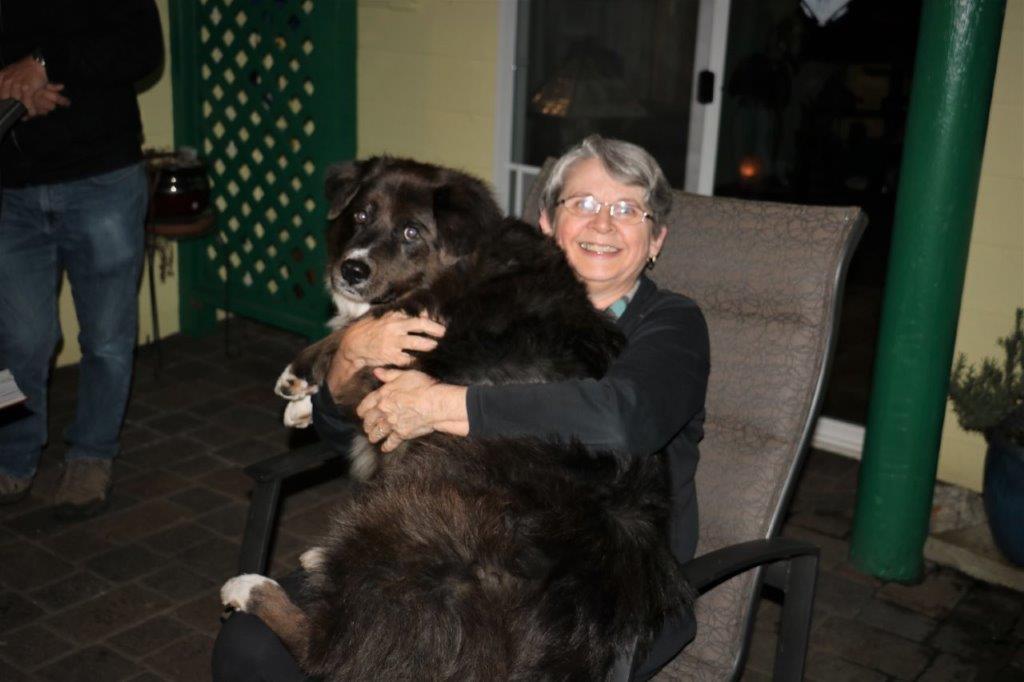
This image and placard tell a typical tale.img_9244 img_9244-2We watched a film that showed the mountain blow and they had a time lapse series of photos that clearly explained the lateral eruption and how it was created. (Look at the time stamps on the lower left of each image to see how quickly it all happened.)img_9245 img_9248 img_9249 img_9250 img_9251 img_9252 img_9253I also did not remember that Mount St. Helen’s had erupted again in 2006.  It never reached the top of the crater from the 1980 eruption but it did rumble mightily once again.img_9258 img_9259 img_9260 img_9261 img_9262 img_9263 img_9264 img_9266 img_9267In 1980 John and I began renovations on the little old house we had bought in 1977.  The basement had been dug out from under the house at some point after it’s construction and all the basement walls and floor were wood slats.  There were holes all over where the wood had rotted so we had a massive mouse problem and it was so musty and damp down there we couldn’t use the space for anything.  We had the house lifted and put in a new concrete foundation.

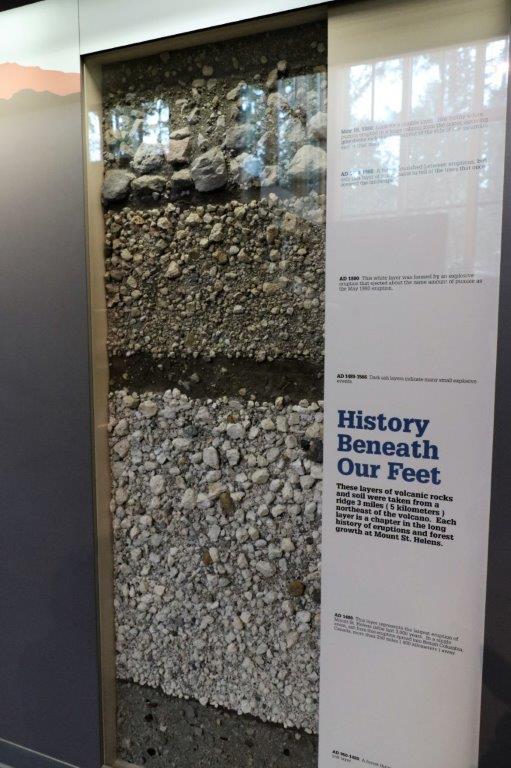
When we removed all of wooden walls we noticed a  2″ strip of white dirt about 2′ from the top of the wall.  At the Mount St. Helen’s Visitors Center they had an image of the layers of eruptions of the mountain and the different colours of the ash fall.  John is convinced the white stripe in our basement was from the 1480 eruption.  img_9274 img_9273 img_9276We spent about an hour and a half at the Visitor’s Center and then got back in the truck for the drive to Auburn – in the rain.img_9278The sun actually peeked through the clouds as we neared the Seattle area and it was quite nice by the time we got to Carol and Roxy’s place.img_9285 img_9287 img_9288 img_9294We had wine and appies on the backyard patio, hugs from my new buddy Rollo (Miss Mollie, Rollo’s sister is too shy to sit on laps), and then went inside to enjoy the delicious dinner Roxy had prepared for us.  We had a wonderful evening of chitchat and story telling before everyone headed off to bed.img_9296 img_9297