Category Archives: 2011 Australia

2011 February 21 – Day 47 – Sydney, Australia (Day 1)

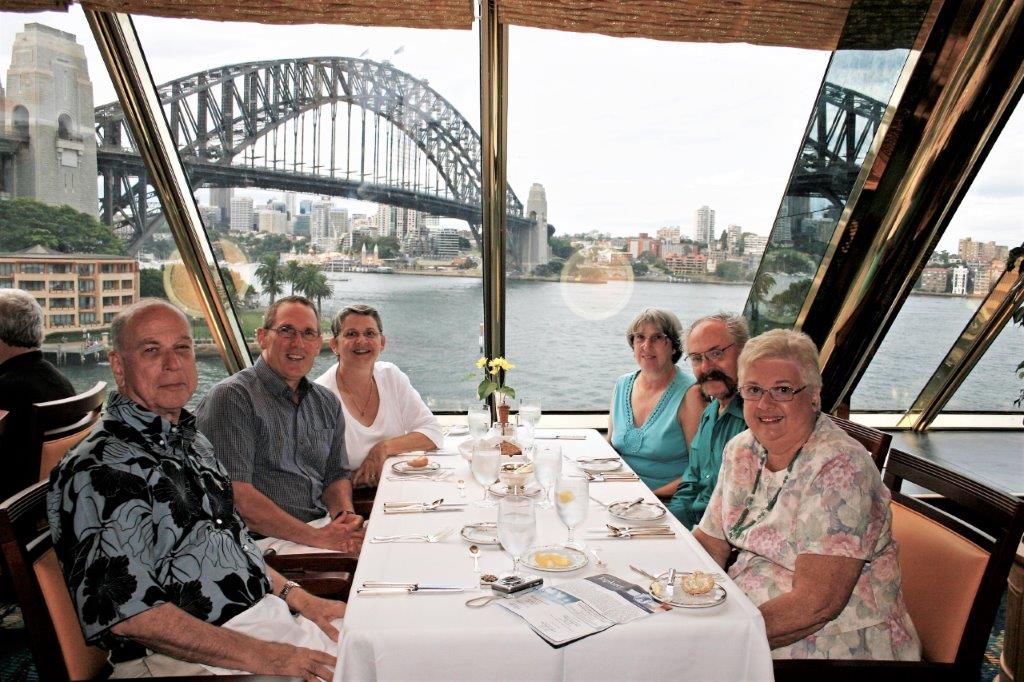
We arrived in Australia at last (well, technically we arrived the day before but that day was still part of the cruise we used to get there).  The first thing we did was waste $35 (AUS) and an hour of time by my taking the wrong bag from the cruise port to the hotel.  Thankfully part of the disembarkation paperwork included where you would be staying once you leave the ship so they sent a message along to the hotel that we needed to return the bag.  John took a taxi back to the port, exchanged bags and returned to the hotel.  We put our luggage in storage at the hotel (check-in wasn’t until 2:30 pm and it was only 10 am) and went for a walk.

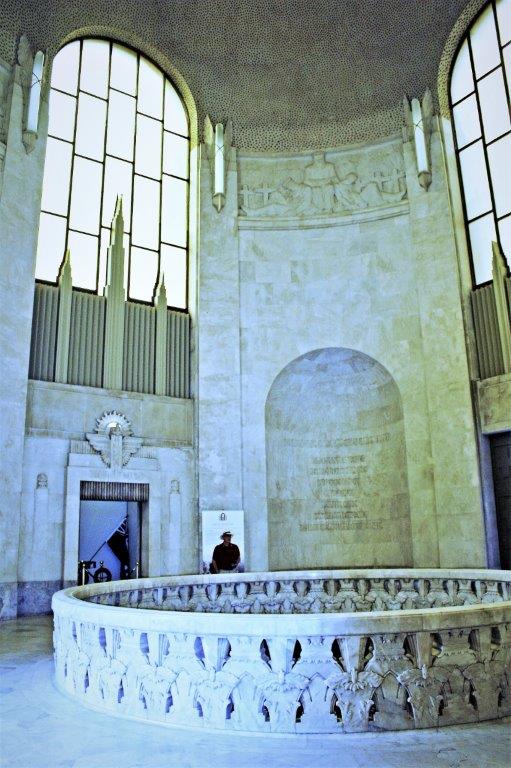
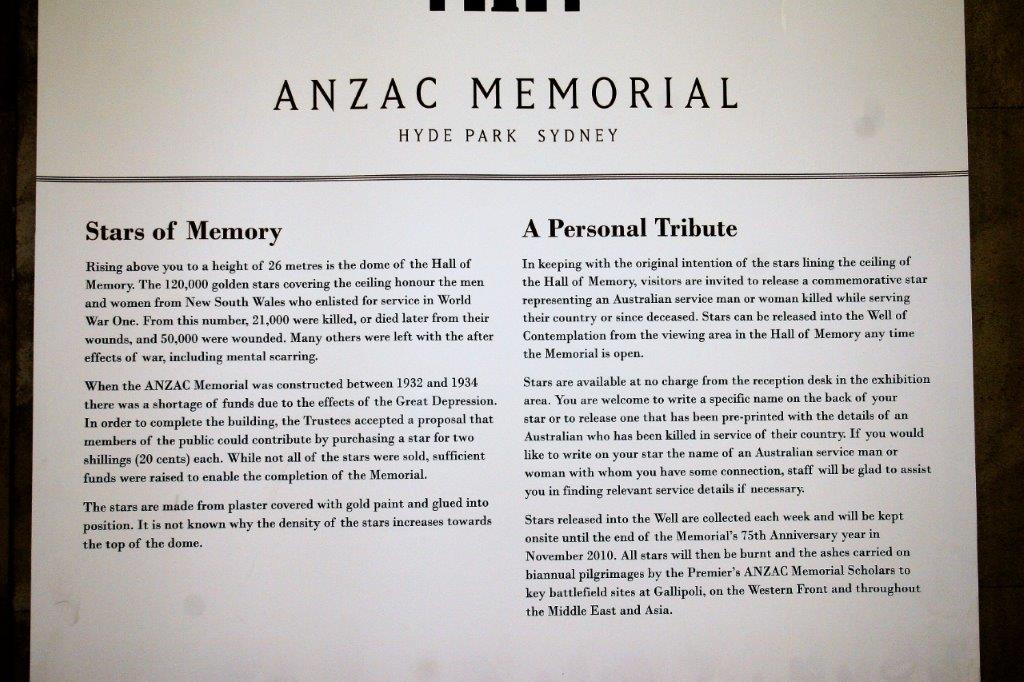
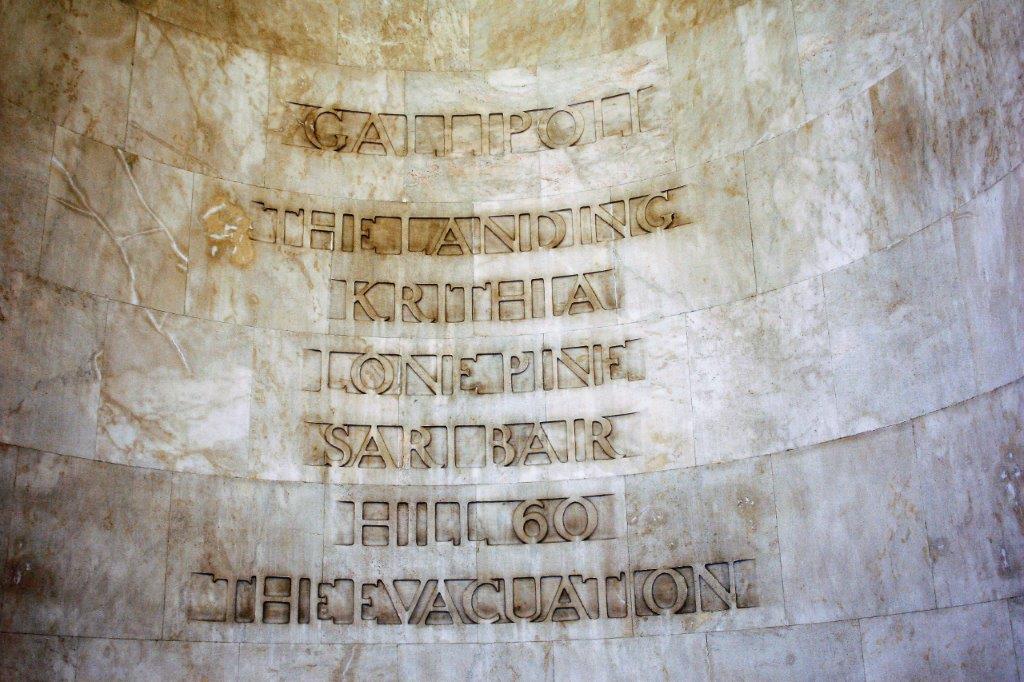
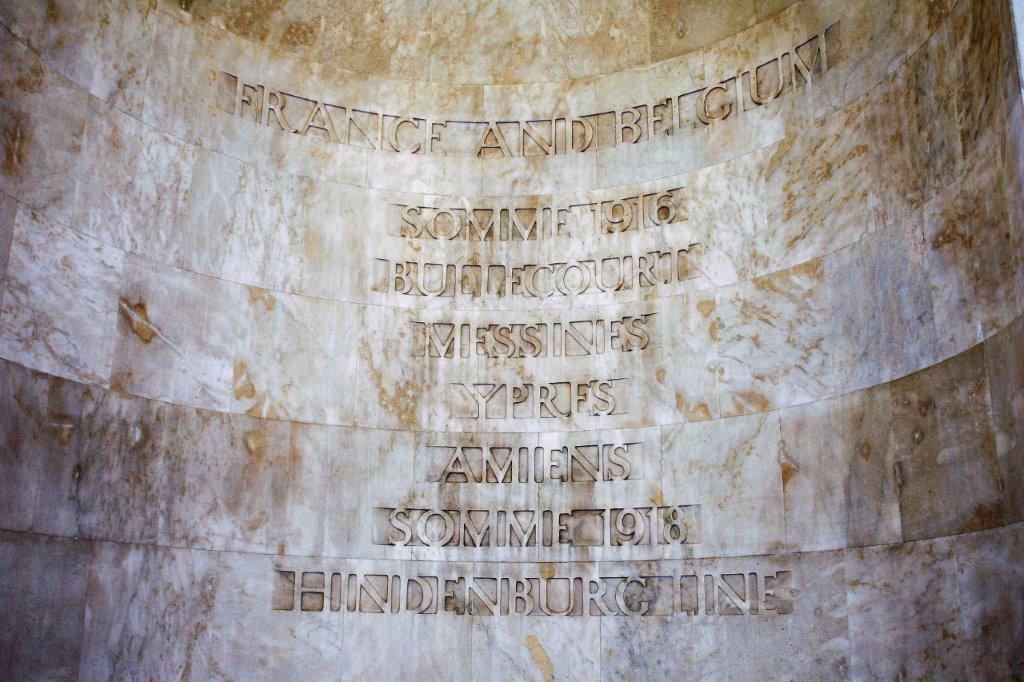
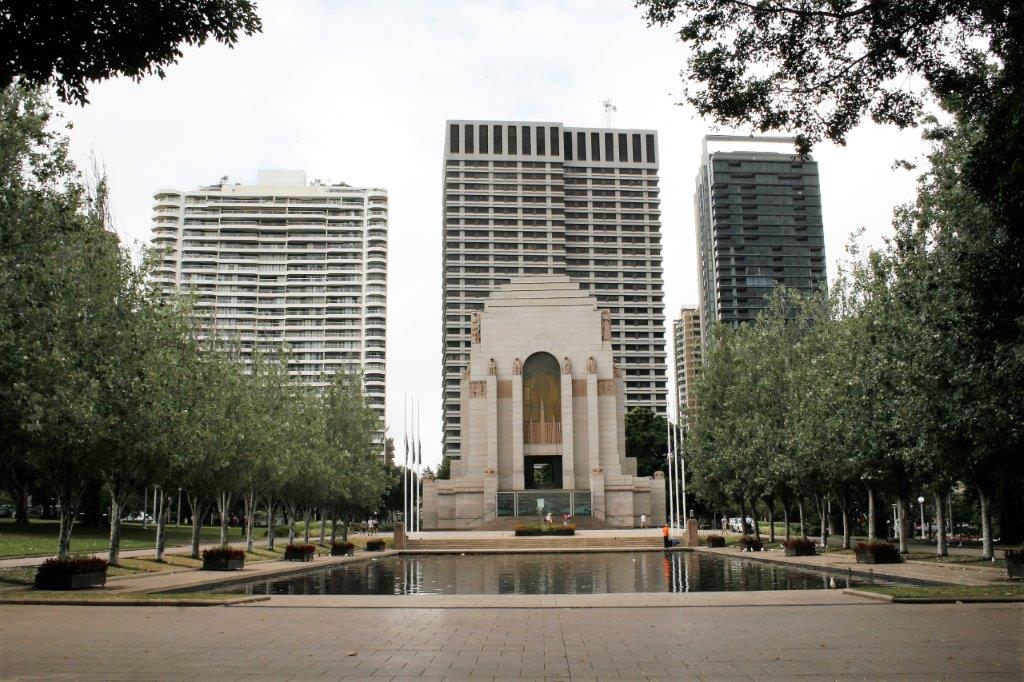
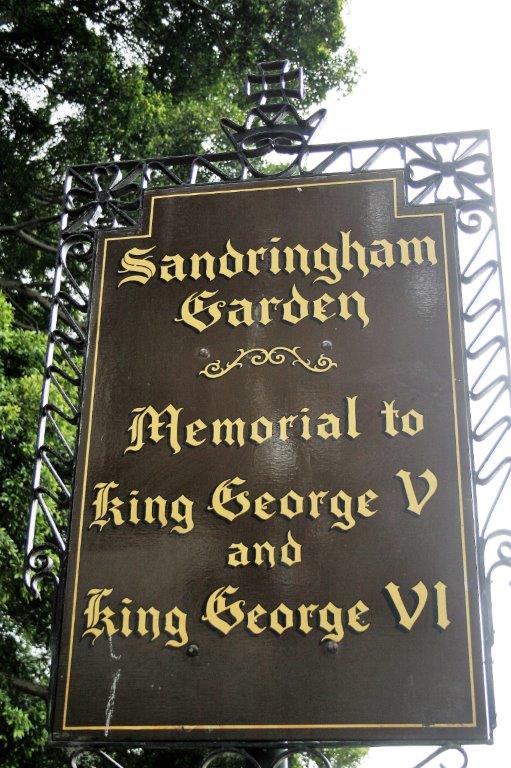
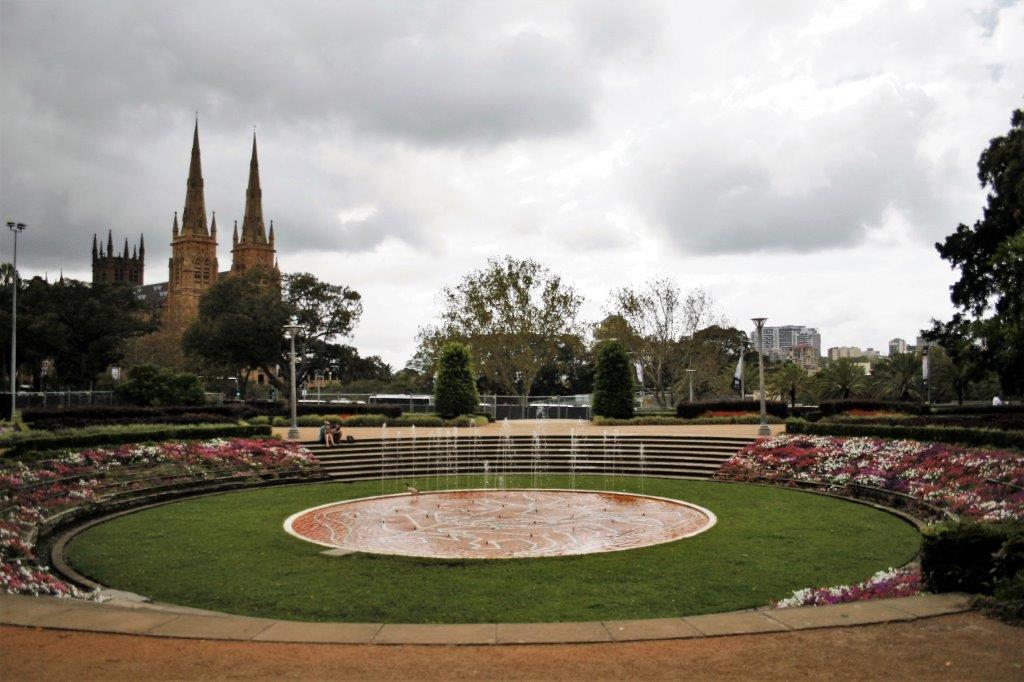
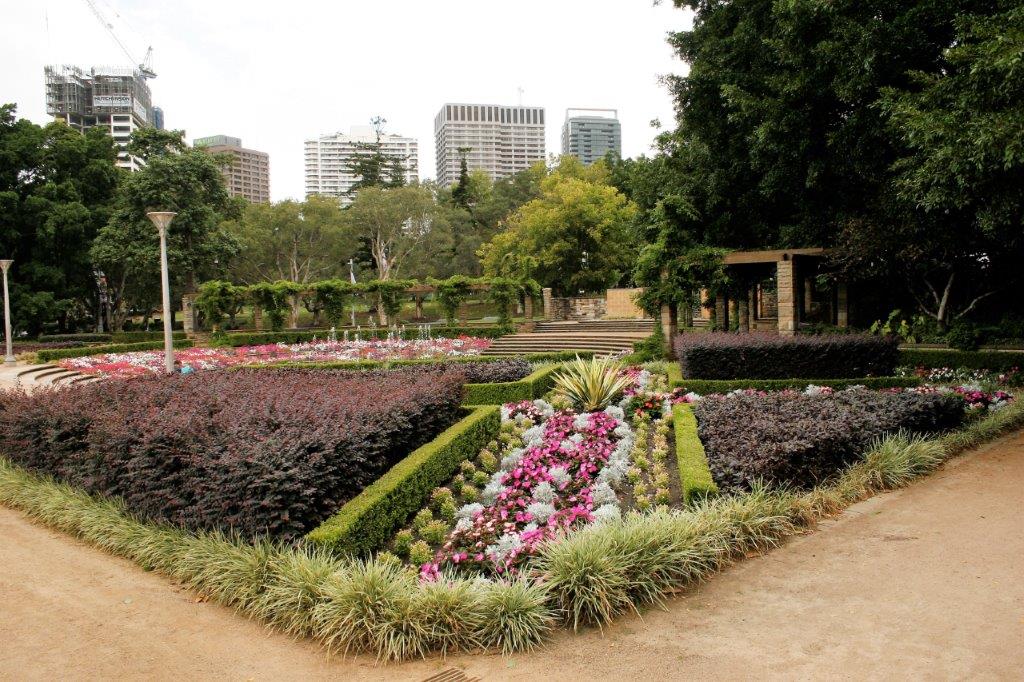
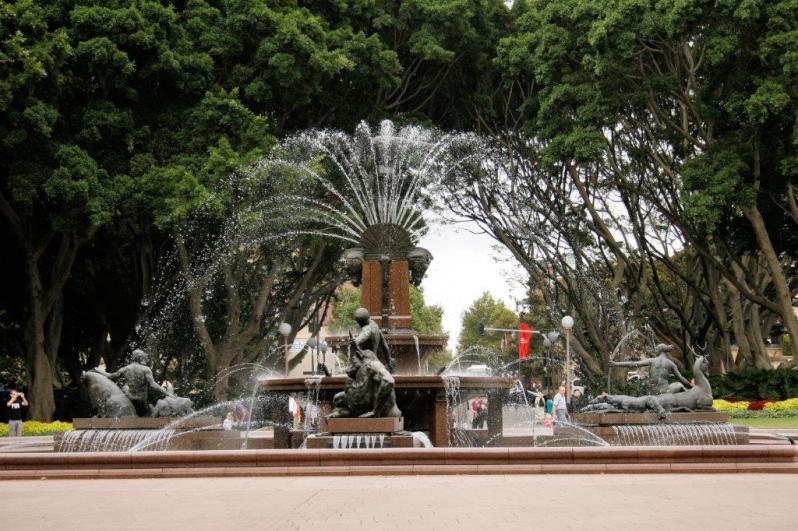
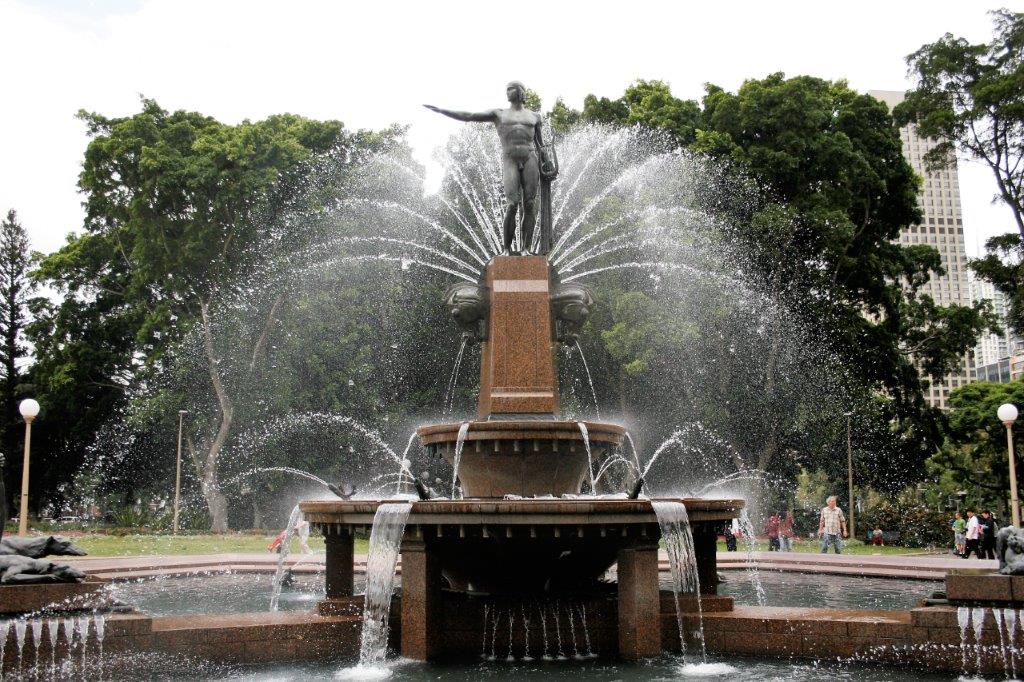
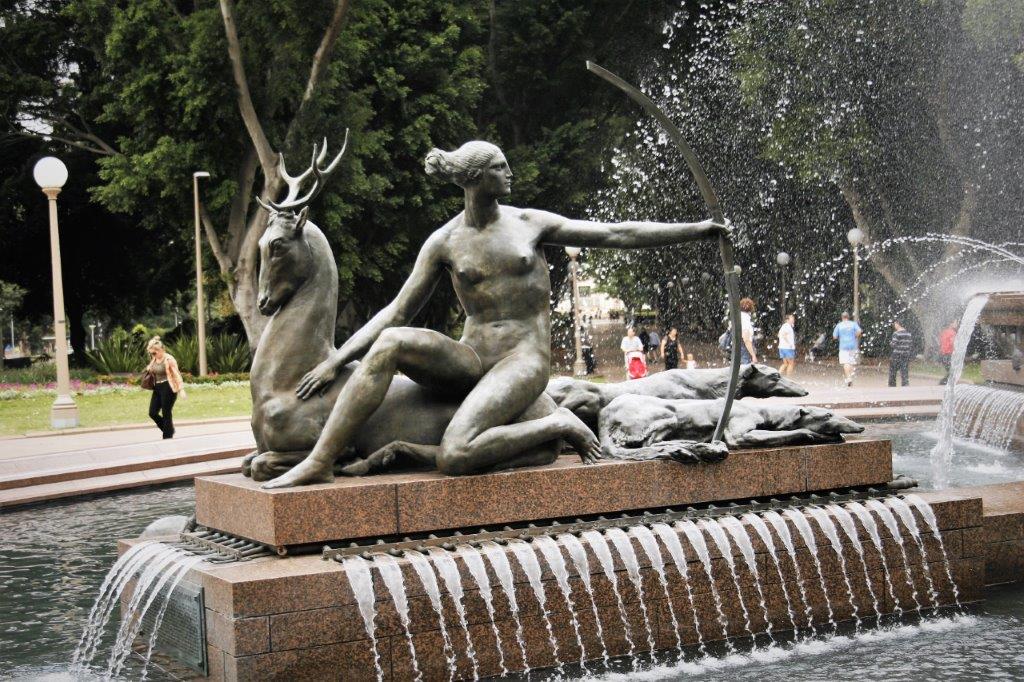
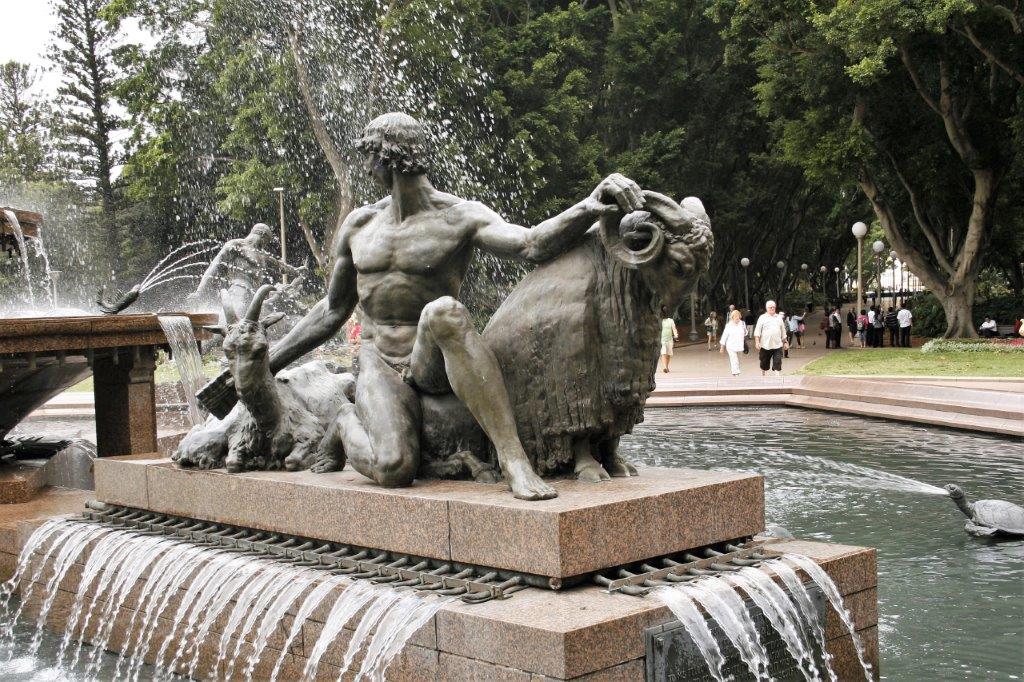
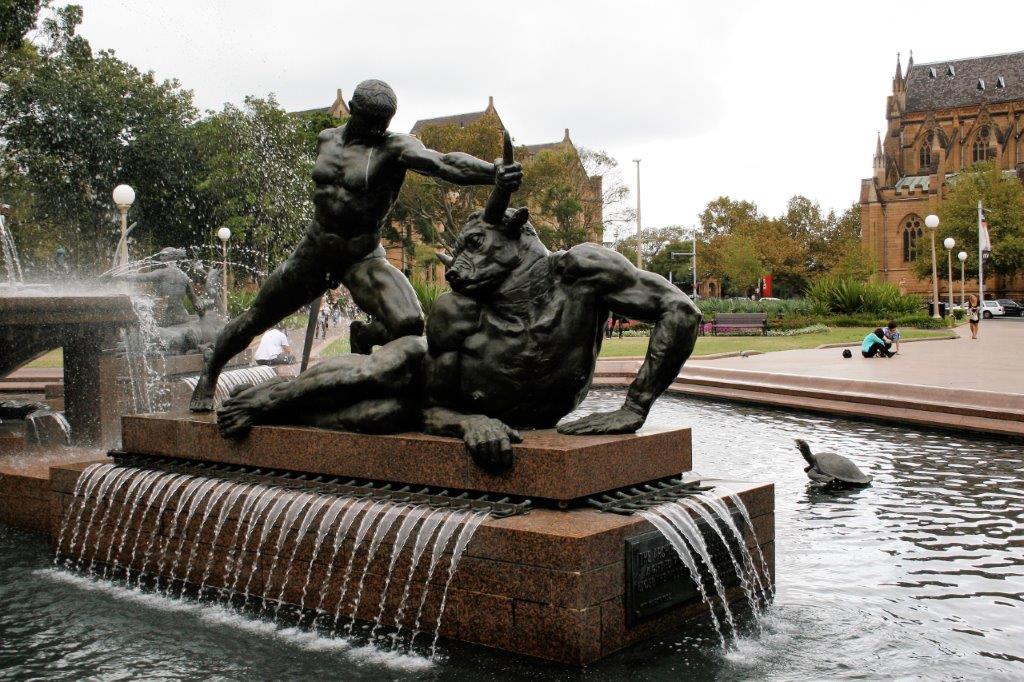
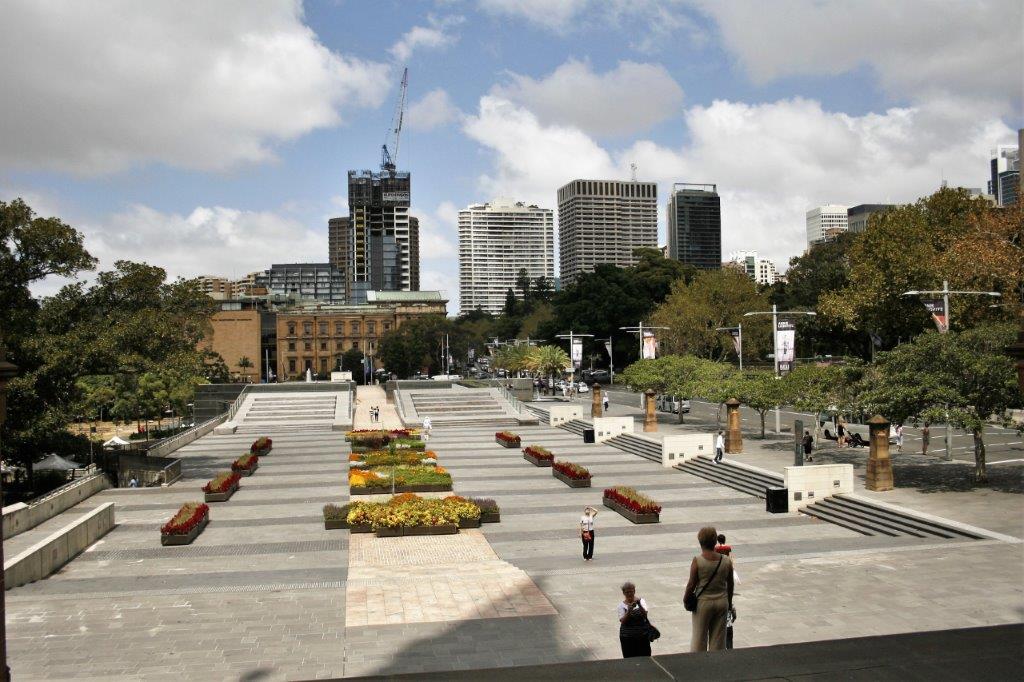
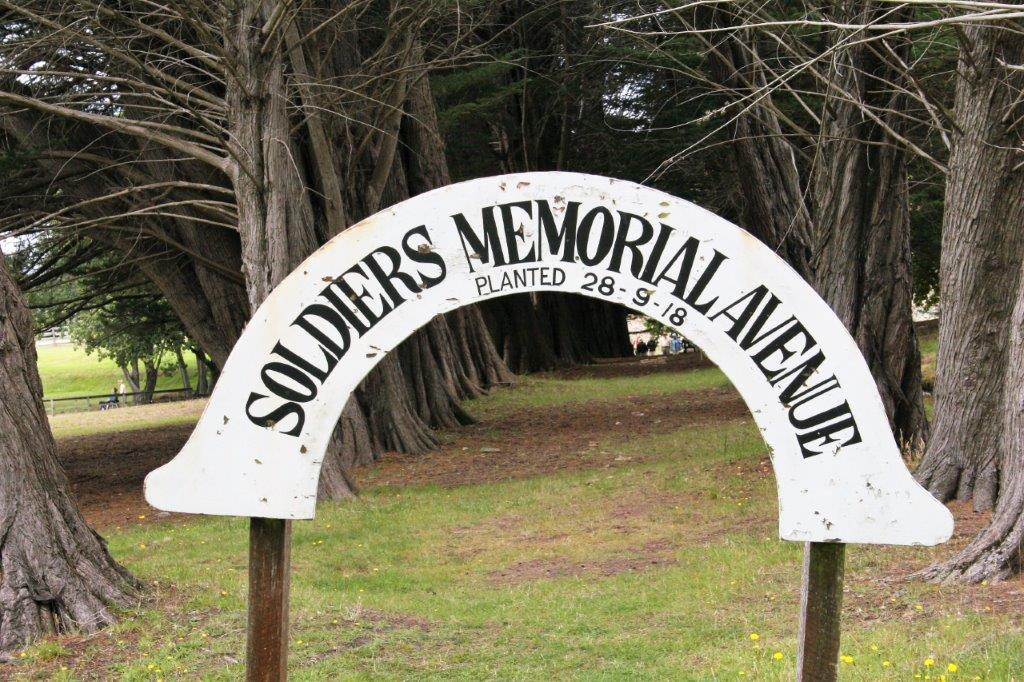
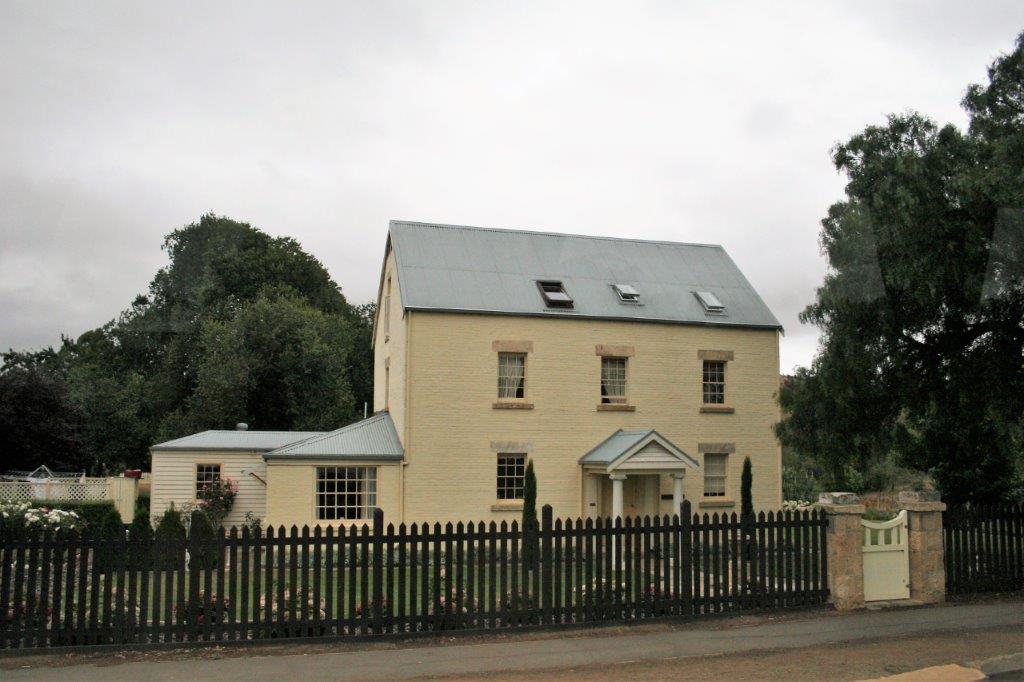
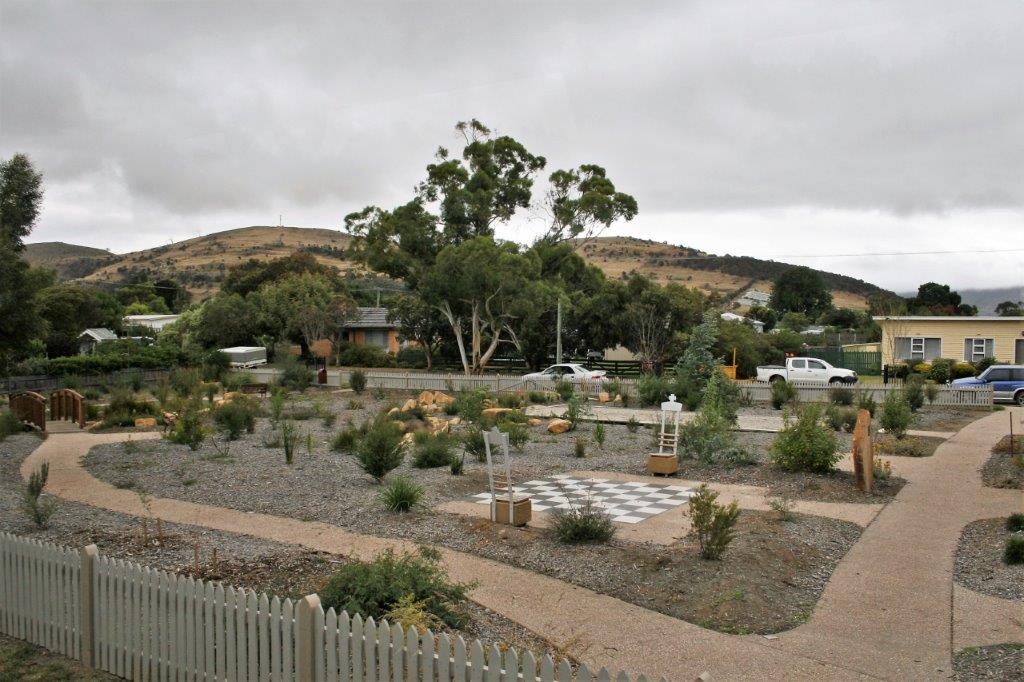
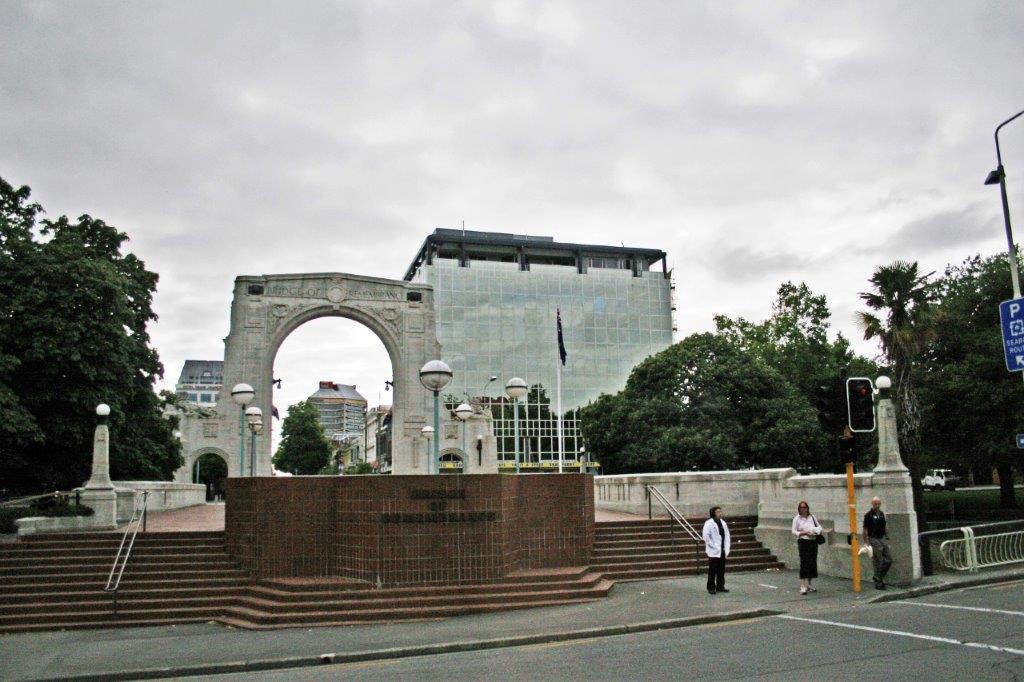
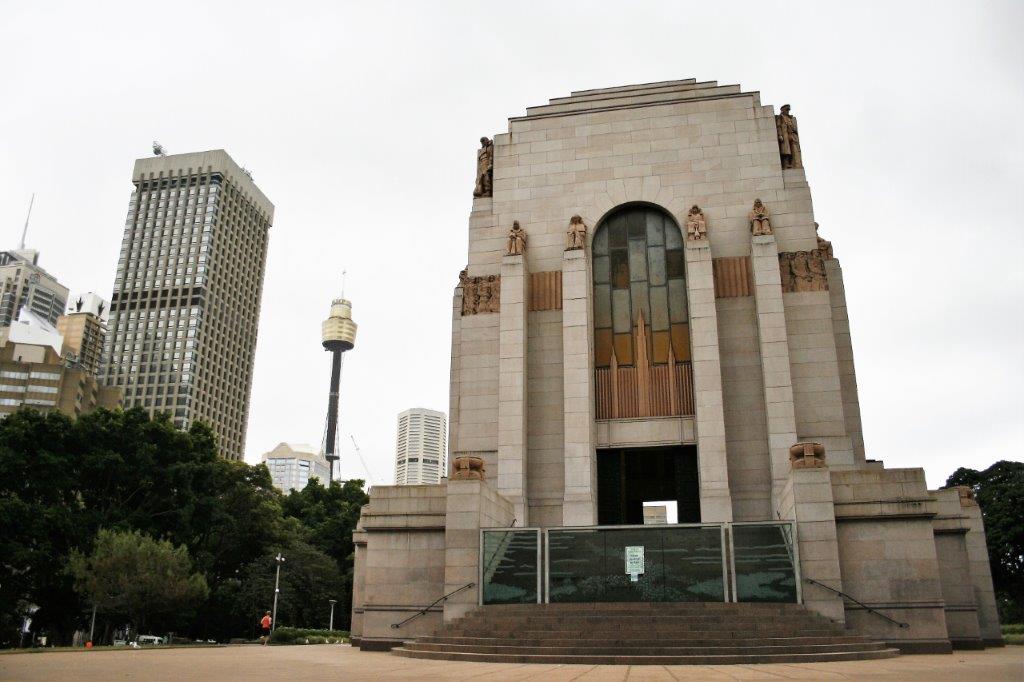
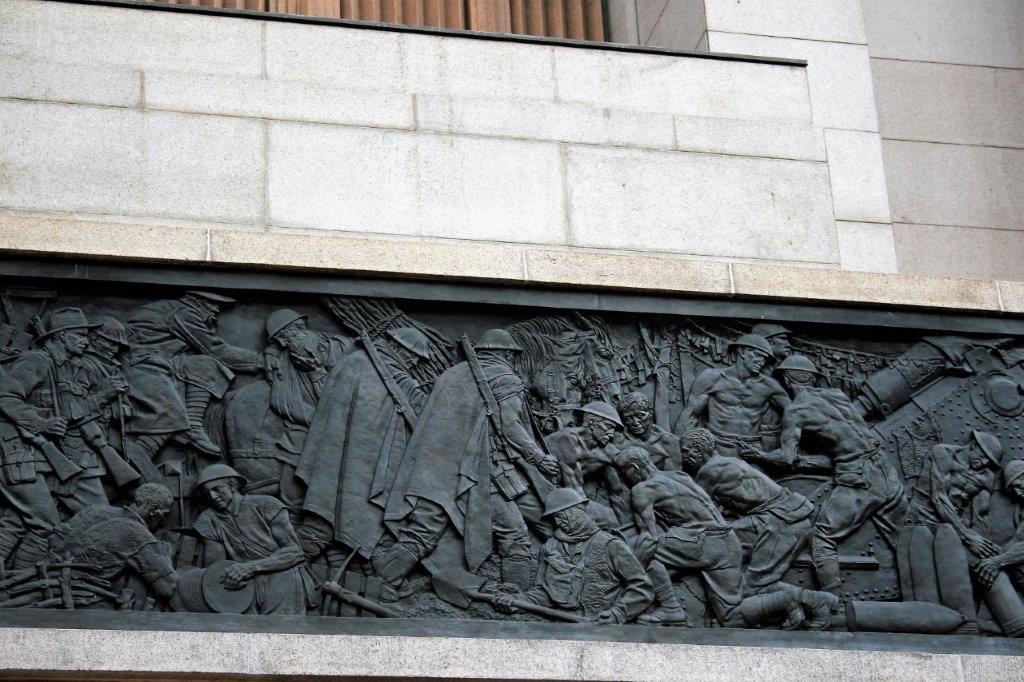
Hyde Park was a block behind the hotel and the AnZac Memorial is located at the near end. We continued through Hyde Park to the Sandringham Garden. Then to Archibald Fountain

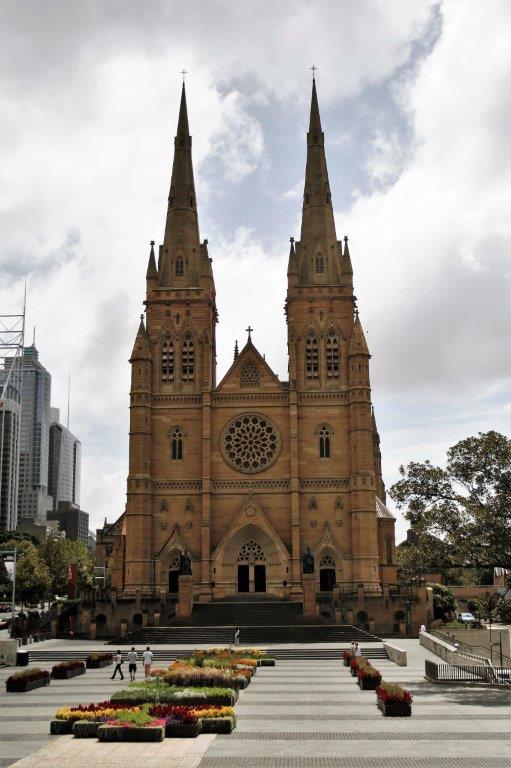
And finally to St. Mary’s Catherdral

A late lunch took us to check-in time at our hotel.  We re-sorted our luggage to thin it out some more so we would have less bags to drag around with us, and then went back out to find some groceries for breakfasts.  We also located the luggage storage place and the rental car agency so we knew where we would need to go when we left Sydney.  Dinner and early to bed rounded out our first day.

2011 February 20 – Day 46 – Sydney, Australia (Last day of the cruise)

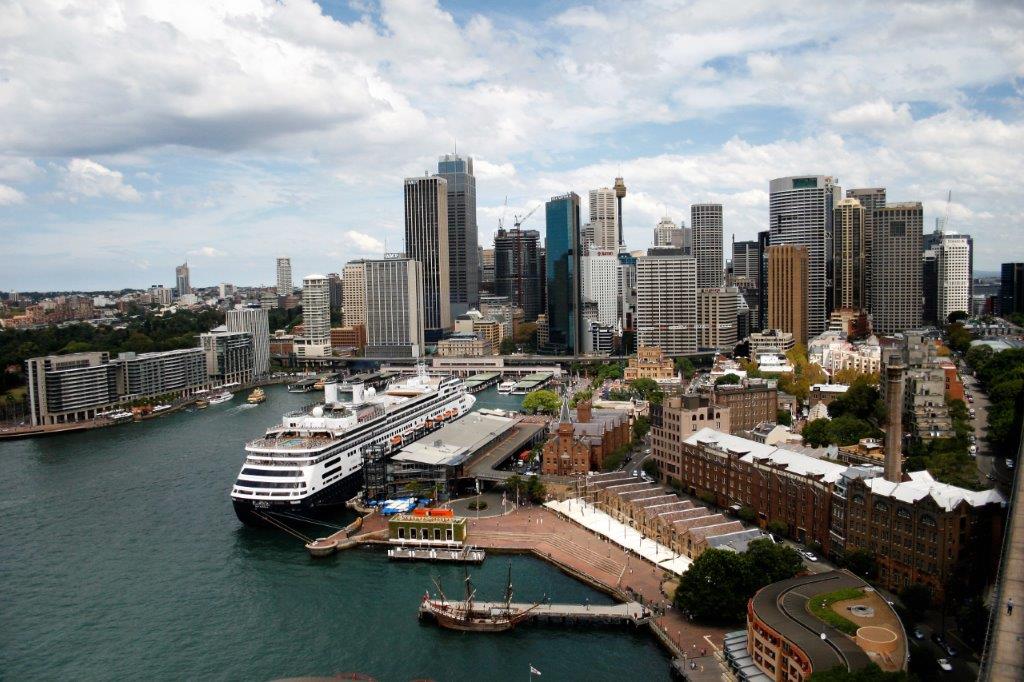
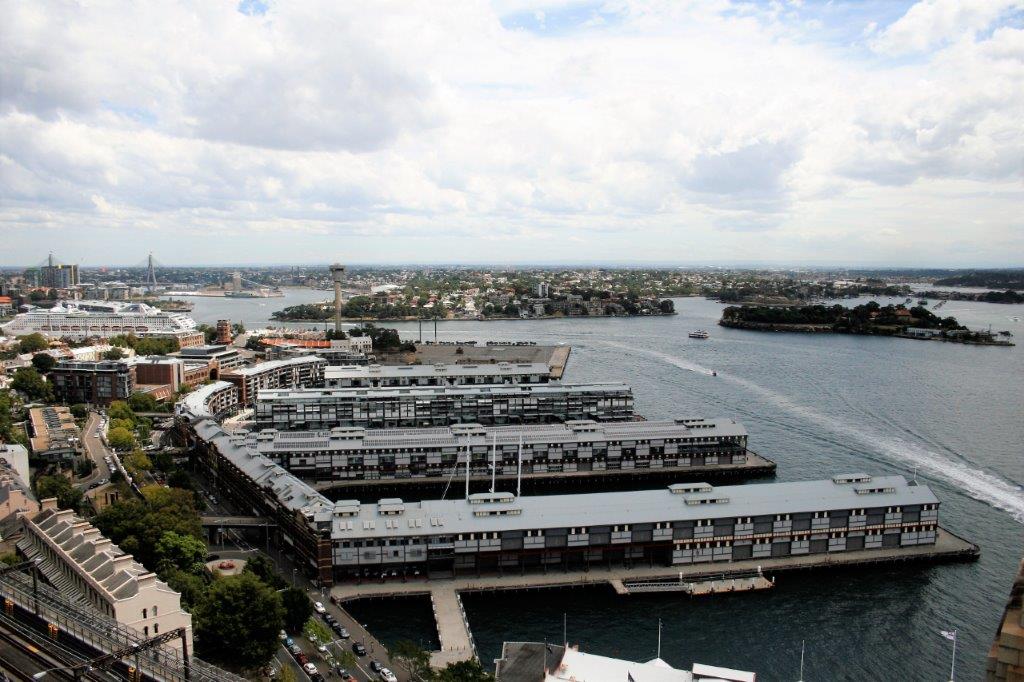
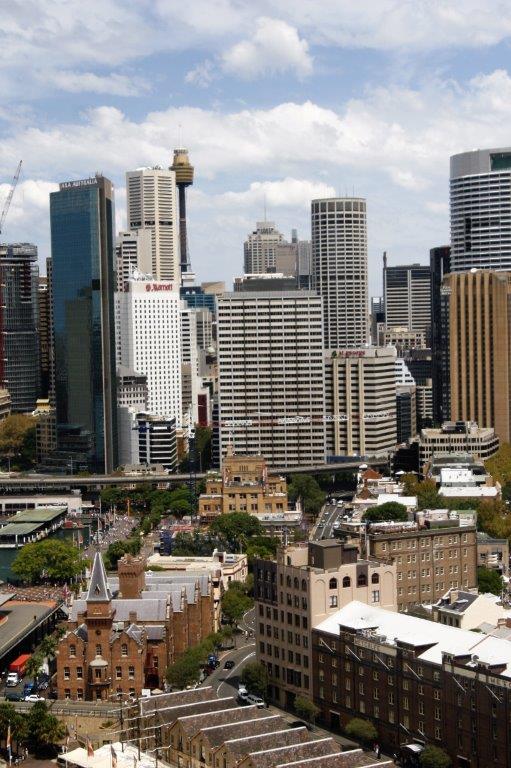
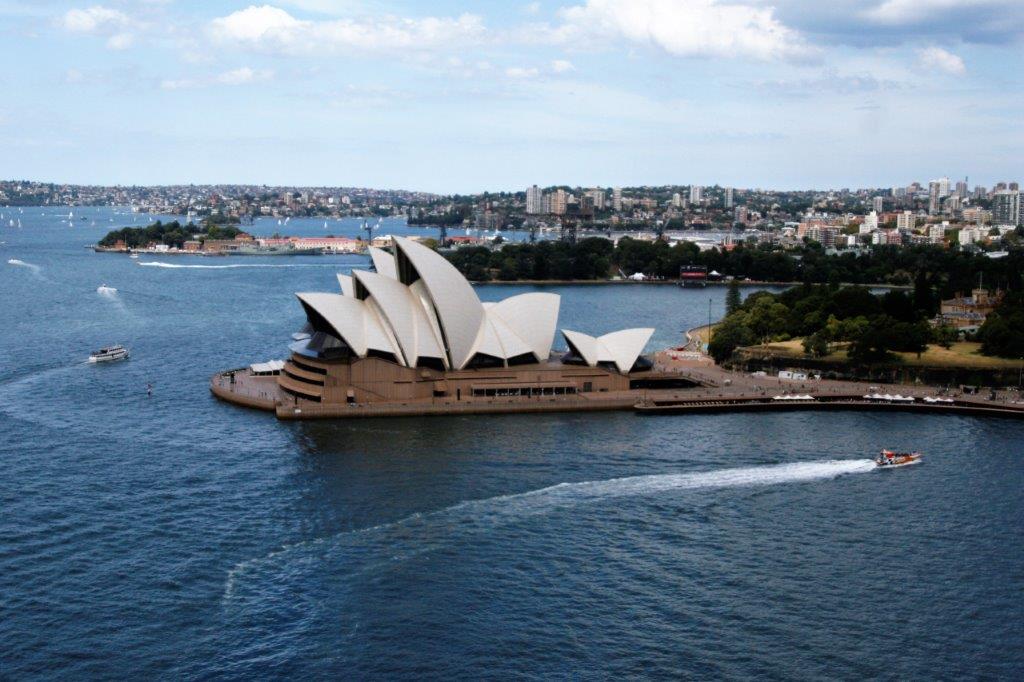
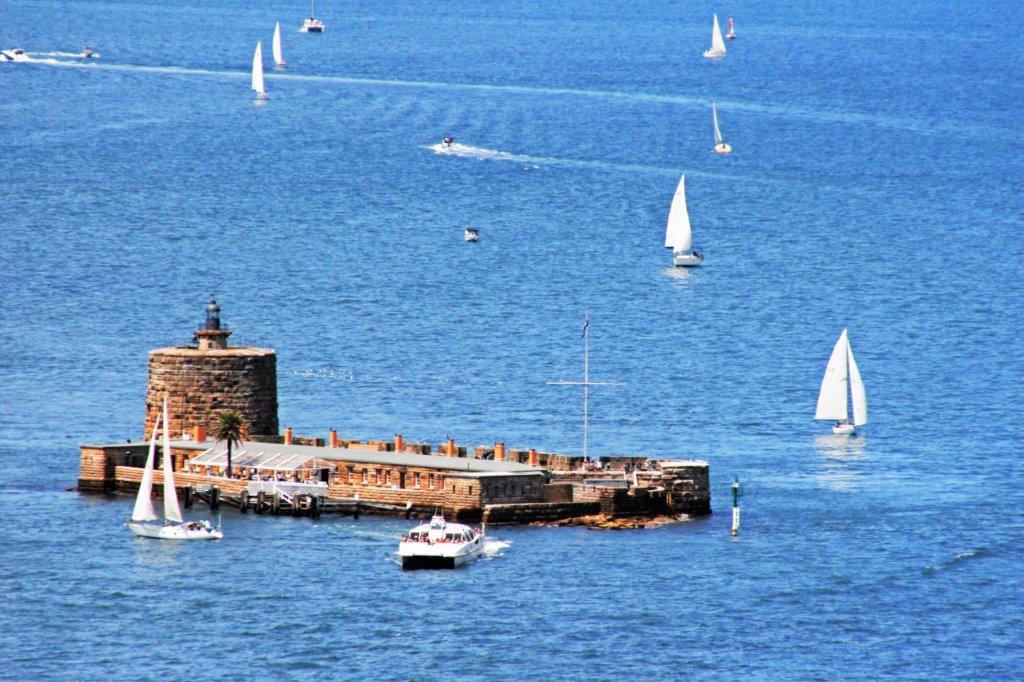
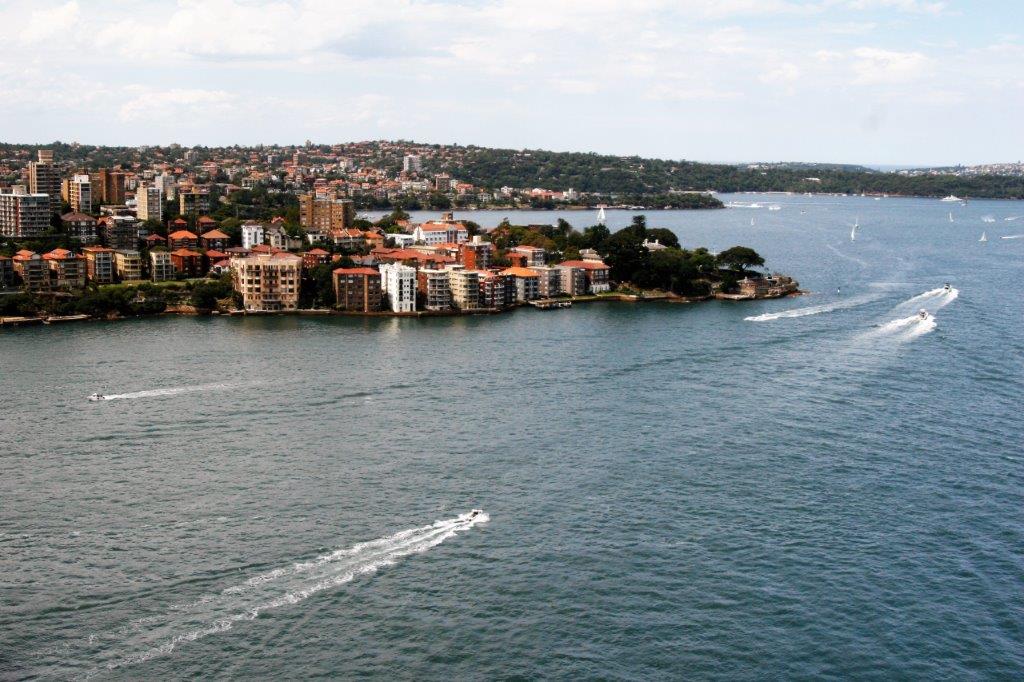
The ship docked in the fabulously beautiful Sydney Harbour in the early morning.  The intineray for the 2011 World Cruise had two days in Sydney.  We only booked the first leg of the cruise which was 45 days from Ft. Lauderdale, Florida to Sydney which included the first day in port.

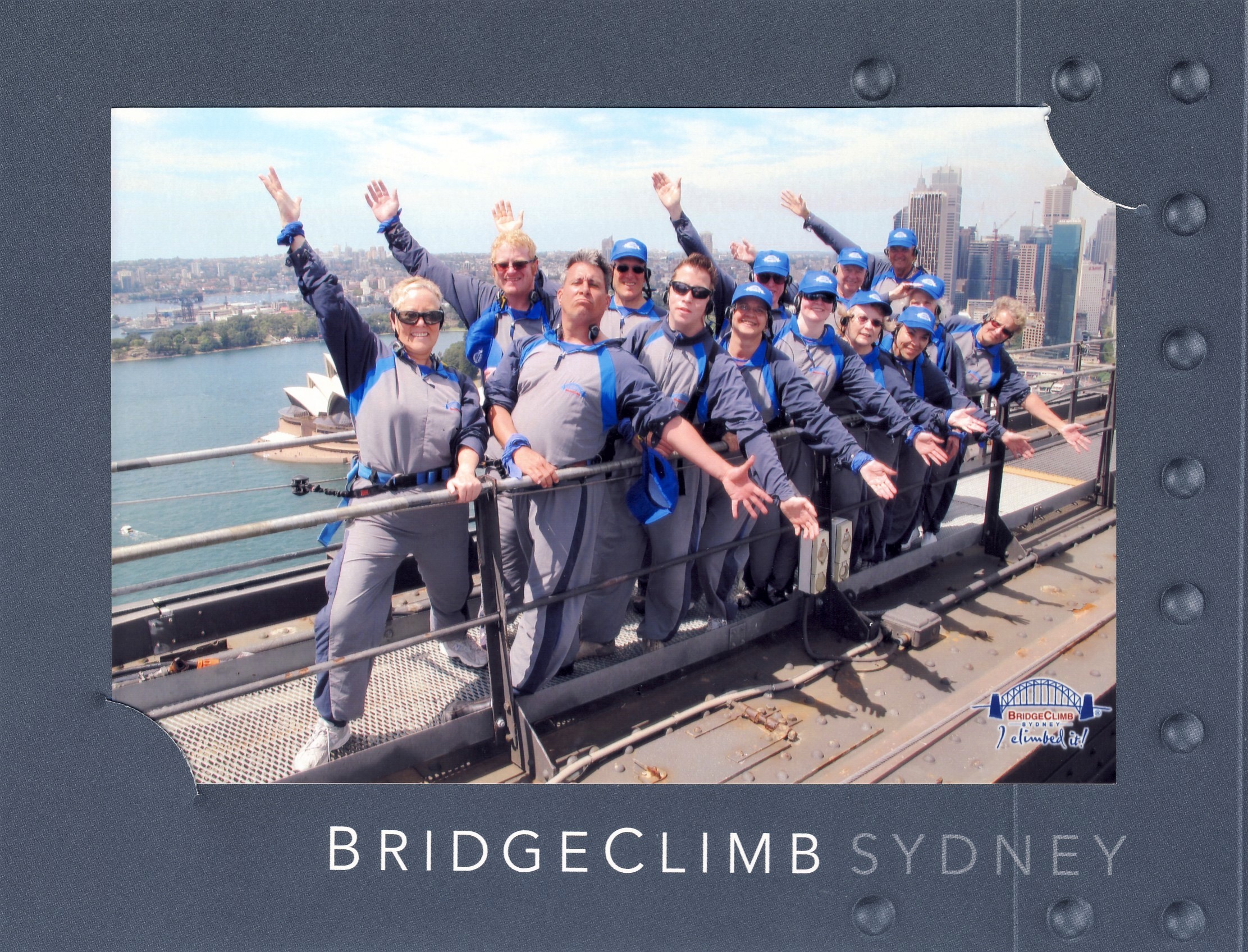
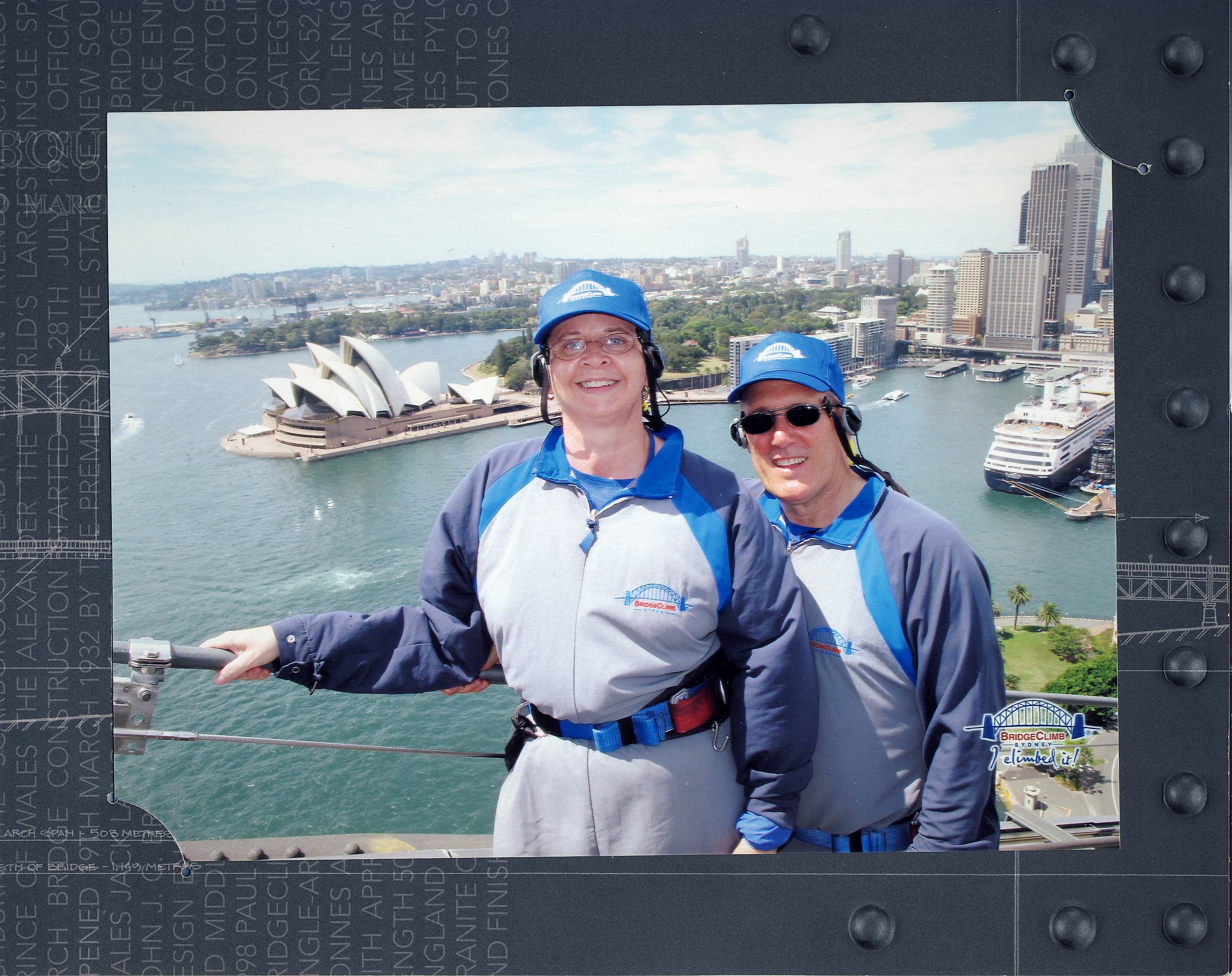
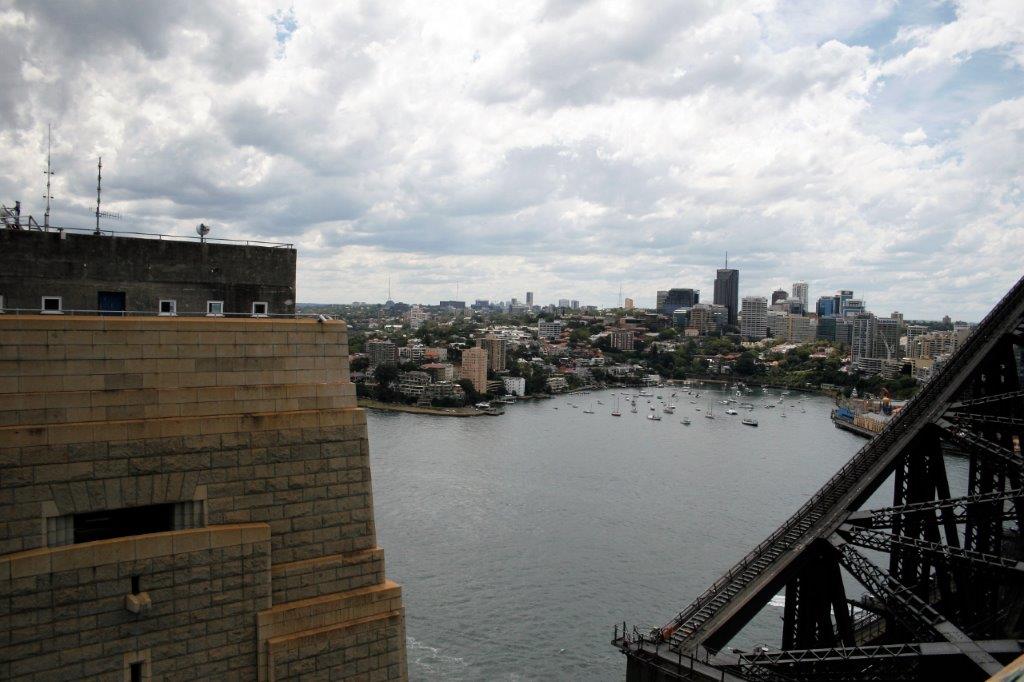
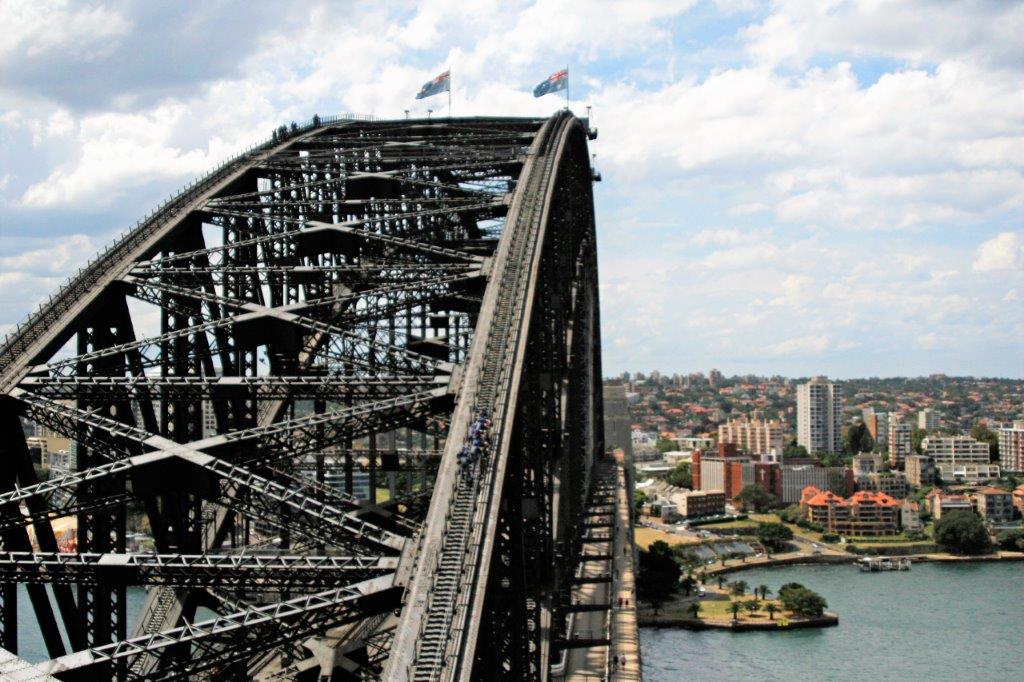
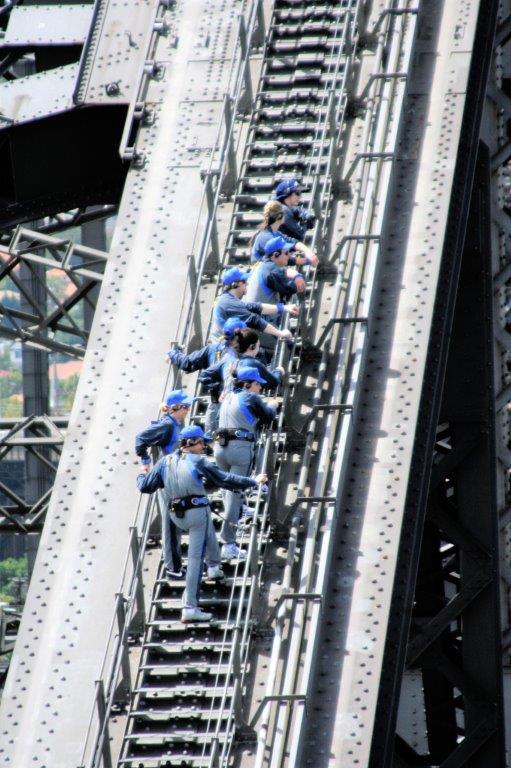
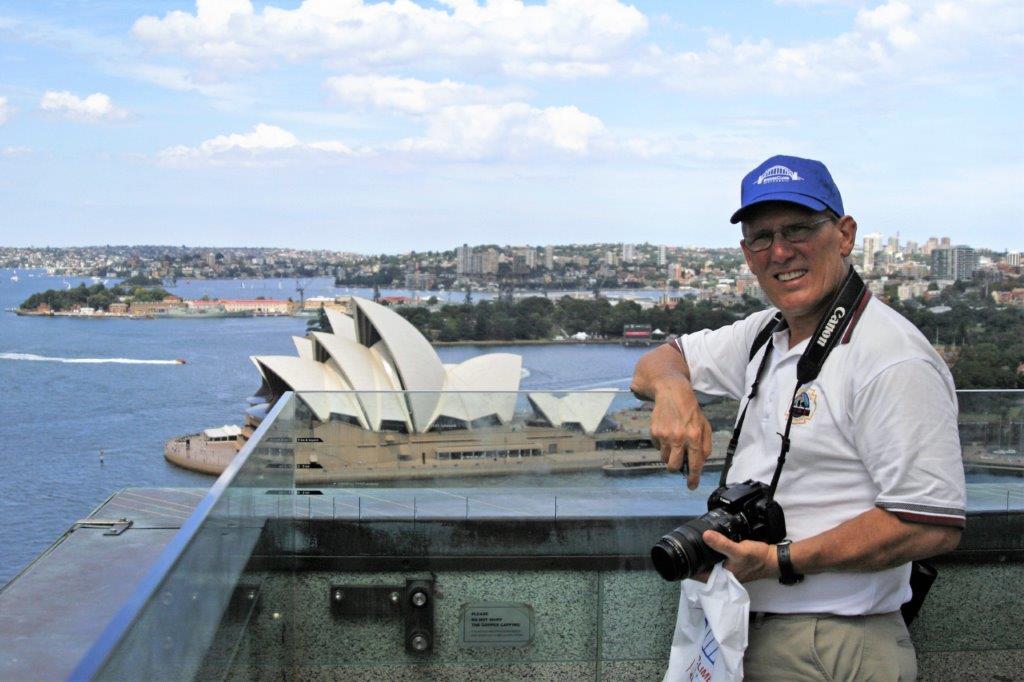
When we stopped in Sydney on the 2009 World Cruise we had chosen shore excursions that took us out of the city.  Since we were staying in Sydney for 5 days after we disembarked we decided to take advantage of the ship’s excursion to climb the Sydney Harbour Bridge. It took an hour in a sweltering hot concrete block room to get ready for our climb.  First there was the safey talk, then we got suited up, then we did a ladder climb test.  By the time we finally got outside I was very glad to be in the open air.

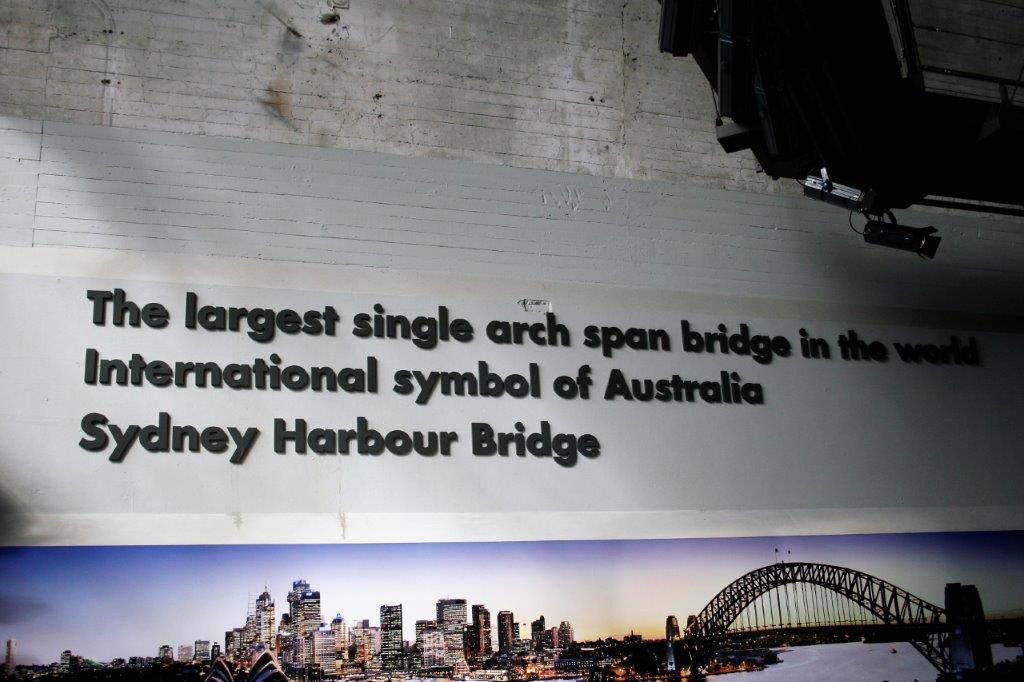
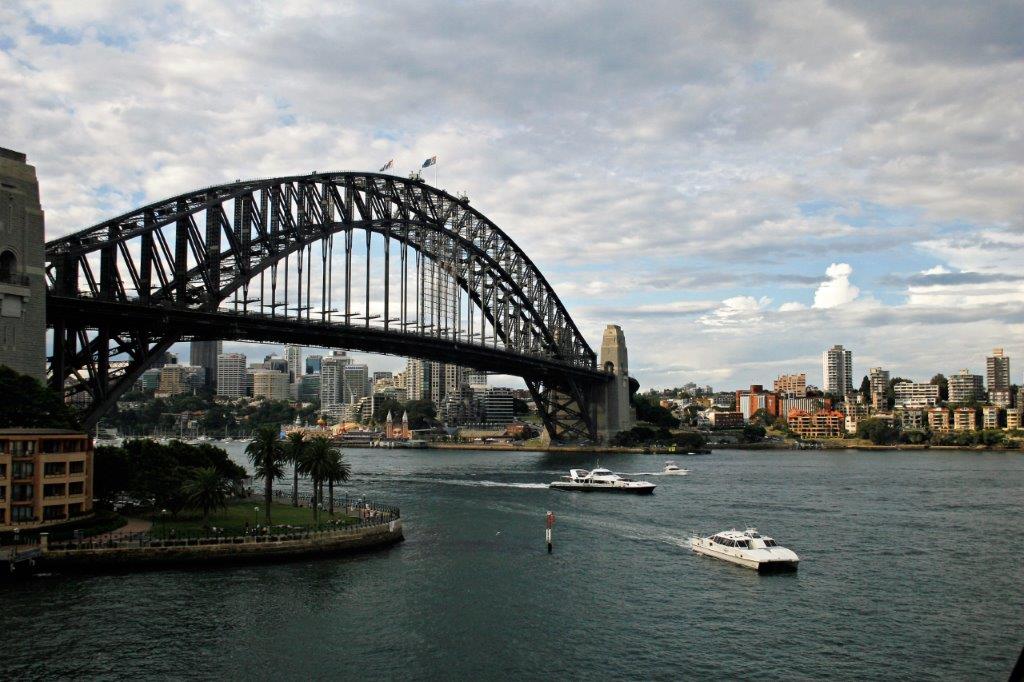
The Sydney Harbour Bridge was officially opened in March 1932 after eight years of construction.  Until 2012 with the opening if the new Port Mann Bridge in Vancouver, the Sydney Harbour bridge was the widest steel arch bridge in the world at 48.4 meters (160′). At the time of the opening of the bridge there were only a dozen or so residences on the North Shore, yet the designer and government of the day had the foresight to make a bridge with 6 lanes of vehicular traffic, 2 lanes of tram tracks (now used for cars and trucks), a lane on one side for bicycles and on the other for pedestrians, plus two railway tracks.  The bridge connects the Central Business District with the North Shore which is now a prime residential area.  Interesting facts: all the stone for the pylon pillars was quarried in Tasmania and shipped to Sydney and there are 6 million Australian made hand-driven rivets in the bridge.

Since the harbour bridge has a constant flow of vehicles, bicycles and people on it night and day you are not allowed to have anything on your wrists or in your pockets as you climb: no watch, hat, cell phone, camera.  Everyone is given a one piece suit to put over your clothes, if you wear glasses or sunglasses you are given a strap for them that is clipped to your suit.  You are provided with a hat which is also clipped to your suit.  The top of the bridge is 134 meters (440′) above the water and the deck is about 91 meters (298′) from the top of the arch so anything that dropped would do serious damage and possibly cause collisions.

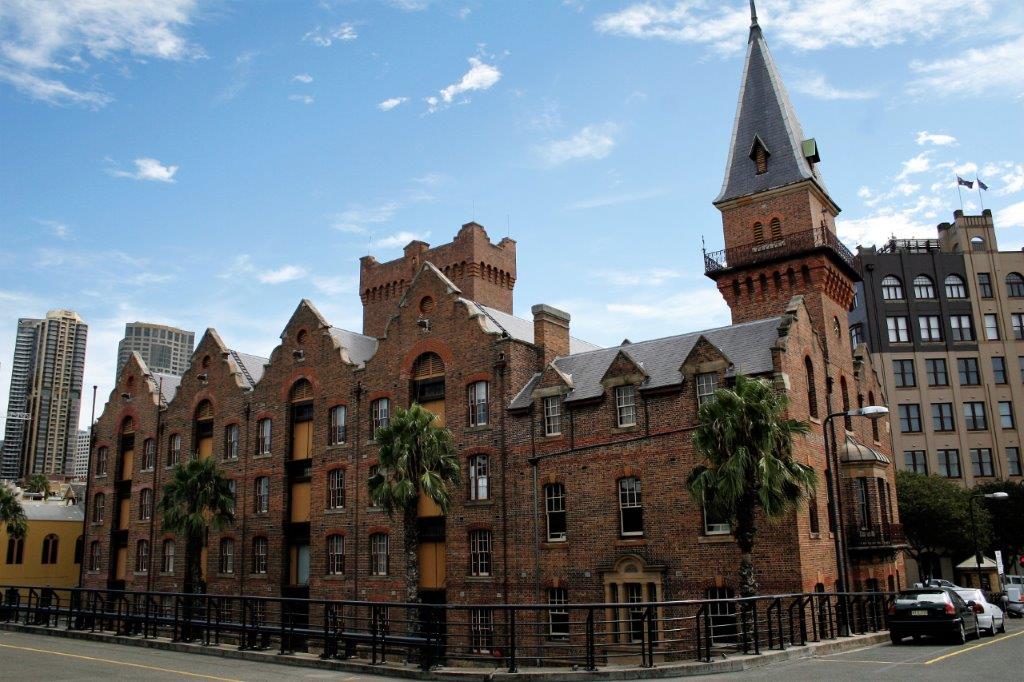
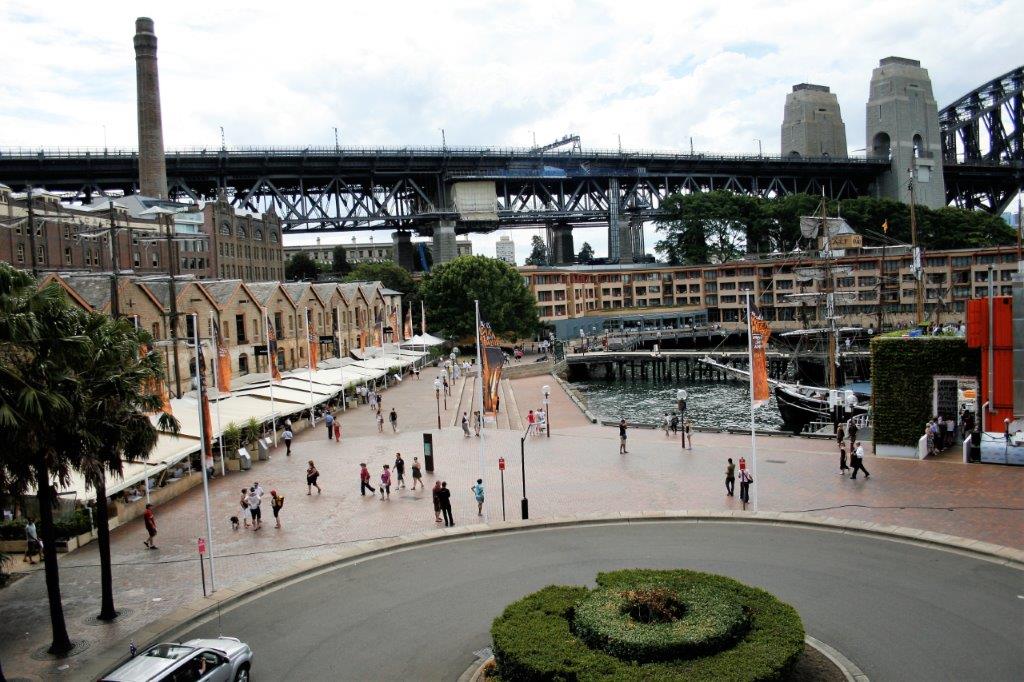
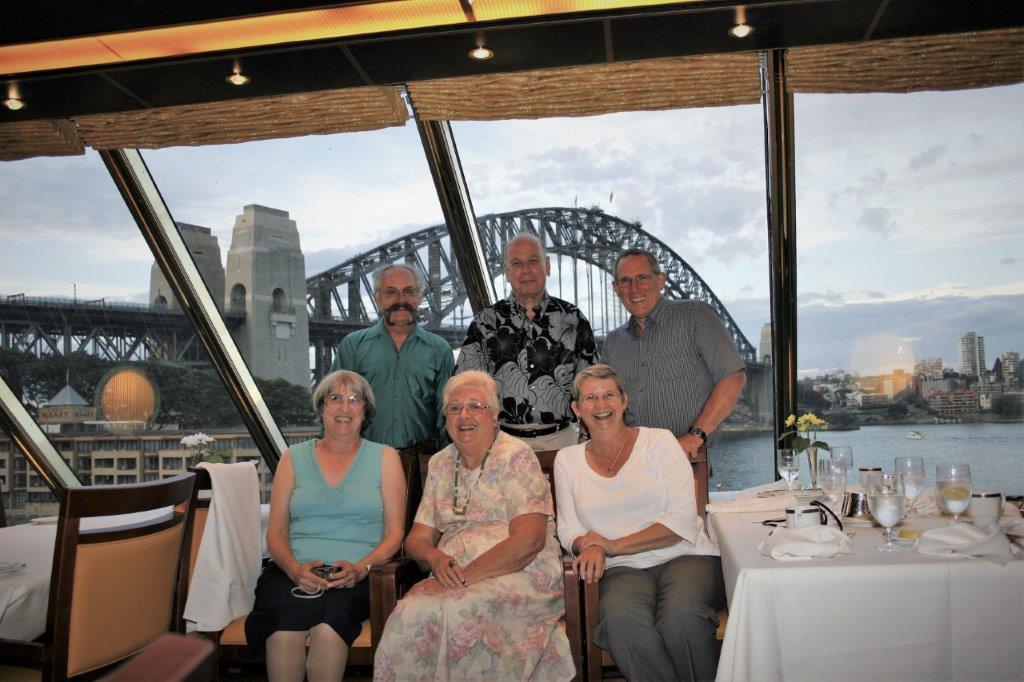
It took our group of 14 people about 2 hours (and about 1300 steps on catwalks and ladders) to climb the bridge with the various stops.  Once we were back on land we walked to the base of the bridge and climbed the 250 steps inside the pylon to the lookout.  From the top you see the same 360° view as from the top of the bridge. After we returned to ground level once again we did a walkabout in The Rocks; the tourist and historic area of Sydney.By then our weary legs wanted a rest so it was back to the ship for our final dinner with our tablemates and farewells to the crew. Before we left the ship to begin our adventures in Australia we booked the 2012 Grand Mediterranean Cruise – 64-days round trip from Ft. Lauderdale.  (Another blog to write another time).

We loved our leisurely cruise to Australia.  We saw many new places and experienced many new things while making new friends.  The whole trip was much better than 16 hours stuck in the seat of an airplane.  If we ever to go Australia again it will also be by cruise ship.

2011 February 18 – Day 44 – Port Arthur, Tasmania, Australia

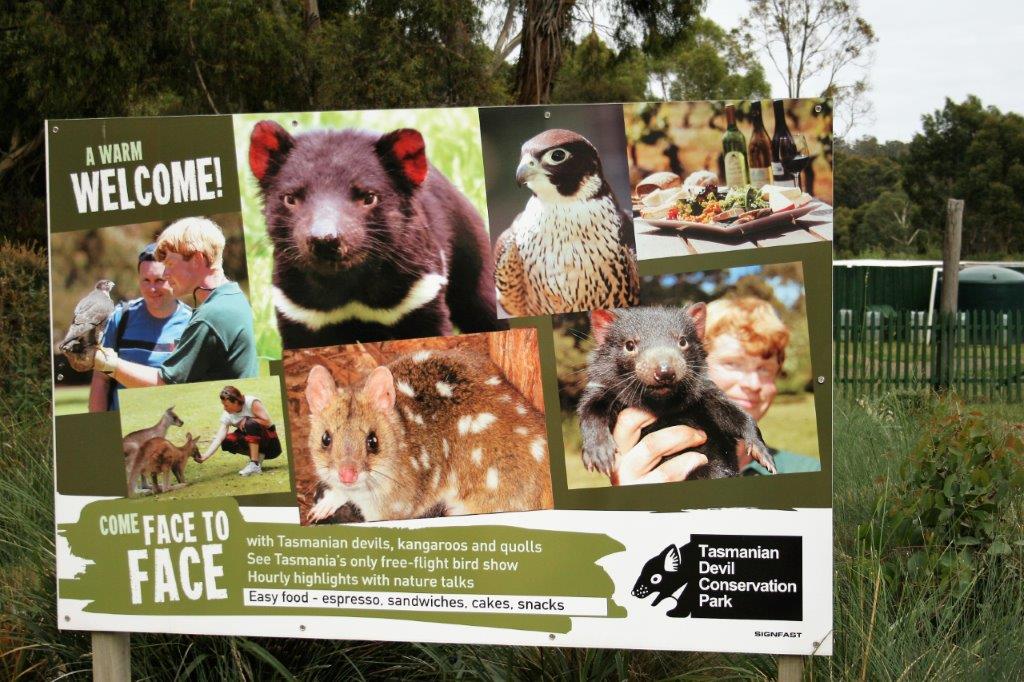
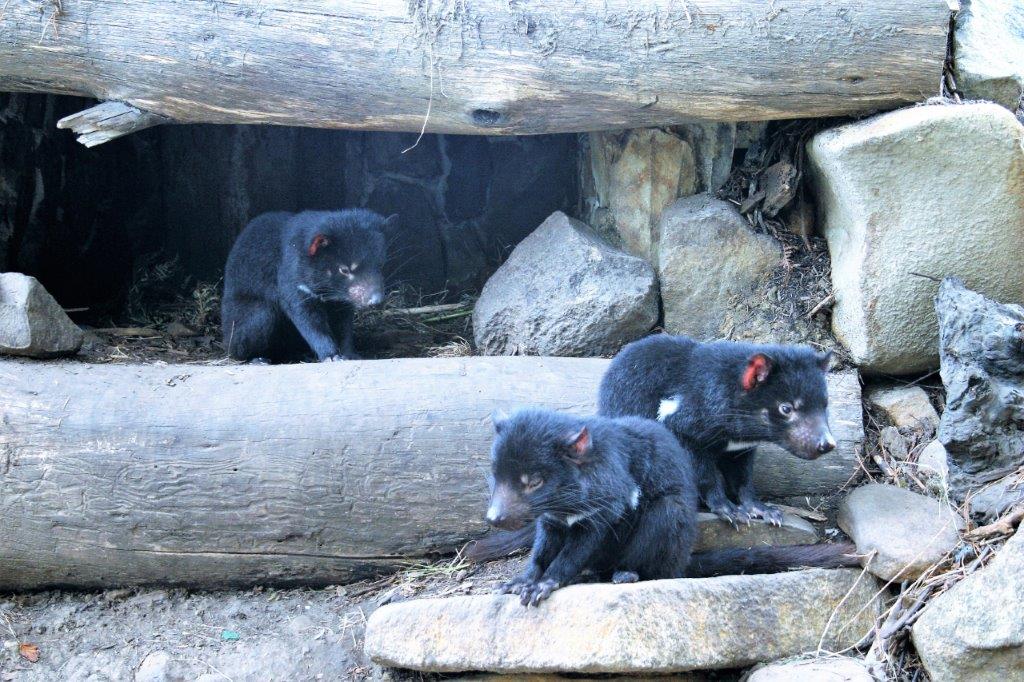
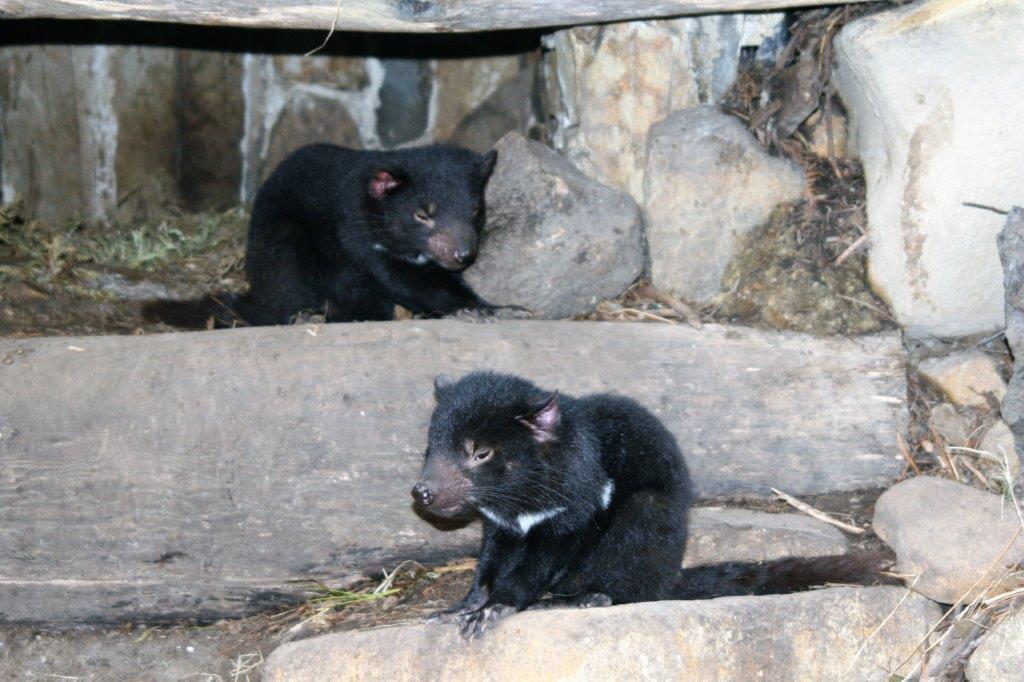
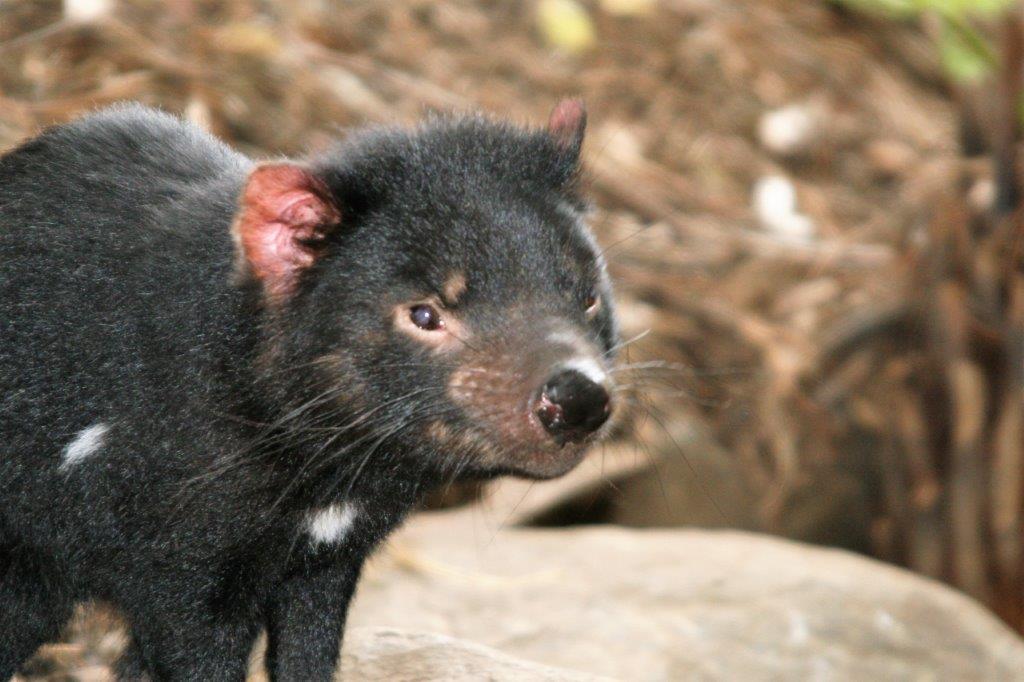
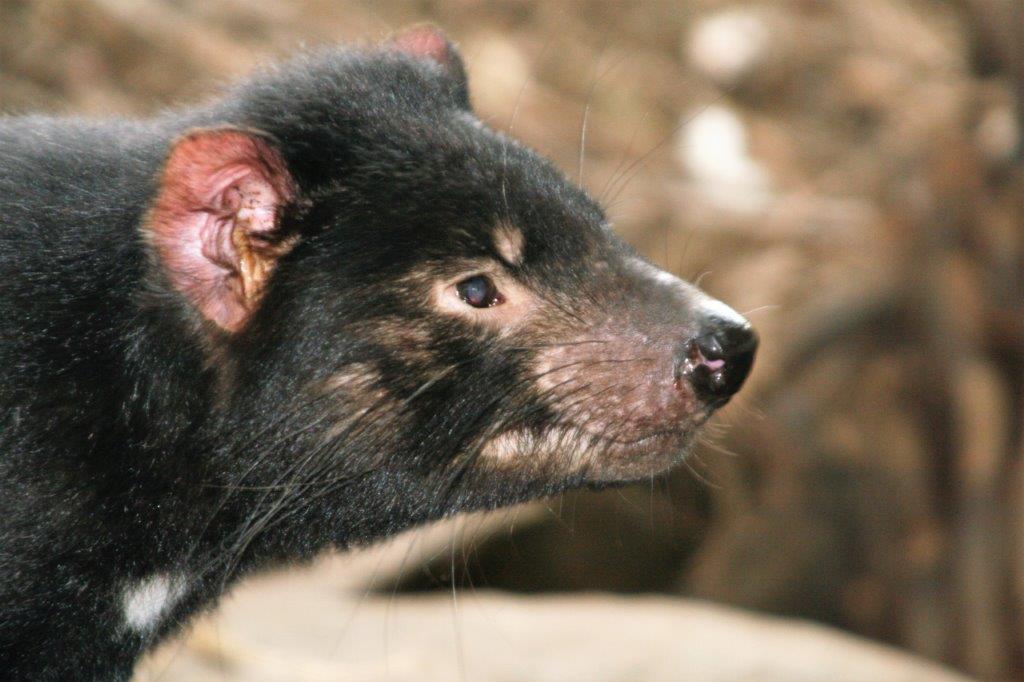
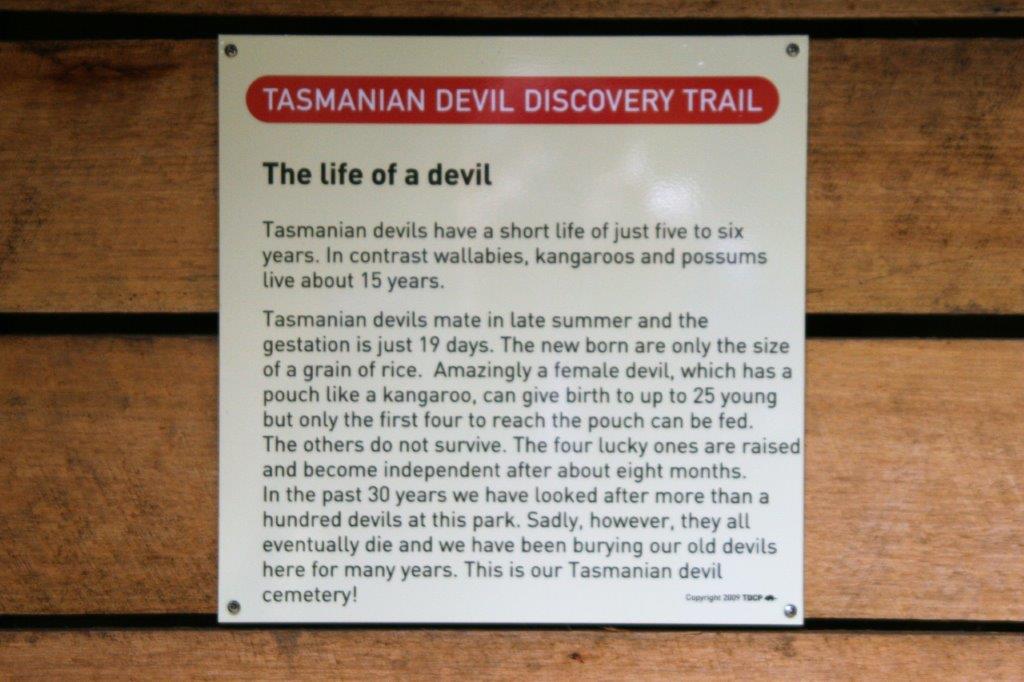
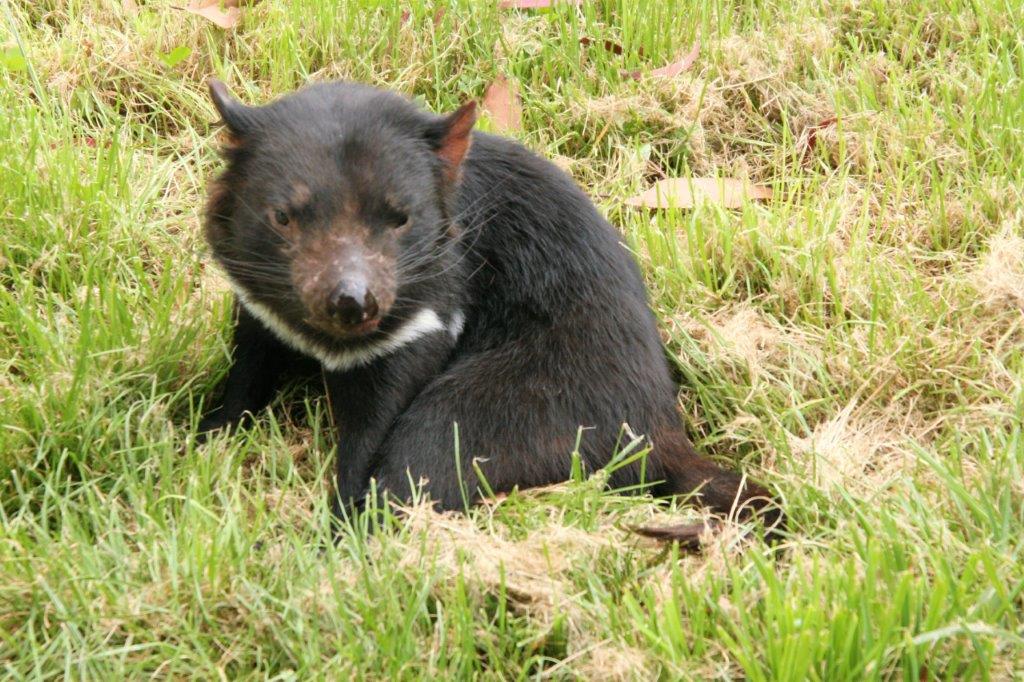
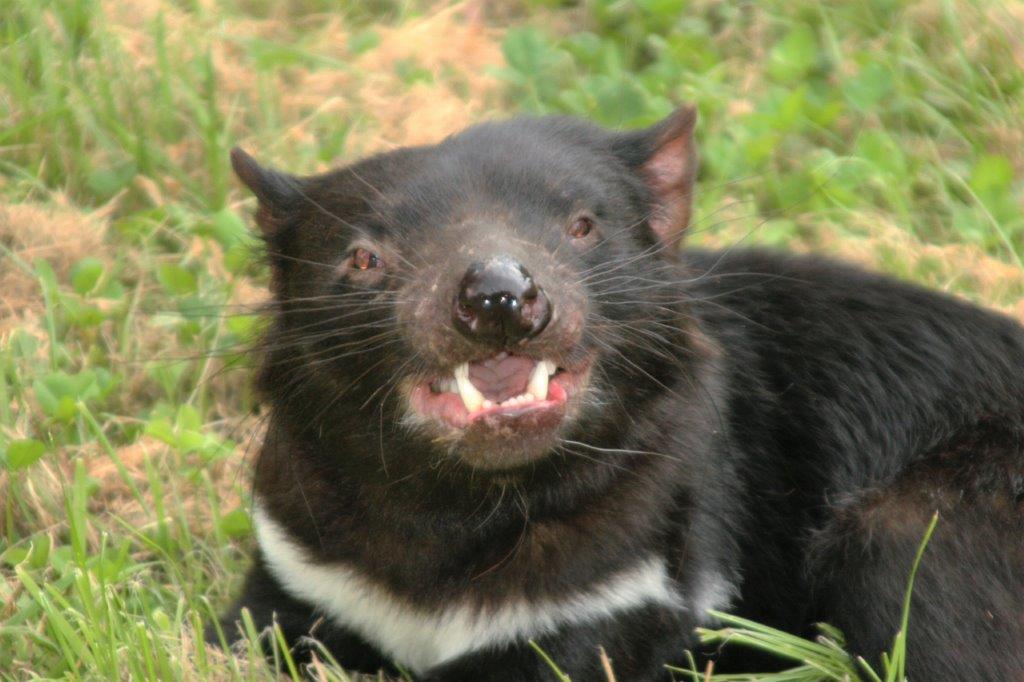
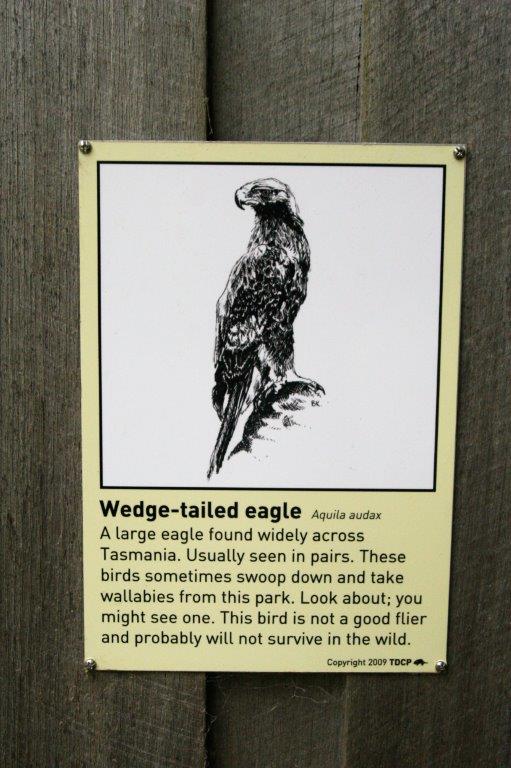
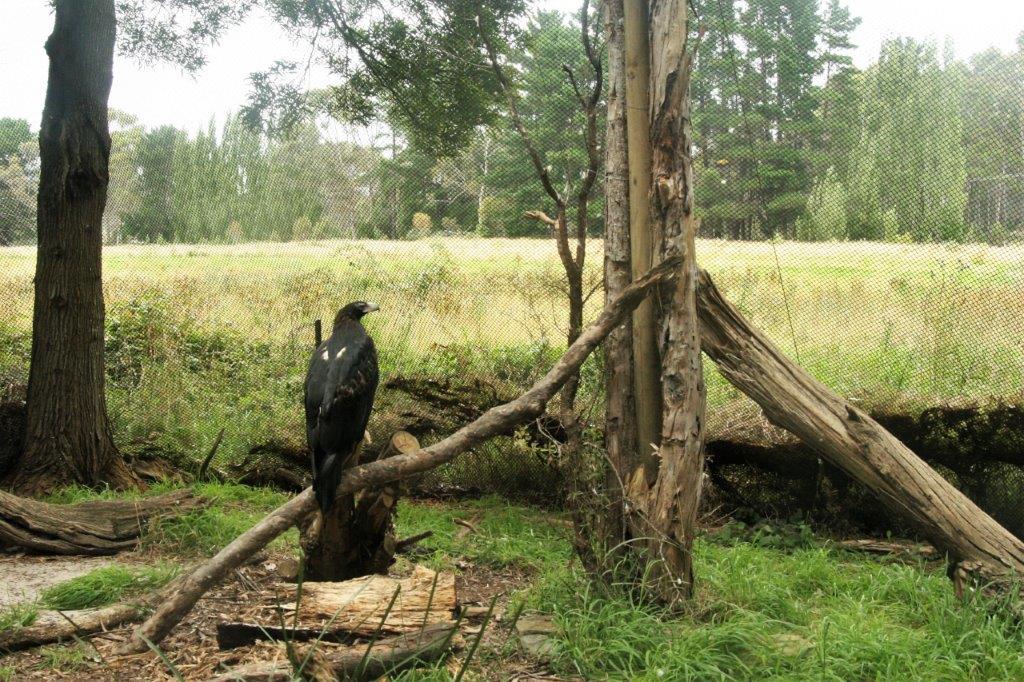
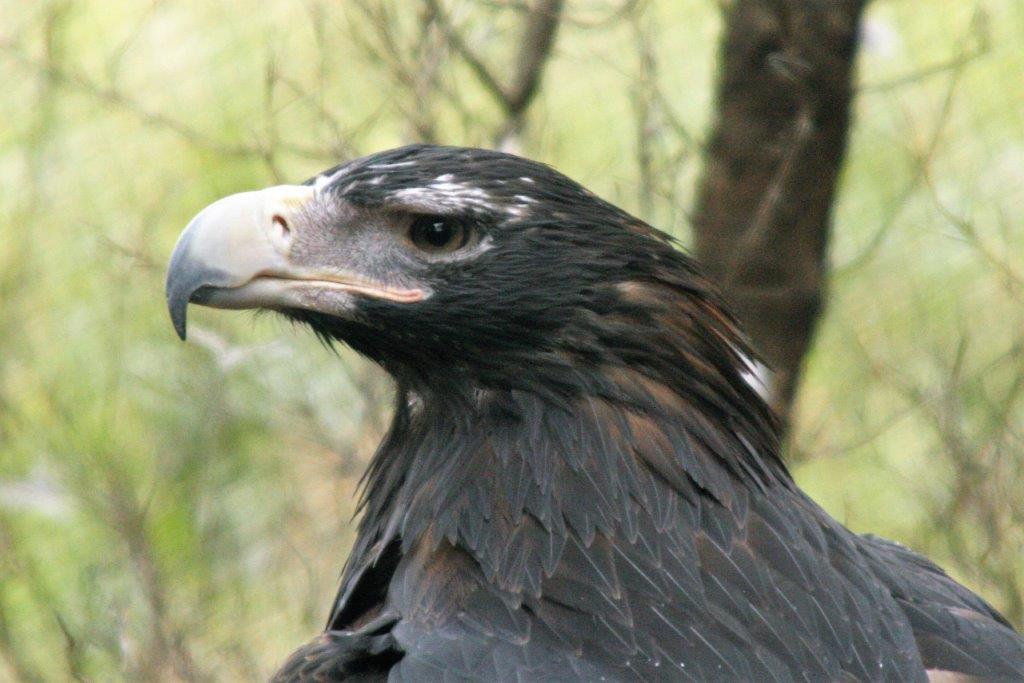
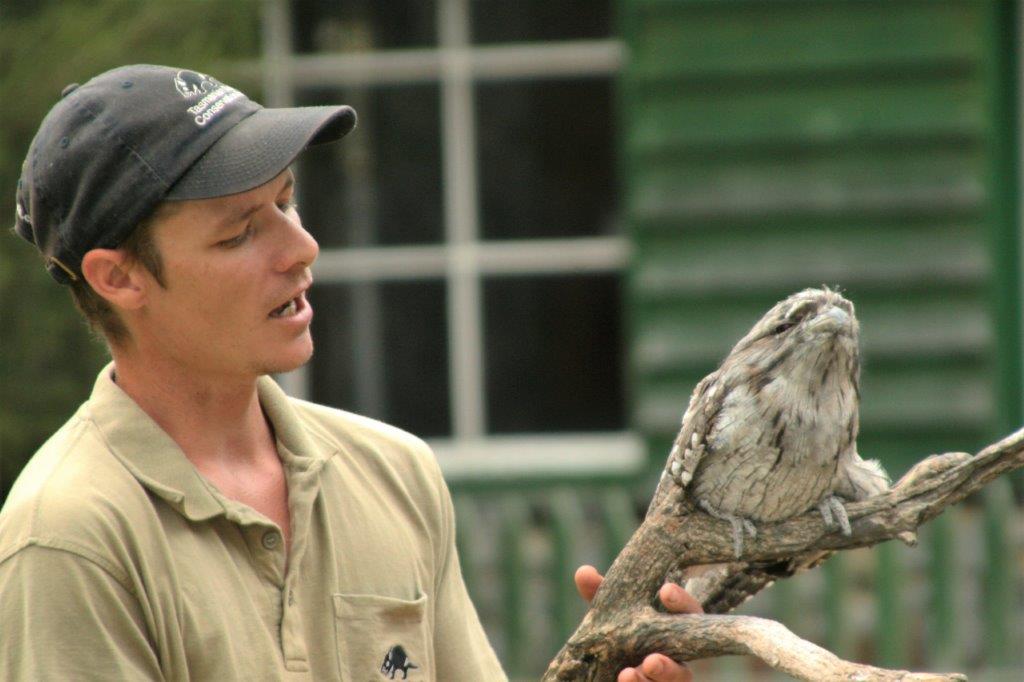
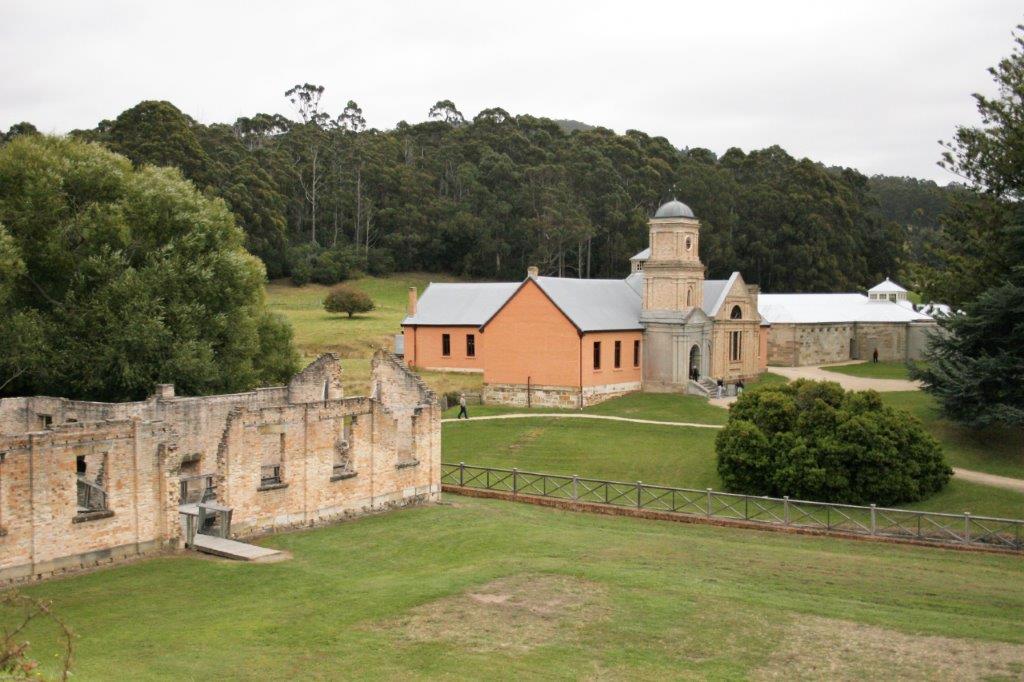
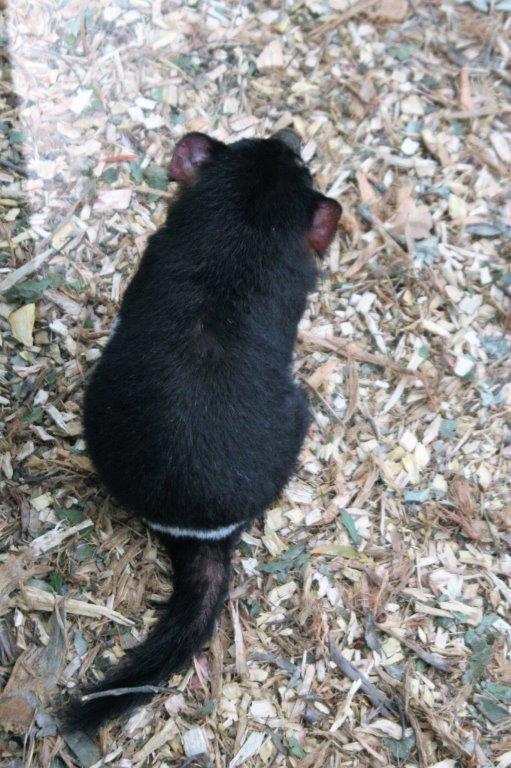
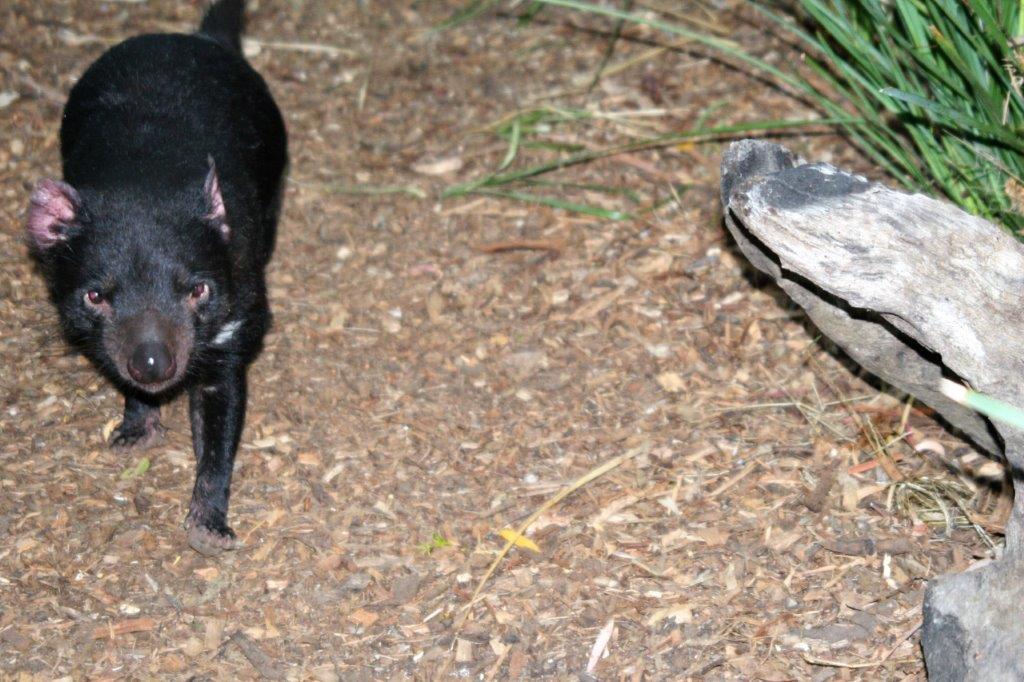
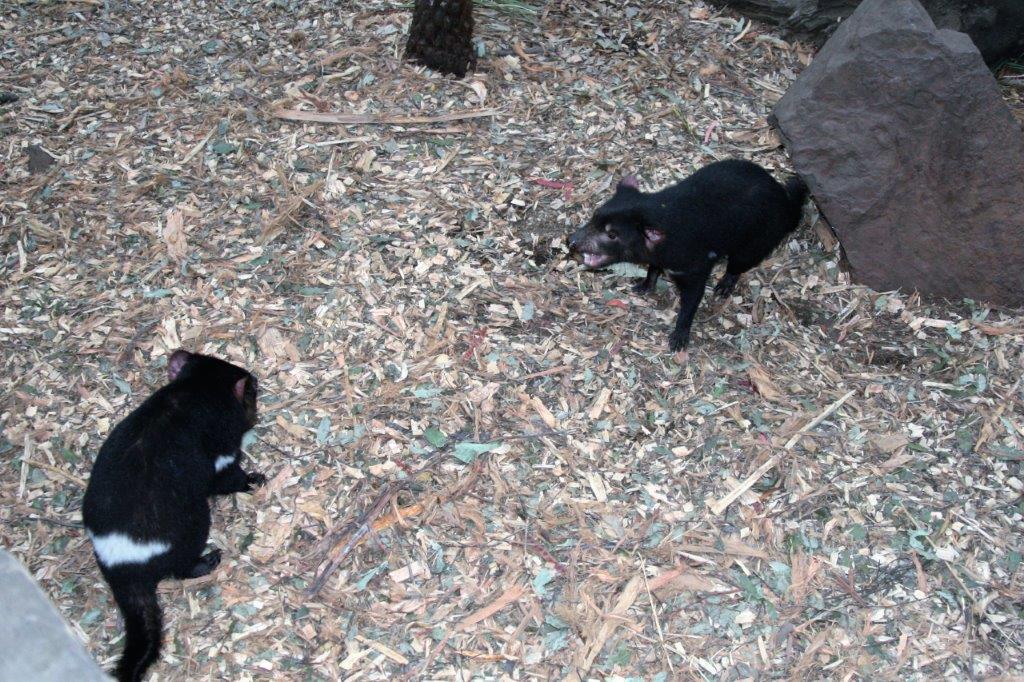
During the night the ship sailed 90 miles along the Tasmanian coast to Port Arthur, dubbed Australia’s premier convict site. The ship anchored off shore and tenders ran all day to and from the old prison pier.  We had a morning tour to the Tasmanian Devil Park for another chance to see critters.  The Devil Park used to be a farm and is now dedicated to protecting and breeding some of Australia’s treasured animals.  Once the bus dropped us off at the entrance we had two hours to wander wherever we wanted; which I like much more than being in a group and guided here and there.  On our own we could watch an animal that we found interesting or move around to get better photo angles.  So much better than being herded. Tasmanian Devil’s are endemic to Australia.  They used to roam widely all over Australia, but are now only seen on Tasmania.  They are meat-eating marsupials and snap and snarl and fight each other at feeding time to try be the one to get the last morsel of meat or bone.  Tassies are not quiet, nor gentle.  Here at the park there is also an extensive breeding program to protect the species in the event all of the devils in the wild die from the transmittable cancer that is decimating them.

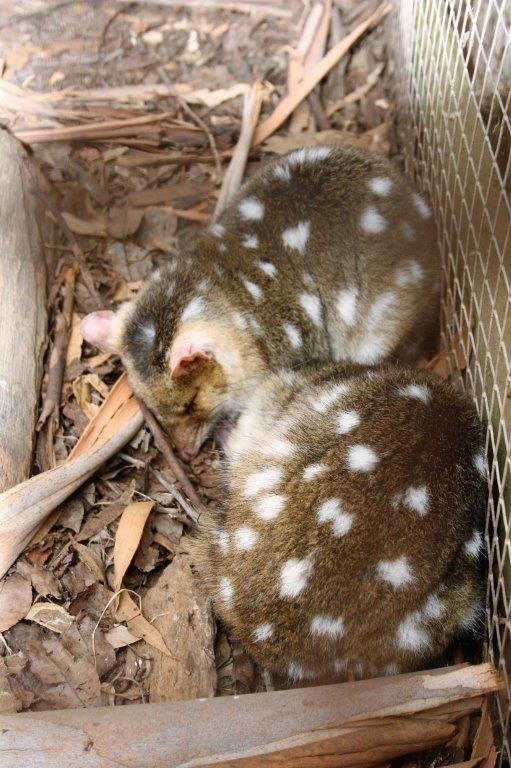
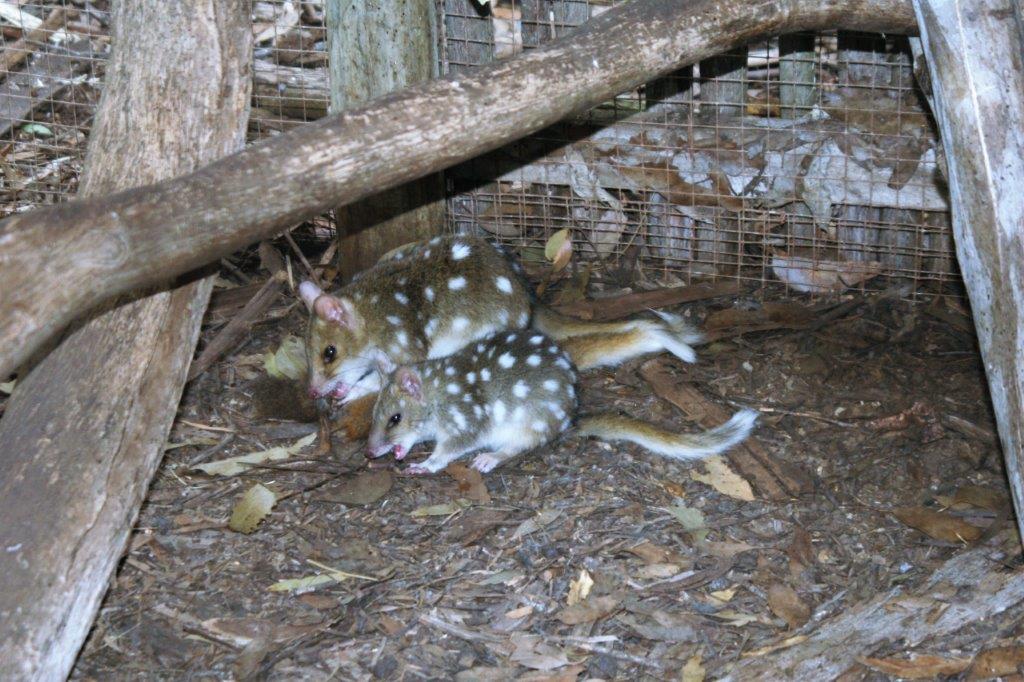
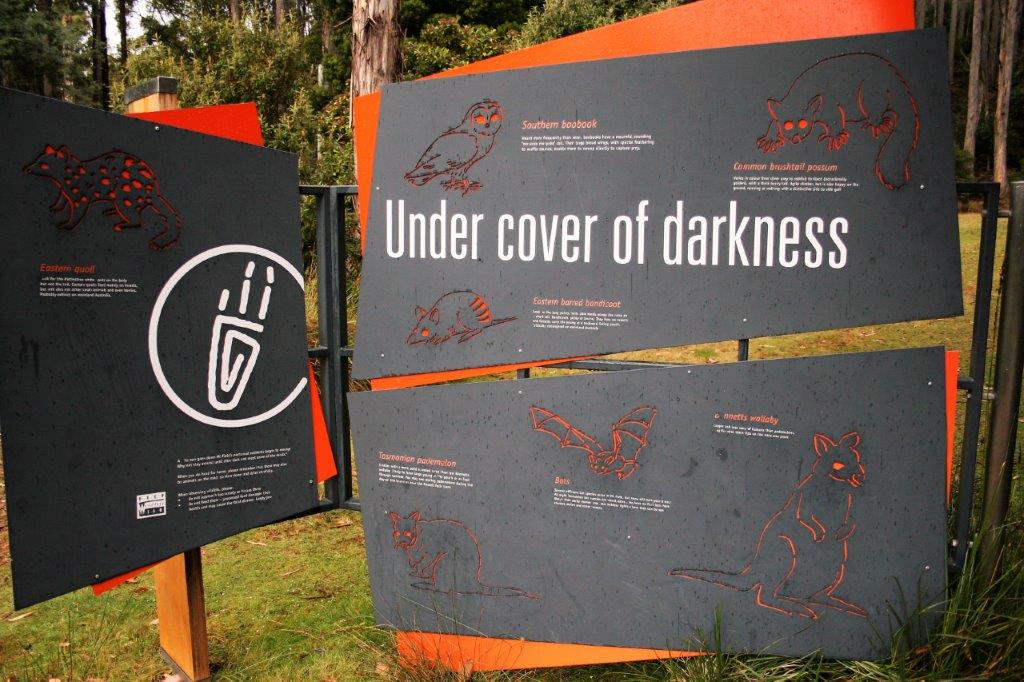
We encountered another meat-eating marsupial – the Quoll.  I had never heard of it.  We saw white-spotted black ones and white-spotted brown ones.  They are primarily nocturnal and spend their days curled up in a den.

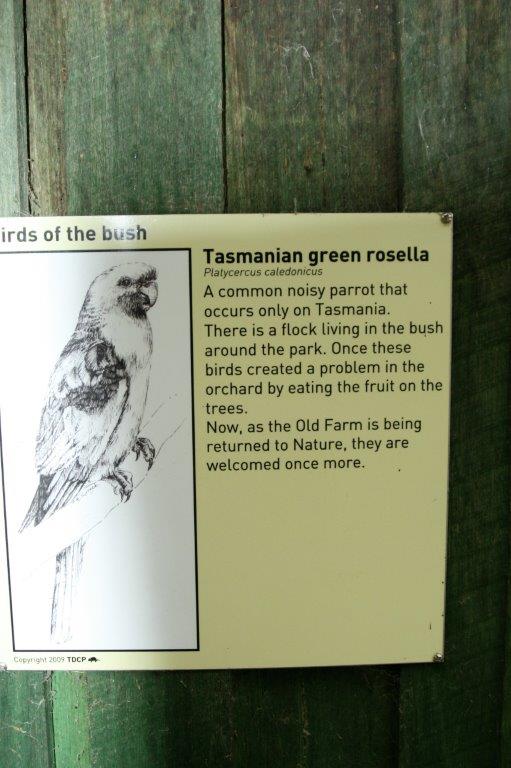
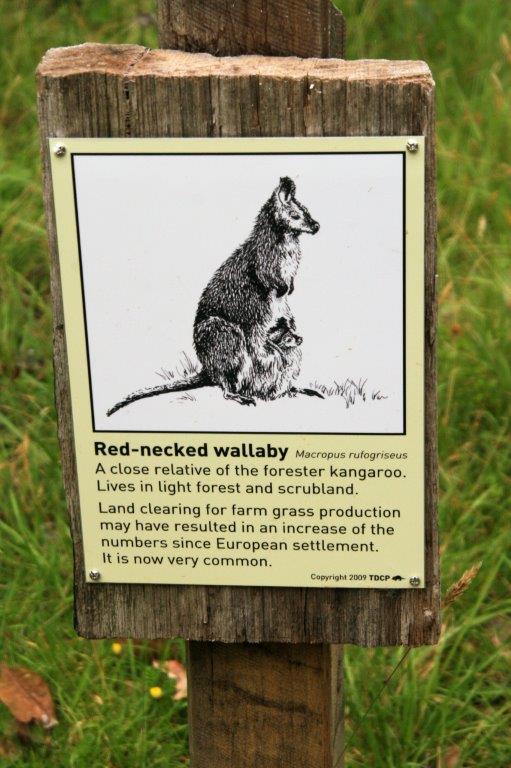
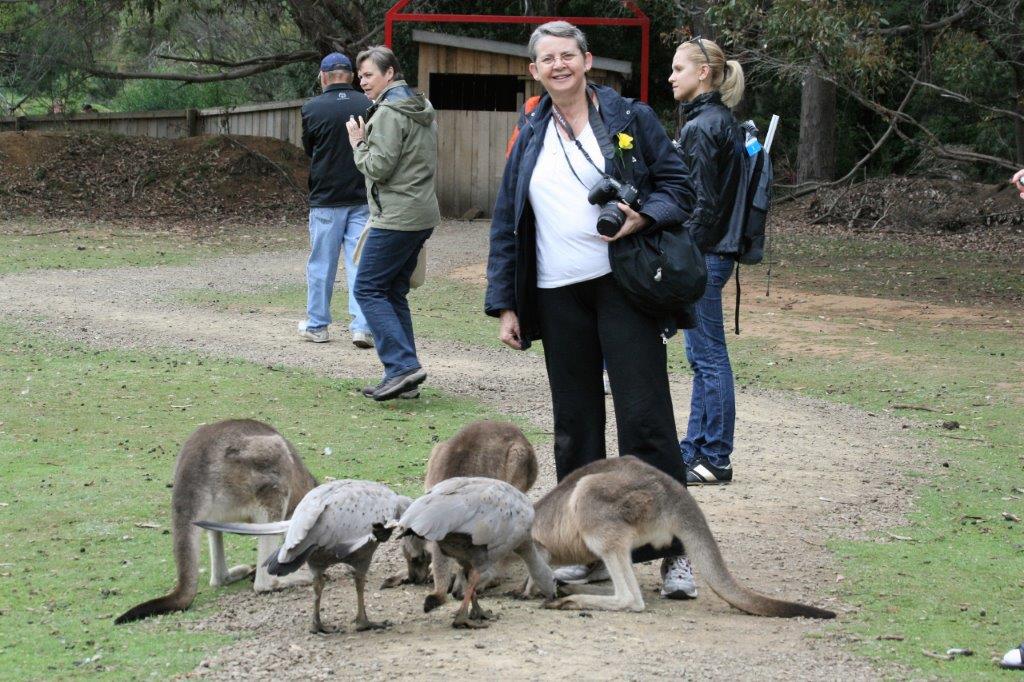
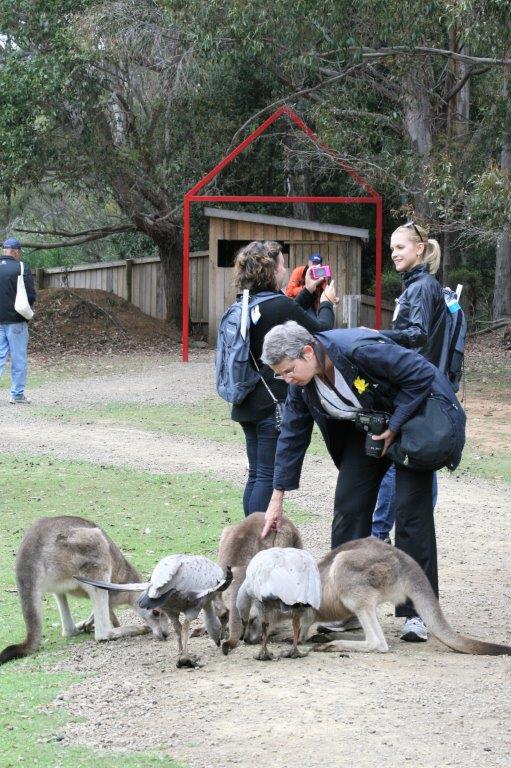
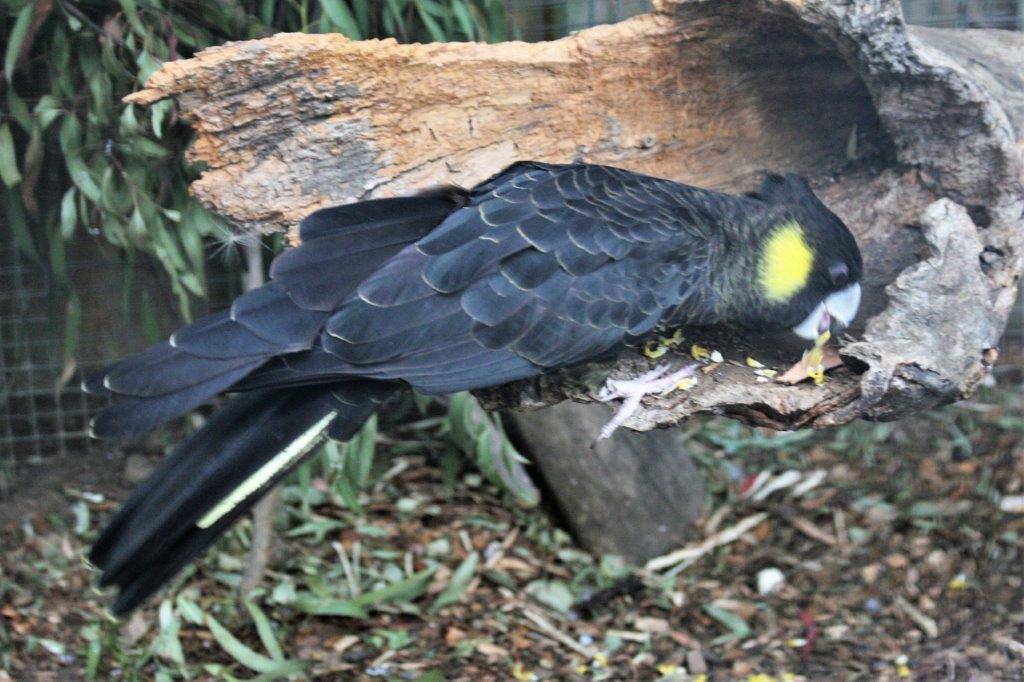
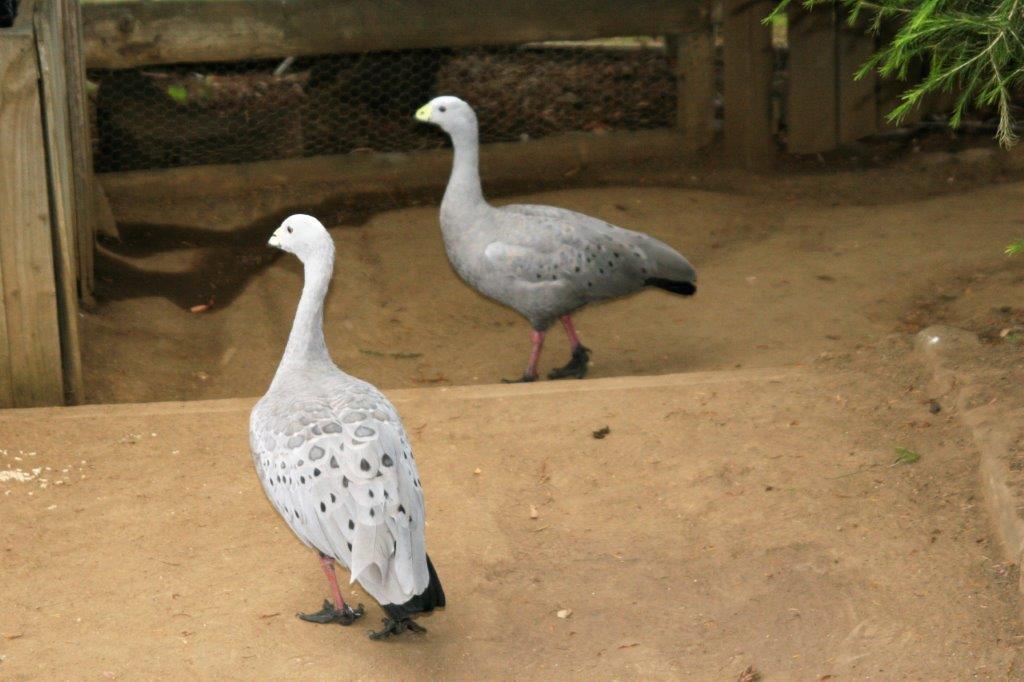
There were many birds at the park, as well as wallabees and kangaroos and Cape Barren geese.

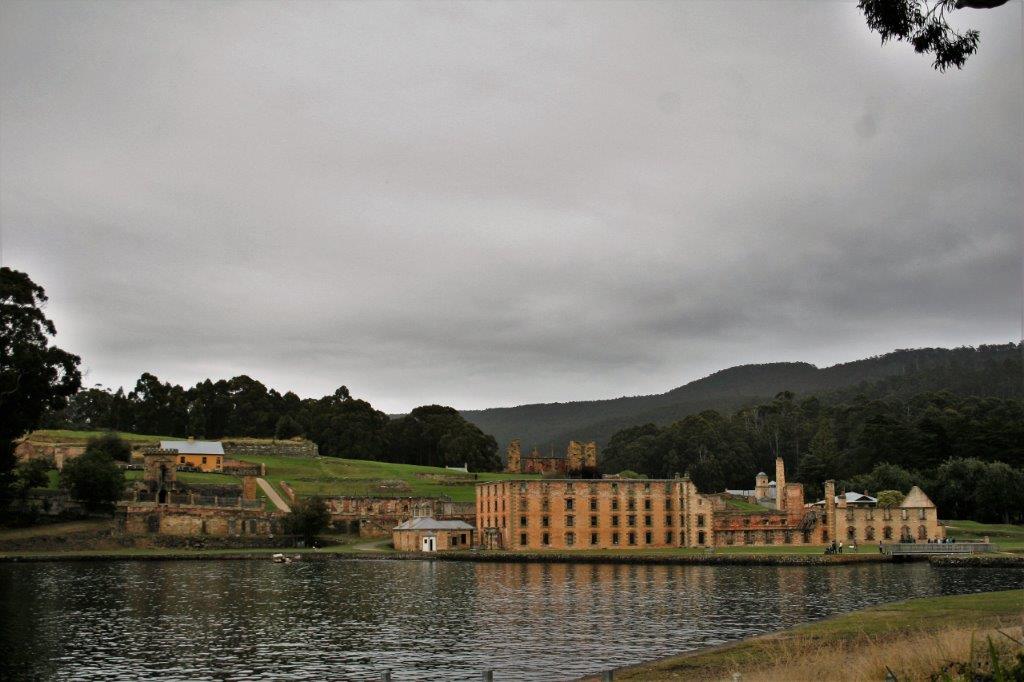
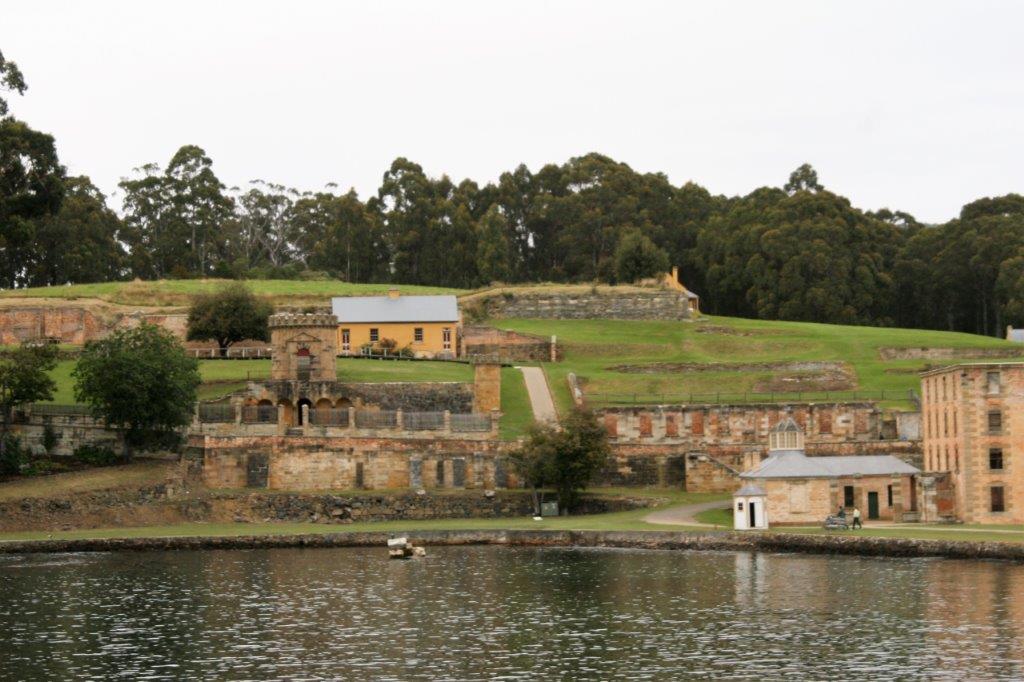
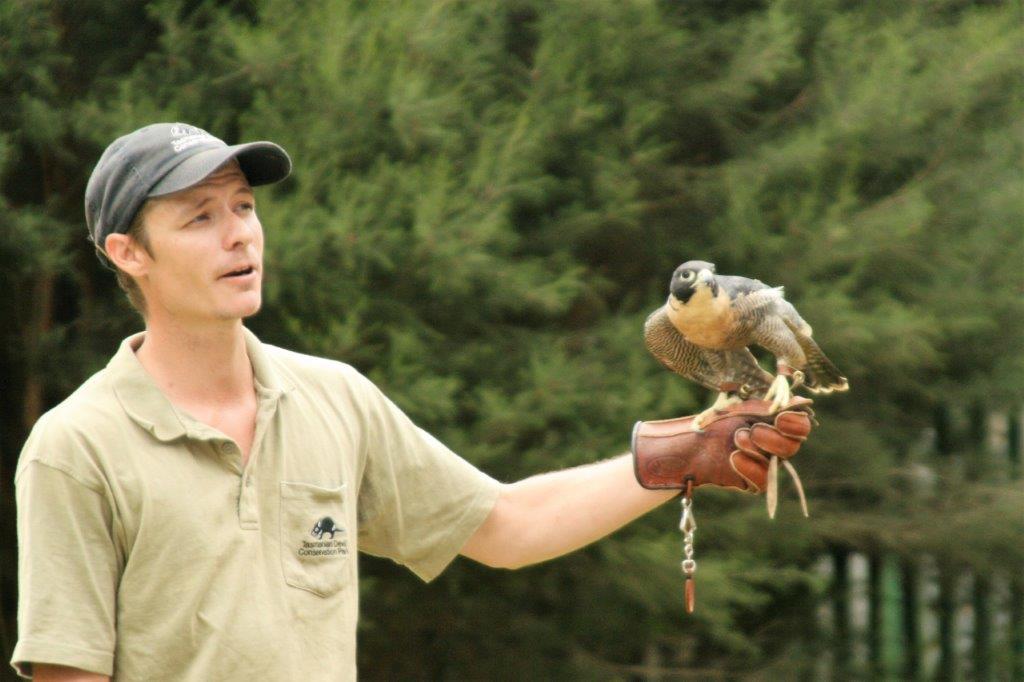
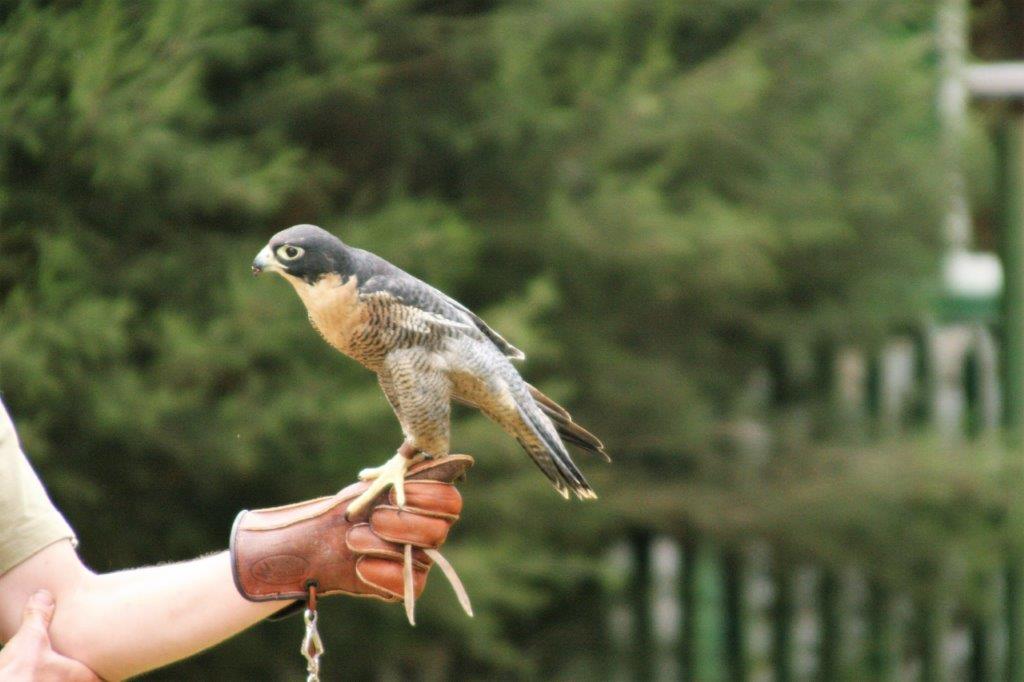
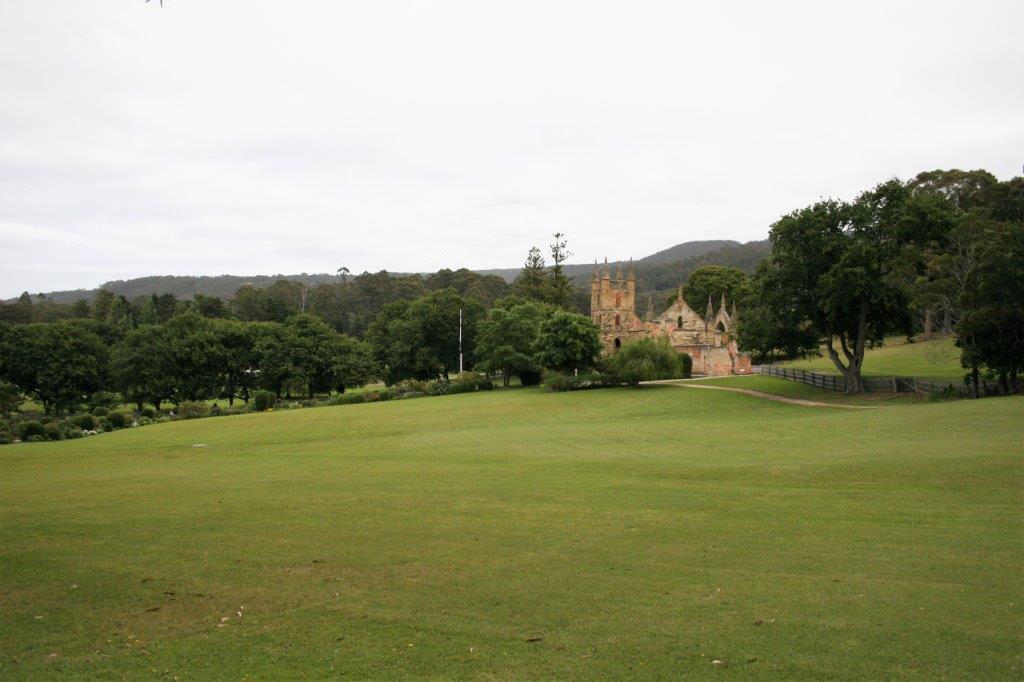
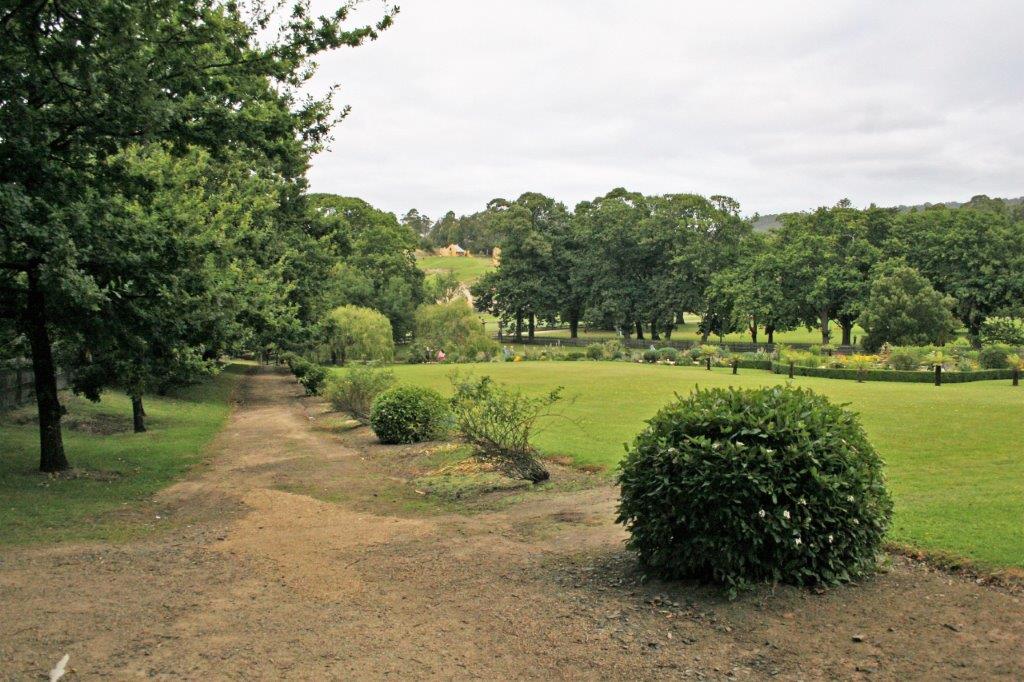
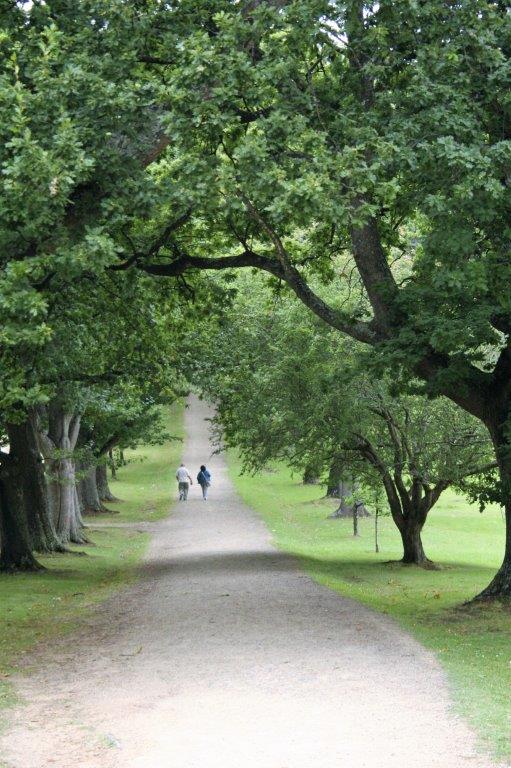
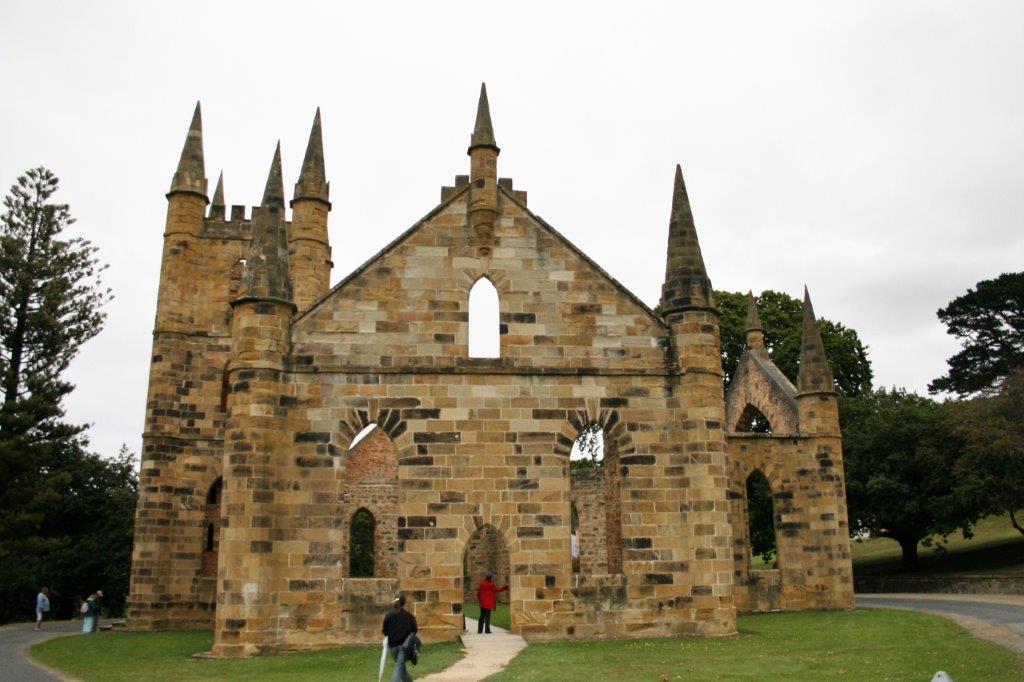
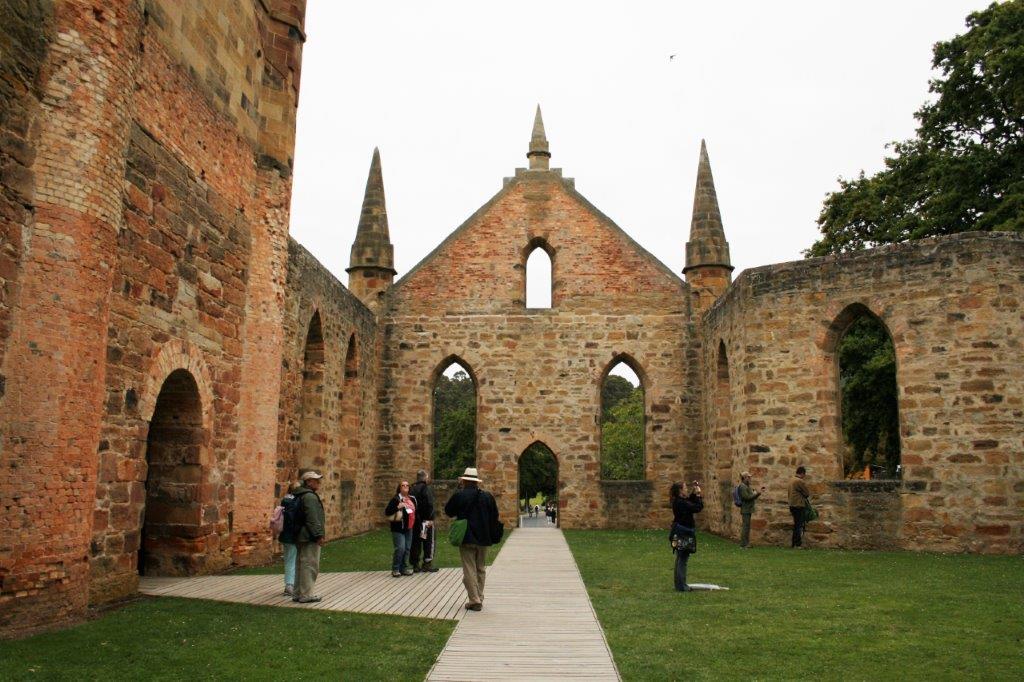
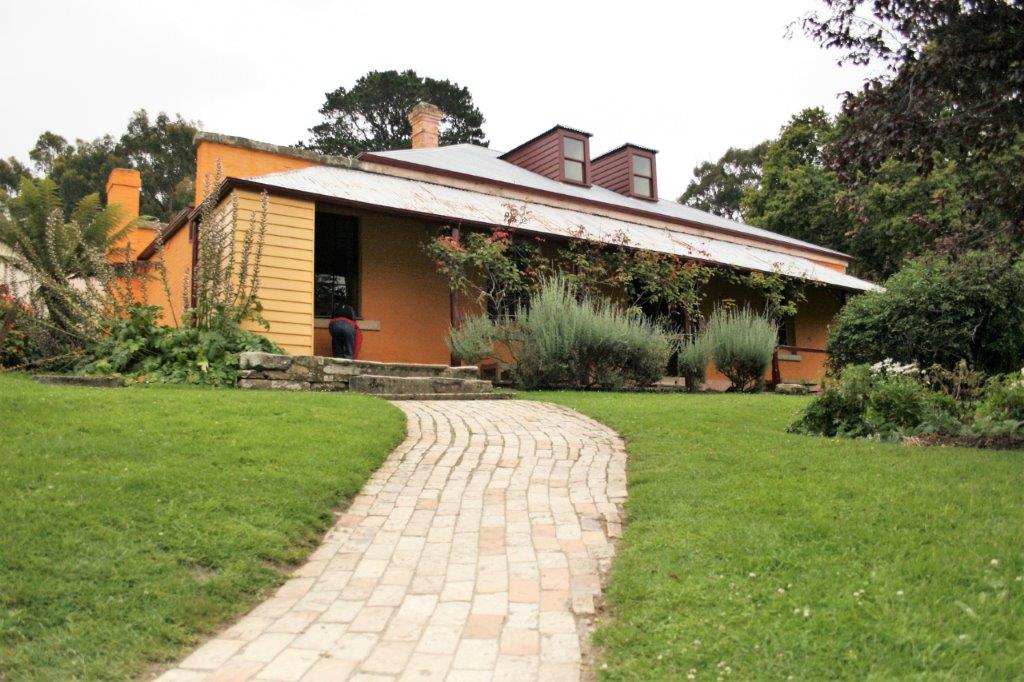
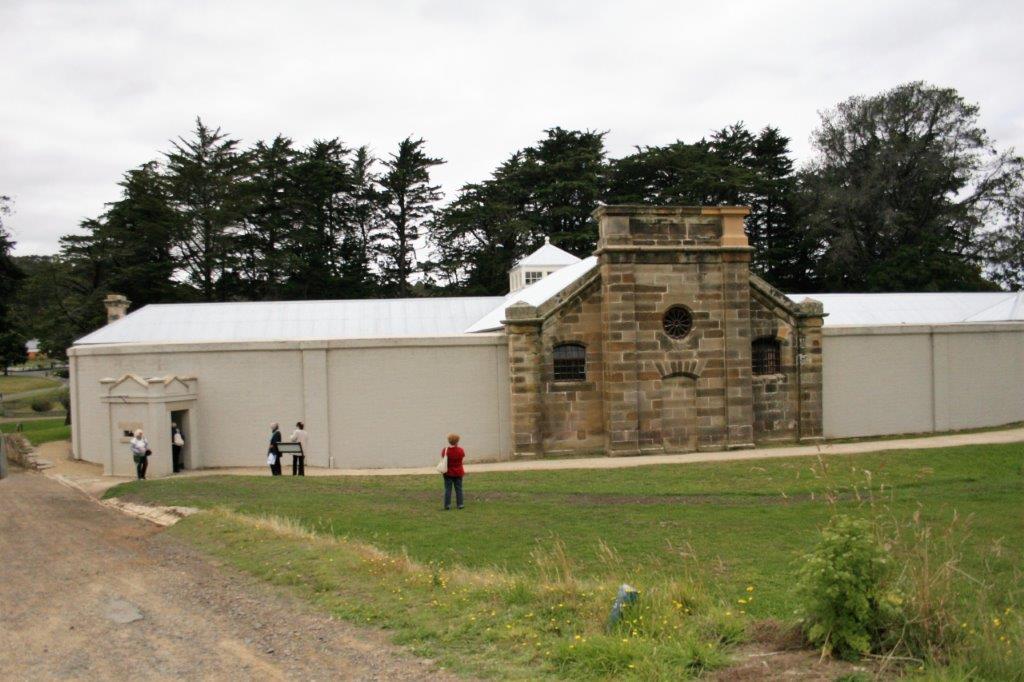
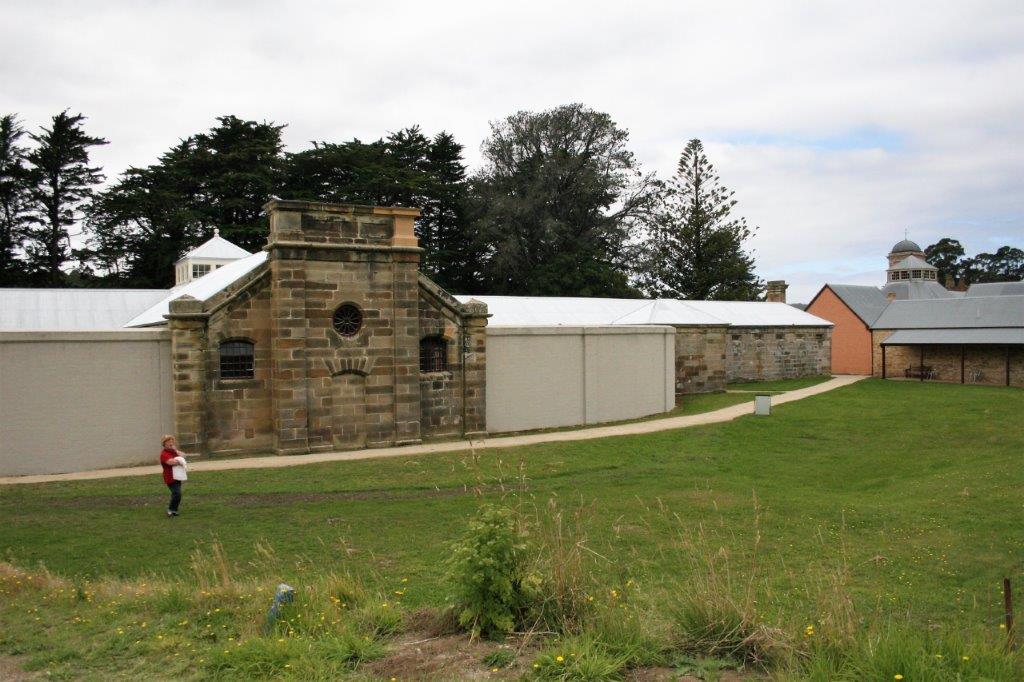
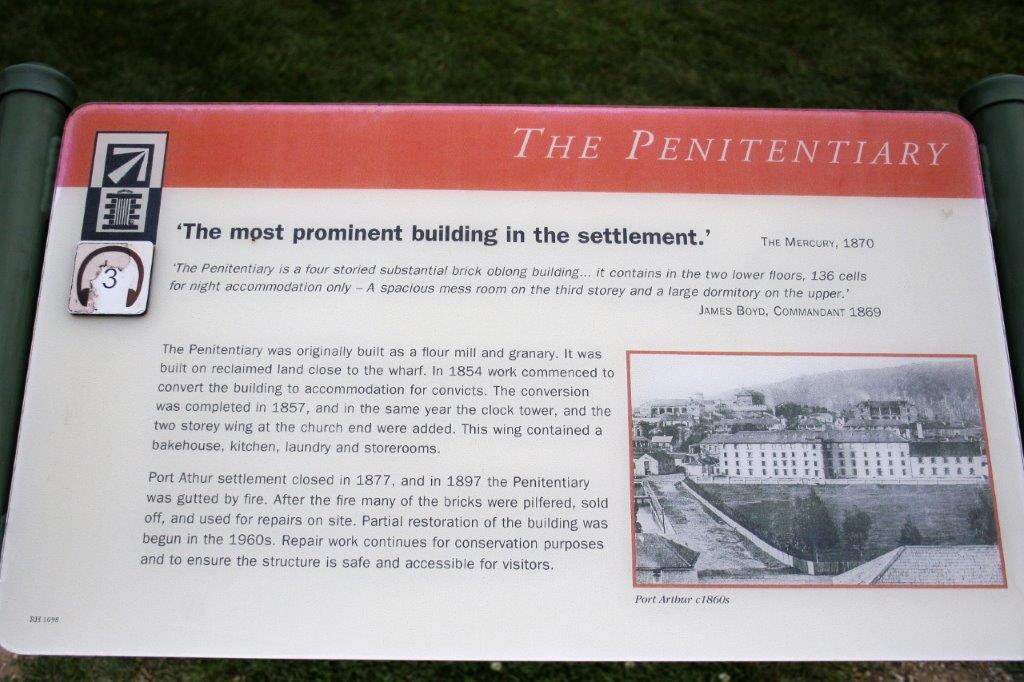
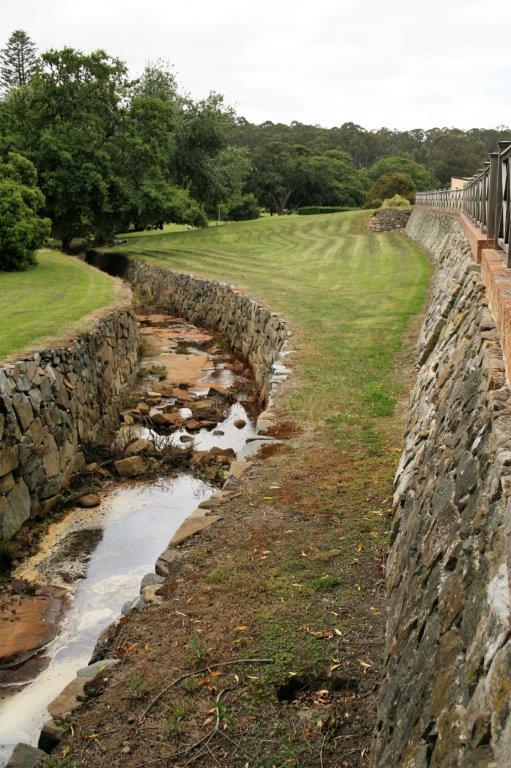
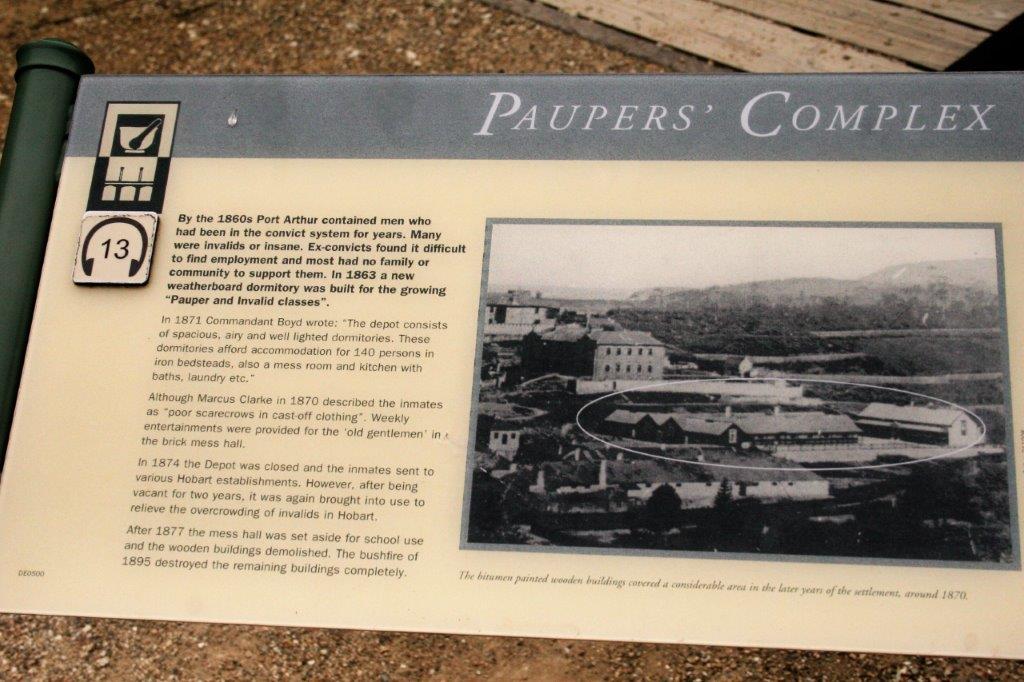
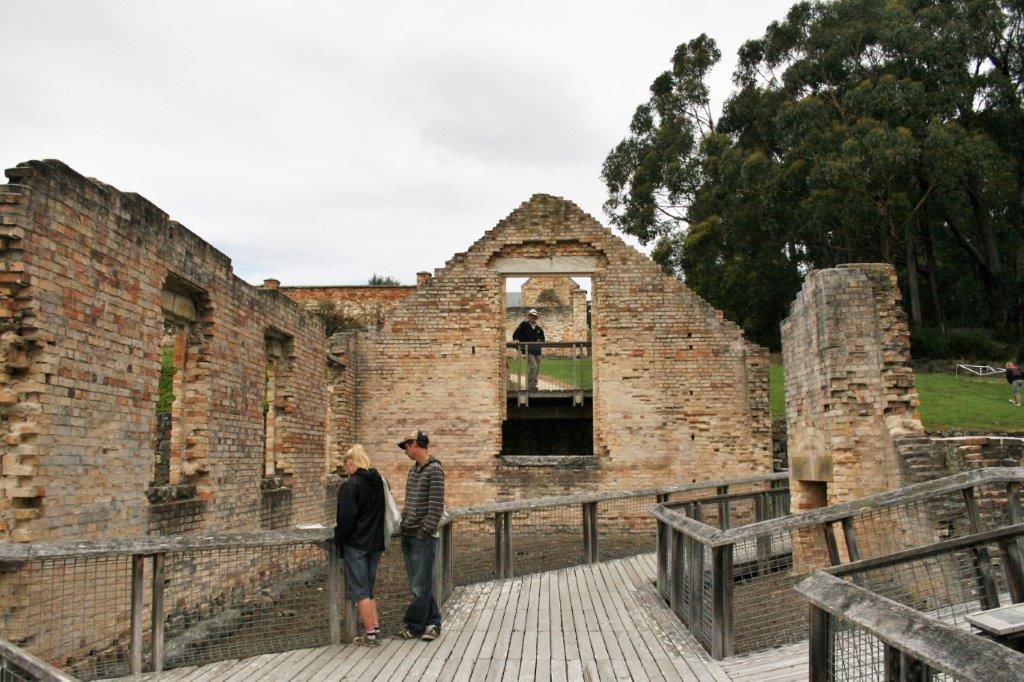
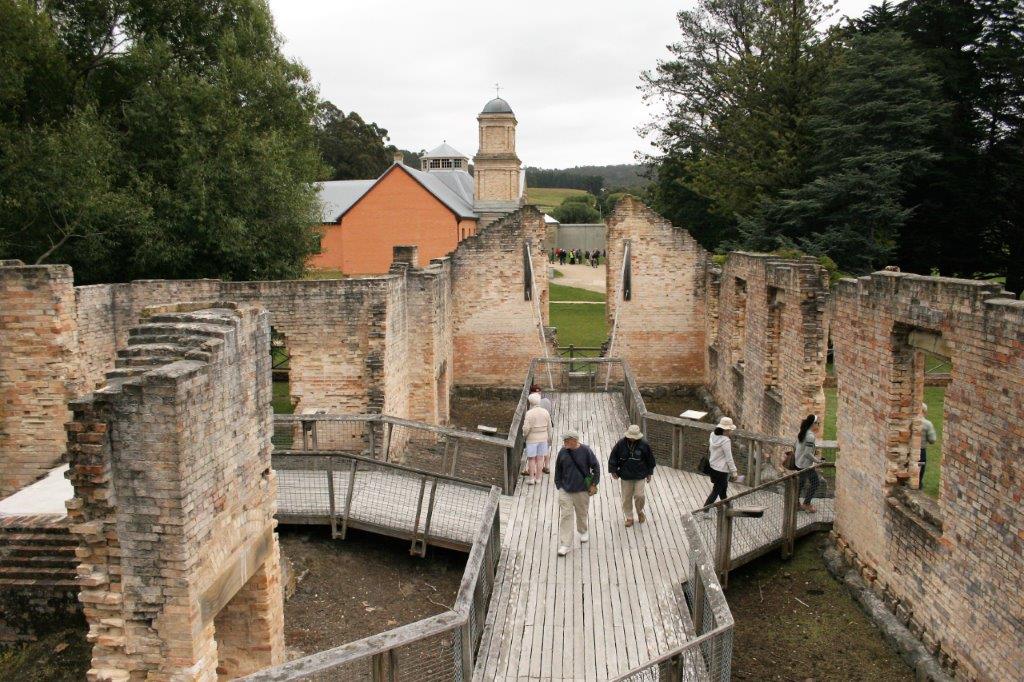
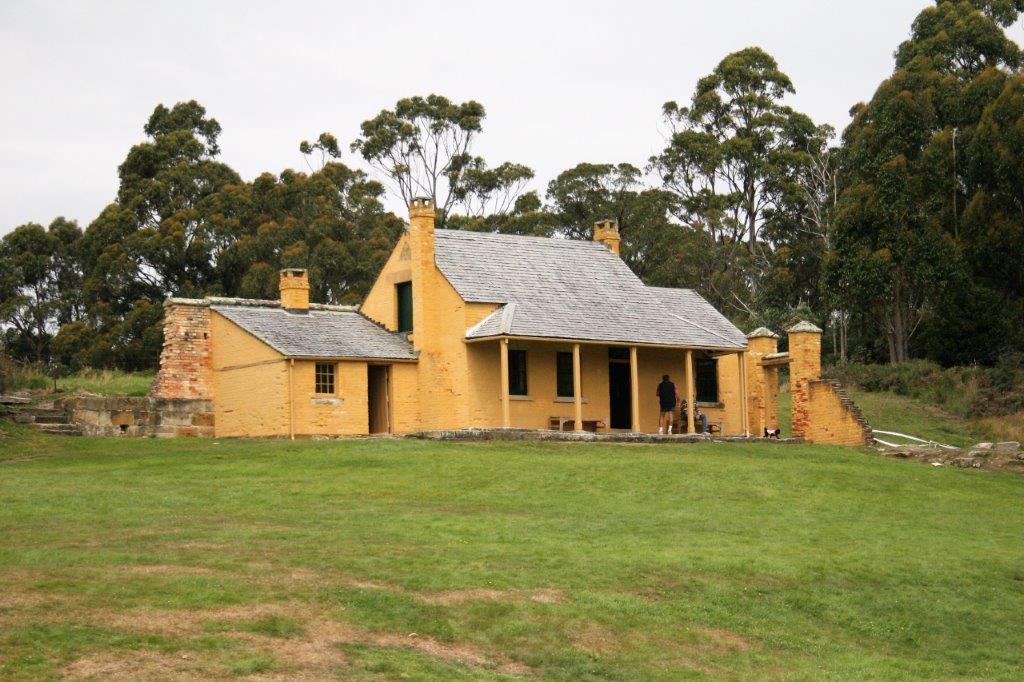
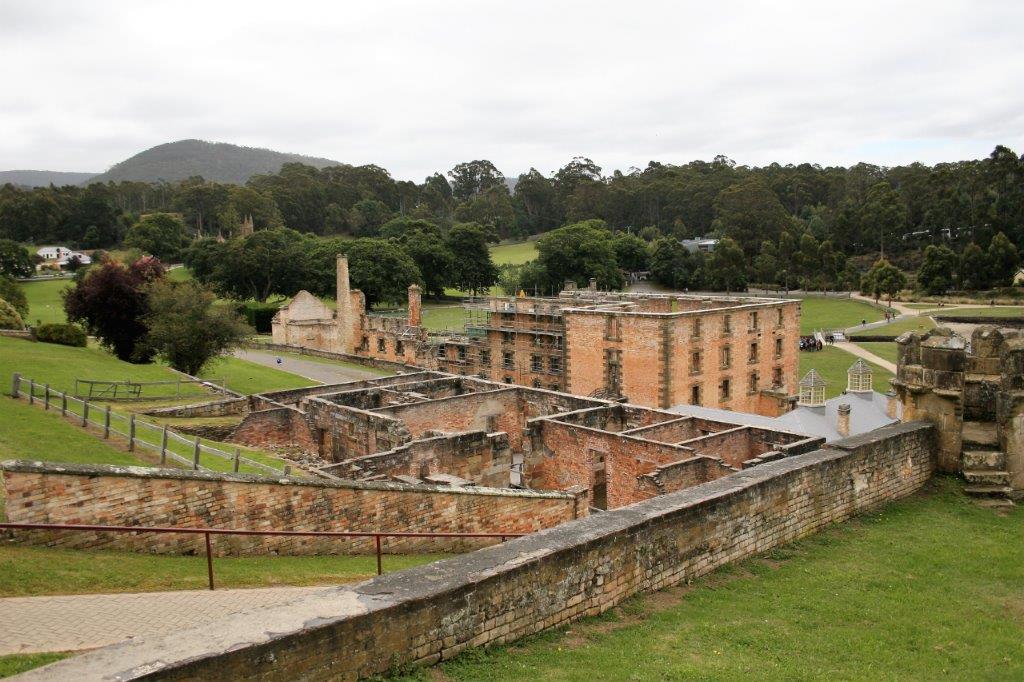
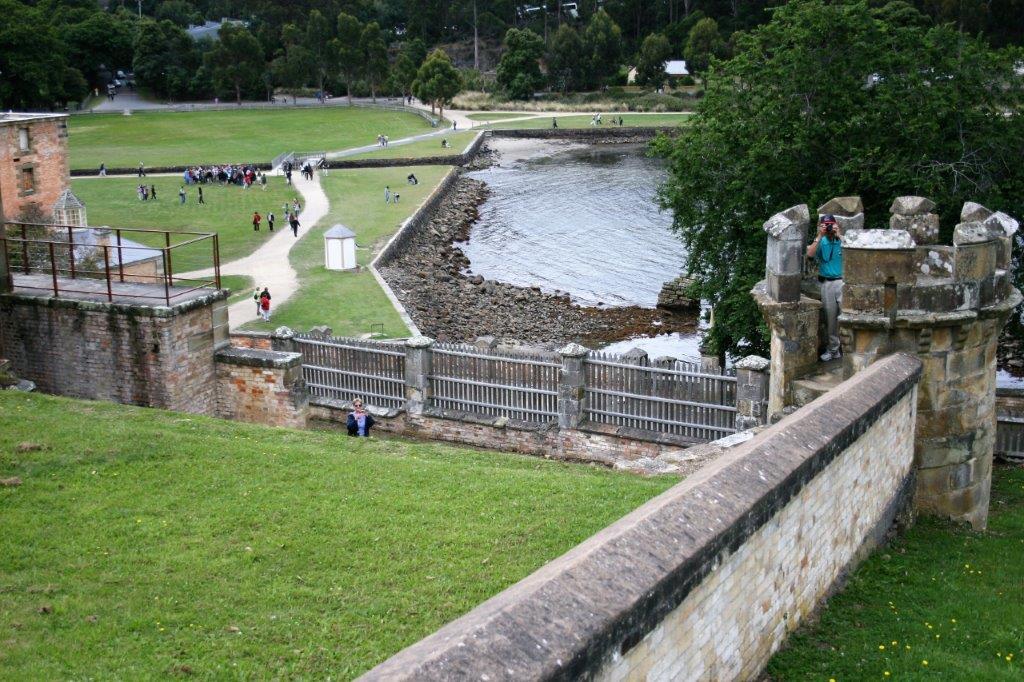
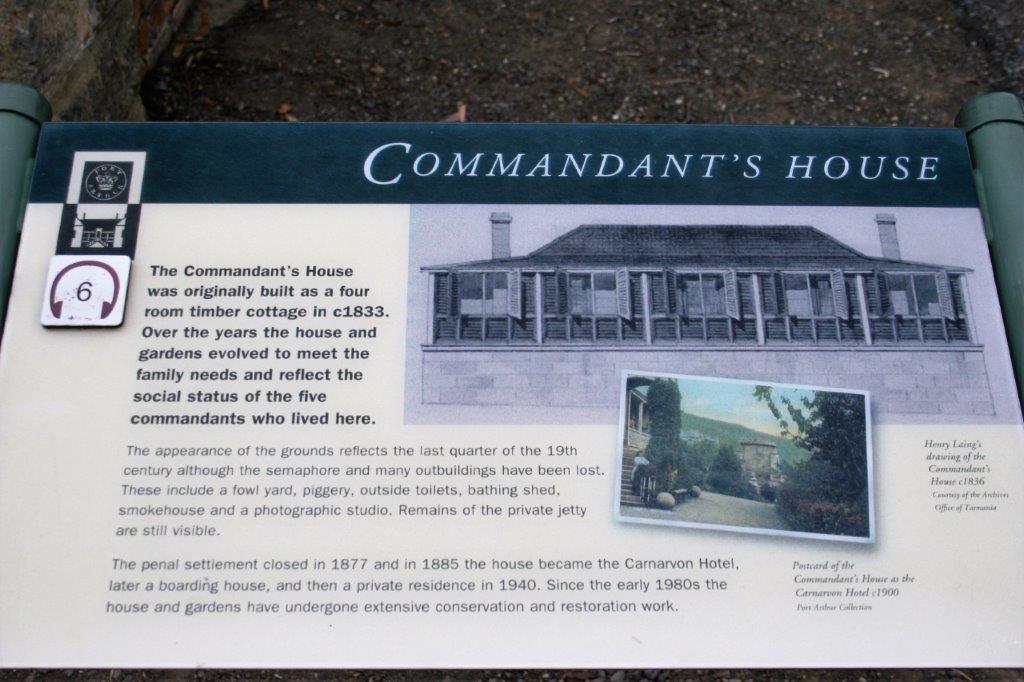
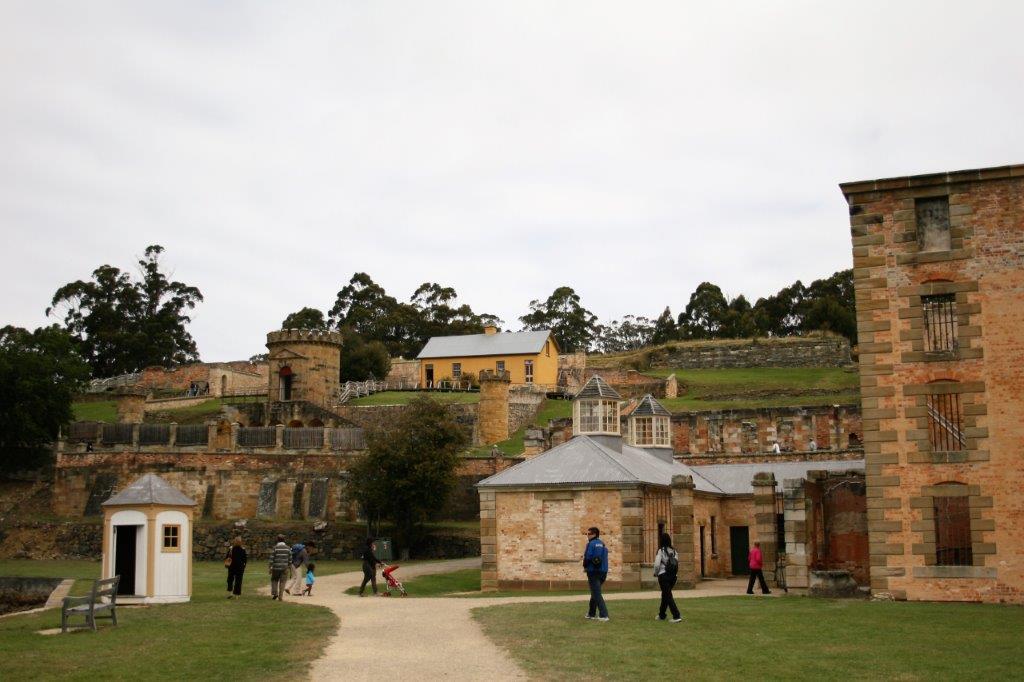
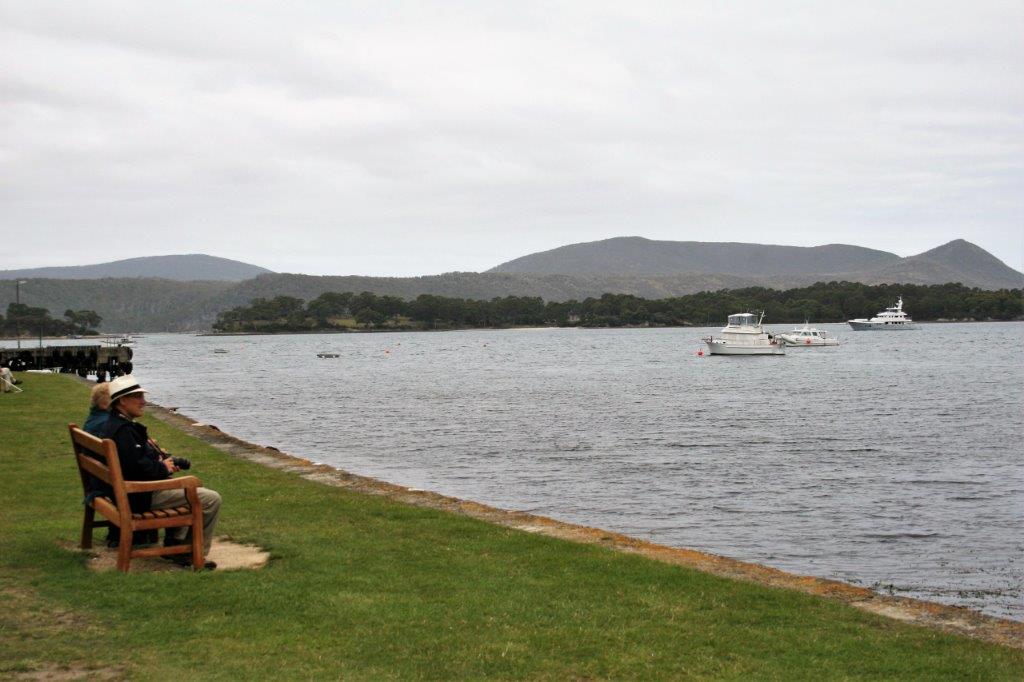
And they had a raptor show as well that we had enough time to watch. The bus dropped us back near the pier but we stayed in Port Arthur and spent the afternoon wandering around the old prison grounds.  It was a lovely setting for such a sad place.

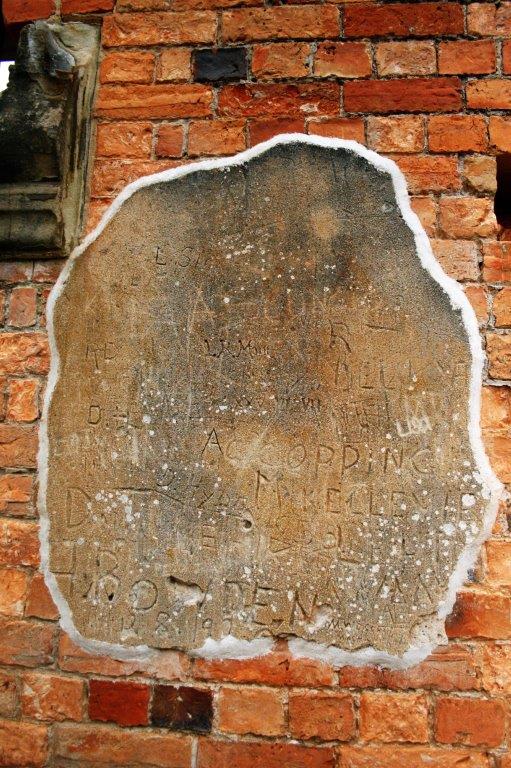
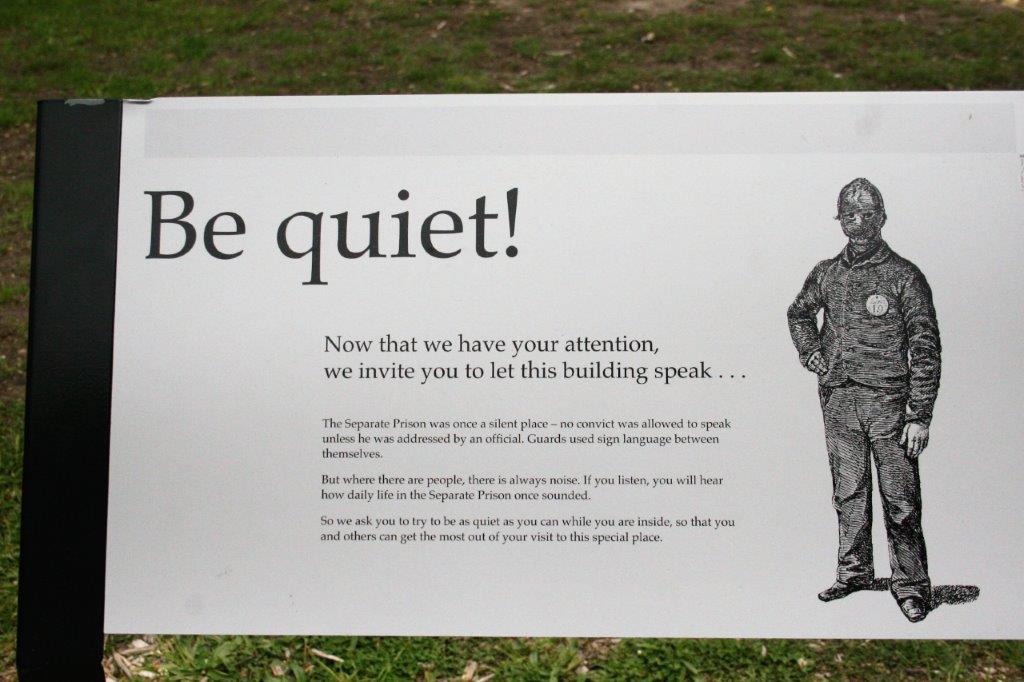
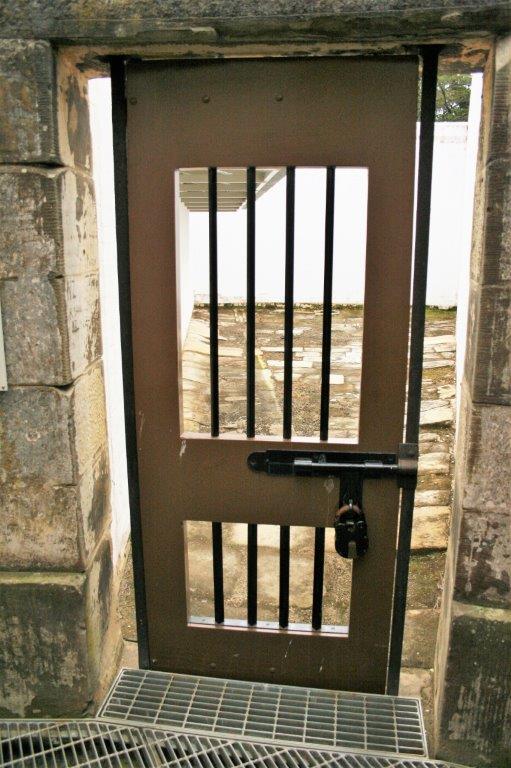
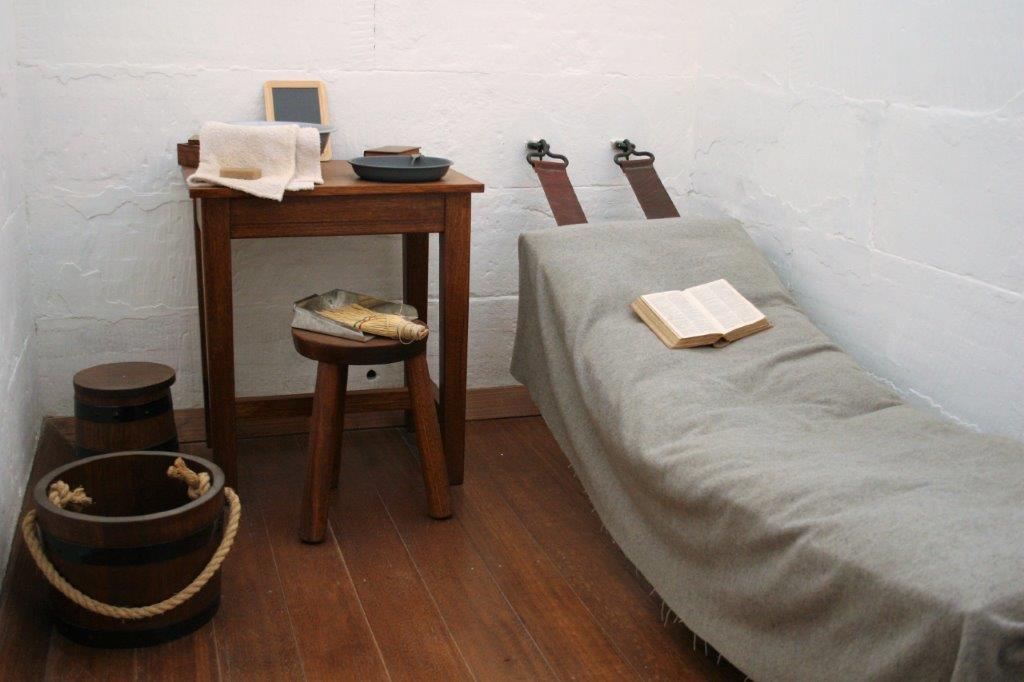
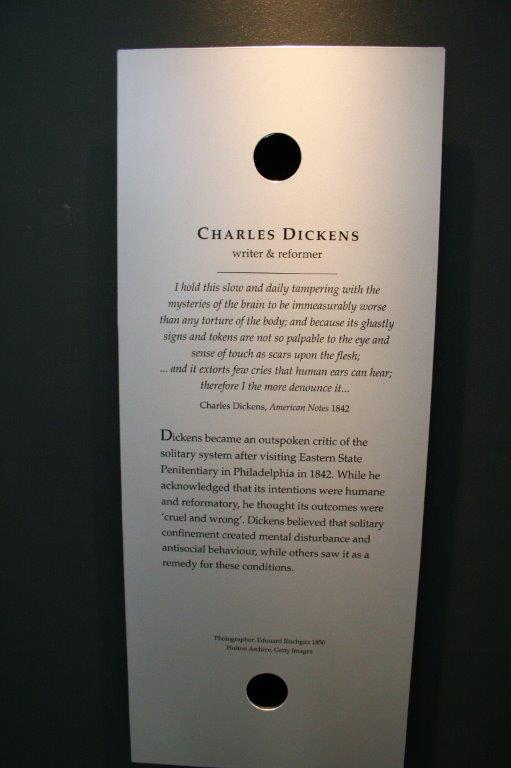
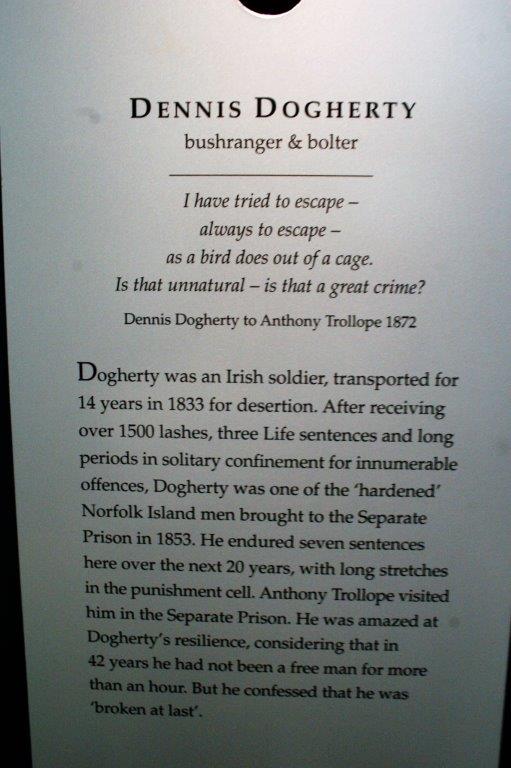
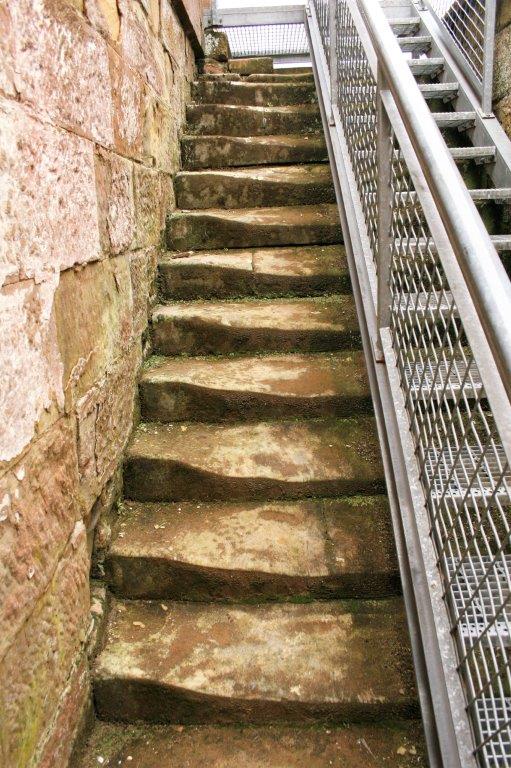
One of the reasons that Britain (and other countries) sent their convicts to their distant colonies was to get communities and a citizenry established.  The prisons in Britain and France were overflowing due to the harsh penalties for even petty crimes. For years prisoners had been held in old ships floating in the harbours because there were not enough jails.  When the idea was presented to send them to far flung territories and colonys of the motherland it was jumped on with enthusiasm.  A prison shortage issue could be resolved and the prisoners could be used as labour to build their new prisons, the warden and officer’s housing, roads, bridges and town buildings for settlers.  When their sentence was completed the prisoners had to stay the same number of years in the colony again before they could return ‘home.’  Assuming they would ever get enough money to pay the passage home.  Most of them were lucky to just survive their jail time. The most heartbreaking part of the old prison was the Separate Prison.  This was a punishment/rehabilitation experiment.  Troublesome prisoners were kept in solitary confinement and there was no talking allowed.  Ever.  Even the guards communicated with hand signals.  For 23 hours per day the inmates were kept in their cells, keeping busy with work – cobbling, tailoring, making brooms, etc – and for one hour they were allowed outside in a small exercise yard where they must walk briskly around and around the entire time; no stopping or leaning against the walls.  The idea was to prevent criminals from sharing their bad behaviour with others.  It was felt that if they were given work, taught trades, and schooled; allowed only bible reading and wholesome sermons, they could be re-trained to be good citizens.  What it turned out to be was a case of sensory deprivation that often drove inmates to madness.                                                   The exercise ‘yard’.

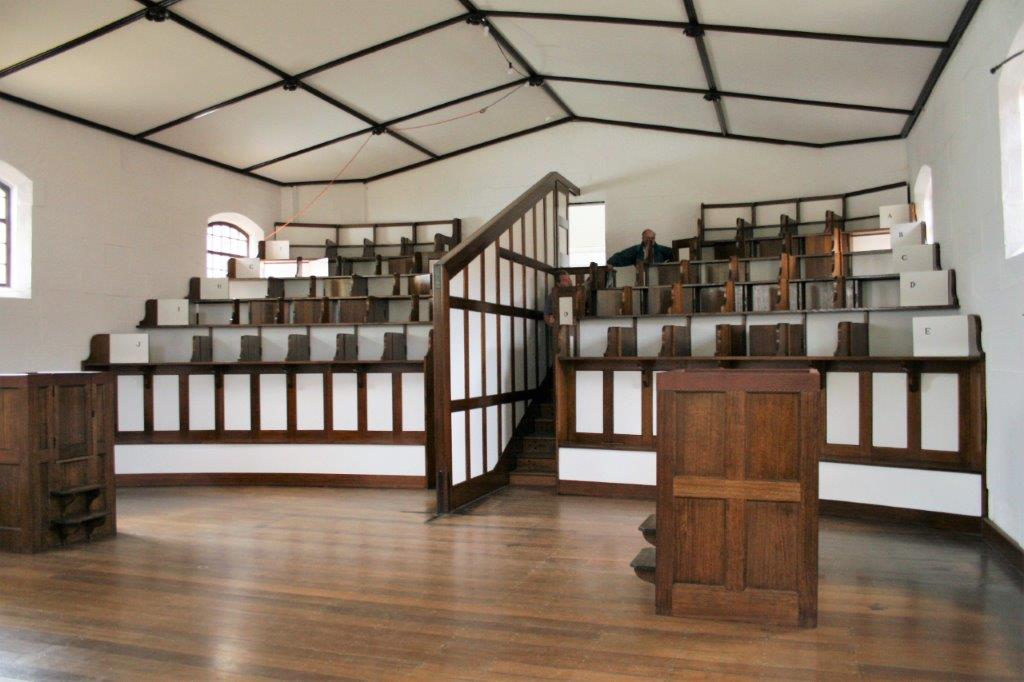
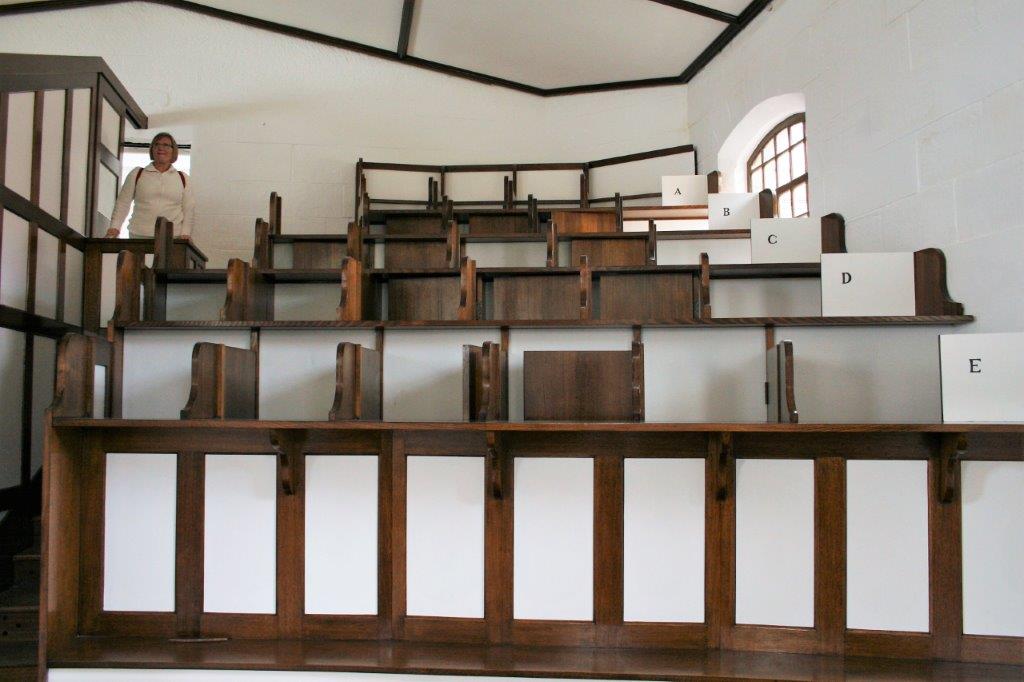
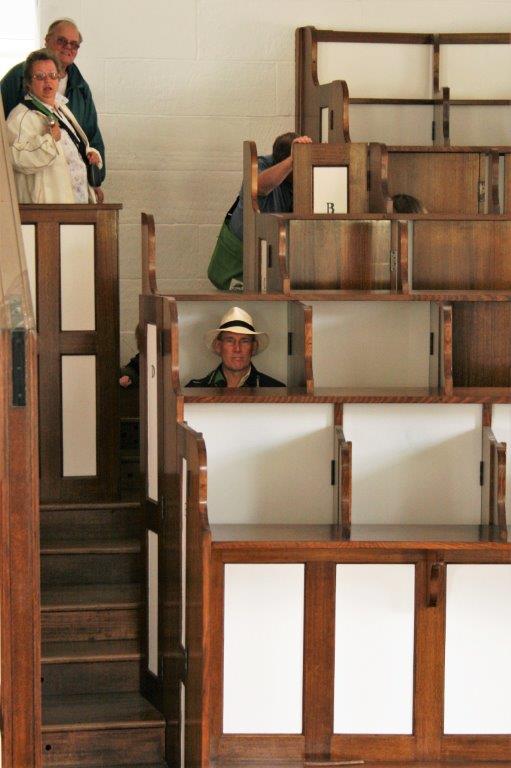
Even during church services the prisoners were prevented from seeing each other by locked partitions.  Of course, being resourceful, desperate men signals and low voiced messages were passed along during the loud boisterous singing of the hymns.

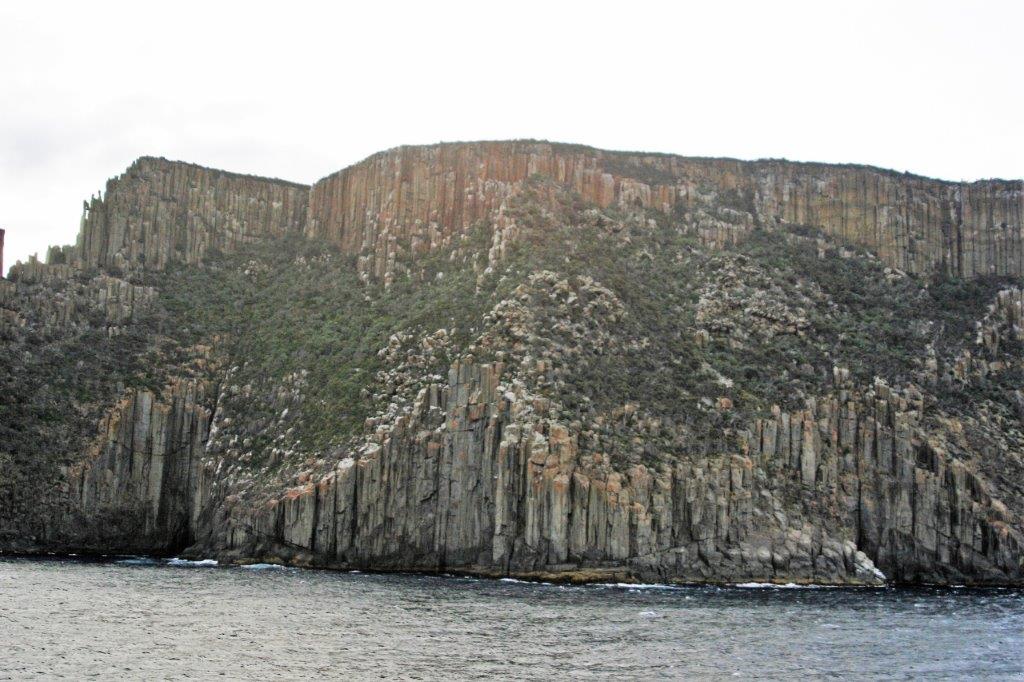
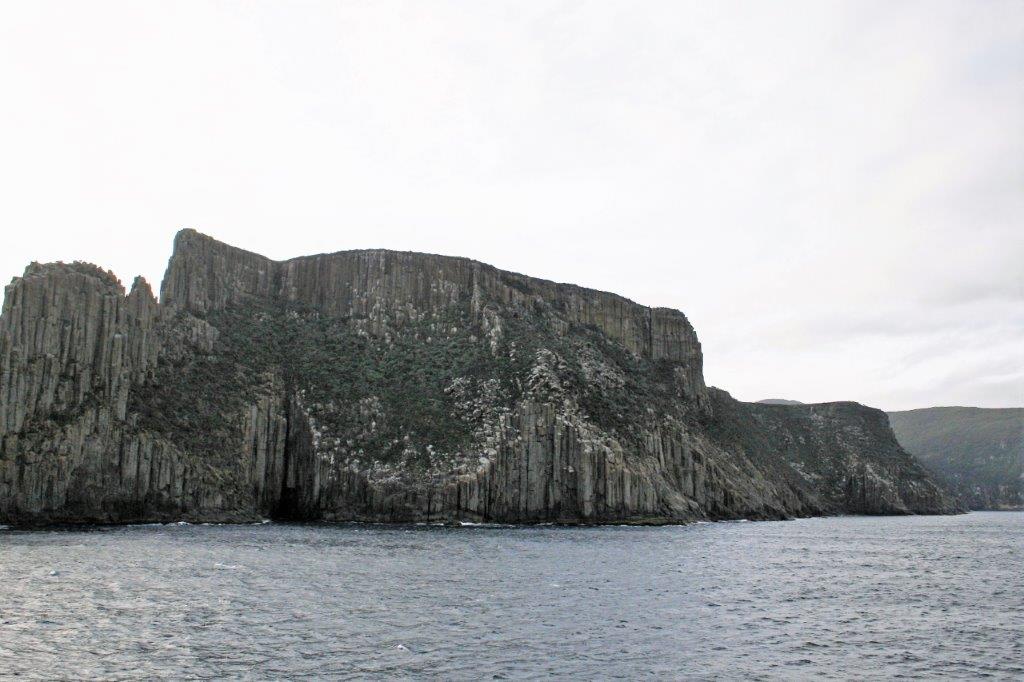
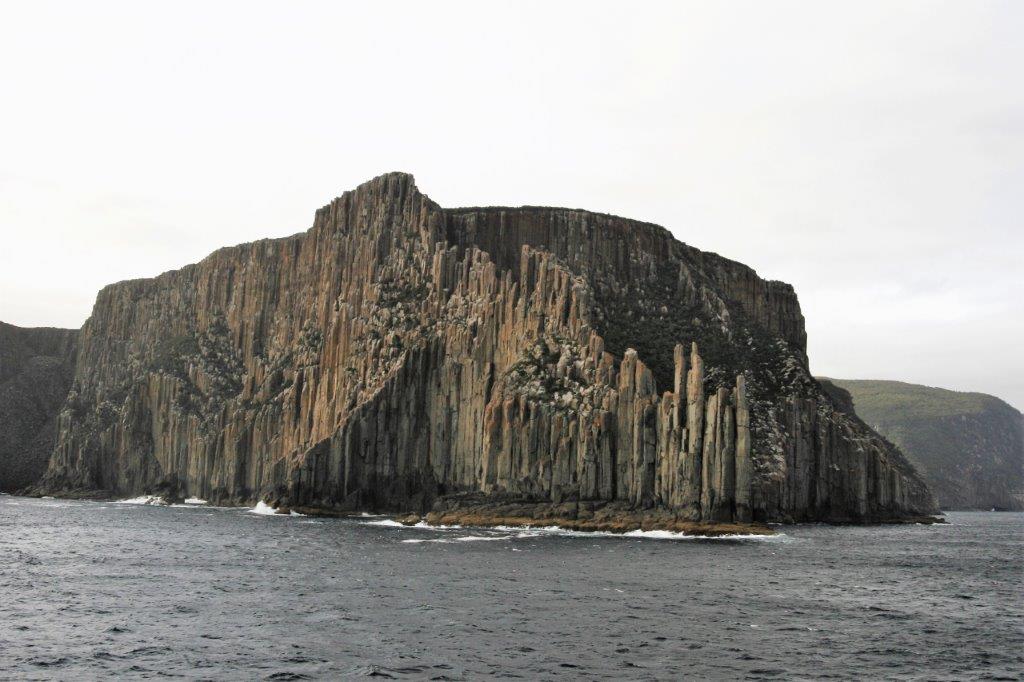
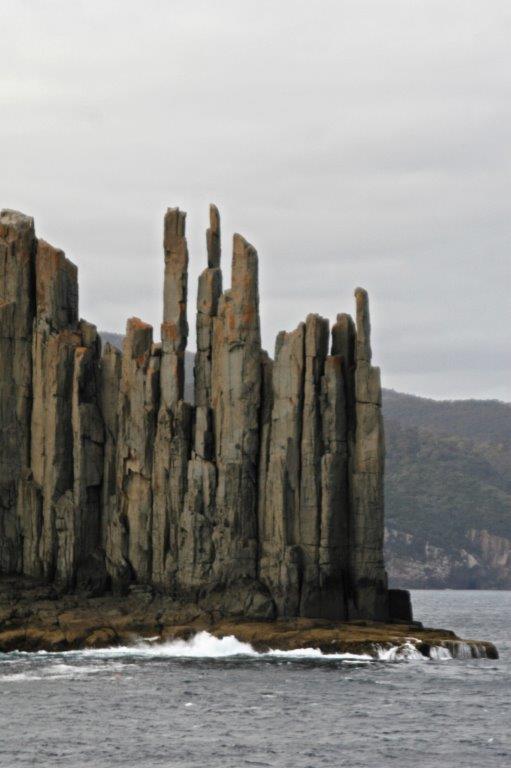
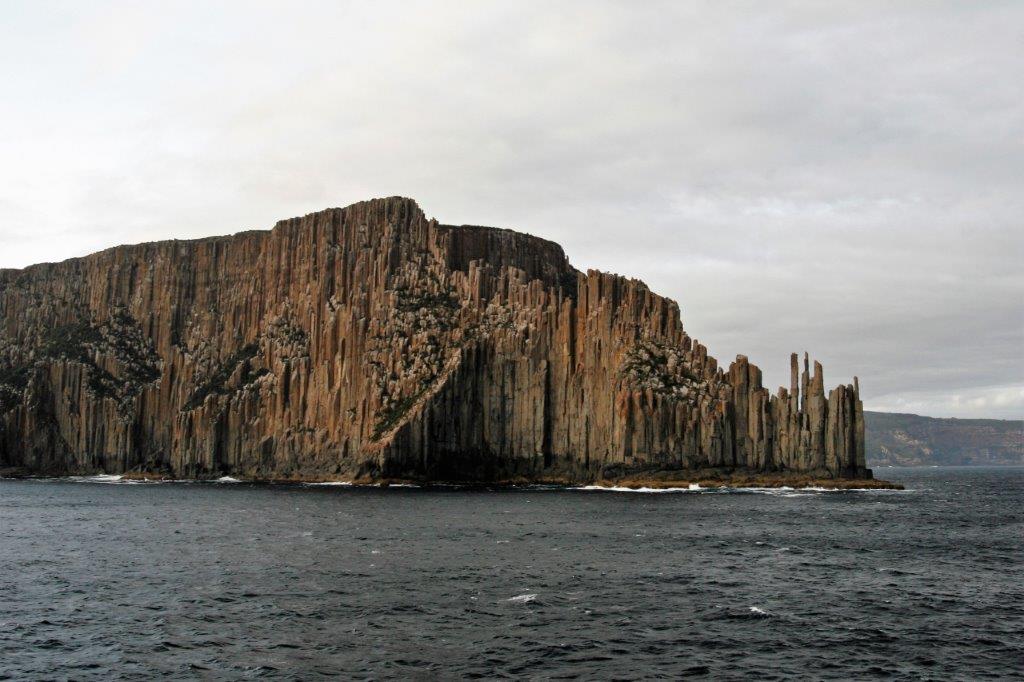
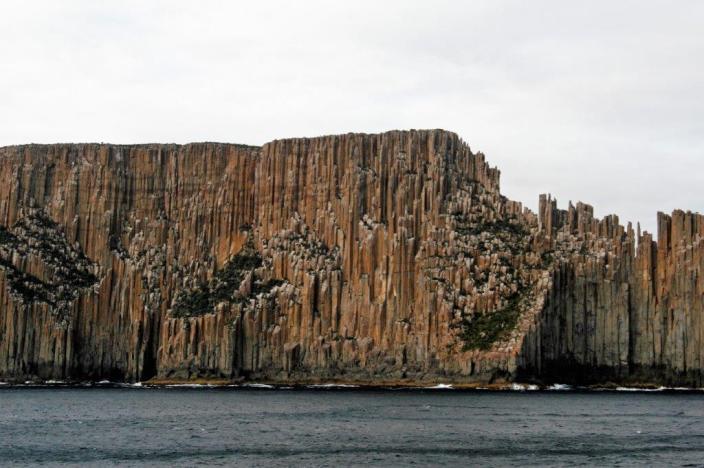
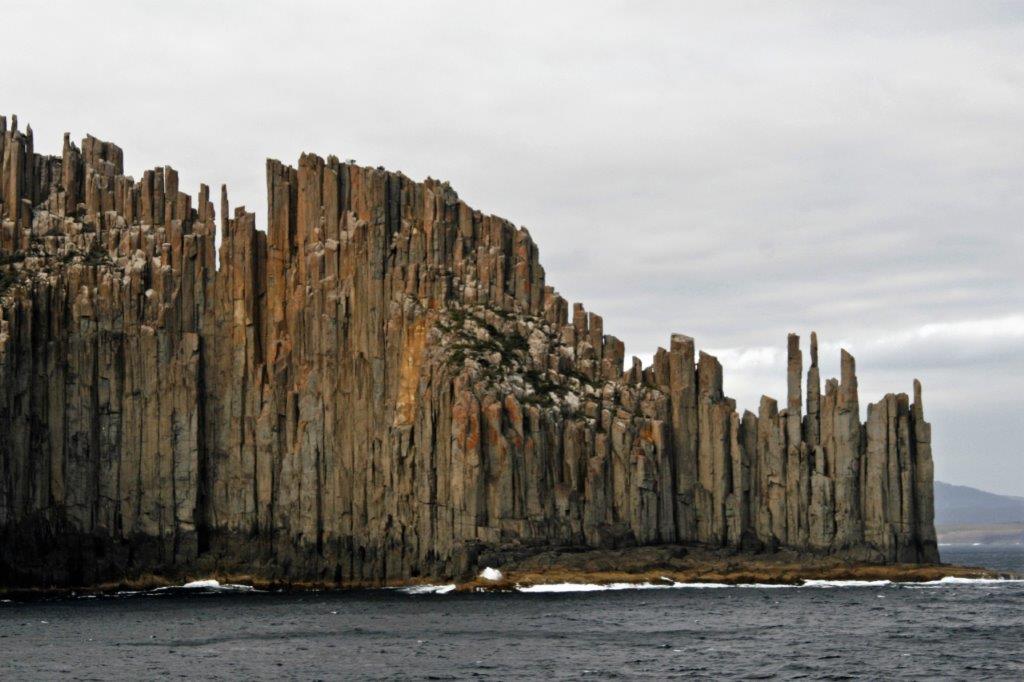
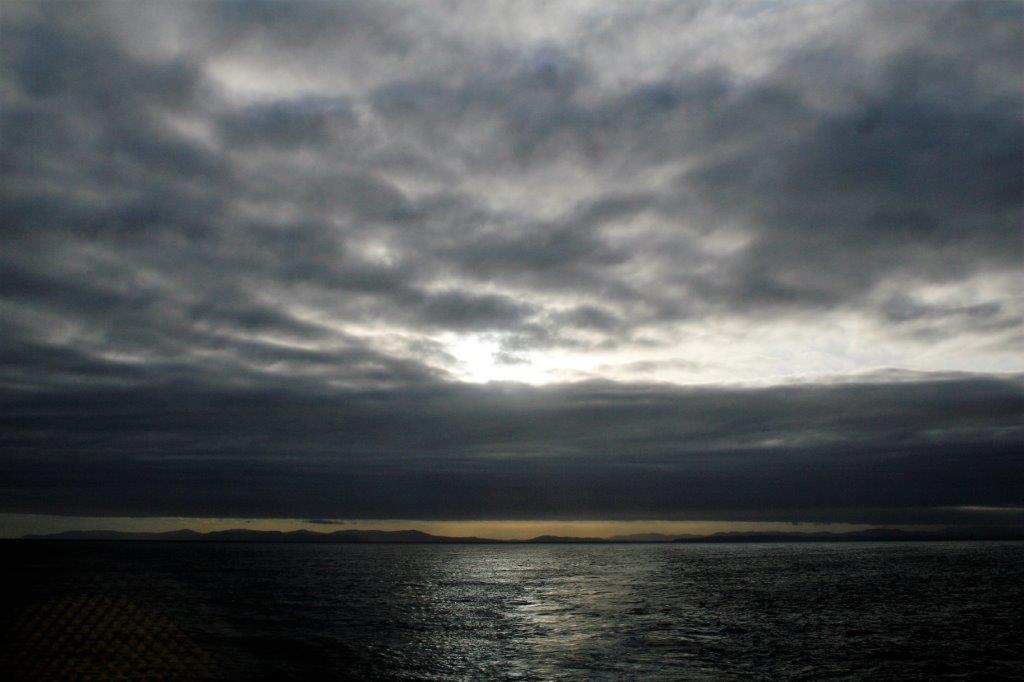
Once we had done all the wandering around we wanted we walked over to the pier and boarded a tender back to the ship. After dinner as the ship was making its way along the Tasmanian coast the Captain ordered slow cruising past the amazing basalt cliffs.  The Giant’s Causeway on the northeasten coast of Northern Ireland has ‘stepping stone’ columns like these, but not nearly as many, nor as tall.

Port Arthur, Tasmania was our last port of call before we arrived in Sydney.  We had a day at sea after leaving Tasmania that was spent getting disembarkation information and packing.  Since we were going to be driving and flying around Australia for almost two months we sorted out all our dressy clothes and put them in the largest suitcases which we stored in Sydney until we got back to the city in mid-April.

2011 February 17 – Day 43 – Hobart, Tasmania, Australia

It was an early morning as we had to be up at 6 am to get ready for a face-to-face passport check with Australian Immigration.  We had time for breakfast afterward before our 8:30 tour.

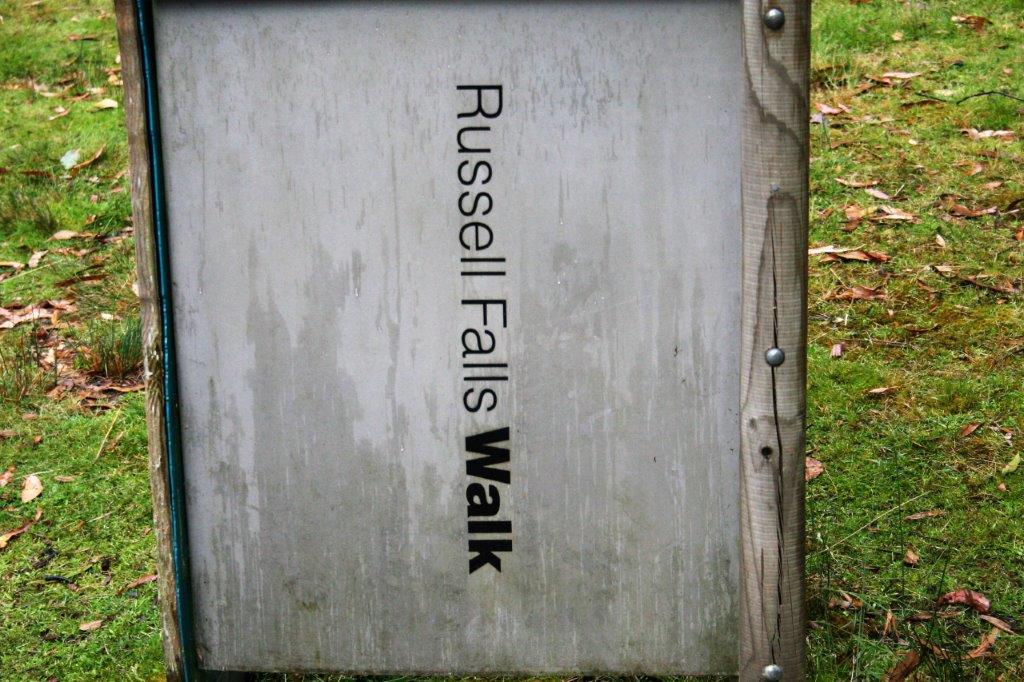
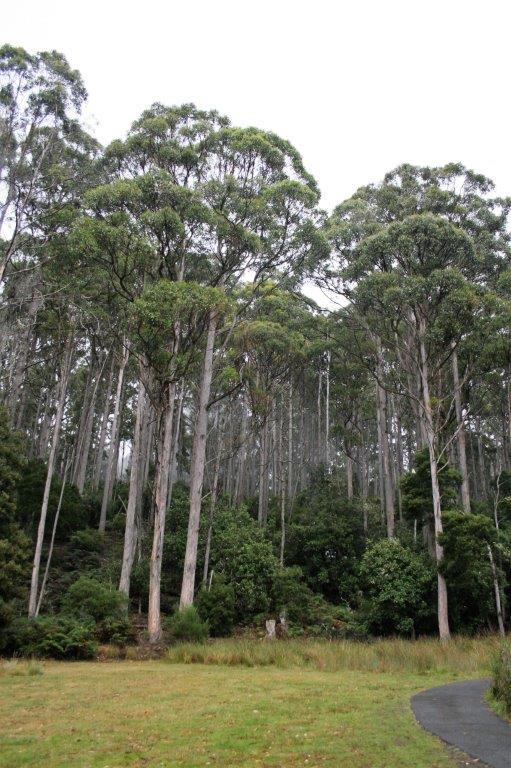
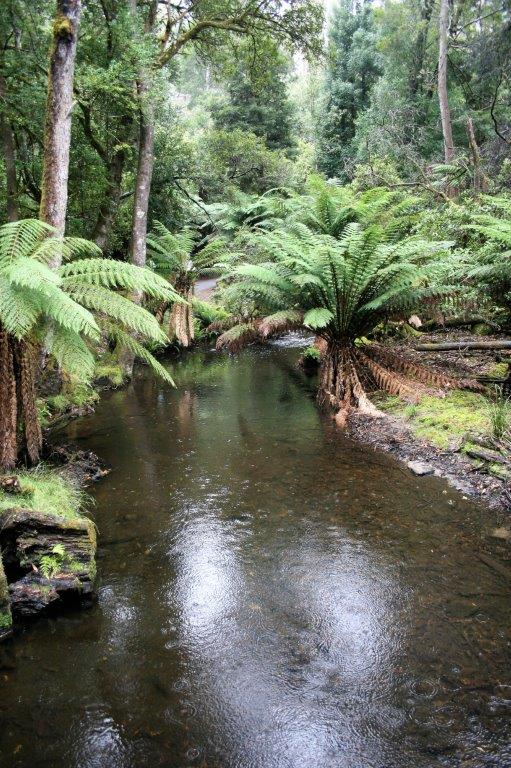
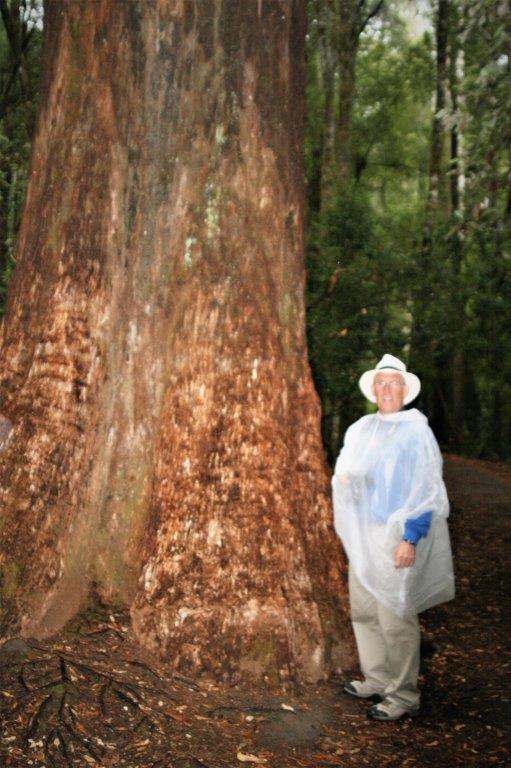
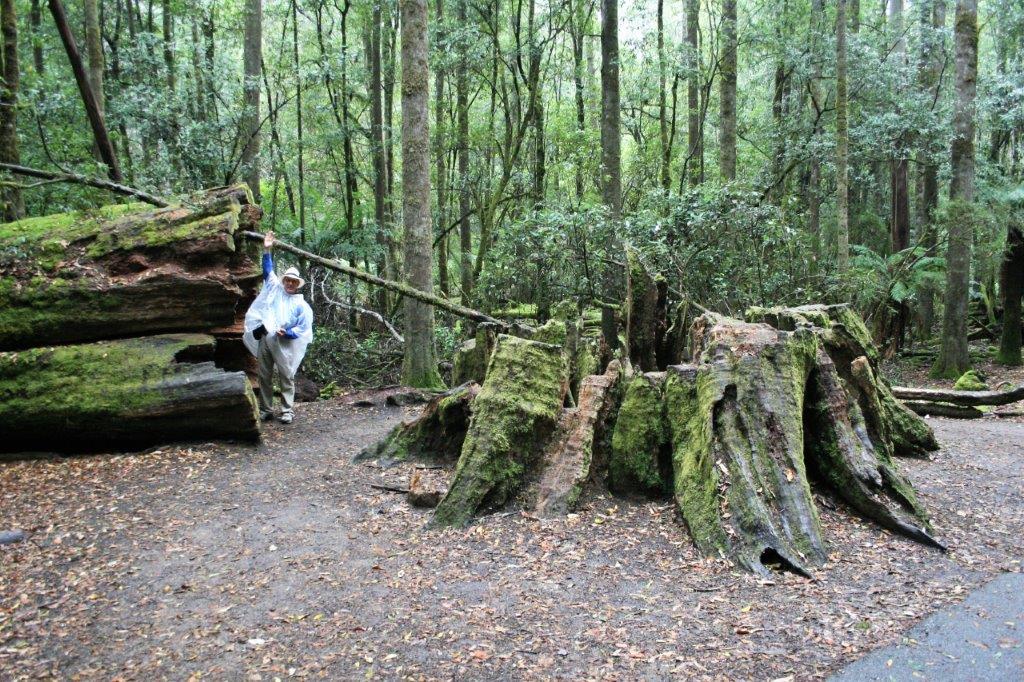
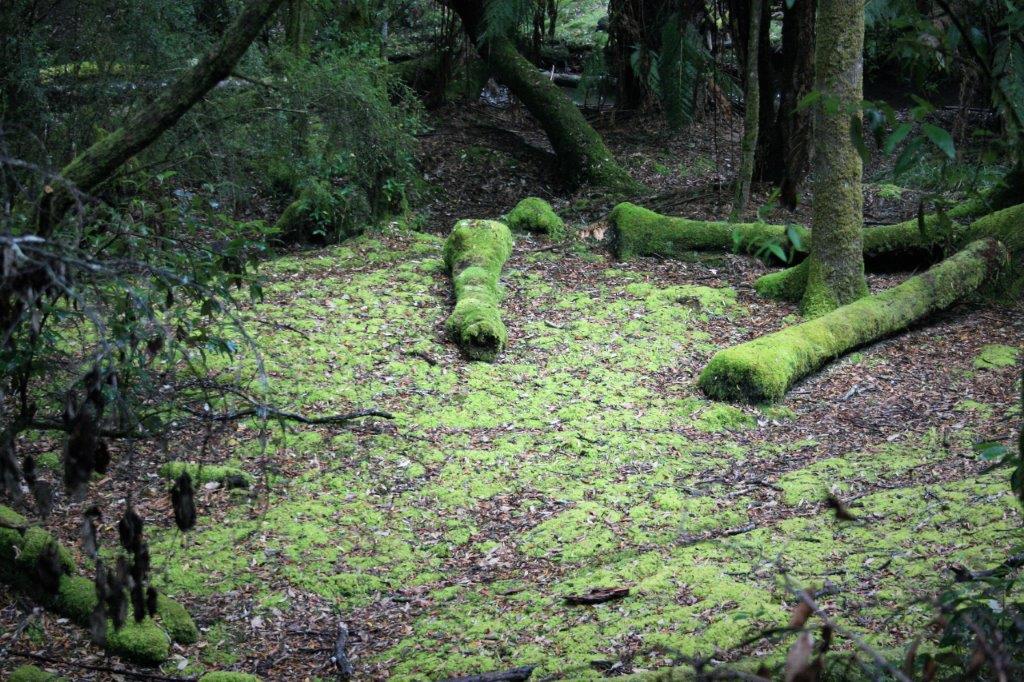
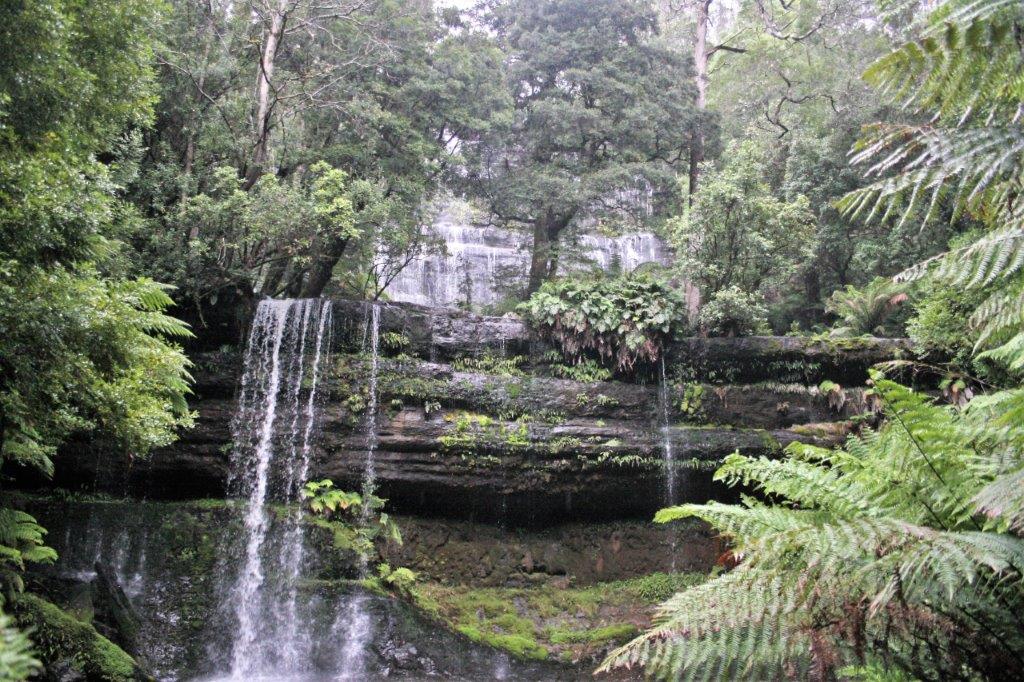
Hobart is the largest city on the island of Tasmania, and is Australia’s second oldest city (after Sydney).  Hobart was founded in 1804 as an isolated prison camp with 178 convicts and 25 officers.  The city sits at the mouth of the Derwent River and Hobart Harbour is one of the deepest natural harbours in the world.  Only 20,000 “Tassies” live in Hobart and the entire island’s population is about 515,000. We had a two hour bus ride through Hobart and inland to Mt. Field National Park where we hiked up to Russell Falls.  Much of Tasmania is protected by national parks and reserves.  Mt. Field was the first national park, designated in 1916. The island is very mountainous with thick forests and lush vegetation.

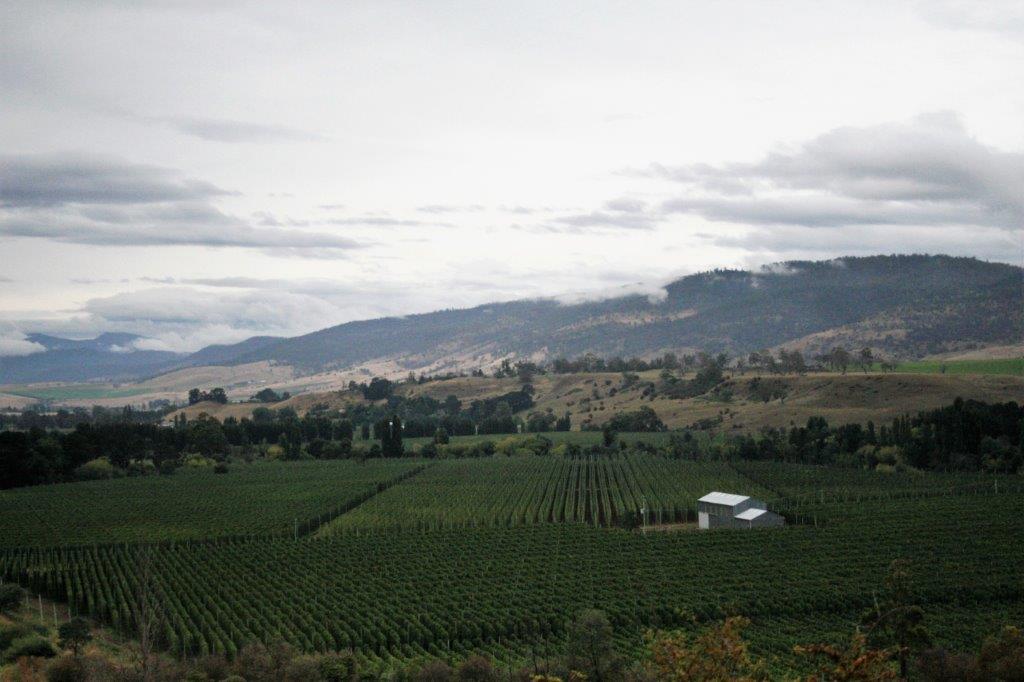
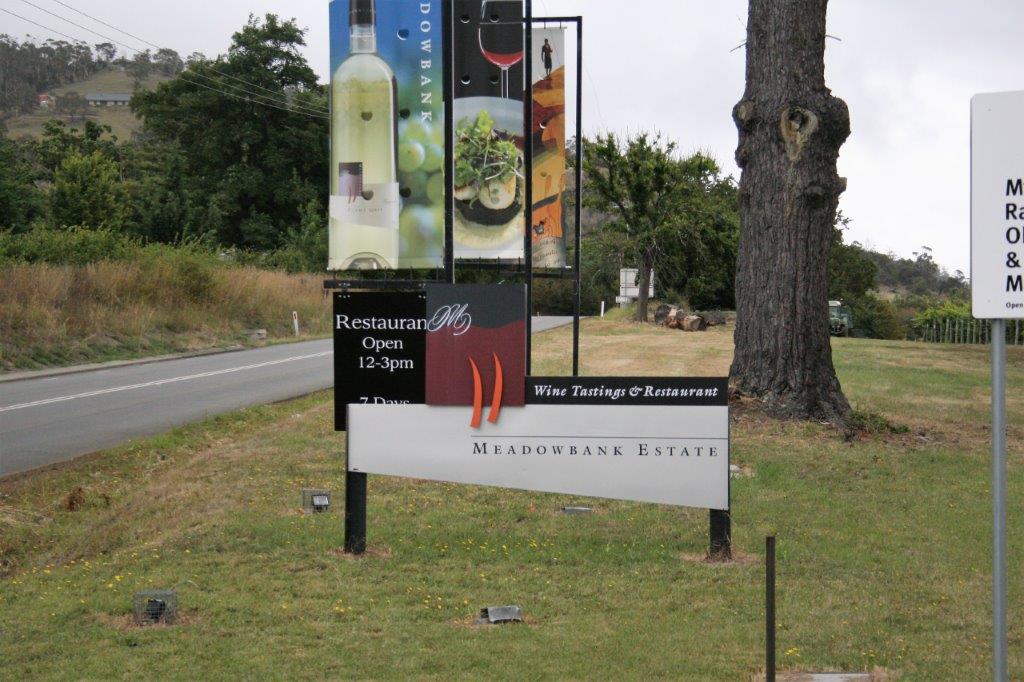
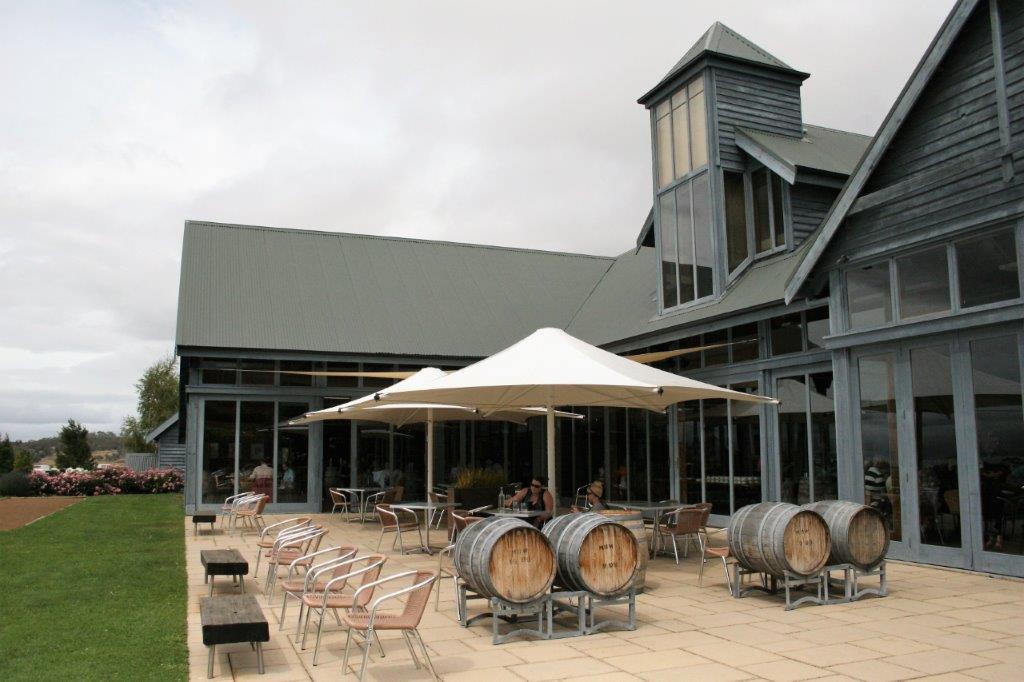
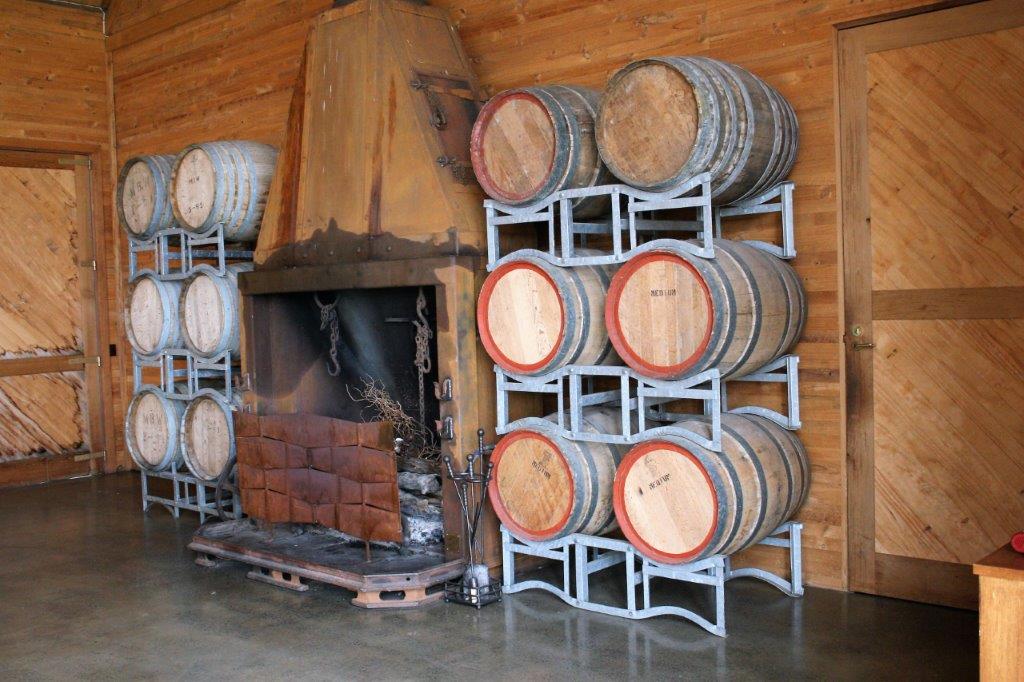
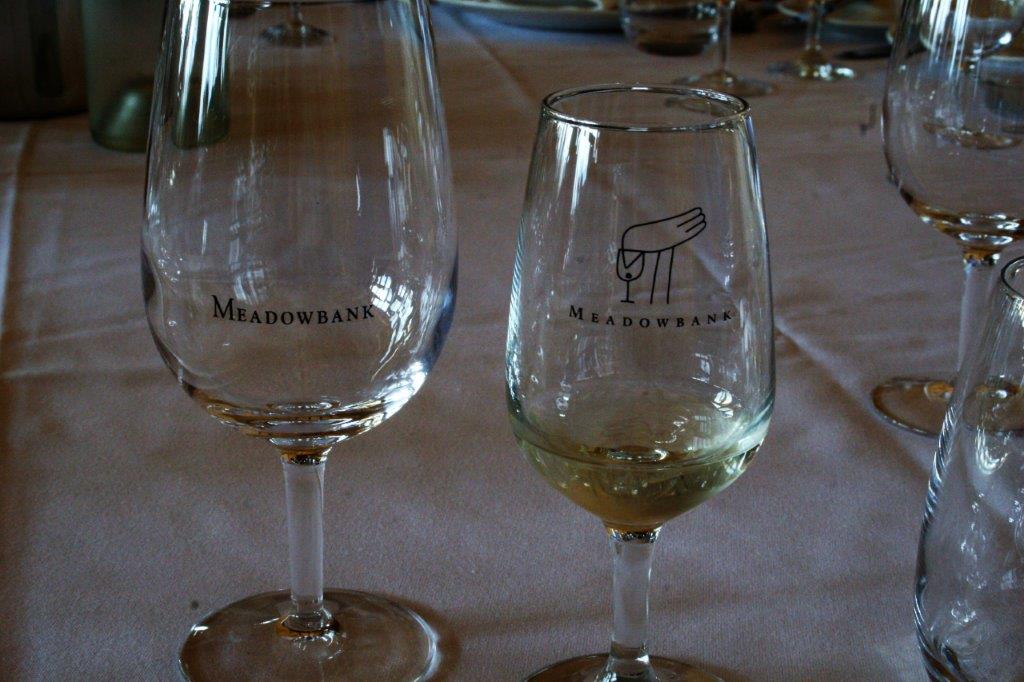
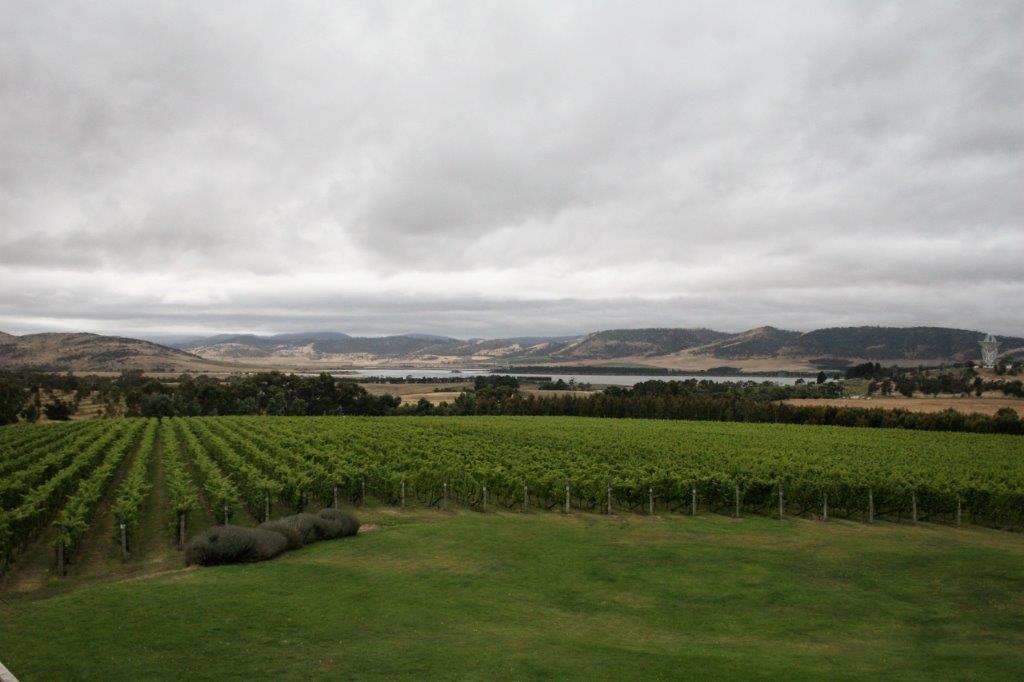
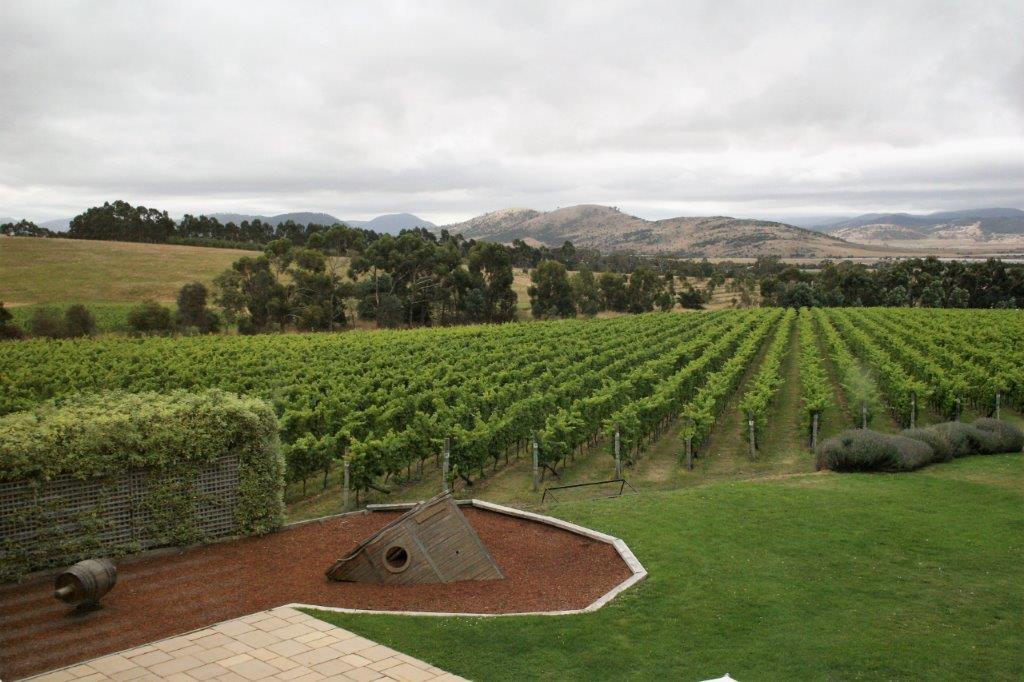
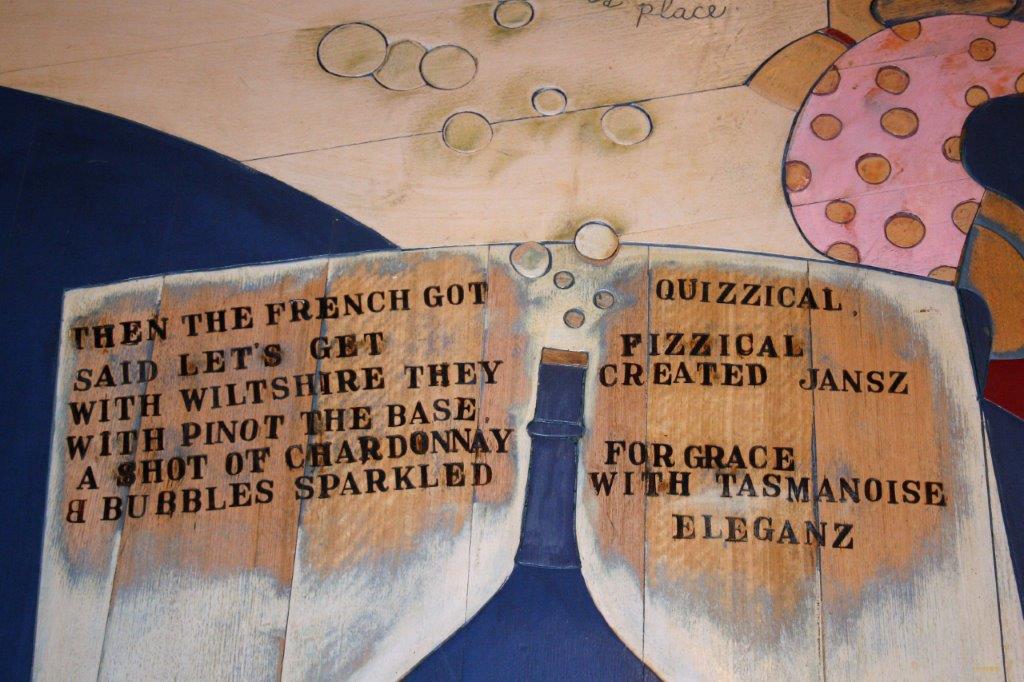
Russell Falls drops over three shelfs.  With all the plant growth and the rain it was hard to see it clearly. A further drive back toward Hobart on the other side of the Derwent river brought us to MeadowBank Winery for wine tasting and lunch.  Sadly the organization for the meal was somewhat lacking and the quantities didn’t even make it all around several of the tables.  Since it took so long to get our lunch it threw off the rest of the tour schedule so our guide had to call the ship and receive permission to return late.  The ship was in port until midnight so there was no worry about it sailing away but the shore excursions desk needs to know when people are due to be back on board. As usual with wineries the setting was lovely.

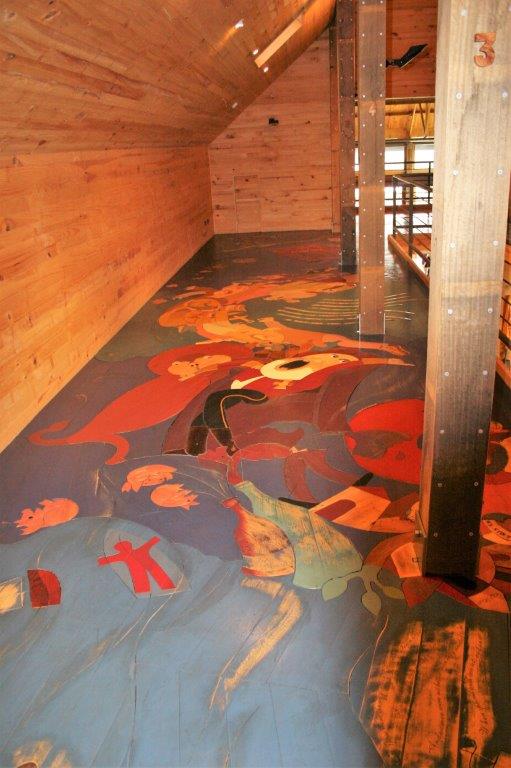
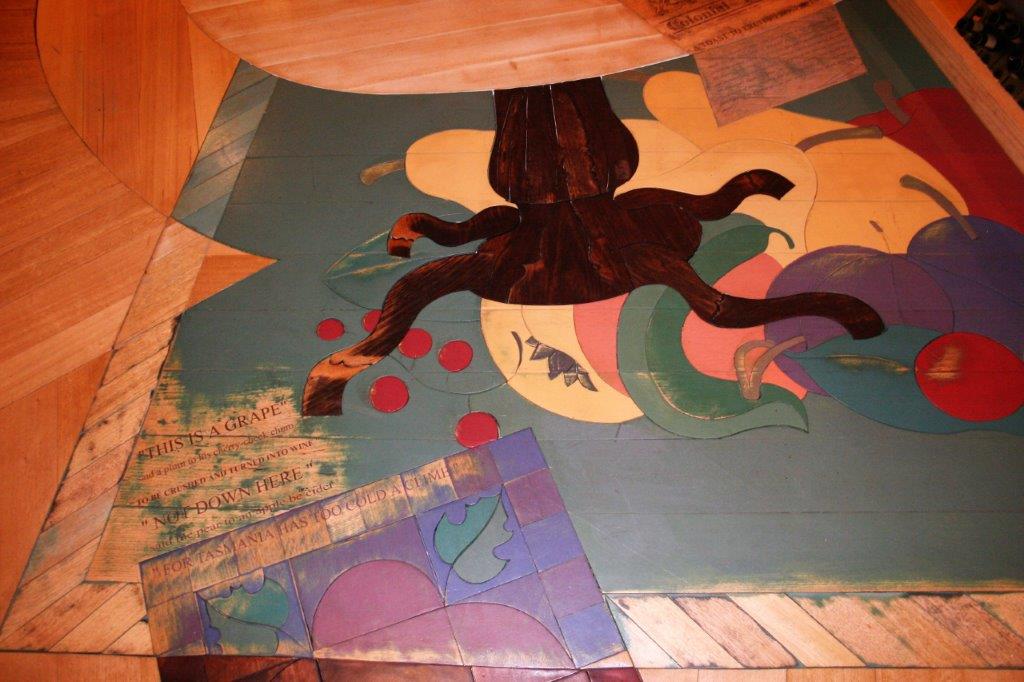
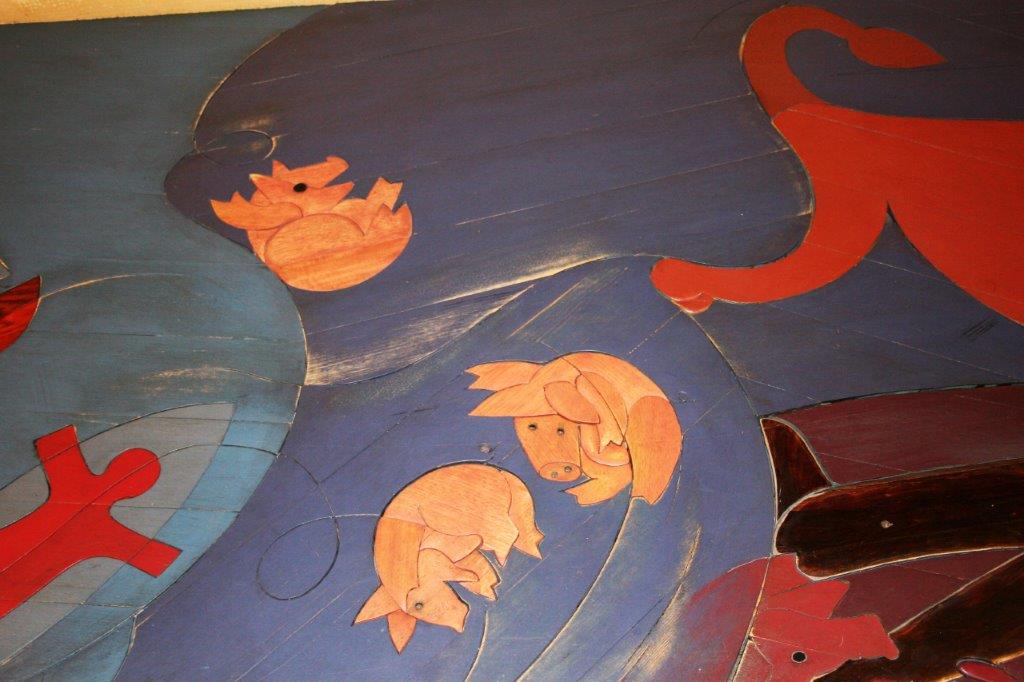
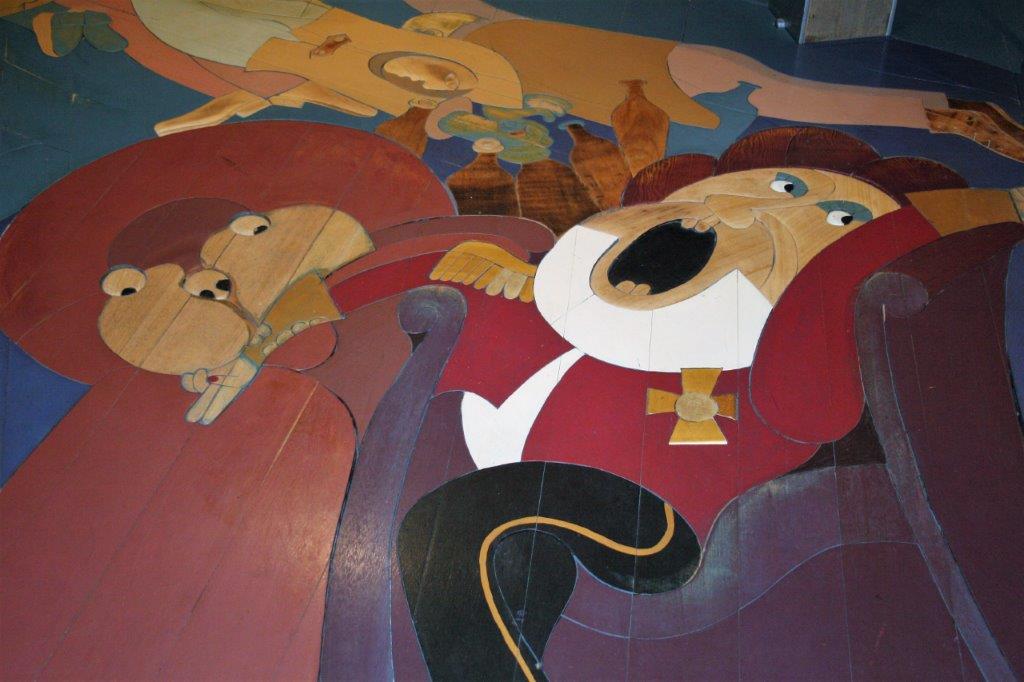
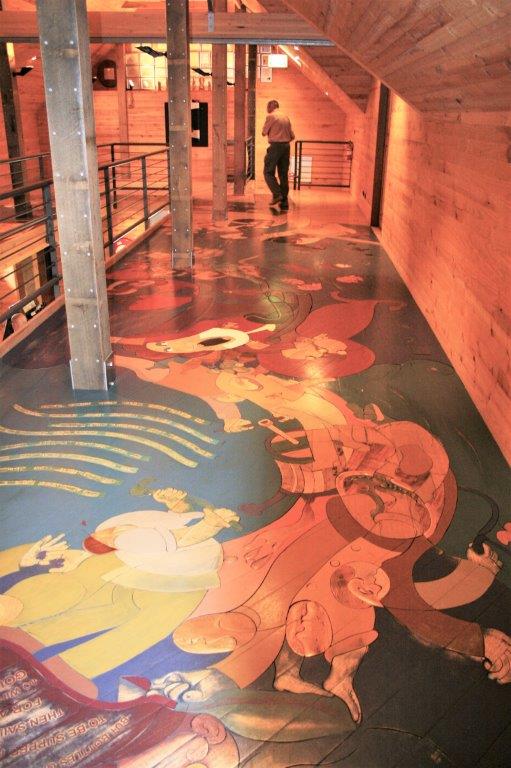
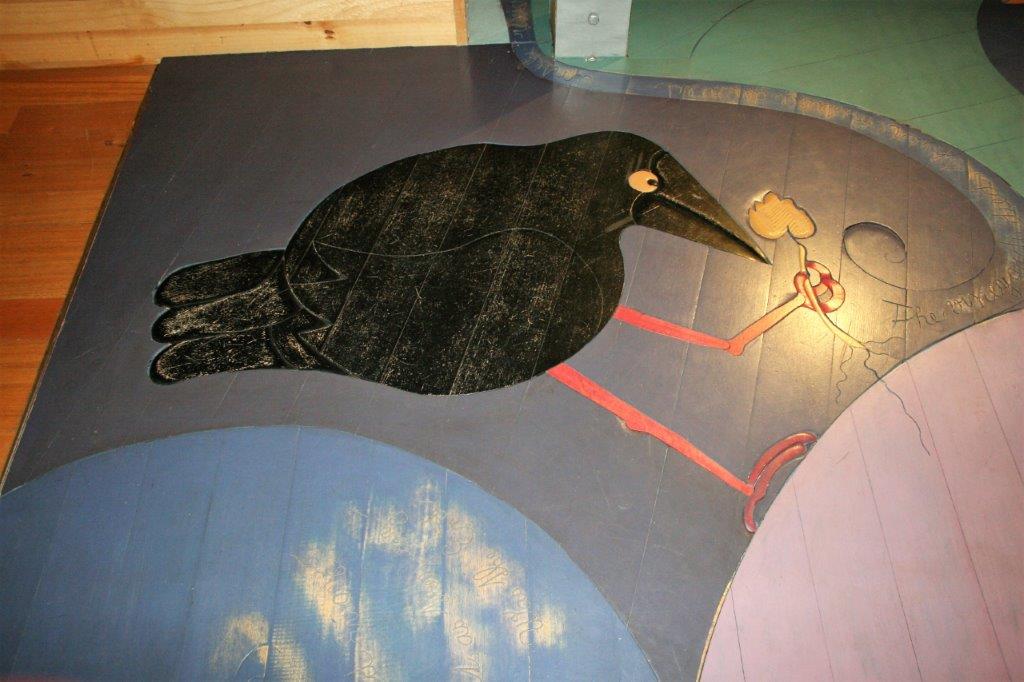
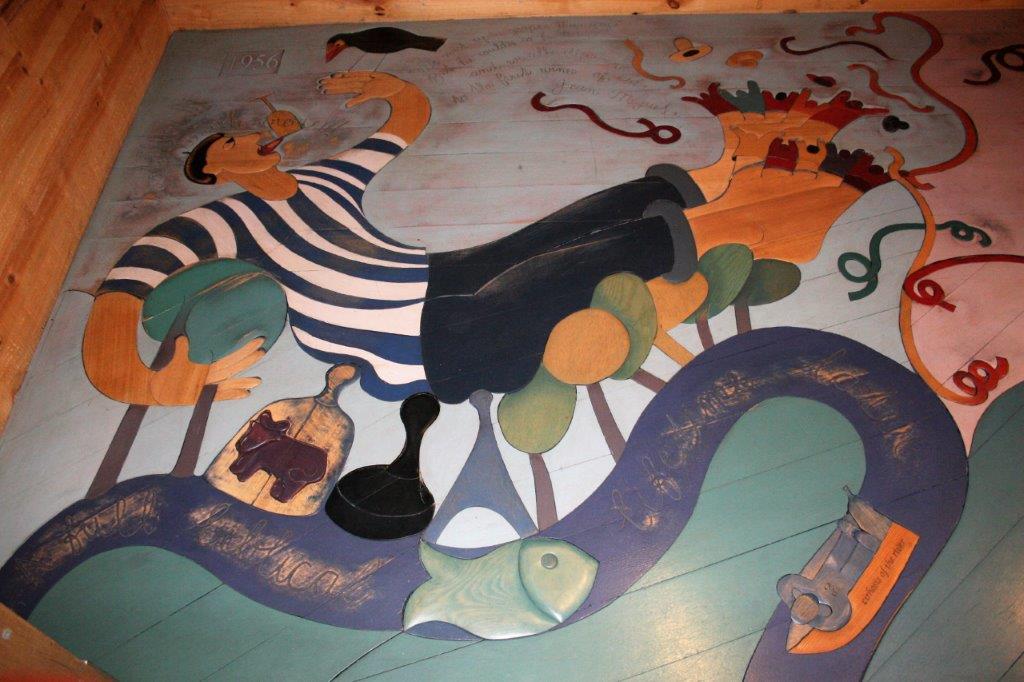
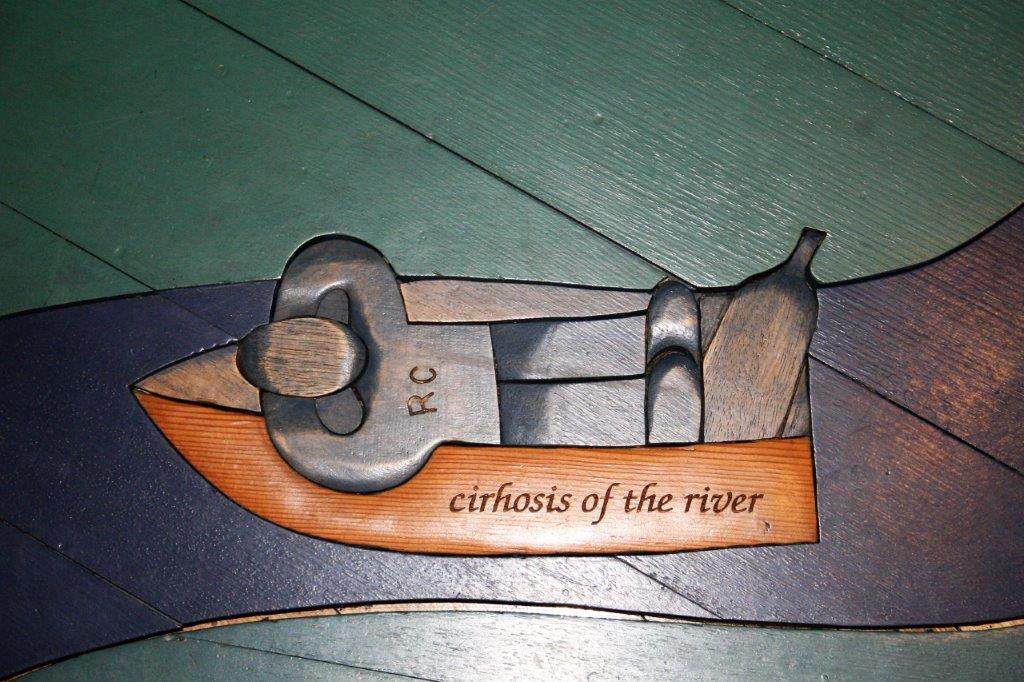
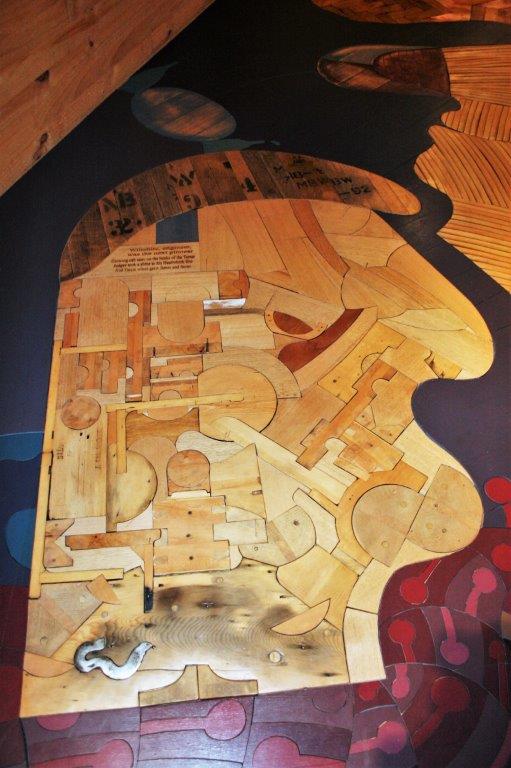
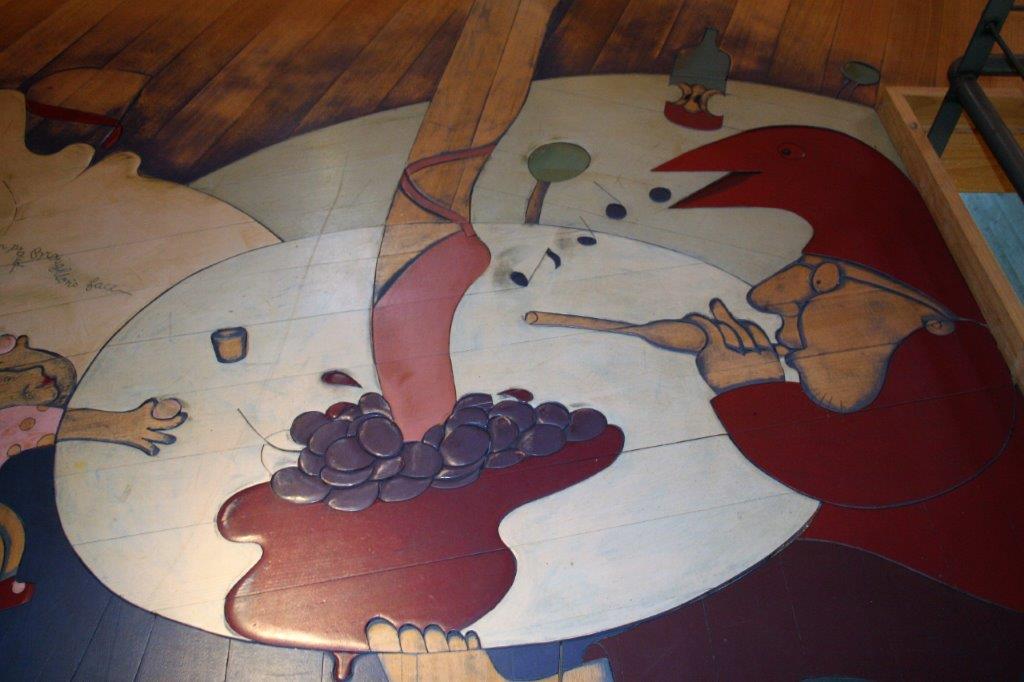
The nicest part of MeadowBank to me was the artistry on the floor in the upper level.  There were many stories and meanings pieced together in the wooden floor.  It would have taken a much longer than I had to check it all out. I thought it was beautiful art work.

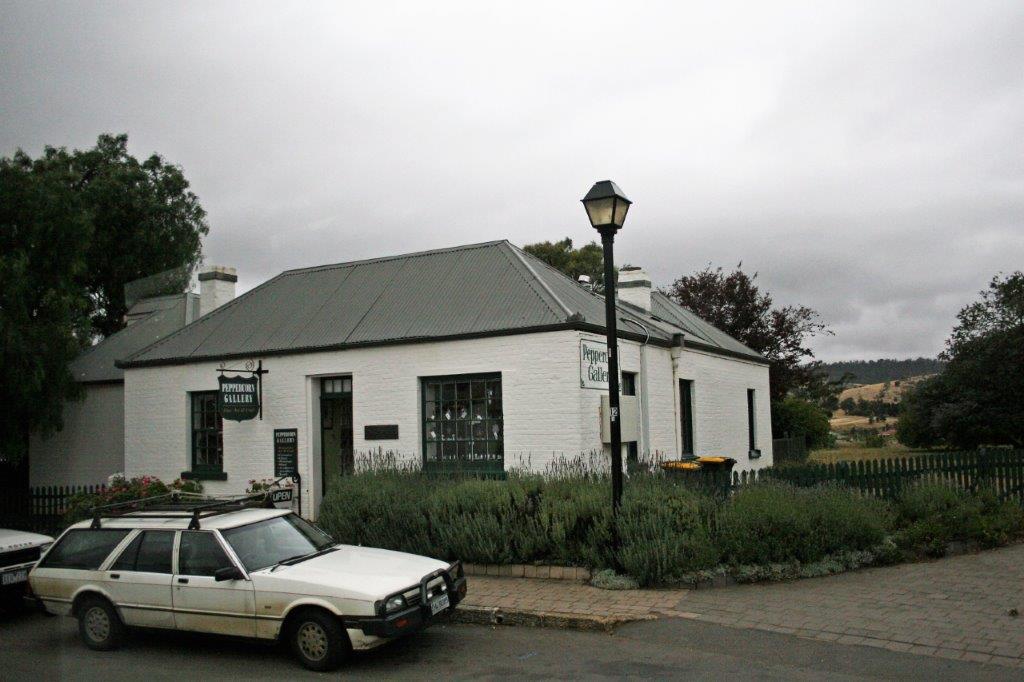
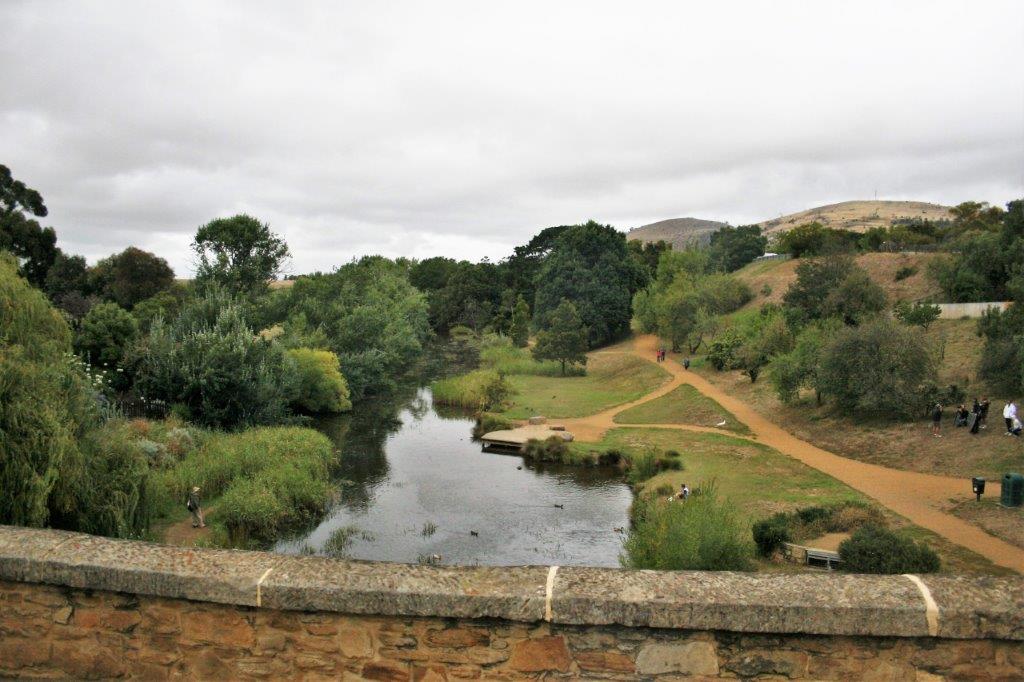
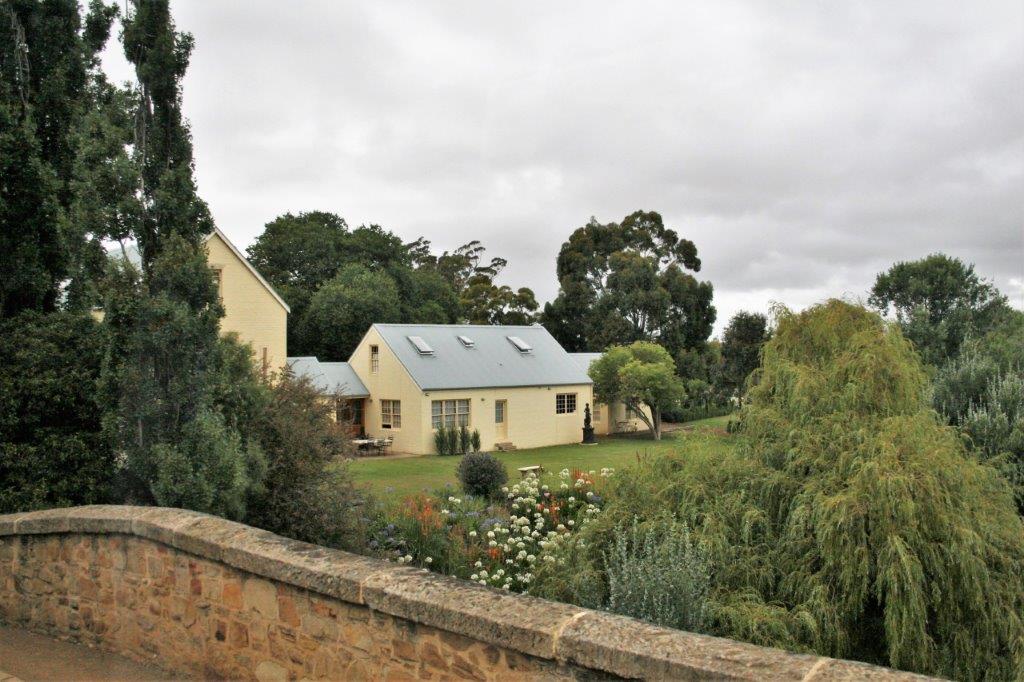
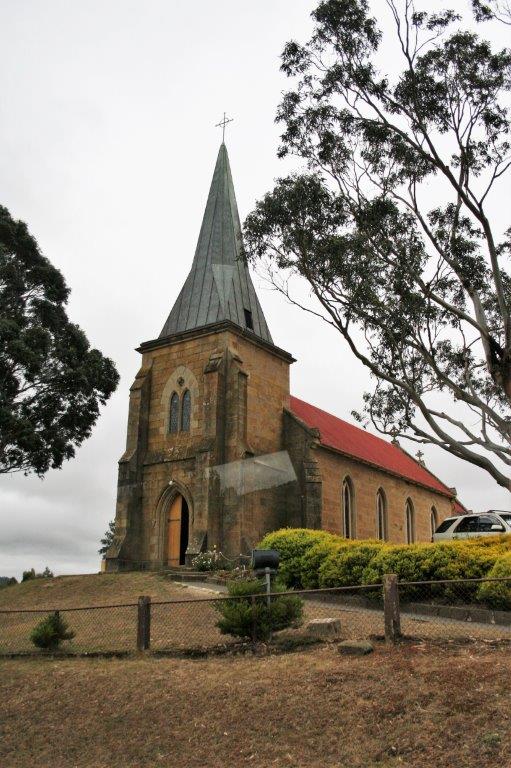
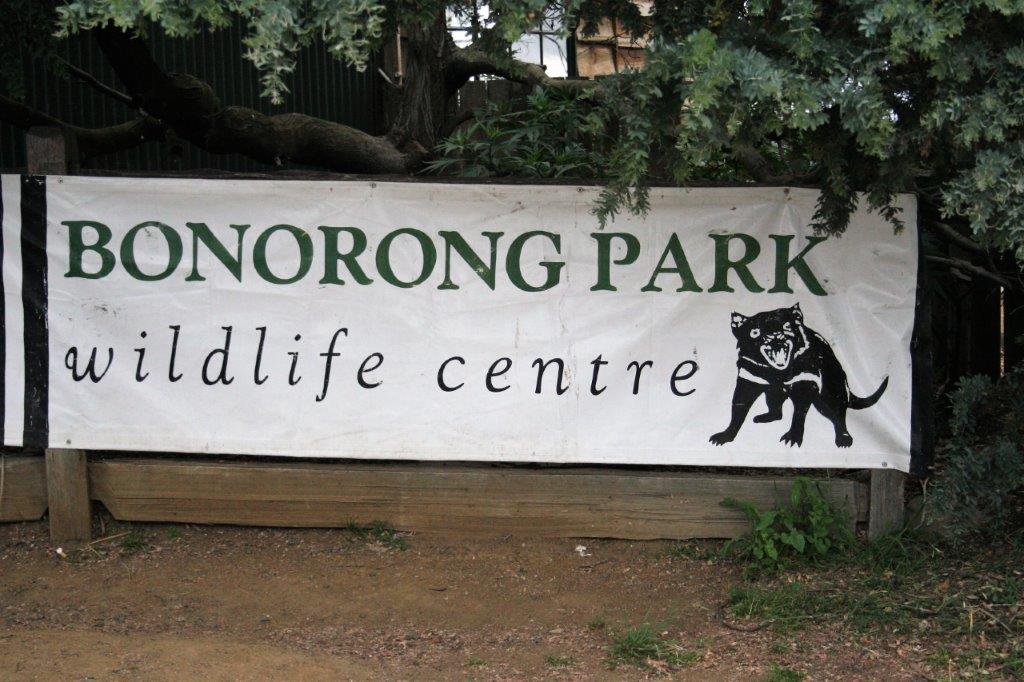
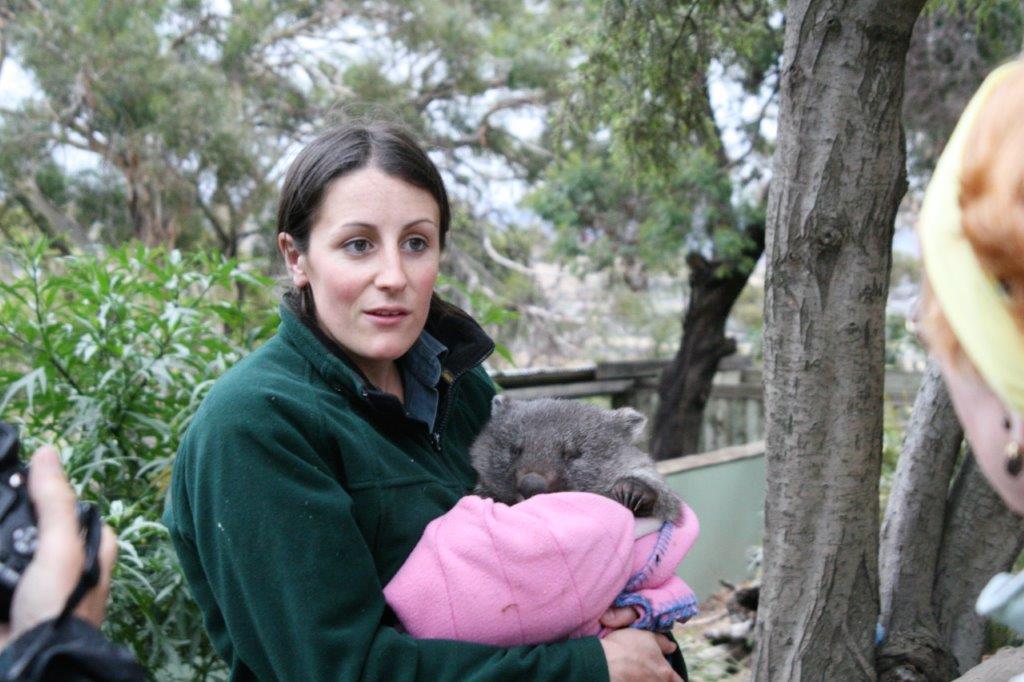
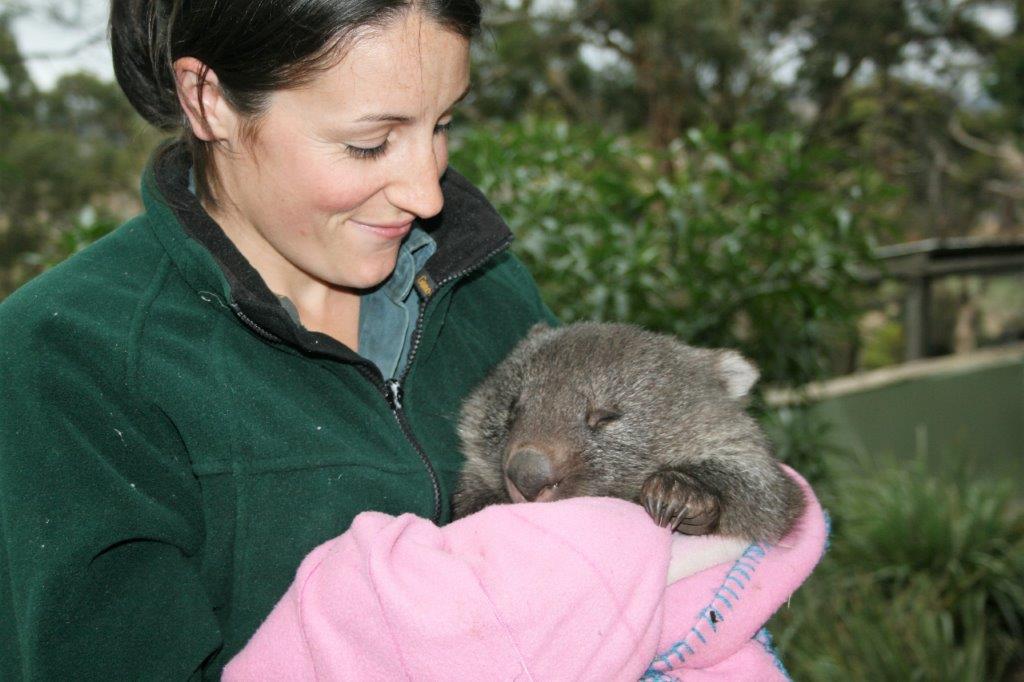
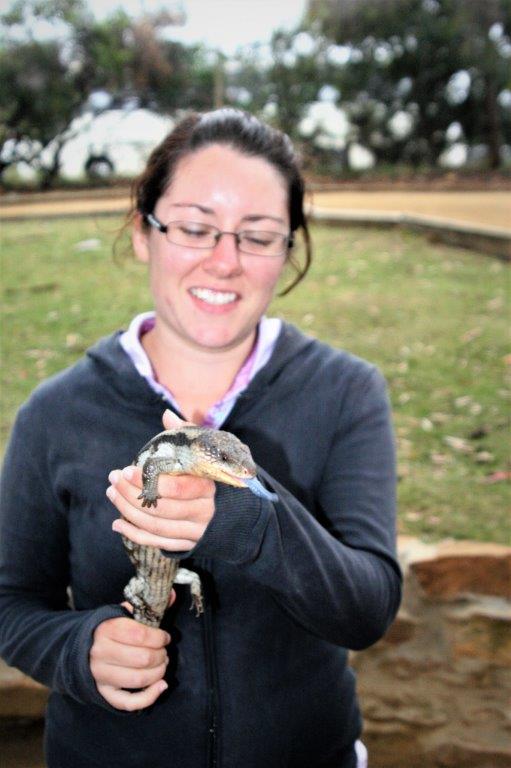
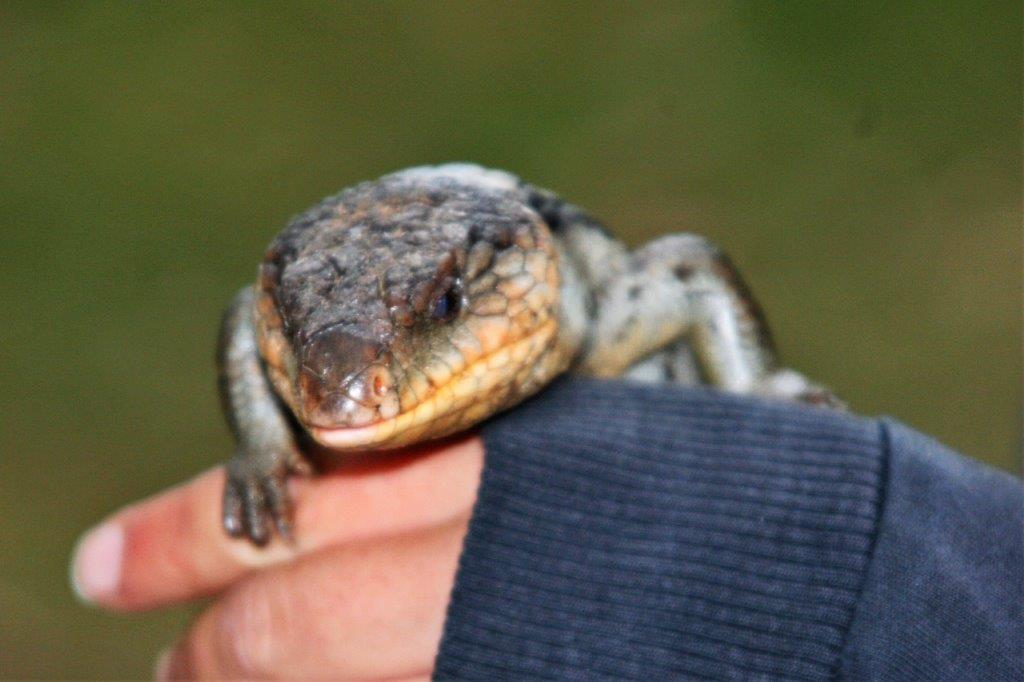
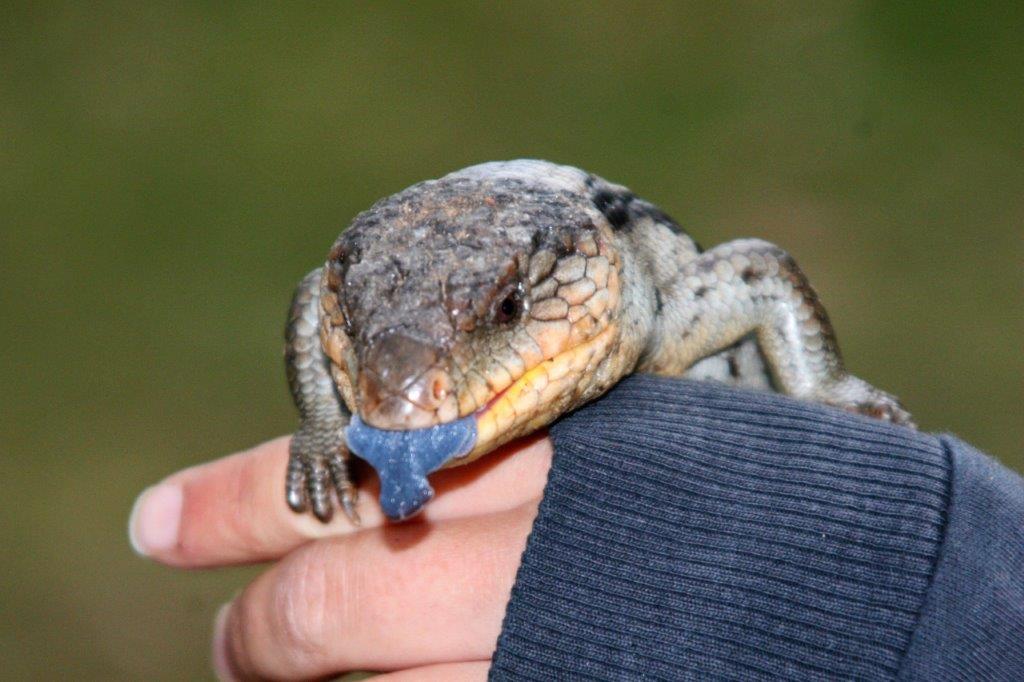
We were next taken to the Georgian town of Richmond, home to Australia’s oldest jail and oldest bridge (it was built by convicts like many of the structures and buildings in Australia). From Richmond we went to Bonorong Wildlife Park to see Tasmanian Devils, wallabee’s, kangaroo’s and other critters. Th This is a baby wombat.  They are nocturnal so it just wanted to nap.                                      How is this for a bright blue tongue?

Tasmanian Devils are about the size of a large cat.  They are very fiesty and do not play well together.  They scrap a lot.  There is a type of cancer that is decimating the Devils in the wild.  It is a cancerous growth on their face and it is communicable, passing from one to another when they fight and bite at each other.  It is expected that all Devils in the wild will die from it so there are several places that are breeding Devils to build up a new population at the same time a lot of research is being done to find out more about the cancer.

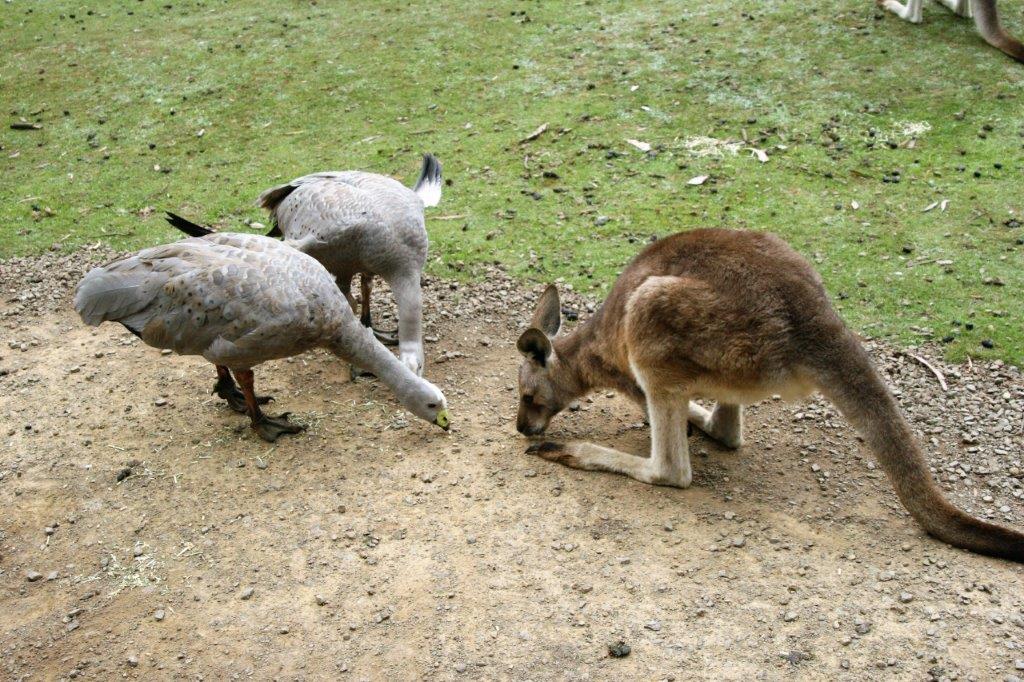
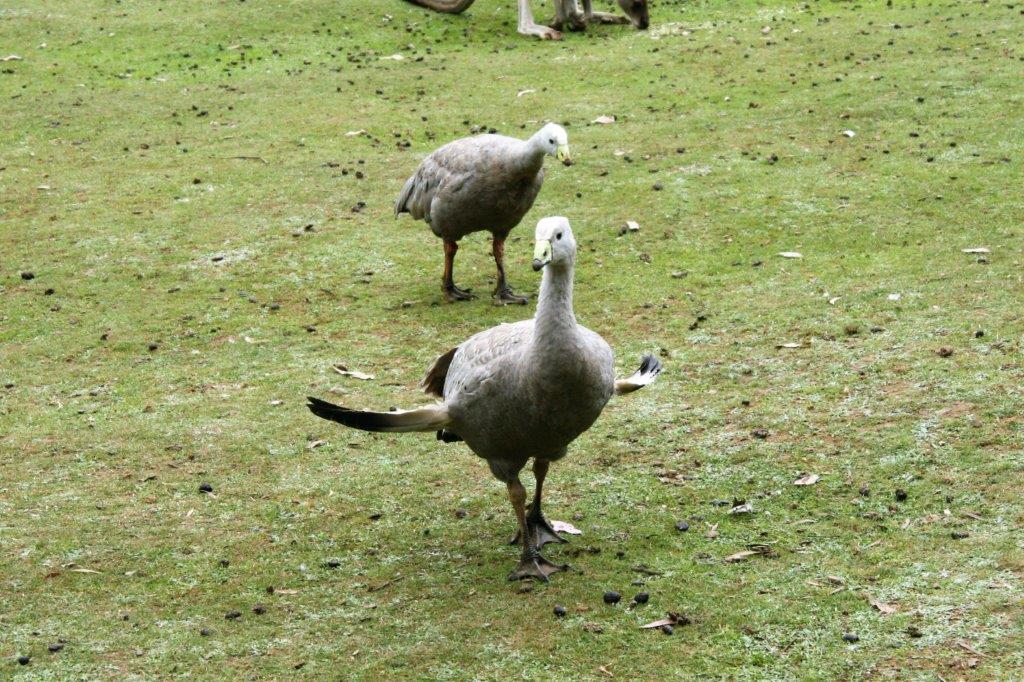
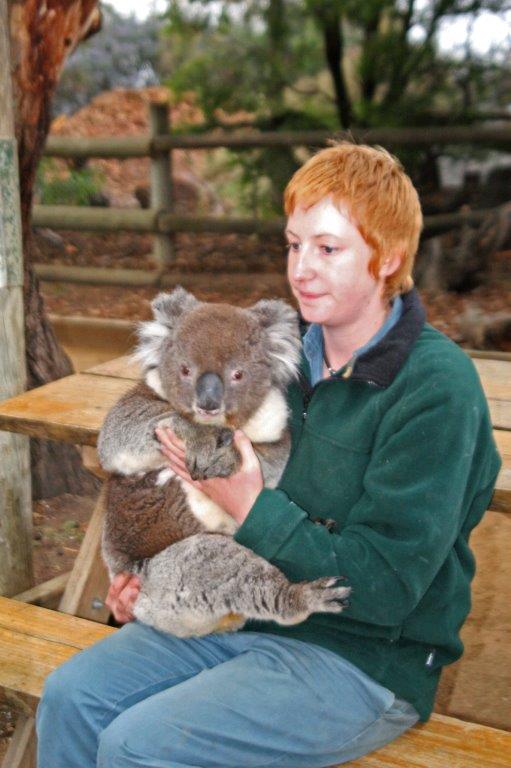
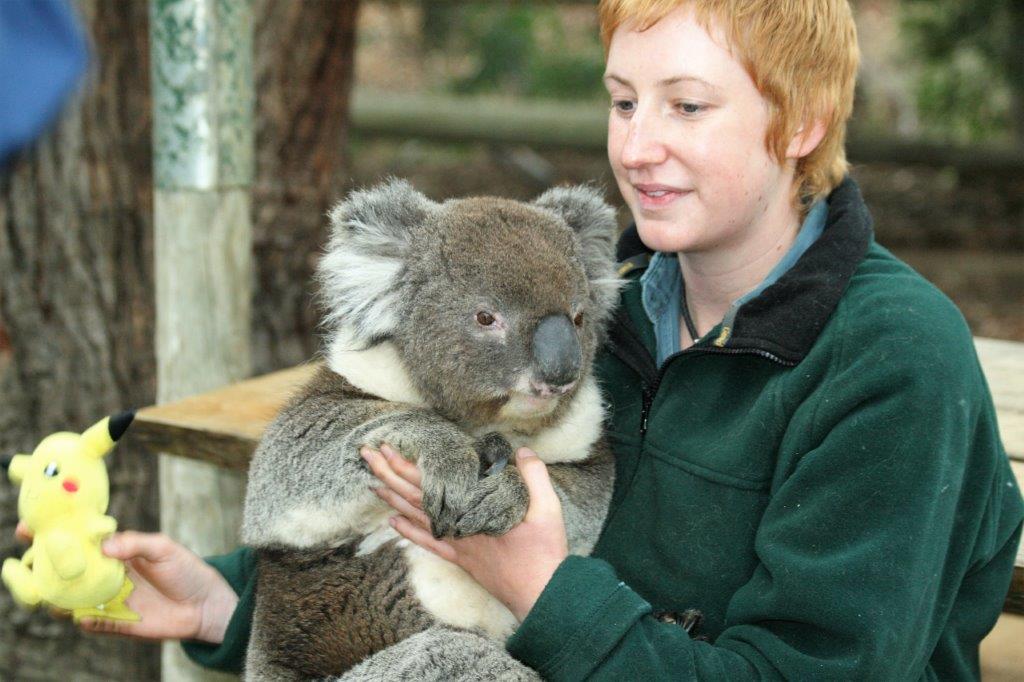
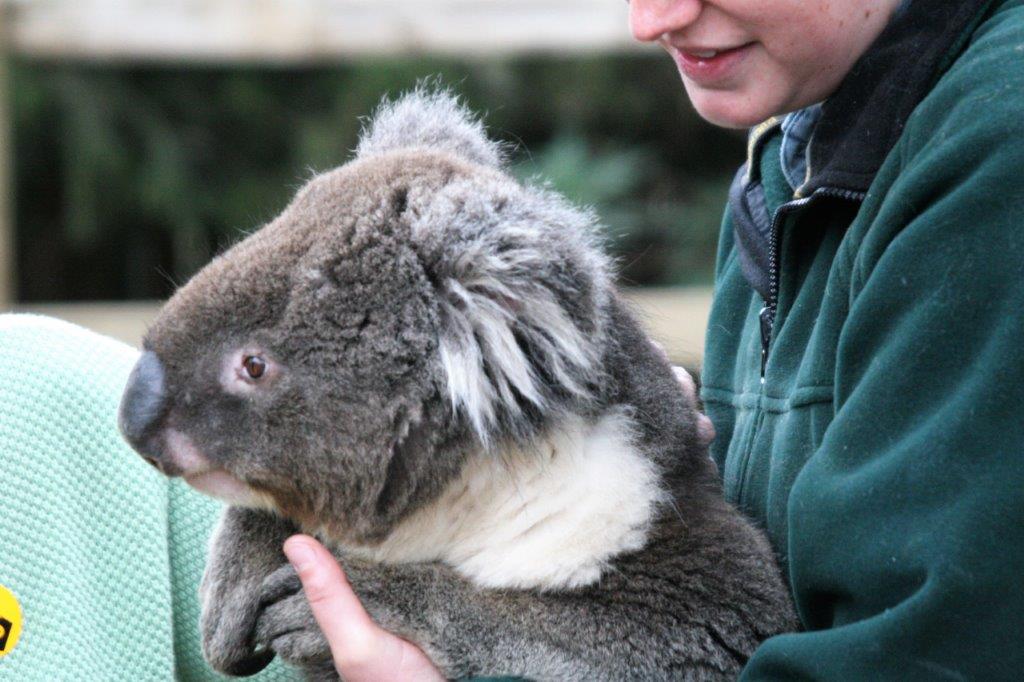
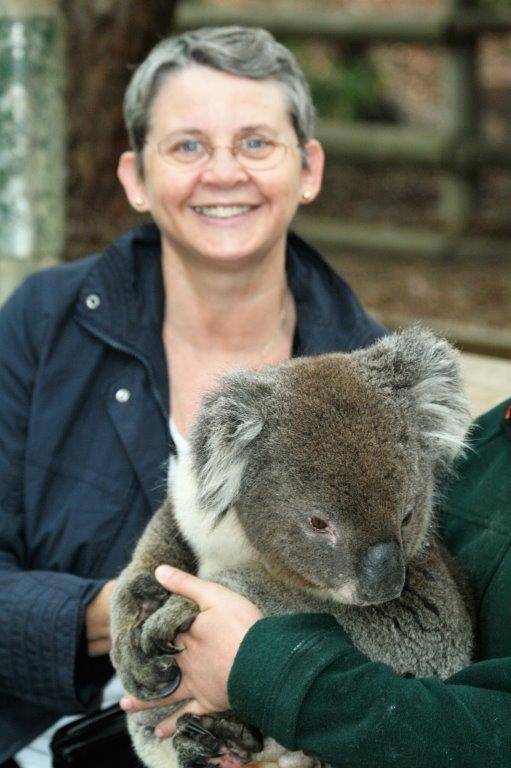
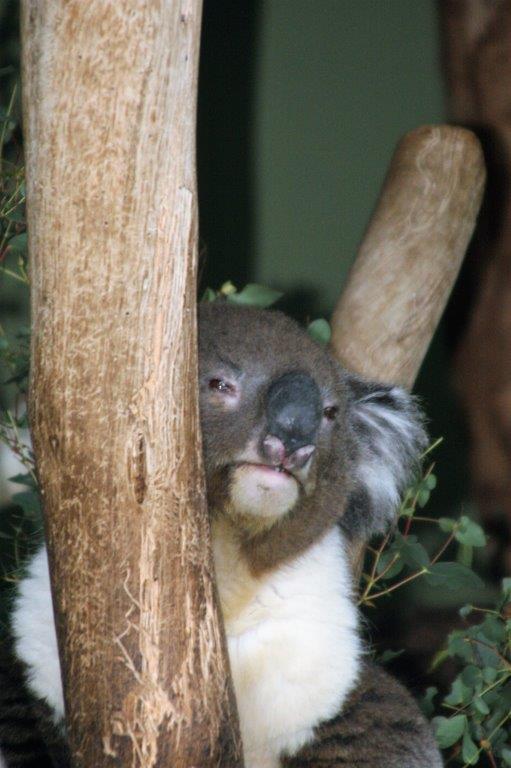
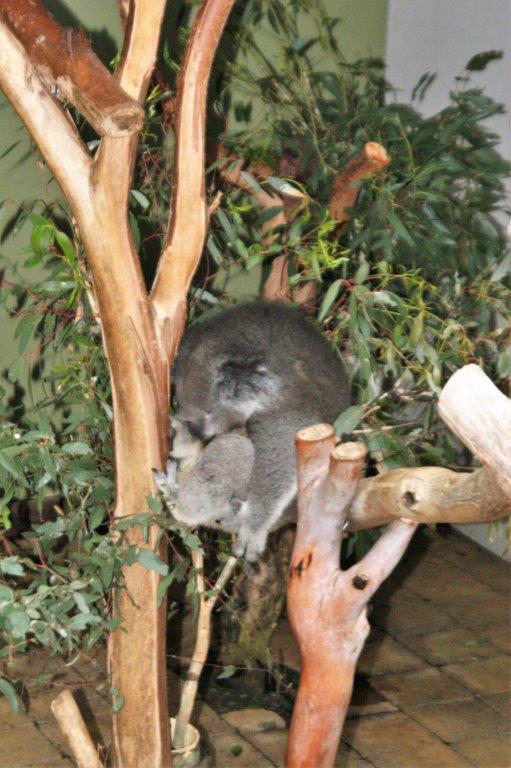
. Koalas are adorable.  Not many places allow you to hold them yourself because they have very long, very strong claws and they will do some serious damage to you if they get annoyed or scared.  They only eat eucalyptus leaves, and rarely go out of the trees as they get enough water from the leaves.  They are extremely sleepy most of the time – resting in the trees up to 20 hours each day.  There is so little nutrition in the eucalyptus leaves that they have very low energy levels.                                These are Cape Barren Geese.

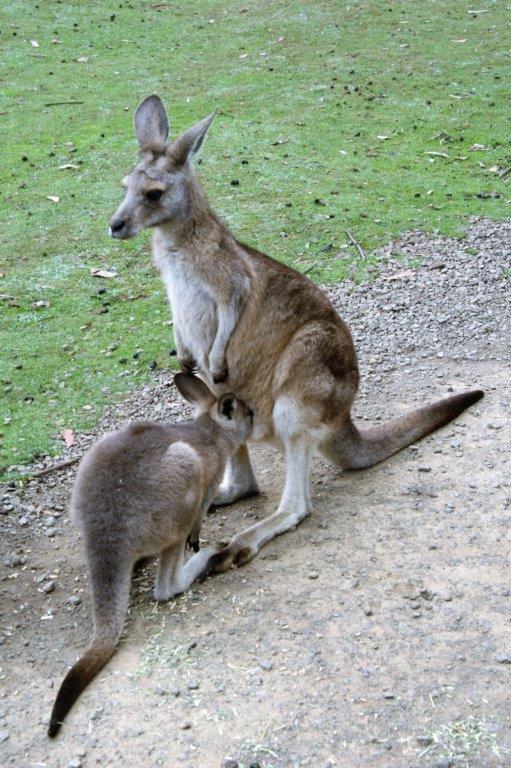
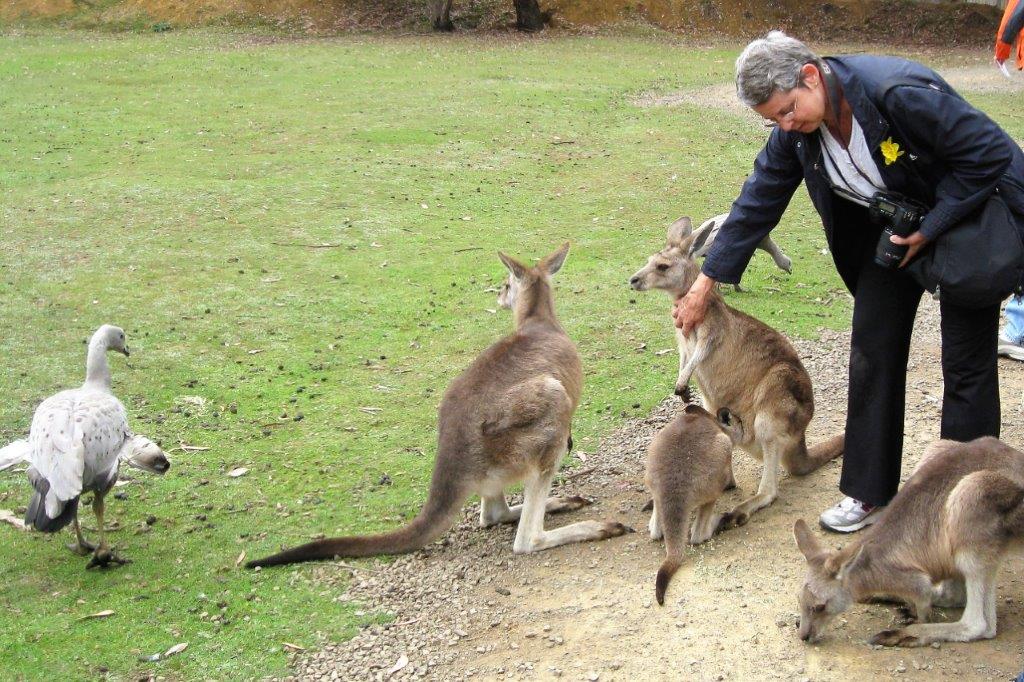
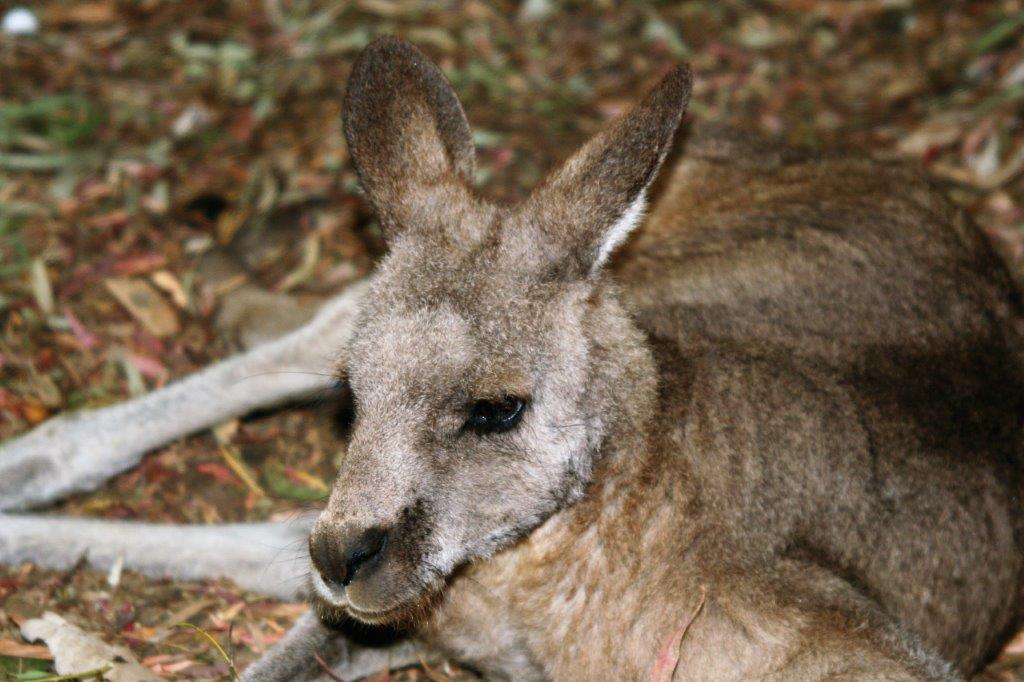
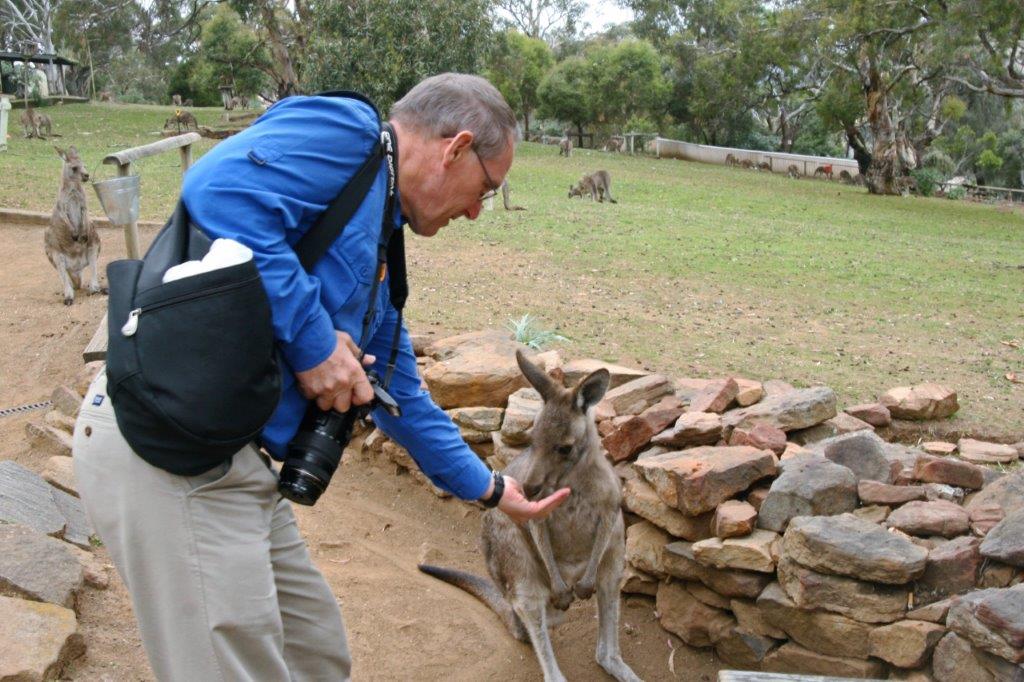
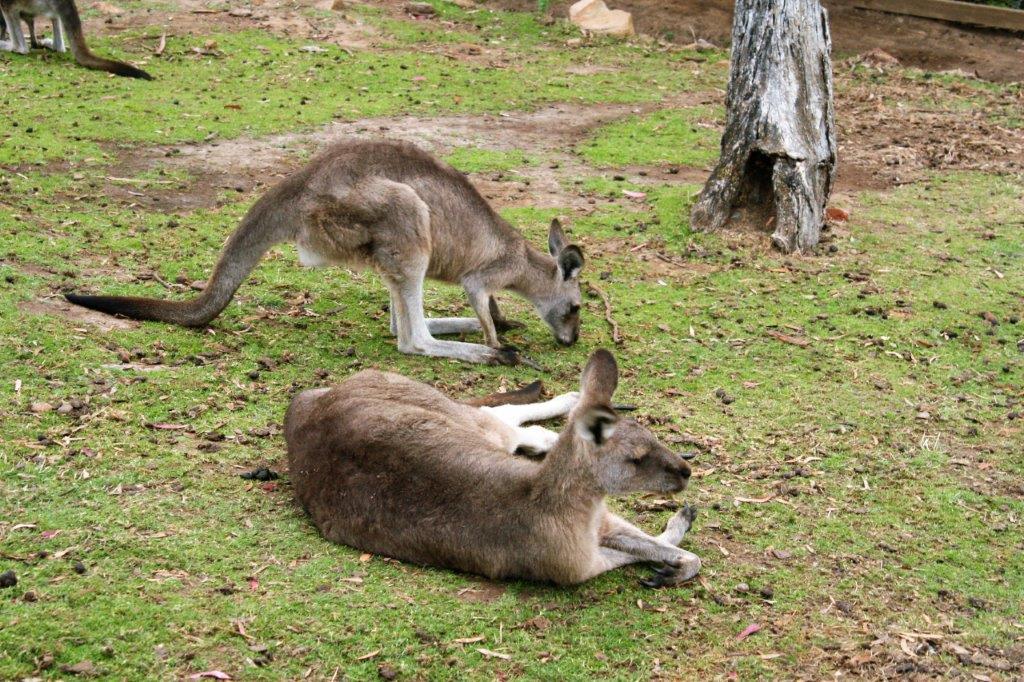
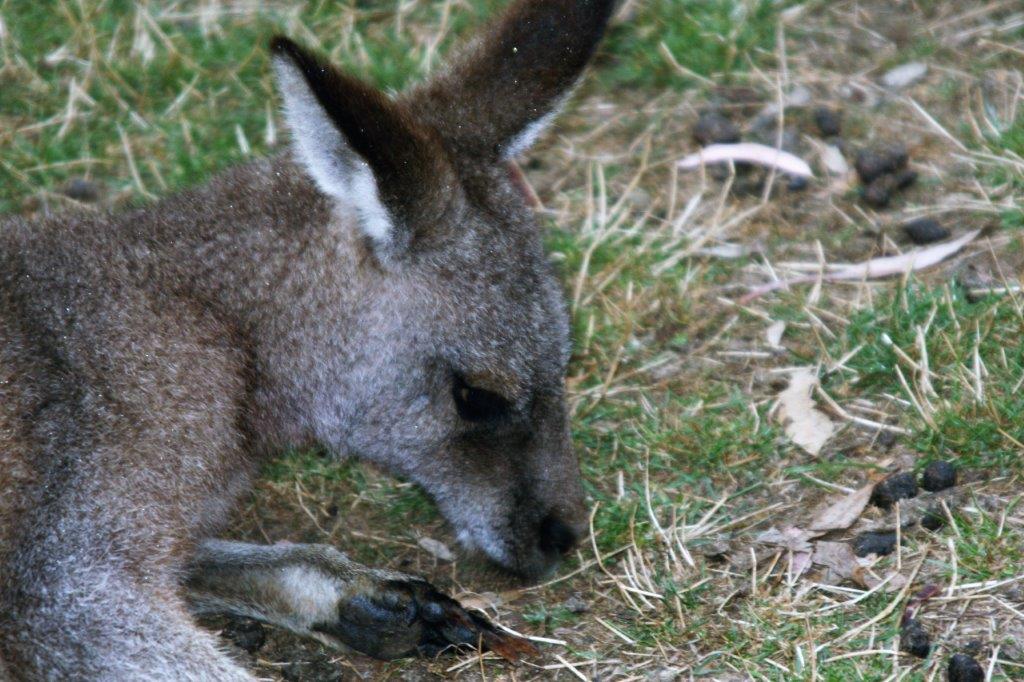
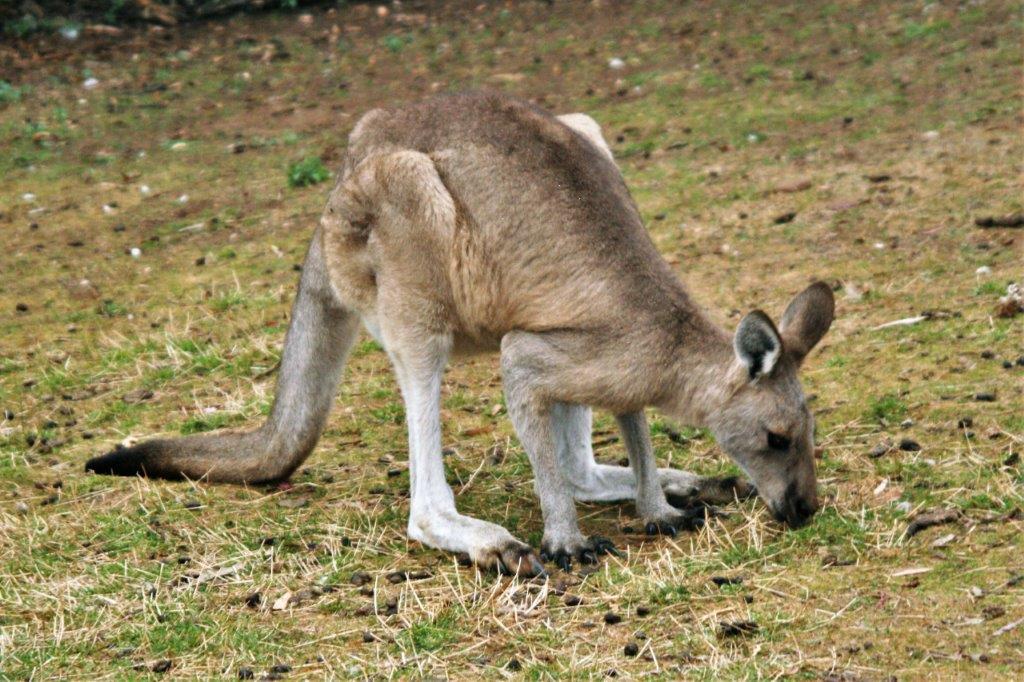
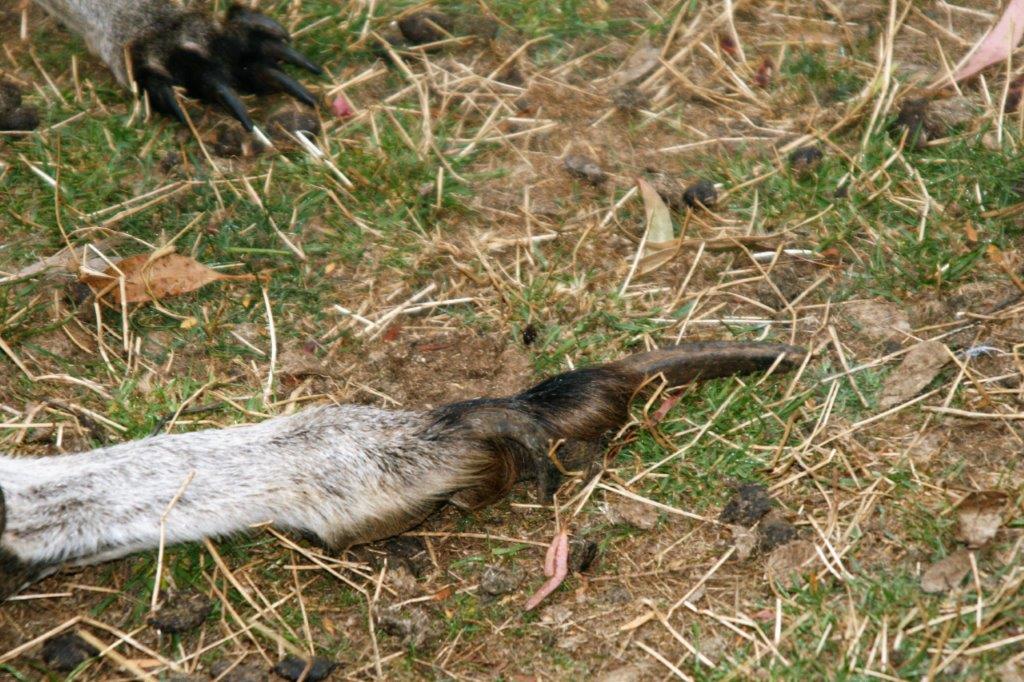
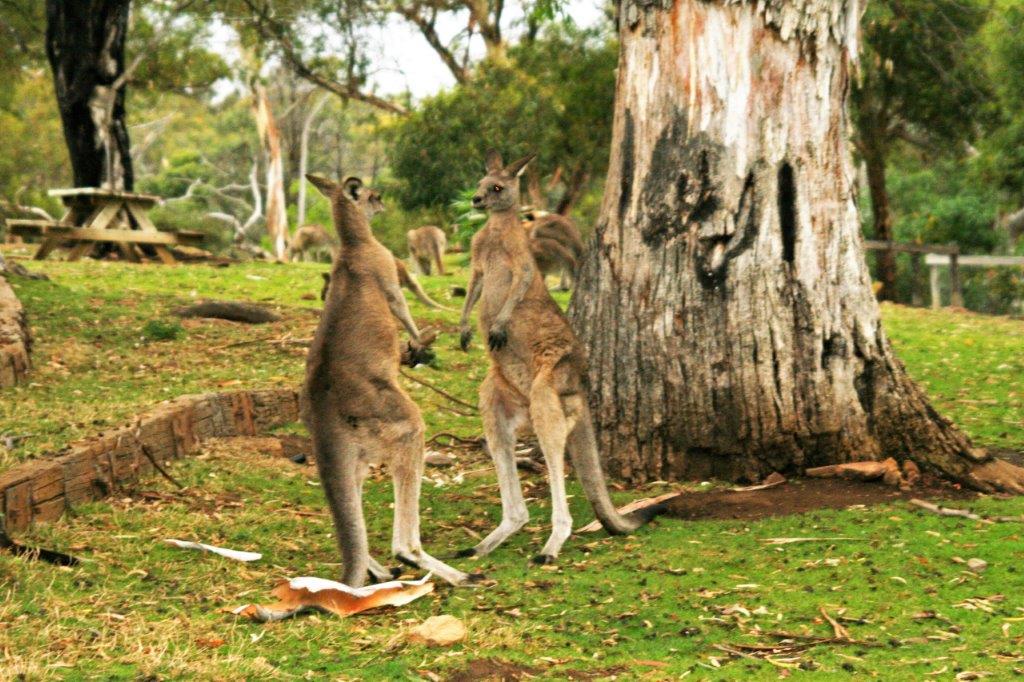
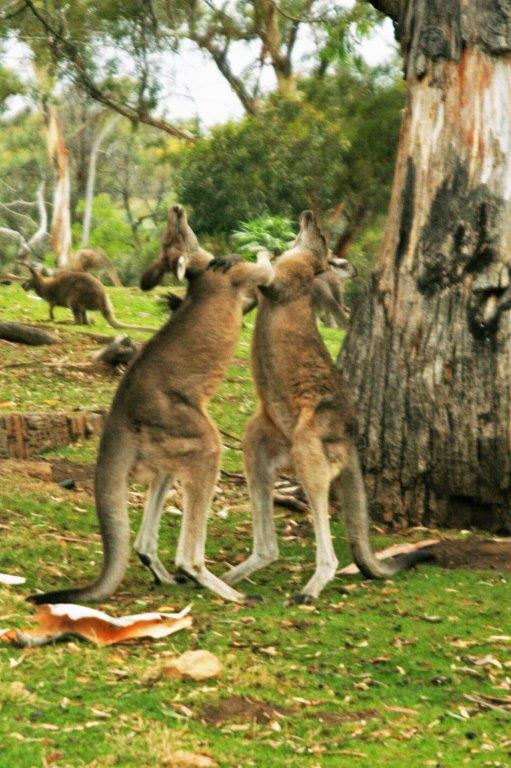
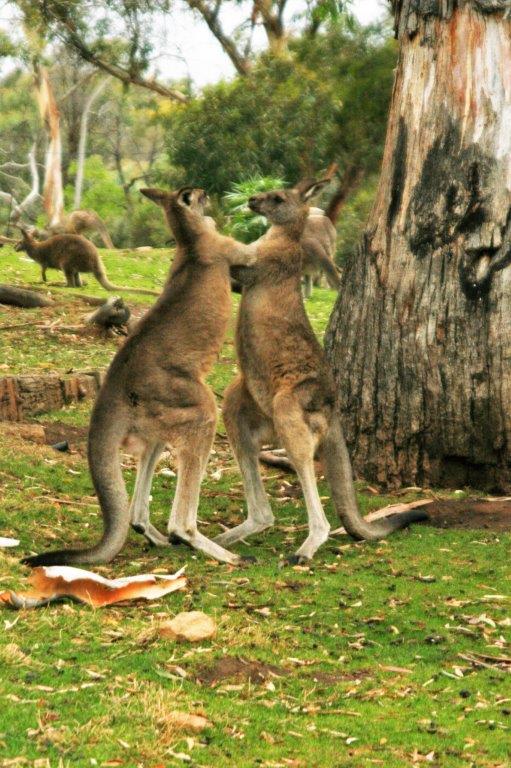
A large pen had quite a number of Grey Kangaroos.  You could puchase some food to give them which turned out to be Cheerio cereal, which they really liked. They have a very long toenail on the back feet.  Roos are skilled boxers and will also use their powerful back legs to kick predators or humans that make them feel threatened.  They can be very aggressive if provoked or angered.

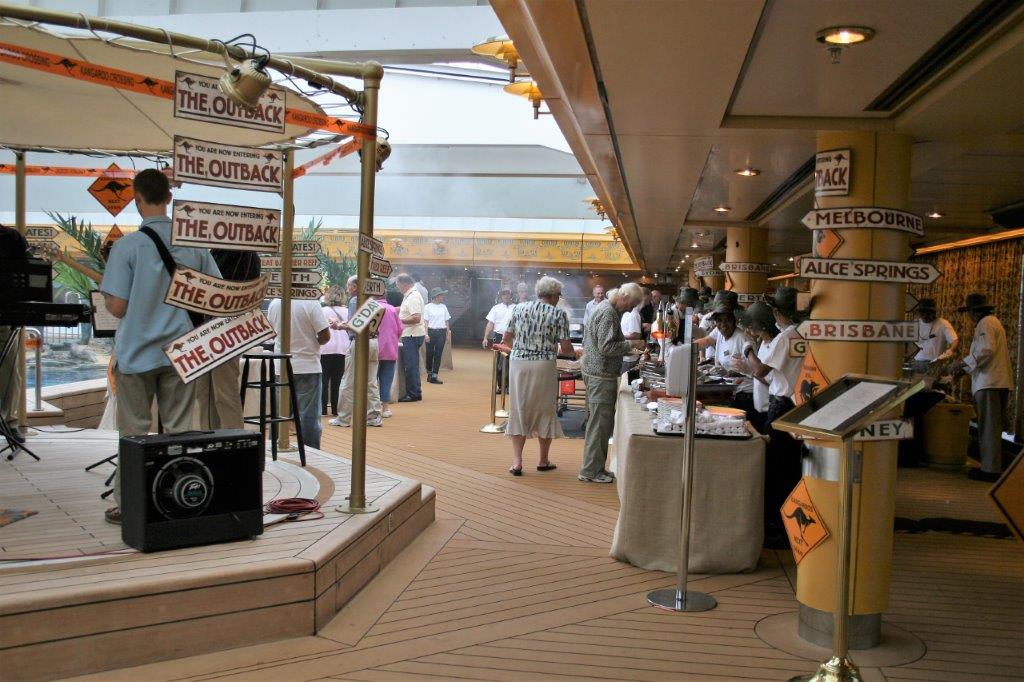
 Then it was time to be driven back to Hobart and the ship.One of the options for dinner that night was an Australian BBQ on the pool deck.

The next day was our last port of call before Sydney and the beginning of our two-month tour of the eastern half of Australia.

2011 February 14 – Day 40 – Fiordland National Park Scenic Cruising

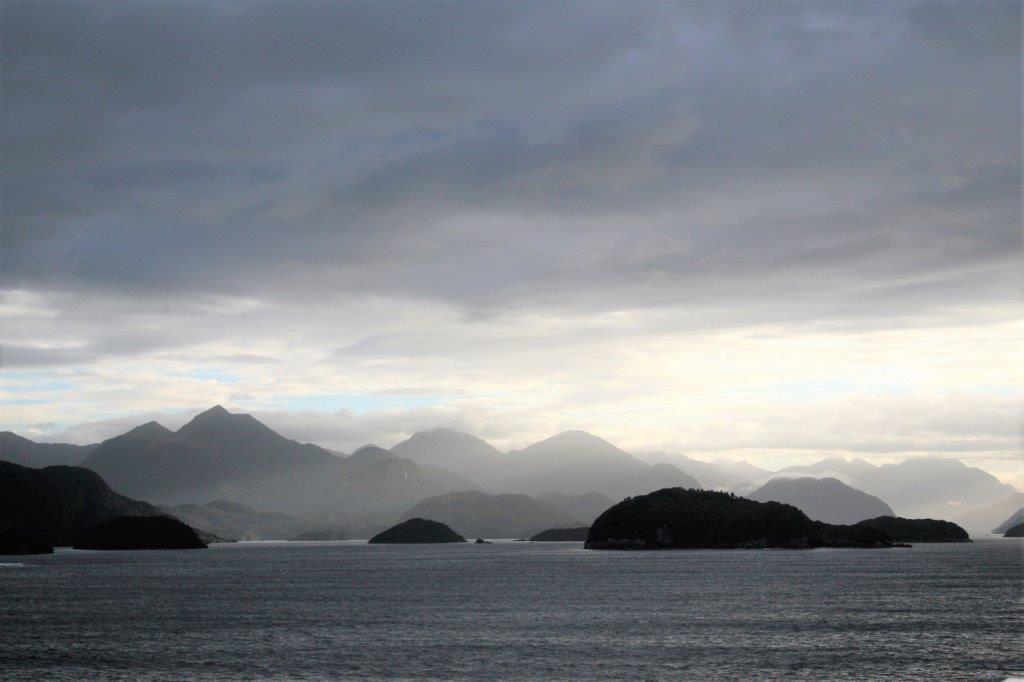
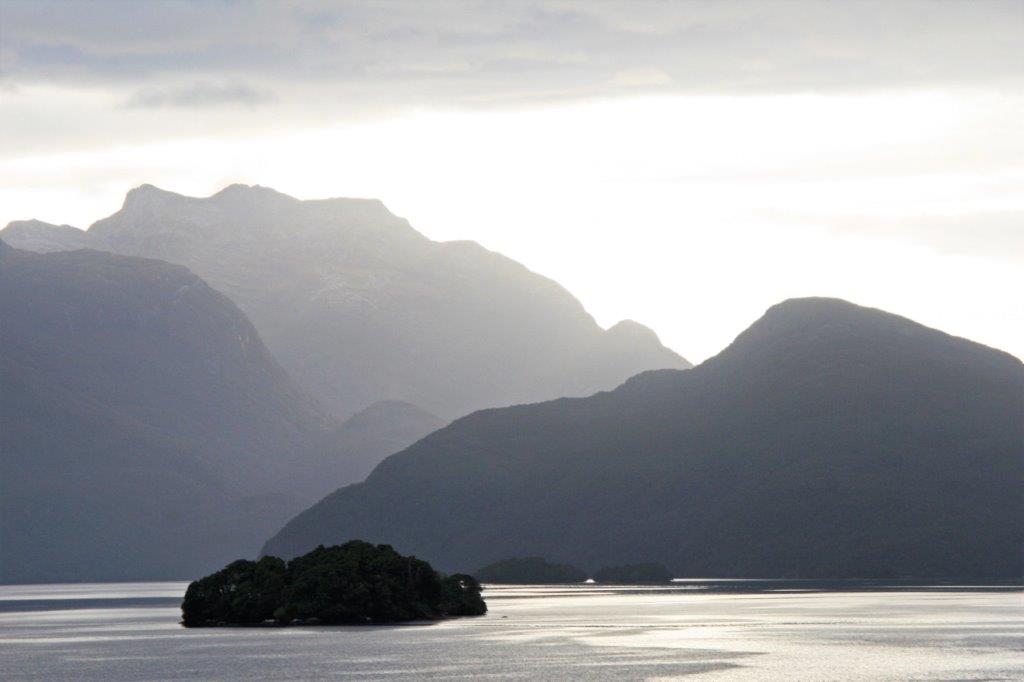
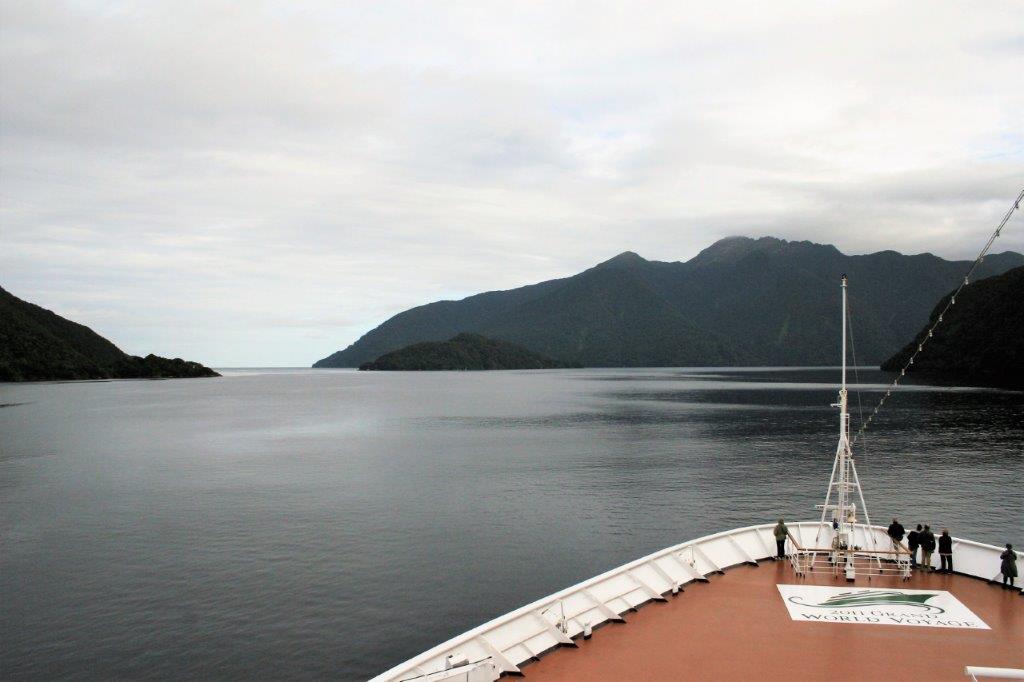
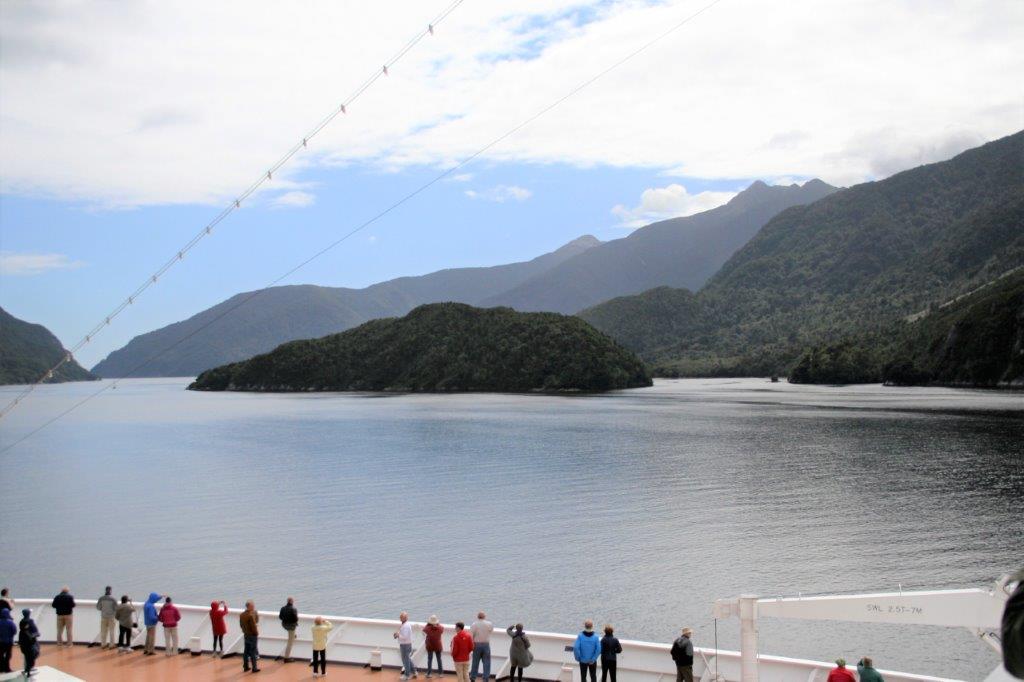
At long last we had a day with nothing to do.  Theoretically, that is.  The ship spent the day sailing into and then out of three of the sounds of Fiordland National Park which is located on the western coast of New Zealand’s South Island.  This coastline is along the notorious Tasman Sea; long known as one of the roughest bodies of water in the world.  The sea is 2,000 km (1,200 miles) across and 2,800 km (1,700 miles) from north to south.  This large expanse of open water is referred to as The Ditch by the Australians and New Zealanders.  To go ‘across the ditch’ is to go from one country to the other.

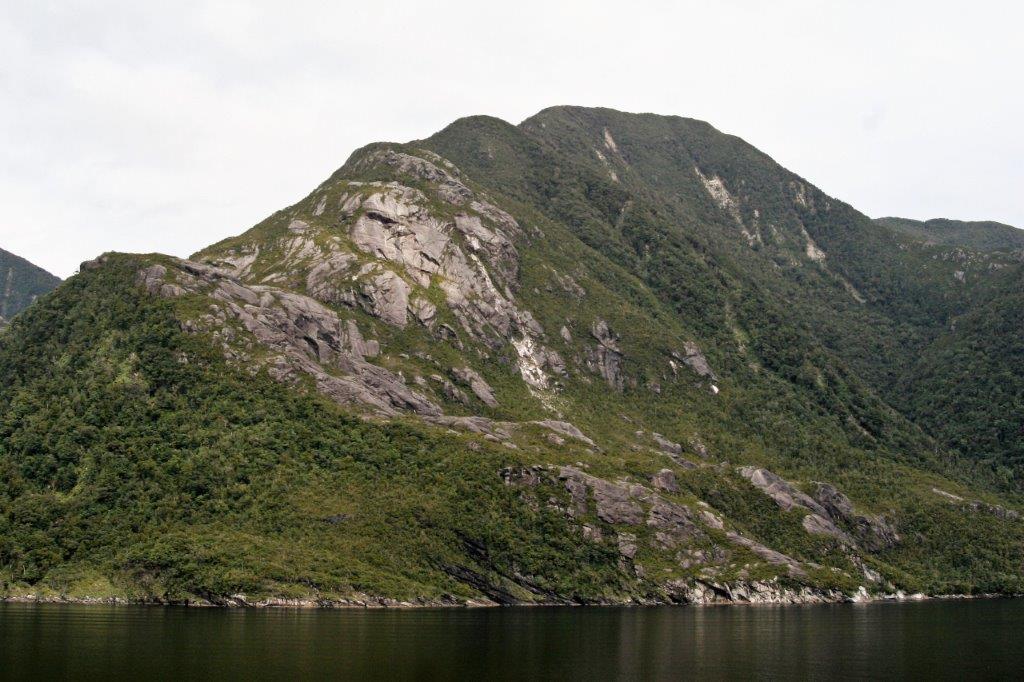
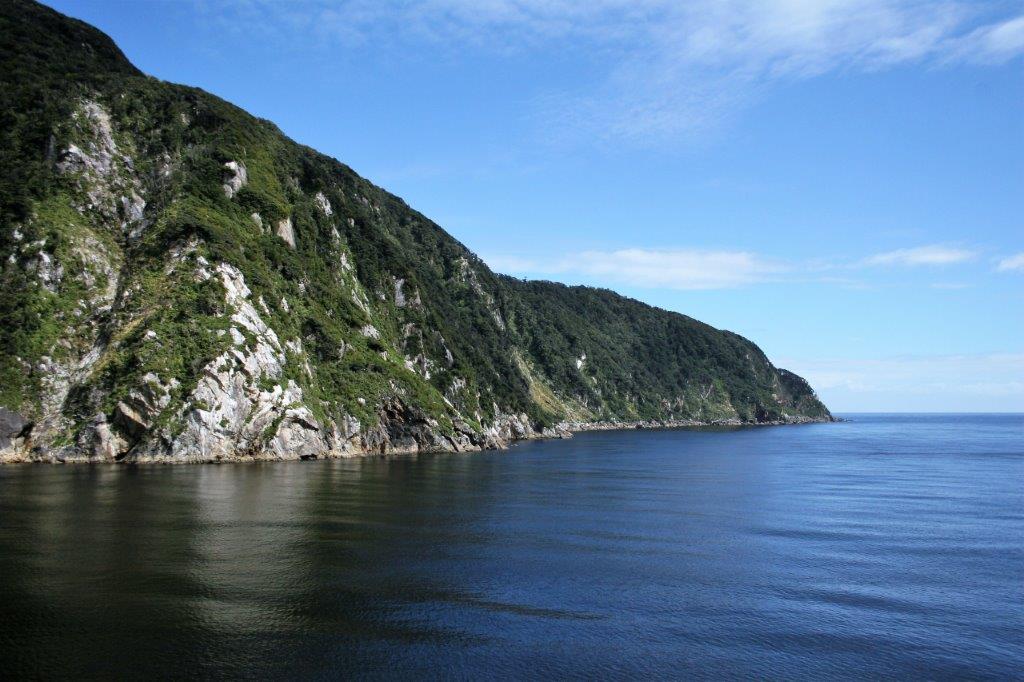
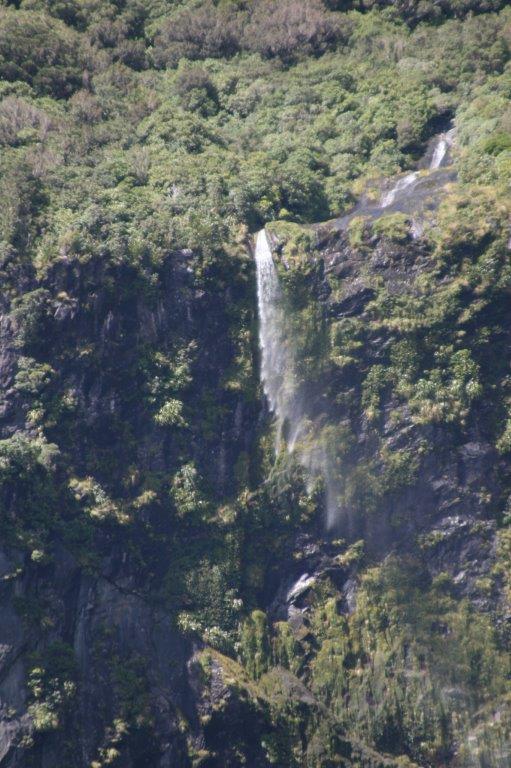
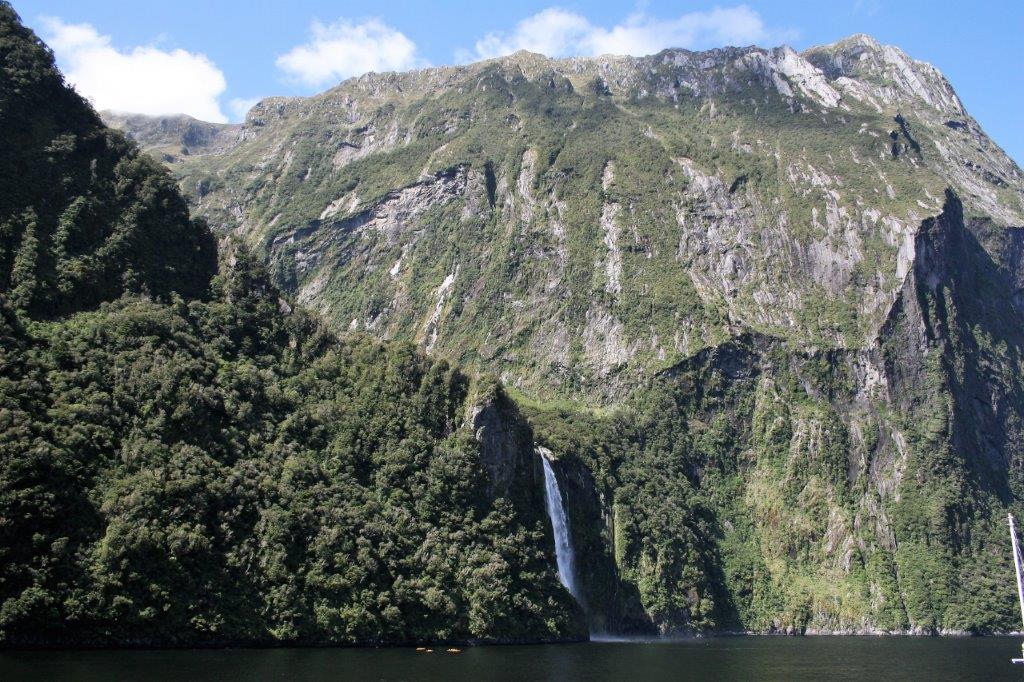
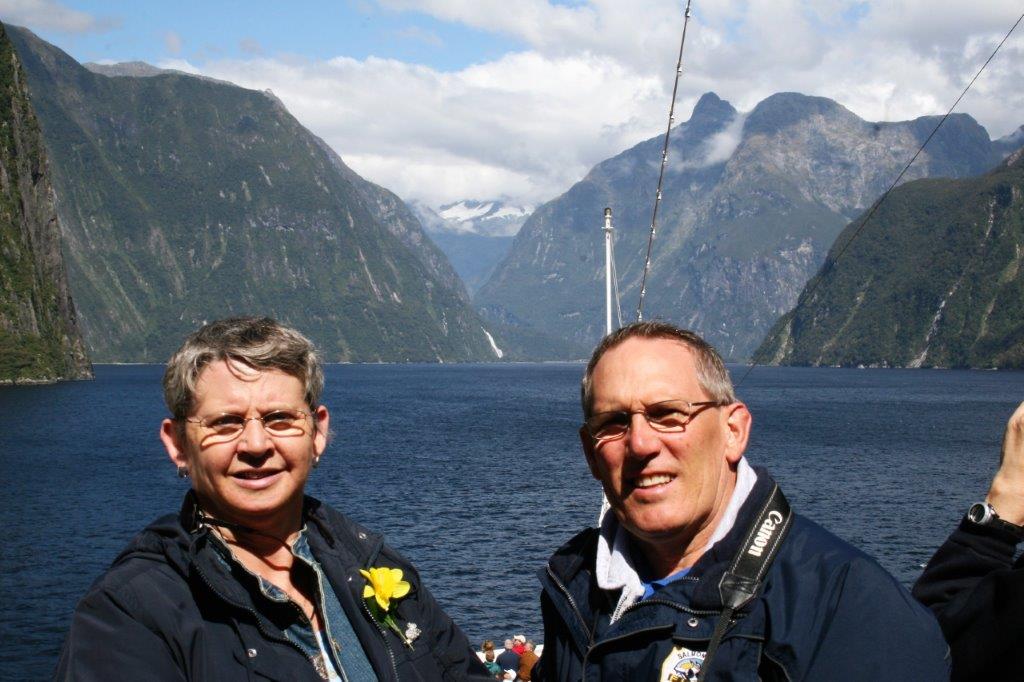
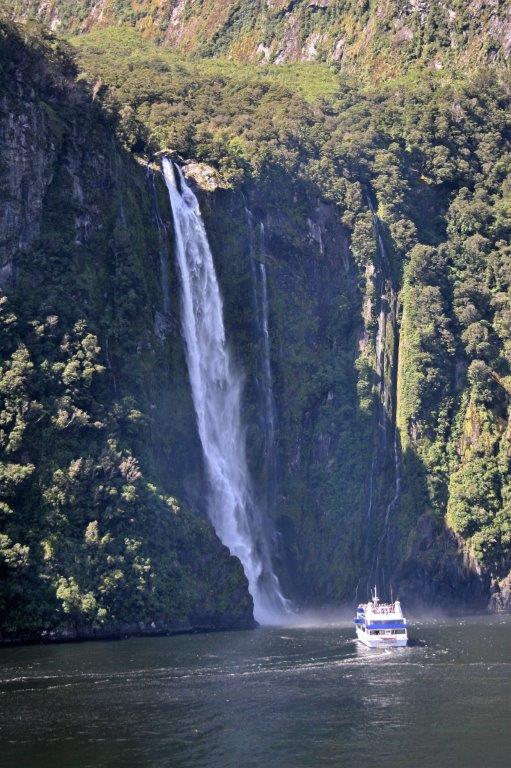
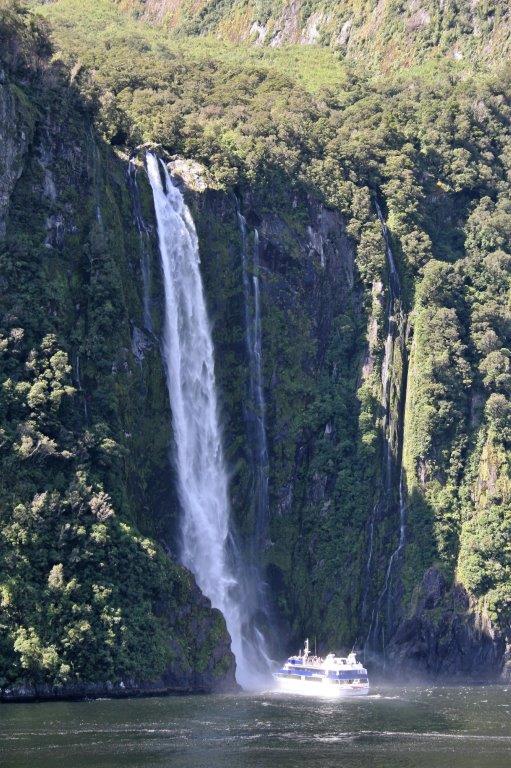
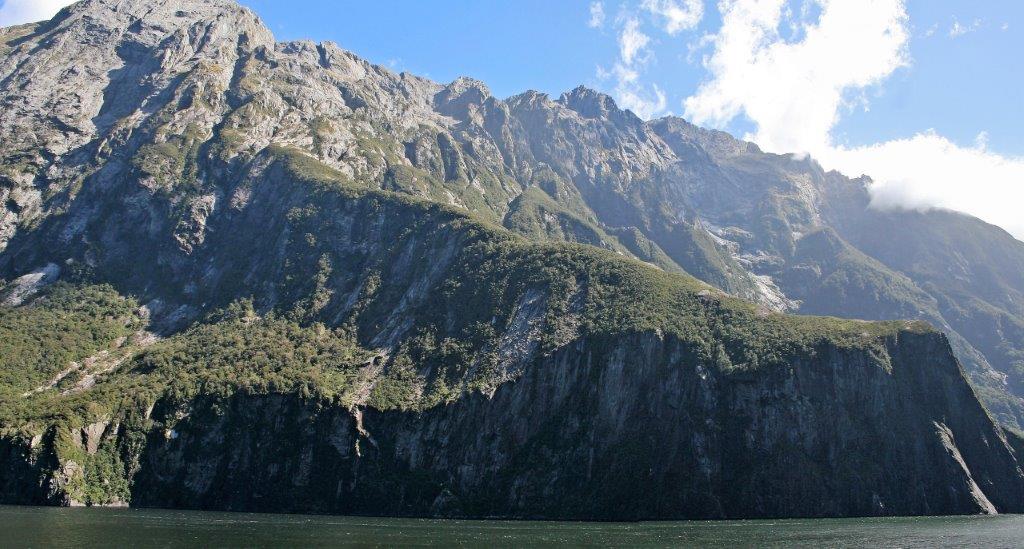
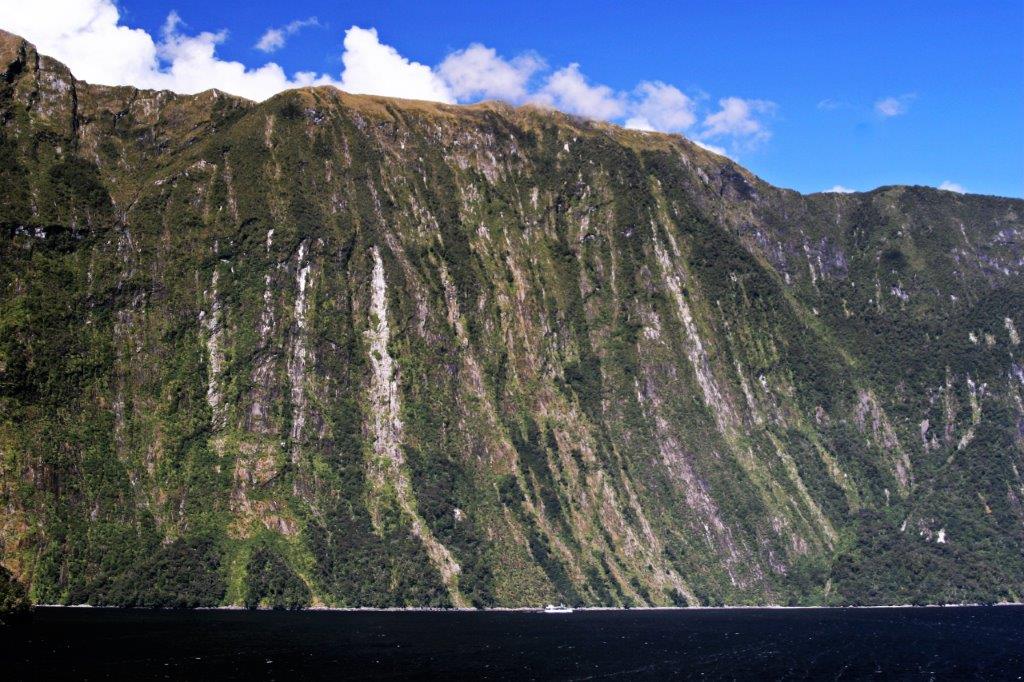
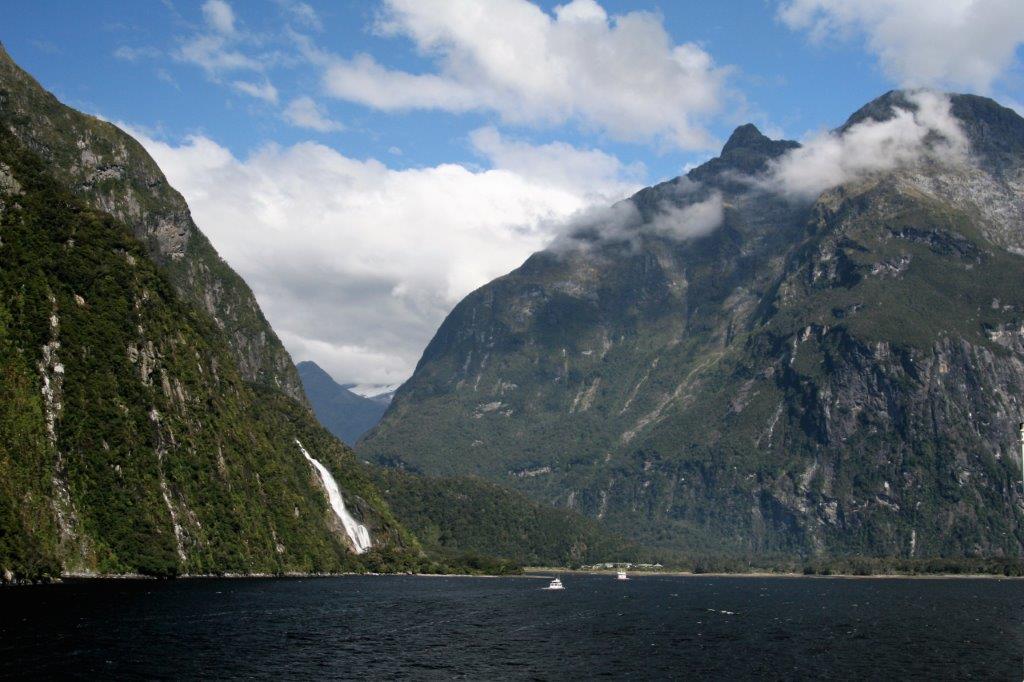
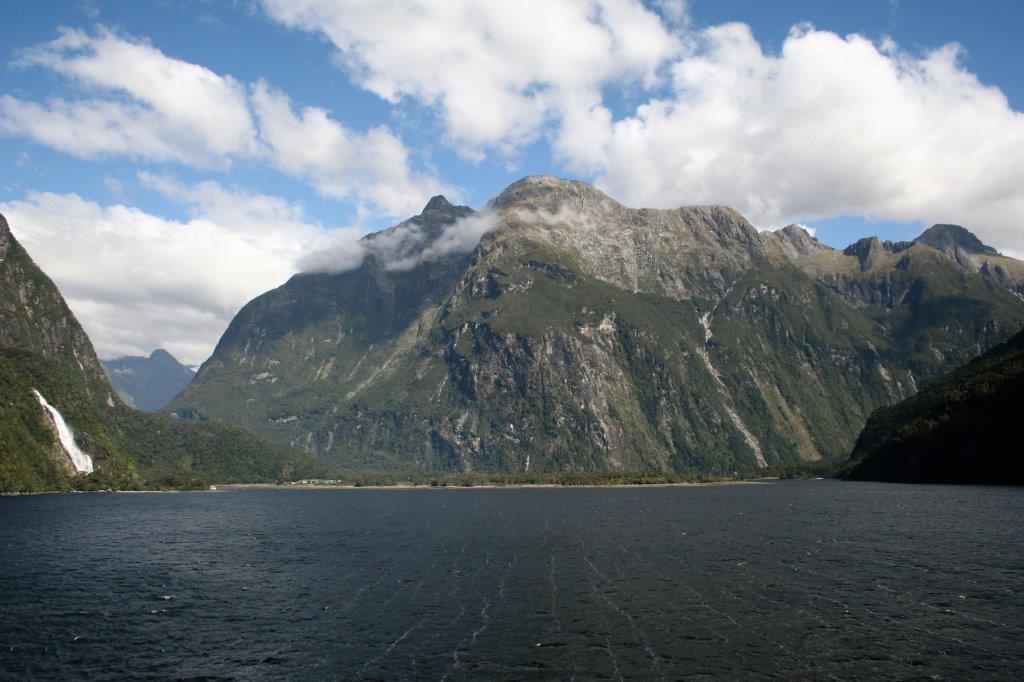
I was startled awake in the early morning by a very loud bang that reverberated up the decks.  Our cabin was on deck 3 of the passenger decks (about half-way up the ship) so we had been slammed with a pretty large wave in order for me to feel and hear it that much.  Consequently I was up and had finished breakfast as we sailed into Dusky Sound at 8 am.The weather was not too hospitable and I huddled in two jackets and a blanket to combat the strong, cold wind.  John arrived as we were leaving Dusky and we went back to the cabin to warm up as the captain set sail for Doubtful Sound.  We spent about an hour in Dusky Sound, sailed two hours to Doubtful and spent an hour there before entering Milford at 3:30.  The ship’s speed rarely rose about dead slow all day. The low, gray clouds kept rising throughout the day and by the time we entered Milford sound we were blessed with a bright blue sky and sparkling sea.  Milford is the most dramatic of the glacially-carved fiords. The average rainfall in Milford Sound is 20 feet and it is unusual to have a day without at least some rain.  We were fortunate to have one of those days; one of the best days the captain and crew had every experienced in the area.We passed many cascading waterfalls dropping hundreds of feet straight down and into the waters of the sound.

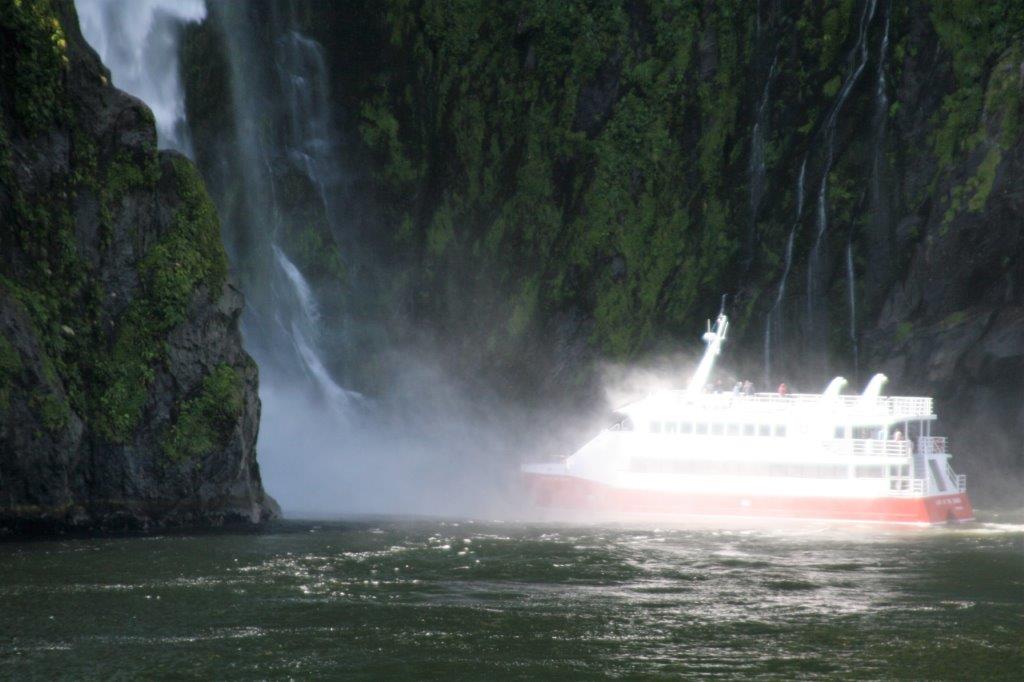
At Bowen Falls the captain rotated the ship 360° so every passenger, no matter which side of the ship they were on, would have a close-up view.

Many smaller tour boats and cruise ships will sail almost to the base of the waterfall.  If you are on an outer deck, you will get wet!

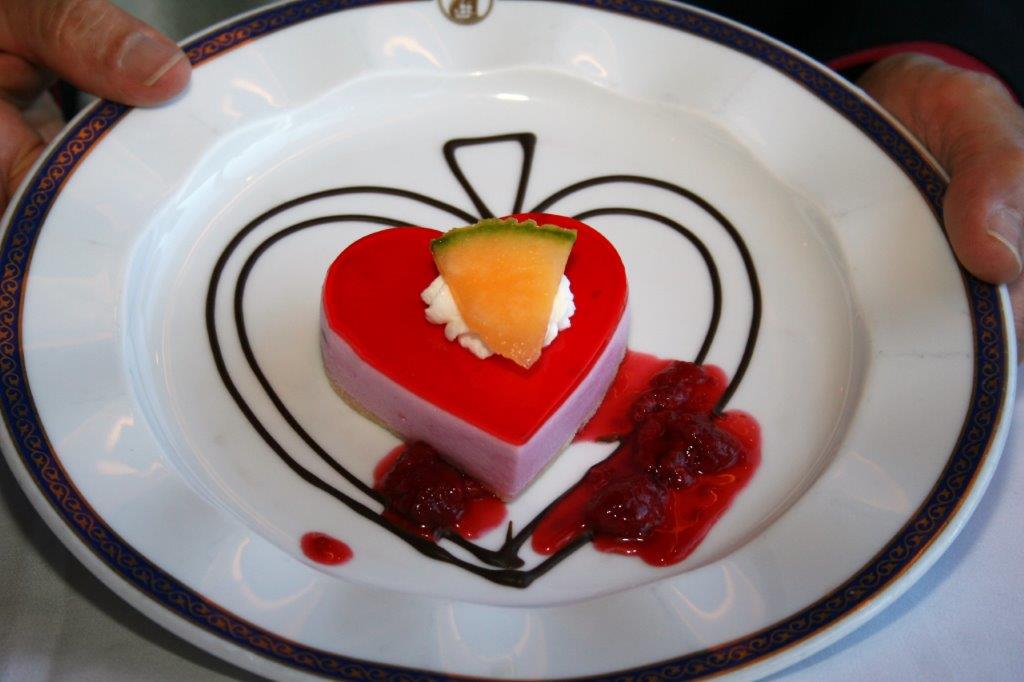
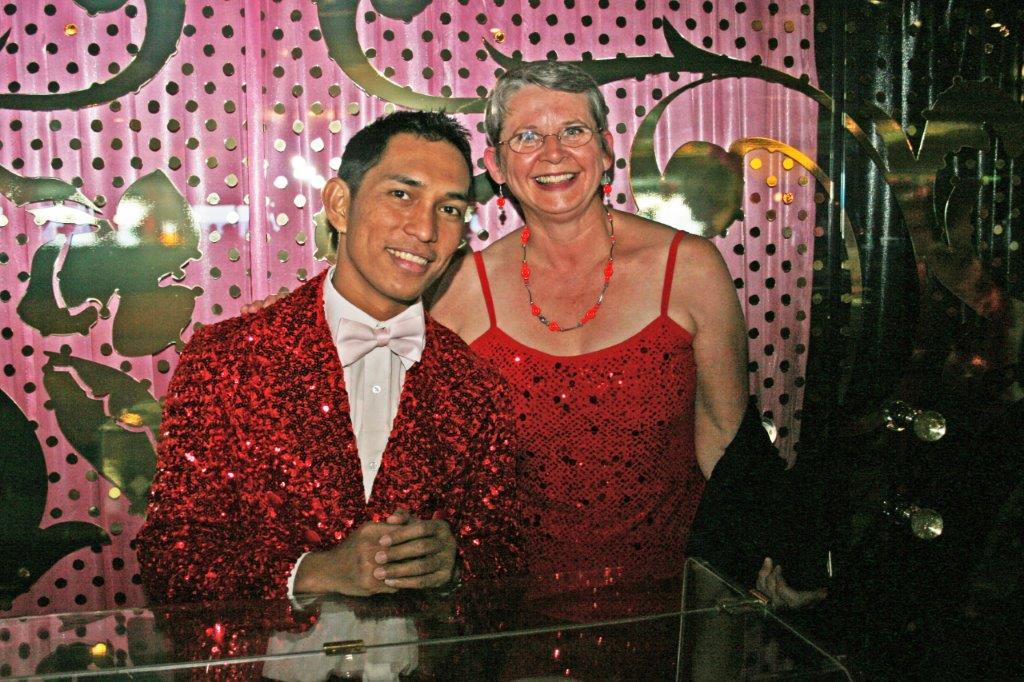
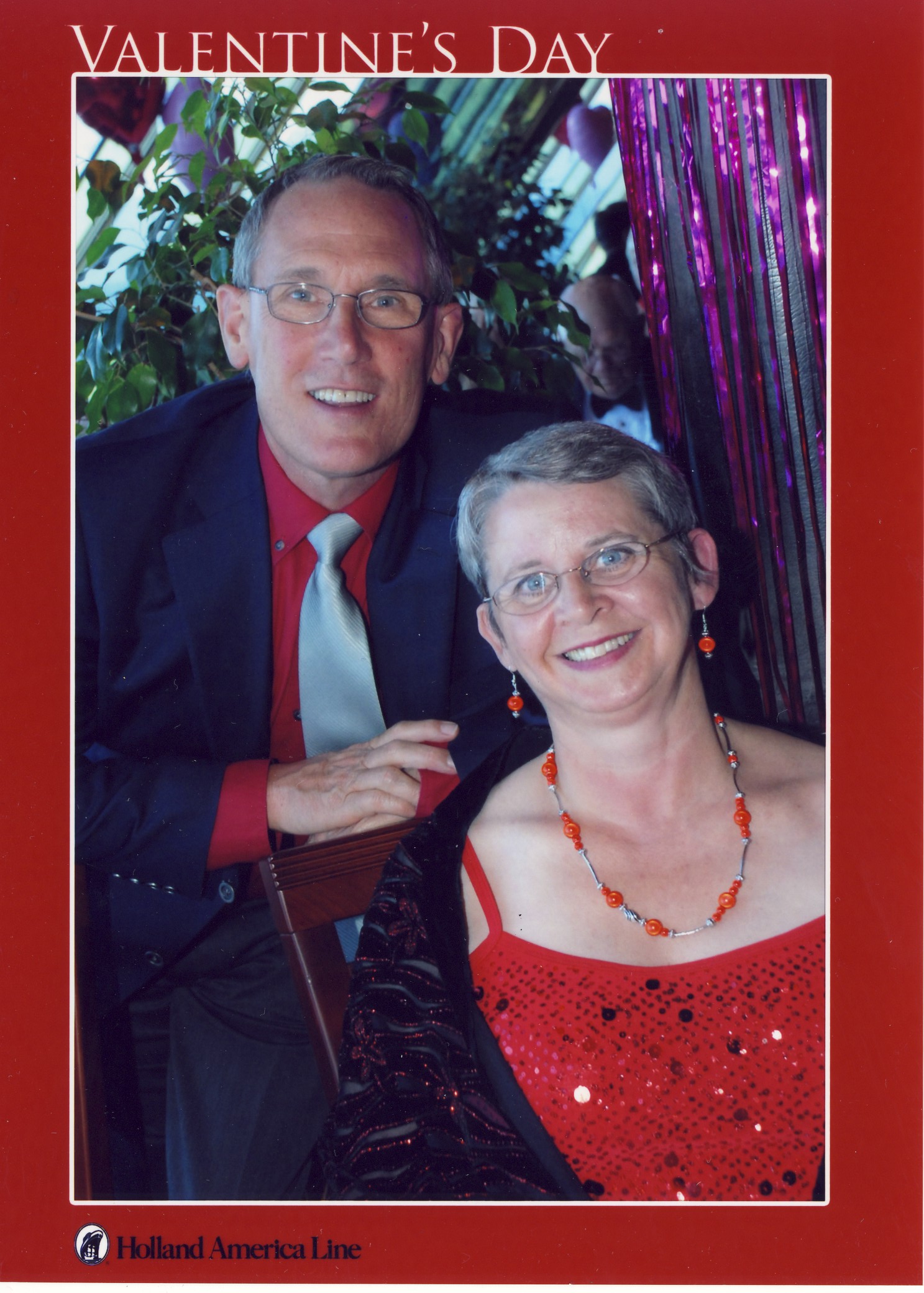
It took a bit of tricky navigating to turn the ship around for the return trip out the sound and back to the Tasman.  We had two sea days before we  arrived at Hobart, the first of two ports-of-call in Tasmania. Since it was Valentine’s Day, it was a formal night and the decorations were up in the dining room and around the ship.                                Matt and I had matching sequins.

Every night our cabin stewards decorated our bed with a folded-towel animal.  That night we had kissing swans.

This was our last formal night.  After our two days in Tasmania the ship docked in Sydney, Australia – our destination – and we disembarked.  But first….Hobart and Port Arthur.

2011 February 13 – Day 39 – Oban (Half Moon Bay), Stewart Island, New Zealand

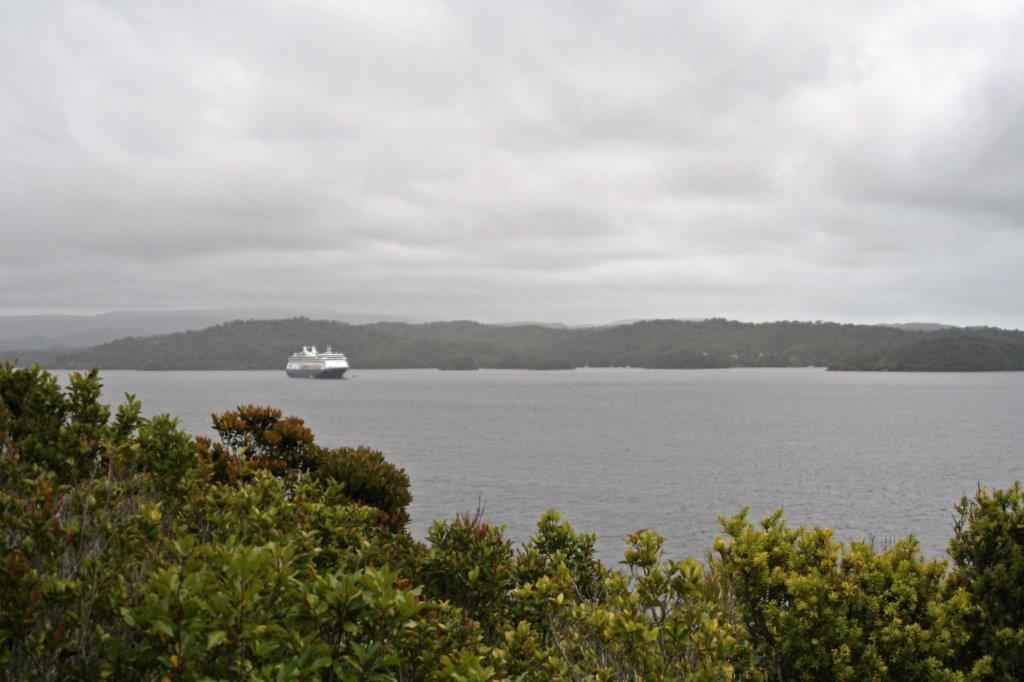
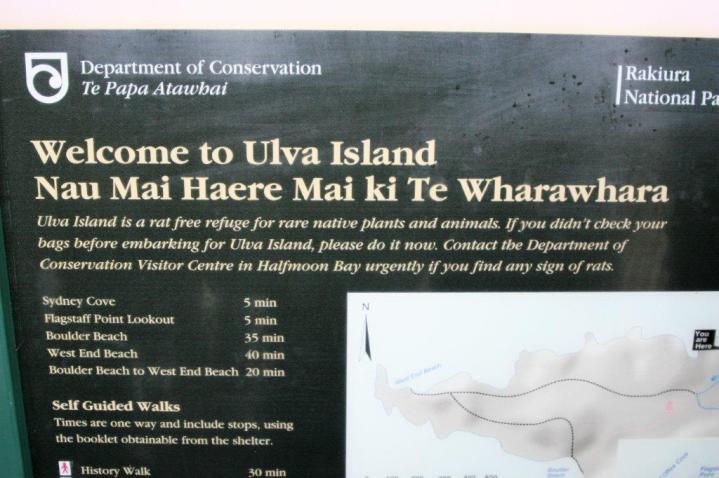
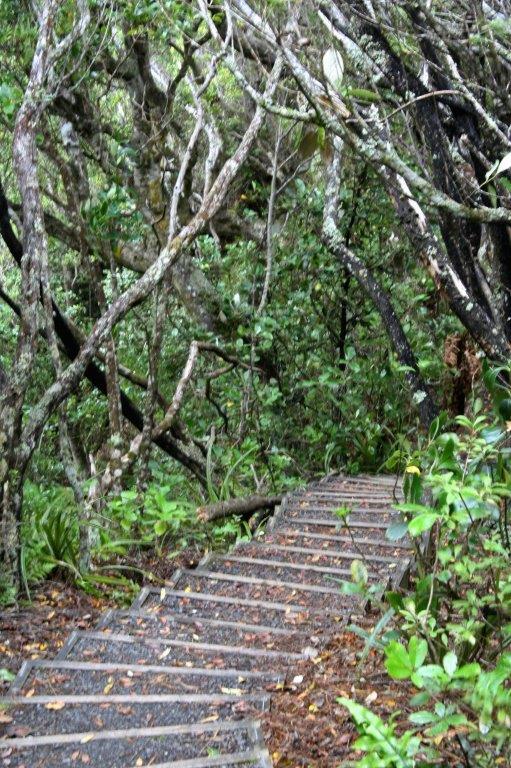
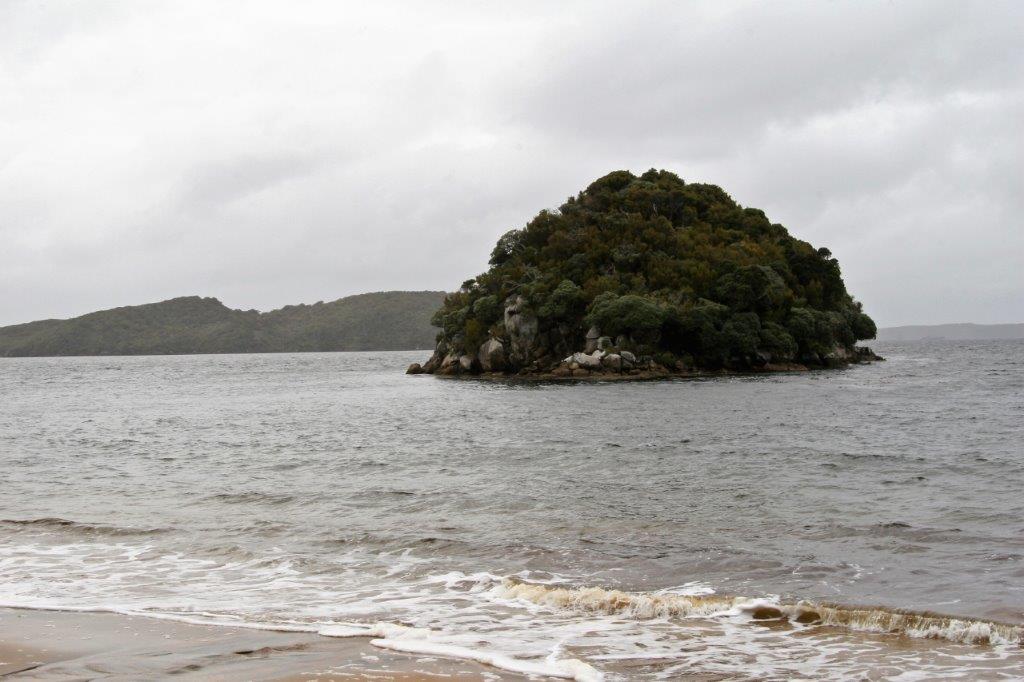
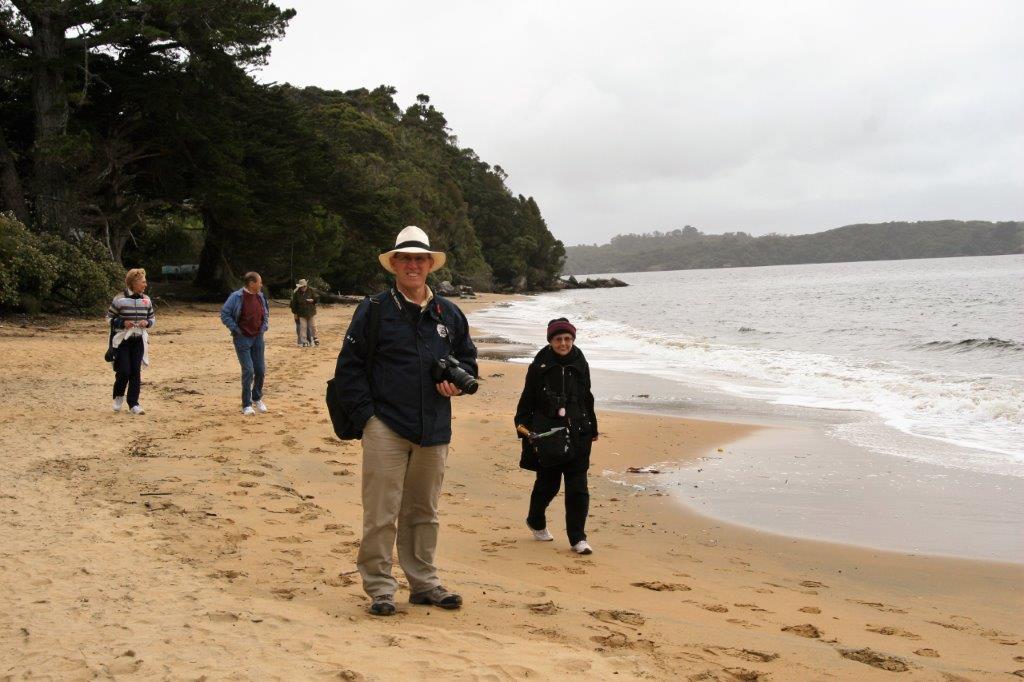
Even though this was another day in port it was a quieter day than we had had for a week.  The ship was anchored in Half Moon Bay off the coast of Stewart Island, the southernmost inhabited island of the New Zealand archipelago.  The largest town is Oban with a population of about 400.  We were told that the town consists of two churches, one pub, and one grocery store. We didn’t go to Oban.  We, instead, took the tender to Ulva Island and had a 1 1/2 hour guided walk through the forest of Rakiura National Park.  The park is home to  many species of birds, including some endangered ones. When Europeans arrived on the islands dogs, cats, and rats arrived with them and decimated the local bird populations.  For the past 100 years or so New Zealand conservation has been eradicating all rats and other critters from small isolated islands and re-introducing kiwis and others species of endangerd and rare native birds – with great success.  70% of Ulva Island was set aside as a nature preserve in 1899.

The weather was rain-threatening all day but we had very little rain. The clouds were low and thick so everything was dark and dismal-looking.  We enjoyed our walk.  It was a nice change of pace from our last few all-day excursions.

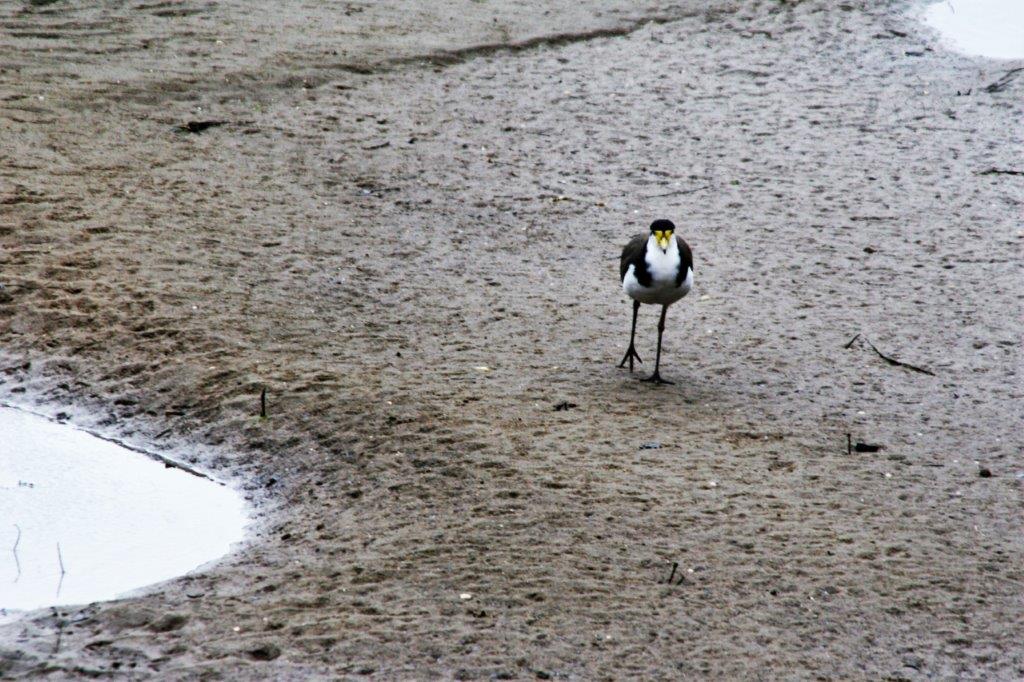
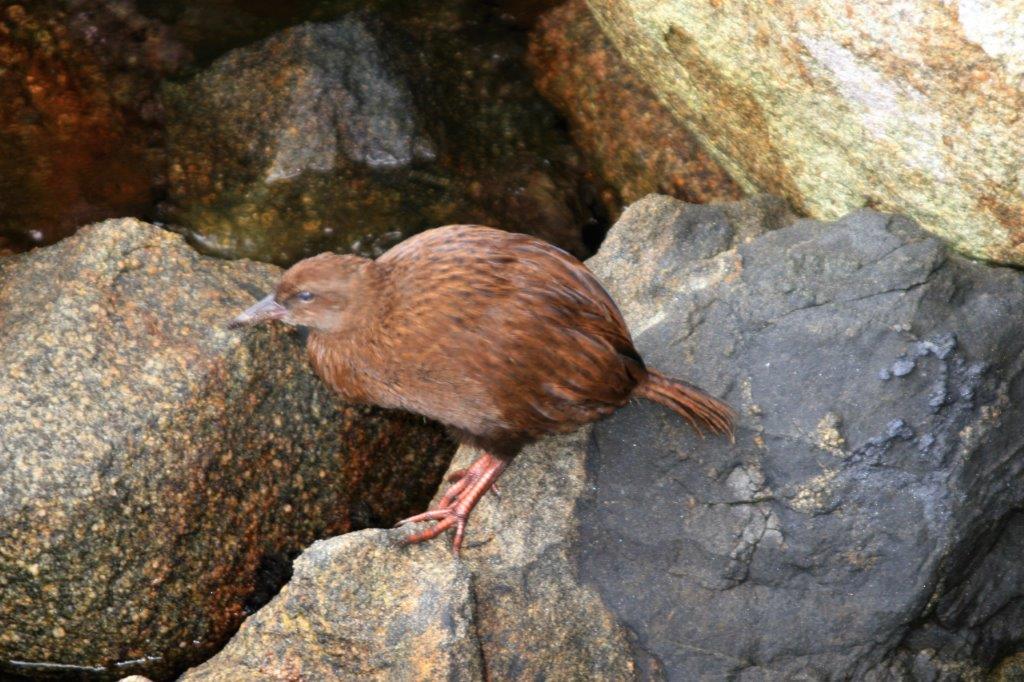
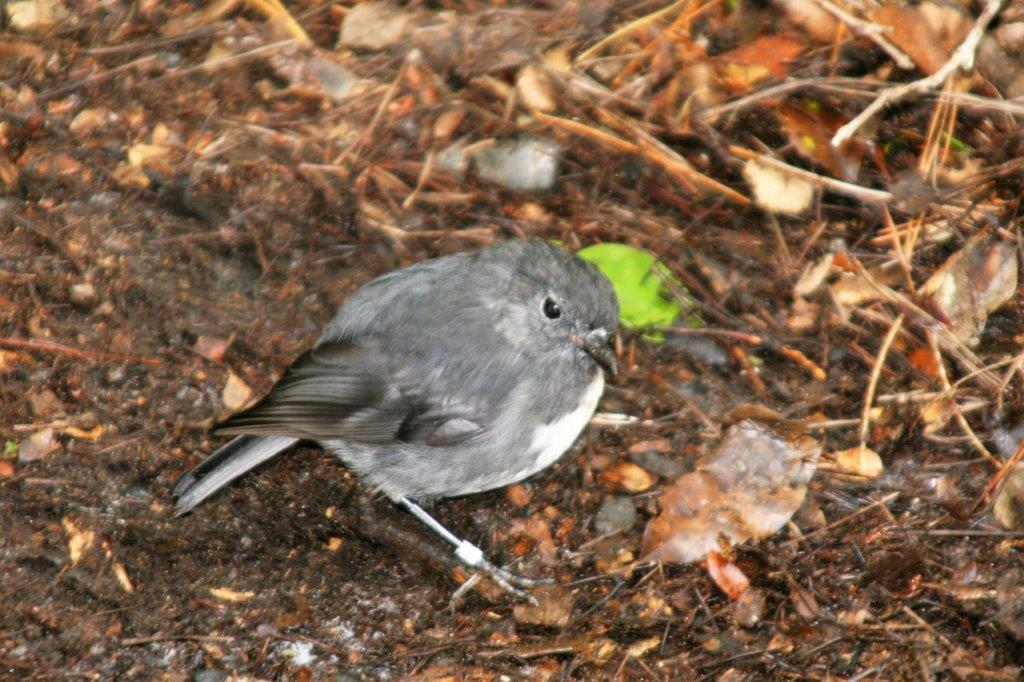
We did not see as many birds as we had hoped; they were probably hunkered down under a big leaf in case the rain started.  We did see a weka, a New Zealand pigeon (no photo) and a New Zealand Robin. There are no predators on the island so the birds are quite calm around people.


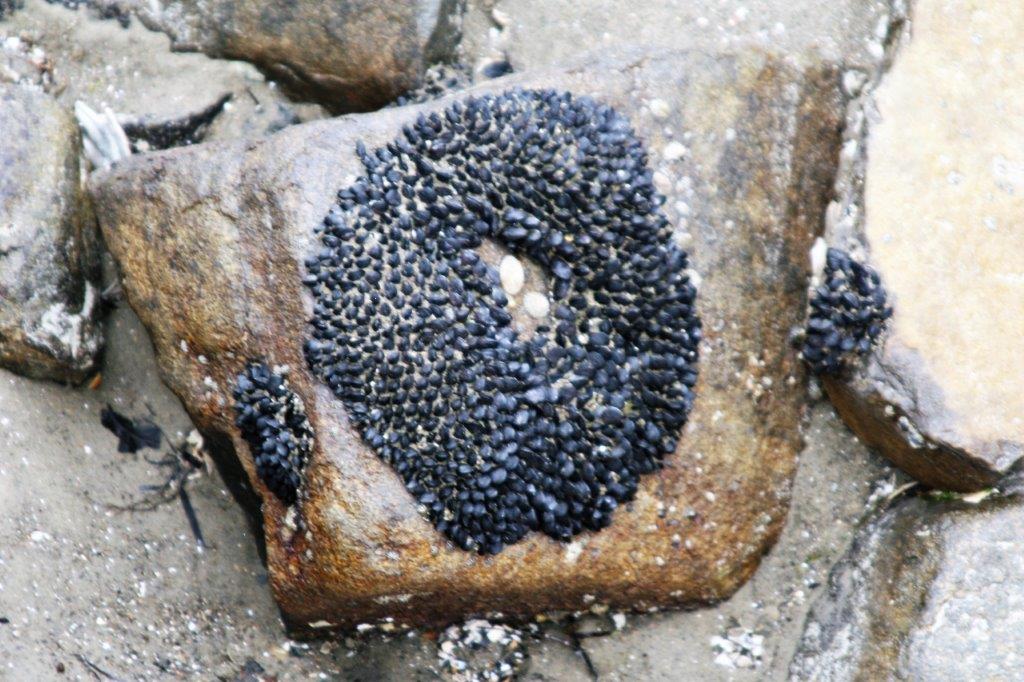
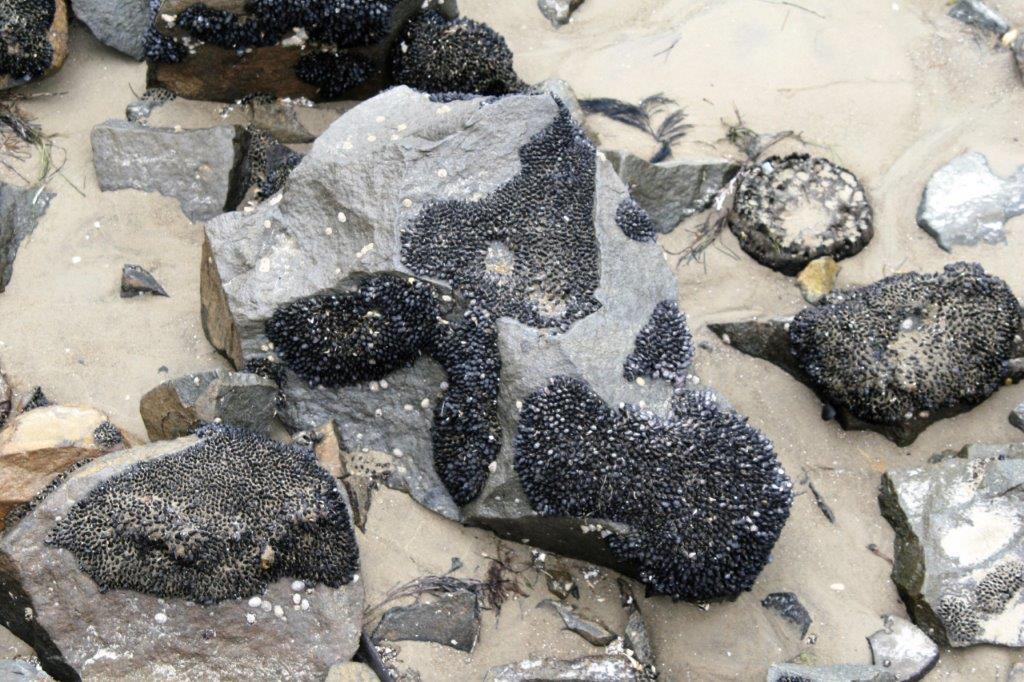
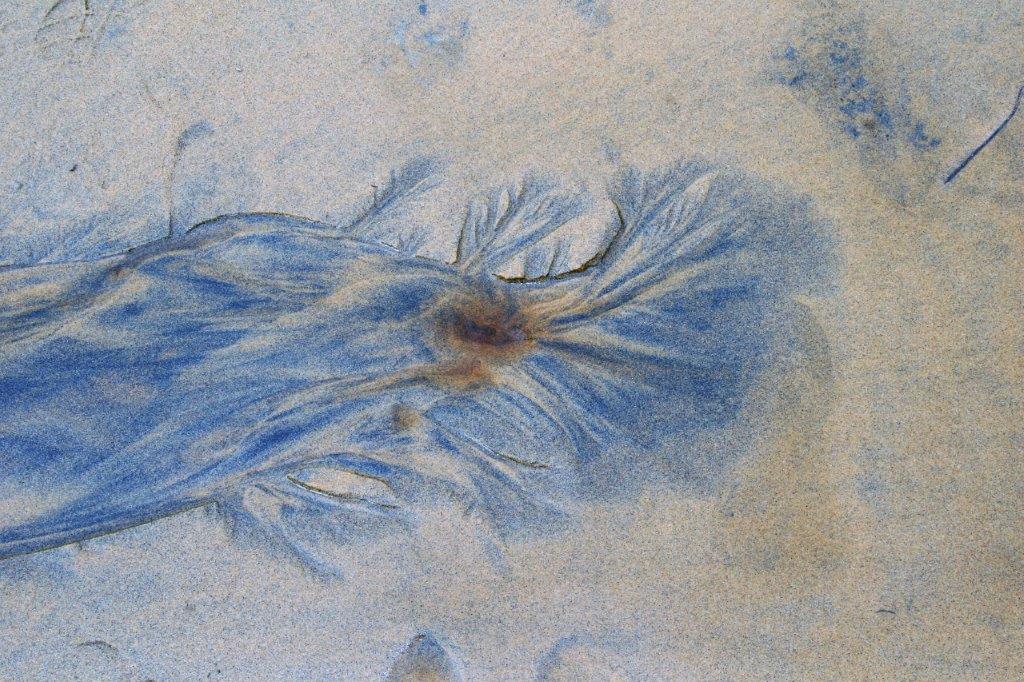
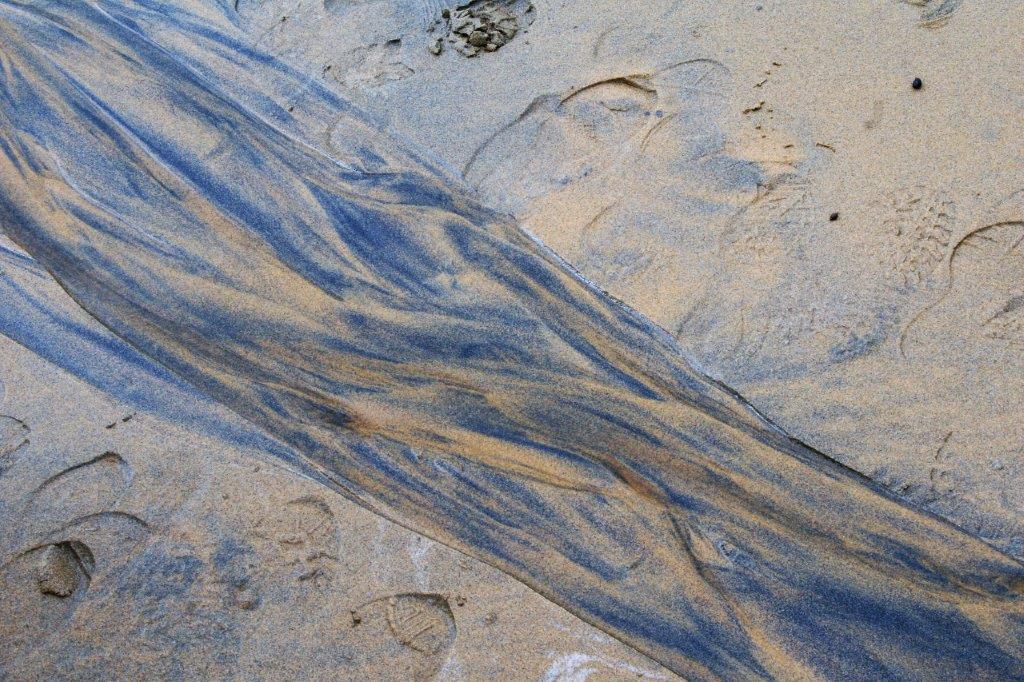
Very cool patterns on the sand.

During the time we were on Ulva Island the tide had gone out and the water level was 2′ lower so a guided jump into the tender was needed to get into the boat.

We could have taken another tender over to Oban since the ship was at anchor until 4 and we got back from Ulva Island at 2.  We were enjoying the laid back pace of the day so decided to stay on board and work on photos and emails and do some reading.

2011 February 12 – Day 38 – Port Chalmers (Dunedin), New Zealand

The brochure we were given says, “Dunedin is New Zealand’s first city, constituted in 1865, and it is indeed a city of firsts.  It has New Zealand’s first university, botanic garden, daily newspaper, co-op dairy factory and skyscraper; the tallest tree; the first girls’ high school in the southern hemisphere; New Zealand’s oldest farm buildings and working brewery; and the world’s steepest street and only mainland albatross colony.  The Māori name is Otepoti, ‘place beyond which one cannot go’, where waka (canoes) could travel no further and were put ashore.” (Your Guide to Taieri Gorge)

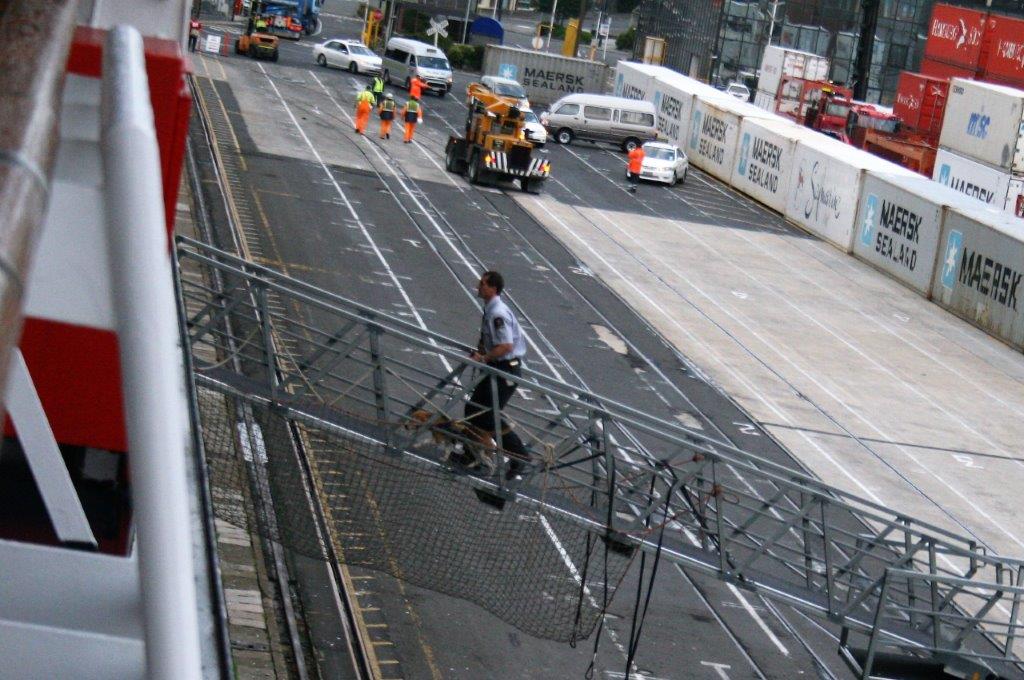
Before the passengers left the ship, this customs official and his contraband-sniffing beagle gave the hold a once over.

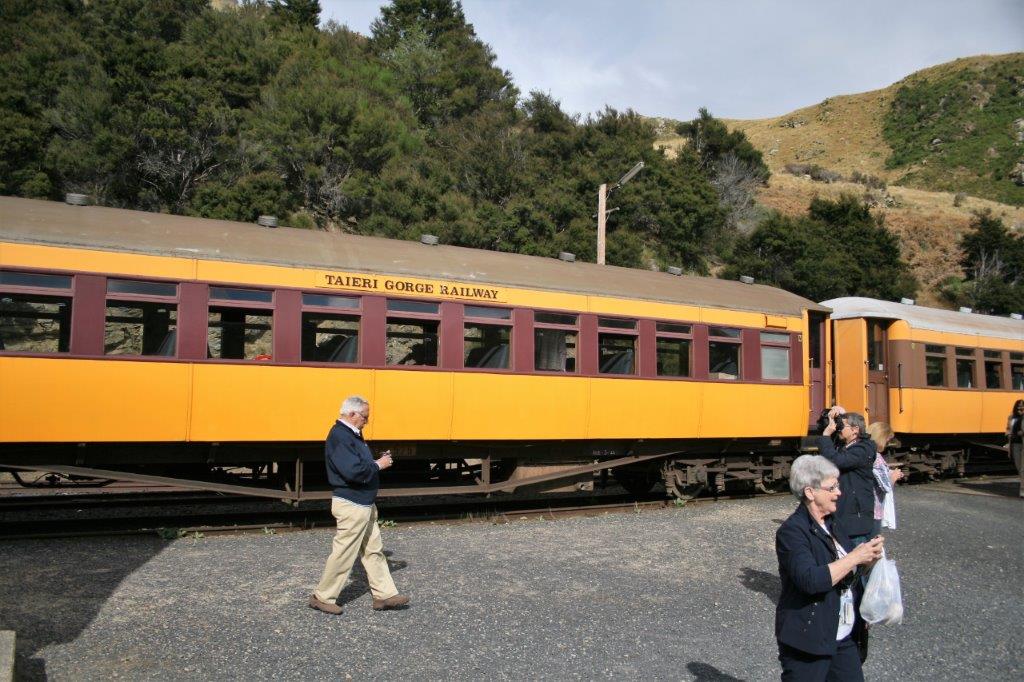
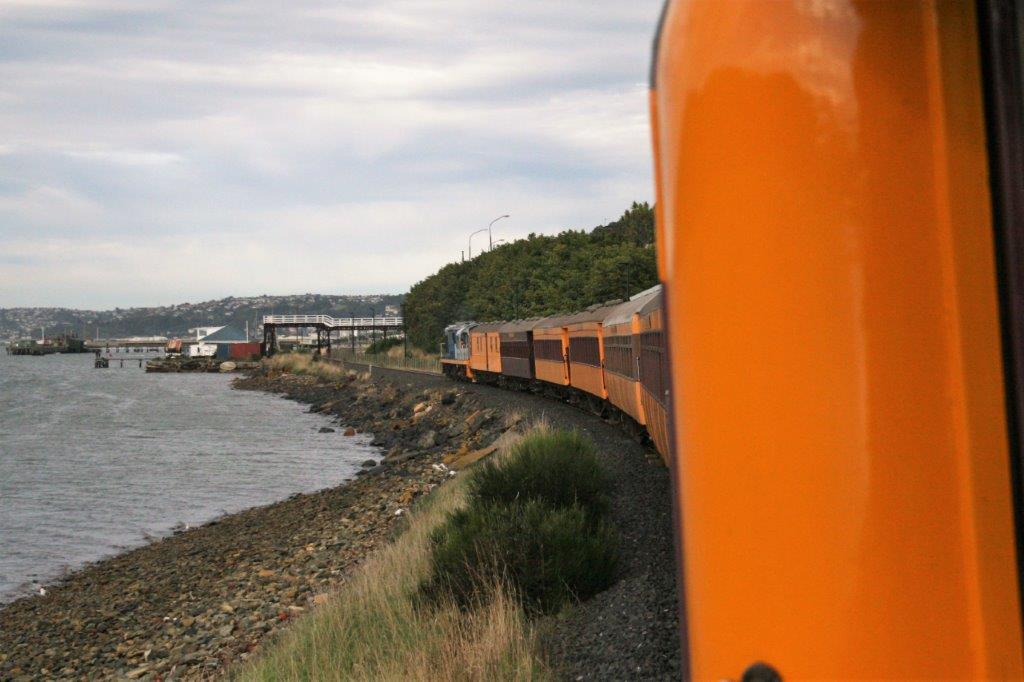
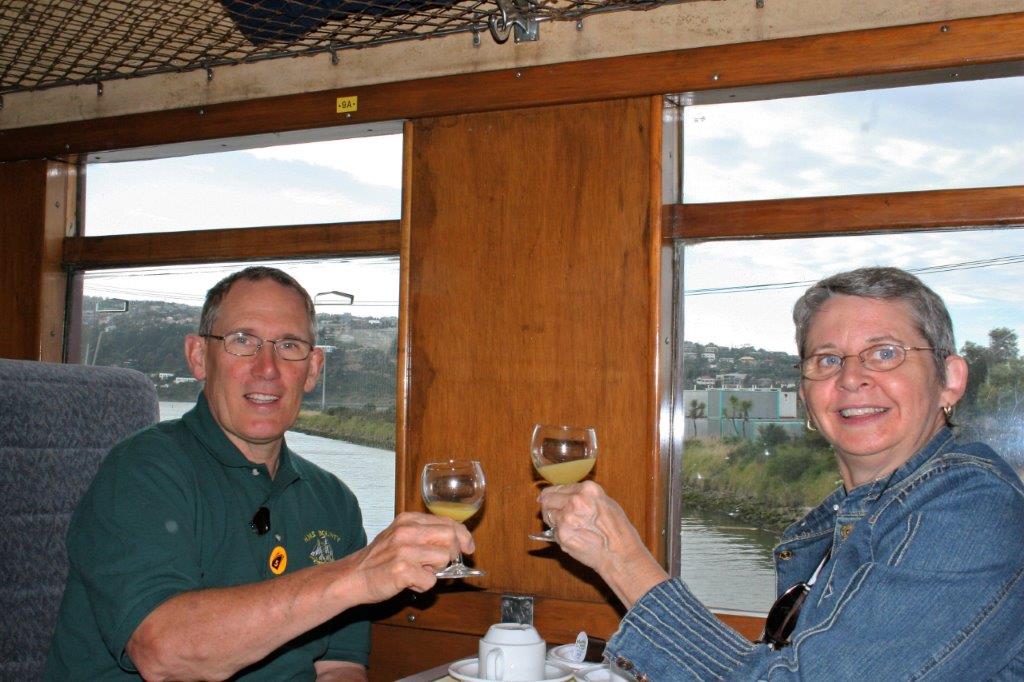
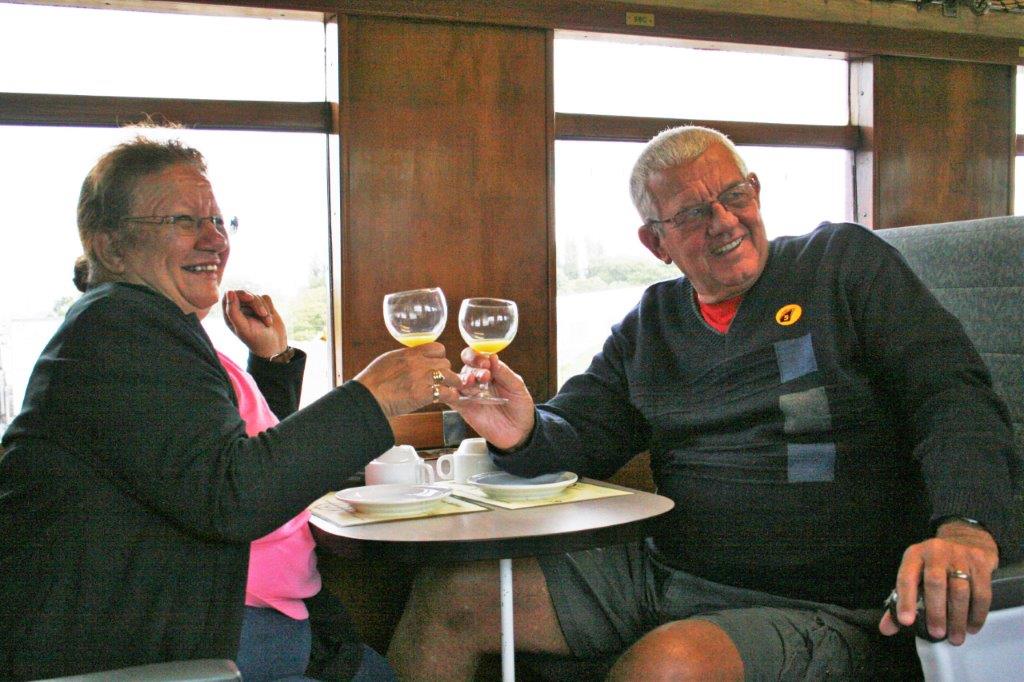
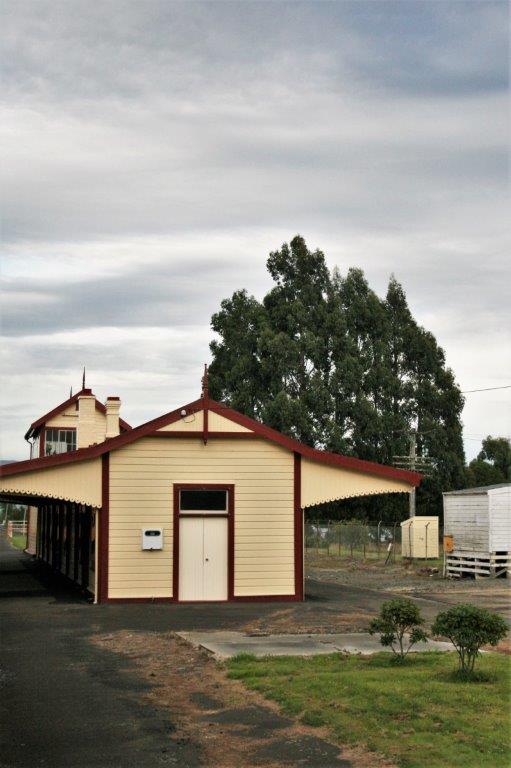
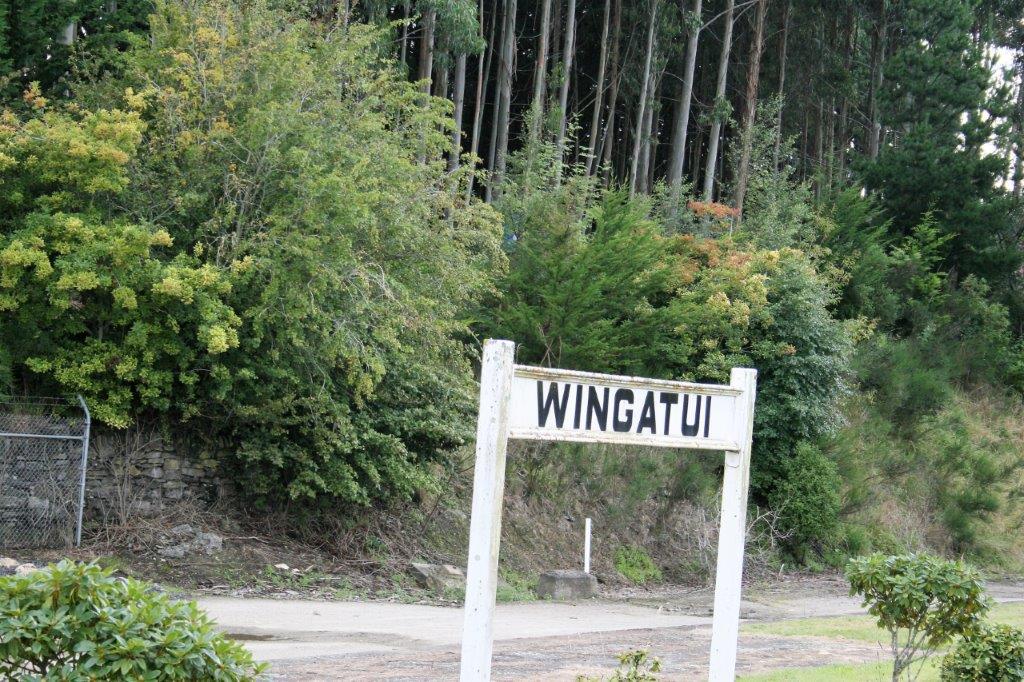
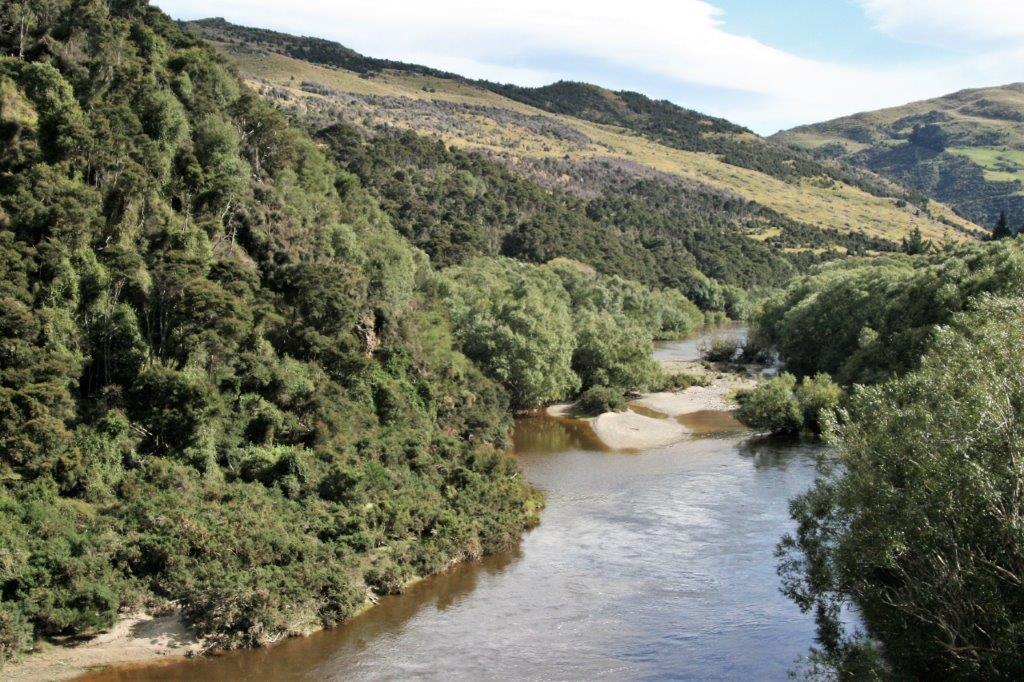
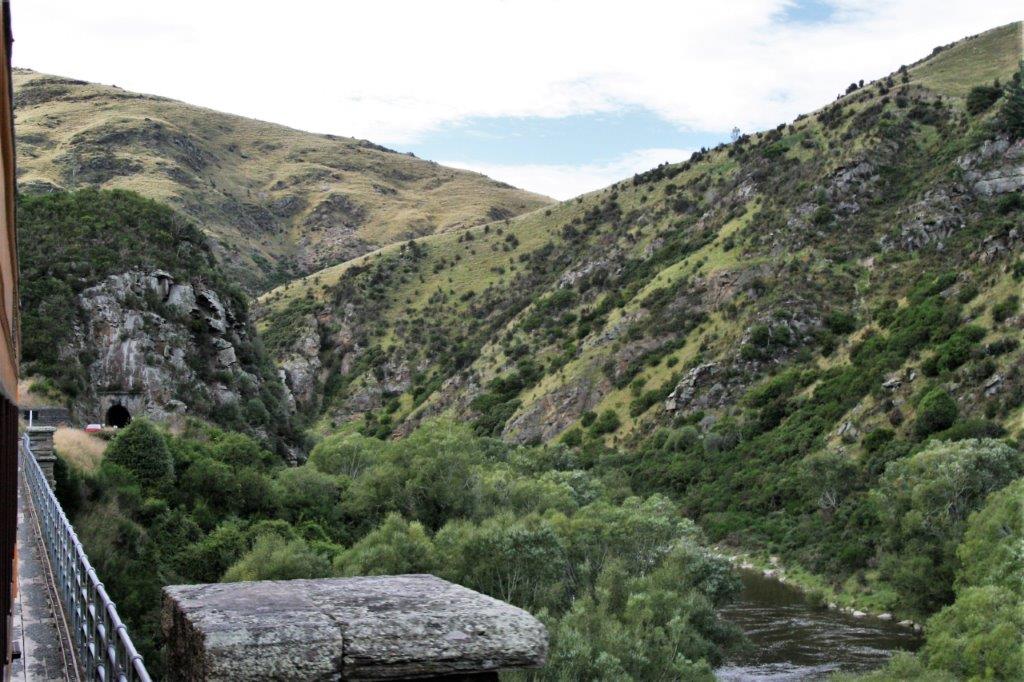
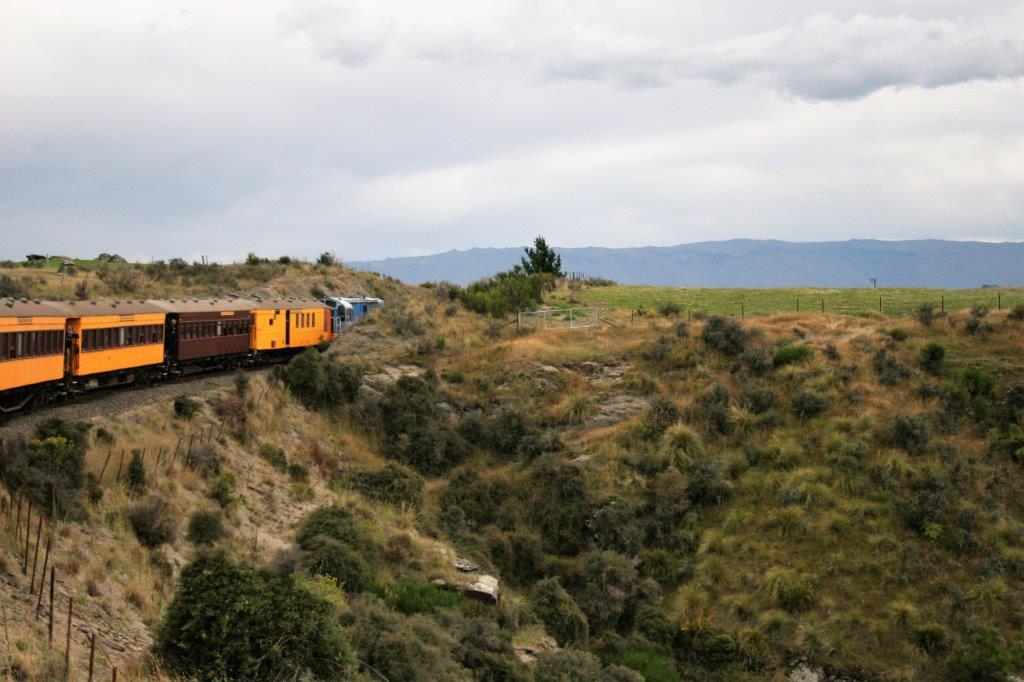
There was no long bus ride.  We walked off the ship and boarded the Taieri Gorge Railway.  Our friends Harold and Martha were on the same tour with us and we toasted the day with mimosas (champagne and orange juice). We travelled 58 km (36 miles) from Dunedin to Pukerangi where the engine was moved to the back of the train for the return journey to Dunedin.  Elevation gain for the trip was 254 metres (833′) and we went through 12 tunnels and across the Wingatui Viaduct; 197 metres (646+ feet) long and 47 m (154′) above Mullocky Stream.  It is one of the largest wrought iron structures in the southern hemisphere.

I spent the majority of the journey standing on the platform at the back of our rail car taking photos.

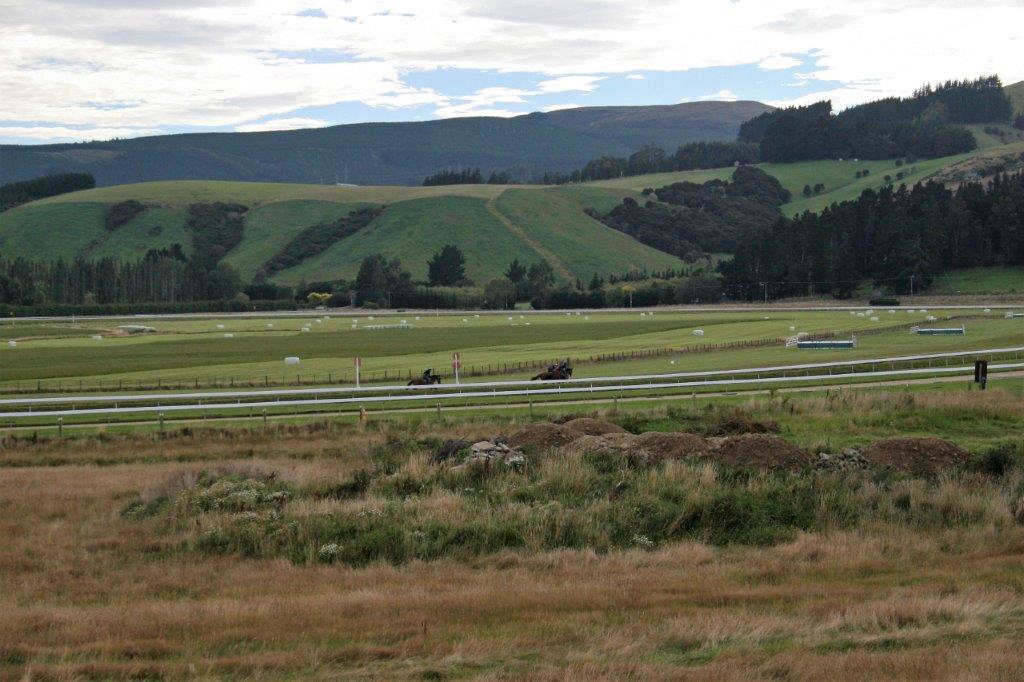
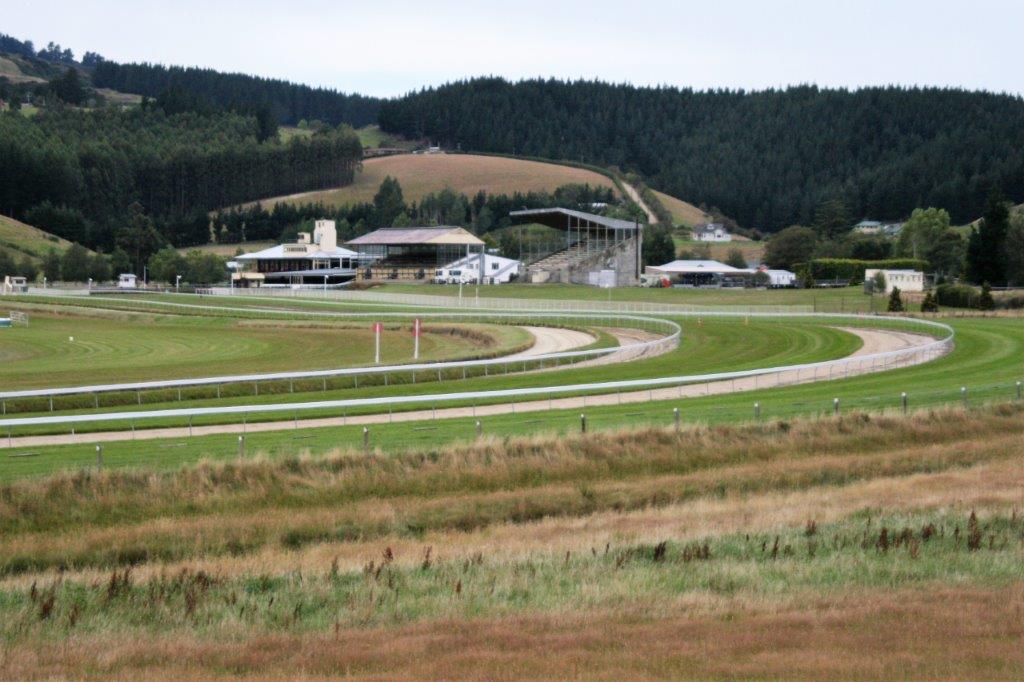
                                           The Wingatui Racecourse.

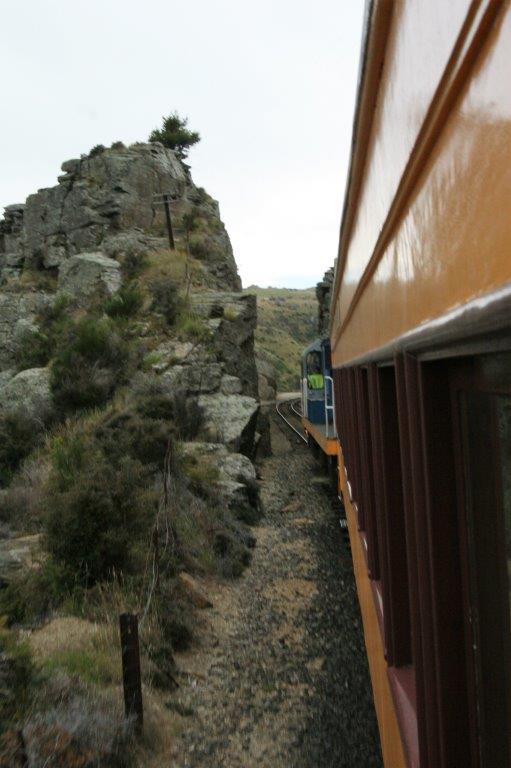
                   We had no room to spare through the tunnels.  There were several short stops for water for the steam engine and photo ops.

                            I liked the nice cloud formations.

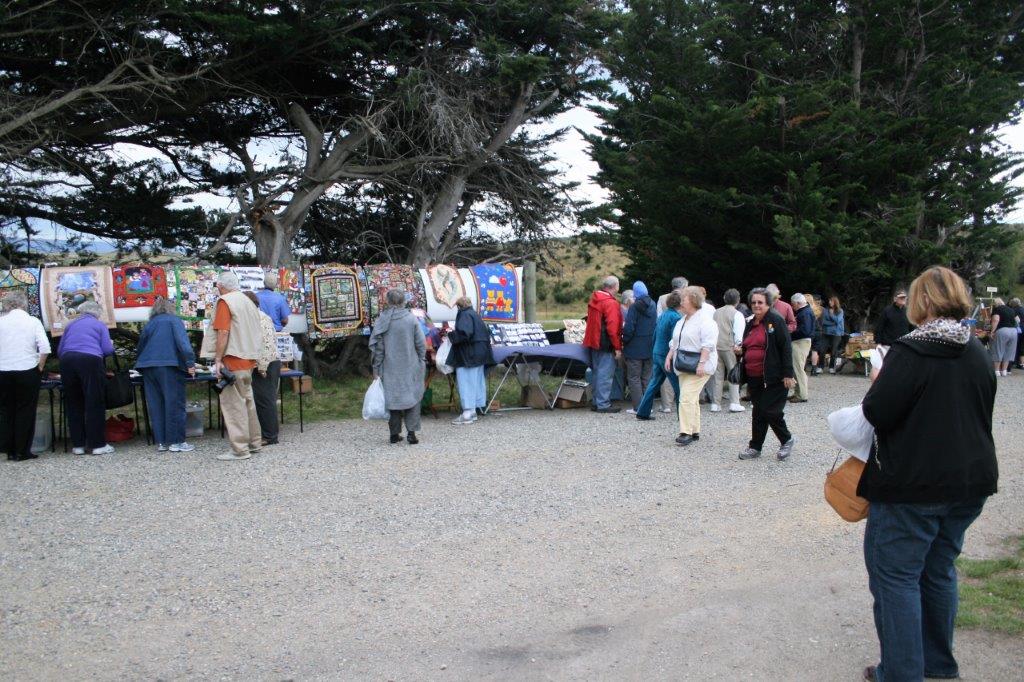
 The ‘golden rule’ of a shore excursion: “One must always have an opportunity to shop.”  Unless you are like me and then you just don’t shop despite the opportunity.

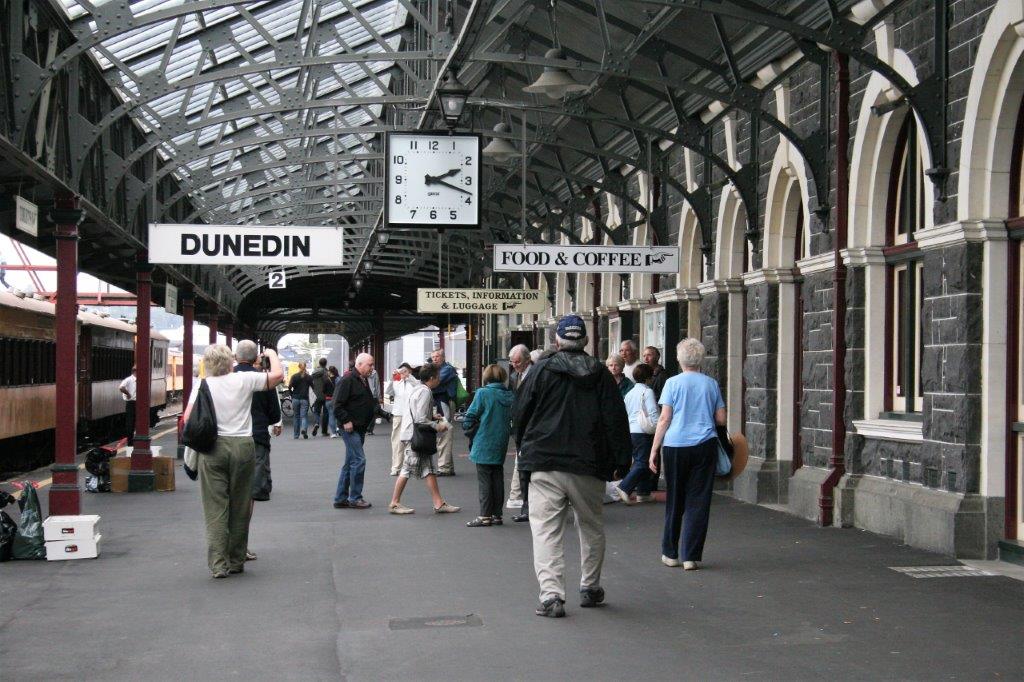
And past the racecourse again on the way to the Dunedin Railway terminal.

The train would take you all the way back to the ship at Port Chalmers but we got off in Dunedin.  The ship had free shuttles running from Dunedin to Port Chalmers so we had a ride back whenever we wanted.

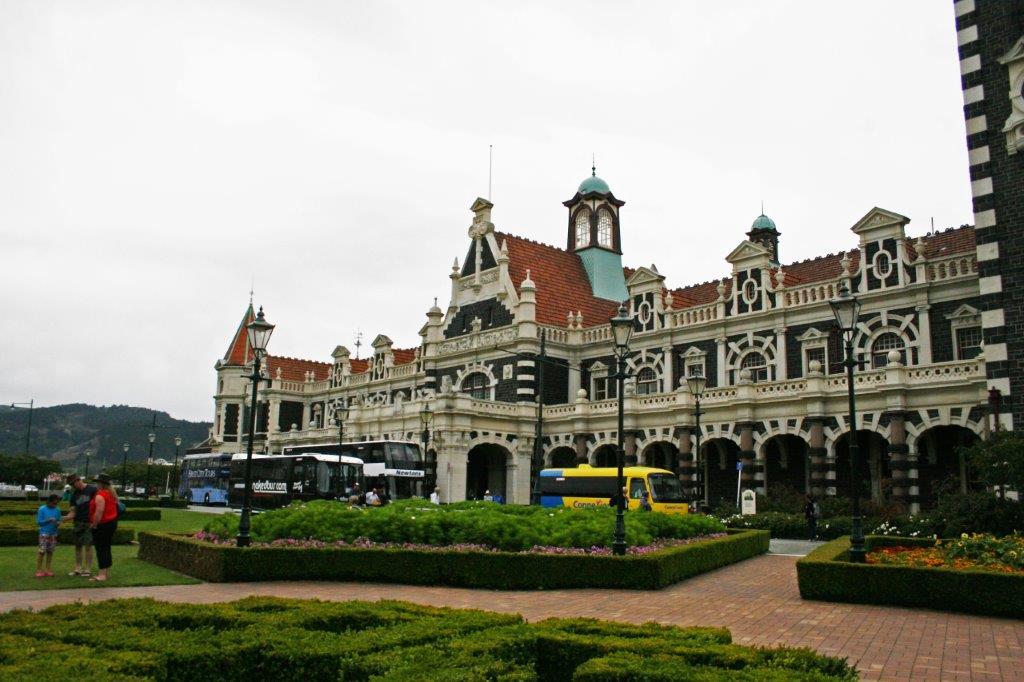
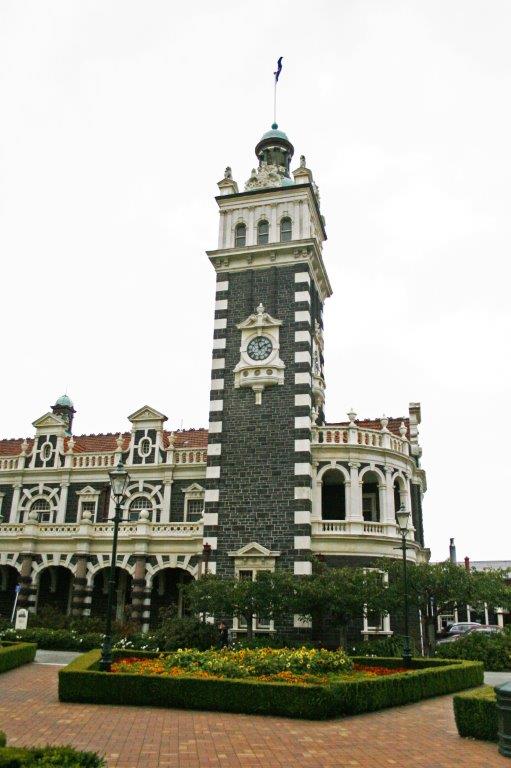
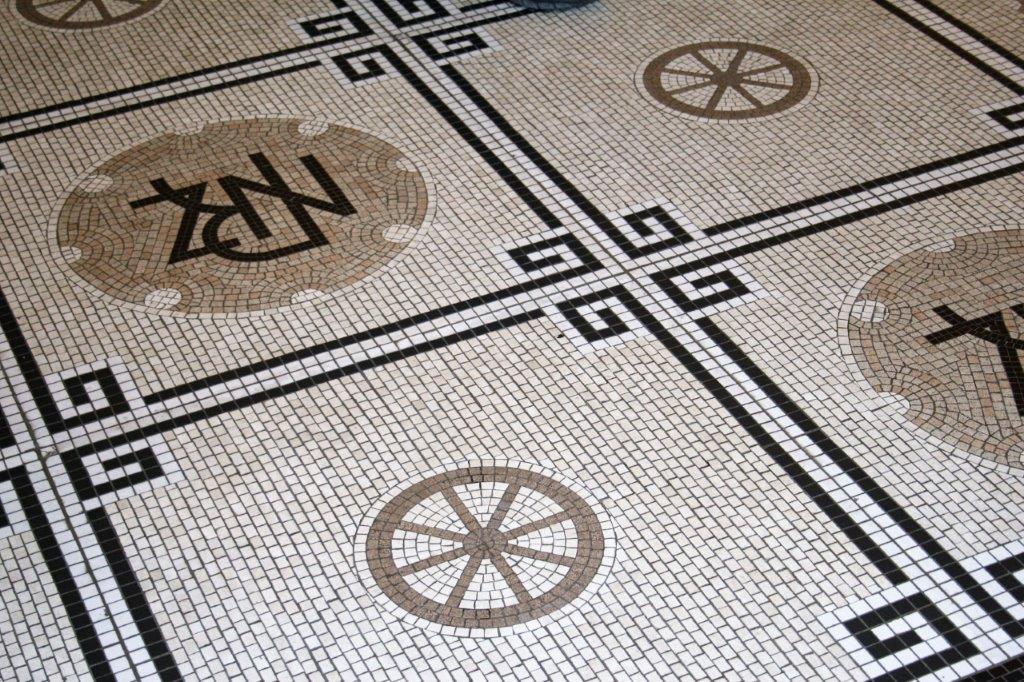
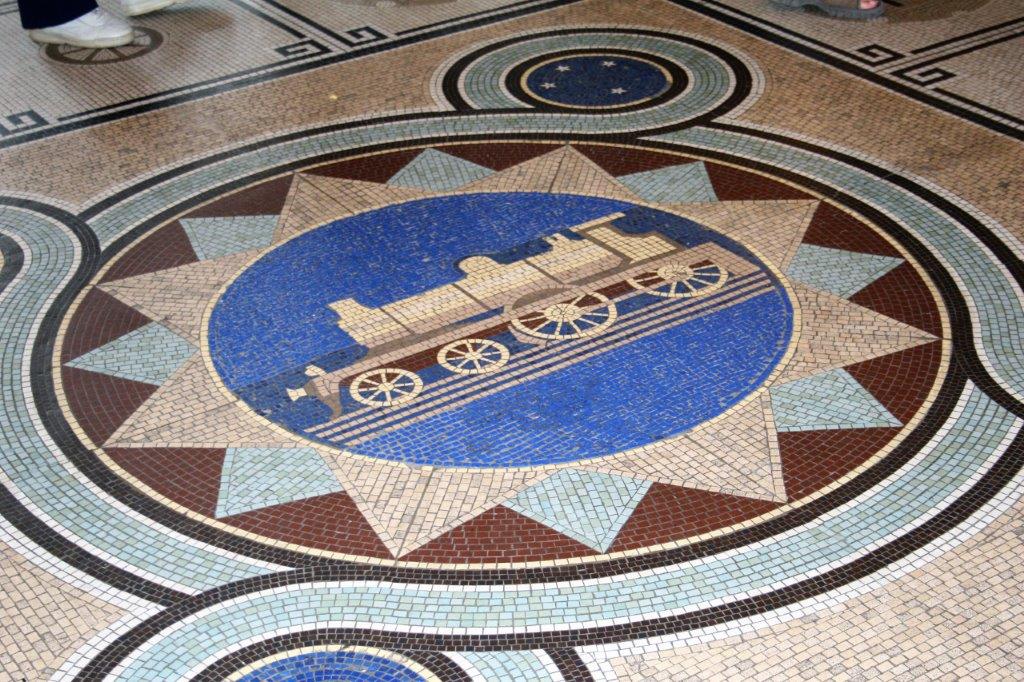
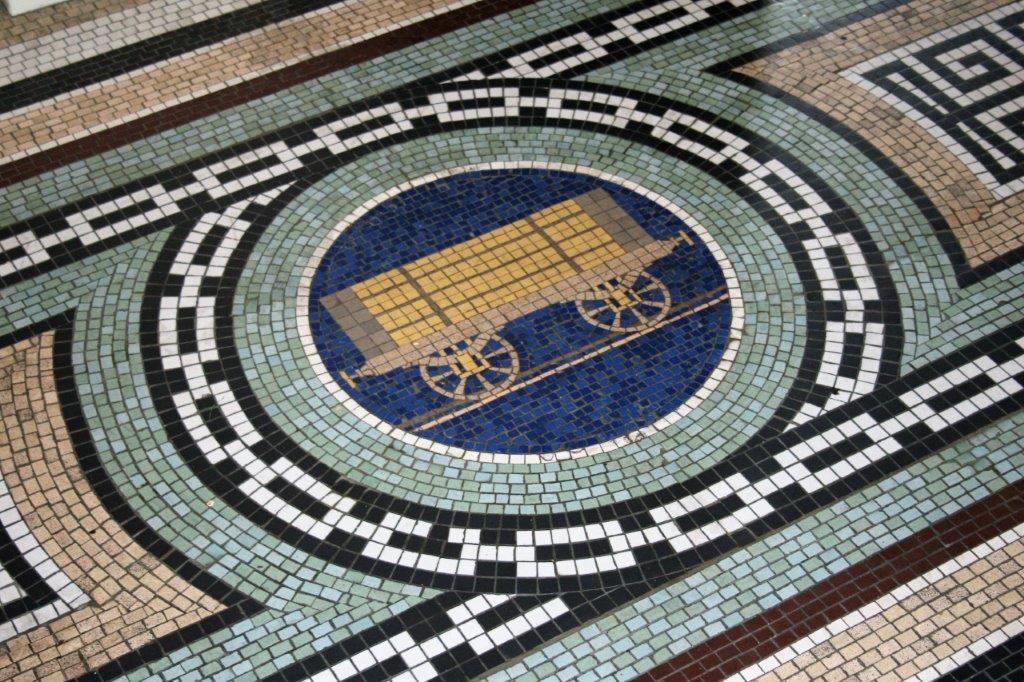
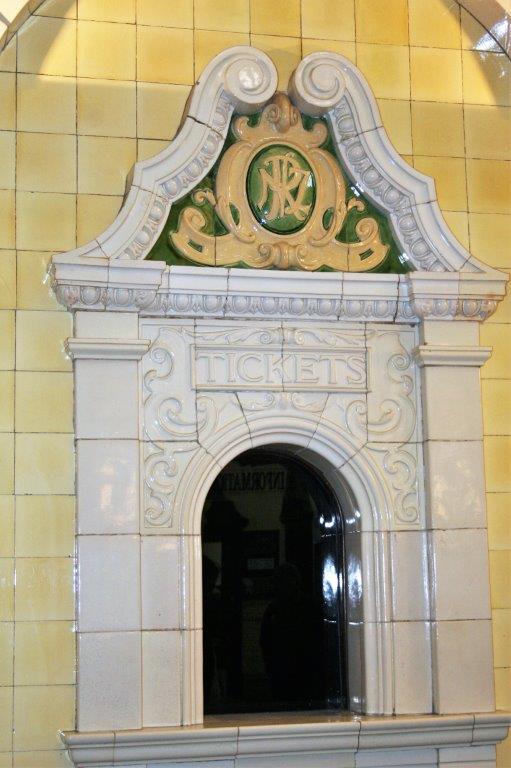
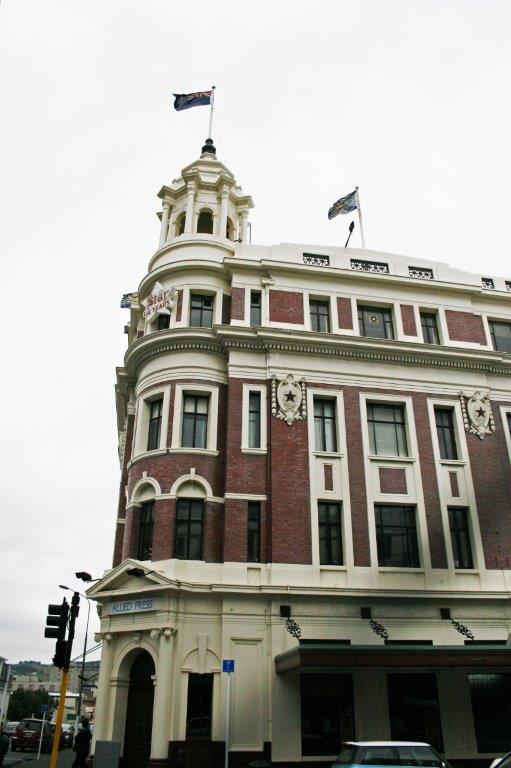
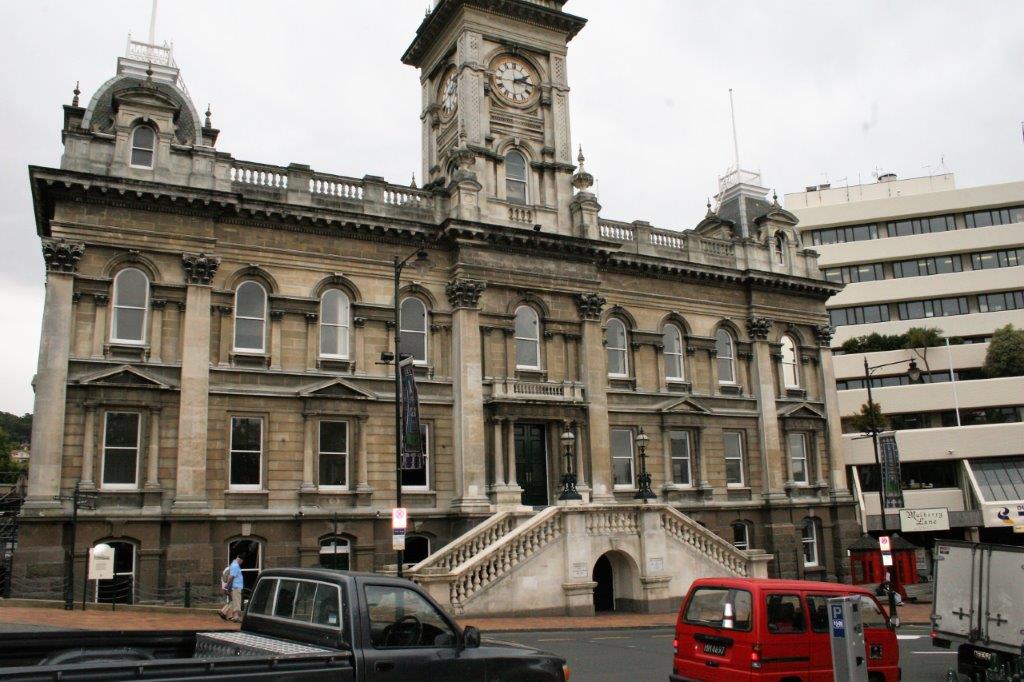
Construction of the terminal building at Dunedin was begun in June 1904 and completed three years later.  The beautiful Edwardian-style building is affectionately called “Gingerbread George.”  (It was designed by architect George Troup.) There are almost 750,000 custom-made Minton tiles on the floor.
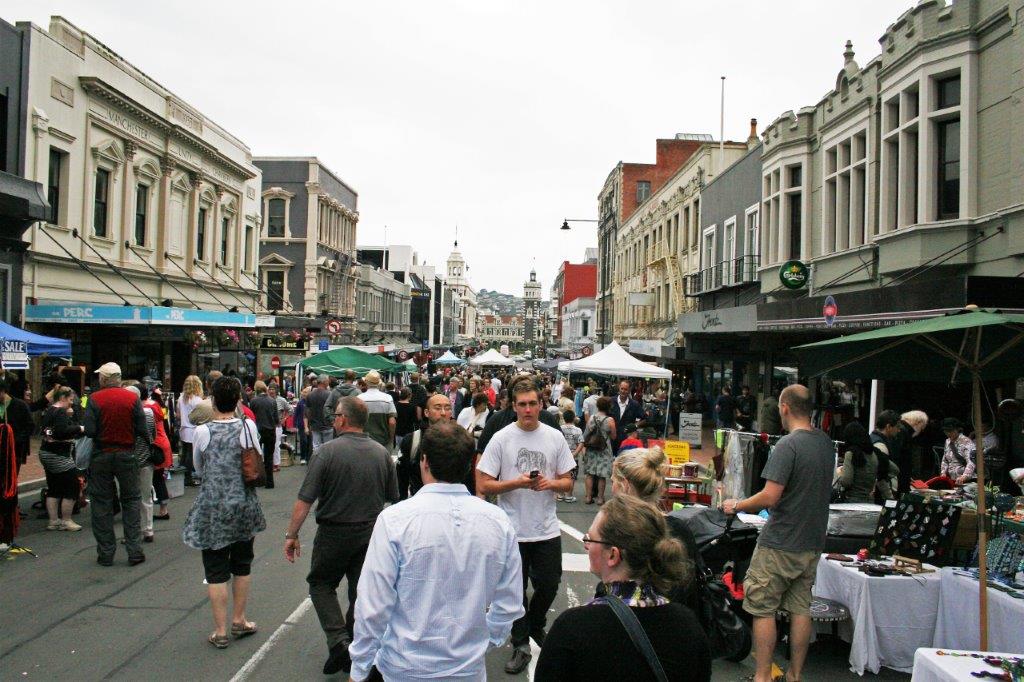
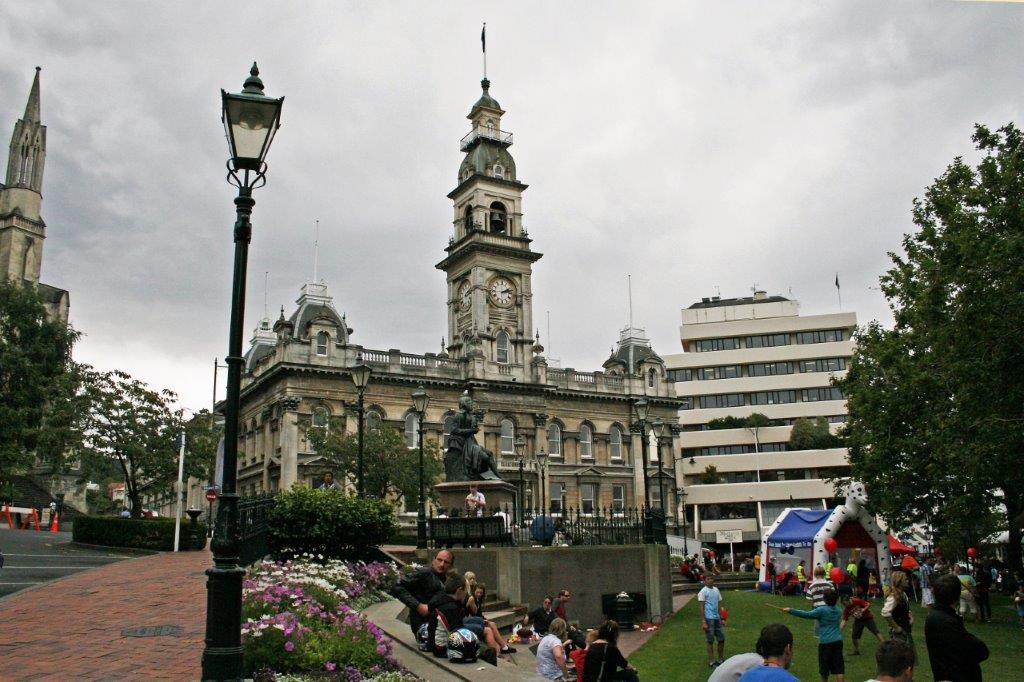
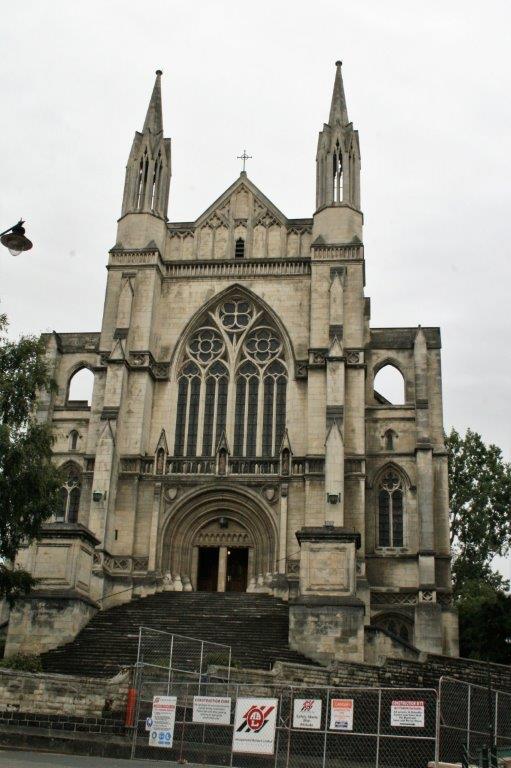
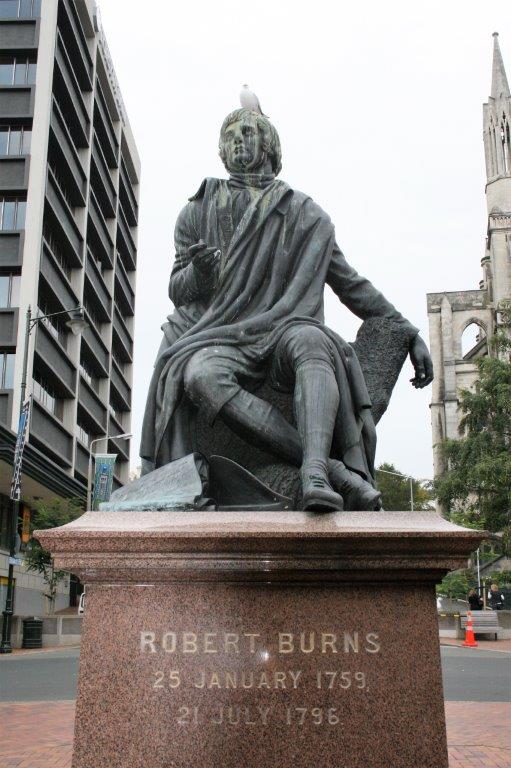
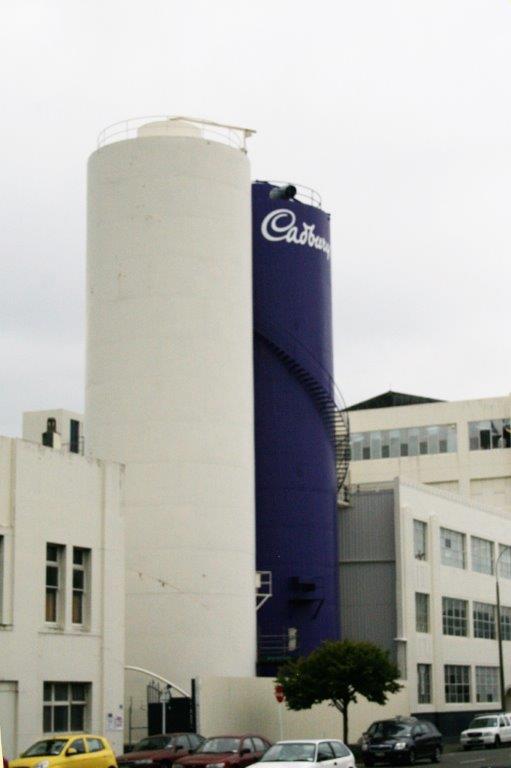
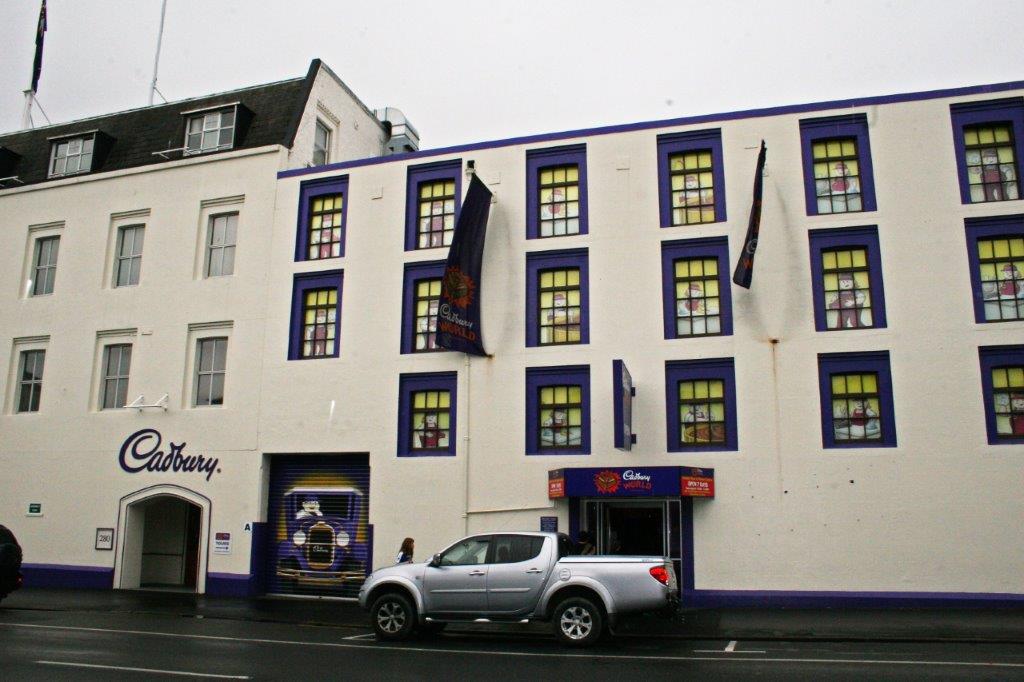
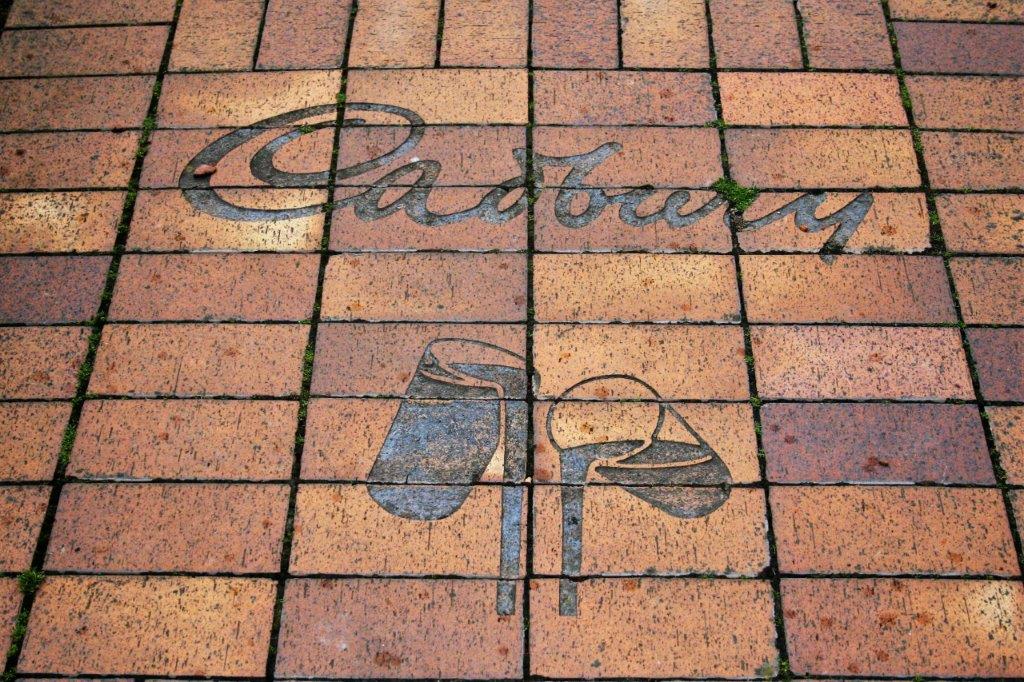
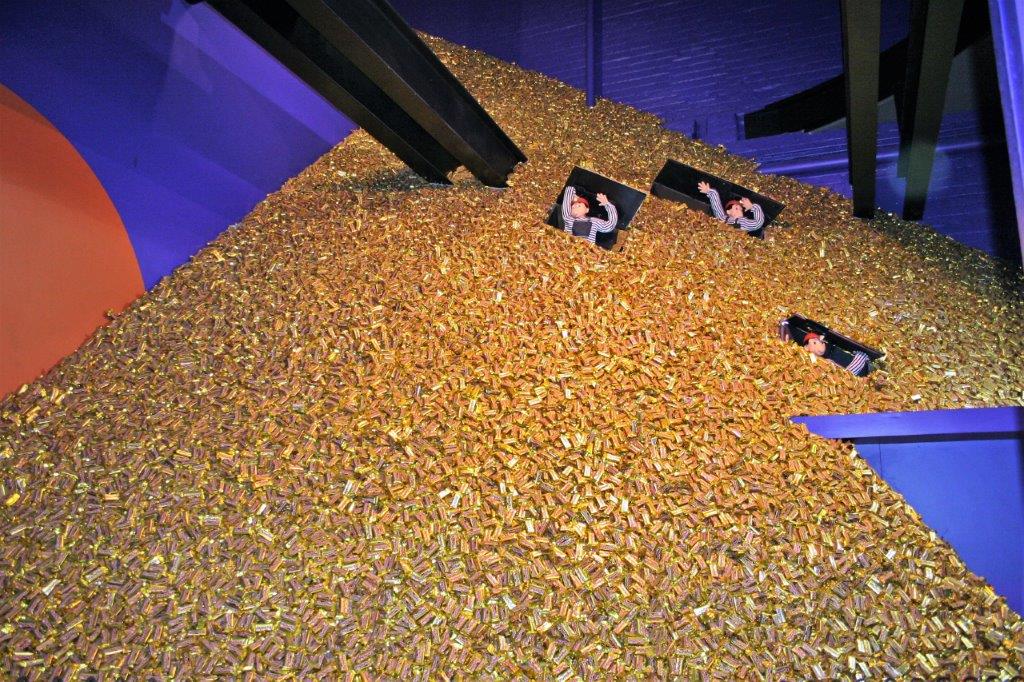
We walked from the station through “Thieves Alley”, a popular open-air street market. At the end of Thieves Alley is St. Paul’s Anglican Cathedral. There is a bird-blessed statue of Scottish poet Robbie Burns.It wasn’t too far to walk back to the ship’s shuttle stop; which, very conveniently was across the street from the Cadbury factory! Immediately inside the front door you were greeted with this mountain of foil-wrapped Cadbury chocolates.

The gift shop inside Cadbury’s was absolutely packed with people; the majority of whom were ship’s crew.  They all held shopping baskets filled to overflowing with chocolate goodies.  They were stocking up on gifts for their families.  Some of them spent a lot of money that day.

We made a few purchases (one must have chocolate after all) and re-crossed the road to get the next shuttle back to the ship. Sail-away was 5 pm and we watched the shore slip by before going for dinner.We had one more stop in New Zealand.  The next day the ship anchored off the coast of Stewart Island, which sits at the southern tip of the South Island.

2011 February 11 – Day 37 – Lyttleton (Christchurch), New Zealand.

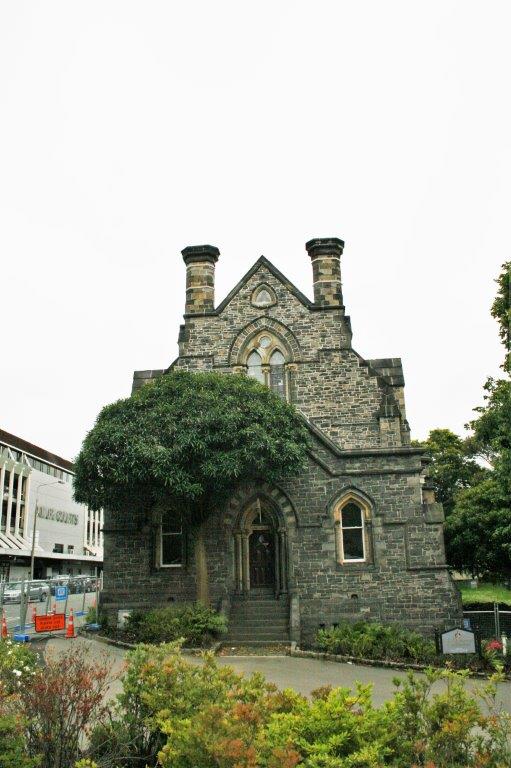
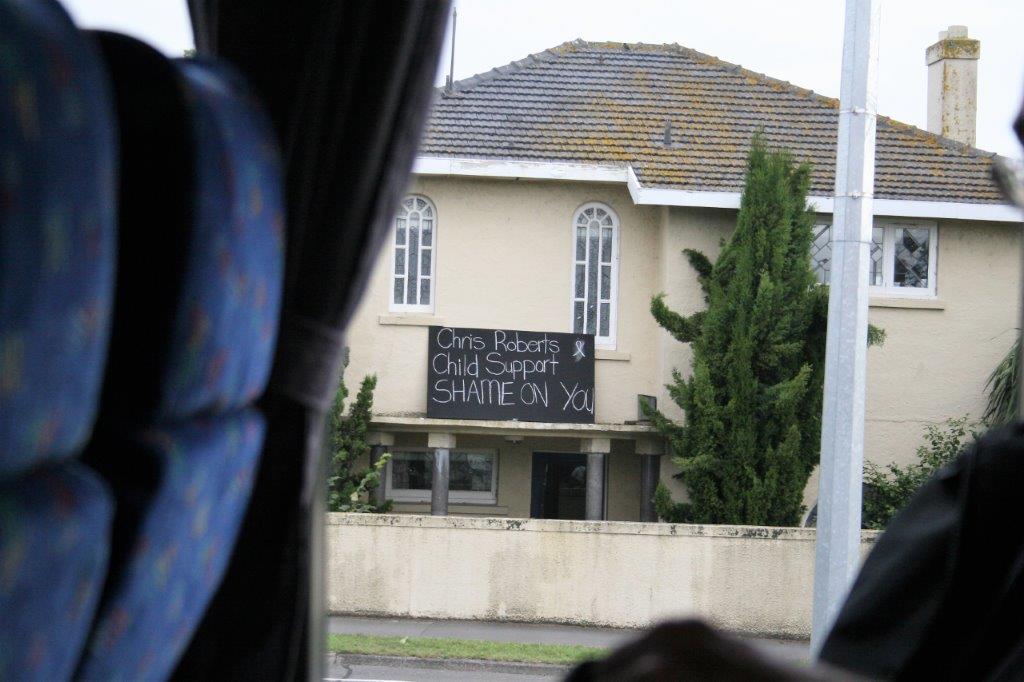
Lyttleton is the port city that serves cruise traffic stopping in Christchurch.  It only takes about 20 minutes to drive from one place to another.  Christchurch had received damage from a quake at Canterbury on Sept. 4, 2010.  The quake measured 7.1 and there were still aftershocks in 2016 – over 17,600 reported.  Eleven days after our visit in 2011 a 6.3 shallow earthquake with the epicenter in Lyttleton killed 185 people, injured several thousand, and did much damage to buildings not yet repaired from the 2010 quake, plus many others.

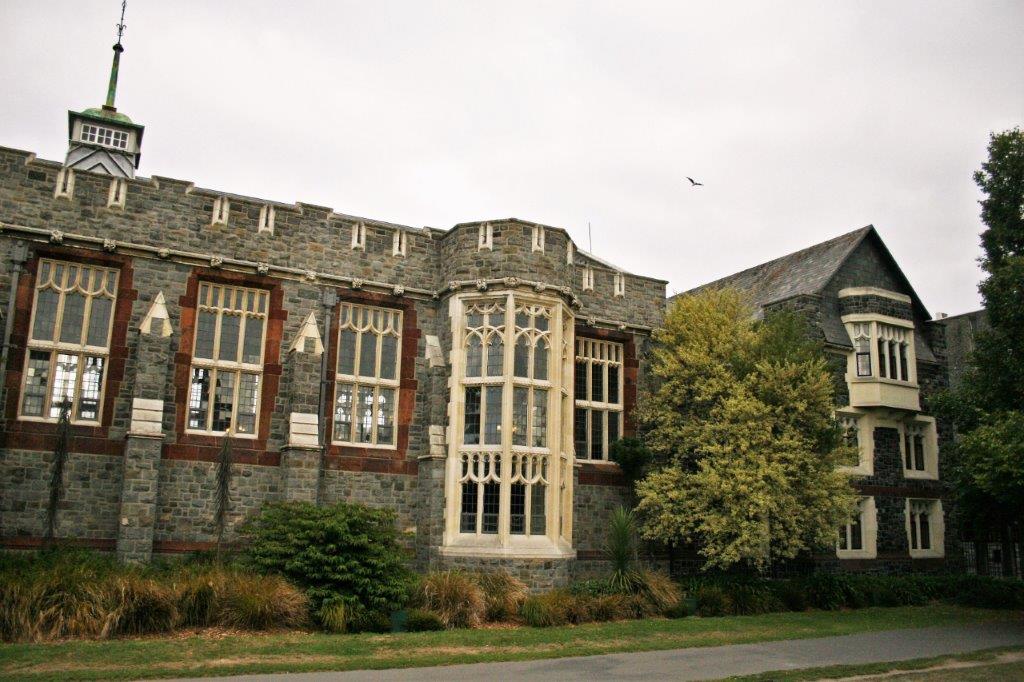
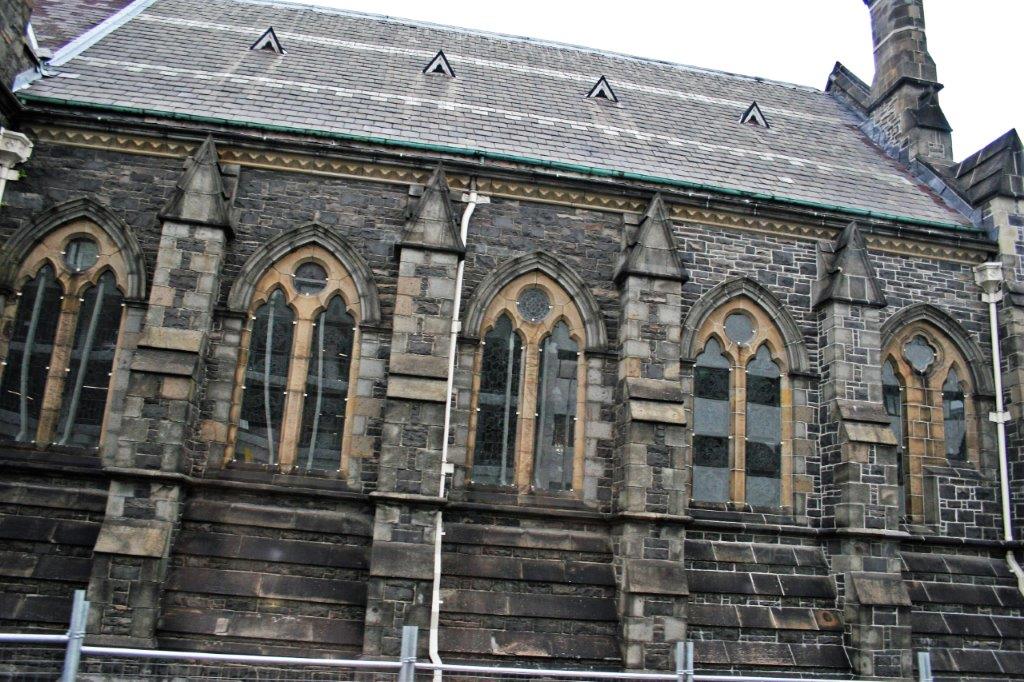
Our bus driver pointed out several of the buildings that had been damaged in 2010.

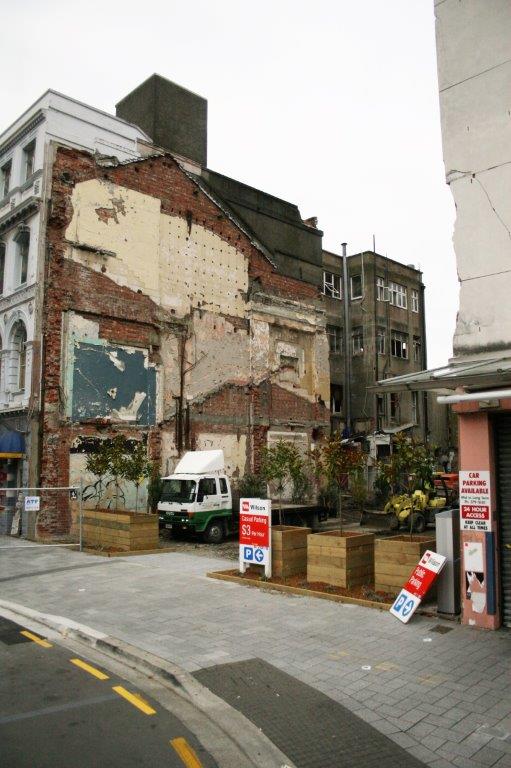
This church was undergoing repair from the 2010 quake and was virtually destroyed in the 2011 one.  The blank lot in the other photo is from where another building was too damaged in 2010 to repair and was removed completely.Obviously there is some parental disagreement going on here.

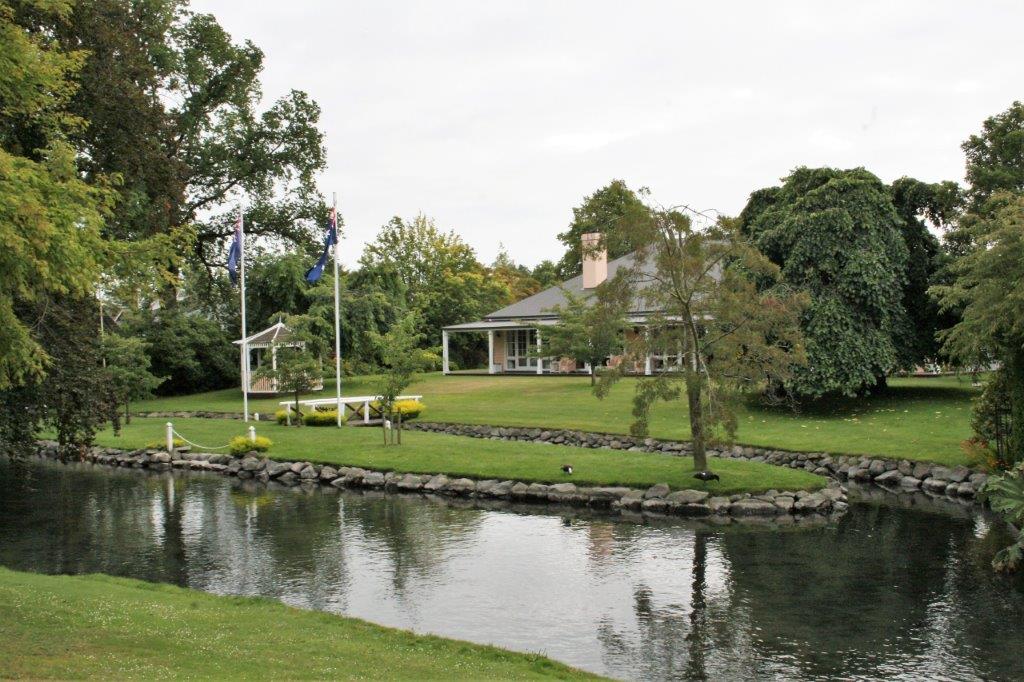
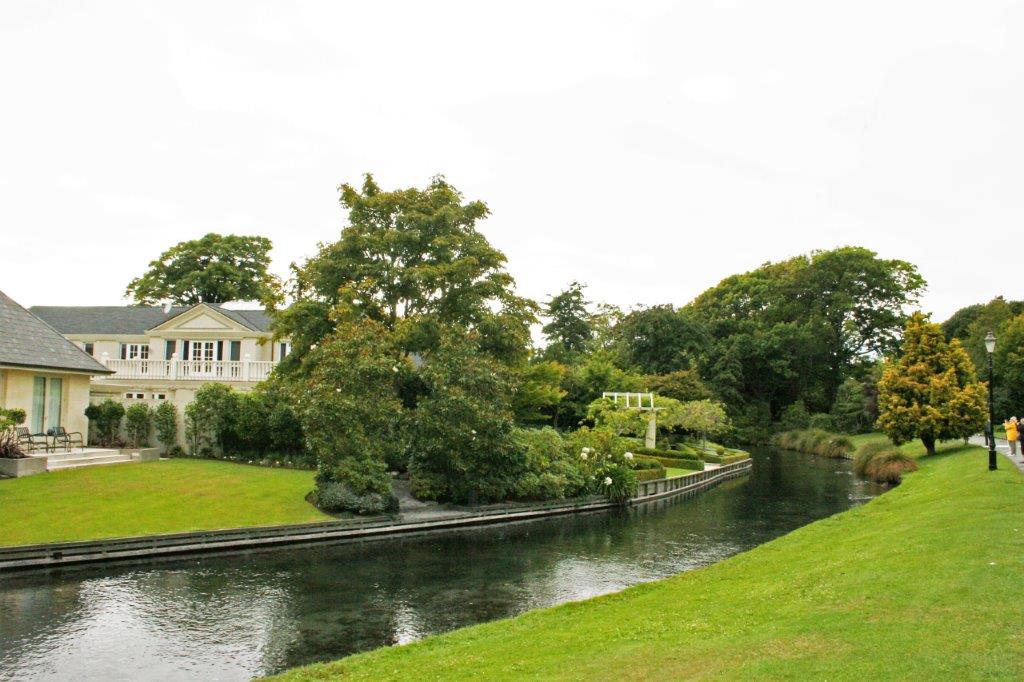
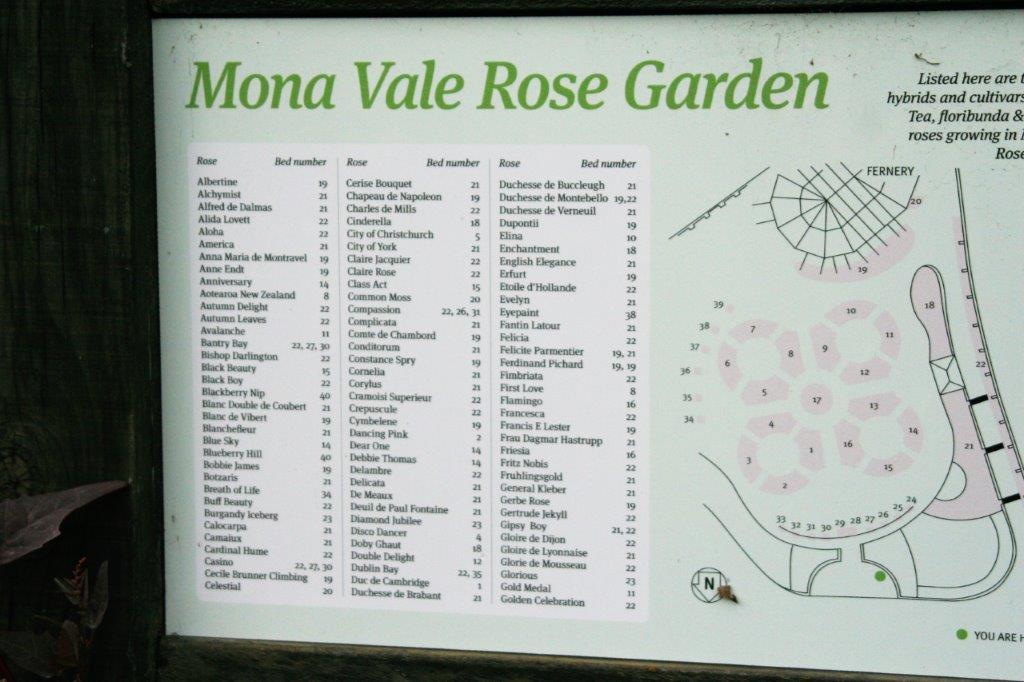
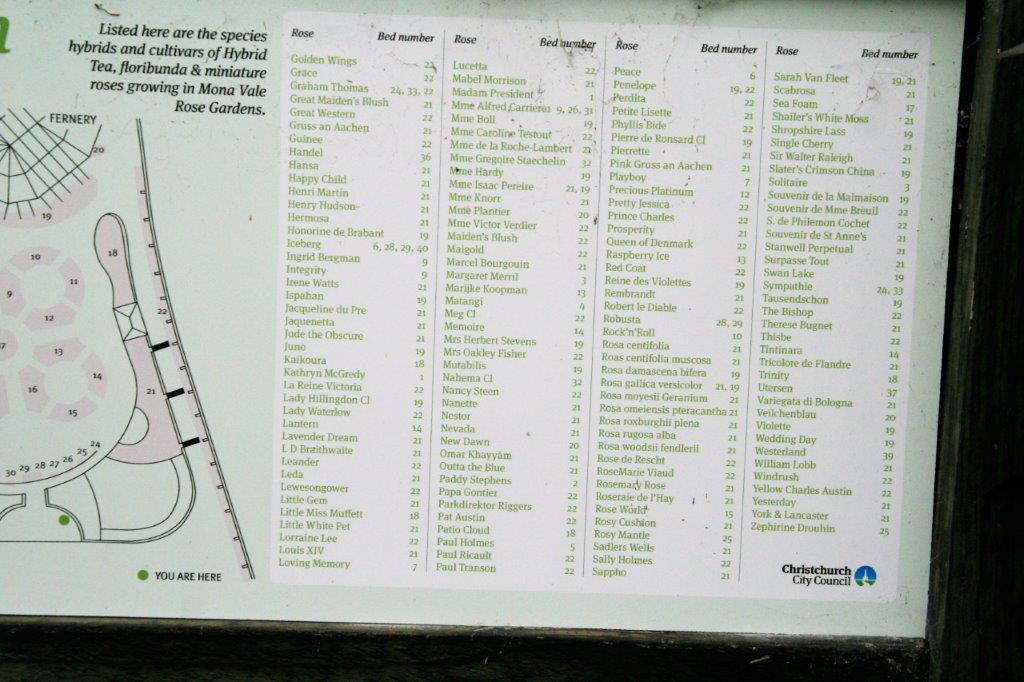
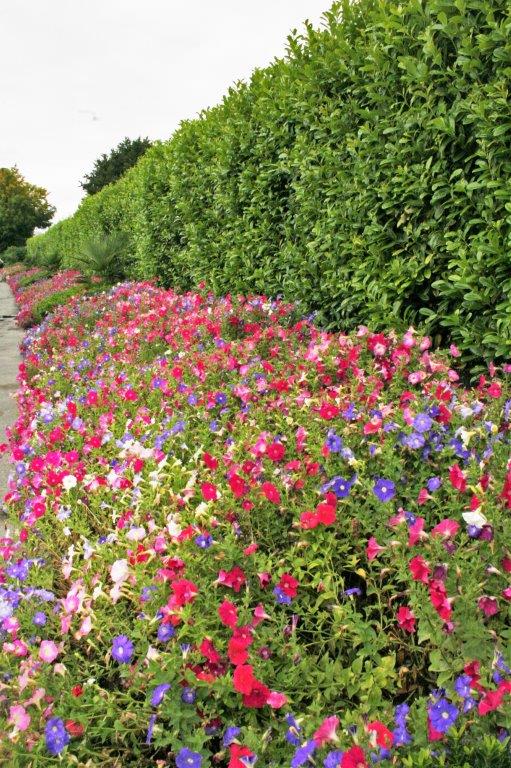
We stopped for a walk-about at the beautiful Mona Vale Garden.
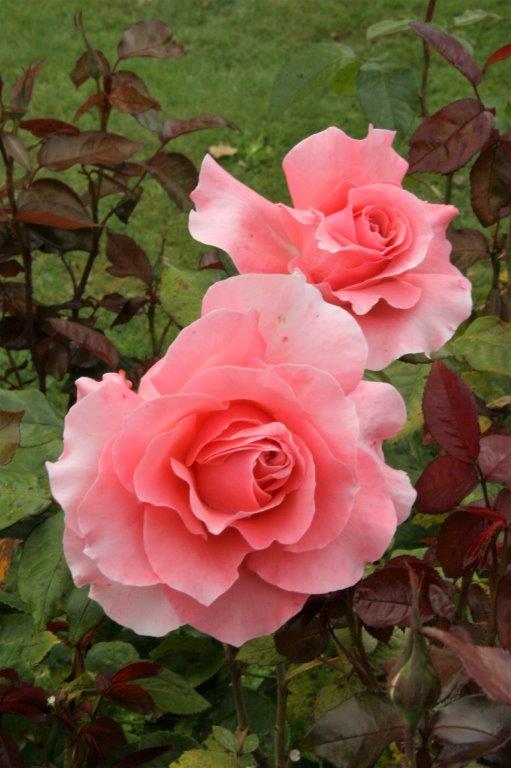
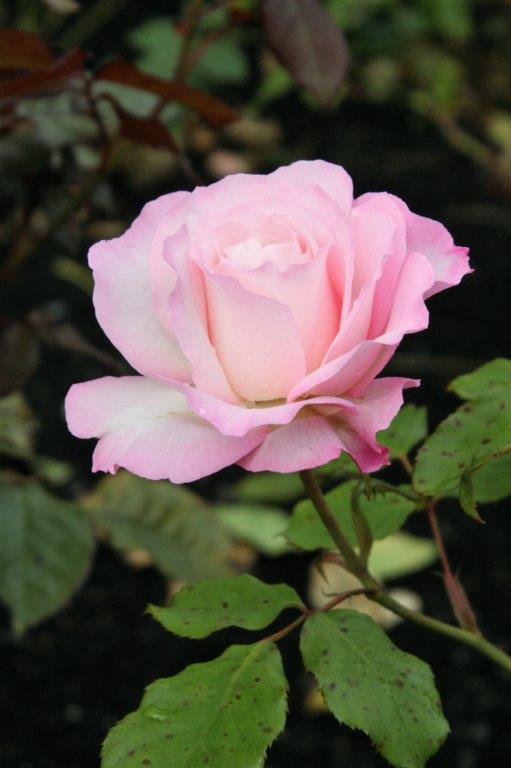
 My rose-loving sister would have loved this rose garden. I am sure this beautifully sculpted yard has full-time staff.

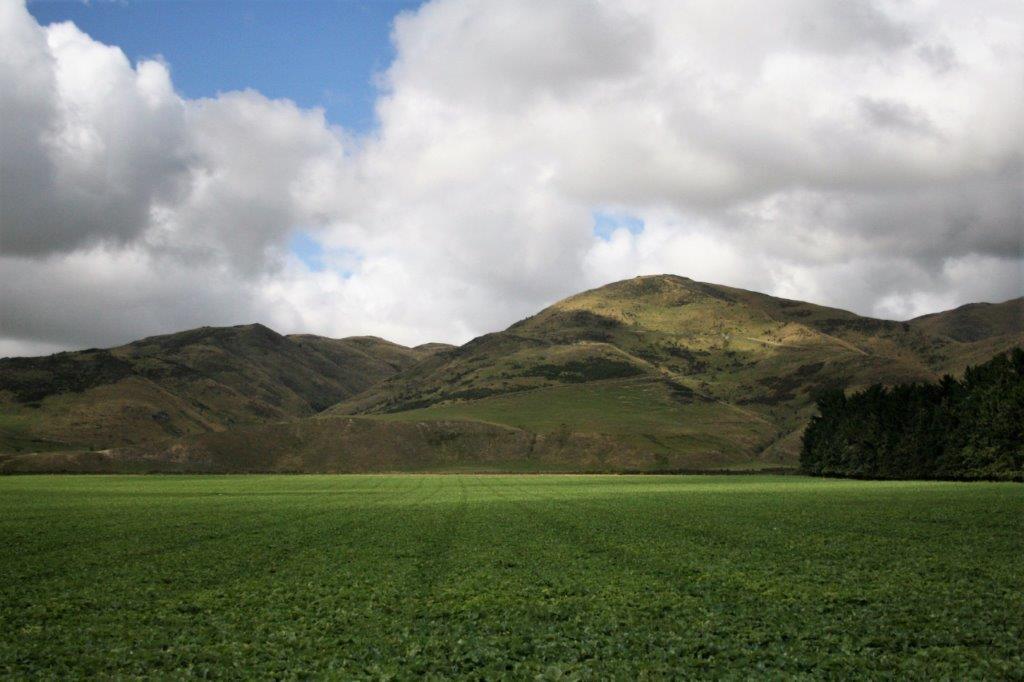
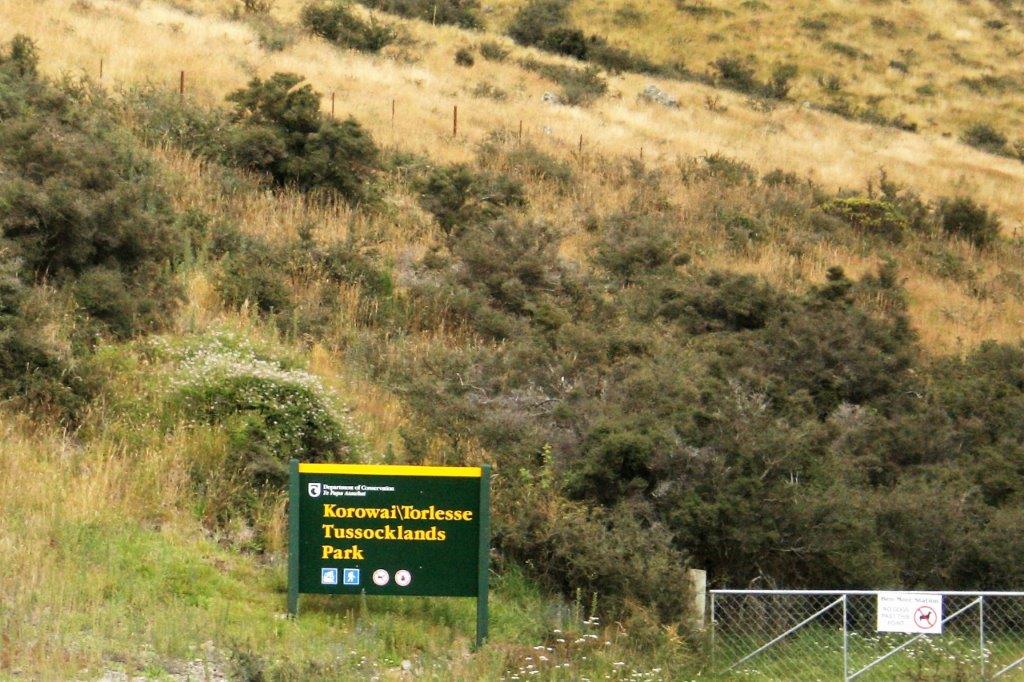
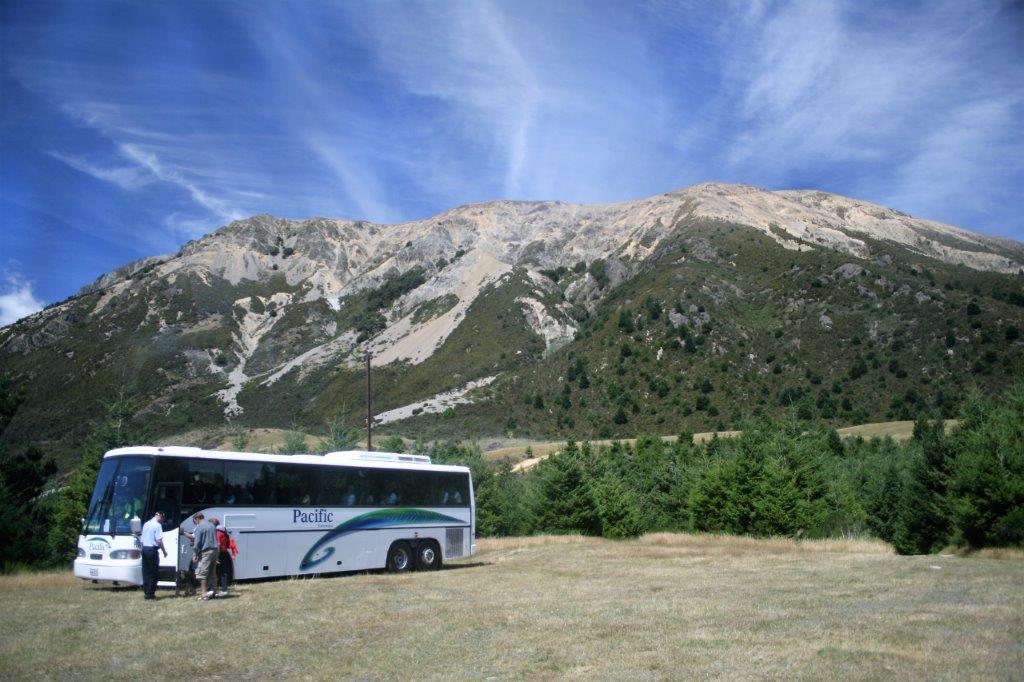
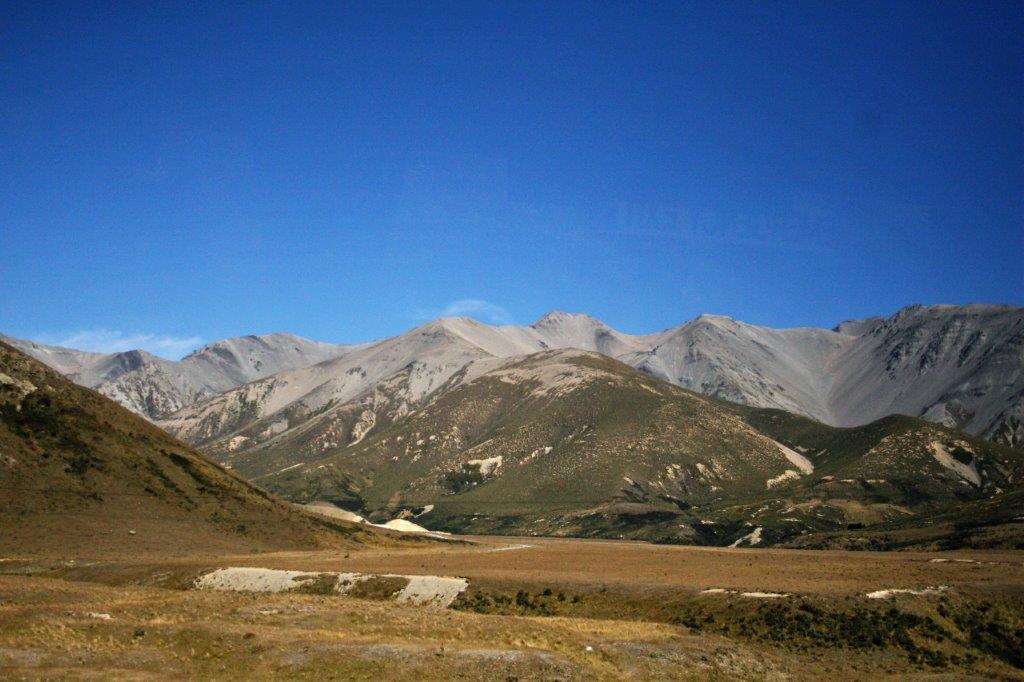
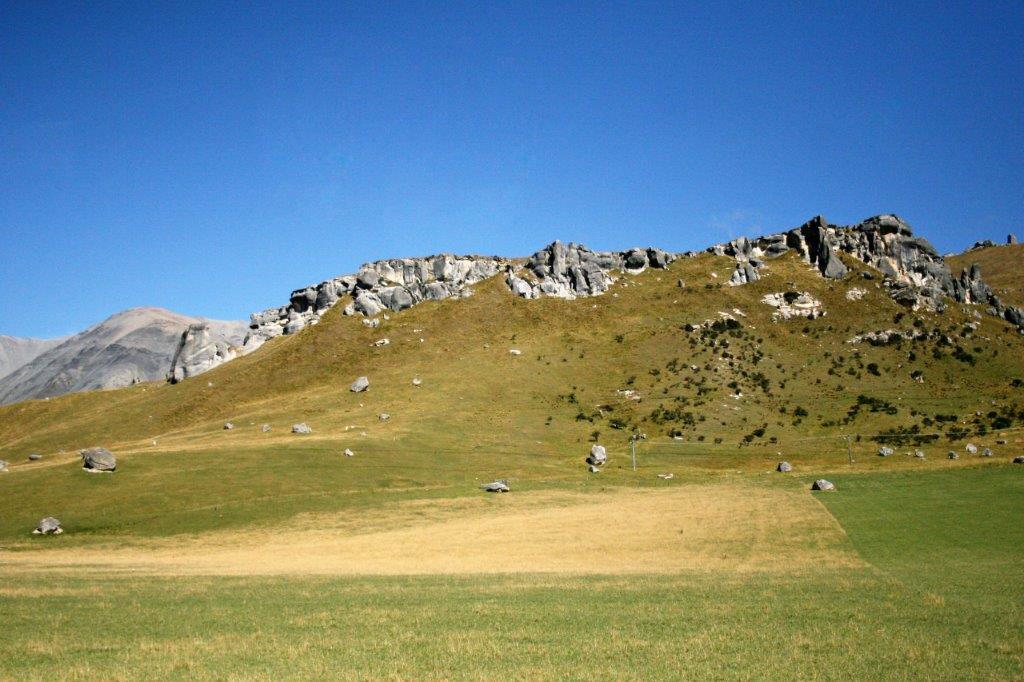
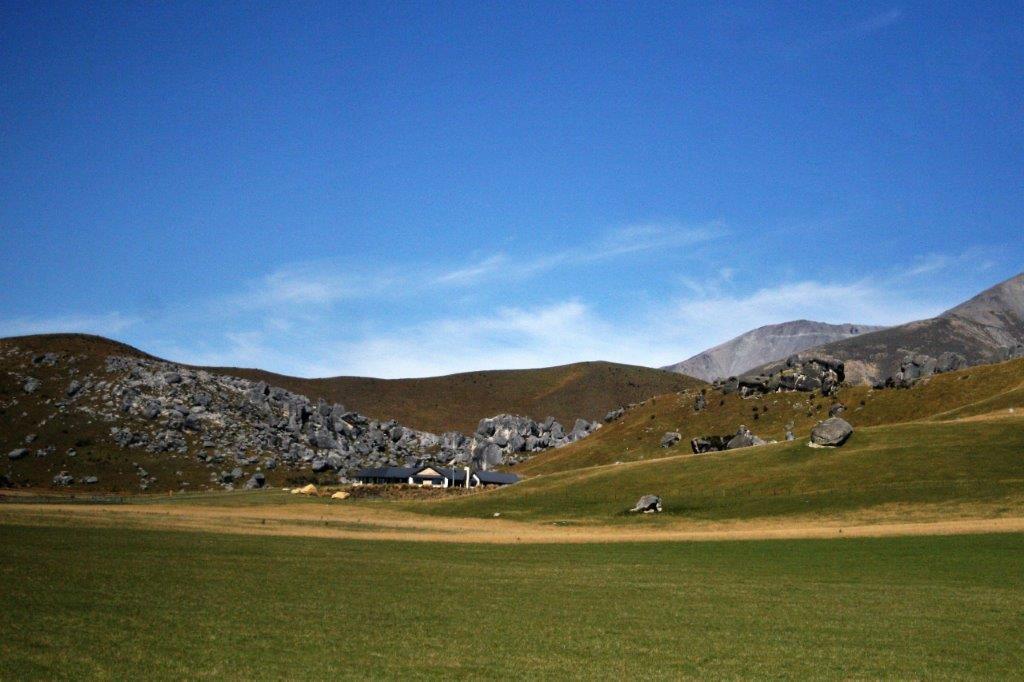
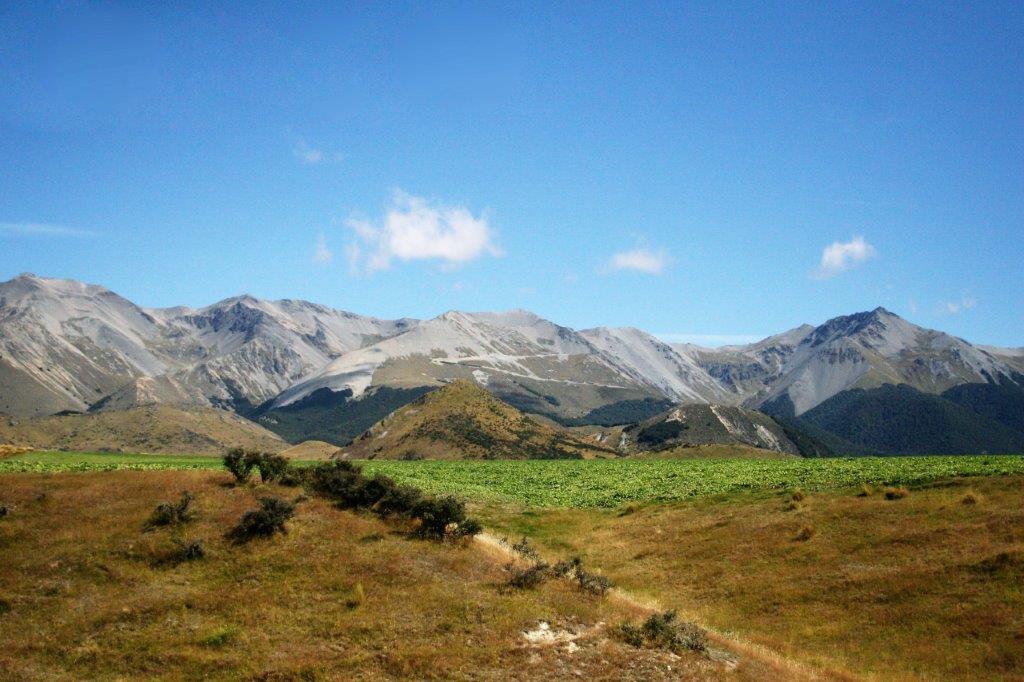
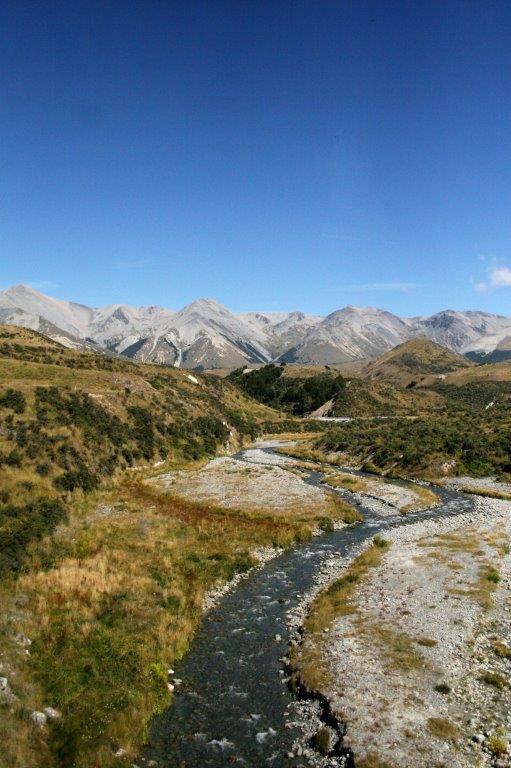
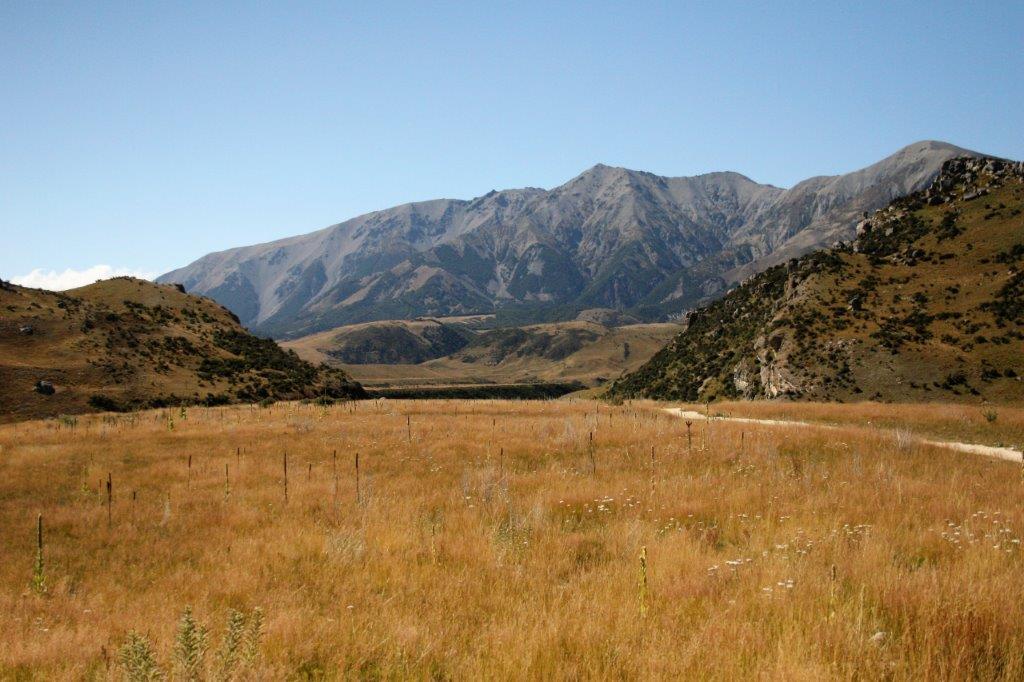
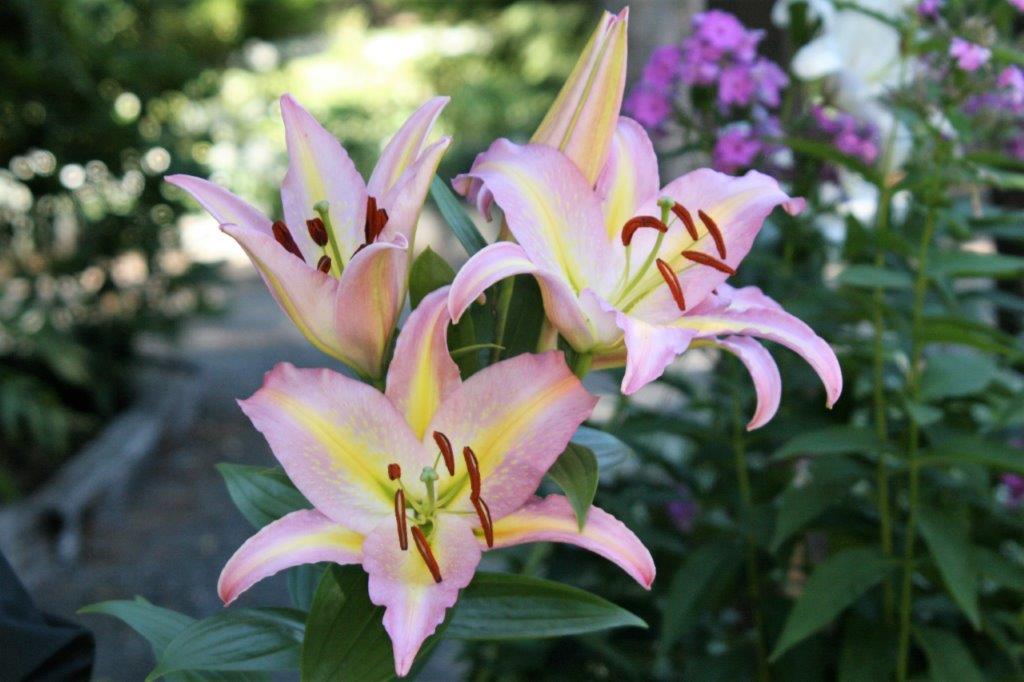
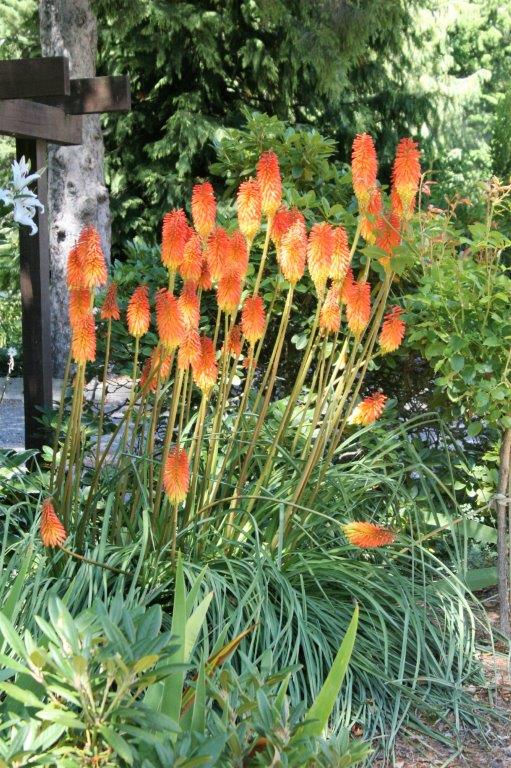
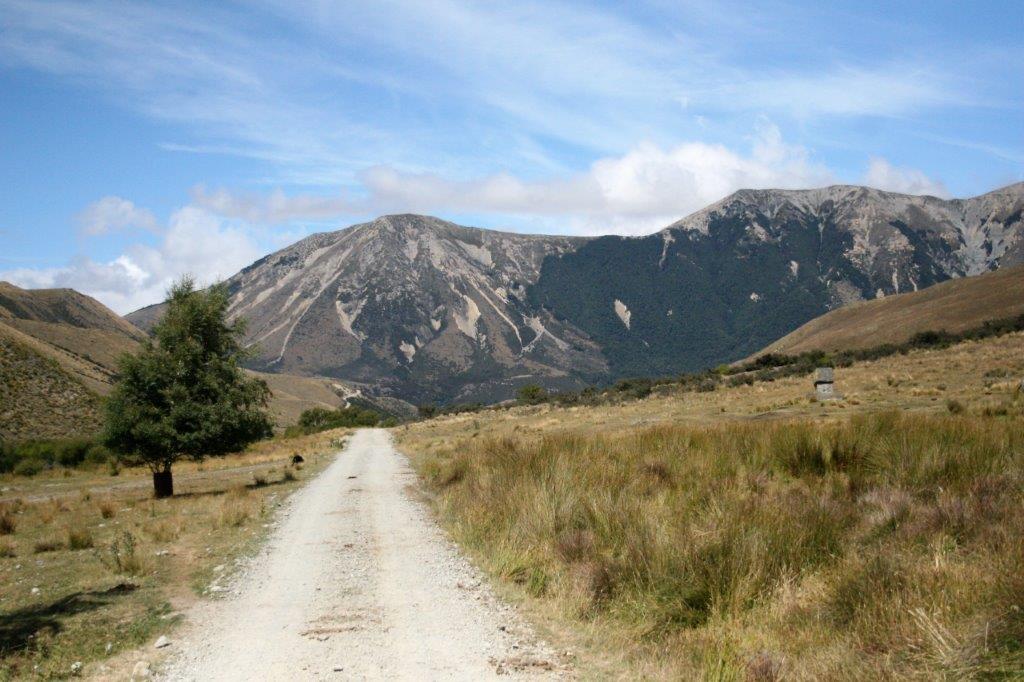
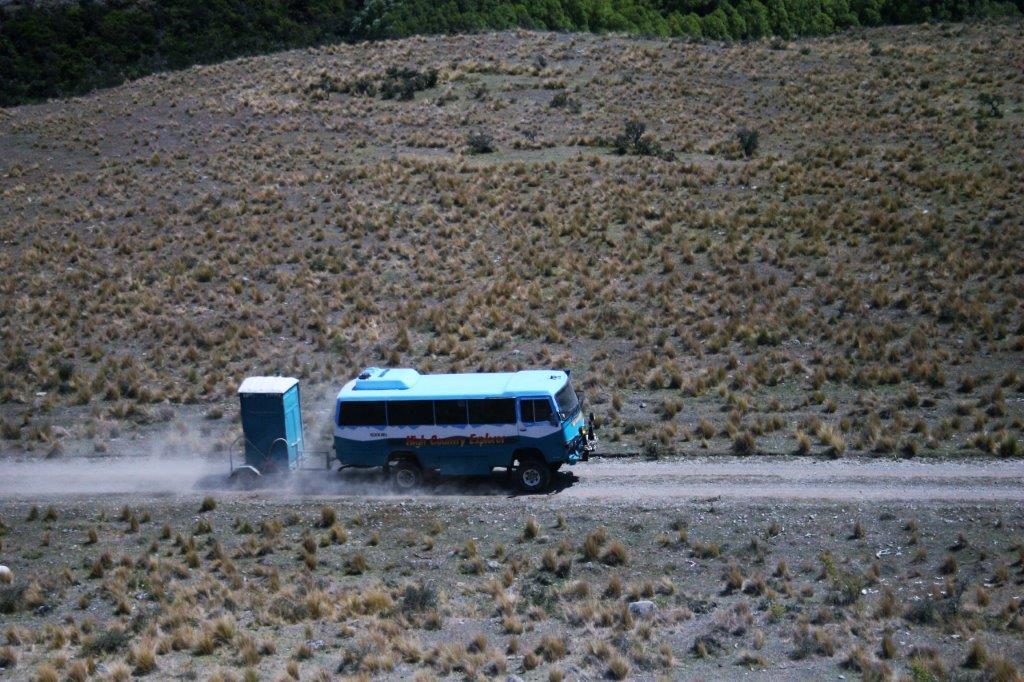
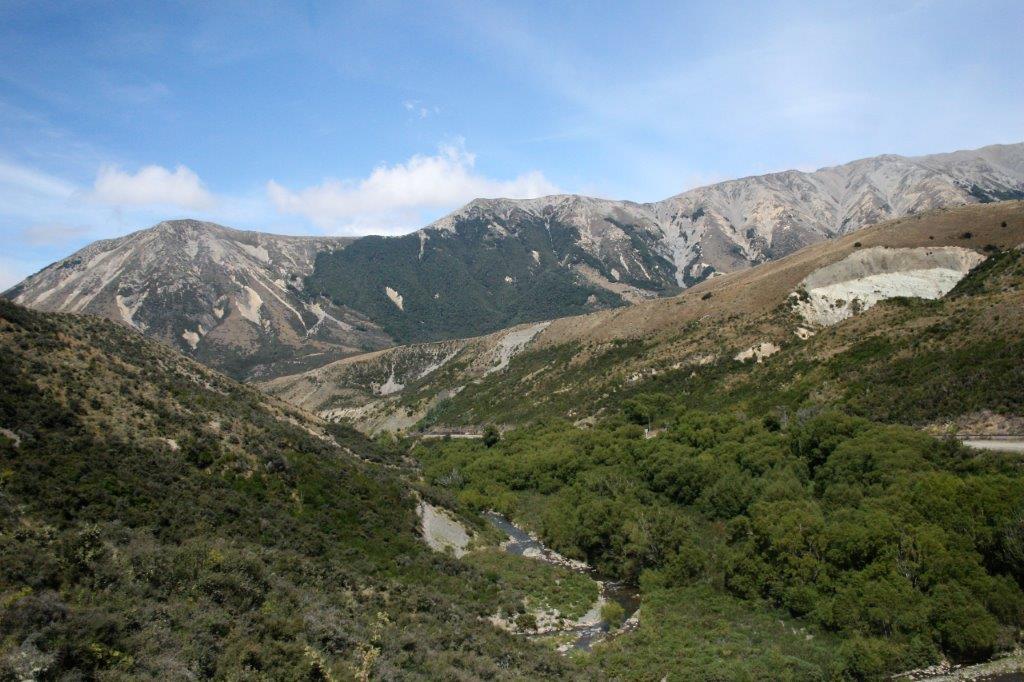
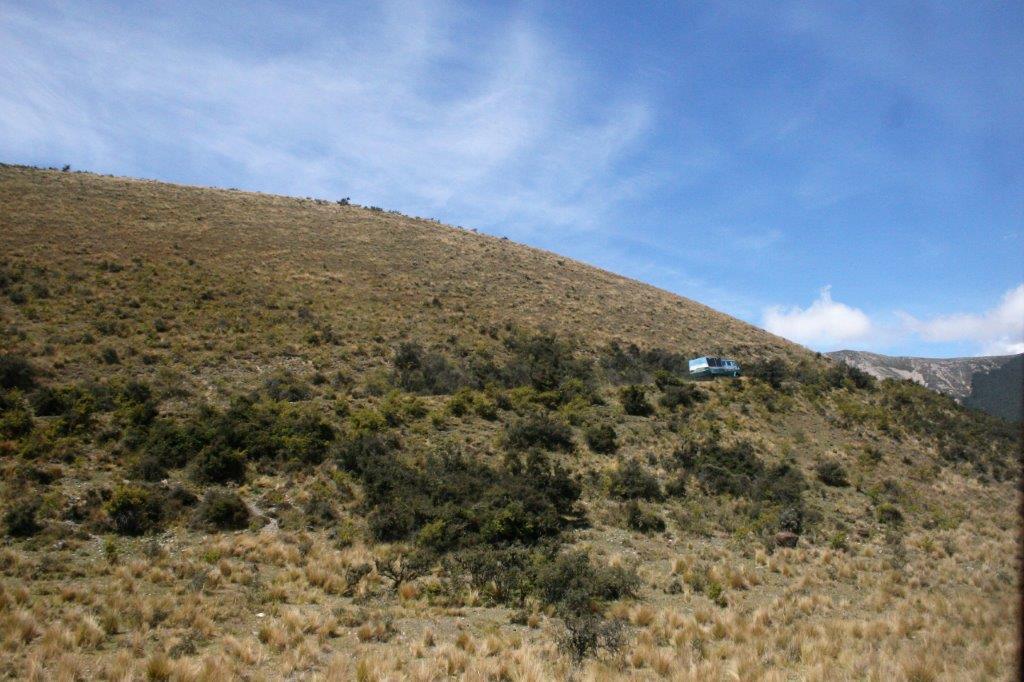
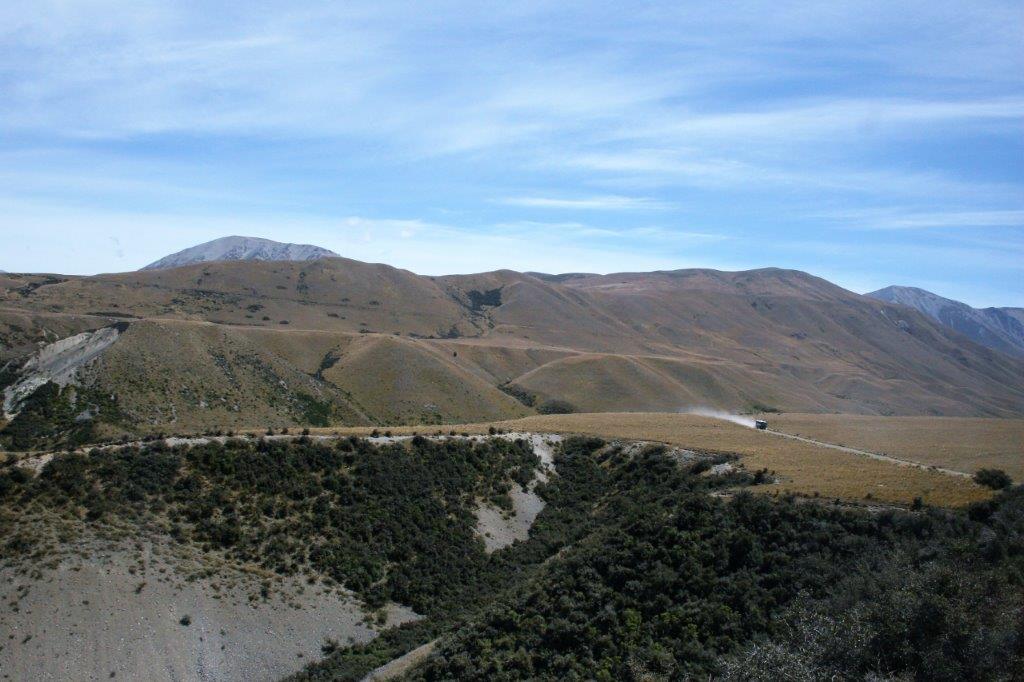
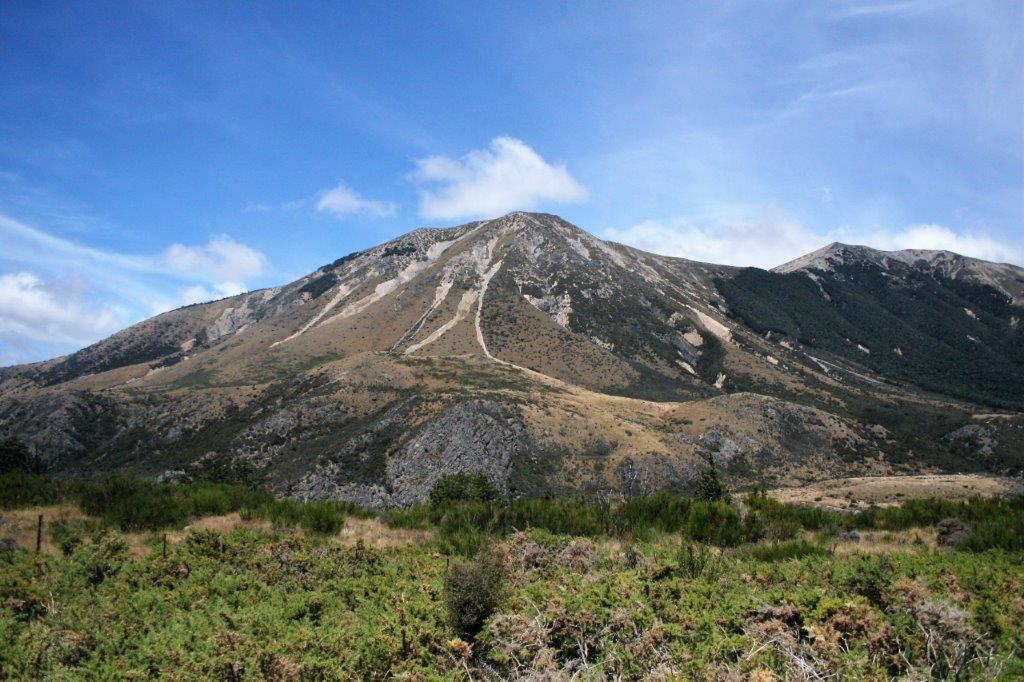
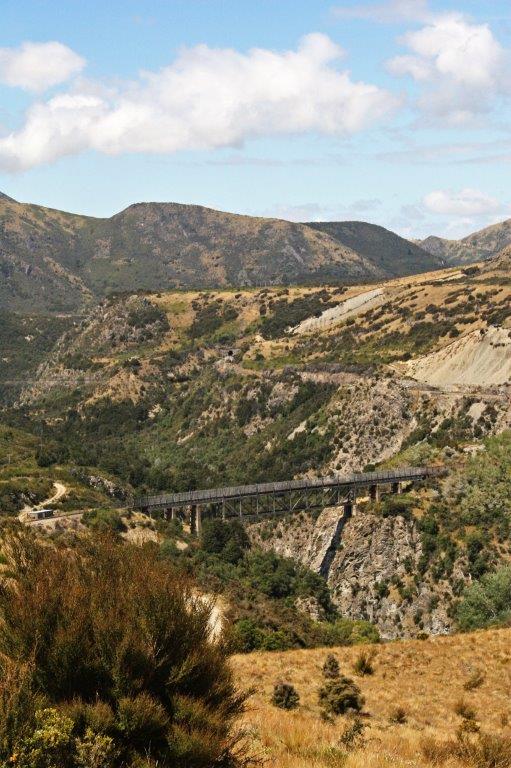
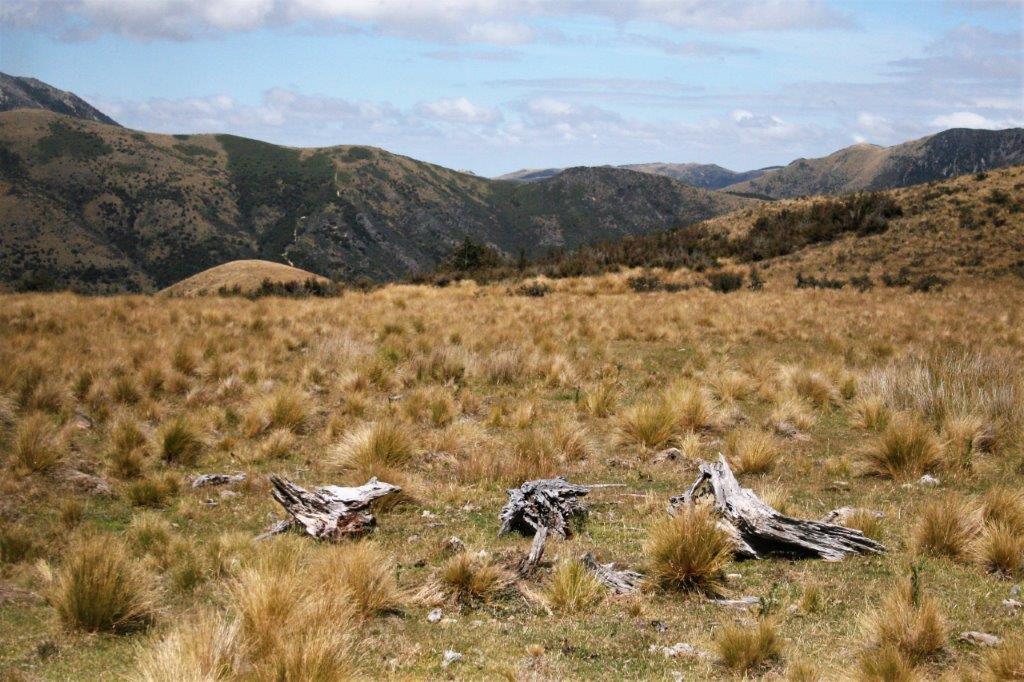
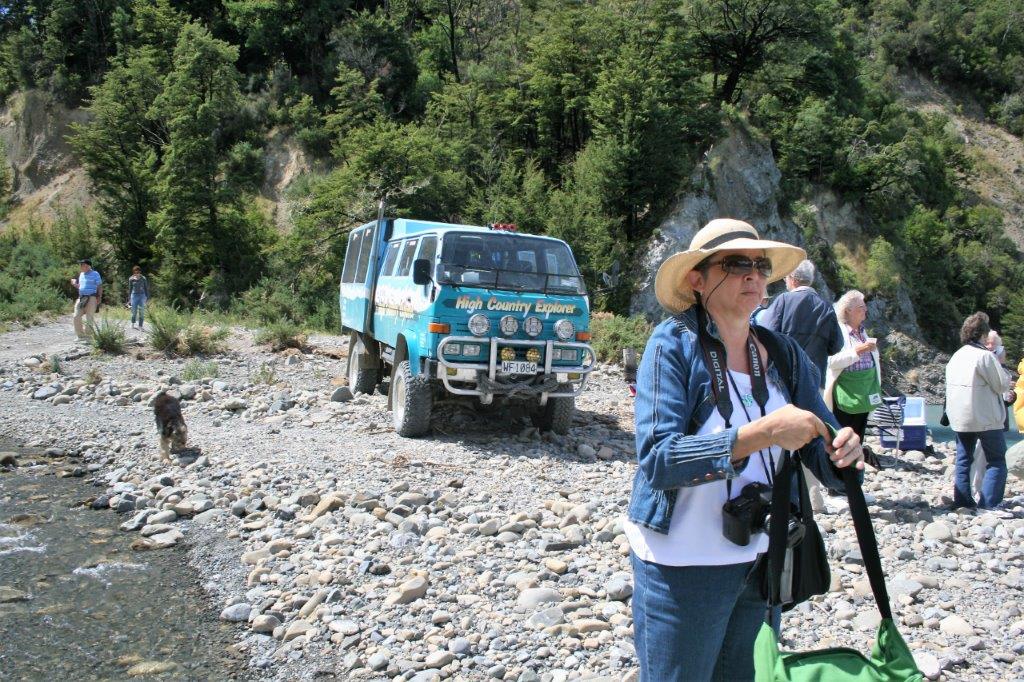
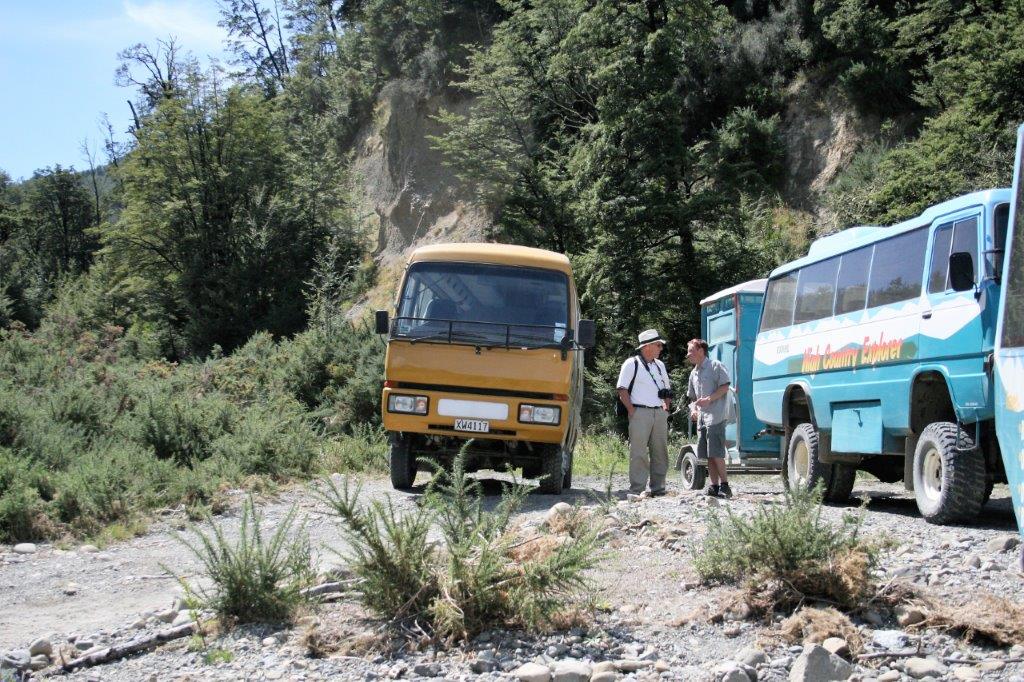
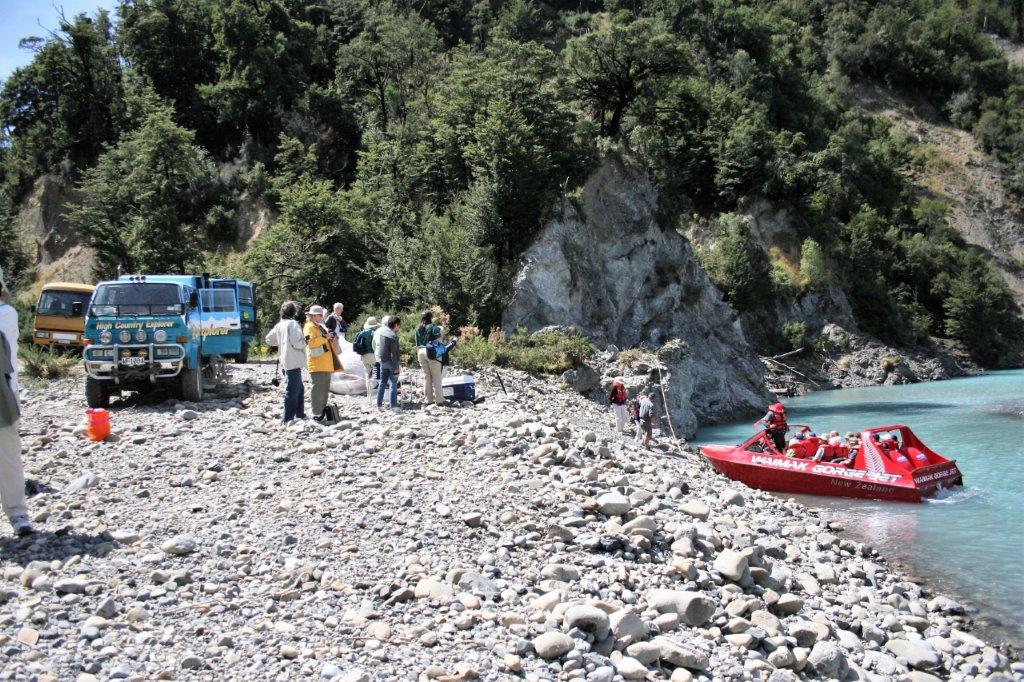
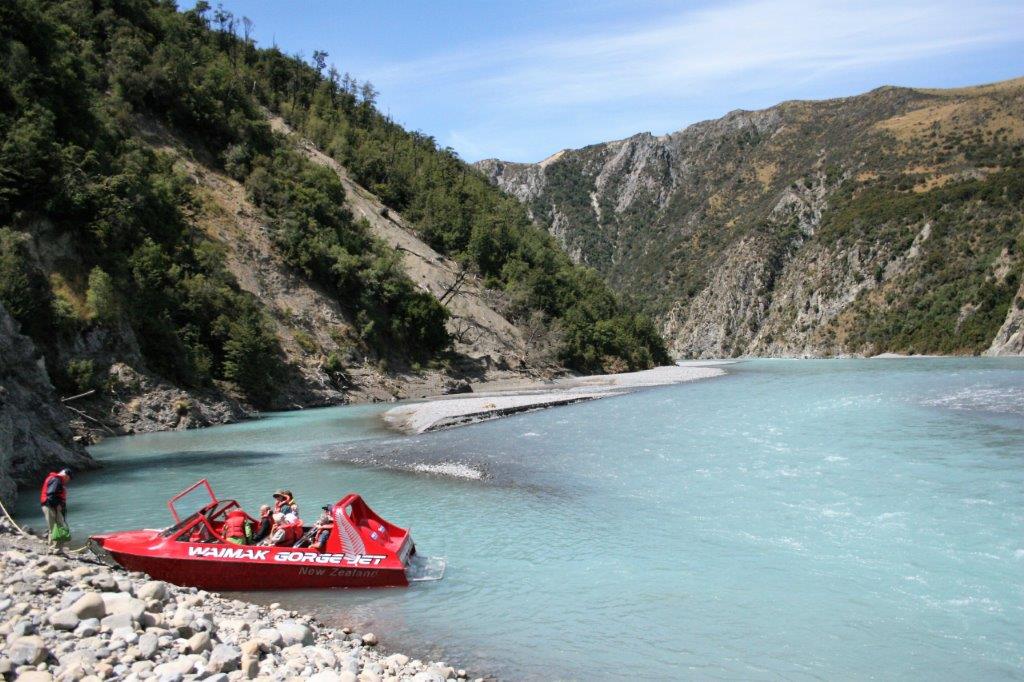
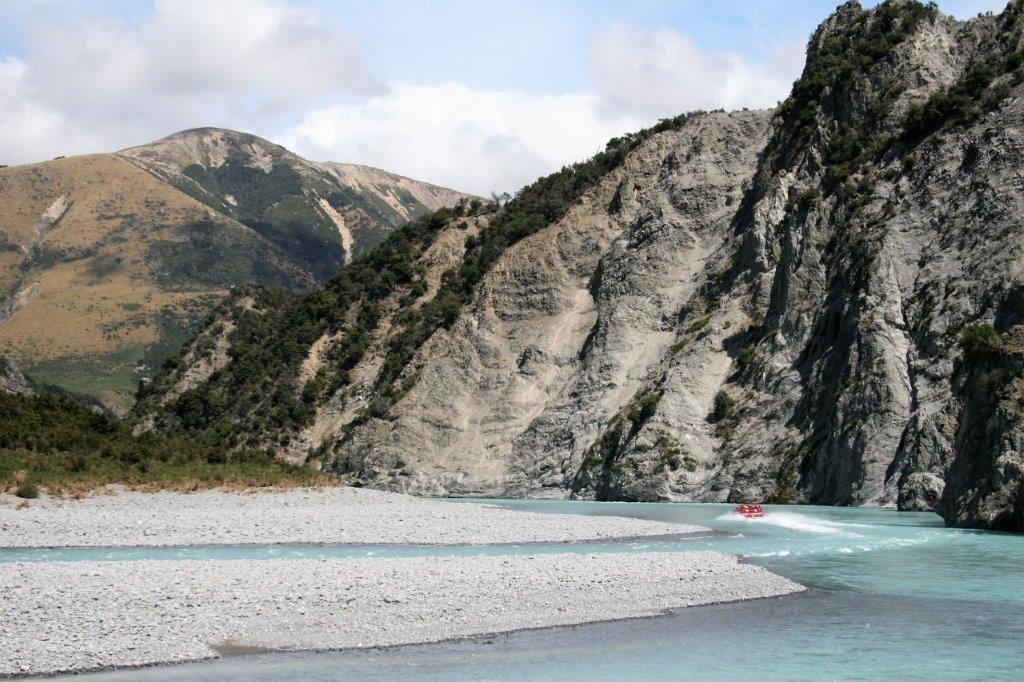
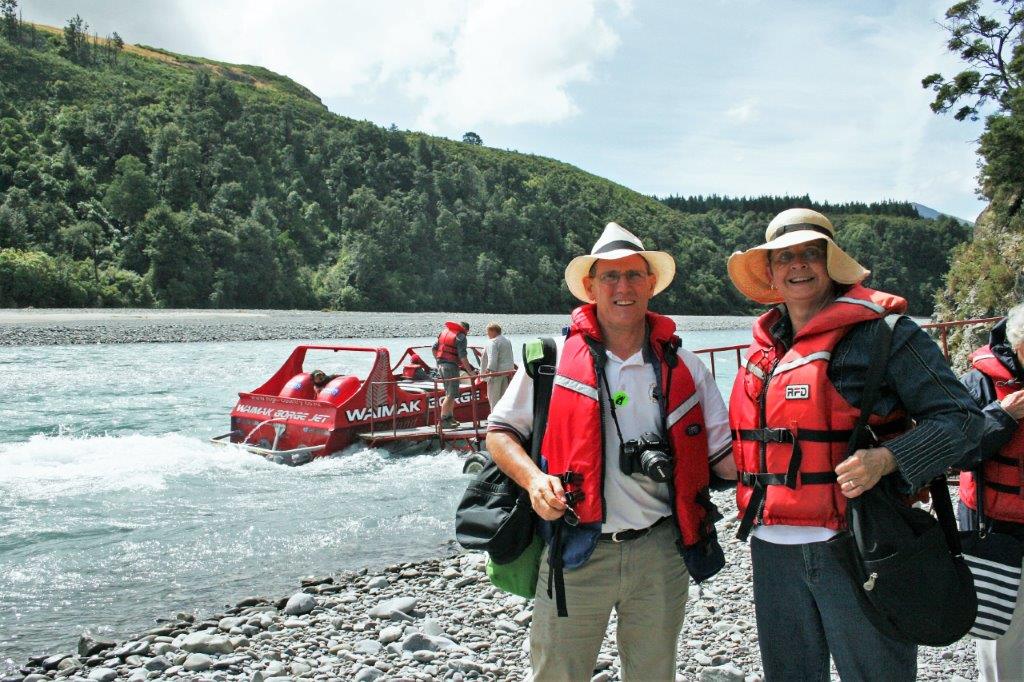
Then it was back on the bus for an hour’s drive towards Arthur’s Pass and the Torelesse Range of the Southern Alps. Lunch stop was at Flock Hill Lodge and Restaurant.  They had some lovely flowers and a beautiful view of the mountains in the distance. Flock Hill Station is a 35,000 acre sheep ranch.  They run one sheep for every 5 acres.   At the station we left our regular buses behind and transfered into all-terrain buses for the ride through the Torelesse Range from east to west.  It took about an hour and a half and the wide-open scenery was fabulous. We were out in the middle of nowhere so bathroom facilities were provided en route. On the western side of the range we stopped beside the green glacier-fed Waimak River.


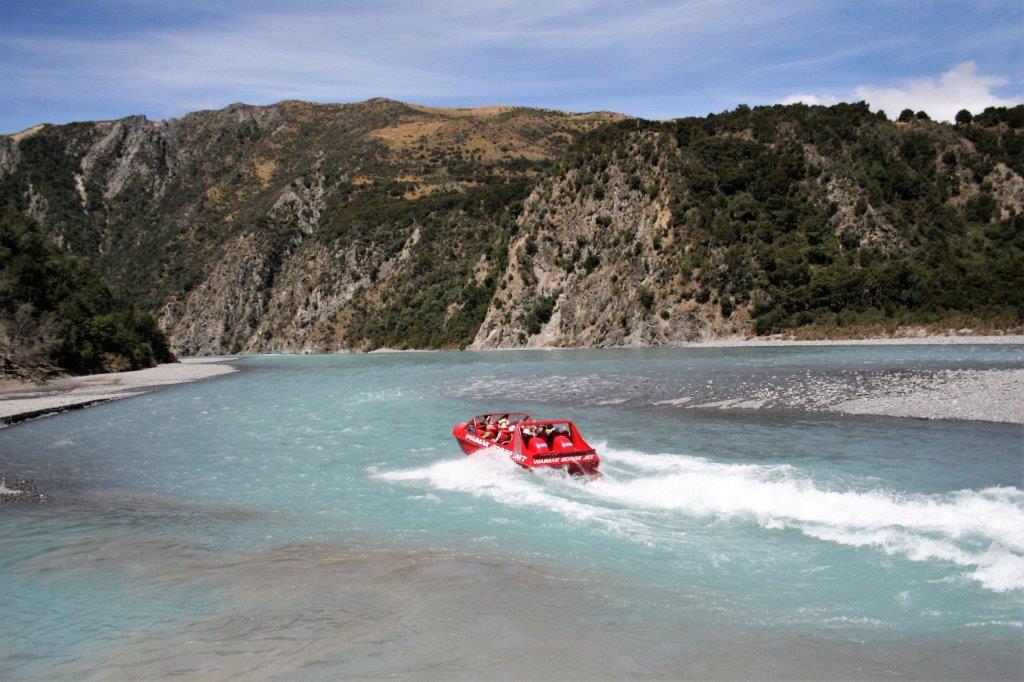
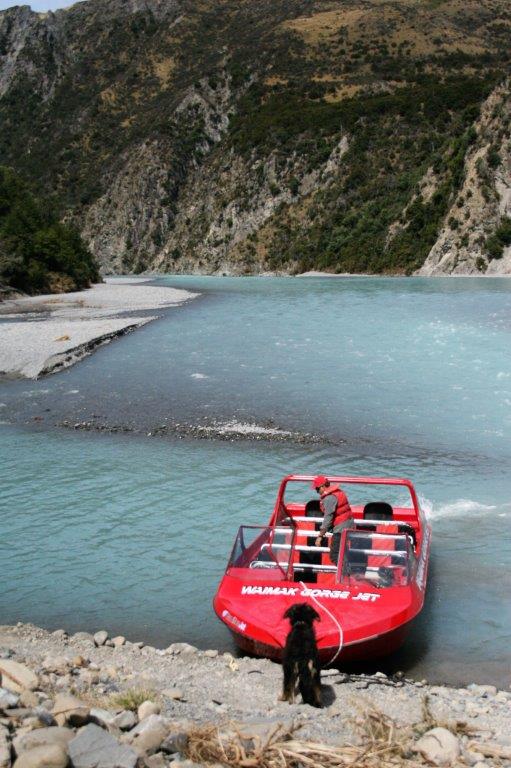
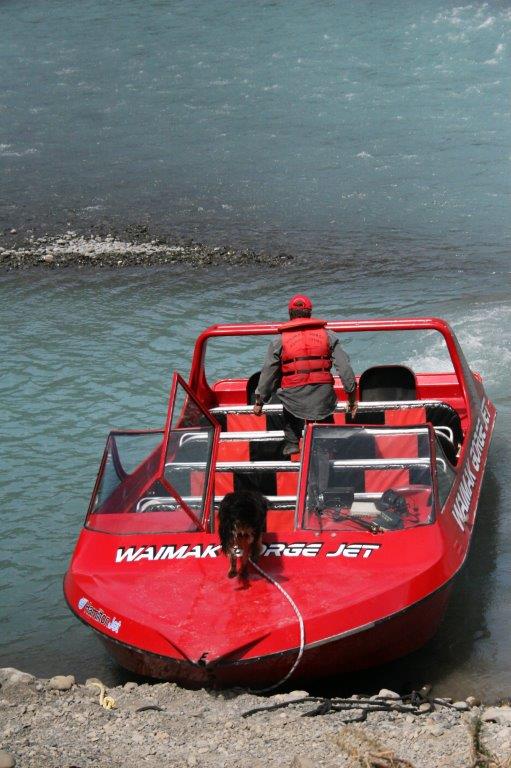
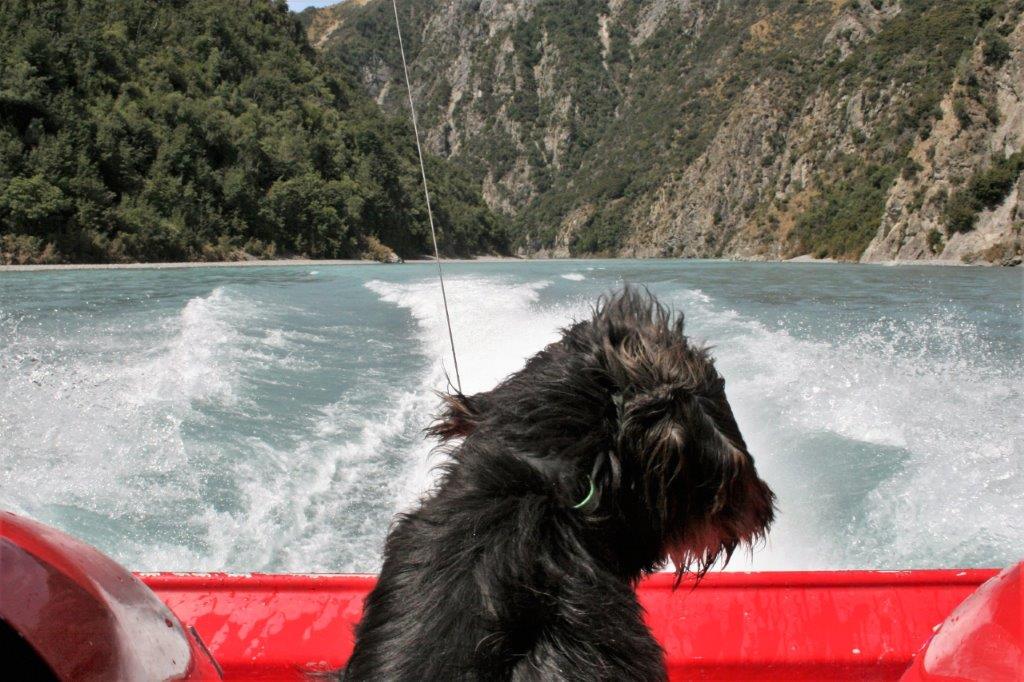
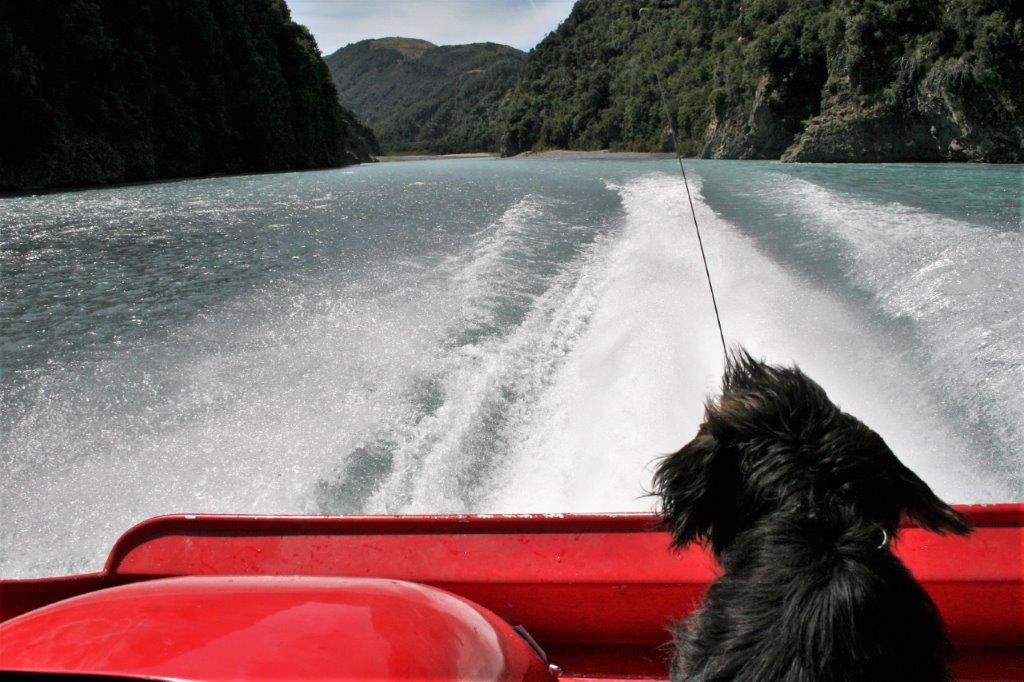
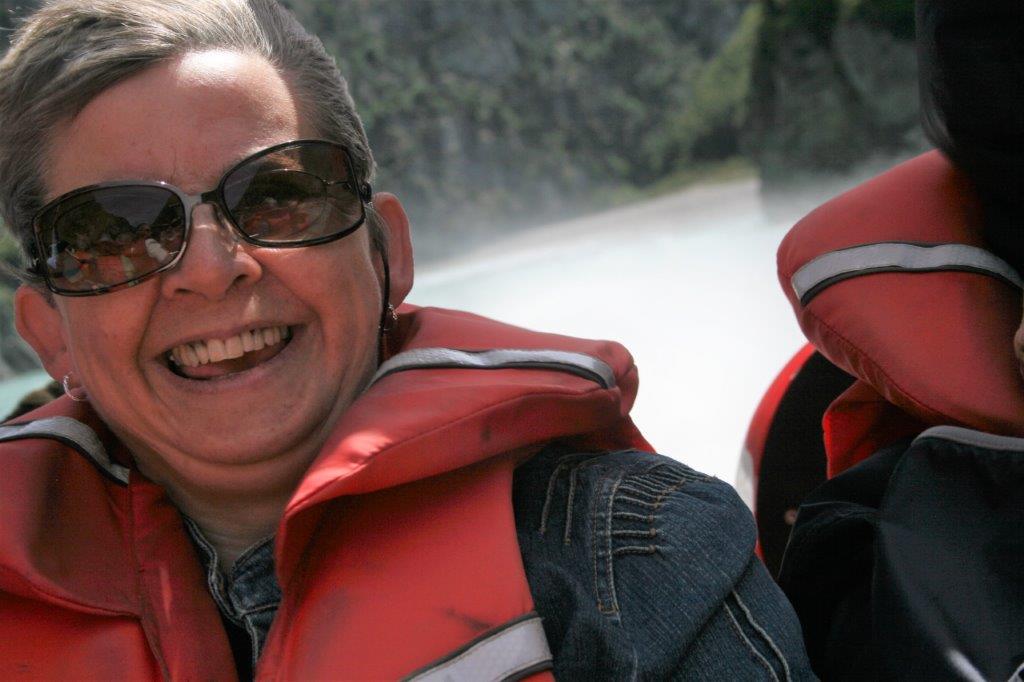
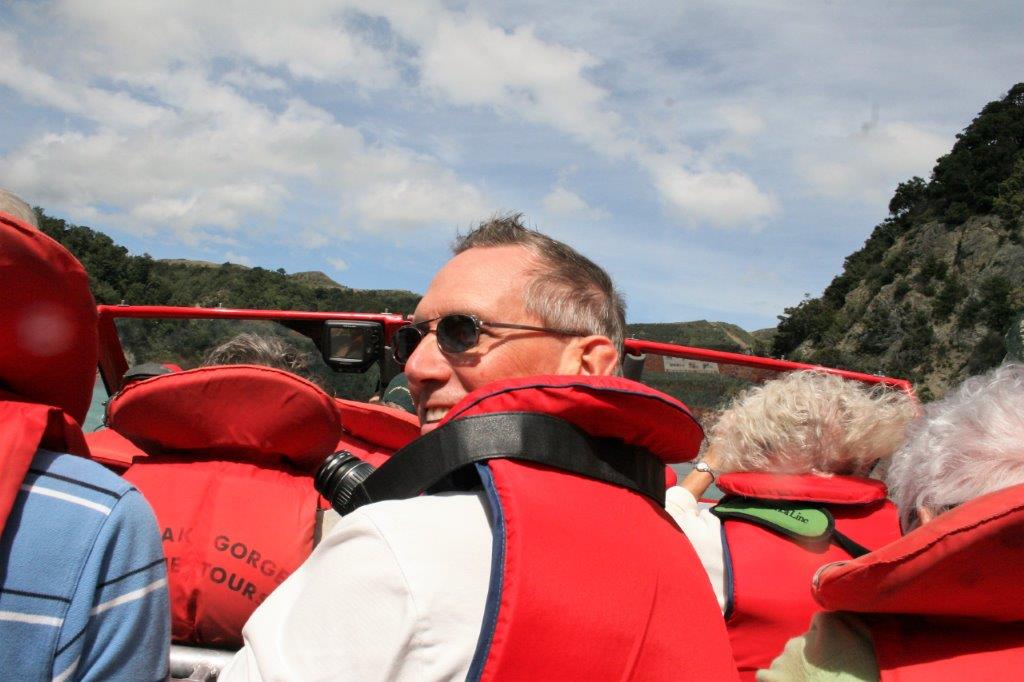
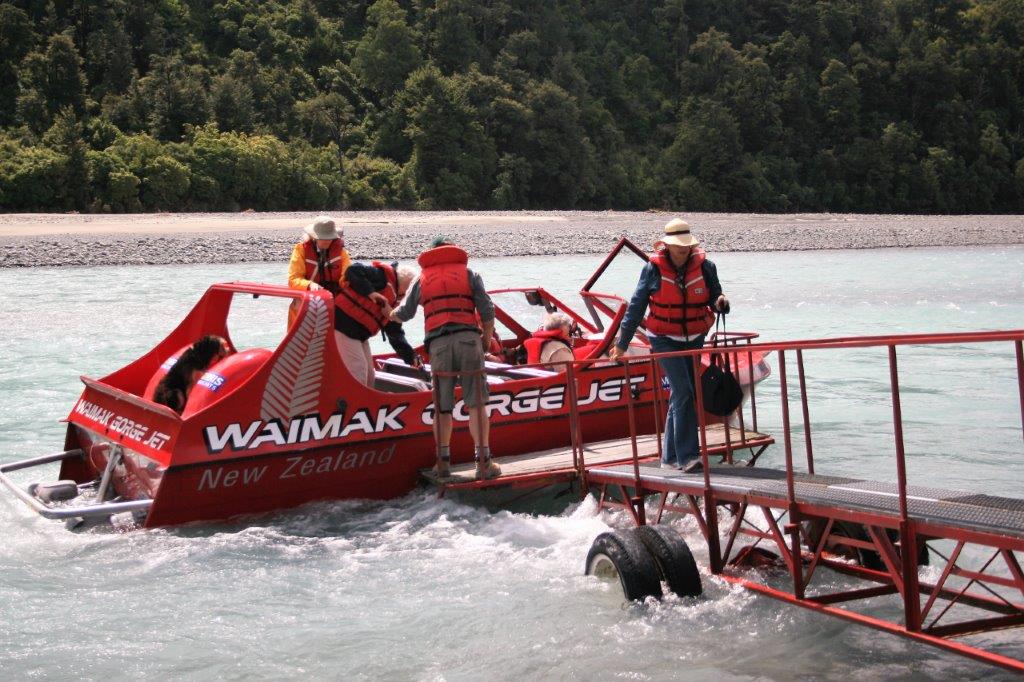
 We were the second group to ride the jet-boat down the river.  The boat had two 4.5 liter V-8 Nissan engines that produced 600 horsepower.  It took 13 minutes to travel 15 km. The boat owner’s young dog was learning the ropes and was an excellent passenger at the back of the jet boat. The regular buses picked us up at the drop-off point and took us an hour’s drive back to Lyttleton; just in time for dinner.

What a fabulous day that was!  So very much fun!

2011 February 10 – Day 36 – Wellington, New Zealand

Wellington is on the southern tip of North Island, on the coast of Cook Strait, which connects the Tasman Sea on the northwest with the South Pacific Ocean on the southeast.  The strait is 22 km (14 miles) wide at its narrowest point.

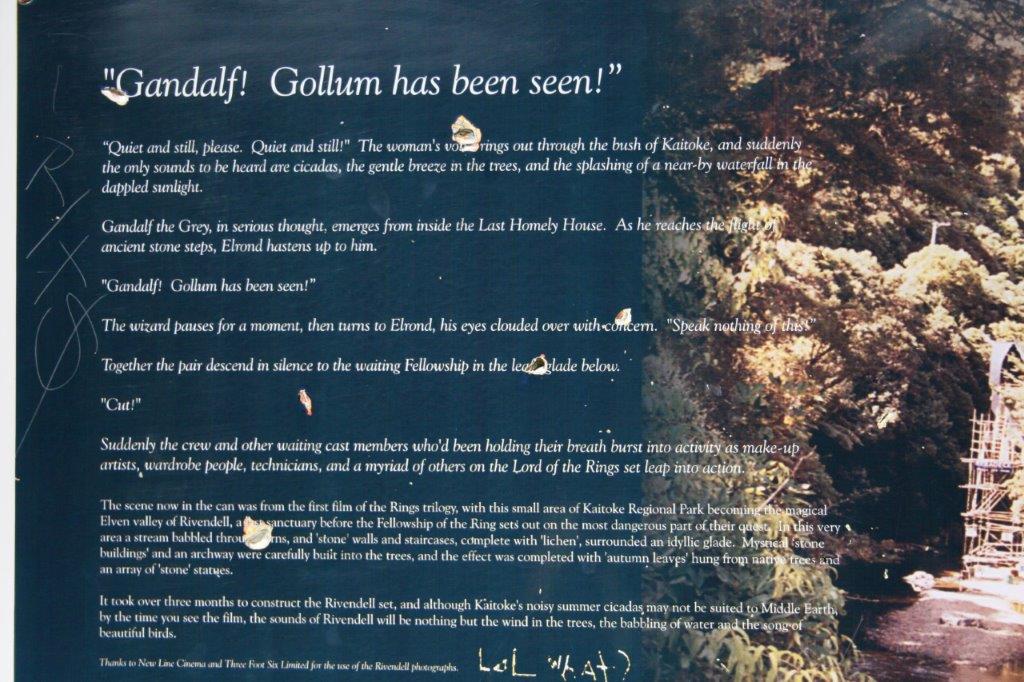
We sailed into Wellington under sunny skies and left on our Lord of the Rings – On Location tour at 8:15.  We chose this tour with the notion we would get to see some of the fabulous mountain scenery from the films.  Little did we know the mountain scenes were digitally produced composites of several locations in the South Alps at the bottom end of South Island.  We did however see lots of meadows and trees and parkland.  Our day was most enjoyable though, primarily due to our guide Todd who had had bit roles in all three of the Lord of the Rings films and shared lots of ‘inside’ stories.

I liked the movies but there were so many characters with such unusual names I was never hugely enamored of the series.  Bobby, the Welshman from the photography department that had been on tour with us in Bora Bora was our Holland American staff person on this tour as well.  He was like a young kid; so excited to being going to some of the places they filmed the movies.  He offered several times to take our photo which, he admitted, was a blantant excuse to have us offer to take his picture.  He was a lot of fun to be with for the day.

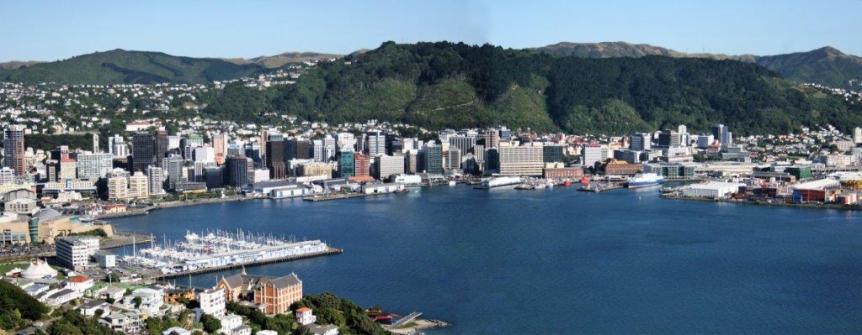
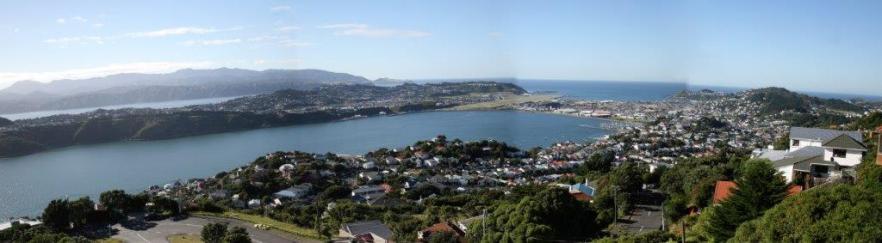
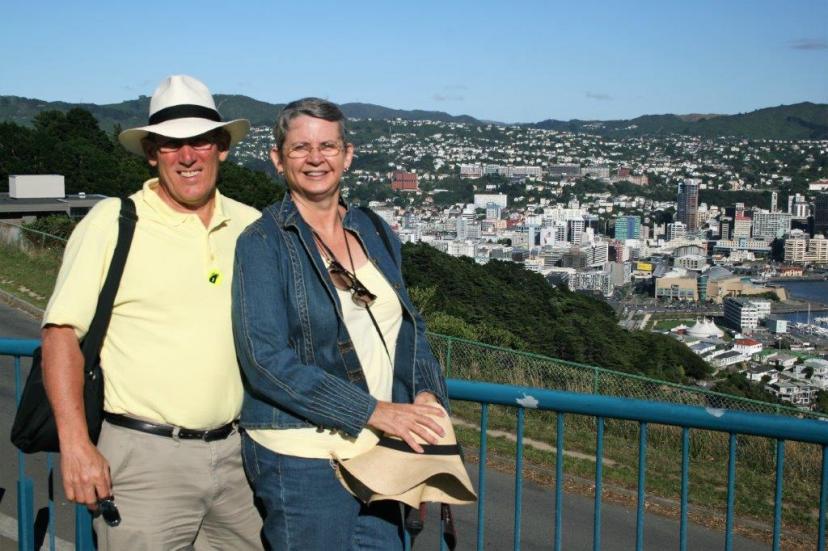
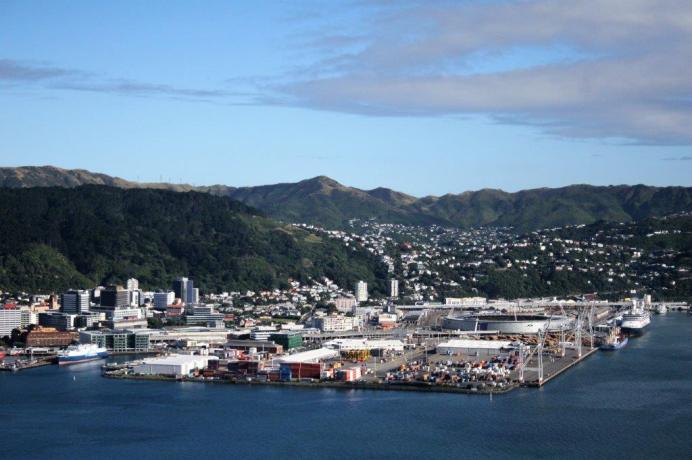
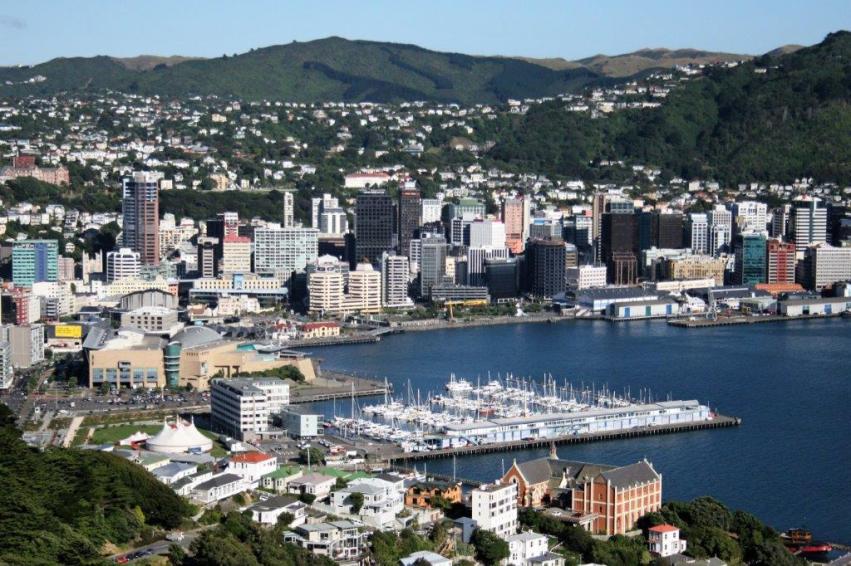
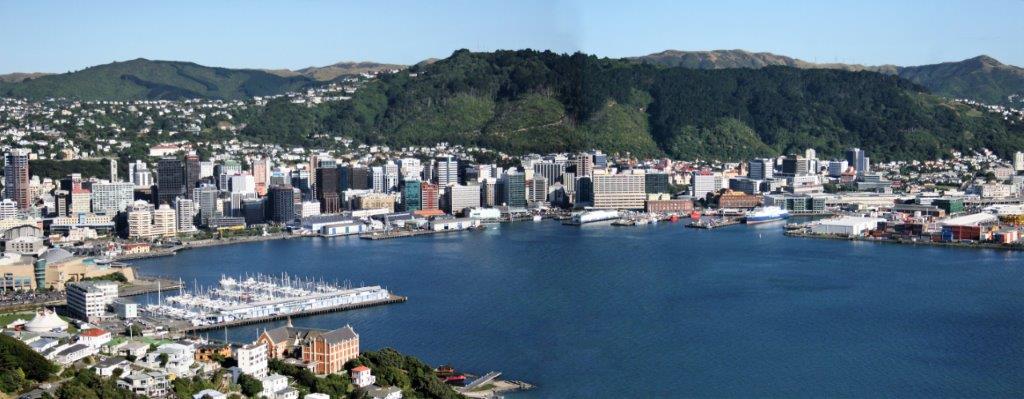
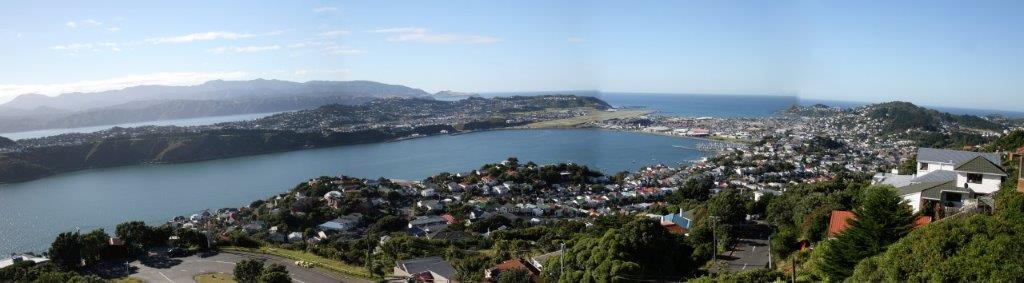
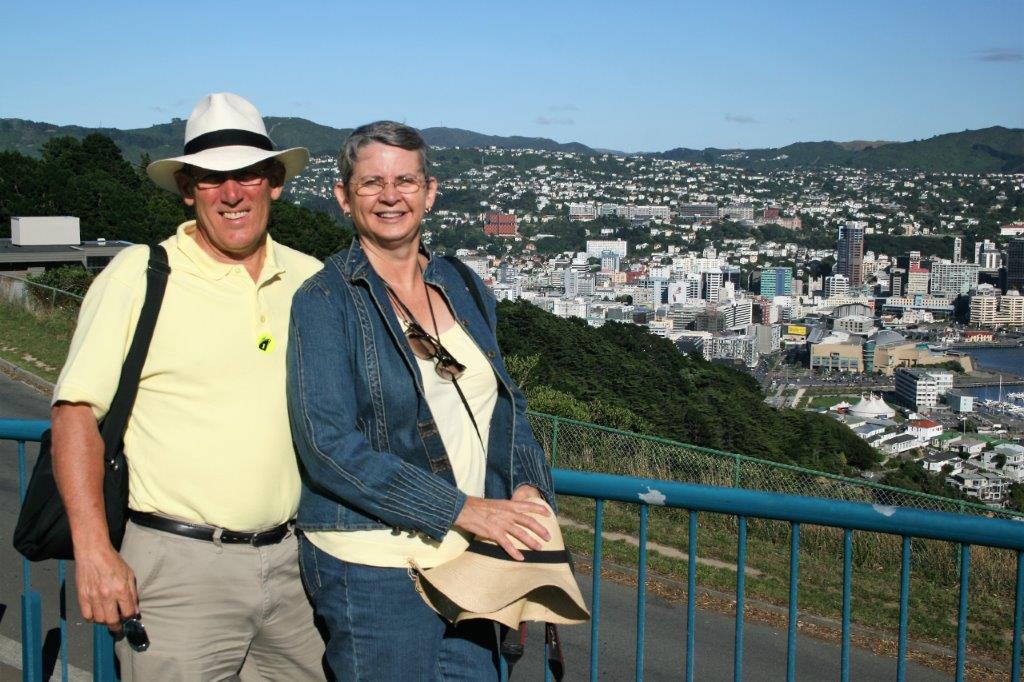
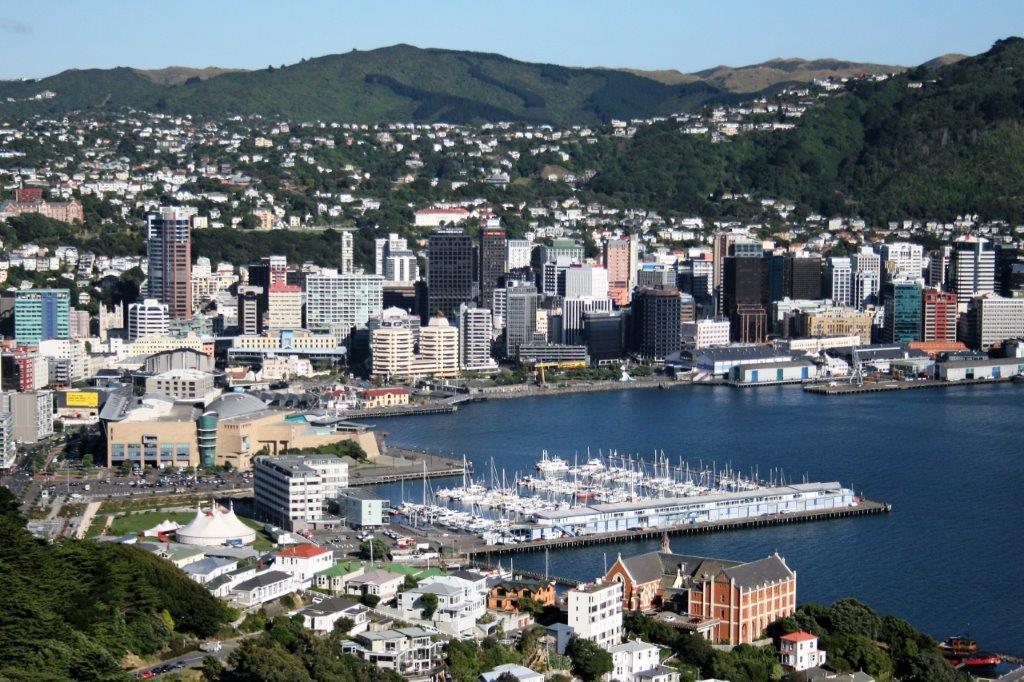
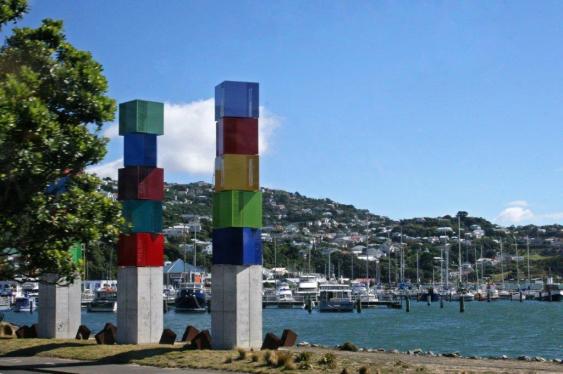
Our first stop, after a drive around town, was Mt. Victoria, 200′ above sea level where we enjoyed a gorgeous panoramic view of Wellington and the harbour.
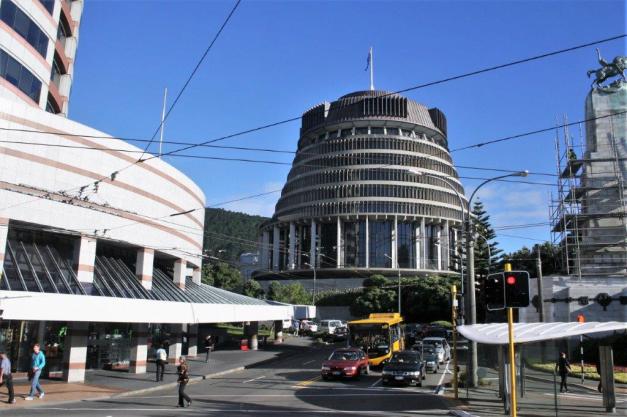
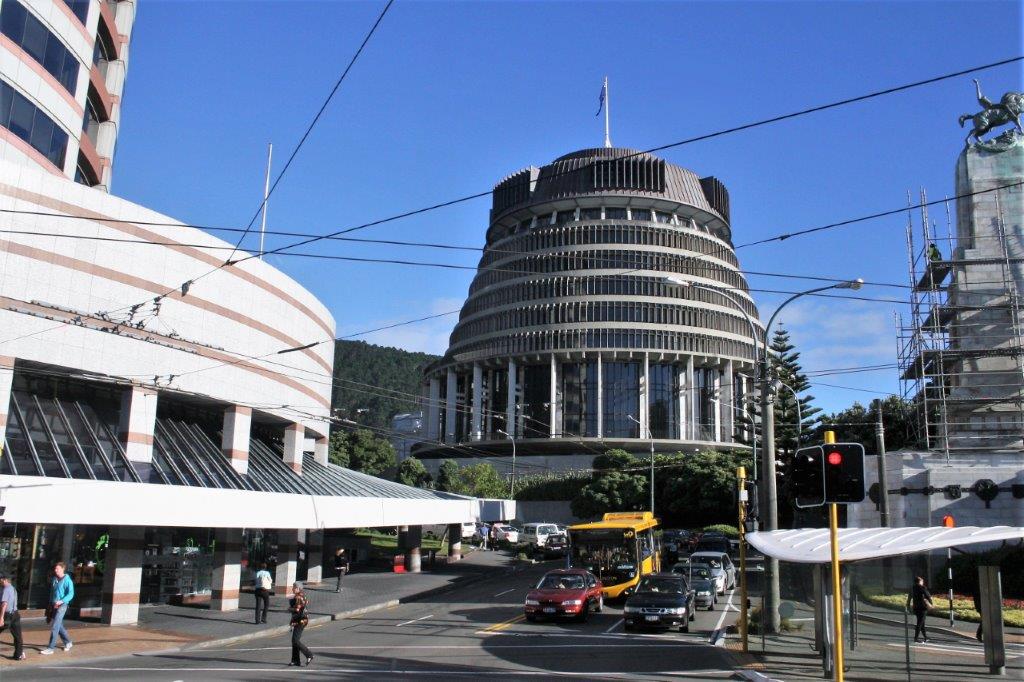
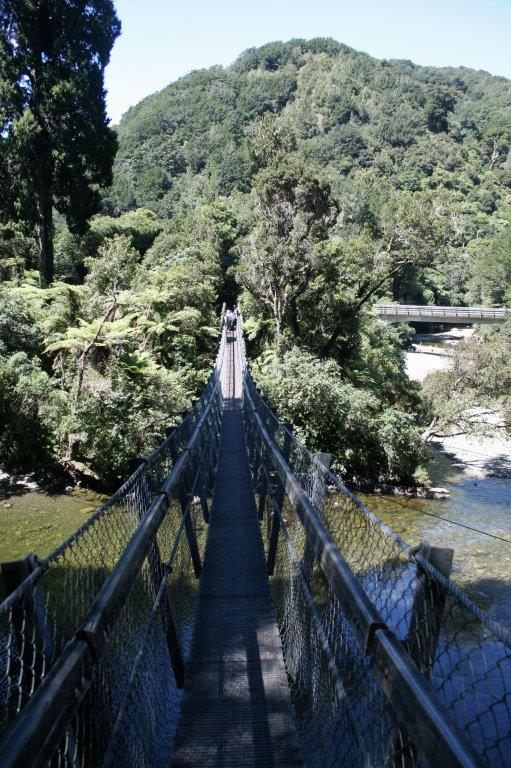
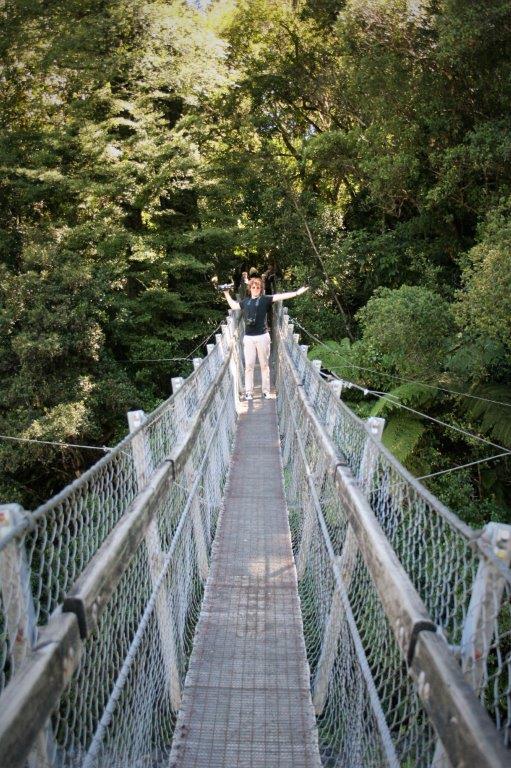
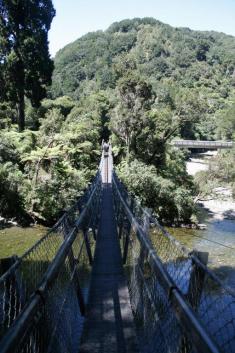
The New Zealand Parliament Building, affectionately referred to as The Beehive. We went to several film locations, which as I said, were mostly parkland with trees.  Peter Jackson used 48 different locations for the movies and built fortresses and waterfalls and towns and battle grounds, but everything he built he had to take apart and restore to the original condition so there were no ‘sets’ to see.  Todd would tell us which scene from the film was made at each place and pass around photos from the movie to show what it looked like in the films.                                                       Bobby was very excited to be on this bridge.
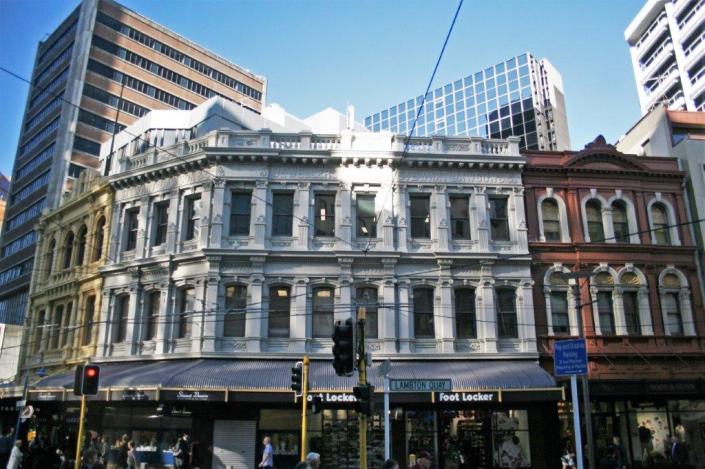
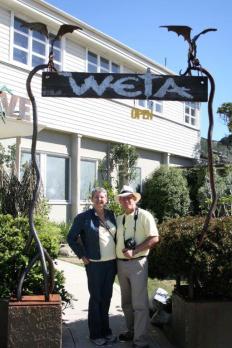
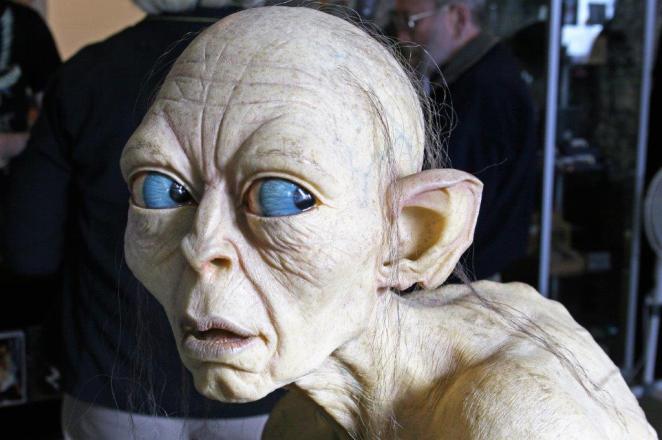
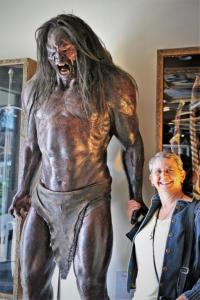
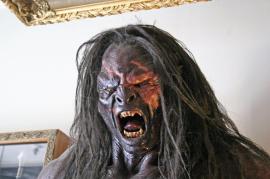
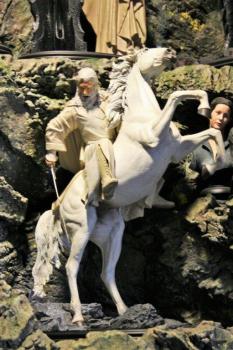
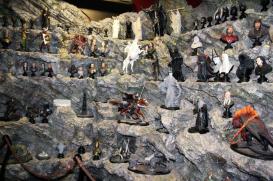
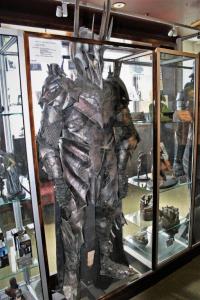
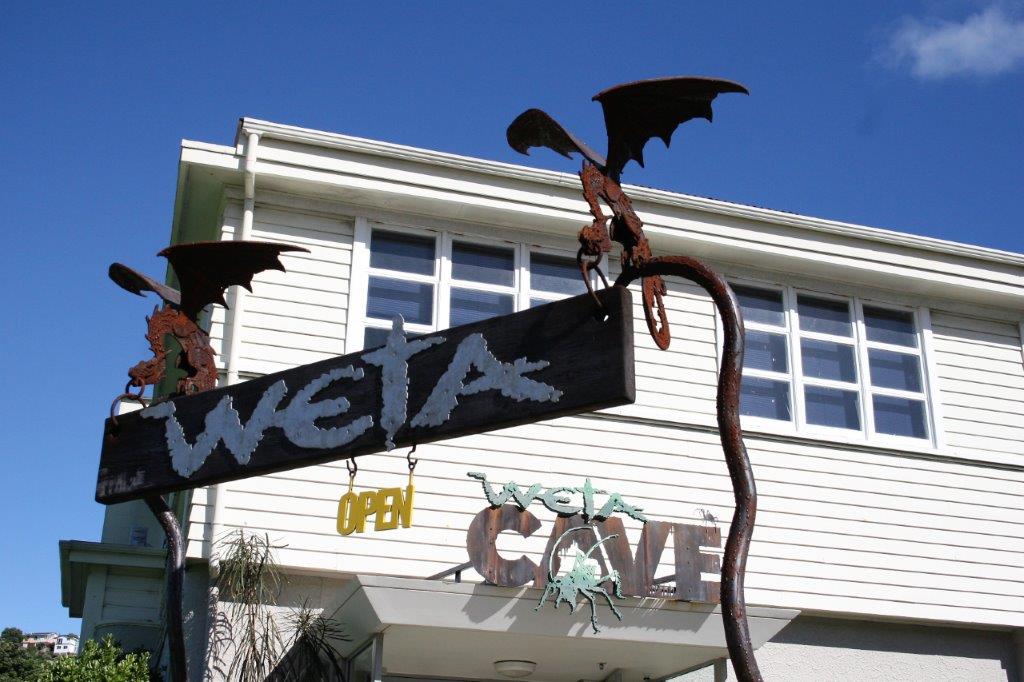
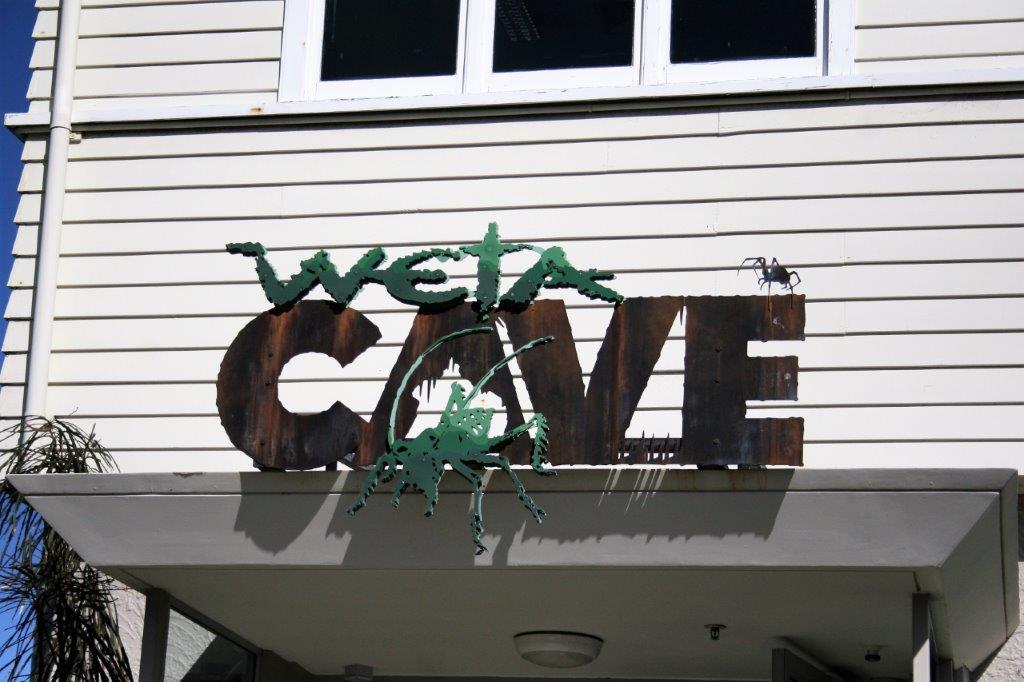
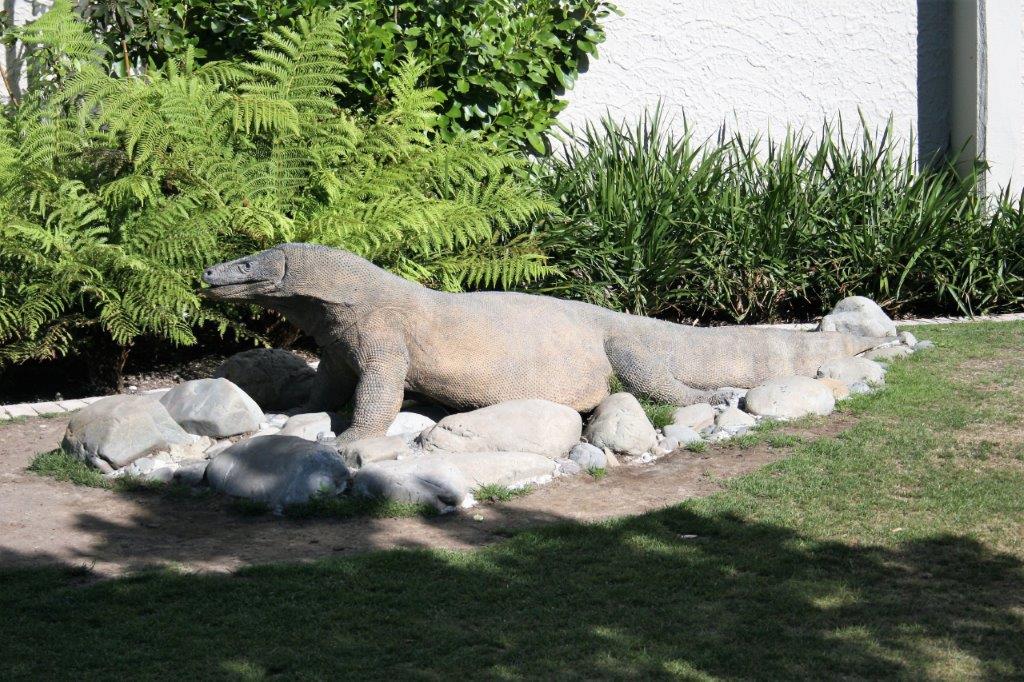
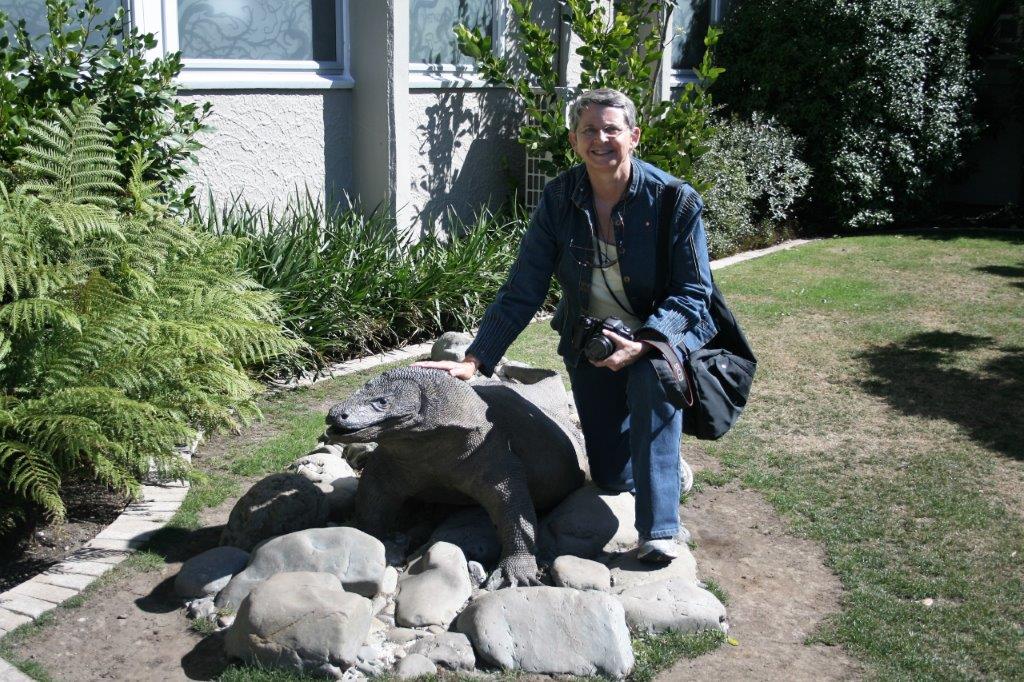
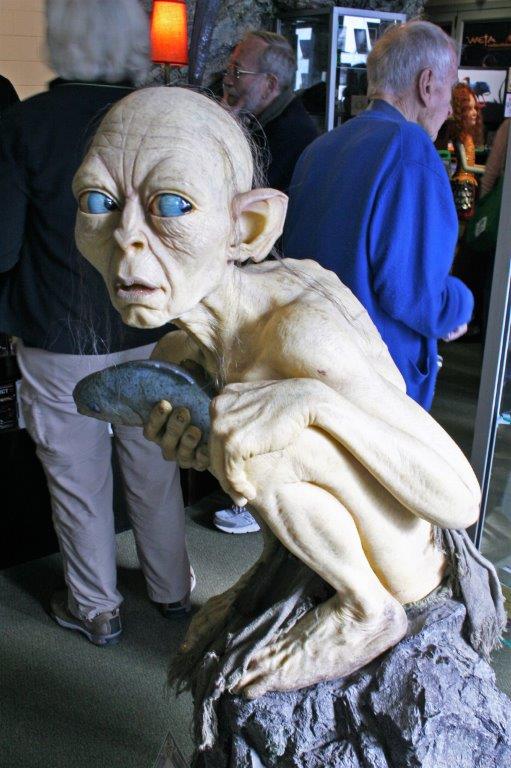
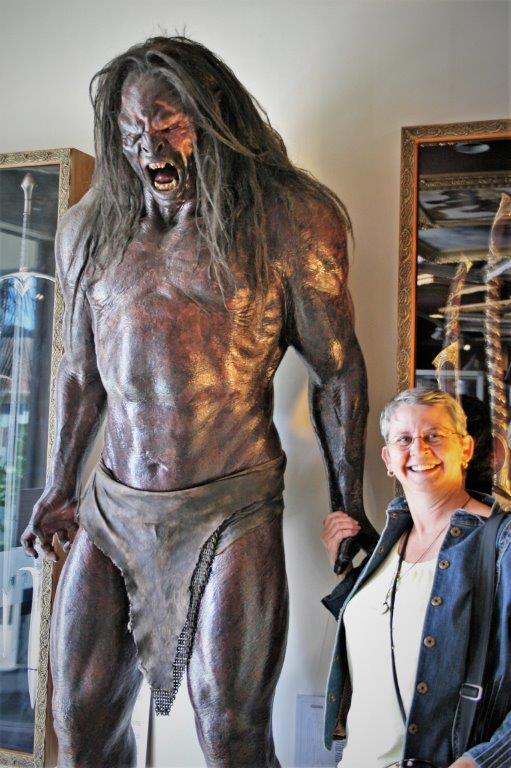
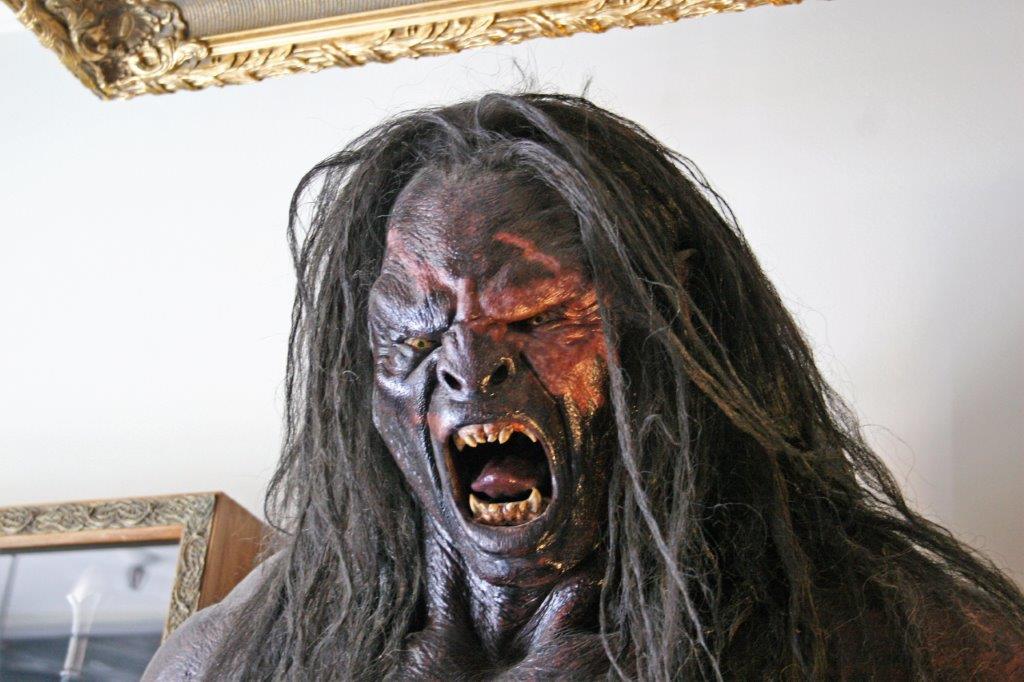
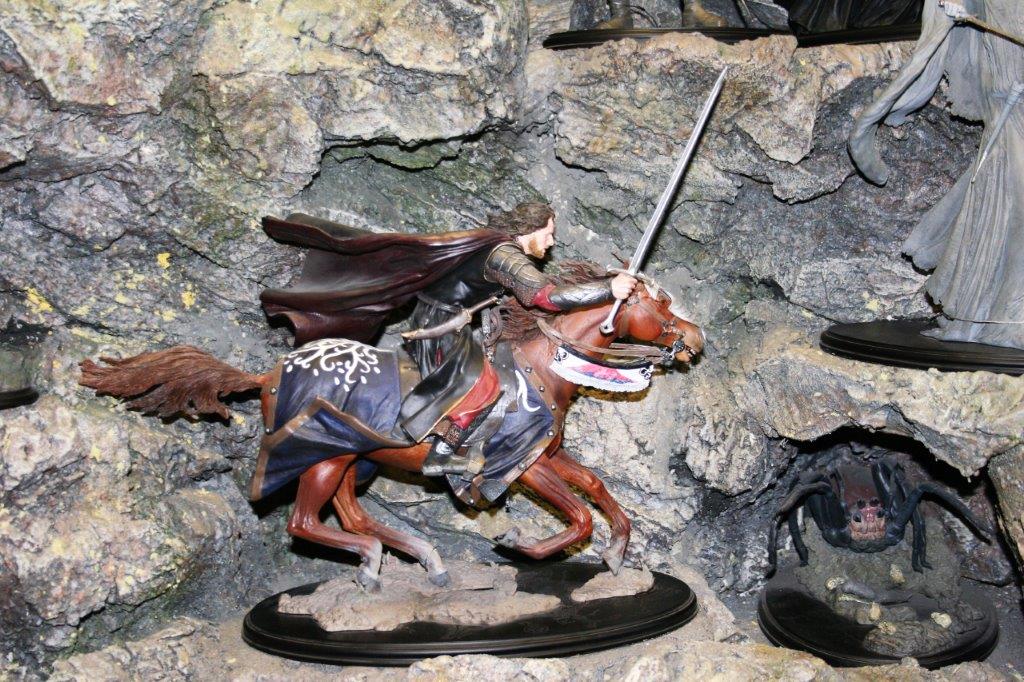
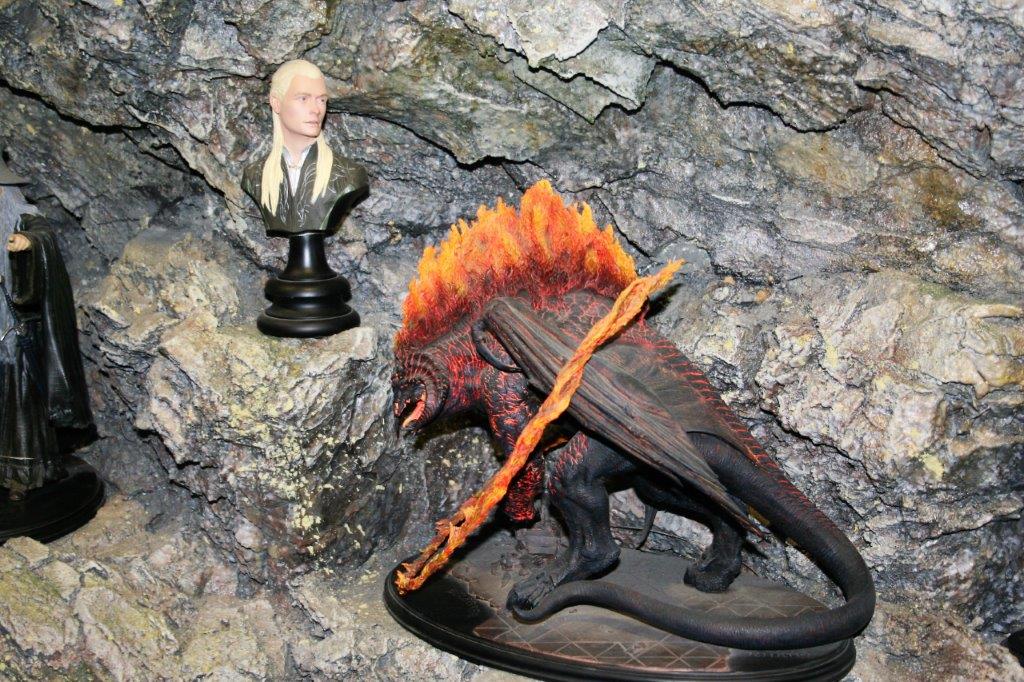
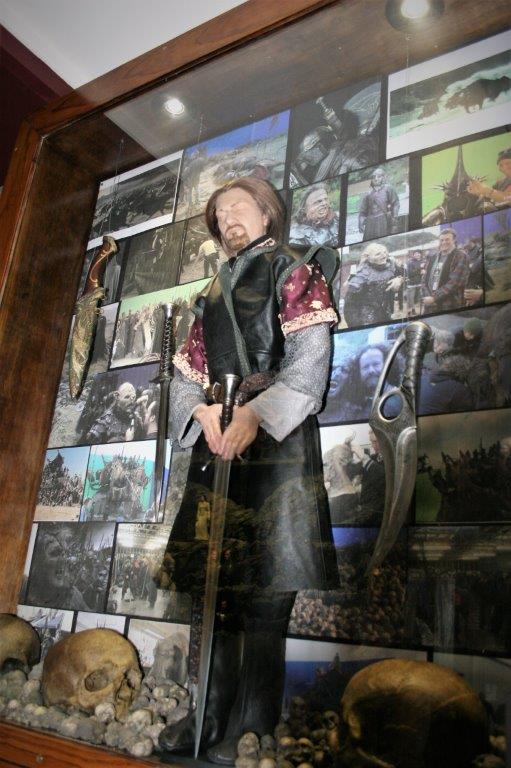
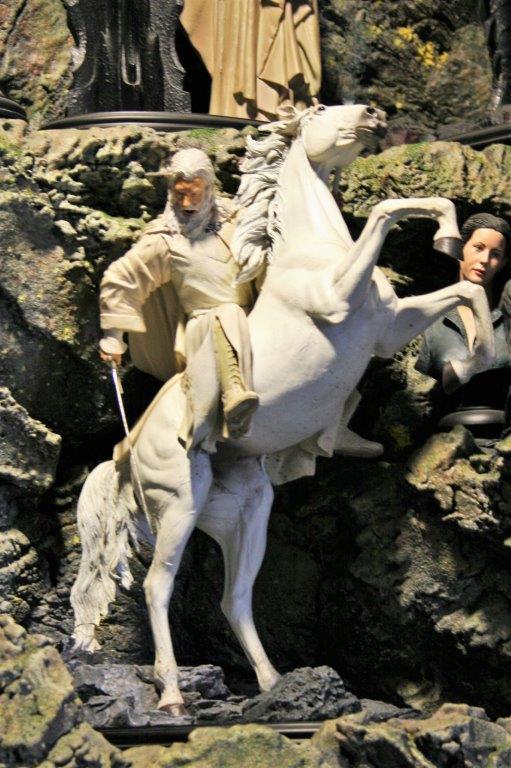
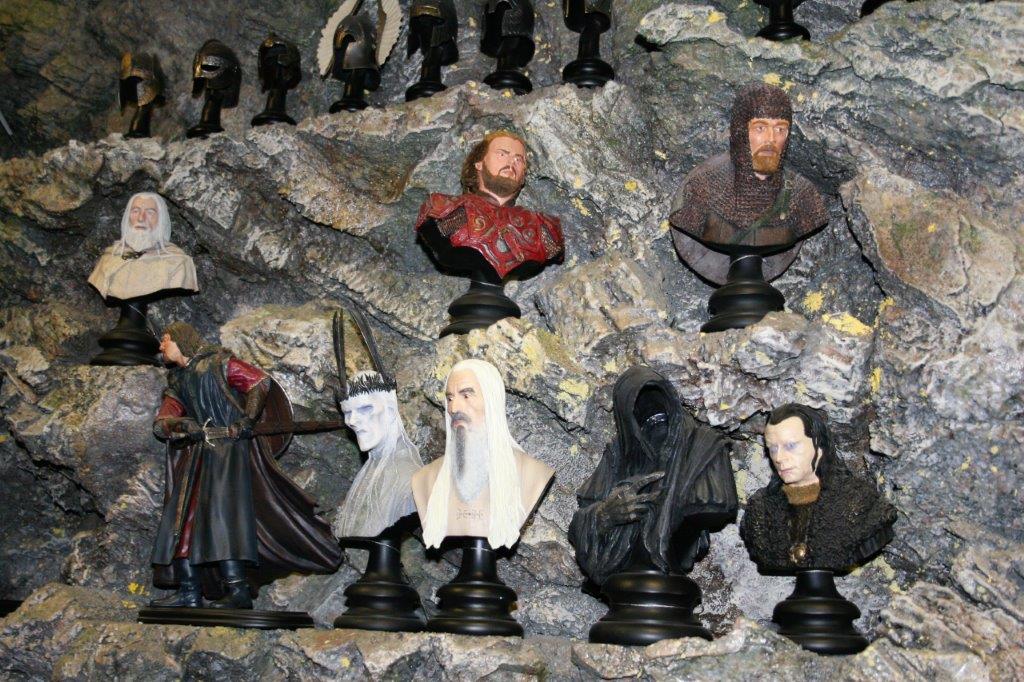
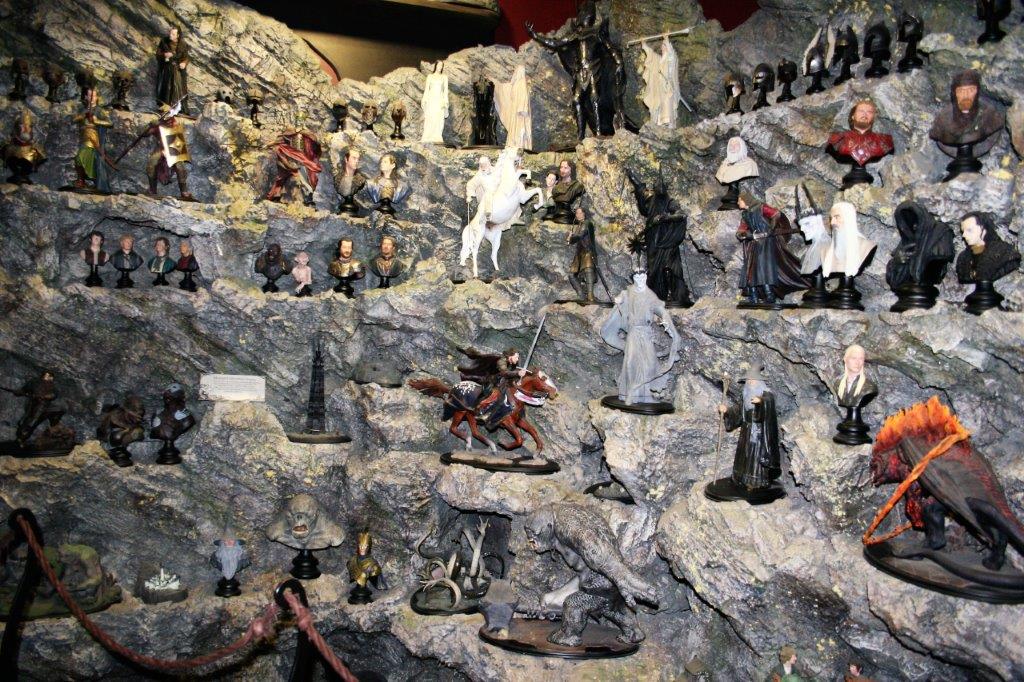
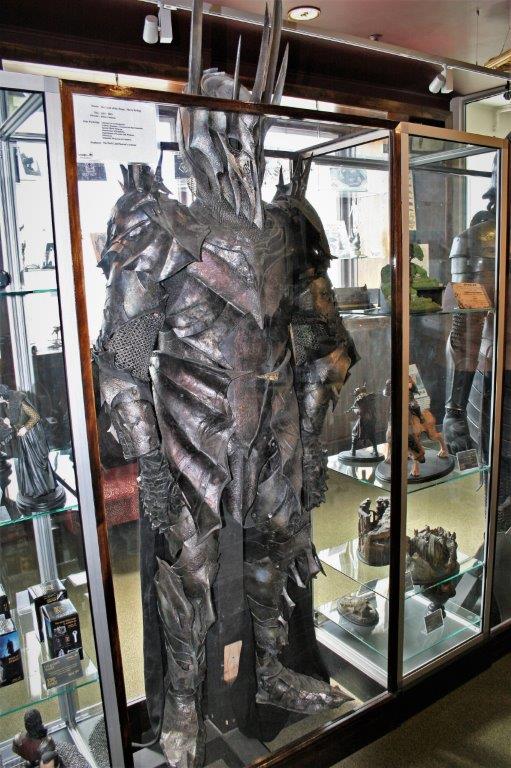
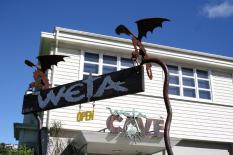
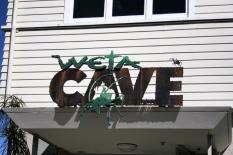
The most interesting part of the tour was Weta Cave in the town of Waimara.  It was here that 2,000 people worked for six years to make Avatar.  All of the Lord of the Ring blue screen and green screen work and all miniatures were done here.  The studio worked on all the Narnia films, on Water Horse, King Kong and many other movies.  The shop was full of interesting (and expensive) items. You could order any of these miniatures and the designer who made it for the films would make it for you and sign it.  I wouldn’t want to pay for it though.
The houses are built with steel frames for earthquake resistance.

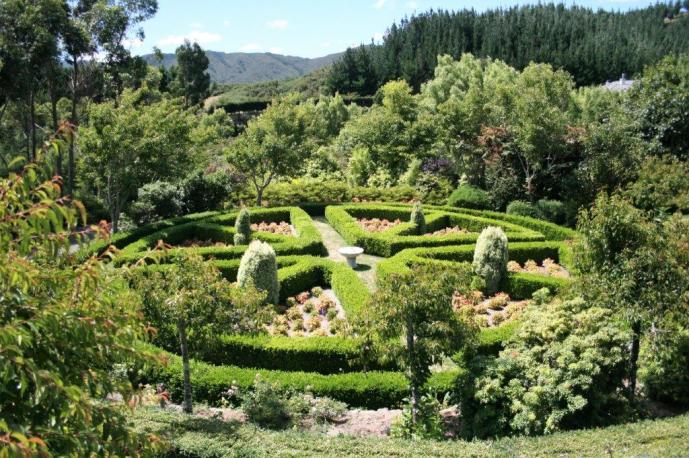
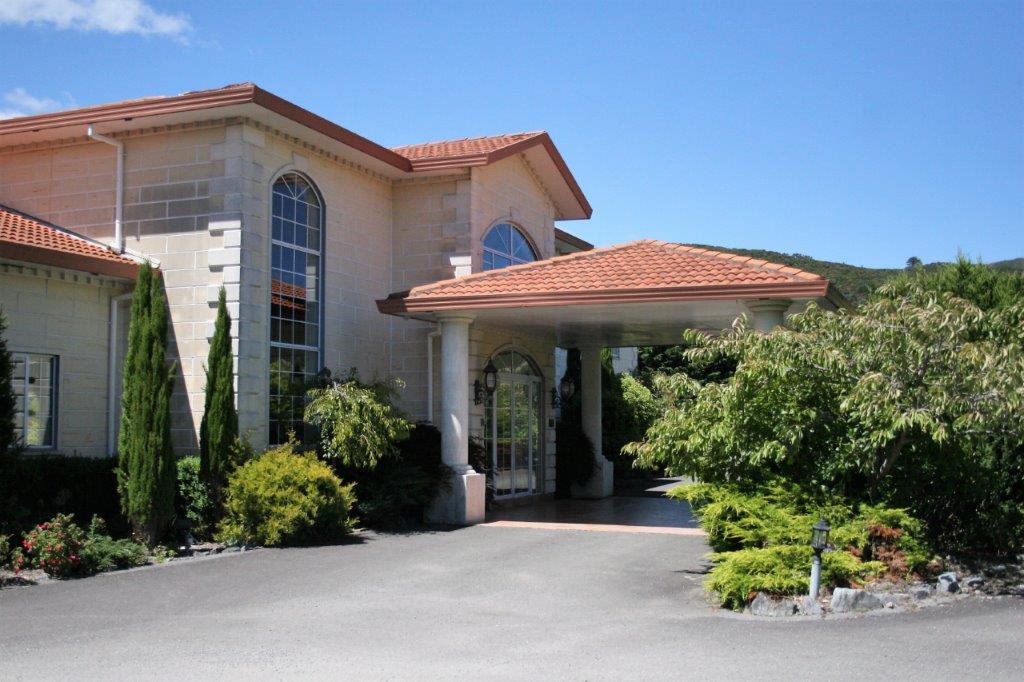
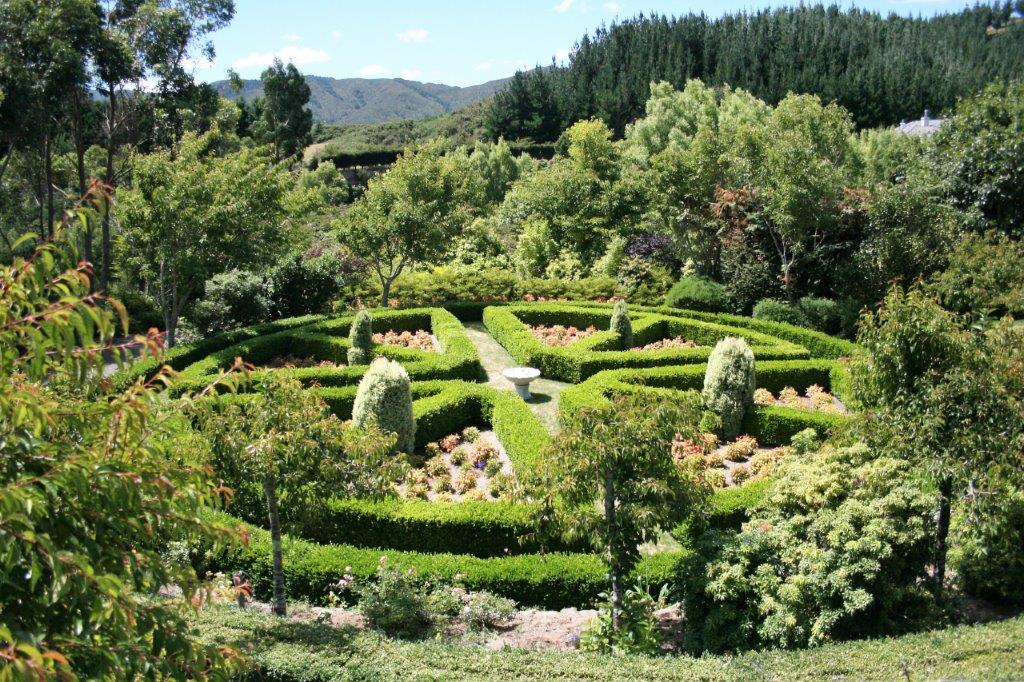
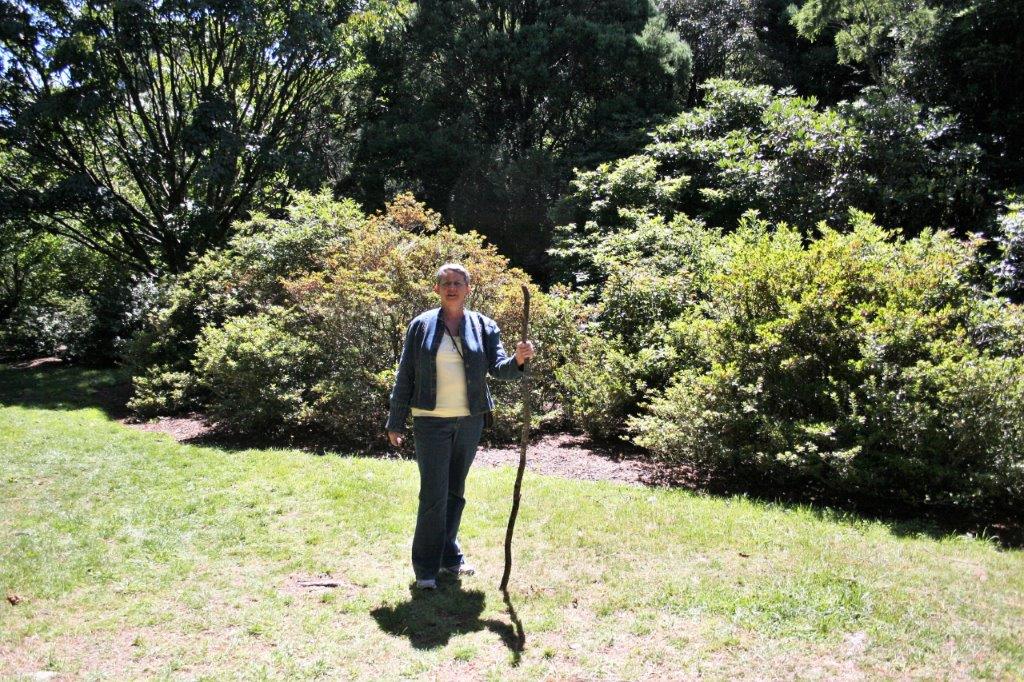
We had lunch at a beautiful hotel with 15 acres of rambling gardens.  I skipped lunch and went on my own photo tour among the flowers. After the lunch break we toured some more location spots. One must pose, we were told, with the walking stick.  I can’t even remember the name of the character this scene was about.  Oh well, I am just not good at that kind of thing.  Now, ask me the name of my childhood friend’s dog and that I will remember.  To each his or her own I guess.
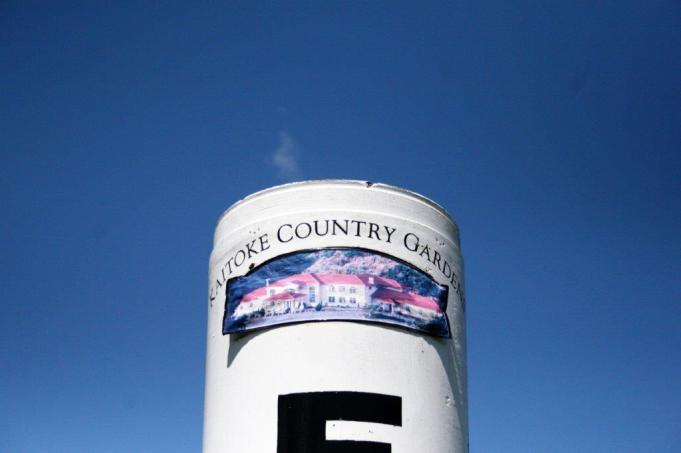
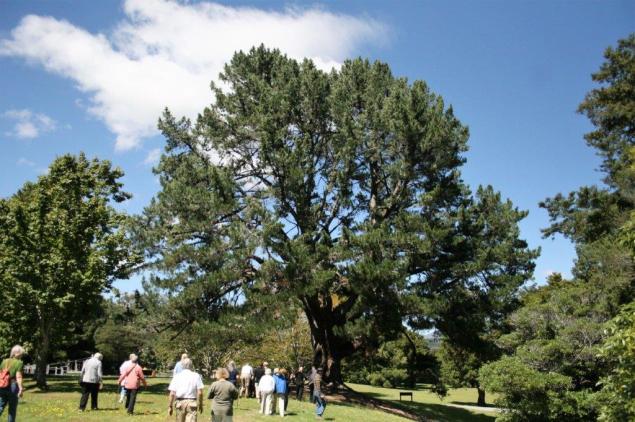
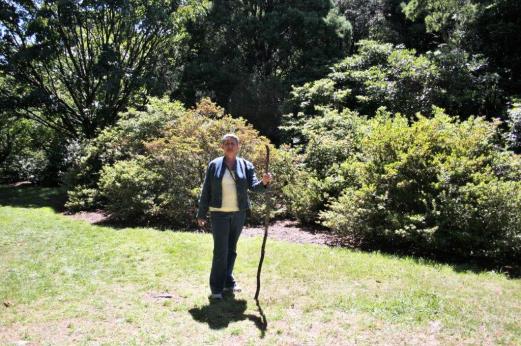
We returned to the ship in time for dinner, walked our usual seven laps around the promenade deck and watched the sun set before heading to the cabin and a night’s rest while the captain took us to Lyttleton, the port near Christchurch; our first stop on the south island.
2011 February 9 – Day 35 – Napier, New Zealand

The ship did not dock in Napier until noon so we were able to have a more leisurely morning.  It was fun to watch the captain back the ship into it’s port slot.  Those navigators know their stuff!

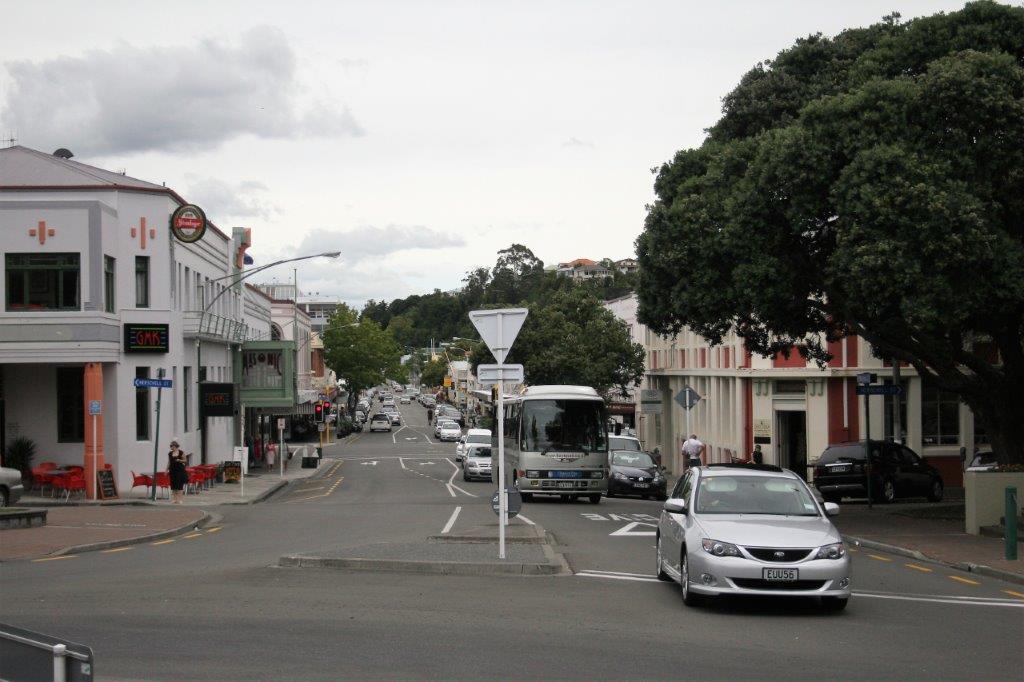
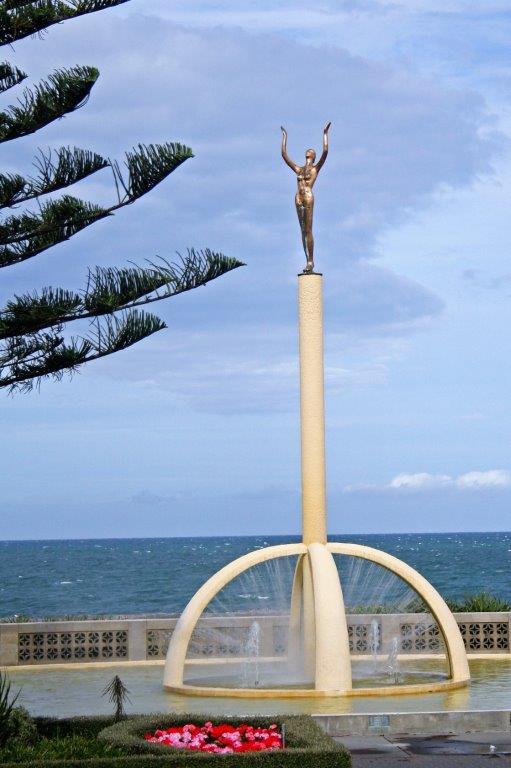
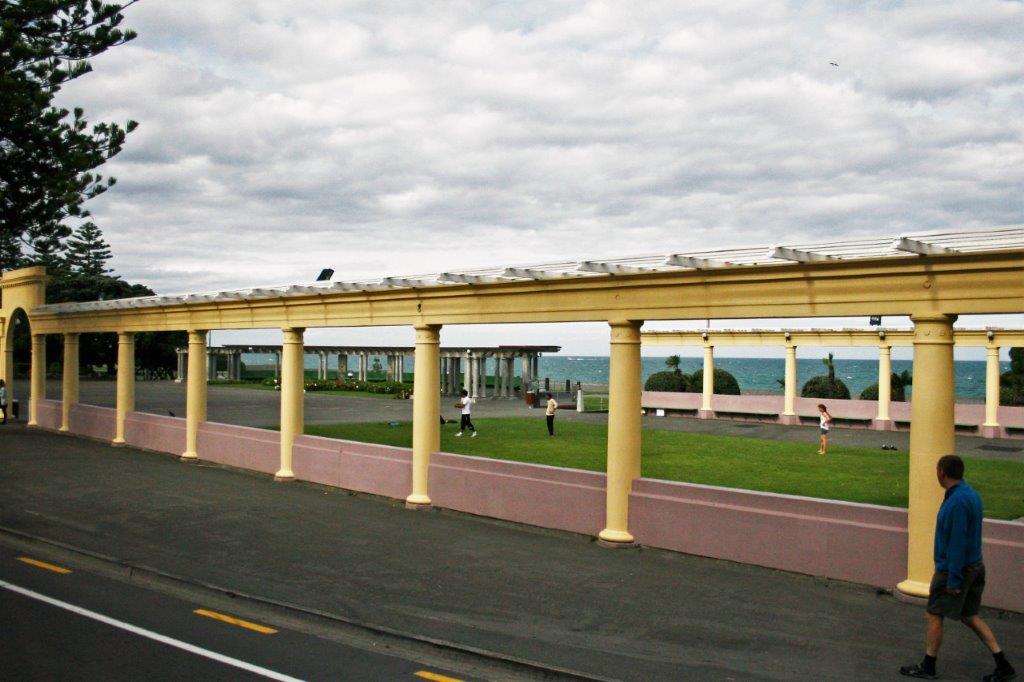
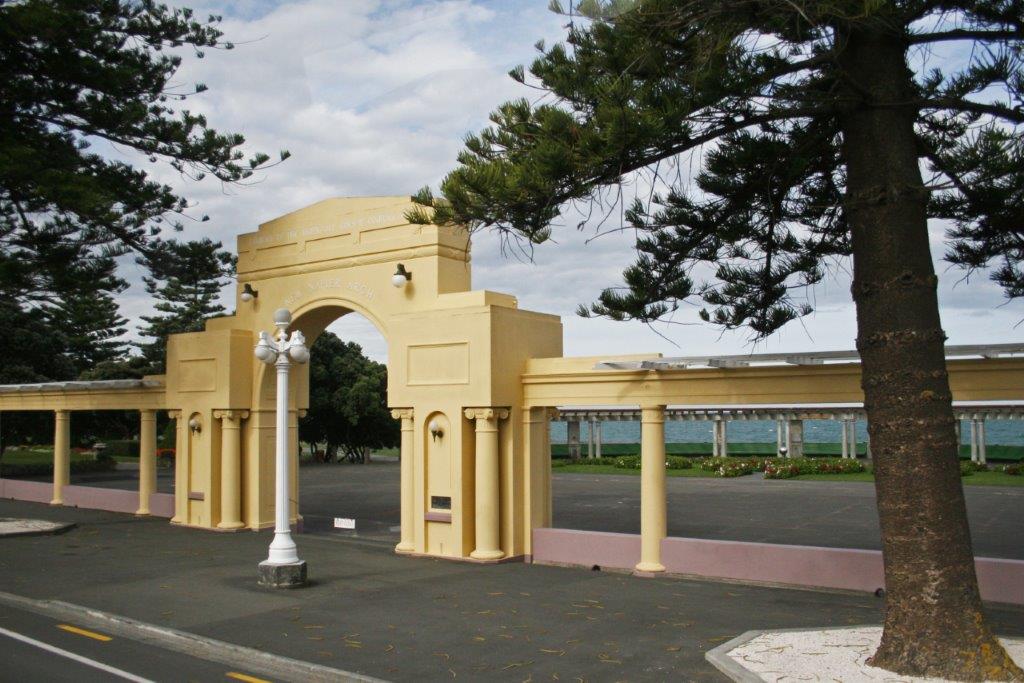
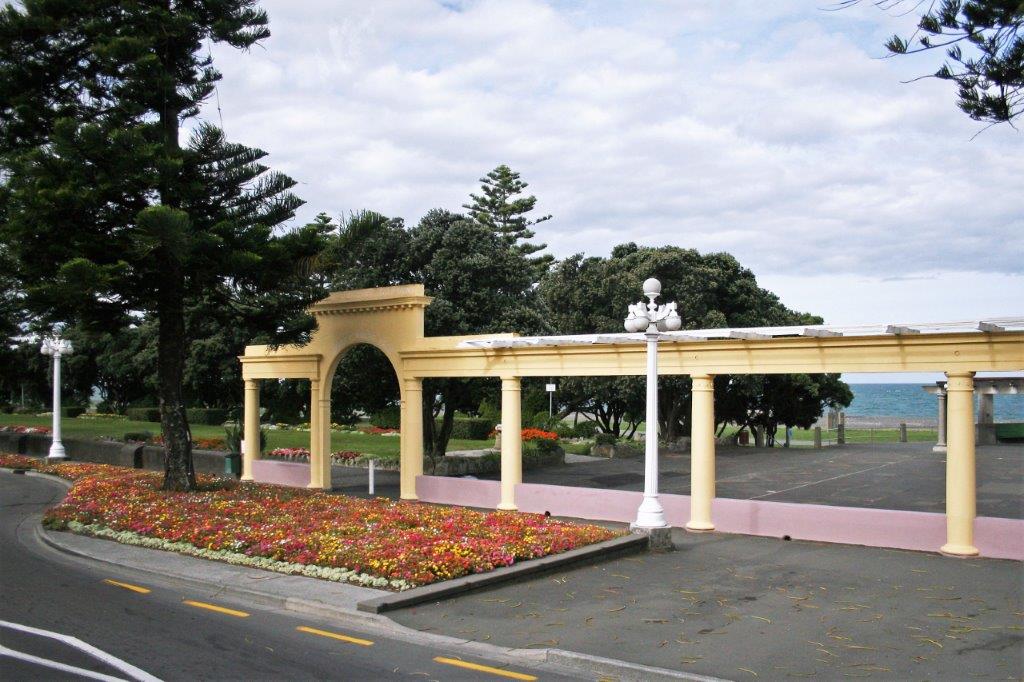
The pamphlet we were given with information about Napier says, “On Tuesday, February 3, 1931, Napier was struck by a disastrous earthquake.  Measuring 7.9 on the Richter scale, the morning tremblor leveled the town.  What was spared was lost to fire and the more than  500 aftershocks that struck in the following two weeks.  More than 250 people were killed, many struck by falling building ornaments and gargoyles.  Clean and simple Art Deco design was selected for the rebuilt city.”  The building code still follows the Art Deco simplicity and Napier is famous for its beautiful preserved buildings.

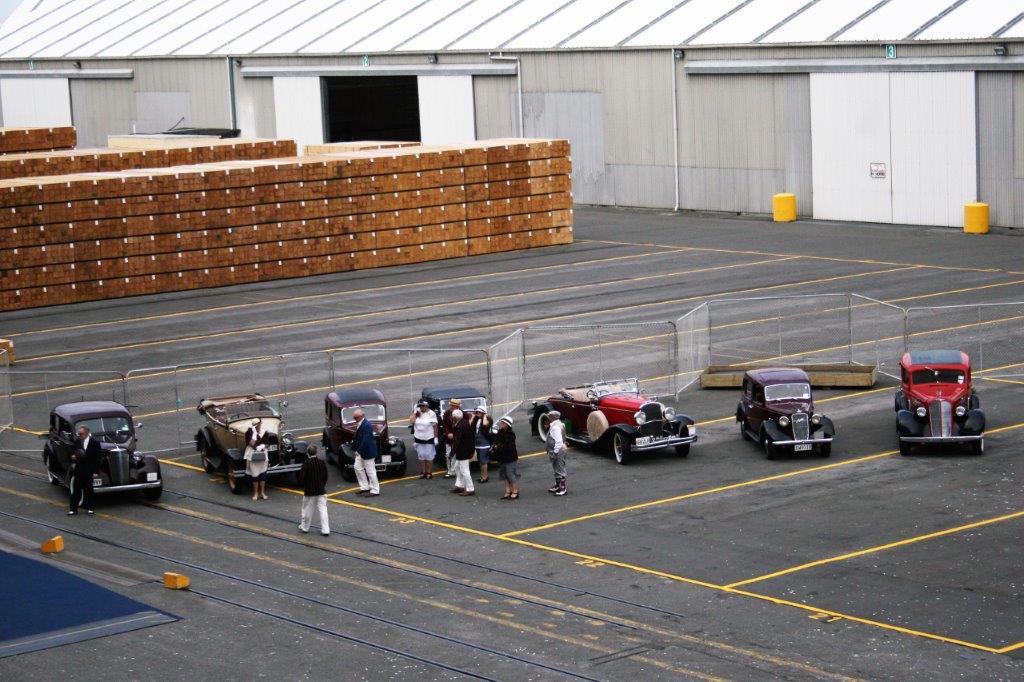
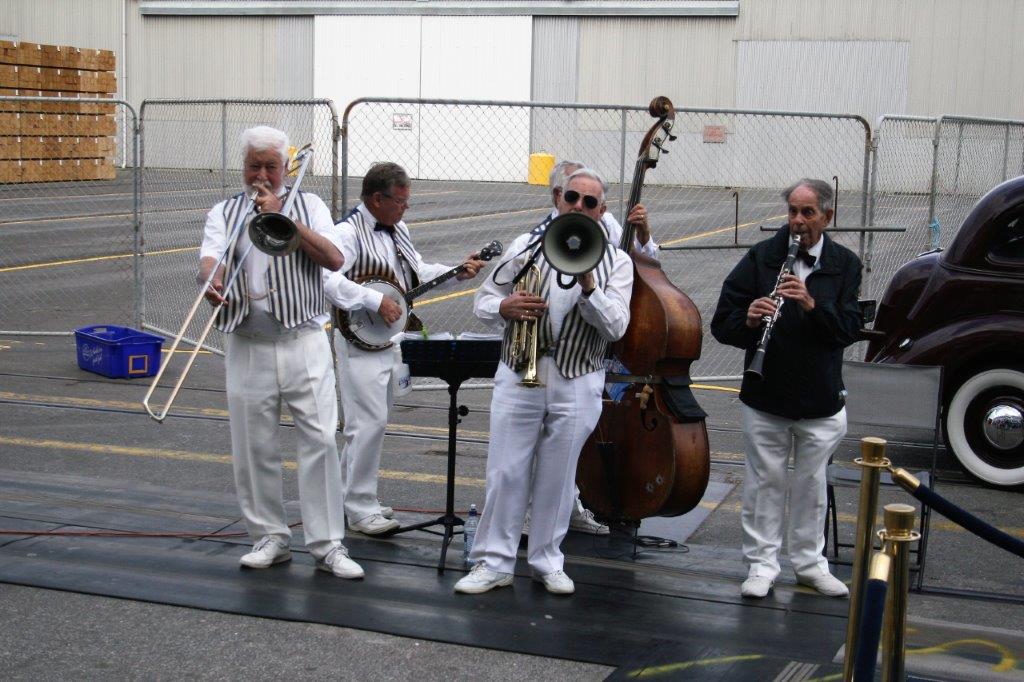
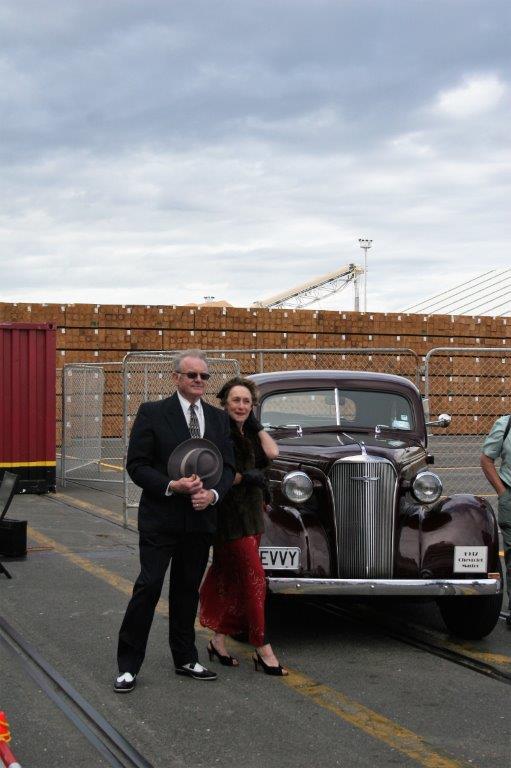
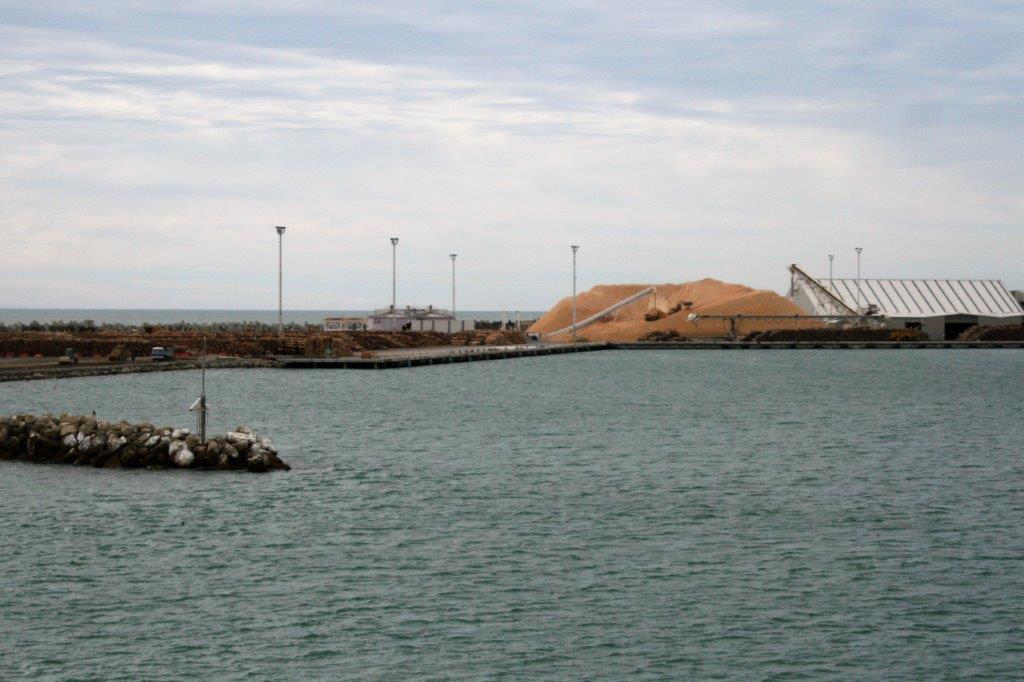
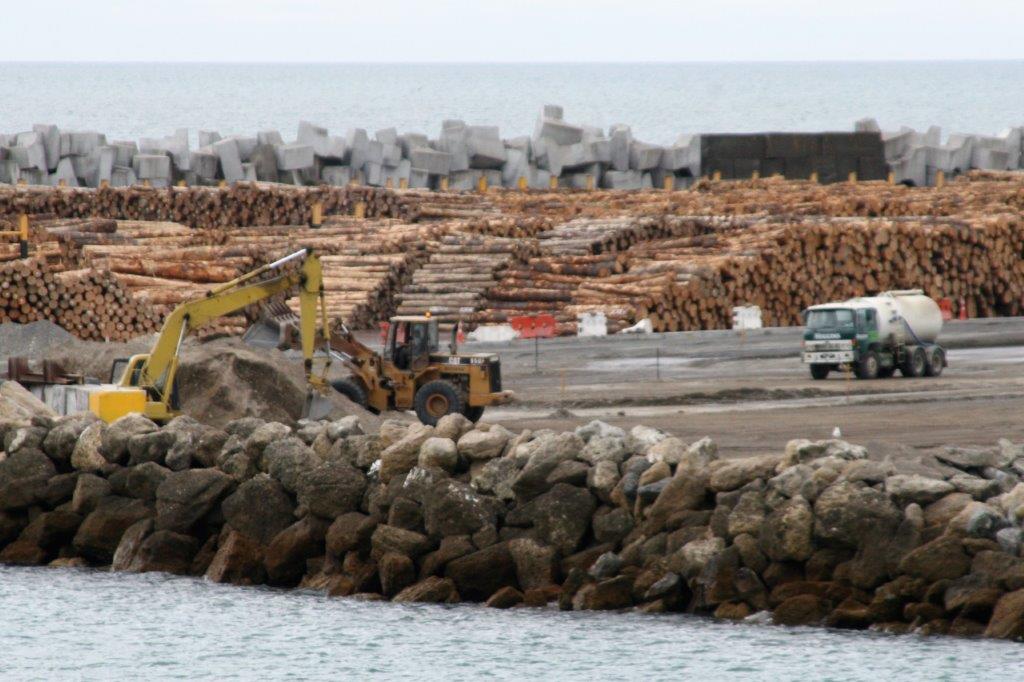
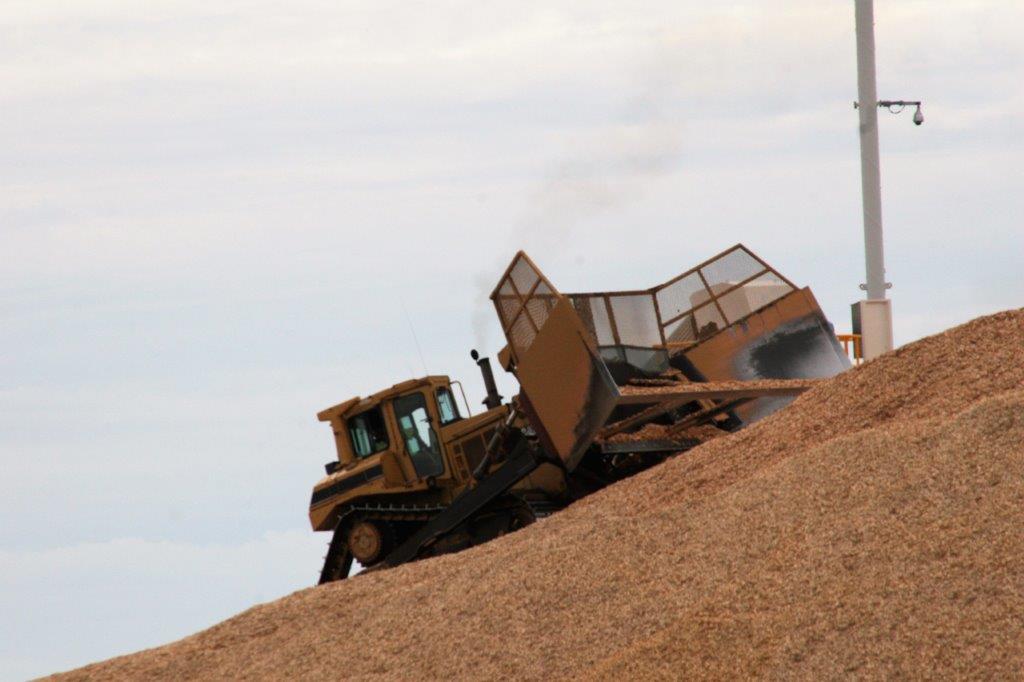
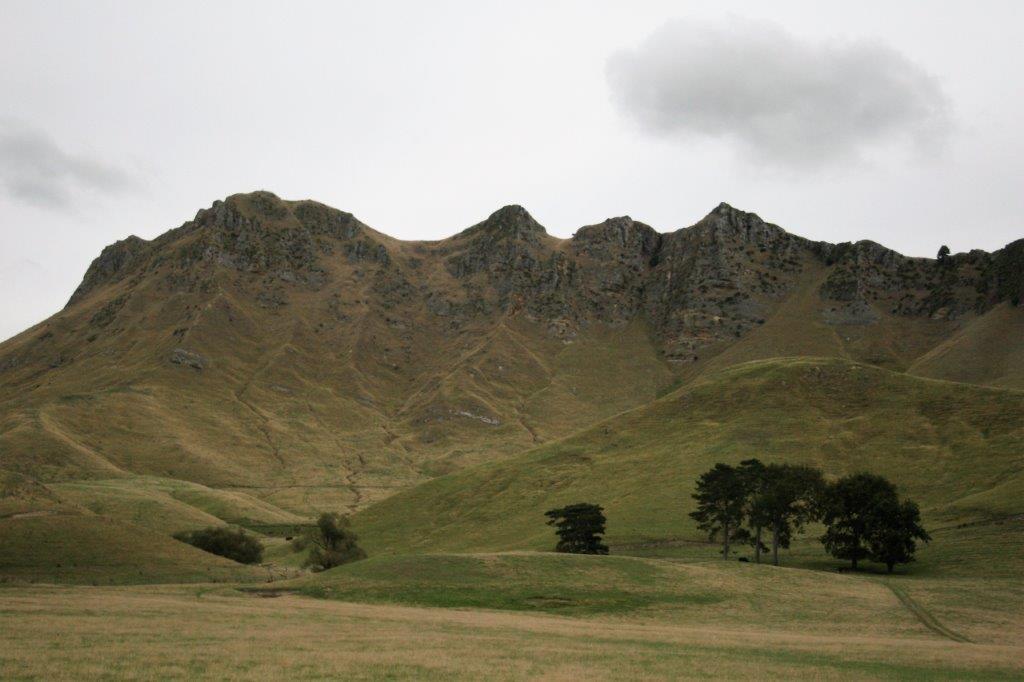
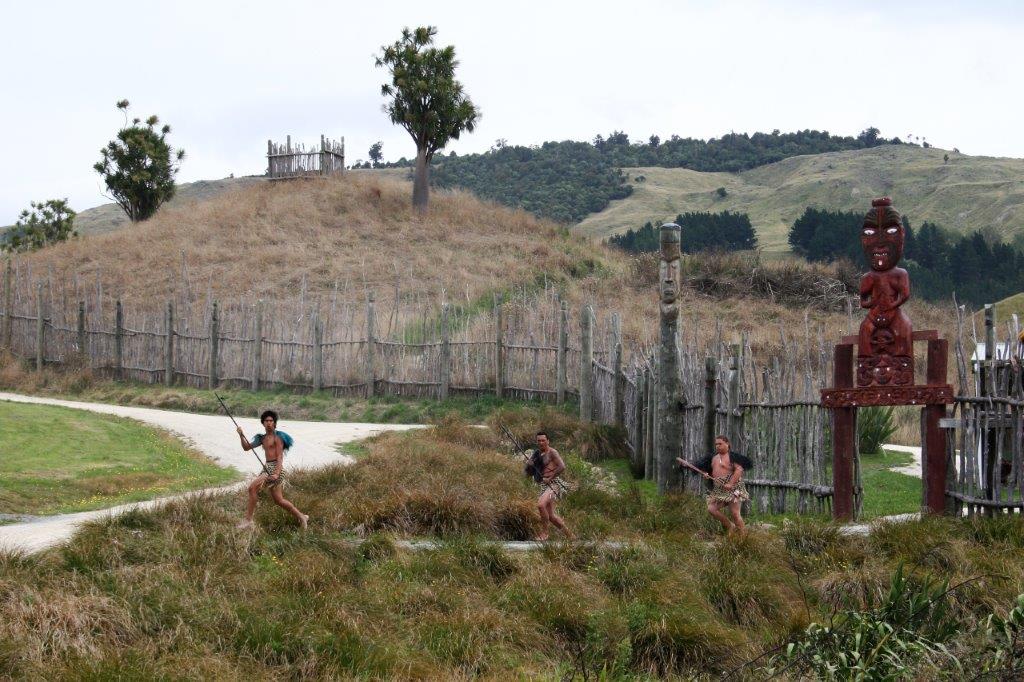
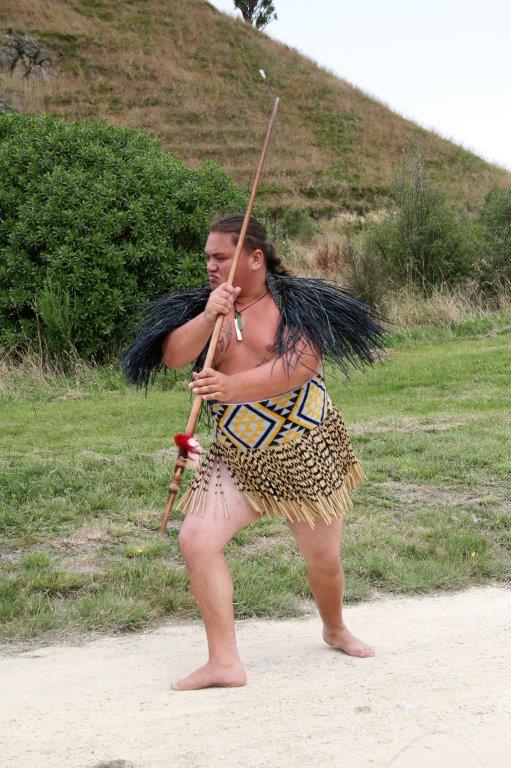
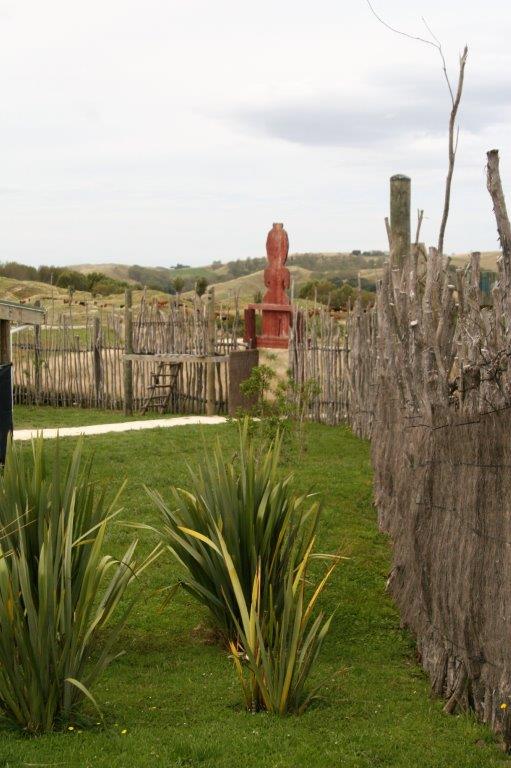
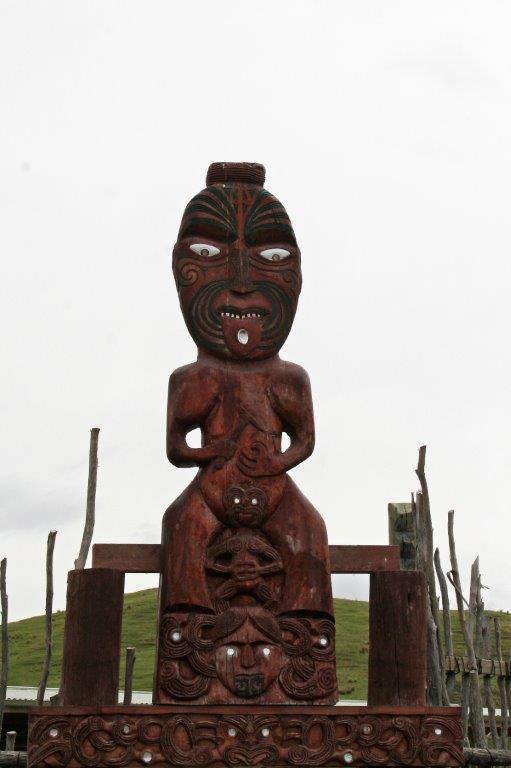
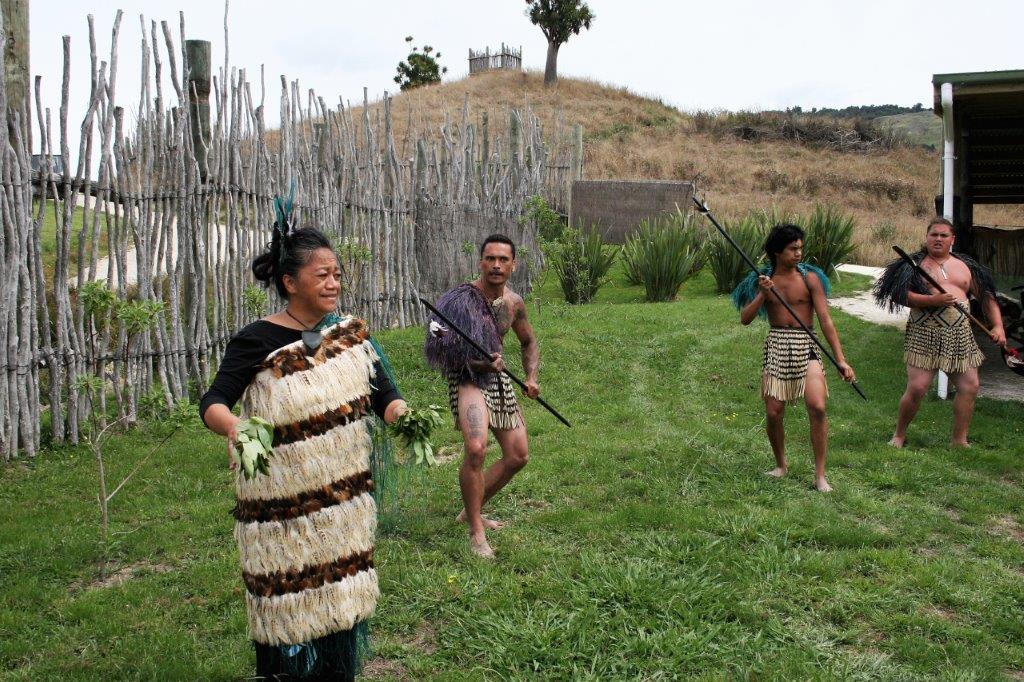
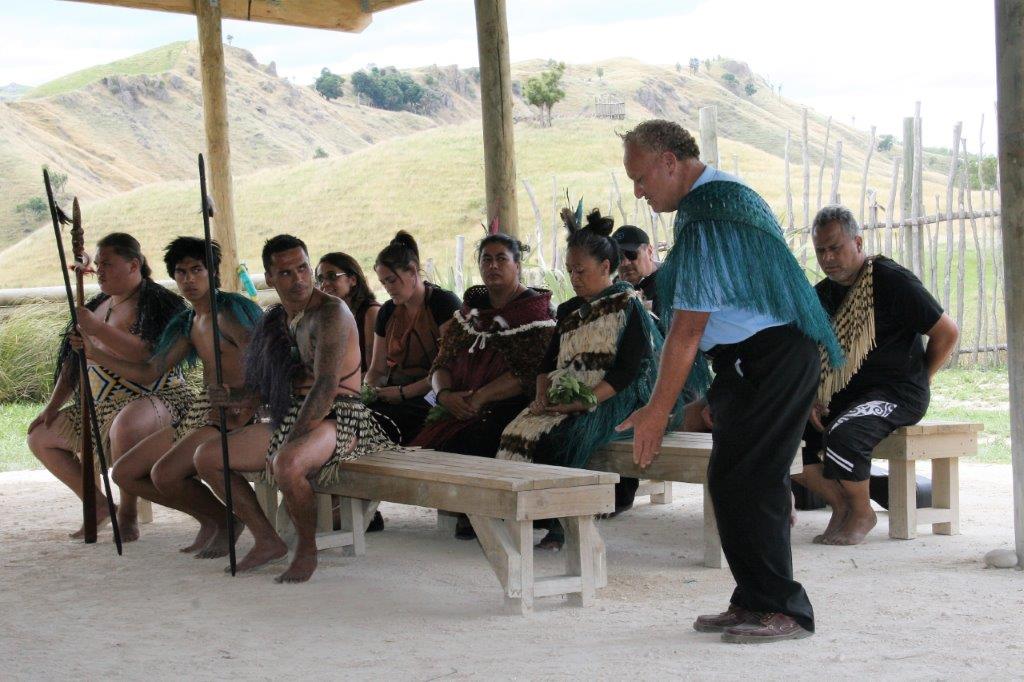
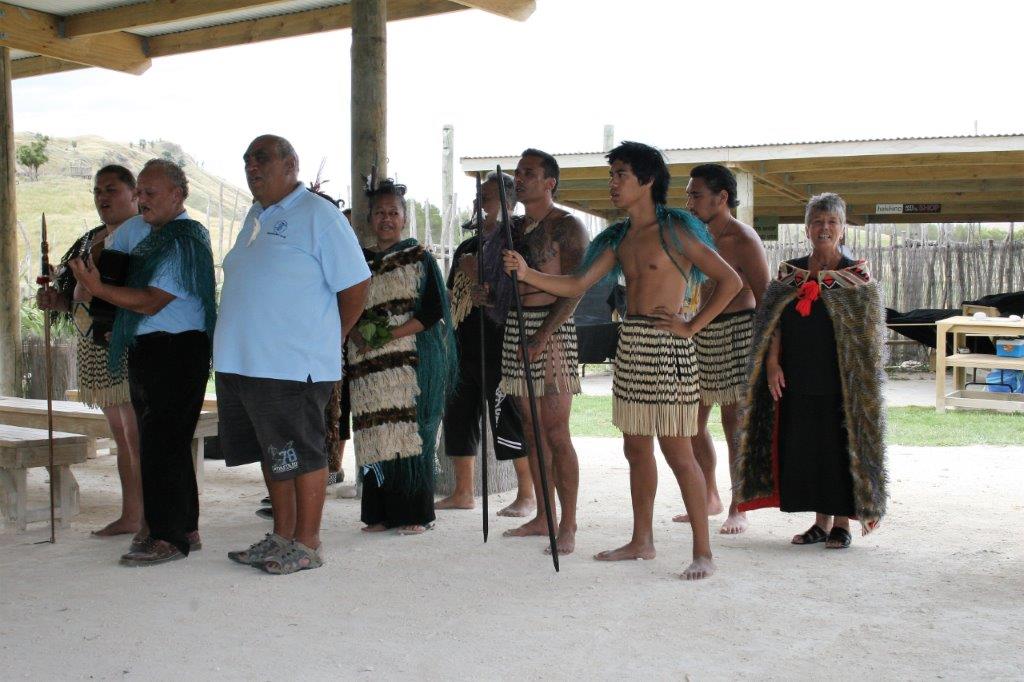
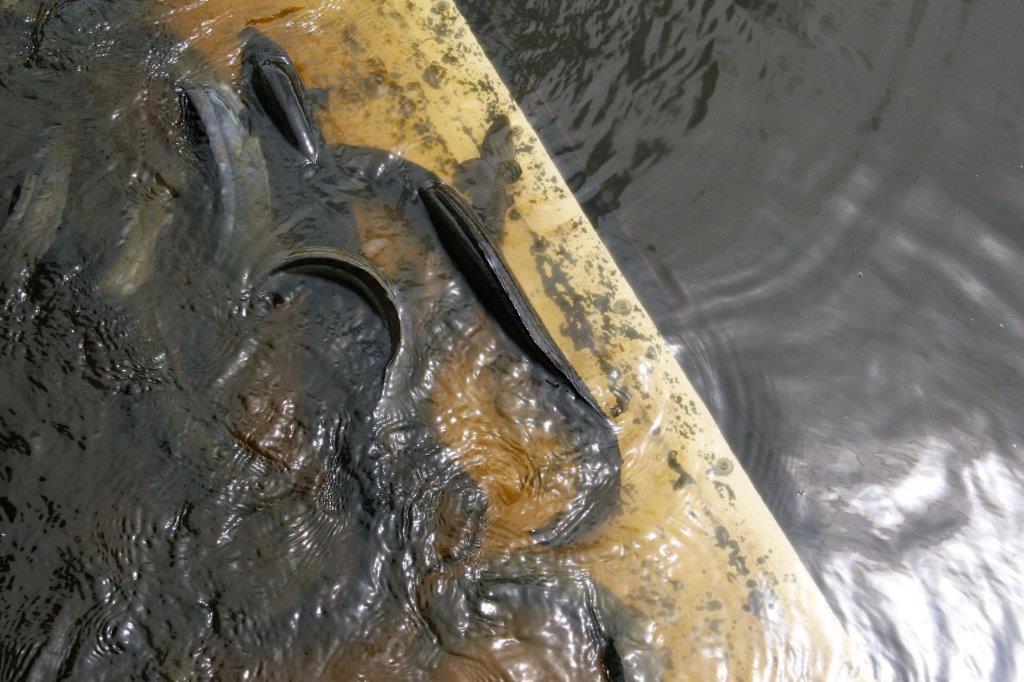
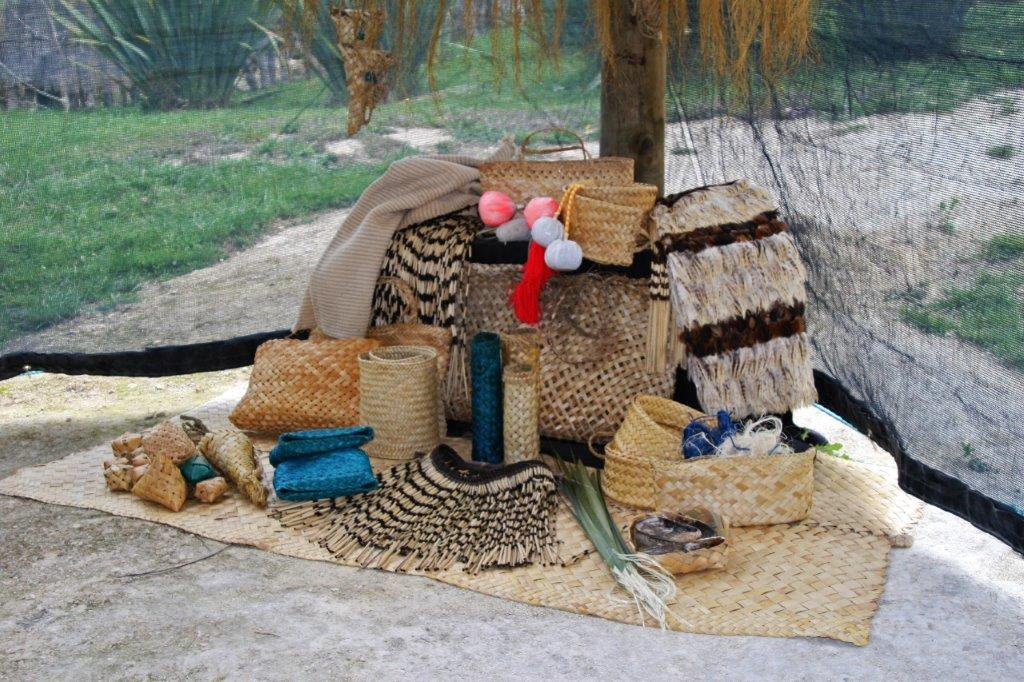
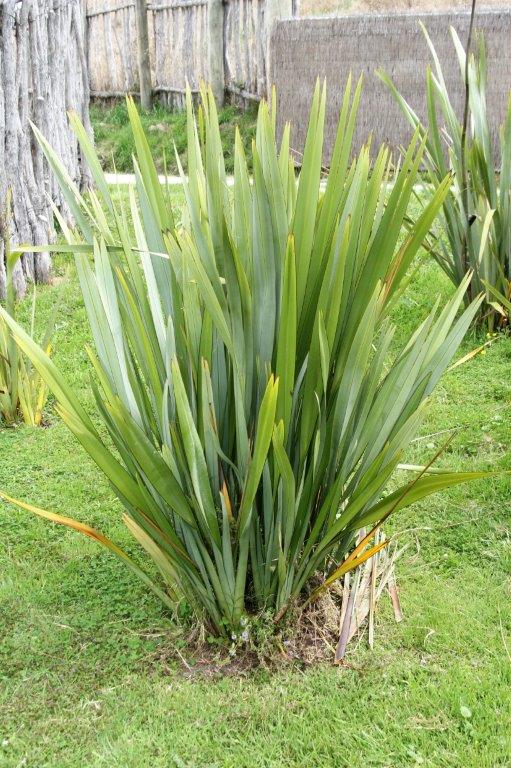
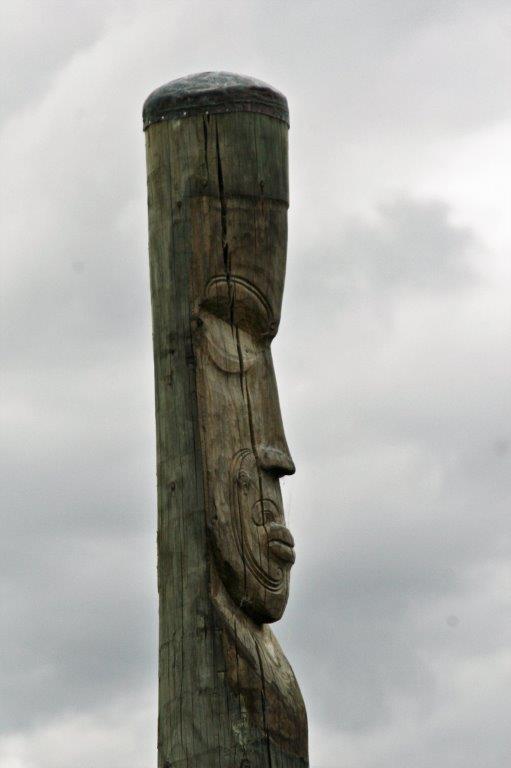
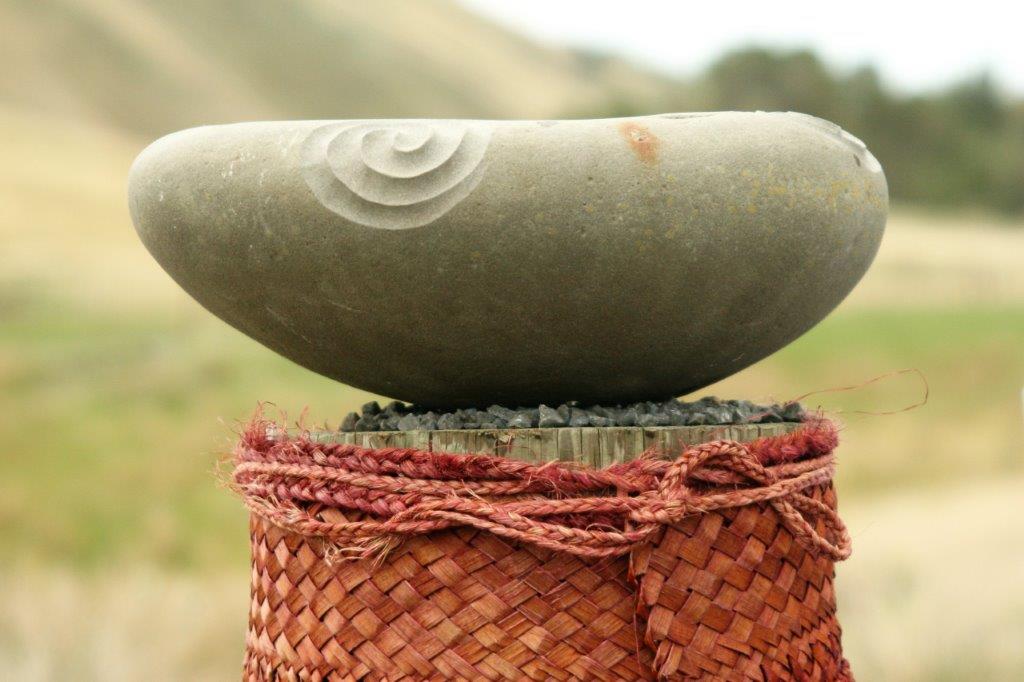
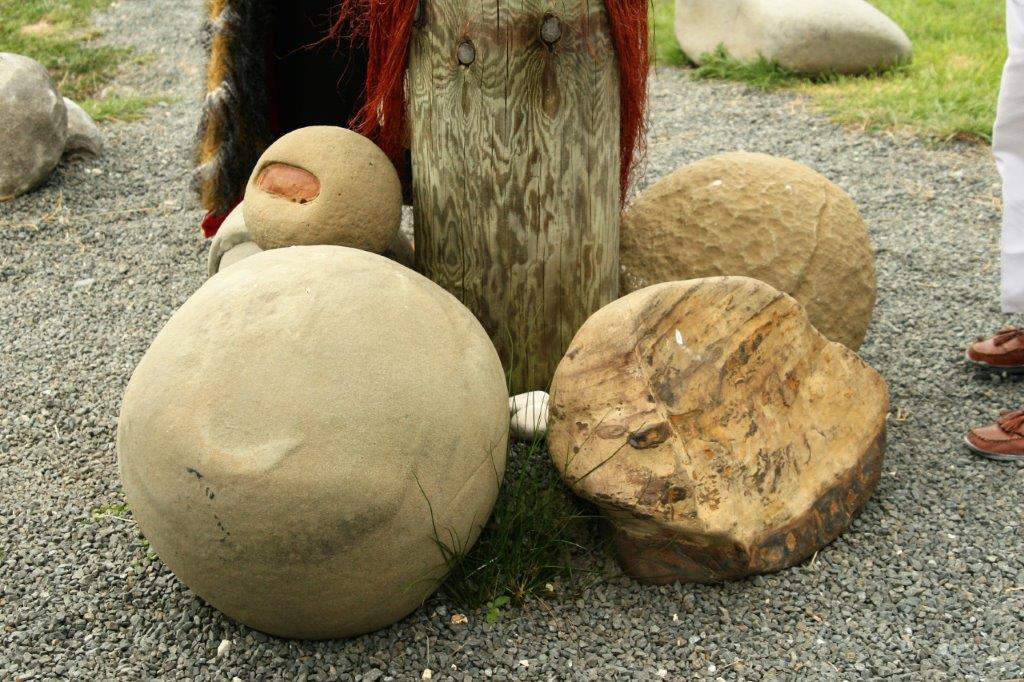
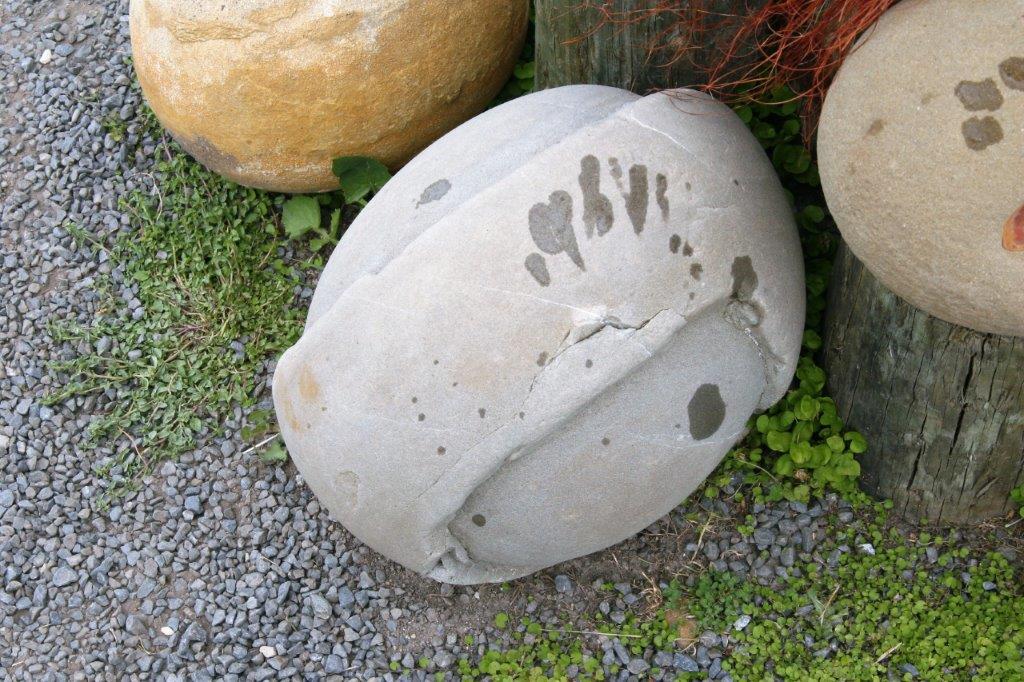
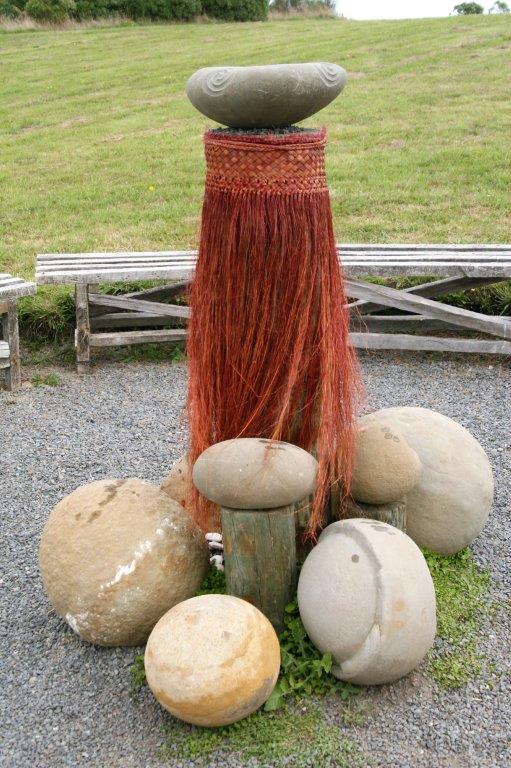
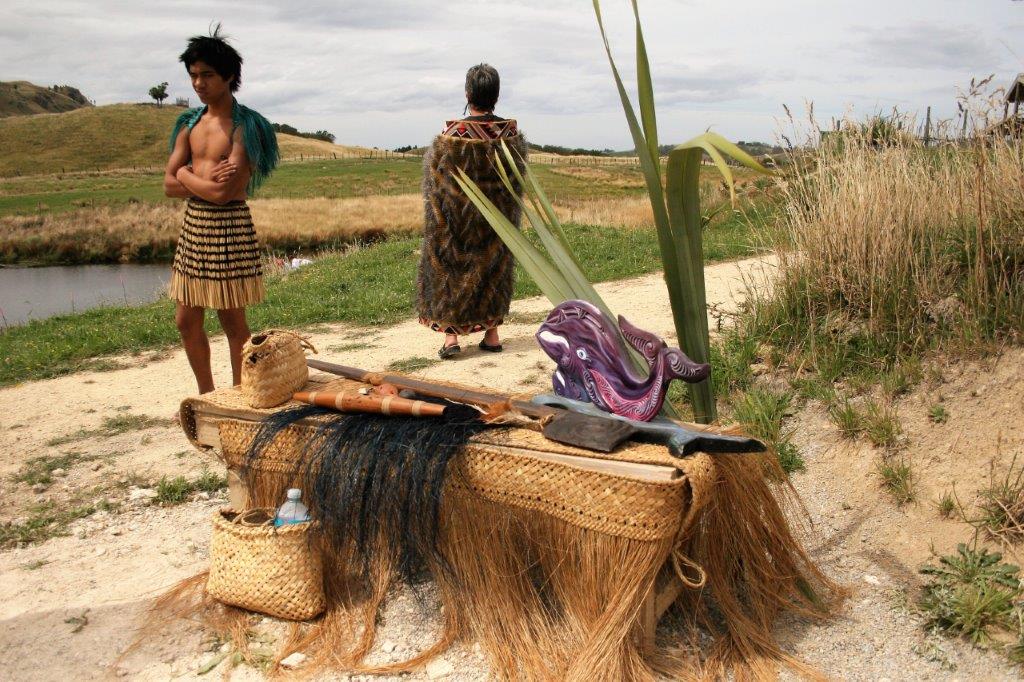
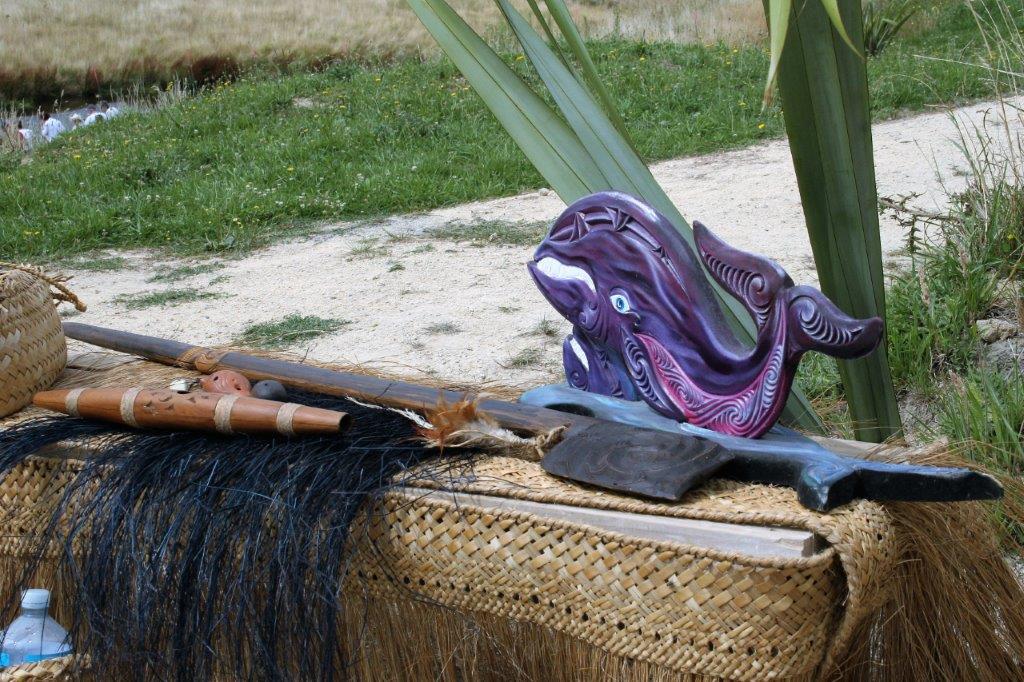
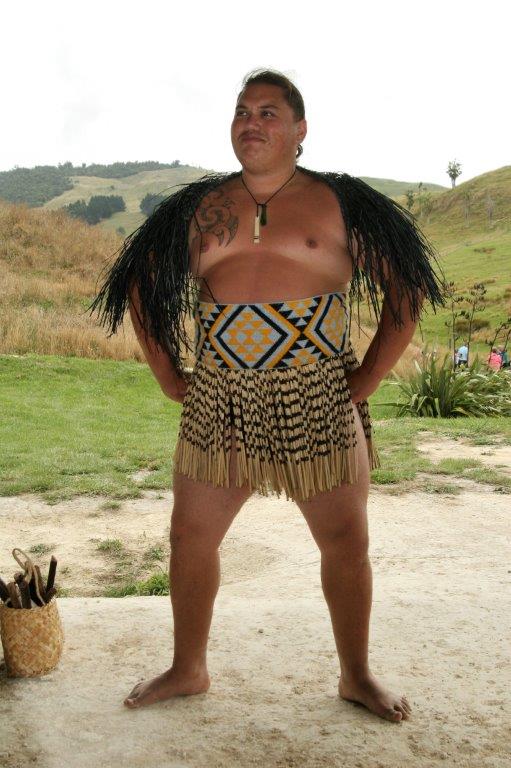
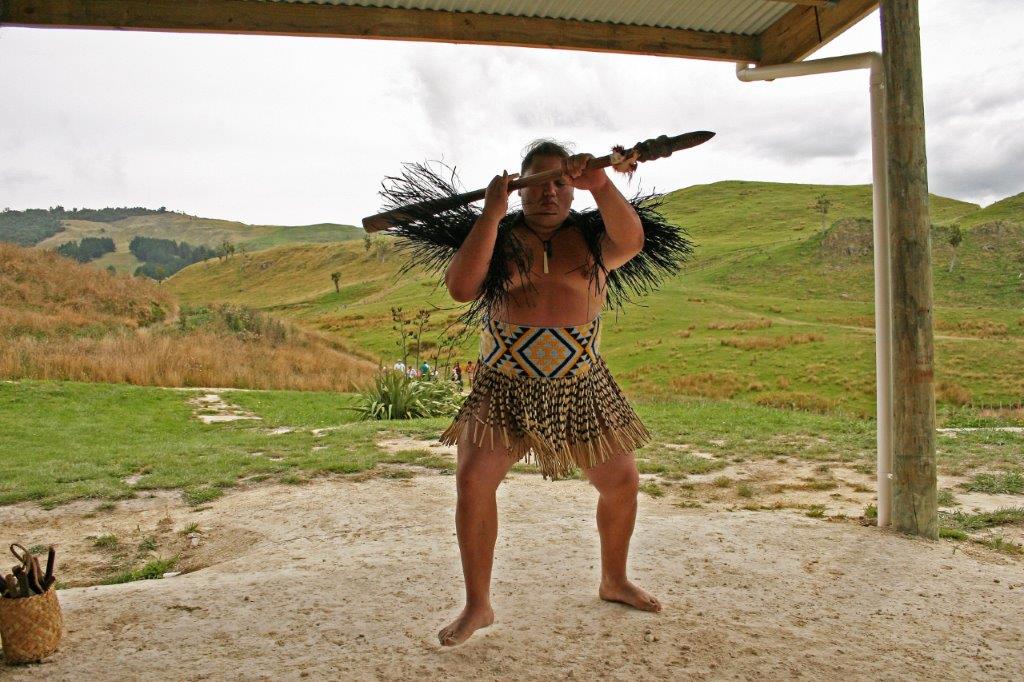
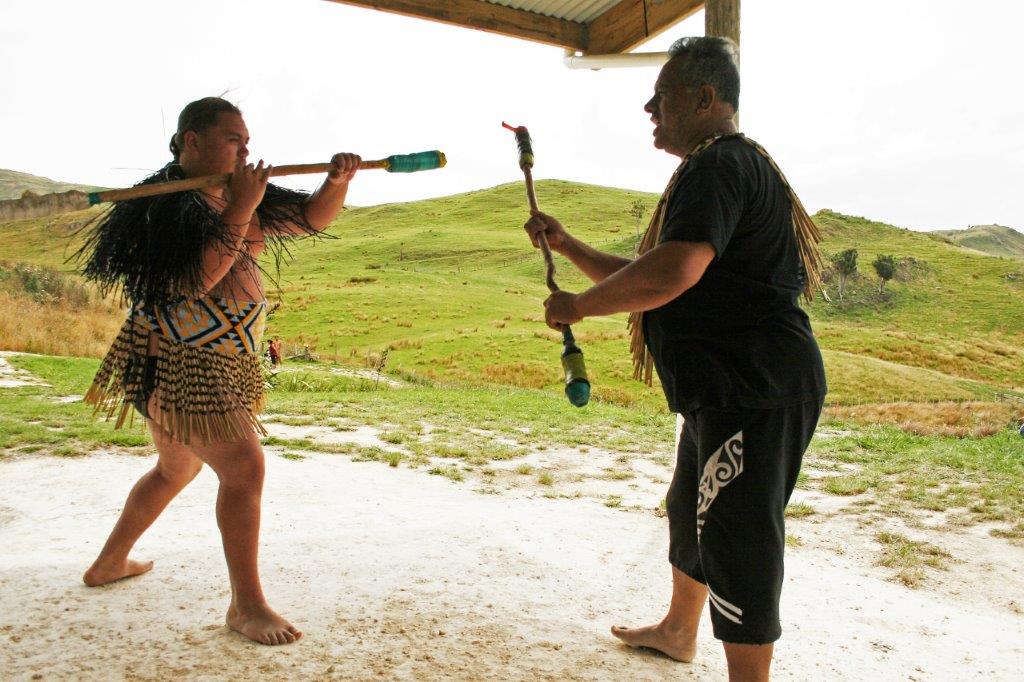
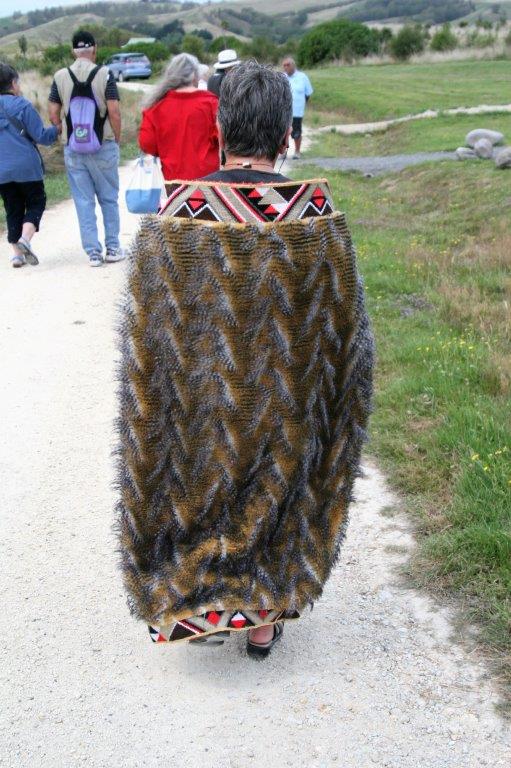
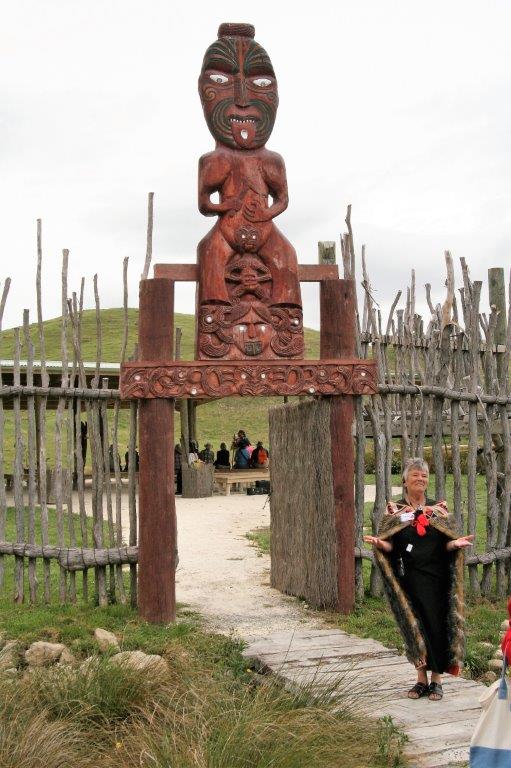
In keeping with the 1930s theme the ship was greeted by costumed locals with lovely antique cars. Napier is located about half-way down the east coast of North Island.  Hawkes Bay is a renowned wine-producing area and the area has breathtaking beaches, including the three-mile long Marine Parade.Napier is a major port for commercial and cruise traffic – obviously wood products are a major export. As is normal for us we chose a tour that took us into the countryside.  It took about an hour to reach the Waimara area and the Hakikino Preserve.  These lands have been protected and administered by the Māori people for generations. We were driven to Te Hakikino fortress, which for hundreds of years served to protect the Māori.  Before the bus arrived we had to select a ‘chief’ to represent us and there was a ‘speech and singing’ welcome and our chief and the guide had to provide the appropriate response to show we came in peace.  To enter the  Arch of the Ancestors we had to first be approved by one of the home people and a gift offering was presented and accepted by our chief. The busload was divided into smaller groups and we all rotated through areas where we were told about flax weaving, and musical instruments, spiritual stones, medicinal plants and weapons.  We were shown the eel pond where eels are raised for food.  The Waimarama Culture Group told stories and sang songs and demonstrated dances.  It was a really interesting tour with some very welcoming people.

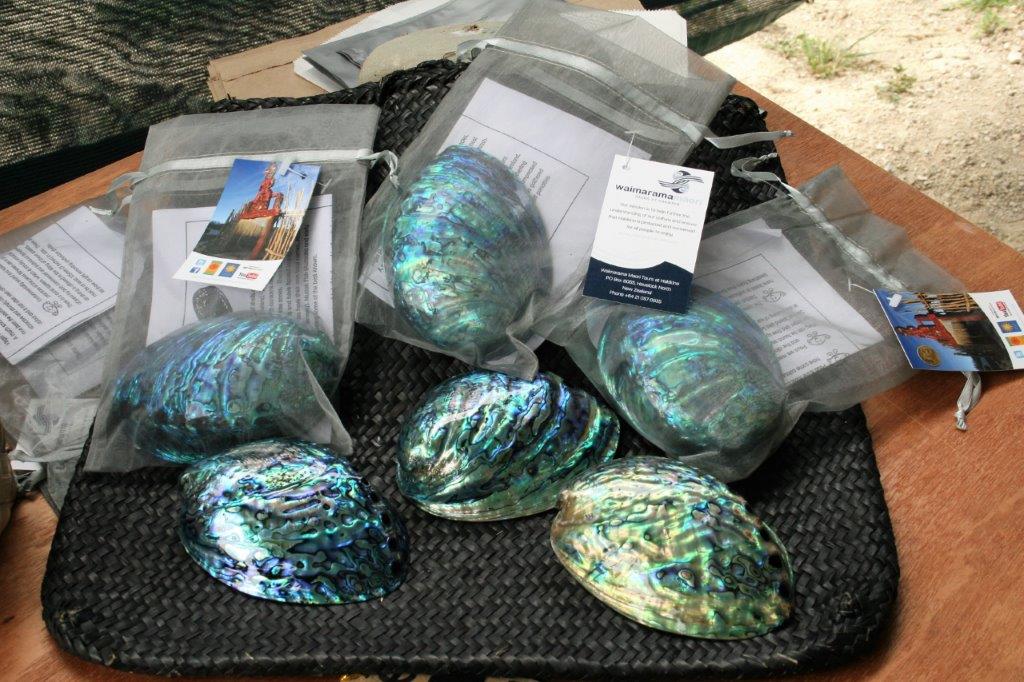
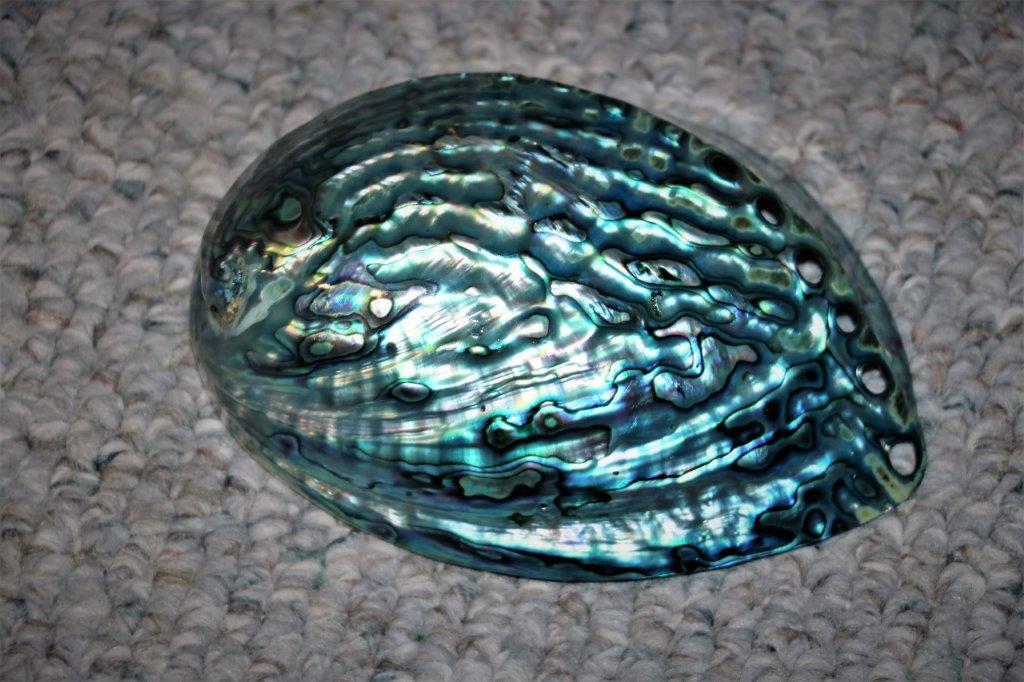
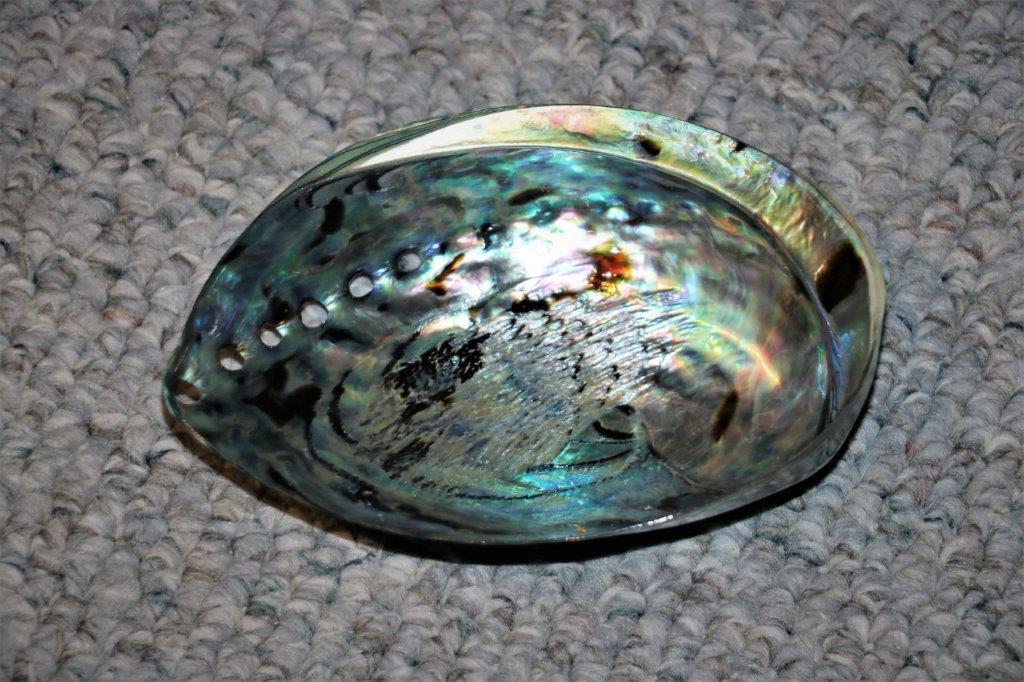
No eels for me, thank you.As always there was an opportunity to shop for the crafts.  I, very uncharacteristically, bought something that was purely a beautiful thing that had no purpose.  I usually buy place mats, or spoons, or hot pads; things I can use when I get home.  My paua shell purchase was just because it was beautiful. Paua is the most colourful shell in the world.  It is a species of abalone and is only found off the south island of New Zealand.  Collection of the shellfish is strictly controlled.  It has been used as a food since ancient times,  All of the white outer coating on the shell is sanded off and the beautiful colours are exposed.  The shell is used for jewelery and to decorate many other craft items. (And it just sits inside the mesh bag in a drawer in my dining room.  But, when I open the drawer to get something I often pick up and admire my paua shell.)

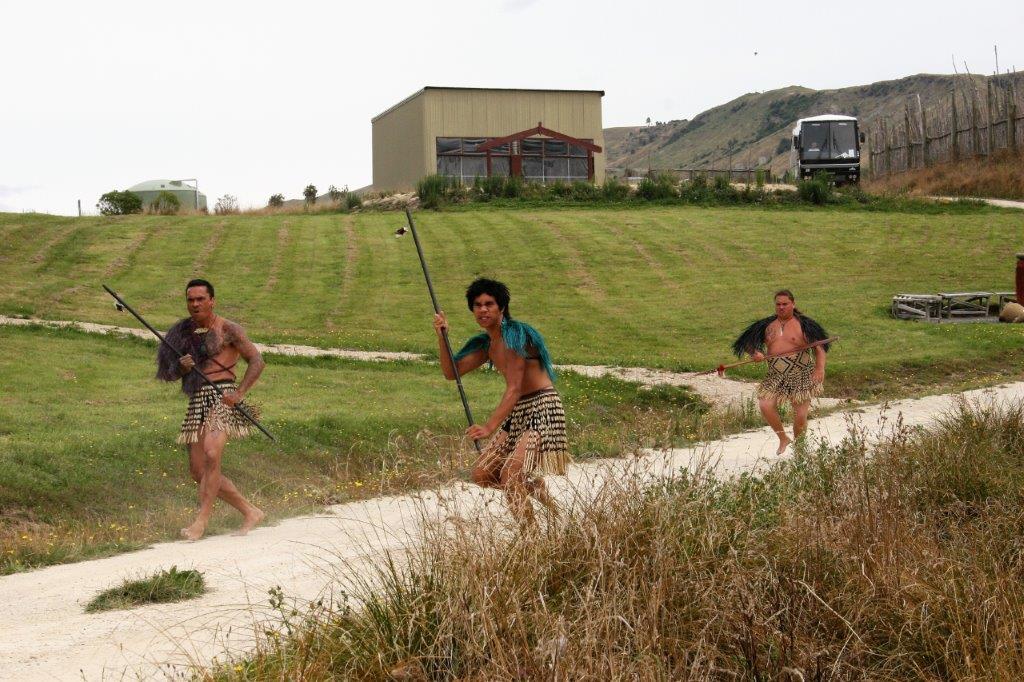
Before we left the warriors demonstrated the famous Māori Haka in which the young men pounce and posture and slap their chests and stick their tongues out to look fierce for the enemy. We had a wonderful afternoon and so enjoyed the gracious hospitality of the Māori people and all of the information about their traditional ways of life that they shared with us.  It was a great day.