All posts by jj1951

My husband and I retired in 2007 and decided to spend the kid's inheritance by travelling as much as we could until either the money or our health runs out. So far so good.

2011 February 9 – Day 35 – Napier, New Zealand

The ship did not dock in Napier until noon so we were able to have a more leisurely morning.  It was fun to watch the captain back the ship into it’s port slot.  Those navigators know their stuff!

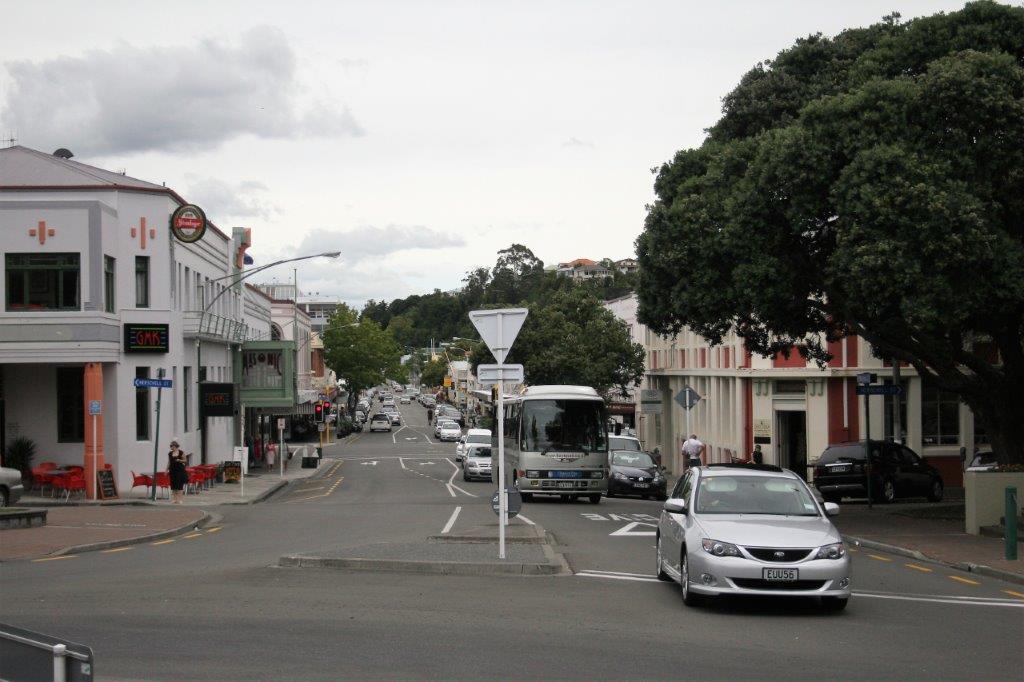
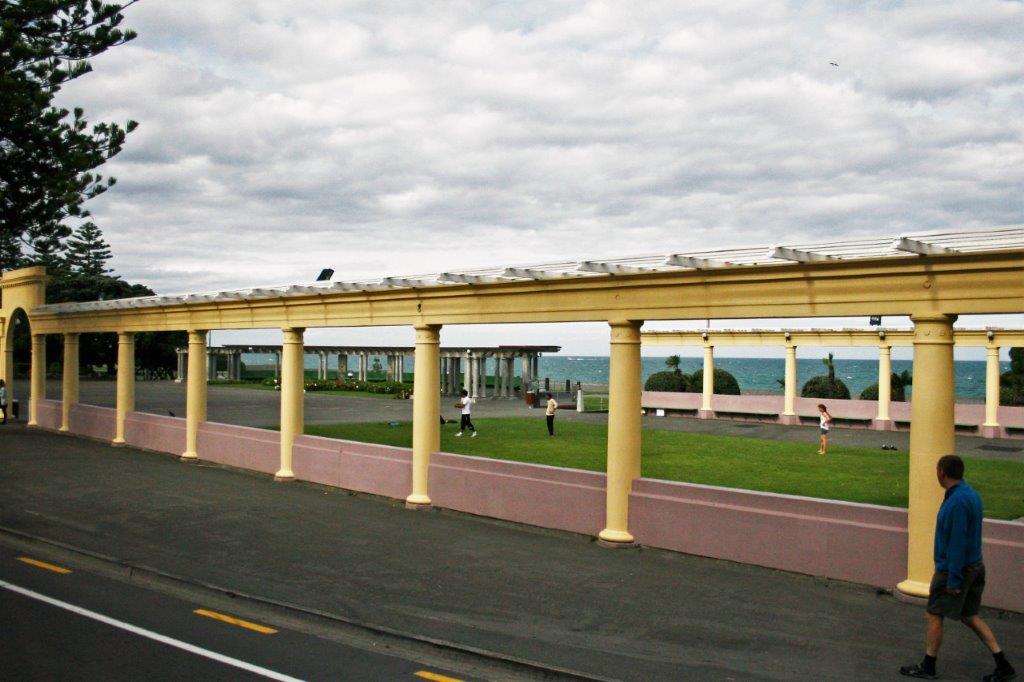
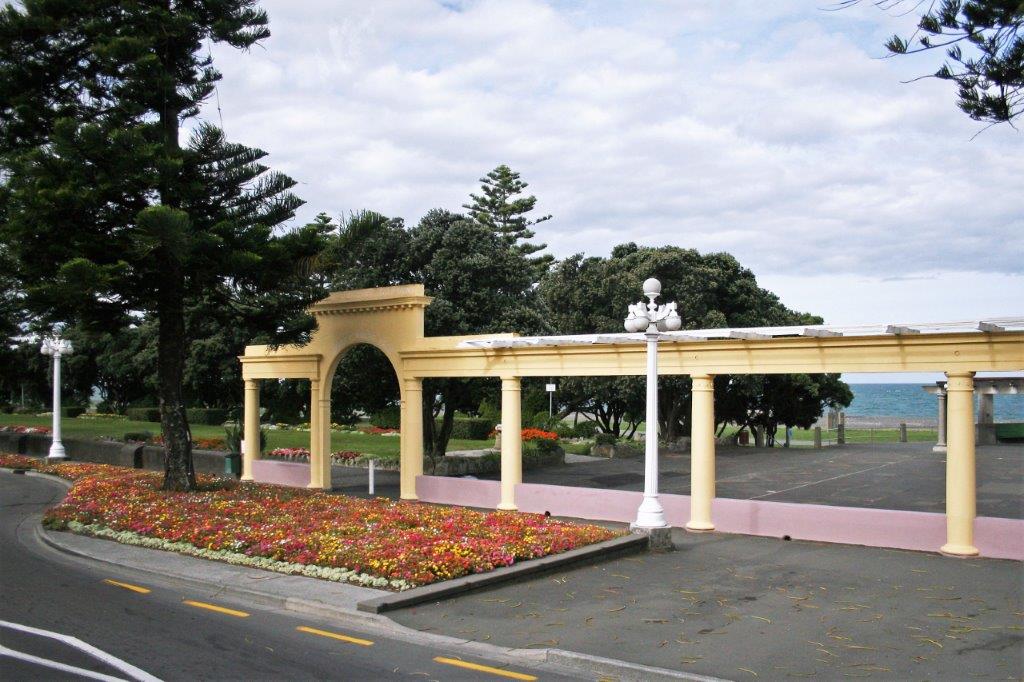
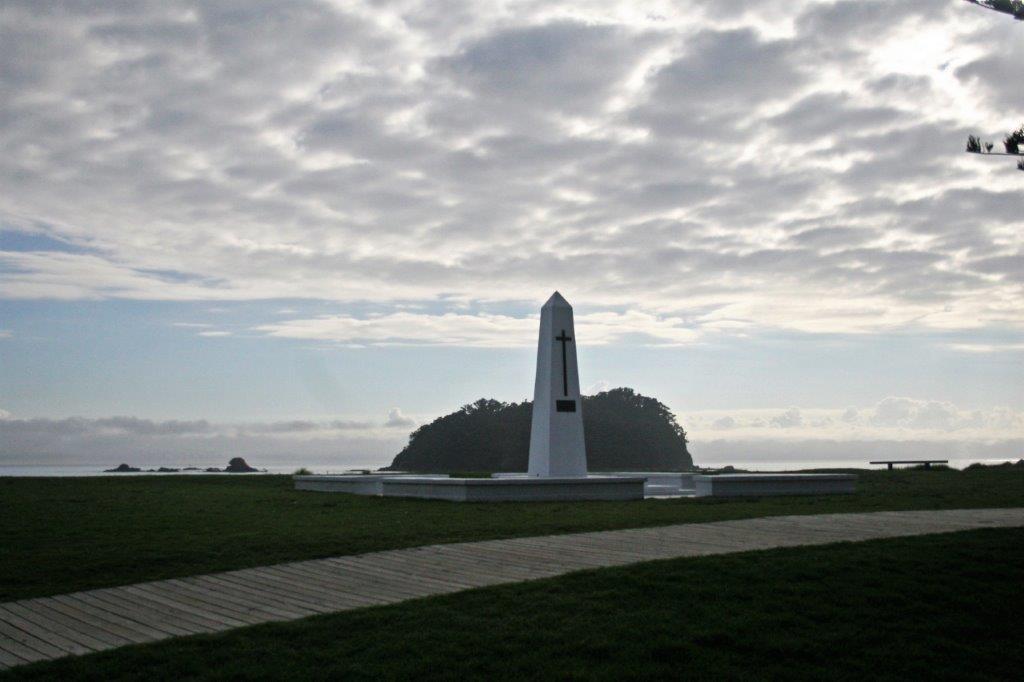
The pamphlet we were given with information about Napier says, “On Tuesday, February 3, 1931, Napier was struck by a disastrous earthquake.  Measuring 7.9 on the Richter scale, the morning tremblor leveled the town.  What was spared was lost to fire and the more than  500 aftershocks that struck in the following two weeks.  More than 250 people were killed, many struck by falling building ornaments and gargoyles.  Clean and simple Art Deco design was selected for the rebuilt city.”  The building code still follows the Art Deco simplicity and Napier is famous for its beautiful preserved buildings.

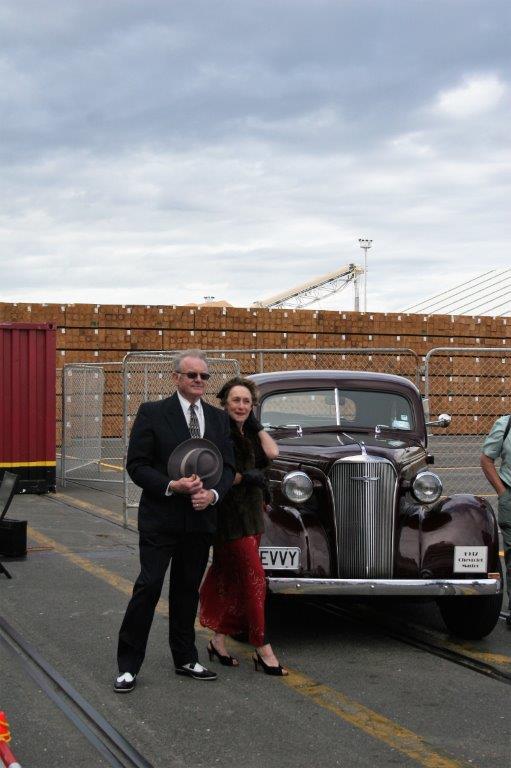
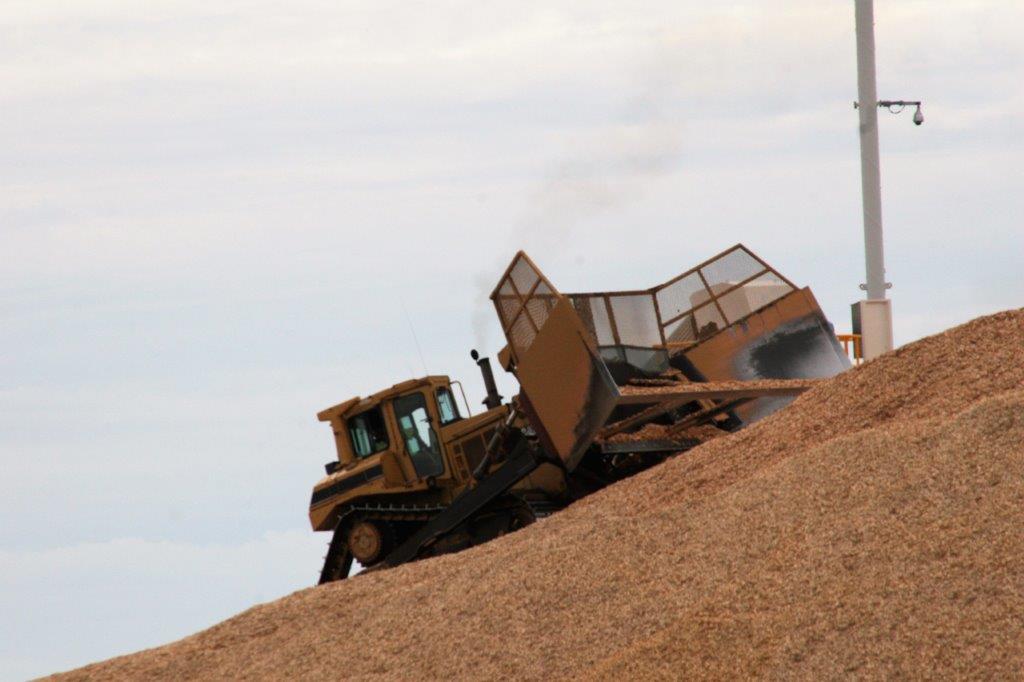
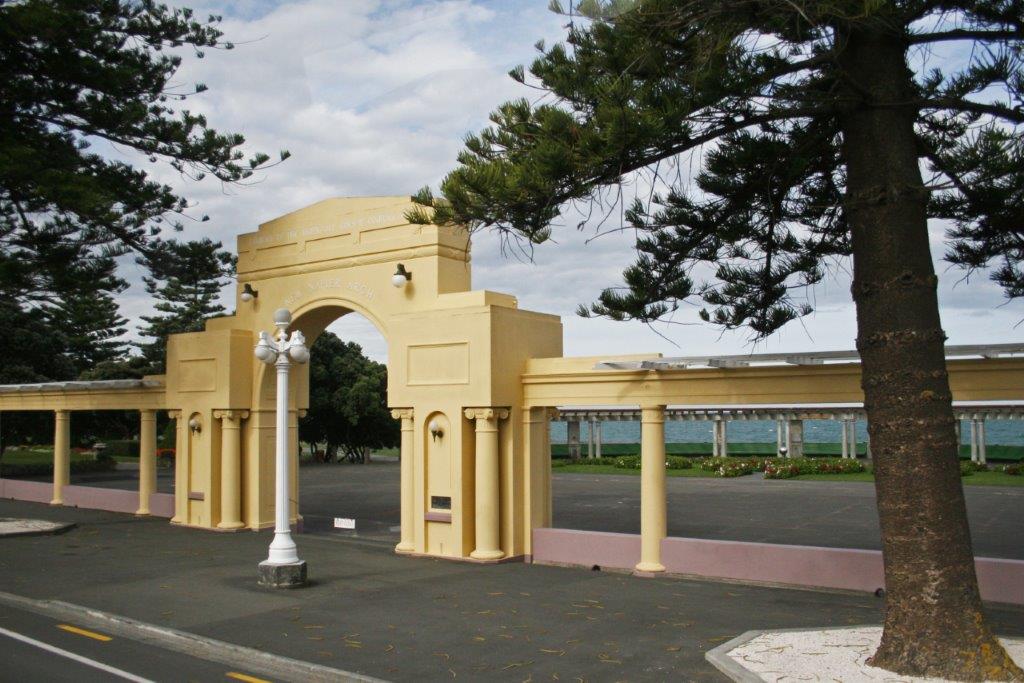
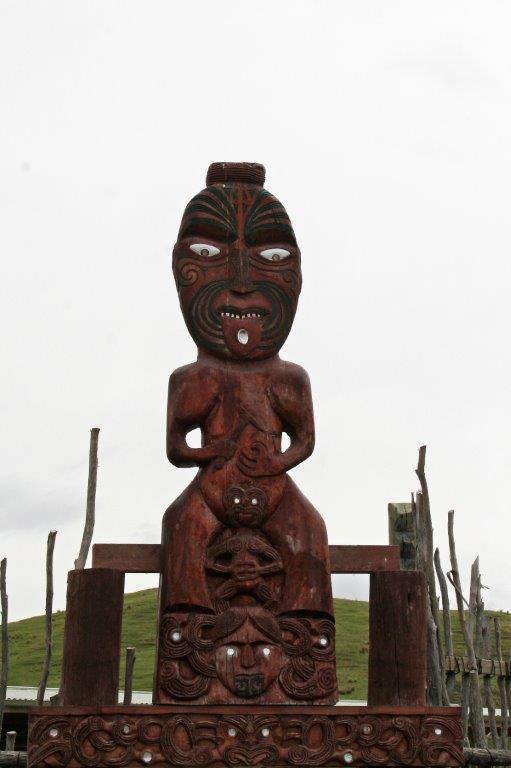
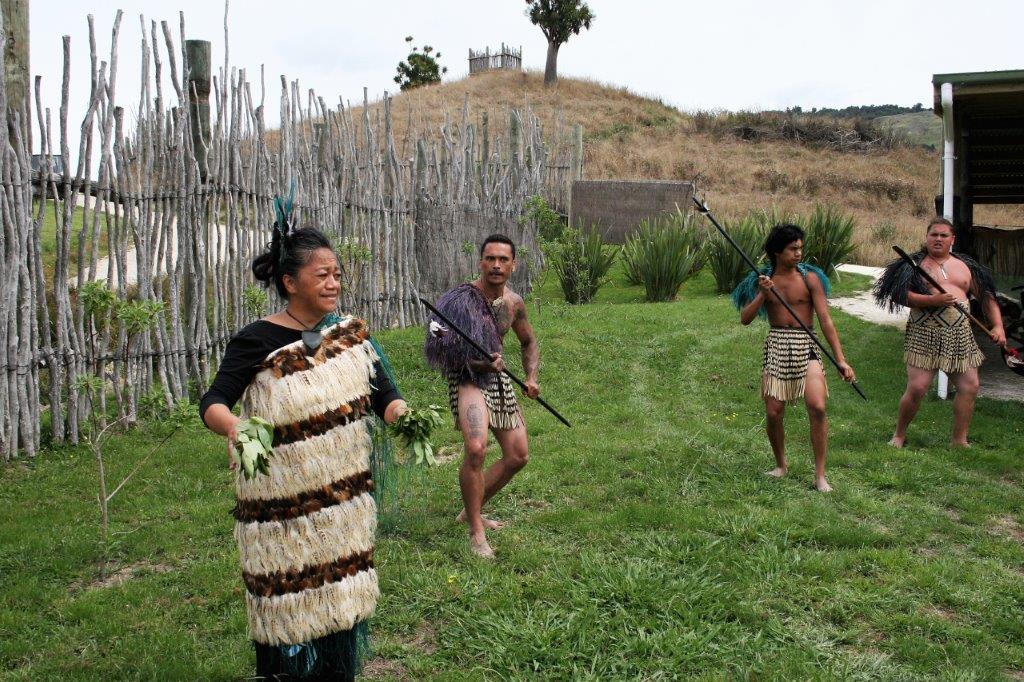
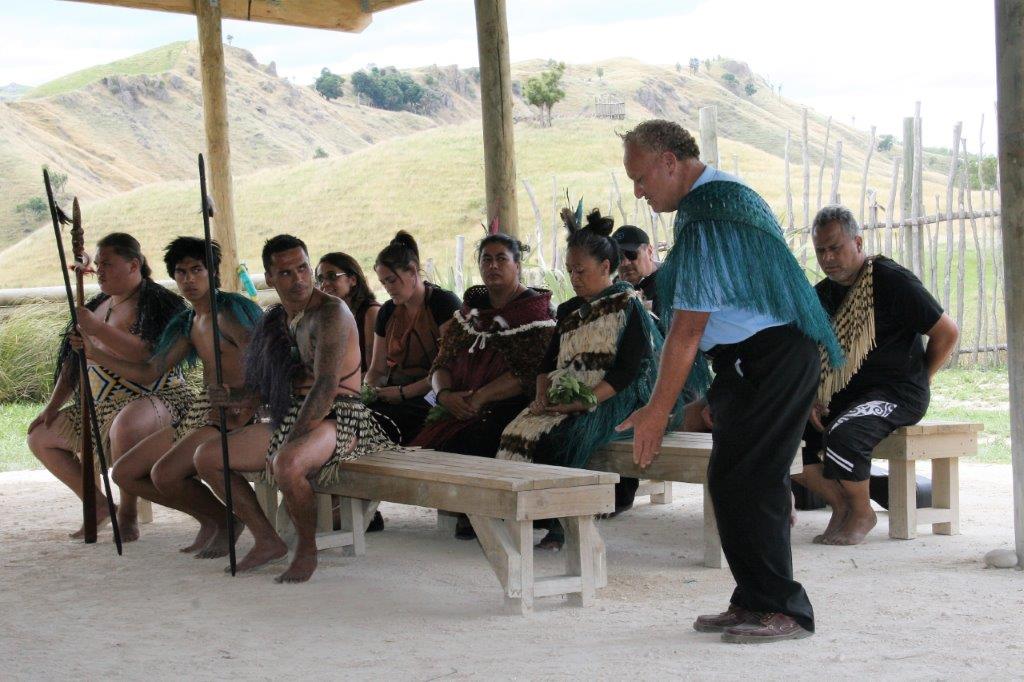
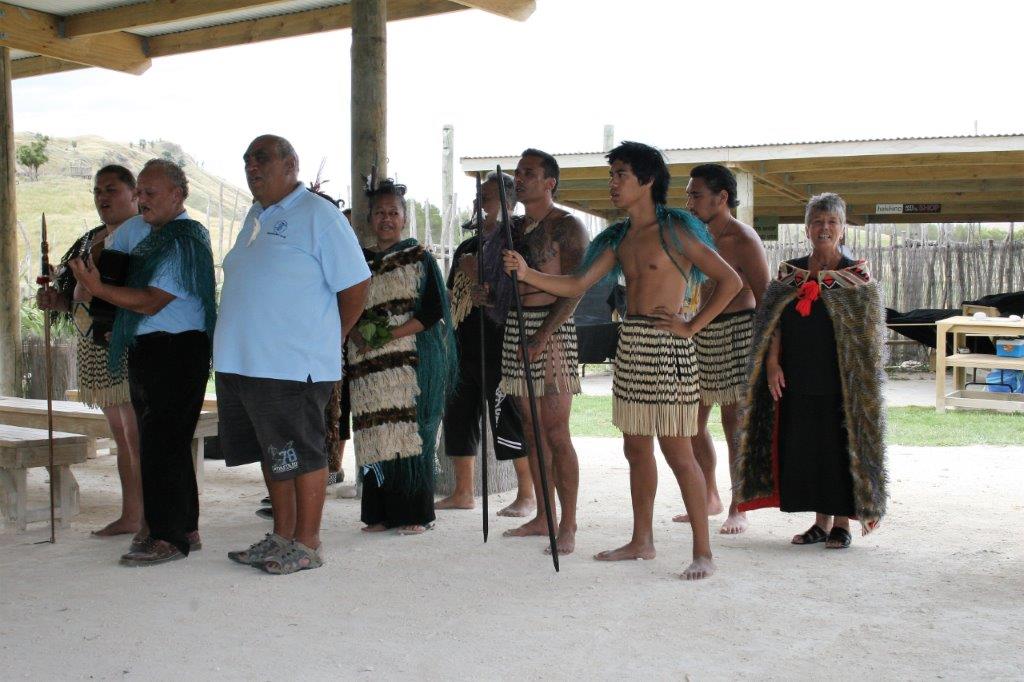
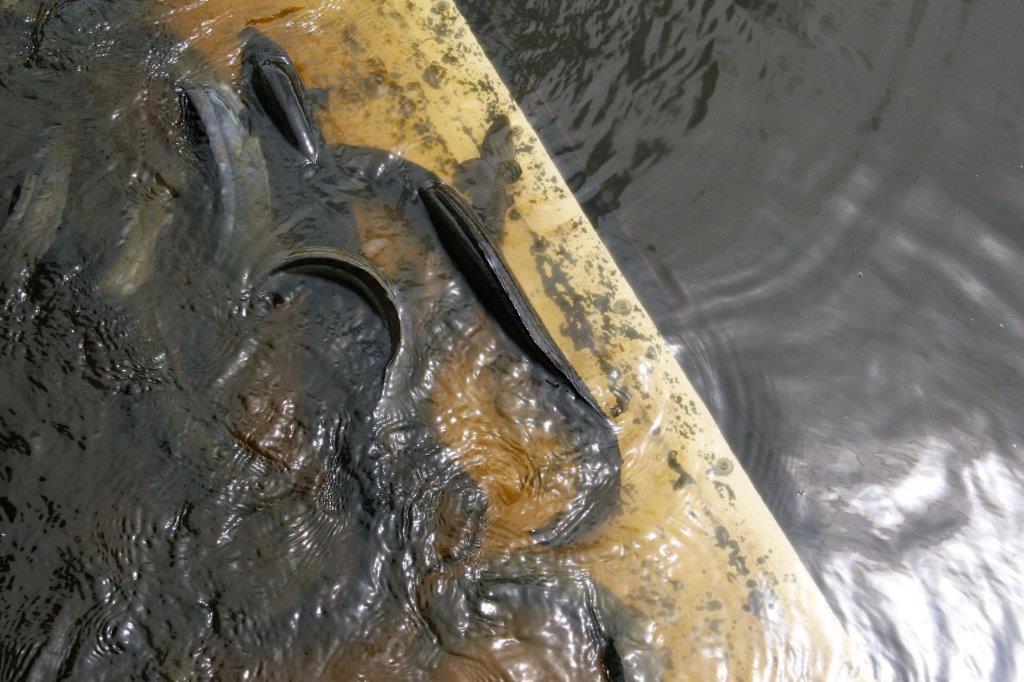
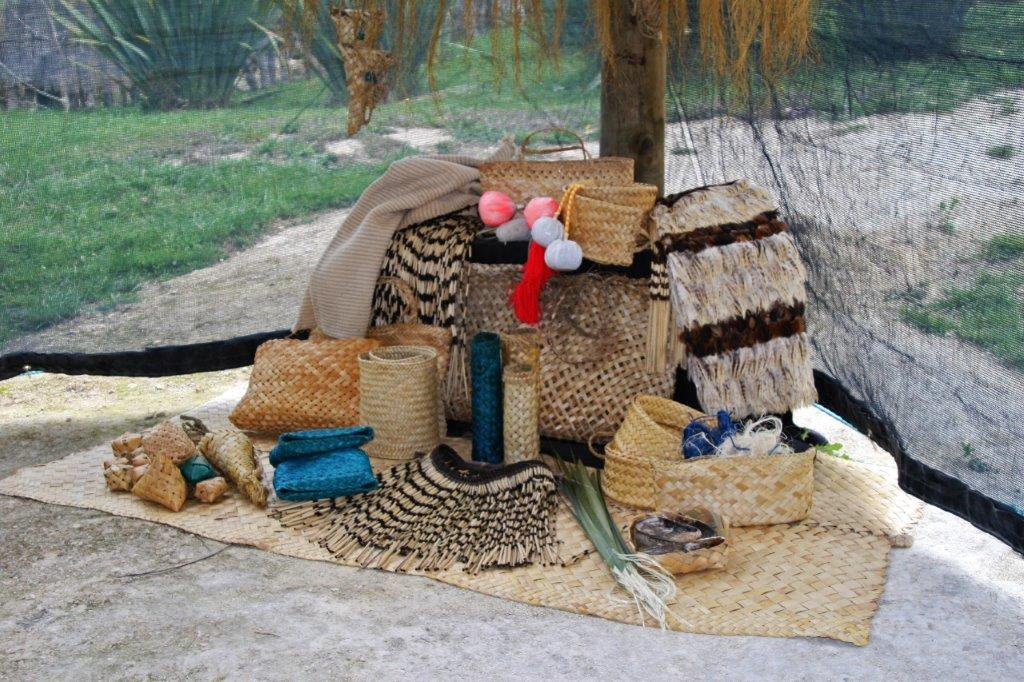
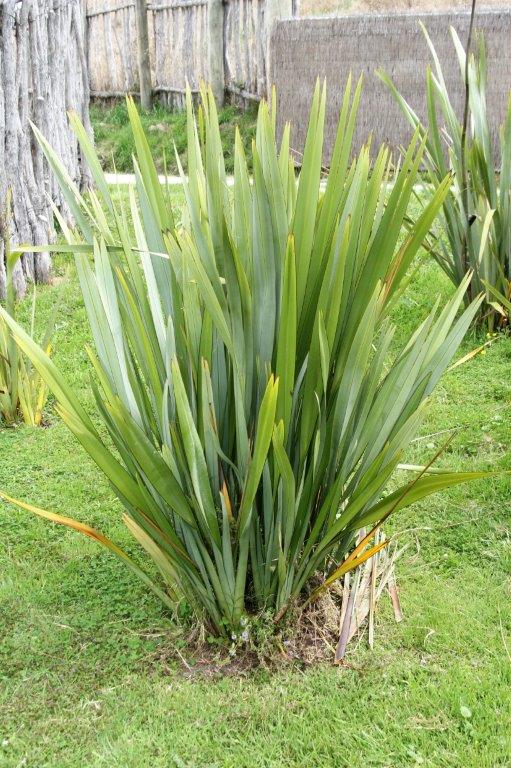
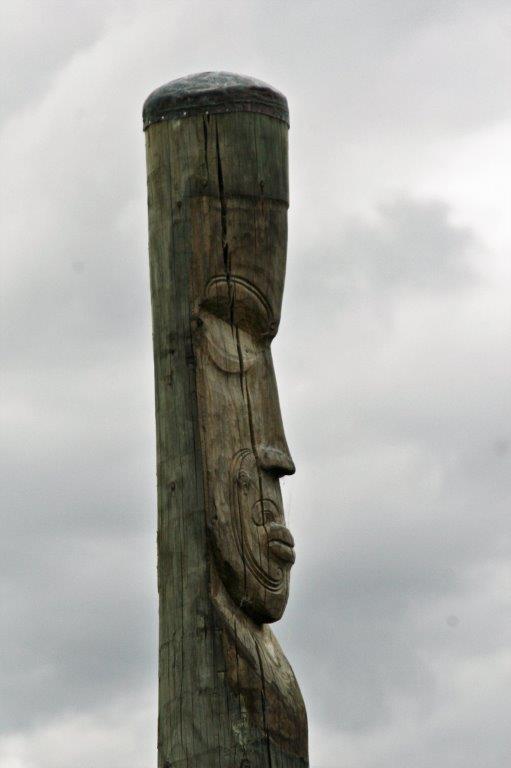
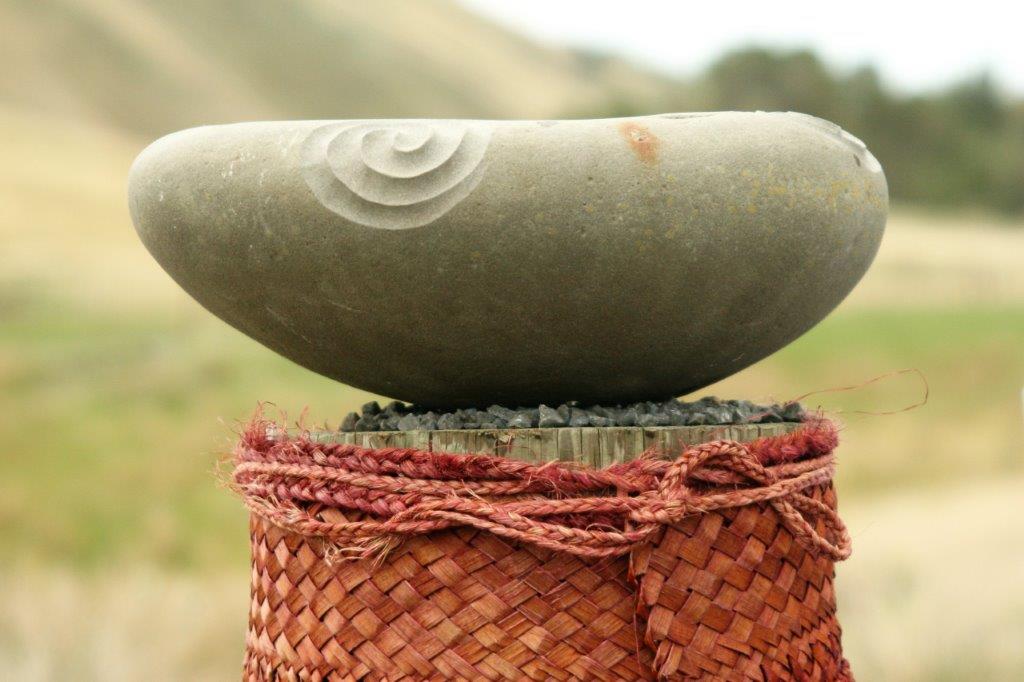
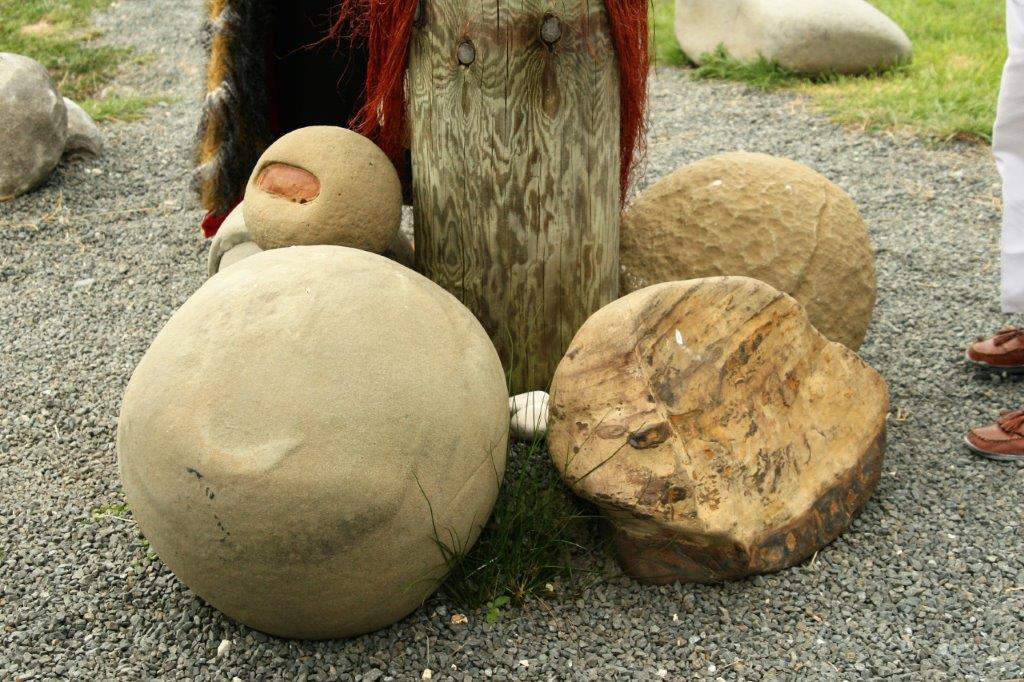
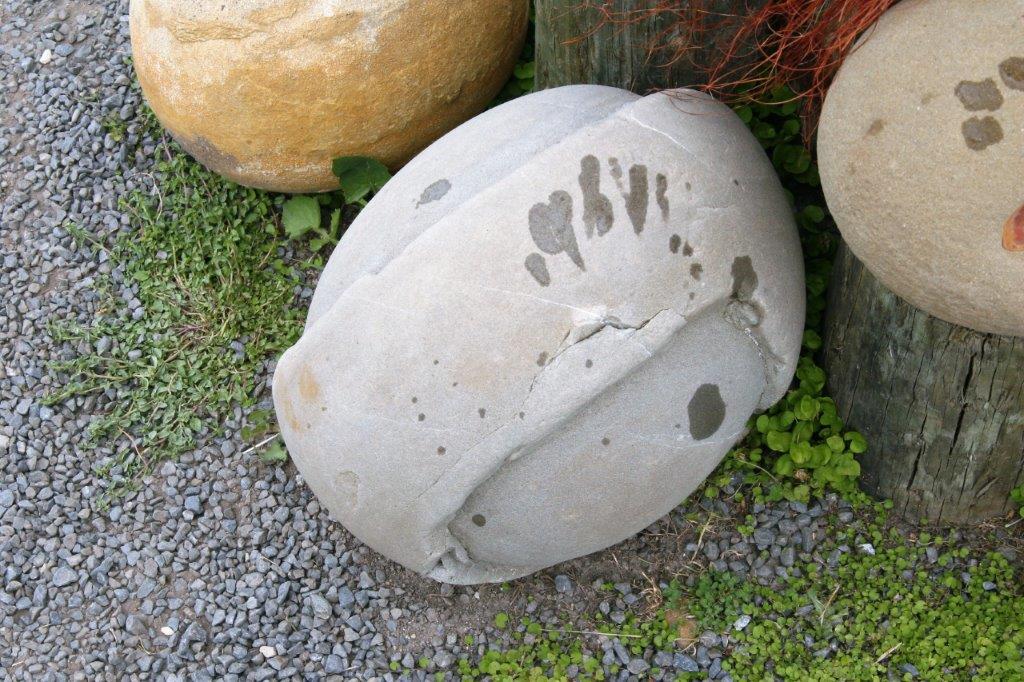
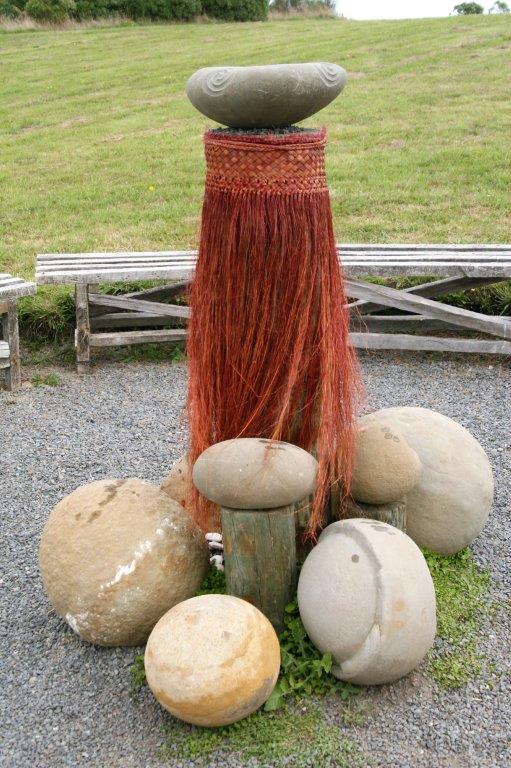
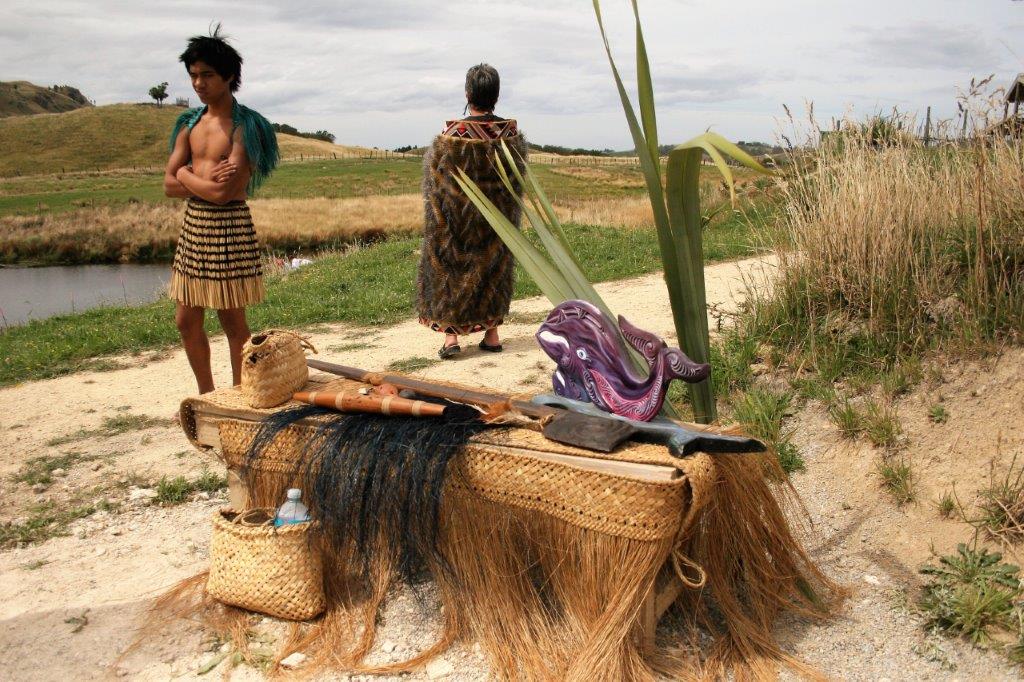
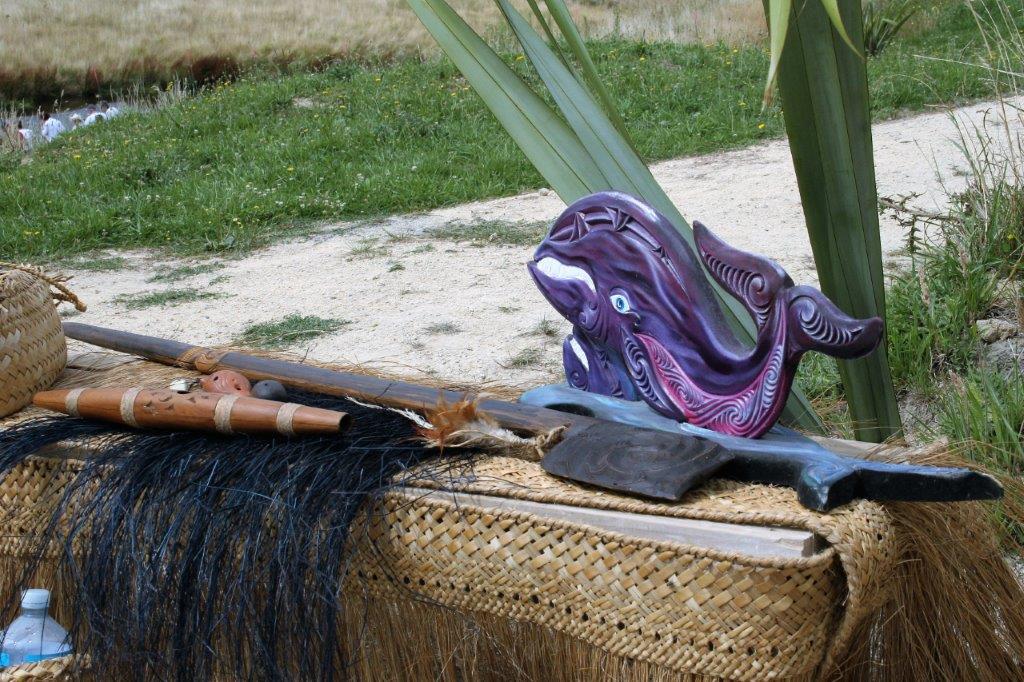
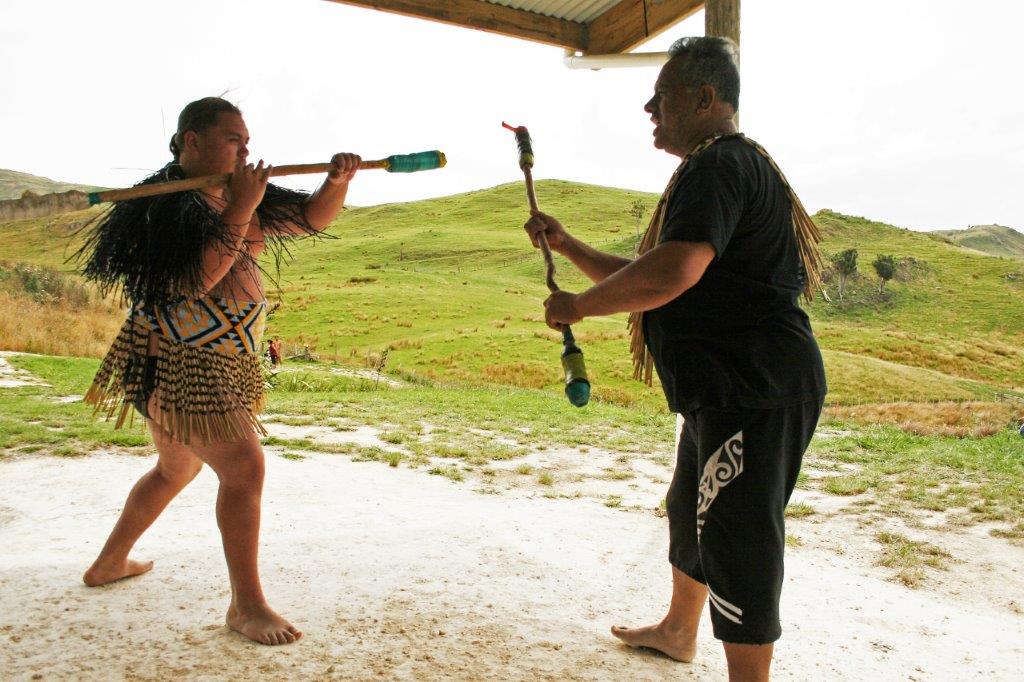
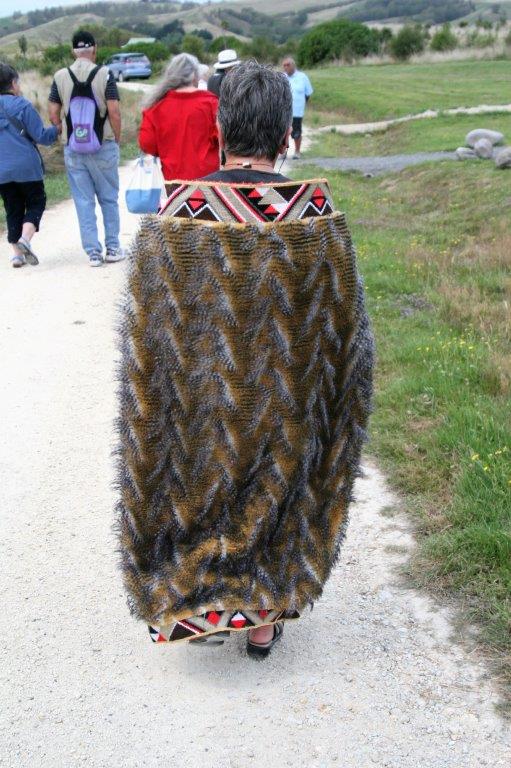
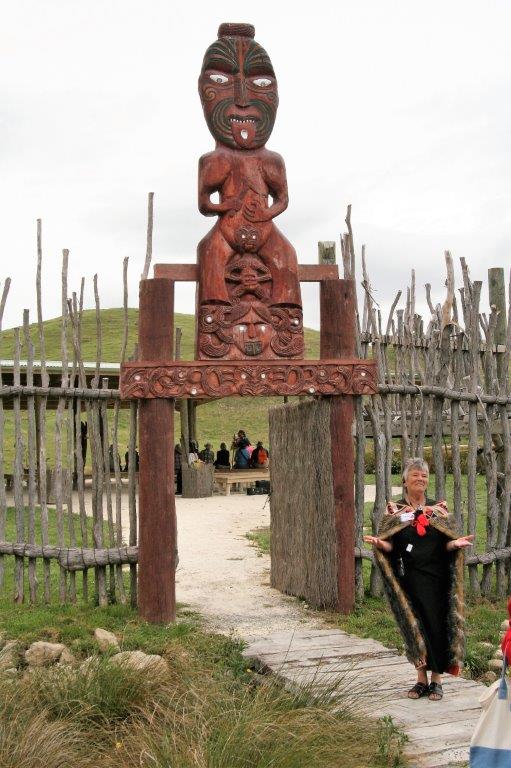
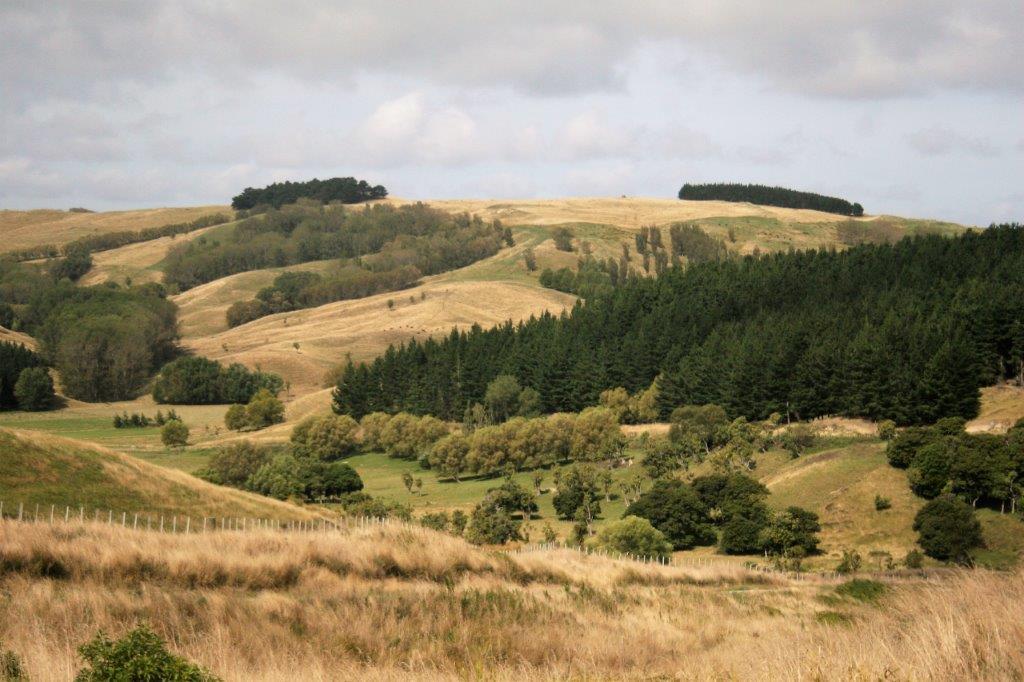
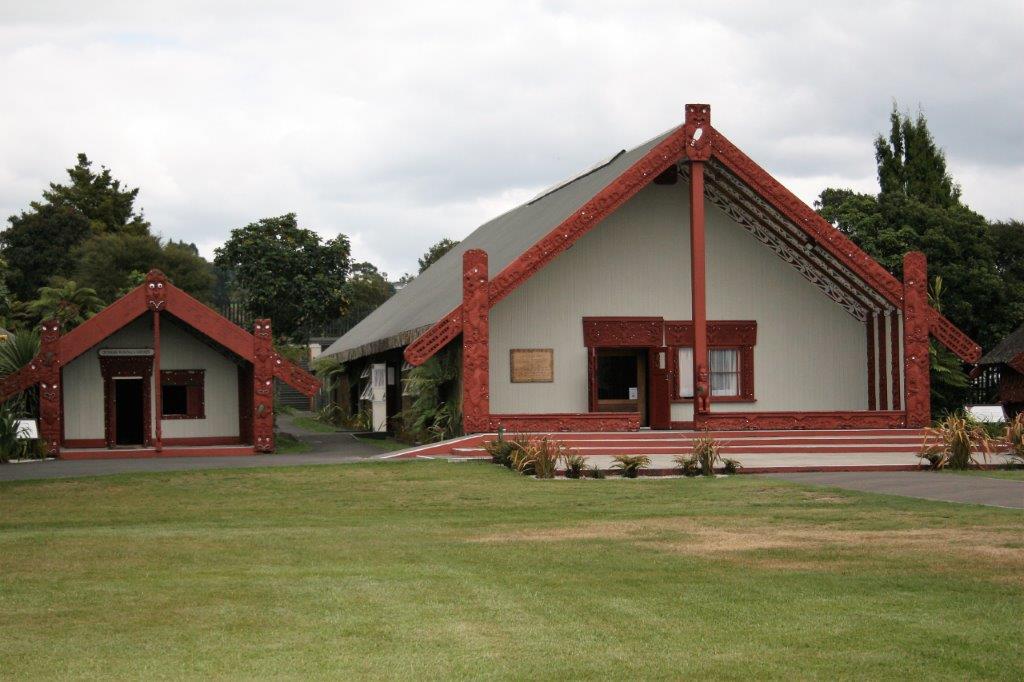
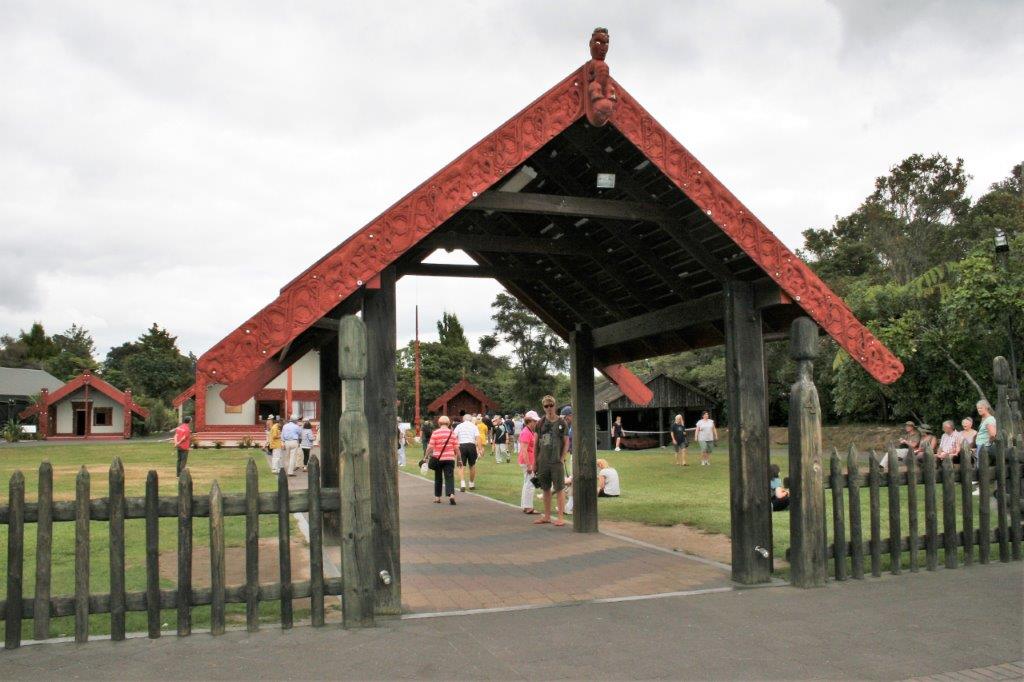
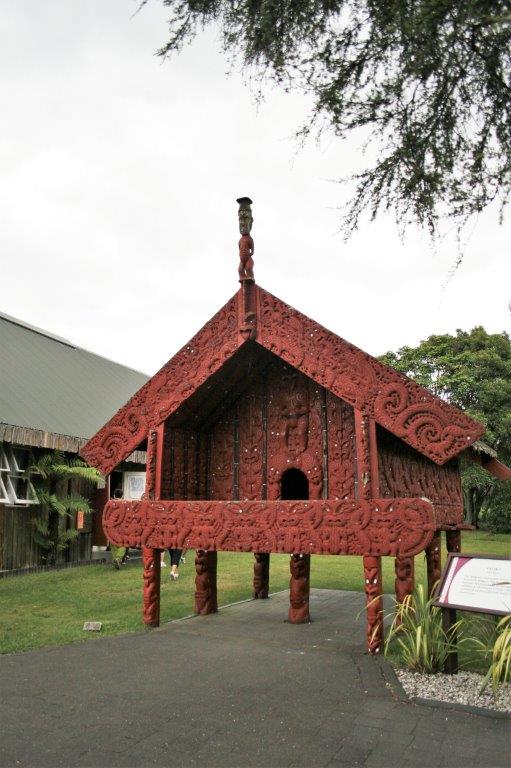
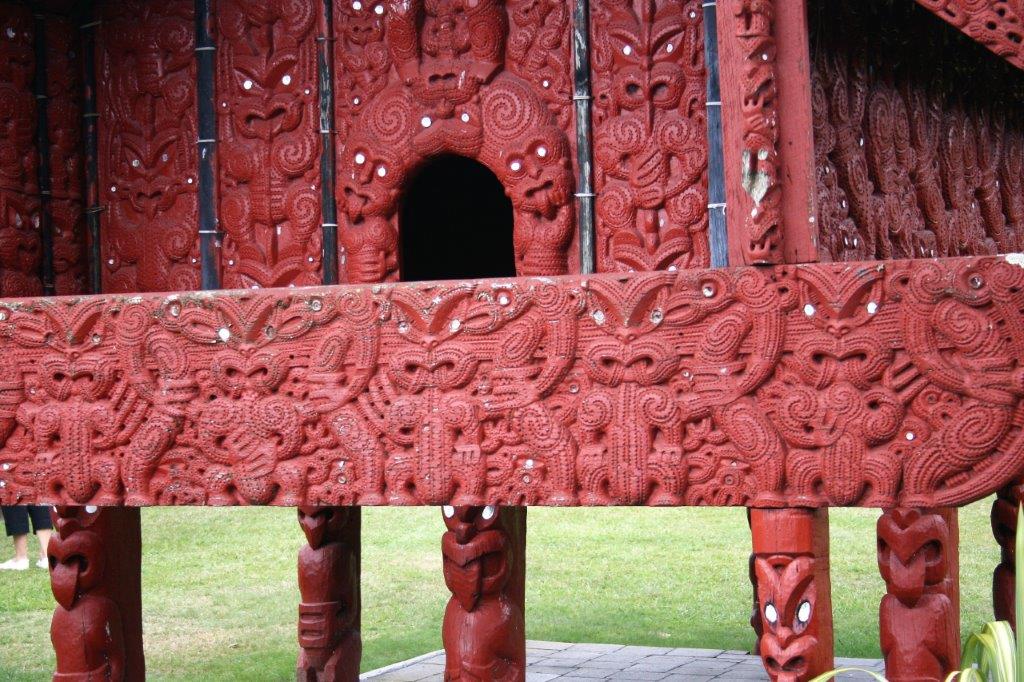
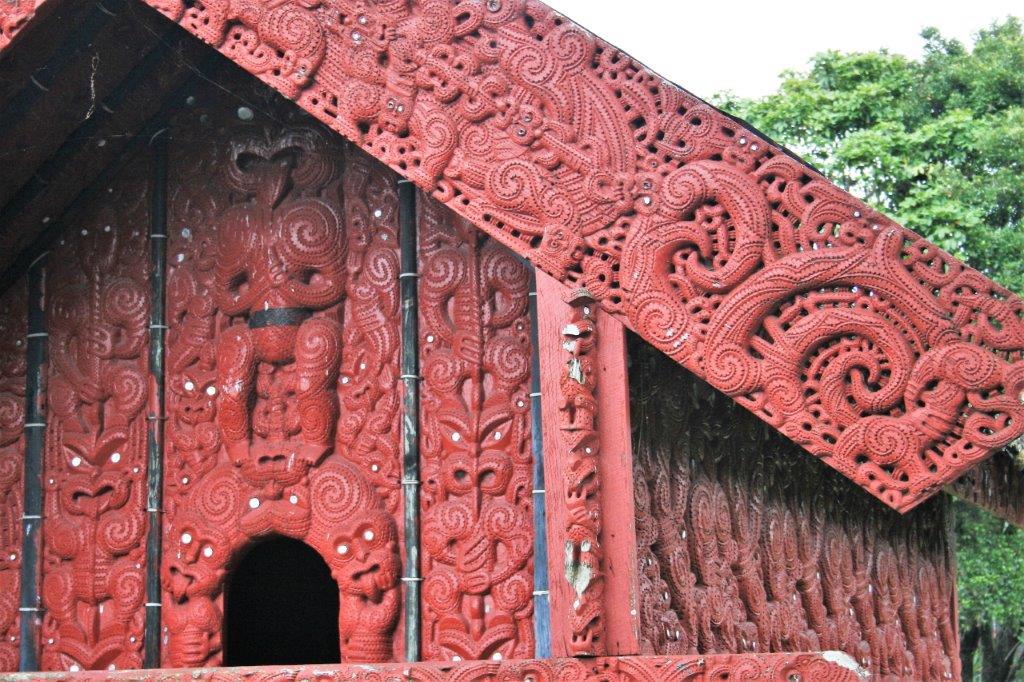
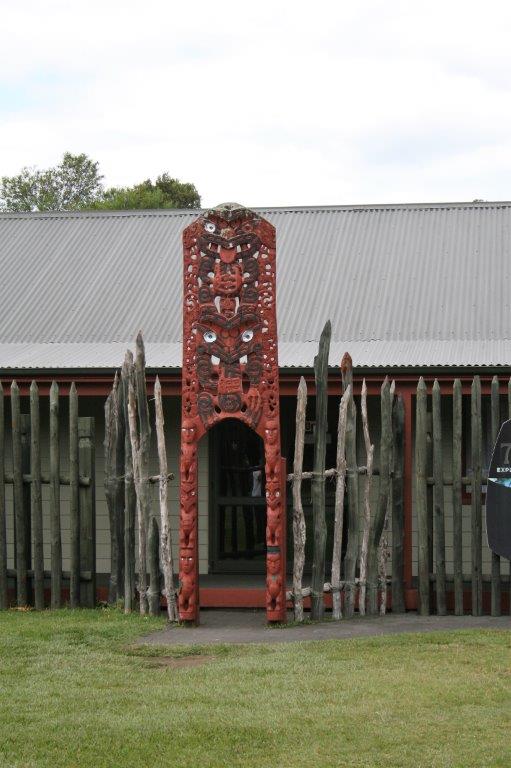
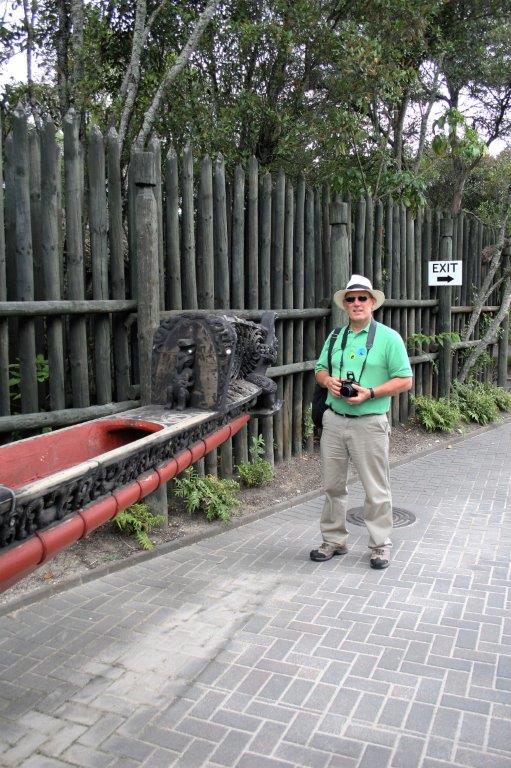
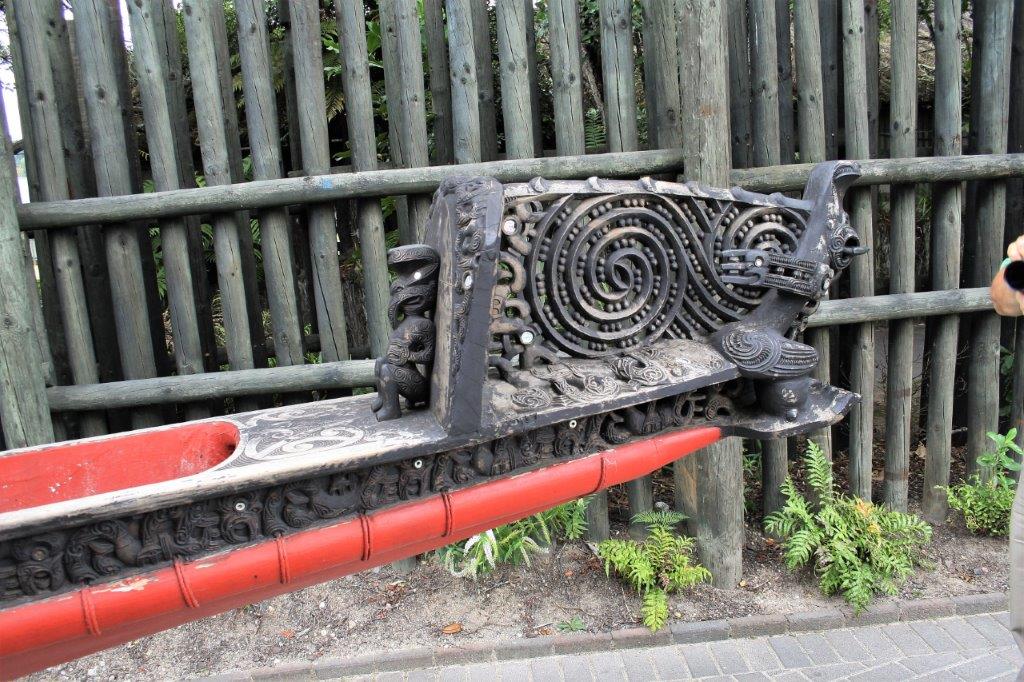
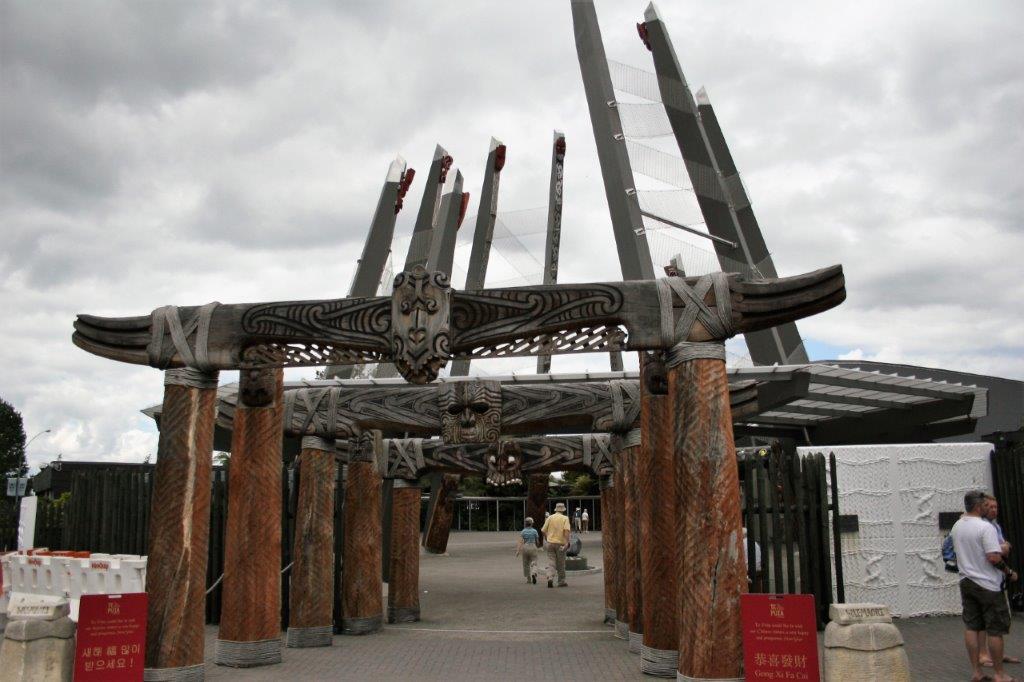
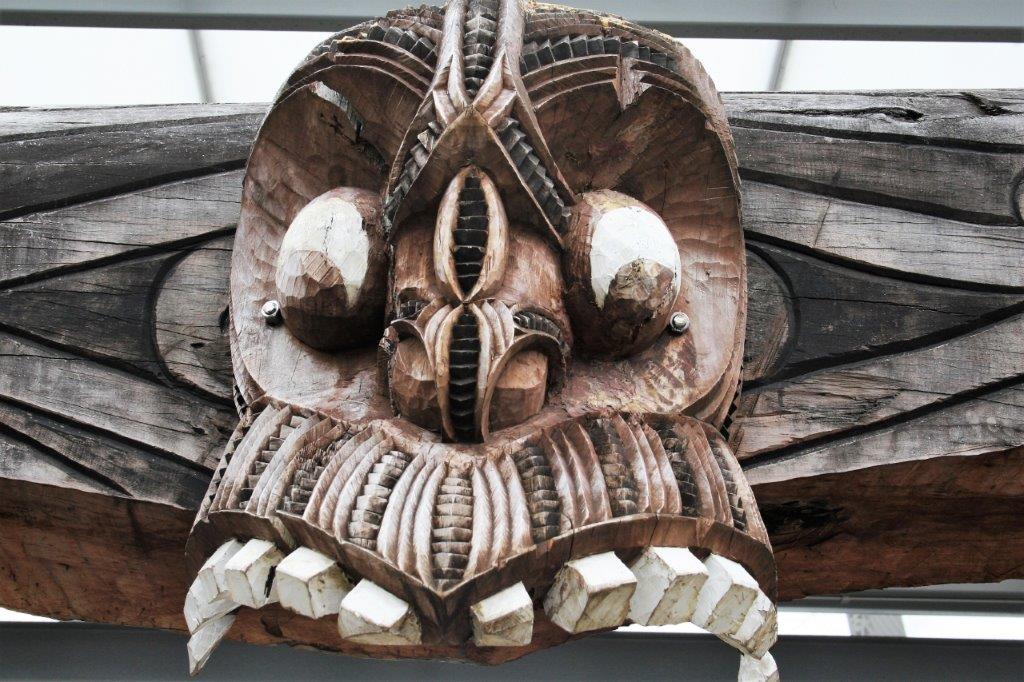
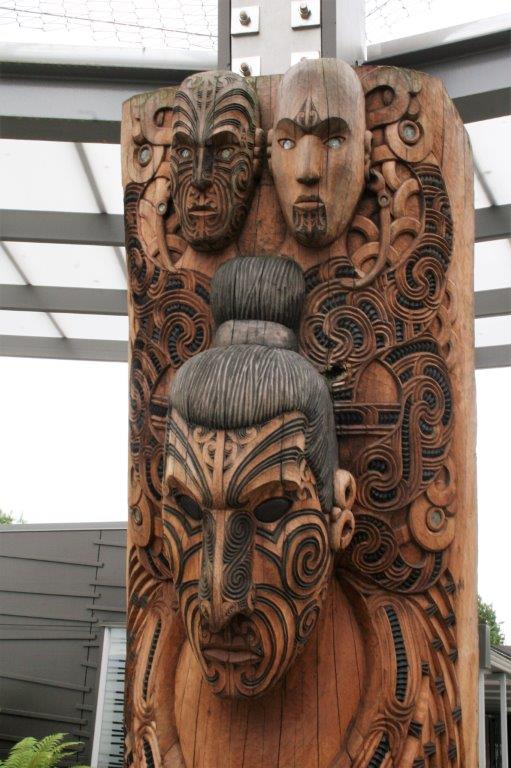
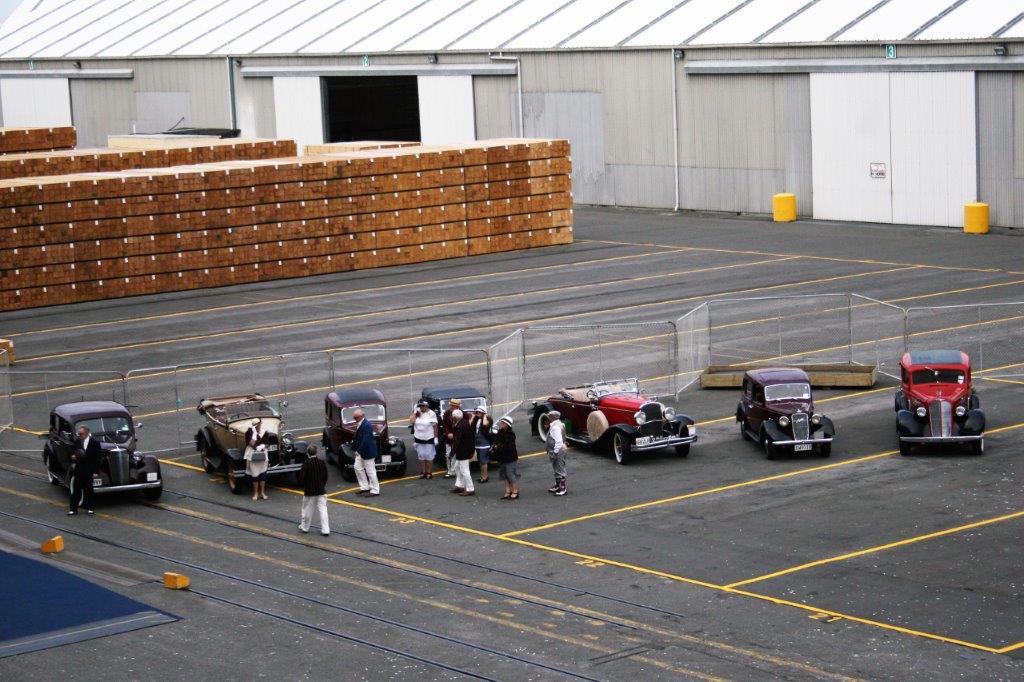
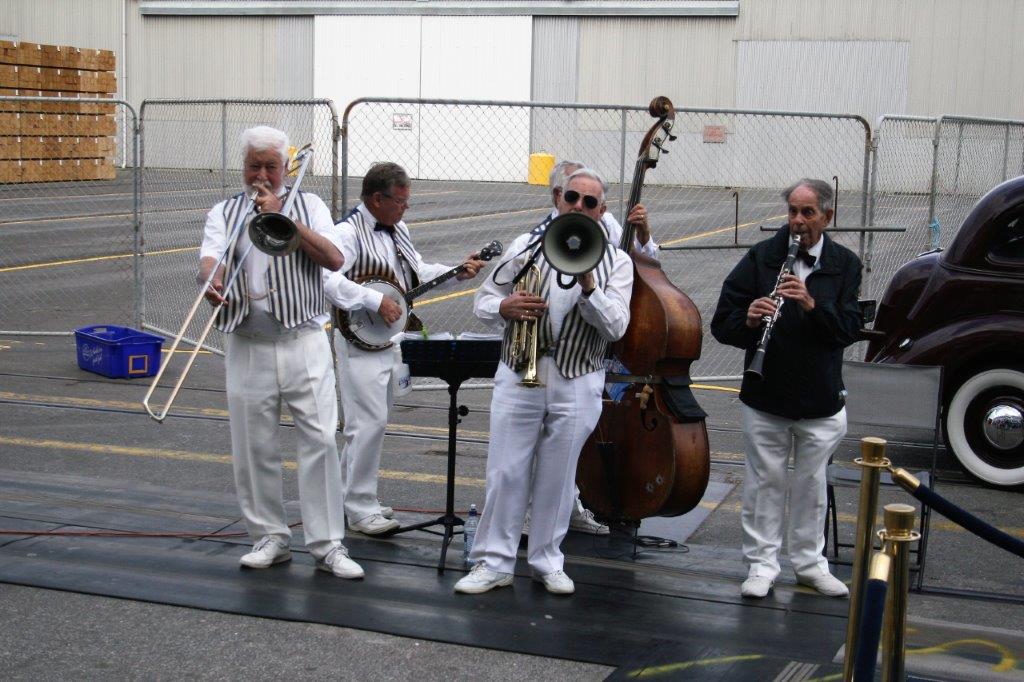
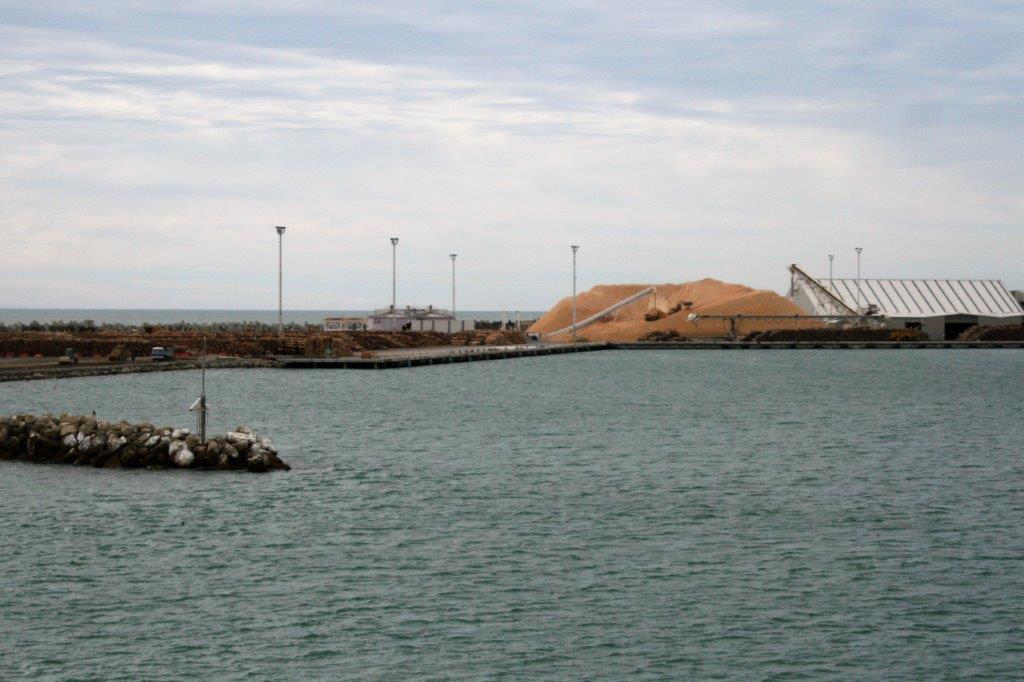
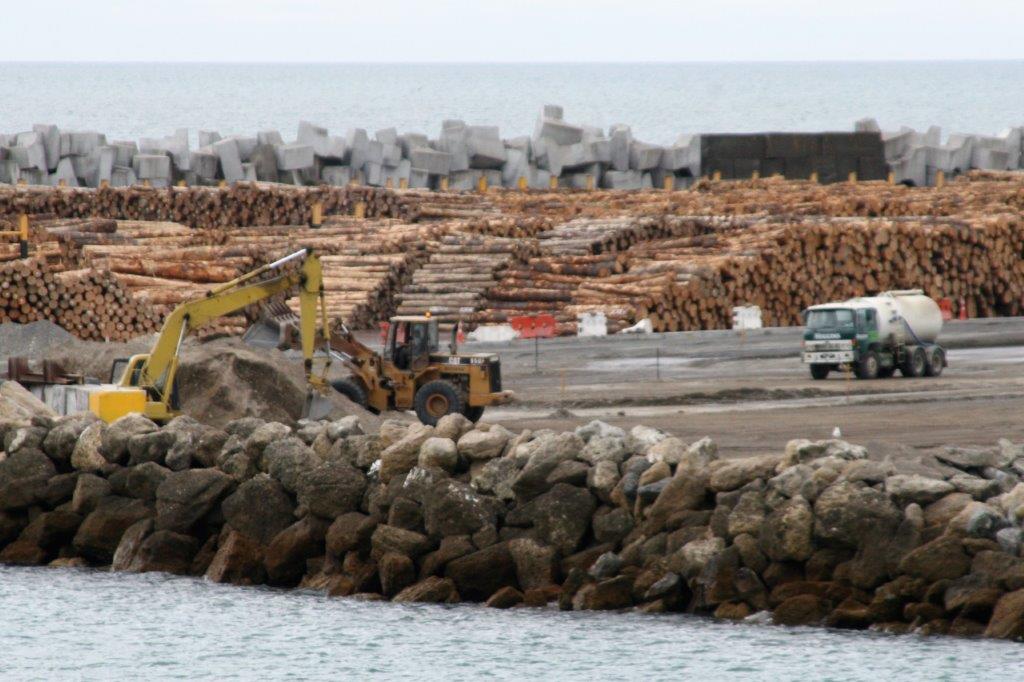
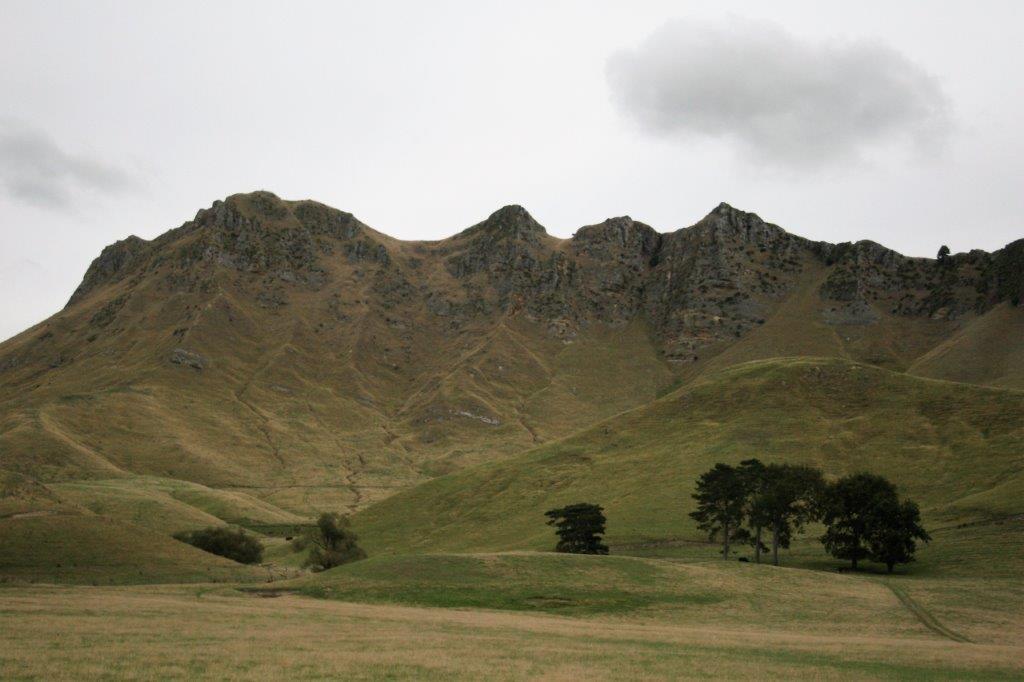
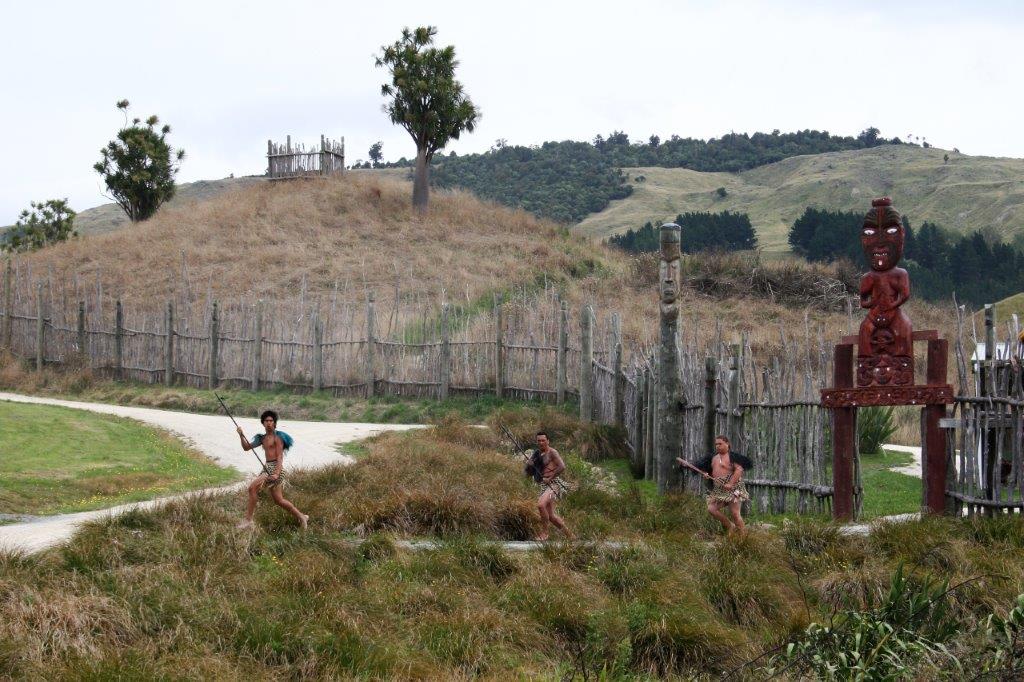
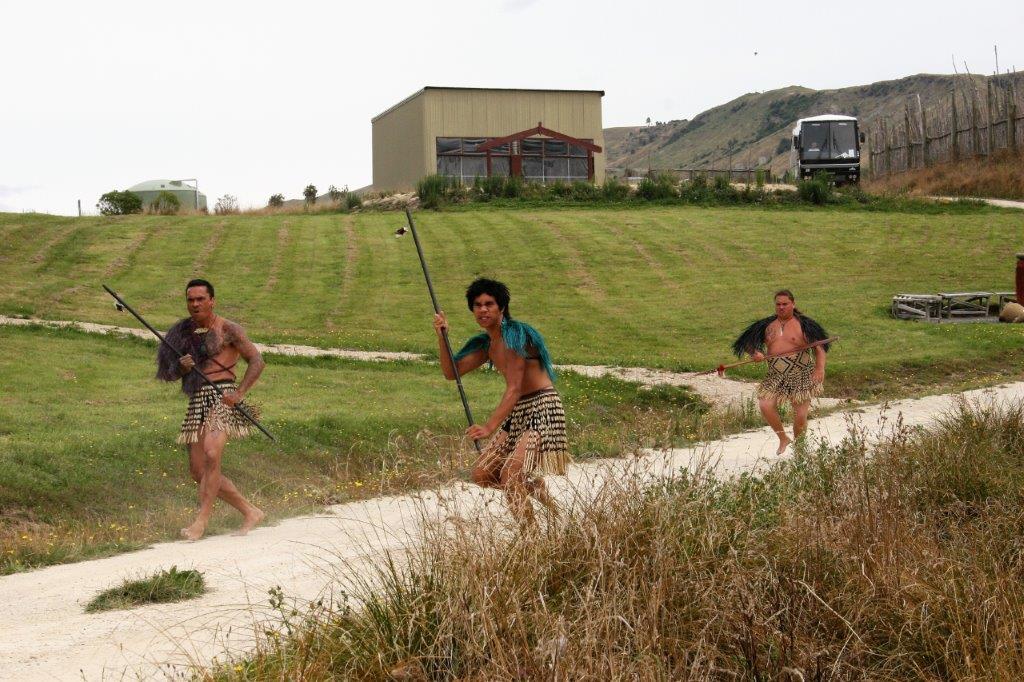
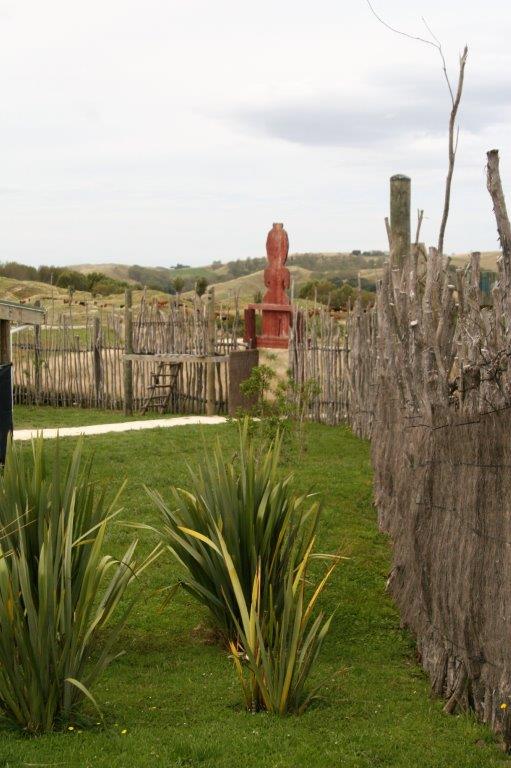
In keeping with the 1930s theme the ship was greeted by costumed locals with lovely antique cars. Napier is located about half-way down the east coast of North Island.  Hawkes Bay is a renowned wine-producing area and the area has breathtaking beaches, including the three-mile long Marine Parade.Napier is a major port for commercial and cruise traffic – obviously wood products are a major export. As is normal for us we chose a tour that took us into the countryside.  It took about an hour to reach the Waimara area and the Hakikino Preserve.  These lands have been protected and administered by the Māori people for generations. We were driven to Te Hakikino fortress, which for hundreds of years served to protect the Māori.  Before the bus arrived we had to select a ‘chief’ to represent us and there was a ‘speech and singing’ welcome and our chief and the guide had to provide the appropriate response to show we came in peace.  To enter the  Arch of the Ancestors we had to first be approved by one of the home people and a gift offering was presented and accepted by our chief. The busload was divided into smaller groups and we all rotated through areas where we were told about flax weaving, and musical instruments, spiritual stones, medicinal plants and weapons.  We were shown the eel pond where eels are raised for food.  The Waimarama Culture Group told stories and sang songs and demonstrated dances.  It was a really interesting tour with some very welcoming people.
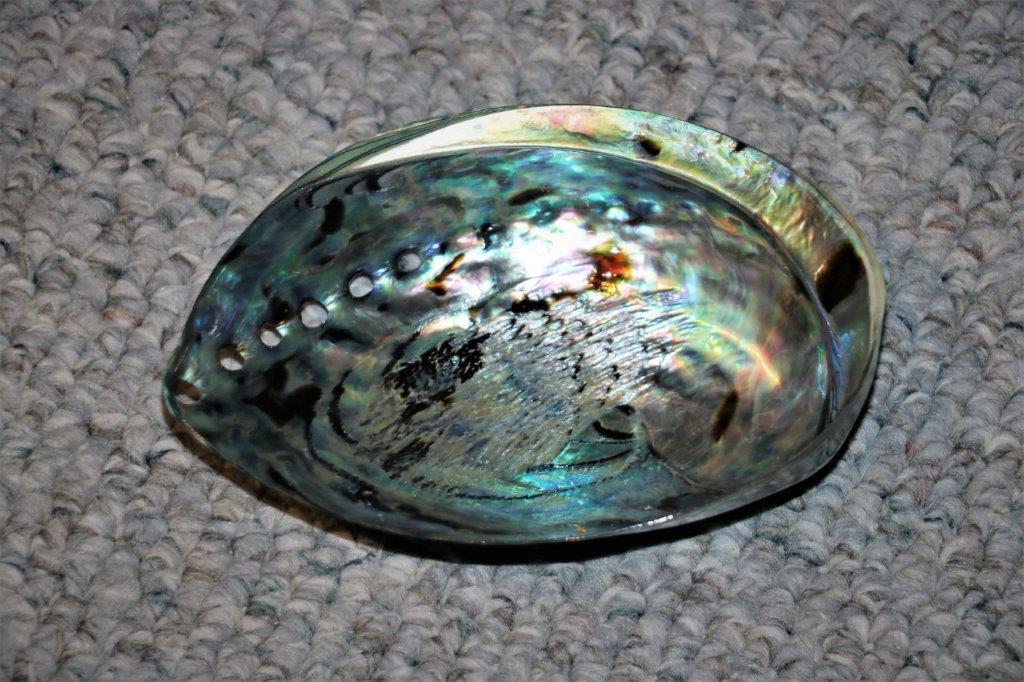
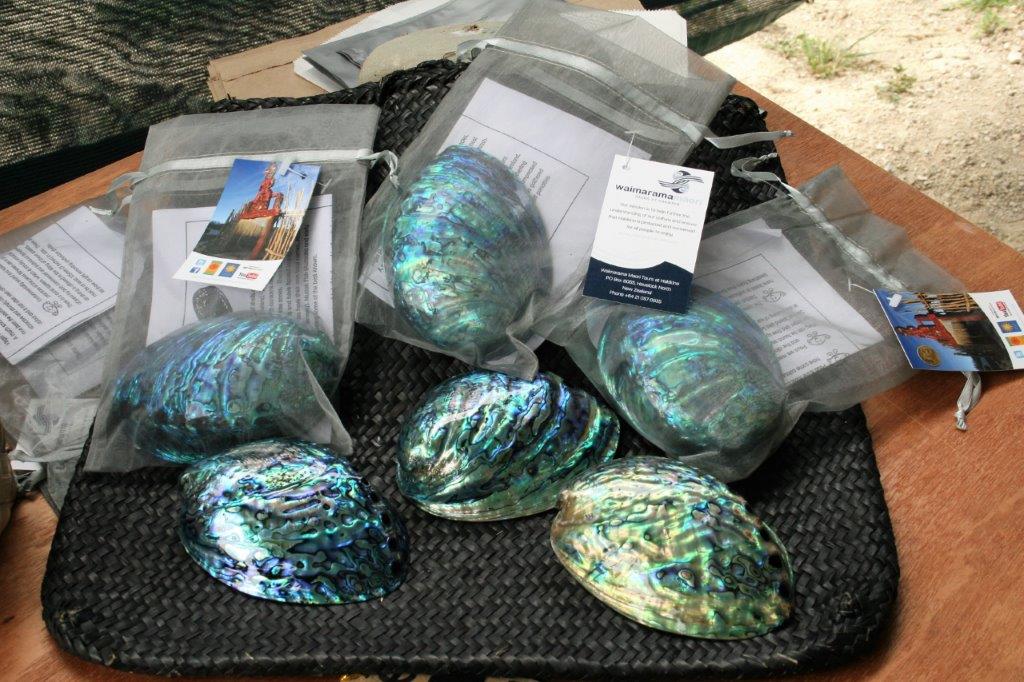
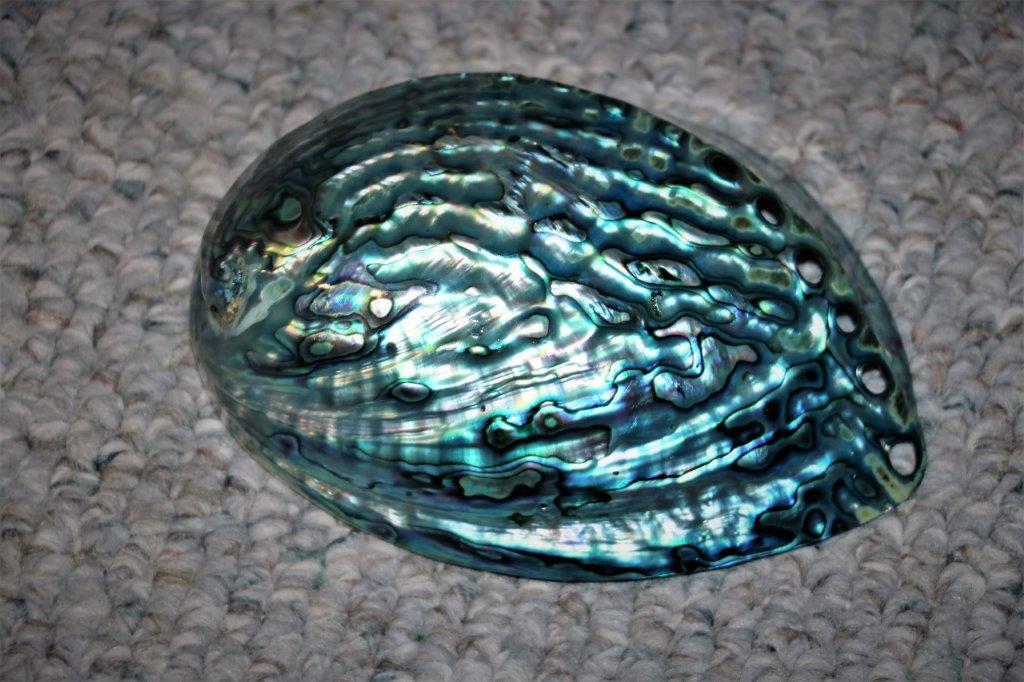
No eels for me, thank you.As always there was an opportunity to shop for the crafts.  I, very uncharacteristically, bought something that was purely a beautiful thing that had no purpose.  I usually buy place mats, or spoons, or hot pads; things I can use when I get home.  My paua shell purchase was just because it was beautiful. Paua is the most colourful shell in the world.  It is a species of abalone and is only found off the south island of New Zealand.  Collection of the shellfish is strictly controlled.  It has been used as a food since ancient times,  All of the white outer coating on the shell is sanded off and the beautiful colours are exposed.  The shell is used for jewelery and to decorate many other craft items. (And it just sits inside the mesh bag in a drawer in my dining room.  But, when I open the drawer to get something I often pick up and admire my paua shell.)
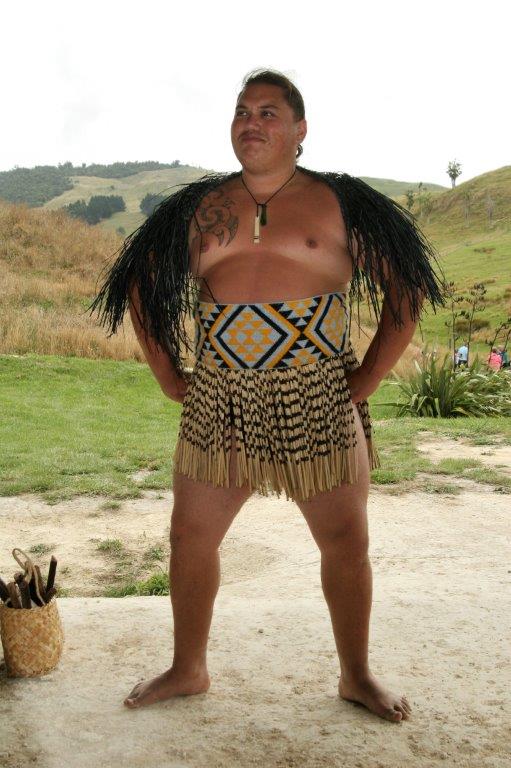
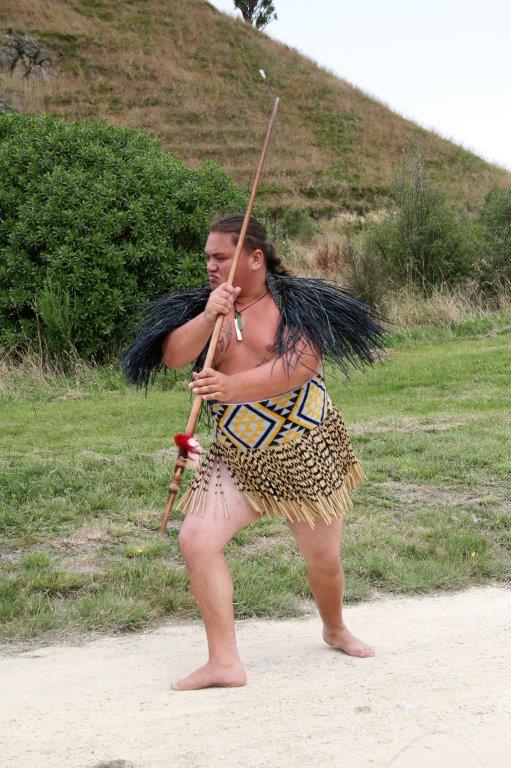
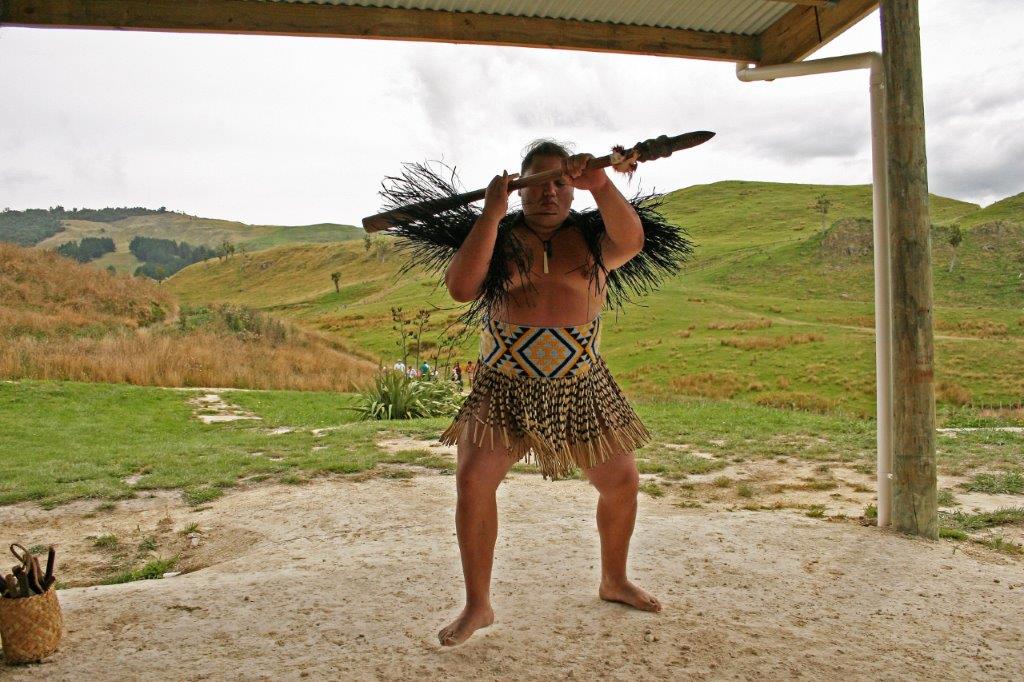
Before we left the warriors demonstrated the famous Māori Haka in which the young men pounce and posture and slap their chests and stick their tongues out to look fierce for the enemy. We had a wonderful afternoon and so enjoyed the gracious hospitality of the Māori people and all of the information about their traditional ways of life that they shared with us.  It was a great day.
2011 February 8 – Day 34 – Tauranga, New Zealand

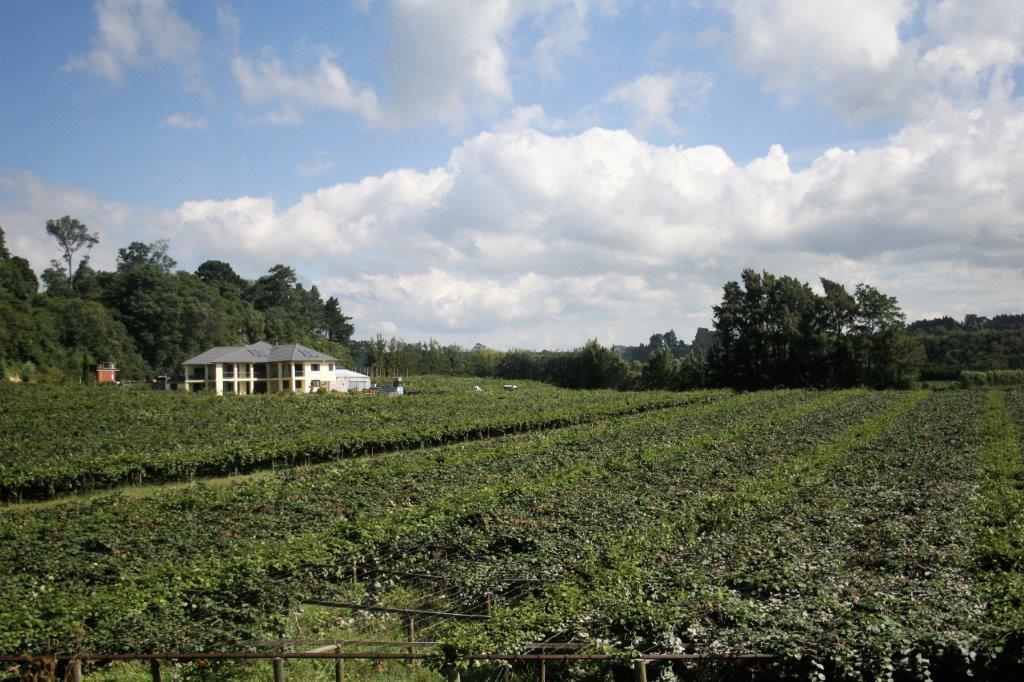
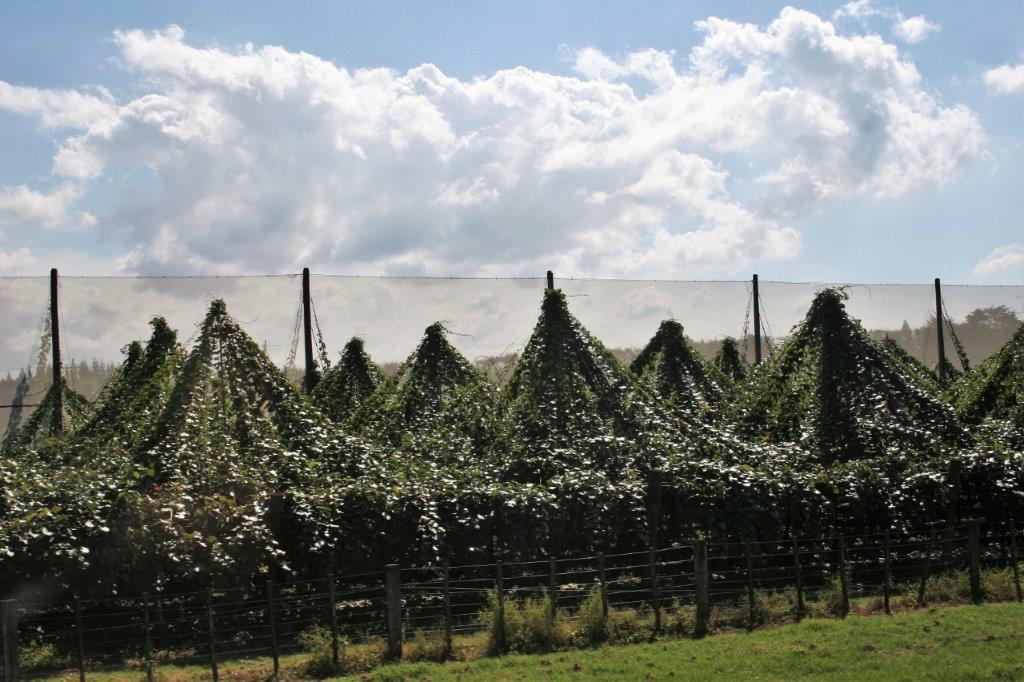
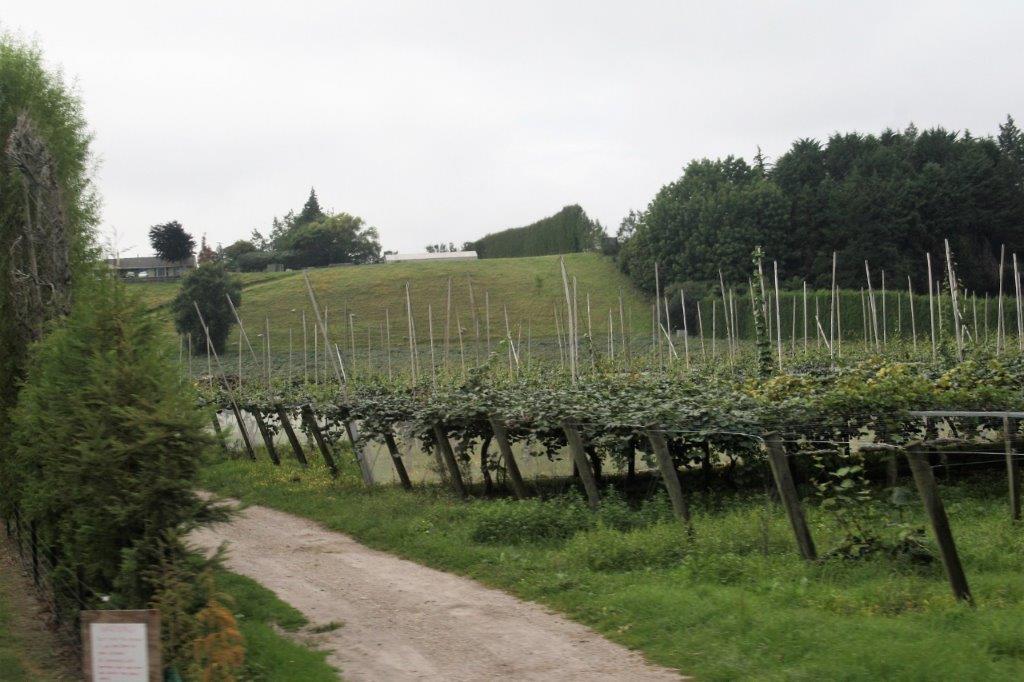
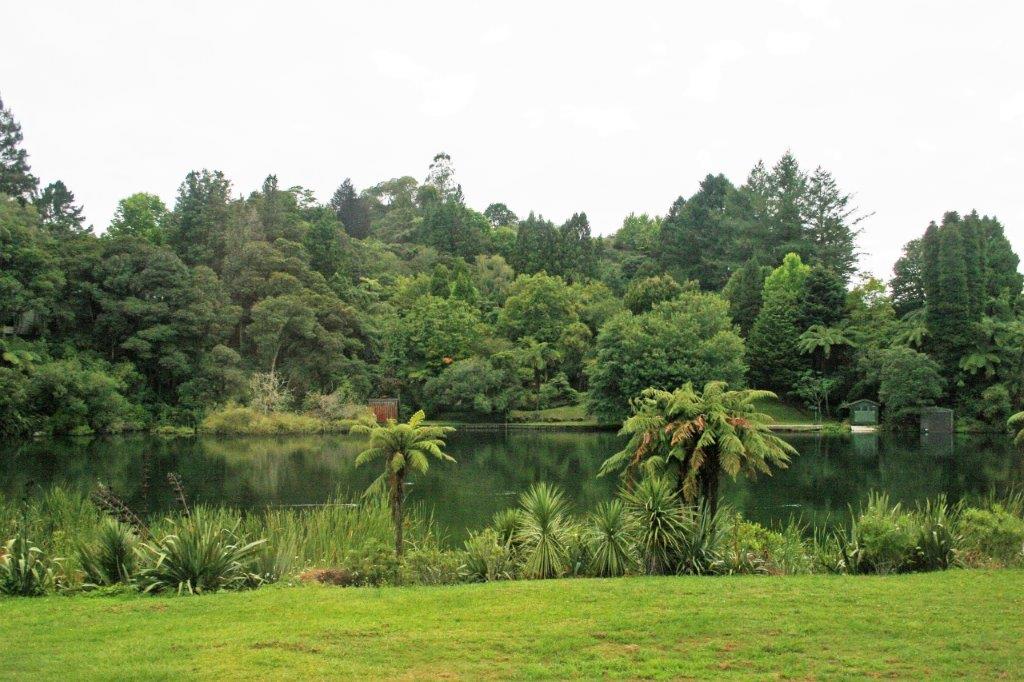
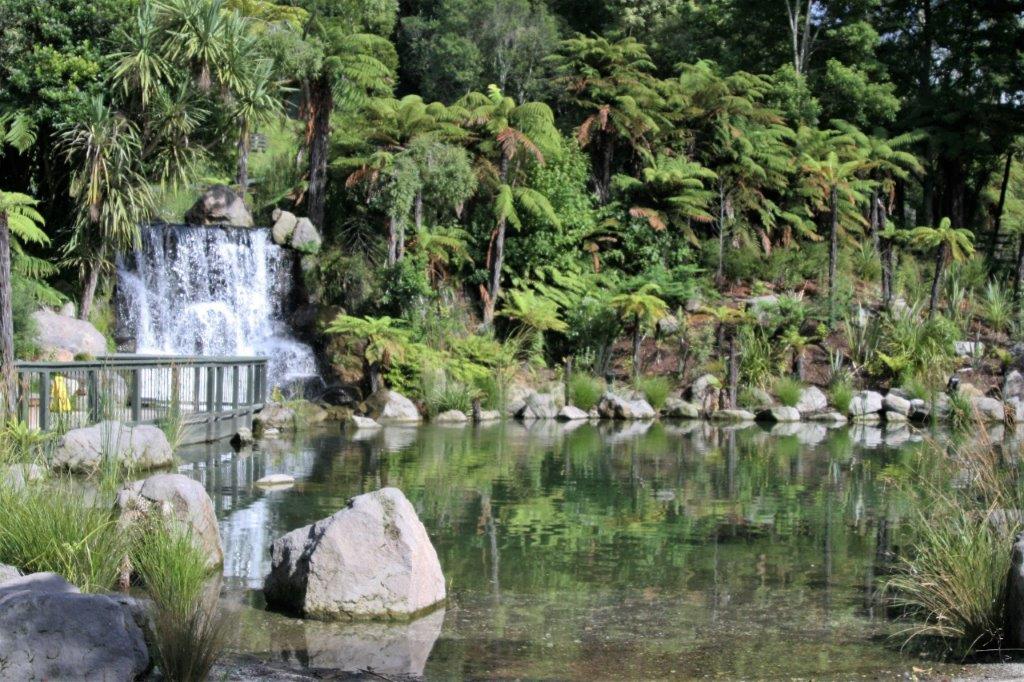
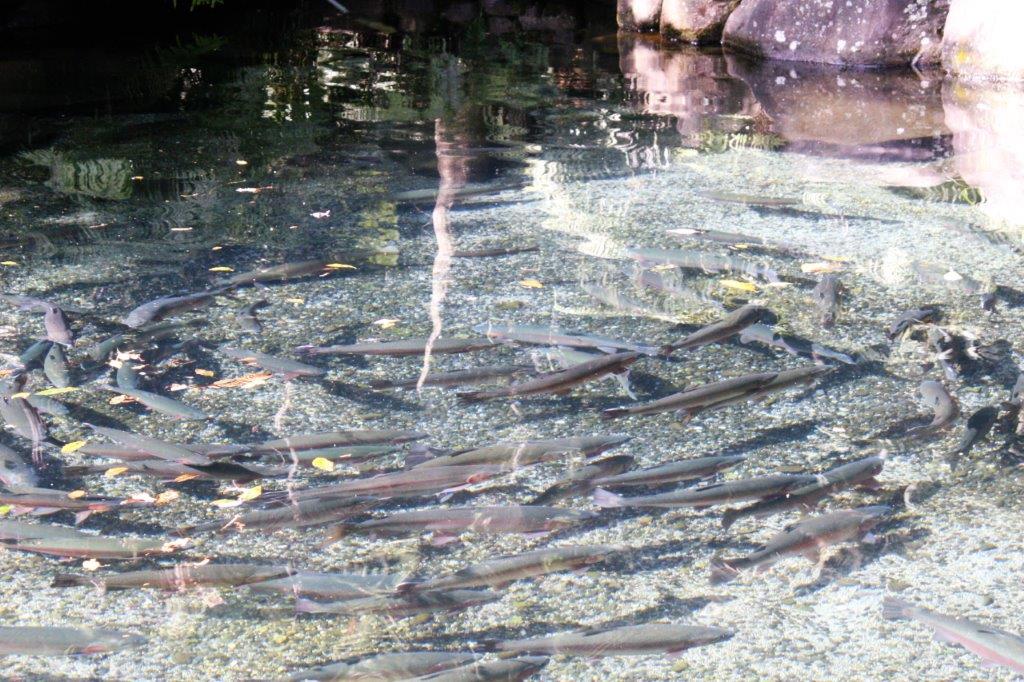
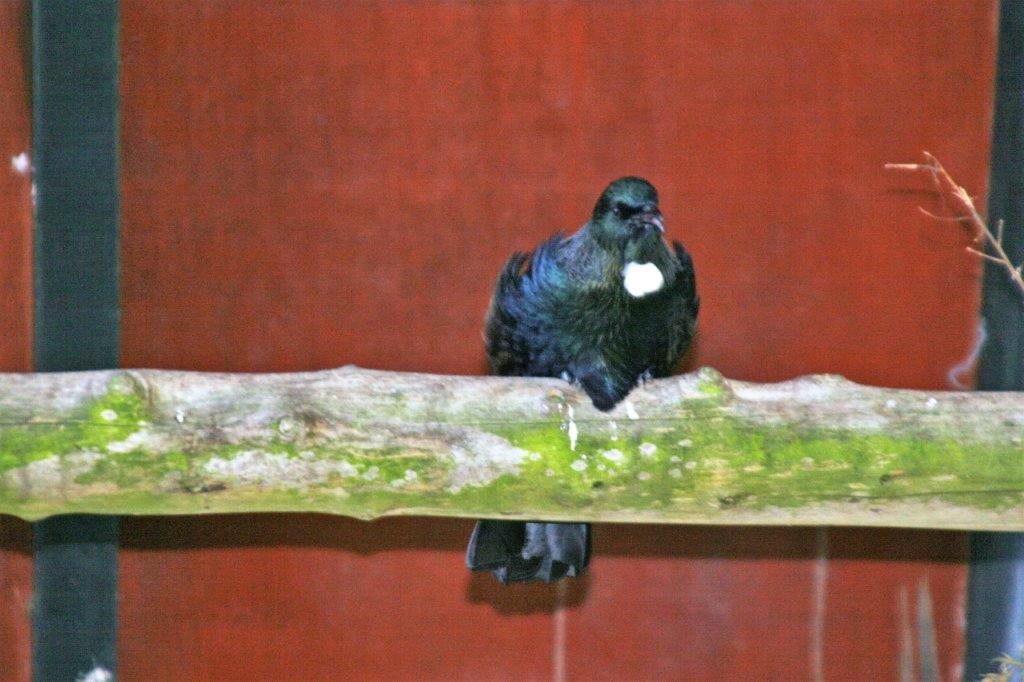
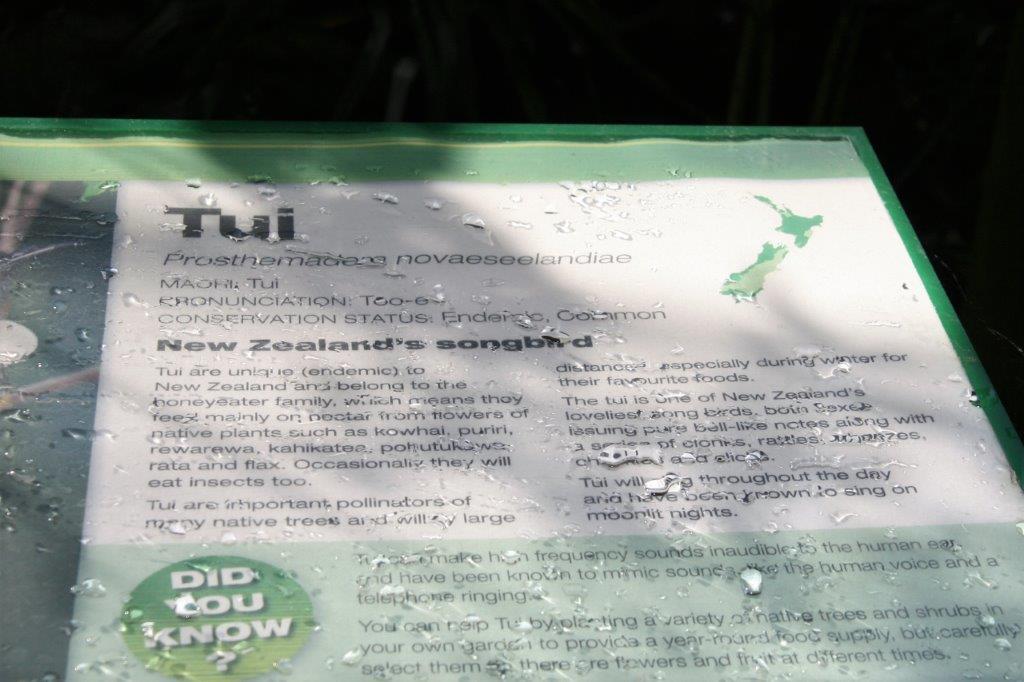
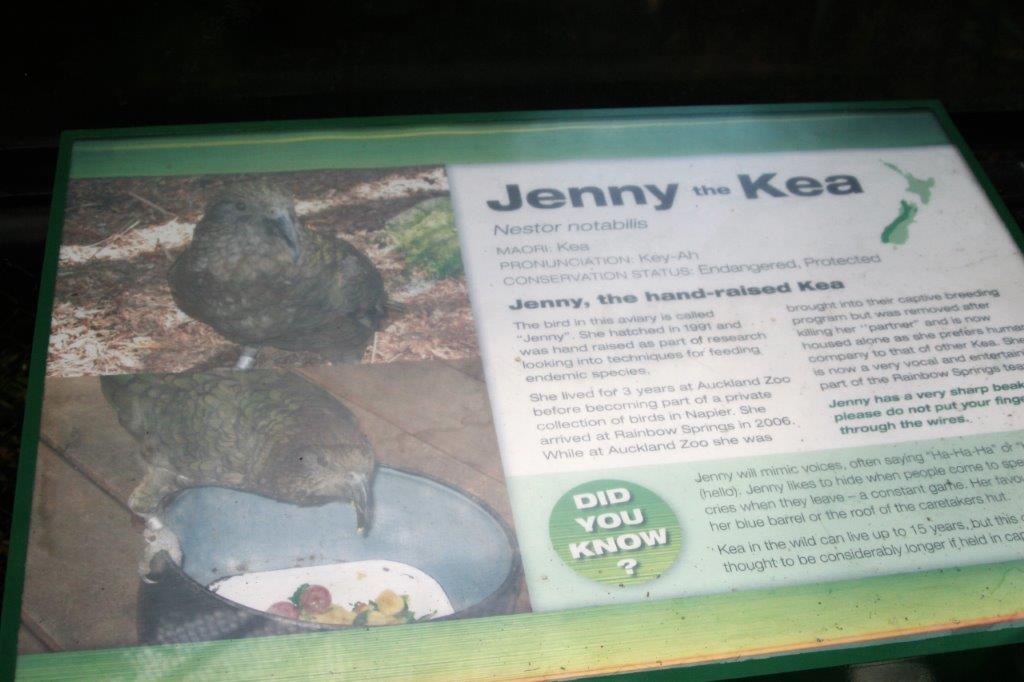
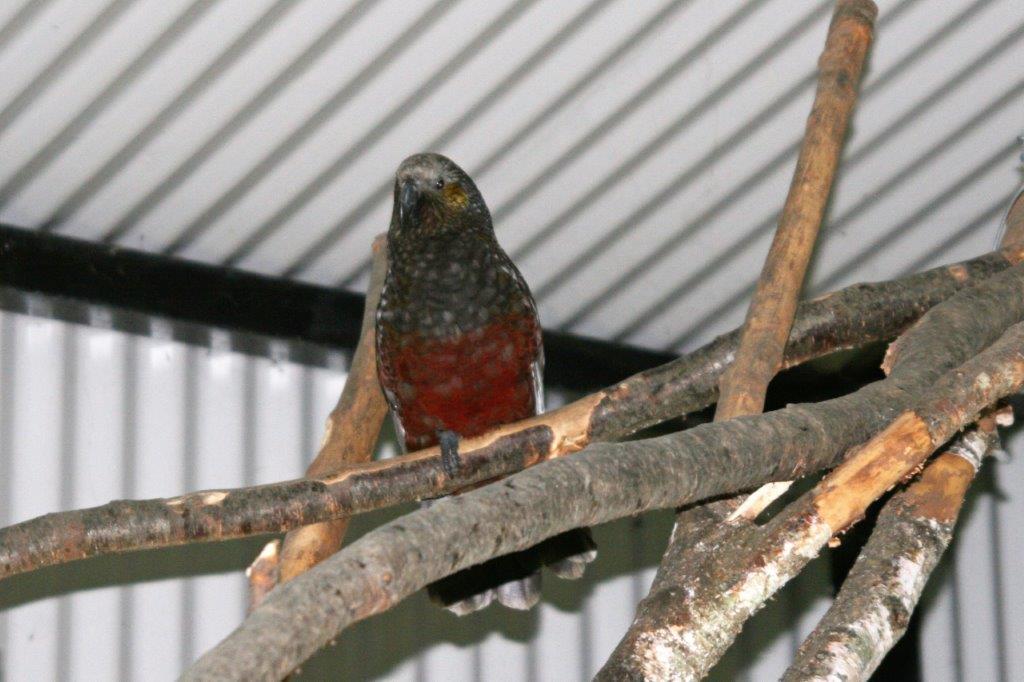
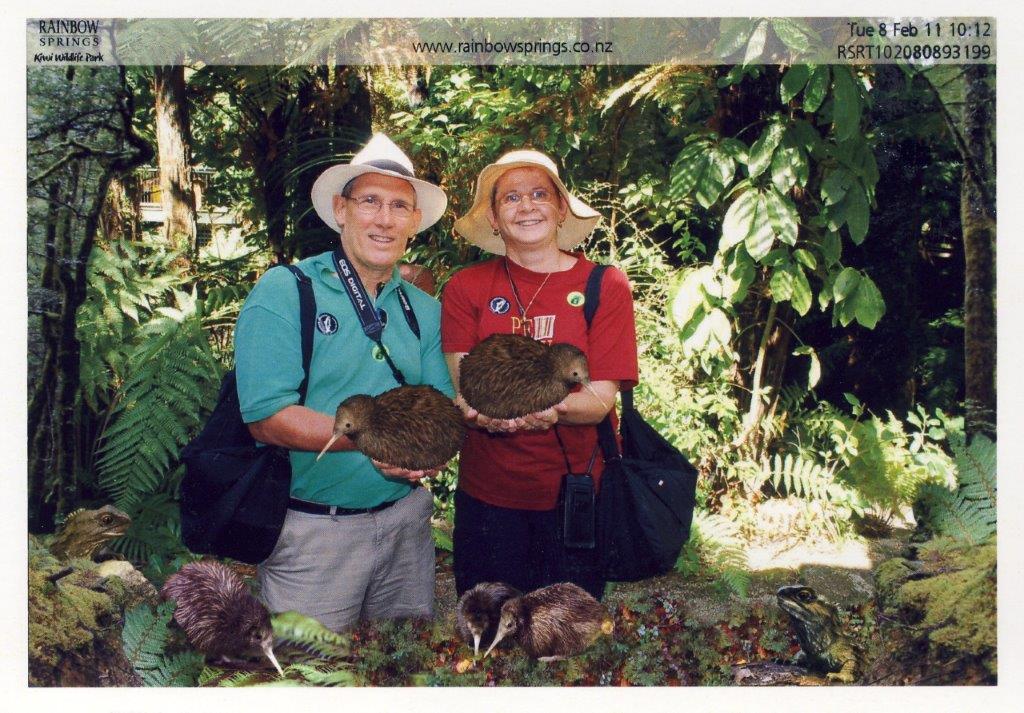
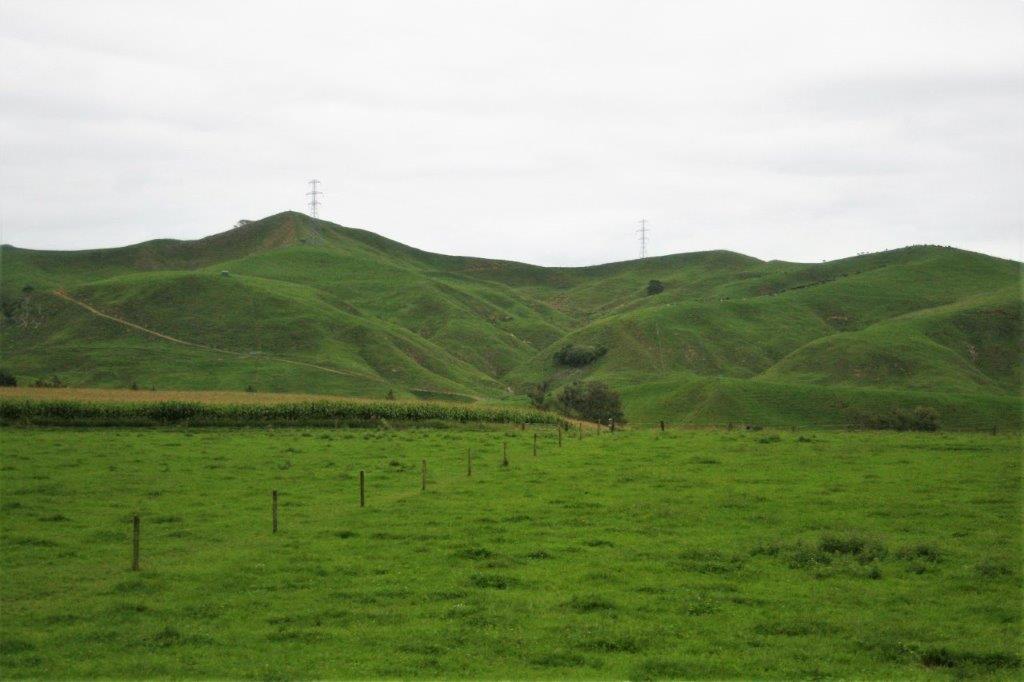
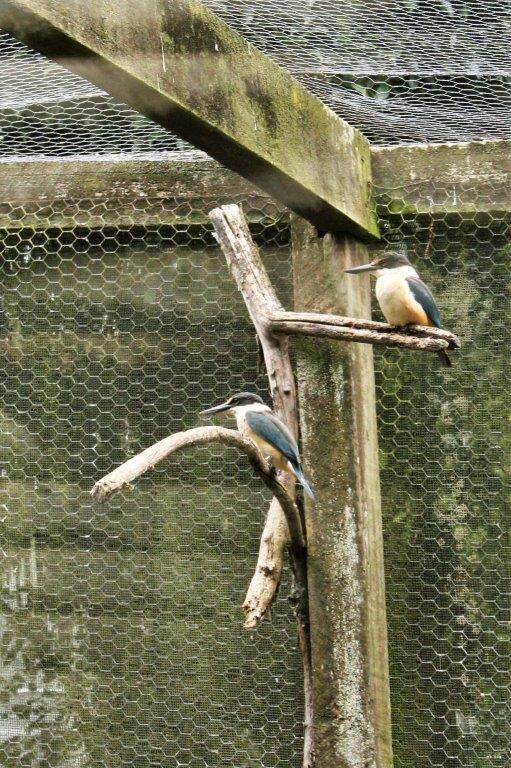
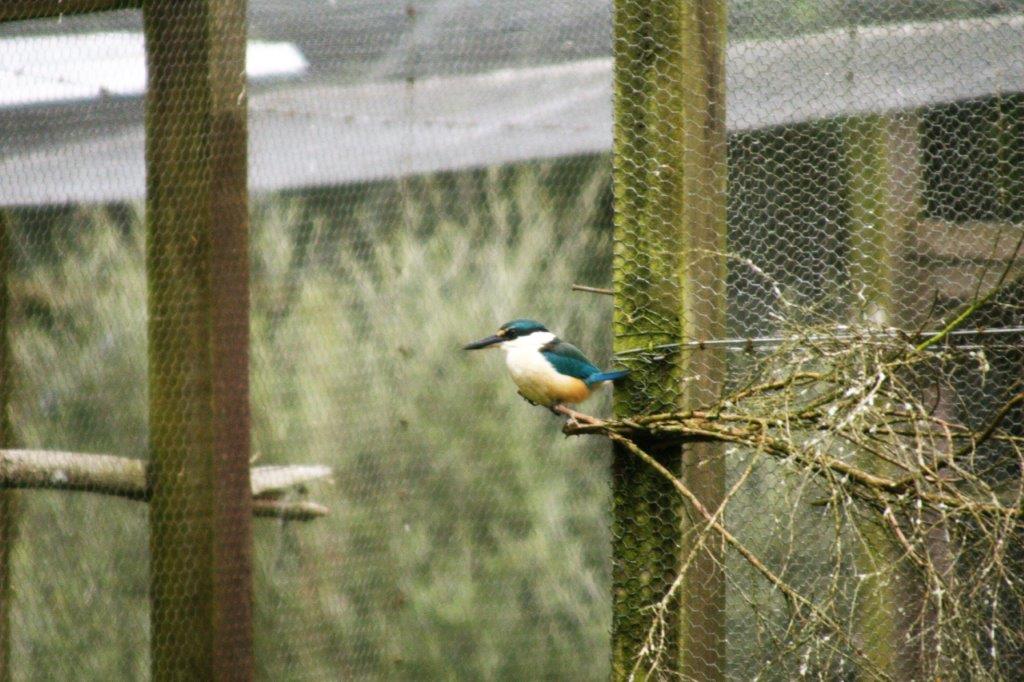
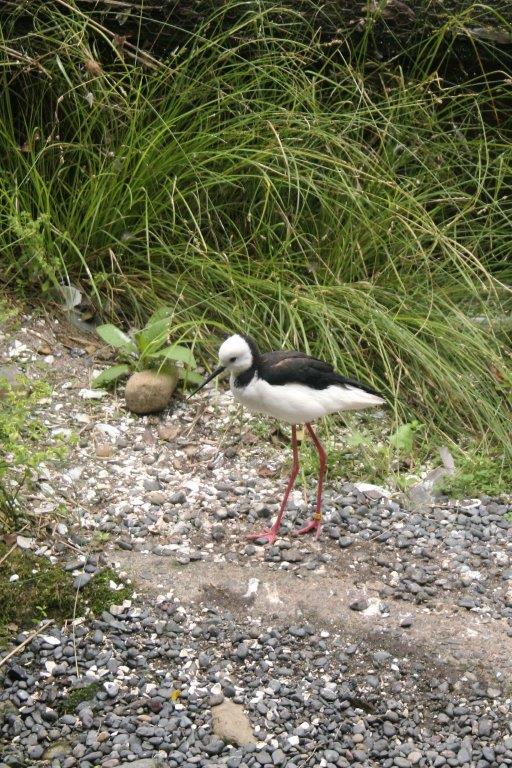
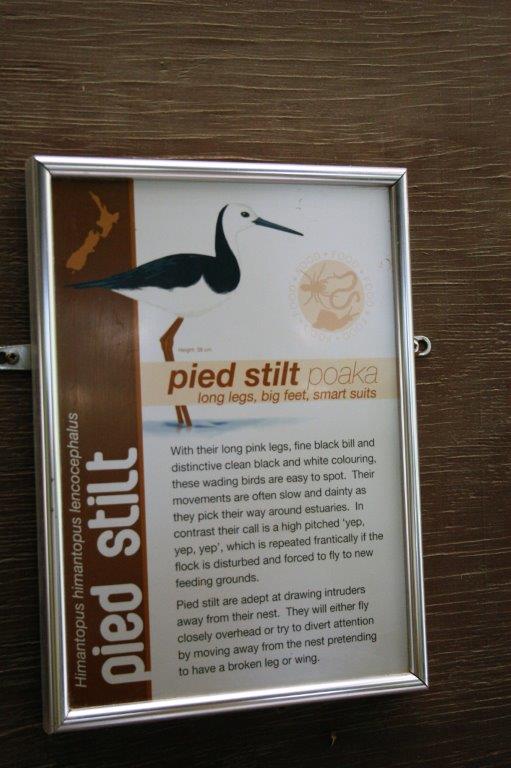
We were up at 7 am to be ready for our all-day tour.  The bus was loaded and on its way by 8:15.  It was about an hour’s drive to Rotorua City and Rainbow Springs Wildlife Park.  We drove through farmland; mostly cattle ranches or kiwi farms.  The production of kiwi fruit is a $1.3 billion industry for New Zealand and the majority of it is grown here. We were told by our guide on the bus (in 2011) that they were going to  spend $130 million over the next few years to try develop a kiwi that will peel easily like a banana.   At Rainbow Springs they raise rainbow trout to salt the local lakes for fishing and have kiwi birds and an aviary.  The water from the spring is 98% pure.                 This is our ‘doctored’ photo holding kiwi birds.

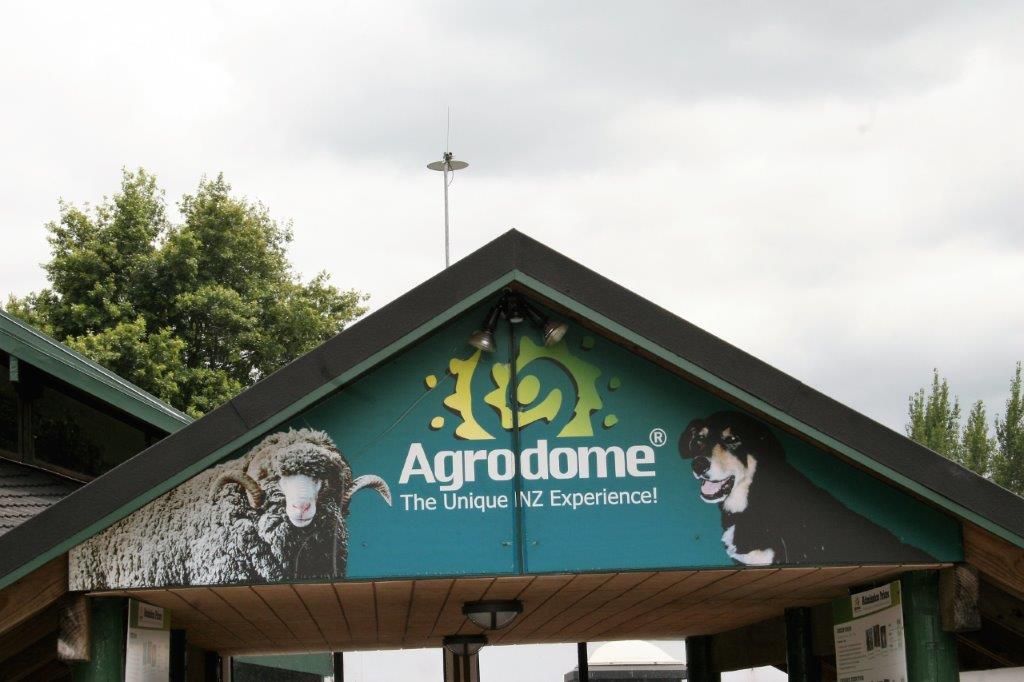
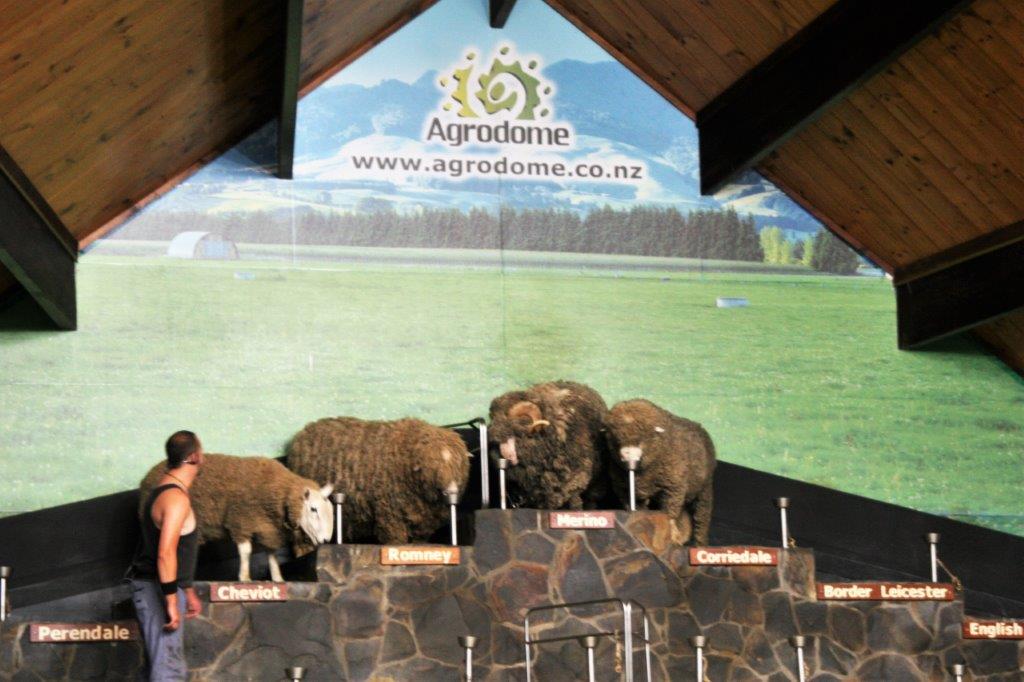
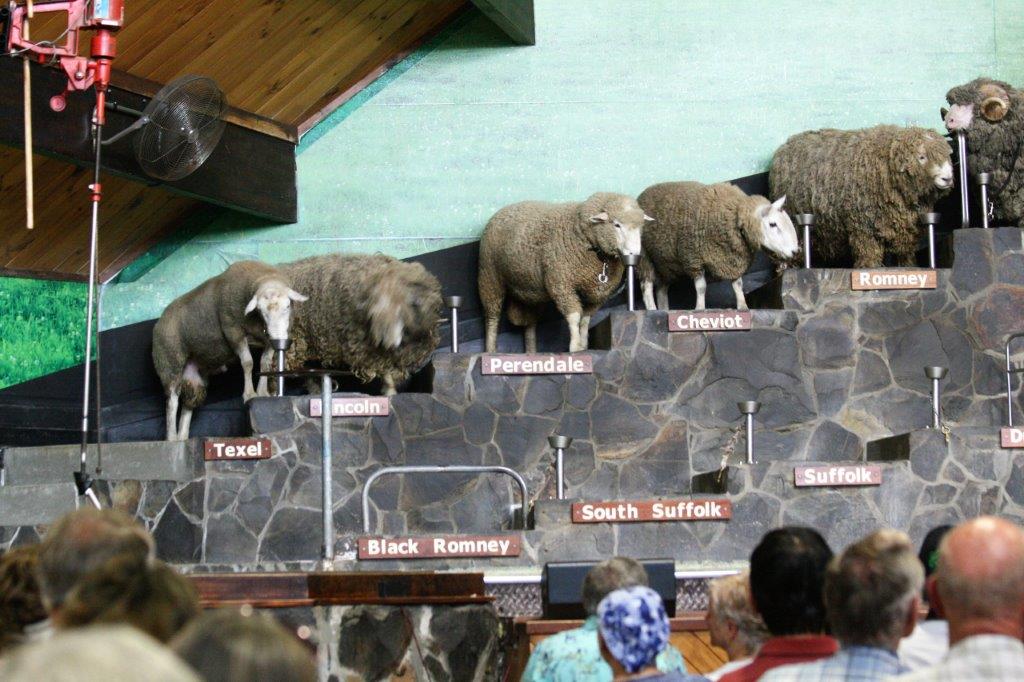
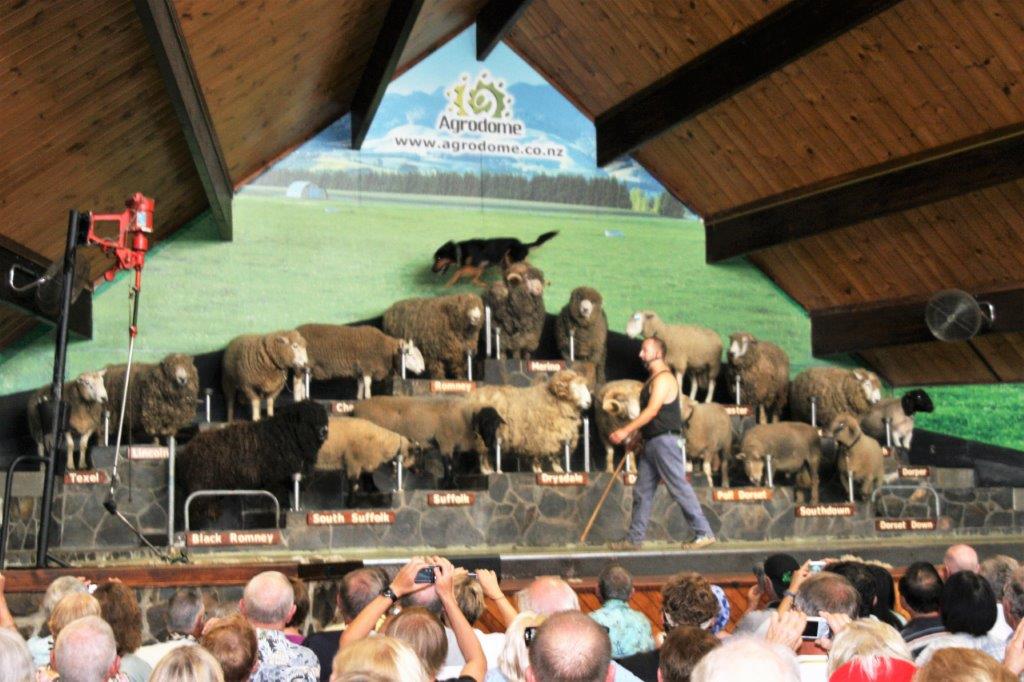
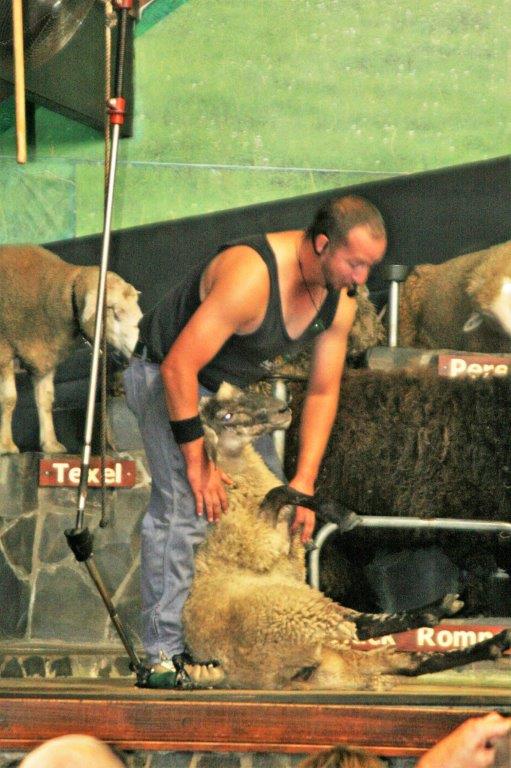
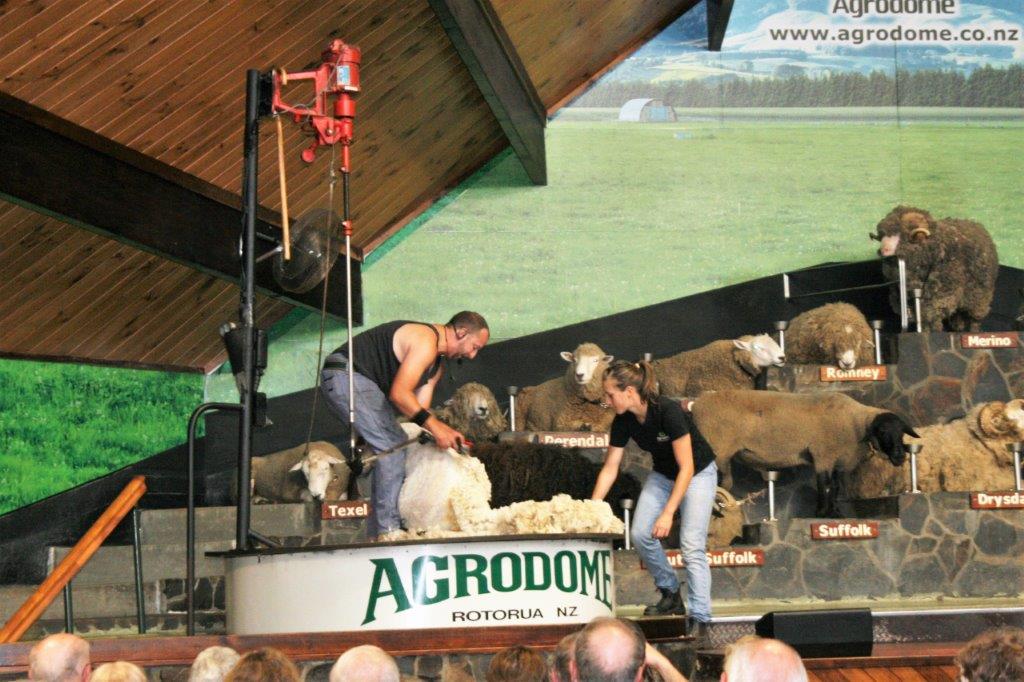
After we toured Rainbow Springs we were driven the short distance to the Agrodome where we were introduced to all of the 19 different breeds of sheep raised in New Zealand – some breeds are for meat (8) and others are for the wool (11). (And it is true there are more sheep in New Zealand than people but the ratio is not a large as it used to be.  In 1982 there were 22 sheep for each person – that’s 70 million sheep.  2016 figures came in a 27.6 million sheep or 6 per person.) This fellow could shear a sheep in less than a minute. At the time we were in New Zealand (2011) a shearer got paid $1.50 per fleece and would average 300 fleece per day.  Good money for a skilled worker but a lot of back breaking, hot work over a short time period.

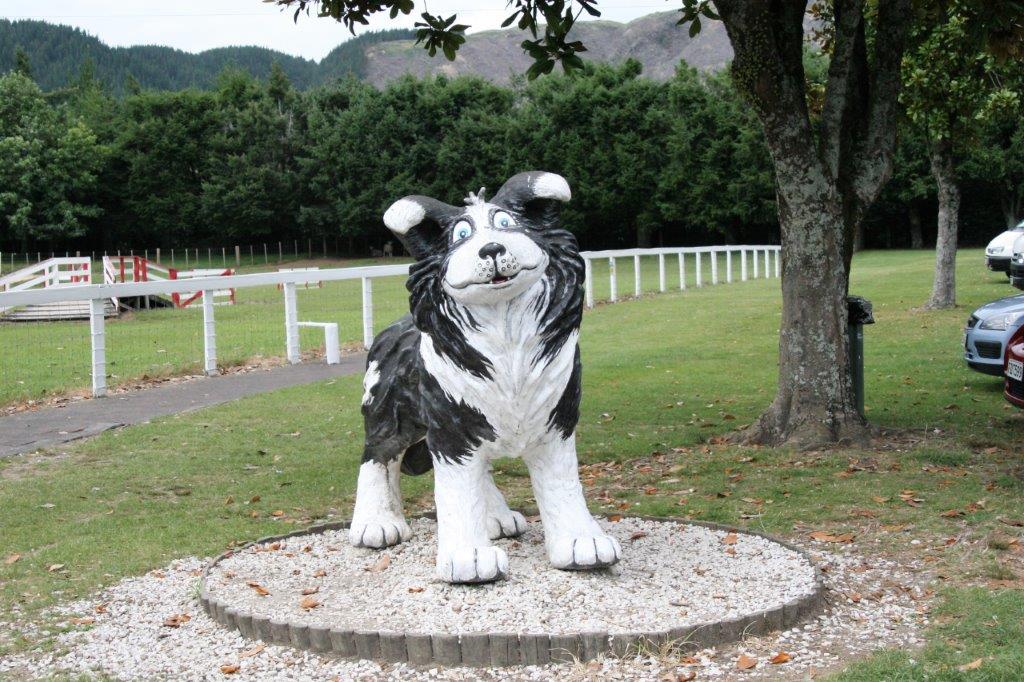
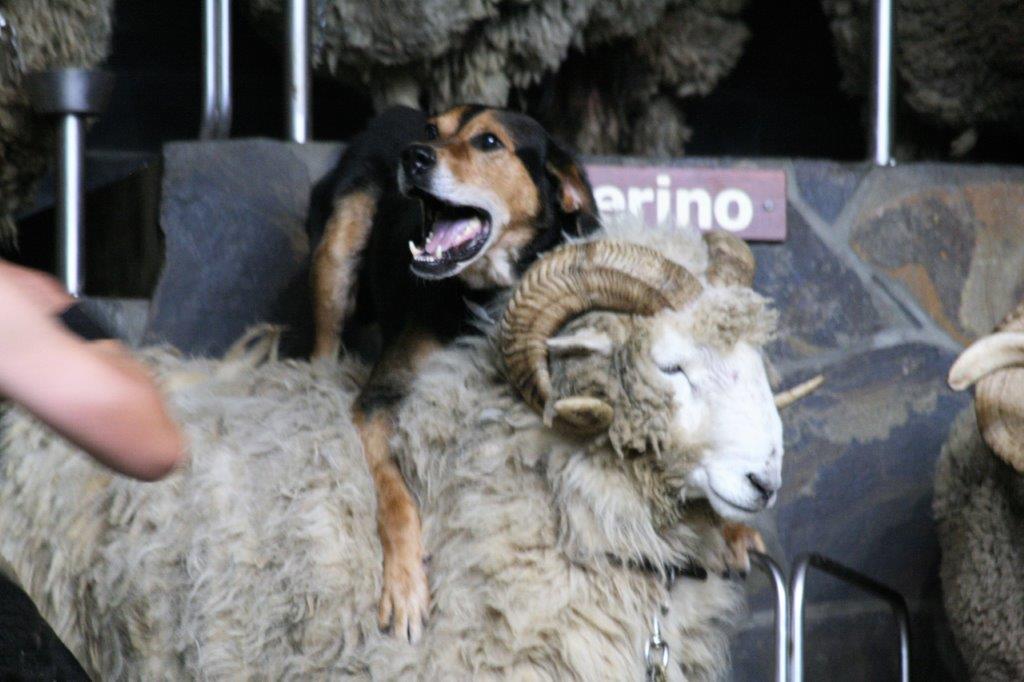
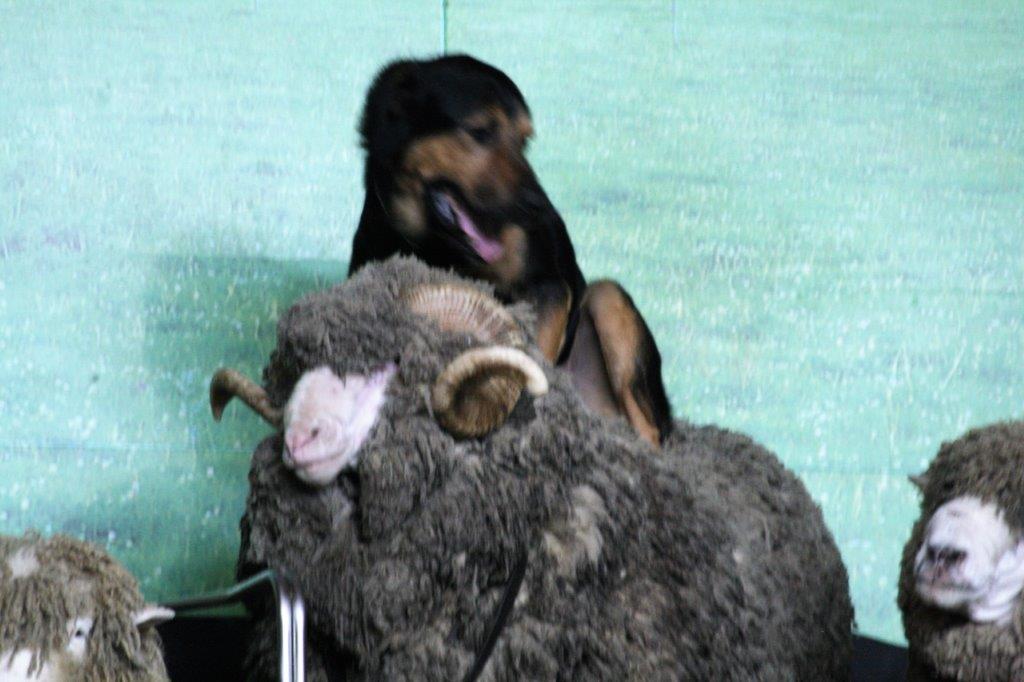
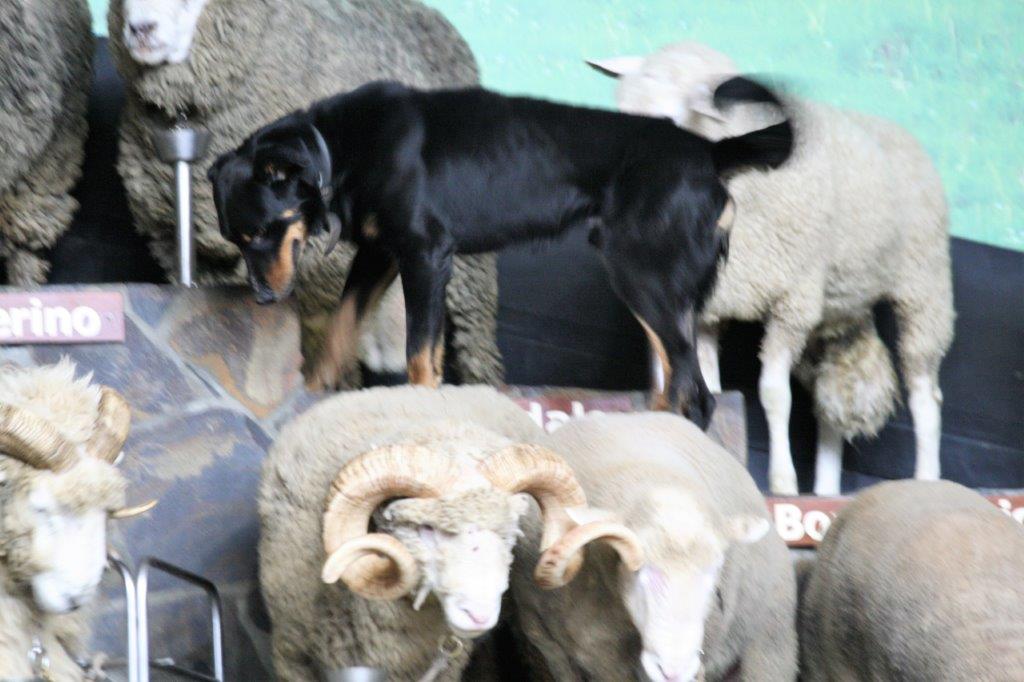
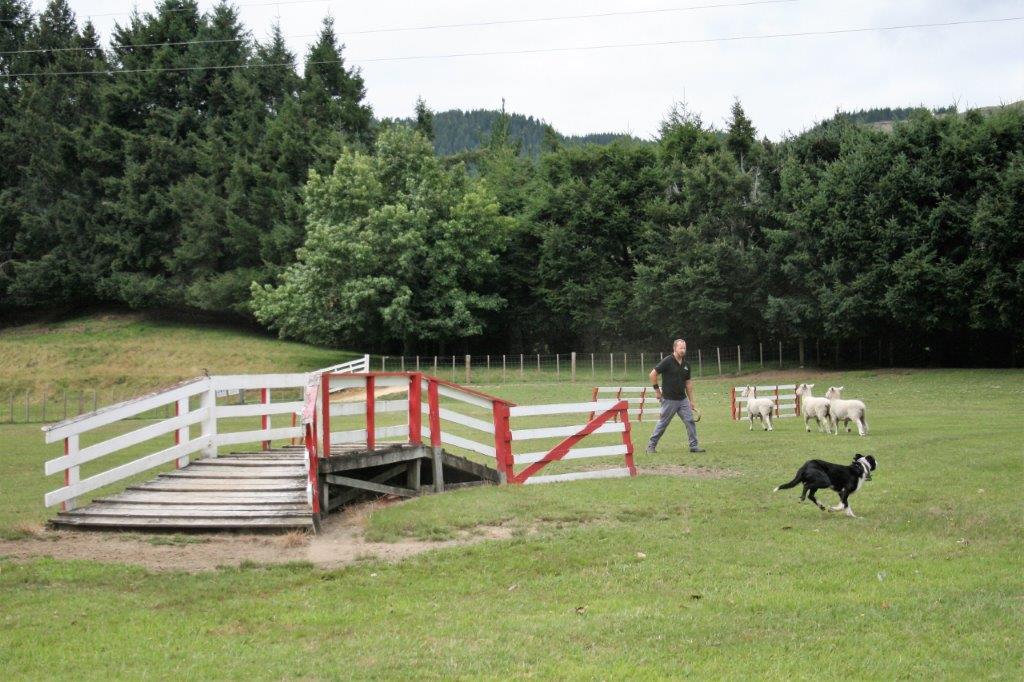
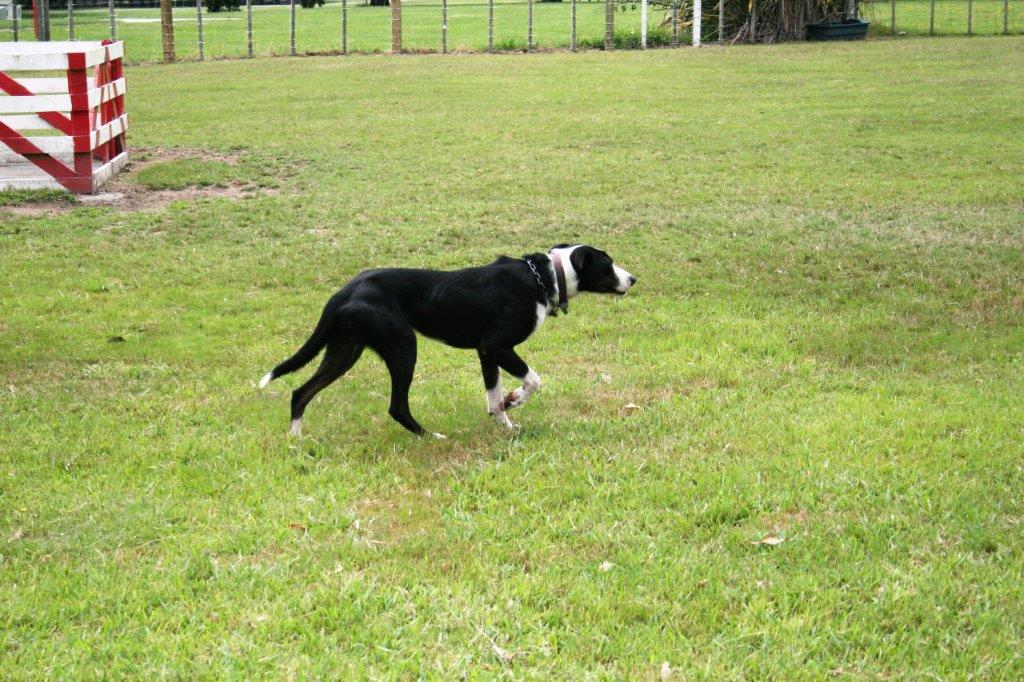
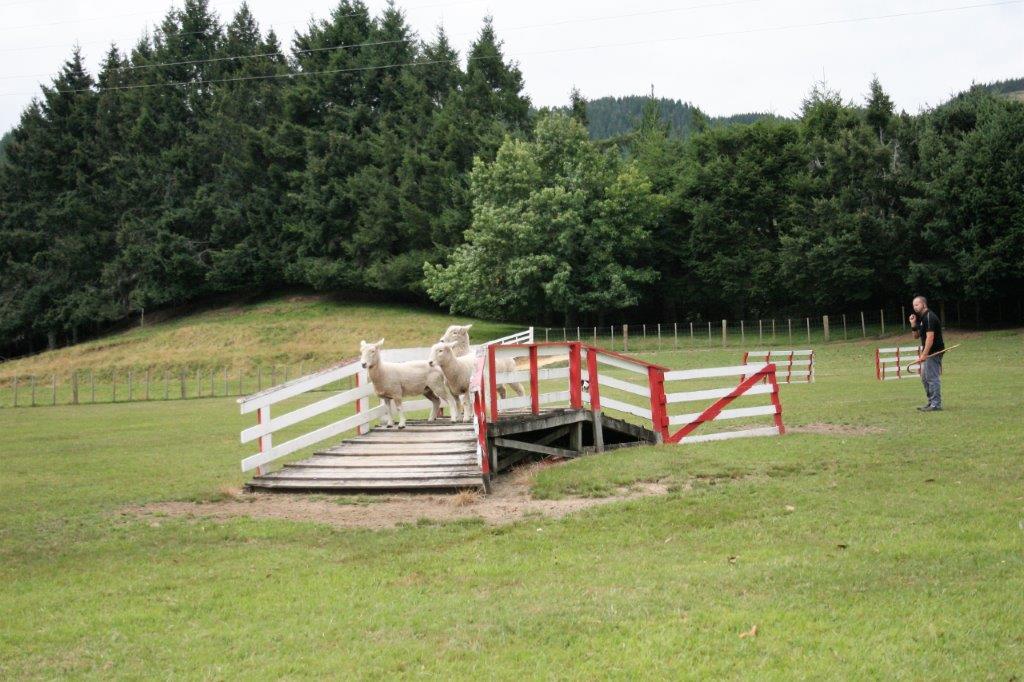
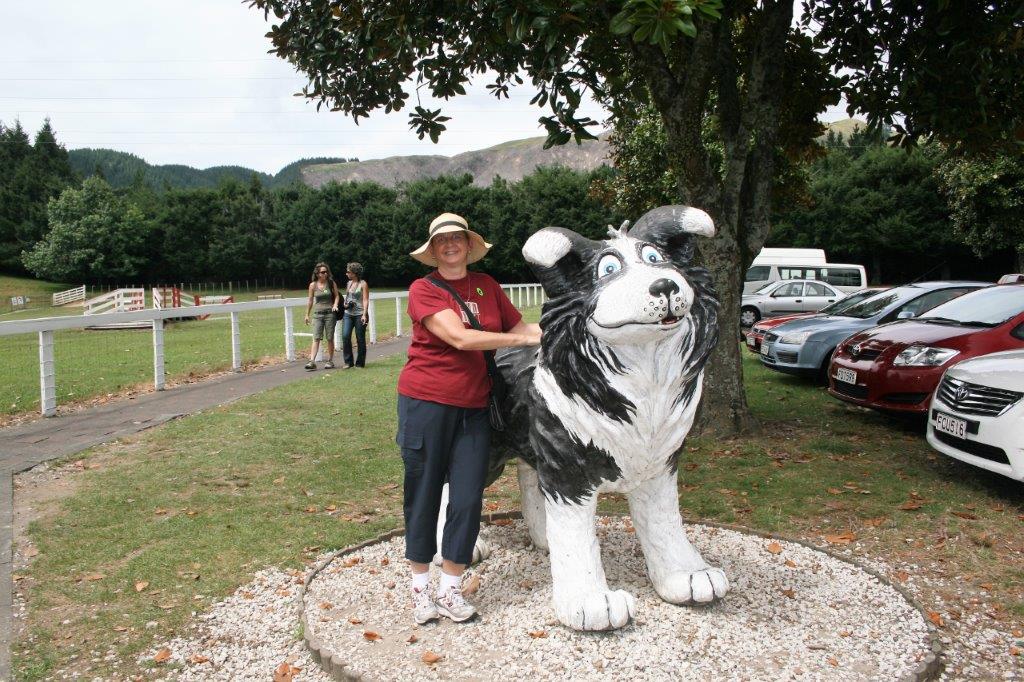
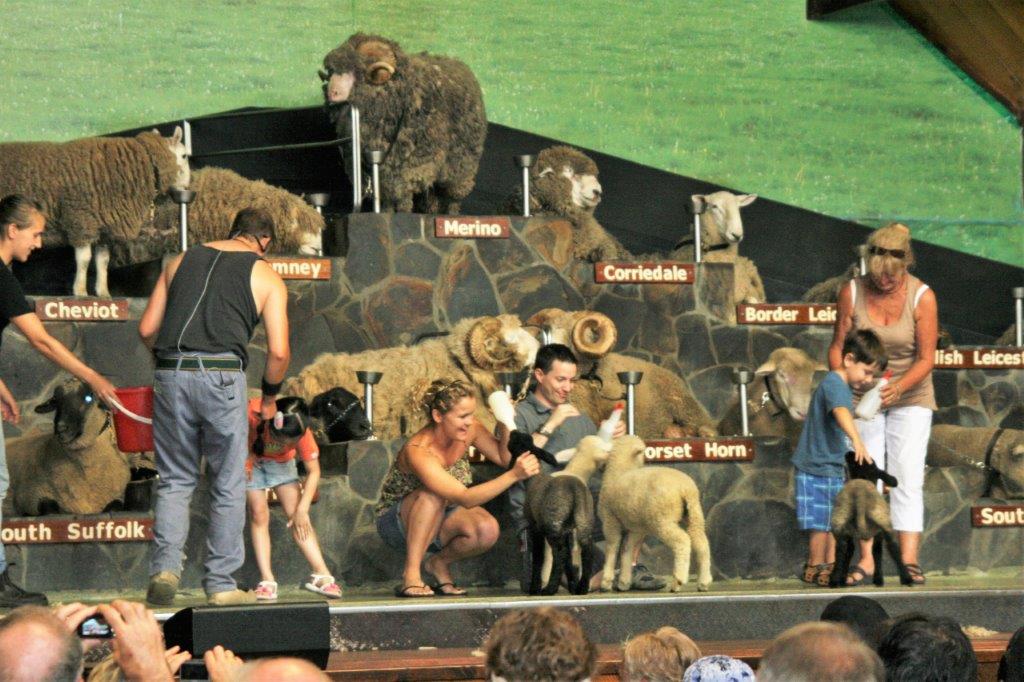
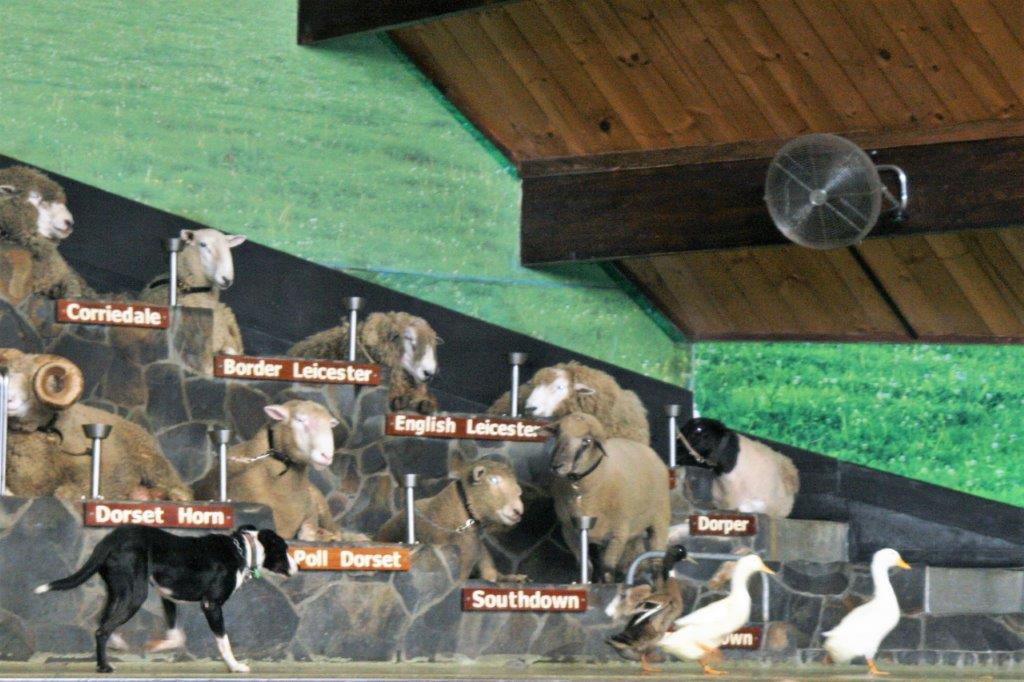
 A few people were called on stage to feed the lambs.The sheep dog demo began with some duck herding.Yes, the dogs do run the backs of the sheep and the sheep don’t care. You can just make out the second dog jumping on to the back of the black sheep in the front row.  The dogs then ran circles over the two rows of sheep.  When the owner whistled they would just stop on whatever sheep they were crossing at the time.            Outside we saw another demo of a sheep dog moving sheep through a series of gates.
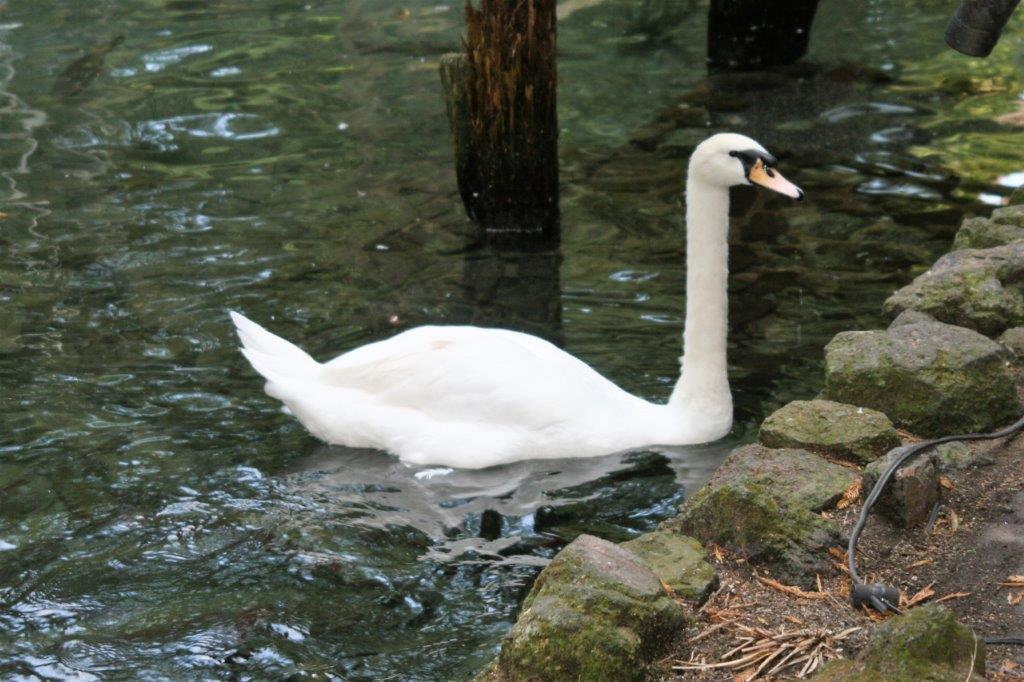
The black swans were getting a little too close for her comfort.

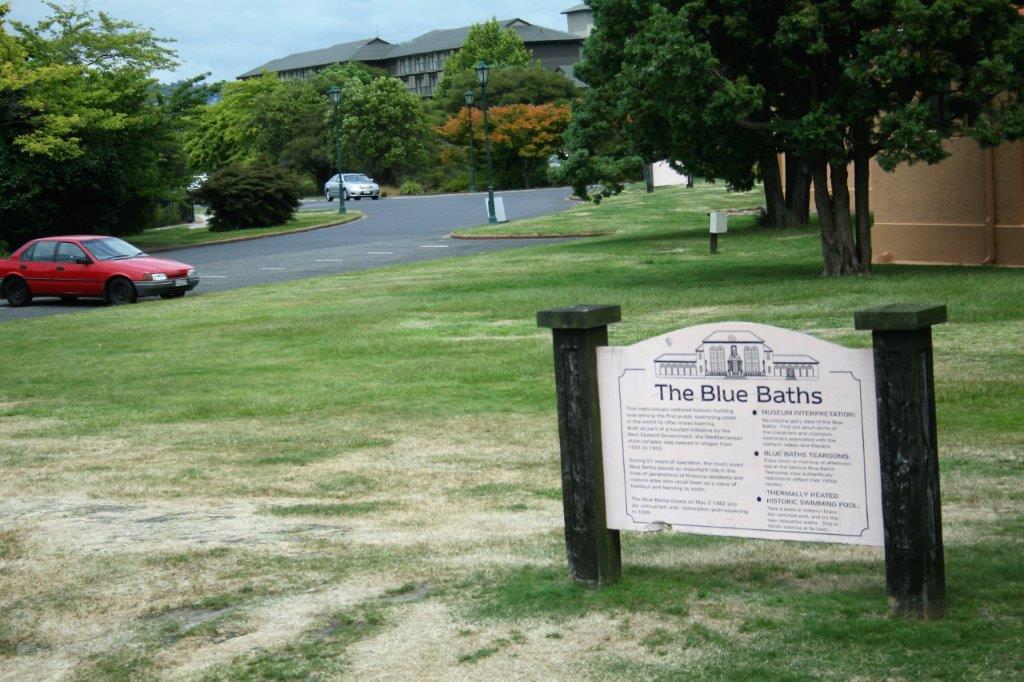
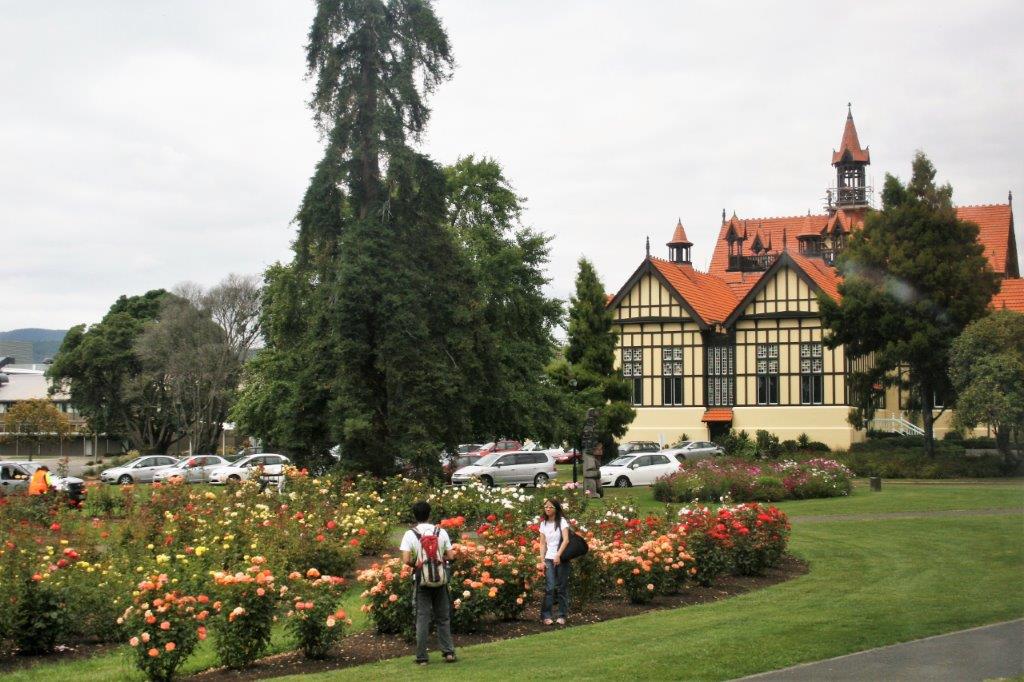
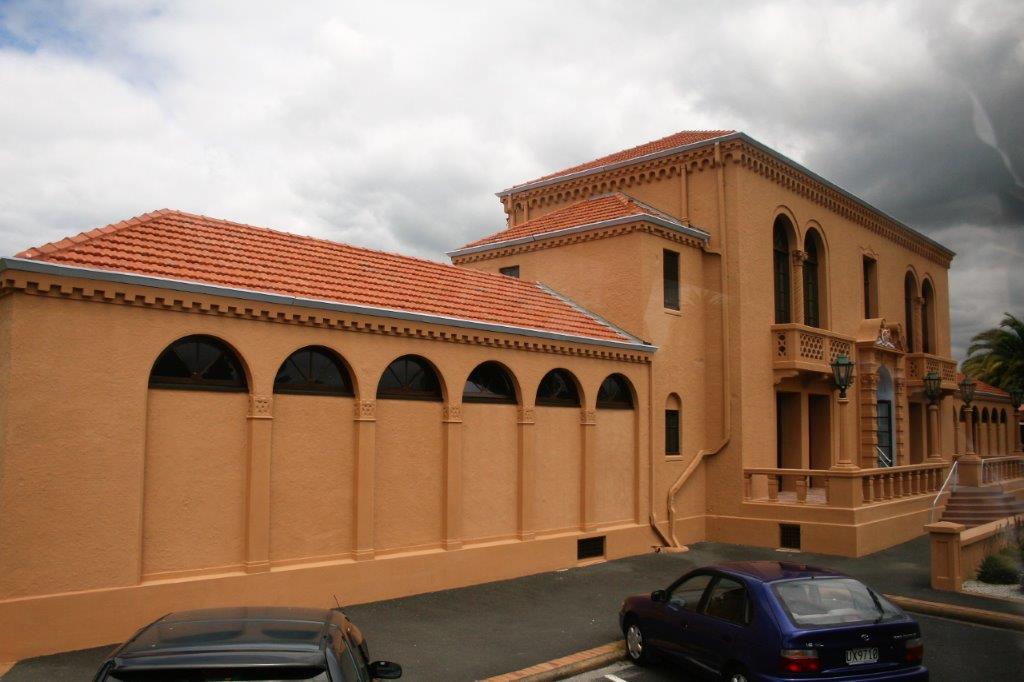
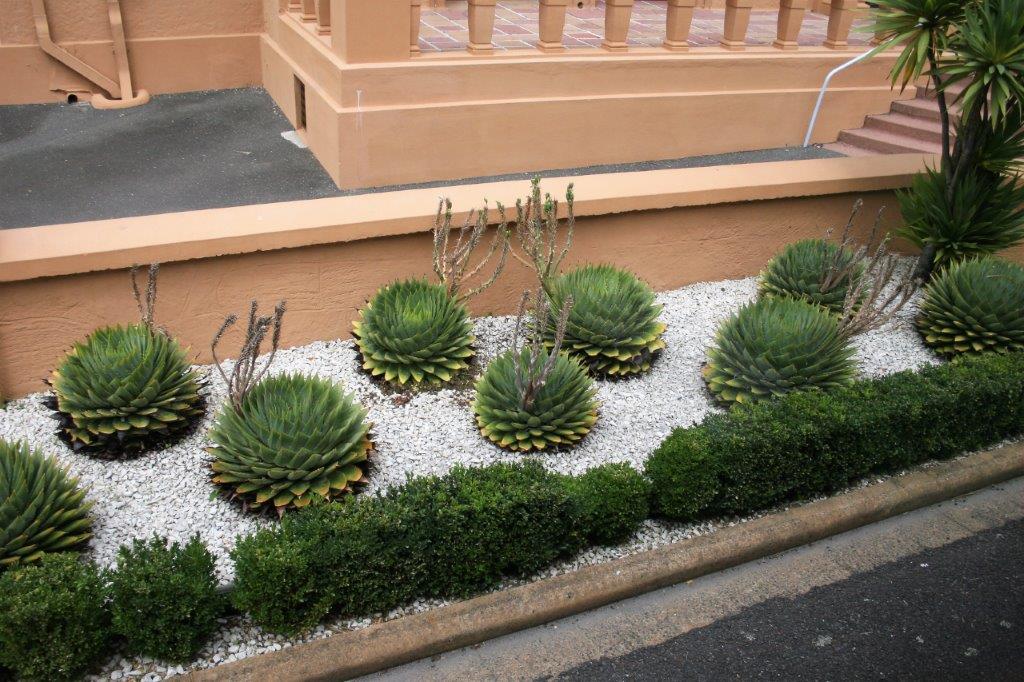
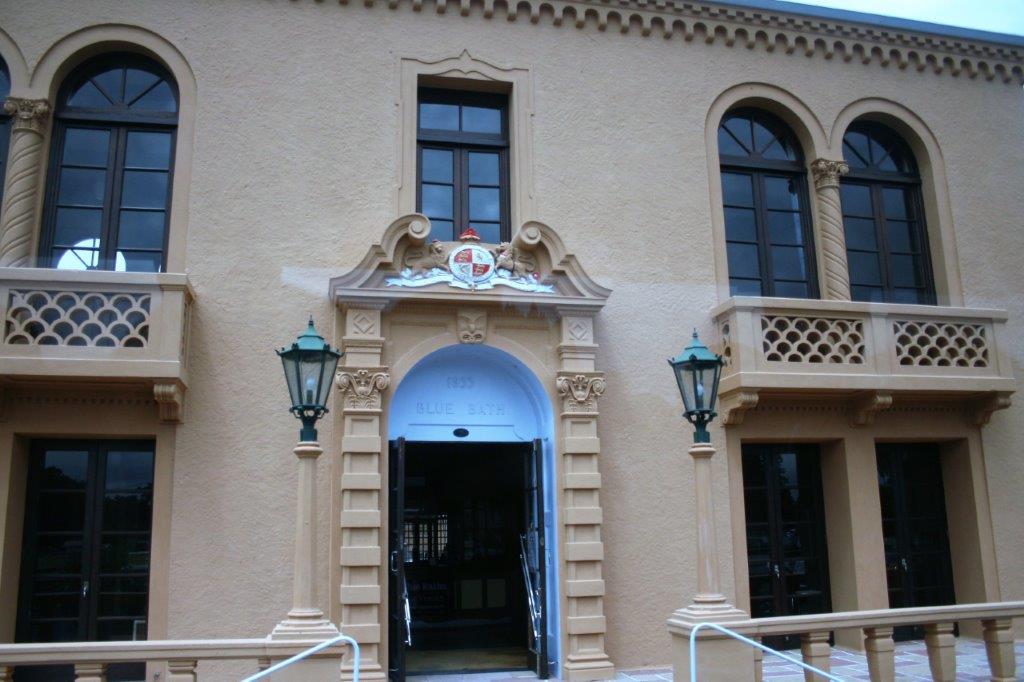
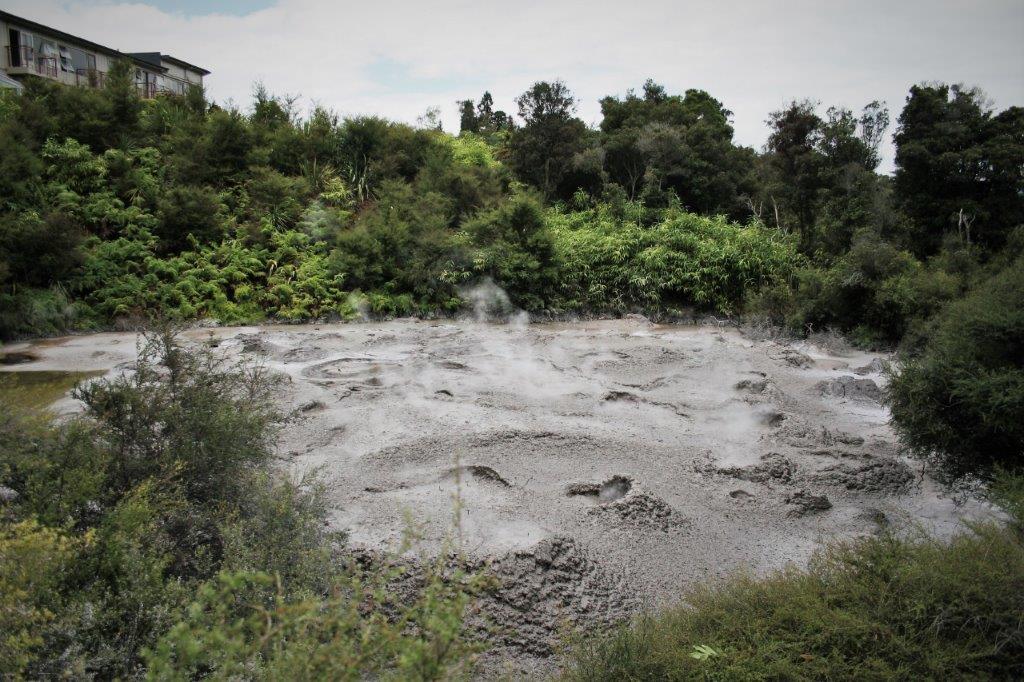
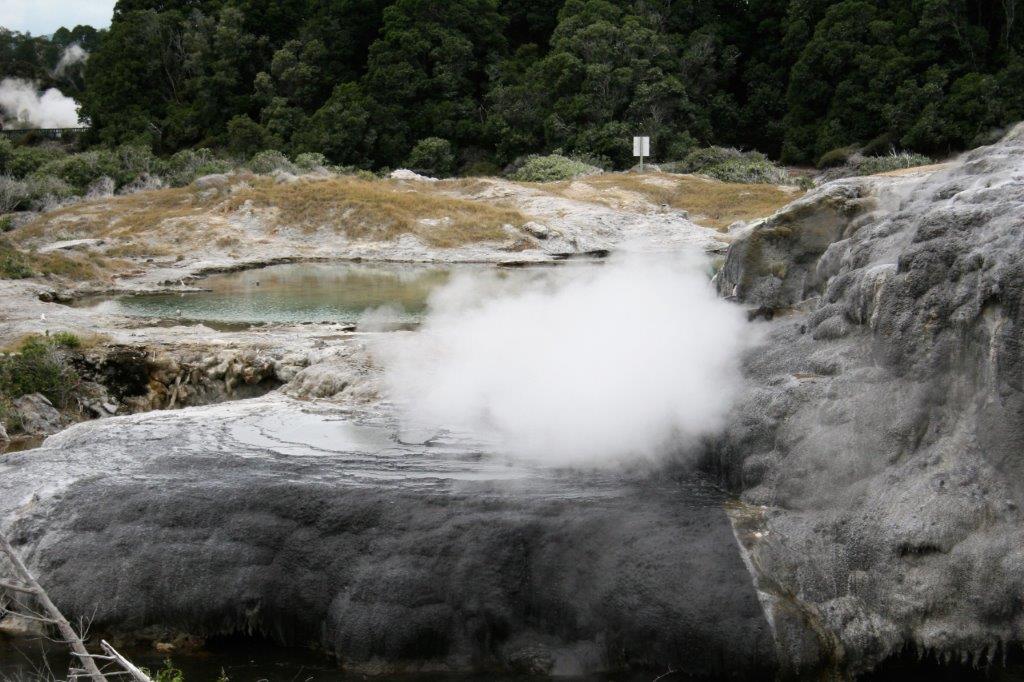
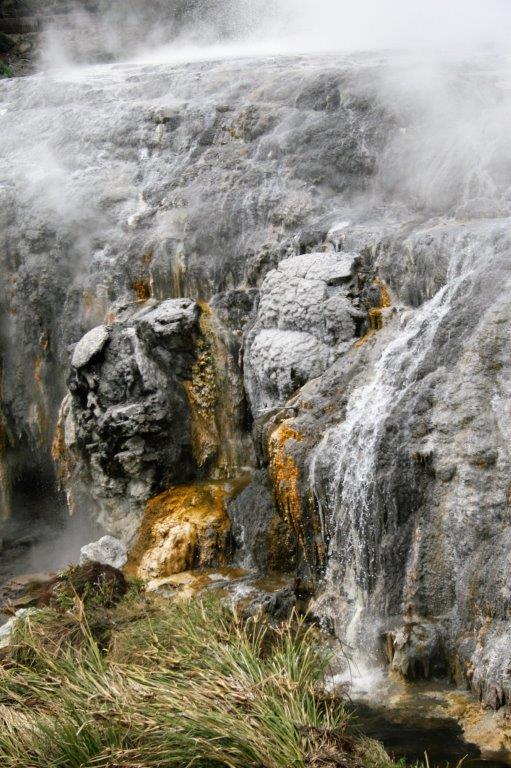
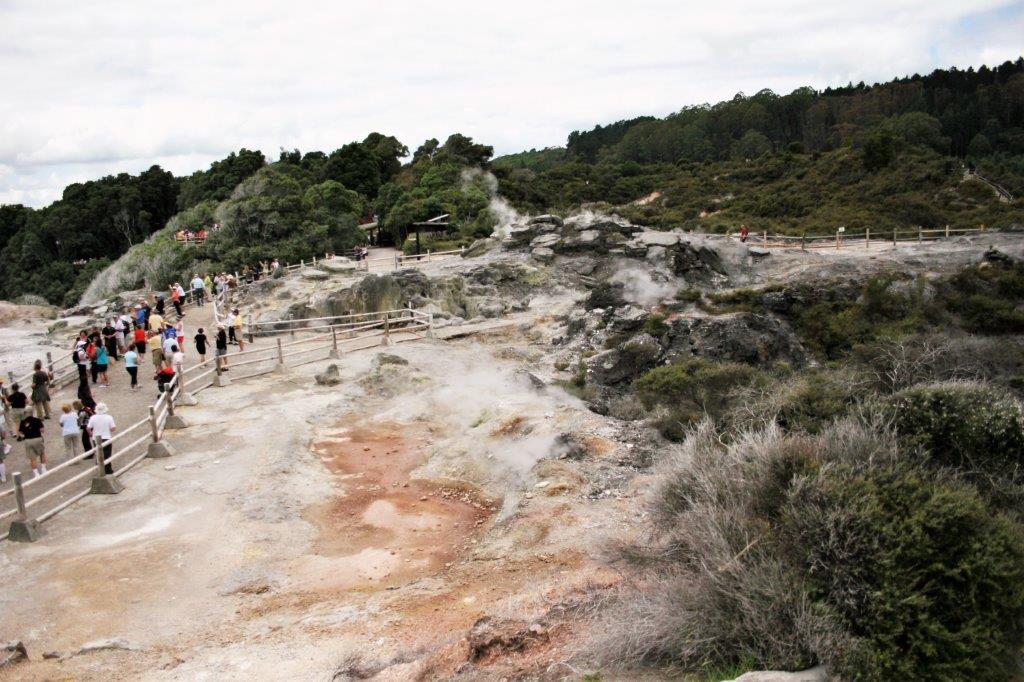
On the way to the Māori Cultural Center we drove past the Blue Baths; a popular hot springs and hotel.  They had a lovely rose garden. The Rotorua resort and wilderness area is built atop an active volcanic bed.  Nearly everything is steaming and gurgling.  It is also the heart of Māori lands.  The Arawa people settled in this area in the 8th century believing the bubbling ground and hot water to be divine.  They used the pools for cooking and bathing.  The arrival of Europeans turned the area into a health spa.

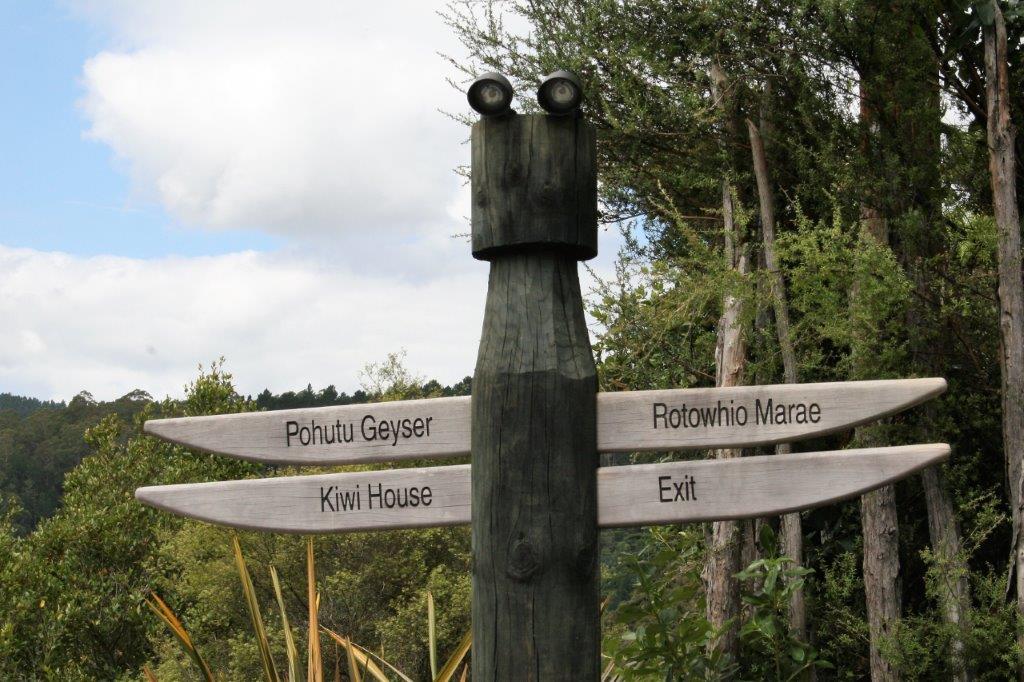
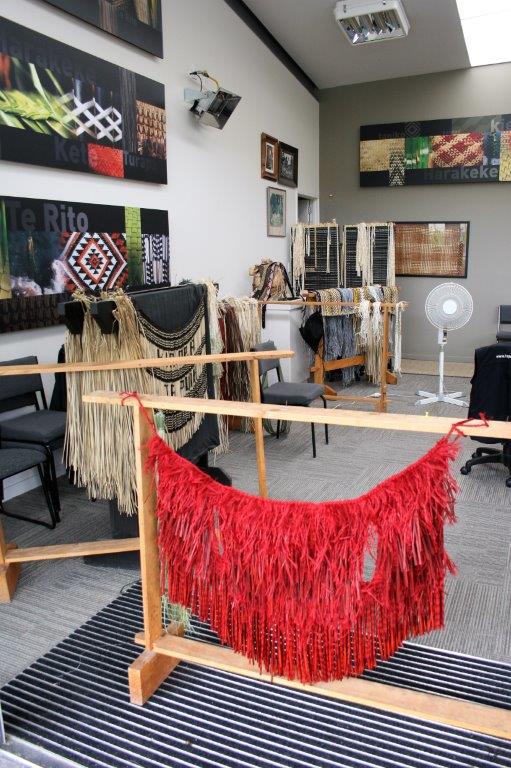
Te Whakarewarewa thermal pools and geyser were like a mini-Yellowstone.  Below is the full name but obviously it is not commonly used.                                    Pohutu (meaning ‘spray’) GeyserThe cultural center has lovely examples of Māori art, buildings and weaving.

Frond fibers are used to weave skirts, bags, hats and traditional capes.

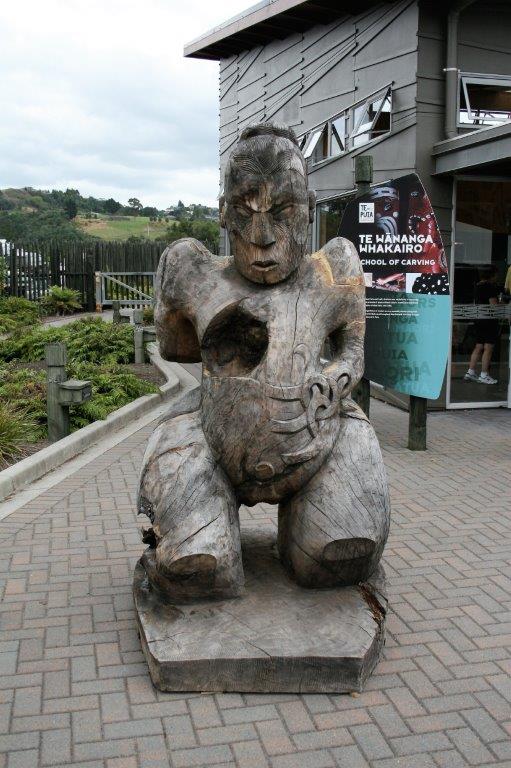
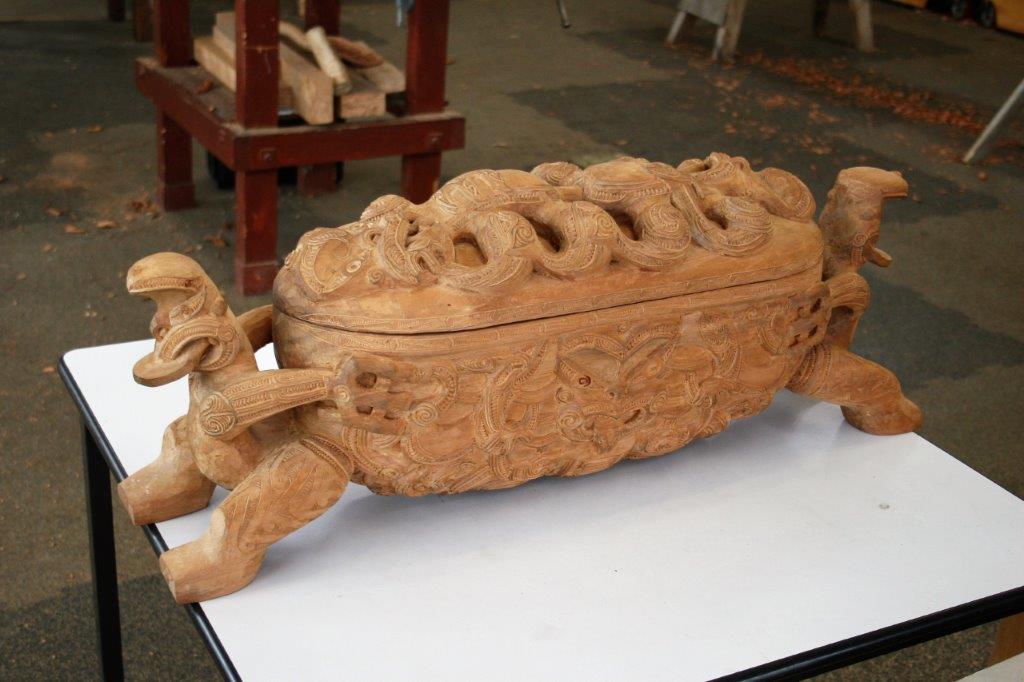
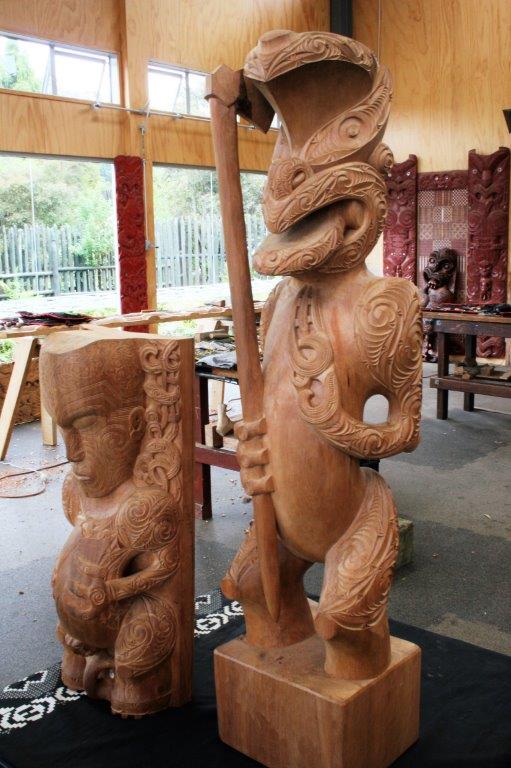
The school has a three-year course in traditional carving methods.  The captain warned us that the scheduled stop in Napier the next day may be cancelled as a tropical storm was building in the area.  We had a rock and roll night with high seas.

2011 February 7 – Day 33 – Auckland, New Zealand (Day 2)

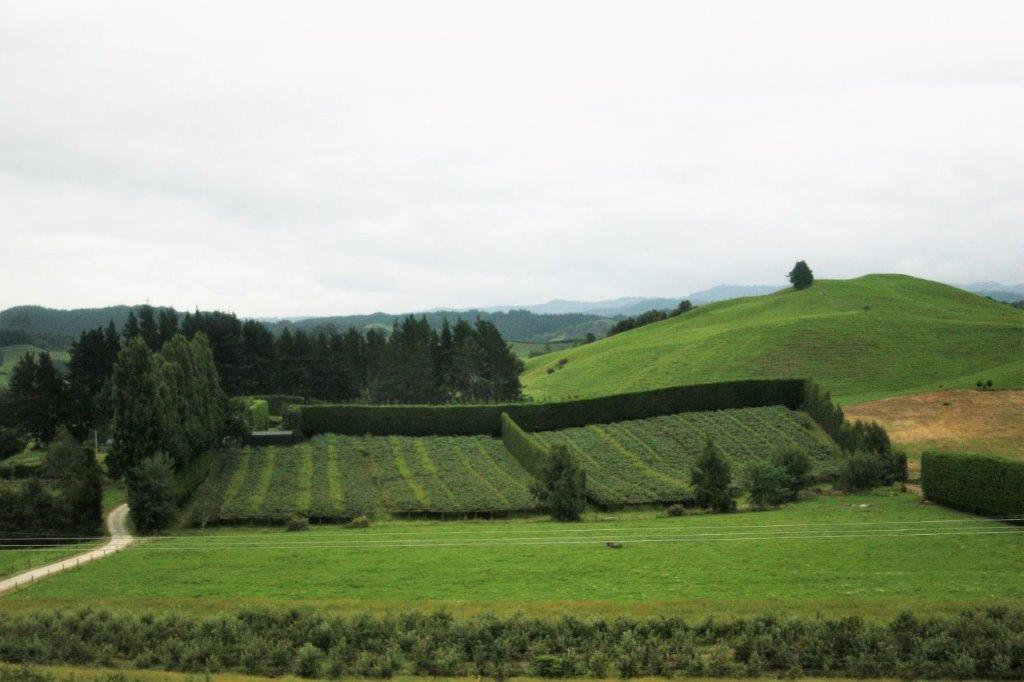
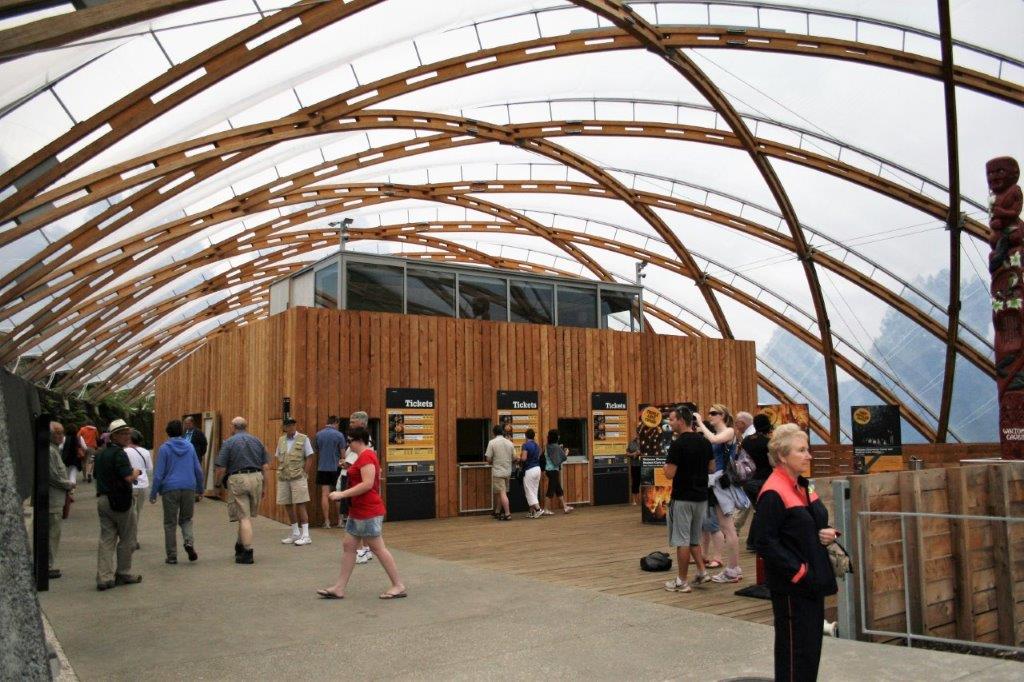
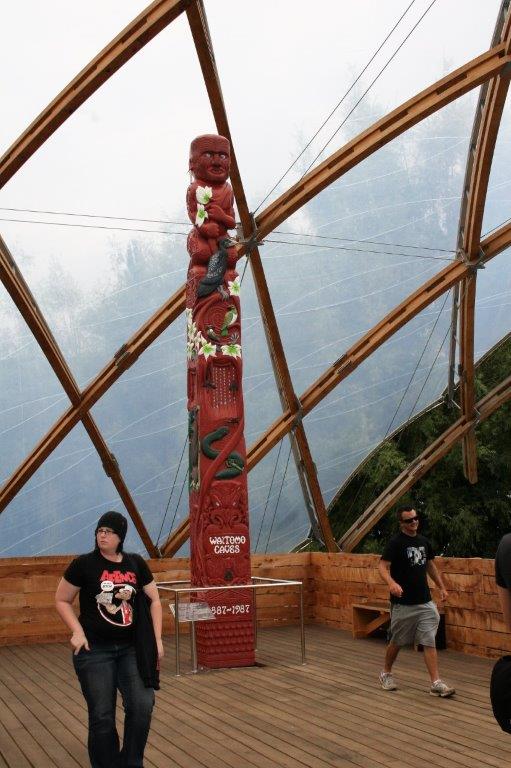
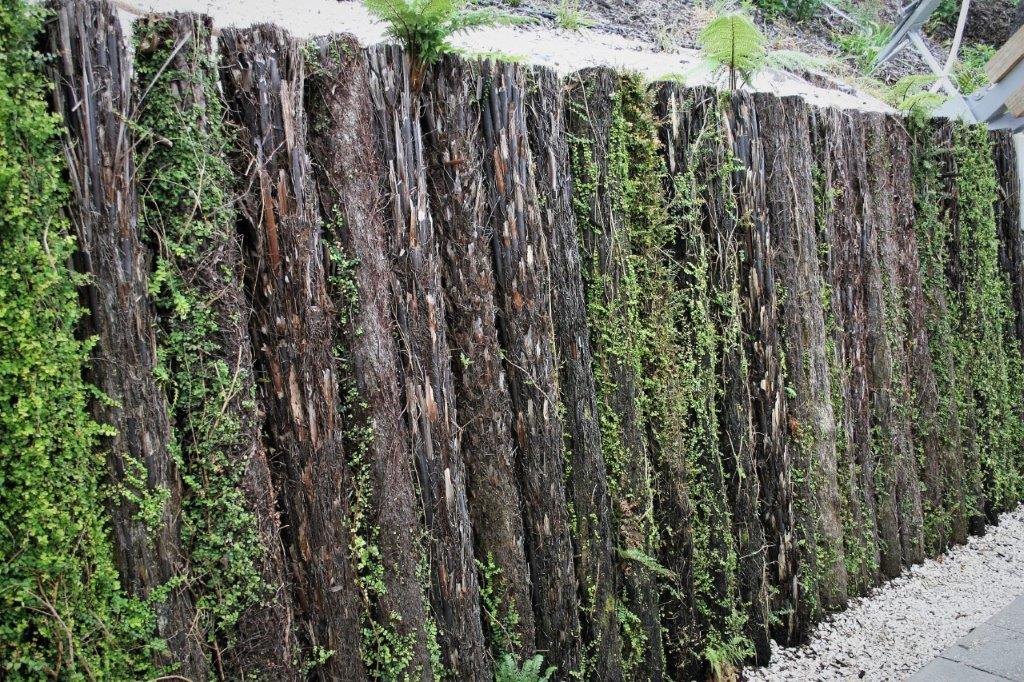
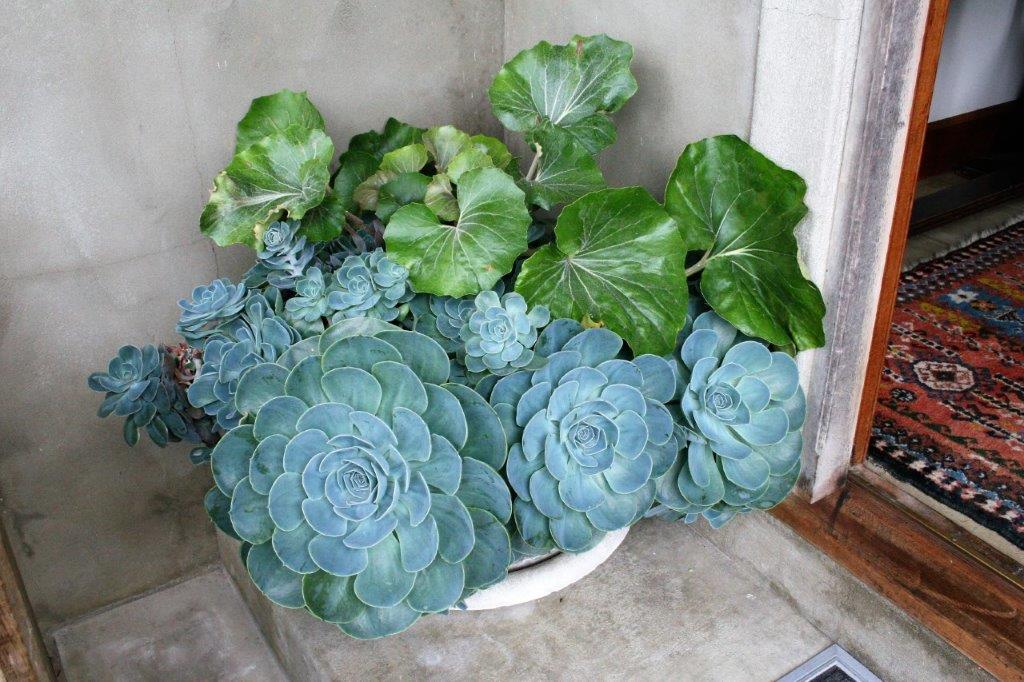
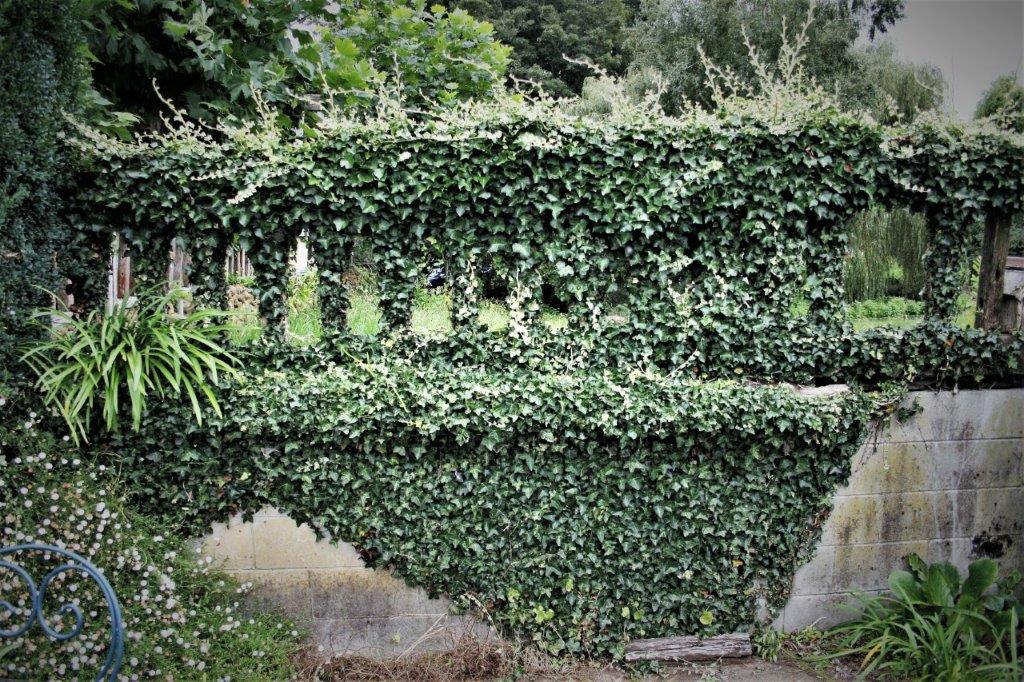
On our second day in Auckland we had an all-day tour that took us on a three-hour drive into the countryside.  We crossed the Bombay Valley, travelled along the Waikato River Valley through farmland to the coal-mining town of Huntly.  Passing Taupiri Mountain, sacred to the Maori people, we drove through the rural township of Pirongia to our destination of Waitomo.  Are these not great place names? Waitomo is home to the Glowworm Caves and even though the town is a tiny hamlet of about 45 people the caves are very famous and have been a tourist destination for 100 years.  The caves are limestone and calcite that have formed stalagtites and stalagmites of immense size. A very nice ‘living’ wall was along the pathway to enter the cave.

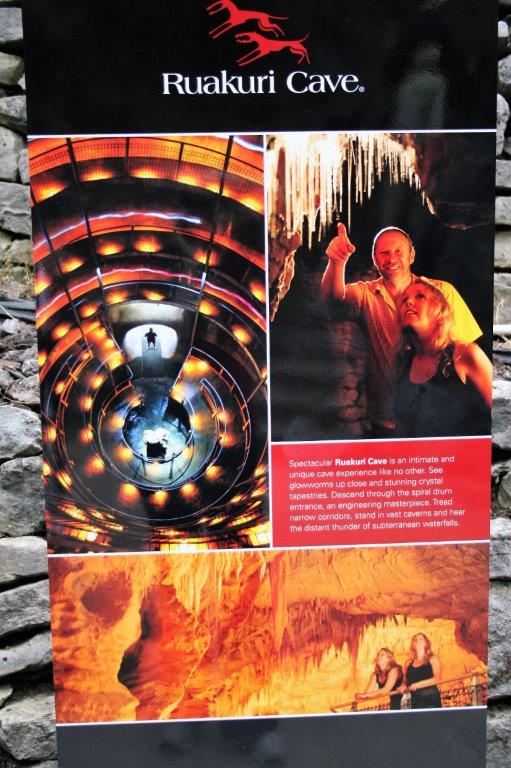
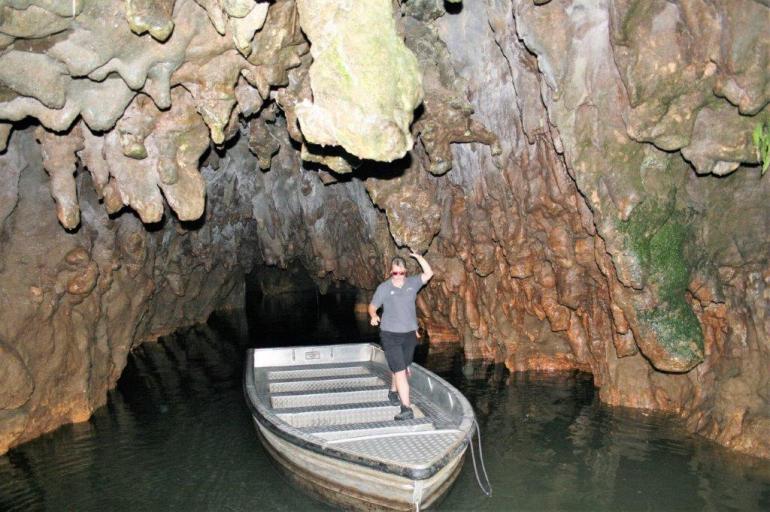
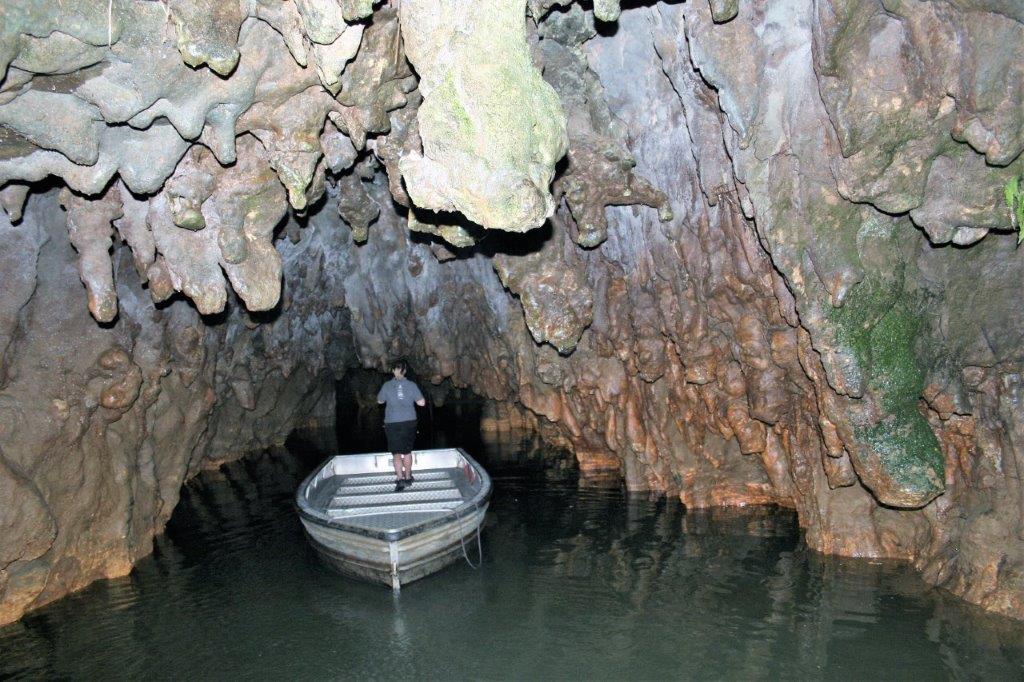
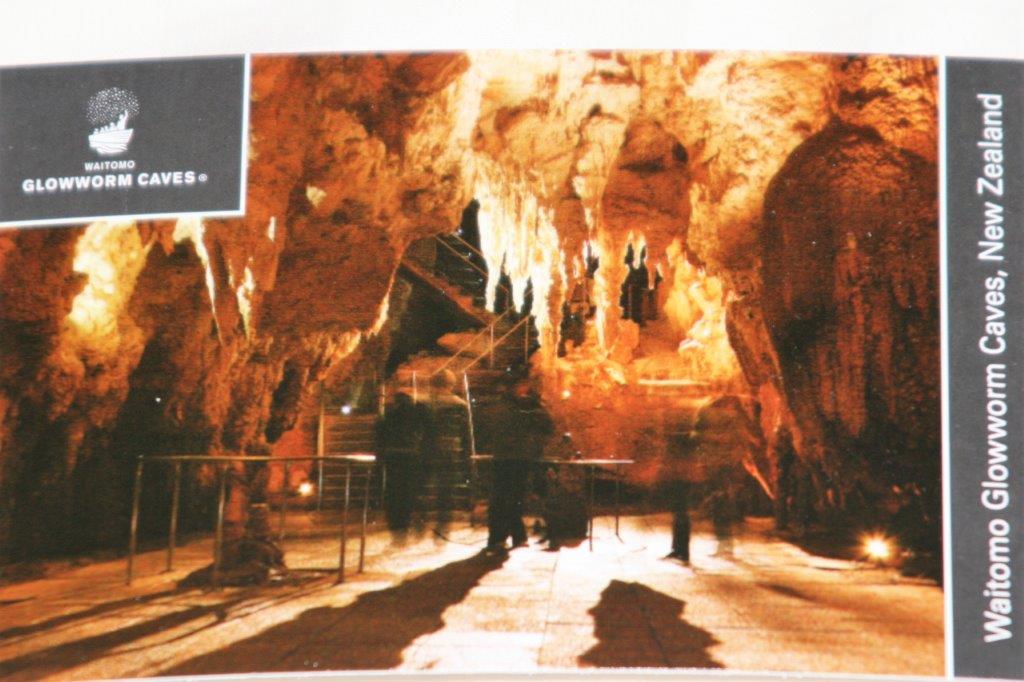
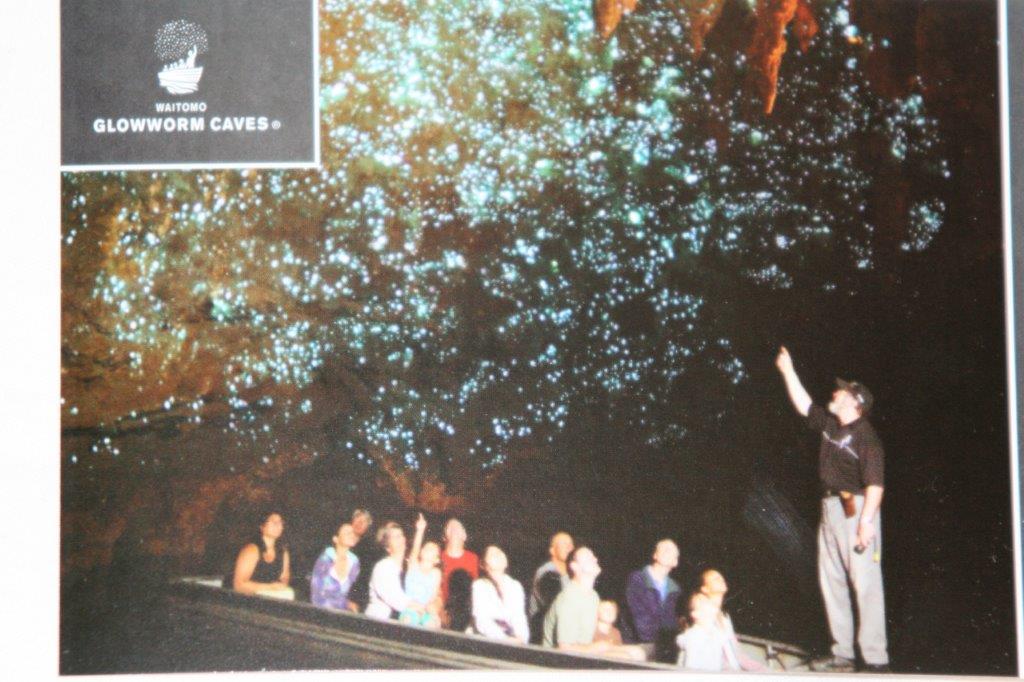
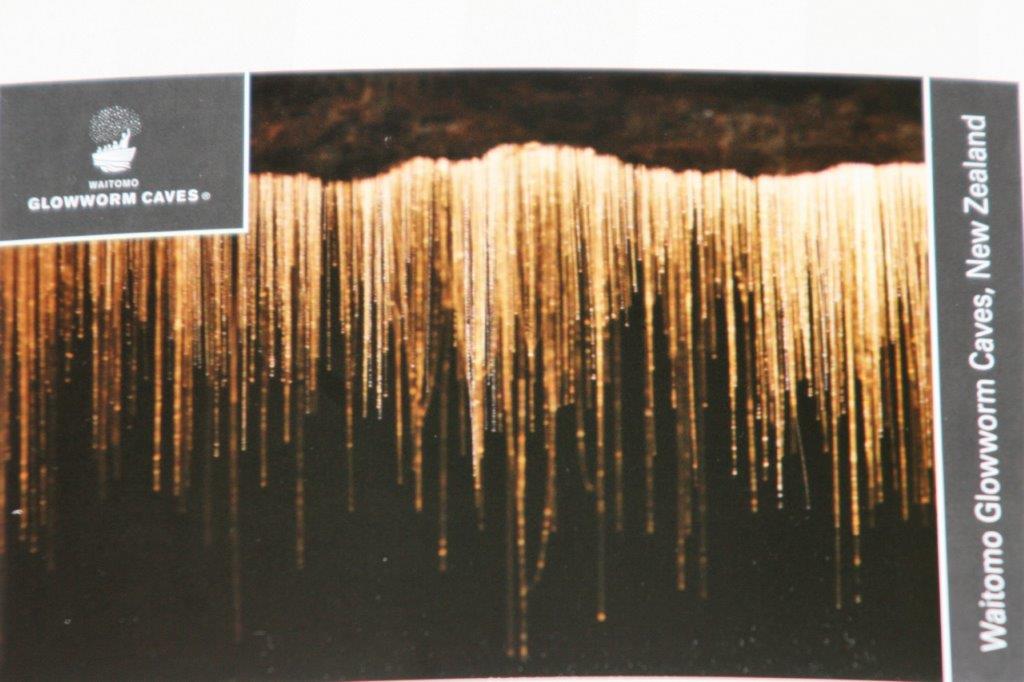
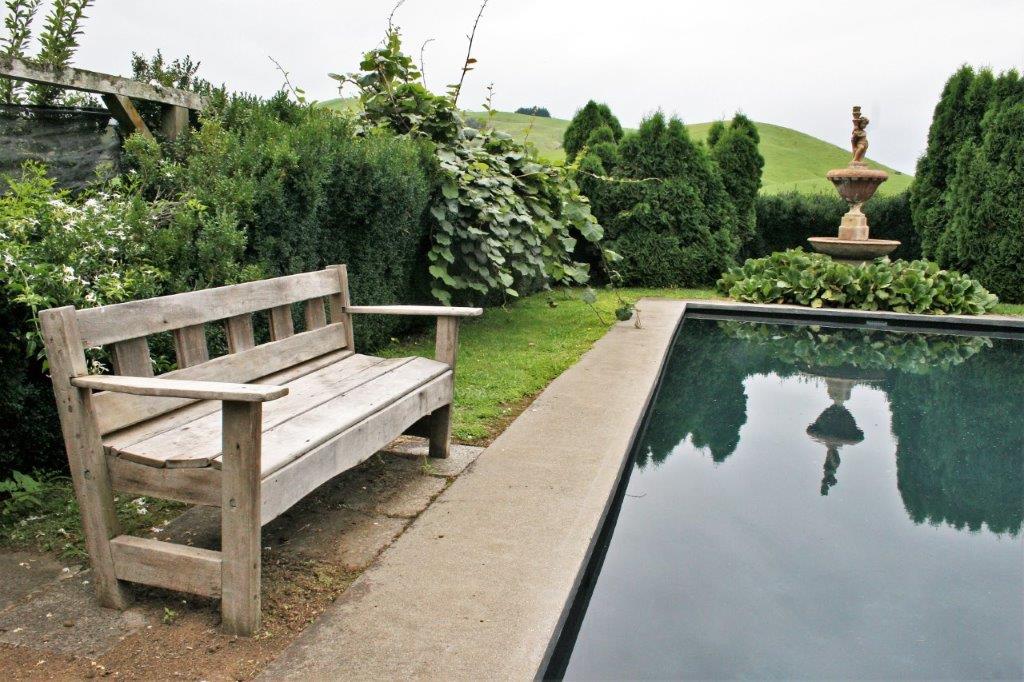
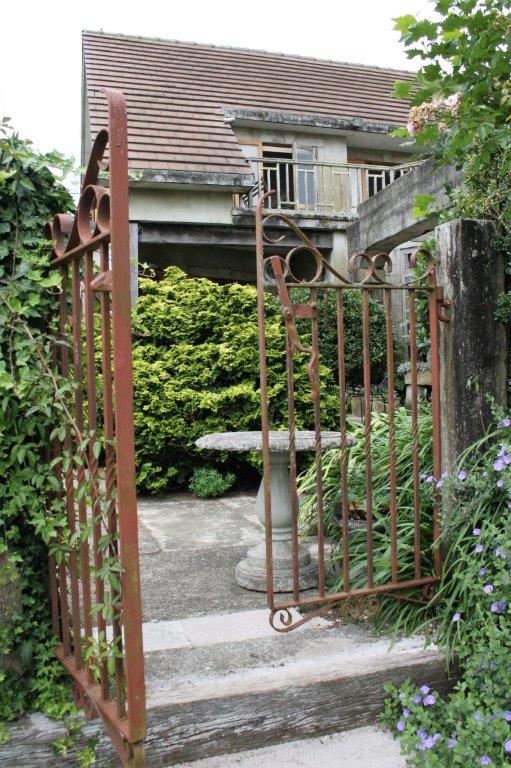
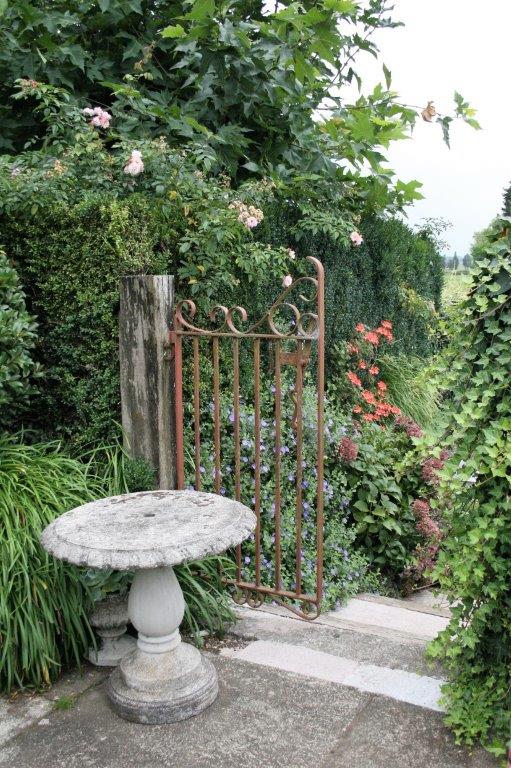
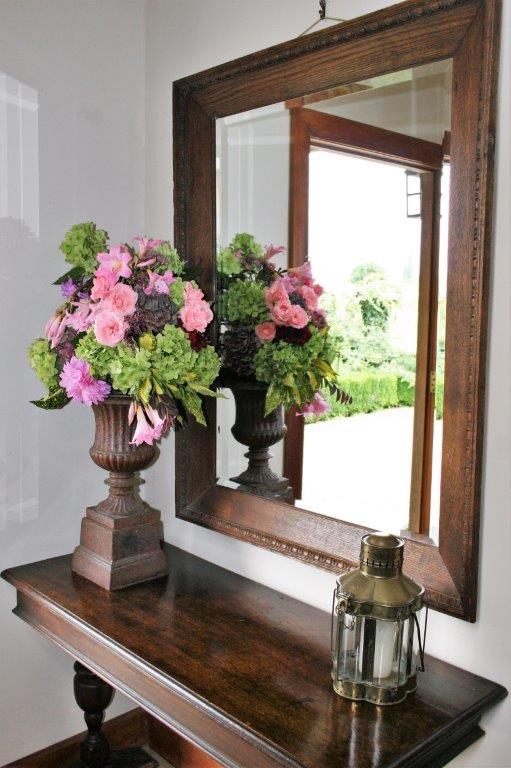
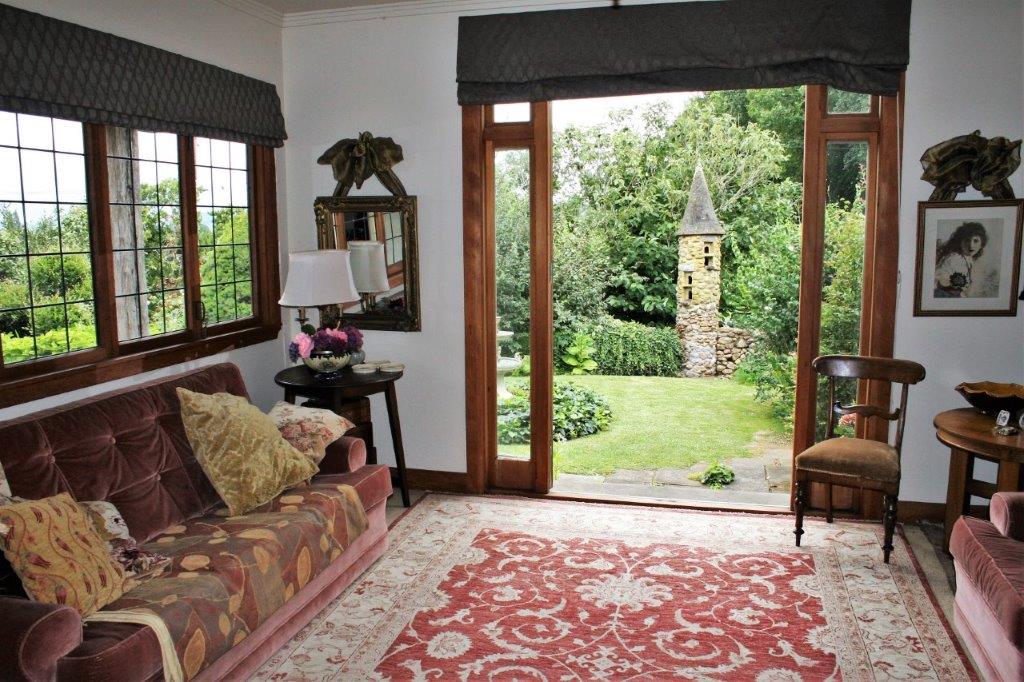
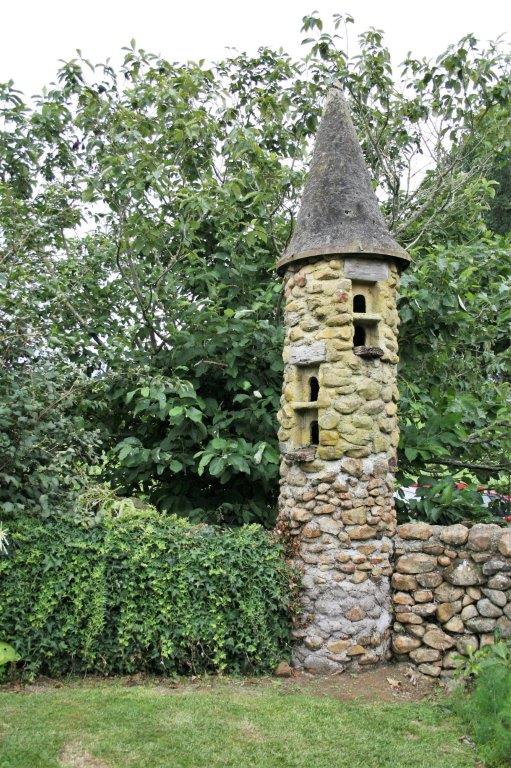
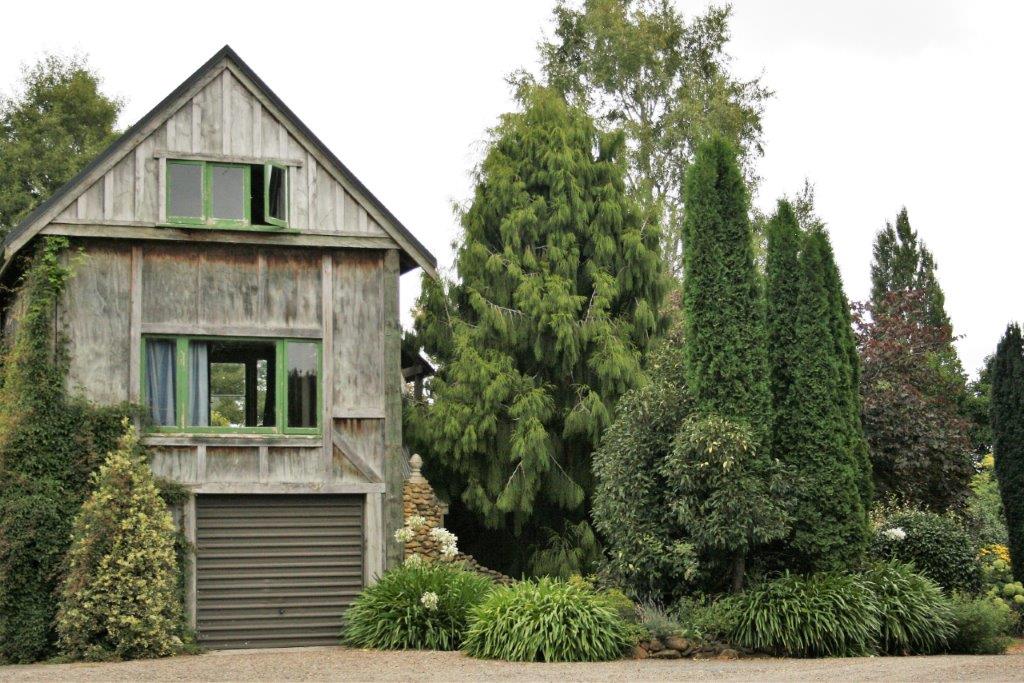
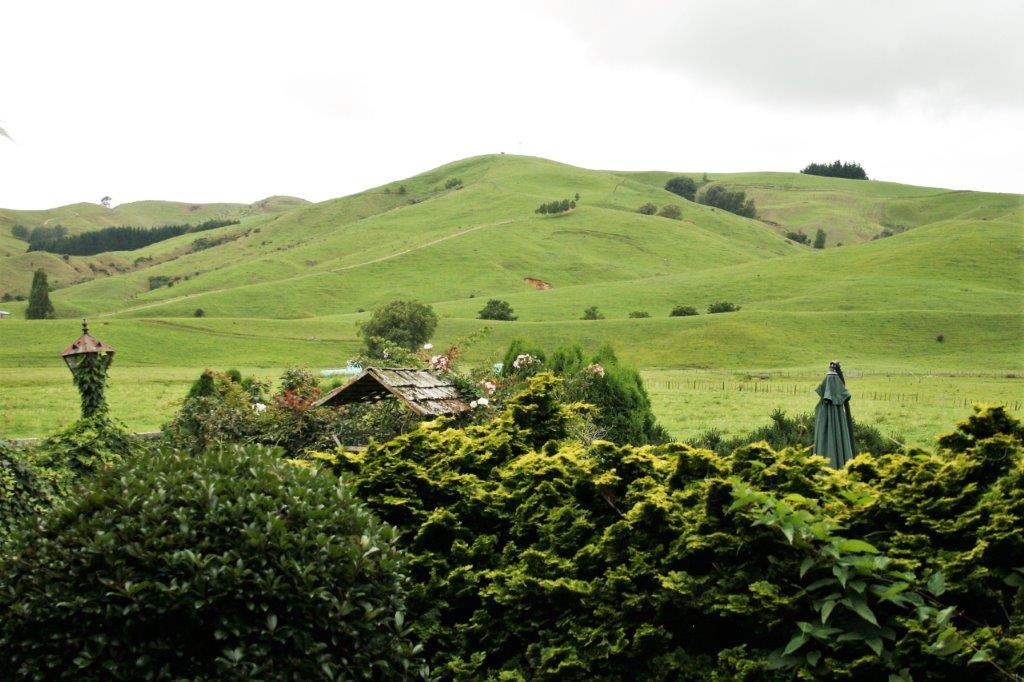
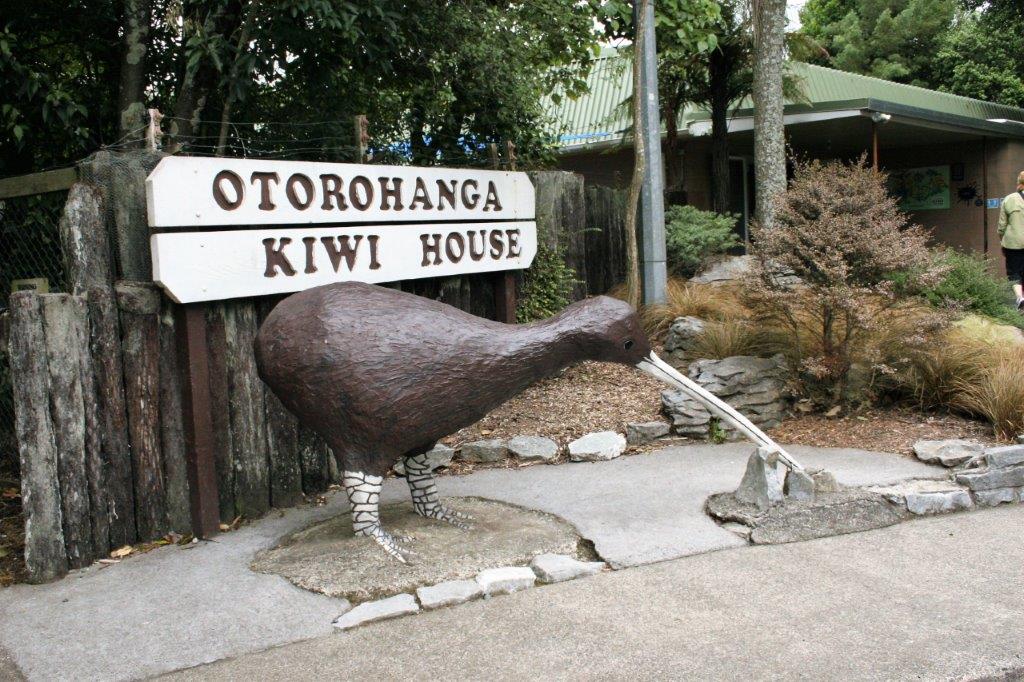
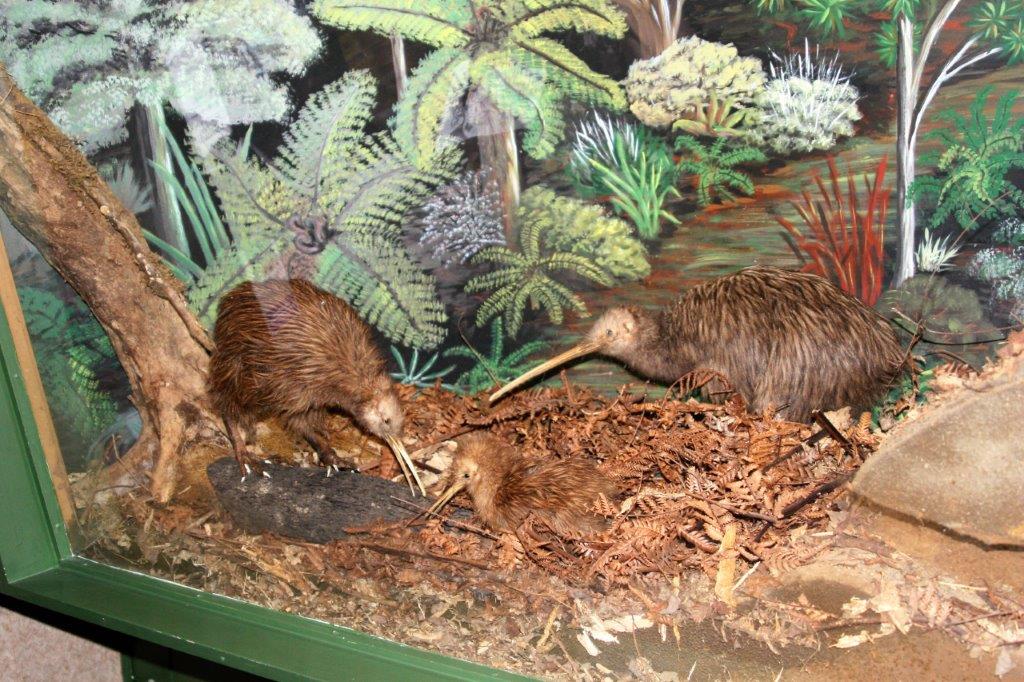
The path through the cave goes ever downward and eventually we came to a blackwater (underground river).  In total darkness you ride a boat manouvered by the guide using ropes that have been attached to  the cave walls and silently, slowly pass underneath a rooftop aglow with blue-green iridescent dots created by thousands of tiny glow-worm larvae.  They hang suspended in the larva stage for 9 of the 12 months of their lives and it is the back end that glows to attract food.  Each worm drops about 12 sicky strands to catch mosquitos and spiders and then reels them in for lunch.  After the 9 month larva stage they wrap up in a cocoon and emerge 3 months later as a large mosquito-like bug with no mouth.  Over the next 4-5 days they constantly mate with the opposite sex until they die of starvation and exhaustion.  Not sure it is a life-style I would choose. No photos are allowed and there was to be no talking or noise as the worms wil blink out their lights if disturbed.  I photographed a couple of the post cards I purchased.  It was another of those surreal moments.  We had seen a segment on the Waitomo glowworms on an episode of Planet Earth and until then I had never heard of them.  To witness them light up the roof a cave was a very unique experience.From the cave we were driven to Crosshills in Kio Kio. The owners of  the property open their house and gorgeous English garden to visitors.  We were able to wander at will before and after a delicious home-cooked lunch.  There were so many different plants and textures and nooks and crannies and gates and even a slim tower folly.  For a person like me, who loves to take photographs, it was a great place to spend a few hours. On the drive back to the ship we stopped at Otorohanga Kiwi House.  Kiwis are nocturnal and very shy.  It is almost impossible to see one in the wild.  There was a wide variety of birds at the Kiwi House and we did see live Kiwis but since they are nocturnal the night lighting prevented photos.  The only photo I got was a stuffed family in the window display. Sunset that night was glorious.  It was a long day, a great day and an early-to-bed night because there was another 9-hour tour in Tauranga the next day – a trip to the Agrodome to learn all about New Zealand sheep and then a visit to a geo-thermal reserve and Maori culture center.

2011 February 1 – Day 28 – Alofi, Niue

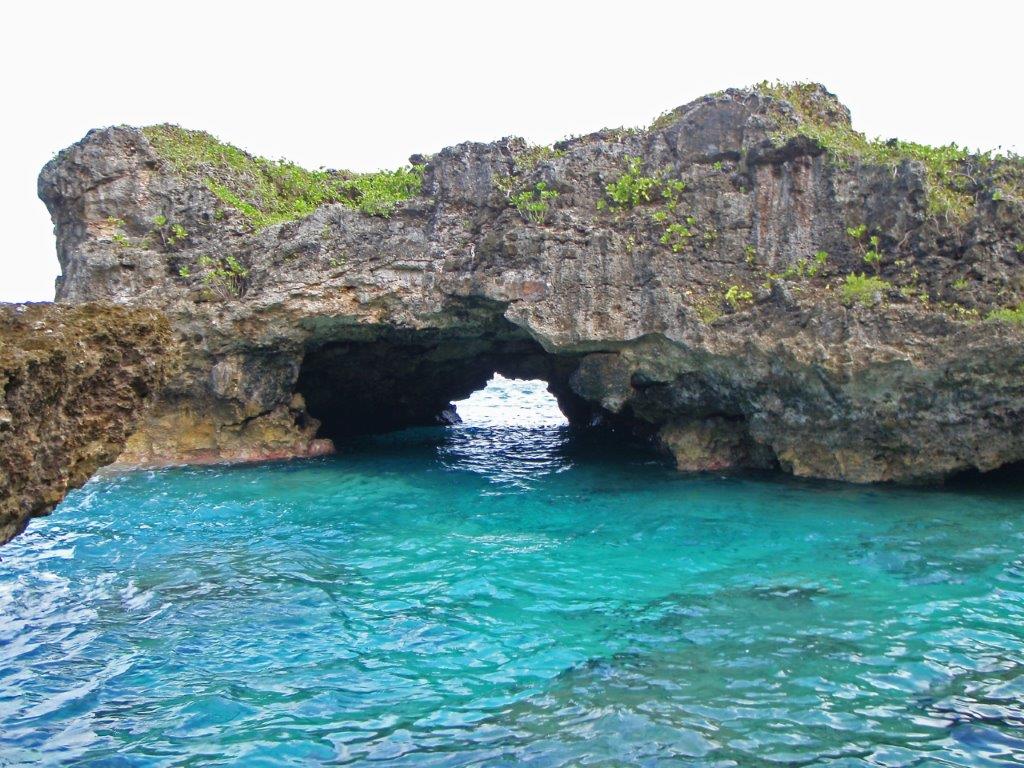
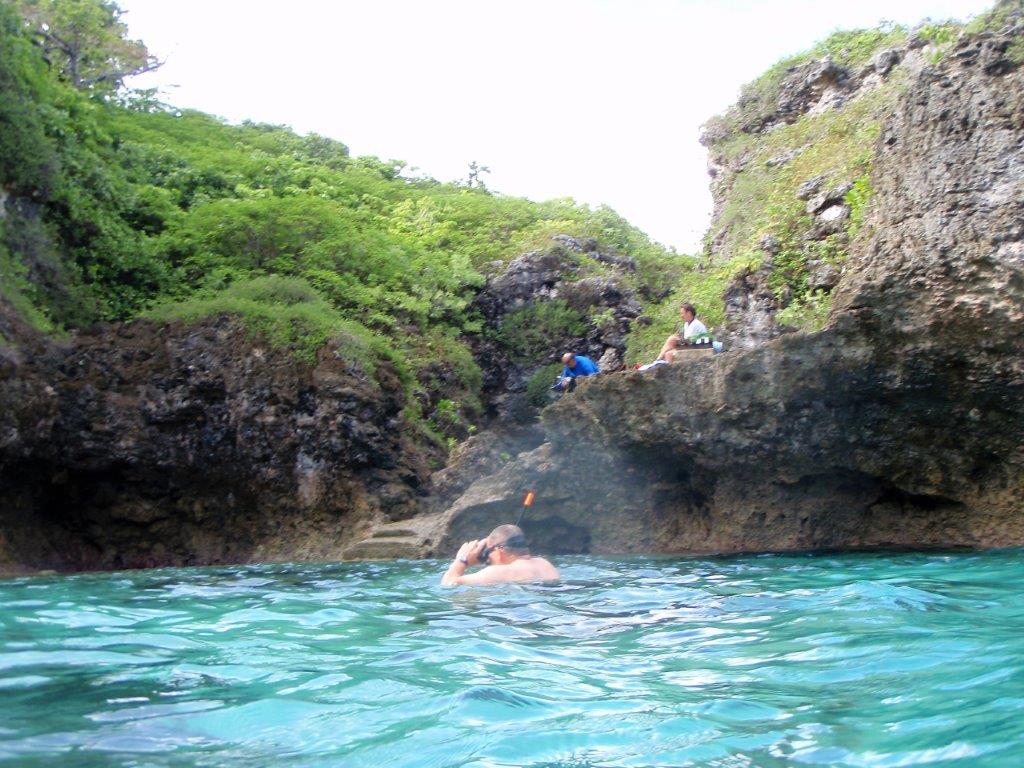
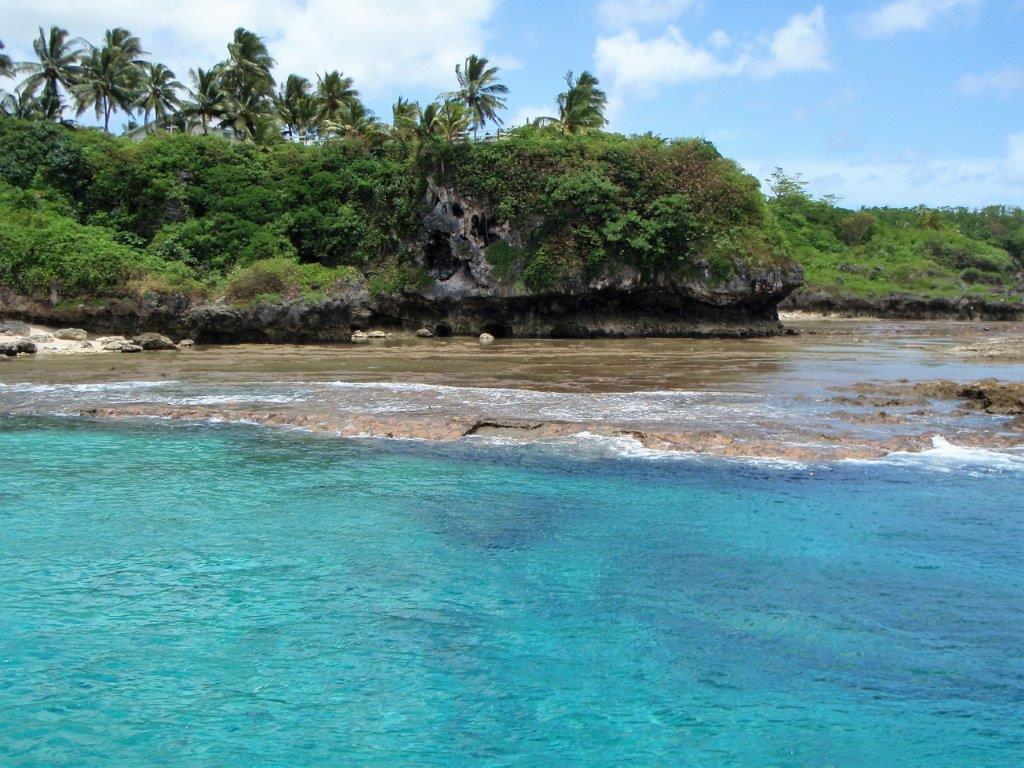
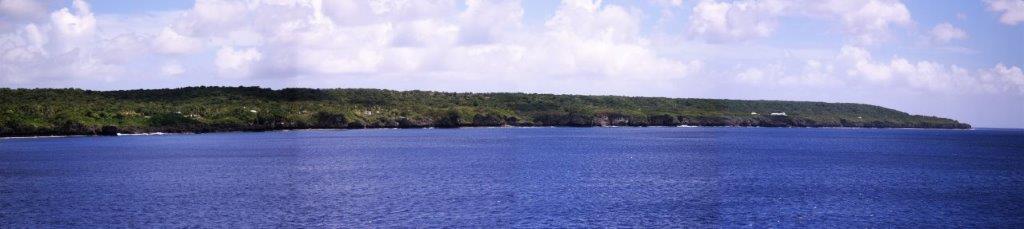
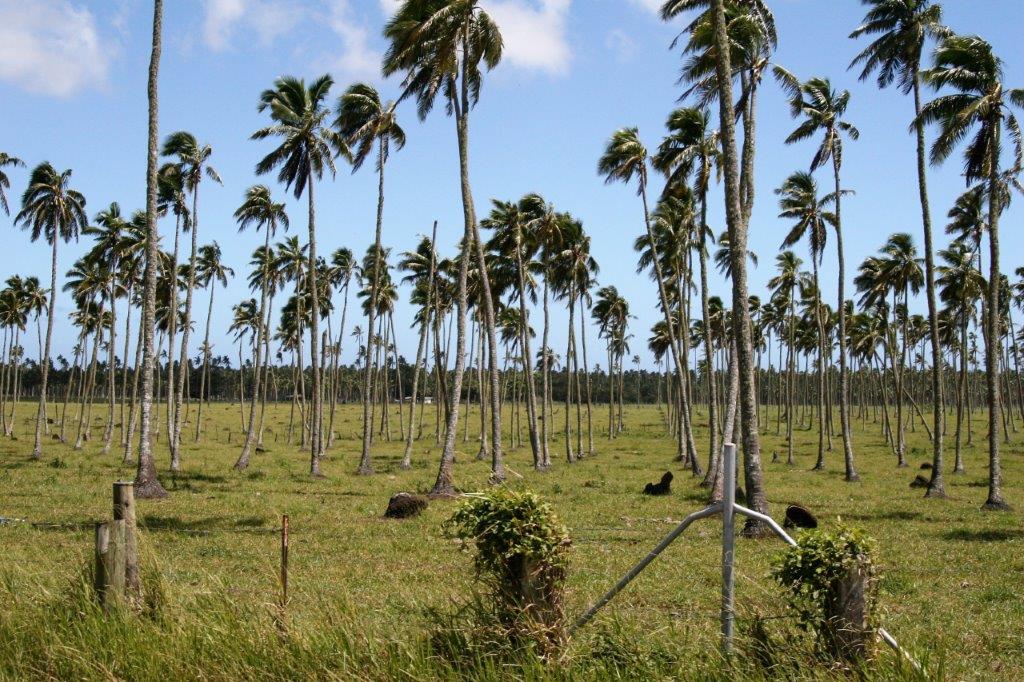
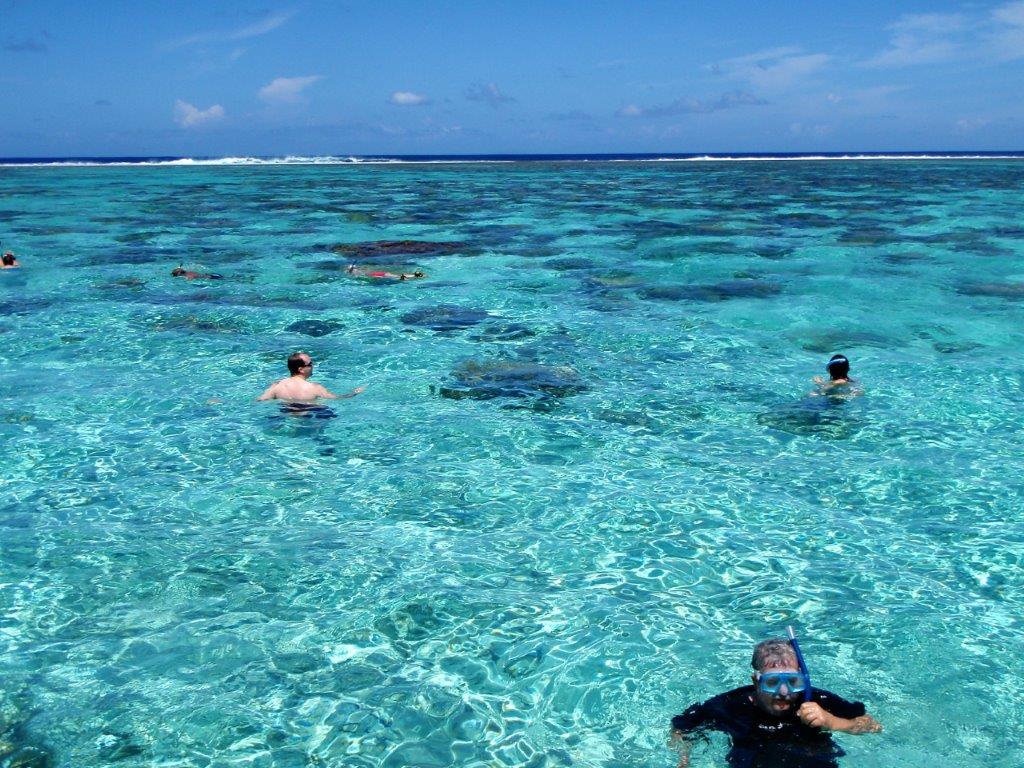
The name Niue means, “Behold – the coconut palms” and there were certainly plenty of them around.  Alofi is the capital city, divided into North Alofi and South Alofi, where most of the government offices are located.  Only about 600 people live in Alofi.  Over 20,000 Niueans live in New Zealand which had annexed the island until it was granted self government.  It now works in free association with New Zealand and that country does much of the negotiating regarding trade and economy on behalf of the island .  Nieu is the world’s smallest self-governing state and Queen Elizabeth II is the official head of state.  The entire island of 100 sq miles (260 sq km) has less than 1500 inhabitants but it is one of the world’s largest coral islands.  It is a solid coral limestone rock in the middle of a vast stretch of sea.  Like the other islands we have visited Niue has a ring road (30 miles/50 km long) around the coast and a few roads going inland. Since there were no tours on offer and the weather was nice we joined our friends Mel and Kelley (we met on the 2009 World Cruise) and hired a private guide for the day.  We wanted to go snorkeling so Susan took us to a quiet cove and left us to enjoy ourselves for an hour or so.

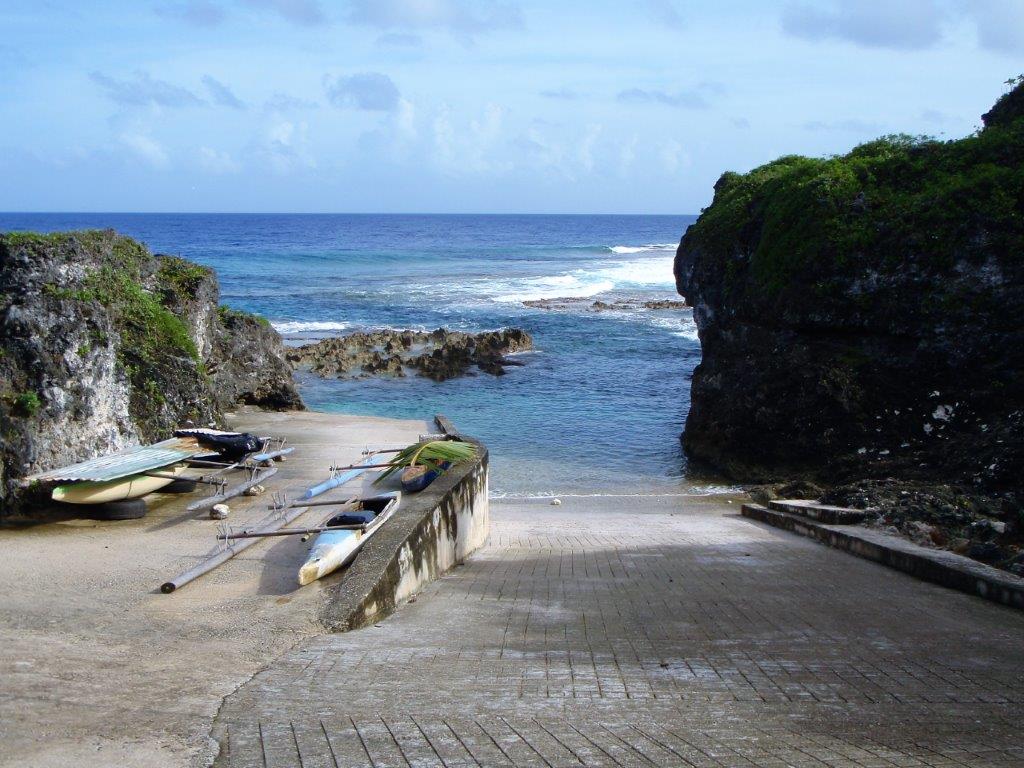
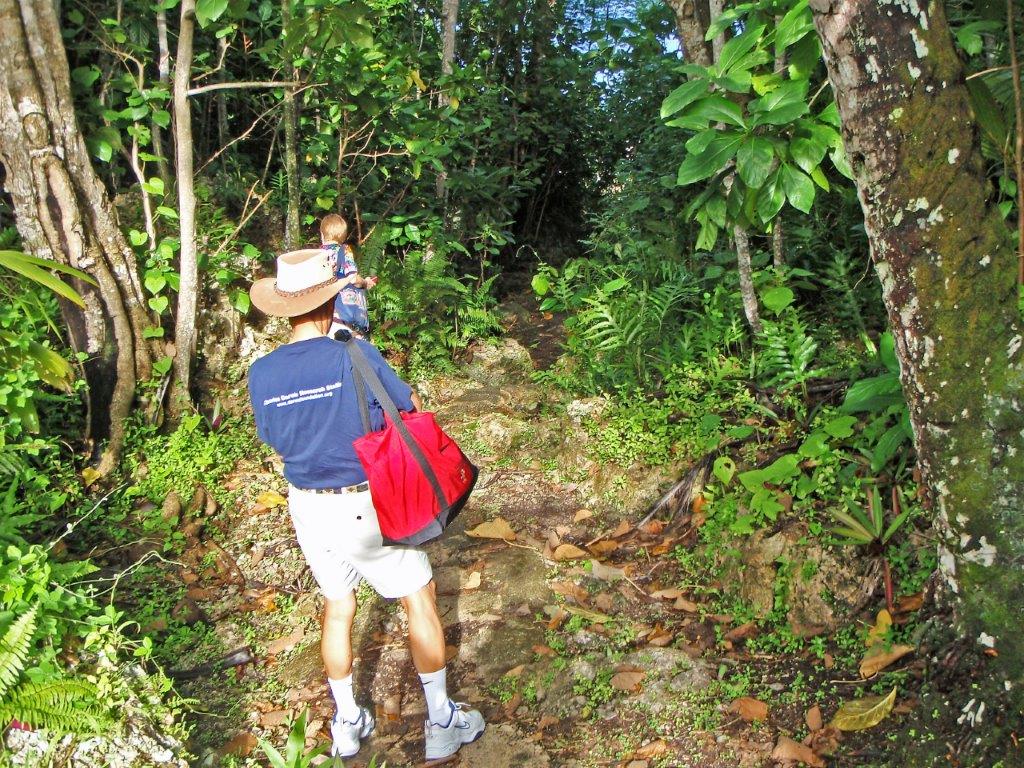
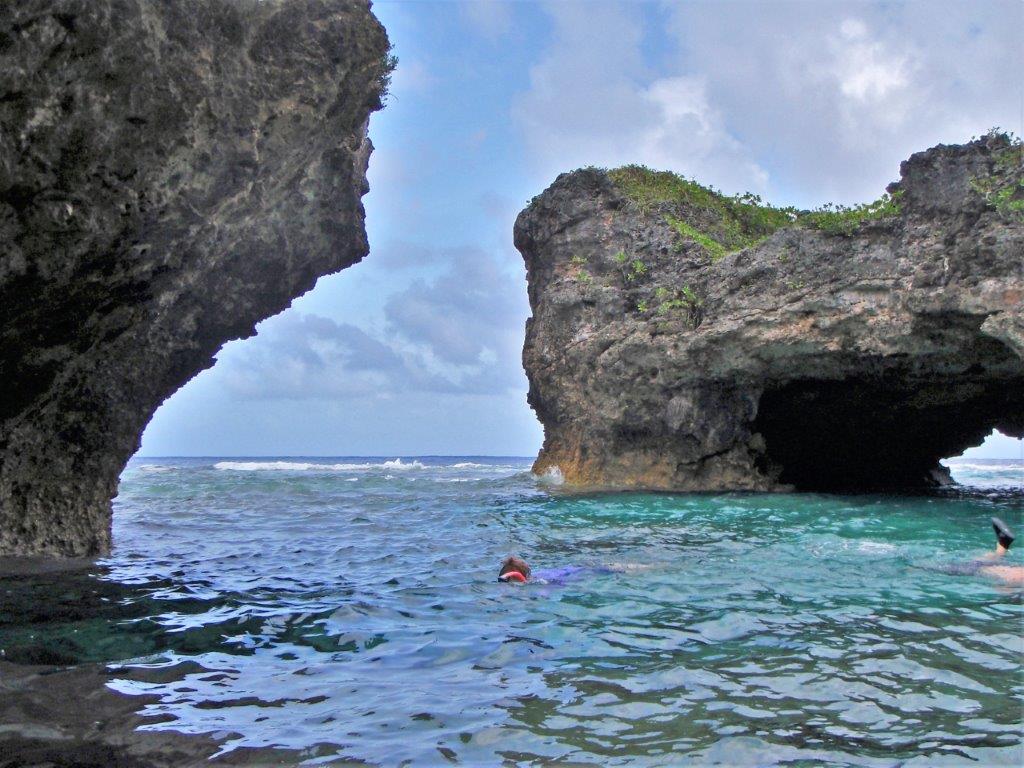
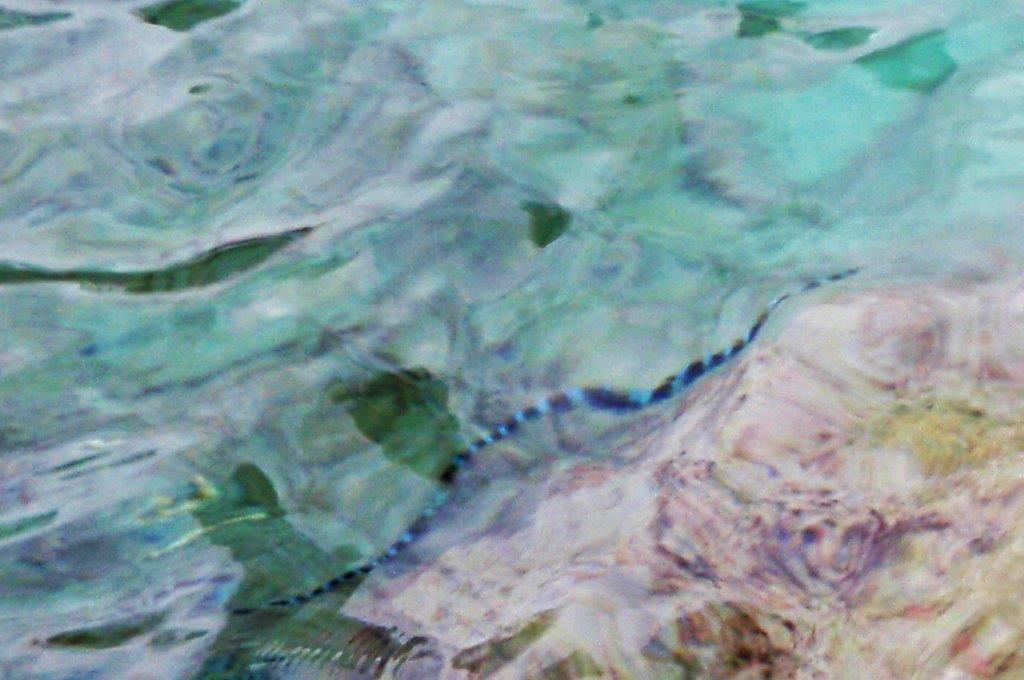
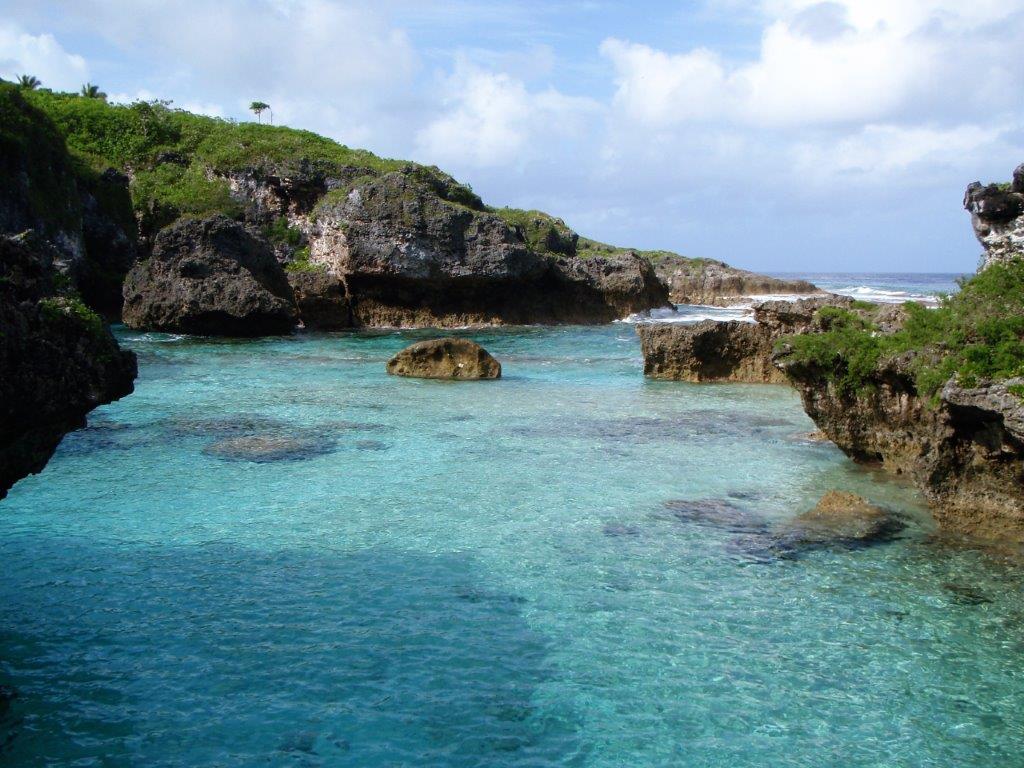
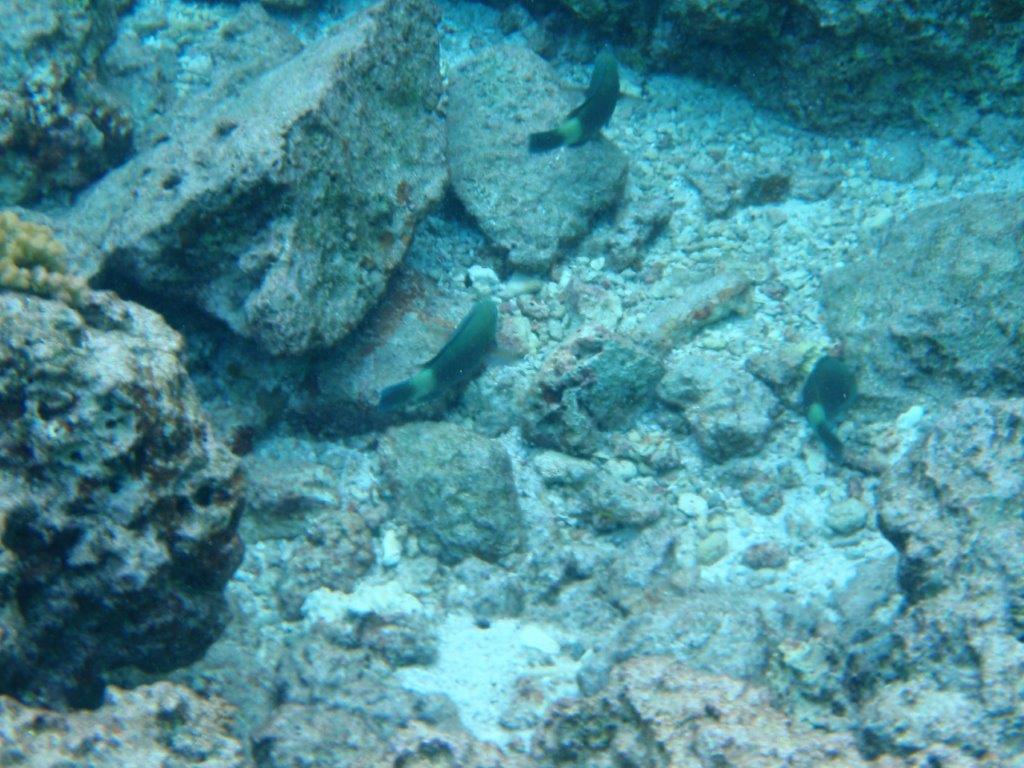
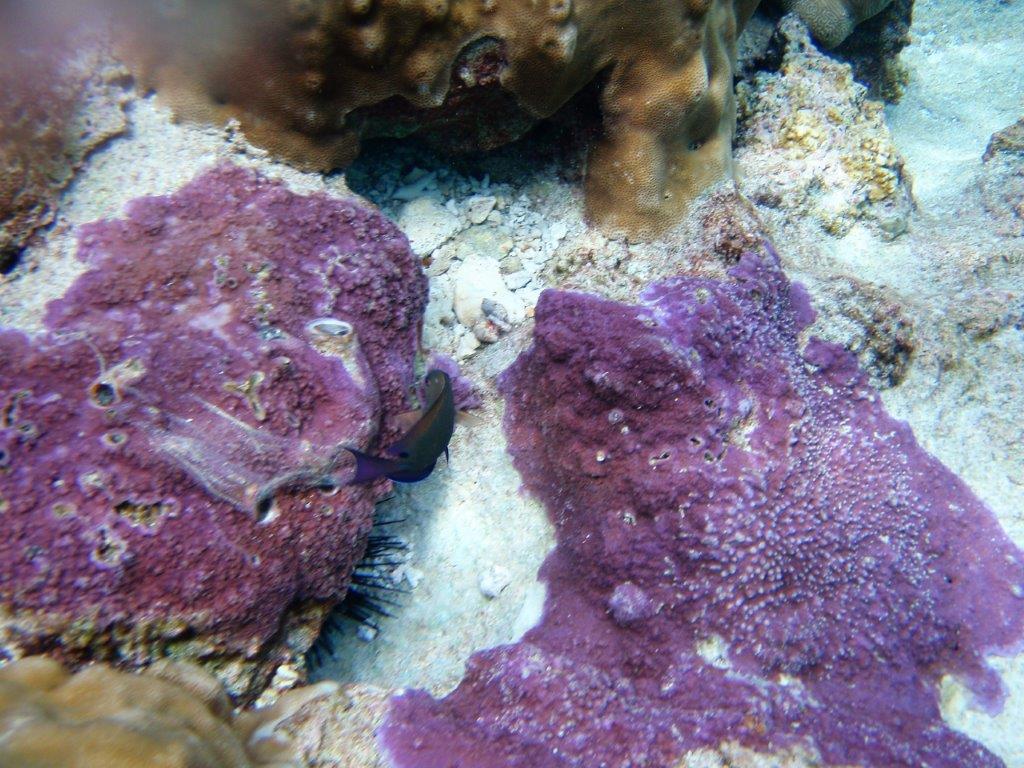
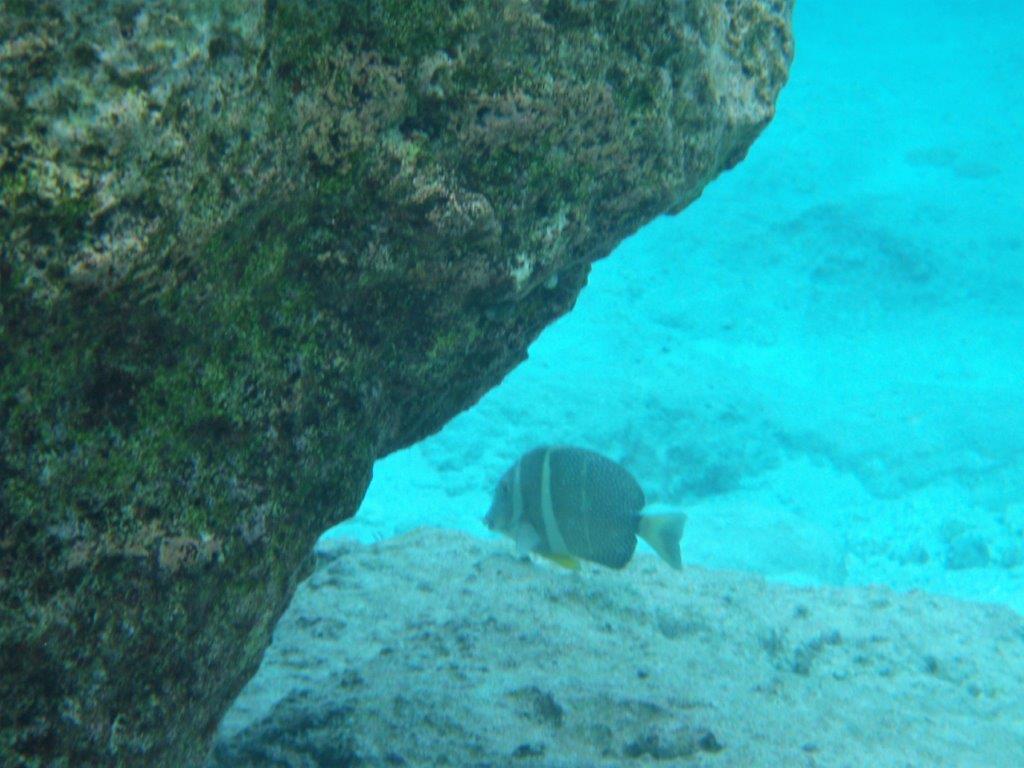
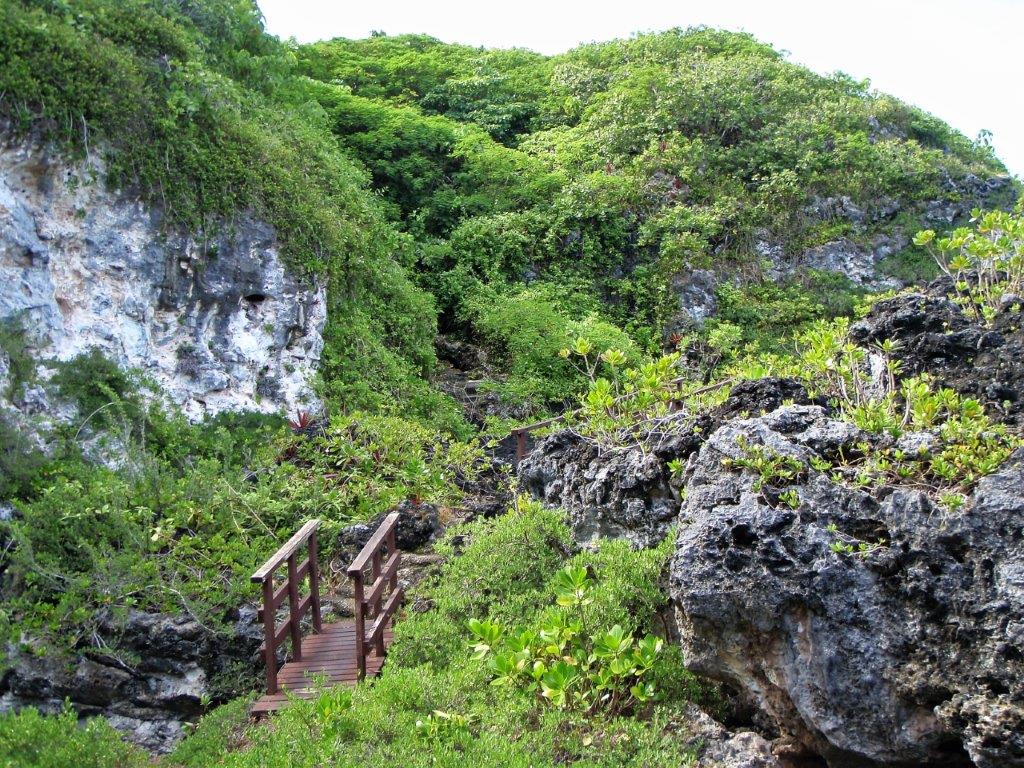
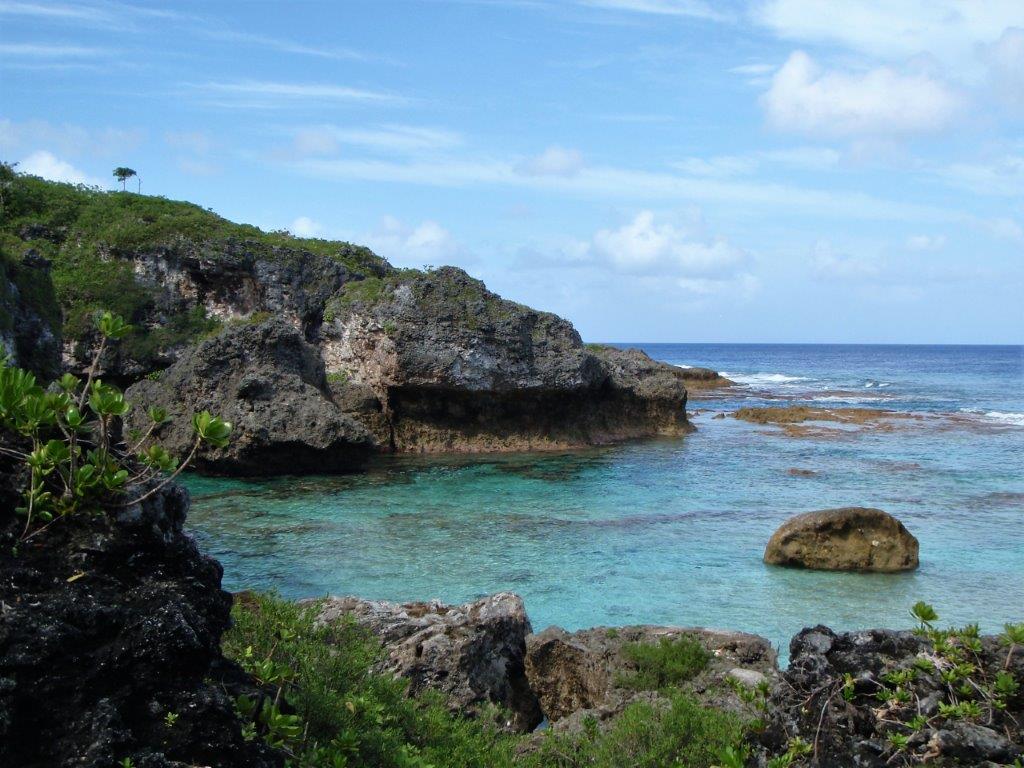
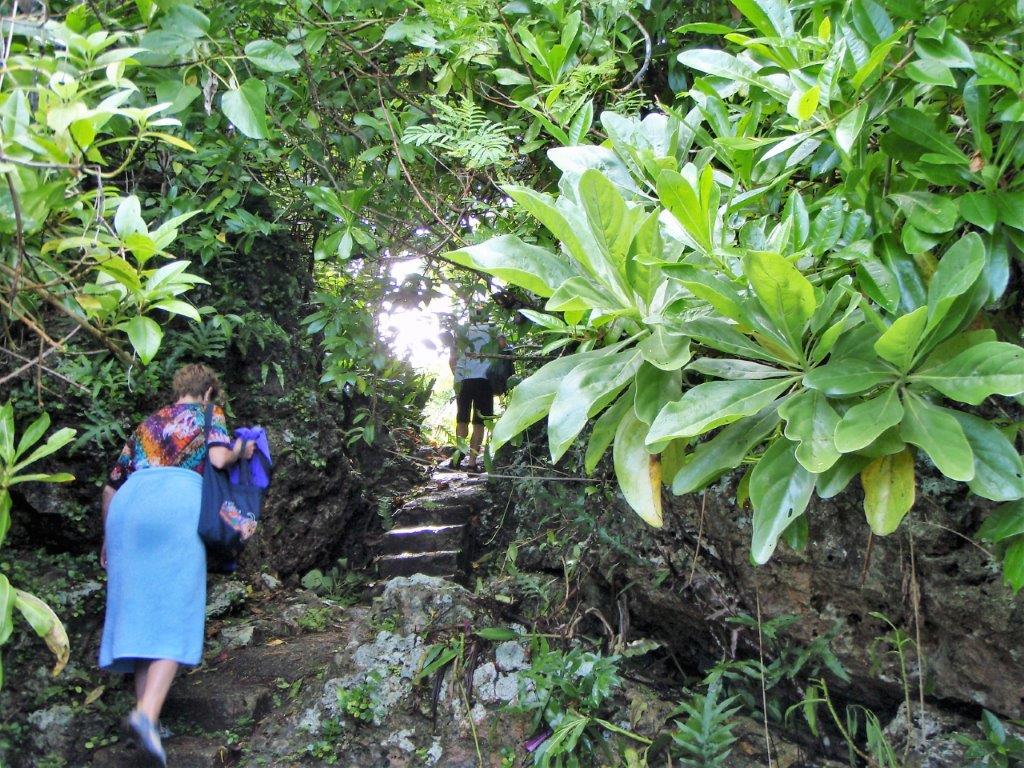
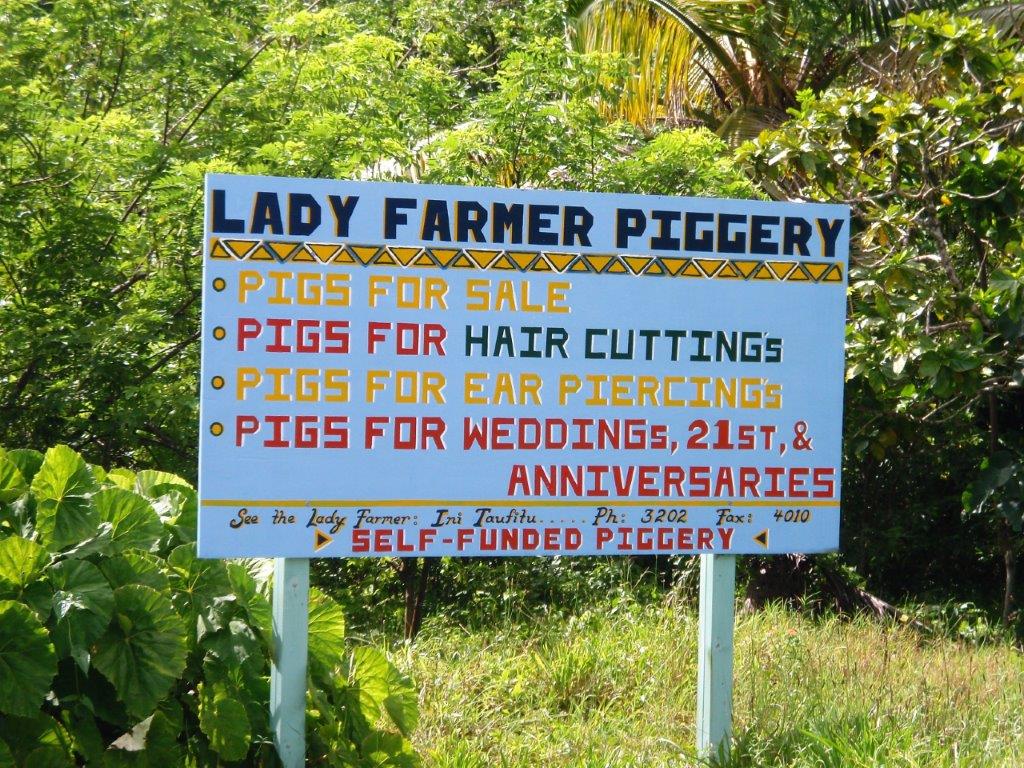
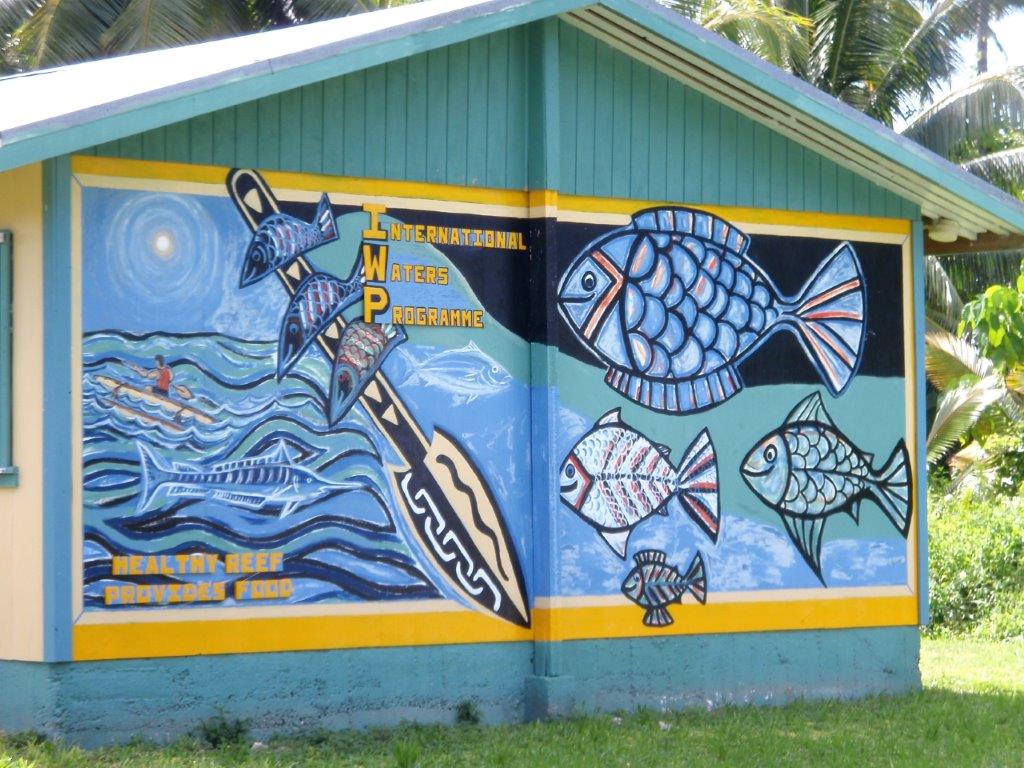
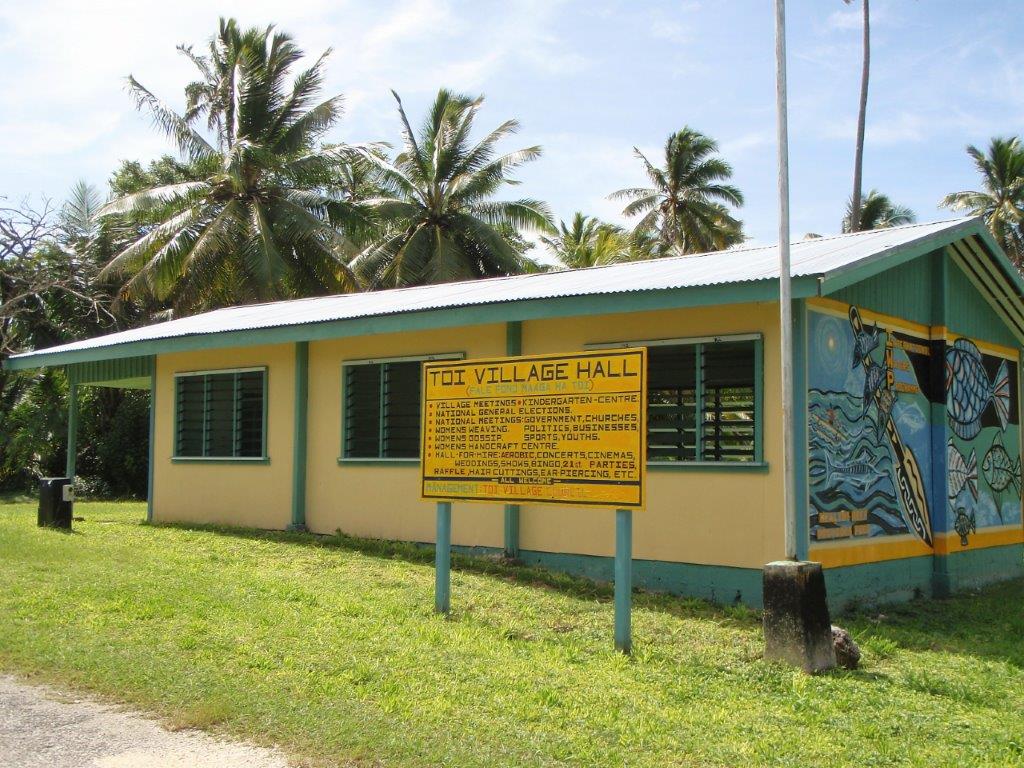
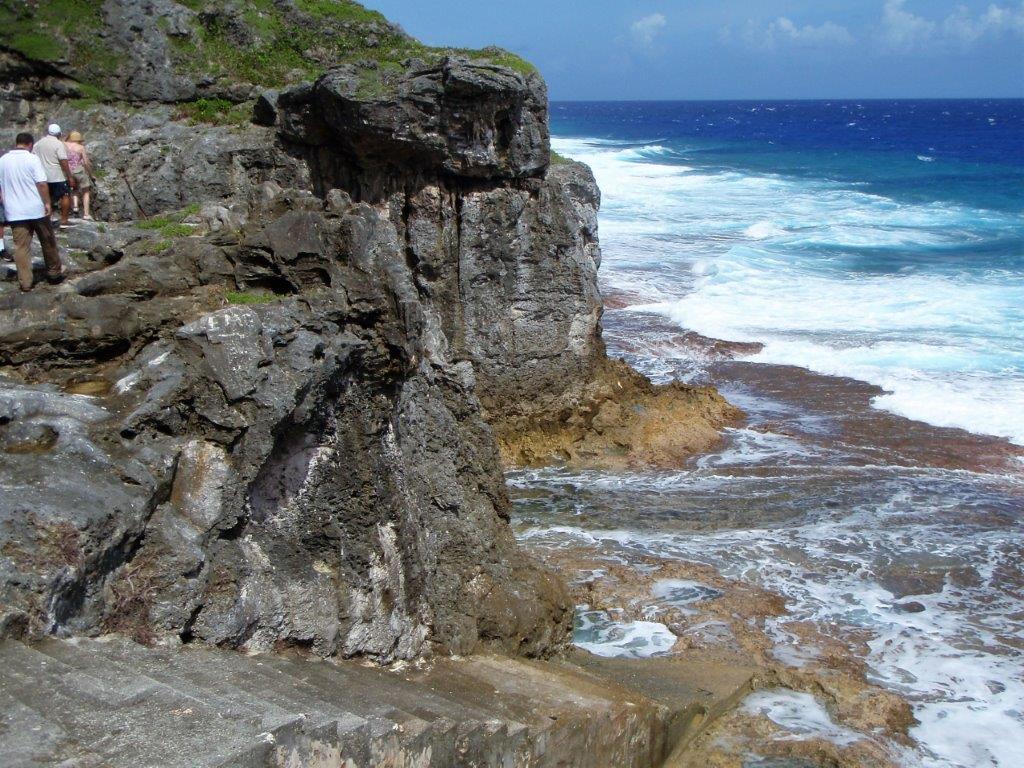
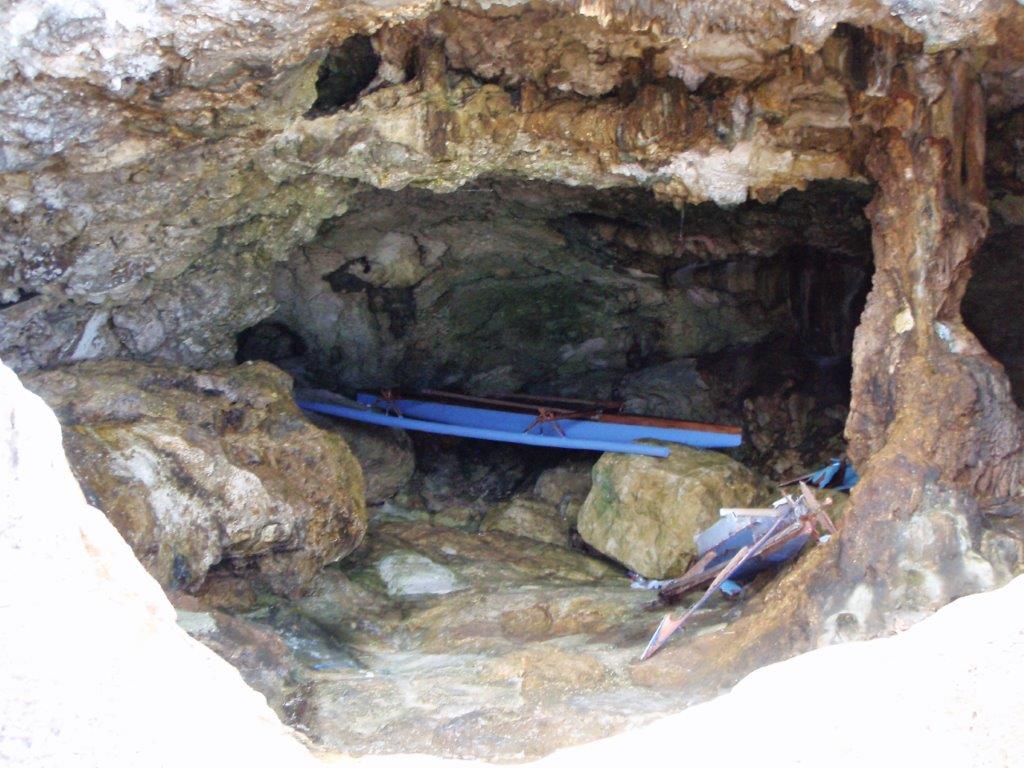
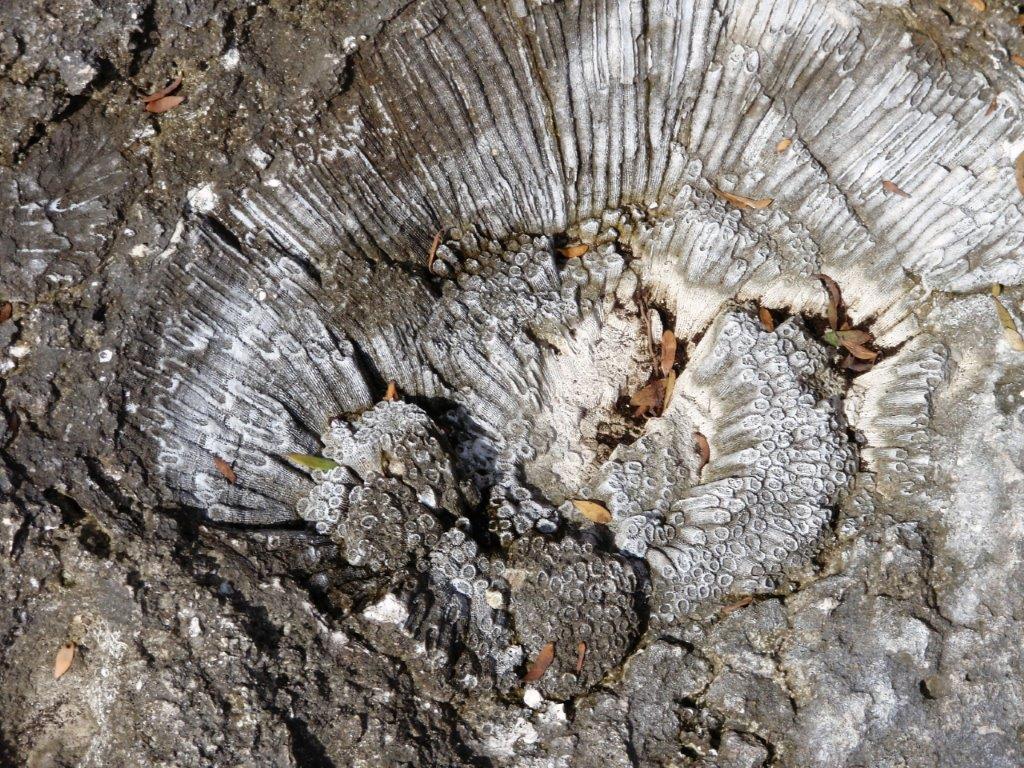
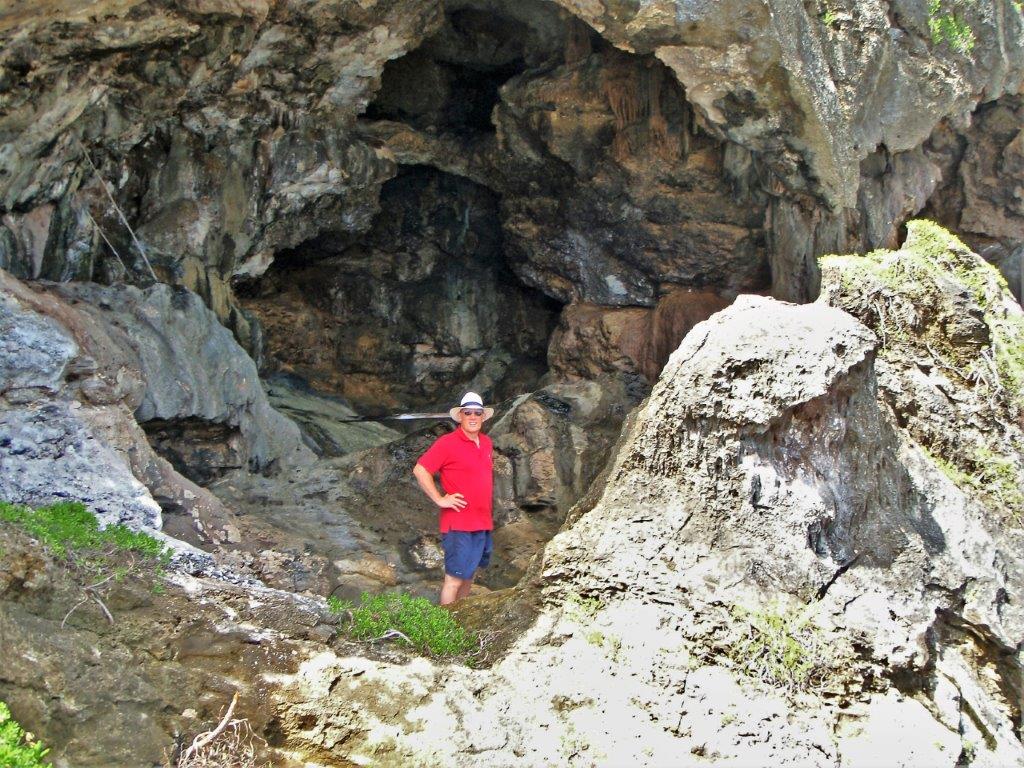
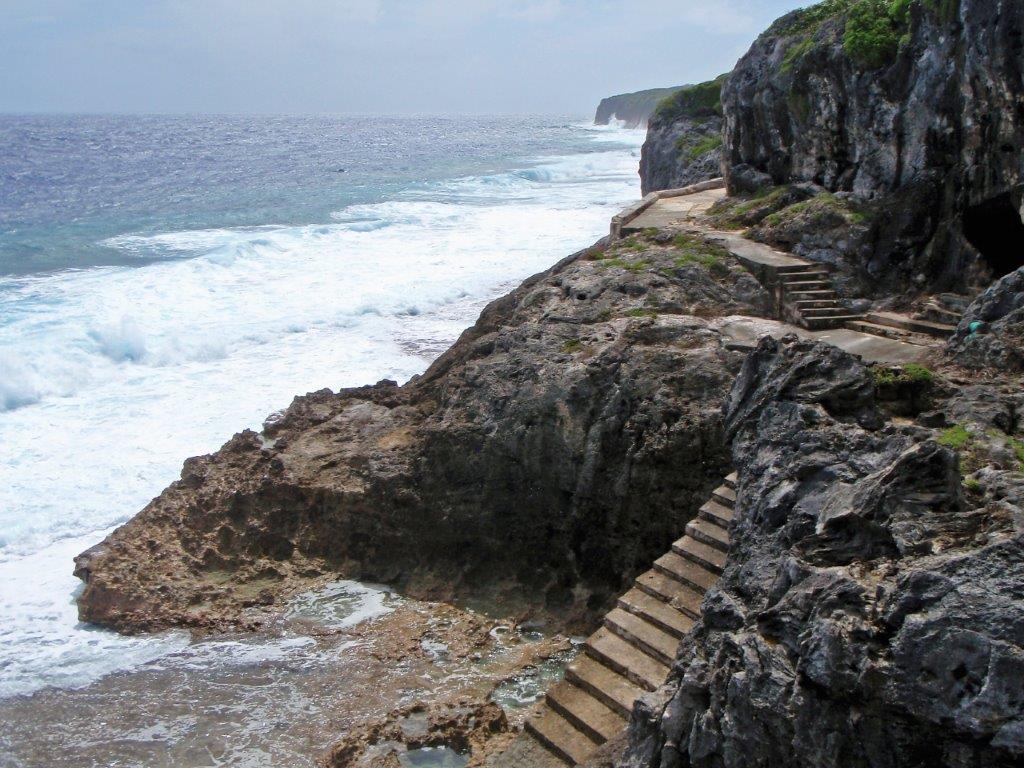
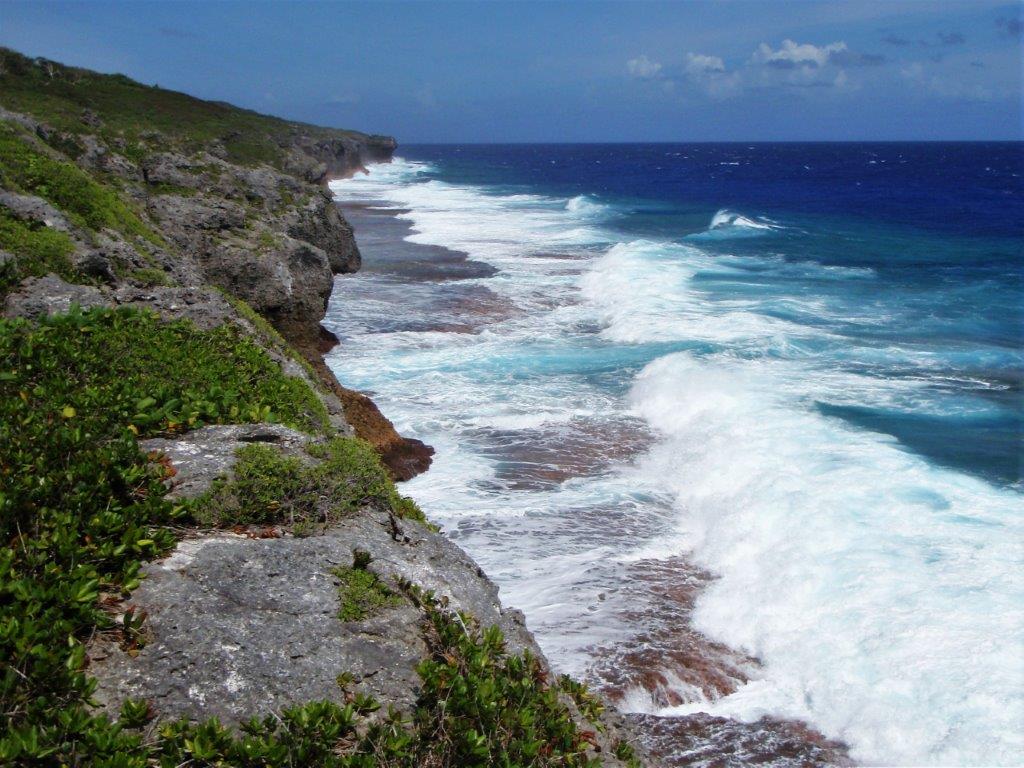
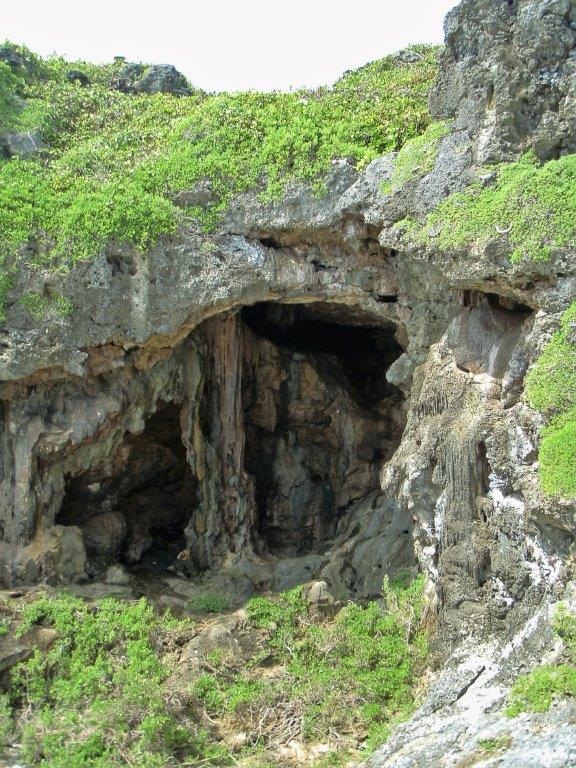
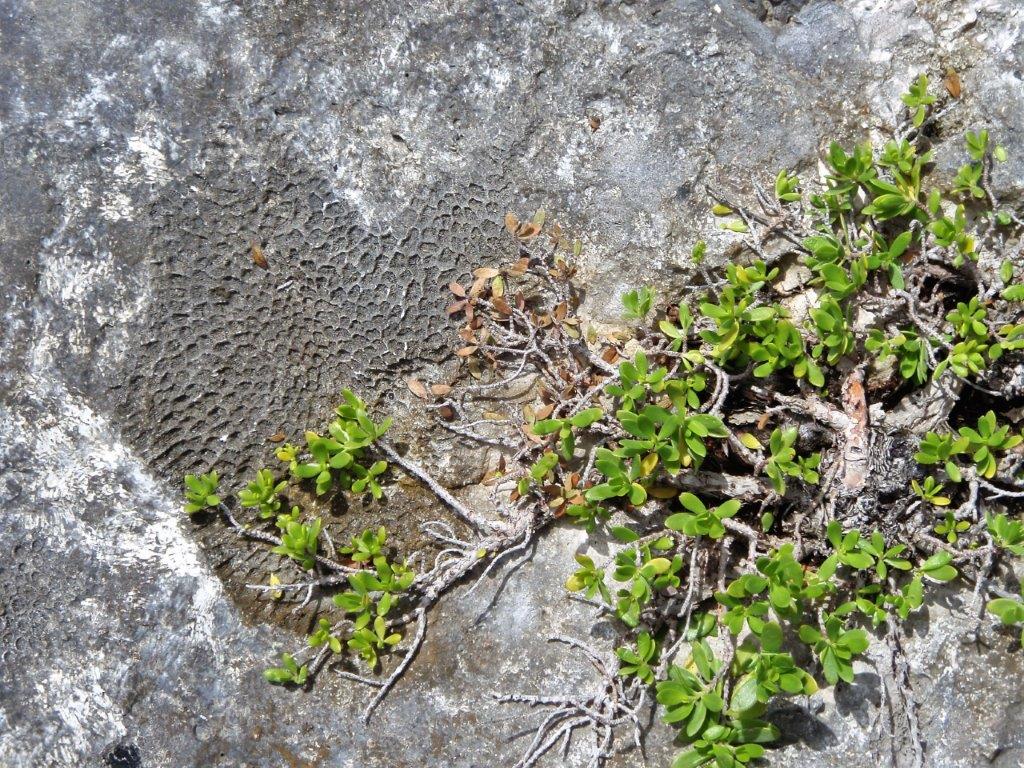
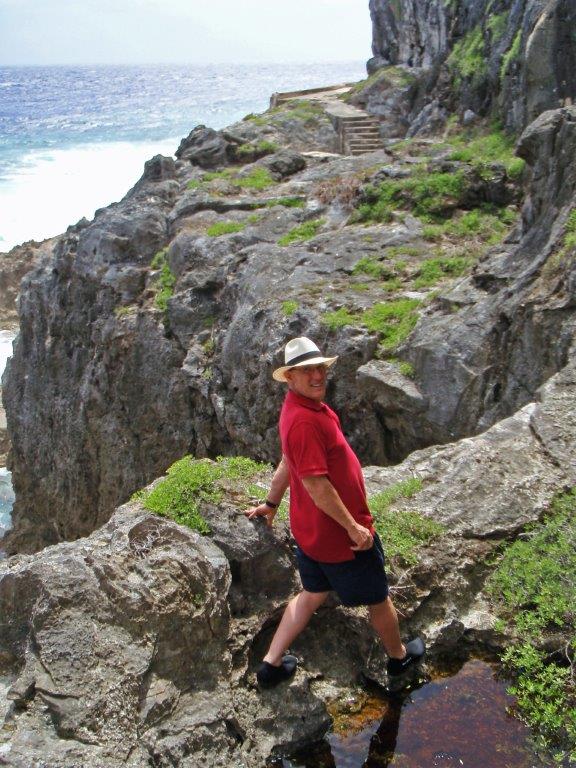
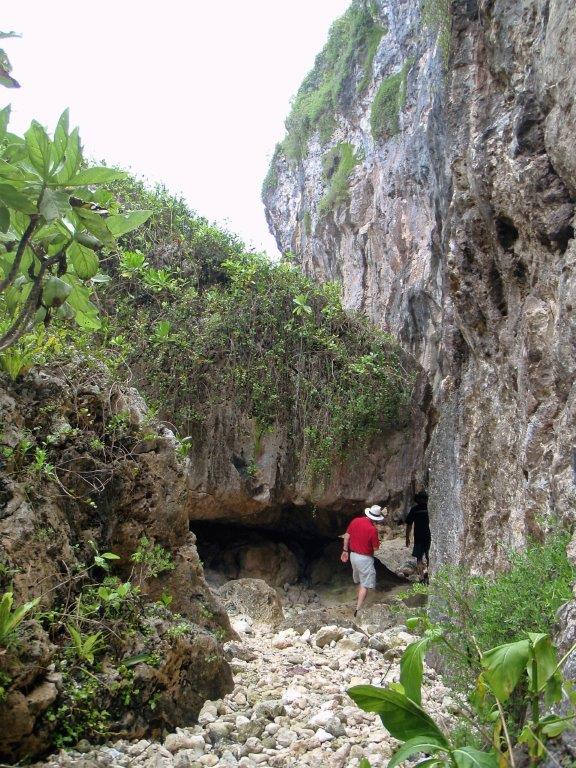
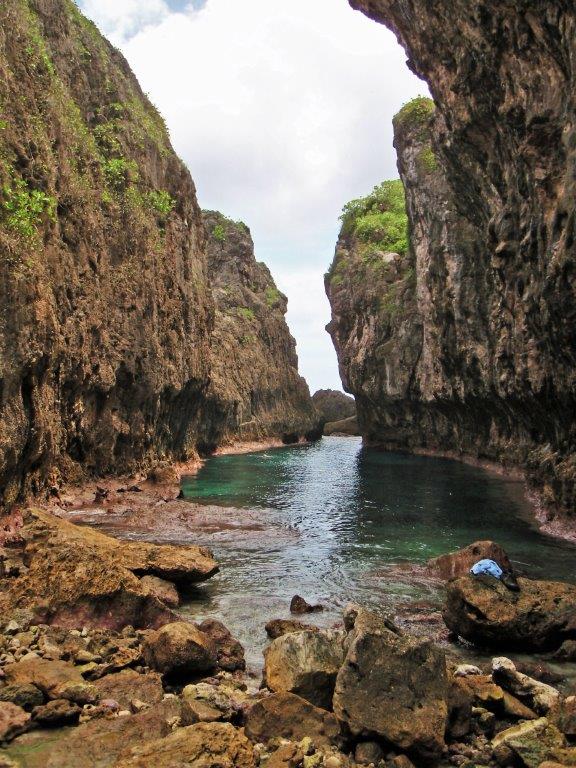
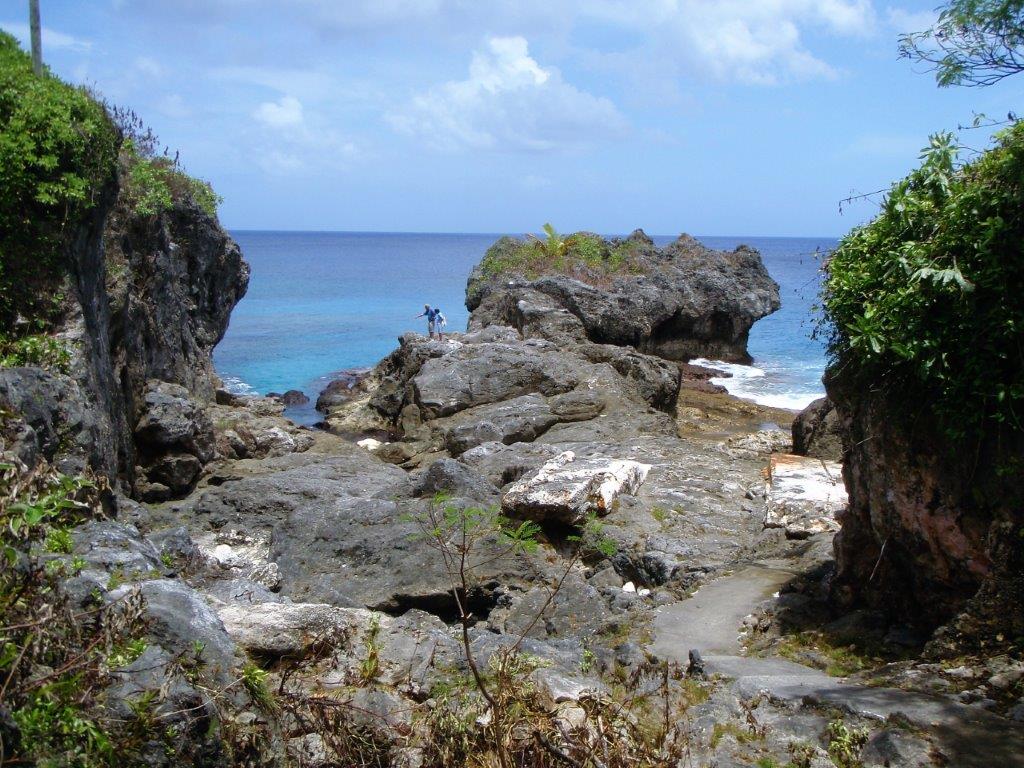
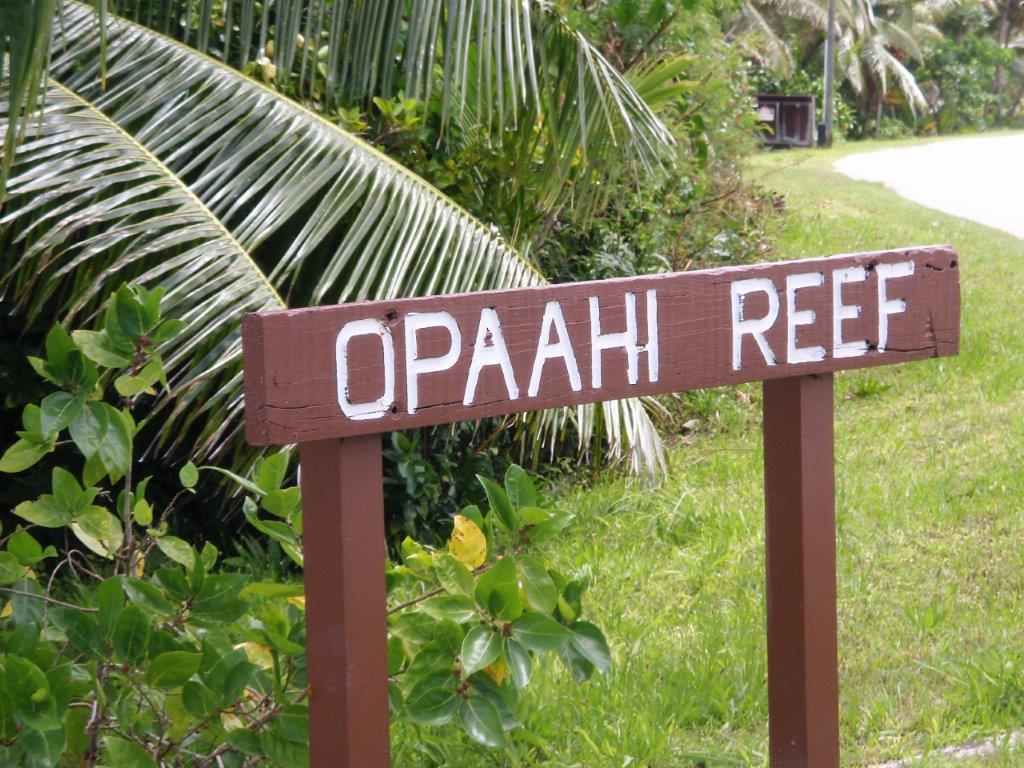
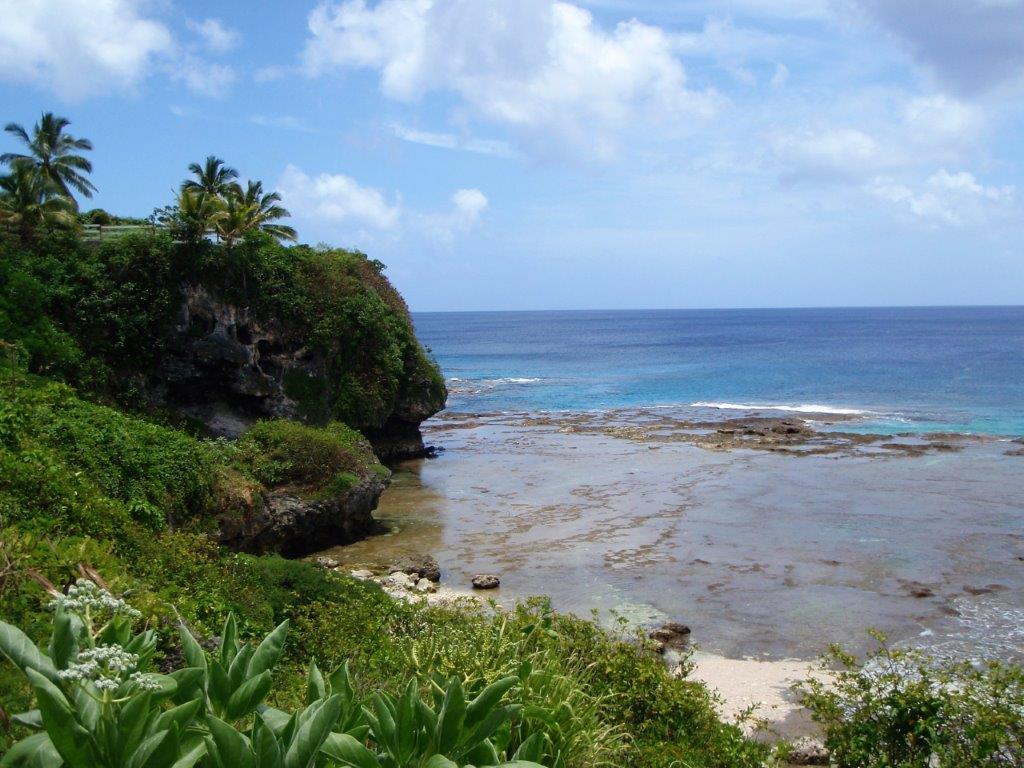
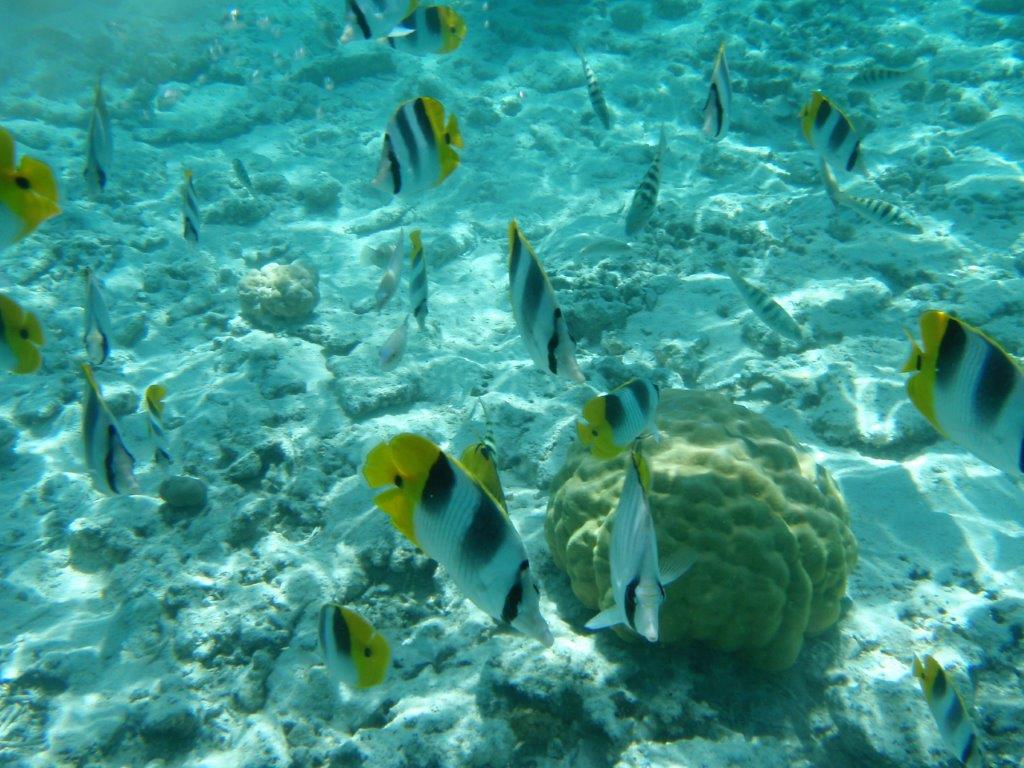
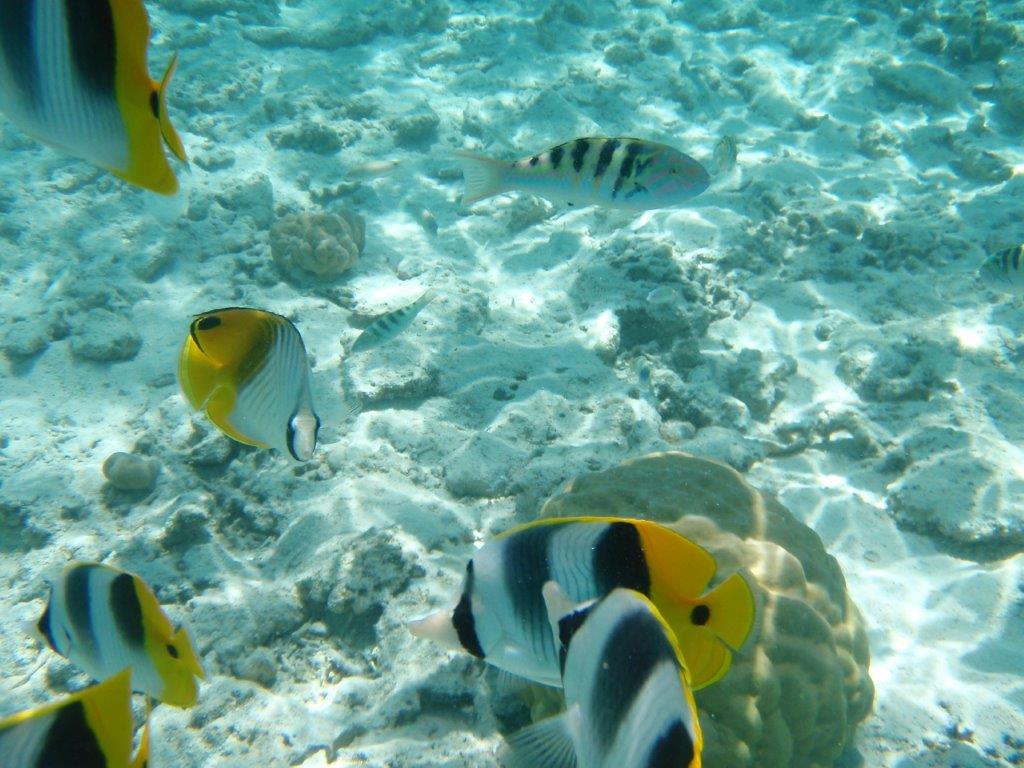
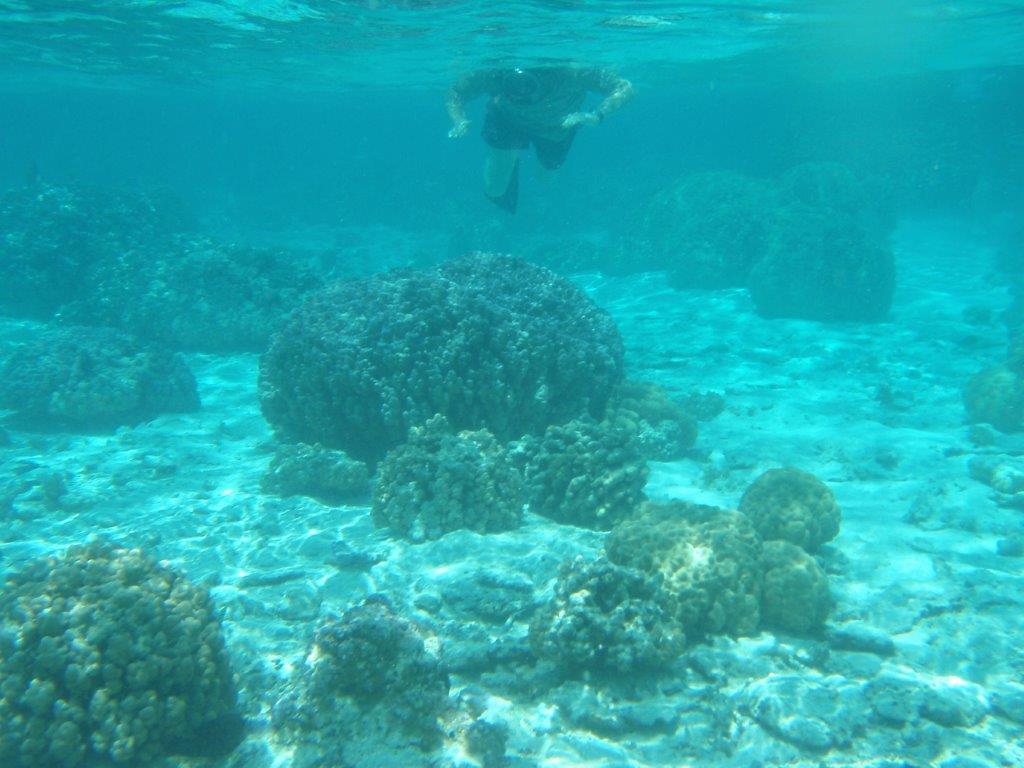
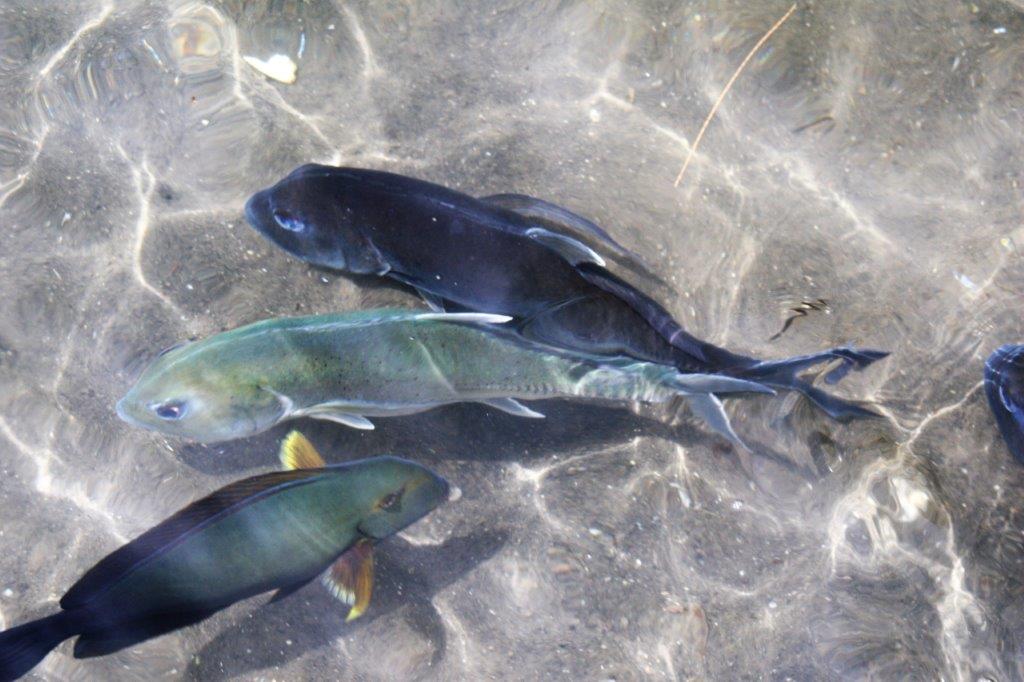
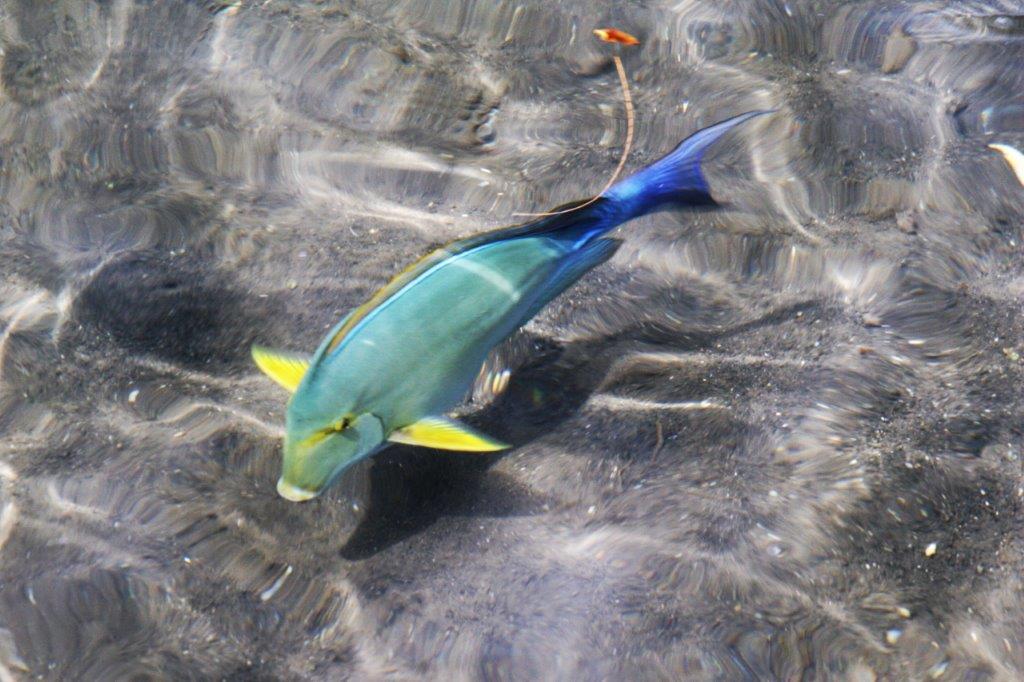
It was a bit of a clamber through the jungle and over uneven rocks to arrive at the cove but it was a beautiful spot. Susan told us there would be some sea snakes in the water but that they were harmless and shy so they would not bother us.  We had a good time following the fishes and one of the snakes and seeing some brightly coloured coral. After we had finished snorkeling Susan drove us to some of the island sights and points-of-interest.  I loved the signage. We did a cliff-side hike to a lovely viewpoint on the north side of the island.  Interesting fossils embedded in the limestone. Such a beautiful coast. Not very hospitable though.  There is only one opening in the reef that is safe to take boats through.  The entrance to Matapa Chasm is quite well hidden if you don’t know what you are looking for.

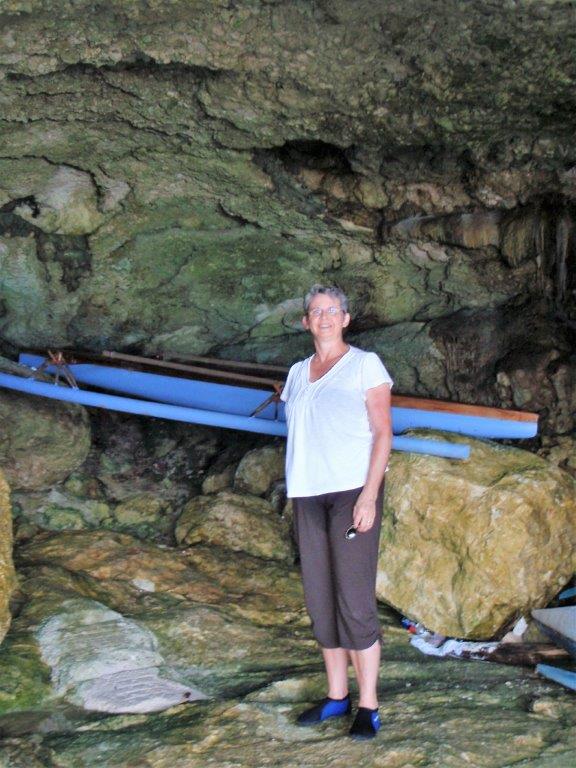
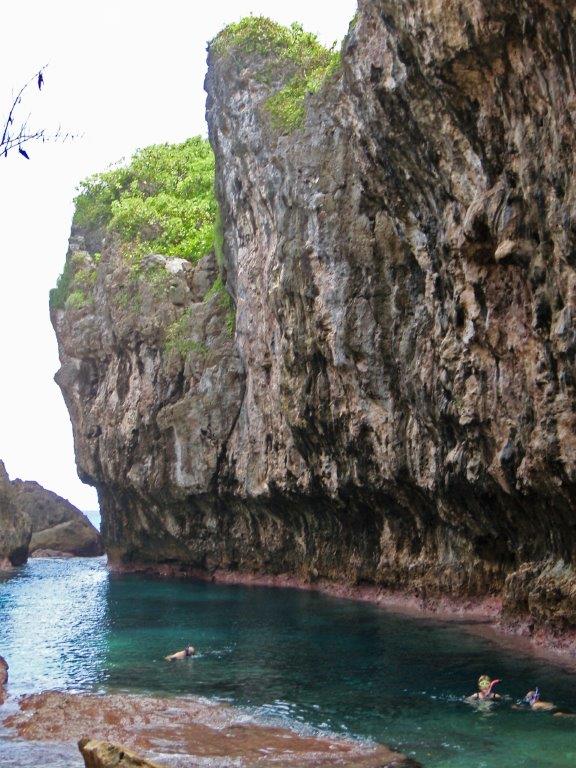
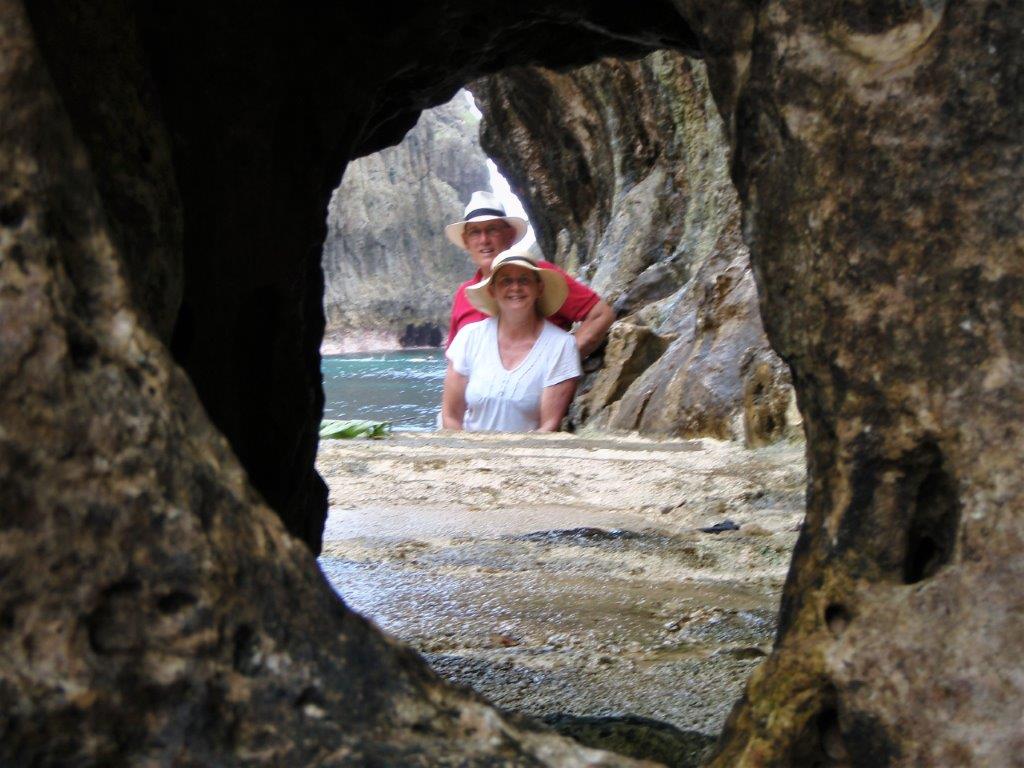
The sheer cliffs and massive boulders protect the pool from the sea. Mel and Kelley did a bit more snorkeling and we wandered around and took photos.

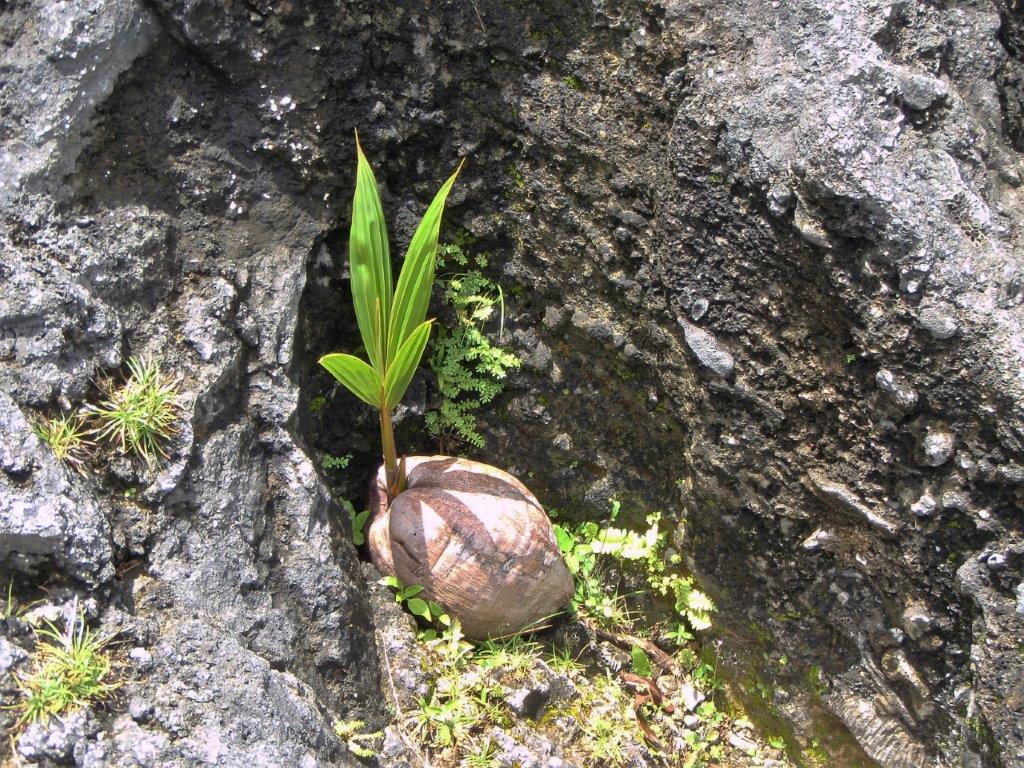
Behold the coconut palm.After that Susan took us back to town where we had a wander around before catching a tender back to the ship.  Last tender was 1:30 and the ship set sail at 2. On the way to our table for dinner that night we stopped to show our friends Harold and Martha (from Australia – we also met them on the 2009 world cruise) our photos of the fish and sea snake that we had seen.  Harold immediately exclaimed, “That is one of the most venomous snakes in the world.  There is no antidote and you will be dead in a short time.”  Well, that was a bit of a shocker.  Turns out he is correct but the snakes are still considered harmless because they are totally non-aggressive, pretty much always swim away from people and, on the rare occasions they do bite, rarely inject venom.  Not sure I would consider them harmless though.That night as the ship sailed westward, we crossed the International Date Line.  We went to bed on February 1 and woke up on February 3 and a stop at the last of the South Pacific islands before we reach New Zealand.

2011 January 30 – Day 26 – Avatiu, Rarotonga, Cook Islands

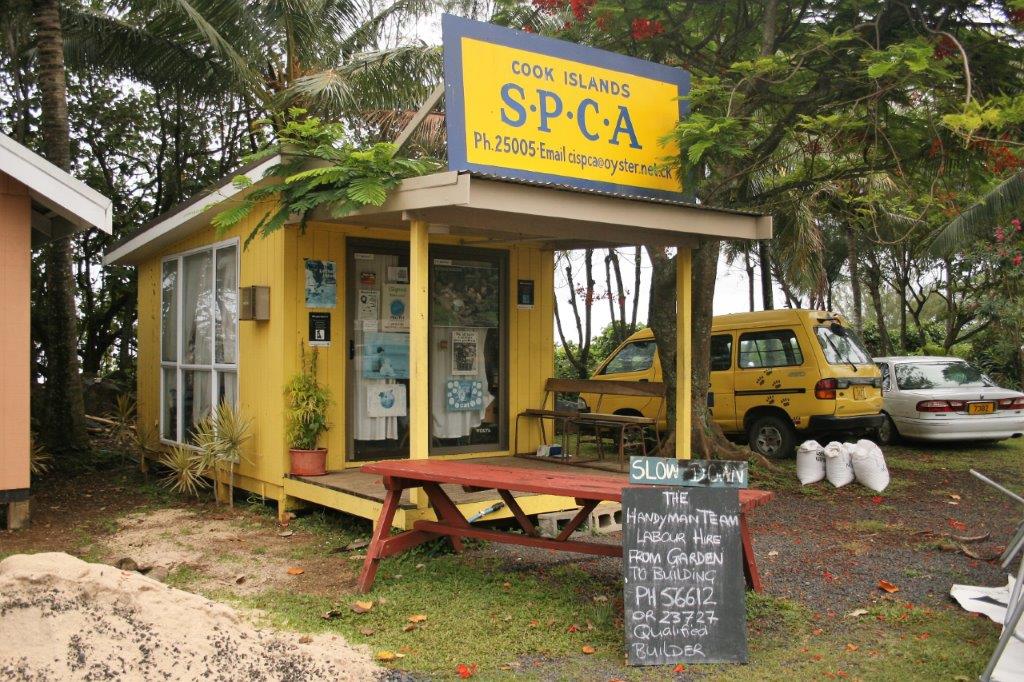
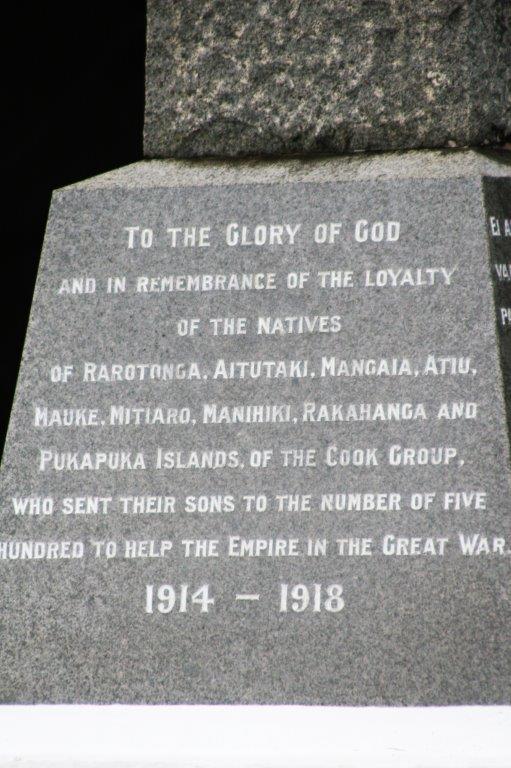
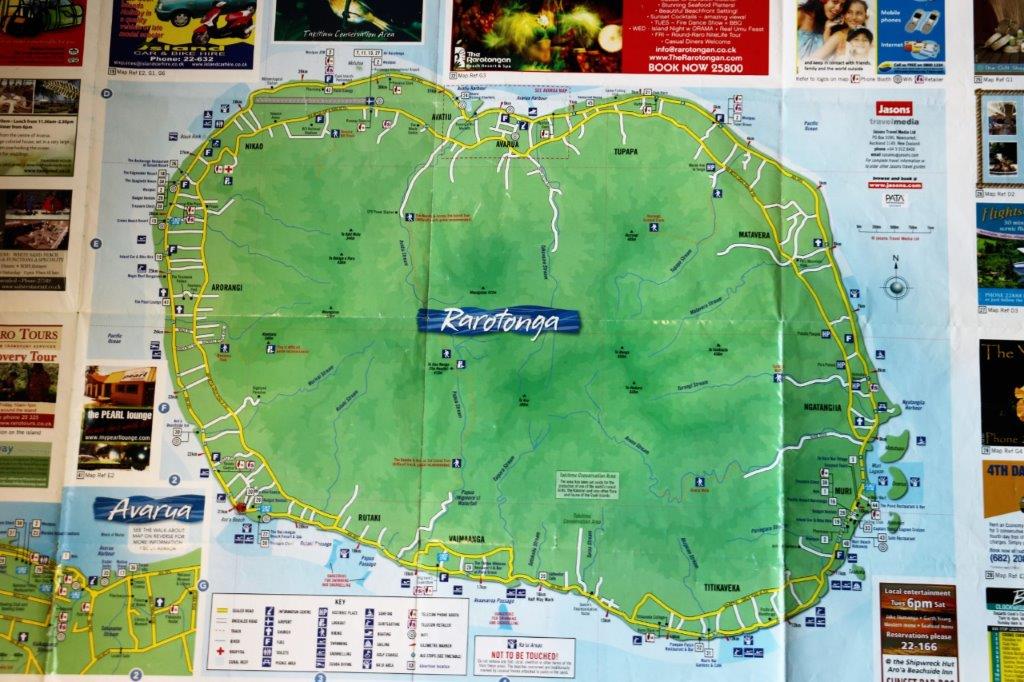
About 1,300 people live on the island of Rarotonga.   The archipelago of the Cook Islands is comprised of 15 islands.  Captain James Cook charted the remote group in 1770.  The islands are spead across 768,800 sq miles (2,000,000 sq km) of open sea, so Cook did very well to locate and map them all.  The capital is Avarua, which is not too far from the dock at Avatiu Harbour where the tenders ran between ship and shore all day.

The Cook Islands were once a New Zealand dependancy and is now a nation in its own right.  They do however still mainly use New Zealand currency.  There is Cook Island currency but it has no international value so if you have change it cannot be turned back into US or Cdn dollars. The Cook Islands have, so far, been fairly unaffected by the rise in international tourism.  There are no large hotels or resorts, no beach buggies, no traffic jams.  This also meant that there were no shore excursions offered.  We arrived on another rough sea day so our plans to hire a boat with friends and go snorkeling had to be shelved.  The 10′-12′ swells made the tender ride and docking process pretty exciting.  It was also Sunday and since the majority of the island people are very devout Christians everything was closed.

This tree is in the center of a round-about.  It is the Seven-in-one-Coconut Trees.  Depending on who you talk to it is either a single plant with seven shoots, or seven separate coconut palms.

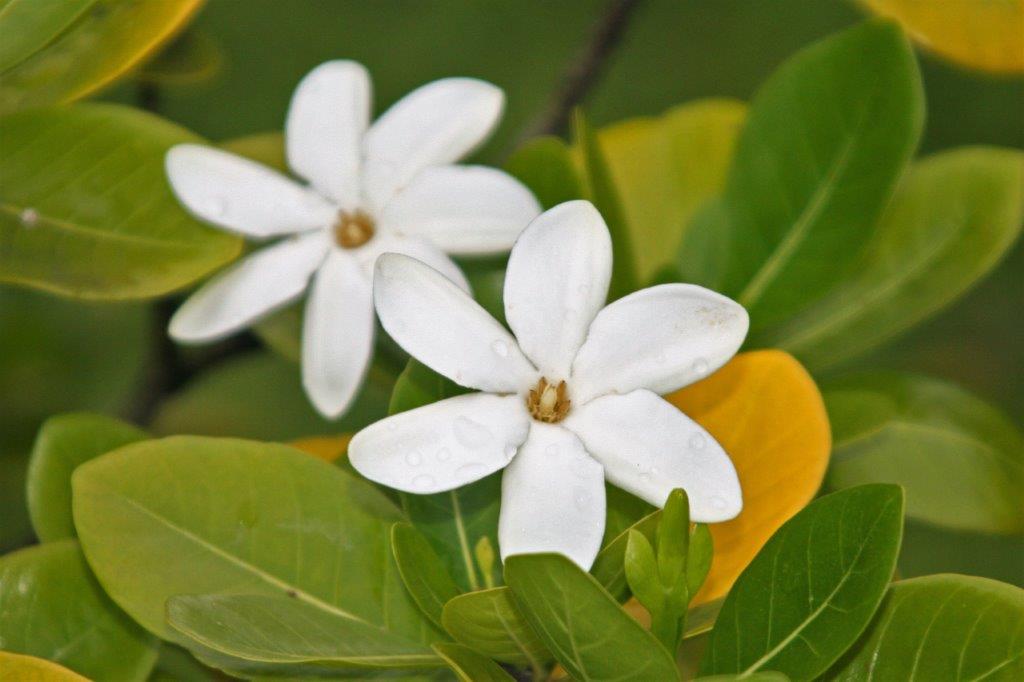
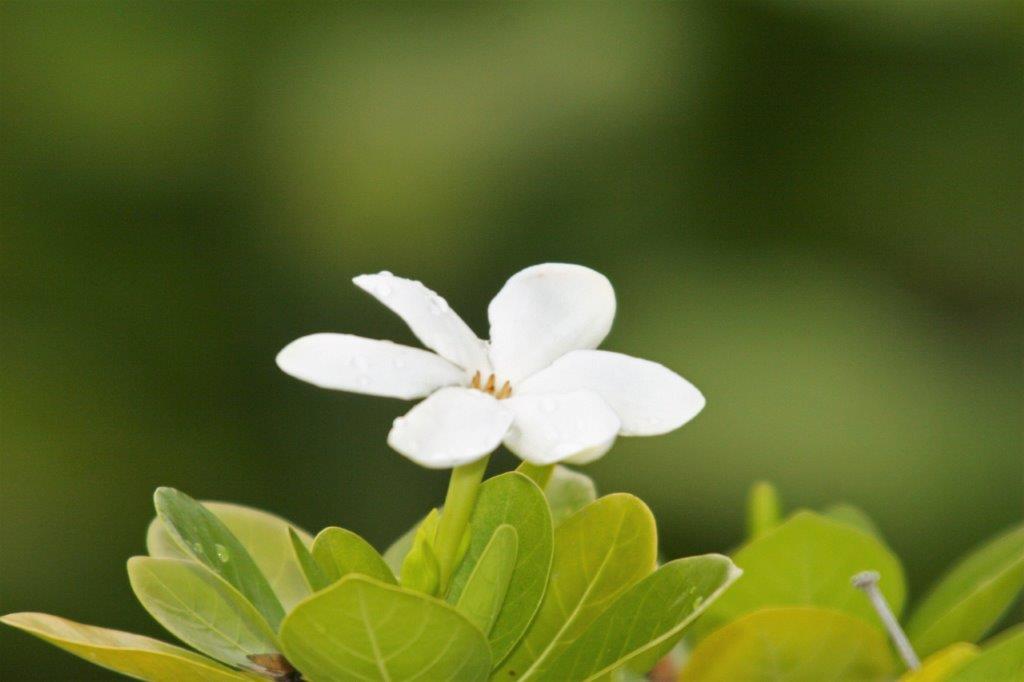
Once again lovely tropical flowers were everywhere. Tiare Maori – the national flower

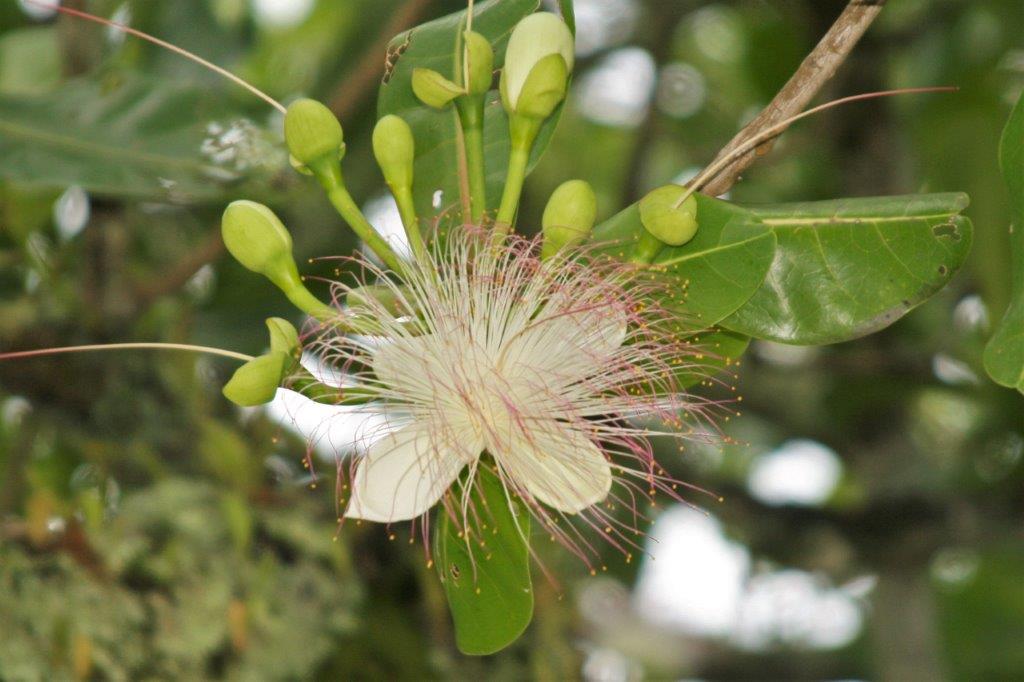
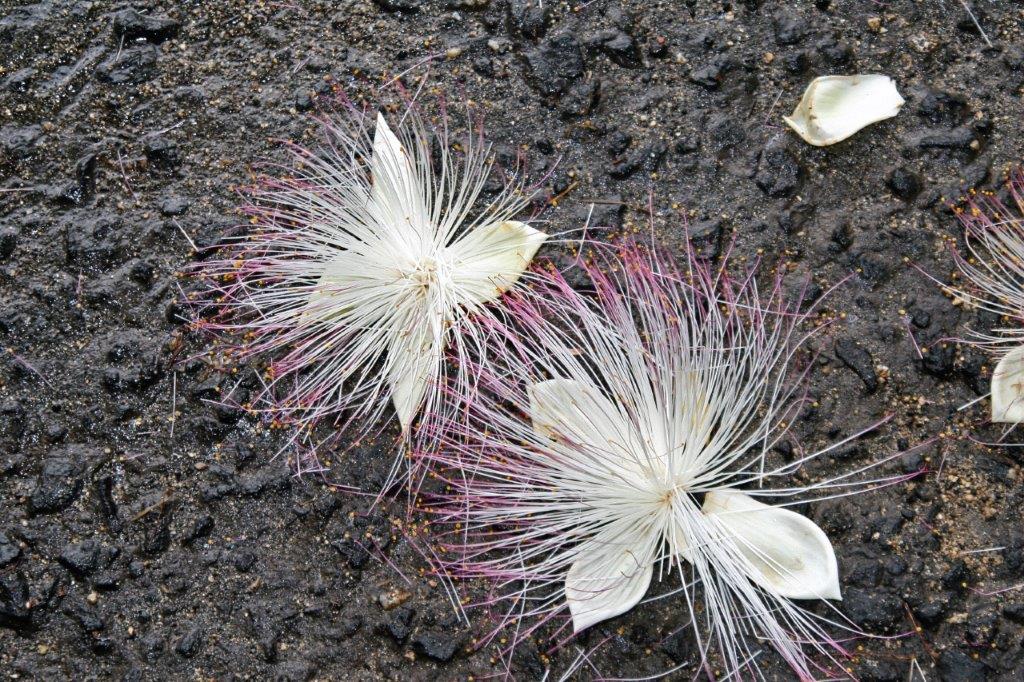
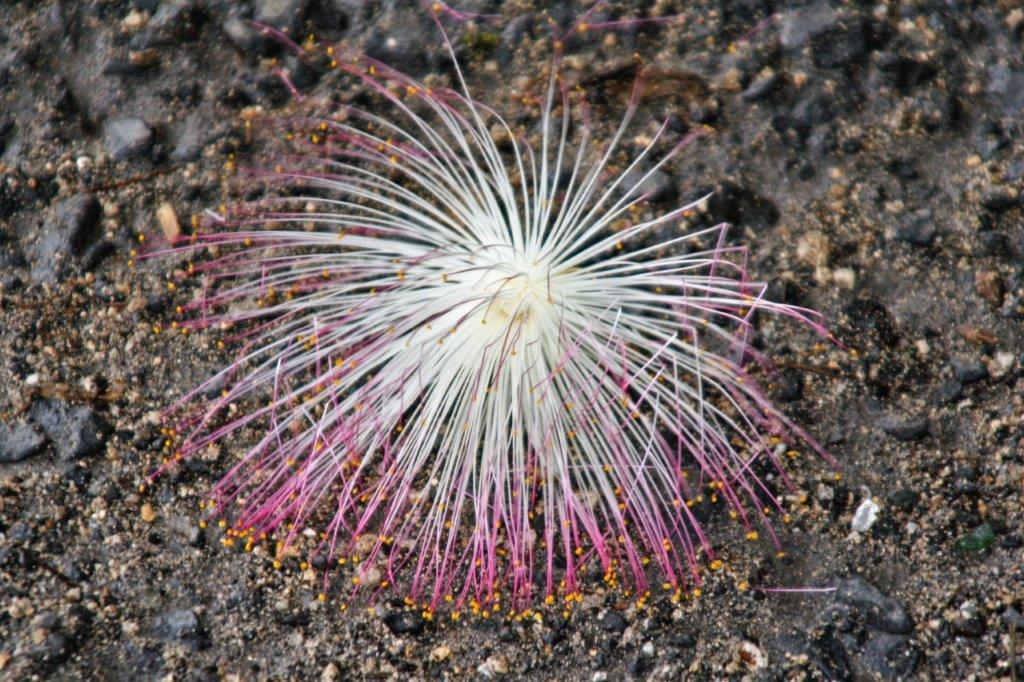
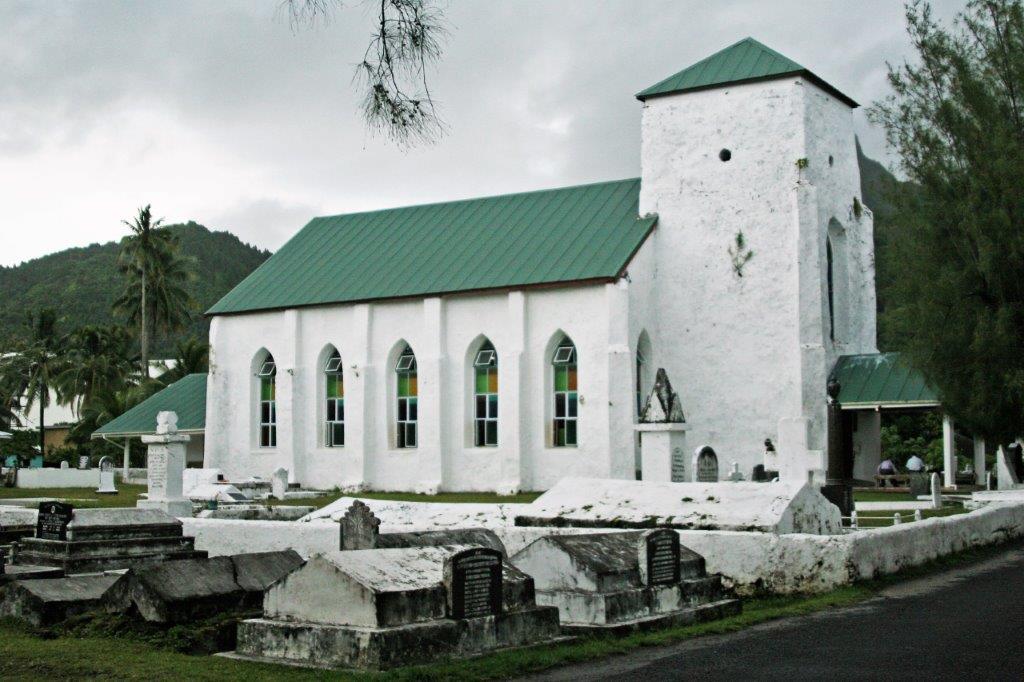
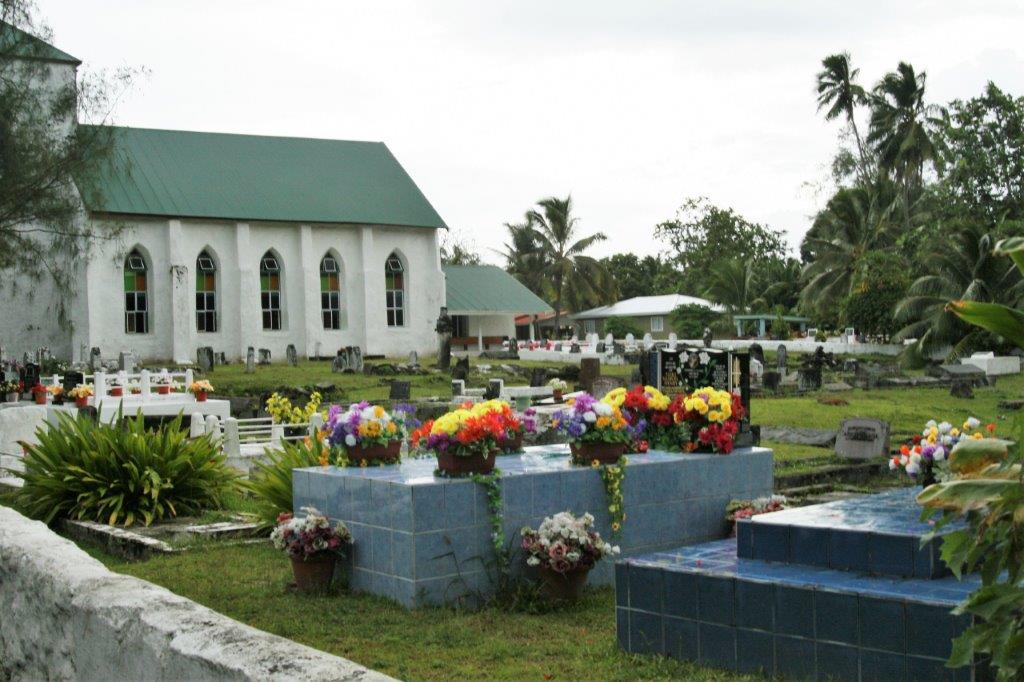
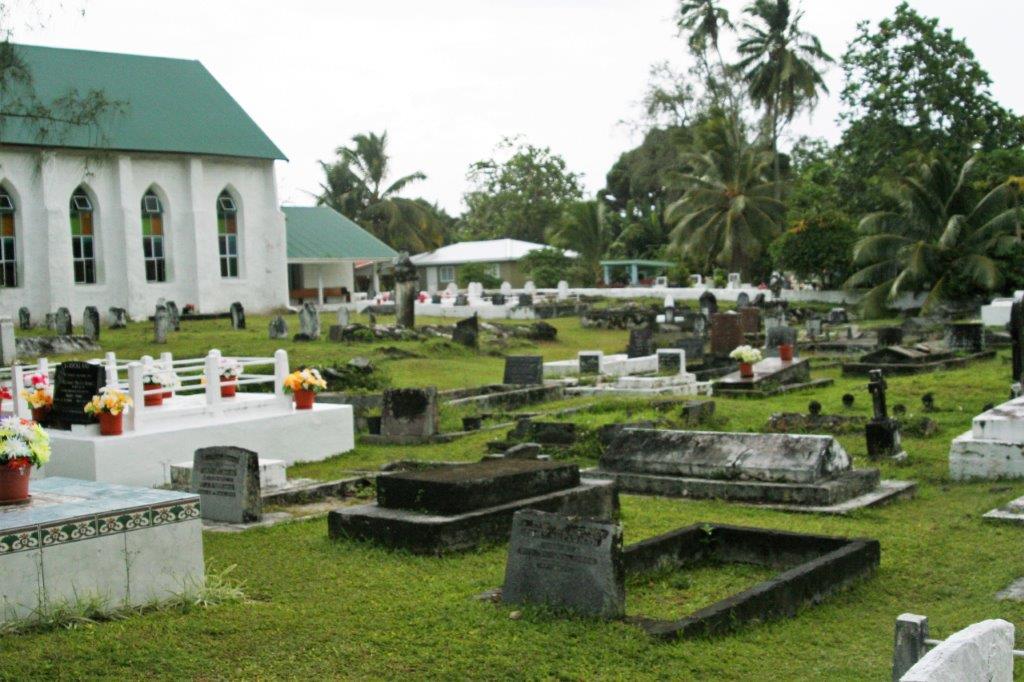
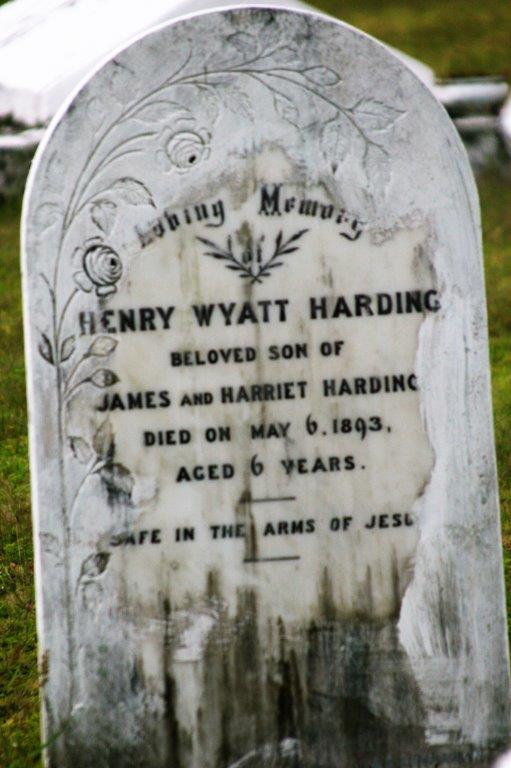
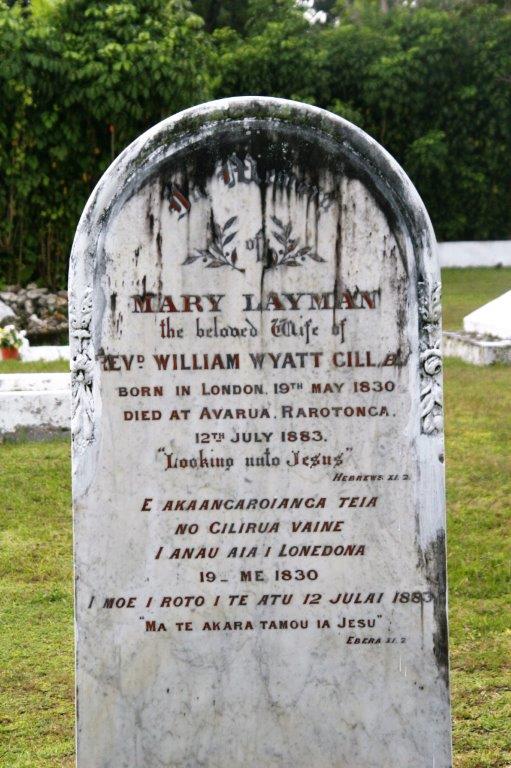
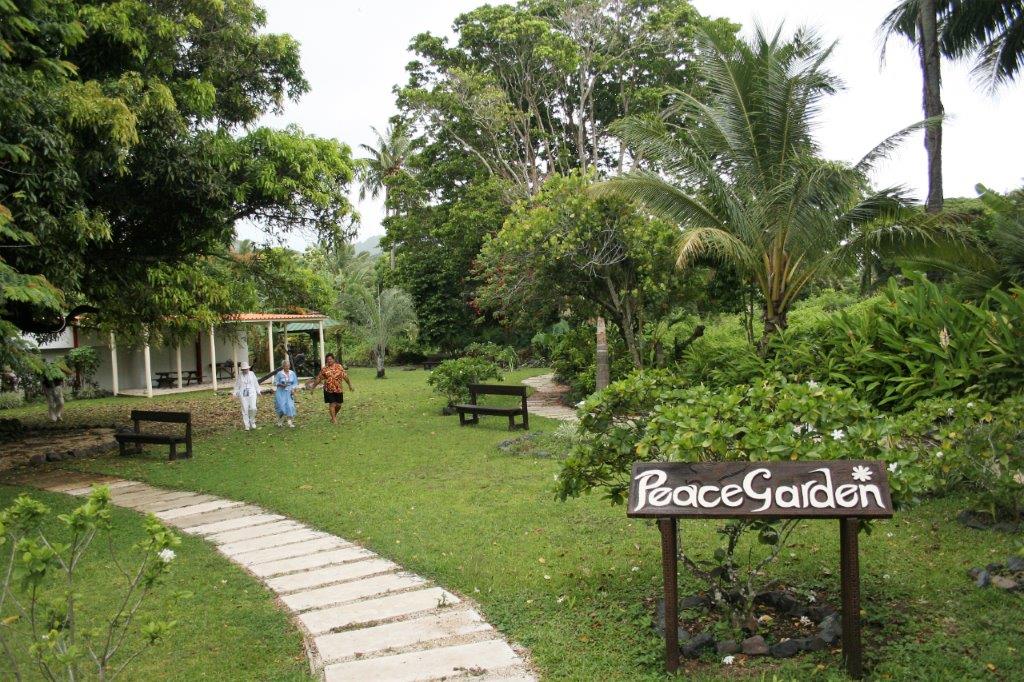
 Barringtonia – the blossoms are all over the ground in the mornings. We decided to go to church so we walked about a mile into town to find one.  Services at this church were held at 5:30 am, 10 am and 7 pm.  We were about a half hour early for the 10 am service so we wandered through the cemetery and a Peace Garden across the road. We heard what we thought was the choir rehearsing so went in to listen only to find that there was just a handful of people; but they sounded like an entire choir they sang so beautifully.  By 10 the floor space and the balcony were packed.  The entire one and a half hour service, including all the hymns – with no instrumental accompaniment, was done in Maori (native New Zealand language) so we didn’t understand a word but it was joyous and uplifting and the muli-part, harmonized singing was magnificent!

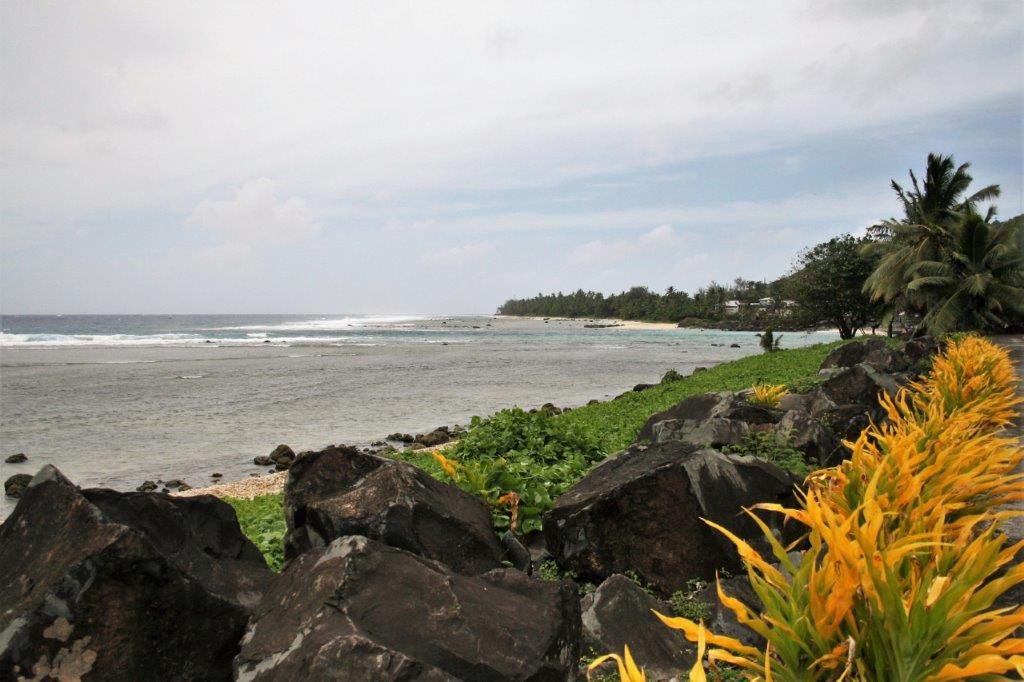
After church we went to a bus stop and took the bus around the island.  There are two roads that parallel each other; one on the coast and one inland about a half-mile.  Various side roads connect them here and there.  The buses run clockwise on the hour and counter clockwise on the half hour. It took two hours to circle the island on the clockwise bus. The sky was still overcast and the ocean was still heaving so, once again, the tender ride was an adventure.  The fellows that steer these tenders are very skilled at coming alongside a pier, and more risky most of the time, the ship’s landing platform. The water around these small islands is the most beautiful colors.

Sail away was delayed because one of the winches broke that are used to bring the tenders back up and we had to wait for it to be repaired.  Due to the rough seas two crew members were tossed into the water during the day’s tendering operations.  One was just fine and kept on working after he was grabbed by the life jacket and hauled back onto the platform.  The other fellow landed between the ship and the tender so it took awhile to navigate the boat away from the platform so he would not get crushed.  He went to the infirmary after inhaling some water but will fine.  There were also three guests off-loaded to hospital for various reasons.  By this time on the cruise we had already had two deaths and people have been taken off for illness or injury at several ports.  These cruise ships are like small towns and on the longer voyages injury, illness, and deaths are not uncommon; just as would happen over a several month period in a small town. After the winch was repaired and the tender brought aboard the captain ordered the anchor be hauled in and we set sail for Alofi, Niue where we will once again anchor offshore.  We had a day at sea to relax and be lazy before we reached Niue.

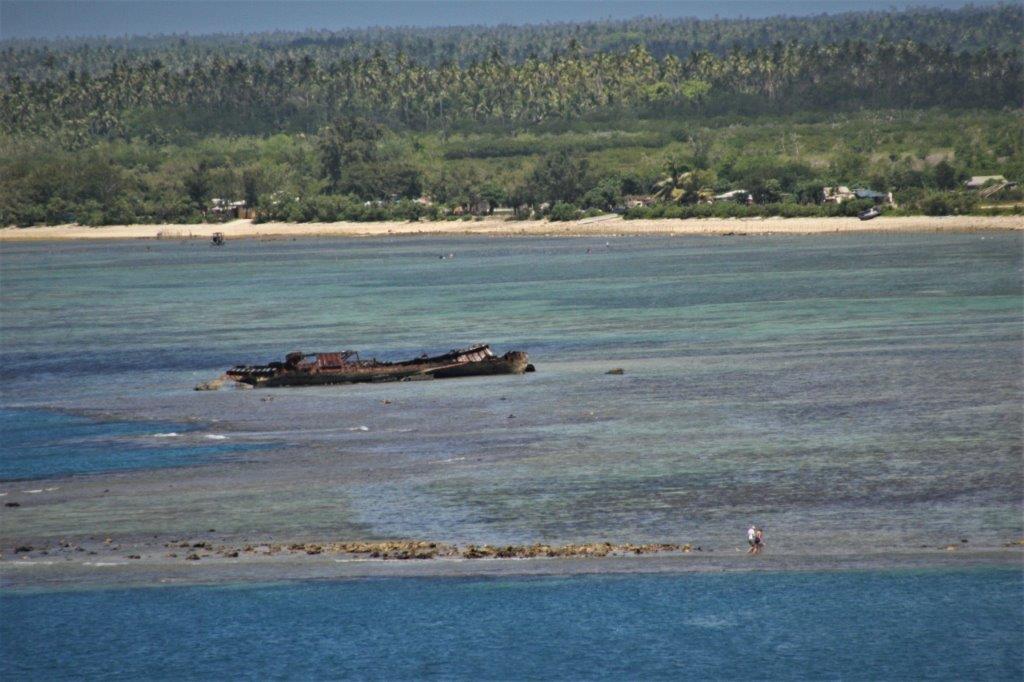
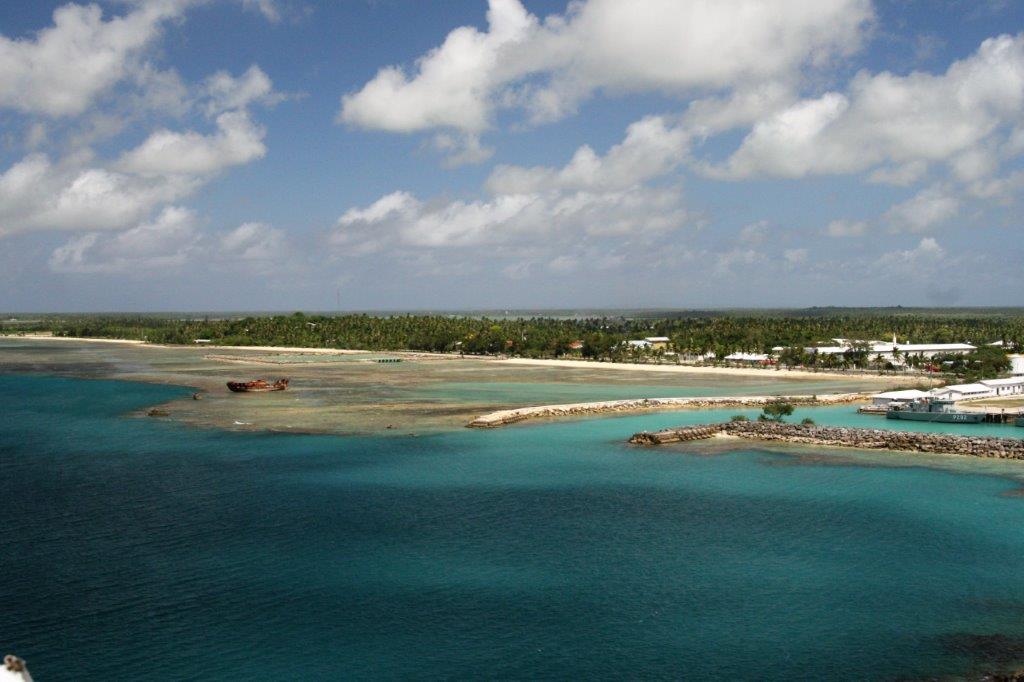
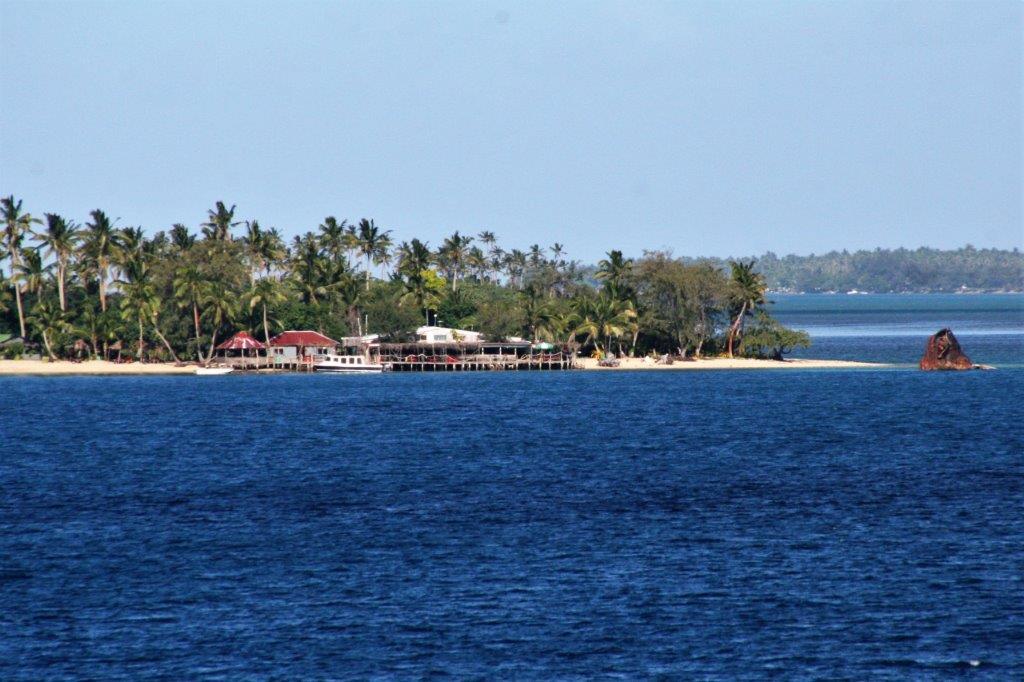
2011 February 3 – Day 29 – Nuku’alofa, Tonga

Tonga was our last South Pacific island port-of-call.  We then had two days at sea before a marathon of 8 consecutive days in the ports of the North and South islands of New Zealand.

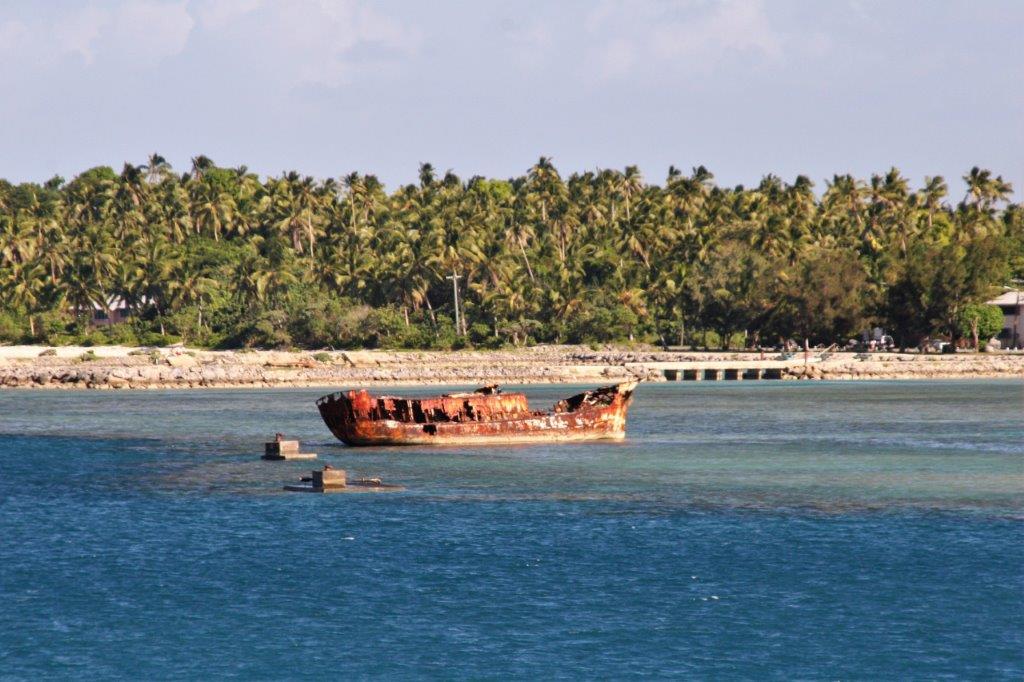
Tonga (comprised of about 100 islands) is a monarchy and the poorest of the South Pacific Islands so the influx of dollars brought by a cruise ship is very welcome.  Many of the islands are virtually flat and the high points that they do have are only about 200′ above sea level.

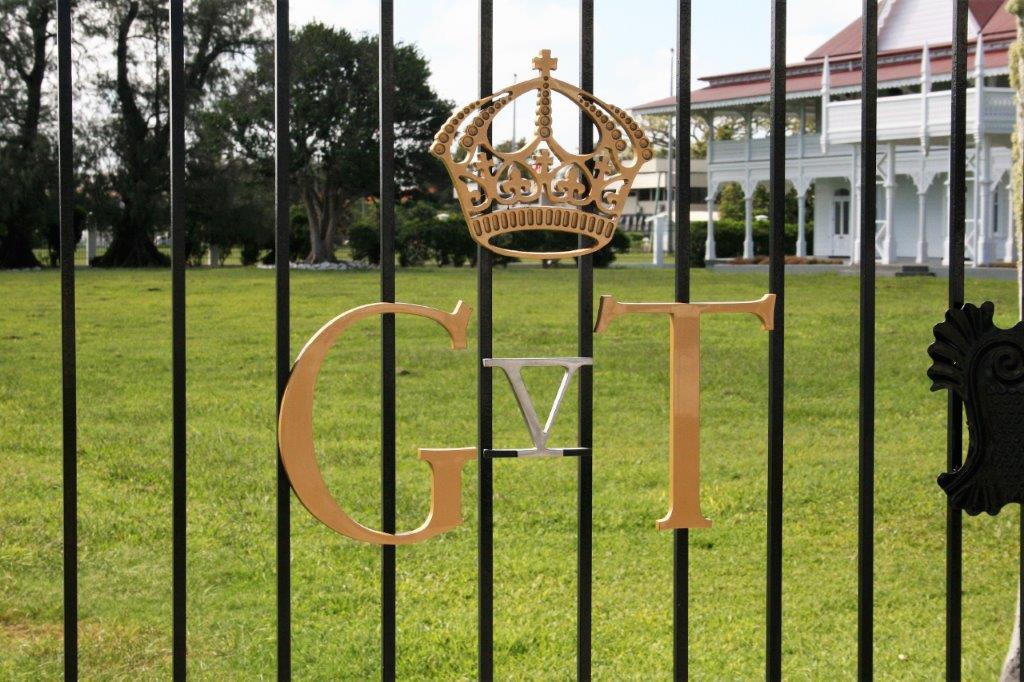
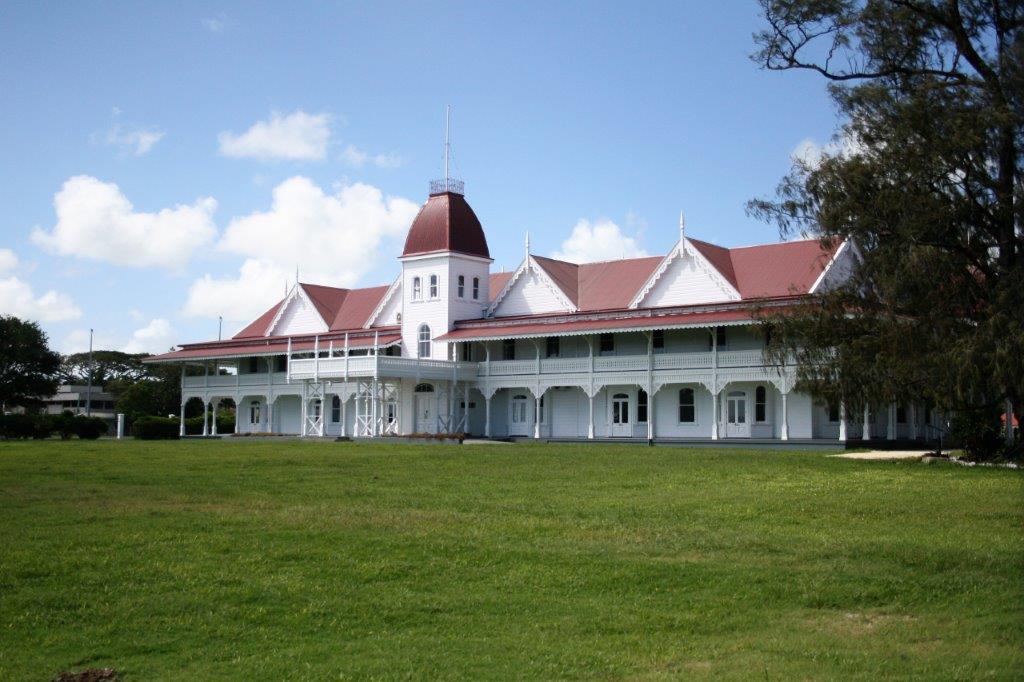
The little nation has always had strong ties with Great Britain and the 1875 constitution was largely influenced by British law.  In 1867 the Royal Palace was built in England on the shore of the Thames River.  It was then dismantled and sent to New Zealand before being re-constructed in Nuku’alofa.  The building is now only used on ceremonial occasions and is not open to the public.  It was a beautiful Victorian mansion. The only addition to the building since it was built is the second story veranda.  There are resident Royal geese on the grounds but we did not see them that day.
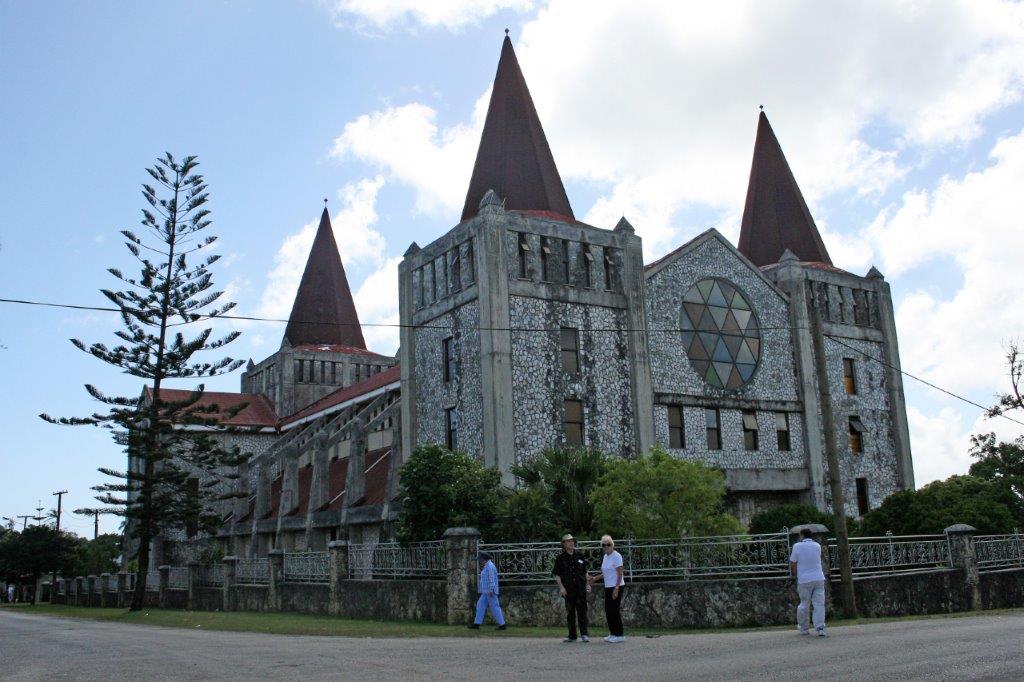
Tonga is also a very devout Christian island.  People were asked to dress appropriately.  Fines can be imposed for violation of the code by anyone.  Shorts and bathing suits are OK at the beach and poolside, but should not be worn elsewhere.

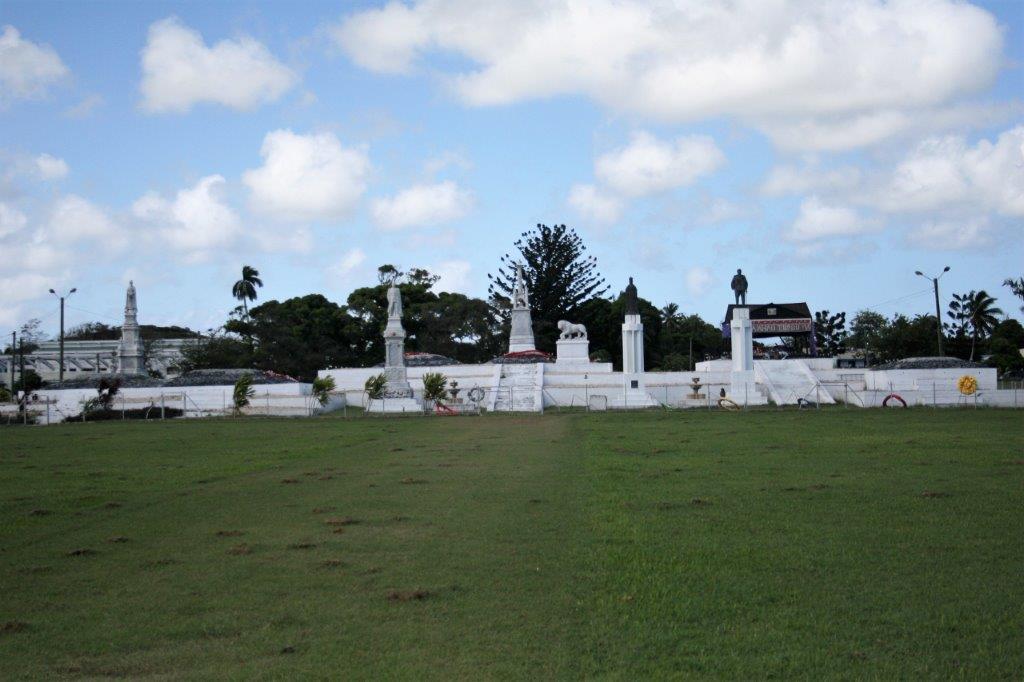
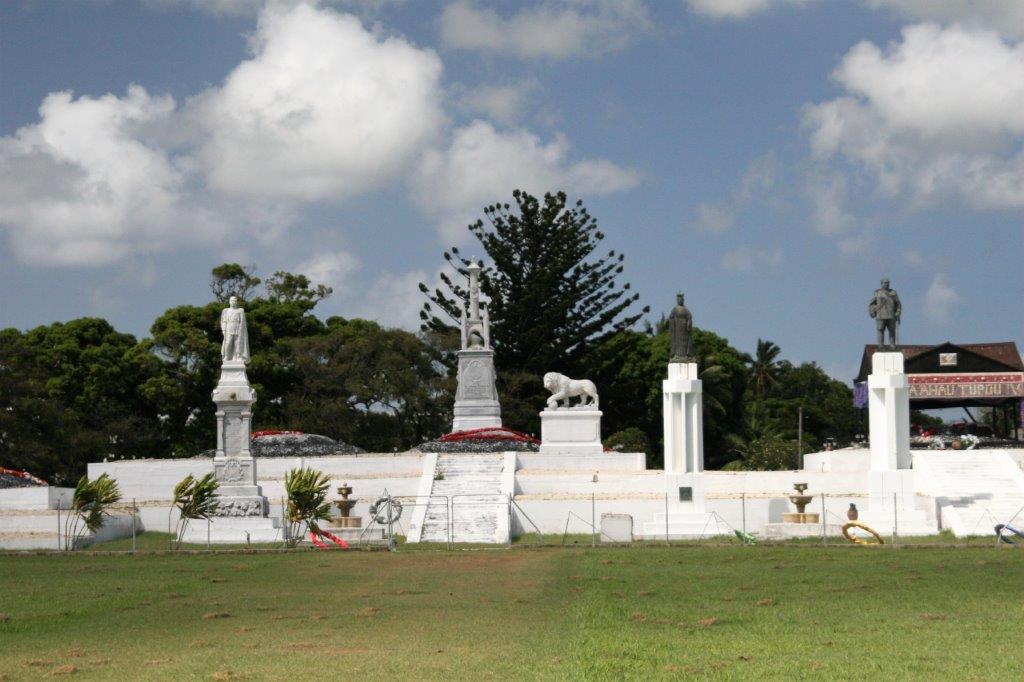
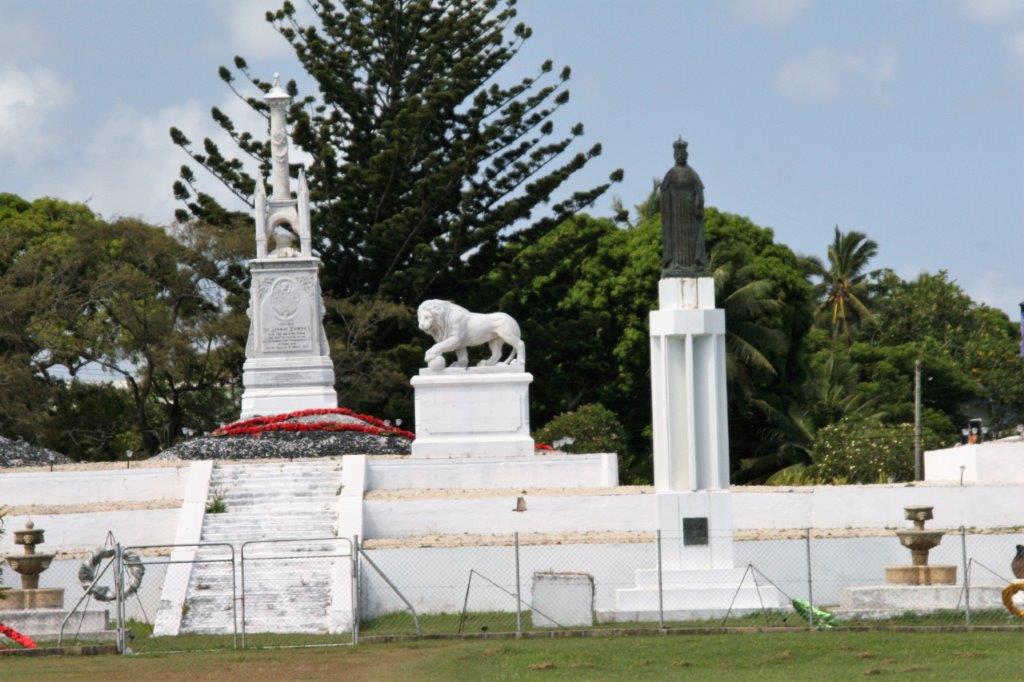
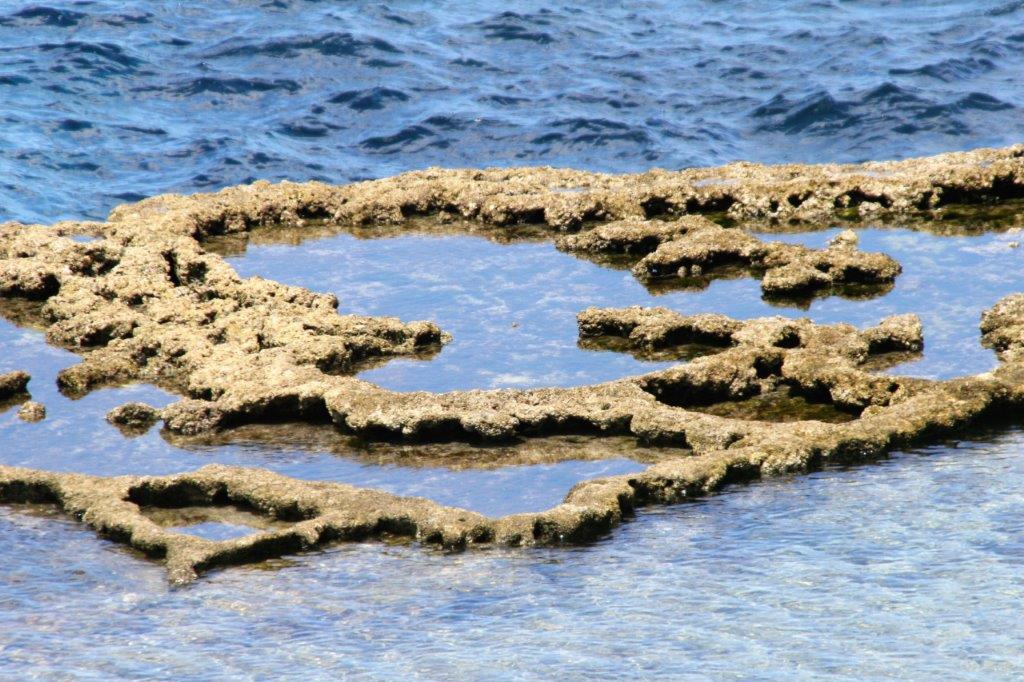
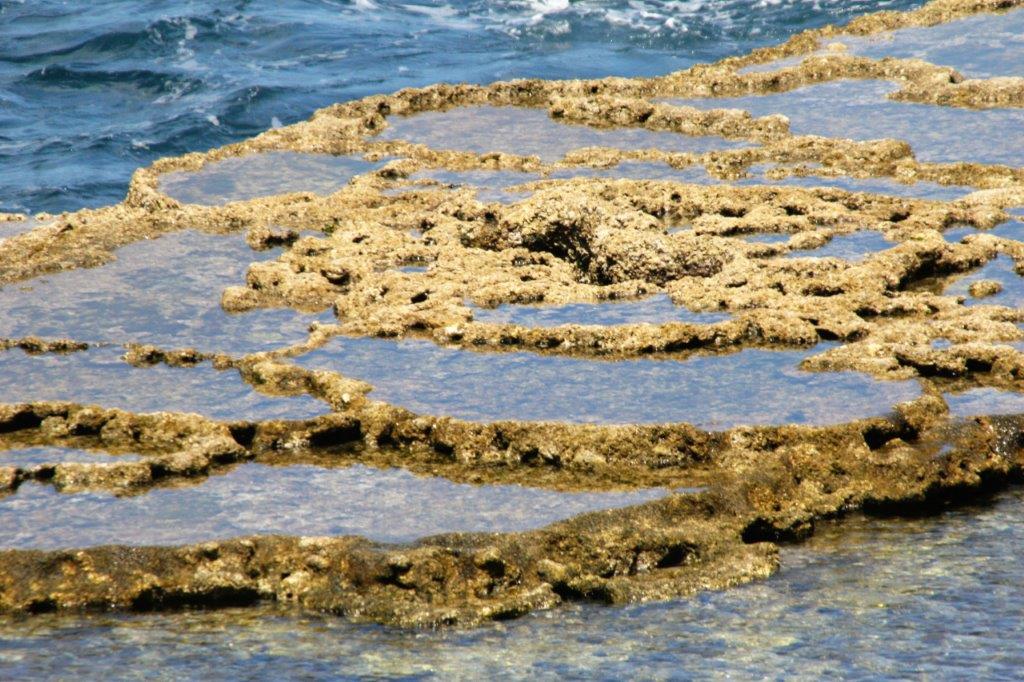
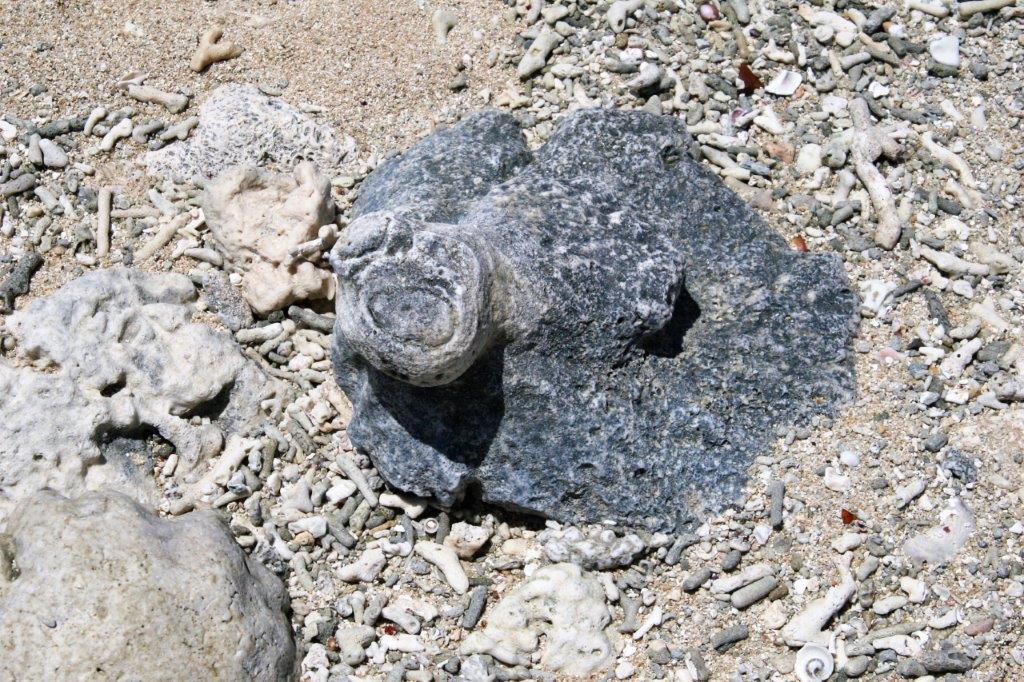
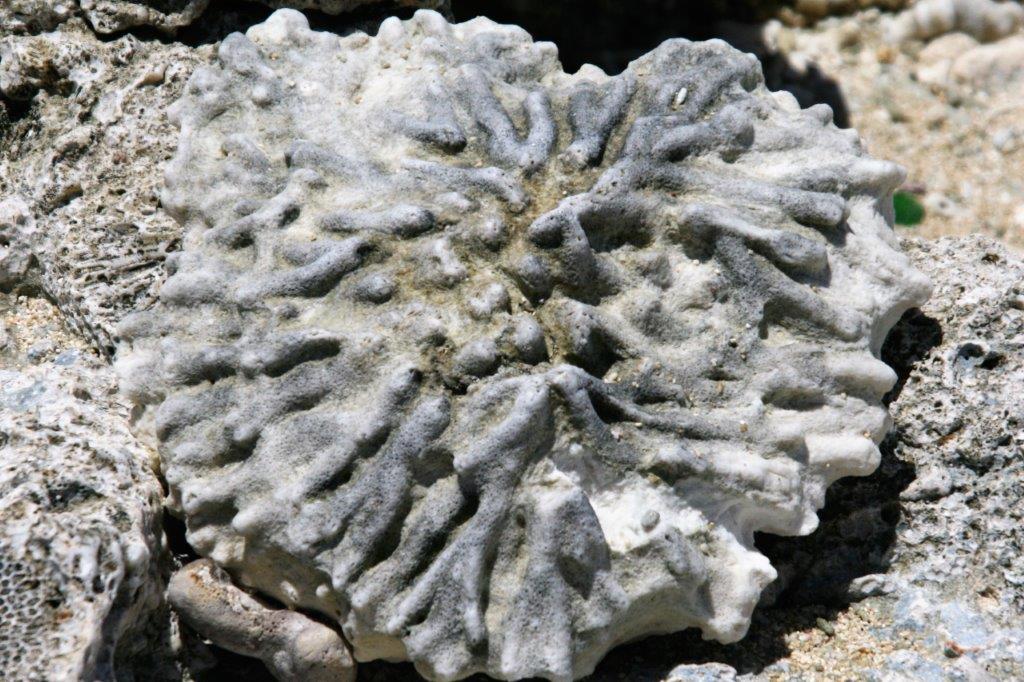
From the Royal Palace to the Royal Tombs, the official burial place for Tongan Royalty since 1893.    The Mapu’a Vaca Blowholes (the Chief’s Whistles) are on the south side of the island from Nuku’alofa.  The little salt craters and crevices on the rocks made very  interesting shapes. Once again, at a blowhole site, the wave action was too gentle to create any good blows.  I did like all the calcified shapes that created little pools.

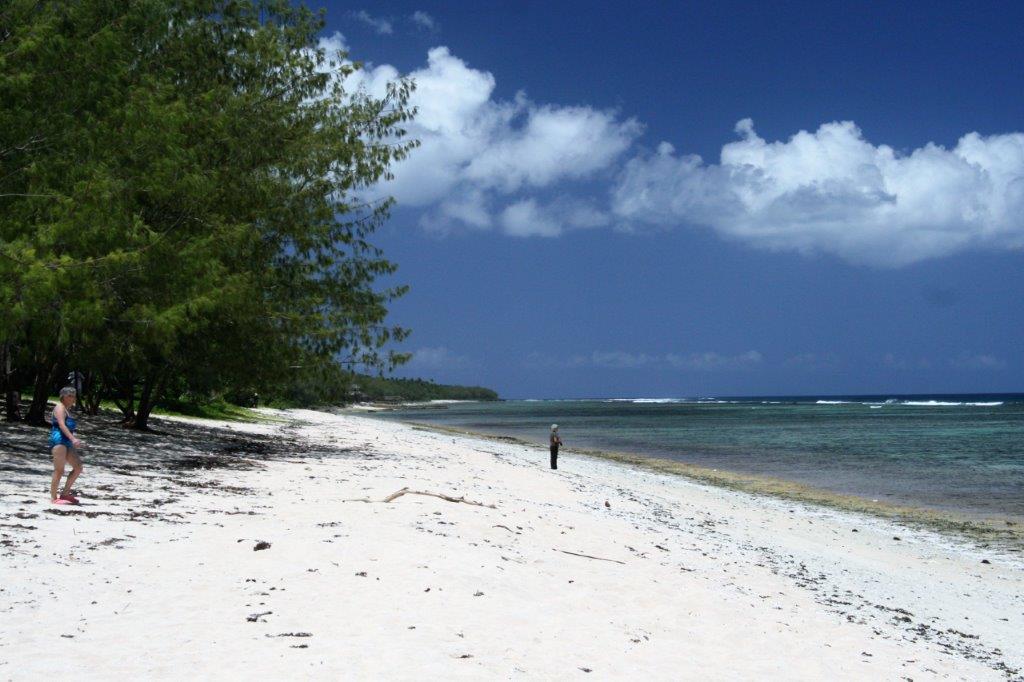
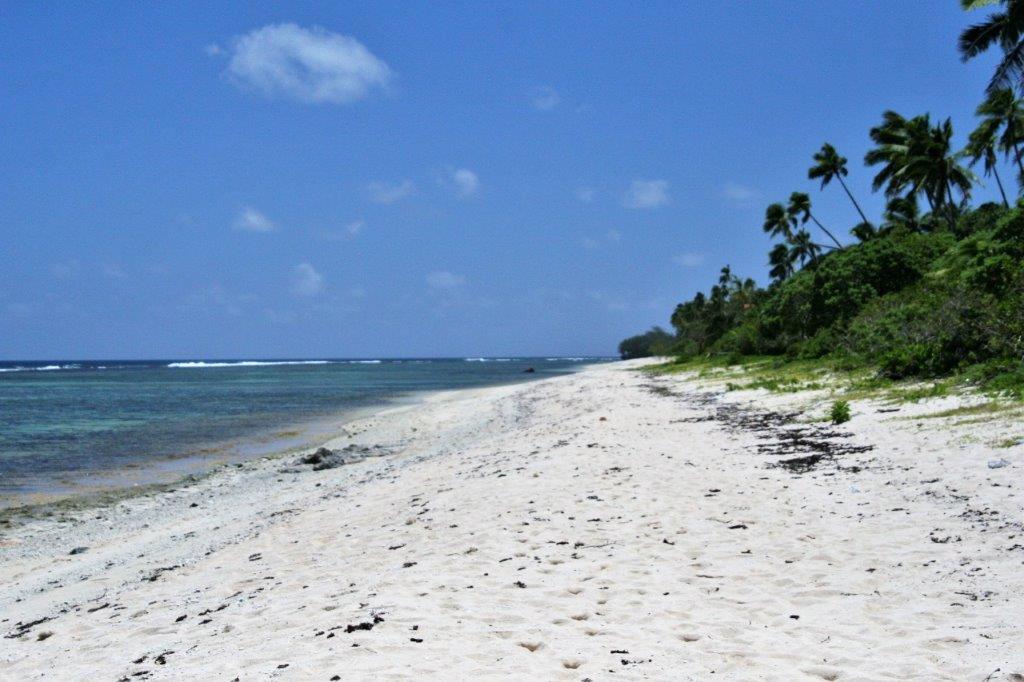
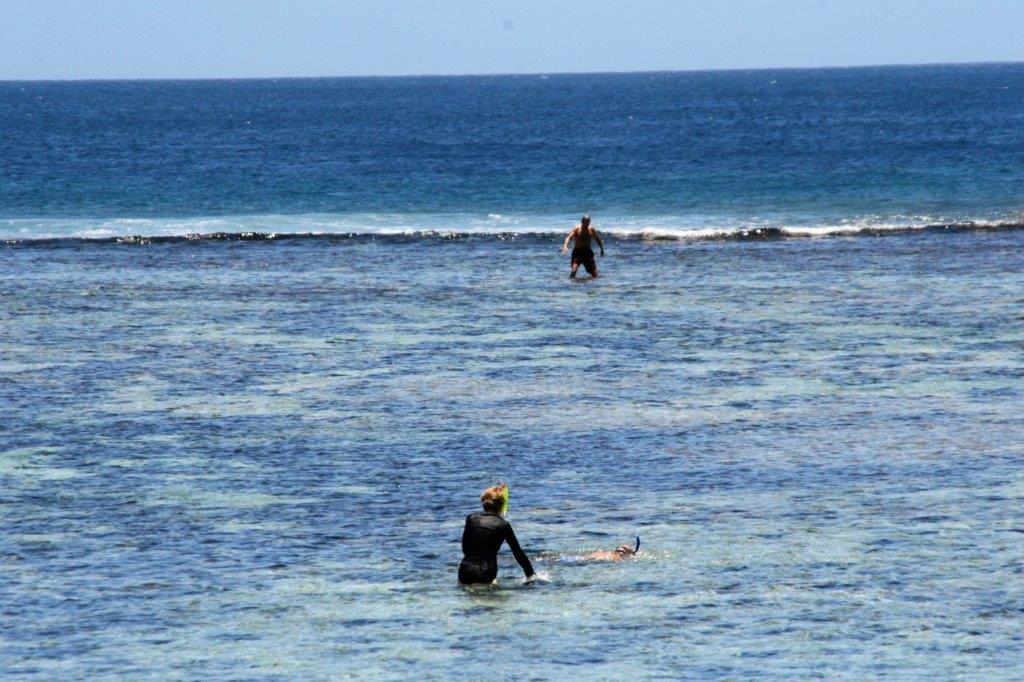
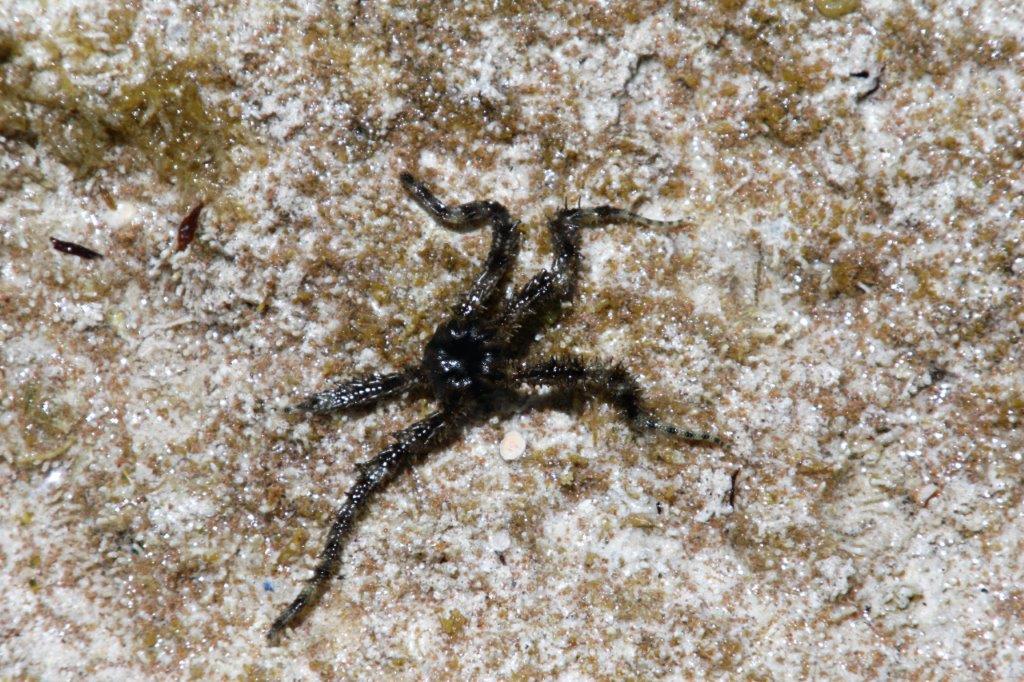
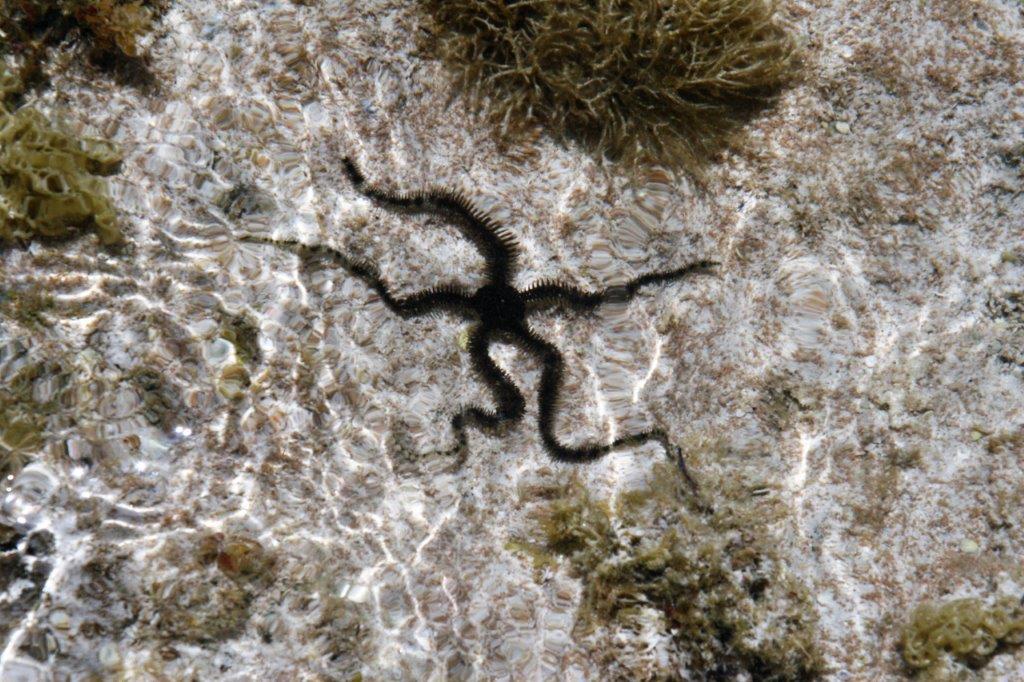
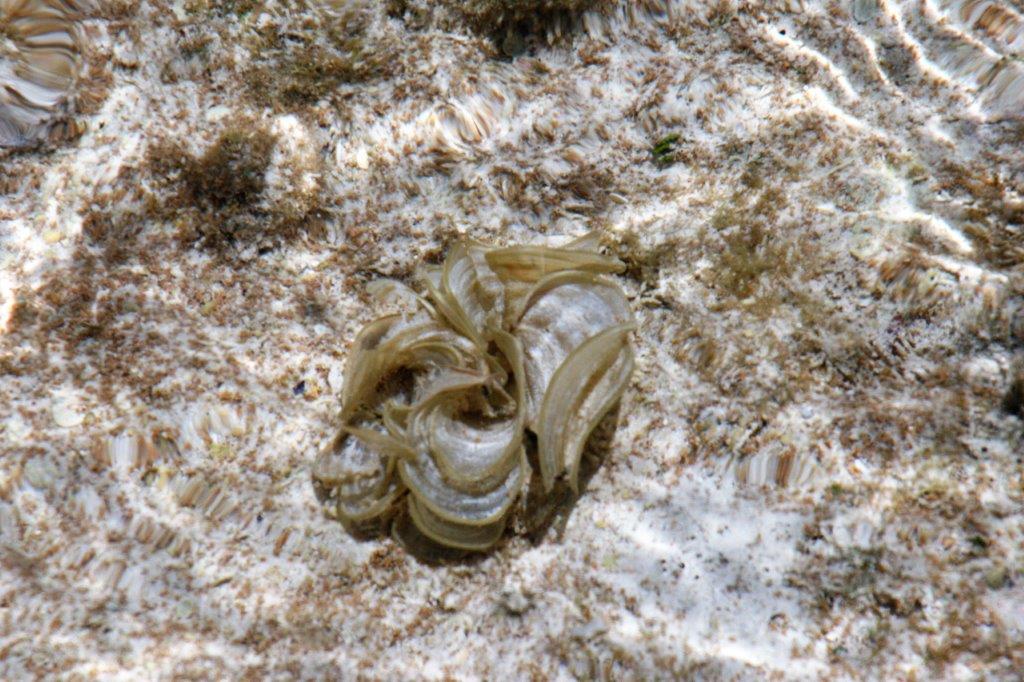
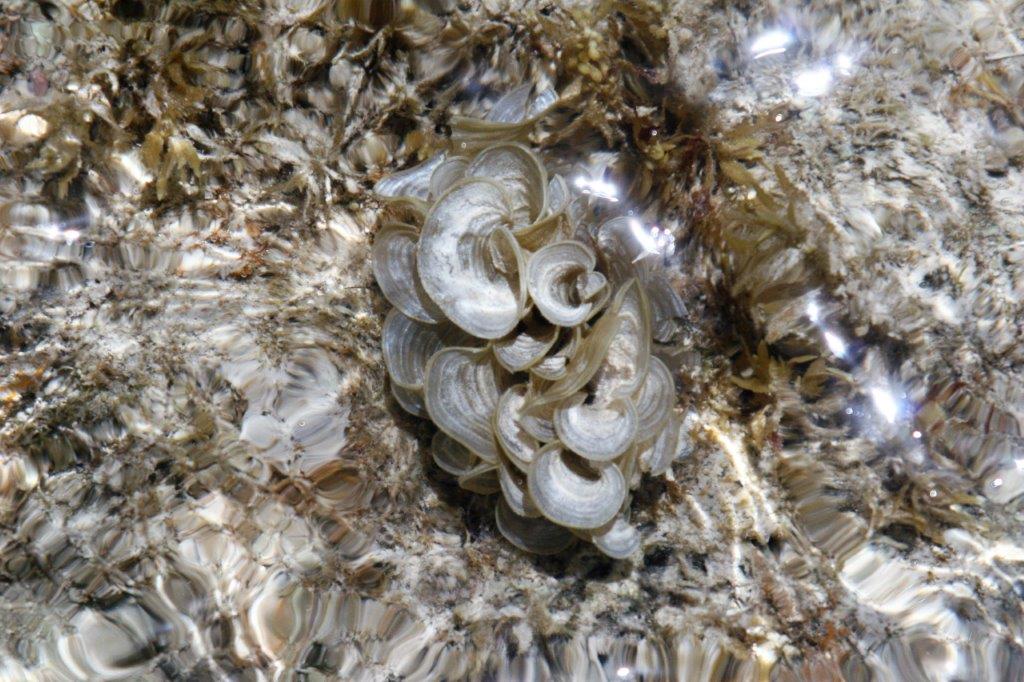
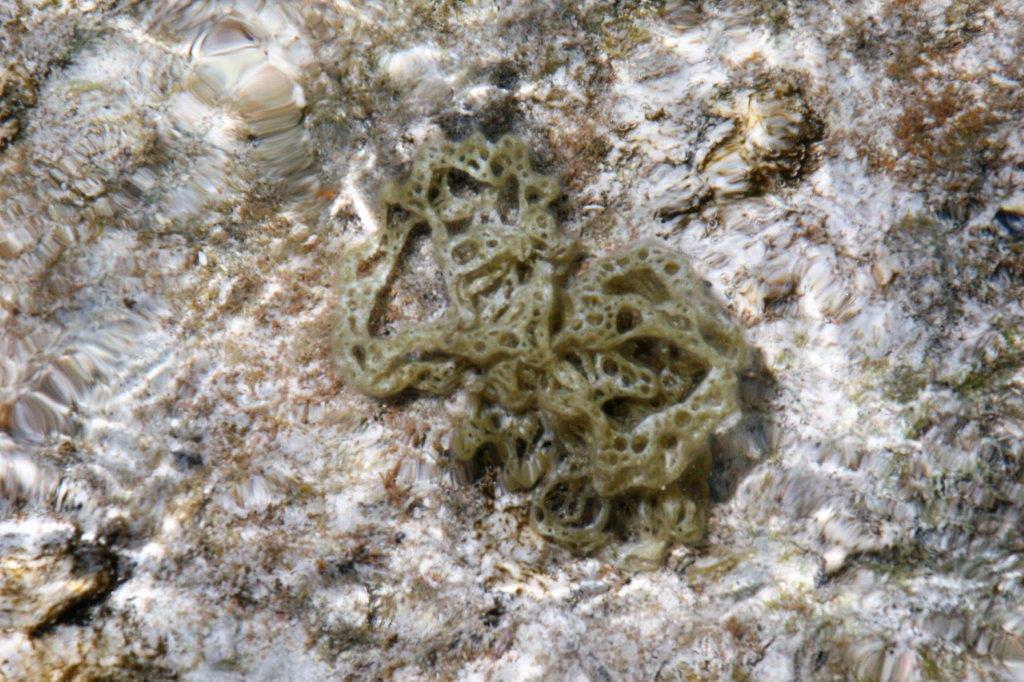
The beautiful white sand beach of Otuhaka Beach stretched for several kilometers and had a very shallow protecting coral reef that kept the crystal clear water nice and warm and allowed you to walk or swim for a several 100 meters to the breakwater. We had our bathing suits on but decided to just wade along the shore and watch the spider starfish, look for shells, and check out the delicate aquatic plants.

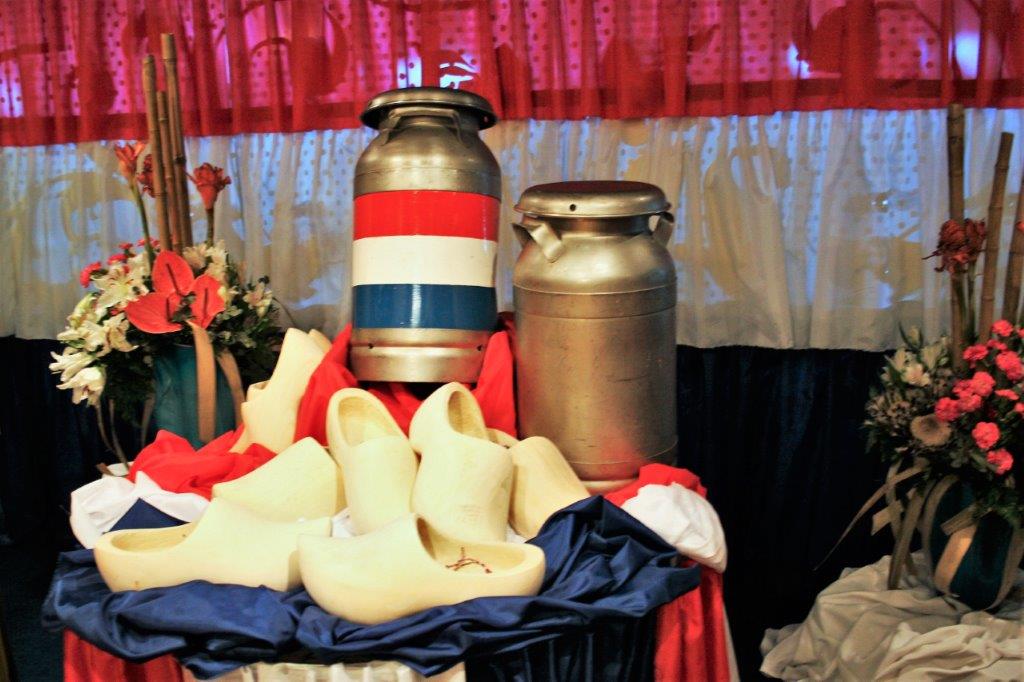
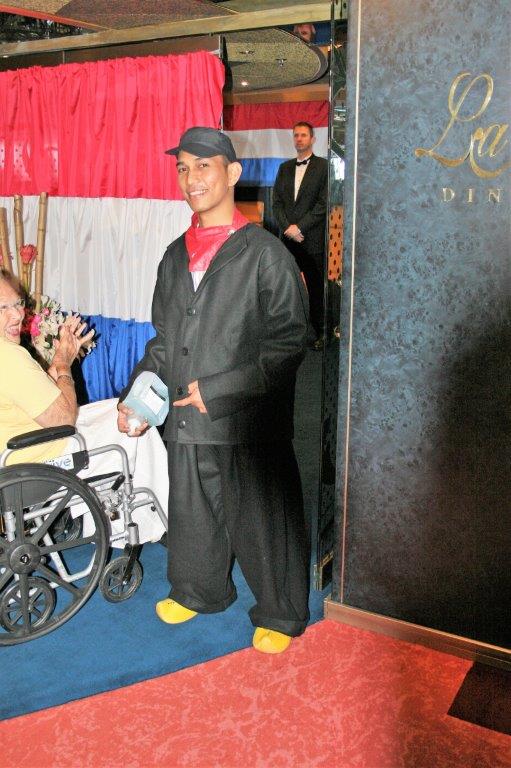
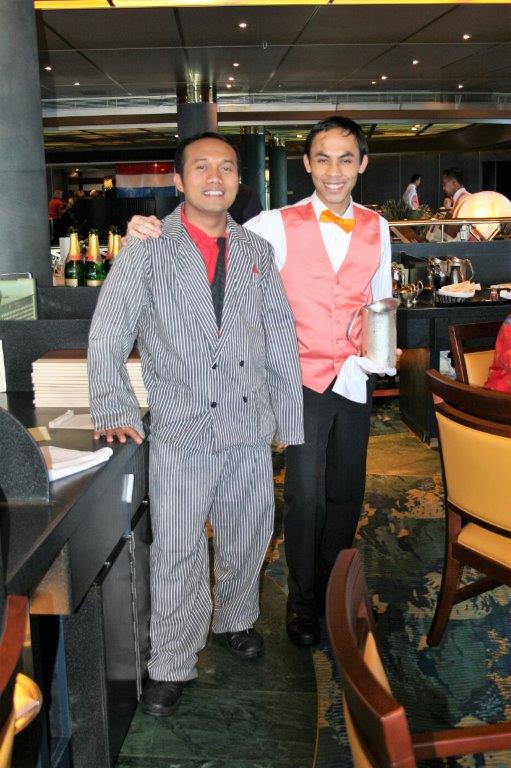
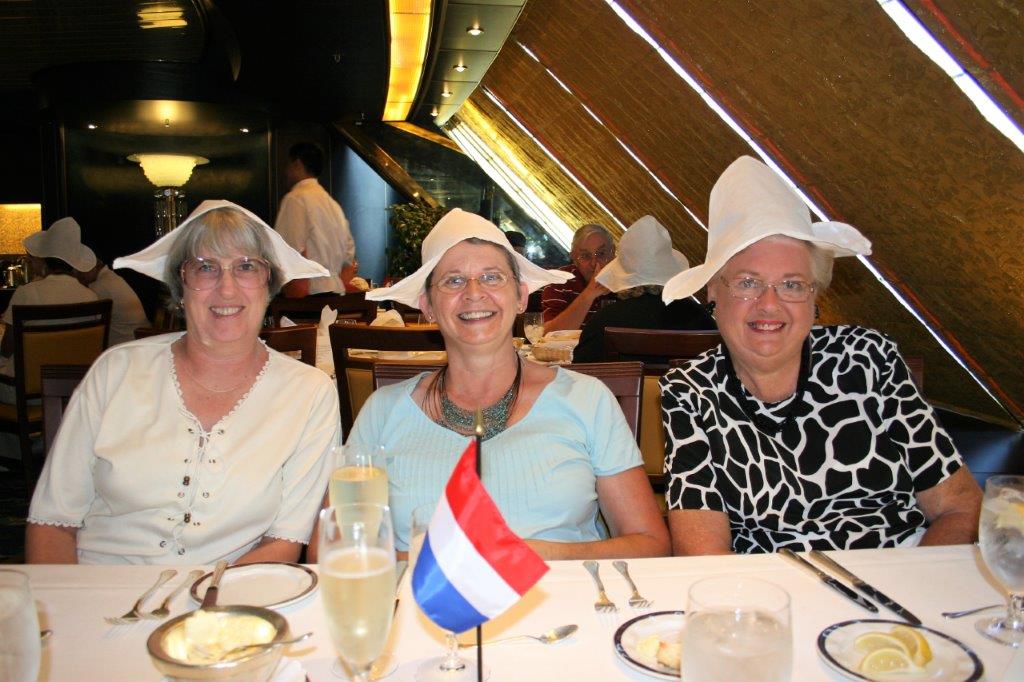
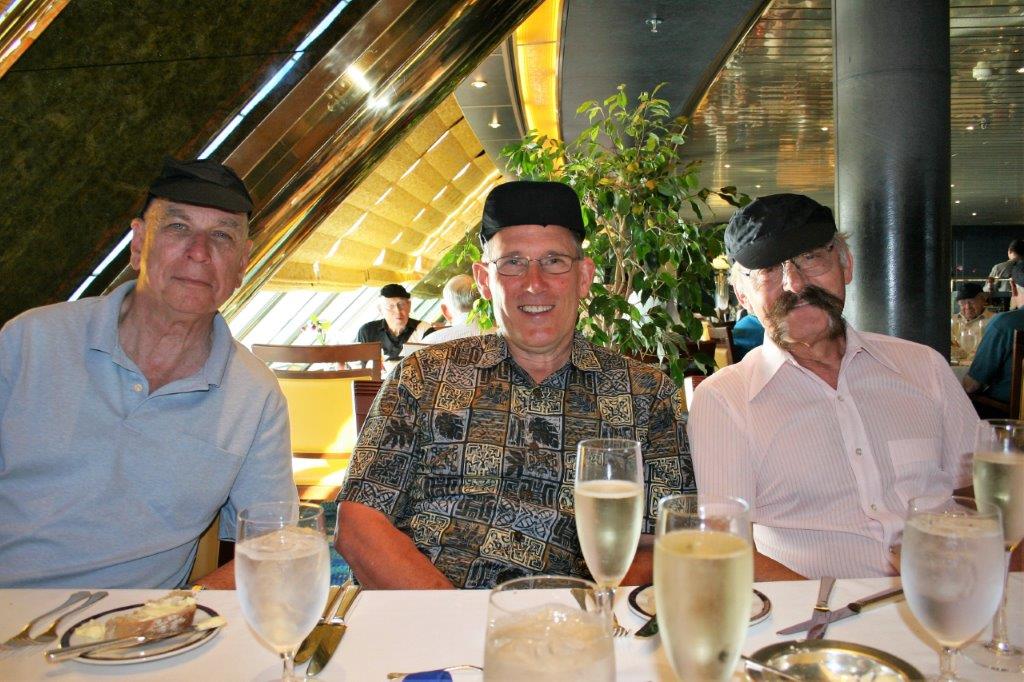
After an hour or so at the beach we returned to town and the ship.  With co-ordinates of 173° 40′ W and 175° 20′ W Tonga is geographically last to end each day.  Holland America ships all celebrate the Netherlands Independence day (officially on Jan 30) with free champagne.  That night at dinner we also celebrated Chinese New Year, Chief Chef Bernie’s birthday, and the conclusion of our South Pacific ports-of-call.  Any reason for free champagne is a good reason as far as I am concerned. Mary Kay, Janet and KarenJack and two Johns.
We loved the South Pacific islands.  Many of them have no airport.  All of them are a long way from anywhere and take a long time to get to, by land or by air.  This cruise on our way to Australia was a great way to see some of them.  We also cruised back to British Columbia from Sydney, Australia at the end of our two months travel of the eastern half of the continent and stopped at some different islands so you will be reading more from the South Pacific later on.

2011 February 6 – Day 32 – Auckland, New Zealand (Day 1)

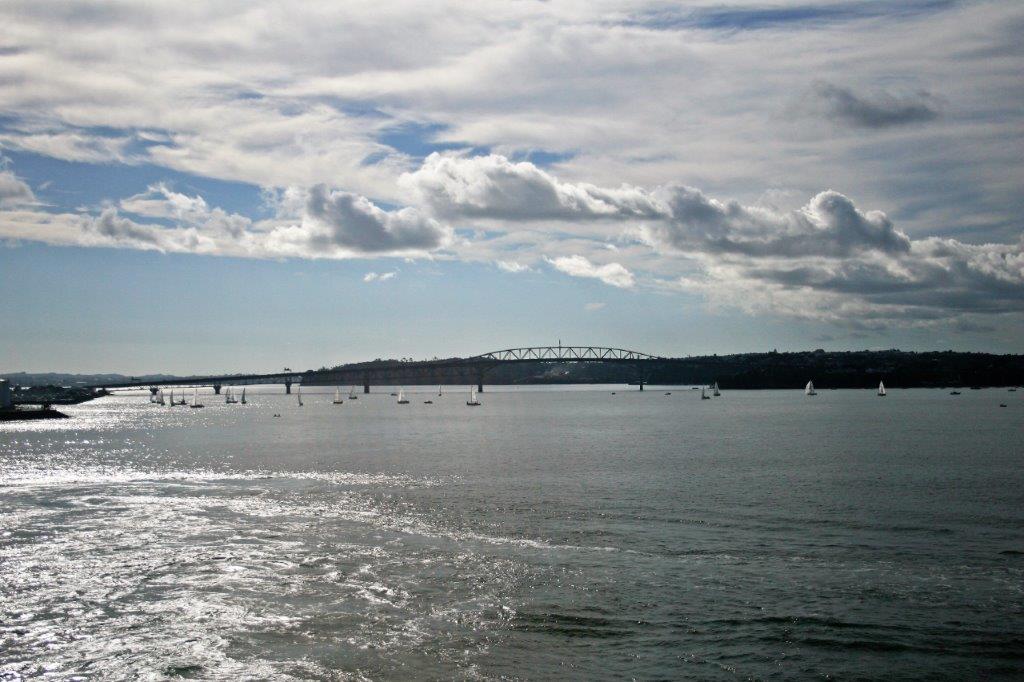
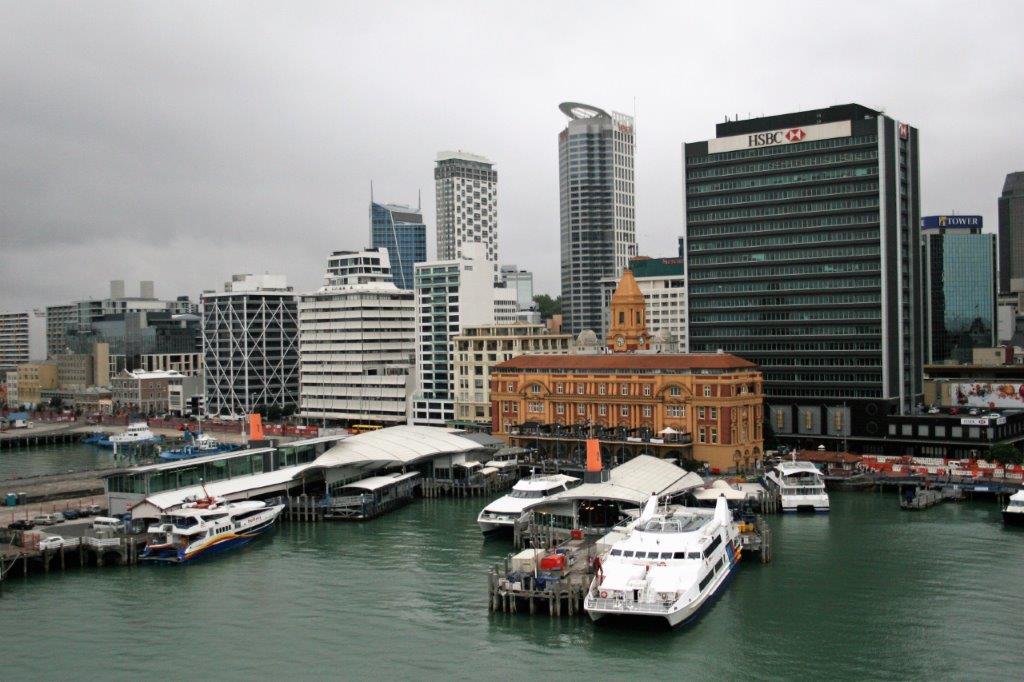
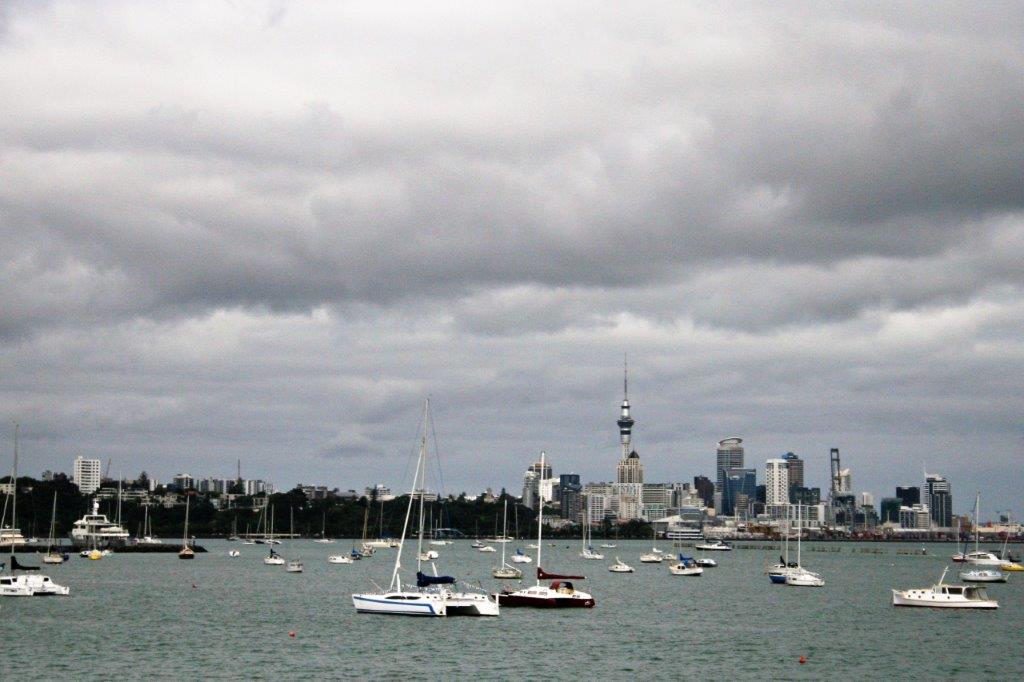
Auckland is the largest city in New Zealand; although Wellington is the capital.  Known as the “City of Sails,” Auckland was the capital until 1865 when Wellington was chosen because of its more central geographic location.  There are more than 70,000 sailing craft and private powerboats in the greater Auckland region.  This works out to one boat for every four households!

Before the arrival of European explorers the indigenous Māori people and the fruit bat were the only mammals on the islands. The North Island is home to three-quarters of New Zealand’s population with over 3.5 million inhabitants.  North Island is much more rugged than South Island due to its volcanic past.  The Auckland area is built on a cluster of extinct volcanoes and the rich soil creates a very green fertile landscape.

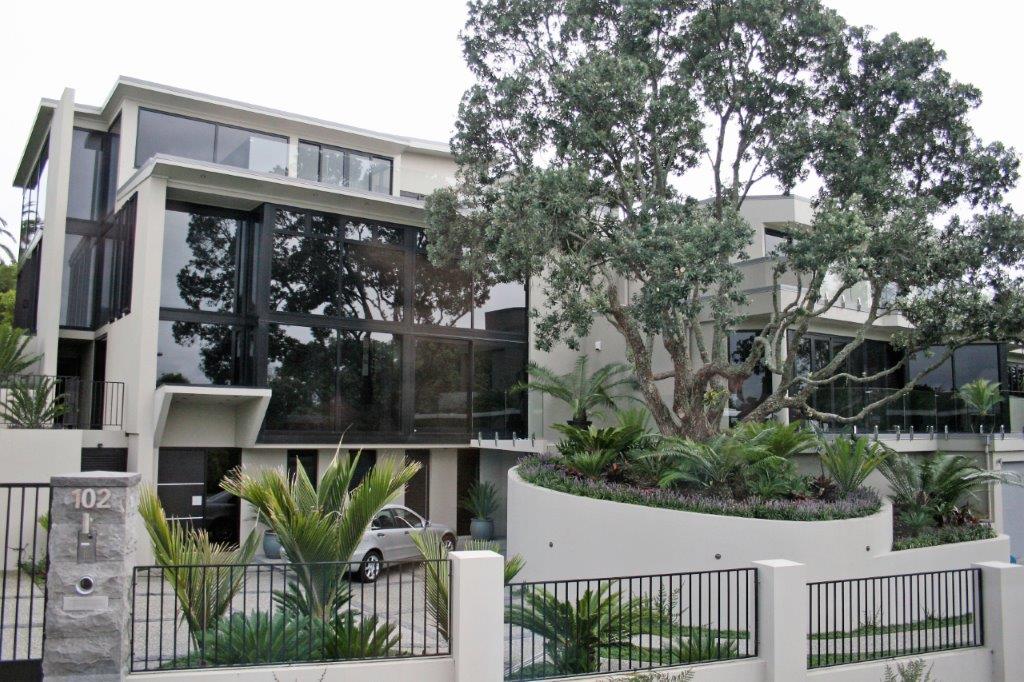
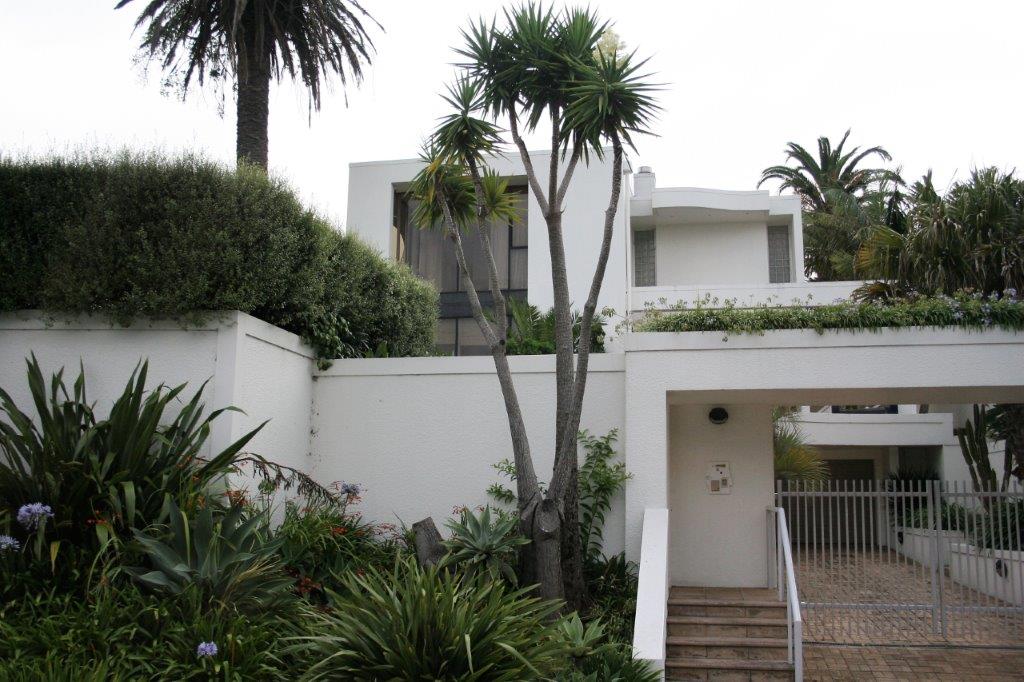
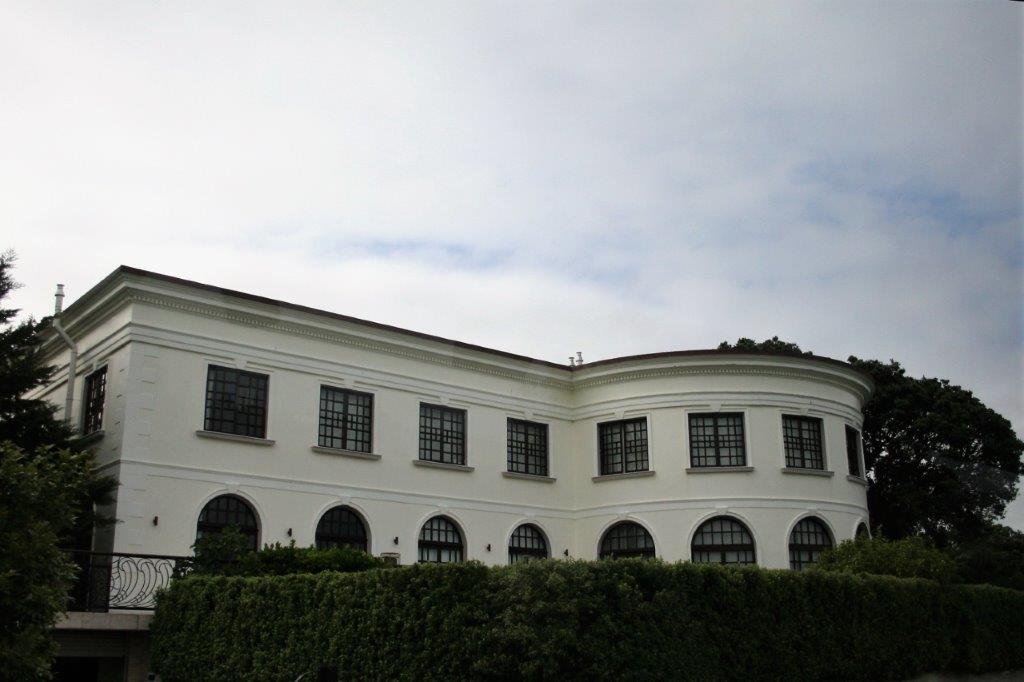
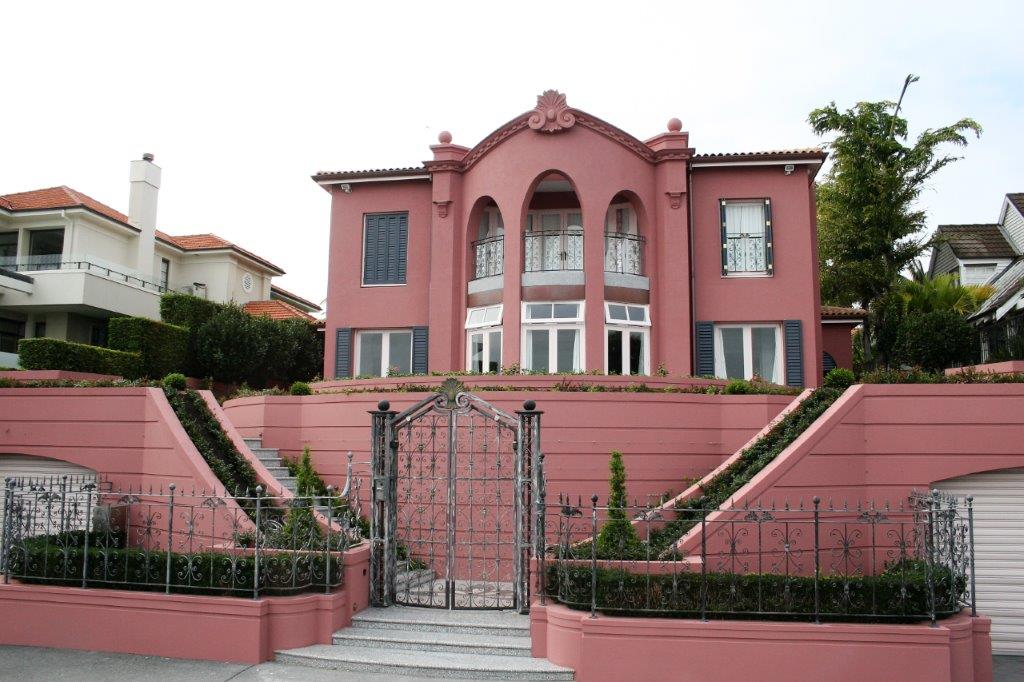
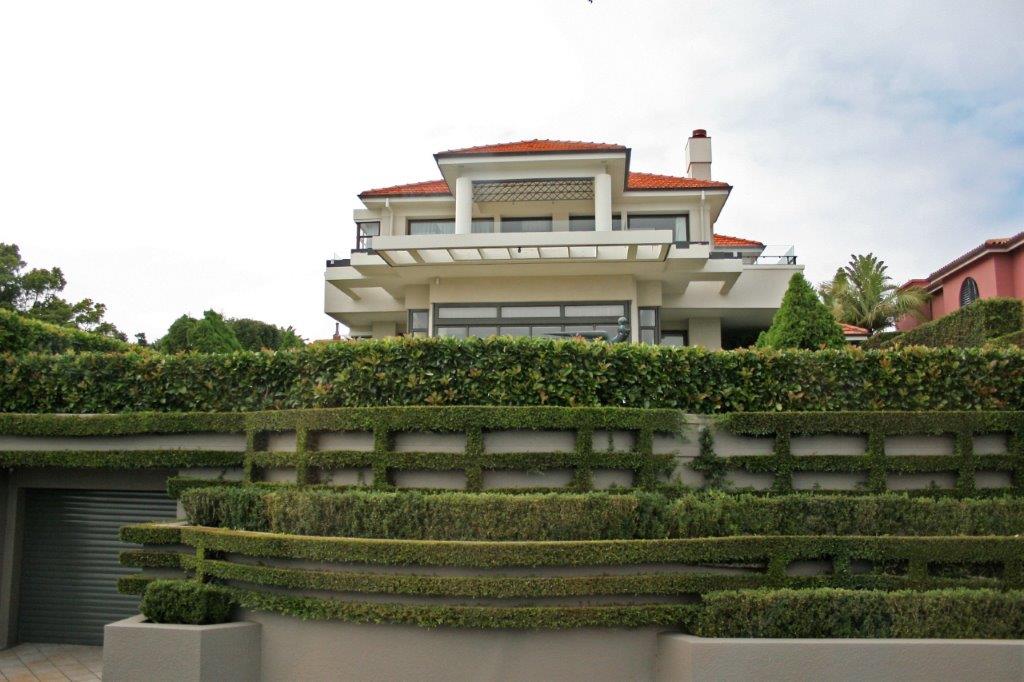
We were in Auckland for two days before heading south along the eastern coast to Tauranga, Napier and Wellington, which is on the coast of the Cook Strait that separates North and South islands.  We  then continued southward on the eastern side of South Island and stopped at Christchurch (docked at Lyttelton), Dunedin (docked at Port Chalmers), and Oban on small Stewart Island off the southern tip of South Island.  Our first day of rest was slow cruising in Milford Sound on the west side of South Island as we sailed in Fjordland National Park.  Our 8 consecutive New Zealand ports-of-call were the most we have ever done on a cruise. The bus driver took us through some high-end residential areas of Auckland on our way to one of New Zealand’s most popular attractions, Kelly Tarlton’s Antarctic Encounter and Underwater World. Personally, I would rather live in this one.  Having a fancy huge house has never appealed to me.  Even with a housekeeper I am much too lazy for that amount of upkeep and maintenance, not to mention the stuff that would collect in the unused space.

I looked Kelly Tarlton up online and learned this about the famous New Zealander:  “Kelly Tarlton was renowned for diving, marine archaeology, conservation and the building of Kelly Tarlton’s SEA LIFE Aquarium out of unused sewage tanks. He worked throughout his career to design the innovative marine Aquarium that is four times larger than any other in the world. At 47 years old (in 1985), and after working 18-hour days to realize his vision, he died only 7 weeks after the Aquarium’s opening.”

Before building the aquarium “Kelly formed a commercial diving company and spent considerable time exploring New Zealand’s most famous shipwrecks including sailing ship “Boyd” at Whangaroa Harbour and steamship “Tasmania” off Mahia Peninsula. This led Kelly to establish the Museum of Shipwrecks in the Bay of Islands in the 1970s.”

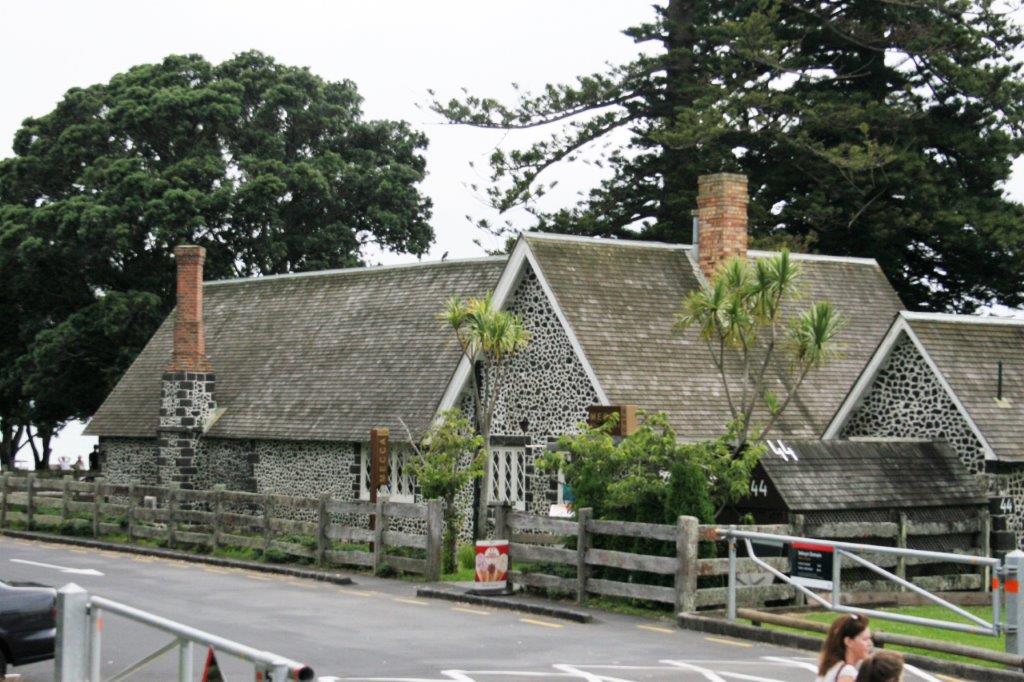
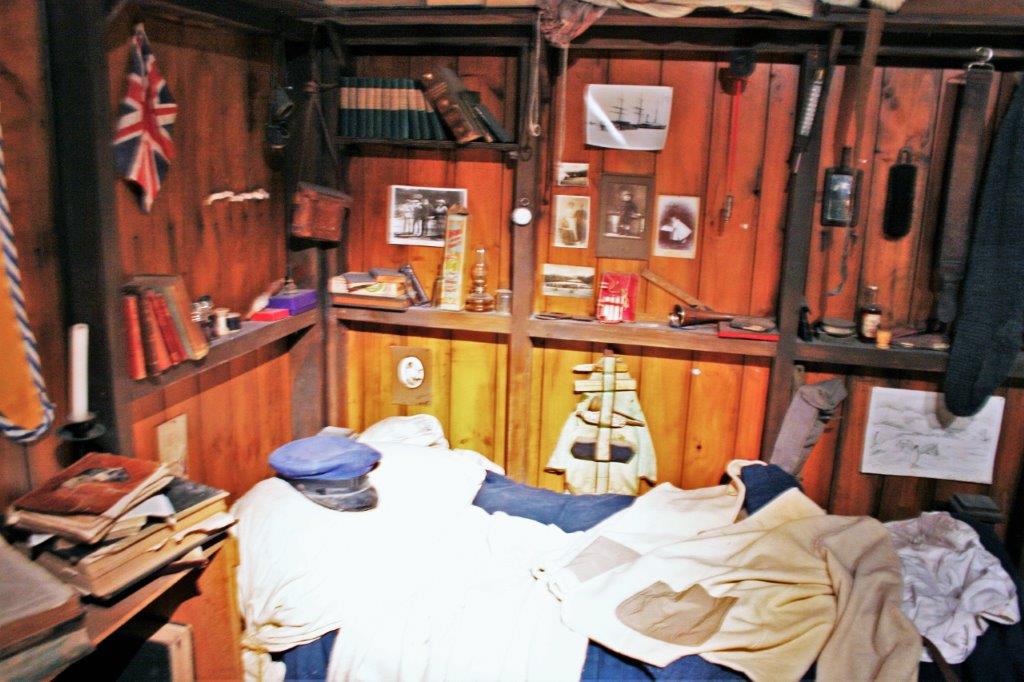
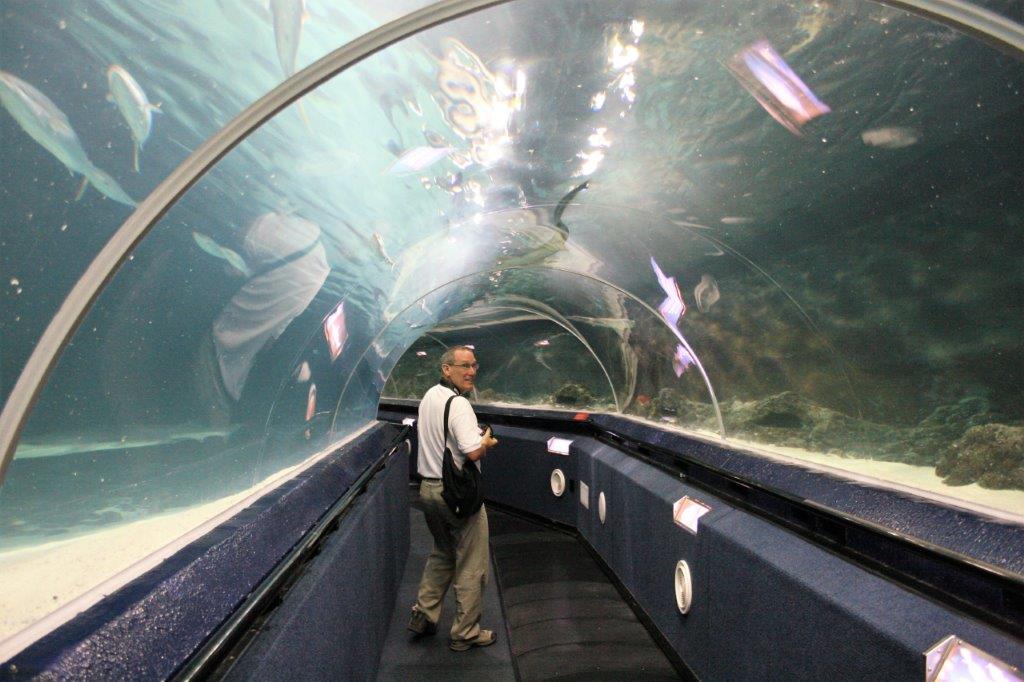
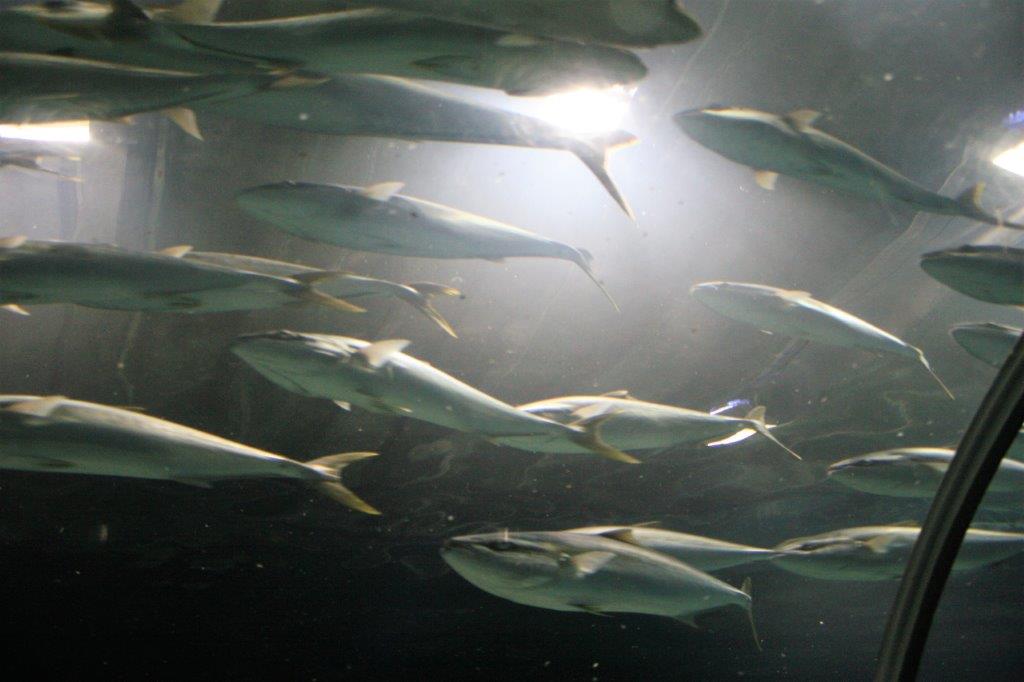
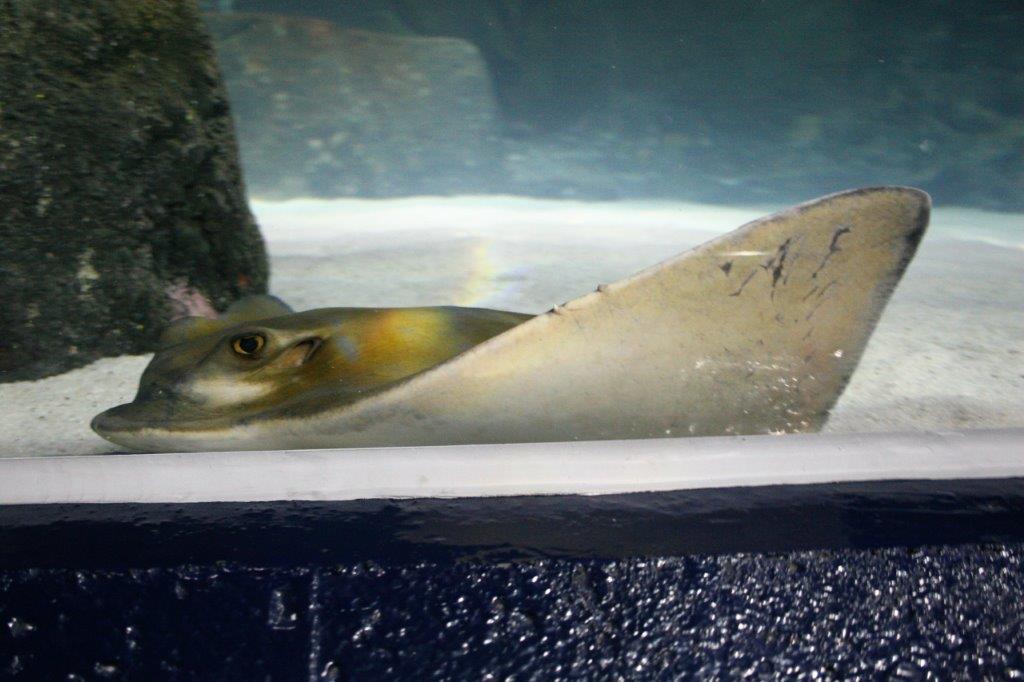
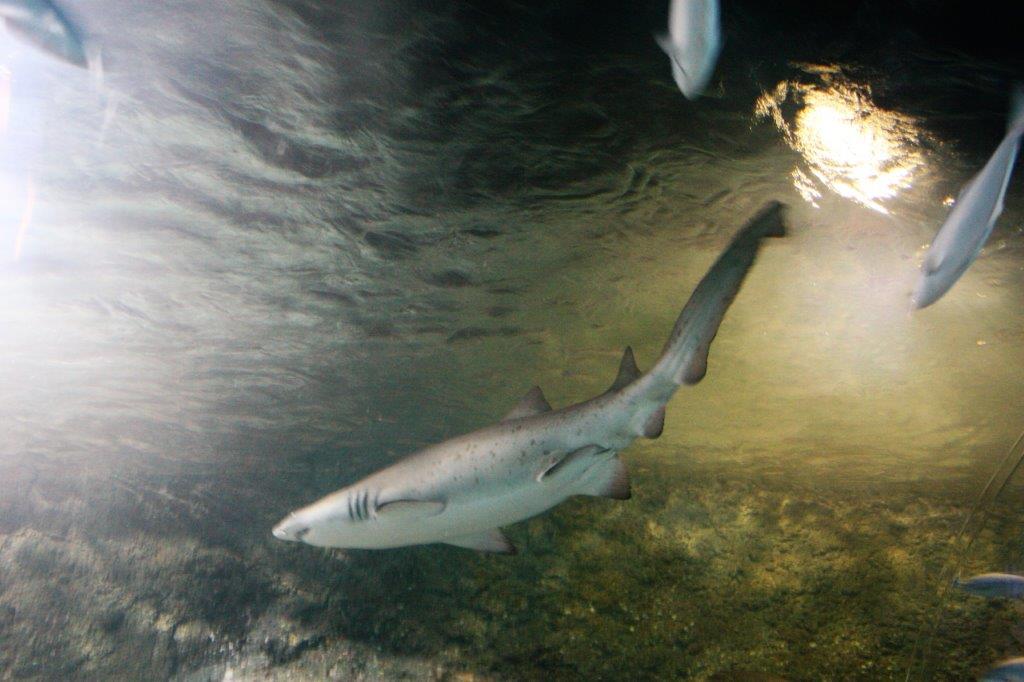
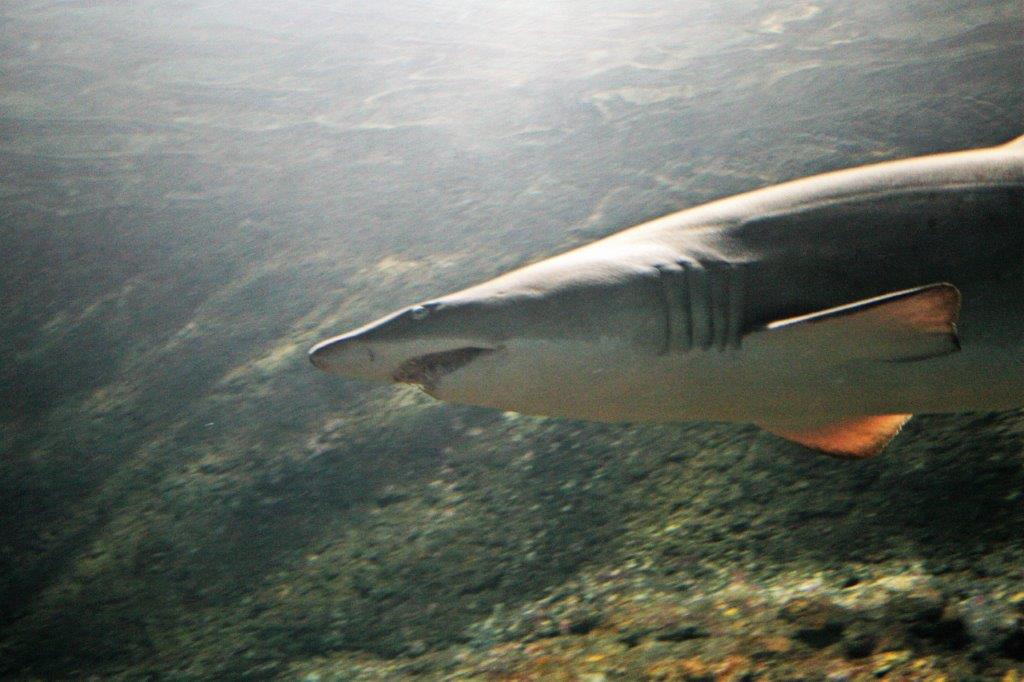
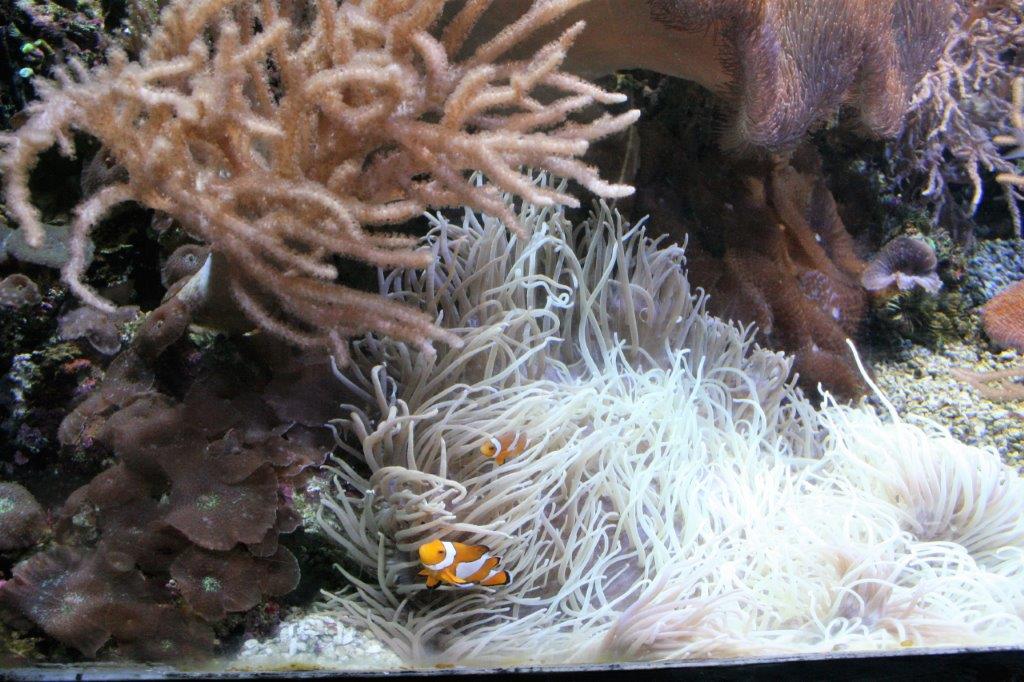
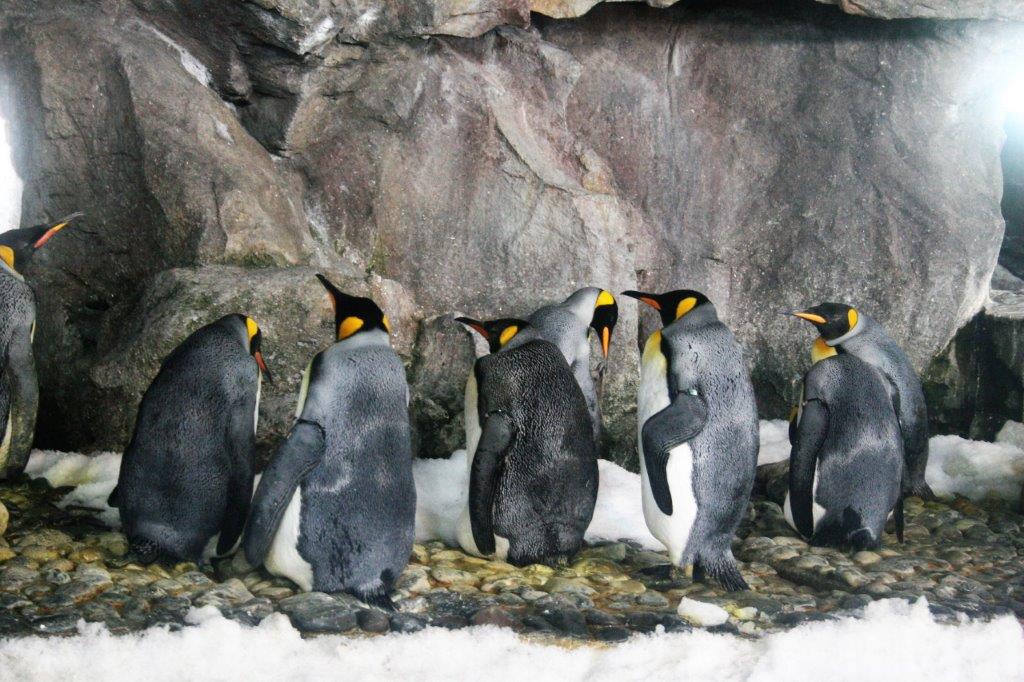
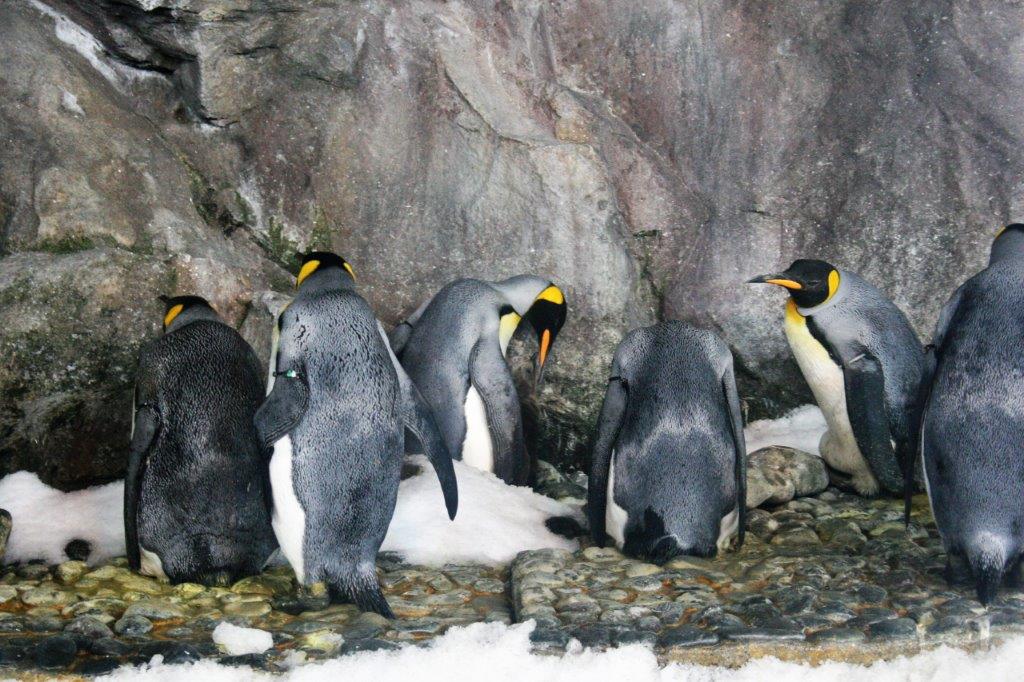
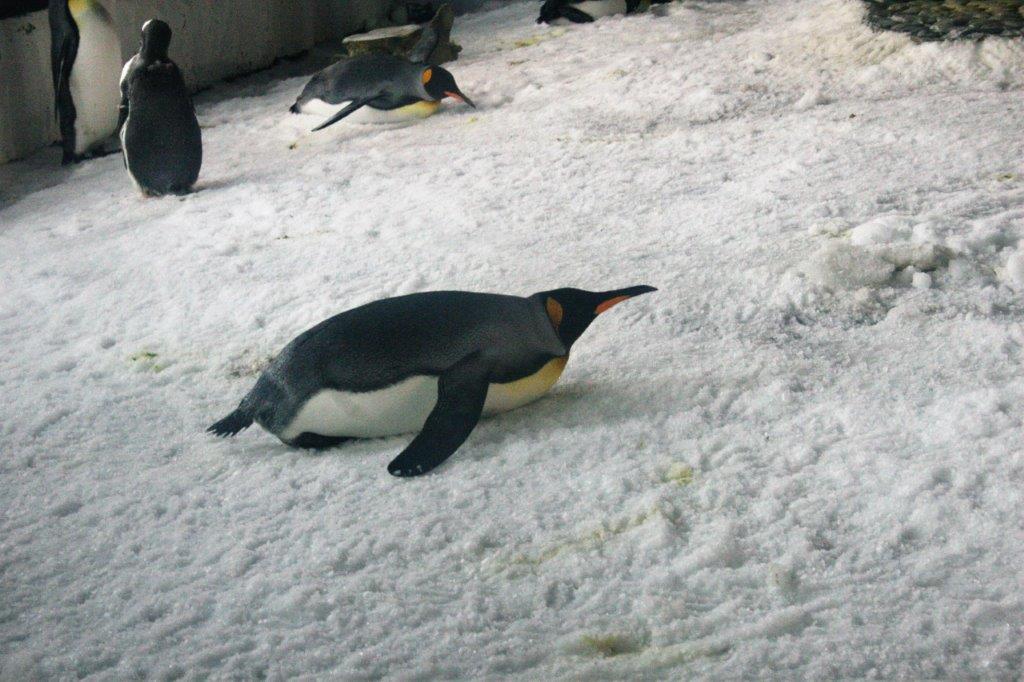
There is a life-size re-creation of Capatain Robert Scott’s 1911 Antarctic hut that was built on the shores of McMurdo Sound.  New Zealand has had a close relationship with the Antarctic for over 100 years and the end of South Island is used by explorers and scientists as the access point to the southern continent.  NZ is 4,989 km (3,100 miles from Antarctica, whereas the southern tip of Chile is 5,727 km (3,559 miles) away. The best two things at the Antarctic Encounter are the 100′ long moving walkway under the harbour so you get a diver’s view of the sharks, fish and rays. And the penguin colony.  They are so funny to watch as they waddle around.

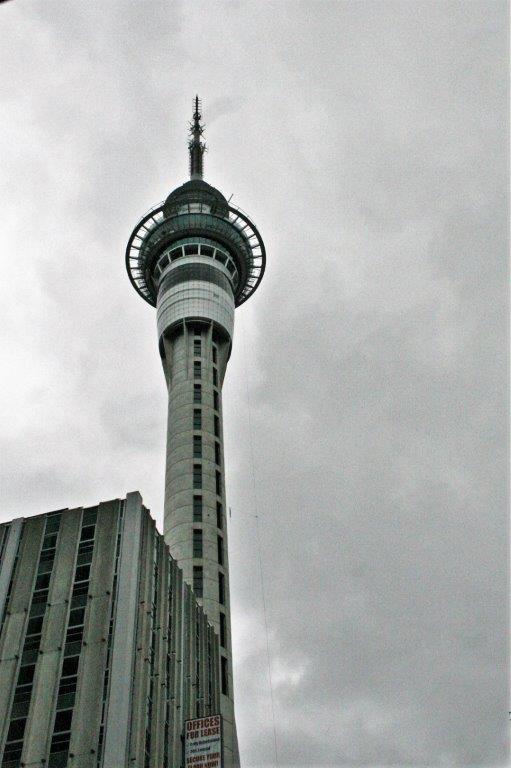
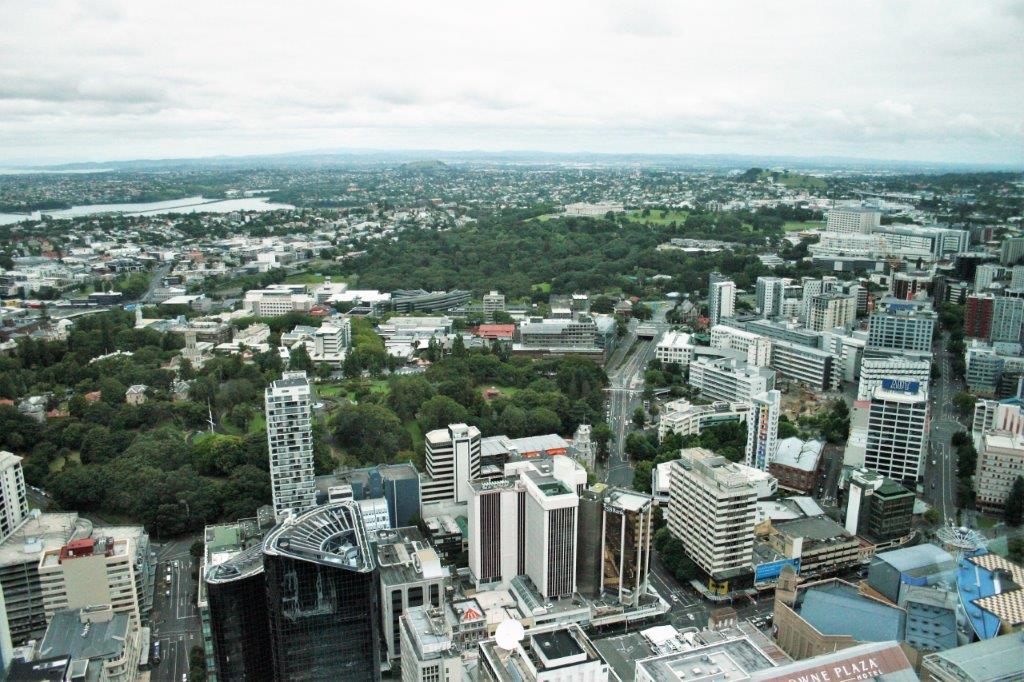
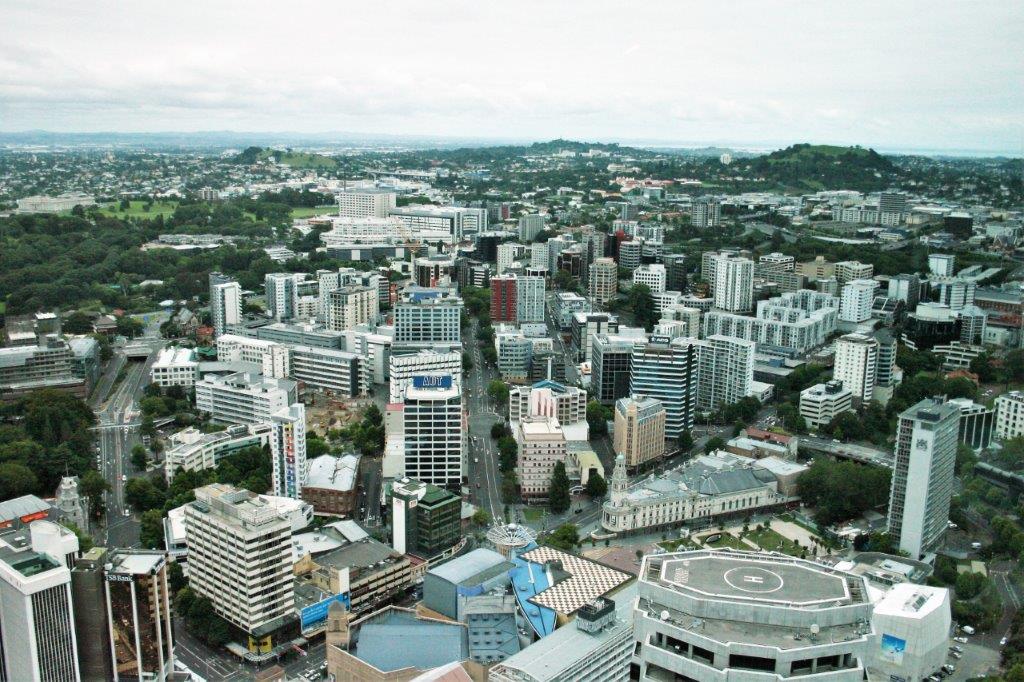
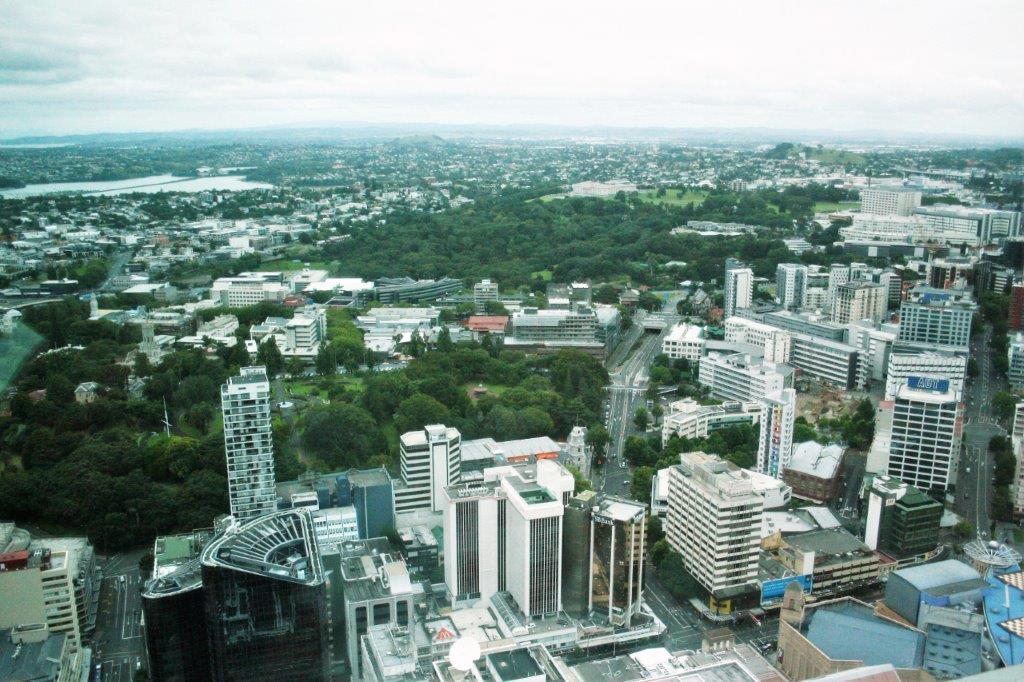
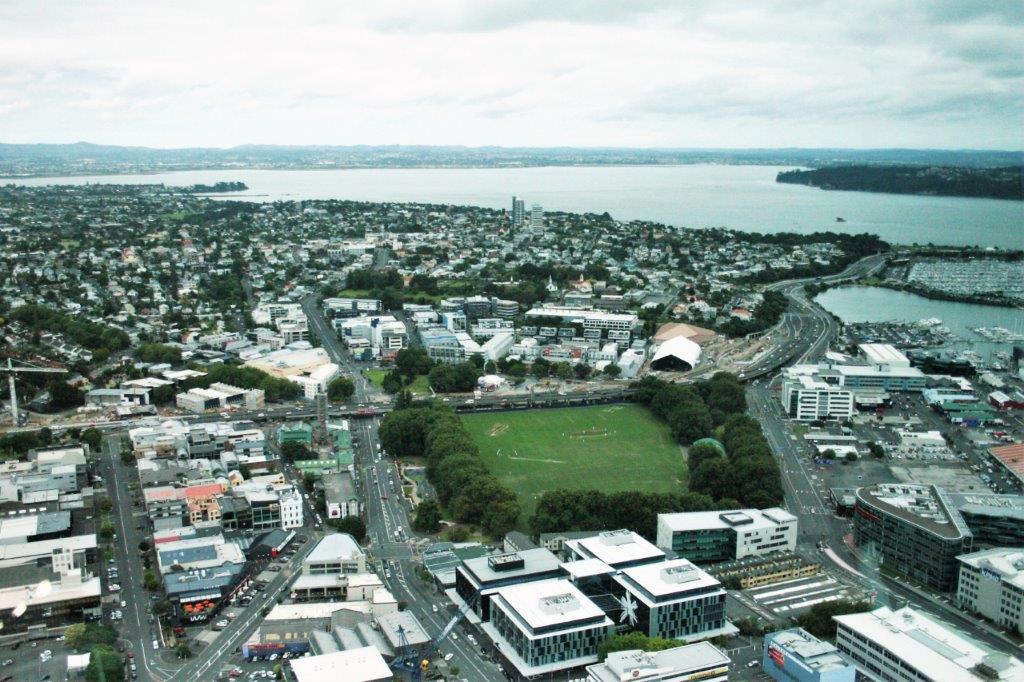
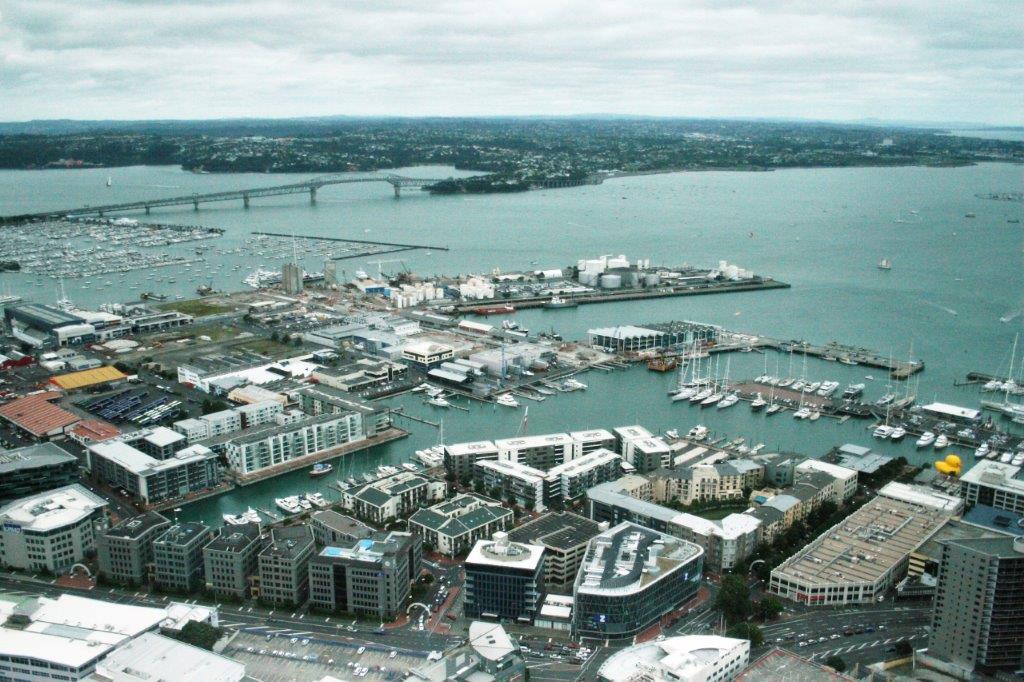
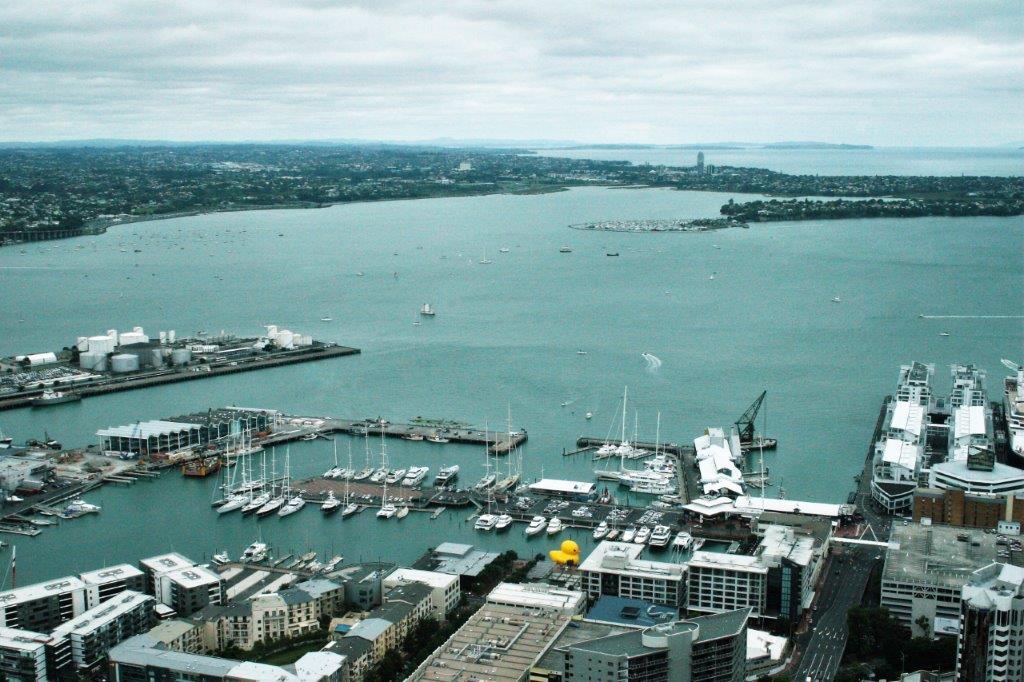
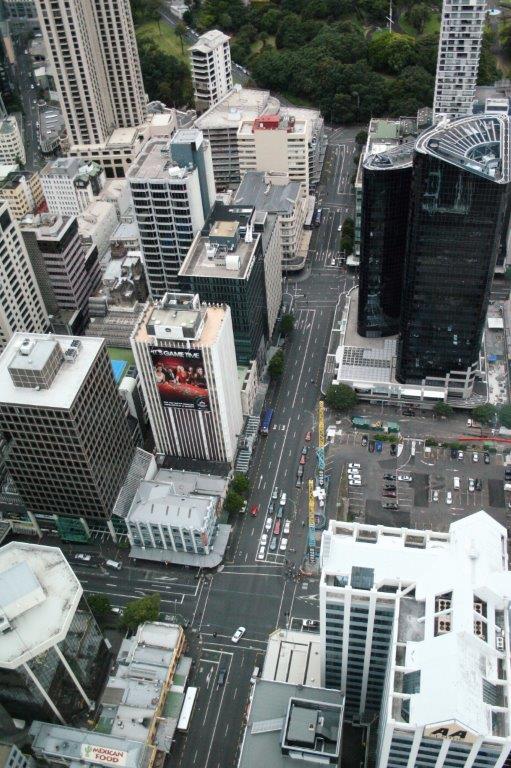
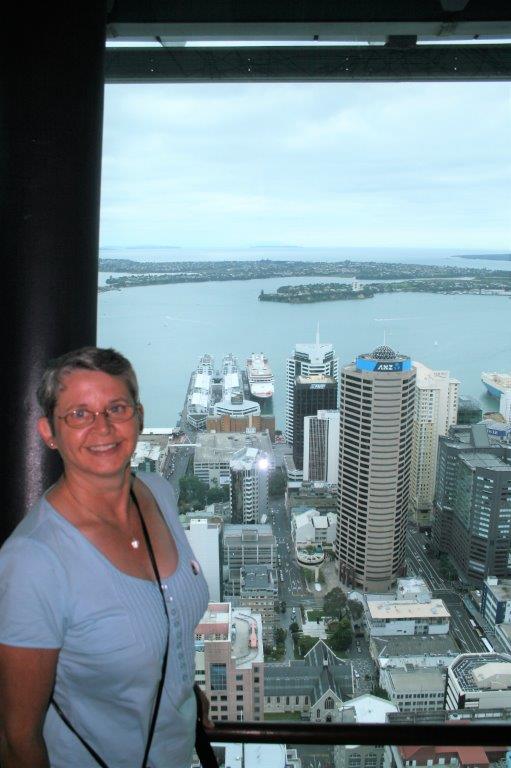
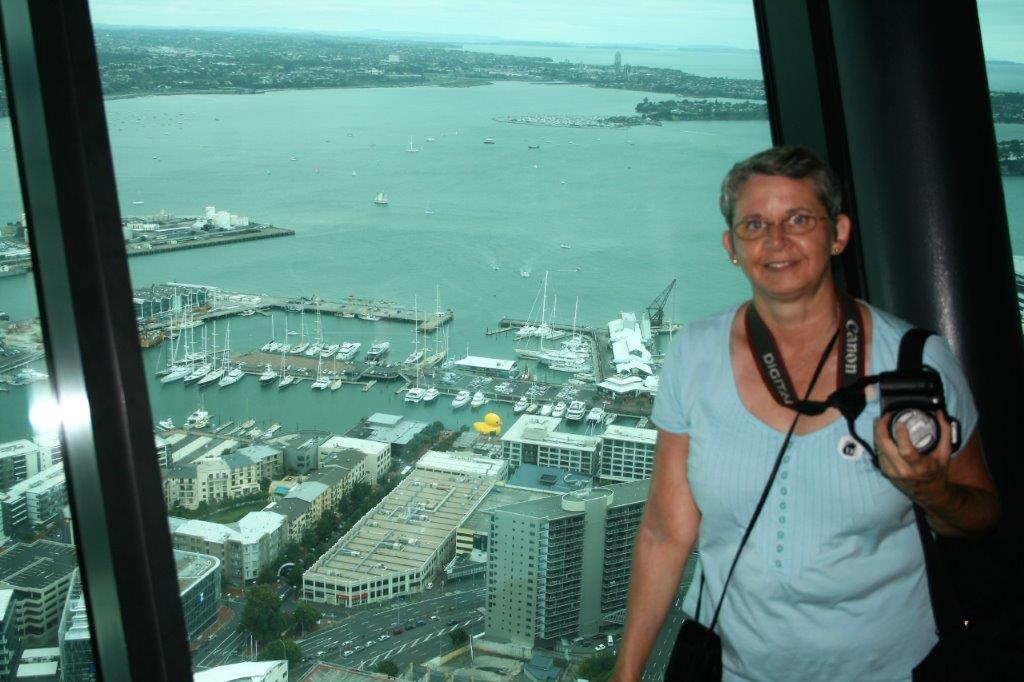
We were driven along the coast back into town to the Sky Tower, the tallest building in the Southern Hemisphere at 1,072 feet.  From the top there is 360° panoramic views of Auckland and the Hauraki Gulf.  On a really clear day it is possible to see the eastern edge of the Great Barrier Reef 60 miles away. The floor is glass.

For adrenaline junkies there are two options available at the SkyTower.  You can walk around the top rim 192 meters above the ground with no hand rails or guard rails.  Or, you can throw yourself off the tower and drop 192 meters at 85 mph on New Zealand’s highest and only base jump by wire.  While we were looking at the view a young lady dropped in front of us and suspended for a few seconds before plummeting to the ground.  Not for the faint of heart! 

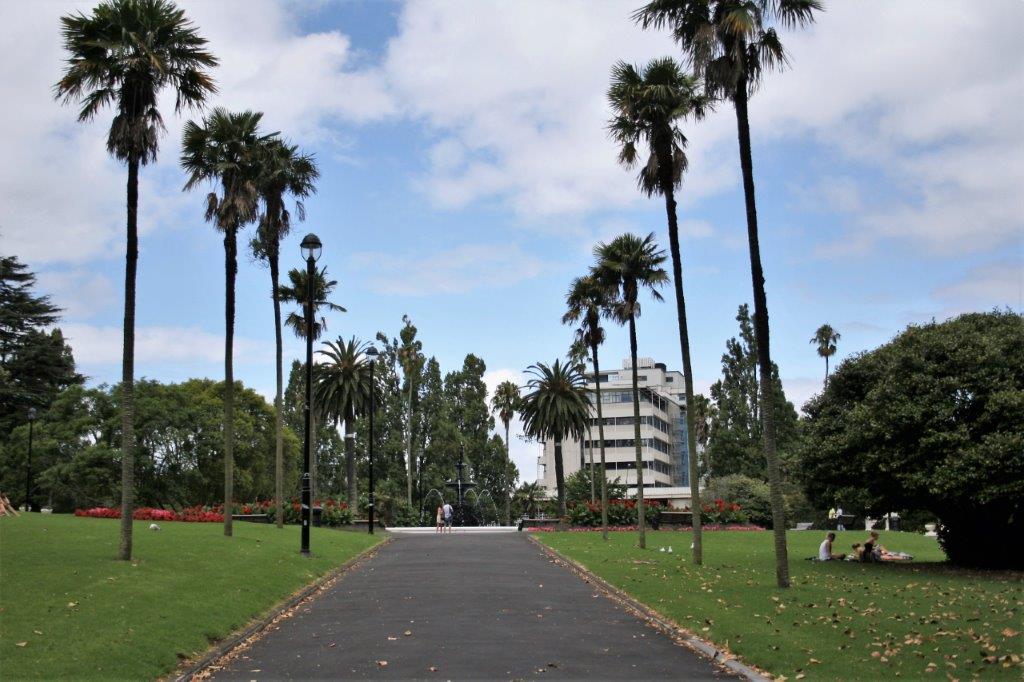
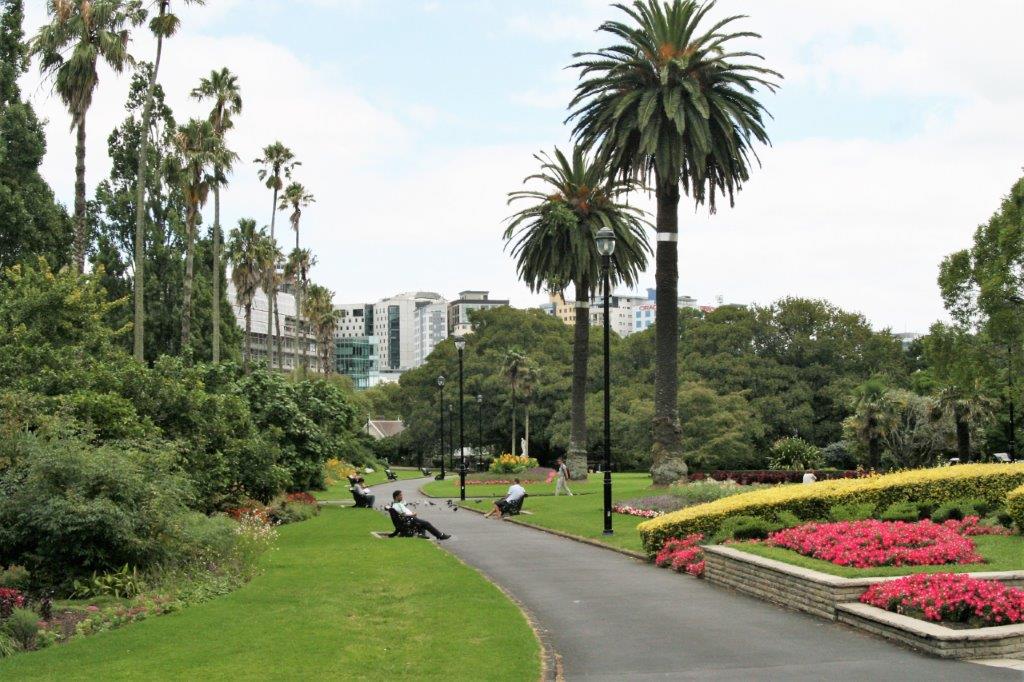
When our tour was over we had lunch on the ship then walked a couple of miles to Albert Park.

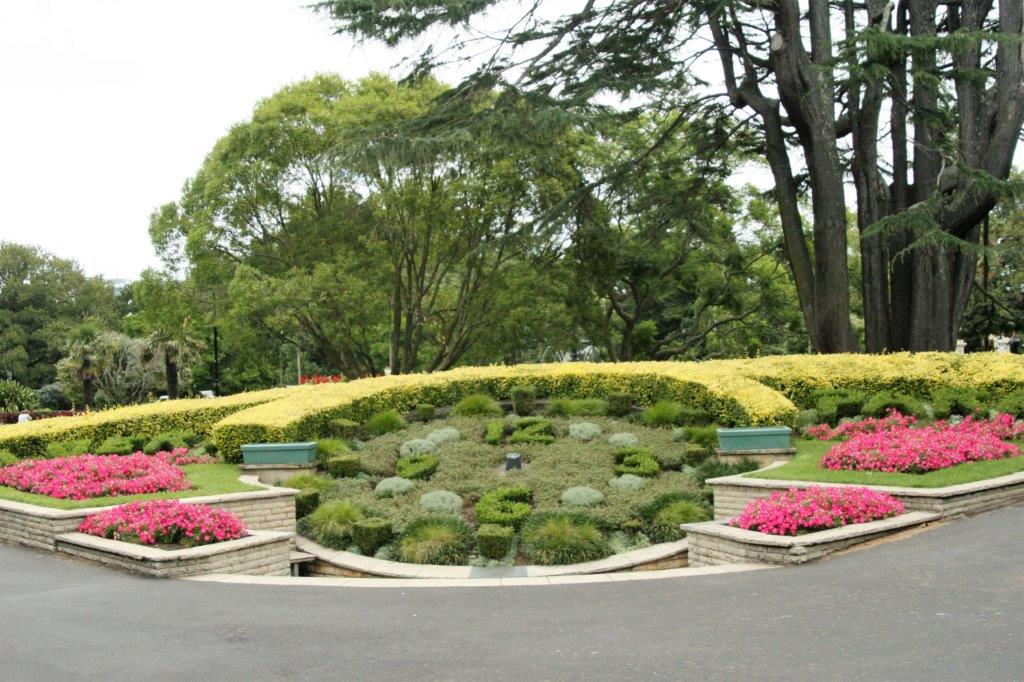
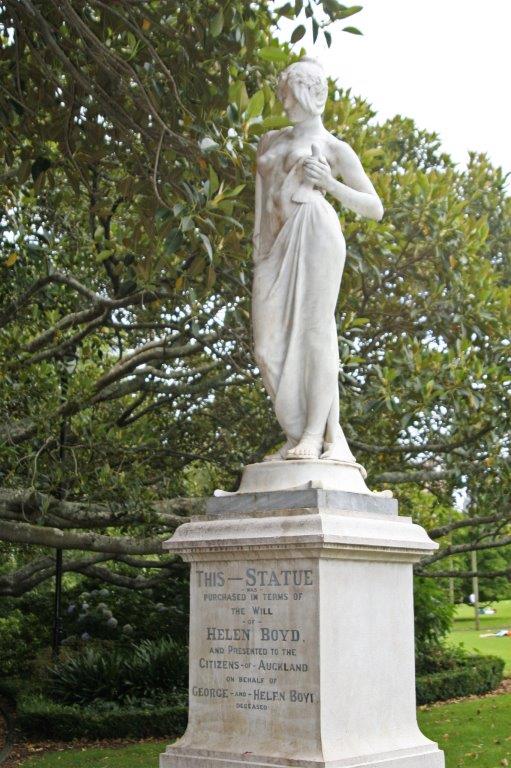
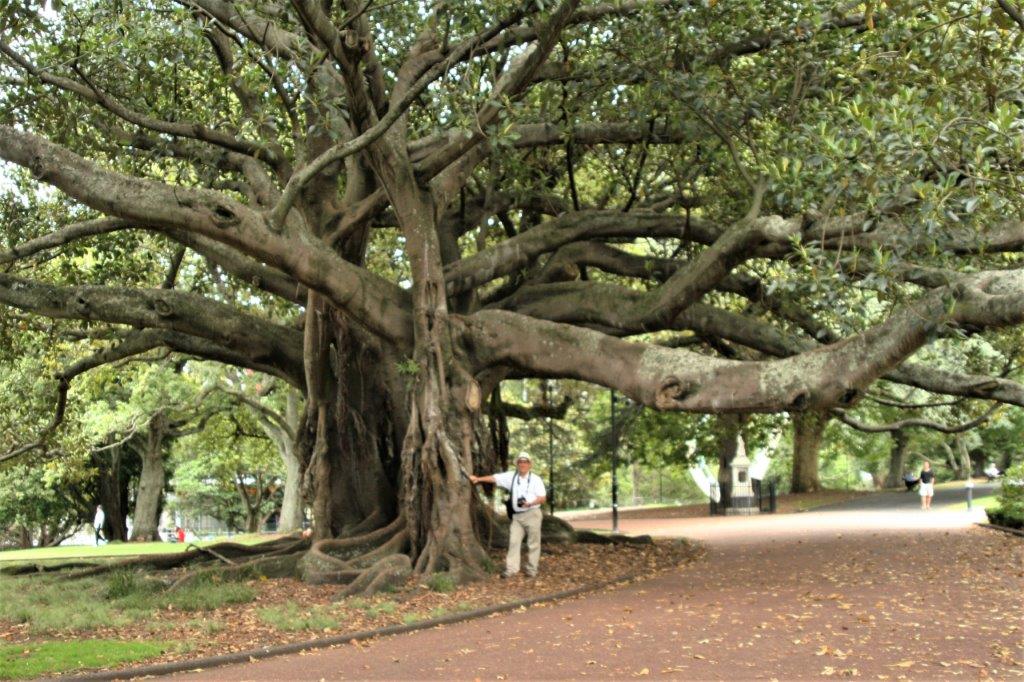
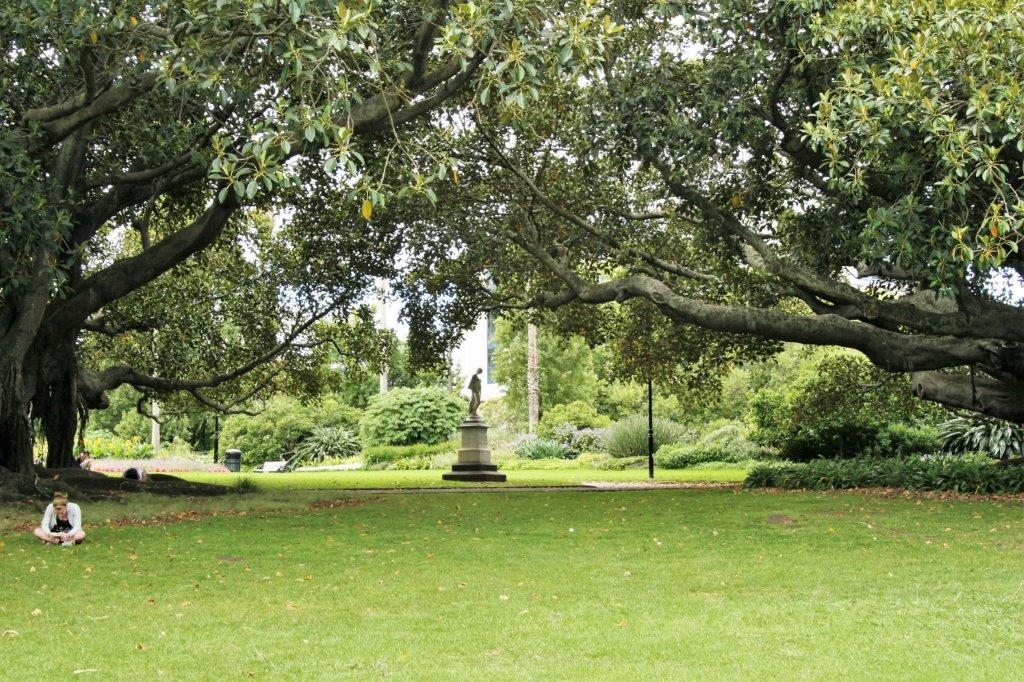
The park has had several lives in the past: a fortification against Maori attack, a public garden in the mid-19th century, a public air-raid shelter during WWII and now it is a landscaped 15-acre public garden, home to Auckland University and the New Art Gallery. It was a very beautiful, restful place to spend some time.

The internet on the ship had been horrible the entire trip so I spent some time in the afternoon and evening at an internet cafe to get some of my photos uploaded for folks at home to see.

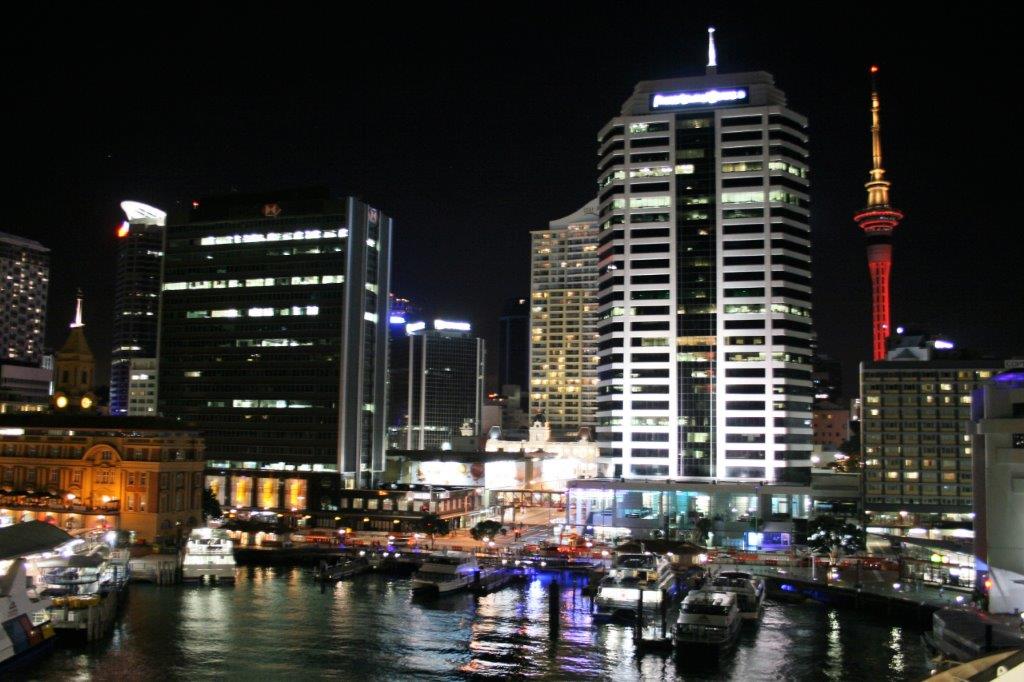
The night time city lights from the ship added a nice touch to the day.
2011 January 28 – Day 24 – Viatape, Bora Bora, French Polynesia (Day 2)

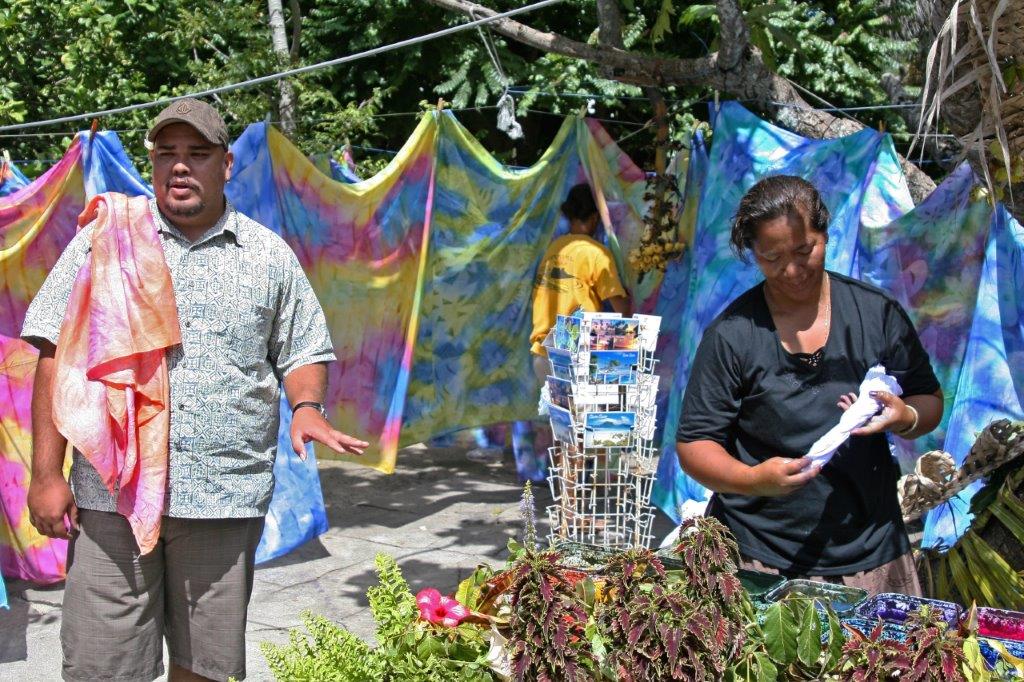
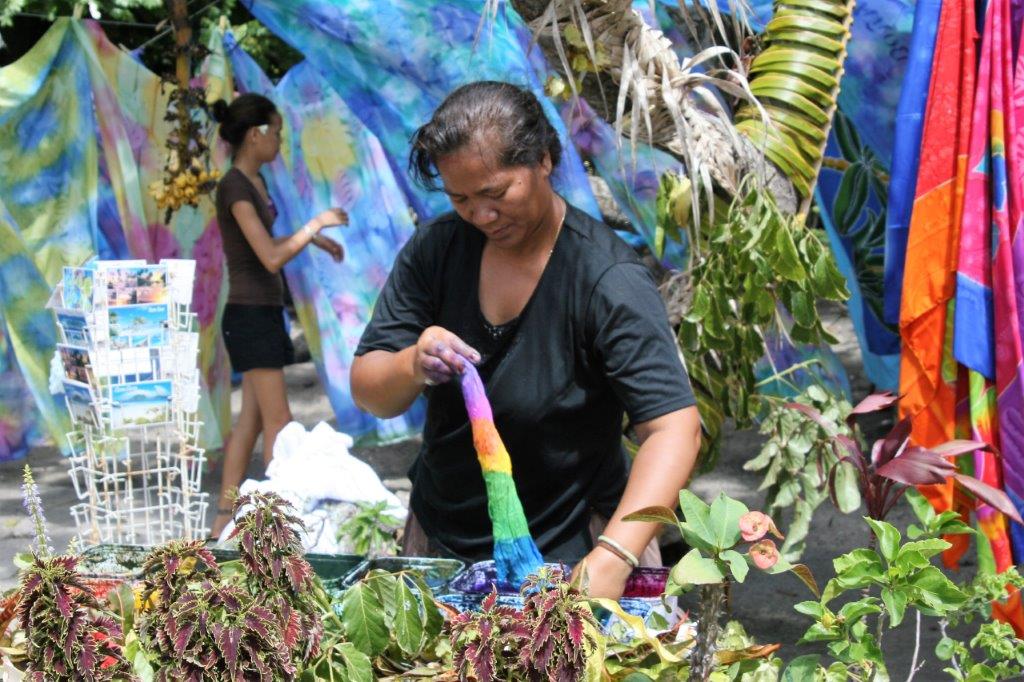
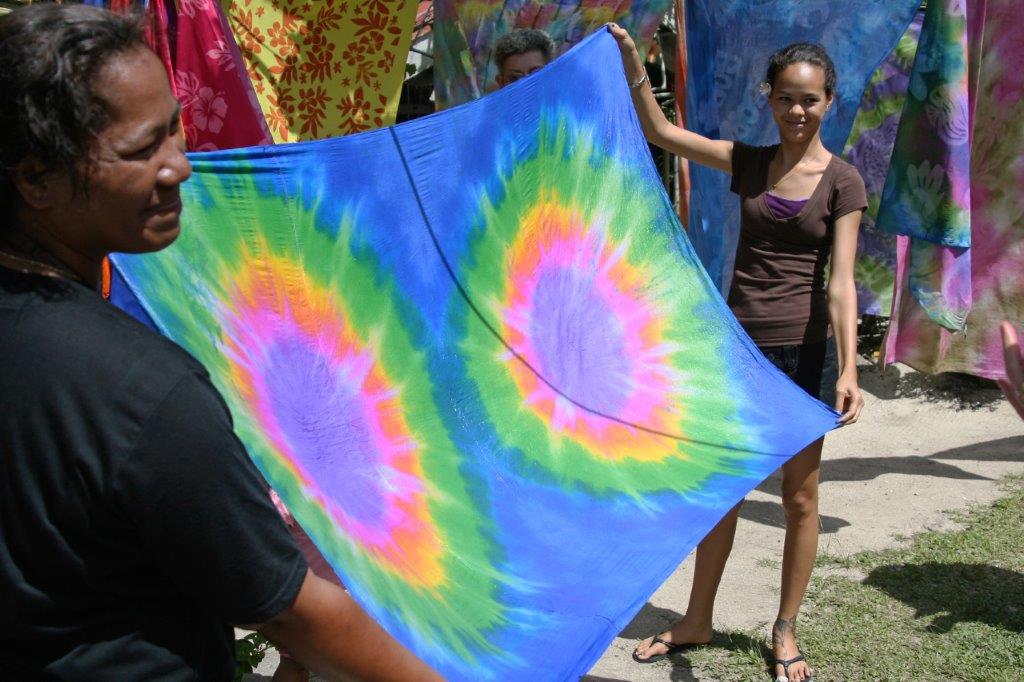
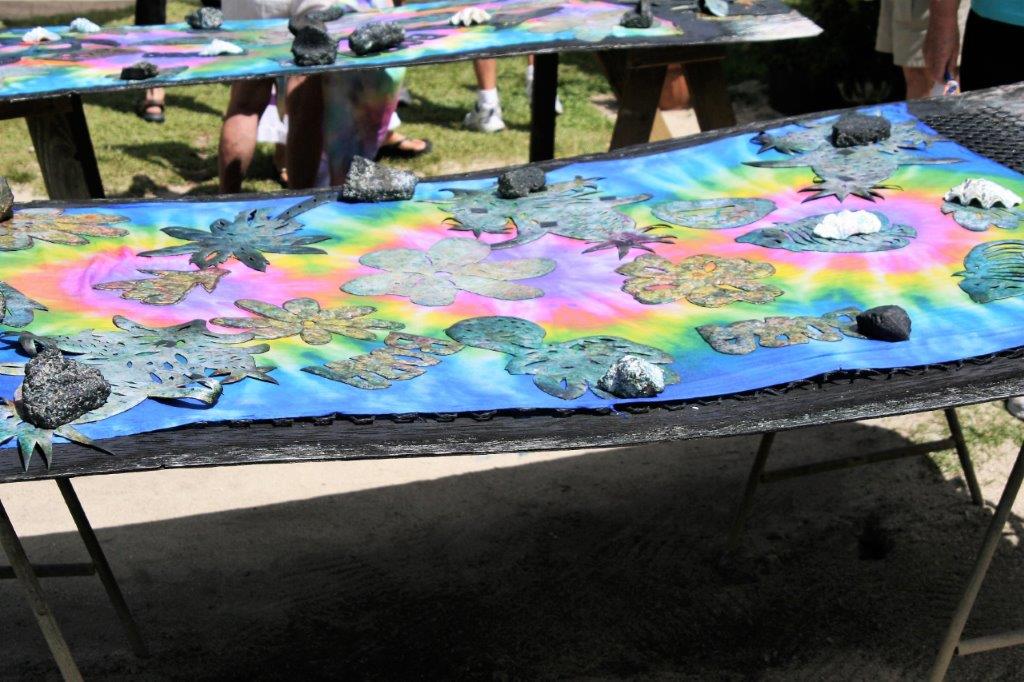
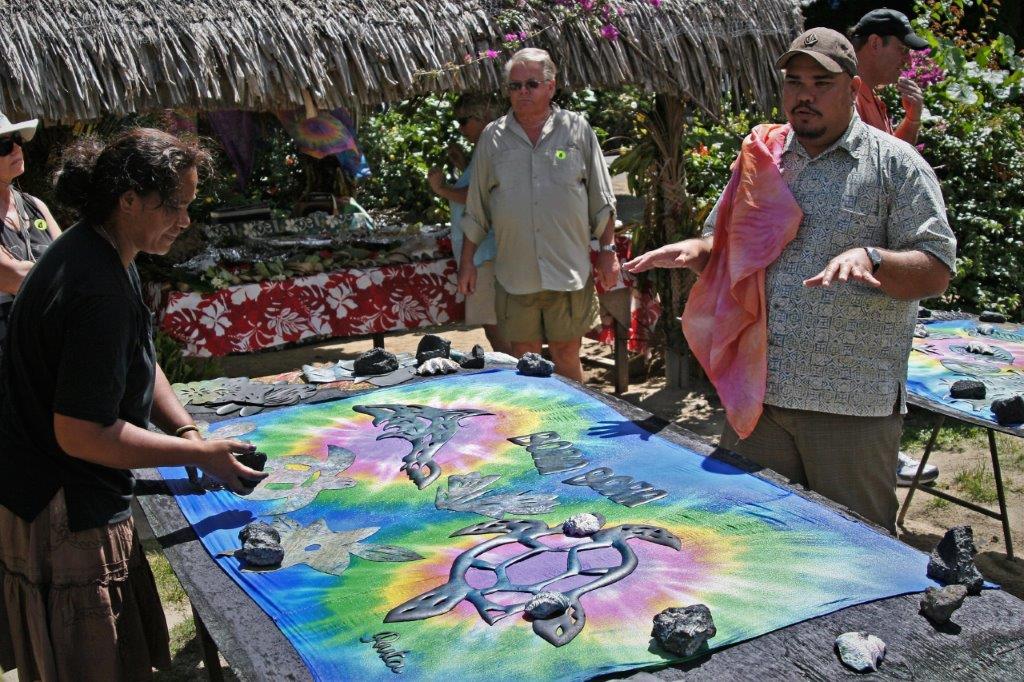
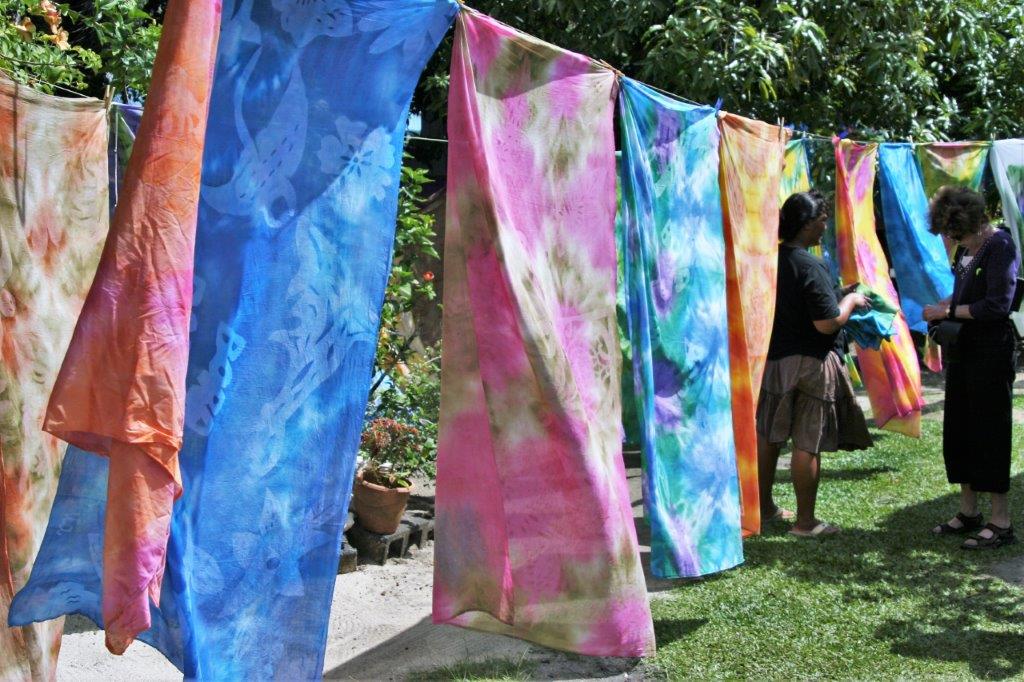
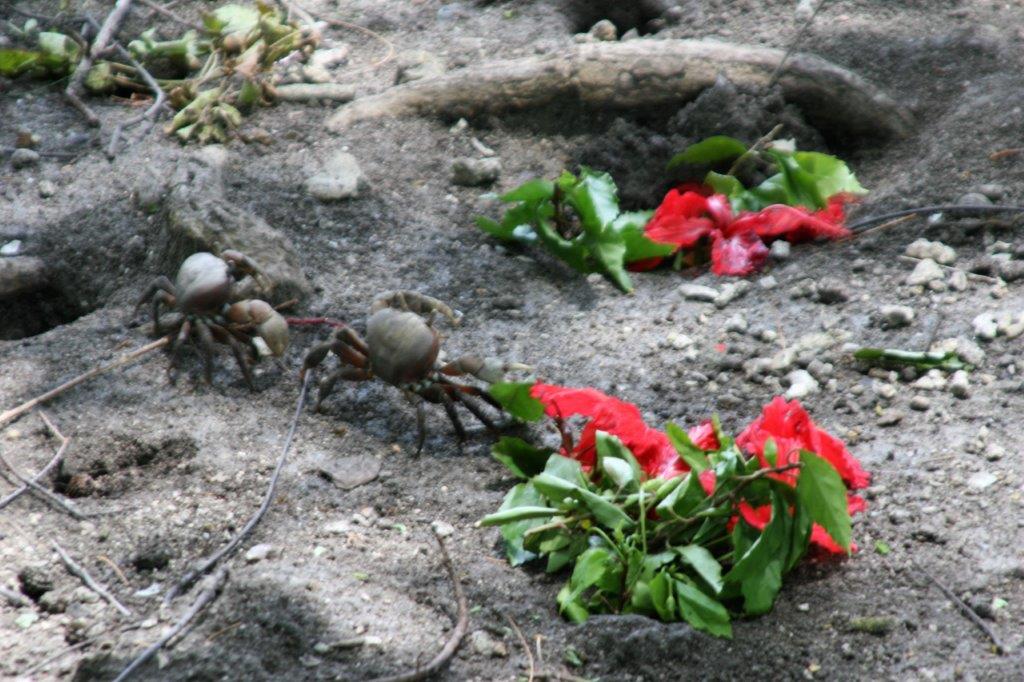
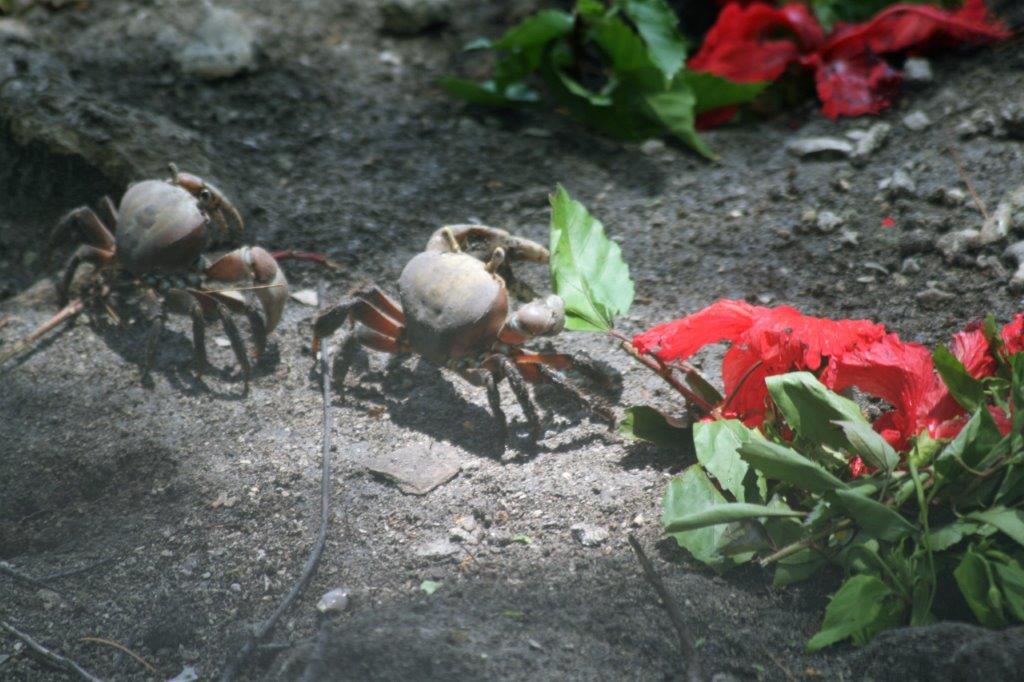
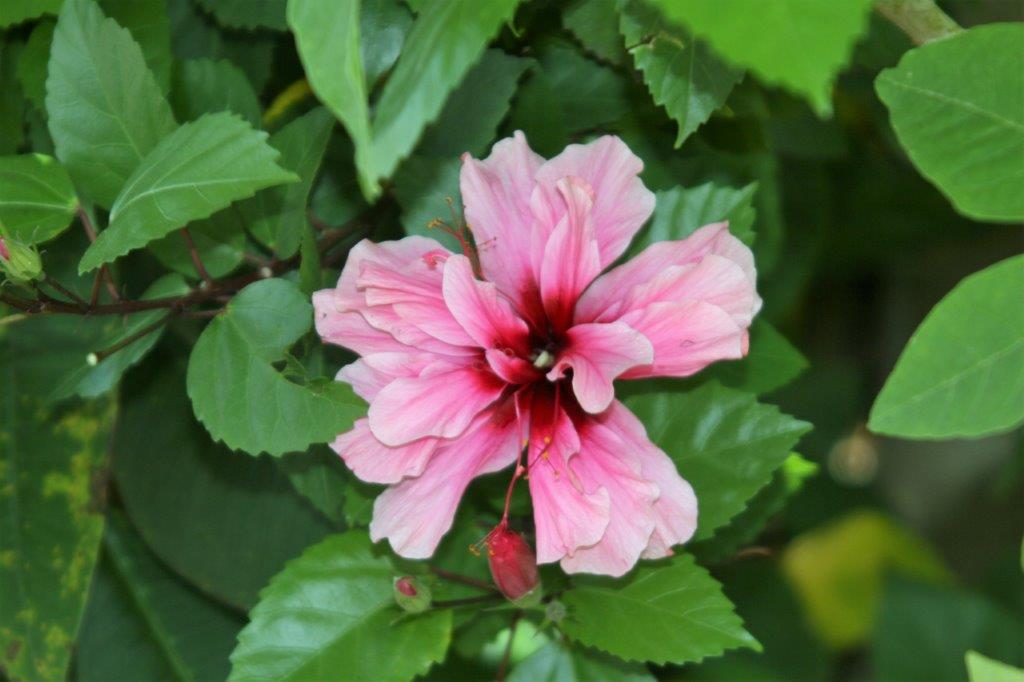
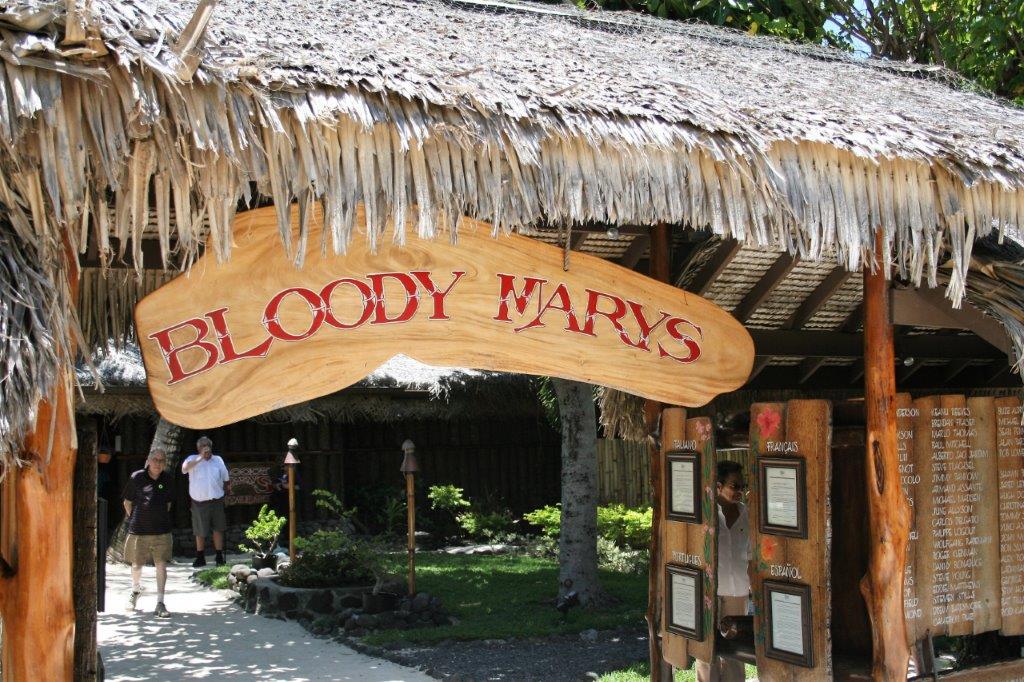
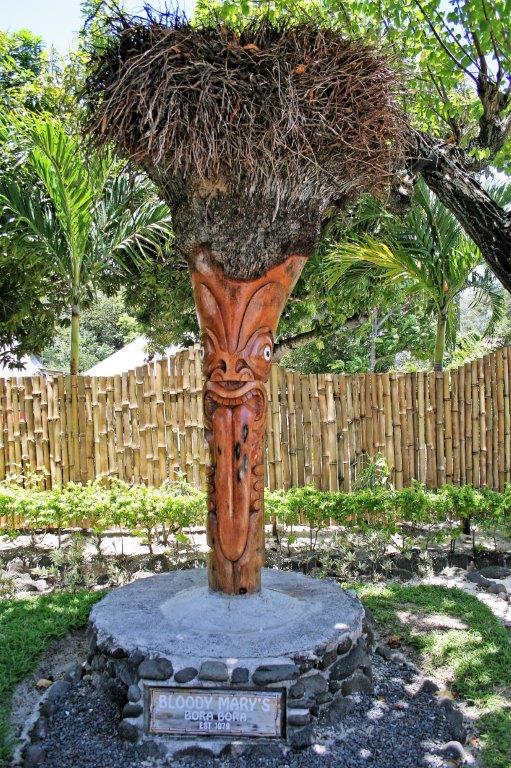
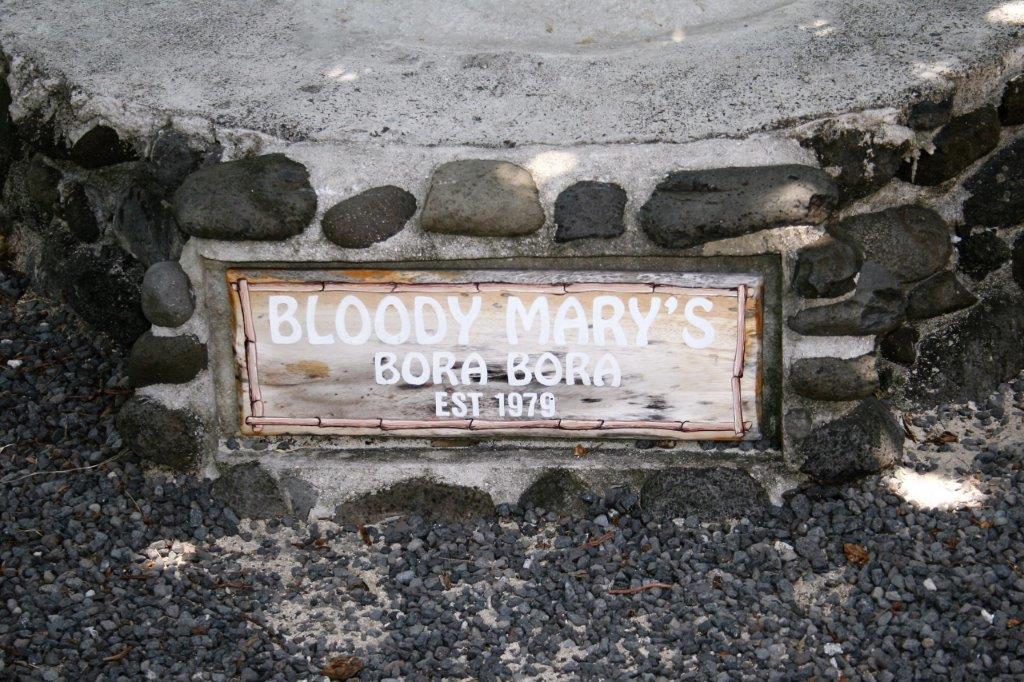
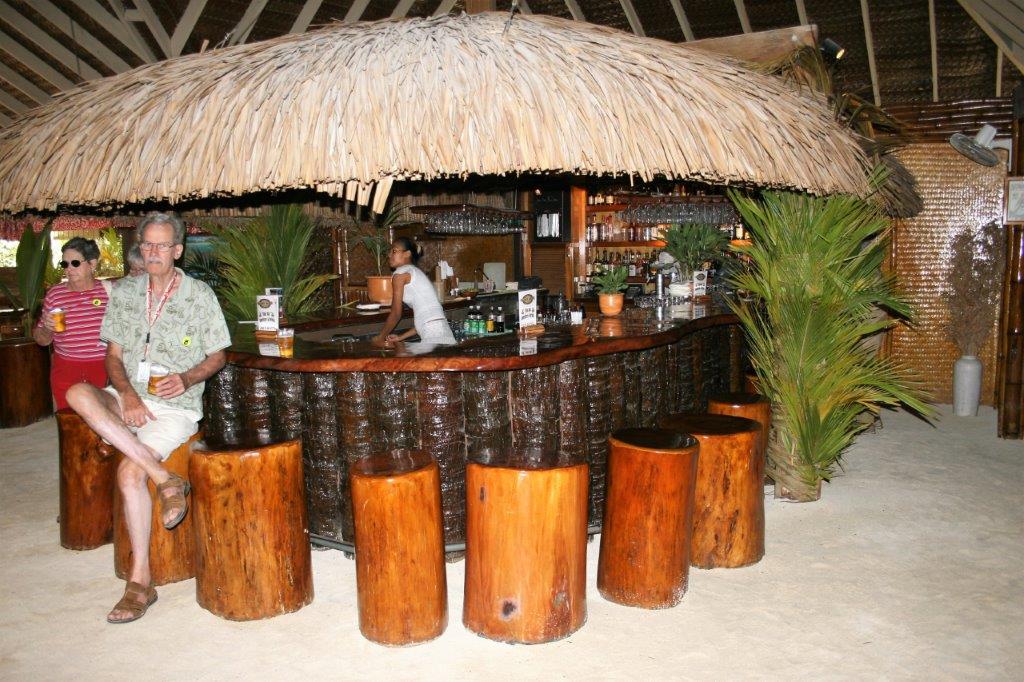
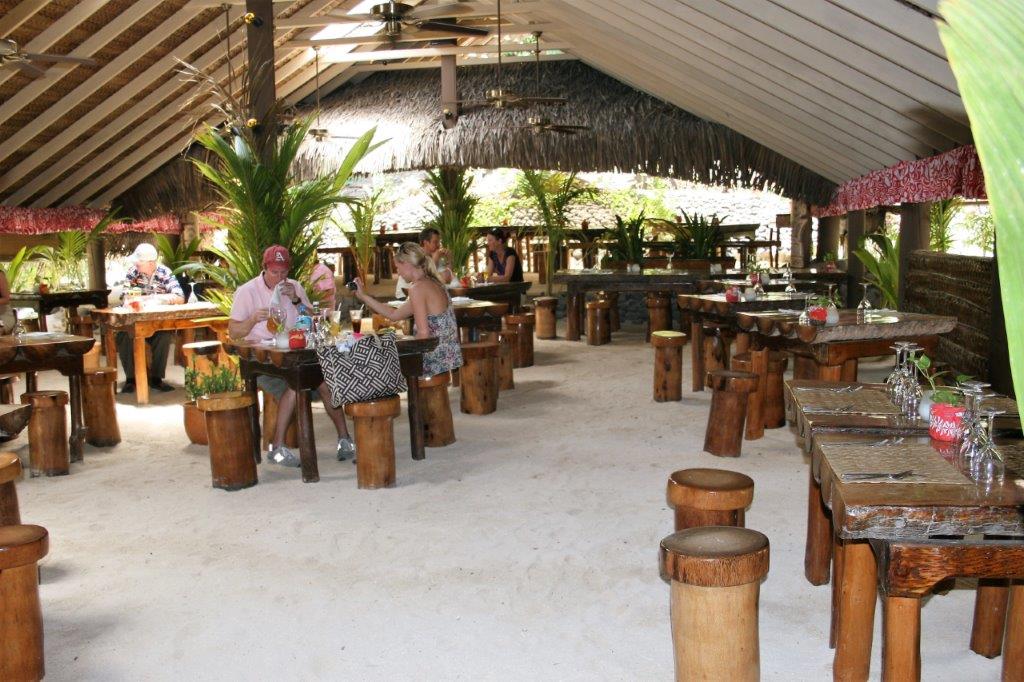
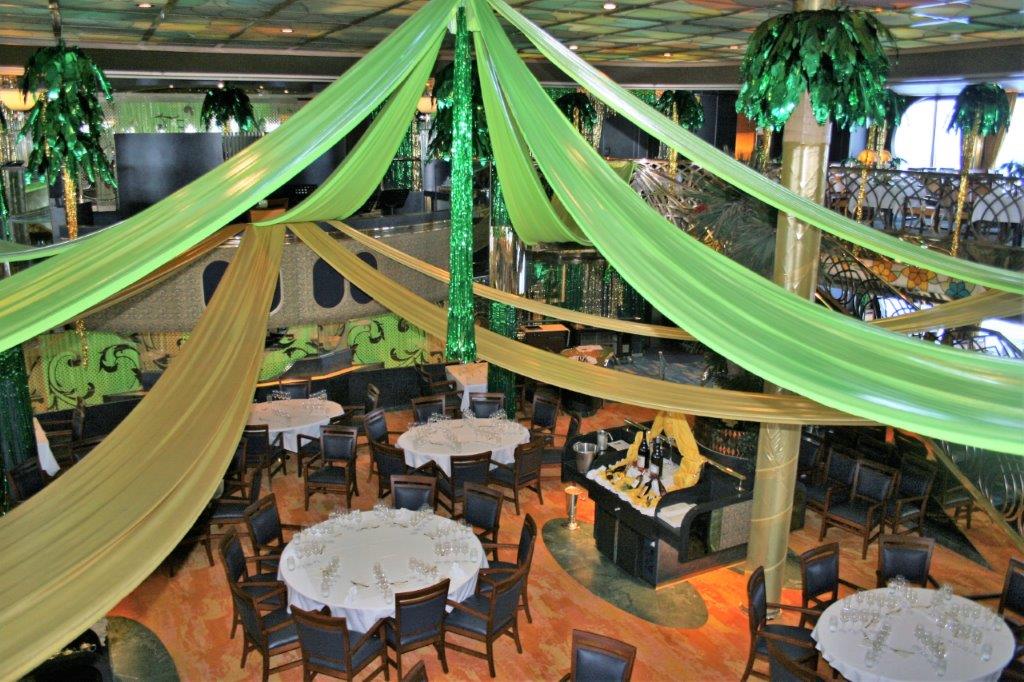
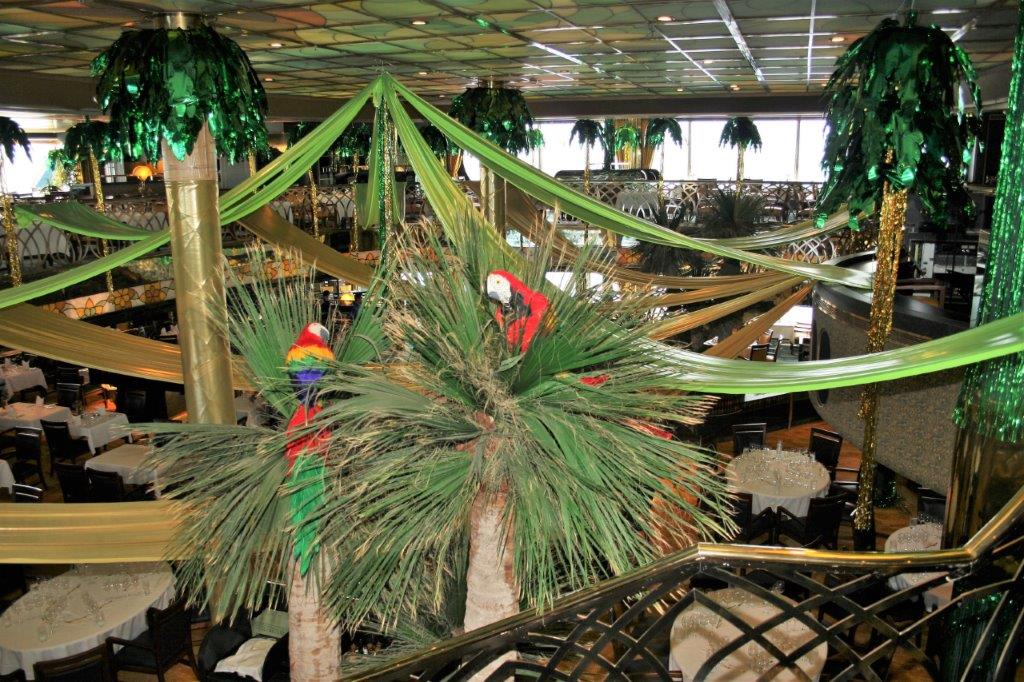
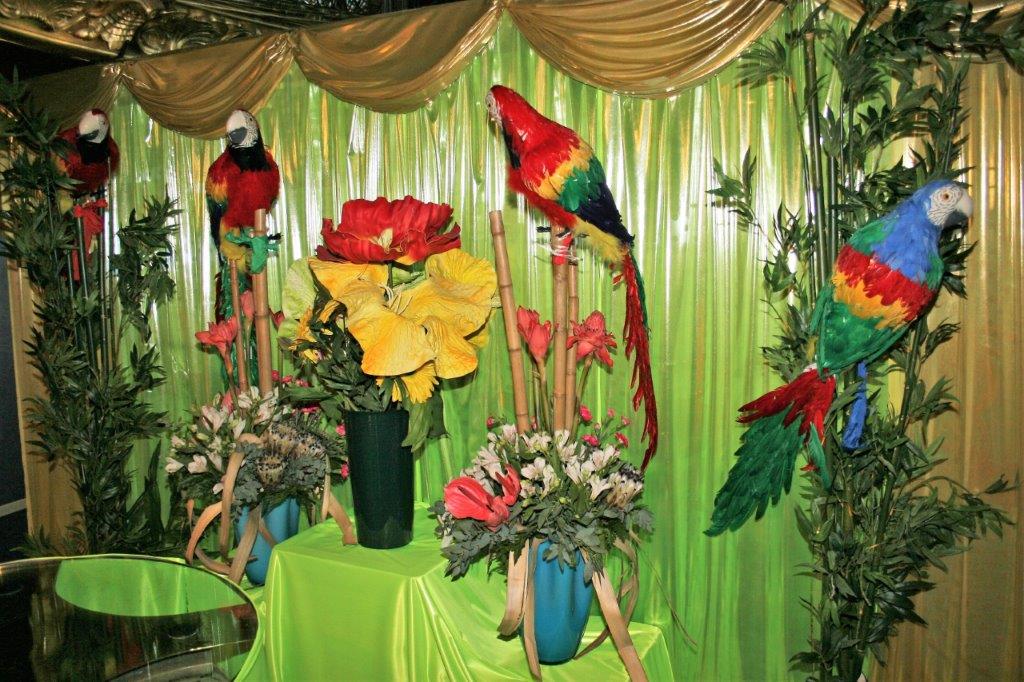
Another day in the tropical paradise of Bora Bora.  Our tour was 2 1/2 hours long and we drove the 19 miles around the island.   Our first stop was an artisan shop where the ladies make pareos (tie-dye sarongs).  They have the process down to an art and every pareo is unique because they use different colour combinations of dye and lay different shapes on the cloth was it dries.  Very clever and very pretty.  Several ladies made purchases which pleased the island ladies a lot. Bora Bora has only one example of wildlife: the tupa crab.  Our driver stopped beside the road where a colony of the crabs live and he and our guide threw hibiscus blossoms on the ground.  These big crabs scuttled out of the holes in the ground as quick as could be and dragged the flowers inside as fast as they could. They are normally nocturnal, not leaving their holes until late at night to search for leaves and flowers to eat.   We drove past all 15 of the resorts on the tiny island and up the only hill for a beautiful view. The final stop was the famous Bloody Mary’s bar.  Many famous actors and authors have stopped here apparently.  The floor is a lovely white sand.  Since it was the end of the tour many people just stayed and had a drink. Once we got back to town we walked from one end of Viatape to the other before heading back to the ship. Sail-away was 5 pm and leaving was as lovely as arriving. We had a day at sea before our next port-of-call, Rarotonga, Cook Islands, and the formal night theme was Tropical Paradise.   There is nothing half-hearted about Ketuk’s team of decorators for special nights.  They always do a superb job.

2011 January 27 – Day 23 – Viatape, Bora Bora, French Polynesia

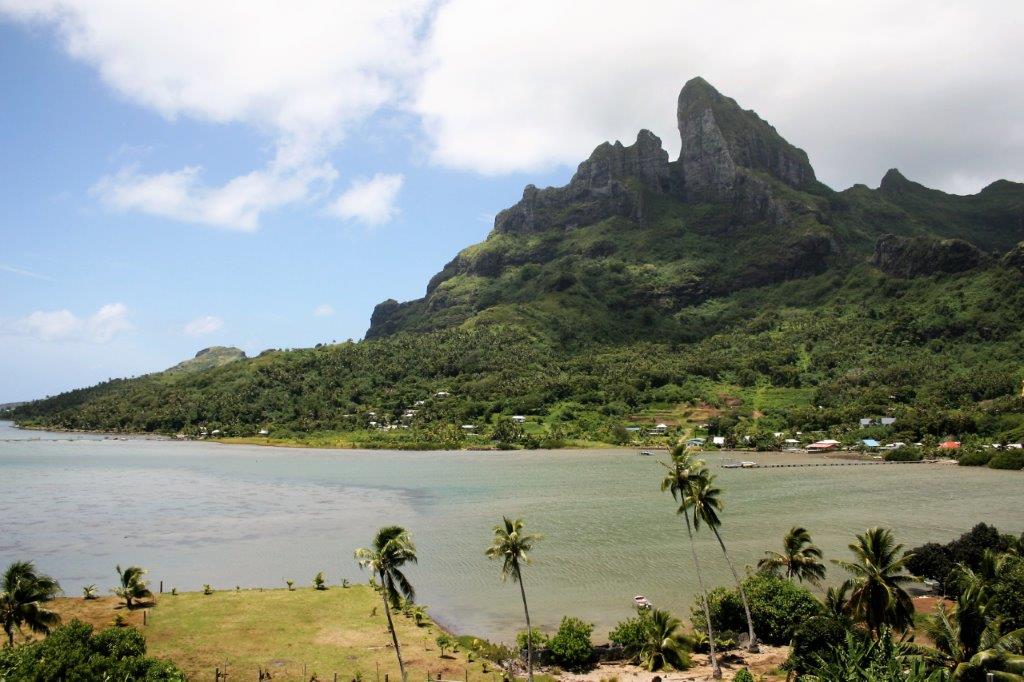
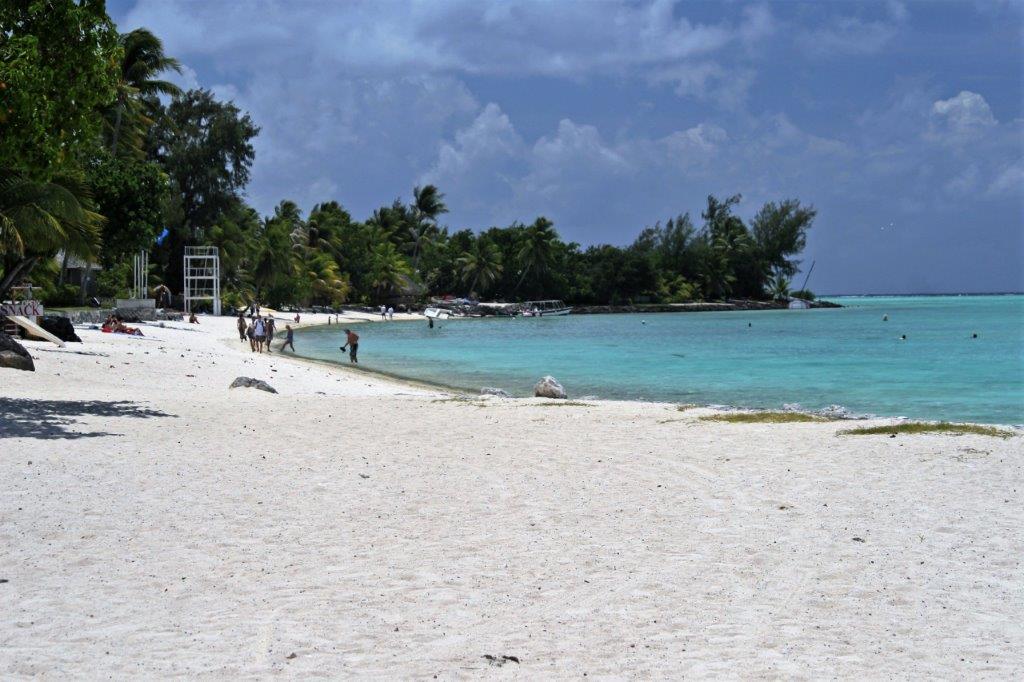
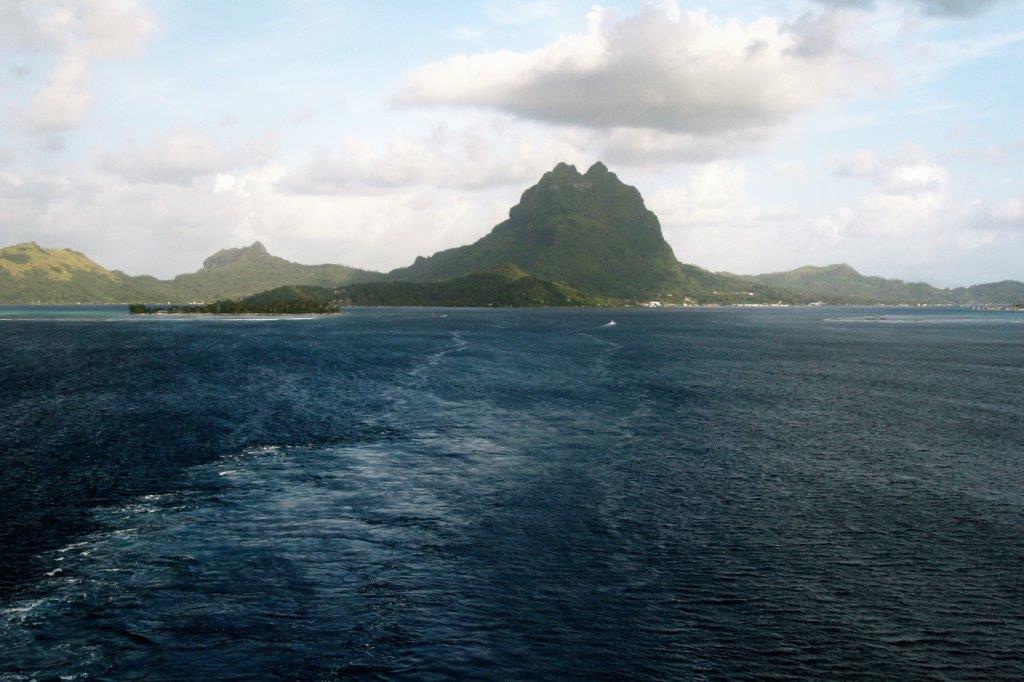
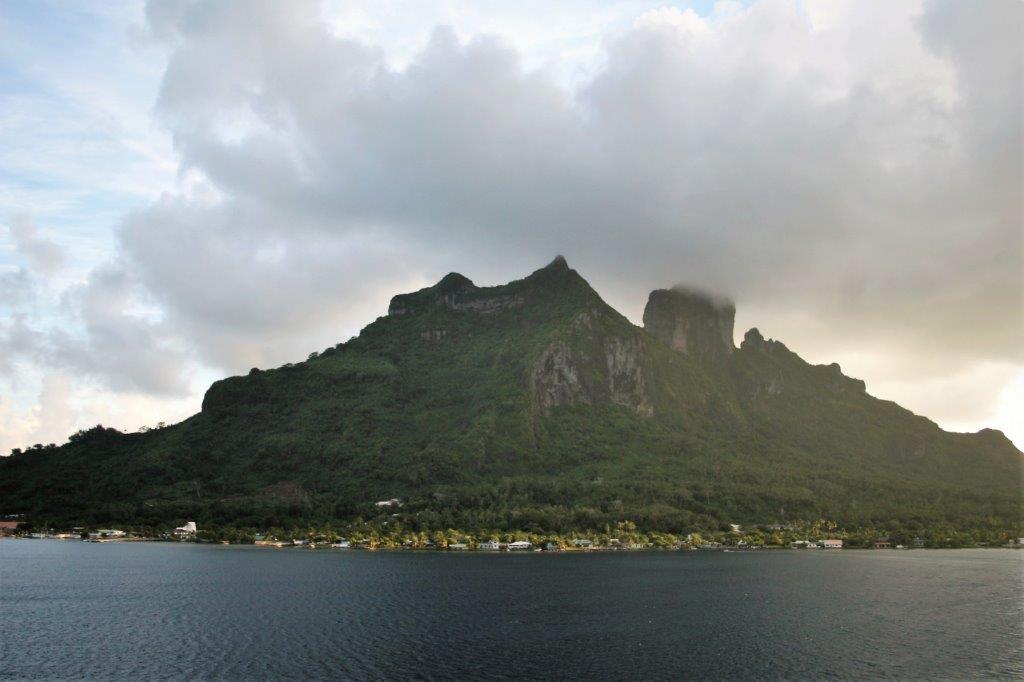
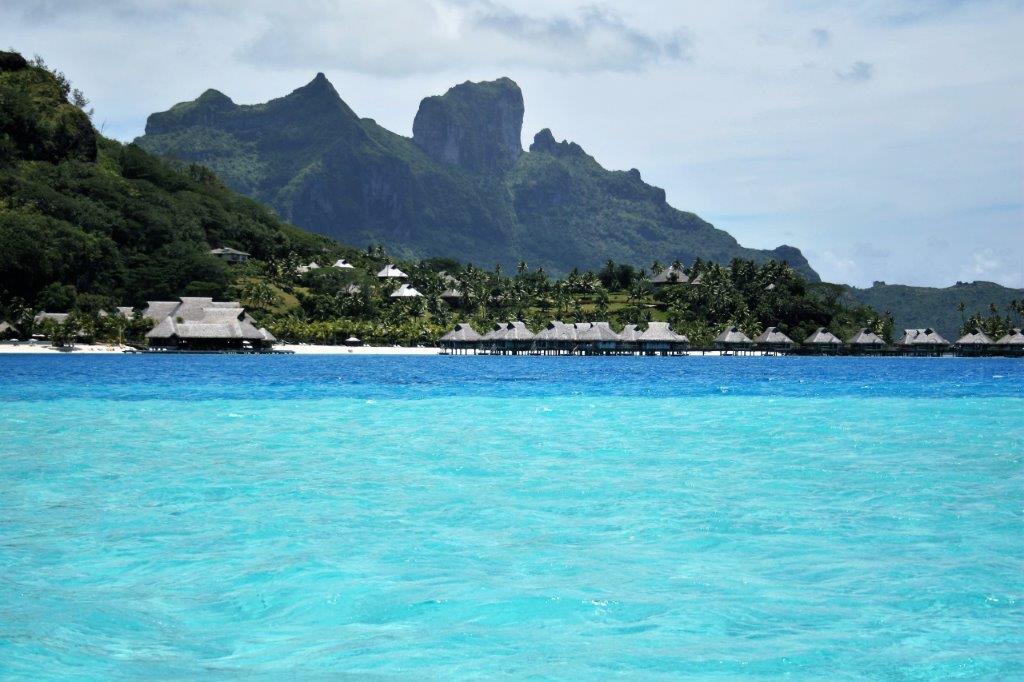
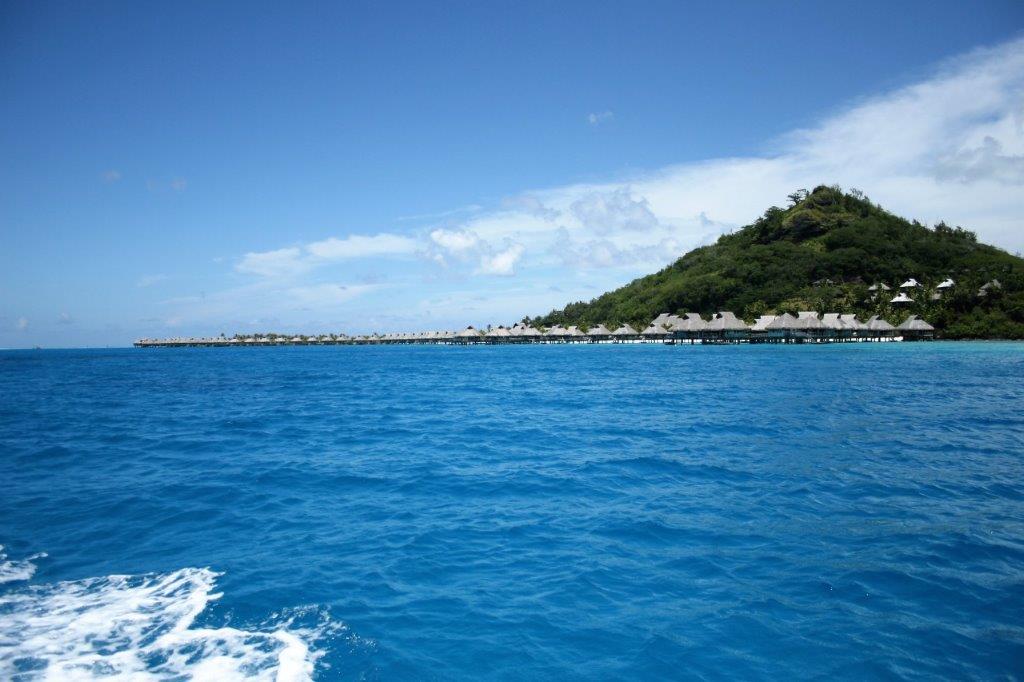
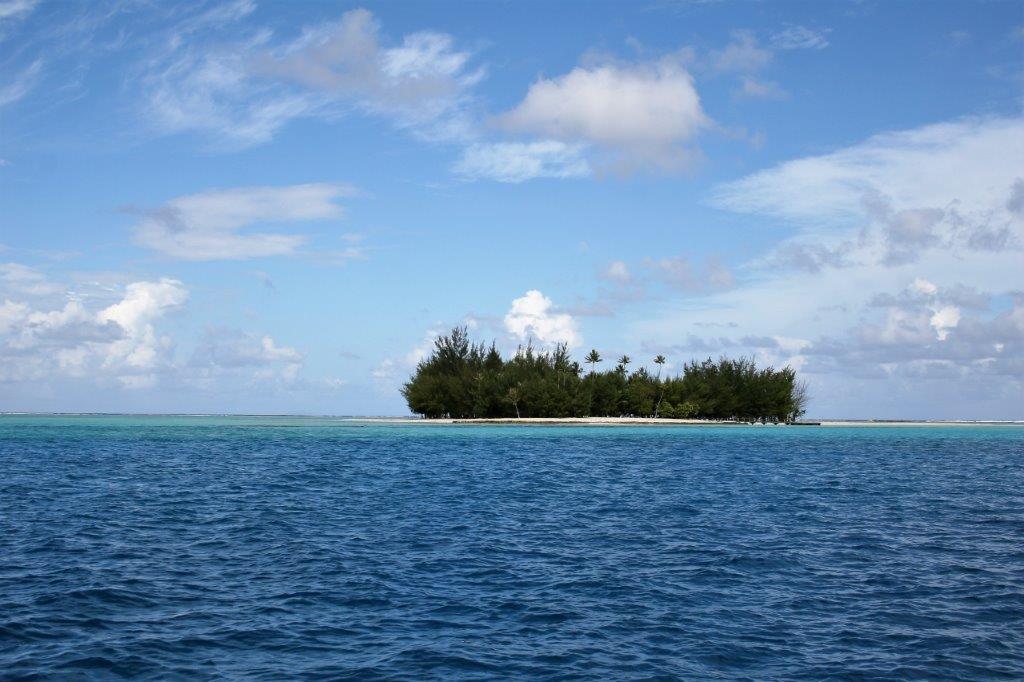
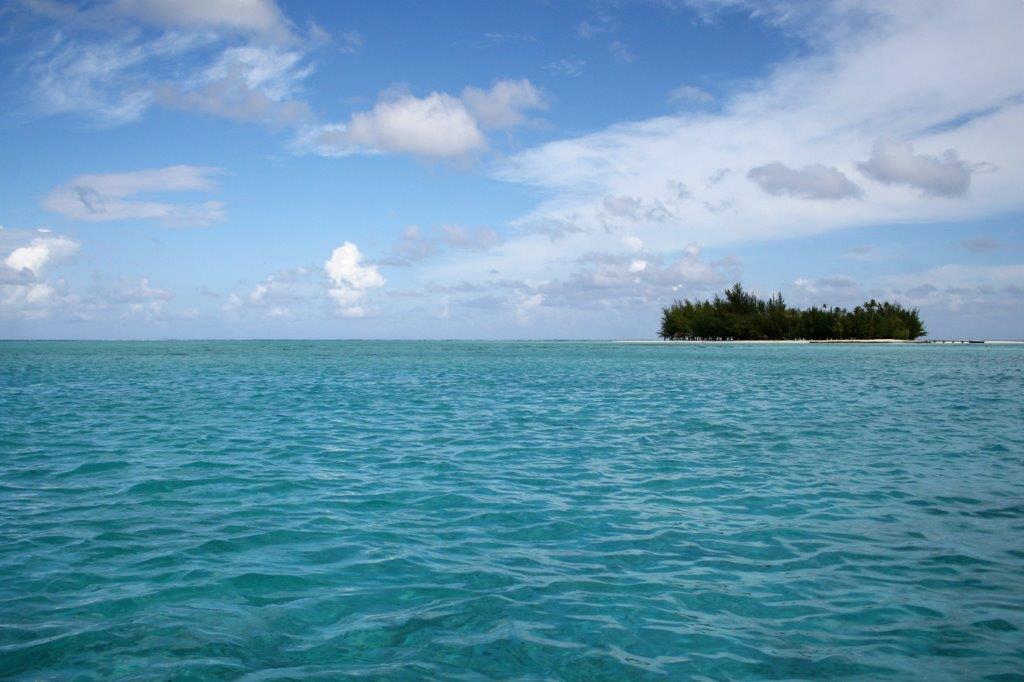
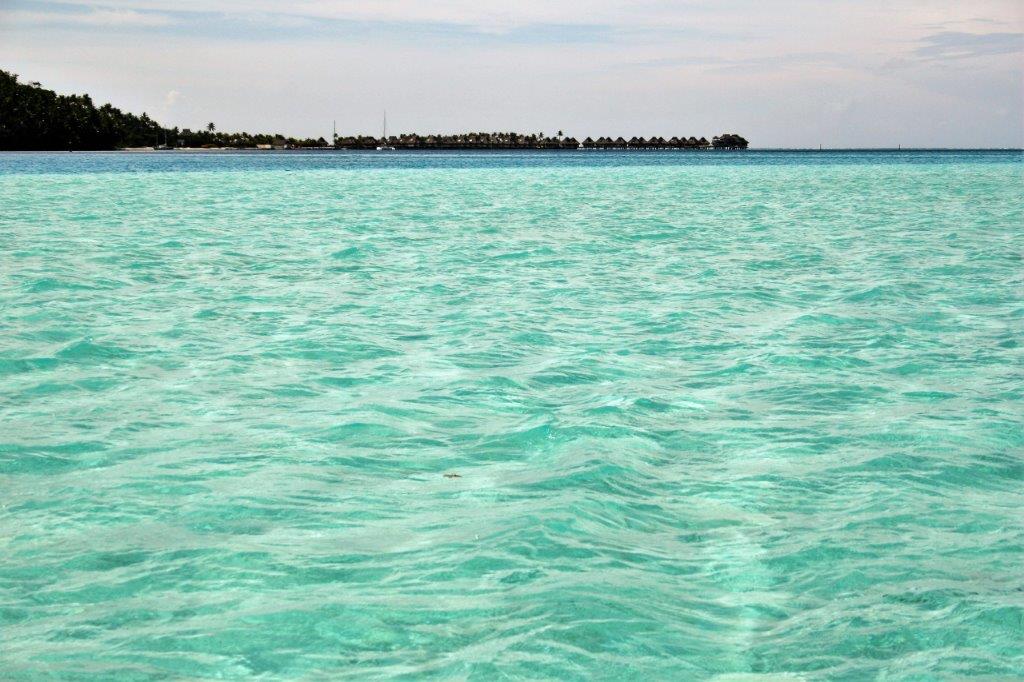
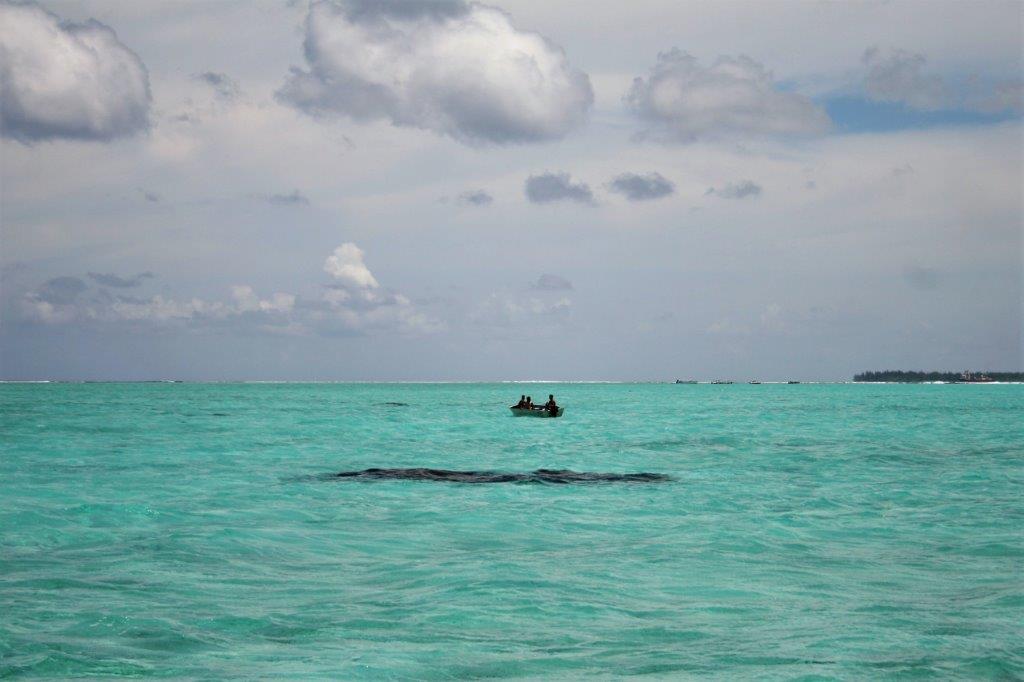
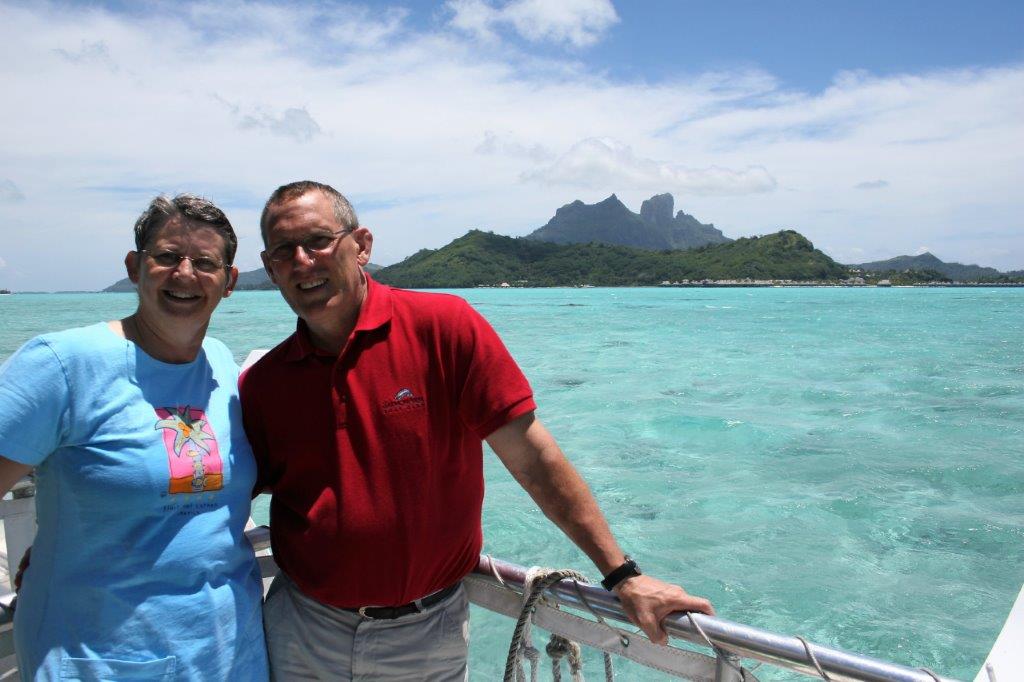
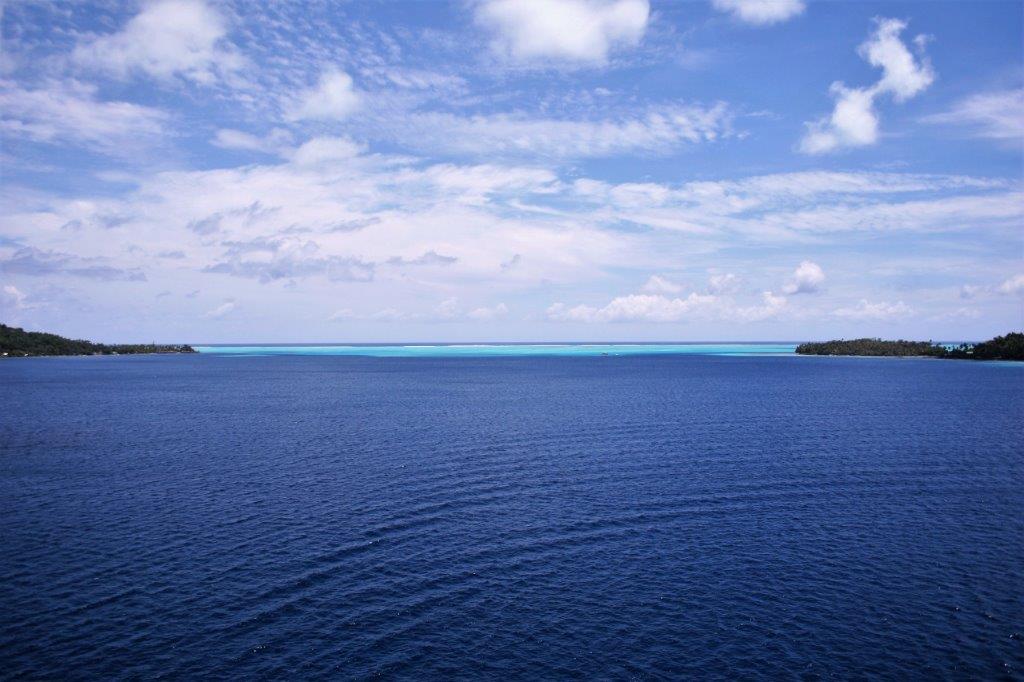
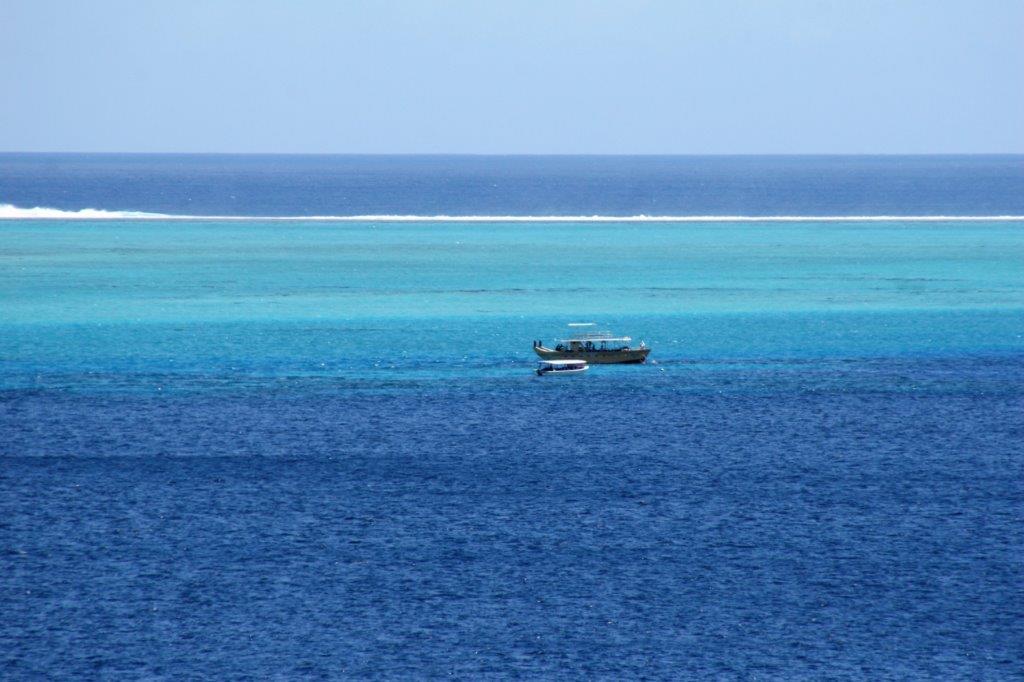
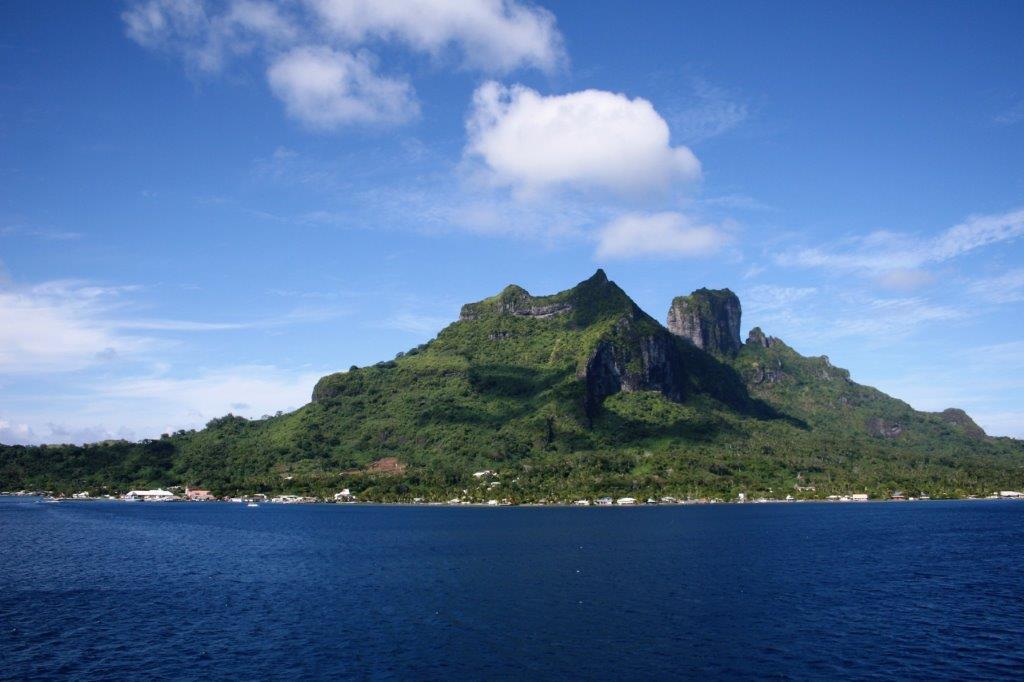
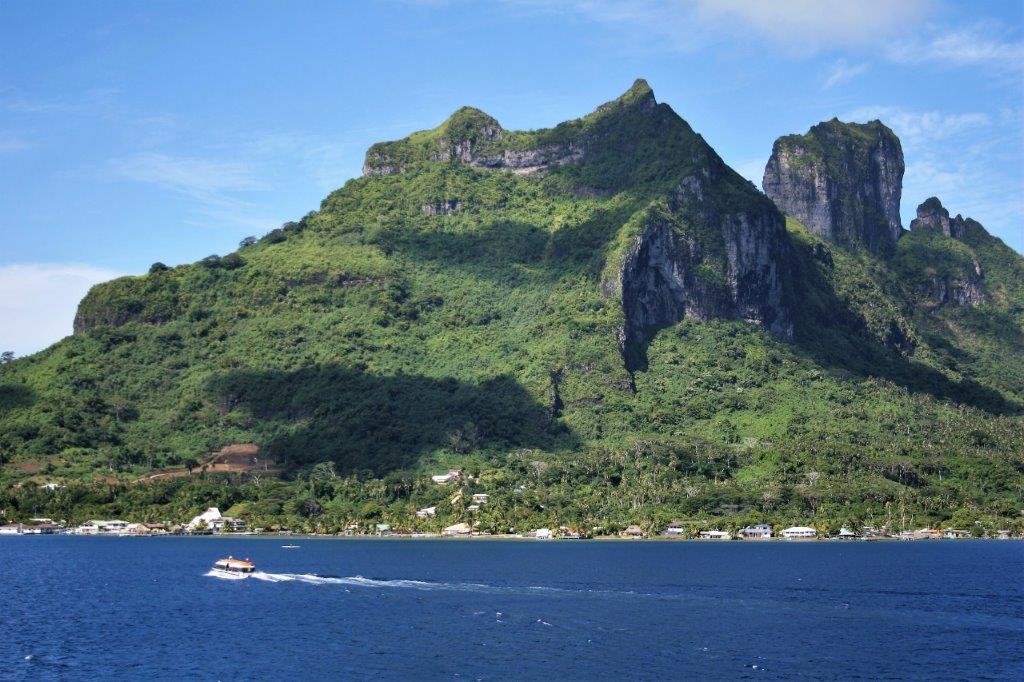
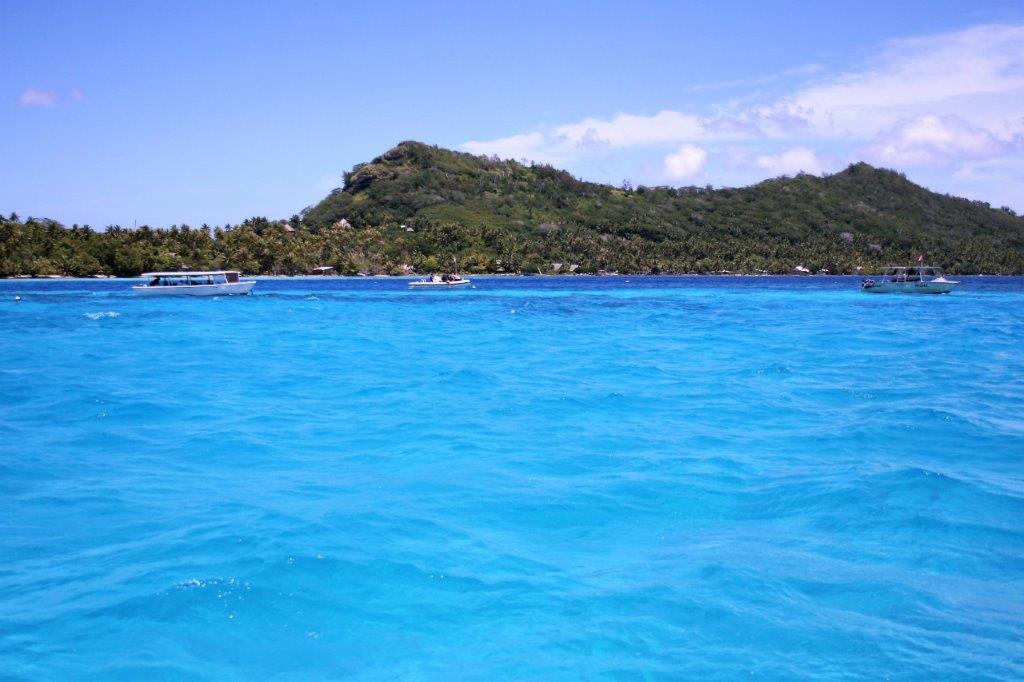
What is not to love about Bora Bora?  Novelist James Michener described Bora Bora as “the world’s most beautiful island.” The island is almost entirely encircled by a reef and the water in the lagoon is a striking turquoise or jade green depending on the sunlight.  The entire island is 19 miles around.  In the center of the island Mt. Otemanu soars 2,385 feet high with almost perpendicular sides.  It has never been climbed. There is only one opening where a tender or small boat can enter and exit.  The ship was already at anchor outside the reef when we got up at 6:15 am to watch the sail-in so we had plenty of time for breakfast before our tour.In case you are wondering, we almost always book a tour from the ship’s shore excursion offerings.  Since we have never been to any of these places before we feel more comfortable knowing that the ship staff have vetted the tour company, made sure the transport vehicles are in safe condition, and that the guides speak English and are knowledgeable about the city or area.  We are perfectly aware that the ship charges a premium for these tours and you can walk off the gangway and hire someone to do the same thing, or even more, for less money.  But the security and follow-through has value.  Also, in the event that the bus breaks down on one of our tours and we are late returning to the ship, the captain will wait for us before sailing away.  If we just hire a cab and driver and have a breakdown, the ship will delay departure about 20 minutes and after that you are on your own to get to the next port-of-call to re-board the ship.  And we have seen that happen.  Sometimes a higher cost for things is worth it; at least to us it is.
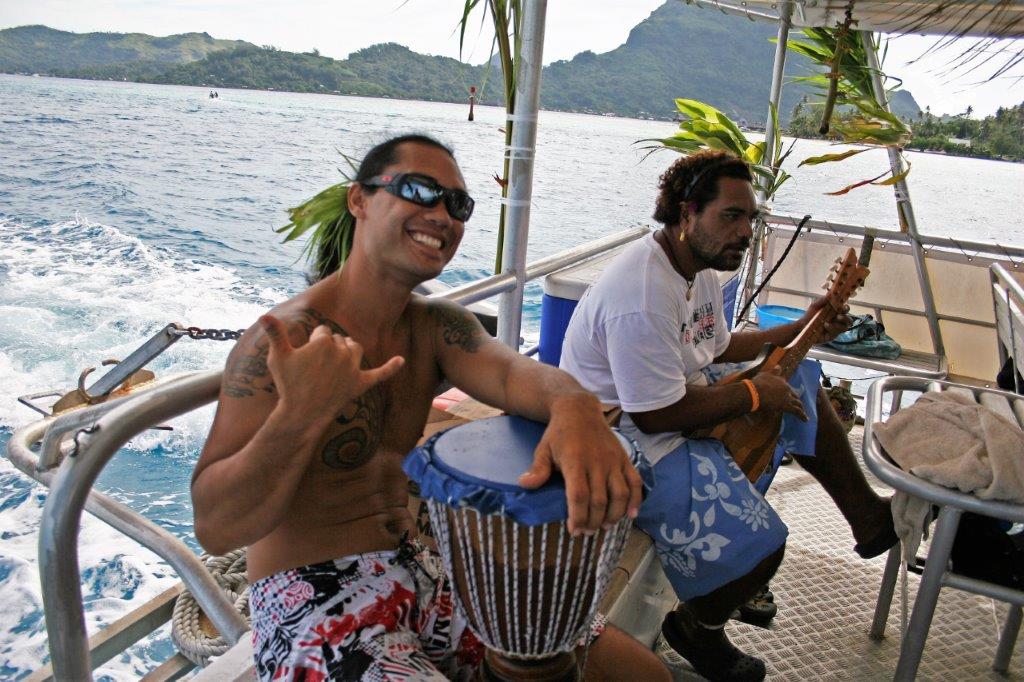
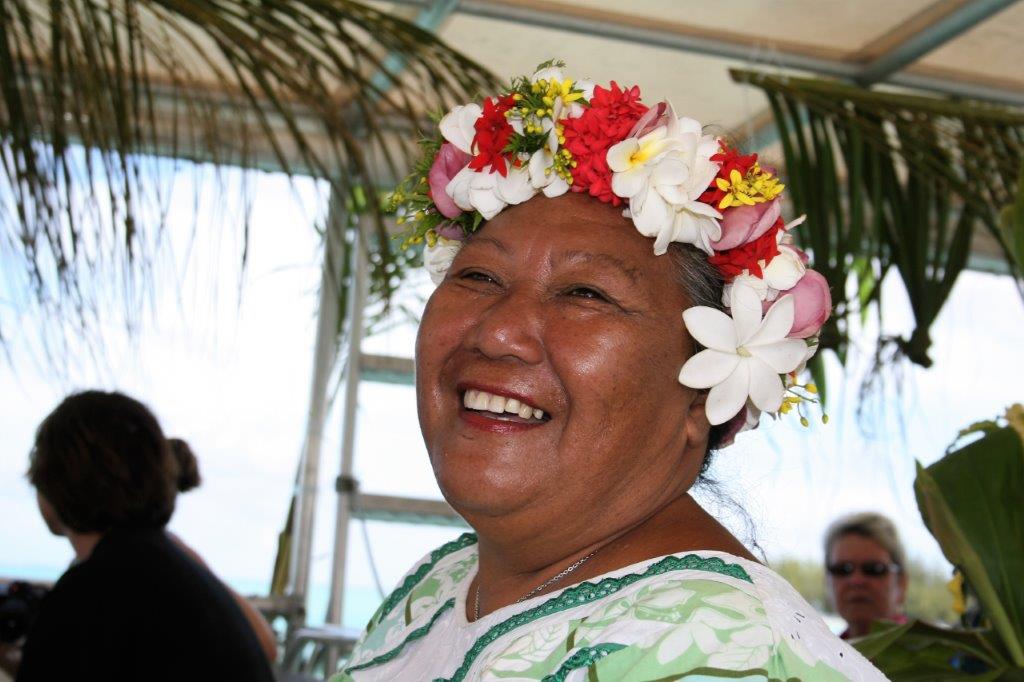
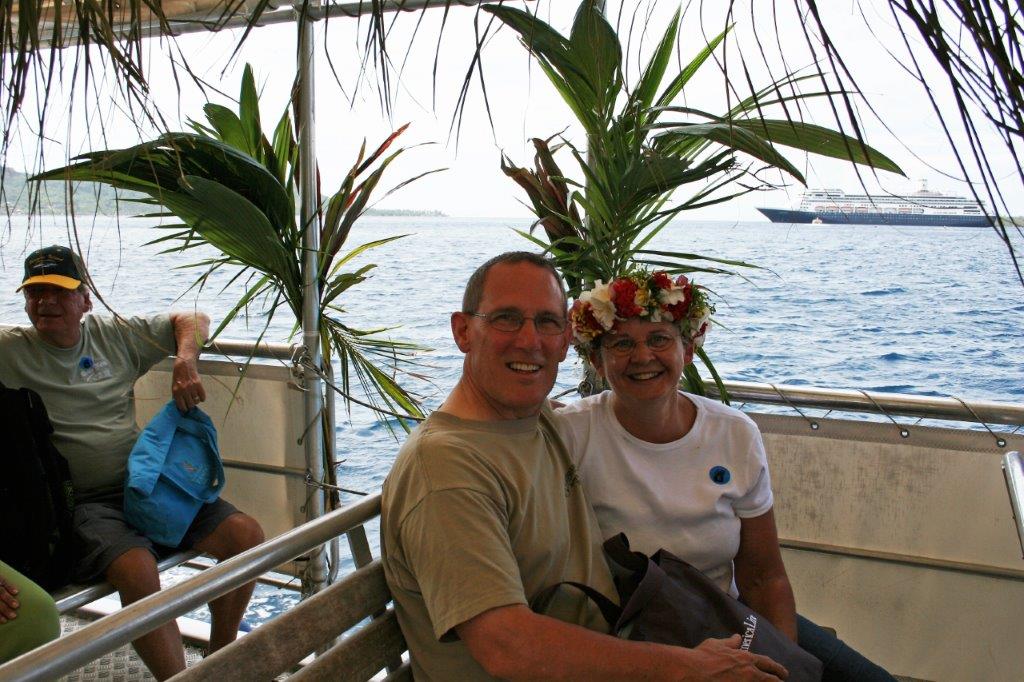
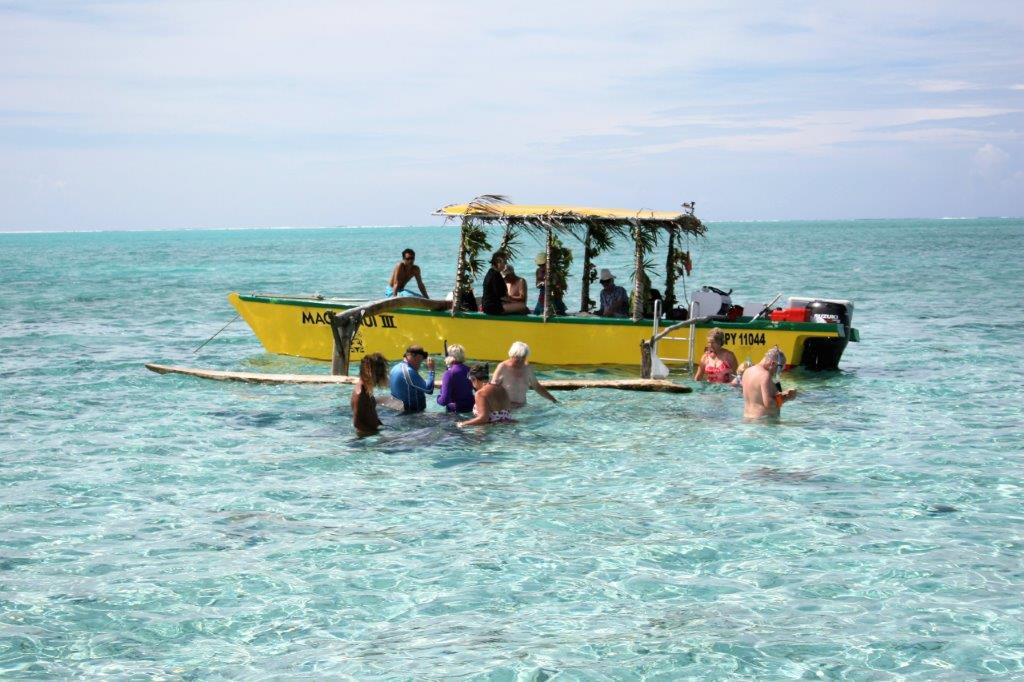
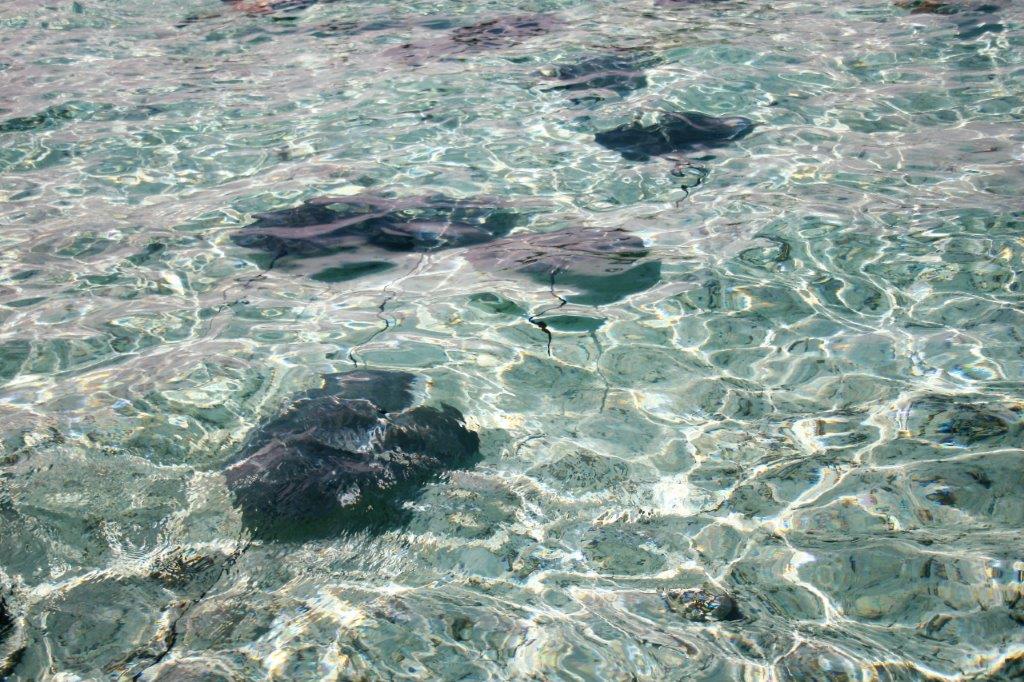
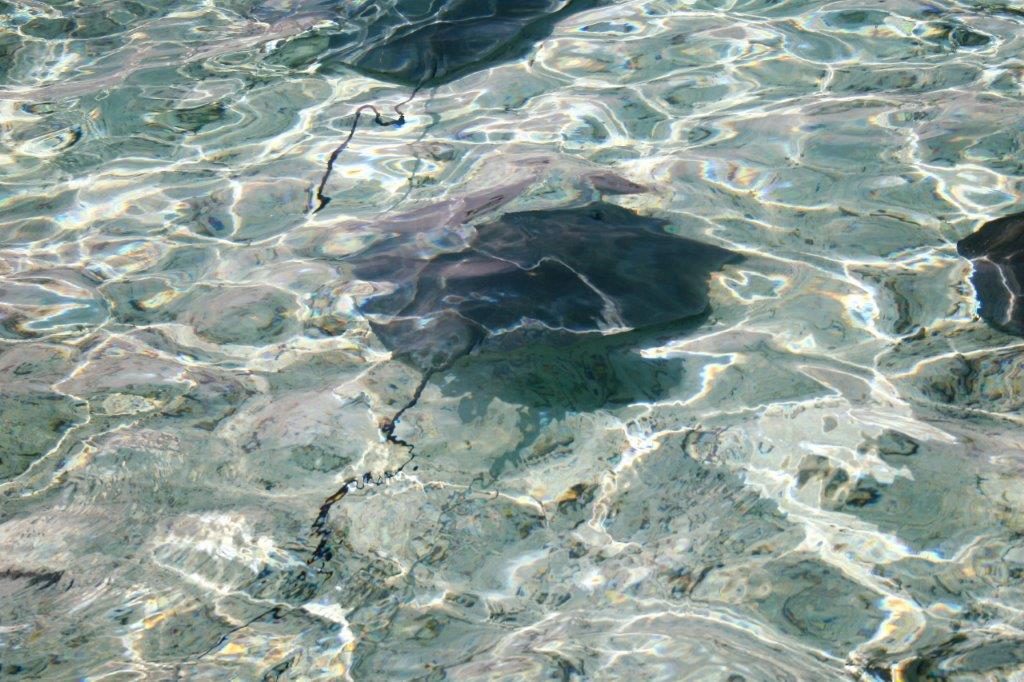
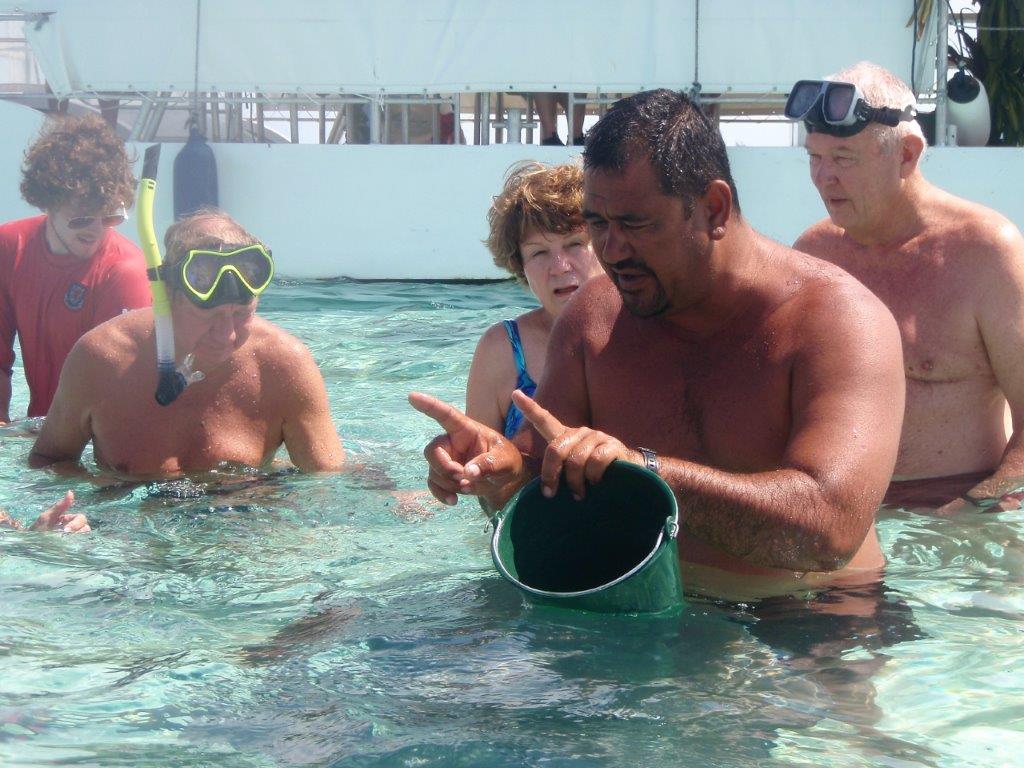
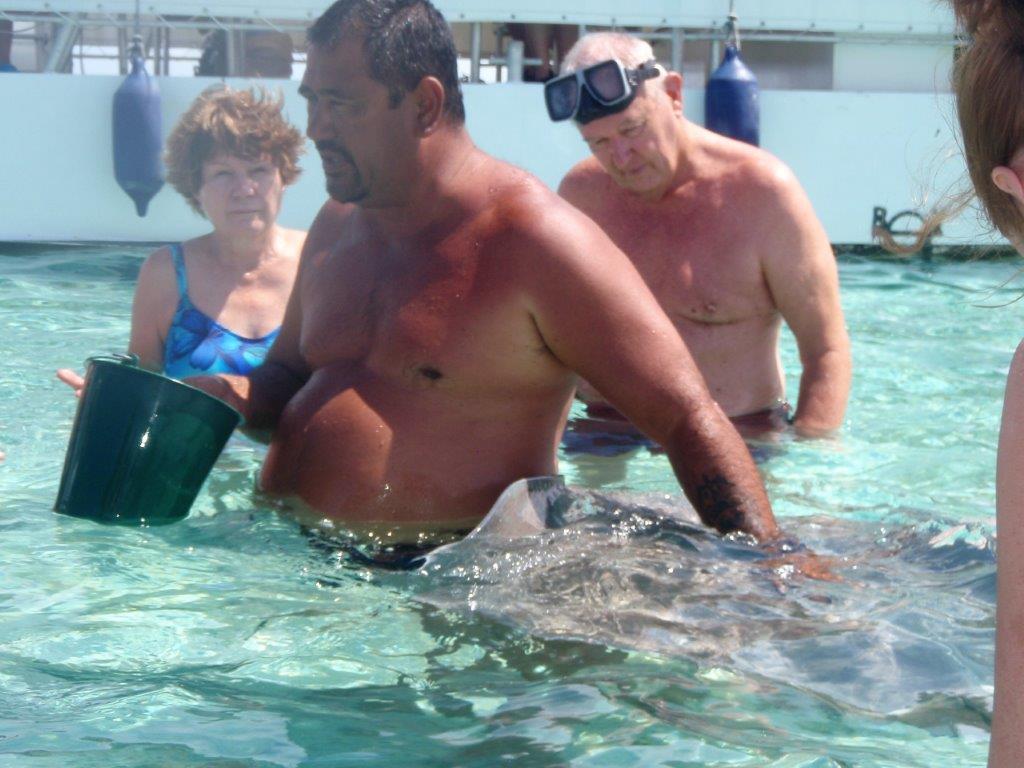
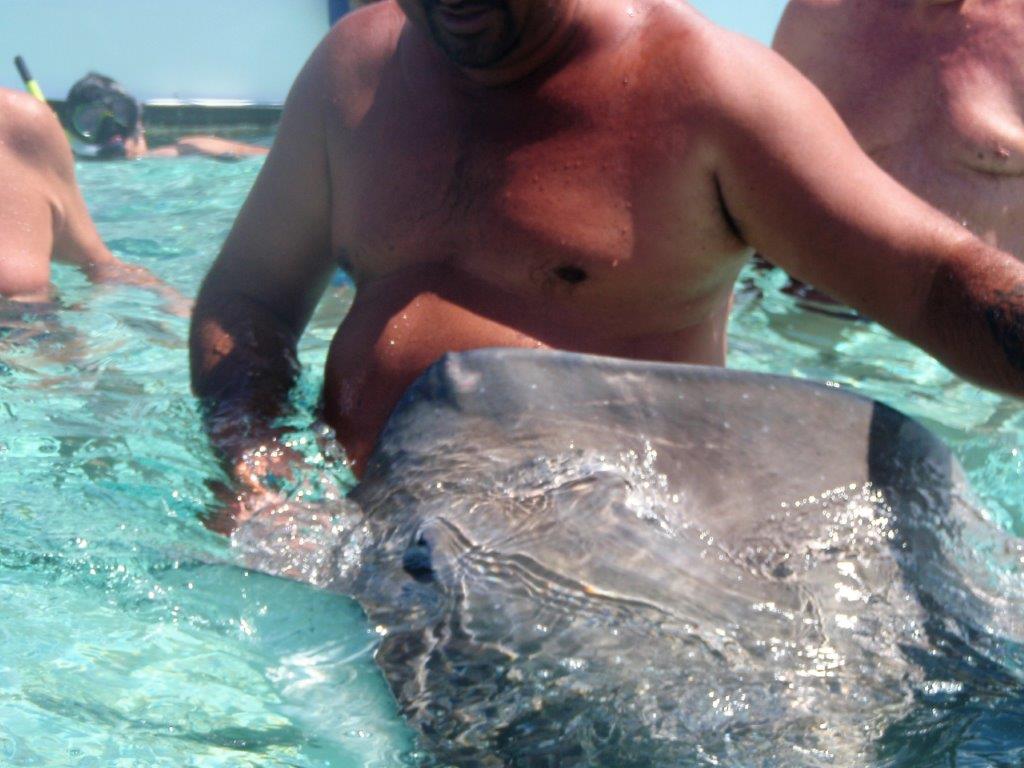
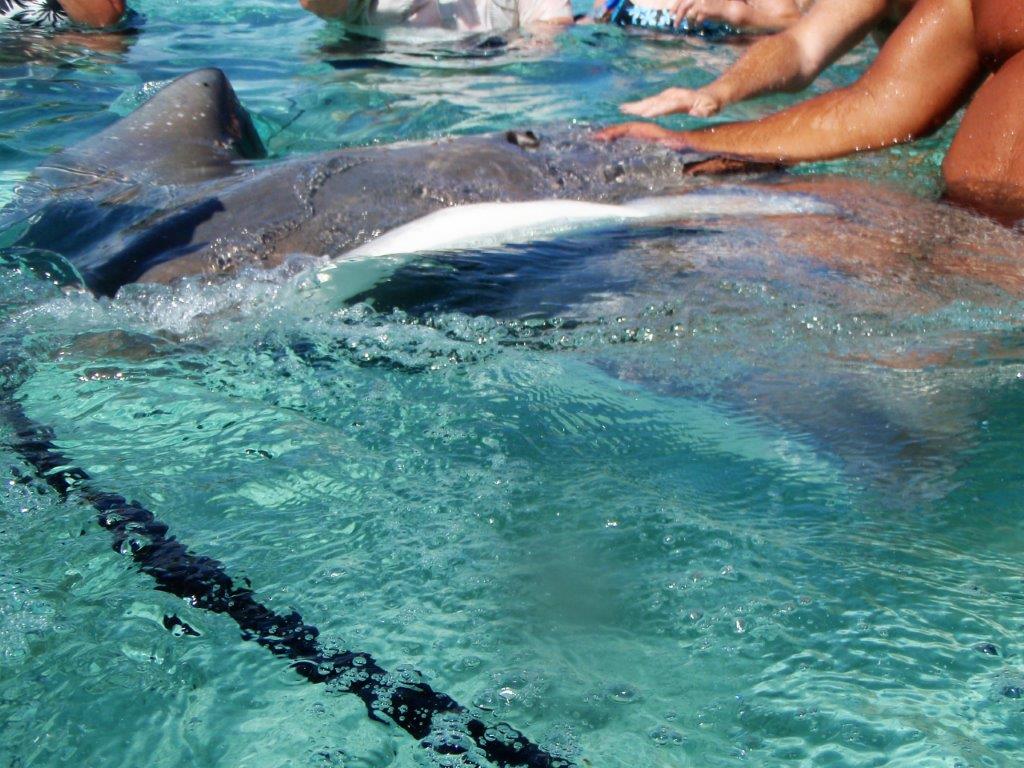
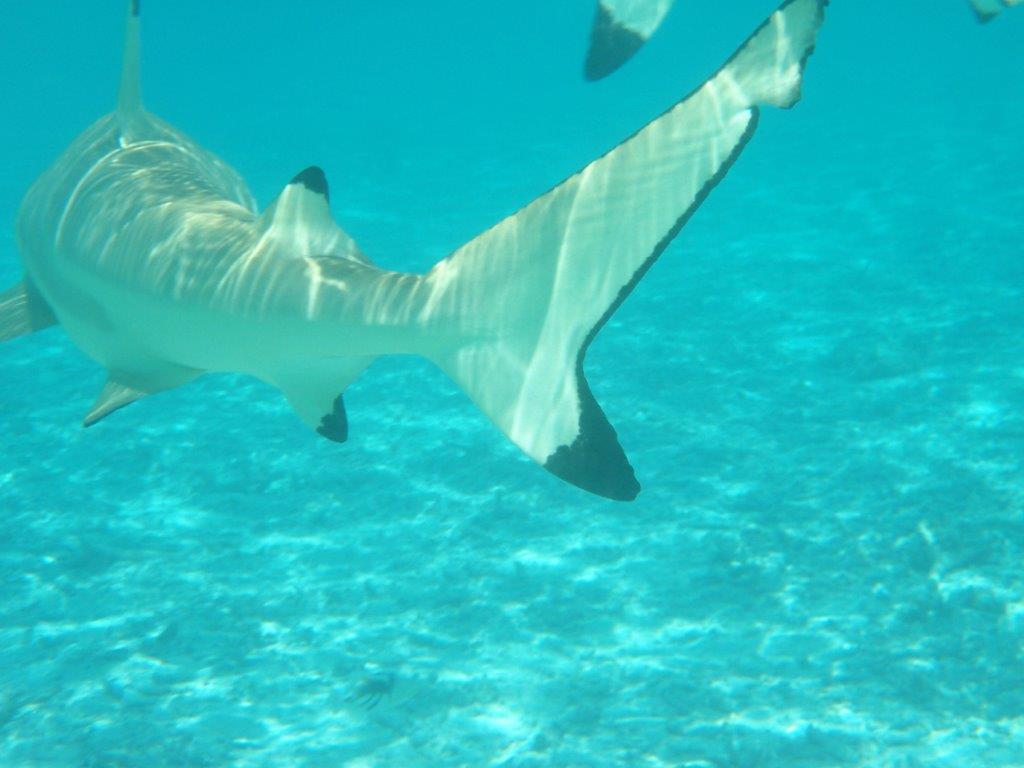
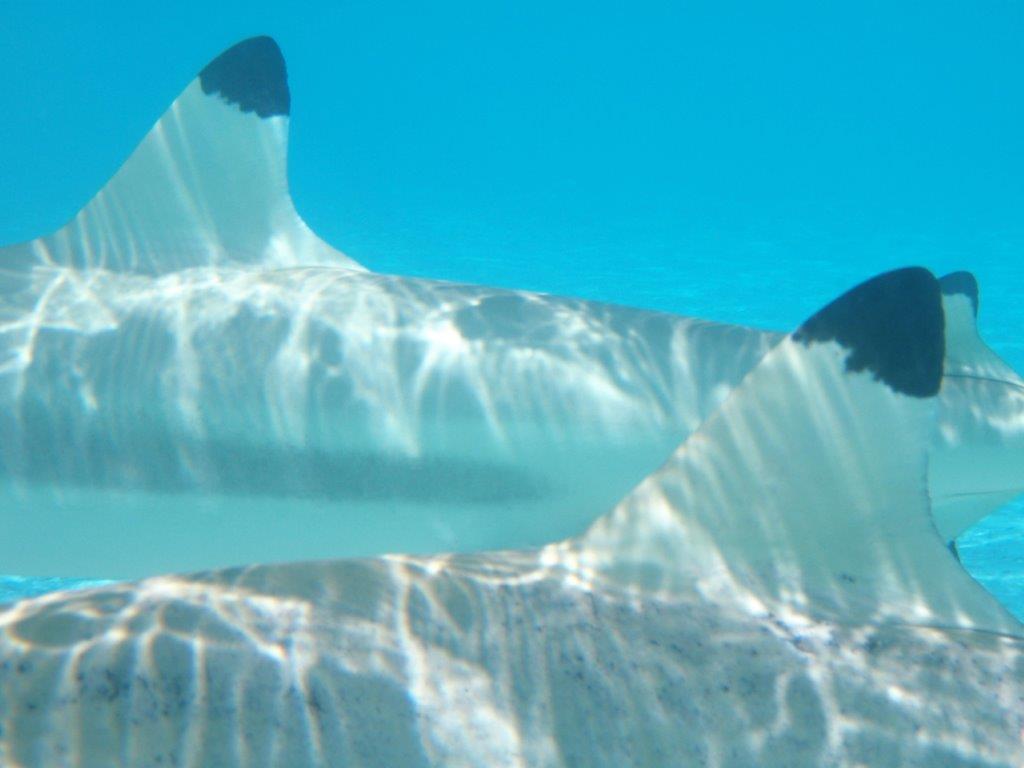
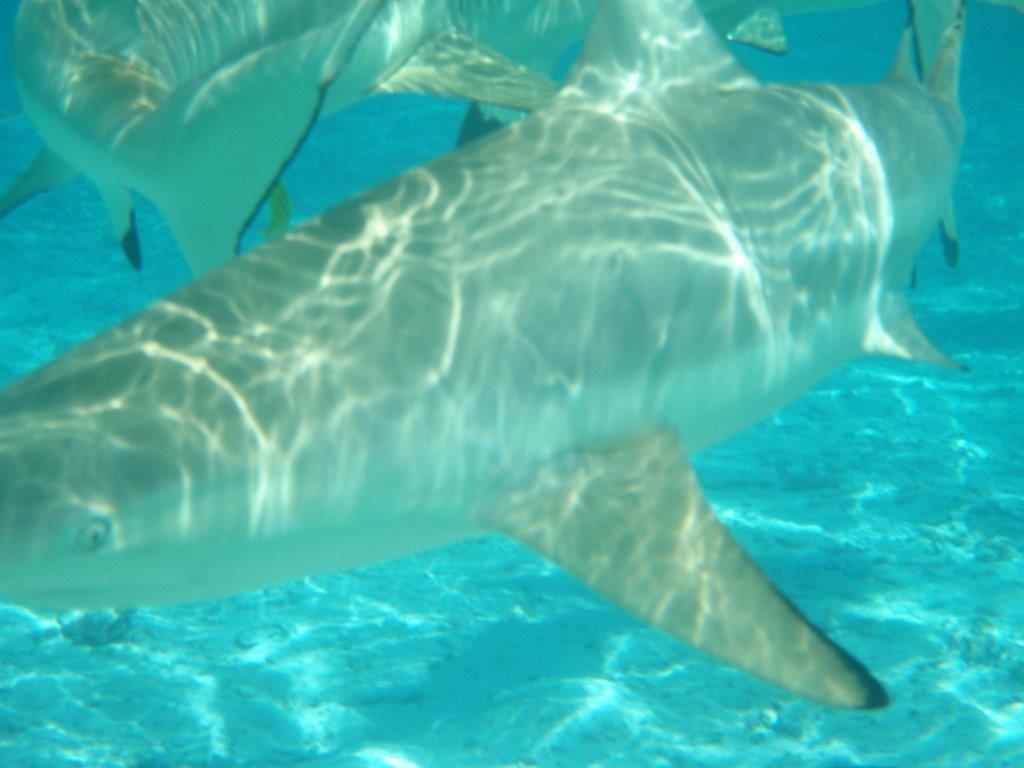
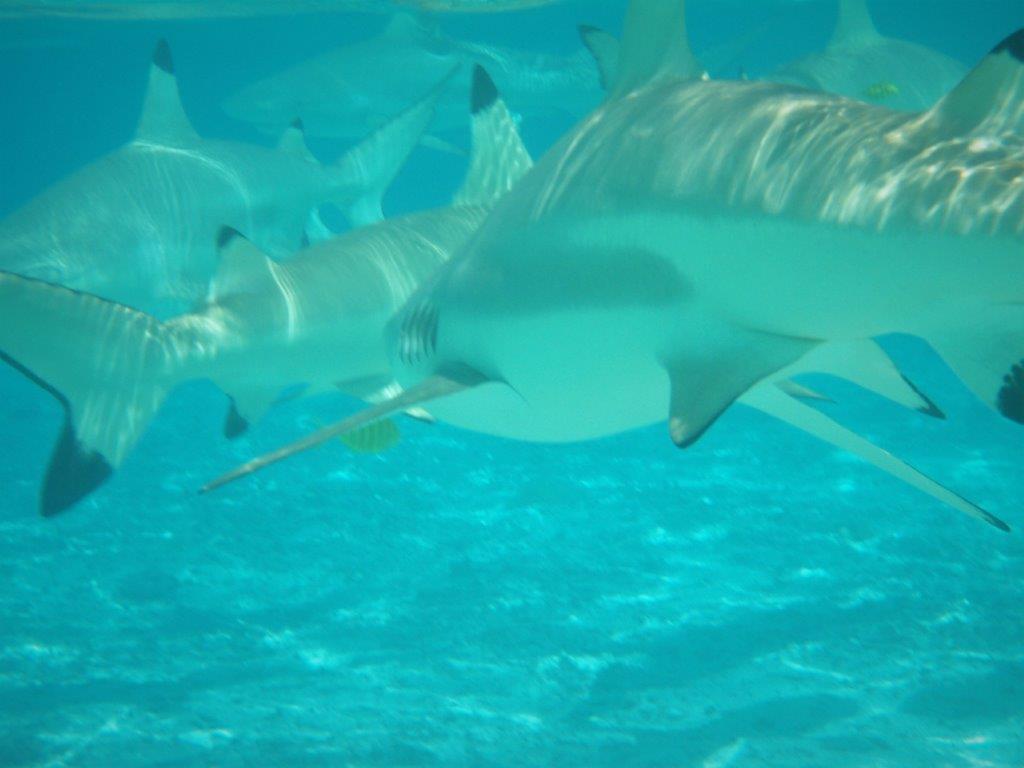
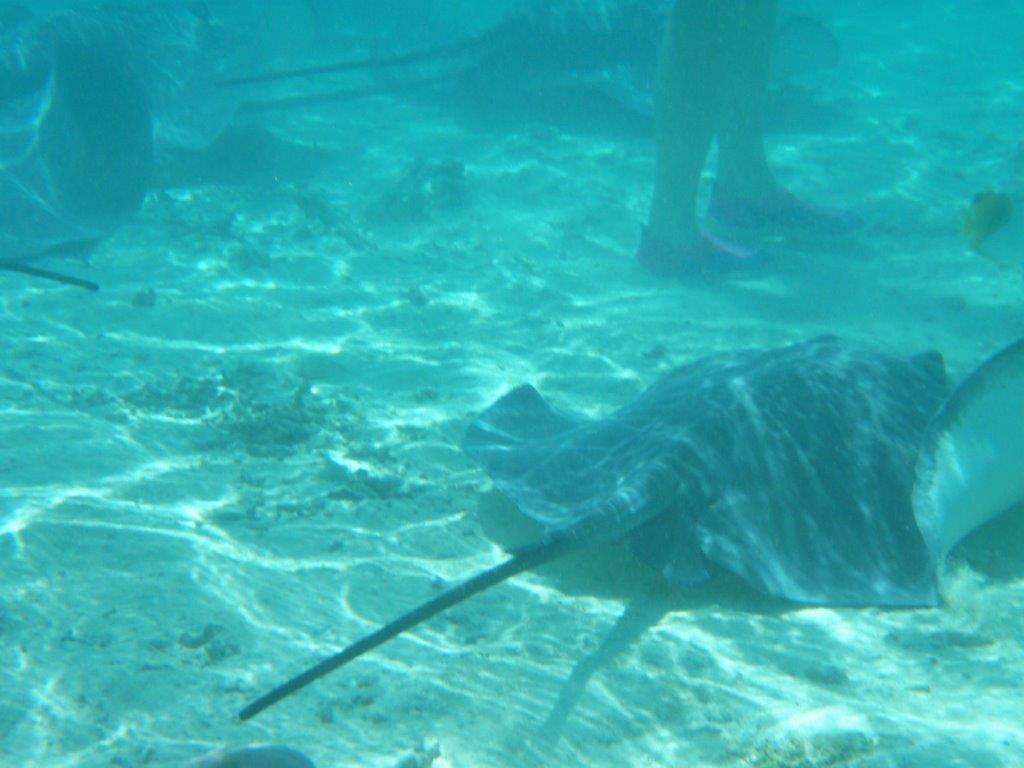
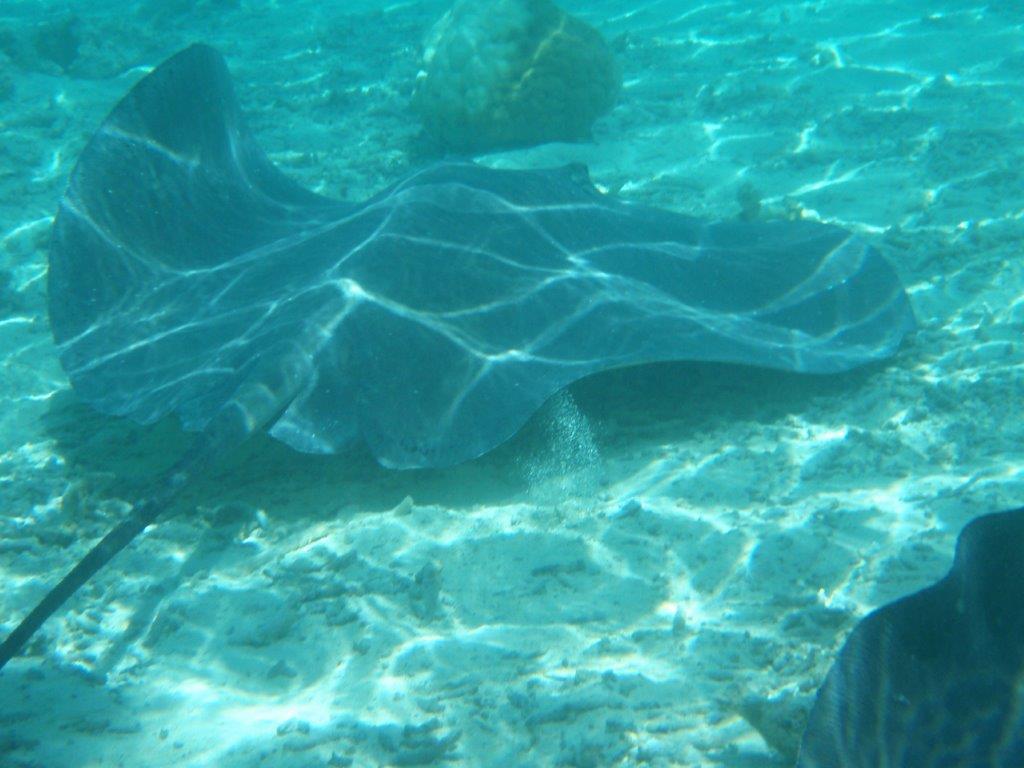
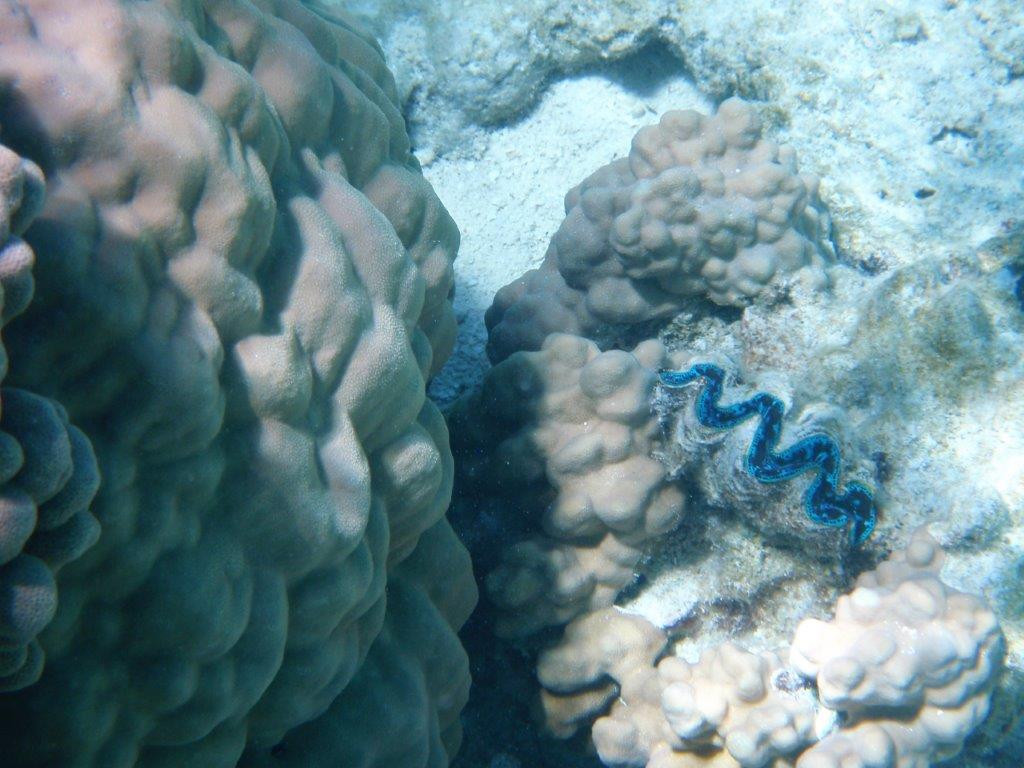
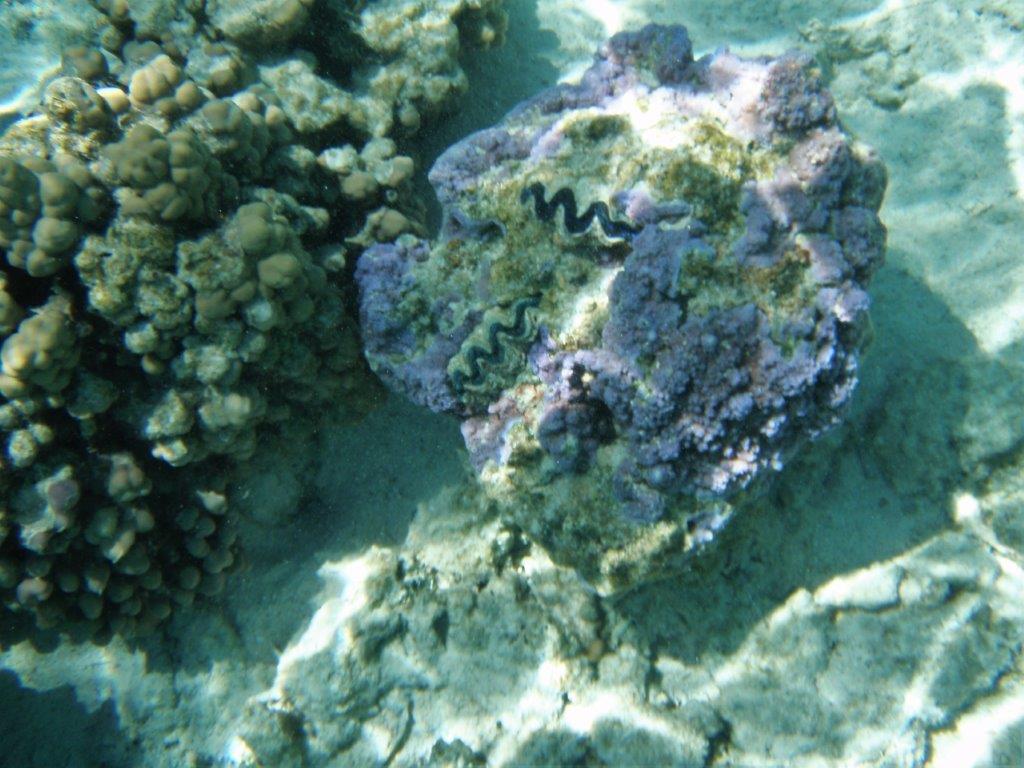
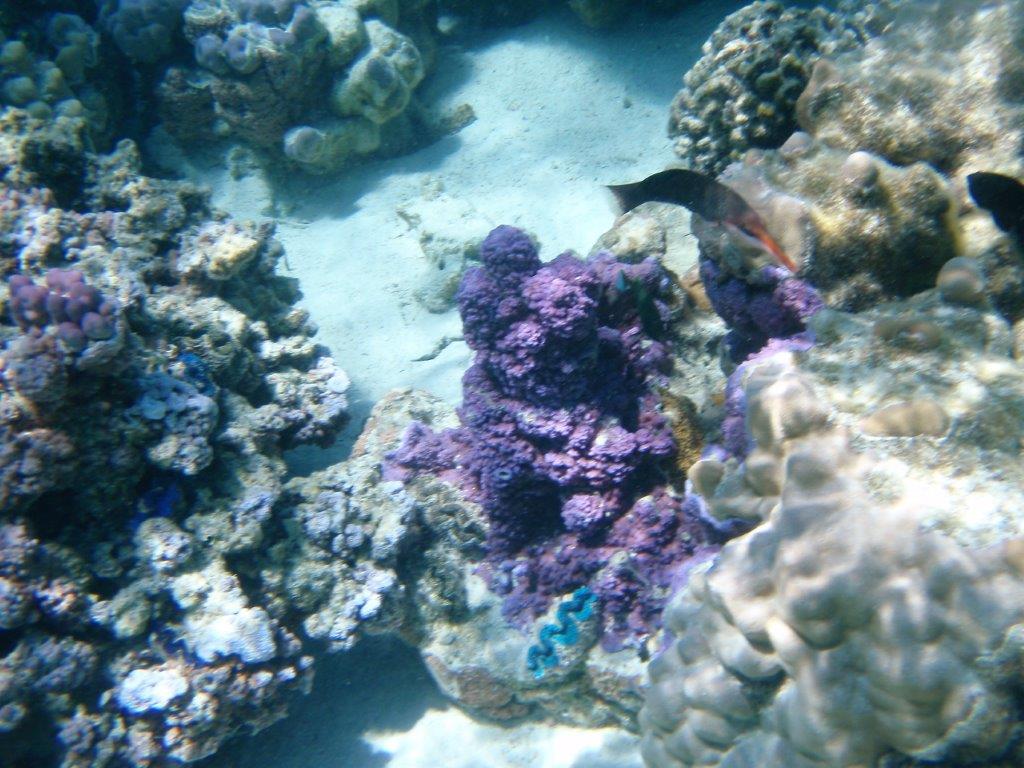
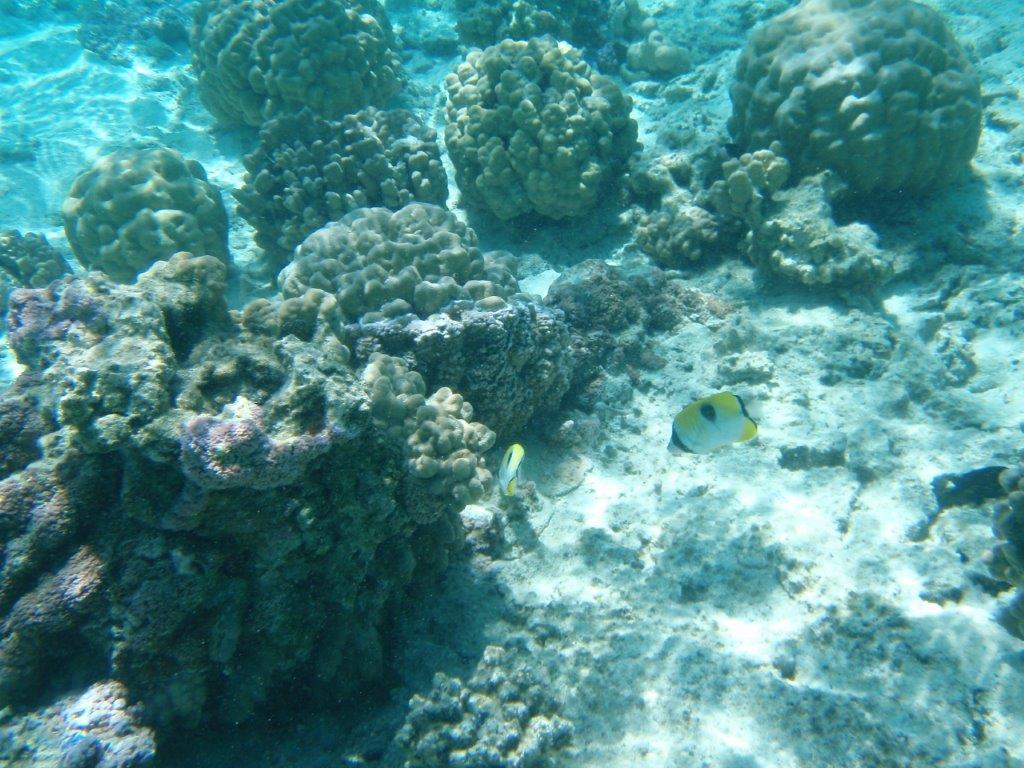
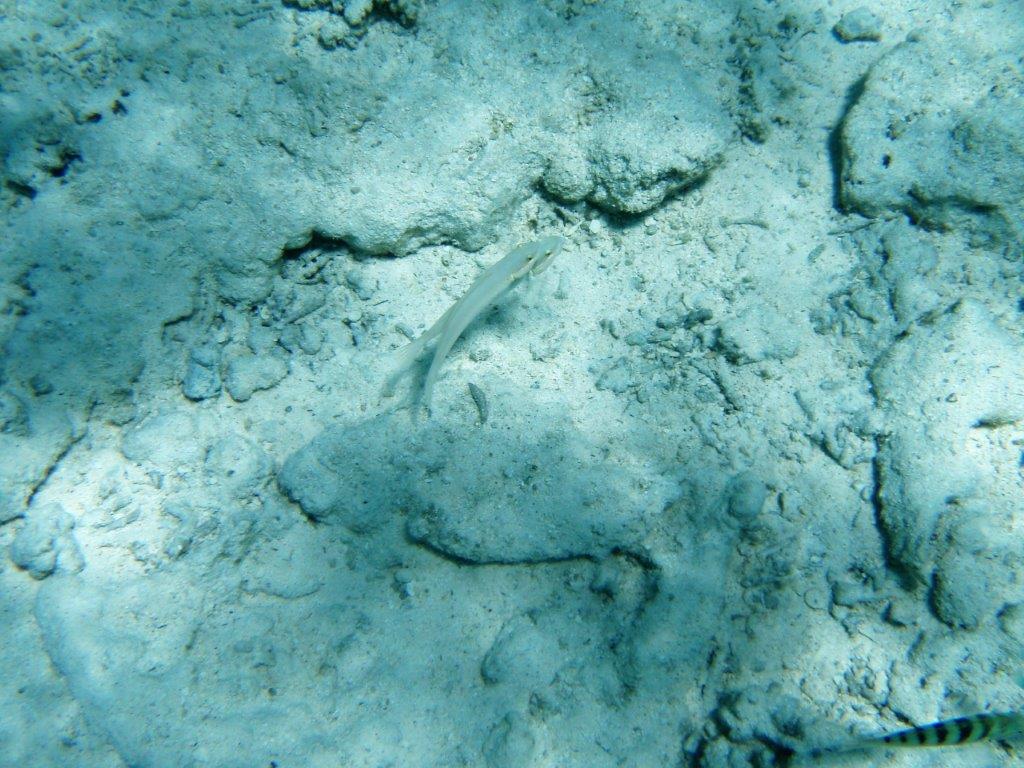
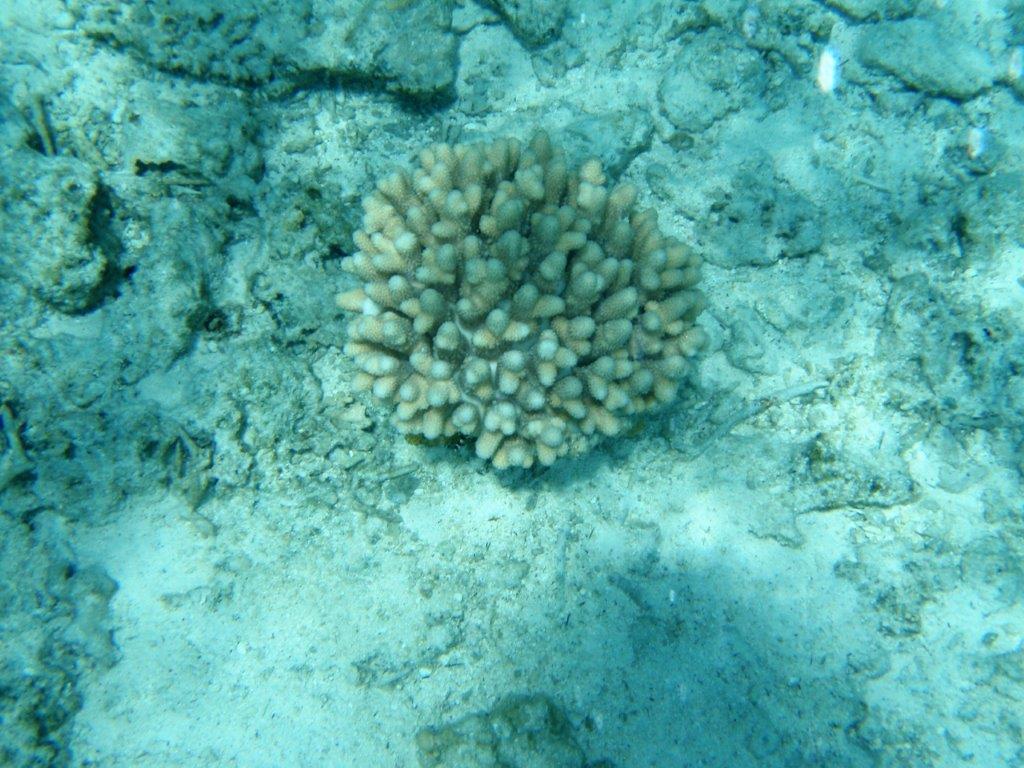
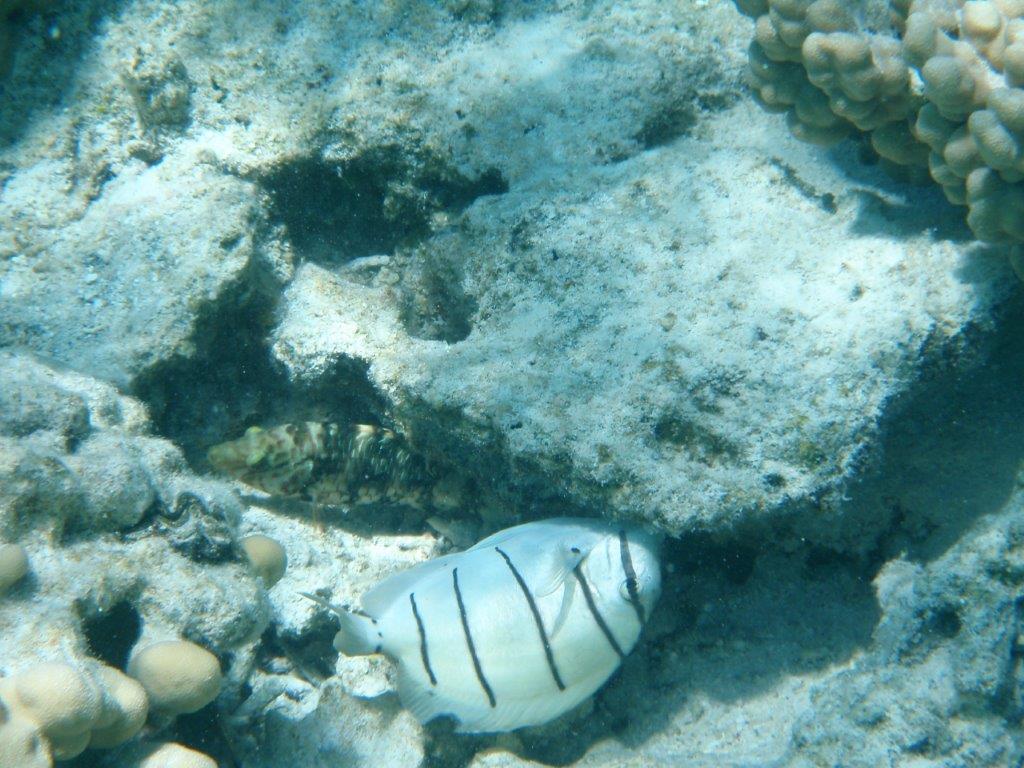
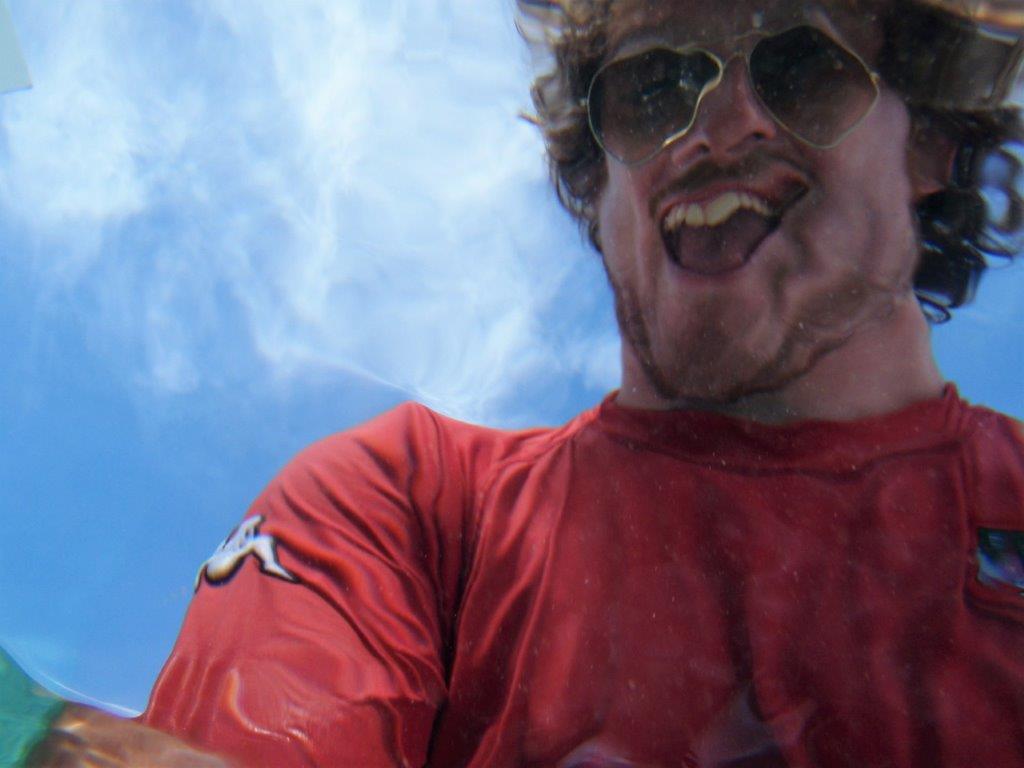
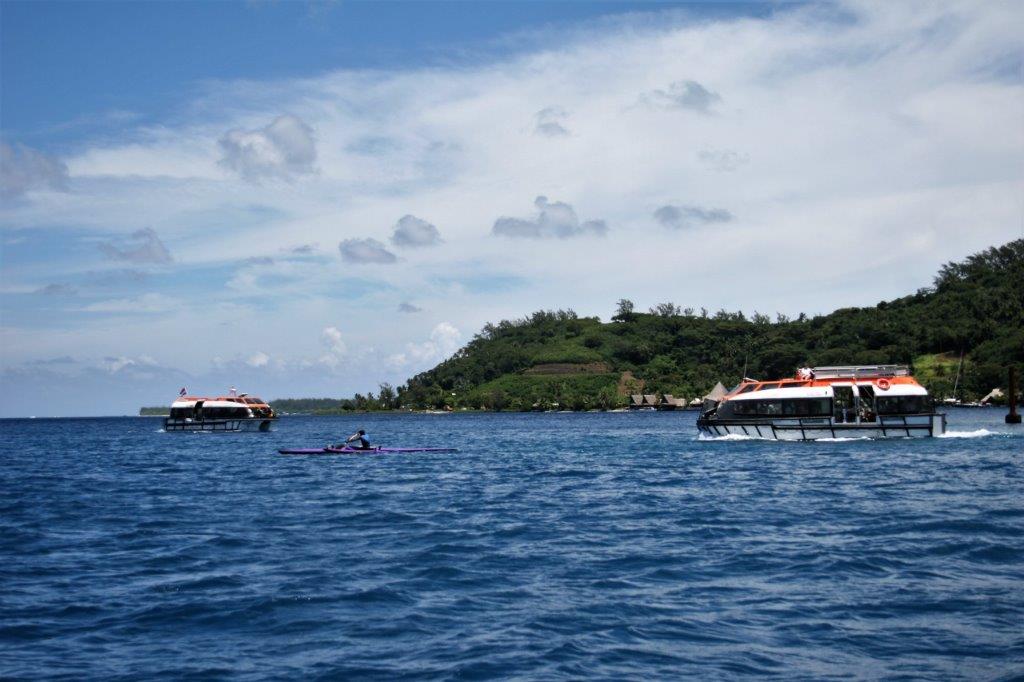
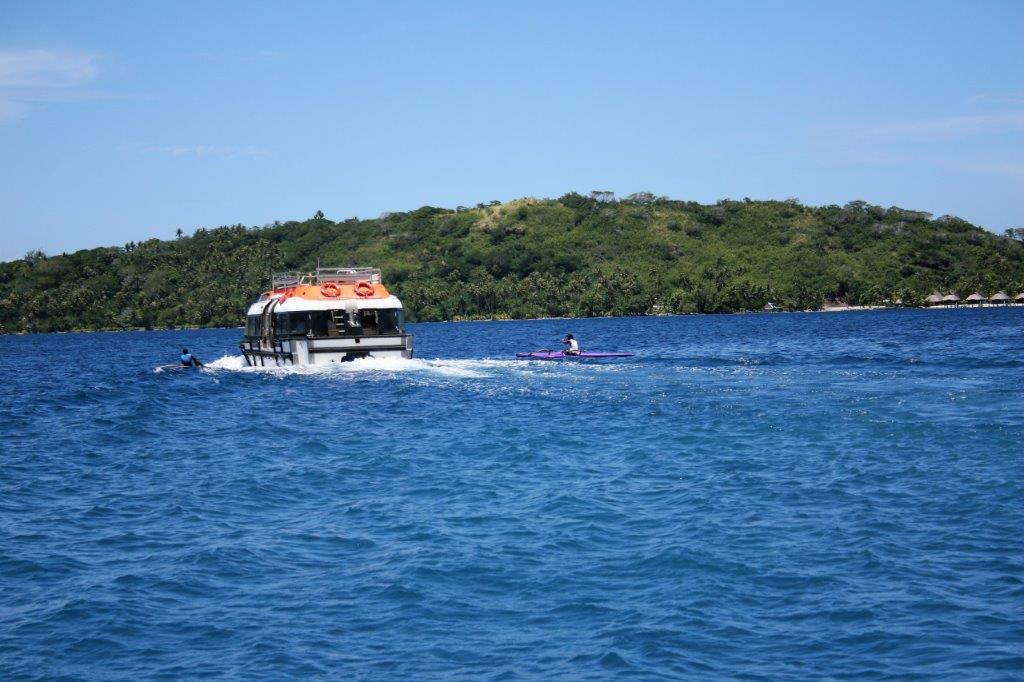
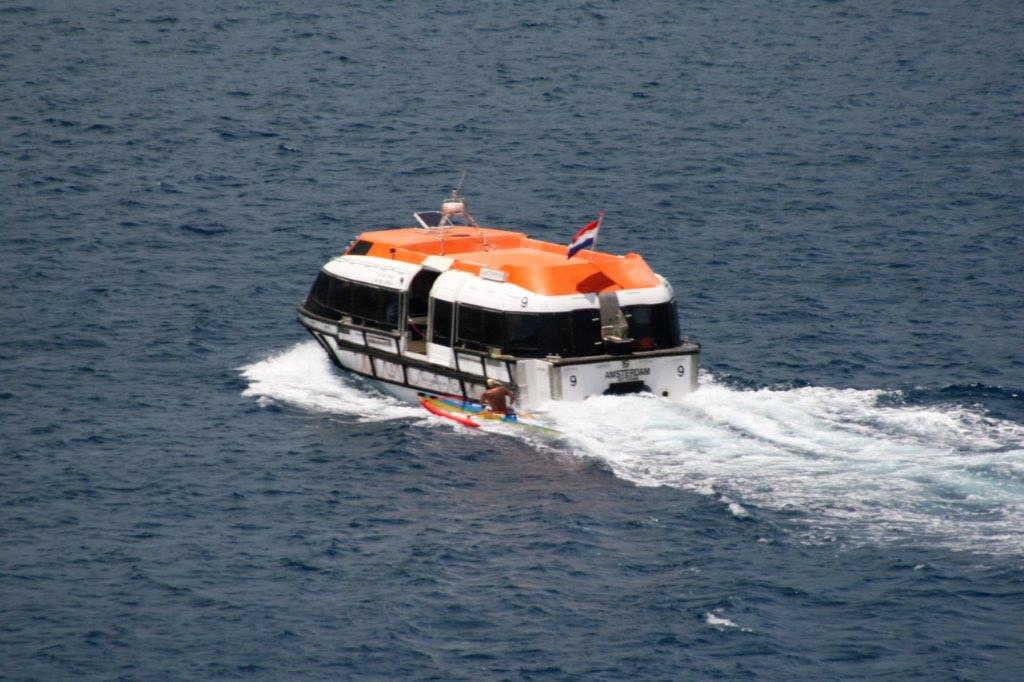
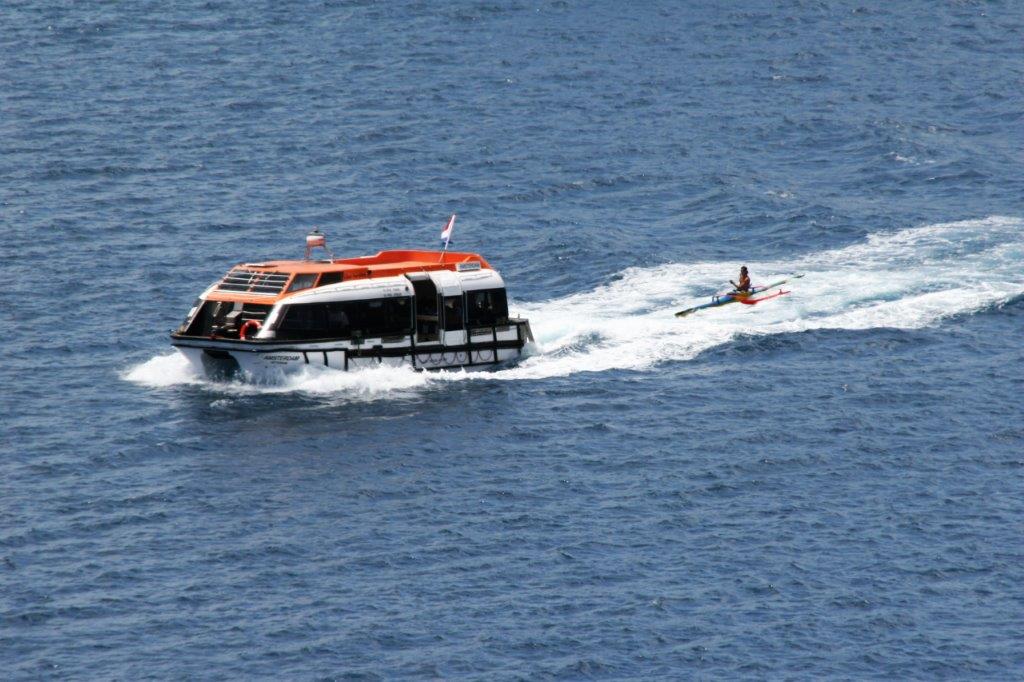
Cargo ships come from Tahiti five times per week and bring everything the islanders need.  The population is about 9,000.  The best resort hotel rooms can run $800 per night and if you want a private bungalow on the water it can cost as much as $10,000 per night.  Tourism, obviously, is the primary economic ‘resource.’  We were taken out to the edge of the lagoon in a covered launch to an area frequented by sting rays and black-tip sharks.  The boat owner/guide brings along tuna fish to feed the rays and they are so used to him they will brush up against his legs and one that he calls his pet will actually rest on his stomach while he pets it.   This lovely lady let me borrow her flower head piece for a photo. We stood in waist-deep water and the rays and sharks just swam around us. The rays are very soft and move effortlessly through the water.  They were beautiful.  It was hard to get a photo of them as they were constantly moving. After about an hour we were taken to another part of the reef near the lagoon edge where we had an hour and a half to snorkel. I have a small waterproof digital camera that I have attached to a lanyard that hangs around my neck.  This leaves my hands free to swim  and makes it easy to take photos whenever I want.  Holland America always has a ship staff person on every tour to monitor things and make sure all goes well.  Bobby, a young man from the photography shop, was on this tour and when I was about to get back onto the launch he asked me if my camera was really waterproof and didn’t need a protective case.  I told him yes it was and he asked to see it.  When I gave it to him he immersed the camera into the water and snapped a photo of himself standing overhead.  He was a really nice fellow and we were on several tours together on the way to Sydney.Local men take their outrigger canoes into the lagoon and ‘surf’ behind the tenders as they go back and forth to the ship. When we were back onboard after our tour we spent quite a bit ot time walking the deck and taking photos of the lovely lagoon. This is an absolutely gorgeous place and I am so glad we were able to visit.  The ship stayed anchored offshore for the night and the next day we had a tour that encircled the island.


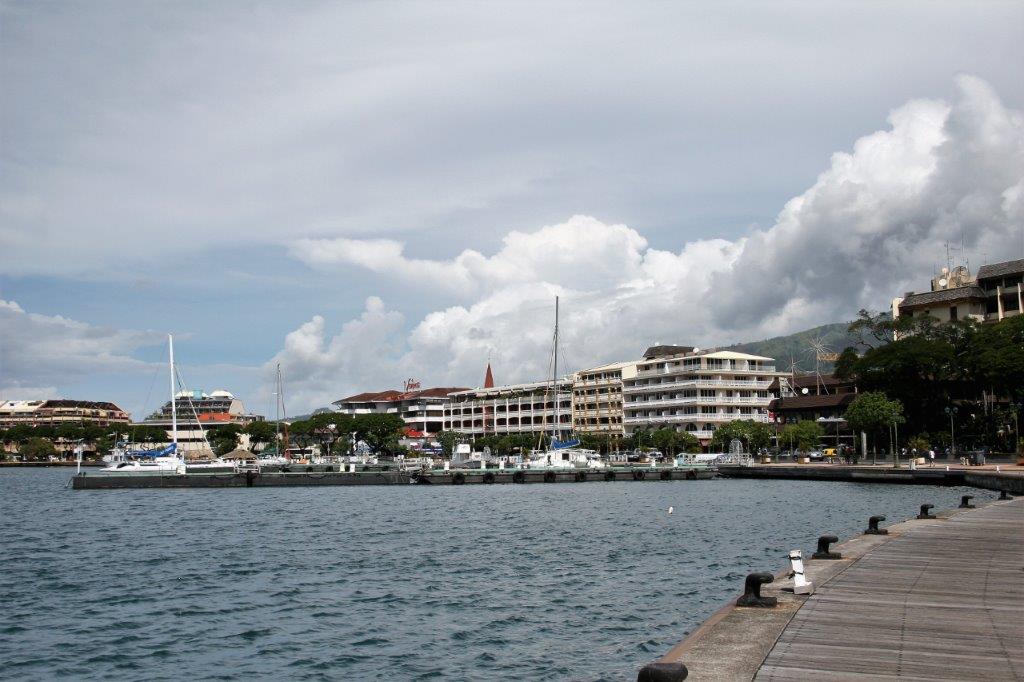
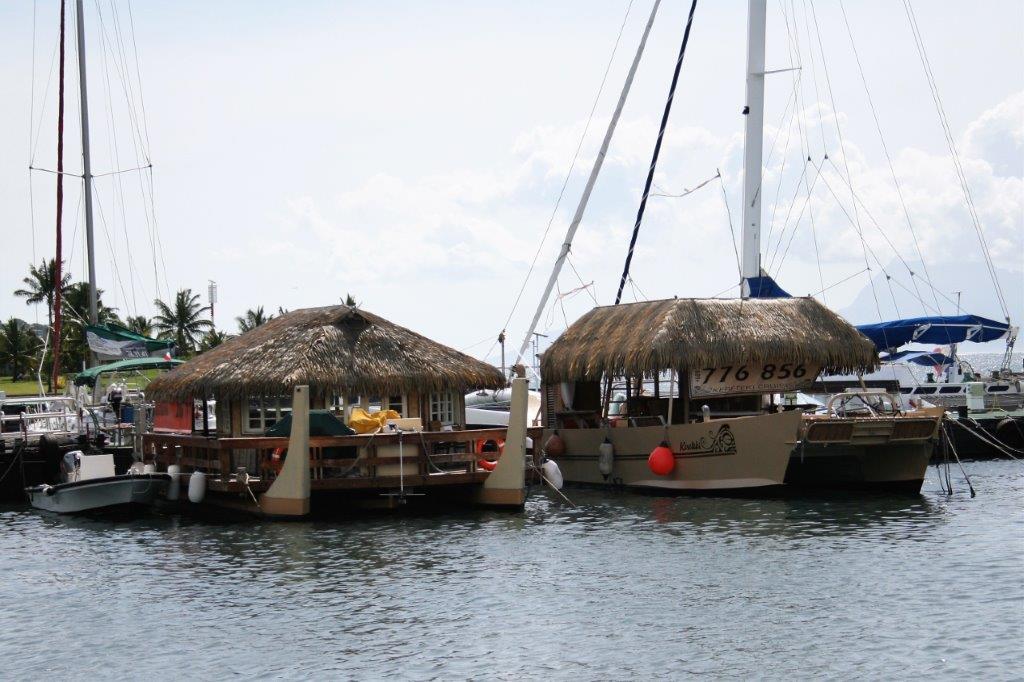
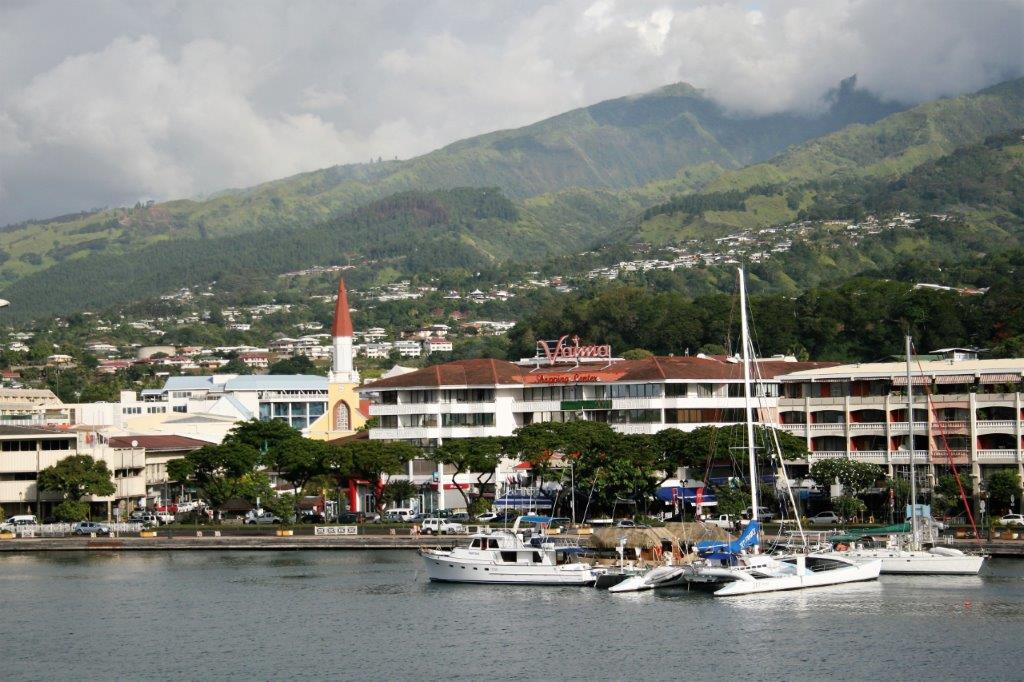
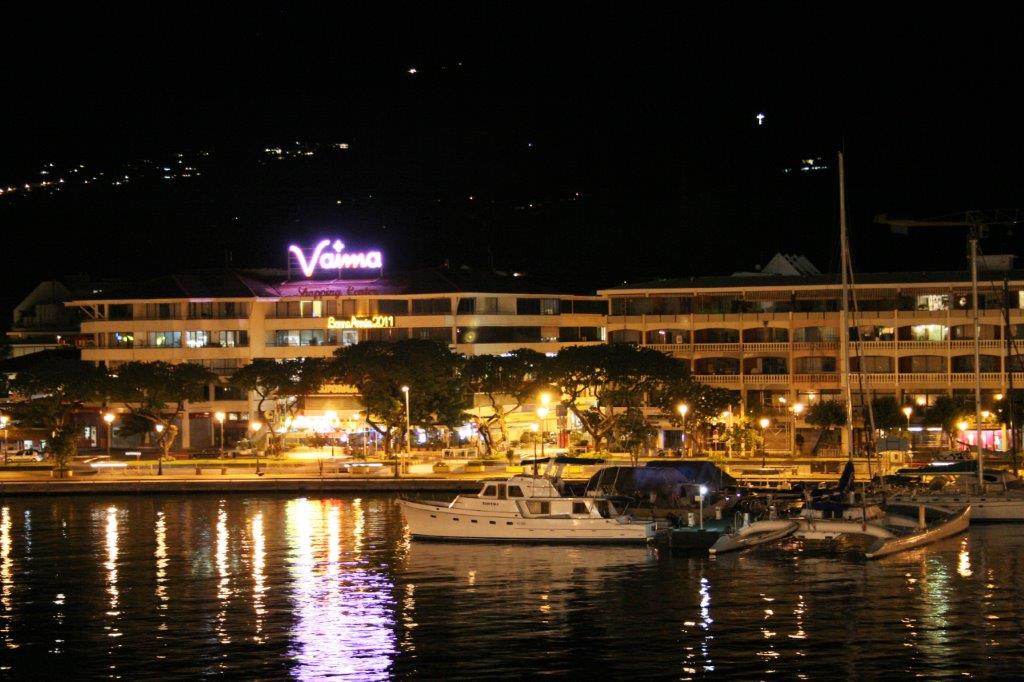
2011 January 26 – Day 22 – Papeete, Tahiti, French Polynesia

Tahiti is the largest of the 118 islands and atolls that comprise French Polynesia.  It is almost two islands.  The main island Tahiti-Nui (big Tahiti) is joined by a slender isthmus to Tahiti-Iti (little Tahiti.

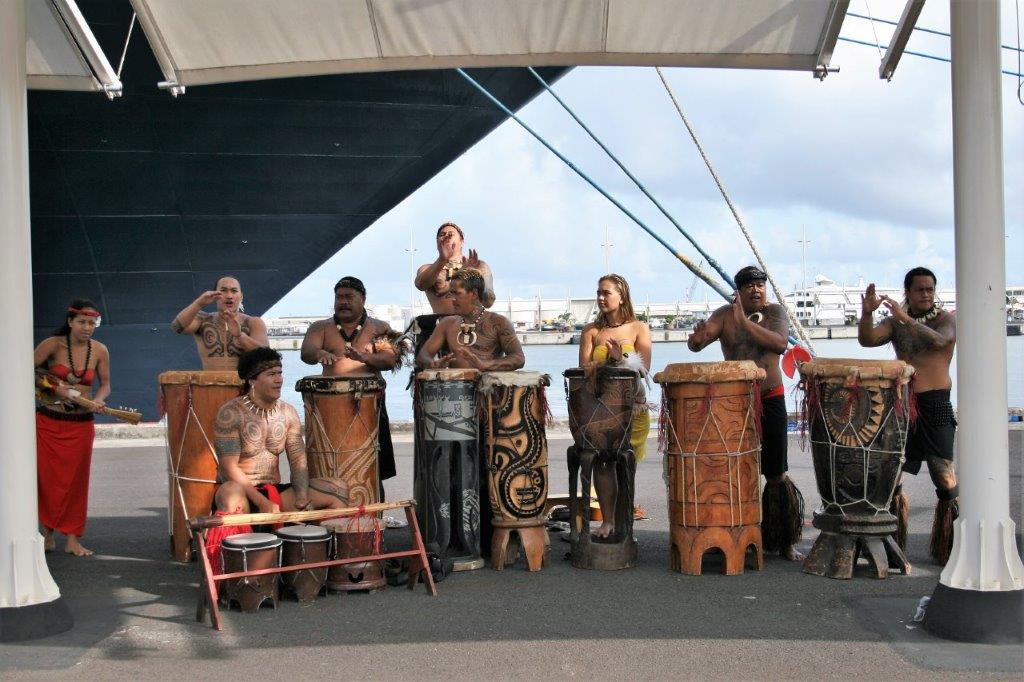
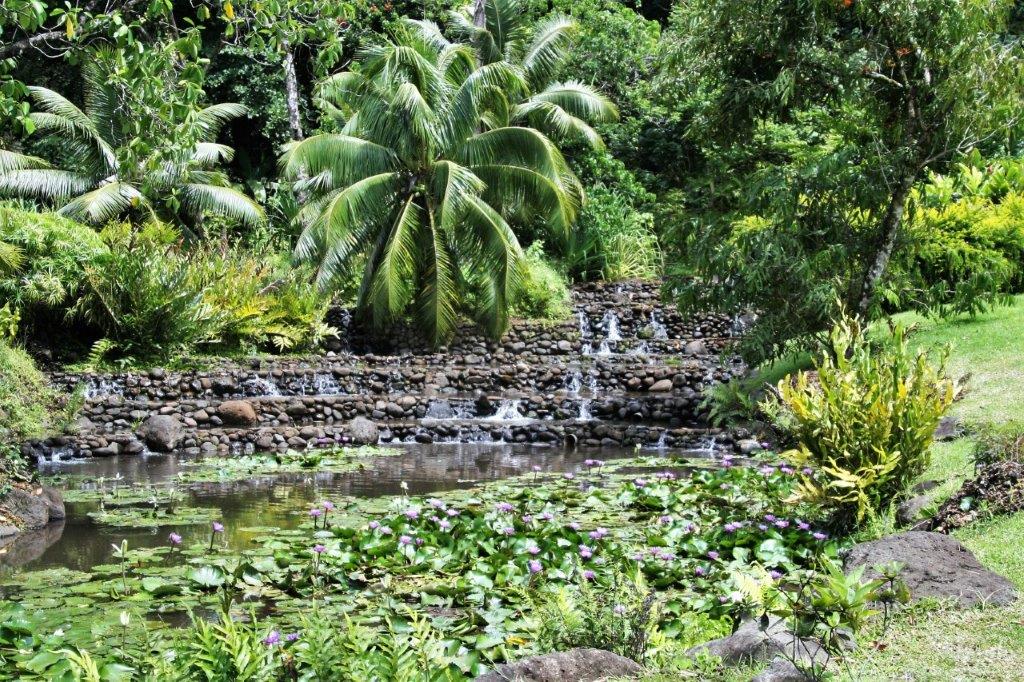
We were welcomed by local ladies handing out flowers and on the way to the buses we passed a local band, playing traditional music, dressed in traditional style.  A nice touch we see quite often on the world cruise.  We were in port from 7 am until 6 pm and our round-island tour was 4 1/2 hours.  We drove south along the coast to Vaipahi Garden’s.  The Paul Gauguin Museum is located on the grounds but we did not tour it, nor see any of the artist’s famous paintings.  Vaipahi Garden is not very large, but then none of the islands themselves are large.
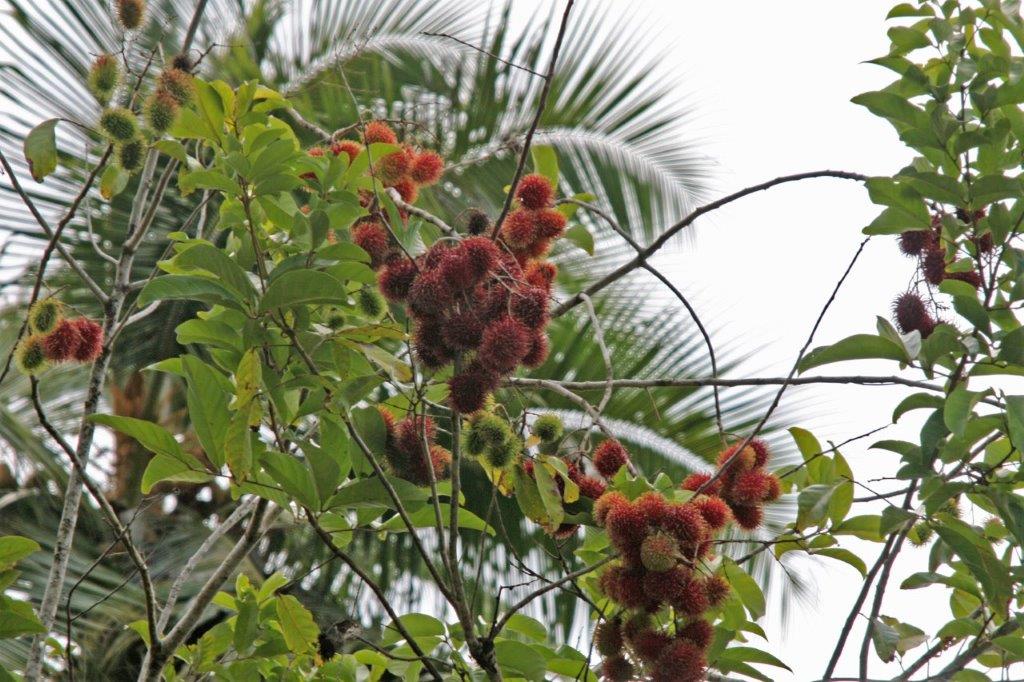
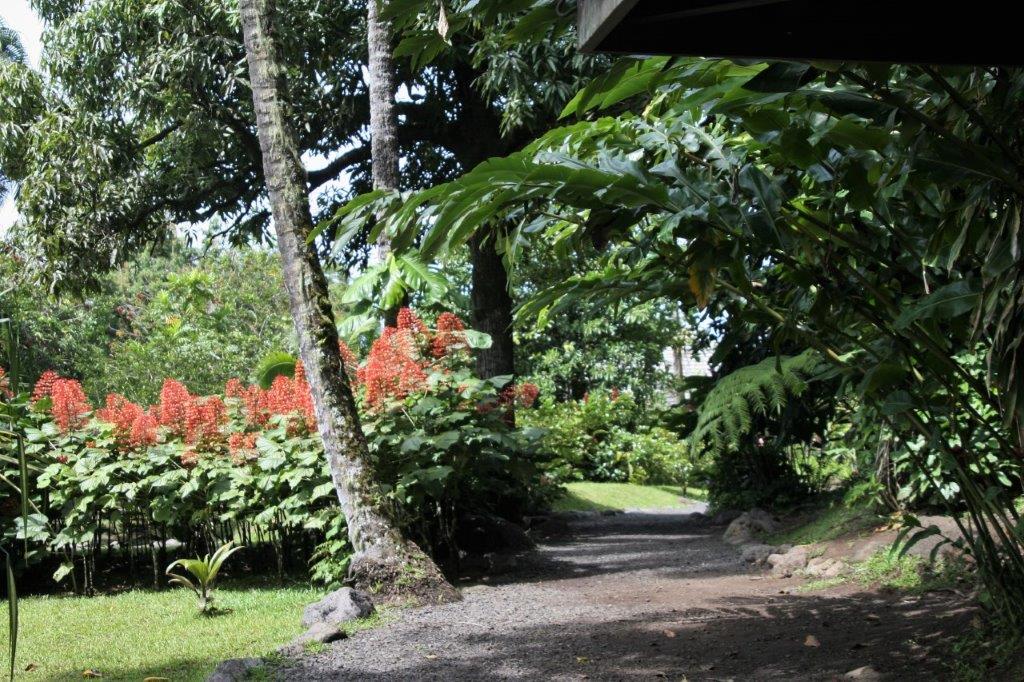
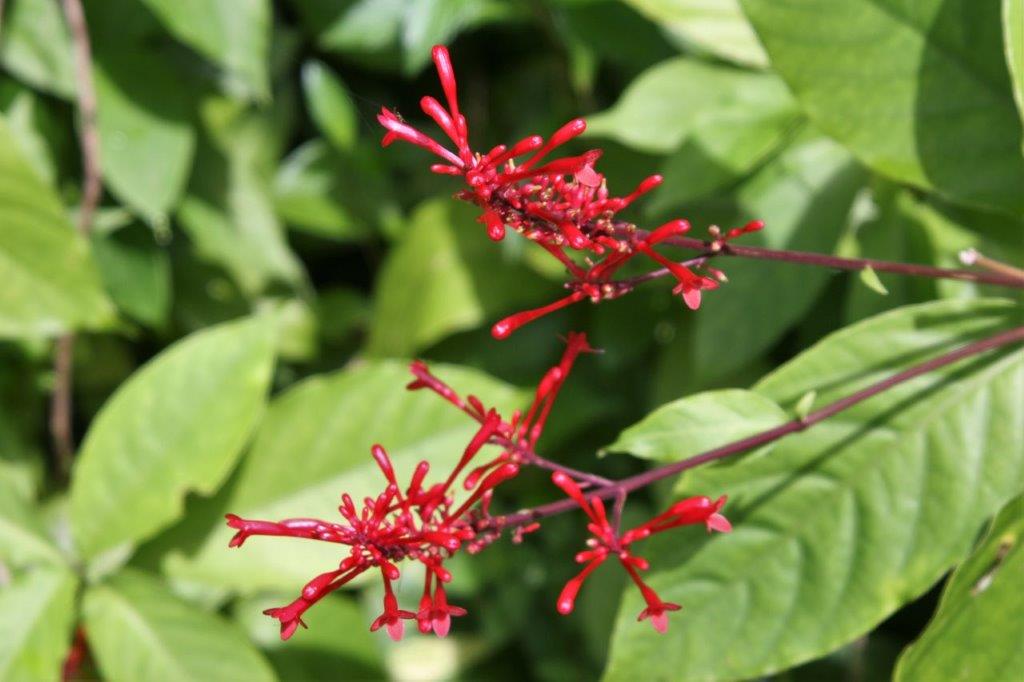
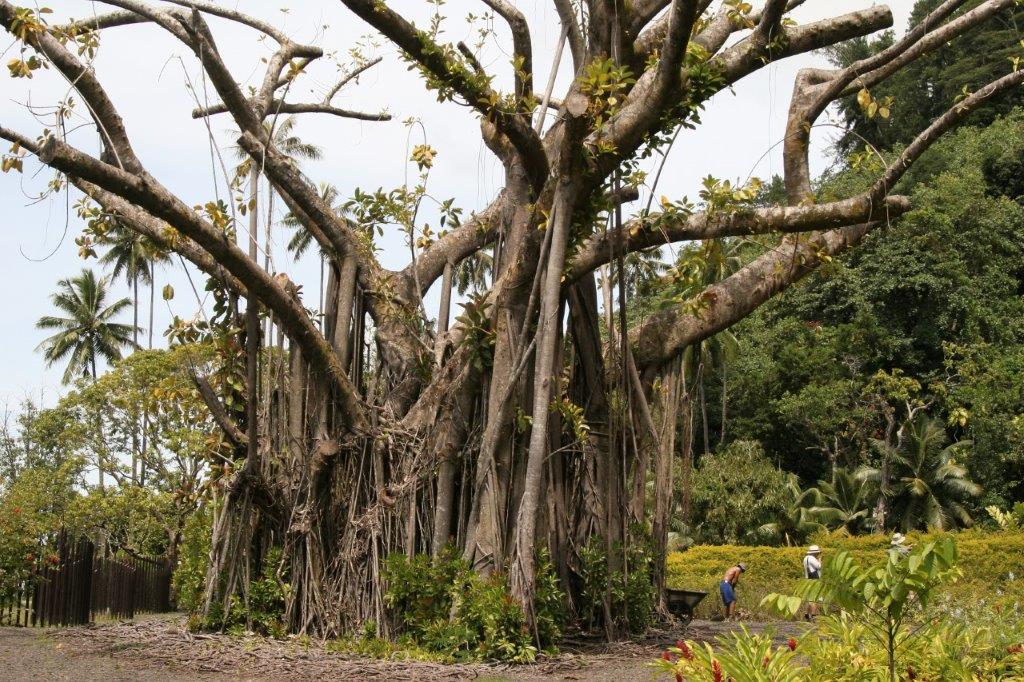
Viapahi has several species of rare trees and flowers on the grounds.

As usual when we tour a garden I take lots of photos of the flowers.  I often try to photograph name tags so I know what they are but there were none here and I was too lazy to look up the ones I didn’t know so I just didn’t name any of them.  The path was a loop trail that we were able to wander at our leisure.

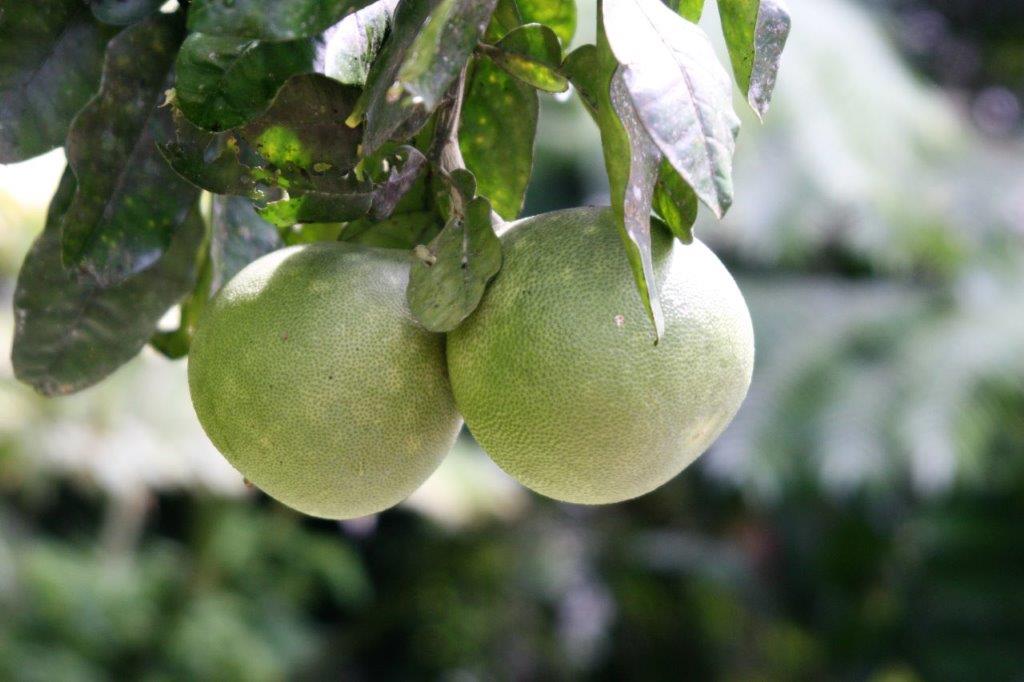
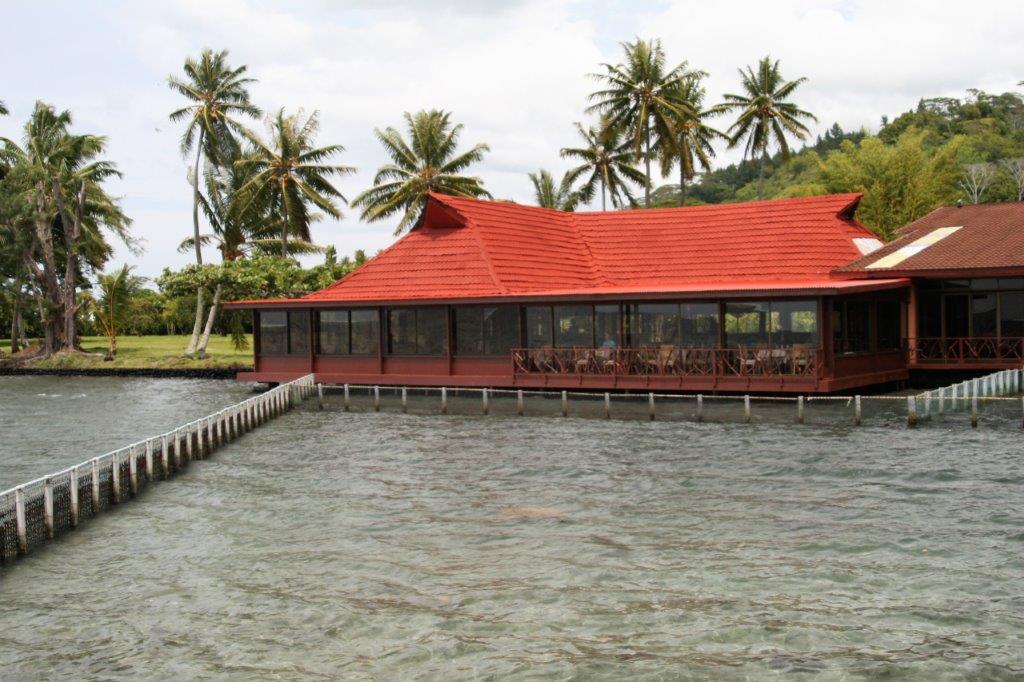
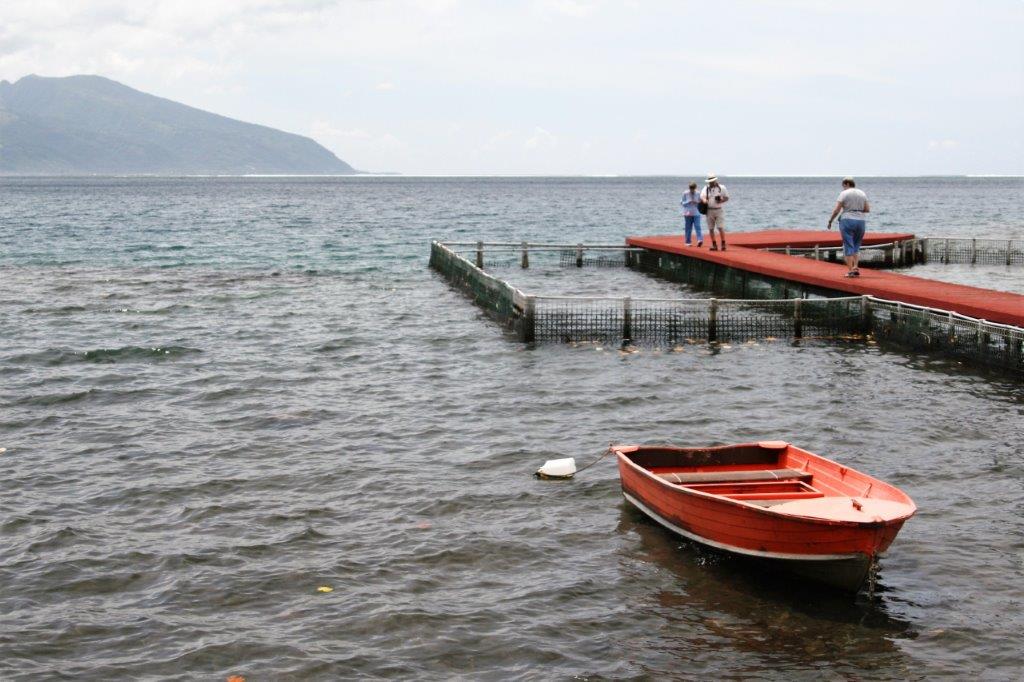
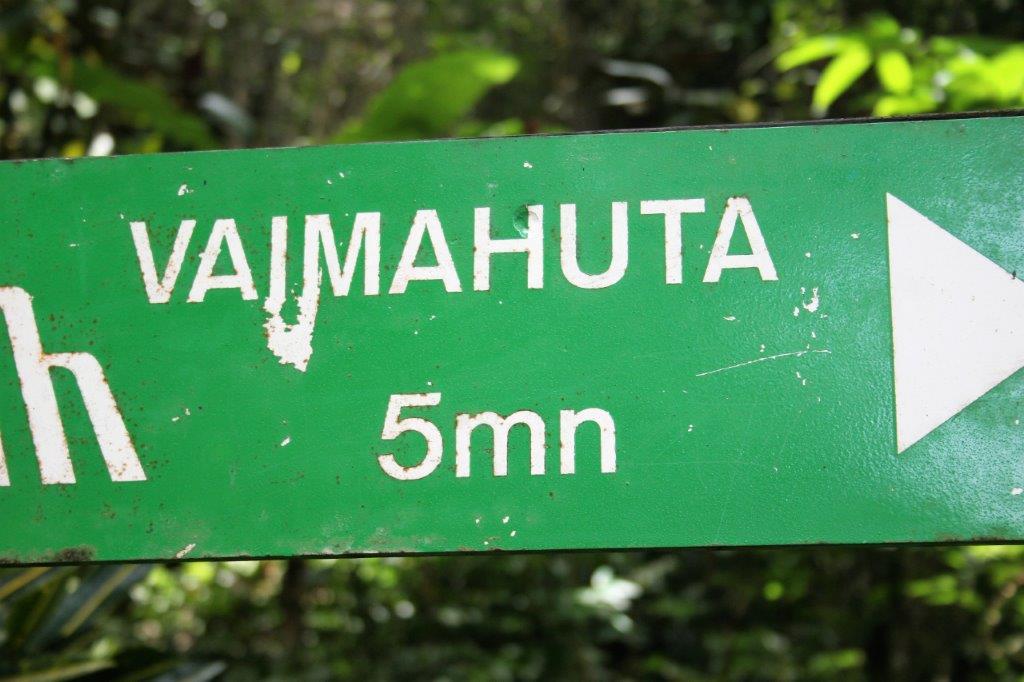
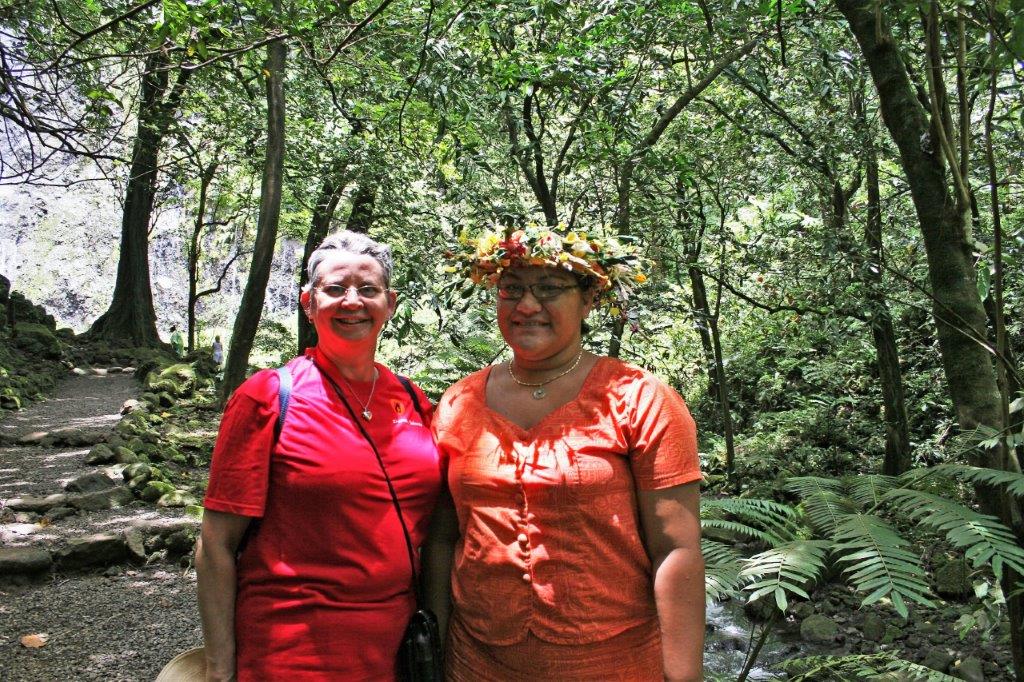
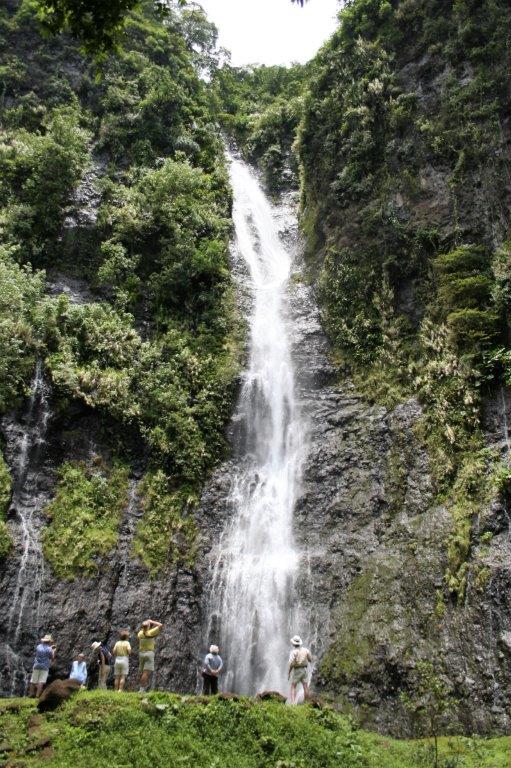
 Grapefruit                                                         Next was a refreshment stop at a seaside restaurant that has its own fish farm so you can walk the pier and choose your dinner. We took a short side road to hike up to Viamahuta waterfall. We stopped at the Arahoho Blowhole but the wave action was not strong enough to make it blow.  We returned to the ship about 1, had a taco salad from the Lido Grill and then left the ship again to wander around town for awhile.  It was very hot and humid so we didn’t linger ashore very long before returning to our cabin to cool off before dinner and sail-away.
We sailed slowly overnight and anchored off Viatape, Bora Bora where we stayed for two days.  We loved, loved, loved Bora Bora.