This blog will be long and full of photos of monuments and placards. Continue at your own risk. And you better like history.
We elected to do the self-guided Auto Tour first and then see if we wanted to do the museum and films the next day. By the time we spent three hours driving around all areas of the three days of engagement that made up the Battle of Gettysburg, and heard the descriptions of who did what and when for the days of July 1, 2, 3, 1863 we decided we did not need to go back to the Visitor’s Center on Saturday. I am sure I would have loved the museum and the films but the Auto Tour gave us so much information via the 16 points of commentary we decided we were okay to move on. Shocking, I know, since you all know how much I love museums, but I was brave.
We heard a ton of info and I hope the things I write here will be correct. Please feel free to check things out with historical records if you think I have written something wrong.
I always thought the Battle if Gettysburg was the final battle of the American Civil War. I am sure we were taught otherwise in History class when we studied it, but I had forgotten. There was actually no battle planned by the Confederate army, nor the Union army at this location. At the end of the three horrendous days of loss of life, the Union routed the Southern forces and Gettysburg became the tide-turning battle of the war that would end on April of 1865.
General Lee’s Confederacy had achieved some success in pushing back the Union forces during several engagements in the South. There was quite a bit of discouragement among the men and the officers in the Northern ranks because of this. Lee decided he needed to push north into Pennsylvania and get the Union army to follow him and then he would engage in a major offensive to defeat them once and for all in northern territory and end the war with the suceded Southern states victorious and able to form a separate nation. His plan worked in that the Union army did follow him north into Pennsylvania, however neither side really knew where the other forces were until some Confederate scouts chanced upon a Union camp near Gettysburg on June 30. Lee decided to use the opportunity to capture the town.
Gettysburg would be an excellent location to hold for the Southern states as there were 10 roads around the town that would be crucial for supply lines for the Confederacy during the rest of the war.
General Robert E. Lee had 75,000 men stretched across 60 miles of Pennsylvania and more were arriving. The Union army had 95,000 men about 35 miles south of the Confederates. Read those numbers again!
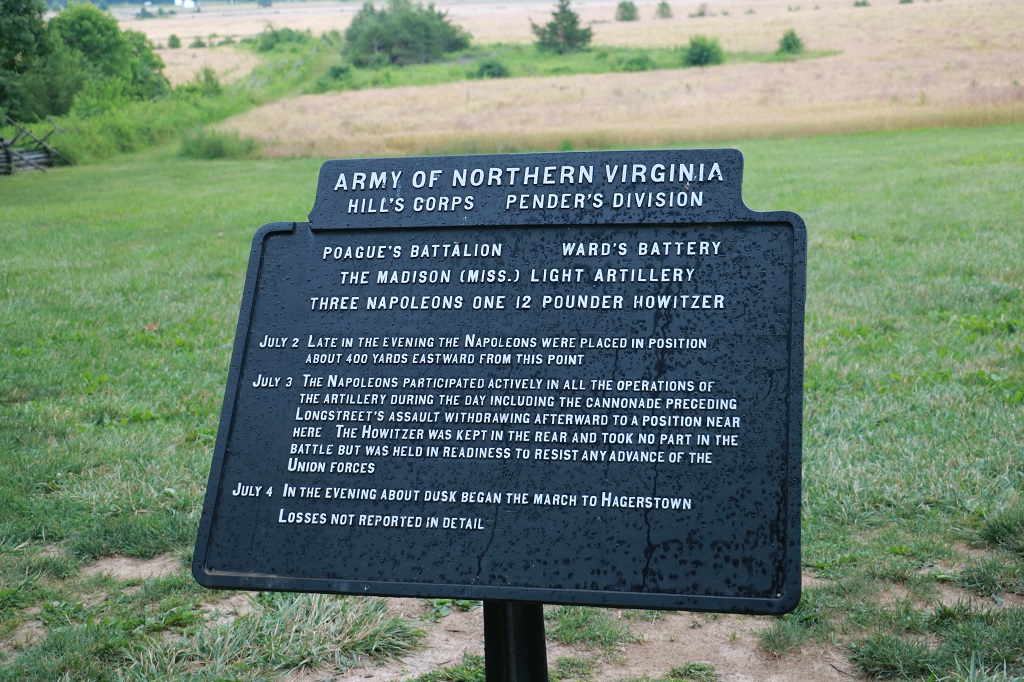
The Battle of Gettysburg is one of the most well documented battles in the world. The National Military Park comprises 6,000 acres. There are about 1,300 monuments and memorials throughout the site. There are also bronze plaques that detail the actions of every division, corp, and battalion of both sides for all three days. There are also descriptive plaques about the different cannons that the different forces used or had access to during the battles each day. A person would need to spend days to read all the information on all of them. Most of them also note how many men made up each army division or group and how many died, were wounded or were never found when the three days were concluded.
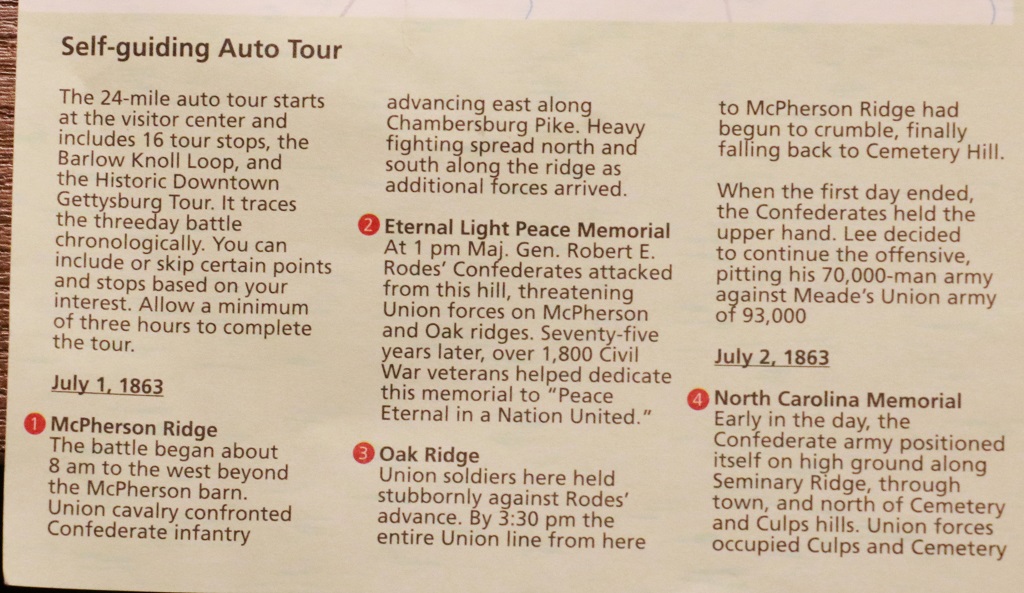
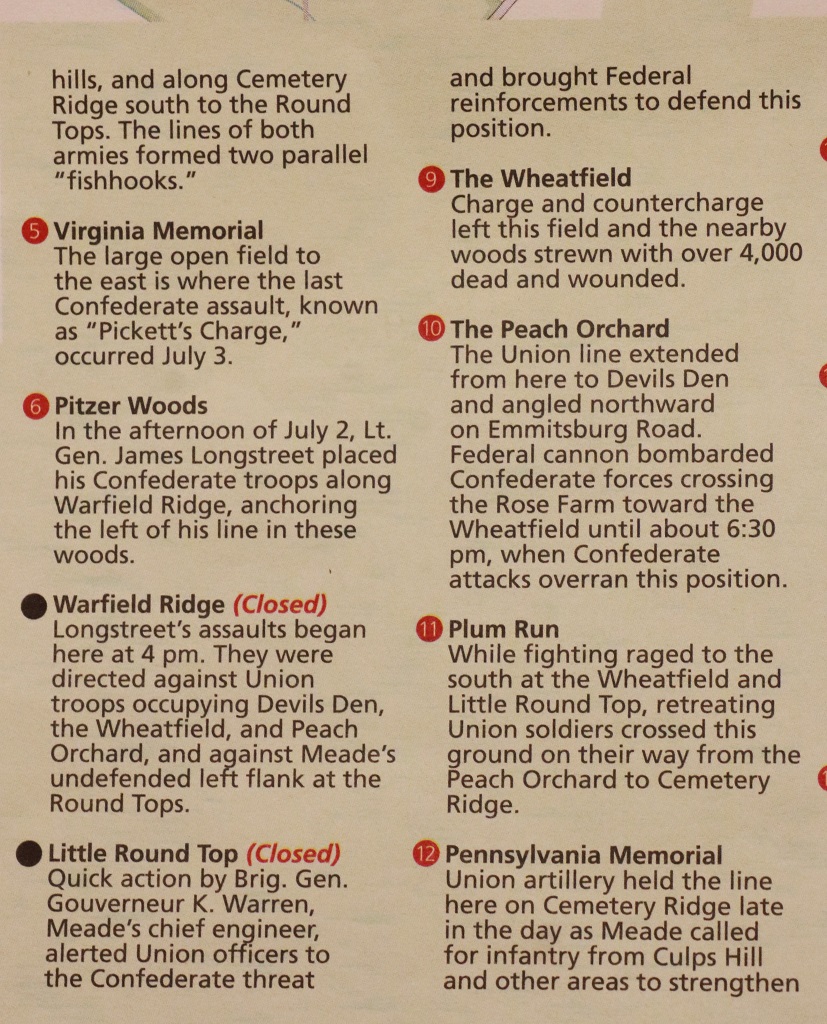
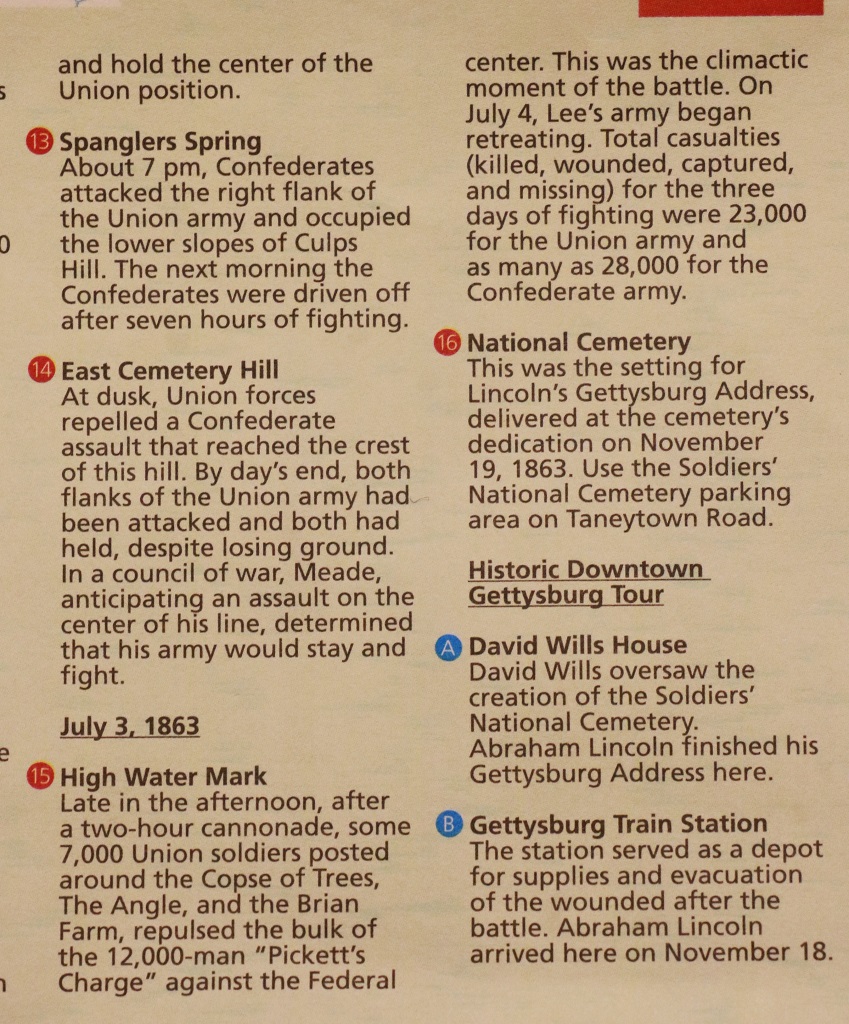
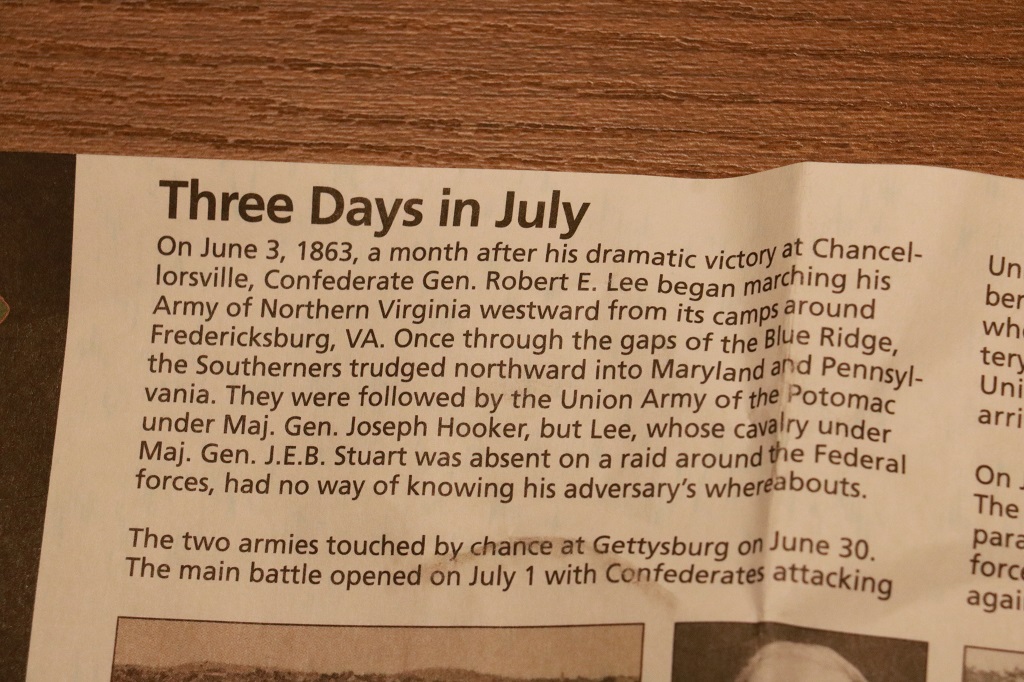
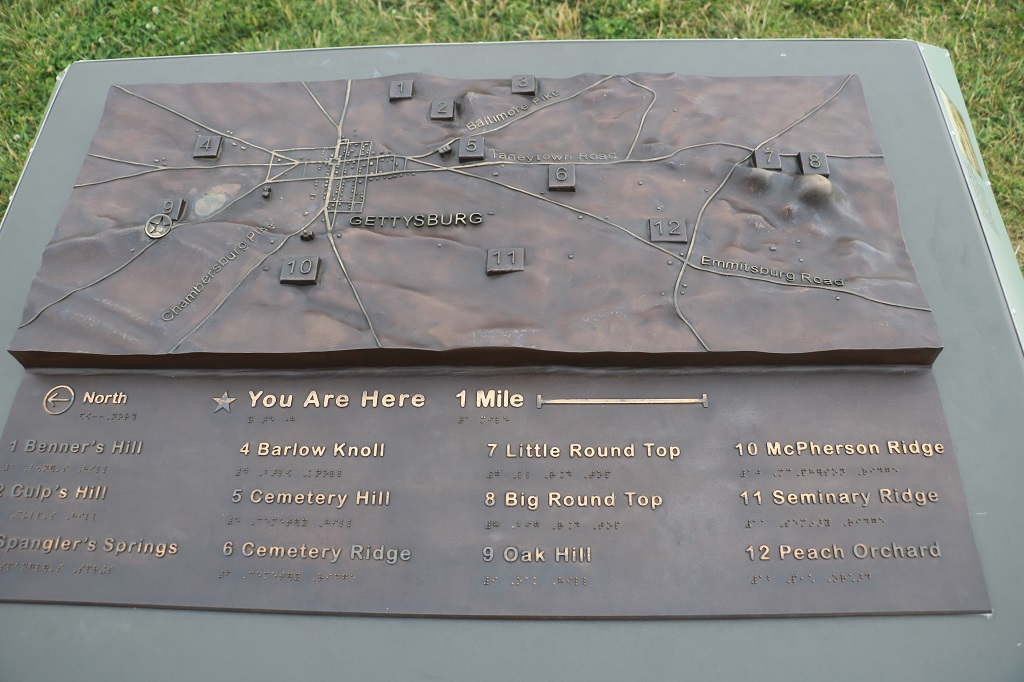
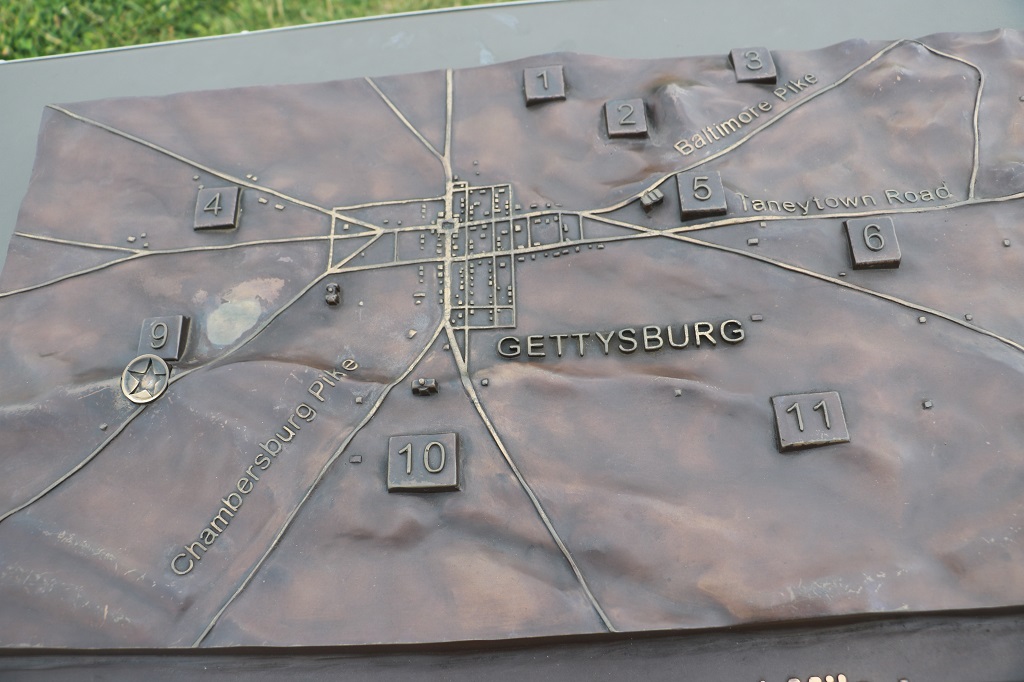
I took a photo of the map of the Auto tour and pictures of the short bit of info printed about each stop. The tour was in chronological order of what happened on each of the three days, so we overlapped places on our journey.
Here goes:

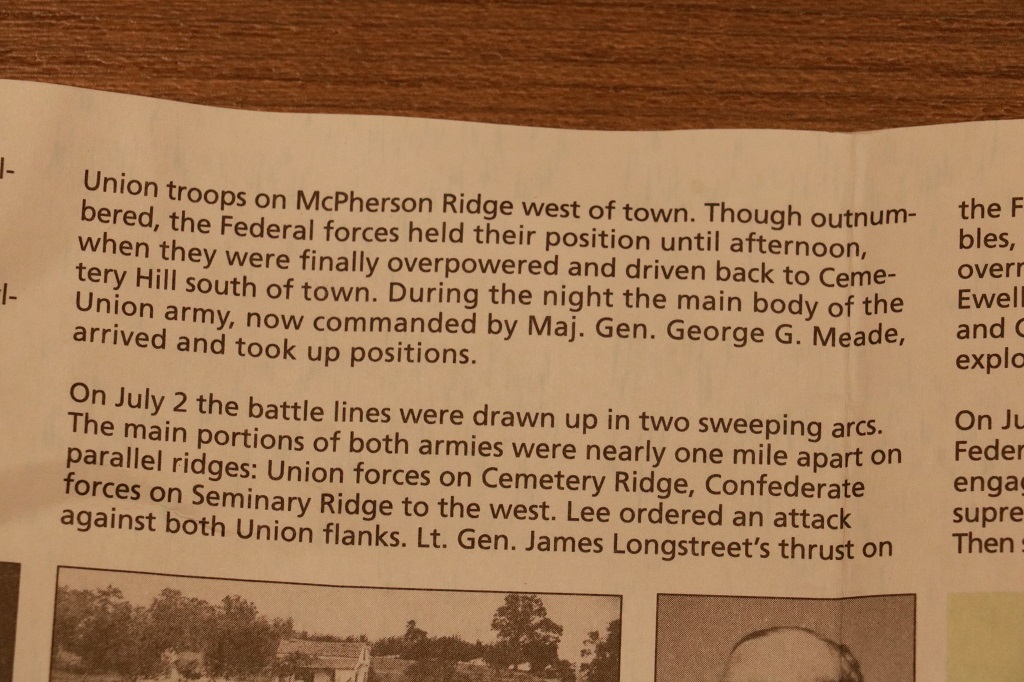


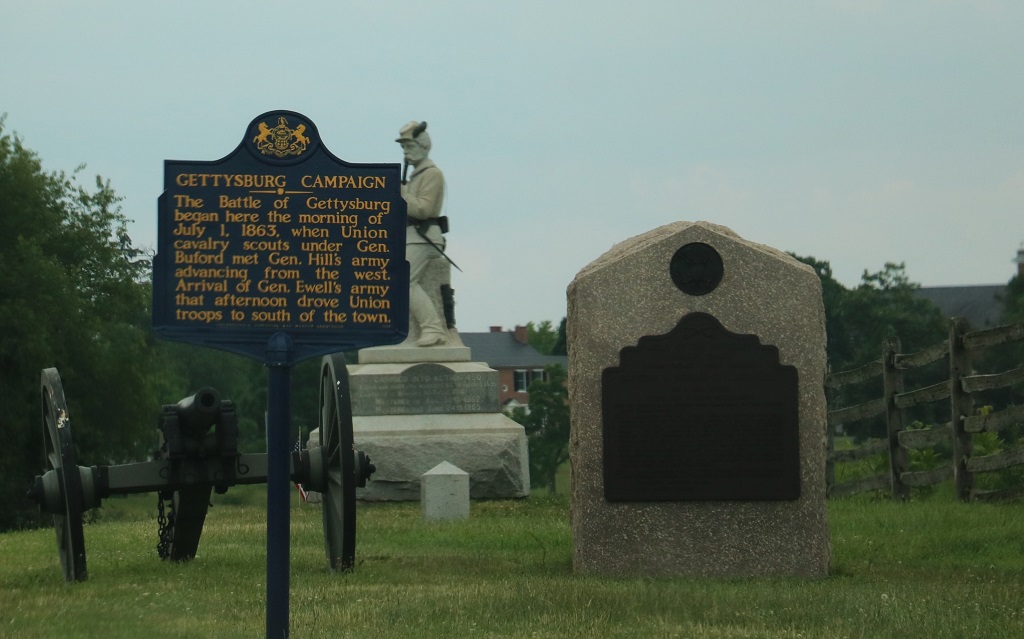
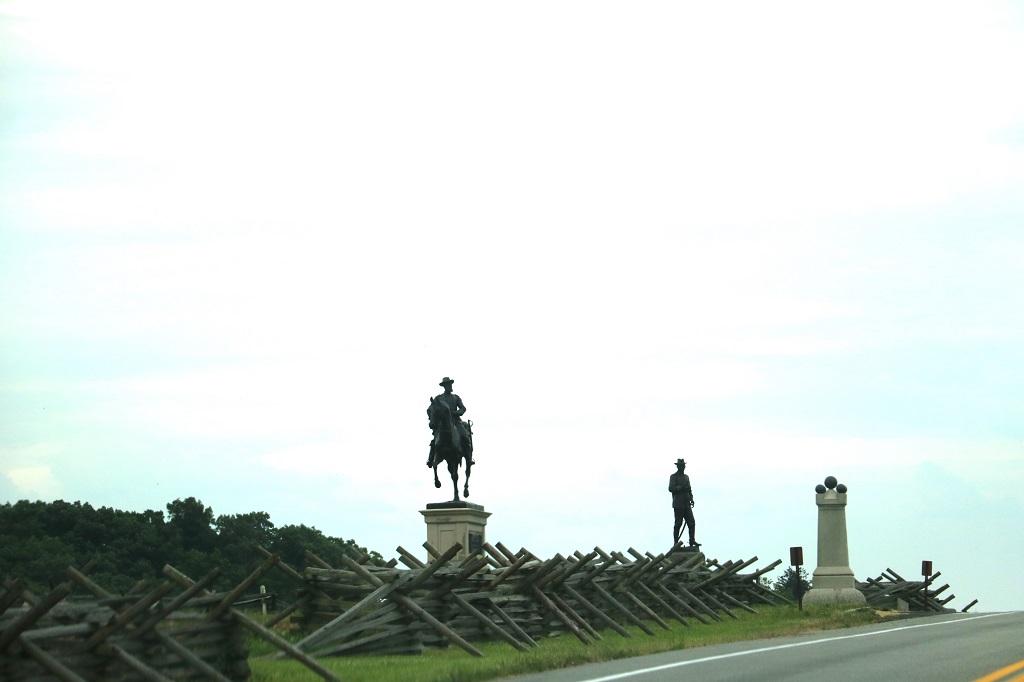
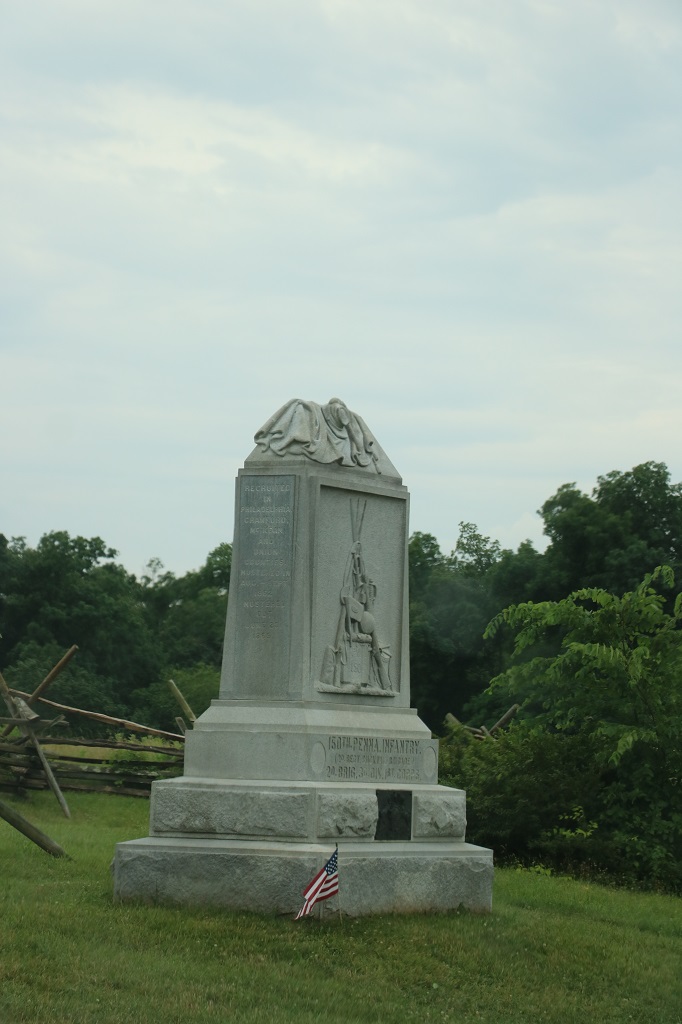

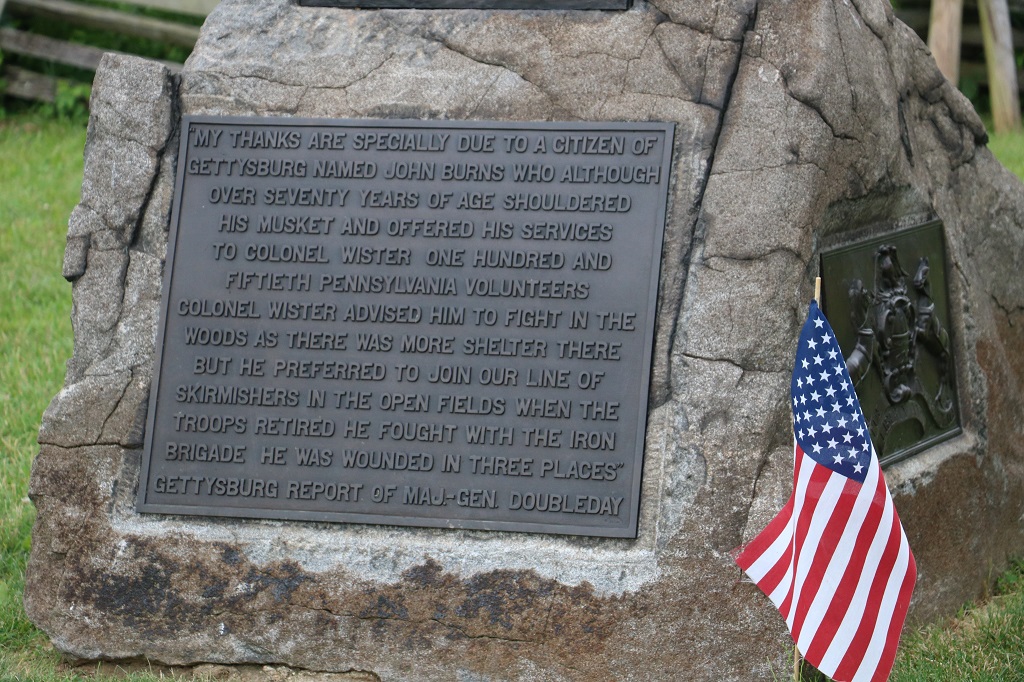
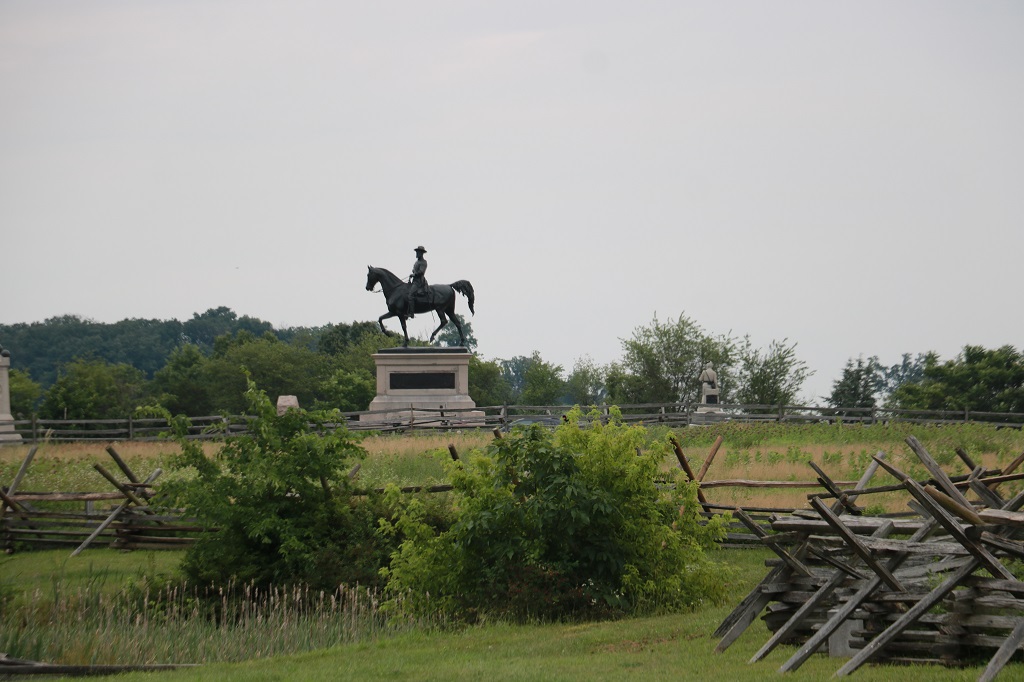
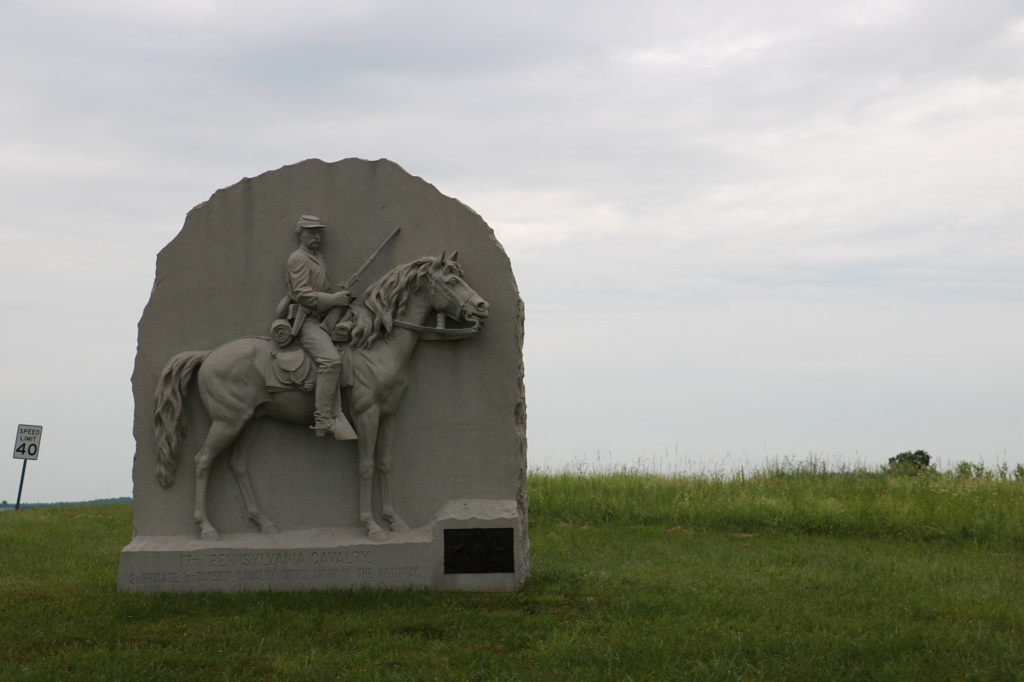
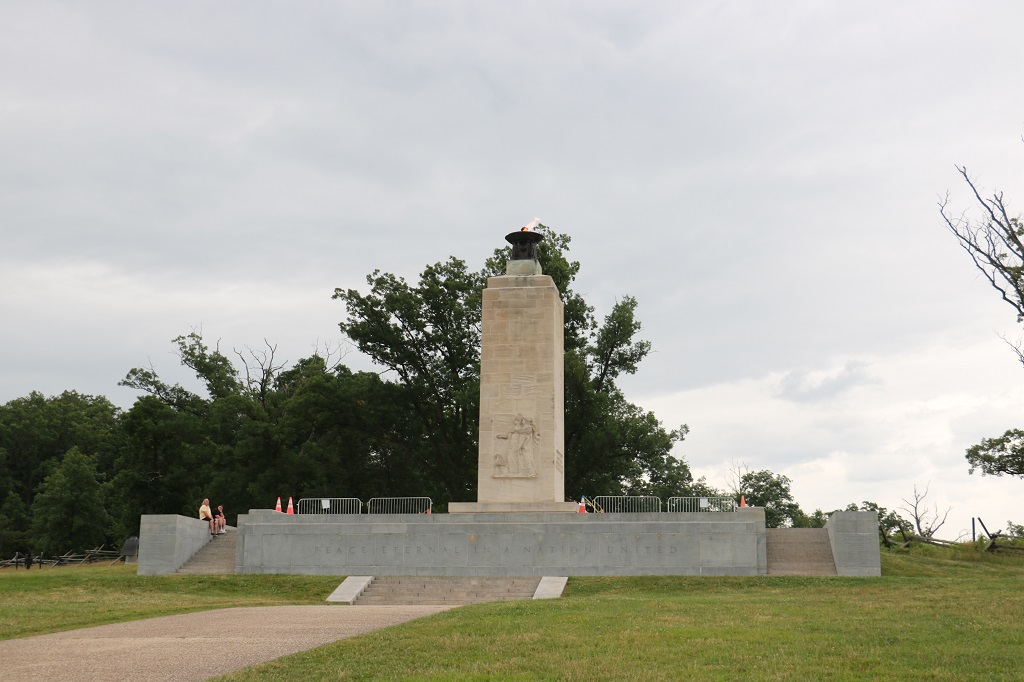
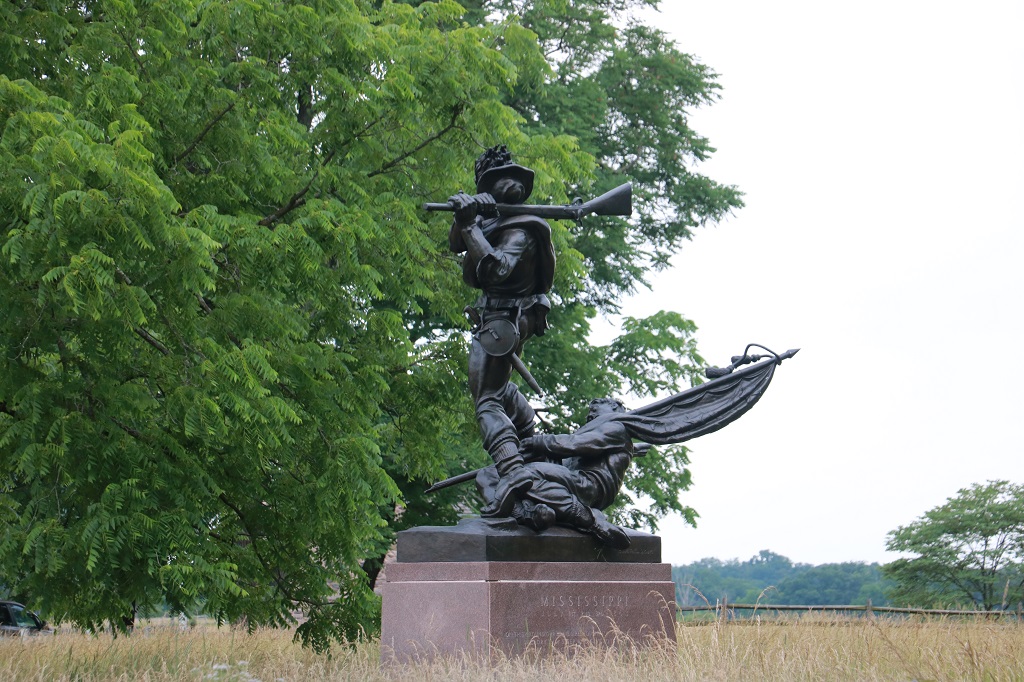
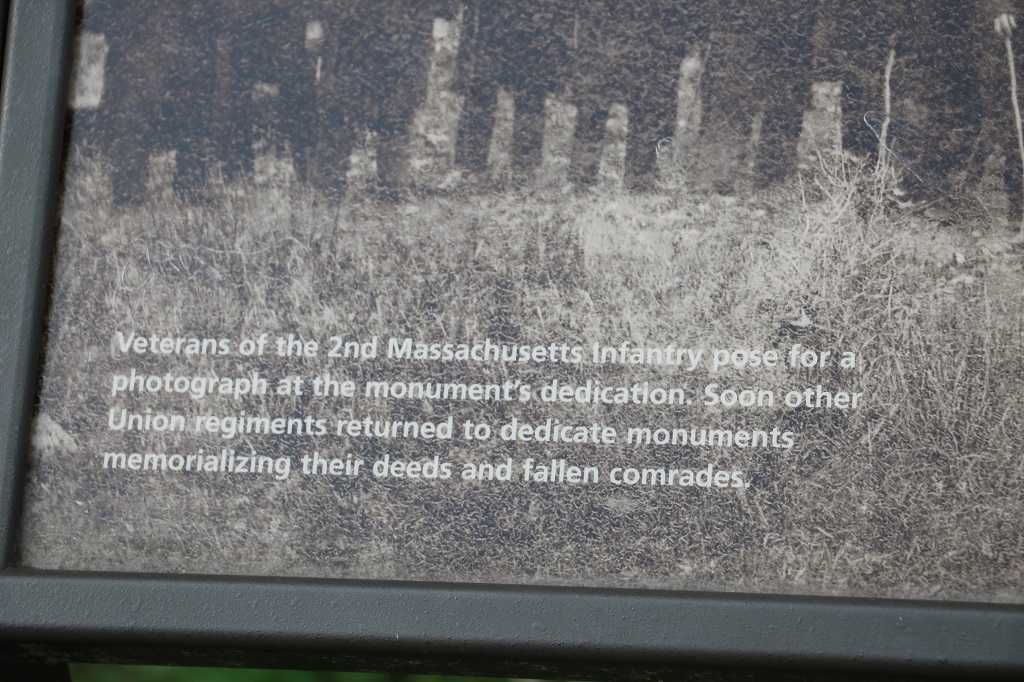
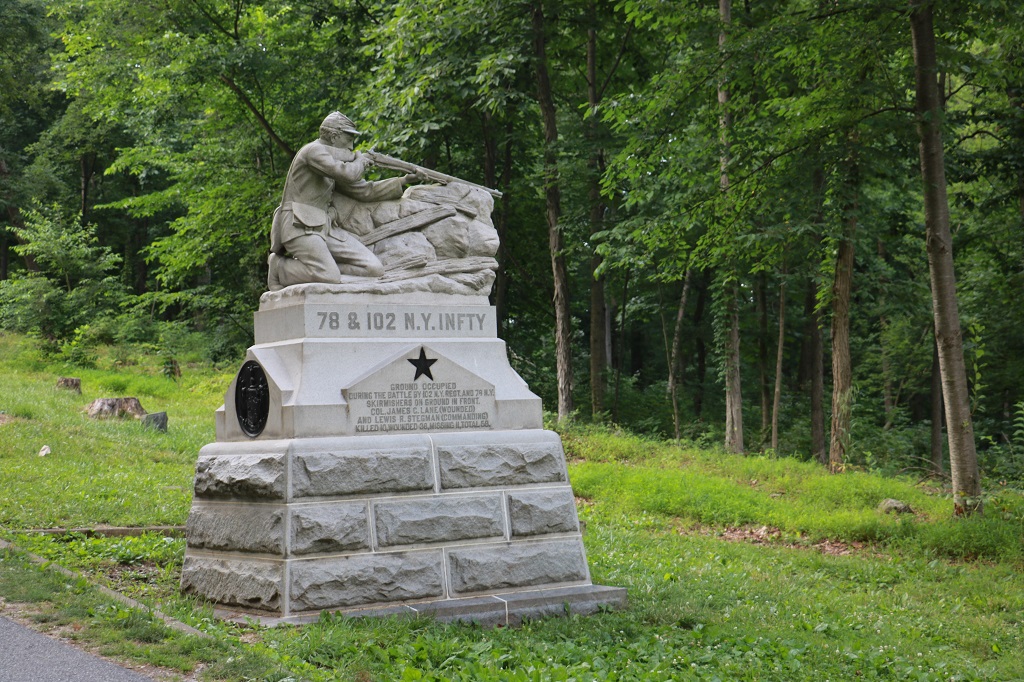
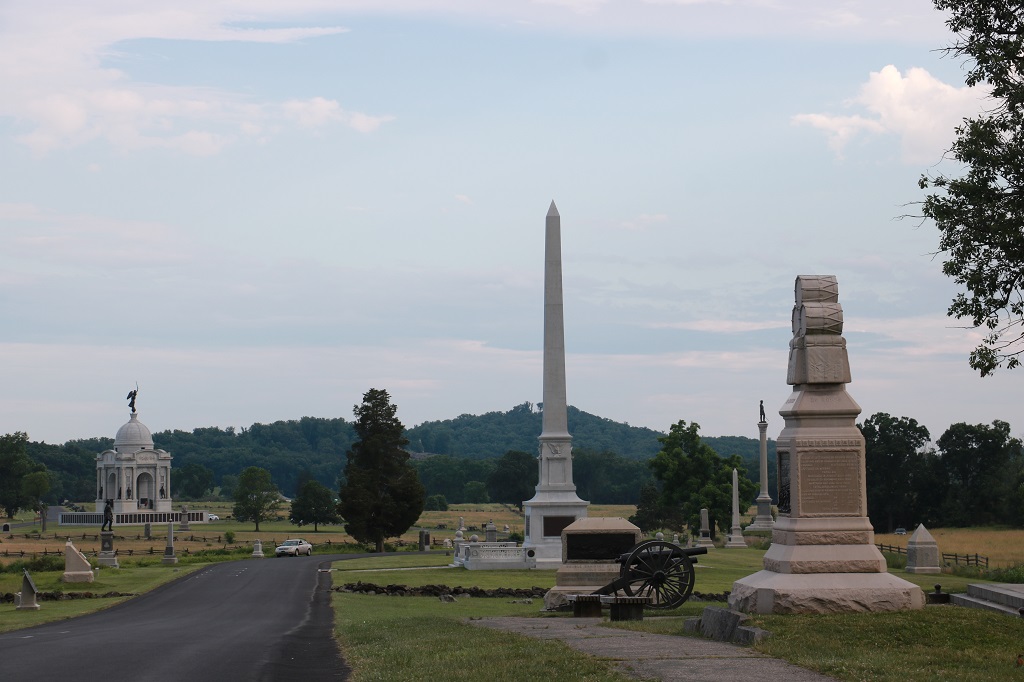
Over the years memorial monuments have been erected by all of the states that engaged in the battle, and the various military forces in their particular divisions, or corps have also added memorials. They line both sides of the roads, are further into the fields, even in the woods. It is really quite amazing. Some are very elaborate, others are very simple. All are heartfelt.
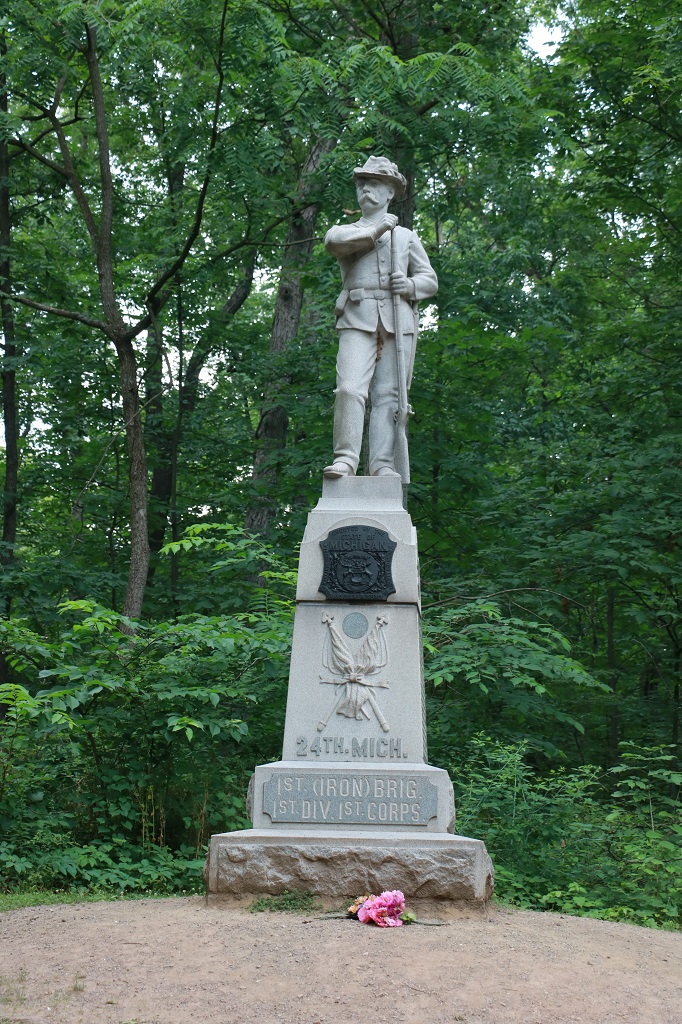
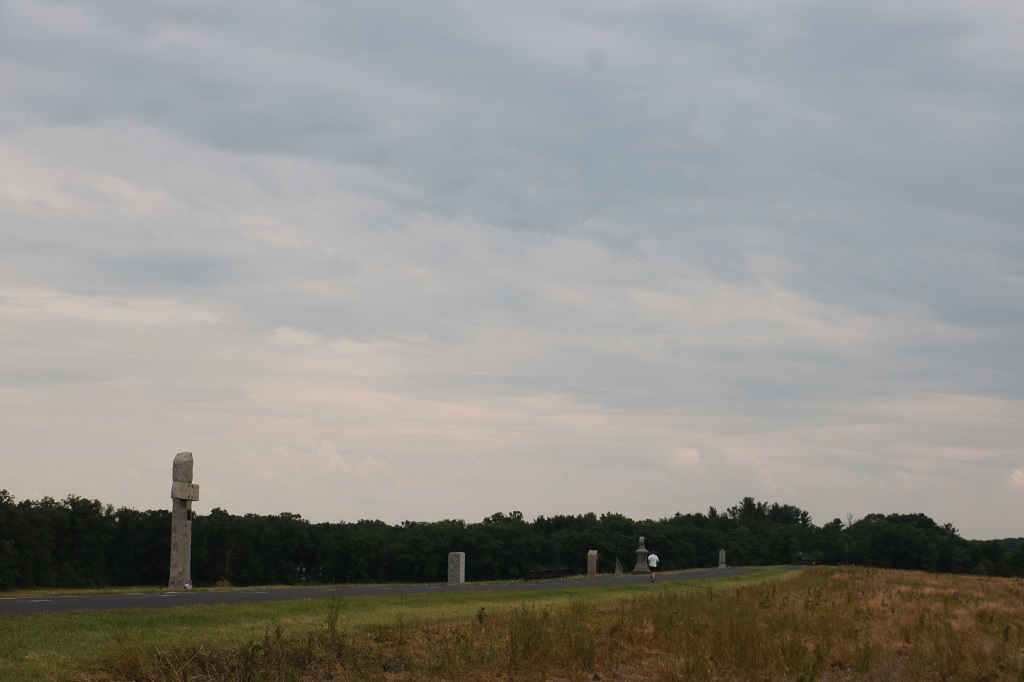
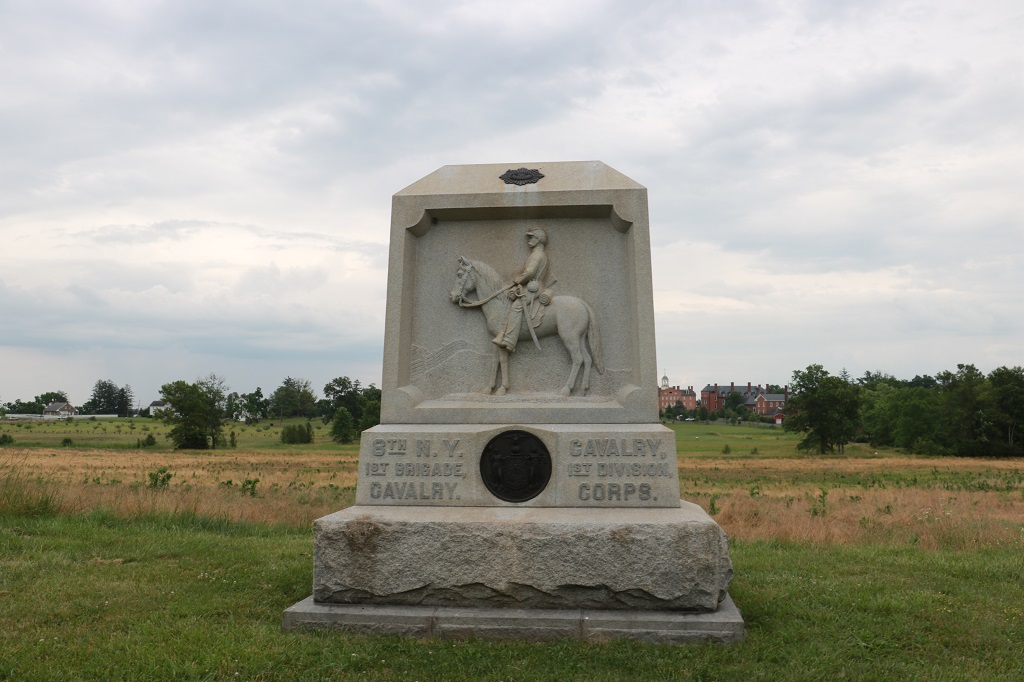
We had taken too early of a turn into the park on our way to the Visitor’s Center and drove past all the above monuments before we actually started the Auto Tour. The tour was downloaded to John’s phone via a QR code at the Visitor’s Center and an audio commentary would begin at each of the 16 stops. I wasn’t about to try figure out where the above monuments should be inserted to be in the correct order as per the Auto Tour. I had a hard enough time on the tour restricting myself from photographing everything we drove by. Or worse yet having John stop so I could read everyting. The Auto Tour takes a minimum of three hours and the gates to the park close at sunset. We arrived at 3 PM so there was no way I could see everything. No one could in one day anyway.


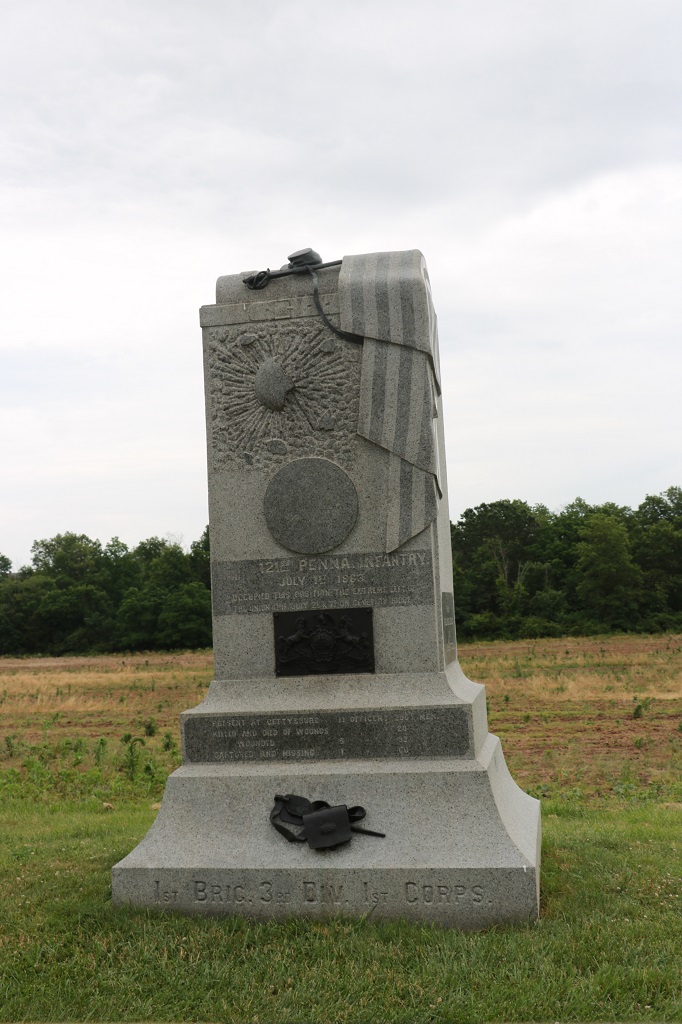
We started the Auto Tour about 4 and finished it just after 7. Photos of monuments and placards begin now. There is no rhyme or reason to the ones I photographed. I just liked them – well except Cavalry – they had to be selected of course. And even though there are MANY in this blog, I photographed even more.
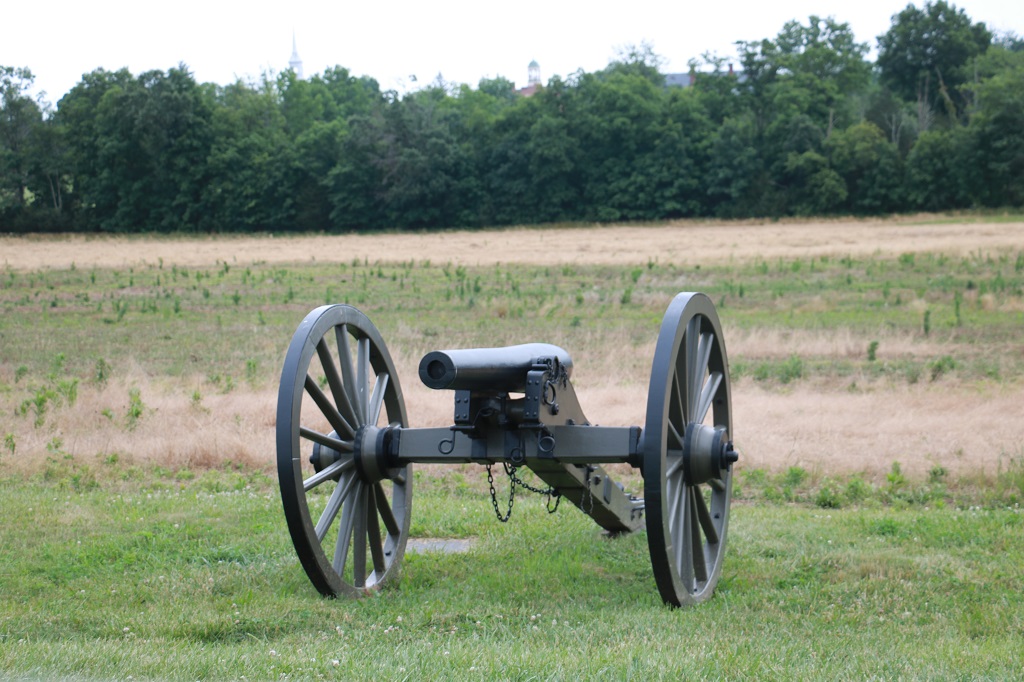
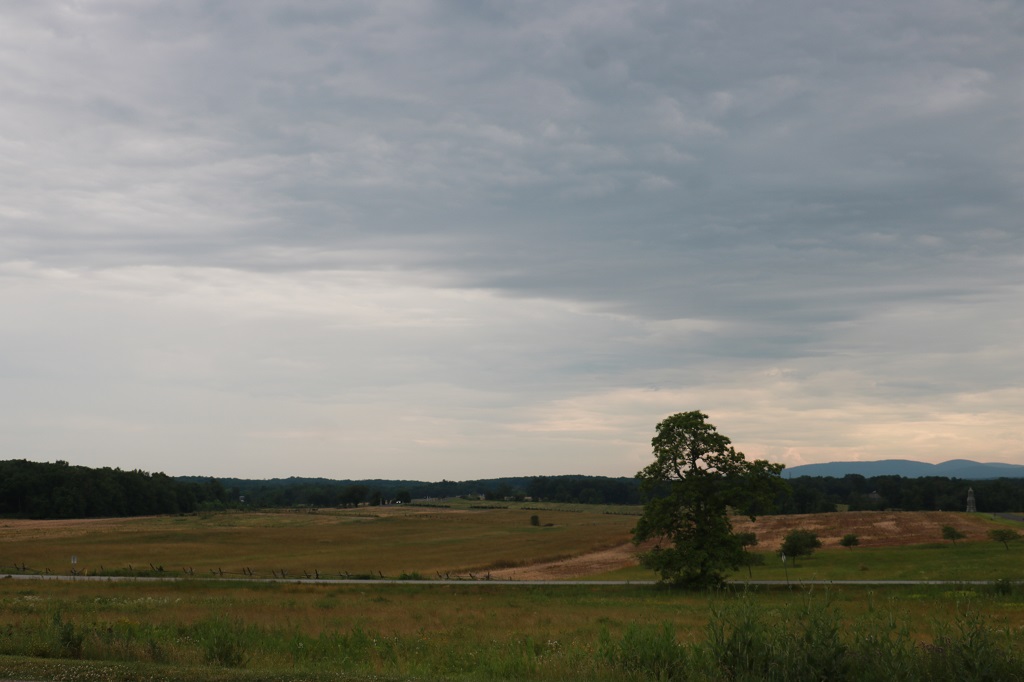
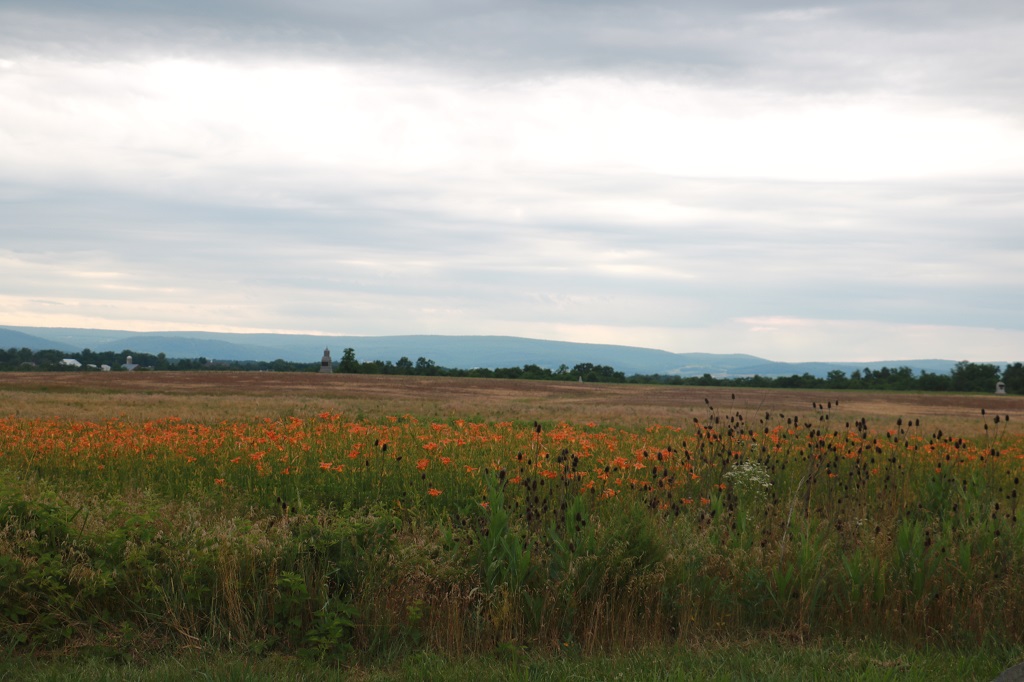
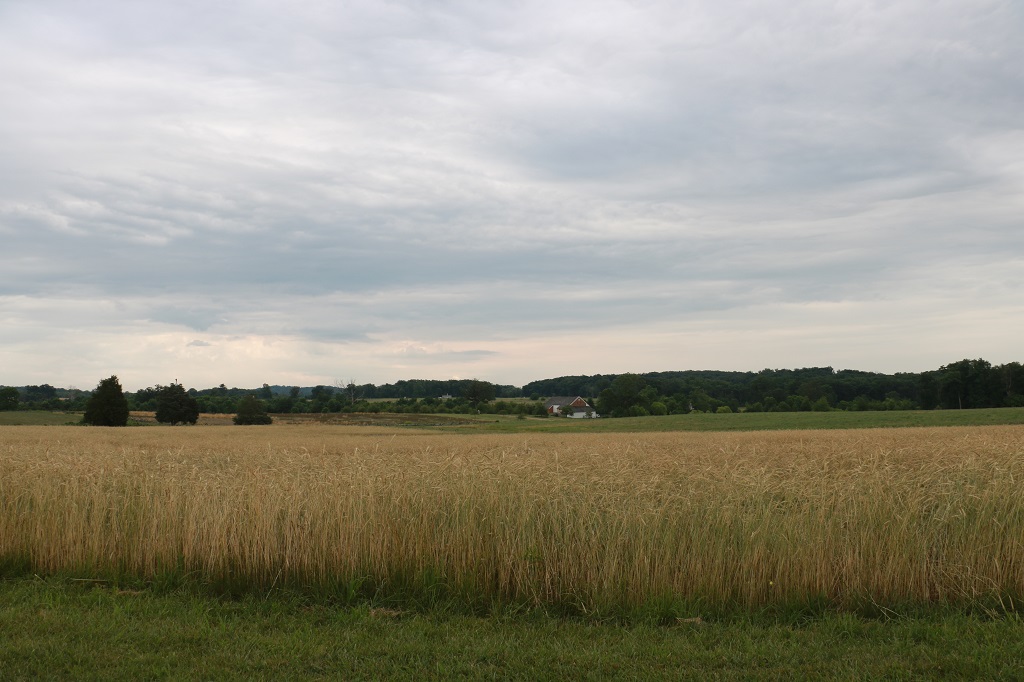
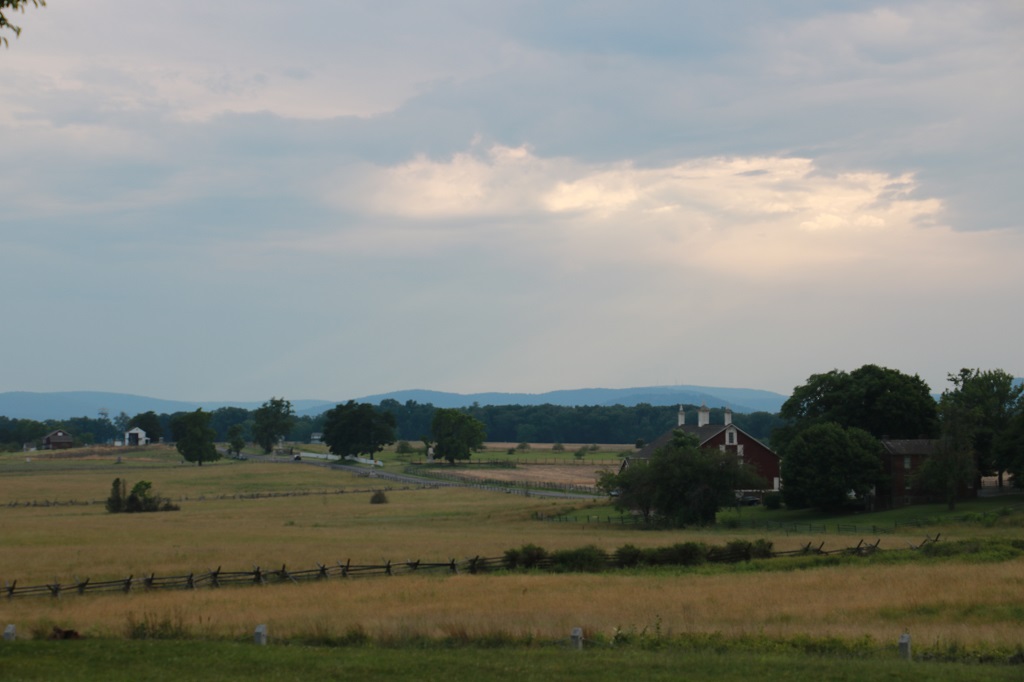
I did try to take some pictures of the scenery as well so it is not all monuments and placards.
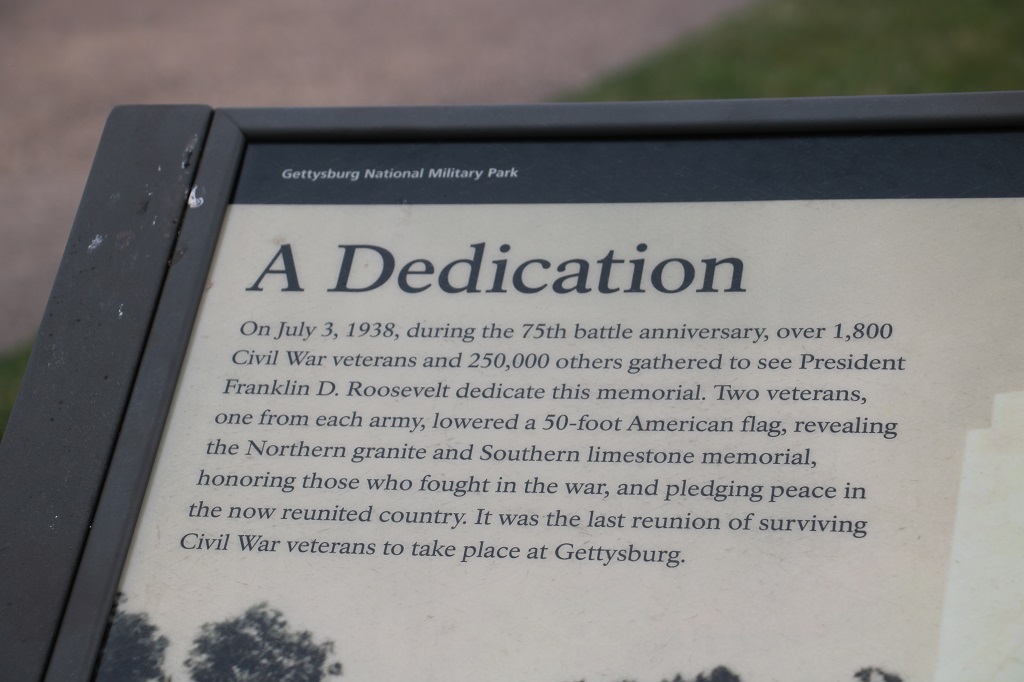
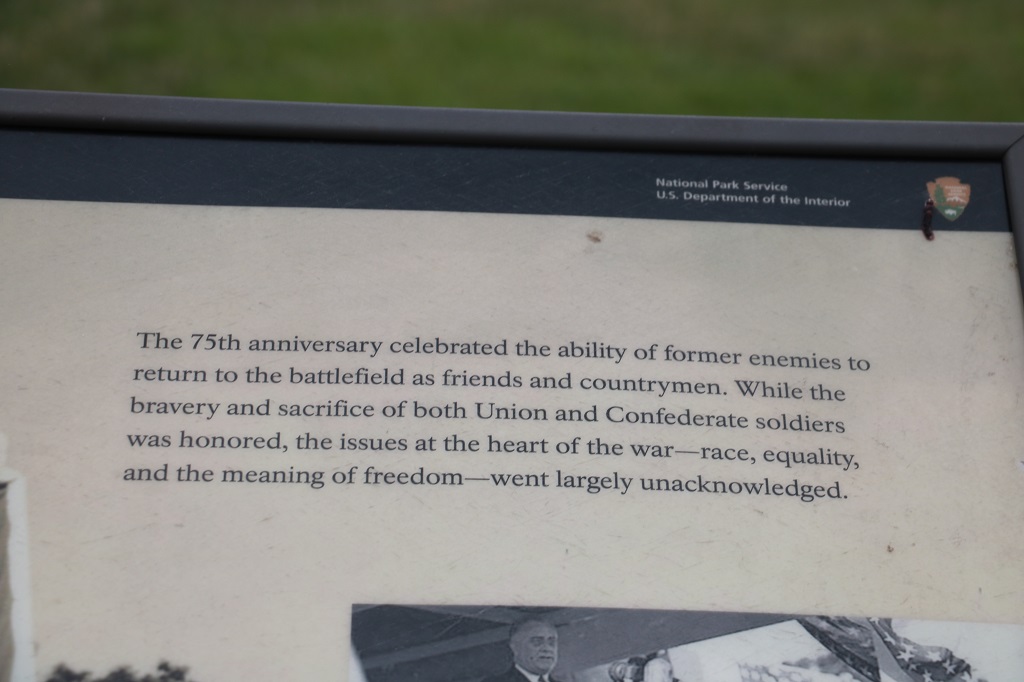
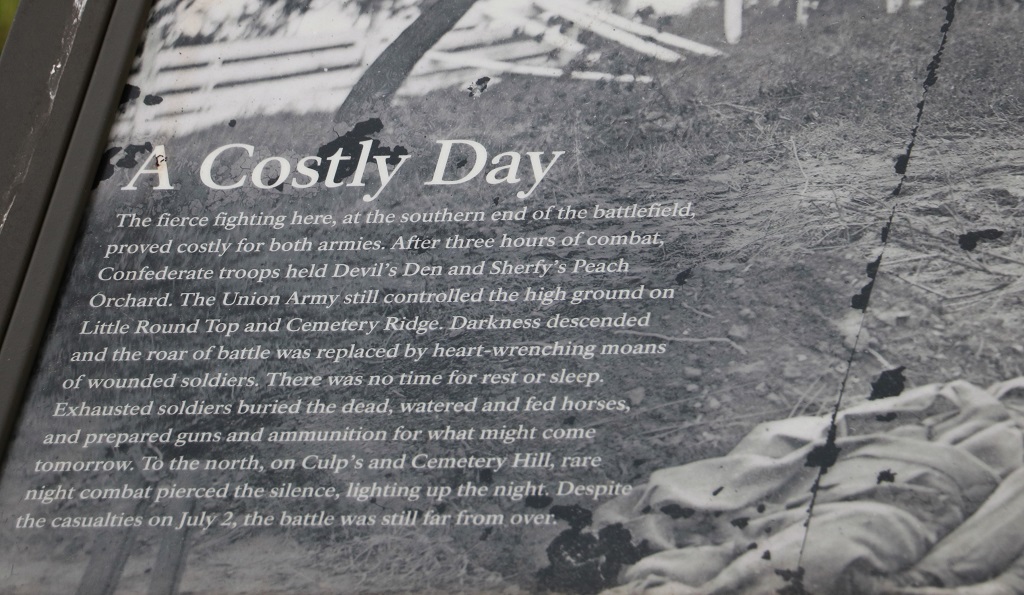
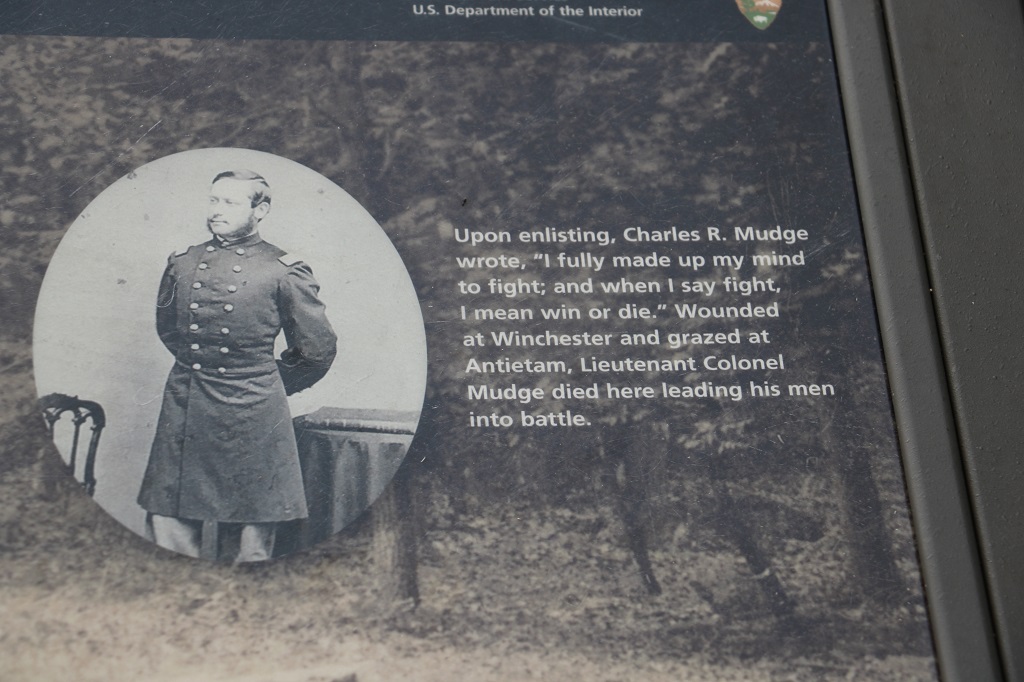
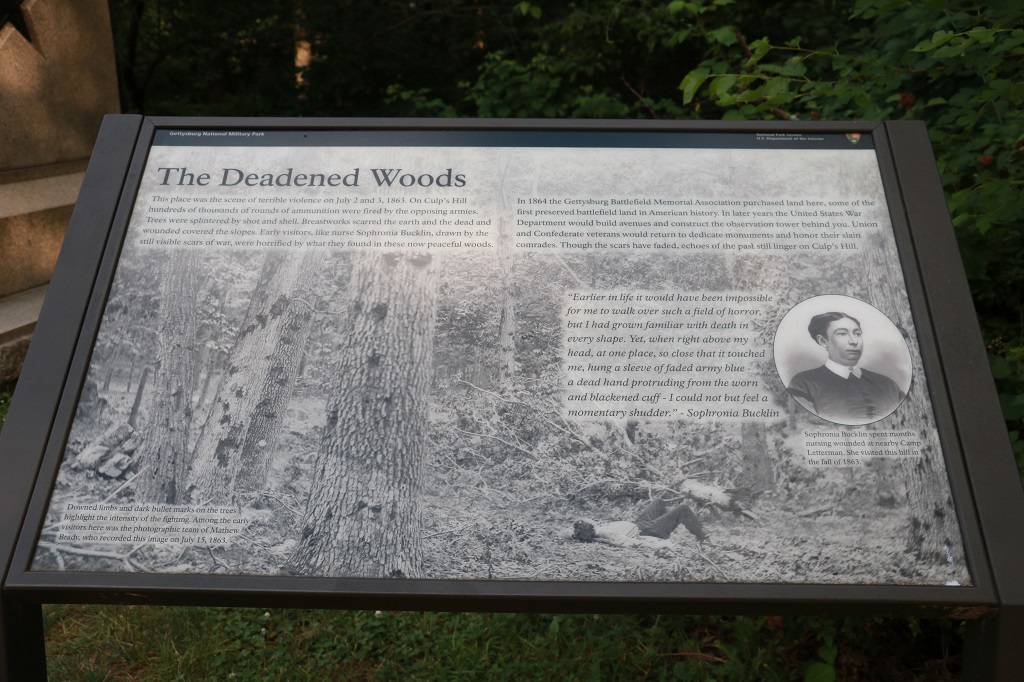
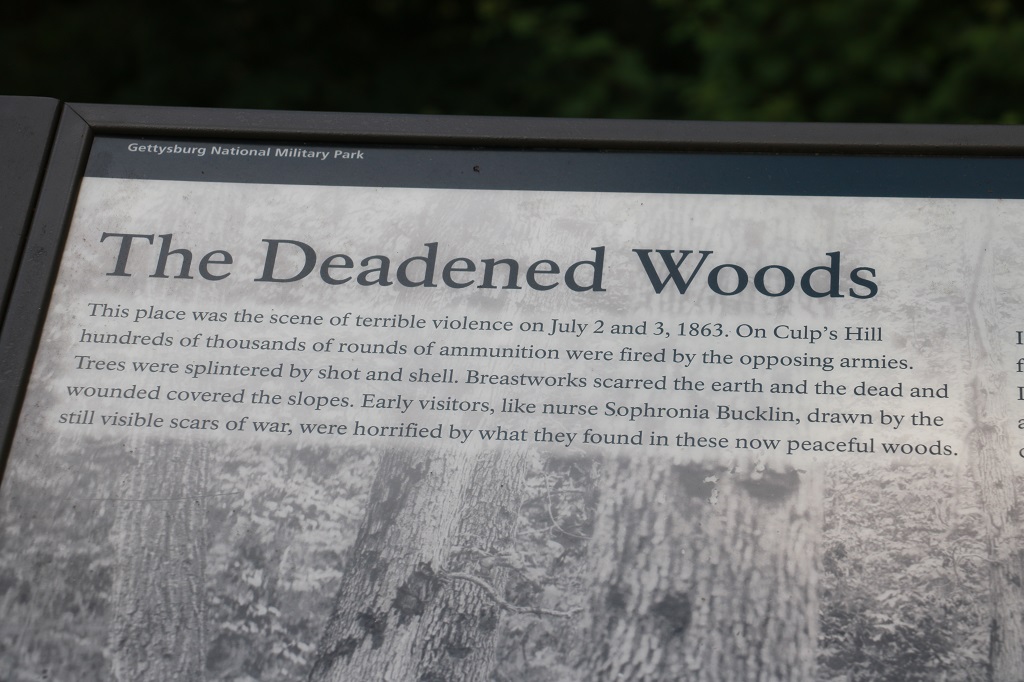
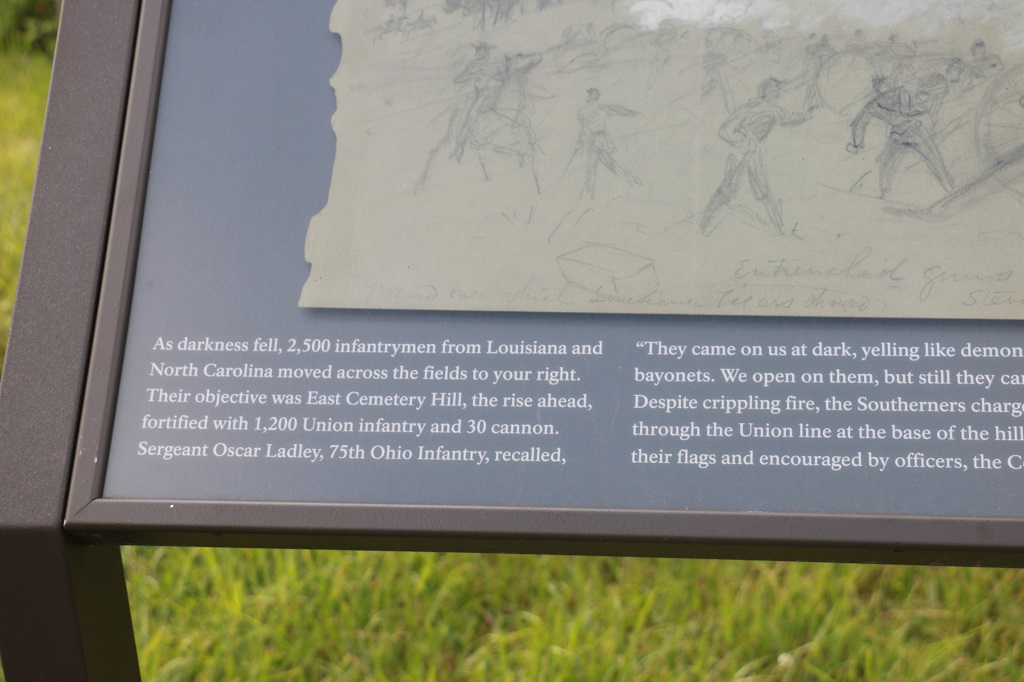
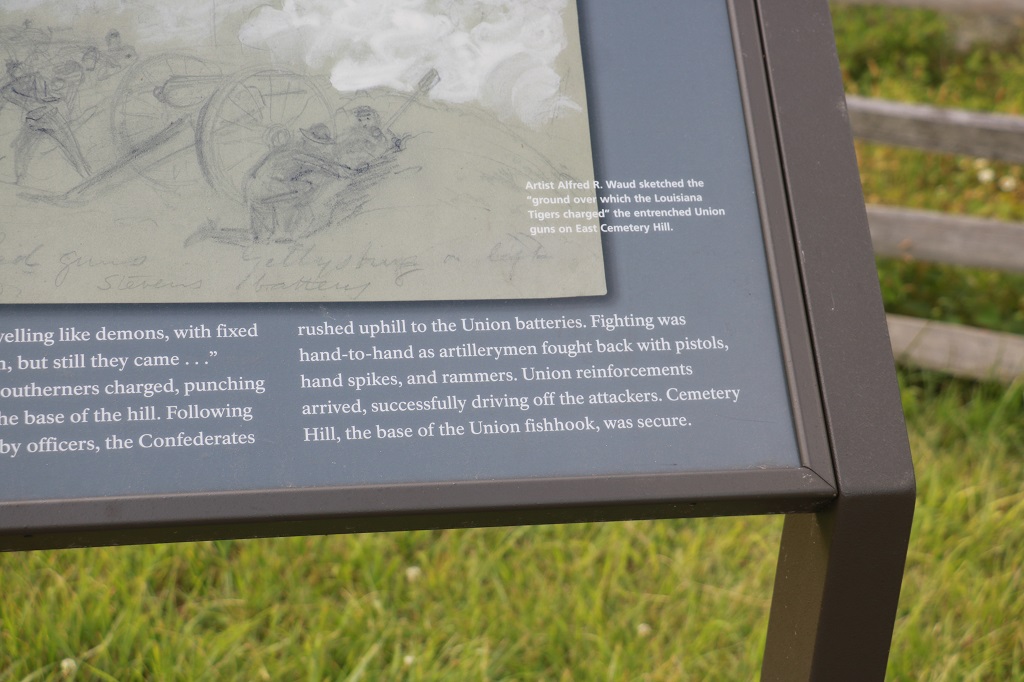
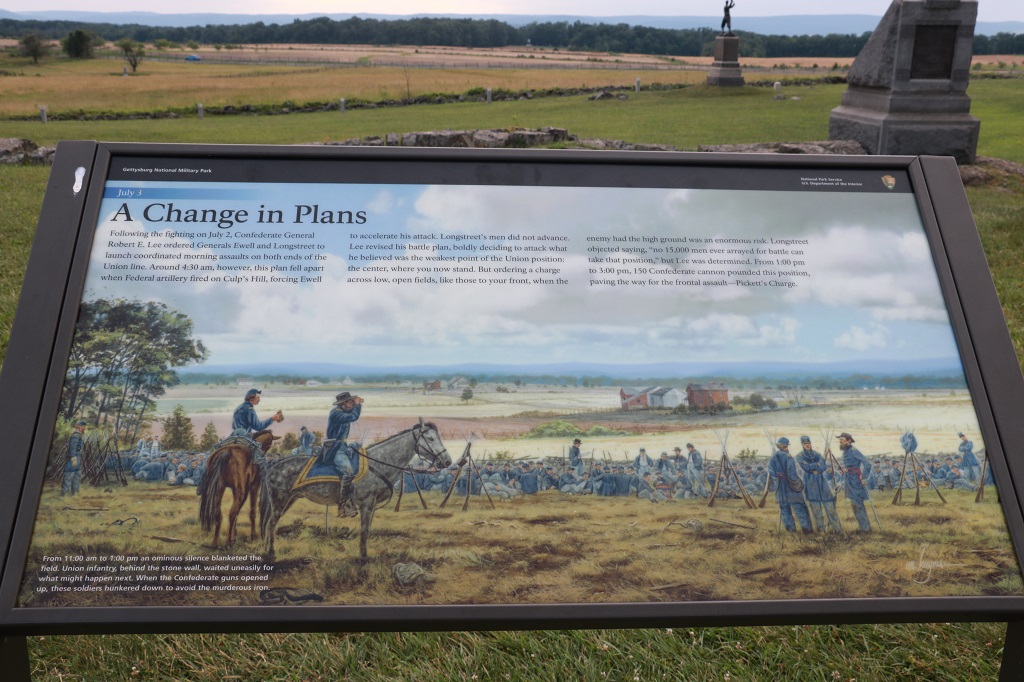
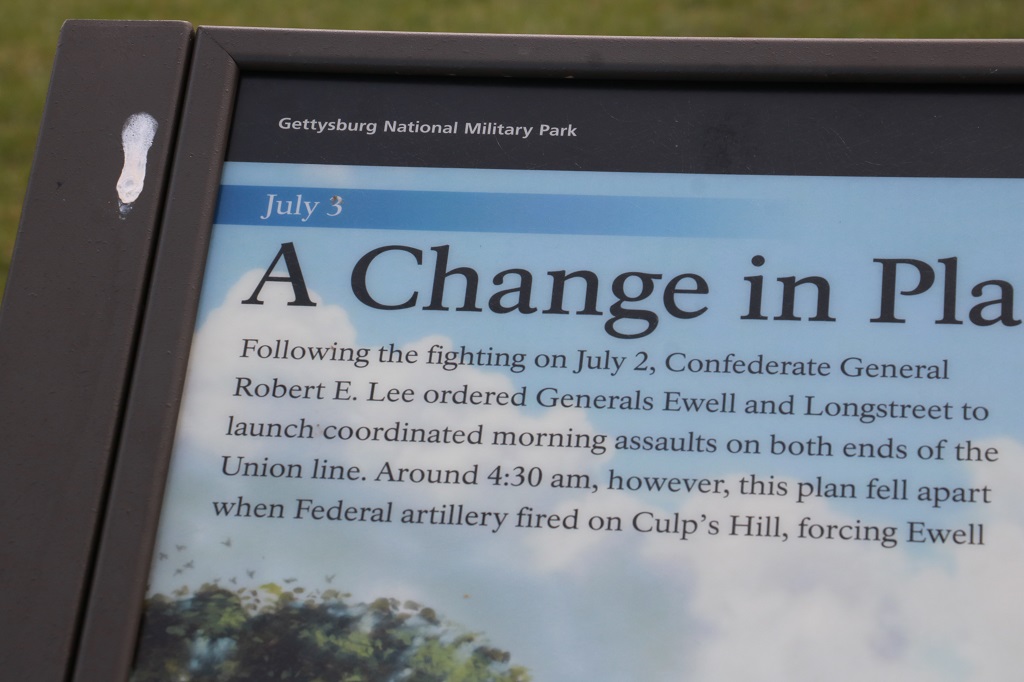
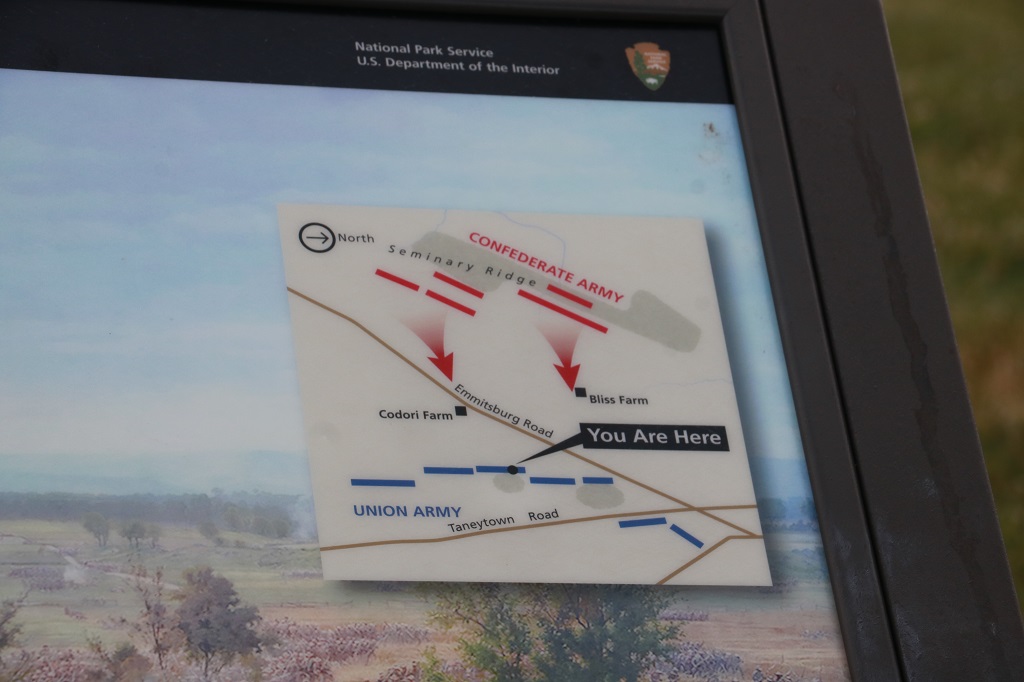
For most of the information boards I take a photo of the entire thing and then take pics of the text so it is easier to read without having to zoom in. Many of the pictures on the placards help grasp the significance of the information they contain. The two below got missed in the individual shots. Sorry.
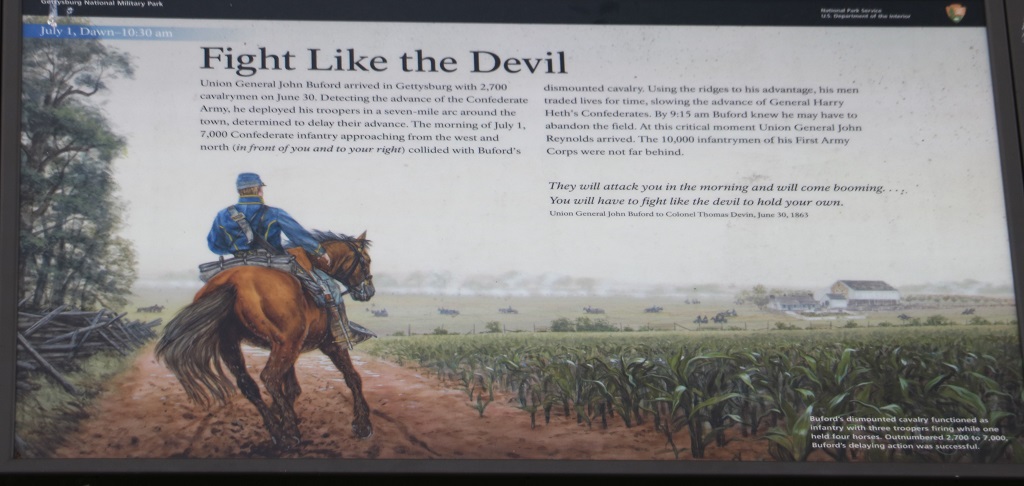
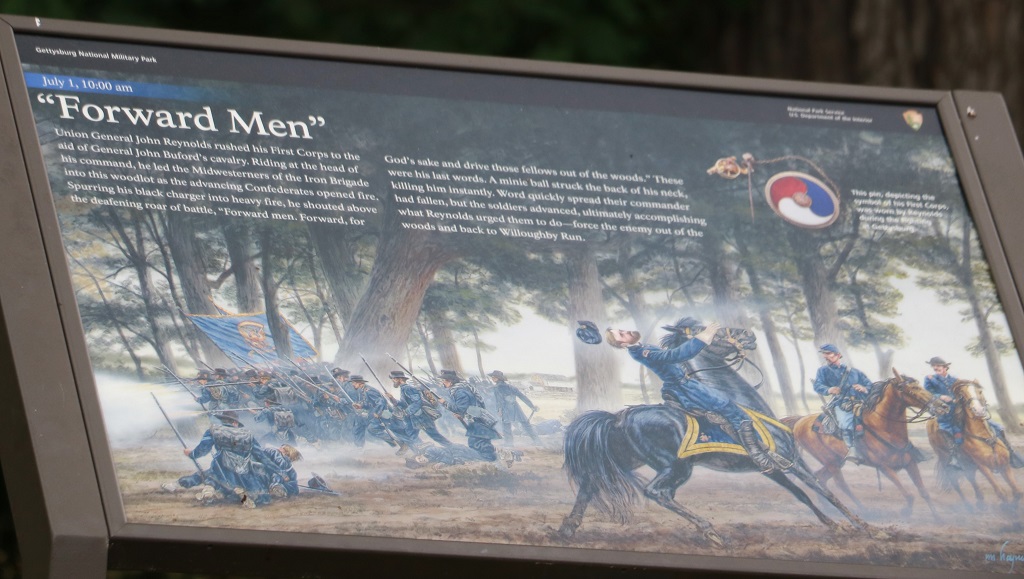
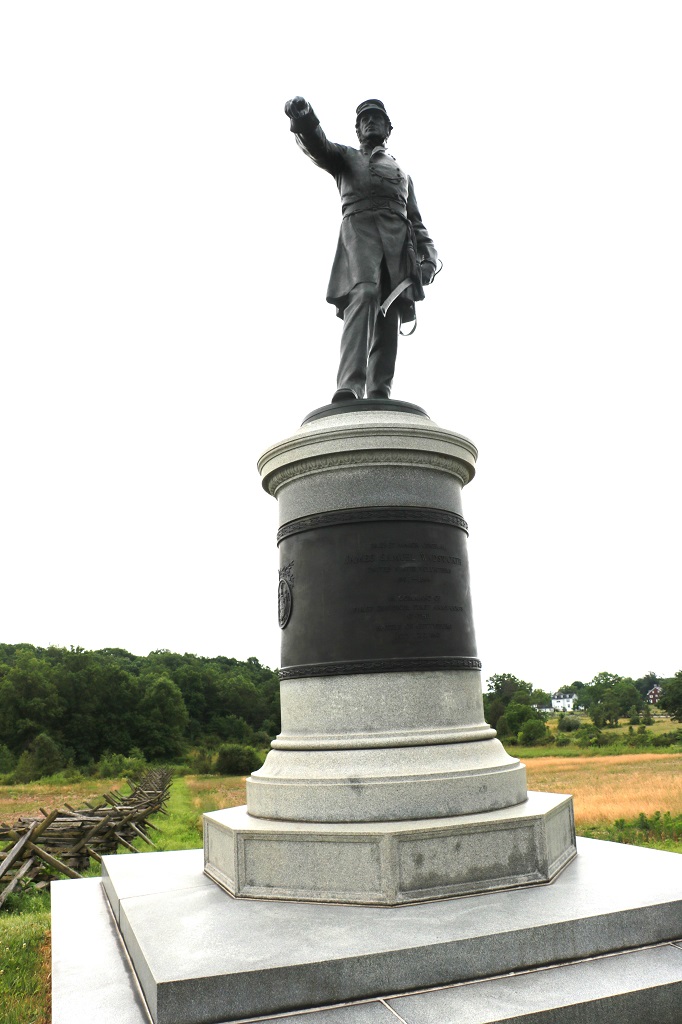
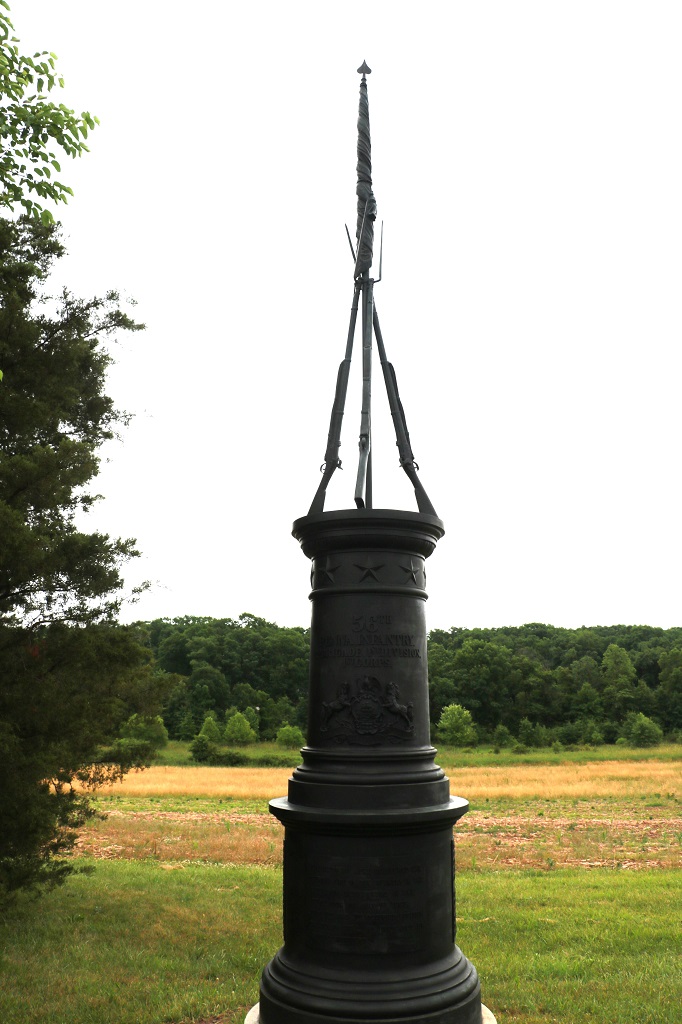
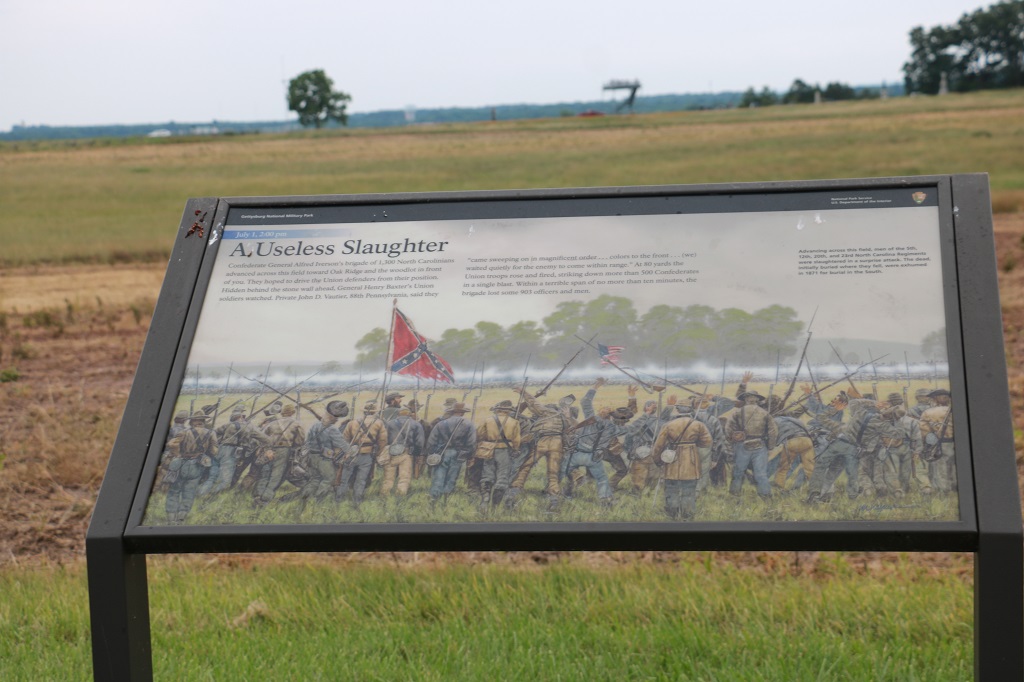
If you can make it out, note the date and time on the plaques that show the progress of each days battles.
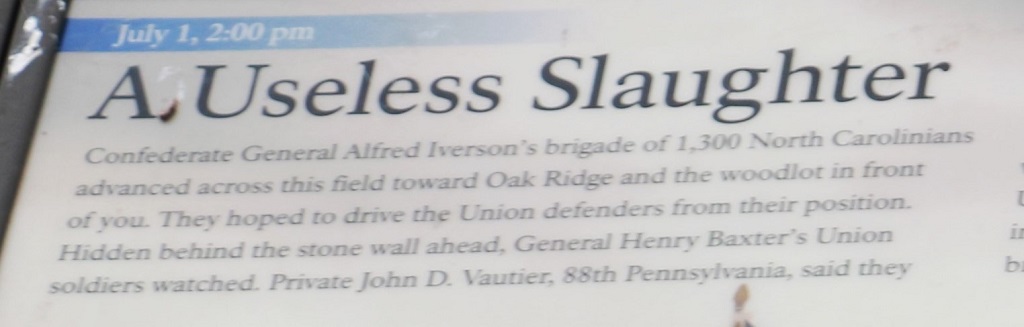
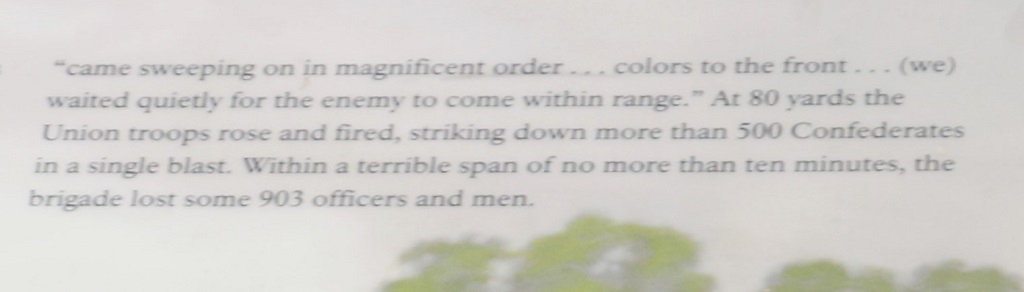

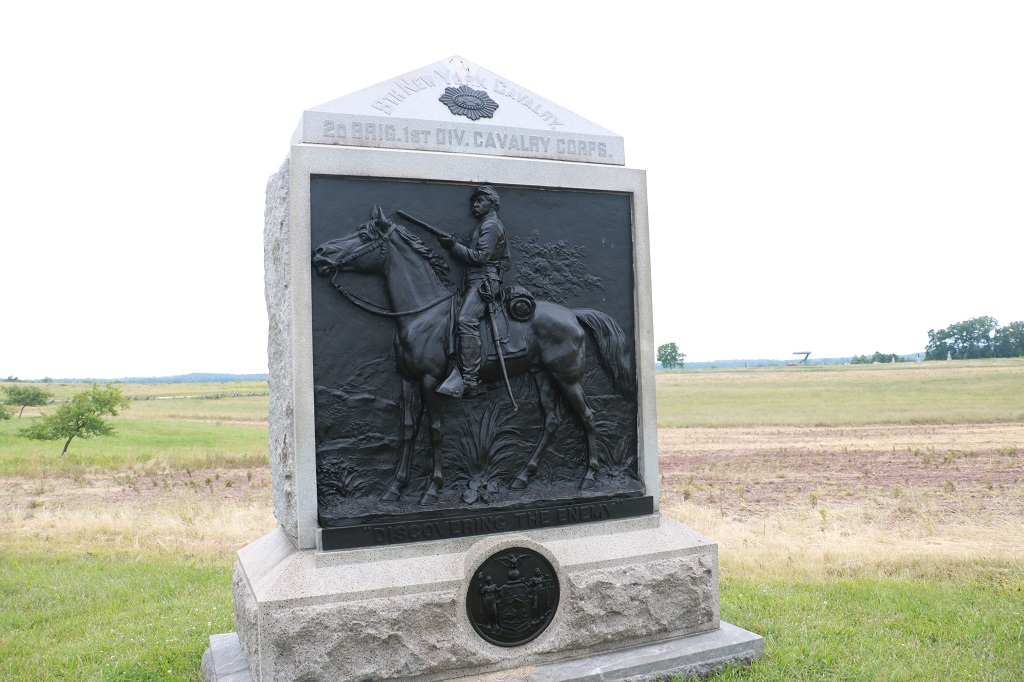
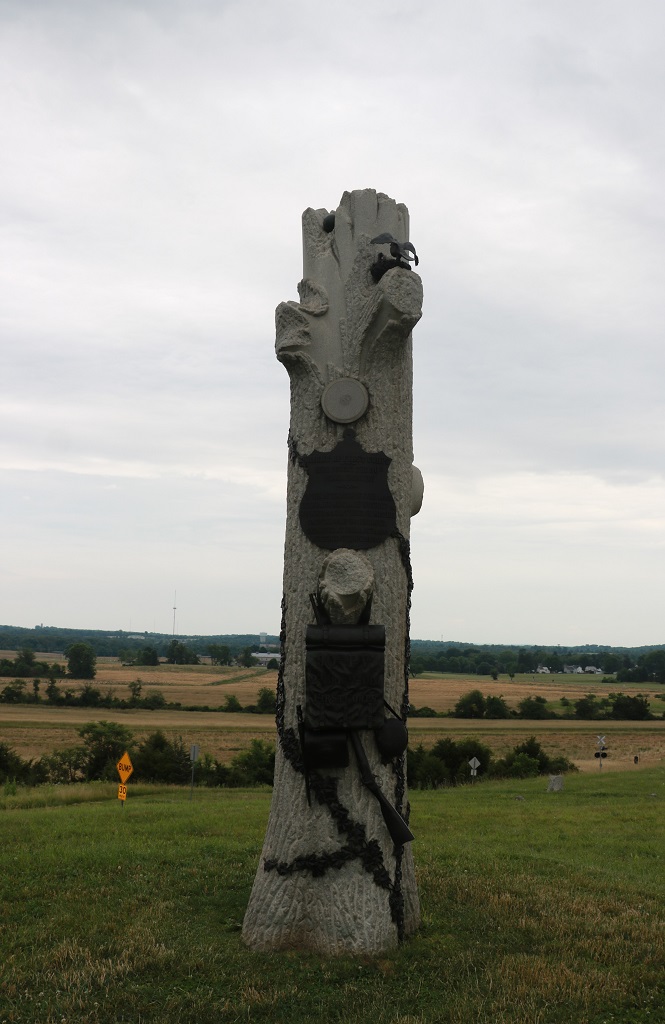
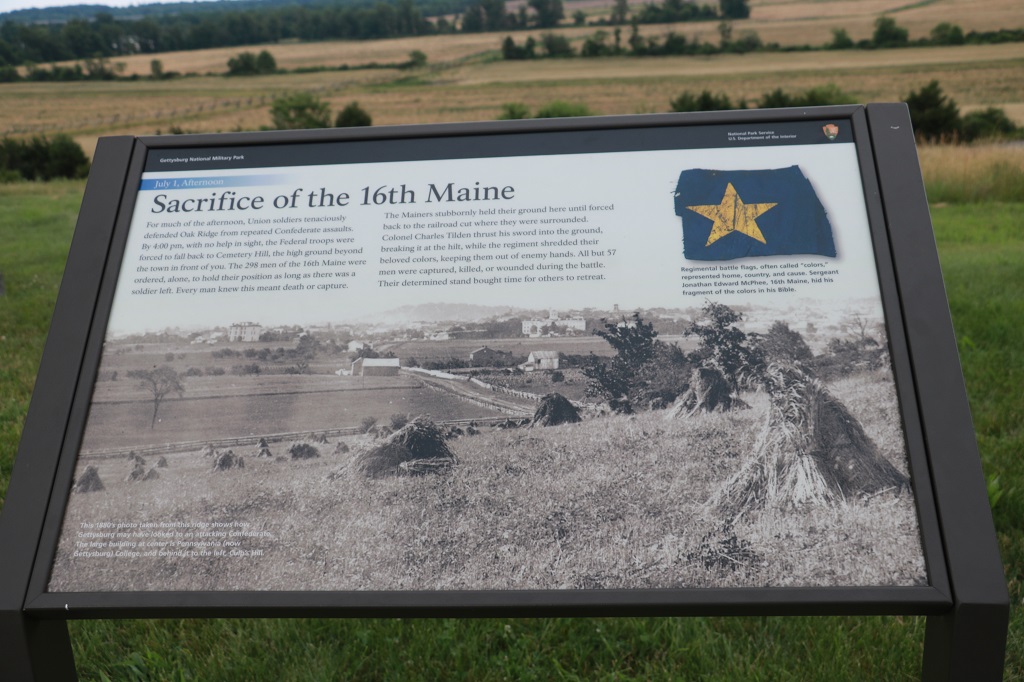
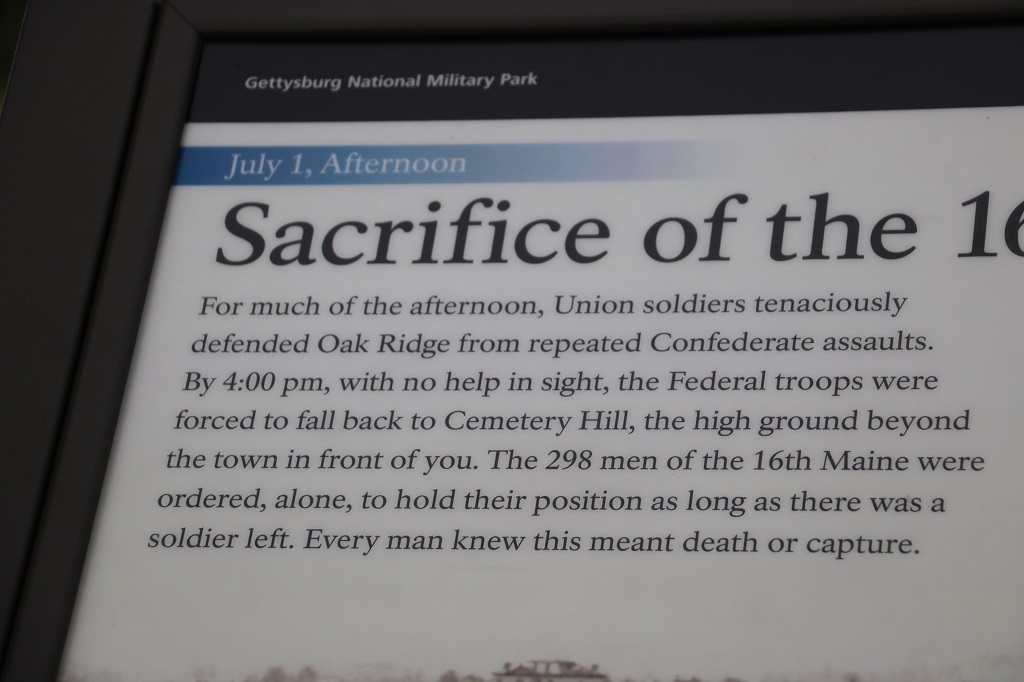

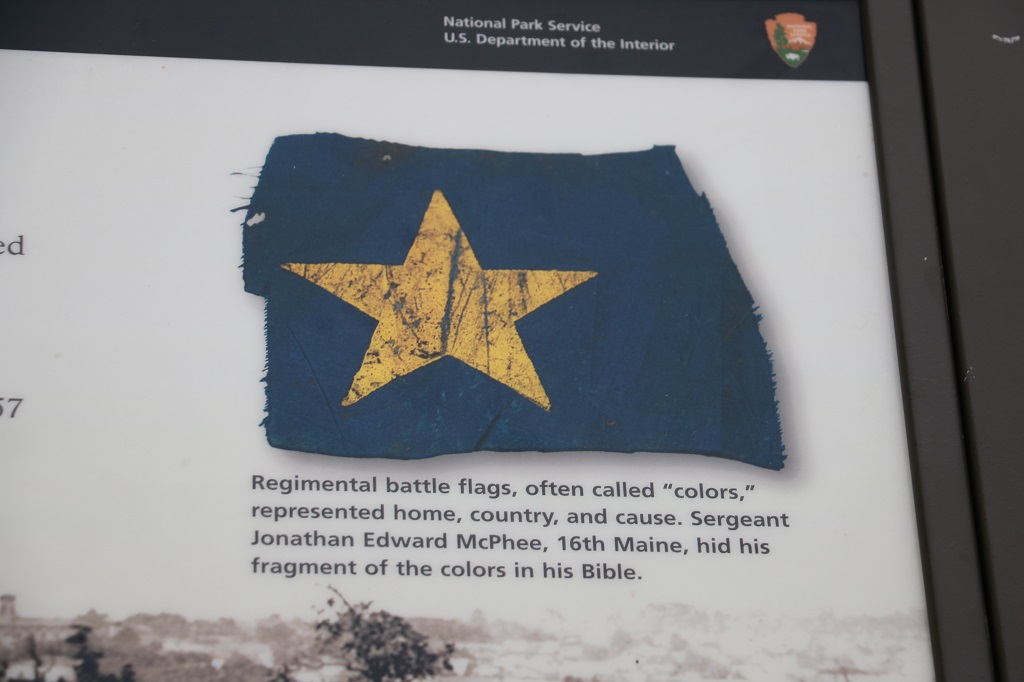
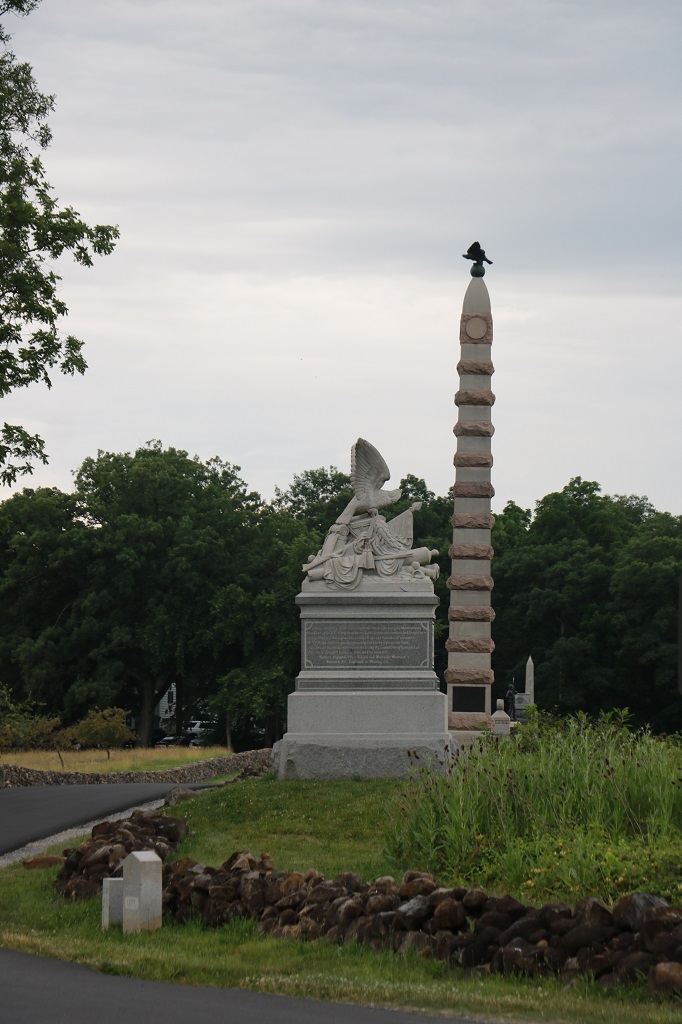
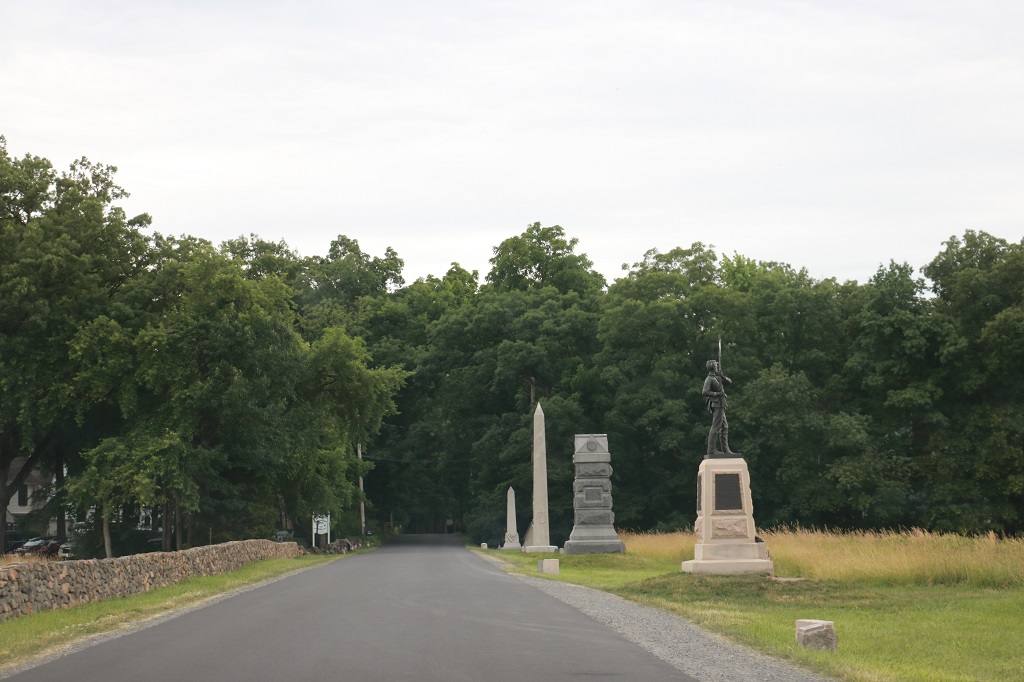
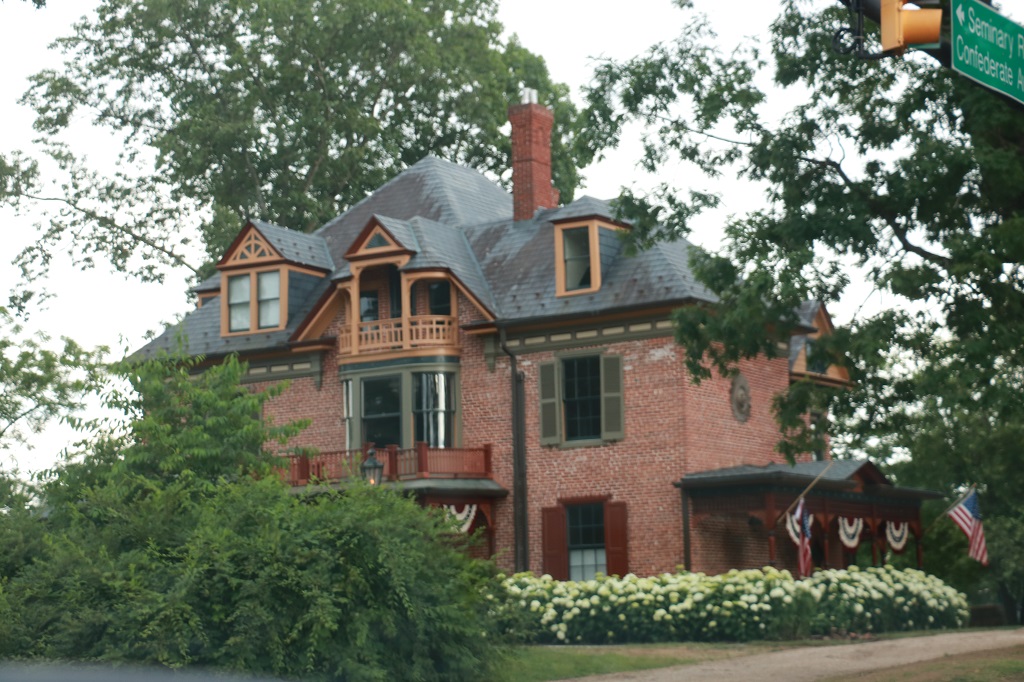
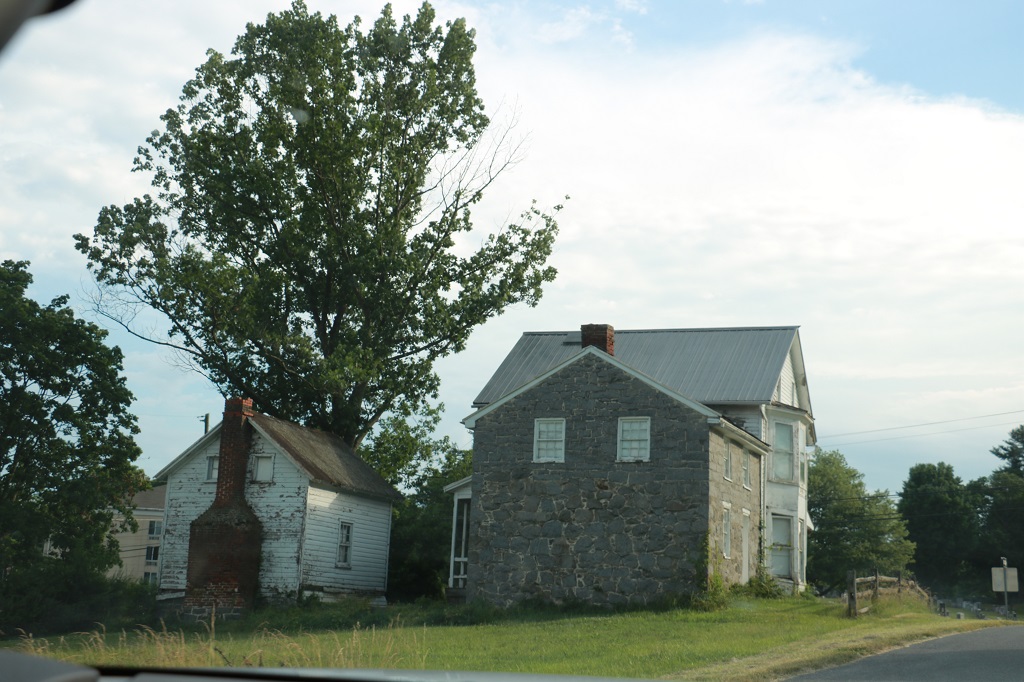
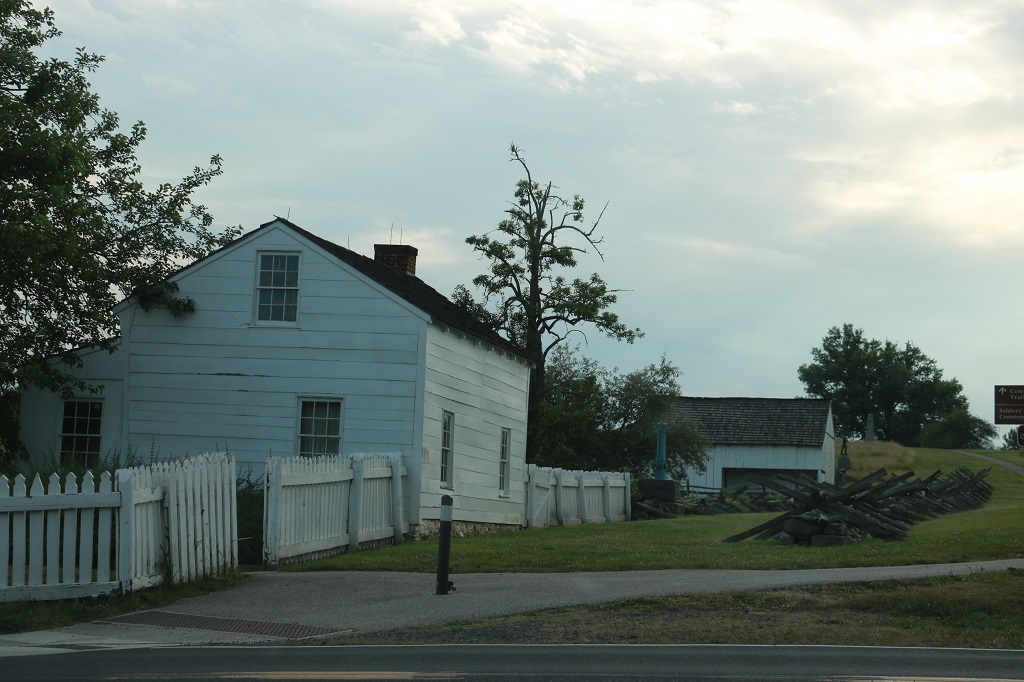
There are quite a few private houses that are surrounded by the Military Park.
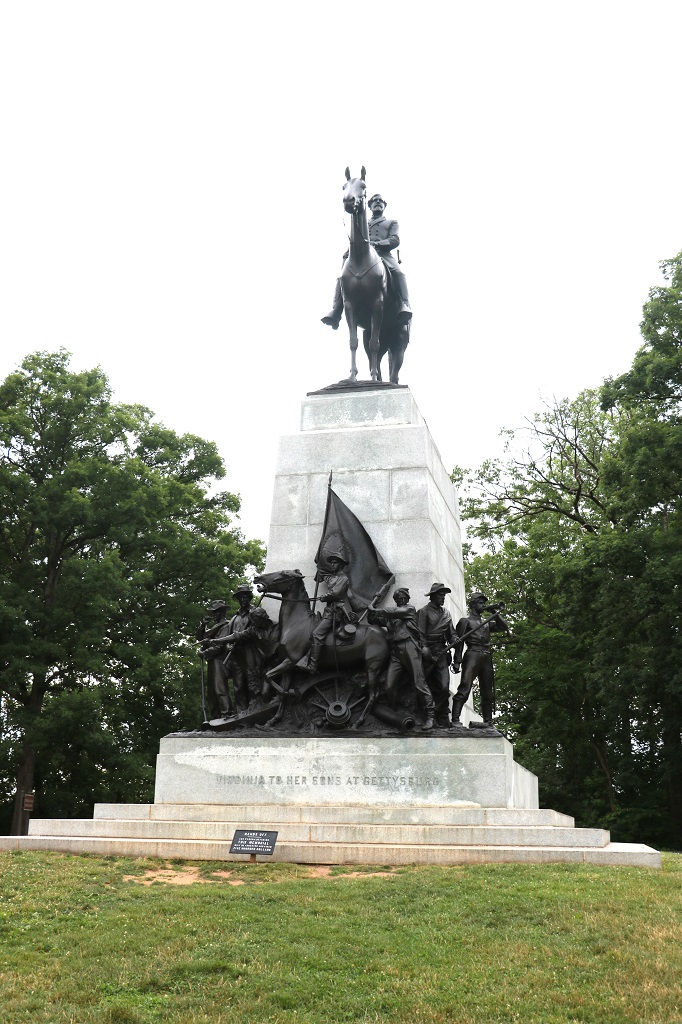
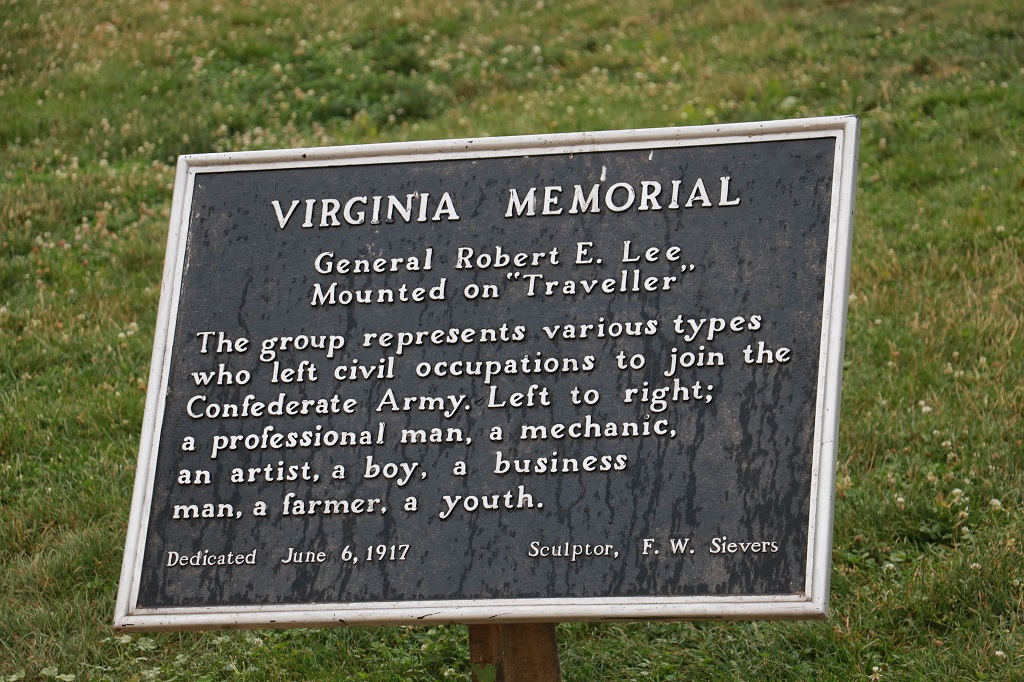
Memorial of the State of Virginia to the Virginia Troops at Gettysburg. General Robert E. Lee is on top on his horse Traveler and it is said to be the best likeness of Lee ever done. This is the largest Confederate momument and was the first Confederate State monument in the park. It was actually quite controversial at the time, since the Unites States forces won the battle.

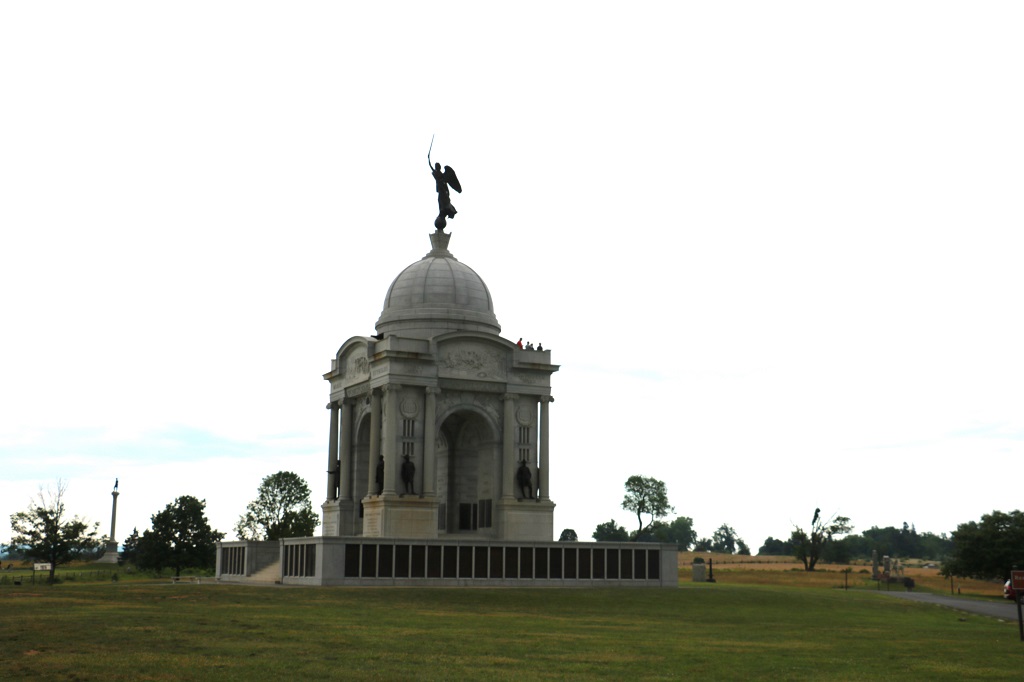
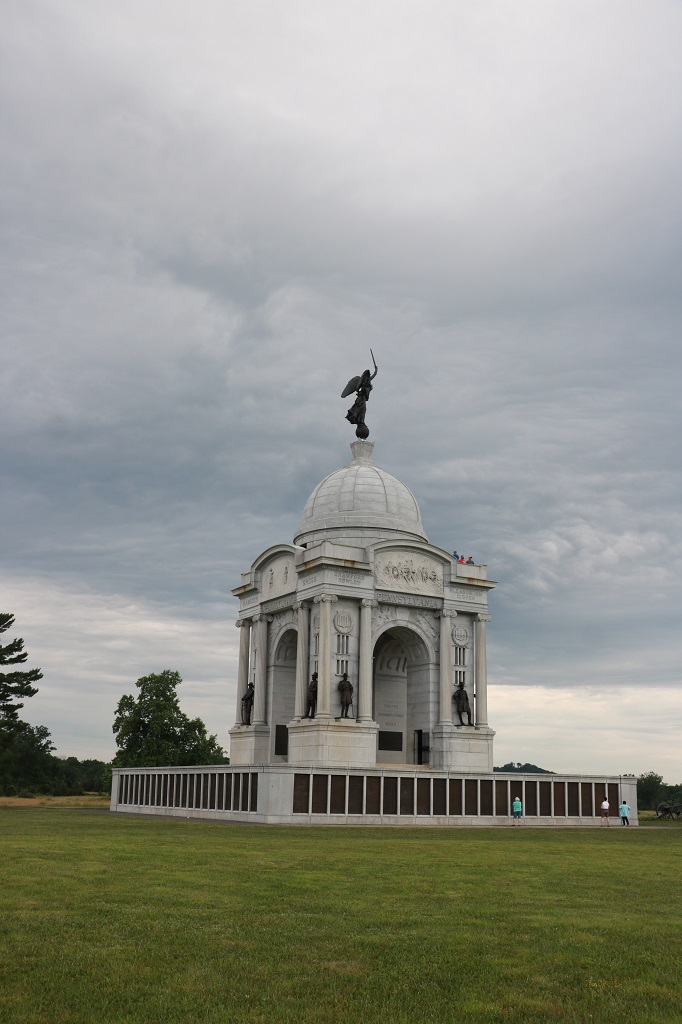
The Pennsylvania Monument is the largest in the park and unique in that the panels around the base contain the names of all 35,000 Pennsylvanian men who fought at Gettysburg. If you look closely you can see people near the base of the dome on the observation deck.


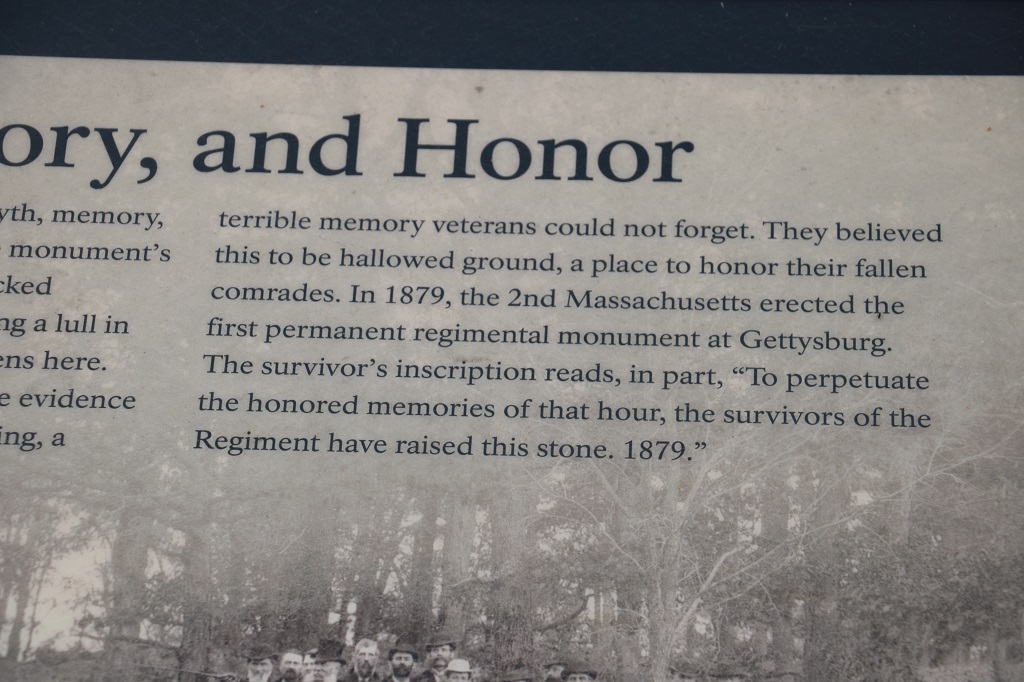
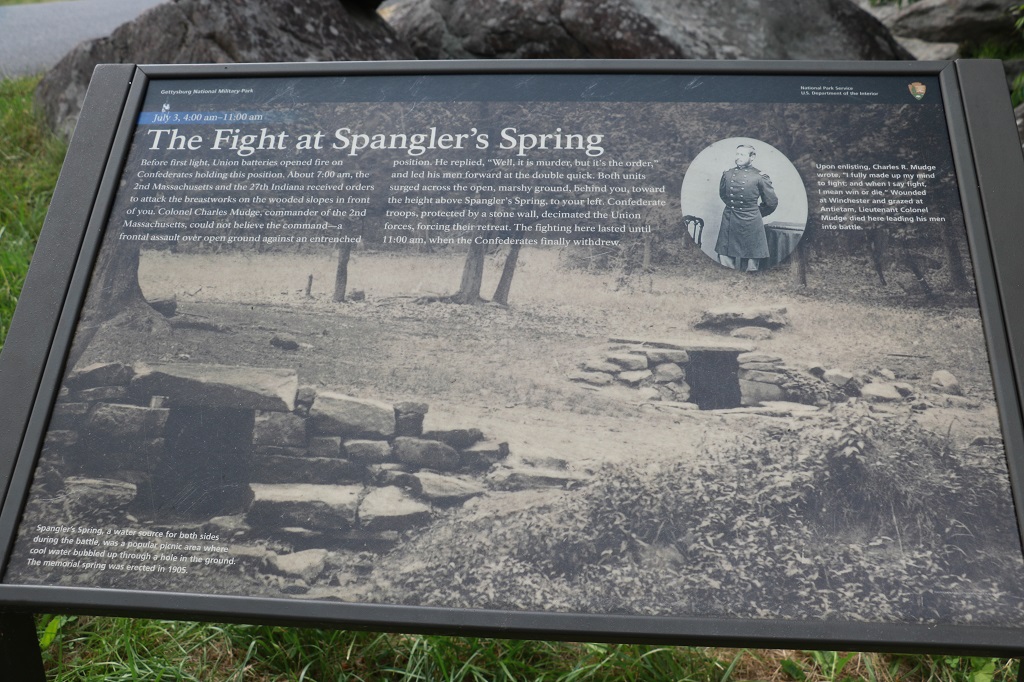
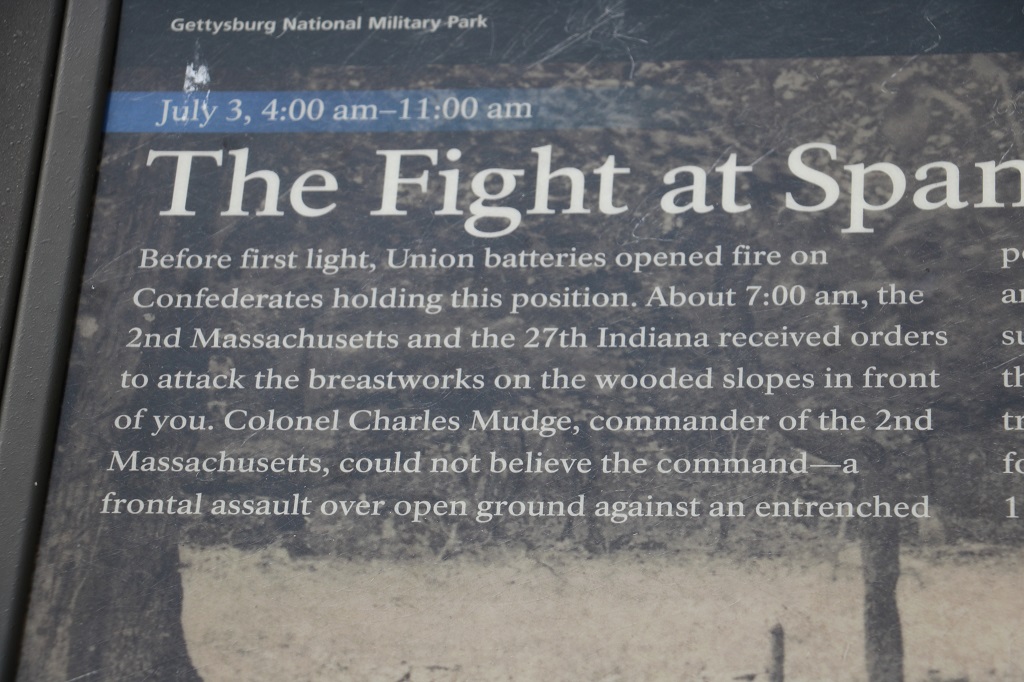
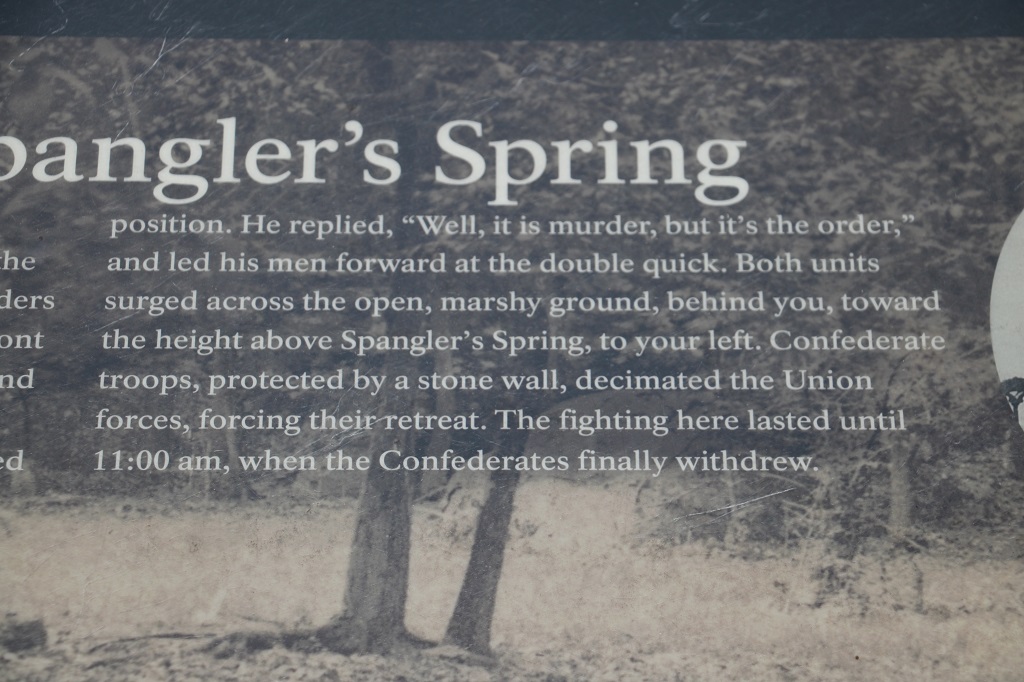

These fellows in Confederate dress were erecting a small campsite near Spangler’s Spring. I don’t know if some type of re-enactment was to take place or what.

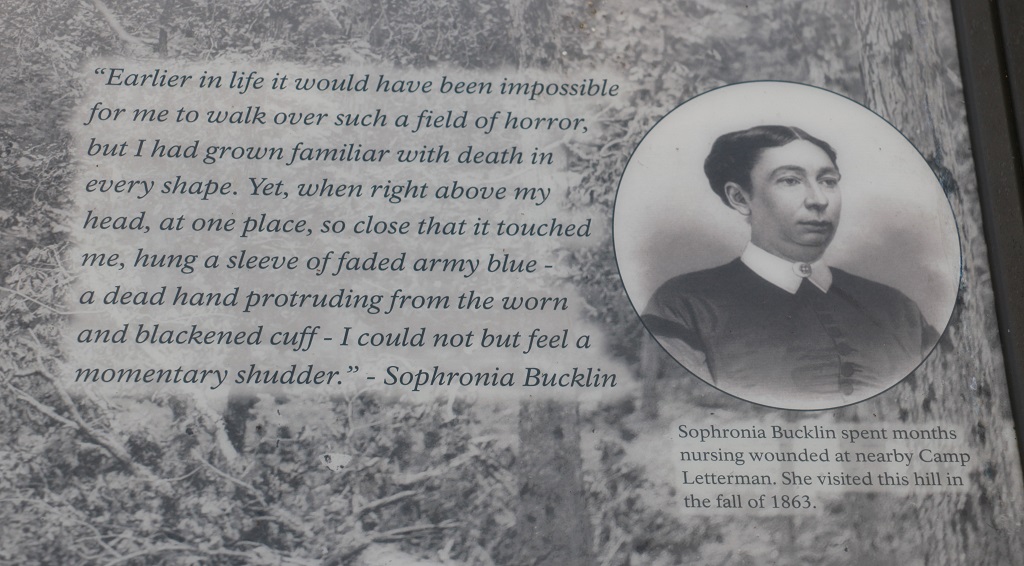
The casualty rates were so high with so many thousands of wounded that every church, school, barn or large building in the area was commandeered as a field hospital.


John is halfway up the third flight of stairs. There were 96 steps. He was nice and counted them. He knew that was something I would do. While he was climbing to the top I went down a short rugged path in the woods and found the Ohio Mounument.
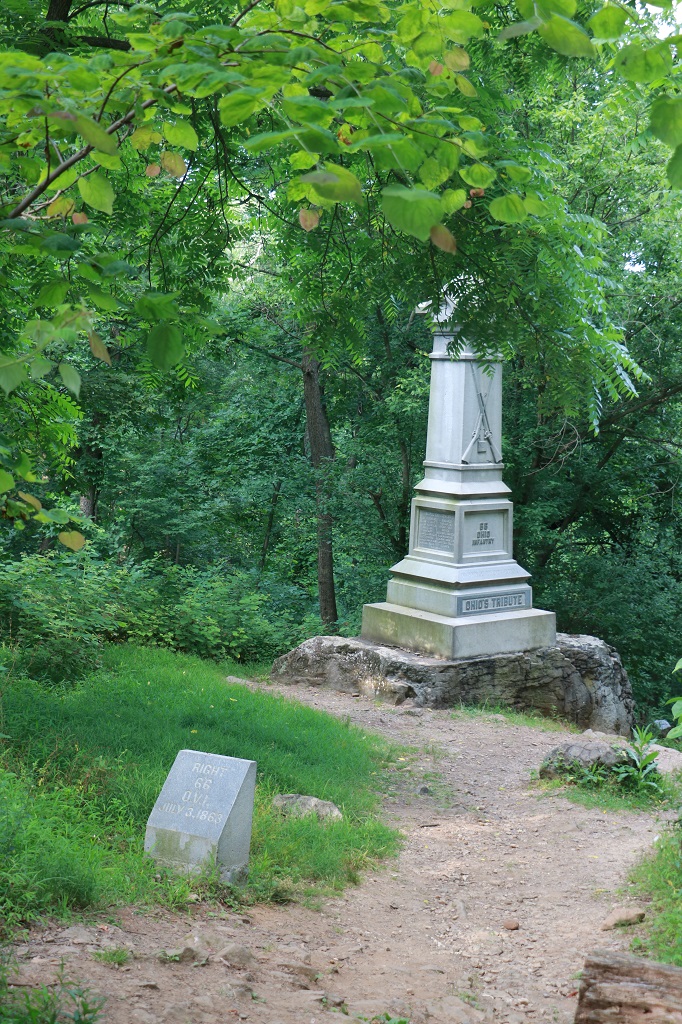
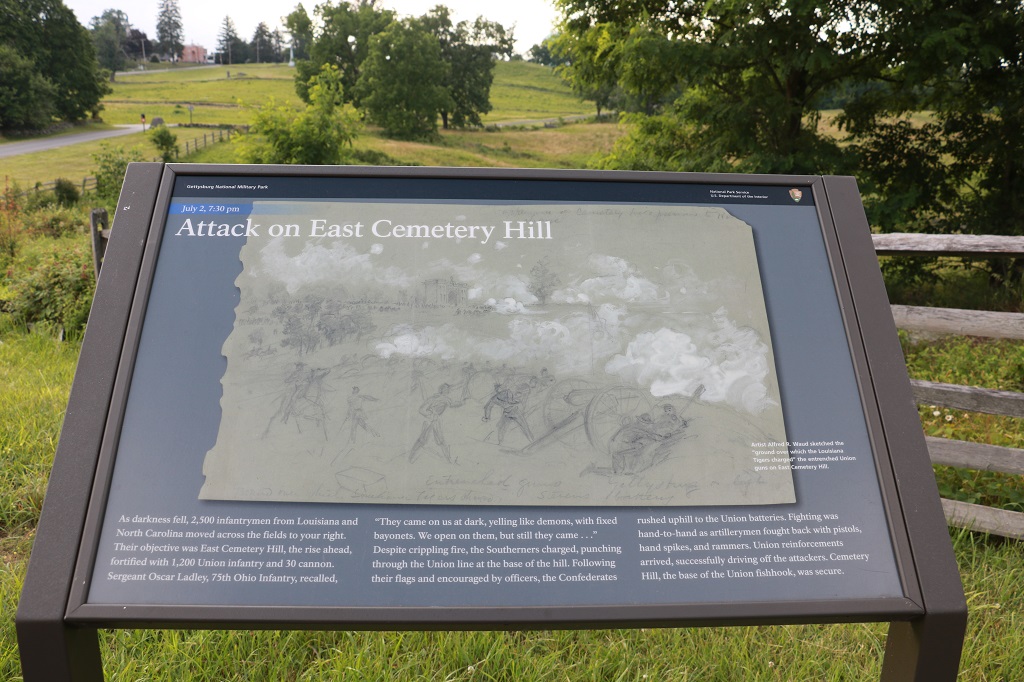


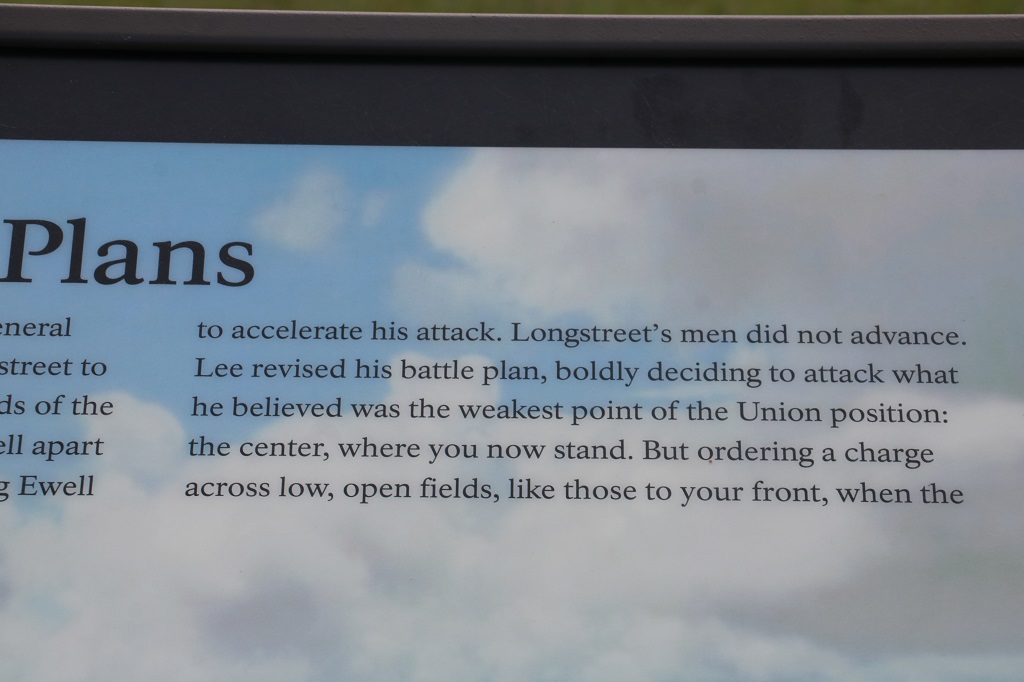
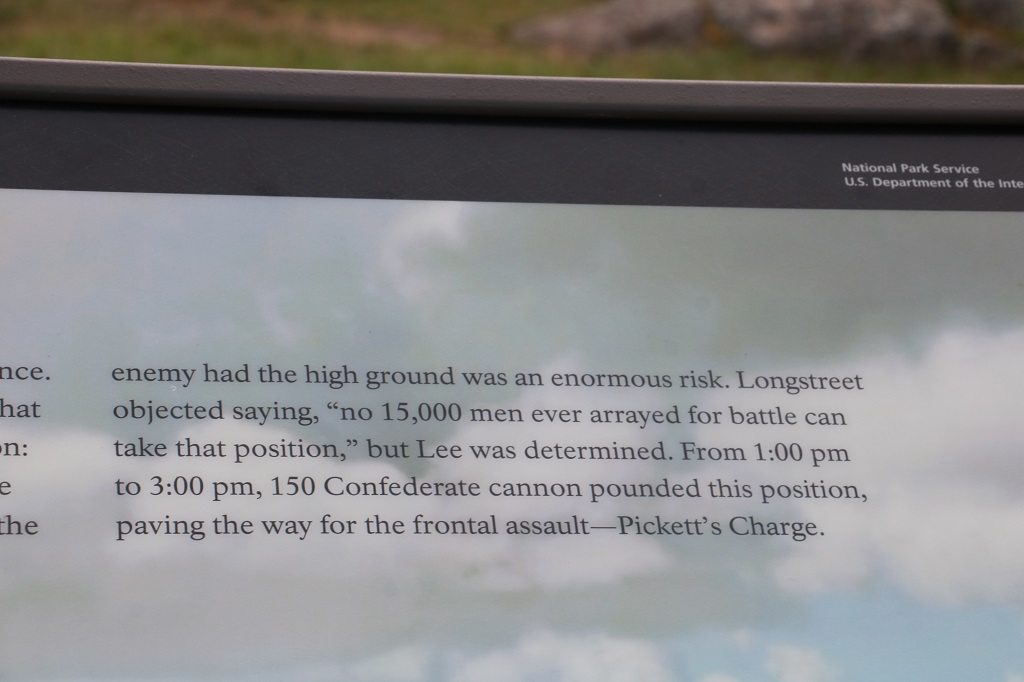
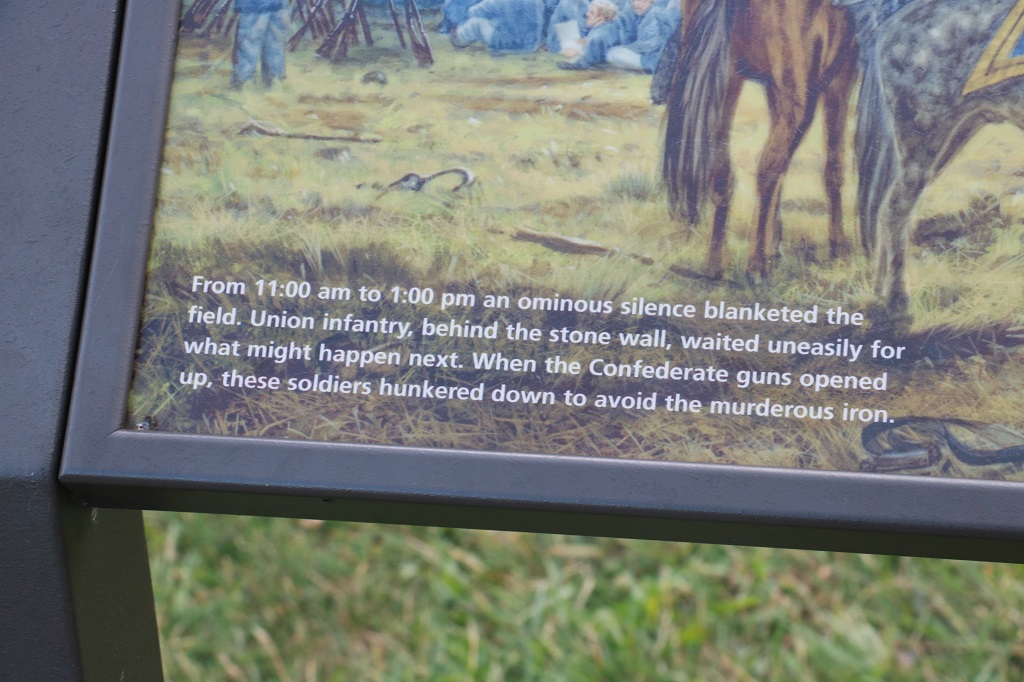
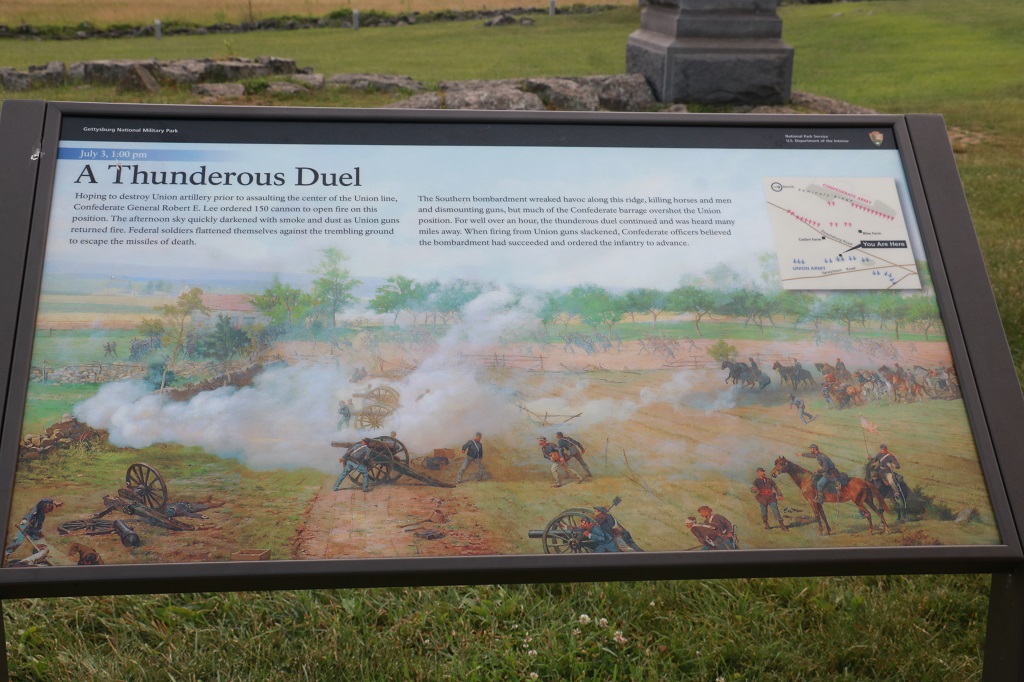
The field behind this monument is the scene of “Pickett’s Charge” when 12,000 Confederate soldiers crossed open ground to attack entrenched Union forces. The South had spent 2 hours using 150 cannon to bombard the Union line hoping to destroy their artillery and create large breaks so the foot soldiers could overrun them. They advanced in the belief this had been successful. But all the smoke created by such sustained shelling made it impossible to actually aim and many of the shots sailed right over the ridge. About 3 Confederate shells hit Cemetery Ridge per second for 2 hours. The names of all the regiments who repelled the attack are in the book of the monument.
General Lee had put General James Longstreet in charge of the battle plan to make a huge charge in order to take the day and win the battle. Longstreet told Lee he did not believe the plan would succeed with the number of men he had. It is said, that when the cannon bombardment was over and it was time to send the army across the field, Longstreet could not even verbally give the order and just nodded assent.

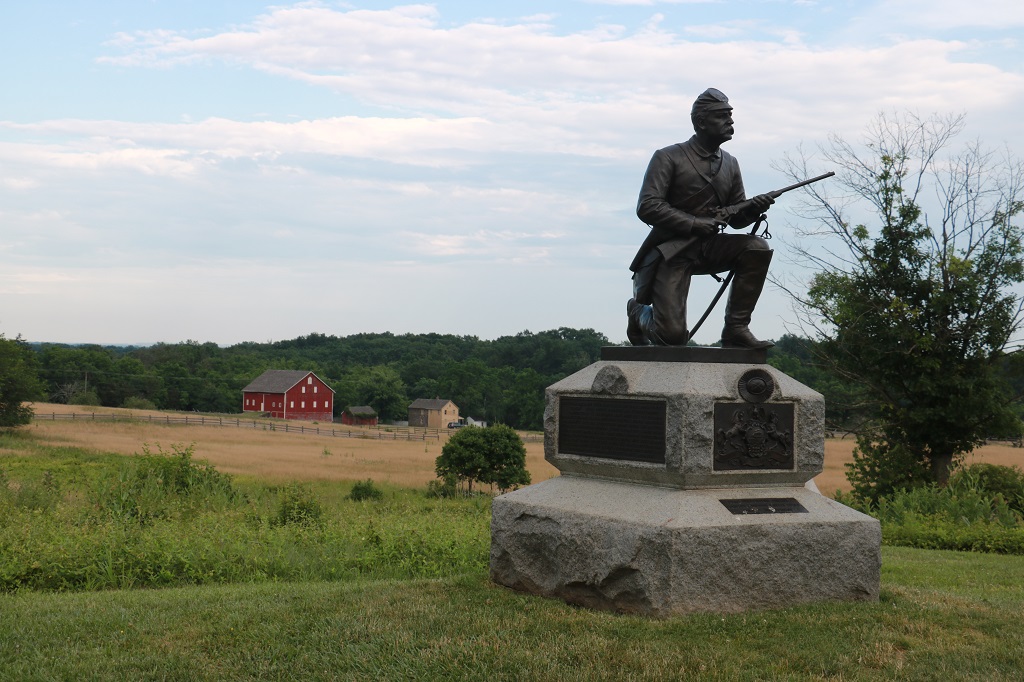
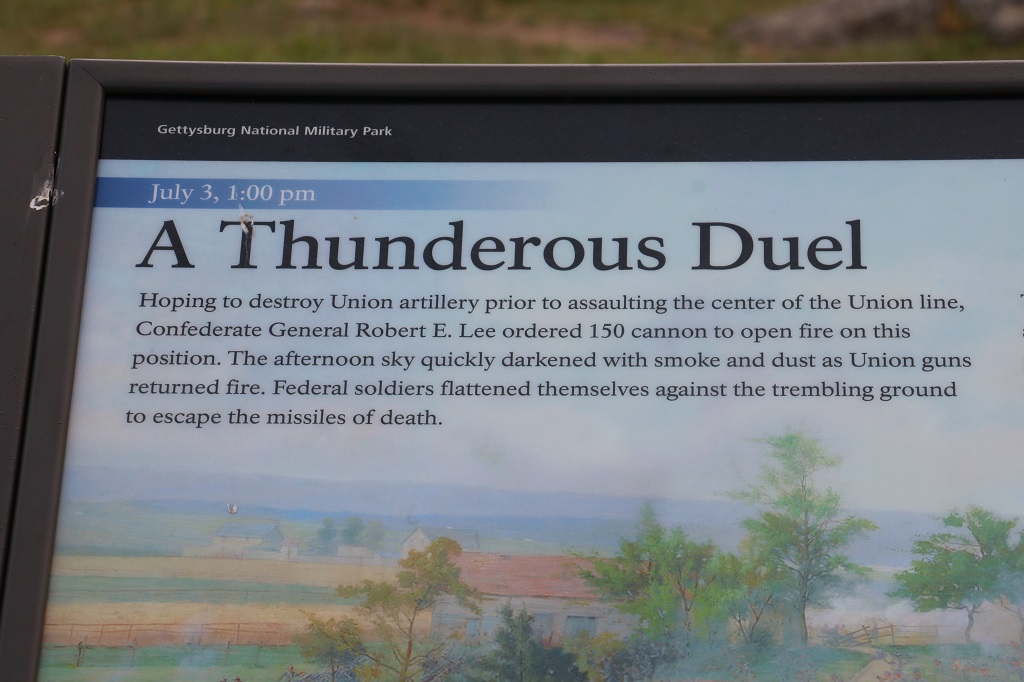
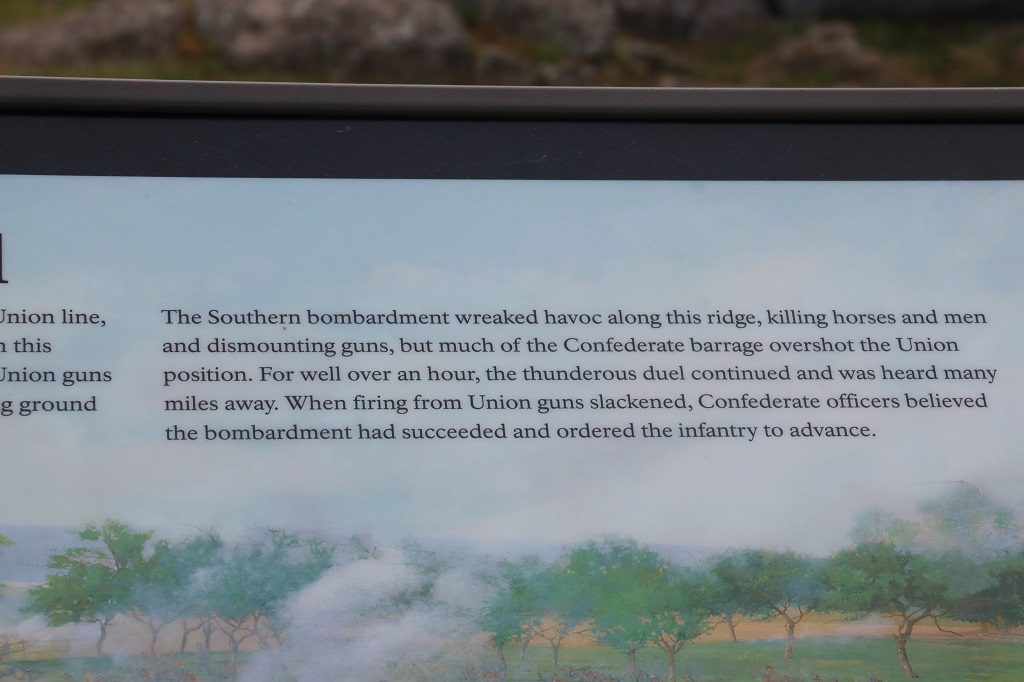
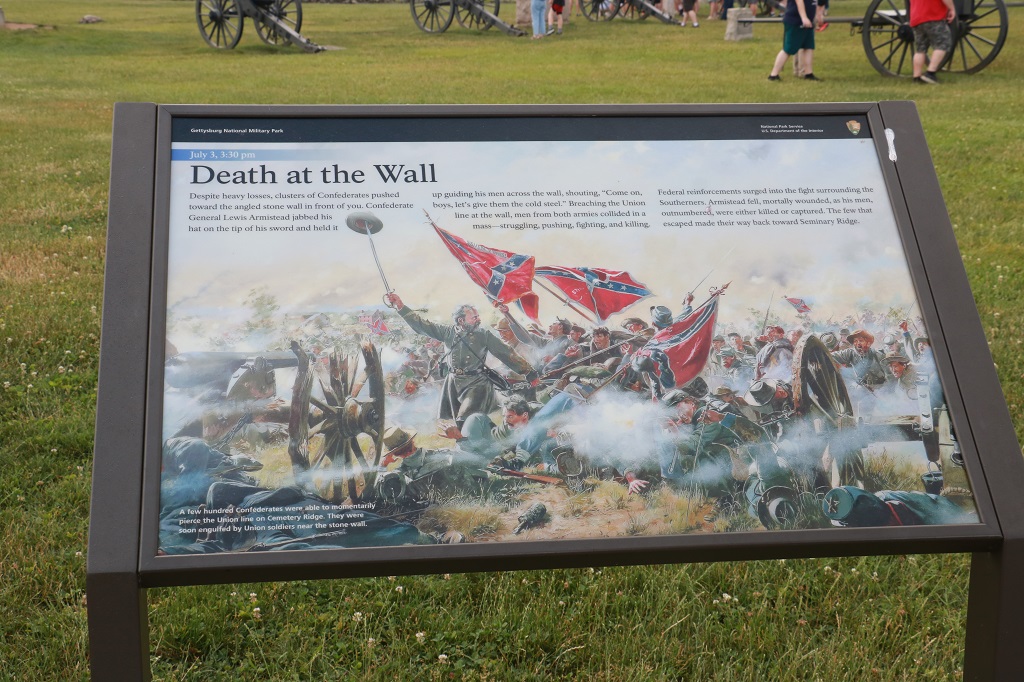
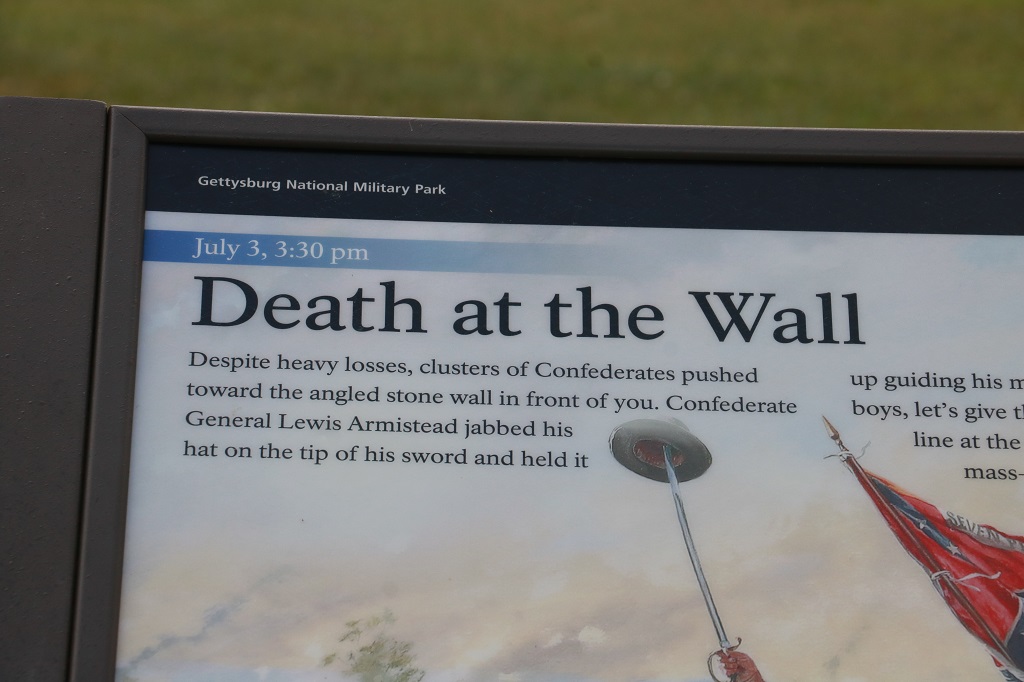
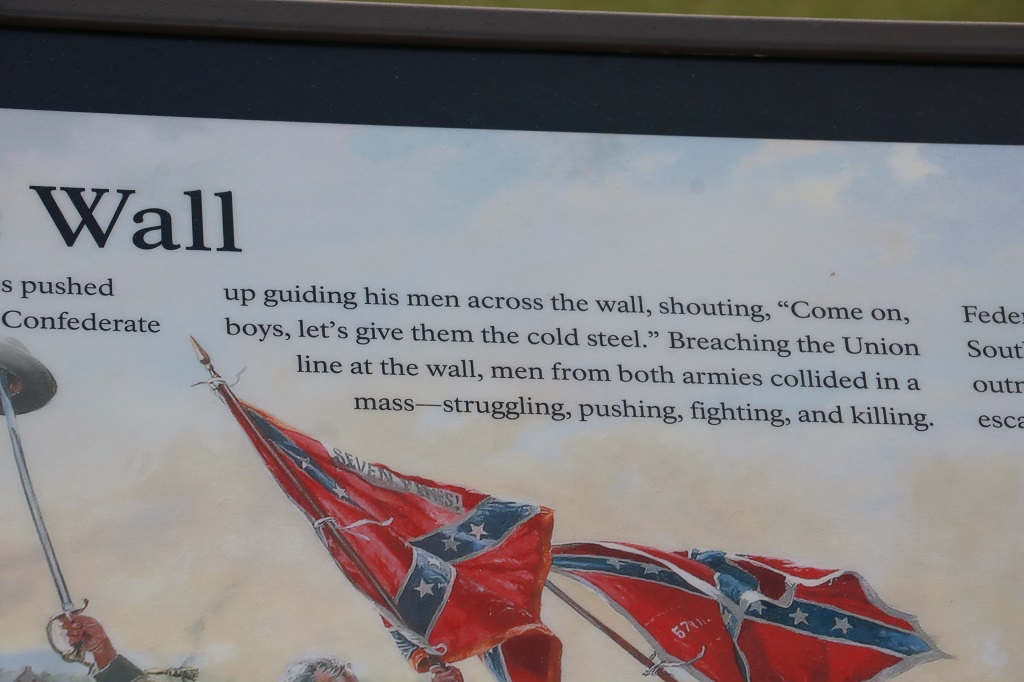
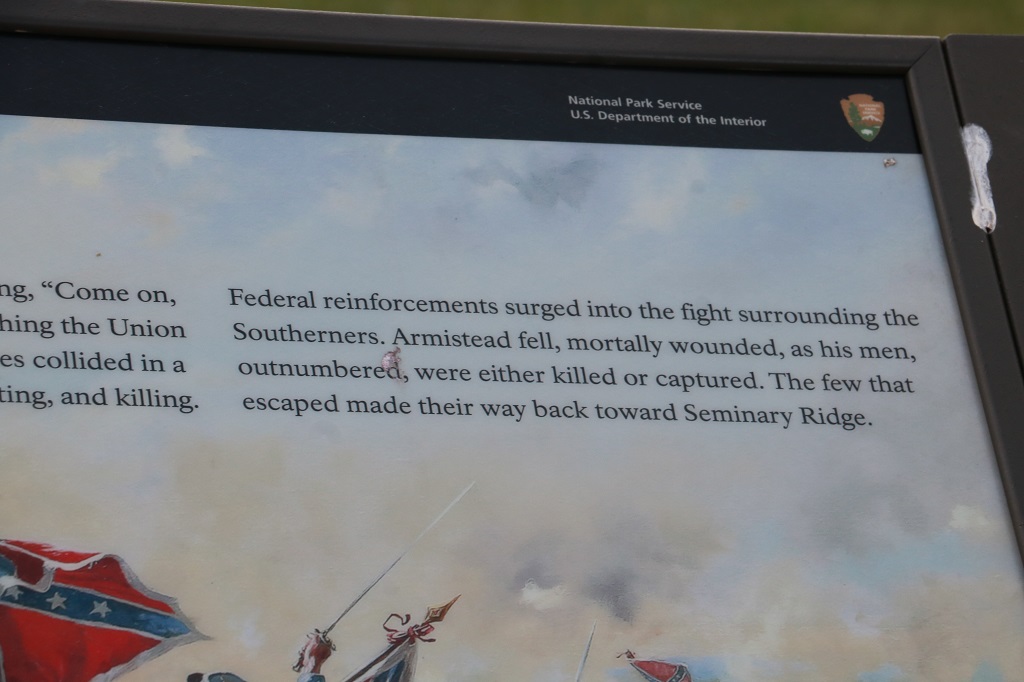
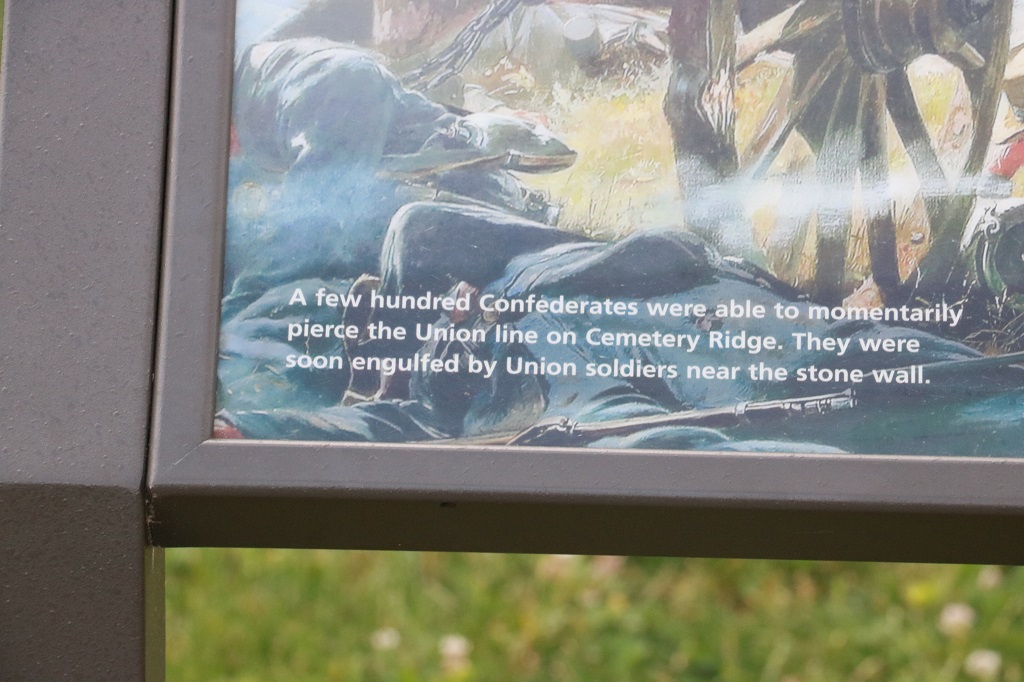
And with that the Battle of Gettysburg was over at a loss of thousands of men killed, wounded or missing. The repulsed Southern army retreated and the tide of the war had turned.
There were 51,000 casualties at the Battle of Gettysburg. 7,000 killed outright on the battlefield. over 32,000 wounded. United States dead totaled 3,155. Confederate deat 3,903. Wounded US 14,529. Confederate 18,735. There were also 5.365 missing or captured US troops and 5.425 missing or captured Confederate. Gettysburg was by far the bloodiest conflict of the war.
The physically and mentally defeated Southern army began a long and tortuous march homeward, hampered by their many wounded and the steady rain that caused flooding on the Potomac River. General Meade, leader of the Union forces, did not elect to follow and re-engage to probably force a total surrender. Something that President Lincoln was not happy about because he did not want the war and wanted it ended quickly. It dragged on for almost two more years.
Tjere are 3,500 Union soldiers buried in the Soldier’s Cemetery. Only 949 of them are know and have names on the markers. They are buried by State in a semi-circle so no one has more honor than another. After the battle was over and General Lee and his surviving troops retreated, the Union soldiers buried the Confederate dead; often in shallow mass graves of 20-30. Sadl, due to the heavy rains over the next few days many of the graves were uncovered and ravaged by hogs and carrion birds.
As we learned in Natchez there was a concerted effort by a team to repatriate Confederate soldier’s remains to cemeteries in the South. Weaver, a Philadelphia physician, began the formal removal of Gettysburg’s Confederate dead. He exhumed from the battlefield and shipped south, mainly to Richmond, the bodies of thousands of men — so many that Richmond’s Hollywood Cemetery has a Gettysburg Hill.
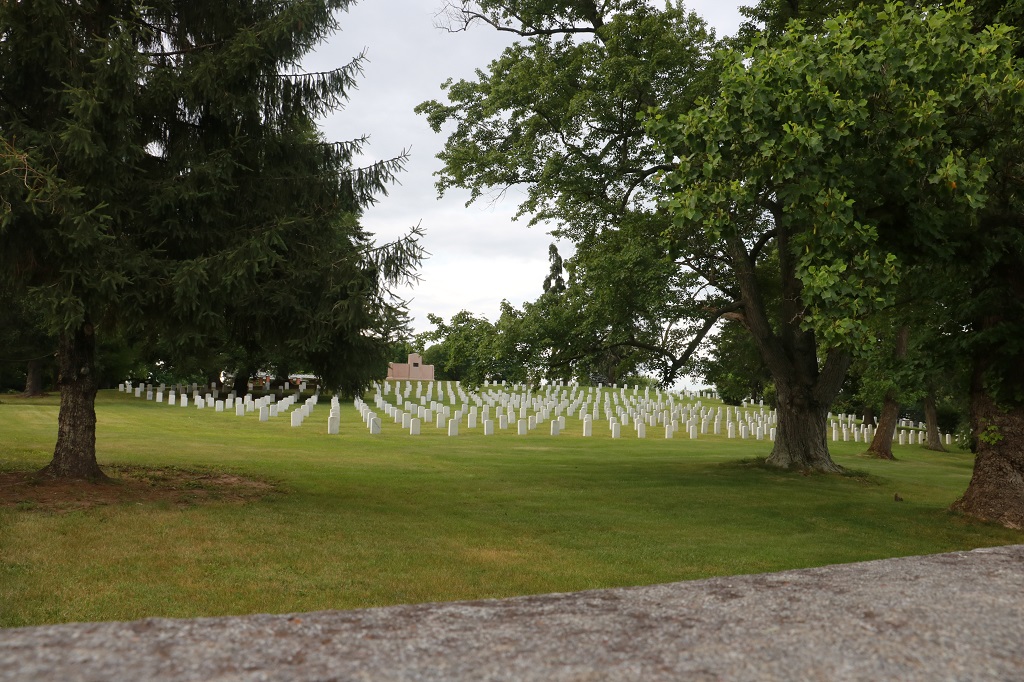
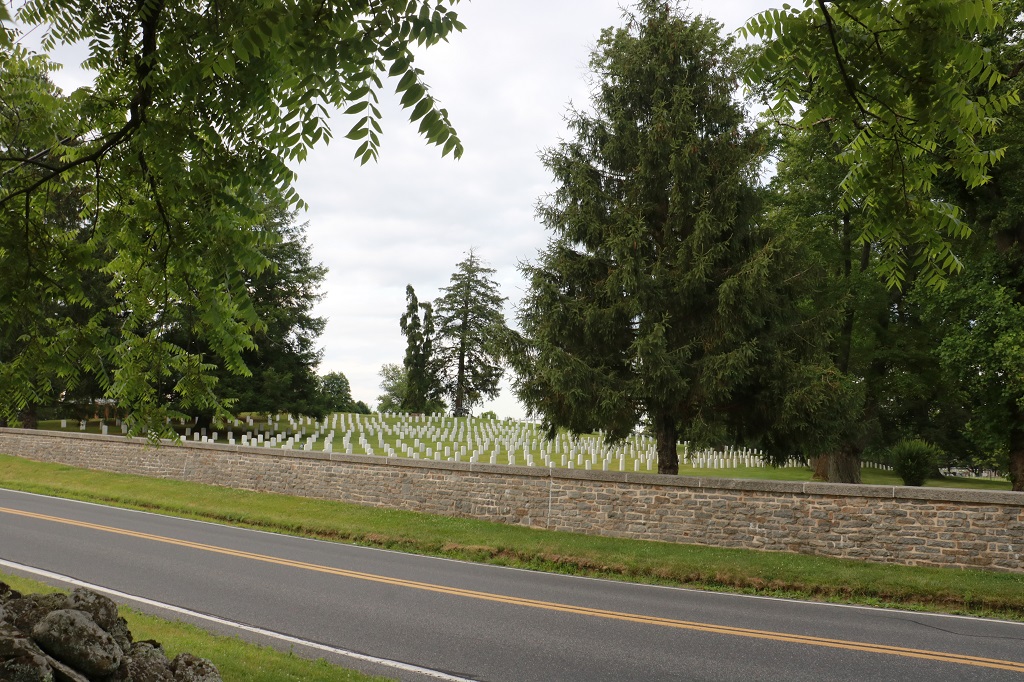
It was to the commemoration ceremony of the Soldier’s Cemetery on Nov. 16, 1863 that President Abraham Lincoln was invited to attend and speak. He finished writing his remarks in a nearby hotel the night before and on that day delivered what has become know as The Gettysburg Address. The person that spoke before him – I can’t remember his title or name – gave a rousing address for 2 hours. Lincoln spoke 272 words in 2 minutes and they have become immoratalized around the world.
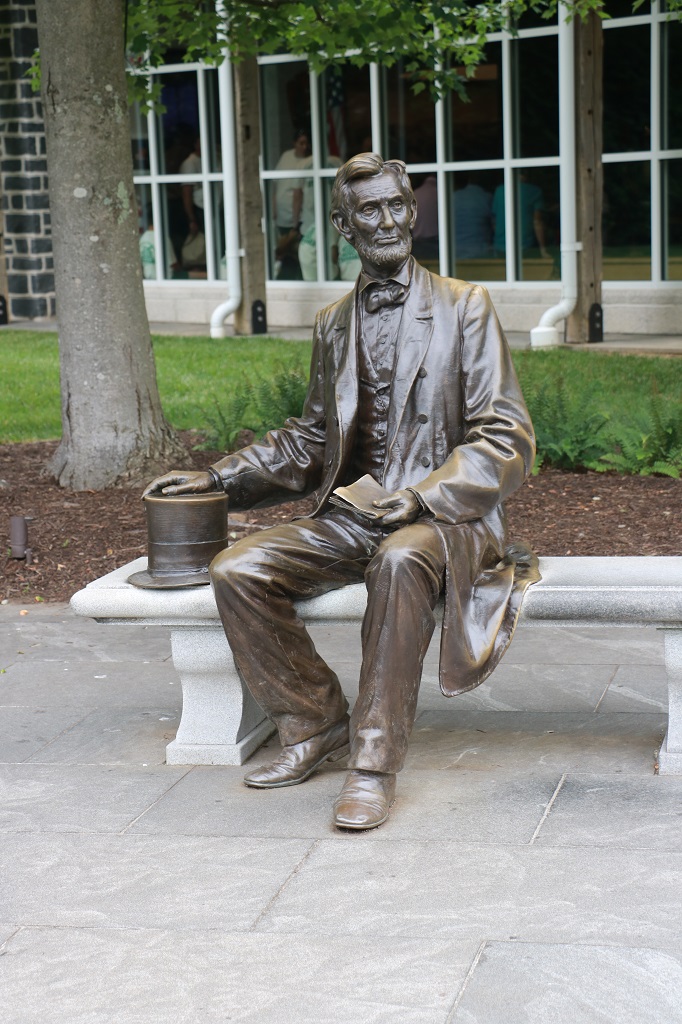
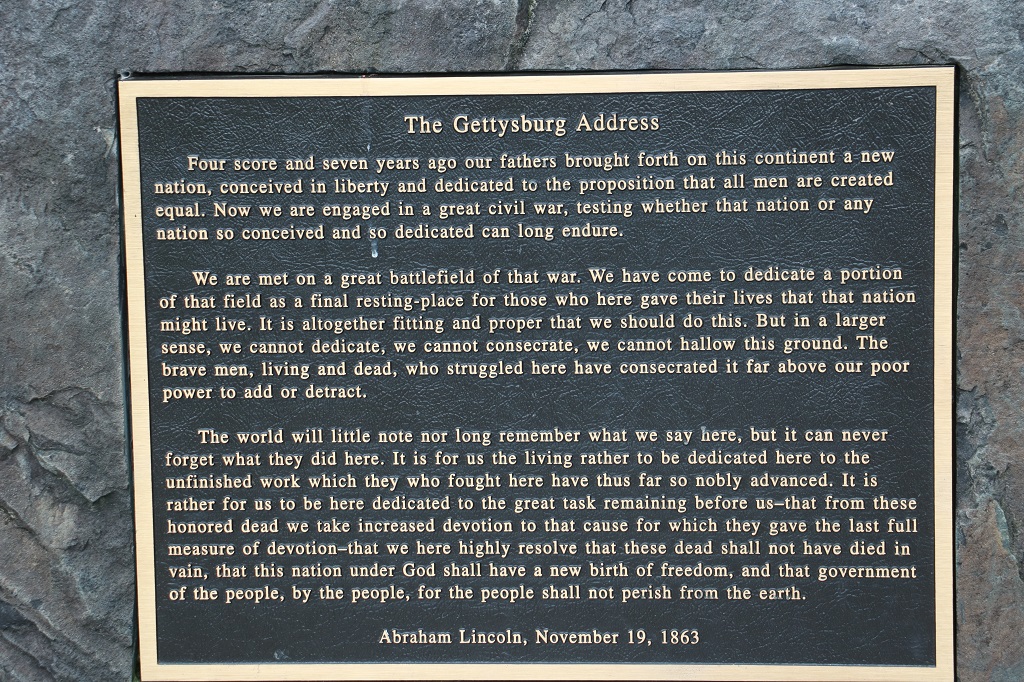
We left the Military Park at 7:30, found somewhere to have dinner and checked into our hotel at 8:30. The longest day we have had so far. But my brain was full of interesting history.
The Gettysburg site reminded me very much of Culloden in Scotland that we visited in 2013 where the English virtually destroyed the Scottish clans and imposed crushing rules about speaking Gaelic, wearing tartans, etc. And they took away the Scot’s lands and gave them to absentee English lords. The battlefields stuck me as devastatingly similar.
We decided we had soaked up enough Gettysburg history and would not go back to the Visitor’s Center tomorrow to see the museum and films. Instead we will head further east and cross into Delaware briefly before entering New Jersey for the night.
 Hanna Travels