Our hotel was an 8 minute drive from Clariborne Farms and we had an 11 am tour booked. They offer two tours: a Stallion barn 1 hour walking tour at 10 and 11 am each day or a Brood Mare and Foals trolley tour around the farm at 1 PM. I first looked at the trolley tour as it would be easier for me with my bad joints but it was booked right up to July 13. Apparently it is alway booked 12-16 weeks in advance. So, stallion barn tour it was.
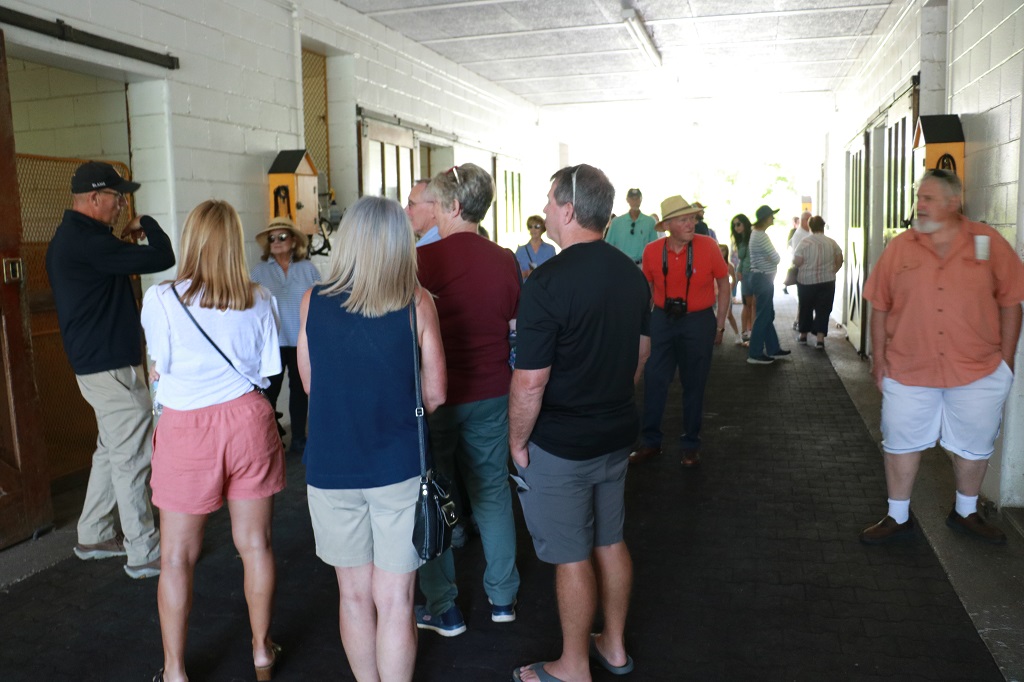
They had wheelchairs available so I used one instead of walking from the visitor’s center to the barns, paddock and cemetery. Our guide was the stallion handler. He is third generation born and raised on Claiborne. His grandfather was the stallion handler in his day and his dad worked on fencing. Tim was a very nice and accommodating man that could rattle of all the years that their horses had won such and such race and how much they earned racing and how much there stud fees were,and who sired who out of which mare, etc. Really interesting. Way too much for me to remember.

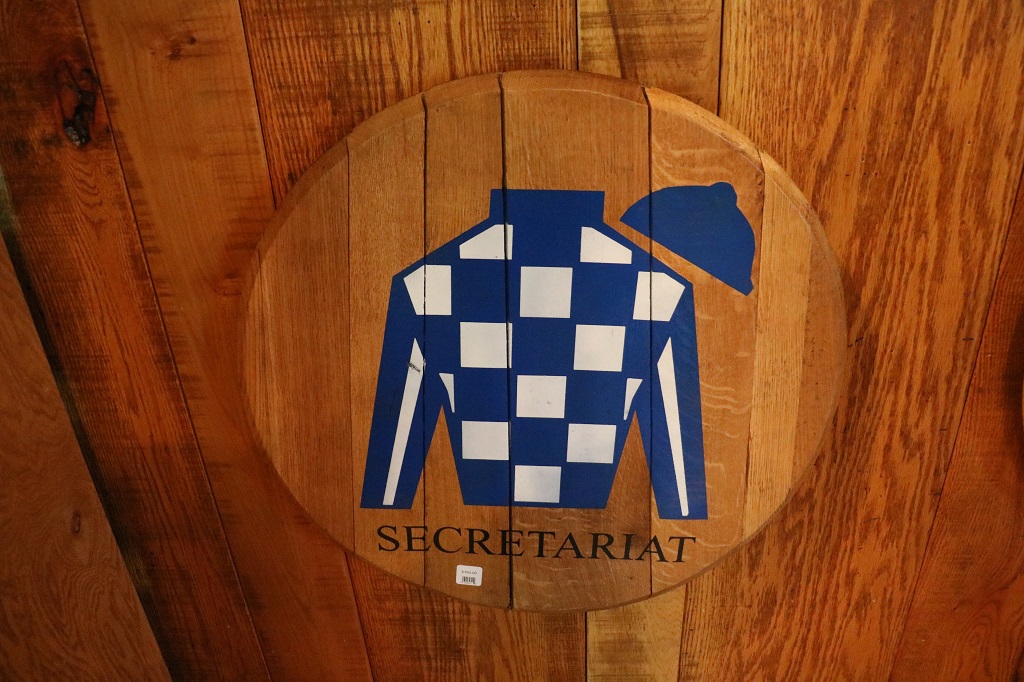
Secretariat was bred at Claiborne but he was not owned by Claibornel He was owned and raced in Meadow Stable’s blue and white colours. After his racing career ended Seth Hancock of Claiborne farms made a record making syndication deal for his stud rights at over $6 million. Claiborne’s colors were originally all orange but over time as the jockeys wore the silks in the sun and they were washed, the orange faded to a deep golden yellow. Everyone liked the colour so they left it and their silks are gold and black today though they are still officially posted as orange.

We went over to the breed barn where the stallions service the mares. After a horse’s racing career is over (usually in 2-3 years) they will syndicate his breeding rights to 40 shareholders which are sold at a value based on the horse’s racing track record. If the foals do well at the track the stud fee for the sire will rise. They have a young stallion named Runhappy whose stud fee is $10,000. His first crop of foals were born this year so in the next coupld of years they will know how well his racing genes are passed on. It literally takes him 15 minutes to cover the mare. If she does not get pregnant they will bring her back again. The stud fee is not paid until she delivers a live foal.

Next we went to the Stallion barn that holds 10 studs. The stallion that is the current race earnings leader has stall number 1. Every horse that was housed in each stall has his name plaque on the door. Runhappy earned over $1 million and won the Breeders’ Cup, and his progeny have already earned $19 million and produced 16 stakes winners – so he is Numero Uno. His stud fee is currently $10,000. Claiborne is the only stable that has sired a Triple Crown winner that also sired a Triple Crown winner.

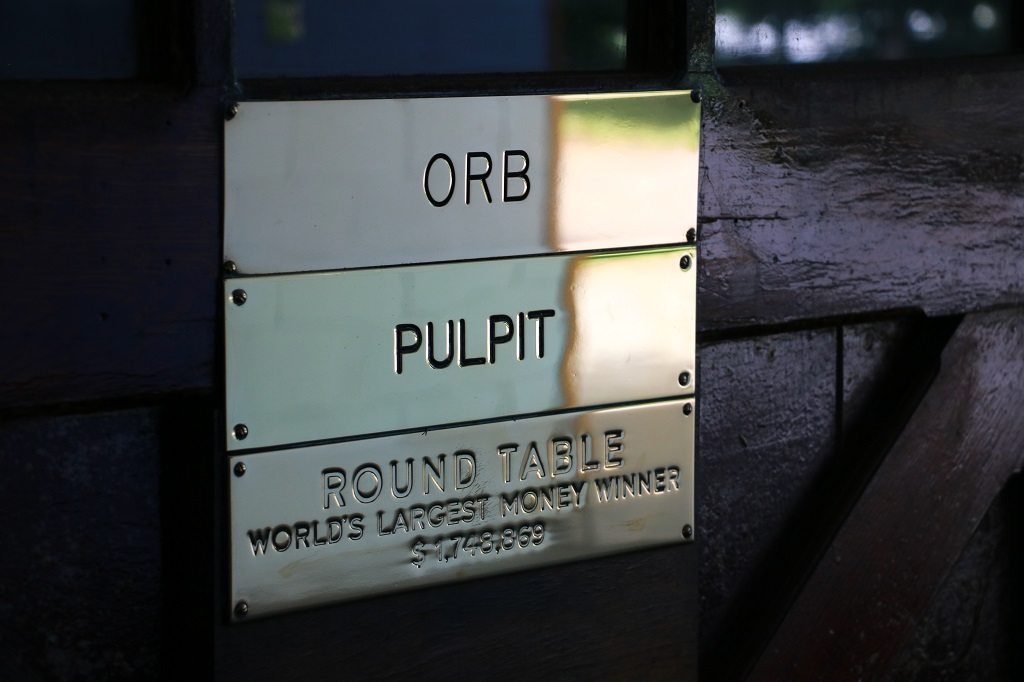

The harnesses and each of the stallion’s paddocks have their names on them.
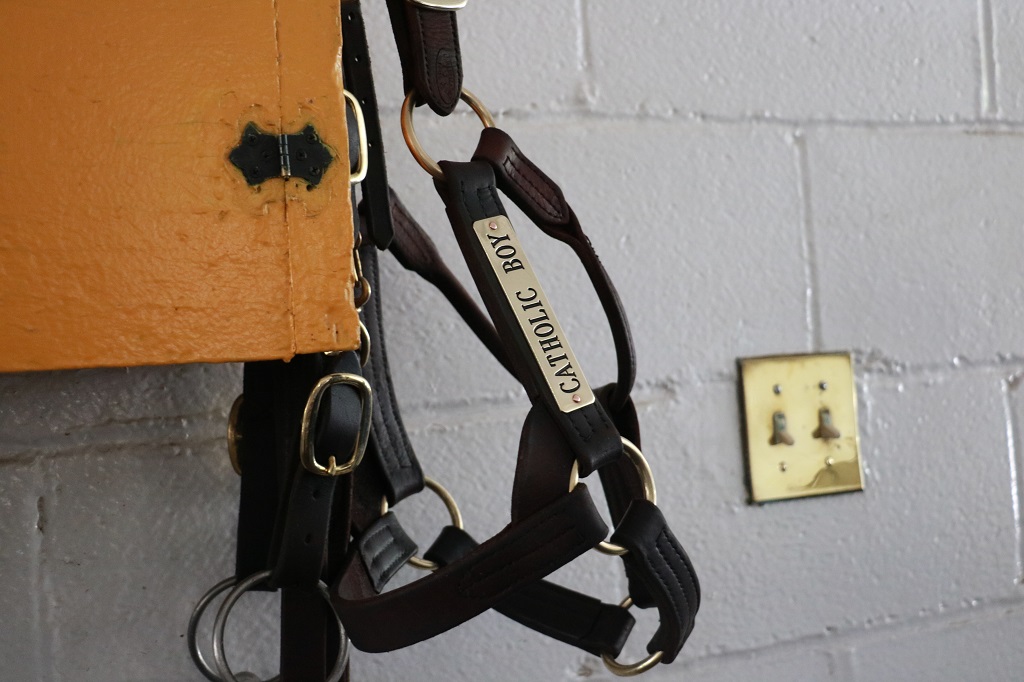
Catholic Boy is the son of More Than Ready who won the Travers Stakes in 2018, He commands a fee of $25,000
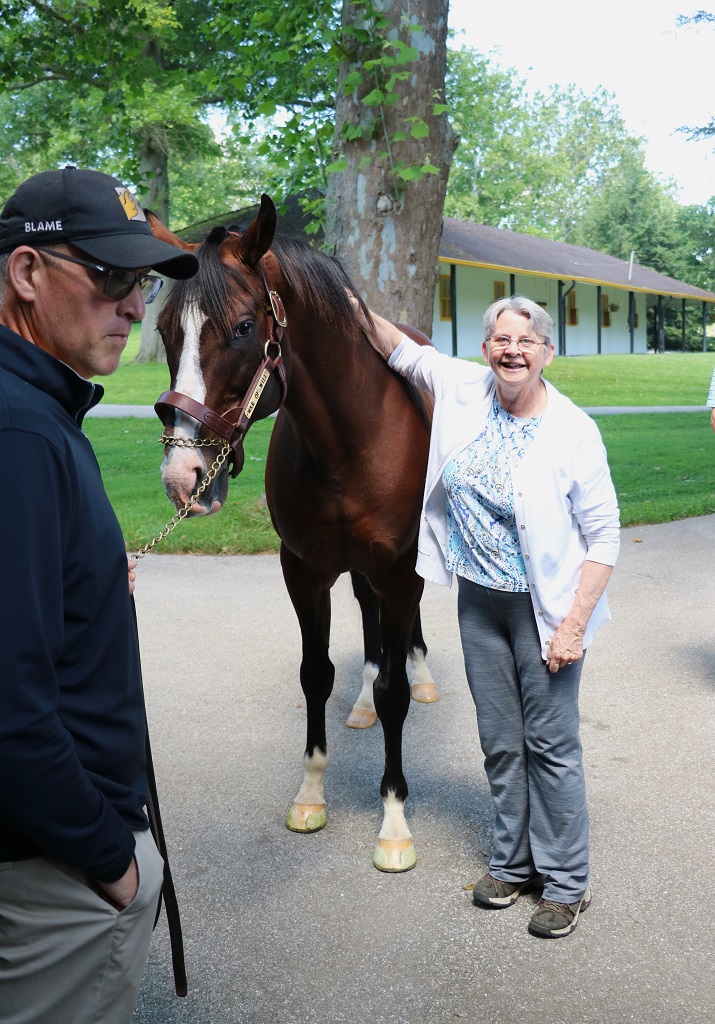
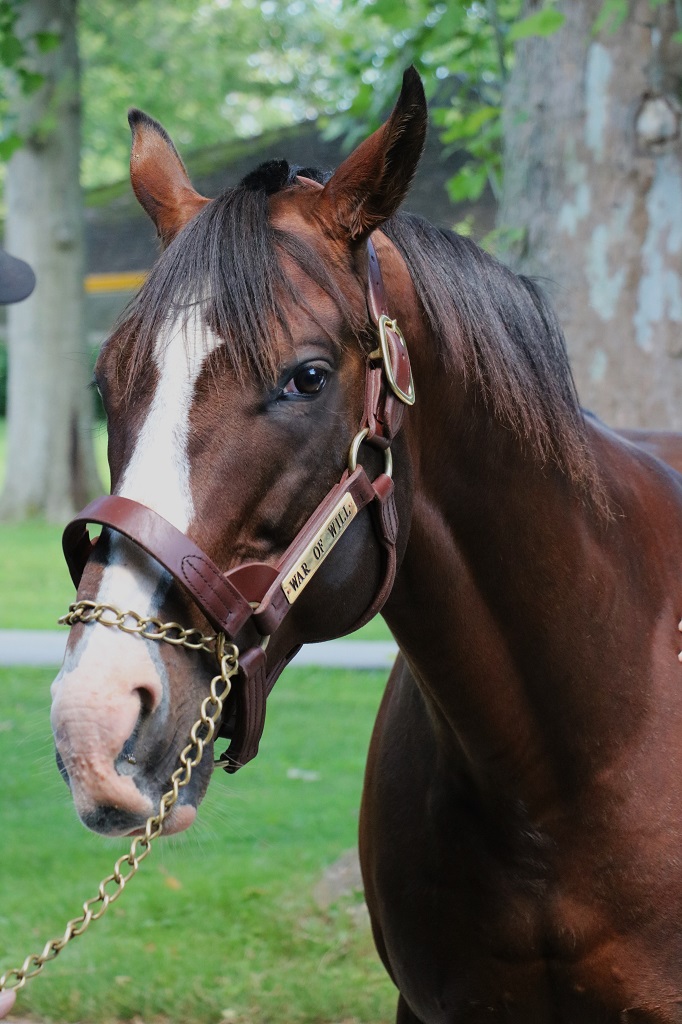
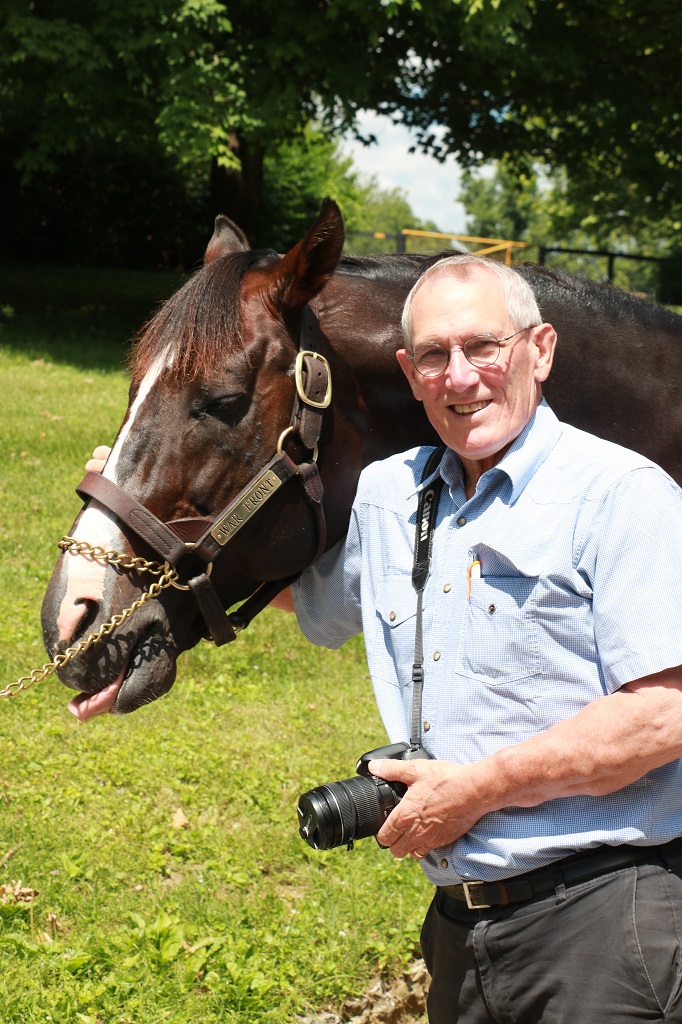
Tim went into the barn and brought out War of Will who is the son of War Front; their top producing stallion. Anyone who wanted to pet him and take a photo with him was welcome. And you could give him a peppermint. Tim regularly will give the horses peppermints; he keeps his pockets full of them. They love them. The gal at the Visitor’s Center said between the staff and the horses they go through about 8 lbs of peppermints a day. Peppermints wrapped in cellophane are much easier to keep in your pocket than sugar cubes.

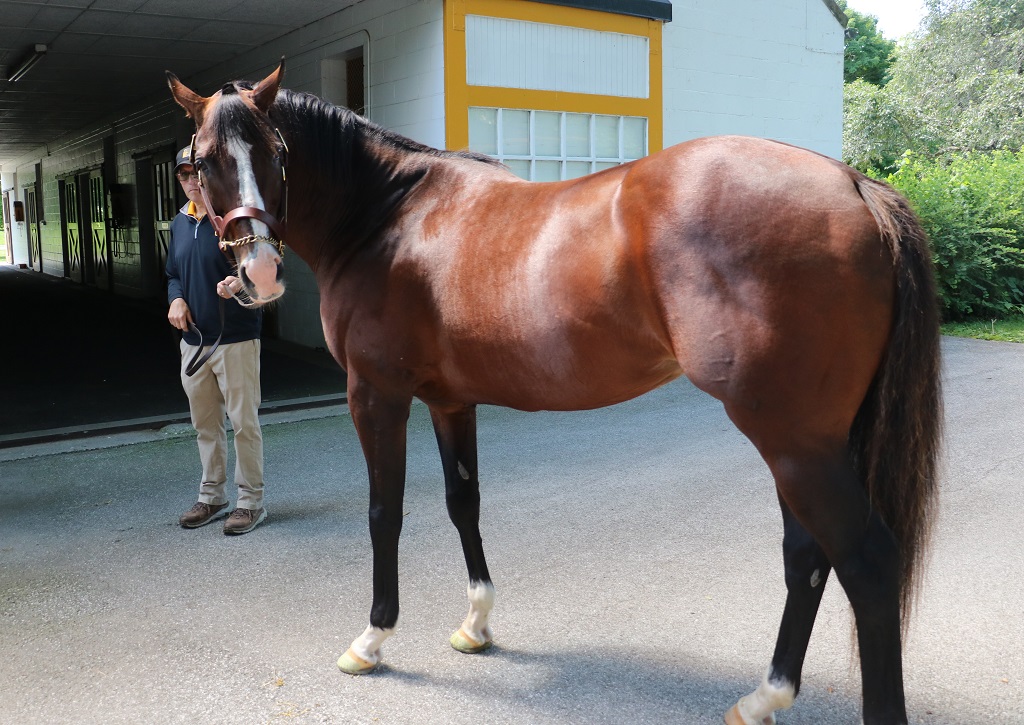
War of Will
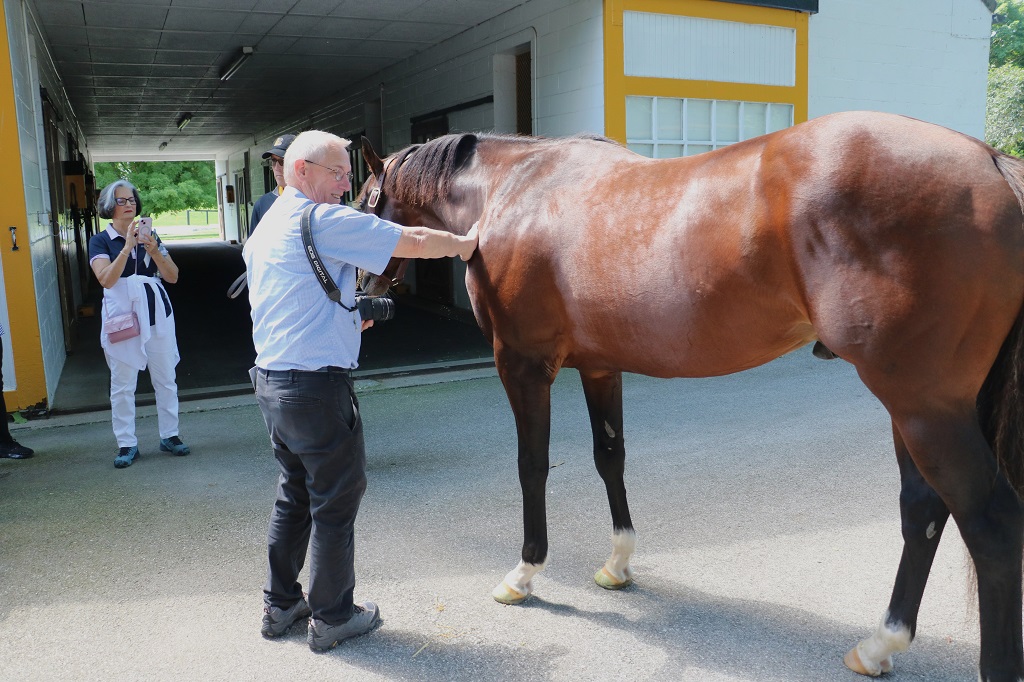
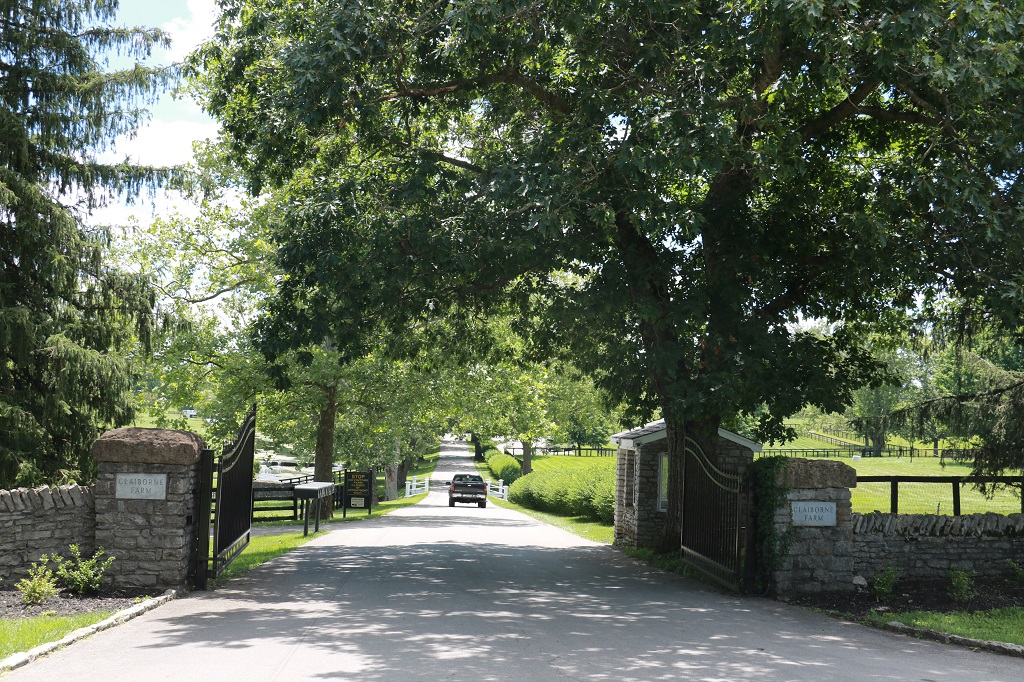
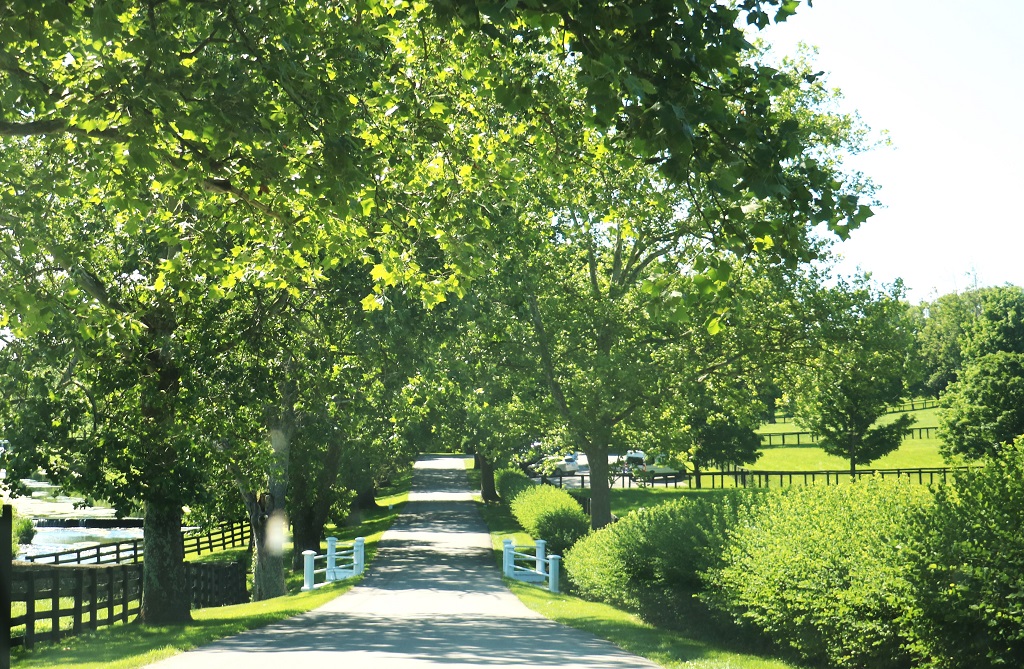
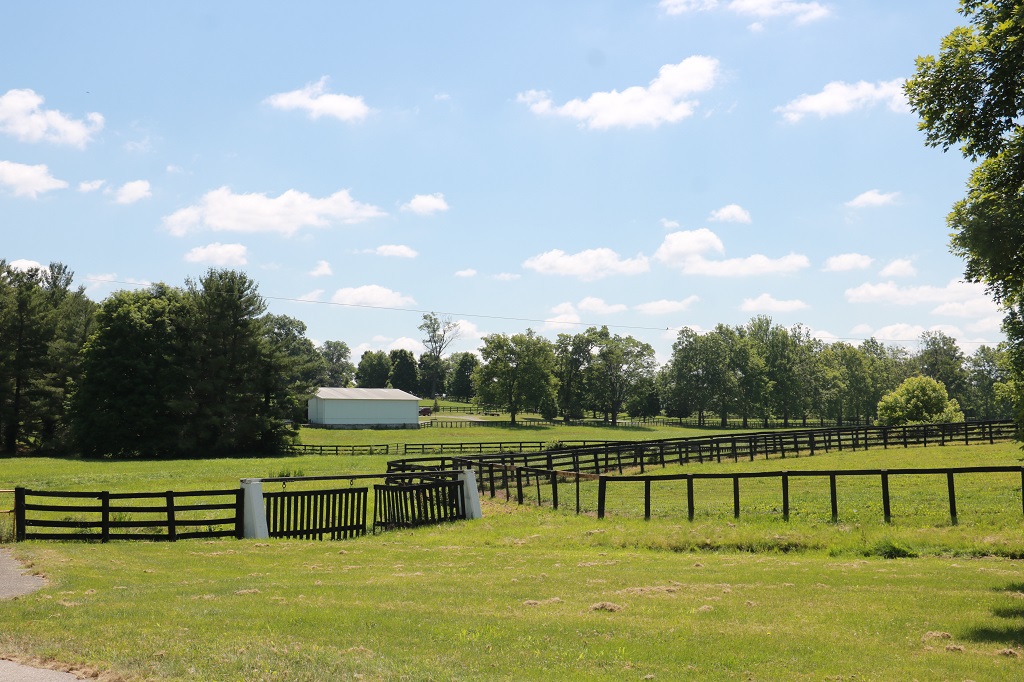
Claiborn Farm is 3,000 acres in size. There are 50 barns on the property and 30 houses and 100 miles of fencing. (I asked about the double fencing. It is used along roadsides as protection for the horses. It keeps people from being able to approach them and feed them or get bitten and it is two layers of fencing to go through if they, for some reason, want to break out. The double fencing is also a good insurance measure for the farms because if any of the animals get out and cause damage the stable is liable.)
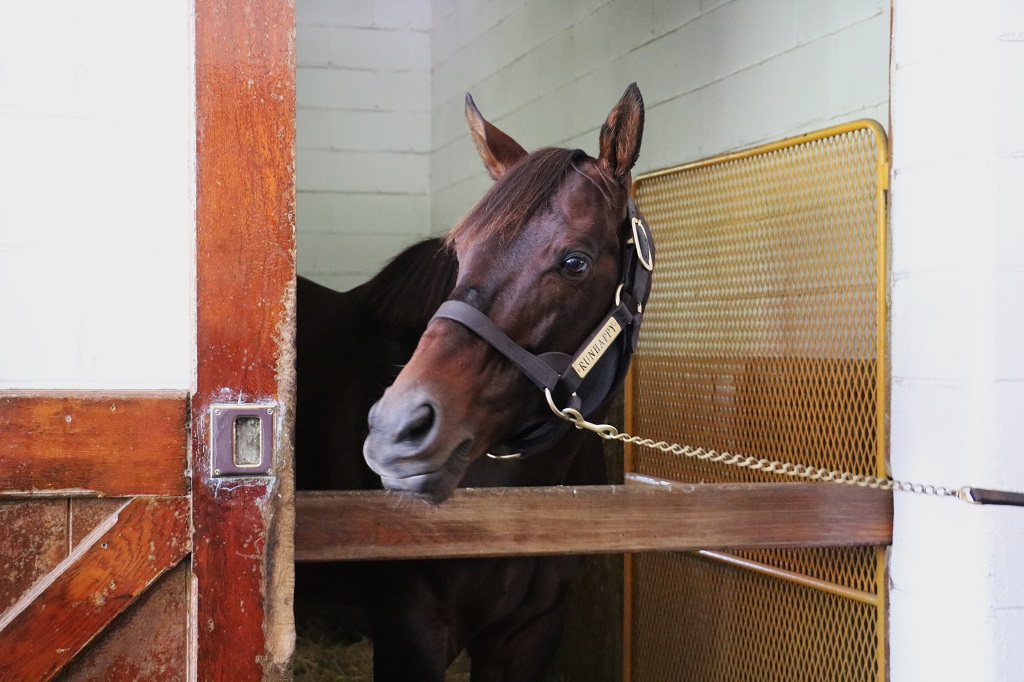
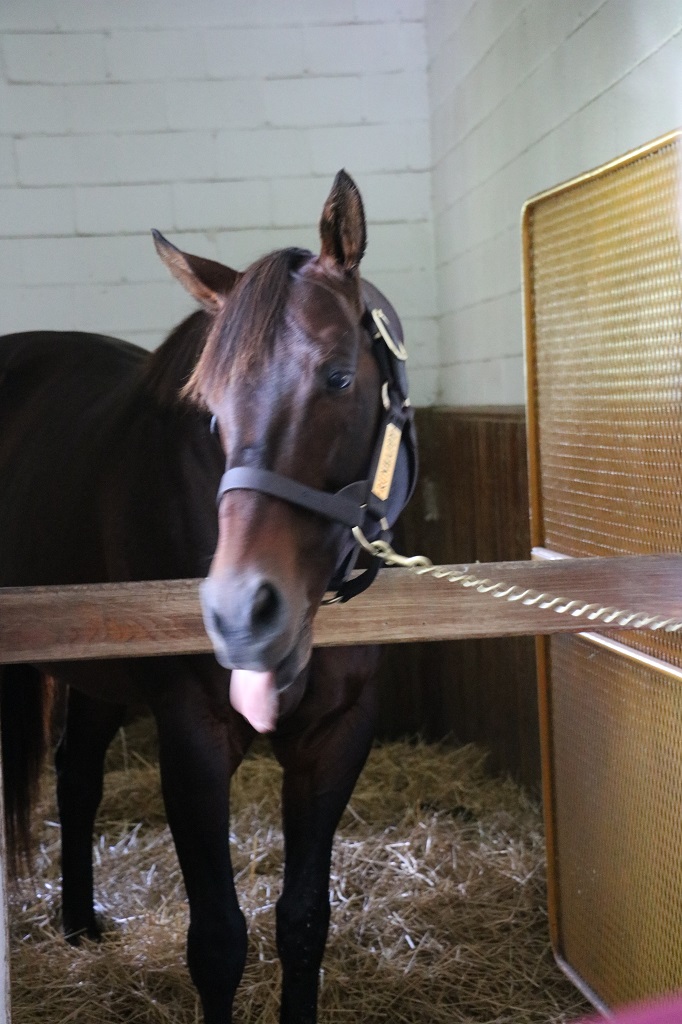
This is Runhappy. The next photo shows him enjoying his peppermint.
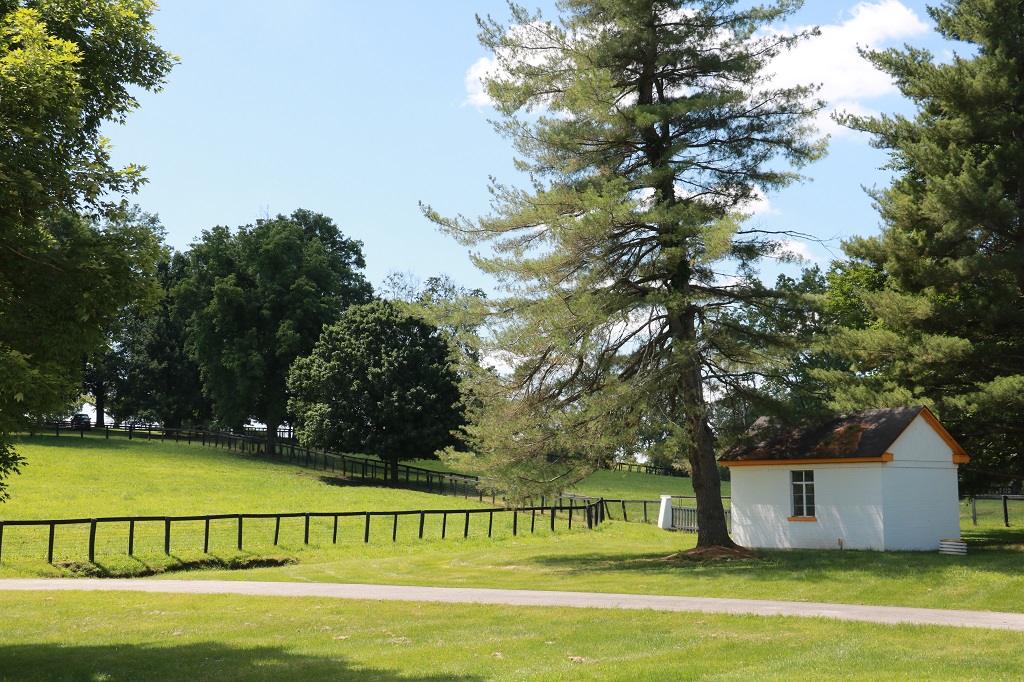
We walked over to a paddock to meet Hulio. He is about 19-21 years old – the person they bought him from was not sure of his age – and he has been at Claiborne for 15 years. He is the Teaser. When a mare is brought in to be bred Hulio is put in the paddock beside her. He will ‘talk’ to her and tell her how lovely she is, etc. and get her all excited before she is taken to the breeding barn to be covered by whichever stallion the owners have chosen. The 10 stallions can cover about 127 mares a day. Hulio gets to have fun about 4 times, but he is always happy to see a mare in the hope she will be his. Many stallions will ‘tease-up’ a mare two or three times and then when they realize they don’t get to do the deed they won’t talk to them anymore. Hulio has been doing it for 15 years and always makes the mares happy for the stallions.


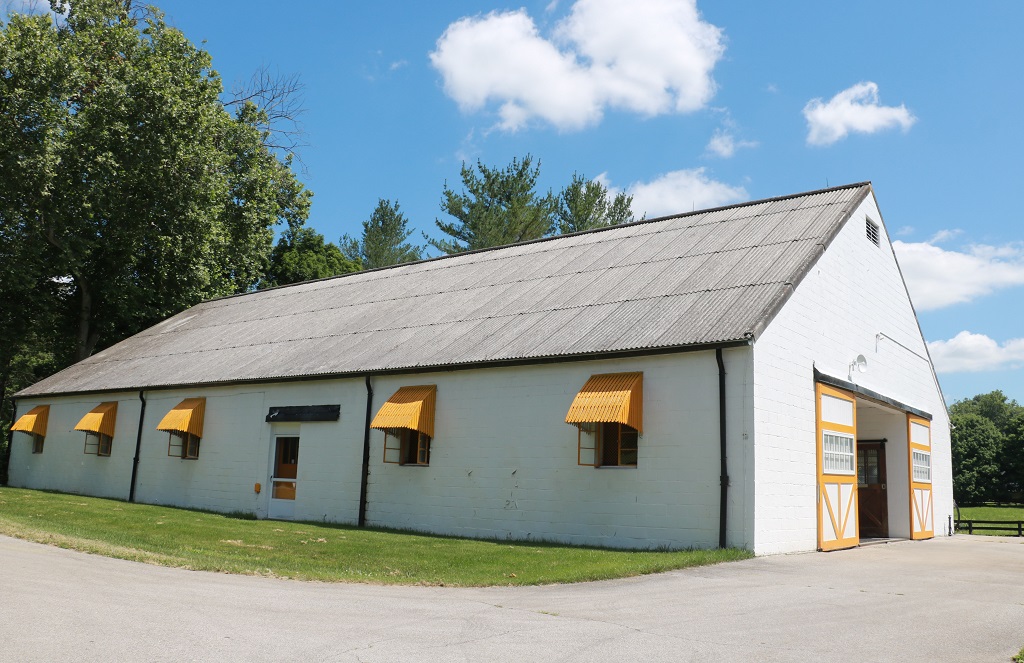
The 10-stallion barn. Built in 1930. Our next stop was the second stallion barn to meet War Front. Claiborne syndicates their stallions at only 40 shares. Some farms do up to 60. War Front’s shares were sold for $250,00 when he quit racing and became a breeding stud. His progeny has done so well on the track his shares are now worth over $2 million each. The horse is currently valued at $85,000,000 and his stud fee is $100,000. Tim gave people the opportunity to pet him or hug him as well. He said, “How often can you wrap your arms around $85 million?”

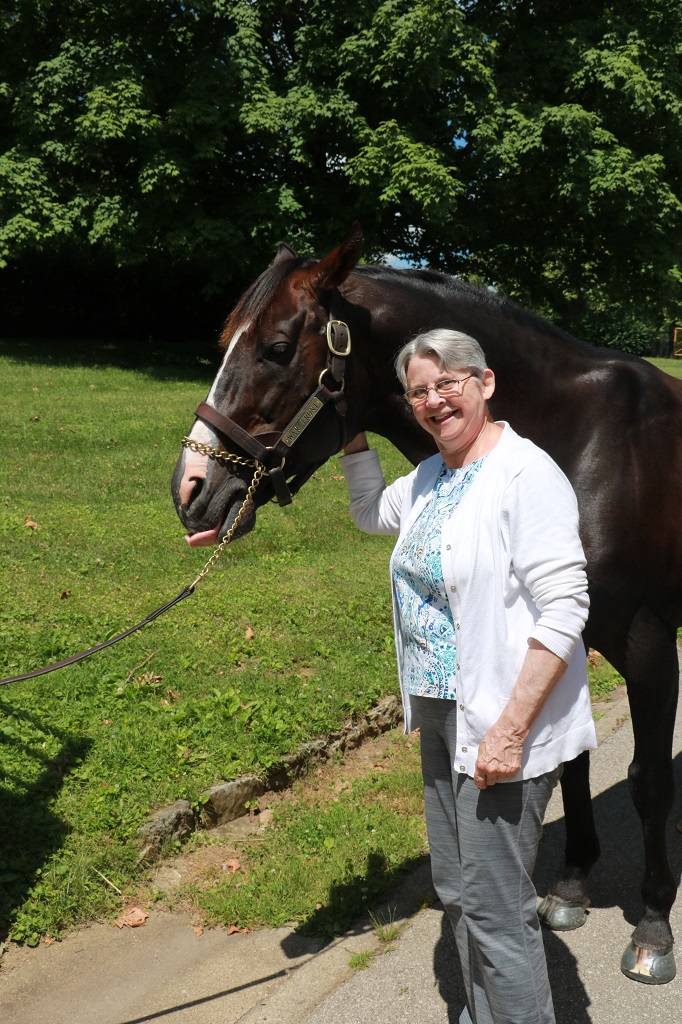
Love those peppermints!
Mr. Prospector (1970-1999) was a stallion back in the day before they instituted the “live foal” guarantee before the mare’s ownes have to pay the stud fee. His stud fee rose as high as $250,000 and you paid it whether the mare became pregnant right away or even if she lost her foal. At the peak of his ‘career’ he earned Claiborne Farm $3,000,000 per day. Internet quote: “His remarkable achievements as a sire, broodmare sire and sire of sires are unparalleled. Noted for passing on speed, precocity and classic ability, Mr. Prospector sired 181 stakes winners from 986 starters (19%), 113 graded stakes winners, 46 Grade 1 stakes winners, and 22 Champions in his stud career of which the last 19 years were spent at Claiborne. One noteworthy feat was siring winners of the Kentucky Derby, Preakness and Belmont — the next sire to do so was his grandson, and also a Claiborne stallion, Unbridled.
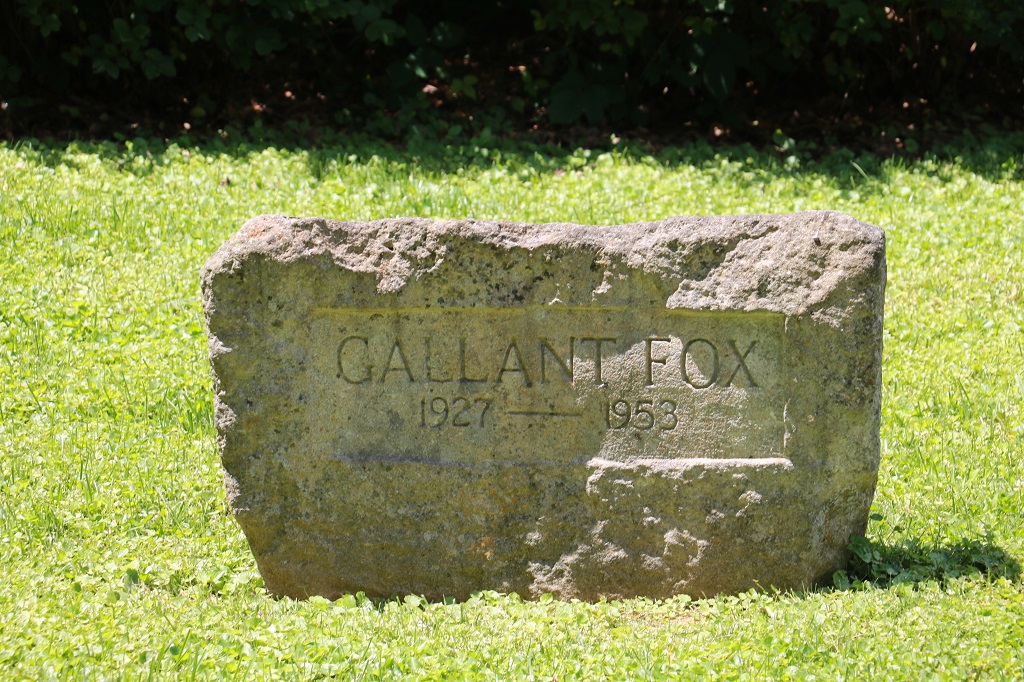
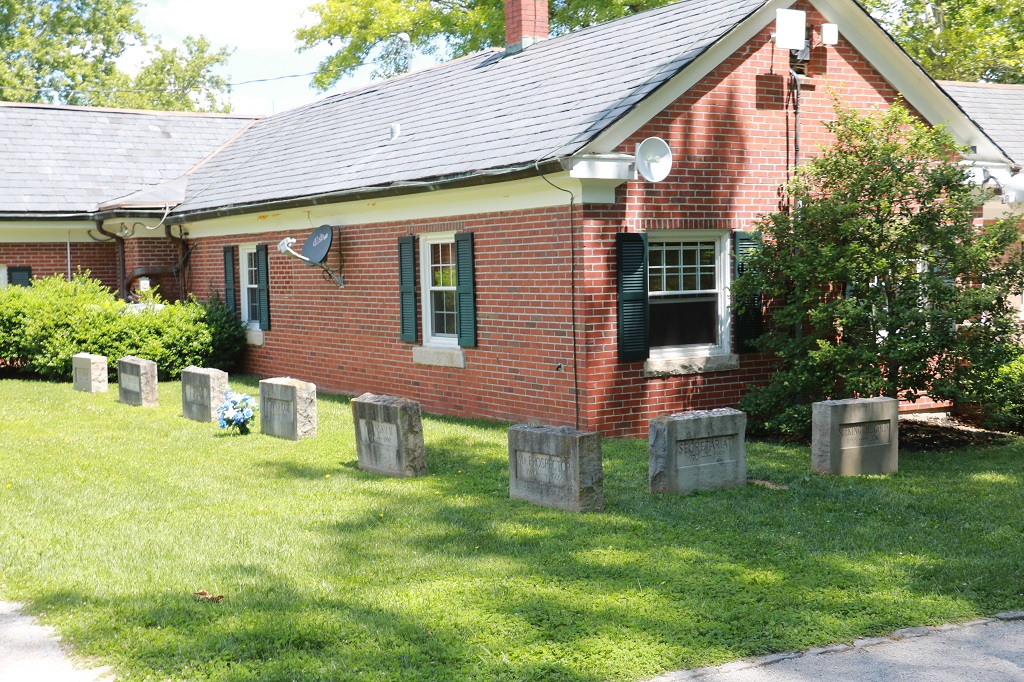
The last stop was to one of the three equine cemeteries on the property. Back in the day only the head, heart and hoofs were buried representing the heart, soul and body of the horse and the rest of the horse was cremated. Then it changed to full body cremation, but since 1984 the Hancock’s that own Claiborne have interred the whole horse. There are 23 horses buried in this cemetery. There is room for one more horse and the owners have reserved the spot for Blame, a winner of nine races in 13 starts including the prestigious Breeders’ Cup .


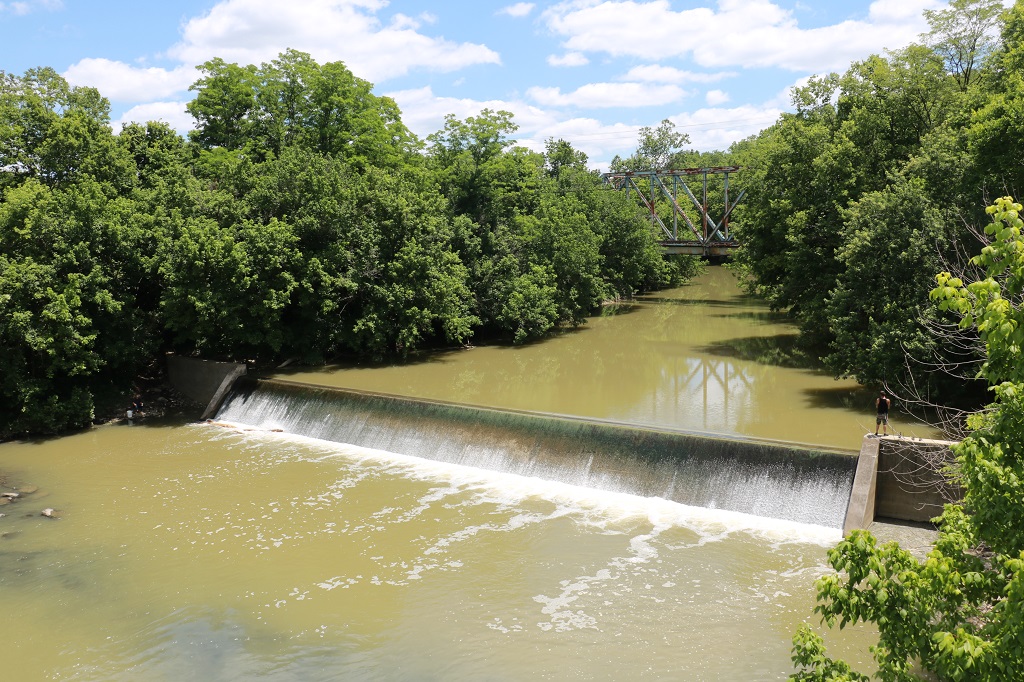
I spotted a small dam like this as we left Paris but could not get a photo. This one was up the road at Millersburg. They are called Weir dams and are built to raise the level of a river or creek (this is Hickston Creek) or to control water flow levels. There were a couple of fellows fishing at the dam. You can just make out the one at the edge of dam shaded by the trees on the left. The fellow standing on the wall on the right had gotten his hook stuck in the branch of the big tree and was trying really hard to get it loose. I don’t think he succeeded though and probably had to cut off a long length of line. Hope it wasn’t his favourite lure.
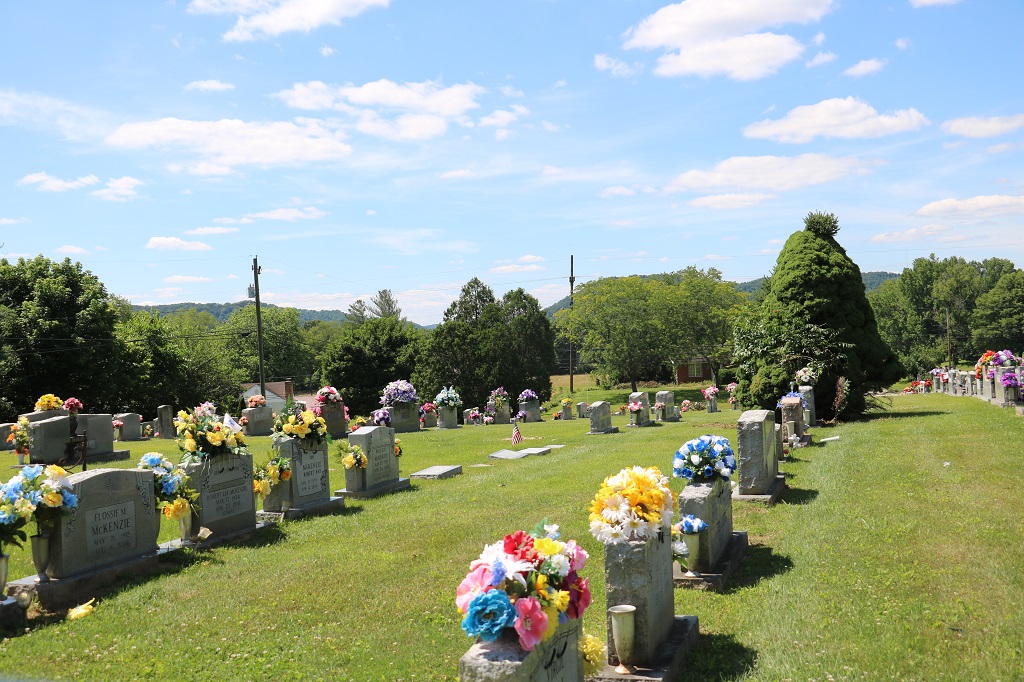
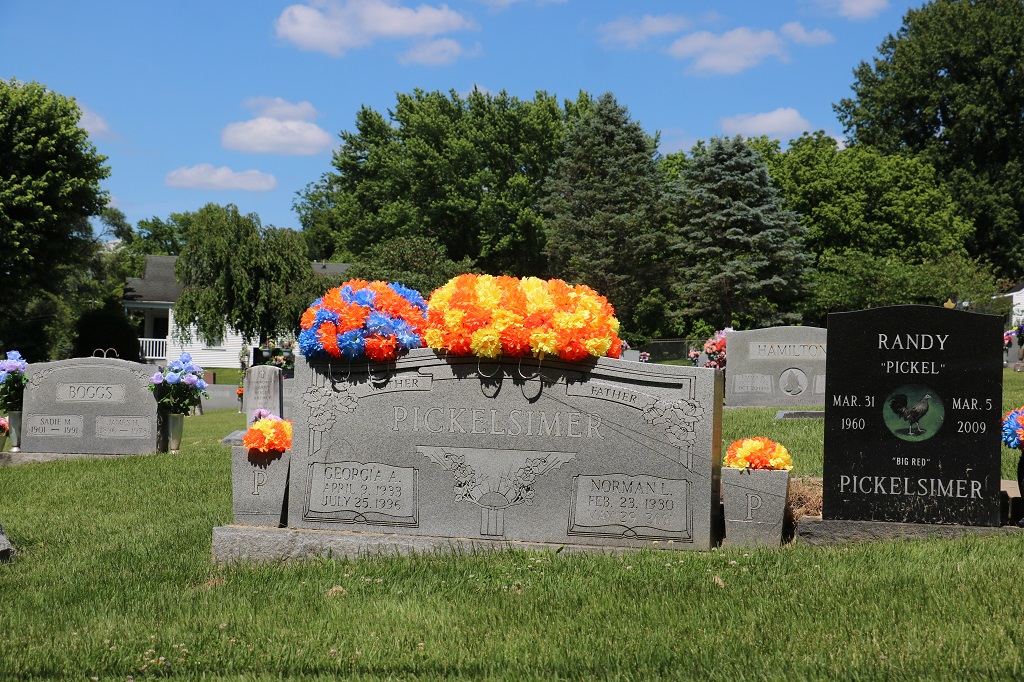
We drove past several cemeteries in our drive through Kentucky, Every one had most of the markers covered in beautiful flower arrangements.
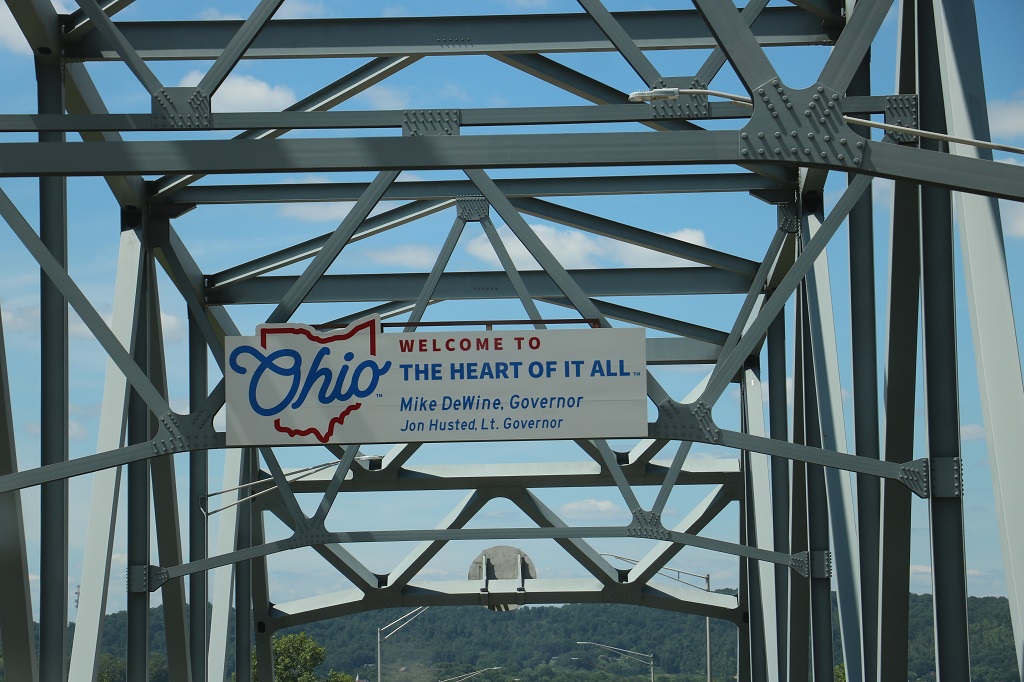
State Number 11 today.

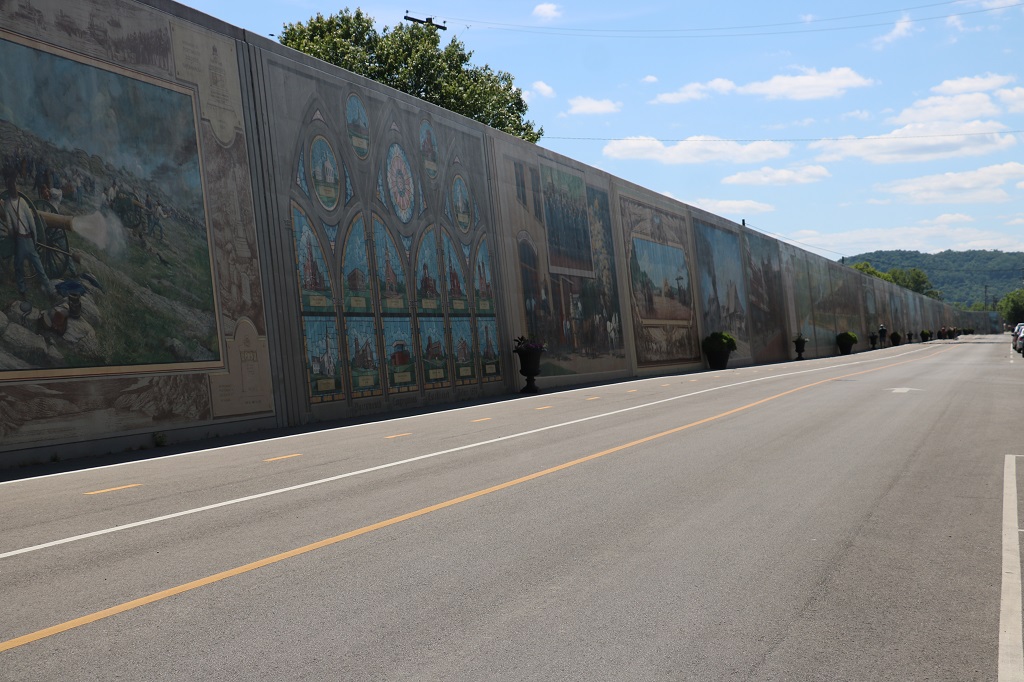
There was a devastating flood in Portsmouth in 1937. The water rose to the top of the windows of most of the downtown business district. In 1943 they built a 20′ (6 meter) high, 2000′ (185.5 meter) long flood wall between the rivershore and the town. In the 1990s, due to deindustrialization and other factors several of the factories in the area closed so they were trying to revitalize the town. They hired artist Robert Dafford to paint murals on the wall that depicted Ohio’s, and particularly Portsmouth’s history. They are gorgeous and there are placards along the sidewalk on the opposite side of the street that explain what each one is about or who is portrayed.


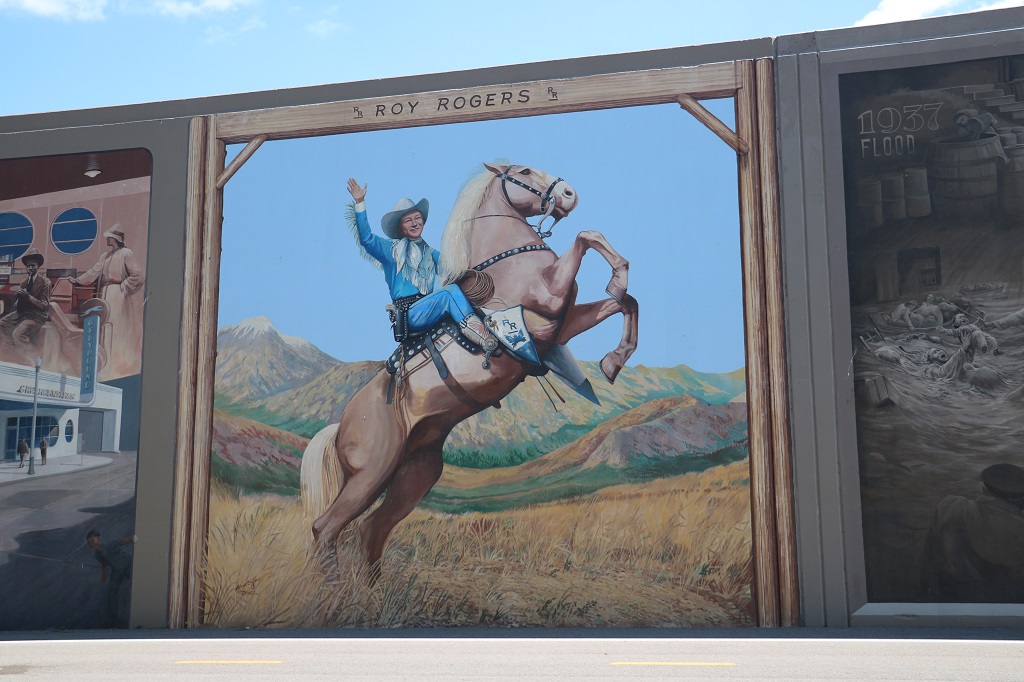
This was my favourite! I did not know Roy Rogers was from Ohio. I loved watching his TV show as a kid. My elementary school lunch kit had a picture on it almost the same as this one.

Note the information box that gives directions to his boyhood home. Where did we go next do you think?
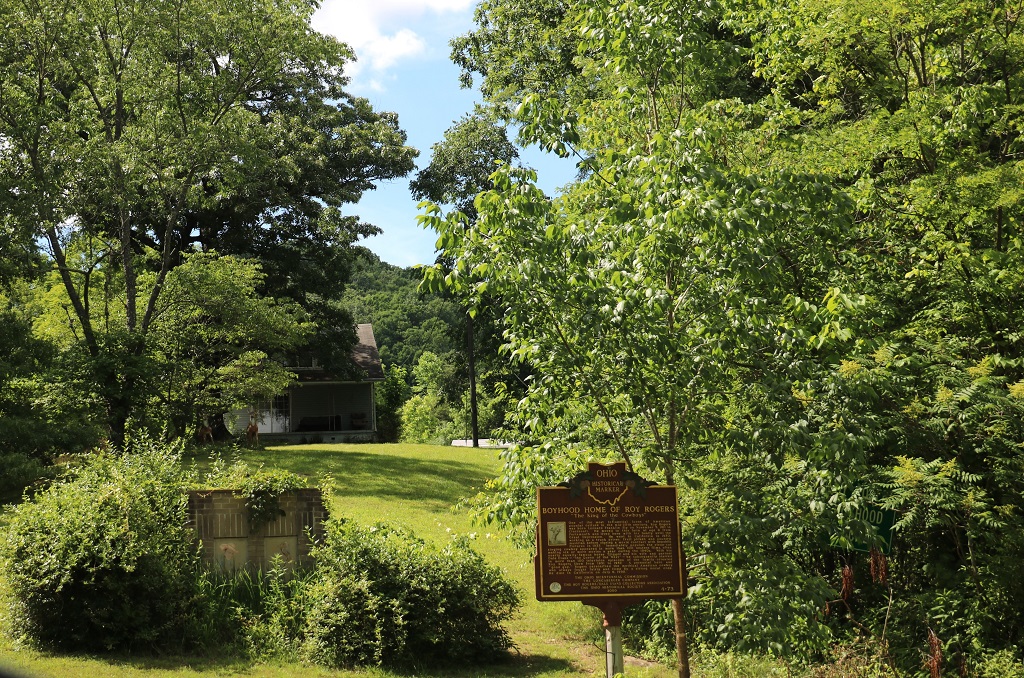
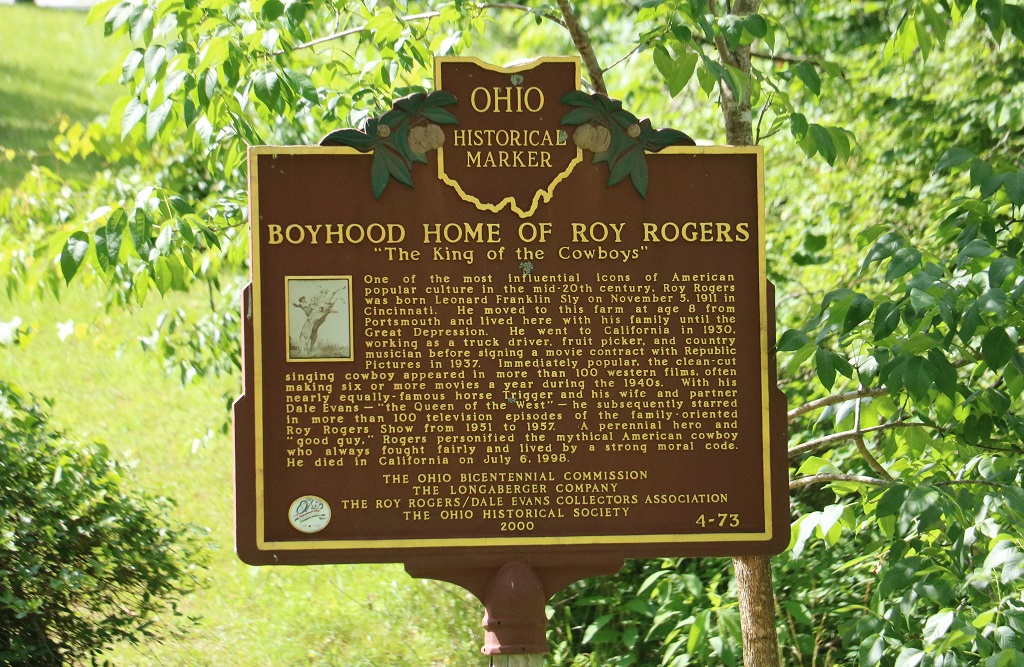
This road trip is becoming a trip down memory lane for me – Hank Williams, Sr., Superman, Davy Crockett, Secretariat, and now Roy Rogers. So fun.
We had spent some time the night before looking at maps and doing some route planning for John’s continued quest to go into 17 different states and find a geocache and I realized we were going to go quite a bit further north than I had thought and therefore we may be able to meet up with my cousin who lives near Pittsburgh, PA. Turns out she lives only about 45 minutes further east than the place in Pennsylvania we were thinking of stopping. So, on top of the great memories and adventures we will see a cousin we have not visited in quite a few years. Yay!
 Hanna Travels