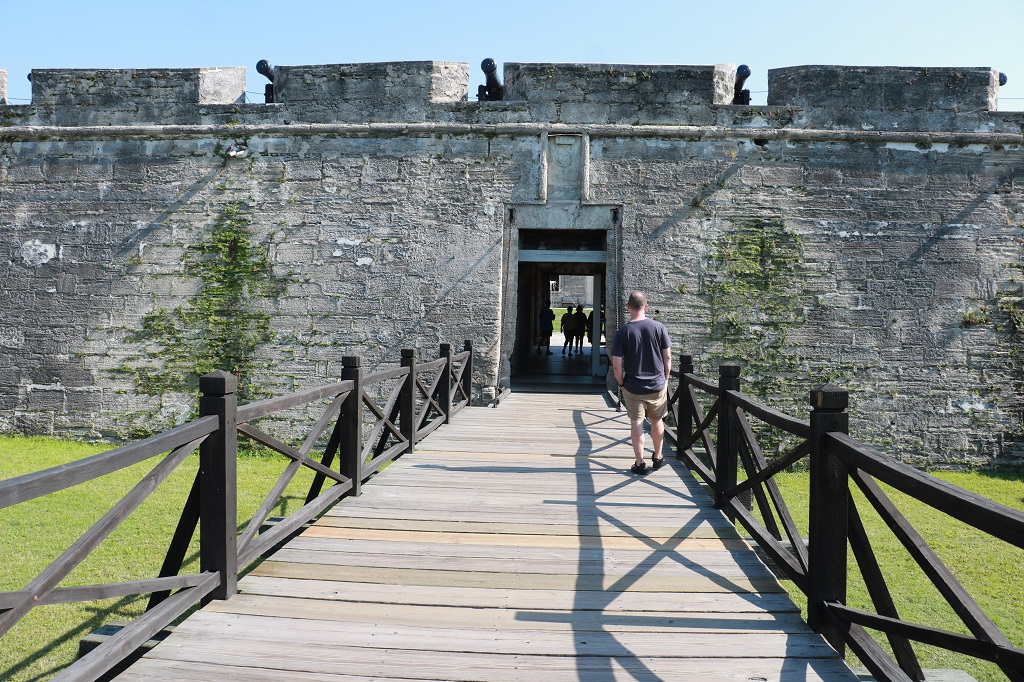
We were up early and headed right to the Castillo de San Marcos. And we were glad we did because by the time we left there was not a parking spot to be had and there were many visitors wandering around.
Founded on September 8, 1565 by Spanish admiral Pedro Menéndez de Avilés, Florida’s first governor, it is the oldest continuously inhabited European-established settlement in what is now the contiguous United States. The first European known to have explored the coasts of Florida was Juan Ponce de Leon, the explorer and governor of Puerto Rico, who likely ventured in 1513 as far north as the vicinity of the future St. Augustine , naming the peninsula he believed to be an island, “La Florida” and claiming it for the Spanish crown.

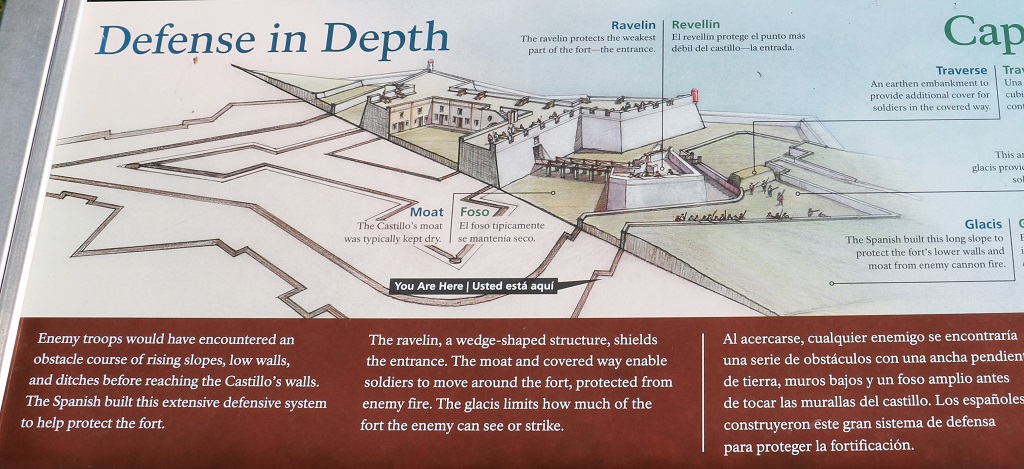
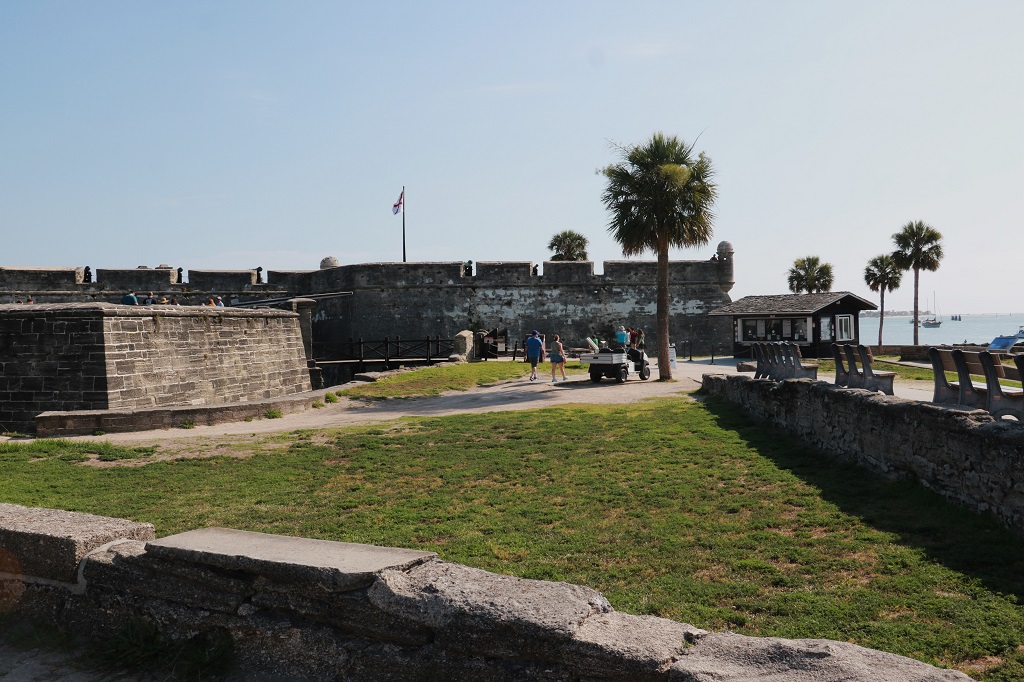
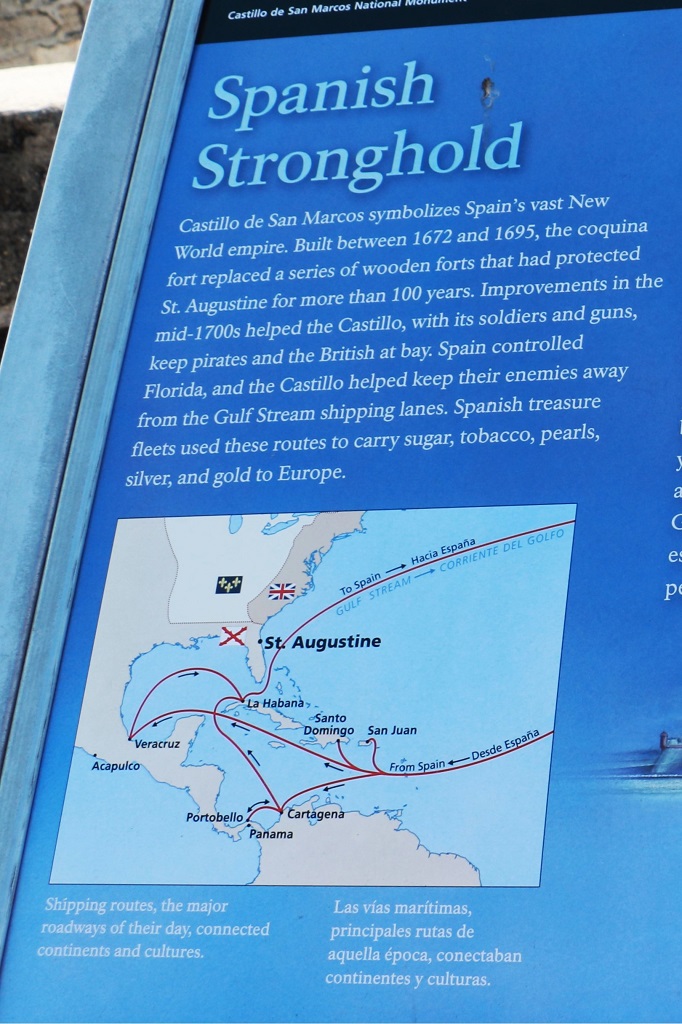
The Castillo is built out of blocks of coquina. It is a form of limestone composed of the shell fragments of ancient mollusks and other marine invertebrates. This native sedimentary rock was used in the construction of nearly every East Florida plnatation and sugar mill. Coquina is soft and easy to cut in the ground, but it hardens when exposed to the open air, making the stone suitable for building.
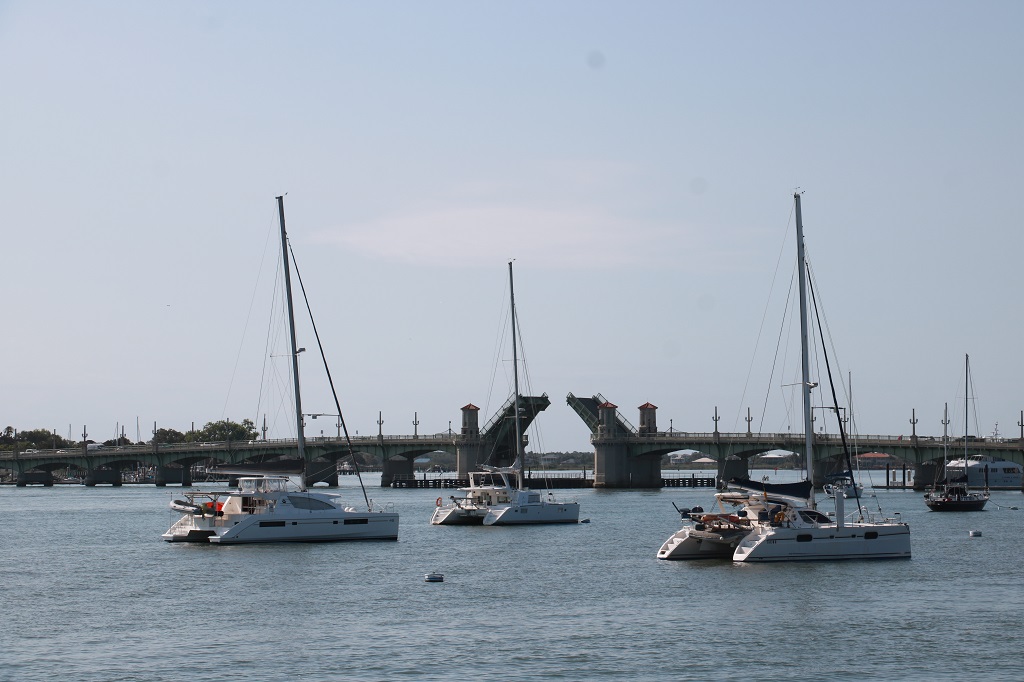
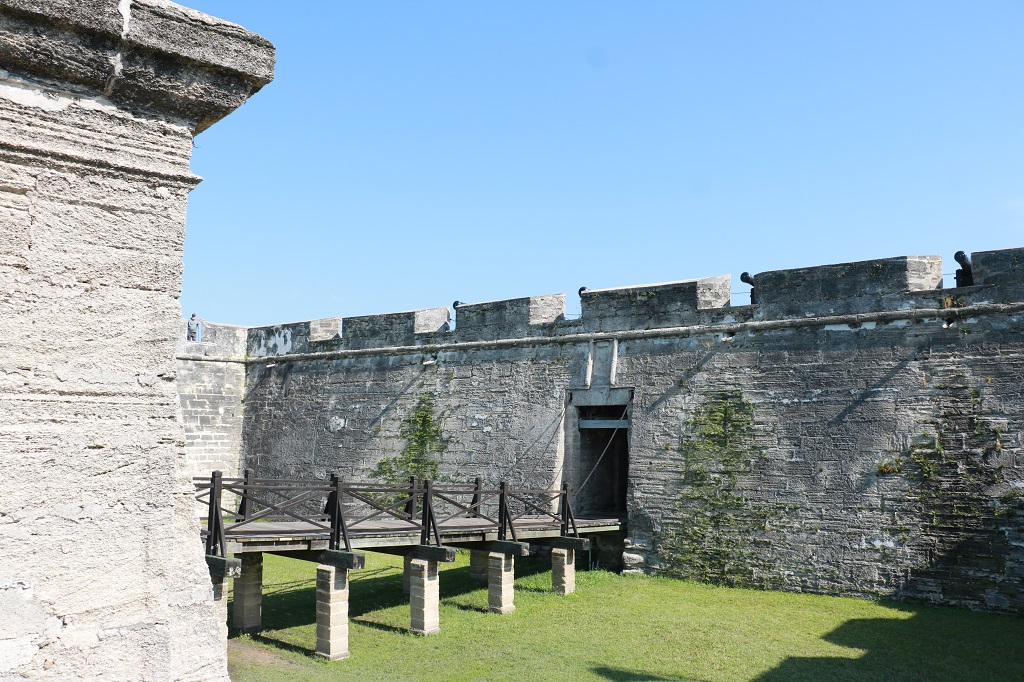
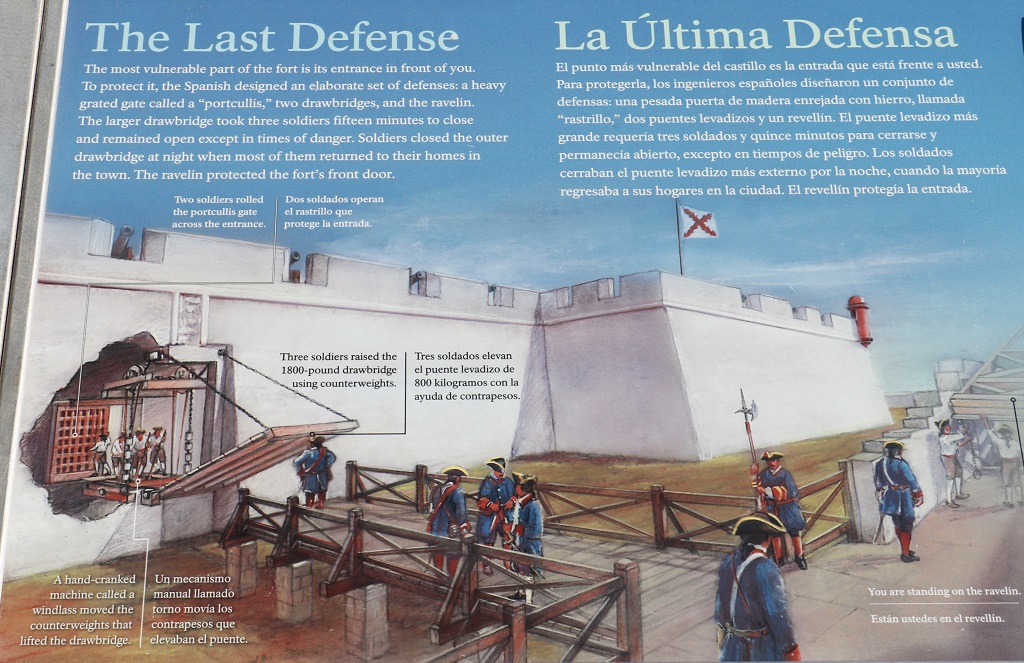
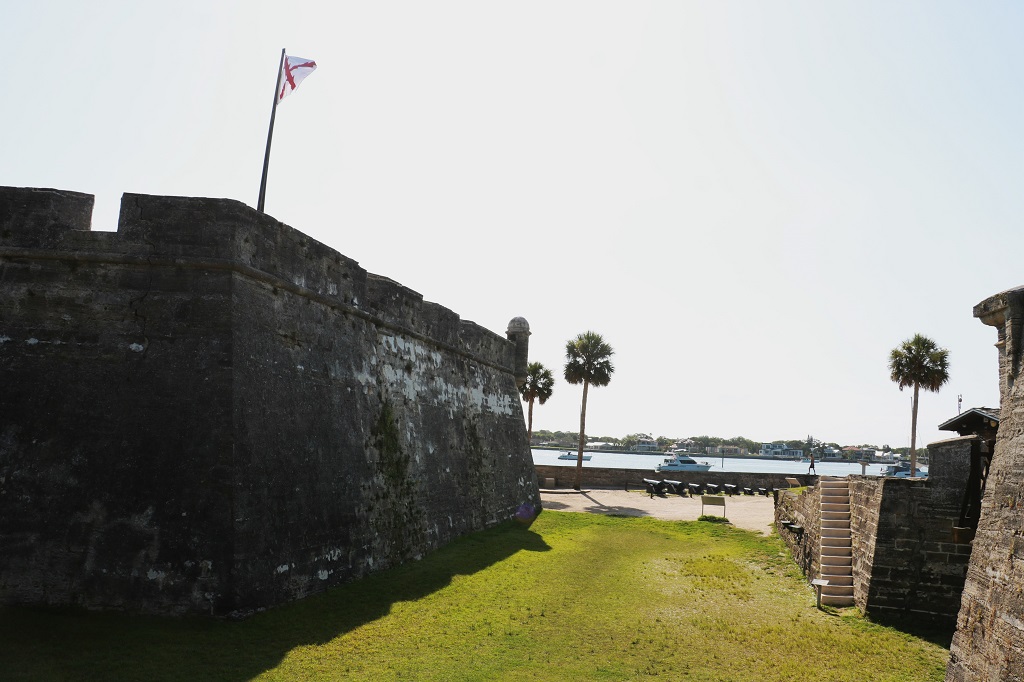
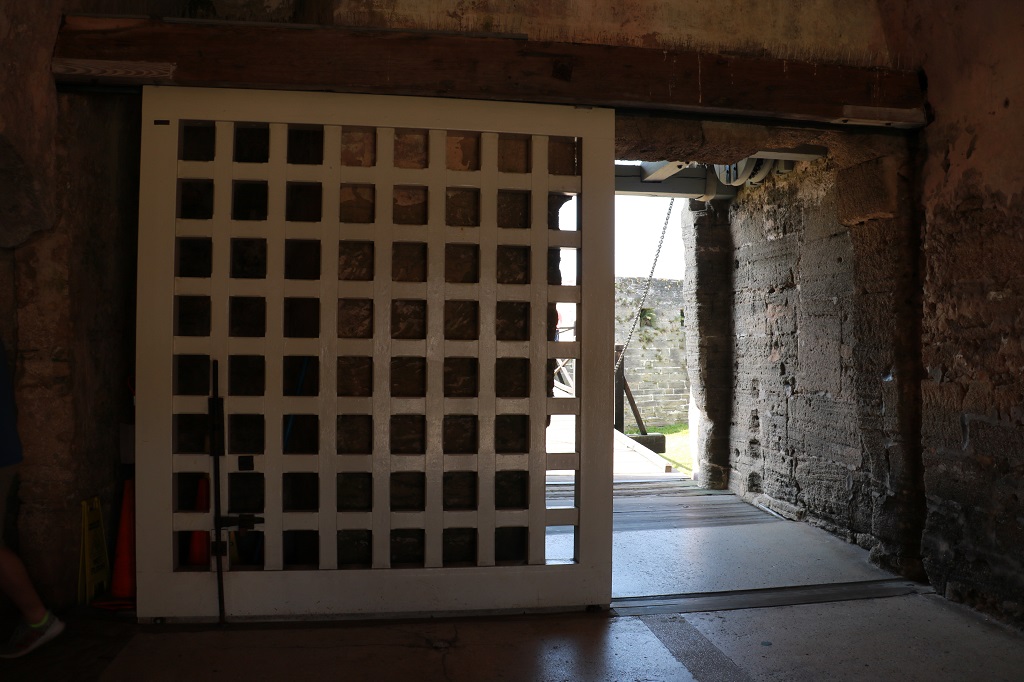
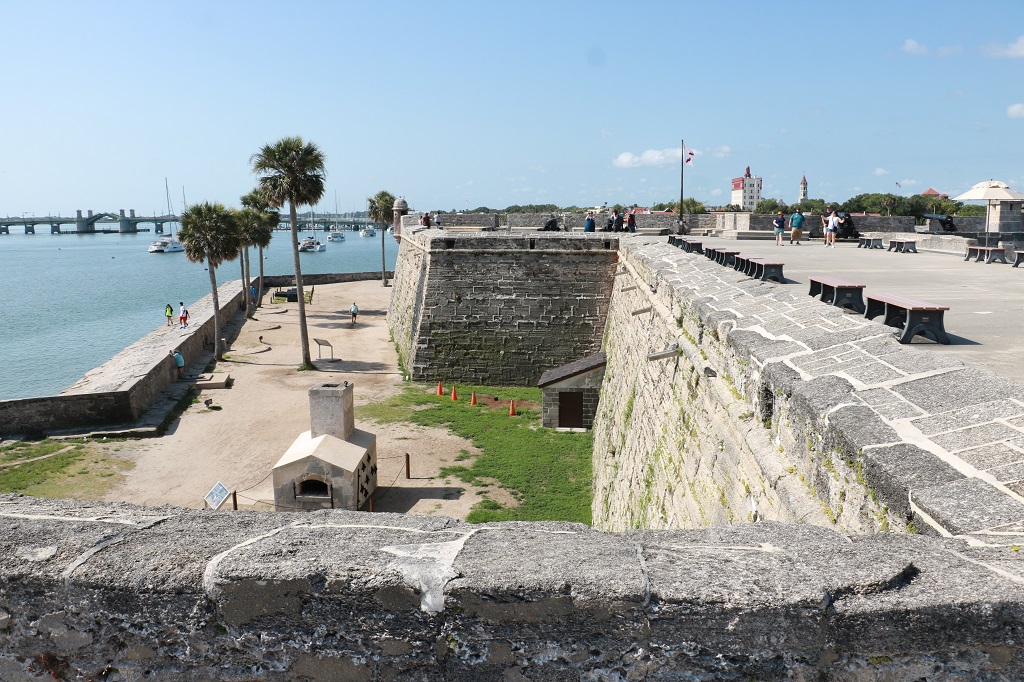
The views of the water from the fort were lovely. The drawbridge went up on the bridge just as we were entering the fort.

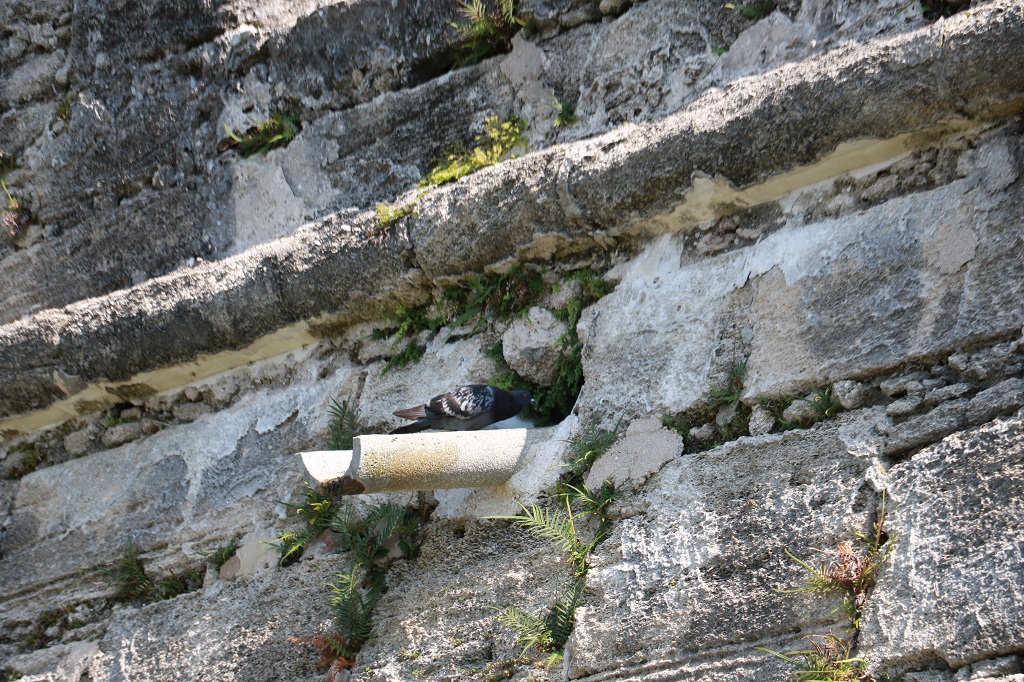
This dove was cooing away outside the drain hole. I suspect it had a nest in there.


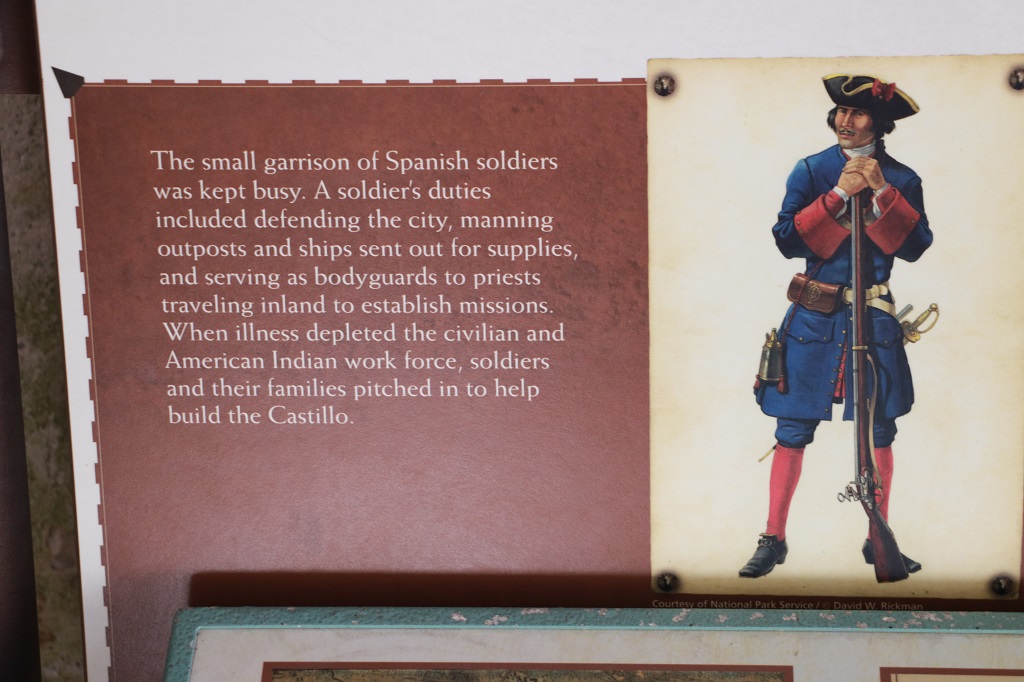
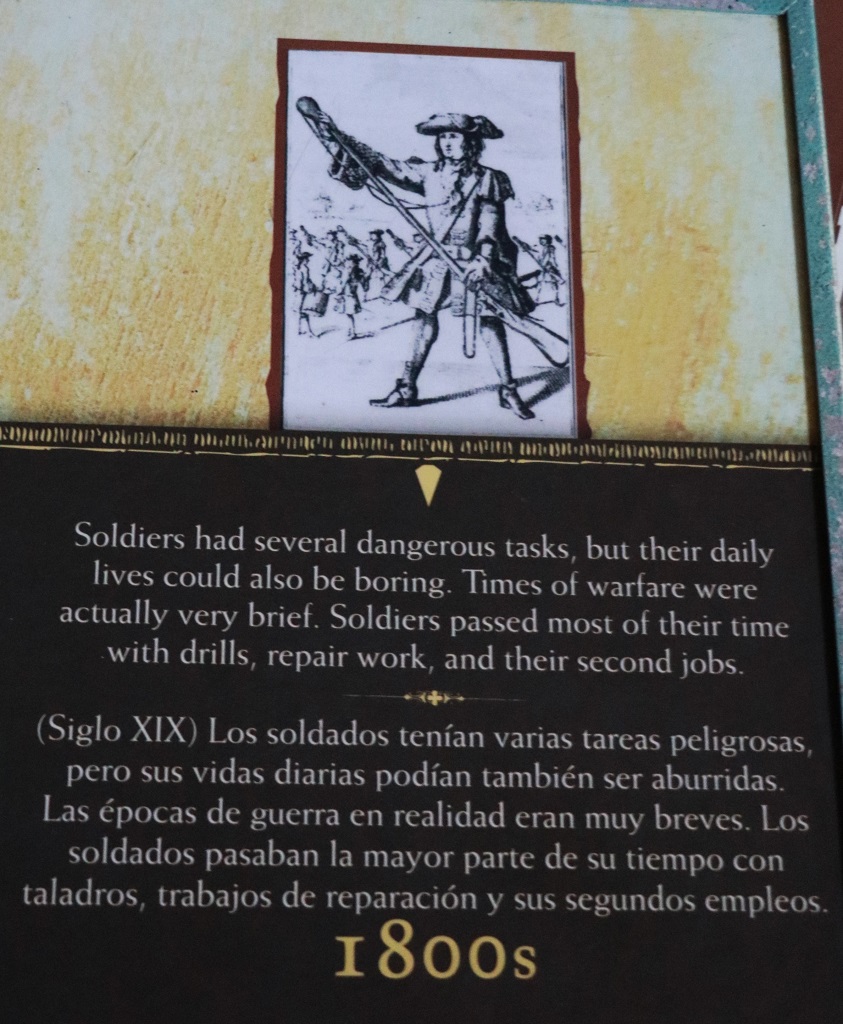
Spanish soldiers in St. Augustine lived in homes in town but stayed in the Castillo overnight when assigned guard duty. They cooked and ate their meals in this room and slept here before and after shifts on guard duty. Soldiers staying here also guarded the Castillo’s prison, located in the next guard room.

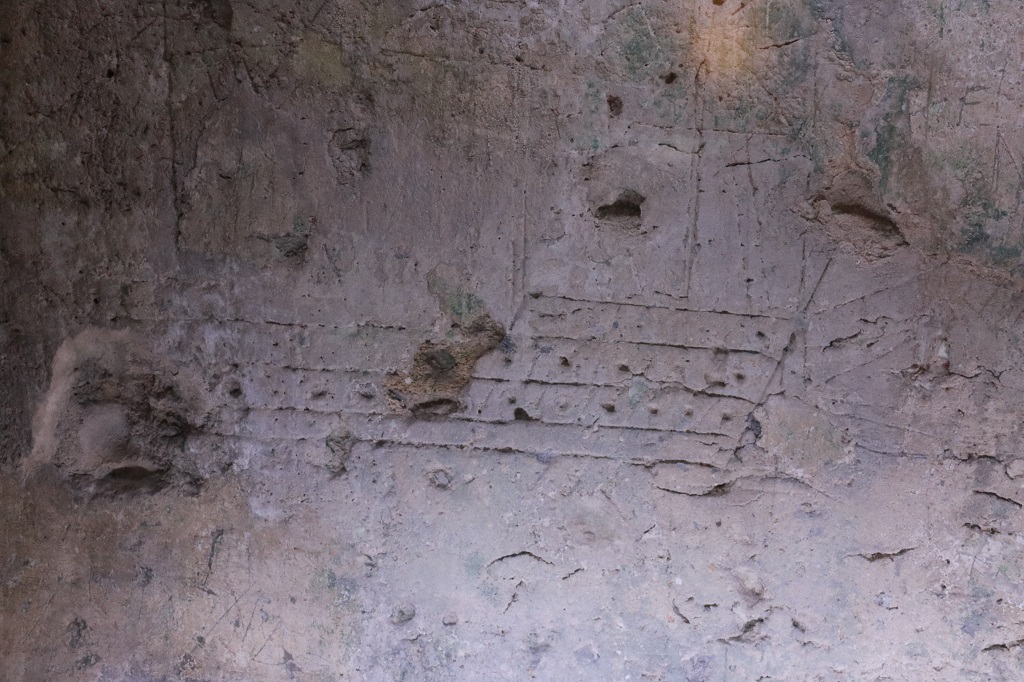
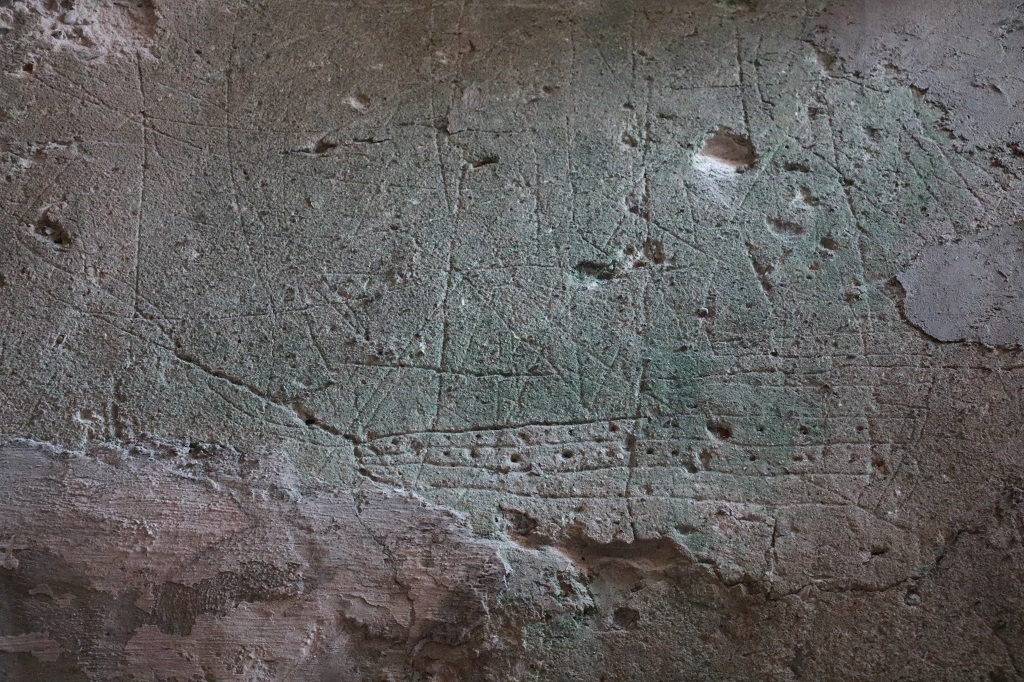
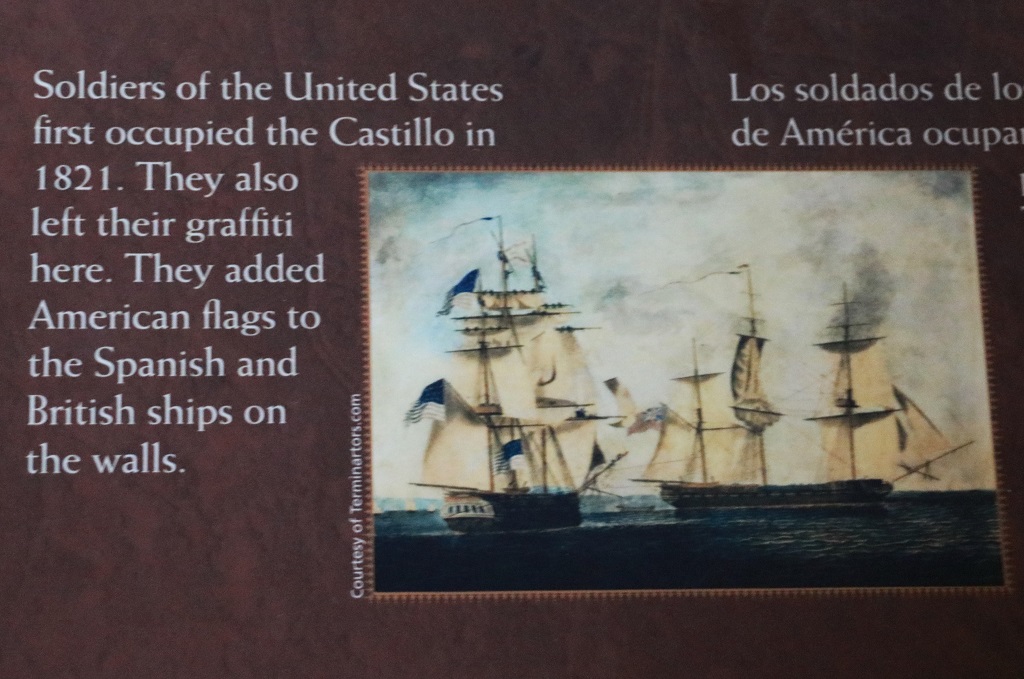
The plaster on the inside walls of the various rooms of the Castillo was quite easy to carve. There are over 20 depictions of ships (British and Spanish) and names and other carvings still somewhat legible on the walls of many of the rooms.
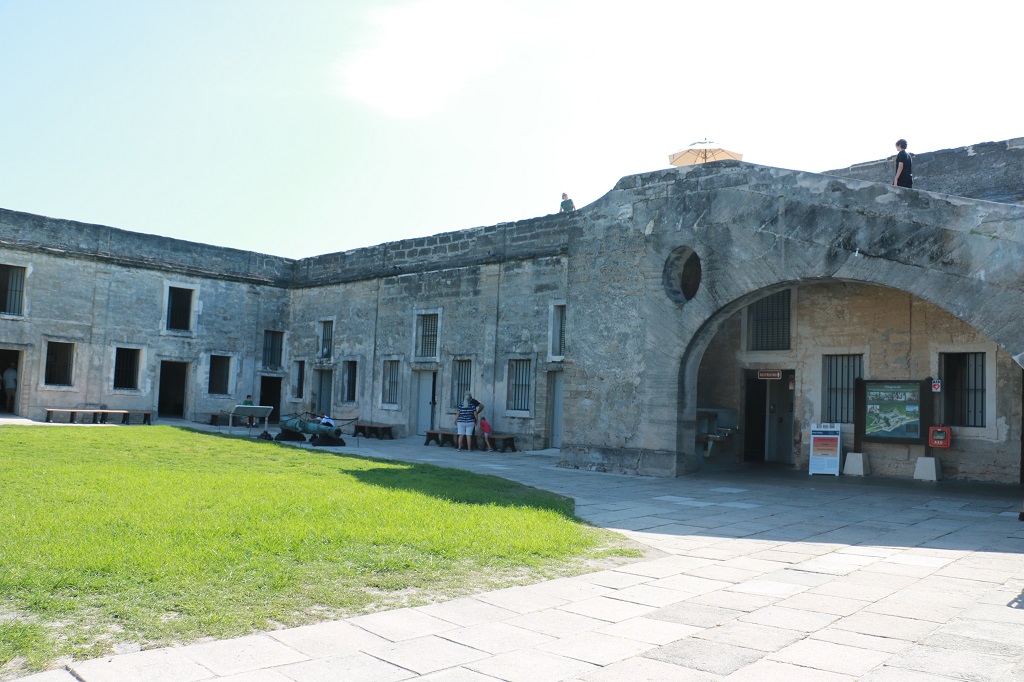


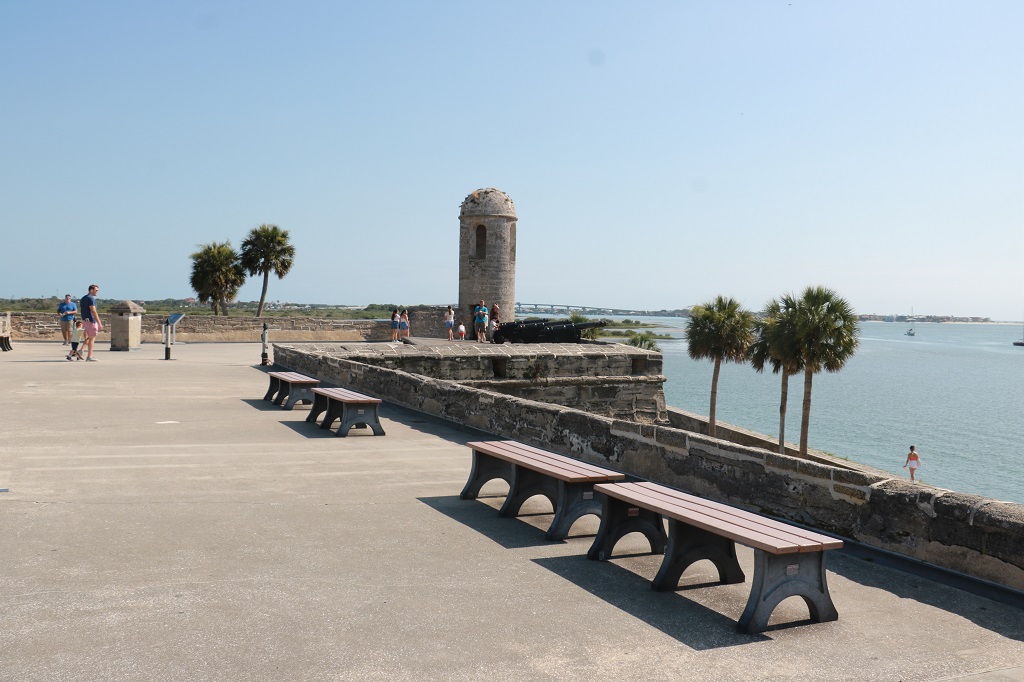
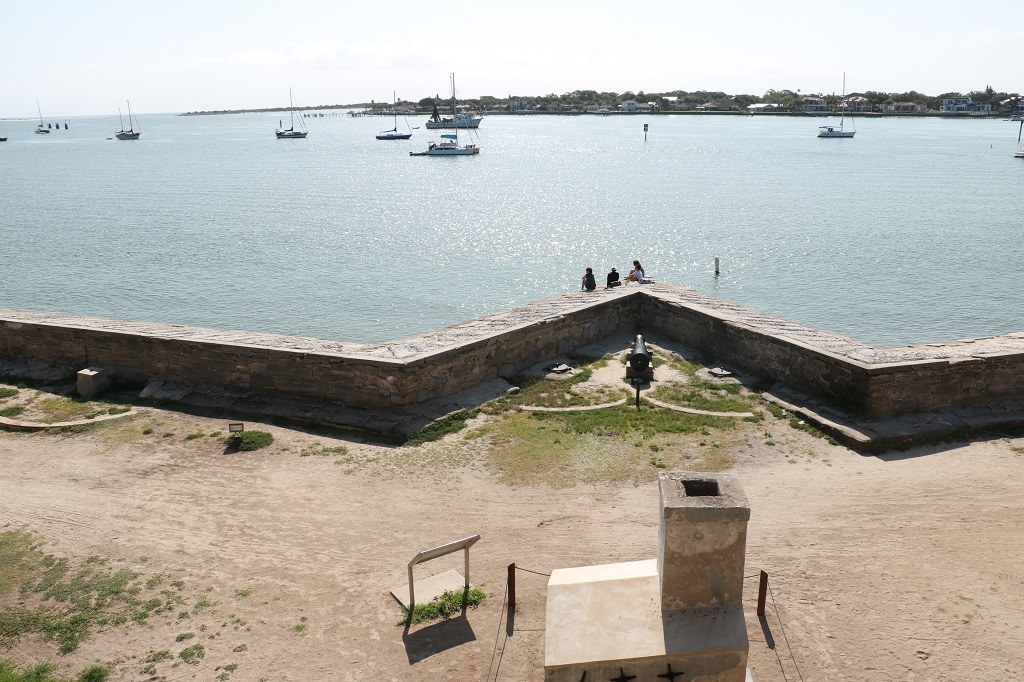

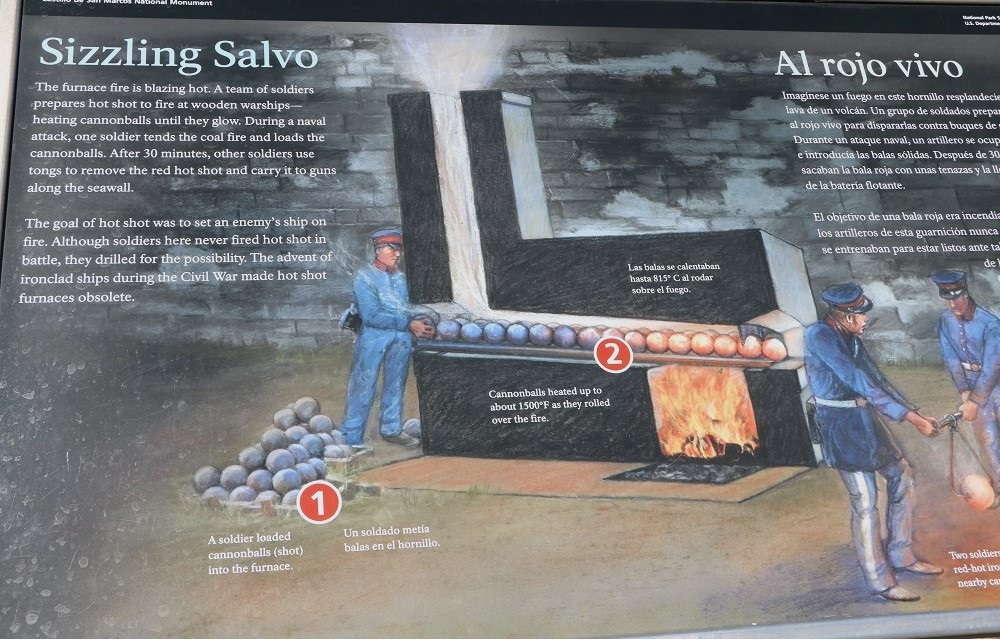

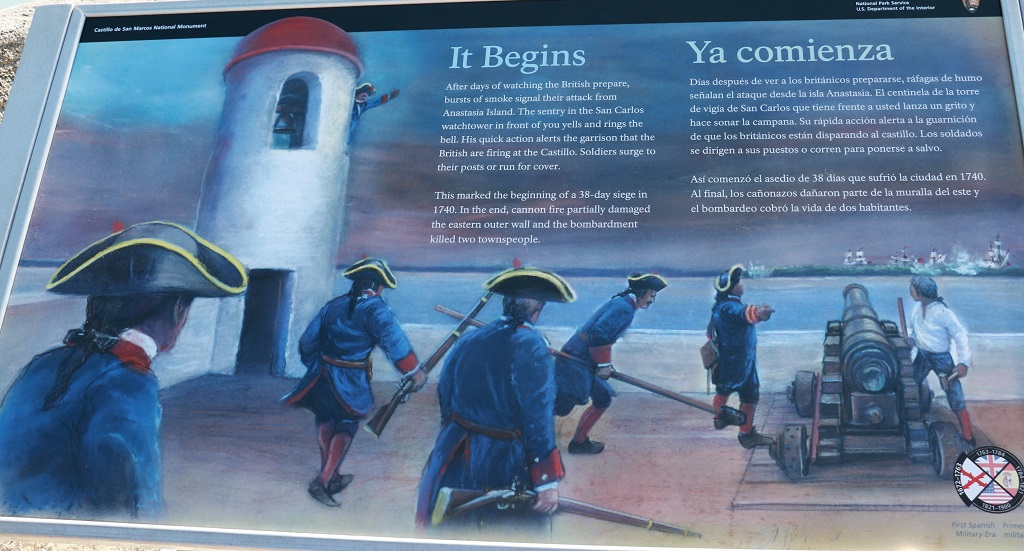
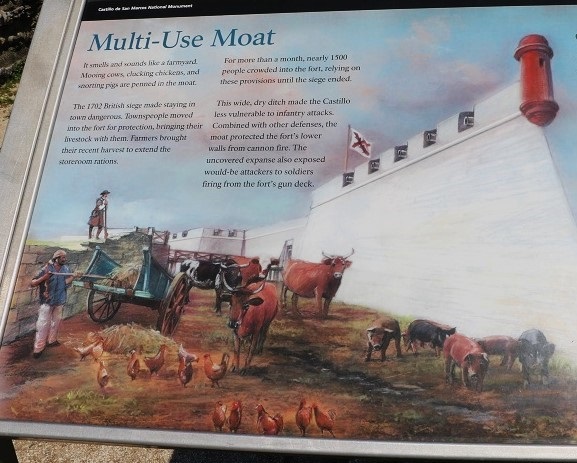
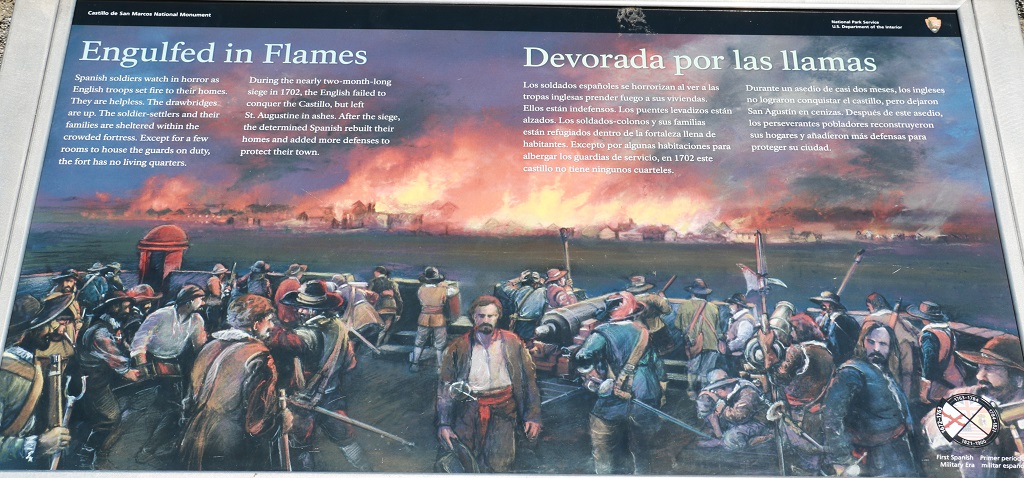
There were no living quarters in the fort. It was only manned by the soldiers on guard duty each day. And the courtyard space is not that big and all of the storage and armament rooms are quite small as well. I have no idea where they would have put 1500 people for 38 days!


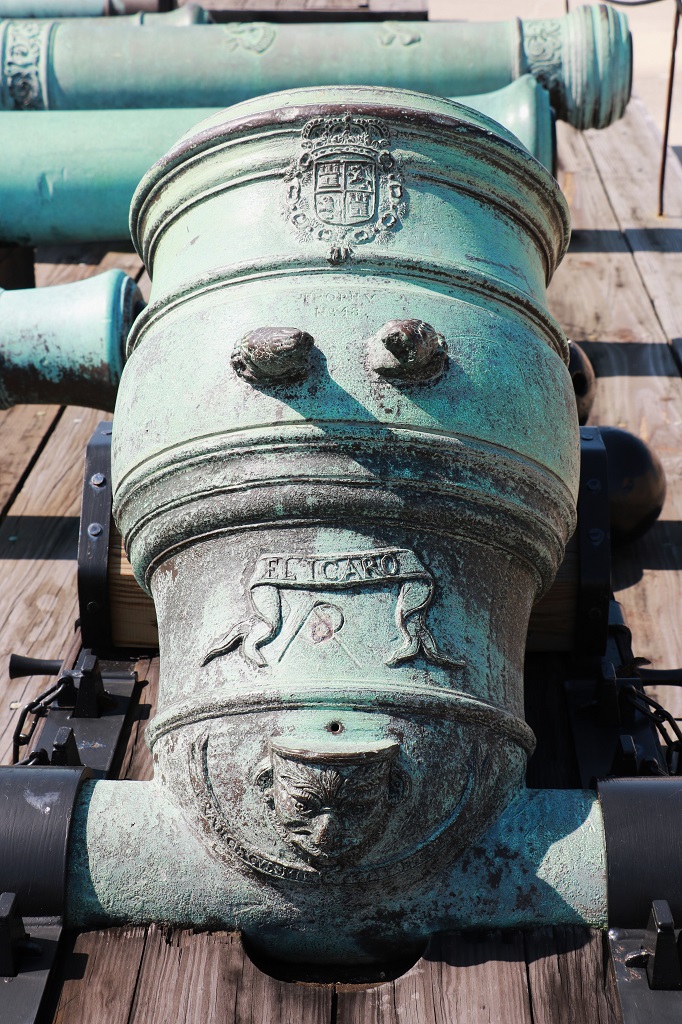
We were surprised at how decorated some of the cannons and mortars were. We learned that each of the bronze ones were individually made by artisans in Spain and the year of manufacture and the name of the gunsmith was on them, as well, often, the Spanish coat-of-arms.
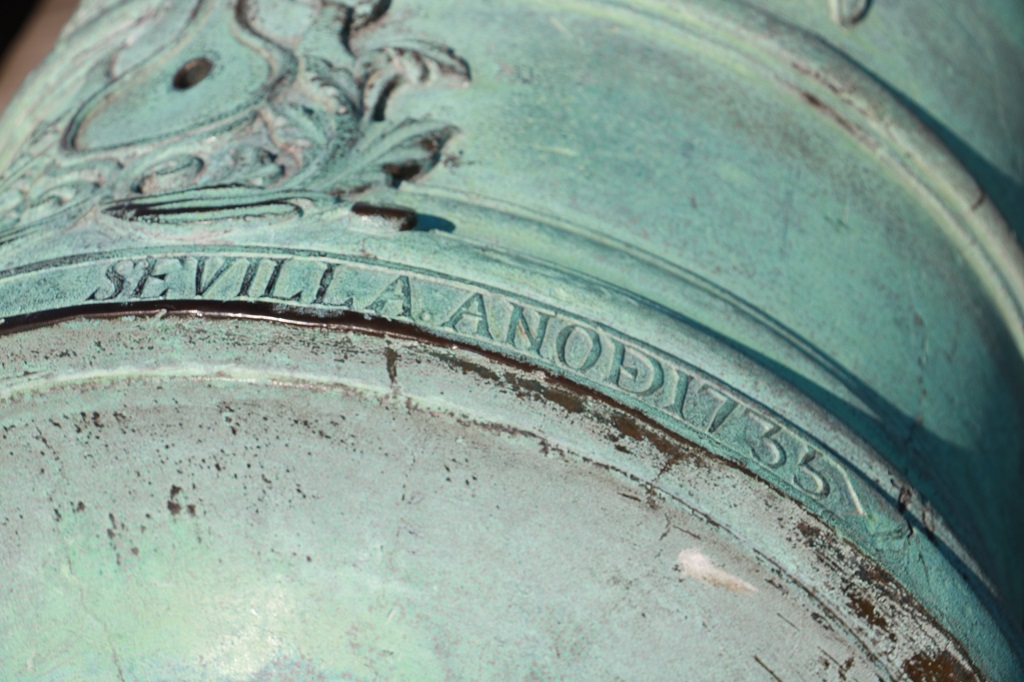
Made in Sevilla in the year 1735.

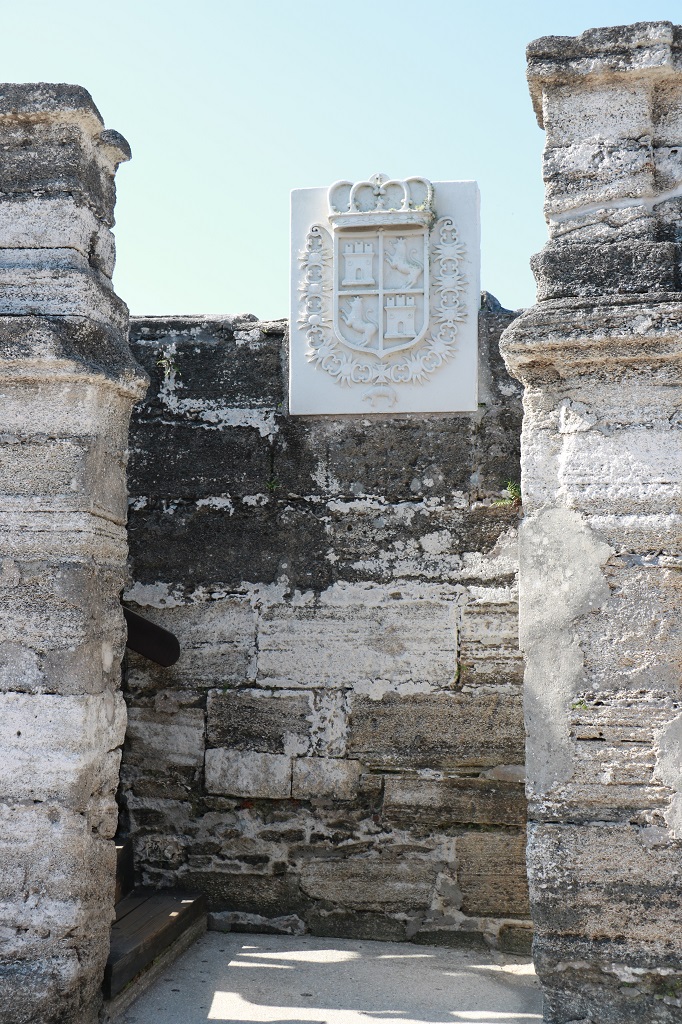
This one has a raised Spanish coat-of-arms. Others just have it etched on.
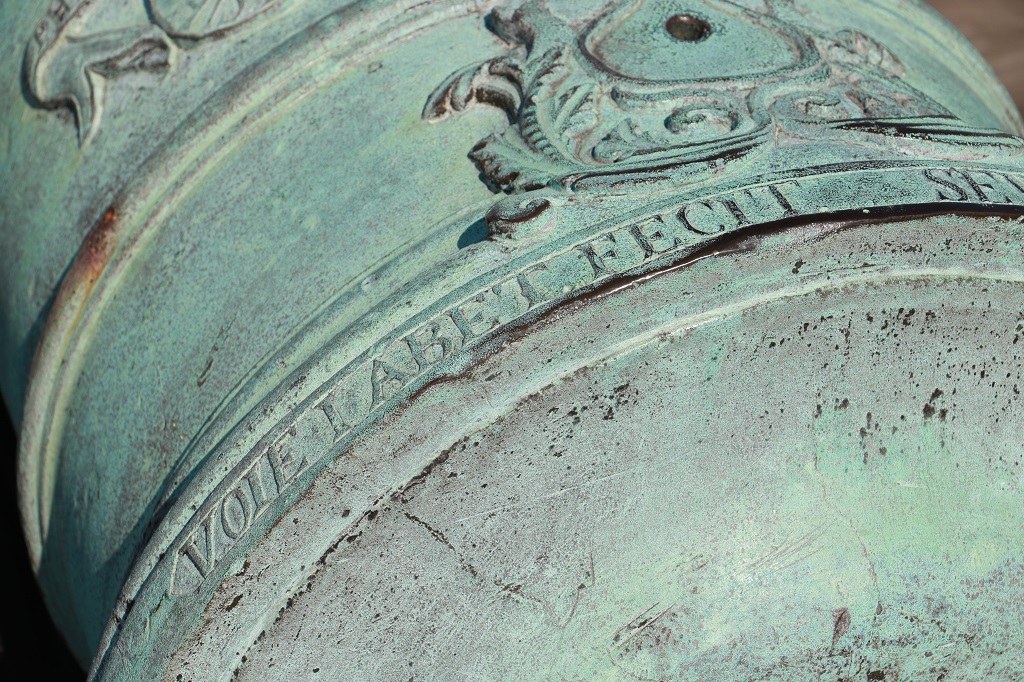
Made by Voie and Abet who were well-known 18th century bronze artisans.
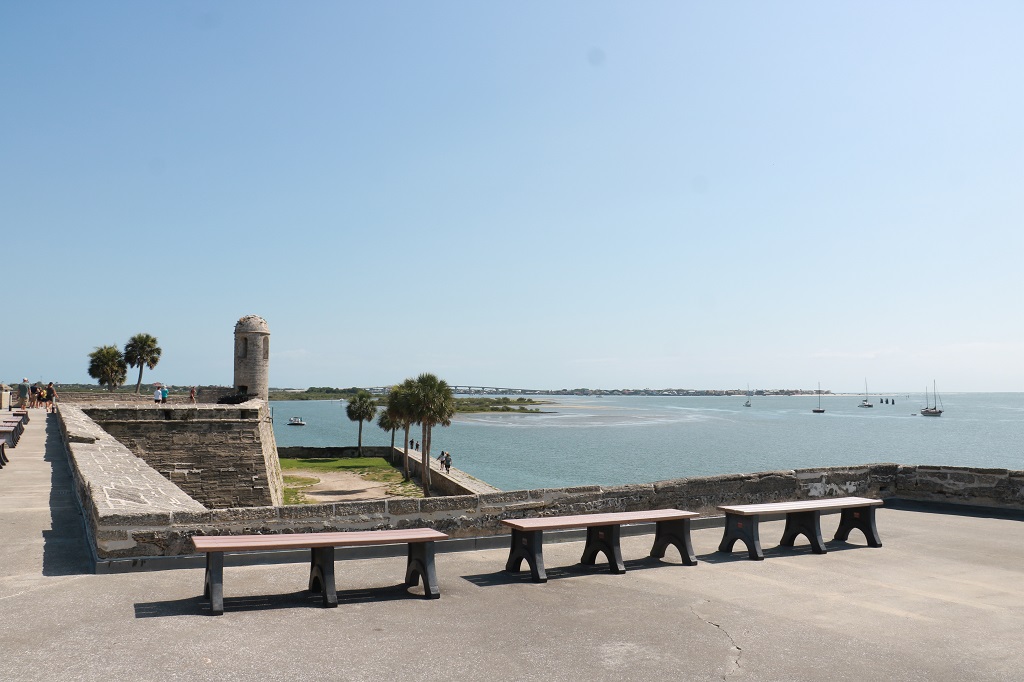
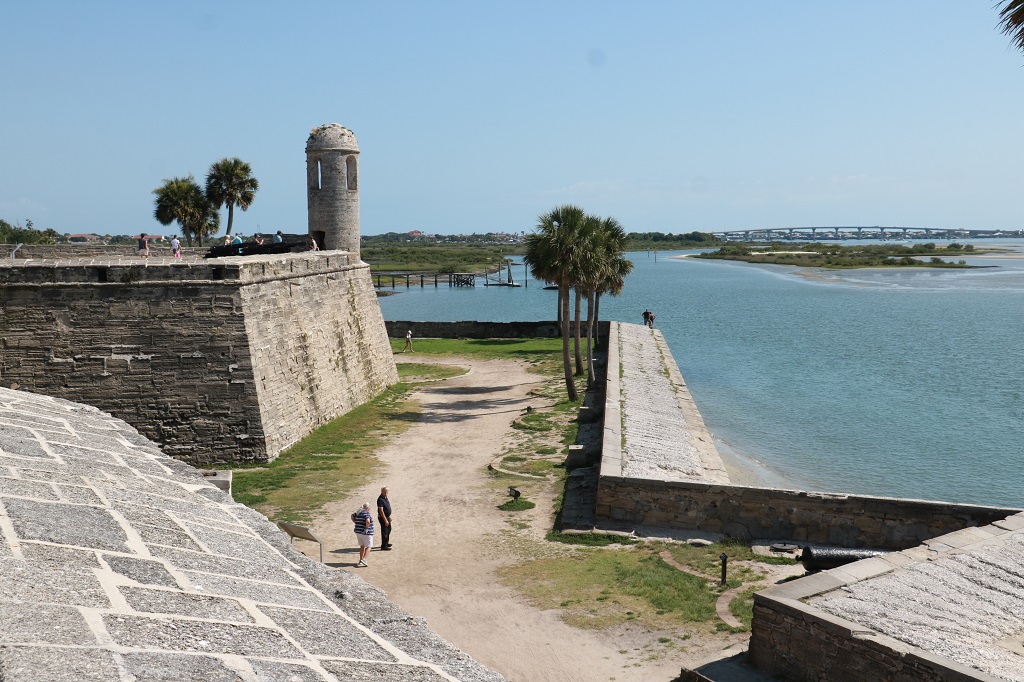

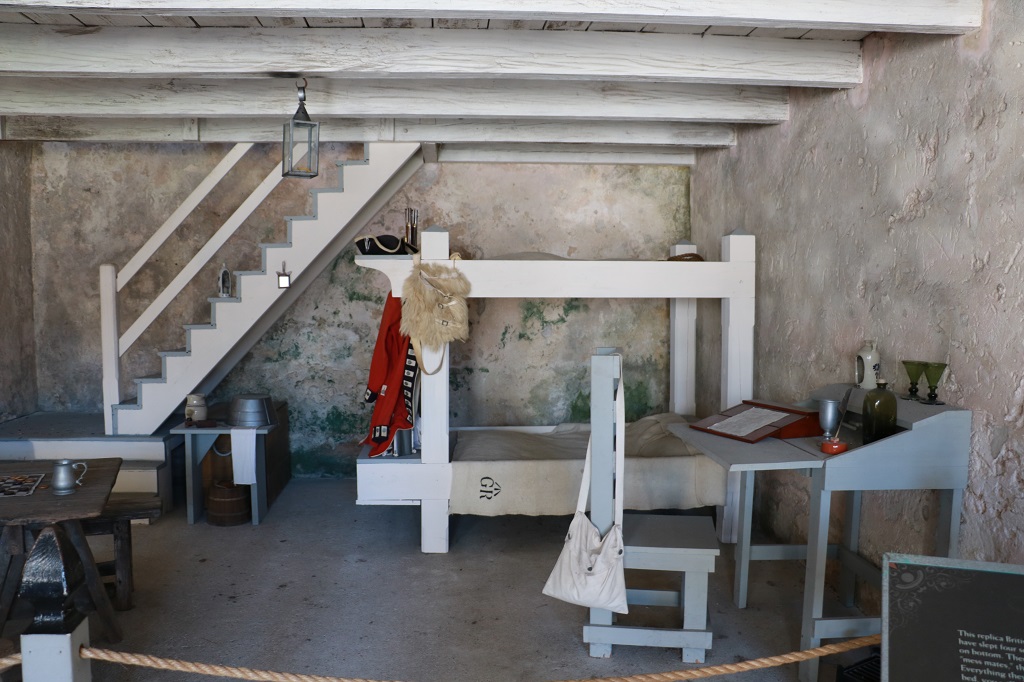

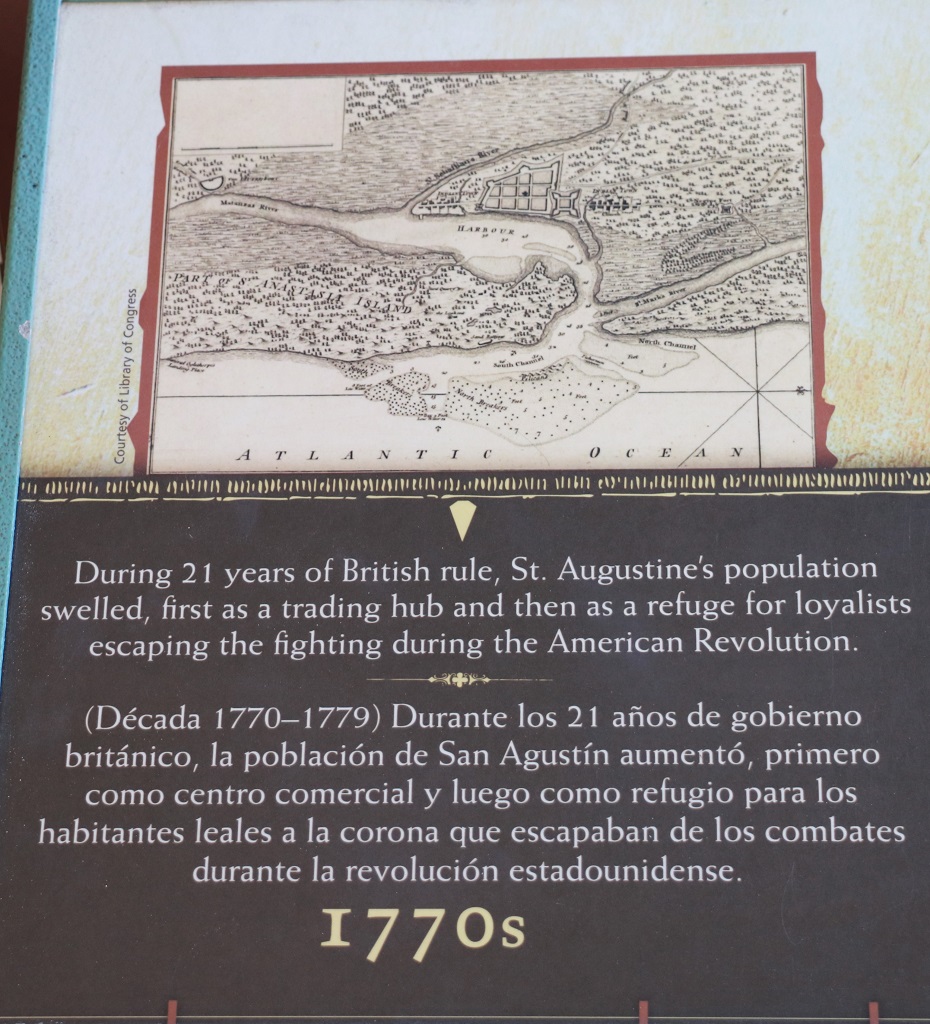
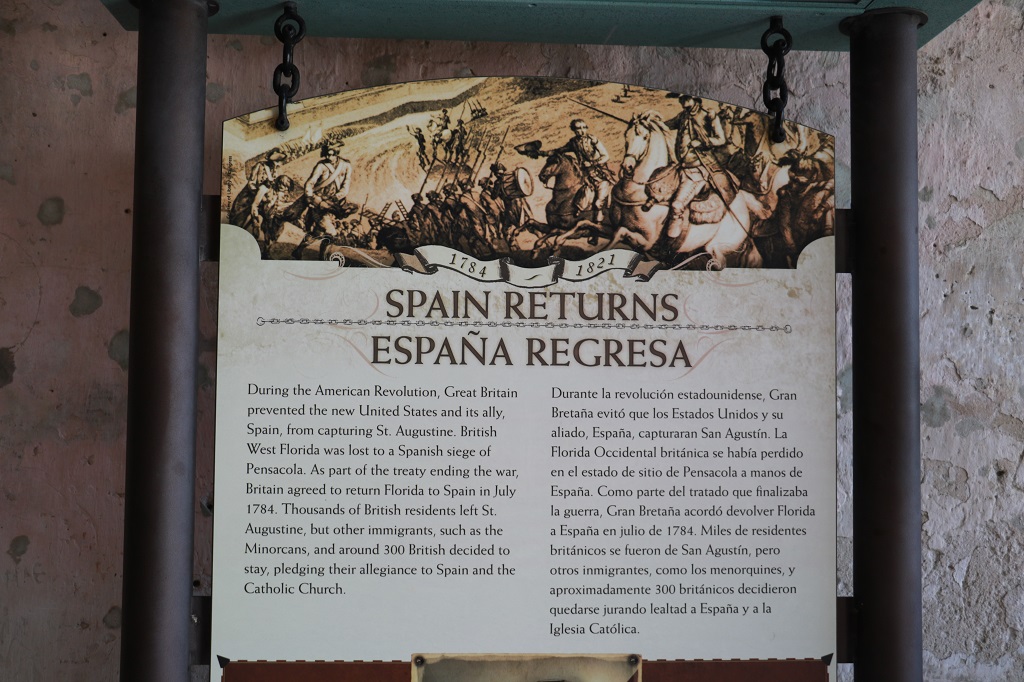
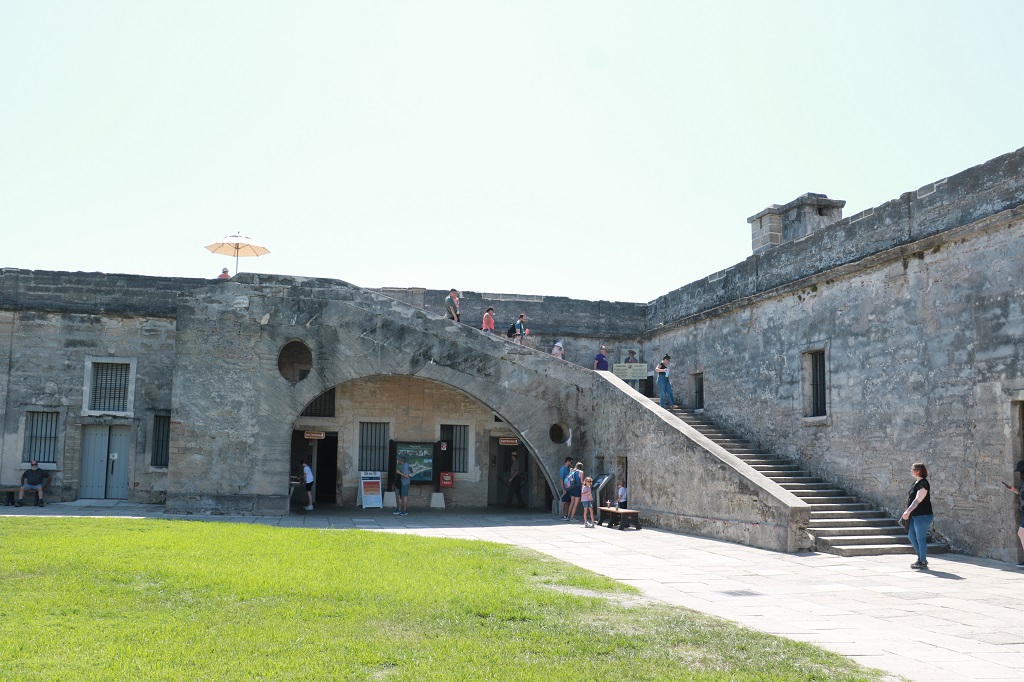
We left the Castillo after two hours.
There are at least 12 different museums – from classic cars to a Wax museum, to a Medieval Torture museum, to a Pirate and Treasure museum and museums in special buildings, plus a couple of big reenactment attractions, an aquarium, six or eight Spanish houses you can tour, a Golf Hall of Fame and a pirate ship or schooner cruise. There is even an alligator farm. This is a tourist town for sure!
Which is great, but everything has at least a $15 per person admittance fee. There is very little metered street parking – if you are lucky enough to find an open space (which we could not) and the big parking lots had a $20 flat fee. To go see things would cost us $50 with the parking ($68 when converted to Canadian dollars) and I would have to walk quite a long way to get to anything from the central parking lots. After all the walking on the hard surfaces of the Castillo my legs could not take a quarter mile to a museum plus the museum itself. This getting old and arthritic sucks! And even if I could do the walking we were not prepared to spend $30 US per to see a few small museums; interesting as they may be. We had decided we would like to do the Pirate & Treasure museum since St. Augustine was a place often visited by pirate marauders, but we could find absolutely no place near it to park.
Instead we took a driving tour up and down a lot of the streets. It was a bit hard to get pictures of many of the buildings from the car, but I managed to capture quite a few nice ones.


These are the old City Gates. In 1808, St. Augustine residents built the structure entirely out of coquina and used it as a line of defense against attacks. It was historically used for access into the city and protection for people living there at the time.
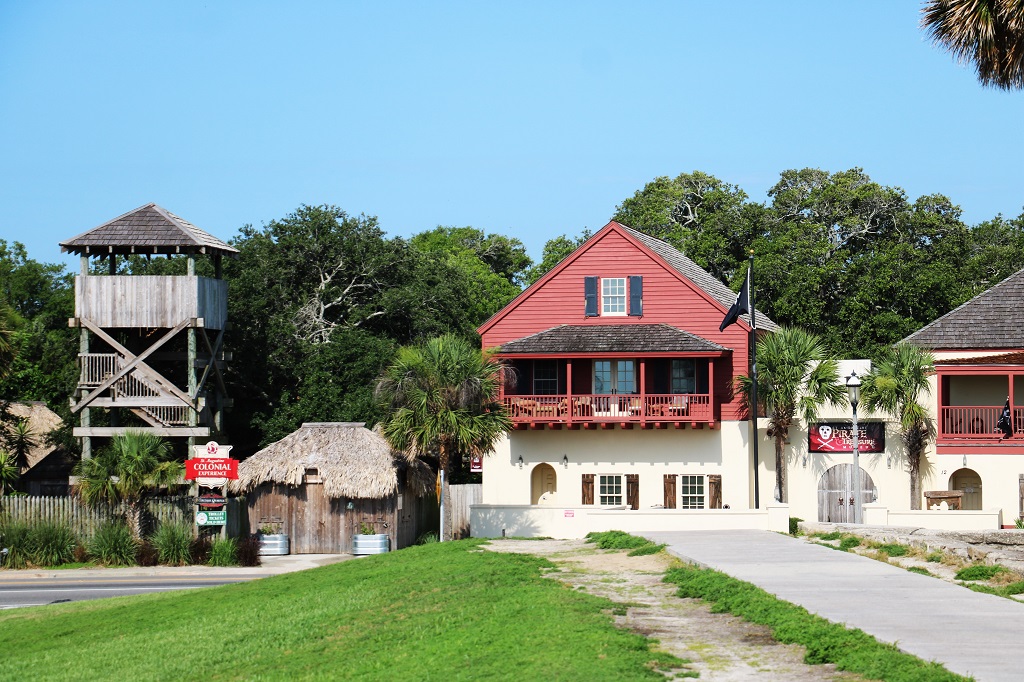
This is one of the immersive reenactment attractions. The St. Augustine Colonial Experience.
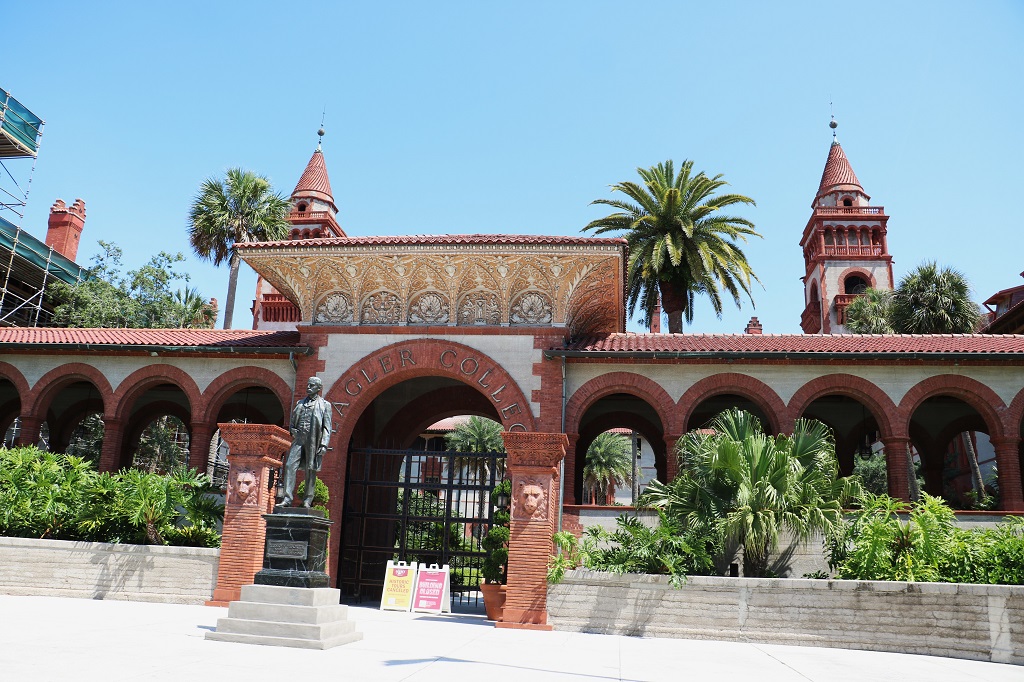
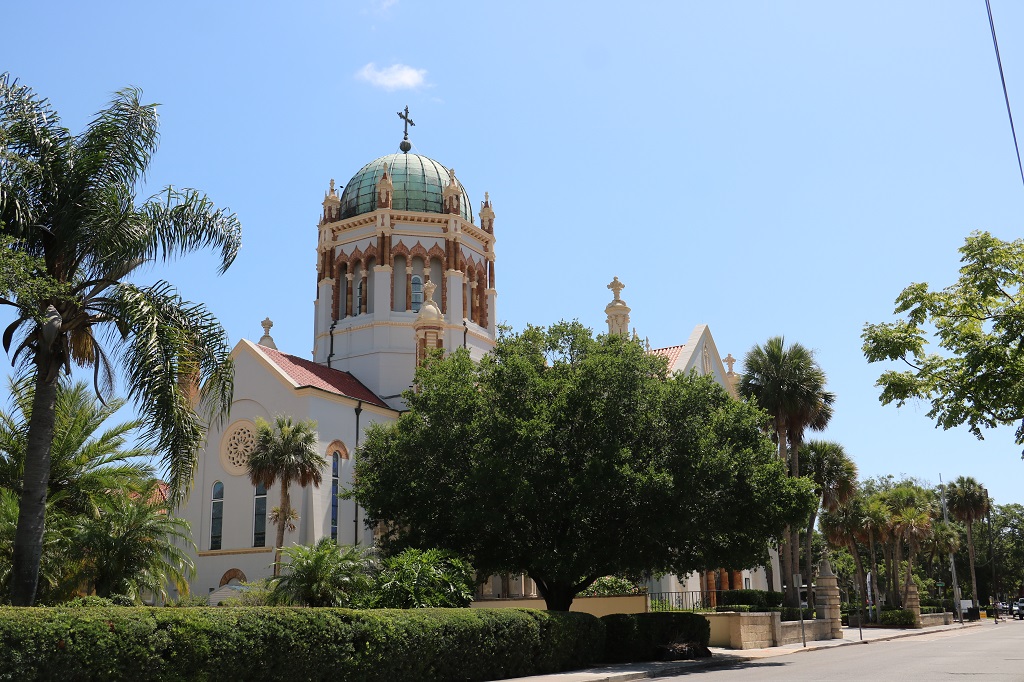
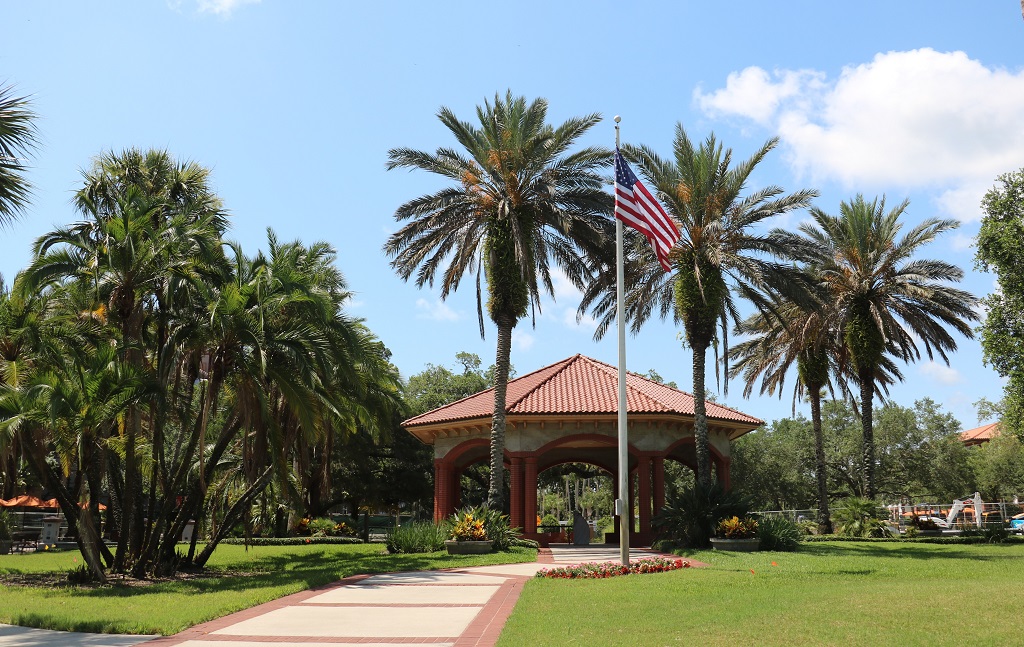
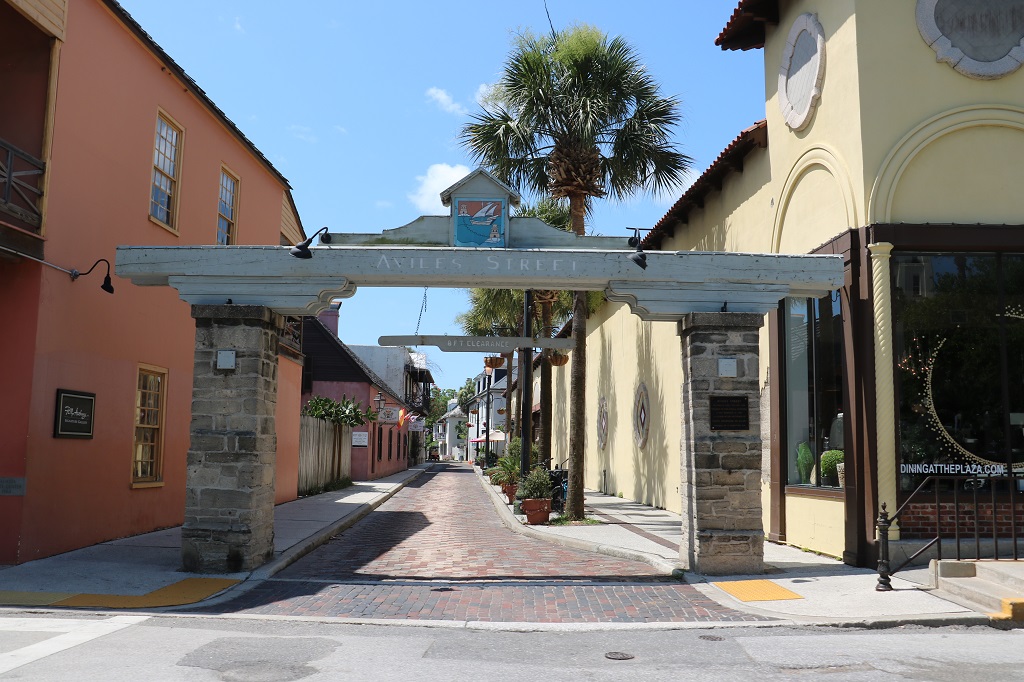

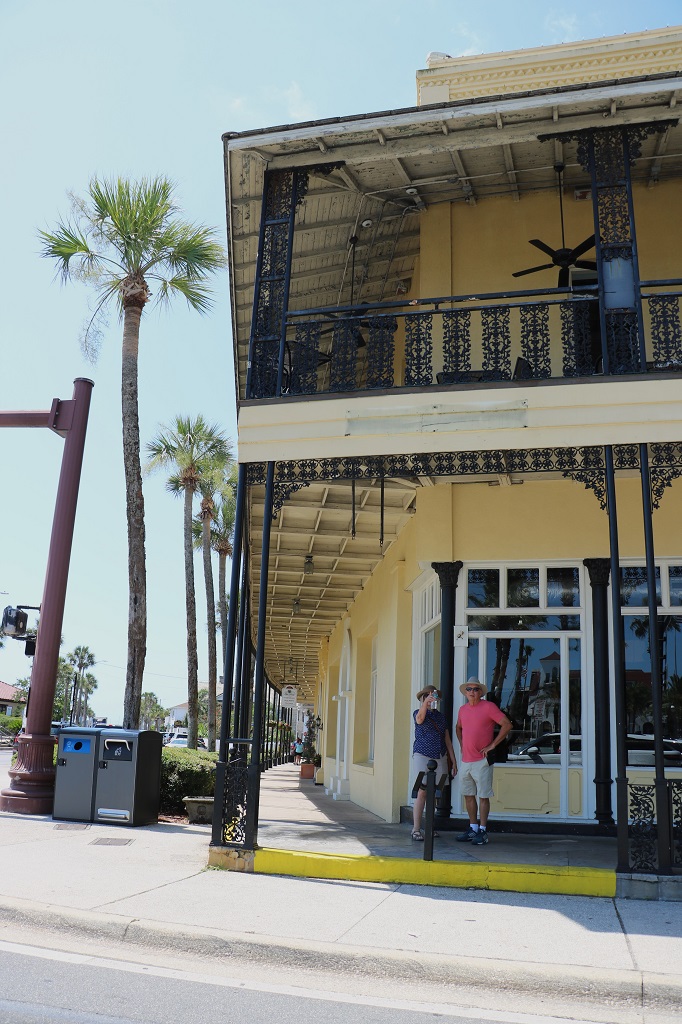
I loved the wrought iron scroll work on the railings of this building.
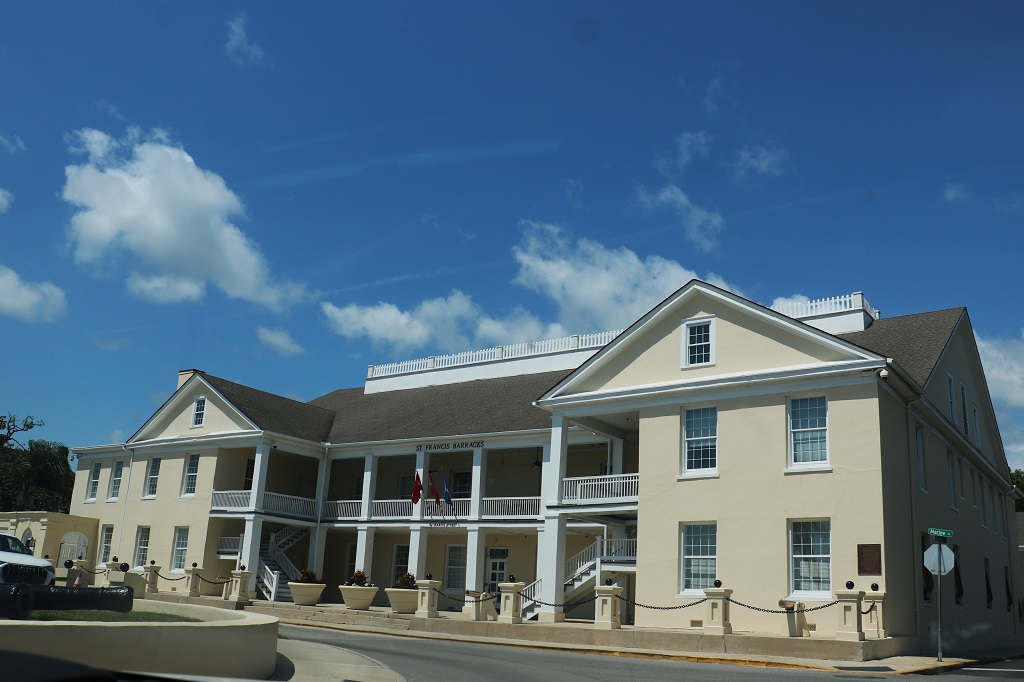
This is the National Guard’s St. Francis Barracks.
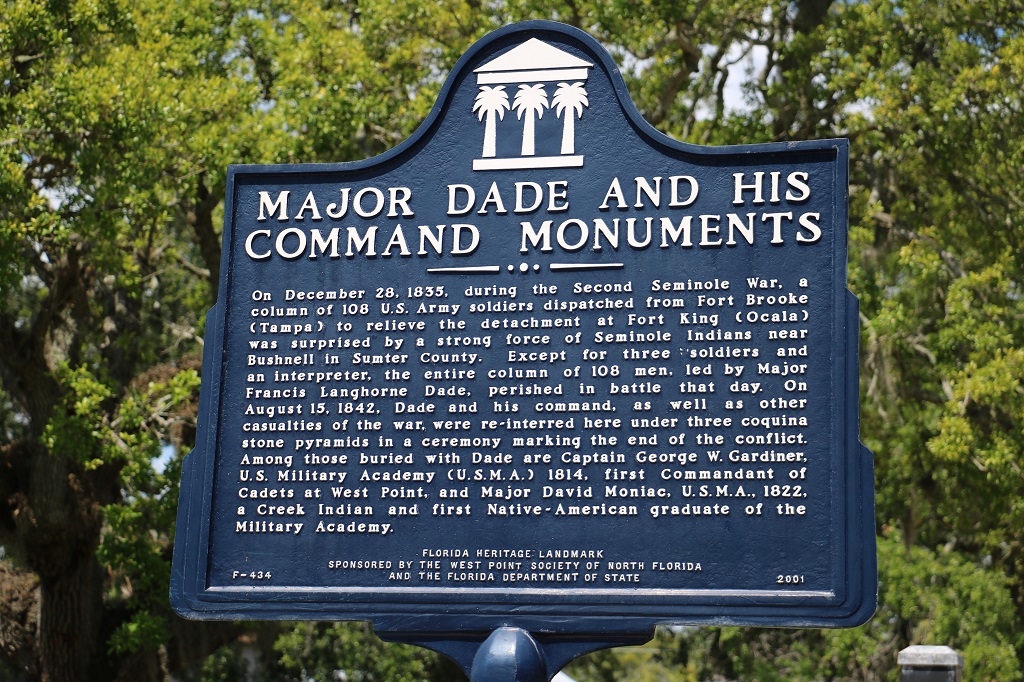
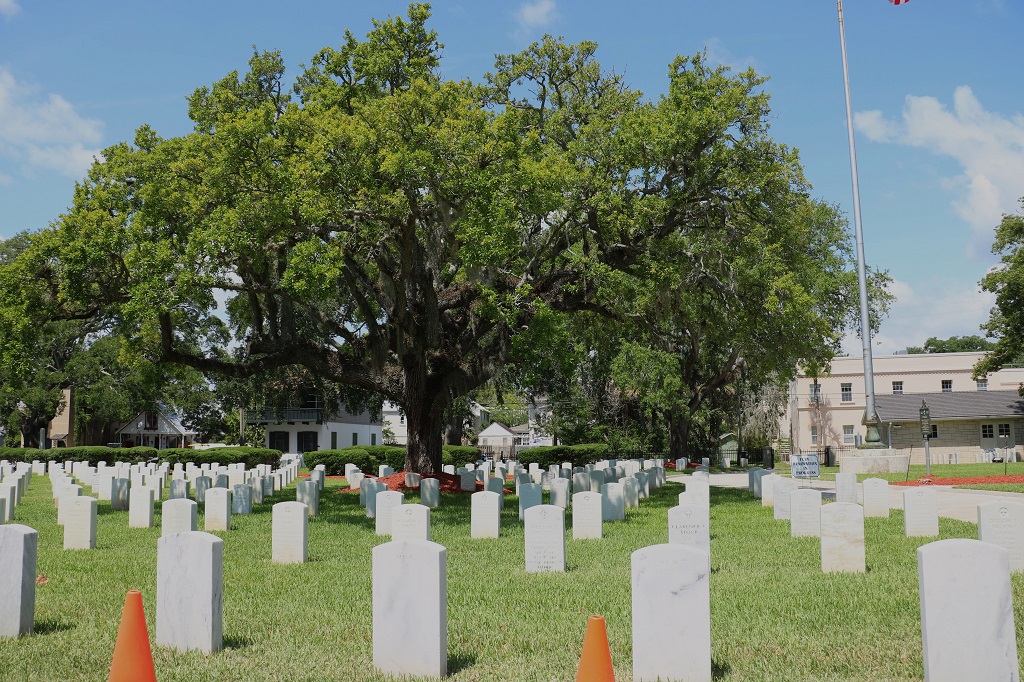
St. Augustine National Cemetery where Major Dade and his men were re-interred.
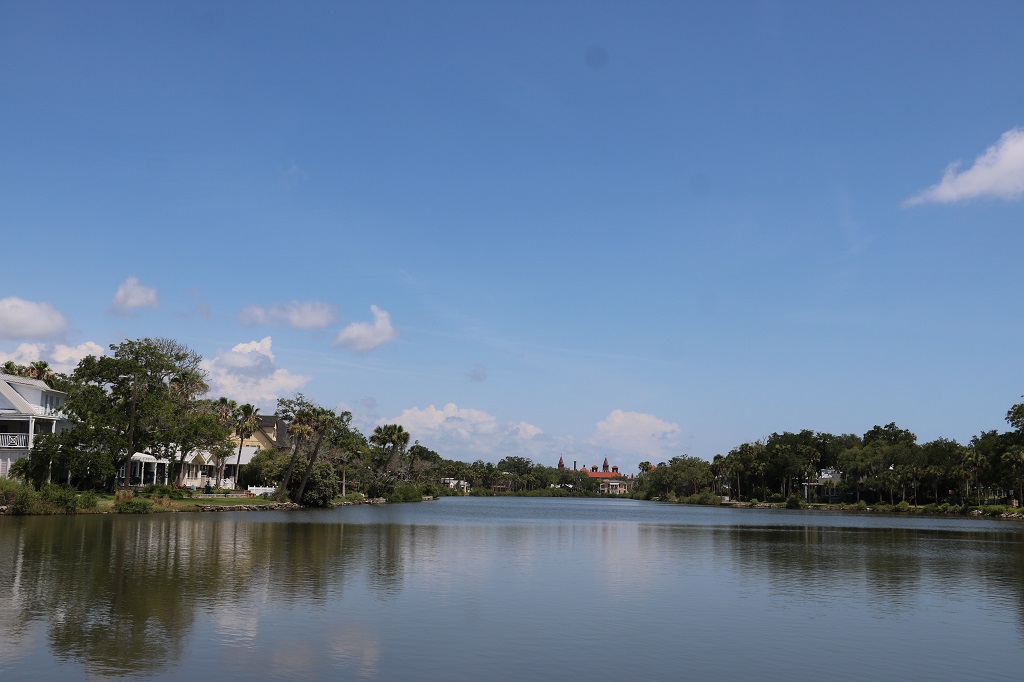
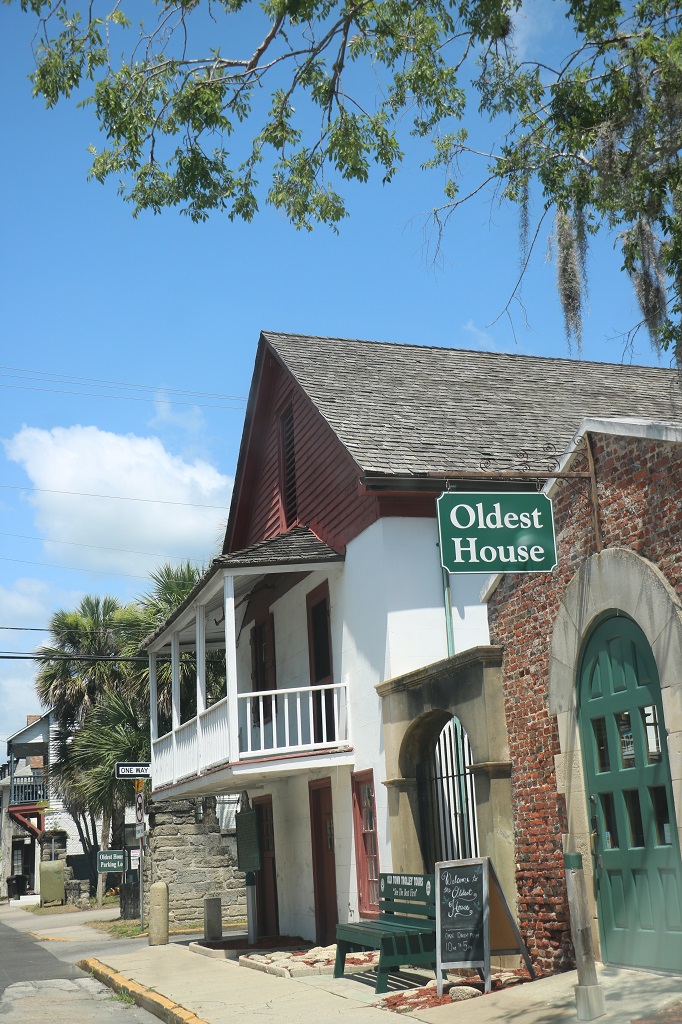
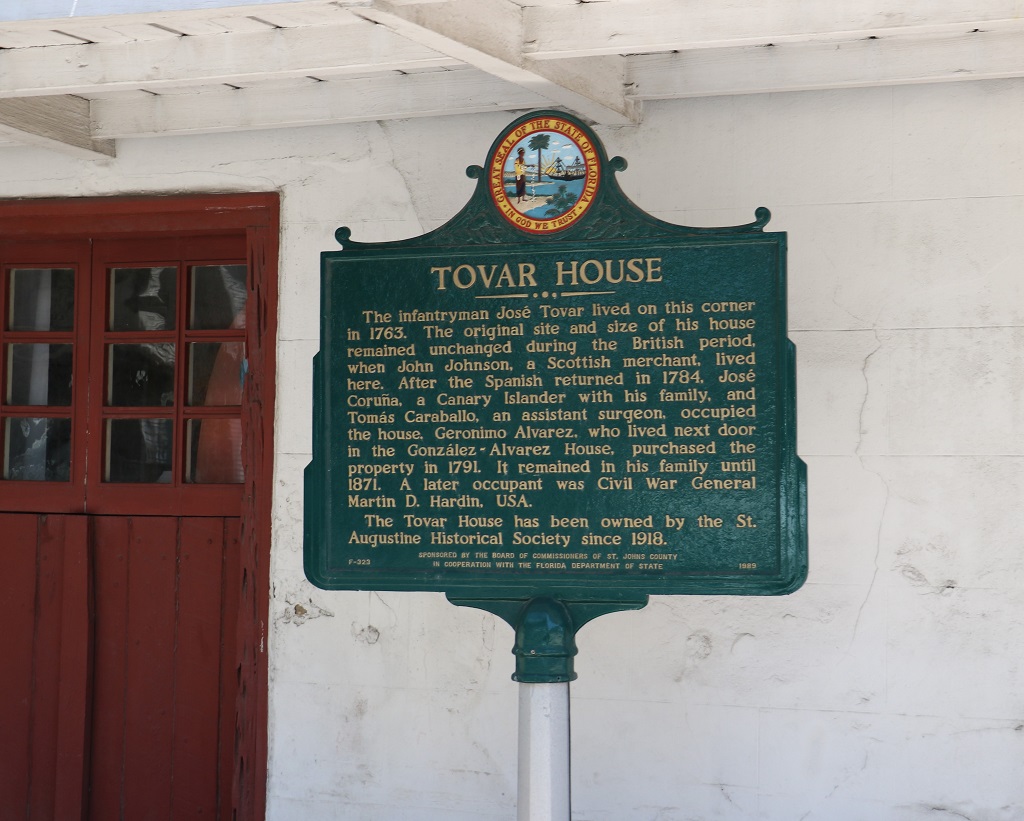

St. Augustine is the prettiest and most scenic place we have visited on our trip so far. We really liked it. Thanks Cousin Carol for suggesting we come for a visit.
After our drive around we went back to our hotel and spent some time before dinner planning a tentative route through all the states we want to get into to get a geocache on our circuitous route back to the North Carolina Outer Banks by June 19.
Tomorrow is primarily a driving day westward. We spend the night in Dothan, Alabama on our way to Laurel, Mississippi and Natchez from which we will head north.
 Hanna Travels