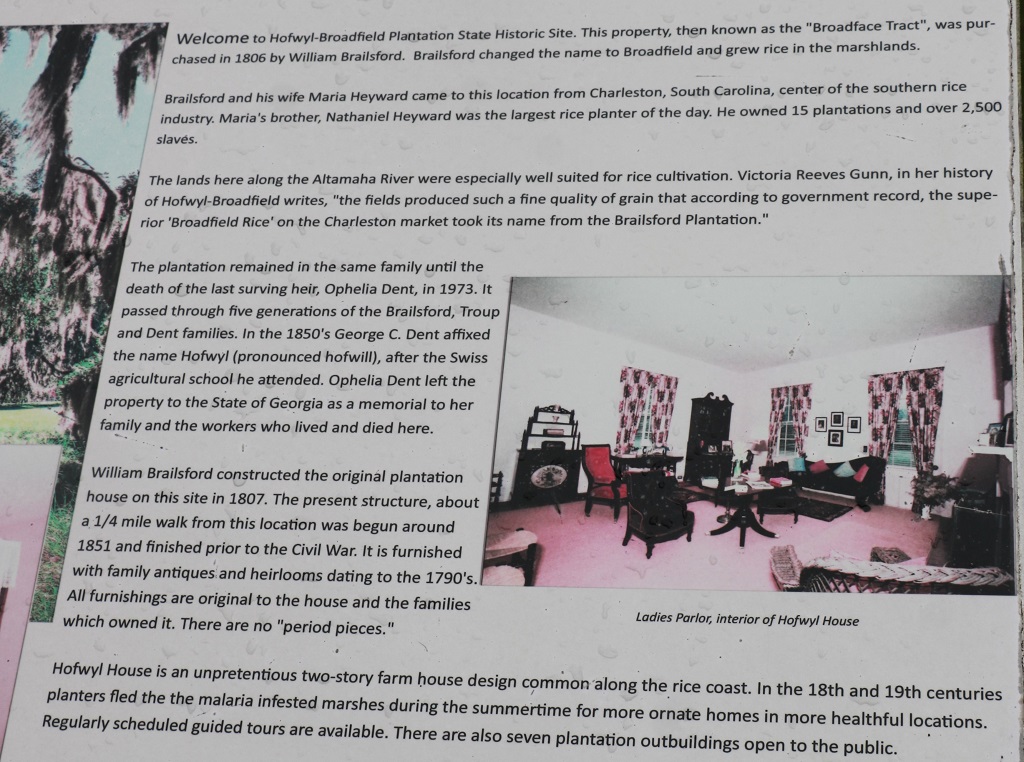
We were on the road southward by 10 am and drove down Highway 95, turning off onto Highway 17 to go visit the Hofwyl-Broadfield Plantaion. Hofwyl is pronounced Hofwill and was taken from the Swiss agricultural school that Mr. Brailsford’s son-in-law had attended.
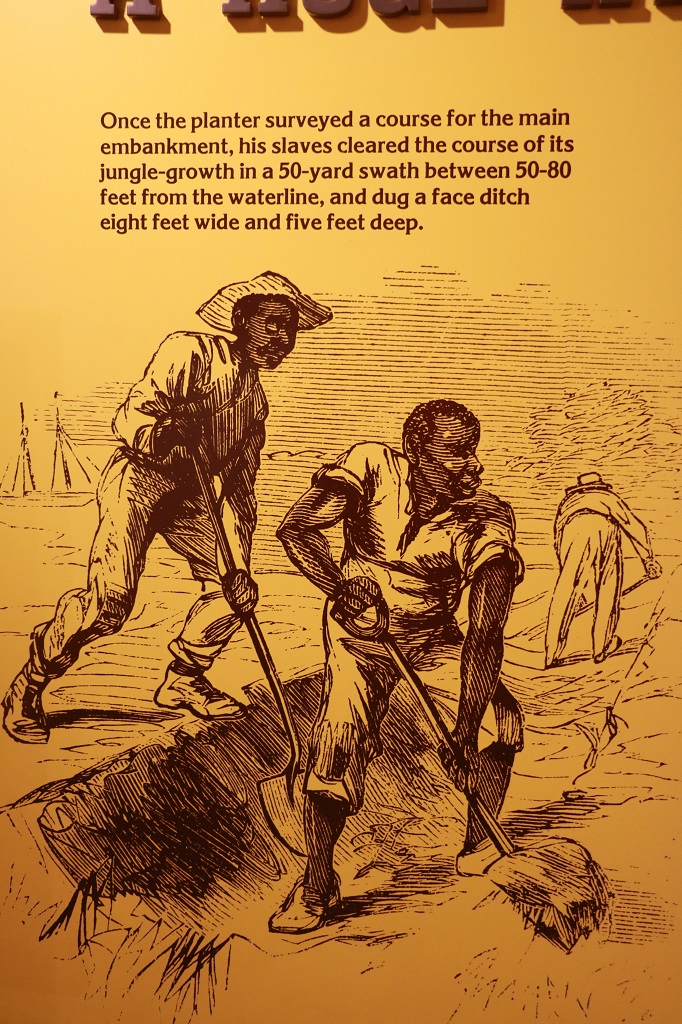
There were two videos to watch at the Visitor’s Center and a large display about the growing of rice in the marsh Low Country of the southeast coast. I have only put in a few of the information boards to show some of the strenuous work the slaves had to do to prepare the land for rice. The slaves Mr. Brailsford purchased came from West Africa where they grew rice. It was the knowledge of the slaves that created the rice plantations and made it the number one crop in Georgia for a hundred years. The rice production was crippled by emancipation. The plantation owners could not afford the necessary laborers and the marshy mucky ground would not support the new machinery that made the crop less reliant on manpower. The commercial propogation of rice ended here in 1915. The plantation had been in debt for many years and the three remaining family members converted the plantation into a dairy farm. It was the hard work and industriousness of the two sisters that finally paid off the debt.




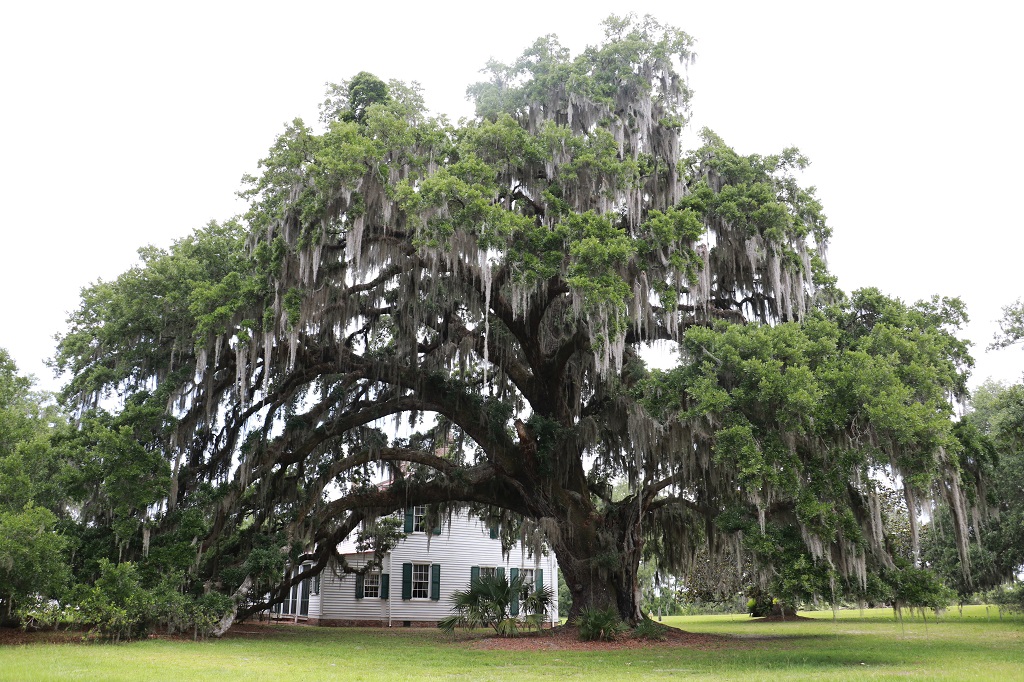
This Live Oak is named Ophelia’s tree and is estimated to be 650-800 years old. It was the practice to build your house under or near the huge trees to provide some shade during the humid, hot summer months.
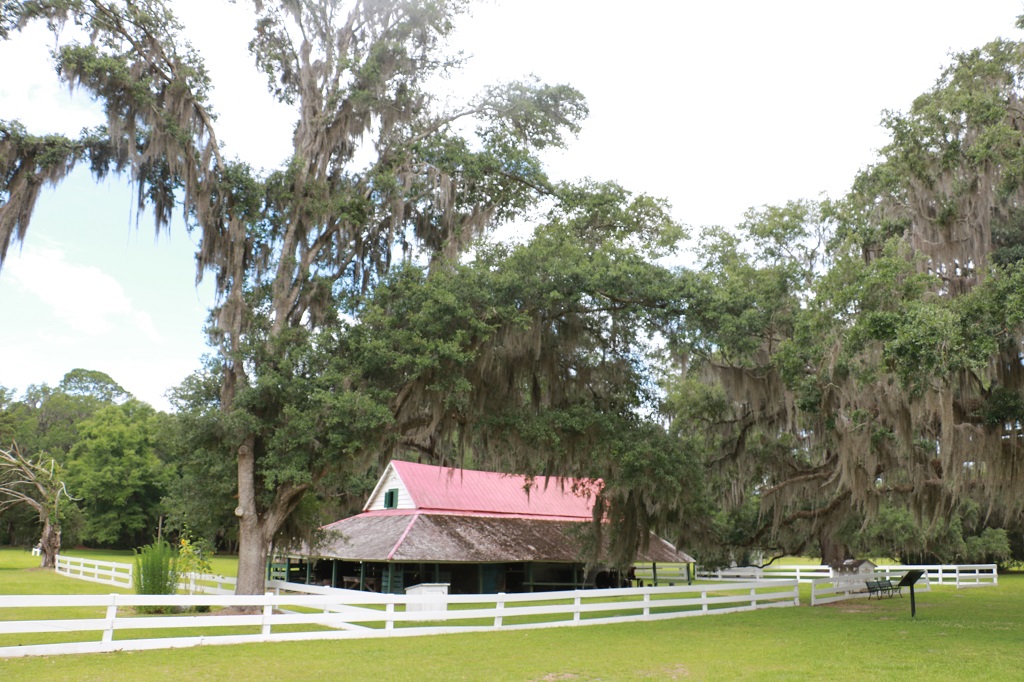


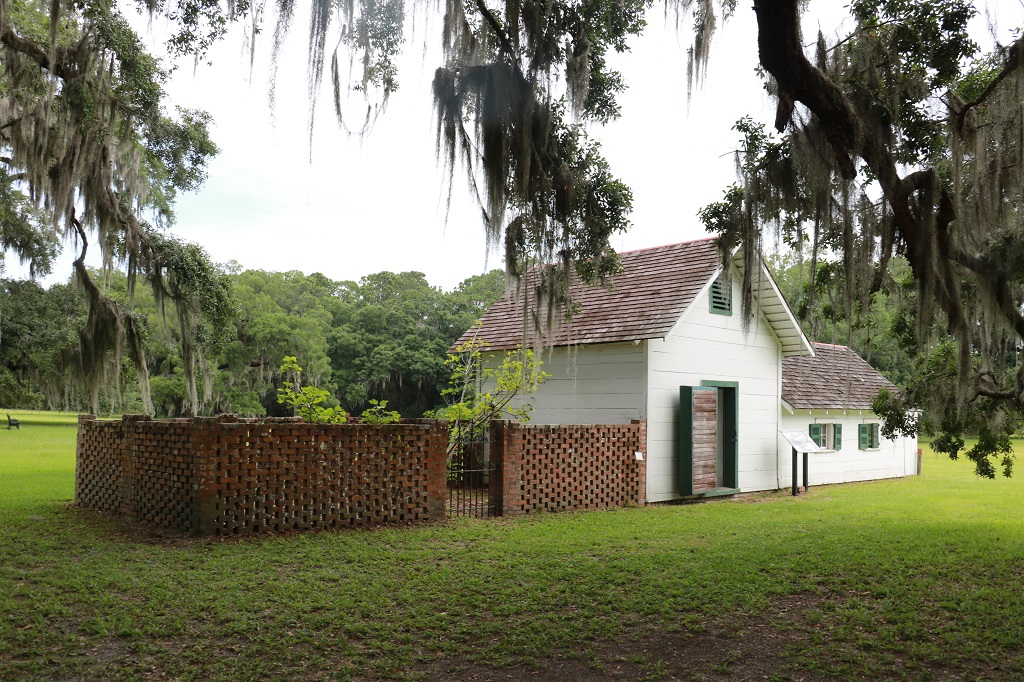
The lattice brick area was the laundry yard. The air could circulate through the fencing while it also protected the laundry from wandering cows and pigs. The small building was the ice house where meat would be kept after butchering.

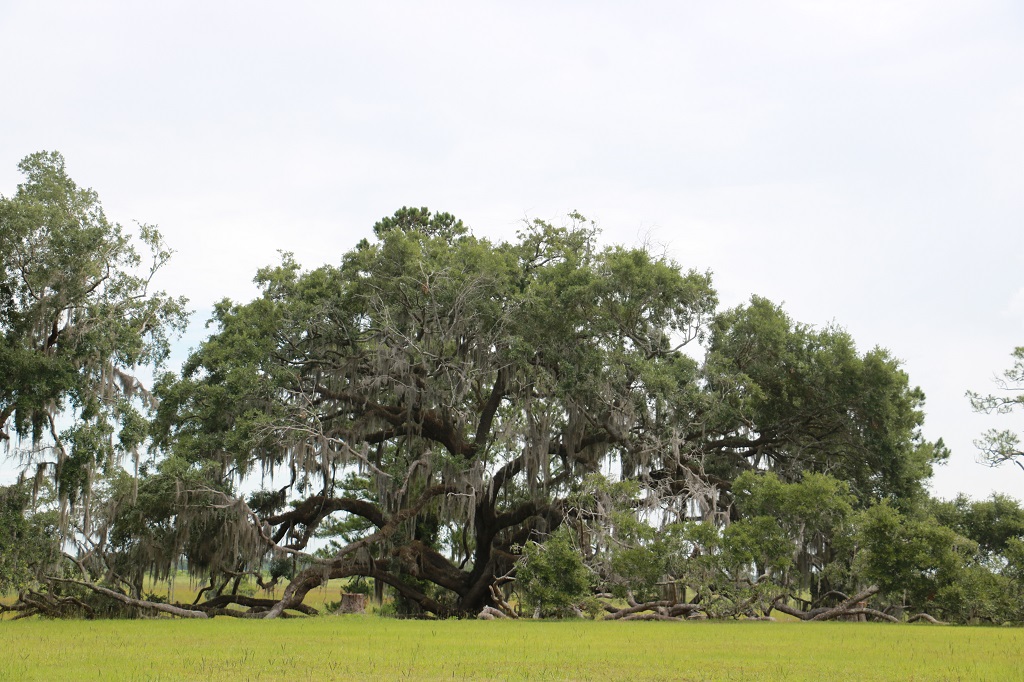
Behind this huge Live Oak are the former rice fields, now returned to marsh.

This is an areial photo of the land that was in rice cultivation during the heyday of the plantation before the Civil War. They had 385 slaves that worked the fields. After the war the family had to sell quite a bit of their 7,500 acres to pay taxes.
A charming Georgia Parks workernamed Dillon was our guide through the house. Five generations of the Brailsford-Troupe-Dent families lived in the house. The last surviving member was Ophelia Dent. She and her sister Miriam never married and the brother Grantz had no children. Miriam died 20 years before Ophelia in 1953 and Ophelia left the property and all its contents to the Nature Conservancy of Geogia when she died in 1973. The Nature Conservany turned it over to the State and it is a designated Historic Park.
The house is fully furnished with the family’s possessions as they were when Ophelia died. Many of the items are from the 18th century and early 19th century and are in pristine condition. There are no reproduction items in the house and most things are still in the same place as they were when Ophelia died. Only a few things have been moved around. It was very cool to know that everything was original; some things as old as 1797. So many historic houses and buildings are furnished with reproductions or period items collected from other places.
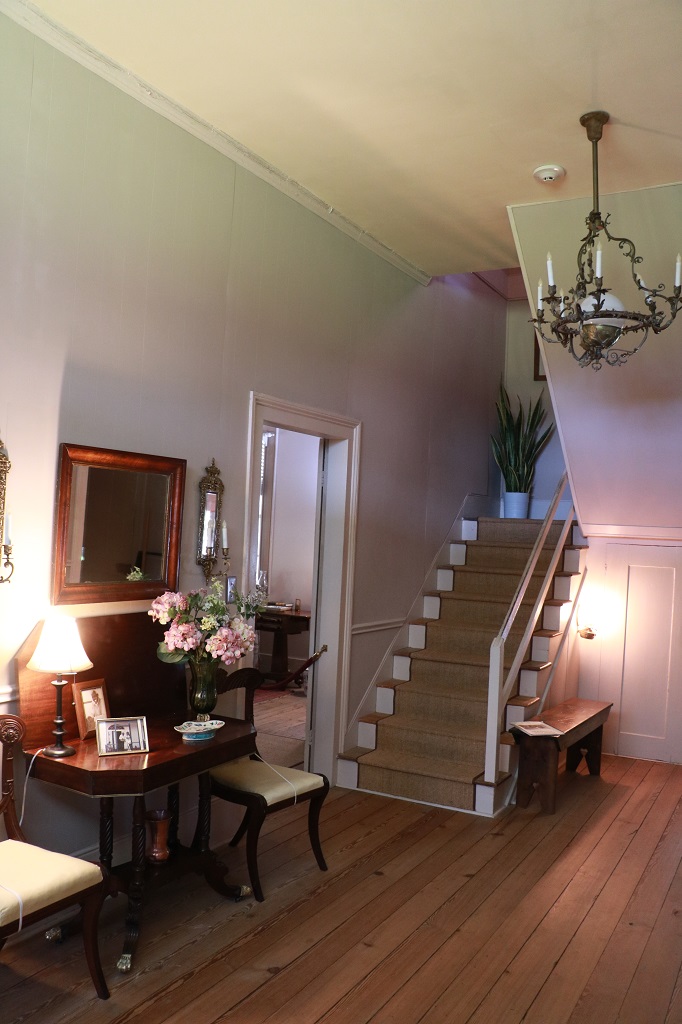
The floors are all Heart Pine and are in beautiful condition. The chandelier was purchased from the Wormsloe Plantation that we visited in Savannah.
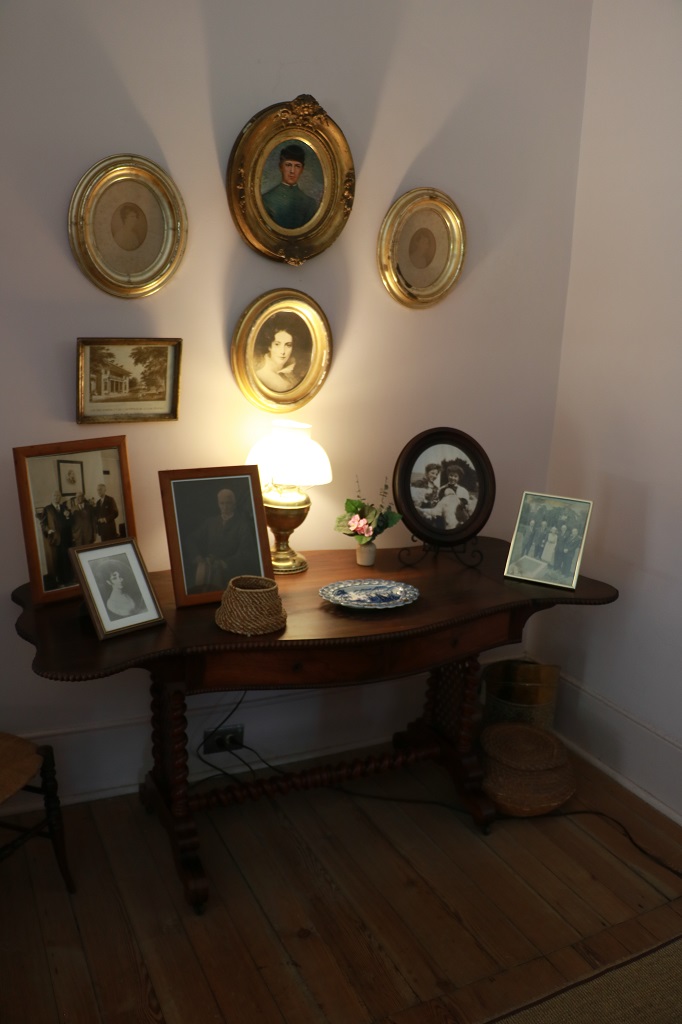
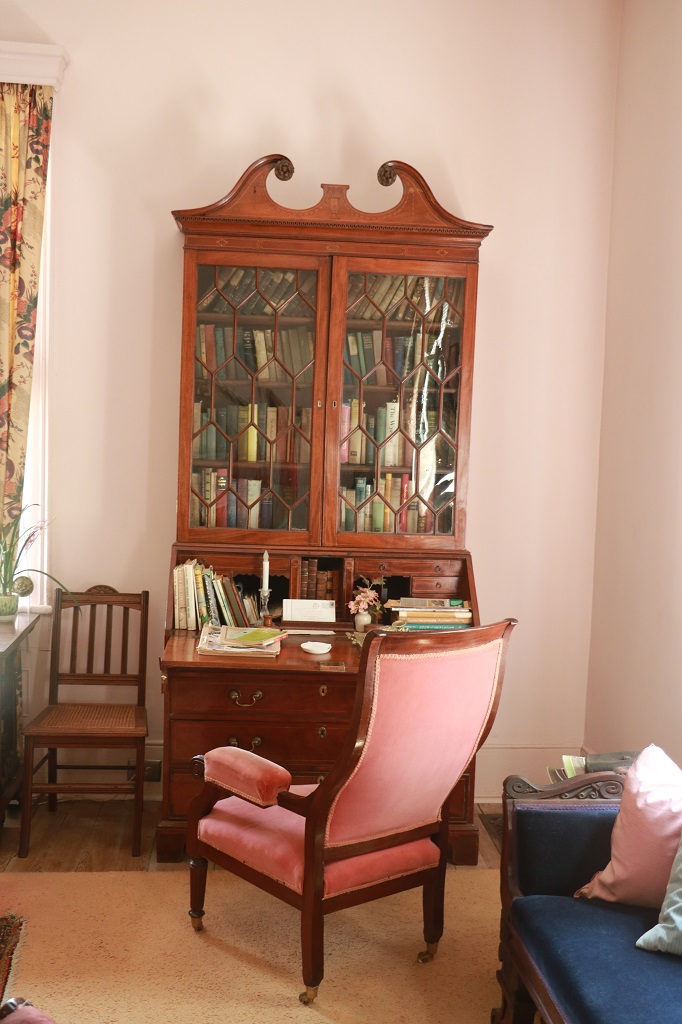
These two photos are from the Ladies Parlour. I could not get far enough back to take a good picture of the tables and chairs in the room.
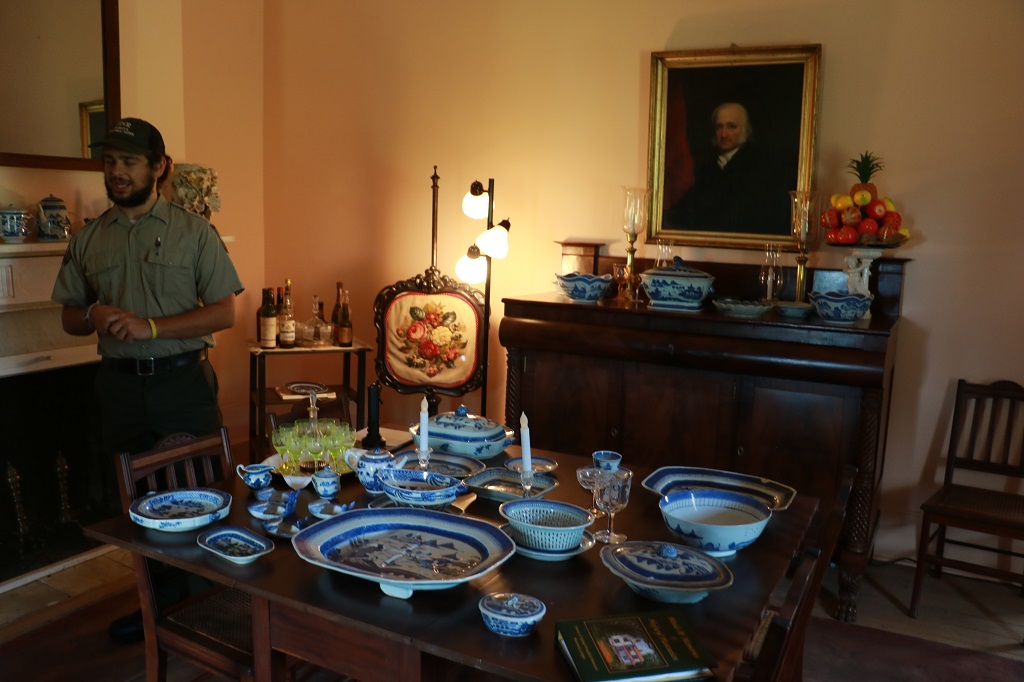
The trading ships that came from the orient used crates of china dishes for ballast and when they arrived all the crates would be unloaded and the dishes sold cheaply as they were no longer needed. In this way, many well-to-do homes had large sets of china from China.

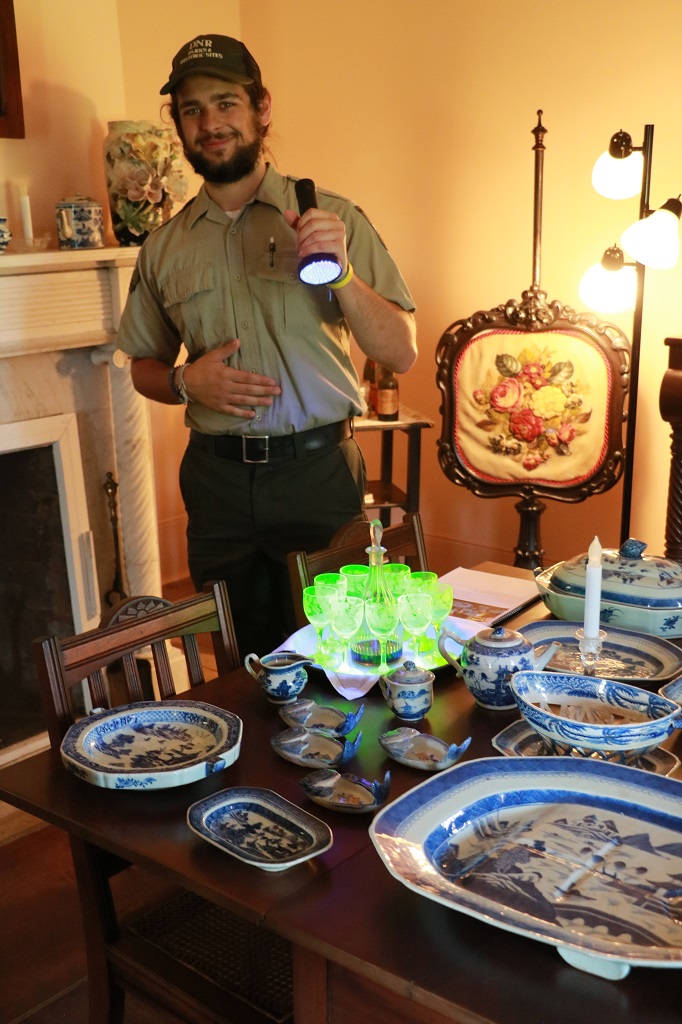
I did not catch the name of this glassware set, and it was not an expensive item at time of purchase. What made it desirable was the yellow-green colour (you can see it sitting on the table in the photo above). What people did not know at the time was the ingredient that gave the glass the unique colour was uranium. Dillon used a black light to show how it glowed. There was not enough uranium to harm the people using the glasses but it was deadly for the people making them.
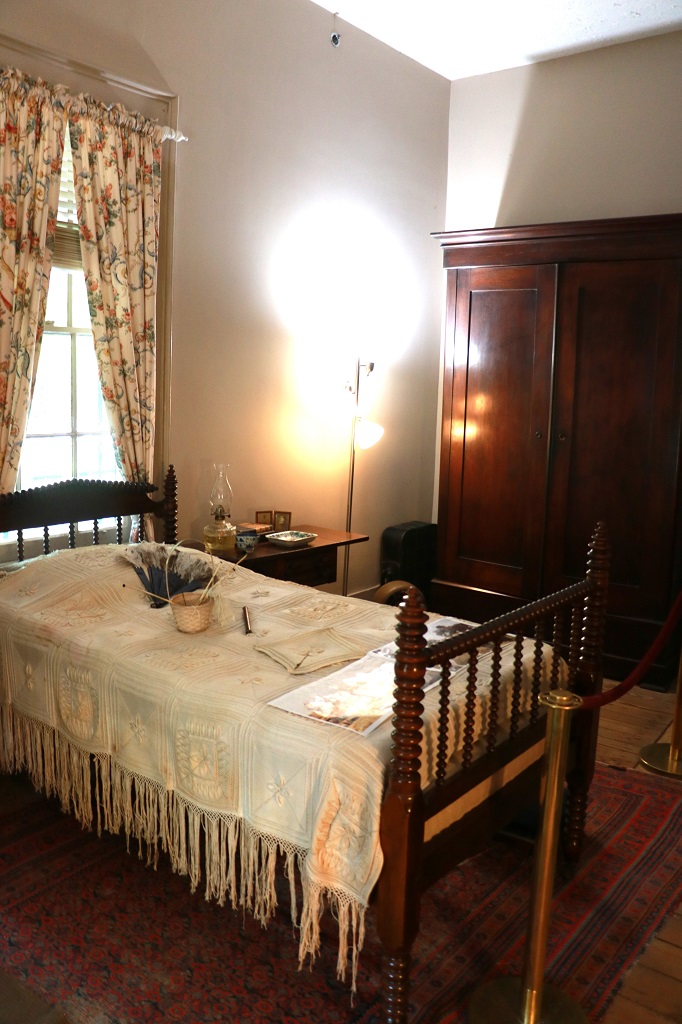
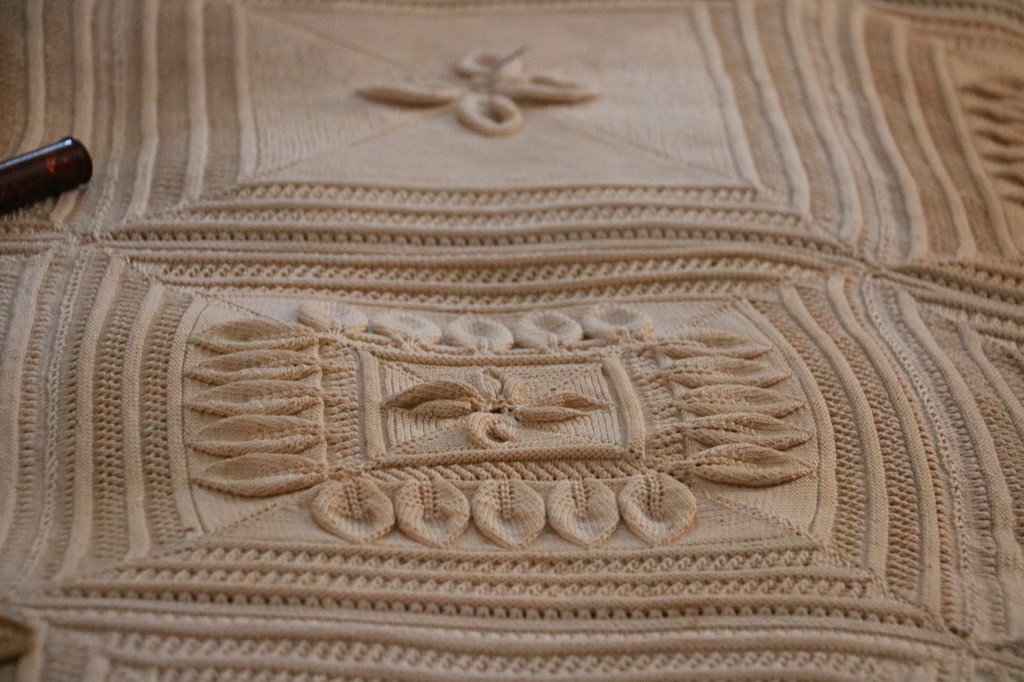
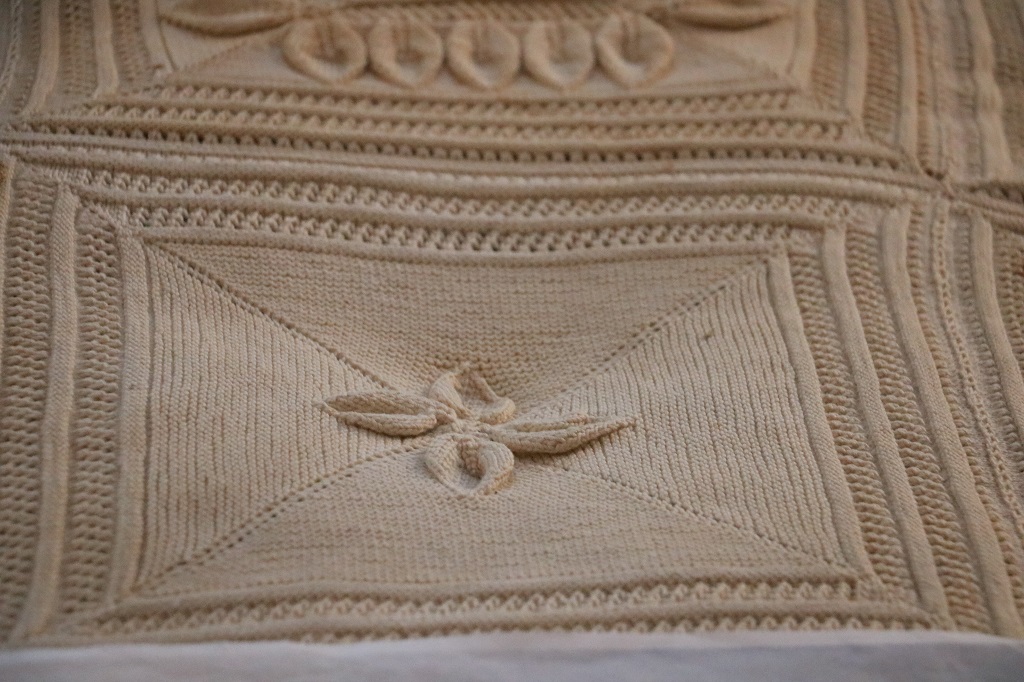
When Miss Ophelia was elderly she had her bedroom moved downstairs into what was once the Gentleman’s Parlour. She made the bed covering. It looks like a type of crochet and it is estimated it would have taken her about 10 years to complete due to the very fine needles and thread that was used, not to mention the detailed pattern.

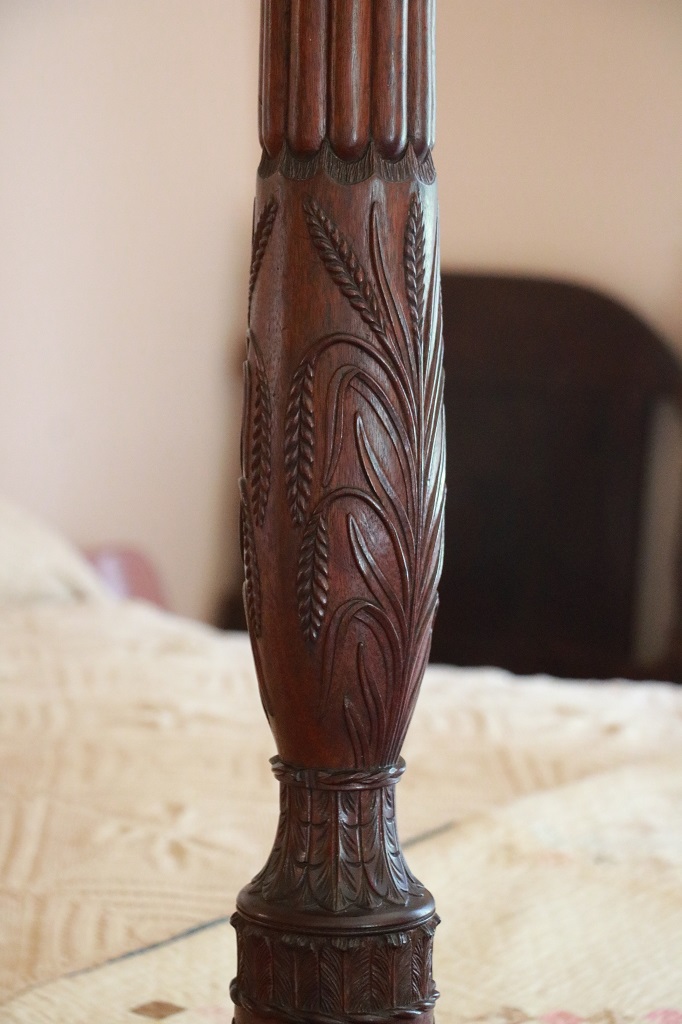
There were three bedrooms upstairs, including the master that had a custom made bed with rice carved in the foot posts. Against the wall are the pieces of an 18th century crib that was in the attic, as was the trundle bed underneath. It would have been common practice for infants and young children to sleep in the parent’s bedroom so they could be gathered up quickly and taken to safety in the event of hurricane, storm, or fire.
At the foot of the bed on the chest there are two lead ‘keys’. Barely visible is a round dark spot on the bedpost just a little below the top of the chest. The ‘keys’ fit into the hole and were used to tighten the ropes that supported the mattress as they would begin to sag after sustained use. The expression “Night, night, sleep tight, and don’t let the bed bugs bite” comes from this era. The first part of the little rhyme refers to having tight ropes holding up your bed and the second part refers to the red bugs that would be in the moss that was picked up off the ground and used as filler for mattresses, pillows, etc. and would bite you in the night.
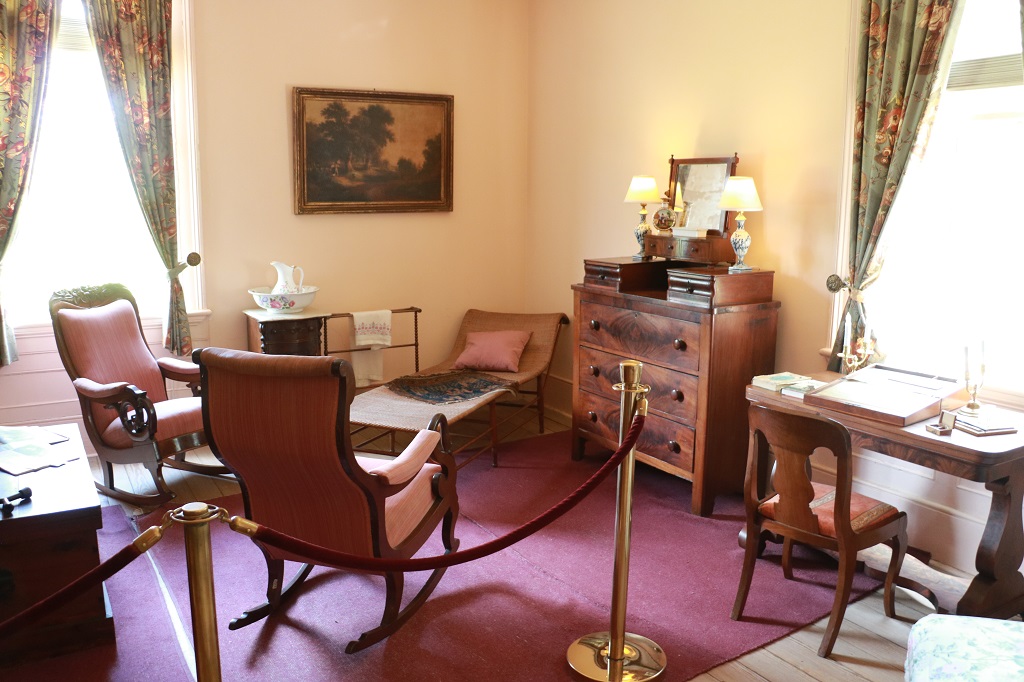
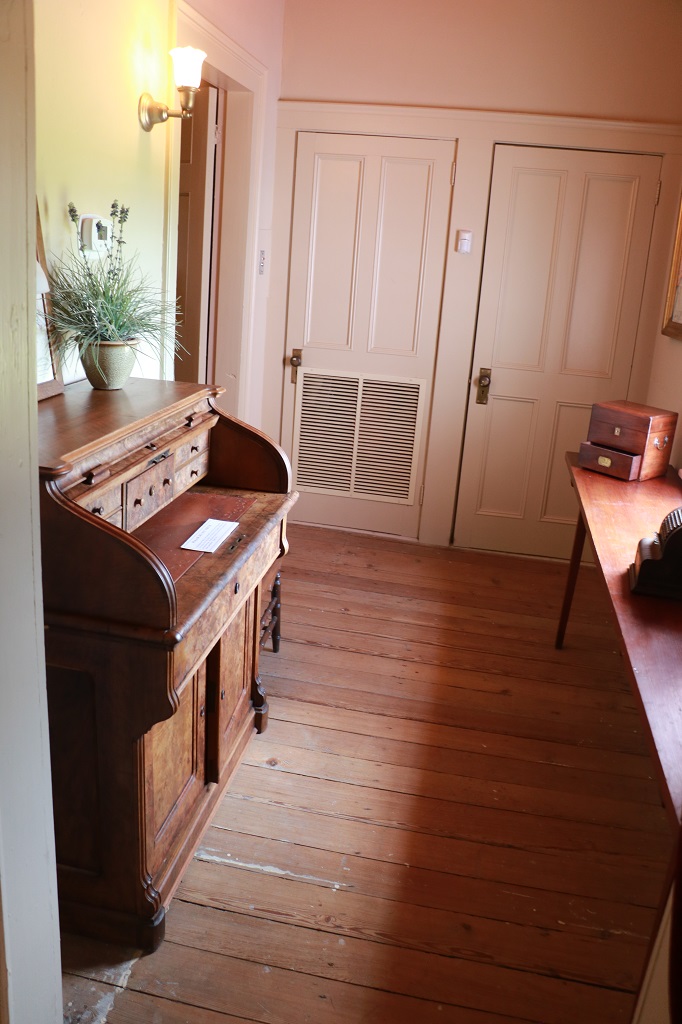
This small corridor space was used for many purposes over the years and has a closet at the end which was unusual for the time. The space also connected to one of the other bedrooms which was probably used as a nursery for young children.
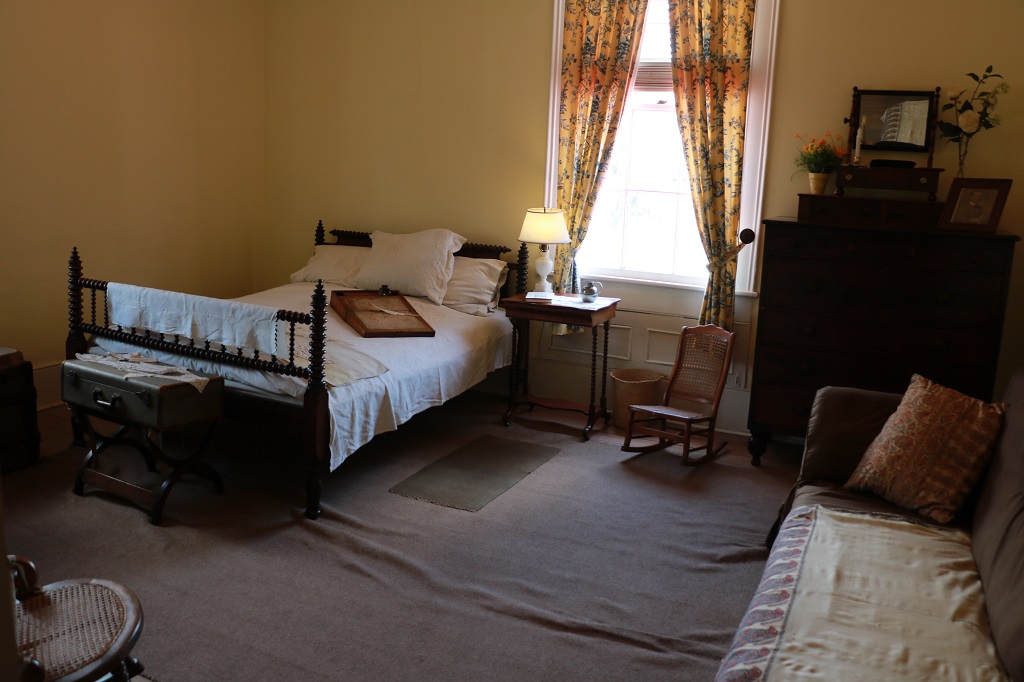
We had arrived at the plantation at 11 and left at 1:15. We crossed the state line into Florida at 2 and a short distance later left Highway 95 and drove down A1A along the coast to St. Augustine.

We had a 15 minute ferry ride from Fort George Island to Mayport along the way.


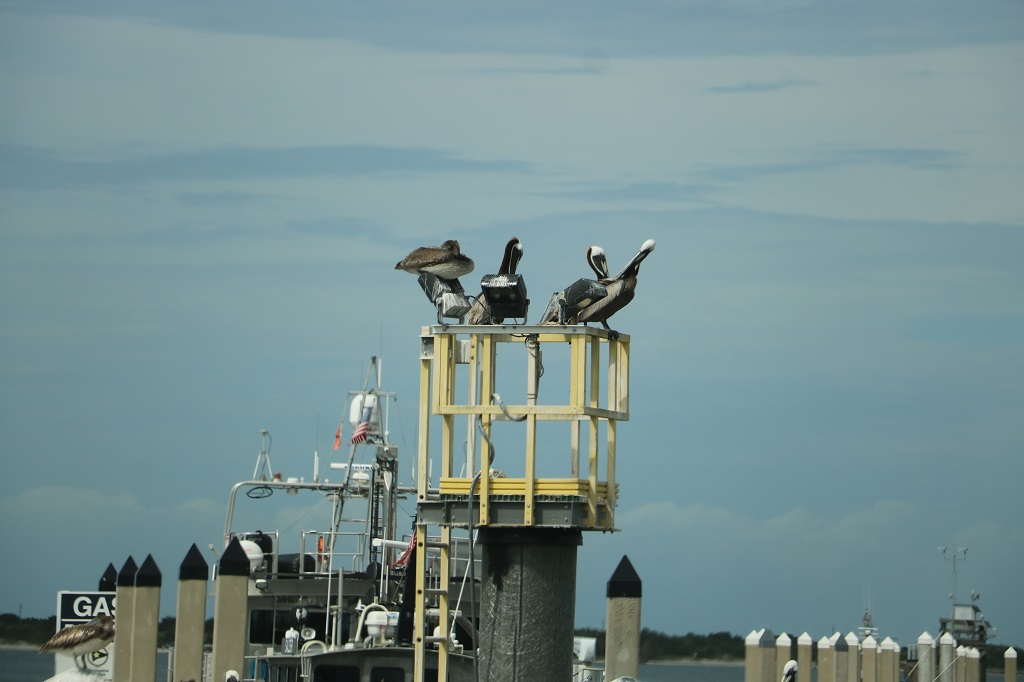
It was a much slower road through many beach areas with lots of stop lights quite a distance past Jacksonville. After that it was a nice quiet two-lane road along a very narrow spit all the way to St. Augustine. We arrived about 6, checked into our hotel and went to find dinner. We explore tomorrow.
 Hanna Travels