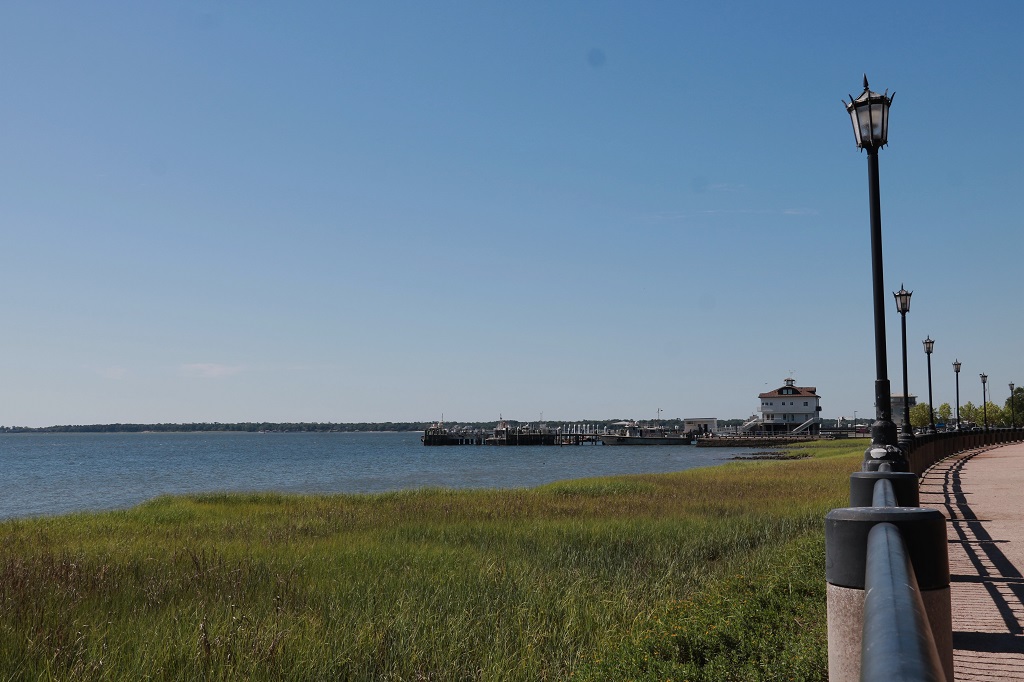
Before we left Charleston we went to see the iconic Pineapple Fountain at Vendue Wharf and the Exchange House & Provost Jail.
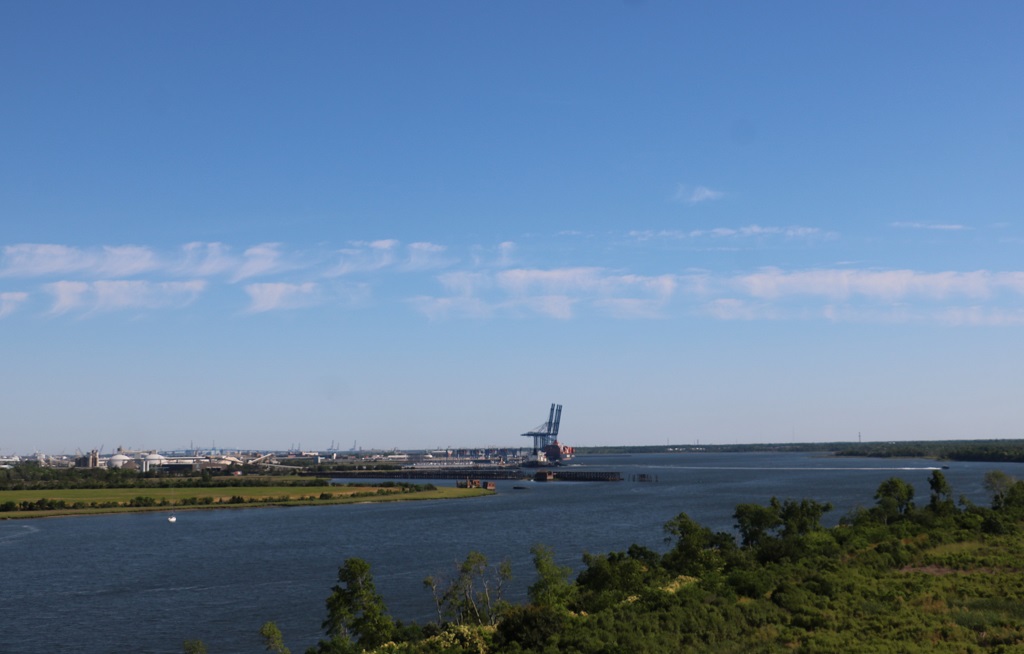
This is the view as we drive from our hotel in Mt. Pleasant and cross the bridge to Charleston. The area is very flat. This whole coastline is called the Low Country and the water table is very high. Water and marshland are everywhere. The city skyline is not high either. There are no skyscrapers in Charleston. There is a law that no building can be higher than the highest church steeple. And there are lots of steeples to choose from. Historic Charleston had 182 churches.

The Pineapple Fountain was built in 1990 and quickly became a favourite image of Charleston.

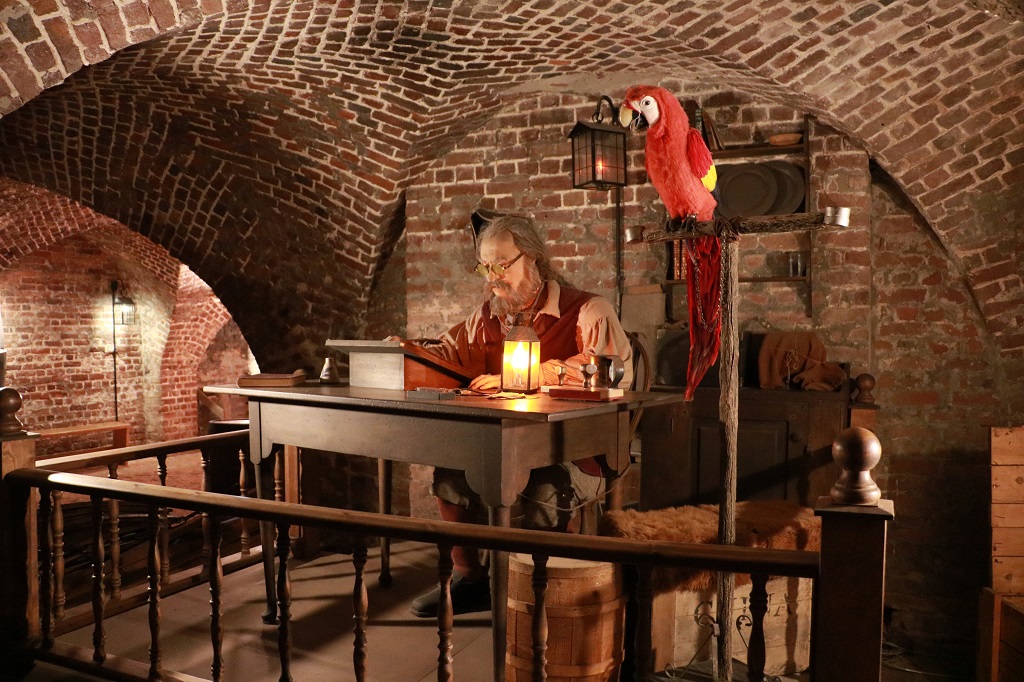
We arrived at the Exchange House and Provost Dungeon just as the tour was beginning so we hustled down to the lowest level. The jail (called a dungeon by the prisoners, not the city) was where everyone from someone who gave insult to a prominant citizen to murderers and career criminals, to slaves and women were all kept together in one not-very-big open space. The original use for the rooms under the Exchange House were to store the goods that were being bought on the exchange floor above. The guide gave a very interesting talk about all the different uses that had been made of area over the many years of the building’s lifetime.
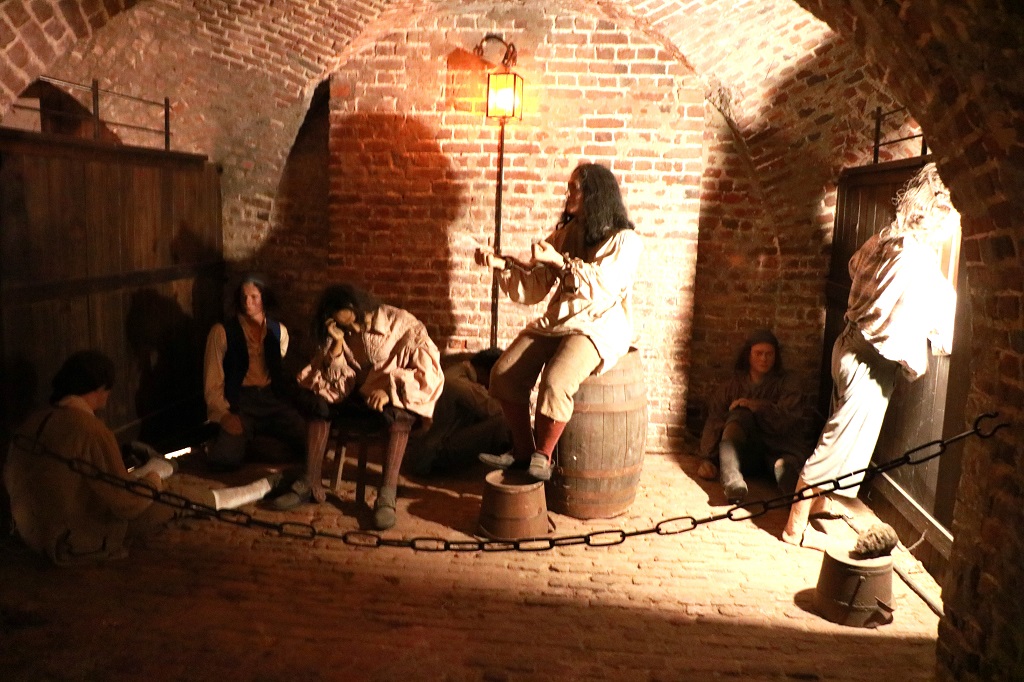
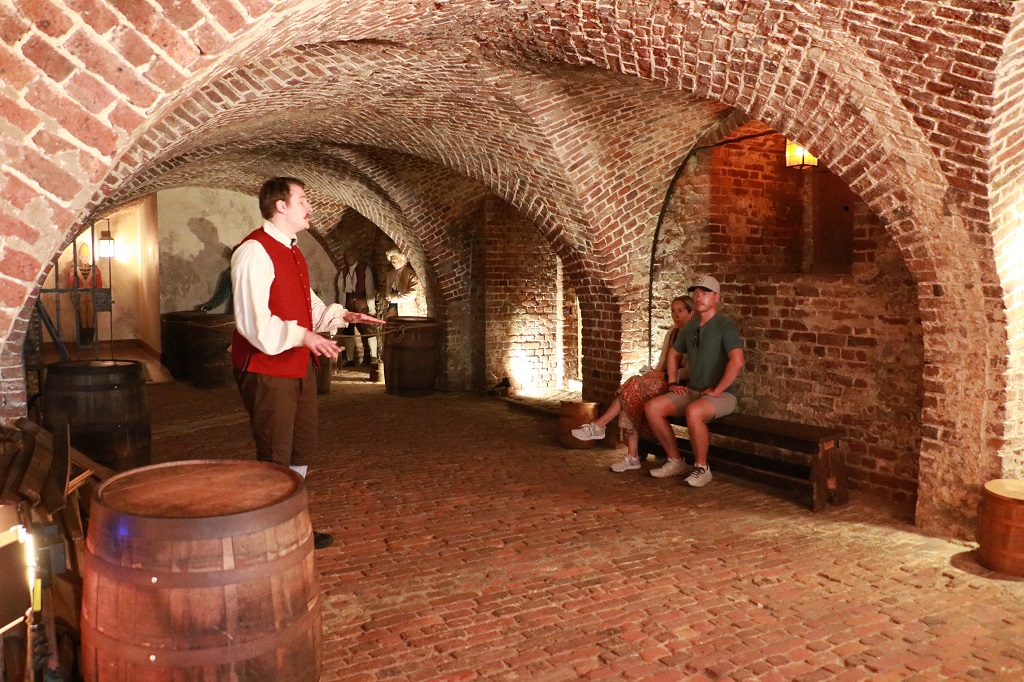
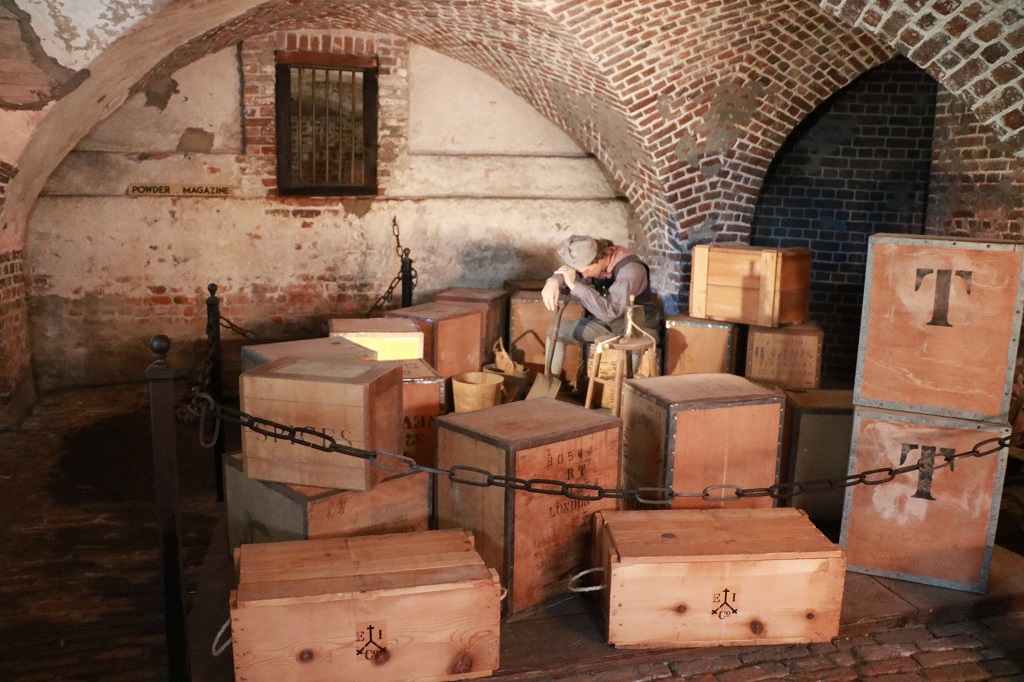
During the siege of Charleston in 1780, General William Moultrie moved 14,200 pounds of gunpowder that had been stored in the Powder Magazine to the basement of the Old Exchange and bricked it up to keep it safe. It was hidden in a room behind the grated window. They built a false wall in front of it and stacked crates in front of the wall. When the British commandeered the building for their headquarters and made the cellar into a prison they never discovered the false wall and hidden gunpowder. After the Americans liberated the Exchange in 1782 the gunpowder was discovered. Two-thirds of it was dry and still good!
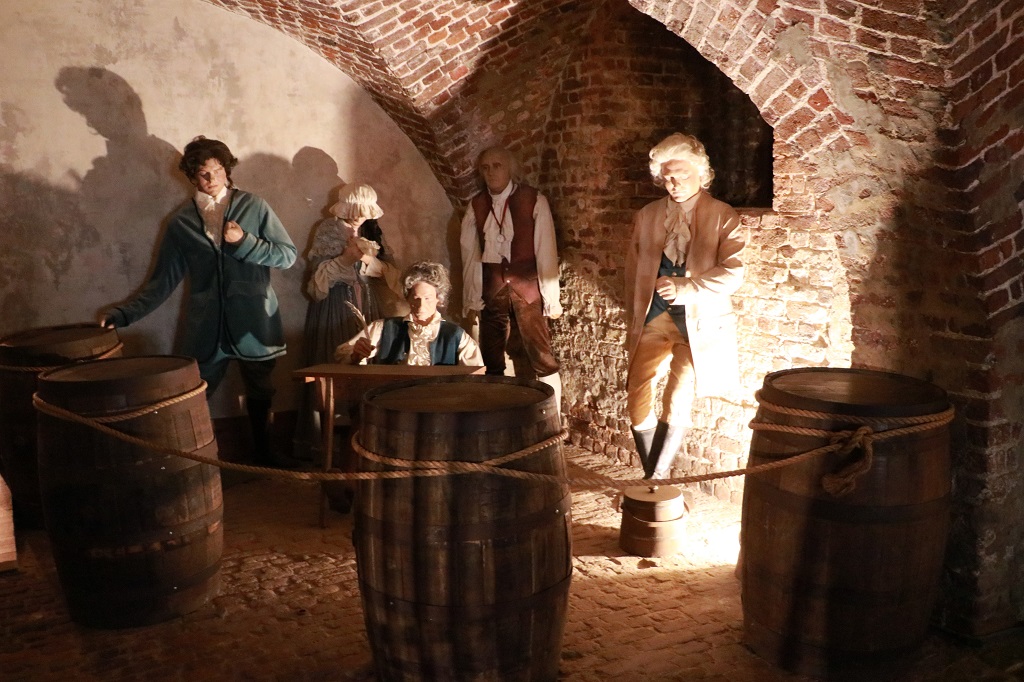
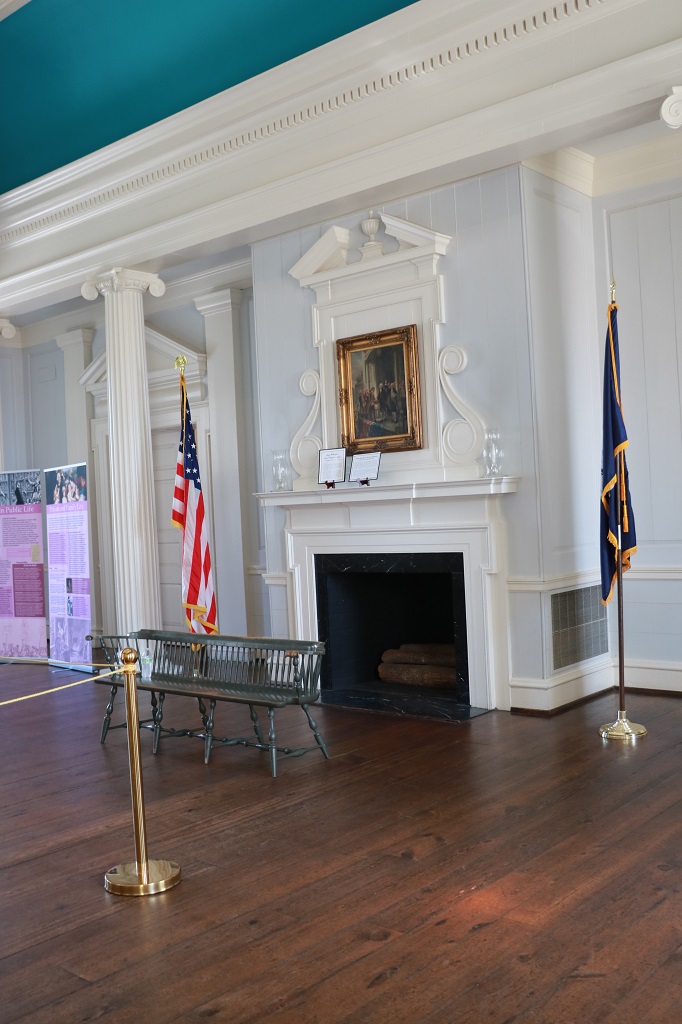
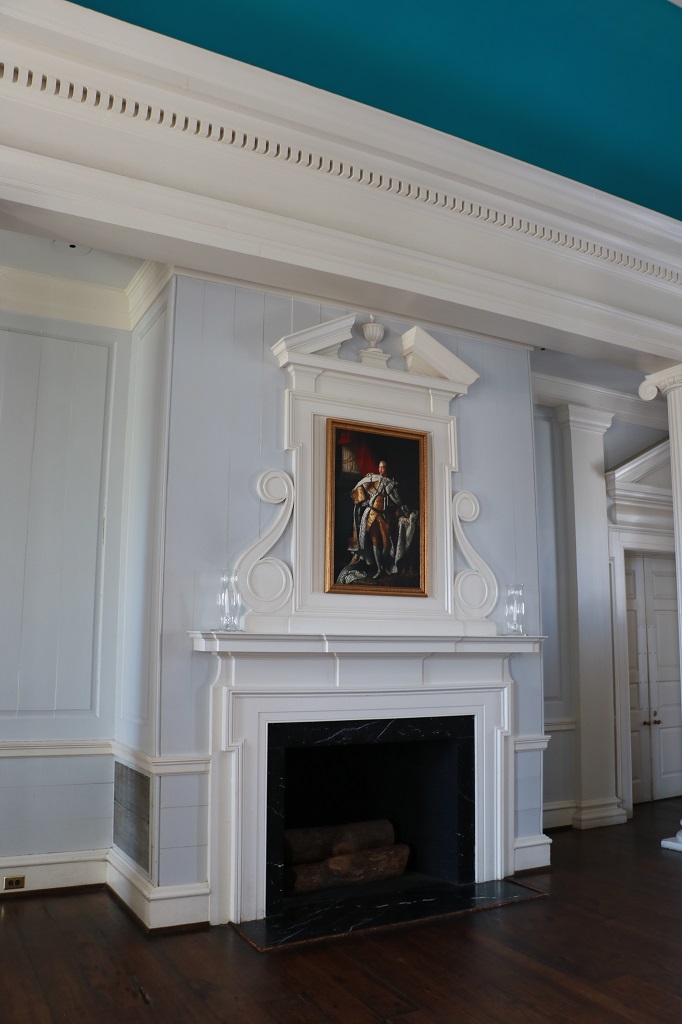
After the dungeon tour we walked through the other two floors that contained various information boards and artifacts from the buildings many and varied uses.
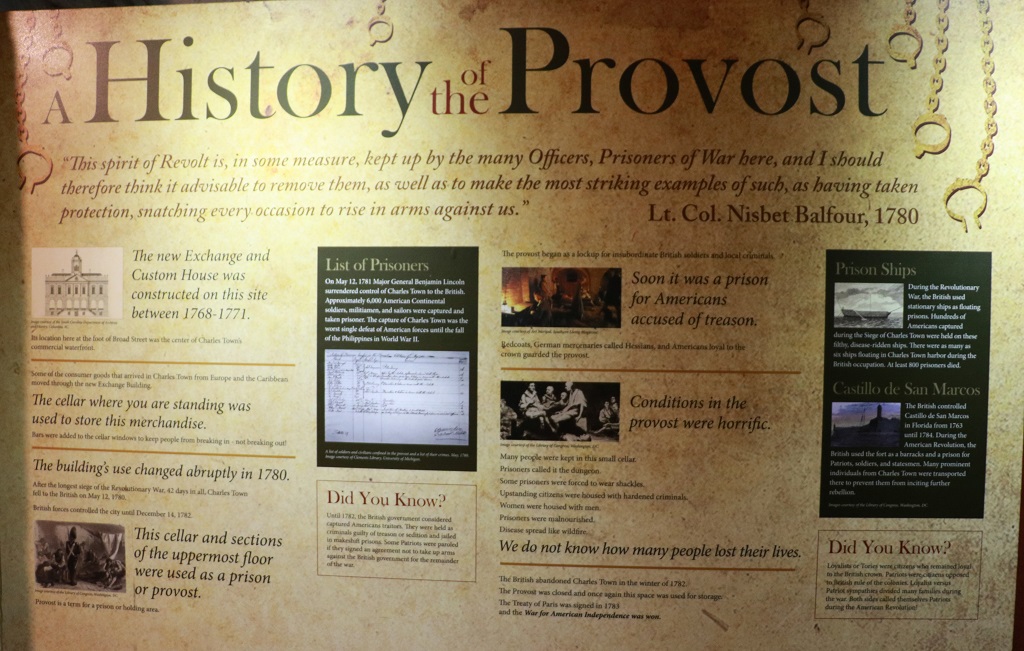

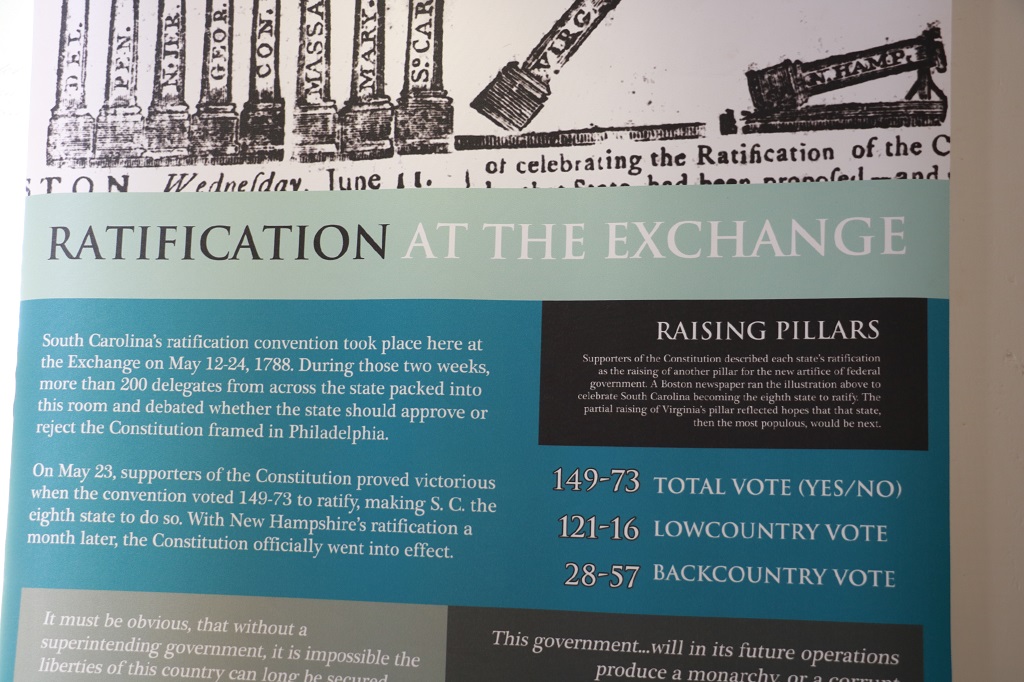
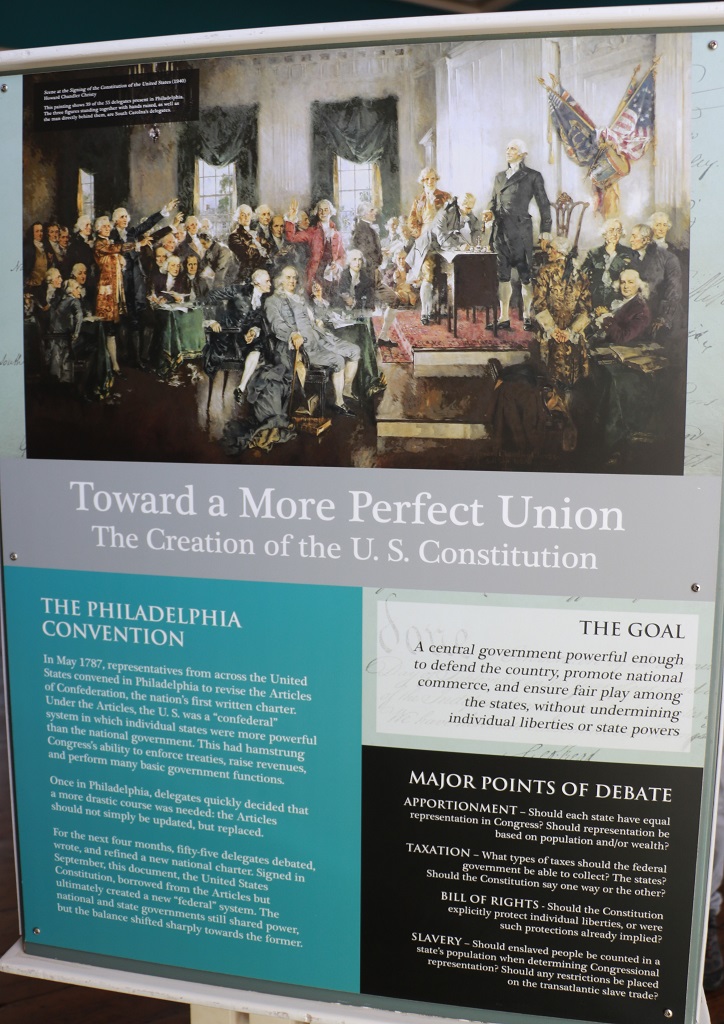
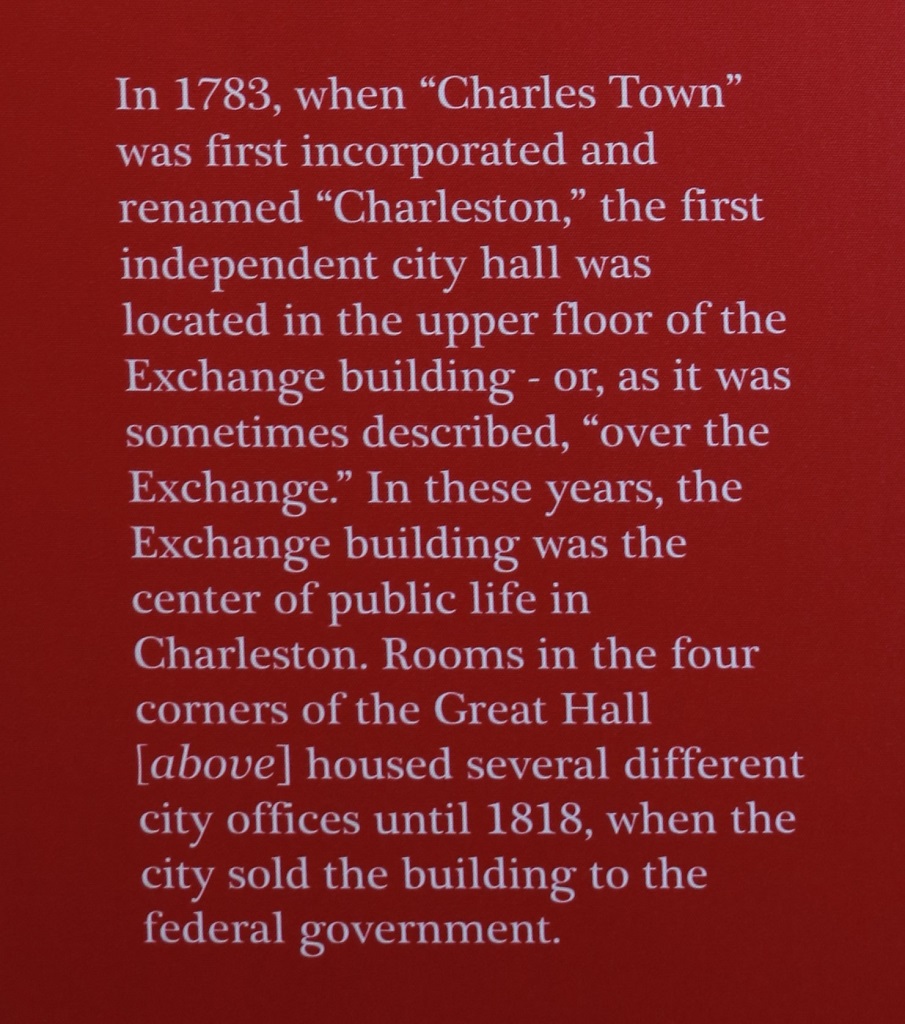
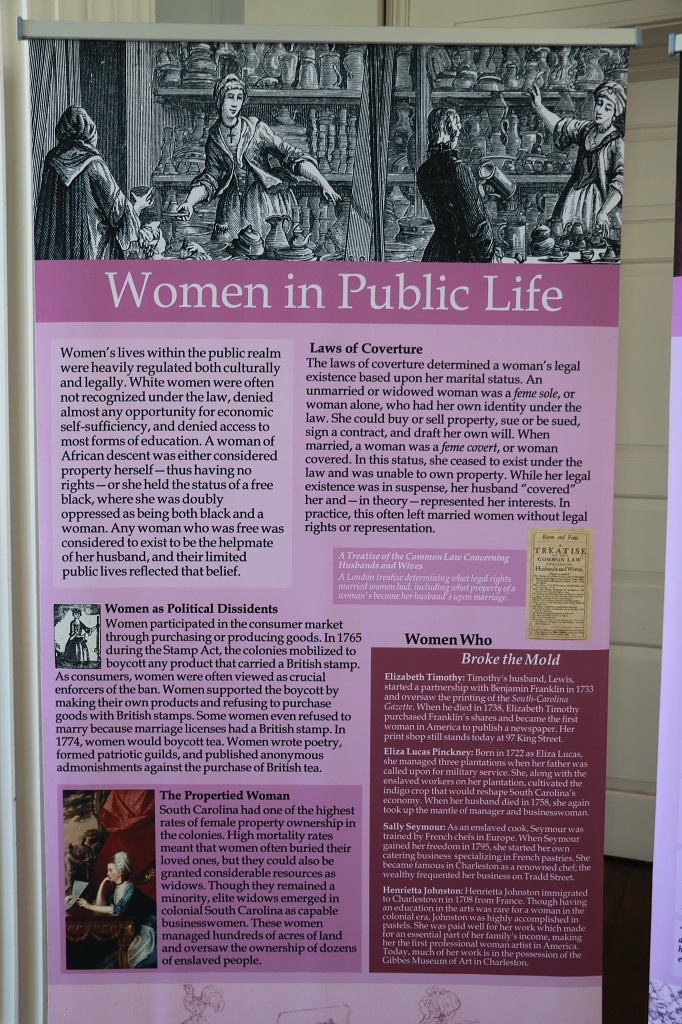
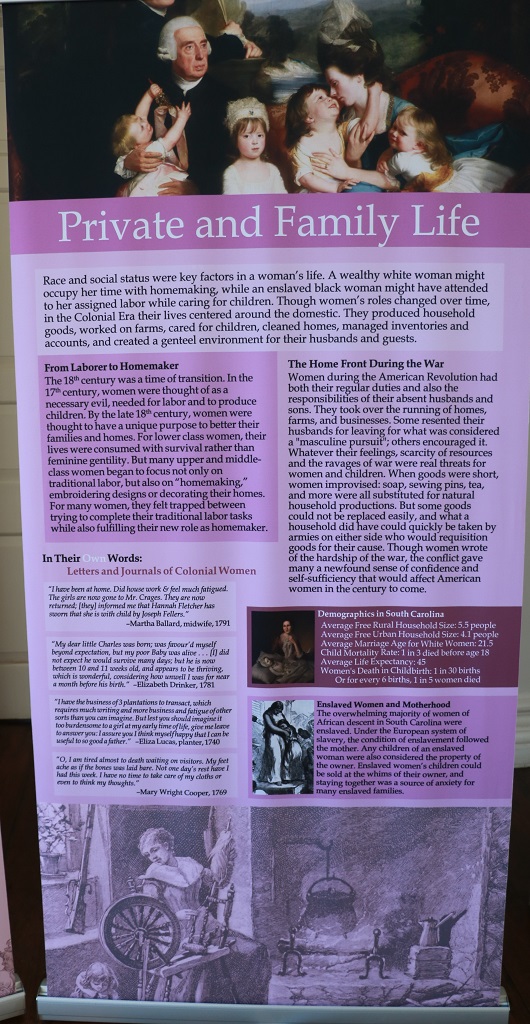
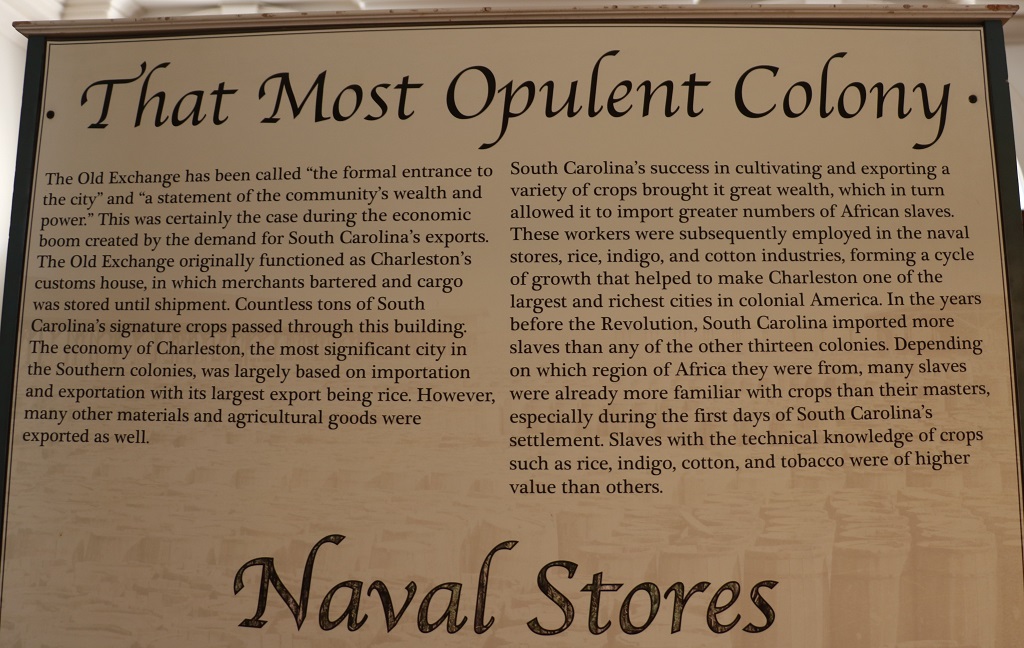
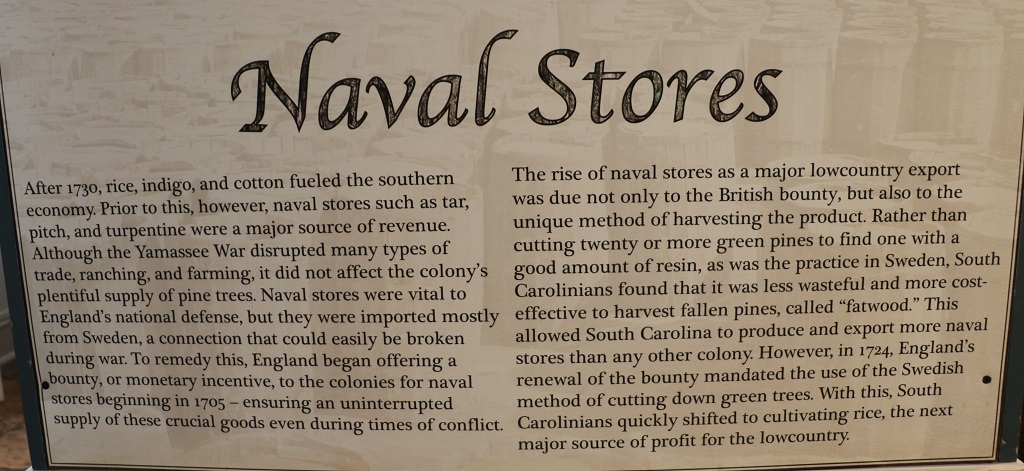
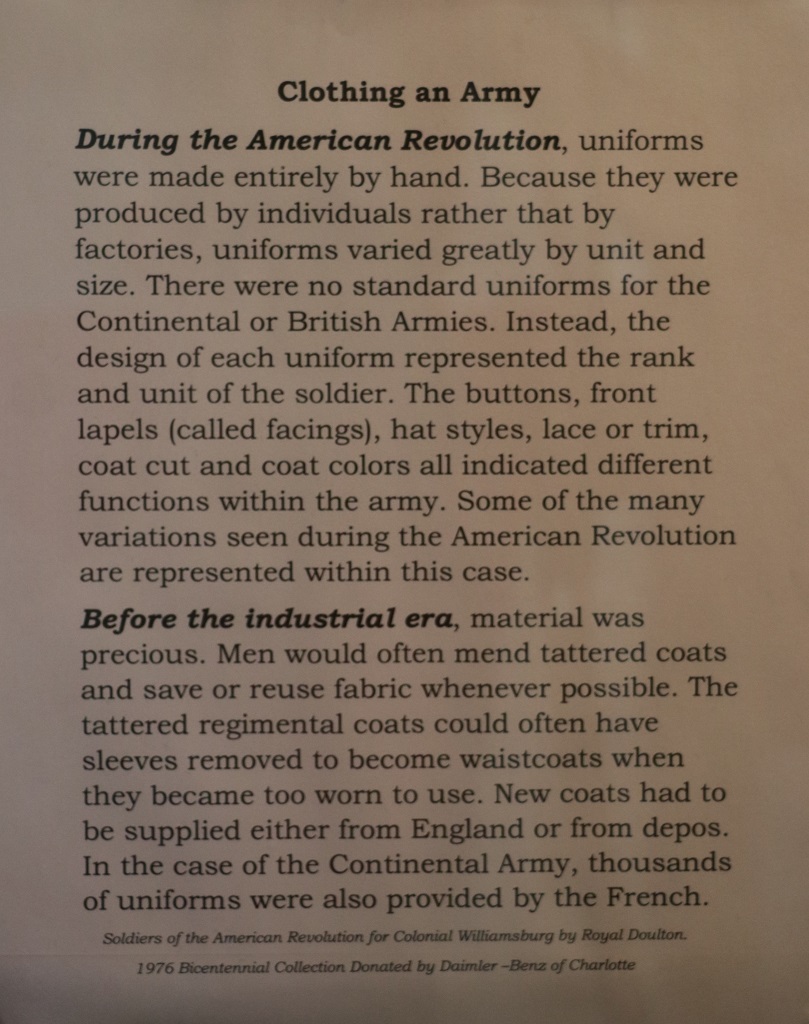
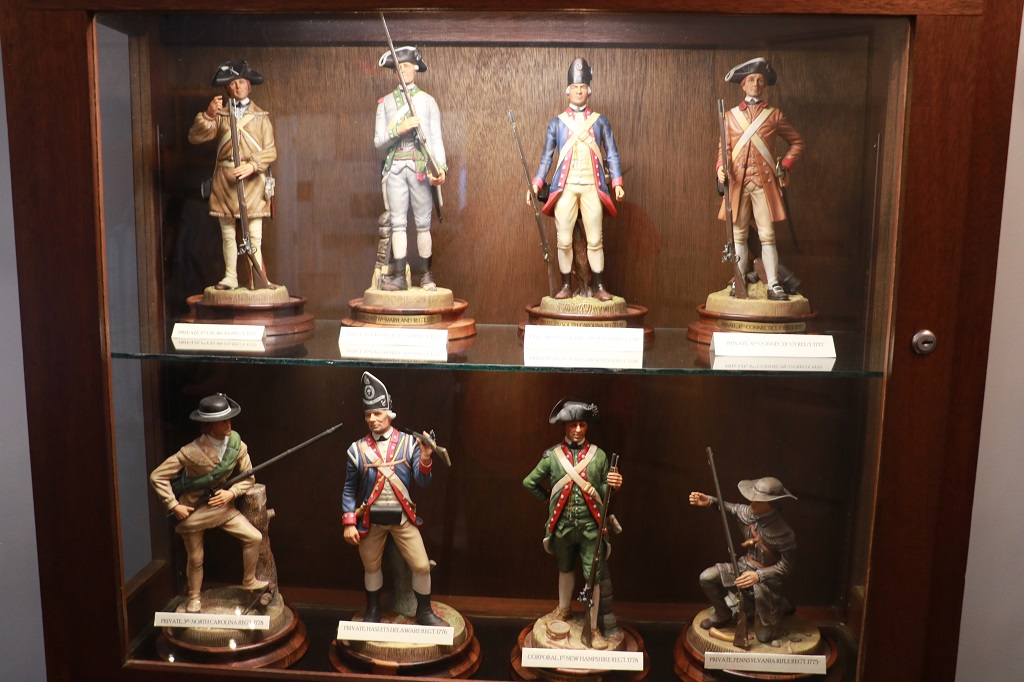
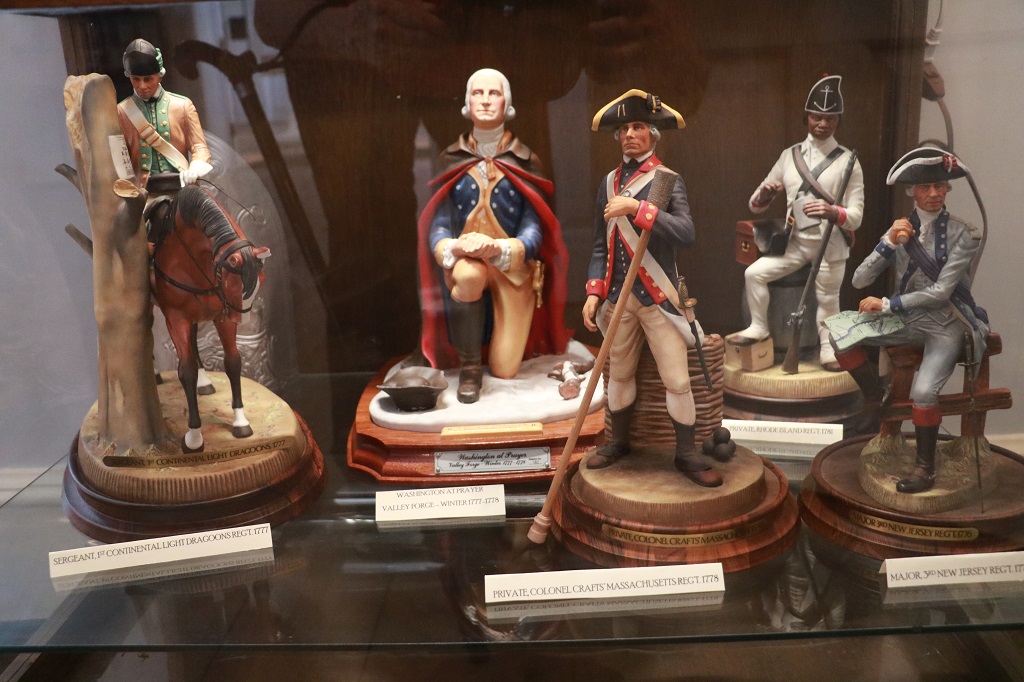
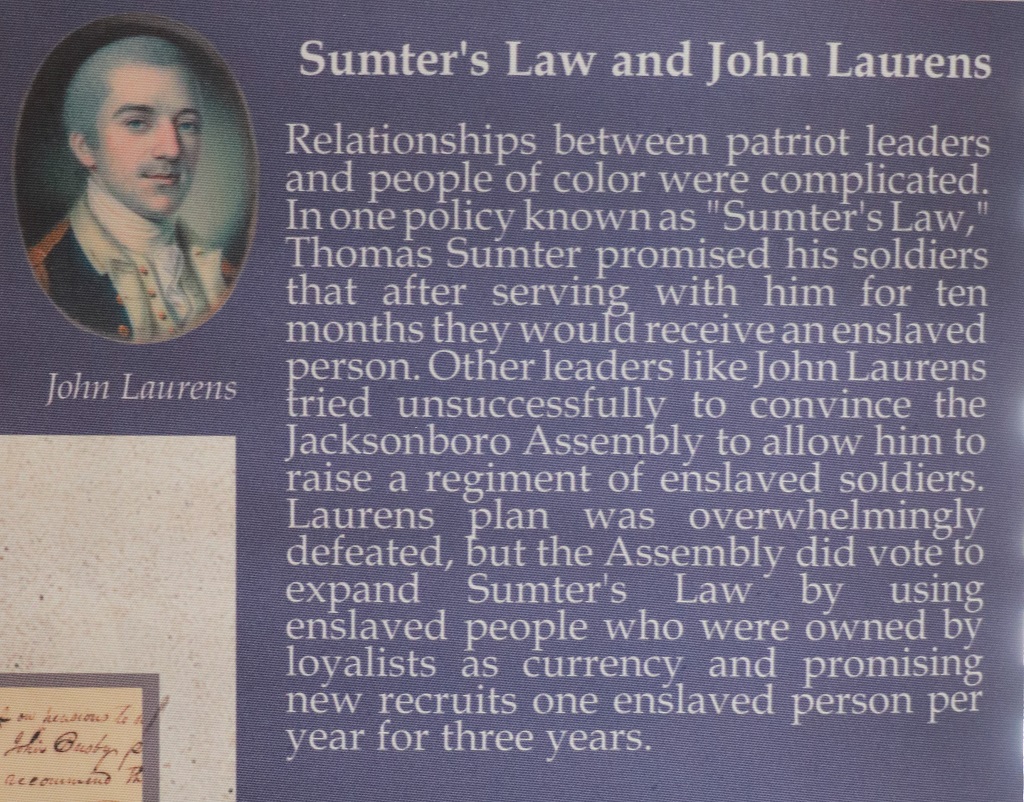
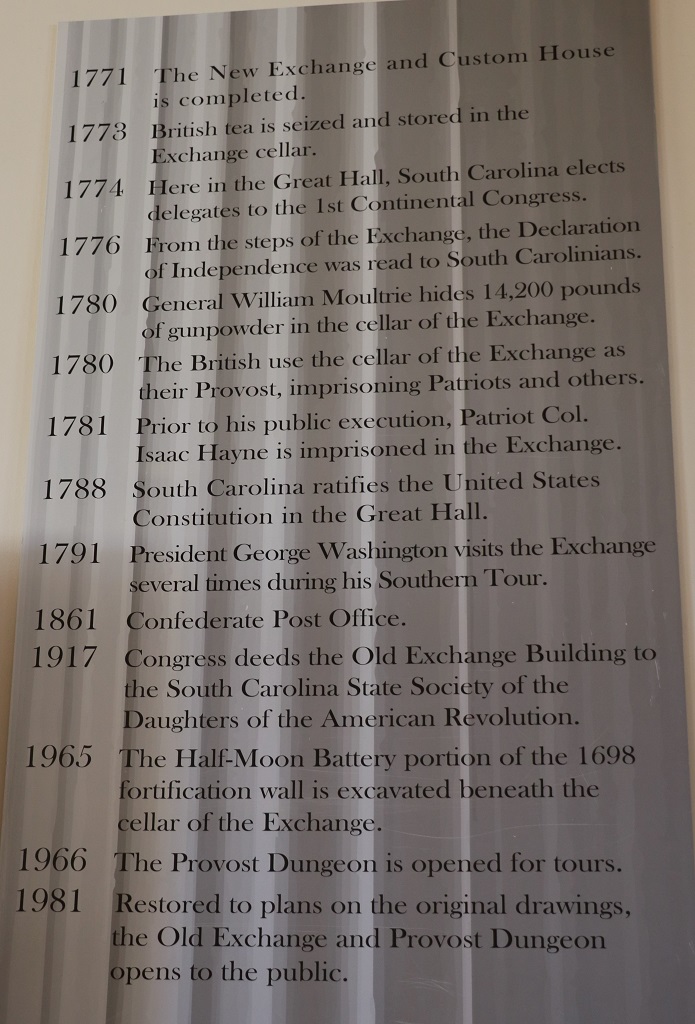
These next two information boards have quite a bit of stuff on them. If you want to read it all you may have to zoom in. I found it very interesting but I was too lazy (and it was getting late) to crop all the bits into separate images.
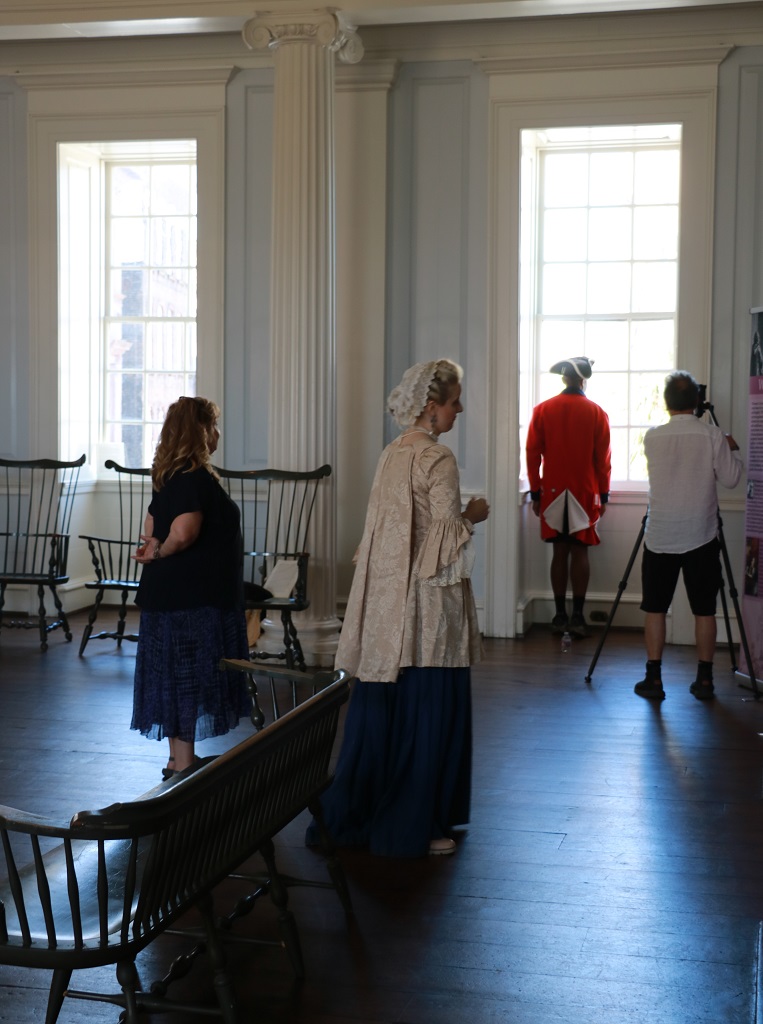
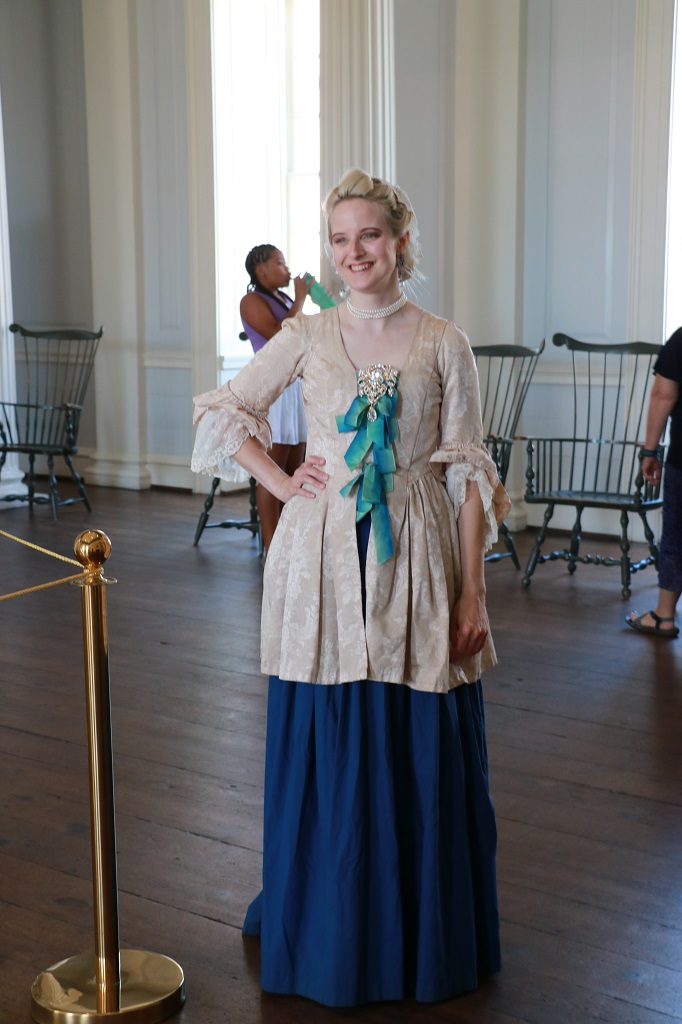
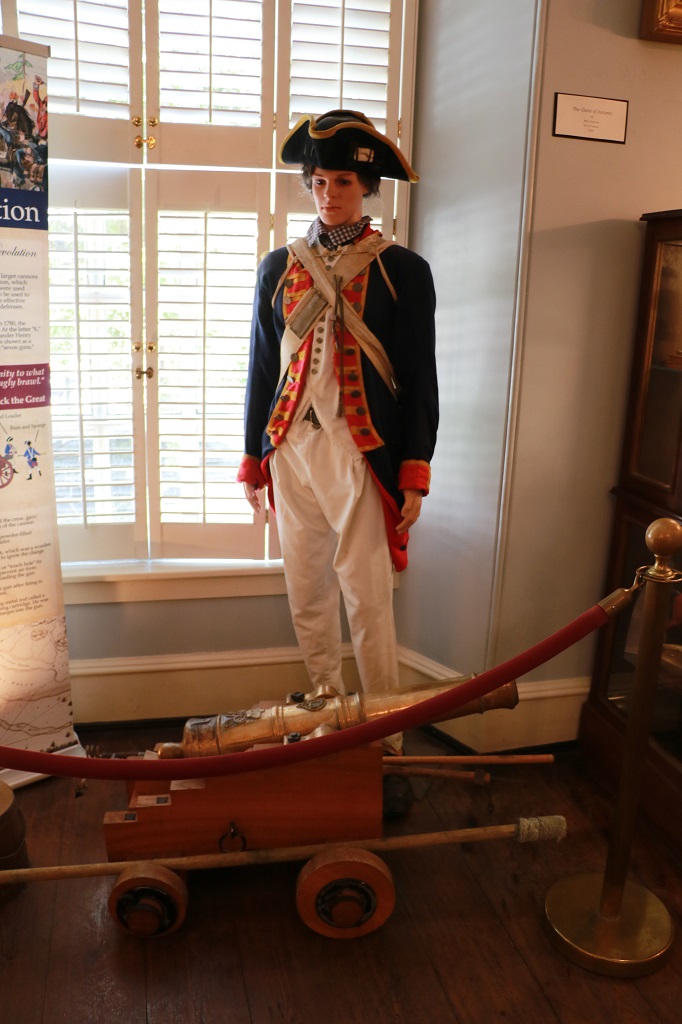
The Exchange House was being used to film a new season of a TV show and the “soldier” and woman were about to be filmed for a short shot. She looked so nice we asked if we could take her photo and she happily agreed
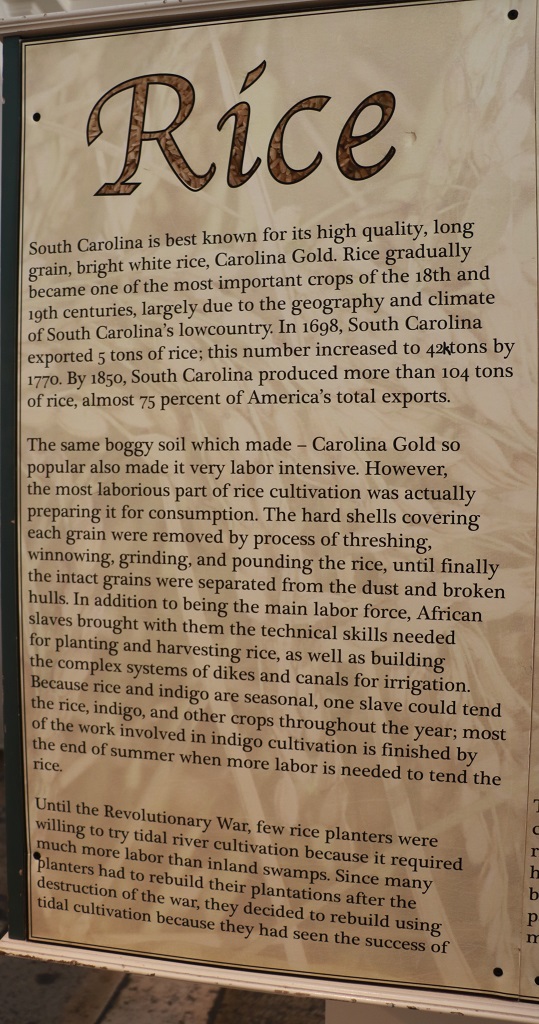
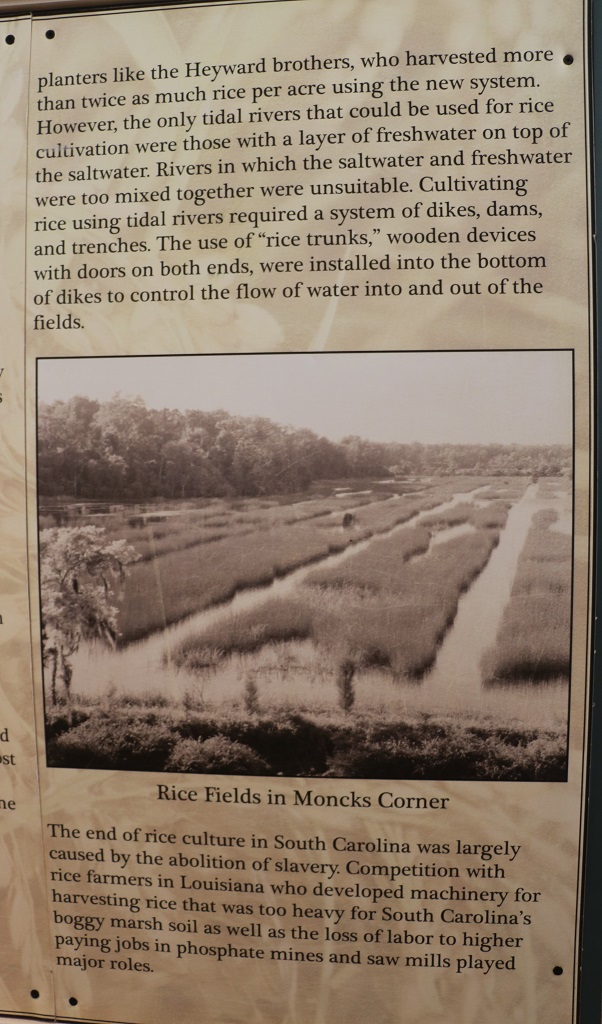
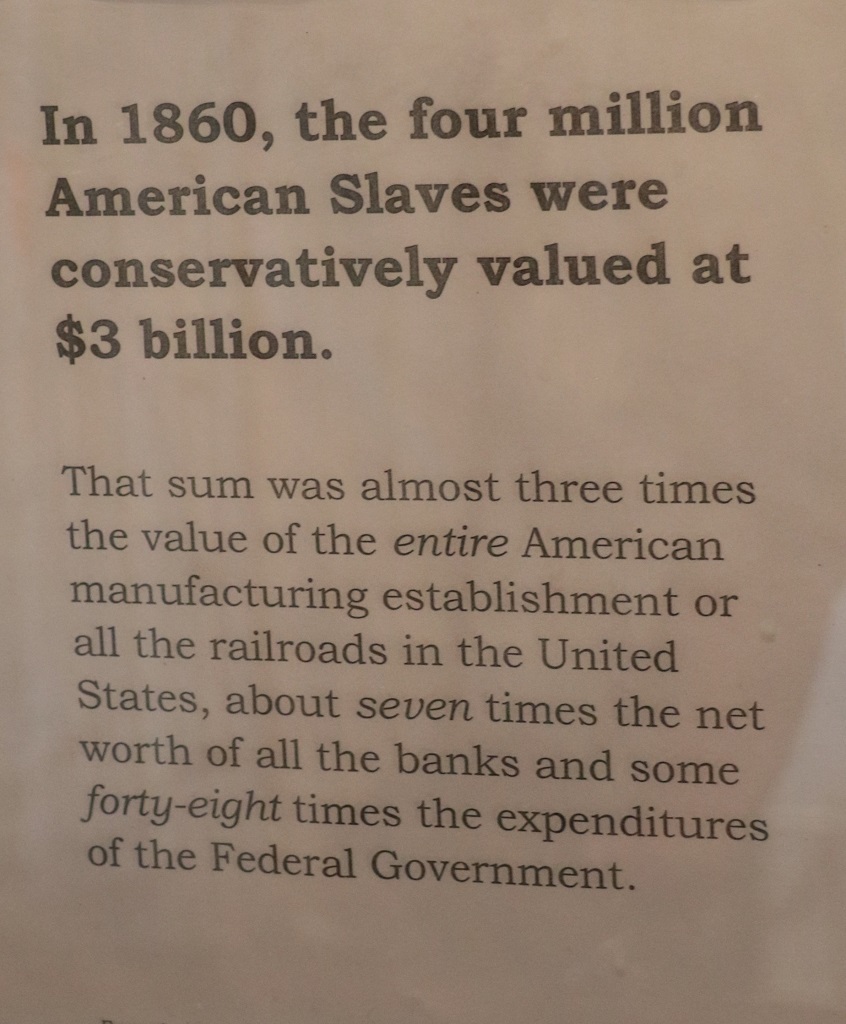
I have included the next several information boards because they tell a lot about the three crops that made Charleston the wealthiest city in the country. All of them were produced on the backs and using the knowledge of the slaves.
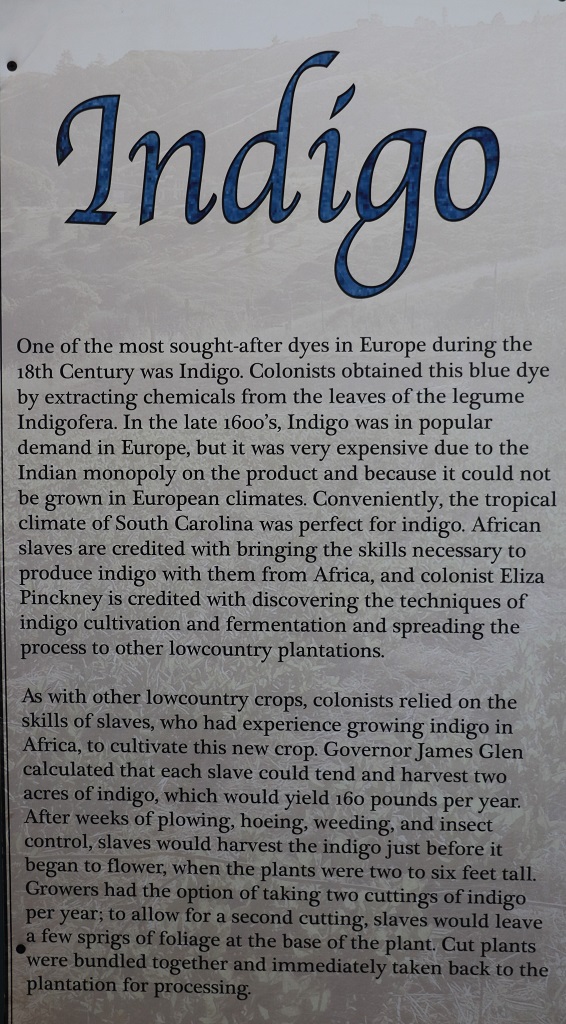
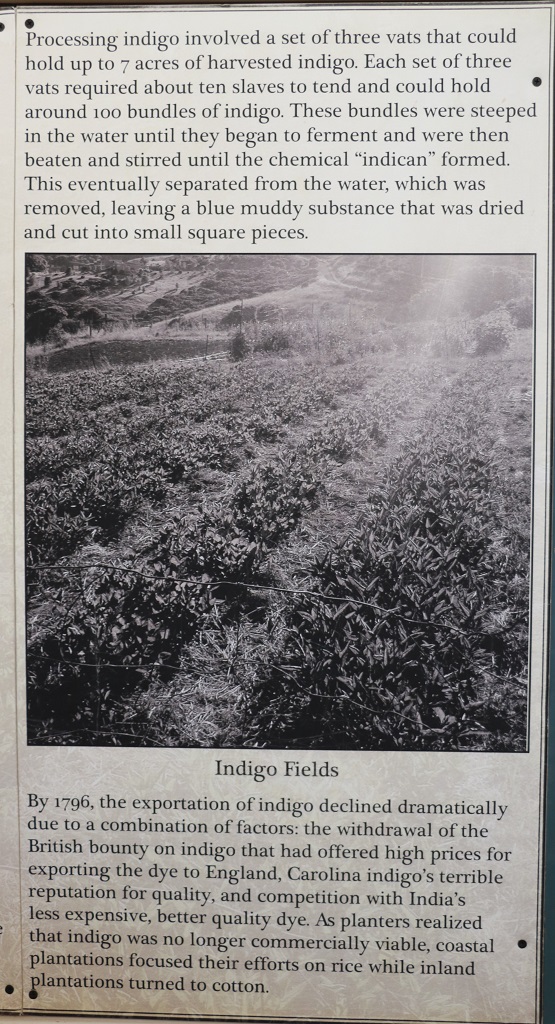
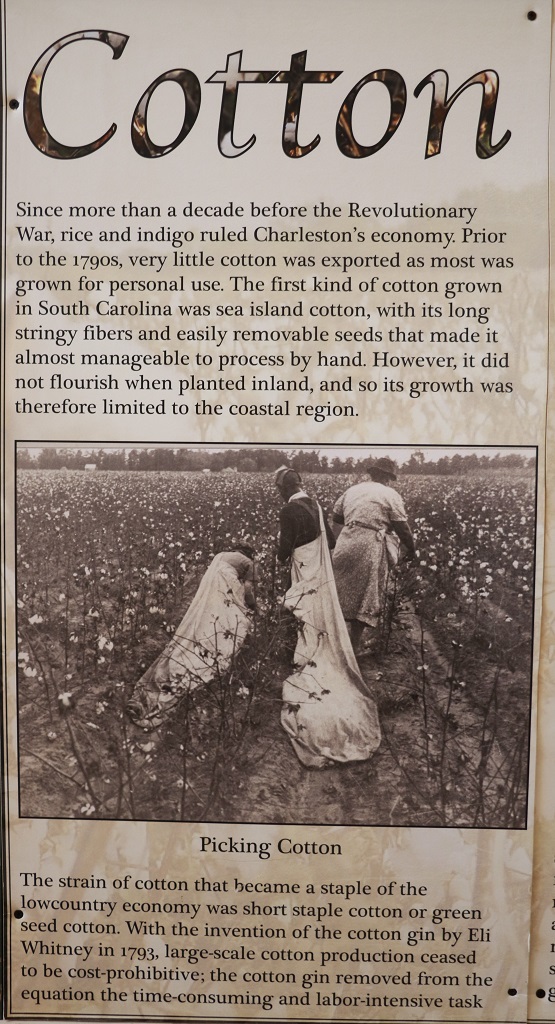
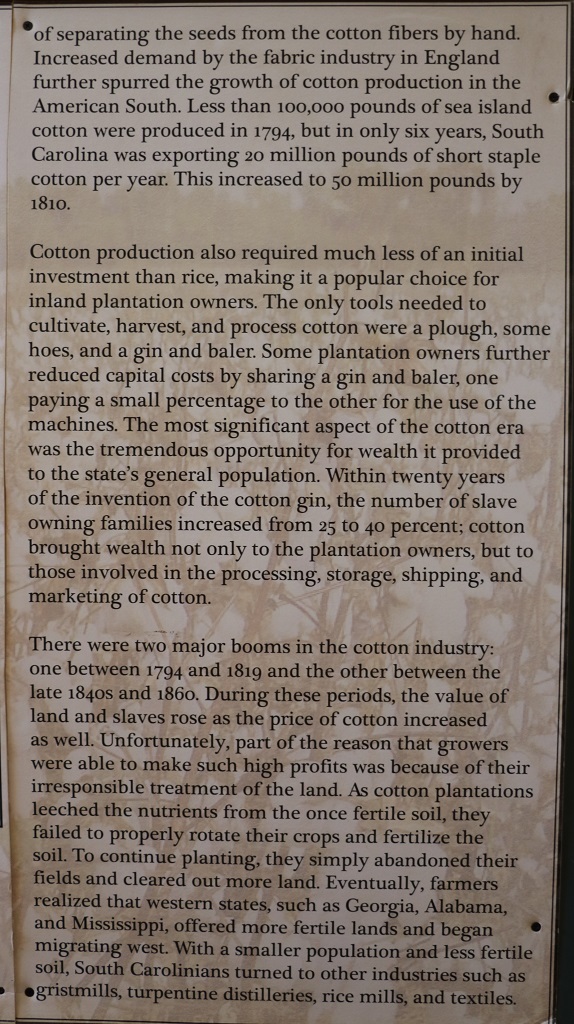
The top paragraph of this last photo tells about the massive increase in the production of cotton in South Carolina. This was due to the invention by Eli Whitney of the cotton gin. It would take a slave all day to clean one pound of cotton by hand. With a cotton gin he could clean 50 lbs in a day!
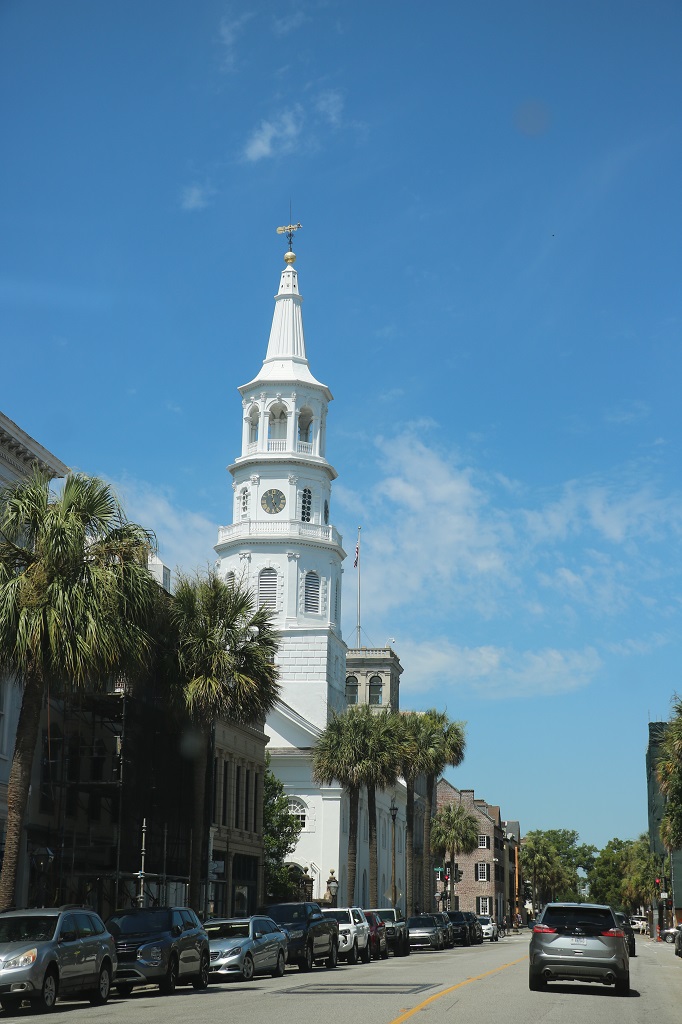
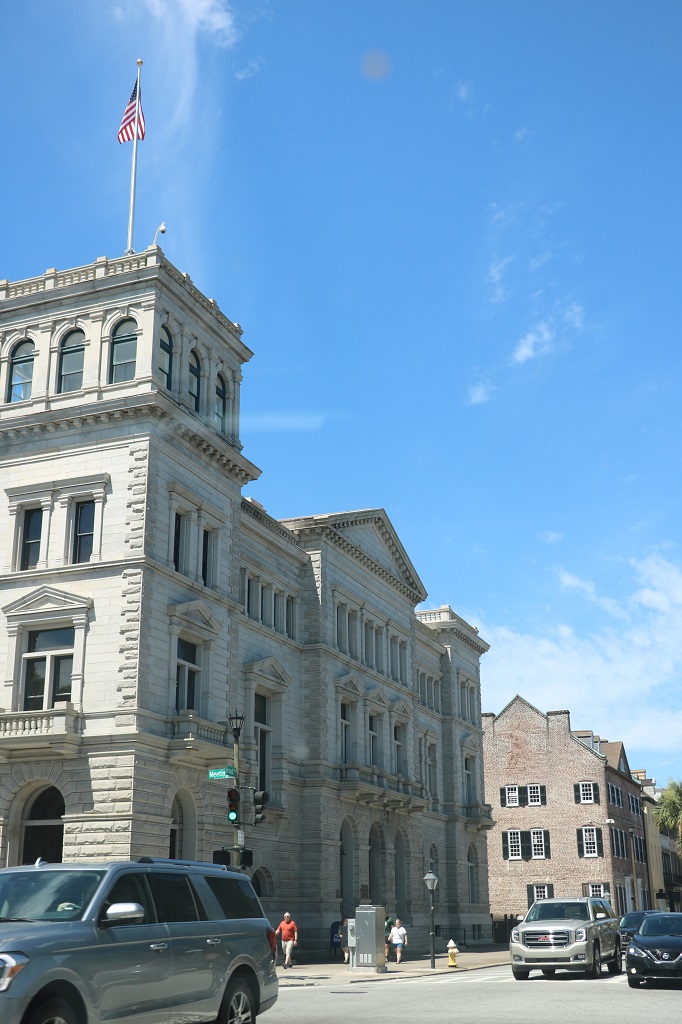
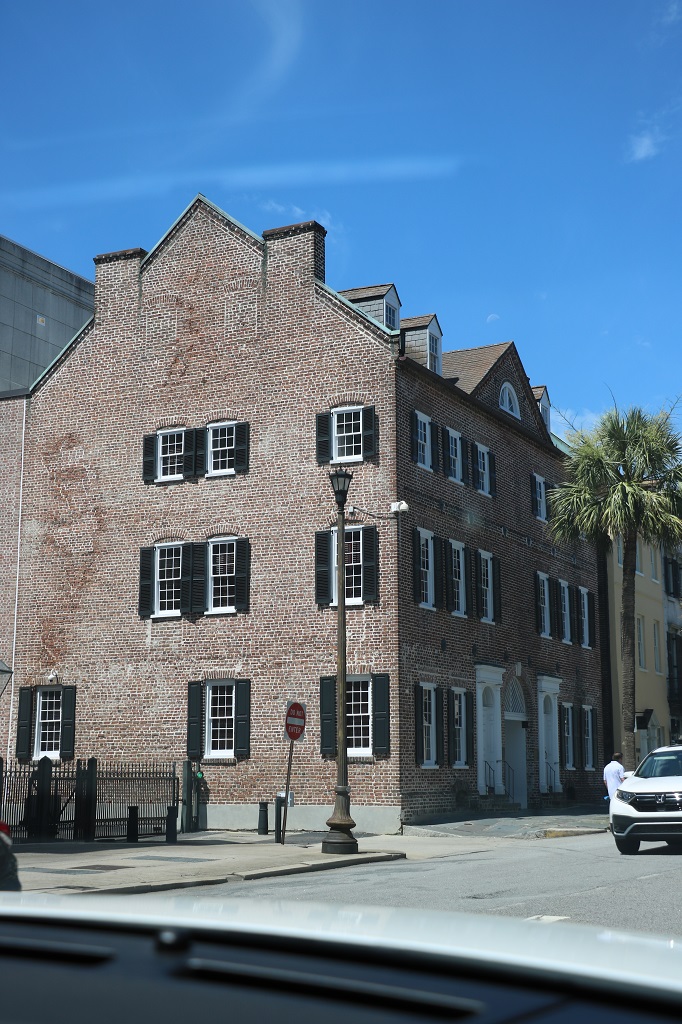
We drove out of Charleston at 11:30 and headed south.
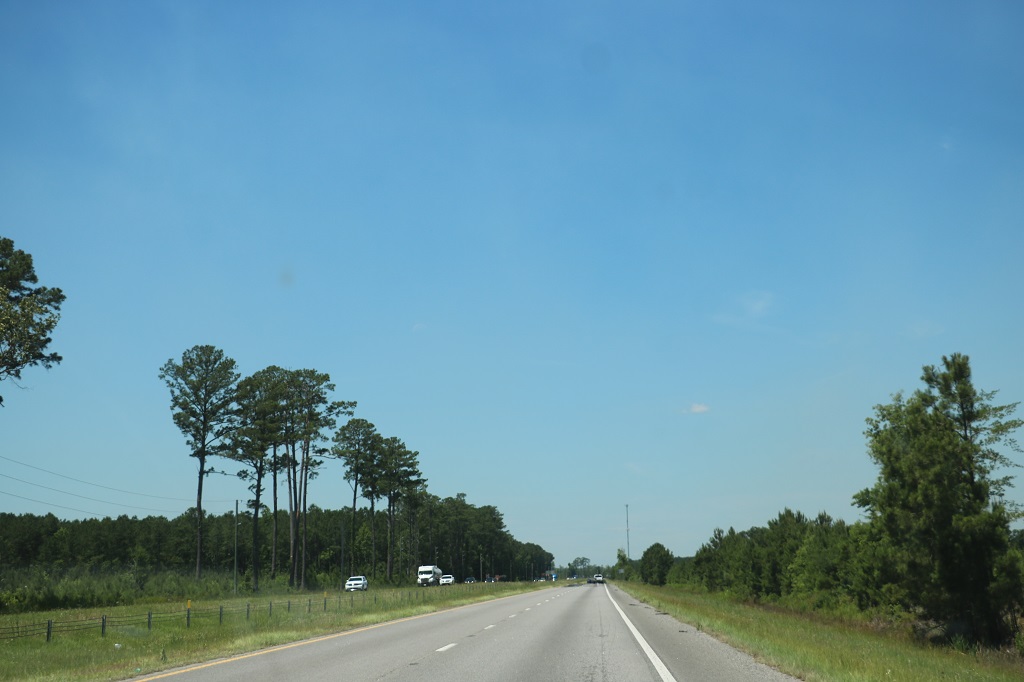
Driving down here in the south is like driving across the prairies – with trees. Long straight roads and very flat.

And marshes all along the road. Or the road goes through a big marsh.
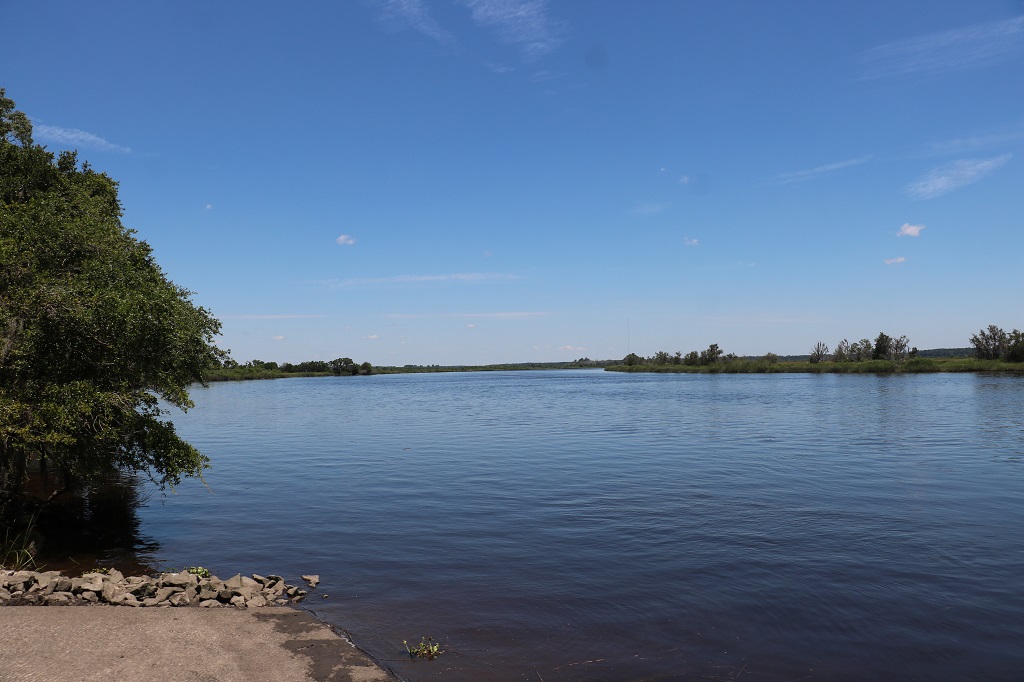
It is about a two-hour drive from Charleston to Savannah, Georgia. We stopped at the Steel Bridge Landing (a boat launch area) and had our peanut butter and jam sandwich lunch and stretched our legs a bit. This is the Ogeechee River.
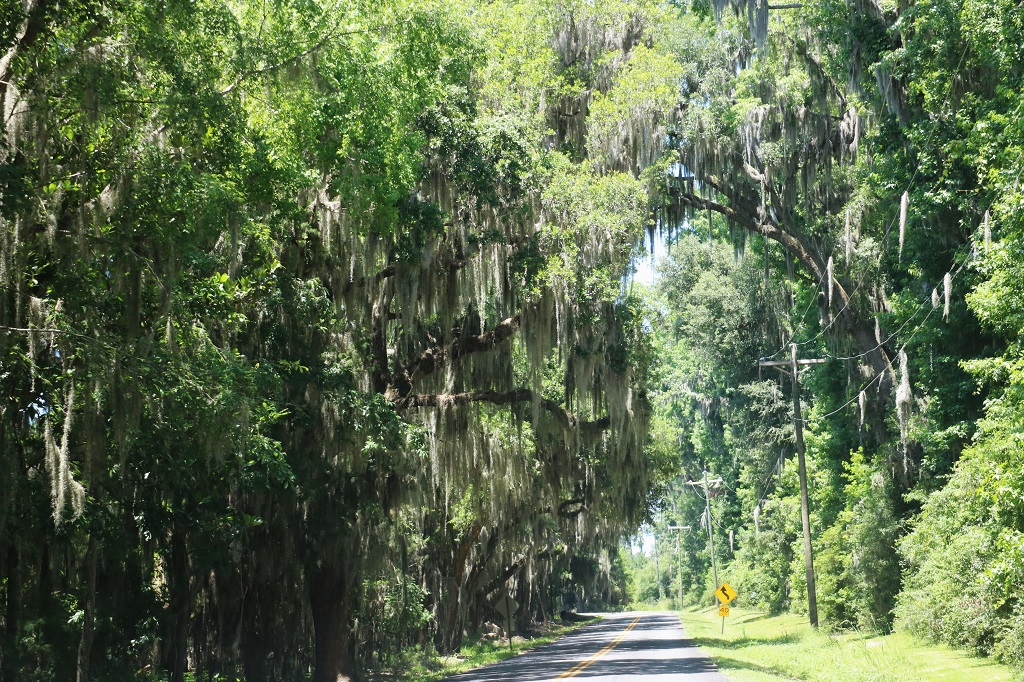
We wanted to see the Old Sheldon Church ruins so we put the name into Mary Lou’s system. My notes said it was located 2 miles off Highway 17 but Mary Lou had us drive 8.9 miles down River Road, then she directed us up about 2 miles and then back the way we had come for almost the 8 miles again along the Old Sheldon Church Road. We got a nice tour of the countryside and I did like the Spanish Moss hanging off the Live Oaks.
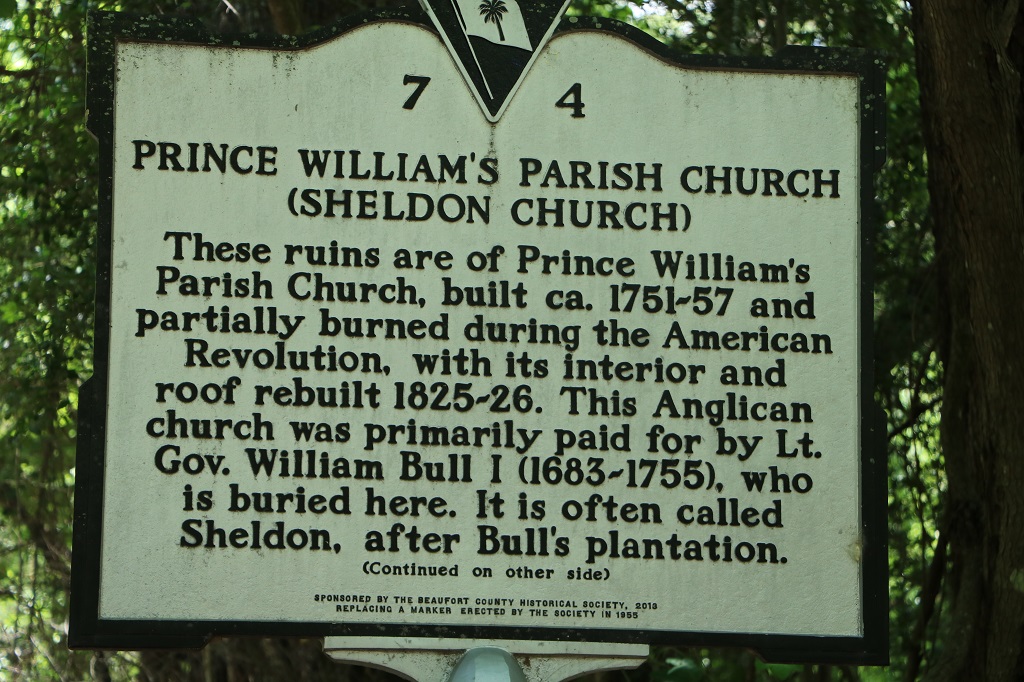

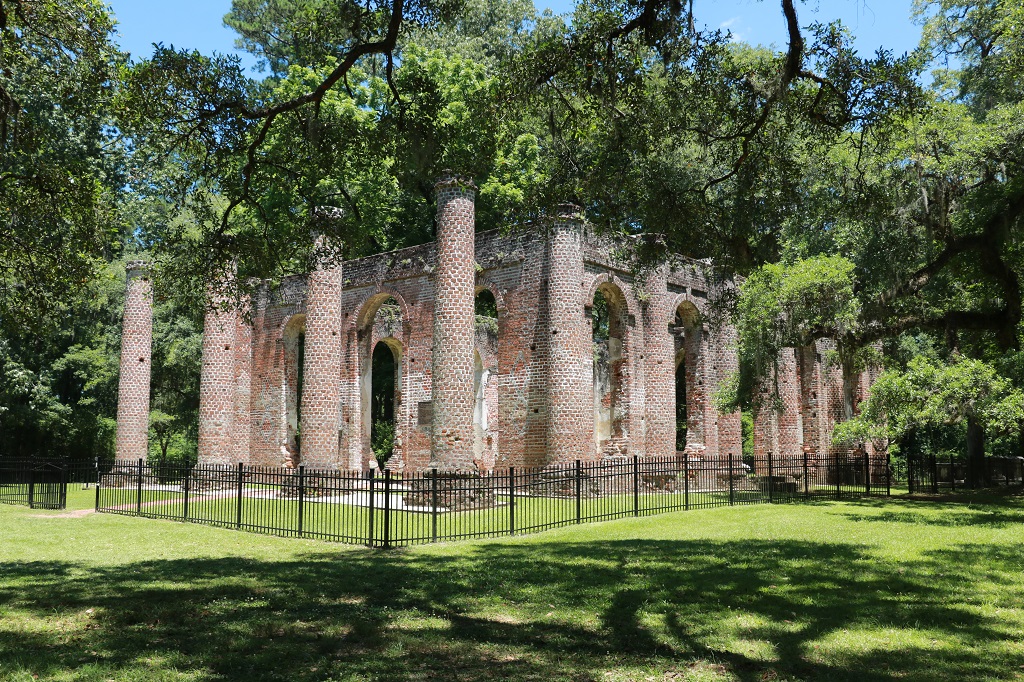
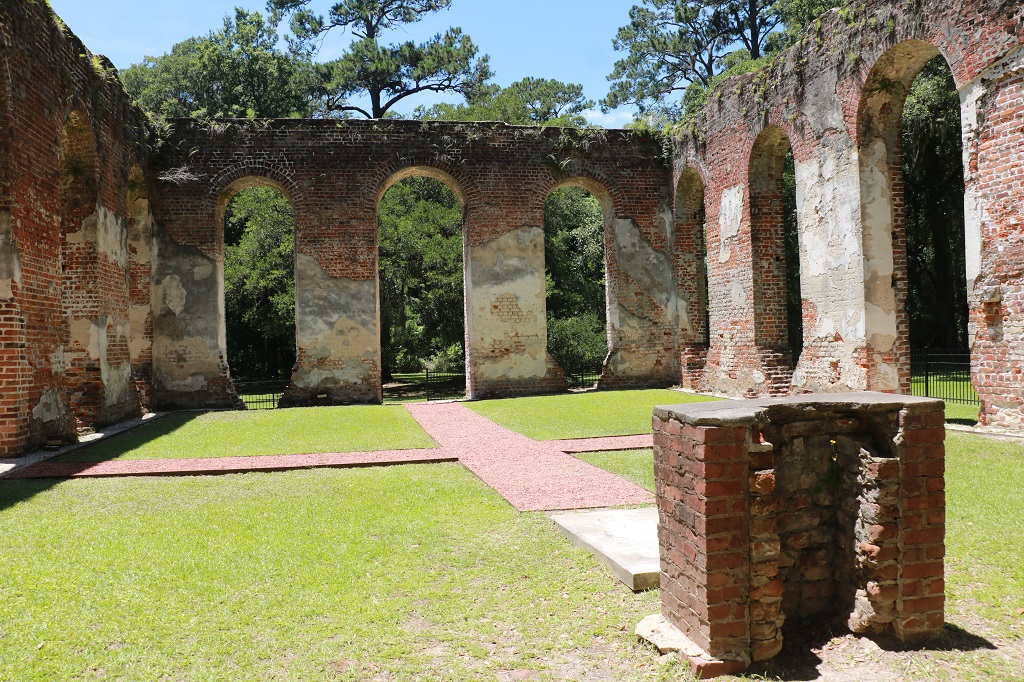
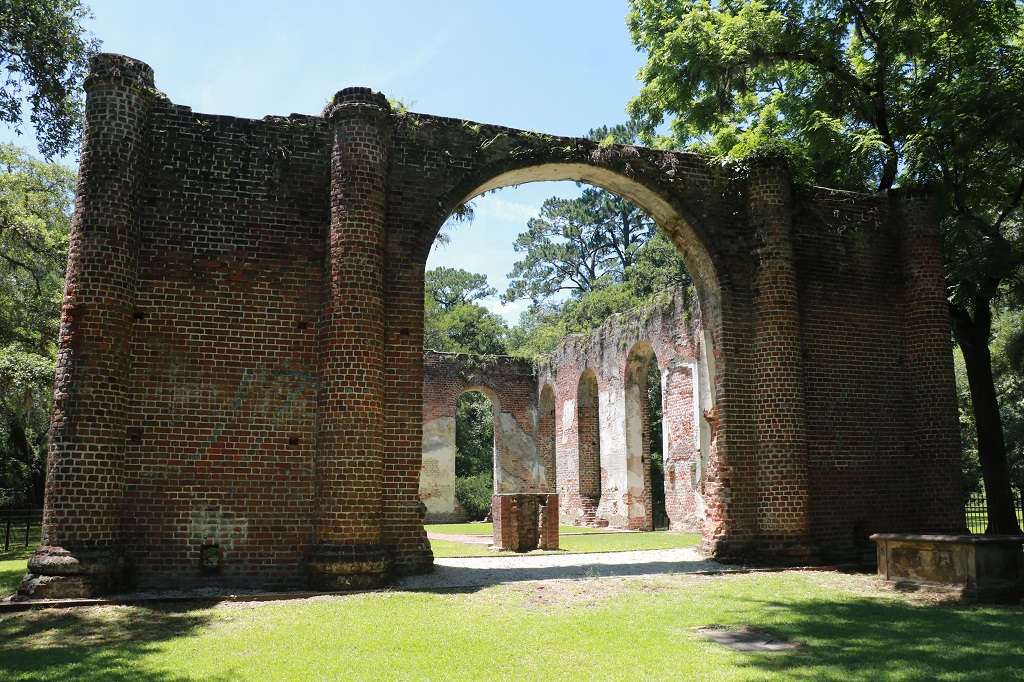
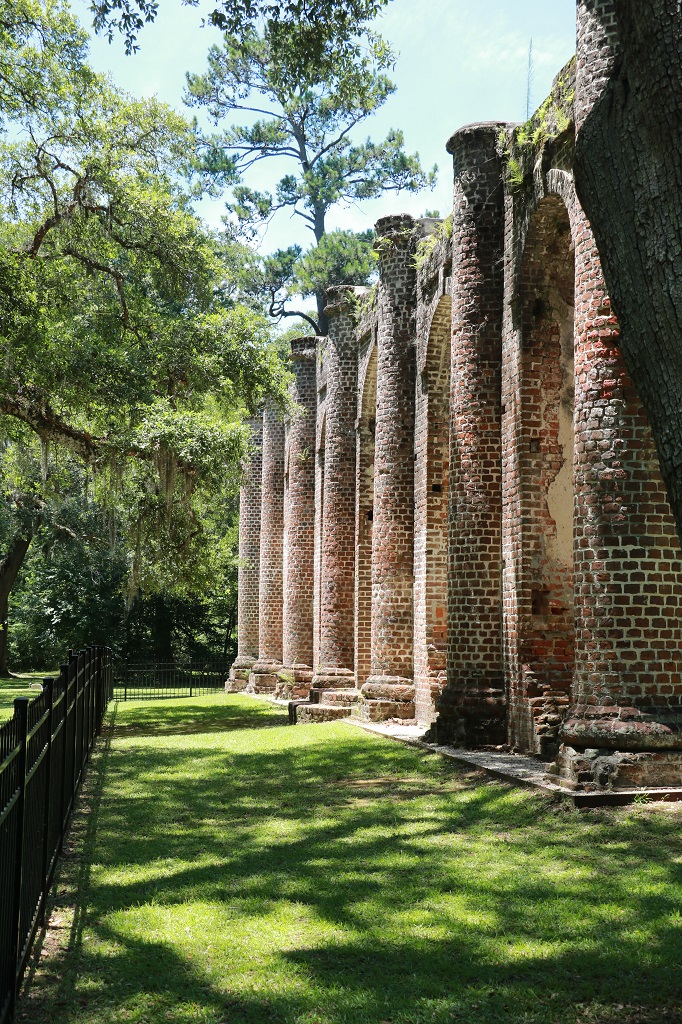
We left the church at 2:30 or so and drove about 2 miles further down the road to regain the highway. We assume Mary Lou took us the long way so we would arrive with the church on the right side of the vehicle and we would not have to turn around. That’s what we came up with anyway. It was about another hour to Savannah, which is very near the South Caroline/Georgia border. Another new state. We need to find a geocache…

 Hanna Travels