Good day. Long blog. You might want to split it into two sittings.
We made a reservation for the 12 o’clock horse carriage tour so we would have lots of time to drive across the bridge into Charleston from our hotel in Mt. Pleasant, find a parking spot, and arrive the designated 15 minutes early.
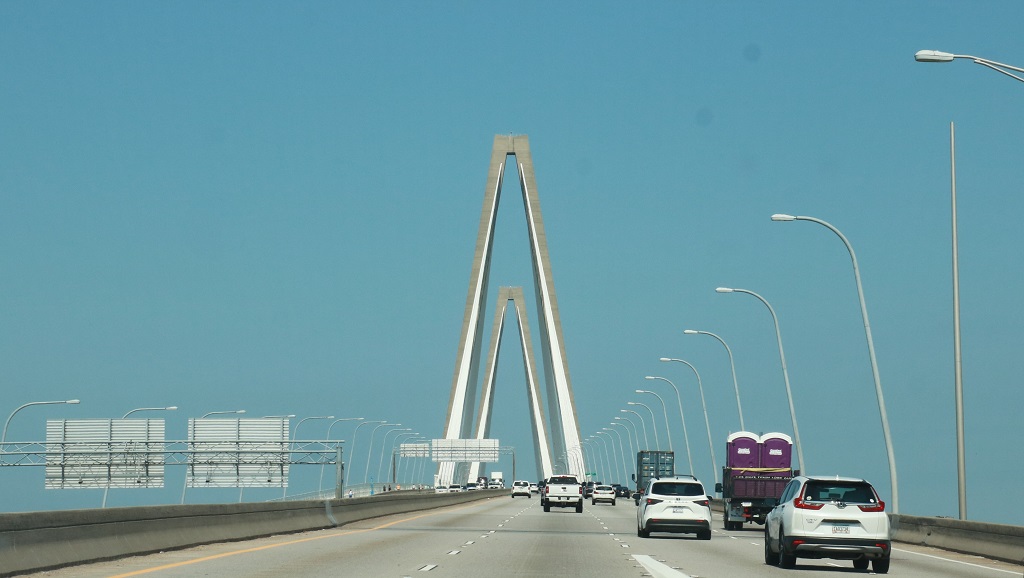

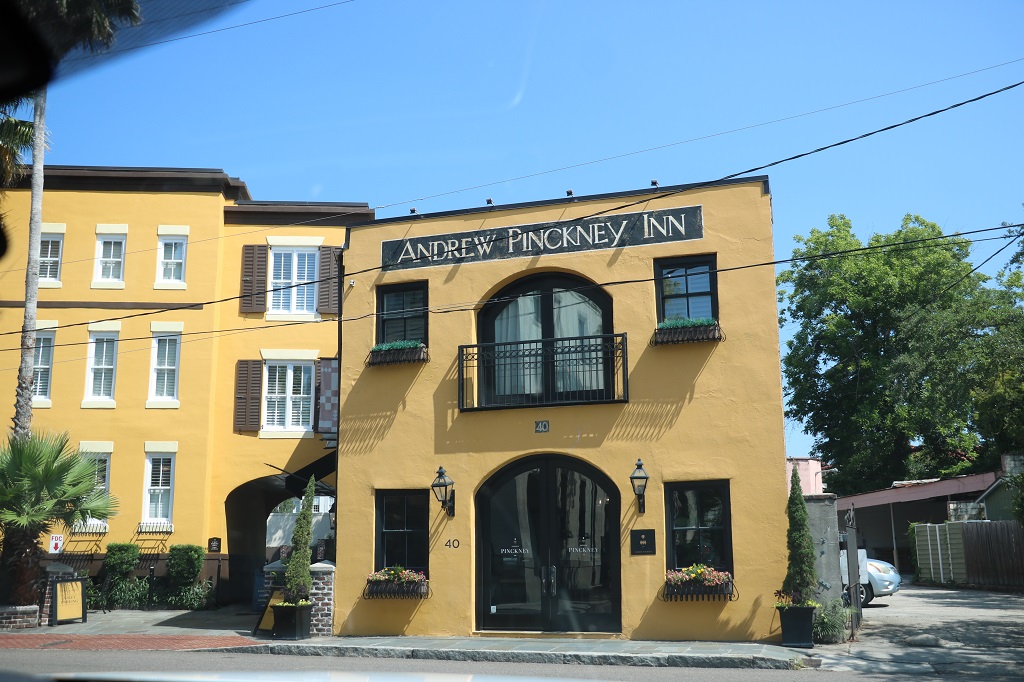
We actually arrived a little after 11 so they fit us onto the 11:30 tour. Each horse pulls a carriage with 14-15 passengers, plus driver. They make 3-5 runs only per day.
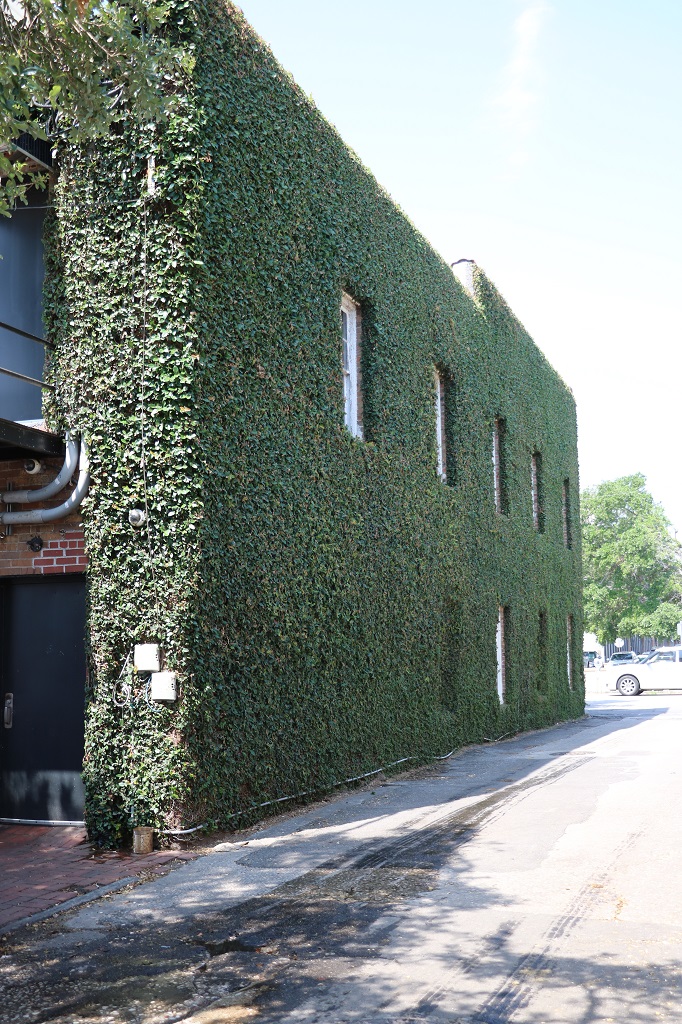
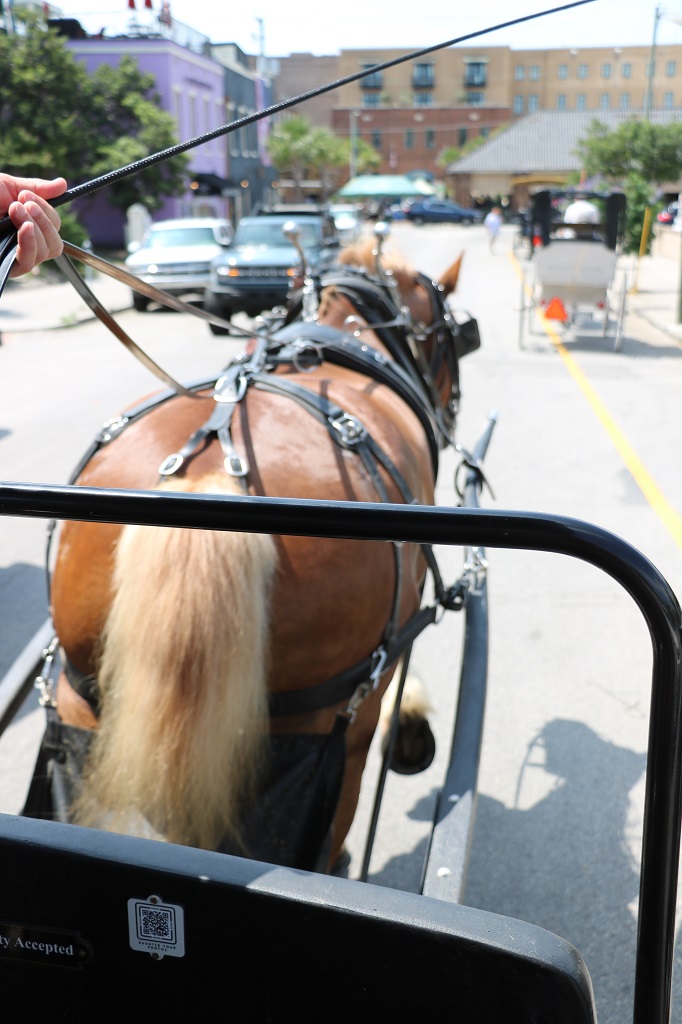
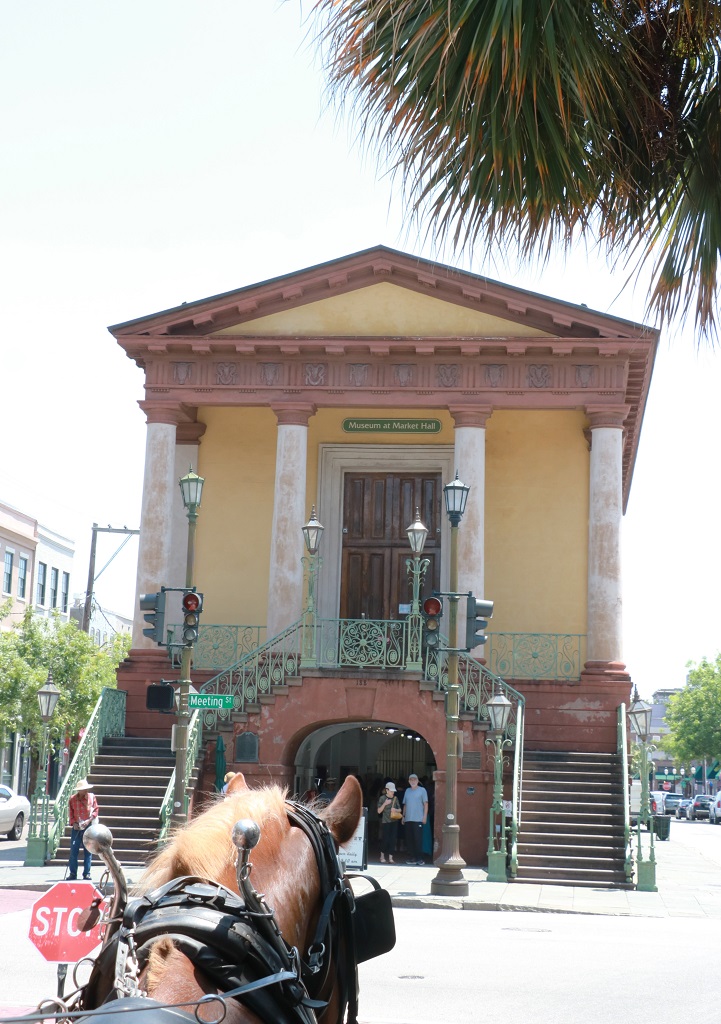
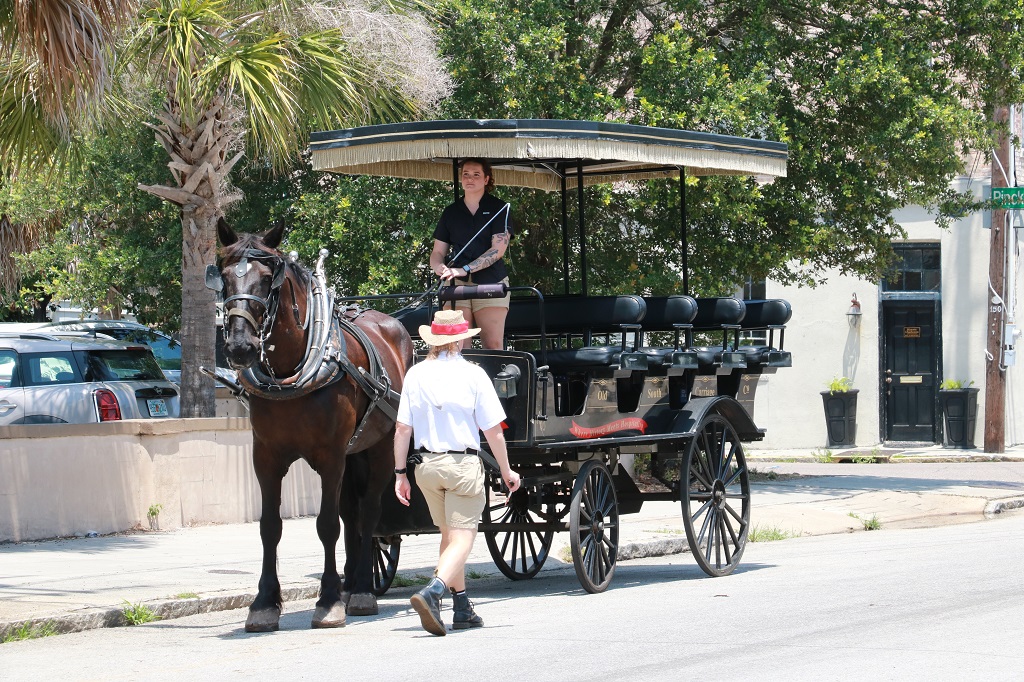
This is our Belgian Brian. He is 13 years old and weighs 1390 lbs. He did a really good job. He even, on his own, averted some potholes and moved to the other lane until past them. Janice, our guide, was facing the carriage and giving information and did not even notice.
There are four equine tour companies in Charleston and the city has the largest horse carriage services in the USA. The horses are purchased from the Amish in northern states. They are all draft horses that have worked in the fields of the Amish farms – Belgians, Percherons, or Amerian Draft Horses. They are retired from farm work at 4-5 and then sold. The carriage companies buy them and bring them south As Janice, our guide said, “They still work, but this is much easier work.”
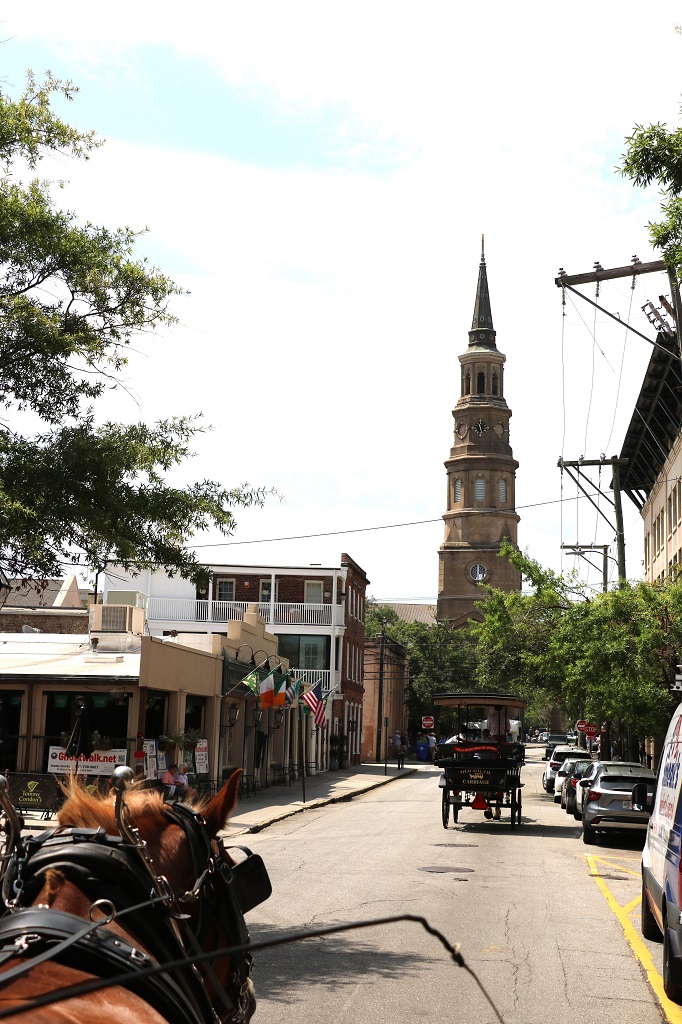
Our tour company was Old South Carriages. They are a family-run business. All four companies have stables and acreages outside the city as well as their tour barns in Charleston. The city barns only hold 10 horses so on busy days when they may need up to 22 horses to do tours they will truck the others in and back.
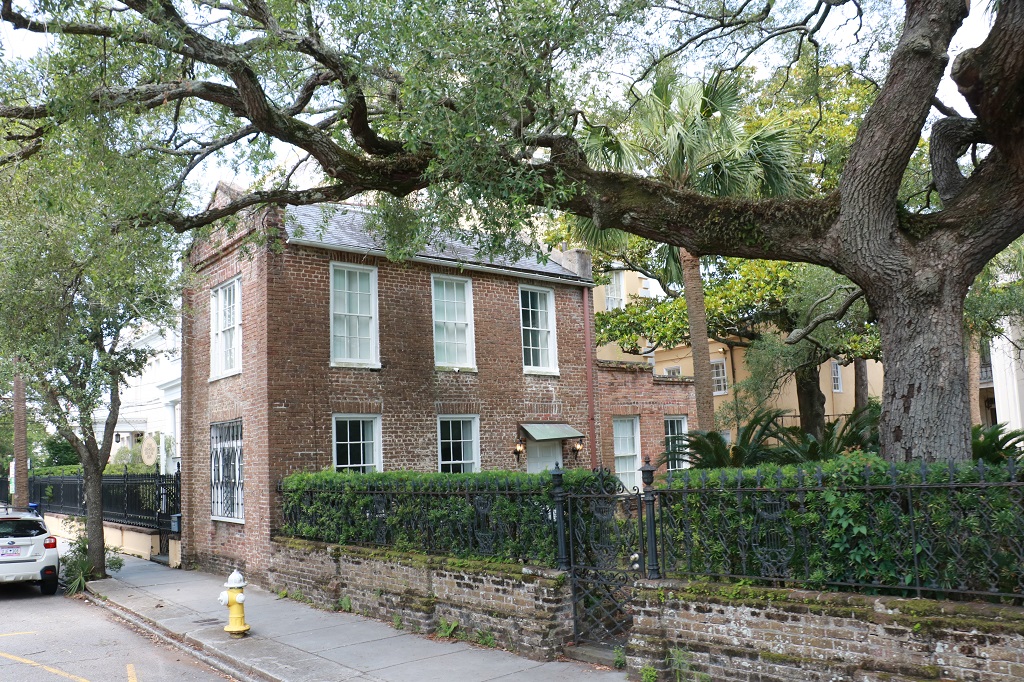
Since there are so many horse carriages moving around the historical downtown, the City of Charleston made up route rules. They divided the district into 5 zones. When a carriage is ready to start a tour they go over to a city kiosk and tell them the guide’s name, the horse’s name and how many people are on the carriage. This keeps a record of how much weight the horses pull and how many trips they do in a day. The man in the kiosk will then spin a bingo ball-like cage and a number between 1 and 5 will drop. Whatever number he gives is the zone your tour is. This way they spread the horses out among the various streets and things are not so congested.
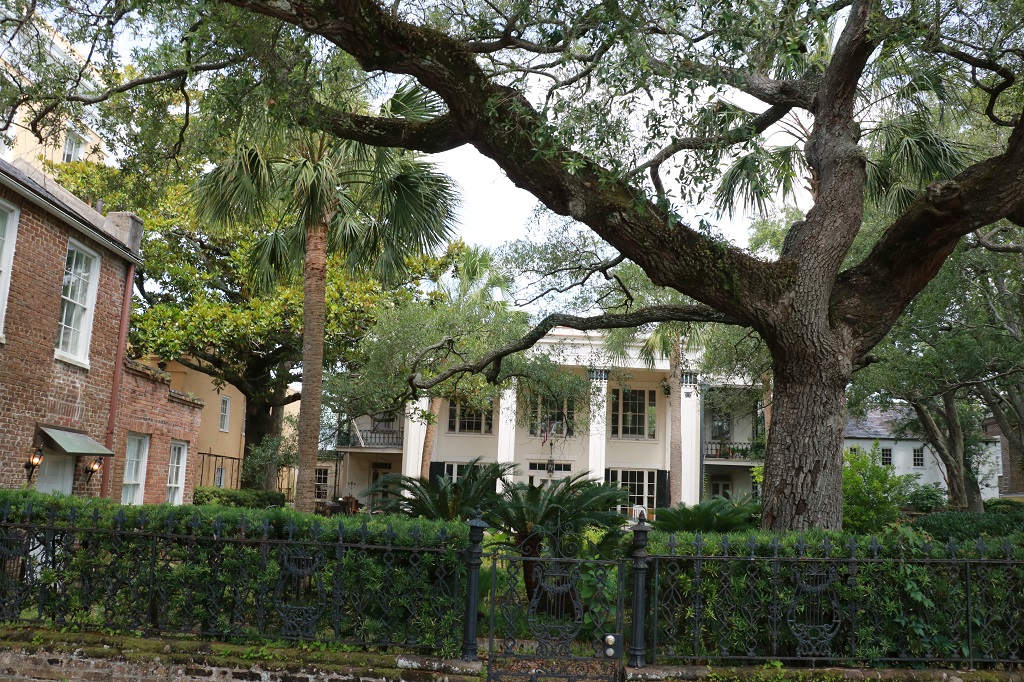
Many years ago it was decided that Charleston had to keep its historic look. They passed the 75-year Rule which states that anything that has been in existance for 75 years or more cannot be changed or taken down by man. If you have bought an old building for an apartment complex or modern store or parking garage the first 12′-15′ has to remain historic and the back can be modernized. This has created many small stores along the street fronts.
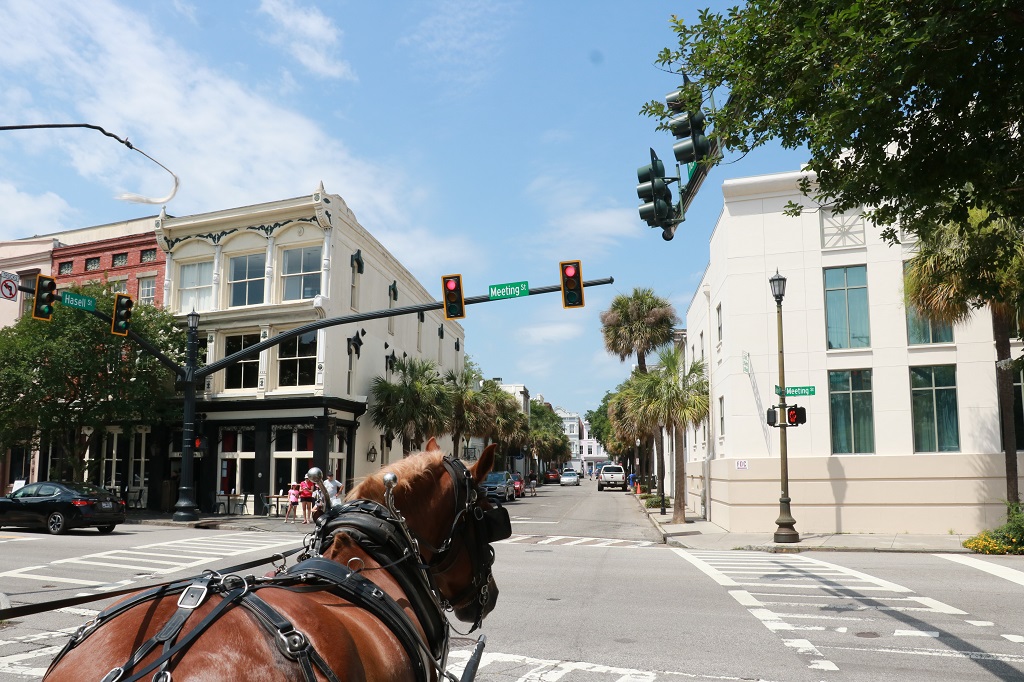
There was a major earthquake in Charleston in 1886. 80-90% of the brick and masonry buildings were damaged. Not all collapsed of course. Someone came up with the idea of earthquake bolts and we passed many buildings that had about 4 -6 large round black discs on the exterior walls between floors. They were used to anchor rods that went from side to side of the buildings and the discs would be tighted to pull the structure back into alignment and stabalize it. The bolts were supposed to be a temporary measure but they realized that they had stiffened over time and now feel the building would destablize if they were removed.
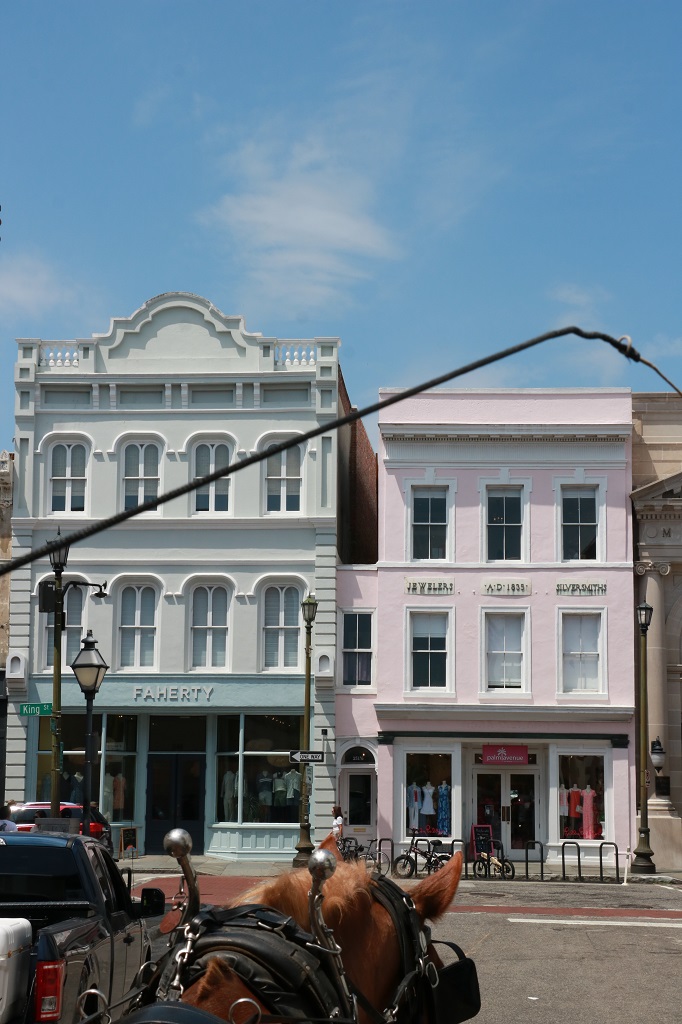
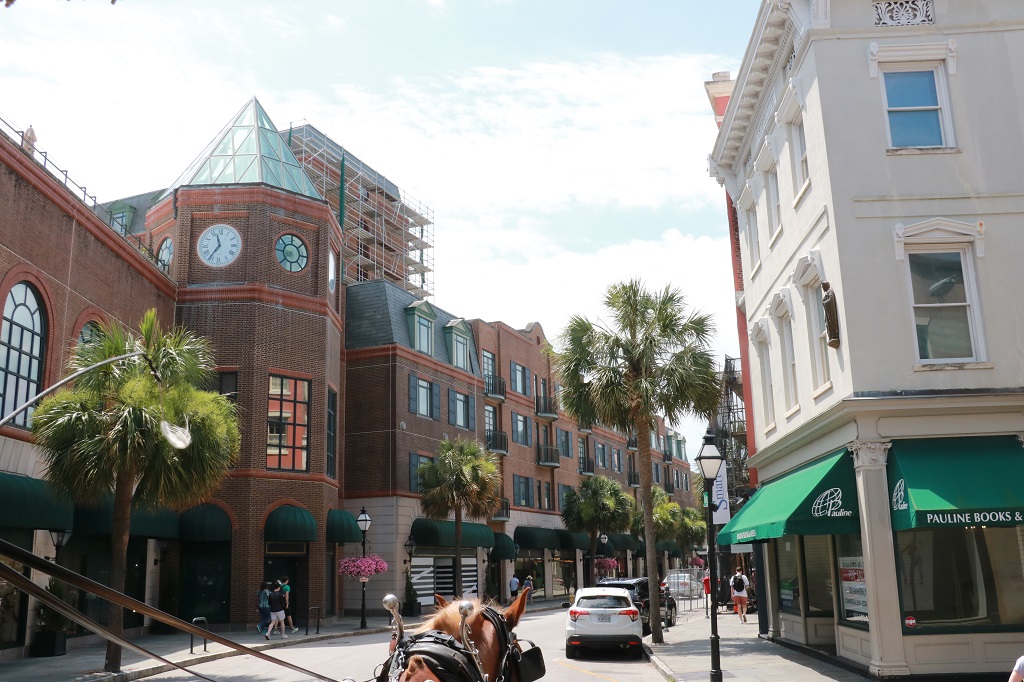
Brick was a poor man’s building material so the wealthy would plaster the front of their houses and then have them painted with lines to look like rock. There are no rocks to build with here. The sides and backs were left brick but the fronts looked fancy. After years went by nobody cared anymore and brick buildings were just brick.
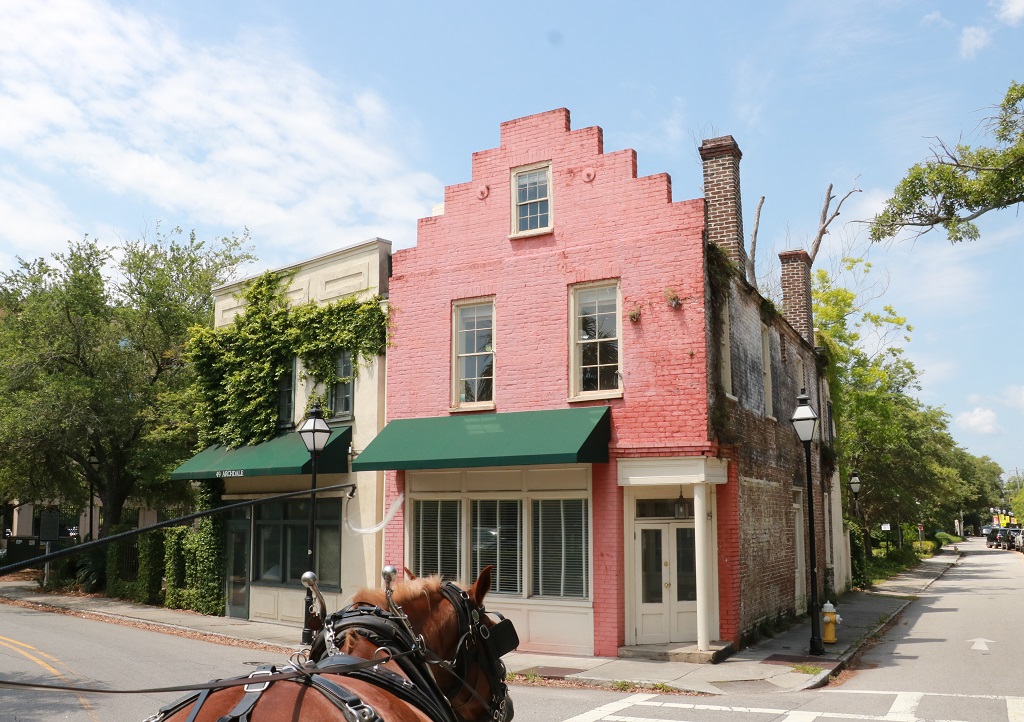
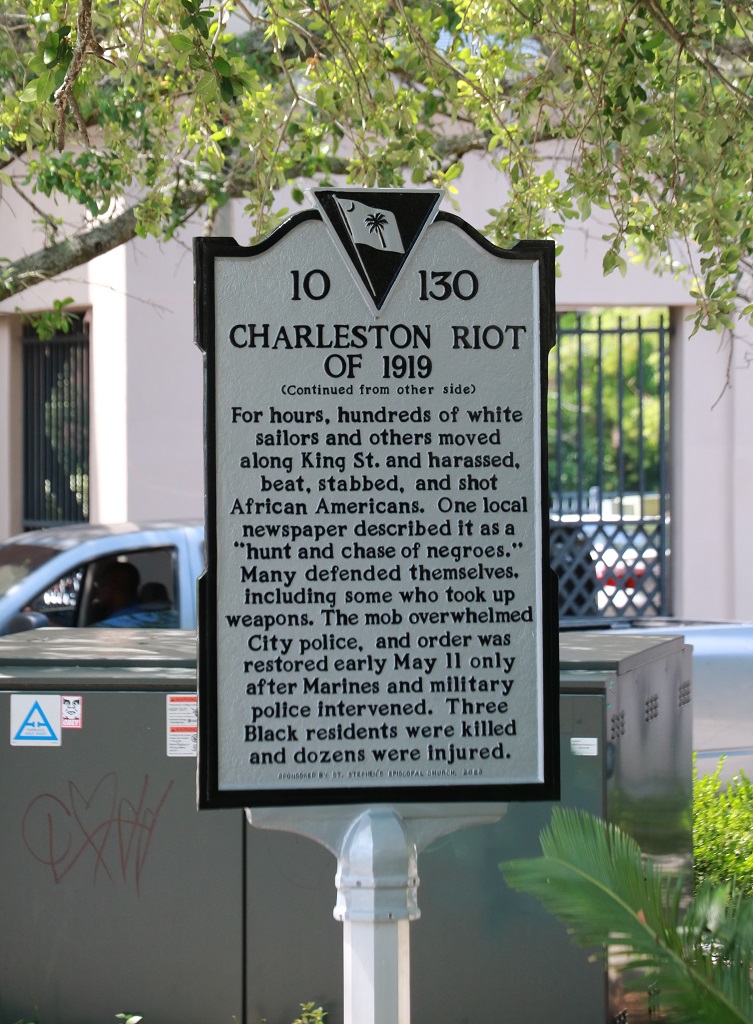
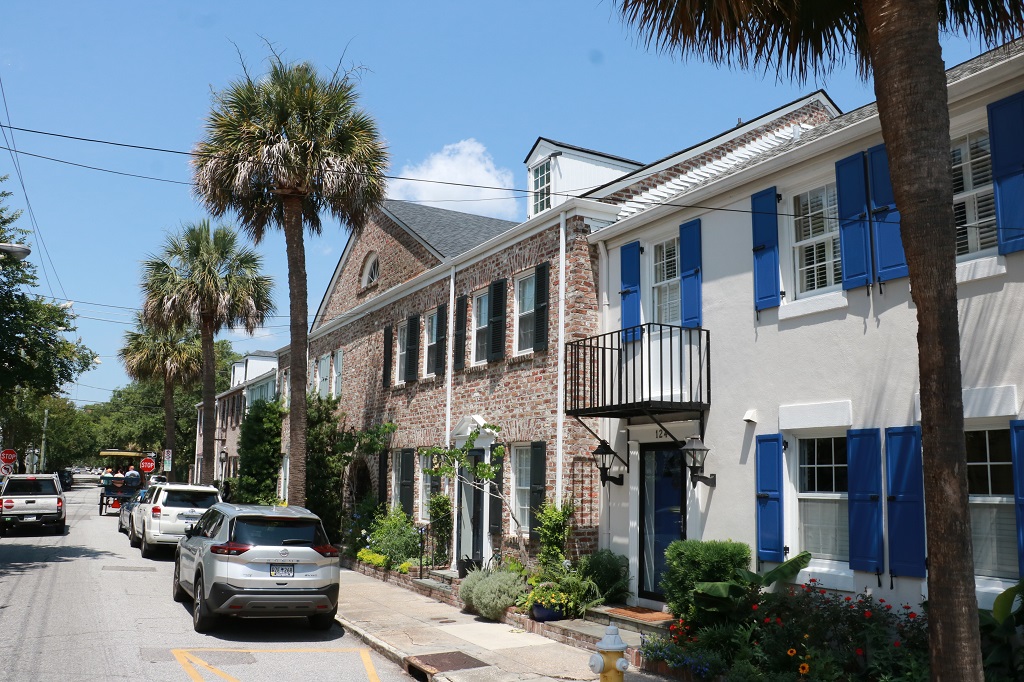
With so many houses damaged in earthquakes a new building material was wanted. They discovered that Dark Cypress wood repelled insects. an excellent quality to have, so many buildings were made with it. However Charleston had 3 Great Fires (aGreat Fire has to destroy 100 or more buildings) in the 1830s and the devastating fire of 1861 that burned 1/3 of the city – 540 acres and 575 homes and businesses and 5 churches. Part of the problem was that the Dark Cypress wood contained oil so those buildings went up like chimneys.
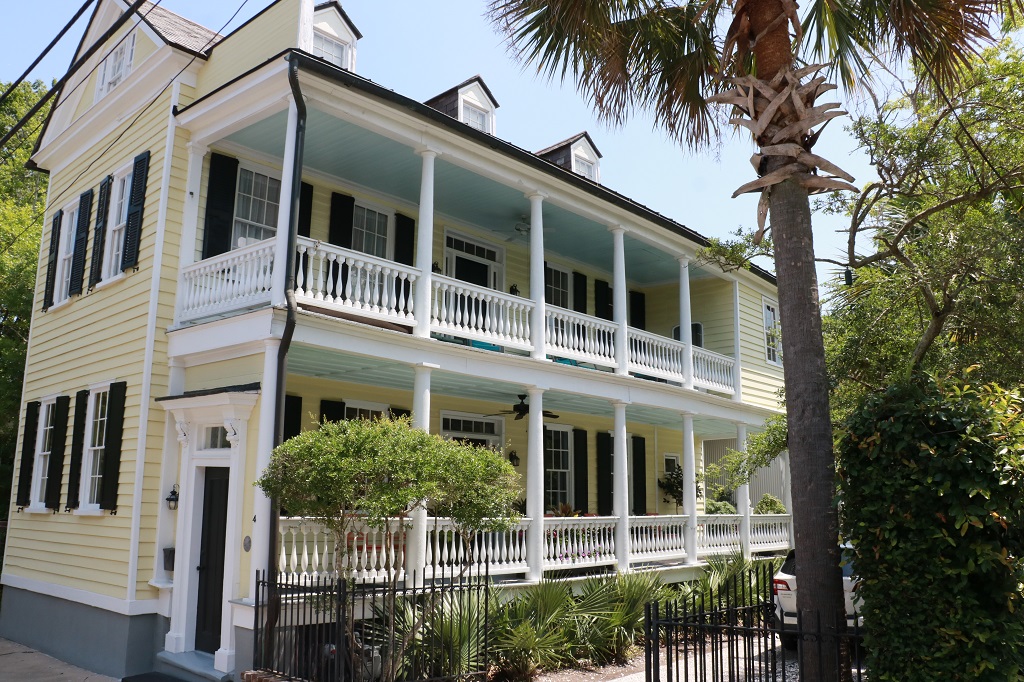
This is a Charleston Single House. so named because the house is only the width of one room but can stretch back for quite a length. The main door was located along the side of the piazzo (veranda). The door on the street was the Privacy Door. The houses were situated so as to capture either a south or west breeze so the main door was on that side of the building. Men wore wool coats as wool was plentiful and it was durable. Women had multiple layers to all their outfits. On a hot day the family would strip to their underwear and sit in the breeze on the piazzo and close the Privacy Door to the street so everyone knew not to come visit. If the door was open at the street you were welcome. A Double Charleston house is a Single House turned sideways and is two rooms deep.
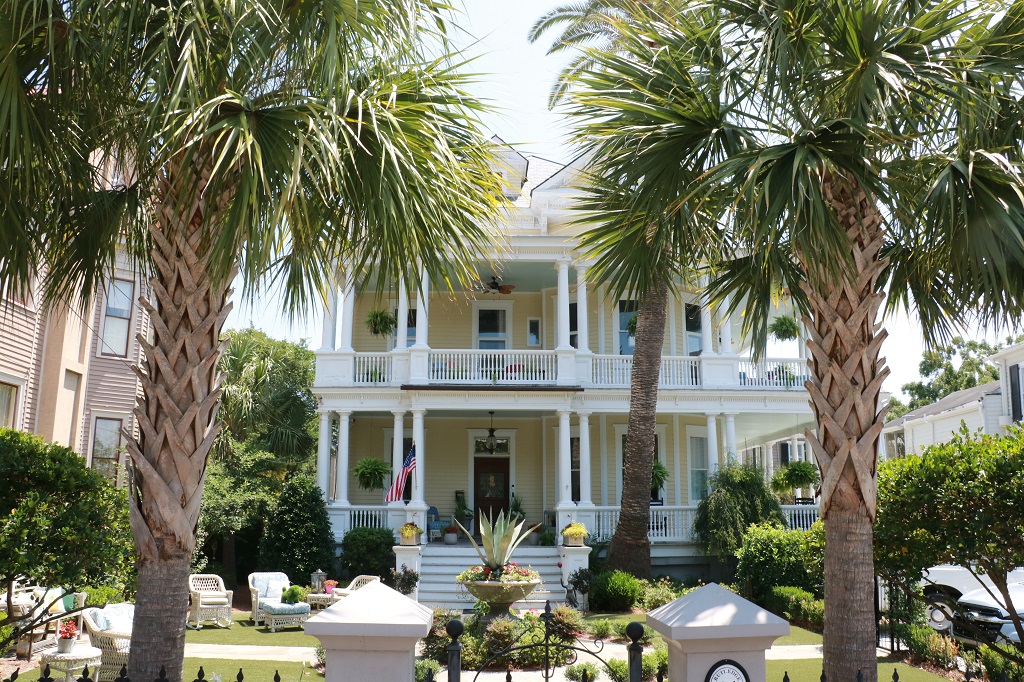
Notice the light blue ceilings on both the upper and lower verandas. This is called haint blue and you can get several different shades of it. Gullah folklore tells us that ghosts, also referred to as haints, were not able to cross water. So, in order to prevent evil spirits from coming into homes, porch ceilings were painted a soft blue. The color was meant to simulate water in an effort to keep any haints or spirits at bay. Another belief is that if the ceilings were blue the bees would think it was the sky and not come into your veranda area.

The Wentworth Mansion is now a hotel. It was built by Silas Rogers a wealthy cotton plantation owner for his family of 13 children. It is 25,000 square feet and is famous for its open arm staircase.
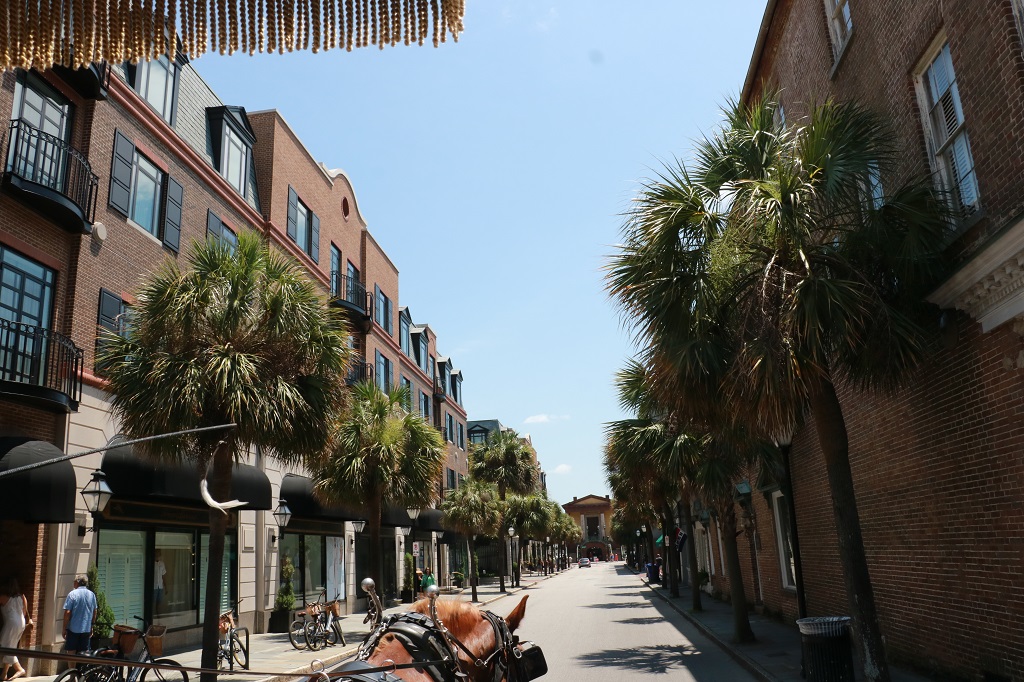
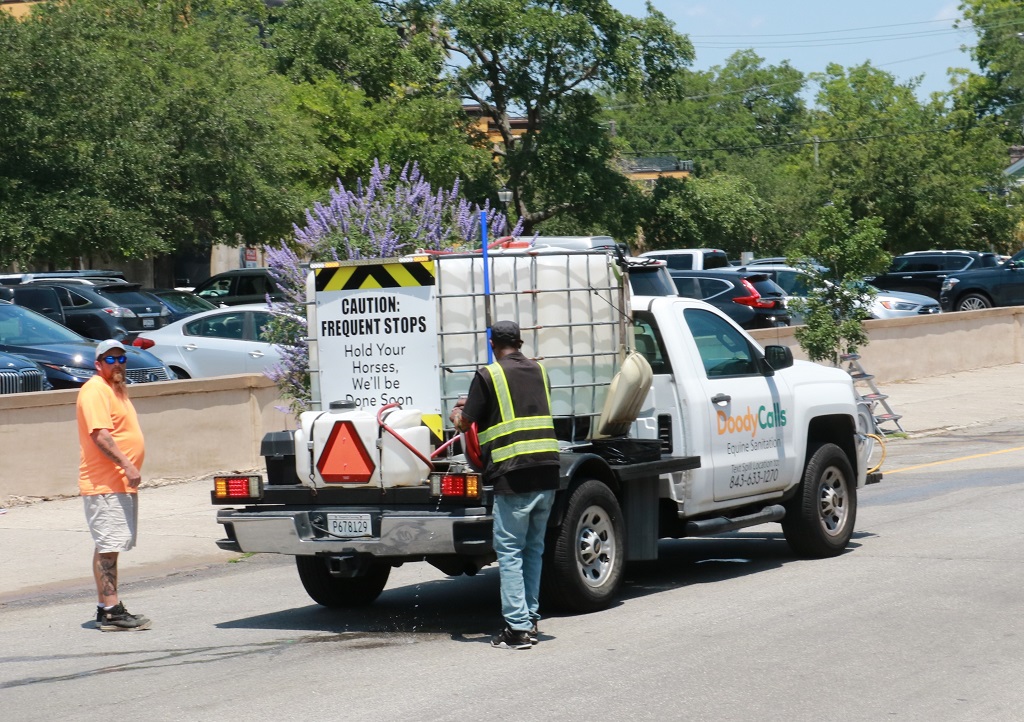
Bruce, like all the carriage horses on the streets of Charleston have diaper bags under their tails to capture droppings. If, however the diaper gets missed, or the horse stops to urinate, the carriage drivers all have small clickers. They press the button and an alert will be sent via satelitte with the GPS coordinates to the specific location needing to be cleaned. A Doody Calls truck will be dispatched to the scene to do immediate cleanup. This service is paid for by the four carriage companies and keeps the streets clean at all times.


They name a human and an equine employee of the month at Old South. The monthly winners will each get a spa treatment, but not at the same spa.

After our carriage ride we walked over to the City Market and went through one of the ‘sheds’s. The market was established in the 1790s, and stretches for four city blocks in five separate buildings. It was the main trading center in the city. Plantation owners could sell their crops, beef was kept and slaughtered on site, so fresh meat was always available. Eggs, chickens. all manner of fruits and vegetables as well as household goods, clothes, etc. etc. were offered. Today every building is full of tables of crafts, art, household goods, sweetgrass baskets, jewelry, sweets, etc. etc. etc. Since there are no glass or bars on the windows the vendors must pack up all their merchandise every evening and reset it for sale the next day. They also do night markets with different vendors.

“Charles Pinckney, a signer of the US Constitution, donated land around Major Daniel’s Creek to the City of Charleston for use as a public market in 1788. An ordinance in 1807 mandated that the area known as the Center Market must always be used as a city market, with no slaves sold there. It was to be open every day but Christmas Day. Rules for the market and enforcement of these rules were left to the Commissioner of Markets. Stalls at the Center Market were rented for 25 cents per week. If either of the rules were broken the land will immediately be reverted back to the Pinckney heirs.”
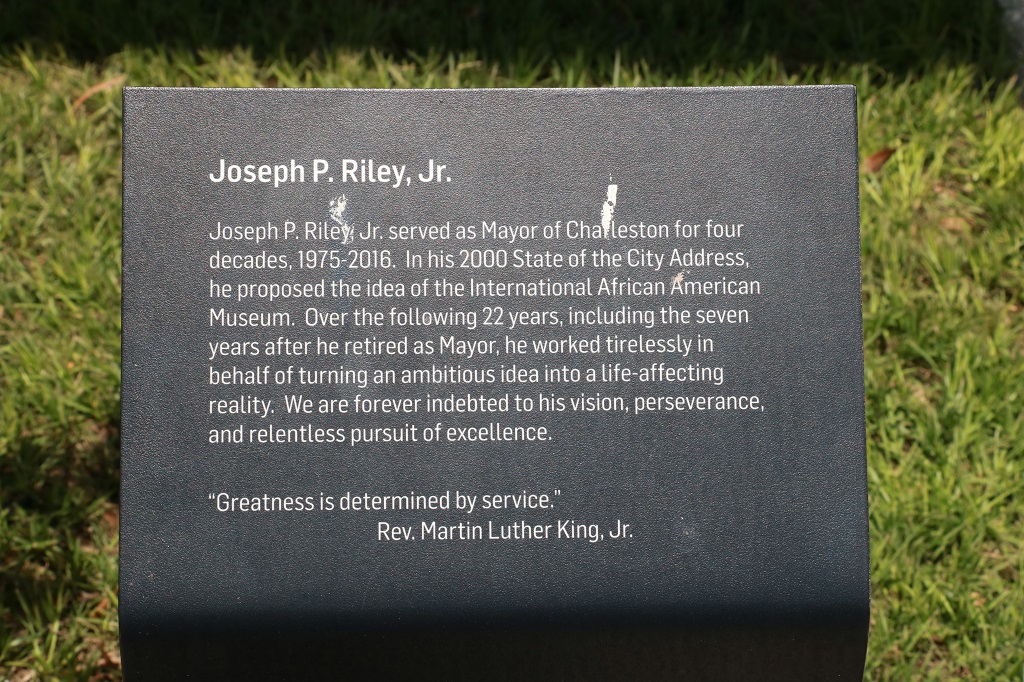
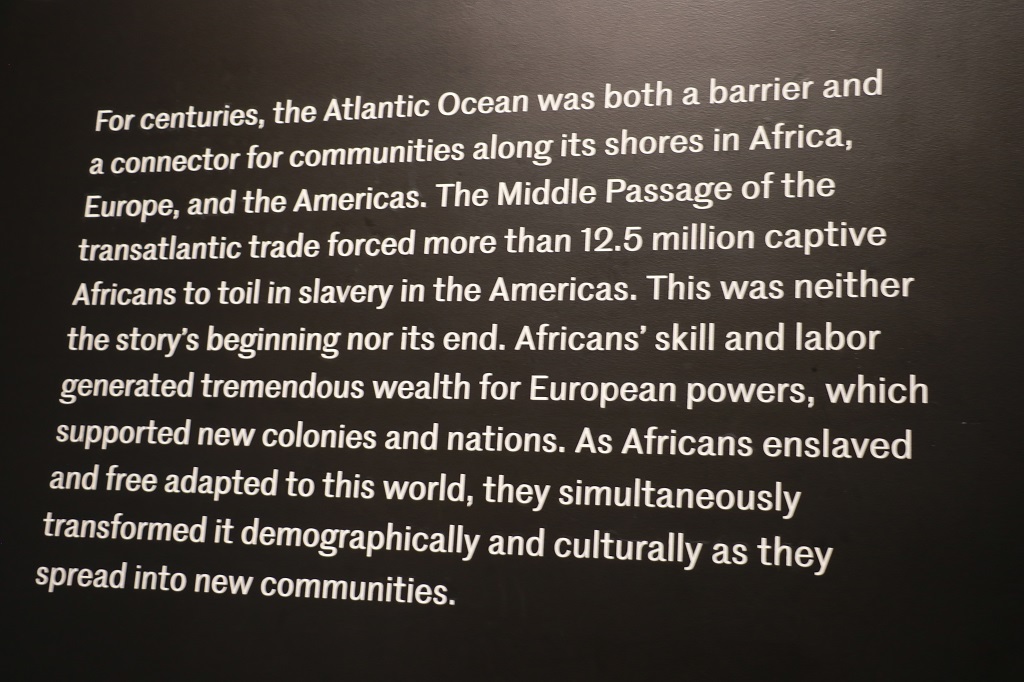
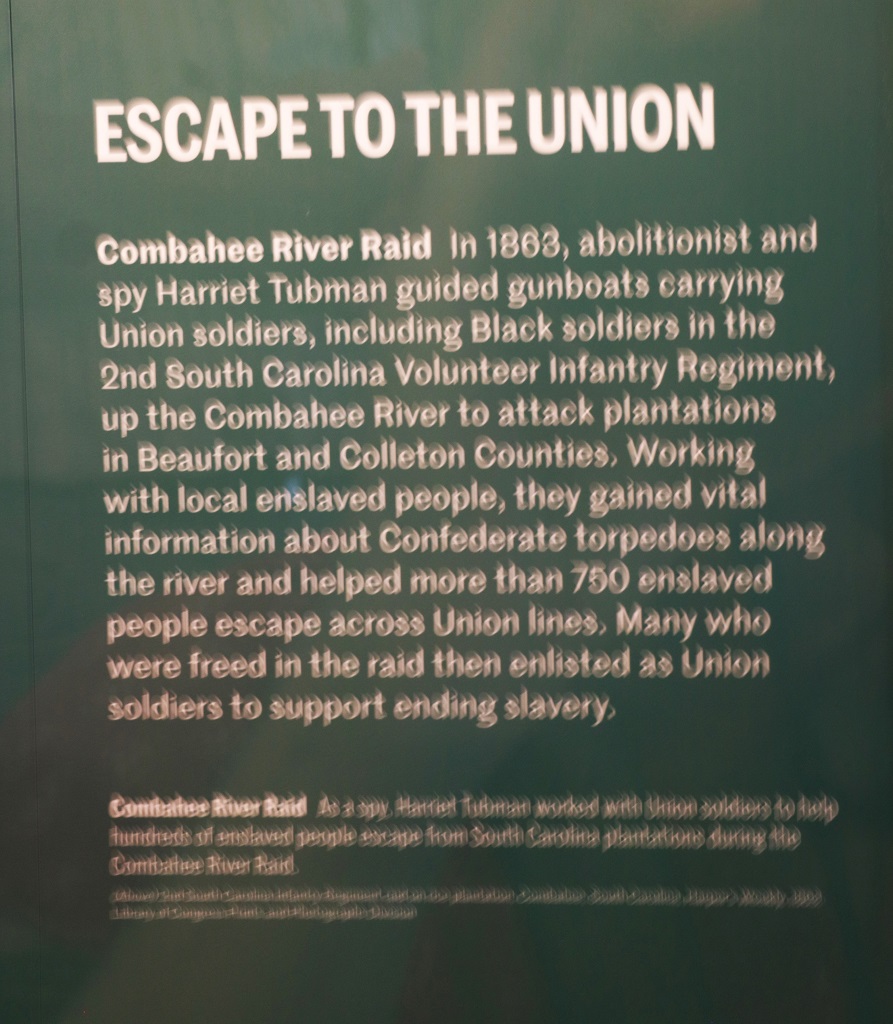
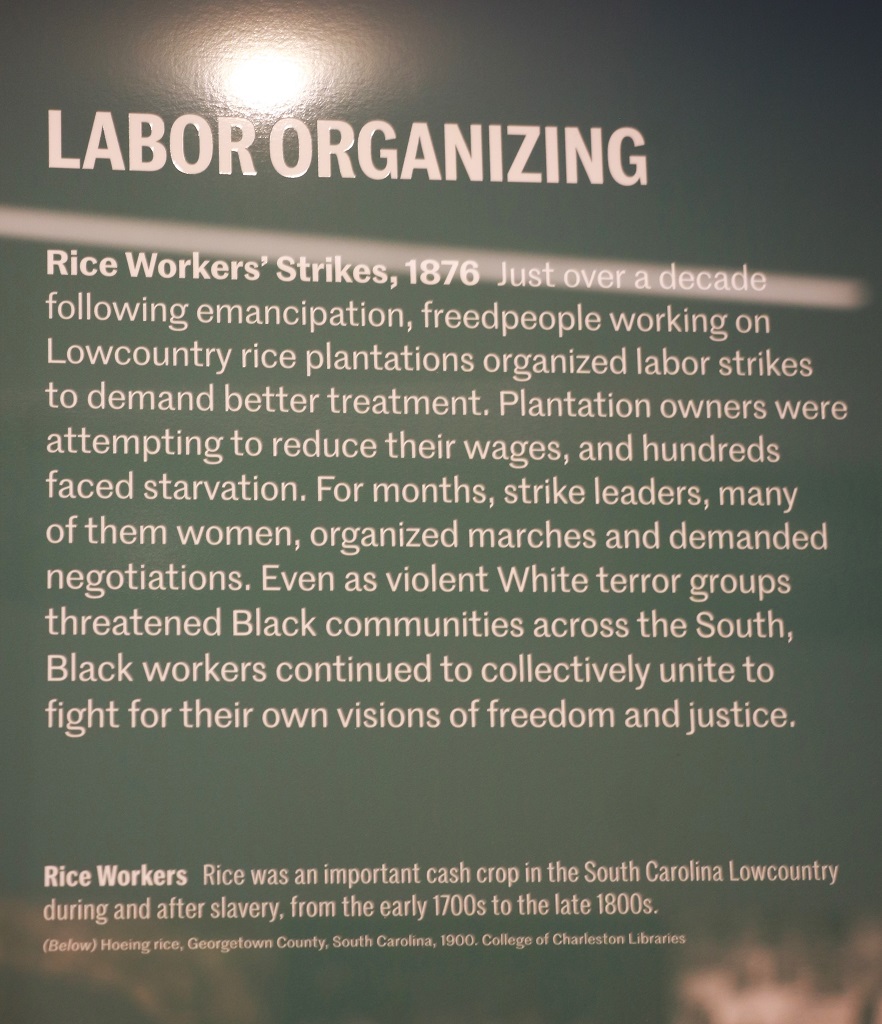
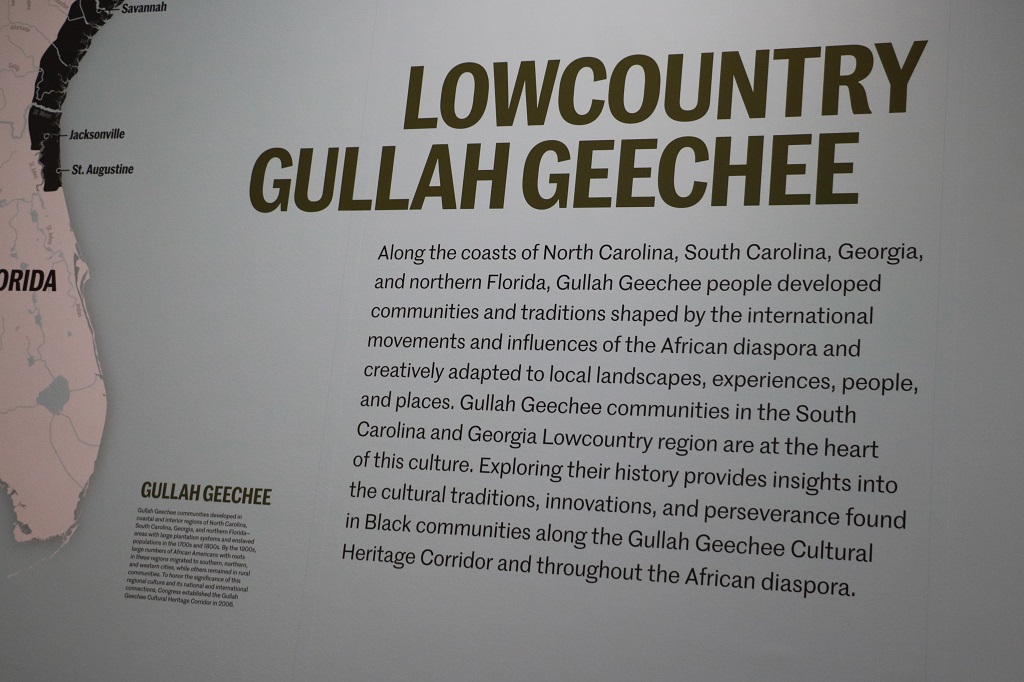
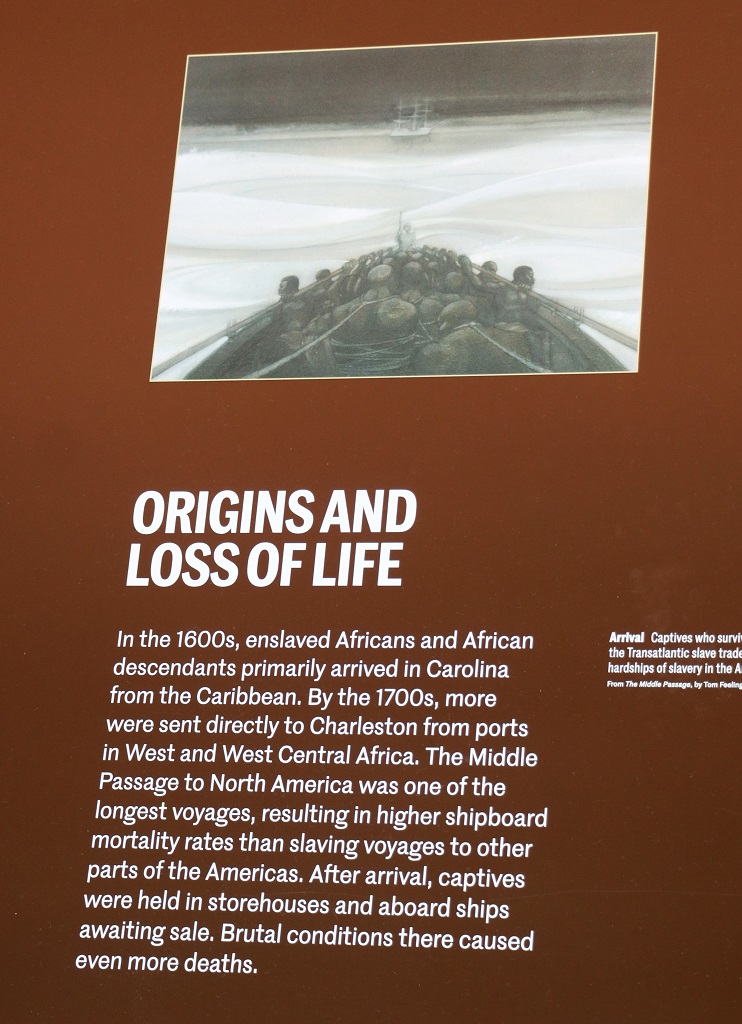
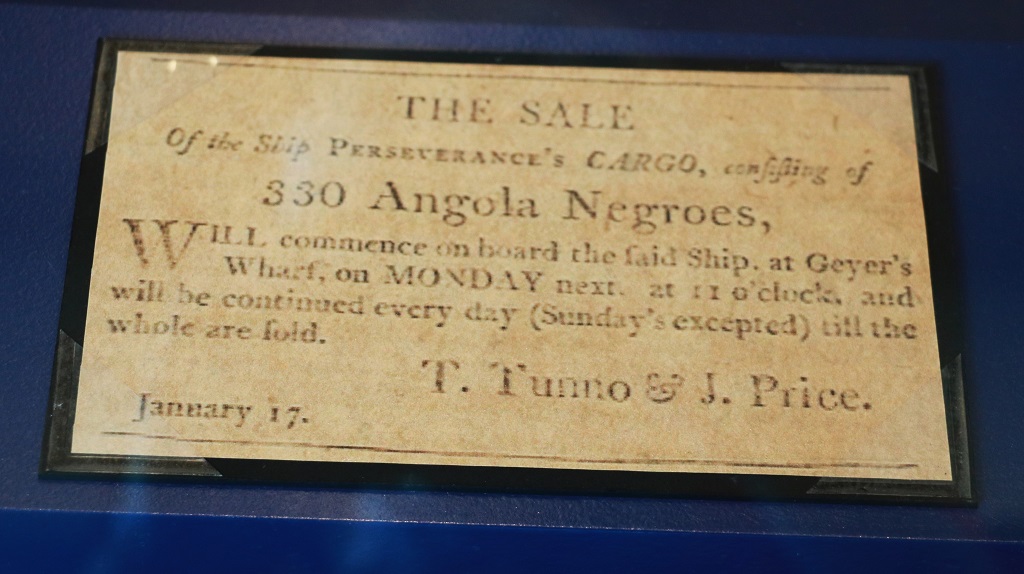
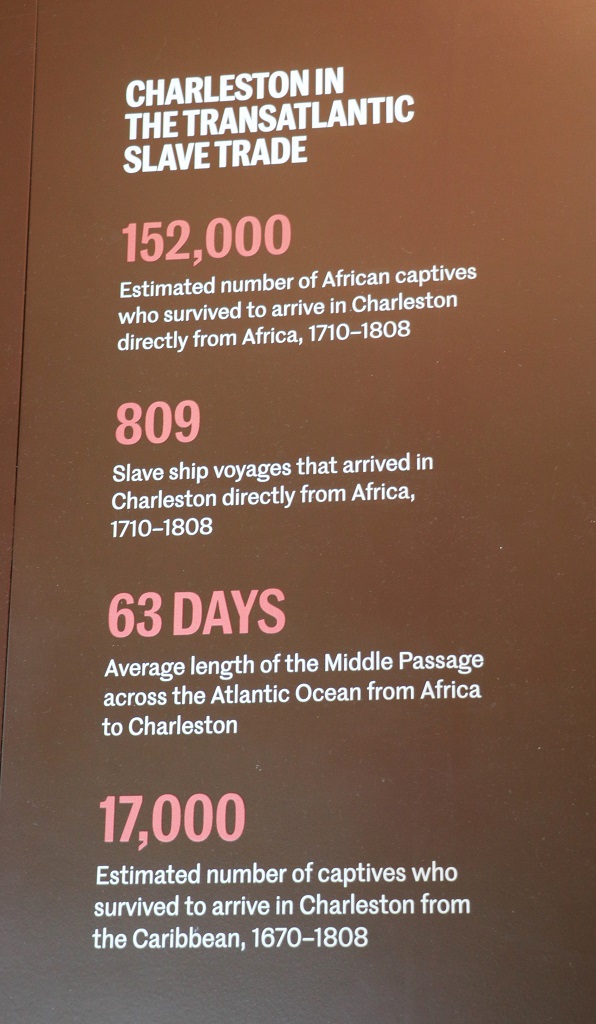
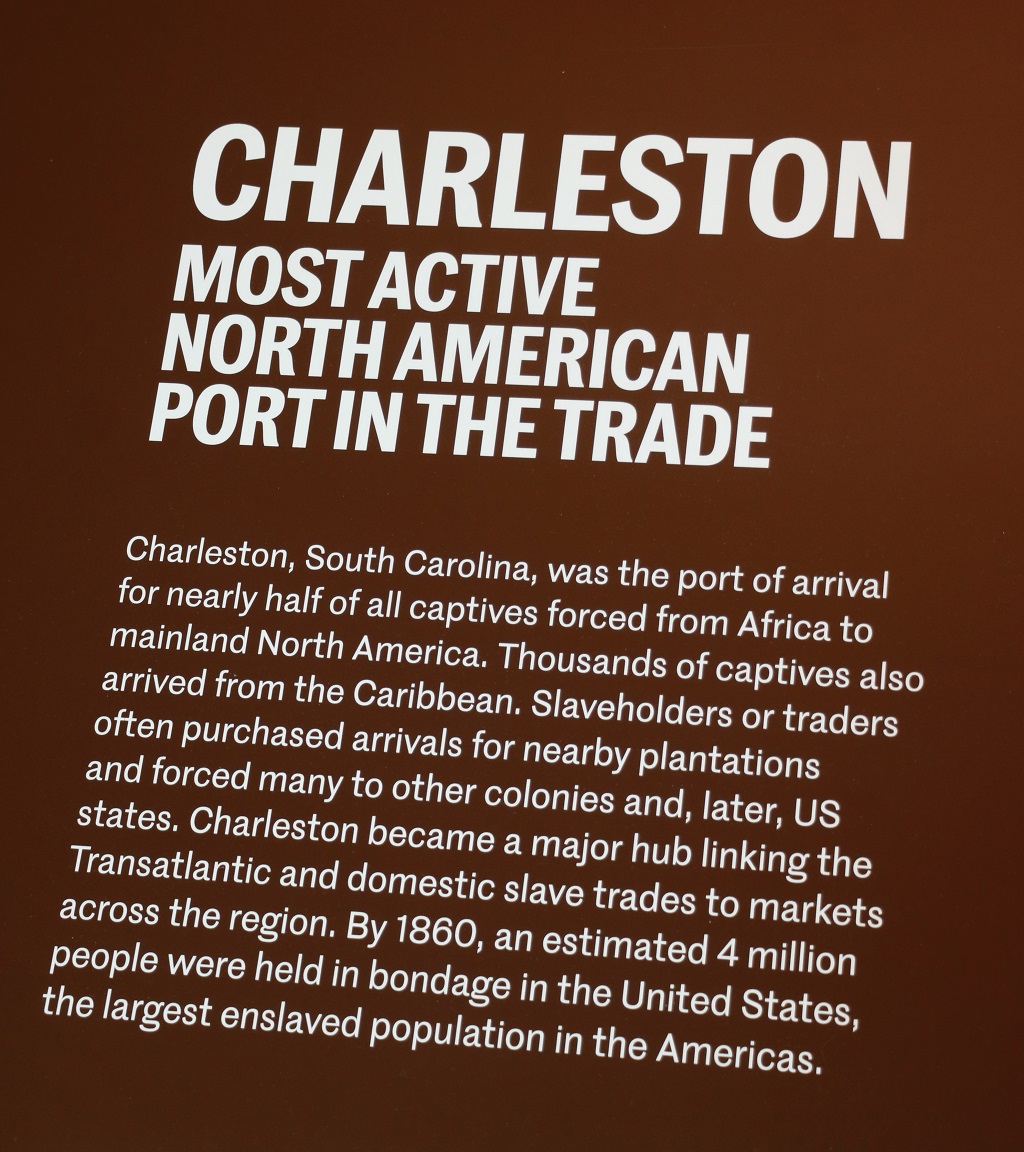
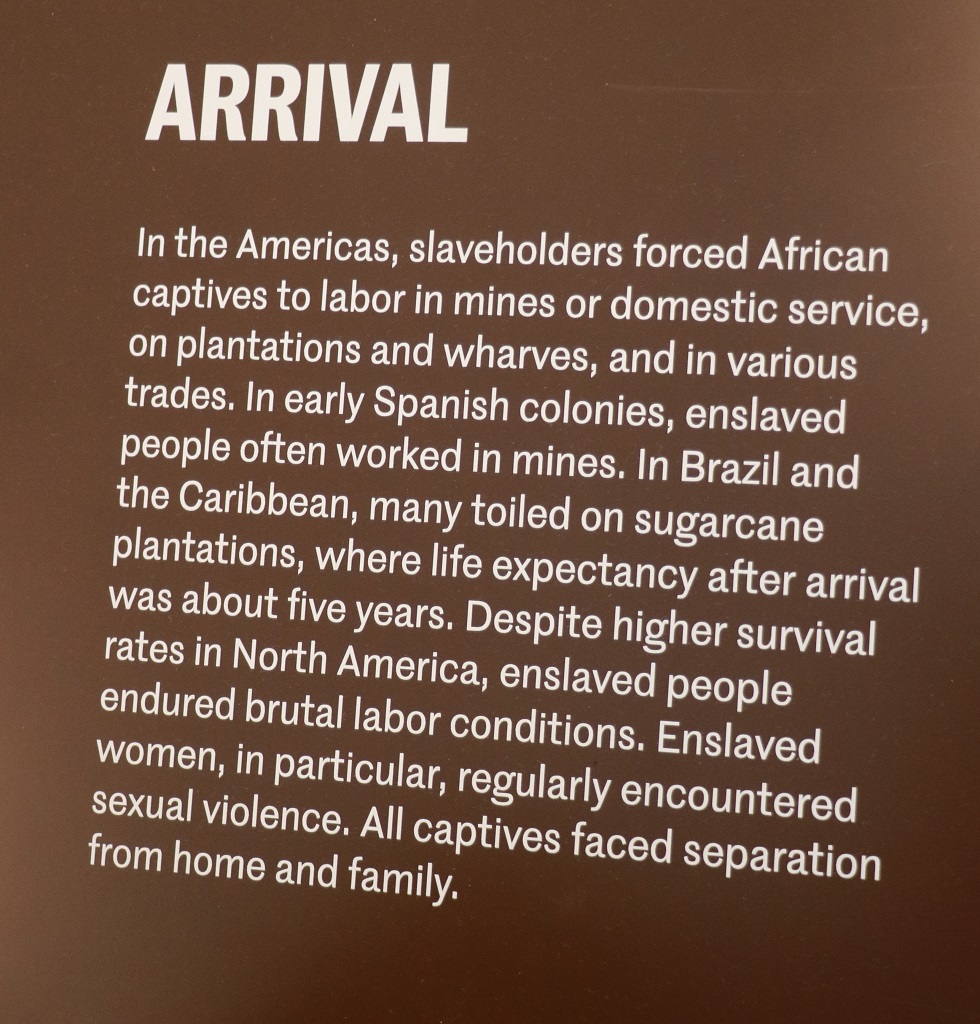
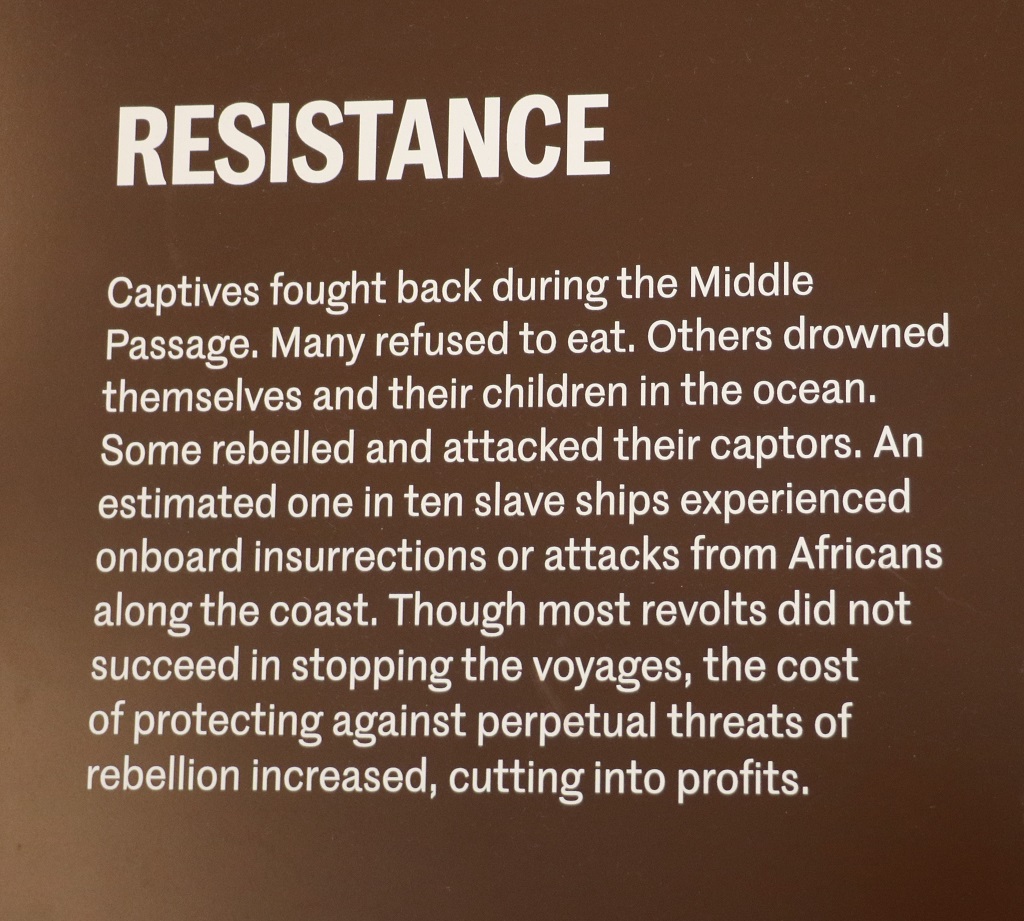
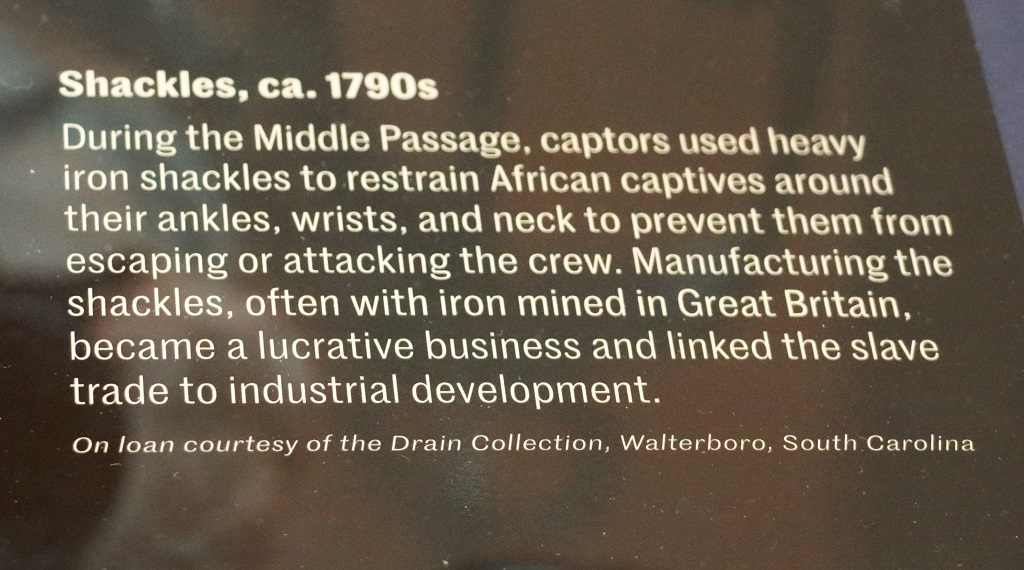
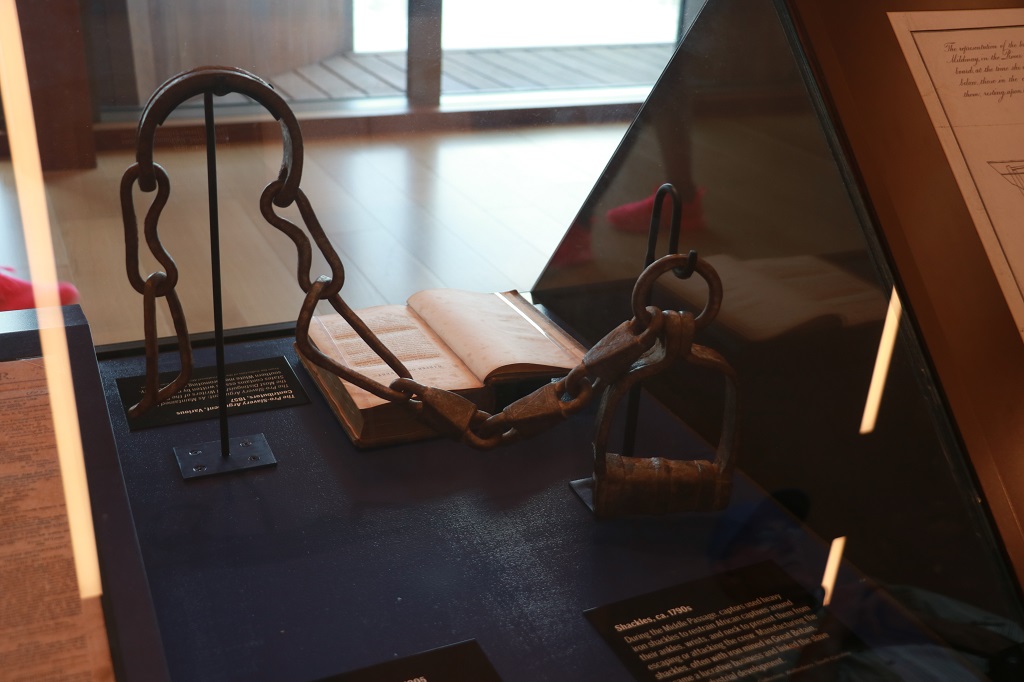
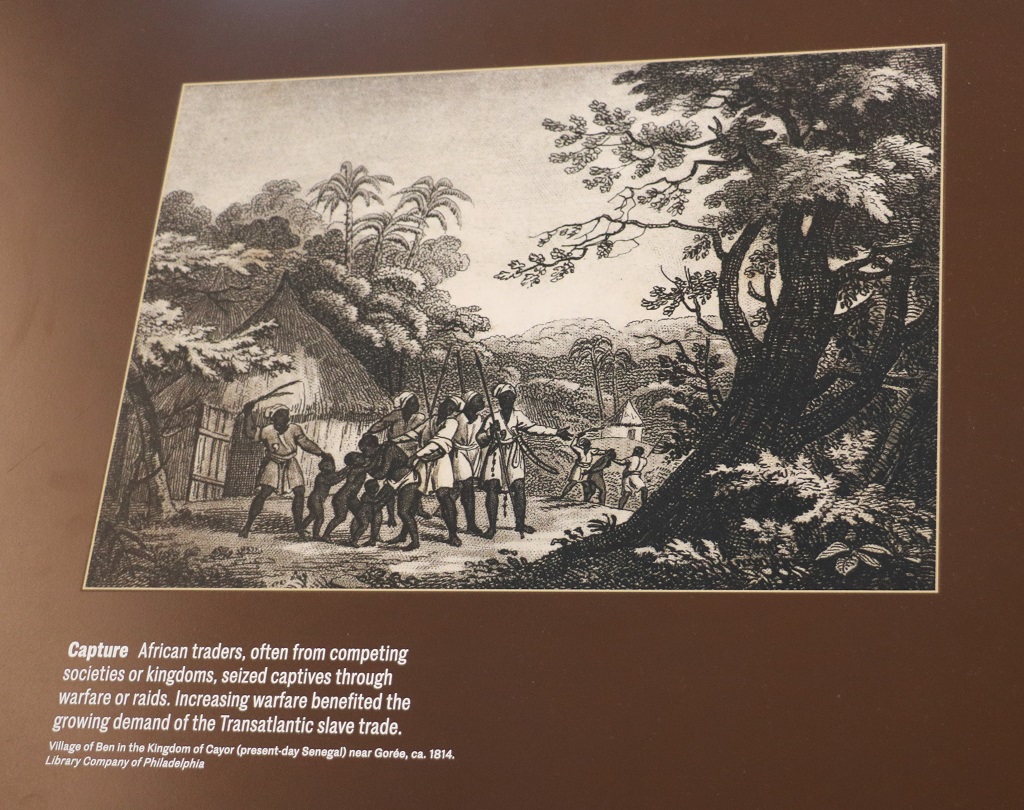
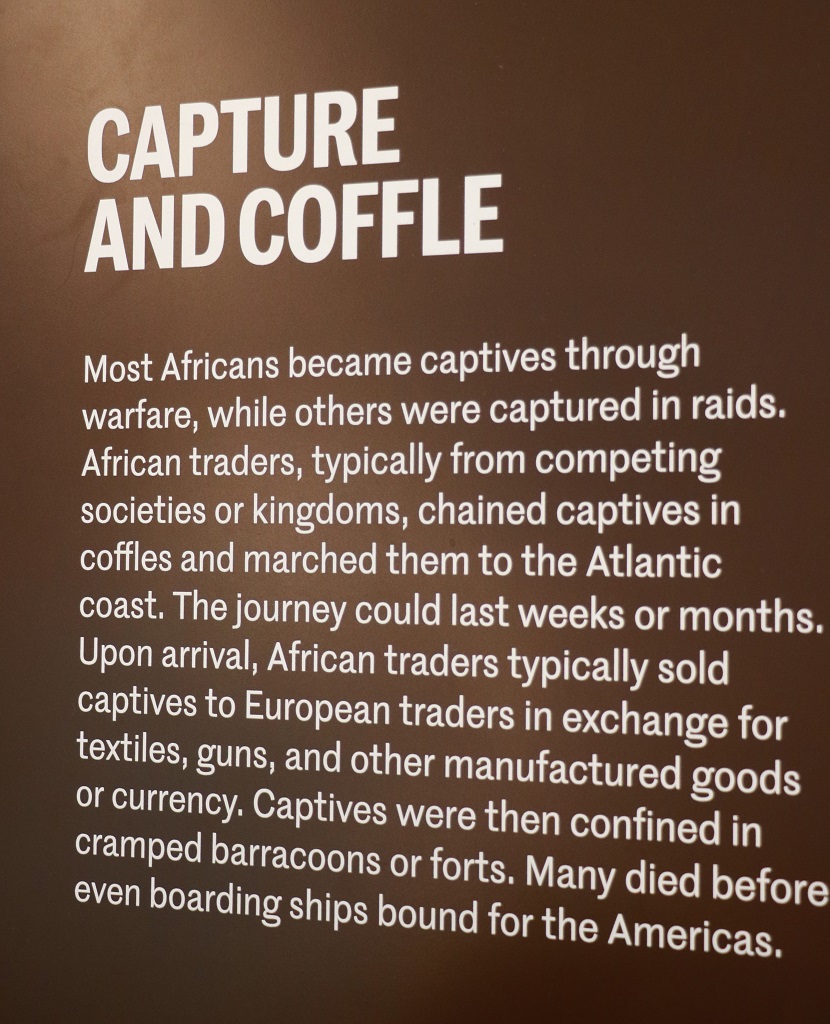
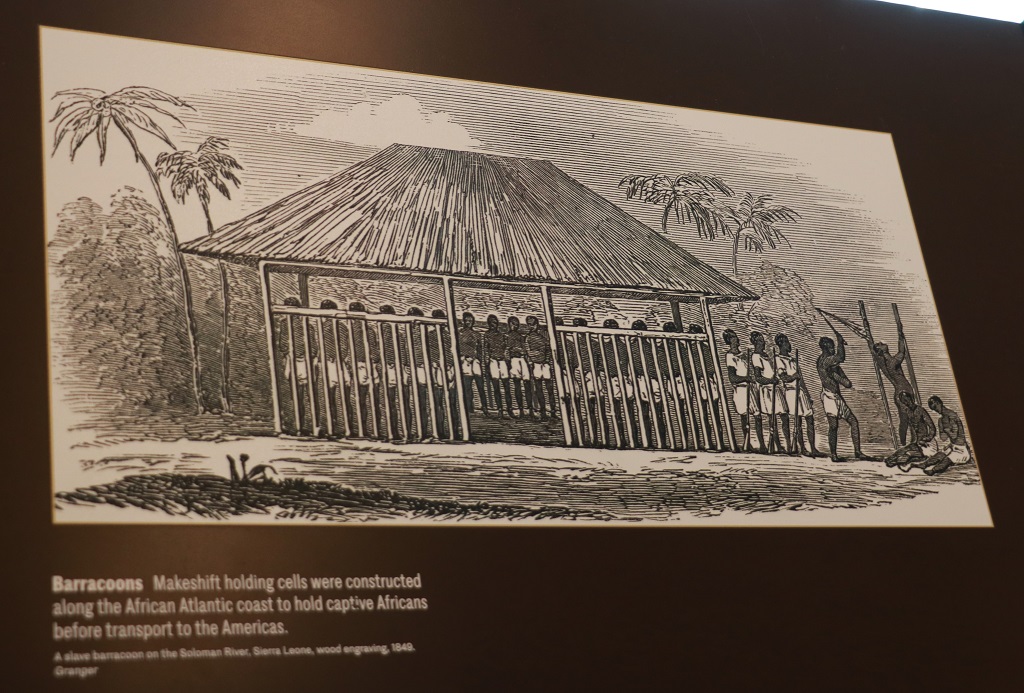
Next we drove over to the International African American Museum. It was opened in 2023. It was a long building up on massive concrete pillars for hurricane damage prevention. There were quite a few information videos about the impacts and changes made over the years by the various Black peoples spirituality, sense of community, faith and culture. They were very interesting. There were lots and lots of displays of prominent or influencial people from all walks of life. Many of them had such small print or so many images and quotes on them they would have been hard to read. There were very few artifacts display. Obviously the main focus was information. I have posted here the clearest information about the slave trade and its affects. They are not in any particular order as we moved back and forth quite a bit. I really tried to not post too many, but there was so much interesting information it was hard. They had complimentary wheelchairs so my legs really appreciated that.




It was about 3 when we left the museum and we drove down to White Point. Along the way we passed what is called Rainbow Row. It is a long street of houses all painted different colours. They are all pastel blue, pink, peach, etc. but I could get no photos because there are large trees all along the street that block them from the road. Pretty though and one of the ‘extra’ things I wanted to see.
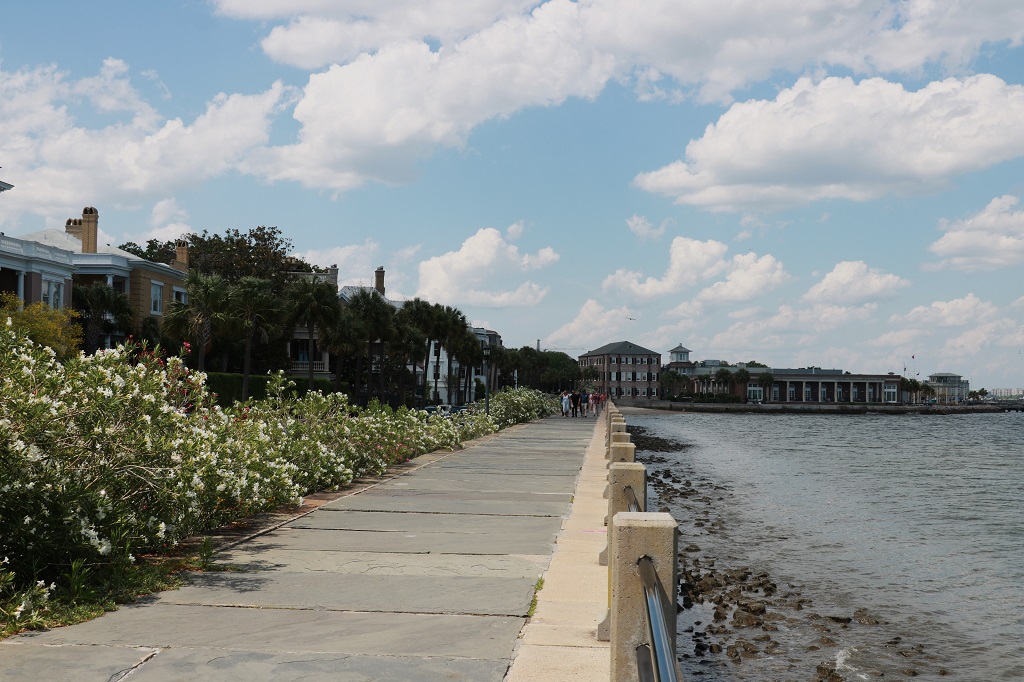
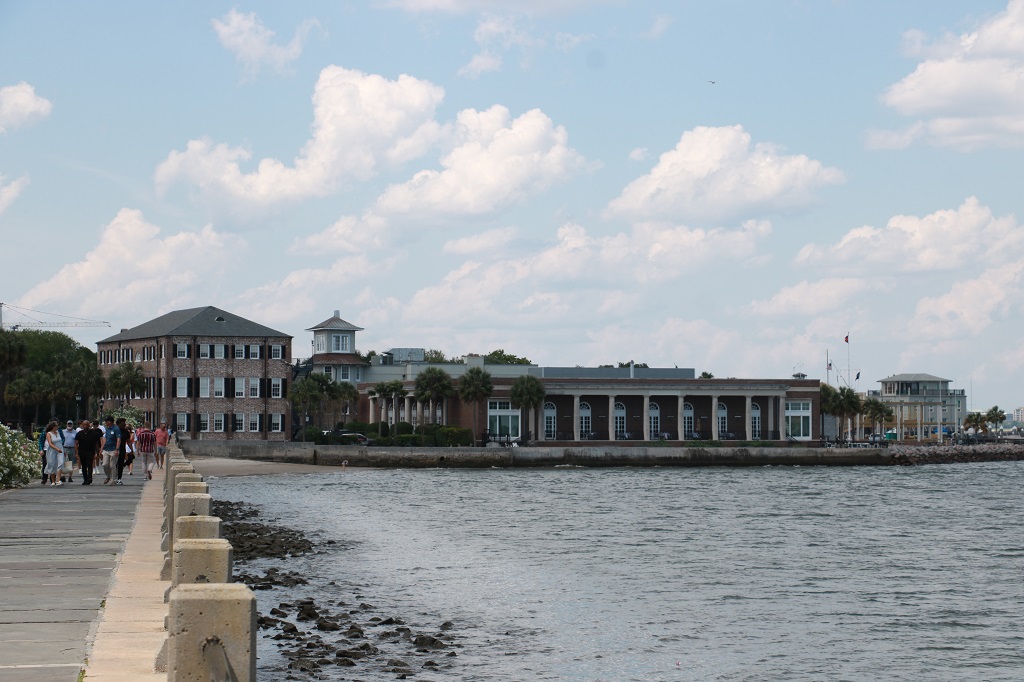
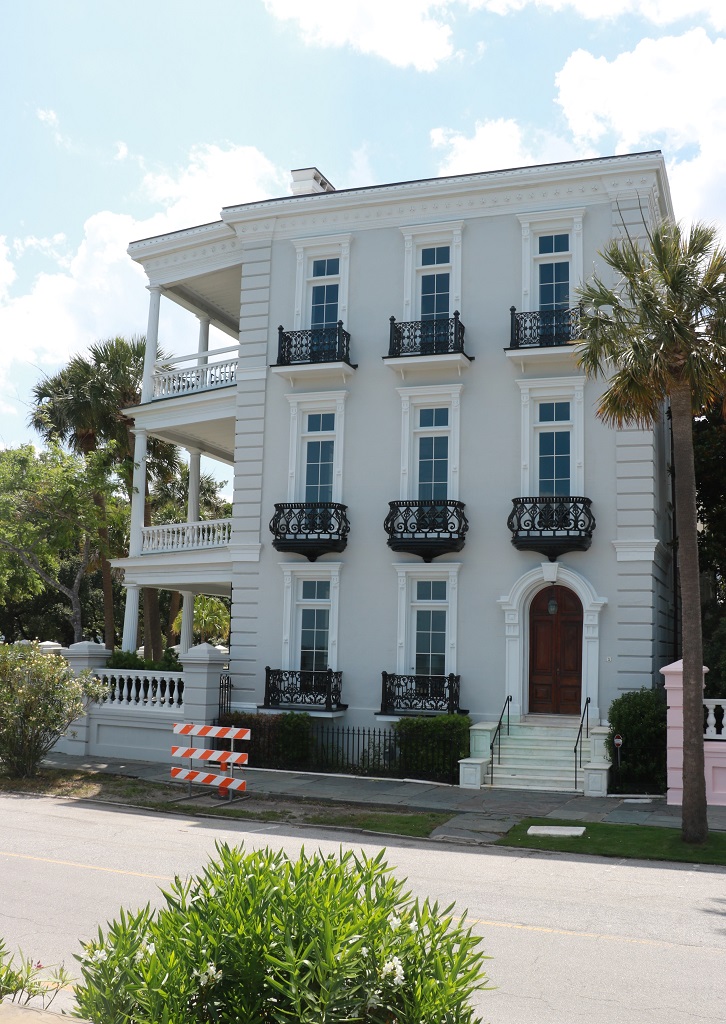
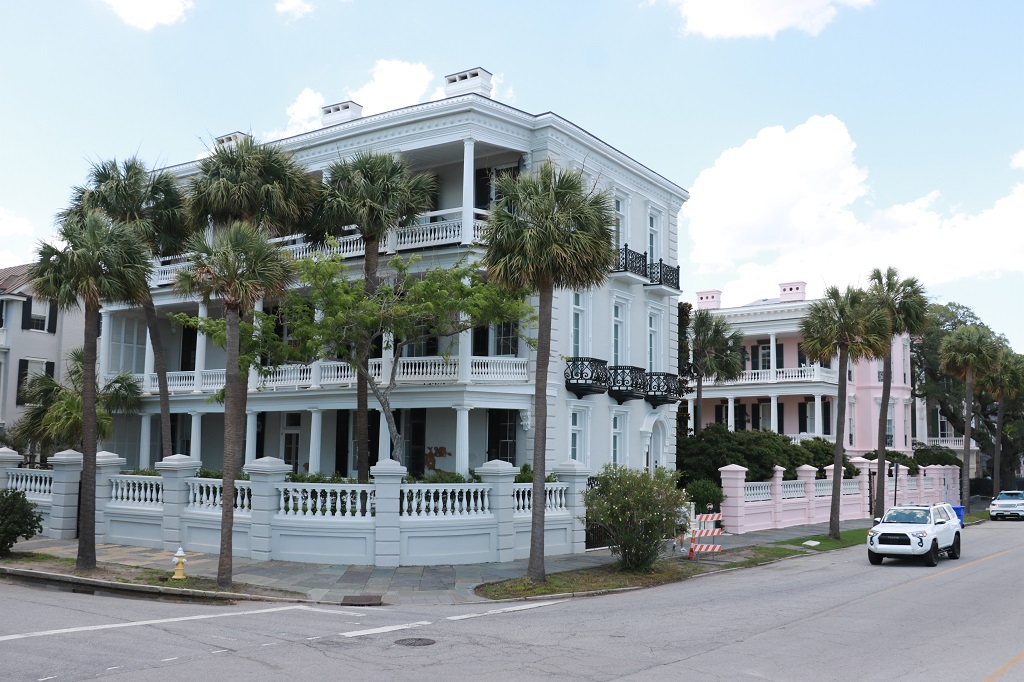
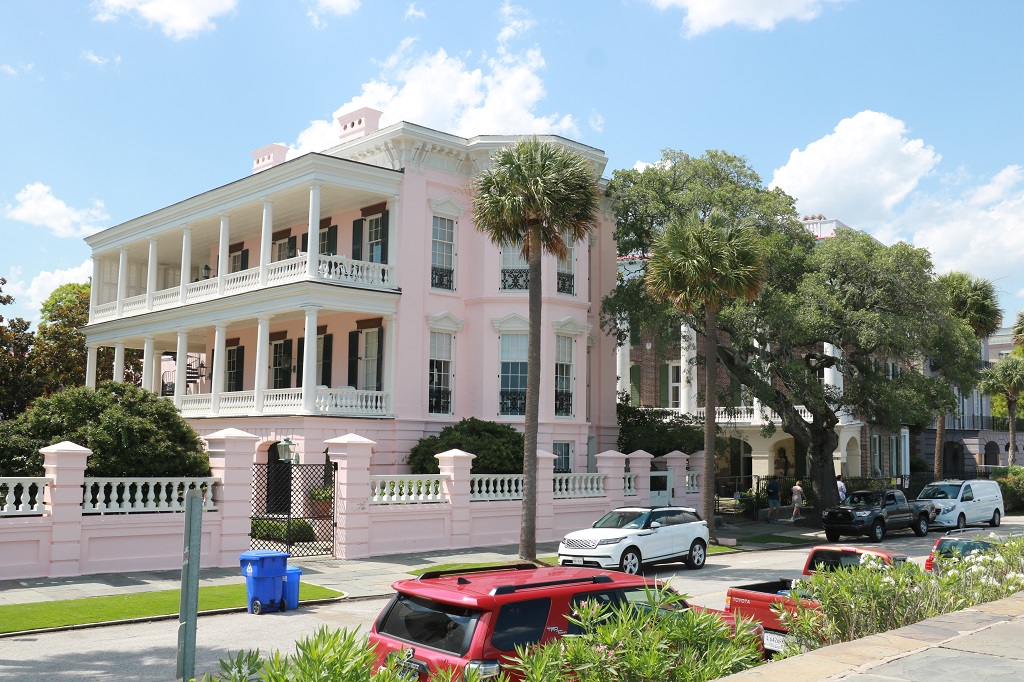
White Point is another of my ‘extras’. It is at the very bottom of the peninsula on which the city of Charleston is situated. All around the edge of the small park are different cannons as the area was the seaward protection for the city. There are also several statues. It is a beautifully shaded area with many Live Oak trees.
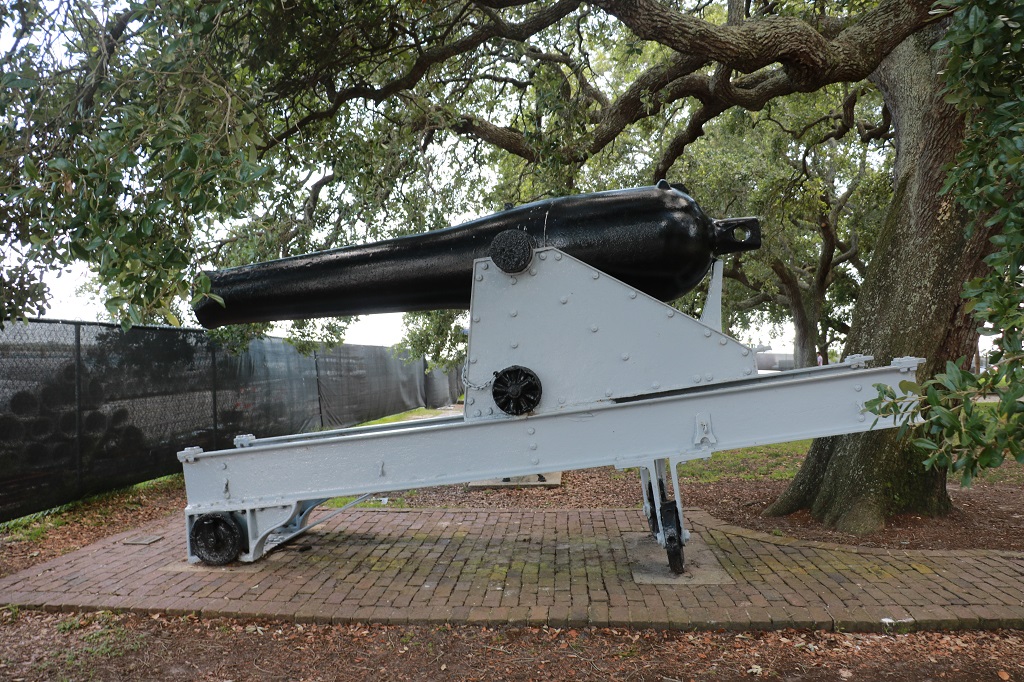
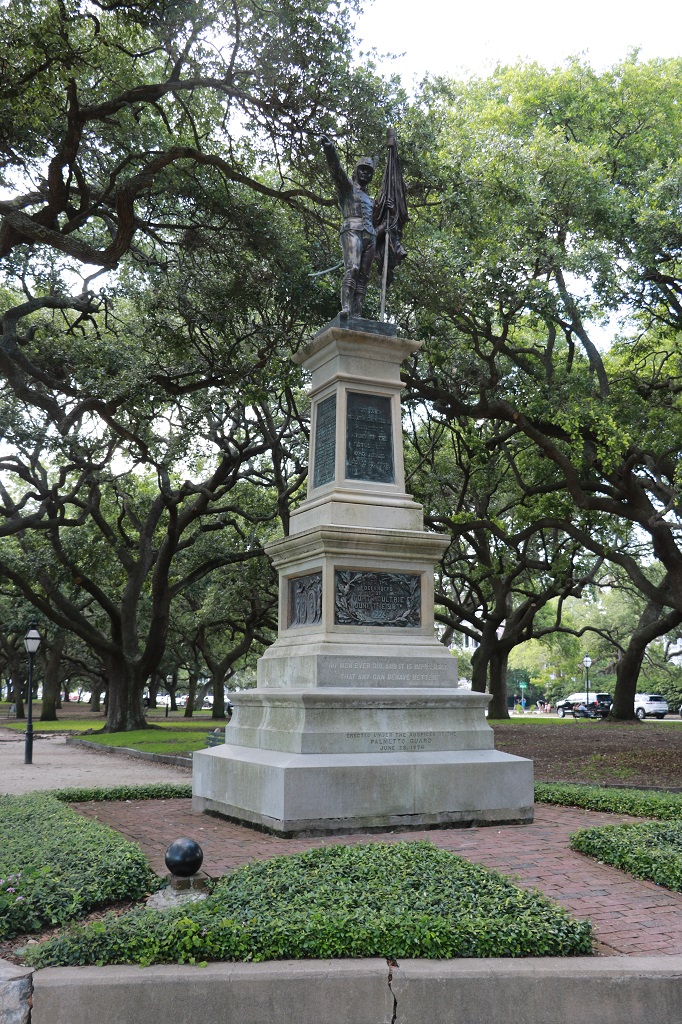
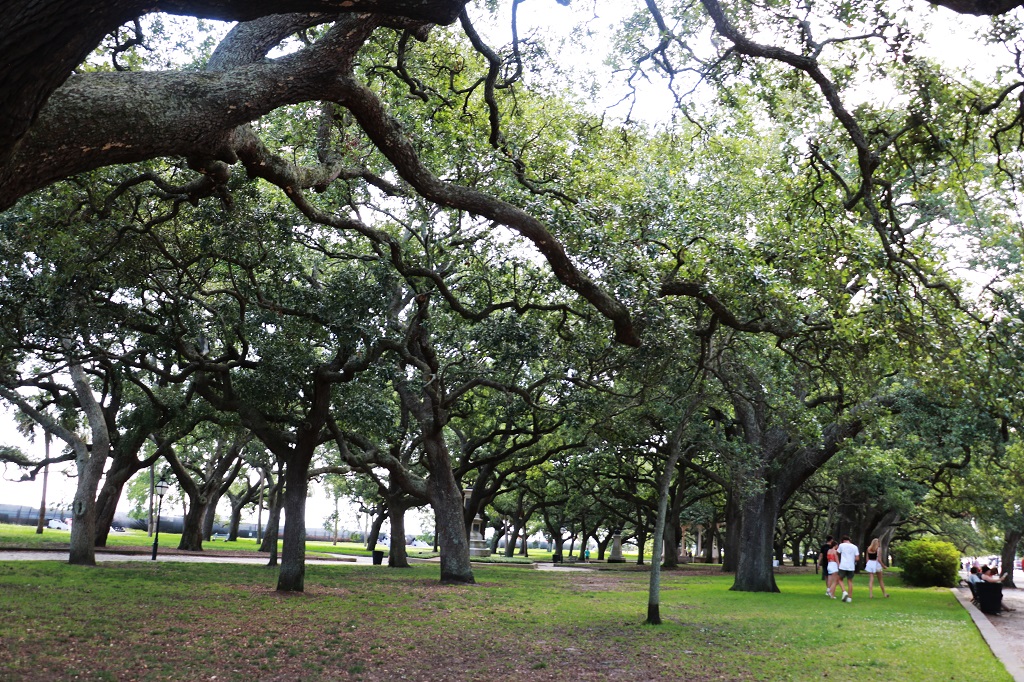
Then it was back in the car and back to the hotel and off to find somewhere for dinner. Awesome day.

Another day in Charleston tomorrow. Fort Sumter and the Old Slave Mart for sure.
 Hanna Travels